While a deep interest in the political problems tempts me to deal
at once with the policy to be pursued by our government
with respect to the Filipinos, I am constrained to proceed
logically and discuss first the islands and their people. And in speaking
of the Filipinos, a distinction should be made between those who
inhabit the northern islands and are members of one branch of the
Christian Church and those who inhabit the island of Mindanao and
the Sulu Archipelago—people who are followers of Mohammed.
While a considerable number of Christian Filipinos are to be found
in Mindanao and some in Sulu, the Sultans and Datus have dominated
the country. Even Spanish authority never extended over the
southern islands and the garrisons maintained at the seaports were
constantly in fear of massacre.
Leaving the southern islands for the next article, I shall confine
myself at present to Luzon, Panay, Negros, Cebu, Samar and the
smaller islands which make up the Visayan group. These islands
contain the bulk of the territory, a large majority of the people,
most of the material wealth and practically all of the civilization of
the Philippines. Luzon, the largest of the entire group, reaches north
almost to the nineteenth parallel and is about six degrees long. Like
the islands of Japan, it is mountainous and well watered. The other
islands of the group are considerably smaller and extend as far south
as the ninth parallel. They, too, are mountainous, but the valleys
are fertile and support a large population. The principal industry
is agriculture, and the soil produces a variety of cereals, fruits and
vegetables. Rice, as in other oriental countries, is the chief article
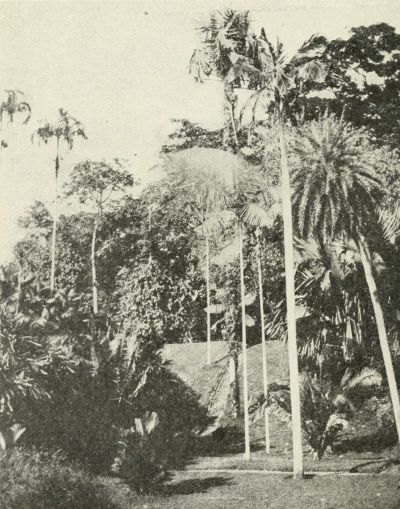
of food, though hemp is by far the largest export. The hemp plant
looks so much like the banana that the traveler can scarcely distinguish
between them. Sugar cane is also grown in many parts of
the islands and would be cultivated still more largely but for the low
price of raw sugar. Sugar, however, cannot be raised here with the
same profit that it can in Hawaii and Cuba, owing to the fact that it
must be replanted more frequently. Tobacco of an excellent quality
is produced on several of the islands and in sufficient quantities to
supply the home demand (and nearly all Filipinos use tobacco) and
leave a surplus for export.
The cocoanut is a staple product here of great value, and its cultivation
can be indefinitely extended. Of all the crops it probably
yields the largest income on the investment, but as the trees do not
begin to bear until they are about eight years old, they are only
cultivated in small groves or by those who can afford to wait for
returns. Copra, the dried meat of the cocoanut, is now exported to
the value of two and a half million dollars, but systematic effort
ought to very largely increase this export.
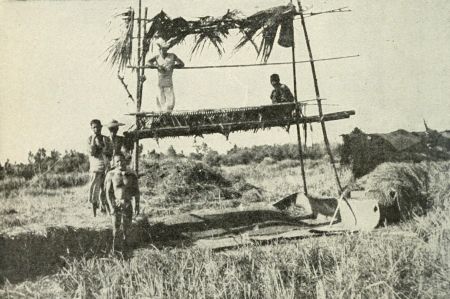
The methods of cultivation and the implements used are not as
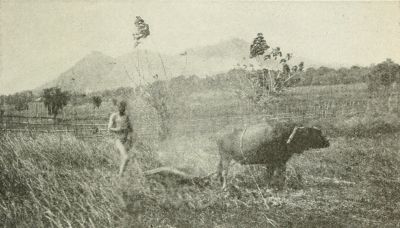
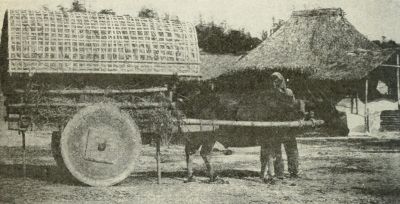
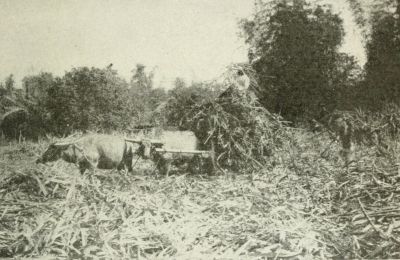
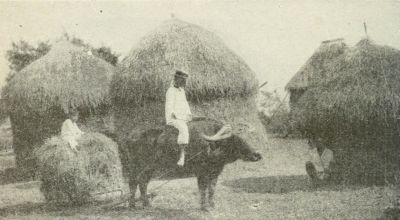
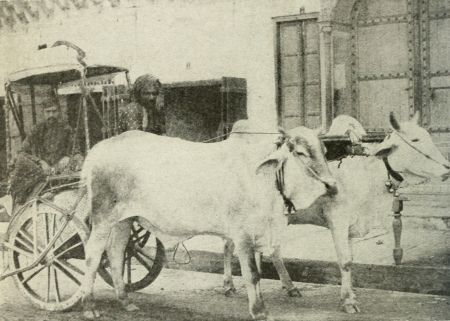
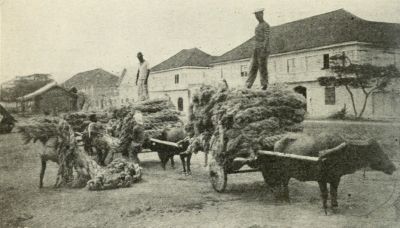
modern as one would expect. The carabao, or water buffalo, is the
one all-purpose farm animal. Carabaos are something like the American
ox, but are more heavily built; they are uniform in color—a dark
drab—and have heavy, flat horns which grow back instead of forward.
The agricultural situation in the islands is at present most distressing.
The fields were devastated by war, and before labor could restore
what the soldiers had destroyed, rinderpest attacked the carabaos and
in some places carried away as many as 90 per cent of the animals.
We visited a sugar plantation which had lost more than half of its
carabaos during the two weeks preceding. Everywhere one sees fields
overgrown with grass which cannot be cultivated for lack of plow
animals. One can understand something of the rinderpest calamity
when it is remembered that these patient beasts do all the plowing
and all of the hauling in the Philippine Islands. We often see them
ridden, sometimes bearing two persons. In addition to the ravages of
disease and the ruin wrought by arms, the Filipino farmer has suffered
from the closing of his market. When United States authority was
substituted for Spanish rule, the Filipinos lost the advantage which
they had previously had in the Spanish market, and then they were
shut out of the United States by a tariff wall. And to make matters
worse, they now bear the brunt of the Chinese boycott aimed at American
goods. Every speaker who has attempted to voice the sentiments
of the people during our stay in the islands has laid special emphasis
upon the injustice done to the islands by our tariff laws. This subject
was also brought to the attention of Secretary Taft and his party, and
all of the American officials here urge the importance of relief in this
direction.
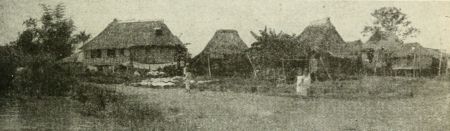
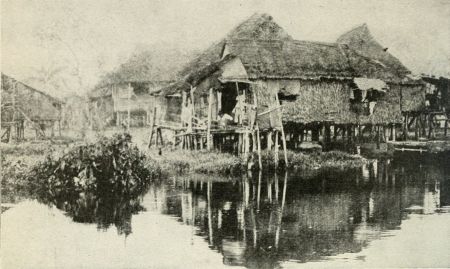
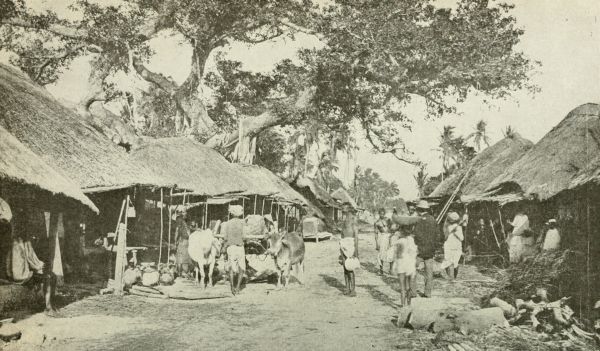
The well-to-do Filipinos live in houses modeled after those built by
the Spaniards, but the great majority of the people live in what are
called nipa huts—light structures made with bamboo frames and with
sides and roofs of nipa palm leaves. The houses are several feet above
the ground and are reached by a ladder or steps. As the temperature
at midday does not change much the year round, the main objects
in building are to secure protection from rain and an abundance of
air, and the nipa hut meets these requirements. The Filipino house
is not only light and airy, but it is inexpensive; we saw a school house
at Santa Barbara built for five hundred pupils at an expense of five
hundred pesos, or $250 in gold. At some of the military camps,
which we visited, the Filipino style of building has been adopted.
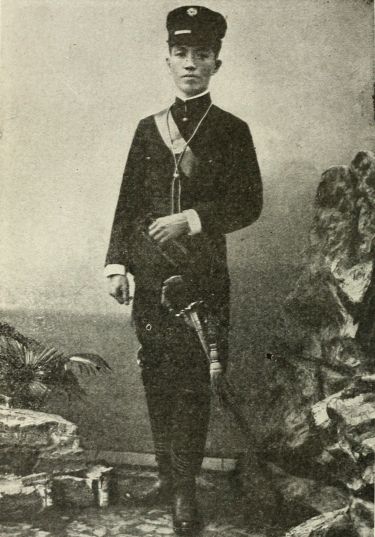
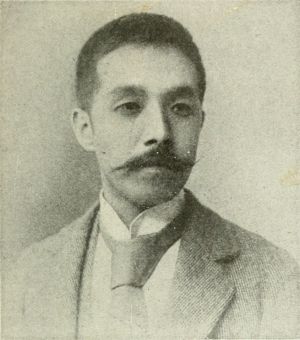
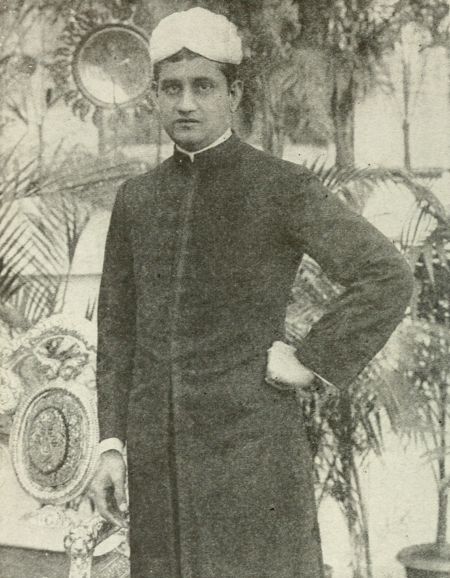
GENERAL EMILIO AGUINALDO.
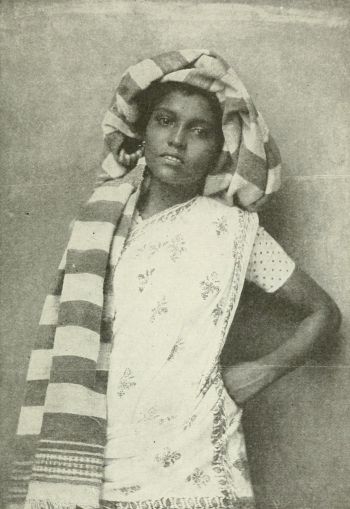
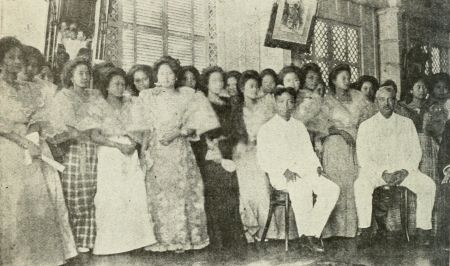
The Filipino dress is quite like that worn in Europe and America;
among the educated men it is identical. The men of the middle class
wear a shirt of a gauzy material outside the trousers. The women
wear a dress skirt with a long narrow train and a low-necked, wide-sleeved
waist made of jusi (pronounced hoose), or pina (penya)
cloth. A kerchief of the same material folded about the neck completes
the toilet. All the thin fabrics worn by the women are manufactured
on hand looms kept in the homes.
Iloilo is the center of the jusi cloth manufacture, of which we saw
many beautiful samples during our tour of the islands. The pina
cloth is made from the fibre of a leaf resembling that of the pineapple.
In the province of Balacan a fine quality of silk is made on hand-looms—the
weaving of fabrics being an accomplishment in which the
women take pride. There is a coarser cloth made of hemp which is
used for ordinary wear, and this is also produced in the home and sold
on market days.
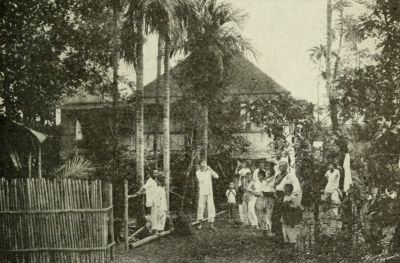
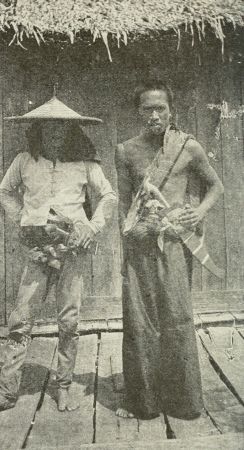
FILIPINO BOYS WITH BLOW-GUNS.
Such conflicting reports have reached the United States regarding
the Filipino people that I was anxious to study them for myself, and
I feel that I am prepared to form an intelligent opinion upon the
subject. I have seen representatives of all occupations in all parts of
the islands, in the cities and in the country. I have conversed with
students and professional men, visited the markets where the rank and
file meet and exchange their products, watched the farmers at work in
the fields and the laborers in the city, and I have made inquiries of
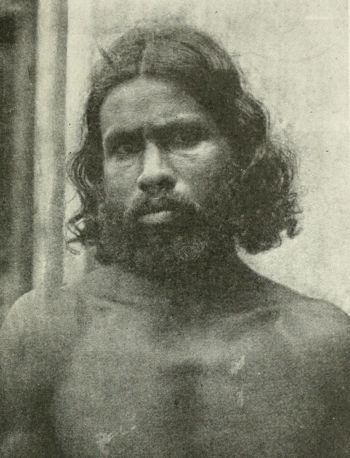
both Americans and natives. The Filipinos are a branch of the Malay
race, but there is such a strong resemblance between some of the individual
Filipinos and the Japanese as to suggest the possibility of a mixing
of bloods, if not a common origin. At Hong Kong I visited a Filipino
of prominence, and the young lady who admitted me so resembled the
Japanese that I was surprised to learn that she was the daughter of
my host. A few hours later I noticed a young man attending to some
business in a shipping office and supposed him to be a Japanese, but
found that he also was a full blooded Filipino. The Filipinos are a
little darker than the Japanese and may average a little taller, but I
have constantly been reminded of the Land of the Rising Sun during
my stay here.
It is frequently said in disparagement of the Filipinos that they will
not work, but this is answered conclusively by a patent and ever present
fact, viz., that they produce their own food, make their own clothes,
build their own homes and in other ways supply their needs. They
have not the physical strength of the average American, nor have they
the experience in machine labor or in the organization of work, but
they will do more physical labor than a white man can perform in this
climate and they have shown themselves capable of doing the finer
kinds of work when instructed. They are also capable of successful
co-operative effort when under efficient guidance. One of the commission
informed me that the street car system lately inaugurated in
Manila was put in at a labor cost of 40 per cent below the estimate,
the work being done by Filipino laborers under an American contractor.
This is certainly an excellent showing. The operating force
is composed of Filipinos and the cars are run very successfully.
The superintendent of the railroad from Manila to Dagupan, an
Englishman, speaks very highly of the Filipinos employed on the
road. He says that he uses natives entirely for the train service and
that he has not had an accident on the road during the thirteen
years of its operation.
A large company of men were unloading stone and gravel from
barges near our hotel, and they were as industrious and as cheerful
a lot of workmen as one could wish to see. They carried the material
in baskets and accomplished more, so far as I could judge, than the
coolies whom I saw at similar work in China. The Filipino demands
better treatment than that accorded to the coolie, but when employed
by those who understand him and show him proper consideration,
he is both competent and faithful.
In the government printing office nearly nine-tenths of the employés
are natives (and the proportion is increasing), and Mr. Leach,
the public printer, informed me that they readily learned the work
and were able to run the typesetting machines and presses, do the
bookbinding and stereotyping and other skilled work connected
with the office. The newspaper offices of the city also employ native
labor, and I need not remind my readers that the members of the
various typographical unions of the United States are among the
most intelligent of our skilled laborers. We visited the largest tobacco
factory in Manila, the Germinal, and found between twelve and
fifteen hundred men and women making cigars and cigarettes by
hand and by machine. There are several smaller factories, and all
are operated by native labor.
One of the leading furniture manufacturers of Manila is authority
for the statement that in wood carving the Filipino soon becomes
the equal of the Japanese artisan. The Philippine Islands are so
near the Equator that the heat of the sun in the middle of the day
and during the almost twelve months of summer must be taken into
consideration. When due allowance is made for climatic conditions
and for the fact that the inhabitant of the tropics lacks the spur of
necessity which ever urges on the dweller in higher latitudes, one is
inclined to excuse any seeming lack of industry. Sure it is that
those who come here from America and Europe do not as a rule do
enough manual labor to enable a comparison between them and the
natives.
Besides those who work in the fields, on the streets and in the
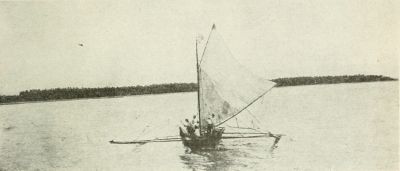
factories, there is an army of fishermen and boatmen. Fish forms
a considerable part of the food supply of the island, and these are
brought from the ocean, from the rivers and from the lakes by a
hardy and active people. Much of the commerce is carried by water,
and the boats are manned by natives. Except where the Chinese
have monopolized the mercantile business, the stores are kept by
Filipinos, men and women sharing the labor as they do in France.
And speaking of the
women, it must be remembered
that woman
occupies a much higher
place in the Philippines
than in any other part
of the Orient. The Filipinos
contend that even
before Spanish influence
made itself felt in
the islands, woman was
accorded an equal place
with man and divided
with him both the
honors and the responsibilities
of the home.
However this may be,
it cannot be doubted
that at present the
rights of woman and
her position in the family
and in society are
respected fully as much
as in continental
Europe. Her influence is felt in industrial and
political life as well as
in the church. At one reception a lady law student delivered an excellent
address.
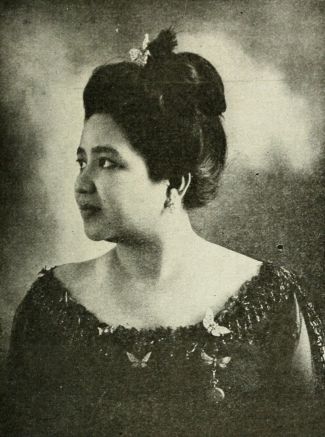
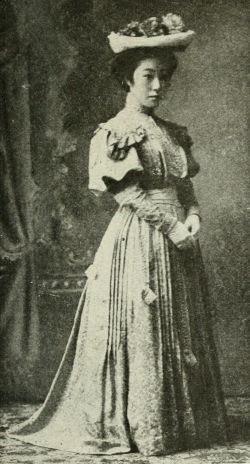
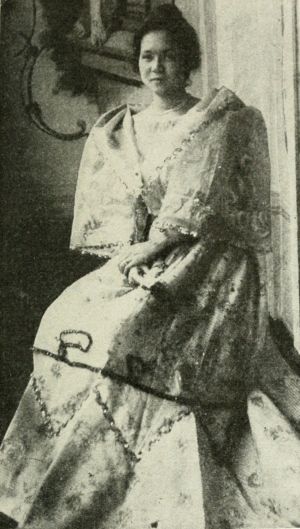
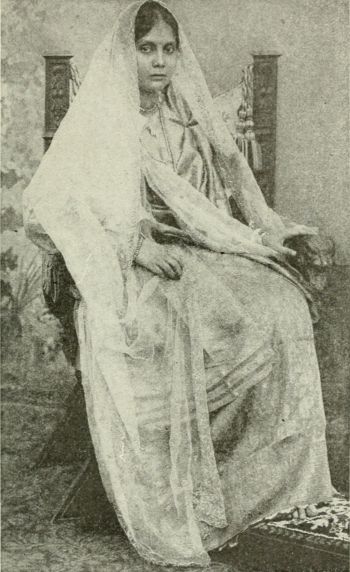
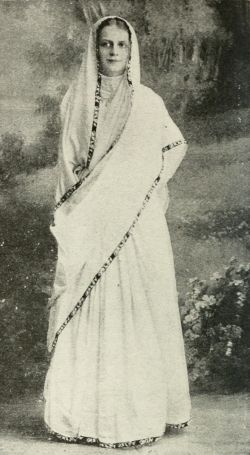
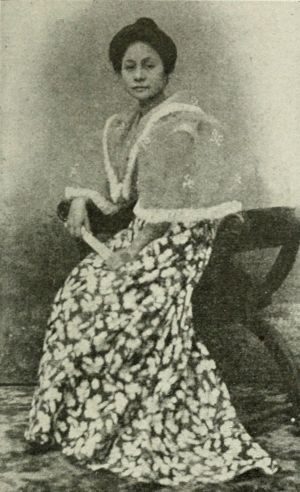
THE ACCOMPLISHED WIFE OF A
FILIPINO OFFICIAL.
Under Spanish rule education was confined to a few. In fact, one
of the indictments brought against the Friars by the natives was that
educational facilities were denied to the masses. This, too, brought
the Jesuits, the friends of education, into conflict with the Friars.
But comparatively few of the people enjoyed the advantages of higher
education, and these were a controlling influence in their respective
communities. As in Mexico and in Cuba, the cultured men and
women of the Philippines are thoroughly refined and polished in
manner.
The American government has had no difficulty in finding men
competent to fill the offices which have been assigned to the natives,
three of the seven members of the commission and three of the seven
supreme court judges being Filipinos. The governors and mayors are
nearly all Filipinos, as are most of the judges of the lower courts.
As there is no satisfactory service by private boats, the commission
furnished us a coastguard steamer for a tour of the islands, the
passengers paying the cost of subsistence, and we were thus enabled
to visit the principal cities. At all of these places we found a group
of intellectual and public spirited men. At Iloilo, Bacolod, Cebu
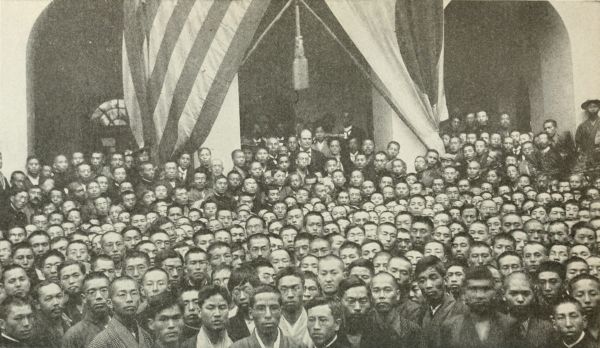
and Santa Barbara there were addresses of welcome and public receptions,
and the views of the residents were presented in clear and well
chosen language. At Malolos, the first capital of the Aguinaldo government,
which we visited as the guest of a committee of prominent
Filipinos, similar speeches were delivered, which met with the approval
of the assembled crowd. At Manila a public dinner was given by a
number of representative Filipinos, headed by Mayor Roxas, at which
speeches were made by Filipinos distinguished in official and professional
life. The addresses delivered on these several occasions
would compare favorably with speeches delivered under similar
circumstances in the United States. While some of the persons who
took part in these meetings showed traces of Spanish blood, others
were unmistakably Filipino; but the racial differences could not be
distinguished by the manner in which they performed their parts.
While at Manila I met General Aguinaldo, first at the reception
tendered us by the Elks, and later at his own home in Cavite. Since
his capture he has been living in retirement and has conducted himself
in such a manner as to win the approbation of the American officials.
He is small of stature, modest in deportment and manifests
a deep interest in the welfare of his people. He has twice appealed
to the government to establish an agricultural bank for the relief of the
farmers, calling attention to the scarcity of money and to the high
rate of interest (sometimes 40 or 50 per cent) charged the farmers on
short loans. The agricultural bank was referred to by several speakers
during our stay in the islands, and it is certain that, from an industrial
standpoint, the government could do nothing which would
be more beneficial or acceptable to the people.
Dr. Apacible, the head of the Hong Kong junta during the insurrection,
now a practicing physician in Manila, was selected by the
Filipino reception committee to accompany us on our trip, and being
personally acquainted with the leaders of thought, he was able to
bring us into contact with those who reflected the opinion of the people,
while Captain Moss, of General Corbin's personal staff, and Collector
Shuster, representing the insular government, kept us in touch
with the Americans in military and civil life. We found everywhere
commendation of the educational system established by the
Americans. It is the one department of work instituted by our
government which seems to have avoided serious criticism. I presented
this universal commendation as evidence of the good intentions
of our people, pointing out to the Filipinos that people are apt
to assert their rights in proportion as they increase in intelligence,
and that our people would not be foolish enough to encourage education
if they really intended to do injustice to the Filipinos.
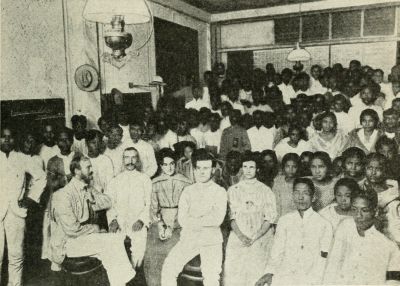
FILIPINO NIGHT SCHOOL—AMERICAN TEACHERS
The large increase in the number of students and the interest taken
in the establishment of schools must be taken into consideration by
anyone who attempts to forecast the future of the islands. In many
communities there are more people speaking English to-day than could
ever speak Spanish, and the multitude of dialects will soon be dissolved
into a common language. One superintendent of schools told me that
in his district the attendance was more than 50 per cent above the
school population, owing to the fact that grown men, and women with
children, insisted upon studying. Another superintendent reported
that she could not find teachers for all the villages which offered to
erect school houses. An incident was related by still another teacher
which illustrates the ambition of the Filipino youth. A Filipino boy,
who was working in the home of an English woman notified his mistress
that he wanted to go to school. Being anxious to keep him,
she offered to raise his wages from twenty pesos per month to forty,
but he rejected the offer, saying that he loved wisdom more than he
loved money.
Besides the public schools, primary, secondary, industrial and normal,
there are a number of religious schools. The Jesuits had their
schools and colleges under Spanish occupation, one of the boys'
schools which we visited at Cebu being older than Harvard University.
The Catholic sisters also have numerous girls' schools throughout
the islands. At Manila the Jesuits have an observatory and weather
bureau which, for equipment and scientific accuracy, probably has no
superior anywhere.
The Protestant churches are also establishing schools, some of them
industrial. Who will measure the effect upon coming generations of
these multiplying agencies for the training of the boys and girls of
the Philippines?
The northern islands are inhabited by a Christian population.
Whatever may be said of the governmental methods of Spain or of
the political corruption of her colonial representatives, she established
the Christian faith in the islands. Prior to American occupation the
higher officials of the church and many of the priests were Spanish,
but since 1900 American and Filipino bishops and priests are being
substituted. Under the lead of Archbishop Harty the work of the
church is being vigorously pushed and a large number of baptisms
are reported. Several of the Protestant churches are gaining a foothold,
there being upwards of ten thousand Filipinos enrolled in the
evangelical churches. The Presbyterian church of the Tondo district,
Manila, has something like four hundred natives, Señor Buencamino,
secretary of state under Aguinaldo, and afterwards a member
of the civil service commission, being president of the Tondo congregation.
No discussion of the religious situation in the Philippines would be
complete without a reference to the independent Catholic church of
which Señor Gregoria Agilpay is the head. Obispo Maximo Aglipay
is a native Filipino, 46 years old, with an intelligent face and fine
presence. In three and a half years he has established a church with
some three hundred priests and about seven hundred congregations.
He claims a membership of about four million, but the clergy of the
regular Catholic church do not concede nearly so large a following.
In fact, they deny that he has made any considerable impression upon
the Catholic population, and as there is no accurate church census,
it is impossible to say in what proportion the Catholic membership is
divided between these two church organizations.
As to the honesty of the average Filipino, different opinions are
to be heard from Americans, but we are told that less care is taken to
lock the doors than in America, which would indicate less fear of
burglary. The Philippine court records would embarrass us if we
became too harsh in our reflections upon the integrity of the Filipino,
for during the years 1902-3-4-5 thirty office-holding Americans were
found guilty of shortages and defalcations, the total amount embezzled
exceeding seventy thousand dollars, gold. Bilibid prison at Manila
is the penitentiary for the northern islands and most (I think all)
who receive more than a jail sentence are confined here. There are
now about forty-six hundred prisoners in Bilibid, nearly eleven hundred
serving terms for brigandage, insurrection, rebellion and sedition—the
remainder for other crimes. If the convicts average a year's
sentence each, the number of natives sent to the penitentiary during
four years would have to be about twenty-five thousand, to give the
native population a criminal class equal to the proportion which the
thirty convicted Americans bear to the entire American population
in the islands, and it must be remembered that the defalcations have
been among Americans selected because of their supposed character
and capacity. There have been many defalcations among the fiscal
officers appointed among the natives, but not knowing the total number
of the Filipinos occupying fiduciary positions and the number of
Americans occupying similar positions, I can not make a comparison.
Our chief consolation is to be found in the fact that Americans guilty
of dishonesty have been promptly punished by the American officials,
but this does not entirely remove the stain which their conduct has
brought upon our nation's good name.
I can not conclude this article without expressing my appreciation
of the courtesy shown me by Acting Governor Ide, Secretary Furguson,
the members of the Philippine commission and the other officials, civil
and military. They were all willing to furnish information, records
and statistics regarding the things done under American authority.
While mistakes have been made, some of them expensive; while there
have been outrages by the constabulary (which is merely a native army
officered by Americans and serving under another name) and while
there have been instances of seeming partiality to Americans where
a conflict has occurred between them and natives, I believe that the
serious evils to be complained of are not personal, but are inherent in
a colonial system and can not be eradicated so long as such a system
is maintained.
The greatest need that I noted in the islands is an increase in what
we call the middle class, but this need is noticeable in the other Spanish
colonies which I have visited and will be corrected as education
increases among the masses. With more education among the farmers
there will be improved methods of agriculture, and with more education
among the artisans will come diversification of industry. This middle
class will be a balance wheel, as it were, to regulate the machinery of
society, and it will furnish a public opinion which will control official
representatives.
The following extracts concerning Mr. Bryan's visit are taken
from Filipino papers:
December 27, El Renacimiento, said editorially:
"Bryan. This is a name among names. Others may boast of it but
in their cases it does not mean so much. The daily press to-day fills
column after column regarding him and his name is in the mouths of
everyone. The events of yesterday claim special notice, consisting, as
they do, of more than mere generalities.
"Why do these simple people salute us? Do they treat the Americans
here this way? These are questions which were asked of his companions
during the trip through Paranaque, Las Pinas and Bacoor
yesterday.
"'The salutations are for you,' replied a prominent Filipino, 'because
they know that it is you who is approaching. These people do
not know you, but they have learned that you are here and your name
is revered by them.'
"In fact few names of Americans can be mentioned among Filipinos
which will excite more feeling. Bryan did not need to come here in
order to be popular.
"The principal impression produced by his presence, even upon his
adversaries in politics, is his consummate amiability and discretion.
Bryan has made no statements or passed any judgment regarding the
Philippine administration. He has not given any excuse for his
being characterized as an agitator or a scoffer at the enterprise which
the United States, as a nation, has undertaken in these islands.
"But does this signify that Bryan will abstain from collecting data
for future use? We believe not. One can easily hope for a highly
optimistic opinion from him,
but a party man takes his
ideas and prejudices with
him wherever he goes and he
sees things through the light
of his convictions."
One Manila paper prints
the following:
The Elks gave a rousing
reception last night to William
Jennings Bryan at the
club house on the Luneta,
and all of Manila turned out
to do homage to their distinguished
guest. The club
rooms were artistically arranged
with flags and potted
plants and the spacious halls
were the scene of many
groups of well-known faces.
Punch and lemonade were
served during the evening
and the music was furnished
by the constabulary band.
The guests were received
by Colonel Dorrington and
Mrs. Dorrington, Governor
Ide and Mr. and Mrs. Bryan, and were ushered by Messrs. Reiser, Patstone,
Steward and Fisher.
There was considerable stir when Emilio Aguinaldo entered the
hall and was ushered up to the receiving party. He was introduced
to Mr. Bryan by Governor Ide. Aguinaldo said in Spanish, "I am
glad to meet you; I have been very anxious to see you. I have heard
a great deal of you." This was interpreted to Mr. Bryan who said,
"We have heard your name in our country also." Then Mr. Bryan
said, taking hold of Aguinaldo's arm and turning to Mrs. Bryan, "This
is Aguinaldo."
At a meeting of prominent native citizens held in the office of the
president of the municipal board and presided over by that official, the
following program for entertaining Mr. Bryan was decided upon:
A public banquet at one of the hotels of Manila.
An evening entertainment at the Liceo de Manila, at 4 o'clock p. m.,
on January 6, with the following program:
1. Parade of the students.
2. Address of welcome to the Honorable William Jennings Bryan.
3. Band.
4. Speech by Mr. Bryan.
5. Theatrical performance by the students of the college.
The Manila Times of January 1 gave an account of the popular
banquet given to Mr. Bryan in the Luzon restaurant. From this report
the following extracts are taken:
At the popular banquet held in honor of William Jennings Bryan
last Friday night in the Luzon restaurant, the distinguished guest
showed the same caution as at Malolos in dealing with the questions of
policy affecting these islands, never at any time doing more than
skirting issues which if not dead are generally quiescent.
About 150 guests sat down at the tables, though when the speaking
began there were probably close on 300 persons present, most of the
new arrivals being young Filipinos of the class which made itself
prominent in the "Independence Day" held recently before the visiting
congressmen in Marble hall.
The program, which was somewhat artistically designed, had on its
first page the Stars and Stripes; inside, the picture of Mr. Bryan and
the menus and names of the committee of organization, and on the last
page the Katipunan emblem of the rising sun and the three stars. During
the evening the Rizal orchestra discoursed music at intervals.
Generally, the speaking was too long; Judge Yusay, who occupied a
place on the program, consuming an hour in a speech which finally
tired its hearers. Mr. Bryan, the last orator, did not close his remarks
till half-past one.
In his own speech he took occasion to say that he did not feel at
liberty to speak freely as he would in the United States. Two or three
times when his remarks were leading to a climax whose logical sequel
appeared to be some reference to independence, his audience waited almost
breathlessly, but he carefully evaded the seemingly logical denouement
and ended in some relevant but not thrilling expression, one
could sense rather than hear the sigh, in some cases of relief, in others
of disappointment, which followed.
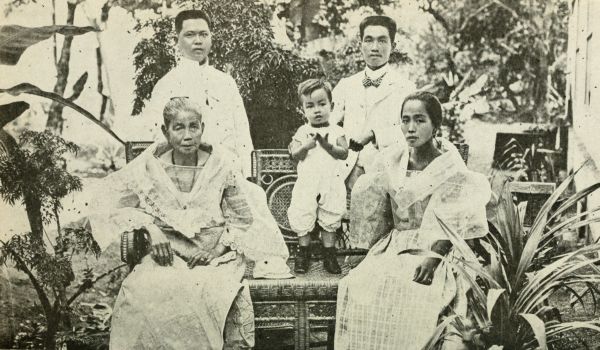
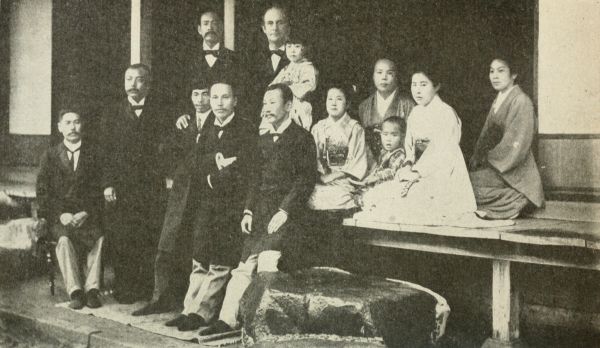
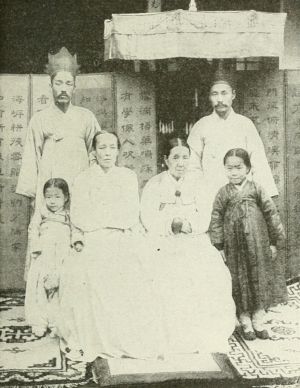
EMILIO AGUINALDO, MOTHER, SISTER, BROTHER AND SON
His address dwelt chiefly on two thoughts, the first being that there
is a tie which binds all mankind together, that tie being knit up with
the human heart, and the second being what constitutes civilization
and how it may be attained.
The following report is taken from the Manila Times of December
28:
"Independence the Soonest Possible."
"Malolos Obliged."
"Mr. Bryan, the Hope of Our Nationality."
"W. J. Bryan, Defendant of Our Liberty."
Such were the legends mounted upon the arches under which William
Jennings Bryan passed from the railroad station to Malolos on the
occasion of his provincial excursion yesterday. The trip was made by
the famous democrat, in company with his wife and children, as guests
of Mr. Higgins. The private car of Mr. Higgins and an extra coach
took the party first to Gapan, where it arrived about 9:30 a. m., after
having stopped at several of the stations en route, where Bryan made
short addresses to the delegations, which were in attendance at the
stations with bands of music and banners flying to greet him.
At Malolos, the seat of the former revolutionary government and
the center of operations of the prime movers in the "independencia"
campaign, luncheon was had at the home of Mrs. Tanchanco, an opulent
Filipino matron. After the luncheon was over Teodoro Sandico
rose to introduce Sr. De Luce, who addressed the following words to
the assembled guests:
"I salute the real champion of a democratic people, the true defender
of the rights of the people; he who at Kansas City included in
his platform the independence of the Philippine Islands. I am sorry
that his presence in Malolos, once the capital of a Filipino republic,
is so short. So deep-rooted is the desire for independence in the Filipino
people that the news of the arrival of this champion has brought
to Malolos many from all about, only to greet their savior. Such
spontaneous manifestations by all grades of people will, I believe, convince
you that we desire our independence at once. It will show you
that we have a right to nationality, that we have everything that is
necessary to support a government of our own. If the government
will give us this independence it will show it is the champion of liberty
as it did in its treatment of Cuba. Such a step here will eliminate
the need of a great American army twice its natural size, and it
would avoid the corruption of the principles inherited from the ancestors
of Americans. If America will not give us full independence,
grant us a democratic government! Separate the executive and legislative
branches! Give us real independence of the judiciary! We
drink a health to those who have not forgotten the true principles
of Americans."
After the toast to the great
orator had been drank, Bryan
rose to his feet and addressed
some two or three hundred
natives, aside from those who
were gathered at luncheon. The
following is his address:
"Allow me to thank you for
the welcome you have extended
to my family and to me. I
appreciate also the kindly manner
in which you have referred
to the way in which I have tried
to express my friendship for the
Filipino people. I do not propose
to discuss here political
questions. I have not felt that
in these islands I should enter
on any disputed questions.
"Some things I can say with
propriety. While you appreciate
the manner in which I
have attempted to show my
friendship for the Filipinos, do not make the mistake of believing that
those who differ from me are not interested in this people. In my country
there are two great political parties, republican and democratic.
They enter into contests which are strenuous, but in fundamental principles
both are the same. Thomas Jefferson founded the democratic
party. Abraham Lincoln was the first great republican. Lincoln has
left records to show the admiration that he felt for the principles and
utterances of Thomas Jefferson.
"In two contests I was defeated by the republicans, but I believe
as much in the patriotism of those who voted against me as I do
in the patriotism of those who fought for me. Those who agreed
with me announced a policy for the Philippines. Those who opposed
me did not. But do not make the mistake of believing that
those others are enemies to the islands. I believe the majority of all
American people without regard to politics or party are sincere well
wishers of the Filipinos. Yes, all.
"However you may differ about policies, all your people speak well
of what our country stands for in regard to education. Let me remind
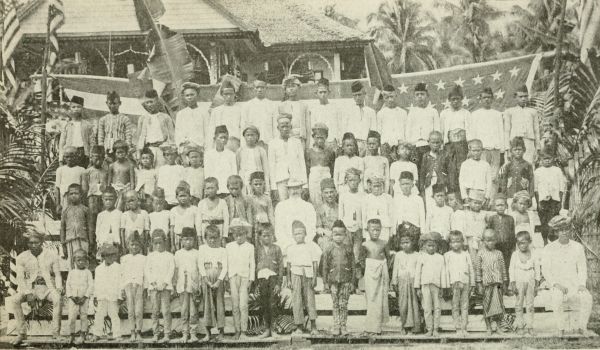
you that these little children who are attending school speak
more eloquently in your behalf than I am able to do. The more
educated people you have among you the easier will be the task for
those who speak for you in the United States. The more respect your
people show for the law the easier will be the task for those who
speak for you. The higher the ideals shown in your language
and your lives the easier the task of those who speak for you.
I want you to have as much confidence in the republicans in power
as I have, though I have been twice defeated by them. And when I
say this I am not trying to pay them for anything. I do not owe
them anything. When I say trust them, I say it because I believe
the American people want to do right and, given the time, will find
out what is right on every question.
"Differences of opinion must be expected. In fact, that people
differ in opinion is to their credit rather than to their discredit.
Those who agree in everything do not as a rule think on anything.
Differences of opinion must not only be expected but must be respected.
Do not expect our people to administer authority here without
mistakes. They make mistakes at home, and if we democrats get
into power, good as we are, we will make mistakes. The Spanish made
mistakes here, and so would the Filipinos. I suggest that if you want
to help us who are interested in you, you can do it by supporting with
all the enthusiasm you have, the efforts made by America here. Let
us hope that whoever is in authority here and there, they will have
the wisdom to so promote the welfare of all, as to unite both peoples
in an eternal affection."
Conception Felix, the president of the Women's Association of the
Philippines, followed Mr. Bryan and spoke of the duty of the islands
in securing for them the best advantages for their welfare, and concluded
with the statement that the women of the Philippine Islands
demanded their independence.
After leaving Malolos the trip to Pasig was made and the return
to Manila was so timed as to allow the party to arrive at Santa Mesa
in good season. A special car of the street railway company met it
there.
At the reception given at Bacolod, on the island of Negros, January
5, Señor Joaquin Jortich spoke as follows:
"Hon. William Jennings Bryan and distinguished party—Gentlemen:
"The people of Bacolod and the province in general, through me,
have to-day the honor of greeting their distinguished visitors, giving
to them all a most cordial and sincere welcome, and very especially
to the illustrious leader of the democratic party who has deigned to
grant us the high distinction of his visit.
"Mr. Bryan has doubtless noticed since he set foot on Filipino soil
that the people of the islands received him as if he were an old and
beloved friend.
"There is nothing strange in this; one of the most striking qualities
of the Filipino is gratitude, even though his enemies and detractors
assert the contrary. The Filipino people know that Mr. Bryan
has been and is a sincere champion of the Filipino ideals and interests
in America, and this little suffices to make all here, without distinction,
receive him to-day with open arms and with hearts swelling
with joy.
"His visit to-day to this province gives us the satisfaction of knowing
him personally, as well as the opportunity of expressing our true
sentiments toward the North American people, to whom we hope to
make our humble voice heard through the channel of our illustrious
visitor.
"The Filipino people can not fail to thank Providence which has
appointed to them the good fortune of being under the protection
of the noble and powerful Stars and Stripes.
"No one familiar with the history of the constitution of North
America can fail to admire the spirit of wisdom and morality which
permeates its most liberal institutions.
"It is true that the Philippines bill is not in every way based upon
the principles which that constitution breathes, and it is also true
that in the government administration there exist certain prejudices
which find no place in so wise a constitution; but those defects are
errors which we hope will be rectified in time and through the education
of the people.
"To deny that the Filipino people aspire to independence in the
future would be to deny the light of the sun in broad day. But in
spite of this aspiration, we understand that peoples, like men, in order
to be independent must necessarily pass in strictly chronological order,
through different stages, which they can not traverse by leaps and
bounds. Nor do we fail to realize that the liberty, great or small,
which may be granted to a people, must be in direct relation to the
state of their culture.
"Our ambition is just and within the bounds of reason and logic. We
wish independence through evolution, because we understand that a
people, differing from another in race and in its ethnographical and
ethnological conditions, can never be governed with justice and equity
except by itself; and this, because the pride of superiority will always
dominate the governing race to the detriment of the governed, and
the latter will never be happy. Some of the congressmen and senators
who were here a short time ago have said in Washington that the
Filipino people are growing away from the American people. That
statement is by no means as clear as it should be.
"The Filipino people, by virtue of being a tropical race, are very
sensitive, and with the same impetuosity with which they love and
admire a benefactor, they hate and despise a tyrant.
"The American people have brought us in the Philippines many
things of great value; they have bestowed upon us many benefits and
have granted us many liberties which formerly we did not enjoy; but it
is also true that among the good things they have brought some evils;
among the benefits there have sprung up like brambles certain unjust
abuses, and among the many liberties conceded us petty tyrants have
arisen to restrict them. Therefore, the Filipino people have grown
away from the bad Americans, but in no way from the American
people to whom we owe but gratitude and love.
"We love those who love us and despise those who despise us.
However defective our past civilization may have been, it has left in
our hearts the feeling of dignity which befits a people of culture.
"Unfortunately, in the Philippines, not all those who are here as
Americans possess the noble sentiments of the American people, whom
we admire and love, for we would be contemptible did we, through
the fault of some bad representatives, come to hate an entire nation
which has been and is lending us its aid.
"Our illustrious visitor has proof positive of my assertion. The
Filipino people, without knowing him personally, receive him with
open arms and as to an old and beloved friend open to him their
hearts, telling him their troubles.
"This is the Filipino people, these are their real feelings towards
the people of North America.
"We trust that these prejudices may disappear in time, as these two
races, destined to live together, continue on the road of mutual sympathy
and a better understanding.
"With regard to our present situation, from an administrative
standpoint, although we are relatively better off than formerly, nevertheless
there are in the present government many defects which merit
censure.
"Against such defects we shall continue to struggle until the Philippines
possess a legislative body which shall know better than that
of to-day the needs and conditions of this people.
"At present we have no legislative body but the civil commission,
composed of three Filipino members, without portfolios, and four
American members with them. The latter members, the majority
of whom do not know the country in its inside phases, clearly can
never dictate laws which are adapted to the circumstances and conditions
of the people.
"The Philippine archipelago is very diverse in its ethnographical
and ethnological conditions, and, therefore, it is very difficult to frame
a law which is adapted to its general necessities, unless one has an
accurate and profound knowledge of the situation and conditions of
each and every one of the thirty-some provinces which form the
archipelago.
"Another of the greatest defects which we observe in the present government
is the inequality and lack of justice in the appointments of
government positions, as between Filipinos and Americans, with the
exception of the judiciary which is the department most evenly distributed.
"In the civil commission and in the provincial boards the voice
of the Filipino is not in the majority, neither, therefore, is the voice
of the people. It is true that the municipalities appear to operate
with the fullest liberty, but this liberty is restricted, because the
provincial board exercise direct control over all their acts, so that
municipal autonomy is, as a matter of fact, nominal.
"The most noble and acceptable institution which American government
has established here is that of public instruction. Even the
officials in that department are also the best liked and those upon
the most friendly terms with the Filipino people, although defects are
not entirely absent as is the case with every human creation. Against
this department we can say nothing up to the present. God grant
that it may continue so for many years, without being affected by the
discord and prejudice which the enemies of the country seek to sow.
"With respect to the economic phase, we could be no worse off than
we are now, and this can be easily explained. Since the year 1896,
in which the revolution against Spain commenced, the Philippines
have gone from bad to worse in all their economic conditions, particularly
in the matter of agriculture which is the sole source of their
wealth. Of 56,000,000 acres of land which we have fit for cultivation,
only 6,000,000 acres are cultivated and 50,000,000 are not
cultivated. War, drouth, cholera and rinderpest among our work
animals, have prostrated us to such an extent that all which the farmer
might say of the situation pales before the reality. To these inferior
troubles must be added others on the outside, the lack of market for
our sugar; Japan, protecting herself from Formosa, raises her custom
tariff upon sugar; China, with the boycott, closes her market to us
because of our relations with America, and rich America, which
should protect us, also closes her doors to us with a Dingley tariff.
"To sum up, the Philippines have no money, they have no production,
they have no market. Could there be a harder situation?
"The plantations paralyzed and the laborers without work—thus rises
the germ of ladronism. The scarcity of money is such that in order
to find a dollar to-day one needs a searchlight, and to make matters
worse the articles of prime necessity rise in price, making existence
almost impossible for the poor workman.
"In the time of the Spanish government there were in circulation
some two hundred million of Mexican pesos, to-day we have hardly
thirty million, according to the last report of the secretary of finance,
a sum which, when divided among eight million inhabitants, gives
3.75 pesos per capita.
"If to this we add the stoppage of all business through the paralysis
of commerce and the industries, it will be seen that with 3.75 pesos
for each inhabitant, pauperism, hunger and misery are necessary
consequences.
"Here we have the actual state of the Philippines, whose competition
the powerful sugar trust in America still fears. America needs
three million tons of sugar for her home consumption; her production
amounts to only one million tons, so that she must import two million
tons from abroad. The Philippines produce only three million piculs
of sugar, or about 187,500 tons. Is it possible to dream of competition?
"Our money crisis can only be met by the establishment of agricultural
mortgage banks, and if we wish to escape disaster in that
enterprise it is necessary that its administration be completely separated
from the government, with the exception of the usual powers of
inspection, this because it is well known that prosperity in these affairs
is based upon mercantile interest, which does not exist in government
officials, whose interests are political rather than mercantile. As proof
of this statement let us look at what happened with the $3,000,000
which the national government donated to the insular government
to improve the grievous situation of the country. With all our soul
we are grateful for so generous a gift, but we greatly regret that the
government has not known how to administer it better. The $3,000,000
have been exhausted, but the situation of the country has not
improved in the slightest degree. That was, indeed, a disaster.
"To-day questions involving many millions are being discussed and
it would be very lamentable if the protection and good wishes of the
national government should come to naught through a mistaken or
defective administration. Our agricultural crisis is due rather to the
terrible mortality of the work animals, which is to-day extending to
all classes of cattle. This is a misfortune from which we have been
suffering since the year 1901. Five years of massacre, no stock in
the world will stand it.
"To remedy this state of affairs we need machinery which will take
the place of the work animals, and we believe that the free entry of
every class of machinery for a definite time would be one of the most
efficacious means of fomenting and encouraging the many lines of
industry which we have to exploit, and, therefore, of raising the
country from the state of prostration in which it is found.
"With what has been said, our distinguished guest will be able to
form an idea of the situation of this country under its triple aspect,
political, administrative and economic and echo across the seas our
by no means enviable condition. I have spoken."