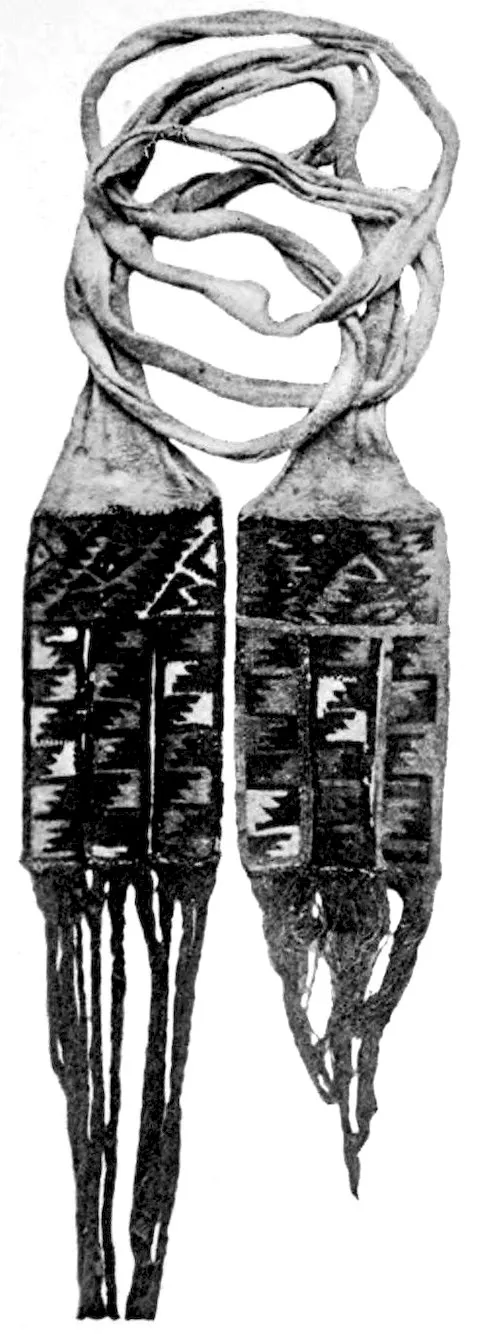
GIRDLE FOUND IN THE CEMETERY OF PACHACÁMAC.
The historian of the Conquerors who described the newly
discovered Peru as “the Ophir of the Occident” gave it
a name which modern research proves to have been singularly
appropriate. Not only in wealth, but in antiquity, this interesting
country is comparable to the fabled land of the East from
which the emissaries of King Solomon brought so many luxuries
to please the taste of their royal master. There are eminent
writers and students of the records of ancient times who are of
the opinion that the famous Ophir of the Bible was no other than
ancient Peru, and that the Phœnicians—those intrepid navigators
of past ages—visited its shores and were the founders of its
earliest civilization.
But speculation as to the origin of the ancient Peruvians
covers such an extensive field that almost every writer on the
subject has a distinct opinion; and every nation of the Orient
has been supposed, by one authority or another, to have laid
the foundation of Peruvian culture. The most popular theory
gives to China the credit of introducing the earliest civilization
on the American continent; and in support of this belief many
parallels are drawn between the Mongolians and the primitive
races of the New World in their traditions, customs, and, particularly,
the similarity of their features. In some parts of the
coast district of Peru, the indigenes do not speak Quichua, as
do the descendants of the Incas’ people, but have a language which is said to be easily
understood by the Chinese; and there is, apparently, a close analogy between the ancient
creeds of the coast Indians and Chinese worship. According to several authorities, the
traditional heroes of Peruvian and Mexican civilization were Buddhist priests. In this
18connection it is worthy of mention that some of the huacas which have been taken from
ancient cemeteries on the coast, bear a marked resemblance to the well-known idols of
Buddhist worship. The name huaca is given to all consecrated relics in these ancient
burials, including the corpse and its wrappings, as well as the innumerable articles of household
and personal use, ornaments and food, interred therewith. The custom of placing
maize and other edibles in the grave, and (as has been found in some cases) of putting a
coin in the mouth of the deceased, affords proof that these ancients believed in a future
life. Most of the interments were made in huge mounds, called huacas, built of sun-dried
bricks, or, in the earliest periods, of round balls of mud.
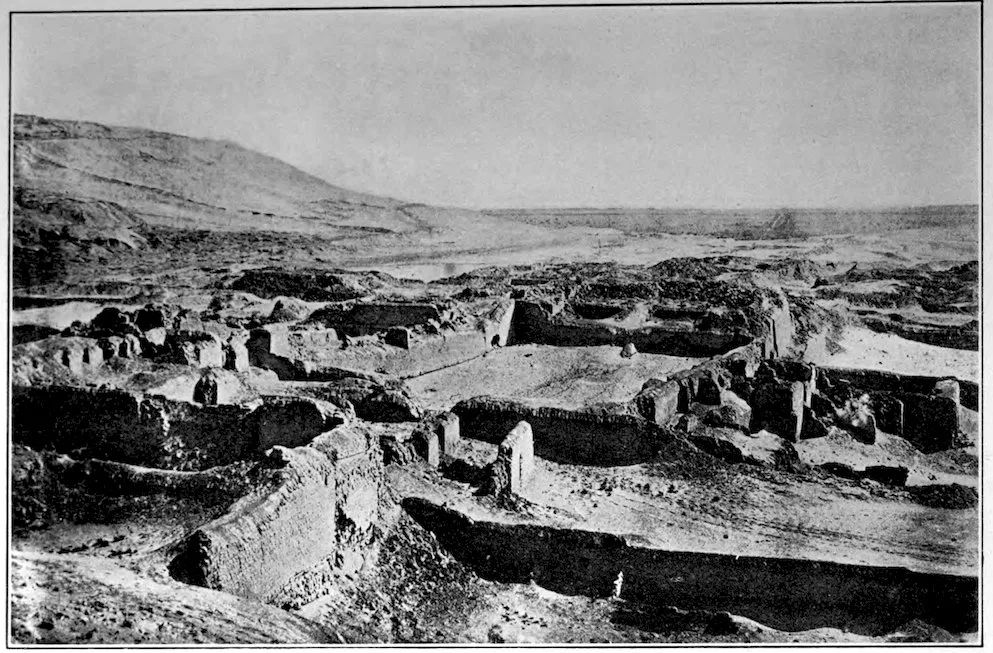
SOUTHWESTERN PART OF PACHACÁMAC. VIEWED FROM THE NORTH.
From whatever source Peru derived its earliest culture, everything indicates that at
some period, probably at various times during the early ages, immigrants arrived in the
country from Asiatic shores. The most eminent authorities, among them the Peruvian
scholars Dr. Pablo Patron, Dr. Larrabure y Unanue, and others who have made a scientific
study of the antiquity of their country, agree in the belief that there were several early
immigrations to Peru from China and Japan. A few even accept the theory that the origin
of the advanced races who first peopled the ancient world of the West is to be traced to a
19lost “Atlantis” and a submerged “Lemuria,” supposed to have been great continents in
a past age, whose inhabitants, rivalling the ancient Egyptians in culture, lived in close
communication with America, and gave it the basis of its earliest civilization. Conservative
scholars are disposed to give little attention to purely speculative theories, and prefer to
seek the solution of the problem by the most practical methods.
It is to the honor of Peru that the government, recognizing the importance of exploring
its great treasure-store of antiquities in the interest of modern knowledge, is directing a
systematic effort to penetrate the veil of mystery which envelopes the remote past of the
country and its people. Dr. Max Uhle, an eminent authority on Peruvian archæology, is
now occupied in the work of excavating and classifying Peruvian antiquities in accordance
with modern scientific methods. The facts so far accumulated from reliable archæological
data point to an antiquity of at least three thousand years, and may indicate a much more
remote period of culture.
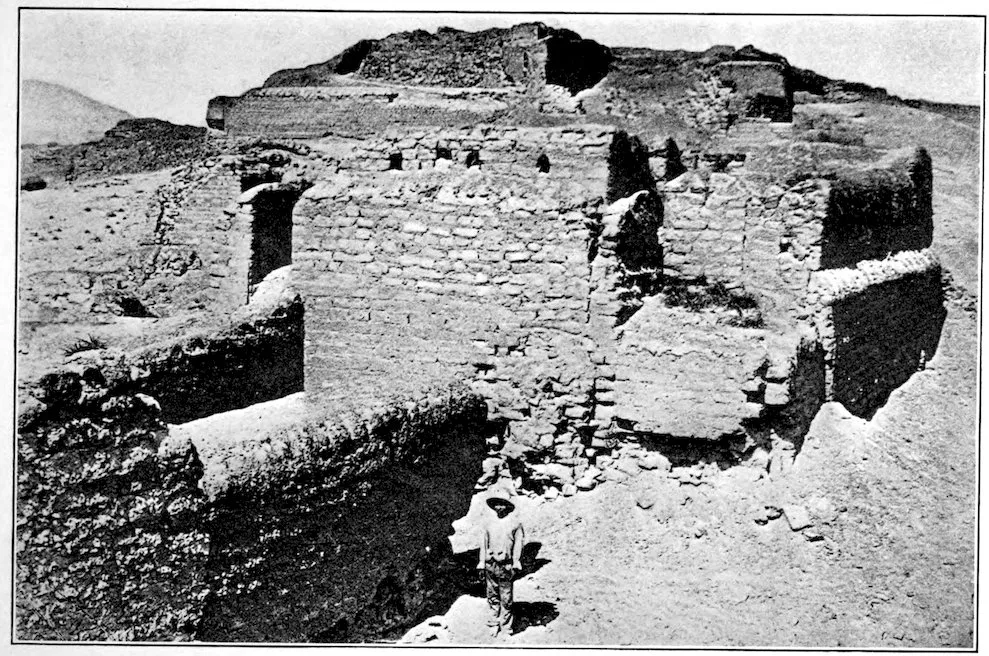
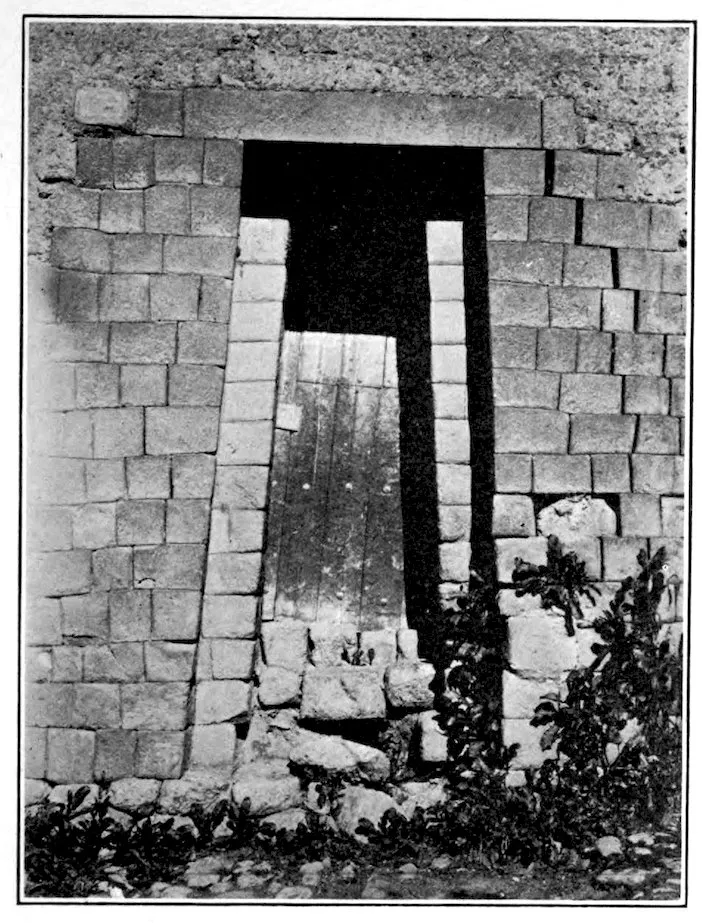
ENTRANCE TO THE PRINCIPAL PALACE OF PACHACÁMAC.
Long ages before the New World was discovered by Europeans, and centuries
before the Incas established their wonderful empire, Peru was the home of a mighty
race, or of successive races, whose dominion extended at some time over a great part
of tropical America. The records of their advancement still exist in the stupendous
20ruins of their sacred temples and in the objects of art and evidences of culture found
in their burial mounds.
Like the various nations of the Orient, these ancients of the New World had their
ambitious struggles for supremacy one against another, their periods of great prosperity
and power,—sometimes arriving at the height of despotic rule over all contemporaries,—and
their time of decline before the ascendancy of a more potent rival. The record of changes
wrought in successive periods, and of influences resulting from communication between
the inhabitants of widely separated regions, is written in their monuments and in the
huacas of their cemeteries, and furnishes the key to the chronology of prehistoric Peru,
possibly to all American antiquity.
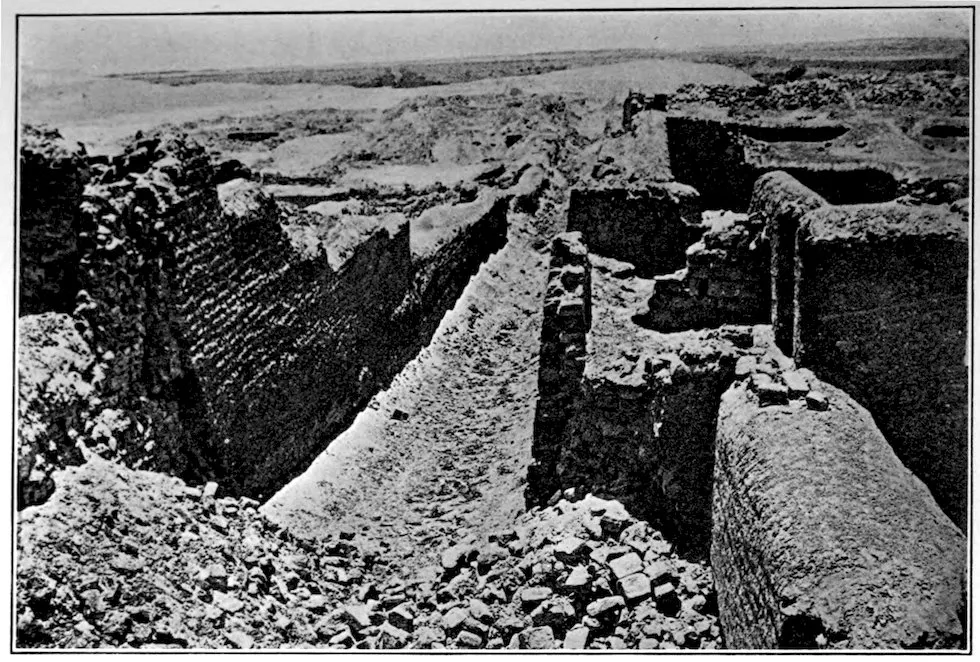
THE EASTERN STREET OF PACHACÁMAC.
Interesting ruins abound in every part of Peru, from the environs of the capital to the
most remote districts of the frontier. Within a few hours’ ride of Lima are situated
the ancient necropolis of Ancón and the temple of Pachacámac, where recent excavations
have brought to light many interesting prehistoric relics. In no other land do the same
conditions exist as in Peru, where the archæologist has advantages in the pursuit of his
investigations which the countries of the ancient Egyptians, Babylonians, and Greeks do
not afford. Here it is possible to study, at first hand, many of the customs that prevailed
21long before the advent of the Spaniards, as they are still practised in the sierra, where the
same feast days have been observed from time immemorial, the same methods of spinning
and weaving are followed to-day as in prehistoric ages, the picturesque and brilliantly
colored costumes of their ancestors are yet in vogue among the indigenes, and even a few
of the wonderful dyes, which excel in permanence those of the best European markets,
are made to-day by these children of an ancient race, as they were by their forefathers in
centuries past.
The most ancient civilization in Peru of which traces have been found up to the
present time was developed in the coast region, around Nasca and Ica in the southern
district and near Trujillo in the north; and the traveller whose interest in antiquities
induces him to pay a visit to this country can see some of the most remarkable ruins on
the American continent without the inconvenience of making a long and fatiguing overland
journey, as the ocean steamers of the South Pacific call at ports in the immediate neighborhood
of extensive ruins of prehistoric cities. Along the coast may also be seen shell
mounds and other fragments of a primitive age, showing that in a very remote period the
inhabitants subsisted almost entirely on sea food; though nothing has been found to
indicate that these people were in any way related to the races that attained, at a later
date, such a high degree of culture as that represented in the monuments, potteries, and
particularly in the textiles, of Nasca, Pachacámac, and Trujillo. The textiles of ancient Peru
are marvellous in quality,
design, and coloring,
and are the especial delight
and admiration of
the archæologist.
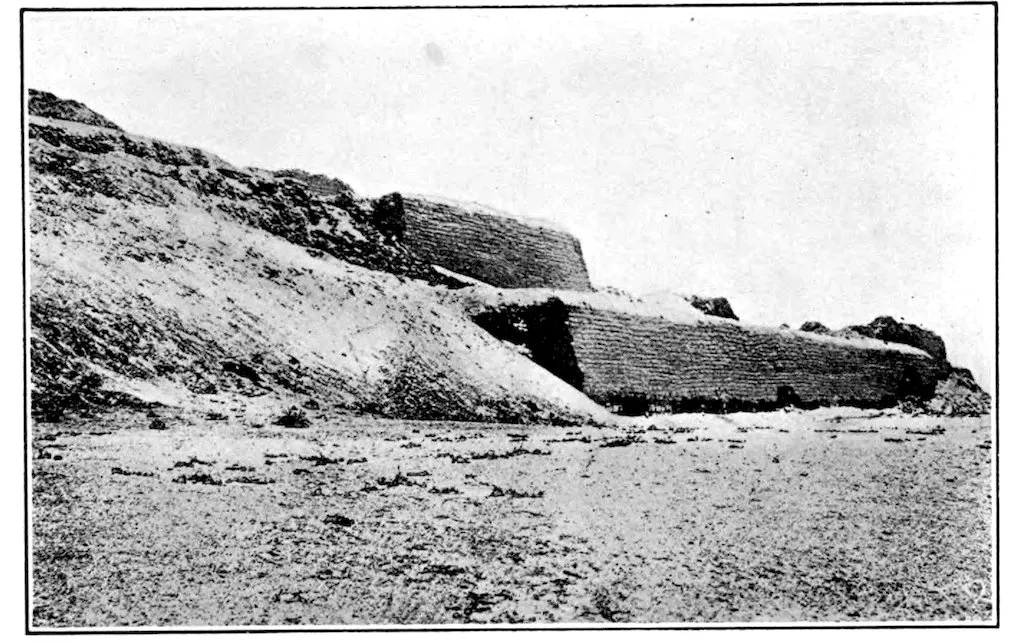
TERRACES OF THE SOUTHEAST FRONT OF PACHACÁMAC, WITH CEMETERY OF SACRIFICED WOMEN.
22
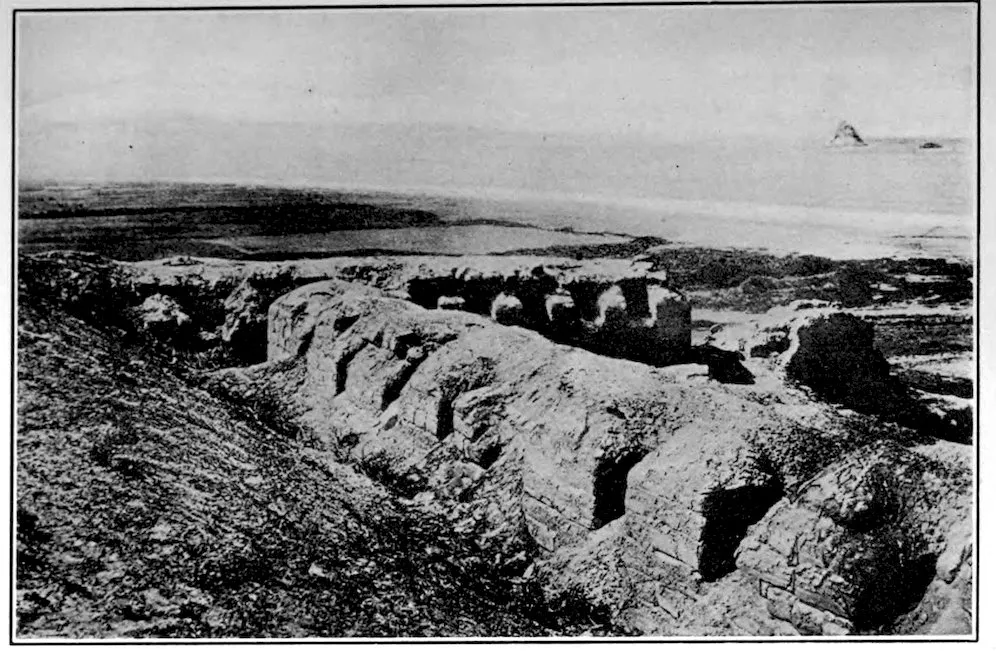
A VIEW OF THE SUN TEMPLE OF PACHACÁMAC, SHOWING NICHED WALLS.
Pachacámac, situated
about twenty-five
miles south of Lima, in
the valley of Lurin,
overlooking the sea, is,
in some respects, the
most interesting prehistoric
monument of Peru.
Nearly all travellers who
visit Lima spend a day
among these crumbling
walls and burial mounds.
The first part of the journey to Pachacámac lies across the Rimac valley, which is itself
famous in ancient legends as the site of a wonderful temple dedicated to the oracle
“Rimac,” the name signifying “one who speaks.” The remains of this great edifice—once
almost as celebrated for splendor and riches as that of Pachacámac—are still to be
seen just outside of Lima. Between the valleys of Rimac and Lurin, a desert waste of
sand extends, known as the Tablada de Lurin; it is a welcome relief when this part of the
ride is over and the green meadows of Lurin appear in view, though even the desert has its
unspeakable charm. Several hills rise two or three hundred feet above the level of the
desert, and among these hills the ancient city of Pachacámac was located. The area within
the outer walls that enclose the ruins measures nearly three miles in length by two in
breadth, the chief interest being centred in the space occupied by the walls of the temple
erected to the god Pachacámac. It was while excavating in these ruins a few years ago
that Dr. Uhle made the discoveries which laid the foundation for a new classification of
Peruvian antiquities, in accordance with the evidences of successive periods of culture.
Previous to that time, all the objects taken from Peruvian cemeteries and placed on
exhibition in the museums of Europe and North America, were arranged in a manner to
give the impression that they represented various phases of one continuous period of
culture. Carved monoliths, mummies, and vessels of gold, silver, and pottery, were
disposed of with no more definite clue to their origin than was afforded by a statement of
the locality from which they had been taken and the circumstances and date of their
excavation. A scientific exploration of the ruins of Pachacámac has revealed the fact that
its great temple outlasted several successive ages of culture, and that its other edifices were
constructed at later periods, the Incas having built a Temple of the Sun and a convent for
the Virgins of the Sun close to the ancient shrine of Pachacámac, whose name signifies
23“The Creator of the World.” The temple of the “Creator God” has undergone many
changes. Excavations show that the original edifice was destroyed long centuries ago,
whether by earthquake or in a mighty conflict with a rival people is not known, and that a
cemetery at its base was buried in the débris. A larger temple was afterward erected on
the same site, immediately over the earlier edifice, the terraces of the later structure
covering the débris under which the older cemetery was located. The burial place of the
larger temple, as well as that of the original building, was found to be filled with graves,
the worshippers of Pachacámac having come to this shrine as the Mohammedans flocked to
Mecca centuries later, feeling that they had gained the greatest of all blessings if they could
but be buried within the sacred city. It is estimated that thirty thousand of the faithful
were interred in the cemetery of Pachacámac. An examination of the huacas found in the
various strata of these ruins shows the influence of five separate periods on the culture of
this region, and has enabled the archæologist to determine the antiquity of Pachacámac
relative to that of other ancient ruins, such as those of Tiahuanaco in Bolivia and the more
recent edifices of Incaic origin. It is regarded as certain that the oldest temple of Pachacámac
represents an earlier period than does Tiahuanaco, though the latter antedates by
many centuries the monuments of Inca civilization. The art displayed in the shape and
design of some of the vessels taken from the cemetery of Pachacámac bears a resemblance,
in the earlier period, to that seen in the huacas of Tiahuanaco, and, in its latest
expression, to the art of the Incaic civilization; this would seem to indicate that at least
three successive cultures dominated the whole of ancient Peru, with long periods of
transition intervening, when the country was divided and governed by numerous races
of more or less advanced culture.
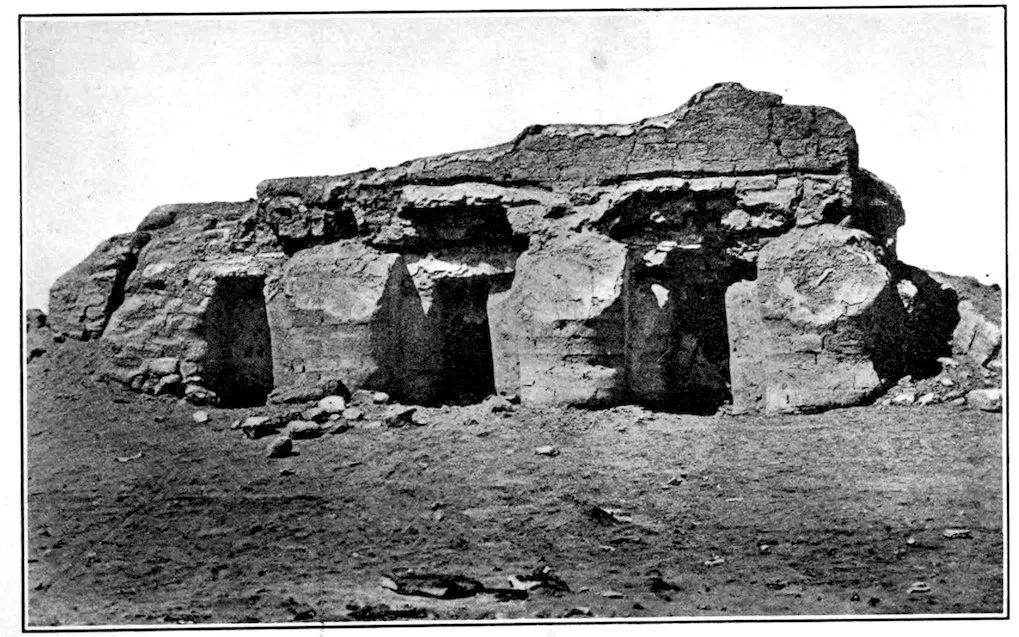
RUINS OF THE CONVENT, PACHACÁMAC.
24
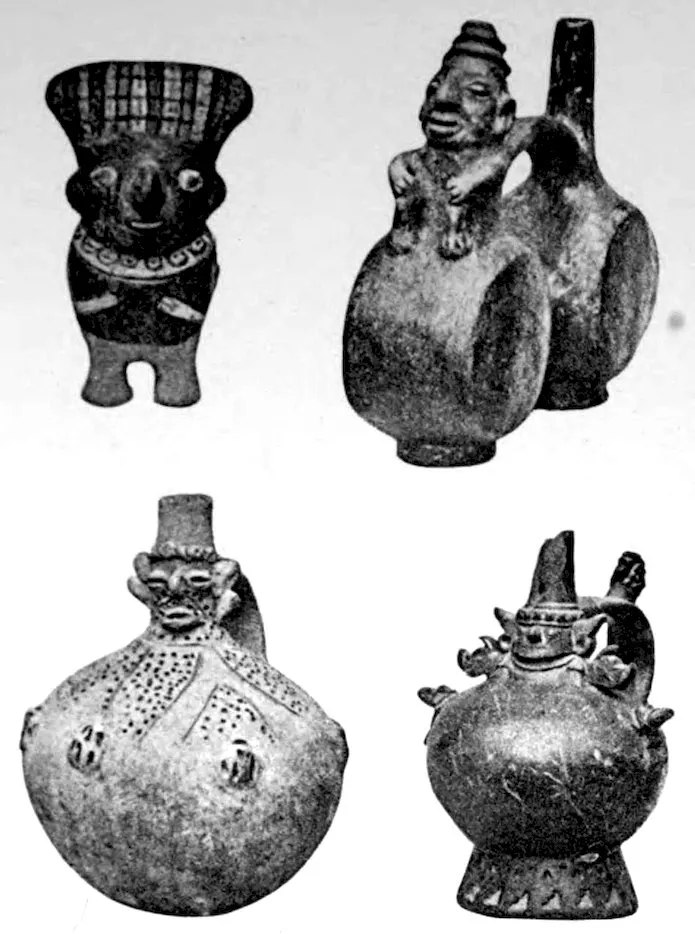
HUACAS FROM THE GRAVES OF PACHACÁMAC.
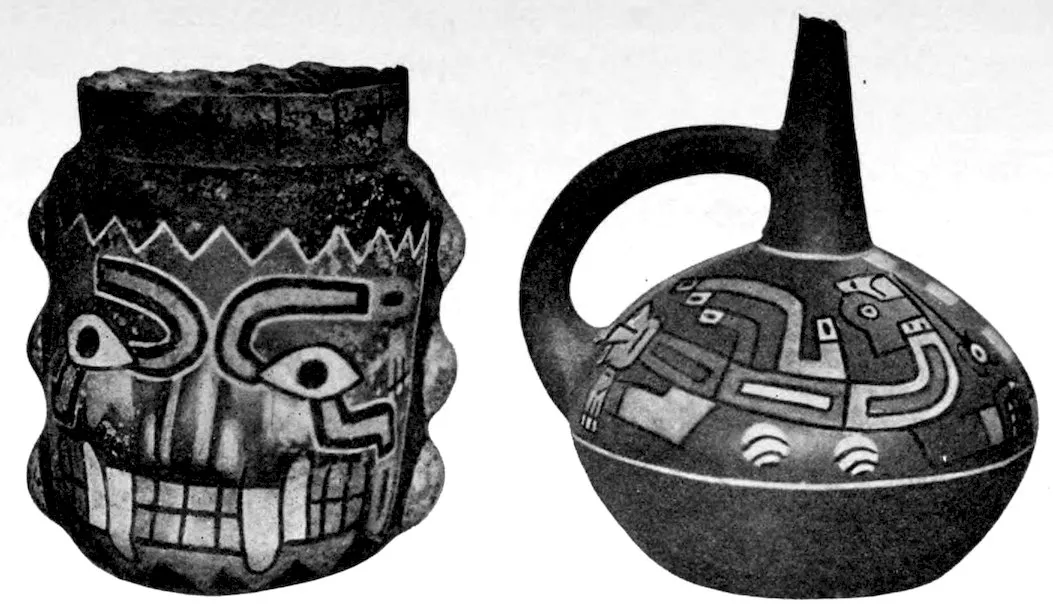
PRE-INCAIC POTTERY FROM PACHACÁMAC.
Why did the ancient Peruvians choose, as the site of one of their greatest temples, a
strip of arid plain, when a vast region lay before them, presenting every variety of blessing
which a bountiful Nature and beneficent
Providence could bestow upon a favored
land? This question is suggested not only
as one contemplates the ruins of Pachacámac,
but also in the presence of the temple and
monoliths of Tiahuanaco. Was it that fear
was the directing impulse, and a desire to
propitiate an evil deity was stronger than the
inspiration to adore a beneficent and beloved
creator? In a land of snow-capped mountains,
unfathomable cañons, and varied climate,
where stupendous evidences of an
omnipotent power were constantly present
to impress the imagination of a primitive
people, and the changes wrought by Nature
were sometimes sudden and disastrous, as
in the case of earthquakes and tidal waves,
it is not strange that, as is seen in India,
where similar conditions prevailed, the dawning
intelligence of a primitive race was apparently
dominated by fear rather than love in
the exercise of its religion. An explanation
of the choice of locality for the temple of
Pachacámac is afforded by the following legend, the origin of which is said to be very
ancient. The distinguished author of the archæological treatise Pachacámac relates the
story: “In the beginning of the world there was no food for a man and a woman whom
the god Pachacámac had created. The man starved, but the woman survived. One
day, as she was searching among the thorn bushes for roots with which to stay her
hunger, she lifted up her eyes to the sun and with tears and lamentation cried: ‘Beloved
Creator of all things! Why hast thou brought me into the light of this world if I am
to die of hunger and want? Oh, that thou hadst not created me out of nothing, or hadst
suffered me to die immediately on entering the world, instead of leaving me alone in
it without children to succeed me, poor, cast down, and sorrowful! Why, O Sun, having
created us, why wilt thou let us perish? And if thou art the Giver of Light, why art thou
so niggardly as to refuse me my nourishment? Thou hast no pity and heedst not the
sorrow of those whom thou hast created only to their misery. Cause heaven to slay me
25with lightning or earth to swallow me, or give me food, for thou, Almighty One, hast made
me!’ The sun, touched with pity, descended to her and bade her give up her fears and
hope for comfort, for she would soon be delivered from the cause of her trouble. One
day, while she was wearily searching for roots, she became impregnated with his rays and
bore a son after four
days. But Pachacámac,
who was the son of the
Sun, was angry with the
woman for having worshipped
his father and
for having borne him a
son in defiance of himself;
he seized the newborn
demigod and cut
him to pieces. In order,
however, that the woman
should not suffer for lack
of food, he sowed the
dismembered parts of the
boy, and the harvest was a bountiful one; from the teeth grew corn; from the ribs and
bones sprang the yucca and other roots; from the flesh appeared vegetables and fruits.
Since that time, men have known no more want, and they owe this abundance of food to
Pachacámac. But the mother mourned for her child and appealed again to the Sun. Again
the Sun was moved to pity and he commanded her to bring him the umbilical cord of the
murdered child; into it he put life, and gave her another son, whom she called Wichama,
who grew strong and powerful and, when a young man, set out to travel like his father,
the Sun. But as soon as Wichama left his mother, Pachacámac slew her and caused the
birds to devour her, all but the hair and bones, which he concealed near the shore. Then
Pachacámac created men and women who were to take possession of the earth, and he set
up Curacas and Caciques to rule over them. But when Wichama, returning, found that his
mother had been slain, he was in a terrible rage, and commanded her bones to be brought
to him; these he joined together and he brought her back to life. The two then planned
revenge against Pachacámac, who, rather than struggle with his second brother, threw
himself into the sea from the spot where his temple now stands. When Wichama saw his
enemy escape from him, he was in a fury of rage and with the breath of his nostrils he set
fire to the air and scorched the fields. He accused the inhabitants of having aided Pachacámac
and besought his father to turn them to stone. His request was granted, but both
the Sun and Wichama repented of this terrible deed, and caused the petrified Curacas and
Caciques to be set up and worshipped, some on the shore and others in the sea, where
they still stand as rocks and reefs.” The same authority interprets the story as a myth of
26the Seasons, describing the phenomena of nature, as annually repeated in the climate of the
coast land. The description of climatic conditions shows, as the most characteristic feature,
the annually repeated struggle of the vegetation of the valley, which depends entirely on
artificial irrigation, against the scorching heat of the sun. The former is personified in the
god Pachacámac. The Sun, with whom Pachacámac carries on his struggle, represents
the solar year; the first solar son, whom Pachacámac kills, represents possibly the spring
sun before the rising of the highland rivers, when the season of fruitfulness begins; the
scattering of the teeth and bones of the murdered son produces the fertility of the soil.
The woman who bears a son to the Sun god is the year; from a needy but toil-free life in
the wilderness, Pachacámac leads her to a life of care and toil, such as cultivation of the fields
requires; still grieving over the death of her first son, she is given Wichama, the autumn and
winter Sun, with whom Pachacámac enters into a struggle. The woman grows old as does
the year; Pachacámac kills her—as the year ends with the harvest. After the ingathering
of the harvest and the autumnal decrease of the rivers, Pachacámac is unable to resume the
struggle; his flight into the ocean to escape Wichama corresponds to the protecting cover of
dense fogs which every winter overspread the parched fields. The Sun hero wreaks his
vengeance on the fields of the fog region which even in winter are exposed to the arid sun.
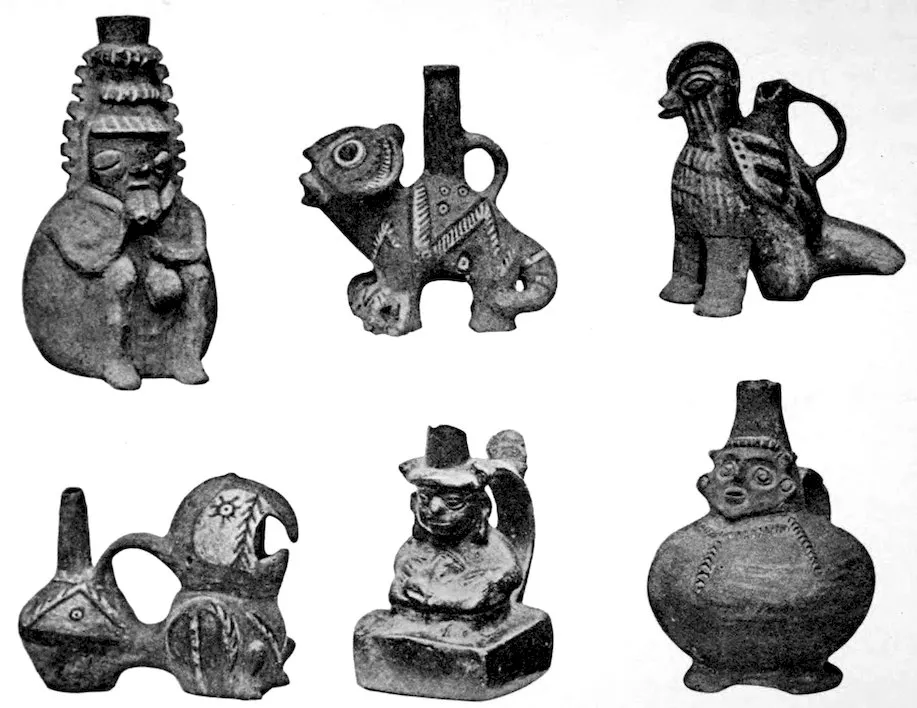
CURIOUS SYMBOLS OF PACHACÁMAC WORSHIP.
27
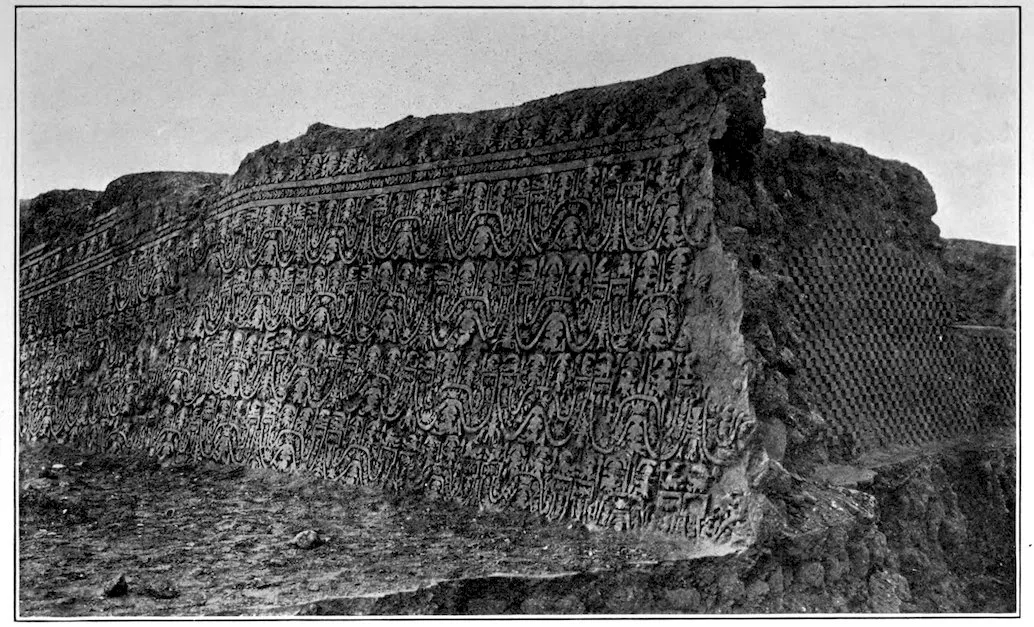
FAÇADE OF THE PALACE OF CHAN-CHAN, NEAR TRUJILLO.
Mythical legends are related of three principal deities that were worshipped by the
ancient Peruvians. Of these, an important place is given to the great god Con, who,
according to tradition, was invisible, possessing “no bones, nerves, or extremities,” and
who “travelled with the swiftness of spirits.” He levelled the sierras, filled up the cañons,
and covered the earth with fruits and everything necessary for the sustenance of men and
women, so that they might enjoy abundance. But, unappreciative of their blessings, the
people of the coast gave themselves up to all manner of evil and forgot their benefactor.
Con, indignant over their corruption, transformed them into black cats and other ill-favored
animals, denied them the blessing of rain, and changed their happy and fruitful land into an
arid desert. According to the same legend, Pachacámac, restored fertility to the earth
and created a new race of men, the ancestors of the present Indians. Besides Con and
Pachacámac, there was also the mighty Viracocha, the god of the deluge, who rose from
the waters of Lake Titicaca, made the heavens and the earth, and, before creating the light
of day, peopled the earth with its first inhabitants. These were afterward changed to stone
because of their disobedience; but in order that the darkness should disappear and Peru be
peopled, Viracocha appeared again—this time with followers—and created the sun and the
stars and formed models of the future Peruvians; the images, representing men, women, and
children, he distributed throughout the different provinces. He then sent his followers to
28the different regions to animate these models, which was done by the invocation, “Arise
and people this earth, which is barren and solitary! Thus commands Viracocha, who is the
creator of the world!” In response to these words the images became possessed of life
and appeared on the mountains, in the valleys, beside the rivers, everywhere. A few
beings, created to fulfil a special destiny, were animated by Viracocha himself, and as soon
as they recognized their creator, they erected a temple of worship in his honor. The
Spanish historian, Sebastian Lorente, who relates the legends of Con, Pachacámac, and
Viracocha in his interesting and valuable work on Peru, impressed by the evident relation
existing between the three great deities, infers that in ancient Peru there were three principal
centres of population and culture,—the coast, the sierra, and the Titicaca plateau. These
centres did not arrive at the height of their power contemporaneously, nor were they
necessarily related to one another, though the influence of each one is seen, in some degree,
in the development of all three. A distinct, and undoubtedly a very ancient, architecture
prevails in the temples, palaces, and pyramids of the coast, unidentified either with that of
the interior valleys or of the high plateau. The magnificent ruins of Chimu culture, as seen
in the great walls of Chan-Chan, which measure from twenty to thirty feet in height, and
show wonderful designs and stucco work on their surface, as well as the monuments of an
earlier people, as seen at Huaca del Sol, near Moche, and the temple Pachacámac, are of a
different character from the edifices of Huánuco Viejo in the sierra, of Sacsahuaman at
Cuzco, and of the pillars and round tower (Pelasgian style) in Puno; while these latter
ruins bear little relation in construction to the cyclopean edifices of Tiahuanaco, in Bolivia,
the centre of what is sometimes called the Aymará culture.
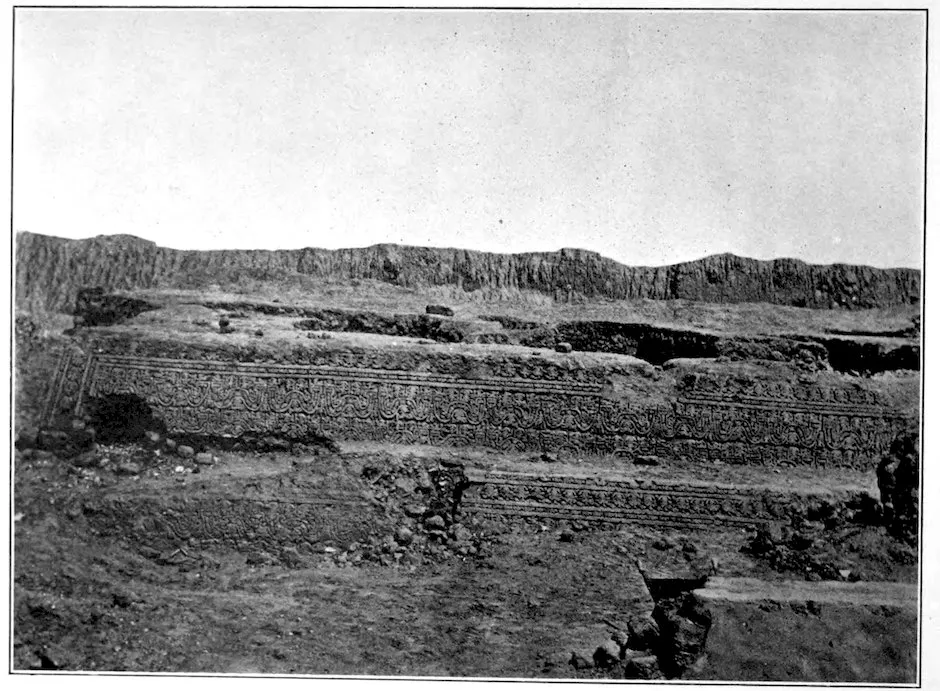
CARVED TERRACES OF THE PALACE OF CHAN-CHAN.
29
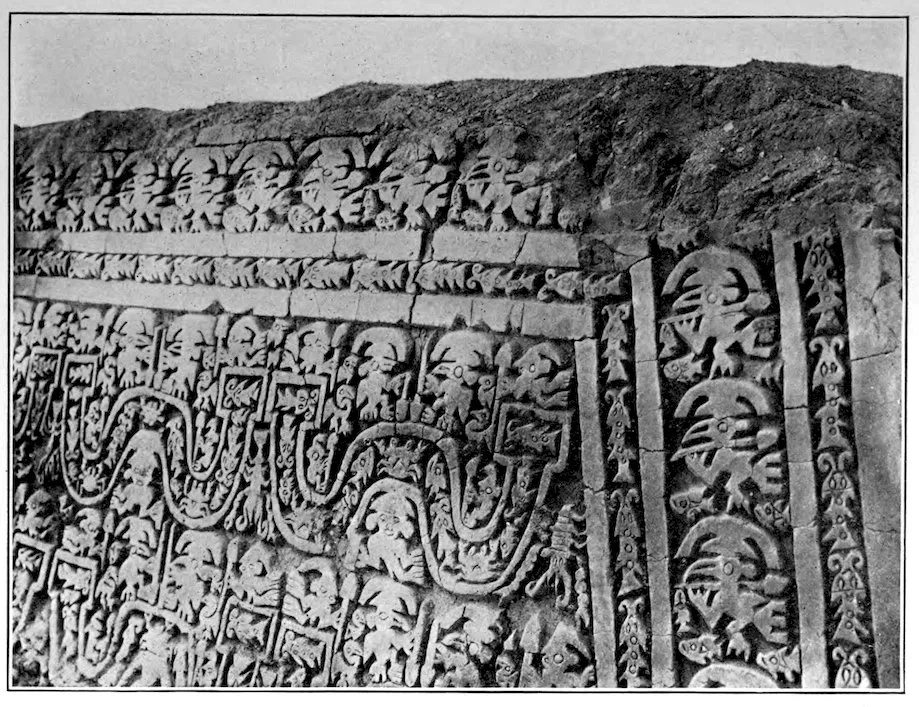
ANIMAL CARVINGS ON THE WALLS OF CHAN-CHAN.
Aside from their scientific importance, the antiquities of Peru are interesting to travellers
because they have many features that appeal to one’s imagination and love of mystery.
They lie out of the beaten track of the sightseer, who journeys annually, guide-book in
hand, to gaze on the ruins of their Egyptian and Pelasgian contemporaries in the Old
World. But they possess the greater fascination of the unsolved problem, made doubly
attractive by apparently innumerable “clues,” which stimulate the imagination and tempt
one to construct independent theories as to their origin and antiquity. Karnak and the
Pyramids may be no more ancient than Nasca; certainly the Sphinx is not nearly so great
an enigma as are the huacas of Trujillo and Ancón cemeteries; and there is nothing in
30Oriental antiquities that quite resembles the mummies taken out of one of these mysterious
burial mounds.
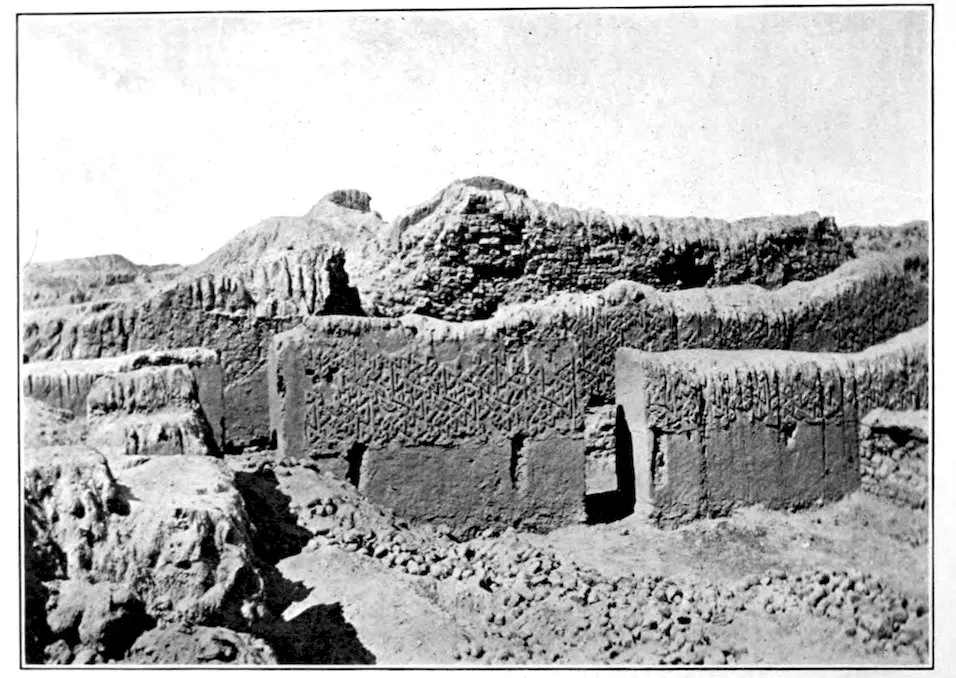
The method of preparing the ancient Peruvian corpse for burial was unique, though it
cannot be couriered artistic, as, at first sight, the huaca looks like a large sack well filled
and bound around with a network of ropes. The process of unwrapping, which is a long
one, reveals the corpse in a sitting posture, with the arms clasping the knees and the head
bent over. Sometimes the swathings are of finely woven vicuña cloth, and ornaments of
gold and silver are hung on the corpse, beautiful and costly vases and various other articles
of value being placed beside it. From a study of these articles it has been possible to learn,
to some extent, what the mode of life was among these ancient people, and many of the
huacas have furnished data of the greatest importance. Fine textiles, woven in curious
designs, are found in most of the cemeteries; but in those of greatest antiquity no textiles
appear, and this fact affords a clue to their great age also, as buried textiles have been found
to outlast periods of fifteen hundred years. The nitrous nature of the soil in which these
burials have taken place accounts for the wonderful preservation of the mummies, which
are really desiccated corpses. The burial of the poor was a simple ceremony and in some
cases consisted merely in depositing the corpse in a grave in the sand; though, always, the
treasures of the departed were placed beside them, and it is not unusual to find tools,
household utensils, and articles of personal adornment scattered over the arid fields. The
31great plain of Chimu, near Trujillo, which covers a territory twelve miles long by six miles
broad on the northern bank of the Moche River, and which was so rich in buried treasure
when the Spaniards first began
to plunder its temple, palaces, and
burial ground, that the king’s fifth
of the gold taken out amounted,
in 1576, to ten thousand ounces,
is literally strewn with human
skulls, pieces of pottery, and
other huacas. The cemetery of
Ancón has apparently inexhaustible
treasures, and excursion parties
seldom return to Lima after
a visit to its graves without
bringing trophies of their outing
in the form of prehistoric relics.
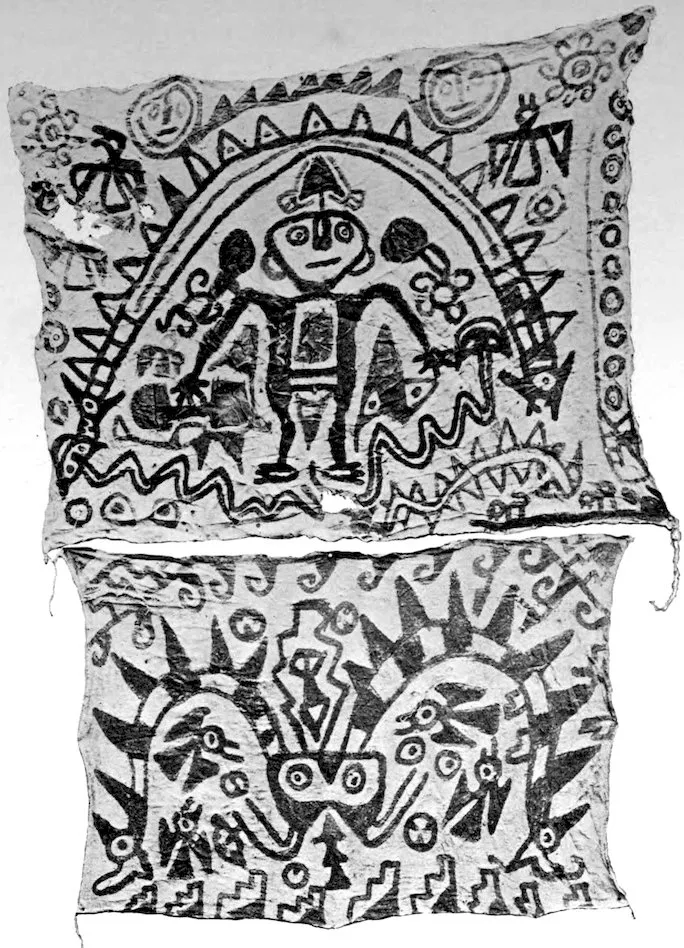
MORTUARY CLOTH WITH SYMBOLIC EMBLEMS.
The contemplation of the
ancient ruins of Peru stirs the
imagination and brings before
the mental vision pictures of
these people of a forgotten past,
with many fanciful ideas of their
appearance and their origin, of
the lives they led, the religion
they practised, and the predominating
social features of their
civilization. Were they “a white
and bearded race” as some of the
legends tell? Or did the natives
emerge out of barbarism and
advance in culture, at first, unaided by outside influences? Were the conditions in ancient
Peru as favorable for the evolution of human culture as those of ancient India and Egypt?
One would like to know, in reference to the ancient edifices, whose crumbling ruins are still
wonderful after the lapse of ages, who built them, and what the elaborate picture writings
on their walls mean to tell us. It is said that the pre-Incaic people used hieroglyphics, but
that the knowledge of this art was lost or prohibited by the Incas. Their civilization also
gives evidence, in the ornamented pottery, the carvings of intricate design, and the fine
workmanship of their gold and silver vessels, that its art surpassed, in technique and
imagination, the productions of later prehistoric periods. In the earliest ages two closely
related civilizations existed in the coast region of Peru, one of them centred around Trujillo
32and the other in the vicinity of Nasca and Ica, and, fine as they were, there is nothing
similar to them in later cultures. The southern form is especially notable for the perfection
of shape and decoration of its pottery, the freedom and breadth of its style; while the
northern form is more distinguished by the harmony and greatness of its development.
Gold, silver, and copper abounded and were wrought into manifold shapes; gold was cast
and chased, soldered with copper and silver, or used as plating over copper and inlaid with
turquoises; mosaic was also known. This culture was followed by that of the Tiahuanaco,
which in the course of centuries declined and was forgotten, until the appearance of the
Incas, who became the heirs of all the cultures which had preceded theirs in Peru.
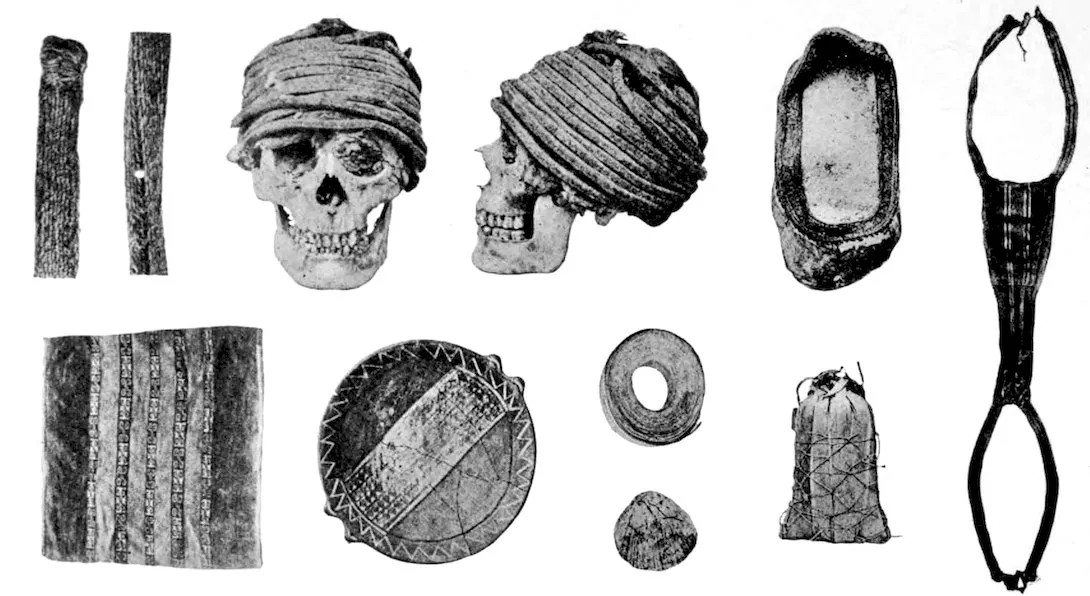
FOUND IN THE BURIAL PLACE OF PACHACÁMAC.
34
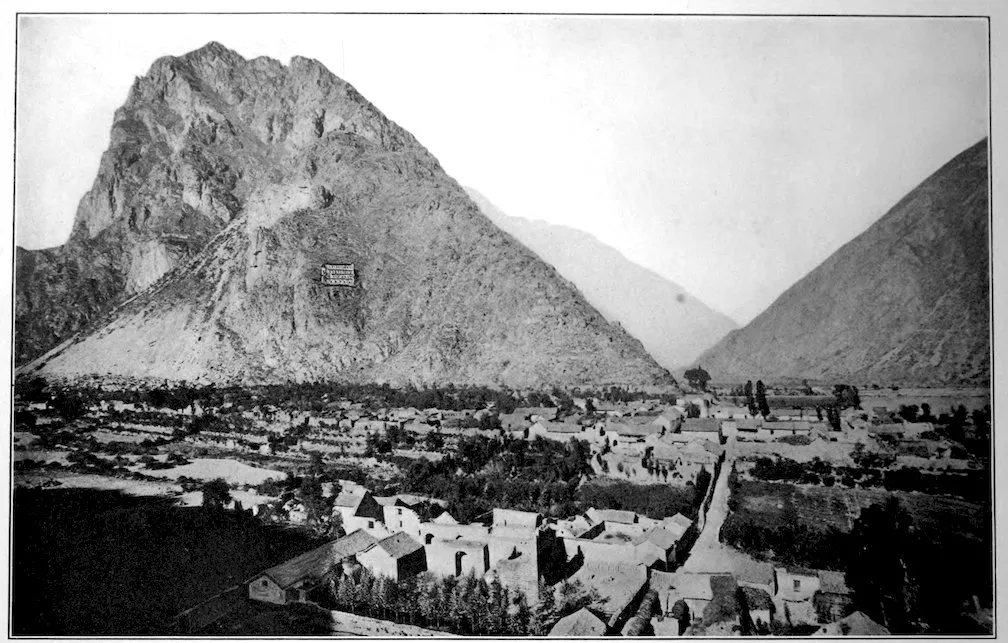
OLLANTAYTAMBO. ONCE THE FAVORITE RESIDENCE OF THE INCAS.
CHAPTER II THE RISE OF THE CUZCO DYNASTY
35
Throughout the annals of history
there is found no parallel to the extraordinary
character and development of the
great empire of the Incas, whose glory and
splendor attained such supremacy and shone
with such lustre, under a benign though
despotic sovereignty, as to eclipse all earlier
culture in pre-Columbian America. Whatever
may have been the heritage which the
Children of the Sun received from their
predecessors, they carefully avoided giving
it any importance in their records. The Inca
Garcilaso de la Vega, who wrote the history
of his people more than half a century after
the Conquest, says that this rich and mighty
monarchy was founded in the midst of barbarism
and degradation and developed in all
its magnificence through the divine direction
of noble princes, who derived their power
from heaven alone, and who were both the
spiritual and the temporal rulers of the people, by right of their celestial origin.
A romantic charm envelopes the fame of the Incas and their brilliant court, their
spectacular religion with its temples prodigally ornamented with gold and silver, and, above
all, their own royal personality, so impressive in the dignity and sanctity of heaven-born
greatness. One must even confess to resentment when meddlesome scholars seek to take
away any of the prestige of these picturesque Conquerors of the Andes in favor of an
earlier race, or of successive races, whose identity is lost in a mist of fable and legend, and
36who can present no such fascinating pageant to our imagination as do the heroes of Cuzco,
with their mythical genealogy, the fame of their refined theocracy, and the prowess of their
splendid legions. After all, it has not yet been proved that the lords of Cuzco were not of
the same race and origin as the authors of the most ancient civilization of Peru, and, even,
of all America. Scholars who have studied the language, customs, and monuments of the
ancient Peruvians, find what is evidently a parent influence making itself felt through all
the changing conditions of successive periods, and in spite of seemingly foreign and
unrelated cultures that have appeared in various localities during the course of the ages.
The two languages which are most generally spoken by the Indians throughout the territory
formerly included in the Incas’ dominion—the Aymará and the Quichua—are apparently
derived from a common stock. May it not be true that the people who spoke these
languages, and to whom are credited the monuments of Tiahuanaco and Cuzco, were the
heirs of a common ancestry, and that their progenitors were the authors of the earliest
culture in Peru?
Out of the confusion of many legends that are related by the Indians to account for
the origin of the Incas’ empire, the one which is best known, and most generally approved,
because of the poetic beauty of the conception, tells us that the Sun, the creator of mankind,
through compassion for the deplorable degradation of the world, sent two of his children,
Manco-Ccapac and Mama Ocllo, to regenerate humanity and to teach the arts of civilized
life. The celestial pair, who were not only brother and sister, but husband and wife,
appeared first on an island in the midst of Lake Titicaca, and from this point they set forth
on their benevolent mission. Lake Titicaca is supposed to have been chosen as the place
of departure because, since it was the first to receive the rays of the sun when Viracocha
dispersed the darkness, it was fitting that the first messengers of the light of civilization
should also appear on its sacred island. They carried a rod of gold about two feet long and
of the thickness of a man’s finger, having received from their father, the Sun, instructions to
establish themselves in the place where the rod should sink into the earth at the first stroke.
In the cerro of Huanacaure the golden rod was buried out of sight as soon as it struck the
soil, and here was founded the great empire of the Incas,—“Inca” meaning “lord,”—which
was to flourish and extend its dominion from the northern border of the present republic of
Ecuador to the south of Chile and from the Pacific Ocean to the eastern valleys of the
Andean chain, covering a territory of more than a million square miles, and giving protection
to at least ten million faithful and industrious subjects, obedient to the Inca’s laws.
37
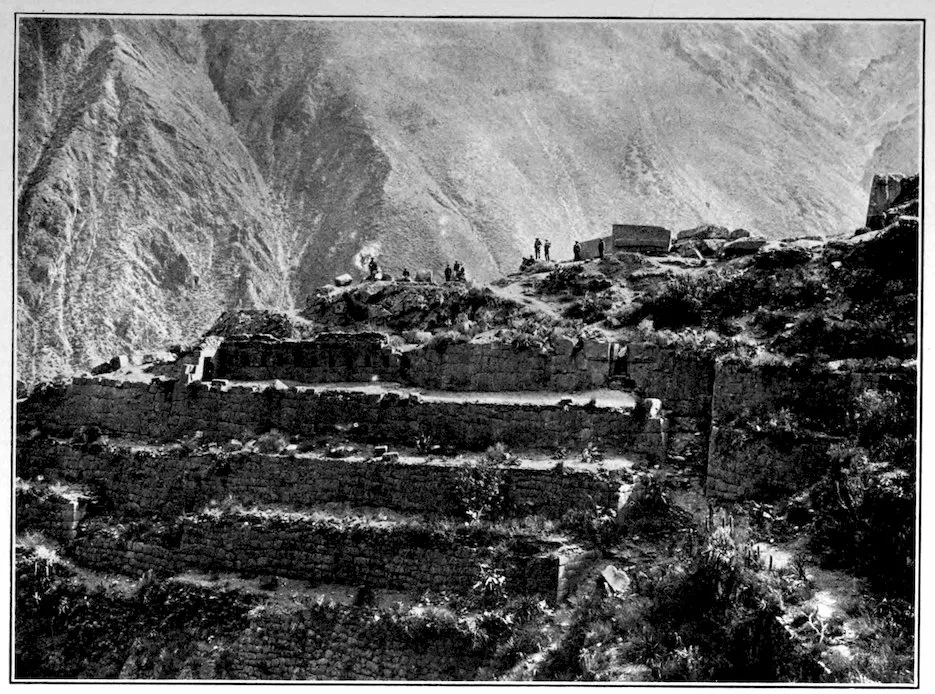
TERRACE OF THE INCA’S PALACE, OLLANTAYTAMBO.
According to a tradition, which Sebastian Lorente gives us, Manco-Ccapac was the son
of a curaca, or chief, of Pacaritambo, in the Apurimac valley, a youth so beautiful that he
was called “the son of the Sun.” He was left an orphan at an early age, and the fortune-tellers
easily persuaded him that he was of celestial origin. At eighteen or twenty years of
age the boy entered on his great mission. A humble orator, he erected an altar to Huanacaure,
the principal idol of his forefathers, which the Incas never after failed to invoke in
time of danger. With a few followers he established his dominion, attracting some by
promises and forcing others by threats, while he fascinated the masses by his magnificent
personality. He wore a tunic embroidered in silver, on his breast glistened a disk of gold,
jewels adorned his arms, and gorgeous plumes formed his headdress. By various means
he succeeded in gaining command over his compatriots, who served his ambition and
obeyed his laws. There is something reasonable and matter-of-fact about this tradition
which inclines one to think that it may have foundation in truth. It is seen that Manco-Ccapac
worshipped the principal idol of his forefathers, which shows that his plan was
to incorporate in the new religion the most venerated beliefs of the people, and not to
antagonize them by an iconoclastic policy; he set up his government in Cuzco, where the
inhabitants were by nature docile and easily disciplined; he appeared at the psychological
moment when Peru was ready for a new cult and a new system of laws; and, also, he
was dowered with extraordinary gifts, looked like a king, and was thoroughly acquainted
with the character of his people. There can be no doubt that Manco-Ccapac was a native
of the country, whether he came originally from the Titicaca plateau and was of Aymará
descent, as some authorities claim, or had his birthplace in the valley of the Apurimac and
spoke the language of the Quichuas, the people “of the green valleys” as the word
38Quichua signifies. It is said that the Incas themselves spoke neither Aymará nor Quichua,
but a language unknown to the people and not allowed to be spoken by anyone but royalty.
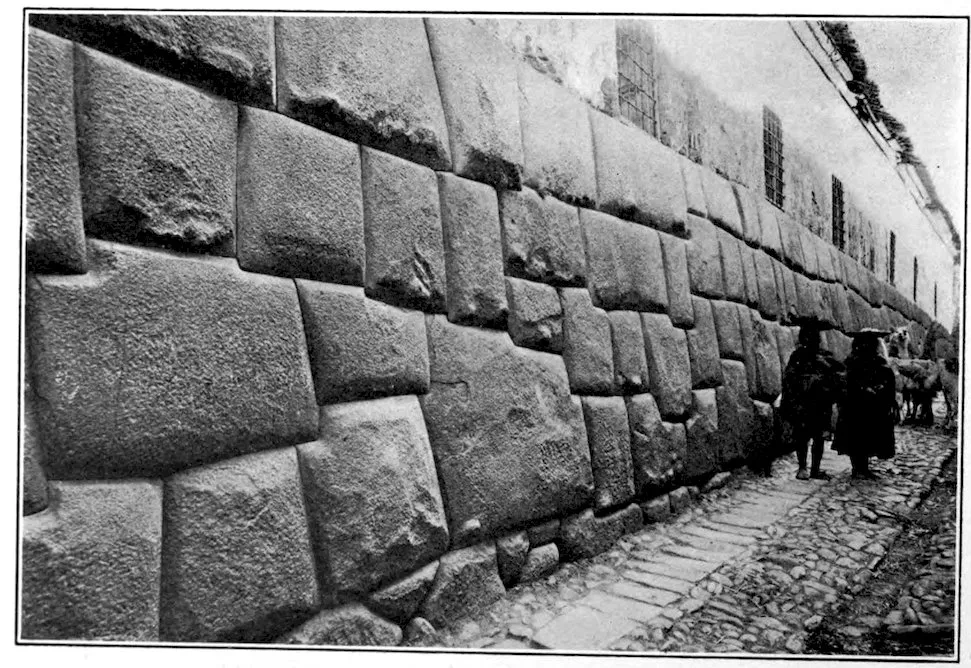
WALL OF THE PALACE OF ONE OF THE INCAS, CUZCO.
The dynasty founded by Manco-Ccapac at Cuzco is generally believed to have dated
from the twelfth century. All the genealogies furnished by historians are more or less
incomplete, limiting to thirteen or fourteen, at most, the number of monarchs who reigned
during that long period of four hundred years. The list of Incas given by Garcilaso de la
Vega, and regarded as the most reliable, contains the names of thirteen Princes of the Sun.
Most of the authorities of importance name Manco-Ccapac as the founder of the Empire of
the Incas, with Mama Ocllo as Coya, or Empress; though opinion is greatly divided as to
their origin and the date of their imperial accession. One well-known historian of the
Conquest, Montesinos, places the period of the first appearance of this royal line in the sixth
century after the Deluge. It is related that, during that remote age, there arrived in Cuzco
a family of four couples who civilized this region. The eldest of the four brothers, having
gained possession of the territory, divided it into four portions, or suyos, from which it took
the name of Tahuantinsuyo, “the kingdom of the four regions.” The territory to the south
was called Collasuyo, to the west Cuntisuyo, to the north Chinchasuyo, and to the east
Antisuyo. The youngest brother afterward secured command of the kingdom and became
the first of a line of princes who governed Peru up to the time of the Spanish Conquest.
The most interesting feature of this tradition is the division of the rule of these monarchs
into three great dynasties, of which the first was that of the Pirhuas (from pyru, meaning
39“fire,” apparently indicating that they were fire-worshippers), the second, that of the
Amauttas, or wise men, and the third the Inca dynasty. The first of the Pirhuas founded
the city of Cuzco in the name of Viracocha, “the Supreme Being,” and one of his successors
built a great temple in Cuzco (perhaps Sacsahuaman, which is believed to antedate the Inca
period), while another ruler of the same royal line is credited with having reformed the
calendar, built public roads and established severe rules in religion. One of these kings,
the record says, “died while repressing an invasion of depraved people from the plains.”
The Amauttas made many wise laws, reformed the calendar and the religion of Viracocha,
organized the military forces of the kingdom and repelled the Chimus of the plains. During
the reign of the last of the Amauttas, we are told, “was fulfilled the fourth sun of the
Amauttas, and there took place a great invasion of ferocious tribes who attacked the kingdom
in different parts, obliging the sovereigns of Cuzco to flee to the grottos of Tamputoko
for four hundred years, during which they lost their literature and a great part of the
Amautta culture; the advent of the Incaic dynasty restored the power of the royal line, and
made Cuzco again the centre of a great and beneficent civilization.” In the light of modern
research, which is continually causing a revision of former ideas regarding the origin and
antiquity of the Peruvian empire, the story of the three dynasties appears to be more than
“the mere fable” which it has been designated by some modern writers on the subject.
It particularly appeals to one as a solution of the problem of the Incas’ origin, since every
feature of Incaic civilization proves it to be of native character, even though the predecessors
of the “third dynasty” may have arrived from foreign shores.
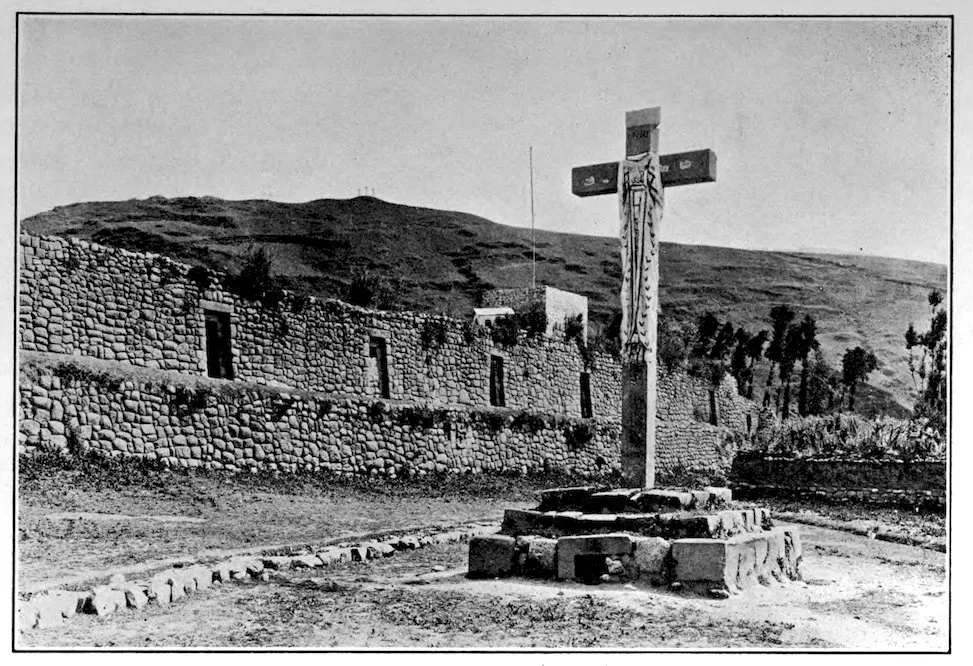
RUINS OF THE PALACE OF MANCO-CCAPAC, CUZCO.
40Manco-Ccapac, or, as his name would be written in English, Manco the Great, occupies
a position in among the heroes of the world’s history not inferior to the exalted pedestal on
which we have placed the founders of empires in the Old World. He possessed the same
rare gifts of bold judgment and fearless initiative which belonged to Alexander the Great, to
Charlemagne, and to other sovereigns who have been “Great” because they have known
both the strength and the weakness of their people, and by conciliating the one and dominating
the other, have made themselves masters and leaders of mankind. Had Manco-Ccapac
not thoroughly understood the conditions existing at the time when he entered on
his mission, and had he not possessed judgment, tact, and the dominant qualities of
leadership to enable him to win a host of followers, even his upright character and his
humanitarian purpose would not have proved sufficient to ensure the wonderful success
which he achieved in founding an empire more extensive than ancient Rome, and as rich
as the fabled monarchies of the Orient. Throughout the Inca’s realm the principles of
honesty, industry, and justice were inculcated in every subject from his cradle, the moral
duties of a good Peruvian being embodied in the Quichua motto of the nation: Ama sua,
Ama aqquella, Ama llula, which translated literally means, “Not a thief, Not idle, Not a
cheat.” It is a form of salutation among the Indians of Cuzco to this day, the response
being Ccampas Ginallattac! “The same to you!”
The record of historical events, as they occurred throughout the long reign of the Inca
dynasty, was preserved only by a system of quipus, or knotted cords, the art of writing
being unknown to the Incas, or, according to some authorities, prohibited by law. Only
the Quipucamayos, the authorized guardians of the quipus, were able to decipher them.
This career was considered one of great honor, and instruction therein was given in all the
provinces, under the direction of the Amauttas, the Savants of the empire. The chief
archives of the state were preserved in Cuzco, where an immense collection of quipus was
found by the invading Spaniards, who destroyed the greater part of them, without having
them interpreted. As a consequence, the information secured by the historians of the
Conquest and by writers of later date, relative to the genealogy and history of the Incas is
necessarily incomplete and, no doubt, inaccurate; though the descriptions of the appearance,
laws, customs, and national development of the people of Tahuantinsuyo may be considered
as generally faithful and reliable.
According to the genealogy given by Garcilaso de la Vega, the first Inca, Manco-Ccapac,
was succeeded by Sinchi Rocca, a peaceful and prudent ruler, who is said to have taken the
first census of his kingdom, and is credited by some authorities with having made the division
of the empire into the four regions previously named; though, according to Cieza de
Leon, one of the most reliable authors, these names were applied to four great highways
which extended from Cuzco to the extreme limits of the empire, northward, eastward,
southward, and westward. In any case, the Incas built broad and level roads, from six to
41eight feet wide, and in the
mountain regions, where they
skirted the steep slopes of the
Andean range, they were prevented
from wearing away by
the construction of stone embankments;
on the plains, the
highway was indicated, as in
many countries at the present
day, by guide posts at intervals
along its course. Also, tambos,
or inns, were built at the distance
of a day’s journey apart,
and here the traveller could
always find shelter for the
night. The third Inca, Lloque
Yupanqui, conquered the Canas,
a powerful people of Ayaviri
and Pucará, after a struggle
which depopulated their settlements,
and forced the emperor
to introduce mitimaes, or colonists,
to replace them. He also
subjugated the Collas of the
present department of Puno.
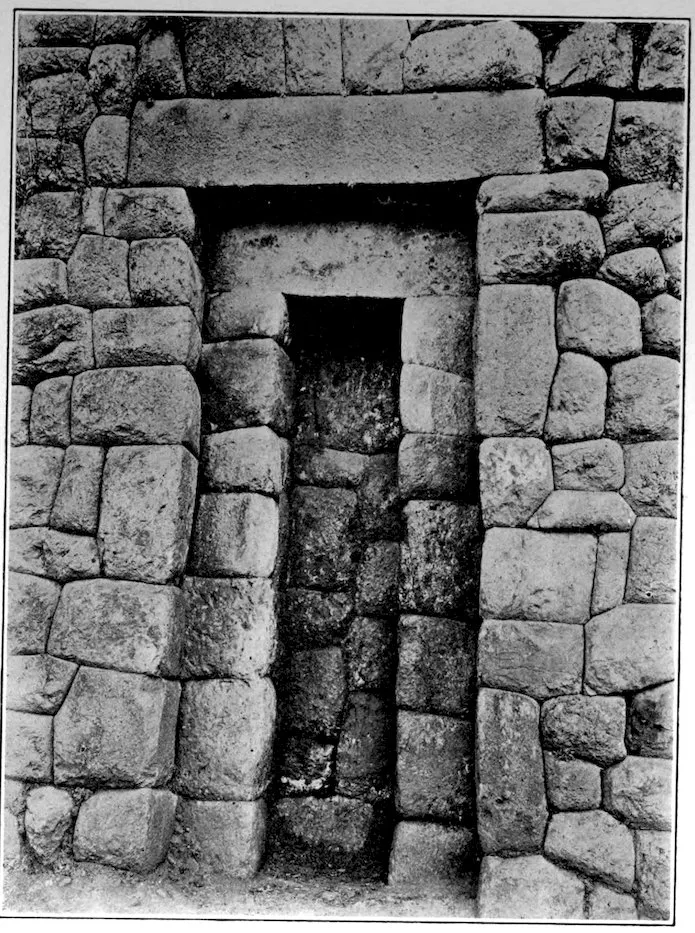
NICHE IN THE FAÇADE OF THE PALACE OF MANCO-CCAPAC.
It was during the reign of
the fourth Inca, Maita-Ccapac,
that the power and genius of the imperial monarchs began to extend its influence as never
before, and greater pomp and magnificence than had previously been known attended the
coronation and other ceremonials honored by the sacred and royal presence of the Inca.
Following the course of training required of every heir to the Inca throne, Maita-Ccapac
had, when a youth, passed through the Huaracu, a ceremonial of the greatest importance,
and one in which all the young Inca nobles of his own age—the title of Inca being borne
by every descendant of Manco-Ccapac through the male line—participated, after having been
trained in the same military exercises as the royal prince. A description of the Huaracu is
interesting as showing that these people had an institution not unlike that of mediæval
chivalry in Europe: From his earliest years, the hereditary prince was given into the care
of the Amauttas, to be taught science and religion, especially the latter, as the Inca
was the highest spiritual authority on earth; great attention was also paid to the military
training, as it was desirable that, not only in wisdom but in military skill, the prince
42should excel all contemporaries. At sixteen years of age, the young heir, Maita-Ccapac, and
his companions, following the sacred custom of their race, were submitted to a public test,
supervised and directed by elderly and distinguished Inca nobles, which included trials
of ability in athletics such as wrestling, jumping, running, besides sham battles, which
were held as a trial of valor, and were so severe that many of the youths were wounded
and a few killed. The royal prince had not shown the least fear nor evidence of fatigue,
though put to the very limit of endurance; “for,” he said, “if I am afraid of the shadow of
a combat, how shall I be able to meet the enemy in real warfare?” These exercises lasted
for thirty days, during which the prince slept on the ground, went barefooted and dressed
simply, thus showing his sympathy with the poorest of his future subjects. The tests
concluded, the order of knighthood was conferred by the Inca emperor, father of Maita-Ccapac,
all the young nobles who had taken part in the exercises kneeling with the royal
heir, one after another, while the emperor pierced their ears with the yauri, a kind of gold
needle made for the purpose, which remained in the ears until the hole was large enough
to permit the insertion of the earrings peculiar to the Incas; these were not hung from the
ears but were placed in the pierced opening, and replaced from time to time by rings of
larger circumference, until, as in the case of Maita-Ccapac, the cartilage of the lobe was so
stretched that it touched the shoulder. After this ceremony the greatest of the Inca nobles
placed on the feet of the royal heir the sandals of his particular order; a scarf of similar
significance to the toga virilis of the Romans was wound around his waist, and his head
was adorned with a wreath of flowers,—to indicate that clemency and goodness should
adorn the character of the valiant warrior,—while evergreen, intertwined with the flowers,
symbolized the eternal endurance of such virtues. A fillet of finest vicuña wool was bound
around his head, and a yellow masca paicha, a kind of fringe, also woven of vicuña wool,
was added to this headdress, falling over the brows. The yellow masca paicha was the
peculiar insignia of the heir-apparent. As soon as this ceremony was concluded, all the
Inca nobles knelt before the prince and rendered him homage as their sovereign. From
this time, he was entitled to take his seat among the advisers of his father, so that he
might be initiated into the art of governing and become familiar with politics and administration.
Being recognized as of age, and the heir to the throne, he was given command
of his father’s armies and was entitled to display the royal standard of the rainbow in
his military campaigns.
The coronation of Maita-Ccapac was the occasion of grand pageants, continued fiestas,
and a brilliant display of royal magnificence. We are told that he “was crowned with a
blue masca paicha and wore a tunic of white and green, dotted with crimson butterflies.”
His royal robe was made of finest vicuña wool and was ornamented with gold and precious
stones. The headdress of all Inca emperors was particularly distinguished by two feathers
which were placed upright in the front of the encircling llautu, or fillet; these feathers were
plucked from the wing of the sacred bird Cori-quenca, a species of gull, black and white in
color, one feather being taken from the right wing of the male and the other from the left
43wing of the female, to adorn the royal crown. These birds may still be seen in the vicinity
of Lake Vilcanota, near Cuzco.
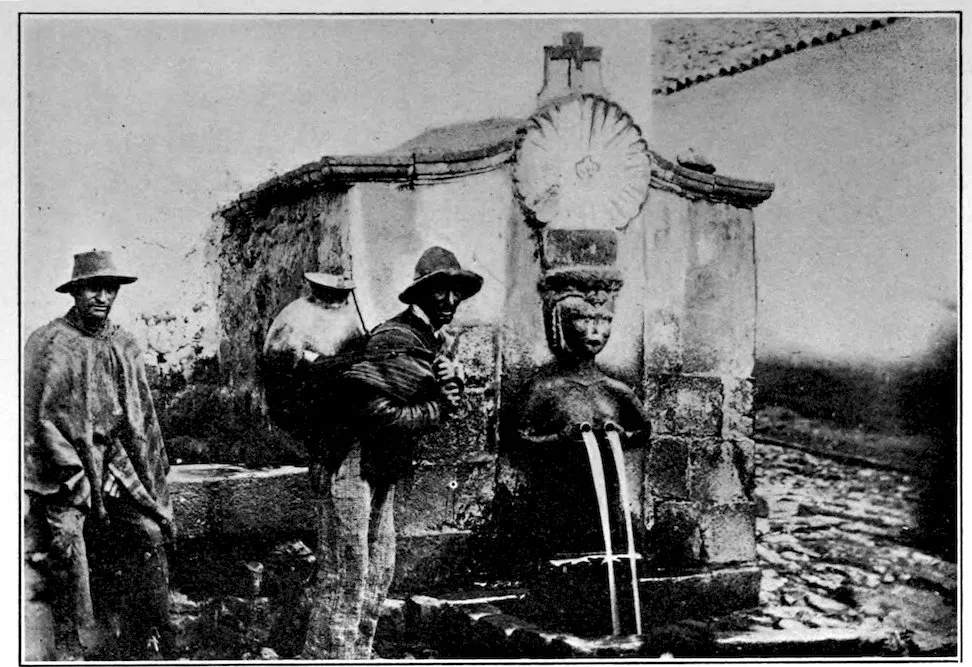
An invincible warrior, Maita-Ccapac extended the power of the empire to the remote
borders of Collasuyo (now Bolivia) and beyond the Apurimac to Arequipa and Moquegua.
His name is connected with one of the most notable works achieved in the history of the
mediæval world, as he is said to have been the author of the method and plans used, by his
command, in the construction of the first suspension bridge ever built. Over this bridge,
which was swung across the Apurimac River, he passed with an army of twelve thousand
men, making an easy conquest of the enemy, who were struck with awe in the presence of
such a wonderful feat. A second bridge, built by one of the successors of Maita-Ccapac, is
still to be seen near the site of the original construction. Many of the andenes, of which
traces are to be observed to-day in various parts of the country, were also constructed
during the reign of Maita-Ccapac, though the origin of these terraced farms on the mountain
side is placed by some authorities back in pre-Incaic times. The andenes were so named
from Anti, a province east of Cuzco, and were formed by building stone walls on the
mountain sides, at short distances one above the other from the base to the summit, and
filling the enclosed space with fertile soil, some of it being mixed with guano from the
Chincha Islands, as the Incas knew the fertilizing value of this deposit and made general
use of it in their agriculture. A tradition of the time of the fourth Inca relates that the loyal
subjects in one of the provinces built a grand palace of copper in which to entertain Maita-Ccapac
and his Coya when they visited that part of the kingdom; and, though this story is
44no doubt a fable, yet it is certain that mining made great progress during this reign. It is
marvellous that, with only the primitive means at their command, without iron, powder, or
machinery, these people extracted gold both from quartz and placer mines, and obtained
silver, tin, and copper as well. The metal was smelted in small furnaces and then emptied
into moulds; the beautiful ornaments which were made for the adornment of the temples
and palaces and for the Inca’s wear, afford a proof of the remarkable ingenuity of these
primitive artifices. The successor of Maita-Ccapac, Inca-Ccapac Yupanqui, “the Avaricious,”
did not achieve great fame, though he spent the greater part of his reign in subduing
turbulent subjects in various parts of the kingdom. He was a miser, and ordered that all
who died should be interred with their gold and jewels, his object being to secure this
treasure later for the royal coffers.
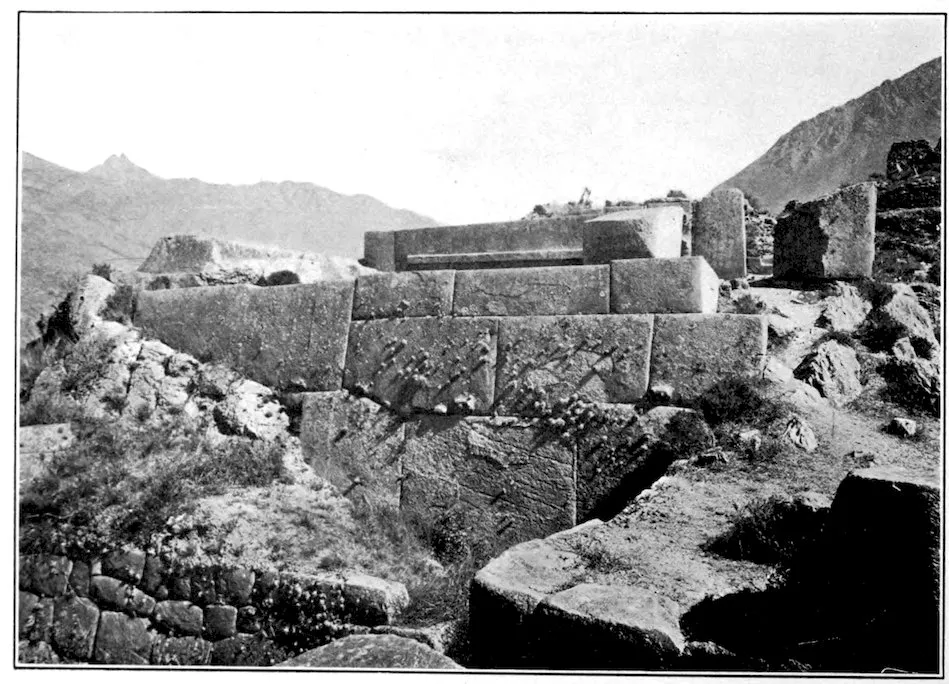
Inca Rocca, the sixth monarch of the royal house of Cuzco, was one of its greatest warriors
and most renowned statesmen. The fame of his conquests spread to the most remote
regions, and the wisdom of his administration was no less widely known and admired.
Everywhere great palaces were reared to display the grandeur of his imperial house, and it
was decreed that, at his death, all the vast treasures collected for their adornment should be
used to ornament his tomb and for the service of his family; his successors followed his
45example, and the brilliancy of the Inca’s court increased with each subsequent reign. He
founded schools for the education of the nobility under the direction of the Amauttas,
though the children of the common people were not admitted, because, according to his
view, it was enough for them to learn the trade of their fathers. He was, however, very
solicitous for the welfare and protection of all his subjects, and made strict laws that
punished with death homicides, incendiaries, and thieves.
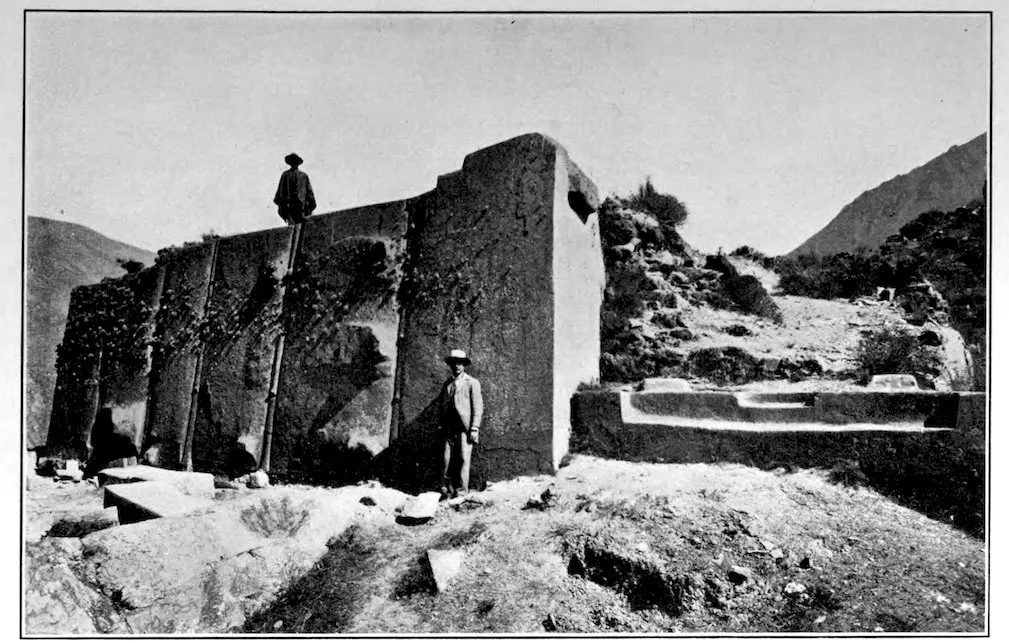
STONE WALLS OF THE PALACE OF OLLANTA, OLLANTAYTAMBO.
When the sceptre passed from Inca Rocca to Yahuar Huaccac, whose name signifies
“he who weeps blood,” the great fiestas that were held to celebrate his coronation gave
little premonition of the sad ending that was to befall this unhappy monarch, who was
deposed and died alone in the desert, some say, at the hand of an assassin. The coronation
ceremony was as brilliant and imposing as that of his illustrious father had been, the young
king wearing “a black tunic and a blue manta dotted with lizards, with a white masca paicha
and plumage of gold.” It is said that the cause of his “weeping blood” was the arrogant,
self-willed, and quarrelsome disposition of the heir-apparent, and the impossibility of
holding him under restraint. At last, his patience exhausted, the emperor banished his
unmanageable son from court and condemned him, under penalty of death if he disobeyed,
to spend the remainder of his life among the shepherds on the hills of Chitapampa, a league
away from Cuzco. Three years the young prince passed in herding sheep, and, as subsequent
events proved, in learning other things besides. At the end of that time he braved
his father’s sentence of death and returned to the royal palace, where, upon being received
46by the Inca, he related a remarkable story of a vision that had appeared to him while he
was tending his flocks—a vision of a majestic personage, clad in a tunic that reached the
ground, and wearing a long beard—and thus spoke to him: “I am the god Viracocha,
who created man and all that is on the earth; yet you hold me in no more veneration
than the sun, the lightning, and other works of my hands. I come to notify you that
the tribes of Chinchasuyo are gathering a great army to advance against the holy city.
Announce it to your father, by my order, so that he may be warned in time to repel
the invaders. For yourself, never fear; in whatever adversity I will be with you and will
give you the help you need.” The emperor discredited the prince’s story and made no
preparations for war; but the son was soon informed through various channels that an
army of thirty thousand men was marching toward Cuzco; and, as the royal legions
were scattered—it being the custom among the Incas, as among the Romans, to dismiss
their soldiers after a campaign and to keep no large standing army—the banished prince
took matters into his own hands, and, as his father fled from the capital, he entered it,
gathered a large military force by the power of his eloquence and the indomitable spirit
of a born warrior, and went forth to meet the enemy. After a prolonged and sanguinary
struggle the invaders were driven back, and the victor entered Cuzco in triumph, amidst
the acclaims of a grateful people. He was immediately crowned Inca Emperor, with the
name of Viracocha.
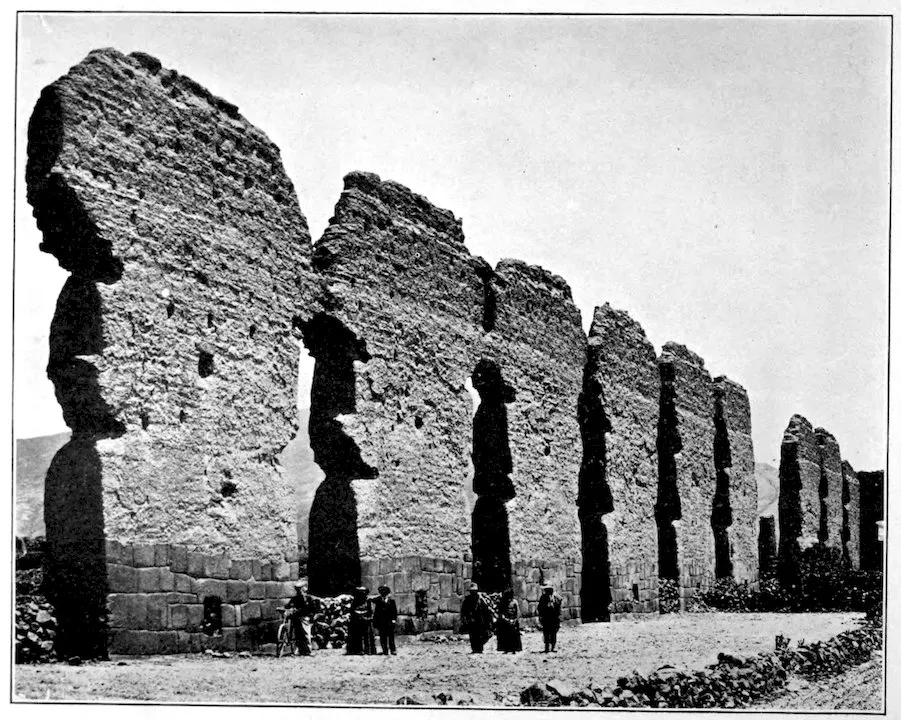
RUINS OF THE TEMPLE OF THE INCA VIRACOCHA, NEAR CUZCO.
47
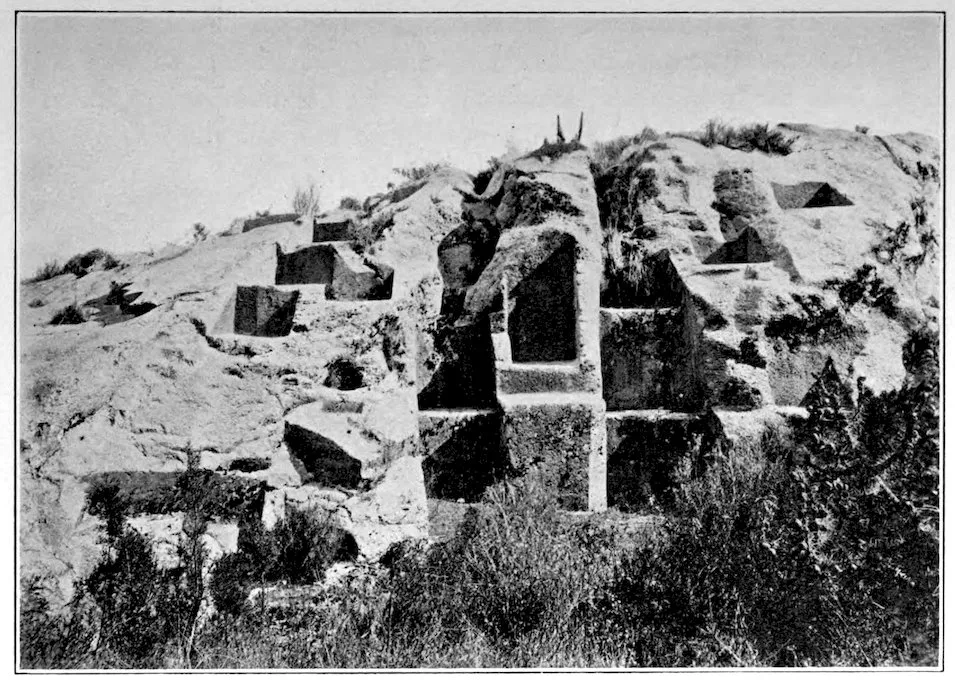
SEATS FROM WHICH THE INCA AND HIS SUITE VIEWED THE SACRIFICES.
It is related of Viracocha that, upon his return from the battlefield, he sent three
messages; the first to the Temple of the Sun and its priests, commanding that sacrifices be
offered in thanks; the second to the Mamaconas, or abbesses, in the convent of the vestal
virgins; and the third to his father. The Incas never forgot the obligations of their dual
sovereignty, and in proportion as their earthly power was extended and increased, the
evidences of their spiritual glory became more impressive, and might be seen in the greater
riches of the temple, the increased splendor of the annual feasts, and the higher interpretation
given to their religion. The priests in the various provinces numbered more than the
imperial army, four thousand being engaged in the service of the temple in Cuzco alone.
The high priest who stood at the head of the order held his divine office for life and was a
near relative of the Inca, as were his colleagues in charge of the various temples throughout
the provinces, the rest of the priesthood being chosen from among the curacas, who were
chiefs of conquered territories, and formed one of the three orders of nobility. The highest
nobility of the realm was represented in the princes and princesses of the blood royal,
either children of the Coya, the queen-mother, or of the numerous wives in the royal
48seraglio; next in rank were the Incas “by privilege,” who were descended from the companions
and followers of Manco-Ccapac, and who, in dignities and dress, were hardly to be
distinguished from the royal family; and finally, the rank of the Curacas, which depended
greatly upon the importance of the territory over which they had ruled before its conquest
by the Inca; though in every case the Curacas held a position of authority, their number
increasing in proportion to the extension of the Inca’s empire. The Incas were obliged to
grant especial privileges to the Curacas, as otherwise they could not have held in obedience
the conquered people, who regarded these chiefs with great reverence.
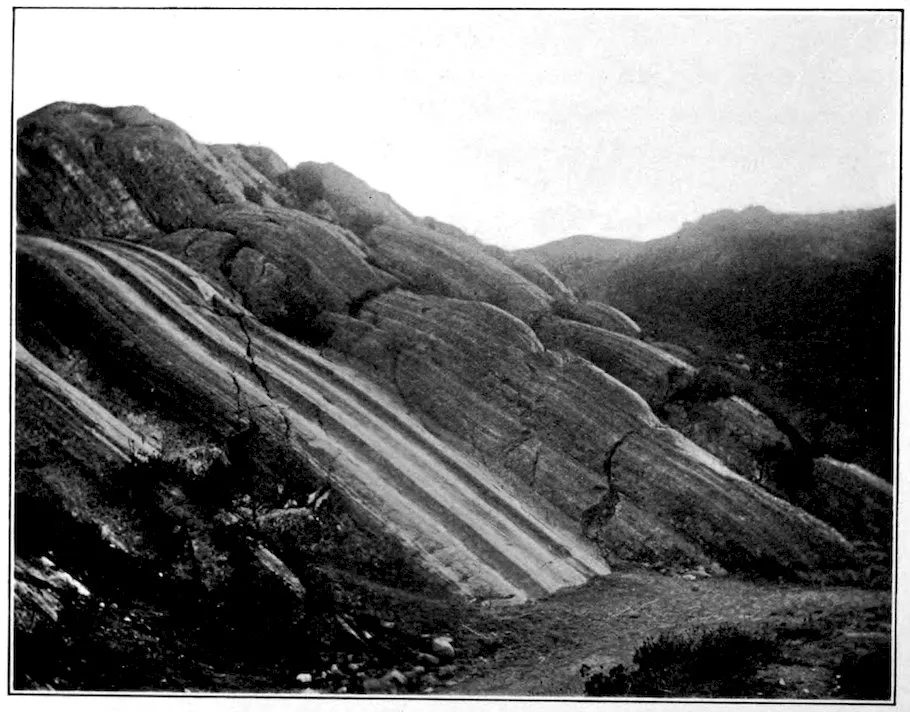
THE RODADERO, CUZCO, SITE CHOSEN FOR RUNNING CONTESTS OF THE HUARACU.
It was also in accordance with religious sentiment that the second message of Viracocha
should have been directed to the Mamaconas, who were the guardians of the vestal virgins,
and were appointed to this office after they had themselves grown old in watching over the
sacred fire that burned forever on the altar. Not only did the Virgins of the Sun watch
over the sacred fire, but they wove all the beautiful garments of vicuña wool used in the
apparel of the Inca and his family, they worked the exquisite embroideries that adorned
the hangings of the temple, and they were indispensable in the preparation of the magnificent
feasts that celebrated the Inca’s triumphs; probably it was this last fact which led
Viracocha to send his second message to the Mamaconas; for the splendors of the festivities
held in honor of his triumph over the enemy and his coronation as Inca Emperor eclipsed
49all previous celebrations, not only in the capital but throughout the empire. The message
from Viracocha to his royal father could hardly have afforded unalloyed satisfaction, since it
evidently conveyed the intention of the victor to possess the spoils, in the form of the
imperial llautu, and to occupy the throne which his energy and courage had successfully
guarded, when the cowardly flight of Yahuar Huaccac exposed it to destruction.
In the first year of his eventful reign, Viracocha ordered the construction of the
sumptuous temple of which the majestic ruins are still to be seen twenty miles south
of Cuzco. The walls of the temple were erected on an elevated base, which was built
with five andenes, or steps, leading up to it from the level of the plain, and the temple
covered an area one hundred and twenty feet long by twenty-five feet wide, the wall
being built of hewn stone from the ground up to half its height, and of adobe for the
remainder. The edifice had eight lofty doors and as many windows, and on one side
stood an altar with a statue of the deity Viracocha, representing him, as he appeared to
the prince during his banishment, “with a flowing beard.” It is believed by many writers
that this temple, which shows a different architecture from that of all other Incaic edifices,
was constructed before the advent of Manco-Ccapac by the Canas (whom the third Inca
subjugated at great cost), and that Viracocha did no more than to restore and embellish it.
Viracocha took advantage of all means to extend and increase the power of his monarchy,
and, in addition to the famous temple “Viracocha,” he ordered the construction of
many others, as well as of new palaces and gardens in various parts of the empire. He
made journeys to all the conquered provinces, and while in Collasuyo, at the head of an
army of thirty thousand men, he received ambassadors from Charcas, who came to render
homage to so great a prince; it is said that from these emissaries the Incas first received
information about a country to the south, called “Chile,” which was destined later to be
added to the territories in vassalage to the emperors of Cuzco. During Viracocha’s reign,
eleven provinces were added to the empire.
One of the greatest engineering feats accomplished under the civilization of the Incas,
was the construction, by Viracocha’s order, of an extensive irrigating canal, twelve feet
in depth and nearly four hundred miles long, which, crossing the present departments
of Huancavelica and Ayacucho, watered the plains of Castrovireina and Cangallo, making
them green and flourishing pasture lands. This enterprise is the more remarkable when
the nature of the country is considered, as the work was carried on at an altitude of from
twelve to sixteen thousand feet above sea level, and in the face of such obstacles as
gigantic rocks that had to be removed without blasting machinery or iron implements,
great ravines to be bridged and mountain torrents to be harnessed and utilized. The
hydraulic works constructed by the Incas are the wonder and admiration of all who
have seen the evidences of their extent and perfection that remain to this day in the
sierra and the coast region. Natural lakes at the head of the coast valleys were in many
instances enlarged, and immense dams and aqueducts were built to conduct to the irrigating
canals the water which descended from the mountain summits to the barren coast land.
50At the death of Viracocha the sceptre passed to his eldest son, who, however, was too
dull and weak, the records say, to rule over an empire composed of so many elements that
had not as yet become settled and consolidated into a united people. It required a strong
hand and clear judgment to direct the affairs of state so that rebellion should not overturn
the rapidly growing power of the Incas, and that successful insurrection might not lessen
the prestige of a monarchy that claimed celestial origin. The second son of Viracocha,
Pachacutec, was the opposite of his brother in character, and possessed all the requirements
of a monarch which the other lacked. He was elevated to the throne on his brother’s
death, about the middle of the fourteenth century, and began his reign by cementing the
bonds that held the various tributary provinces loyal to the sovereignty of Cuzco, and by
making new conquests, in which the military genius of his son, the heir-apparent, was
displayed in deeds as valorous and noble as those performed by his illustrious father.
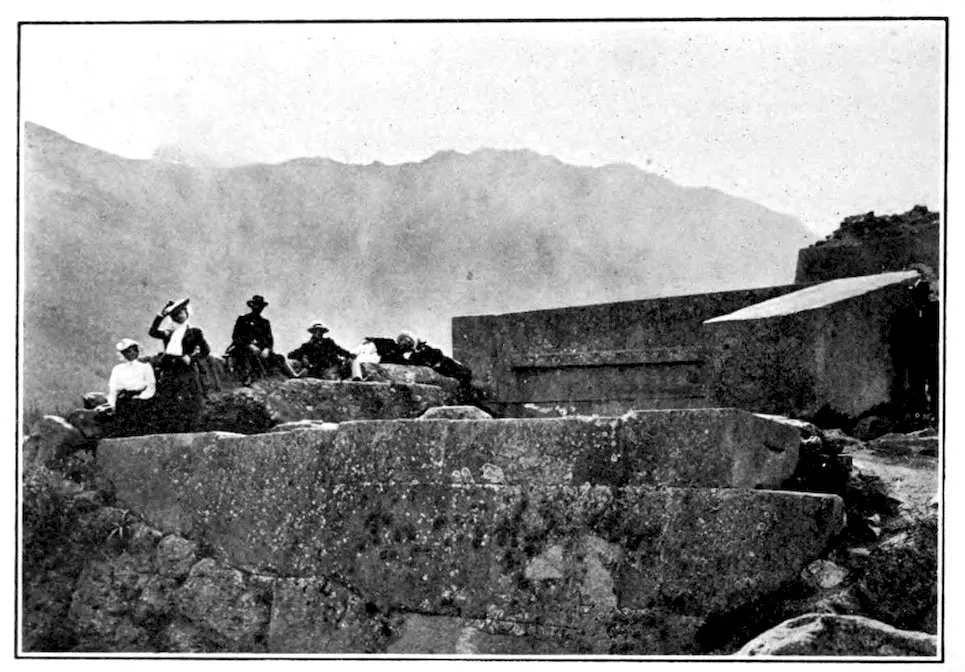
FOREIGN TOURISTS AT OLLANTAYTAMBO.
52
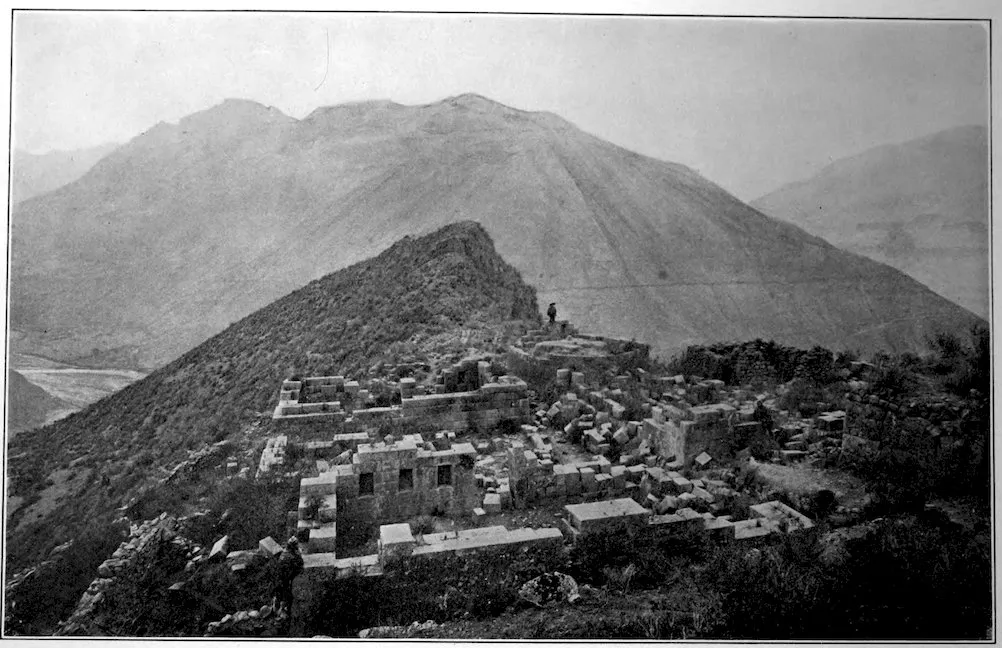
INCA OBSERVATORY, INTI-HUATANA, AT PISAC, NEAR CUZCO.
CHAPTER III THE VAST EMPIRE OF THE INCAS
53
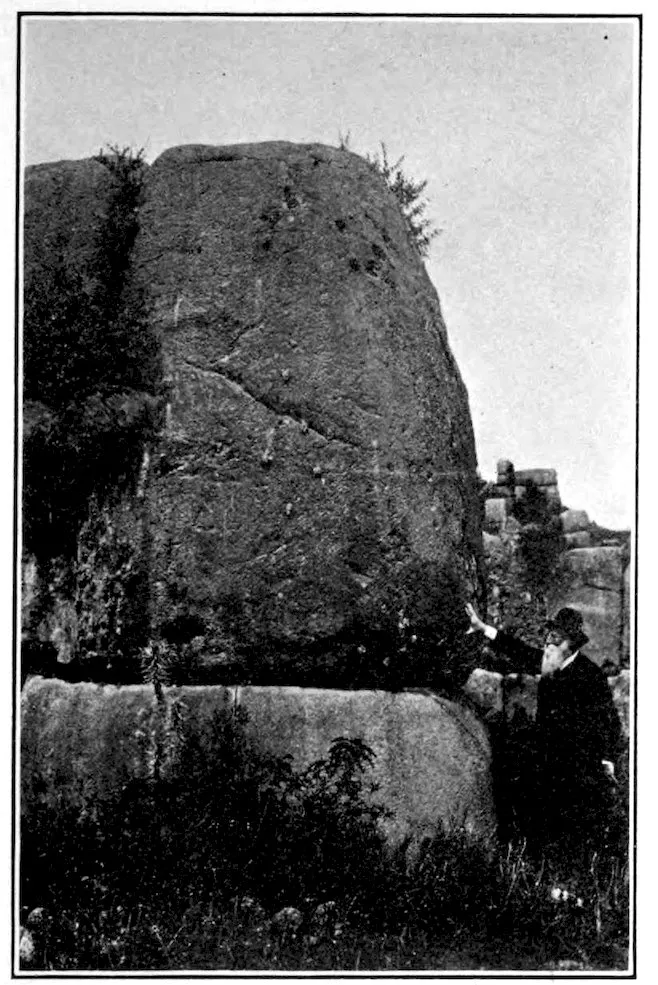
CORNER-STONE OF AN ANCIENT FORTRESS, CUZCO.
Although Viracocha was one of the greatest
monarchs of Cuzco, it was his son who
brought the Inca dynasty to such a high degree
of prestige and power that the great empire gained
unprecedented wealth and territory. Pachacutec
has been called the second Manco-Ccapac, and his
name signifies “he who creates the world anew,”
showing what an exalted place he occupied among
the Inca emperors in the annals of his country.
He was an accomplished diplomatist as well as a
skilful warrior, a statesman of far-seeing judgment,
and a philosopher. It was as a diplomatist that
he gained the coöperation and loyal service of the
curacas of newly conquered provinces, and by his
skill as a warrior that his armies were so well
organized and disciplined as to win victories in all
the campaigns which the heir-apparent led against
the tribes of the coast, carrying his conquests from
Pisco, Nasca, Ica, and Pachacámac to the realm of
the hitherto much dreaded and altogether invincible
Grand Chimu. The name of the young prince, Tupac-Yupanqui, is particularly associated
with the conquest of Cajamarca; and the return of the hero to Cuzco at the close of that
campaign was made the occasion of a national celebration throughout the empire.
It must have been an imposing and magnificent spectacle when the Emperor Pachacutec
met the victorious prince outside of the capital on his return from Cajamarca, and
entered the city with the royal heir, the latter “borne in a gold litter on the shoulders
of conquered chiefs and preceded by troops of newly gained vassals, who sang the
54glories of the prince, with the triumphant ‘Haylli!’ to thrill the heart of the multitude
and carry them beyond bounds as they caught its victorious note.” The pathway of the
prince was covered with flowers, and crossed at short intervals by triumphal arches.
The curacas marched at the head of processions from the different provinces, each in
their local costumes, dancing and singing songs of victory; these were followed by the
legions of the army, who filled the air with cheers for their general. The nobility came
next in line, splendid in court dress and brilliant ornaments; and, lastly, the royal litter of
the emperor side by side with that of the prince, gave to the pageant its culminating glory.
The procession wound its way through the streets to the Temple of the Sun, where, with
impressive ceremonies, thanks were rendered to the deity whose protection they believed
had won the great victory.
The Inca’s armies entered the valleys of Pachacámac, Rimac, and Chancay late in the
fourteenth century, and effected the allegiance of all that territory with little resistance;
though it was an alliance rather than a conquest which the monarch of Cuzco proposed
to the powerful ruler of the Yungas, as the people of that region were called. According to
their treaty, the lord of Pachacámac was to keep his dominions, though under the authority
of the imperial government; and the religion of Pachacámac was to be protected, on condition
that the people also worshipped the Sun. It was after this alliance that the Temple of
the Sun and the Convent of the Vestal Virgins were erected near the ancient edifice dedicated
to the Creator. Later, the chiefs of this part of the coast region united their forces with the
armies of Cuzco and marched against the Grand Chimu, glad to render assistance in an
effort to crush their common enemy. The trained legions of Cuzco suffered greatly at
first, on account of the intense heat, and their general was forced to send to his father for
reinforcements; the resistance was stronger and more resolute than that of any enemy the
Incas had hitherto encountered; but repeated reinforcements arrived, and the archers,
lancers, and catapult regiments made havoc in the Chimu’s dominions, which was intensified
when the enemy turned the course of the rivers that flowed from the sierra, to drain
their plantations, and famine added to the horrors of combat. Capitulations were made,
the Inca permitting the Grand Chimu to govern his dominions, as had been done in the
treaty of Pachacámac, and exacting only that the people should render homage to the Inca
and worship the Sun. A general edict was issued by Pachacutec at this time which proved
one of the most powerful agencies in the consolidation of his great empire; it was decreed
that all vassals of the realm should learn Quichua, and teachers were appointed in every
province to see that the language was taught and used throughout the country. All
government officials were obliged to know the national idiom and no one was permitted
to occupy a place of authority or to have dignities or seignory conferred upon him if
he could not speak it. Every soldier of the army, which grew to number two hundred
thousand men, spoke this language.
55
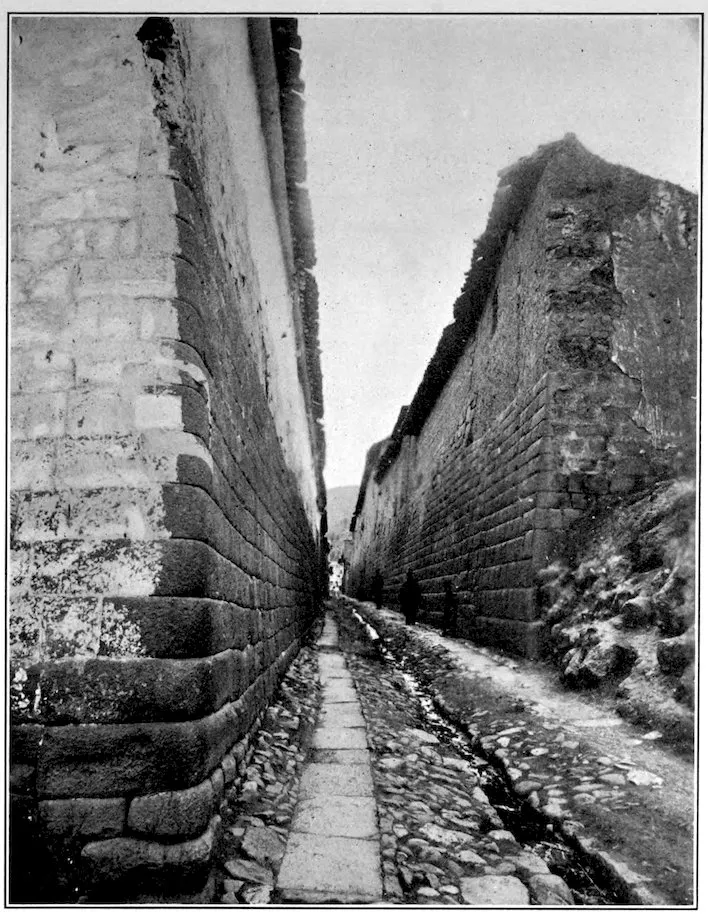
ANCIENT STREET OF CUZCO, SHOWING INCAIC WALLS.
During the reign of Pachacutec, the government of the empire was established on
a firmer basis than ever, and legislation, though in reality only an expression of the
supreme will of the Inca (there was no word for “law,” which was rendered apupsimi,
“the word of the chief”), made clear to every subject what his duties were to his sovereign
and to the state. The Inca Pachacutec ordered that all children over five years of age
should have some employment appropriate to their age and their father’s profession. The
blind, mute, and
lame were given
light work, and even
the most ignorant
and weak-minded
were employed, as
a safeguard against
laziness. On the
other hand, he set
aside three days in
each month for
fiestas, and harvest
time was a season
of general rejoicing.
The lands of the empire
were all owned
by the Inca and
agriculture was the
chief occupation of
his subjects; the
Inca himself turned
the first furrow
every year, with a
golden plough. The
products of the harvest
were divided
into three parts;
first, the Inca’s share
was set aside to
sustain the splendor
of the throne and tomeet public necessities;
then the share for the Sun was devoted to the needs of the church, the priests and all
who served in the temples; and finally the communities received their share, out of which
each tiller of the soil was provided with what he needed. Private property did not exist,
and no one had any individual rights whatever; on the other hand, every subject was given
56food and clothing and a house in which to live, though only as the Inca’s dependent ward,
who could never hope to outgrow his “minority.” It is not surprising that patience and
obedience became the predominating virtues of the race! The system of administration,
which made it possible for the Inca to maintain his absolute authority over such a vast
territory and population is explained partly in the frequent transporting of mitimaes, or
colonists, from their native province to another, which prevented concerted plans for revolt,
and partly in the division of the population into decades, or groups of ten, five of these
groups constituting a body of fifty, two of these bodies making a centenary, and so on, the
whole empire being governed in provinces of ten thousand inhabitants; each of the subdivisions
had an officer in authority who was answerable to the chief officer of the larger
group of which his division formed a part, until the supreme authority was reached. As
may be supposed, the larger divisions were under the direction and control of the nobles,
the provinces of ten thousand being governed by the Inca nobility, who had command
over the curacas and other territorial officers of his district.
The subjects of the Inca could not even choose their life partners; matrimony was
obligatory and, as its results affected the well-being of the state, the Inca maintained the
right to govern in this as in all other matters. In the royal family, the ceremony was
performed by the emperor himself, though in marriages of lesser importance his officers
discharged this formality, appointing a day for a general ceremony, when all the young
men of from twenty to twenty-five and girls of from eighteen to twenty presented themselves
in a row, the men in front; after the wedding, the young people took possession of
the houses which their community was obliged to build for them, the furniture being
supplied by their family. No one could marry outside of his or her parcialidad, or township,
and, as it was obligatory to wear the dress of one’s forefathers and not to move from
any town to another without leave from the authorities, it may readily be understood that the
costumes worn in the various sections of Peru were as distinctive of class and locality as is
the Scotch tartan. The custom still remains in the sierra, and the effect is most picturesque.
57
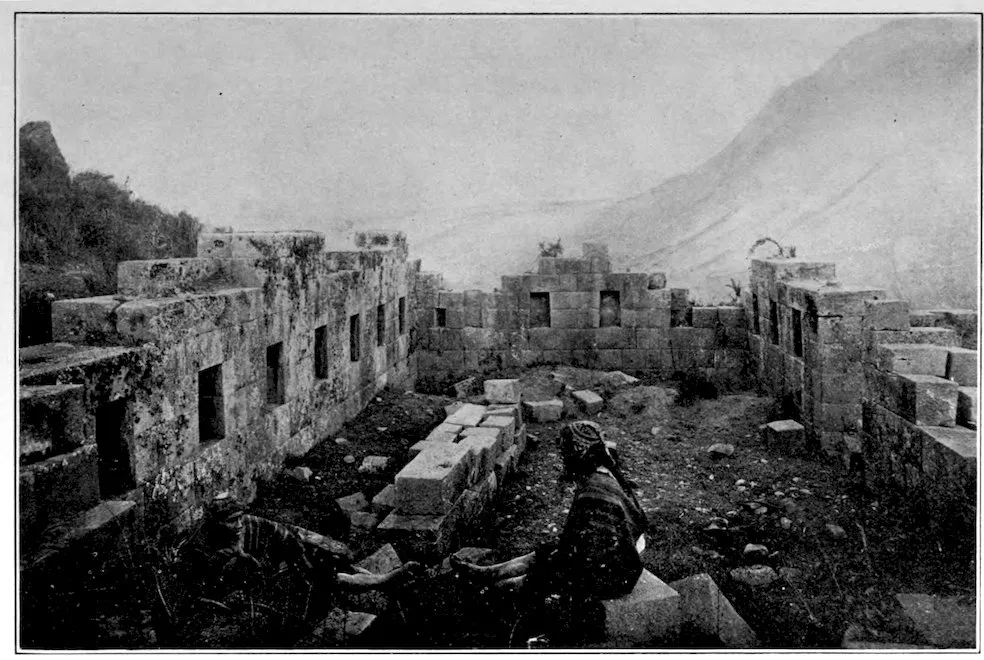
PRINCIPAL HALL OF THE INCA OBSERVATORY. INTI-HUATANA.
Throughout the long reign of sixty years which is given by the historians to Pachacutec,
his sagacity and benevolence were seen in every branch of his administration. He died at
the age of eighty years, and left the throne to Tupac-Yupanqui, the tenth emperor of Cuzco,
who made the conquest of Chile as far south as the Maule River, and spent three years
visiting his kingdom. The royal progress was of the most magnificent description; the
litter of the great monarch was resplendant with gold and precious jewels, displaying in its
adornment the sacred symbols of sun worship, as it was borne on the shoulders of the
Inca’s proudest nobles. With a gorgeous retinue the great lord of Cuzco proceeded along
the highway, which was lined throughout the route by adoring subjects, who strewed the
pathway of their deity-king with flowers and sang songs in his praise; when the transcendent
glory of the Son of the Sun was revealed to them for a brief moment, as the
curtains of the litter were raised and the royal countenance became visible, their acclamations
were joyous and fervent beyond words. According to Sarmiento, one of the early
historians, the royal guard and retinue that accompanied the Incas always made a splendid
spectacle. Close to the litter of the emperor, and forming a brilliant and impenetrable guard,
were his majesty’s halberdiers and archers on each side, five thousand soldiers in front, with
catapults (weapons used with unfailing effect by the armies of Cuzco), and as many lancers
with their captains behind, while heralds hurried back and forth, clearing the way and
announcing the approach of the mighty lord. The people were glad to see their monarch,
not only to witness the glory and splendor in which he appeared, but also because
it was the royal custom, observed by Manco-Ccapac and all his successors, for the
Inca to take this opportunity of hearing his people’s grievances and regulating matters
referred to his decision by the provincial tribunals. Wherever he halted grand fiestas were
celebrated in his honor; and so well stocked with provisions were the royal tambos, that all
the Inca’s suite, as well as his troops, could be served with their accustomed food and
all comforts. The Inca was kept in constant communication with Cuzco—no matter how
far away from the capital his travels might lead him—by his chasquis, or postboys. On all
the principal roads leading from Cuzco post offices were established, not like the modern
repositories of letters, but small huts, in which a number of chasquis were stationed to
receive and carry forward messages of the government. These posts were only a few
miles apart, and the chasquis, who were chosen for their fleetness as runners as well as for
58their fidelity, were relieved by a perfect system of relays, so that it was possible for messages
to be carried fifty leagues in a day. The chasquis were of great value in times of
war, as may readily be seen, and they were also pressed into the domestic service of the
royal palace, being employed to bring fruits, game, and (we are seriously informed by
the historian) even fish, from the tropical coast region, for the imperial table.
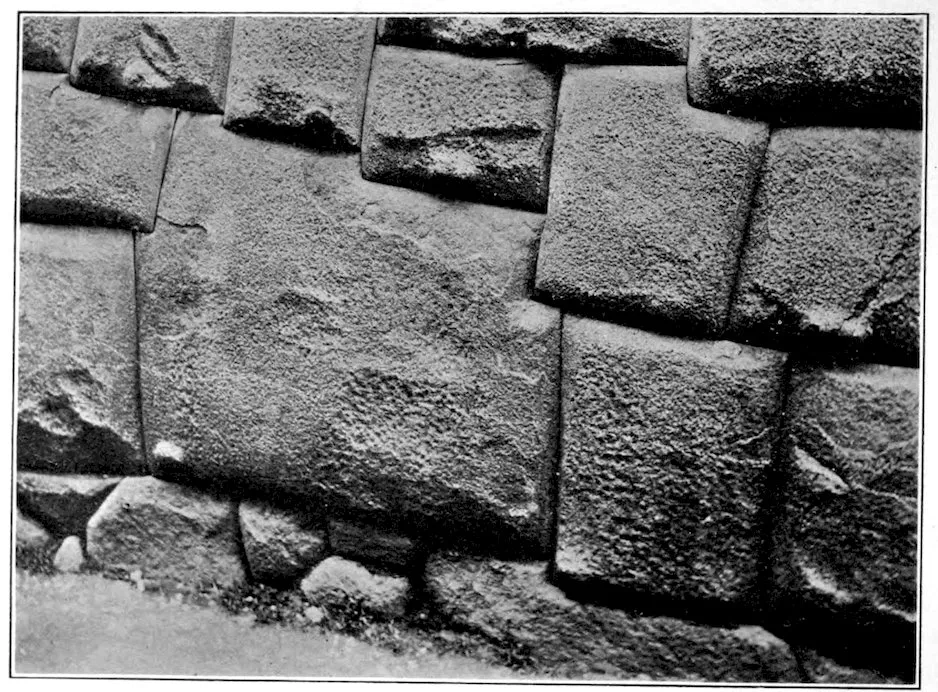
SHOWING THE TWELVE-ANGLE STONE, RUINS AT CUZCO.
Tupac-Yupanqui is named by some authorities as the successor of Inca Yupanqui, to
whom they give all the glory of the long and brilliant reign which others credit to Tupac-Yupanqui.
On the other hand, many historians say that Inca Yupanqui’s reign was brief and
uneventful, except for his campaigns, undertaken to subdue the Mojos of the region of the
Beni and the Chiriguanas of the Bolivian Chaco. He failed in both enterprises and then
turned his armies toward Quito, though with little better success. Tupac-Yupanqui had a
young son, however, who was destined to bring the power and prestige of the Children of
the Sun to the very zenith of glory. This prince, whose name was Huayna-Ccapac, took
command of the imperial forces in the later years of his father’s life and marched against the
king of Quito, whom he defeated, gaining possession of his kingdom. Alas, the conquest of
Quito, the most brilliant victory yet won by the Children of the Sun, proved to be “the
beginning of the end,” the source of the disunion of the great Inca empire, a calamity which
contributed in an important degree to make it possible for a small group of invaders to
59accomplish the downfall of one of the most powerful monarchies that ever developed
among a primitive people!
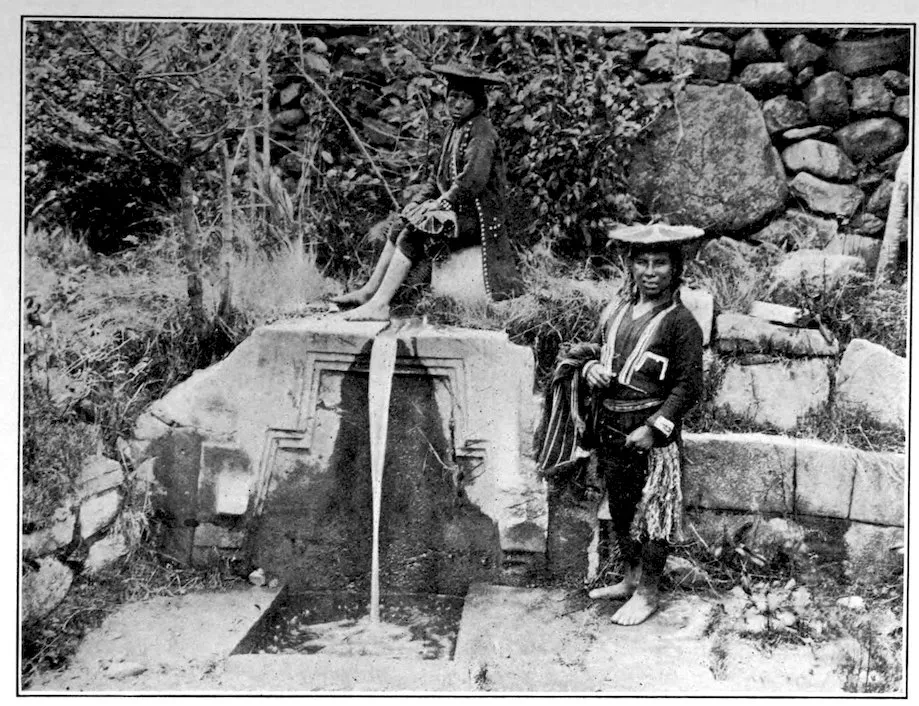
THE INCA’S BATH, OLLANTAYTAMBO.
The historical records of the reign of Huayna-Ccapac are generally regarded as reliable,
since he died only a few years before the arrival of the Spaniards, and the events of his
government were still fresh in the minds of his people. Not only did this monarch add to
the number of magnificent temples and palaces erected throughout the empire, but he built a
new highway from Cuzco to Quito and completed the great road from the capital to Chile.
The famous tradition of Ollantaytambo is said to have its origin in the rebellion of one of the
nobles of the court of Huayna-Ccapac, named Ollanta, who resisted the power of the Inca in
his stronghold until finally conquered by the superior strength of the emperor’s forces. The
ruins of Ollantaytambo, forty miles north of Cuzco, are among the most imposing in Peru,
though according to some archæologists the edifice was built in pre-Incaic times, and was only
restored and embellished by the Incas. The same is said of nearly all the great temples,
except Coricancha, the Temple of the Sun, in Cuzco, and a few others, though it is not
certain in whose reign Coricancha was built; probably the work of construction extended
over several reigns. Huayna-Ccapac is said to have had a strong leaning toward philosophy,
and, like some of his predecessors, he gave numerous proverbs and mottoes to his people,
which the early historians were able to get from the quipucamayos. He was the first to
60declare that he believed in the existence of a higher power than the Sun, and the reason he
gave for this disloyalty to the deity of the Incas is very interesting. It is related that he
first gave expression to his new creed during a visit to his subjects of Collasuyo. He had
gone with his court to spend some time on the sacred island of the Sun in Lake Titicaca,
where he is said to have devoted much attention to plans of reform, in religion, industries,
and other features of administration. From this point he had visited the monuments of
Tiahuanaco, and was celebrating the great annual feast of Raymi at Chuquiapu (La Paz,
Bolivia). His uncle, the chief priest of the temple, observed that the Inca spent much time
gazing at the sun, and said to him, “Thou knowest, Inca, that it is not permitted to look so
freely at our father, the Sun, and thou art causing a grand scandal in the court and among all
thy subjects assembled to worship our supreme lord.” In return, the emperor asked: “Is
there anyone in the empire who could oblige me to make a long journey? Is there anyone
who would dare to disobey me if I ordered him to journey to Chile?” “No,” was the
answer of the priest; “No one would dare to give orders to his sovereign, nor to disobey
him.” “Then I tell you,” replied the Inca, “that our father, the Sun, has a ruler greater and
more powerful than himself; for the sun never rests on the journey which he makes every
day, and the supreme lord no doubt does things leisurely and halts when it pleases him,
even though he has no need of repose.”
The feast of Raymi was the most brilliant and popular of all the national celebrations.
It usually took place at Cuzco, as the permanent residence of the Inca was in that city, and
was held at the period of the summer solstice, which, south of the equator, occurs in
December. Three other fiestas of especial importance were held during the year to celebrate
the solstices of June, March, and September, though none of these equalled in
elaborate ceremony and display the “Ccapac-Raymi.” For three days previous to the 21st
of December there was a general fast, and on the morning of that day the Inca, in company
with his family and the nobles of his court, attired in gala dress and wearing their most
gorgeous adornments, awaited the appearance of the rising sun. A multitude filled the
plaza, presenting in the variety of their dress and ornaments,—as they represented the
different tribes gathered under the standard of the rainbow in many campaigns,—the aspect
of an assembly gathered from the four corners of the globe. As the sun rose, smiling on the
sacred city in benediction, the crowd broke forth in a shout of praise and thanksgiving;
while joyous songs and the melody of music from a thousand curious instruments throbbed
on the air. Dr. Lorente in describing this feast says: “The Inca, filling two glasses with
chicha, (a fermented liquor of maize, the popular drink of the Indians in the sierra to-day as
it was hundreds of years ago,) offered them to his divine father, the Sun, and then poured the
contents of the glass he held in his right hand into a golden receptacle, which by a secret
channel flowed into the Temple of the Sun. The contents of the other glass were first
sipped by the Inca, who passed it to his nobles that they might do the same.” After this
libation, all repaired to the temple, which they entered barefooted, the multitude being
required to remove their sandals two hundred steps from the sacred portal, which they
61might not enter. After the Inca’s invocation to the Sun, the procession made its way to the
plaza where the sacrificial offerings of llamas were made and the feasting began in all its
intensity. It lasted for a week, during which the chicha jars—huge earthenware vessels—were
increased and refilled constantly, and dancing was kept up day and night without
ceasing. The feast of the harvest, held the 21st of March, was regarded with great reverence,
as it was then the fire was drawn from the Sun’s rays to light the sacred flame for the
altar; the rays were focussed on a metallic mirror which the Inca wore in a bracelet on
his right arm, and by this means a small piece of cotton was ignited, the fire being then
guarded by the Virgins of the Sun until the feast of the ensuing year.
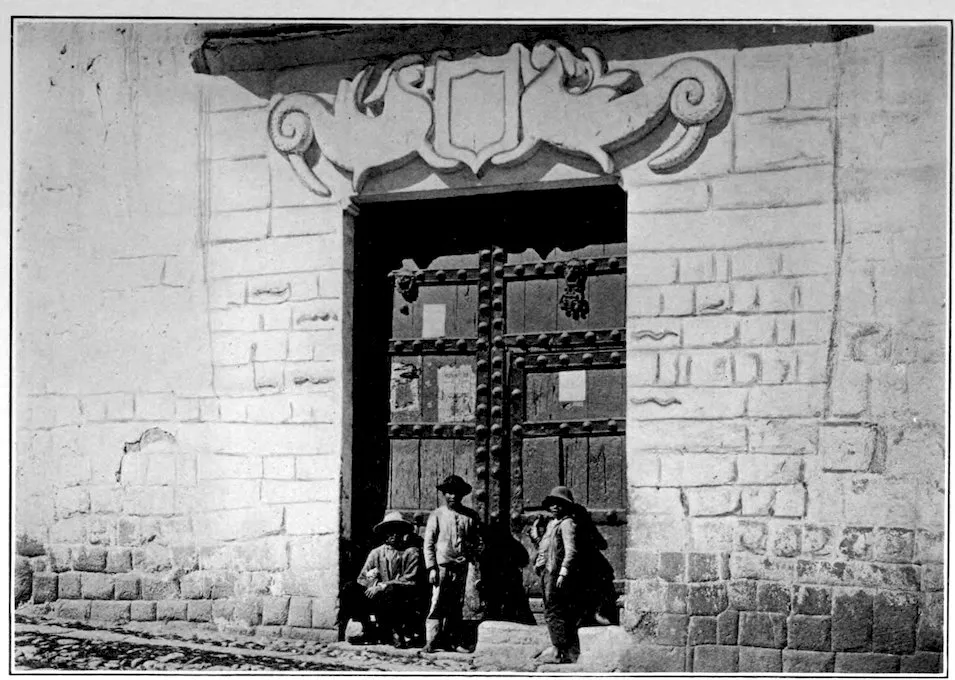
THE HOUSE OF THE SERPENTS, CUZCO.
Under the influence of a common religion, a common language, and a common government
the consolidation of the great Inca empire was effected, and it must be conceded that
the benevolent character of the despotism which its sovereigns exercised was the saving
feature of a system which must seem, to the freedom-loving spirit of the twentieth century,
the worst species of barbarism. Yet for a primitive people, who shall say that the
government of Cuzco did not accomplish more toward civilizing them than a less autocratic
but more oppressive system would have done? In the course of time, might not Inca
philosophers, such as Pachacutec and Huayna-Ccapac, more advanced in their ideas by
social evolution, gradually extend more privileges to their subjects and lift them up to a
62higher level? The empire had apparently reached its farthest boundaries with the conquests
of Chile and Quito, and the period of insurrection and insubordination had passed,
as a result of wise measures taken to bind all the Inca’s subjects together in a common
interest, through the practice of a common religion and the exclusive use of a common
language. It was the most promising moment in the development of the race.
The story of Huayna-Ccapac’s fear and foreboding when the news was carried to
him in his palace on the island of Lake Titicaca that “white and bearded men” had been
seen in the region of the coast, and of his retirement to Quito to pass the remainder of
his days in the society of his favorite Pacha, the mother of Atahuallpa, is well known.
Unfortunately, the poetical romance of Atahuallpa’s birth in the conquered city of his
mother’s people, and of his winning the proud heart of his father, so that the rightful
heir to the throne of Cuzco was relegated to a second place in the Inca’s affections, has
been pronounced a fable; because Atahuallpa was twelve years old when Huayna-Ccapac
conquered Quito. But, on the other hand, there is no proof that Huayna-Ccapac did not
invade Quito previous to its conquest. At any rate, the story is bien trouvée. The question
of disposing of his empire vexed the great Inca, who wished to provide well for his favorite
son, but was bound to recognize the exalted rights of the Coya’s heir, Huascar, at whose
birth the national rejoicings had been greater than on the natal day of any other prince of
Cuzco. The legend of Huascar’s golden chain, which was long enough to encircle the
plaza of Cuzco three times, is still repeated, and expeditions still seek it in the various
places where it is said to have been concealed on the approach of the Spaniards. Finally
the throne of Cuzco was given to Huascar, and that of Quito to Atahuallpa. Neither was
satisfied, and their quarrels and combats resulted in dividing the empire under rival powers
at the supreme moment when unity was its only hope for salvation.
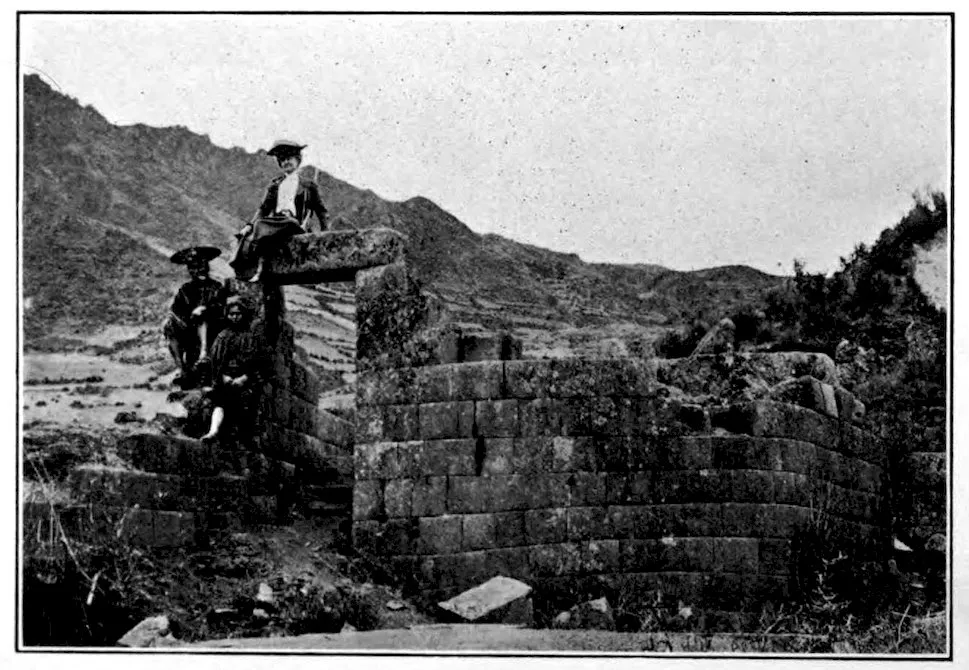
DOORWAY OF THE OBSERVATORY, INTI-HUATANA.
64
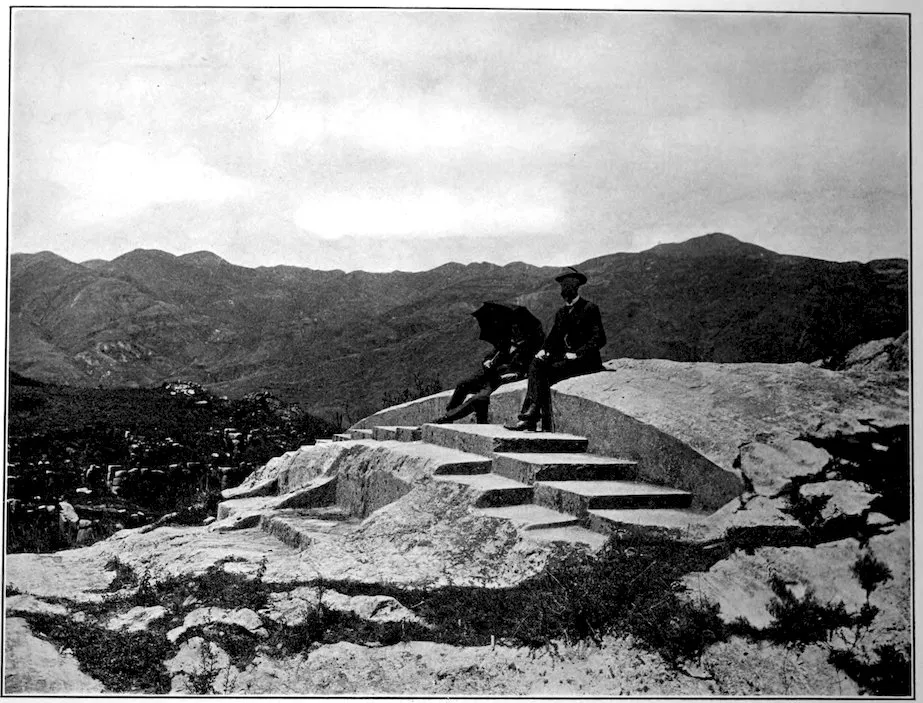
THE INCA’S THRONE, OVERLOOKING THE CITY OF CUZCO.
CHAPTER IV THE SPANISH DISCOVERY AND INVASION UNDER PIZARRO
65
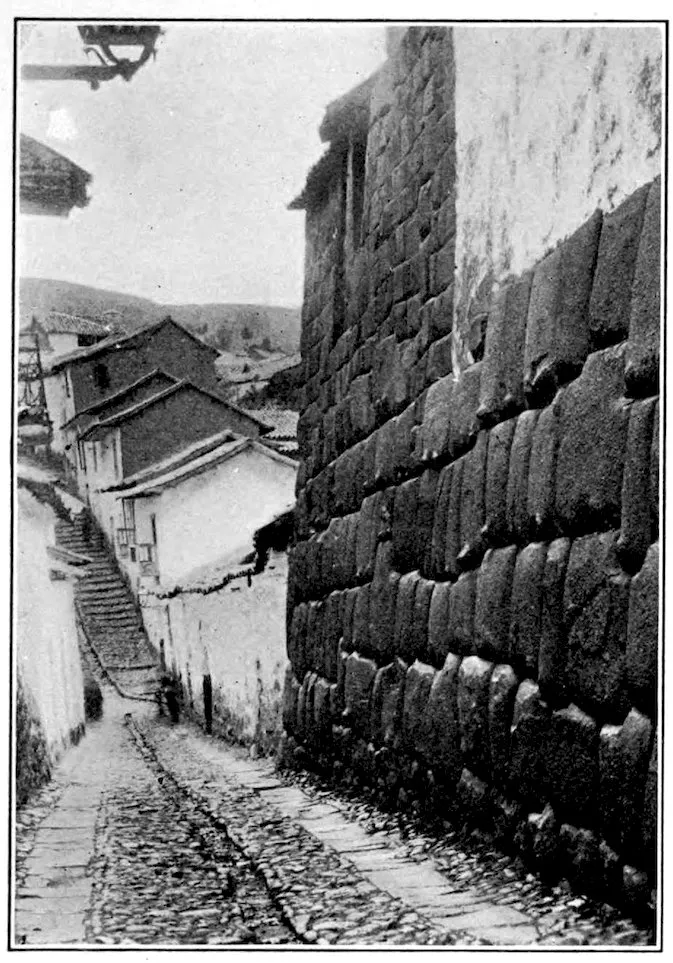
While the empire of the Incas was
approaching the zenith of its greatness
in America, Spain was extending the
power and prestige of the House of Austria
throughout Europe under the sovereignty of
the Emperor Charles V. And the proud
dynasty of the Hapsburgs, whose double-headed
eagle was destined to obscure the
Sun of Tahuantinsuyo and to efface the
sacred Rainbow in its shadow, did not represent
a more exalted royalty in the Old World
than did that of Manco-Ccapac in the New.
There are even some points of resemblance
between the two monarchies, so remotely
separated in origin and traditions. In Peru,
as in Spain, the army and the Church were
the only occupations worthy of the nobility;
in both countries, wars of conquest were
fought in the name of religion, with the
emblem of salvation in one hand and that
of destruction in the other,—the Inca with
the golden disk and the catapult, the Spaniard with the Cross and the sword; and both led
their armies against the infidel with the determination to destroy his idols and to establish
the true worship.
However much we may condemn the method of the Spanish conquerors, their mission
was not altogether mercenary in its purpose. It is not strange that the yellow metal
dimmed their consciences when it blazed before their eyes on the temples of Mexico
66and Peru; yet, even then, as Prescott says: “In the motives of action, meaner influences
were strangely mingled with the loftier, the temporal with the spiritual.” The hardy and
romantic adventurers who followed in the wake of Columbus were not merely sordid gold
hunters; they were the descendants of soldiers who had for centuries fought in the holy
wars of the Cross against the Crescent, and in their veins flowed the blood of the knight-errant
and the crusader. Gold they sought with eagerness and without scruple; but they
wanted glory almost as much as they wanted gold, and in the pursuit of both, they carried
aloft the banner of the Church, and sought the blessing of its ministers. As soon as a
newly discovered land was taken possession of in the name of the King of Spain, the
Cross was elevated in token of the triumph of Christianity. Columbus erected the Cross
in Hispaniola, and Cortés followed up his victory over the Aztecs with their forcible conversion
to the true faith. In Peru, a less pious discoverer than Columbus and a more
ruthless invader than Cortés employed the sacred office of the priest to aid him in accomplishing
an act of treachery so odious that it dims the glory of his conquest and places him
below the standard even of mediæval adventurers.
Francisco Pizarro, a native of Trujillo in Spain, began life under all the disadvantages
which are the lot of the illegitimate child, but which, in many instances, school him in a
discipline so rigorous that as he grows to manhood he becomes thoroughly inured to
hardship and is able to dominate the greatest misfortune and to achieve success in the face
of the most discouraging obstacles. Such a discipline is hardly likely to develop the softer
virtues; and, as the young Pizarro received no care,—either from his father, who was a
distinguished colonel under El Gran Capitan, or from his mother, a humble peasant,—as he
was never taught to read or to write, and spent his boyhood tending swine, it is not
difficult to imagine what extraordinary influences must have moulded his character, and
transformed the swineherd of Trujillo into the fearless soldier of fortune, known to history
as the cruel, rapacious, and perfidious, though consummately daring, Conqueror of Peru.
The first news of Pizarro as an adventurer in the New World is found in the record of
a disastrous expedition fitted out at Hispaniola for the purpose of colonization; a few years
later he is heard from in connection with the more successful undertaking led by Balboa,
with whom Pizarro crossed the Isthmus of Panamá, when that celebrated adventurer
discovered the Pacific Ocean. Up to that time, Pizarro, who was then fifty years of age,
had won neither gold nor glory as a reward for his ambition. In 1522, an expedition,
which had been sent southward by the governor of Panamá, returned with wonderful
stories of the wealth and grandeur of a kingdom that was supposed to lie behind the
great range of the Andes. Pizarro became interested and communicated his enthusiasm
to Diego de Almagro, an adventurer like himself, a native of Castile, and a foundling.
These two enterprising explorers were joined by a third, named Hernando de Luque,
a priest, who furnished most of the funds for the expedition which it was agreed they
would undertake, to search for the land of treasure. After great reverses and his
desertion by many famished followers on the barren Island of Gallo, Pizarro reached
67Tumbes, on the southern shore of the Gulf of Guayaquil, where he found a populous
settlement, rich in temples and palaces ornamented with gold and silver, and inhabited by
a kind and hospitable people. The natives told the Spaniards that a great and powerful
prince ruled over all this country, whose capital lay behind the mountains and was a city
of far greater wealth and splendor than anything they had yet seen. Could any news be
more welcome to the little band of adventurers in search of this very treasure? After cruising
southward past the present city of Trujillo, at which they also disembarked for a short stay,
and finding everywhere proofs that they had reached the shores of an opulent kingdom, the
expedition turned northward again toward Panamá; for Pizarro realized that it would be
impossible to attempt the conquest of such a country with a mere dozen of followers. On
their way, they called again at Tumbes, where a native boy, named Felipillo, was taken on
board to accompany Pizarro to Panamá, so that he might learn the Spanish language and
serve as interpreter when the discoverers should return to his country to conquer it.
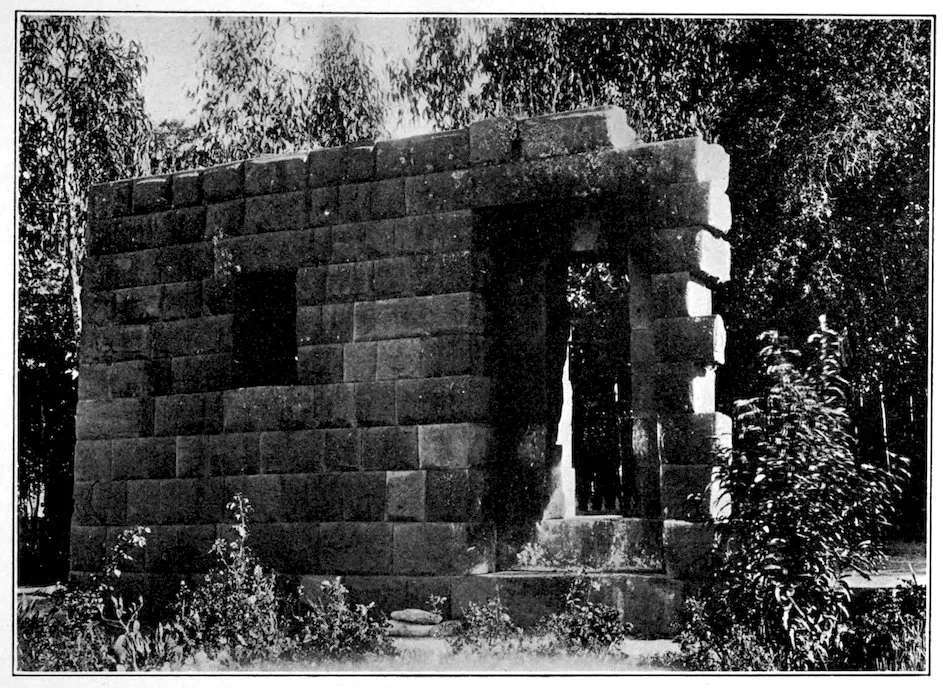
RUINS OF AN INCA’S PALACE.
68
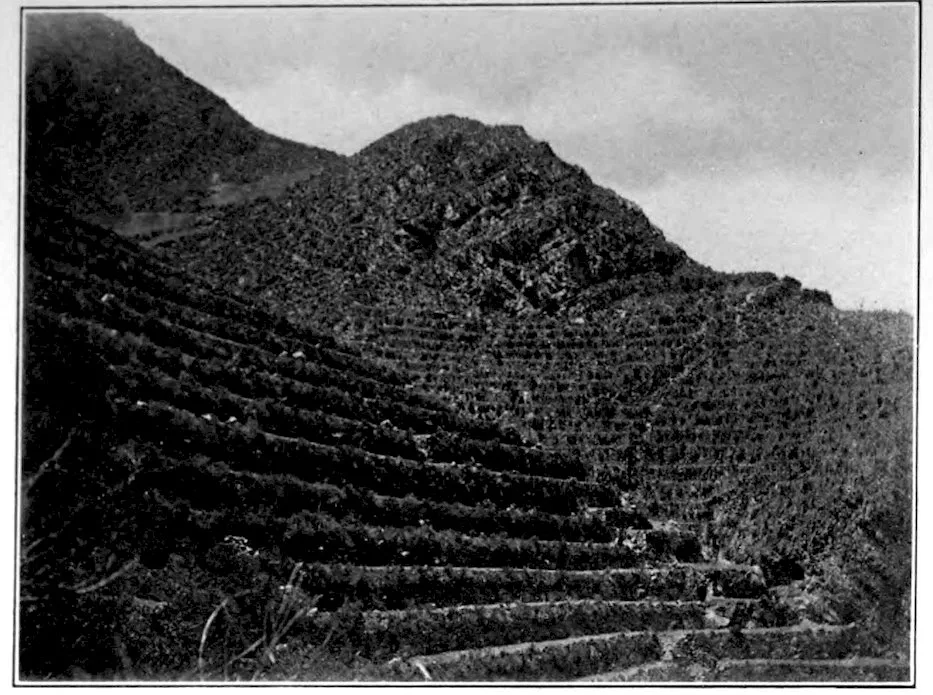
THE ANDENES, OR ARTIFICIAL TERRACES, CULTIVATED UNDER THE INCAS.
When Pizarro arrived in Panamá, he found the governor not at all disposed to help
him; but, with the aid of his faithful comrades, Almagro and Father Luque, he was provided
with funds to go to Spain and plead his cause with the king, it being understood that
if he succeeded in getting the royal authorization and protection, he would secure the office
of Adelantado for Almagro and that of Bishop of Tumbes for Father Luque. Pizarro was
well received at the Court
of Spain, where Cortés had
recently arrived to present
the empire of Mexico to his
royal master. The Council
of the Indies, which had
charge of all matters relating
to Spain’s possessions
in the New World, gave
him a grant authorizing him
to make discoveries and
conquests in Peru for two
hundred leagues southward
from the river Santiago,
near the northern
border of the present republic
of Ecuador. Pizarro
received the rank and titles
of Governor and Captain-general of the province, and the offices of Adelantado and Chief
Magistrate for life with a large salary; he was also made a Knight of Santiago and was given
permission to use his father’s coat-of-arms with symbols of his own conquest added.
Upon his return to Panamá, he tried to explain to Almagro the reason why he had accepted
all the high offices for himself, but his comrade found it hard to forgive what he considered
an injury done to him by a friend he had trusted, and an estrangement followed, which was
never overcome, especially as Pizarro’s brothers, Hernando and Gonzalo, who accompanied
him back from Spain, did everything to widen the breach.
69
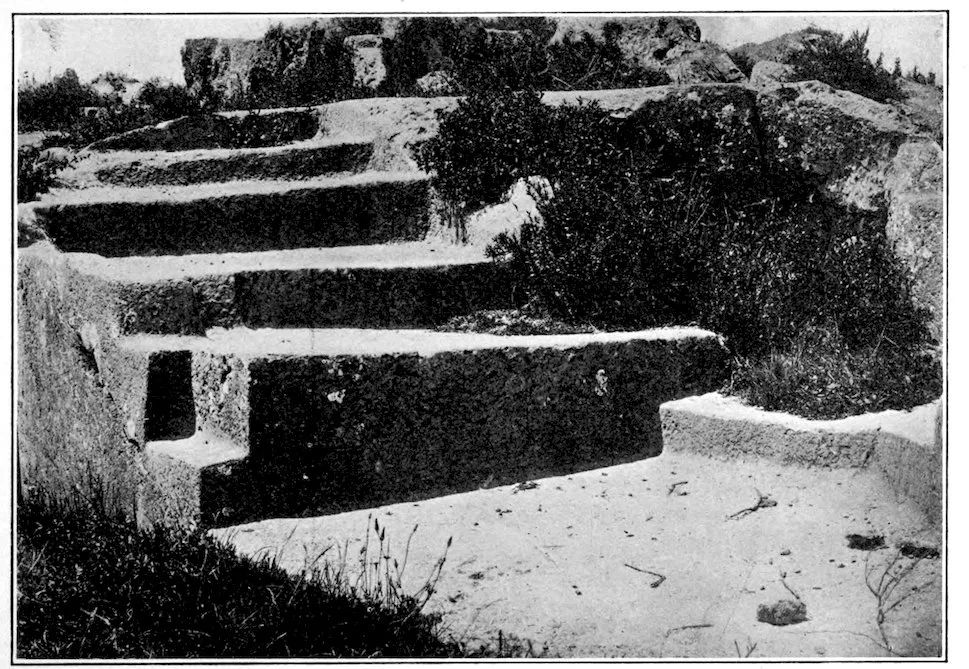
SEATS CUT IN SOLID STONE, AT KENKO, NEAR CUZCO.
In January, 1531, Pizarro and his followers embarked again for Peru. Before leaving
Panamá, the banners of the company and the royal standard of Spain were consecrated in
the Cathedral, mass was performed, and the sacrament was administered to every soldier.
The expedition consisted of only two hundred men and twenty-seven horses, a small force
for so ambitious an undertaking; but the courageous adventurer had come to believe so
thoroughly in the destiny which held in store for him the glory of conquering that great
kingdom, of whose extent and riches he had already been permitted the first glimpse, that
no power on earth could have discouraged him in his enterprise; he was full of eager
enthusiasm when his ships sailed out of the harbor, bound for Tumbes, which he
considered the gateway to the Peruvian empire. On his way, he made brief landings at
various points, including the island of Puná in the Guayaquil River, a few leagues north of
the port of Tumbes on the southern shore of the Gulf of Guayaquil. At Puná the soldiers
of Spain won a hard-fought battle over the fierce natives, during which, the Spanish
chronicler says: “St. Michael was seen to vanquish Satan in mid-air.” Here the expedition
awaited reinforcements, which soon afterward arrived in two ships commanded by
Hernando de Soto, and consisted of a hundred volunteers as well as a number of cavalry
horses; with this added force, Pizarro proceeded southward to Tumbes, though he found
that recently flourishing city entirely depopulated and demolished—by their enemies of
Puná it was said—and he was obliged to look for another site for his colony. He sent
De Soto with troops to explore the foothills of the Andes while he himself marched
southward along the plain for about thirty leagues, until he came to a rich valley watered
by several streams, which offered such advantages for settlement that he sent for his
troops to come on from Tumbes; here he founded the first Spanish colony in Peru, calling
it San Miguel in honor of his victory at Puná; the settlement was removed later to the
banks of the Piura River, where the foundation of the present flourishing city of Piura
took place. During his march, Pizarro had passed thriving Indian settlements, had been
hospitably entertained by the natives and had learned that the great ruler, in whose
dominions he was travelling, was at that moment only ten days’ journey from Piura. He
was told the story of the quarrel between Atahuallpa and Huascar and was informed that
Atahuallpa’s army had successfully invaded Cuzco and taken Huascar prisoner; on that very
70day the victorious Inca was celebrating his triumph in his camp at Cajamarca, whither he
had gone to take the baths. From the same source, Pizarro learned that the vanquished
brother had been imprisoned
at Jauja, where
one of the strongest
fortresses of the country
was located. All
this information was
welcome to the Spanish
invader, who saw
that the disunion of the
empire was a condition
greatly in his favor in
the proposed conquest;
but he hoped, with all
his heart, that reinforcements
would come
from Panamá, as his
army appeared ridiculously
small to attempt
the subjugation of a rich
and powerful monarch,
whose bodyguard was
composed of the best
and bravest of his warriors,
and numbered
thousands. It is well
said by the author
of The Conquest of
Peru that “if Pizarro
had stopped to calculate
chances, he must
inevitably have failed,
as the odds were too
great to be combated reason.” But sober reason is very apt to lack the element
of faith, which is so powerful an agency in the conquest of empires—whether national,
social, or personal. Pizarro believed that he was destined by heaven to accomplish this
seemingly impossible task, and he adopted ways and means which cautious reason would
have condemned, in view of the almost certain and disastrous consequences. Probably he
was inspired by Cortés’s capture of Montezuma when he planned his attack on Atahuallpa;
but, to one of his spirit and temperament, the means to the end could hardly have failed,
even without the Mexican Conqueror’s example, which, by the way, he did not worthily
imitate, as Cortés would have scorned to use the unsoldierly tactics that Pizarro employed
in the capture and subsequent murder of the Inca.
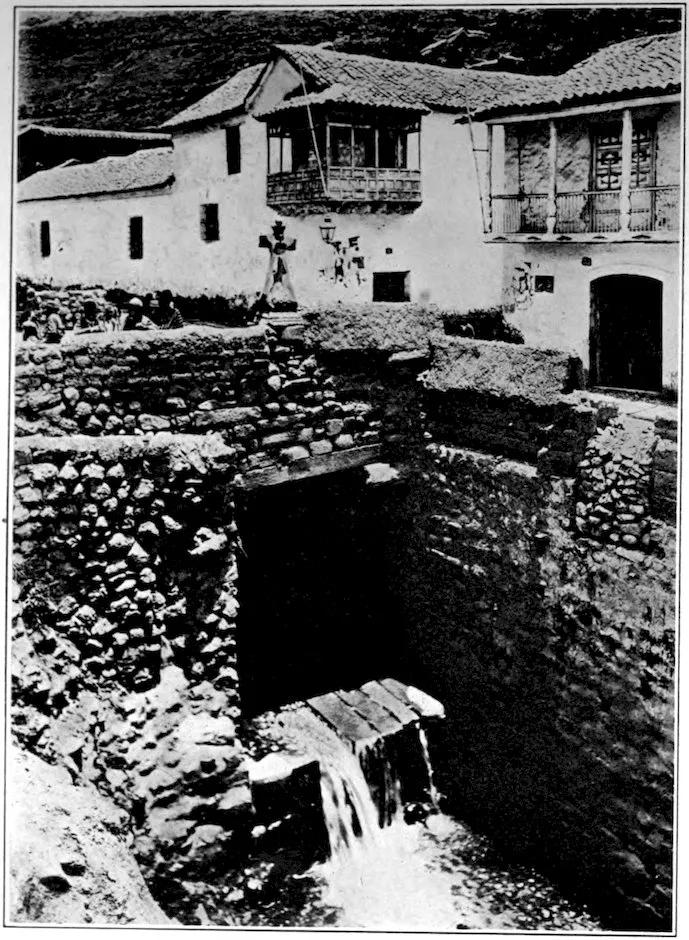
ANCIENT BRIDGE OF SANTA TERESA, CUZCO.
71The prospect of getting reinforcements from Panamá appeared less and less hopeful as
the months passed, until finally Pizarro decided to start on his daring enterprise with only the
limited force then at his command. Leaving fifty soldiers to guard the colony, he set out
with one hundred and eighty men, including sixty-seven cavalry troops, to attempt a conquest
which a more cautious commander would have undertaken only at the head of a large army.
After journeying for several days without coming within sight of Cajamarca, Pizarro
sent Hernando de Soto to reconnoitre, and, a week later, was delighted to see his comrade
approaching the camp in company with a personage of evident rank, who was attended by
a considerable retinue, and whom De Soto presented as an ambassador from the Inca
Atahuallpa. This distinguished messenger had come with his royal master’s greeting to the
strangers, and an invitation for them to visit the Emperor’s camp at Cajamarca. Pizarro,
through his interpreter, Felipillo, made known to the ambassador his appreciation of the
Inca’s fine courtesy; at the same time, he gave strict orders that as long as the ambassador
remained in the Spanish camp he was to be treated with all the respect due to the
representative of a great and powerful sovereign. When the Peruvian departed, he was
charged to convey the compliments of Pizarro to his royal master and to tell him that the
Spaniards were the subjects of a powerful prince, who ruled beyond the sea; that they had
heard of Atahuallpa’s prowess and had come to pay their respects to His Majesty and to
offer the service of their army against the Inca’s enemies; and that they would wait upon
the great monarch with the least possible delay.
Having dismissed the Inca’s messenger, Pizarro resumed his march, choosing the route
which he had been advised to take in order to reach Cajamarca as soon as possible.
Embassies from the Inca continued to arrive with presents of gold, silver and rich vicuña
cloths, the Spaniards sending in return ornaments of glass and other articles brought from
Europe for the purpose. As they ascended the slopes of the great Andes, they observed
that, instead of buildings of sun-dried bricks, such as were seen in the coast valleys, the
temples and palaces were constructed of huge stones, taken from the solid rock, and so
wonderfully adjusted that not a knife blade could be inserted between them, though no
mortar was used in setting them.
In order to reach Cajamarca, it was necessary for Pizarro and his men to cross the
cumbre, or summit of the great Andean range, that rose before them like an impassable
barrier. They had to march through treacherous defiles, where a mere handful of men in
ambush could destroy a whole army, and the experience was one to be remembered long
afterward; the sudden appearance of a huge fortress high up on the mountain side, strong
enough to defy a regiment and large enough to shelter an army—the precipices that
yawned in front of them at every turn—the intense cold and rarity of the atmosphere in
72the high altitude—were sources of constant fear and discomfort. But the Inca permitted the
invaders to advance without opposition; indeed, he continued to send embassies to them
every time they encamped
on the way. Was it an
exaggerated idea of their
exalted origin and power,
or absolute confidence in
his own strength, or because
the very audacity
of Pizarro was incredible,
that Atahuallpa permitted
the Spaniards to advance
on his encampment, when
a small force could have
prevented their crossing
the cumbre? Perhaps
Atahuallpa yielded to curiosity
and permitted the
Spaniard to visit his royal
stronghold in order that
he and his nobles might
study the rara avis, intending
to capture the
invaders later, by surrounding
them with his
legions. The conquerors
afterward expressed the
opinion that the Inca
probably wished to find
out all about them, to
have them explain the
use of their weapons,
etc., so that he might
profit the more by their capture. One authority says: “Atahuallpa was very wise and
discreet, and, although without enlightenment, yet a friend of knowledge, and possessing
a subtle mind.”
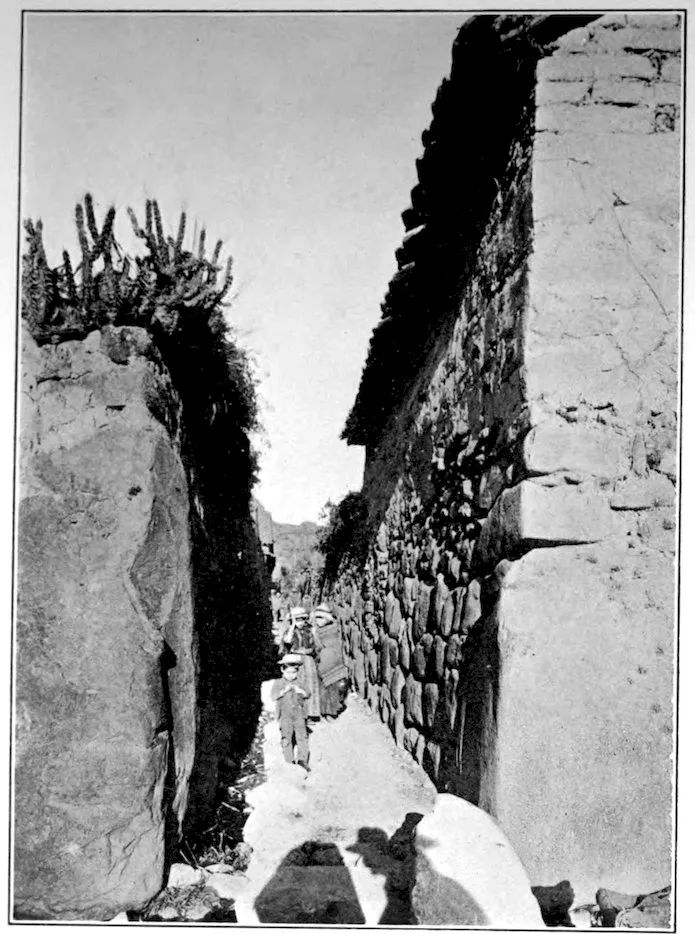
One of the severest tests of the courage of Pizarro came when he led his little band
out of the last defile of the mountains and saw, from the eminence on which they stood,
the beautiful valley of Cajamarca spread before his gaze, radiant in the flush of summer
time, with broad fields showing the fruits of industrious husbandry, a prosperous little city
73nestling just below, and farther away, at the other side of the valley, on the sloping
hillsides, the encampment of the Inca, apparently sheltering a mighty host. A member of
that bold little company naïvely relates: “With a courageous countenance, after having
thoroughly surveyed the scene, we descended to the valley, and entered Cajamarca.” One
can easily imagine that behind the “courageous countenance” there was much sinking
of the heart, as the invaders made their way down the mountain side! While they
were descending, the sky became overcast, and the sunlit valley took on a gloomy aspect.
Ominous clouds obscured the surrounding summits, which a few hours before had glistened
like steel-armored sentinels under the rays of the sun. It was as if the breath of an unholy
ambition had already poisoned the air and the approaching spectre of crime had thrown its
awful shadow across the place of tragedy.
Pizarro and his band entered Cajamarca on the afternoon of November 15, 1532. They
found themselves in a city of considerable size, apparently the home of about ten thousand
people, though, as the Spaniards rode through its streets, no one came out to welcome them,
and they discovered that it had been entirely deserted by the inhabitants, “in order to give
better accommodation to the distinguished visitors of the Inca,” as his messengers explained.
Impatient to know the nature of the reception he might expect from Atahuallpa, Pizarro
had no sooner entered Cajamarca than he sent Hernando de Soto and his brother, Hernando
Pizarro, to salute the Inca and to invite him to dine on the following day, at the same time
begging that his majesty would let them know where they were to make their headquarters.
The Spanish envoys were accompanied by a bodyguard of cavalry and made their appearance
at the Inca’s camp in a sumptuous manner, dressed in splendid armor and carrying
themselves with the arrogance and grace characteristic of the Castilian. They found the
sovereign in the courtyard of his royal quarters, where he received them with such absence
of demonstration that they were disconcerted and at a loss to understand his extraordinary
attitude. They rode up slowly until within a few feet of the Inca, when, after making a
respectful salute, Hernando Pizarro repeated his brother’s message. Atahuallpa heard it
without giving the least sign of interest, without even a change of expression; the only
response came from one of his nobles, in the single word “Ari,” which signified “It is
well.” It was an embarrassing moment and left Pizarro’s ambassadors totally ignorant of
the Inca’s intentions; but Hernando Pizarro was not of a disposition to accept such a
situation as final, and he again addressed the Indian sovereign, requesting him to speak to
them himself, explaining that he was Pizarro’s brother and had come to learn from the
Inca’s own lips what was his royal pleasure. At this, Atahuallpa deigned to answer, with a
smile, that he was keeping a fast, which would end the following morning, when he would
be pleased to visit Pizarro; that, in the meantime, his guests were to occupy the royal
tambo, or inn, in the great square of the city, “except the Hall of the Serpent, in the midst,”
which he reserved for his own use.
During their interview with Atahuallpa, the Spaniards had an excellent opportunity to
observe the Inca, who was seated on a cushion in the midst of his nobles and the princesses
74of the royal household. The monarch, who was thirty years of age, was of grave and
kingly bearing, and had handsome, well-cut features; he wore a simpler costume than his
courtiers, who were gorgeous in gayly ornamented attire; his crown was the crimson
masca paicha, which he had assumed with the sovereignty of Cuzco, after his brother
Huascar’s defeat. The appearance of the Inca, his splendid court, his troops numbering
fifty thousand men, the evidences of great wealth, seen even in the large golden vessels
from which the Spaniards were invited to drink the chicha offered by Atahuallpa’s order—everything
impressed Pizarro’s envoys with the hopelessness of their scheme of conquest,
and they returned to their chief with gloomy faces.
But Pizarro refused to see, think or hear of anything but success, and he trampled
down every rising fear by the sheer force of his own confidence and determination; that
very night he unfolded his bold plan of action—to make a sudden attack and seize the Inca
in the midst of his troops. Once in possession of the monarch, Pizarro knew that he
could dictate his own terms, for he had not been slow to recognize the sacred character of
the worship rendered by the Indians to their emperor of celestial origin. Perhaps he had
even calculated on the paralyzing effect such an audacious and sacrilegious act as the seizure
of the Inca would have on a people completely held under the spell of their sovereign’s
great and transcendent glory. But it is hardly to be supposed that he could have foreseen
their utter prostration in the face of the calamity he was preparing to visit upon them!
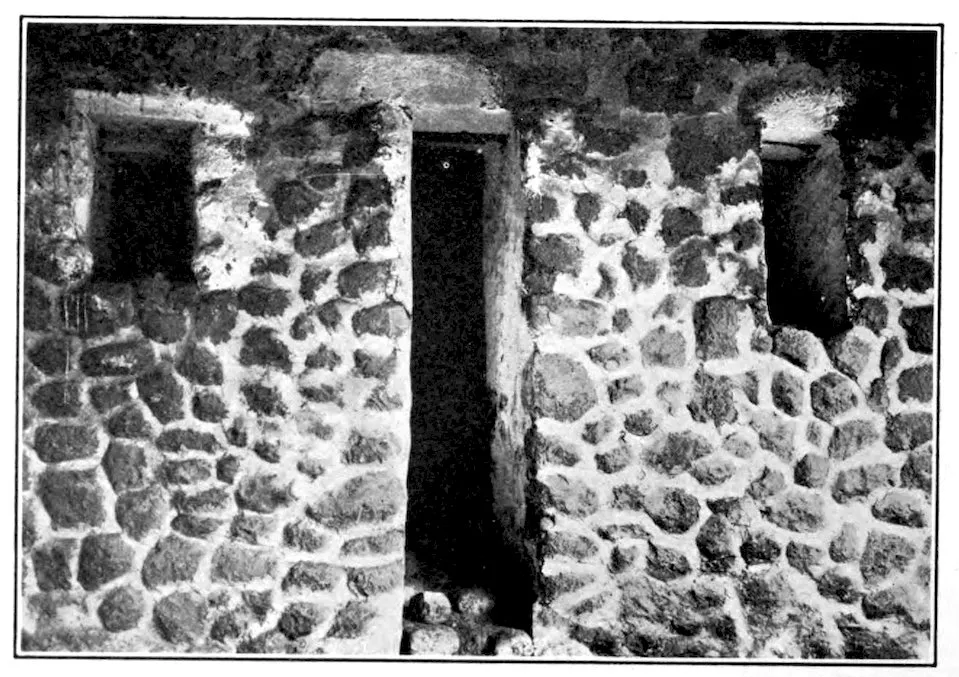
ENTRANCE TO AN INCAIC HOUSE.
76
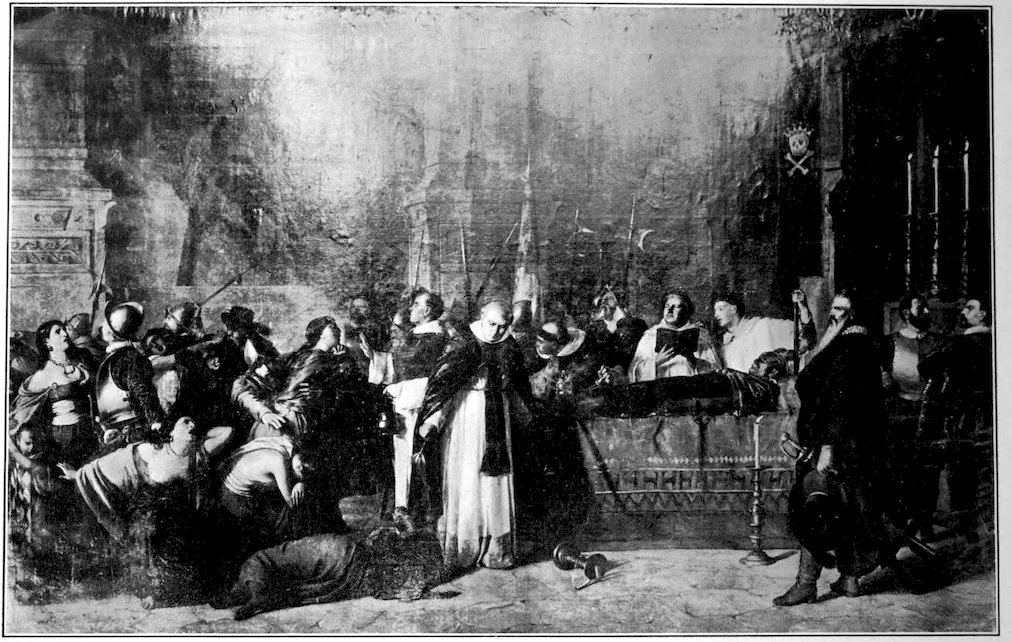
THE DEATH OF ATAHUALLPA. FROM A PAINTING BY THE PERUVIAN ARTIST LUIS MONTERO.
CHAPTER V THE CONQUEST OF PERU
77
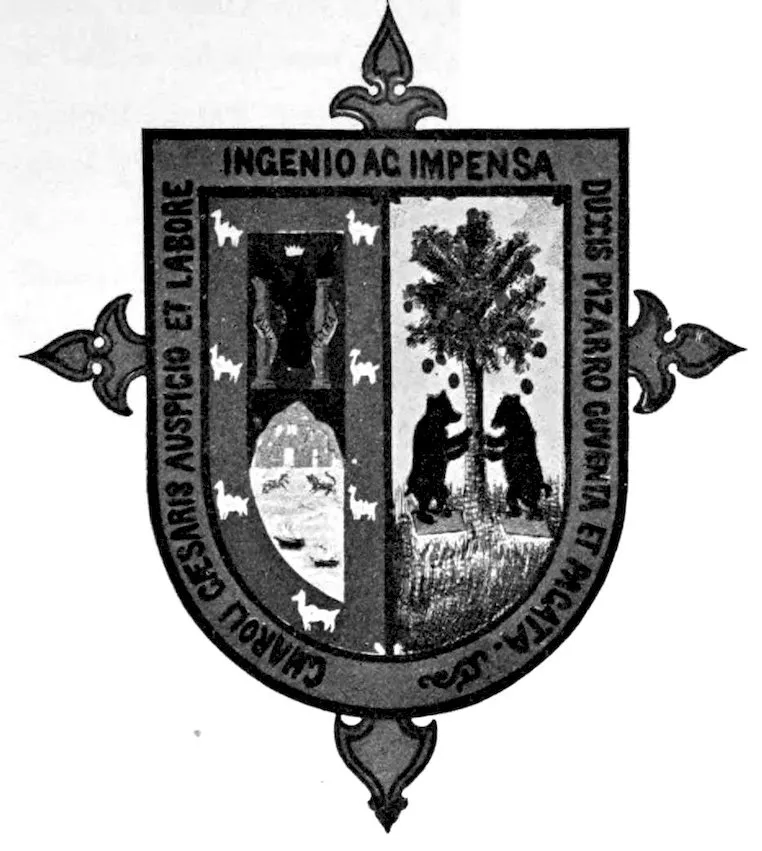
COAT-OF-ARMS OF PIZARRO GRANTED BY CHARLES V. IN HONOR OF THE DISCOVERY OF PERU.
The Conquest of Peru was not undertaken without
a solemn appeal to heaven, a ceremony
which formed the prelude to all enterprises
in those days, of whatever character or purpose.
Mass was performed by the ecclesiastic,
Vicente de Valverde, a Dominican friar, who
had accompanied the expedition, and whose
share in the events of the memorable day upon
which they were now entering is only to be
excused on the score of over-passionate zeal.
During the religious service, the priest and his
assistants invoked the divine aid in behalf of
the soldiers of the Cross who were fighting
to establish the Christian faith; and Exsurge,
Domine was chanted with all the enthusiasm
that the most devoted band of Crusaders would have shown on the eve of a battle with
the Moors; the heritage of blood is strong, and in the exaltation of that moment, it is certain
that the baser motives of the premeditated onslaught were submerged under a tide of
religious emotions. But it is doubtful whether Pizarro allowed the religious side of the
campaign to occupy his mind any further than was required by the temperament and spirit
of his followers; he knew his men, and governed them through their strongest impulses,
which he could control only by apparent sympathy.
Nothing was left undone in the preparations for capturing the Inca. Cavalry and
infantry were stationed in great halls or barracks that opened on to the plaza through wide
doors, which were to remain closed until a given signal. The confusing effect of a sudden
surprise and unaccustomed sights and sounds had been carefully studied by Pizarro, who
had two small pieces of ordnance placed in the fortress, and all the horses adorned with
78bells on their breastplates. It was understood that on the firing of the first gun, the whole
army should rush into the plaza with their battle-cry: “Santiago, and at them!” and, after
overpowering and killing the Inca’s guard, they were to capture the emperor himself and
carry him to Pizarro’s quarters.
As if to further the treacherous plan of Pizarro, the Inca sent his ambassador to say
that he would leave the greater part of his army behind and would enter Cajamarca without
arms. A little before sunset the royal procession began to enter the gates of the city. First
came the army of menials who were employed to clear the pathway of all obstacles, as
was always done in the royal progresses which the Inca was accustomed to make throughout
his kingdom; following these came the heralds announcing the approach of their
sovereign, the nobles and princes of the blood royal, and lastly the Inca, surrounded by his
bodyguard and a few of his soldiers, all unarmed. The royal palanquin was lined with the
rich plumes of tropical birds and studded with plates of gold and silver; the monarch,
seated on a throne of solid gold, was magnificently attired, and wore a collar of very large
and brilliant emeralds.
As the great procession entered the plaza of Cajamarca and divided into two ranks
to allow the royal retinue to pass between, the Inca observed that not a Spaniard was to be
seen, and inquired what had become of them. At this moment Father Valverde stepped
into the square, with a crucifix in one hand and a Bible in the other, and approaching the
Inca, told him that he was there by order of his commander to expound to him the true
faith, for which purpose the Spaniards had come to his country. He then explained to
Atahuallpa the basis of the Christian faith, the doctrine of the Trinity, and the origin of the
Roman Catholic hierarchy, telling him that the pope had given the Spanish sovereign
the right to conquer and convert the natives of the western hemisphere, and that Pizarro
had arrived to carry out this mission; he concluded by beseeching the Inca to embrace
Christianity and acknowledge himself a vassal of the Emperor Charles V., who would, in
that case, aid and protect him. Atahuallpa listened to Valverde’s harangue as interpreted by
Felipillo, at first showing only curiosity, then scorn and, finally, fierce indignation, as the
import of its meaning dawned upon him. His brow darkened with anger when he learned
that he was asked to become the vassal of another, and he exclaimed: “I am the greatest
prince on earth, and will be vassal to none; as for the Pope of whom you speak, he cannot
give away countries which do not belong to him; and as your God was put to death by the
human beings he created, I will not have him in exchange for mine, who lives there in
the heavens and watches over his children! Where did you learn these things?” Valverde
handed him the Bible, which the monarch looked at as nothing to be admired, either in
material or appearance; he threw it on the ground in disgust, and told the priest to inform
his companions that they would be called to account for all the evil they had done in
his dominions.
The Inca was about to give a royal command to his messengers, when Valverde,
scandalized by the heathen’s contempt for the sacred volume, and realizing that the effort
79to convert Atahuallpa had resulted only in incensing the Inca so that the lives of the
Spaniards were in imminent danger, called out to Pizarro to “waste no more breath on
the heathen reprobate,”
exclaiming with all the
fervor of the frenzied
fanatic: Salid á él—que
yo os absuelvo! “Take
him,—I absolve you all!”
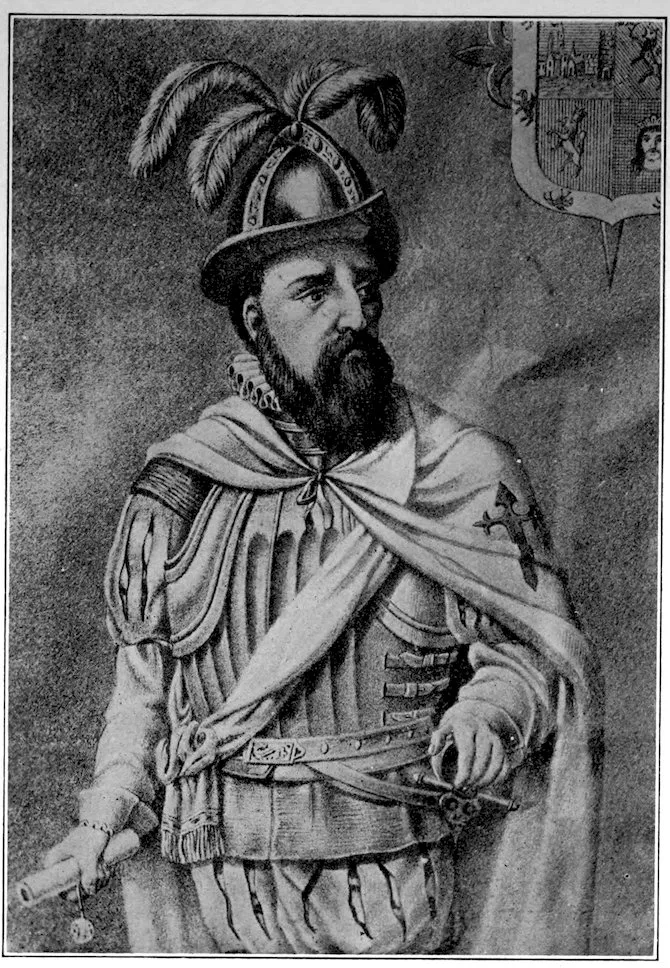
FRANCISCO PIZARRO, CONQUEROR OF PERU AND FOUNDER OF LIMA.
Valverde thus gave
the first signal of attack;
Pizarro then waved a
white kerchief and the
gun boomed its fateful
command from the fortress.
In an instant the
Spaniards poured into the
plaza, yelling their battle-cry,
while the guns kept
up a deafening noise;
the horses plunged into
the terror-stricken ranks
of the Inca’s attendants,
trampling hundreds
under their iron hoofs;
both infantry and cavalry
wrought havoc with their
swords, and the plaza—a
few minutes before brilliant
with the splendor
and gaiety of a royal
train, come to honor the
stranger and accept his
proffered hospitality—became
a scene of carnage
and death, a horrible spectacle, though welcome enough to the treacherous host,
whose invitation had been given with this very object in view.
It is not strange that panic seized the followers of Atahuallpa when the Spaniards made
their murderous onslaught, unaccustomed as the Indians were to the sound and smoke of
the cannon, the sight of rearing, prancing steeds, and the glitter of the long, sharp swords,
which the bearded “palefaces” used with such deadly effect. The Inca’s nobles pressed
80closely around the royal litter, sheltering their beloved sovereign until cut down by the
assailants, when their places were immediately filled by others. His faithful attendants
sought to force back the cavaliers by clinging to their saddles and trying to unhorse them,
never loosening their grip until the cruel blade of the Spaniard put an end to their pitiful
efforts. So persistently did the brave nobles interpose themselves between the enemy and
the sacred person of their sovereign that it seemed impossible for Pizarro’s men to secure
their prize; and some of his officers would have taken the Inca’s life to prevent his eluding
them, had it not been for Pizarro’s command, “Let no one harm the Inca on peril of his
life!” Finally, as the fierce struggle closed in around the royal palanquin, and one after
another of those who bore it aloft was slain, it was overturned, the monarch being saved
from a fall by Pizarro, who caught him in his arms.
What irony of fate! The stranger whom Atahuallpa had permitted to come to the
very threshold of his royal palace, without offering any hindrance; who had declared his
mission to be one of peace, and had offered the service of his arms against the royal
enemies; who had invited the Inca to eat at his table, a courtesy to which the monarch
responded in a truly royal spirit by presenting himself unarmed to accept the hospitality;—this
stranger had first insulted him through the mouth of his priest; had then attacked the
invited guest, who was entirely defenceless; had turned all the force of unfamiliar arms
against a panic-stricken multitude and needlessly butchered them; and, finally, had made
the monarch his prisoner by catching him in his arms, as a Spaniard’s sword pierced the
heart of the monarch’s last faithful protector!
The sequel to the Inca’s capture is well known. Apparently, the unfortunate victim
did not at first comprehend what had passed, and it is related by one of the conquerors
that, when conveyed to the royal tambo, where he dined with Pizarro the evening of the
tragedy, according to his promise, the prisoner even congratulated his captor on the cleverness
with which his royal person had been seized in the midst of his troops. That the
disappearance of their sovereign within the Spanish quarters should have sufficed to effect
the conquest of his empire, is easily explained in the very nature of his authority, which
was so absolute that it governed the spirit as well as the mind and person of every creature
in his realm. The Inca a prisoner? It was as if Deity had condescended to permit his
omnipotence to be dominated; but how, then, could the puny effort of mere mortals avail,
where the Son of the Sun himself had not resisted? When his soldiers learned that their
leader no longer commanded them, the effect of such an incomprehensible, incredible, and
to them, impossible, situation overwhelmed them with awe for the white man, whom they
looked upon as superhuman and invincible.
The great majority of the royal army was still on the march from Cuzco at the time of
Atahuallpa’s capture; and not only was there no immediate possibility of his rescue, but
there was great fear in the Inca’s mind lest his half-brother, Huascar, should escape from
prison and ascend the throne of Cuzco. He felt the necessity of obtaining his freedom at
all costs and as speedily as possible. The astute monarch had not been slow to observe
81that the sight of gold produced a marvellous effect on the Spaniards, whose eyes glistened
with greed when some of their party, sent to pillage the royal encampment, returned with
gold and silver plate, and precious ornaments taken from the bodies of the nobles who had
perished in the massacre.
The Inca took the first opportunity to appeal to Pizarro’s ruling passion by promising
the Conqueror that if he would give him his freedom the Spaniards should have all the
gold they wanted. Standing up in his prison and marking a place on the wall as high as he
could reach, he said that he would fill the room up to that height with gold, and the
adjoining room he would fill twice with silver as the
price of his ransom. The brother of the Conqueror
relates in his memoirs that the apartment to be filled
with gold was thirty-five feet long by eighteen feet
wide! Pizarro accepted Atahuallpa’s offer, though
there is nothing to indicate that he held himself in
any way bound to fulfil his part of the contract.
Perfidious to the last degree in every relation of his
life, it is not strange that he should have shown
toward a captive and a heathen the same disregard
for his word as appeared in his dealings with his
best friends. Meantime he set to work assiduously,
with the help of Father Valverde, to prove to Atahuallpa
that the faith of the Spaniards was the only
true faith; and his unanswerable argument was that
the Spaniards’ God had brought victory to his children,
while the Inca’s deity had deserted his own
in their hour of need;—which the Inca found it
impossible to deny.
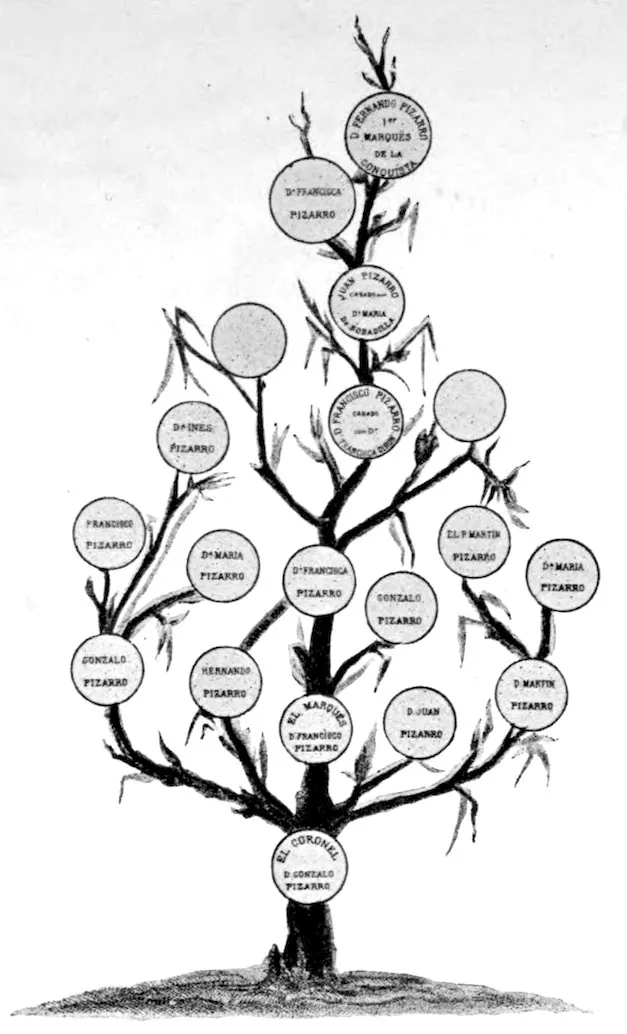
GENEALOGY OF FRANCISCO PIZARRO, CONQUEROR OF PERU.
While the Inca’s couriers were collecting the
royal treasure from the temples and palaces of
Tahuantinsuyo and despatching it from the four
quarters of the empire to Cajamarca, the imprisoned
monarch continued to live in the Spanish quarters,
free to go about in the apartments that had been reserved for his use, and treated with the
respect due to his rank, though always under strict surveillance. He was allowed the society
of his wives, and could receive visits from his nobles who came daily to bring presents and
to offer condolence. Through these messengers he learned that Huascar was plotting to
escape from captivity and secure the throne, and that he had sent word to the Spaniards
promising to raise a greater ransom than Atahuallpa could obtain, who had never been in
Cuzco and knew nothing of its wealth. These reports both angered and alarmed the Inca,
who knew very well that his half-brother’s claim to the throne would meet with a powerful
82support among his former subjects if Huascar should gain his freedom, and that such an
event would of itself suffice to convince the whole nation that Huascar was favored by
their deity, and that Atahuallpa’s captivity was the just punishment of a usurper. This
condition of affairs was eminently satisfactory to Pizarro, who saw that whichever sovereign
he chose to support must be in reality his vassal, and that between the two he was likely
to collect into his coffers all the treasures of Peru.
Although the historians of the Conquest generally agree that Huascar met a violent
death by the secret orders of his brother, the chroniclers of that time were, as a rule, not
impartial in their statements, and it is known only that Huascar was assassinated,—by
whose order is not certain. Pizarro was enraged when he heard of Huascar’s death
and immediately charged Atahuallpa with the crime. A stronger guard was placed to
watch the Inca’s apartments and he was under constant suspicion. Pizarro held him
responsible also for delays in the arrival of the royal treasure, until the Inca, to prove
his good faith, offered to provide safe-conduct to any officers the Spaniards might send
to superintend its collection and transport. Emissaries of Pizarro were despatched to
Pachacámac and Cuzco, which Atahuallpa indicated as the chief repositories of wealth,
though the messenger found Pachacámac already dismantled of its treasures when he
arrived; what became of its gold has never been learned. The soldiers commissioned
to collect the treasures of Cuzco returned with marvellous stories of its wealth and magnificence.
They found the Temple of the Sun “literally covered with plates of gold,”
which they stripped from its sacred walls in such a frenzy of avarice that the natives
were disgusted beyond measure. The historian Herrera says they secured seven hundred
gold plates, ten or twelve inches in diameter, besides other rich ornaments, though they
did not accomplish their mission so successfully as they would have done had they been
less brutal and rapacious in their conduct.
Pizarro would have liked to go on to Cuzco himself and secure possession of the
Imperial capital; but, as the reinforcements that Almagro was to bring from Panamá had
not arrived, he feared to undertake such a journey, protected only by a small force,
especially as the safe-keeping of the Inca would require a powerful guard when passing
through the heart of his populous dominions. While the emissaries were on their way to
get the Inca’s treasure, Almagro reached Cajamarca with one hundred and fifty men and
fifty horses, besides plenty of ammunition; and Pizarro at once began to lay his plans for
the proposed march to Cuzco. Meanwhile the pile of gold was rapidly increasing, and
though it did not reach the promised height, it amounted, in all, to more than fifteen million
dollars in value, and was the largest ransom that had ever been paid by a sovereign captive.
In spite of the impatience of his jailers, Atahuallpa had accomplished wonders in the prompt
collection of such a vast treasure, brought from long distances, over mountains and across
rivers, by the most primitive method of transport. He was beginning to feel very happy
in his fancied security, and looked forward to completing his ransom without the slightest
difficulty, when events occurred, or were reported to have occurred, which gave Pizarro an
83excuse to claim the ransom without releasing his prisoner,—indeed, while condemning him
to a cruel death.
As the magnificent treasure of gold and silver grew before the eyes of the Conquerors,
their avarice became too strong to be controlled by any sentiment of justice or consideration,
and they refused to wait longer for a division of the spoils; they urged many reasons why
the gold should be melted down and divided without further delay, and at last Pizarro gave
the necessary orders. It was agreed that some rare and beautiful vases, utensils of the
temples, ornaments, and curious imitations of plants and animals, should be sent, intact, as
part of the royal fifth, to the Spanish sovereign. When the division of the prize was made,
Pizarro kept the Inca’s gold throne, and became the possessor of nearly a million dollars as
his share of the treasure. His brother received one-fourth of this amount and Hernando
de Soto much less.
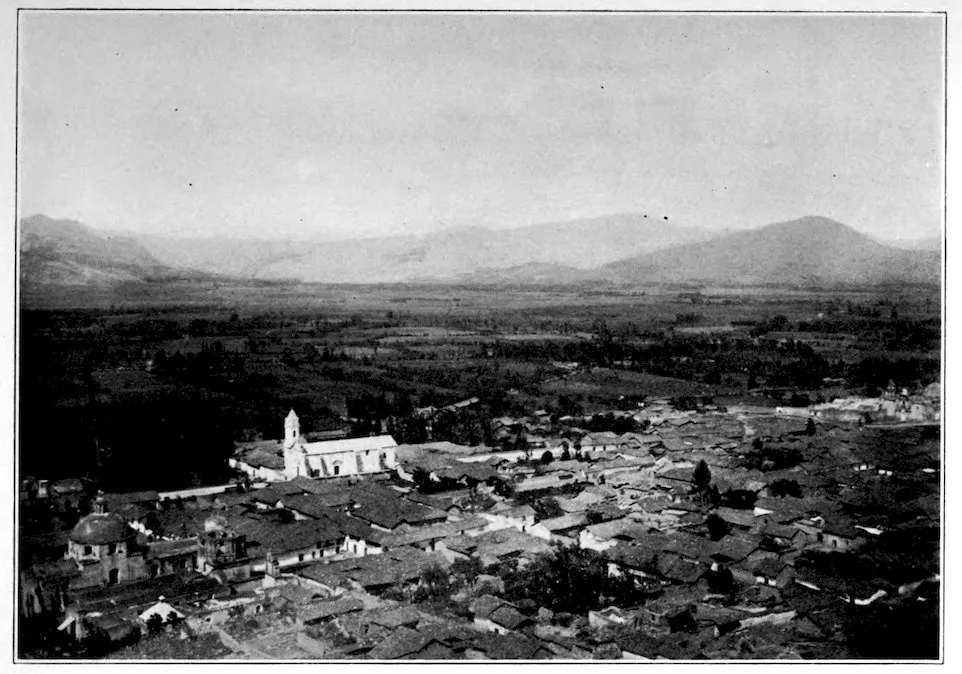
CAJAMARCA, WHERE ATAHUALLPA WAS SEIZED AND EXECUTED BY PIZARRO’S ORDER.
When the Inca saw that the price of his ransom had been seized and divided among
his captors he very naturally demanded his freedom. But Pizarro placed expediency far
above justice, and he had no intention of releasing the captive. On the other hand, he was
anxious to get on to Cuzco. He did not want to be burdened with the care of the royal
84prisoner, if it could be avoided. What was to be done? To one of Pizarro’s character, the
end in view was of so much greater importance than the means by which he gained it, that
it is not likely he would have found difficulty in securing a pretext for the execution of
Atahuallpa, if necessary. But, again good fortune brought to his hand the weapon for his
destructive purpose, in the form of rumors to the effect that the friends of Atahuallpa were
planning an attack on the Spaniards, and that a large force was encamped only a hundred
miles from the city, ready to march on them, seize their gold and carry off the Inca. The
unfortunate prisoner was at once charged with being the author of the plot, which probably
originated in Pizarro’s own fertile brain. There was a vehement demand for his execution.
Pizarro appeared unwilling to take such extreme measures and sent Hernando de Soto—Atahuallpa’s
best friend in the camp—at the head of an expedition to find out the truth
about the rumored uprising. While De Soto was absent, Pizarro “consented to listen to the
importunities of his soldiers,” held a trial in which the Inca was proved guilty of having
usurped the throne; of assassinating his brother; of fraud, idolatry, polygamy, and, finally,
of attempting to excite an insurrection against the Spaniards. He was condemned to be
burnt to death that very night in the plaza; but, in case that he embraced the Christian
religion and was baptized, his sentence would be commuted to death by strangulation.
The annals of crime furnish no more odious example of heartless cruelty than is shown
in Pizarro’s treatment of the Inca sovereign. Not in a single instance did the Conqueror
keep faith with the Indian emperor, whom he seized by fraud, persecuted on the flimsiest
pretexts, and murdered without a shred of evidence against the condemned. Is it any
wonder that when the news of the verdict was conveyed to Atahuallpa he was overwhelmed
by the horror of it, and exclaimed: “What have I done that I should meet with
such a fate?” It is said that Pizarro was visibly affected when the doomed prince turned
to him, and said: “And from your hands, too—you, who have met with friendship and
kindness from my people, with whom I have shared my treasures, who have received
nothing but benefits from my hands!” But however Pizarro may have been affected, he
did not allow any softer impulse to sway him from inflicting death by the garrote on the
innocent victim of his ambition.
Two hours after sunset on the 29th of August, 1533, the emperor of the Incas was led
out, chained hand and foot, into the plaza which he had entered a few months before as the
proud and powerful representative of a noble dynasty. And the mighty change had been
wrought entirely through his too friendly protection of a band of invaders, his too princely
welcome to a treacherous chief, and his too lavish gifts to an unscrupulous enemy. The
ceremony of baptism was performed by Father Valverde, as the Inca had consented to
embrace Christianity rather than be burned at the stake. It is related that Atahuallpa
implored Pizarro to take compassion on his young children and protect them, after which
he resigned himself to his fate and met death without giving a sign. The official obsequies
were performed the following day, Father Valverde reading the service of the dead, while
Pizarro and the principal cavaliers attended in deep mourning.
85The execution of Atahuallpa did not take place any too soon, so far as Pizarro’s designs
were concerned, for Hernando de Soto returned to Cajamarca a couple of days later with the
news that the whole story of an uprising was a canard and Atahuallpa was innocent! Great
was the sorrow and indignation of De Soto to learn that the Inca had been executed; for
this brave cavalier was a friend of the unhappy monarch and had shielded him on more
than one occasion when the fierce temper of the soldiers threatened him with harm.
Pizarro quailed before the noble spirit of his braver and better comrade, and sought to
throw the blame on Valverde, who in turn repudiated all share of responsibility in the
shameful business, saying he had acted only as Pizarro’s chaplain. It was evident that no
one cared to father the fraud by which, under the name of justice, the Inca’s death had
been accomplished.
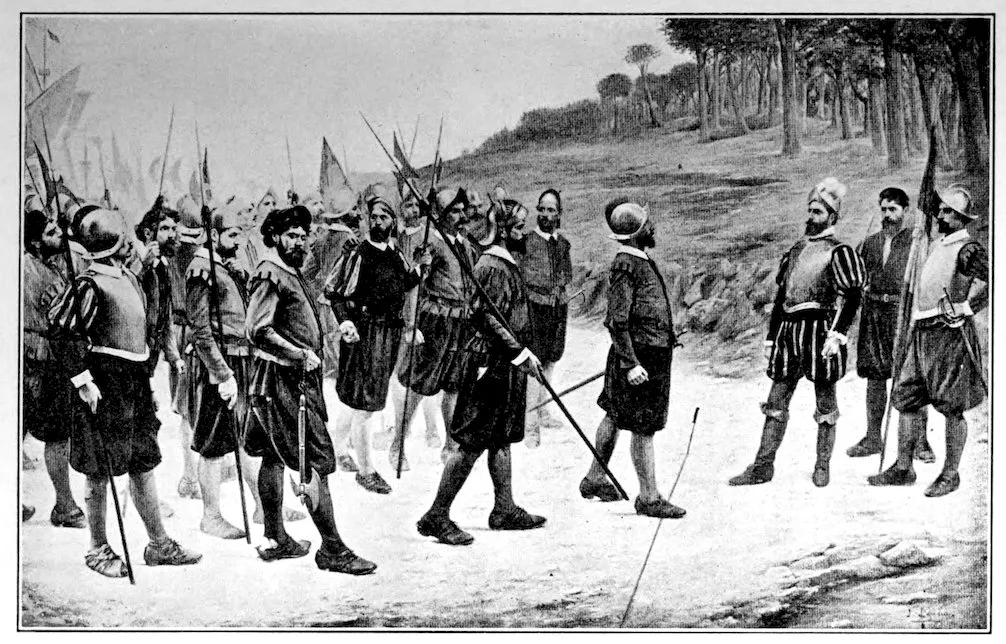
PIZARRO ON THE ISLAND OF GALLO. FROM A PAINTING BY JUAN O. LEPIANI.
The execution of Atahuallpa completed the Conquest of Peru. The sovereignty of the
Inca emperor had been too absolute for its own well-being, and in the hour of peril,
the humble subjects, who had responded with such perfect obedience to the will of an
autocrat, were powerless to move without his guiding finger, possessing in themselves
neither initiative nor self-reliance, qualities that thrive only in the free air of independence,
under the sunlight of hope. That the despotism of the Incas was a mighty power,
exercised with genius and worthiness, cannot be denied; industry was the basis of its
86greatness, and protection the keynote to its prosperity; every subject of the Children of the
Sun must earn his bread by honest labor, though he was always sure of being fed. But
the very fact that such a despotism could be annihilated by a mere handful of adventurers,
and that, within the space of a few months, its institutions could fall to pieces and its
people be made slaves to this band of invaders whom they outnumbered by millions,
proves that it was not a system strong enough to hold its own in the progress of nations.
One cannot help regretting, however, that such a flourishing empire was not permitted to
fulfil its own destiny; perhaps it might have developed, through the refining influence
of the national ideals, from an absolute
theocracy to a more liberal form of government.
With the overthrow of the Incas, the
land that had bloomed perennially with
the fruits of husbandry became a scene
of anarchy and a neglected waste; the
highroads, instead of presenting a pleasant
spectacle in groups of contented farm
laborers, on their way to fulfil the daily
tasks that were to bring them both bodily
and spiritual reward, were thronged with
heavy-hearted, over-worked, and poorly
fed slaves.
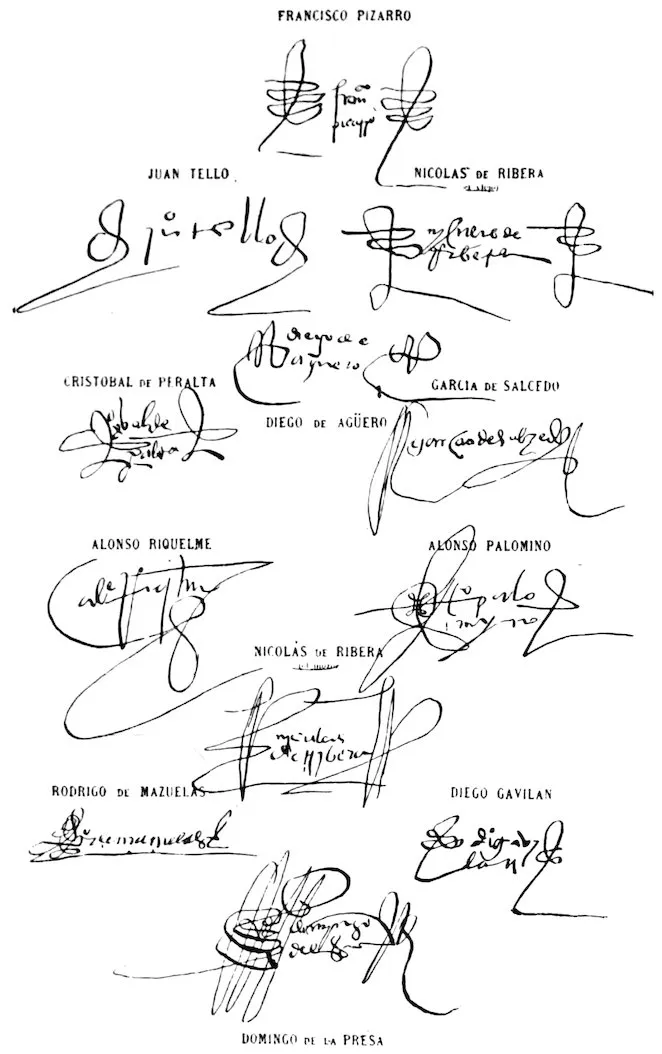
AUTOGRAPHS OF THE FIRST OFFICIALS WHO GOVERNED LIMA WITH PIZARRO.
As soon as the obstacle of Atahuallpa’s
presence was removed, Pizarro and his
followers set out for Cuzco, marking their
progress by the demolition of Inca temples
along the route, the seizure of
treasure, and all the outrages which an
unrestrained soldiery of brutal instincts
will commit under such circumstances.
Everywhere the emblems of the Sun
worship were replaced by images of the
Virgin and Child, and the few efforts at
resistance that were made by the terror-stricken
natives were easily overcome
by the soldiers of the Cross. An uprising
of some importance took place
near Jauja, under the command of the Inca’s favorite general, but it was quelled and the
leader burned at the stake. A brother of Huascar, the Inca Manco, sought an interview
with the Spaniards and put forth his claims to the throne of his fathers, asking Pizarro’s
87protection. As it did not in any way interfere with Pizarro’s plans, but rather promised to
further them, the Conqueror caused Manco to be crowned at Cuzco, the ceremony being
more like an acknowledgment of vassalage to Spain than the coronation of a royal heir of
the Inca dynasty. However, the outward semblance of royalty counted for much among
the Inca’s subjects, who, at that time, no doubt had very confused ideas as to Pizarro’s place
in the government, and were contented as long as the crimson masca paicha adorned the
brow of an Inca prince. By this politic proceeding, the governor, as Pizarro was now called,
was able to begin the colonization of the country, though only after all the temples, palaces,
fortresses, and tombs of the holy city had been stripped of their last treasures,—the amount
secured being even greater than the ransom of Atahuallpa,—was it possible to establish the
institutions of peaceful government.
Leaving Cuzco to be ruled by one of his brothers, Pizarro set out for the coast to learn
the intentions of a newly arrived adventurer, Pedro de Alvarado, who had been with Cortés
in Mexico, and had come to seek a fresh field for his military prowess in Peru, having heard
of the Conquest and of the enormous booty secured by the discoverers. Pizarro met
Alvarado at Pachacámac, where they came to a friendly understanding, and spent some
time together in social entertainment, after which Alvarado departed for Guatemala, and
Pizarro, who had long realized that Cuzco was too inaccessible to be a satisfactory
metropolis for the new colonial empire, began to plan for the foundation of a suitable
capital on the coast. He concluded that the neighboring valley of Rimac offered desirable
advantages, and here the site was chosen on the 6th of January, 1535, the new capital
being named the City of the Kings in honor of the festival of Twelfth Night. The popular
name, however, has always been Lima, a corruption of the Indian “Rimac.” The founding
of the city did not take place until two weeks after the selection of the site.
The foundation of Lima marks the closing period in the history of the Conquest, a
period in which that remarkable drama of warring ambition reached a final scene in keeping
with the tragic story. When the royal fifth of the enormous treasure taken from the Inca’s
dominions arrived at the court of Spain, the whole country went mad with excitement over
such a mountain of gold. Charles was overcome with delight and manifested his appreciation
of the great service rendered by Pizarro, Almagro and Valverde, by giving to the first
the title of Marquis with seventy leagues more of territory southward; to Almagro two
hundred leagues, beginning at the southern boundary of Pizarro’s dominions; and to
Father Valverde the bishopric of Cuzco. Father Luque had died at Panamá, after warning
Almagro to be on his guard in his dealings with Pizarro, whom the honest priest distrusted
from the first. Following his advice, and profiting by his own previous experience, Almagro
had sent his personal representative to Spain with Hernando Pizarro, when that cavalier
was commissioned to carry the royal fifth to the king. The Conqueror and his marshal,
as Almagro was called, no sooner received news of the division of their possessions than
they began to quarrel over the limits. Almagro claimed Cuzco in his province of New
Toledo, while Pizarro insisted that the Inca capital belonged to his dominion, which was
88called New Castile. Pizarro went to Cuzco, met Almagro and persuaded him to allow the
matter to rest until Hernando should arrive from Panamá with the documents; the two
embraced and swore undying
loyalty to each other, after
which Almagro set out to
conquer Chile, while Pizarro
returned to the task which
gave him more pleasure than
any other, the building of
the new capital of Peru.
He also founded the city of
Trujillo, naming it after his
birthplace in Spain.
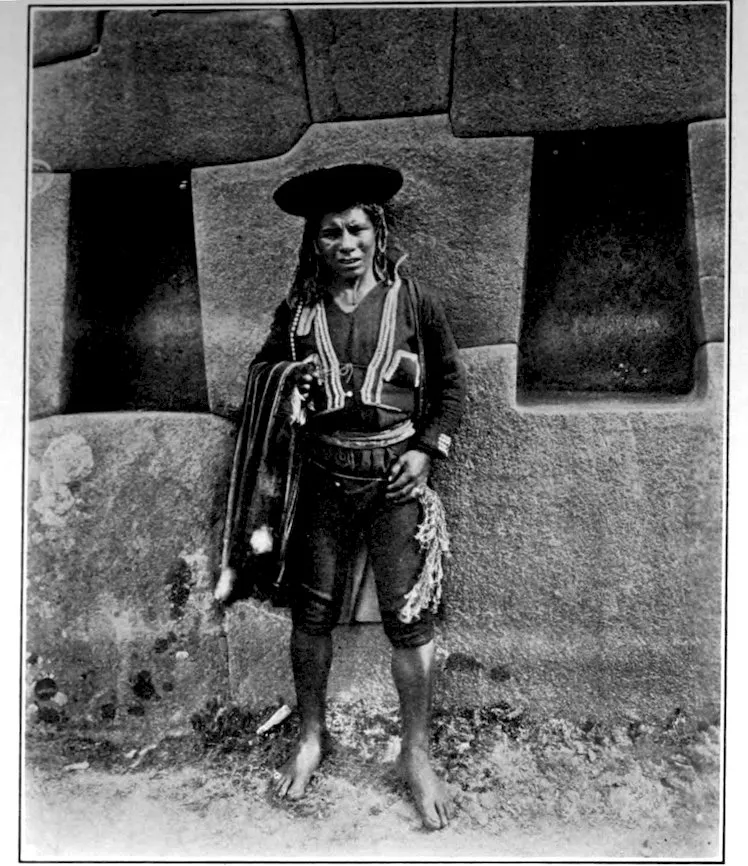
A DESCENDANT OF THE CONQUERED INCA.
Meantime the young
Inca Manco had been laying
plans for revolt, goaded to
desperation by the insults
which he and his people
suffered from the Spaniards.
Not only were the temples
robbed, the practice of his
religion being forbidden, but
gross treatment was shown
to the priests and all manner
of outrages were committed.
The women of the convents
were turned into the streets
to become the prey of a
vicious soldiery. Twice the Inca made his escape, and the second time he succeeded
in collecting a large army, but their arrows and sling-stones made little impression on the
Spanish coat of mail, and only their copper-tipped lances and battle-axes of the same
material served in the fight; these weapons they used so dexterously that the enemy
was forced to retreat to Cuzco, which the Indians promptly surrounded and set on fire,
preferring to burn their holy city to the ground to seeing it in possession of the hated
conquerors. Their revolt was so determined and persistent that Pizarro became alarmed
and sent reinforcements and supplies to his countrymen, who were in dire straits for
several weeks, shut up in the half-demolished city, while the Indians held possession
of the fortress of Sacsahuaman and all the mountain passes around. Manco himself
occupied the fortress of Ollantaytambo, which the Spaniards attacked unsuccessfully,
being forced to retreat to Cuzco without effecting his capture. Although the Spanish
89arms finally prevailed and the Inca’s forces were scattered, this proud and heroic prince
continued to harass the usurpers of his kingdom for years, so that his name was held
in terror by the colonists, until he was at last assassinated by a party of Spaniards to
whom he had given shelter in his camp.
Almagro’s expedition to Chile having proved a failure, the adventurer returned to
establish his claim to Cuzco. He was met by Pizarro’s brother, Hernando, his old enemy,
and was defeated near Cuzco, imprisoned and put to death by the Conqueror’s orders. To
his son he bequeathed the province of New Toledo. But Pizarro saw in the death of his
old comrade an opportunity to unite the two provinces under one government, and he
refused to recognize the claim of the younger Almagro, which so incensed the veteran
followers of Pizarro’s latest victim that they swore a terrible vengeance on the usurping
governor. Driven to desperation by the apparent hopelessness of their cause, and eager
to avenge the death of their beloved leader—for Almagro had been the idol of his soldiers,
whose devotion he held by unfailing kindness and generosity—“those of Chile,” as they
were contemptuously called by Pizarro’s men, were ready to commit any crime that would
rid them of the domination of the hated Conqueror. Under the leadership of Juan de
Rada, who, on the death of the senior Almagro, constituted himself the guardian and champion
of the son, affectionately known among Almagro’s men as El Mozo, the conspirators laid
their plans against the life of the governor with consummate skill and daring. Pizarro
was warned of their purpose, which had been revealed in the confessional; but he paid
no heed to danger, and was entertaining a number of friends at breakfast when the fatal
hour arrived.
Whatever may be said of Pizarro’s character, he was no coward, and when the
assassins rushed into his house with the shout “Long live the King! Death to the tyrant!”
they were met by the Conqueror, who, not having time to buckle on his armor, threw his
capa, or cloak, over his shoulder and faced his enemies, sword in hand. After a brave
resistance, he sank down with a fatal wound in the throat. Wetting his finger in his own
blood, he traced a cross on the floor, and was bending to kiss the sacred symbol, when the
coup de grâce put an end to his life. Thus, in the last moment, the heart of the Crusader
triumphed over the instincts of the gold-seeker!
The burial of Pizarro was attended by none of the pomp and ceremony usually
observed in the obsequies of a great hero; on the contrary, the interment was hasty and
stealthy, performed in fear and trembling lest it should be interrupted and the corpse
dragged to the market place. Not until more than half a century later were the bones of
the discoverer and conqueror of Peru removed to their present resting place in the Cathedral
of Lima. With the death of Francisco Pizarro the period of the Conquest ends, as the
pretensions of the younger Almagro, who caused himself to be proclaimed Governor and
Captain-General of Peru after the assassination of the Conqueror, were not recognized by
the King of Spain, who sent Vaca de Castro to coöperate with Pizarro in establishing peace
in Peru, with authorization to take the reins of government in his own hands in case of
90Pizarro’s death. As soon as Vaca de Castro arrived, he assumed the position of governor
and captain-general, and, gathering under his command the soldiers who remained loyal to
the king, he at once marched against Almagro, whom he defeated on the plains of Chupas,
near Ayacucho, in September, 1542. Almagro escaped from the battlefield and fled to Cuzco,
where he was taken prisoner and, by the governor’s order, was beheaded. About the same
time, Bishop Valverde was assassinated by the Indians of Puná while on his way to Panamá.
Thus the leading spirits in the invasion and conquest of Peru met with a violent death;
Hernando Pizarro languished in a Spanish prison for twenty years, and Hernando de Soto
died in the wilds of the Mississippi forests.
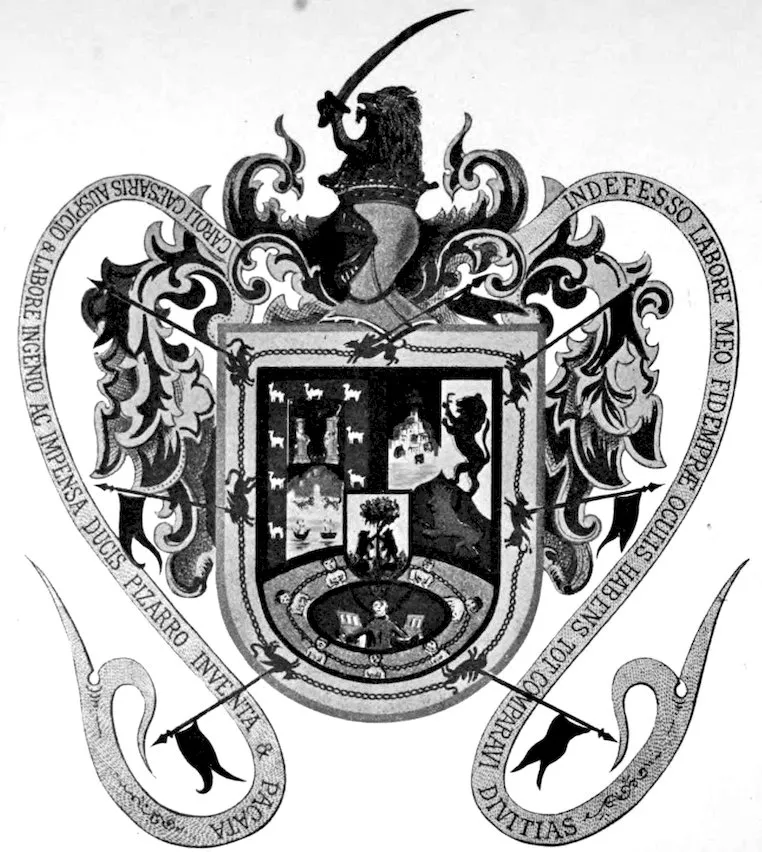
COAT-OF-ARMS GRANTED PIZARRO BY CHARLES V. AFTER THE CONQUEST OF CUZCO.
92
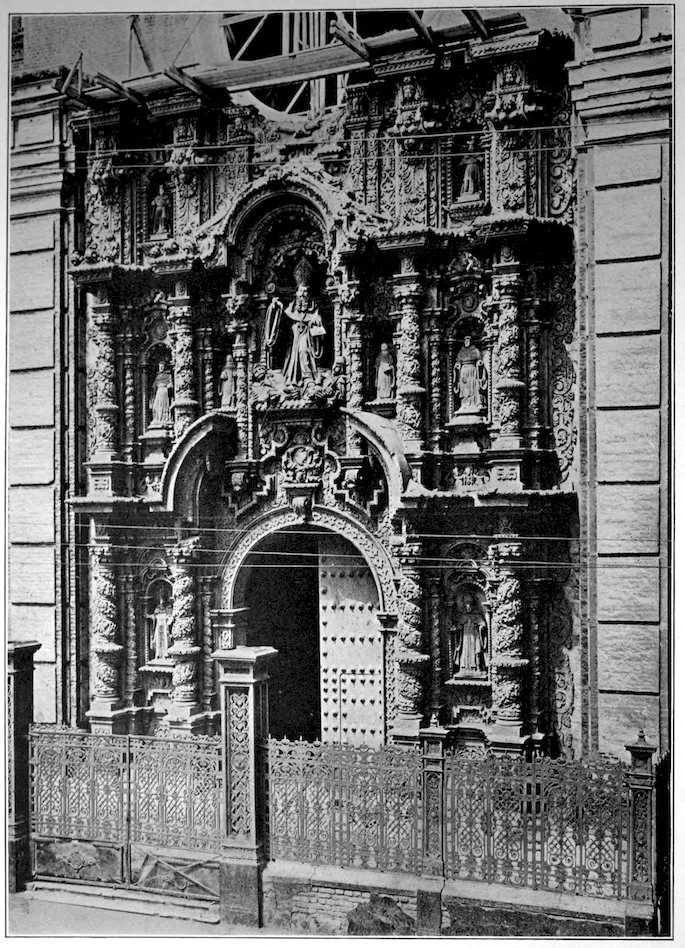
FAÇADE OF SAN AGUSTIN CHURCH, LIMA, SHOWING ELABORATE CARVING OF COLONIAL DAYS.
CHAPTER VI THE REIGN OF THE VICEROYS
93
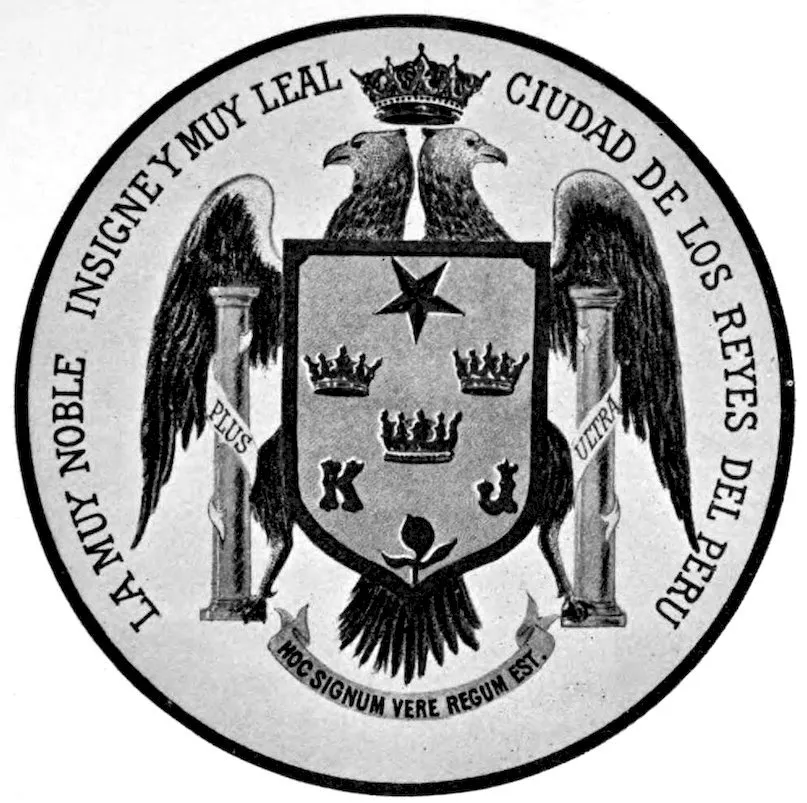
THE FIRST COAT-OF-ARMS BESTOWED ON LIMA BY CHARLES V.
After the Conquest, all the Spanish dominions in
the New World were divided under two governments,
one of which was subject to the Viceroy
of Mexico and the other to the Viceroy of Peru.
As representatives of His Catholic Majesty, and
directly appointed by him, the viceroys were
chosen from the noblest families of Spain,
especially distinguished for their services to
the Church and the army. These proud
grandees established their court in the colonial
capitals on a scale of magnificence hardly
excelled by that of their royal master; and the
City of the Kings grew even to rival Madrid
in the seventeenth and eighteenth centuries as
a metropolis of Spanish fashion and culture.
But the period immediately following
the Conquest gave little promise of peace
and prosperity for the colony of Peru. Revolution and anarchy prevailed even after the
ignoble strife between the Pizarros and the Almagros was ended by the tragic death of the
Conqueror and the execution of the younger Almagro. The firm authority of Governor
Vaca de Castro sufficed to maintain order and tranquillity as long as he remained in the
country, but with the arrival of his successor, the first viceroy, a storm of revolt broke over
the colony with such tumultuous force that it threatened to overthrow permanently the
authority of the Spanish king in his richest and most valued possession.
Blasco Nuñez de Vela, the first viceroy of Peru, who was appointed to succeed Vaca
de Castro in 1544, is described as a brave, honorable, and devout man, but arrogant and
imperious, utterly incapable of understanding and dealing with the turbulent spirit of the
94adventurers, in whom ambition, avarice, and jealousy were the ruling passions, fostered by
the peculiar circumstances which had governed Peru ever since the capture of Atahuallpa.
It was especially unfortunate that a man of the temperament and prejudices of the new
viceroy should have been chosen to effect a change in existing conditions, requiring the
most judicious and delicate management.
The harsh treatment to which the Indians were subjected under the Conquerors was
brought to the attention of the King of Spain by a Dominican friar, Las Casas,—whose
benevolent labors gained for him the title of “Protector of the Indians,”—in a remarkable
document, containing such an appalling record of the wickedness practised against these
helpless wards of the Crown that the king, deeply impressed, called a council to devise
means of ameliorating their condition. As a result, the Viceroy Blasco Nuñez de Vela was
the bearer of strict orders from Spain to abolish the system of encomiendas, by which the
Indians had been made ostensibly the protégés but really the slaves of the Conquerors, not
only their lands but their persons being appropriated as the legitimate spoils of victory. It
is true that, under the Incas, the people had possessed no freedom, but they had been
given no tasks too heavy for their strength and they had been kindly treated and well
provided with food and clothing; under their new masters they were both abused and
neglected. The granaries which formerly were well filled after every harvest were
allowed to become empty, because tillage was abandoned for the more profitable labor
in the mines; and the llamas, whose wool furnished the Indian with clothing, were
slaughtered so recklessly that, within four years, more of these animals perished than in
four centuries under the Incas.
According to the royal decree, the viceroy was to declare the Indians vassals of the
Crown, though the present encomenderos, or owners, were to retain their privileges, except
in the case of public functionaries, ecclesiastics, religious corporations, all who, by cruelty
and neglect, had shown themselves unworthy of the privilege, and all who were implicated
in the crimes resulting from the quarrel between Pizarro and Almagro. On the death of the
present proprietors, their Indians reverted to the Crown. The viceroy, although representing
the supreme authority, was accompanied by a Real Audiencia consisting of four oidores, or
judges, clothed with extensive powers both civil and criminal, the viceroy being president
of their council. At the same time the Real Audiencia of Charcas was appointed to have
jurisdiction in Alto Peru and its dependencies. It was largely owing to the differences
which arose between Blasco Nuñez de Vela and the Real Audiencia of Lima that his mission
was a failure.
The order abolishing encomiendas was received with demonstrations of discontent
throughout the colony. Few of the Conquerors could hope to retain their Indians under
the new law, and they were furious at what they considered an effort to despoil them
of the fruits of their hard-earned victory. In the streets, plazas, and churches, indignant
crowds gathered to protest against the decree, news of which reached Peru some months
before the viceroy’s arrival. The governor, Vaca de Castro, succeeded in calming the
95turbulent leaders by explaining that it would be the wisest course to petition the Crown
asking for the repeal of the law, and then patiently to await the arrival of the viceroy,
who might be prevailed upon to delay action until the answer to their petition should
be received from Spain. Vaca de Castro was not slow to recognize that the most powerful
friend of the malcontents
was Gonzalo
Pizarro, at that
time engaged in
exploiting rich silver
mines in Charcas
(now Bolivia),
to whom they had
already appealed
for protection; and
in a diplomatic letter,
he cautioned
Pizarro not to be
drawn into the revolt.
By his judicious
policy, public
order was maintained
and preparations
were made
to welcome the
viceroy with the
imposing ceremony
due to the
highest representative
of His Catholic
Majesty.
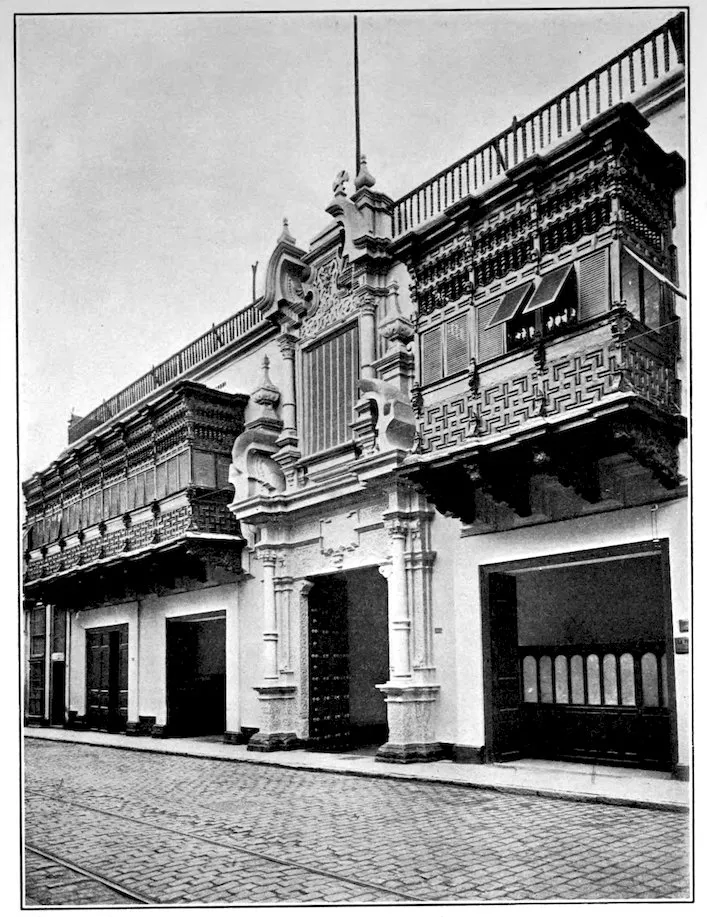
LIMA RESIDENCE OF THE MARQUIS OF TORRE-TAGLE DURING THE VICEREGAL PERIOD, SHOWING “MIRADORES,” OR BALCONIES.
The innate love
of pomp and etiquette,
characteristic
of the Latin
race, was displayed
in all its attractiveness
on such
occasions as the
reception of a viceroy; and during the entire period of colonial rule the arrival of these
dignitaries was marked by grand festivities. Blasco Nuñez de Vela entered Lima in
96magnificent state, under a canopy of crimson velvet, richly embroidered with the arms of
Spain, and supported on poles of solid silver, which were carried by officials of the municipality,
dressed in crimson satin robes that sparkled with jewels. The brilliant procession
was met three leagues from the capital by the Bishop of Cuzco, Vaca de Castro, and the
principal cavaliers of Lima, and on crossing the Rimac River was joined by the Bishop of
Quito, the ecclesiastical council and remaining clergy, while at the entrance to the city the
municipal corporation awaited the illustrious guest. An imposing pageant was presented as
the viceroy, preceded by a cavalier in full armor bearing the mace of authority, and attended
by a handsome retinue, passed under the triumphal arch at the city gates and proceeded
to the Cathedral, along streets strewn with flowers, while the church bells chimed a joyous
welcome and bands of music made a gay accompaniment. At the Cathedral Te Deum was
sung, after which the procession moved on to the Palace, where the new viceroy took the
oath of office. He inspired confidence by announcing that he would await the arrival of
the Oidores and the installation of the Real Audiencia before proceeding with the question
of the new ordinance.
When the Oidores entered Lima bearing the royal seal, the city was again the scene
of a grand and imposing display. By order of the king, the royal seal was received with as
much ceremony as attended a visit of his majesty to the cities of his kingdom. It was
placed in a box covered with cloth of gold, and was borne by a magnificent charger, richly
caparisoned and led by one of the city aldermen in gala dress, while four other officials in
robes of crimson velvet carried above the royal insignia the canopy of state embroidered
with the arms of Spain.
The Real Audiencia was duly installed, and everything went well in the beginning
under the newly established authority, the council having decided to suspend the ordinance
against encomiendas until word should arrive from Spain in answer to the petition for its
repeal; except that immediate enforcement was made in the case of public functionaries.
But, unfortunately, the viceroy and the Real Audiencia did not long agree on the policy of
government, and their quarrels weakened the prestige of the colonial authority at a time
when all its strength was needed to cope with the disaffected soldiers of the Conquest, who
bitterly resented the way in which they were thrust aside, now that their services were no
longer of prime necessity to the Crown. Gonzalo Pizarro saw that he was to have no share
in the dignities and honors of the colonial government, and he took advantage of the
quarrel between the viceroy and the Real Audiencia to raise a large army and march on
Lima, the oidores treacherously aiding him; the viceroy escaped to Tumbes and marched to
Quito, whither Pizarro followed, engaging the royal army in a fierce battle near that city,
during which the sovereign’s representative was defeated and slain. The victor was then
lord of Peru, and more independent of the royal authority than his illustrious brother, the
Conqueror himself, had ever been; he could raise a powerful army, could control a large
squadron, had at his disposal a million dollars annually, and his friends guarded the national
ports of entry. He was acclaimed the liberator of Peru and made a grand triumphal march
97into the capital, amid the vivas of the multitude, the chime of church bells, and the strains
of martial music. His companions would have crowned him king; but whether Pizarro
vacillated because
he knew
too well the
fickle character
of his enthusiastic
supporters,
or whether the
moment did not
seem opportune
for such a step,
he never assumed
the purple
robes of royalty,
though his authority
was as
absolute as that
of a king.
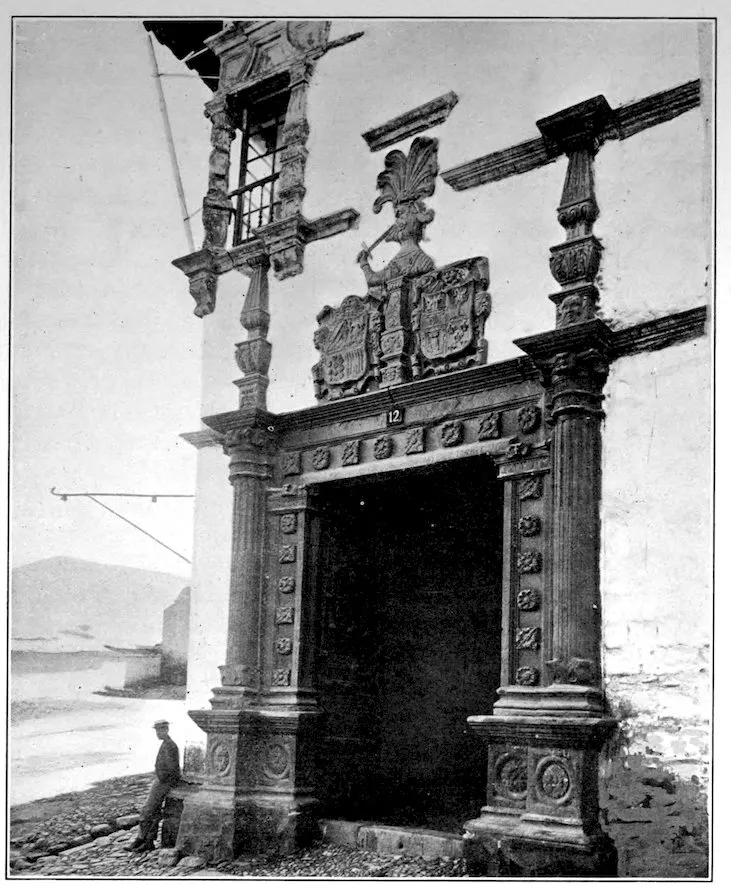
DOORWAY OF A COLONIAL PALACE IN CUZCO. PERIOD FOLLOWING THE CONQUEST.
When the
tidings reached
Spain that the
viceroy had been
killed on the battlefield
and that
Gonzalo Pizarro
reigned supreme
in the colony,
it caused the
greatest consternation.
A policy
of conciliation
was at once
adopted, the law
abolishing encomiendas was revoked, and a priest, Pedro Gasca, was appointed, not as
viceroy, but as president of the Audiencia, with full power to represent the interests of the
Crown in this difficult situation. Though an ecclesiastic, he was a brave soldier, added to
which, he possessed a wonderful knowledge of human nature. By his tact he won many
of Pizarro’s followers as soon as he landed at Tumbes, where he appeared clothed in the
simple garb of a priest, with a breviary in his hand and the king’s pardon for all who would
98help him to establish peace in the country. His ranks were rapidly filled with deserters
from Pizarro’s army as he marched across the mountains to meet the enemy, whom he
encountered at Sacsahuaman, near Cuzco, and defeated. Pizarro was taken prisoner and
executed. Gasca and his army then marched on to Lima, where the victor was received with
even greater welcome and rejoicing than had greeted the victorious Pizarro. But it was not
until some years later that the civil wars of the Conquerors finally came to an end. When
Gasca returned to Spain, the second viceroy, Don Antonio de Mendoza, who had previously
held the same high office in Mexico, was appointed to take charge of affairs in Peru. He died
the following year and the government passed into the hands of the Real Audiencia, until, in
1555, the third viceroy was named, Don Andres Hurtado de Mendoza, Marquis de Cañete,
under whose judicious and energetic rule the country was pacified and the authority of the
Crown of Spain securely established. During the administration of this able statesman the
son of the Inca Manco, whose following was great in the sierra and around Cuzco, made a
formal abdication in favor of the King of Spain, receiving in return an annuity of twenty
thousand ducats and other grants. It is related that when the Inca went to Lima to take the
oath of allegiance he was carried from Cuzco to the capital in a litter, borne on the shoulders
of his faithful subjects, and that he received the homage of his people wherever he stopped
along the route; but the poverty of his own state and the empty-handed greeting of his
unhappy compatriots made his progress a via dolorosa of poignant significance. He survived
the ordeal only three years, which he passed in melancholy seclusion. The successor
of the Marquis de Cañete, the Count de Nieva, occupied the viceregal office for only a short
time; he was assassinated by order of a jealous husband. His post was taken by an
ecclesiastic, Lope Garcia de Castro, who, as President of the Real Audiencia, continued the
work of organizing the various political institutions of the colony. Peru was divided into
provinces governed by corregidores; the towns peopled by Spaniards had cabildos, or municipal
councils, with alcaldes, or mayors, and aldermen; the Indians were governed through
their caciques, whose authority was, and still is, recognized by the central government.
One of the most illustrious of the viceroys, Don Francisco de Toledo, son of the Count
of Oropesa, ruled Peru from 1567 to 1580, and his rigorous though well-ordered government
marked a new epoch in the history of the colony. He began his administration by making
a grand tour of all the provinces, during which he informed himself as to the needs of the
people and the laws required for their well-being. Accompanied by the priests Ondegardo
and Acosta, both of whom became celebrated afterward as historians of the Conquest, and
having in his suite an oidor and several eminent personages of his court, the great viceroy
made an imposing progress, being received everywhere with a welcome fit for a king.
Though autocratic in his methods, he was eminently successful in reforming the political
organization of the country; the corregidores, alcaldes, municipal police, in fact, every
employee of the government, received positive instructions as to the duties of his office.
He abolished encomiendas and obliged the Indians to live in communities, in each of which
a church was built and priests were appointed to give the inhabitants religious instruction.
99Hundreds of these communities or reducciones were founded by the viceroy’s order, and
built up with adobe houses, straight, though narrow, streets, cabildos, jails, hospitals, and a
tract of land to be held as community property and worked on shares. The viceroy also
established a regular
system for the
labor by mita, or
rotation, required
of the Indians, as
well as for the
tribute they were
obliged to pay from
the age of eighteen
to fifty; more than
twelve thousand
mitayos, as the rotation
laborers were
called, were consigned
to the silver
mines of Potosi,
then at the height
of their production,
and three thousand
to the mines
of quicksilver in
Huancavelica, recently
discovered.
The Crown granted
ownership of
the mines to any
Spaniards who
would guarantee
to work them and
to deliver to the
king one-fifth of
all the ores extracted, and the mita was established in order to supply the necessary labor to
work the mines; but so cruel was the oppression of the unhappy mitayos that, it is said,
only a tenth of them ever returned to their homes, the rest dying a miserable death under
the heavy tasks inflicted on them by greedy and inhuman masters. The viceroys were
charged, on the one hand, to protect the Indians, and on the other to increase by all means
the royal fifth from the mines; their office was no sinecure.
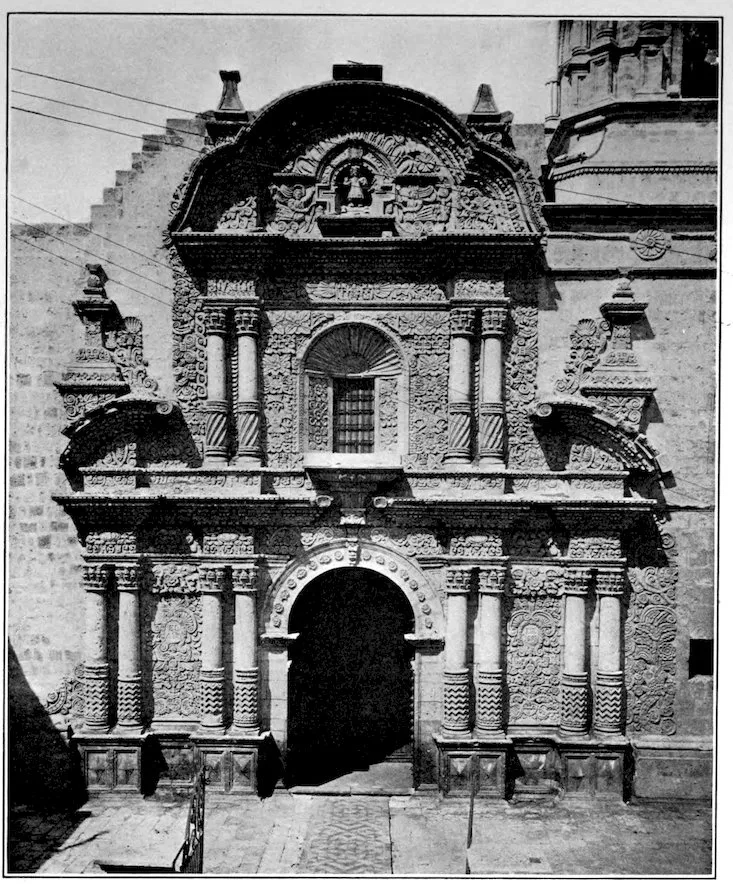
CHURCH OF THE COMPAÑIA, AREQUIPA, SHOWING EXQUISITE HAND CARVING.
100Not only did the Viceroy Toledo make laws to improve the Indian’s condition as far as
was consistent with his duty to increase the “King’s fifth” to the utmost extent, but he
also introduced reforms for the benefit of the Spanish colonists, establishing new schools,
hospitals and other institutions. Social life began to show more distinctive features in the
colonial capital than had been possible during the turbulent period immediately following
the Conquest; the viceroy and ecclesiastics entertained with sumptuous festivals, and
luxurious tastes and habits appeared among the nobility.
But the zeal of the viceroy went farther than the royal mandate intended, and over-reached
itself in the execution of an Inca chief, who had assumed the masca paicha on the
death of Inca Manco’s son, and who, according to the viceroy, constantly stimulated among
the Indians a spirit of revolt, which might break out in open insurrection at any moment.
The Inca had refused to consider any offer as the price of his claim to royalty, and the
viceroy ordered him to be seized and put to death, in spite of the intercession of the bishop,
the municipal council and other notable authorities of Cuzco. When Toledo returned to
Spain, expecting the thanks of his sovereign for the services he had rendered the Crown in
twelve years of arduous labor under the most adverse conditions, Philip II. greeted the aged
cavalier coldly and requested him to withdraw from court, saying, “I did not send you to
Peru to kill Kings, but to serve Kings.” Yet the Viceroy Toledo has been called the Solon
of Peru, for the wisdom displayed in his government. During his administration, the
colony made wonderful progress in wealth and culture, and the “royal fifth” was greater
than it had ever been before. The Spanish monarchs apparently did not esteem very
highly the sacrifices made by their discoverers, conquerors and pioneers of authority, who
contributed to the sovereign possessions so handsomely, by the annexation of a continent,
the gift of a houseful of gold, and the collection of “royal fifths” large enough to pay for
building the Invincible Armada!
During the last year of the Viceroy Toledo’s rule, the port of Callao was sacked by the
English corsair, Sir Francis Drake; and in order to avoid a repetition of such a catastrophe,
the viceroy fitted out ships and sent his pilot Sarmiento to explore the Pacific Coast as far
as the Strait of Magellan; Sarmiento recommended the fortification of the Strait and the
establishment of a colony, for which preparations were being made at the time of Toledo’s
return to Spain. Upon his departure, Don Martin Enriquez, a former viceroy of Mexico,
was appointed to the vacant post, but he died after two years, the affairs of the colony
being left in charge of the Real Audiencia of Lima for two years, when the Count del Villar
Don Pardo was named viceroy.
The expedition which was sent out by Spain to form a colony on the shore of the
Strait of Magellan, encountered a fierce tempest and only eighteen of the colonists survived.
Their leader abandoned them to join the first pirate ships that appeared, which were those
of Cavendish, following in the track of Drake, though with less success, as the Pacific ports
were better protected than they had been eight years before. But if the pirates took
little treasure, their departure was soon followed by the appearance of an epidemic of
101smallpox, which wrought terrible havoc in the colony. Whole families and even towns
were destroyed by the plague, the fields remained uncultivated, the cattle neglected, even
the mines were abandoned, the horrors of famine being added to those of the plague. This
was in the year that witnessed the defeat of the “Invincible Armada,” a catastrophe that
brought in its train many others for the proud monarch of Spain, whose power was no
longer in the ascendant among the arbiters of European destiny, as it had been when he
was crowned king. But, although Peru suffered much from the plague, the natural riches
of the country were so abundant that the worst effects soon disappeared and prosperity
reigned, more flourishing than ever. The viceroy did all in his power to promote the best
interests of the colony, though his humane laws made him many enemies. He prohibited
the forcing of mitayos to do excessive labor and to live in unhealthy localities, and forbade
the treating of yanaconas (Indians who carried burdens) as slaves. During his
administration the king accorded to graduates of the University of San Marcos in Lima
honors and privileges equal to those of Salamanca, the great centre of learning in Spain.
The second Marquis de Cañete was appointed viceroy to succeed the Count del Villar
in 1589. He came accompanied by his wife and a large suite of Spanish nobility. Their
arrival marked a new era in the social life of the capital, which became brilliant with gay
functions and the fashionable amusements of a court. The noble Marquis and his retinue
were not only received with great ceremony under the crimson canopy of state, but the
festivities attending their arrival were of the most elaborate description throughout
the whole colony. The viceroy established a strict court etiquette, according to the
historian Lorente, giving special instructions “that the women of the court should maintain
the greatest reserve, not receiving attentions or seeking husbands, and should pay to the
vicereine all the respect which court etiquette demanded.” In harmony with the viceregal
grandeur, a royal chapel was erected in the palace and the religious ceremonies of the court
were observed with imposing formality. The number of oidores was increased and the
Real Audiencia assumed a greater importance, as the growing prosperity of the colony
added to its responsibilities and influence.
On many occasions the viceroy reproved the arrogance of the clergy, his high office
giving him the authority of vice-patron of the Church; and he never forgot that his first
duty was to his sovereign, whose coat-of-arms he caused to be placed above the Archbishop’s
on the façade of the seminary, in opposition to clerical opinion, while he did not
hesitate to reprimand even the saintly Toribio for carrying complaints to Rome. But it was
as his sovereign’s Superintendent of the Exchequer that the Marquis de Cañete made his
government memorable. By every possible means the declining revenues of the mother
country were reinforced from the resources of her colonial treasury, and the genius of the
viceroy was displayed in the success with which he devised plans for collecting new taxes.
Excise duties, the sale of deeds to illegal landholders and of privileges to office-seekers,
extraordinary service from the Indians, the extension of tribute claims to include negroes
and mulattoes, the income from legitimatizing mestizos, who paid large sums to enjoy the
102privileges of inheritance, the confiscation of the
property of ecclesiastics who died intestate,—these
were only a few of the sources from
which the king’s coffers were filled. The proceeds
of the mines of Huancavelica, which continued
to increase in wealth at this time, yielded
an important share of the accumulated wealth,
and Castrovireina, named in honor of the vicereine,
whose maiden name was Castro, became
an important mining centre and a valuable source
of revenue to Spain. The numerous exactions of
the viceroy met with little opposition in an age
when the most liberal governments did not hesitate
to tax the subjects of the Crown to any extent
required by the demands of the royal exchequer. The
placing of restrictions on colonial commerce, from which
foreigners, heretics and Spaniards without a license were altogether
prohibited by the Spanish Crown, was not unusual in those days,
and it was only at the beginning of the nineteenth century that
any American colony under European sovereignty was permitted
to open its ports to the commerce of the world. During the viceroyalty,
Seville was the centre of the commercial monopoly, a
royal board of trade regulating the sailings of ships, their condition,
length of voyage and other matters relating to transportation.
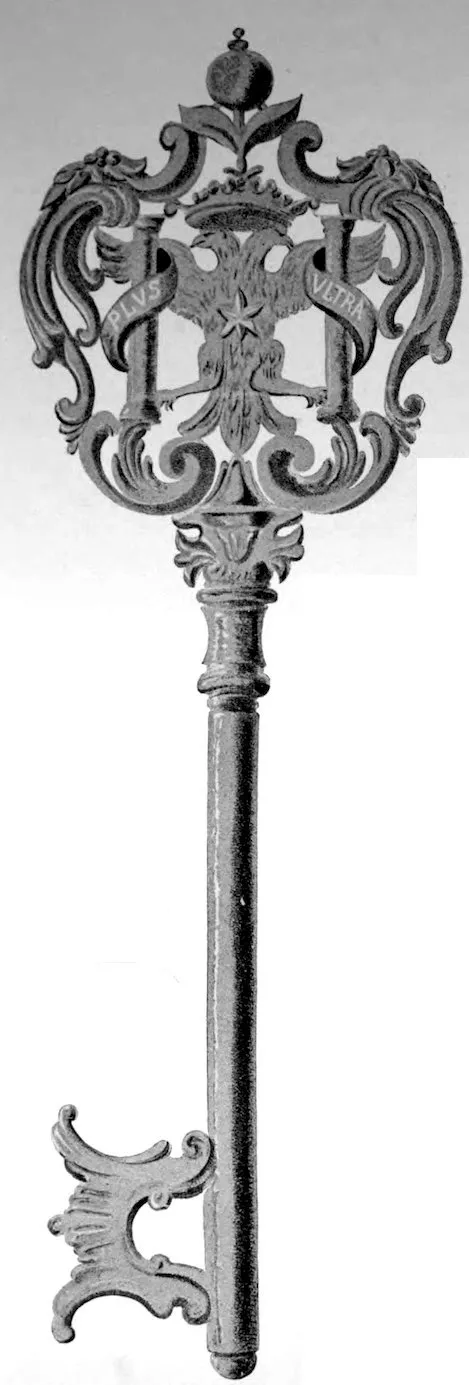
THE KEY OF THE CITY OF LIMA.
The death of Philip II. of Spain, which occurred in 1598, left
the fortunes of the rapidly declining monarchy in the hands of a
weak and indolent prince, his son, Philip III., during whose reign
the colonies obtained little protection from the Crown, but were
continually called upon to contribute funds to its depleted treasury.
The Marquis de Cañete was succeeded in the viceroyalty
of Peru by Don Luis de Velasco, Marquis de las Salinas, during
whose administration the colony enjoyed great prosperity and
wealth through the increased production of the mines; a new
theatre was built in Lima, the streets and plazas were improved
and beautified and many handsome churches and other buildings
were erected. The Count de Monterey, appointed viceroy on the
retirement of Velasco, lived only a year after his arrival in Peru,
and was succeeded by the Marquis de Montes Claros. Like many
of his predecessors, this viceroy had previously held the same
office in Mexico. He was one of the best financiers the Court of
103Spain had ever sent to the Indies, and so zealous were his labors in behalf of the royal
exchequer that he was nicknamed the king’s steward. He went himself to visit the mines
of Huancavelica, the product of which amounted to eight thousand two hundred quintals
annually, and he sent mitayos to the gold mines of Carabaya and Zaruma and to the silver
mines of Castrovireina, Vilcabamba, and Potosí. His successor, the Prince of Esquilache, who
arrived in Lima with a numerous
suite in 1615, devoted particular
attention to the defense of the
maritime ports, especially Callao,
which he fortified with three
cannons and a garrison of five
hundred men. He also organized
a navy. But he was a poet
and a connoisseur rather than a
statesman and his financial ability
was not equal to the demands
put upon it. Although the annual
budget of the colony showed its
receipts to be nearly three million
ducats, hardly enough remained
to meet current expenses
after the “royal fifth,” amounting
to a million ducats, had been sent
to Spain and the cost of various
improvements effected by the
viceroy had been paid. His court
was, however, distinguished for
its brilliancy and culture, and he
entertained many noted scientists
and litterateurs. During
his rule, several copies of celebrated
paintings, and even some
masterpieces, were purchased
to adorn the churches of Peru.
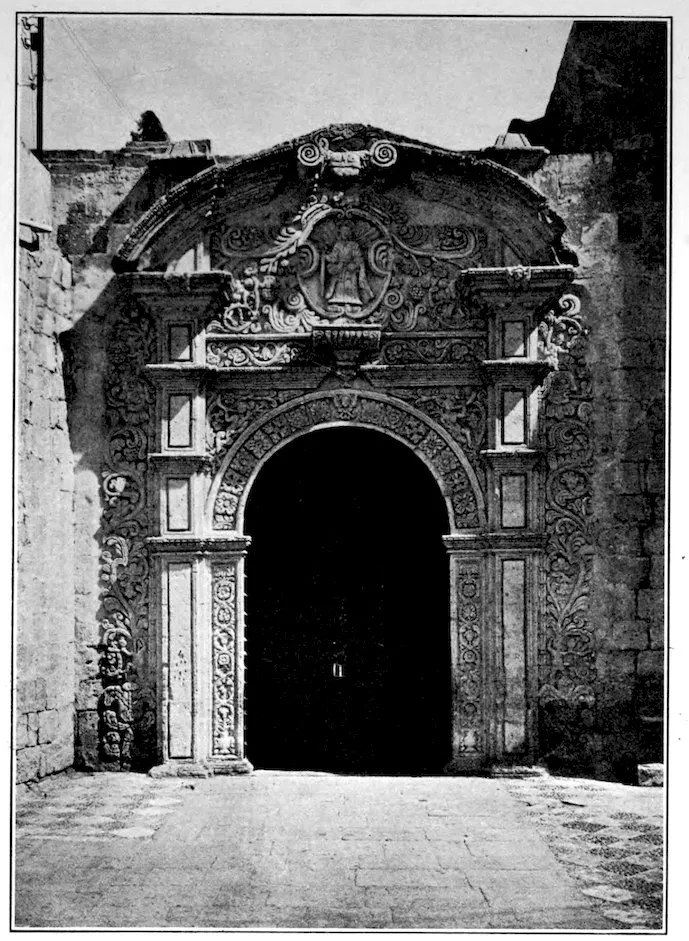
DOORWAY OF A CHURCH IN AREQUIPA, BUILT DURING THE COLONIAL PERIOD.
The constant drain put on the resources of Peru by the Spanish kings during the entire
period of the viceroyalty could have been supported only by a country of inexhaustible
wealth and a people of long-suffering loyalty. Each successive viceroy came to his office
with instructions to increase the king’s revenues, while the protection and aid from the
mother country diminished as its demands grew more urgent and arrogant. Philip III. died
in 1621 and Philip IV. ascended the throne, naming as viceroy of Peru the Marquis de
104Guadalcazar, a descendant of El Gran Capitan. During his administration and that of his
successor, the Count de Chinchon, the demands of the court were so excessive that one
wonders the colonists did not rebel against the extortions. The taxes were doubled, the
sale of offices and privileges was increased, donations were solicited, duties were placed on
vicuña wool, salaries were reduced, expenditures curtailed, and all manners of means resorted
to in order to raise the sum required by the King of Spain for his fruitless enterprises and
his extravagant pastimes; for although new mines were discovered in Cerro de Pasco and
Cailloma, Potosí and Huancavelica began to show symptoms of decline, owing to the
primitive and wasteful mining system employed.
The name of the Count de Chinchon is associated with the important discovery of
quinine. His countess, who suffered from malarial fever, was cured by using a remedy
that one of the corregidores had received from the Indians, a preparation made from the
bark of a tree, and now popularly known as Chinchona bark. It is said the Indians had
known its merits from time immemorial. The Count de Chinchon returned to Spain
in 1640, and the Marquis de Mancera, of the illustrious family of Toledo, occupied the
throne of the viceroys in Lima for the nine years following, during which he gave to Peru
the best squadron in the Pacific and protected Buenos Aires, Paraguay, and southern Chile
from invasion by building strong fortifications and providing weapons of defence. His
successor was the Count de Salvatierra, formerly viceroy of Mexico, during whose administration
the capital was beautified by many improvements. The handsome bronze fountain
which still adorns the plaza in front of the government palace was erected by his order.
He died in Lima soon after the arrival of the viceroy named to succeed him, the Count de
Alva. The funeral of the Count de Salvatierra was an occasion of magnificent ceremony,
the widowed countess observing with great pomp and formality the strictest court etiquette
of mourning.
The Count de Alva and his successor, the Count de Santisteban, gave especial attention
to the reform of laws affecting the Indians employed in the mines. The discovery of new
mines at Laicacota, in the province of Puno, which produced one hundred thousand dollars
in one night, revived abuses that had been quelled in other districts, and resulted in terrible
fighting and bloodshed. In the midst of these conditions news was received that Philip IV.
was dead and that his son Charles II. had ascended the throne. A few months later the Count
de Santisteban died and the pious Count de Lemos, who is said to have lacked only the
frock to make him a perfect Jesuit, was appointed viceroy of Peru. He came, accompanied
by his wife and two children, with a retinue worthy of one of the royal families of Europe,
both the count and countess being descendants of Pope Alexander VI. When the viceroy
made his official entry, the keys of the city were presented to him on a gold salver, and he
received a gold-headed staff encrusted with diamonds, that cost five thousand dollars. The
triumphal arch through which he passed was made entirely of silver plate, and the space
beneath it was paved with five hundred and fifty bars of silver, worth more than a million
dollars. During an absence of six months, which the count spent in Alto Peru, the countess
105ruled as vicereine, her sagacity and energy being called into requisition on more than one
occasion during that time. The greatest labor of the viceroy was devoted to the interests
of the Church, and the religious festivals held during his administration were of surpassing
pomp and splendor. Not even the gorgeous display that attended a royal progress under
the Inca dynasty rivalled in magnificence the processions of the Virgin in Lima, held by
order of the Count de Lemos. His successor, the Count de Castellar, viceroy of Peru from
1674 to 1678, possessed little of the temperament of a religieux, though he was an experienced
statesman and an able financier; during the four years of his government he secured for the
treasury of Lima twelve million dollars, and sent seven million dollars to Spain.
As the wealth and importance of the viceroyalty increased, the Court of Spain sent
representatives to the colonial capital whose rank and previous services to the Crown
entitled them to the most exalted position in the realm, next to that of the sovereign
himself; the salary of a viceroy was seventy thousand dollars, his official income being
double that amount from various other sources. The Duke de la Palata and Prince of
Masa, who succeeded the Count de Castellar, had held high offices of state for thirty years
prior to his appointment as Viceroy of Peru. He belonged to the royal house of Navarre
and had been a member of the council of regency during the minority of Charles II. of
Spain. With such prestige and renown, it was to be expected that his reception in the
colonial capital would be of the most magnificent description. The chronicles of the period
state that the noble duke was welcomed with such pomp and splendor as his royal master
might have envied, the street along which he was conducted to the palace being paved
with ingots of silver, while the triumphal arch through which he made his entry to the city
was supported on silver pillars. The robes of the high functionaries who received the
viceroy and his suite sparkled with costly jewels, and in the Cathedral and the palace
enough gold and silver were displayed to pave another calle. And all this wealth existed
in spite of the millions sent annually to Spain, and the misfortunes the colony had suffered
from time to time in consequence of interruptions in the working of the mines, epidemics,
earthquakes, and attacks from filibustering expeditions, that increased as the precious
galleons of Spain were more and more heavily laden with gold and silver to attract
their cupidity.
The Duke de la Palata spent the first years of his viceroyalty in resisting the powerful
attacks of a party of a thousand filibusters who arrived on the Pacific Coast with a fleet of
ships under the command of a Flemish captain named Davis. The viceroy sent a squadron
of six ships, provided with one hundred and sixteen cannons and abundant ammunition, to
disperse them, and when their scattered forces formed in groups and sacked the ports of
Guayaquil, Paita, Pisco, Arica, and others, the duke sent out additional ships, a squadron
of volunteers formed of merchants and capitalists gave their aid to the royal authorities, and
the enemy was completely vanquished and driven from the coast. In order to be secure
against disasters from future attacks, a wall was built around the cities of Lima and Trujillo,
by order of the viceroy. The wall of Lima covered about six miles in extent, and had five
106bastions, and six gates, the work having been completed in three years. In the year 1687 a
disastrous earthquake visited Lima, causing the destruction of many edifices and the loss of
some lives. The Cathedral was destroyed, and
the damage to property was tremendous. But
the city recuperated with astonishing rapidity
and was soon as gay as ever.
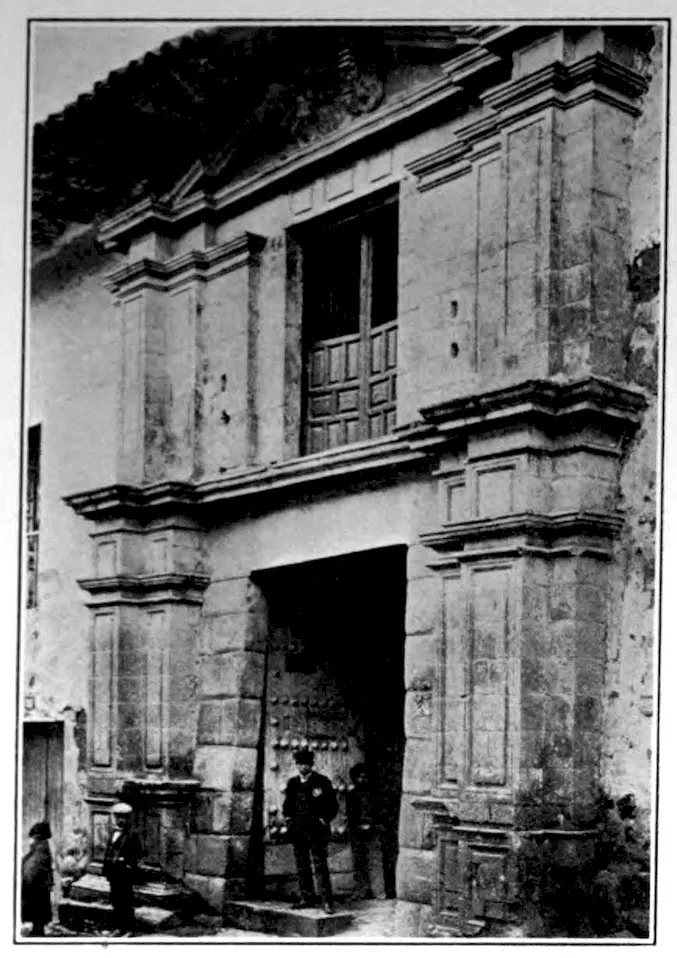
ENTRANCE TO A COLONIAL INN, CUZCO.
The question of rebuilding the Cathedral
led to a clash of opinion between the viceroy
and the Archbishop of Lima, the latter refusing
to employ any of his enormous revenues in
the work. The viceroy had a powerful enemy
in the archbishop, who had held the office of
viceroy during the three years that elapsed
between the departure of the Duke de Castellar
and his own arrival, and the quarrels of these
two great dignitaries furnished abundant material
for scandal and gossip in the gay capital.
Lorente, who has given a graphic and charming
description of social life under the viceroys,
relates several amusing incidents. On one
occasion, during a great national fiesta, when
the duke was witnessing the bull fight from
the viceregal box, under the crimson canopy
of state, it was called to his attention that the
Archbishop of Lima sat under a crimson canopy also; the duke at once sent him word
that that honor was exclusively reserved for the viceroy of His Catholic Majesty, and
the archbishop was obliged to retire from the scene. The state coach, drawn by six
horses, which presented an imposing spectacle of luxury in those days, was another object
of envy to the eminent ecclesiastic, who realized that as vice-patron of the church his
rival exerted an authority which otherwise could not have been claimed by the viceroy.
But the archbishop possessed great power and used it effectively in thwarting the viceroy’s
plans for various reforms, though the administration was marked by consistent and resolute
efforts to improve the condition of the colony. The Real Audiencia was enabled to exercise
its authority with greater freedom, and the entire country was brought under a more
systematic order of government.
The death of Charles II. of Spain, which took place in 1700, was the occasion of
impressive mourning ceremonies throughout the vast empire over which the House
of Austria had maintained its sway for nearly two centuries. The Duke de la Palata had
died ten years before at Panamá, where he was attacked with yellow fever while on his
way to Spain, and his successor, the Count de la Monclova, a nephew of the Cardinal
107Portocarrero, had already won the clergy of the colony to his support and coöperation by
his protection and liberal donations. He was greatly beloved and esteemed, and remained
in Peru as viceroy after the fall of the Austrian dynasty and the accession of the House of
Bourbon in the person of Philip V., grandson of Louis XIV. of France; his government
was marked by tolerance and the encouragement of social and commercial development
throughout the colony.
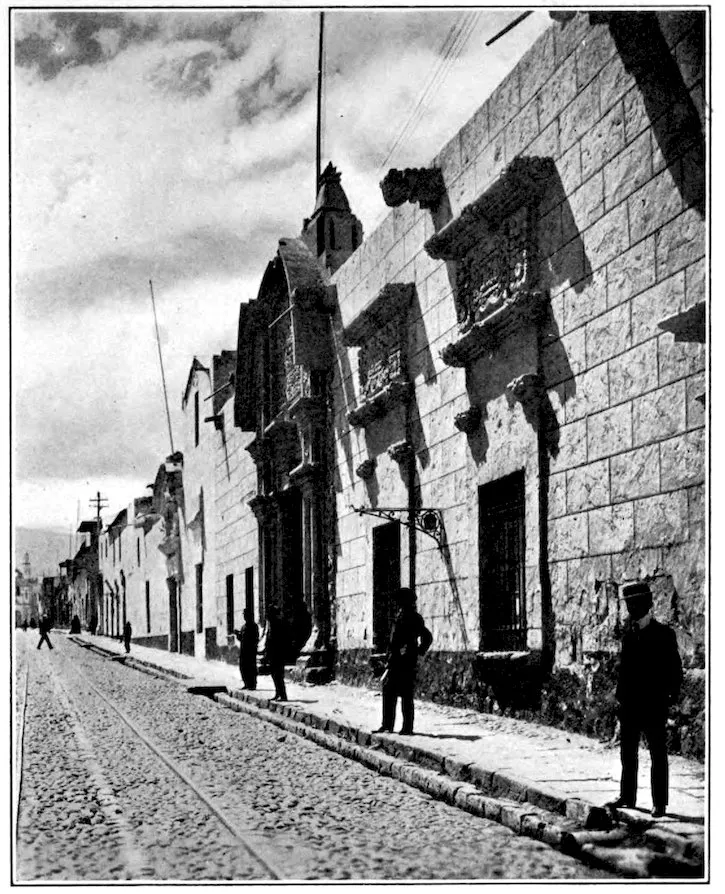
ONE OF THE COLONIAL PALACES OF AREQUIPA, BUILT TWO CENTURIES AGO.
Five viceroys, two of whom were ecclesiastics, governed Peru during the reign of
Philip V.; they made a determined fight against the evils of contraband trade, which had
grown to enormous proportions, but their efforts met with little success. The Marquis de
Torre-Tagle and Don Angel Calderon, two wealthy Limeños, fitted out warships at their own
cost to fight the Dutch contrabandists, and took rich prizes; but although the viceroys
punished with great severity all who were captured, the traffic seemed to increase rather than
diminish. In the meantime, the mines continued to yield great treasure, four million dollars
being coined annually. During the
government of the Marquis de Villagarcia,
who was viceroy from 1736 to
1745, the royal fifth was reduced to
a tenth, and colonial commerce was
stimulated by the service of registered
vessels that sailed via Cape
Horn. Many comforts and luxuries,
which had previously been too expensive
for any but the wealthiest
colonists to afford, now appeared in
the markets of Lima; the houses
began to be better furnished, and
the calèche,—a two-wheeled vehicle,
drawn by one horse, on which the
coachman rode,—gave place to the
coach and pair. The viceroyalty of
Santa Fé was separated from that
of Peru in 1740.
Peru was enjoying the blessings
of peace and progress under the
rule of the Viceroy Velasco, Count de
Superunda, when a terrible calamity
befell the gay capital: its seaport,
Callao, being completely destroyed,
and Lima reduced to the most deplorable condition by an earthquake which occurred on the
28th of October, 1746. The palace, the university, the cathedral, the mint, and the municipal
108buildings, sixteen colleges, thirty-six convents, and seventy churches, as well as hospitals,
and more than twelve thousand homes were destroyed in Lima; while Callao was totally
submerged with its five thousand
inhabitants. The historian
of this dreadful catastrophe relates
that the earth rocked and
tossed like a ship in a storm.
The clergy took advantage of the
opportunity to preach against
the worldliness and luxury of
the pleasure-loving people of
Lima; and for weeks society did
penance for its sins by fastings
and mortifications. Through
the active energy of the viceroy,
the capital was rapidly
rebuilt, less than twelve years
being required in the reconstruction
of the Cathedral, which it had taken nearly a century to build originally. Callao
was also rebuilt and the town of Bellavista, which lies between the capital and the port,
was founded. The viceroy had the satisfaction of seeing Lima once more a gay and
prosperous city, the centre of luxury and fashion, the metropolis toward which gravitated
all the wealth of a colony whose resources were no longer confined to the product of its
mines, but began to be derived from agriculture and other industries.
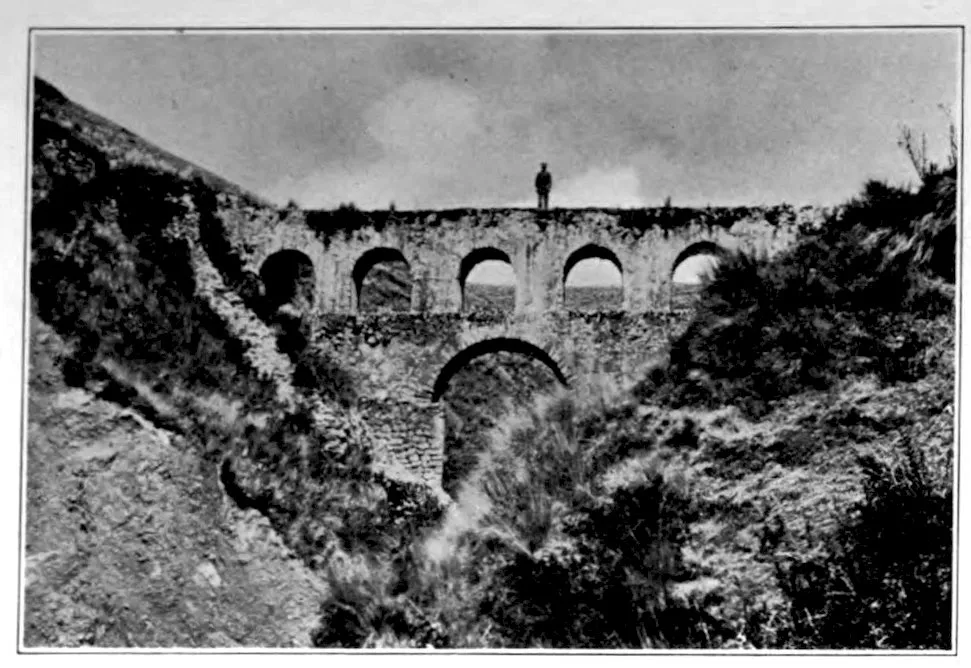
While the enthusiastic patriots of North America were planning a revolution that was
to bring independence to the colonies of New England, and to encourage throughout all
America that spirit of freedom which has since grown to dominate the western world, the
viceroyalty of Peru was in the height of its power, under the government of Don Manuel
Amat, who ruled from 1761 to 1775. A military commander of iron will and severe discipline,
he reorganized the army, which consisted of one hundred thousand men, the navy and the
police service of the colony, and was himself chief of a brilliant regiment composed of the
highest nobles of his court. By his order, the Plaza de Acho was laid out and reserved for
public amusements, such as bull fights, ball games, etc.; the beautiful Paseo de Aguas was
also built during his administration and became the favorite promenade of fashionable society.
It is said that the Paseo was constructed to please the Pompadour of his merry court, who
was known in the scandals of the viceroyalty—and there were many—as La Perricholi.
It has been said that the first blow in the battle for the independence of the South
American colonies was struck by the hand of the monarchy itself, when the order was
given to expel the Jesuits from the Spanish possessions, in 1767. It was shortly after this
event that the old-time enmity between Vascongado and Vicuña began to reappear in their
109descendants, the Spanish authorities and the Creole students of the University of San
Francisco Javier,—years before the first patriots announced their campaign. According to
some authorities, the revolution was fostered by the Jesuits, who resented as an injustice
the edict issued against them, and helped to sow the first seeds of republicanism in the
minds of the South American subjects of Spain. In Lima, the centre of colonial power,
there was little more than a rumor of the discontent that had developed out of the quarrels
between criollos (Spanish-Americans) and chapetones (Spaniards) in Potosí and Sucre; at the
time of the Jesuits’ banishment, Lima was apparently happy in the enjoyment of peace and
plenty. The capital was constantly becoming richer and more attractive with its brilliant court
functions, its gay carnivals, its fashionable promenades, its theatre, balls and splendid religious
festivities. In 1778, during the administration of the Viceroy Guirior, Amat’s successor,
the viceroyalty of Buenos Aires was formed, embracing the former Audiencia of Charcas.
A final attempt was made in 1780, by the descendants of the Incas, to regain their lost
empire. It was carefully planned, boldly initiated, and bravely carried forward, assuming
formidable proportions under the leadership of an Indian cacique, who called himself
Tupac Amaru, and claimed descent from the Inca Manco. Goaded to desperation on
account of the iniquities committed against his people by the minor authorities, who could
never be brought to justice, he determined to take the law in his own hands, and one night
seized a ruthless offender, the corregidor of his community in the province of Cuzco, whom
he overpowered and dragged to his house. After forcing the magistrate to issue orders
that Indians and Spaniards should obey the orders of the Inca, he hanged the unfortunate
official in the plaza and robbed his house, securing thirty thousand dollars, which he used
to promote his campaign. He collected an army of sixty thousand followers, intending to
march on Cuzco, seize the city and reëstablish the Inca empire; but his followers were
undisciplined, his troops badly organized, and in the first encounter with the regiments of
the colonial army he lost twenty thousand men. The Bishop of Cuzco threatened with
excommunication all who remained in the rebel ranks, and many leading supporters withdrew,
leaving Tupac Amaru to meet seventeen thousand drilled soldiers in a battle in which
his ranks were thrown into utter confusion, and he was defeated and captured by the
enemy. He was put to the torture of being fastened by his arms and legs to the saddle
girths of four horses, which were then driven in opposite directions, tearing him limb from
limb. Those of his followers who escaped continued to make sporadic attempts at revolt
and were the first to join the ranks of the patriots when the war of Independence was
launched. But none of the partisans of this brave Indian possessed his qualities of
leadership and their fate is unknown.
The prosperity of Peru continued under the rule of the viceroys Teodoro de Croix and
Francisco Gil de Lemos, though the influence of the French revolution was beginning to
make itself felt in Venezuela, Alto Peru, and other districts remote from the capital. During
De Croix’s administration, the viceroyalty was divided into seven intendencias: Trujillo,
Lima, Huancavelica, Tarma, Huamanga, Cuzco, and Arequipa; and an Audiencia was
110established in Cuzco. The Count de Osorno became viceroy in 1796, and was succeeded
four years later by the Marquis de Aviles, who devoted particular attention to the military
and religious institutions of the country; during his time, Baron von Humboldt, the noted
scientist, arrived in Lima, and was accorded a most hospitable welcome.
The immediate proximity of monarchical authority prevented the development of
conspiracies in the capital in favor of independence; but in Cuzco, Moquegua, Tacna,
Huánuco, and other provinces, patriotism, stimulated by the example of the French and the
North American revolutionists, began to give demonstrations of its strength and purpose.
With the retirement of the Marquis de Aviles in 1806, and the arrival of his successor, Don
Fernando Abascal, the supremacy of the viceroyalty in Peru may be said to have begun to
decline, the government of the succeeding representatives of the Crown of Spain being
occupied rather in an effort to maintain their authority against the increasing and, finally,
overwhelming force of the patriotic movement, than in public administration. The viceroy
Abascal realized the importance of making concessions to the now thoroughly aroused spirit
of liberty, and his government was marked by benevolence and conciliation. He founded
colleges, repaired the city walls, built a pantheon, prohibited any further burials in the
church vaults, and was zealous in the promotion of public enterprises. But the most
liberal and devoted efforts could not stay the hand of destiny. The brilliant court of the
viceroys was doomed to extinction, and the grandeur of colonial aristocracy was to give
place to the simplicity of republican ideals.
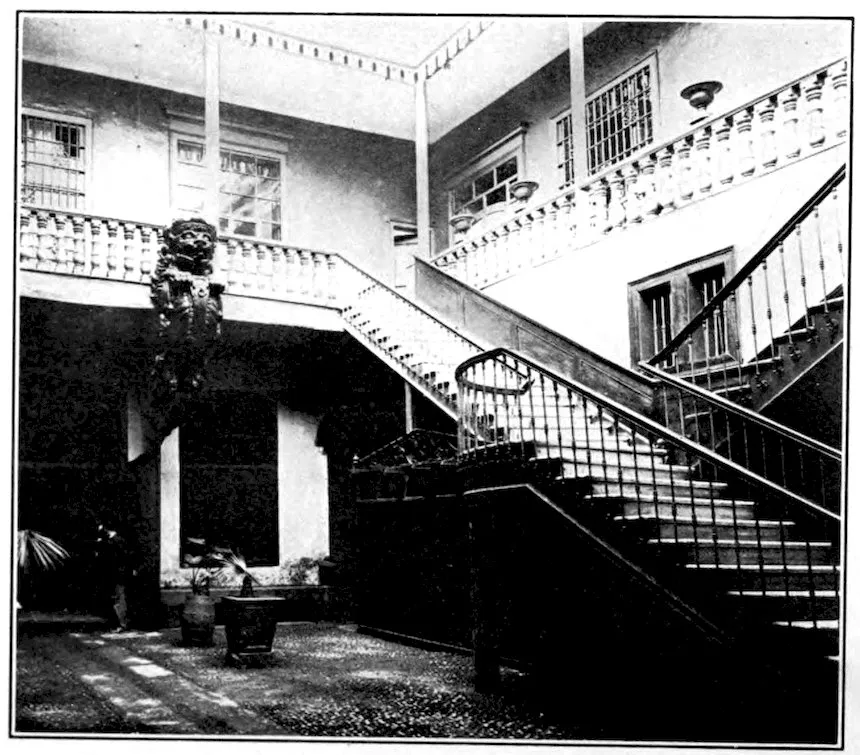
PATIO OF A COLONIAL HOUSE, LIMA.
112
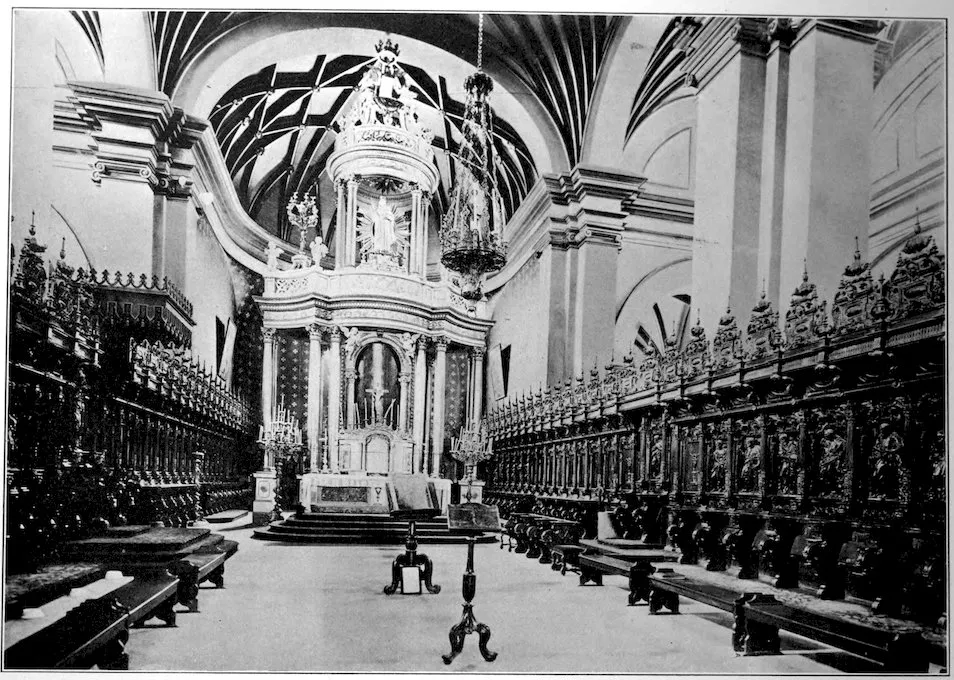
THE CHOIR AND ALTAR OF THE CATHEDRAL OF LIMA—THE ALTAR OF SOLID SILVER.
CHAPTER VII THE CHURCH IN COLONIAL DAYS
113
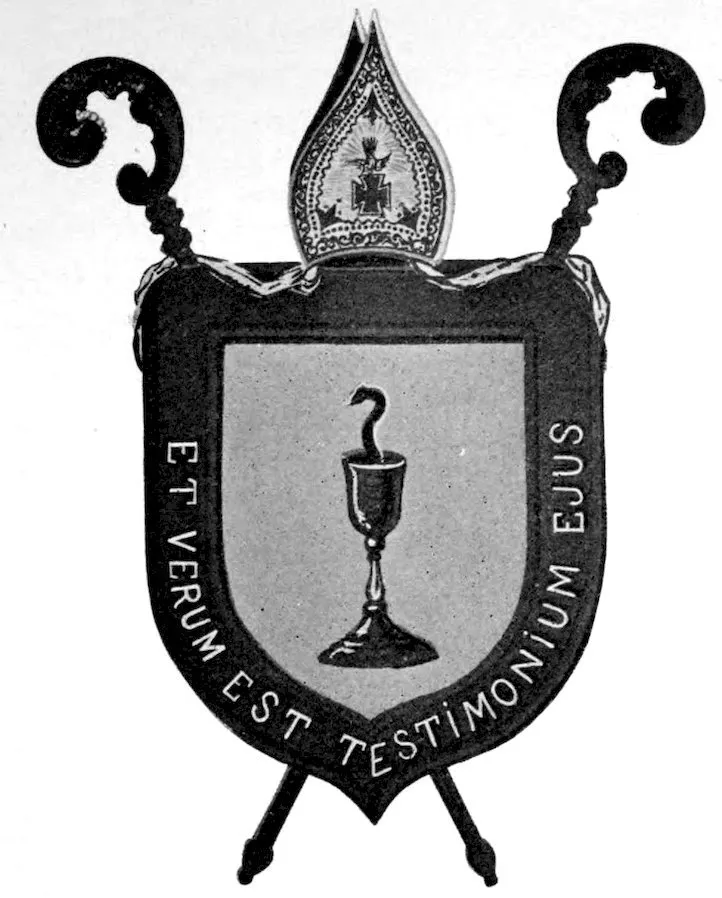
ARMS OF THE CATHEDRAL OF LIMA.
When the devout and fearless protector of
the Indians presented his memorable
appeal to the Crown of Spain in behalf of the
conquered races of the New World, he gave
expression to the lofty purpose which animated the
true missionaries of the Cross in their labors among
the Indians of Spanish-America. With the courage
born of pious zeal, he dared to say to the most
powerful monarch in Europe words which must
have jarred on the delicate sensibilities of a sovereign
accustomed only to flattery; but which, nevertheless,
could not be ignored. It is said that
Charles V. was “stricken in conscience” as the
venerable apostle of righteousness, who had devoted
more than a quarter of a century to missionary
labor in America, thus proceeded in his arraignment:
“The highest Pontiff conceded the conquest of the
Indies to the Catholic sovereigns under the solemn
promise that with their accustomed zeal they would
promote the conversion of those idolatrous people for the greatest glory of the faith and
for the salvation of immortal souls. Such an important commission, confided to the Crown
itself, cannot be delegated to private individuals. For this reason Queen Isabella was indignant
when Columbus gave his followers a number of the natives to serve them, and she
obliged those who had brought Indians to Spain to send them back to their own land. The
Sovereign Pontiff granted permission to conquer the Indies for the benefit of the inhabitants,
and in no case to increase the power and wealth of the monarchs of Castile. Moreover, by
the enslaving of the Indians, all that has been gained is the ruin of a population that covered
114more than two thousand five hundred leagues of land. The object of the administration is
not to preserve the territory, the walls, and the houses, but the people. With such an end
in view, Queen Isabella declared in her will that all harm to the natives should be avoided,
and all damages should be repaired; but the death of that august princess was the signal for
the destruction of the Indies!” The spirit of consecration to a sacred task breathes in every
syllable of the lengthy document, which concludes with the significant sentence: “The law
of God prohibits the doing of evil that good may come of it.” It is said that the worthy
priest exaggerated the amount of evil, which he depicted in frightful hues; yet the very
excess of his vehemence is to be admired in a cause so just and noble.
Not all the missionaries who accompanied the conquerors joined Father Las Casas in
denouncing the encomiendas; on the contrary, some of the worst abuses of the system
were charged against the Christian teachers themselves. But, as a rule, the priests stood
between the unfortunate Indians and their rapacious masters, and protected the victims of
impatient greed. After the abolition of encomiendas, when the natives were settled in
communities, the religious orders, to whose care their spiritual welfare was chiefly
intrusted,—the Franciscans, Dominicans, Augustinians, and Jesuits,—had frequent controversies
with the secular authorities, the former claiming the right to protect the Indians
against oppression, while the latter declared that this right was abused in favor of the
orders themselves, and that they were growing rich and powerful through the labor and
contributions of their protégés. In a land where gold and silver flowed out of the mountains
in a constant stream, apparently inexhaustible, it is not surprising that the Church,
which was the controlling power in the state, should profit by such blessings; though the
wealth of the religious communities was gained through the products of agriculture rather
than those of the mines. It was chiefly under the direction of the Christian fathers that
the fields were cultivated and orchards planted while the conquerors were occupying
themselves solely with the extraction of ores.
The power of the clergy has always been stronger in Spain than in any other Catholic
land, and the national religion has been its most cherished institution ever since the
Visigoths followed up their conquest of the country, after the fall of the Roman Empire, by
embracing Christianity early in the sixth century. Their ecclesiastical synods were not
only Councils of the Church but parliaments of the realm, and so great was the power of
the clergy at that early date, we are told, that even the kings prostrated themselves
before the bishops. Then followed the struggle against the Moors, which was first a fight
for independence and later a campaign for conquest, but always a religious war. It is not
strange that the final victory, won after a crusade that lasted eight hundred years, should
have been signalized by a union of Church and State in the closest bonds, and that the
pride of the people should be concentrated in the religion they had so tenaciously upheld
and defended, and in the military prowess they had so gloriously vindicated.
The prestige of both the Church and the army was at the zenith when Pizarro conquered
Peru; and as soon as Spain took formal possession of the country, the Church
115established its authority throughout the land,—an authority that dominated all the affairs of
the colony, secular as well as spiritual. The viceroy was, in reality, head of the government
only by right of his office as vice-patron of the Church. The Sovereign of Spain, as patron
of the Church,—an
honor granted by
Pope Julius IV.,—reserved
the right
to provide all ecclesiastical
benefices;
the building
of churches, monasteries,
and other
places of worship
was prohibited
without royal licence;
and papal
briefs, resolutions
of the generals of
religious orders, or
any other decision
issued under ecclesiastical
authority
required the
sanction of the
Council of the Indies
to give it
value. The viceroy
Toledo was the
first to be appointed
vice-patron of
the Church, receiving
the royal
seal in 1574. The
bishops of Peru
were the chief
authorities in their dioceses, the priests had full charge of the schools, and the missionaries
represented the government in the reducciones. A historian of the viceroyalty estimates that
the clergy, friars, and nuns formed more than the seventh part of the entire population of Lima.
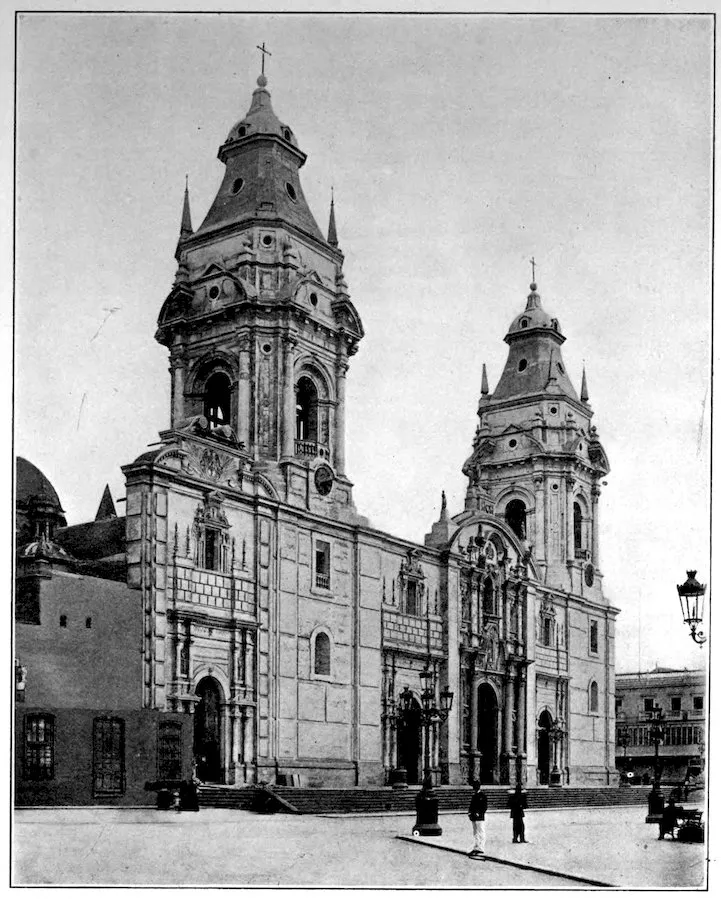
When Pizarro founded the capital of Peru, his first act was to fix the site of the metropolitan
church, of which he, himself, laid the corner-stone. As materials were scarce at that
116time and there were few facilities for such a work, the building was very unpretentious,
though five years were spent in its construction. The ceremony of dedication was
performed in 1540 by Father Valverde, then bishop of Cuzco and all Peru. According
to the chronicles of the period, “the Emperor Charles V. humbly besought His Holiness,
Pope Paul III., to grant the title of ‘city’ to the town denominated ‘of the Kings,’ which
had been erected in the provinces of Peru, and to establish in it a cathedral church.”
The pope granted this request and made Lima a metropolitan see, Fray Geronimo Loayza
being appointed the first archbishop of the colony. Within a short time it was found
necessary to rebuild the Cathedral, and the work was begun under the most favorable
auspices; but so many were the interruptions, changes of plans, and other causes of delay
that not until 1625 was the edifice completed, the consecration being solemnized by
Archbishop Ocampo, with such pomp and grandeur that the ceremony lasted from sunrise
to sunset. As soon as the Spanish sovereign was informed of the completion and
consecration of the Cathedral, he ordered that the bones of the Conqueror, Francisco
Pizarro, should be disinterred and removed to the sacred edifice, where all that is mortal of
the great discoverer of Peru is still preserved.
To the construction and adornment of the Cathedral of Lima, Archbishops Loayza,
Santo Toribio de Mogrovejo, and Bartolomé Lobo Guerrero devoted their talents and their
fortune with pious zeal; Archbishop Loayza made the church a gift of rich ornaments in
silver, and a custodia, or tabernacle, of gold and silver, valued at several thousand dollars.
The cost of construction of this magnificent edifice was estimated at half a million dollars
gold, and the interior was a repository of such enormous riches that their reputed value
passes credibility. The balustrades surrounding the altar,—which was itself a marvel of
exquisite wood-carving,—as well as the pipes of the organ, were of silver, and the candlesticks,
also of silver, were of remarkable size and weight. The wood-carving of the chancel
was not excelled even by that of the famous Cathedral of Seville. The terrible earthquake
of 1746 converted the great structure into a mountain of ruins, though the present edifice,
which is built on the same site, is an imposing monument of architecture still, after the
lapse of more than a century and a half, and notwithstanding the destructive effects of time
and the elements. It overlooks the principal plaza of the city, occupying the eastern side of
the square. The Cathedral has five naves, each with nine arches, or vaults, and along the
sides are ten chapels, in one of which repose the remains of Pizarro. The main altar occupies
the centre of the principal nave, and although not now so rich in gold and silver ornaments
as formerly, it still represents a fortune, being of silver, as are also the magnificent
candlesticks that adorn it. The wonderfully carved pulpit and chancel, of mahogany and
cedar, have survived the numerous catastrophes through which the venerable edifice has
passed, and show only the wear caused through their use by generations of worshippers.
When Archbishop Loayza, the first incumbent of the see of Lima, died, in 1575, his
successor was not appointed until three years later, when Archbishop Toribio Mogrovejo
was named for the exalted office. His extraordinary simplicity and piety were recognized
117even in a capital so gay and pleasure-loving as the City of the Kings, and his name became
a synonym of goodness. Many incidents are related of his charitable acts, done without
ostentation, and solely from brotherly love and Christian kindness. It is said that one
night he was carrying on his back a man whom he had found wounded in the street, when
the watchman called out in peremptory tones: “Who goes there?” “Toribio,” was the
tranquil answer, the guardian of the law immediately recognizing the good samaritan. The
story of his saintly life and his many works of benevolence reveals the spirit of self-sacrifice
and devotion which characterizes the best type of Spanish priest. Buckle, in
his history of the
civilization of Europe,
says, in reference
to the long
list of holy men
who have made
Spain famous
throughout the
centuries as the
land of beatos:
“No other European
country has
produced so many
ardent and disinterested
missionaries,
zealous,
self-denying martyrs,
who have
cheerfully sacrificed
their lives in
order to propagate
truths which they
thought necessary
to be known.”
Not only in the
ranks of the humble
missionaries,
who penetrated
the forests of the Amazon and made their way through the cañons and across the mountain
passes of the Andes to find their flocks among the “idolaters,” but in the highest princes
of the realm, descendants of kings and lords of proud domains, were to be found examples
of Christian piety and unselfishness worthy of the reverence of posterity.
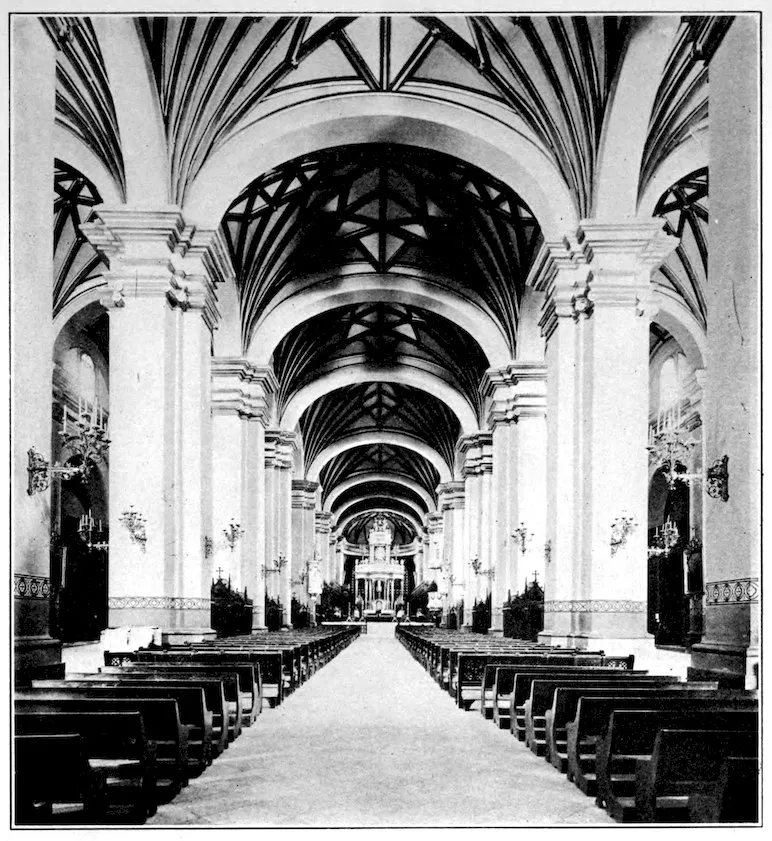
INTERIOR OF THE CATHEDRAL, LIMA.
118
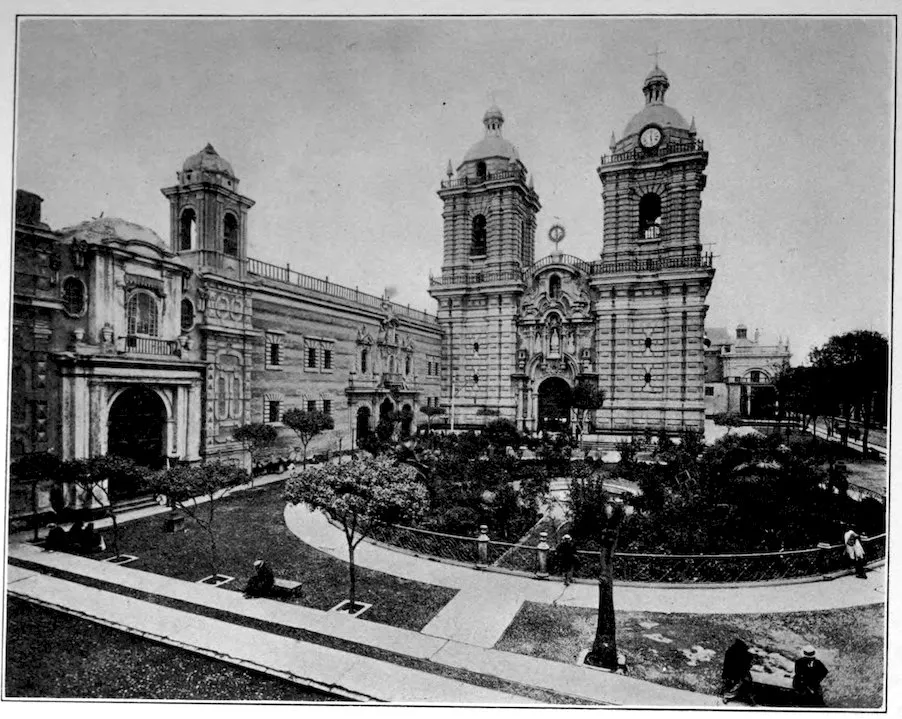
CHURCH AND PLAZUELA OF SAN FRANCISCO, LIMA.
Archbishop Toribio began his work by learning the Quichua language, so that he might
be the better able to acquaint himself with the condition and needs of the Indians, whom
he protected and guarded with especial care. As soon as he could converse in Quichua, he
started out on a long journey through the interior of Peru, on foot, accompanied only by
two of his chaplains, and taking a packmule to carry his baggage. His route led him along
the sandy plains of the coast, across snow-clad mountains and into the forests of the Upper
Amazon. As he passed through the various towns, he visited the churches, monasteries,
and convents, holding services and encouraging the labors of his people, while he reproved
all abuses of power, and used his high authority to remedy the evils that necessarily crept
into a system so vast in scope and scattered over an almost untraversable territory. In the
remote districts, the devoted pastor visited the little chozas, or huts, of the natives, instructed
the inmates in the catechism and administered the sacraments. Not only did the archbishop
make himself familiar with everything connected with his extensive diocese, but he held
two diocesan synods and three ecclesiastical councils, for the purpose of considering church
119matters of importance; he also founded a seminary in Lima for the instruction of the clergy,
which was afterward named the Seminary of Santo Toribio. While engaged in his apostolic
labors in the north, the illustrious prelate was attacked by fever and died on the 23rd of
March, 1606, at the age of seventy. In recognition of his saintly life and character, the
Church canonized him a century later.
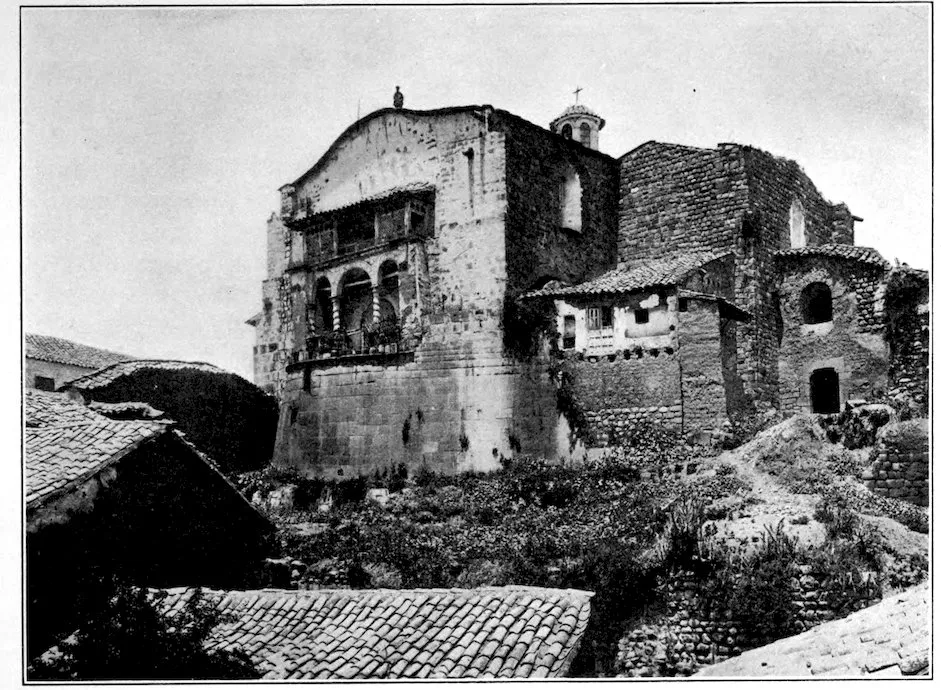
CONVENT OF SANTO DOMINGO, CUZCO, BUILT ON THE FOUNDATIONS OF THE TEMPLE OF THE SUN.
A contemporary of Saint Toribio is celebrated in the annals of the Church as the only
American Saint of the Calendar, known to Catholics as Saint Rose of Lima, the patron of
the Peruvian capital and of all Catholic America. She was born in 1586 in the city of Lima
and was baptized by Archbishop Toribio with the name of Rosa. From her girlhood, she
practised the most austere piety, devoting her young life exclusively to the duties of
religion. She was very beautiful, and as she grew older many admirers sought her in
marriage, her refusal being greatly resented by her parents, who treated the poor girl with
cruelty in order to punish her. At last, however, they were won by her angelic goodness
and permitted her to enter a convent of the Dominican order, where she remained until her
death in 1617. The 30th day of August, her feast day, is still observed in Lima with great
120ceremony. The canonization of Saint Rose was decreed by Pope Clement X. in 1671, and
its celebration took place in Lima during the government of the Count de Lemos, with such
brilliant and imposing ceremonies as the City of the Kings was accustomed to provide in
those days. The pontifical bull was
read in the Cathedral, in front of a
marble statue of the saint, which
stood on a silver pedestal and was
adorned with priceless jewels. The
following day the image was carried
in a procession to its present resting
place in the Dominican church, where
an altar is dedicated to Saint Rose.
This church is one of the oldest and
most interesting edifices in Lima, and
has been as richly adorned with silver
at various times as the Cathedral
itself. A silver altar of Our Lady of the
Rosary which stands at the foot of the
presbytery, on the right, is superb; in
the centre of the altar is the niche of
the Madonna, of exquisite workmanship,
her rosary being of large pearls.
On the feast day of the Virgin this
altar is beautiful beyond description.
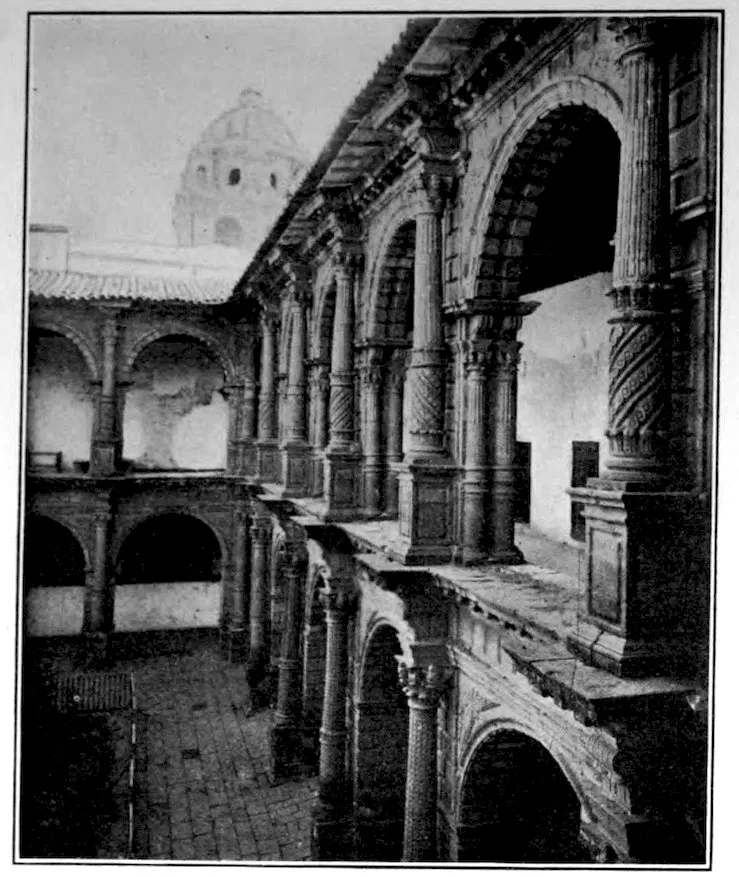
CLOISTER OF LA MERCED, CUZCO.
The Dominican order came into
especial prominence in ecclesiastical
matters in Peru during the seventeenth century through its persistent determination not to
accept the dogma of the Immaculate Conception, which was proclaimed throughout the
Spanish possessions by order of King Philip II. The controversy rose to a great height
in Spanish-America, and processions of thousands of people marched through the streets of
Lima singing in chorus La virgen fué concebida sin pecado original.—“The Virgin was conceived
without original sin.” So enduring was the impression created on the public mind
by the controversy, that to this day the popular salutation in some of the country districts
of Paraguay and Argentina is “Ave Maria!” to which the invariable response is “Sin pecado
concebida!” It was not, however, until 1854, as is well known, that the Immaculate Conception
was declared a dogma of the Church, by Pope Pius IX.
The missionaries of Saint Dominic were among the first to come to America, the
venerable Las Casas being of this order as well as Fray Valverde, Bishop of Cuzco. Las
Casas had been named for the diocese of Cuzco, but he was too intent on his work of
reform to desire a benefice, and Fray Solano of the Franciscan order was appointed to the
121office. The Franciscans were prominent during the entire period of the viceroyalty for
their extensive pioneer work in the wilds of America, their devout pilgrims traversing the
southern continent from Panamá to Cape Horn. The saintly Fray Francisco Solano, who
was a contemporary of Saint Toribio and Saint Rose of Lima, made a journey, barefooted,
walking the whole distance, from Paraguay, through the Chaco—which is still inhabited by
savage tribes, the terror of travellers—and across what is now Bolivia to the headwaters
of the Amazon; his life was
spent in Christianizing the
savage tribes of the remote
interior, a task much more
difficult than that of instructing
the cultured Indians of
the Inca’s country. He died
in 1610 and was canonized
by the Church.
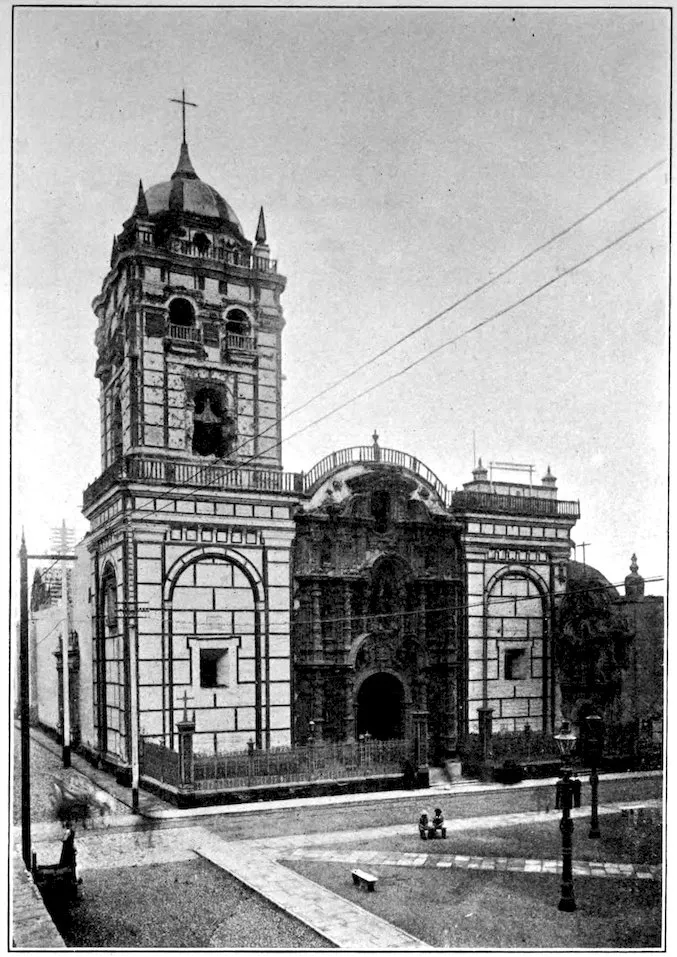
CHURCH OF SAN AGUSTIN, LIMA.
The church, chapels, and
convents of the Franciscans
are the largest and handsomest
in Lima. It is said
that more than two million
dollars were spent in the construction
of their principal edifice,
which was built in the
sixteenth century and reconstructed
after the earthquake
of 1746, the interior being
richly ornamented; the high
altar was encased with silver
and the niche of the Madonna
beautifully wrought of the
same material. The cloisters
of the convent are supported
on stone pillars, the roof
being of panel-work, and,
with the beams, exquisitely
carved. In colonial days it
used to be said that the four
best offices in Lima were the viceroyalty, the archbishopric, the ecclesiastical province of
the Dominicans and the office of the Mother Abbess of Concepcion. This nunnery commanded
an income of one hundred thousand dollars annually, the dowry of each nun, on
122taking the veil, being three thousand dollars. The order of San Agustin built many
handsome churches and convents during the viceroyalty, and the church of Nuestra Señora
de la Merced (Our Lady of Mercy) is still
among the most attractive of the city’s sacred
edifices. There are at present sixty-six religious
establishments existing in Lima, twelve
of which are nunneries, each with its respective
church.
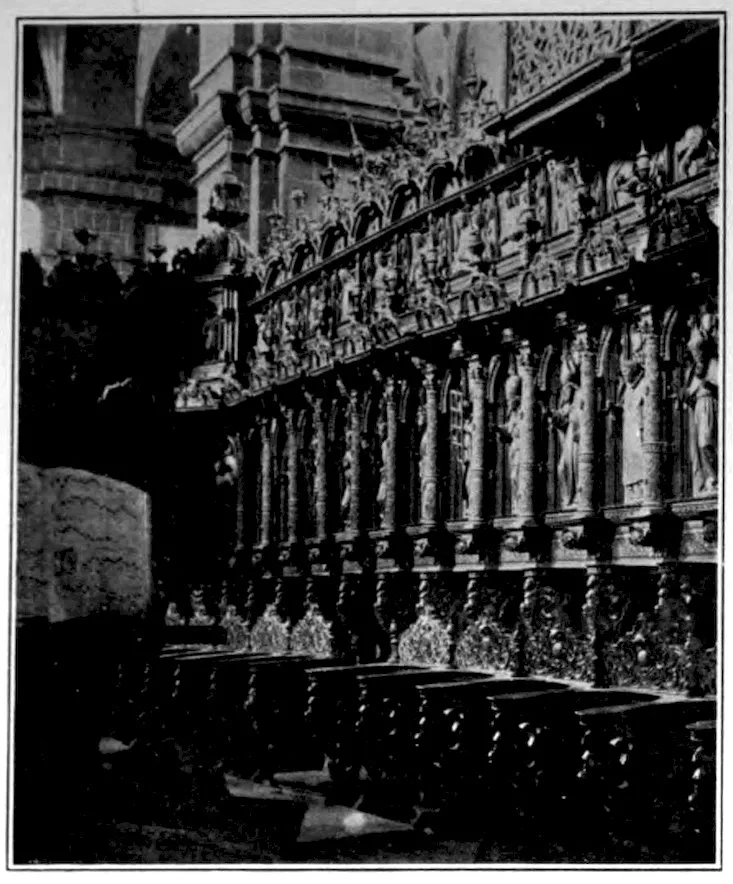
CHOIR OF THE CATHEDRAL OF CUZCO.
The Jesuits, who first came to Peru in
1567, were conspicuously noted for their
scholarship and their great ability as teachers
among the Indians. In every city they established
a church and a college; and at Juli, on
the border of Lake Titicaca, they founded a
training school for missionaries, in 1577.
Here the students were taught the native
tongues, and were provided with catechisms,
grammars, dictionaries, and other text books
necessary for their work, the order having
introduced the printing press into Peru at that
early date. The first book issued from the
press of Juli was a catechism, which is now
a valued possession of the National Library of Lima. Among their number were some of
the most celebrated historians of the Conquest, as well as noted naturalists, geographers,
and philologists. Their institutions became renowned, especially those established in
Misiones, in the seventeenth century, the ruins of which are visited by hundreds of
tourists annually. They accumulated such enormous wealth and their influence was so
powerful throughout colonial Spain, that a royal decree of 1769 ordered their banishment.
The command of the king was carried out with remarkable secrecy and expedition
under the direction of the Viceroy Amat. The chief difficulty threatened the attempt
to arrest the Jesuits of the capital and convey them on board the vessel which had
been sent to the Peruvian port to receive them. However, the task was completed
between midnight and sunrise, the viceroy himself heading the troops,—which were
divided into four sections, each with a numerous force of infantry and cavalry—and
marching to the four strongholds of the Jesuits in the city, viz., the convent of San Pablo,
the Novitiate, the house of the Desamparados and that of the Cercado. As soon as the
door of each institution opened, the purpose of the viceroy’s visit was made known and
the establishment was placed under guard of the royal troops until the inmates could
be taken on board. The same method was followed in Chuquisaca, Potosí, and in Chile,
though many of the unfortunate exiles met their death while crossing the snowbound
123passes of the Andes or in transportation by sea. Sixty were drowned on the voyage
from Valparaiso to Callao, and the loss of life from shipwreck and other causes greatly
reduced the number who arrived at
their destination.
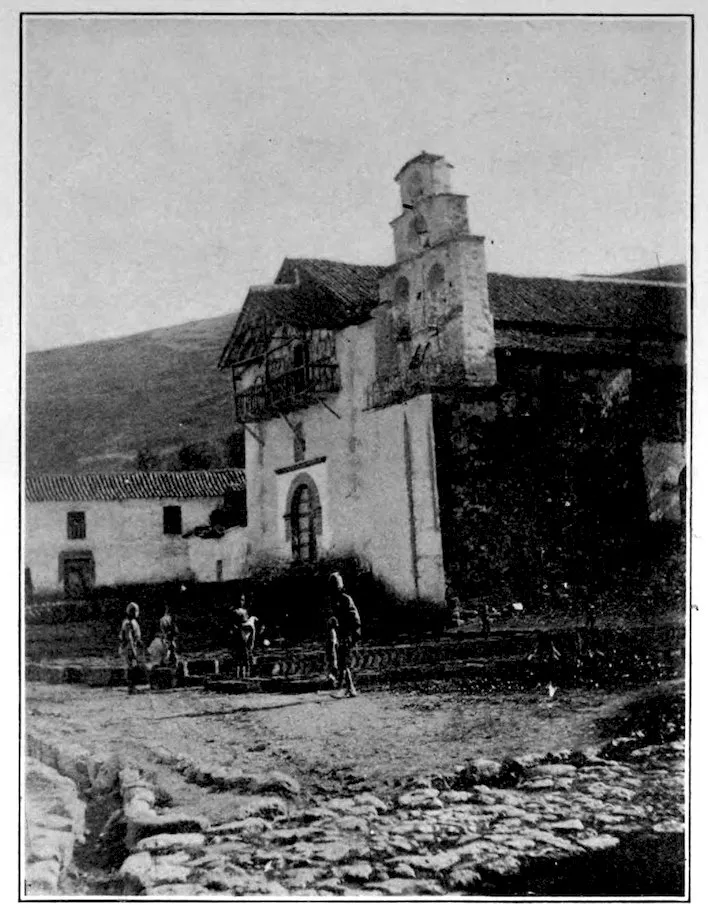
At the time of their expulsion from
Peru, the Jesuits were in possession of
the college of San Pablo, the Novitiate,
the house of probation of the Cercado,
the house of the Desamparados,
and the royal colleges of San Martin and
the Caciques, in Lima; the colleges of
the Transfiguration, San Bernardo, and
San Francisco de Borja in Cuzco; the
celebrated University of San Francisco
Javier and the royal college of San Juan
Bautista in Chuquisaca; and colleges in
Potosí, Arequipa, Cochabamba, Bellavista,
Huancavelica, Huamanga, Ica,
Moquegua, Oruro, La Paz, Pisco, and
Trujillo, as well as the missions of Mojos
and Chiquitos, the residence of Santa
Cruz de la Sierra and five parishes of
Juli. The landed estates of the Jesuits
numbered more than two hundred at
the time of their banishment, and were
valued at six hundred and fifty thousand dollars. It was believed that the order succeeded
in hiding vast treasure, and the government made a persistent search, but it has never
been found, nor is there anything to prove that all their wealth was not employed in
the support of their colleges, missions and other immense and constantly increasing
religious establishments. The estates of the banished order were sold at auction, and the
proceeds, together with the gold and silver confiscated by the Crown, were used to pay
the costs of their deportation, amounting to half a million dollars, the surplus, eight hundred
thousand dollars, being sent to the King of Spain. The sacred relics and ornaments of the
temples were distributed among the public institutions, and the collections of books were
given to the University of Lima to form the basis of a public library. All the revenues of
the order reverted to the Crown.
Under the viceroyalty there were five bishoprics subject to the metropolitan See of
Lima, the first having been established in Cuzco and the second in Lima, at the time of the
Conquest, to which were added those of Trujillo (1611), Arequipa (1612) and Huamanga
(1615). In each diocese the ecclesiastical government was divided into parochial districts,
124under the authority of the priests. The religious labors of the Christian fathers were by no
means light during the early days, as the former subjects of the Children of the Sun, though
apparently easily converted, confounded the worship of God with that of Pachacámac,
giving a most unorthodox interpretation to the dogma of the Trinity and the Immaculate
Conception.
The office of the Inquisition was established in Lima during the sixteenth century and
its victims included all ranks and classes of society, though the Indians were exempt from
its terrors. In the present day, such an institution as the Inquisition seems a blot on
religion; but centuries ago, it was regarded as an instrument of great power in keeping the
Church free from the contamination of evil beliefs. Its most earnest and relentless supporters
were not hypocrites, bent on revenge, but enthusiasts, who believed they were
justified in taking even the cruellest measures to protect the faith. The seventeenth
century was an intolerant age, and at the same time that the Inquisition was holding the
auto de fé with fatal frequency, the Salem Puritans were burning witches, and the Kirk of
Scotland was banishing one of its members for having travelled through a Catholic country.
The viceroy Abascal received the order from the Cortes of Spain to abolish the
Inquisition in the year 1811; and the hall in which so many judgments had been pronounced
contrary to the best laws of human liberty, was abandoned by the Holy Office,
to be occupied in years to come by the representative authorities of a government pledged
to recognize the right of every man to “life, liberty, and the pursuit of happiness.” The
same year that witnessed the abolition of the Santo Oficio, saw the first military gathering
of the patriots of Tacna, led by a Limeño, preparing to join the forces of their fellow
colonists on the tableland of Alto Peru, where they were to encounter the royalist army.
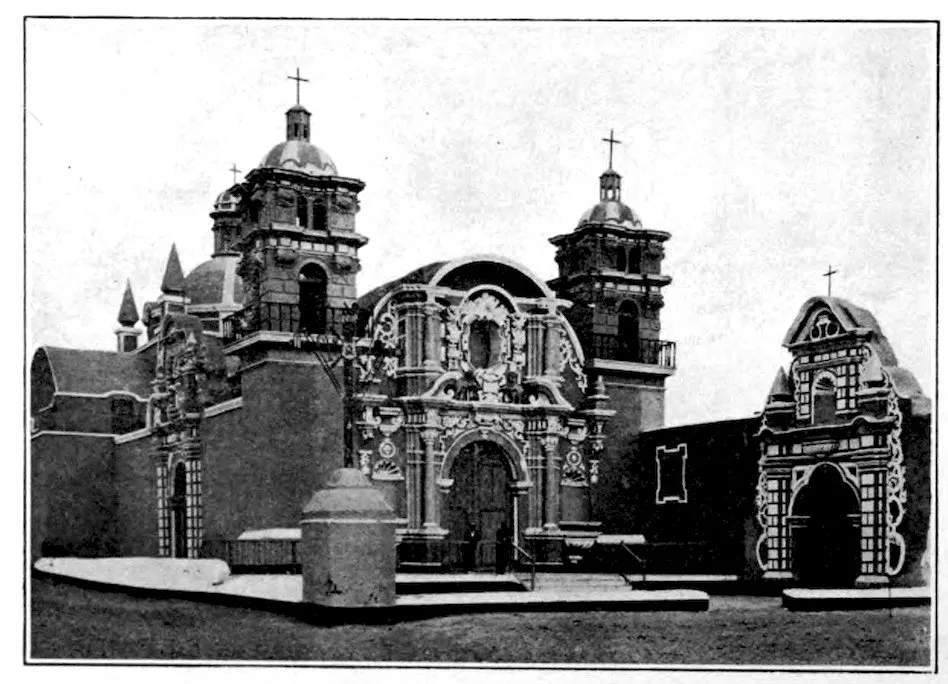
CHURCH OF THE COMPAÑIA AT PISCO.
126
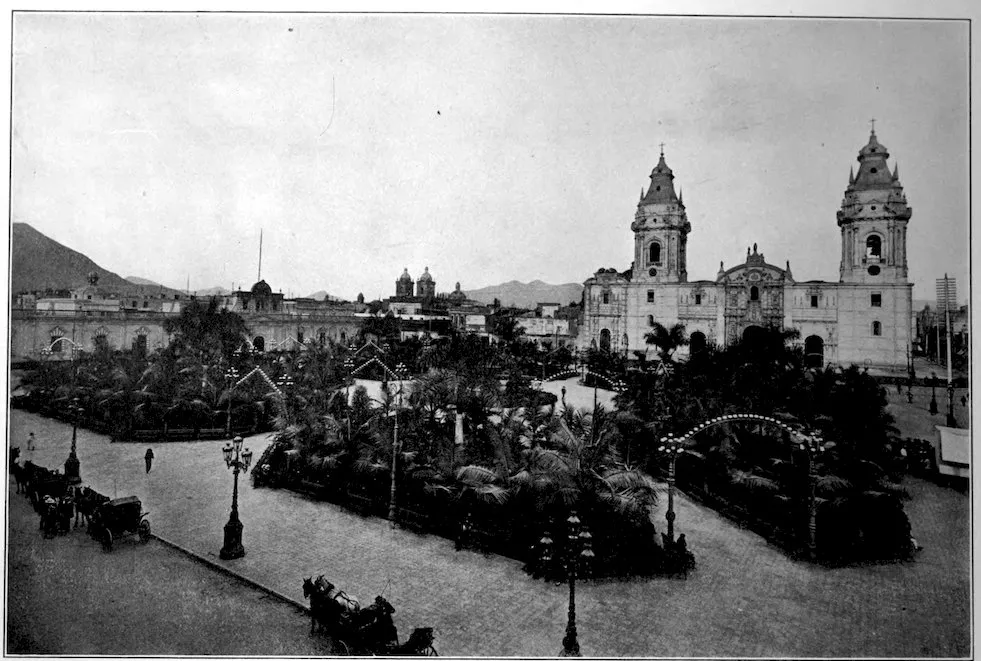
PLAZA DE ARMAS, THE PRINCIPAL PUBLIC SQUARE OF LIMA.
CHAPTER VIII THE OVERTHROW OF SPANISH AUTHORITY
127
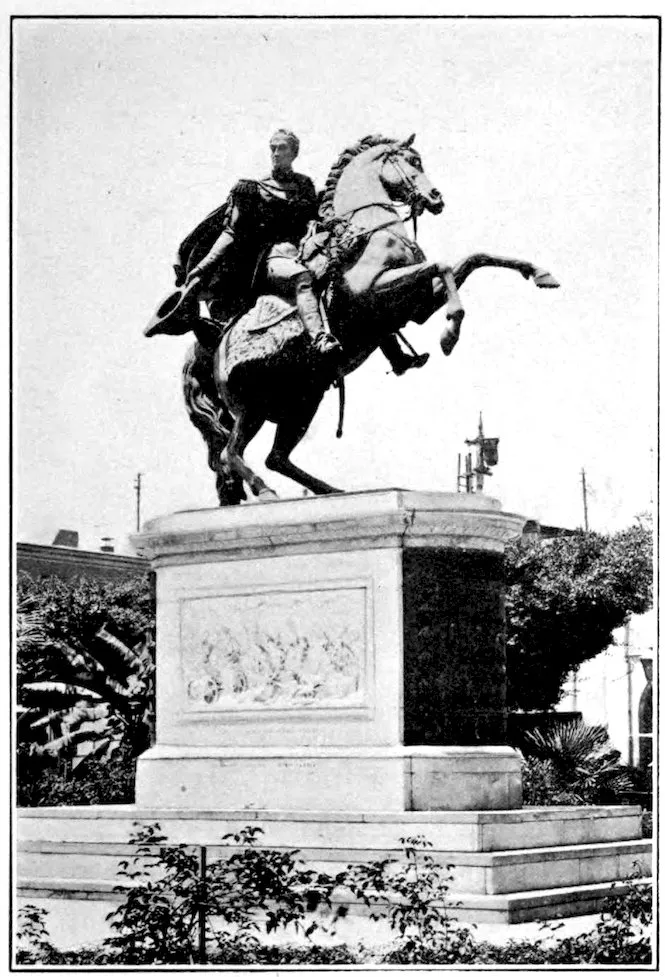
Peru, the centre and stronghold of Spanish
colonial power and prestige in South
America for three centuries, was governed
by conditions that did not prevail in the other
provinces. The elements out of which the
population was formed were unique in character.
The Conquest brought under the
dominion of the viceroyalty a people of such
ancient culture that no period could be fixed
as to its genesis, and of an origin so enveloped
in mystery that no certain knowledge
existed regarding its derivation,—a people
who had lived for centuries under absolute
despotism and yet had developed a gentle
obedience and submission such as could only
exist where the tasks were performed by
willing servants of a beloved master. The
crime of the Conquest, so deeply resented
by the princes of royal Inca blood, could not
be appreciated in its full significance by the
millions, who were deprived of no rights,
since they possessed none, but were simply
taken from the welcome task of tilling the farms of their “deity-king” and put to the unaccustomed
labor of the mines, under a new master, pitiless in his tyranny and ruthless in
destroying their sacred idols. The saddest effects of the Conquest on these people appeared
when their obedience and submission lost its refined quality, under cruelty and neglect, and
degenerated into servility and apathy. The Indian’s idea of supreme authority was in
128accordance with what he had been taught under a theocratic government and, therefore, had
its fountain-head in religious worship. The Catholic Church performed its mission in Peru,
not only by winning the natives to the new faith, but by protecting them from unscrupulous
corregidores, who abused the law of repartimiento—which gave these officials the privilege of
furnishing stores to the natives at a fair price—and forced the Indians to pay for articles they
could never use; many an insurrection arising from these abuses was stifled through the
influence of the priests, who were the highest authority recognized by the Indians. It is
certain, however, that the former sun-worshippers never quite comprehended the Christian
doctrine, merely adapting their beliefs to its demands; the Indian of the sierra still salutes
the rising sun, and kneels to pray, as, on his way to Cuzco, he first obtains a view of the
sacred city, or when, leaving it, he sees its sunlit temples for the last time from the neighboring
heights.
While the native element of the population at the time of the Conquest was represented
by a race apparently very old and lacking resistant vitality, the conquerors and their
followers, who constituted the Spanish element, represented a strong and independent
people, who were still enjoying the noontide of their vigor, having recently won supremacy
against the most powerful enemies by the might of their swords and in defence of the
sovereignty of their faith; the Spanish monarch of those times received the homage of
his people chiefly because he represented in his person the majesty and glory of the
national religion. The Spaniards were more fervid in the faith than their rulers themselves;
and in the controversies that arose between the ecclesiastical and secular authorities during
the period of the viceroyalty, the Church could always count on the sympathy of the
masses. As the number of American-born priests increased in the colonial dioceses,
the character of their teaching fostered a sentiment in favor of the land of their birth, and
encouraged the development of a new nationality, the population of which was composed
not only of the Indian and the Spaniard but of the mestizo, of mixed Spanish and Indian
blood, who possessed the predominating characteristics of both parents, and had a double
right to the title of patriot. In the war of Independence, the mestizo did noble service; and
if the Criollos, as the Peruvians of pure Spanish descent are called, proved themselves
splendid generals, there were no better fighters in the ranks than the mestizos, many of
whom became distinguished in the history of the revolution for their courage and
endurance, while a few rose to glorious heights of soldierly valor and left their names
engraved on the heart of a grateful nation. Of the minor elements, the negroes and the
zambos (the latter of mixed Indian and negro origin) were the most important, though it is
said the number of negroes brought into Peru did not exceed fifty thousand altogether.
The only common ground on which conqueror and conquered in Peru could meet was
a reverence for religion and a recognition of the sanctity of caste. From time immemorial
the Indians had lived under this spell, and the Castilian knew no law above the will of the
Church and the aristocracy, which, in Spain, were long synonymous. It has been said that
caste, more than anything else was responsible for the wonderful hold Spain had on her
129colonies. Caste ruled in everything—in religion, the army, and society—and the masses
bowed in willing submission to an aristocracy, which, if it did not claim celestial origin, at
least became the interpreter of the divine will to a listening nation. It was this spirit of
reverence which made Peru send its shiploads of gold to Spain, though receiving nothing
in return.
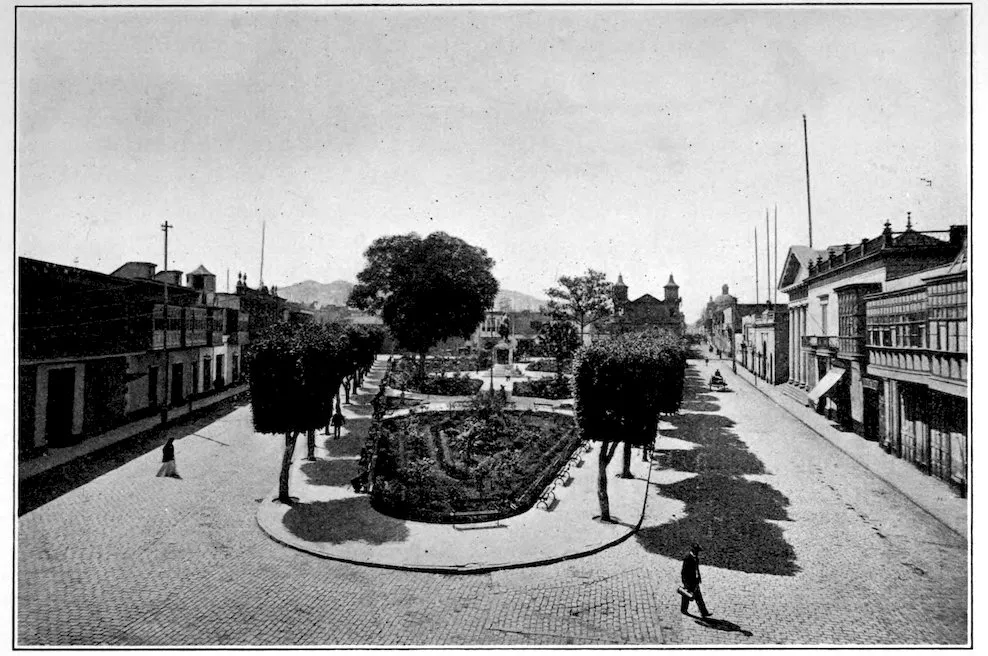
PLAZA OF THE INQUISITION, LIMA.
The great distance that lay between Spain and America rendered it impossible for the
mother country to be closely in touch with the colonies of the Pacific Coast; and, as time
went on, the traditions of their ancestors became dimmed in the minds of succeeding
generations of Spanish-Americans. Gradually the influence of the clergy and nobility of
Peruvian birth began to be exerted in patriotic measures. In 1750, schools were placed in
charge of the secular clergy, who were nearly all native Peruvians, with a natural sympathy
for the welfare of their country. The enormous prestige of the home government suffered
successive shocks in consequence of scandals that rang from one end of the colony to the
other, reporting evils practised by the highest colonial officials, both of the Church and
State. The Inquisition, the banishment of the Jesuits and the declining influence of Spain
among the European powers, all tended toward a weakening of the royal authority; and
though the effects were more perceptible in the provinces remote from the centre of
130Spanish power, yet even in Lima, under the very shadow of the viceroy’s palace, the
patriotic spirit found expression. In the tertulias of the Spanish-American nobility, as well
as in the private councils of educators—who were forbidden to bring into the country any
scientific books, or even the necessary apparatus for teaching physics, astronomy, and
mechanics—the question of national independence began to be discussed, as early as the
period of the French Revolution. Dr. Toribio Rodriguez de Mendoza, rector of the college
of San Carlos, and Bishop Pedro José Chavez, of Arequipa, were powerful advocates of
reform; and the bishop’s disciples, Luna Pizarro, afterward Archbishop of Lima, and
Gonzalez Vigil, exercised great influence in favor of national liberty. Dr. Unánue, president
of the School of Medicine, Don José Gregorio Paredes, Don Gavino Chacaltana of Ica and
Don José Pezet, editor of La Gaceta de Lima, were among the leading men of science and
letters who declared themselves in favor of independence, though their reunions had to be
suspended in consequence of the viceroy’s opposition. Two young lawyers, named Pardo
and Silva, were arrested for holding patriotic meetings, the former being banished and the
latter imprisoned for ten years. Secret societies were formed under the protection of
the colonial nobility, and even in the drawing-rooms of noble dames the forbidden topic
was discussed. The cause had its innocent victims, as all great reforms have had,—visionaries,
whose aspirations were their only crime. José Gabriel Aguilar, of Huánuco,
and Manuel Ubalde, of Cuzco, were put to death in the plaza of Cuzco, in 1805, for having
interpreted a dream to signify that America would rise up against Spain and that they
would be the chiefs of the insurrection.
The emancipation of the Spanish-Americans, especially in the viceroyalty of Peru, was
not the result of a development out of a condition of dependence; it came about rather in
consequence of a disillusion, which turned them from the unquestioning allegiance they had
always shown their sovereigns, and led them to demand a recognition to which they had long
been entitled. With the enormous wealth which they had held in their possession from the
time of the Conquest, the heirs to the Inca’s treasures could have established their independence
centuries earlier; but the same sentiment that made Gonzalo Pizarro’s followers
flock to the standard of Pedro de la Gasca, when he arrived in the simple garb of a priest,
with the king’s pardon in his hand, kept them blindly obedient to the monarchy for three
centuries, until the march of civilization drew them away from the worship of aristocratic
ideals and their attention became directed to the existence of new conditions which were
already shaping the destiny of modern empires.
Since the accession of the Bourbons to the Spanish throne, when there were “no longer
any Pyrenees between France and Spain,” the influence of less conservative neighbors had
increased within the hitherto exclusive circles of the proudest aristocracy of Europe. The
ideas of the French liberals had penetrated even into its universities, in spite of the Inquisition,
and had crossed the seas to the colonies of America. There was something in the
atmosphere of the New World which fostered the growth of liberal sentiments. News of
the independence of the North American colonies, as well as echoes of the French revolution,
131stirred the imagination of patriotic Spanish-Americans, and aroused in the hearts of a few
determined souls an unquenchable desire to lead their compatriots out of the bondage of
monarchical rule, that their country might enjoy the blessings of national independence.
For years before their purpose became generally known, it was nourished in secret, and
when the opportunity arose to proclaim it, the plans of campaign were quickly matured
and put in operation in Alto Peru and Quito, throughout the viceroyalties of Santa Fé and
Buenos Aires, and in Chile, the patriotic armies finally concentrating their forces in Peru
itself, the first and last stronghold of viceregal authority in South America.
During the government of the Viceroy Abascal, whose administration lasted from 1806
to 1816, events occurred in Spain which precipitated the revolution in South America, though
under all circumstances it could not have been long delayed. Napoleon had taken advantage
of the debility and corruption of the Spanish monarchy under Charles IV. to invade Spain,
hoping that the flight of the Braganzas to America would be followed by that of the Bourbons,
and that the sceptres of both Spain and Portugal would thus easily be placed within
his grasp. Charles, however, abdicated, in 1808, in favor of his son, Ferdinand VII.; and,
in order to carry out his ambitious designs, Napoleon was obliged to resort to perfidy.
After attracting the monarch and his father to Bayonne with specious promises, he sent
General Murat to occupy Madrid at the point of the sword. All Spain was roused to
rebellion against the invader, but the arrival of Napoleon himself with his veterans secured
a final victory for the French, and Joseph Bonaparte was crowned king, orders being sent
out from Bayonne that the Spanish-American colonists should transfer their allegiance to
the new ruler.
By a decree of Charles V., in 1530, confirmed by his successor in 1563, the American
colonies were authorized, in cases of emergency, to convoke general Juntas or political
assemblies; and in the present crisis, when the imprisonment of their rightful sovereign
had caused the authority of the Crown to be suspended, this right was exercised, in order
to save the colonies from the yoke of a usurping power. The leaders of the revolution saw
beyond this purpose the greater one, which was to achieve the final independence of the
colonies. But the masses could not be led into any radical measures against their sovereign.
The influence of the monarchy, which had excited strong religious as well as political
claims to their allegiance for three centuries, was all-powerful on the minds of a naturally
conservative and loyal people; and it was only through fidelity to their king that the
Spanish-Americans were first induced to take up arms against the constituted authorities of
their country.
The result of the convocation of government Juntas in the various colonial capitals was
a general declaration of loyalty to the banished King Ferdinand, and a refusal to recognize
the authority of Spain so long as its government remained in the power of the usurper. In
Peru, all the vigilance of the viceroy was employed in stifling the efforts of the patriots,
which became ever more persistent. In 1810, a young nobleman of Lima, Don José
de la Riva-Agüero, the leader of one of the secret societies formed for the purpose of
132promoting the revolutionary cause, was taken prisoner and banished to the interior. Another
colonial grandee, Don José Baquijano, Count de Vista Florida, a poet and historian, the son
of rich parents, joined the patriots and used his talents in behalf of the cause of freedom,
his influence contributing to increase its popularity among the aristocracy. The Spanish
government having proclaimed liberty of the press in 1810, a patriotic newspaper was
started, called El Peruano, but it was immediately suppressed by the Viceroy Abascal.
When the order arrived for the abolition of the Inquisition, the people went en masse to the
building in which the court had been held, and ransacked its rooms, breaking to pieces
the instruments of torture and destroying the archives.
Royalist troops had to be sent to Quito in 1809 to oppose the patriots, who had driven
out the chief authority and had assumed the national government; and an army was also
despatched, under command of General Goyeneche, to Alto Peru, where the revolutionists
had imprisoned the president of the Audiencia. In both campaigns the struggle was so
unequal that notwithstanding the heroism and determination of the colonists they were
finally overcome. News of the defeat of the patriots at Guaqui, on the border of Lake
Titicaca, reached Tacna when the army organized by the Limeño, Don Francisco Antonio
Zela, was about to set out for Alto Peru; and, a detachment of royalist troops arriving soon
afterward, Zela was captured by them and delivered to the authorities, who condemned him
to exile in 1811. The following year, on the 13th of February, the Independence was
proclaimed in Huánuco, but the ardent patriots who led the movement, Castilla, Araos, and
Rodriguez, were supported only by raw recruits from the sierra and their campaign met
with disaster, the chiefs being put to death.
Cuzco made its proclamation of independence in 1814. The leader of the patriots was
one of the Caciques who had joined the Bishop of Cuzco in repelling the forces of Tupac
Amaru thirty years earlier. He was known as Mateo Garcia Pumacagua, a brave warrior
and an honest patriot. With him were Mariano, Vicente and José Angulo, Gabriel Bejar,
Hurtado de Mendoza, Padre Muñecas, Luis Astete, Pinelo, and others. Their armies were
despatched in three divisions, one of which, under command of Pinelo and Muñecas,
marched to La Paz, besieged it and took possession.
After the victory of Guaqui, General Goyeneche had retired to Europe, to enjoy the
honors conferred on him as Count de Guaqui and a grandee of Spain. General Pezuela and
General Ramirez were sent to succeed him, with troops to prevent the Argentine forces from
advancing into Alto Peru; and General Ramirez, who was in Oruro when the patriots entered
La Paz, led twelve hundred men against them, forcing them to retire. He then passed on to
Puno and advanced on Arequipa in time to reinforce the royalist troops which had been
defeated and scattered by another division of the Cuzco army, under command of the
Cacique Pumacagua and Vicente Angulo, at that moment occupying Arequipa, amid the
rejoicings of the patriotic citizens. The trained hosts of Ramirez were more than a match
for the Cuzco troops, who were forced to retreat, while the victors entered the city in
triumph. Pumacagua and Vicente Angulo made a desperate effort to recover their position,
133but when, after months of marching and counter-marching, the armies met at Umachiri, the
patriots with badly organized troops, many of them undrilled Indians, while Ramirez had a
force of thirteen hundred, well armed and disciplined, the result of the battle was a total
overthrow of the
Cuzco troops, who
were pursued and
again defeated in an
encounter at Azángaro,
the captives
being scourged and
then set free—after
having their ears
cut off as a menace
to their sympathizers.
The royalist
troops found many
of these mutilated
heroes among the
insurgents whom
they overcame in
a final engagement
at Asillo soon
afterward.
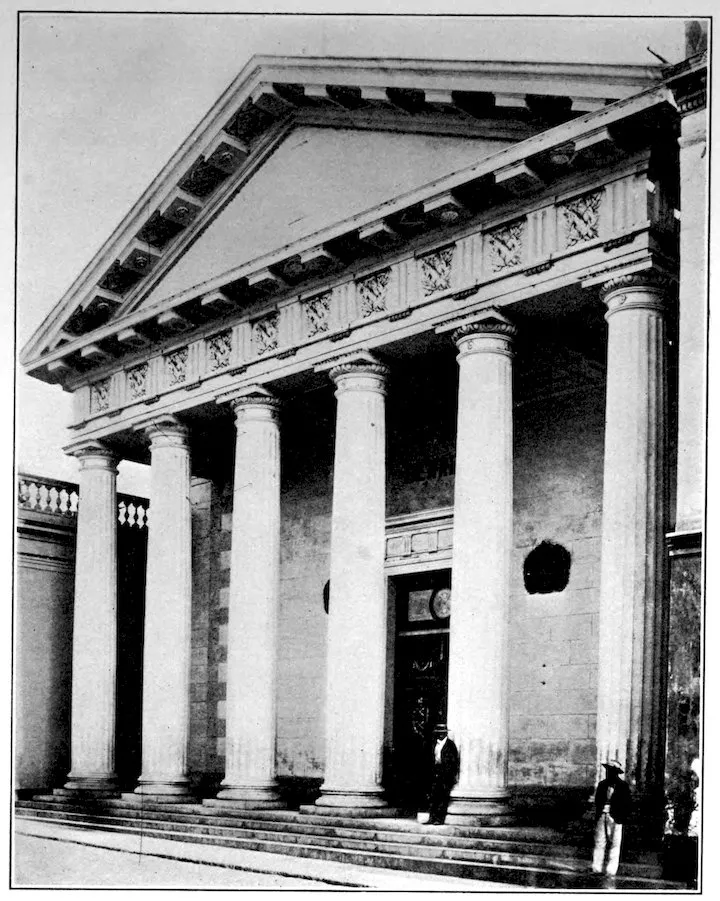
THE SENATE CHAMBER, LIMA.
The third division
of the Cuzco
army, commanded
by Mariano Angulo,
Mendoza, and Bejar,
marched on
Huamanga, their
progress as far as
Andahuaylas being
greeted by the people
along the route
with demonstrations
of great joy, and the prospect appearing favorable for the capture of Jauja and Tarma.
In Huancavelica they were also well received, by this time occupying all central Peru and
cutting off the capital from communication with the royalist forces of Pezuela and Ramirez.
The viceroy sent Colonel Vicente Gonzalez to meet them, and a battle took place at Huanta,
the royalists gaining the day after seven hours’ fighting, during which the streets and suburbs
134of Huanta were filled with the dead and wounded. Bejar, Angulo, and Mendoza returned
to Andahuaylas for reinforcements,—which were supplied by the patriots of Abancay and
other towns,—and then prepared to march on Huamanga. Meantime, word was received of
the victories of General Ramirez over the two other divisions of the Cuzco army and
of the advance of his men on Abancay. Through treachery, Mariano Angulo and Bejar fell
into the hands of the enemy and Mendoza was killed. The triumph of the royalists, who
thus succeeded in putting down a revolution that had extended from one end of Peru to the
other, threatening the very gates of the capital, was celebrated by condemning to death all
the leaders, Pumacagua being hanged and his companions shot. In this courageous campaign,
initiated by patriots representing every social class—an Indian, mestizos, and a criollo
priest—the noble mission had levelled all ranks; the spirit of democracy had triumphed
over caste; the proudest families of Peru mourned the loss of their sons, sacrificed for the
cause of their country. A brilliant young poet of Arequipa, Mariano Melgar, was shot on
the battlefield, and more than a hundred captives were cruelly murdered in Puno, among
them, Miguel Paschal San Roman, the father of a future president of Peru.
While the troops of the viceroy were occupied in all parts of the colonial dominion, the
patriots of the capital, led by Francisco de Paula Quiroz, a graduate of the University of
Huamanga, took advantage of the momentary weakness of the garrison in Lima to prepare
an attack, which, however, was frustrated by the arrival at Callao of the peninsular
regiment of Talavera. The plot was discovered, and Count de la Vega, who commanded
the garrison, was arrested on suspicion of complicity with the patriots, and imprisoned.
Quiroz died in a duel. The government forces were victorious in all parts of the viceroyalty,
news being received from Chile in 1814 that the patriots had been overthrown by
the army of General Osorio, sent by Abascal to the relief of the royalists. But that which
appeared to be a final triumph of the monarchy, was but a check in the advance of the
patriotic cause, during which its leaders were able to reorganize their forces and, profiting by
the experience they had gained, to make a better fight than ever, snatching victory from
defeat in one of the most glorious campaigns that illustrate the annals of modern history.
When the Viceroy Abascal retired to Spain, leaving the government to his successor,
Don José Joaquin de la Pezuela, in 1816, Buenos Aires was the only stronghold of the
patriot party. General La Serna was given command of the army in Alto Peru, and
General Ramirez was made president of Quito. General Pezuela was the last of the
viceroys. Though he arrived at a moment when nearly all Spanish-America acknowledged
the authority of the Crown, which had been restored to King Ferdinand VII., yet the astute
warrior was in nowise deceived as to the actual condition of affairs and the strength of the
revolution which seemed to have been dominated by the king’s armies. It was true that
the Argentine patriots had retired from Alto Peru, leaving that country to fight its own
battles under the guerrilleros; Chile’s patriotic army had withdrawn across the Andes;
Quito had been subjugated; New Granada had succumbed to the superior strength of the
royalist armies; the cause of independence had been apparently suffocated in Venezuela,
135its remaining defenders having taken refuge in flight; but, though all these facts apparently
signified absolute victory for the government, they really indicated only the ominous calm
preceding the tempest, and it was not long before the darkness of gathering clouds enveloped
the monarchy, bringing confusion to its ranks, that were to be utterly overwhelmed by the
full force of the storm as it broke over them on the field of Ayacucho a few years later.
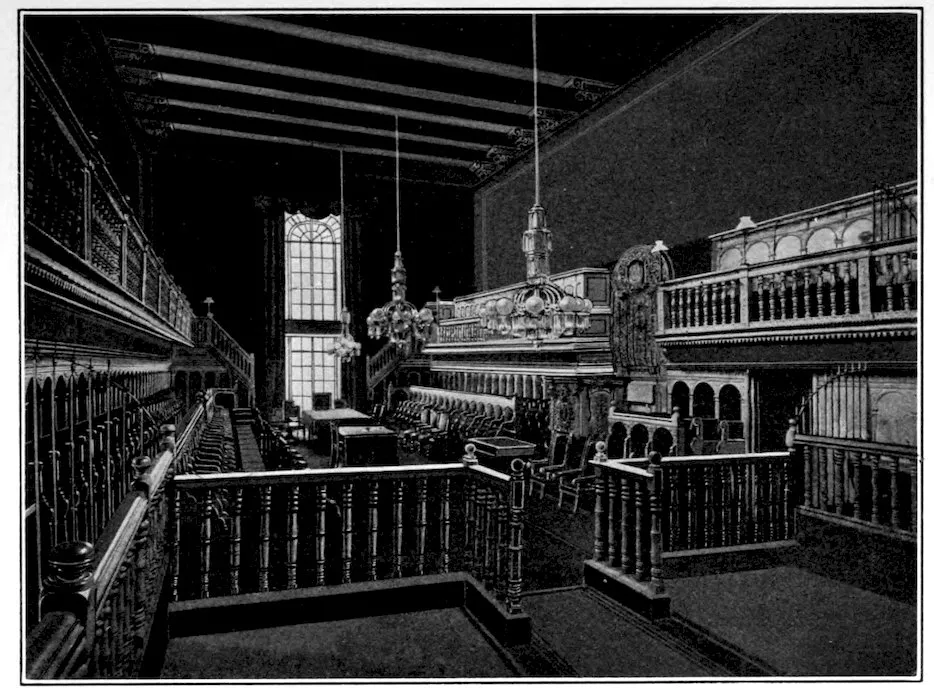
CHAMBER OF DEPUTIES, LIMA.
When the Viceroy Pezuela took command of the government, he found an empty
treasury and general disorder in the various departments of colonial affairs. The king
was disposed to establish rigorous absolutism in the monarchy, and ordered the severest
punishment for
the patriots who
had given evidence
of liberal
intentions; their
refusal to swear
loyalty to the
usurping Bonapartes
was not
regarded as entitling
them to any
consideration, unless
they immediately
declared
their allegiance to
the Crown, unreservedly.
He
counted on the
support of the
Holy Alliance, and
felt sure that the
encyclical sent out by Pope Pius VII. on January 30, 1816, to the archbishops, bishops, and
clergy of America, obliging them to promote, by all means, the obedience and fidelity of the
colonists to His Catholic Majesty, would have a speedy effect; the news of the victories
won by his armies against the patriots was especially favorable to the triumph of absolute
authority. But, without funds in the exchequer and with insufficient means of defence at
his command, the Viceroy Pezuela found himself confronted by a sudden resurrection of
the enemy, stronger and more determined than ever, better organized and disciplined, and
advancing in two powerful hosts, the one from the north, the other from the south, under
the command of experienced and accomplished generals, whose fame rang throughout all
Spanish-America. The glory of the viceroyalty, which had dazzled Peru for three centuries,
dwindled before the splendor of their deeds of valor and patriotism.
136From the South came the great Ejercito Libertador, or Liberating Army, which had
been organized by General San Martin in Mendoza and had effected the complete overthrow
of the royalist forces in Chile in 1817. The invading troops were composed of two
thousand five hundred men and twelve guns, protected by the naval forces of the newly
inaugurated republic of Chile, under Admiral Cochrane. Landing near the port of Pisco, in
what is now called Independence Bay, on the 7th of September, 1820, General San Martin
issued a proclamation the following day, in which he declared that the purpose of his army
was not to make conquests, but to liberate a people who had trembled for three centuries
under the barbarous rights of conquest. His orders to the soldiers were an evidence of
good faith and a proof of his soldierly principles: all robbery was prohibited; all bloodshed,
except on the battlefield, was to be punished by hard labor; any insult offered to the
citizens of the country, whether Europeans or Americans, was a grave offence and might
be paid for at the cost of life itself, according to the circumstances. In concluding his
proclamation the Liberator paid a high tribute to the courage and humanity of his troops,
stimulating their enthusiasm by an attractive picture of the glories awaiting them as the
heroic saviors of their oppressed fellowmen. This interesting document bore the date of
issue, September 8th, 1820, with the significant words “First day of the liberty of Peru,”
and the signature “San Martin.”
The viceroy hastened to make proposals of peace to General San Martin, inviting him
to a conference for the purpose of agreeing on a basis of mutual understanding. The
invitation was accepted, as San Martin saw in it his opportunity to gain time, to get into communication
with the patriots of Lima, to learn the state of public opinion, the situation and
strength of the viceroy’s army, and other important matters. The patriots of Lima had not
been idle, though the vigilance of the colonial authorities prevented them from securing
possession of the enemy’s stronghold; three daring leaders, among them Colonel Gomez,
planned an attack on the fortress of Callao but they were captured and punished.
Riva-Agüero, Francisco Javier Mariátegui, Pezet and Don Eduardo Carrasco, maintained
correspondence with the emissaries of San Martin and gave valuable information. The
conference between the envoys of Pezuela—who were Count de Villar and Don Hipólito
Unánue—and San Martin’s representatives, Colonel Tomás Guido and Don Juan Garcia del
Rio, took place at Miraflores, a suburb of Lima, and resulted in a short armistice, but in no
agreement of peace; the viceroy proposed the submission of the patriots to a liberal
government under the monarchy, while the patriots demanded the recognition of their
independence.
Before leaving Pisco, San Martin sent General Arenales at the head of a thousand
men in the direction of Huamanga; they were received at Ica and Huamanga with enthusiastic
support, and continued their march to Huancavelica, Huancayo, and Tarma. The
viceroy sent troops to stop Arenales’s progress, and the opposing forces met near Cerro de
Pasco, the patriots gaining the battle, in which the royalist general O’Reilly and Colonel
Santa Cruz were captured, as well as four hundred soldiers, who were added to the
137patriots’ ranks. General O’Reilly received permission from San Martin to return to Spain,
but committed suicide by jumping into the sea, rather than live under the shame of defeat;
Colonel Andrés Santa Cruz accepted service in the patriot army, and was afterward president
of the Peruvian-Bolivian Confederation. Arenales’s campaign was notable for its influence
in winning recruits to the cause of independence among the inhabitants of the sierra, who
were greatly impressed by the conduct of the troops, especially their respect for property
and human life, which had been ruthlessly sacrificed by the royalist armies.
The first point of disembarkation made by General San Martin after leaving Pisco was
Ancón, to the north of Lima, where he received word that Guayaquil had declared its adhesion
to the Ejercito Libertador. In the meantime, many Peruvian patriots had joined San
Martin’s army. A young soldier named Vidal became conspicuous for his zeal and energy
and was promoted to a captaincy for valuable services at this time. Admiral Cochrane was
busily preparing to seize the Spanish frigate Esmeralda in the port of Callao, and on the
6th of November, at midnight, he perfected his plans, organizing the squadron into two
divisions, each of which advanced on the frigate from opposite directions; the Spaniards
made a heroic resistance but to no avail, as the prize was captured and carried off to Ancón.
This was one of the most daring and brilliant episodes of the campaign. Soon afterward,
General San Martin removed his army from Ancón to Huaura, near the port of Huacho, about
one hundred miles north of Ancón. Everywhere he was welcomed by the patriots, whose
number increased daily. The adhesion of Trujillo was secured through the Intendente, the
Marquis de Torre-Tagle, his pronunciamiento, which was issued on the 29th of December,
1820, gaining for the patriot cause all the provinces of his jurisdiction, which included
Lambayeque, Cajamarca, and Piura. Meantime, Arenales was making uninterrupted progress
through the interior, the patriotic Huánuco having issued its pronunciamiento in favor of the
cause immediately after the victory of Cerro de Pasco. In Lima, the viceroy was losing all
control of affairs; the royalist battalion “Numancia,” six hundred strong, joined the Liberator’s
army; the very secretaries of Pezuela were coöperating with the patriots; and public
opinion was divided only between admiration for the Liberator and contempt for the policy
of the viceroy, who, at least, controlled a larger military force than San Martin, and was
better protected.
In January, 1821, the leading generals of the royalist army, distrusting the purposes of
the viceroy and dissatisfied with existing conditions, demanded his abdication, and raised
General La Serna to the supreme command. General Pezuela retired to Europe with his
family. After his abdication more than a hundred royalist officers and soldiers joined San
Martin’s army, among others, Colonel Gamarra, who became president of Peru later; and
Colonel Eléspuru, who organized the first exclusively Peruvian battalion in the Liberator’s
army. General La Serna, no more courageous than Pezuela, did not believe that he could
offer sufficient resistance to the advance of the patriot army on Lima, and retired to the
interior, General San Martin entering the capital on the 12th of July, 1821. On the 28th of
July, the date celebrated throughout the republic of Peru as “Independence Day,” the
138proclamation of independence took place in the Plaza Mayor, in front of the government
palace; after the memorable words: “From this moment Peru is free and independent by
the will of the people and by the justice of their cause which God defends!” the standard
was unfolded and the shouts of a joyous people voiced the sentiment of an emancipated
country in Viva la Patria! Viva la Libertad! Viva la Independencia!
The Protector, as San Martin was called, began at once the organization of a provisional
government. He appointed his cabinet, naming as Minister of Foreign Affairs, Don Juan
Garcia del Rio; Minister of War and Marine, Don Bernardo Monteagudo; and Minister of
Finance, Don Hipólito Unánue. The patriot Riva-Agüero was appointed President of the
Department of Lima. Among the first political acts of the Protector was the abolition of
slavery and of the mita. He also proclaimed liberty of the press and reform in the administration
of justice and finance. At this time Lord Cochrane insisted that his soldiers were
impatient to be paid; and, in order to meet their demands, he went to Ancón where he
seized a cargo of silver ready for shipment, amounting, it is said, to four hundred thousand
dollars. His action was disapproved by San Martin, and he retired from Peru. Meantime,
the royalists were defeated in an attempt, made under General Canterac, to get reinforcements
to the garrison in the fortress of Callao, which had been left in charge of General
La Mar when La Serna withdrew from the capital. The garrison was forced to capitulate
and General La Mar entered the army of the Independence. The final triumph of the
patriots depended on the capture of the royalist army, still encamped in the sierra, and
the troops of the Protector were growing impatient over the delay; the political leaders
were occupied with the preparations for the forthcoming national Congress, which was
to meet the following year to promulgate the Constitution of Peru; in the midst of these
conditions, General San Martin gave the reins of government into the hands of the Marquis
de Torre-Tagle as Supreme Delegate and went to Guayaquil, in order to meet the great
leader of the Ejercito Colombiano, General Simon Bolivar, who had accomplished for the
northern provinces of South America that which he himself had done so well in the southern
half of the continent,—securing their independence of the Spanish monarchy.
The particulars of the conference between General San Martin and General Bolivar in
Guayaquil are not known to this day; but when the Protector returned to Lima he resigned
the government into the hands of the first constituent congress, which met in Lima in 1822.
This assembly conferred on him the title of Founder of the Liberty of Peru; gave him the
grade of captain-general; decreed a life pension for him equal to that which Washington
received from the United States; ordered that his bust should be placed in the National
Library and a statue erected in his honor; and conceded to him in perpetuity the honors
due to the chief of government. A short time afterward General San Martin went to
Europe where he died in 1850 at seventy-two years of age. His patriotism, the constant
and unfailing devotion with which he worked for the realization of the noble ideal to which
his life was consecrated, his honorable principles, magnanimous conduct, and sterling
character, the intrepidity of his courage as a soldier, the modesty of his deportment as a
139victorious leader, place him high above most of the great men of history and make him
worthy of immortality among the best of them.
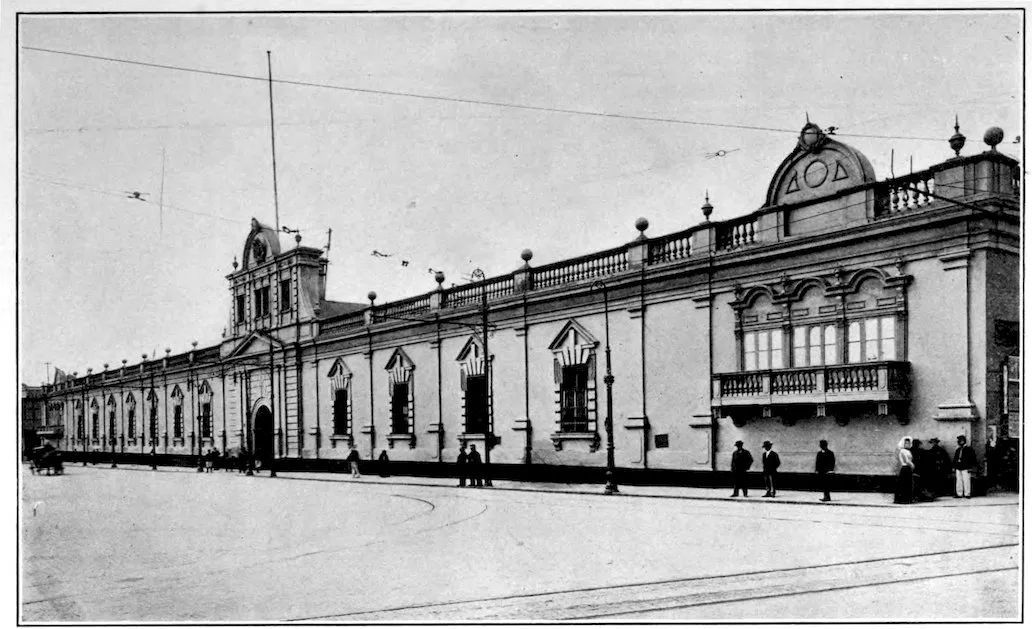
THE HISTORICAL PALACE OF THE VICEROYS, LIMA.
The first independent Congress of Peru decreed that the government should be
exercised by Congress, and that a Junta de Gobierno, composed of three of its members,
should constitute the chief executive power. General La Mar, General Alvarado, and the
Count de Vista Florida were named for the first Junta, General La Mar being appointed its
president. The oath of allegiance to Congress took place with great éclat in September;
the following year the Junta de Gobierno was dissolved and Don José de la Riva-Agüero
was elected president of the Republic, taking the oath of office and receiving the banda
bicolor, a band of ribbon in two stripes, “white and red,” which is still worn by the chief
executive of Peru on official occasions. Congress also bestowed on President Riva-Agüero
the rank of grand marshal. At the same time, the command of the army was given to
General Santa Cruz and General Gamarra was appointed chief of staff. The president gave
especial attention to the army, and within a few months after his inauguration General
Santa Cruz left Callao for the interior at the head of five thousand troops, in two divisions,
one of which was under his own command and the other in charge of General Gamarra.
They marched into Alto Peru and met the united royalist forces under La Serna’s generals,
Valdes and Olañeta, but were obliged to retreat before the superior force of the enemy;
and Santa Cruz lost the greater part of his army while making his way to the coast over
140the bleak Cordillera, during a dreadful storm. La Serna, who had his headquarters at
Cuzco, had organized his forces in two divisions: the army of the North, commanded by
General Canterac and stationed in the valley of Jauja, as a menace to Lima; and the army
of the South, under General Valdes, supporting the royalist cause between Arequipa and
Potosí. This was the condition of affairs when General Santa Cruz left Callao. Soon
afterward General Sucre, who has been called the diplomatic agent of General Bolivar,
arrived in Callao with a force of three thousand Colombian troops. At the same time,
General Canterac was preparing to march on Lima at the head of nine thousand men. In
view of the circumstances, President Riva-Agüero convoked a council of war, which resulted
in the appointment of General Sucre as commander-in-chief of the patriot army. Canterac
entered Lima in June, 1823, with his splendid troops, but finding that Santa Cruz was on
his way to the interior he retired to Jauja. With the advent of Canterac’s army into
Lima, the republicans removed their headquarters to Callao, and later, to Trujillo. The
difficulties incident to the inauguration of a new form of government occurred in the
present case; a quarrel arose between Congress and executive, the president resenting
the action of Congress in bestowing supreme authority on General Sucre, and the president’s
enemies seeking to undermine his authority. General Sucre, who immediately set
out with his army to overtake Santa Cruz, gave the command of the capital to the
Marquis de Torre-Tagle. The enemies of President Riva-Agüero secured his downfall,
and after being treacherously seized and imprisoned, he was forced to retire from the
country. He was one of the most distinguished characters of the revolution and his
services deserved a better reward. Posterity is proud to honor, as one of the heroes
of his country, the Grand Marshal Riva-Agüero, Marquis de Monte Alegre and Chevalier of
the Order of Charles III.
General Bolivar arrived in Lima on the 1st of September, 1823. He was received
with the greatest enthusiasm, and was immediately invested by Congress with supreme
authority, military and political. Later, his power was amplified, General Necochea being
at the same time made political and military chief of the capital, to replace the Marquis de
Torre-Tagle who fell into disgrace, through his correspondence with General Canterac.
As soon as possible, Bolivar began plans for the accomplishment of the great purpose
that had brought him to Peru, and two months after his arrival he left Lima to establish
military headquarters at Pativilca, two hundred miles north of the capital and due west
of Cerro de Pasco near which the royalist troops were stationed, in the department of
Junin. Preparations were at once begun for a campaign against the enemy. The Liberating
Army, which consisted of six thousand Colombian and four thousand Peruvian troops,
was organized in three divisions,—two Colombian, under Generals Cordova and Lara, and
one Peruvian, under General La Mar, the Peruvian cavalry being placed in charge of General
Miller, that of Colombia under Colonel Carbajal’s orders, and the Argentine cavalry under
Colonel Bruiz, while General Necochea commanded the united cavalry force, General Sucre,
who had returned from the interior, being appointed chief of staff of the whole army.
141The presence of the great Bolivar, whose victorious campaigns in Venezuela, Colombia,
and Ecuador had sealed the independence of those countries on the battlefields of Boyacá,
Carabobo, Bomboná, and Pichincha, animated the now drooping spirits of the Peruvian
patriots, and filled all hearts with hope and confidence. In the month of July, 1824, the
Liberating Army of the North began its march toward Cerro de Pasco. The task of
leading a large body of troops over the mountains was tremendous, especially as the
supply of provisions had to be kept up at great cost, and the severity of the climate at
such an altitude was a serious drawback. Over a similar pathway, five hundred miles
farther north, the Conquerors had led their men three centuries earlier, on their way to
Cajamarca. But on what a different mission! They sought the subjugation of a noble
and gentle race, whom they hoped to rob and enslave “by right of conquest”; these
advancing hosts were seeking to bring freedom and happiness to a suffering people.
The victory of the former brought only an ignominious destiny to the Conquerors; the
triumph of the latter is emblazoned in the high places of immortal glory. Pizarro’s name
is a synonym for cruelty and rapacity; the names of San Martin and Bolivar thrill the
soul, and stir its noblest sentiments.
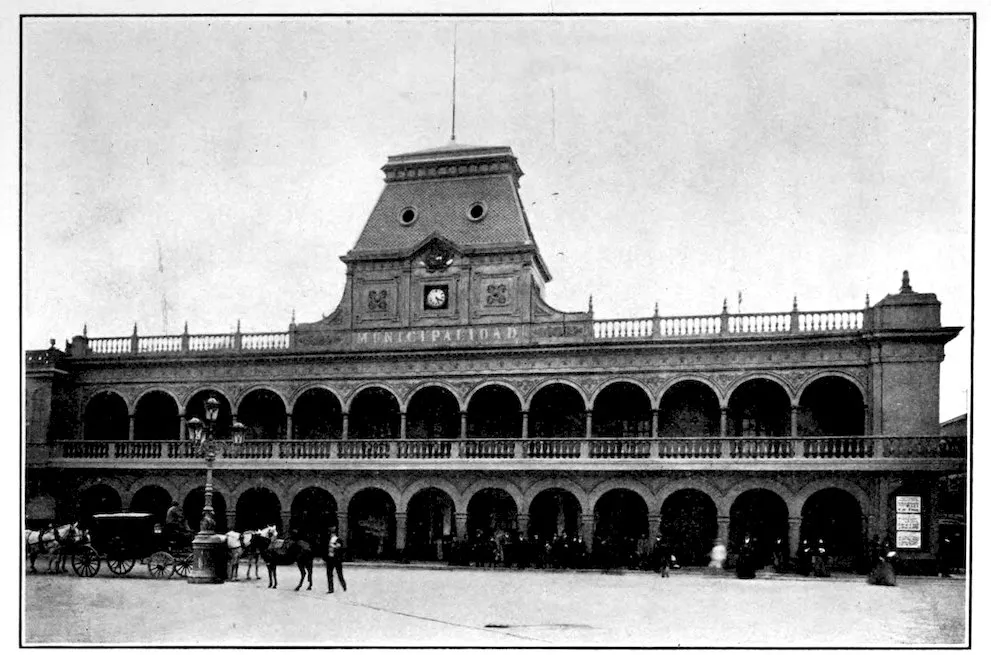
THE MUNICIPAL PALACE, LIMA.
The final events in the history of South American independence took place within a
year after the beginning of Bolivar’s campaign on the plateau of Junin. The story of
Junin is soon told. While the royalists remained inactive at Jauja, more than a hundred
leagues to the south, Bolivar reached the plateau, on the 5th of August, 1824, and reviewed
142his troops, ten thousand strong, cheering them with those inspiring addresses which great
military captains of all ages have found so effective. As soon as General Canterac learned
of the approach of Bolivar, he advanced with his army, consisting of eight thousand
infantry, thirteen hundred cavalry, and a proportion of field artillery, as far as the lake of
Junin, near the southern shore of which the famous engagement took place. After a
march of fifteen miles through a mountainous district, Bolivar’s army reached an elevated
point, from which they obtained a sudden view of the royalist army, five miles away,
marching over the plains of Junin. The patriot cavalry, nine hundred strong, having
dashed forward, came up within a short distance of the royalists; putting himself at the
head of his cavalry, Canterac ordered a charge which might have won the day, as the
patriots, in their enthusiasm, had placed themselves in an unfavorable position; but
the Spaniards were too sure of their victory and pushed in hot pursuit of the retreating
cavalry, thereby giving an opportunity for a Peruvian battalion under Colonel Suarez, which
had been detained in the marshes, to advance on the rear of the royalist ranks and thus
afford the retreating forces a chance to rally; the result was a total and complete victory
over the Spaniards after a battle that lasted less than an hour, during which not a shot
was fired, the lance and sabre alone being used. The royalists lost nineteen officers and
three hundred and forty-five soldiers of the line, besides eighty taken prisoners. The
patriot losses were three officers and forty-two soldiers of the line killed and one hundred
wounded.
The victory of Junin gave Bolivar command of Tarma, Jauja, Huancayo, Huanta, and
Huamanga. General Canterac retired to Cuzco where he was joined by Valdes, and the
viceroy himself then took command of the united armies, with Canterac as his chief of
staff. The Liberator placed his troops in charge of General Sucre with instructions to go
into quarters in the Apurimac valley, east of Ayacucho, during the rainy season. But the
viceroy immediately began operations against the patriot army, hoping to get a position
in their rear and cut off communication with Lima. While General Sucre fell back to
Andahuaylas, La Serna led his army across the Apurimac and around by Pampachira and
Huamanga, and there countermarched along the Cuzco highroad to meet the patriots. His
army numbered ten thousand men, with fourteen pieces of artillery, and sixteen hundred
cavalry, presenting a very formidable force. When General Sucre found out that the
viceroy was leading his army toward Huamanga, he left Andahuaylas and marched
westward, crossing the Pampas River a few leagues southeast of Ayacucho, and reaching
the village of Quinua, at the western extremity of the plain, on the 6th of December. The
viceroy advanced and took his position on the heights of Condorcunca, which rose
abruptly along the eastern boundary of the plain; General Sucre’s troops were encamped
in front of the Spaniards, about a mile distant and having Quinua in the rear. On the
morning of December 9, 1824, the armies were ready for battle. The patriot forces were
formed in close columns, General Cordova commanding the right, General La Mar the left,
and General Miller the centre, with General Gamarra as first chief of staff. The troops
143did not number more than five thousand, but every soldier was fighting for a cause dearer
than life itself, and every heart thrilled with patriotic fervor as General Sucre, in an inspiring
voice, recalled their former achievements and urged them to fight for their honor and the
salvation of their country, exclaiming: “On the efforts of to-day depends the fate of South
America!” As the royalist army was seen descending Condorcunca, he added, pointing to
their glittering columns: “Another day of glory is about to crown your admirable constancy.”
When the enemy appeared on the plain, General Sucre ordered the Cordova
division and two regiments of cavalry to advance to the charge.
The field of Ayacucho presented an animated scene as the signal to attack was given
by the gallant Cordova, who, dismounting and placing himself in front of his division,
waved his sword above his head with the enthusiastic order “Forward, with the step of
victors!” His confident bearing had an immediate effect on the troops, and they moved
to the attack in splendid order, the charge, which was made in four parallel columns with
the cavalry in the intervals, proving fatal to the enemy. The historical fight was won after
a little more than an hour’s struggle, during which the royalists were driven back with
great slaughter. At first, the viceroy’s troops fought with skill and courage, but they
were gradually driven back and obliged to abandon the field. The viceroy was wounded
and taken prisoner, which had a depressing effect on his followers. General Valdes
made an unexpected detour and attacked the left flank of the patriot army with such
success that the fortunes of the day hung for a few moments in the balance; La Mar’s
forces were obliged to retreat, and a part of Lara’s division which went to his assistance
was also driven back; but at this critical juncture General Miller, commanding the Junin
Hussars, made a splendid charge, forcing the enemy to retreat and giving the patriots time
to recover their position. An impetuous charge was then made on Valdes’s ranks, which
sent cavalry and infantry flying in all directions. The victory was won; General Canterac
and General Valdes, as well as thirteen other generals, five hundred officers and three
thousand rank and file, became prisoners of war. Before sunset General Canterac sued for
terms, and a capitulation was agreed upon which does the highest credit to the generous
spirit of the victors. The losses to the royalists were fourteen hundred killed and seven
hundred wounded, while the patriots had three hundred and seventy killed and six hundred
and nine wounded.
Such was the victorious outcome of the battle of Ayacucho, which has been
pronounced the most brilliant ever fought in South America, on account of the splendid
discipline of the troops, the skill and daring of the officers, the presence of the ablest chiefs
and highest representatives of both the opposing forces, and the undaunted bravery of the
entire army on both sides. It is said that the viceroy’s mistake lay in making any attack
at all, but that he was impelled to it by the eagerness of his troops, tired of their long
marches. After the victory, Huamanga received the name of Ayacucho. By the terms of
the capitulation the Spanish officers were given their passports, and many of them set out
for Spain immediately. The victory put an end to Spanish dominion in South America, the
144Viceroy La Serna recognizing, by his signature to the capitulation, the absolute independence
of Peru. The subsequent history of the Republic is a record of the progress and
development of a nation which had to learn the lesson of self-government after having
been for centuries accustomed to give unquestioning allegiance to an absolute monarch,
under a system that gave all honor to military prestige and social rank, and regarded as
unworthy of consideration any human rights that were based on liberty, equality or
fraternity.
ARMS OF PERU AT THE TIME OF THE INDEPENDENCE.
CHAPTER IX PERU UNDER REPUBLICAN GOVERNMENT
145
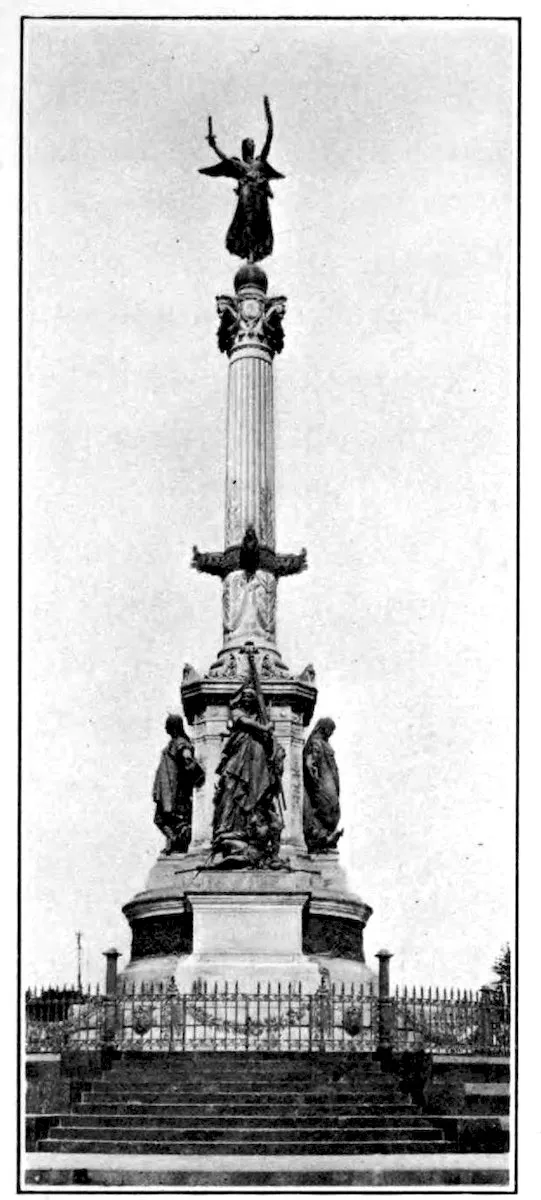
The Independence of Peru was the crowning glory of the
Spanish-American revolution. Here, in the heart and
centre of colonial monarchism, where the very existence of
society seemed to be threatened in the event of a change of
government, and the vigilance of the authorities was so active
that a single word in favor of liberty, spoken in an unguarded
moment, was sufficient to place its author under the fatal ban
of the Holy Office, the patriotic spirit had, nevertheless, grown
and developed, awaiting only a fair chance to dominate an
overpowering environment. The Viceroy Pezuela realized
the force of national sentiment when he hesitated to send his
troops against General San Martin at Huaura, although the
royalist army then at his command numbered eight thousand
men, and he had every advantage over the precarious position
of the patriots. The defection of the “Numancia” regiment,
following on the capture of the Esmeralda and the victory of
Cerro de Pasco, seemed to overwhelm the Spanish authorities
with a sense of insecurity, as if they realized that these reverses
signified a more powerful force at work to destroy the government
than was apparent in the small army of the Liberator.
The fight in Peru was won in the secret councils of the
patriotic party before the opposing forces met on the battlefield.
When the standard of the Liberating Army was unfurled on the plain of Ayacucho, it
mattered little that the royalist strength doubled that of the patriots, and that the viceroy
himself appeared in the field, his silver helmet glistening at the head of his troops; the
spirit of the warrior prepared for glorious victory or sublime sacrifice which animated
every soldier of the republican army was not apparent in the royalist ranks; the officers in
146command of the king’s forces were discontented because they were obliged to obey a
foreign leader, General Canterac being a Frenchman of haughty manners and exacting discipline;
the Indians were all patriots at heart and had been pressed into the royal service
against their will: a presentiment of defeat had spread through the viceroy’s camp the night
before the battle, in spite of the royalists’ superior numbers, and there was none of the
exaltation which carried their opponents into the combat with the exuberant confidence
expressed in the order: “Forward, with the step of victory!”
The glad news of the final triumph of the patriotic cause was carried rapidly to every
part of the country, and the joy of the people found expression in enthusiastic demonstrations
of all kinds. In every city and town, religious services were held to render thanks to
God for the success which had crowned the efforts of the nation to establish its freedom.
The Liberator Bolivar was proclaimed by Congress president of the new republic for life,
and the Colombian troops were voted a magnificent reward for their services in behalf of the
independence of Peru. Henceforth the country that had been held most strictly under the
bondage of Spanish conditions and customs was to be governed by its own people, in harmony
with the principles for which its patriots had so courageously contended, and according
to laws formulated and decreed on the responsibility of its own constituted authorities.
In the days of the viceroyalty the colonial offices of importance had been filled chiefly
by Spaniards, the natives of the colony thus having had little opportunity to learn administrative
methods. They were now to undertake the organization of a system of government
which was not only unfamiliar to them, but which, considering the national temperament
and traditions, it would be impossible to establish without overcoming tremendous obstacles.
As soon as the victory of Ayacucho was assured, General Sucre led his army to Cuzco,
and this ancient city was once more the scene of celebrations in honor of a great conquest;
though, while the former had meant the destruction and slavery of the original inhabitants,
this one signified their emancipation and protection. It was fitting that the capital of the
Inca empire which had been subjugated by Spain three hundred years before, should be
the first city to receive the patriots who had won its independence, and that the children
of the new Peru should link their destiny with the descendants of its oldest civilization on
this historic ground, both of them proud to claim the title of Peruvians.
After a short stay in Cuzco, General Sucre proceeded to Alto Peru, where he was chosen
to preside over the first congress of the new republic, named Bolivia in honor of the Liberator,
who was also invited to become its president for life. In acknowledgment of this
distinction, General Bolivar went to Chuquisaca, afterward called Sucre to compliment the
hero of Ayacucho, and took charge of the government, drawing up the famous constitution
that received his name, and which he afterward tried, unsuccessfully, to impose on Peru.
He abdicated the presidency in favor of General Sucre within a year and returned to Lima,
where a council of government had ruled during his absence. The Liberator did not remain
long in Peru, however, retiring from the country permanently on the 3d of September, 1827,
to go to Colombia. General Andrés Santa Cruz became the president of the council of
147government after Bolivar’s abdication. He convoked Congress to meet for the election of
the president of the republic and to frame the national constitution. The question of establishing
a satisfactory government code occupied the attention of successive administrations
for twenty-five years, during which eight constitutions, based on republican ideas of government,
were promulgated, the last, decreed in 1860, being still in force.
General La Mar succeeded Bolivar in the presidency; but as his native province, Quito,
had been separated from Peru by the Liberator, and included in the new republic of Colombia,
his election was declared null and void by a clause of the constitution, which provided
that the president should be a Peruvian by birth. He hoped, however, to annex his native
territory to Peru and thus legalize his position; and the opportunity to make the attempt
came as a result of his interference in the affairs of Bolivia, which caused the abdication of
General Sucre and the election of General Andrés Santa Cruz as president of that country.
Bolivar resented the proceeding and declared war on Peru, to which La Mar responded by
marching into Guayaquil with an army of four thousand men and taking possession of the
city. He was forced to retreat before the Colombian army and withdrew to Piura, where
he received news of his deposition from the presidency and of the election of General
Gamarra, a native of Cuzco, who was inaugurated on August 31, 1829.
The military spirit was too strong, and the principles of representative government were
too little understood in the beginning of the new life of Peru to admit of a strict conformity
to the republican constitution; and it is not surprising that the descendants of a race of
soldiers, with all the traditions implanted by an absolute monarchy, should err at first in their
interpretation of political freedom. It was to be expected that the heroes of the Independence
would be chosen to fill the highest places of honor in the new government, although the
very nature and disposition of a successful military leader often disqualify him for the duties
of civil administration. The earlier presidents were all men who had fought for the Independence,
and with the exception of La Fuente (vice-president in La Mar’s cabinet and
president in the interim), Orbegoso, and Vidal, they had been identified with the victory
of Ayacucho.
In the frequent changes of government that occurred during the first ten years of the
republic, some of the administrations were of short duration and of little historical importance.
President Gamarra was despotic and arbitrary, and aroused the opposition of the
more liberal members of Congress, who, led by the deputy from Tacna, Don Francisco de
Paula Gonzalez Vigil, openly protested on the floor of the House against the unconstitutional
conduct of the chief executive. It was the beginning of a persistent struggle to
overcome militarism and to establish the government of Peru on a basis more consistent
with the ideals of a modern republic. President Gamarra was in turn succeeded, in 1833,
by President Orbegoso, whose administration was disturbed by continuous revolts in consequence
of the irregularity of his election, and the jealousy of rival candidates. On the
23rd of January, 1835, General Salaverry, commander of the garrison of Callao, who had been
promoted to the rank of brigadier-general for his services in support of President Orbegoso
148during previous revolts, suddenly declared himself against the government, which he said
was dishonored by illegal arrests and acts of injustice. He was a high-minded, though
impetuous, young officer, and he
won many followers, being able
to secure command of the government,
which he directed with good
purpose and ability; his authority
was recognized for several months
in all the republic except Arequipa,
where Orbegoso had his stronghold.
The latter sought the assistance
of President Santa Cruz of
Bolivia, and the overthrow of Salaverry
was accomplished after a
series of engagements in which
the Bolivian army was repeatedly
checked; the battle of Socabaya,
which took place on February 7,
1836, brought the struggle to an
end, Salaverry being taken prisoner
and condemned to be shot. This
sentence was carried into effect in
the central plaza of Arequipa ten
days later. General Santa Cruz
then proclaimed the Peru-Bolivian
Confederation, which was divided
into three states, northern and
southern Peru and Bolivia; Orbegoso
was made president of northern
Peru and General Herrera of southern Peru, while General Santa Cruz became supreme
director of the confederation with the powers of a dictator.
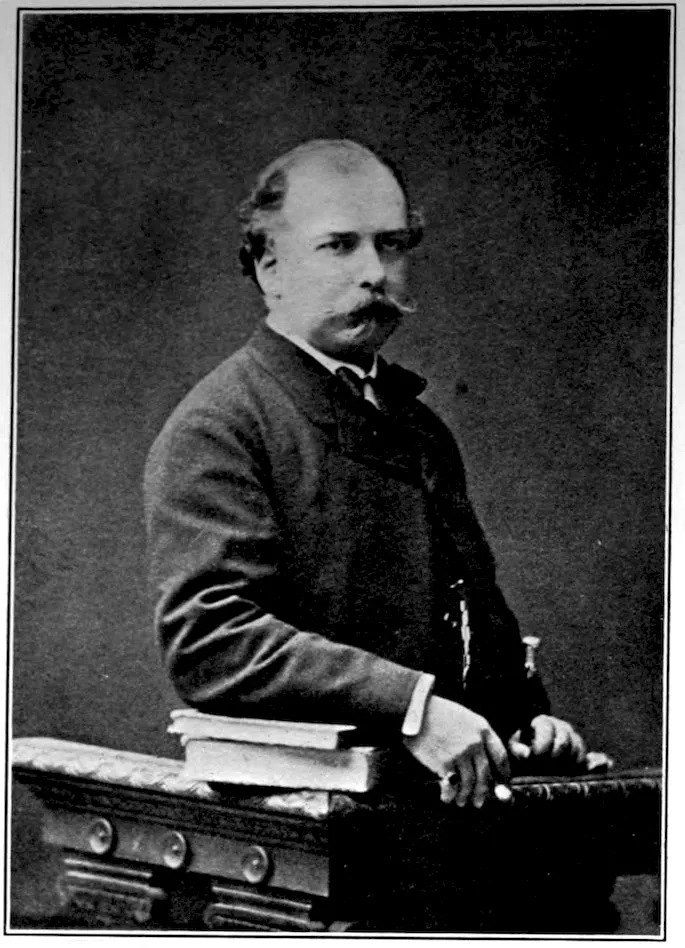
DON MANUEL PARDO. THE FIRST CIVIL PRESIDENT OF PERU.
The Peru-Bolivian Confederation, inaugurated on the 1st of May, 1837, was not only
unpopular in Peru and Bolivia, but it led to war with Chile. The Chilean invasion has
been called the Nemesis of Salaverry, as the Chilean ships were full of exiled Peruvians,
glad to have this opportunity to fight against Santa Cruz, the author of Salaverry’s defeat
and death. Orbegoso deserted Santa Cruz and retired to Guayaquil. The Chilean
forces were commanded by General Bulnes, who defeated the army of Santa Cruz in the
battle of Yungay, in 1839, the “Supreme Protector” making his escape to Guayaquil,
whence he sailed to France. The confederation was dissolved by General Santa Cruz prior
to his leaving the country, and General Gamarra was proclaimed president of the republic
149for a second time. His ambition led him to invade Bolivia, where he was defeated and
killed, in the battle of Ingavi in 1841. During his absence from Peru, Colonel Manuel
Ignacio Vivanco seized the reins of government, declaring Gamarra’s election illegal. He
was deposed by General Castilla, Gamarra’s commander-in-chief.
On the death of President Gamarra, Don Manuel Menendez assumed supreme power,
but his election was disputed by La Fuente and Vivanco, who supported General Vidal for
the presidency, while, in the meantime, General Torrico took more violent measures and
deposed Menendez, declaring himself president. The greatest confusion followed, Vidal
taking the field against Torrico, who was defeated. General Vidal, however, was more
desirous of restoring order and peace than covetous of political honors, and in order to
avoid further dissension, he resigned in favor of President Menendez; though a few days
later his action was nullified by that of a new faction that declared in favor of General
Vivanco, who assumed the government on the 8th of April, 1844. The unsettled political
condition was a natural consequence of President Gamarra’s death in Bolivia, and it continued
until a leader appeared who possessed the resolution and strength necessary to
establish order and authority.
General Ramón Castilla, who was elected president of Peru in 1845, accomplished a
great deal in promoting the welfare of his country. Possessing extraordinary administrative
ability, he reorganized the various branches of public service, suppressed the taxation of the
Indians, definitely abolished slavery, advanced education and undertook the construction of
public works of great importance. During this administration, the first railways in Peru
were built, between Lima and Callao (in 1848), also between Lima and Chorillos, and the
first telegraphic service was established. The finances of the government were regulated by
subjecting the national expenditures to an estimate sanctioned by Congress. Municipal
improvements were encouraged throughout the republic, and the prefects of the various
departments vied with one another in the construction of good roads, commodious public
buildings and other progressive enterprises. Steam navigation, which had been initiated
between Valparaiso and Callao in 1840, was extended to Panamá, the service being
increased. The navy was reorganized and five new war vessels, operated by steam, were
added to the squadron. The wealth of the republic increased in consequence of a great
demand for the guano of the Chincha Islands, which became a source of immense
revenue, and the government was thus enabled to arrange for the payment of the
interest on the national debt:—a loan of one million two hundred thousand pounds
sterling had been made in London in 1822, and another of six hundred thousand pounds
in 1825, both at six per cent, which with the accumulated interest made a debt of nearly
four million pounds. Negotiations were concluded by which the interest on this sum could
be paid regularly.
150
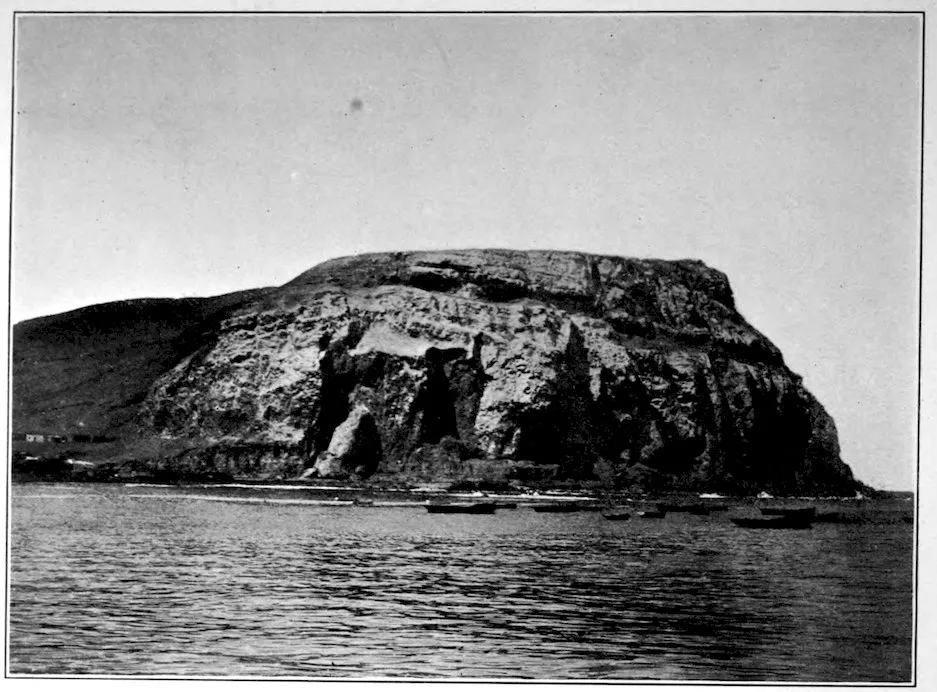
After six years of peaceful government President Castilla was succeeded by President
Echenique, whose administration lasted from 1851 to 1855, when he was deposed and
President Castilla was reëlected. During his second term, this indefatigable statesman
continued to devote his efforts to the improvement of the public service. Especial attention
was given to the construction and discipline of the prisons. The foundations of the present
penitentiary of Lima were laid in accordance with plans prepared and submitted by
Dr. Mariano Paz Soldan, who had the work in charge. When, in 1862, the reins of government
were passed to his successor, Grand Marshal Don Miguel San Román, President
Castilla retired from office with everything to his credit that a patriot who has rendered
good service to his country may claim. Three years later he became president of the
Senate, at seventy years of age. By the terms of the constitution of 1860, the presidential
period, which formerly lasted for six years, was reduced to four, the president not being
permitted henceforth to succeed himself by reëlection for a second term. President San
Román, son of the martyred patriot of Umachiri, lived only a few months after his election,
and was succeeded by Vice-President Pezet, during whose administration a conflict arose
with Spain, with dire consequences to the prestige of the president. The Chincha Islands
were seized by a Spanish fleet on the pretext of guaranteeing certain unjust claims, and
President Pezet, who found himself unable to offer resistance, was obliged to make a
settlement with Spain which was so unfair to Peru that it called forth vigorous protest and
151led to a revolution. The second vice-president, General Pedro Diez Canseco and Colonel
Mariano Ignacio Prado were the leaders of the movement against President Pezet, who,
rather than plunge his country into civil war, resigned office, Colonel Prado being proclaimed
dictator in November, 1865.
One of the first acts of Dictator Prado was to form an alliance with Ecuador, Bolivia,
and Chile to combat the aggressive designs of Spain. After an engagement between the
allies and the Spaniards at Abtao, in the Chiloe archipelago, the latter proceeded to Valparaiso,
which they bombarded, thence going on to Callao, where after a five hours’ fight they
were defeated and obliged to withdraw, never to return. Chile expressed the greatest
admiration for the bravery and patriotism shown by the Peruvians, the Chilean minister in
Lima writing to his government in praise of “the noble and valiant nation.” The city of
Santiago presented President Prado with a sword, in token of appreciation. Though the
administration of Dictator Prado was liberal and his authority mild, the spirit of the nation
was now opposed to an unconstitutional government, and in 1868 he abdicated in favor of
General Canseco, who immediately convoked Congress to elect a new president. The
choice fell on Colonel José Balta. His administration is noted for the extensive improvements
made in public works during that period, from 1868 to 1872.
The influence of militarism, which had been so powerful during the first days of the
republic, gradually declined, as republican principles became better established and a younger
generation grew up more zealous for the moral and material development of the country
than for glorious records of the battlefield. General Pezet was the last of the heroes of
Ayacucho who occupied the presidency. Colonel Balta was only eight years old when the
victory of Ayacucho was won, and thus, born a child of the republic, he grew to manhood
under conditions which enabled him to appreciate the needs as well as the accomplishments
of the nation. He saw that, in order to realize the progress for which the people were so
earnestly struggling, greater facilities of communication were indispensable, and he devoted
his attention especially to the construction of important railways, their cost being defrayed
with the product of the national loans of the years 1869, 1870, and 1872. These loans
increased the foreign debt of Peru to thirty-two million nine hundred and fifty-four thousand
pounds sterling, and the sales of guano were pledged as security for its payment.
During this administration, the region of the Amazon, which had been opened up to
traffic by General Castilla, was put in closer communication with the capital, explorations
being made on the tributaries—Pachitea, Perené, and others. The city of Lima was beautified,
a new iron bridge was built across the Rimac River, and a great industrial fair was
inaugurated, the handsome Exposition Palace being built for the purpose. When his
presidential term expired, in 1872, Don Manuel Pardo, who had founded the civil party in
opposition to militarism, was elected his successor. A few days before President Balta
was to retire from office, his Minister of War, Colonel Tomás Gutierrez, in conspiracy with
officers of the army, effected a coup d’ètat, overpowering the president, who was carried off
and imprisoned, and, later, assassinated. Gutierrez caused himself to be proclaimed by
152his officers Supreme Ruler of Peru; he had already given secret orders for the capture
of Don Manuel Pardo,—whom he was determined to get out of the way in order to
establish his authority more
securely,—but the president-elect
was informed of the
imminent danger which threatened
him and he succeeded in
making his escape on board a
man-of-war which lay in the
harbor. But the coup d’état
found no sympathy with any
political party, and had no significance
beyond the ineffectual
attempt of a few soldiers of
inflamed ambition and little
patriotism to impose their will
on a law-abiding people; the
citizens of Lima and Callao
rose en masse against the
treacherous soldiers and overthrew
them, putting to death
Tomás Gutierrez and two of
his three brothers implicated
in the deed. The surviving
brother deeply repented his
share in the revolt, and spent
the remainder of his life in an
honest and brave attempt to
expiate his crime.
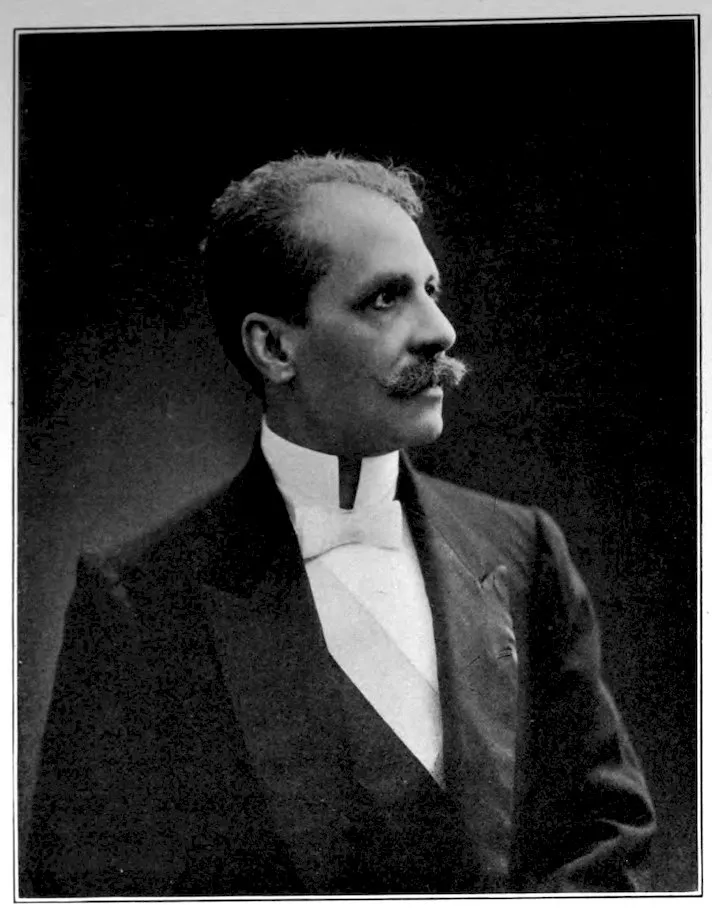
DON MANUEL CANDAMO—ELECTED PRESIDENT OF PERU 1903, DIED 1904.
President Manuel Pardo was inaugurated on the 2d of August, 1872. Born in Lima
in 1834, of a family distinguished for generations as statesmen and men of letters, he
had early imbibed the sentiments of patriotism. His education began in the college
of San Carlos, Lima, and was completed in Barcelona and Paris, where he developed
an especial interest in the study of political science and finance. When still in his early
twenties he began his public career as one of the founders of La Revista de Lima, a
periodical of importance; and, in 1858, he received the appointment of Oficial Mayor
in the Ministry of Finance. In 1864, the first bank in Lima was founded by him, and,
during the administration of the Dictator Prado, he was promoted to the post of Minister
of Finance. As mayor of Lima and as director of its benevolent societies, his official
services were of such importance that the citizens presented him with a gold medal
153in token of their gratitude. This occurred during a period when the capital was visited
by an epidemic.
Possessing unusual gifts and wide experience, President Pardo was well equipped to
fulfil the highest duties of the state. He devoted himself with particular energy and purpose
to the intellectual development of his country, and introduced radical reforms in various
branches of the public service. In no period of the republic was more rapid progress
shown in the culture of the people than during this administration, when the encouragement
of education stimulated a love of knowledge among all classes. A Faculty of Political
and Administrative Science was created, also a School of Engineers and a School of Science
and Arts; the military and naval schools were reorganized, and the School for Midshipmen
of the Navy as well as the School for Corporals and Sergeants of the Army was established.
The present system of modern instruction conforms to the code promulgated by President
Pardo. His administrative ability was seen in every department of the government. He
organized the national guard and the police service; established departmental, provincial,
and district councils, to overcome municipal centralization; coöperated with the judiciary in
maintaining the authority of their decisions; ensured the stability of the financial system
and reformed the mining code.
Unfortunately, the administration of President Manuel Pardo succeeded a period of
material expansion so costly that the responsibilities resulting therefrom were of extraordinary
weight and difficulty, and could be met only by heroic sacrifices. The public debt called
for an immense sum to pay the interest, and caused a financial and economic crisis, which
made it impossible to redeem the bank notes, and necessitated the issuance of government
notes. In order to improve the economic situation, President Pardo, realizing that Peru contained
the world’s chief nitrate and guano deposits, conceived the plan of establishing a nitrate
monopoly. He hoped by controlling the nitrate output to destroy the competition which
nitrate had waged against guano, the country’s principal source of revenue, and the chief
means of paying its public debt. By this and other patriotic measures, a reform in existing
conditions was to be effected which would relieve the financial strain and restore the prosperity
of the country. But the intensity of the commercial crisis and the unsettled state of
politics that always accompanies panic conditions, made it impossible for the great statesman
to realize his hopes, and his administration was a continued struggle through one of the most
trying financial periods of the republic. President Manuel Pardo, the founder of the Civil
party, was the first executive to dominate the tendency which had hitherto prevailed in
Peruvian politics of keeping the public offices in the hands of a privileged class. He was
impartial in his recognition of superior worth wherever he found it.
The dictator, Don Mariano Prado, was elected constitutional president to succeed
President Pardo in 1876, the latter being called to the Senate, of which he became president
the following year. On the 16th of November, 1878, while passing through the ante-room
to the Senate Chamber, the illustrious statesman met his death at the hand of an assassin.
An ignorant sergeant committed the deed which robbed Peru of one of her noblest and
154devoted patriots, and plunged the whole nation into grief. By what strange fatality the
defender of the masses and their most sincere protector should have been murdered by
one of their number is no more to be explained than that Lincoln, Garfield, and McKinley
should have been similarly sacrificed while laboring in behalf of the sacred principles of
human liberty.
In the year 1879 the war of the Pacific was inaugurated by Chile, whose government
claimed that its interests were threatened in consequence of a treaty of alliance made six
years earlier between Peru and Bolivia, which Chile denominated a secret compact. The
treaty was known to the Chilean Minister in Bolivia in 1874, however, and was officially
announced to Argentina in 1876. According to some authorities, Chile sought a pretext for
war, hoping to gain possession of the nitrate beds of Tarapacá. In any case, its government
was well prepared for war, having just reorganized its navy and purchased the new ironclads
Almirante Cochrane and Blanco Encalada, which were superior to the Peruvian
ironclads Huascar and Independencia, purchased ten years earlier. The first attack was
made on Bolivia, but that country was in no condition to resist a powerful enemy, and the
war soon became a trial of strength between Chile and Peru. The first naval engagement
occurred off the coast of Iquique, Rear-Admiral Miguel Grau commanding the Huascar, and
Captain Moore the Independencia, against the Chilean corvette Esmeralda, commanded by
Captain Arthur Prat, and the gunboat Covadonga, commanded by Captain Condell. The
Esmeralda was sunk by the guns of the Huascar and Captain Prat lost his life in the
engagement, though fighting with great heroism. A letter from Admiral (then Captain) Grau
of the Huascar to the widow of the Chilean hero, reveals the noble character and gentle
heart of the victorious commander, who was soon to meet his own death fighting against
greater odds. “Captain Prat died,” he wrote, “a victim to his excessive intrepidity in the
defence and for the glory of the flag of his country. I sincerely deplore this mournful
event, and in expressing my sympathy, I take the opportunity of forwarding the precious
relics that he carried on his person when he fell, believing that they may afford some
slight consolation in the midst of your great sorrow.” Such thoughtful tenderness
inspires the greatest admiration for this brave man. Meantime the Independencia in
pursuit of the Covadonga, and drawing much more water than the adversary, suddenly ran
on the rocks and became a total wreck, this fatal accident proving a deathblow to Peru, as
the strength of the Chilean fleet was now overwhelming. The brilliant exploits of Admiral
Grau kept the enemy at bay for four months, during which he protected the Peruvian
coast by a series of rapid and skilful manœuvres. The discontent in Chile over the
inactivity of the fleet became so great that a new War Minister was appointed, whose first
act was to order the two ironclads back to Valparaiso to be overhauled, as they were no
match in speed for the Huascar. The Chilean navy was practically reorganized, merchant
ships were engaged to transport troops, and a few were purchased to be used as men-of-war.
The naval fight was really a single-handed encounter between the Huascar
and the two Chilean ironclads. Admiral Grau’s heroism was sublime. The English
155historian, Clements R. Markham, who has written a detailed description of this war, says
that “the Chilean squadron consisting of two ironclads and several other vessels, all
carefully and thoroughly refitted,
was despatched from
Valparaiso for the purpose of
forcing the Huascar to fight
single-handed against hopeless
odds.” Meantime
gallant Grau was
along the coast, doing his
utmost to hinder the preparations
of the Chileans for a
military invasion of Peru.
On the morning of the 8th of
October, 1879, as the Huascar,
followed by the gunboat
Union, was slowly steaming
northward from Antofagasta,
the three Chilean warships,
the Blanco Encalada, Covadonga,
and Matias Cousiño
appeared in sight to the northeast
near Point Angamos; the
Huascar turned to the northwest
and put on all speed to
escape the enemy, when suddenly
the Almirante Cochrane,
O’Higgins, and Loa came
into view, heading from the
very direction in which the
Huascar was steering. Undismayed
by the critical situation,
Admiral Grau ordered
Captain Garcia y Garcia, the commander of the Union to put on full speed and get out of
danger, as in case of the loss of the Huascar the Union would be the only serviceable vessel
left to Peru. In the fight which followed, a shell from the Cochrane struck the pilot tower
of the Huascar, in which were Admiral Grau and one of his lieutenants, destroying the
tower and killing its occupants, who were blown to pieces. The brave hero and his ship
met their doom by the same blow, as, up to that moment, the Huascar had held its own.
A few minutes later, the Blanco Encalada fired on the doomed Huascar, its shell killing
Captain Elias Aguirre, who had taken the admiral’s place. No sooner had he fallen than
his successor, Captain Manuel Carbajal, met the same fate, to be followed by Lieutenant
Rodriguez, whose place was immediately taken by Lieutenant Enrique Palacios, until a fragment
of shell struck him down and the command devolved on Lieutenant Garezon. When
the terrible combat ended, it was found that one-third of the one hundred and ninety-three
officers and men on the Huascar had been killed or wounded.
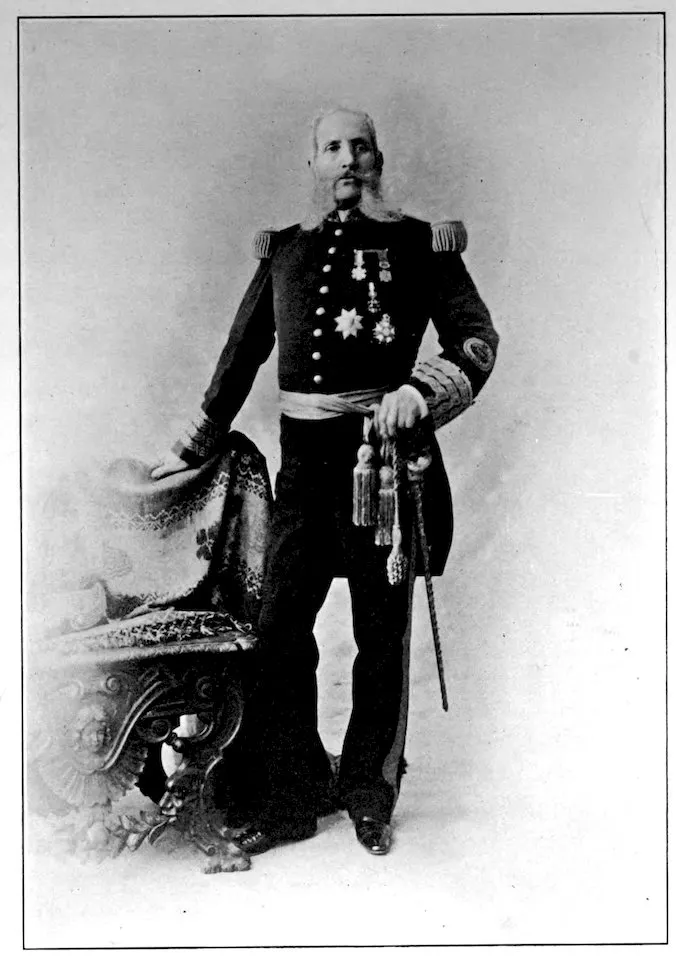
GENERAL ANDRÉS CÁCERES, PRESIDENT OF PERU, 1886–1890 AND 1894–1895.
156In the hecatomb of Angamos perished Peru’s last hope of keeping the enemy from an
attack on the coast, which extended fourteen hundred miles in length and presented
peculiar difficulties of defence, because of the desert regions that occur at intervals. The
movement of troops was practically impossible in case of a blockade of the ports, and the
uncertainty of the chosen point of attack made it necessary to prepare for defence everywhere.
In November 1879 the invading Chilean army, consisting of ten thousand men, and
supported by the Chilean fleet, began a series of attacks on land which, with the exception
of the battle of Tarapacá and a few minor engagements, resulted in victory for the invading
troops. The only advantage Peru could claim lay in the skill of her generals and other
commanding officers who performed miracles in manœuvring the small forces at their
disposal. General Buendia, commander-in-chief of the Peruvian army, was fortunate in
the officers who surrounded him. His chief staff officer, Colonel Suarez, who led the
troops in the victory of Tarapacá, and Colonel (now General) Andrés Cáceres, who received
the felicitations of his chief on the field of battle on that memorable occasion, showed
themselves worthy descendants of a race of warriors; Colonel Bolognesi, Colonel Zubiaga,
Colonel Pardo de Figueroa, Colonel Rios, all of whom lost their lives in the service of their
country, were soldiers whose military genius, no less than their heroism, reflected glory on
their country. The name of Bolognesi is especially revered in Peru, in memory of the
heroic fight which this indomitable hero made on the Morro de Arica, June 5, 1880. The
war had gone against the allies, the command of the sea giving the Chileans a tremendous
advantage; though, in spite of their watchfulness, the Union and small transports succeeded
in running the blockades and getting troops, arms, and clothing to the Peruvian army at
various points. The assault and capture of Arica was to bring the struggle close to its final
scene—the last formal resistance on the part of Peru being made at Huamachuco under the
command of General Cáceres—and this thrilling event proved a fitting climax to one of
the saddest dramas in the history of republican America. Colonel Francisco Bolognesi was
given command of the defence of Arica. With him were Captain Moore, Alfonso Ugarte,
Colonel Inclan, Arias, Varela, and the Cornejo brothers, all prepared to die with their leader
rather than surrender. The heavy bombardment from the Cochrane, Magallanes, Covadonga,
and Loa was answered by the monitor Manco Ccapac and the shore batteries, the guns on
the Morro doing effective service; but the odds were more than two to one of disciplined
troops against volunteers and the result was inevitable. Bolognesi, Moore, and Alfonso
Ugarte stood together at the guns as the fort was taken, and met the death of heroes. The
story of Arica and of the events which followed chills one with horror at the thought that
157such things could be; and the nation to whom victory was thus brought must sincerely
regret that it was won at such dreadful cost. Peruvian industries and commerce were
paralyzed, as if the whole land had been scourged by a plague; and the beautiful City of
the Kings, with its population of one hundred thousand, as well as the suburbs, Chorillos
and Miraflores, presented a spectacle of general desolation.
The War of the Pacific lasted four years and a half, and closed with the Treaty of
Ancón, which was signed in Lima on the 23d of October, 1883, by General Manuel Iglesias,
the commander of the Peruvian army in the north, who believed there was no other way to
obtain peace than by submission. In accordance with this treaty, the province of Tarapacá,
with its valuable nitrate fields, was given up to Chile unconditionally and for all time; and
the provinces of Tacna and Arica were ceded for a period of ten years, subject, at the expiration
of that time, to a plebiscite, which would definitely establish their nationality; it being
stipulated that the country in whose favor it should result, should pay to the other the sum
of ten million pesos. This plebiscite has not yet been held. After the signing of this treaty,
General Iglesias assumed command of the government, the Assembly convoked by him
ratifying his appointment as president of Peru and approving the Treaty of Ancón. But a
great part of the nation refused to recognize his authority and could not be induced to lay
down their arms; General Cáceres, who with General Canevaro and others had sustained
the honor of their country through four years of incessant struggle against heavy odds,
continued the bitter fight to the last.
On the 2d of December, 1885, General Cáceres occupied Lima and was installed as
constitutional president of the republic on August 10, 1886, seven years after the declaration
of war by Chile. He was the unanimous choice of the nation and was elected amid the
acclamations of the people, without regard to political parties, his election signifying the final
restoration of peace. President Cáceres devoted his chief attention to reorganizing the
various departments of the administration. The consolidation of the public debt was
effected, the foreign debt contracted by the loans of 1869, 1870, and 1872 being cancelled by
a contract with the corporation which represented the bondholders. By this contract, Peru
ceded, in payment of its debt, the usufruct, for sixty-six years, of all the state railways and
the guano in Peru, not, however, in excess of three million tons, and furthermore obligated
itself to pay eighty thousand pounds a year for thirty-three years in consideration of the construction
of one hundred and sixty kilometres of railway in addition to the mileage already built.
When General Cáceres retired from the presidency in 1890 he was succeeded by Colonel
Remigio Morales Bermudez, who died just before the expiration of his term in 1894. The
second vice-president, General Borgoño, assumed the presidency, disregarding the right of
the first vice-president, Dr. Alejandrino del Solar. The disturbances threatened by this
irregular proceeding culminated when General Cáceres assumed command of the government
for the second time, though his attitude brought about the coalition of the Civil and
Constitutional parties, formerly antagonistic but henceforth proving a powerful combination
for political peace and progress. General Cáceres resigned from the presidency in
158March, 1895, and a governmental committee took charge of the administration, presided over
by Don Manuel Candamo, its first act being to convoke Congress for a general election.
SCENE ON BOARD A PERUVIAN WARSHIP.
General Don Andrés Avelino
Cáceres stands among
the foremost leaders of Peruvian
politics, combining, with
extraordinary success, the
gifts of a soldier and a statesman,
fearless and unyielding
on the battlefield, clear-headed
and resolute in the
cabinet. Born in Ayacucho
on the 11th of November,
1838, the hero of many combats
has passed his three
score and ten years with the
same disdain of fatigue in
his march with Time that he
used to display when outgeneralling the enemy of his country. When only sixteen years of
age he solicited and received the appointment of sub-lieutenant in the Ayacucho battalion.
He fought with credit under General Castilla, who afterward sent the handsome young soldier
to Paris as military attaché to the Peruvian Legation. During the administration of the
dictator Prado he was prefect of Cuzco, and when the war of the Pacific began, he was
among the first to march to Tarapacá with his famous battalion, “Zepita,” which he commanded
as Lieutenant Colonel; his bravery at Tarapacá, Tacna, Chorillos, Miraflores, Pucará,
and Huamachuco, made his name renowned in war, as his efforts to establish reform and
progress in the government, which he twice directed as chief executive, have brought him
fame in the victories of peace.
The result of the elections of 1895 was the choice of Don Nicolás de Pierola, a well-known
statesman, whose government was one of order and improvement in financial
and industrial affairs. During his administration the gold standard was adopted in Peru,
the monetary unit being the Peruvian pound, equal in weight and fineness to the English
pound sterling. This reform has greatly stimulated the investment of foreign capital in
Peru, the stability of exchange being an important factor in attracting all kinds of enterprises.
Among other noted reforms, President Pierola secured the reorganization of the army,
obtaining from the French government the appointment of a military mission to direct this
work; a military school, under the direction of French officers, was established, which has
proved eminently satisfactory. To President Pierola is also due the inauguration of the
national general postoffice, and projects for the construction of a state prison, an insane asylum,
and other edifices. His government was marked by peace and order, and the country made
159rapid progress in recuperating from the effects of the war of the Pacific. President Pierola
was succeeded by President Eduardo Lopez de Romaña, who continued the work of
peaceful development, retiring from office at the end of his term to give place to President
Manuel Candamo, who was elected in 1903.
President Candamo was a statesman of progressive ideas and lofty principles, and a
leader of the Civil party, founded by Don Manuel Pardo; his programme of government
included many important measures for the national well-being. A law was passed devoting
the product of the tobacco tax to the construction of new railways, and taxes were decreed
which doubled the fiscal revenue of the state. Every effort was made to turn the people
away from a bitter contemplation of the past, with its terrible experiences, and to direct
them toward a brighter future. The remembrance of suffering and loss, under peculiarly
unfortunate circumstances, was resolutely stifled, to give place to the nobler sentiments of
aspiration and hope, under the guiding genius of a leader who believed in looking forward,
not backward; in overcoming hard conditions, not in bewailing them. And the people
were ready to follow the wise direction of a chief executive who stimulated them to make
their best endeavors and who encouraged education, industrial development, and commercial
activity by every possible means. The administration of President Candamo marked
the inauguration of a new era for Peru. The strife that had followed the period of war
was buried away never to be resurrected. The sentiment of the nation was shown to be
in accord with all that contributed to the peaceful progress of the country. The principles
of industry and prudence which had been so earnestly upheld by his illustrious political
teacher, Don Manuel Pardo, were sustained and made more popular than they had ever
been, by the example of the new leader, who was the second president elected by the
Civil party. But his patriotic efforts were cut short by his death only seven months
after being elected to office, and the nation was called to mourn the loss of one of its
most illustrious sons. The demonstration of grief with which the sad news of President
Candamo’s death was greeted in every town and hamlet of the republic afforded
a touching evidence of the esteem and affection he had won from all classes, the rich and
the poor, the proud and the humble, by his high principle and sterling patriotism. The
funeral ceremonies were attended with every honor that a sorrowing nation could bestow
in recognition of the dignity and glory with which their lamented president had served his
country. On the death of President Candamo, the second vice-president, Señor Serapio
Calderon, succeeded to the office of chief executive. He governed with prudence and success
during the months that intervened between the death of President Candamo and the
inauguration of his successor, a period that was marked by the unsettled conditions which
are usual during the year of the presidential election in all republican countries. By his
authority a general election was called which resulted in the choice of Dr. José Pardo as
president of the republic. The proclamation of his election was attended by demonstrations
of the national enthusiasm in a series of banquets and speeches in all the cities of
the republic, which afforded opportunity for the expression of the spontaneous and sincere
160admiration of his devoted supporters. His youthful appearance and distinguished presence
added to the interest which a recognition of his well-proved ability and energy gained
from the applauding multitude, and the vivas carried a note of affection as well as esteem
as they were repeated in every street and alley of the capital. On the 24th of September,
1904, he was inaugurated by the sovereign will of the nation, in accordance with
the principles of the Civil party, founded by his illustrious father. The record of his
administration affords ample proof of the good judgment of the people who elected him
their chief executive.
162
ONE OF THE PRINCIPAL STREETS OF LIMA, DECORATED ON A NATIONAL HOLIDAY.
CHAPTER X THE ADMINISTRATION OF PRESIDENT JOSÉ PARDO
163
The inauguration of Dr. José Pardo took
place amid the enthusiastic demonstrations
of a people who recognized in their
chosen leader a statesman of upright character
and worthy principles, well equipped to
maintain the authority of a just, liberal, and
progressive government. There was more
than the jubilant celebration of a victorious
party in the festivities of that day, the nation
exhibiting an affectionate pride in the accession
of their young president, who followed
in the path opened up by his illustrious father
and illuminated by President Candamo, and
who thus represented the highest hopes of
civil government.
Although only forty years of age at the
time of his election, President Pardo was
an experienced statesman and diplomatist,
having been Minister of Foreign Affairs and
President of the Council of Ministers during the administration of President Candamo, as well
as diplomatic representative of the government on a special mission to the Court of Spain
in a previous administration. His education, which began in the Lima Institute, a college
founded by President Manuel Pardo, was directed in accordance with the liberal ideas that
governed his father’s principles, and from the beginning it became evident that the student
would develop into the statesman. When he was graduated from the University of San
Marcos at the age of twenty-five, he held the degrees of Doctor of Jurisprudence and Doctor
of Political and Social Science. During President Candamo’s term, Dr. Pardo successfully
164advocated the settlement by arbitration of difficult questions between his country and
Bolivia, Ecuador, and Brazil; and, as president of the ministerial council, he was the principal
leader in framing important laws for the building of railroads and for fiscal reform which
were afterward sanctioned by Congress.
When President Pardo assumed office, he proceeded, with energy and decision, though
without any ostentatious display of reform, to carry into effect the policy which he had
adopted, and which was declared in his inaugural message. The keynote of his administration
is industrial and educational progress, and at no time in the history of Peru have its
public institutions and private enterprises been in a more advanced and promising condition.
Toleration in religion, justice in legislation, and an earnest endeavor to promote the
well-being of the country, morally and materially, have been exemplified in the attitude of
President Pardo’s government throughout the four years that he has guided the destinies of
the nation. In foreign relations, Peru has attained a more honored position than ever before.
The nation was represented with distinction in the Pan-American Conference at Rio de Janeiro
in 1906, and at the International Conference of the Hague in 1907. In home government, in
military matters, in the departments of justice and public instruction, in finance, and in the
development of public works of enormous benefit to the country, the results of a wise and
careful direction of executive authority are to be seen. Education has been reformed and
established on a uniform and democratic basis, the annual appropriation of funds for this purpose
having been increased under the present government to three times the amount formerly
set aside for its maintenance; it now amounts to nearly one-tenth of the budget. The postal
service has received especial attention, and improvements have been made which render it
one of the most efficient branches of public administration. The reconstruction of the national
navy has been effected during the present term, the new cruisers, Grau and Bolognesi,
which arrived in 1907 from the European shipyards, being handsome modern battleships.
Industrial progress has been fostered and encouraged by the extension of railways,
and new lines are under construction in every part of the republic. Commerce has
increased every year and the fiscal receipts have nearly doubled within the past four years.
Foreign capitalists are constantly making new investments in the country, the statistics
showing that twenty-nine mining and agricultural enterprises were established in Peru in
1907, of which a great many were of foreign ownership. The sources of national wealth
have increased, partly owing to the discovery of valuable mines of coal and petroleum and
to the revival of Peru’s guano industry, which promises to be richer in production than ever
before. The interests of agriculture have been promoted by a careful study of its needs in
the various regions; hydrographic experts have been employed to solve the problem of
irrigation in the dry sections of the coast and artesian wells have been sunk at various points
in the northern district. The importation of thoroughbred stock, the employment of foreign
specialists in the various branches of husbandry to give lectures on the subject, and the free
and liberal distribution of pamphlets, reports, and maps throughout the farming communities
have been among the activities of the government in behalf of agricultural reform.
165Public health receives greater consideration and attention than formerly, Congress
having voted large sums for the purpose of carrying out sanitary works in the centres of
population throughout the republic, especially in the ports. Commissions, composed of
medical men and engineers, have undertaken the improvement of sanitary and hygienic
conditions, and this important reform is now far advanced, many cities already enjoying
its benefits.
PATIO OF THE POST OFFICE, LIMA.
President Pardo has been ably assisted in his administration by the members of his
cabinet, who have carried out the policy of their chief with unfailing judgment. When
elected, he selected the following well-known statesmen to form his ministerial council:
Dr. Javier Prado y Ugarteche, Foreign Affairs; Dr. Augusto Leguia, Finance; Dr. Eulogio
Romero, Government and Home Affairs; General Muñiz, War and Marine; Dr. Jorge
Polar, Justice, Public Instruction and Worship; Dr. José Balta, Public Works. The
Minister of Public Works is also Minister of Fomento, having in charge the patronage, or
promotion, of public enterprises. Under the direction of this cabinet the affairs of the
administration were conducted with eminent success, and when it was succeeded by
the present executive council, the progressive policy that had been so well interpreted
was continued, and still reigns. The members of the cabinet at present are: Dr. Solón
Polo, Foreign Affairs; Dr. Carlos Washburn, Justice, Public Instruction and Worship;
166Dr. German Schreiber, Finance; Dr. German Arenas, Government and Home Affairs;
General Juan N. Eléspuru, War and Marine; Dr. Delfin Vidalón, Fomento and Public Works.
Dr. Solón Polo, the Minister of Foreign Affairs, enjoys the distinction of being one of
the best informed statesmen of Peru regarding diplomatic questions between his country
and foreign powers. He has had large experience in the affairs of government, and, added
to this advantage, he has the gift of diplomacy, these two factors accounting for the prestige
the Foreign Office enjoys under his administration. Since his appointment as Foreign
Minister, the question of boundaries,—which constitutes the chief element of discord
between South American countries,—has approached nearer its final solution so far as Peru
is concerned, and friendly relations exist between that country and her neighbors; though
Chile still postpones the settlement of the Tacna and Arica question, the plebiscite which
was to have been held some years ago not yet having taken place. The dependencies of
the Foreign Office in Europe and America have maintained the utmost concord with the
Ministerio, and the foreign diplomatic corps has cordially reciprocated its friendly attitude.
The Peruvian Minister to Washington, Dr. Felipe Pardo, has been active in promoting good
feeling between his country and the United States; in conveying the invitation from the
Foreign Office to Mr. Root to visit Peru, in 1906, he did so in such pleasing language that the
great statesman referred to its gracious character more than once, with evident appreciation.
THE PRESIDENT’S COACH LEAVING THE GOVERNMENT PALACE FOR THE HOUSE OF CONGRESS.
Dr. Carlos Washburn, the Minister of Justice, Public Instruction and Worship, is
President of the cabinet. His department supervises the various judicial institutions, the
plan of national education, and the ecclesiastical government of the country. Dr. Washburn
is a jurist of eminent talent and has had a distinguished career in the administration of
167justice. He was Judge of the Superior Court of Lima when called to the higher post.
During the present term, the department of justice has established a superior court in
Iquitos, and has instituted various reforms. The publication of the judicial annals and the
adoption of regulations governing judicial statistics have been accomplished to facilitate
the public administration. Dr. Cavero, first vice-president of the republic, and magistrate
of the supreme court, with the coöperation of a committee on legislative procedure, is
occupied in the preparation of a project for the reform of the penal code, a work for which
his great experience and superior knowledge particularly qualify this learned statesman.
The penitentiary and the boys’ correctional school are conducted under the supervision of the
Minister of Justice. Improvements have been effected in both these institutions, the former
having been enlarged and modern accommodations added during the present administration,
while the latter has extended its beneficent influence more widely than ever, giving to a
class of boys most lacking in training the advantages of learning a trade and becoming worthy
citizens. The school provides manual work for its inmates, who, as a rule, are apt and diligent;
the average “bad boy” is usually possessed of extraordinary energy, and it is the aim
of this school to direct it to a worthy purpose. It is one of the most successful reformatories
of South America, and the work done in carpentry, tailoring, shoemaking, and other trades
is creditable to the intelligence of the boys and to the discipline of the school authorities.
One of the most important charges of the department under Dr. Washburn’s administration
is the national education, which has made remarkable progress. In ecclesiastical
matters, as pertaining to public worship, this ministry has rendered valuable services to the
established church, apostolic prefectures, under instructions from this office, fulfilling the
requirements of ecclesiastical authority in the various departments. On the death of Monseñor
Tovar, Archbishop of Lima, Archbishop Naranjo was appointed to the metropolitan
See. The late archbishop was greatly beloved by the nation and his death was an occasion
of mourning throughout the republic. Archbishop Naranjo, the illustrious prelate who
governs the archdiocese at present, is revered for his exemplary virtues and highly esteemed
for his scholarship.
Dr. German Schreiber, who succeeded Dr. Augusto Leguia as Minister of Finance, is
well equipped for the duties of his important office, having had exceptional experience in
financial administration previous to his appointment to the post. This department of the
government supervises the national budget. Orders issued by the Ministers of State on
the national treasury can be paid only with a warrant drawn on the Minister of Finance, this
document showing the number of the corresponding item in the budget, or containing the
supreme decree authorizing the payment. Each Departamento keeps its own accounts,
which assures regularity in the expenses of the different prefectures. The reorganization
of the custom house service has received the especial attention of the Finance Minister, with
satisfactory results.
Under the head of Government and Home Affairs, Dr. German Arenas supervises legislative
matters, public order, political administration, government buildings, etc., and the postal
168and telegraph service. The development of industry and wealth has naturally given rise to
greater ambition among the laboring classes, and
the struggle between capital and labor has brought
about occasional huelgas, or “strikes,” in the
larger cities; but the authorities have been able to
avoid any violent attacks on property, and public
tranquillity has been easily restored. The police
system, reorganized and reinforced by a large
number of mounted troops, is better prepared
than ever before to maintain respect for the law.
The modern improvements made in the
postal service by the present executive have
been demanded as the result of a remarkable
increase in correspondence passing through the
various post offices of the country. During the
past year, the general post office has increased
its capacity and new branches have been established
in numerous districts of all the Departamentos
of the republic. Great obstacles have
been overcome in placing the post office on the
present high plane of efficiency. The vast extent
of territory traversed by mountain ranges and
cut by immense cañons has made the question
of postal delivery an exceptionally hard problem
to the government, as the expenses of maintaining
the service were formerly far in excess of
the receipts. Owing to the expansion of trade,
the increase of population, and the careful attention
lately given to this branch of the administration,
the post office has shown a surplus of
receipts over expenditures during the past three
years. Peru is a member of the Universal
Postal Union, and its relations with the post
offices of foreign countries are maintained with
great credit to its government. The issue of
post office orders and the service of parcels post
have been established between Peru and the
United States, England, and Bolivia, arrangements
being under way to extend these advantages to
Italy, Japan, and Chile.
169The telegraph service extends from one end of Peru to the other, the capital being
united by wire with the most remote departments of the republic. The system covers
more than three thousand miles of telegraph wires. The first line in Peru was constructed
by private enterprise in 1864 between Lima and Callao, the government assuming the
administration of the public telegraphs in 1875. The national wires connect at the boundary
line with those of neighboring republics, making a general South American system.
The Minister of War and Marine, General Juan N. Eléspuru, is a distinguished soldier
and statesman, universally admired for his military talent and the noble qualities of his
character. His administration is devoted especially to those matters which tend to the
elevation of the army, and particularly to its education. Civil as well as military instruction
is provided in the quartel, and the standard of training in the military schools is higher than
it has ever been. The French military commission, engaged in 1896 to reorganize the army,
under the direct authority of the War Office, has accomplished an important work, with the
entire approval of the government. The head of the commission, Brigadier-general Pablo
Clement, is chief of the general staff and is consulted on all matters relating to the instruction
and organization of the army. One of the captains of the commission has charge of the
Military High School, and another, of the Military Academy, in Chorillos. The latter, created
for the technical and practical instruction of commissioned and non-commissioned officers
destined to serve in the army, has been most important in increasing the efficiency of the
military service. Annexed to the Military Academy is a school of musketry for technical
instruction in the use of portable arms. The preparatory school and the school of application
afford instruction for beginners.
170
INFANTRY UNIFORM, PERUVIAN ARMY.
The army consists of six battalions of infantry; a regiment of mountain artillery, a group
of field artillery, and a group of artillery of sappers and miners; and six squadrons of cavalry,
including the president’s escort. The various auxiliary corps include the general commissary
of the army, the ordnance store, the military health
department, and a supreme military and naval council.
The infantry arms are Mauser rifles of seventy-five
millimeters calibre; the cavalry and mountain
artillery carry the carbine of the same model, the
artillery having also field batteries formed of the
latest Schneider-Canet guns. Military service is
obligatory on all Peruvians between nineteen and
fifty years of age, excepting directors of public
schools, college professors and all who hold a
diploma, exercising a liberal profession. The organization
of the reserves and their mobilization is
regulated by the establishment in each Department
of battalions of sappers, consisting of four hundred
and forty-eight men, and, in eleven Departments, of
cavalry squadrons of one hundred and sixty-nine
men. Peruvians from thirty-five to fifty years of
age form the national guard. By the well-regulated
system of conscription in force, Peru will
have in a few years, in addition to its well-drilled
army, a host of instructed reserves, requiring only
a few drills to transform them into able soldiers.
The republic is divided into four military zones, the
capitals being Piura in the northern, Lima in the
central, Arequipa in the southern, and Iquitos in
the eastern zone. These districts are subdivided
into eleven commands, composed of twenty-two departments
and colonies. Under the direction of the
army authorities, troops of mounted police, numbering two thousand two hundred men,
serve in each department.
The navy, which, like the army, is a dependency of the War Office, has now three
cruisers and three transports, and its reconstruction has been accompanied by the organization
of a Naval School, under the direction of an officer of the French Navy. In this institution
students are given the professional, theoretical, and military instruction necessary to qualify
them as midshipmen, three years’ service qualifying for the rank of sub-lieutenant. On board
the training ship Constitucion, civil, professional, naval, and military instruction is provided, after
which the practicante passes to the vessels of the squadron, wherein he serves for five years.
171At present three Peruvian midshipmen are completing their practical instruction on board
United States warships, and seven are gaining experience in the Royal Spanish Navy.
MR. ROOT AT THE NATIONAL CLUB, LIMA.
The progressive policy of President Pardo’s government is nowhere more conspicuously
seen than in the Department of Public Works. The minister, Dr. Delfin Vidalón, last year
published the report of his office in a volume of six hundred pages, every line of which
bore reference to important industrial, commercial, or benevolent reforms in the numerous
sections subject to his administration. In the direction of Fomento, which includes all
matters relating to agriculture, mines, immigration, and various industries, as well as benevolent
institutions, the amount of labor accomplished is phenomenal. Public works have been
carried out on a vast scale, and in accordance with the most modern ideas. Railways, port
works, and irrigation have occupied the best engineers of the government. Sanitation and
hygiene, an important charge of this office, have received especial attention. The wireless
telegraph, or radiograph, has been installed in the Amazon region, and successful experiments
have been made in the use of this method of transmitting messages across the virgin
forests of the tropics. A German company has successfully established radiographic communication
from Puerto Bermudez on the river Pichis to Masisea on the Ucayali, this being
the first attempt ever made to cross a territory densely covered by tropical vegetation. Two
stations have been built, of three towers, each one hundred and fifty feet in height. The
system is now being extended to Iquitos on the Amazon River. The question of public
health is recognized by the government as of paramount importance to the well-being of the
state, and the Department of Public Health has recently been made a dependency of
the Ministry of Fomento. It is divided into two sections, hygiene and demography, and
172has the supervision of sanitary corps, vaccination, and all lazarettos of the republic. The
sanitary corps have charge of the inspection of the ports,—the maritime sanitary defence
being governed by regulations of the sanitary police, in accordance with the International
Sanitary Convention held in Washington,—and sanitary stations are established at Paita, Ilo,
and Callao. By this new organization, the means of guarding the health of the community
is greatly simplified. Vaccination is obligatory in Peru. Sanitary inspection governs railway
as well as steamboat traffic. The results are better health conditions in all the cities.
THE CENTRAL MARKET, LIMA.
The four years during which President Pardo has governed Peru have been marked
by events of the greatest significance, not only in the history of that republic but in the
annals of South American politics. The visit of Secretary Root of the United States in 1906
and the passing of the great Atlantic Squadron in 1908, are incidents that deserve to be recorded.
Especially is this true as regards Peru. The visit of Secretary Root was more than a part
of the programme carried out by that distinguished statesman in his tour of South America.
It was, as he himself expressed it, when responding to the spontaneous and generous
welcome given him by the Peruvian people, the renewal of an old, constant, and cordial
friendship between the Peruvian people and their cousins of the United States. He said:
“I have come here, not to look for new friends, but to salute the old ones; not to initiate
173any new policy, but to follow up the old and honored course; and on coming to South
America, responding to the invitations from the different countries, going down by the
eastern coast and coming up by the western, to pass by Peru without stopping here would
make my trip as incomplete as a representation of Shakespeare’s ‘Hamlet’ without the
appearance of Hamlet on the
stage.” This frank expression
of friendship was genuinely appreciated,
as it showed that the
warm sentiments which found
voice in President Pardo’s address
of welcome were thoroughly reciprocated.
Nothing could have
been more pleasing to Mr. Root
than the following words, from
the president’s speech: “These
sentiments of sympathy and admiration
shone forth at the dawn
of Independence, because the
founders of the Great Republic
pointed out to our ancestors the
way that led to freedom; and
they have been gaining strength
since the first days of our autonomic
existence, owing to the
bond which the admirable foresight
of another great statesman
of your country extended over
this American land.”
Mr. Root’s visit to Peru was
an occasion of great interest to the
North American statesman, who had an opportunity to become acquainted with the various
important institutions of the country. A special session of the Senate, under the presidency
of Dr. Manuel Barrios, was held to receive Mr. Root. On the day preceding his visit to the
Senate, Secretary Root was elected an honorary member of the Faculty of Political and
Administrative Sciences of the University, founded by President Pardo’s father. This impressive
ceremony was performed in the presence of the entire University, presided over
by its president, Dr. Villarán, and the Deans of the Faculties, and attended by the President
of the Republic, the Cabinet Ministers, and the Military Staff of his Excellency. To a
statesman and scholar of Mr. Root’s experience and knowledge, it was both a pleasure and a
profit to receive the many gracious assurances of appreciation which were extended to him in
174Peru; and in return, the Peruvian people had the satisfaction of learning the opinion of an
eminent foreigner regarding their political and educational advancement. Mr. Root found the
evidences of progress most creditable to the nation, and said that the difference between the
country to-day and what it was a generation ago was as great as the difference marked by
centuries in the history of European countries. The cordial relations existing between the
two countries, more firmly united than ever by the visit of Secretary Root, were still further
strengthened when the American Squadron arrived at Callao. Its officers and crew were
received by the citizens of that port and of the capital with the heartiest demonstrations of
welcome. The entertainment of the fleet devolved upon the Foreign Office, and Dr. Polo
interpreted the wishes of the president and of the nation by extending to Admiral Evans and his
officers every courtesy and attention that an appreciative host could bestow on a welcome guest.
The secret of the sympathy existing between Peru and the United States lies largely in
the similarity of the national ideals, which in both countries are centred in liberal principles
of civil government. The Civil party which elected President Pardo stands for the most
progressive politics of Peru. The illustrious statesman who presides over its councils at
present, Dr. Augusto Leguia, has just received the highest proof of the nation’s esteem for
his genius and patriotism, in the announcement of his election to succeed Dr. Pardo as
President of Peru. The election took place in May, 1908, and the successful candidate is
to be inaugurated on the 24th of September, 1908. The president-elect is one of Peru’s
greatest men, his name being especially identified, as Finance Minister, with the successful
financial operations of the present government during the first three years of Dr. Pardo’s term;
his knowledge of all that pertains to this important branch of the government is unequalled
by that of any other Peruvian statesman. A gentleman of distinguished family and most
attractive personality, as well as a statesman of extraordinary ability, Dr. Leguia is a worthy
successor of President Pardo, who by his admirable qualities of mind and heart has endeared
himself to all Peruvians and won the respect and esteem of all foreigners in his country.
THE PERUVIAN IRONCLAD GRAU, IN THE HARBOR OF CALLAO.
176
THE UNVEILING OF BOLOGNESI’S STATUE IN LIMA.
CHAPTER XI THE POLITICAL ORGANIZATION OF THE REPUBLIC
177
A REVIEW OF THE TROOPS, LIMA.
The national constitution, on which is based
the present political organization of Peru,
stands a lasting monument to the patriotism and
genius of the statesmen in whose hands was
placed the responsibility of framing it, and does
credit to the democratic principles of the nation
whose sovereign will is manifested in its laws
and provisions. For nearly half a century, the
government of Peru has been building its strength
on this solid foundation of broad purpose and
practical ideals, and to-day the aspirations of its
rulers are being realized with ever-increasing
success. The aim of the present administration,
admirably expressed by one of the leading statesmen
of Peru, is that of a modern people striving
to attain their highest welfare and aggrandizement:
“To develop the immense resources and
wealth with which nature has so wonderfully
endowed the land; to render the territory accessible
to labor and civilization by opening up means
of communication, granting all kinds of facilities
and giving security for the life, health, and welfare
of the inhabitants, in order to obtain the population that large territories require; to educate
and instruct the people, making them understand their personality, their liberty, their
duties, and their rights; to develop their faculties and energies, their labor forces, their
industrial and commercial capacity and power, elevate their moral dignity, consolidate and
strengthen the national unity, insure definitely the government of the people, of justice,
178of order, and of peace; to attract capital and foreign immigration, develop and give impulse
to the commercial relations with other countries, maintain a frank and true harmony and
international solidarity, respect all mutual and reciprocal rights, and resolve all disagreements
by friendly, just and honorable means; to perform, in short, a work of human civilization.”
HIS EXCELLENCY DR. AUGUSTO B. LEGUIA, ELECTED PRESIDENT OF PERU 1908–1912, TO BE INAUGURATED SEPTEMBER 24, 1908.
The national constitution of Peru declares the form of government to be republican,
democratic, and representative,
based on the unity of the
three governing bodies, the
executive, legislative, and judicial,
each independent of
the other in exercise of its
authority. The executive power
is charged with the duty
of guarding the general interests
of the nation, by carrying
out the purposes of the
constitution through a correct
and capable administration
of public affairs, the
president of the republic being
the chief executive, assisted
by six ministers of State, who
direct the departments of
Foreign Affairs; Government
and Home Affairs; Justice,
Worship and Public Instruction;
War and Marine; Finance
and Commerce; and
Public Works and Promotion.
The first and second vice-presidents,
who are called
upon to perform the duties
of president under circumstances
set forth in the
constitution, are elected
simultaneously with the president and in the same form, their official term covering four years,
as does that of the president. The qualifications necessary to entitle a citizen to become
president are, that he shall be a Peruvian by birth, not less than thirty-five years of age, and
have resided at least ten years in the country. As stated elsewhere he cannot be reëlected
president, nor can he be elected vice-president, until the expiration of an intervening term.
179
DR. EUGENIO LARRABURE Y UNÁNUE, ELECTED VICE-PRESIDENT FOR THE TERM 1908–1912.
The legislative power is exercised by Congress, composed of two chambers, the Senate
and the Chamber of Deputies. Senators are elected by the departments (the largest and
most important of the territorial divisions),
each department being entitled
to from one to four senatorial representatives,
according to the number of
its provinces. In order to be eligible
for the Senate, a candidate must be
over thirty-five years of age. The
Chamber of Deputies consists of as
many representatives as there are
provinces or territories of from fifteen
thousand to thirty thousand inhabitants.
Both senators and deputies are
elected for a term of six years by
direct vote, both must be Peruvian
citizens, born in Peru; and a deputy
must be at least twenty-five years of
age. The president of the republic,
vice-presidents, ministers of state,
prefects and sub-prefects of departments
and the governors of provinces
are ineligible to membership in the
legislature until two months after leaving
their executive offices; the same
applies to the judiciary and to all public
employés under the direct authority of
the executive; ecclesiastics cannot represent the departments or provinces of their diocese.
The regular sessions of Congress are opened on the 28th of July each year, the term lasting
for ninety days; extraordinary sessions may be convoked by the executive, with no stated
period of duration, though they cannot be continued over a term of more than forty-five days.
The judicial power of the government is administered by a Supreme Court, established
in Lima, and nine superior courts, which are installed in Lima, Cuzco, Arequipa, Puno, Ayacucho,
Cajamarca, Huaraz, Trujillo, Piura, and Iquitos; each of these courts has jurisdiction
over one or more departments. The court of Tacna, which performed its labors until the
period of the war of the Pacific, is still in recess, and judicial questions arising in the section
subject to Peruvian authority are brought before the court of Arequipa. In almost all the
provinces there are judges of the first instance, and in all districts are justices of the peace.
180
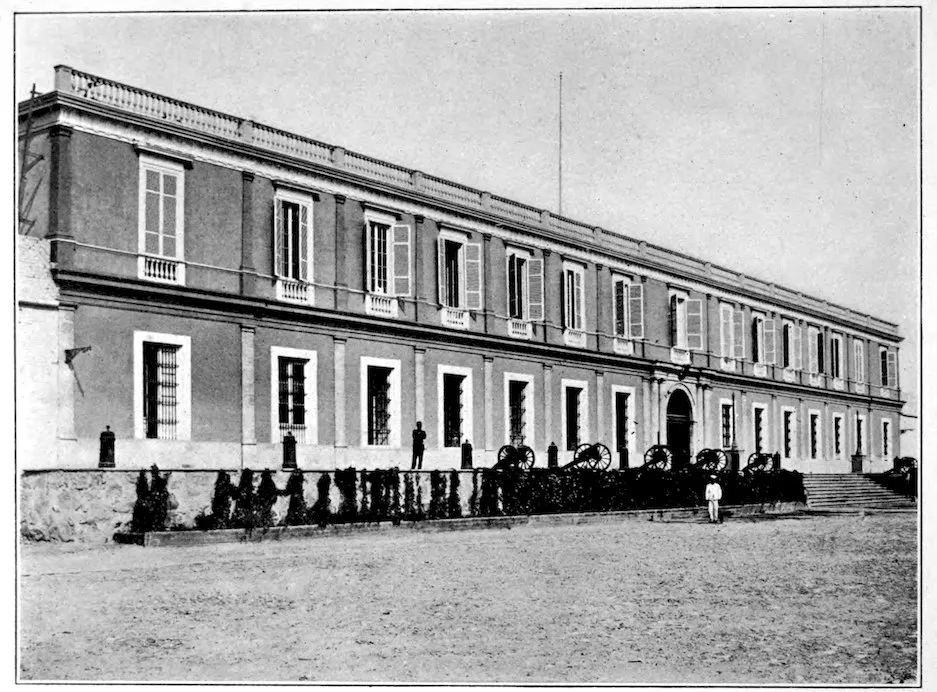
THE MILITARY SCHOOL, CHORILLOS.
In accordance with the national constitution, the local government of the republic is
under the direction of departmental and municipal boards. The departmental board has its
headquarters in the capital of the Departamento, as this division is named in Peru; its duties
are to attend to the service of public works, public instruction, and works of the benevolent
societies, and to revise the acts of the municipal boards. The members of the departmental
boards are delegates elected by the provincial councils, as the municipal boards of
provinces are called; the municipal boards of the districts into which the provinces are
subdivided are known as district councils. The provincial council is composed of citizens
elected by the people, foreigners having the right to vote and being eligible for election;
from among its members are chosen the mayor, vice-mayor, two recorders who administer
the finances of the municipality, and a number of inspectors who superintend its various
branches of public service. All these posts are unsalaried. The district council is composed
of the mayor, or alcalde, two aldermen elected by the people, and two recorders appointed
by the provincial council. The duties of both the provincial and district councils are to
govern the towns of their jurisdiction as regards sanitation, hygiene, the supply of water and
lighting, the superintendence of public roads, markets, street cars and other conveyances,
public amusements, etc.; they also have charge of the civil register and statistics. Primary
instruction and the police service are not under the direction of the municipal boards, but
181under the supreme government. The revenues of provincial and district councils are
derived from municipal properties, and chiefly from local taxes called arbitrios, which are
imposed with the approval of the
supreme government. The proceedings
of the district councils are revised
by the provincial councils,
whose acts are, in turn, subject to
revision by the departmental boards.
DR. SOLÓN POLO, MINISTER OF FOREIGN AFFAIRS IN PRESIDENT JOSÉ PARDO’S CABINET.
Politically, the republic is divided
into twenty-two departments, two
of which, Moquegua and Tumbes,
known as littoral provinces, consist
each of a single province only. The
departments are subject to the authority
of a prefect, who is appointed by
the executive, receiving his instructions
from the minister of government.
The departments are subdivided
into one hundred and one
provinces, governed by sub-prefects,
and the provinces are again subdivided
into eight hundred and one
districts, under the authority of governors.
By this arrangement the
supreme government maintains immediate
control of the national interests
in every part of the republic, the
prefects, sub-prefects, and governors
having direct supervision of primary
instruction and the police service within their respective jurisdictions. The recent reorganization
of the police system has brought notable improvements into the service, which is
conducted in conformity with modern regulations.
The ecclesiastical authority is exercised in accordance with the national constitution, which
states that Roman Catholicism is the established religion, freedom of worship being permitted
to non-Catholics. The church territory is divided into nine dioceses: the archbishopric of
Lima, and the bishoprics of Trujillo, Chachapoyas, Huaraz, Huánuco, Ayacucho, Cuzco, Puno,
and Arequipa. These are again divided into curacies, of which Lima has sixty-six, Trujillo
one hundred and three, Chachapoyas forty-three, Huaraz forty-seven, Huánuco fifty-seven,
Ayacucho ninety-two, Cuzco eighty-two, Puno fifty-two, and Arequipa seventy-one, making
in all six hundred and thirteen, in charge of curate-vicars, who receive their instructions
182from the bishops of the diocese to which they are appointed. Every village in the republic
has its church or chapel and religious instruction is given to every citizen, the churches
being open at all hours of the day to admit anyone who wishes to consecrate a few
moments to devotions.
DR. CARLOS WASHBURN, PRESIDENT OF DR. PARDO’S CABINET.
The civil rights of all persons are respected in Peru without distinction of nationality,
and all who reside in the country are equally protected by its laws. Any foreigner may
acquire property in Peru and dispose of it at will; in general, everything concerning landed
property is amply guaranteed by the Peruvian laws. The Thirty-second Article says: “The
laws protect and oblige all persons equally; and the civil rights are independent of the quality
of the citizen.” The Twenty-eighth Article declares that “every foreigner can acquire, in
accordance with the laws, landed property in the republic, possessing in everything relating
to that property the same obligations
and privileges as a Peruvian.” Special
dispositions expressly authorize foreigners
to denounce mines and obtain
concessions of mountain and rubber
lands on the same conditions as Peruvians.
In the exercise of any trade,
profession or industry of any kind,
absolute freedom is permitted to native
and foreigner alike, so long as it is not
opposed to morality, health or public
security. Foreigners desiring to practise
medicine, law, or engineering are
required to prove their ability by
presenting their title received from a
university, and by submitting to the
prescribed examination. In order to
guarantee the titles of land owners, a
registry office has been recently established,
in which is inscribed the name
of the actual owner, the manner in
which the property was acquired, the
incumbrances attaching to its purchase,
if any, and any conditions which limit
the possessor’s right to dispose of it.
The Civil Code recognizes the right of
a foreigner to dispose of his property by will, and, in case of his dying without having made a
will, and without leaving immediate heirs, it provides for placing the property in security,
under the direction of the consular representative of the nation to which the deceased
183belonged; an inventory is taken and the inheritance liquidated, so that claims against it may
be presented in due form, after the settlement of which the balance is handed over to the
heirs legally entitled to receive it. As regards the personal liberty of foreigners as well as
Peruvians, the Eighteenth Article of the Constitution expressly says that no one can be
arrested without a written order from a competent judge, or from the authorities charged
with the preservation of public order, except in cases of flagrante delicto, and in any case the
person arrested must be brought before the judge of the case within twenty-four hours
afterward. The law of habeas corpus is recognized, by which anyone detained more than
twenty-four hours without having his case submitted to the proper authorities may present
himself, or be represented by a proxy, before the judge with a complaint, and the judge is
bound to investigate the arrest and to decree the liberty of the detained person in case no
legal reason for his further detention can be established.
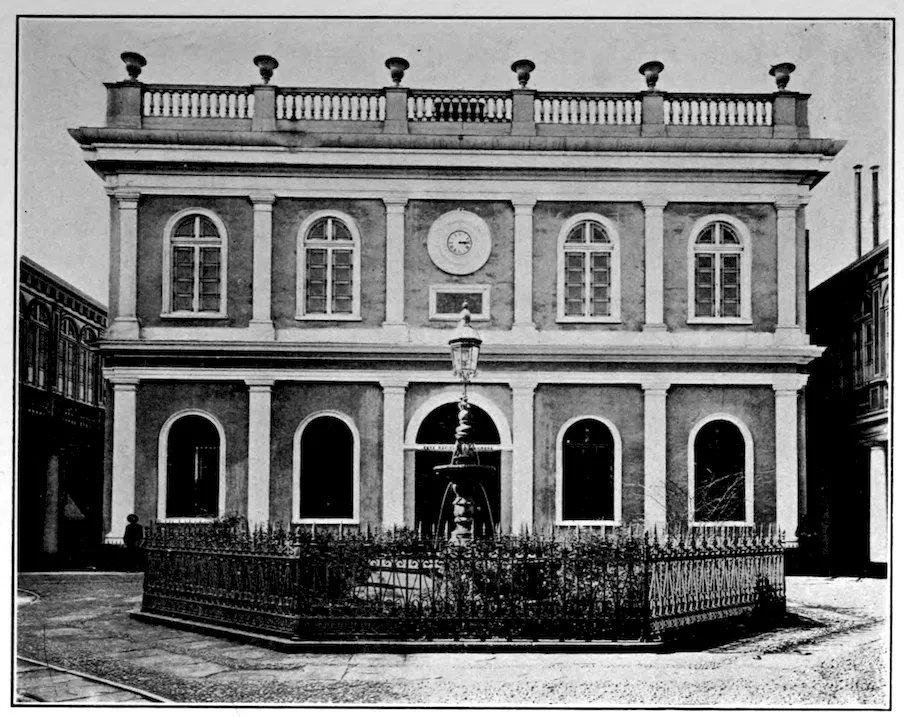
Naturalized foreigners enjoy the rights and are subject to the obligations imposed upon
Peruvians, except that they cannot be elected to the presidency of the republic, or be
ministers of State, Senators, deputies, or judicial authorities, though they may be appointed
justices of the peace. The children of foreigners are, if born in the country, Peruvians by
birth, provided their names be inscribed in the Civil Register. A Peruvian woman follows
184the nationality of her husband, though, should she become a widow, she again assumes the
nationality of her birth. It is important for foreigners who contemplate living in Peru to
know that civil marriage is established for non-Catholics, who may celebrate the marriage
ceremony before the mayor of the place in which either of the contracting parties resides, in
the presence of two witnesses who must be residents of the same locality. It is necessary
only that a declaration be made before the mayor that they do not belong to the Catholic
community, or that they have separated from it. It is obligatory that the Act of Marriage
shall be inscribed in the Civil Register within eight days after the ceremony, even in the case
of those who are married according to the religion of the country. The divorce court is
unknown in Peru, the only legal separation being one which dissolves the union only so far
as regards the property, the marriage tie remaining in force. In the case of non-Catholics,
the civil courts decide as to the judicial separation or nullity of the marriage, while, for
Catholics, the ecclesiastical authorities dispose of the matter in accordance with the ruling
of the Council of Trent.
The new laws that have been introduced from time to time in the national code show
a spirit of fraternity in the Peruvian character which is particularly promising for the
development of friendly foreign relations. In the liberal mining laws, the enterprising
prospector from abroad finds every facility to aid him in his ambitious undertakings; and
in the laws governing colonization, the establishment of industries, or any foreign enterprise,
the conditions are as favorable as a progressive and far-seeing policy could make them.
A description of this richly dowered country will show that its society, its intellectual and
benevolent institutions, its industries and its growing trade, are the outward expression of a
people’s faith in their political security and the wisdom of their laws.
REVIEW OF ARTILLERY TROOPS, LIMA.
186
BOLOGNESI CIRCLE, PASEO COLÓN, LIMA.
CHAPTER XII THE CITY OF THE KINGS AND ITS BEAUTIFUL SUBURBS
187
ENTRANCE TO MUNICIPAL PARK.
With an inheritance of legend, romance,
and wealth that gives its history
extraordinary charm, Lima, “The Thrice-crowned
City,” enjoys the distinction of
being the most renowned capital of Spanish
America. For nearly three hundred years it
was the “second metropolis” of the vast
Spanish empire on two continents, and the
centre of a viceregal court whose splendor
and gayety vied with that of royalty itself.
The legend of Rimac makes the site of this
beautiful city the ancient abode of a revered
pre-Incaic oracle; and the imagination can
easily picture scenes of antiquity in the valley
“that speaks,” when from all parts of the
kingdom the faithful came to make their
vows and to receive the word of the American
Delphi, ages before Pizarro laid the
foundations for the City of the Kings. As
frequently occurred in Peru, the native title
superseded the Spanish one, and “Lima,”
which is a corruption of “Rimac,” is now the name universally given to the capital that was
more pompously christened “La Ciudad de los Reyes,” the arms being three gold crowns
on an azure field with the Star of the East above.
Lima stands on the left bank of the Rimac River in a broad and fertile plain, which
slopes gently to the Pacific Ocean, a few miles away. The great chain of the Andes passes
within fifty miles of the city; and spurs from this majestic range approach close to its gates,
188forming an amphitheatre within which the capital lies, wearing a purple crown at dawn
when the sun is hidden behind its hills, and a golden aureole at eventide when the light
fades into the sea. The city forms a triangle, of which the longest side rests on the River
Rimac; the streets are marked out in a straight line and run parallel from northeast and
northwest, crossing at right angles, with open squares, or plazas, at intervals, beautified
with monuments, fountains, and shrubbery. The Plaza Mayor, or principal square of Lima,
is about five hundred feet above sea level, the mountains behind the city reaching an
altitude of from one thousand to three thousand feet; the climate is mild, rain seldom falls,
and the surrounding hills keep off northerly and easterly winds, while cool breezes from
the Pacific temper the heat of the tropics.
In appearance and style, the Lima of the viceroyalty has been compared with Seville,
except that its streets were broader and straighter than those of the Andalusian metropolis,
and showed signs of greater activity. As the capital of the republic, the city has grown
larger, more modern in appearance, and more western in atmosphere; yet there is still
much of the charm of the past in the massive street doors, barred windows and Moorish
balconies, or miradores, some of them built of mahogany and carved in handsome designs.
The portales, arcades that extend along the sides of the plazas, forming a sheltered walk in
front of the shops, and usually thronged with people, are a survival of colonial architecture.
The old churches and convents retain the attractiveness of venerable edifices which have
served as places of devotion for many generations. All these features are too charming to
be dispensed with, and it is to be hoped that the necessities of modern improvement will
not soon demand their destruction.
What scenes are suggested by the beautiful Plaza Mayor! On the north side stands
the government palace, once the palace of the viceroys, whose court was the talk of two
continents during the rule of the Marquis de Cañete, the Duke de Palata, and the dilettante
Prince de Esquilache; in its spacious salons gay festivals were celebrated by the Viceroy
Amat and his courtiers. A short distance away is the site of the assassination of Pizarro;
and, overlooking the plaza, from the eastern side, the great cathedral turns one’s thoughts
back to those early days when its first foundations were laid by the Conqueror, whose
remains it shelters. The archbishop’s palace adjoins the cathedral. On the western side of
the plaza stands the city hall, both the western and southern sides being faced by handsome
portales, above which are the balconies of the principal social clubs.
The brilliant functions of the viceroy’s court, that illuminated the palace on the north
side of the plaza a century ago, could hardly have been more elaborate or more elegant than
the entertainments which are given to-day in the handsome quarters of the Union Club,
overlooking the plaza from the opposite side, or in the Nacional Club, a few blocks away.
The balls and banquets held by these societies in honor of distinguished visitors are
memorable affairs: as when Mr. Root was entertained with true Peruvian hospitality in
a series of brilliant social events under their auspices. The beautiful bronze fountain, more
than two hundred and fifty years old, which forms the centre-piece of the great plaza, is an
189ornament of rare value. A short distance from the square is located the Plaza de la Inquisicion,
where, during the viceroyalty, the tribunals of the Inquisition were held. The
building in which the Holy Office had its court is now the Senate Chamber of the republic.
The interior of this edifice possesses peculiar interest. The ceiling is of carved mahogany,
a magnificent example of workmanship; the mahogany table used to-day by the honorable
Senate when writing the laws that govern a free people is the same on which the death
warrant was signed in the tyrannous period of the auto de fé. In the centre of this plaza
stands an equestrian statue erected to immortalize the hero of the Independence, Simon
Bolivar. The statue, superbly sculptured, is of bronze, and rests on a pedestal of white
marble, with bas-reliefs on the sides, representing the battles of Junin and Ayacucho.
THE NATIONAL MUSEUM, LIMA.
Lima has not been forgetful of the heroes of her liberty. In the beautiful Plaza de la
Exposicion, at the entrance to the Paseo Colón, a handsome marble column stands to honor
the memory of the other Liberator, General San Martin. It was presented to the city of
Lima by a patriotic Peruvian, Colonel Lorenzo Pérez Roca. The lower terminus of the
Paseo Colón, where Lima’s fashionable driveway widens at the converging of six beautiful
avenues, is marked by a spacious circle, that provides an imposing site for one of the most
notable monuments in South America, erected recently to commemorate the sacrifice of the
190glorious hero, Colonel Bolognesi, on the heights of Arica, where, having given his answer
when asked to surrender—“Not till I have burned my last cartridge!”—he fell under the
enemy’s fire. The monument is the work of the Spanish sculptor, Querol. It rests on
steps of granite, the base being a granite block, supporting a column of white marble.
Around the base are allegorical scenes, and the capital is also artistically finished in
allegorical design. The statue which surmounts the column represents the hero in the act
of falling, mortally wounded, with his country’s flag held close to his heart. Another
handsome monument in the Paseo Colón is dedicated to Christopher Columbus, for whom
the driveway is named. It is of white marble, and was designed by the Italian sculptor,
Salvatore Revelli, the same model having been used for the monument in the port of
Colón, Panamá. On the road to Callao, a magnificent column of Carrara marble, seventy-five
feet high, and crowned by a statue of Victory, commemorates the successful defence
of the port of Callao against the Spaniards on the 2d of May, 1866.
THE MUNICIPAL INSTITUTE OF HYGIENE.
191
The dividing line between the Lima of the viceroyalty and the Lima of the republic is
nowhere more evident than in the appearance of the city’s popular driveways and promenades.
The Paseo Colón is the modern fashionable residence quarter, and the favorite
resort for the best society of Lima on the afternoons of the Corso. It is about half a mile
long and one hundred and fifty feet wide, extending from the Plaza de la Exposicion to the
Plaza Bolognesi. Along the middle of the driveway, from one end to the other, runs a
garden bordered with trees, flowers, and shrubs, divided at intervals by monuments, pillars,
and fountains, and overarched throughout by artistically arranged wires for electric lights;
at night when these successive arches are illuminated, the Paseo is a brilliant scene,
presenting an extraordinary effect. Stone pavements extend along each side of the central
garden, for the use of foot passengers; and the broad avenue, with its pleasant driveway
thus divided, is adorned by a double line of handsome residences that overlook it from
both sides. Adjoining the Plaza de la Exposicion, at the head of the Paseo, is the large and
beautiful Exposition Park, named in commemoration of the General Exposition of 1870,
which took place in these grounds. The park covers thirty acres, and is laid out in shaded
walks, artificial lakes, grottoes, gardens, and conservatories, in which all kinds of tropical
and sub-tropical plants and flowers are to be seen, including choice Peruvian orchids.
A circle of palm trees encloses a pretty kiosk, always a favorite retreat, and several edifices
in various styles of architecture ornament the grounds. The Exposition Palace stands at
192the entrance to the park, and is one of the handsomest buildings in Lima. Its lower floor
is used for balls, concerts, and lectures, the floor above being occupied by the National
Museum, the Historical Institute, and the
Athenæum of Lima. It faces the Paseo
Colón, directly opposite to another handsome
edifice, the Municipal Institute of
Hygiene.
STATUE OF COLUMBUS IN THE PASEO COLÓN.
The Historical Institute is one of the
most important scientific institutions of
Peru, and one destined to occupy a high
place among the societies of America. Its
purpose is to cultivate and advance the
study of national history, including all that
pertains to the ethnology and archæology
of the country. This embraces a wide field
and opens up illimitable prospects of investigation.
The institute has charge of the
National Museum, which is the repository
for collections of objects of historical value
and interest. The work of collecting, deciphering,
arranging, annotating, and publishing
documents relating to the national
history, as well as the responsibility of
guarding and preserving the national monuments
of archæological and artistic value, is
under the direction of the institute, which
was created by decree of the government
of Peru on the 18th of February, 1905.
Dr. Max Uhle has charge of the prehistoric
department of the museum, a section full of
interest for those who have a curiosity to see the wonderful potteries, textiles, and mummies
that have been taken from Peruvian burial mounds. Although the work of classifying and
arranging these relics of antiquity was begun only a little more than a year ago, the exhibit
is already assuming great importance, and it will undoubtedly be among the famous world
collections one of these days. The collection of objects of the colonial and the republican
periods is of important historical interest. Here may be seen curious relics of the time of
the conquest, even the first baptismal font used in Lima, which was presented to the museum
by the church of Santo Domingo. Many and varied articles belonging to the period of the
viceroyalty have been collected, among others, the wooden cross that was carried at the head
of the procession in the auto de fé as early as the sixteenth century; and the splendid
193coach, red and gold, with the Torre-Tagle arms emblazoned on its panels, in which the
great marquis made his magnificent progresses across the country, in royal style, with
outriders and lackeys in attendance. There are trophies of the war of independence,
among them Bolivar’s spurs and the bed on which General Sucre is said to have slept the
night before Ayacucho; and among the precious treasures of more recent days are
preserved the swords of Colonel Bolognesi, the cap and epaulettes of Admiral Grau, a
Chilean flag and other souvenirs of the war of the Pacific. Paintings of historical scenes
and portraits of great men adorn the walls.
Leaving the modern Paseo Colón and Exposition Park, and crossing the Rimac, one is
again in the old city of the viceroys, the famous Avenida de Acho extending along the river
bank from the ancient stone bridge, built in colonial days, to the modern structure called
the Balta Bridge, in honor of a former president of the republic. This avenue, the
fashionable promenade of the capital up to half a century ago, is divided into three roadways,
the central one, bordered with tall poplars, being used for riding and driving, while
those on each side are reserved as walks. It is popular on holidays and is thronged on the
days of the bull fights. Of equal interest, historically, is the Jardin de los Descalzos (“Garden
of the Barefooted Friars”), which is situated a short distance beyond the Avenida de Acho,
and just at the foot of the Cerro de San Cristobal, a mountain that rises close behind the
city. The garden of the Descalzos extends along an avenue more than half a mile in length,
ornamented by twelve statues that represent the signs of the zodiac, and it is beautified
throughout its length by
tropical trees and plants,
while at intervals are
placed handsome urns
and marble benches. An
iron railing, six feet high,
surrounds the garden,
and a beautiful fountain
at its terminus completes
the harmony of the picture,
which is enhanced
by the overshadowing
Cerro, and the ancient
church and convent of
Barefooted Friars, just
below.
KIOSK OF PALMS, EXPOSITION PARK.
With the destruction,
a few years ago, of
the walls that formerly surrounded the city, plans for its beautification were initiated on an
extensive scale; the Boulevard Bolognesi, the Boulevard Grau and other broad paseos were
194laid out, forming an almost uninterrupted driveway from the river around the city’s southern
limits to the river again. The Boulevard Grau passes the Botanical Garden, in which are
collected specimens
of tropical
and semi-tropical
flora of every
variety. Stately
palms guard the
entrance to the
garden, and bordering
its shady
walks are beautiful
plants and
flowers in gorgeous
colors and
of wonderful
growth. The
Chusia, a remarkable
tree of which
the fruit bursts
open when ripe,
showing a pretty
flower with scarlet
seeds, is among
the interesting
arboreal specimens
seen here.
PAVILION IN EXPOSITION PARK.
Beautiful
paseos also lead
from Lima to its
suburban watering places, the Avenida de Magdalena being one of the most picturesque of
these shady drives. Another popular highway is the road from Lima to Callao, along which
the viceroys used to make their splendid processions in former days. It is lined part of the
way with shade trees and presents an animated spectacle on feast days and holidays, though
it is not so generally used since the advent of the railway, as that service has converted into a
twenty minutes’ trip what was formerly a journey of hours. It is the chosen route for farmers
and fruitsellers on their way to market, and is thronged in the early morning hours by these
picturesque venders, usually on donkeys, which bear the products in huge panniers slung at
each side. Lima has four market places, the Mercado Concepcion being the largest and most
important; it occupies an entire block and has a spacious interior, two stories in height,
195admitting of the best ventilation. It is considered one of the largest in South America, both
as regards the edifice and the abundance of the market supply.
The scene at the market is bright and entertaining, as it is the favorite meeting place
for gossip among the market women, and one may hear many a clever bit of repartee
between the bargaining purchaser and the nonchalant vender. Local color is vivid in the
Mercado Concepcion, as it is wherever there are popular gatherings of the mestizo and
the Indian, who give the dominant note; the customs of the Spanish-American of to-day
differ little from those of North America, whatever differences exist being due to climate
and temperament rather than to traditions. The climate of Lima is very equable, the
thermometer seldom rising above seventy degrees or going below sixty degrees Fahrenheit,
in the shade. In winter, from May to November, the garúa, a damp fog, prevails,
arriving with the morning breeze, which blows from the westward, but passing away
when the sun is high, except
on cloudy days.
As the capital of the republic,
Lima is the chief centre
of political as well as social
progress. The president of the
republic, his ministers, and the
high officials of the various
administrative offices reside in
Lima, in which are located the
national treasury, the mint, and
the post office. The mint is an
interesting institution, and visitors
find its archives both instructive
and entertaining. The
first money coined in Lima consisted
of silver disks, marked on
both sides with a cross made
by means of a hammer; later,
it was stamped with the royal
arms on one side and the bust
of the reigning monarch on the
other. Since the inauguration of
the republic, the mint has been
entirely reorganized, and provided
with modern machinery,
constructed in England. It occupies the same site as the original building, erected in 1565.
The records of the establishment show that four hundred million silver coins have been
196turned out in that time, besides gold pieces. At present both gold and silver money is
coined, the gold pieces being the libra and the media libra (pound and half pound), equivalent
to the English sovereign and the
half sovereign; the silver coins
are the sol, equivalent to half a
dollar gold, and the smaller pieces,
the one-half sol, the one-fifth
sol, the real (worth five cents,
gold), and the one-half real.
Copper coins are used, equivalent
in value to the English half-penny
and farthing. The Lima
Mint is to-day one of the best
establishments of its kind in
South America.
SAN PEDRO, THE FASHIONABLE CHURCH OF LIMA.
Lima is the seat of Congress,
of the Supreme Court,
and of the general staff of the
army, the buildings in which
these branches of the government
are conducted belonging,
not to the municipality, but to
the nation. The construction of
a new house of Congress is now
occupying the attention of the
administration. The metropolitan
dignitaries of the Church
also reside in Lima, His Grace
Archbishop Garcia Naranjo, having his palace next to the Cathedral. As Lima is not
only the national capital but also the capital of a department and of a judicial district,
it is the residence of the prefect and the seat of the superior courts. It is, furthermore,
the chief city of the province of Lima and the headquarters of the sub-prefect,
as well as of the staff of the six police districts into which that service is divided.
The provincial council, or municipality, with all its dependencies, constitutes the local
government.
During the administration of the present mayor of Lima, Dr. Federico Elguera, who
was recently reëlected for the sixth time, in token of the appreciation of the citizens for his
good government, the municipal improvements have been greater and more generally
satisfactory than ever before; and each year finds the city more modern in appearance,
with better sanitary conditions, and added conveniences of transportation. The electric
197street car routes now cover the city very thoroughly and connect it with the suburbs by
means of a rapid and commodious service. Electricity is also used for lighting, the system
being modern and convenient. As a metropolis, Lima provides the usual comforts of city
life, in good clubs and hotels; the cab service is excellent, the telephone is found in all
public buildings and residences; theatres are open all the year, and a handsome new
national theatre is now under construction.
Lima has a population of one hundred and fifty thousand inhabitants. The general
character of the masses is peaceable and the percentage of crime is not large. The
police service has been greatly improved during the present administration, the mounted
police being recruited and organized by the army authorities, though serving under the
orders of the chief of police, who has charge of the entire force. The penitentiary of Lima,
the first of its class to be built in America, is a spacious edifice, equipped with modern
conveniences, including a complete system of electric lighting; a good library was recently
installed for the use and education of the inmates. For protection against fires, Lima
has a volunteer brigade, the companies of which are maintained by personal subscription.
There are about five hundred volunteer firemen in the capital, divided into companies,
which, by their names, reveal the cosmopolitan character of this service. In addition to
the “Lima,” “Salvadora,” and “Cosmopolita” companies, the brigade includes also the
“Roma,” “Francia,” “Victoria,” and others.
THE BALTA BRIDGE OVER THE RIMAC RIVER.
198
PASEO COLÓN—THE FAVORITE DRIVEWAY OF LIMA.
Few capitals can boast of more delightful suburban resorts than those which surround
the Peruvian capital, making it possible for one to live in a perennial paradise.
In the mountains, a few leagues inland, is the ideal climate of an altitude reaching from
five thousand to eight thousand feet above the sea, and tempered by its proximity
to the equator, so that, in winter, it is the most desirable place of residence imaginable.
Chosica and Matucana are destined to be renowned as popular mountain resorts ere
very long. Chosica is situated in the province of Lima, on the line of the Oroya railway,
two hours’ journey by train from the capital. Many business men take their families to this
resort, and find it very convenient to reach their offices in town daily, as the railway service
is arranged to accommodate this demand. Matucana stands at a much higher elevation,
about eight thousand feet above sea level, and is a couple of hours’ ride beyond Chosica on
the same line of railway. It is the capital of the province of Huarochiri, Department of
Lima, and is the political centre of an important district created during the administration
of Bolivar, who gave the citizens an escutcheon with the inscription, “To the constant
Patriots of Huarochiri.” Matucana is quite a large town, and is increasing in importance as
the surrounding country is more generally explored for its mines and other resources.
Two trains daily each way carry passengers between Lima and Matucana; many travellers
bound for the sierra stop on their way to enjoy a night’s rest at this healthful resort before
beginning the sharp ascent to the summit of the Andean range. The air is fresh and cool,
199and one rarely suffers from soroche at this altitude. In summer, all Lima society deserts the
capital to live at Chorillos, Miraflores, Barranco, Magdalena, La Punta, Ancón, or some other
of the bathing resorts in its vicinity.
Chorillos is the Newport of Peru. Before the war with Chile it was the wealthiest
and most frequented summer resort in all South America; and, even though it was
completely reduced to ashes by the invading armies in 1881, it is to-day a beautiful
suburb, having been almost entirely rebuilt within the past twenty years. The site on
which Chorillos is built possesses advantages that are ideal for the purposes of a bathing
resort. Surrounding a sheltered cove that lies just under the brow of a mountain two
thousand feet high, called Morro Solar, is an uneven cliff, rising at one point to a height
of one hundred feet above the sea, and here the city of Chorillos is situated. A beautiful
terrace extends along the edge of the cliff, where society gathers to enjoy the sea breeze
and to revel in the beauty of a Pacific sunset, under the warm skies of the tropics.
The descent to the beach from the cliff is a picturesque and shaded pathway, and
the surf is particularly adapted for bathing, being smooth and regular. The town has a
population of three thousand, and in summer the daily excursions from Lima bring many
times that number to enjoy the baths, the music, dances, boating, and other amusements.
The Casino of Chorillos is famous for its fashionable social affairs, and the Regatta Club
usually provides entertainments at intervals during the summer, when Chorillos Bay is
flecked with pretty white sails, launches, and rowboats. Large and commodious electric
cars run every few minutes between Lima and Chorillos, the line having been recently
extended to reach another bathing resort, La Herradura, on the opposite side of the Morro
Solar, through which a tunnel has been built. Chorillos, Barranco, and Miraflores are
all connected with Lima by the same system of railways. The distance between these
resorts is very short and a shaded driveway connects one with the other. Magdalena
is situated between Lima and Miraflores, and is reached by a separate car line; though
the trip may also be made by following the beautiful Avenida Magdalena, which begins
at the foot of the Paseo Colón, and extends all the way to Magdalena.
La Punta, “The Point,” is another very popular bathing resort of Lima, and it is
growing in favor every year. It is located on the peninsula which extends out into
the sea at the port of Callao, and is frequented by the people of Callao as well as those
of Lima. Throngs of bathers arrive by the trains that stop at La Punta every few minutes
during the day, and in the height of the summer season additional cars are put on to accommodate
the crowds. La Punta is located at the extremity of a long narrow tongue of sandy
beach, and cool breezes always blow across it, refreshing and invigorating after the humid
air of the capital. Ancón, with its world-renowned necropolis of prehistoric treasures, lies
about twenty-five miles north of Lima, with which it is connected by railway. It is quite
popular as a bathing resort, and is a favorite summer home for families; its climate is extremely
healthful, and it is regarded as a desirable place of residence most of the year. The
dry atmosphere and sandy soil are advantages always appreciated by invalids suffering from
200pulmonary affections, and they are glad to enjoy the sea air without the dampness that so
often prevails at seaside resorts.
Whether in the charming capital, or in its picturesque and healthful suburbs, the life
of the Peruvian people is noted for its many agreeable features, some of which are to be
attributed to the blessings of climate and the prodigality with which Nature has showered
her wealth on the land, though most of them are undoubtedly due to the amiable and
generous qualities of the people themselves, who have made their country renowned
abroad as the abode of an ever abundant and polite hospitality.
THE PRESENT STANDARD OF LIMA, AS MODIFIED IN 1808.
202
A PICTURESQUE SUBURBAN DRIVEWAY, LIMA.
CHAPTER XIII PERUVIAN HOSPITALITY AND CULTURE
203
A MODERN PRIVATE RESIDENCE OF LIMA.
If the Spanish-Americans have inherited
from their European ancestors
too much of the aristocratic pride and
military arrogance that distinguished
Peninsular crusaders, they have also
fallen heir to the courtly grace and
admirable savoir faire which made the
Knights of Santiago and Alcantara
famous among the first gentlemen of
Europe four centuries ago, and which,
descending to their children’s children,
have become characteristic of the
Spanish-speaking people all over the
world. In America, and more particularly
in Peru, the influence of New
World conditions fostered a relaxation
of austere exclusiveness and a softening
of military severity; the lavish opulence
that reigned in the viceroyalty,
with its attendant pleasures, led colonial
society to assume a gayety and freedom which would have been impossible in the atmosphere
of rigorous etiquette that dominated Madrid, and Lima gradually became more
renowned for its sociability than for the strictness of its court. Both influences may be
seen, however, in the development of the Peruvian society of to-day, which is reserved
and dignified in manner, clever, hospitable, and kind.
Although the national traits vary according to locality and inherited tendencies, the
inhabitants of the coast possessing characteristics which are not so clearly defined in the
204people of the sierra, while these again differ in their customs from their neighbors of the
Amazon valleys, yet, everywhere and at all times, the Peruvian’s Mi casa es á Và—“My
house is yours”—is a spontaneous word of welcome. The Limeños, as natives of the
capital are called, are noted for their esprit and imagination, and are especially gifted in
the social qualities for which their ancestors were celebrated a hundred years ago; while
they are, happily, outgrowing the heritage of less admirable tendencies, bequeathed by the
luxurious and extravagant society of the viceregal court. The progress of the nation within
the past half a century shows that the race is strong, full of purpose, and capable of
working out a noble destiny. During the first twenty years of the republic, the social life
of Lima did not change greatly from what it had been in the pleasure-loving court of the
viceroyalty. Visitors to Peru in those early times tell us that the propensity for card
playing was one of the greatest evils the new government had to combat, and that
ministers, envoys, and officers of all ranks fell under its spell. It is said that the celebrated
Baquijano once had to send for a bullock cart to take home his winnings, amounting to
more than thirty thousand dollars. The chroniclers do not state whether the game
resembled our modern poker or our bridge whist! Those were the days when General
San Martin gave his assemblies at the palace once a week, and balls were held at which
round dances began to take the place of the minuet, the mariquita, and the fandango. As
the influence of the new régime made itself felt everywhere, political and literary coteries
lessened the number of card parties and music and dancing became more popular in the
houses of the leading people.
It was not so easy to reform the custom, popular among the ladies of those days, of
wearing the saya y manto, a coquettish feminine dress of the viceregal period, which had
been under the ban of devout churchmen for two hundred years before the independence.
Its evil influence seems to have been of a subtle kind, to judge from the conflicting
impressions it made on different travellers. It is described by one who was in Lima a
century ago and saw the ladies of that day arrayed in all their charming grace and armed
with their irresistible coquetries, as “a very handsome and genteel costume;” though not
all foreigners described it in such moderate and conventional terms. The saya was a skirt of
velvet, satin, or stuff, of black, purple, pale blue, or other colors, sometimes striped; it was
pleated in small folds and clung to the figure in such a way as to display the contour to the
best advantage. Some of these sayas were very narrow at the bottom so that the wearer
was obliged to take short steps in walking, a custom that made the Limeña’s tiny feet look
still smaller as she tripped daintily along the street; the bottom of her saya was often
trimmed with lace, fringe, pearls, or artificial flowers; the smaller her feet, the richer and
more elaborate was the garniture that bordered her saya. With this garment went the
manto, a hood of thin black silk drawn around the waist and then carried over the head
and held together in front so as to hide all the face except one eye. It is said that in this
costume a lady could pass her most intimate friend without being recognized, and mystery
enveloped the identity of every feminine figure seen on the street in those days. A dainty
205lace handkerchief, a rosary in the hand, a glimpse of satin shoes and silk stockings, and an
abundance of jewels completed the toilette. The manto was undoubtedly derived from the
Moors, and must have appeared a curious headdress when seen for the first time. The
Limeñas wore it in the most fascinating style, and the one eye that was visible between its
folds was made to do double duty as a weapon of war or love. The secret of enhancing
its potent charm was as complicated as are the mysteries of the tocador in modern Spanish
boudoirs. It was customary to darken the brows and heighten the brilliancy of the eyes
with cosmetics when Nature proved unkind or too sparing of her favors; though it was the
exception, as it is to-day, when a Limeña’s eyes lacked beauty and brilliancy. Gradually
the saya y manto gave place to the very full skirt and mantilla,—similar to the costume still
worn to church service. A long war was waged against the manto by the authorities of the
viceroyalty, who claimed that it fostered intrigue and a thousand dangerous proclivities;
but the wearers insisted that it protected their complexion from the sun, and was necessary
for their personal comfort as well as convenience. As early as 1609 an attempt was made
to prohibit the saya y manto in Lima, but not until it declined in fashion, more than two
hundred years later, did the Lima belles abandon this mode for a more modern costume.
It is said that the saya y manto played a very important part in the cause of independence,
and that the wearers of this effective disguise carried messages, assisted the patriots when
imprisonment or hardship overtook them, and rendered a great many valuable services to
the cause of liberty.
ENTRANCE TO THE BOTANICAL GARDEN, LIMA.
206
GRAND STAND OF THE JOCKEY CLUB, LIMA.
Many of the leading families of Peru are descendants of Spanish nobles who came over
with the viceroys, and a few trace their ancestry from the conquerors; but the best fibre of
the nation is derived from the enterprising colonists who established commerce in the
country during the seventeenth and eighteenth centuries, and by their industry and practical
energy laid the foundations for a better development of the mercantile interests of Peru.
They helped to overcome the traditional feeling that it was beneath the dignity of a Spaniard
to be employed otherwise than as a statesman, a soldier, a scholar, or a priest; and among
the descendants of Spanish grandees are to be found to-day many active and progressive
bankers, merchants, constructing engineers, and “captains of industry,” who are contributing
to make Peru rich and prosperous among the nations of the modern world. This spirit is
more generally seen in the capital and the seaports than in the cities of the interior, though
it is gradually extending to the remotest hamlets.
207
PRINCIPAL HALL OF THE INTERNATIONAL REVOLVER CLUB, LIMA.
In Lima and Callao, increased attention is paid to business every year, and the days
of fiesta, which once numbered almost as many as those devoted to work, are being
constantly reduced, even the holidays that remain, though none the less thoroughly
enjoyed, having lost many colonial features. Carnival, the gayest holiday festival of the
year, is now quite a subdued celebration compared with what it was in the seventeenth and
eighteenth centuries, when “Lima was no more than a city of Andalusia transplanted to the
New World, with all the extravagances of the romantic, artistic, and audacious spirit of old
Seville, Malaga, and Cordova.” The freedom of the Carnival season then pervaded all
ranks of society, and for three days no one thought of anything but pleasure. As late as
the end of the eighteenth century, the mask and domino were costumes de rigueur for
Carnival, and fancy dress balls were given in many private residences. The Viceroy Amat
made the Carnival season one of unprecedented gayety, with bull fights, promenades in
the Avenida de Acho, and a bal masque at night. One can imagine the charm of these
festivities in the delightful climate of Lima, with the soft music of the guitar and the
mandolin vibrating on the night air under a dozen balconies, and the dance of the mariquita
and the fandango keeping time to a clicking of castanets in hundreds of gayly decorated
salas. The saya y manto played its part, and many a jealous episode followed the rivalry
among young Limeños for the favor of a glance from the one eye that looked out tantalizingly
through a tapada. The custom of deluging the passer-by with the contents of a
water-jug was formerly more general than it is to-day, when the little red globo of scented
water is the chief weapon of Carnival sport. The globo, when filled, is about one-fourth
the size of a toy balloon, and is made of the same material, breaking easily and splashing
208its contents over the victim at whom it is thrown. Though Carnival is still a merry holiday,
modern municipal ordinances are annually restricting its more extravagant features.
THE AMERICAN LEGATION AT LIMA.
The national holiday, July 28th, the anniversary of Peruvian independence, is celebrated
with patriotic processions, speeches, and entertainments; it is the opening day of Congress,
and is always an occasion
of general festivity.
The day begins, as do
all public holidays in
Peru, with religious service
in the Cathedral.
There are eighteen public
holidays, two of which,
Independence Day and
the feast day of Our
Lady of Mercy, the patron
saint of the arms
of Peru, are recognized
as national. The feast
of Our Lady of Mercy
is held on the 24th of
September, and is celebrated
with imposing
church ceremonies and
a magnificent procession,
in which the high
church dignitaries, with
the Archbishop of Lima
at their head, are present.
The various religious
orders, including
the Franciscan, Dominican, Augustinian, and others, form part of the procession, and the
army appears in gala uniform and full force of infantry, cavalry, and artillery. The
church service, attended by the president of the republic and his cabinet, is one of
especial solemnity, and all Lima does homage to the occasion. The streets and plazas
are thronged by sunrise, an eager crowd assembling in front of the government palace
to see the president pass in his handsome state coach drawn by eight horses and
guided by a smart coachman and grooms. Another annual feast day of importance, at
least in the capital, is the 30th of August, the day set apart for the celebration in honor
of Santa Rosa de Lima, the patron saint of Lima, the Philippines, and all America. The
birthday of St. Joseph (San José), the patron of the republic of Peru, is celebrated
209on the 19th of March. The remaining holidays are the same as those observed in all
Catholic countries.
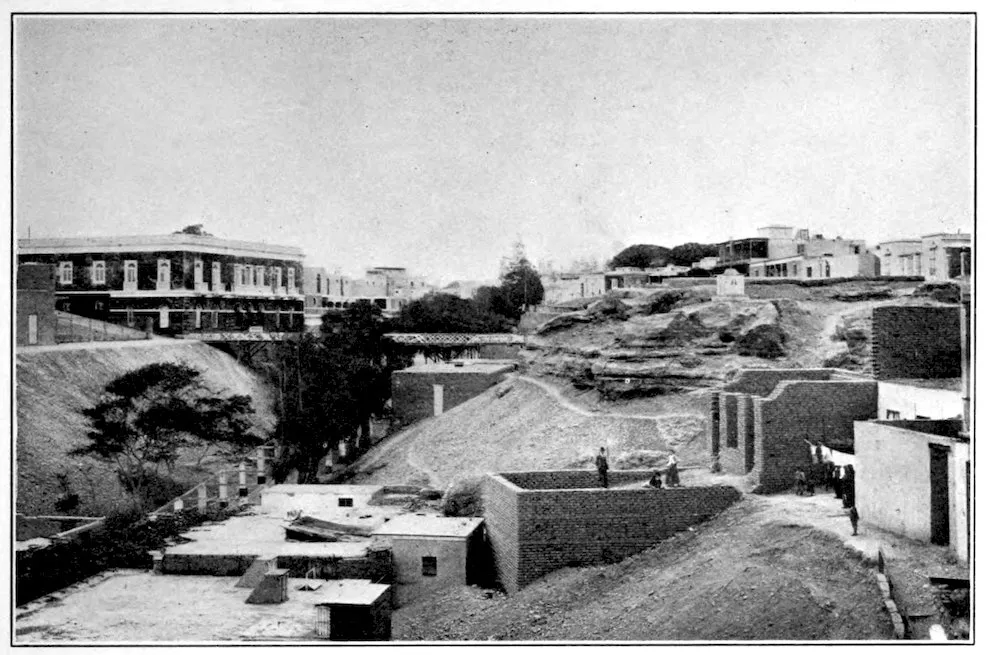
BARRANCO, A SEASIDE SUBURB OF LIMA.
The hospitality of the Peruvians is especially seen in their homes, where the stranger
finds them thoughtful, courteous, and invariably polite and attentive. One has here a
good opportunity to learn the family customs, which are simple and cordial. The houses
of Peru are generally of one or two stories, and are built around a court or patio, which is
usually beautified with plants and flowers and often paved with ornamental tiles, making
it a delightfully cool and comfortable place for the family reunion in the evening. It
takes the place of the verandah, so popular in North America. The daily routine of a
Peruvian family does not differ greatly from that of the Latin people in all countries,
where the desayuno, or early breakfast, consists of a cup of coffee and a roll, taken in
one’s room, sometimes as early as six o’clock, the midday meal, or breakfast proper,
being much more elaborate than the same meal in England or the United States, while
the dinner, between six and eight in the evening, is more or less the same as in all
countries. Criollo cooking, as the preparation of food according to Spanish-American
taste is called, has given place in many houses to the French cuisine, though one may
still enjoy the peppery dishes of native origin in the sierra, and a few choice specialties
of traditional excellence retain their hold on the national palate. The after-dinner coffee
is usually taken in the patio in summer and in the drawing-room during the season of
the garúa. In the evening, music and dancing are favorite amusements, the piano, guitar,
210mandolin, or other musical instruments being among the necessities of every well-regulated
home. The foreigner is at once impressed by the refinement and grace which distinguish
the people in their home life, and which are evidences of the long inheritance of a cultured
race. Travellers have extolled the people of Lima for their intelligence, imagination, and
charming hospitality; the Arequipeños are eulogized by Flammarion, who says: “Arequipa
is the most agreeable place of abode in South America, not only for the suavity of its climate
but also because of the hospitable customs of its people.” The cordiality of the families of
Cuzco is no less abundantly proved by those who have enjoyed a visit to this historic city,
in which it is the custom to extend charming hospitality to the stranger. It is the same in
the other cities of the republic, where a kindly welcome awaits the visitor and every courtesy
is shown to the traveller.
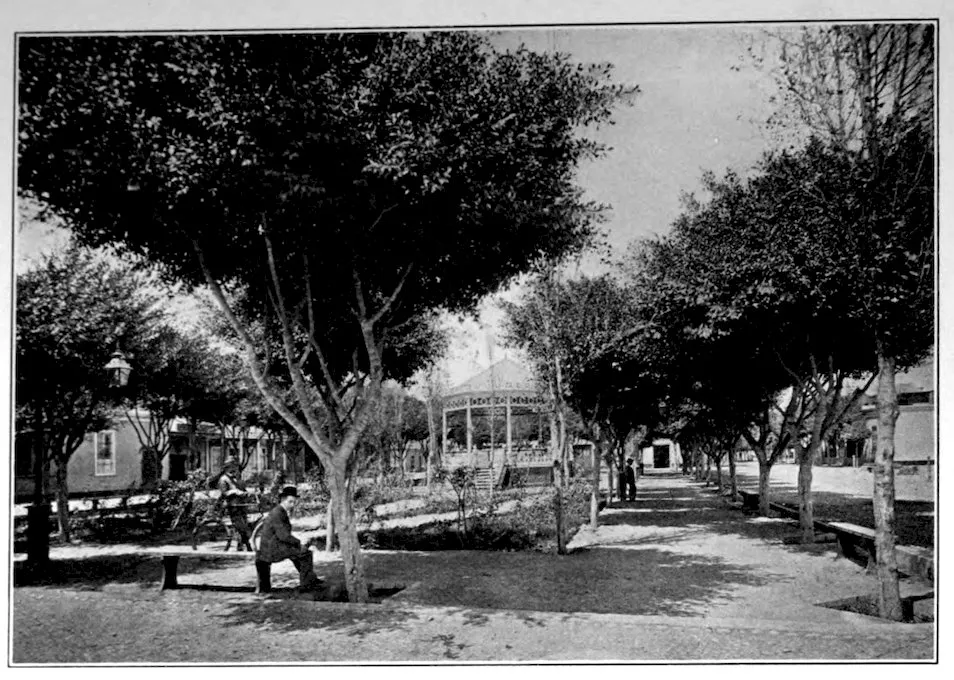
The increasing population of foreigners in Peru, and the custom among well-to-do
Peruvians of sending their children to Europe and the United States to complete their
education has led to the introduction of more cosmopolitan social customs than formerly
existed, and this is seen especially in the outdoor sports and amusements. Although the
bull fight and the Spanish game of pelota still attract a large number of spectators, the lawn
tennis games are also popular; football and baseball claim a great many enthusiastic
Peruvian players, and regattas are always attended by immense crowds of people. The
horse races have become a regular feature of sport, and at the Cancha, or race track, on
211“Derby Day,” the best Lima society may be seen in its most fashionable attire, which is
usually of Parisian style and is often imported direct from the French capital. The new
president-elect of Peru, Don Augusto Leguia, has a stock farm near the capital, on which
some of the best thoroughbreds of South America have been reared, and his horses are
usually among the favorite winners on Derby Day.
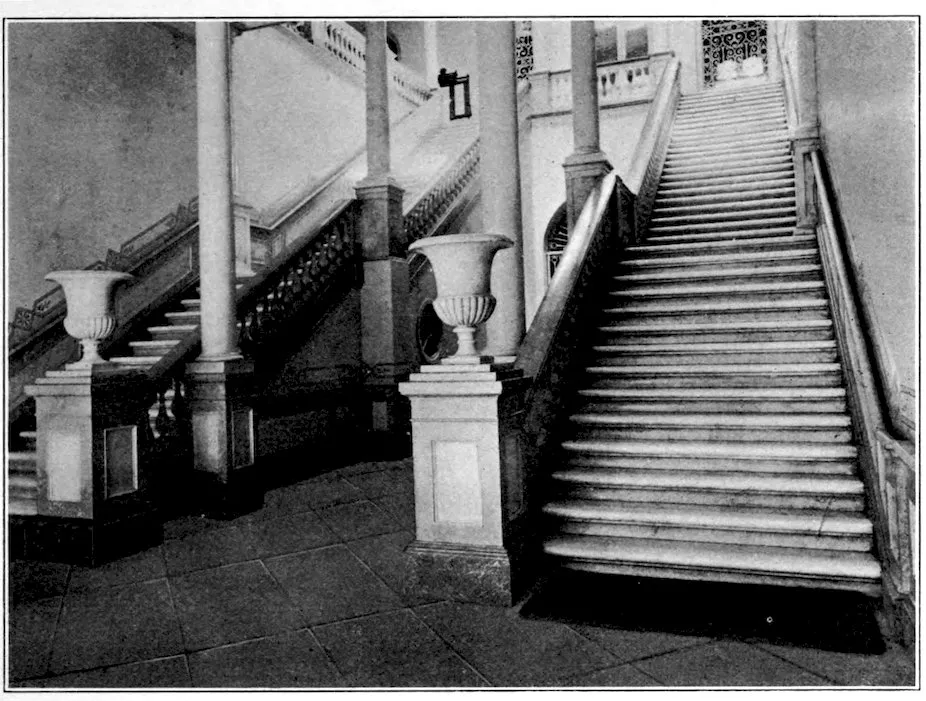
STAIRWAY OF THE NATIONAL CLUB, LIMA.
Though most of the private fortunes of Limeños were swept away at the time of the
war with Chile, when the destruction of property was great in Lima and its suburbs, as
well as on the haciendas of the wealthy planters, yet the present generation has recovered
a great deal of the former prosperity, and at important social functions, such as the balls
given within the past two years to the Duke of the Abruzzi and Prince Udine, of Italy, to
General Saenz Peña of Argentina, and to Hon. Elihu Root of the United States, the
costumes and jewels displayed are of the most costly and elegant description. The ladies
of Lima have always been famous for their winning and gracious manners, and every
writer on Peru has paid a compliment to their tiny feet, in which one traveller finds a
sufficient excuse for the Q. b. s. p. (“who kisses your feet”) with which letters to ladies are
usually finished in Spanish, instead of the very matter-of-fact “Yours sincerely” that closes
an epistle in English. The Peruvian hostess entertains with the grâce du salon which is
hers by inheritance, and her tertulias are altogether charming. But she does not confine her
212energies to social duties alone, her charities occupying a great deal of attention. Three
years ago, a number of ladies of the best society of Lima formed a club, called the “Centro
Social,” for the purpose
of establishing institutes
in which the daughters
of gentlewomen without
fortune could secure, free
of charge, the necessary
training to fit them for
earning their living. It
was proposed to teach
stenography, bookkeeping,
telegraphy, photography,
drawing, and
other branches, which
would provide the
knowledge required by
girls in search of remunerative
employment.
This effort shows the
spirit of practical benevolence
which animates the Limeña in her charitable work. It is a long step toward relieving
the pressure of modern needs when a race, whose women have been so closely guarded as
have those of Spanish ancestry, can throw off the prejudices of traditional custom and meet
a present demand with a present remedy. The adverse fortunes of war in the southern
part of the United States forced many gently born women to enter the business world. At
first they stayed at home and earned a pittance bending over the embroidery frame, but
modern machinery made even this a hopeless effort in the face of too strong competition,
and they turned their attention to more lucrative posts. While war continues to destroy
the natural breadwinners of society and to deplete the home treasury, it is useless to
preach about “woman’s sphere.”
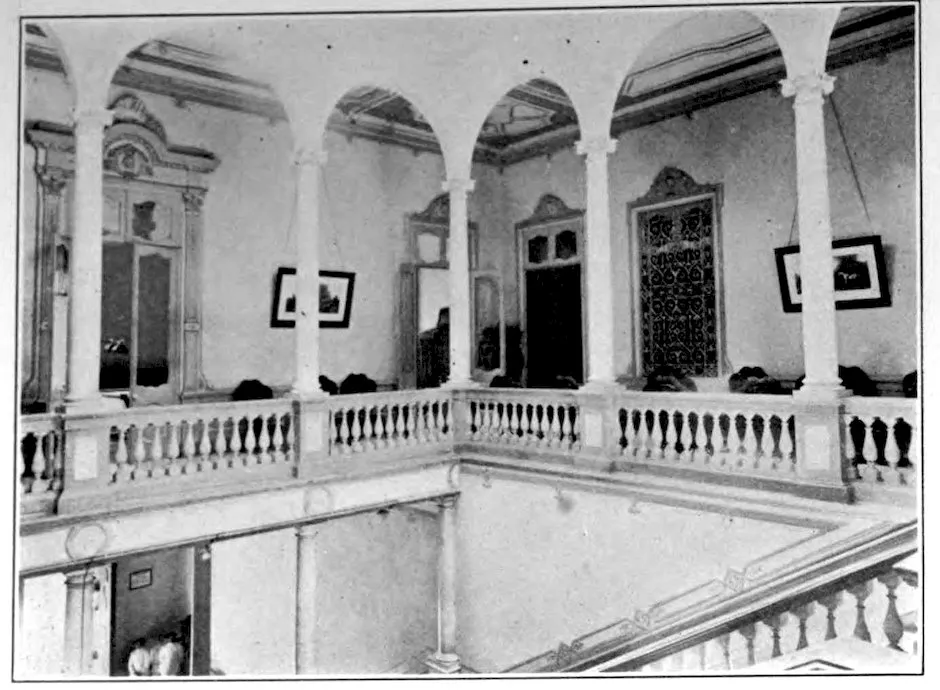
MAIN CORRIDOR OF THE NATIONAL CLUB, LIMA.
While the descendants of the Spaniards in Peru have been the directing power in the
affairs of the republic, as they were in the viceroyalty, yet the mestizo and the Indian have
not remained ciphers in the social development of the nation. The descendants of the Inca
princes were educated in colonial days in colleges especially established for that purpose,
and under the republic all classes of Indians have received the benefits of instruction; but
it is not to be expected that the descendants of the Inca’s humble subjects can show the
same degree of progress as those whose ancestors were of the family of Manco-Ccapac, and
had the mental training of royal princes for long generations. The latter are intelligent, very
proud, and have shown themselves worthy of the white man’s admiration on many
213occasions. General Andrés Santa Cruz was of the Inca’s race, as were many others who
contributed to the triumph of republican principles in the great war of independence. In
the sierra, many families of Inca descent, whose sons have filled posts of importance in the
republic, have comfortable homes and broad acres rich in harvests. The race, as a whole,
however, shows no more initiative to-day than at the time of the conquest; under the
present government, the Indian is generally contented and obedient, peacefully cultivating
the fields as he did under the Inca’s rule. His songs, called tristes by his Spanish compatriots,
are most melancholy and seem to express the sadness of ages. Indeed, the
Indian himself looks like a survival of antiquity, out of place in a modern world. The
mestizos are apparently a much happier people than the Indians; they are good artisans and
are successful in trade. They attend faithfully to religious duties, and throng the processions
of the Virgin, and other feasts in celebration of the saints. These processions take
place in every city and town of the republic, and though they have lost much of the
sumptuous magnificence that characterized all religious festivals under the viceroyalty, they
are still conducted with great ceremony.
ANNUAL PROCESSION IN HONOR OF SAINT ROSE OF LIMA.
Both the religious and the educational institutions of the country have contributed to
impress on the social culture of the Peruvians a distinct individuality; added to these
influences, within recent years an independent factor has been introduced, in the form of
clubs and societies of a literary and scientific character, which encourage the development
of independent thought among the people. Associations of professional men meet to
discuss the latest discoveries in the science with which their labor is identified, and
delegates are sent to the principal gatherings of a scientific character which are held
214annually in all parts of the world. The artisans also have their clubs and take an increasing
interest in the progress of industrial labor in their own and other countries. In some of
these clubs classes are held for the purpose of education.
In order to know and appreciate the social life of a nation it is necessary to become
acquainted with its various public institutions, not only the clubs and societies that represent
the ambitions of a few intellectual citizens, but its libraries and schools, the productions in
literature and art effected by its people, and the popular sentiment as interpreted through
the press. In the literature and the art of a nation are expressed its deepest feeling and
highest aspirations.
ROAD TO THE BEACH, CHORILLOS.
216
PORTRAIT. BY ALBERT LYNCH.
CHAPTER XIV THE NATIONAL LIBRARY—PERUVIAN WRITERS—PAINTING AND ILLUSTRATIVE ART
217
DR. RICARDO PALMA. DIRECTOR OF THE NATIONAL LIBRARY, LIMA.
In accordance with the liberal principles of
an independent nation, one of the first acts
of the government, after the inauguration of
the republic, was to issue a decree on the
28th of April, 1821, creating the National
Library. Freedom of the press was established
at the same time, and other measures were
adopted by which the newly emancipated
people could enjoy opportunities for gaining
knowledge that had not been available
under colonial rule. The Liberator, General
San Martin, realizing the importance of providing
every means for the better education
of the masses, took advantage of the
first occasion that presented itself to forward
his liberal plans. Not only was public
instruction established on a broad basis, but
the spirit of inquiry was stimulated by encouraging
the publication of reading matter,
and by giving literature a permanent place
among the national institutions. Formerly,
the means of gaining information had been
very limited, in consequence of the strict rules which governed the distribution of
books.
The patriotic motive that guided the Liberator in founding the National Library is
evident in his decree, which declares that “as ignorance is the strongest pillar of despotism,
free governments should adopt an opposite course, allowing mankind to follow its natural
218impulse toward perfection.” The library was first opened to the public on the 17th of
September, 1822, with a collection of about twelve thousand volumes. Many of these were
of great value, as the long residence of Spanish state and church officials in the viceregal
capital had resulted in the introduction of the best European literature, some of which,
interdicted by the Holy Office, had been concealed for a long time, and came to light only
with the triumph of the Independence. All the works printed by the press in Peru since its
first establishment in 1580 were placed in the National Library, which was enriched with
rare editions of the Bible; a curious volume on palmistry, dated 1449, presented by General
San Martin; a breviary, printed in Venice in 1489; and an edition of Plato of still older publication,
as well as complete sets of the writings of classic and modern philosophers and
scientists. The nucleus was chiefly derived from the convents, which had been the great
repositories of literature in colonial days, and many Latin books, in folio, were acquired,
treating chiefly of religious subjects. The library was established in a building formerly
occupied by the College of Caciques, famous under the viceroyalty as an institution that
provided for the Christian education of noble descendants of the Inca emperors.
When the Chilean army occupied Lima in 1881, this flourishing institution, which
was among the most important in America, was destroyed, the valuable collection, then
amounting to about fifty thousand volumes, being in part carried off to Chile and the
remainder publicly sold at auction by weight.
The restoration of the National Library is largely due to the efforts of its present
director, Dr. Ricardo Palma, who worked with zeal and enthusiasm to recover a treasure
which he recognized as of priceless value, since it represented not merely intrinsic worth but
also the standard of intellectual recreation which the public demanded after half a century
of free government. Dr. Palma repurchased some of the precious volumes put up at
auction, and secured rare old manuscripts that had been sold as waste paper. The portraits
of the viceroys, all of which had been torn down from the walls of the library by the
invading soldiery, were recovered, with two or three exceptions. This collection is one of
the most notable in America, as the portraits are consecutive examples of the art of three
centuries, and provide a unique study for the connoisseur. They have recently been
removed to the National Museum. The loss of the library was one which no effort could
entirely replace, and the Peruvian people regretted it as a bitter calamity; everything
possible was immediately done toward making a new collection. Other nations expressed
their regret and sympathy, and many gifts of valuable works were received. Spain,
Argentina, the United States, and Ecuador sent generous collections of books, many
patriotic Peruvians made donations from their private possessions, and, in 1884, the
National Library reopened with twenty-eight thousand volumes.
At present the library consists of fifty thousand books and manuscripts, arranged
according to a systematic classification. The library building occupies a central location,
and is a typical Spanish edifice, built around an open court, or patio, with upper and lower
corridors, which were originally the cloisters of the College of Caciques. The rooms used
219by the National Library extend the full length of the building, and include, in addition to
the book section, a commodious reading-room, furnished with modern desks and lighted
with electricity; the library is open to the public in the evenings as well as during the
day. On the bookshelves, a very important place is given to the collection sent by the
Smithsonian Institute, of Washington, amounting in all to five thousand volumes. A recent
acquisition, known as the Quixote collection, embraces the most notable editions of
Cervantes, among others that of Argamasilla, which was printed with silver type, and one
issued in Argentina in 1905, the latter being the only edition published in South America.
This classic of old Spain has been translated into eighteen different languages, and the
Library of Lima has copies of all except the Japanese, Turkish, Finnish, and Dutch editions.
The library has also been enriched by a gift, from President José Pardo, of sixty volumes,
the scientific collection of the celebrated ornithologist, William Nation, purchased by His
Excellency for the section of natural sciences.
INTERIOR OF THE NATIONAL LIBRARY, LIMA.
Dr. Palma is one of the best known writers of South America, as well as a devoted
bibliophilist, and his knowledge of Spanish literature has been gained through years of
acquaintance with the best authors of Spain and Spanish-America. In restoring the National
220Library, he has given particular attention to the acquirement of noted works and rare
editions. With especial pride in the genius of his compatriot, Don Pablo Olavide, whose
literary productions had a tremendous influence in stimulating liberal thought among the
Spanish-Americans a hundred years ago, Dr. Palma is now engaged in getting together a
complete collection of the eleven existing editions of that author’s El Evangelio en Triumfo,
the greater part of which he had already secured. Don Pablo Olavide was a native of Lima,
where he was born in 1725. When a young man, he went to Europe, became an enthusiastic
friend of Voltaire and an admirer of the Encyclopædists, and was a special mark for
the surveillance of the Holy Office until his death in 1803. His books were read with avidity
by the youth of Peru and the other Spanish colonies, and they may be said to have prepared
the way for the patriotic movement which later won the independence of Spanish-America.
During the last days of the viceroyalty the sentiment of freedom was the predominating
note in the national literature, and the stirring period of the independence brought
many gifted orators and writers into prominence. In the columns of the Mercurio
Peruano, politics and poetry were themes that divided honors about equally, the style in
which a political essay was written in those days being hardly less flowery than the
language of verse. In this periodical also appeared articles on philosophy, history, and
science. Don Hipólito Unánue, of Arica, one of the editors of the Mercurio Peruano,
exerted a powerful influence in favor of republicanism during the last years of colonial rule.
He wrote under the pseudonym of “Ariosto,” and, after the inauguration of the republic,
continued to contribute to the national literature, at the same time taking an active part in
the government as Minister of Finance in the cabinet of President Riva-Agüero. Contemporary
with Unánue, Bernardo Alcedo, a noted writer and musician, fought in the war of
independence and celebrated the victory for the patriot cause by composing the national
hymn of Peru, the music of which is inspiring and triumphant. Mariano Eduardo de Rivero,
the author of Antiguëdades Peruanas, José Gregorio Paredes, a celebrated astronomer and
mathematician, Mateo Aguilar, whose panegyric on Ignatius Loyola has been translated into
several languages, and Manuel Lorenzo Vidaurre, an eminent jurist, the first president of the
Supreme Court of Peru, were among the celebrated writers who flourished during the early
years of the republic. Miguel Garaycochea, author of Calculo Binomial, was a noted
scientist of that time.
The literature of Peru reached a period of prolific expression about the middle of the
past century, when the inimitable satirists, Felipe Pardo y Aliaga and Manuel Ascencio
Segura wrote their comedies on the national manners and customs. Felipe Pardo, the
grandfather of President José Pardo, was a statesman as well as a poet, and was representing
his government as minister to one of the European courts when he was made a
member of the Spanish Royal Academy. His best known work is called El Espejo de mi
tierra—“The mirror of my country,”—and gives an entertaining picture of Peruvian life
fifty years ago. Segura’s comedies, written about the same time, were clever satires on the
prevailing creole customs, especially his La Saya y Manto, Ña Catita, El Resignado, and
221Lances de Amancaes. Another writer of the same period, Manuel Atanasio Fuentes, who
satirized the political and social foibles of his day in a periodical called El Murcielago—“The
Bat,”—found in literary work a pleasing diversion. He was a noted jurist and wrote
treatises on constitutional law, administration, and similar subjects. The Peruvian critic is
often satirical in his treatment of men and books, a keen sense of humor giving piquancy
to his judgment. In this art, Don Pedro Paz Soldán y Unánue excelled, his pseudonym
“Juan de Arona” being known throughout South America. He was a member of the
Spanish Academy and a distinguished Latin and Greek scholar. In El Chispazo, a humorous
periodical which he edited, his crisp epigrammatic style was at its best. He was born in
Lima in 1839 and died in 1895, having employed his talent ably and successfully through
the difficult periods when his country was facing the greatest crises that could arise to
impede the progress of a young nation.
PATIO OF THE NATIONAL LIBRARY, LIMA.
Many of the intellectual leaders of Peru were nurtured under the strenuous regimen
which the unsettled conditions of the first thirty years of republican rule made necessary,
their genius shining out with brilliancy during the period of peace and prosperity that
followed. It was not unusual to find a general of the army, whose war record was the
pride of his country, devoting himself to literary work later, when quiet reigned. One of
222the most celebrated historians of Peru, Don Manuel Mendiburu, whose monumental work,
Diccionario Biográfico del Peru has made his name immortal, fought in the patriot ranks
during the war of independence, was made Minister of War by President Gamarra, became
a general of the army, and was president of the commission that reformed the military
laws, as they exist to-day. He was a statesman as well as a soldier, and presided over the
assembly which, in 1860, promulgated the present constitution of Peru. As Minister of
War, Minister of Finance, and Diplomatic Minister to England, he served his country with
honor and distinction, being one of the most illustrious men of his day, in war and peace.
It was only in the intervals of his public career that Dr. Mendiburu found time to pursue
his biographical studies, the results of which are most important to Peruvian literature.
For, though this great work is called a dictionary, its sixteen volumes are so complete in
historical information as to be entitled to rank among the best records of the colonial period
of Peru. Of the eighty years that covered the lifetime of this great man, from 1805 to
1885, more than three score were spent in public service. He led the vanguard in the last
war, was War Minister in 1880, and at the time of his death was president of a commission
charged with the reorganization of the National Archives. It is not often that human
activity extends over so many years, and one is accustomed to think that in Latin countries,
and especially in the tropics, the spirit of youth is of short duration, the precocious child
arriving early at the zenith of his possibilities, and declining at an age when the slower
native of a less favored zone is in his prime. There are remarkable exceptions to this rule
in Peru, where the years have passed lightly over many a viejo verde, as the “green old
age” is called. Don Francisco de Paula Vigil, the liberal philosopher of Tacna, prominent
for half a century in politics and literature and director of the National Library for forty
years, died in 1875 at eighty-three years of age. Luciano Cisneros, an eminent orator,
jurist, and writer on constitutional law, was a member of the Academy of Jurisprudence in
Madrid, a judge of the Superior Court, Minister of State, Diplomatic Representative of his
government in Europe, and held his own among the leading statesmen of Peru until
his death in 1906, at seventy-four years of age. Francisco Garcia Calderon, a member of
the Spanish Academy and a writer of note on legal and other subjects, as well as a statesman
of renown, was one of the most active leaders in promoting his country’s progress at
the time of his death, in 1905, though he had already passed his seventieth year. The
present director of the National Library, though still one of the younger generation in
spirit and sympathy, published his first book, Anales de la Inquisicion de Lima, forty-five
years ago, and was at that time already prominent in political affairs. As consul to
Brazil, secretary to President Balta, and Senator of the republic in three legislatures, he
early proved himself one of the most brilliant young men of the nation, and when he went
abroad in 1865 after leaving Brazil, his genius shone with lustre in the highest intellectual
circles of Europe. The fame of Ricardo Palma rests chiefly on his masterpiece, Tradiciones
Peruanas, the only literature in existence which gives local color to the history of the viceroyalty
in Peru, and preserves for posterity the very life and essence of its fascinating
223social annals. The Lima of the Tradiciones has survived the change of government and,
though one no longer sees the viceroy and his court, it is still possible to visit many places
made familiar by Dr. Palma’s stories. The charming Limeña does not now appear in
saya y manto, it is true, but she is as clever and bright as of old; the Franciscan friar is still
in evidence, and the little zambo wears the same contented countenance that distinguished
his ancestors a hundred years ago; the Indian is sad and patient, as the author of Tradiciones
paints him. The characters that live and move in Ricardo Palma’s book are real and
immortal. Up to the present time no other author in America has been able to paint such
vivid and intimate pictures of colonial times. The work was originally published in six
volumes, in 1870, though many editions have since appeared, and a new volume has
recently been added, entitled Ultimas Tradiciones Peruanas. Ricardo Palma is a member of
the Royal Spanish Academy, the Hispanic Society of America, and other leading historical
and scientific societies of Europe and America. The author of the present work has just
completed the translation of Tradiciones Peruanas into English.
If the more intimate features of colonial society are to be understood only through a
perusal of Tradiciones Peruanas, a general idea of the viceroyalty is best obtained from the
works of Don Sebastian Lorente, who wrote the first complete history of Peru, in five
volumes, published in 1871, giving an especially interesting description of the colonial period.
He made a lifelong study of the history of the country, and for forty years lectured on his
favorite theme in the University of San Marcos. Another historian, Don Mariano Paz Soldán,
contributed a most important geographical work to the literature descriptive of his country,
and wrote several books on historical subjects. His Atlas del Peru and Diccionario Geografico
y Estadistico, published thirty years ago, contained the first complete description of
the political divisions of the republic, and afforded valuable information regarding the physical
features, climate, resources, and population of Peru. Dr. Paz Soldán was a statesman of
noted ability and rendered invaluable services to the cause of education and in behalf
of prison reform. As Minister of Justice and Public Instruction in the cabinet of President
Balta, he founded a school of sciences and reorganized the Universities of Arequipa and
Cuzco, besides establishing numerous secondary schools. The illustrious patriot died in
1886 at sixty-five years of age, his funeral being conducted with State ceremonies, and
attended by the highest officials of the government. The historian, Dr. Eugenio Larrabure y
Unánue, pronounced the funeral oration, and the assemblage at the bier of the lamented
scholar was representative of the best intellect of Peru. Dr. Larrabure y Unánue is the
author of a number of historical works, of which his studies relating to ancient Peru possess
especial interest and value. He is also a statesman and diplomatist, literature being his
favorite diversion in such hours of leisure as an active public career affords. Another celebrated
Peruvian authority on the antiquities of the country, Dr. Pablo Patron, is a scholar of
international renown, whose archæological study, La Lluvia, read a few years ago before
the Congress of Americanists at Stuttgart, attracted general attention among antiquarians.
Dr. Patron has rendered important services to his country in scientific research and has
224made the study of Peruvian textiles and potteries a specialty, giving them a fascinating
charm, which ethnologists as well as lovers of decorative art are quick to appreciate.
DR. JOSÉ ANTONIO MIRÓ QUESADA, THE NESTOR OF THE PERUVIAN PRESS.
Several students of the literature
of the Incas have devoted
themselves to the task of preserving
Incaic legends and musical compositions.
The drama Ollanta has
been translated into Spanish by
three well-known scholars, Don
José Sebastian Barranca, Dr. José
Fernando Nadal, and Dr. Gavino
Pacheco Zegarra. Don José Maria
Valleriestra, a musical composer of
note, is the author of two operas,
Ollanta and Atahuallpa, which have
been presented in Lima and elsewhere
with success. The greatest
Peruvian writer on the subject of
Incaic civilization and history—the
most celebrated chronicler of his
people—was the Inca Garcilaso de
la Vega, who was born in Cuzco in
1539, and died in Spain in 1618.
He spent the first twenty-one years
of his life in Peru, his father Garcilaso,
one of Pizarro’s followers,
having married a native princess
of the royal line of Incas. His
Comentarios Reales are still regarded as the most authentic source of information existing
in reference to prehistoric Peru.
The history of Peru, both ancient and modern, is a theme of such extraordinary interest
that it is not strange Peruvian writers should have made it the predominating subject of
their works. No country has such a wealth of romance to kindle the imagination and to
inspire the poet, and no country has greater reason to be proud of its annals, and the
patriotic sentiment which finds expression in the literature and art of the country is
altogether admirable. The Athenæum of Lima, the Geographic Society, and the Historical
Institute, all intellectual organizations, were created for the purpose of promoting the study
of Peru, from a literary, geographical, and historical standpoint, and their libraries contain
many valuable works by Peruvian as well as foreign writers. The first of these institutions
was founded under the name of the Literary Club of Lima, in 1877, Don Francisco Garcia
225Calderon being its president. Ten years later it was reorganized and took the name of
the Athenæum of Lima; among its members are the most illustrious scholars of Peru.
Don Luis B. Cisneros, a member of the Spanish Royal Academy and one of Peru’s greatest
poets was crowned by the Athenæum, with impressive ceremonies, in 1897. His poems,
novels, and dramas are among the literary treasures of his country, and his death, which
occurred in 1903, was an occasion of national mourning. The Athenæum was founded
too late to number on its roll the gifted poets Clemente Althaus, Nicolas Corpancho,
Constantino Carrasco, Arnaldo Marquez, Trinidad Fernandez, and Adolfo Garcia, who died
several years earlier; Carlos Augustus Salaverry, the son of the illustrious General Felipe
Santiago Salaverry, and a poet of great genius, died in Paris in 1888, a year after the
Athenæum was organized; and José Antonio de la Lavalle, a member of the Spanish
Academy and a diplomatist of notable talent, whose literary style was especially distinguished
for its grace and purity, reached the close of his useful and brilliant career in
1894, at sixty years of age. Don Felix Cipriano Coronel Zegarra, of the Spanish Royal
Academy, one of the most illustrious scholars of Peru and a member of the Athenæum,
collected a great deal of valuable information relating to the literature of his country,
and his Notes for a Literary History of Peru, now in possession of the Faculty of Letters
of the University, contains sufficient material for a literary encyclopædia.
COLUMBUS BEFORE THE UNIVERSITY OF SALAMANCA. BY IGNACIO MERINO.
The present president of the Athenæum is Dr. Javier Prado y Ugarteche, Dean of the
Faculty of Letters of the University, a statesman and diplomatist, as well as an author of
226distinction. His book on the condition of Peru during the viceroyalty is one of the most
interesting studies in sociology written within recent years. Dr. Prado y Ugarteche is a
booklover of fine judgment, and he possesses
one of the largest and most valuable libraries
in America. His brother, Dr. Mariano Prado y
Ugarteche, is also a statesman and a bibliophilist.
He is the author of important works
on literature and Incaic history. As a member
of the Athenæum, and as vice-president of
the Historical Institute, he has done much to
promote the success of both these organizations.
Another prominent member of the
Athenæum, who is secretary of the Historical
Institute as well, Don José Toribio Polo, occupies
a unique place among Peruvian scholars
as a bibliographer and a literary critic. He was
formerly Dr. Palma’s assistant in the directorate
of the National Library, and to his patient investigation
of ancient documents is due the
elucidation of many facts in the past history
of the country, his thorough knowledge of
Peruvian chronicles giving especial value to
the critical studies he has made of various
historical works.
THE DISILLUSION OF THE ARTIST. BY DANIEL HERNANDEZ.
The purposes of the Athenæum and the
Historical Institute are closely related, both
aiming to encourage intellectual progress, and
many writers of prominence belong to both
societies. The Athenæum has been called
upon to mourn the loss of some of its most distinguished members within the past few
years, among them Don Carlos German Amezaga, a poet of rare genius and culture, who
was its vice-president at the time of his death, in 1907. He belonged to a family of noted
talent, his father, Don Mariano Amezaga, having been a philosopher and writer of great ability.
The secretary of the Athenæum, Don Francisco Garcia Calderon y Rey, and the assistant
secretary, Don José de la Riva-Agüero y Osma, also inherit their literary genius, their surnames
indicating their distinguished descent. Don José Santos Chocano has attained an honored
place among the literary lights of Europe, and the Athenæum is justly proud of his success.
Don Luis Fernan Cisneros, Don Teobaldo Elias Corpancho, Don Carlos Larrabure y Correa,
Don Clemente Palma, Don Aurelio Arnao, and Don José Augusto de Izcué are among the
poets whose verses are a credit to the Athenæum. Don José Izcué writes history as well as
227poetry. As Director-general of Public Instruction in the ministerio of Dr. Jorge Polar, he was
identified with the inauguration of the Historical Institute, and especially with the establishment
of the museum, being appointed director of the department devoted to the colonial
and republican collection. His historical works are chiefly studies of the republican period.
THE CHARMER. BY ABELARDO ALVAREZ CALDERON.
In the Revista Historica and the quarterly review of the Geographic Society, the representative
scientific periodicals of Lima, and in Prisma, Actualidades, Variedades and other
illustrated weeklies of superior literary and artistic merit, the best intellect of Peru has
found expression. Don Carlos Romero, the editor of the Revista Historica, Don Clemente
Palma, editor of Variedades and Don Enrique Castilla, editor of Actualidades, are writers of
exceptional talent and originality. Periodical
literature is a popular avenue for the
literary aspirant, and the number of writers
increases as the magazines, reviews, humorous
weeklies, and daily newspapers
multiply. The directors of all these publications
are writers of note, and it is
frequently through their initiative that
societies are formed for the promotion of
science or literature. The founder of the
Geographic Society, Don Luis Carranza, a
native of Ayacucho and one of the most
distinguished writers of Peru, was at one
time a director of El Comercio, the oldest
daily newspaper in Peru. He was the
author of important historical works and
his influence was great in stimulating intellectual
progress. Few institutions in
South America are better known abroad
than the Lima Geographic Society, which
was founded in 1888 and installed in its
present quarters in 1891. As the title signifies,
the principal purpose of the Society is
to foster geographical study in Peru, though
its scope is broad and liberal, and the quarterly
review not only contains articles on
archæological geography, statistics, and climatology
but also the texts of conferences
given in the hall of the society on scientific
topics of general interest. The society is a dependency of the Foreign Office and is under
the protection of the government. Dr. Eulogio Delgado, the president, is a recognized
228authority on the geography of Peru, and under his administration the society has achieved
its present importance and prestige. The secretory, Dr. Scipion Llona, has made interesting
studies in archæological geography and Incaic
history, and the sub-secretary, Don Carlos Bachman,
is the author of the best existing history
of the political demarcation of Peru. On the
membership roll, which contains three hundred
and thirty-five names of active members, in addition
to honorary and corresponding associates,
are some of the most illustrious scholars of Peru,
and the library of the society is constantly enriched
by the acquisition of valuable works.
Don Alejandro Garland, a prominent member of
the Geographic Society, recently published an
important book on his country, Peru in 1906,
and, from time to time, articles, pamphlets, and
larger volumes are issued by the society or its
members, which add to historic and descriptive
literature.
UNE PARISIENNE. BY ALBERT LYNCH.
The progress of the press in Peru has been
most notable during the past few years. El
Comercio, which has been a faithful chronicler of
the political and social events of the country for
nearly three-quarters of a century, still stands at
the head as a representative of Peruvian journalistic
ethics and enterprise. The same policy
which made the paper the exponent of liberty
half a century ago,—when it fought a noble
campaign in favor of the abolition of slavery, first
of the negroes and later of the Indians,—makes
it to-day the leader in promoting the highest principles
of humanity, advocating the most necessary
reforms, and encouraging the best citizenship. Modern methods are employed in its extensive
news service and the latest material improvements have been inaugurated in every
department. The proprietor and editor-in-chief of El Comercio, Don José Antonio Miró
Quesada, is the Nestor of journalism in Peru and is esteemed as the exponent of its most
worthy ideals. The press of the republic is represented by about two hundred newspapers,
the principal dailies being El Comercio, El Diario, and La Prensa of Lima; La Bolsa and
El Deber of Arequipa; El Comercio and El Sol of Cuzco; La Razón and La Industria of
Trujillo; though every city and town has its newspaper, and in the larger centres an
229illustrated weekly is also issued. Many of the leading editors and journalists are prominent
in politics and hold important offices in the government. Dr. Felix Castro, the owner and
editor of El Comercio, in Cuzco, was secretary of the presidency in the administration of
President Serapio Calderon and served his country as propagandist in the United States,
where his journalistic talents were of great value in advancing his mission through the New
York Herald, Sun, and other dailies.
In painting and music, as well as in literature, Peru has an honored place among American
nations, though it is generally the fashion in Peru, as in the United States, to maintain
that only in Europe are great masterpieces painted, and that home talent cannot achieve the
results possible in the “atmosphere” of the art centres of Paris, London, and Rome. Many
of Peru’s greatest artists have their permanent place of residence abroad, and in the art
exhibitions, their names appear among those of the most successful painters. This was true
half a century ago, when one of the greatest painters of his day was a Peruvian, Don Ignacio
Merino, born in Piura and sent to Paris to study art under Monvoisin and Delacroix. In the
years 1869 and 1870 he won the highest honors of the Salon, his famous work, Columbus
before the University of Salamanca, being among the noted modern masterpieces. The Vengeance
of Cornaro, Felipe II. Dying, The Friar Painter, and Cervantes Reading Quixote are
well known to connoisseurs and possess superior merit. The illustrious painter died in
Paris and was buried in Père la Chaise. He bequeathed his paintings to the city of Lima
and they are now in the gallery of the Historical Museum. In the museum also hangs the
masterpiece of Luis Montero, another Piura artist, who was educated in Italy and studied
under Fortuny. It is entitled The Funeral of Atahuallpa and is notable for the contrasts of
stillness and movement, though the Indians are too dark in color and the women too European
in type to give a faithful idea of the subject. In the gallery of the museum are historical
paintings by Francisco Esteban de Ingunza and other noted Peruvian artists.
Don Luis Bacaflor is esteemed one of the greatest Peruvian painters of the present day.
His Head of an Old Man is a celebrated study painted by him several years ago, and he is
the author of many other well known pictures. His home is in Paris, where he counts
among his friends the leading artists of Europe. The story of Bacaflor’s early struggles and
his sturdy patriotism give a peculiar interest to his later successes. When a mere youth, he
went to Chile to study his beloved art, giving evidences of the genius which has since
developed in all its strength. He won the Prix de Rome, in recognition of which the Chilean
government offered to send the aspiring young painter to Europe, that he might have the
advantage of the best training of foreign masters. With what a thrill of delight must the
student have seen such a prospect open before him! But,—it was impossible to accept
the terms, which demanded that he renounce his beloved Peru and become a Chilean
citizen. Not a moment did the patriotic young artist hesitate, sending at once the answer
which was apparently to cut him off from a brilliant career and the achievement of his
dearest ambition. His reward has been a noble one. The Peruvian government in recognition
of its gifted and patriotic young citizen, sent him to study under its own auspices, and
230the result has been an honor to the nation. Albert Lynch, also a Peruvian, a native of
Trujillo, is among the famous painters at the French capital. Francisco Lazo, Daniel Hernandez,
of Huancavelica, Herminio Arias, the Countess de Beon, Alberto Pareja de Mijares,
and Juan Lepiani are names well known in the art circles of Europe, especially in Rome and
Paris, where their pictures have been exhibited in the salons. Abelardo Alvarez Calderon,
who has won fame as an illustrator, lives in London. There are still a few artists who have
remained in their own country, and the illustrative art, as seen in the magazines, gives evidence
of superior talent. Don Miguel Miró Quesada is one of the most gifted of the younger generation,
his clever sketches and caricatures being an attractive feature of the current periodicals.
The painter, Francisco Lazo, was both litterateur and artist, and the author of the Peruvian
national hymn, Bernardo Alcedo, wrote a book on the elemental philosophy of music, besides
composing the music of the hymn and a number of masses, a Miserere, and other works.
The composer Valleriestra, devotes all his leisure to musical study. Peru has a celebrated
cantatrice, Señorita Margarita Alvarez de Rocáfuerte, who has won fame in the European
capitals by her divine voice and the sympathy and grace with which she interprets the
masters of music. She is young, beautiful, and of artistic temperament, and wins her
audience from the first moment. Not long ago, this charming songbird of the Andes
received the gold medal in a musical contest in the Royal Academy of London.
The Philharmonic Societies of Lima and Arequipa are flourishing organizations, whose
purpose is the encouragement of musical art. The Arequipa society is older and of larger
membership than the Philharmonic of the capital, which was inaugurated less than a year
ago. The Lima society is composed of patrons and active members, the former contributing
funds for the maintenance of the society, while the latter assist in classes and take part in
the musical concerts that are given under its direction.
DOLCE FAR NIENTE. BY DANIEL HERNANDEZ.
232
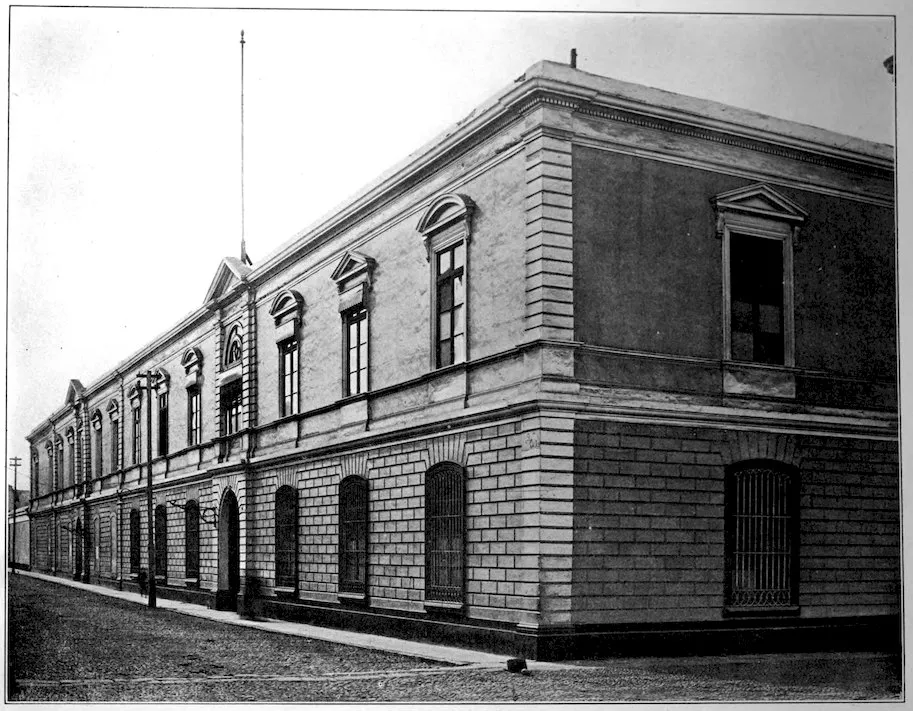
UNIVERSITY OF SAN MARCOS, LIMA.
CHAPTER XV THE OLDEST UNIVERSITY IN AMERICA—MODERN SCHOOLS OF PERU
233
DR. LUIS F. VILLARÁN, RECTOR OF THE UNIVERSITY OF SAN MARCOS.
Founded in 1551, nearly a hundred
years before Harvard received its
charter, the University of San Marcos
is the oldest educational institution of
America. Under the royal seal of the
Emperor Charles V. and Queen Joana,
his mother, it was established in the City
of the Kings soon after the inauguration
of the viceroyalty, and was conceded all
the honors and privileges enjoyed by the
University of Salamanca, at that time
the most celebrated seat of learning in
Europe. The royal grant was issued to
the priors of the Dominican order, and the
original lecture halls were installed in the
chief monastery of “Santo Domingo,” in
Lima. Twenty years later, King Philip II.
ordered the secularization of the university
and its separation from the
Dominican convent. The cathedral was
then chosen as the hall for literary functions,
and in one of its chapels, consecrated
to the Virgin known as La Antigua, and especially venerated from that time by the university,
the degrees of scholarship were conferred. This chapel is of especial interest because
of its history, some of the most impressive ceremonies of the viceregal period having taken
place here. The conferring of degrees in the early history of the university was attended
with elaborate religious formalities, an important feature being the celebration of a mass
234of the Holy Ghost in preparation for the event. After this solemn sacrament, the candidate
passed through two days’ examination, chiefly of a religious character. If successful, he
was then led to the chapel of the Virgin, accompanied by his fellow-students and the
doctors of the faculties, and was obliged to make the customary profession of faith, the same
as that adopted by the University of Paris in the beginning of the sixteenth century, which
required the candidate to pledge his loyalty to the mystery of the Immaculate Conception.
The degree of doctor was then conferred by the dean, who represented both the royal and
the pontifical authority; and as soon as this part of the ceremony was concluded the sponsor
decorated the new doctor with the insignia of his class.
In 1572, Don Gaspar Meneses, a scholar of note, who held the degrees of Doctor of
Medicine and Master of Arts, was appointed the first rector of the university. He was well
fitted, by his piety and learning, to promote the education of the colony in accordance with
the ideals that prevailed during that early period. The independent career of the University
of San Marcos began in 1574, the name being chosen by lot from a list of saints’ appellatives;
and on the 31st of December of that year the first reunion was celebrated in a
building purchased by the faculty. Two years later, during the reign of the Viceroy Toledo,
an edifice was constructed for the university, in the Plaza de la Constitucion, which was
occupied by its classes until 1770, when, after the expulsion of the Jesuits, the committee
charged with the final distribution of their schools made the college of San Carlos the
university building, promoting the two flourishing Jesuit schools of San Carlos and, later,
San Felipe, to equal dignity and privileges with the classes of San Marcos. The college of
La Libertad was accorded the same advancement in 1826. La Libertad was a college for
Indian princes, and had been called Del Principe during the viceroyalty. An interesting
chronicler of those days gives a charming description of the collegians of San Carlos, Del
Principe, Santo Toribio, and other schools. The students of San Carlos were distinguished
by their black dress, cocked hats, and dress swords; the young caciques of Del Principe
wore a full suit of green with a crimson shoulder ribbon and a cocked hat; and the Santo
Toribio collegians adopted the almond-colored opa, a gown made like a poncho, wide at the
bottom, with which a pale blue scarf was worn, and a square bonnet of black cloth.
235
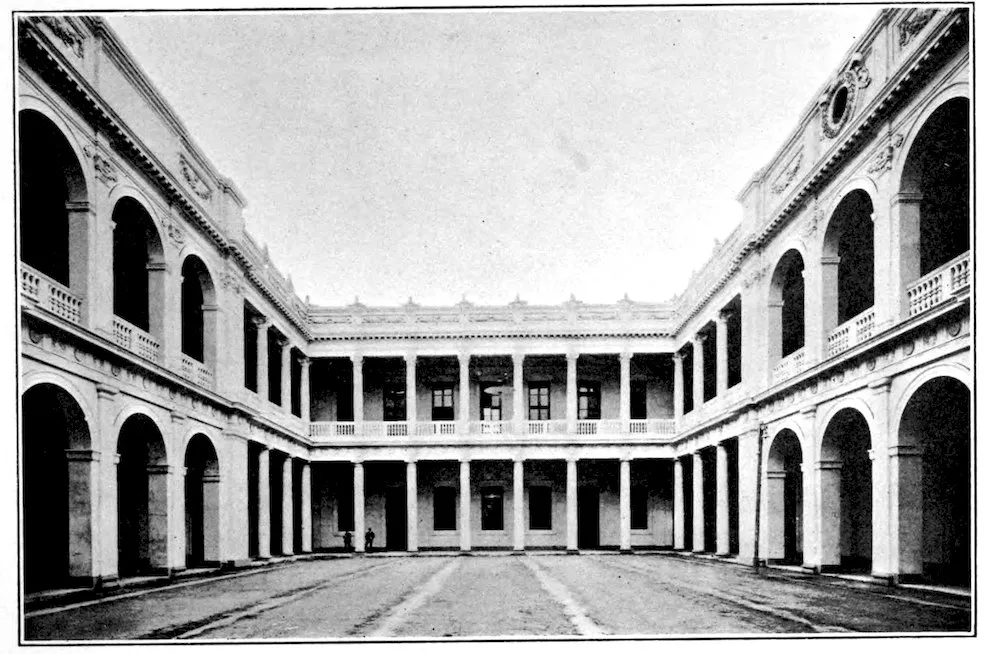
CLOISTER OF THE NATIONAL COLLEGE OF GUADALUPE, LIMA.
The curriculum of a university in the sixteenth century was governed by the predominating
influence in intellectual culture, as it is to-day. In Spain, even more than in other
countries of Europe, this influence was essentially religious in character. Theology was the
most important branch of study, and law and medicine were taught from textbooks which
read more like religious treatises than scientific compendiums of knowledge. In the
University of Lima, the plan of studies included three classes daily in theology, three in
law, two in canonical law, two in medicine, two in grammar, and one in native languages,
the last being considered necessary for the propagation of the faith among the Indians.
During the viceroyalty, the University of San Marcos was an exclusively aristocratic
institution, and its chief mission was to educate the nobility and the clergy, the latter
ranking in the same class as the highest aristocracy. The candidate for a degree had to
meet such enormous expenses that its advantages were within the reach of only a favored
few. He was obliged to give a sum of money to each doctor of his faculty and to those of
all the other faculties, a larger sum to the rector and further amounts to the dean of his
faculty, the sponsors in the ceremony, and other ministering officials. If a layman, he was
expected to present his fellow-graduates with a silk cap, the biretta taking its place in the
case of a sacerdote. “Four pounds of food and six hens” are named as the gifts which
each colleague must receive from the new doctor. These expenses amounted to large
sums in the aggregate, and were greatly increased by the cost of the festivities with which
such an event was celebrated. It was the custom for the graduate to give a bull fight in
the plaza, always a costly entertainment; and he must have a sumptuous dinner, at which
his friends would toast the successful scholar and felicitate him in poetical periods and
oratorical flights. The most modest cost never went below ten thousand dollars in an
epoch when that sum meant many times the wealth it does to-day; and stories are related
of brilliant festivities in which the reckless scions of wealthy noble houses spent sums that
call to mind the follies of millionaire spendthrifts of the present time. Toward the middle
of the eighteenth century a resolution was passed by the directors, limiting the expense to a
deposit of two thousand dollars in the treasury of the university, which freed the graduate
from further responsibilities. This resolution continued in force until 1870, when the sum
was reduced to eight hundred dollars; subsequent reductions have brought it down to the
present cost, which is fifty soles for the bachelor’s degree and one hundred soles for that of
doctor. Students who have excelled in their classes, and have taken the highest prizes,
236called contentas, are exempt from the payment of any dues. The purpose of the contenta
is to enable young men of energy and ambition, but with small means, to profit by the
advantages of a liberal education.
The Faculty of Letters gives free
scholarships to its most successful
students and exempts from the payment
of dues all who have obtained
a prize in any course of study.
DR. MANUEL BARRIOS, DEAN OF THE FACULTY OF MEDICINE, LIMA.
The University of San Marcos is
to-day a thoroughly modern institution,
representative of the liberal spirit
of progress which pervades all classes
in Peru,—a country that has passed
through greater and more vital changes
than fall to the lot of most nations.
What transformations have been
wrought in education in Peru since
the amauttas imparted knowledge to
the sons of the Sun, holding its precious
truths too sacred to be communicated
to any but noble princes!
The attitude of the Spanish teachers
was less openly restrictive, though, in
effect, the system of education was
little broader than it had been under
the monarchs of Cuzco. The lessons
of the temple were replaced by those of the convent, and the benefits of knowledge were
still chiefly confined to the nobility. With the evolution of ideas that modern civilization
encouraged, conditions gradually improved during nearly three hundred years of Spanish
rule, and the eighteenth century witnessed the phenomenon of independent thought, the
awakening of the individual in society. With the inauguration of the republic, the progress
of Peru entered a new channel, and though, at first, the stream of liberal ideas had to force
a narrow passage between walls of tradition, to surmount rocks and boulders of obstructing
prejudice, carrying in its flow an accumulated driftwood of sentiment from the ancient
groves of worship, yet its course has been always toward the sea of universal good, and its
channel, deepened and widened by the growing force of the current, now forms the bed of
a mighty tide of worthy endeavor.
The university leads in promoting the interests of a broad and liberal education in Peru,
and, under the present administration, important reforms have been introduced, in accord
with the progressive ideals of the twentieth century. The government of the university is
237in the hands of a council, composed of the rector, vice-rector, and secretary of the institution,
with the dean and a delegate from each of the faculties. It is practically independent
in the conduct of its affairs, the state having only the economic interest which rests on a
pecuniary grant, and even this is disposed of according to the discretion of the University
Council. Although all education in Peru is under the immediate protection and solicitude of
the supreme government, the intervention of the executive is used only for the improvement
of educational advantages and the extension of public instruction. In all that relates
to the internal régime of the university, the rector and his advisers constitute the supreme
authority. Dr. Don Luis F. Villarán succeeded the lamented Dr. Francisco Garcia Calderon
as head of the university in 1905, and has continued the progressive methods of that learned
statesman. The past three years have been marked by several important reforms.
The closing ceremonies of the university year of 1907 took place March 15, 1908, instead
of the 24th of December, 1907, in consequence of the students having been called away
in November for military manœuvres, obedient to the new law of forced military service.
The occasion was one of solemn ceremony, President Pardo attending, with his cabinet. The
address of the rector included a résumé of the year’s events in the university, showing that
its influence and usefulness had been increased, and notable advancement made in its
affairs. The prestige of the university was enhanced last year through the brilliant record
of its delegates at the congress of students in Montevideo, when this institution was shown
to be in the first rank among Spanish-American institutions in culture and progress.
THE FACULTY OF MEDICINE, LIMA.
The curriculum of studies is under the direction of six faculties: Jurisprudence, which
confers the degree of lawyers and ministers on the completion of a five years’ course, the dean
of the faculty being
Dr. Lizardo Alzamora;
Medicine,
granting the title
of “Physician and
Surgeon” to graduates
who complete
its six years’
course, Dr. Manuel
Barrios, a statesman
of distinction,
now president of
the Senate, being
dean of this faculty;
and the Faculties
of Theology,
Mathematics and Physical and Natural Sciences, Philosophy, Letters and Administrative and
Political Economy, which do not confer professional degrees. In order to be eligible to the
238Faculty of Medicine, the student must have completed two years of the course in Natural
Science and the obligatory course of the first and second years of Mathematical Science and
Physics. The Faculty of Letters,
presided over by the dean, Dr.
Javier Prado y Ugarteche, renders
especial services and performs
double duty by preparing students
to follow the career of the law and
training professors to teach in the
higher public schools and colleges.
It is thus the meeting ground between
the university and the primary
school, its graduates being
afterward represented both in the
highest classes of the Faculty of
Jurisprudence and among superintendents
of primary schools. Only
recently a law was introduced in
the Senate through the efforts of
university professors, to establish
complementary courses in the Faculties
of Letters and Sciences for
the special training of professors
to direct the national colleges of
secondary instruction. The law
makes professorship a public career
sufficiently attractive to induce students
of ability to devote themselves
exclusively to this pursuit. A four years’ term of preparation is required, practical teaching
in the College of Guadalupe being included in the last two years’ course.
DR. JAVIER PRADO Y UGARTECHE, DEAN OF THE LITERARY FACULTY, UNIVERSITY OF SAN MARCOS.
The Faculty of Administrative and Political Economy, which, as elsewhere stated, was
founded by President Manuel Pardo, was first organized by the eminent scholar, Dr. Pradier
Fodéré. The object of this faculty is to give special instruction to those who are preparing
to follow a diplomatic career or to direct administrative offices. The degree of doctor is
conferred after a three years’ course in constitutional, international, administrative, diplomatic
and maritime law, political economy, economical legislation of Peru, science of finance,
financial legislation of Peru, and statistics. The present dean of the faculty is Dr. Ramón
Ribeyro, a noted authority on international affairs and a member of the supreme court of
justice. The Faculty of Theology gives a theological education, the course covering six
years. In the Faculty of Sciences, the student is allowed to enter the School of Engineers
239after completing the obligatory courses of the first and second years of mathematical
sciences and physics. The University of Lima is destined to achieve greater distinction
during the present century through its liberal and democratic ideals than was gained in the
three centuries of existence under the influence of aristocratic exclusiveness. The new
edifice of the Faculty of Medicine is one of the signs of material progress evident in many
features of the institution. A University Review is published monthly, replacing the annual
volume founded in 1862 as the Annals of the University. Although the ancient University
of San Marcos stands at the head of the educational institutions of Peru, the universities of
Arequipa, Cuzco, and Trujillo are important centres of learning, having Faculties of Jurisprudence,
Literature, and Political and Natural Sciences. The rector of the University of
Arequipa, Dr. Jorge Polar, was Minister of Public Instruction during the first two years
of President Pardo’s administration, and is an eminent authority on educational matters.
Dr. Eliseo Araujo, rector of Cuzco University, is also a distinguished statesman as well as
an experienced educator. Trujillo University is under the direction of Dr. Pedro M. Ureña,
who succeeded Dr. Carlos Washburn as rector, when that statesman was called to the
cabinet of President Pardo.
THE NATIONAL SCHOOL OF AGRICULTURE, LIMA.
The universities, which represent the most revered traditions of education and reflect
the highest culture of the nation, are supplemented by a number of colleges and schools of
special instruction for pupils who, after graduating from the primary and secondary schools,
do not enter on a university career, but prefer to prepare for the military service, to secure
240technical training, or to obtain a practical knowledge of engineering, agriculture, etc. The
School of Military Cadets at Chorillos, the Naval School-ships, the School of Civil Engineers,
and the National School of Agriculture, as well as the flourishing Technical School of
Arts and Trades, fulfil these purposes. The School of Arts and Trades was reorganized
September 24, 1905, under the direction of Dr. Pedro Paulet. The school was founded
forty years ago, and reorganized in 1871, when its purpose was declared to be “the training
of honest and capable mechanics.” Although the excellent work of this school was
interrupted for some years in consequence of the calamitous war of the Pacific, yet its
benefits have been so general that, to-day, the best mechanics on the plantations of the
coast and in the mining establishments of the sierra are graduates of its classes. These
schools are now to be found in all the cities of the republic.
The mining interests of Peru, as well as the peculiar conditions that govern transportation
across its snow-capped sierras and through its cañons, make the study of engineering
of paramount importance. The School of Engineers, under the direction of an expert
Polish engineer, Mr. Eduardo Habich, has for its object the teaching of civil, industrial, and
electrical engineering, and mining. The extraordinary industrial development which Peru
has experienced within the past few years made it necessary, in 1901, to include industrial
engineering in the course of studies, which originally comprised only two sections, that of
electrical engineering being added in 1903. Graduates of this school are entitled to rank as
mining, civil, and industrial engineers, and electricians; land surveyors are also trained
here. The average attendance is about two hundred pupils. Training is given in both
theory and practice, the students making trips to the mines of Cerro de Pasco and Yauli as
well as to the factories, smelters, and electrical plants of these establishments. The school
has complete laboratories as well as collections of specimens for the study of mineralogy,
geology, and other subjects related to the course. Agricultural training is furnished in a
school organized for the purpose and directed by Belgian professors. The instruction
afforded is technical and of the greatest practical value, including all that pertains to the
administration and cultivation of a landed estate.
The greatest evidence of educational progress in Peru is afforded by the report of the
past school year, especially as regards primary instruction. According to the new law of
December 5, 1905, primary instruction was taken out of the hands of the municipalities and
made subject to the central government, and a special fund for educational purposes was
created in such a manner that it is bound to go on increasing with the growth of population
and the development of wealth. Attendance at school was not only made obligatory but
absolutely gratuitous, schoolbooks, paper, etc., being provided free of charge to the pupil.
The name of President José Pardo will go down to posterity with that of his illustrious
father, as the friend of the helpless and the protector of the humble, inspired by the true
patriotism which seeks the ennoblement and aggrandizement of the State by raising to the
highest mental and moral standard every citizen, from the proletaire to the plutocrat.
The reform of 1875 sought to extend to the poorest class the blessings of education. But
241the law was impeded in its beneficent action by inadequate funds and lack of unity
in purpose. So long as public instruction remained under municipal government, its
advantages could not be uniform or satisfactory. Political changes, the fluctuation of
rents, and other causes contributed to make the support of municipal schools unsettled
and dependent. A new law, passed in 1901, improved conditions by the creation of
a central Directorate of Primary Instruction; but the efforts of this body were handicapped
because the local Councils and Commissions acting under its authority represented
municipal interests conflicting with its purposes. Complete centralization was
the only way to secure the successful establishment of the educational system on a
basis that would ensure permanent and increasing progress, and elevate the national
standard of culture.
THE SCHOOL OF ARTS AND TRADES, LIMA.
In his programme four years ago, President Pardo set his government the noble task
of raising the Indian out of his apathetic and ignorant condition and making him an active
and conscious factor in citizenship, declaring this to be a necessity as urgent as the building
of railways, the establishment of a fixed currency, or any of the reforms that have contributed
to the prosperity of the country. To stimulate a sense of individual responsibility
and worthy ambition in a race that for centuries has lived only to obey,—under the Incas,
the Curaca; under the Spaniards, the priest; under the republic, the provincial governors
and the proprietors of estates on which they are employed—is an undertaking that calls
242for tremendous patience, tact, and courage. President Pardo believes that no effort should
be considered too great which will accomplish this noble task.
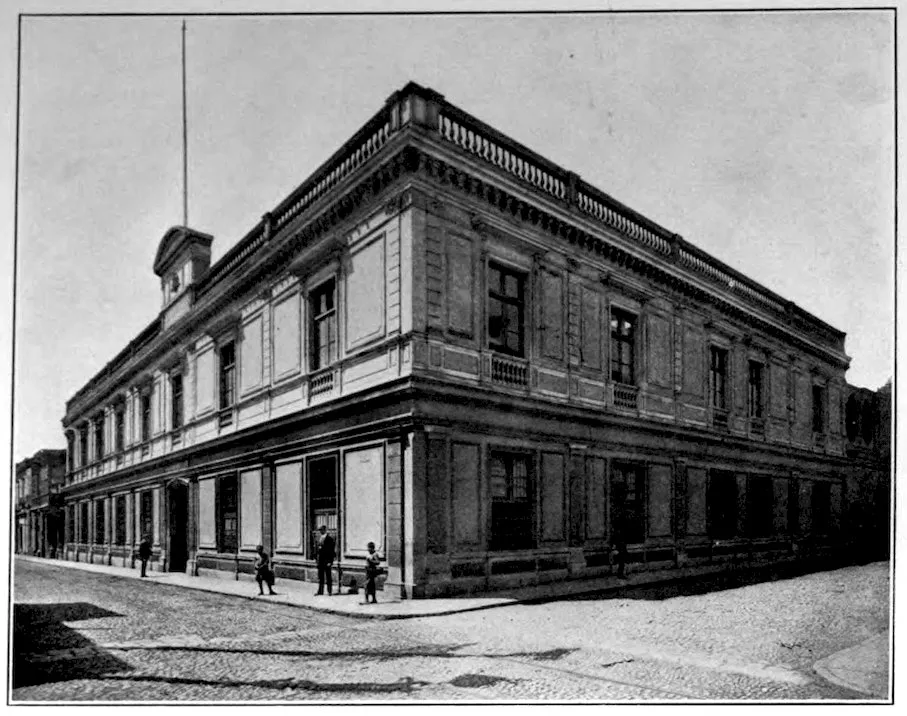
THE SCHOOL OF ENGINEERS, LIMA.
A few educated Indians, descendants of the Inca nobility, have aided the government
in its purpose by trying to teach their benighted people the meaning of freedom and to
instil in them an
appreciation of
personal rights.
Phoccohuanca,
who bears the
Christian name
of Carlos Portilla,
a pure Indian
of Puno, has
proved himself a
worthy descendant
of the great
Manco-Ccapac by
his ambition, energy,
and loyalty
to his race. His
story is not unlike
that of other
self-made men. A
thirst for knowledge
made him
leave his native town when a mere child to seek an education in the capital. From town
to town he trudged, working at anything that offered him a chance to gain a few pennies
out of which a little was always put aside for the purchase of books and for tuition. He
was intelligent, hard-working, patient, and economical, and succeeded in getting together
the requisite funds for his education, which was often interrupted by “hard times,” but
was always kept in mind as the goal of his efforts. Now, at twenty-two years of age,
he holds a teacher’s certificate, with recommendations from several well-known educators
of Peru, testifying to his “aptitude, morality, and diligence”; as a preceptor in the correctional
school for boys, in Lima, his work has been eminently satisfactory. Another Indian
is the editor and proprietor of a newspaper called El Indio, which bears the subtitle of
“Defender of the social interests of the native race.”
The new law governing primary education has already produced remarkable results.
The number of schools has increased from one thousand four hundred and twenty-five
under the support of the municipalities in 1905 to two thousand five hundred at
present under the control of the central government; the staff of teachers that numbered
243one thousand six hundred and fifty-seven before the change of educational administration
now comprises three thousand and twenty under state direction; and the pupils’ roll has
swelled from one hundred thousand to one hundred and fifty thousand names since the
adoption of the new system two years ago. The educational fund has been so greatly
increased that the government has not only been enabled to add to the number of schools
and teachers, but also to improve salaries, to provide instruction for a greater number of
pupils, to build and repair school-houses, acquire new and modern pedagogical materials,
maintain normal institutes, including one for the instruction of teachers in manual training,
and send teachers to the United States for normal school training.
The General Directorate of primary instruction has the management of all the various
sections into which the system is divided, including those that relate to the teaching corps,
school materials, statistics, accounts, etc., as well as to Departmental and Provincial
inspectors. Under the new régime, the school extends a beneficent influence over all
society, giving to the poorest child such training as will best prepare him for the struggle of
life. The law provides for two grades of primary instruction, the first being the elementary
school, in which are taught reading, writing, arithmetic, notions of geography and history
in general and as related to Peru, rudimentary anatomy and physiology of the human body,
the making of objects of common use, gymnastics, and, especially, the essential notions of
morality and civic duty. This course covers two years, after which the pupil may enter
the second grade, taught in what are known as school groups, or scholastic centres, where
three years more are required to complete the primary education, including the learning of a
trade. Free night schools for workmen are maintained by the Department of Fomento,
and in addition to the public schools there are many private institutions throughout the
republic for primary and secondary education.
The question of hygiene in the primary schools occupies the particular attention of the
government, and a congress was recently held for the purpose of studying the best means
of protecting the health of children, with a view to improving the general condition of the
race, and making the rising generation robust and strong. In 1907, a system of sanitary
and hygienic inspection was adopted for the schools of primary instruction, and the results,
so far, have been most satisfactory.
Intermediate or secondary education has also received special attention during the
present administration, new colleges having been established in several cities, in addition to
commercial and industrial schools in Iquitos and Yurimaguas. Twenty-five government
colleges provide secondary instruction, three of these being girls’ schools in Trujillo,
Ayacucho, and Cuzco. Belgian and German professors have been engaged by the government
to conduct the courses of study in the greater number of these schools. In the
national colleges the pupil receives a general education, the law requiring four years’ study
to complete this course. The graduate is then prepared either to leave school with
sufficient knowledge to serve the ordinary purposes of a business career, or to enter the
Faculty of Letters and Sciences in the University.
244In every department of national education, the spirit of a broad and liberal government
is to be seen, and even in the private schools and the colleges supported by benevolent
institutions the influence of modern reform is general and unmistakable. The most notable
tendency of education in Peru to-day is toward an increase of knowledge among the poorer
classes. Under the traditional system of instruction, now passing away, the distinctions of
caste were fostered and strengthened, because of the character and scope of the old-time
school. The higher classes of society received more instruction than they applied in the
course of their after lives, while the lower classes were neglected, or taught only so much
as tended to impress on them their inferiority and the duties of submission. Under such
a system it was inevitable that tyranny should flourish, and that the rich and governing
class should abuse their power over the poor and ignorant. But with the patriotic ideas
which have grown up and which now stimulate both the governing and the governed, the
question of education has become one of the national requirements, and its benefits are
enjoyed by all classes. It means the development of the middle class, which a great
economist calls “the bulwark of a nation.”
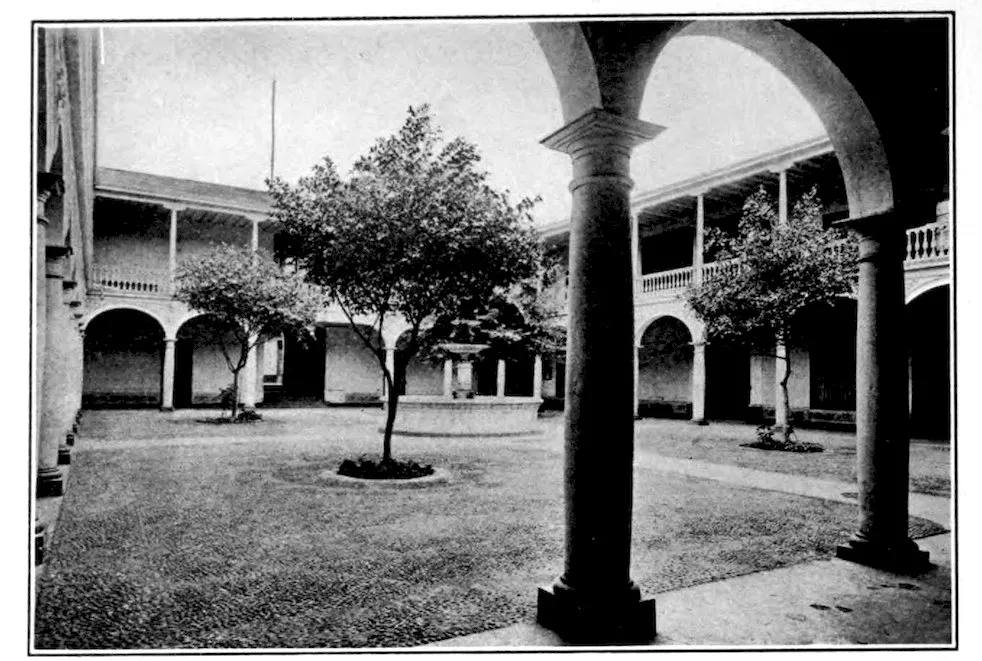
THE COLLEGE OF LAW, LIMA.
246
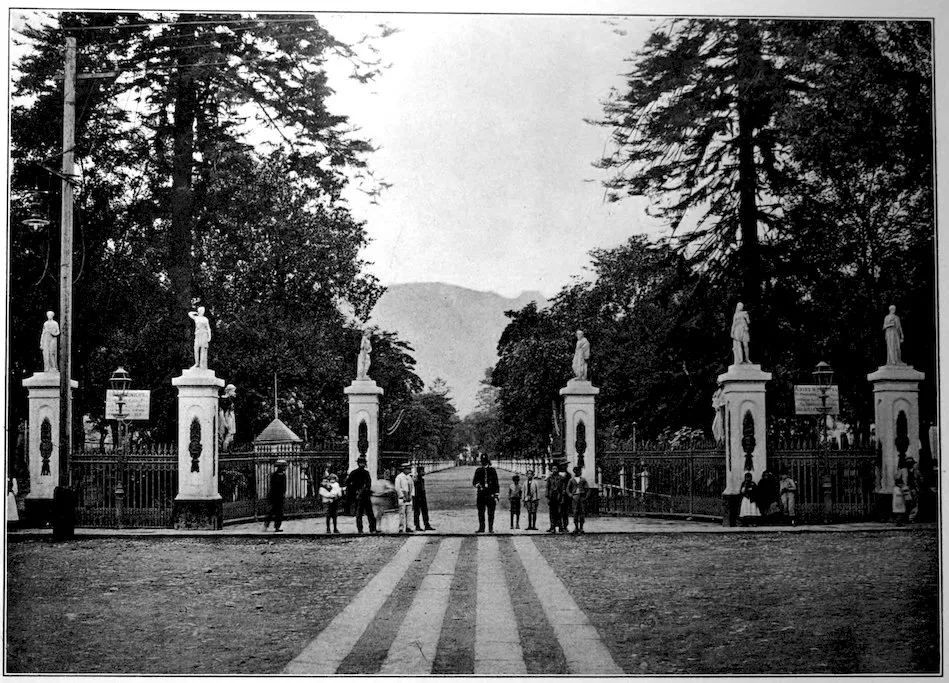
ALAMEDA DE LOS DESCALZOS, LIMA.
CHAPTER XVI THE BENEVOLENT SOCIETIES OF PERU
247
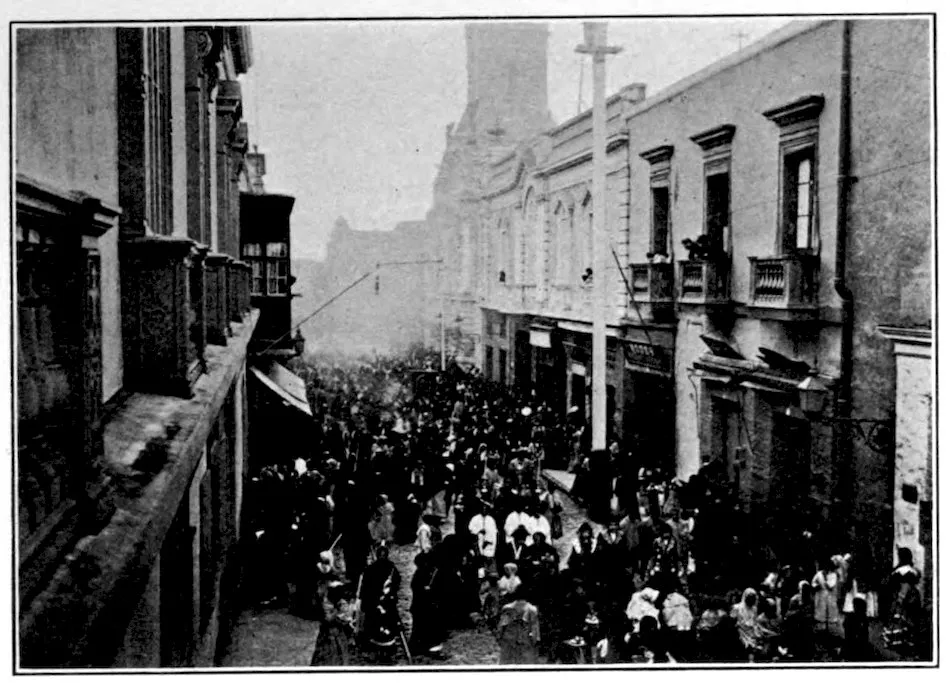
STREET SCENE ON THE FEAST DAY OF LA MERCED, LIMA.
Charity and kindness of
heart are qualities that
radiate from moral worth as
truly as learning and refinement
reflect intellectual superiority,
and the benevolent
institutions of a country deserve
to be as great a source
of pride as its schools and
colleges. The establishment
of hospitals, asylums, and
other charitable organizations
in Peru dates from the time
of the Conquest; for, whatever
may have been the evils
of colonial rule, they did not include negligence of the duties of Christian charity. During
the period of the viceroyalty, asylums for the gratuitous care of the sick and destitute were
founded in Lima and other cities of Peru, the funds for their maintenance being derived
partly from donations, and partly from the rents of property set aside to furnish a permanent
and independent revenue for their use.
At the time of the Independence, Lima had many hospitals under the management of
religious brotherhoods. Belem and San Juan de Dios received inmates at a fixed price
of one dollar a day; and an English traveller, who was a patient in the San Juan de Dios
hospital a century ago, has written a very favorable description of its cleanliness, good
ventilation, excellent diet, and the kind attention given to patients. The hospital of San
Andrés had accommodation for six hundred invalids and capacity for twice that number,
and was beautified by a magnificent garden of rare botanical value. Santa Ana hospital,
248founded by an Indian princess, the Caciqua Catalina Huanca, was consecrated to the needs
of her own people. Two hospitals, San Pedro de Alcantara and La Caridad, were for
women exclusively; and the sick and suffering among the negro population were cared
for in the hospital of San Bartolomé. By a law passed in 1825, all the establishments
organized by public charity, and at that time in charge of the convents, were placed
under the administration of a Junta de Beneficencia, or Board of Benevolence, which
was later replaced by the Benevolent Societies, under whose control are all the charitable
institutions of the republic. There are about fifty of these societies, each of which
maintains and governs one or more charitable establishments, the annual expenditure for
this purpose being two hundred and fifty thousand pounds sterling. Lima spends more
than half of this amount in the support of its hospitals and asylums. The revenues
are derived from grants of the national government and the departmental boards, from
the rents of the societies’ various properties, from the profits of the public lotteries,—established
during the viceroyalty, and, by the decree of the republic, devoted to charitable
purposes,—and from the income derived from cemeteries, which are under the
administration of the Benevolent Society. In Lima the lotteries provide a large fund for
the purposes of charity, the annual income from this source amounting to from thirty
thousand to forty thousand pounds sterling.
The Lima Benevolent Society is composed of a hundred members, from whose
number a board of directors is elected annually, with authority to appoint two inspectors
for each establishment of importance; one inspector is appointed for each minor organization
and for the religious brotherhoods, whose incomes are administered by the society,
the surplus of their rents, after deducting expenses, being applied to its purposes. The
president of the board of directors is the general manager of the society, who bears the title of
Director of Benevolence. The gentle heart of the Limeña is quickly moved to pity by the
sight of suffering and distress, and generous contributions are made to many charitable
institutions not included among those of the society, though the latter extends its benign
protection over all the city, performing its noble task with great efficiency, through the aid
of the pious Sisters of Charity, who form a devoted corps of nurses and guardians in its
hospitals, asylums, and poorhouses. In Callao, Arequipa, Puno, Trujillo, and Cajamarca, as
well as in the capital, the visitor to the institutions of charity meets these sweet-faced
gentle ministers of mercy.
The most important hospital of Lima was constructed soon after the glorious victory of
Callao in 1866, when the Spaniards were driven from the Pacific Coast, and it was named,
in honor of that event, the Hospital Dos de Mayo. The Director of Benevolence at that time
was Don Manuel Pardo, who planned the edifice in 1868 and presided at the inauguration
of the hospital during his presidency, in 1875. It is a spacious and handsome building, and
the wards of invalids are separated from the various departments of hospital service by
beautiful gardens. A thousand patients can be accommodated in the institution, though the
daily average is about six hundred men. The principal hospital for women, the Santa Ana,
249is the oldest in Peru, having been founded by the first Archbishop of Lima, in 1549.
A new edifice has recently been constructed for the use of the hospital, having the latest
modern conveniences. The maternity ward occupies a separate site, and serves as a
practical school for obstetricians. The hospital of Santa Ana has a children’s clinic, and
a clinic of ophthalmology. The new building is fitted up with twelve separate wards,
having forty beds in each, and a special section for children.
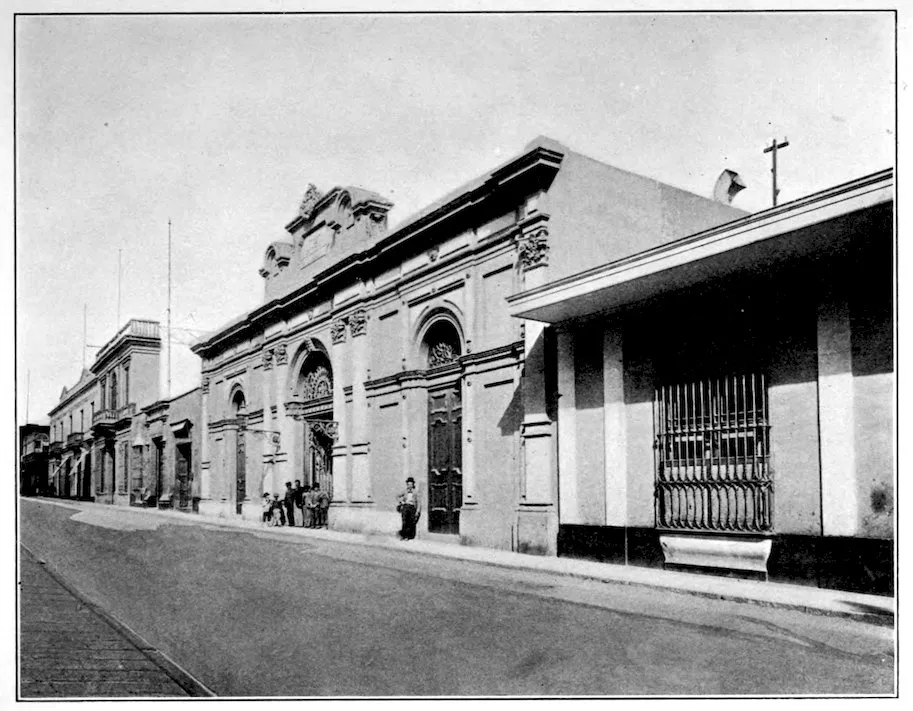
OFFICES OF THE BENEVOLENT SOCIETY, LIMA.
The old hospital of San Bartolomé was converted into a military hospital after the
establishment of the republic; it affords accommodation for three hundred patients, and its
expenses are paid by the state, only the administration of its affairs being in charge of the
Benevolent Society. There is a special ward in the military hospital for prisoners awaiting
trial. The only conditions required of an applicant for admission to the hospitals of the
Benevolent Society are that the illness shall be of a common nature, and that the poverty of
the applicant must be proved. The question of nationality or religion is not considered.
The society maintains an asylum for incurable invalids, to which are sent those cases
declared chronic or incurable by the attending physicians.
250The asylums maintained by the Benevolent Society of Lima accomplish great good
among a class that is generally neglected. The Orphan Asylum has two branches, one of
which is for the care and protection of foundlings, and the other for the education of orphan
children of tender age. The first is located in a large building, which has a revolving cradle
so arranged that, as soon as the infant is placed in it, a mechanism carries the cradle inside,
the little one’s identity being completely lost as it passes from a world that offered no
welcome to the shelter of a home that receives it as a sacred charge. About two hundred
children live in the foundlings’ home, which is provided with nurses, doctors, and the usual
service of a well-regulated household. The second branch of the Orphan Asylum gives
practical instruction suitable for children who are to earn their living later. The boys are
taught some trade, the workshops of the institution including those for the instruction of
shoemakers, carpenters, tailors, and printers; the girls, as soon as old enough to learn, are
sent to Santa Teresa to be instructed in sewing, embroidering, millinery, and other handiwork.
Near the hospital of Santa Teresa is located the Asylum of Santa Rosa, supported
out of the funds of the Benevolent Society, supplemented by the amounts received from
the sale of embroideries, fine sewing, artificial flowers, and other articles made by the
inmates. In the asylum of San Andrés, which in 1879 replaced the hospital of that name,
both boarding and day pupils are included in the benefits of charity, the former numbering
about a hundred children, and the latter three times as many, of both sexes, between three
and eight years of age. Instruction is given in household work and in other practical
subjects, the children, at the same time, learning to read and write. A crèche has been
established where infants may be left during the day in charge of a corps of nurses, while
the mothers are at work.
The Instituto Sevilla is one of the most important charities in Lima. It is named in
honor of a philanthropic Peruvian, Don José Sevilla, who bequeathed a large sum to the
Benevolent Society for the purpose of maintaining an asylum in which the inmates should
learn occupations suited to their sex. A hundred girls are educated in this school free of
charge, the period of apprenticeship lasting five years. In addition to those already referred
to, the Society directs a number of branches, under various names, dedicated to the needs
of the destitute. The “Little Sisters of the Poor,” the “Infants’ Shelter,” the “Olla
(stewpan) of the Poor,” the “Ruiz Davila,” and others, not only provide comfort and
protection, but give teaching of a practical kind. For the encouragement of economy
and foresight, the society has established a savings bank, with a section for mortgages, in
which deposits earn four per cent per annum interest. The Lazaretto is under the management
of the Benevolent Society, though in times of epidemic, the municipality contributes
half of the sum required for expenses. The care of the insane is one of the charges of the
Benevolent Society, and in order to provide better accommodation for this class of unfortunates,
a national asylum is being built near Lima, which will receive applicants from all
parts of the republic. The asylum now has about four hundred inmates, under the direction
of the inspector appointed by the Benevolent Society for this institution.
251
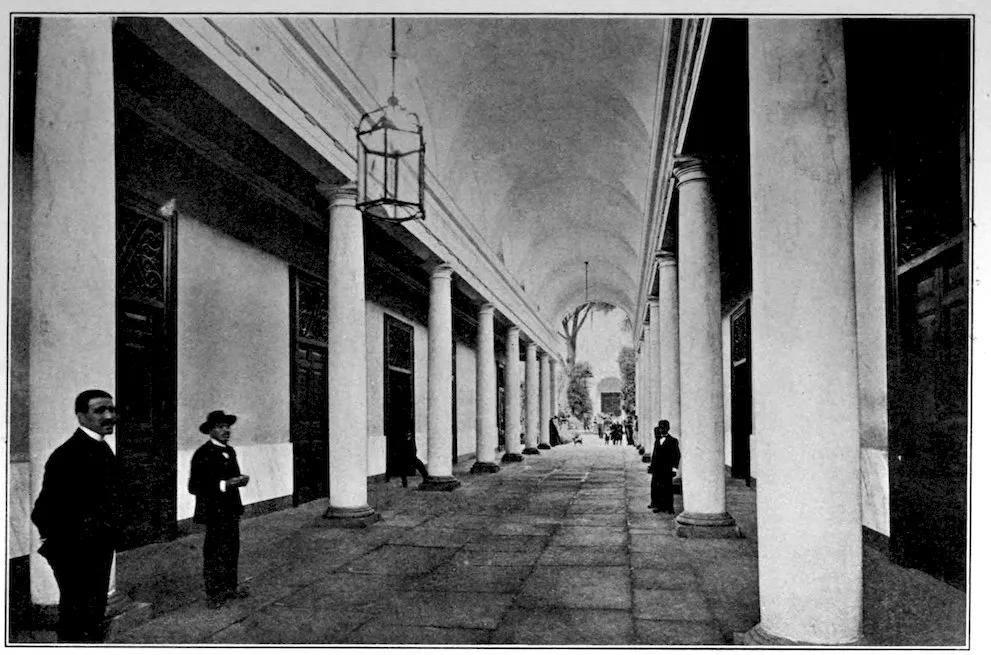
HOSPITAL DOS DE MAYO, LIMA.
Among the important services performed by the society is that of directing the burial
of the dead. The public cemetery of Lima, which covers an area of twenty acres, dates
from the government of the Viceroy Abascal, who first abolished the custom of interring
the dead in the church vaults. The present system of burial, known as the Columbarium
Romano, which consists of walls in which niches are built one above the other, is familiar
to all travellers in Latin countries. It was necessary to overcome great prejudice in the
beginning, a cemetery not being looked upon as consecrated ground; but the interment
there of the Archbishop of Lima in 1808 sufficed to inaugurate the new system successfully.
The original construction of the Pantheon cost a hundred thousand dollars. It is one of
the most notable in South America for its space and for the number and fine architecture
of its mausoleums. The entrance faces an open circle, or plazoleta, in which stands a
marble column crowned by a statue representing the Resurrection. On one side of the
Pantheon is the Civil burial ground for Protestants, and on the other side is that reserved
as a last resting place for the unbeliever.
In addition to the hospitals, asylums, and other institutions governed by the Benevolent
Societies in all the principal cities and towns, there are numerous special charities supported
by the departmental and municipal authorities of the different centres, or maintained by
church societies and private philanthropy. The needs of the unfortunate receive increasing
252attention as the public administration extends its vigilance throughout the republic, and to the
institutions already existing new ones are constantly being added. The government recently
granted subsidies to the Benevolent Societies of Moquegua, Ayacucho, Huánuco, Huancavelica,
Huancayo, Caráz, Aplao, and Yungay. The hospitals of Tarma and Moquegua have
been enlarged and improved, and in the Amazon port of Iquitos a new hospital is being
constructed according to modern ideas and plans. In the increasing progress and development
of Peru, its benevolent charities have received greater attention than ever, the moral
sentiment of the nation demanding that these institutions share in the general blessing
of prosperity.
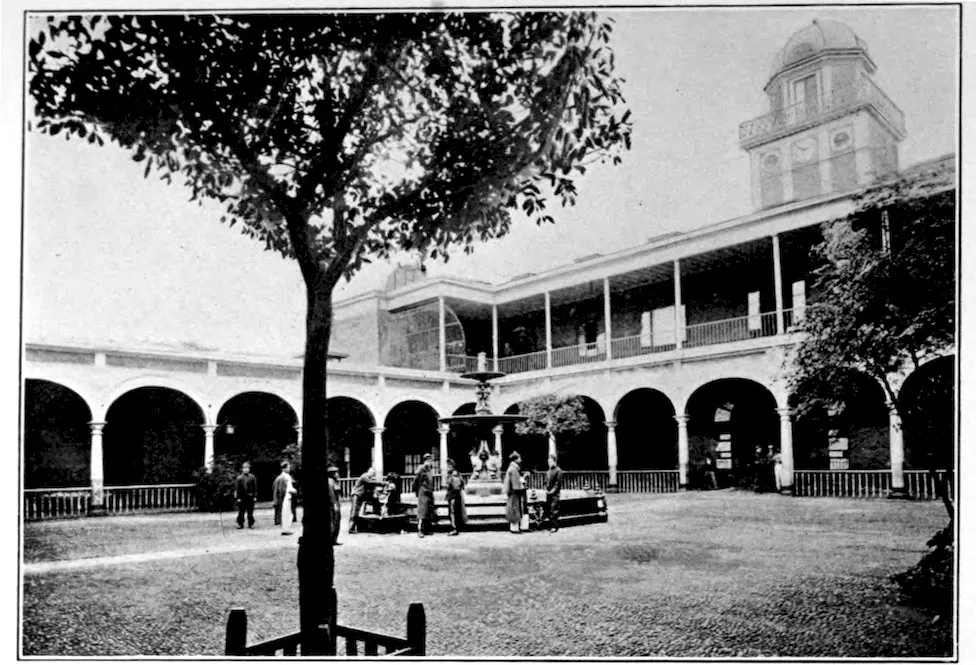
254
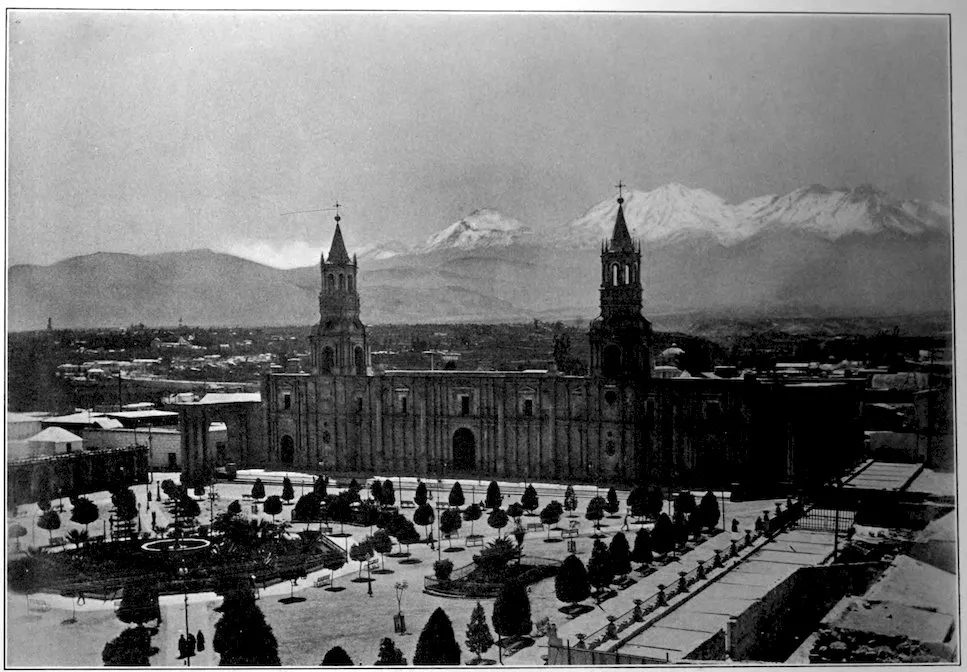
CHAPTER XVII AREQUIPA—THE MISTI—HARVARD OBSERVATORY
255
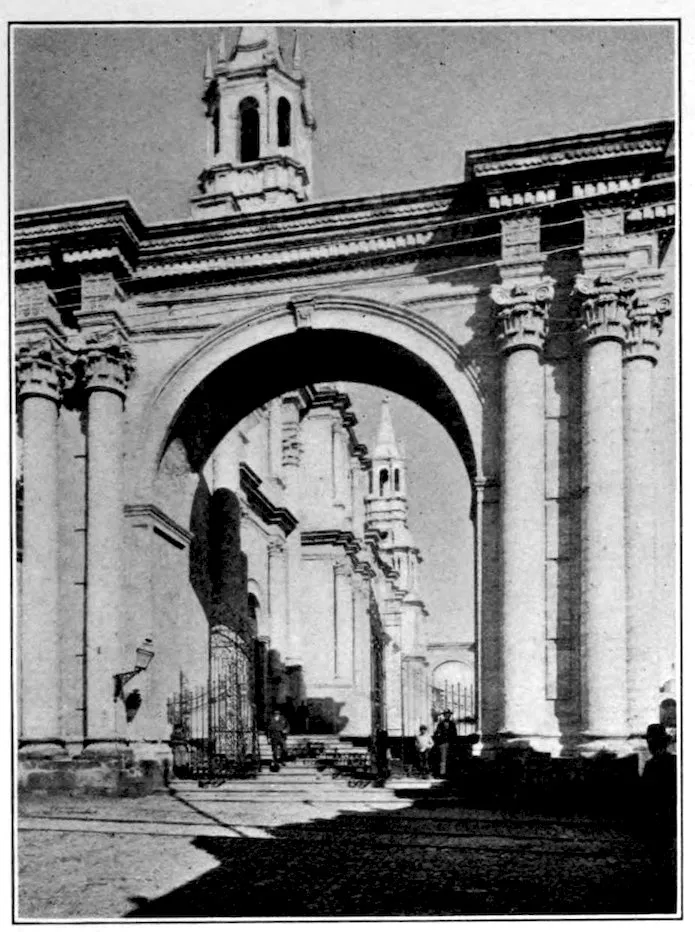
ARCH AT THE ENTRANCE TO THE CATHEDRAL, AREQUIPA.
Tradition says that when Maita-Ccapac
first led his army across the Apurimac
River, some of his soldiers were so enchanted
by the attractions of the country, especially
the picturesque valley above which the snowy
summit of the Misti glistens among the clouds,
that they asked the Inca’s permission to remain.
“Ari, Quepay!” responded their lord,
“Very well,—Remain here!” and from this
exclamation is derived the name of the beautiful
city that now brightens the valley at the
foot of the Misti,—Arequipa. In order to
appreciate the full beauty of the site chosen
as a permanent home by the soldiers of Maita-Ccapac,
it is necessary to have traversed the
arid desert of shifting, crescent-shaped sanddunes
that separate it from the Pacific, or to
have journeyed across the barren puna that
stretches out between this fertile valley and
the farther slopes of the Cordilleras. Contrast
heightens the charm of the scene that spreads out in matchless beauty, as the white city
appears in the midst of its fresh, radiant campiña, and one can appreciate the enthusiasm
with which poetic travellers have described it as “a pearl in an emerald setting” and “a
dove in an emerald nest.”
Behind the city, rising above the valley like the walls of an amphitheatre, are three
majestic peaks, Pichu-pichu to the east, Chacchani to the north, and the white-crested Misti
in the centre; and far in the distance, beyond the valley, the snowy summit of Coropuna,
256more than twenty thousand feet high, towers like a distant sentinel guarding the approach
to some sacred shrine. But it is the Misti that dominates the scene, as one approaches the
lovely valley. The grandeur and sublimity of this noble peak lies not only in its altitude,
over nineteen thousand feet, but in its clear-cut conical form and in the mantle of snow
that perpetually crowns its summit. There is little about its appearance to suggest the
terrible explosions of flame and lava which once burst from its crater, and the only fire
the imagination can associate with its pure white summit, is that of the altar of worship.
What an ideal temple it would have been for the Virgins of the Sun!
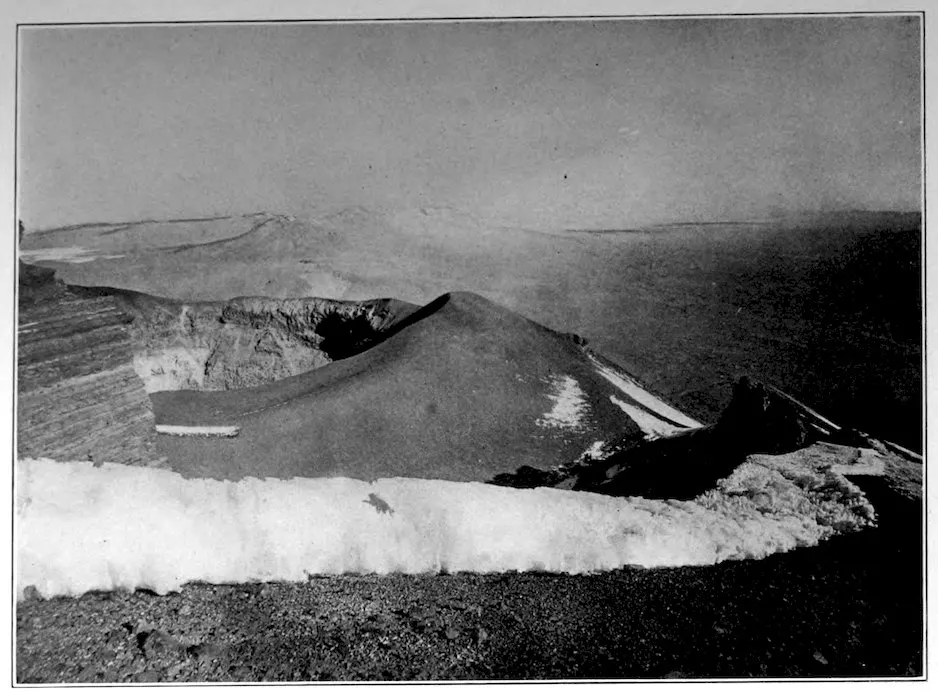
The Misti has its legends—what volcano has not?—and we are told the reason why
its fire is now quenched and its red mouth sealed with snow. Ages ago, when it was a
monster of destructive passion, scorching with its hot breath and poisoning with its
venomous lava all the beautiful things of the valley, the Children of the Sun complained to
their celestial father, beseeching him to stifle the evil genius and save them from his
malevolence. The Sun, the father of goodness, irritated by the giant’s wickedness, drowned
him in his own liquid fire, and sealed the top of the Cerro with a wafer of snow, more
impenetrable than granite, so that the monster might nevermore be able to breathe, in case
257some evil spirit were to try to bring it back to life. Another legend says that St. Thomas,
when preaching in this region, was so indignant at the presumption of this thing of fire and
destruction, that he threw his sandal into its crater, whereupon the colossus was calmed
and made incapable of any further mischief. The beautiful valley, released from slavery to
the whims of a cruel tyrant, has ever since shown gratitude to heaven for its salvation by
rendering every service to mankind that abundant fertility could compass.
Leaving the fascinating realm of tradition for the more reliable ground of history, one
finds that the present city of Arequipa was founded by Garcia Manuel de Carvajal, under
Pizarro’s orders, in the year 1540, and that it was christened Villa Hermosa, “Beautiful
City”—a name as appropriate to-day as when the lovely spot was chosen. Situated at an
altitude of eight thousand feet above the level of the sea, this paradise of green gardens
and sunny skies is an ideal place of residence for those who seek a healthful climate and
the blessings of perpetual spring.
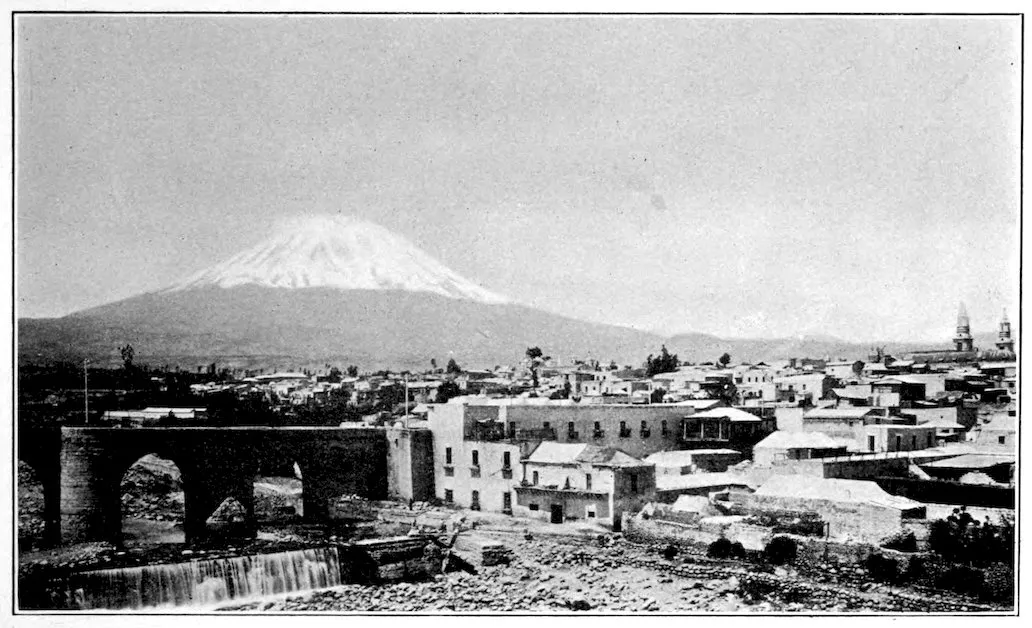
One of the motives that decided Pizarro to choose the base of the Misti as a site for
the construction of a colonial city was expressed in his formal authorization, which set forth
that, in the ten months that the Spaniards had lived there, none of their number had died,
though they formed a considerable settlement. Favored by the circumstances that bountiful
Nature and human industry contributed to the new city from the period of its foundation,
Arequipa grew and flourished, and in the time of the Viceroy Toledo, it received by
the royal decree of King Philip II. the honorable title of “very noble and very loyal.”
258A notable compliment was paid to the ladies of Arequipa in this decree, which compared
them to the Roman matrons in devotion and self-sacrifice, praising the spirit shown in the
giving up of their jewels to raise a royal donation, a few years before.
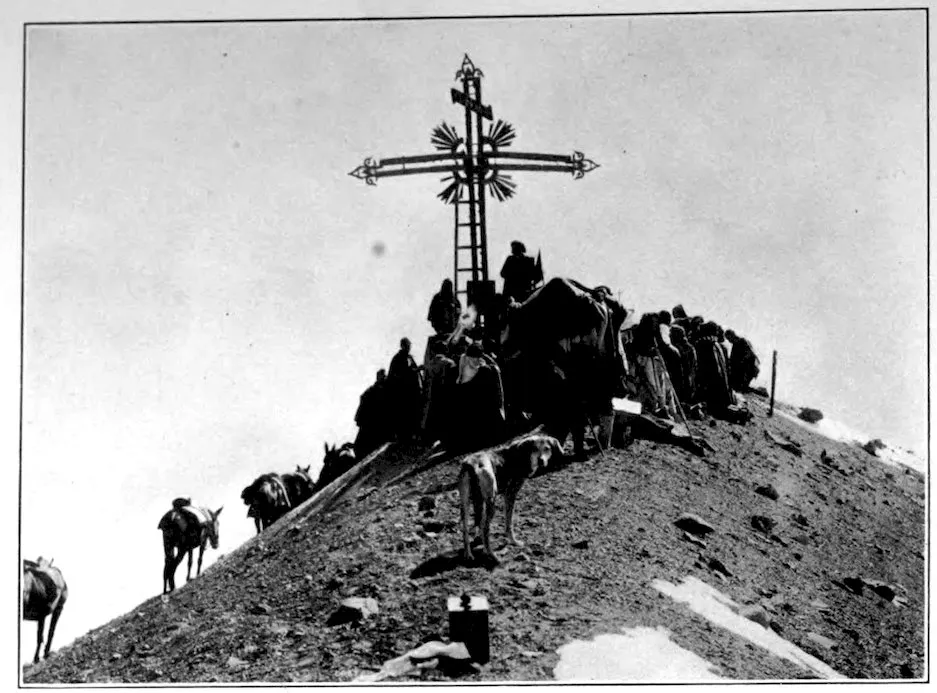
A CELEBRATION OF MASS ON THE SUMMIT OF THE MISTI.
Arequipa is a “white city,” built of native stone from the inexhaustible quarries of the
Misti. The stone is of volcanic formation, white, porous, and easily chiselled; in the older
edifices, which were constructed during the time of the viceroyalty, the façades are
exquisitely carved in designs as fine as lace work, showing how well this stone lends
itself to the beauties of decorative architecture. Owing to the numerous earthquakes which
have visited Arequipa in the past, it is the custom to build only one and two-story
structures, the walls being sometimes more than three feet in thickness. Many of the
houses are built with a vaulted roof, the arch offering greatest resistance to the destructive
force of seismic convulsions. As there is plenty of space available, the most costly
residences cover a considerable area, having large patios, or interior courts, which are paved
with ornamental tiles, and arranged with handsome jardinières of plants and flowers. Some
of the patios are beautified with trees and a flower garden, while others have an artistic
fountain in the midst. Arequipa has not yet reached the period of congested thoroughfares
and a population that can be accommodated only by means of “skyscrapers.” These huge
towers with little more than pigeon-holes for rooms, which are among the necessary evils
of overcrowded modern centres, are still unknown to the city of the emerald ceinture.
259Arequipa is built on the banks of the river Chili, its streets stretching out in all
directions to the campiña, or green country fields surrounding it. As in all Spanish-American
cities the principal square is the centre from which radiates the activity of the population.
It is popularly called the Plaza Mayor, and bears the official name of Plaza de Armas, or
“Military Plaza.” In Arequipa, the Plaza de Armas presents a particularly attractive appearance,
the Cathedral, which extends along one side of this square, being a magnificent and
imposing edifice, while the arched portales that overlook the remaining three sides are
picturesque examples of colonial architecture.
The Cathedral is one of the oldest and most interesting temples of Catholic America.
Nearly three hundred years ago the decree was issued for its construction, by Pope Paul IV.,
though it was not until the time of his successor, Pope Paul V., that the work was begun,
during the reign of King Philip III, in 1612. The temple was built in accordance with the
custom of those days, the decorations of its arches and columns being elaborate and of
costly workmanship. Altars of cedar, carved in beautiful design, were subsequently
replaced by those of silver, the abundance of this precious metal resulting in its lavish use
260for the decoration of all the churches and convents of the viceroyalty. The chancel occupied
the centre of the chief nave and its seats were of finest cedar, their carved backs showing
in high relief the effigies of the twelve apostles and other saints. In the sacristy were
preserved many rich treasures, consecrated vases of gold, sacerdotal vestments of rare
value, and a collection of portraits of all the bishops of Arequipa from the earliest days.
Many of these priceless possessions were destroyed by fire in 1844, when everything
perishable succumbed to the flames that wrapped the great edifice in a lurid sheet. The
silver of the altars ran over the floor in a molten stream, all efforts to save the precious
ornaments being futile. The rebuilding of the sacred structure took twenty years, and was
little more than completed when a terrible earthquake visited the city, in 1868, which, however,
damaged the Cathedral only slightly;—a proof of its excellent and solid construction,
since the shock was terrific and prolonged and resulted in much loss of property.
PLAZA DE ARMAS, AREQUIPA.
The Cathedral of Arequipa is one of the most admirable specimens of church architecture
in America. Its façade measures four hundred and fifty feet in length; three
entrances, and the support of seventy columns of composite Ionic and Doric style, give a
magnificent appearance to the edifice. The peculiar advantage offered by its location—dominating
a spacious plaza—enhances the imposing effect of its splendid architecture,
which would have been dwarfed, from an artistic point of view, in a less commanding
site. The interior of the temple is divided into three naves, separated by superb columns
261that support the great arches above with harmonious effect. The main altar piece is of
marble and the pulpit is a work of superior art in carved wood. There is an atmosphere
of rest and peace within the walls of this noble edifice that is felt not only by the pious
worshipper who seeks this consecrated place for the purpose of prayer, but even by the
indifferent passer-by, attracted within by the music of the splendid choir, or by the artist’s
appreciation of the beautiful.
Of earlier origin than the Cathedral, the construction of the church of the Jesuits was
begun in the sixteenth century, though it was not until a hundred years later that its vaulted
roof was finished. It is one of the celebrated churches of Peru, both for its architectural
importance and its interesting history. The Dominican friars founded their convent in
Arequipa in 1582, and the present temple of Santo Domingo is among the principal churches
of the city. Nearly all the religious orders were represented here during the viceroyalty, the
Convent of Mercy having been founded in 1548, while the existing edifice was built nearly
two hundred and fifty years ago. The Franciscans established their first convent in Arequipa
in 1552, the church of this order at present being one of the largest and most beautiful in the
city. There are three nunneries here, Santa Catalina, Santa Teresa, and Santa Rosa.
The social life of the Arequipeña—the lady of Arequipa—is essentially that of a refined,
gracious, and charitable Christian, who esteems it her greatest pleasure, as well as duty, to
attend to the demands of religion, and to extend to the sick and the needy the gentle
262kindness which is characteristic of her, whether in the salon, the charity ward, or the abode
of suffering. The Orphans’ Asylum of Arequipa reflects this spirit of kindness in its appearance
and administration. It occupies a
spacious building, and connected with
it are large gardens where the children
may run and play in the hours of recreation.
About four hundred children are
accommodated in this institution, which
is one of the charges of the Benevolent
Society. Under the same administration,
the Hospital of San Juan de Dios
provides care and comfort to the suffering
poor, its matron and nurses belonging
to the world-renowned order, the
Sisters of Charity. The new hospital is
a credit to the enterprise as well as the
charitable spirit of the people, who have
contributed to make it one of the notable
institutions of the country.
CHURCH OF SANTO DOMINGO, AREQUIPA.
The schools of Arequipa, as well as
its churches and charities, are an indication
of the refinement of its people and
their appreciation of the advantages of
culture. The University of Arequipa has
always been an important centre of learning, presided over by men of illustrious talents,
and the various colleges of the city rank among the first in Peru. The Colegio de la Independencia
is a celebrated institution, having trained for the service of the republic some of
its greatest statesmen. It was in Arequipa that the patriot Gonzalez Vigil learned how to
thrill the hearts of his hearers by his earnest and impassioned appeals in favor of justice
and liberal government; and he was one of many who came from the schools of Arequipa
to join their compatriots in the struggle for good government that followed the inauguration
of the republic. The progress of education is as marked in the schools devoted to the
instruction of girls as in the boys’ colleges. The Colegio de Señoritas, which is under the
administration of the community of Our Lady of the Rosary, and is directed by the Reverend
Mother Elena Chaves Delgado, is one of the best educational institutions of Peru. It was
founded in 1870 by the Reverend Mother, and for the past ten years it has been under the
present administration, the avowed object of the school being “the religious, moral, and
scientific improvement of the attendants and the instruction and education of the girls, in
accordance with Catholic doctrine and morality, and conforming to the general rules of
public instruction.” A notable and admirable feature of the Colegio de Señoritas is the
263practical character of
the education provided.
It has been
the constant aim of
the college to instil
into the hearts of its
pupils a love of virtue
and habits of industry;
not only are the
girls taught the lessons
of books, but
they are given an opportunity
to learn by
practice all the duties
of a household, and
are prepared to earn
a livelihood should
the necessity occur.
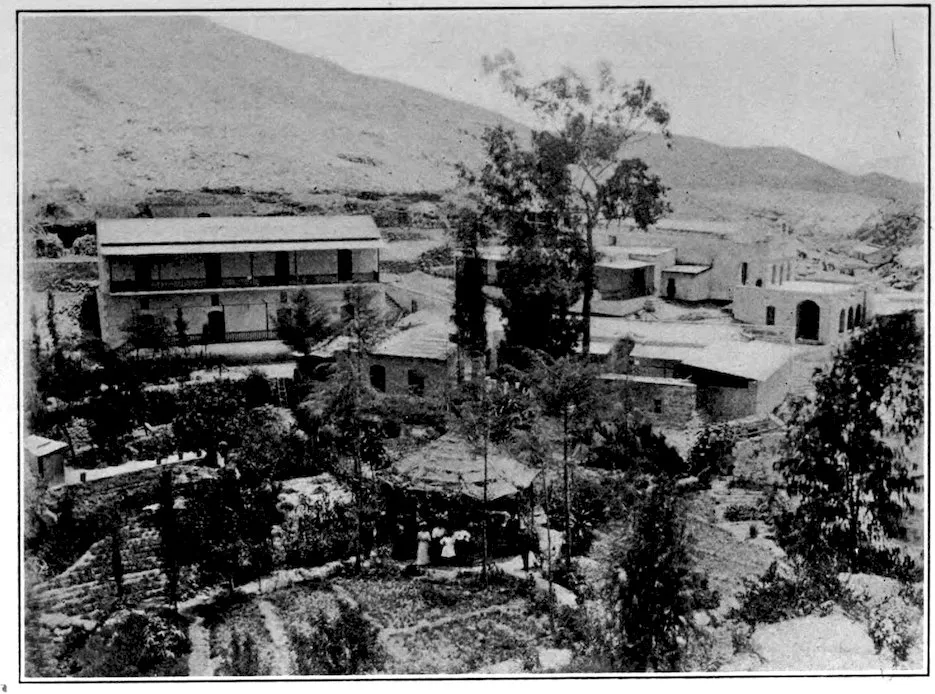
GENERAL VIEW OF THE BATHS OF YURA.
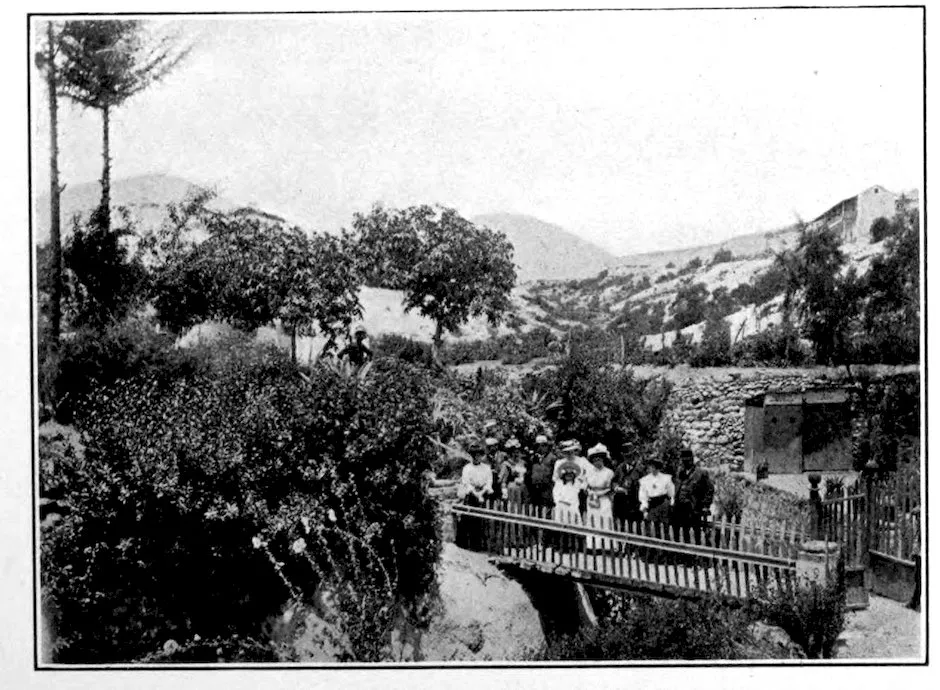
AT THE BATHS OF YURA, AREQUIPA.
In importance, the second city in Peru, Arequipa is the capital of the department of the
same name, and an important commercial as well as political and social centre. The
administration of the department is in the hands of the prefect, Dr. Ximenes, whose
authority extends to all its provinces and municipalities. He is well known in political
circles for his progressive and enterprising ideas, and his government has been one of
steady improvement and development. The department is divided into seven provinces:
Arequipa, of which the chief
city is the capital of the department;
Islay, with its chief
city, Mollendo; Cailloma, with
its capital of the same name;
Castilla, of which Aplao is the
capital; Condesuyos, having
Chuquibamba as its political
centre; Union, extending north
to the Department of Apurimac
and dividing the Departments
of Ayacucho and Cuzco, with
Cotahuasi its capital; and the
province of Camaná, stretching
along the coast from Ica to the
province of Islay: the city of
264Camaná, named after the province, of which it is the capital, and the city of Mollendo,
are, together with Chala and Quilca, the principal ports of the State. Mollendo is a modern
city, connected with Arequipa by railway, and is a stopping place for all the steamers of
the Pacific and the South American Companies between Valparaiso and Panamá, as well
as numerous other lines.
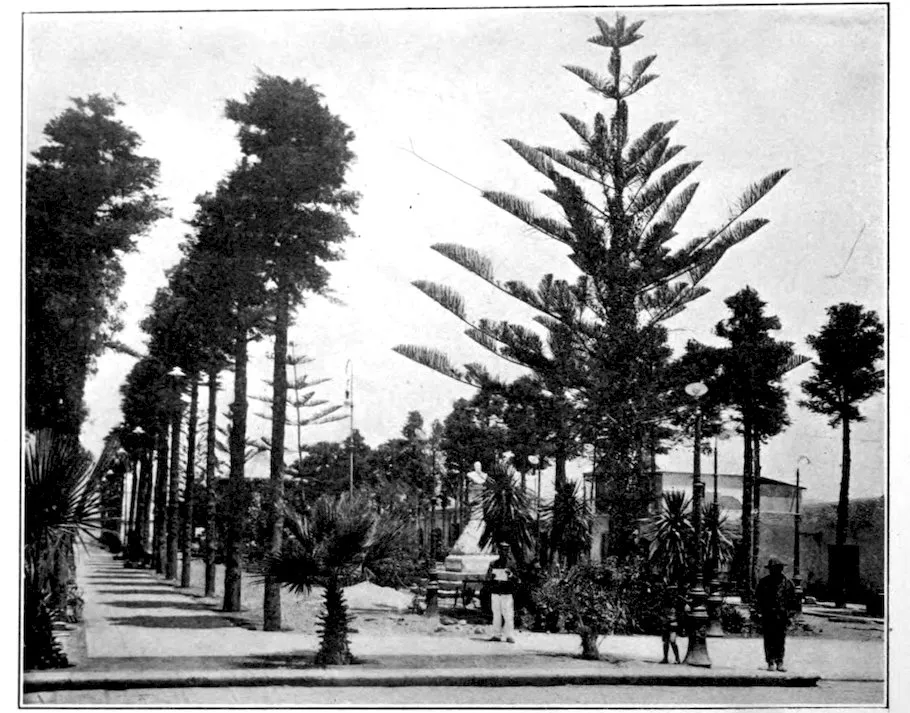
BOLOGNESI PARK, AREQUIPA.
The local interests of the city of Arequipa are governed by the Provincial Council, or
Municipality. The present authorities have given especial attention to the improvement of
the city, devoting earnest efforts to the carrying out of important public works. The
previous council constructed new portales in the principal plaza, built the Grau bridge over
the river Chili, established the water works system by which the city is supplied from
Yumina, two leagues distant, and accomplished other reforms. The existing council is
making notable improvements in the beautification of the Plaza de Armas; is constructing a
new market building suitable to the growing needs of the city; and is perfecting the
drainage system. The streets have been improved and many of them newly paved;
Bolognesi Park is now a more charming paseo than ever; and a new electric street railway
is to be established, which will connect the city with its beautiful suburbs. The municipality
pays especial attention to public health, and the sanitation of the city is in charge of
265competent authorities who spare no effort to ensure the most healthful conditions. The
city and its picturesque suburbs, Yanaguara and Tingo, are lighted by electricity.
Good roads are maintained
throughout the department,
and it is a pleasant
journey to visit the various
points of interest in the
vicinity of Arequipa, which
is surrounded by charming
resorts for health and pleasure.
Tingo, Zemarrat, and
Sabandia are noted not only
for their picturesque scenery
but for the attractive appearance
of their streets
and gardens.
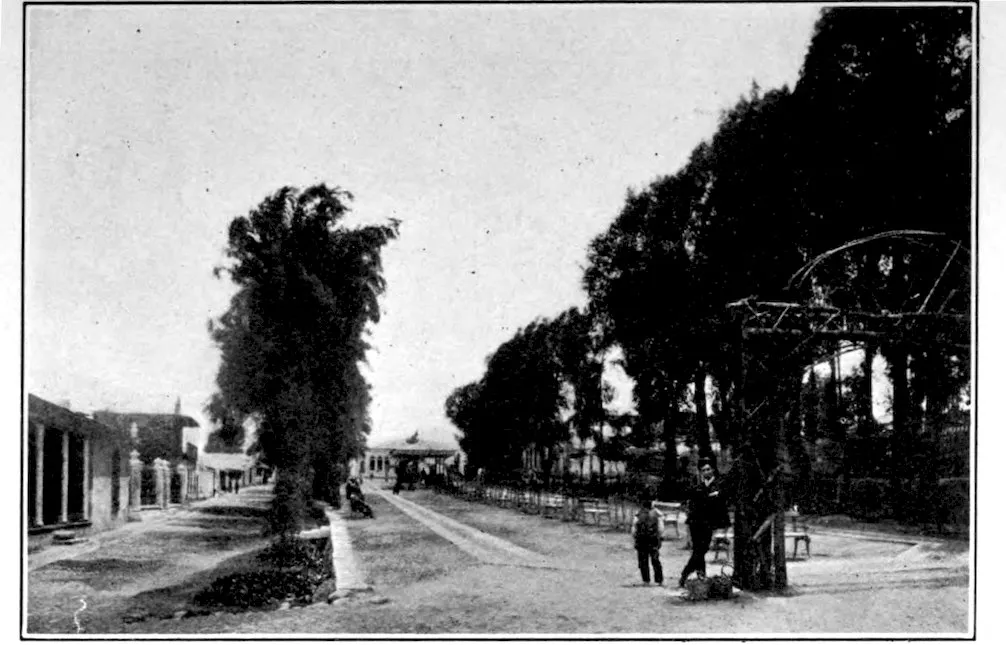
AVENIDA DE TINGO, AREQUIPA.
The thermal waters of
Arequipa are celebrated
throughout the Pacific Coast, the springs of Yura and the Aguas de Jesus being known to
everyone familiar with this region. The latter are located about a league from the city,
on the slope of one of the cerros belonging to a chain that begins between the Misti and
the Pichu-pichu and extends as far as Paucarpata, just east of the capital. It is a pleasant
outing to visit the Aguas de Jesus, and many parties make the trip, to enjoy the
scenery along the route, which is superb, and to take advantage of the beneficial waters.
The spring is enclosed in a stone building, and is under the direction of the Benevolent
Society. Yura, which is two hours’ train journey from Arequipa, is a popular health
resort, not only for the people of the capital but of all Peru. Its baths are famous for
their curative qualities, and are of different kinds, including sulphurous and ferruginous,
which possess wonderful properties. Their fame increases constantly as the remarkable
benefits derived from their use by citizens and travellers become known.
At a short distance from the city, on the slope of the Misti, the Astronomical Observatory
of Harvard University is situated. This scientific institution was founded eighteen
years ago, in order to enable astronomers to make observations at the greatest possible
altitude above the sea level. The location of the observatory is perfect for the purpose
designed, and satisfactory results have been obtained. At present this institution is under
the direction of Mr. Frost, of Harvard University. The local authorities extend every
courtesy to the scientists of the observatory, who speak in high terms of their politeness
and kindly interest.
The population of the Department of Arequipa is two hundred and forty thousand, of
which the capital city claims forty thousand. An illustrious writer, referring to its people
266says: “The heart of the Peruvian nation lives here.” The annals of its people show that
in all that has contributed to the nation’s greatness and prosperity, in all that has grown out
of patriotic sentiment and devoted loyalty, in everything pertaining to the national spirit, as
expressed in its literature, its art, and its social advancement, the lovely valley at the foot
of the Misti has been represented by noble children, worthy of a high place on the national
roll of fame.
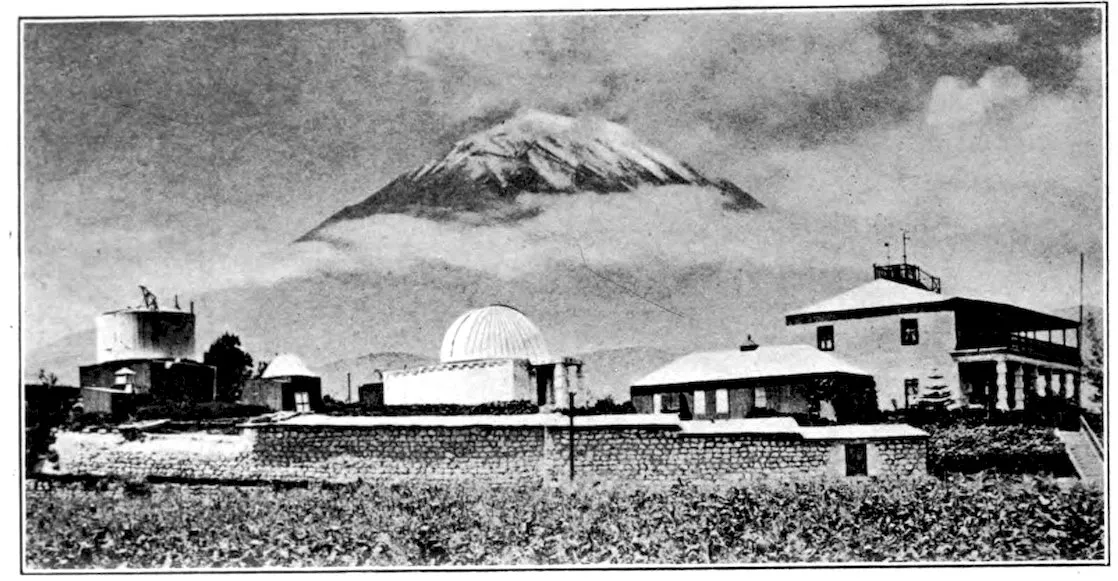
HARVARD OBSERVATORY AT AREQUIPA.
268
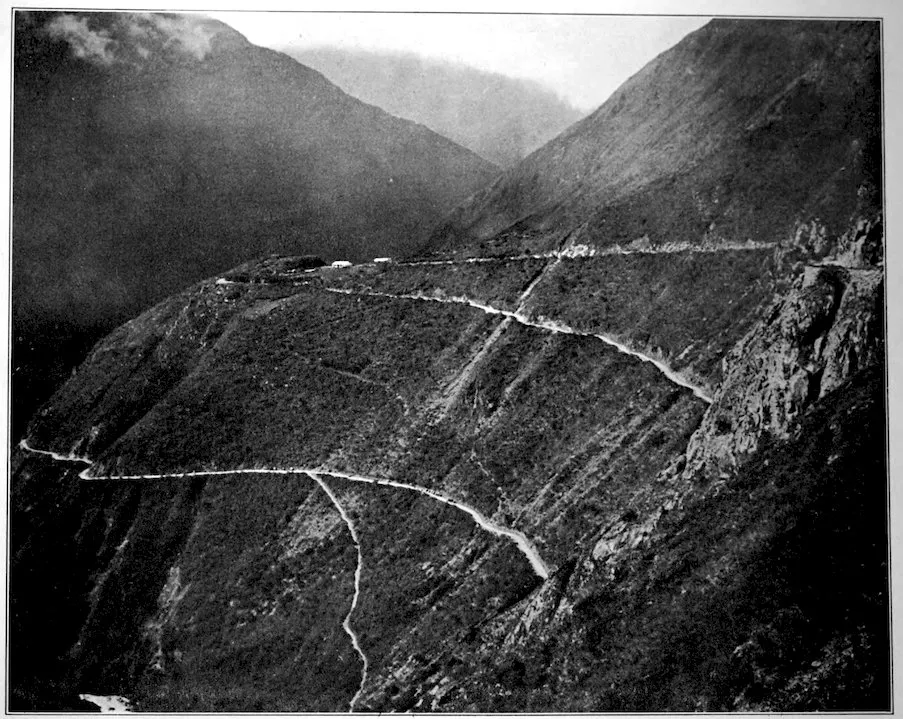
CHANCHAMAYO, ON THE EASTERN SLOPE OF THE SIERRA.
CHAPTER XVIII A GENERAL DESCRIPTION OF THE COUNTRY
269
Although Peru lies entirely within the tropics,
and close to the equator, yet its climate cannot
be called equatorial, nor is the vegetation exclusively
that of the Torrid Zone. Latitude has comparatively
little influence in determining its character, the chief
index to which is to be found in the remarkable
physical features of this extensive territory, one of
the largest and richest of the South American countries.
The temperature here varies from equatorial
heat to arctic cold, and the products of all zones
flourish within its boundaries. Lofty peaks, clad in
perpetual snow, look down from their frozen summits
on scenes of perennial spring-time; and, from
these lesser heights, the view extends over valleys
and forests where summer reigns throughout the
year and Nature is riotous in her extravagances.
According to the best Peruvian authority, the republic extends from north latitude
1° 29′ to south latitude 19° 12′ 30″; and from meridian 61° 54′ 45″ to 81° 18′ 39″ longitude
west of Greenwich, covering an area of about one million seven hundred thousand square
kilometres. Its boundaries are marked on the north by Ecuador and Colombia; on the
east by Brazil and Bolivia; on the south by Chile; and on the west by the Pacific Ocean.
The settlement of boundary disputes and the definite establishment of limits between the
different countries of South America are problems that have long taxed the diplomacy of
these nations and proved a persistent drawback to their unity. By mutual agreement, it is
understood that the basis on which the disputed frontiers are to be defined rests on the
division of the territory made by Spain during the colonial government and recognized at
the time of the Independence. The delays that have occurred in fixing these limits have
270made the task more delicate with the passing of time, owing to the increased value of the
lands in dispute, the growing population and other circumstances; but, fortunately, the vexed
problem is rapidly nearing a final solution, most of the rival claims having been already
submitted to arbitration, and many of them satisfactorily settled. The frontiers indicated in
the accompanying map represent the claims of Peru; though the limits between this
country and its northern and eastern neighbors, as here shown, may be modified by the
decisions that are to result from the arbitration of friendly nations, chosen by mutual agreement
to mark the dividing line; on the south, the Camarones River forms the boundary
between Peru and Chile, though the latter occupies the provinces of Tacna and Arica pending
the plebiscite agreed upon in the treaty of Ancón.
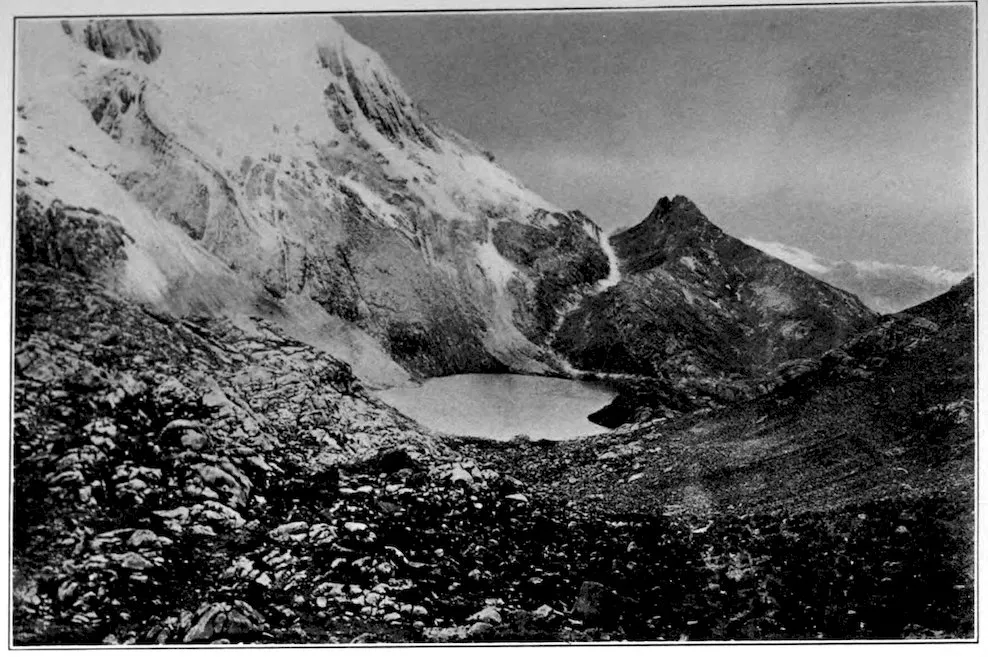
LAKE OF LA VIUDA, IN THE HIGH SIERRA.
Between the rainless region of the coast and the dripping forests of the Montaña, the
country is crossed by three mountain ranges that run parallel through a part of their course,
sending out transverse chains at intervals, or joining together in great nudos, “knots,” that
form high plateaus in the midst of lofty peaks, covered with perpetual snow. By this mountain
system, Peru is divided into three distinct regions: the coast, the sierra, and the Montaña,
or wooded plains. The coast region extends from the sea inland to the Cordilleras, reaching
an altitude of from three thousand to four thousand feet; the sierra attains a height varying
from ten thousand to eighteen thousand feet, the high altitude, above the limit of vegetation
271being known as the puna; the Montaña covers nearly two-thirds of the total area of Peru,
stretching from the eastern slope of the Andes to the frontiers of Brazil and Bolivia.
The coast zone embraces a strip of land about fifteen hundred miles in length, having
an average width of from fifty to one hundred miles. From the Gulf of Guayaquil, which
forms its northern boundary, to the extreme southern limit of this region the coast line is
marked by a succession of bare cliffs and shifting sandhills; though even this dreary
prospect has its peculiar charm when seen in the lights and shadows of dawn, or in the
still more marvellous colors of the sunset. One is reminded of the glow that spreads over
Alpine summits as the great orb vanishes; in the fading light, the waters of the Pacific are
as purple at the foot of these rosy rocks as are the deep ravines below the Jungfrau. On
this strip of coast land, rain falls so seldom and in such insignificant quantities as to be
hardly worthy of mention. The only moisture which the soil receives is derived from the
rivers that traverse it on their way to the sea from the Cordilleras, and the mists that
prevail during the winter season from May to August, caused by the southeast winds.
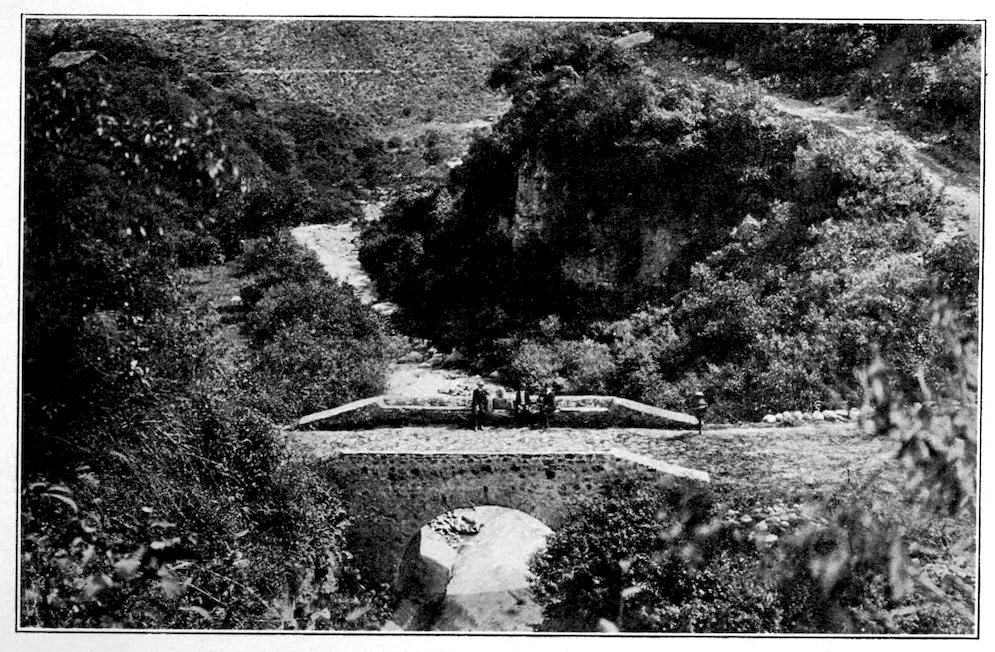
IN THE VALLEY OF ABANCAY.
The lack of rain on the Peruvian coast is chiefly due to two important circumstances,
which explain why neither the winds from the Pacific nor those from the Atlantic discharge
any moisture on this sandy soil. The prevailing winds from the Pacific blow from the
southeast and carry very little moisture, owing to their courses being parallel with that of
272the Humboldt current,—a submarine stream from the antarctic, which follows the line of the
Peruvian coast throughout its entire length and has a temperature seven degrees colder than
the ocean; it is a hundred
and fifty miles wide, with
a velocity of about a mile
an hour. Besides the
southeast wind, a west
wind blows across the
Pacific, bringing plenty
of rainclouds; but it is
checked by the stronger
southeast current as it
approaches the coast,
and its benefits are lost.
The trade winds that
cross the Amazon plain
from the Atlantic discharge
a great amount
of rain in their course, but when they reach the high altitudes of the Andean range, their
vapor is condensed and falls in the form of snow, no moisture remaining with which to
water the narrow strip that lies between the Cordilleras and the Pacific. The sea breeze,
known as the virazón, is strongest along the southern part of the coast, where, during the
winter months, it sometimes causes inconvenience in the various harbors, on account of the
heavy surf it creates. As a rule, the Peruvian coast presents few difficulties to navigation.
It is seldom visited by storms, and there are no rocks, reefs, or shoals, to give the mariner
anxiety. A remarkable feature of the ocean in this region is the appearance, during the
winter season, of a current which is supposed to be a prolongation of the equatorial stream,
and which flows in an opposite direction to the Humboldt current; it is known as the niño.
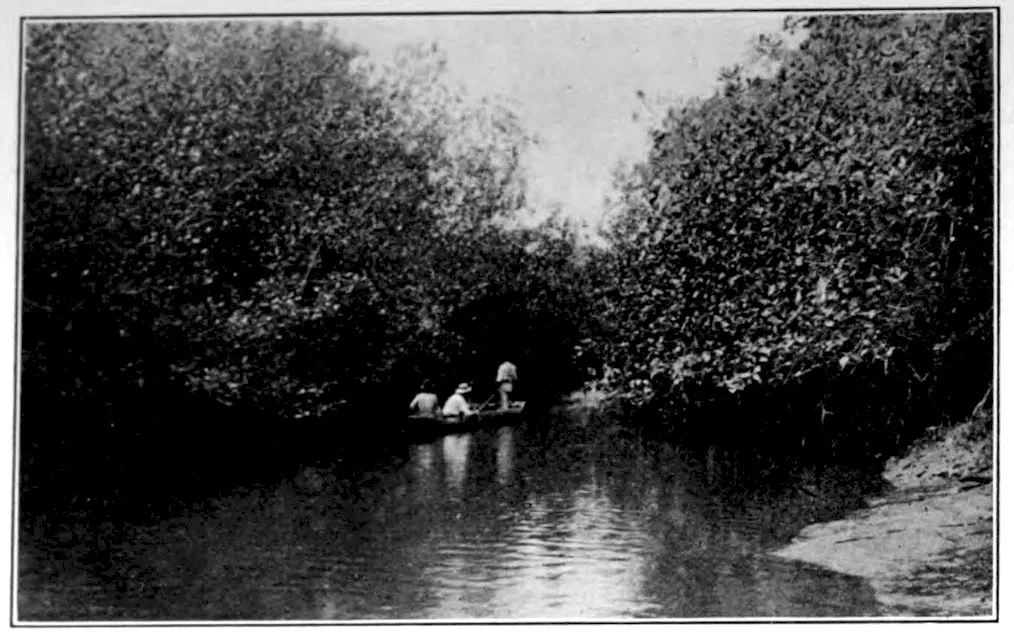
SCENE ON THE TUMBES RIVER.
Only two seasons are perceptible in the coast region of Peru, the winter months, from
June to November, being cooler than those of summer, from December to May. Fogs are
frequent between December and April, though they seldom last throughout the day. The
heat is never intense, owing to the influence of the Humboldt current, which modifies the
effect of the sun’s rays. Although apparently barren throughout a large extent of its
territory, the coast zone is really rich in production and supports a large and flourishing
population. In the subsoil of its arid plains, valuable deposits of petroleum have been
found; its uninviting deserts contain saline beds of great commercial importance; and
throughout its length appear at intervals beautiful and fertile valleys, watered by abundant
streams and yielding enormous harvests of sugar-cane, cotton, rice, and all kinds of fruits.
The rivers of the coast, though numerous, are of limited extent and volume, nearly all of
them having their sources on the Pacific Slope of the Andes and flowing directly across the
273sandy strip of coast land to the ocean. During the summer, when abundant rains fall
in the upper ravines of the Cordilleras, the coast streams carry plenty of water to irrigate
the valleys; a few of them are navigable for a short distance, but only for small craft. The
valleys drained by these rivers—about fifty in all—are like ribbons of green crossing the
brown sands of the coast; their existence is an indication of the wealth which might be
secured throughout the entire region by artificial irrigation.
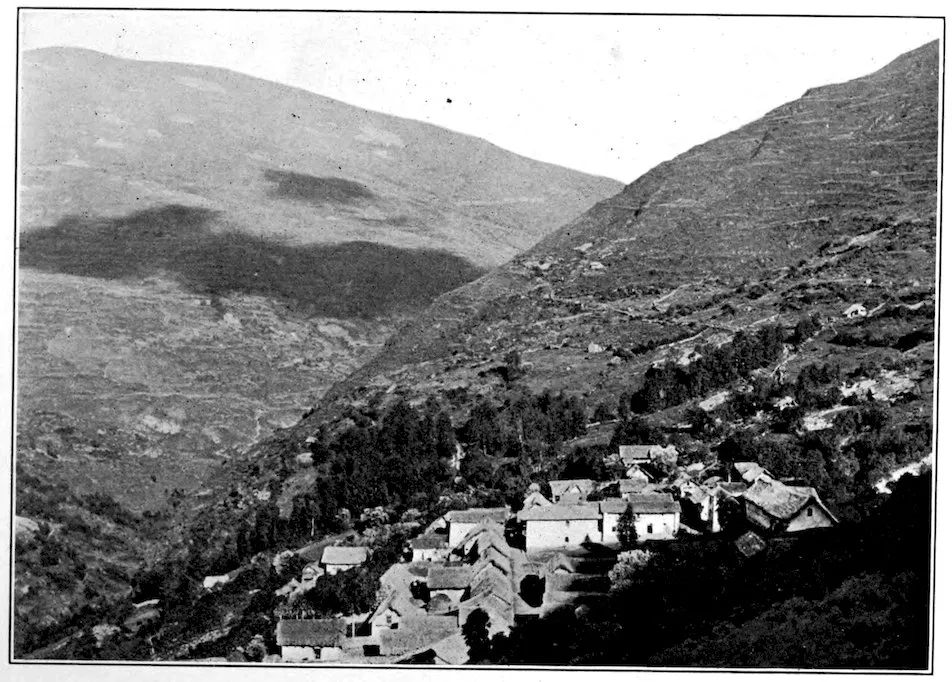
MONZON VALLEY, IN THE HUALLAGA REGION.
The coast line of Peru presents few indentations. Its principal bays are: Tumbes, in
the extreme north, an inlet from the Gulf of Guayaquil; Paita and Sechura on the coast of
Piura; Chimbote and Samanco near the northern border of Ancash Department, both large
and beautiful bays; Salinas and Callao, on the Lima coast; Pisco, San Nicolás, and the
famous Bay of Independencia, where San Martin landed the Liberating Army, on the coast
of Ica; and the picturesque bay of Arica. A few notable capes and promontories mark the
sea line, Cape Blanco being the first point at which the coast curves southward after leaving
the Gulf of Guayaquil; and Point Parinas, the most westerly promontory of South America.
Near the coast, and presenting the same barren aspect, are several groups of islands
belonging to Peru, the most important being Lobos de Afuera, Lobos de Adentro, and
Guañape, in the north, and the Chincha Islands a few miles from the port of Pisco, south
of Callao, noted for their rich deposits of guano. San Lorenzo Island, which lies six miles
to the southwest of Callao, serves as a protection to the chief harbor of Peru. They are all
274desert rocks, though many interesting prehistoric relics have been found on San Lorenzo
which indicate that this island was at one time the abode of a considerable population,
apparently of the same
race as the pre-Incaic inhabitants
of the southern
coast district.
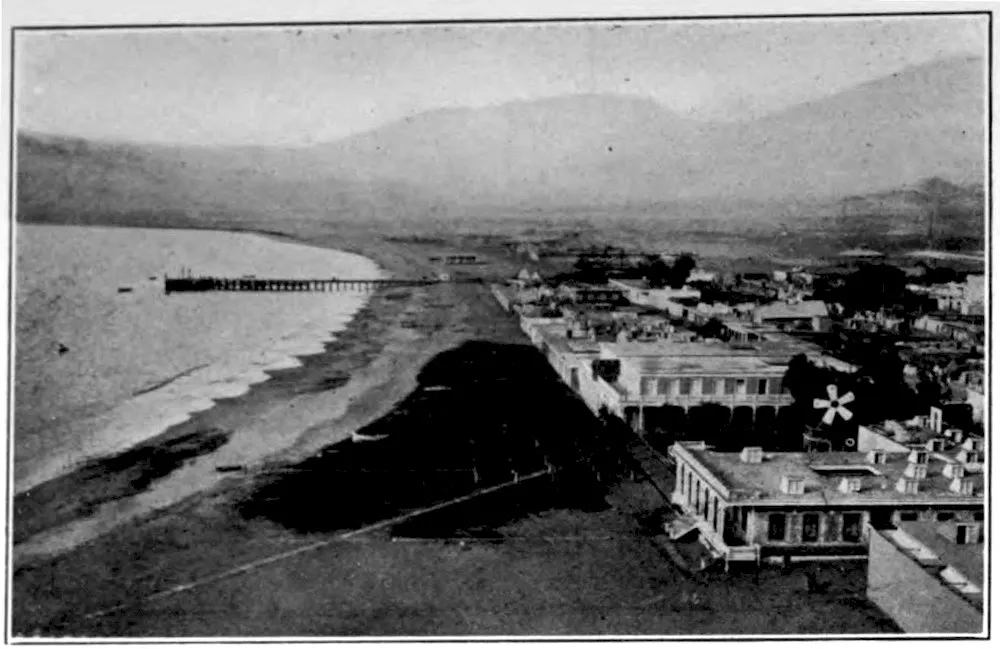
ANCÓN, A COAST RESORT NEAR CALLAO.
Leaving the coast for
the sierra, one is impressed
by the rapid change of
scene and the beauty of
the landscape that unfolds
to view in varying aspects
as the lower levels are left
behind and the towering
majesty of the Cordilleras
appears in closer proximity.
The great Andean system
not only divides the region
of the coast from that of the Amazon plain, but, by its peculiar formation, gives to this part
of Peru certain features not to be found in any other country. Where the Andes mountains
cross the border between Peru and Bolivia, they consist of three high ranges, viz., the Occidental
and Oriental Cordilleras and an intermediary or central chain. Near Lake Titicaca the
Cordilleras join to form the Nudo of Vilcanota; and about three degrees farther north,
following a northwesterly direction, they again unite in the Nudo of Cerro de Pasco. The
average height of the great ranges, from the Bolivian border as far north as seven degrees
south latitude, is from thirteen thousand to seventeen thousand feet above sea level, a few
peaks rising above twenty thousand feet; then the altitude diminishes to an average of from
nine thousand to ten thousand feet, with frequent openings or passes not more than seven
thousand feet above sea level. Farther north, crossing the border of Ecuador, the altitude is
again increased to the limit of perpetual snow. Between the mountain ranges extends a high
uneven plateau, broken by deep ravines and gorges, where transverse chains have destroyed
the regularity of the majestic Cordilleras; in this inter-Andean region are also fertile valleys
marking the courses of streams which have their origin in the Nudos of Vilcanota or Cerro de
Pasco, and which flow between the ranges, until an opening occurs to give them passage to
the plains of the mighty Amazon.
The abundance of moisture carried by the winds from the Atlantic, and deposited on
the Andean summits in the form of snow, accounts for the existence of several lakes at
great altitudes in this region; in most cases, an opening in the surrounding mountains has
caused an overflow into lower levels, thus originating the greatest river system of South
America. There are evidences in the plains and valleys of the high sierras that these were
275at one time lakes, their waters having disappeared in consequence of the gradual wearing
away of the opening and the levelling of the bed of the lake by sediments deposited in the
course of ages. A few of these inter-Andean lakes still remain. The famous Lake Titicaca,
which lies partly in Peruvian and partly in Bolivian territory, and which covers an area of
more than eight thousand square kilometres, at an altitude of twelve thousand five hundred
feet above sea level, is one of the most remarkable bodies of water in the world; it is the
highest navigable lake on the globe, and is celebrated in South American tradition as the
cradle of the Inca dynasty. Steam navigation was established on this lake in 1867, between
the Peruvian port of Puno, at the Titicaca terminus of the Southern railway from Mollendo,
and the Bolivian port of Guaqui, at the Titicaca terminus of the La Paz railway. The trip
across the lake by steamer takes from twelve to fifteen hours, during which one may enjoy
a most unusual experience, not only “on a sea above the clouds” but at times in view of a
whole range of resplendent snow summits, glistening under a sky of marvellous blue. Many
rivers and streams flow into Lake Titicaca, though only one, the Desaguadero, has its source
in that lake. From the Nudo of Vilcanota at the north flow the rivers Suchis, Huancane, and
Ramis, with their affluents; from the west, having their origin in the high sierra between
Arequipa and Puno, descend the Cabanillas and Lampa, confluents of the Coata; and from
the south, the Blanco, Juli, and smaller streams empty into the great lake. Besides Titicaca,
Peru has several lakes of less extensive area, the most noted being the Laguna de Junin,
famous as the site of the historic victory won by the patriot army over the colonial forces
of Spain; Rimachuma in the Department of Loreto, and Arapa in Puno, are of considerable
importance.
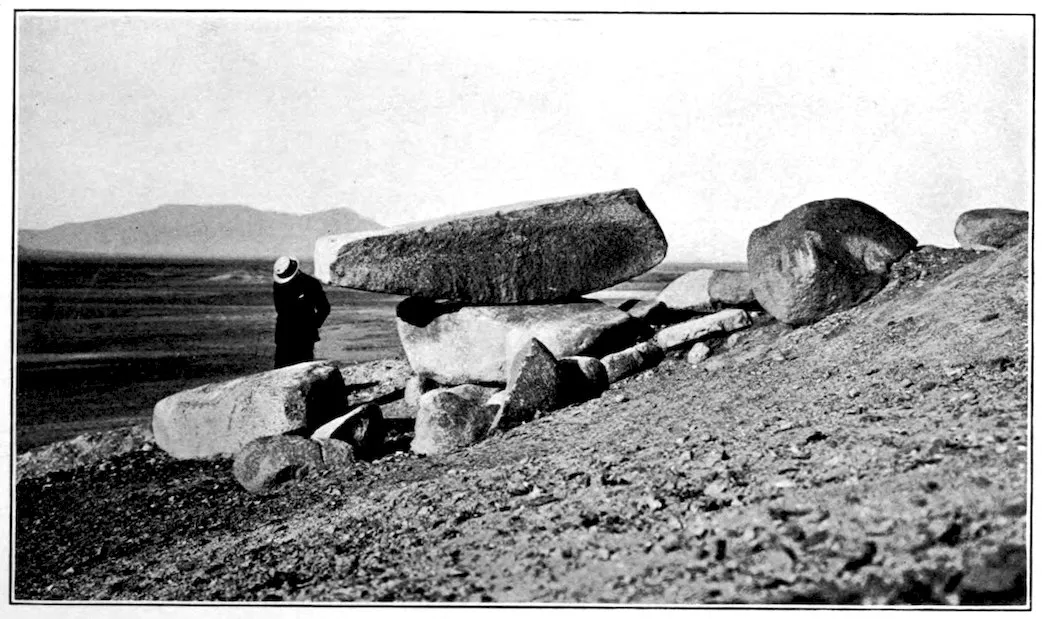
276
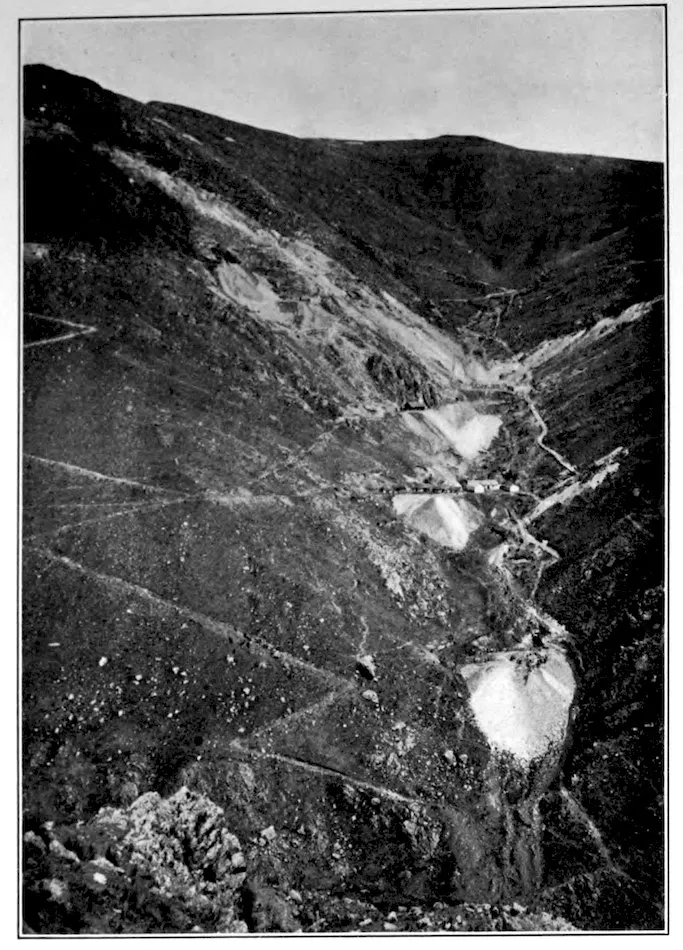
QUEBRADA SANTA ROSA, ANCASH DEPARTMENT.
The Laguna of Santa Ana, in the Department of Huánuco, though only six square miles
in circumference, is worthy of mention as the source of the Marañon, one of the parent
streams of the great Amazon
River. It is situated in the
Nudo of Cerro de Pasco, a few
leagues northwest of Junin.
The Ucayali and the Madeira—the
latter with its tributaries,
the Beni and the Madre de
Dios, being the longest of all
the Amazon’s tributaries—have
their source in the Nudo
of Vilcanota, and, like the Marañon,
have an inter-Andean
course for a considerable distance
before entering the vast
Amazon plain. On the route
from Puno to Cuzco, at a point
called La Raya, the mountain
summits surround a small
basin, in the midst of which is
a little pond; from this insignificant
beginning, two streams
take their course in opposite
directions,—the Ramis, which
flows into Lake Titicaca, and
the Vilcanota, afterward the
Urubamba, which, after forming
a junction with the Apurimac,
another important river
of this region, becomes the
chief affluent of the Ucayali. The Urubamba and the Apurimac run parallel along the separate
valleys formed between the Occidental and Oriental ranges by the intermediary chain
which accompanies them from the Nudo of Vilcanota northward, until the three Cordilleras
join again in the Nudo of Cerro de Pasco. Separating north of Cerro de Pasco, these three
great ranges form the valleys of the Marañon and the Huallaga. The rapids, or “pongos,”
which interrupt navigation on nearly all the Amazon tributaries at some point of their course,
usually indicate a break in the enclosing Andean walls, simultaneous with a change of their
direction, the river resisting an effort to turn its channel, and plunging through the narrow
gorge that affords it escape.
277The rivers which have their source in Vilcanota or Cerro de Pasco are no more than
little rivulets of melted snow as they first appear in the crevices of the high sierra; but they
are fed by a thousand streams along their course, and increase rapidly in volume as they flow
toward the plain, following the channel cut for them in the course of ages, now carved so
deep that, in some places, it lies at the bottom of a chasm thousands of feet below the level
of the bordering hills and plains. It is only after leaving the region of the sierra that these
rivers are navigable, though they are capable of supplying unlimited motive power for
manufacturing and other purposes. Many of them are famous in history and a few have
claims to particular interest through their association with the legends and traditions of the
Incas. The Apurimac, across which Maita-Ccapac swung the first American suspension
bridge, has its source in the Laguna de Vilafro, fourteen thousand feet above sea level, in
the Department of Arequipa. It receives many affluents, and, as it descends into the lower
valleys, drains a country rich in agriculture, one of the most productive regions of Peru. It
was on the border of this river that General Sucre and his army were encamped by Bolivar’s
orders, when the news of the royalist army’s approach led to the rapid change of plans
which resulted in General Sucre’s becoming the hero of Ayacucho. To-day, the beautiful
valleys of this region blossom with the fruits of peaceful industry, and thriving towns
adorn its landscapes. Abancay, the picturesque capital of the Department of Apurimac, is
surrounded by sugar plantations, and the campiña is dotted with mulberry trees, the
silkworm industry being a profitable source of revenue.
The Urubamba River, like the Apurimac, flows through a fertile valley, crossing the
Department of Cuzco in a northwesterly course from the border of Puno to the southern
limit of Loreto, where it forms a confluence with the Tambo—as the Apurimac is called
after receiving its last tributary, the Perené,—and enters the broad channel of the Ucayali.
The Urubamba has a number of tributaries, the most important of which is the Paucartambo;
along the courses of these rivers are fields of sugar-cane, and in the lower valleys
grow cacao and all tropical fruits.
The Marañon, and its tributary, the Huallaga, flowing northward from the Nudo of
Cerro de Pasco, water a region of surpassing fertility, in the valleys of which are to be
seen every variety of agricultural product. The Marañon receives a great many tributaries
from the Occidental range as it flows northward across the Department of Huánuco, turning
northwest between Loreto and Ancash, and traversing the Department of La Libertad.
After dividing the Departments of Cajamarca and Amazonas for some distance, it makes a
curve to the northeast and, turning sharply in an easterly direction, pursues a tortuous
course until joined by the Ucayali, to form the Amazon. In changing its direction from
northwest to east, the Marañon passes the “pongo,” or falls, of Manserriche, the last and
most important of a series of rapids which mark an effort to free its current from the
confining Andes. From the north, the Marañon receives the Santiago, Morona, Pastaza,
Tigre, and other tributaries, while from the south, its chief affluent is the Huallaga. The
greatest variety of scenery and climate marks its course, which begins on the high puna, in
278the midst of snowy peaks, and descends between mountain slopes, on which cattle and
sheep graze in perennial pastures, through valleys dotted with orchards, and fertile levels
where cotton, tobacco, and sugar-cane grow, to the region of the Montaña, fruitful in cacao,
coca, and other products of a tropical zone. In the valleys drained by the tributaries of the
Marañon are situated some of the most prosperous farms and plantations of Peru, though
the wealth of this region has never been exploited on a scale of sufficient importance to
show what it is capable of producing. Cajamarca, the capital of the Department of the
same name, and Chachapoyas, the capital of the Department of Amazonas, are the most
important industrial centres of this inter-Andean valley.
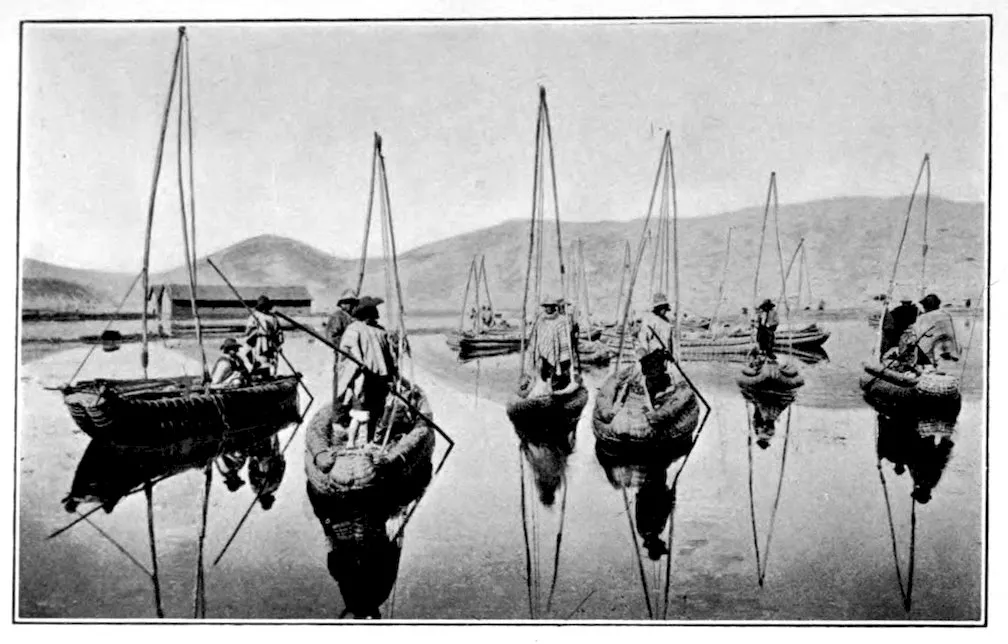
NATIVE BOATMEN ON LAKE TITICACA.
Cajamarca, the historic city of the Conquest, celebrated as the site of the capture
and execution of Atahuallpa, lies in an oval plain surrounded by mountains and traversed
by the Camarca River, a branch of the Marañon. Interesting ruins remain to give an idea
of the great structures built by the Incas or their predecessors, and the hot springs are
as efficacious to-day as they were when the last unhappy monarch of Cuzco found them
a source of royal comfort and pleasure. The valley of Cajamarca is well cultivated, the
inhabitants being industrious and thrifty.
Leaving the inter-Andean region for the Montaña, it is interesting to observe the
contrast in scenery and natural conditions. In the Andean valleys, the traveller who
departs from the line of the railway must journey in a coach or on muleback; in the
Montaña, the small steamer or the canoe is the accustomed means of travel through
the forest, the waterways of this region affording transportation throughout their entire
length. Among the most important rivers having their source in the Montaña—generally
279in a ledge branching off from the foothills of the Andes, are the Yavary, Yuruá, Purús,
and some tributaries of the Madeira River. The great waterways, with their affluents,
form a network of communication in the Amazon country, and contribute greatly to the
development of the rich resources of this vast zone, which is essentially tropical, yielding
the valuable products of the rubber tree, the dyewoods, medicinal herbs and hardwoods
of commerce, and other precious gifts of nature.
With such a great variety of physical conditions as those which govern Peru, it is
not surprising that its climate should present many contrasts, and some unique features.
In the coast region, owing to the proximity of the snow-clad Andes and the cold Humboldt
current, the average temperature is lower than that of any other country extending
over the same degrees of latitude; in winter, the thermometer registers an average
temperature of fifteen degrees centigrade, and in summer the average is twenty-six degrees
centigrade, the hottest days marking no higher than thirty degrees in the shade. The
mildness of the climate makes this region of Peru an agreeable place of residence even
to those accustomed to the bracing air of the temperate zone; it is not so liable to the
epidemics of a tropical climate as are less favored countries in the same latitude; and, with
proper sanitation and the adoption of modern hygienic measures, there is no reason why
the Peruvian coast should not be a paradise of health and longevity.
The climate of the sierra varies with the location and altitude of the inter-Andean
valleys and the plateaus that separate them. In the lower slopes of the Cordilleras,
the heat is greater than on the tablelands, which have a temperate climate; while on the
lofty, snow-clad summits of the range, the cold is as intense as in the arctic regions.
The seasons of the sierra are divided differently from those of the coast; the rainy season,
from November to May, being called winter, and the dry season, though colder, being
known as summer. The average temperature, within the populated region of the sierra,
is ten degrees centigrade during the day and five degrees at night, the absence of the
sun making a great difference in the atmosphere. The pure air of the plateaus is very
beneficial to consumptives, and Jauja, Tarma, Huancayo, and other towns of the sierra
have become famous as health resorts.
In the Montaña, the two seasons correspond to those of the sierra, the wet season
being from November to May, called winter, and the dry and cooler season called summer.
As the region of the Montaña slopes away from the Cordilleras, its higher levels present
the evidences of a tropical zone in the exuberance of their vegetation, though the climate is
as cool and mild as that of southern Europe. Foreigners who live in this region pronounce
it healthful and delightful, as malaria is unknown, and illness of any kind is a rare visitor.
As one descends to the lower Amazon plain, the heat becomes intense in places, though it
is generally modified by the daily showers and the cooling effect of the trade winds.
Taken as a whole, the climate of Peru may be considered benign and healthful, and
favorable to the acclimation of foreigners, the conditions being such that every stranger
may find, somewhere in the country, the same climate as in his native land, or a better one.
280
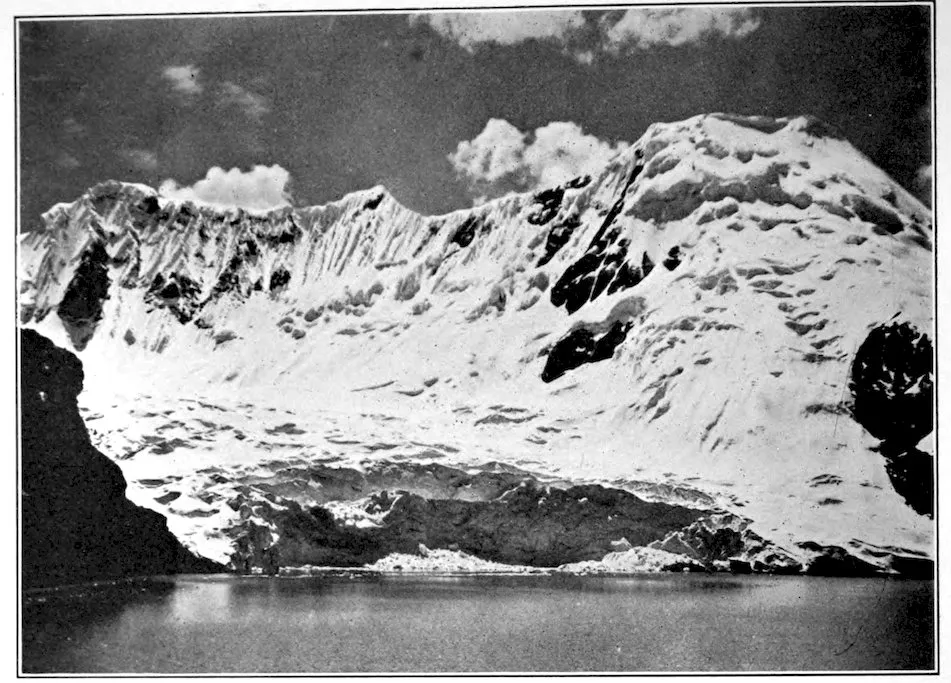
A LAKE AMONG THE GLACIERS OF YAULI.
The extensive territory of Peru, well provided by nature to meet the needs of a great
population, has at present between four and five million inhabitants. The coast region
supports one-fourth of this population, having an average of 4.53 inhabitants to each
square kilometre; the sierra has about two-thirds of the entire population, with an average
of 5.32 to each square kilometre: and the Montaña, with less than half a million inhabitants
in its vast forests and plains, shows only one inhabitant to every three kilometres. It is in
this region that the greatest opportunities are offered for colonization. Of the total population,
the official statistics give fifteen per cent to those of European descent; fifty per cent
are of Peruvian (Indian) origin; two per cent are African, one per cent is Asiatic, and the
remainder are of mixed races, chiefly European and Indian. In the predominance of
the descendants of the Incas’ gentle and obedient subjects is explained the peaceable and
tractable character of the masses, whose faults are rather those of indolence than of evil
intention. The governing class is chiefly of Spanish origin; and, notwithstanding all that
has been written to the contrary, their Latin inheritance has peculiarly fitted them to be
the rulers of this refined race. The Spanish conquerors treated the Indians with great
cruelty, it is true, and reduced their number by forcing them to unaccustomed tasks; but
the Indians of North America hardly fared better under the zeal and energy of the Puritan
281colonist, who instead of making them his servants, drove them away from their homes,
took possession of their country, and gave himself no responsibility as to their future in
this world,—though earnestly seeking to teach them how to find a haven in the next.
Peru could very well support many times its present population, which is only equal
to that of Holland, though the Department of Lima alone covers more territory than the
entire Dutch republic. The Department of Arequipa, equal to Switzerland in extent, and
resembling it in mountainous character, though having the advantage of several good
seaports, has only one-tenth of the population of that inland country. England covers less
area than the Department of Cuzco, yet has a hundred times the population. One of the
reasons for the limited European population to be found in South American countries is
their remoteness from the great highways of travel, which have hitherto been between
countries of the northern hemisphere. But the twentieth century finds the extension of
international relations making rapid advances south of the equator; and new steamship
lines are being constantly inaugurated to connect the ports of Europe and North America
with those of the trans-equatorial countries. Nearly all these countries have good seaports
and railway facilities for transportation to the interior. When the Panamá Canal is opened,
Peru will be placed within easy communication with New York and Europe; in the meantime,
the service is being improved so that it will soon be possible to make the trip from
the Peruvian port of Callao to New York in ten days.
In a general description of the country, it is not possible to give details regarding the
many interesting features of coast, sierra, and Montaña; the coast is closely related to its
highland neighbor and may even dispute boundaries, where the mountains crowd near to
the sea; the sierra and the Montaña encroach on each other’s domain in the equatorial
region, offshoots of the great Andean chain extending far into the Amazon valley, while the
virgin forest climbs high up the sides of the Cordillera’s slope. Many of the coast departments
extend inland to the great range, and, as in Ancash, have their chief city in the sierra.
Not far from Huaraz, the capital of Ancash, rises the lofty peak of Huascarán or Huascán,
said to be one of the highest of the Western range, and in the coast departments of Arequipa,
Moquegua, and Tacna are several extinct volcanoes, the summits of which are covered with
perpetual snow.
Owing to the fact that the various altitudes of Peru have a modifying effect on the
natural conditions of soil and climate, even though the latitude is equatorial, the same kinds
of products are found in nearly all the departments, though each of the three natural divisions—the
coast, the sierra, and the Montaña—has also its own peculiar vegetation, not to
be found in the other regions. Along the coast are fisheries of growing importance; the
Peruvian government has engaged the services of an expert from the United States to study
the conditions most favorable to pisciculture and the results are most satisfactory. According
to a recent report sent to the Minister of Fomento in reference to the fisheries of Lobos de
Afuera and Lobos de Tierra, there is an abundance of fish off the shores of these islands.
The peje-aguja, “needle fish,” measures as much as two and a half feet in length; the
282anchoveta, peje-blanco, bonito, cabrilla, castañeta, charlo, morena (three feet long), sardine and
tiburon are among the largest varieties, besides which there are innumerable small fry.
These islands have long been frequented by fishermen from the mainland, the inhabitants
of Eten, Pacasmayo, and other coast towns having established a considerable trade in this
product. In their primitive-looking boats, called balsas, the fishermen carry provisions and
other necessary articles for a month’s sojourn on the islands, where they settle themselves
until they are ready to make the return voyage. As soon as a fish is caught it is killed by a
blow on the head, and each day’s “catch” is salted after the fishing is over. Nets are rarely
used in these waters, the hook and line being usually employed.
But although the islands of Peru yield an abundance of fish, it is as the centre of the
guano industry that they are chiefly known. The history of the Chincha Islands, of Lobos
de Afuera and Lobos de Tierra is especially interesting as it relates to the pelican’s haunts
and the wealth stored on their desert rocks by millions of these birds.
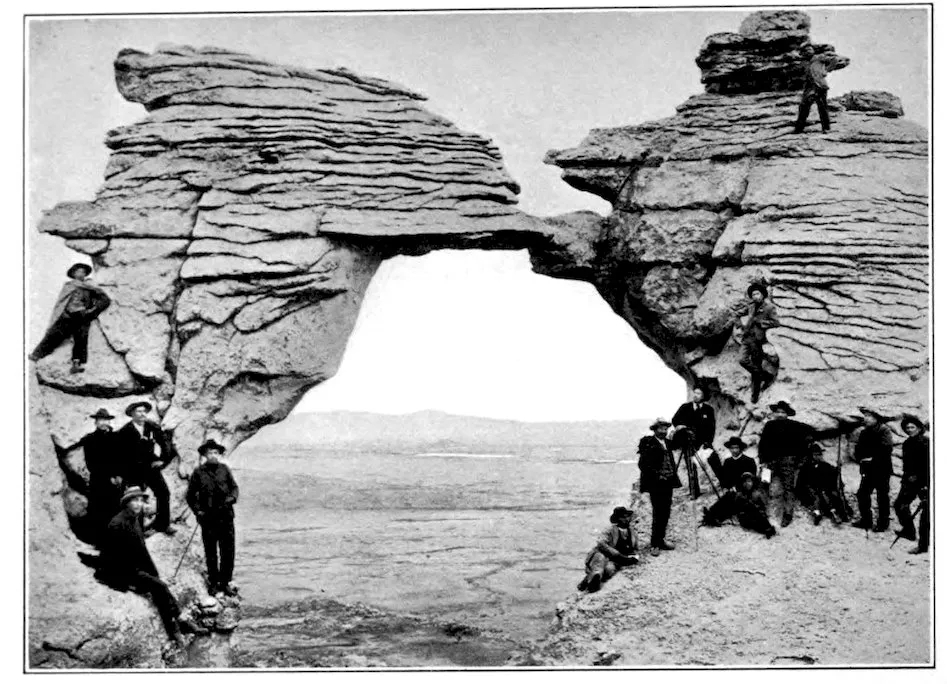
NATURAL ARCH OF STONE AT HUANCANE, NEAR LAKE TITICACA.
CHAPTER XIX THE WEALTH OF THE GUANO ISLANDS
283
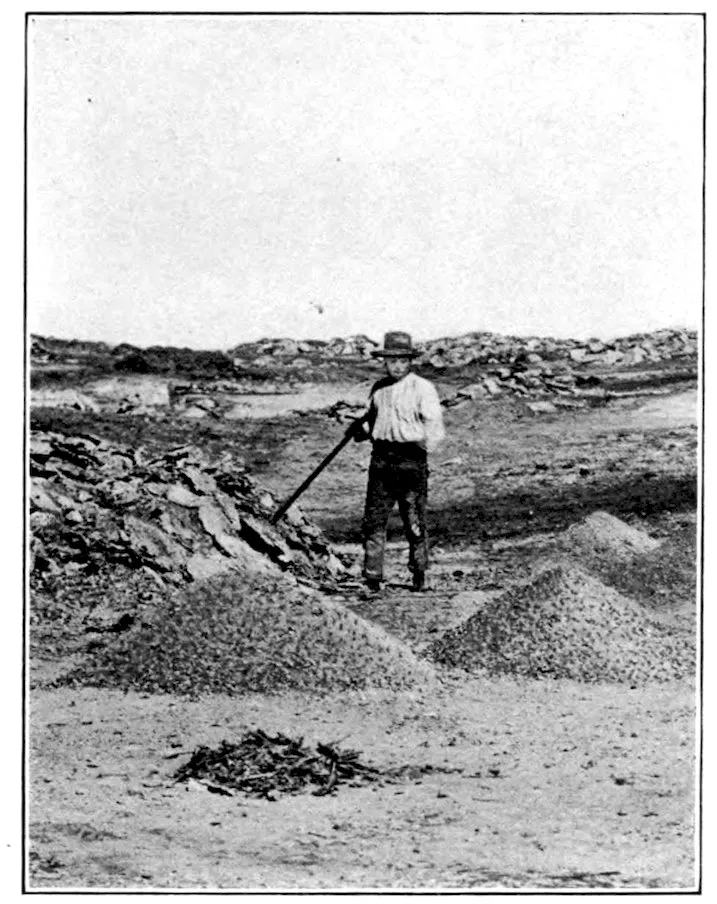
PREPARING GUANO FOR SHIPMENT.
Whoever has made a voyage along
the coast of Peru must have noticed
the thousands of birds that flock in the
neighborhood of the Chincha islands, near
Pisco, on the Guañape banks, off the coast
of Trujillo, and around the two island groups,
Lobos de Tierra and Lobos de Afuera, west
of the Department of Lambayeque. Sometimes,
when disturbed by the steamer’s
whistle or other unaccustomed noises, they
rise in a black cloud and soar away out of
sight, to return later, one by one, in an apparently
endless procession. These are the
pelicans of this region, the producers of its
famous guano, which was, at one time, Peru’s
most valuable source of revenue, and which
is likely again to become a mine of wealth to
the country. When one reads that “a hundred
thousand tons of guano were exported
from Peru to the United Kingdom last year,”
it seems to indicate that the trade is of no small importance, even at the beginning of its
revival. Not only on the islands named, but all along the coast, these birds have their
haunts. From a distance, the islands appear sometimes to be covered with a huge black
mantle, which, on closer examination, proves to be the plumage of the birds that have
congregated on its shores, huddling together in an immense company.
284
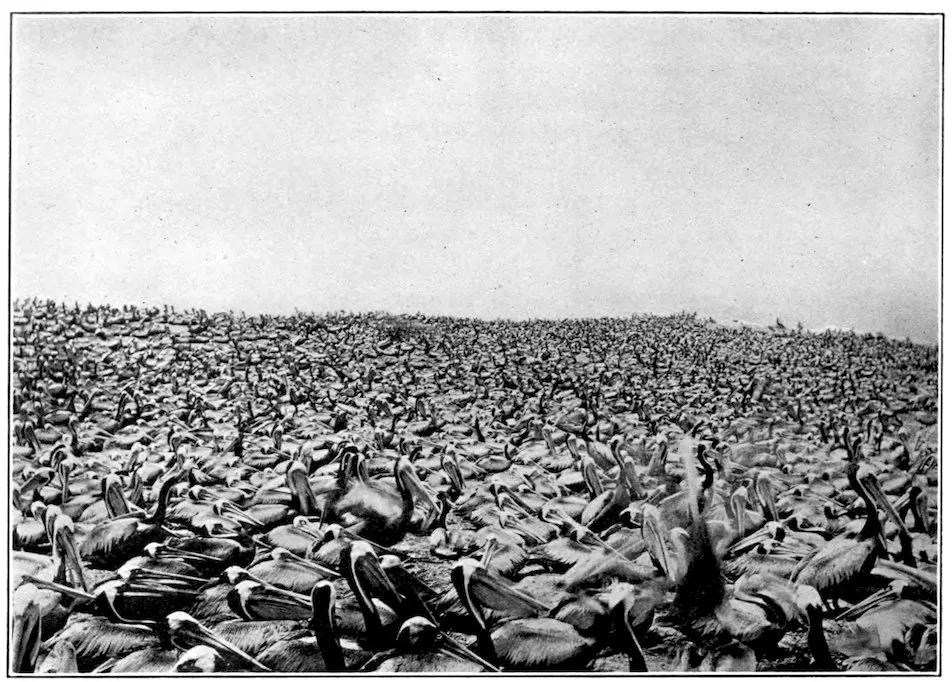
THE HOUR OF SIESTA FOR THE GUANO BIRDS.
The return of the pelicans and the revival of this trade are of particular interest to
those who have followed the history of guano in Peru. For several years past the birds
have been coming back to their long-abandoned haunts in greater numbers than ever.
The trade is reviving under the most favorable conditions, and the government has
undertaken measures by which to protect the welcome visitors, and ensure their remaining
permanently. It is believed that, by taking due precautions in the extracting of
guano, so that the birds may not be frightened away or forced to leave their nestlings,
the danger of their again abandoning the islands may be avoided, and their number
may be greatly increased. It has been especially recommended that the exploitation of
the islands should be made by turns; that a few of them should be closed to the trade
for a number of years, leaving the birds in undisturbed possession, while others are
worked, this plan to be followed in rotation; and the advisability of granting exclusive
concessions for each island has been recommended. Under the authority of the government,
investigations have been made as to the existing conditions, and the reports
of those who visited the pelicans’ haunts show that the problem of prime importance
is how to keep the greatest number of birds on the islands and increase their number
without prejudicing the best interests of the government, the national agriculture, or the
exporters. It is urged that the birds should be treated with the greatest consideration
and care, so that they may be perfectly secure in their chosen homes, migrating only
285from one to another island at long intervals, and so remaining almost undisturbed in their
habits from year to year.
The advent of these old friends is looked upon as an augury of bright import by the
Peruvian people, in view of the period of great trial and disaster that followed the decline of
the guano trade in years past. It is certain that the revival of the industry will find Peru
better able to profit by its blessings than formerly, when the possession of an apparently
inexhaustible treasure led to reckless expenditure and resulted in the financial difficulties
that an unlimited credit, continually drawn upon, invariably produces. In Alejandro
Garland’s recent book on Peru, an interesting history of the guano trade is given, which
places particular emphasis on the evils that developed out of its phenomenal growth and
peculiar conditions.
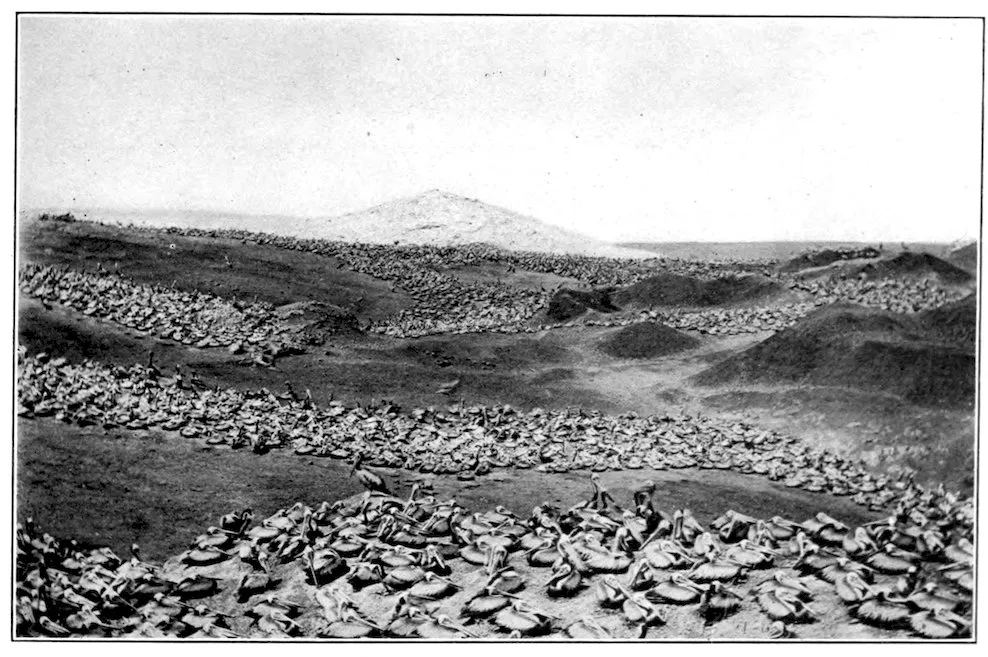
In 1840, when the sale of guano first began to figure in the government receipts, the
total revenues of the country did not exceed three million dollars. Ten years later,
the government revenue from guano alone was more than five million dollars. The
demand for the product increased in all parts of the world, and the annual exports rose to
two hundred thousand tons. This rapid increase in the guano trade was largely due to the
activity of the consignees, in whose hands the government placed it for sale, and their
influence in the financial affairs of the country became very great. Every financial difficulty
that arose at that time was met by mortgaging the future returns from the sale of guano;
286and Peru, counting on the extraordinary and abundant revenue from this source met all
the demands of the government without recourse to taxation,—a condition unheard-of
elsewhere in the financial history of the world.
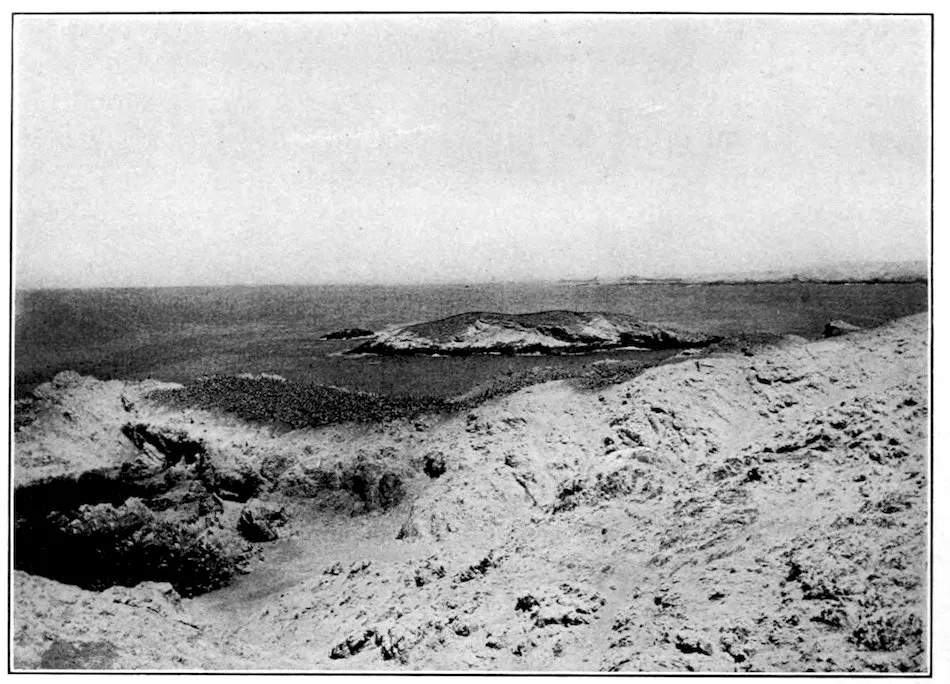
GUANO ISLANDS OF LOBOS DE TIERRA.
But guano, though it brought to the Peruvian treasury the enormous sum of two
hundred and twenty million dollars between the years 1840 and 1867, brought also such
habits of extravagance in the government, that, not only did the entire sum disappear
without adequate recompense to the country, but, at the time when General Mariano
Ignacio Prado assumed the dictatorship, with Don Manuel Pardo as his Finance Minister,
the public debt was forty-five million dollars, besides which, the government also
owed the consignees of guano fifteen million dollars. Don Manuel Pardo sought to
organize the finances of the nation on a more solid basis, independent of guano, by establishing
permanent resources in the form of taxes and export duties; but the fatal glamour
of wealth with which guano had dazzled the nation, cast his labor into the shade, and the
existing evil was increased in the succeeding administration, though the intention of
the energetic and public-spirited statesman, President Balta, was to put an end to the
mismanagement of guano funds by employing this resource in the construction of railways
and other public works.
In the meantime, nitrate, a powerful rival of guano, had been discovered in the desert
of Tarapacá, then the southernmost province of Peru. The companies engaged in extracting
287nitrate, of which about five million quintals were exported annually, were competing with
one another so closely that the low prices established by them threatened to ruin both the
guano and the nitrate business; and President Manuel Pardo, in order to raise the selling
price of both products, with a view to increasing the revenues of the nation, put into force
a government monopoly of nitrate. As a result of the war with Chile which followed,
the nitrate fields of Tarapacá passed into the possession of that country. The evils of
competition again threatened to ruin the trade, until, under the auspices of the Chilean
government, a system of limiting the production was adopted, which remains in force.
What Peru lost in the nitrate fields of Tarapacá may be estimated from the statistics of
Chile, which show the revenue from the export of nitrate and iodine (the latter obtained in
the preparation of nitrate) to be five million pounds sterling yearly, nearly three-fourths of
all Chile’s exports being from the nitrate fields.
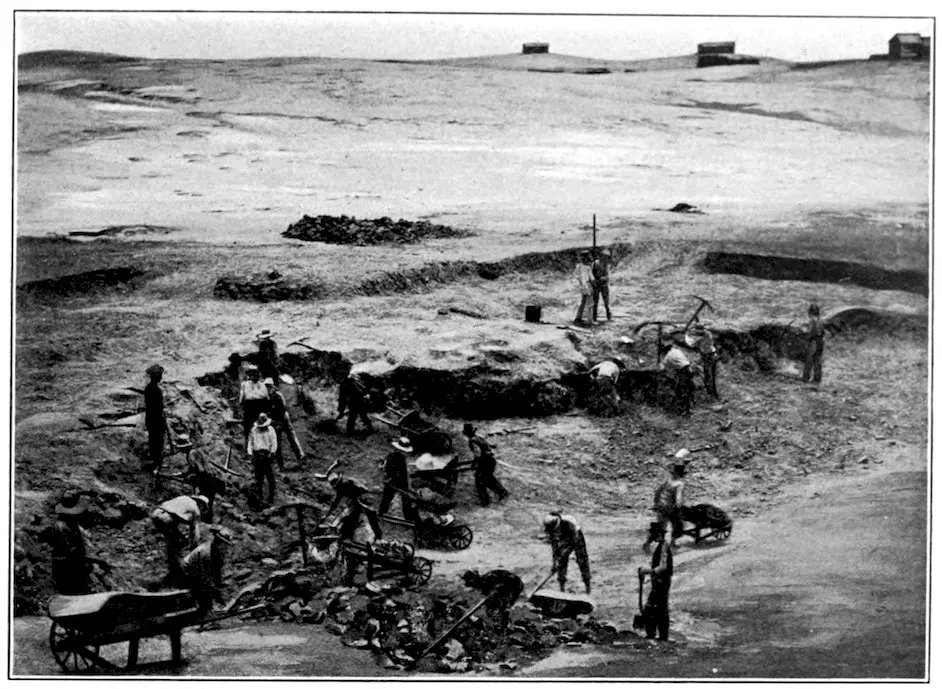
DIGGING GUANO ON THE CHINCHA ISLANDS.
Peru lost the revenues from both guano and nitrate under the same stroke, and during
the years that immediately followed, the country passed through the darkest period of its
history. But, as this experience served to direct the attention of the nation to the more
permanent riches of this great territory, the loss of its most attractive possessions cannot be
regarded as an unmixed evil. From an abundance of wealth, Peru was suddenly plunged
288into great poverty. But, as with individuals, so with nations,—the test of the spirit lies in
its strength to meet adversity and overcome the discouragement that follows in its path;
and this test the Peruvian people met by resolutely facing the task of building up their
shattered fortunes through the development of the national industries. Their territory is
rich in agricultural products and minerals; the rubber and hardwoods of the forest are
treasures of immense value; and the people have grown to realize the full importance
of developing these unlimited resources. As a result, the sun of prosperity has again risen
over the land; and in the warmth of his beams, the harvests shed ever-increasing blessings
and the hearts of the people expand with content.
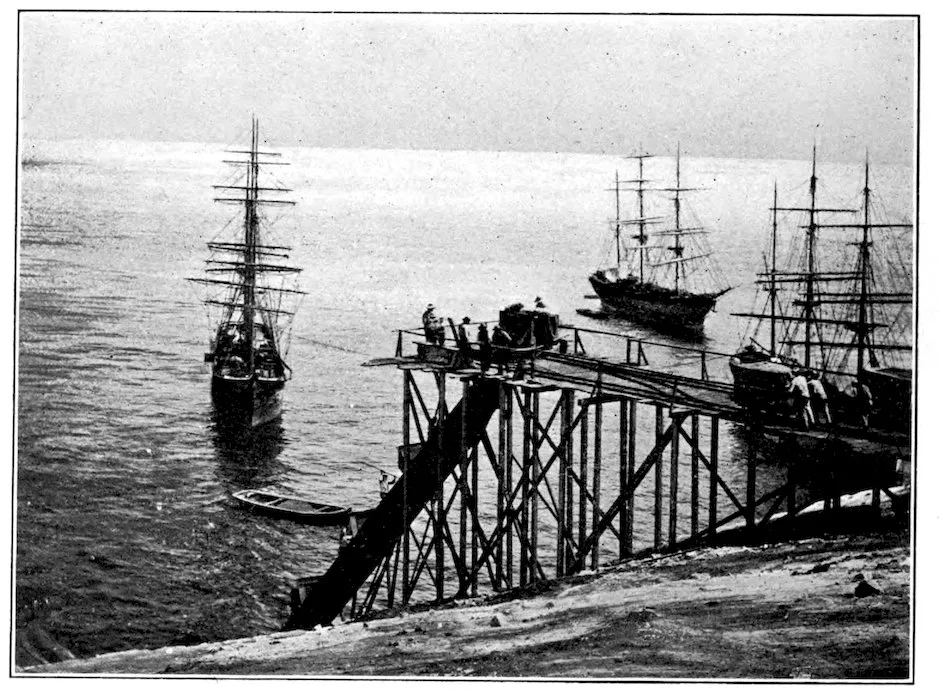
A GUANO PORT, CHINCHA ISLANDS
290
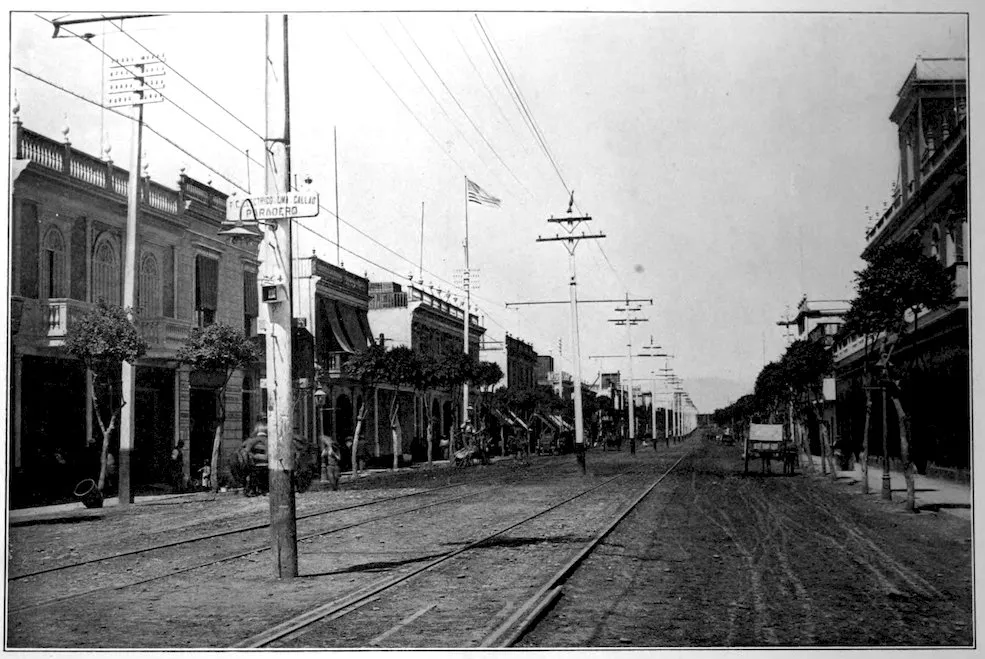
CHAPTER XX CALLAO, THE CHIEF SEAPORT OF PERU—STEAMSHIP LINES
291
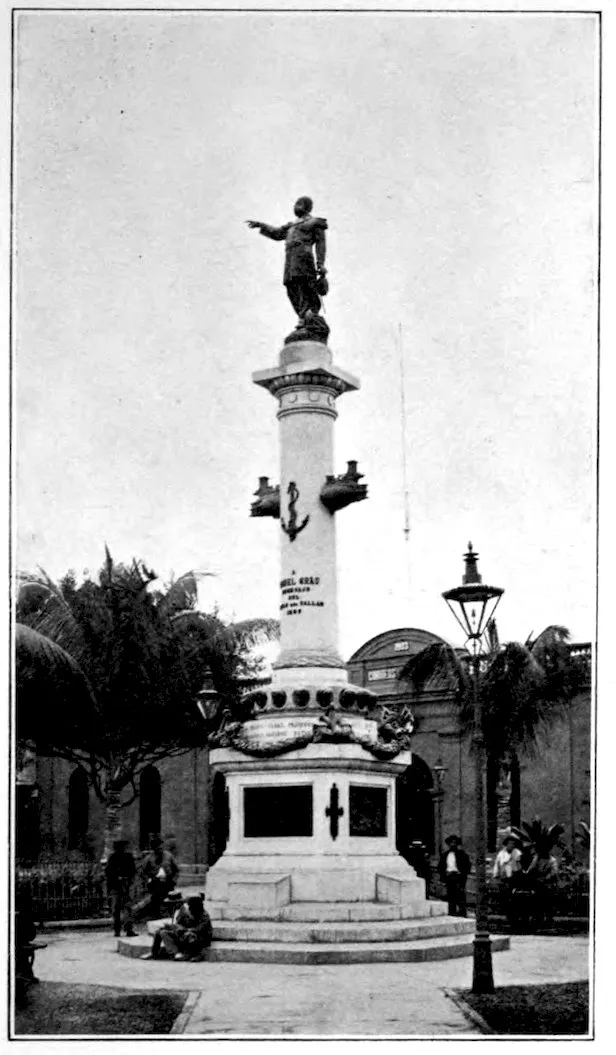
MONUMENT TO ADMIRAL GRAU, CALLAO.
Callao, the chief seaport of Peru, and one
of the most important on the Pacific coast,
possesses an especial historical as well as commercial
interest. As the City of the Kings was
the centre of political and social authority under
the viceroyalty, Callao was the headquarters of
its trade, the counting-house in which business
operations connected with the colonial service
were carried on. All ships that traded between
Spain and its vast Peruvian provinces were
obliged to load and discharge their cargo in this
port, where every article was registered and the
king’s duties were collected. The first buildings
of the port were erected in 1537, two years after
Pizarro founded Lima; but it was not until a
hundred and thirty-four years later, in 1671, that
Callao was dignified with the title of city. In
the intervening period, the increasing wealth and
prosperity of the viceroyalty and the importance
of its trade attracted pirates to the coast, the harbor
of Callao being made the chief point of
attack, as in the case of Drake and Cavendish,
elsewhere referred to, and of the Dutch pirates
who came later. These invasions, though they
wrought great damage to the city, were forgotten in the flourishing period that followed,
when Callao grew to be the richest port of the Pacific and its harbor was constantly thronged
with vessels bringing in merchandise of all kinds, or loading precious cargoes of gold and
silver for the metropolis.
292
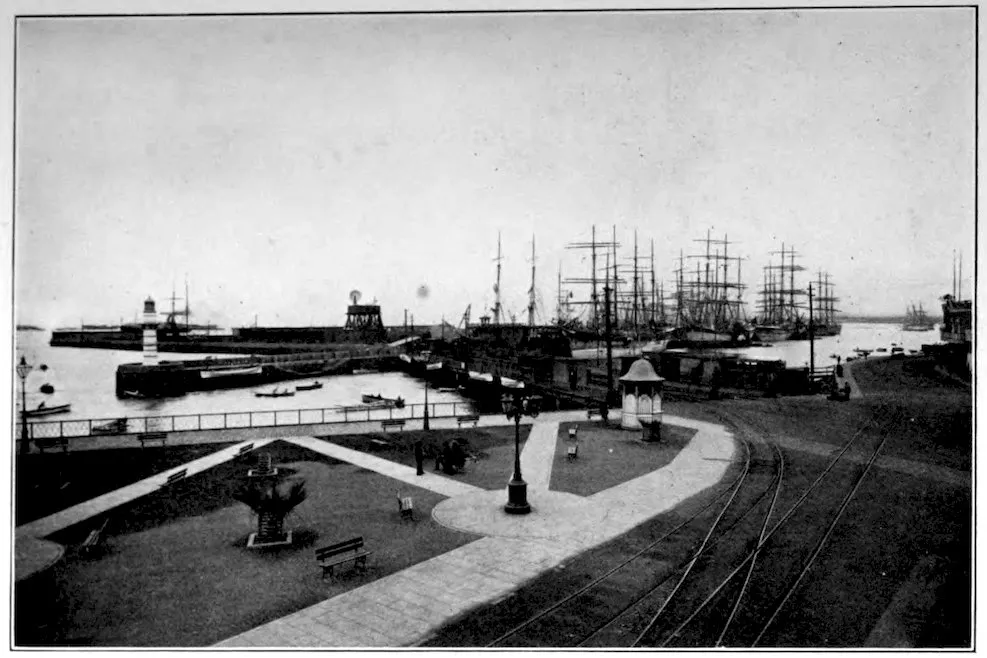
A greater catastrophe than invasion of pirates befell the seaport in the height of its
prosperity, when, on the 28th of October, 1746, a terrible earthquake, accompanied by a
tidal wave of tremendous volume, completely destroyed the city, about six thousand people
perishing in the sea that swept over the falling buildings in a deluge. The task of rebuilding
began at once, though not on the same site, which has ever since remained under the sea.
The location of the submerged city is indicated between the points of Independencia and
Camotal, south of the present site, and in that part of the bay called the Mar Brava (rough
sea.) For many years after this calamity, a sentry was stationed on the beach to take
charge of any treasure that might be washed ashore, and this post was not dispensed with
until after the inauguration of the republic. When the new city was built, the port was
fortified and placed in charge of a strong military garrison. The part played by this garrison
in the last days of the viceroyalty is well known. Its surrender was the signal of defeat to
the royalist cause in Peru.
The foreigner who first sees the harbor and city of Callao from the deck of a steamer,
finds the view such a pleasing contrast to anything the neighboring harbors have to offer,
that he is not disposed to find fault even with the barren aspect of San Lorenzo to the
south, and the monotonous line of houses facing the water front; he is charmed with
the beautiful green of the Rimac valley to the north, the distant glimpse of Lima’s church
293towers, and behind them the purple hills that hide their summits above the clouds. There
is much to enjoy also in the busy scene of the harbor; vessels of all nations are loading
and discharging their cargoes, tugs bustle about, and, while the pompous whistle of
modern steamers announces their arrival, the graceful sailing ship glides silently into port,
maintaining with dignity the credit of the good old days, in the face of these rival parvenus
of twentieth century transportation.
Nearly all passengers landing at Callao proceed immediately to Lima, and, as soon as
the routine of the custom house is finished, there is a general rush for the train or the
electric street car which runs to the capital. If the foreigner were to be asked his first
impression of Callao, he would probably give a confused description of a place remembered
only for its Custom House, the narrow irregular streets and old-fashioned houses of the
water front, and the railway tracks to be crossed on the way to the Station. But those
who have seen Callao under more favorable circumstances have found many attractions in
the social life of its kind and hospitable people and much to admire in the city itself.
Under the present administration, important improvements are being carried to completion,
notably the work of canalization, which means a great deal to the healthfulness of the
city. Block pavements have been laid in the principal streets, the question of sanitation has
received special attention, and everything indicates a spirit of progress active in public affairs.
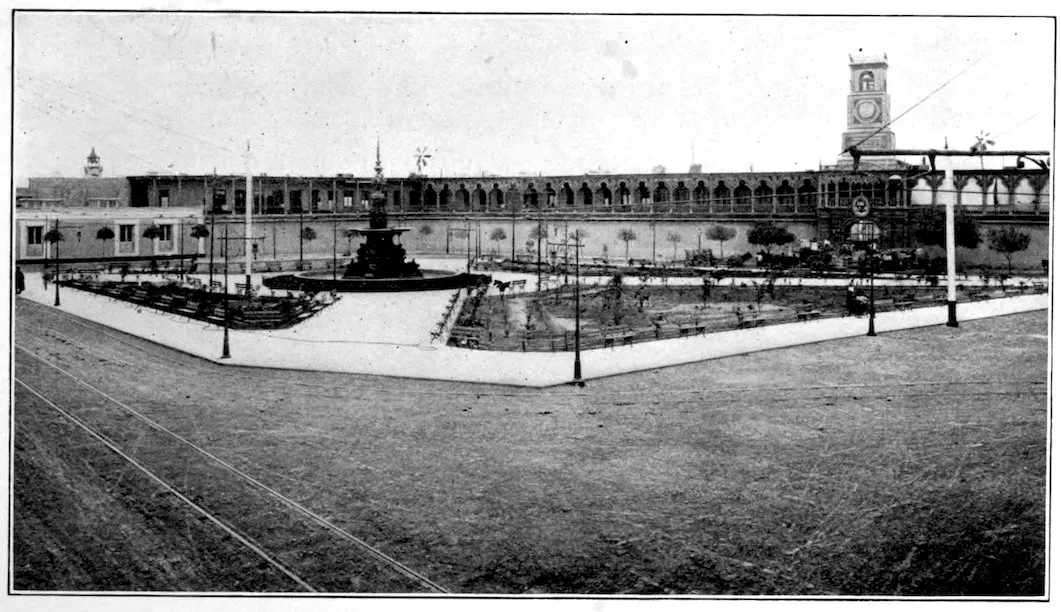
THE CUSTOM HOUSE, CALLAO.
The public buildings of Callao are situated chiefly in the central part of the city, on one
of the numerous squares, or plazas. The most conspicuous of these edifices is the custom
house, the chief aduana of the republic. It occupies the site formerly enclosed in the
294city’s fortresses, and is a spacious building;
though, it is claimed, the accommodations do
not fulfil the requirements of an establishment
of this kind, as the first custom house of Peru.
The post office building is a solid, well-built
structure, overlooking the plaza; the prefecture
occupies a large and commodious building, the
lower part of which is used for the offices of
the police authorities, the Junta Departmental,
the treasury and the criminal court; the civil
court holds its sessions elsewhere. Callao has a
town council, a chamber of commerce, an excellent
fire brigade composed of four companies, a
benevolent society which maintains the hospitals
of Guadalupe and San Juan de Dios, several
churches, and three social clubs. There are two
protestant churches in the city and two foreign
clubs. The English Club has its headquarters
in a building overlooking the bay; its broad
verandahs, adorned with shrubs and plants, present a very attractive picture from the
landing-place. For amusement, there is a theatre and a bull ring, and lovers of sport have
their rifle and regatta clubs, besides which there is also the Naval Club and the Italian
Club. In the principal plazas of the city, monuments have been erected in honor of the
national heroes. The Plaza Grau has a handsome monument in memory of the heroic commander
of the Huascar; a statue of General San Martin adorns the beautiful Plaza Matriz;
and in the Plaza “Dos de Mayo” stands a marble pillar, supporting a bust of the hero José
Galvez, Minister of War, who was killed in the naval battle of 1866, in the bay of Callao.
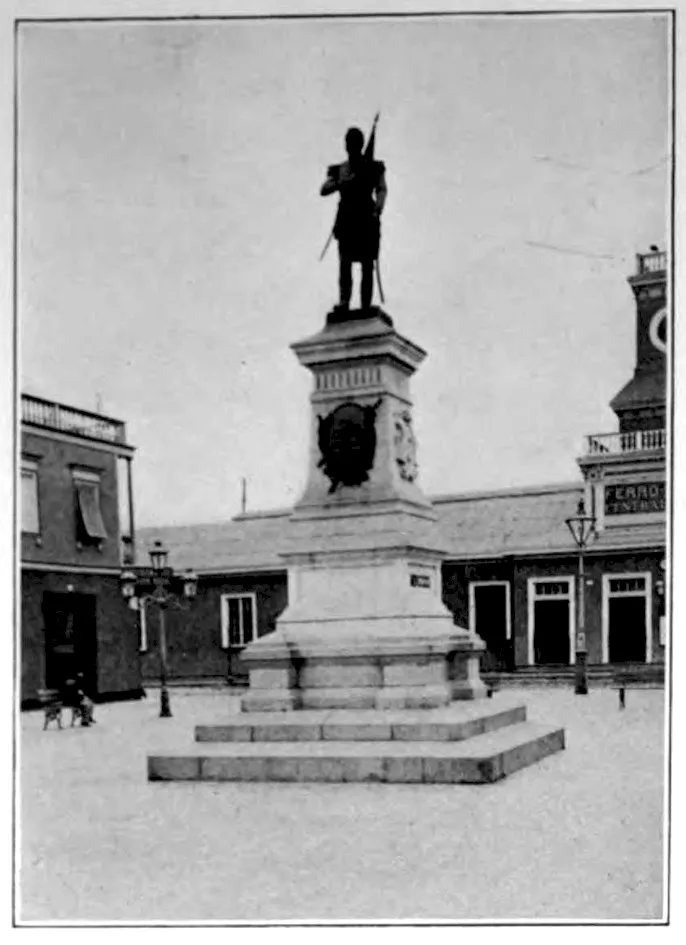
STATUE OF THE LIBERATOR, CALLAO.
The constitutional province of Callao was created by a decree of the supreme government
in 1836, the name “constitutional” being bestowed by law in 1857, in remembrance
of various occasions when its people had defended the constitution of the State. The
province extends from the Rimac River on the north to the Mar Brava on the south, and
from the Pacific Ocean on the west to the haciendas Chacra Alta, Taboada, and La Legua on
the east. It includes the city of Callao, the wards, or barrios, of Bella Vista and La Punta,
and the islands of San Lorenzo, Fronton, Palominos, Hormigos de Afuera, and neighboring
rocks. The province is governed by a prefect, an intendant of police, commissaries and
governors. Bella Vista and La Punta are under the authority of commissaries. The present
population of Callao is thirty-five thousand, of which one-tenth are foreigners. Its chief
industries are those connected with maritime traffic, though the city has also a number of
factories and flour mills. The port is connected with the capital by telegraph and telephone
systems, and with all the cities of the world by the Central and South American Telegraph
295Company, and the West
Coast of America Telegraph
Company. Most of the
consular offices are located
in Callao, which is within
twenty minutes’ ride of
Lima, on the electric car. A
business man may reside at
the capital without any inconvenience
in getting to
and from his office. The
ride itself is a pleasant paseo,
across open country, with
agreeable scenes all the way.
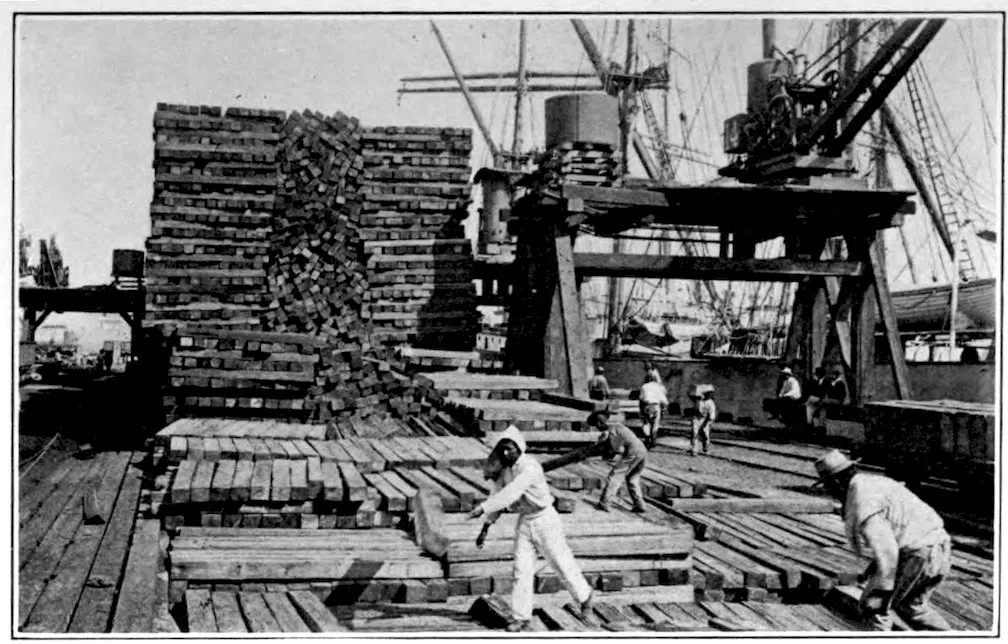
UNLOADING LUMBER AT CALLAO.
Bella Vista is situated a mile east of Callao, where it was founded after the earthquake
of 1746, by order of the viceroy, the Count of Superunda. Here the ship-owners, who had
charge of the coasting trade at that time, made their homes; and here were established warehouses
for the storage of wheat purchased from Chile to supply the market of Lima and
its neighborhood during the viceroyalty. These old buildings have now been replaced by
modern storehouses. In 1834, the government of Peru ceded to the British Legation a piece
of land for the purpose of a Protestant cemetery, and here many distinguished foreigners have
been laid to rest. A mausoleum, erected by the Peruvian nation as a proof of gratitude to the
hero of the Independence, marks the grave of General Miller, San Martin’s faithful follower.
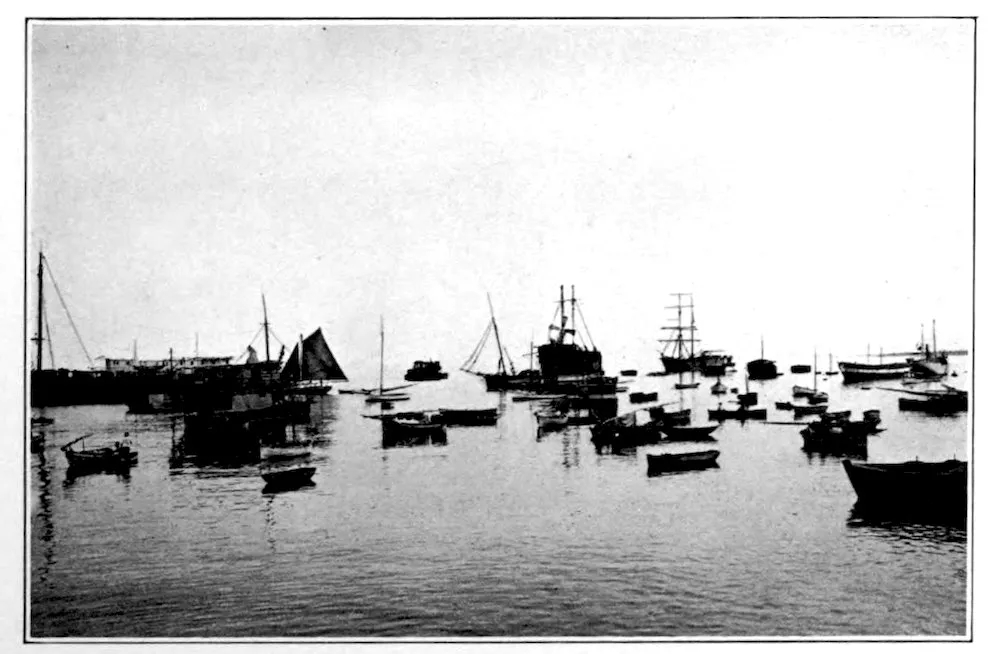
La Punta is the favorite bathing resort of Callao and of the capital, its beach being
thronged throughout the summer season. Its situation marks the southern limit of the
harbor, to which it forms a
protection from the southeast
winds, stretching out
for more than a mile into
the sea. The harbor is
usually entered from the
north, the narrow passage
between La Punta and the
island of San Lorenzo, on
the south, being seldom frequented.
The bay is large
and affords safe anchorage
for ships at all times of the
year. The only islands in
the vicinity are San Lorenzo,
296Fronton, Palominos, and a few small rocks. San Lorenzo is used as a depository for explosives,
and from its quarries are taken stones for paving and other purposes; besides which
it provides a good cement for construction work. On the little island of Palominos, south of
San Lorenzo, stands a lighthouse, with a revolving light visible eighteen miles distant. The
government of Peru is putting up new lighthouses all along its coast, thus meeting an
urgent need. Another demand which is being met with especial endeavor is the improvement
of all the docks and landing-places of the various ports of the republic. Callao’s
dock and wharf, called the Muelle Darsena, is built so that ships may disembark passengers
and cargo directly on shore, without requiring, as in nearly all other ports of the Pacific,
canoes and lighters to transfer them. In some ports of the West Coast, both in North and
South America, the passengers are swung over the ship’s side in baskets; but, though the
novelty of the experience may have its charm, this is not a very comfortable mode of
landing. The Muelle Darsena at Callao permits of ships of large tonnage anchoring close to
its wharf. It encloses a space covering more than fifty thousand square metres, has a pier
one hundred and eighty metres long, formed by the extension of one of its side walls, and
connects with the shore by means of a bridge nine hundred metres long, constructed on
iron piles. In addition to the Muelle Darsena, the port of Callao has a floating dock with
capacity to admit vessels drawing twenty-one feet of water and registering five thousand
tons; and another floating dock is under construction which will admit vessels of up to
seven thousand tons’ register. During the past year many improvements have been
initiated, one of the most important being the plan of fortifying the port, in accordance with
the best modern system. A
new embankment, or breakwater,
the “Malecon Figueredo,”
is under construction,
which will add greatly to
the attractiveness as well
as the protection of that
part of the city which overlooks
the harbor. In this
work, the supreme government
coöperates with the
Junta Departmental and the
municipality, all being benefited
by its results. In
giving attention to the improvements
that contribute
to make Callao a better port,
the government believes that the commerce of the country will be greatly advanced thereby.
Callao is now visited annually by five hundred steamers and more than a thousand sailing
vessels besides the smaller craft engaged in the coasting trade. Every day in the year, one
may count twenty or more steamers and twice as many sailing ships anchored in the harbor.
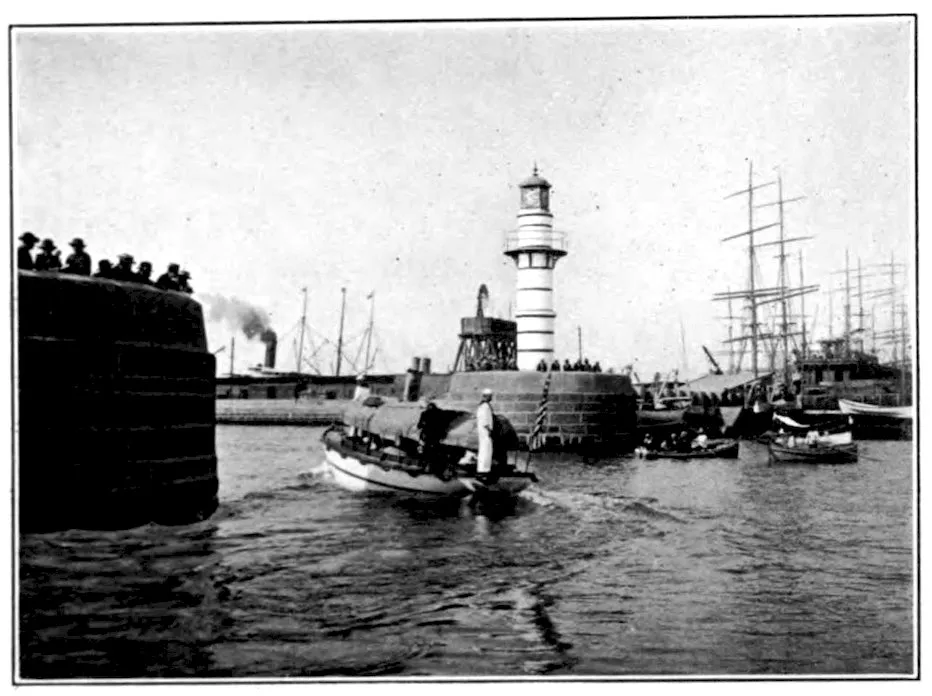
PIER OF THE ARSENAL, CALLAO.
297
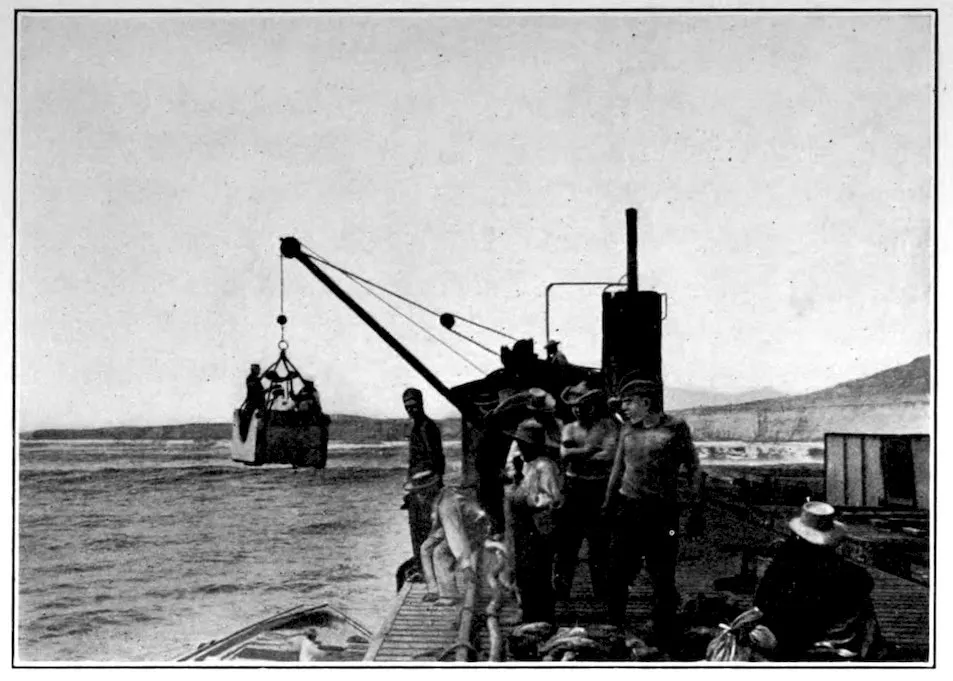
PASSENGERS LANDING AT ETEN FROM A STEAMER OF THE PACIFIC LINE.
The most important
steamship companies of
the world are represented
in the lines which include
the port of Callao in their
itinerary. The first company
to send steamers to
the Pacific Coast was organized
largely through
the initiative of shippers
in this port. The Pacific
Steam Navigation Company,
incorporated in
England by Royal Charter
in 1840, began its service
on the Pacific Coast
under the usual difficulties
attending pioneer
efforts. The working of the line was impeded by innumerable drawbacks. At first it was a
purely coastal service and the mails, passengers and through traffic had to be conveyed
across the isthmus of Panamá on mules. Then the Panamá railroad was built and the
traffic was fostered; but the rates across the isthmus were very high and the difficulties that
attended the despatching of through traffic were so discouraging that the Pacific Company
instituted a line of steamers between Liverpool and Valparaiso via the Straits of Magellan, to
connect with the coast service plying between that port and Panamá. Later, the line from
Liverpool was extended to Callao, and for many years this port was the headquarters of the
company, until, in 1896, owing to a falling off in trade after the decline of the guano industry,
the chief offices were transferred to Valparaiso. Of late years, however, the company
has greatly increased its fleet, and a special line of passenger and cargo boats has been put
on for service to Peruvian ports. From a small commencement with two wooden paddle
steamers of seven hundred tons’ register, as described by Mr. Frederick Alcock in his book
Trade and Travel in South America, the fleet has grown until its register now approximates
two hundred thousand tons. Its new steamer, the Orcoma, has a tonnage of eleven
thousand five hundred, and the Orita registers nine thousand two hundred and sixty-five
tons; in addition to these handsome floating palaces, the fleet numbers eighteen twin-screw
steamers of lesser tonnage, all of modern construction and commodious service. Of these,
the Oriana, Ortega, and Oronsa, are the largest and most noted for comfort and elegance.
At Chucuito, near Callao, where the company owns a large property, the stores and works
298are being enlarged and improved. The Pacific steamers connect with those of the Royal
Mail both at Panamá and Buenos Aires, the latter having no line on the west coast of
America, though its magnificent fleet ploughs all the seas, from Southampton to Panamá,
to Brazil and Argentina, to the Mediterranean, Suez Canal and India, and, in the Pacific
Ocean, to China and Australia.
In addition to the Pacific Steamship Line, there are numerous others trading along the
west coast of South America, all of which call at the port of Callao. The South American
Steamship Company of Chile has steamers every week from Valparaiso to Panamá and the
ports of Peru. The Kosmos Line connects the European ports of Hamburg, Bremen, Antwerp,
and Havre with San Francisco, California, via the Straits of Magellan and west coast
ports of South America. The “Merchant Line” carries on a direct trade between New York
and Callao, and the Japanese Steamship Company connects the Peruvian ports with Japan.
Almost all the American and European steamship companies have lines to Panamá,
including the Panamá Railway Steamship Company and the Leyland Line, from New York;
the Royal Mail, from New York and England; the Hamburg-Pacific, from Germany; the
Compagnie Général Transatlantique, from France; the Veloce, from Italy; the Transatlantica
Española, from Spain; and the Pacific Mail, from San Francisco. As soon as the Canal is
open for traffic, all these lines will extend their itineraries to Callao, which is destined to
be the commercial metropolis of the South Pacific.
300
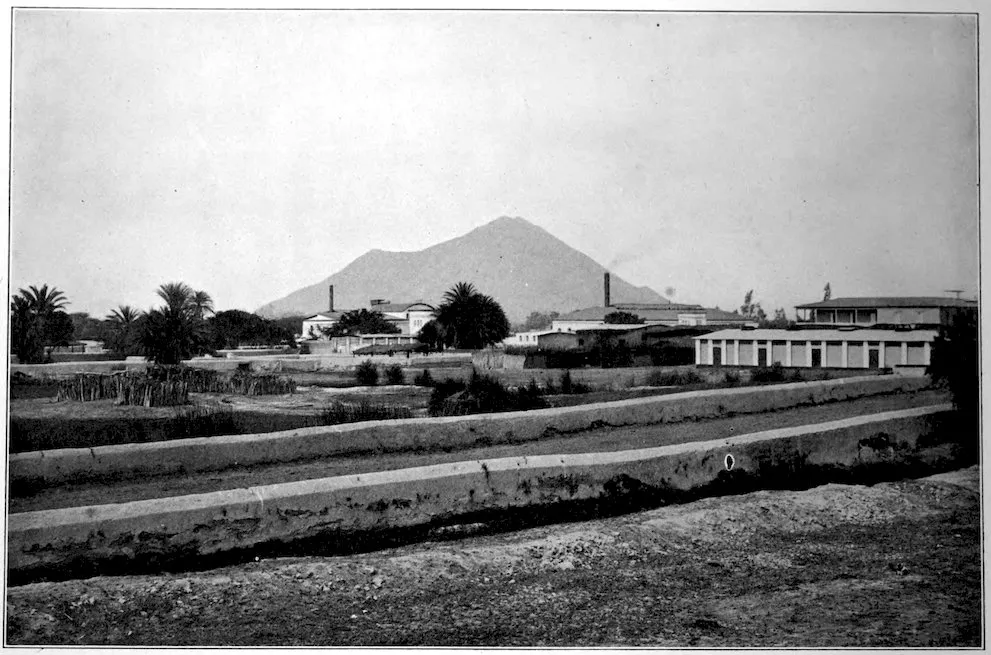
A TYPICAL HACIENDA OF THE COAST REGION.
CHAPTER XXI AGRICULTURE AND IRRIGATION ON THE COAST
301
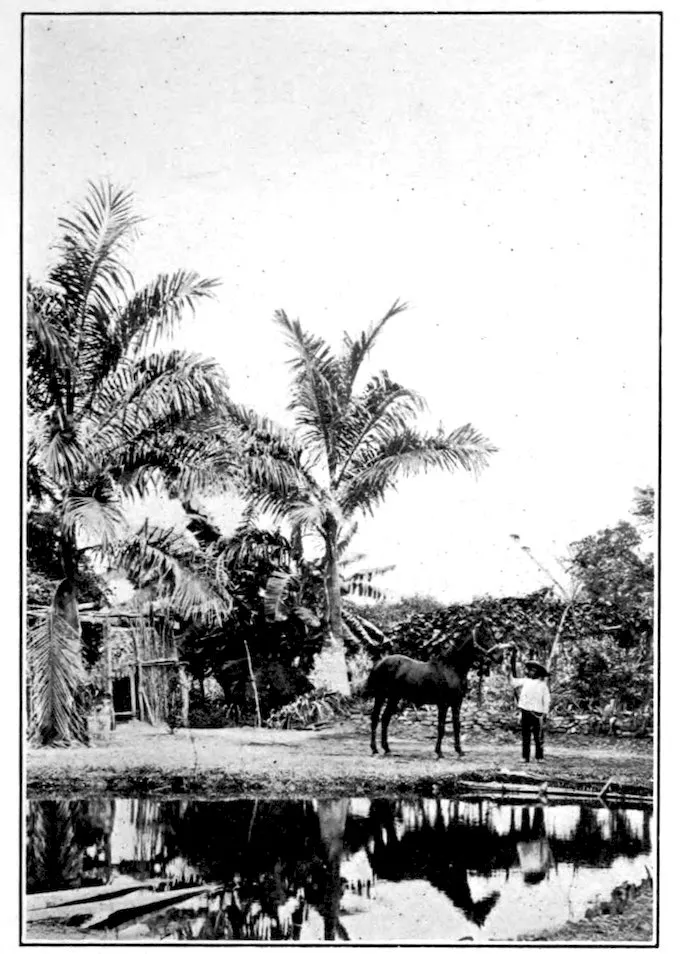
PICTURESQUE GARDEN ON A RICE PLANTATION.
The increasing importance of Peru’s seaport
trade is largely due to the prosperous
development of agriculture, which is annually
becoming a more valuable source of revenue
to the country. Nearly all the steamers that
visit Callao call also at other Peruvian ports,
the coast being dotted from Tumbes to Arica
with flourishing harbors, in which may be
seen trading vessels of all nations. From the
valleys of the coast region are shipped immense
quantities of sugar and important cargoes
of the famous Peruvian cotton, grown
exclusively in this country, besides tobacco,
rice, coffee, and a variety of fruits. Agriculture
is the chief occupation of the people in
this part of Peru, and the employment of
modern methods in its development is leading
to wonderful results.
The conditions that govern agriculture
on the Peruvian coast are similar to those of
the Nile valley, as regards the nature of the
soil, climate, and fertilization. Wherever a
stream crosses the sandy strip between the Cordilleras and the sea, the valley along its
course is made richly productive, and yields abundant harvests. Every effort is being put
forth by the government to increase the irrigable territory by distributing the water of the
rivers to the best advantage and by sinking artesian wells wherever practicable. The special
code which governs irrigation on the coast has recently been reformed so as to admit of a
302more general utilization of the water supply from the rivers; and experienced hydraulic
engineers from the Geological Survey Department of Washington, District of Columbia,
have been engaged to study the geology of the coast, the courses of its streams, its subterranean
waters, etc., in order that, from correct knowledge, the best means may be employed
to utilize its moisture so as to benefit the greatest possible area.
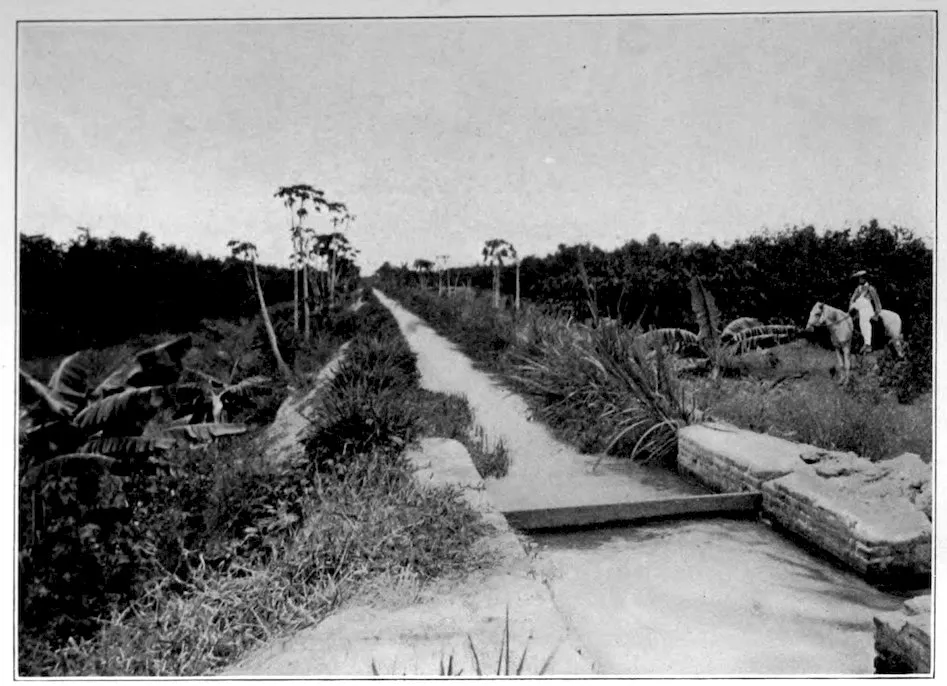
IRRIGATING CANAL ON A PIURA PLANTATION.
At present, not more than two million acres of coast lands are planted, out of a cultivable
territory of fifty million acres, showing that the farming industry is still in the infancy
of its development. But the harvests actually secured, with comparatively little effort and
expense, are in some cases phenomenal, and always abundant. When once the entire area
is brought under the plough, Peru will have in its coast farms greater wealth than its mines
have ever yielded. Not only through want of irrigation is the productive area much less
than it would otherwise be, but the lack of laborers to cultivate the land is a serious drawback.
Some of the large haciendas contain extensive fields of fertile soil that remain untilled
because the owners have not sufficient capital, or a large enough staff of workmen to
undertake their development.
303
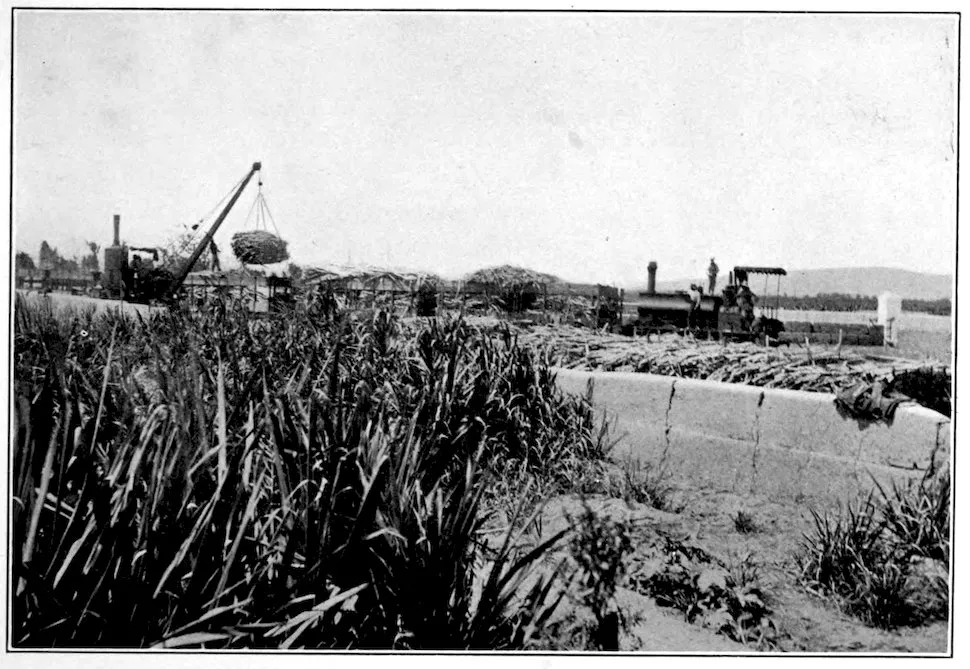
LOADING SUGAR-CANE, SANTA BARBARA PLANTATION, CAÑETE.
But, in compensation for its difficulties, agriculture has many advantages on the coast
of Peru. No sudden changes of temperature occur to alarm the planter, there are no
destructive storms, and the fear of drought does not exist, because the system of artificial
irrigation permits of the fields being watered or left dry at the owner’s discretion. Sugar,
the chief product of the coast country, is cultivated all the year round, the cutting of cane
taking place without interruption on the great plantations that stretch along its valleys.
Tumbes, Piura, Lambayeque, La Libertad, Ancash, Lima, Ica, Arequipa, and Tacna have
extensive sugar plantations, though from Ica southward, little is exported. The chief
sugar-growing districts of the southern coast region are Cañete, in the Department of Lima,
and Chincha, in the Department of Ica. From their seaports, Cerro Azul and Tambo de
Mora, large cargoes are shipped to foreign countries, as well as from the port of Pisco, at
which all the ocean steamers and sailing vessels of the west coast call to receive and
discharge merchandise. The large sugar estates of Cañete and Chincha are conducted
according to modern methods, those of the British Sugar Company and the haciendas of
San José and Larán being the most important in extent and production. The great centre
of the sugar industry in Peru is the Chicama valley, in the Department of La Libertad,
where the average production reaches four tons to the acre, a larger return than is secured
in any other sugar-growing country. The total quantity of sugar produced annually in
Peru amounts to about two hundred thousand tons, of which the greater part is grown on
the coast, more than a hundred and fifty thousand tons being exported. It is estimated
304that the value of the year’s harvest averages between eight and nine million dollars. In
nearly all the coast districts, flourishing cotton plantations may be seen, though the valleys
of Piura are most celebrated for the successful raising of this product, which occupies the
second place among the agricultural exports of Peru, the annual shipments amounting to
twenty thousand tons, with a prospect of rapid increase, owing to the added extent of territory
annually placed under cultivation. In the valleys of Huacho and Supe, in the Department
of Lima, the famous “Sea Island” cotton is grown, and all the coast states produce the
“Egyptian” and “Mitafifi” varieties. Peruvian cotton is exported only from Piura and Ica.
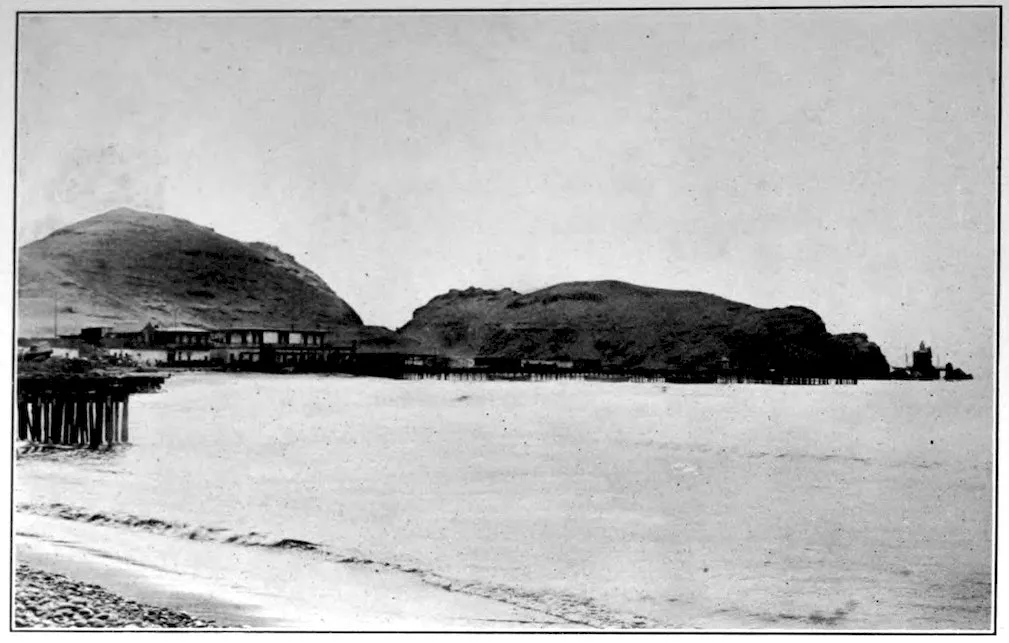
PIER AND WAREHOUSES OF THE BRITISH SUGAR COMPANY, LIMITED, AT CERRO AZUL.
In the northern coast region, notably in Lambayeque and in the province of Pacasmayo,
in La Libertad, the culture of rice receives especial attention, with the most satisfactory
results. Modern methods are employed by the planters of this zone to increase the
production, which now averages two hundred and fifty thousand bags (one hundred and
ninety pounds each) annually. The rice of Peru is equal to the best grown in other parts
of the world. Two varieties are cultivated, the “Carolina” and the “Jamaica,” the former
being more prolific, though the “Jamaica” gives a whiter grain and is more easily hulled.
In good years, the harvest amounts to fifteen bags to the acre, and the cost of production,
from the planting of the seed to the harvesting and threshing of the grain, is about eight
dollars, gold, per acre. The value of the rice crop varies greatly, but the present average is
not less than half a million pounds sterling.
305
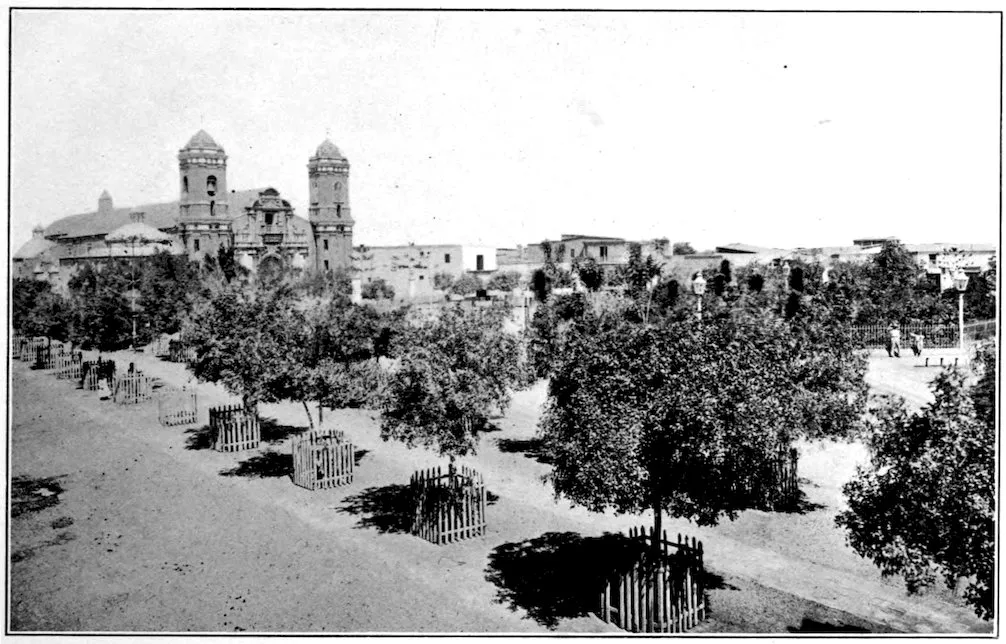
FERREÑAFE, A FLOURISHING CENTRE OF THE RICE INDUSTRY.
In the Peruvian rice fields, the harvesting begins five months after planting; the rice is
then gathered and sent to the mill to be hulled, the larger estates having their own rice mills,
provided with all the latest improvements. The Chiclayo valley, the chief centre of
the rice-growing region, is fertilized by the Chancay, Saña and Leche Rivers, and their
tributaries. From the Chancay River, at a point called Puntilla, an irrigating canal, the
Taimy, crosses the valley, watering the estates in the district of Ferreñafe, which is in
the heart of the rice country. From the seaport of Eten, a railway extends inland for fifty
miles, passing the principal towns, rice fields and sugar plantations of the department. It is
a standard gauge line, and the cars are of modern construction. The port of Eten is interesting
chiefly as the gateway to the rich country behind it, though the town itself is
constantly growing and improving. The most conspicuous feature of the port, as seen
from an incoming steamer, is its long pier, which extends two thousand seven hundred
feet out into the sea, and is provided with steam winches having capacity for disposing of
seven hundred tons of cargo daily. Similar piers have been built at Pacasmayo, Salaverry,
Pisco, and other ports. The railway from Eten, after leaving the port and passing Monsefu
and Chiclayo,—the latter the capital of Lambayeque,—traverses the beautiful valleys where
the rice fields stretch out like a green carpet along the banks of the river. Great haciendas,
of extensive acreage, speak volumes in praise of the enterprise and energy of the proprietors,
in a region less than seven degrees from the equator and almost at sea level.
306Pomalca, Combo, Tuman, Patapo, and other important plantations, are provided with
American agricultural implements and have the latest machinery of all kinds in their fields
and rice mills. Sugar is also grown in these valleys, the annual harvest amounting to
twenty-five thousand tons.
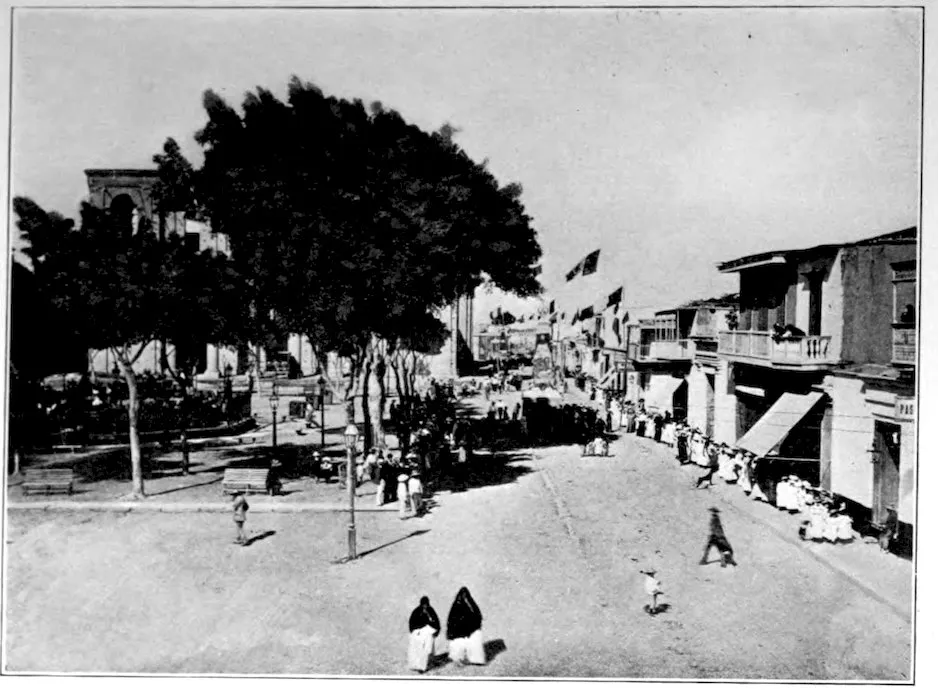
Although La Libertad is called the “Sugar State” of Peru, Piura its “Cotton Belt,” and
Lambayeque the rice-growing centre, yet all these products are cultivated also in the fertile
valleys of Ancash, which is one of the richest and most promising departments of the
republic, comprising, within its twenty thousand square miles, the regions both of the coast
and the sierra. It has excellent harbors, abundance of irrigation, a great variety of resources
and a healthful climate. The sugar farms and rice fields of Ancash are chiefly located in
the northern part of the state, in the beautiful valley of the Santa River, and in the region
of Samanco and Casma. All this territory is particularly adapted to agriculture and is
destined to be one of the richest centres of Peruvian industry. The magnificent bay of
Chimbote, covering a surface of thirty-six square miles, affords shelter for the largest ships
and is one of the best harbors on the west coast of South America; it is free from sandbanks
and hidden rocks, and never gets the rough seas that sometimes break over the
shores of other ports along the coast of Peru. Before the war with Chile, a railway was
under construction to connect the port with the capital, Huaraz, and half the road was
307completed when the war broke out. All the workshops and factories were destroyed by the
invading troops, who set fire to the fields of sugar-cane and blew up the farm houses with
dynamite. This catastrophe
paralyzed the progress
of the valley for some
years, but, under renewed
enterprise, the outlook
is very bright for future
prosperity. The railway
is being built again and
will soon be completed
to the capital of the
department, thus affording
facilities of transportation
for the products
of the sierra as well
as those of the valleys.
Abundant water-power is
available for engineering
and other enterprises.
WORKMEN ON A COAST PLANTATION.
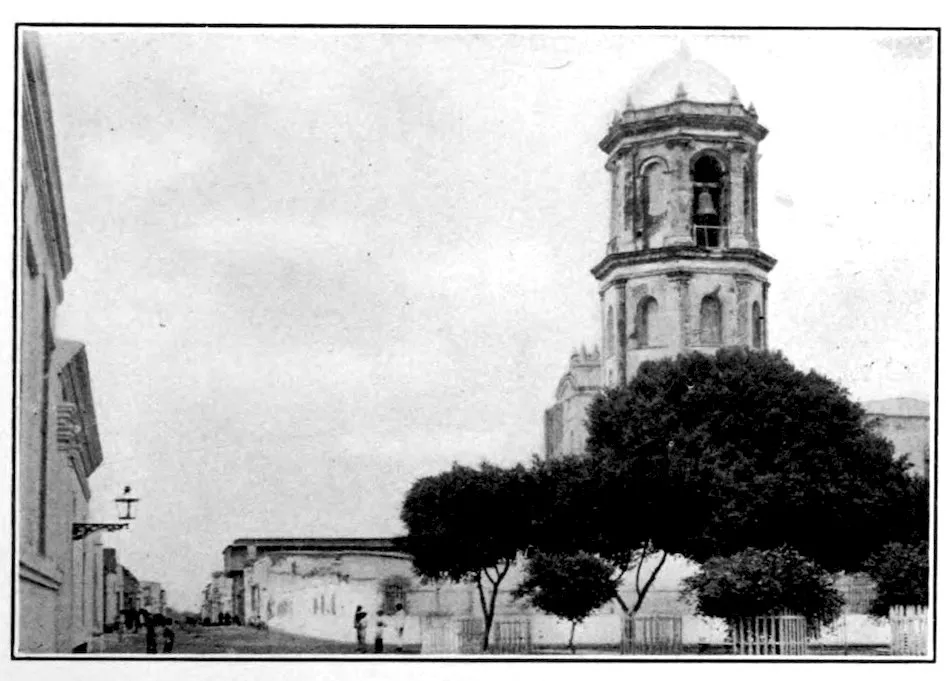
STREET AND OLD CHURCH OF LAMBAYEQUE.
None of the agricultural products above named are confined to the coast region. In the
lower inter-Andean valleys and on the higher levels of the Montaña sugar, cotton, and rice
are successfully grown, though
not as the chief industry, except
in the case of sugar, which is a
staple product of all the interior
valleys. Tobacco thrives better
in the interior than on the coast,
though the province of Tumbes
produces some of the best tobacco
of South America. Maize
is cultivated in every department,
and in every region except
on the high puna. It may be
seen growing on the plantations
of the coast, in the inter-Andean
valleys, and in the Montaña,
and furnishes the Indian’s chief
article of food and drink; the native chicha, once the favorite beverage of the Incas, is
made from this product. Maize is to the Peruvian Indian what rice is to the Oriental,
308the foundation of his cuisine. The history of its discovery is interesting. It is said that,
when Christopher Columbus landed on the Island of San Salvador in the Bahamas, in 1492,
he and his followers were surprised to find that the natives prepared a most palatable food
from a plant that was quite unknown to the conquerors and had never been seen in Europe.
The natives called it mahiz, which the Spaniards corrupted into maiz (pronounced like the
English word “mice”), and it has ever since retained this name, having become one of
the principal agricultural products of the world. The valley of Chancay is famous for its
maize, the production of this district alone amounting to about ten thousand tons annually;
though Cuzco enjoys the reputation of growing the largest maize in the world, with grains
the size of a large bean. Peruvian maize won a gold medal at the St. Louis Exposition in
1906, and was the subject of great interest among agriculturists.
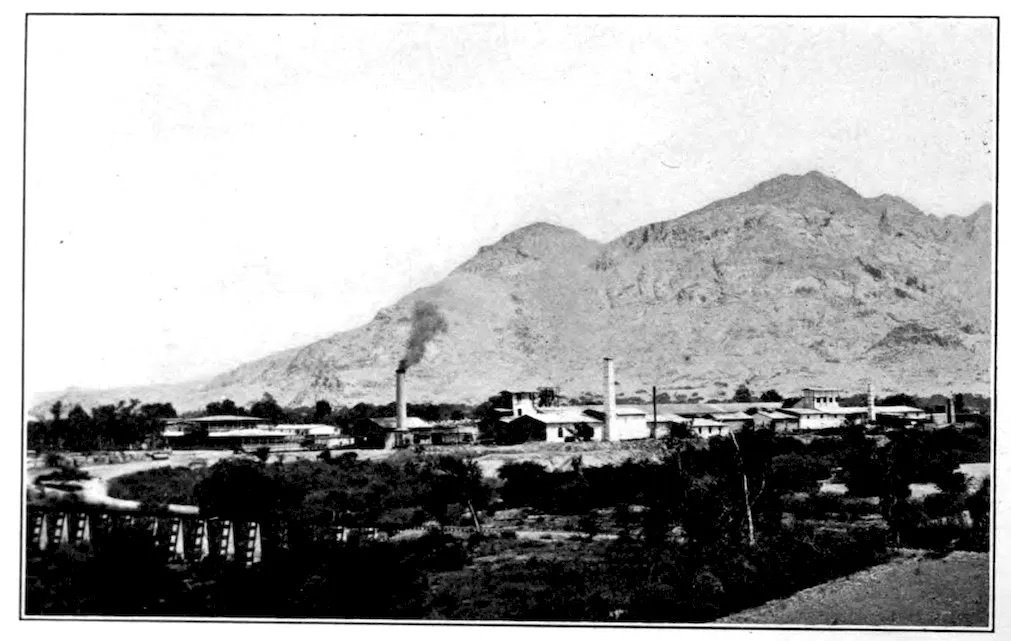
PATAPO, DEPARTMENT OF LAMBAYEQUE.
Agriculture is awakening greater interest than ever before in Peru. The government,
through the Department of Fomento, is doing everything possible to encourage its development;
the National School of Agriculture and veterinary science has been most successful
as a means of providing practical instruction in this important branch of education. The
school was founded in 1902, the first pupils being graduated in 1906. Many young
Peruvians have studied agriculture in the United States and Europe, and, on returning
home, have put in practice on their haciendas the knowledge thus gained. A few have
become teachers in the National School of Agriculture, which is accomplishing a great work
for the future of Peruvian industries. The Department of Fomento distributes, free of
cost, to the agricultural community a great quantity and variety of illustrative literature
309respecting modern methods of cultivation, irrigation, and fertilization of lands, with suggestions
as to the best kinds of products to be fostered in certain regions; a bulletin appears
monthly, filled with useful information, and the school of agriculture publishes a newspaper
along the same lines. The government also imports seeds and special plants from other
countries and lends its aid to the planter in exterminating any diseases that may appear
on his lands.
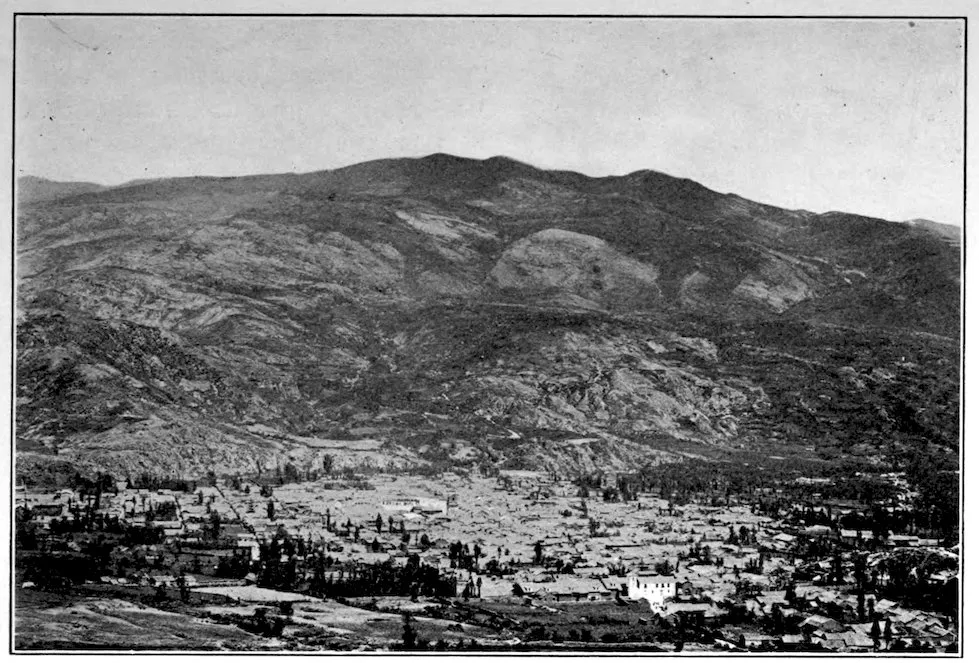
HUARAZ, CAPITAL OF THE DEPARTMENT OF ANCASH.
The laws of Peru authorize the government to grant concessions of waters and lands
on liberal conditions, which are attracting agriculturists from less favored zones. Companies
have been formed with the object of securing irrigation on lands hitherto not within the
cultivable area, and the system of irrigation has been increased in various sections. In
the Department of Piura, the irrigating canals on the Chira and Piura Rivers have greatly
enhanced the value of lands in that section; and similar results have followed the work
done in Lambayeque and in the Chicama valley. The effort on the part of the government
to place the coast lands under irrigation is not of recent date, the records showing that
measures were adopted to promote enterprises with this object in view as early as 1861,
when authority was given, by a supreme decree, “to sink artesian wells for irrigation and
domestic uses in Paita and Piura.” During the presidency of Don Manuel Pardo, especial
310attention was given to the problem of irrigation, and agriculture was developing under the
most auspicious circumstances when interrupted by the war of 1879. As soon as peace
was restored and the country resumed its normal tranquillity, the importance of irrigation
again occupied the public mind, and from that time to the present,—though notably during
the administration of Don José Pardo,—improvements have continued to be made and new
experiments studied for the benefit of the agriculture of the coast by a more thorough and
general irrigation of its territory. Another question besides irrigation is now occupying
the attention of agriculturists. Heretofore, the wonderful fertility of the soil has been
perpetuated by allowing fields to lie fallow for a season, whenever their productiveness
threatened to decline. This system is giving place to the more scientific method of
fertilizing the land by the use of guano and other substances suitable for the purpose, and
no country is better provided than Peru with the best fertilizing products of the world.
The islands from which this valuable food for the soil is obtained are all within easy
sailing distance of the coast, and their supply is sufficient for the needs of the country for
an indefinite period.
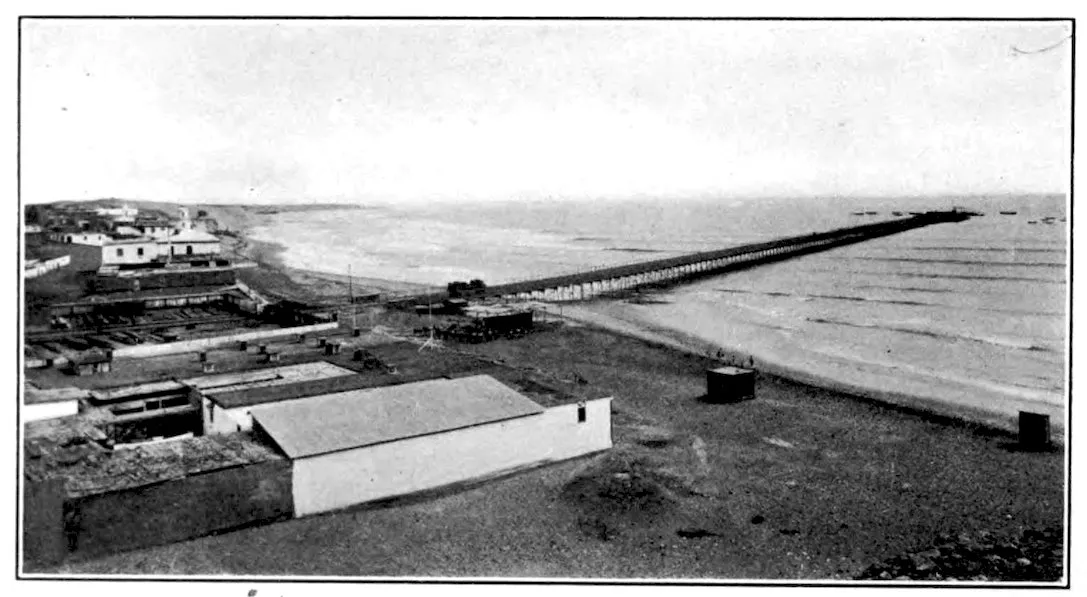
312
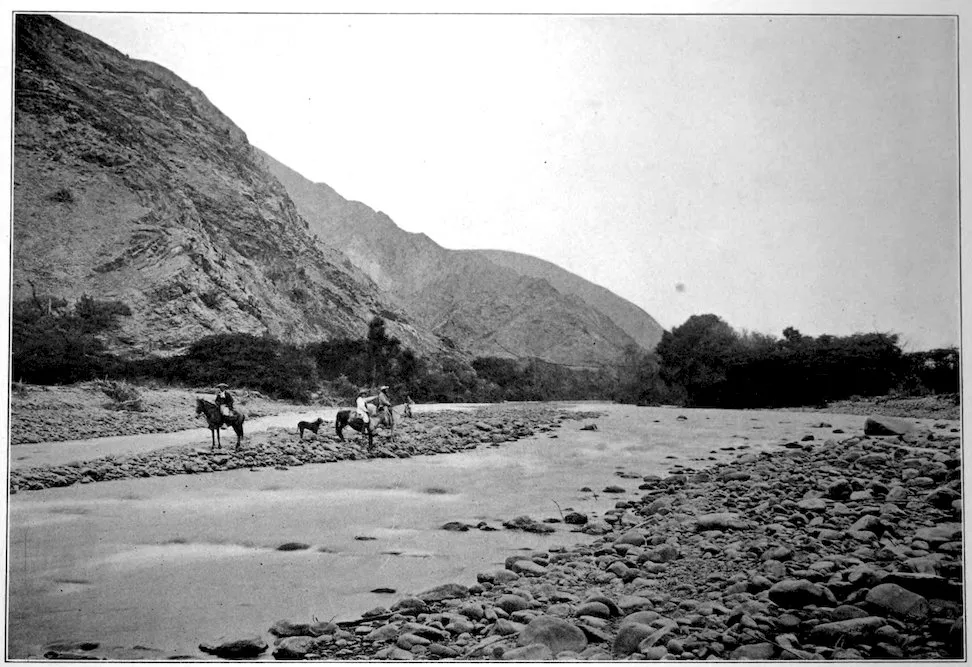
THE CHICAMA RIVER, DEPARTMENT OF LA LIBERTAD.
CHAPTER XXII TRUJILLO AND THE CHICAMA VALLEY
313
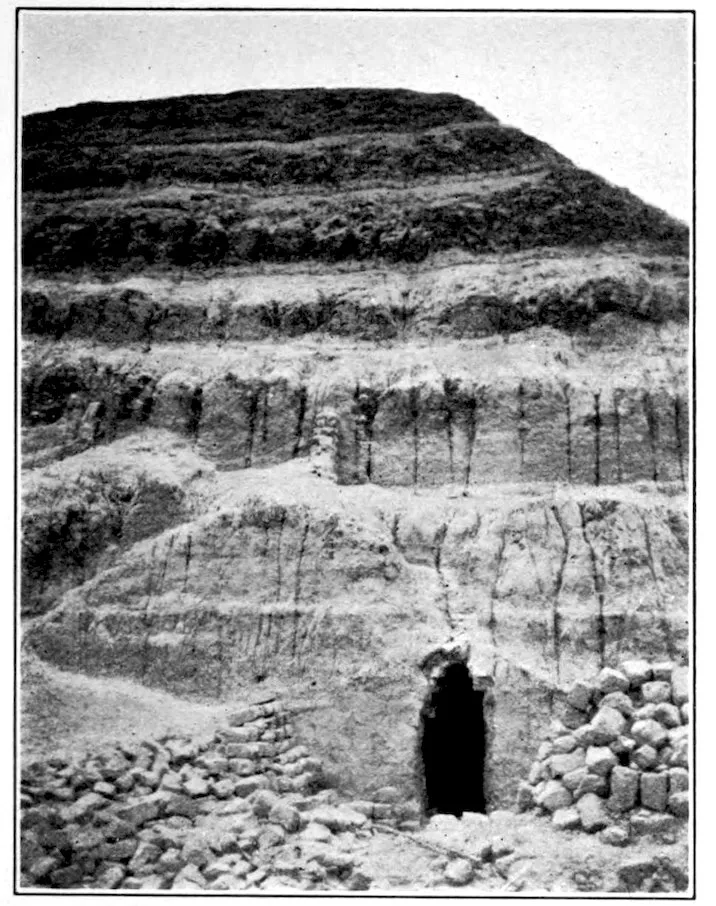
As the valley of the Nile became the seat
of Egyptian civilization when all the rest
of Africa was in barbarism, so, in the western
world, the valleys of the coast region of Peru
formed the centre of social and industrial
development at a period more remote than is
indicated by existing evidences of any other
culture on the South American continent. In
the primitive history of mankind it is under
the most favorable conditions of soil and
climate that the greatest social development
is to be traced, and in no part of the world
had the simple child of nature apparently
less to fear from the elements or more to
hope from the beneficent earth than in these
smiling valleys. There is no doubt that in
ancient times the irrigation of this extensive
area was more general and its desert
tracts were fewer than at present; and the
efforts of the Peruvian government, now
directed toward a scientific investigation of the subsoil of this region, aim especially to
discover, if possible, some means of restoring these sources of moisture, which were once
sufficiently abundant for the fertilization of a vast realm inhabited by a population many
times in excess of what it is at present.
Trujillo occupies the site on which flourished, long before the advent of the Incas, the
rich and powerful capital of the Chimus. Their palaces and temples were spread over a
great extent of territory, and the ruins of their culture are to be seen in all the valleys of this
314part of Peru. Whether the earliest builders of these prehistoric piles were the Chimus or
a still more ancient race has not been determined: but in the neighborhood of Trujillo and
in the valleys of Chicama,
Santa Catalina, and
others, exist to this day
evidences of an architecture
of very great
antiquity, and of such a
character as could only
have been produced by
an intelligent and cultivated
people. At the
time of the Spanish
conquest, the Incas had
gained the ascendancy
in the valley of Chimu,
extending some two
hundred leagues along
the coast from Tumbes
southward, but its tribes
were by no means willing
allies of the sovereign
of Cuzco. When
the Spaniards appeared,
they were welcomed as
superior beings sent by
heaven to avenge the
injuries which the subjects
of the powerful Chimu Canchu—The Grand Chimu—had suffered at the hands of
Pachacutec’s son, the Prince Yupanqui.
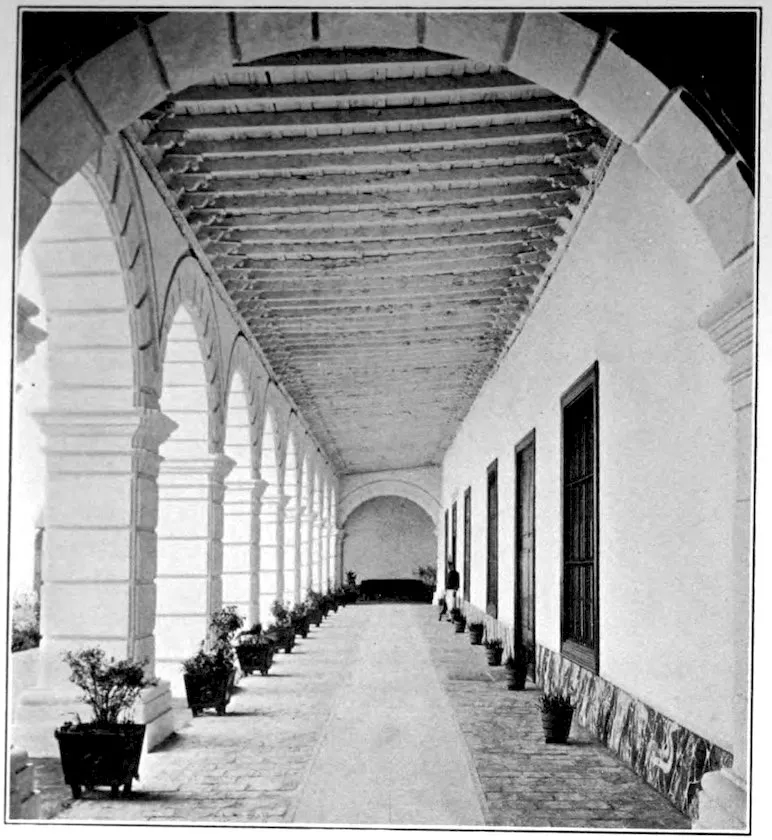
GALLERY OF THE PALACE OF JUSTICE, TRUJILLO.
According to colonial records, a small Spanish settlement already existed on the site of
the present city of Trujillo when Pizarro arrived from Lima in 1535. Don Miguel de Estete,
commissioned by Almagro the year previous to find a suitable location for a town, had
chosen this place and settled a colony there. Pizarro approved and confirmed the settlement
already established, and formally founded the city of Trujillo, giving it the name of
his native town in Spain. The Intendencia of Trujillo was defined at the same time to
cover, not only the present Department of La Libertad, but those of Lambayeque, Piura,
Cajamarca, and Amazonas. In 1537, the title of city was conferred on Trujillo under the
royal seal of the Emperor Charles V. and his mother, the Queen Joana, and from the earliest
days of its history the municipality has been honored with the dignity of “Very Illustrious
315Corporation of the City of Trujillo.” Throughout the period of the viceroyalty, it was
one of the most important centres of colonial industry; many noble families had their
estates in its fertile valleys, and their descendants still retain possession. The people of
Trujillo are very proud of their ancestry, and conserve the courtly manner and inherent
grace distinctive of old Castile. Peruvians enjoy repeating, at the expense of this hidalgo
spirit, the humorous saying that “the bones of Don Quixote lie interred in the Plaza of
Trujillo.” There is an atmosphere of refinement in the social life of the place that is as
charming as it is simple and genuine. Pride of race has proved no disadvantage to Trujillo,
whose people have other claims than heredity on which to rest their merits.
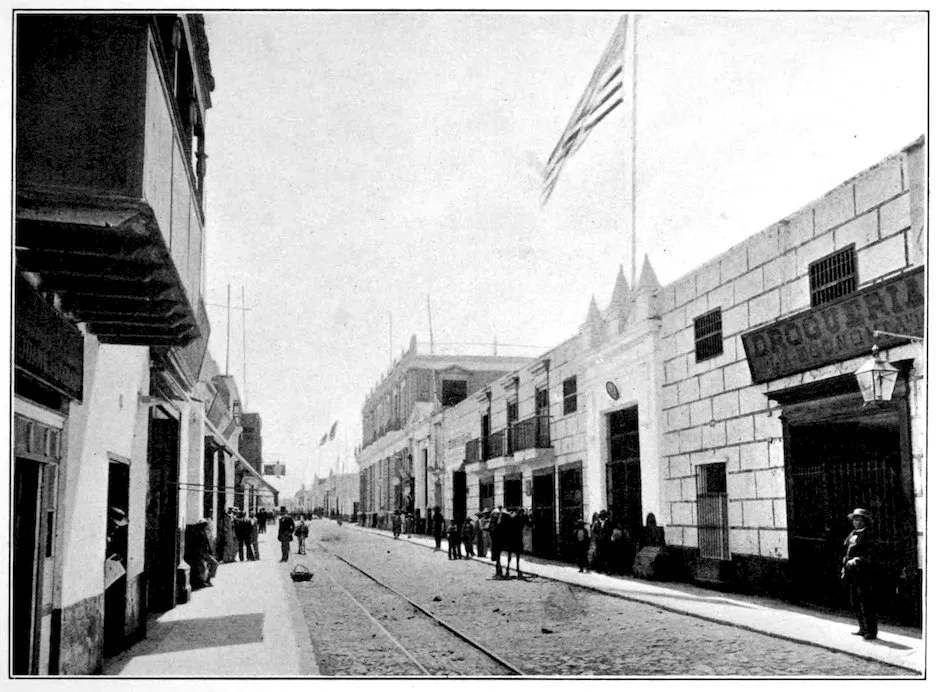
CALLE DEL COMERCIO, TRUJILLO.
Trujillo was the first city of Peru that proclaimed and took the oath of Independence,
on the 22d of December, 1820, the Cabildo being convened under the presidency of the
Intendente, the Marquis of Torre-Tagle. General Bolivar, in his message to Congress in
1825, said that the provinces comprising the Intendencia of Trujillo had given liberty to
Peru; and in recognition of this patriotic movement, he bestowed the name of La Libertad
on the Department, which, under the republic, replaced the Intendencia of the colonial government.
Later, the limits of La Libertad were encroached upon to form the Departments
316of Amazonas, Cajamarca, Piura, and Lambayeque, each of these divisions being entitled to
share the honor of having led the way to national liberty. In 1824, Trujillo was declared
the capital of the republic, during the time
that Lima was occupied by the royalists.
Its history as a republican city reflects
honor on the people, who have shown
their patriotism and courage upon every
occasion when the needs of the country
have called them to action. In the war
with Chile, the Trujillo regiment was distinguished
among all the troops of Peru
for bravery on the field; from this city
most liberal contributions have been made
for purposes of national defence; and the
public spirit of the citizens is constantly
shown by their generous encouragement
of enterprises for the public benefit, such as
the installation of the water works system,
the paving of sidewalks, and the maintenance
of public parks and buildings, all
of which have been effected through the
coöperation of progressive townspeople.
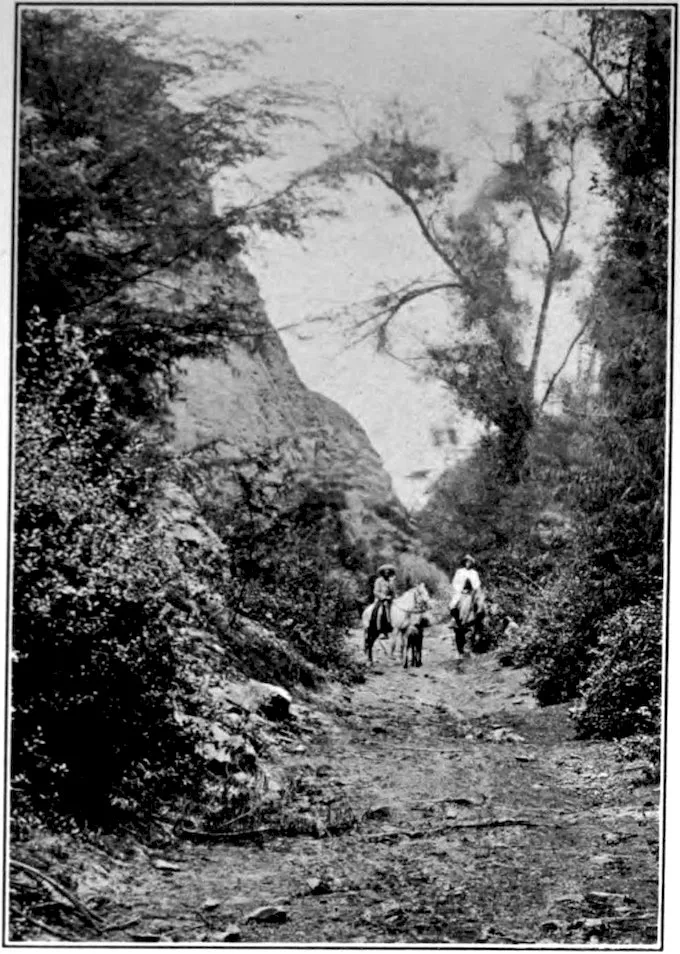
PICTURESQUE ROAD THROUGH A SUGAR ESTATE.
During the viceroyalty, Trujillo was
a walled city, of oval form, and about two
leagues in circumference; the attacks of
pirates led the Duke de la Palata, when
viceroy of Peru, to provide this means of defence against invasion, the wall being built in
1617, of adobe, five feet thick and ten feet high, with a parapet above it and fifteen bastions.
Only a few traces of this structure still remain, the increased population and industrial
development having extended the city’s boundaries greatly beyond its former limits.
The present population is about twenty thousand. The streets follow the usual plan of
Spanish-built cities, cutting each other at right angles and having an average width of from
forty to fifty feet. The houses are of the Spanish colonial style, in appearance resembling
those of Lima more than any other Peruvian city. Everywhere one sees the little balconies
encased in ornamental rejas or barred frames; spacious patios, paved with ornamental tiles
and adorned with plants and flowers,—presenting a most attractive appearance as seen
from the street,—and solid walls and massive doors, telling of a period when durability was
deemed as important as architectural beauty. The houses built nowadays are mere shells
in comparison with the edifices constructed by the Spanish conquerors and their successors,
when a wall had to be made several feet thick to be satisfactory, and a door must be large
317enough to admit a mounted horseman, and massive enough to resist a battering-ram.
From the principal public square, called here, as elsewhere in Spanish-America, the Plaza
de Armas, the most important public buildings may be seen, the Prefecture, municipal
buildings and other government offices overlooking this central paseo. The plaza covers
five acres and is ornamented with a garden of shrubs and flowers, in the midst of which
stands a large stone fountain. Beautiful shade trees border the great square, making it an
ideal place for a promenade, and here the social world congregates in the evening. In the
vicinity of the plaza are several interesting old churches of the colonial period. When
Pizarro founded the city, the chronicler of that event tells us, “the convents of Santo
Domingo, San Francisco, and La Merced were the corner stones of that enterprise.” The
convent of San Agustin, situated a block away from the plaza, was founded in 1558, and
the first Jesuit college in 1627. The episcopal diocese of Trujillo was created in 1577.
A CORRAL ON A SUGAR ESTATE, CHICAMA VALLEY.
The church of San Agustin is particularly notable for the magnificent carving of its main
altar and pulpit, and the rich gilding that adorns them. The Jesuit college building has been
occupied by the University of Trujillo since the inauguration of the republic, in accordance
with a decree of President Bolivar, dated the 10th of May, 1824. The convent of Belem,
founded in 1671, is now used as a hospital. The schools and benevolent institutions of
Trujillo receive especial attention, and the best interests of both are made a subject of public
and private consideration. Besides the University and the National College of San Juan,
318maintained by the government, the Institute Moderno, the Colegio de La Independencia
and other schools afford secondary instruction, and primary training is given in ten or more
municipal colleges.
The night schools of Trujillo are worthy of emulation in every city of Peru. Not only
is manual training given, but lessons in bookkeeping, etc., are taught, and classes are
instructed in the English language, which is regarded as of especial importance because of
its usefulness in a commercial career. The Railway Society of Mutual Protection, the
Employés’ Union of the Department of La Libertad and similar societies are doing a great
work for the improvement of conditions among the clerks and other working people of the
capital. Not only are classes formed for the benefit of men who wish to pursue a special
study, but free instruction is given to boys who would otherwise be spending their
evenings in idle company on the streets. It is interesting to visit these schools and see
them filled night after night with eager and ambitious pupils. The teachers give their
services free during certain evenings each week.
Trujillo has a theatre, a hippodrome, and social clubs, the Club de La Libertad being an
important organization which directs the amusements and festivals held every season in the
Park of La Libertad, the most beautiful paseo of Trujillo, and one of the finest parks in Peru.
The Central Club, the leading social organization of the city, counts among its members
many prominent men of the department. The press is represented by three daily newspapers—of
which La Industria is the largest—and a number of monthly periodicals. The
Torch and The Shoemaker, both labor journals, are an expression of the interest taken by
the workingmen in the affairs of the day. A novel enterprise is the publication of an illustrated
almanac of three hundred pages, called El Mercurio, devoted to a description of the
Department of La Libertad, its history, government, schools, and industrial development,
and issued at the publisher’s cost, in the interests of his commercial house and as a
propaganda of the department.
Two widely different attractions claim the attention of all visitors to Trujillo,—the
wonderful archæological ruins and the famous Chicama Valley. Between the city and
the sea extend the crumbling walls of Chan-Chan and the Huacas of Moche, while
northward, after a railway journey of less than an hour, the traveller enters the blooming
gardens and green-mantled fields of a country overflowing with the bounties of a perennial
harvest. Chan-Chan covers a desert tract about fifty square miles in circumference less
than a league north of the capital, and just beyond the little Indian village of Mansiche, on
the road to the seaport Huanchaco. It is said that rich treasure lies buried somewhere
under the modest little cluster of huts named Mansiche in honor of a great cacique of the
place. But one hears constantly of buried treasure in Trujillo. The peje chica and the peje
grande—“little fish” and the “big fish”—are magic words to those who understand.
Every traveller who possesses an imagination susceptible to the influence of mystery and
tradition must succumb to the glittering charm of the peje chica, and feel the gold-hunter’s
enthusiasm when brought into the realm of the peje grande. As the horses jog along the
319road that leads from the city to the ruins, visions of hidden treasure throw a glamour
over the most commonplace scenes, and every mound by the roadside is an object of
curiosity as a possible repository for treasure. It is a matter of history that soon after
the Conquest a vast fortune was unearthed at Chan-Chan, of which the king’s fifth
amounted to a million dollars in value, this treasure being known as the peje chica.
One version of the story tells that the cacique of Mansiche, who had observed with
particular attention the kindness of a young Spaniard toward the people of the conquered
race, and had noticed also that he was very poor, revealed the secret of the hiding-place
of the peje chica, on condition that a portion of the wealth should be used to advance the
interests of the Indians. The most valuable article discovered was in the form of a fish,
of solid gold, and so large that the Spaniards considered it a rare prize; but the cacique
assured his young friend that it was only the “little fish” and that a much greater
treasure existed in the “big fish,” worth many times the value of this one. The sequel
to the story is that the Spaniard forgot his promise, went off to Spain and spent all his
gold, and was returning to get the peje grande, of which he made great boasts, when
he was thrown from his horse and killed. From that day to the present, treasure
hunters have dug into the huacas of Chan-Chan and Moche with faith and persistence,—but
without finding the peje grande. Many interesting relics of the ancient civilization
have been unearthed, and the present prefect of Trujillo, Dr. Carlos Velarde, has accomplished
a notable work in the excavation of the great wall of Chan-Chan, covered with
carvings of fishes, turtles, pelicans, and other animals of the seashore. Dr. Max Uhle is
now engaged in making excavations at Chan-Chan and at Moche, the latter offering a
study of much archæological importance in
its “Huaco del Sol.”
A LOAD OF CANE READY FOR THE FACTORY.
320
MAIN ENTRANCE TO A SUGAR HACIENDA NEAR TRUJILLO.
Moche is an Indian town situated midway
between Trujillo and the port of Salaverry,
to the south. Its inhabitants preserve
their primitive costumes, and wear a distinctive
dress, the women’s garb consisting
of a chemise and a single piece of dark blue
cloth wrapped round the body and fastened
at the waist, reaching to the ankles. The
municipal ordinance forbids the wearing of
this costume in the city, but at Moche it is
everywhere seen. The Moche Indians never
intermarry with other races, and they are as
proud of their unmixed pedigree as any
“belted earl.” They are an intelligent people,
and the women are graceful and ready-witted.
Recently, two North American
ladies were being shown the sights of Trujillo,
when their cicerone drew attention to a
Moche girl riding by on a donkey, evidently
on her way to Moche. Seeing that she was
an object of interest, she smiled and bowed with the nonchalance of a court belle, and
asked the ladies’ escort, “Gringas?” As the amusement of the strangers told that they
understood this patronymic to apply to themselves, she hastened to add, hospitably, “Bring
them to Moche!”
It is impossible to imagine a more complete transition than is made when one leaves
the enchanted realm of the peje grande for the varying sights and scenes of the Chicama
valley. It is necessary to visit the former in order to appreciate the full significance of the
latter. Everything around Chan-Chan is a temptation to live on dreams, to try one’s luck
at treasure hunting, or to dig huacas in the hope of getting a rare specimen for some
archæological museum. The Chicama valley affords proof that there are richer treasures in
its fertile fields than Chan-Chan ever had in hiding, and no uncertainty exists as to their
location. Its area is about a hundred square leagues, drained by the Chicama River, which
rises in the province of Otuzco, Department of La Libertad, and flows into the Pacific. On
its great plantations, sugar-cane is grown that reaches a height of from twenty to twenty-five
feet, containing more than fourteen per cent of sugar. The broad estates of Casa
Grande, Roma, Cartavio, and others, are crossed by private railways which carry the cane
321from the fields to the mills; and the entire valley has direct communication with the port
of Salaverry by means of the state railway, now under the administration of the Peruvian
Corporation. From the port, the
main line passes through Moche,
Trujillo (eight miles from Salaverry),
and crossing the desert
pampa with one stop only at the
station of La Cumbre, enters the
valley at the town of Chicama,
twenty miles north of the capital.
About a mile above this point,
after passing Chiclín, the train
crosses an immense iron bridge,
about three thousand feet long,
over the Chicama River. The
route then lies entirely through
the district of the sugar lands,
the principal stations being Chocope,
Constancia Junction, Casa
Grande Junction, Facalá, and the terminal station of Ascope, fifty miles from Salaverry.
From all these stations, private railways connect with the sugar plantations. The Hacienda
of Roma is connected directly with the port of Huanchaco by a private line, making an
extension of thirty-five miles. This immense property, like the estates of Casa Grande and
Cartavio, embraces many thousands of acres and supports large communities of working
people. Life presents a very pleasant picture on these large plantations, where a good
climate, healthful labor, comfortable homes and ample provision for their needs contribute
to make the employés contented and happy. Churches, schools, and hospitals are provided,
and on some plantations there are free libraries, and night classes are taught for the benefit
of those who work during the day. Telephones connect the haciendas with Trujillo, and,
as most of them are situated within a couple of hours’ ride by railway from that city,
constant communication is maintained. The Casa Grande Company owns one of the most
important sugar estates of the Chicama valley, covering nearly two hundred thousand acres
of land, and supports a population of about five thousand, most of the number living in the
vicinity of Casa Grande. The machinery used in the sugar factory of this hacienda is of
the most modern manufacture, equal to the best in existence for the purpose. Electricity is
used for lighting, the hacienda having a dynamo for two hundred lights of sixteen candle-power
and a motor of twenty-five horse-power. The new system of crushing and
elaborating the cane in the factory of Casa Grande is so complete that the process follows
automatically from the unloading of the cars as they arrive from the fields, to the filling of
the sacks with sugar, ready for market. Not only in the factory, but in the fields, modern
machinery is used, and agricultural implements of the best manufacture are employed.
This is true of Roma and Cartavio as well as Casa Grande. The resident managers of
these haciendas enjoy every comfort that a well-ordered establishment can provide, and
they entertain with generous hospitality.
THE CHAPEL OF A HACIENDA AT GALINDO.
322Although the fame of the Chicama valley outshines that of other sugar-growing
districts of Trujillo, there are large and rich plantations also in the valleys of Jequetepeque,
or Pacasmayo, to the north, and in Santa Catalina and Moche to the south. A railway
connects the seaport of Pacasmayo with the sugar lands and rice fields of the interior,
extending fifty miles to Guadalupe and Yonan, on the road to Cajamarca. The province of
Pacasmayo, which adjoins that of Trujillo, has about five thousand acres under cultivation
in sugar-cane, and its rice harvest yields one hundred thousand sacks annually. The
valleys of Santa Catalina and Moche are connected with Trujillo by a branch of the main
railway from Salaverry, which extends from Trujillo to Laredo, Galindo, and Menocucho,
passing through plantations of sugar, rice, and other products. The annual exports of
sugar from the port of Salaverry amount to about fifty thousand tons and those from
Huanchaco average between twenty-five thousand and thirty thousand tons. An important
share of these shipments goes to North American ports.
PARK OF LA LIBERTAD, TRUJILLO.
The Department of La Libertad is composed of six provinces, those of Trujillo and
Pacasmayo bordering the Pacific Ocean, while the remaining four—Otuzco, Santiago de
Chuco, Huamachuco, and Pataz—are situated in the region of the sierra. The Marañon River
323divides the province of Huamachuco from that of Pataz, and in its lower valleys the climate
of the Montaña prevails, coffee, sugar, and cacao being produced. Coca is one of the
important products of this department, and cocaine is manufactured in Trujillo for shipment
to foreign ports. On the high
puna, abundant pasture is found,
and, in the lower sierra, wheat,
barley, maize, and potatoes are
cultivated. The southern districts
of the province of Trujillo
contain saline deposits of importance.
ADMINISTRATION HOUSE OF A SUGAR ESTATE IN THE CHICAMA VALLEY.
Not only is the Department
of La Libertad rich in agricultural
products of every zone, but
the mines of its sierras abound
in precious metals. For the past
few years, especial interest has
been taken in the mineral wealth
of this region, small lots of gold,
silver, and copper ores being exported with most satisfactory returns. Quiruvilca, sixty-six
miles beyond the terminus of the railway which connects Trujillo with Menocucho, is a
mining district covering about a hundred square miles rich in copper and silver. Veins
having an average width of fourteen inches contain from fifty to sixty per cent copper, and
silver veins of sixteen inches in width produce as much as a thousand ounces of silver.
The Quiruvilca mine is two days’ ride on muleback from the end of the railway, which
is twenty-seven miles from the port of Salaverry, where all the steamers of the west coast
call for cargo. Although the property has not been developed on the large scale necessary
to make it a famous copper mine, it is worked successfully and yields good returns for the
small capital employed. Two hundred tons can now be exported daily, the high and low
grade ores together averaging forty-five per cent copper. It is the purpose of the present
owners, who are also the chief proprietors of Casa Grande, to place this enterprise on a
gigantic basis, by constructing a railway, not only to Quiruvilca, but to another mine,
Araqueda, also enormously rich in copper and silver, and by establishing smelting works
and other improvements for which large capital must be employed. The easy accessibility
to a good port and the mildness of the climate of this mining region, as compared with the
severity of the puna where many of the most valuable mines of Peru are located, are strong
points in favor of its rapid development.
The subjects of the Incas worked the mines of the sierra throughout this region and
had thriving villages in the various mountain districts of the present Department of
La Libertad. The town of Huamachuco, now the capital of the province of the same
324name, was a populous Indian settlement at the time of the Conquest, when Hernando
Pizarro discovered it while leading his army southward from Piura in search of the treasure
which Atahuallpa had said would be found in the temple of Pachacámac. The Conquerors
were too intent on collecting the gold and silver of the Inca’s palaces and temples to occupy
themselves at that time with the question of mining and of the wealth to be gained by such
a laborious process; they saw the coveted metal within their reach without having to dig
for it, and they little guessed the hidden treasures over which they marched on their way
to plunder the sacred halls of Pachacámac. Perhaps the source of the rich gold and silver
ornaments of the Chimus is to be found in the sierras of Otuzco, Santiago de Chuco, Pataz,
and Huamachuco, the fountain-head of that precious stream down which the peje grande
floated to lose itself among the huacas of Chan-Chan and Moche.
A SUGAR FACTORY OF THE CHICAMA VALLEY.
326
PAITA, THE CHIEF SHIPPING PORT FOR PERUVIAN COTTON.
CHAPTER XXIII THE COTTON FIELDS OF PIURA
327
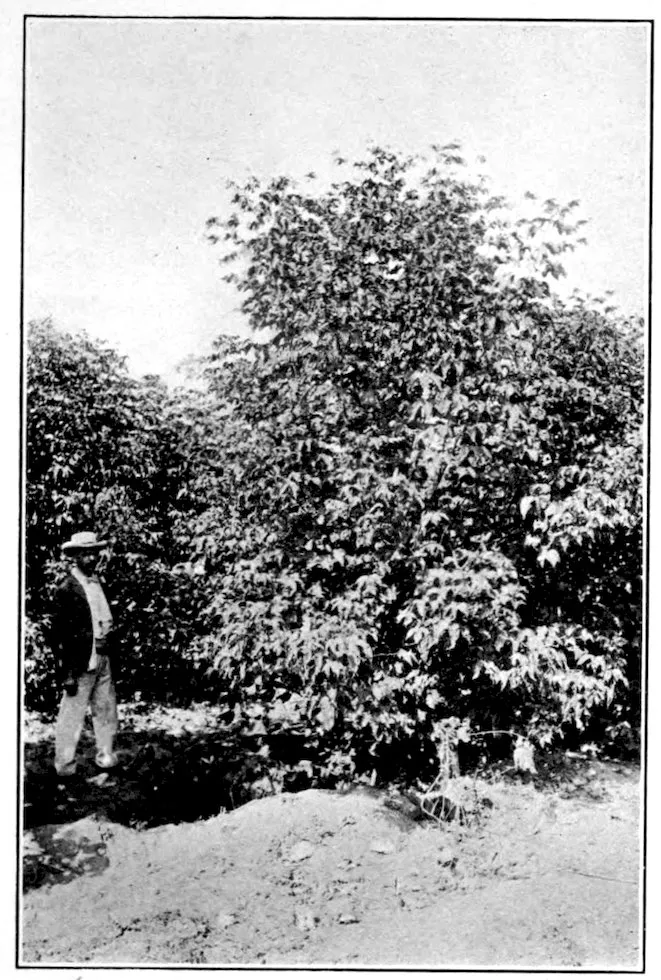
A COTTON PLANT ON A PIURA PLANTATION.
When Pizarro chose the valley of Piura
as the site on which to found the
first Spanish city in Peru, he was especially
attracted by its fertility and the abundance of
water that supplied its flourishing farms and
gardens. Agriculture was highly developed
by the ancient inhabitants of this region, and
cotton, which is the staple product of Piura
to-day, was grown in the coast valleys centuries
before the Spaniards visited these
shores. Cotton materials have been found
in the tombs of the people who ruled throughout
this part of Peru before the Incas gained
ascendancy, and the use of the product seems
to have been known here from time immemorial.
No doubt Pizarro and his followers
passed through fields of cotton on their way
from Tumbes to Piura, as the Conqueror
gave an enthusiastic report of the prosperous
farming communities seen during his march.
The founding of Piura preceded that of
Lima by three years, and in recognition of its
having been the first Spanish city in Peru, the
sovereigns conferred on it the distinction of a coat-of-arms before that honor was bestowed
on Quito. During the colonial period, Piura grew to be a centre of industrial activity, and
under the republic it has become the flourishing capital of one of the richest departments of
the coast. The city has several churches, good schools, and charitable institutions. Its
328citizens are progressive and are interested in the advancement of education and the improvement
of material conditions. The Department of Piura, which shares with that of La Libertad
the honors due
to a patriotic and
courageous people,
was made an
independent Littoral
Province in
1837, and a department
in 1861.
Through the varying
experiences of
the republic, this
department has
borne an honorable
share of the
burdens and the
triumphs, and
some of the most
distinguished men
of Peru have
learned their earliest
lessons in
patriotism under
the training of its
worthy matrons.
The immortal
hero, Admiral
Grau, was born
in Piura; and after
this revered name
follow those of
statesmen and
men of letters who
rank with the best
in their country.
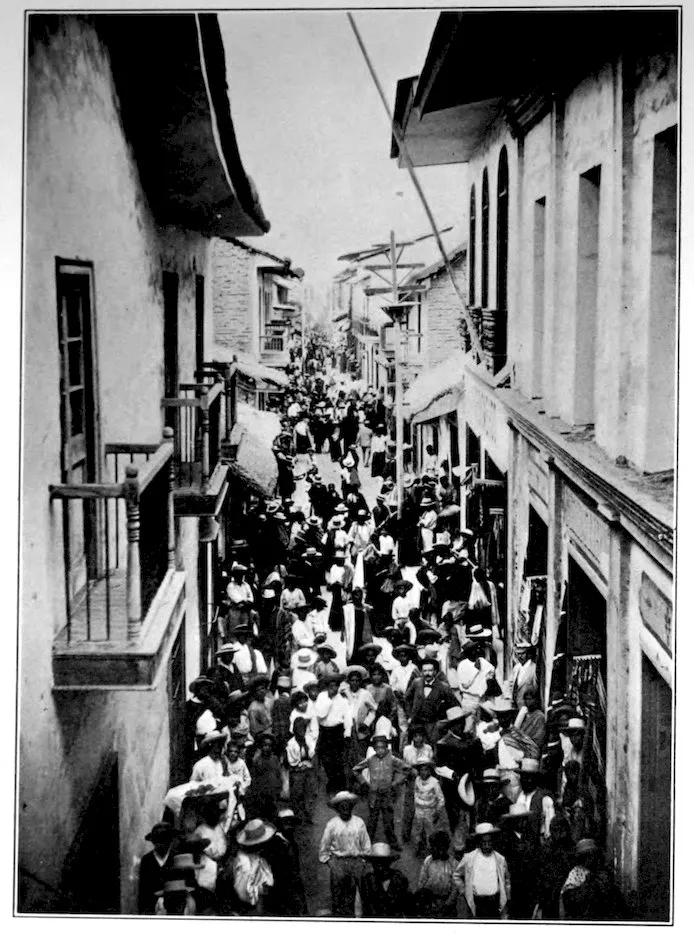
A BUSY THOROUGHFARE OF CATACAOS.
The Department of Piura lies in the extreme north of the coast region, separated from
the gulf of Guayaquil by the Littoral Province of Tumbes. It is divided into the coast
provinces of Paita and Piura and the interior provinces of Ayabaca and Huancabamba.
Paita is drained by the Chira River, which rises in the Cordilleras and crosses the southern
329districts of the province, fertilizing some of the most extensive plantations of northern Peru.
The Piura River traverses the province of the same name, and in its winding course,—first
northwestward, and then south and southwest,—it supplies irrigation to all the west and
north of Piura province. The river is crossed by several bridges, the most important being
that of the capital, a handsome iron structure. In the region fertilized by these two rivers
are grown some of the finest qualities of cotton to be found on the globe, the “Peruvian”
ranking next to the famous “Sea Island” in the European market. The territory under
irrigation extends westward from the seaport of Paita along the northern bank of the Chira
River to the foot of the Cordilleras, and from the port of Sechura to Piura, in the valley of
the Piura River,—though the Piura valley is irrigated at intervals throughout its whole length.
According to scientific authorities who have reported officially on the possibility of increasing
the extent of cultivable territory on the coast, this fertile zone does not represent half the
area of irrigable lands in the vicinity of these rivers; nor does it yield all the harvest that
might be gathered if it were entirely under tillage.
The scarcity of laborers and the need of more capital in Piura, as elsewhere in Peru,
has caused much land to remain idle which is capable of producing great wealth. But, as
a noted authority on this industry, Señor Victor Marie, says in his book, Cotton Production
in Peru, there is no reason why the laborers of the sierra should not be induced to come
to the coast, and, by kind treatment and judicious training, be employed to serve the
interests of its agriculture better than imported labor. Señor Marie adds: “How much
the country would gain by the instruction and education of these strong sons of the sierra,
a robust, docile and laborious race, who need only to be well organized, and guarded
against the evils of alcoholism!” It is suggested that, if given homes, with a little piece of
land to cultivate as their own, and gently treated, many families would gladly abandon
their mountain farms for the milder climate and more certain abundance of the coast. At
present, the laborers from the sierra who are employed on the haciendas of the coast, work
during only a part of the year, going back to the mountains as soon as the harvest is
gathered. They cannot be counted on to return every season, nor is it at all certain how
long they will remain. But, in opposition to Señor Marie’s suggestion, it might be urged:
“Why take the mountaineer from his native soil, which is capable of cultivation far beyond
what it yields at present and is the favored zone for such products as potatoes, maize,
wheat, barley, and other cereals?” The adoption of means toward better organization and
the reduction of alcoholism in the sierra, such as is recommended for the coast, might
result in the improvement of agricultural development in these mountain districts, a consequence
equally important to the country.
The richest cotton-growing region of Peru lies in the vicinity of Sechura and Catacaos
on the Piura River, and in the lower valley of the Chira, where the lands have been formed
by alluvial deposits and were formerly covered with forests of mesquite, called algarrobas.
Here the Peruvian cotton attains its finest development and is so easily produced that good
lands require to be irrigated only once a season to ensure a bountiful harvest. Sowing is a
330simple process which consists in dropping the seed into holes ten or fifteen feet apart. It
is not necessary to plough the ground, and irrigation ditches carry from the Chira and
Piura Rivers all the water required for fertilization. In the spaces between the cotton
plants are grown melons, pumpkins, and the indispensable maize. The first harvest appears
eight months after the seed is sown, though it is usually small, seldom amounting to more
than four hundred pounds to the acre. The production increases each year following, up
to the fifth or sixth year, when the crop reaches an average of more than half a ton to the
acre. On the plantations of Mancora and in the beautiful chacaras of Monte Viejo, Los Dos
Altos, Cumbivira, Chato, Casa Grande, Monte Negro, and others, the Peruvian cotton grows
to perfection. In the valley of the Chira, where there is the greatest abundance of water
and the only problem presented to the cotton-grower is how to make the best use of it for
irrigation, the future of this industry offers brilliant prospects. Within the past few years its
cultivable lands have been greatly increased, especially in the campiñas of Sullana and
Querecotillo, and on the San Francisco, Chocán, Mallares, Saman and other haciendas.
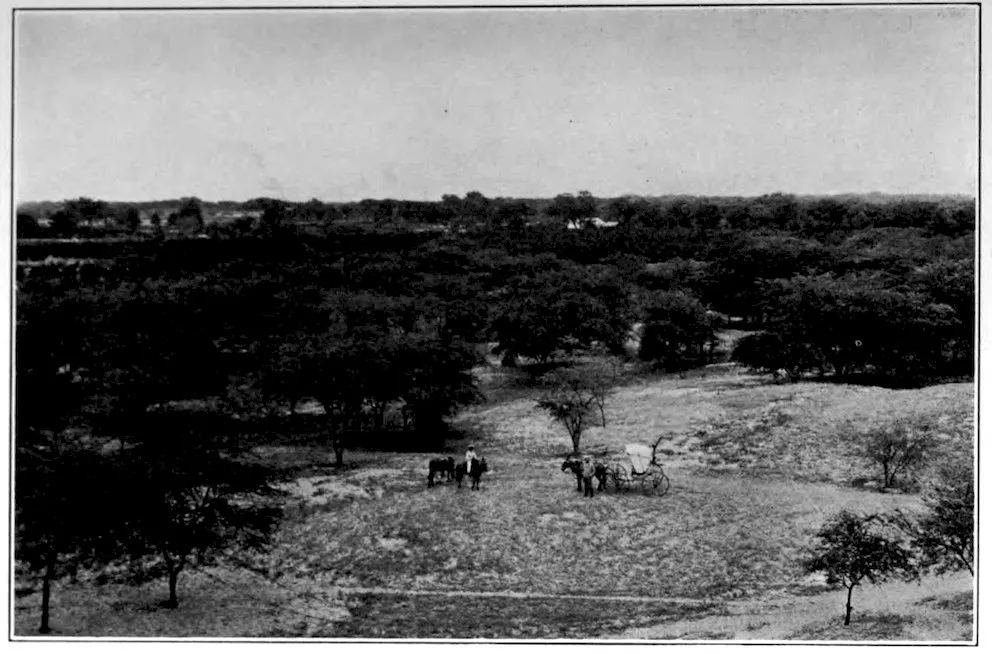
ALGARROBA TREES ON A PIURA PLANTATION.
Much of the material that is sold in foreign markets as pure woollen is made of Peruvian
cotton, which is of a very rough fibre measuring from one to two inches in length. On the
plantations near the coast the cotton is rougher than in the interior, and is called in English
markets Full Rough Peruvian, the most valuable of all the native fibres. When carded it
looks so much like wool that only an expert can tell the difference; and after being woven
into cloth, the distinction between the two products can hardly be determined, except by
331chemical analysis. For this reason Peruvian cotton has been called “vegetable wool,” and
has been used in the manufacture of materials to serve the same purpose as the real wool.
The native cotton plant is a hardy shrub which, if allowed to reach its full height,
grows to from ten to fourteen feet, though the planter usually prunes it down so that it
does not exceed six or seven feet in height. The Peruvian cotton plant will live twenty
years, and will bear its harvest crop after four or five years’ growth. It is the custom,
however, to sow fresh seed every three or four years, as, when the plant becomes old, its
harvest grows lighter each year and it is liable to “blight,” or to the attacks of parasites. The
cotton fields of Piura are generally free from the ravages of insects, the only annoyance of
this kind being a visitation of the arrebiatado, an insect which appears chiefly in the rainy
season. As rain falls only once or twice in a dozen years, this evil is a minor one.
Besides, the arrebiatado does not attack all varieties, the Egyptian, or Upland, as it is known
in the United States, being free from its onslaughts.
The cotton-pickers on Piura plantations find occupation at all seasons of the year, though
two principal harvests are gathered, those of St. John’s Day and Christmas; the former lasts
from June to October and the latter from December to March. Men, women, and children
may be seen in the cotton fields filling their sacks in the shade of the bush, which at harvest
time is thick with leaves and tall enough to afford abundant shelter. Here and there are groups
enjoying a little gossip as they pass one another on their way to and from the field. At the
various stations along the railway, the scene is not unlike that which is met with wherever
the cotton plant flourishes. The pickers of these valleys are less joyous and garrulous than
are the negroes of a Mississippi or Georgia plantation,—the melodies of Dixie are more musical
than the tristes of these less volatile laborers,—but there is always the charm of tropical skies
and luxuriant nature to brighten their faces with a smile of good-humored content.
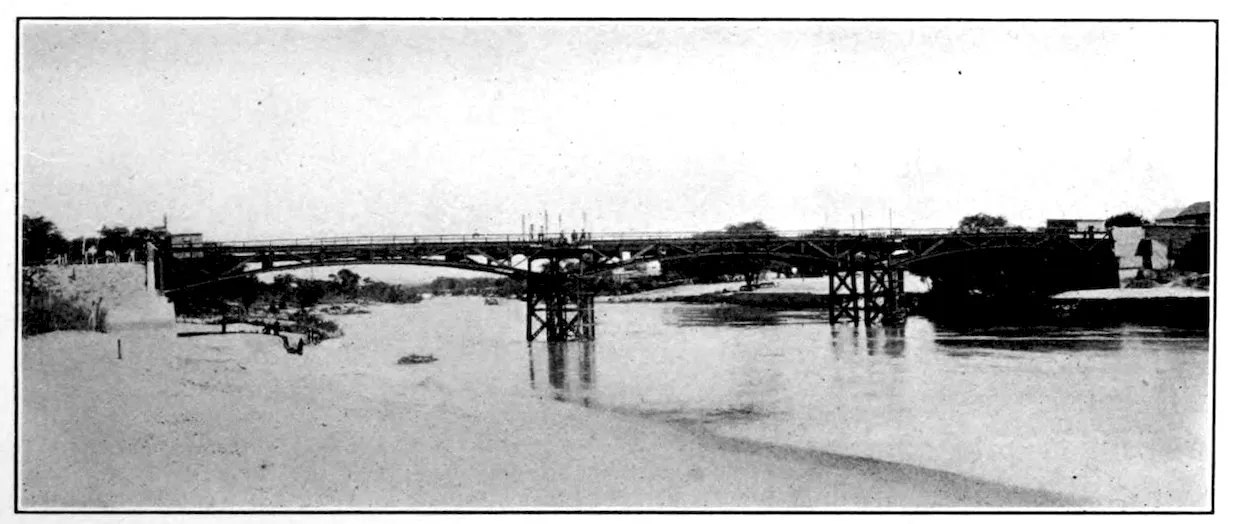
IRON BRIDGE OVER THE PIURA RIVER.
When the cotton is ready for market, it is loaded on donkeys and sent to the nearest
railway station to be shipped. As the donkey’s load must not exceed three hundred and
332sixty pounds, it is customary to have the cotton put up in bales of from one hundred
and sixty to one hundred and eighty pounds, two bales being a full load for one of these
carriers. In Piura, Sechura, Catacaos, and in various towns of the Chira valley, the large
importing houses of Peru have purchasing agencies, and these establishments are equipped
with cotton gins and presses for cleansing the fibre and preparing it for transportation.
The cotton seed is nearly all exported to Europe, where it is sold for five or six pounds
sterling per ton. The prices of cotton vary according to the harvest, and to the prices
current in the world’s market, though the cotton of the Piura valley is sold always for
upward of eight cents, gold, per pound. The price has risen considerably within recent
years and continues to advance, as the product gains in favor in the markets abroad,
especially in New York, where Peruvian cotton is constantly growing in demand.
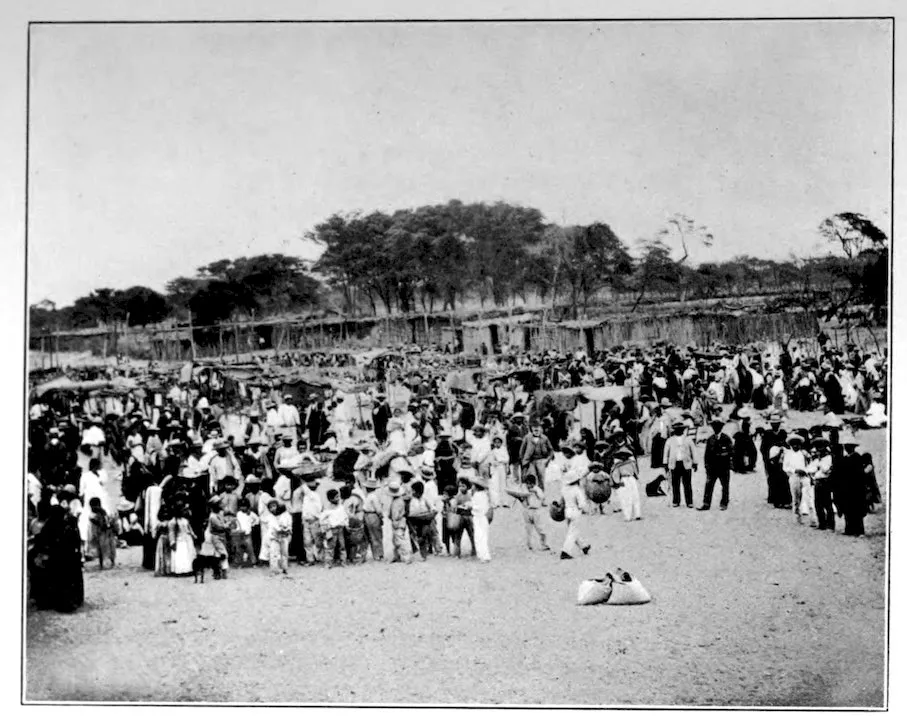
THE MARKET PLACE AT CATACAOS.
Although the native cotton commands the highest price, and is cultivated with least
labor on the plantations of Piura, yet the Egyptian variety also yields good returns for the
capital and labor invested, and its culture constitutes an important source of revenue to
the state. The Egyptian grows to a height of about four feet and under favorable
333conditions lives three or four years. It has an abundant foliage, with blossoms that
deepen from a pale yellow to red as they grow into full bloom. The cotton boll is formed
of five carpels, or leaves, and the fruit, when it bursts forth from this enclosure, is white
and smooth, in contrast to the Peruvian, which is of a pink color, and, as already stated,
extremely rough. The culture of Egyptian cotton has increased in favor within recent
years, in consequence of the advanced prices in foreign markets. In Mallares and Saman,
especially, this variety is produced with important results. One of the advantages which it
enjoys is freedom from the “blight,” which at times invades other varieties, and the fact
that the arrebiatado does not attack it. Also, the Egyptian yields a harvest six months
after planting, so that it is comparatively easy to secure credit for the outlays necessary to
produce the crop. In the cultivation of this variety, it is necessary to irrigate the land
several times during the season, but it flourishes with little labor, and is easily harvested.
A railway, sixty miles in length, connects the cotton-growing centres with the chief
seaport of the department, Paita, where all the vessels engaged in trade on the west coast
of South America make regular calls. The harbor is visited several times a week by
passenger and cargo steamers of English, North American, German, and South American
lines and by sailing ships flying the flags of all nations. Here the cotton bales are transferred
from the freight car to the ship’s hold to be carried to foreign ports; and Paita
presents an animated scene while the cargo is being loaded. The railway extends from the
port northward till it reaches the Chira valley, which it ascends as far as Sullana, an important
cotton market, after which it turns southward, following the valley of the Piura to the
state capital and, five miles beyond, to Catacaos, in the heart of the cotton region. Along
its route are many thriving towns and villages, which owe their existence chiefly to the
cotton industry, though this is by no means the only important product of the department.
Panamá hats—which are not made in Panamá at all, and which, in Ecuador and Peru,
where this industry flourishes, are called jipi-japa (pronounced “hippy-happa”), from the
name of the fibre used in their manufacture—are made in Catacaos. The finest hats are
woven with great care, the fibre being kept under water during the process and never
exposed to the sun until the hat is finished. On all the passenger steamers that call at
Paita, venders of these hats may be seen bargaining with travellers, and the sales amount
to large sums, as the most ordinary Panamá hat, when purchased from the weavers themselves,
costs at least a pound sterling. The imitation of this article has been so successfully
manufactured that the trade is greatly injured thereby, though it is said, on the other hand,
that the genuine jipi-japa is increasing in value, owing to its scarcity on the market.
Like other coast departments, Piura extends inland to the valleys of the Amazon headwaters,
and includes in its territory not only the cotton fields of the coast, but the mines
of the sierra, the pastures of the uplands, and the coffee, tobacco, and sugar-cane of the
Montaña. The province of Ayabaca has gold mines, forests in which the valuable Peruvian
bark is found, pastures for cattle and sheep, and plantations of coffee and sugar-cane. In
the district of Frias, every town is a rose garden, and bee-keeping is a flourishing industry.
334Huancabamba is a rich field for cattle-raising, and is especially noted for the superior wool
of its sheep, the fleece of which is black, long, and of silky texture. In its lower valleys are
cultivated tobacco, coffee, and sugar-cane. In the provinces of Paita and Piura are vast
saline fields, beds of saltpetre, pitch deposits, and important petroleum wells.
With the completion of the proposed railway from Paita to the head of navigation on
the Marañon, by which communication will be established between the extensive region
of the Montaña and the Pacific coast, this department will become one of the most important
highways of traffic in the republic. With its abundant resources and healthful climate, there
is every reason to expect great development in wealth and population. At present the
population of Piura, which covers a territory of about fifteen thousand square miles, is a
little more than two hundred thousand.
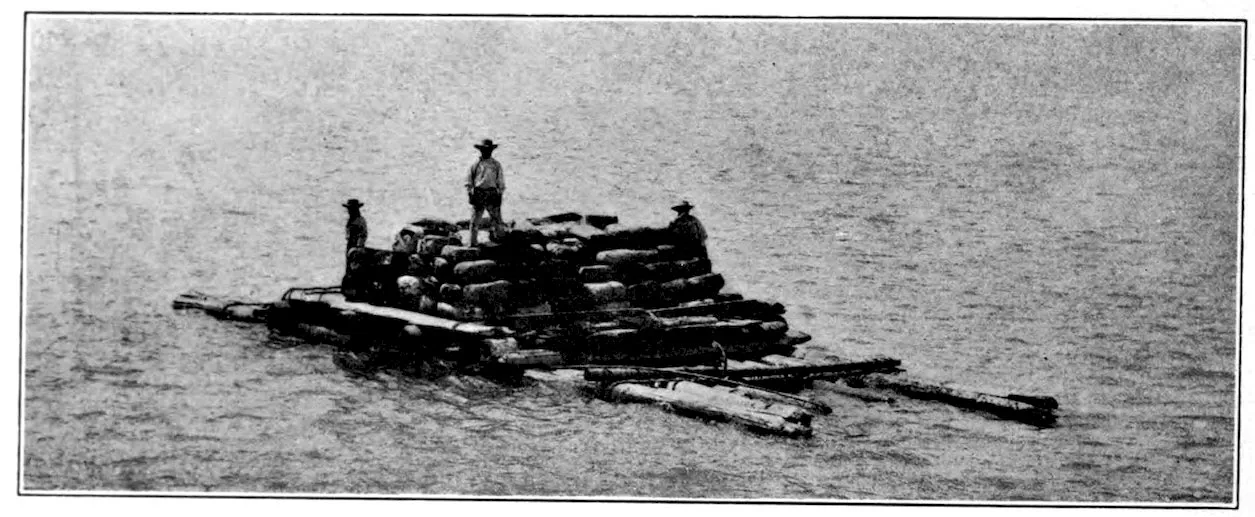
A “BALSA” LOADED WITH FREIGHT, PAITA.
CHAPTER XXIV VINEYARDS AND ORCHARDS OF THE SOUTHERN COAST REGION
335
SUBMARINE BLASTING OFF MOLLENDO.
From Lima southward, the coast valleys
resemble those of Southern California,
though no idea of their beauty and fertility
is to be gained from a view of the coast
line, which here stretches along in the
same monotonous series of sandhills and
barren cliffs that mark its length all the
way from Guayaquil to Valparaiso, with
only a few green spots, as at Callao and
Arica, to brighten its sombre aspect. Travellers
find it hard to believe that abundance
and fertility belong to a region apparently
so little favored, but, to be convinced, it is
necessary only to disembark at one of the
ports in the vicinity of these valleys and
to make a half-hour’s trip into the interior
by railway. At some of the ports, the
green vineyards and gardens run so close to the shore that only a narrow strip of sand
lies between. This desert strip once crossed, the scene is changed completely, and nature
appears radiant and smiling in the midst of winding streams and verdant fields.
The vineyards of Peru are still in the early stages of development, though wine-growing
has been an industry of the country for centuries, the first cuttings having been introduced
as early as 1557 by Carabantes, when experiments were made in viticulture in several
districts of the coast. The valleys and hillsides of Ica and Moquegua were found to be
especially adapted for this industry, though the vineyards of Lima, Arequipa and Tacna
also yield good harvests. Wine-growing has received more attention within recent years
than formerly, and the results are apparent in the increased quantity and improved quality
336of the production. In the Department of Ica, the most promising vineyards are located
in the vicinity of the capital and in the campiña around Chincha Alta, near the port of
Tambo de Mora, about a hundred miles south of Callao.
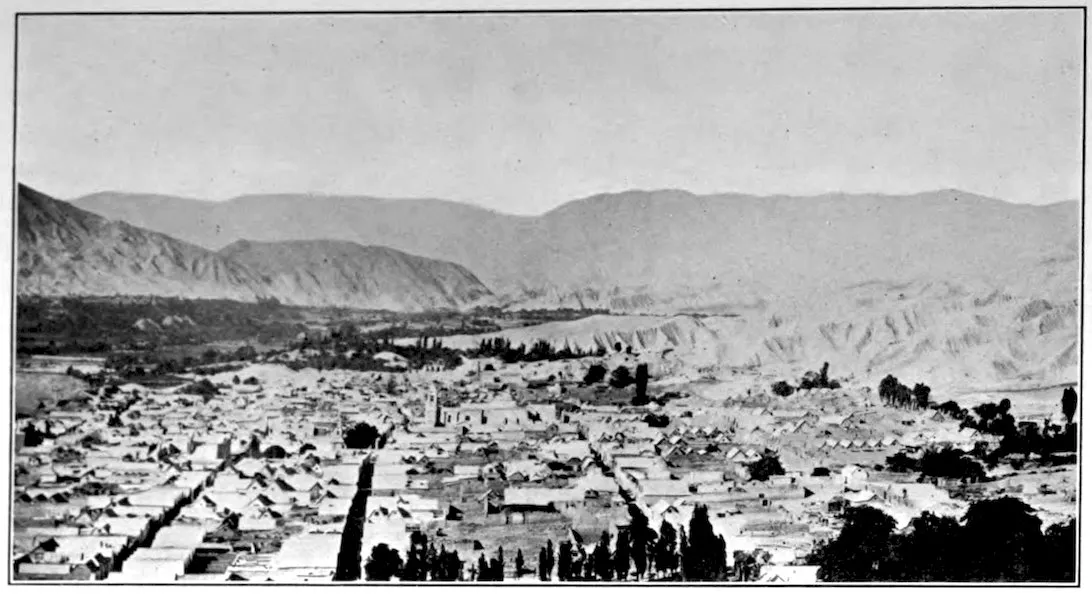
MOQUEGUA, A WINE-GROWING CENTRE OF THE SOUTHERN COAST REGION.
Ica was formerly a province of the Department of Lima, and was made independent in
1855, being raised to the dignity of a department in 1868. It comprises the three provinces
of Ica, Pisco, and Chincha, all of which border on the Pacific Ocean and are almost entirely
within the coast zone, with the exception of the province of Ica, that extends to the region of
the sierra on the border of Ayacucho and Huancavelica. This department, like all the
others of the coast, has a large area of uncultivated land which is irrigable and should be
immensely productive. Four rivers cross the department,—the Chincha, Pisco, Ica and
Grande,—each receiving a number of tributaries, with a water supply sufficient to fertilize
all their valleys, if scientifically controlled and utilized. The ancient inhabitants knew how
to irrigate these lands, and the ruins of their aqueducts may still be seen in various districts.
On the Pisco River, about thirty miles from its mouth, a waterfall occurs, which could
easily supply a hundred thousand horse-power for engineering purposes. A few miles
from the city of Ica, the capital of the department, are situated the lakes of Huacachina and
Cachiche, famous for their therapeutic properties. Huacachina is a favorite resort for
invalids, the mild climate and picturesque locality contributing to make it popular, while the
curative effects of its waters, strongly impregnated with iodine, are remarkable. The city
of Ica, having a population of about ten thousand, lies in the centre of a large and fertile
valley and in the midst of flourishing vineyards and cotton plantations.
The cultivated area of the Ica valley is estimated at forty thousand acres, of which
one-fifth is covered with vineyards. The wine-growing district extends along the valley
337from Huamani, about twenty miles north of the capital, to Ocucaje, thirty miles to the
south. Ica is the paradise of the farmer of small means, there being few large haciendas in
the valley, with the exception of those of Ocucaje, comprising six thousand acres, and
Macacona, with about four thousand acres. Many vineyards cover no more than about
ten or fifteen acres, and, as a rule, the haciendas comprise only from one hundred to two
hundred acres. Each hacienda has its vineyard, though, at the same time, a part of the land
is devoted to the cultivation of cotton, maize, and tropical fruits, such as chirimoyas (custard
apples), mangoes, plantains, melons, paltas (alligator pears), and figs; on these plantations
are also cultivated vegetables of various kinds,—squash, camotes (a kind of potato), yucca,
cucumbers, etc.,—and on the uplands grow alfalfa, aji (a kind of pepper), and wheat.
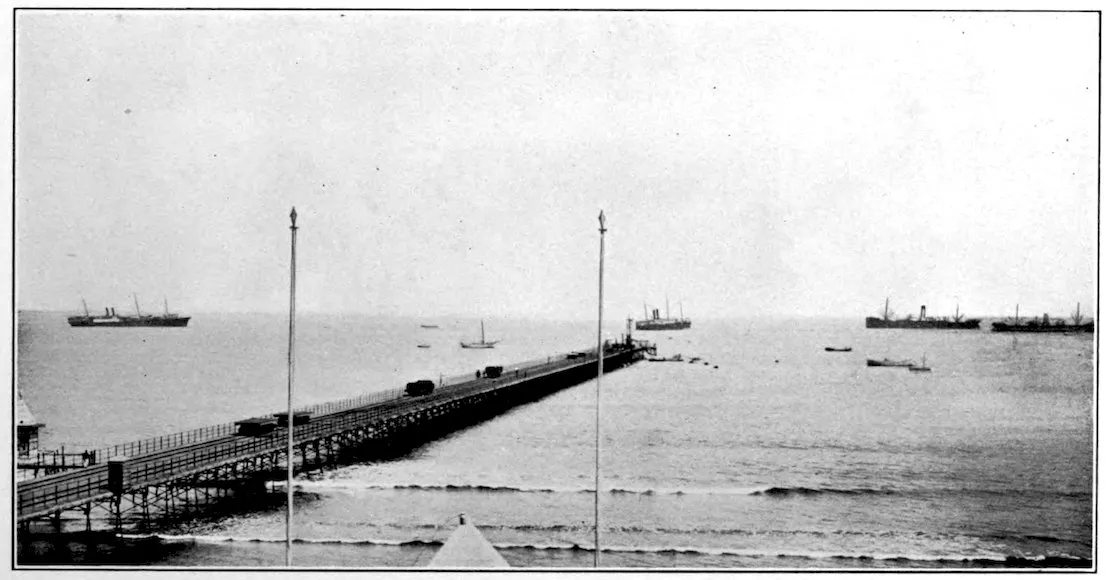
THE LANDING PIER OF THE PORT OF PISCO.
The principal varieties of grapes cultivated in the vineyards of Ica are the Quebranta,
Moscatel, Negra, and Moyar, for red wines; and the Albilla and Italia, white varieties; though
there is also a pink Italia grape, of rich flavor, a delicious table fruit. The Italia produces a
liqueur of fine quality; and Peruvian “Pisco” is well known throughout the west coast of
South America, its name being derived from the port at which the earliest shipments were
made. The Moscatel is used in the manufacture of a very palatable Sauterne, and the Negra
produces a good claret. The most prolific vines are those of the Quebranta variety, the
grapes of which are rich in sugar; this vine is grown in nearly all the vineyards of Peru. Ica
is connected with the seaport of Pisco by railway, the line extending for forty miles, in a northwesterly
direction, across the Pampa of Chuncanga. As the train enters this sandy plain an
hour after leaving the capital, there is little to charm the traveller in the monotonous view;
but the country to the north of Pisco, between that port and Chincha Alta, fifteen miles
distant, presents a different aspect, showing fields of sugar-cane and flourishing vineyards.
338
AVENUE OF WILLOW TREES ON A SOUTHERN COAST HACIENDA.
HARVESTING ALFALFA ON THE FRISCO HACIENDA, NEAR MOLLENDO.
The principal estates of the Chincha valley are situated within a few miles of the port of
Tambo de Mora, which is connected with Chincha Alta by a railway seven miles in length.
This region, enclosing one of the most prosperous industrial centres of Peru, is drained
by the Chincha River, a
short, broad stream that
has its source in the sierra
of Huancavelica, receiving
only a few tributaries
as it crosses the province
to the sea, where it divides
and forms a delta;
in this low-lying district
are the towns of Chincha
Alta, Chincha Baja, Suñampe,
and Tambo de
Mora, as well as the extensive
haciendas of Larán
(nine thousand acres),
San José, San Regis, El
Carmen, Hoja Redonda,
339and Lurin Chincha. Irrigating ditches,
or acequias, have been constructed to
convey water from the river through
all these estates, the distribution being
made under the direction of a water
inspector employed by the government.
In addition to the acequias,
every plantation has its wells, which
furnish plenty of water, even in the
dryest seasons. Chincha Alta has the
most extensive and best equipped
wine-growing establishments in Peru.
Modern methods are employed in cultivating
the grapes as well as in the
pressing, fermentation, and other details
connected with the wine-making
process. The cuttings are planted in
September, in holes about three feet
deep and eight feet apart, one shoot
being placed in each; during the first
two or three years, the young vine is
supported on stakes of wild cane, then
square columns of adobe, about four feet high, are put up at intervals, to serve as supports
for trellises built of Guayaquil bamboo and willow, over which the vines spread in rich
profusion. Within ten or twelve years the whole space is covered, forming a dense bower.
The average harvest of grapes in this country gives nine hundred gallons of wine to the
acre, but in prosperous years the yield is much heavier.
SCENE ON A POULTRY FARM IN SOUTHERN AREQUIPA.
It was not until about thirty years ago that the manufacture of wine was undertaken
in Peru according to European methods. Up to that time every wine-grower had his own
little establishment, with a primitive wine press, etc., and kept his jugs of wine in small
cellars built for the purpose. A few of these bodegas remain at the present time, but their
number grows less and less as the larger establishments buy up the product of the small
vineyards at a better price than the owner can get by making the wine himself. The largest
wine bodega in Peru is located in Chincha; it produces about four hundred thousand gallons
annually. The total output of the province far exceeds that of any other wine district in the
republic, Pisco coming second and Moquegua third. The entire yield of Peruvian vineyards
is estimated at seven million gallons of wine and three hundred thousand gallons of spirits.
Pisco, the chief seaport of the Department of Ica and one of the most important of the
southern coast, exports not only the wine and other products of its own department, but is
the outlet for the neighboring states of Huancavelica and Ayacucho. It is one of the oldest
340ports of Peru, having been founded in the seventeenth century. The annual exports from
Pisco amount in value to a million dollars gold, and its imports to half that amount, though
the wines of Ica do not represent the largest share of the revenue of the port, appearing
as the minor articles of commerce.
Although the vineyards of Moquegua have not been cultivated so extensively as those
of Chincha and Ica, its olive groves rival the best of other sections, and all kinds of fruits
grow in its orchards and fields. The olives of Moquegua are particularly remarkable for
their size, richness, and quality, equalling the best varieties produced in Seville and
California. This fruit was first imported into Peru from Seville, Spain, during the time of
the viceroyalty, and became perfectly acclimatized, producing a better olive in its new home
than in the parent orchard, though the cultivation was neglected in consequence of the
repeated gold, silver, and copper “finds” that absorbed the attention of the people in those
days; and it is only within recent years that the industry has assumed importance. In the
coast province of Camaná, Department of Arequipa, and in Ilo and Moquegua, the olive
groves extend over many acres; and, although the industry is still in its infancy and only
the most primitive methods are used in the elaboration of the fruit, the yield is thirty per
cent of pure oil. At present, the production of olives does not amount to sufficient for the
home market, and very little is exported.
A favorite diversion of passengers on the steamers making the voyage along the west
coast of South America is to watch the loading of the ships in the various ports. At some of
these ports baskets of dried figs and dates are brought on board by the local venders; but,
though this is a promising trade, it is still in a primitive stage of development. The province
of Ica has a few establishments where dried fruits and jams are prepared, and every year
shows an improvement in the industry.
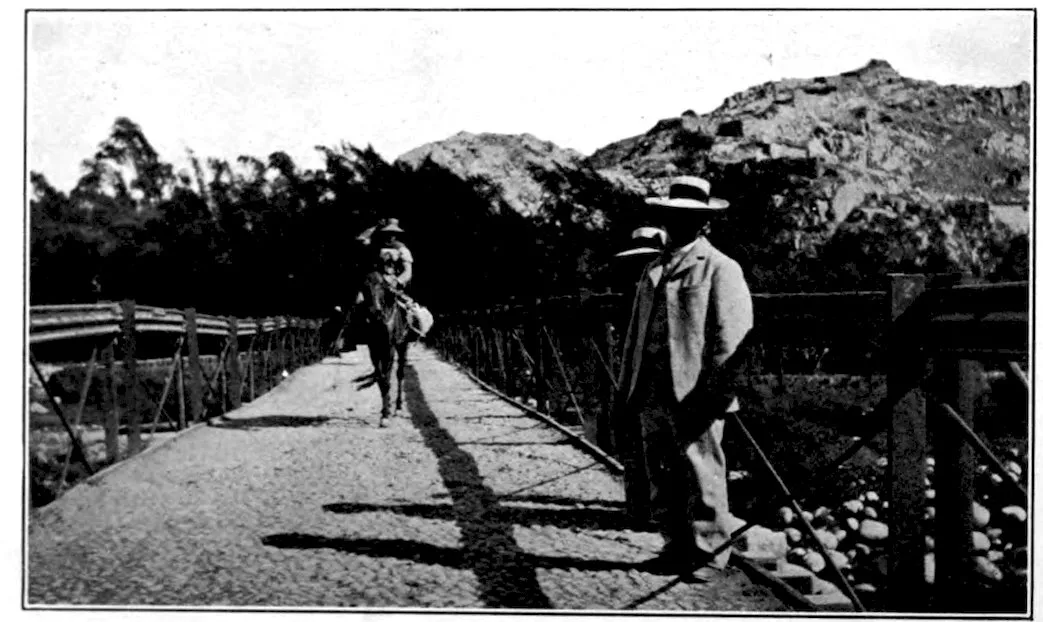
A MILK VENDER ON HER WAY TO MARKET.
342
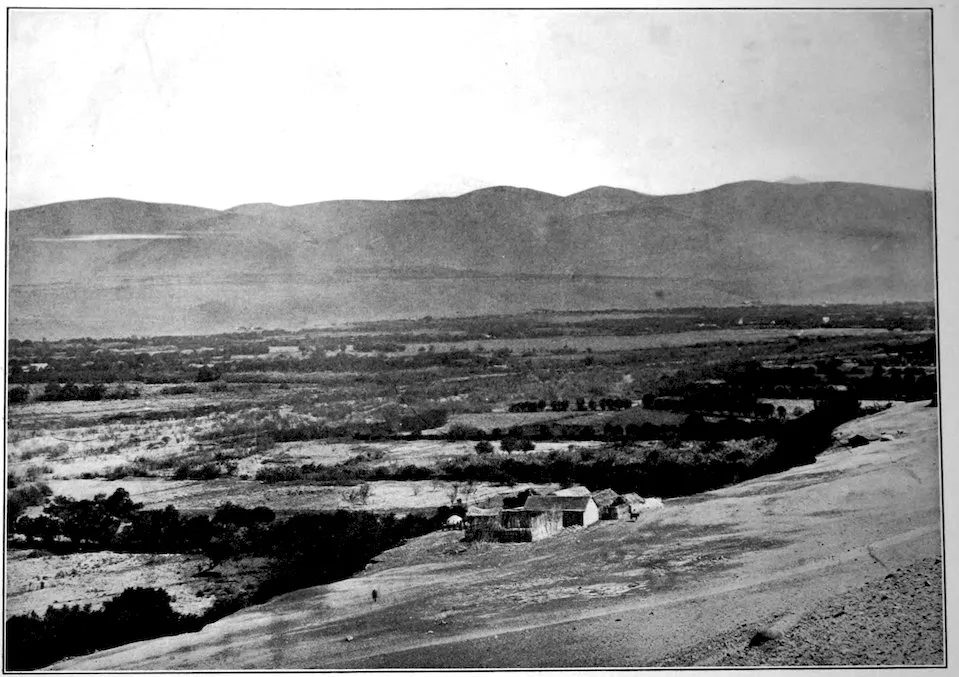
CHAPTER XXV TACNA AND ARICA
343
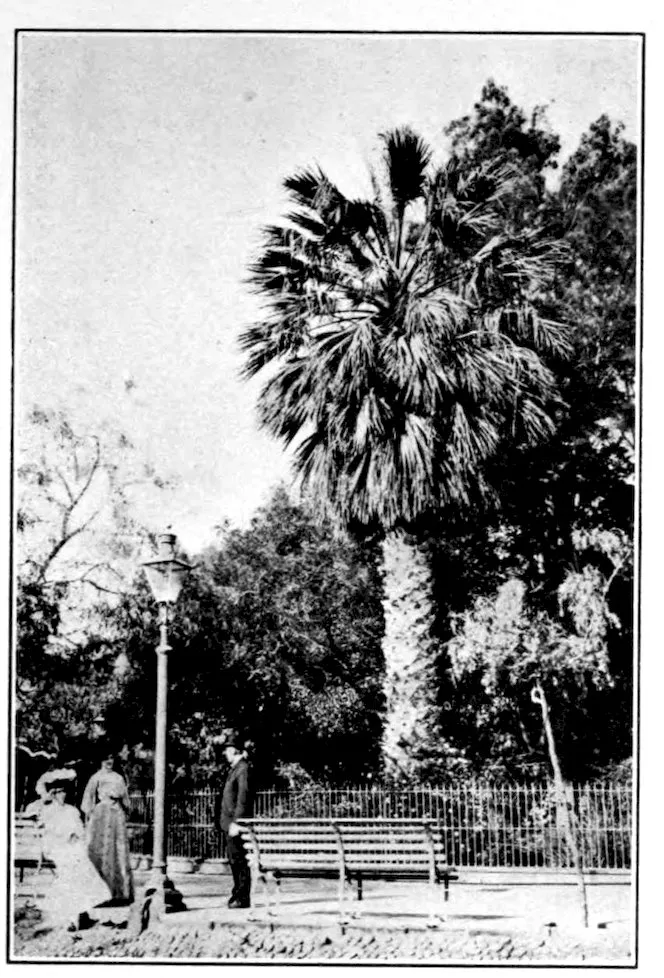
A VENERABLE PALM OF TACNA.
At the time of the Independence, Arica was a
province of Arequipa, which then comprised,
in addition to its present territory, the provinces
of Moquegua, Arica, and Tarapacá. Afterward
Arica was divided to create the province of Tacna,
and, in 1839, Moquegua was separated from Arequipa
and joined to Tacna, Arica, and Tarapacá,
to form the Department of Moquegua. In 1868,
Tarapacá was made an independent Littoral Province,
with Iquique as its capital; and, in 1875, the
province of Moquegua was elevated to the same
dignity. Tacna and Arica, with the small province
of Tarata, which had been formed the year previous
by a division of Tacna, were then joined to
constitute the Department of Tacna, one of the
richest and most important of the republic, politically
and commercially.
In Arica, as well as Tarapacá, nitrate exists in
large quantities; and this product, the exports of
which had already, in 1875, reached a quarter
of a million tons annually, was then rapidly making Tarapacá the richest province of Peru,
and its capital, Iquique, a flourishing centre of commercial prosperity. When war brought
disaster to the country a few years later, and the indemnity demanded by Chile meant the
dismemberment of the republic, the Littoral Province of Tarapacá, ceded unconditionally,
became a part of Chile at the same time that Tacna and Arica passed into the temporary
possession of that country, in accordance with the treaty of Ancón, in 1883.
Thus, by the mere accident of being a border province, Tarapacá—whose people had
fought for their country in all its battles; had been taught from their cradles to worship the
344national heroes and to emulate their patriotic deeds; had been among the first to join their
fellow-countrymen when a call to arms brought the nation into the field against a common
foe—Tarapacá, the victim of circumstances, was condemned to recognize the government
that had issued a declaration of war against its people, and, in the hour of victory, had
demanded its territory as payment for the costs of war. The conquering nation made what
has been regarded by many as an exorbitant claim; but Chile acted on precedent and within
the law of nations. The deplorable fact is not that a country should have taken the full
measure of its reward for victory, but that, after nearly two thousand years of Christianity,
it should still be permitted among Christian nations for one government to demand, and
another to grant, the dismemberment of a united nation, whose sons have stood together as
compatriots through all its vicissitudes, have labored for its well-being and gloried in its
progress; and that they and their property should suddenly be placed under foreign jurisdiction,
because the decisions of a war council will it so. It is believed by some pessimists
that the dominion of military force is as strong to-day as ever, and that only the necessity
for preserving “the balance of power” prevents wars of conquest in the twentieth century
as relentless as those of the fifteenth—but who, that has seen the “Christ of the Andes,”
or read the Constitution of the United States, can believe this to be true?
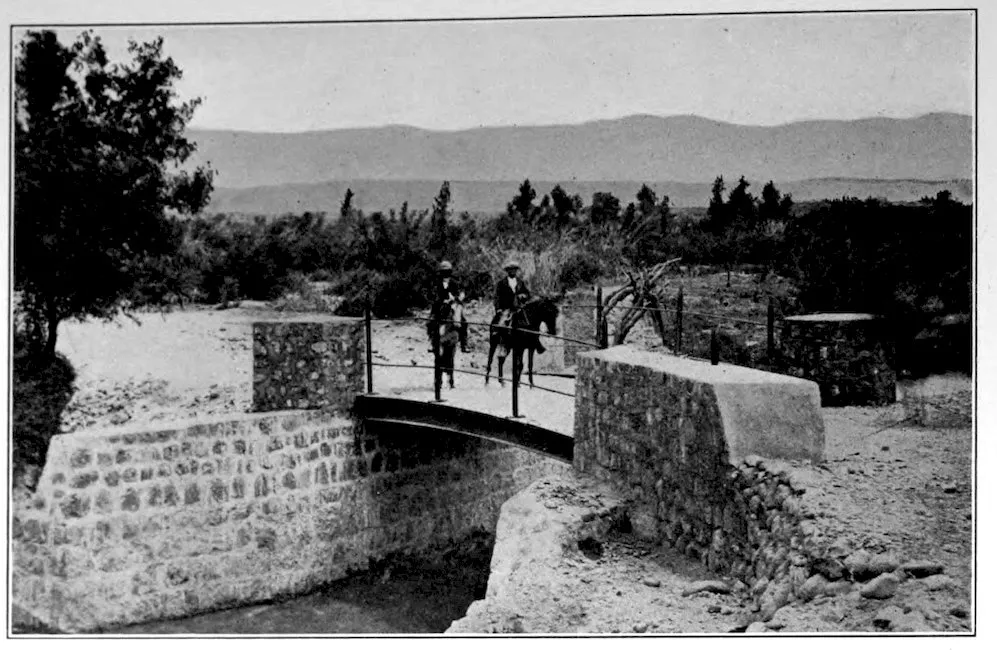
BRIDGE ACROSS THE SAMA RIVER, PROVISIONAL BOUNDARY BETWEEN PERU AND CHILE.
As regards Tacna, the situation being temporary, or presumably so, one’s sensibilities
are not so afflicted by the condition. When the plebiscite comes, a majority vote will suffice
345to give the Peruvians back their ownership, on their government’s paying ten million dollars
indemnity. These provinces have always been closely identified with the political life of
Peru. It was from Tacna that the first band of patriots started out to join the Independent
forces on the plain of Oruro against the royalist armies; and it was from this capital that the
voice of the grand old republican, Gonzales Vigil, sounded the first clarion notes of appeal for
liberal government in the newly organized councils of the nation. Statesmen, scholars, and
soldiers have come out of the homes of Tacna and Arica to serve their government in the
cabinet, the college, and the battlefield. And the Morro de Arica, a perpetual monument to
the courage of Peruvian officers, serves ever to remind those who wait for the promised
plebiscite that their children must be told its history.
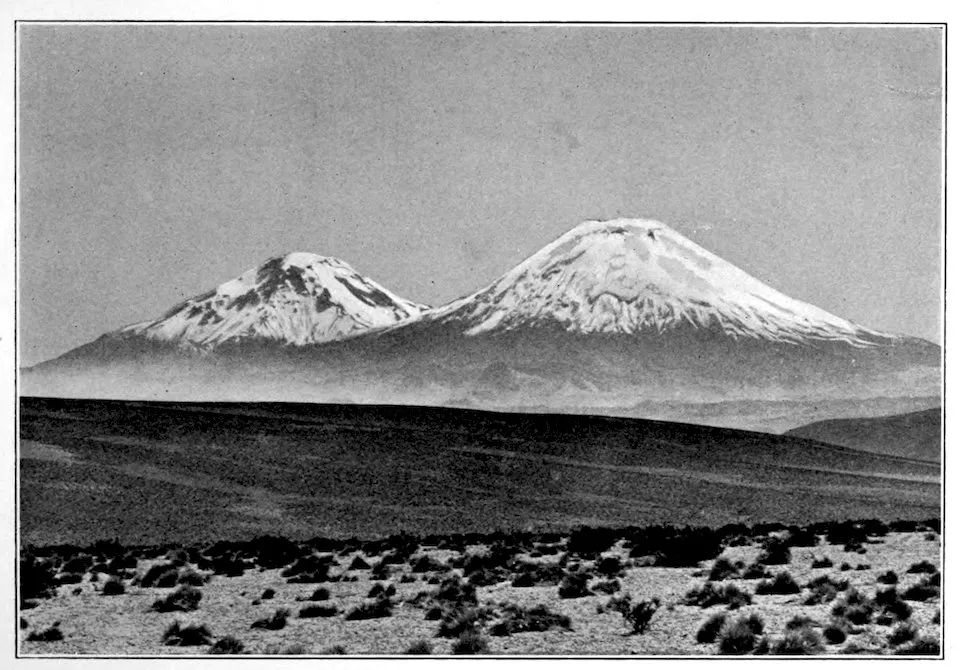
SNOW PEAKS ON THE BOLIVIAN BORDER, TACNA.
By the terms of the treaty mentioned, the Sama River marks the northern boundary of
the territory occupied by Chile, which leaves a part of the provinces of Tacna and Tarata
under Peruvian government. The entire area of these provinces is about fourteen thousand
square miles, the districts at present occupied by Chile covering three-fourths of the territory.
The Department of Tacna extends from the Pacific Ocean inland to the Bolivian
border, and is bounded on the north and northwest by the Peruvian states of Puno and
Moquegua. The coast region is warm and dry, and the pampas of Arica are rich in nitrate
346deposits. The city of Arica, situated on the beautiful bay of the same name, possesses one
of the most delightful climates in the world. It is the seaport terminus of the Tacna and
Arica railway, and the chief outlet for the traffic of a vast territory. The new offices of
the Arica and La Paz railway—which is now under construction by Chile to connect the
Bolivian city with this seaport—occupy a handsome building overlooking the harbor, and
the city has several attractive public edifices, parks, and plazas. Tacna is the social and
educational centre of the department, and its capital; though under the existing conditions,
the centre of Peruvian government is established at Locumba, on the Locumba River, within
the territory still under the control of Peru. Tacna was given the title and privileges of a
town by supreme decree in 1823, in recognition of the brave services its people had
rendered to the cause of Independence; and a few years later it was raised to the dignity
of “Heroic City,” when it became the capital of the province. The government authorities
of that part of the province of Tacna occupied by Peru reside at Ilabaya, in the northwestern
district of Ilabaya, a picturesque town on the river of the same name. The province of
Tarata has also two capitals, the Chilean authorities occupying Tarata, and the Peruvian
government being centred at Candarave, sixty miles from Locumba.
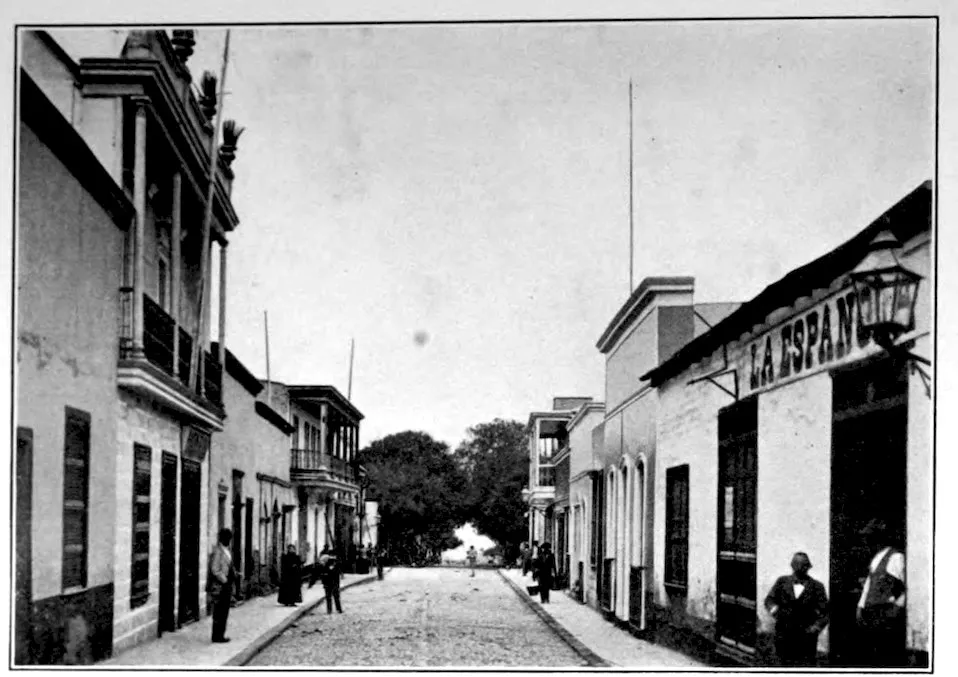
CALLE SAN MARTIN, NEAR PARK ENTRANCE, TACNA.
The Sama valley is a rich agricultural district, its products including sugar, cotton,
maize, wine, and an abundance of pasturage for cattle and horses. Ascending the valley
from the coast, the scene is one of continually increasing verdure and beauty. The Sama
347River receives its chief tributaries, the Chaspaya, Tarata, and Estique, as it crosses the
province of Tarata, this region being also drained by the tributaries of the Locumba,—the
Curibaya and Ilabaya. In this valley are grown grapes of a quality and flavor especially
suitable for the sweet wines that are manufactured here as well as in the neighboring
valleys of Moquegua. On the green uplands and along the banks of these rivers, cattle and
horses find pasture all the year round; and in the sierra, especially on the high plateau
near Puno, may be seen the alpaca and vicuña, from the glossy coat of which are made
fine and beautiful fabrics. The Cordillera del Barroso, the name given to that part of the
Andean range which crosses Tacna and Arica, is described by Carlos Cisneros in his atlas
of Peru as sui generis in configuration, not presenting the aspect of a series of mountains
sloping from lofty peaks to lower levels, but forming rather a high plateau, fourteen
thousand feet or more above sea level, with colossal cerros, or peaks, rising here and there
in solitary grandeur. Their crests, once burning volcanoes, are now covered with a perpetual
mantle of snow. Here the vicuña loves to make his haunts, far from the disturbing
fears that drive him from inhabited districts to find a home in the highest and coldest
regions of the sierra. Tutupaca, Chipicani, Sahama, and other extinct volcanoes of this
region present a wonderful sight in their sublime solitude.
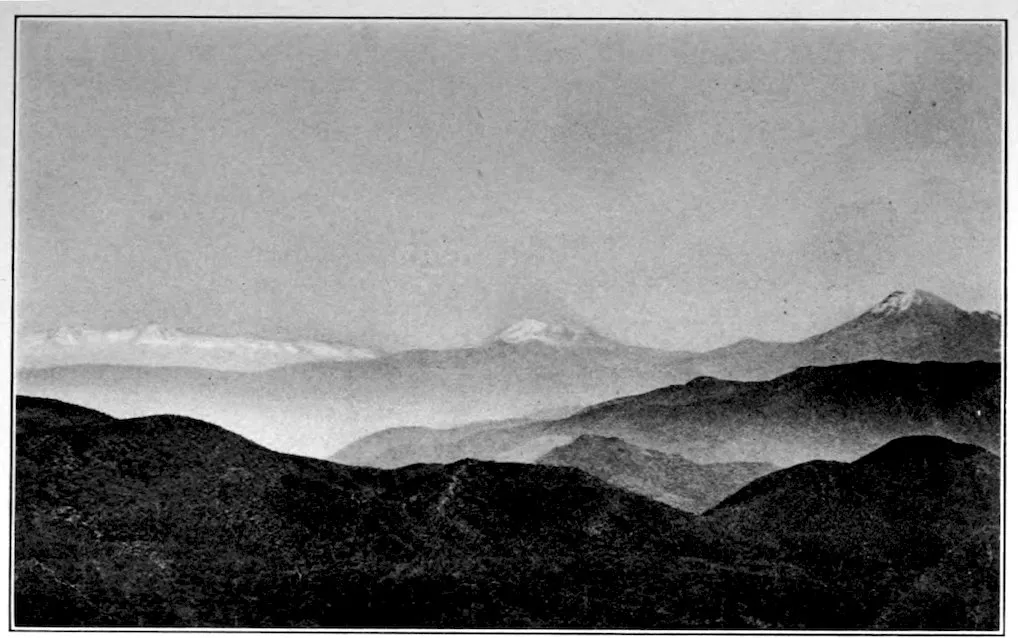
VIEW OF THE SUMMIT OF THE SIERRA, TACNA.
The completion of the new railway from Ilo to Moquegua is of importance not only to
the Littoral Province of Moquegua, but also to northwestern Tacna and Tarata, which are
thereby placed in closer and easier communication with maritime traffic. The extension of
this line to Desaguadero would undoubtedly prove a strong competitor to the Arica and
348La Paz route, as it would be shorter and over a less broken country. The people of Peru
strongly resent the continued postponement of the plebiscite, feeling that Chile has taken
unfair advantage of that “possession which is nine-tenths of the law;” but it is hoped that
in the greater unity which has become a feature of the international policy of South
American countries—and which is particularly evident in the readiness shown by all these
republics to settle their disputes through arbitration—a solution of this vexed question will
be made satisfactory to both of the governments concerned.
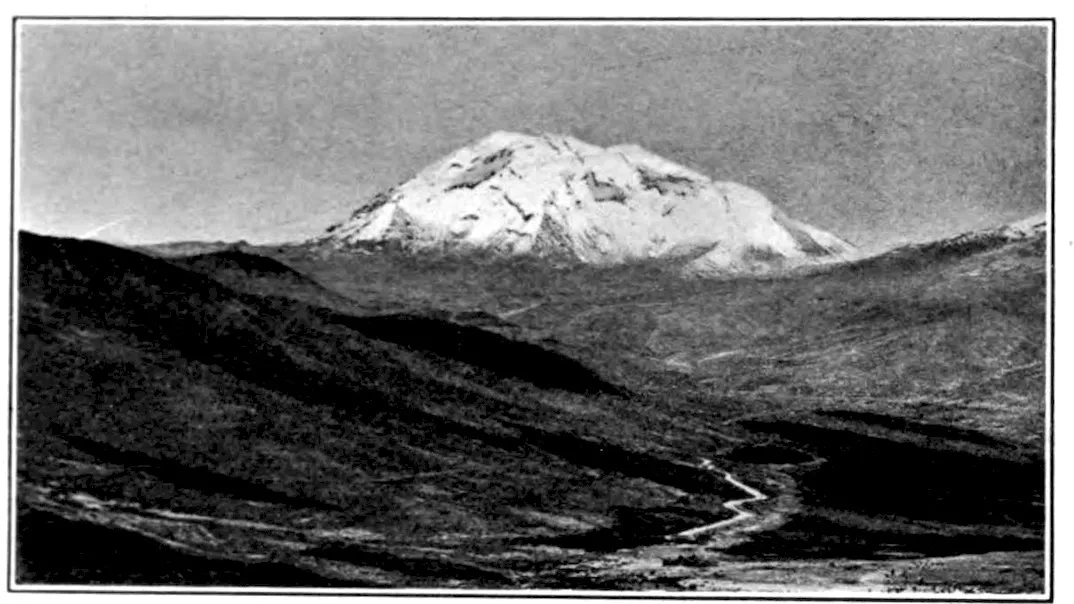
EL CHUPIQUIÑA, AN EXTINCT VOLCANO IN TACNA.
350
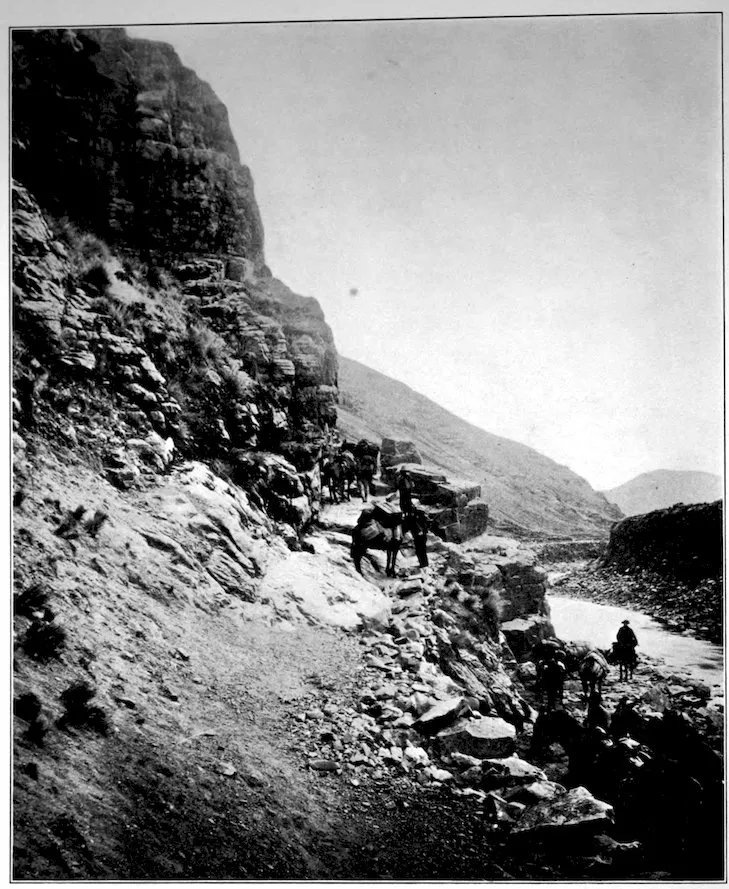
A GOLD TRAIN EN ROUTE FROM SANTO DOMINGO TO TIRAPATA WITH BULLION IN BARS.
CHAPTER XXVI MINES OF THE SIERRA AND OTHER REGIONS
351
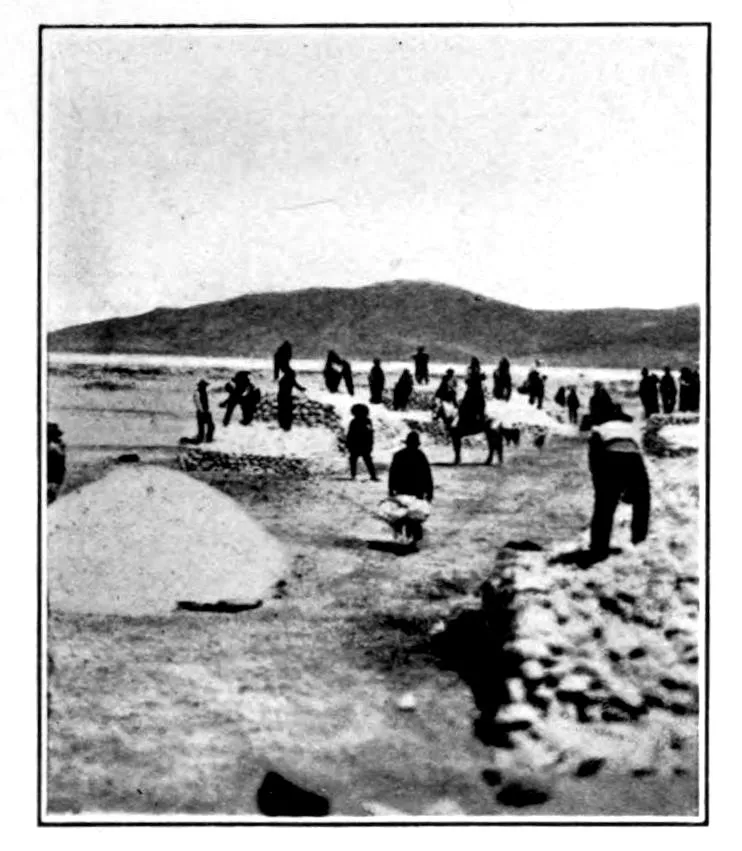
SCENE AT THE BORAX MINES OF AREQUIPA.
All the world is familiar with stories of the Incas’ splendor
and the viceroys’ luxury, based on the enormous
riches of Peruvian mines in past centuries. Gold and
silver seem to have run in streams of never-failing abundance
from the sierras of this wonderful country, their
wealth gleaming in temples dedicated to the worship of
the Sun in pre-Columbian days and forming a pavement
for the footsteps of viceregal princes in the no less flourishing
period of colonial Spain. But it is not generally known
that the decline of this abundance was due entirely to
other causes than an exhaustion of the source of supply,
and that the mineral wealth of Peru to-day is, for practical
purposes, as great as ever. The progressive spirit of modern
enterprise promises to restore the prestige once enjoyed
by Peru as the richest mining country of the globe.
The natural development of the mining industry was first arrested when repeated
uprisings of the Indians interfered with its interests, especially during the latter part of the
eighteenth century; and it was still further checked by the war of Independence, which,
although it brought the blessings of national freedom, left the country in a condition of
political disorder and confusion, with all industry comparatively at a standstill. The young
republic had neither funds nor experience adequate to meet the needs of industrial development;
and, for many years, political matters held supremacy in the national councils, to the
great detriment of trade and financial well-being.
But when the effects of constitutional liberty began to be apparent in a more stable
government, and the decline of militarism was succeeded by an increasing interest in
economic affairs, the nation turned its attention to many sources of wealth that had
remained practically unworked for half a century, and the government stimulated this
352awakening spirit of enterprise by making laws calculated to encourage individual endeavor
in every branch of industry. The inauguration of the School of Mines in 1876, and the
adoption, the following year, of laws governing mining property so as to ensure perpetual
and irrevocable ownership, proved of great importance in promoting the mining interests of
the country. Foreign capital was encouraged by the liberal attitude of the Peruvian
government to make large investments in mineral lands of the sierra, and from this period
date many of the extensive foreign enterprises now established in Peru.
The mining code now in force was promulgated in 1901; it has given additional impulse
to the industry, as, by its terms, every facility is afforded for the acquirement of mining
property, as well as ample liberty in working it and perfect security in possession. The
rights of the foreigner are the same as those of the Peruvian mine owner, no distinction of
nationality being made in the conditions of ownership. By the law of 1877, each mining
claim is subject to a half-yearly tax of fifteen soles (seven dollars and fifty cents, gold),
which guarantees possession as long as it is punctually paid. A special law, passed in 1890,
further guarantees that, until the year 1915, no new tax can be imposed on the mining
industry or on the export of its products.
A mining claim, or pertenencia, is usually marked off in the form of a parallelogram,
one hundred by two hundred metres in area, and is of indefinite depth. The measurement
is made from an angle indicated by the concessionaire. A pertenencia for a placer-mining
property, a platinum bed, petroleum deposit, tin or coal mine, is measured in the form of a
square of two hundred and thirty metres each side. The maximum of a single concession
is sixty adjoining claims, but any person or company may solicit as many concessions as
desired, though a separate petition must be made for each, the only charge for this privilege
being a stamp of five soles, which covers the cost, whether the concession is for one
claim or sixty.
Mining property is conceded under the direction of the government, through the
Department of Fomento, in which a general register of mines is kept, containing a record of
all the mining property in the republic with the names of concessionaires and the extent and
locality of their claims. As an encouragement to the development of mining, the importation
of materials and machinery required in the elaboration of metals and the construction
of railroads for their transportation is allowed free of custom house duties. The government
organized, in 1902, the Corps of Mining Engineers, whose duties are to promote the mining
interests of Peru by providing the most thorough information obtainable regarding the
geology and mineralogy of the country. Commissions have been appointed by this
organization to explore and examine new regions and to ascertain their mineral wealth, so
as to secure such knowledge about them as may be necessary in the granting of concessions
and the general exploitation of mining lands. Regular bulletins are published by the Corps
of Mining Engineers, giving the results of these explorations, their pages being usually
illustrated with interesting views of the regions traversed by the appointed commissions.
The School of Mines has been of invaluable service in promoting a technical knowledge of
353mining among the young men of those districts where such an education is of the greatest
importance. Graduates of this school are prepared to assume the management of a mine,
and are qualified to direct the various departments of mining industry.
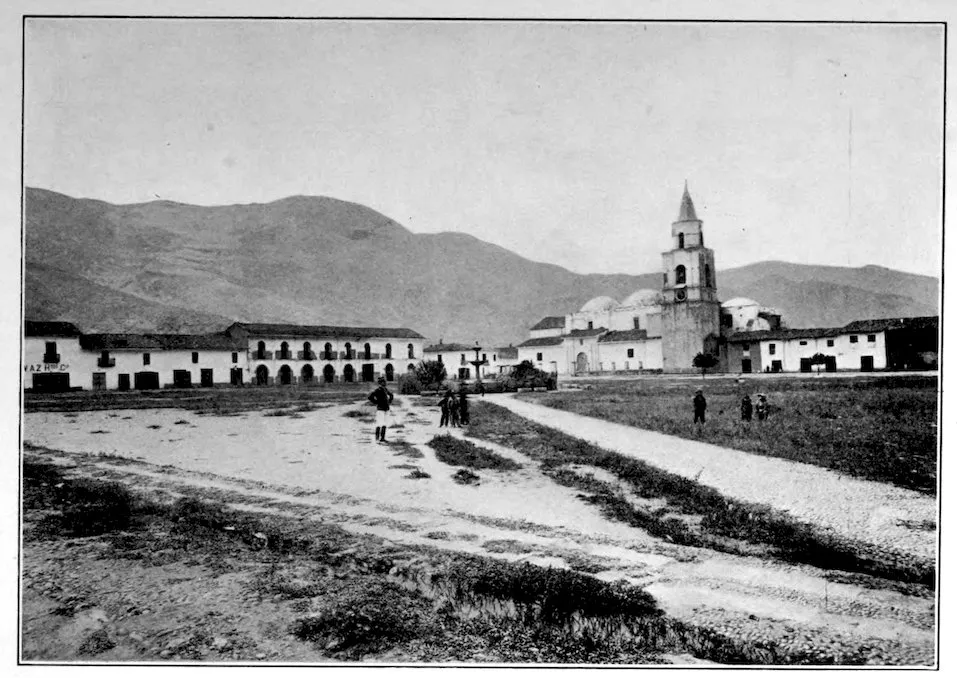
Although it is not only in the region of the sierra that valuable minerals are extracted,—since
gold placers are worked in the coast districts of Nasca and Camaná, as well as in the
valleys of Sandia and Carabaya, and elsewhere in the Montaña,—the riches of the Peruvian
Cordilleras are so enormous and so varied that to speak of the sierra is, of necessity, to
refer to its mines. The Nudo of Cerro de Pasco and the Nudo of Vilcanota especially appear
to form storehouses full of vast treasures of metallic ore; gold, silver, copper, and other
mineral products abound; and the companies now engaged in developing these regions are
daily opening up new properties of increasing importance.
Cerro de Pasco and Yauli are the principal silver and copper mining districts of Peru.
At Cerro de Pasco, nearly every kind of mineral is found within a radius of a mile. A
North American syndicate purchased the mining properties of this district, the first engineers
arriving to take charge of the property in 1901. The following year the syndicate bought
the concession for the construction of a railway from Oroya to Cerro de Pasco, the line
being completed and opened to traffic in 1904. This railway is eighty-two miles long, and
354has a branch twenty-five miles long to the coal mines, while the switches at the mines
and smelter cover twenty miles more. The road is standard gauge and the locomotives
and cars are of North American manufacture. The original cost of construction and
equipment was about three million dollars. The work of putting up a smelter and furnaces
was completed in 1906, and a reverberatory and roasting plant is now being installed, which
will greatly increase the production of the establishment. In 1907 the annual capacity was
thirty million pounds of pig-copper, and with the new improvements it is estimated that the
quantity will be nearly doubled.
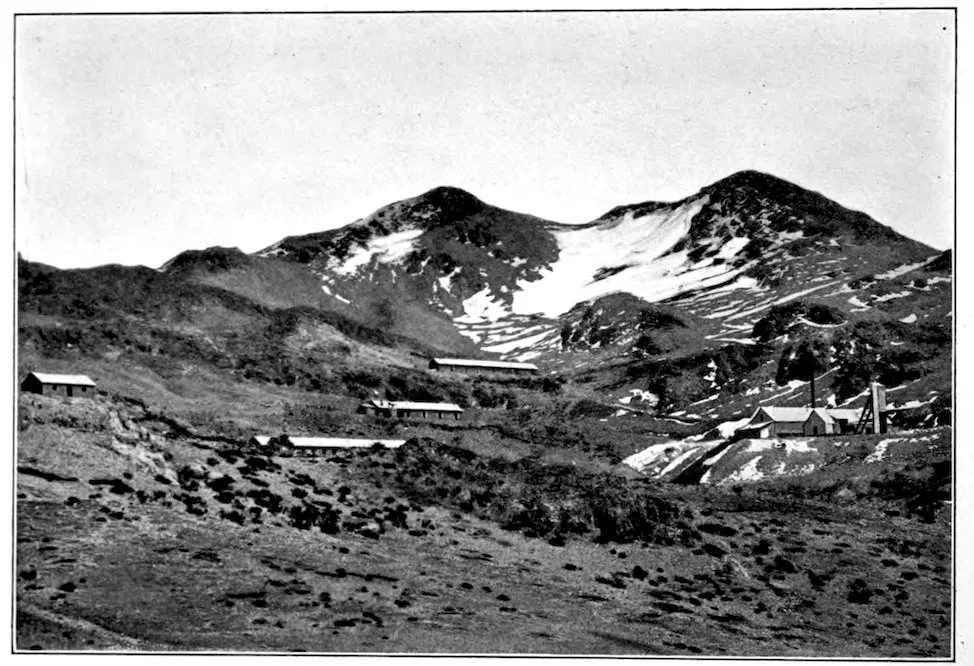
CAILLOMA MINES, ALTITUDE SEVENTEEN THOUSAND FEET, DEPARTMENT OF AREQUIPA.
The mines of Cerro de Pasco have been developed by shafts, the lowest level being at
a depth of over four hundred feet. The present output supplies the smelter, besides which
an ore reserve is accumulated. All the properties of the company were purchased from
small owners, and include over six hundred claims in the Cerro de Pasco district, besides
about three hundred claims in Goillarisquisga, a few miles to the north, where valuable coal
mines are located, furnishing eight hundred tons of this fuel daily. New properties have
been recently purchased in the Morococha district, which is rich in copper and silver. In
addition to these mines, the company owns the Paria estate at Cerro de Pasco, covering
355seventy thousand acres, which is used for pasturage and dairy purposes. A considerable
population is supported by the various enterprises of the company, five hundred men being
employed on the railway, sixteen hundred in the smelter, a thousand in the silver and
copper mines and fifteen hundred in the coal mines. The syndicate has spent about
eighteen million dollars on all these properties, including the cost of improvements and
development, and is now in possession of one of the most valuable mining districts of
the world.
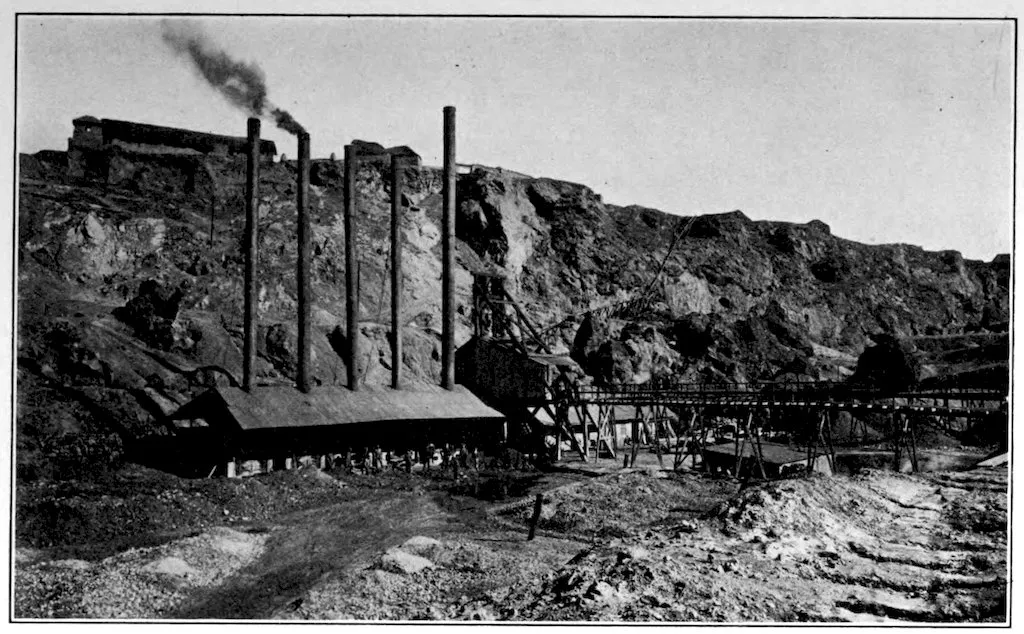
CARMEN SHAFT, CERRO DE PASCO MINES.
The “Opulent City of Cerro de Pasco,” as it was entitled by a supreme decree of 1840,
is a typical town of the Peruvian sierras. It was founded by the Viceroy Amat in 1771,
and became one of the most important towns of the Intendencia of Tarma, which, under
the colonial government, embraced the present Departments of Junín, Huánuco, and
Ancash. Cerro de Pasco was made the capital of the Department of Junín in 1851; the
cities of Jauja, Tarma, and Huancayo shared with it the prestige of political centres, being
provincial capitals. Jauja, unsurpassed as a sanatorium, and destined to become a famous
health resort, is one of the oldest towns of Spanish-America, having been founded by the
conquerors before the site of Lima was selected for the capital of Peru. Tarma, founded
about the same time as Jauja, is rich in minerals and claims additional importance from its
situation on the highway of travel between Lima and Iquitos.
In the districts of Yauli and Huarochiri, which rank next in importance to Cerro de Pasco,
silver and copper are also the principal metals extracted, though lead is an important product.
Smelters and other establishments for the elaboration of gold, silver, and copper, have been
356installed at these places, the works at Casapalca, in the Yauli district, being especially
notable. For some classes and grades of minerals, the process of smelting is followed,
while in the treatment of others concentration is adopted. Yauli is located on the line of
the Oroya railway, in the province of Tarma, Department of Junín, and Huarochiri lies a
few leagues to the south, in the Department of Lima. Both these mining districts are
worked at an altitude of twelve thousand feet or more. In the same region of the sierra
are situated the silver-mining centres of Castrovireina, Huallanca, and Cajatambo, in the
Departments of Huancavelica, Huánuco, and Ancash; and farther north, in La Libertad and
Cajamarca, are the mines of Salpo and Hualgayoc, which are rich in silver ores.
Everywhere in the Andean region silver is found, though it is usually mixed with
copper or lead. Most of the silver ore in the Cerro de Pasco district is of a reddish color,
due to the oxide of iron it contains; the Peruvian miners give it the name of cascajo, or
gravel. The copper ores, like the silver, appear in combination with other metals, veins
of copper containing usually some silver and gold. In Ancash, Ica, and Arequipa, in the
coast zone, these copper deposits are also found, and new smelting establishments have
been installed in these departments which are contributing to increase the output of
copper ore. New copper mines have been explored in the provinces of Jauja, Pasco,
and elsewhere, and prove to be rich in ores. The industry is in a more promising condition
than it has ever been. Petitions for concessions of mining property are constantly
reaching the government, a favorable augury for the future development of this valuable
resource. Lead exists in large quantities in Yauli, Huarochiri, and several districts of Ancash
and Cuzco.
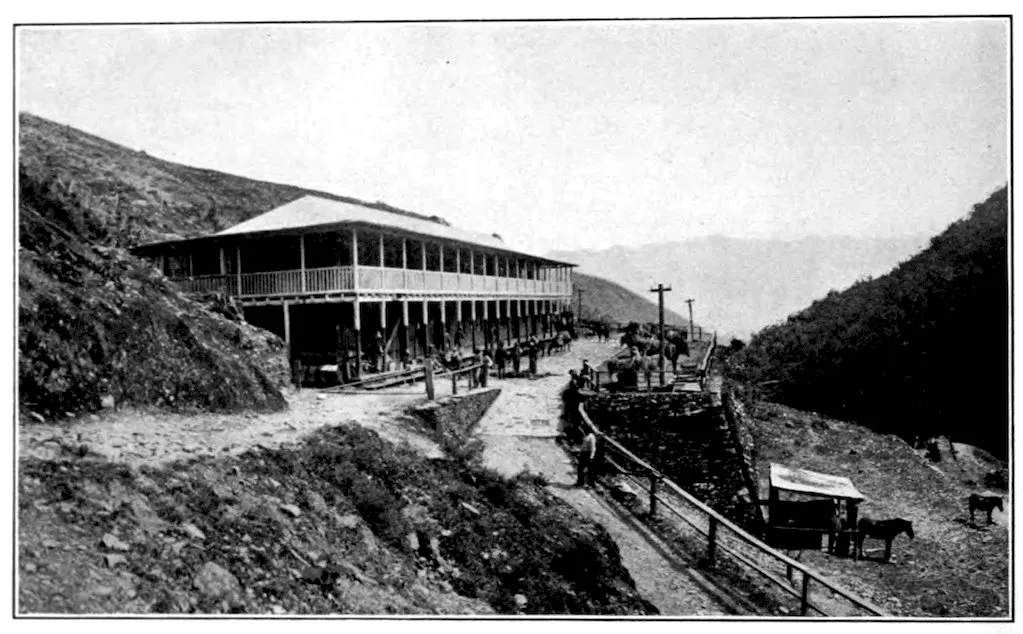
THE INCA MINING COMPANY’S OFFICES AT SANTO DOMINGO, BUILT OF MAHOGANY.
357
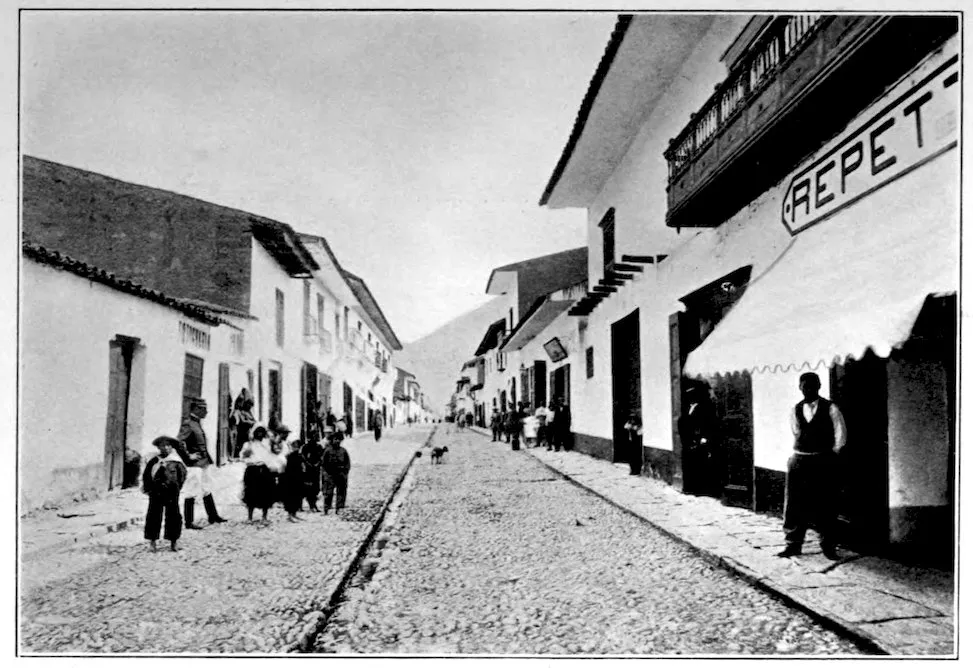
THE MAIN STREET OF CERRO DE PASCO.
The Nudo of Vilcanota embraces an extensive mining region to the north and west of
Lake Titicaca; and the veins of precious metals follow the course of the Cordilleras, which,
after separating, form the Nudo of Cerro de Pasco. The Cailloma mines, in Arequipa, and
those of the Lucanas district, in Ayacucho,—both rich in silver,—are located in the western
range, while those of Cuzco belong to the eastern and central Cordilleras. Puno lies in the
heart of a vast mineral region; in its provinces some of the most productive mines of Peru
are to be found. The Inca Mining Company, in which more than a million dollars of North
American capital is invested, has developed gold mines of enormous value in the province
of Carabaya, supplying about nine-tenths of the gold coined in Peru, and having a monthly
output amounting in value to ten thousand pounds sterling. The history of this enterprise
is an interesting sequel to the record of gold-mining in colonial days.
During the period of the viceroyalty, the gold mines of the province of Puno produced
vast wealth, the viceroy once sending as a gift to Charles V. a nugget that weighed a
hundred pounds, taken from San Juan del Oro; and one of his successors presented to
Philip IV. another famous nugget, shaped like a man’s head and of great size. When the
Indians revolted against Spanish authority a few years before the war of the Independence,
those of Carabaya and Sandia joined the rebel ranks and slaughtered their masters, hoping
to be relieved from the hard work of the mines. This uprising, and the war of Independence
that followed, caused the mining industry to be totally neglected until the middle of
358the last century, when a party of explorers looking for cascarilla bark found gold in the bed
of the Challuma River, and a rush followed, which lasted for two or three years. During
that time several million dollars’ worth of gold was taken out, and a nugget weighing over
four pounds was presented to General Castilla, then president of Peru. But the system
of mining employed was primitive and, after the first excitement passed, only a few gold-diggers
remained, the mines from that time being worked on a small scale until the Inca
Mining Company purchased the Santo Domingo property a few years ago and set up a
large establishment.
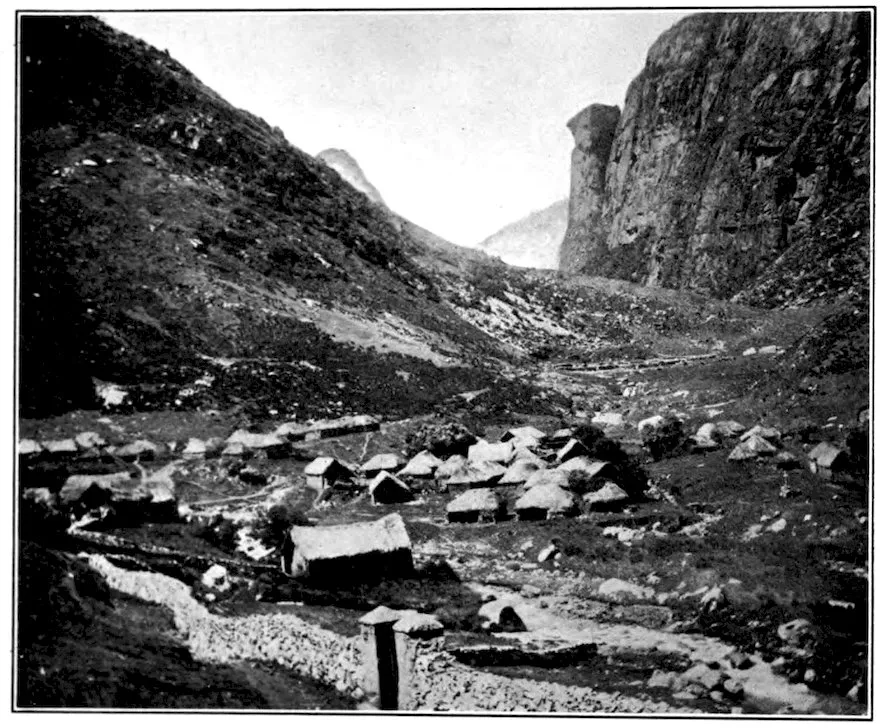
A MINING TOWN OF THE PUNA.
The discovery of the Santo Domingo gold mine was made by a Peruvian, Don Manuel
Estrada, but it was the enterprising spirit of two North American prospectors, Chester
Brown and Wallace Hardison, which led to its being exploited on a large scale. Mr. Hardison
had seen, in Lima, samples of rich ore that had been found in Carabaya, and he was not
long in making his way to the goldfields to investigate further. He was joined by
Mr. Brown and they went to Santo Domingo together, starting from the Southern railway
terminus at Juliaca on muleback, accompanied by their guides, and having with them a
number of llamas laden with provisions and blankets. Both courage and faith were
required to follow
up a trail in such
a rugged, mountainous
country
as that over which
the Americans
travelled. Part of
the route was
across the high
sierra, sixteen
thousand feet
above sea level,
where the riders
could look on a
sea of clouds rolling
below, while
the sun blazed
down from a sky
of wonderful
blue. Only those
who have travelled
on these
heights know how clear are the skies and how piercing is the white light of the sun at
these altitudes. When there is no sun, the weather is freezing cold. The wealth of the
359Santo Domingo mine was apparent to the prospectors from the first, and the Inca Mining
Company was organized at once with capital to purchase the property.
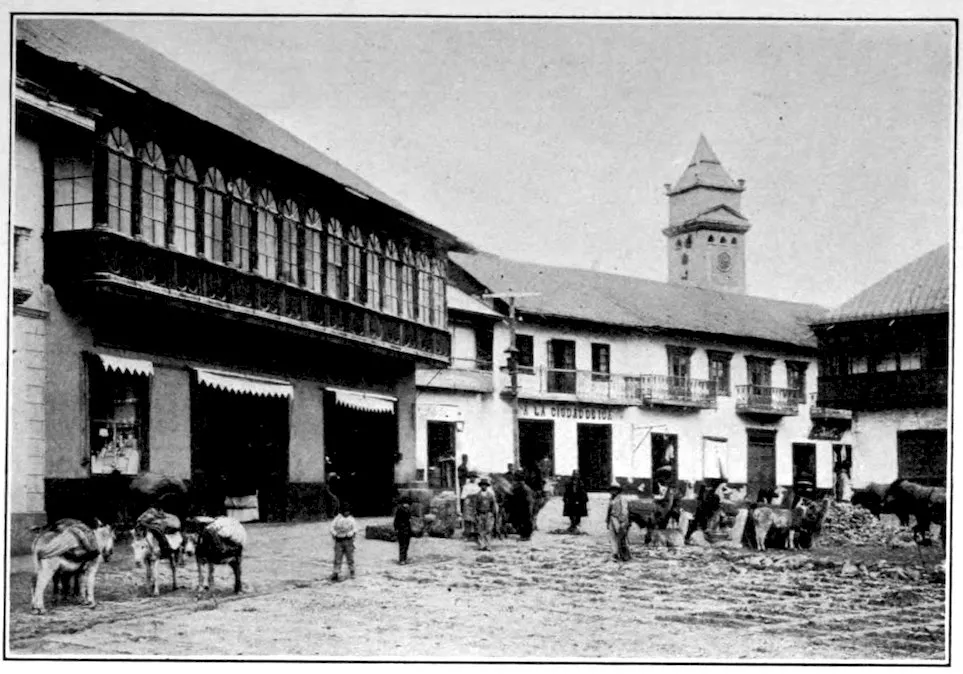
LLAMAS AND DONKEYS AWAITING CARGO AT CERRO DE PASCO.
The Inca Mining
Company established
headquarters at Tirapata,
on the Southern
railway between Juliaca
and Cuzco, and immediately
began to develop
their mining property. A
concession was obtained
from the Peruvian government,
under which
the company built a
wagon road from Tirapata
to Santo Domingo,
a distance of one hundred
and fifty miles. In
return for opening up the
country in this way, the
company received about two thousand acres for every mile of wagon road completed.
The route lies almost due north for seventy miles, from Tirapata to Crucero, passing the
small towns of Asillo and San Anton, in the midst of excellent grazing lands for sheep and
alpacas. Crucero, which was once the capital of Carabaya province, is also the centre of a
pastoral district. A few miles beyond Crucero the road crosses the Aricoma Pass at an
altitude of sixteen thousand feet, and then begins the descent of the eastern slope of the
Andes to Limbani, which marks the beginning of the timber line and the limit of established
government authority. From this point the journey is made at times through the virgin
forest and always through a region little frequented by the white man. Agualani Station is
the next stopping place, where travellers find sleeping accommodations. After leaving this
place, the road crosses the Inambari River at La Oroya, over a bridge three hundred feet
long, and a few hours’ riding brings one to Santo Domingo. The administration house of the
company at Santo Domingo is built of solid mahogany and fitted up with all modern comforts.
Here in the heart of the forest, hundreds of miles from a railway, are to be found the conveniences
of electric lights, hot baths, electric fans, and other comforts supposed to belong
only to the favored residents of a great metropolis. The employés have a tennis court, and a
telephone connects Santo Domingo with Tirapata, which has telegraphic communication with
the other cities of the republic and, through them, with the outside world. Modern mining
machinery has been put up at Santo Domingo, at great cost of labor and money; three years
were consumed in getting the stamp mill to the mines. A few miles beyond Santo Domingo
360the rubber country begins, through which the company has built a road to the Madre de Dios,
as elsewhere described. In the same region in which the Inca Mining Company’s properties
are located are the mines of Montebello and the Lavaderos de Oro, famous in colonial times.
The Lavaderos de Oro mines are in Carabaya, the streams of which are nearly all gold-bearing.
The Rinconada Mining Company of North America, with a capital of two million
dollars, is working rich properties in the districts of Poto and Quiaca, province of Sandia.
There is not a single Department of Peru in which gold has not been found, though in
many districts its mining is still among the primitive industries, the Indians washing it out of
the streams that drain their communidades, and using the nuggets and gold dust as a medium
of exchange. It is not unusual for an Indian of the Marañon, Sandia, Urubamba, or other
valleys, to offer a little sack of gold nuggets in payment for his tobacco and similar luxuries
purchased in the stores of interior towns. A curious process of placer-mining has long
existed among the Indians, which is supposed to be the origin of one of their popular
sayings that “in Peru one can sow stones and harvest gold.” It is still in vogue in some
districts, and consists in laying flat stones along the bed of a gold-bearing river during the
dry season, in such a way that, when the rains come and the mountain streams bring down
in their current the precious gravel, these nuggets are caught in the spaces between the
stones and held there. When the river falls, or disappears, as it does in many cases during
the dry season, the Indian sower of stones reaps his harvest of gold.
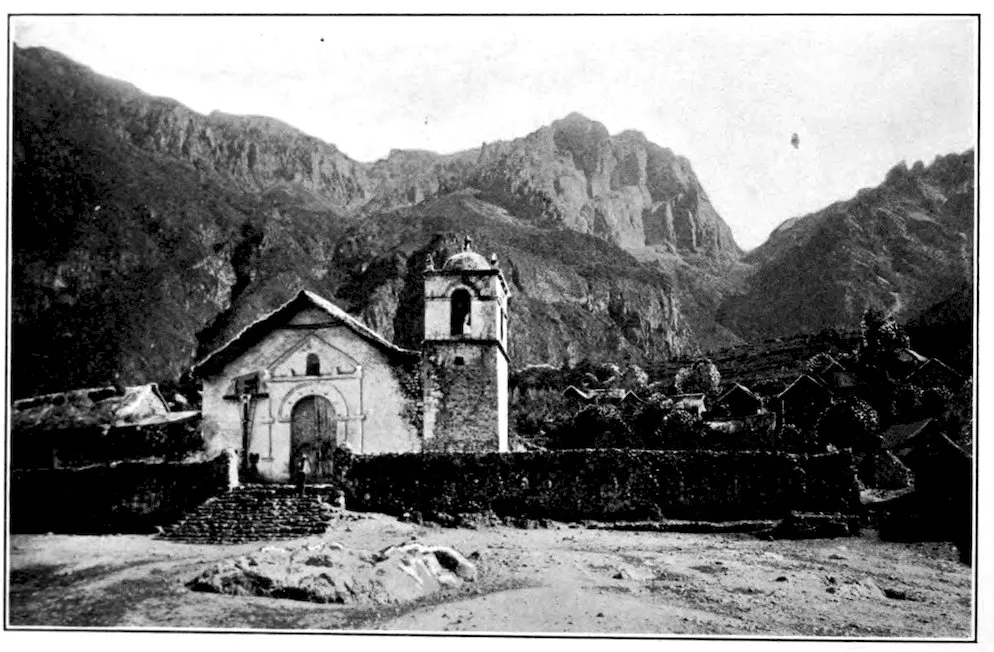
OLD CHURCH IN THE MINING TOWN OF CAILLOMA.
The question of transportation has hitherto been such a very important factor in
determining whether mining properties were worth developing or not, that some rich
361deposits have been allowed to remain untouched, and regions known to abound in valuable
metals have been only partly explored, on account of the difficulty and expense attending
any effort to penetrate beyond a certain radius, accessible to the railways. In this connection,
the work of the Corps of
Mining Engineers has proved
of inestimable value, their
surveys extending to every
region, so that they are rapidly
effacing from the map
of Peru its Territorio inexplorado.
Every expedition
sent into the interior returns
with fresh information regarding
the country’s mineral
resources; and deposits,
hitherto unknown to exist,
have been brought to light
under the investigations of
scientific commissions.
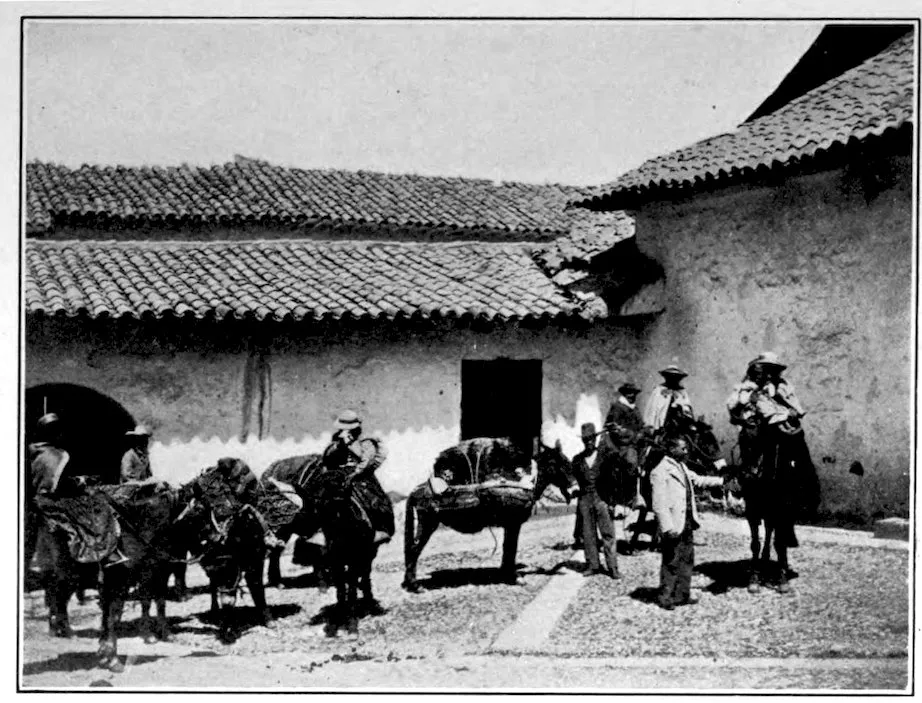
MINERS ARRIVING AT AN INN IN THE SIERRA.
In colonial days, Peru
was famous for its quicksilver
deposits, and the mine of Santa Barbara in the Department of Huancavelica, was the centre
of this industry, which was of great service in facilitating the amalgamation of silver ores.
The history of Huancavelica is one of the most interesting pages in the mining records of
Peru, the quicksilver mines of this region being, in the time of the viceroyalty, the richest
in the world. Cinnabar has been proved to exist in abundance for thirty miles around
the Santa Barbara mine, in as many as fifty hills of the neighborhood. Veins of this red
sulphuret of mercury are also found in the Departments of Cajamarca, Huánuco, Junín,
Ayacucho, Cuzco, and Puno, and it has been worked in various mines. The mineral production
of Huancavelica is undergoing a revival, and a new era of prosperity is dawning for
this historic district.
The discovery of large deposits of bituminous and anthracite coal is regarded as of
particular importance in a country where it is required so generally for mining purposes.
The exploitation of this mineral is just beginning to show results, the mines of Goillarisquisga
being the most important. Anthracite coal is found in Ancash, La Libertad, and
other departments; in Cuzco are beds of coal containing the trunks of trees perfectly
carbonized. Along the lower banks of the Ucayali River, and in various districts of Puno,
lignite exists in considerable quantities. Peat is abundant, especially in Junín, where it is
known as champa. It is used a great deal throughout this region, and is a combustible
of great value.
362With gold, silver, copper, and coal as the basis of her mineral wealth, Peru has
numerous other deposits which, once developed, must yield a large revenue. Already the
petroleum wells of Tumbes, Piura, and Puno give promise of producing great wealth, and
new discoveries of this liquid bitumen are continually being made. It is found at Chimbote
and near Casma,—both in Ancash Department,—and it abounds in the district of Palpa, in Ica.
Jauja, Huancavelica, and Cuzco also have petroleum deposits, and there are evidences of
its presence in several other districts. Foreign capital is already invested in this field, which
is apparently of vast productiveness. The two principal centres of the industry at present
are in the northern coast region—especially at Tumbes and Piura—and in the vicinity of
Like Titicaca, in the district of Pusi, Department of Puno. There are two petroleum
refineries in Peru, and these are but the forerunners of more extensive establishments.
The Titicaca Oil Company sank eight wells in the Department of Puno, in five of which oil
was struck, and the industry has attracted the attention of capitalists who are prepared to
develop it on a large scale.
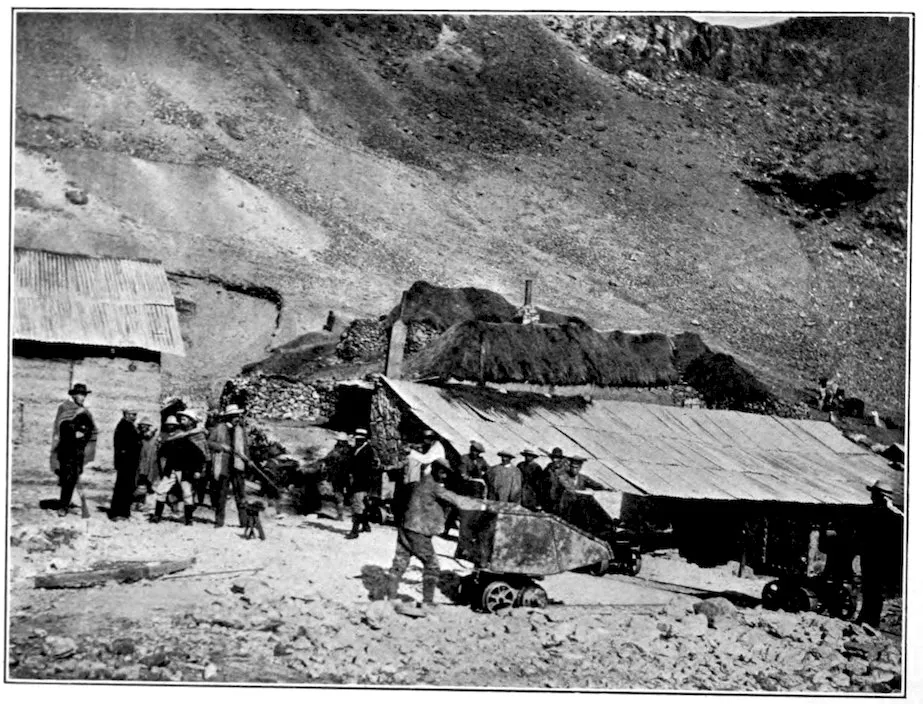
SAN JULIAN MINE, CASTROVIRREINA.
In Tumbes and Piura, great masses of sulphur have been found almost on the surface
of the soil, and the beds are being worked by a rich company. The mineral contains fifty
per cent of sulphur, and when elaborated the product is ninety-eight pure. The coast
country is rich in mineral salts, especially of soda, magnesia, etc.; chloride of sodium is
363found in Morrope, in the Department of Lambayeque, and saltpetre exists not only in the
provinces of the coast but in Cajamarca and other interior departments. There are important
beds of borax in several of the southern states, those of Arequipa yielding large quantities
of this useful product. The borax beds of Arequipa were discovered in 1893 by Don Juan
Manuel de Escurra, who formed a company for their exploitation, the enterprise being now
in the hands of a large syndicate, the Borax Consolidated Limited, which has an extensive
establishment, with all modern improvements, including twelve reverberatory ovens for
drying the borax. The Laguna de Salinas, where the borax is found, lies just west of
Arequipa on the pampa between the Misti and the Pichu-Pichu.
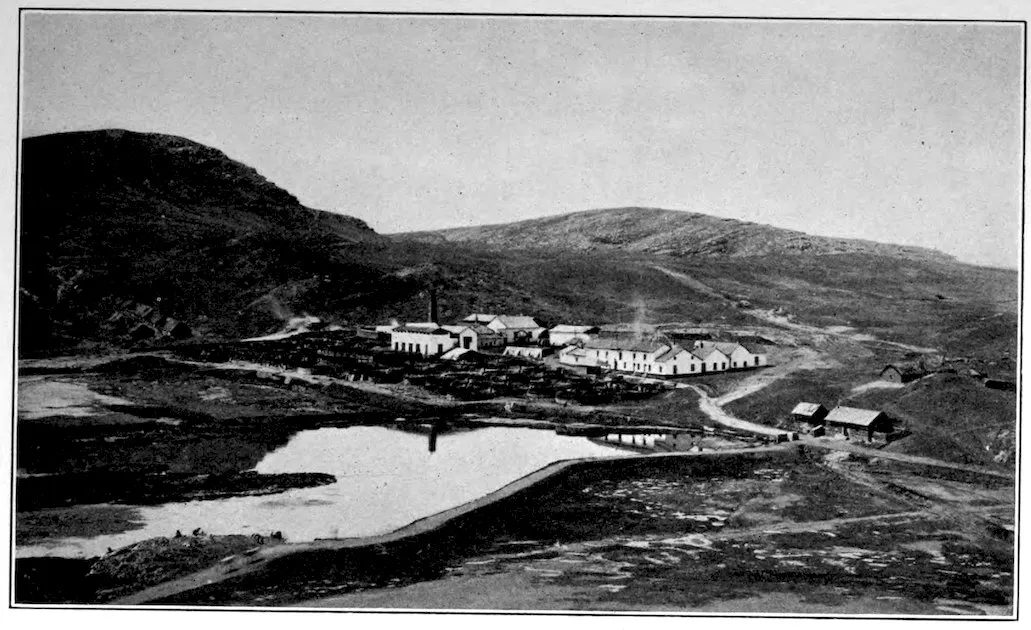
THE MINING TOWN OF CASAPALCA, DEPARTMENT OF LIMA.
Iron is met with in almost every mining district of Peru. In the province of Calca, in
Cuzco, mines have been discovered containing iron with a grade of eighty per cent pure
metal. They have been little worked owing to the expense connected with their exploitation.
Nickel abounds in the northern districts of Ayacucho; mica of superior quality has
recently been found in one of the coast provinces of Arequipa; bismuth exists in various
districts, and Junín has deposits of bismuth-ochre containing forty per cent of bismuth.
Molybdenum, which is constantly increasing in demand for amalgamating purposes, is
exploited in Jauja and Cerro de Pasco; and, in the neighboring Department of Ayacucho,
iron, manganese, and wolfram are taken out of the mines of Lircay. It would be difficult to
name a mineral that is not to be found somewhere in Peru; and its marbles, granites, and
other fine stones are of the highest value for architectural and constructive work. Kaolin,
cement, and other clays for ceramic purposes are abundant, and may be utilized in manufacturing
the finest pottery and porcelains. The ancient Peruvians had the secret of making
364their urns and vases of pottery so very light in weight as to be remarkable for this feature
among all the ancient potteries; one of the tests used by experts in determining whether
the huacas that are sold as antiques in the Lima stores are genuine or false consists in
weighing the article, the modern imitators being unable to produce a pottery as light
as the original.
The exports from Peruvian mines show increasing development of the mining industry
annually. The production of silver last year amounted to about five million dollars in
value, and of copper to a little over that amount; petroleum was taken out to the value of a
million and a half dollars, gold of a million dollars, and other minerals in paying quantities.
During 1907, the Cerro de Pasco mine shipped ten thousand tons of copper, more than a
third of all that South America exported to the United States that year, and the output for
1908 is estimated at fifteen thousand tons. It is predicted that the ultimate copper output
of Cerro de Pasco will reach fifty thousand tons.
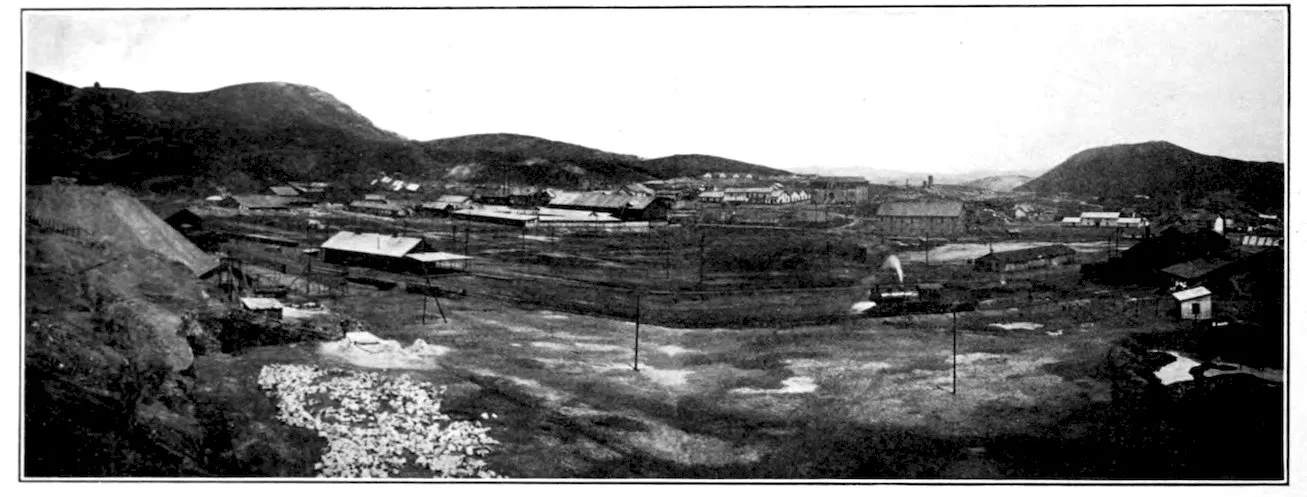
HEADQUARTERS OF THE CERRO DE PASCO MINING COMPANY AT CERRO DE PASCO.
366
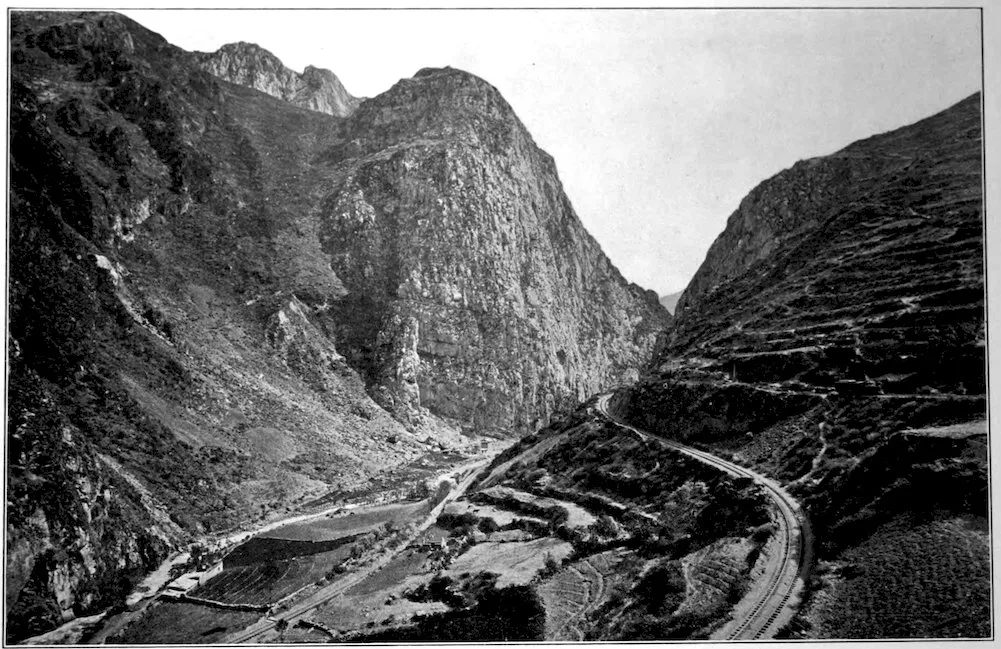
THE PICTURESQUE CURVE OF SAN BARTOLOMÉ, OROYA ROUTE.
CHAPTER XXVII THE OROYA RAILWAY, THE HIGHEST IN THE WORLD
367
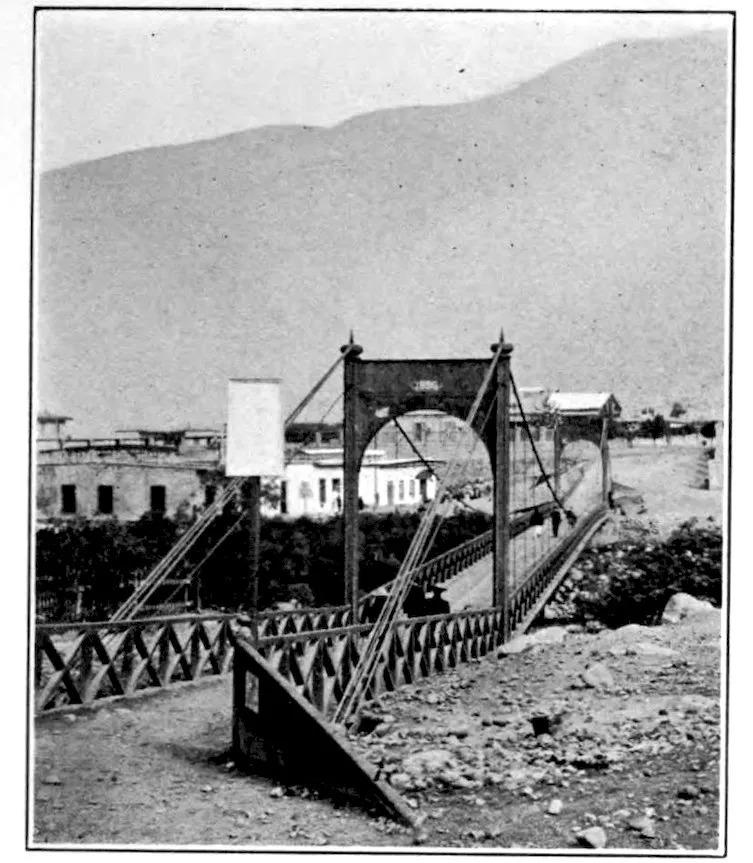
CHOSICA BRIDGE, OROYA ROUTE.
The central mining region of the sierra is connected
with the chief national seaport by the
Central Railway, or, as it is popularly called, the
Oroya Route, one of the most important lines of Peru
and the most remarkable in the world, not only because
of the altitude attained at its highest point, sixteen
thousand feet above sea level, but as a colossal
feat of engineering unequalled in railway construction.
No other railway route compares with that
of Oroya as an example of daring enterprise in the
face of tremendous obstacles; and it stands a great
monument to the awakened spirit of progress which
began to be shown as soon as militarism declined
in Peru, and which has become especially evident
in the moral and material development of that
country within the past decade.
The building of the Oroya railway was begun in 1870, under the direction of a North
American engineer, Mr. Henry Meiggs, with whom the contract for its construction was
signed by the Peruvian government. Within six years, the line was opened up to traffic
as far as Chicla, ninety miles from Callao, at an altitude of thirteen thousand feet, and
was graded and placed under construction from that point to Ticlio, near the summit of
Mount Meiggs, where the Galera tunnel pierces the peak at an altitude of sixteen thousand
feet, the highest place along the line. In 1877, Mr. Meiggs died, and the work was suspended,
having already cost nearly five million pounds sterling. The war with Chile
followed, bringing a train of evils in its wake, and the government found it impossible
to continue the construction until 1891, when the line was taken over by the Peruvian
Corporation and completed to Oroya, being opened in 1893. A branch line had been
368built by Mr. Meiggs from Lima to Ancón soon after beginning his work, and to this have
been added the Morocochu branch, from Ticlio to Morococha, and the Cerro de Pasco
line, the property of the Cerro de Pasco Mining Company, from Oroya to the great mining
centre. The Oroya Route has recently been extended to Huancayo, and is under construction
to Ayacucho. It will be continued to Abancay and Cuzco, to unite with the line
connecting Cuzco with Puno, which is to be extended to the Desaguadero River on the
boundary between Peru and Bolivia, where it will join the Guaqui and La Paz railway,
to form part of the great Pan-American system. From Cerro de Pasco northward, the
trunk line has been built as far as Goillarisquisga, and is under construction from that
point to Huánuco, to join other links in the chain which, when completed, will extend,
in Peru, from the border of Ecuador to Lake Titicaca.
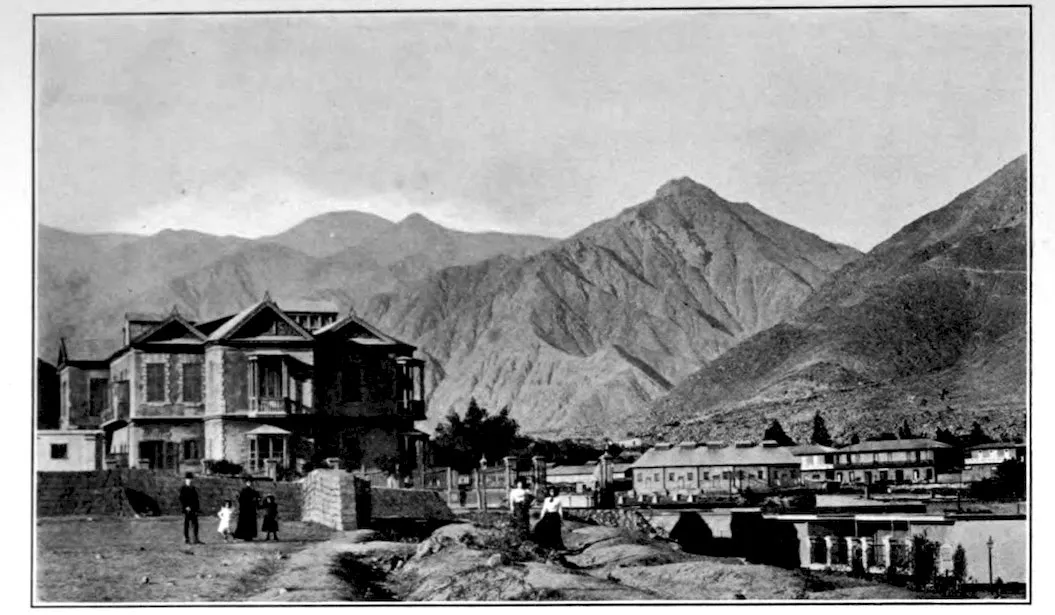
CHOSICA, A HEALTH RESORT ON THE OROYA ROUTE.
From Callao to Oroya, the distance is less than a hundred and fifty miles, but along
this short route the railway passes through every variety of scenery and climate, from the
sandy level of a tropical coast to the frozen peaks of the lofty puna, far above the limit
vegetation. Between these extremes lie the flourishing sugar plantations and maize
fields of the coast; orchards of chirimoyas, paltas, peaches, apricots, granadillas, oranges,
lemons, etc., that grow on the lower slopes of the sierra; all the flowers, ferns, and
mountain shrubs that nourish in rocky glens and shady ravines under nature’s most
favorable conditions, up to a height of ten thousand feet; and, above this limit, the bare,
bleak aspect of the puna, where mining establishments mark the locality of rich veins of
precious metal, and the circle of the horizon is everywhere limited by snow-clad summits.
369Along the valley of the Rimac River, from the sea to its source, the Oroya railway climbs
the sierra with innumerable curves and yet without a single decline throughout its length
until the highest altitude is passed in the Galera tunnel, and the descent begins on the
slope of the inter-Andean valley. More than twenty bridges cross the river along
the course of the railway; the mountain side is tunnelled in many places, and in others the
line hangs over precipices projecting so far out that a stone dropped from the car as it
curves along the brink falls on the opposite bank of the river below.
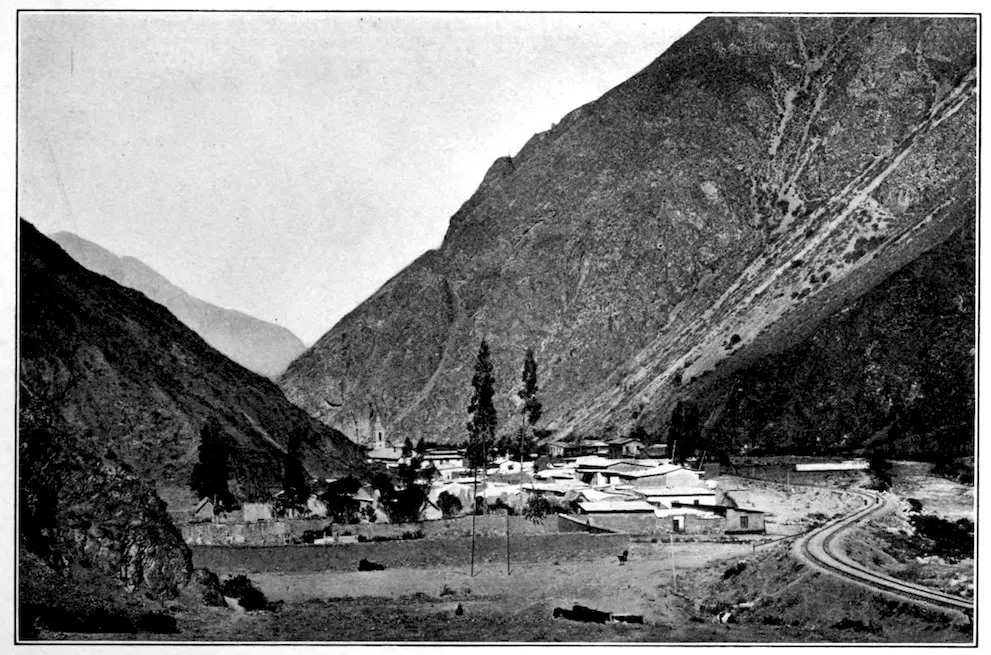
MATUCANA, EIGHT THOUSAND FEET ABOVE THE SEA, OROYA ROUTE.
The journey from Lima to Oroya may be made in a day, the train leaving the station
of Desamparados at eight o’clock in the morning and arriving at Oroya at five in the
evening. It affords an opportunity to see one of the scenic wonders of the world, and
is an experience never to be forgotten. As the train leaves the Lima station, a short
distance from the Balta bridge and within full view of the broad bed of the Rimac, the
retreating city offers only a partial glimpse of its gleaming church towers and the avenues
of shade trees that adorn its suburbs. The picturesque Cerro of San Cristobal, with a
cross illuminating its summit, stands out in clear relief against the sky and may be seen
until the train passes behind the Andean foothills on its way to Santa Clara. Although
this point is more than a thousand feet above sea level, it differs little in aspect from
the country around Lima. Wherever the waters of the Rimac have been brought into
370service to fertilize the gardens and plantations of the valley, exuberant vegetation exists, and
abundant harvests smile under the blue skies; it is only beyond this strip of green that the
sandy plain and gray, barren hillsides are to be seen. That the Incas had all the coast region
under cultivation is
indicated by the existence
of their ruined
cities in the very
midst of the desert
and their andenes
along hillsides that,
to-day, are counted
of little value for agricultural
purposes. At
Santa Clara, a short
walk from the station
takes one to the ruins
of an Incaic town,
which, to judge from
what remains, must
have been a very
populous settlement
centuries ago. Its
appearance to-day
is one of utter
dreariness, and it is
difficult to imagine
what charm such a
site could have offered
for the location
of a city.
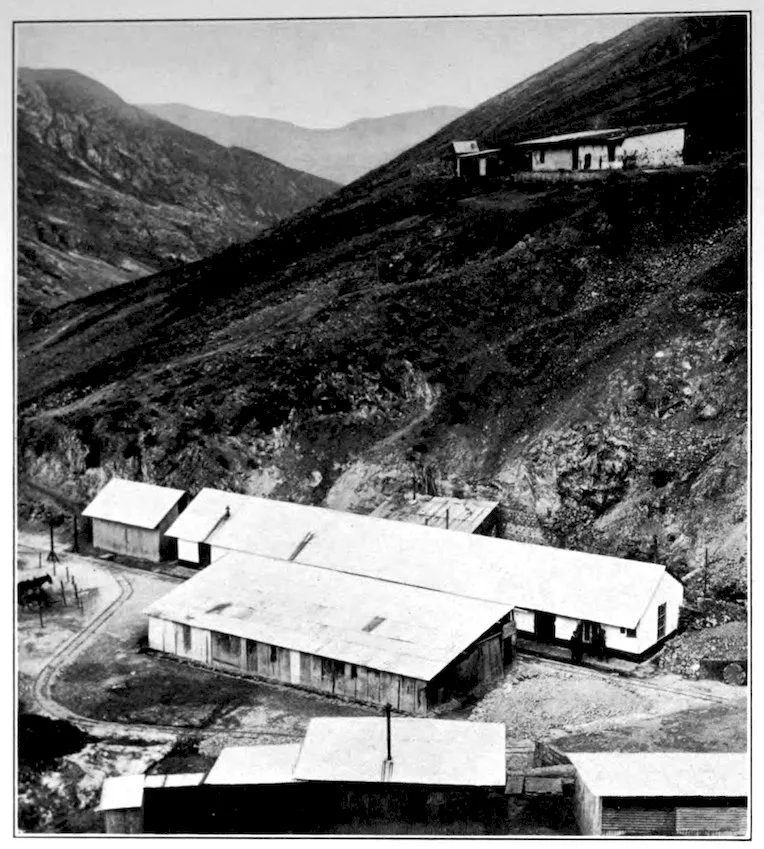
RAILWAY STATION IN THE SIERRA, OROYA ROUTE.
For fifteen miles beyond Santa Clara, the railway train climbs upward until the town
of Chosica is reached, the scenery increasing in beauty as the valley narrows between
the hills of the sierra and the foliage of the mountain side grows fresher and of more
gorgeous hues. Chosica is one of the most popular health resorts of Peru, and has a
delightful climate all the year round. Situated in the midst of mountains at an altitude
of three thousand feet, it possesses many advantages as a sanitarium for invalids, and is a
pleasant place of residence for those who like a restful and quiet retreat. The sky is blue
during most of the year, and the pure atmosphere is exhilarating to tired nerves and over-wrought
spirits. Here one may enjoy life in its simplicity, as Chosica has not taken on the
fashionable airs and expensive luxuries of the modern spa, though supplying its greatest
371benefits. Aside from its attractiveness as a health resort and a picturesque mountain city,
Chosica is important as the first distributing point for the electricity which supplies light and
power to the cities of Lima and Callao and their suburbs.
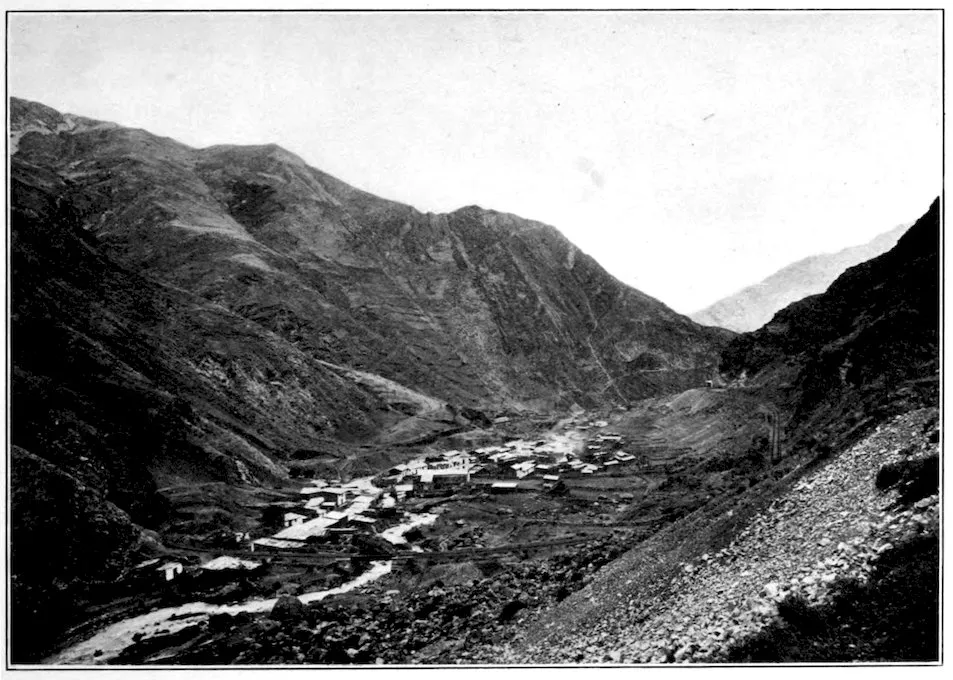
CHILCA, A MINING TOWN ON THE OROYA ROUTE.
From Chosica to Matucana, the scenery is ever-varying and always magnificent. The
train climbs five thousand feet within a distance of thirty miles, crossing the chasm of the
river many times and plunging through tunnels that succeed one another with remarkable
frequency. Purguay and Corona are the first bridges of importance along the line. Soon
after leaving them behind, the train sweeps around the magnificent curve of San Bartolomé,
passing through its famous orchards and gardens, and bringing into view all the glories of
mountain foliage that adorn the sierra at this altitude. Purple and white heliotrope, convolvulus,
clematis, the maguey plant, and the cactus are seen in profusion. Birds of bright
plumage and butterflies of variegated wings give life to a scene which is impressively silent,
save for the hard breathing of the locomotive as it plods sturdily around the curves.
Though the valley broadens at San Bartolomé, it is soon enclosed again between gigantic
walls of mountains; and, a few miles further on, the Verrugas bridge, the longest and
highest of the Oroya Route, spans the space between opposite walls of granite that rise
from the river bed to tower among the clouds. This bridge is five hundred and seventy-five
372feet long and two hundred and twenty-five feet above the river, which looks like a ribbon
of silver as it sparkles at the bottom of the ravine. After crossing Verrugas bridge, the
train disappears for a
moment in the tunnel
of Cuesta Blanca,
emerging in the midst
of the grandest scenery
imaginable as it
pushes on through
Surco and across the
Challapa bridge to
Matucana, where a
welcome half-hour’s
stop is made. Matucana
is, like Chosica,
a favorite health resort,
and the pines and
eucalyptus trees of the
neighborhood give
added healthfulness to
its pure mountain air.
Few people suffer
from the rarity of the
atmosphere at this altitude,
though it is well
to spend a night here,
if one can spare two
days for the trip to
Oroya, the rapid ascent
from sea level to sixteen
thousand feet
above being a severe
trial to the respiration.
Soroche, as the mountain
sickness is called, does not attack everyone, nor is there any certainty as to its visitation;
many people have made repeated trips without feeling any inconvenience, and have been
surprised by an attack when they thought themselves immune, while others never reach
the high altitudes without suffering from soroche. The degree of this most uncomfortable
experience varies according to one’s constitution. With some it is confined to a strenuous
effort “to get one’s breath,” while, with others, the sensation is that of having the head
slowly squeezed in a vice, or inflated by some process that threatens to burst it like an
over-filled balloon. None of the phases of soroche are agreeable, but, happily, the disturbance
disappears as soon as a lower altitude is reached.
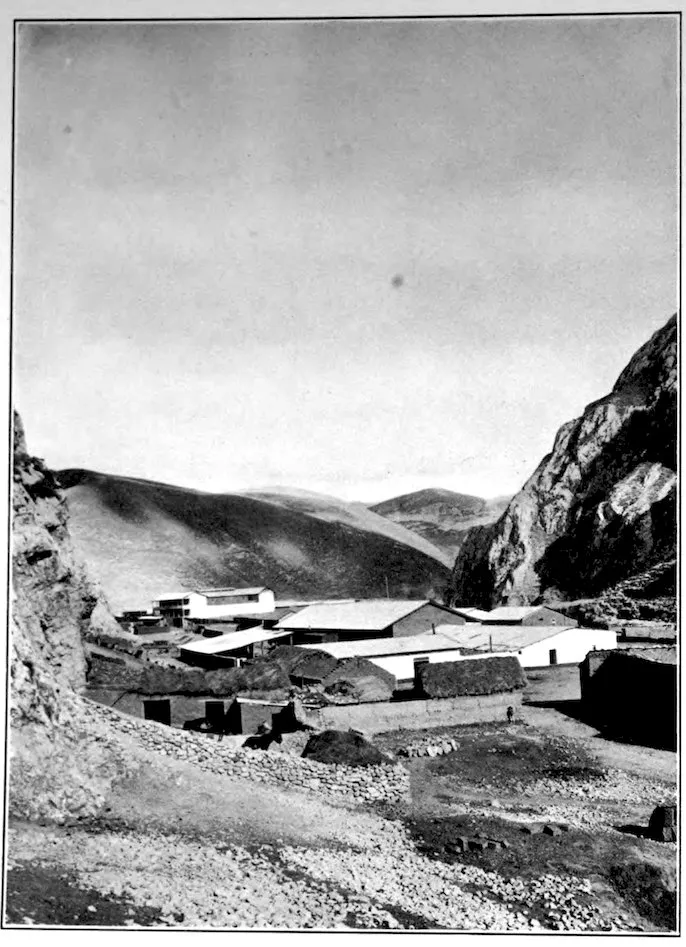
373As the railway follows the valley of the Rimac toward its source, the river gorge
becomes ever narrower, the enclosing mountains higher, and the scenery more wildly
grand and rugged. The railway train follows the tortuous line of the gorge, zigzagging
along the precipice, visible only for a few seconds from any point along the route. After
leaving Matucana, the course is taken through the very heart of the sierra, the train
crossing first the bridge of the Negra quebrada, then the great links of Tambo de Viso and
Champichaca in quick succession, these wonderful structures spanning the chasm at
short intervals of three or four miles. From the car window, the passenger looks down
into the depths below and up to the towering peaks, and feels much as if travelling in
mid-air. At Tamboraque, which is situated nearly ten thousand feet above the sea,
the scene changes, and the region of the higher sierra comes into view, with its mining
towns and snow mountains. San Mateo quebrada, in the depths of which lies the picturesque
town of the same name, is hardly passed before the train crosses, a mile away, one of
the most remarkable bridges of the whole line, the Infernillo. It stretches across a narrow
ravine between two walls of rocks, both of which are tunnelled so as to provide a passage
for the railway. As the train flashes out on the bridge from invisible depths on one side
and disappears as mysteriously on the other, the effect is singularly weird. From this point
to Galera tunnel the ascent is very steep and winding, the train climbing five thousand feet
in twenty-five miles, crossing several bridges and passing through a number of tunnels.
All along the Oroya Route, from San Mateo to its terminus in the sierra, are scattered
mining towns of growing importance. Rio Blanco, five miles from San Mateo, has important
smelting works, and Chicla, four miles away, a thousand feet higher up the Cordillera,
lies in the heart of a rich mineral district. It occupies a picturesque location, especially as
seen from the car window after the train has made the immense loop necessary to carry it
across the valley and up the opposite slope on its way to Casapalca and Ticlio. From this
eminence a magnificent view of the valley appears, with Chicla nestling below and snow-clad
mountains looming in the distance.
Casapalca is a typical mining town of the sierra, with its smelters spread over the
bare, brown hillside, its great chimneys and its smoke. It is situated at an altitude of
thirteen thousand feet, and has a cold climate all the year round, invigorating and healthful.
From Casapalca to Ticlio the distance is about ten miles, and the region of perpetual snow
appears as the train pulls up the last few leagues toward the Galera tunnel. The summit
of Mount Meiggs, which is seventeen thousand five hundred and seventy-five feet high,
is nearly always wrapped in snow, though the tunnel entrance is below the perpetual
snow line.
Of the sixty tunnels along the Oroya Route, that of Galera is the longest, measuring
nearly four thousand feet in length. It is in the middle of this tunnel that the highest
374point along the line is reached. From this tunnel eastward, the train descends toward
Oroya, passing through the mining town of Yauli and skirting the bank of the inter-Andean
River Mantaro, a branch of the Perene, which, later, joins the Ucayali on its way to the
main waters of the Amazon. When the train stops at Oroya, sunset is already approaching,
and the colors of the retiring monarch of day are to be seen reflected on the surrounding
peaks and glowing in the western sky. From the window of the little hotel where
lodging is found for the night, one looks on a humble though interesting scene of pastoral
simplicity. Llamas graze wherever the coarse puna grass is found, and an occasional
vicuña may be seen. The altitude of Oroya is little more than twelve thousand feet, and
a greater descent is made from Oroya to Jauja and Huancayo, the latter being only about
ten thousand feet above sea level. From Oroya to Cerro de Pasco, the railway makes an
ascent of nearly two thousand feet.
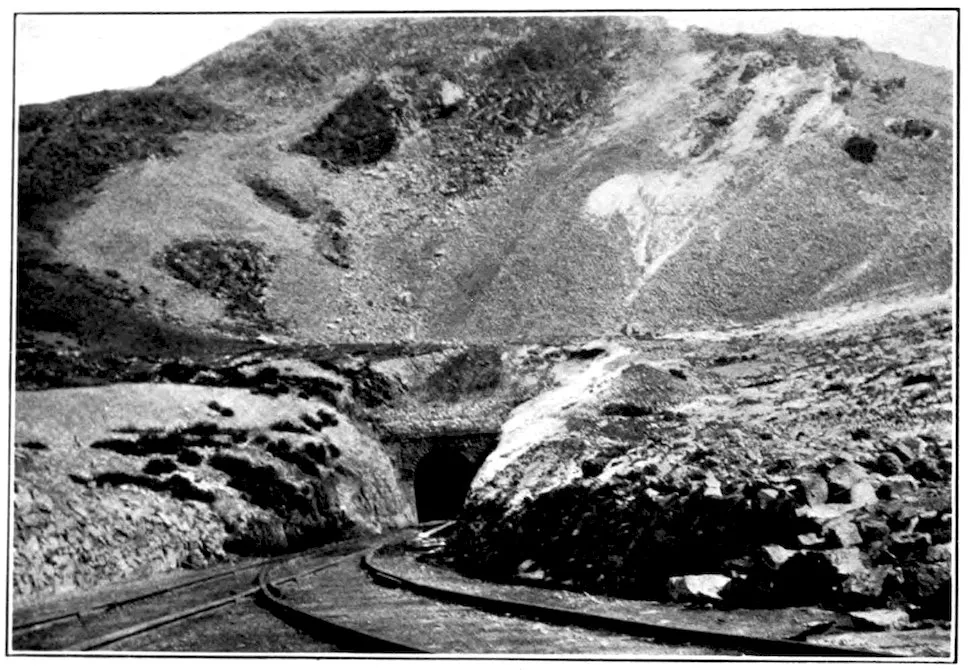
GALERA TUNNEL, HIGHEST POINT ON THE OROYA RAILWAY, NEARLY SEVENTEEN THOUSAND FEET ABOVE THE SEA.
376
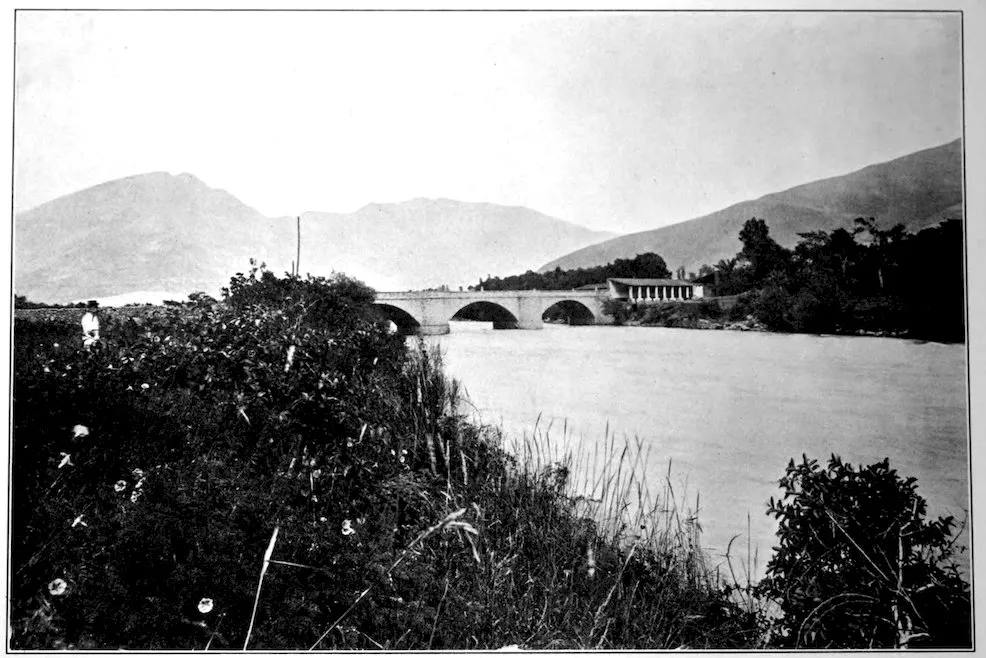
STONE ROADWAY ACROSS THE HUALLAGA RIVER, IN HUÁNUCO.
CHAPTER XXVIII A TRIP OVER THE SOUTHERN ROUTE—NEW RAILWAYS AND PUBLIC ROADS
377
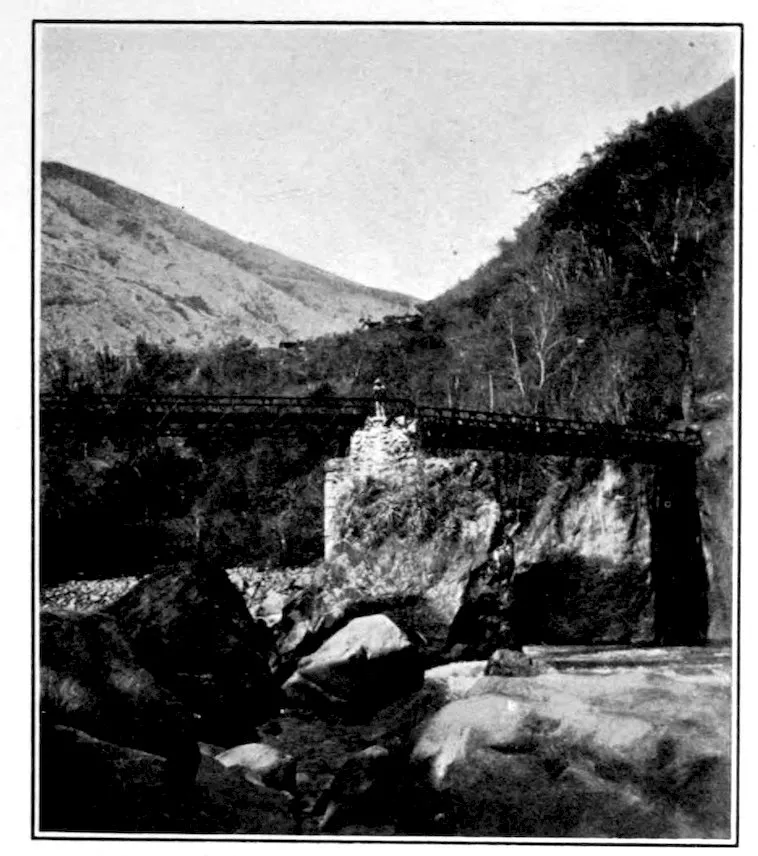
IRON BRIDGE OVER THE URUBAMBA RIVER.
In no country have greater obstacles been
overcome in the construction of railways
and public roads than in Peru, the physical
features of which present the most varied
peculiarities. The millions that were spent in
building the Oroya railway alone would have
sufficed to cover many times its mileage on a
level plain; and nearly all the railways of the
country present evidences of difficult engineering
and expensive construction. The lines at
present in operation cover about fifteen hundred
miles, while those projected and under
construction will more than double that mileage.
Most of these railways are the property
of the state, the Peruvian Corporation having
the use and management of them until 1956.
Several important lines belong to Peruvian or
foreign enterprises, or to private concerns; and in the extension of existing railways, these
enterprises play an important part. The branch from Oroya to Cerro de Pasco was built by
North American capital; and new lines are being constructed by other foreign companies.
The railways which in 1890 were turned over to the Peruvian Corporation for a term of
years in cancellation of the foreign debt of Peru, included, in addition to the Central, or
Oroya Route, the Southern railway, and the shorter lines from Paita to Piura, sixty miles;
from Pacasmayo to Guadalupe and Yonan, the same distance; from Salaverry to Trujillo and
Ascope, fifty miles; from Chimbote to Suchiman, thirty miles; and from Pisco to Ica, fifty
miles. Some of these lines have since been extended, the Southern railway having been
completed to Cuzco in the present year.
378
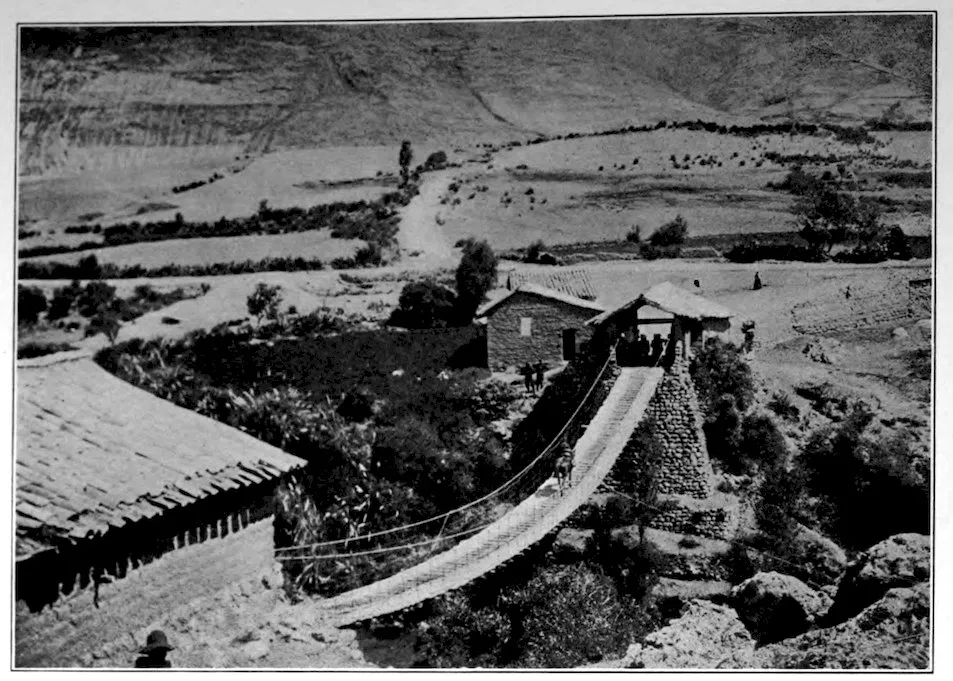
ANCIENT SUSPENSION BRIDGE ON THE ROAD FROM HUANCAYO TO CAÑETE.
The Southern railway covers a distance of two hundred and eighty-five miles, from
the seaport of Mollendo to Juliaca, where it divides, the main line going from Juliaca to
Cuzco, two hundred miles to the north, and a short branch extending south for twenty-five
miles to the port of Puno, on Lake Titicaca. The first section of this railway was built in
1870, from Mollendo to Arequipa, across the arid sandhills of the coast. A journey over this
of the road has little to offer in variety of scenery, yet there is a peculiar fascination
about its drifting crescents that seem to move with rhythmical undulation like the waves of
the sea. Barren and dull as the prospect appears, it is not without interest, because so
unlike anything one sees elsewhere. Along the first part of the route, a glimpse of green
fields brightens the view as the train skirts the valley of Tambo before entering the Pampas
of Cachendo and Islay, where not a blade of grass is to be seen. But the most of the route
lies across the Pampas until, within a few miles of Arequipa, the sierra comes into view, and
the fertile valley of Vitor is passed, with its plantations of maize and its flourishing orchards.
From this point, a new railway is being built to the valleys of Siguas, Majes, and Camaná,
in southwestern Arequipa. As the train speeds through Uchumayo, Tiabaya, and Tingo, the
dreariness of the desert is forgotten in the smiling gardens of the campiña, and when a
curve of the road shows Arequipa’s white towers against a background of green with the
379snow-crowned Misti just behind, the traveller is ready to believe all that enthusiasm relates
in praise of its charm.
Mollendo, the seaport terminus of the Southern railway, is one of the most important
cities of the southern coast. As it lies within the arid region, its water supply comes from
the sierra eighty-five miles distant, through an aqueduct made of iron pipes, from which
half a million gallons of water are discharged daily. This is said to be the longest iron
aqueduct in the world. The port of Mollendo is visited by all ships trading on the west
coast, and is the chief outlet for an extensive region in Peru and northwestern Bolivia. In
order to improve the port, a breakwater is now being constructed along a reef of partially
submerged rocks, extending about six hundred feet to the northeast of Ponce Island, which
forms the harbor. This breakwater will protect the bay from the heavy surf which formerly
dashed over the rocks, and will thus facilitate the working of the launches in loading and
unloading merchandise from the ships, besides increasing the discharging capacity of the
port. The breakwater consists of a sea wall of concrete on the inner side of the reef, with
heavy concrete blocks weighing many tons, placed irregularly to seaward to break the force
of the surf. A new landing-place of iron and concrete is also to be constructed.
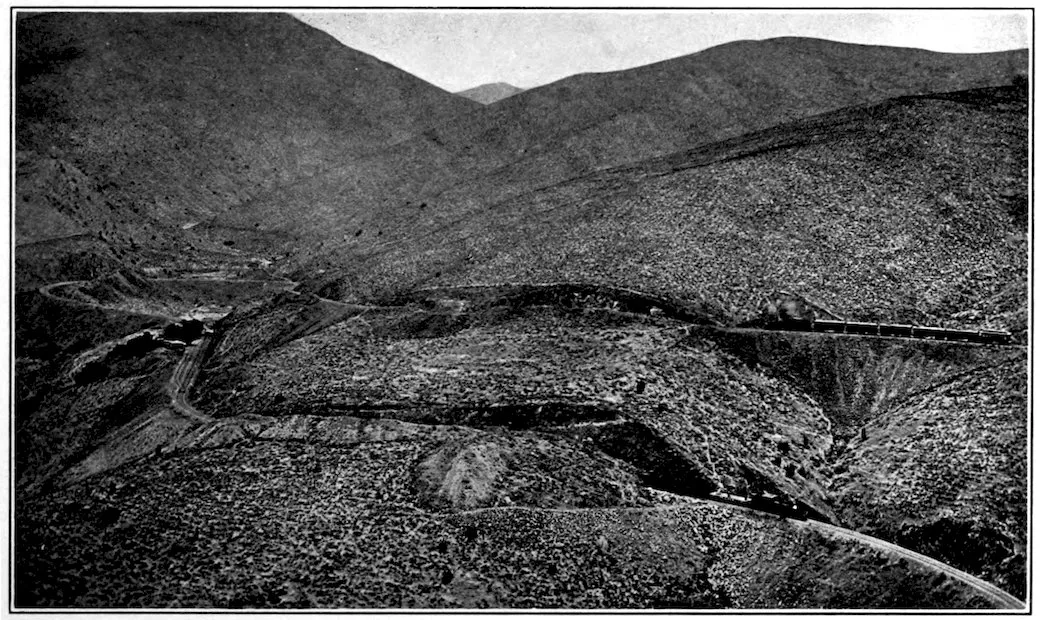
RAILWAY UP THE SIERRA FROM MOLLENDO TO AREQUIPA.
The railway from Mollendo to Arequipa reaches its highest altitude at its destination,
Arequipa being situated eight hundred feet above sea level. From Arequipa to Puno the
ascent is much greater, reaching fifteen thousand feet at Crucero Alto, about midway along
the route. The first train from Arequipa to Puno arrived at the shore of Lake Titicaca
380on the 1st of January, 1874.
The cost of this railway was
four and a half million pounds
sterling. Along its route are
several bridges, and a tunnel
four hundred feet long pierces
the mountain about thirty
miles east of Arequipa. As
the train begins its ascent
from Arequipa to Juliaca, the
city remains in view for several
miles, and the white crest
of the Misti flashes in sight
several times before it is hidden
finally behind the higher
peaks of the sierra. After crossing the Chili River, over a massive bridge sixteen hundred
feet long and seventy feet above the stream, the train makes a rapid run to Yura, fifteen
miles distant, where the most noted mineral springs of Peru are situated, a singularly
picturesque resort.
MOLLENDO, TERMINUS OF THE SOUTHERN RAILWAY.
From Yura, the ascent soon brings one to the region of the puna, and here very little
vegetation is to be seen. Pampa de Arrieros is as bleak and barren as a plateau at an
altitude of thirteen thousand feet always is; and the train speeds along for thirty miles
with little change of scene until it crosses the Sumbay bridge and climbs up to Vincocaya
and Crucero Alto. From Pampa de Arrieros, a magnificent view of the snow mountain
Coropuna is presented, this lofty
peak towering nearly twenty-three
thousand feet above the
level of the sea. The volcano
Ubinas comes into view a few
leagues beyond Vincocaya, just
before the station of Lagunillas
is reached. Lagunillas, or “Little
Lagoons” is so called from
the lakes of Cachipascana and
Saracocha, which lie on the
boundary line between the
Departments of Arequipa and
Puno, at an altitude of thirteen
thousand six hundred feet, more
than a thousand feet higher than
381Lake Titicaca. There are few signs of human activity at the smaller railway stations of the
puna, only a few cloaked figures appearing on the platform as the train stops; but at
the junction of Juliaca the scene is one of animation, and many enterprising venders congregate
outside the car windows to sell their wares. The Indian women, in their short
skirts and mantos, or shawls, and their flat, stiff-brimmed hats, present a curious spectacle
to the foreign traveller. Their dress is very sombre, in contrast to the bright colors worn
by the Indians of the lower sierra. In Puno, one sees both the Aymará and the Quichua
Indians, these two races meeting on the shores of Lake Titicaca. The Aymarás are better
sailors than their cousins of the lower valleys, and the native boats, or balsas, that ply the
lake are usually owned by Aymará traders. The balsas are made of the reeds of totora
which are found on the banks of the lake, and are so lashed together as to make the skiff
water-tight and not easily capsized.
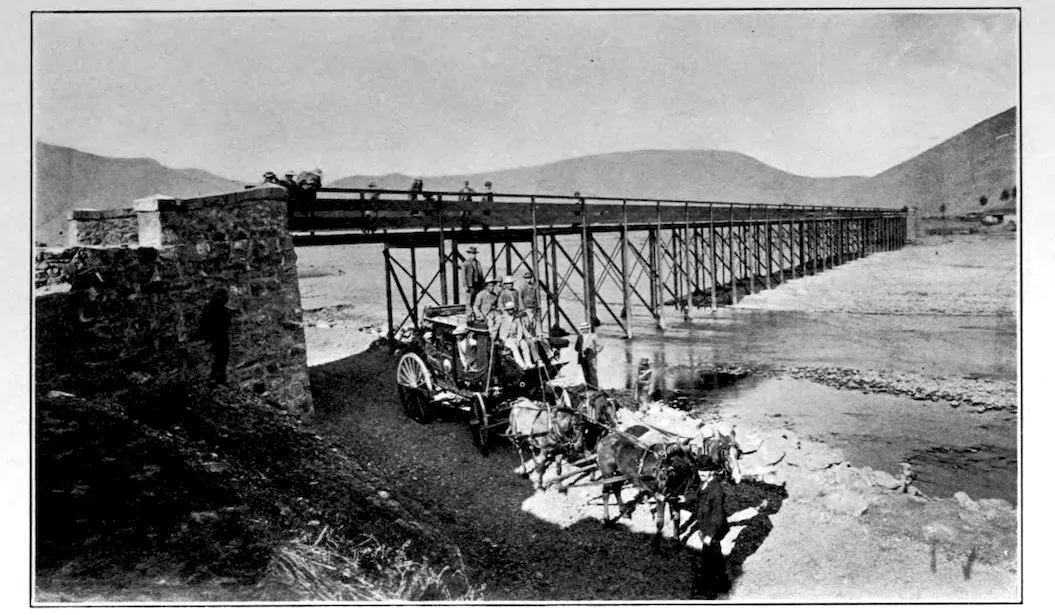
NEW RAILWAY BRIDGE AND OLD COACH ROAD BETWEEN SICUANI AND CUZCO.
A few months after the opening of the railway from Mollendo to Puno, two screw
steamers, the Yavary and the Yapura, were launched for service on the lake, having been
brought out from England in pieces, which were carried up to Puno with great difficulty
and put together in the company’s factory on the lake shore. New steamers have since
been added; the Inca and Coya, recently launched, have a capacity of five hundred tons, are
lighted by electricity, and provide accommodations for a hundred passengers. The voyage
from Puno across to Guaqui, the Bolivian port, is made in a day.
From Juliaca to Cuzco, the journey is one of constant and varied interest. Nature
presents many aspects in snow peaks and sloping valleys, and on the plateau are to be seen
herds of llamas and alpacas. At the railway stations, groups of Indians offer for sale
curiously-shaped objects in pottery, and the brilliantly colored blankets of this region. The
382jars, water-bottles, and ornaments which they make are often highly glazed and wrought
in unique fashion. Horses, bearing cavaliers of the time of Charles V., in full armor, are
favorite ornaments, though there are also water-carriers and peddlers with packs on their
backs, and market women of wonderful dimensions. Most of these articles are made to be
useful as well as ornamental, serving as water-bottles, toothpick-holders, match safes, etc.
As works of art these efforts are among the crudest, but they are made by the most primitive
process and represent much patience and industry. At Pucará, these venders throng the
station platform, Juliaca being more noted for its blanket weavers. The Indians are very
industrious, and whatever load they may be carrying is never allowed to interfere with their
spinning, which goes on all the time, the bundles being strapped on their backs so as to
leave their arms free.
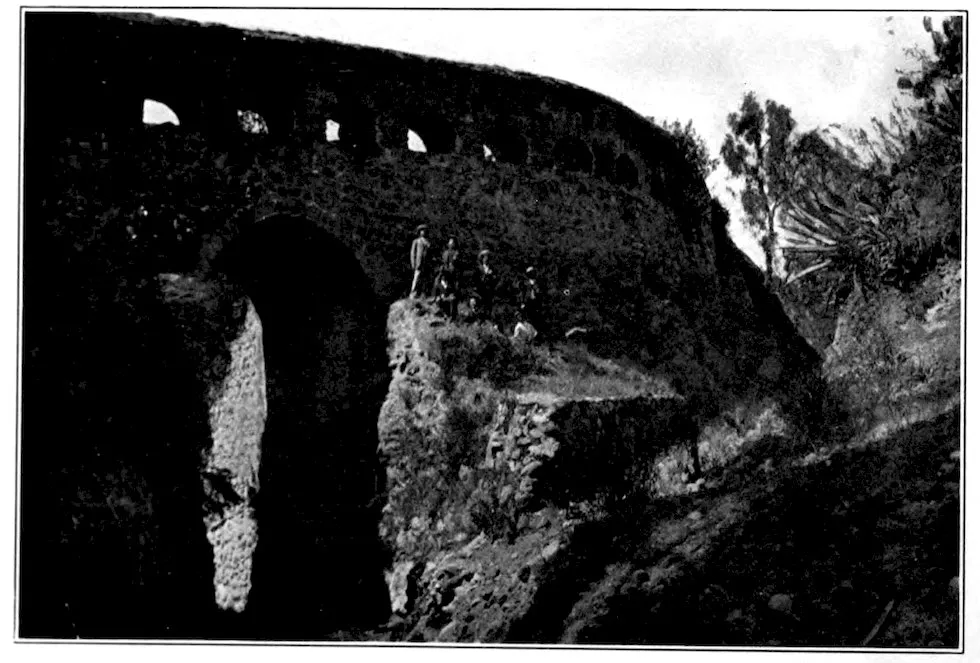
ANCIENT VIADUCT SOTOCCHACA, AYACUCHO.
From Tirapata, the headquarters of the Inca Mining Company and an important town
of the plateau, the railway crosses a bridge and makes a slight ascent to Ayaviri and Santa
Rosa, and a steeper climb to La Raya, which is the highest point between Juliaca and Cuzco.
La Raya marks the boundary between the Departments of Puno and Cuzco, and is also the
summit of the watershed which divides the Amazon system from that of Lake Titicaca. It
is situated at an altitude of fourteen thousand one hundred and fifty feet above sea level.
From La Raya, the train descends rapidly to Aguas Calientes (hot springs), Marangani, and
Sicuani, two thousand five hundred feet lower, in the valley of the Vilcanota River. Before
the completion of the railway to Cuzco, a diligence carried passengers from Sicuani to the
383ancient Inca capital, and, although the modern method of travel is to be preferred for many
reasons, there was something charming in the drive along the old coach road that cannot be
enjoyed by the traveller who is
being whirled over the route at
railway speed.
Formerly, the train arrived
at Sicuani in the evening and
passengers spent the night in
one of the quaintest and most
interesting towns of Peru, before
taking the diligence to continue
their journey to Cuzco.
The market place of Sicuani is a
glow of color when the Indians
fill it with their wares. In the
early morning they may be seen
coming down the mountain into
the town, the men wearing a
dress introduced by the Spaniards
during the time of the viceroyalty, with knee trousers and a coat of the period
of Louis XIV., the women gorgeous in their almillas, or chemises of bright red or yellow;
their chamarras, jackets of bright blue or green velvet; their chumpes, many-colored scarfs
wound around their waists; and their flat, broad-brimmed hats made of cloth, lined
with red and covered with silver braid. They scurry along the mountain road in high
glee, their llamas in the lead with heads erect and long straight ears adorned with tassels
of red, yellow and green woollen yarn. All the dignity of the procession is borne in
the stately carriage of the llamas, whose leisurely movements are never disturbed by
anything but fright.
RAILWAY ENGINEERS’ CAMP ON THE LINE BETWEEN CHECCACUPE AND CUZCO.
Since the railway has been opened to Cuzco, there is no longer any necessity to break
the journey between Sicuani and that city, as was done in the days of the diligence, when
a stop was made at Cusipata, “the happy place,” after a wonderful ride along the valley of
the Vilcanota, crossing the Checcacupe River and revelling in scenes full of historical
interest and romantic charm. The second day’s ride used to take one from Cusipata to
Cuzco, past the ruins of Viracocha’s famous temple, and close to the lake of Urcos, where,
tradition says, the chain of Huascar was buried when the Inca’s subjects learned that the
Spaniards were coming to Cuzco. This wonderful chain of gold, which is said to have
been long enough to enclose the plaza of Cuzco three times and so heavy that each link
weighed a hundred pounds, has been the object of many expeditions to Urcos. Near this
spot, Almagro and Pizarro fought one of their bitterest battles, and in the neighborhood
tradition locates many victories of the Incas’ armies in earlier times.
384The rope bridges formerly swung across the river have in many cases been replaced
by bridges of stone, though a few of the older construction remain and are still strong and
serviceable. Ruins of the ancient aqueducts are to be seen, as well as the Incaic andenes
of the mountain side. The road passes through deep gulches mantled with green and
under the shadow of sheer palisades towering a hundred feet above. Rippling streams pour
their silvery tide into the river that winds its broadening course along the valley, and pepper
trees, eucalyptus, furze bushes six feet high, and prickly cactus, grow in profusion along
the roadside. The present railway follows closely the old diligence road. From Urcos, a
branch line has been surveyed to the port of Tahuantinsuyo, on the Madre de Dios River,
and another line is projected to connect the city of Cuzco with Santa Ana, the capital of the
province of Convencion, in the same department. The immense importance of the railway
to Santa Ana lies in the facilities it will afford for traffic in the region of the Montaña that is
richest in coca and other valuable products. The law authorizing the construction of this
line, prepared by Dr. Benjamin de La Torre, was passed by Congress in October, 1907, and
the work is to be completed in three years more.
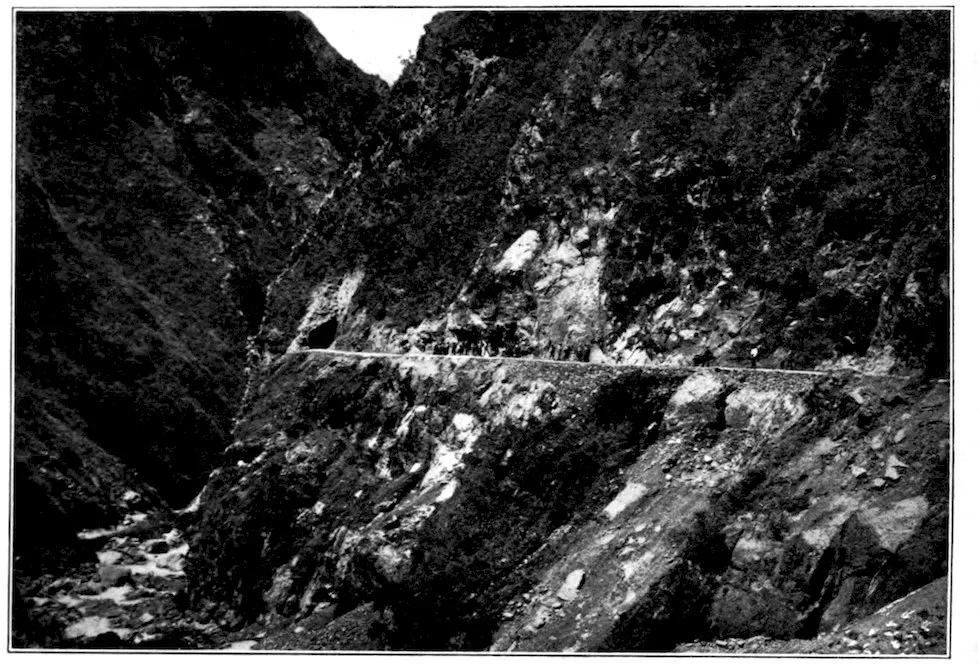
HIGHWAY BETWEEN THE SIERRA AND THE MONTAÑA. IN THE DEPARTMENT OF JUNÍN.
Not only have the Central and Southern railways been extended and supplemented
with branch lines within the past four years, but nearly all the existing railways of the
385republic have been brought to form links in the general system which the government has
planned for the facilitation of traffic throughout the whole country. From the trunk line,—which,
when completed, will extend from the border of Ecuador in the northwest to that of
Bolivia in the southeast,—branches are being built to the head of navigation on all the great
waterways of the upper Amazon. These lines will open up the vast region of the Montaña
to the ports of the Pacific, and will multiply the available resources of the country a hundredfold.
Products of the interior which have been cut off from the consumers of the
coast by the great wall of the Andes, will be exchanged for goods brought to the Pacific
ports; and months will be saved in the transportation of articles required for household use
in the Amazon valleys. It will no longer be the custom for deputies from Iquitos to travel
to Lima by way of Europe and Panamá, as at present, rather than across their own country,
because the foreign trip takes less time. One of these branch lines is that previously mentioned
as under construction to connect Urcos, on the Southern railway, with the port of
Tahuantinsuyo on the Madre de Dios; another is being built from Oroya to the Ucayali River,
passing through Tarma and along the present road to the Pichis and Perené Rivers. It is to be
completed in 1913. A third line is entirely new, to be constructed from the port of Paita to
Puerto Limon on the Marañon River, with a branch to Puerto Yurimaguas on the Huallaga.
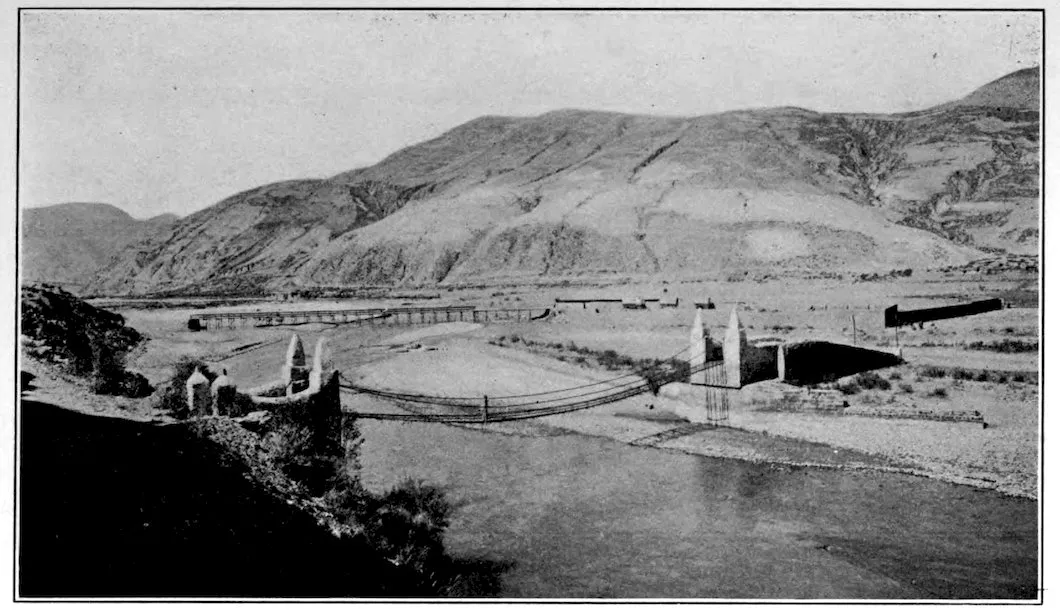
VIEW OF THE VALLEY BETWEEN SICUANI AND CUZCO, SOUTHERN ROUTE.
All the railways projected and under construction to connect the Pacific seaports of Peru
with the Amazon tributaries are of political as well as commercial importance, as they will
serve to unite in closer bonds the people of the coast, the sierra and the Montaña, hitherto
so remote from one another as to have few interests in common, except such as tradition
and sentiment have preserved.
386The port of Paita offers many advantages as the Pacific terminus of a railway to the
Amazon waterways. From Paita to Puerto Limon the distance is only four hundred miles,
and from Puerto Limon to Pará it is nearly three thousand miles. At present, most of the
commerce of the Montaña is carried down to Pará over the Amazon and its tributaries, and
many of the river routes are even longer than that from Puerto Limon. It is estimated that
the railways between the Pacific coast and the Amazon will not only provide much more
rapid transportation, but also a more economical service.
The railways of the coast have been extended during the past four years both longitudinally
and in the direction of the sierra. From the port of Tumbes a line was recently
completed to La Palizada and the landing-place of the port was improved by the construction
of a steel pier eight hundred feet in length. The Pacasmayo and Yonan railway has
been extended to Chilete and Cajamarca, to afford an outlet for the cereals and other products
grown in those sections of the sierra. From Chimbote to Huaraz and Recuay one of the
most important of the coast railways has been built. A line is projected to run direct
from Cerro de Pasco to the coast, with its seaport terminus at Huacho, the concession
for its construction having been given to a North American capitalist. An important new
railway connects the port of Ilo with the city of Moquegua; it was completed during the
last months of President Pardo’s administration. Along the shore of the Pacific, a railway
has recently been completed from Lima to Huacho on the north, and another is under
construction from the capital to Pisco in the south.
Not only has railway construction received a great impetus under the energetic and
progressive government of the past few years, but the public roads of the country have
been extended and improved, new bridges have been built, new wharves constructed in
several ports, and greater attention paid to commercial facilities than ever before.
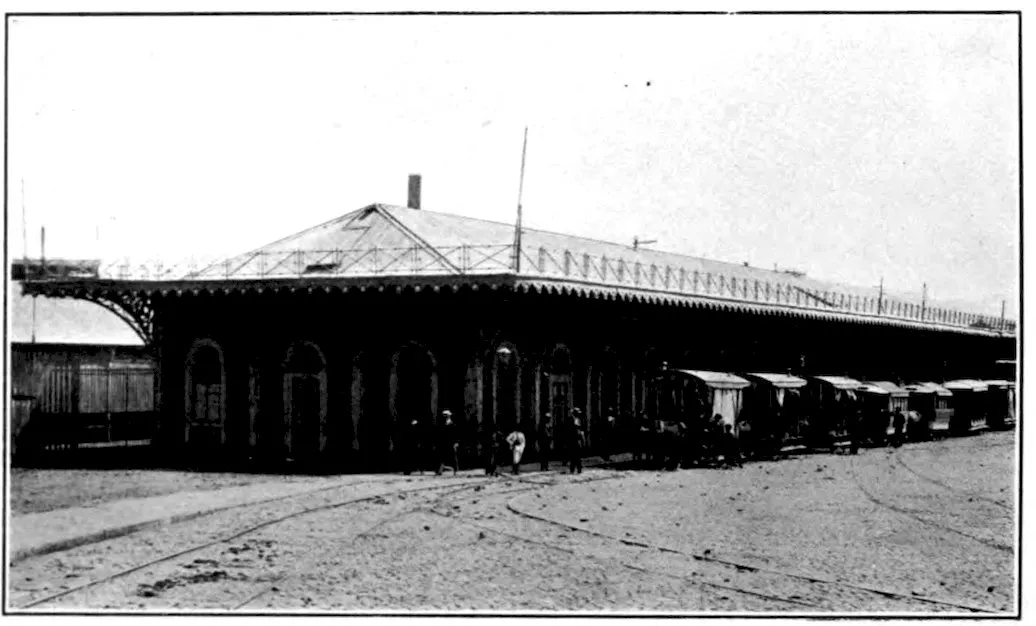
SOUTHERN RAILWAY STATION, AREQUIPA.
388
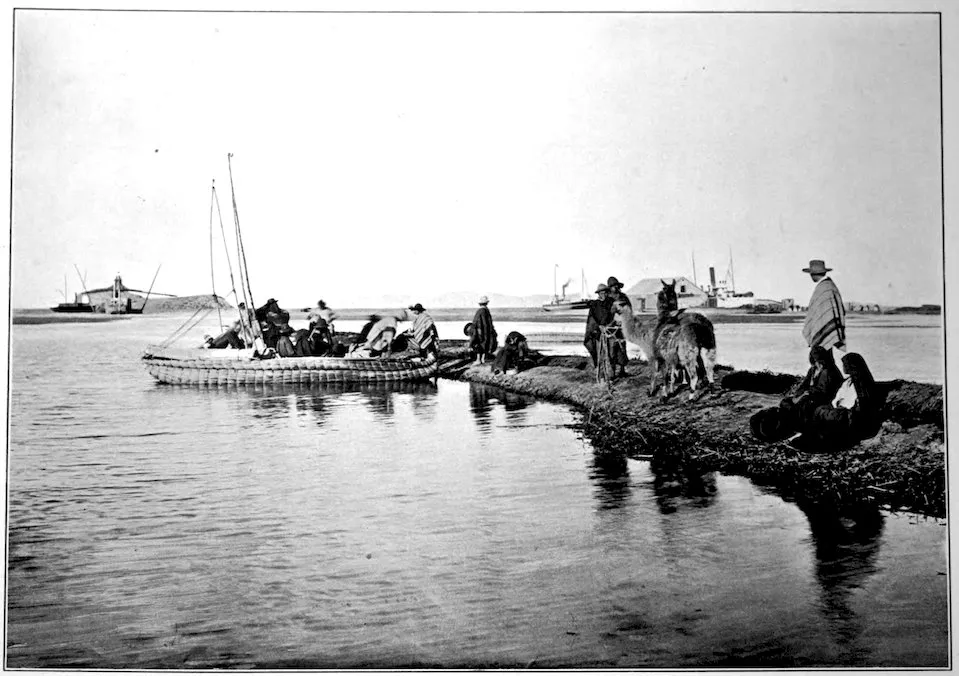
LLAMAS OF PUNO EMBARKING ON A BALSA, LAKE TITICACA.
CHAPTER XXIX PASTURE LANDS OF THE PLATEAU—THE ALPACA AND THE VICUÑA OF PUNO
389
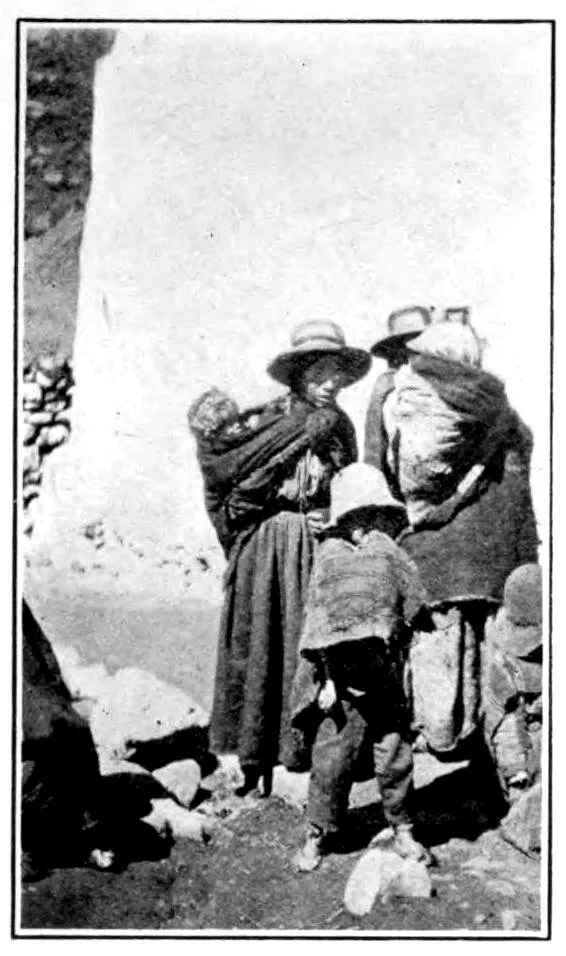
A NATIVE FAMILY OF THE PUNA.
The extension of railways in Peru is destined to aid greatly
in the development of one of the most promising industries
of the country, the raising of cattle, sheep, alpacas, and
other live stock. On the high tablelands of Cajamarca, Junín,
Ayacucho, and Puno, and in the upper valleys of Cuzco, the
climate and pasturage are particularly adapted to cattle-farming
and to the production of a hardy kind of sheep, easily cared
for and capable of great improvement under scientific culture.
The difficulties of transportation formerly interfered with
success in cattle-raising; but, with the building of new railways
that furnish facilities in shipping the cattle, hides,
and wool from the interior, this industry has received great
encouragement and is now in a more thriving condition than
ever before. Some of the large ranges of the plateau cover
an area of more than a hundred square miles and afford
pasturage for twenty-five thousand head of cattle. On the
plains of Puno, thousands of cattle, sheep, and alpaca are pastured, the wool industry
receiving especial attention in this department, which may be called the “wool-growing
state” of Peru.
The cattle of Cajamarca, La Libertad, Ancash, Junín, Lima, and Arequipa are the best,
as in these regions there is abundance of lucerne, grass, sorghum, and other good pasturage.
In these departments, also, the native stock has been improved by crossing with foreign
varieties, imported for the purpose. The criollo cattle, the result of cross-breeding, are a
fine race, and good for dairy purposes, cows giving as much as three or four gallons of
milk daily. The imported cattle usually belong to well-known European stock, chiefly the
Holstein, Brown Swiss, Ayrshire, Devon, and Jersey varieties. The Sociedad Ganadera
de Junín is doing much to raise the standard of cattle culture in that department, and is
390establishing dairies for the manufacture of butter, cheese, and other products, which are
now largely imported from Europe. On some of the sheep farms the ewe’s milk is used
in making a very fine quality of cheese, and it is believed that this industry may be
so developed as to compete with the famous Roquefort cheese.
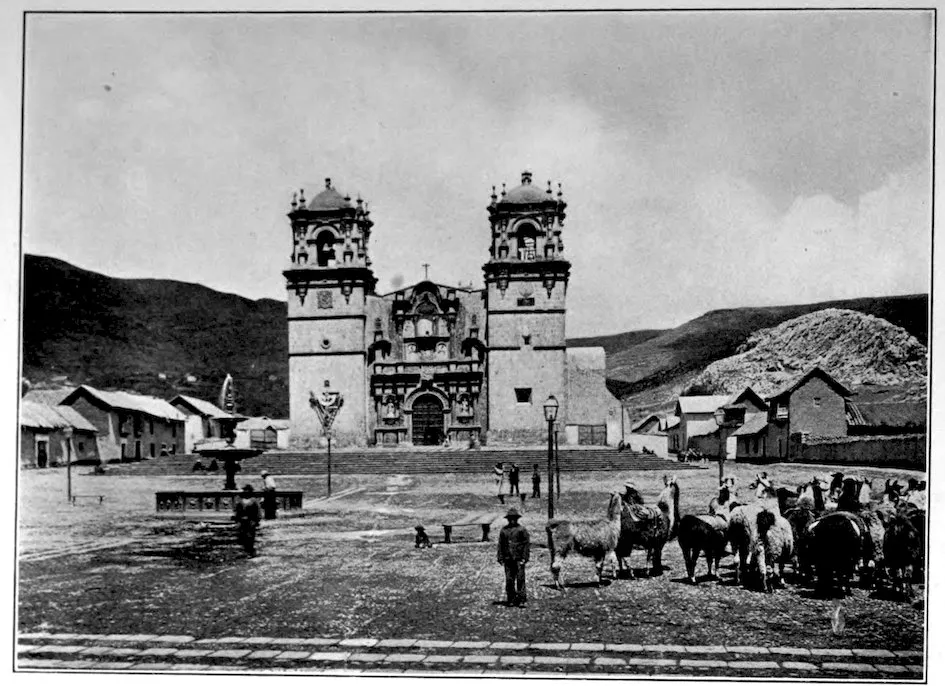
THE PRINCIPAL PLAZA OF PUNO.
Nearly all the native live stock of Peru is of Spanish origin, the first horses, cattle,
and sheep having been imported at the time of the Conquest. The llama, alpaca, and
vicuña are, of course, of Andean origin. The Peruvian horses are descendants of the
Arab stock, the best specimens being reared on the coast, though there is ample opportunity
for increasing both the quality and the number of good horses in the inter-Andean
region, and, especially, on the higher slopes of the Montaña. The government is devoting
considerable attention to the improvement of the live stock of the country, the National
Society of Agriculture stimulating endeavor in this direction by competitive exhibitions.
The live stock farms show the effects of progressive enterprise. The Atocsaico
hacienda, covering eighteen square leagues on the plateau of Junín, has fourteen leagues
enclosed in wire fences, and is provided with many modern conveniences. The administration
house is a commodious dwelling built of wood and lined with zinc, besides which
391there are outhouses, storerooms, and stables, and a small hydraulic press. The hacienda
also has corrals and a bathing place for the sheep, built according to the Australian
system, a tank of concrete for the water and iron apparatus arranged over an oven
for heating water and preparing the bath. Ten Scotch shepherds are employed, and
they are well paid, having houses provided for them, with some of their food supplies,
besides good monthly wages. The Scotch collie accompanies his master, and, in addition
to ten of these dogs, three Scotch greyhounds are kept; all the dogs are provided
with comfortable kennels. Another farm of the same region, the Castaneda hacienda,
has a fine dairy and a tannery completely equipped for the treatment of all kinds of
skins. There is a large field in Peru for the tanning industry, which is still in the infancy
of development.
The native sheep of the plateau are of small stature, long-legged, thick-skinned, and
have a rough and scanty fleece; but when this puna variety is crossed with the imported
merino sheep, the criollo offspring are larger, not so thick-skinned and have abundant
wool of a much curlier and finer quality. The shearing takes place annually, the
production being from five to eight pounds of wool per head, according to the age of
the sheep and the kind of pasture. The most important wool-growing industry is that
of the plateaus on which the llama, alpaca and vicuña have their haunts.
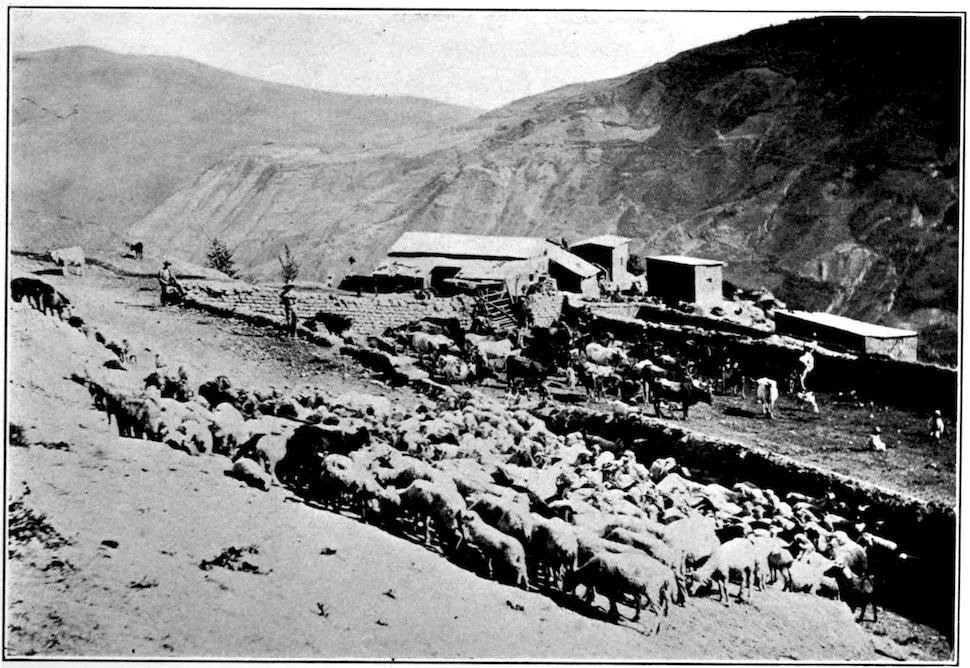
SHEEP ON THE PASTURES OF ANCASH.
392The Department of Puno
is particularly noted for its
alpacas, which have remarkably
heavy fleeces of great
length. The alpaca is sheared
every two years and gives
from six to nine pounds of
wool, the best quality being
that of the fleece taken from
the animal when three or four
years old. The wool of the
llama is much coarser, and
that of the vicuña a great deal
finer, than the alpaca’s wool.
The llama, sometimes called
the “camel of the Andes,” is
chiefly valued as a beast of burden, while neither the alpaca nor the vicuña is employed
in this way. The alpaca, a smaller animal than the llama, and more stockily built, is
usually brown or black in color, has shorter legs and carries itself with less stately dignity
than the prouder llama, which seldom curves its long neck, holding its head high and
turning it from side to side with a leisurely movement, as it strides along with slow,
measured tread. The llama, alpaca, and vicuña are best understood and most easily managed
by native Indian shepherds, who seldom have any trouble in leading them wherever
they will. The Indian never treats his pastoral charge with cruelty, and his methods are
distinguished by that nonchalance and abundant leisure which seem to be his most marked
characteristics. The vicuña produces less wool than either the llama or the alpaca, but its
fleece is of a much finer quality, which brings better prices in the European market. Peru
exports annually about four million pounds of wool.
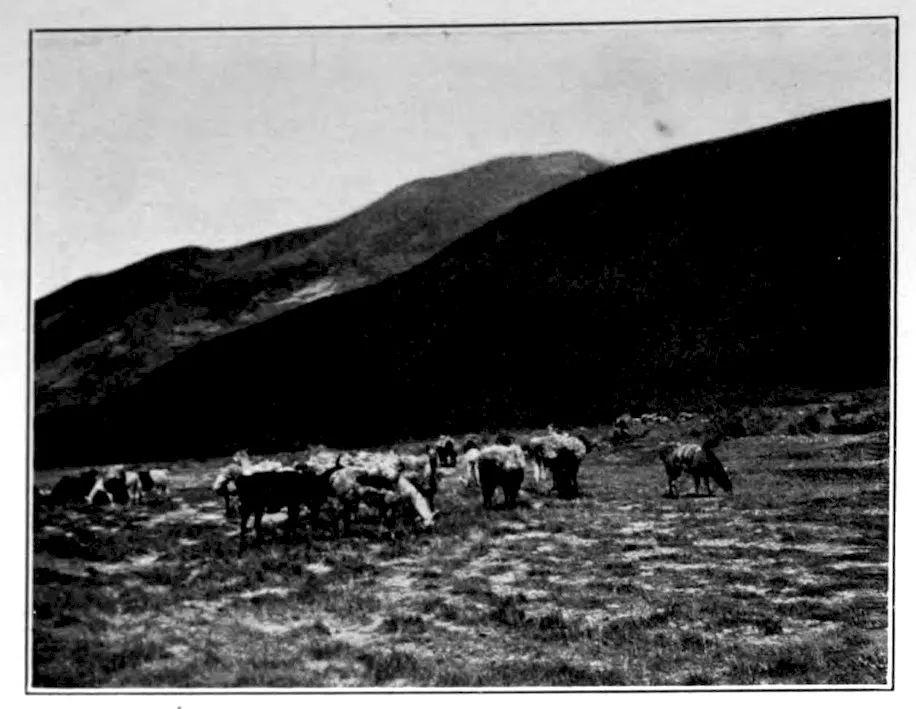
LLAMAS GRAZING ON THE PUNA.
The culture of vicuña wool deserves especial attention as it is one of the most
lucrative industries of the country, and, with intelligent and persevering devotion to its
interests, may be developed far beyond its present condition. The existence of the vicuña
in Peru dates back to pre-Columbian times, when it was a favorite offering of the Incas in
sacrifice to the God of the Sun at the great feast of Raymi. The Spaniards gave it the
name of “carneiro de tierra,” or land sheep; and naturalists who travelled in Peru during
the time of the viceroyalty classified it as belonging to the camel family.
The vicuña stands from three to four feet in height and has a long slender neck on
which is set a small, rather delicately-shaped head with narrow pointed ears that stand
upright; the body is about three or four feet in length, and the legs are long and very
slender, the hind legs being longer than those in front, which is an advantage to the
animal in its mountain climbing. The fleece is a delicate light tan color, darker on the back
393than elsewhere,
the coat showing
light under
the body and on
the inside of the
legs, where it is
almost white.
The vicuña has
no horns and its
chief defense is
the same as that
of the llama,
which shows displeasure
by spitting
at the offending
object. Almost
as soon as born,
at least within a
few hours after
making its entrance
into the world, this remarkable little animal is ready to follow its mother on a long
and tiring run, and by the second day it will show wonderful strength and velocity in
keeping up with the older one, especially if they are fleeing from pursuers.
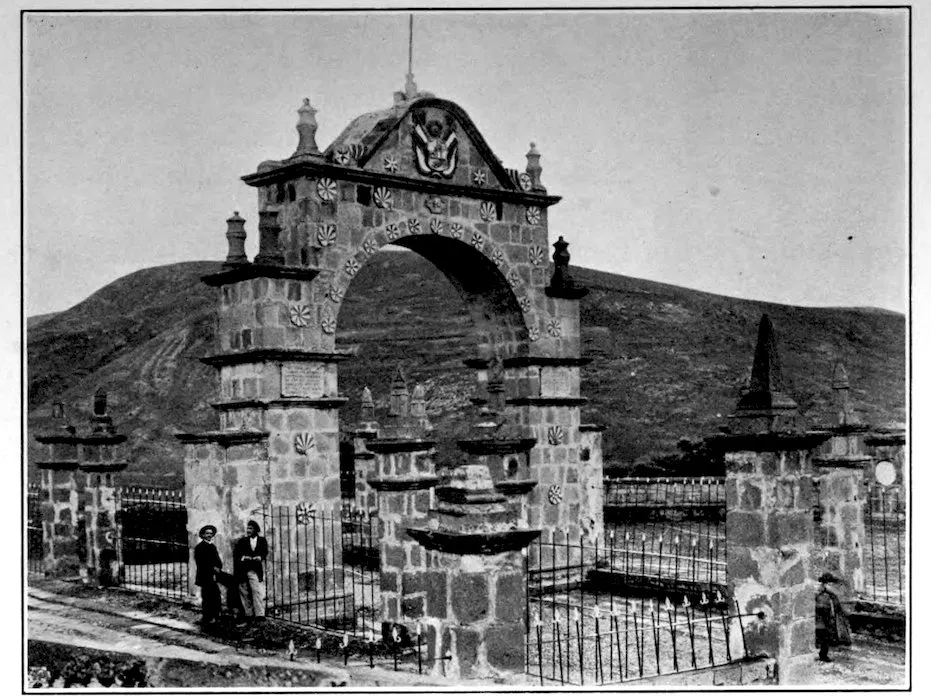
Only in a very limited region of the Andes is the vicuña to be found, chiefly in Peru
and Bolivia, where it seeks the highest parts of the sierra at an altitude of from ten thousand
to fifteen thousand feet above sea level, in a region where the temperature is below freezing
point. An interesting description of the vicuña’s habits is given by a Peruvian writer, Señor
G. Gutierrez Madueno, who has made a careful study of this animal. He says that as soon
as a family of young vicuñas are full grown,—that is, when ten months or a year old,—the
females make such an onslaught on their brothers, kicking and biting them, that the latter
are forced to leave the maternal shelter and go elsewhere, either to form their own ménage
in an Adam’s paradise, or to seek mates in other homes and establish new relations. In any
case, not more than one male is permitted in a herd, which used to number as many as fifty
females, though few are now seen to have more than twenty. The chosen male always
leads the herd, keeping a certain distance ahead so as to warn them of any approaching
danger; this he does by making a curious sound, at which his followers retreat to a safe
distance, usually up the cliffs, from which they can look down on the intruder and satisfy
their curiosity. If a hunter kills the male, the entire herd surrounds the dead body in an
effort to resuscitate it, manifesting every sign of grief; if, on the contrary, one of the females
is killed, it is left to its fate, while the survivors make all speed to a place of safety.
394On the high plains and sierras of Puno the hunting of the alpaca and the vicuña for
their wool has been active ever since colonial days, though it is only within recent years
that the necessity for protecting this important source of wealth has occupied the attention
of the authorities. The government is now thoroughly awakened to the danger threatened
by a constant and reckless destruction of these valuable wool-bearing animals, and laws
have been adopted looking to their preservation. The city of Puno, founded by the
Viceroy the Count of Lemos in the seventeenth century, is the central market and shipping
point for the alpaca and vicuña wool of a large territory, and in the museum of the city
are to be seen some rare specimens of beautiful textiles woven from these products.
The city of Puno lies on the border of Lake Titicaca, overlooking that picturesque body
of water more than twelve thousand five hundred feet above the sea. It is an interesting
town, with its great central plaza, its fine old churches, and the handsome stone arch gateway
that was built under the viceroyalty. A statue in the plaza honors the memory of a brave
patriot who exchanged his judicial robes for the uniform of a soldier and fell fighting for his
country in the last war. The hospital and orphanage of San Juan de Dios, founded more
than thirty years ago by the Benevolent Society, looks like a haven of comfort, surrounded
by pretty flower gardens and directed by sweet-faced Sisters of Charity. The national college
of San Carlos represents the city’s advancement in educational matters, its curriculum
embracing practical as well as theoretical instruction. Puno has archæological interests also
as it lies in the centre of a district in which are found stone monuments of great antiquity.
Sallustani is the most famous of these ruins, with a round tower of unknown origin.
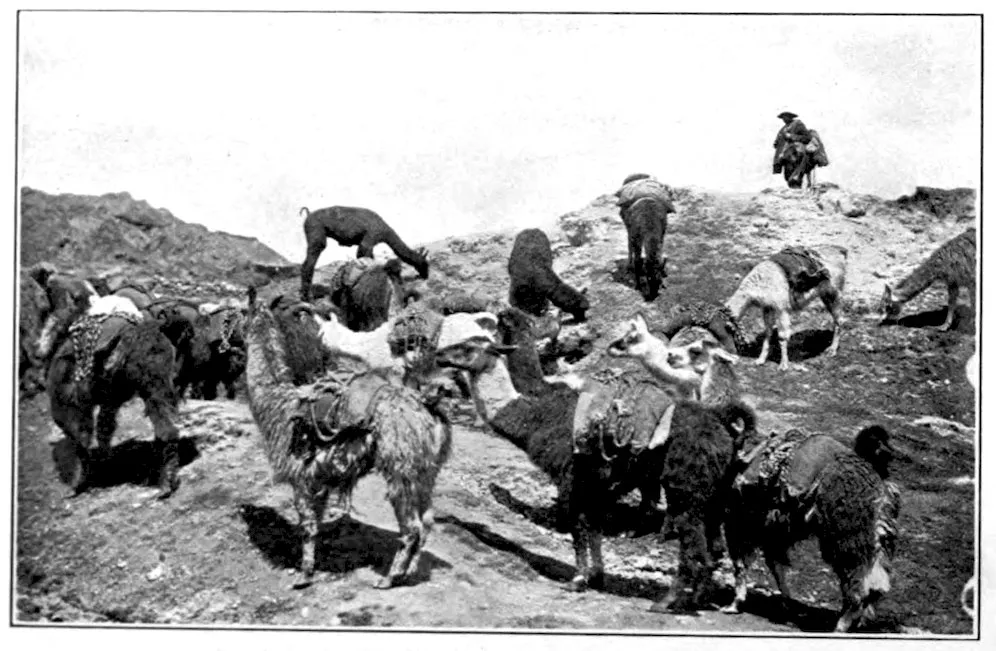
LLAMAS—SHOWING ONE RECENTLY SHEARED.
396
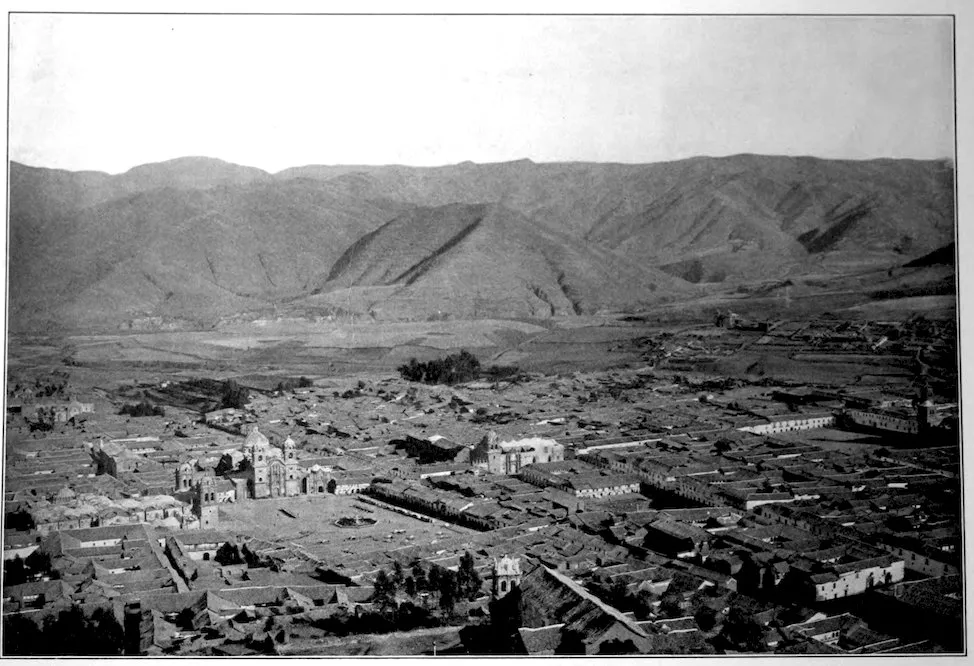
CUZCO, THE ANCIENT CAPITAL OF THE INCAS’ EMPIRE.
CHAPTER XXX CUZCO, THE ANCIENT INCA CAPITAL
397
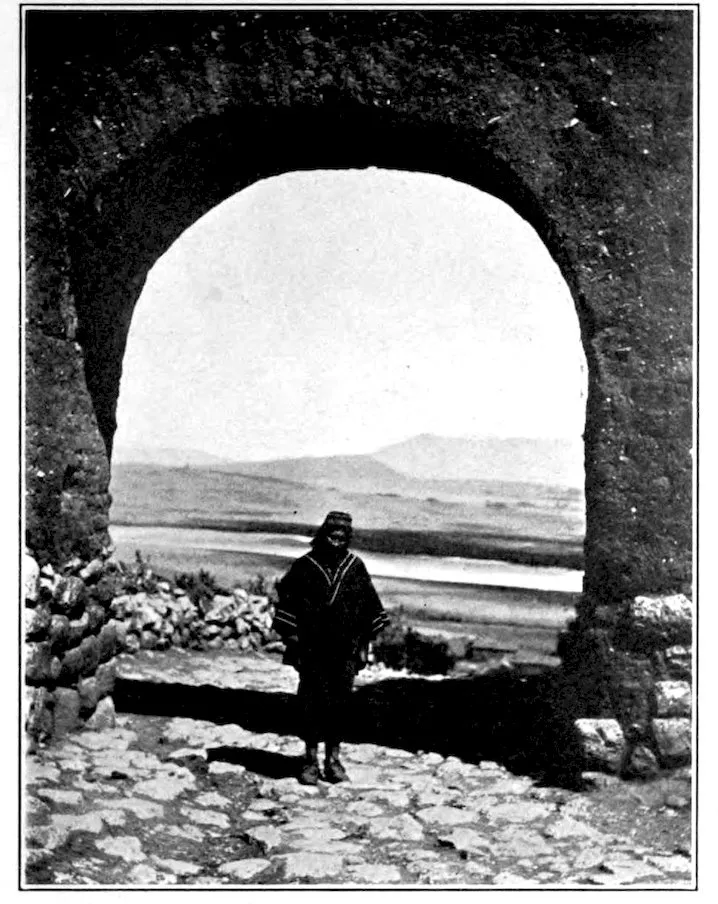
ANCIENT ADOBE ARCHWAY NEAR CUZCO.
As the Imperial City of the Children of the
Sun, Cuzco was, four centuries ago,
the metropolis of a vast domain, greater in
extent and richer in treasure than most civilized
countries of its day. Few capitals rivalled
the chief city of the Incas in wealth and population
at the time of the Spanish invasion,
when, with its rural environs that stretched
out for leagues in every direction, it numbered
two hundred thousand inhabitants, and
was the centre of religious and social influence
in all Peru. Every subject of the Inca
looked toward Cuzco with pride and reverence,
glorying in its palaces and temples and
bringing tribute to its sovereigns from the
remotest provinces, in adoration of the royal
grandeur and power. Gold, silver, precious
stones, and fine textiles were constantly
added to the storehouse of treasure which
the sacred city guarded as the divine right of
its princes. No wealth was ever permitted to leave its precincts. It is no wonder that the
Spaniards were amazed at the magnificence of its temples and the abundance of its treasure.
For centuries, the contributions had accumulated, and with each succeeding emperor the
splendor of the royal palaces was enhanced by new gifts, and the golden disks in the Sun
temples grew larger and of finer workmanship.
398
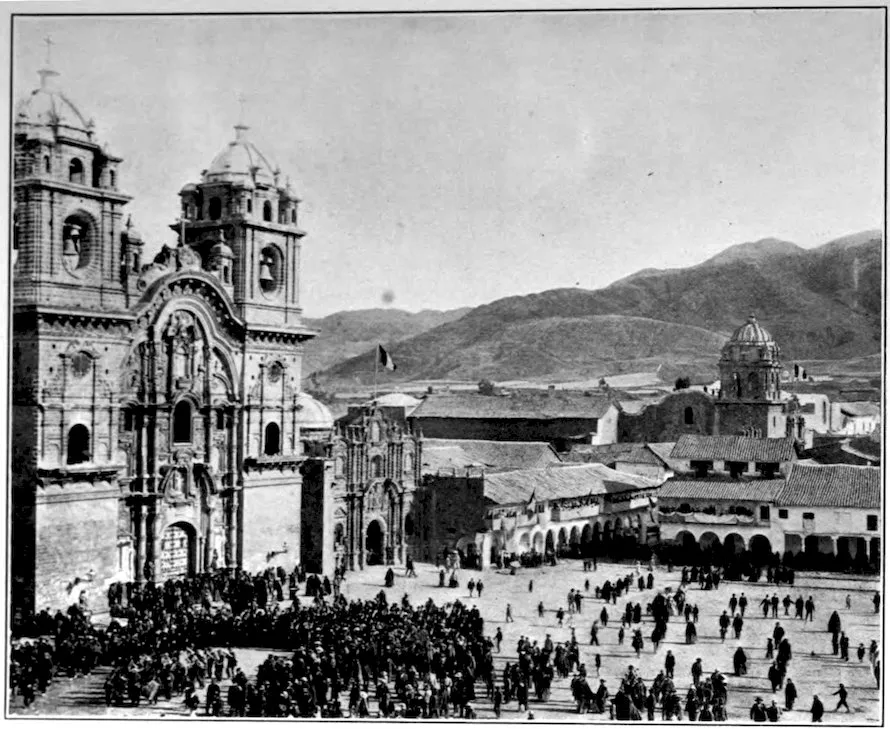
A FEAST DAY CELEBRATION, SHOWING THE UNIVERSITY AND THE JESUITS’ CHURCH, CUZCO.
It is impossible to visit Cuzco without finding its wonderful stone walls and ancient
ruins objects of increasing interest and curiosity. Every street and alley tells a story of
Inca days, old walls of Incaic architecture forming the base of many of the modern edifices.
In Cuzco more than in any other city of the New World, the ancient landmarks have been
preserved in the midst of modern changes. The Temple of the Sun and the great fortress
of Sacsahuaman, “the Capitol and Coliseum of Peruvian Rome,” still present interesting
features to the sightseer, notwithstanding the vandalism of the Conquerors and the destructive
elements of time. Not only is the convent of Santo Domingo built on the foundation
walls of the ancient Coricancha,—the greatest and richest of all the temples of Inca
worship,—but a Christian altar occupies the very place where the sacred emblem of the
Sun god was guarded by the high priests of Tahuantinsuyo, and the cells of the convent of
Santa Catalina are the same chambers that were once reserved for the Virgins of the Sun.
The cloister of Santo Domingo is formed of massive stone columns, which support a
beautifully carved archway surrounding the patio or inner garden of the convent. This was
one of the first edifices built by the Spaniards in Peru; and a short distance away is the
historic spot where the Conquerors formed their quartel and took refuge when overpowered
by the superior numbers of the Indians. Tradition relates that, on one occasion, the
399Spaniards were besieged in this entrenchment, and were about to perish,—the Indians
having set fire to the defences,—when the Virgin Mary descended in a cloud to their
relief, accompanied by the patron saint of Spain, Saint James, or “Santiago,” on a white
horse. By this divine interposition, the flames were extinguished and victory rewarded
the brave propagators of the faith. The cathedral was erected near this spot, one of its
chapels, called “Our Lady of the Triumph,” serving to commemorate this miracle.
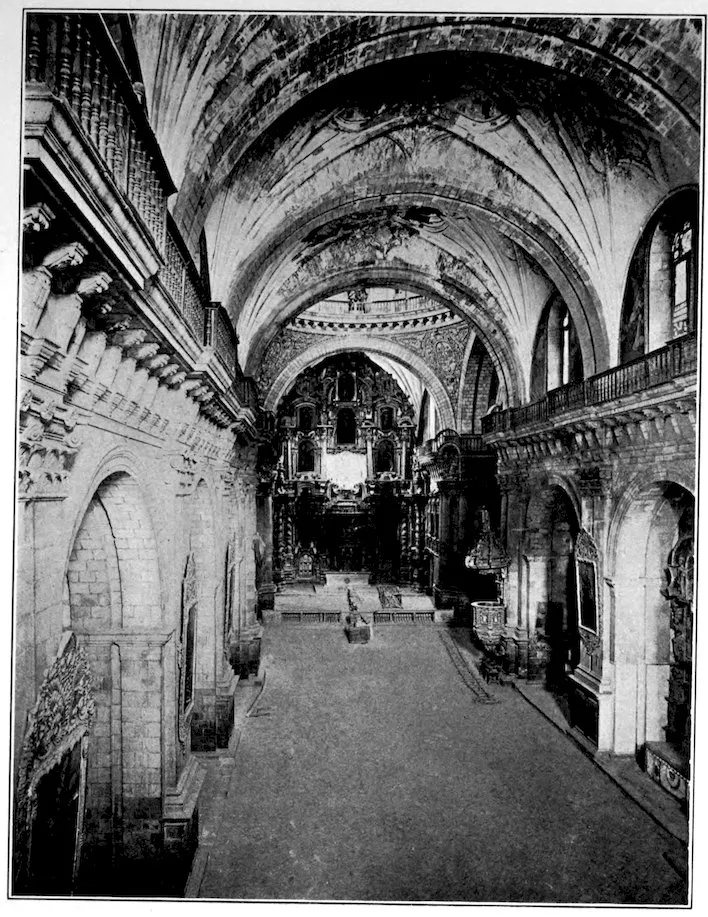
INTERIOR OF THE JESUITS’ CHURCH, CUZCO.
The old churches
and other structures of
colonial times are as
interesting in their way
as the remains of Incaic
architecture, and Cuzco
is full of reminiscences
of the viceroyalty. The
cathedral, built in the
style of the Renaissance,
was begun soon
after the Conquest, and
was not completed until
ninety years later, in the
middle of the seventeenth
century. It is of
stone and the cost of
construction was so
great that one of the
viceroys remarked “it
would have been less
expensive in silver.”
The interior consists of
three naves, separated
by stone pillars which
support high, vaulted
arches; in the central
nave is the choir, the
carving of which is
superb; and in front of
it stands the high altar,
covered with silver. Two organs fill the church with the music of their rich tones on Sundays
and feast days. The cathedral has many paintings, one of which, El Señor de la Agonia,
is a masterpiece, said to be an original Van Dyck. In the sacristy are portraits of the popes
400and of all the bishops of Cuzco. One of the most precious possessions of the cathedral is
the monstrance, which is ornamented with pearls, diamonds, emeralds, rubies and other
precious stones of great value. In the naves to the right and left of the main entrance to
the cathedral are chapels dedicated to the images of the Virgin, our Lord and the Saints,
worshipped in special commemoration of some miracle. The Indians are particularly
devoted to Our Lord of the Earthquakes, represented by an image that is blackened with
the smoke of candles that have been placed on the altar by innumerable worshippers. It is
not unusual to see the space in front of this chapel occupied by a group of Indians on their
knees, gazing in adoration on the image of El Señor de los Temblores, whom they regard as
their especial protector. Their religious processions in his honor are held on Monday of
Holy Week and are attended by an immense concourse.
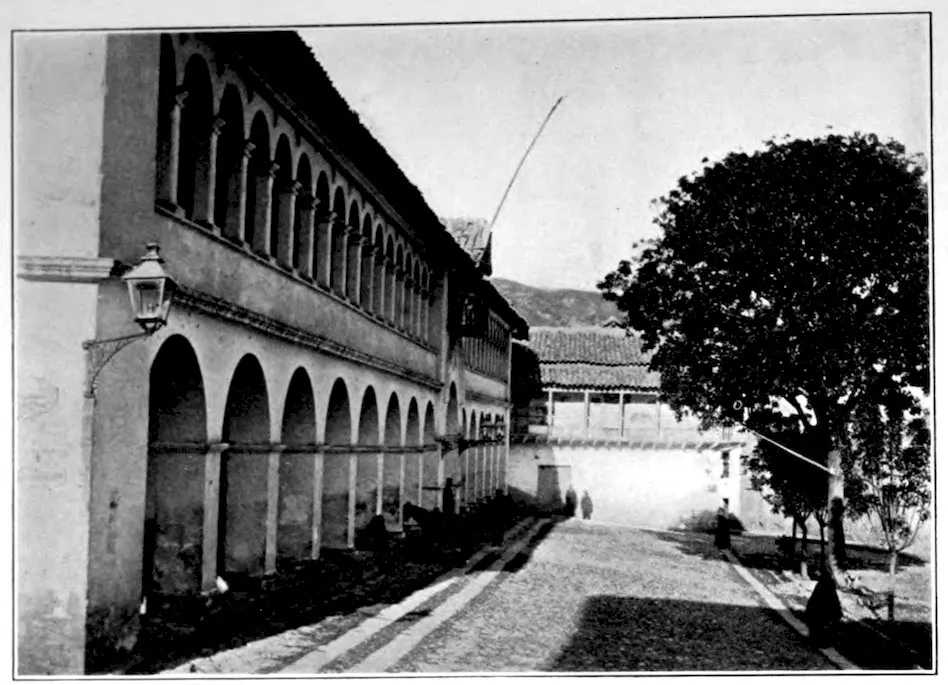
The signal for beginning a religious procession in Cuzco is given by the ringing of the
great bell of the cathedral, the “Maria Angola,” one of the richest and clearest-toned bells
in the world. The history of the “Maria Angola” is interesting. It is named in honor of a
pious lady of Cuzco who gave three hundred pounds’ weight of gold to be used in casting
it. This enormous bell, which is large enough to cover a group of eight men, was cast in
the city of Cuzco in 1659. An inclined plane had to be built from the cathedral tower
to the street in order to raise the colossal piece of bronze to its place, and the task required
the employment of a host of workmen. The prevailing controversy of the time when the
401bell was made is indicated by the words engraved on its border: Ora pro nobis, Alabada
sea el Santisimo Sacramento del Altar y la Purisima Conception de Nuestra Señora, sin pecado
original [“Pray for us; Glory be to the most holy sacrament of the Altar and the most pure
conception of Our Lady, without original sin.”] The rich, sonorous tones of the “Maria
Angola” may be heard twenty-five miles away from Cuzco, and the music is most beautiful
and potent to incline one to a spirit of reverence. When its clear tones announce the
elevation of the Host, the venders in the market place fall on their knees and the business
of buying and selling is suspended while the solemn voice from the cathedral tower calls to
a more sacred duty. It is said that the soft, vibrant tone of the “Maria Angola” bell is due
to the great amount of gold
in its composition.
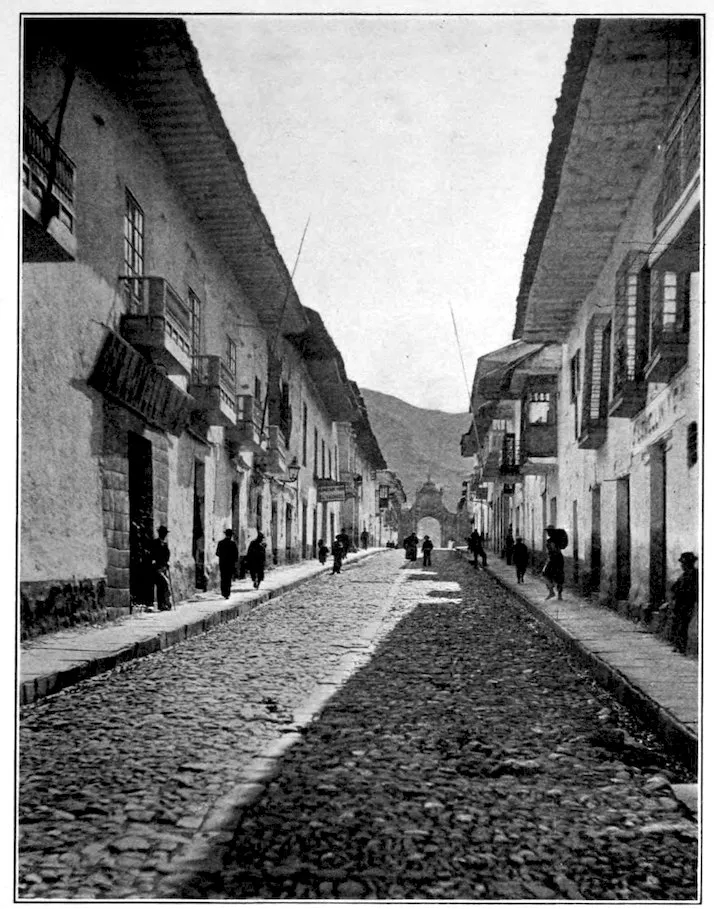
When one visits the
chief places of interest in
Cuzco, there is so much to
be seen that it is customary
to divide the time so as to
make separate excursions
to the Incaic ruins, the old
colonial churches and palaces,
and finally to the places
where modern enterprise is
to be seen. A day among the
wonders of Sacsahuaman,
the Rodadero, the ancient
walls of Pachacutec’s palace,
the house once occupied by
an Inca “medicine man”
(easily recognized by the
seven serpents carved in
relief on the façade), the narrow
alleys with their curious
legends, is sufficient to inspire
enthusiasm for a trip
to the neighboring town of
Pisac, where it is possible to
climb the mountain to the
observatory of Inti-Huatana
and spend interesting hours in speculation as to the uses the Incas made of the edifice that
once topped this almost inaccessible eminence. Still more fascinating are the ruins of Ollantaytambo,
which lie a few leagues north of Cuzco, the site of stupendous monuments of Incaic
402architecture, and once the favorite summer residence of the sovereigns of Cuzco. From the
height of its walls, the prospect sweeps to the far horizon, following the beautiful Urubamba
valley, or narrows to right and left where high mountains shut out a larger view. Far up
the sides of these towering cliffs the Incas’ subjects were buried in caverns hollowed out
like swallows’ nests, the openings being covered over with earth to hide their sepulchre.
It is not known where the bodies of the Incas themselves were hidden when they were
taken from the Temple of the Sun at the approach of the Spaniards. A great treasure
awaits the discoverer, for it is said that when an emperor died his body was embalmed and
placed in the Temple of the Sun on a throne of gold; both the golden thrones and their
occupants disappeared with the advent of the Conquerors and they have never been found.
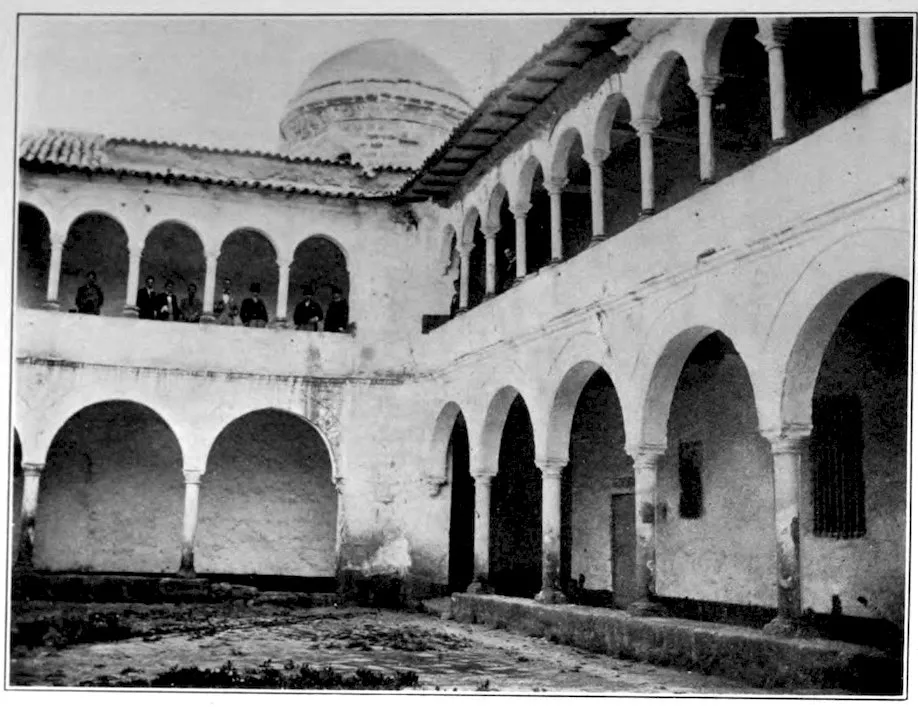
On the site of the Church of the Compañia, or the Jesuits’ church, in the Plaza Matriz,
once stood the palace of the Inca Huayna-Ccapac in the midst of gardens that covered
the area now occupied by the church and the neighboring University of Cuzco. The three
plazas now known as Matriz, Regocijo, and San Francisco, then formed a single large
square, in which were celebrated the grand public festivals dedicated to the Sun; it was
this large square which was encircled by the celebrated gold chain of Huascar. None of the
convents and churches built during the viceroyalty show greater architectural beauty than
the Compañia. The interior is cruciform, has a single broad nave, whose massive stone
pillars are of varied design, some round and others square, with Doric capital on which
403rest the great arches that are the most imposing features of its architecture. A large dome,
supported on four arches of beautiful design, marks the division of the cross where the nave
is met by transverse aisles, and on the face of
this rotunda is sculptured the coat-of-arms of the
Company of Jesus, in elaborate design.
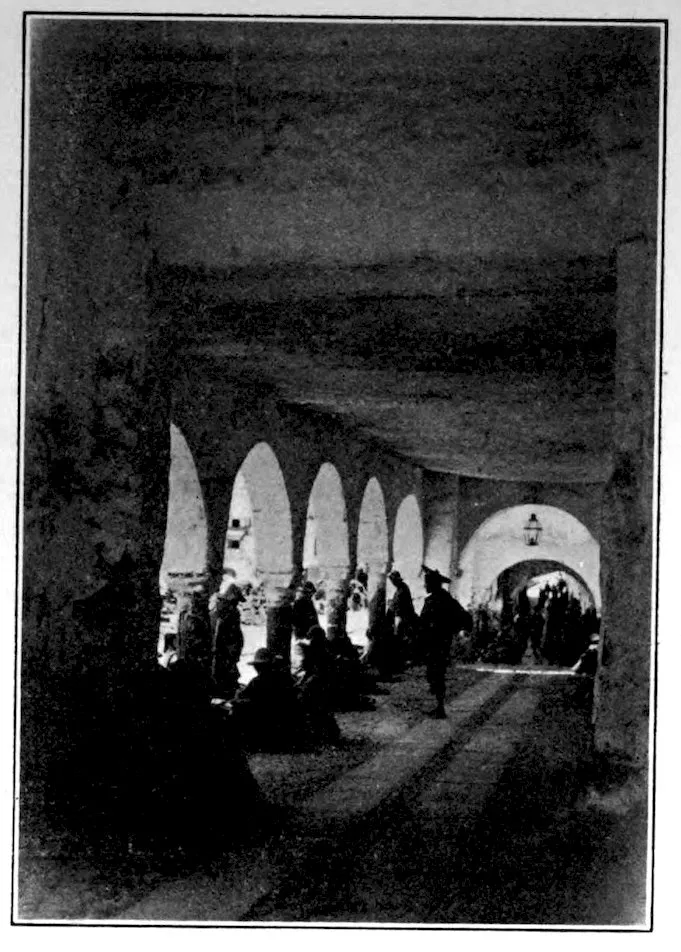
VENDERS IN THE ARCADE, CUZCO.
Though the interior of the Compañia is a
magnificent example of the church architecture
of Cuzco, the cloister of Merced is also much to
be admired, with its superb arches on the upper
and lower galleries surrounding the patio, and its
wonderful staircases made of blocks of black
granite. The cloister itself is built of stone taken
from the fortress of Sacsahuaman, the architecture
being of the seventeenth century, Greco-Roman
in style. Cuzco has also, in the parochial
church of San Blas, one of the handsomest pulpits
in existence, a superb specimen of the finest
wood-carving of the seventeenth century.
The Cuzco of the Incas and the viceroyalty
is so absorbing in interest that the modern city
must pay the penalty of past fame by a harder
struggle for present recognition than new cities
have to experience. When a town springs up
under the impulse of modern enterprise, every feature of its growth and development is
noted; but when it has “a history,” the greatest effort is necessary to win even a passing
comment on its present condition. Cuzco has made notable progress within the past few
years and is constantly improving in social and industrial development. When President
José Pardo visited the city in 1905, he was impressed by the favorable outlook for this
section of the republic, destined to be one of the richest industrial centres of South America.
The city of Cuzco, capital of the department of the same name, occupies a central position
in southern Peru. It lies in the valley of the Urubamba River, on the banks of the Huatanay,
at an altitude of nearly twelve thousand feet above sea level. To the south and west are the
plateaus and sierras of the highest Cordilleras, while to the north and east the country slopes
rapidly to the region of the Montaña, with its virgin forests and intermingling waterways.
The city of Cuzco is lighted with electricity, and has a complete system of waterworks,
recently installed, which ensures an abundance of water for all purposes, and provides the
means for improving the sanitation of the city and rendering it a more desirable place of
residence. Formerly the lack of a sufficient water supply made it impossible for the
authorities to enforce hygienic measures of the greatest importance; but now that this
difficulty has been removed, Cuzco is making its streets clean and its plazas beautiful. The
404water is brought down from neighboring springs ten miles distant, by means of aqueducts
and pipes, the old Spanish aqueduct being also utilized for the purpose. From a reservoir
of masonry, with a capacity of three thousand cubic metres, the water is distributed at the
rate of three hundred gallons a second.
New telegraph and telephone lines connect Cuzco with other cities of the department,
long distance wires having been established between the capital and Paucartambo, Abancay,
and other points, in addition to the national telegraph lines. New public buildings have
been constructed during the present administration, and improvements have been made in
many institutions. The Prefecture, which occupies the site where Pizarro lived when
in Cuzco, was remodelled and beautified a short time ago.
Public instruction has received greater attention within the past few years than ever
before, and, from the primary school to the university, the tendency is in favor of special
training with a view to its practical uses. The University of Cuzco is one of the oldest
educational institutions of Peru, and in its cloisters some of the most noted Peruvian
scholars found inspiration. Cuzco was the birthplace of the great historian of the Incas,
Garcilaso de la Vega, and of the learned writers Castro, Espinoza Medrano, Heras; Perez,
who was called “the bishop of epigrams,” Leonardo Villar, a famous physician and scholar;
Antonio Lorena, the anthropologist; David Matto, learned in bacteriology; Narciso Arestegui,
the novelist; as well as the military leaders, General Gamarra, La Puerta, and many others
who were proud to claim the old Inca capital as their native city.
In the new era of progress on which Peru has entered with so much promise, the
ancient Cuzco, that was held in reverence as the “centre of the universe” ages before
America was discovered by the European, will hold its own among its more modern sister
cities. The treasure of its ancient ruins but adds interest to a city that knows how to keep
in line with the march of modern civilization.
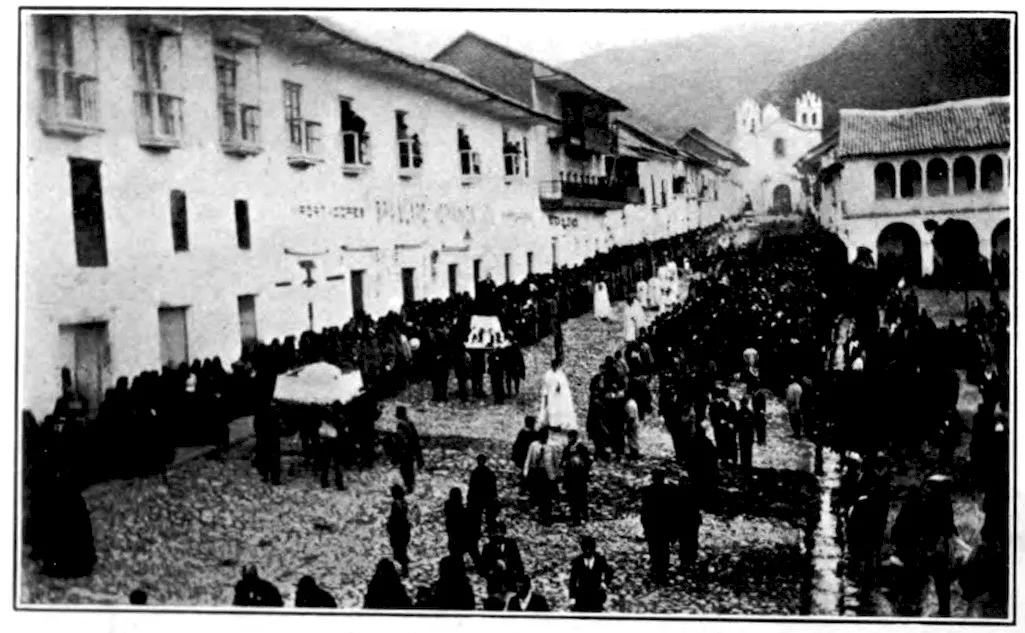
A RELIGIOUS PROCESSION IN CUZCO.
406
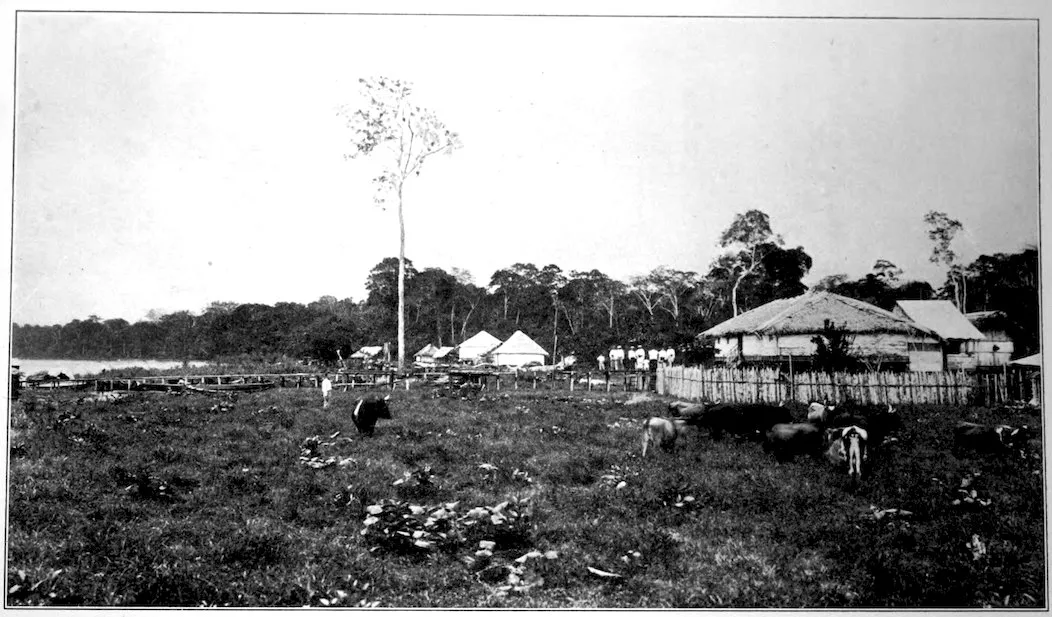
A RUBBER ESTABLISHMENT IN THE DEPARTMENT OF LORETO.
CHAPTER XXXI THE MONTAÑA AND ITS PRODUCTS—THE RUBBER LANDS OF LORETO
407
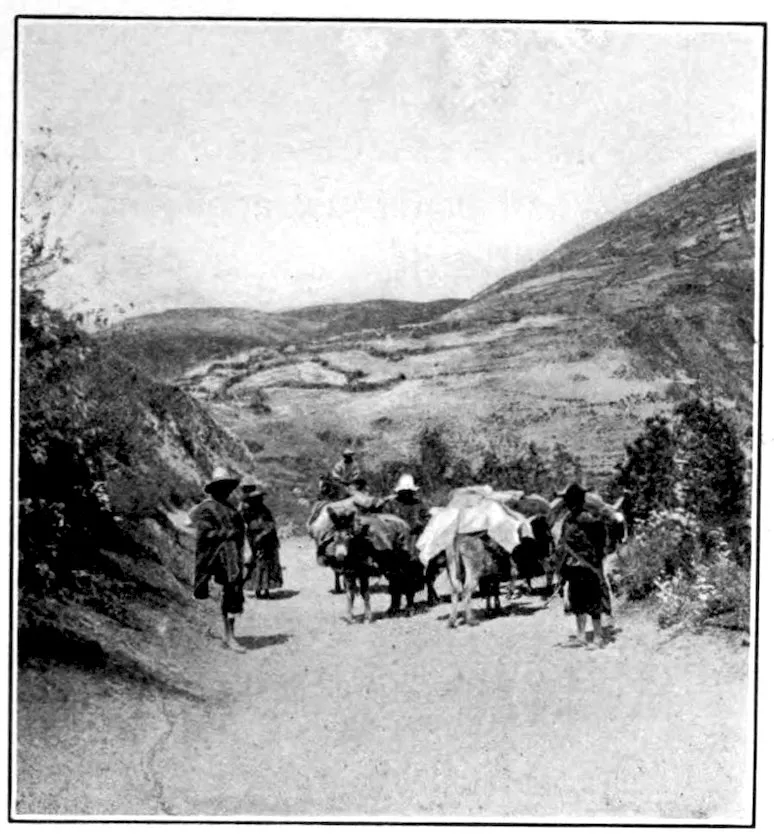
INDIANS CARRYING COCA TO MARKET.
The region of the Montaña lies chiefly in the
Amazon plain, where the rubber trees and
hardwoods of commerce grow in abundance,
though on its western and southern border it
extends to the slope of the Cordilleras, covering
a territory rich in agricultural production. The
northern provinces of Puno and Cuzco and
the eastern provinces of Junín and Huánuco,
as well as the entire Departments of San
Martin, Amazonas, and Loreto, belong to the
region of the Montaña. Much of this vast
territory has never been cultivated, and a
great deal of it remains to be explored. It
is richer in natural resources than any other
part of Peru, and, with the exception of the
lower wooded region of the rubber country,
where malaria and anemia prevail, the climate is healthful.
The Montaña really comprises two separate regions, the high woodlands of the eastern
Andean slopes and the level lands that stretch away from their base to the northeastern
boundary of the republic. The high woodlands have a mild cool climate, similar to that
of southern Europe, and their altitude renders them free from the diseases usually prevalent
in a tropical country. This part of the Montaña is a veritable paradise, luxuriant in vegetation
and marvellously productive. The chief drawback to its industrial development has
hitherto been the difficulty of transporting its products to market, owing to the lack of
railway facilities. Now that this obstacle is rapidly being removed, there is every reason
to expect a greatly increased development of the agricultural wealth of the Montaña, which
is an especially promising field for immigration.
408The natural resources of the Montaña include many plants, fruits, and herbs not found
in other countries. In the warm valleys and on the eastern slopes of the Cordilleras, at an
altitude of from two thousand
to five thousand feet above
sea level, the coca plant grows
in abundance. It is a native
of Peru and Bolivia and has
not been cultivated successfully
in any other part of the
world, except to a small extent
in Ecuador and Colombia.
From this plant is manufactured
the well-known drug,
cocaine, used so generally for
medicinal and surgical purposes.
Its leaves are the Indian’s most
cherished consolation; he will
perform wonderful feats of endurance if provided with a small sack of these, which he
chews as the Oriental does the betel, mixing them with a kind of lime which greatly
increases the stimulating effect.
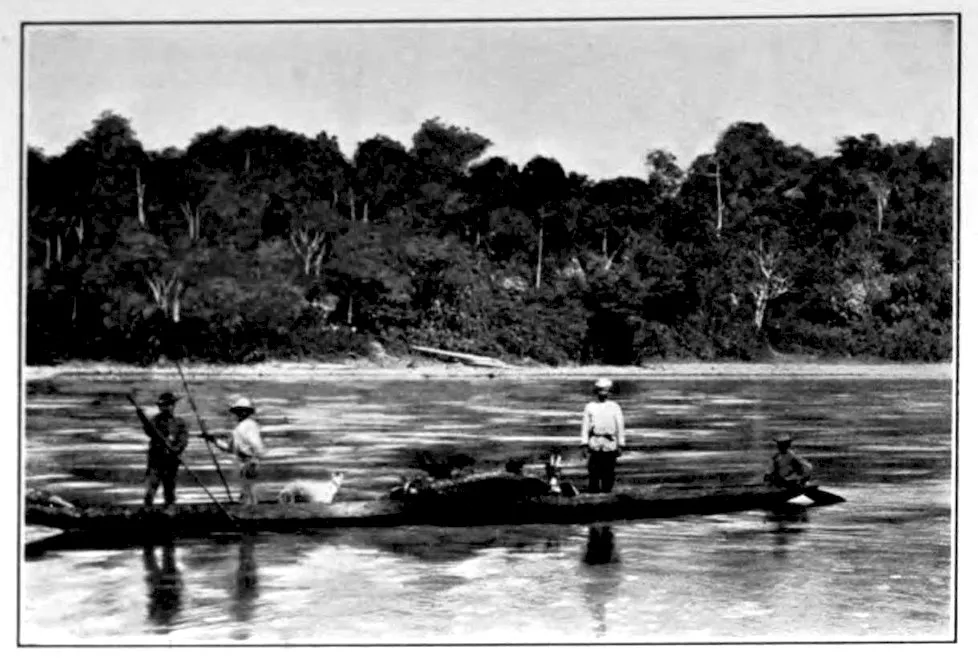
CANOEING ON THE HUALLAGA RIVER.
The Peruvian Indian eats little and yet, by chewing coca leaves, he is able to make long
journeys on foot or to do hard work in the fields and in the mines without fatigue. The
effect of the excessive use of this stimulant is very harmful, dulling the mental faculties
and, in extreme cases, causing paralysis. Used in moderation, it seems to produce no bad
effects, and has even been recommended for soldiers on the march, who are exposed
to fatigue and all kinds of weather. When taken as a hot tea, coca excites perspiration;
and it acts as a sedative in asthmatic attacks. The leaves are used for cataplasms in
relieving rheumatic pains. The curative effects following the use of this drug are so
numerous that it is regarded by the Indians as a panacea for all ills. When the Spaniards
first arrived in Peru, they were unable to account for the wonderful properties of the
coca plant, and in superstitious fear they prohibited its cultivation, believing it to be an
instrument of the devil.
The best locality for the growth of the coca plant is in warm valleys, not more than
five thousand feet above the sea, where the average temperature is between fifty and eighty
degrees Fahrenheit, and the land is clayey, abundant in iron, and without the presence of
salts of any kind; the ground must be soft and loose, and is best on the hillside, where the
water of the rains is quickly carried off and does not leave the soil too damp, though
frequent rains are desirable to promote rapid and leafy growth. The first harvest is
gathered eighteen months after planting, and great care is required in collecting the leaves,
so that the shrub may not be injured. Each leaf is picked separately and dropped on a
409cloth, spread on the ground for the purpose, only the top leaves being left on the plant to
prevent its dying off. As a rule, three or four crops are harvested every year, the most
productive coca plantations being in the Departments of Cuzco, Huánuco, Junín, and the
inter-Andean valleys of La Libertad. The province of Urubamba, in the Department of
Cuzco, is famous for the abundance and fine quality of its coca, the plant growing here to
a maximum height of about six feet. The only coca plantations of importance on the coast
slope of the Cordilleras are those of the province of Yauyos, in the Department of Lima.
A Peruvian scientist, Dr. Hipólito Unánue, was the first to make a thorough study of
the constituent properties of the coca leaf; and, in 1859, an Austrian chemist, Albert Niemann,
extracted from coca leaves the alkaloid known as cocaine, which is now manufactured in
Peru, as well as in other countries. A great deal of the coca produced on the various
plantations is consumed in the country, the average Indian chewing from fifteen to twenty
grammes daily. In the native factories, each pound of leaves yields from three to four
grammes of cocaine. The exportation of coca leaves amounts annually to upwards of three
million pounds, and that of the manufactured product, cocaine, to about fifteen thousand
pounds. The leaves are employed, in Europe and the United States, not only for the
manufacture of cocaine, cocaidine, and other alkaloids, but in the making of wines, tonics,
and refreshing drinks of various kinds.
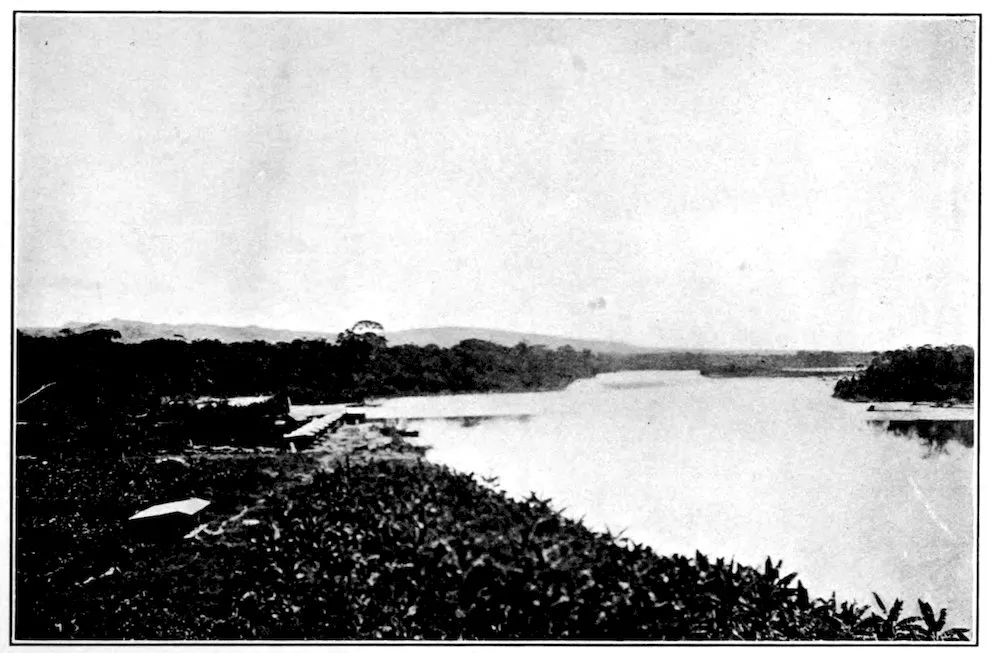
SHIPYARD AT ASTILLERO, WHERE THE INCA MINING COMPANY’S FIRST STEAMER WAS BUILT.
Another product of the Peruvian Montaña, cacao, promises to be an important source
of revenue when the industry is better developed. The cacao trees of Cuzco produce a
410chocolate of exceptional quality and a delicious cocoa, the fruit being especially rich and
possessing the properties required in chocolate of the best taste and finest aroma. But
none of the Cuzco cacao ever gets into the foreign market, as it is all consumed in Peru.
The cacao tree grows spontaneously in many districts of the Montaña, and requires little
cultivation to make it yield in abundance. Wherever cacao orchards have been planted, the
results have been eminently satisfactory, and every year sees an increase of cacao
plantations, chiefly in the region of Chanchamayo, in the province of Jaen, Department of
Cajamarca, and in the lower provinces of Amazonas and San Martin. The future of the
cacao industry is particularly promising, and no other enterprise offers greater reward for
the slight labor invested, as the trees, once planted, continue to bear for a hundred years,
requiring no other labor than the gathering of the harvest.
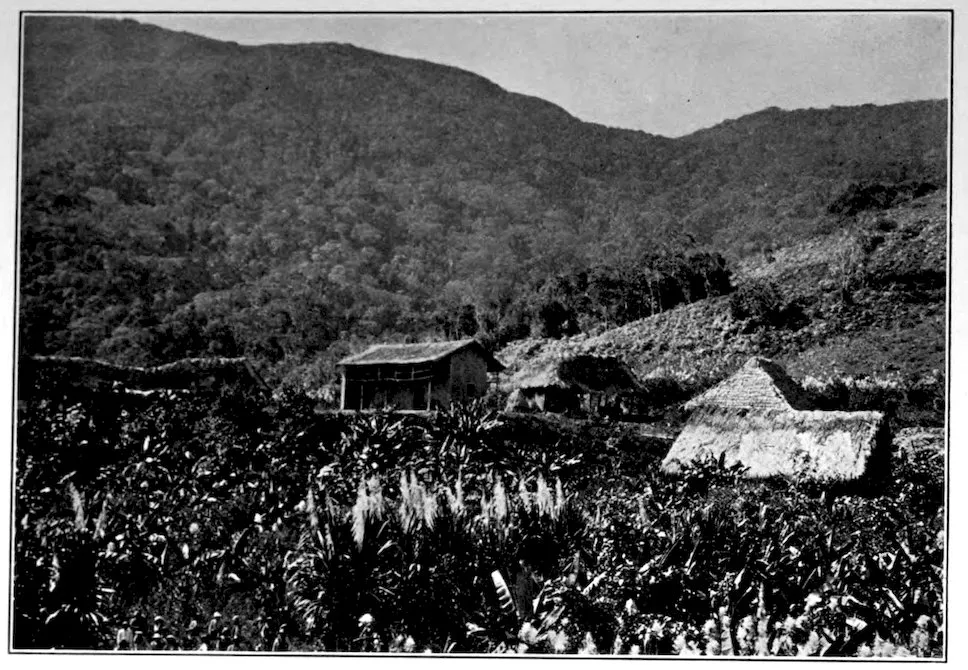
CHICAPLAYA, IN THE HEART OF THE MONTAÑA.
The largest coffee plantations of Peru are cultivated in the region of the Montaña,
though the coffees of Pacasmayo, on the coast, and of Choquisongo, in the sierra, are of
excellent quality. Carabaya, in the Department of Puno, produces some of the best coffee
known, the Carabaya bean being particularly rich in caffeine. Chanchamayo is also an
important coffee-producing centre, more than five million trees growing on the haciendas
of this district, in the province of Tarma, Department of Junín. In one colony alone are
thirty-five coffee plantations, covering seventeen hundred acres, on which two million
411trees are cultivated. The plantations are being improved every year, and there is,
apparently, no reason why Peru should not be among the leading coffee-growing countries
of the world. At present, a little more than a thousand tons are exported annually, after
the home market is supplied, as Peru imports no coffee of any kind.
All the agricultural products that flourish on the coast, and many of those that are
cultivated on the sierra, may be grown with success in the Montaña. Sugar, rice, tobacco,
maize, and even wheat, barley, and potatoes, thrive in some of the provinces of Cuzco,
Junín, and other interior departments. Tobacco is grown in all the provinces of the
Montaña, including those of the Department of Loreto, which lies almost entirely in
the Amazon plain. The cultivation of tobacco is carried on in the most primitive
fashion, and the plantations do not yield what they are capable of producing under more
scientific methods.
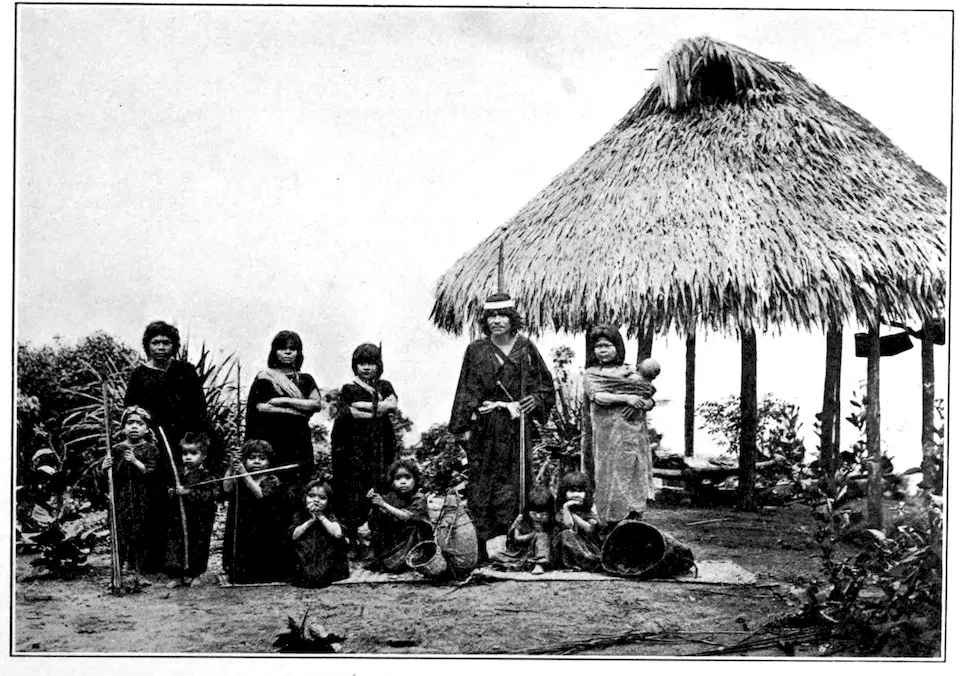
CHUNCHO INDIANS OF THE PENEDO VALLEY.
The most important industry of the lower Montaña is rubber-gathering, the forests of
the vast Amazon plain abounding in these trees of ever-increasing commercial value. The
jebe, or seringa, as it is called in Brazil, known abroad as Pará rubber, grows best in the low
lands of Loreto, where the altitude does not exceed three hundred feet, and where abundant
rains and an equatorial climate cause the warm humidity necessary to the production of the
latex, or milk, of the rubber tree. The jebe grows to an average height of seventy-five
feet, the leaves forming a tuft of green at the top; the trunk is of cylindrical shape, often
412measuring six or seven feet in diameter near the base. The quality of the latex is known
by its color, the best being of a violet grey hue while the inferior latex is much lighter.
The rubber trees grow
sometimes in groups of
eight or ten together,
and again singly, at
intervals of from sixty
to two hundred feet
apart. A jebe property
is usually defined by
estradas, or paths, leading
past a number of
rubber trees, the average
estrada embracing an
area of a hundred acres,
more or less, in which
are from a hundred to a
hundred and fifty trees,
yielding rubber. One
man is usually employed on each estrada, and his day’s work consists in tapping the trees
in the early morning by notching a place with a hatchet and fixing in it a tichela, or little
tin cup, to receive the latex, as it oozes out of the cut. When he has made his round, he
returns to collect the latex, emptying the contents of the tichela into a pail, which he carries
to his camp to be smoked in preparation for its shipment. The process of “smoking,” or
coagulation, consists in twirling the latex around a ladle that is held over the smoke of
burning wood, the hard wood known as vegetable marble being best suited to this purpose.
The seringuero, as this class of rubber gatherer is called, collects upward of twenty-five
pounds of rubber a year from each tree in the forests of Loreto, northern Cuzco and the
region of the Madre de Dios.
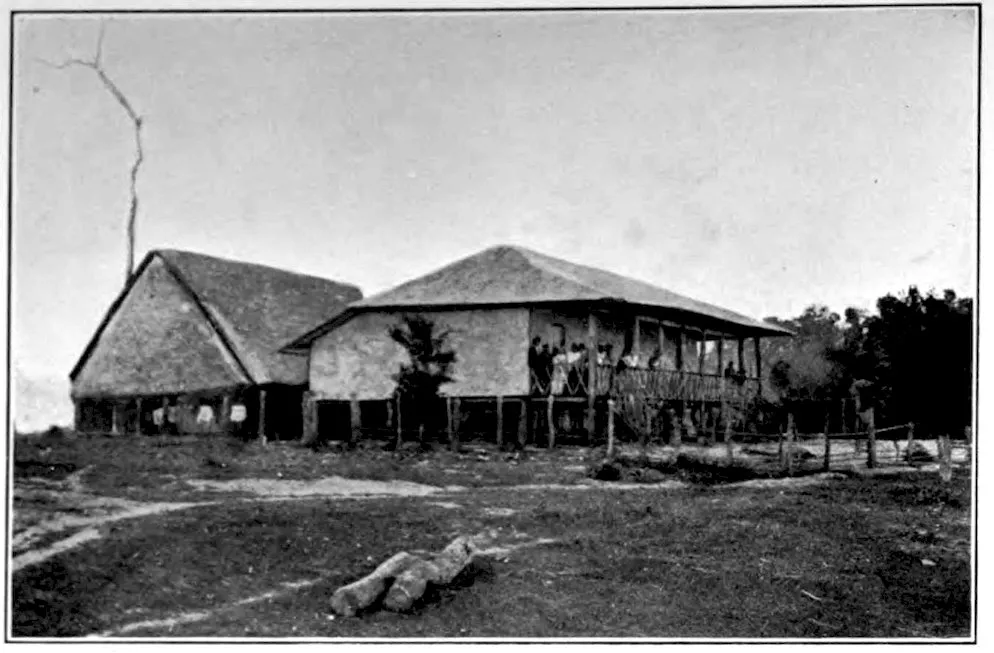
MASISEA, THE FIRST WIRELESS TELEGRAPH STATION BUILT BETWEEN PUERTO BERMUDEZ AND IQUITOS.
Besides the jebe, or Pará rubber, the forests of the Montaña yield great quantities of
the variety called caucho, which is gathered in regions where the heat and humidity are
not so great as in the seringa lands. The cauchero works on a plan different from that
of the seringuero; if he is collecting caucho in planchas, or slabs, he fells the tree near
a hole made for the purpose of receiving the latex as it flows, and then he mixes this
fluid with common soap, or an infusion of vetilla, to bring about coagulation; if he wishes
to extract the sernambi de caucho, which is of greater value than the plancha, his method
is to bleed the tree by cutting deep gashes in it with his machete, or hatchet, and leaving
the milk to flow in little canals, artificially prepared to conduct the latex, which becomes
coagulated on exposure to the air and forms ribbons of rubber, that are rolled into balls
and shipped in this form. Each tree furnishes, on an average, about fifty pounds of caucho.
413A moderate duty is levied on the exportation of all rubber, jebe paying a cent and a half,
gold, a pound, and caucho a cent a pound; this rate is only about one-fifth of the export
duty charged in Brazil, and one-half that in Bolivia.
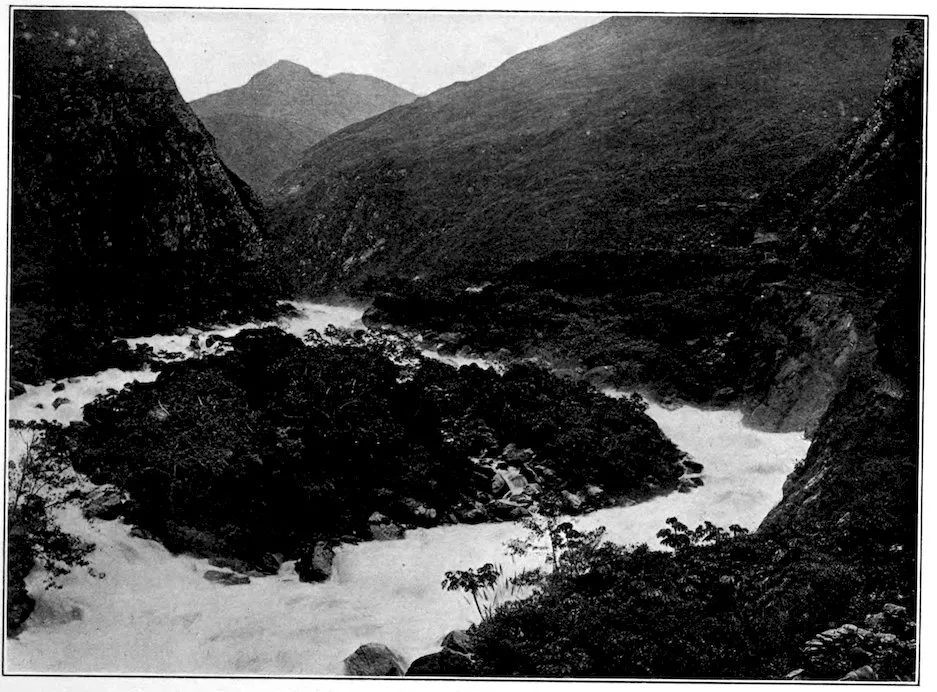
A TURBULENT TRIBUTARY OF THE MADRE DE DIOS RIVER.
Foreign enterprise has done a great deal in developing the rubber industry in Peru,
the government making liberal concessions to those who purchase rubber lands for exploitation.
Tracts of virgin woodland in the Montaña are sold at the rate of a dollar an acre, and
grants are made under liberal conditions; a number of acres of land, supposed to contain
rubber trees, or a number of estradas, may be rented by paying one dollar for every
hundred pounds of rubber extracted, the destruction of the trees being forbidden. The
Inca Rubber Company is one of the most important foreign enterprises in the Montaña.
This company was the outgrowth of a concession granted by the Peruvian government
to Chester W. Brown, of the Inca Mining Company, for certain lands located in the
Montaña, in the Department of Puno. The government ceded to the company eight
thousand acres of land for every mile of road opened to public traffic between the Santo
Domingo mine and the Madre de Dios River, or a navigable point on the Tambopata, the
road to be approximately seven feet wide, with a maximum grade of ten per cent and to
afford all the conditions necessary for the safe and comfortable transportation of passengers
414and freight. Not only has the road been
completed through the rich rubber lands between
the Inambari and Tambopata Rivers to
the head of navigation at Astillero station, but
a steamer, the Inca, has been built to connect
this port with Riberalta and, by means
of the San Antonio railway—now under construction
in accordance with the Acre treaty
between Bolivia and Brazil—with the Madeira
and Amazon to the Atlantic Ocean. The
completion of the Inca Rubber Company’s
road ensures an outlet to the Atlantic by a
short route from the Pacific, as the Southern
railway connects the Pacific port of Mollendo
with the station of Tirapata, whence the
road is built to Santo Domingo, Puerto Candamo,
and Astillero. From Tirapata to Astillero,
the distance is two hundred and eighty
miles through a rich rubber country. Over
this long distance, the steamer Inca was
brought in pieces, carried on the backs of
Indians, to the company’s shipyard, for which
the port is named, “Astillero” meaning “shipyard.” Here it was built and launched on the
Tambopata. A telephone
connects Astillero with
Santo Domingo and Tirapata,
and electricity is
used in lighting the town.
Explorations have been
made in this region by
Mr. Brown and Professor
Baily, of Harvard University,
and the Wilson
River was discovered by
an explorer sent out at
the Inca Rubber Company’s
expense.
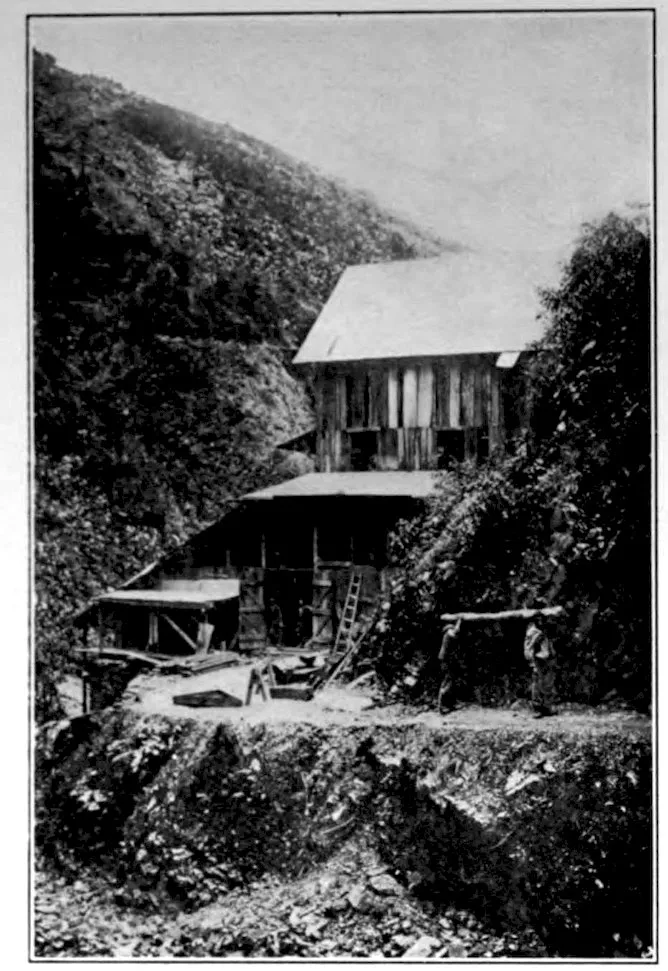
A RUBBER CAMP IN THE MONTAÑA.
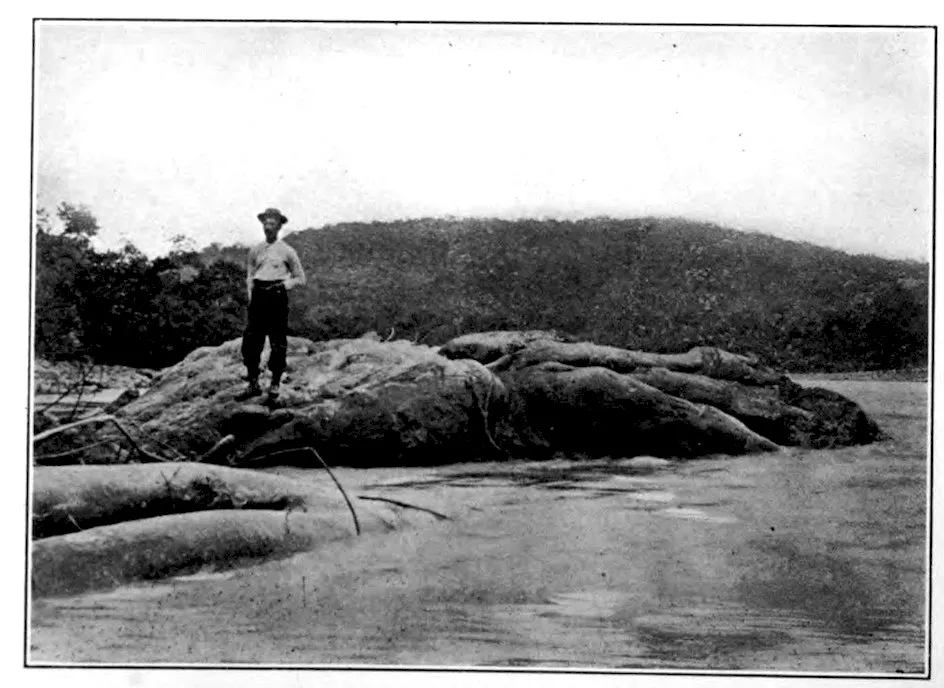
RAPIDS ON THE TAMBOPATA RIVER.
415
A TYPICAL SCENE ON THE WATERWAYS OF THE UPPER AMAZON.
The success of the
Inca Rubber Company
has attracted other
investors to the Montaña, and, within the past two years, several similar enterprises have
been inaugurated. The Inambari Pará Rubber States Company, Limited, was formed a
year ago with a capital of three hundred and fifty thousand pounds, to exploit the rubber
of the province of Carabaya; the Paucartambo Rubber Company, Limited, has started an
enterprise in the Madre de Dios region; the Compañia Gomera Alto Marañon recently began
the development of the rubber industry in the Department of Amazonas, and the Sociedad
Madre de Dios has begun to work the forests of the eastern rubber district. With the
increased output of rubber promised by the successful exploitation of these properties,
the annual revenue derived from this source will undoubtedly show rapid gain. The
financial crisis which affected the North American market in 1907 was severely felt in
the rubber trade of the Amazon region, the shipments of this product being cut down
to an alarmingly low quantity. The new enterprises felt the disastrous conditions most
keenly, though all the rubber establishments of the Amazon country suffered greatly.
The loss was heavy also to those merchants who depend on the success of the rubber
trade for their prosperity. In Iquitos, as well as in the ports of the lower Amazon,
the whole business atmosphere was pervaded with gloom for a time; though it was
understood that the depression could only be temporary, as the demand for rubber
is constantly increasing, and the purposes for which it may be employed appear to
416be of an almost unlimited variety. A passing money crisis is not sufficient to imperil the
interests of a trade which is of world wide importance; and the steamers and launches
of the Amazon tributaries are already as busy as ever fulfilling the requirements of the
rubber shippers in this vast region. The exports of rubber now amount annually to
thousands of tons, valued at upward of five million dollars, nearly all of which passes
through the ports of Mollendo and Iquitos, the latter the capital of the great rubber-producing
territory of Loreto.
SCENE ON THE MADRE DE DIOS RIVER NEAR MALDONADO.
CHAPTER XXXII IQUITOS, THE CHIEF PERUVIAN PORT OF THE AMAZON
417
HOSPITALITY IN THE RUBBER COUNTRY.
All the commerce of the Department of
Loreto passes through its capital, Iquitos,
which is the chief port of the Amazon in
Peru, and is one of the important rubber-exporting
centres of the world. It is a city
of about twenty-five thousand inhabitants,
and is situated on the left bank of the great
river, over two thousand miles from its mouth
and a few leagues below the confluence of
the Marañon with the Ucayali. Iquitos overlooks
a broad expanse of water, more like an
inland sea than a stream, the channel at this
point being nearly three miles wide; in front
of the city lies a large island. The depth of the river makes it possible for ocean steamers
to anchor in the port, which has an average of twenty-five feet of water, and, in summer,
when the rainy season is at its height, has twice that depth.
Not only does all the commerce of Loreto pass through Iquitos, but the largest share
of the imports and exports of the entire region of the upper Amazon is distributed from
this point. Merchandise for the rubber camps is brought up the Amazon from foreign ports
to Iquitos and is here reshipped on smaller river steamers to the various interior towns along
the tributaries of the upper Amazon,—ports of the Ucayali, Huallaga, Pastaza, Morona,—from
which they are again reshipped in launches and canoes to towns on the smaller branches
of these waterways. Sometimes the river boats carry enterprising explorers, gold hunters,
rubber gatherers, and commercial travellers in a strangely mixed company, with usually
but one idea in common—the prospect of fulfilling long-cherished dreams. Material for
adventure, romance, and scholarship is mingled in the characters that one sees on such a
trip, conversation on board bringing out the most unexpected revelations.
418Several steamship lines make regular trips between Iquitos and European and North
American ports. The Booth Steamship Company has been engaged in this trade for some
years, and has a line of commodious steamers for carrying passengers and cargo. Bi-monthly
trips are made from England, returning by way of the United States, and vice versa, calling
at Pará and Manaos en route. This company recently built its own docks at Iquitos, and
other improvements are under consideration which will greatly benefit the interests of
trade in this port. The Red Cross Line has monthly steamers to Iquitos; and a number
of Peruvian merchants have smaller fleets on the rivers from Iquitos to the interior. The
Liberal, a trim little steamer of a hundred and fifty tons, with a speed of ten miles an hour,
is one of the best of these river boats; it is of modern construction, is lighted by electricity
and is provided with excellent accommodations for a limited number of passengers.
Iquitos is quite cosmopolitan, its population including representatives of many nations;
North American and European importers have branch houses here, and the growing
prosperity of the city has attracted enterprising merchants from other parts of Peru and
from neighboring republics. The climate is healthful and not so oppressive as one might
suppose, considering the locality, less than four degrees south of the equator and only a
hundred and fifty feet above the level of the river. It represents the aspect of a growing
commercial centre with its new wharves, warehouses and modern buildings that are rapidly
replacing the straw-thatched cottages and comfortless chozas, or huts, which were features
of the town a dozen years ago. Brick and iron are now largely used in the construction of
buildings, the roofs being of zinc or tiles. The government house, the municipal chambers,
churches, hospital, and other public edifices, reflect the spirit of progress which is beginning
419to animate the people. A flourishing Chamber of Commerce gives further evidence of local
enterprise. The city is surrounded by thick bosques, or woods, in which every variety of
vegetation abounds, and tropical foliage is riotous in color and luxuriance. The frequent and
heavy rains of the summer season keep the verdure fresh and beautiful, though it is a welcome
relief to the
inhabitants when
winter comes and
with it a lessening
of the heavy rainfall.
In reality,
very little change
may be noted in
the thermometer,
which averages
from eighty-five
to ninety degrees
Fahrenheit, all the
year round.
ONE OF THE PRINCIPAL STREETS OF IQUITOS.
CALLE DE MORONA, IQUITOS.
The development
of commercial
traffic through
the port of Iquitos
420may be judged by a comparison of the trade of 1907 with that of preceding years, the total
duties on exports and imports of last year amounting to nearly three hundred thousand
pounds sterling, while those of the previous year reached less than two hundred thousand
pounds sterling, and in 1895 the custom house receipts of this port did not exceed one
hundred and fifty thousand pounds sterling. This rapid growth of trade signifies that the
region of the Montaña, particularly the Department of Loreto, has been developing resources
heretofore unexploited; and, when the further possibilities of industrial activity in this part
of Peru are considered, the prospect for its future wealth appears very bright.
RIVER SCENE NEAR IQUITOS.
The Department of Loreto includes the provinces of Alto Amazonas, Bajo Amazonas,
and Ucayali. At the time of the Independence, all this vast territory belonged to the
Intendencia of Trujillo, and was known as the province of Mainas; it was made a province
of the Department of La Libertad, and, later, of Amazonas, until, in 1853, the Littoral
Province of Loreto was formed, with the city of Moyobamba as its capital. A few years
afterward, President Castilla raised the province to the dignity of a maritime military
department, with jurisdiction over all the Amazon region bordering on the neighboring
republics. At that time the department consisted of the provinces of Moyobamba, Huallaga,
Alto and Bajo Amazonas; Huallaga was divided later to form the province of San
Martin, from which the present province of Ucayali was separated a few years ago. The
creation of the new Department of San Martin in 1905 took from Loreto the provinces of
421Moyobamba, Huallaga, and San Martin, though this still remains the largest political division
of Peru, covering an area of more than a hundred thousand square miles, according to
Peruvian claims.
A VIEW OF IQUITOS FROM THE RIVER.
The provinces of Loreto are completely watered by the tributaries of the Amazon; the
main stream, under the name of Marañon, crosses Alto and Bajo Amazonas through a
territory of the greatest fertility, rich in rubber, hardwoods, and tropical fruits; and along
the eastern border of Ucayali province, the river of the same name flows in a serpentine
course northward, receiving innumerable small streams that descend the western slope of
the central Cordilleras. The popular route from the Pacific Coast to the forests of Loreto
is by the Ucayali River to its confluence with the Marañon, and thence along the great
waterway down to Iquitos; though a very interesting journey may be made by the
northern route, through Cajamarca, Chachapoyas and Moyobamba to the port of Yurimaguas
on the Huallaga River. Along both routes the luxuriance of the Montaña is seen
in all its glory; the forest is aglow with the brilliant hues of a thousand birds and
butterflies; the trees are alive with chattering monkeys that swing back and forth by the
long parasitic vines which hang like ropes from the highest branches. In the heart of
the Montaña the trees become larger, the palms and ferns of denser growth, and the
creeping vines form a network about the overarching boughs. Plantations of cacao,
plantains, yucca, and other products appear from time to time as a clear space separates
the wooded tracts; and, in the neighborhood of the great rivers, the jebe and caucho
gatherers may be seen working their way through the estradas, or journeying to some
point on the river to take a boat down to Iquitos, the metropolis of the rubber country.
The sentiment of hospitality prevails everywhere, and a traveller is usually treated with
the greatest kindness when he arrives at a settlement in the Amazon forest, whatever
422his business or nationality. The men whose tasks keep them buried for years in the
heart of the rubber country are always glad to have news from the outside world.
In the development of trade on the Amazon, the port of Iquitos has been placed in
direct communication with the head of navigation on all the large tributaries of the great
river, and explorations have been made far up the smaller streams toward their source in
the Cordilleras. The expeditions sent out by the Peruvian government with this object
in view have added many interesting contributions to the knowledge already existing in
reference to the resources and wealth of Loreto and the promising future of its
chief port.
THE CUSTOM HOUSE AT IQUITOS.
424
A ROAD THROUGH THE VIRGIN FOREST TO PUERTO BERMUDEZ.
CHAPTER XXXIII NAVIGATION AND EXPLORATION ON THE AMAZON WATERWAYS
425
AN ENGINEERS’ CAMP AT PUERTO BERMUDEZ ON THE PICHIS RIVER.
Large steamers ascend the Amazon for
three thousand miles, passing the boundary
line between Brazil and Peru at the port
of Tabatinga and continuing beyond Iquitos
for hundreds of miles up the Marañon and the
Ucayali, Huallaga, or other tributaries. Yurimaguas,
which is the most important port on the
Huallaga, five hundred miles above Iquitos, is
connected with the latter by a regular service
of steamers of four hundred tons, nearly all
the trade of the Departments of San Martin
and Amazonas passing over this route. On
the Ucayali are the commercial ports of Contamina
and Masisea, the latter noted as the
first station in the Montaña of the wireless
telegraph system that connects Puerto Bermudez
with the port of Iquitos. Steamers of
four hundred tons ply between Iquitos and
Contamina, seven hundred miles up the river;
and, during the rainy season when the waterways
are deeper than at other times, they
ascend as far as Masisea, two hundred miles beyond Contamina. From Masisea, steam
launches convey passengers and cargo up the Pachitea for two hundred miles to the
Pichis—which unites with the Palcazu to form the Pachitea—and along the Pichis for about
a hundred miles to the port of Bermudez, at the head of navigation on this branch of the
Ucayali and the point of embarkation for travellers between Lima and Iquitos over what is
known as the Central Route.
426The length of time required to make the journey between Lima and Iquitos varies
greatly according to the season and the condition of the rivers, the voyages up the water
courses taking much longer than the descent. The trip may be made, under favorable
circumstances, in fifteen or sixteen days. An interesting description of this trip, given in a
recent report of one of the Peruvian government engineers, shows the kind of travelling
one experiences in the Montaña and affords valuable information as to the equipment
necessary for such a journey. As the route lies first across the Cordilleras, and the railway
takes one only from Lima to Oroya, where it is necessary to take mules for the ride across
the puna and down the eastern slope to the river, passengers are advised not to carry bulky
luggage, about a hundred pounds being the heaviest that any single piece should weigh;
the same rule applies in all mountainous regions where the path is narrow and pack-mules
are the freight carriers. It is also recommended that trunks, bags, and everything holding
perishable effects, be wrapped in waterproof material, as rain falls daily and in a deluge
throughout the region of the lower Montaña.
But, if the traveller goes well equipped and prepared to make the best of an experience
that has its agreeable features as well as its discomforts, the journey is likely to prove most
interesting. One should be provided with an army cot, a mosquitero, or netting, as a protection
from the prevailing pest of some sections of the river course, a waterproof coat and
cap, and a small medicine case containing quinine, antiseptics, and ammonia. This precaution
is advised as a general rule, and it does not mean that medicine is sure to be needed, nor
that mosquitoes will torment the passenger throughout the entire journey. As has been
said elsewhere, the railway trip from Lima to Oroya may be made in a day. After spending
a night at Oroya, the traveller proceeds on muleback to Tarma, about twenty miles away,
over a road that gives an excellent idea of Andean highways; the sturdy mules bred in
these altitudes are the only safe animals for such a journey, which is a succession of steep
ascents and narrow curves until the highest point is reached, after which the downward
road begins, as hazardous and uncomfortable as the other. As the railway is nearly finished
between Oroya and Tarma, this part of the trip will soon be made under less trying conditions.
At present, it requires five or six hours to cover these twenty miles. From Tarma
to the Pichis River, the road is less difficult, and, after passing Huacapistana, twenty-five
miles northeast of Tarma, the region of the Montaña is soon reached, the traveller being then
obliged to discard the heavy wraps required during the ride across the high sierras, and to
put on summer clothing.
The third day’s ride brings one to La Merced, on the banks of the Chanchamayo River.
This part of the journey is made over a fairly good road, the distance from Huacapistana to
La Merced, about twenty miles, being covered easily in five hours. Puentes colgantes, or
suspension bridges, cross the Tarma and other rivers of this region, the route to La Merced
crossing at least half a dozen of these primitive-looking, but generally serviceable, structures.
La Merced is situated at an altitude of about three thousand feet above sea level, and belongs
to what may be called the upper Montaña, to distinguish it from the region of the plains, or
427the lower Montaña. The road from La Merced to Yapaz, a distance of thirty miles, may
be travelled in one day, though many prefer to stop midway, at Pueblo Pardo, to break the
journey, which is more fatiguing as the rains become heavier, soaking the ground and
making progress difficult. But one learns to take life very leisurely in the tropics, and it is
pleasanter to jog along for a few hours, enjoying the charm of the forest with its impressive
silence, and resting when so inclined, than to make an extra effort to accomplish in one day
what may be done just as well in two. If “Poor Richard” had lived in the Chanchamayo
valley, he would probably have reversed his advice to read: “Never do to-day what you
can put off till to-morrow.” A short distance beyond Pueblo Pardo, the Camino de Pichis,
as the road to the river is called, crosses a suspension bridge over the Paucartambo River,
built by the English colony of the Perené, whose haciendas may be seen at intervals
between Pueblo Pardo and Yapaz.
THE CONFLUENCE OF THE CHUCHURAL AND PALCAZU RIVERS.
From Yapaz to Enenas, eighteen miles, is another day’s journey, of five or six hours;
from Enenas to Porvenir, twenty-seven miles, the ride is so fatiguing and difficult that it
usually requires nine or ten hours to cover the distance. This part of the journey leads the
traveller through the heart of the Montaña; and during the eighth day’s ride, which takes
one from Porvenir to San Nicolas, not a single house is seen, nor any sign of human
habitation. From Yapaz to San Nicolas, the climate is cool and pleasant, but, after passing
the Azupizu River ten miles below, the heat becomes uncomfortable. Two days’ journey
from San Nicolas is still required to bring one to the river Pichis, which is reached at a point
428called Puerto Yessup, where a canoe is in waiting to convey passengers to Puerto Bermudez.
The muleback trip need not take more than ten days under ordinary circumstances. Most
of the tambos, or lodging places, along the route from Oroya to Puerto Bermudez, have telephone
connection with each other; and telegraphic stations are established at Oroya, Tarma,
La Merced, Enenas, Puerto Bermudez and other points. The railway will be completed to
Puerto Bermudez within a short time, and then the trip overland to Iquitos will be a question
of days instead of weeks, as at present. A steamer makes the voyage from Puerto Bermudez
to the port of Iquitos in five or six days, calling at Masisea and other ports en route.
The northern route from the coast to Iquitos has two starting points, and reaches the
upper Amazon at two separate ports. The route most generally taken is that from Pacasmayo,
via Cajamarca, Chachapoyas and Moyobamba to Yurimaguas; though the new railway
will extend from Paita to Puerto Limon, on the Marañon, with a branch to Yurimaguas.
Explorations have been made throughout this region, and reports have been sent to the
government dealing with the question of railway building and road making in this part of
the republic. The European explorer Zaham, who travelled from Lima to Iquitos by way
of Moyobamba recently, wrote an enthusiastic letter in praise of this region, saying: “In no
country of the world have I seen a more fertile land or a more suave and enchanting
climate: nowhere have I seen such a variety of fruits, nor a more exuberant vegetation:
wheat, maize, rice, sugar-cane, cacao, coffee, potatoes, and coca, equal to the products found
429in any other part of the globe, and the silkworm flourishing, as I have seen for myself.”
The same writer adds that the only need of this region is good roads and colonists. The
government is doing all in its power to secure both these advantages.
FORDING THE INAMBARI RIVER.
The navigation of the vast river system of the Montaña is a question that bears directly
on the two important problems of transportation and immigration. It has been proved in
the history of both North and South America that the tide of immigration is ever borne
toward the sections of country traversed by railways or reached by steamers; and it is
important that means of transportation should be guaranteed to colonists before they establish
themselves in a new country. With this object in view, the Peruvian government is
employing commissions to explore and examine rivers that have hitherto been known only
as a name, and the results are most satisfactory. Voyages of discovery have been made up
the main stream and branches of the Yurúa, Purús, Putumayo, Napo, Tigre, Morona, Pastaza,
and others, and valuable knowledge has been gained regarding these waterways. Along all
the rivers of the Amazon system on which lines of steamers and small craft are maintained,
improvements have been inaugurated with a view to facilitating transportation so that more
rapid and regular service may be secured. Merchant steamers, engaged in the rubber trade,
and in the shipment of products from the forests of northern Cuzco to Iquitos and foreign
ports, can ascend the main stream of the Ucayali for three hundred miles above the mouth
of the Pachitea, and beyond the confluence of its great tributaries, the Tambo and the
430Urubamba, continuing along the latter river for another hundred miles until they reach
the port of Mishagua, in the Department of Cuzco. A line of railway is projected from the
city of Cuzco to this port, in accordance with the general plan of commercial development
which the Peruvian government has adopted.
The port of Mishagua lies at the mouth of the Mishagua River, which, with its tributary,
the Sarjali, is navigable for canoes for a distance of more than two hundred miles, to what
is known as the portage of Fitzcarrald, a narrow isthmus across which the rubber shippers
have made a path through the forest to the headwaters of the Madre de Dios. This important
affluent of the Amazon’s mightiest tributary, the Madeira, has its rise very near the source
of the Purús, another of the Amazon’s great branches. About twenty miles from its source,
the Madre de Dios, known by the name of the Manu, is navigable for steam launches; and
below its continence with the Pilcopata, where it takes the name of the Madre de Dios,
merchant steamers of five hundred tons serve the purposes of transportation. If the
channels of these rivers were dredged and cleared of obstructions, it would be possible to
navigate them all the year round, in the dry as well as the wet season.
Under existing conditions, the extent of the Amazon waterways in Peru that are
navigable all the year round,—including the main stream, which is navigable for four
hundred miles above Tabatinga for vessels drawing twenty feet of water,—is estimated at
over five thousand miles. Of this mileage, about one-third is navigable for steamers
drawing from four to eight feet of water, and the remainder for lighter steamers, not
requiring more than from two to four feet of depth for navigation. At high water, the river
transportation facilities cover an extent of ten thousand miles for steamers, and about thirty
thousand miles for light craft such as canoes and rafts, which penetrate the immense
forests of the Montaña in every direction, along innumerable streams that feed the mighty
current of the main waterway from a thousand sources.
TABATINGA, ON THE FRONTIER BETWEEN PERU AND BRAZIL.
CHAPTER XXXIV FOREIGN INTERESTS IN PERU—IMMIGRATION AND COLONIZATION
431
The amount of foreign capital invested in
Peru runs far into the millions. North
Americans have led in the successful inauguration
of large foreign enterprises, though
English, German, Italian, and other European
nations are represented among the owners of
industrial and commercial establishments of
increasing importance. During the year 1907,
thirty new enterprises were initiated by Peruvian
and foreign syndicates for the exploitation
of the national products, two-thirds of
the number being devoted to the development
of the mining and rubber interests of
the country. Several existing companies augmented
their capital and enlarged the scope of
their establishments, looking forward to an
increase in their business as a consequence of
the improving of facilities for transportation
now in progress.
The most important British interests in
Peru are in the hands of the Peruvian Corporation,
which, as elsewhere stated, has the
control of the principal railways and of a large share of the guano production for a term
of years, in accordance with their contract with the Peruvian government. This powerful
syndicate is interested also in colonization in Peru, having established a foreign settlement
on the banks of the Perené River, in the valley of Chanchamayo, where the corporation
owns three million acres of land, ceded to it by the Peruvian government for the purpose
432of colonization. The Perené colony was founded in 1892, a hundred Italian immigrants
being brought over under contract to clear the land and cultivate it, to build roads, put up
necessary dwellings, and establish their homes there. They were, at first, maintained at the
cost of the Peruvian Corporation and received wages for their labor, being at no expense for
utensils, materials, etc., which were supplied by the company. But as this support was
gradually withdrawn, the colonists became dissatisfied and many of them abandoned the
settlement; so that, five years later not more than half a dozen of the original hundred
remained. The colony has since grown and flourished, however, its coffee plantations now
extending over a large area and yielding a valuable harvest annually. Besides coffee, the
colonists of the Perené also cultivate sugar, cocoa, and other products of the Montaña.
German interests in Peru are almost entirely of a commercial character, though German
colonists have taken up land in the Chanchamayo and other valleys of the interior, and are
engaged in agriculture. The first German colony in Peru was founded in 1858, at Pozuzo,
near Puerto Mairo, in the department of Huánuco, on a branch of the Pachitea River. It
now numbers about a thousand, many of the original immigrants having separated from
the parent colony in 1891, to form a new settlement at Oxapampa, in the Department of
Junín, midway between Pozuzo and Cerro de Pasco. Both the Pozuzo and Oxapampa
colonies have grown, and the latter has become very prosperous. “Oxapampa” means
“a plain covered with pastures,” and the name is well applied to this district, on which the
flocks and herds of the colonists increase rapidly and thrive with moderate care. The
people of Oxapampa cultivate everything that they require, and are able to provide themselves
with food, clothing, and shelter from the products of their forests, pastures, and
plantations. The settlement is located on the margin of a river, a branch of the Chorobamba,
which feeds one of the numerous tributaries of the Pachitea. Situated on the
lowest slope of the oriental chain of the Cordilleras, where the region of the forest begins,
its resources include those of both the semi-tropical and the tropical zones. Sugar, tobacco,
yucca, and plantains grow on its plantations. The colonists’ houses are built of wood, and
the sharp spikes of a native palm, the Batrix ciliata, are used as nails for fastening the
boards together. Some of the haciendas of the colony have established sugar mills and
manufacture aguardente, literally “fire-water.” Others supply Cerro de Pasco and neighboring
towns with butter and lard. Cigars of a good quality are made in the colony. The
most urgent need of these people seems to be a better opportunity for education and more
facilities for travelling.
The Italians have been very successful colonists in all parts of South America. In
Brazil and Argentina they have become an important factor in the development of industry
and commerce, and in Peru they have established successful enterprises of various kinds.
Formerly the great tide of Italian emigration was toward the United States, but of recent
years Italians have been finding their way to Brazil, Argentina, and other Latin-American
countries in increasing numbers. Peru has been too remote from the transatlantic ports to
secure a large proportion of the immigration to South America, and its foreign population
433does not approach that of the republics on the Atlantic seaboard; neither has Peru sought
to introduce great throngs of immigrants without considering their desirability as citizens;
the result is that those who have come to the country are thrifty and industrious, a real
acquisition to the industrial population. The last census, taken in 1900, places the number
of Italian residents in Peru at ten thousand, but it is certain that the census now in preparation
will show a notable increase, as the Department of Lima alone has more than five
thousand Italians among its residents.
IN THE HEART OF THE MINING REGION.
The Italians have shown both initiative and energy in their various enterprises in
the republic. They are identified with some of the most important improvements made
in the capital and in Callao, besides which they have established large factories in
several cities. In the southern coast region, the Italians are the chief owners of the
olive groves and other fruit orchards. In the city of Lima their bank and insurance
company are important institutions of credit. The capital owned by Italians and employed
in industrial and commercial enterprises in Peru is estimated at about thirty million
dollars, gold.
434
A FOREIGN COLONY IN THE RUBBER COUNTRY.
The Department of Loreto is a promising territory for colonization. As it lies entirely
within the region of the Montaña and directly over the equator, it is generally supposed to
be a land of fevers and other tropical diseases; but Colonel Palacios Mendiburu, who has
travelled throughout this part of the republic and has spent much time in studying its
conditions, says there are three points, “and only three,” in the entire Department of Loreto
in which malarial fever, known as paludismo, is prevalent. These malarial districts are: San
Antonio, on the Marañon; between the mouth of the Pastaza and that of the Cahuapanas;
and along the Yavary and the Tigre Rivers. The humidity of the atmosphere and the intensity
of the heat have a debilitating effect in the lower plains, and anemia frequently attacks
the over-energetic and those addicted to alcoholic stimulants. But the tales of terrible
diseases, attacks from cobras and boa-constrictors, as well as other sensational experiences
reported to be everyday occurrences in the Montaña, are woven chiefly of the fabric of
fancy. Colonel Palacios
says that the serpents
and other poisonous
creatures of the forest
flee from man; though
he explains that it is advisable
to travel always
with one or more companions,
as a person
alone is likely to meet
with disagreeable encounters
in the bosque,
where jaguars abound.
The natives of the forest
find abundant game in
this region; a successful
hunter will bring home
a variety of meats, the
monkey providing a favorite
dish. Fish are
found in all the rivers,
and turtles are abundant
in many localities. For
a more vegetarian diet,
the Montaña supplies
plenty of cocoa, the tree
of which grows wild here; and the bread-tree, the papaya, the pineapple and other tropical
fruits are found everywhere. Cotton grows wild, totally neglected in this remote region.
435
A FERTILE VALLEY FOR COLONIZATION IN THE APURIMAC REGION.
According to the recent land law, especially designed to cover the region of the Montaña,
presented to the senate by the representatives of Loreto in 1907, the state lands of this
territory may be ceded to individuals for exploitation and profit by sale, denouncement,
adjudication, or contract. When ceded by sale, the price is five sols per hectare (two and
a half acres), in consideration of which the purchaser acquires perpetual and irrevocable
possession of the lands, the proprietorship of the trees found thereon, etc. Not more than
five hundred hectares can be sold to the same person without legislative authorization. If,
after ten years, the purchaser has not at least one-tenth of his land under exploitation, it
becomes again the property of the state; but if, in addition to satisfying this obligation, the
owner has planted rubber trees, he receives a premium from the government.
By denouncement, lands in the Montaña may be acquired as concessions from the
government, not to exceed a thousand pertenencias, the pertenencia for this class of property
being a hundred hectares (two hundred and fifty acres). In case a concession of more than
a thousand acres is asked, the granting of it depends on Congress. As elsewhere stated,
a half-yearly tax of two sols and fifty centavos (one dollar and twenty-five cents, gold) is
levied on each pertenencia.
The government may concede lands by adjudication gratuitously, up to five hectares for
each person, with the obligation to cultivate, within three years, at least the fifth part of the
land granted. Failing to fulfil this demand, the colonist loses his claim. The concession
of lands in the Montaña may be made by the government in the interests of public works,
436such as road-building, etc., or for purposes of colonization on a large scale, as has been
done in the case of the Inca Mining Company and other enterprises. The funds arising
from the taxes on adjudicated lands are employed in the improvement of highways and in
the payment of premiums to the cultivators of rubber trees.
The government desires to bring into the country a good class of foreign labor, and
facilities are granted to colonists who come of their own accord to settle here, especially
to those who establish themselves in the Chanchamayo valley and other regions of the
Montaña. Two hectares of land are granted free to each person, and his passage is paid
from the port of Callao to Oroya by railway, and beyond that point to his destination by
muleback; a monthly subsidy is also granted for a year, consisting of three pounds sterling
to each family, and one pound to each individual without a family, the first quarterly
allowance being paid in advance.
It is recognized by all the countries of America that only by increasing their population
through immigration can their territories be developed and made to yield the riches which a
beneficent creator meant they should. As the Argentine statesman Alberdi wrote, more
than half a century ago: “To populate is to civilize. Bring immigrants to make of them
good Argentinos.—Bring colonists, not to be exploited by the capitalist class, but that they
may here set up their domestic hearth, and live among us as one of ourselves. The laws
should amply favor these new brethren of ours who come to earn their living by the sweat
of their brows, and they should have ample liberty, if they wish to fix their permanent
residence in the country and to contribute to the development of the nation.”
AN INGENIOUS PROSPECTOR’S HOUSE IN THE FOREST.
438
THE VICTORIA COTTON MILLS, LIMA.
CHAPTER XXXV FINANCIAL AND COMMERCIAL PROGRESS—MANUFACTURING INDUSTRIES
439
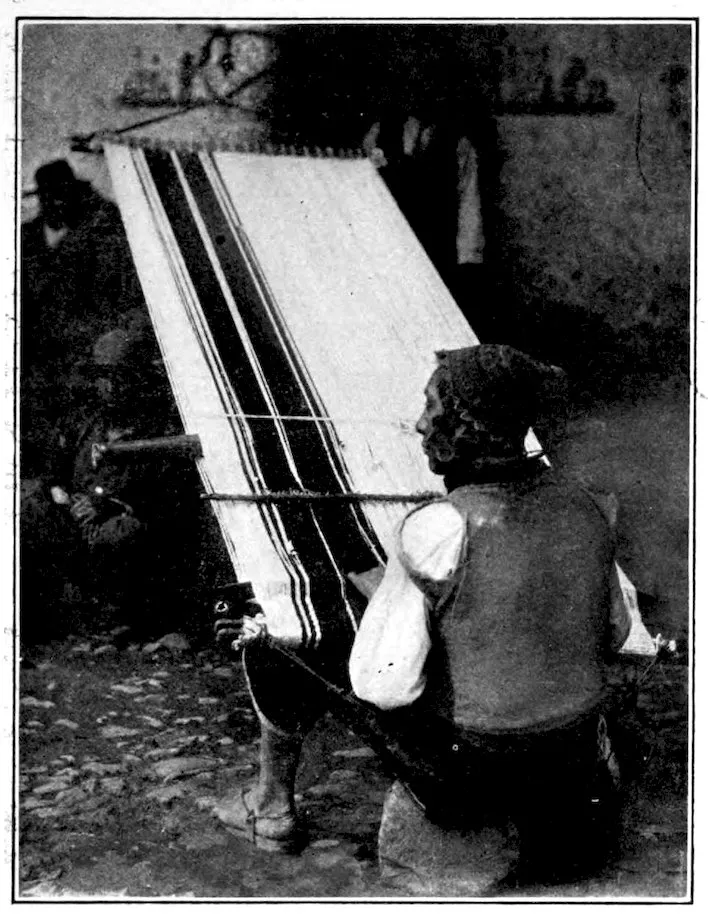
AN INDIAN WEAVING THE PONCHO.
Few countries have been visited by such
great extremes of fortune as Peru,
at one time reckoned among the richest in
the world and at another accounted so poor
as to be bordering on bankruptcy. The
history of Peruvian finances is a record of
alternate prodigality and economy, of expensive
experiments, abounding resourcefulness,
and, through all its phases, of unlimited
faith and resolute optimism. When, with
the proclamation of independence, Peru
threw off the yoke of Spain, its revenues
did not exceed two million dollars. In order
to maintain the struggle it was necessary to
raise a loan, especially as a large share of
the national income was still under the control
of the royalists. This loan, which was
made in London in 1822 for the sum of one
million two hundred thousand pounds sterling
at six per cent interest (three years’
interest was deducted from the principal, of which only a part was handed over in cash,
the rest being delivered in weapons and ammunition of war), was supplemented three years
later by a second loan for a smaller amount at the same rate of interest. Added to this debt
were large sums in recognition of the assistance rendered by Chile and Colombia in the
war of Independence, all of which contributed to bring the foreign debt of Peru up to about
four million pounds sterling at the very outset of the national career as a republic. The total
value of the exports at that time did not amount to two million pounds sterling, and the
440custom house receipts were less than two hundred thousand pounds sterling, the remainder
of the revenue being chiefly derived from a contribution levied in place of the tax which
Spain had imposed on the Indians.
Within fifteen years after the inauguration of the republic, the custom house receipts
had more than doubled, and a few years later the production of guano began to yield such
enormous returns that the country appeared to be once more prepared to hold its own
among the most prosperous nations of the world. In 1850, the loans of 1822 and 1825
were cancelled by means of a new loan in London for three million eight hundred thousand
pounds sterling, and in the same year the internal debt was consolidated in bonds bearing
three per cent interest, to the amount of a million pounds sterling. Including the debt to
Chile and the floating debt, Peru then owed only about six million pounds sterling, while
the revenue from guano alone was a million pounds sterling a year. But, as has been
shown elsewhere, the rapid acquisition of wealth from the guano trade brought with it the
temptation to reckless expenditure, to which the unsettled politics of the country contributed
in great measure. The internal debt increased four million pounds sterling in five years,
and each succeeding estimate of the budget showed heavier expenditures for the government
service. At the same time, many improvements were inaugurated which necessitated
the outlay of large sums.
During General Castilla’s administration, the Peruvian monetary system,—which had
become demoralized after the Peru-Bolivian Confederation by the circulation, at par, of
Bolivian silver money of a lower standard than the national currency,—was reformed
through the conversion of all inferior Bolivian coins in exchange for those of Peru, up to
the amount of ten million dollars and the prohibition of any future use of the depreciated
coin. The new law established the decimal system and the double standard of gold and
silver, the silver sol, worth a dollar, being recognized as the monetary unit; though the gold
coinage of that period lasted only a few years, being abolished in a later administration. In
order to carry out the currency reform, and to consolidate the foreign debt, Peru borrowed,
in 1862, in London, five and a half million pounds sterling, at four and a half per cent
interest and eight per cent yearly amortization, the loan being issued at ninety-three per
cent. All the government revenues and also the receipts from guano sales in England and
Belgium were pledged as a guarantee of this loan. The seizure of the Chincha Islands by
Spanish men-of-war in 1864 made it obligatory for Peru to build a navy strong enough to
drive back the invaders, and, with this object in view, a new loan of ten million pounds
sterling was made in London. The ironclads Huascar and Independencia were built with
the proceeds, part of which were further employed in the construction of the railway from
Mollendo to Arequipa.
A few far-seeing statesmen early recognized the necessity for establishing a more
satisfactory economic régime than that which governed Peru at this time, and, during the
administration of the Dictator Prado, his Finance Minister, Don Manuel Pardo, inaugurated
a new fiscal system. By means of taxation on certain luxuries and the levying of an export
441duty of three per cent on the chief national products, the government receipts were considerably
increased, and it was hoped that, as the system developed, it would create an
important revenue aside from that produced by guano, which, it was realized, was an uncertain
quantity and mortgaged almost to the limit of its financial value. Unfortunately, the
succeeding administration did not pursue the same policy, and new loans were made, which
brought the foreign debt up to thirty-three million pounds sterling, the government being
obliged to pay for the use of this loan two million seven hundred thousand pounds sterling
annually. The entire yearly revenue from guano was not more than two million pounds
sterling, and the national credit went down under the strain of the tremendous obligations
imposed on it.
When President Manuel Pardo was called to the chief executive office in 1872, he made
a heroic effort to improve the financial condition, which was one of internal as well as
external disorder. The budget of 1873 for ordinary expenses had been raised to nearly
twenty-two million sols (at forty pence), and a heavy debt of more than that amount was
found to be owing by the custom house and other government offices for credits recognized
and ordered to be paid during the previous period of prosperity. Nine million sols were
still due on railroad construction, and a suspension of this important work was threatened.
Added to these discouraging features of the situation was the rapid increase in the production
of nitrate, which was becoming a formidable rival to guano, being prepared and exported
free, while the latter was exported for the account of the State and was the source from
which three-fourths of the funds for the national expenditure were derived. President Pardo
reduced the estimate of the home budget to seventeen million sols, as it had stood in 1871
and sought, by the only available means, to raise extraordinary funds sufficient to prevent the
disaster of a suspension of the much-needed railroad construction. But the remedy was
applied too late, and all his efforts were defeated by circumstances which would not have
arisen under normal conditions. The president was obliged to borrow large sums from the
banks, which, under the laws then in force, might issue notes payable to bearer at sight for
three times the amount of currency they had in hand. The merchants, led by the fictitious
prosperity founded on a flattering but burdensome credit, had given far too great expansion to
their trade, and now that they were unable longer to use drafts corresponding to the value
of guano when making foreign payments, they were obliged to export coin, which was
done until the supply was exhausted, only the banknotes remaining in circulation. As the
government was not in a position to meet its obligations to the banks, which, in turn,
were unable any longer to convert their notes into currency, a commercial panic followed,
in 1875, with the long list of business failures that accompany such a dire event. The
government came to the rescue by granting the banks a moratorium, which would enable
them to get the necessary cash to resume the payment of their obligations in currency; but
the government was unable to give any financial assistance and the required coin for payments
in cash was not forthcoming at the expiration of the moratorium. President Prado,
who succeeded President Manuel Pardo in 1877, arranged a new loan with the banks, in
442consideration of which the state assumed the responsibility of the entire emission of banknotes,—fixing
the maximum at eighteen million sols,—thus converting them into government
notes, and establishing the
use of paper money. The
war with Chile followed
in 1879, and proved the
culminating disaster. But,
if the consequences of this
war were deplorable from
an economic standpoint,
the conditions which they
brought about tried the
mettle of the nation and
proved its strength.
Plunged from wealth into
poverty within a few
years, with its commerce
paralyzed, its industries
at a standstill, nearly all
the private wealth as well
as the national fortune
swept away, Peru bent
under the crushing weight
of accumulated evils. But,
like tempered steel, the
national spirit could bend
without being broken;
and with every lightening
of the load the inherent
strength of the people has
shown itself, until, to-day,
its optimistic character is
as dominant as ever.
443
As soon as the war with Chile was ended by the treaty of Ancón in 1884, Peru turned
to the problem of restoring the national finances, and a few years later the contract elsewhere
referred to was arranged, whereby the Peruvian Corporation assumed the foreign
debt and agreed to complete the construction of projected railways, in return for certain
concessions and privileges. The country began at once to recuperate, though slowly at
first, as might be supposed, the question of politics absorbing much attention. Patriotic and
capable leaders came forward, however, to meet the occasion with judgment and foresight.
One of the most important reforms effected was the adoption of the gold standard, which
has done a great deal to attract foreign capital and to inspire confidence abroad. The government
notes that had been issued to meet the needs of war, became so depreciated in
value that they were little used and finally they were practically withdrawn from circulation
by the announcement that their acceptance was optional; immediately the old coins—the
silver sols—began to reappear, imported from other Spanish-American republics, especially
Central American, where they formed at that time the circulating medium; the government
reopened the
mint, and Peruvian
silver was
coined into sols;
at this juncture
the depreciation
of silver arose,
and the question
of establishing
a gold standard
was debated.
The idea of
adopting a gold
standard grew in
favor when a
second fall in silver
occurred in
1886, adversely
affecting the
finances of all
countries that
used the silver
standard exclusively.
President
Pierola gave
a strong impulse
to the proposed
measure and
Congress finally
sanctioned its
adoption in 1897.
The legal equivalent of the Peruvian libra, or pound, was fixed at ten sols, which at once
solved the problem of the value of sols in circulation, amounting to about twelve million.
444Then the free coinage of silver was suspended and reimportation of silver sols was prohibited,
though it was a legal tender in Peru. Congress also passed a law by which custom
house duties had to be paid in gold, at the rate of one pound sterling for every ten sols,
which established the equivalent between the English sovereign and the silver sols at the
rate of one to ten. In December, 1897, a law was passed to authorize the coinage of
the libra, of the same weight and fineness as the English sovereign, and ordering it to be
received by the state as the equivalent of ten sols. In 1901, it was declared by law that the
monetary unit in Peru was the Peruvian libra and that silver sols were a legal tender up to
the sum of only ten sols; and, two years later, all the banks came to an agreement to keep
their accounts and to perform all their operations in the new legal money of Peru, the gold
libra. The success and facility with which this important monetary reform was accomplished
does credit to the genius of the financiers who projected and carried it through.
The fiscal reports of the last ten years show that Peru has made wonderful progress in
the rehabilitation of the national finances and the establishment of a system of revenue and
expenditure which ensures permanent and solid advancement. A very important share of
the credit for this financial progress is due to the newly elected President of Peru, His Excellency
Don Augusto Leguia, who, as Finance Minister in the cabinets of President Candamo
and President Pardo, gave signal proofs of his superior financial and administrative gifts.
Probably no other country can show such a rapid increase of revenues due to the administrative
labors of one of its ministers as can Peru, whose fiscal receipts were raised from
twelve million to thirty million sols annually during his term of office as Minister of Finance.
The loan of six million sols, recently contracted for the purpose of acquiring naval elements,
the creation of the bank of deposits and consignments and other financial undertakings of
great importance to the country have been effected through his initiative and energy.
Every year shows an increase in the receipts and a decrease of expenditures under the
present government. In all departments of the fiscal system, reforms have been inaugurated
with a view to strengthening the national finances; the National Company of Collections, a
joint stock company that was formed at the close of the war with Chile to organize a system
of taxation and to take charge of the collections shows by its latest report that the receipts
from taxes increased more than a hundred thousand sols from the last half-year of 1906 to
the same semester of 1907, the collection from July to December, 1907, amounting to two
million one hundred and fifty thousand sols. The interest on the internal debt of thirty-three
million sols has been paid to date; and the claim of the Guano Consignee Company of
the United States has been paid by an issue of fifteen million sols in bonds of the public
debt. The prosperity that has become apparent in all branches of trade is indicated by
the profits shown in the Peruvian Corporation’s report for 1907, amounting to more than
two million sols. The banking institutions, which have been closely identified with the
financial fortunes of the government, have been particularly successful in their negotiations
during the past year. The bank of London and Peru has had its securities quoted on the
Paris Bourse, and has established a bank of issue in Bolivia with a capital of two hundred
445thousand pounds; the Banco Italiano and the Banco Popular have increased their capital,
besides adding large sums to their reserve funds; the German Bank has installed branches
in Callao, Arequipa, and Trujillo within the past two years; and the savings banks and
insurance companies have enlarged the scope of their activities.
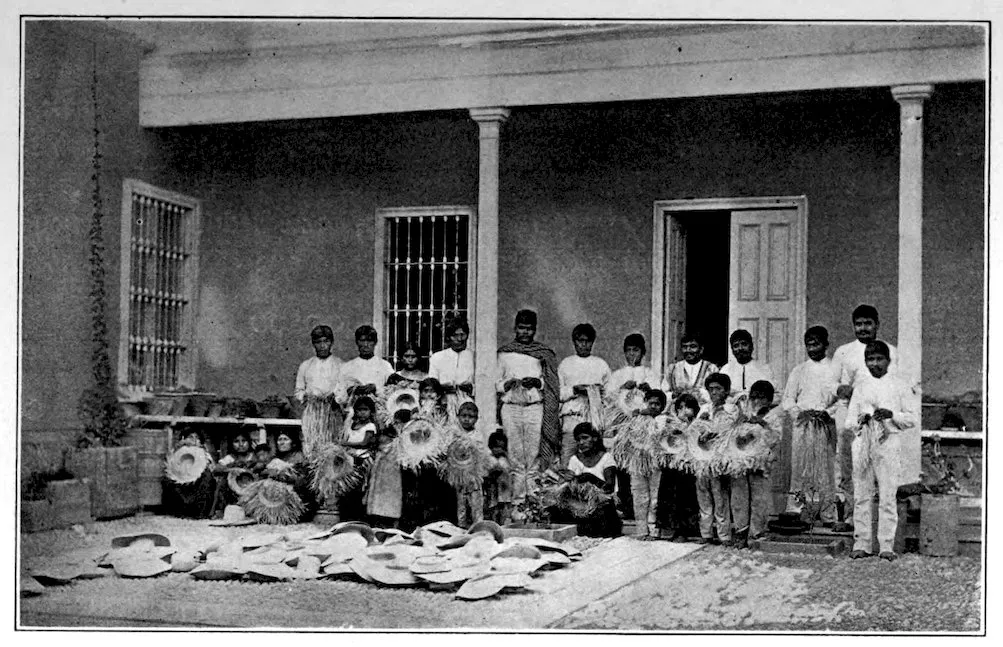
A NATIVE INDUSTRY OF THE COAST REGION.
Commerce has felt the stimulus of progressive government, and commercial enterprise
has flourished notably within the past five years. In 1902 the imports amounted in value
to three and a half million pounds, the exports to three and three-quarter millions; in 1906,
the value of the national imports reached five million pounds sterling and the exports
amounted to six million pounds sterling in value. The first half of 1907 showed less trade
returns than the corresponding semester of the preceding year, but the commercial reports
for the first half of the year 1908 give an increase of one hundred and sixty-five thousand
pounds sterling over the total returns for the same period of 1907.
The only export duties charged in Peru are: a three per cent ad valorem tax on gold in
bullion or dust; a charge of forty cents per dozen on “Panamá” hats exported from Paita;
and a duty of twenty cents a kilogram, gross, or twenty-four cents a kilogram, net, equivalent
to about four per cent ad valorem, on Pará rubber and caoutchouc. The import duties
are more numerous; wines and liquors, tea, coffee, butter, cheese, and a few other products
pay a duty of sixty-five per cent, and there is a long list of articles on which a duty of from
ten to twenty per cent is charged; but all machinery which is used directly to favor
industrial development is entered free of duty, as are also books and utensils for the
purpose of public instruction.
446
A COCAINE FACTORY IN THE MONZON VALLEY.
Foreign merchants have established themselves in all the larger towns of Peru, and in
the coast region they have built up very important enterprises. The English merchants
devote themselves especially to the wholesale import and export trade, in which they have
strong competitors among the Germans. The French have change of a great deal of the
retail business, particularly in articles of luxury; and the Italians are the principal purveyors
of foreign wines, table delicacies, etc. The Peruvian merchant has a share in all the trade
and Peruvian salesmen travel throughout the country selling to the merchants of the interior
the goods imported by the larger establishments of Lima and Callao. The North Americans
have established few business houses, but they control a large share of the mining enterprises,
and are financially interested in the construction of railways and other public works
of the country. Some of the largest commercial and industrial establishments of the United
States send their agents to Peru. But North American trade is still in the infancy of its
development so far as the South American market is concerned, few shippers in the United
States knowing much about the geography of the great southern continent. When, as has
frequently occurred, merchandise ordered for Lima is sent to Mollendo as the nearest port,
and goods for Arequipa are unloaded at Callao by the shipper’s orders, it becomes apparent
that the knowledge concerning commercial routes south of the equator is decidedly limited
among those exporters who are already in the field, to say nothing of those who have not
447yet entered it. But there is a growing interest among merchants of the United States in the
trade of South America, and every year shows an increase in the correspondence directed
to the Peruvian Consulate at New York seeking information on this subject. The Consul-General,
Hon. Eduardo Higginson, brings large experience in the foreign service of his
country to the particular task which occupies him in the great metropolis,—the promotion
of commercial relations between the two countries. The offices of the consulate are fitted
up with all the requisites of a consular bureau, and in its library may be found literature
relating to the industrial and commercial conditions of Peru.
It is impossible that the reciprocity of trade between Peru and the United States should
show any marked improvement until better facilities can be secured for rapid and cheap
transportation. But this is to be accomplished by the inauguration of the new National
Steamship Line, which, next year, will cover the distance between Callao and Panamá in
four days, and, later, by the completion of the Panamá Canal. From 1902 to 1905 the
imports from the United States were increased by twenty per cent, while the exports to
that country remained stationary, and in 1905 declined, owing to the special privileges
granted by the northern republic to Cuban sugars, with which Peru was unable to compete;
in the same period, the shipments have more than doubled from Peru to Great Britain,
where Peruvian sugars enter on equal terms with those of other countries.
The National Assembly of Commerce is an institution of increasing importance in
Peru. Though recently organized, in 1905, it has already done much to foster trade and
to promote the commercial relations of the country on a broad scale. When Secretary
Root visited Lima, he was made an honorary member of this organization, which works
as a kind of auxiliary of the Chambers of Commerce, as one of its founders described
it in his address to Mr. Root on that occasion, “to carry into practice the formation of a
world wide legislation which shall mark the courses in which the inexhaustible current
of industrial products ought to run.” In most of the larger cities, chambers of commerce
have been established to promote not only the direct interests of trade, but also the
development of the national industries, with the success of which the trade of the country
is closely identified.
The encouragement and promotion of manufacturing industry is especially desirable,
and this field of enterprise offers exceptional opportunities for investment. Like all other
South American countries, Peru imports many articles which could be profitably made at
home and for which it furnishes a large share of the raw material. But, until comparatively
recent years, few factories of importance existed in Peru, and most of these date from the
period when the fall in silver and the consequent depreciation of the national currency
made the importation of foreign manufactured articles enormously expensive, and encouraged
the establishment of home enterprises to compete for this trade. During the period
of the viceroyalty, the home government prohibited manufacturing in the colonies, in order
to protect the commerce of the mother country; and in the earlier days of the republic the
conditions were not favorable to the development of this branch of industry.
448
The most important manufacturing enterprises are in the hands of the Peruvians themselves,
though Italians and other foreign colonists have established large factories within
the past few years. The
manufacture of cotton and
woollen goods by the primitive
process used among the
Indians to-day has been in
vogue from time immemorial,
but not until nearly
half a century ago, in 1861,
were the first modern looms
introduced, for the woollen
factory of Lucre, near Cuzco,
which was founded by Dr.
Garmendia in 1860. The
most modern establishment
for the manufacture of
woollen goods is that of
Marangani, also in the
neighborhood of Cuzco,
founded in 1897, with
Peruvian capital amounting to five thousand pounds, which has since been increased to
thirty thousand pounds. The factory is now owned by the heirs of the founder, the
largest shareholder, Don J. W. Rodriguez del Carpio, being also the manager of the
enterprise. English, German, and Belgian machinery of the most modern manufacture is
used, the factory is lighted by electricity, as are also the houses of the operatives. All
the employés are native workmen, and the managers of the various sections are also
Peruvians, except in one section, of which an Italian expert has charge. The company
provides free instruction for the children of employés, as well as free medical attendance
when required. Cashmeres, flannels, and fine cloths are manufactured from native wool,
chiefly that of the sheep, though some alpaca is used. Only the dyes are imported,
everything else used in the factory being of native origin, and the dyes are chiefly made
from woods found in the Montaña. The Marangani establishment has direct communication
with Cuzco by telephone, and with all the cities of the republic by telegraph. It is
one of the most progressive and up-to-date enterprises in South America. The largest
cloth factory in Peru is that of Santa Catalina, in Lima, which produces about a quarter
of a million yards of cashmere and cloths for the army, besides various knitted goods.
It gives work to between seven and eight thousand employés and its business is increasing
annually. There are only four or five woollen factories in the republic, Arequipa having
one of the larger ones, and Lima another.
449
VESTIBULE OF THE BANK OF LONDON AND PERU, LIMA.
The manufacture of cotton goods has progressed with remarkable success since the
establishment of the first cotton factory in 1874. Five large and flourishing mills of this
kind are now located
in the environs of
Lima, besides several
in other cities, of
which the most important
are those of
Arequipa and Ica.
From these factories,
Peru and Bolivia are
supplied with cotton
materials, duck, drills,
etc., and since their
advent, the importation
of cotton cloth
from Germany and
England has notably
diminished. The annual
output of Peruvian
cotton factories
is about twenty-five
million yards, the
consumption of clean raw cotton being from two to three thousand tons annually. The
capital employed is estimated at between four and five million sols. The Victoria cotton
factory of Lima is one of the most modern establishments of its kind in Peru, and a visit to
the various departments inspires one with admiration for the systematic and orderly
appearance of the place, as well as the quality of the work done, which is equal to the best
turned out from similar factories in Europe and North America.
The silk industry is still in the experimental stage, so far as the making of fabrics
is concerned, though Lima has a practical school of sericulture and the Department of
Abancay is giving especial attention to this branch of industry. The making of Panamá
hats occupies a considerable number of the population in Catacaos, Eten, and Moyobamba,
though there are no large establishments having charge of their manufacture exclusively.
For the preparation of cereal and other food stuffs, several mills and factories have been
opened in Lima and Callao. The flour mills of the Santa Rosa Company and the biscuit
factories, fruit-preserving works, chocolate factories, etc., of these and other cities employ
modern machinery and are successful enterprises. Lima, Callao, Arequipa, and Cuzco have
large breweries and cigar factories, the latter being also an industrial feature of the towns
of Trujillo and Piura.
450Trujillo has, in addition to its other factories, extensive works for the elaboration of
cocaine. This drug has grown greatly in demand within recent years, and is now prepared
in twenty-five Peruvian factories, some of them located in the region of the coca trees.
The factory of Monzon is among the most important of these enterprises. Peru produces
enough cocaine to meet the world’s demand, the annual output approaching a hundred tons.
It is remarkable that so few of the medicinal plants and dyewoods of Peru are elaborated
in native establishments. Sulphuric acid could be produced at low cost, and there is a
promising field for the manufacture of dyes. Among the minor manufactures are paper,
matches, leather, cotton seed oil, lumber, ceramics, and similar useful articles of universal
necessity or artistic value.
The Santa Rosa works, inaugurated by the Associated Electric Companies of Peru, or,
as the syndicate is sometimes called, the “Electric Trust,” is a manufacturing industry of
the greatest importance. It is established for the purpose of generating electricity for the
entire service of electric lighting and the system of railroads and street cars in Lima, Callao,
and Chorillos. The capital employed in this gigantic enterprise is more than ten million
dollars gold, and it is owned and controlled by Peruvians. The offices of the company
are located at Santa Rosa, in the outskirts of Lima, and the central generating station is
in Chosica. This immense establishment is, to-day, capable of providing fourteen thousand
horse-power in motor force. Nearly all the electric material for the enterprise was purchased
in the United States. The Associated Electric Companies represent the first appearance of
the modern “trust” in the Andean republic of the Pacific.
PERUVIAN COTTON IN THE FACTORY.
CHAPTER XXXVI THE PASSING OF THE OLD PERU—ITS LEGACY TO POSTERITY—THE DESTINY OF THE NEW PERU
451
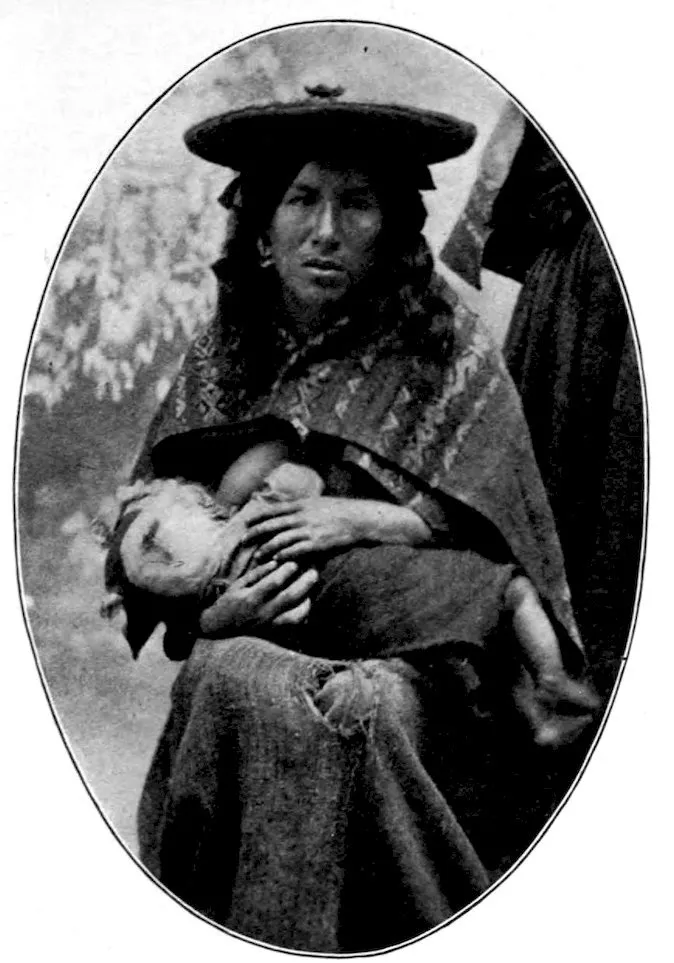
The old Peru is passing,—the dominant traits of the
nation are changing,—new life is apparent in its
ideals, its institutions, in the spirit that rules society
and politics, in everything that shows the influence of
a broader outlook, a greater range of endeavor, a
loftier aspiration. The traditions of caste and the
contempt for utilitarian ideals which constituted
a part of the creed of the colonial aristocracy have
given place to an appreciation of true worth wherever
found; the worship of luxury and pleasure
has ceased to hold in thrall a people cradled
in the pernicious atmosphere of a too abundant
wealth, and the discipline of suffering and loss
has brought out the inherent strength of a proud
and gifted race; stimulated by the necessity of
keeping up with the march of modern progress
in order that their country may maintain the place
to which its past history and present possibilities
entitle it, the Peruvians of to-day are putting
forth determined and well-defined efforts to overcome
every obstacle in the path of their highest development—and they are achieving
phenomenal success.
But there is still much of the old Peru that it is to be hoped will long remain. The
picturesque charm which lingers about the ancient people of the sierra, in their quaint
costumes and primitive ways, has apparently lost little by the advent of modern conditions;
these children of a fading past are as much attached to their time-honored dress and to
their traditional occupations as any Oriental, and it will be a long time before a pronounced
452change in this particular
is likely to take place.
During the colonial period
the Indians were
obliged to adopt some
features of the Spanish
garb,—probably to
please their Christian
masters,—and it is not
known how long the
process of transformation
required; but the
present fashion of the
Indians of Cuzco and
other localities of the
sierra is a survival of
the costume worn in the
time of the first Spanish
Bourbon kings, while
their jewels still show
the coat-of-arms of
Charles V. Although
there is no difference in
dress to distinguish the Indian in authority from his followers, the Alcalde of the sierra
is recognized as a very important personage among his fellows by the silver-bound vara
which he carries; it is the emblem of his authority and is in his eyes more than a mere
symbol; he will not part with it for an instant and he would feel himself bereft of his
power to rule if it were taken away.
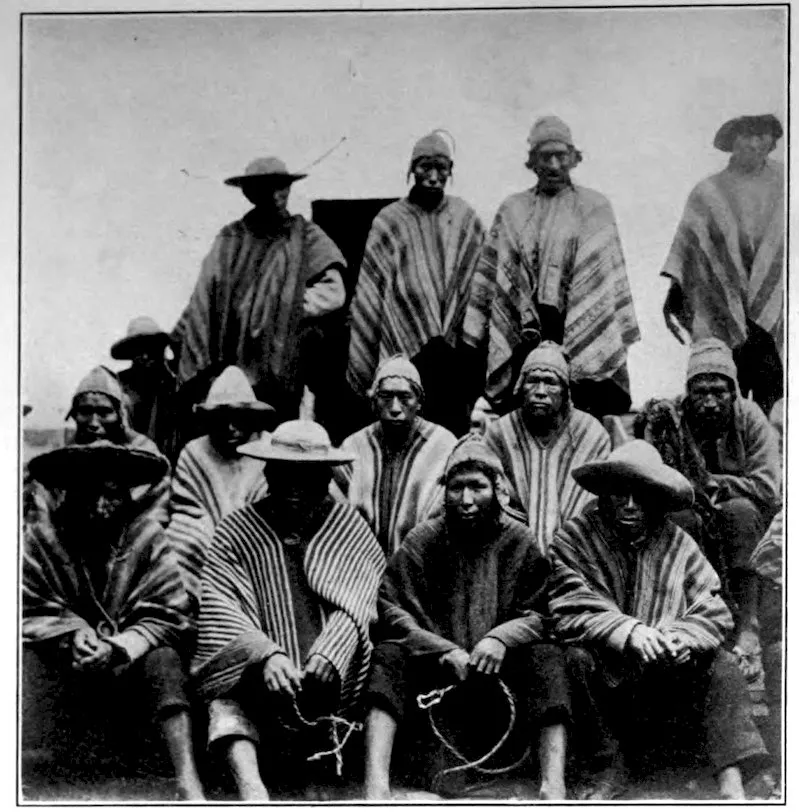
DESCENDANTS OF THE INCAS’ SUBJECTS.
Though obedient to the Catholic faith, the Indians have their own celebrations in
addition to those of the church; they still observe the feasts of the seedtime and harvest,
as did their heathen ancestors, though many features of the festivities as originally practised
have been eliminated. The tenacity with which they hold to their traditions is seen in
many things. When a new house is built, it is decorated with flowers—a survival of the
ceremonies held on such occasions in the days of the Incas—and a party is invited to celebrate
the event. Over the doors of some old houses are symbols of both Incaic and Christian
worship, though this is not seen on the more recently built homes, the roofs of which, with
few exceptions, are adorned with a large tin cross, about two feet high, having attached to
it small copies of the various instruments of torture used at the crucifixion of our Saviour,
as well as other reminders of that tragedy; the spear that pierced his side, the long pole
and sponge on which vinegar was given to quench his thirst, the garment for which they
453cast lots, and even the cock that crowed
when Peter had thrice denied his master,
are represented in conjunction with
the central emblem of Christianity. The
domicile of a bridal couple is easily distinguished
by its being decorated with
branches of totora (bulrushes) which
are kept in evidence for eight days and
signify that an invitation is extended to
all friends to partake of the hospitality
of the newly married pair.
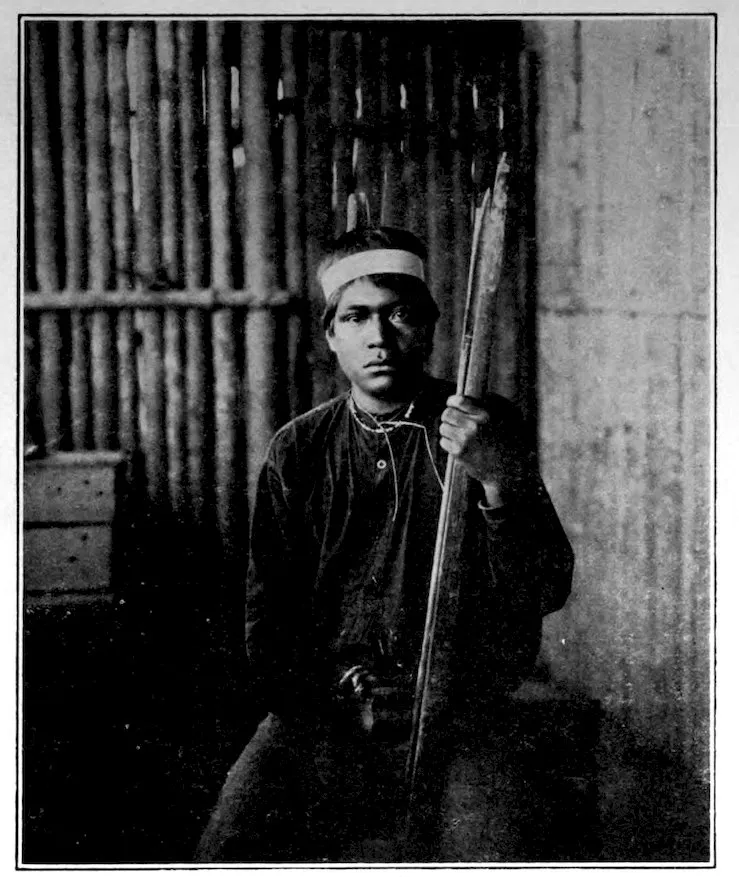
A TYPE OF THE AMAZON INDIAN.
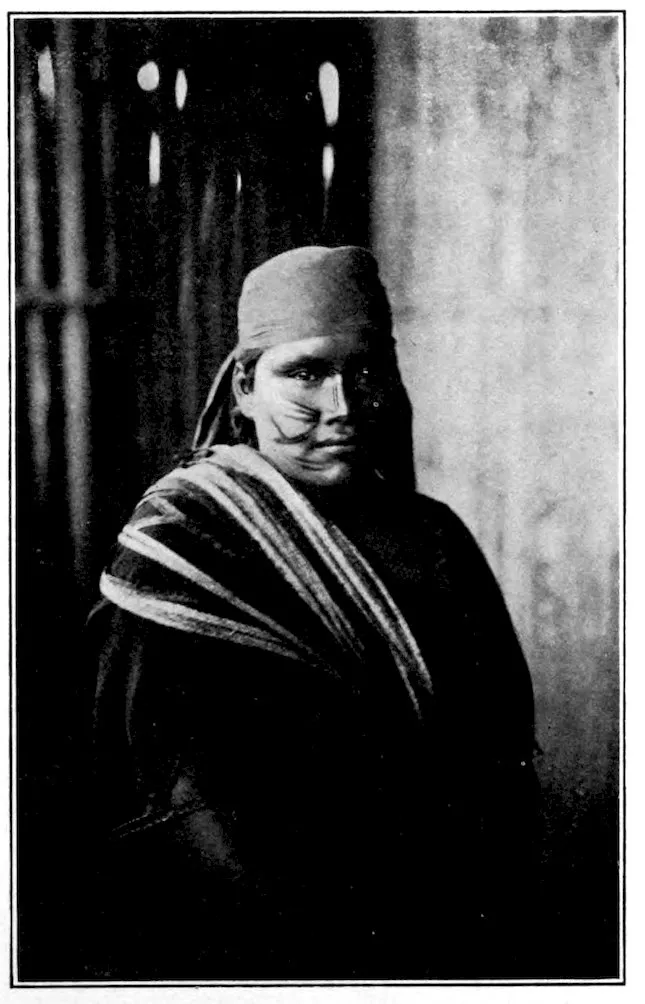
THE SCION OF A NOBLE FAMILY OF THE FOREST.
The change from old to new conditions
in Peru is a transition in which
the Indian has had little share; not because
he is prevented, but because of
his disinclination to learn new ways and
his lack of capacity to receive and apply
modern knowledge. It is impossible to say
what may be accomplished for future generations,
but, judging from past history, centuries
are required to accustom the indigenes to any
radical change, and they seem utterly bewildered
in the face of the rapid march of the present-day
civilization. They are not easily induced to
use modern tools in their work even when the
superiority of such utensils is proved to them.
The effort which the Indian is obliged to make
in order to grow accustomed to the use of the
modern implements is inconceivable to the modern
mind; to these ancient people, it is a herculean
task to attempt any new thing, and, if
allowed to follow their own inclination, they
will gladly throw aside the “improved” plough
and the light, long-handled hoe, in favor of their
tried and trusted though old-fashioned and
cumbersome tools. Spinning and weaving are
454favorite occupations of the Indians of the coast as well as of the sierra, and their primitive
looms, on which blanket and lighter materials are made, may be seen in most of their homes.
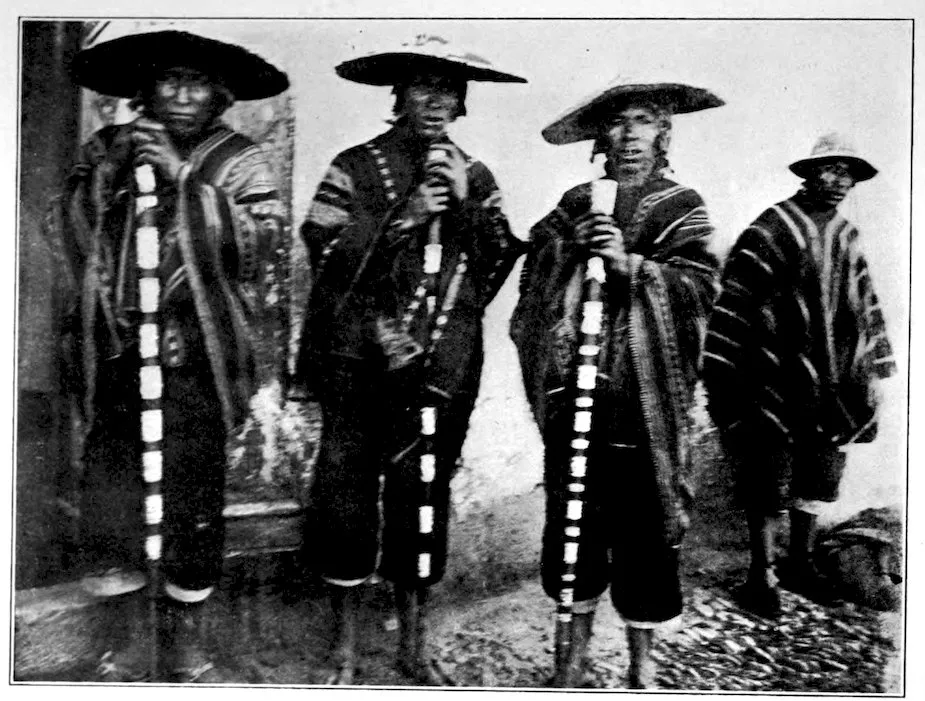
ALCALDES, WITH VARAS, THE INSIGNIA OF THEIR AUTHORITY.
Not only in the descendants of the Incas’ subjects does the charm of the past linger in
many beautiful and interesting features of Peru to-day. The influence of the viceroyalty is
seen in some of the most attractive characteristics of republican Peruvians; their inheritance
from their colonial ancestry may not be an unmixed blessing, but they have reason to be
proud of some of its advantages. The unanimous verdict of travellers is that the Peruvians
are a people of inherited refinement, culture, and geniality, and that their capital is one of
the most delightful places in the world for a stranger to visit; their politeness and courteous
hospitality is a heritage from the viceroyalty,—and it is more Peruvian than Spanish, being
free from the extreme formality which is the keynote of Spanish courtesy.
The new Peru is the result of a transition extending over a long period, but of which
the last steps have been rapid and of particular significance. The heritage of aristocratic Spain
held the republican Peruvians in bondage long after the declaration of their independence
455gave verbal freedom and equality to all. It was not possible that the old ideas and tendencies
should vanish with a stroke of the Liberator’s pen. But the desire for liberty grew in
the hearts of the people as its blessings were ever more enjoyed and appreciated, and latent
abilities were awakened as the demand became imperative for capable, resolute, and dominant
leaders to advance in the path of progress. So long as fortune smiled and wealth
came easily, it was not possible that the best
characteristics of the people should be developed,
however, and it was not until adversity
struck a heavy blow that the true spirit of the
nation was revealed.
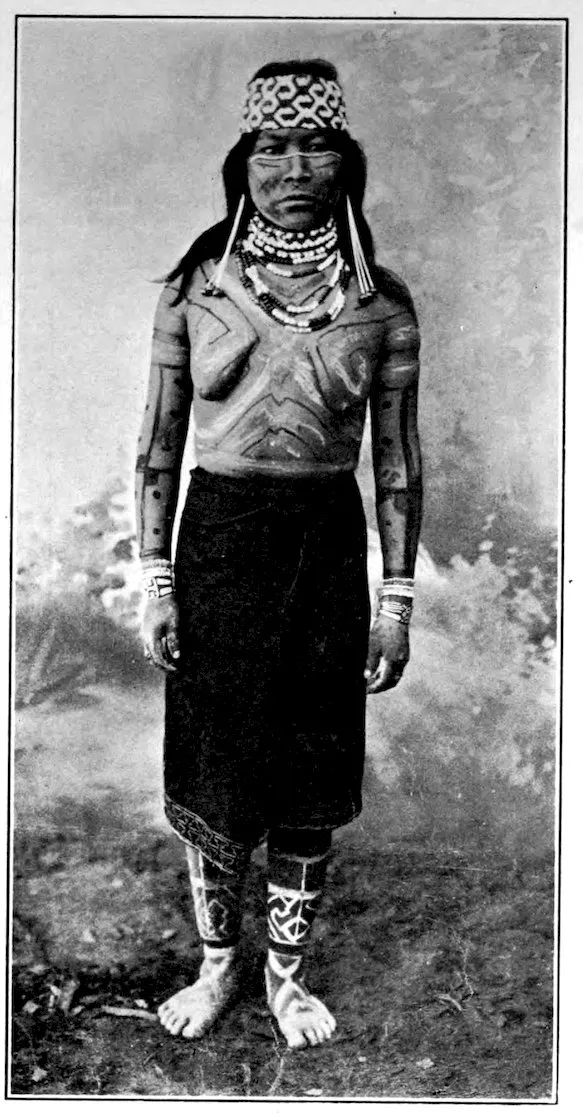
AN INDIAN WOMAN OF LORETO.
It is sometimes said that the Peruvians
are too gentle for their own good—that the
national optimism is combined with too large
a share of “faith in a lucky star” to be conducive
of determined effort. But the history
of the past few years proves that the nation
is capable of advancing in line with the most
progressive countries, and that the elements
uniting to consolidate the best interests of the
new Peru are not only unlimited faith and
confidence but also fine judgment, well-directed
energy, and established principles. It
is peculiarly significant of the tendency of the
new Peru that the statesman chosen to govern
its destinies during the next four years as
president of the republic is one of the most
capable financiers in South American politics.
It is not because of his famous ancestry—he
is a descendant of the noble Estete who
distinguished himself during the period of
the conquest and established the first settlement
at Trujillo—nor yet for his scholarship,
though he is among the best informed men
of his country, but because he realizes, in his
wonderful grasp of present-day needs and possibilities, the aspirations of his people,
and is prepared to lead them to greater heights than the nation has yet known. The
president-elect has already announced the policy of his government, which is to be an
instrument of progress, its underlying impulses the maintenance of peace and the protection
of the interests and rights of all citizens. Questions of sanitation, education, immigration,
agriculture, and railroad construction are to receive attention, and everything that may
456contribute to the national well-being will have careful consideration. The staunch principles
of the man who is to direct the destinies of his country for the next four years are voiced
in his declaration: “I intend to be the head of the nation, not the head of a party.” This
is the spirit of leadership demanded by the Peruvians to-day. A new generation is taking
the place of the older; new vitality pulses through the veins of the younger patriot, and his
nerves are stronger, his sight is keener and his recognition of the forces that are moulding
the destinies of empires to-day is impelling him to more active endeavor. That he does
not forget the debt of honor due to the noble heroes who have rendered the highest services
to the country in the past, while he recognizes the merit of those who are working for its
present and future aggrandizement, is shown by the liberality with which monuments are
built to commemorate their deeds. On the 8th of September last, a magnificent pantheon
was dedicated to the memory of “The Defenders of the Nation in the War of 1879”; in its
crypt repose the remains of the immortal heroes Admiral Grau and Colonel Bolognesi. It is
the most imposing monument of the capital and shows that while the national heart beats
high with hope for future achievement, it is still true to the sentiment of gratitude for compatriots
who were sacrificed in the darker days that are past. With one hand clasping the
tender memories of misfortune and the other extended to receive the blessings of a more
prosperous day, the Peruvian nation displays its most salient characteristics, loyalty
and optimism.
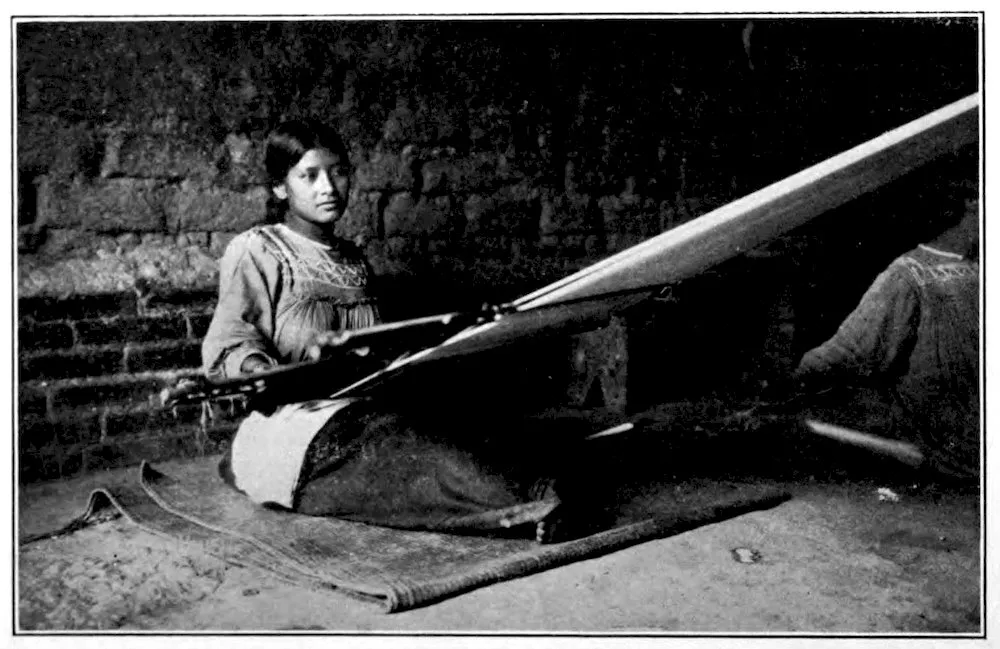
A NATIVE WEAVER, CHICLAYO.
- Typos fixed; non-standard spelling and dialect retained.