THE OHIO Naturalist
Transcriber’s Note:
New original cover art included with this eBook is granted to the public domain.
| Volume I. | May, 1901 | Number 7 |
NATURALIST
A journal devoted more especially to the natural history of Ohio. The official organ of The Biological Club of the Ohio State University. Published monthly during the academic year, from November to June (8 numbers). Price 50 cents per year, payable in advance. To foreign countries, 75 cents. Single copies 10 cents.
CONTENTS — VARIATION IN SYNDESMON THALICTROIDES. — TABULATION.
| Variation in Syndesmon Thalictroides | 107 | |
| W. A. Kellerman | ||
| Description of New Species of Stratiomyidae with notes on others | 112 | |
| J. S. Hine | ||
| Ohio Batrachia in the Zoological Museum of the O. S. U. | 114 | |
| Max Morse | ||
| The Promethea Moth, Callosamia promethea | 116 | |
| Herbert Osborn | ||
| Meeting of the Biological Club | 117 | |
| Jas. S. Hine, Sec. | ||
| News and Notes | 118 | |
| Vol. I. | MAY, 1901 | No. 7 |
This charming spring flower called in popular language Rue-Anemone, indigenous to eastern North America, has been known from early times, and as in many other equally unfortunate cases has had imposed upon it by botanists a superfluity of scientific names. Linnaeus in his Species Plantarum, 1753, listed it as Anemone thalictroides; in 1803 Michaux called it Thalictrum anemonoides; it was rechristened as Syndesmon thalictroides in 1832 by Hoffmansegg; finally Spach in 1839 proposed the name Anemonella thalictroides. Botanists to-day consider our plant as more properly placed in Hoffmansegg’s genus Syndesmon, and for it the earliest specific name, applied by Linnaeus, is very properly retained; hence the correct designation in botanical language is Syndesmon thalictroides (L.) Hoffmg.
The extent of variation in this plant has been but partially noted heretofore. The tabulation given below indicates the results of observations made the latter part of April and the first of May this year in regard to the number of flowers and the variation in the involucral leaves. As to whether these are sessile as given in our Manuals, notes have appeared on previous pages of this Journal by Messrs. Burglehaus, Wetzstein and Schaffner, cf. pp. 72, 104 and 106.
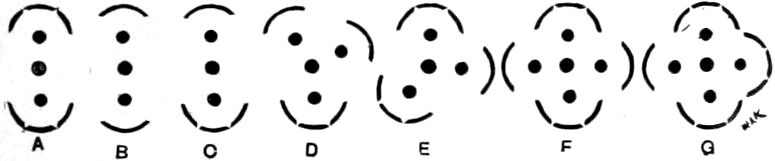
Fig. 1. Diagrams showing arrangement of leaves and flowers.
The number of flowers is normally three and the involucral leaves two. A diagram showing their arrangement is given at A, Fig. 1. The two leaves are not always ternate; they may both be simple, diagrammatically shown at B. A further variation, shown 108in Fig. 1 C presents one simple and one compound leaf. At D greater complexity is indicated, there being in many plants besides the central flower three instead of only two axillary ones, and only one of the subtending leaves is compound. In the case shown at E two of the three involucral leaves are compound. As shown in F and G four leaves may contribute to form the involucre and each one subtend a flower; in some cases two of the leaves are compound, in others three or even all may be compound. Still other variations along this line occur, but space forbids a fuller enumeration.
It should be stated that although the pedicels and leaves as shown in the diagrams (Fig. 1) occupy but a small portion of the circle, as a matter of fact the leaflets are spread and so disposed as to occupy the entire area when viewed from above the plant, the leaflets being equidistant from each other, or contiguous but not overlapping, and therefore taking the most advantageous position so far as sunlight is concerned.
The very striking variation in regard to presence or absence of the petiole to the involucral leaves has been previously noted. An inspection of a very large number of specimens collected in the vicinity of Columbus and in Perry and Logan counties, as well as of specimens kindly sent for the purpose by Mr. F. H. Burglehaus, Prof. A. Wetzstein, and Supt. H. N. Mertz, shows that petiolate forms occur exclusively in some localities (Northwestern Ohio); in other places the sessile form only obtains (Eastern Ohio); and yet elsewhere both forms are about equally represented (Central Ohio). We can not regard the petiolate forms as in any real sense a variety (much less a distinct species)—since both sessile and petiolate leaves occur in countless cases on the same plant. But where the petiolate form occurs prevailingly or may be exclusively, it would be advantageous to designate the same; therefore I propose as follows:
Syndesmon thalictroides f. PETIOLATA nova forma. Involucral leaves prevailingly or exclusively with petioles 2–10 or even 25 or more millimeters in length; otherwise like the typical species. Toledo (F. H. Burglehaus), St. Marys (A. Wetzstein) and West Mansfield, occasionally at Columbus and Rendville.
Comparatively few monstrosities were observed. In one case only did merely one leaf and two flowers occur; often but one flower develops though two leaves occur as usual; in a few cases a single small leaf was seen on a pedicel. A more common teratological variation was the elongation of the axis at the usual point of insertion of the flowers and involucral leaves, often distantly separating the leaves with their axillary flowers; in one case the distance between the points of insertion of the leaves was nearly two inches. The sepals are occasionally excessively numerous.
A characteristic very prominent is the similarity of the several stems that come from the same root. If one presents the typical 109form of flowers and leaves almost without exception, the second (and third when present) do the same; if one varies in any respect rarely does the remainder fail to follow suit. This can be seen in the tabulation where two or more stems are indicated—both or all are given (except in Nos. 29, 30 and 49) as observed, in the successive serial numbers. Another instance of the persistency of an idiosyncracy, as we may call it, was observed in some Syndesmons taken from the woods by a gardener at Springfield, Ohio, over forty years ago. The flowers were bountifully double, and the plants have each year since faithfully presented the same striking peculiarity.
The tabulation that follows is based on specimens from Toledo (Lucas Co.), Nos. 1–30; from St. Marys (Auglaize Co.), Nos. 31–48; from Steubenville (Jefferson Co.), Nos. 49–65; from West Mansfield (Logan Co.), Nos. 66–76; from Rendville (Perry Co.), Nos. 77–88; and from Columbus, Nos. 89–100. The number of stems to each plant is given in the second column; then follow in order the number of flowers to each stem, the number of simple leaves with length of their petioles in millimeters, the number of compound leaves with length (also in millimeters) of their petioles and finally of their petiolules.
| No. | 1 | Stems | 2 | Fls. | 4 | Simp. lvs. | 1 | Pet. | 8 | Comp. lvs. | 2 | Pet. | 14 | Petl. | 3–8 |
| „ | 2 | „ | 2 | „ | 3 | „ | 1 | „ | 4 | „ | 1 | „ | 4 | „ | 2–3 |
| „ | 3 | „ | 1 | „ | 3 | „ | 1 | „ | 4 | „ | 1 | „ | 4 | „ | 2–3 |
| „ | 4 | „ | 2 | „ | 4 | „ | 1 | „ | 10 | „ | 2 | „ | 9 | „ | 3–7 |
| „ | 5 | „ | 2 | „ | 3 | „ | 0 | „ | „ | 2 | „ | 3 | „ | 0–2 | |
| „ | 6 | „ | 1 | „ | 3 | „ | 0 | „ | „ | 2 | „ | 6 | „ | 3–6 | |
| „ | 7 | „ | 1 | „ | 3 | „ | 1 | „ | 13 | „ | 1 | „ | 15 | „ | 6–6 |
| „ | 8 | „ | 2 | „ | 4 | „ | 1 | „ | 12 | „ | 2 | „ | 12 | „ | 3–7 |
| „ | 9 | „ | 2 | „ | 4 | „ | 1 | „ | 3 | „ | 2 | „ | 3 | „ | 2–3 |
| „ | 10 | „ | 3 | „ | 4 | „ | 1 | „ | 11 | „ | 2 | „ | 12 | „ | 2–4 |
| „ | 11 | „ | 3 | „ | 4 | „ | 0 | „ | „ | 3 | „ | 6–7 | „ | 2–4 | |
| „ | 12 | „ | 3 | „ | 4 | „ | 0 | „ | „ | 3 | „ | 2–3 | „ | 1–2 | |
| „ | 13 | „ | 2 | „ | 4 | „ | 3 | „ | 6 | „ | 0 | „ | „ | ||
| „ | 14 | „ | 2 | „ | 3 | „ | 2 | „ | 6 | „ | 0 | „ | „ | ||
| „ | 15 | „ | 3 | „ | 4 | „ | 1 | „ | 9 | „ | 2 | „ | 9 | „ | 2–5 |
| „ | 16 | „ | 3 | „ | 4 | „ | 1 | „ | 8 | „ | 2 | „ | 7 | „ | 2–4 |
| „ | 17 | „ | 3 | „ | 4 | „ | 0 | „ | „ | 3 | „ | 3 | „ | 1–2 | |
| „ | 18 | „ | 2 | „ | 5 | „ | 1 | „ | 6 | „ | 3 | „ | 8 | „ | 2–5 |
| „ | 19 | „ | 2 | „ | 3 | „ | 2 | „ | 3 | „ | 0 | „ | „ | ||
| „ | 20 | „ | 1 | „ | 3 | „ | 0 | „ | „ | 2 | „ | 7 | „ | 2–4 | |
| „ | 21 | „ | 1 | „ | 4 | „ | 2 | „ | 4–5 | „ | 1 | „ | 5 | „ | 2–3 |
| „ | 22 | „ | 3 | „ | 3 | „ | 0 | „ | „ | 2 | „ | 9 | „ | 3–7 | |
| „ | 23 | „ | 3 | „ | 3 | „ | 0 | „ | „ | 2 | „ | 6 | „ | 2–3 | |
| „ | 24 | „ | 3 | „ | 3 | „ | 0 | „ | „ | 2 | „ | 3 | „ | 0–2 | |
| 110„ | 25 | „ | 1 | „ | 1 | „ | 1 | „ | 4 | „ | 1 | „ | 5 | „ | 2–3 |
| „ | 26 | „ | 1 | „ | 4 | „ | 1 | „ | 5 | „ | 2 | „ | 7 | „ | 2–4 |
| „ | 27 | „ | 2 | „ | 4 | „ | 1 | „ | 12 | „ | 2 | „ | 16 | „ | 3–8 |
| „ | 28 | „ | 2 | „ | 3 | „ | 0 | „ | „ | 2 | „ | 7 | „ | 2–3 | |
| „ | 29 | „ | 7 | „ | 4 | „ | 1 | „ | 8 | „ | 2 | „ | 10 | „ | 3–6 |
| „ | 30 | „ | 7 | „ | 3 | „ | 0 | „ | „ | 2 | „ | 8 | „ | 3–6 | |
| „ | 31 | „ | 2 | „ | 4 | „ | 0 | „ | „ | 3 | „ | 3–4 | „ | 1–2 | |
| „ | 32 | „ | 2 | „ | 3 | „ | 0 | „ | „ | 2 | „ | 2–3 | „ | 1–2 | |
| „ | 33 | „ | 1 | „ | 4 | „ | 1 | „ | 2 | „ | 2 | „ | 3 | „ | ½–2 |
| „ | 34 | „ | 1 | „ | 3 | „ | 0 | „ | „ | 2 | „ | 4–5 | „ | 1–2 | |
| „ | 35 | „ | 1 | „ | 3 | „ | 1 | „ | 4 | „ | 1 | „ | 5 | „ | 1–2 |
| „ | 36 | „ | 1 | „ | 3 | „ | 1 | „ | 3 | „ | 1 | „ | 4 | „ | ½–2 |
| „ | 37 | „ | 1 | „ | 3 | „ | 0 | „ | „ | 2 | „ | 4 | „ | 1–2 | |
| „ | 38 | „ | 2 | „ | 3 | „ | 0 | „ | „ | 2 | „ | 4 | „ | 1–2 | |
| „ | 39 | „ | 2 | „ | 3 | „ | 0 | „ | „ | 2 | „ | 6 | „ | 2–3 | |
| „ | 40 | „ | 1 | „ | 3 | „ | 0 | „ | „ | 2 | „ | 2–3 | „ | 1–2 | |
| „ | 41 | „ | 2 | „ | 3 | „ | 1 | „ | 3 | „ | 1 | „ | 3 | „ | 1 |
| „ | 42 | „ | 2 | „ | 3 | „ | 1 | „ | 2 | „ | 1 | „ | 2 | „ | 1–1½ |
| „ | 43 | „ | 1 | „ | 3 | „ | 0 | „ | „ | 2 | „ | 5 | „ | 1–2 | |
| „ | 44 | „ | 3 | „ | 3 | „ | 2 | „ | 5 | „ | 0 | „ | „ | ||
| „ | 45 | „ | 3 | „ | 3 | „ | 2 | „ | 6 | „ | 0 | „ | „ | ||
| „ | 46 | „ | 3 | „ | 3 | „ | 2 | „ | 3 | „ | 0 | „ | „ | ||
| „ | 47 | „ | 2 | „ | 3 | „ | 1 | „ | 4 | „ | 1 | „ | 4 | „ | 0 |
| „ | 48 | „ | 2 | „ | 3 | „ | 2 | „ | 1 | „ | 0 | „ | „ | ||
| „ | 49 | „ | 1 | „ | 3 | „ | 0 | „ | „ | 2 | „ | 0 | „ | 12–15 | |
| „ | 50 | „ | 5 | „ | 3 | „ | 0 | „ | „ | 2 | „ | 0 | „ | 22–28 | |
| „ | 51 | „ | 5 | „ | 3 | „ | 0 | „ | „ | 2 | „ | 0 | „ | 6–10 | |
| „ | 52 | „ | 5 | „ | 3 | „ | 0 | „ | „ | 2 | „ | 0 | „ | 3–6 | |
| „ | 53 | „ | 5 | „ | 5 | „ | 2 | „ | 1 | „ | 2 | „ | 0 | „ | 1–1½ |
| „ | 54 | „ | 5 | „ | 3 | „ | 0 | „ | „ | 2 | „ | 0 | „ | 1 | |
| „ | 55 | „ | 1 | „ | 3 | „ | 0 | „ | „ | 2 | „ | 0 | „ | 6–6 | |
| „ | 56 | „ | 6 | „ | 4 | „ | 1 | „ | 15 | „ | 2 | „ | 0 | „ | 15–25 |
| „ | 57 | „ | 3 | „ | 4 | „ | 1 | „ | 2 | „ | 2 | „ | 0 | „ | 6–26 |
| „ | 58 | „ | 3 | „ | 4 | „ | 1 | „ | 2 | „ | 2 | „ | 0 | „ | 20–25 |
| „ | 59 | „ | 3 | „ | 4 | „ | 1 | „ | 1 | „ | 2 | „ | 0 | „ | 3–6 |
| „ | 60 | „ | 3 | „ | 4 | „ | 1 | „ | 1 | „ | 2 | „ | 0 | „ | 15–20 |
| „ | 61 | „ | 3 | „ | 4 | „ | 2 | „ | 0 | „ | 2 | „ | 0 | „ | 3–6 |
| „ | 62 | „ | 3 | „ | 3 | „ | 0 | „ | „ | 2 | „ | 0 | „ | 4–8 | |
| „ | 63 | „ | 3 | „ | 4 | „ | 1 | „ | 1 | „ | 2 | „ | 0 | „ | 15–23 |
| „ | 64 | „ | 3 | „ | 4 | „ | 0 | „ | „ | 3 | „ | 0 | „ | 5–18 | |
| „ | 65 | „ | 3 | „ | 5 | „ | 1 | „ | 0 | „ | 3 | „ | 0 | „ | 2–10 |
| „ | 66 | „ | 2 | „ | 2 | „ | 1 | „ | 2 | „ | 1 | „ | 2½ | „ | 1½–2 |
| „ | 67 | „ | 2 | „ | 3 | „ | 2 | „ | 2 | „ | 0 | „ | „ | ||
| „ | 68 | „ | 2 | „ | 4 | „ | 1 | „ | 1½ | „ | 2 | „ | 2 | „ | 2–3 |
| „ | 69 | „ | 2 | „ | 4 | „ | 0 | „ | „ | 3 | „ | 3–5 | „ | 1–3 | |
| „ | 70 | „ | 2 | „ | 4 | „ | 1 | „ | 1 | „ | 2 | „ | 1½–2 | „ | 2 |
| 111„ | 71 | „ | 2 | „ | 4 | „ | 1 | „ | 2 | „ | 2 | „ | 3–4 | „ | 2 |
| „ | 72 | „ | 2 | „ | 4 | „ | 1 | „ | 2 | „ | 2 | „ | 2 | „ | 1–2 |
| „ | 73 | „ | 2 | „ | 3 | „ | 0 | „ | 2 | „ | 2 | „ | 4–5 | „ | 2–3 |
| „ | 74 | „ | 2 | „ | 4 | „ | 1 | „ | 2 | „ | 2 | „ | 2 | „ | 1–2 |
| „ | 75 | „ | 2 | „ | 3 | „ | 0 | „ | „ | 2 | „ | 4 | „ | 2–3 | |
| „ | 76 | „ | 1 | „ | 1 | „ | 2 | „ | 1 | „ | 0 | „ | „ | ||
| „ | 77 | „ | 1 | „ | 3 | „ | 0 | „ | „ | 2 | „ | 0 | „ | 5–12 | |
| „ | 78 | „ | 1 | „ | 3 | „ | 0 | „ | „ | 2 | „ | 0–2 | „ | 3–7 | |
| „ | 79 | „ | 1 | „ | 3 | „ | 0 | „ | „ | 2 | „ | 2–3 | „ | 1–4 | |
| „ | 80 | „ | 1 | „ | 3 | „ | 0 | „ | „ | 2 | „ | 1–3 | „ | 2–5 | |
| „ | 81 | „ | 2 | „ | 3 | „ | 0 | „ | „ | 2 | „ | 5–6 | „ | 5–9 | |
| „ | 82 | „ | 2 | „ | 3 | „ | 0 | „ | „ | 2 | „ | 1 | „ | 2 | |
| „ | 83 | „ | 1 | „ | 4 | „ | 0 | „ | „ | 3 | „ | 0–6 | „ | 2–8 | |
| „ | 84 | „ | 2 | „ | 3 | „ | 0 | „ | „ | 2 | „ | 2–3 | „ | 1–2 | |
| „ | 85 | „ | 2 | „ | 3 | „ | 0 | „ | „ | 2 | „ | 0 | „ | 15–18 | |
| „ | 86 | „ | 2 | „ | 3 | „ | 0 | „ | „ | 2 | „ | 0 | „ | 2–5 | |
| „ | 87 | „ | 2 | „ | 4 | „ | 0 | „ | „ | 3 | „ | 0–7 | „ | 0–6 | |
| „ | 88 | „ | 2 | „ | 5 | „ | 0 | „ | „ | 4 | „ | 0 | „ | 2–4 | |
| „ | 89 | „ | 2 | „ | 4 | „ | 1 | „ | 4 | „ | 2 | „ | 0 | „ | 4–6 |
| „ | 90 | „ | 2 | „ | 4 | „ | 1 | „ | 5 | „ | 2 | „ | 0 | „ | 5–8 |
| „ | 91 | „ | 2 | „ | 4 | „ | 1 | „ | 1 | „ | 2 | „ | 0 | „ | 3–5 |
| „ | 92 | „ | 2 | „ | 4 | „ | 1 | „ | 2 | „ | 2 | „ | 0 | „ | 5–8 |
| „ | 93 | „ | 1 | „ | 4 | „ | 0 | „ | „ | 3 | „ | 0–10 | „ | 8–28 | |
| „ | 94 | „ | 1 | „ | 5 | „ | 1 | „ | 22 | „ | 3 | „ | 0–25 | „ | 4–23 |
| „ | 95 | „ | 1 | „ | 4 | „ | 0 | „ | „ | 3 | „ | 0–15 | „ | 9–33 | |
| „ | 96 | „ | 1 | „ | 4 | „ | 0 | „ | „ | 3 | „ | 0–8 | „ | 6–25 | |
| „ | 97 | „ | 1 | „ | 3 | „ | 0 | „ | „ | 2 | „ | 6–7 | „ | 2–4 | |
| „ | 98 | „ | 1 | „ | 1 | „ | 2 | „ | 4 | „ | 0 | „ | „ | ||
| „ | 99 | „ | 2 | „ | 4 | „ | 1 | „ | 4 | „ | 2 | „ | 5 | „ | 2–3 |
| „ | 100 | „ | 1 | „ | 3 | „ | 1 | „ | 3 | „ | 1 | „ | 4 | „ | 1–2 |
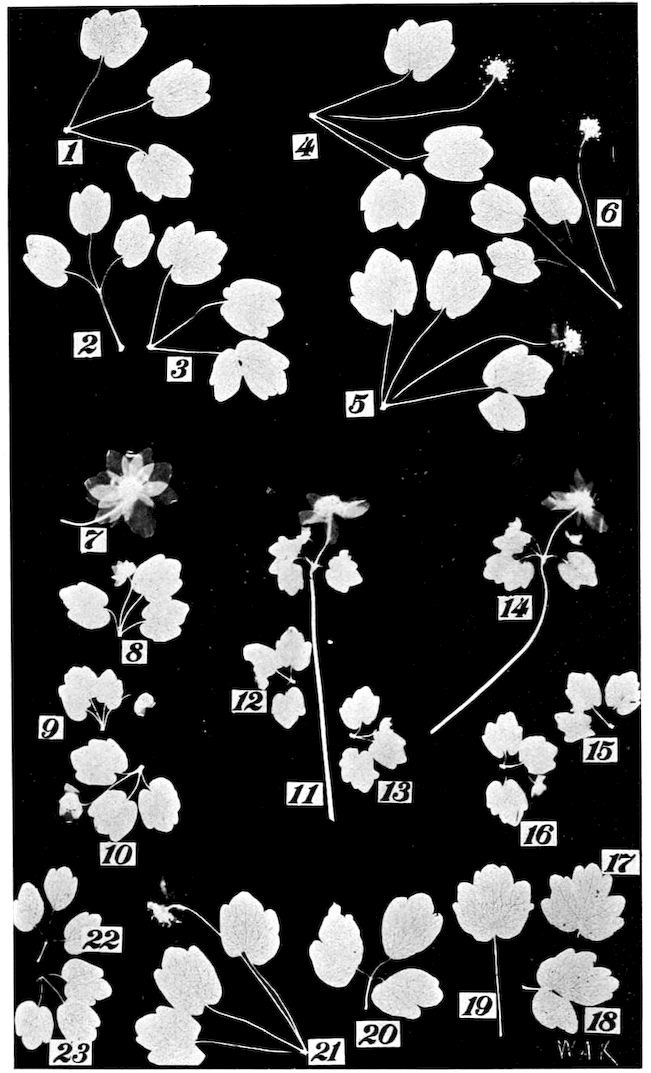
Ohio Naturalist. Plate 9.
KELLERMAN ON SYNDESMON.
From the above tabulation it may be seen that of the plants selected at random for examination 51 per cent. of the stems have three flowers and 49 per cent. have four or more; 10 per cent. have simple involucral leaves only, 44 per cent. have both simple and compound, and 46 per cent. have only compound involucrate leaves. Of the total number, 88 per cent. have one or all of the involucrate leaves petiolate, and 12 per cent. have only sessile ones. Observations of others on this interesting little plant are solicited—especially should the Ohio botanists, amateurs and pupils furnish such notes for publication in the Ohio Naturalist.
Explanation of Plate 9.—Syndesmon thalictroides; the leaves, etc., were used as negatives and the photographs were reduced by the engraver to less than one-half the natural size. Figs. 1, 2 and 3 show leaves from the same plant; figs. 4, 5 and 6 are from one and the same plant; figs. 7, 8, 9 and 10 are parts of the same plant; figs. 11, 12 and 13, also 14, 15 and 16 are each of one plant respectively; figs. 17 to 23 inclusive illustrate leaf variation, specimens taken from different plants, except figs. 22 and 23 which are from one and the same plant.
DESCRIPTION OF NEW SPECIES OF STRATIOMYIDAE WITH NOTES ON OTHERS. — Ptecticus (Sargus) trivittatus , Say. — Euparyphus major n. sp. — Akronia n. gen. (Fig. 1.) — Akronia frontosa n. sp. — Chrysochroma nigricornis Loew.
In a collection of several species of Stratiomyidae from Ohio, and a number of western species, I find something which may be of interest to students of the family.
Specimens of Allognosta fuscitarsis, Say, show some degree of variation in the extent of the pale color on the disc of the abdomen. Some of the females have the abdomen nearly or wholly black. Specimens of A. obscuriventris, Loew, have the body entirely black; the legs are darker and the form is considerably smaller than fuscitarsis. Both species are common at Columbus during May.
A species of Ptecticus taken abundantly at Cincinnati by Chas. Dury agrees so well with Say’s Sargus trivittatus that I cannot convince myself that it is anything else. Specimens when first taken agree more closely with Say’s description than the same specimens do after they have been in the cabinet awhile and have become dry. The green color that Say mentions is present in some while others are yellowish or brownish. The broad, dusky band that Say described as appearing on the basal part of each abdominal segment beyond the second is conspicuous, being of greatest extent on the fifth and sixth.
Female, length 9mm. Head yellow; vertex, a wide stripe from vertex to mouth, widened at antennae and spreading out on the cheeks in the region of the mouth, antennae and occiput, black; eyes hairy. Thorax shining; apical two-thirds of scutellum including the spines, an irregular spot each side between the scutellum and base of the wing, four longitudinal lines abbreviated behind, a triangular spot before the base of the wing, and two spots beneath it, bright yellow. There is also a minute yellow spot on each side of the thorax posterior to the lower corner of the eye, the yellow markings on the disc of the thorax extend for one-fifth of their length behind the transverse suture, while those on the sides extend from the humerus to the transverse suture. The femora except at base and apex are black, and the last three tarsal joints are brown, remaining parts of the legs are yellow; wings hyaline, veins dull yellow, halteres bright yellow. Abdomen black; a spot under the scutellum, a spot each side on the lateral part of the second segment, 113an elongate oblique band nearly meeting its fellow of the opposite side of each of the third and fourth segments, and apex, yellow. On the venter the hind margins of the third and fourth segments are yellow for their entire width, nearly the whole of the middle part of the second segment and a narrow band on the posterior margin of the first segment are also yellow. The lateral margins of the segments of the abdomen are black between the yellow markings, and there is no connection between the yellow markings on the abdomen.
A female specimen taken by E. J. Oslar at Boulder, Colorado, August 19, 1899.
In many respects this species agrees with Osten Sacken’s decem-maculatus, but it cannot be that species as the markings are very different. Aside from the hairy eyes it appears to belong to Euparyphus. The third joint of the antennae is composed of six rings with the last ring the longest. The fifth posterior cell meets the discal and its general form agrees very closely with bellus and tetraspilus.
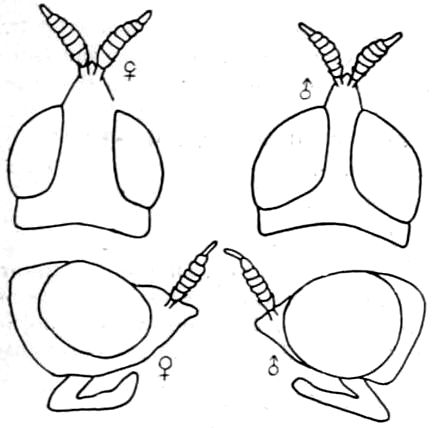
Fig. 1.
Head conically produced. Front in the female noticeably wider than the eye, in the male about half as wide as in the female. Antennae three-jointed, first and second joints about equal in length, third much longer than the other two together and composed of six rings. Posterior orbits wide in both sexes, but widest in the female, scutellum without spines, four posterior veins arising from the discal cell, abdomen short and broad, nearly circular in outline.
Named for Akron, Ohio, in which vicinity I have procured many rare species.
Length 4–4½ mm. Dull black, sparsely clothed with very short, light-colored hair; eyes widely separated in both sexes, naked; antennae entirely in front of the eyes; front produced more in the female than in the male, posterior orbits present in both sexes, widest in the female; thorax nearly equally four-sided, scutellum without spines, wings hyaline, veins bounding costal, basal, marginal, and 114first and second sub-marginal cells heavy and dark colored; discal cell rather small emitting four posterior veins; legs black, knees and tarsi lighter colored than the other parts; abdomen short and wide. Five males and four females taken at Hawkins, near Akron, Ohio, May 21, 1899.
This is so distinct from species of Nemotelus in general appearance, and structure of the head, especially in the male, that it seems best to make it the type of a new genus.
This is a common species in southern Ohio. Specimens may be found resting on the upper side of leaves and are easily approached. In the female the white fronted line which Loew mentions is very conspicuous and extends from one eye to the other above the antennae. In some specimens the white lateral, thoracic lines are very easily seen, but in others these lines are brownish. The male has much the appearance of the female, the eyes are broadly contiguous, leaving a small vertical triangle which is largely occupied by the ocelli; the lateral thoracic lines in this sex are dark brown and therefore are not such a contrast to the bright green thorax as in the female.
I had some trouble in locating the genus of this species by Dr. Williston’s key. The species is not elongate, but of much the same form as Microcrysa polita. A comparison was made with the type.