Of course Carlo was a dog, and I'll tell you how he came
to us. As my father was walking up Arch Street, Philadelphia,
one day, with his hands clasped behind him, something
cold and damp was pushed against his fingers. He
turned round quickly, and a beautiful brown-and-white
pointer came to his side, and looked up at him with such
a pleading look in his soft brown eyes, that my father
said, as he patted him on the head, "Poor fellow, are you
lost?"
That was enough for Carlo, as we named him. He had
found a kind master, and my father a faithful friend. Of
course it wouldn't do to keep the dog without trying to
find his owner: so the next day he was advertised; and,
for several days after, every ring at the bell would make
us children start, and feel afraid that somebody had come to
take him away. But nobody came for him; and we loved
and petted our new-found treasure to the neglect of wooden
horses and dolls, and all our other toys.
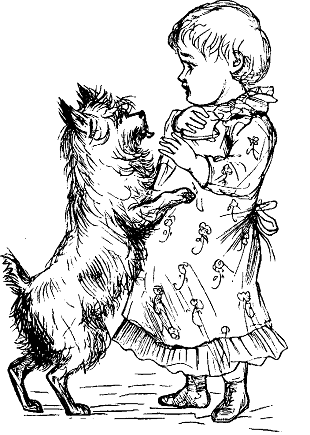
Sometimes he would come to the parlor-door with his
feet very wet and muddy from running through the street-gutters.
Then we would say, "O Carlo! what dirty
boots!" He would hang down his head, and go off to the
back-yard, and lick his feet until they were clean, when,
with a bound, and a wag of the tail, he would rush back to
the parlor, quite sure that he would be let in.
But the month of June was coming,—a sorrowful time
for dogs; for the city had ordered that all dogs found on
the streets without muzzles on must be destroyed. At five
o'clock every morning, the wagons used to go through the
streets, and take up all dogs that were not muzzled. So we
had to get a "bonnet," as we called it, for our pet.
It was made of bright red leather, and really he looked
so handsome in it, that we thought he ought to like to wear
it when he went out for a walk; but he didn't one bit. He
used to rub his head on the sidewalk, and fuss and squirm,
and, when he didn't get rid of his bonnet in that way, the
cunning fellow used to hide it when he got home.
We kept it hung up on a high nail in the dining-room;
but one day, when we called Carlo to have his bonnet put
on before he went out, there was no bonnet to be found.
Who could have taken it? I must say Carlo acted very
much like the thief; for he hung his head, and looked
sheepish, when we asked him about it.
We hunted under the chairs and the lounge, in the
closets, in parlor and dining-room, Carlo fussing round
with us, just as if he wanted dreadfully to find it; but
it couldn't be found. So we went out, and shut the street-door
after us, saying, "Well, Carlo, you can't go out to
walk, that's all."
Those who hide know where to find. When Carlo saw,
that, without his bonnet, there was no walk for him, he
scampered into the basement-kitchen, got out the muzzle
from a pile of old papers in one of the closets, carried it up
stairs, and laid it down on the dining-room floor.
But this was not the last time Carlo hid his red bonnet
and found it again. In all sorts of places he would stow it
away when he came in from his walks. And at last he got
so used to it that when we said, "Now, Carlo, go fetch your
bonnet," he would dash off and pull it from its hiding-place,
and quietly stand to have it buckled on.
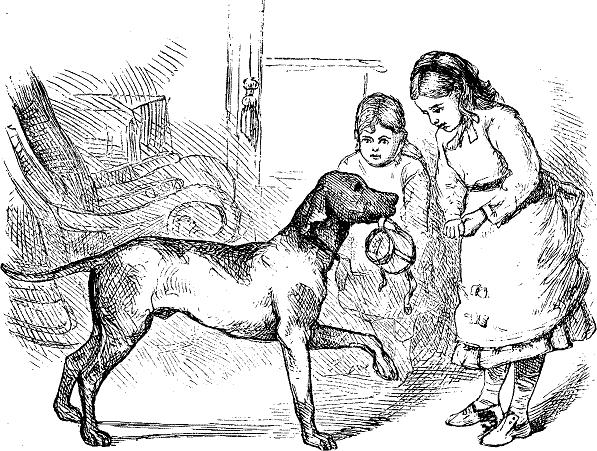
He behaved so well in the streets, that before the dog-season
was over, we used to take his bonnet off, and let him
carry it home in his mouth. One rainy day, when the
water was pouring down the open gutters, and I was hurrying
home, I happened to look round, and there was Carlo
coming along behind me; but his pretty red bonnet was
bobbing along in the gutter, where the sly rascal had
thrown it, hoping, I suppose, that it would be carried down
to the Delaware River.
B.P.
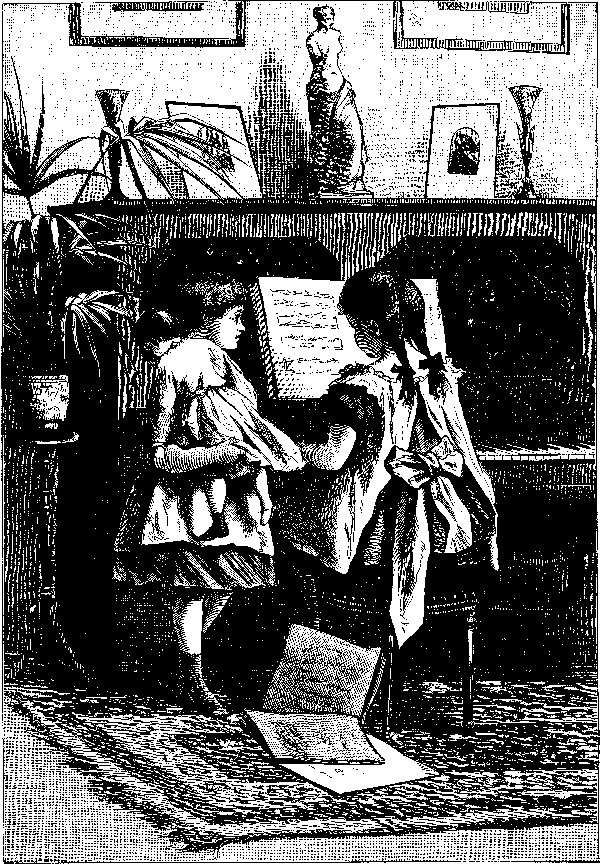
 know of a little girl, who, like Mozart, shows a
great talent for music, though she is not yet ten
years old. Before she could walk, it seemed to be
her delight to creep along the floor to the piano,
draw herself up so as to touch the key-board, and
then strike the different keys.
know of a little girl, who, like Mozart, shows a
great talent for music, though she is not yet ten
years old. Before she could walk, it seemed to be
her delight to creep along the floor to the piano,
draw herself up so as to touch the key-board, and
then strike the different keys.
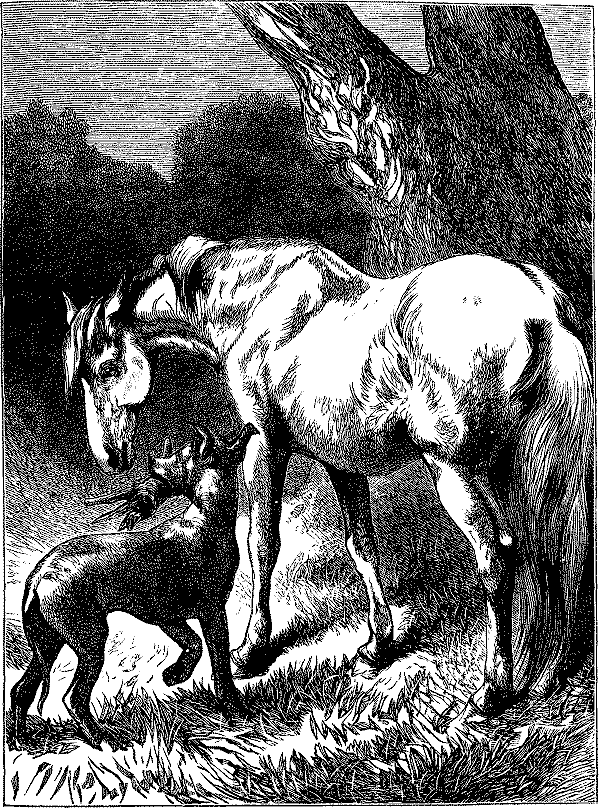
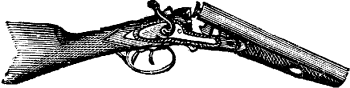
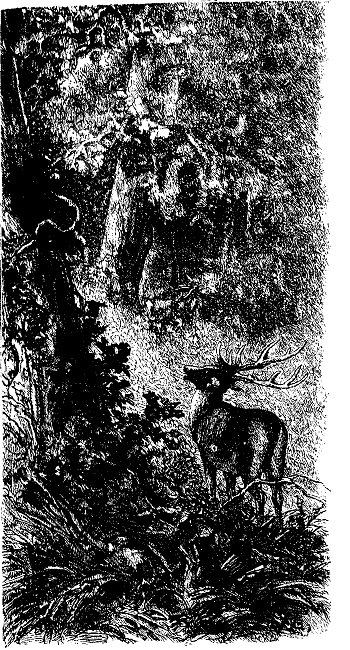 We were camping out in
the woods, not far from the
Canada line. In the party
were my brother Tom, Mr.
Brisk, who was a sportsman
of fame, and uncle Ralph,
who hated the sound of a
gun.
We were camping out in
the woods, not far from the
Canada line. In the party
were my brother Tom, Mr.
Brisk, who was a sportsman
of fame, and uncle Ralph,
who hated the sound of a
gun.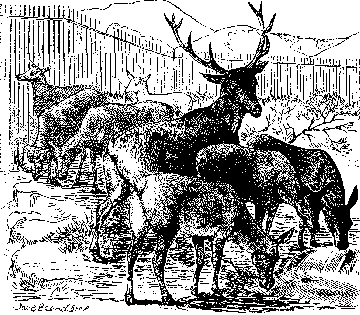






 CASHMERE BOUQUET
TOILET SOAP.
CASHMERE BOUQUET
TOILET SOAP.

