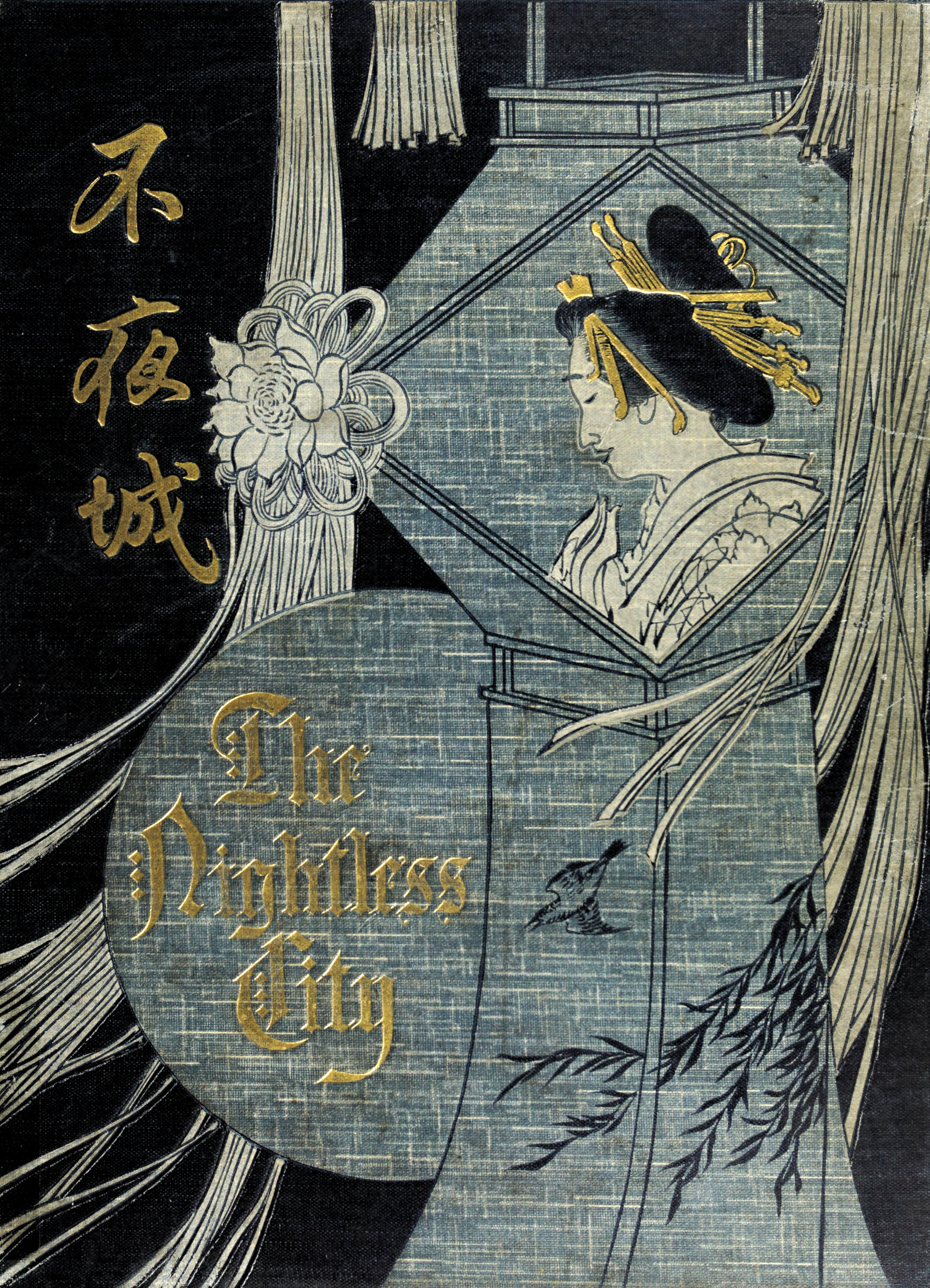
The Nightless City
by J. E. De Becker
★★★★★No ratings yet
Language: English
Sign in to rate this book.
Sign in to shelve this book.
About this eBook
- Author
- De Becker, J. E. (Joseph Ernest), 1863-1929
- Title
- The nightless city; or, The "history of the Yoshiwara Yūkwaku"
- Original Publication
- Japan: Max Nössler & Co.,1906.
- Credits
- an anonymous Project Gutenberg volunteer.
- Language
- English
- LoC Class
- HQ: Social sciences: The family, Marriage, Sex and Gender
- Subject
- Yoshiwara (Tokyo, Japan) -- History
- Category
- Text
- Project Gutenberg
- eBook-No. 69328
- Release Date
- November 11, 2022
- Copyright
- Public domain in the USA.
Contents
- 1.THE NIGHTLESS CITY
- 2.Contents
- 3.List of Illustrations.
- 4.PREFACE TO THE FIRST EDITION.
- 5.PREFACE TO THE THIRD EDITION.
- 6.History of the Yoshiwara Yūkwaku. 1 — Nihon-dsutsumi. ( The Dyke of Japan. ) — Mi-kaeri Yanagi. ( Gazing back Willow-tree. ) — Yoshiwara Jinja. ( Yoshiwara Shrine. ) — The “Aisome-zakura.” ( Cherry-tree of first meeting. ) AND The “Koma-tsunagi-matsu.” ( Colt teathering pine-tree. ) — The “Ryo-jin no Ido.” ( Traveller’s Well. ) — Government Edict-board and Regulations at the Ōmon. — The Present Ōmon. — Of the Reason Why Going to the Yoshiwara was Called “Chō ye yuku.” — Classes of Brothels. — Hikite-jaya. 17 (“ Introducing Tea-houses. ”) — The Jū-hachi-ken-jaya. ( Eighteen Tea-houses. ) — The “Amigasa-jaya.” ( Braided hat tea-houses. ) — The “Kujaku Nagaya.” — The “Kembansho.” ( Office which manages the affairs of geisha and other professionals. ) — Classes of Prostitutes. — Kamuro. ( Young Female Pages. ) — Shinzō. — Yarite. ( Female Managers. ) — The “Kutsuwa.” — Wakaimono. ( Male Servants. ) — Hōkan and Geisha. — The Europeanization of the Yoshiwara and the Introduction of Loochooan Courtesans. — Zegen. ( Procurers. ) — The Dress of Courtesans. — Coiffures of the Yūjo. — Rooms of the Yūjo. — Tsumi-yagu no koto. ( The piling up and exhibition of bedding. ) — “Sōbana.” ( All round “tips.” ) — “Shokwai” AND “Mi-tate” ( First meeting ) AND ( Selection of women. ) — “I-tsudzuke no koto.” ( Spending several consecutive days in a brothel. ) — “O cha wo hiku” to iū koto. (“ Tea powdering. ”) — Shiki-zome no soba-burumai no koto. ( Presentation of buck-wheat macaroni to celebrate the first use of night-clothes. ) — “Shashin-mitate-chō.” ( Photograph albums for facilitating the selection of women. ) — Shōgi no nedan ai-jirushi. ( The signs and cyphers showing the fees of courtesans. ) — San-gyō chōmen no tsuke-kata. ( The system of book-keeping employed by brothels, tea-houses, and courtesans. ) — Yūjo no hiki-fuda. ( Brothel advertisements. ) — Ageya no sashi-gami. ( Summons to the “Ageya.” ) — “Kuruwa-kotoba” or Yoshiwara Dialect. — Shōgi no okonau juho. ( Magic charms practised by the Yoshiwara courtesans. ) — Some Queer Japanese Superstitions. — Yoshiwara “Pot-pourri.” — Dai-ya no koto. ( Cook-houses of the Yoshiwara. ) — Famous Things of the Yoshiwara ALSO Peddlers, Hawkers, and Beggars. — The Examination of Licensed Women at the Hospital for Venereal Complaints. — Results of Medical Inspection. — Mu-sen Yū-kyō. ( Going on a “Spree” without having any money to pay for it. ) — Yoshiwara-gayoi no Jinrikisha. ( The jinrikisha traffic of the Yoshiwara. ) — Sanya-uma da-chin-dzuké. ( The cost of hiring horses to and from the Yoshiwara. ) — Byō-chū oyobi In-shoku no koto. ( Of the sickness of prostitutes and of their meals. ) — Hiké no koto. ( Closing hours in the Yoshiwara. ) — Kōchō no koto. ( The next morning. ) — Hiru-jimai Yo-jimai no koto. ( The day and night engagements of courtesans. ) — Raku-seki no koto. ( The removal of names from the register of the Yoshiwara. ) — Gwaishutsu oyobi tōbō. ( Exit and flight from the Yoshiwara. ) — Yūjo byō-shi oyobi jō-shi no koto. 37 ( Of the death and double-suicide of courtesans. ) — Shin-Yoshiwara no Bodaiji. ( The Cemetery of the Shin-Yoshiwara. ) — Karitaku no Koto. ( The temporary prostitute quarter. ) — Dōchū no koto oyobi tsuki-dashi no koto. ( The procession of yūjo and the first appearance of “recruits” in the Yoshiwara. ) — Yo-misé “Suga-gaki” no koto. ( The night exhibition and the suga-gaki. ) — Daijin-mai no koto. ( Dancing of millionaires. ) — Daikoku-mai no koto. ( Daikoku-mai dancing. ) — INTRODUCTORY SONGS OF THE “DAIKOKU-MAI.” — Dote-bushi no koto oyobi Hayari-uta. [ Dote-bushi (songs) and popular songs. ] — Annals of a Year. — Naka-no-chō no Hana-ue. ( Flower-planting in the Naka-no-chō. ) — Tōrō no koto. ( Lanterns. ) — “Niwaka” Dancing. — Tori-no-machi. ( The fête of Ōtori no Kami. ) — Yoshiwara Nana-fushigi. ( The Seven Mysteries of the Yoshiwara. ) — Yoshiwara no Kyo-ka. ( Comic Poetry. ) — Yoshiwara Kwai-rok-ki. ( Chronology of fire disasters in the Yoshiwara. ) — Furi-sodé Kwaji. ( The Great Fire of Meireki. ) — Mei-gi ryaku-den. ( Brief sketches of the lives of famous courtesans. ) — Taka-o . — Hana-ōgi . — Tamakoto . — Katsuyama . — Segawa . — Usugumo . (Faint Clouds.) — Ōsumi . — Ko-murasaki (Little Purple.) ( The second of the name. ) — Kaoru ( Fragrance .) — Kokonoye ( Nine-folded .) — Kinokuni-ya Bunzaemon. — THE LAW RELATING TO BROTHELS 59 — Forms of Contracts between Brothels and Courtesans. — The Medical Aspect. 62 — Result of Medical Inspection in the Shin-Yoshiwara. 1898. — Result of Medical Inspection in the Shin-Yoshiwara. January to April 1899. — Statistics re Social Evil in Japan in 1898. — Pros and Cons. — Correspondence. A SOCIAL QUESTION. To the Editor of the “ Japan Times. ” — Note on “Jigoku” or Illicit Prostitutes.
- 7.APPENDIX. — THE GOVERNMENT OF THE NIGHTLESS CITY. — Details of “ Employees ” Books. — The Medical Inspection of Prostitutes. — Special Inspection takes Place:— — Hospital Regulations. — Medical Statistics. — Digest of the Regulations of the Yoshiwara Guild. — The Validity of Debts. — Yarō. “ Peccatum illud horribile, inter Christianos non nominandum. ” — Golgatha. — Five Curious Legal Documents actually used in the Yoshiwara in 1902.
- 8.Footnotes.
Community reviews
Sign in to write a review.
No reviews yet.