The home of the Countess Longueval was one of the
loveliest of the ancient dwellings in the Faubourg
St. Germain. Elsie was glad that she was to see it once more.
As she made ready for the tea she imagined herself in its
garden, a place so quiet it seemed to be a part of the
deep country instead of a high-walled patch on a Paris
street. She saw its balconies set with tea tables, the
crinkled blinds of buttercup color drawn high on the open
windows so that they were as doors through which the
guests passed; she saw the footmen in the Longueval buff
and silver and the bushes of forsythia, twinkling, golden,
making effective screens for an occasional bench placed
back of them in tête-à-tête seclusion.
The flare of yellow in this mind picture made her decide
to wear that color on this last day. Then, too, it was
one that Arturo thought charming for her. She recalled
his words a few months previous at a dance when she had
worn a cloud of lemon-colored tulle with beaten gold
hoops in her ears and a flash of the same from her girdle.
"This color brings out the yellow lights that always
lurk in gray-hazel eyes. I wish you'd wear it often,
Elsie. When your eyes are the pure gray your heart is
very cold and careful. They say pleasanter things to
me—when they are gold."
And with this effect before her she began to make up
her face,—for Elsie was tout-à-fait Parisienne in the
frank use of cosmetics. It did not in the least matter
that as turned out by nature she was a delicately lovely
type, with deep brown lashes a silken fringe around
unshadowed eyes, and lips of coral pink. From the
viewpoint of her whim-following world a certain decadent
effect that could be gained only by artifice was far more
alluring than any ungarnished attractiveness. This was
smeared on real beauty as a glove is put upon the hand.
So Elsie sat before her mirror with pots, pencils and
brushes. She began by covering her skin with a white
cream and smoothing it down with powder. Melted black
pigment stiffened her lashes into borders of delicately
individualized wires and wiped out their natural brown,
the most intriguing touch following in the laying on of
bluish shadows on the lids so that the eyes looked from
them lengthened and languid. Rouge made the lobes of
the small ears blaze, and scarlet paste used freely on the
mouth had a flaunting invitation. When with patience
and care Elsie had disordered her hair into what
appeared unstudied airiness, the work was done; and
ethereal as this hair truly was—a pale jonquil hue that
seemed dusted with white—it deepened by contrast the
laid-on worldliness that it framed.
She was satisfied. She had become used to this changed
face with geranium-red mouth and drugged looking eyes
burning against its deathly pallor. She was now of an
accepted type. She was like all her friends.
Still, as Julie, with lids like fresh burns from weeping
at the prospect of parting from her, pinned a veil so that
it lay like a film scarcely lower than her brooding gaze,
a speculation quivered through the calm of habit, a touch
of drollery pulled at the garish mouth.
"Robert won't like me—that's sure. He may even
ask me to wash my face!" There was amused patronage
in the conclusion: "He won't understand."
Earlier arrivals than Elsie had reached the Longueval
house. Among the first comers was Mrs. Sidney Vrain.
After a casual greeting to her small, dark-eyed hostess
who flashed like a jeweler's window and whose whitened
face had the impudent prettiness of a marmoset, she
sailed on her way as one well used to the place, and at
the top of the first stairway reached a corner partitioned
off by ancient tapestries. It was a spot arranged as a
lounge. Liquors and seltzer were on a ledge against the
wall. There were several small smoking tables,
armchairs and a divan as wide as a bed.
The place was empty. She had expected this. The
Marqués de Burgos had a genius these days for making
her expect him and then, with graceful apologies,
arriving when he pleased. Mrs. Vrain pulled off one
yard-long, flesh-colored glove of such thin suede she gave the
effect of peeling the skin from elbow to hand, mixed
herself a brandy and soda, drained it without pause, tossed
the pillows to a desired angle and with a cigarette taken
from her own gold case—as large as one of the Tauchnitz
novels beside which she laid it—threw herself upon
them. She smoked thoughtfully, an ill-humored gaze fixed
on the turn of the stairs.
Those familiar with her would scarcely have known
that she was annoyed in any special way, for she was a
chronically discontented being and showed it. Her walk
was always the most indifferent slouch. She would step
from a motor and let the fish tail of a tulle gown crawl
over yards of wet pavement or the dirt of theater lobbies
with no more concern than if it were a dishcloth; she
always flung things from her as if they were of no
account,—her gold chatelaine bag to her maid, or tips
to waiters, or her furs to her footman. They were all
treated with the soured sort of sullenness that was
poisoning her.
She felt she had much to complain of. She was
forty-four. As if that were not bad enough, she looked it.
Her big body, in youth that of a powerful, lightly-fleshed
goddess, had grown fat with the blowsiness of the
overfed and sensuously inactive; a harsh redness was
spread over her skin; and veins that no beauty doctor
could rub out showed through layers of powder over the
puffy cheeks and thickened nose. There was of course
the way of self-denial that after prolonged marches could
have helped her back to much of the lost comeliness. That
was not a path with any invitation for Paula Vrain. As
her own words set forth:
"To cut out all the delicious alcohol pick-me-ups, and
the sweets and the sauces; to keep walking and sweating,
and never knowing an easy moment at having your
chocolate in bed or lying down in the afternoon with a
novel—that's a bit too thick for me, thanks! I want
my old figure and complexion, but I want them while I
keep on living. For, my dear, I must have the fleshpots—I
must, or go balmy—and that's all there is to it."
The death of her attractiveness to men made her
secret bitterness; that one man, once hers and still loved
wretchedly in silence, had slipped to the crowd who never
looked at her any more as a woman to be desired made
its core.
Arturo arrived at the rendezvous twenty minutes late.
He came with his unhurried, Castilian manner, voluble
in soft-voiced regret, intensely calm. Yet the jealous
eyes that watched him irritably noted a difference from
his usual self. Under his repose there was suspense, and
his skin had the dead sand-color that means pallor in a
dark face. Yes, something had gone wrong with him,
and he had come to her for help. Her red-brown
eyes burned harder. She was glad he was not happy;
that from some cause he was knowing pain like that
which she had come to bear through him. And yet, how
dear he was to her still and always would be!
It seemed to her then, as so often before, that powers
designedly complicating life must have had a hand in
the blending of such attractiveness as Arturo had.
There was no effort on his part, rather an amiable
indifference that could be exasperating; still, on meeting
his eyes, or while wishing to meet them, one's will felt
glamour and was held. And this not only because he
had almost more beauty than should go to a man, for
she had known others as handsome who had never stirred
the pulses of women as he could. No, Arturo seemed to
her the complete illustration of the inscrutable thing
called charm. Else,—why should she have loved him
so terribly, "have made", as she had often said, "a
door-mat of herself for him", been ready for the most final
open recklessness for his sake and only kept in bounds
by his smiling circumspection? Why? And not only
that past slavery; why should the mystery persist when
their affaire had a two-year-old gravestone over it, so
that she felt hope when he sought her in the most passing
way, and was only really miserable when he took pains
to let her see plainly the absolute death of all passion for
her?
This unanswerable "why" had brought her punctually
to a meeting with him to-day. And as she watched him
light one of his own Spanish cigarettes, its strange
perfume—the same that had clung to the silver ribbon on
Elsie's gardenias—recalling their secret meetings of
other times, she ached to spend her despondent heart in
one of the fiery kisses that once had made heaven of life.
Gone. Lost. Dead. And she was a fool!
With this last reflection she sat up among the pillows
and gave a hitch to her skirt to show a slippered foot
that in spite of her weight, was slender and delicately
arched. "I came on time," she said flatly in the sulky,
rugged voice that once had fallen with a perverse sort
of pleasure upon Arturo's ears. "I don't flatter myself
for a moment that you wanted this tête-à-tête for
just—me. I can be useful to you," she mocked. "What is
it? What do you want?"
"Don't trouble to say unkind things to me, Paula,"
he said with cool reproach. "That sort of preface, to
which you are so inclined, ought to have no place with
friends." He leaned toward her. "Anything you'd want
me to do as a comrade, I'd do. And it is as a good
comrade—the only woman that I know that way—that I
ask you to save me to-day."
"Save you?" She looked genuinely concerned. "Are
you in trouble, Arturo?—real trouble? If you are, of
course—"
He thanked her with a lift of the brows as only a
Spaniard could. "Not what you would call trouble,
perhaps. I don't need money—and if I did, I should never
ask you, of course—nor is there any danger or disgrace
threatening me. Just the same," and desperation
hardened his voice, "I feel like a man on whom sentence of
banishment has been passed. And there is a chance—just
one—that you might be able to delay it. Will you
do this for me, Paula? Amiga—will you?"
"What is it?" she asked; the tone icy, for usefulness
to him as a friend—and he had emphasized the
amiga—was as sawdust on her lips.
"It's asking you to be very big and unselfish," Arturo
confessed, "but I know, Paula, that you can be like
that—for me! It is asking you to help me to a little
happiness with a woman I love, before she goes out of
my life forever."
She looked at him through a cold rage. Yet as he
had said "for him," so wholly was she still his, she
knew she was going to listen to more; even, it might be,
help him to his desire, though it contributed another
thorn to her unrest.
"I know who you mean—at least I think I do. Elsie
Maury. And yet I can't believe you'd have—have—the
cheek—to ask me—!" She broke off, the fire of
misery in her look.
Arturo knew from experience how to meet the various
phases of her sick resentment. The only thing she could
not endure from him was aloofness that might end even
friendship between them. He drew away, a chilled,
deliberate gaze studying her.
"Why shouldn't I ask you?"
"Because I hate her!"
"Why should you hate her?"
"Because you don't, I suppose," she said thickly.
"Is she to blame for that? Why not hate me, if you
must hate some one?"
"Oh, you make me seem such a fool—!" Exasperated,
she drew herself nearer the decanter and lifted it
over a glass.
Arturo's fingers, with the strength that delicate things
sometimes surprisingly have, the force of wire instead of
iron, went about her wrist. "You've had enough brandy.
It excites you. Wait till we finish, Paula. Then I'll
drink with you—in gratitude if you are kind; in a properly
chastened spirit, if you are not. The latter is the
more likely—I can see!"
She pulled her wrist from him and sat back obediently.
"Am I permitted a cigarette?" she flashed, and lighted
one, her hand trembling against her will. "I can't
imagine what you see in her," followed, venom in
the shut-in tone.
"Of course you don't! But does that matter? It
isn't necessary—is it?"
"It's her blondness that gets you. For she's not
pretty. Not what you'd really call pretty!"
"No, she's worse than that."
"She hasn't the ghost of a figure!"
"I hate figures," said Arturo serenely.
She winced, conscious of the flesh above her laced-in
waist. "Then you are different from most men," she
retorted.
"You are beginning to flatter me."
She sat very silent after this, smoking in a busy,
nervous way, and suddenly the tears stole down her cheeks.
As she threw the cigarette from her and covered her face
with her open hands, hands so illustrative of her
life—burdened with rings, fleshy, with beautiful nails and
nicotine-stained finger tips—a quiver of real sympathy went
over Arturo's face. He left his chair and sat on the divan,
close to her.
"My dear Paula, my dear girl!" He drew down one
of the hands and patted it, while with the other she
pulled from her girdle an expensive handkerchief that
seemed a rag of lace and dabbed carefully her blackened
lashes. "What's the use? I want your friendship, I
want it terribly, and as a friend I'd do anything on
earth for you. I am not worth the other, my dear. I
tell you that honestly. I am not worth it."
"What do I care," Paula demanded wildly, "if you
are worth it or not? It wasn't your worth that began
it, heaven knows! It's just—that I can't—seem to
get over it as you have." She flung her arm suddenly
about his neck. "Haven't you any love left for
me—none? I am so miserable, worn out with longing for
what has gone. Nothing matters to me. I hate
everything! Do kiss me once, for memory?" she begged
brokenly.
He drew down her arm gently. Her eyes fell under
his serious gaze. She knew the most final defeat.
"Too much in love with your Elsie to forget her for
even a moment?" she mocked.
Arturo stood up. "It was a mistake to come to you,
Paula. I did not know—" He broke off and added
with great kindness: "I'm sorry you are so unhappy. I
cannot help it. And remember this—I am unhappy,
too." As he reached the entrance curtain he paused
sharply and came back. "One thing I want to make
very clear to you, though. Don't suppose from what
I've said that Elsie and I have had an affaire. Oh, no,
indeed," he said vehemently. "Make no mistake about
that. She has been a bit—provocative, shall we call
it?—but a model in wives, I assure you! There was
just a chance that you—" He looked down at her
thoughtfully. "No matter—that's past!"
"What do you mean by saying she's going out of your
life and all that rot?" Paula suddenly demanded, her
glance not meeting his. "Has her mother called her back
to America?" Her voice showed new hope. She had not
dreamed of such a satisfactory result from her anonymous
letter to Nina. "Is she sailing at once?"
"Yes, but her mother has nothing to do with it. How
could you think that what that wax doll might say
would matter? Ah, no; it's her husband. Quite a
different tea party, as you English say. He gets here
to-night and by to-morrow she will be on her way to
America." His voice had been growing dull. "As
surely as I stand here, I know that once Elsie goes I will
never see her again."
"You know it?" she shrugged in angry impatience,
"how can you know it?"
"I feel it. Premonitions of that sort with me are never
wrong."
"America is only five days away on a fast ship—"
"I shall never go to America. I know that, too."
The sound of voices below had been strengthening—louder
laughter, dashes of music, and now stragglers
were mounting the stairs. Paula, as she regained her
composure, even felt a spurious sort of happiness. With
an emphasis of gesture she mixed herself an especially
strong brandy and soda, of which she felt in need.
"Come here, Arturo. Sit down again," she said
briskly, and as he did so she gave him a hardy grin.
"I'm a silly ass sometimes! Don't mind what I said.
It's true that I've somehow kept on remembering what
you've forgotten, and at times it gets back at me, gives
me an awful knock, but when I said I hated everything—I
was a liar. Oh, there's a lot to live for yet, even
without a grande passion. This, for instance," and she
lifted the glass. "Now what do you want me to do? If
it isn't too hard—! You don't want me to abduct the
immaculate one for you, I hope?"
Arturo seized her arms. She would have given a good
part of her wealth to have called there for herself the
unabashed longing that in a second transformed his
face.
"I've decided to go on to Spain with my cousins to-night.
They'll go straight to Burgos, but I'll go to the
mountains, to El Miradero. All I ask you to do is to
accept my invitation to come up there in a few days for
a fortnight and persuade Elsie to ask her husband to
let her wait over and come with you."
"That's all?" she asked in mocking dismay. "A
pretty large order, I call it!"
"You can manage it, Paula. Get Elsie to ask her
husband to let her stay behind him just long enough for
her to see Spain—she never has—and both of you
come a few days later. Sidney won't be back from
yachting for another month, so there's nothing to
prevent your coming. And you, who know El Miradero,
who loved its beauty—surely you can tempt her to make
this effort. Only delay her return to America! That's
all I want. I don't look beyond that. Probably," he
added bitterly, "I could bear her going then, when I'd
got used to it. I feel all astray with myself now, from
the suddenness of it."
"As a matter of fact," Paula drawled thoughtfully,
"I'm leaving for a few days' visit to Sidney's sister at
Bordeaux—you know she married oodles of money—all
that wine business down there. And I thought that
after it I'd have a little whirl at San Sebastian before
coming back here—"
"Well, there you are!" came joyously from Arturo.
"Just keep to your plans. Elsie could join you at San
Sebastian—directly en route to me!"
Paula sipped and thought again silently for a moment,
"Quite easy," she said. "But let me tell you
something—I think you're a fool to get any deeper into
this affaire. Elsie Maury's the sort to play around
fire—let her get burned though, and it would be a tragedy
for you both. She has the enlarged kind of conscience.
I've met other Americans like that—an unfinished race!
Will you take my advice and let her alone? Or," she
added slowly with some intense meaning, "will you risk
having her on your hands for life?"
"You sound clairvoyant. I've told you I have no
plans—I only want to delay her going." He said this
sadly, musingly.
She moved to replace the glass. A smiling and faintly
sinister cunning passed over her face. When she turned
to him her eyes were businesslike. "All right then, if
you insist. I'll do what I can."
She stood up, powdered her nose, used her lip stick
and lifted the skinlike gloves. "Will you see her
now—she must be here—or do you want me to see her first?"
"You speak to her first." The words were faint and
thick with feeling. He followed her into the corridor,
laid his hand on her arm, and she felt its burning
through the chiffon sleeve. "Get her to come with you
to El Miradero, and Paula—I'll be your servant as long
as I live!"
"Thanks," she said drily, adding: "I mean to help
you—thoroughly. That's the way I am; absolutely
indifferent, or a mistress of detail who spares no pains!"
As she went down the stairs, her eyes, steadily lifted
to his, were smiling in their kindest way.
She found Elsie, in the midst of her golden gown, seated
close to a great vase of lilies in an inner room.
A boyish Hindoo, who was the son of a Maharajah
and very much the fashion of that spring, hung about
her, worshipping her fairness, as he often did. He had
been bending his turbanned head to talk softly to her
for the last ten minutes, but his slumbering black eyes
were without content. He could see that she scarcely
heard him. Her gaze wandered; her replies were absent.
He knew that when the Marqués de Burgos came she
would be different, awakened; and that for the rest of
the time there the young Spaniard would keep close to
her.
Of the specific pain of this waiting to Elsie he did not
guess. It was her last chance to see Arturo. She had
come early, expecting to find him there, eager to make
the most of every moment with her. And as yet he had
not sought her. As his last words kept coming back to
her, she began to believe she would not see him at all:
"You have made me suffer what I have never suffered
for a woman before," he had said. And so, perhaps that
was to be her last memory of him through the future far
away from him? Well, if it had to be—! She must
conquer herself. It was only accepting the inevitable a
little sooner than she had expected.
Her depression had grown fixed when Paula Vrain
sailed up to her, aglow and smiling in a way that was
unusual. She greeted the Hindoo and then put her arm
about Elsie's waist, schoolgirl fashion.
"Come along o' me, dear. I want to have a talk with
you," and when she had whisked her to a quiet spot
behind a stairway she hurried on without preface: "I'm
going to Arturo's shooting place up in the Cantabrian
mountains. He's often told you of his little house, El
Miradero. Now you're coming too, aren't you?"
"Why, no."
"No? Why not?"
"This is the first I've heard of it, and besides—"
"Oh, I know!" Paula rattled on. "He meant it to be a
piquant surprise to-day. He told me to insist on your
coming with me. I'm not to take 'no' for an answer!"
"When did he tell you that?"
"A moment ago. He's here. He told me all about
how you were expecting to leave to-night for America
and the poor boy is too miserable to ask you, himself.
So, as I and a few others—just who they are I don't
know; Spanish probably—are to be there, he begged
me to come to you as his missionary. Don't disappoint
him, Elsie! Get another furlough from your husband—just
two weeks more. I'm going for a few days to San
Sebastian and will motor from there to El Miradero.
"Oh, my dear, it's so lovely!" she ran on with an
enthusiasm that was secretly fatiguing her. "All of Spain
is worth while—so romantic—so queer! It would be
a burning shame to go back to the States without seeing
it—and under such conditions!—In the towns—and
we two might stop over a night or two on our way
back—there are the serenos, as they call the night
watchmen, in long cloaks and hoods and carrying lanterns, who
sing a drowsy sort of song that all's well and clear—for
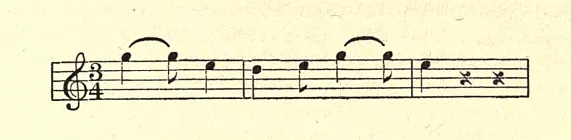
all the world like an opera scene. The tune goes like
this—" and she hummed it:
"The mantillas are lovely too! And the
boinas—they're the scarlet caps of the countrymen—and oh,
the masses of carnations of every tint that one sees
everywhere—the girls go along with them stuck in a
corner of their mouths, and the men in their hats, and
I've even seen them sticking out of the guns of the
carabineros!
"You see I was at El Miradero three years
ago. It's up on a terribly rough, steep mountain. You
seem at the end of the world, looking down through the
clouds. A gorgeous view! You've never known what
solitude and stillness mean until you stand there.
Miradero means watch tower, and that's exactly what it is.
Not a thing passes down that mountain road but a huge,
jingling mule coach that Arturo relies on altogether,—he
hasn't a horse or vehicle on the place. You know
he's deadly poor and he goes up there to the simplest life.
During the summers his mother and sister live at an
ancestral, awfully run-down country place about five
miles away. This is the only time in the whole year that
they have a chance to be with Arturo, and when he's
alone they drive over in an ancient barouche to see him,
or he goes on a rough tramp to them.
"I got a squint at them once, and I assure you it did
me for all time! The old marquésa, Dona Jacinta,
looked for all the world like some queen's marble effigy
that had got slowly off its tomb and robed itself in the
most solemn black. The sister, too—Magdalena—is
the most amazing stick! She's five years older than
Arturo and spends most of her life on her knees in the
great cathedral at Burgos. Servants—a pack of them
that I'd like to bet are honored to serve for next to
nothing—trail about after them, carrying their prayer
books and reticules and scent bottles and little parasols.
But you won't be bored by the family. They never appear
unless sure that Arturo is absolutely alone and
uncontaminated by his friends.
"Oh, you've no idea how fascinating he is at El Miradero!
So simple, so real, in the roughest of clothes—exactly
like a boy on a holiday! And all Spaniards are
at their best once you step under their roof.—I'll fetch
my new car and Athénée, so even if I crowd the little
house you and I will have all the comforts. You needn't
bother bringing a maid, you see. Athénée will do
everything for us both.—Just a two weeks' entrancing
Spanish holiday, Elsie, and as the Vance Hamiltons are
sailing about then for New York, why not get your
passage on the same ship? Now—are you game? Is it a
go?"
Elsie had allowed herself to be carried on by the
stream of words. They unfolded alluring pictures before
her and eased her heart. Arturo was close to her, thinking
of her, and she felt sure this mountain visit was a
quickly arranged plan so that he might not lose her at
once. Of course she could not go—and how she longed
to!—but it gave meaning back to life that he had not
gone from her in rage, leaving her with an aching sense
of emptiness and futility.
Paula, who had declared that she was not pretty,
realized unwillingly in that moment how she was
something more even than beautiful. She had never seen a
face so changefully vivid. She loved and understood
music, and as Elsie sat there, absorbed, she saw in the
veiled eyes ardors that touched her, as in sublime
harmonies,—the burning trouble of the overture to "Tristan
and Isolde," the renunciation that floated, oncoming and
receding, through the Meditation of Thai's.
"I can't go." Elsie said this without force, yet positively.
"And it may be years before I see Paris again." A
'cello in the distance was playing Rudolph's attic
song from "La Bohème." As she listened, a pang went
over her face. "It's all wrong, of course. I'm—damaged!
I should not have stayed here to become what I
am. I should have insisted on going to Burmah to
Robert. I didn't. Then I grew to love it here too much.
And now it's punishing me. I want it—and nothing
else. I dread what I'm going to. I've grown away from
it all." Her lips came shut on a sharp sigh. "But I've
got to go."
"Tell me why," Paula demanded.
"That's my life. This has been my playtime. My
husband gets here to-night. We leave at once. I'm all
packed. I'm going."
"Going when you don't want to? What rubbish!"
"I ought to want to," Elsie protested, "and in one
way, somehow, I do. My husband is one of the kindest
men in the world, Paula. I'll go home with him and
never let him know that it's an awful pull to
leave—what I've grown used to."
For a while they sat silent, Paula pouting and
somnolent. Elsie's face, showing each fugitive thought
intensely in its passing, looked moody and driven as she
began, dreamily, to speak again:
"I wonder how I'll feel when I'm really gone?—I
wonder! ... I've been happier in Paris than I ever was
in my whole life, except when—I had my baby."
"Oh, yes, you did have a baby; I remember your telling
me," Paula said, vaguely polite.
"Letty.... Almost three—when she died." The
deep thrill in the simple words gave them majesty. "I
haven't missed her here as I will again in America. If
I were only going back—to her!"
"Of course," came from Paula through a bitten yawn.
"But, d'you know, I never felt that way about my two?
The girl's a little liar and a peacock, and the boy's a
glutton," she peacefully declared.
Elsie felt herself draw in, rebuffed and chilled by the
words, by the whole air of the speaker's big
body,—detached, lounging, bored.
After another dead pause Paula gave a lunge up and
straightened. "Well!—So you'll really go without
ever seeing El Miradero?"
"I must."
"You're tiresome!—talking as if you can't please
your husband and yet have your own way. You're not
so dull," she drawled with mocking astonishment. "Put
it to him that you've not seen Spain, that there will
never be a chance like this again—as there never
will!—then swear to sail home with the Vance Hamiltons
in about two weeks or so. Can't you do that?"
"No!"
"I could—and I'm not a quick-witted Yankee. Do
have a shy at it anyway—for my sake," she urged,
adding as she stood up, "There's Arturo. I'll send him
to you," and she slouched away, swinging her bag.