THE NEW HEAVENS
Go out under the open sky, on a clear and moon-less night, and try
to count the stars. If your station lies well beyond the glare of
cities, which is often strong enough to conceal all but the brighter
objects, you will find the task a difficult one. Ranging through
the six magnitudes of the Greek astronomers, from the brilliant
Sirius to the faintest perceptible points of light, the stars are
scattered in great profusion over the celestial vault. Their number
seems limitless, yet actual count will show that the eye has been
deceived. In a survey of the entire heavens, from pole to pole,
it would not be possible to detect more than from six to seven
thousand stars with the naked eye. From a single viewpoint, even
with the keenest vision, only two or three thousand can be seen.
So many of these are at the limit of visibility that Ptolemy's
"Almagest," a catalogue of all the stars whose places were measured
with the simple instruments of the Greek astronomers, contains
only 1,022 stars.
Back of Ptolemy, through the speculations of the Greek philosophers,
the mysteries of the Egyptian sun-god, and the observations of the
ancient Chaldeans, the rich and varied traditions of astronomy stretch
far away into a shadowy past. All peoples, in the first stirrings
of their intellectual youth, drawn by the nightly splendor of the
skies and the ceaseless motions of the planets, have set up some
system of the heavens, in which the sense of wonder and the desire
for knowledge were no less concerned than the practical necessities
of life. The measurement of time and the needs of navigation have
always stimulated astronomical research, but the intellectual demand
has been keen from the first. Hipparchus and the Greek astronomers
of the Alexandrian school, shaking off the vagaries of magic and
divination, placed astronomy on a scientific basis, though the
reaction of the Middle Ages caused even such a great astronomer
as Tycho Brahe himself to revert for a time to the practice of
astrology.
The transparent sky of Egypt, rarely obscured by clouds, greatly
favored Ptolemy's observations. Here was prepared his great star
catalogue, based upon the earlier observations of Hipparchus, and
destined to remain alone in its field for more than twelve centuries,
until Ulugh Bey, Prince of Samarcand, repeated the work of his
Greek predecessor. Throughout this period the stars were looked
upon mainly as points of reference for the observation of planetary
motions, and the instruments of observation underwent little change.
The astrolabe, which consists of a circle divided into degrees,
with a rotating diametral arm for sighting purposes, embodies their
essential principle. In its simple form, the astrolabe was suspended
in a vertical plane, and the stars were observed by bringing the
sights on the movable diameter to bear upon them. Their altitude
was then read off on the circle. Ultimately, the circle of the
astrolabe, mounted with one of its diameters parallel to the earth's
axis, became the armillary sphere, the precursor of our modern
equatorial telescope. Great stone quadrants fixed in the meridian
were also employed from very early times. Out of such furnishings,
little modified by the lapse of centuries, was provided the elaborate
instrumental equipment of Uranibourg, the great observatory built
by Tycho Brahe on the Danish island of Huen in 1576. In this "City
of the Heavens," still dependent solely upon the unaided eye as a
collector of starlight, Tycho made those invaluable observations
that enabled Kepler to deduce the true laws of planetary motion. But
after all these centuries the sidereal world embraced no objects,
barring an occasional comet or temporary star, that lay beyond
the vision of the earliest astronomers. The conceptions of the
stellar universe, except those that ignored the solid ground of
observation, were limited by the small aperture of the human eye.
But the dawn of another age was at hand.
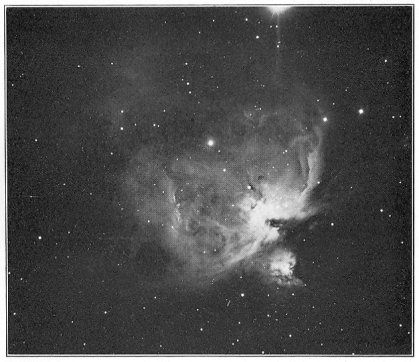
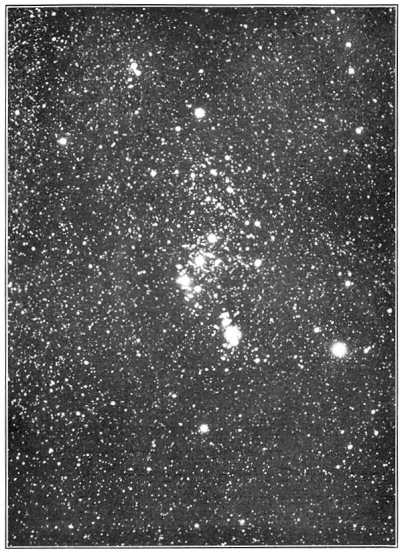
Fig. 2. The Great Nebula in Orion (Pease).
Photographed with the 100-inch telescope. This short-exposure photograph
shows only the bright central part of the nebula. A longer exposure
reveals a vast outlying region.
The dominance of the sun as the central body of the solar system,
recognized by Aristarchus of Samos nearly three centuries before
the Christian era, but subsequently denied under the authority of
Ptolemy and the teachings of the Church, was reaffirmed by the
Polish monk Copernicus in 1543. Kepler's laws of the motions of the
planets, showing them to revolve in ellipses instead of circles,
removed the last defect of the Copernican system, and left no room for
its rejection. But both the world and the Church clung to tradition,
and some visible demonstration was urgently needed. This was supplied
by Galileo through his invention of the telescope.
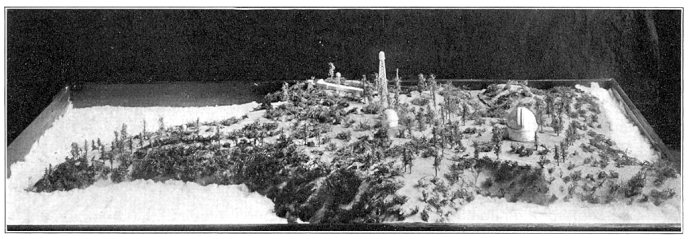
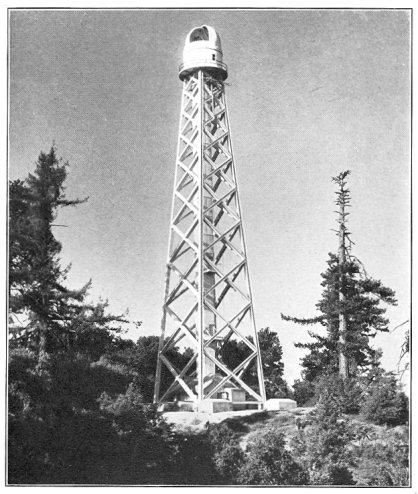
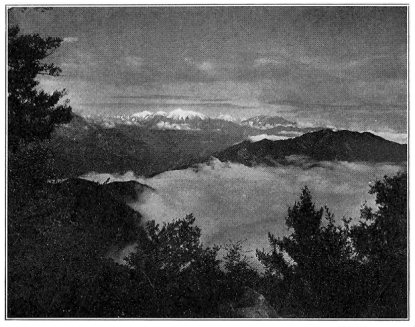
Fig. 3. Model by Ellerman of summit of Mount Wilson,
showing the observatory buildings among the trees and bushes.
The 60-foot tower on the extreme left, which is at the edge of a
precipitous cañon 1,500 feet deep, is the vertical telescope
of the Smithsonian Astrophysical Observatory. Above it are the
"Monastery" and other buildings used as quarters by the astronomers
of the Mount Wilson Observatory while at work on the mountain. (The
offices, computing-rooms, laboratories, and shops are in Pasadena.)
Following the ridge, we come successively to the dome of the 10-inch
photographic telescope, the power-house, laboratory, Snow horizontal
telescope, 60-foot-tower telescope, and 150-foot-tower telescope,
these last three used for the study of the sun. The dome of the
60-inch reflecting telescope is just below the 150-foot tower,
while that of the 100-inch telescope is farther to the right. The
altitude of Mount Wilson is about 5,900 feet.
The crystalline lens of the human eye, limited by the iris to a
maximum opening about one-quarter of an inch in diameter, was the
only collector of starlight available to the Greek and Arabian
astronomers. Galileo's telescope, which in 1610 suddenly pushed
out the boundaries of the known stellar universe and brought many
thousands of stars into range, had a lens about 2-1/4 inches in
diameter. The area of this lens, proportional to the square of
its diameter, was about eighty-one times that of the pupil of the
eye. This great increase in the amount of light collected should
bring to view stars down to magnitude 10.5, of which nearly half
a million are known to exist.
It is not too much to say that Galileo's telescope revolutionized
human thought. Turned to the moon, it revealed mountains, plains,
and valleys, while the sun, previously supposed immaculate in its
perfection, was seen to be blemished with dark spots changing from
day to day. Jupiter, shown to be accompanied by four encircling
satellites, afforded a picture in miniature of the solar system,
and strongly supported the Copernican view of its organization,
which was conclusively demonstrated by Galileo's discovery of the
changing phases of Venus and the variation of its apparent diameter
during its revolution about the sun. Galileo's proof of the Copernican
theory marked the downfall of mediævalism and established
astronomy on a firm foundation. But while his telescope multiplied
a hundredfold the number of visible stars, more than a century
elapsed before the true possibilities of sidereal astronomy were
perceived.
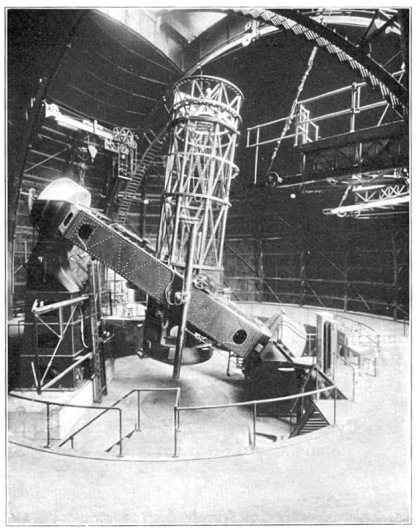
Fig. 4. The 100-inch Hooker telescope.
Sir William Herschel was the first astronomer to make a serious
attack upon the problem of the structure of the stellar universe.
In his first memoir on the "Construction of the Heavens," read
before the Royal Society in 1784, he wrote as follows:
"Hitherto the sidereal heavens have, not inadequately for the purpose
designed, been represented by the concave surface of a sphere in
the centre of which the eye of an observer might be supposed to be
placed.... In future we shall look upon those regions into which we
may now penetrate by means of such large telescopes, as a naturalist
regards a rich extent of ground or chain of mountains containing
strata variously inclined and directed as well as consisting of
very different materials."
On turning his 18-inch reflecting telescope to a part of the Milky
Way in Orion, he found its whitish appearance to be completely
resolved into small stars, not separately seen with his former
telescopes. "The glorious multitude of stars of all possible sizes
that presented themselves here to my view are truly astonishing; but
as the dazzling brightness of glittering stars may easily mislead
us so far as to estimate their number greater than it really is,
I endeavored to ascertain this point by counting many fields, and
computing from a mean of them, what a certain given portion of
the Milky Way might contain." By this means, applied not only to
the Milky Way but to all parts of the heavens, Herschel determined
the approximate number and distribution of all the stars within
reach of his instrument.
By comparing many hundred gauges or counts of stars visible in
a field of about one-quarter of the area of the moon, Herschel
found that the average number of stars increased toward the great
circle which most nearly conforms with the course of the Milky Way.
Ninety degrees from this plane, at the pole of the Milky Way, only
four stars, on the average, were seen in the field of the telescope.
In approaching the Milky Way this number increased slowly at first,
and then more and more rapidly, until it rose to an average of
122 stars per field.
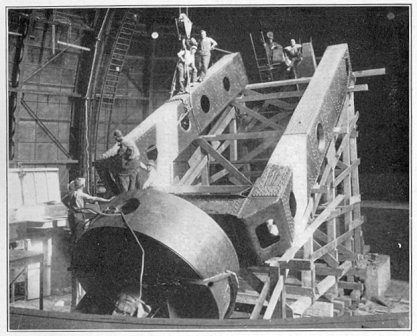
Fig. 5. Erecting the polar axis of the 100-inch
telescope.
These observations were made in the northern hemisphere, and
subsequently Sir John Herschel, using his father's telescope at
the Cape of Good Hope, found an almost exactly similar increase
of apparent star density for the southern hemisphere. According to
his estimates, the total number of stars in both hemispheres that
could be seen distinctly enough to be counted in this telescope
would probably be about five and one-half millions.
The Herschels concluded that "the stars of our firmament, instead
of being scattered in all directions indifferently through space,
form a stratum of which the thickness is small, in comparison with
its length and breadth; and in which the earth occupies a place
somewhere about the middle of its thickness, between the point where
it subdivides into two principal laminæ inclined at a small
angle to each other." This view does not differ essentially from our
modern conception of the form of the Galaxy; but as the Herschels
were unable to see stars fainter than the fifteenth magnitude,
it is evident that their conclusions apply only to a restricted
region surrounding the solar system, in the midst of the enormously
extended sidereal universe which modern instruments have brought
within our range.
The remarkable progress of modern astronomy is mainly due to two
great instrumental advances: the rise and development of the
photographic telescope, and the application of the spectroscope to
the study of celestial objects. These new and powerful instruments,
supplemented by many accessories which have completely revolutionized
observatory equipment, have not only revealed a vastly greater
number of stars and nebulæ: they have also rendered feasible
observations of a type formerly regarded as impossible. The chemical
analysis of a faint star is now so easy that it can be accomplished
in a very short time—as quickly, in fact, as an equally complex
substance can be analyzed in the laboratory. The spectroscope also
measures a star's velocity, the pressure at different levels in
its atmosphere, its approximate temperature, and now, by a new and
ingenious method, its distance from the earth. It determines the
velocity of rotation of the sun and of nebulæ, the existence
and periods of orbital revolution of binary stars too close to be
separated by any telescope, the presence of magnetic fields in
sunspots, and the fact that the entire sun, like the earth, is
a magnet.
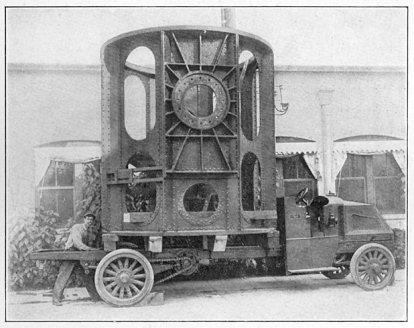
Fig. 6. Lowest section of tube of 100-inch telescope,
ready to leave Pasadena for Mount Wilson.
Such new possibilities, with many others resulting from the application
of physical methods of the most diverse character, have greatly
enlarged the astronomer's outlook. He may now attack two great
problems: (1) The structure of the universe and the motions of
its constituent bodies, and (2) the evolution of the stars: their
nature, origin, growth, and decline. These two problems are intimately
related and must be studied as one.[*]
If space permitted, it would be interesting to survey the progress
already accomplished by modern methods of astronomical research.
Hundreds of millions of stars have been photographed, and the boundaries
of the stellar universe have been pushed far into space, but have not
been attained. Globular star clusters, containing tens of thousands
of stars, are on so great a scale (according to Shapley) that light,
travelling at the rate of 186,000 miles per second, may take 500
years to cross one of them, while the most distant of these objects
may be more than 200,000 light-years from the earth. The spiral
nebulæ, more than a million in number, are vast whirling
masses in process of development, but we are not yet certain whether
they should be regarded as "island universes" or as subordinate
to the stellar system which includes our minute group of sun and
planets, the great star clouds of the Milky Way, and the distant
globular star clusters.
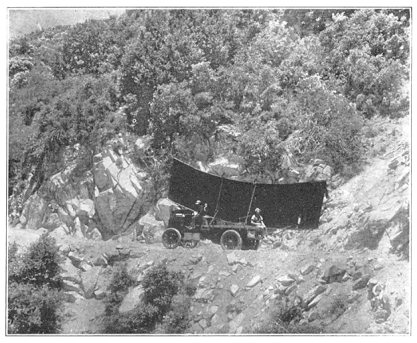
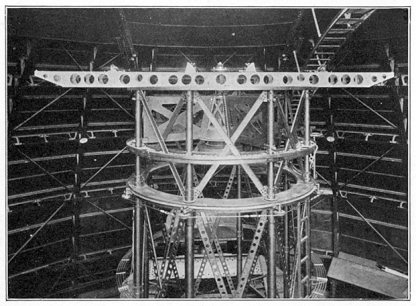
Fig. 7. Section of a steel girder for dome covering
the 100-inch telescope, on its way up Mount Wilson.
These few particulars may give a slight conception of the scale
of the known universe, but a word must be added regarding some
of its most striking phenomena. The great majority of the stars
whose motions have been determined belong to one or the other of
two great star streams, but the part played by these streams in the
sidereal system as a whole is still obscure. The stars have been
grouped in classes, presumably in the order of their evolutional
development, as they pass from the early state of gaseous masses, of
low density, through the successive stages resulting from loss of
heat by radiation and increased density due to shrinkage. Strangely
enough, their velocities in space show a corresponding change,
increasing as they grow older or perhaps depending upon their mass.
It is impossible within these limits to do more than to give some
indication of the scope of the new astronomy. Enough has been said,
however, to assist in appreciating the increased opportunity for
investigation, and the nature of the heavy demands made upon the
modern observatory. But before passing on to describe one of the
latest additions to the astronomer's instrumental equipment, a
word should be added regarding the chief classes of telescopes.
Astronomical telescopes are of two types: refractors and reflectors.
A refracting telescope consists of an object-glass composed of
two or more lenses, mounted at the upper end of a tube, which is
pointed at the celestial object. The light, after passing through
the lenses, is brought to a focus at the lower end of the tube, where
the image is examined visually with an eyepiece, or photographed
upon a sensitive plate. The largest instruments of this type are
the 36-inch Lick telescope and the 40-inch refractor of the Yerkes
Observatory.
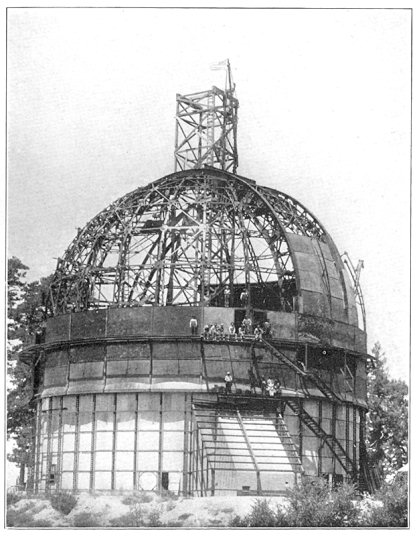
Fig. 8. Erecting the steel building and revolving
dome that cover the Hooker telescope.
Reflecting telescopes, which are particularly adapted for photographic
work, though also excellent for visual observations, are very
differently constructed. No lens is used. The telescope tube is
usually built in skeleton form, open at its upper end, and with a
large concave mirror supported at its base. This mirror serves in
place of a lens. Its upper surface is paraboloidal in shape, as a
spherical surface will not unite in a sharp focus the rays coming
from a distant object. The light passes through no glass—a
great advantage, especially for photography, as the absorption
in lenses cuts out much of the blue and violet light, to which
photographic plates are most sensitive. The reflection occurs on
the upper surface of the mirror, which is covered with a
coat of pure silver, renewed several times a year and always kept
highly burnished. Silvered glass is better than metals or other
substances for telescope mirrors, chiefly because of the perfection
with which glass can be ground and polished, and the ease of renewing
its silvered surface when tarnished.
The great reflectors of Herschel and Lord Rosse, which were provided
with mirrors of speculum metal, were far inferior to much smaller
telescopes of the present day. With these instruments the star
images were watched as they were carried through the field of view
by the earth's rotation, or kept roughly in place by moving the
telescope with ropes or chains. Photographic plates, which reveal
invisible stars and nebulæ when exposed for hours in modern
instruments, were not then available. In any case they could not
have been used, in the absence of the perfect mechanism required to
keep the star images accurately fixed in place upon the sensitive
film.
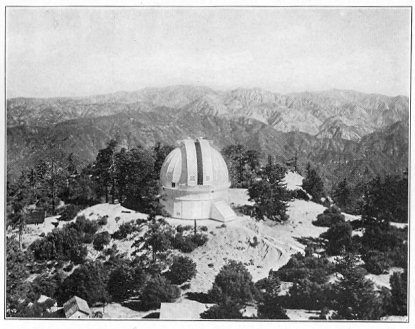
Fig. 9. Building and revolving dome, 100 feet in
diameter, covering the 100-inch Hooker telescope.
Photographed from the summit of the 150-foot-tower telescope.
It would be interesting to trace the long contest for supremacy
between refracting and reflecting telescopes, each of which, at
certain stages in its development, appeared to be unrivalled. In
modern observatories both types are used, each for the purpose
for which it is best adapted. For the photography of nebulæ
and the study of the fainter stars, the reflector has special
advantages, illustrated by the work of such instruments as the
Crossley and Mills reflectors of the Lick Observatory; the great
72-inch reflector, recently brought into effective service at the
Dominion Observatory in Canada; and the 60-inch and 100-inch reflectors
of the Mount Wilson Observatory.
The unaided eye, with an available area of one-twentieth of a square
inch, permits us to see stars of the sixth magnitude. Herschel's
18-inch reflector, with an area 5,000 times as great, rendered
visible stars of the fifteenth magnitude. The 60-inch reflector,
with an area 57,600 times that of the eye, reveals stars of the
eighteenth magnitude, while to reach stars of about the twentieth
magnitude, photographic exposures of four or five hours suffice
with this instrument.
Every gain of a magnitude means a great gain in the number of stars
rendered visible. Stars of the second magnitude are 3.4 times as
numerous as those of the first, those of the eighth magnitude are
three times as numerous as those of the seventh, while the sixteenth
magnitude stars are only 1.7 as numerous as those of the fifteenth
magnitude. This steadily decreasing ratio is probably due to an
actual thinning out of the stars toward the boundaries of the stellar
universe, as the most exhaustive tests have failed to give any
evidence of absorption of light in its passage through space. But
in spite of this decrease, the gain of a single additional magnitude
may mean the addition of many millions of stars to the total of those
already shown by the 60-inch reflector. Here is one of the chief
sources of interest in the possibilities of a 100-inch reflecting
telescope.
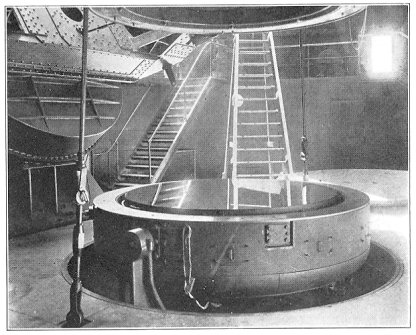
Fig. 10. One-hundred-inch mirror, just silvered,
rising out of the silvering-room in pier before attachment to lower
end of telescope tube. (Seen above.)
In 1906 the late John D. Hooker, of Los Angeles, gave the Carnegie
Institution of Washington a sum sufficient to construct a telescope
mirror 100 inches in diameter, and thus large enough to collect
160,000 times the light received by the eye. (Fig. 10.) The casting
and annealing of a suitable glass disk, 101 inches in diameter
and 13 inches thick, weighing four and one-half tons, was a most
difficult operation, finally accomplished by a great French glass
company at their factory in the Forest of St. Gobain. A special
optical laboratory was erected at the Pasadena headquarters of
the Mount Wilson Observatory, and here the long task of grinding,
figuring, and testing the mirror was successfully carried out by
the observatory opticians. This operation, which is one of great
delicacy, required years for its completion. Meanwhile the building,
dome, and mounting for the telescope were designed by members of
the observatory staff, and the working drawings were prepared. An
opportune addition by Mr. Carnegie to the endowment of the Carnegie
Institution of Washington, of which the observatory is a branch,
permitted the necessary appropriations to be made for the completion
and erection of the telescope. Though delayed by the war, during
which the mechanical and optical facilities of the observatory
shops were utilized for military and naval purposes, the telescope
is now in regular use on Mount Wilson.
The instrument is mounted on a massive pier of reinforced concrete,
33 feet high and 52 feet in diameter at the top. A solid wall extends
south from this pier a distance of 50 feet, on the west side of
which a very powerful spectrograph, for photographing the spectra
of the brightest stars, will be mounted. Within the pier are a
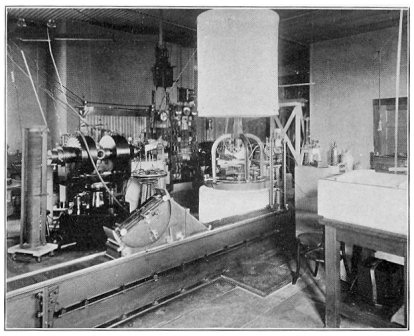
photographic dark room, a room for silvering the large mirror (which
can be lowered into the pier), and the clock-room, where stands
the powerful driving-clock, with which the telescope is caused
to follow the apparent motion of the stars. (Fig. 11.)
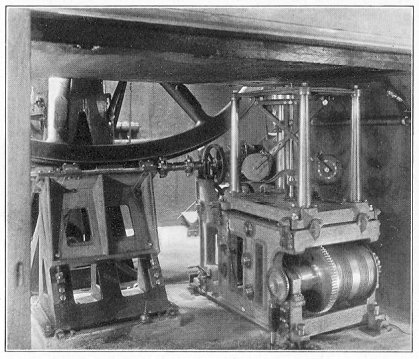
Fig. 11. The driving-clock and worm-gear that cause
the 100-inch Hooker telescope to follow the stars.
The telescope mounting is of the English type, in which the telescope
tube is supported by the declination trunnions between the arms of
the polar axis, built in the form of a rectangular yoke carried by
bearings on massive pedestals to the north and south. These bearings
must be aligned exactly parallel to the axis of the earth, and must
support the polar axis so freely that it can be rotated with perfect
precision by the driving-clock, which turns a worm-wheel 17 feet in
diameter, clamped to the lower end of the axis. As this motion
must be sufficiently uniform to counteract exactly the rotation
of the earth on its axis, and thus to maintain the star images
accurately in position in the field of view, the greatest care
had to be taken in the construction of the driving-clock and in
the spacing and cutting of the teeth in the large worm-wheel. Here,
as in the case of all of the more refined parts of the instrument,
the work was done by skilled machinists in the observatory shops in
Pasadena or on Mount Wilson after the assembling of the telescope.
The massive sections of the instrument, some of which weigh as
much as ten tons each, were constructed at Quincy, Mass., where
machinery sufficiently large to build battleships was available.
They were then shipped to California, and transported to the summit
of Mount Wilson over a road built for this purpose by the construction
division of the observatory, which also built the pier on which the
telescope stands, and erected the steel building and dome that
cover it.
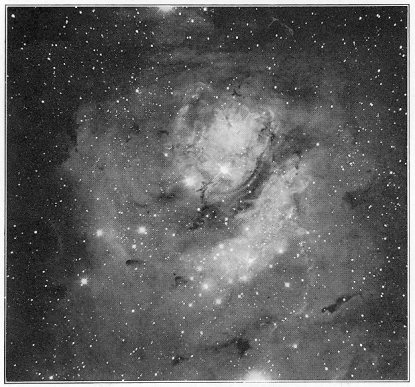
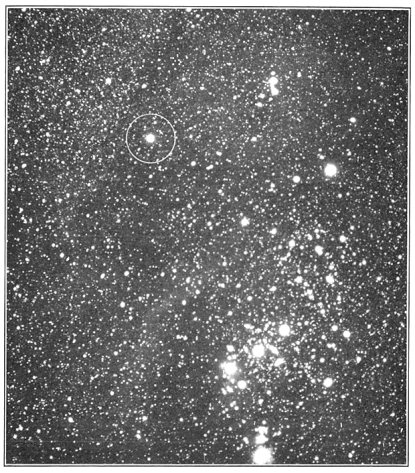
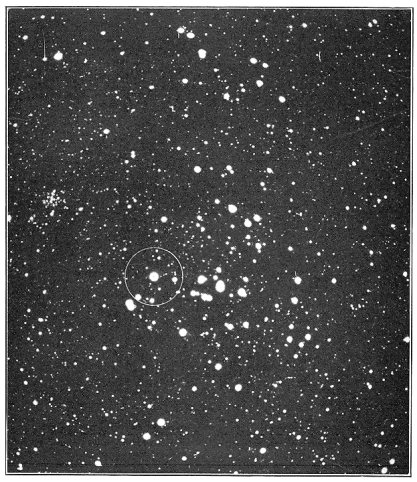
Fig. 12. Large irregular nebula and star cluster
in Sagittarius (Duncan).
Photographed with the 60-inch telescope.
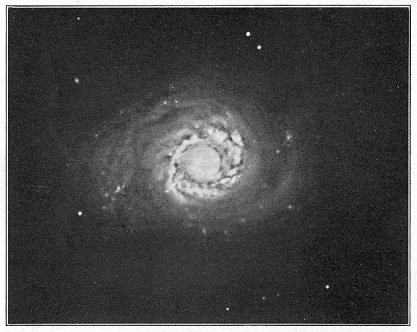
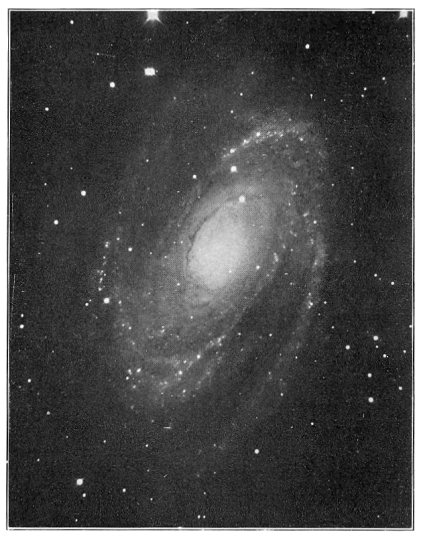
Fig. 13. Faint spiral nebula in the constellation
of the Hunting Dogs (Pease).
Photographed with the 60-inch telescope.
The parts of the telescope which are moved by the driving-clock
weigh about 100 tons, and it was necessary to provide means of
reducing the great friction on the bearings of the polar axis. To
accomplish this, large hollow steel cylinders, floating in mercury
held in cast-iron tanks, were provided at the upper and lower ends
of the polar axis. Almost the entire weight of the instrument is
thus floated in mercury, and in this way the friction is so greatly
reduced that the driving-clock moves the instrument with perfect
ease and smoothness.
The 100-inch mirror rests at the bottom of the telescope tube on
a special support system, so designed as to prevent any bending of
the glass under its own weight. Electric motors, forty in number, are
provided to move the telescope rapidly or slowly in right ascension
(east or west) and in declination (north or south), for focussing
the mirrors, and for many other purposes. They are also used for
rotating the dome, 100 feet in diameter, under which the telescope
is mounted, and for opening the shutter, 20 feet wide, through
which the observations are made.
A telescope of this kind can be used in several different ways.
The 100-inch mirror has a focal length of about 42 feet, and in
one of the arrangements of the instrument, the photographic plate
is mounted at the centre of the telescope tube near its upper end,
where it receives directly the image formed by the large mirror. In
another arrangement, a silvered glass mirror, with plane surface, is
supported near the upper end of the tube at an angle of 45°, so
as to form the image at the side of the tube, where the photographic
plate can be placed. In this case, the observer stands on a platform,
which is moved up and down by electric motors in front of the opening
in the dome through which the observations are made.
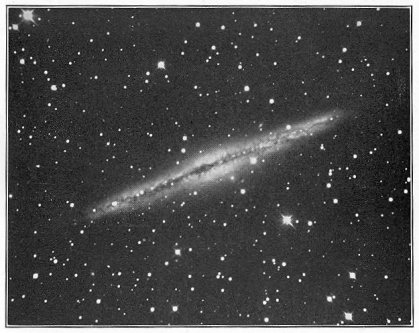
Fig. 14. Spiral nebula in Andromeda, seen edge on
(Ritchey).
Photographed with the 60-inch telescope.
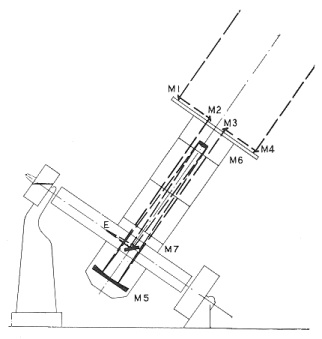
Other arrangements of the telescope, for which auxiliary convex
mirrors carried near the upper end of the tube are required, permit
the image to be photographed at the side of the tube near its lower
end, either with or without a spectrograph; or with a very powerful
spectrograph mounted within a constant-temperature chamber south
of the telescope pier. In this last case, the light of a star is
so reflected by auxiliary mirrors that it passes down through a
hole in the south end of the polar axis and brings the star to
a focus on the slit of the fixed spectrograph.
The huge dimensions of such a powerful engine of research as the
Hooker telescope are not in themselves a source of satisfaction to
the astronomer, for they involve a decided increase in the labor
of observation and entail very heavy expense, justifiable only in
case important results, beyond the reach of other instruments,
can be secured. The construction of a telescope of these dimensions
was necessarily an experiment, for it was by no means certain, after
the optical and mechanical difficulties had been overcome, that
even the favorable atmosphere of California would be sufficiently
tranquil to permit sharply defined celestial images to be obtained
with so large an aperture. It is therefore important to learn what
the telescope will actually accomplish under customary observing
conditions.
Fortunately we are able to measure the performance of the instrument
with certainty. Close beside it on Mount Wilson stands the 60-inch
reflector, of similar type, erected in 1908. The two telescopes can
thus be rigorously compared under identical atmospheric conditions.
The large mirror of the 100-inch telescope has an area about 2.8
times that of the 60-inch, and therefore receives nearly three times
as much light from a star. Under atmospheric conditions perfect
enough to allow all of this light to be concentrated in a point,
it should be capable of recording on a photographic plate, with a
given exposure, stars about one magnitude fainter than the faintest
stars within reach of the 60-inch. The increased focal length,
permitting such objects as the moon to be photographed on a larger
scale, should also reveal smaller details of structure and render
possible higher accuracy of measurement. Finally, the greater
theoretical resolving power of the larger aperture, providing it
can be utilized, should permit the separation of the members of
close double stars beyond the range of the smaller instrument.
The many tests already made indicate that the advantages expected
of the new telescope will be realized in practice. The increased
light-gathering power will mean the addition of many millions of
stars to those already known. Spectroscopic observations now in
regular progress have carried the range of these investigations
far beyond the possibilities of the 60-inch telescope. A great
class of red stars, for example, almost all the members of which
were inaccessible to the 60-inch, are now being made the subject
of special study. And in other fields of research equal advantages
have been gained.
The increase in the scale of the images over those given by the
60-inch telescope is illustrated by two photographs of the Ring
Nebula in Lyra, reproduced in Fig. 18. The Great Nebula in Orion,
photographed with the 100-inch telescope with a comparatively short
exposure, sufficient to bring out the brighter regions, is reproduced
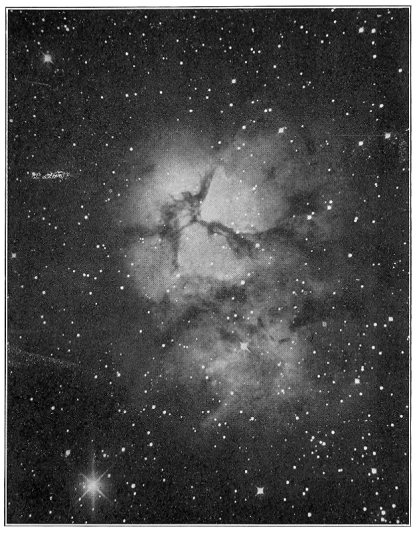
in Fig. 2. It is interesting to compare this picture with the
small-scale image of the same nebula shown in Fig. 1.
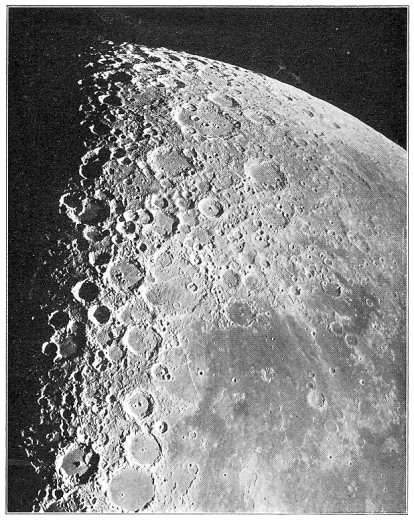
Fig. 15. Photograph of the moon made on September
15, 1919, with the 100-inch Hooker telescope (Pease).
The ring-like formations are the so-called craters, most of them
far larger than anything similar on the earth. That in the lower
left corner with an isolated mountain in the centre is Albategnius,
sixty-four miles in diameter. Peaks in the ring rise to a height
of fifteen thousand feet above the central plain. Note the long
sunset shadows cast by the mountains on the left. The level region
below on the right is an extensive plain, the Mare Nubium.
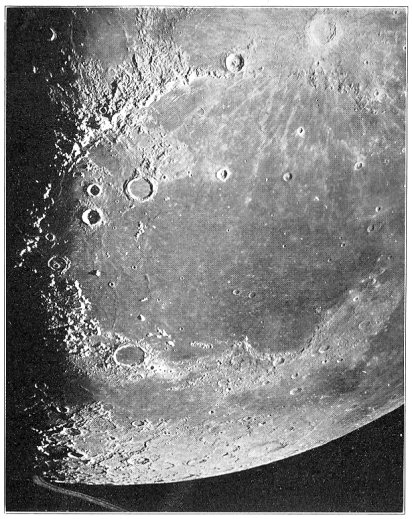
Fig. 16. Photograph of the moon made on September
15, 1919, with the 100-inch Hooker telescope (Pease).
The mountains above and to the left are the lunar Apennines; those
on the left just below the centre are the Alps. Both ranges include
peaks from fifteen thousand to twenty thousand feet in height. In
the upper right corner is Copernicus, about fifty miles in diameter.
The largest of the conspicuous group of three just below the Apennines
is Archimedes and at the lower end of the Alps is Plato. Note the
long sunset shadows cast by the isolated peaks on the left. The
central portion of the picture is a vast plain, the Mare Imbrium.
The sharpness of the images given by the new telescope may be
illustrated by some recent photographs of the moon, obtained with
an equivalent focal length of 134 feet. In Fig. 15 is shown a rugged
region of the moon, containing many ring-like mountains or craters.
Fig. 16 shows the great arc of the lunar Apennines (above) and the
Alps (below), to the left of the broad plain of the Mare Imbrium.
The starlike points along the moon's terminator, which separates
the dark area from the region upon which the sun (on the right)
shines, are the mountain peaks, about to disappear at sunset. The
long shadows cast by the mountains just within the illuminated
area are plainly seen. Some of the peaks of the lunar Apennines
attain a height of 20,000 feet.
In less powerful telescopes the stars at the centre of the great
globular clusters are so closely crowded together that they cannot
be studied separately with the spectrograph. Moreover, most of
them are much too faint for examination with this instrument. At
the 134-foot focus the 100-inch telescope gives a large-scale image
of such clusters, and permits the spectra of stars as faint as
the fifteenth magnitude to be separately photographed.
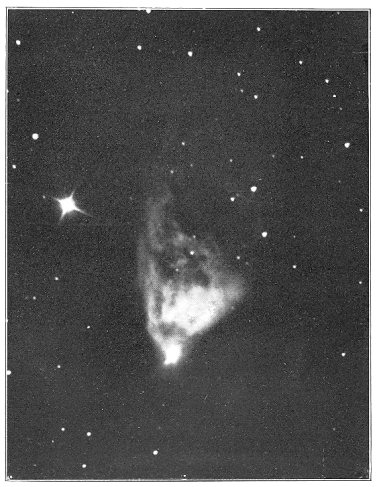
Fig. 17. Hubble's Variable Nebula. One of the few
nebulæ known to vary in brightness and form.
Photographed with the 100-inch telescope
(Hubble).
A remarkable use of the 100-inch telescope, which permits its full
theoretical resolving power to be not merely attained but to be
doubled, has been made possible by the first application of Michelson's
interference method to the measurement of very close double stars.
When employing this, the 100-inch mirror is completely covered,
except for two slits. Beams of light from a star, entering by the
slits, unite at the focus of the telescope, where the image is
examined by an eyepiece magnifying about five thousand diameters.
Across the enlarged star image a series of fine, sharp fringes is
seen, even when the atmospheric conditions are poor. If the star is
single the fringes remain visible, whatever the distance between the
slits. But in the case of a star like Capella, previously inferred
to be double from the periodic displacement of the lines in its
spectrum, but with components too close together to be distinguished
separately, the fringes behave differently. As the slits are moved
apart a point is reached where the fringes completely disappear,
only to reappear as the separation is continued. This effect is
obtained when the slits are at right angles to the line joining
the two stars of the pair, found by this method to be 0.0418 of a
second of arc apart (on December 30, 1919). Subsequent measures,
of far greater precision than those obtainable by other methods in
the case of easily separated double stars, show the rapid orbital
motion of the components of the system. This device will be applied
to other close binaries, hitherto beyond the reach of measurement.
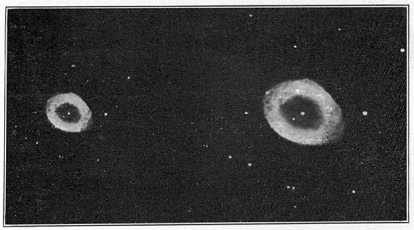
Fig. 18. Ring Nebula in Lyra, photographed with
the 60-inch (Ritchey) and 100-inch (Duncan) telescopes.
Showing the increased scale of the images given by the larger
instrument.
Without entering into further details of the tests, it is evident
that the new telescope will afford boundless possibilities for
the study of the stellar universe.[*] The structure and extent
of the galactic system, and the motions of the stars comprising
it; the distribution, distances, and dimensions of the spiral
nebulæ, their motions, rotation, and mode of development;
the origin of the stars and the successive stages in their life
history: these are some of the great questions which the new telescope
must help to answer. In such an embarrassment of riches the chief
difficulty is to withstand the temptation toward scattering of
effort, and to form an observing programme directed toward the
solution of crucial problems rather than the accumulation of vast
stores of miscellaneous data. This programme will be supplemented
by an extensive study of the sun, the only star near enough the
earth to be examined in detail, and by a series of laboratory
investigations involving the experimental imitation of solar and
stellar conditions, thus aiding in the interpretation of celestial
phenomena.