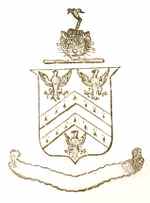
MEMOIR OF GOVERNOR ENDECOTT. [1]
It is now upwards of two centuries and a quarter since the despotic
sway of the English Sovereigns over the consciences of their
subjects, induced all who entertained different sentiments from those
of the established church, to turn their eyes towards the wilderness
of America, as an asylum from the unnatural persecutions of the
Mother Country.
With this in view, some of the principal men among those who
had already sought a refuge in Holland, commenced treating with
the Virginia Company, and at the same time took measures to ascertain
whether the King would grant them liberty of conscience should
they remove thither. They ultimately effected a satisfactory arrangement
with the Company, but from James they could obtain no
public recognition of religious liberty, but merely a promise, that if
they behaved peaceably he would not molest them on account of
their religious opinions.
On the 6th of September, 1620, a detachment from the Church
at Leyden set sail from Plymouth for the Virginia territory, but
owing to the treachery of the master,[2] they were landed at Cape
Cod, and ultimately at Plymouth, on the 11th day of December
following. Finding themselves without the jurisdiction of the Virginia
Company, they established a distinct government for themselves.
In the year 1624, the success of this plantation was so favorably
represented in the West of England, that the Rev. John White,
a distinguished minister in Dorchester, prevailed upon some merchants
and others to undertake another settlement in New England.
Having provided a common stock, they sent over several persons to
begin a plantation at Cape Ann, where they were joined by some
disaffected individuals from the Plymouth settlement. This project
was soon abandoned as unprofitable, and a portion of the settlers
removed westward within the territory of Naumkeag, which then
included what is now Manchester. By the intercession and great
exertions of Mr. White, the project of a settlement in that quarter
was not altogether relinquished, but a new company was soon
afterwards formed. One of this company, and the principal one to
carry its objects into immediate effect, was the subject of this Memoir.
He was in the strictest sense of the word a Puritan,—one of a sect
composed, as an able foreign writer has said, of the "most remarkable
body of men which perhaps the world has ever produced.
They were men whose minds had derived a peculiar character from
the daily contemplation of superior beings and eternal interests.
Not content with acknowledging in general terms an overruling
Providence, they habitually ascribed every event to the will of the
Great Being for whose power nothing was too vast, for whose inspection
nothing was too minute. To know him, to serve him, to
enjoy him, was with them the great end of existence. They rejected
with contempt the ceremonious homage which other sects substituted
for the homage of the soul. On the rich and the eloquent, on
nobles and priests, they looked down with contempt; for they esteemed
themselves rich in a more precious treasure, and eloquent
in a more sublime language; nobles by the right of an earlier creation,
and priests by the imposition of a mightier hand."
John Endecott, whose name is so intimately associated with
the first settlement of this country, and with whose early history his
own is so closely interwoven, that, in the language of the late Rev. Dr.
Bentley,[3] "above all others he deserved the name of the Father of
New England," was born in Dorchester, Dorsetshire, England, in
the year 1588. He was a man of good intellectual endowments
and mental culture, and of a fearless and independent spirit, which
well fitted him for the various and trying duties he was destined to
perform. Of his early life, and private and domestic character, little
is known; neither are we much better informed as to his parentage,
except that his family was of respectable standing and moderate
fortunes. He belonged to that class in England called esquires, or
gentlemen, composed mostly at that period of the independent landholders
of the realm. With the exception, therefore, of a few leading
incidents, we are reluctantly obliged to pass over nearly the
whole period of Mr. Endecott's life, previous to his engaging in the
enterprise for the settlement of New England. History is almost
silent upon the subject, and the tradition of the family has been but
imperfectly transmitted and preserved. His letters, the only written
productions which are left us, furnish internal evidence that he was
a man of liberal education and cultivated mind. There are proofs
of his having been, at some period of his life, a surgeon;[4] yet, as
he is always alluded to, in the earliest records of the Massachusetts
Company, by the title of Captain, there can be no doubt whatever
that at some time previous to his emigration to this country, he had
held a commission in the army; and his subsequently passing
through the several military grades to that of Sergeant Major-General
of Massachusetts, justifies this conclusion, while the causes which
led to this change in his profession cannot now be ascertained.
While a resident in London, he married a lady of an influential
family, by the name of Anna Gouer, by whom, it is understood, he
had no children. She was cousin to Matthew Cradock, the Governor
of the Massachusetts Company in England. If tradition be
correct, the circumstances which brought about this connection were
similar to those which are related of John Alden and Miles Standish.
Some needle-work, wrought by this lady, is still preserved in the
Museum of the Salem East India Marine Society.[5] Mr. Endecott
was also a brother-in-law of Roger Ludlow, Assistant and Deputy
Governor of Massachusetts Colony, in the year 1634, and afterwards
famous for the distinguished part he took in the government of
Connecticut.
But Mr. Endecott's highest claim to distinction rests upon the fact
that he was an intrepid and successful leader of the Pilgrims, and
the earliest pioneer of the Massachusetts settlement under the Patent.
His name is found enrolled among the very foremost of that noble
band, the fathers and founders of New England—those pious and
devout men, who, firm in the faith of the gospel, and trusting in
God, went fearlessly forward in the daring enterprise, and hewed
their homes and their altars out of the wild forest, where they could
worship "the God of their fathers agreeably to the dictates of their
own consciences." Such was the persecution to which the Non-conformists
in England were at this period subjected, that the works of
nature were the only safe witnesses of their devotions. Deriving no
honor, so far as we know, from illustrious ancestry, Mr. Endecott
was the architect of his own fame, and won the laurels which encircle
his name amid sacrifices, sufferings, and trials, better suited to adorn
an historical romance, than to accompany a plain tale of real life.
Under the guidance and influence of the Rev. Mr. Skelton, he
embraced the principles of the Puritans; and in the beginning of
the year 1628, associated himself with Sir Henry Roswell, Sir John
Young, Simon Whetcomb, John Humphrey, and Thomas Southcoat,
in the purchase of a grant, "by a considerable sum of money," for
the settlement of the Massachusetts Bay, from the Plymouth Council
in England. This grant was subsequently confirmed by Patent
from Charles I. Mr. Endecott was one of the original patentees,
and among the first of that company who emigrated to this country.
Whatever may have been the objects of the first settlers generally
in colonizing New England, there can be no doubt that his was the
establishment and enjoyment of the gospel and its ordinances, as
he supposed, in primitive purity, unmolested. With him it was
wholly a religious enterprise.
He sailed from Weymouth, in the ship Abigail, Henry Gauden,
master, on the 20th of June, 1628, and arrived in safety at
Naumkeag, the place of his destination, on the 6th of September
following. The company consisted of about one hundred planters.
The following extract from "Johnson's Wonder-Working Providence"
will illustrate the estimation in which he was held at this
period. "The much honored John Indicat came over with them, to
governe; a fit instrument to begin this Wildernesse-worke; of courage
bold, undaunted, yet sociable, and of a cheerfull spirit, loving
and austere, applying himselfe to either as occasion served. And
now let no man be offended at the Author's rude Verse, penned of
purpose to keepe in memory the Names of such worthies as Christ
made strong for himselfe, in this unwonted worke of his.
"John Endicat, twice Governur of the English, inhabiting the
Mattachusets Bay in N. England.
"Strong valiant John, wilt thou march on, and take up station first,
Christ cal'd hath thee, his Souldier be, and faile not of thy trust;
Wilderness wants Christs grace supplants, then plant his Churches pure,
With Tongues gifted, and graces led, help thou to his procure;
Undaunted thou wilt not allow, Malignant men to wast:
Christs Vineyard heere, whose grace should cheer his well-beloved's tast.
Then honored be, thy Christ hath thee their General promoted:
To shew their love in place above, his people have thee voted.
Yet must thou fall, to grave with all the Nobles of the Earth.
Thou rotting worme to dust must turn, and worse but for new birth."
To this company, under Endecott, belongs the honor of having
formed the first permanent and legally recognized settlement of the
Massachusetts Colony. We do not say that they were the first white
men who ever trod the soil; for we know when Endecott landed
on these shores, he found here a few fishermen and others, the remnant
of a planting, trading, and fishing establishment, previously
commenced at Cape Ann, under the auspices of some gentlemen
belonging to Dorchester, his native place, but soon abandoned for
want of success. Their leader, the Rev. John Lyford, had already
emigrated to Virginia, and those of that company who removed
their effects to Salem, consisted at that time of some five or six persons,
most of whom were seceders from the settlement at Plymouth.
They were, however, only sojourners, disaffected with the place,
and requiring all the interest and entreaties of the Rev. John White,
a noted minister in Dorchester, to prevent them from forsaking it
altogether, and following Mr. Lyford to Virginia.[6] But higher motives
and deeper purposes fired the souls and stimulated the hearts
of Mr. Endecott and his friends to commence a settlement, and
to form new homes for themselves and their posterity in this wilderness,
before which the mere considerations of traffic and gain
sink into comparative insignificance. It was the love of religion
implanted deep in the heart, that gave impulse and permanency to
the settlement at Naumkeag, and the Massachusetts Colony generally;
and the commencement of this era was the arrival of Endecott
with the first detachment of those holy and devout men who valued
earthly pursuits only so far as they were consistent with religion.
It was also at this period that a sort of definite reality was imparted
to this region. Previously to this it had been viewed as a sort of
terra incognita, situated somewhere in the wilderness of America.
But the arrival of the Pilgrims at this time dispelled the uncertainty
in which it had before been wrapped, and at the same time threw
around it the warmest sympathies and most earnest solicitude of
large numbers who had now become deeply interested in its welfare.
We, therefore, consider the landing of Endecott at this place, as emphatically
the commencement of its permanent settlement, as an
asylum for the persecuted and oppressed of the Mother Country. All
previous visitors were comparatively adventurers, with motives and
purposes widely different from those of that little band who first rested
upon this spot on the 6th of September, 1628. On that day, so to
speak, was breathed into the settlement of Naumkeag the breath of
life, and it became as it were endued with a living soul, folding within
its embrace the dearest interests and most cherished rights of humanity,
unrivalled in the interest she will ever excite as the most
ancient town in the Massachusetts Patent.
On Mr. Endecott's arrival, he made known to the planters who
preceded him, that he and his associate patentees had purchased
all the property and privileges of the Dorchester partners, both here
and at Cape Ann. He shortly after removed from the latter place,
for his own private residence, the frame house, which a few years
before had been erected there by the Dorchester Company. It was
a tasteful edifice, of two stories high, and of the prevailing order of
architecture at that period, called the Elisabethean, which was but
of slight remove from the Gothic. Some of its hard oak frame may
still be found in the building at the corner of Washington and
Church streets, Salem, commonly known at this day as the "Endicott
House."
The alteration which now took place in the affairs of the infant
colony did not meet with favor from the first planters, and for a
while prevented perfect harmony from prevailing in the settlement.
"One of the subjects of discord was the propriety of raising tobacco,
Mr. Endecott and his council believing such a production, except
for medicinal purposes, injurious both to health and morals." Besides
this, they probably viewed with no favorable eye the agreement
in sentiment between Mr. Endecott and the Plymouth
Church as to the propriety of abolishing the ritual forms of worship
of the Church of England; for an adherence to which they had
already been obliged to leave the Plymouth settlement. Mr. Endecott
represented these difficulties to the home government; and
in answer to his communication they say, "That it may appear
as well to all the worlde as to the old planters themselves, that we
seke not to make them slaves, as it seems by your letter some of
them think themselves to be become by means of our patent, they
are allowed to be partakers with us in all the privileges we have
with so much labor and intercession obtained from the King; to be
incorporated into the society, and enjoy not only those lands which
formerly they have manured, but such a further proportion as the
civil authorities think best." They were also allowed the exclusive
privilege of raising their favorite weed—tobacco.
The Company's Court in London, actuated by that true sense of
justice which ever marked its deliberations, were determined not to
trespass on any of the rights of the aborigines; and to this purpose
in their first two communications to Mr. Endecott, they desired
him to take especial care, "that no wrong or injury be offered by
any of our people to the natives there," and to satisfy every just
claim which might be made by them to the territory of Naumkeag
and the plantation generally. To this record the sons of the Pilgrims
have ever turned with peculiar pride and exultation. And,
says Felt, "From his well-known promptitude and high sense of
equity, there can be no doubt that Mr. Endecott fulfilled every iota
of such instructions." In his first letters to the home government,
he suggested various things to advance the interests of the Colony;
such as the manufacture of salt, cultivation of vineyards, sending
over fruit-stones and kernels, grain for seed, wheat, barley, and rye;
also certain domesticated animals; all of which were shortly after
transported to this country.
The answer to this letter bears the date of April 19, 1629,
wherein they inform him, that the Company "are much enlarged
since his departure out of England," and for strengthening their
grant from the Council at Plymouth, they had obtained a confirmation
of it from his Majesty by his Letters Patent, under the
broad seal of England; incorporating them into a body politic, with
ample powers to govern and rule all his Majesty's subjects that
reside within the limits of their plantation; and that, in prosecution
of the good opinion they have always entertained of him, they
have confirmed him Governor of the Colony. No adventitious
circumstances of fortune or birth aided him in his appointment to
this, even then responsible office; for although the Colony was at
this time few in numbers and feeble in effort, yet in its success
were involved the most momentous interests, and every thing depended
upon the right impulse and direction being given to its
affairs. In the words of the Record, "having taken into due consideration
the meritt, worth, and good desert of Captain John Endecott,
and others lately gone over from hence, with purpose to resyde
and continue there, wee have with full consent and authoritie of
this Court, and ereccon of hands, chosen and elected the said Captain
John Endecott to the place of present Governour of said Plantation."
They further speak of the confidence they repose in him,
in thus committing the affairs of the Colony into his hands. Gov.
Cradock also compliments him upon his motives and conduct; and
the Company inform him, that they are disappointed of the provisions
ordered to be sent for himself and Mrs. Endecott, but (God
willing,) they purpose to send them by the next vessel. It is also
believed that at this time Mr. Endecott ordered the fruit-trees, which
afterwards constituted his orchard upon the farm granted him in
1632, of which one venerable patriarch, the celebrated old pear-tree,
yet remains, having withstood the "peltings of pitiless storms" for
upwards of two hundred winters, and still dropping down its rich
fruit into the bosoms of his distant descendants.
In a second letter, dated the 28th of May following, the Company
remark: "Wee have sithence our last, and according as we
there advised, at a full and ample Court assembled elected and established
you, Captain John Endecott, to the place of present Governour
of our Plantation there, as also some others to be of the
Council with you, as more particularly you will perceive by an
Act of Court herewith sent, confirmed by us at a General Court
and sealed with our common seal."
The model of the Government established by this "Act of
Court," consisted of a Governor, and twelve persons as a Council,
styled "The Governour and Council of London's Plantation
in the Mattachusetts Bay in New England." They were to
elect a Deputy-Governor, for the time being, from among their
number; were authorized also to choose a Secretary and other
needful officers. They were empowered to fill vacancies in their
body, occasioned by death or otherwise. The Governor, or in his
absence the Deputy, might call Courts at pleasure, and they had
power to establish any laws not at variance with those of England;
"to administer justice upon malefactors, and inflict condign punishment
upon all offenders." To make an act valid, the Governor
or his Deputy was always to vote with the majority. A form of
oath was sent over at this time to be administered to Mr. Endecott
as Governor, and one also for the other officers of the government.
He took the oath and was inducted into office. Here, then, we
conceive, is direct and incontrovertible testimony that Endecott was
appointed the first Governor of Massachusetts under its Colonial
Charter from the King. It is so stated by Joselyn, Hutchinson,
and Prince. He received the Charter, and the documentary evidence
of his constitutional authority as Governor, both at the same
time. To Mr. Endecott was given, to act under it, all the powers
which his immediate successors ever exercised. They were conferred
upon him too, by the same body who subsequently elected
Mr. Winthrop to that office. The abolishment of the board of
control in England, and the transfer of "the government of the
plantation to those that shall inhabit there," and instead of choosing
the Colonial Governors in Old England by members of the Company
there, to choose them by members of the same Company who
were in New England, could not weaken the validity of his claim
to be considered the first Governor of the Massachusetts Colony.
It was well for Mr. Endecott that he possessed an ardent and
sanguine temperament, which nothing could daunt, otherwise the
innumerable discouraging circumstances which met him in this, his
new abode, in every form, amid sickness, death, and privations of
every kind, well suited to appal the stoutest hearts, would no doubt
have wrought their effects upon him, to the prejudice of the whole
plantation. But such was the energy and firmness of his character,
aided, no doubt, by a religious enthusiasm, which induced the belief
that it was the purpose of God to give them the land of the
heathen as an inheritance, that neither his faith nor confidence in
the ultimate success of the undertaking ever for a moment forsook
him. In every crisis, this little band looked to him, as the weather-beaten
and tempest-tossed mariner looks to his commander, next to
God, for encouragement and support; and they did not look in vain.
Such was the great mortality among them, during the first winter
after their arrival, arising from exposure to the rigors of an untried
climate, and their being badly fed and badly lodged, that there were
scarcely found in the settlement well persons enough to nurse and
console the sick. To enhance their distress, they were destitute
of any regular medical assistance. In this painful dilemma a messenger
was despatched by Mr. Endecott to Gov. Bradford, of the
Plymouth settlement, to procure the necessary aid; and Doctor
Samuel Fuller, the physician, who was a prominent member and
deacon of the Plymouth Church, was sent among them. During his
visit, Mr. Endecott was called by Divine Providence to suffer one of
the heaviest of earthly afflictions, in the death of his wife, the partner
of all his sorrows, who had forsaken home, kindred, and the sympathy
of friends, and consented to share with him the cares and privations
incident to a new settlement. Surrounded by savages, and
from the circumstances of the case, placed in a great degree beyond
the pale of civilized society, her sympathy and counsel must necessarily
have been very dear to him. She must have entwined herself
about his affections, as the tender ivy winds itself round the lordly
oak. Her slender and delicate frame was not proof against the
rigors of a New England climate. Born and nurtured in the midst
of luxury and ease, she could not withstand the privations and
hardships of her new home, and she fell a victim to her self-sacrificing
disposition. Painful indeed must have been the parting, and
severe the trial to Mr. Endecott. Under the influence of the feelings
which this affliction produced, he wrote the following letter
to Gov. Bradford:—
"Right Worshipfulle Sir,—
"It is a thing not usual that servants of one Master, and of the same
household, should be strangers. I assure you I desire it not; Nay, to
speak more plainly, I cannot be so to you. God's people are all marked
with one and the same mark, and have for the main one and the same
heart, guided by one and the same spirit of truth; and where this is
there can be no discord, nay, here must needs be a sweet harmony;
and the same request with you, I make unto the Lord, that we as
Christian brethren be united by an heavenly and unfeigned love, binding
all our hearts and forces in furthering a work beyond our strength
with reverence and fear, fastening our eyes always on Him that is only
able to direct and prosper all our ways. I acknowledge myself much
bound to you, for your kind love and care in sending Mr. Fuller amongst
us, and rejoice much that I am by him satisfied, touching your judgment
of the outward form of God's worship: It is as far as I can gather
no other than is warranted by the evidence of truth, and the same
which I have professed and maintained ever since the Lord in mercy
revealed himself unto mee, being far from the common report that hath
been spread of you in that particular; but God's people must not look
for less here below, and it is a great mercy of God that he strengtheneth
them to go through it. I shall not need at this time to enlarge
unto you for (God willing) I propose to see your face shortly; in the
mean tyme, I humbly take my leave of you, committing you to the
Lord's blessing and protection, and rest.
Your assured loving friend,
Jo: Endecott.
Naumkeag, May 11, 1629."
The foregoing epistle is alike honorable to the head and heart of
Mr. Endecott. Humble, devout, and chastened feelings pervade it
throughout. It speaks a mind sensibly alive to religious impressions.
The sentiments here expressed cannot fail to find a response in the
hearts of all reflecting men, in this and succeeding generations.
The magnitude of the undertaking in which they were engaged, the
necessity of union in their efforts, and the impossibility of success
without direct divine assistance, are here represented in language
appropriate and devout.
Whether Mr. Endecott carried into execution his design intimated
in this letter, of making Gov. Bradford a visit "shortly," is uncertain.
On the 27th of May, 1629, in a communication to the authorities at
home, he complained that some persons in his jurisdiction disregarded
the law of 1622, for the regulation of trade with the Indians,
and "desiring the Company would take the same into their serious
consideration, and to use some speedy means here for reformation
thereof." A petition was in consequence presented to the King,
who in compliance therewith issued a new proclamation, forbidding
such disorderly trading. These steps were no doubt taken in reference
to the associates of one Thomas Morton, whose residence at
Mount Wollaston, or Merry Mount, now Quincy, he visited shortly
after his arrival in this country. This man and his associates had
alarmed all the well-disposed settlers, from Piscataqua to Plymouth,
by selling arms and ammunition to the Indians, indulging themselves
in dissipation, and otherwise endangering the peace and
welfare of New England. The object of Mr. Endecott's visit was
to rectify abuses among the remaining confederates, Morton himself
having been already apprehended, and sent home to England for
trial. He went there, we are told, in the "purefying spirit of authority,"
and caused their May-pole to be cut down, to which they had
been in the habit of affixing pieces of satirical composition against
those who opposed their wishes and practices, and "rebuked the inhabitants
for their profaneness, and admonished them to look to it
that they walked better." He also changed the name of the place,
and called it Mount Dagon. The precise period of this visit is not
known, and it is not improbable that Mr. Endecott extended his
journey at the time to Plymouth Colony. However this may be,
a warm friendship soon grew up between Gov. Bradford and himself,
which continued without interruption for the remainder of
their lives.
As yet no steps had been taken in the Colony towards the establishment
of a reformed Church for propagating the gospel, which
they professed above all to be their aim in settling this Plantation.
June 30th, 1629, the Rev. Francis Higginson arrived at Naumkeag,
and the Rev. Mr. Skelton, the early friend and spiritual father of
Mr. Endecott, arrived about the same time. They had been sent
over by the home government. Mr. Higginson thus speaks of his
reception by Mr. Endecott: "The next morning (30th) the Governor
came aboard to our ship, and bade us kindly welcome, and
invited mee and my wiffe to come on shore and take our lodgings
at his house; which we did accordingly." The settlement, we are
told, then consisted of "about half a score of houses, with a fair house,
newly built, for the Governor. We found also abundance of corne
planted by them, very good and well liking. Our Governor hath a
store of green pease growing in his garden, as good as ever I eat in
England. * * * * Our Governor hath already planted a
vineyard, with great hopes of increase; also mulberries, plums, raspberries,
currants, chesnuts, filberts, walnuts, small nuts, hurtleberries,
and haws of white thorn, near as good as our cherries in England—they
grow in plenty here."
Shortly after the arrival of Mr. Higginson and Mr. Skelton, the
necessary measures were taken preparatory to the settlement of a
religious congregation in accordance with the views of the Puritans.
In this they were aided by Mr. Endecott, and the most intelligent of
the colonists. Having first concluded a satisfactory form of church
government and discipline, which was submitted to Mr. Endecott
for approval, the 6th of August, 1629, just eleven months after
his arrival, was the time selected for this "little band of devout Pilgrims
to enter into solemn covenant[7] with God and one another,
and also for the ordaining of their ministers." By Mr. Endecott's
order, a solemn day of "humiliation" had been held on the 20th of
July preceding, for the choice of pastor and teacher. An important
step was about to be taken—a new priesthood was about to be
established—all allegiance to, or alliance with, any other church on
earth was about to be dissolved! It was a subject of momentous
concern with the Colonists, and called into exercise all their moral
heroism and spiritual courage. Mr. Bradford, the Governor of the
Plymouth Colony, came here by sea, and arrived just in season to
give the right hand of fellowship. Of all that little band, gathered
together on this occasion, none felt a deeper interest, or took a more
responsible part, than the subject of this Memoir.[8]
We now approach an important event in the history of the Colony—the
removal of its entire government to New England. Gov.
Cradock, with whom the idea appears to have originated, acquainted
the Proprietors, at a meeting of the Court, July 28, 1629, that, for the
purpose of advancing the interests of the Plantation, and inducing
and encouraging persons of worth and quality to transport themselves
and their families thither, as well as for other weighty reasons,
it was proposed to transfer the entire government to this country,
and continue it no longer in subjection to the Company in England.
Soon after this communication, an agreement to that effect was
drawn up at Cambridge, and among those who signed it was their
future governor, John Winthrop. It was one of the stipulations that
they should settle their affairs so as to be ready for the voyage hither
by the first of March. This appears to have been the first connection
Mr. Winthrop had with the settlement of this soil. On the 29th
of August following, at a meeting of the Court of Proprietors, in
London, this change in the government was decided upon. On the
16th of October, at another meeting of the Court, it was conceived
"fitt that Capt. Endecott continue the government there, unless just
cause to the contrarie." But on the 20th of the same month, Gov.
Cradock informed the Proprietors that in accordance with the alteration
of the government now about to take place, it was necessary to
elect a new Governor, Deputy, and Assistants; when John Winthrop
was put in nomination, and unanimously chosen Governor. In like
manner, John Humphrey was chosen "Deputy-Governor," and Sir
Richard Saltonstall, Matthew Cradock, John Endecott, with fifteen
others, were chosen a board of "Assistants."
On the 12th of June, 1630, the ship Arbella, Capt. Milburne, having
on board Gov. Winthrop and company, and a duplicate
Charter of the Colony, of the same tenor and form as Gov. Endecott's,
arrived at Naumkeag, having sailed from Cowes March 29.
Mr. Endecott, who had already been apprized that he was shortly
to be superseded in the Governorship of the Plantation, repaired on
board to welcome the new Governor, and offer him and his friends
the hospitalities of his house. Among the distinguished personages
were Isaac Johnson and his wife, the Lady Arbella, daughter of the
Earl of Lincoln. Speaking of Mr. Endecott's visit, Gov. Winthrop
says, "Wee that were of the Assistants and some other gentlemen
and some of the women, returned with him to Nahumkeck, where
we supped on good venison pastry and good beer." At the time of
the arrival of the new Governor, wholesome and salutary laws for
the government of the Colony had been instituted by Endecott,
under the authority given him by the Charter, and the settlement
had already assumed the condition of a well-organized and
regulated body politic. A church, with faithful ministers, which
they professed to value above all temporal interests and earthly
grandeur, had also been established, and the wheels of government
were moving on harmoniously, upon a safe and sure foundation.
Under this state of things, Endecott now surrendered the civil power
into the hands of Gov. Winthrop, and took upon himself the more
humble appointment of one of the Assistants. Yet "the principles of
Winthrop's administration," says the Annalist of Salem, "were like
those which had directed the course of his predecessor. The commencement
of legislation, which was to have an important part in
promoting social freedom, that has spread and is spreading in the
world, began at Naumkeag, under Endecott, and was continued by
his worthy successor."
Soon after the arrival of Gov. Winthrop, the new settlers began
to be dissatisfied with Salem, as the capital of the Colony. It did
not combine, in their opinion, sufficient advantages of location, soil,
and natural means of defence. A party, therefore, was sent to explore
the country westward, to discover, if possible, some more
suitable situation. It had been the darling object with Endecott to
make Salem the seat of government; he, however, bowed in submission,
and continued his efforts to advance the common weal.
On the 18th of August, 1630, Gov. Endecott entered into a new
matrimonial alliance with Elisabeth Gibson of Cambridge, England.
This lady probably came over in the ship with Gov. Winthrop, and
the marriage ceremony was performed by him and the Rev. Mr.
Wilson, afterwards pastor of the first church in Boston. This connection
appears to have been a happy one, although there was a
much greater disparity in their ages than prudence and judgment
would seem to allow—the difference being about twenty-six years.
Such was his ardent and growing attachment to the place of his
adoption, that when it was decided in December, 1630, to fortify
Newton, now Cambridge, for the seat of government, and to build
houses, and move their military stores to that place next spring, he
could not be prevailed upon to quit his accustomed residence. All
the members, except himself and Mr. Sharp, who was about returning
to England, agreed to do so; but Mr. Endecott excused himself
upon the ground that he had so formed his connections in Salem,
that it would be attended with great inconvenience.
On the 3rd of July, 1632, the Court of Assistants granted Mr.
Endecott three hundred acres of land, called by the Indians in English,
"Birchwood," afterwards known as his "Orchard Farm." It
was situated between two and three miles in a northerly direction
from the main settlement at Salem, upon a tongue of land bounded
on the north, south, and east by rivers, or more properly inlets of the
sea, and on the west by the main land. Even at that early period,
it was one of the most desirable situations in that vicinity. Though
at some distance from the place which was afterwards selected for
the seat of the government, and where the Court House was erected,
yet he was in the centre of the population, being by land nearer to
the shores than he was to the cultivated farms around him. It was
many years after he established himself at this beautiful place, so
near all the streams which passed through the adjacent country,
before any incorporation separated Salem from the Merrimack.
For twenty years Salem bounded on Andover. The spot then was
the best he could have chosen. On a commanding eminence, which
overlooked the country for some distance around, and about one
eighth of a mile from one of the inlets, he built his house, and commenced
in earnest the cultivation of his farm. Although the ploughshare
has frequently passed over it, yet part of the cellar of this house
is plainly discernible at the present day. It is a romantic situation,
and denotes him to have been a man of much discrimination and
taste in matters of this kind. On his farm he lived in a sort of feudal
style, surrounded by his servants.
In front of his mansion house, and immediately upon the southern
slope of a gentle declivity, he planted his far-famed orchard,
which gave the name to his farm. The tradition that the Governor
always pointed out his dial, which bears the date of 1630, as denoting
the age of his orchard, seems to indicate that the trees were
removed hither from his town residence. Here, too, it is said, he
introduced, for medicinal purposes, as well as ornament to his
garden, the "white-weed," which has since become so detrimental
to the hay-fields of our farmers.
His usual mode of transporting himself and family to and from
this place, was at first by water, and he was as often visited by his
friends in this way, as in any other. The inlet before the mansion
house had nothing to interrupt it—the passage was open to the bay,
and at that early period must have been delightfully romantic. The
shores on either side thickly clothed with wood, whose dark images
were reflected in the still waters beneath them, were picturesque in
the extreme. The bold jutting headlands, on some parts of the
passage, lent a sublimity to the prospect, which was continually
varying by the winding and circuitous course of the stream.[9]
There was nothing to break the stillness, or disturb the quiet which
reigned around, save the dashings of their own little boat amid the
waters, or the heavy plunge of some lordly sea-bird, in his gyratory
wanderings in pursuit of prey. The smoke from the humble and
solitary wigwams of the Indians, thinly scattered along the margin
of the waters, with an occasional glimpse at their tawny inhabitants,
as they stealthily watched the passing boat from their leafy hiding-places,
or listlessly reclined under the shadow of some wide-spreading
oak, heightened the effect, and diversified the scene. Within
the last half-century, the ruins of some of these wigwams might
have been seen,[10] and could not have failed to excite most melancholy
reflections respecting the wretched fate of these natural lords
of the soil, throughout our vast country.
August 2, 1634, Mr. Endecott was called to mourn the death of
his early and particular friend, the Rev. Mr. Skelton, who had become
endeared to him as his spiritual guide, in first opening to his
view the way of truth while in England, and who had followed
him to this country to counsel and direct him in paths of piety and
happiness. This event must have been to him a severe affliction.
About this time a Military Board of Commissioners, with almost
unlimited powers, was established by the General Court, and Mr.
Endecott was appointed one of its members.
On the 18th of September, this same year, the Colony was thrown
into consternation, and alarmed for its liberties, by the news from
England, that a commission had been granted to two Archbishops,
and ten others of the Council, conferring on them the authority to
regulate the Plantations of New England; to establish and maintain
the Episcopal Church in this country; to recall its Charter;
remove its Governors; make its laws; hear and decide its legal
cases; and appoint its punishments, even death itself.[11] Intelligence
was also received at the same time, that a new Governor was being
secretly conveyed to Massachusetts, with orders which, if executed,
would prostrate all its civil and ecclesiastical rights. Gov. Cradock
had already informed them that the King's Council had demanded
their Charter. Such was the universal anxiety this news awakened,
that the idea of resistance appears immediately to have possessed
the minds of the inhabitants,[12] and the fortifications were hastened
forward, and an assessment laid of an additional rate of five hundred
pounds for defence. These tidings were received with indignant
feelings by Mr. Endecott. He saw by this step that all their dear-bought
privileges, purchased at such immense sacrifices, which none
could better appreciate than himself, were about to be violently, as
with a ruthless despotism, wrested from them. His independent
spirit could not quietly brook such high-handed infringements upon
their chartered rights, and he resolved in all the affairs of the Colony,
in which he had any share or influence, to pursue that course which
he deemed most for her interests, whether it led him over plains or
mountains, through flowers or thorns. There was exhibited in his
actions, on all occasions, a fortitude, which shows him formed for
great emergencies. Probably under the influence of feelings produced
by this intelligence, and excited by that ardent zeal which
marked his character through life, he shortly after cut the red cross
from the King's colors, deeming it a relic of Popish idolatry. This
bold and daring act was considered an insult, as well to the established
Church of England, as to the King himself; and the Colony
dared not refrain from taking cognizance of it, lest it should call
down upon their heads the vengeance of the whole British hierarchy.
There is ample evidence in the records of the Colony, that most of
the principal men, including Governor Winthrop,[13] agreed with him
on this subject, in sentiment and feeling. "The only difference
between him and others was, he manifested his opinions by his acts,
while they, with more prudence and safety, retained theirs in secret."
Had it not been for fear of the consequences, instead of being censured,
his conduct would have been openly applauded. His boldness
of action was made known in England, and looked upon there
in the light of rebellion. It was the first blow struck in defiance of
royal authority, and would no doubt have cost Mr. Endecott his life,
had it not been for those troubles which were then beginning to
gather thickly, like a tempest, about the devoted head of the unfortunate
Charles I., and which eventually burst upon it with a fury which
nothing could resist, involving in its course the ruin of his government,
and the destruction of his own life. The sword, with which
this rebellious act is said to have been performed by Mr. Endecott,
has been preserved, and is now in possession of one of the family,
to whom it has descended in direct line, by right of primogeniture.
It is a plain, unornamented rapier, emblematical of the Puritan simplicity
of our Forefathers.
While these events were passing in this country, the Puritans in
England were experiencing the most unmitigated persecution, at
the hand of Archbishop Laud and his confederates. As their numbers
increased, the various modes of punishment were multiplied;
exorbitant fines were imposed; the pillory witnessed bloody
scenes of human agony and mutilation; the scaffold and dungeon
had their victims; the lash, the shears, and the glowing iron were
most cruelly applied to individuals of this proscribed sect.[14] But
the faith of the Puritans rose superior to oppression, and could not
be overcome. The most bloody persecution served only to add
new converts to their cause.
In 1636, Mr. Endecott was appointed an Assistant, and was also
sent on an expedition against the Indians on Block Island and in the
Pequot country, he acting as General of all the forces in the detachment.
During this year his views relative to the cross in the King's
colors triumphed over all considerations, and the Military Commissioners
ordered it to be left out. On the ensigns at Castle Island,
in Boston harbor, they substituted the King's arms for the cross.
During the year 1641, Mr. Endecott was chosen Deputy-Governor,
and was continued in office for the two succeeding years. He
was also appointed one of a committee to dispose of all lands or
other property belonging to the company at Cape Ann; and was
commissioned by the Court, in conjunction with two others, Mr.
Downing, the brother-in-law of Gov. Winthrop, and Mr. Hathorne,
to procure the transcription of nineteen copies of the laws, liberties,
and forms of oaths, and to subscribe them with their own hands,
the Court having decreed that no copies should be considered authentic
which were without their signatures.
In 1642, he was chosen one of the Corporation of Harvard College.
Passing over some minor things in the life of Governor Endecott,
we arrive at the year 1644, when his increasing influence and popularity
ensured his election as Governor, and Mr. Winthrop was
chosen Deputy-Governor. The claim of Salem to be made the seat
of government, was now again revived, and it would be fair to infer
from his well-known attachment to the place, that the project met
with his hearty coöperation. But the effort was not successful, and
Boston still continued to be the capital. The Governor's salary
was one hundred pounds.
During this year of his administration, improvements in the mode
of transacting business in the Legislature were introduced. The
Magistrates and Deputies, for the first time, now held their sessions
apart, and it required the concurrence of both bodies, to make an
act valid. The office of a speaker to the Deputies was also this
year ordained, and filled by an Essex man, Mr. William Hathorne.
The conflicting claims of D'Aulney and La Tour, two Frenchmen
at Acadia, which had produced considerable excitement, were
finally settled during this year, by the government of France supporting
the claim of D'Aulney. His deputy came to Boston, and
concluded a treaty with Gov. Endecott, which was subsequently
ratified by the Commissioners of the United Colonies of New
England.
The year following, (1645) Mr. Endecott was succeeded as Governor
by Mr. Dudley. Other offices of honor and trust, however,
awaited him. He was this year appointed Sergeant Major-General
of Massachusetts, the highest military office in the Colony. He had
previously held a commission of Colonel in the first regiment formed
in Salem, Saugus, Ipswich, and Newbury, in 1636, when John
Winthrop, Jr., son of the Governor, was his Lieutenant-Colonel.
He was also elected an Assistant, and one of the United Commissioners.
In 1648, he was continued an Assistant, Sergeant Major-General,
and Commissioner for the Province.
Upon the death of Governor Winthrop, which took place on the
26th of March, 1649, at the age of 61, Mr. Endecott was again chosen
Governor, to which office he was annually elected until the time of
his death, with the exception of the years 1650 and 1654, when he
held that of Deputy-Governor. This was an eventful period in the
history of the Colony, as well as of the Mother Country. The violent
death of Charles I., the usurpation of Cromwell, and the restoration
of the Stuart family, took place while he was at the head of
public affairs. The difficulties and perplexities of his situation
during this period were very great. But all his public acts were
marked with a moderation and wisdom which do honor to him as
an experienced statesman. Had he possessed less integrity or firmness,
had his mind been at all vacillating, the consequences might
have been affectingly disastrous to the best interests of the Colony.
In the year 1652, under his administration, a mint was established
in the Colony, for coining shillings, six-pences, and three-pences.
No other of the American Colonies, it is believed, ever
presumed to coin metal into money. Though unlawful, it was
passed over by Cromwell and the Parliament, and continued after
the Restoration, for more than twenty years.
About the year 1655, Gov. Endecott removed from Salem to
Boston, upon the request of the General Court that he would do so,
"if his own necessary occasions would permit." Although the reasonableness
of this request must have been apparent to him, the step
could not have been taken without strong feelings of repugnance.
It must have been a severe struggle for him to have separated himself
from the place of his adoption, towards which he had ever felt
and exhibited the most ardent attachment. His residence in Boston
was on the beautiful lot lately owned and occupied by Gardner
Green, now Pemberton Square.[15]
Governor Endecott had now (1657) entered upon his seventieth
year, with a shattered constitution, and health seriously impaired, as
we learn by the following letter to Mr. John Leverett, the Colonial
Agent in England.
Sir,
I cannot write unto you by a more faithful friend[16] than I have done,
who is able at large, to relate to you how things in general stand here.
And that doth save mee some labour which at this tyme is a favor to
mee. For in the extremity of heate and after a long sickness, I am
very faint; not fitt to doe any thing, yet I cannot but by these heartilie
salute you in the Lord, giving you many thanks for what you sent me.
For all good newes is welcome to us as you know full well. Yet I
cannot for the present answer your expectations touching Road Island
and Clarke and Holmes, but I have acquainted the rest of the Magistrates
with your letter, who were already to gather up sufficient testimonie
to prove what you spoke to the Protector, and enough to satisfy
(we doubt not) your opponent, if he be a lover of truth. Only we
would have the General Court act with us therein, which will not
meet till September next, when I hope I shall procure a full answer
to your former and last letters.
What the end is of that point of State to make the Protector King,
I cannot fathom it; unless their proffering and his deniall thereof ingratiate
him the more in the hearts of the people. The Lord in mercie
guide all to his glory, and the good of those commonwealths over
whom he hath sett him. If there be any opportunitie I pray you write
mee a word about it, and other occurrences that may fall out. I cannot
be sufficientlie thankefulle for what you wrote me last. Great
motions there are in the world which the Lord direct and turn to his
glorie, the overthrow of his enemies and the peace and welfare of his
own people. Which is the prayer of Sir,
Your verie loveing friend and servant,
Jo: Endecott.
Boston, the 29th 4th mo., (June,) 1657.
During the principal part of Gov. Endecott's administration, and
particularly from 1655 to 1660, the Colony, "under his prudent and
equal government," made rapid progress in all things necessary to
its respectability and importance. Its population and wealth rapidly
increased; its trade flourished; and its foreign intercourse became
every day more widely extended. Free admission was allowed to
vessels of all nations, and the importations of all commodities was
subject to no incumbrance or restraint. The Colony took no notice
of any act respecting navigation, or other laws made in England
for the regulation of trade. They were never recognized as in
force here, unless required by their own legislature.
In 1658, the Court granted Gov. Endecott, "for his great service,
the fourth part of Block Island." At this time he was also elected
President of the body of Colonial Commissioners. He now held
the double office of Governor of Massachusetts and President of the
United Colonies.
His conduct towards the aborigines, that much abused and injured
people, was always marked with forbearance, lenity, and mildness.
To his eldest son John, the Indians in 1660 gave a tract of
land, which grant he applied to the Court to confirm. The Court
declined taking such power on itself; but at the same time, however,
it passed the highly complimentary resolve:
The Court, "considering the many kindnesses which were shown
the Indians by our honored Governor in the infancy of these Plantations,
for pacifying the Indians, tending to the common good of
the Planters; and in consideration of which the Indians were
moved to such a gratuity unto his son, do judge meet to give the
petitioner four hundred acres of land."
Though Governor Endecott removed from Salem to Boston in
1655, yet neither he nor Mrs. Endecott removed their connection
with the Salem church, until November, 1664. A large and brilliant
comet made its appearance on the 17th of November of this
year, and continued to the 4th of February following. It was the
general belief of that period, that comets were omens of great evil.
One appeared just before the death of that distinguished divine,
the Rev. John Cotton; and the death at this time of their aged
Governor, and the troubles with which the Colony met the next
year from the King's Commissioners, Hutchinson informs us, tended
to confirm the people in their opinion.
We are told that "old age and the infirmities thereof coming
upon him, he fell asleep in the Lord on the 15th of March, 1665,"
at the age of 77, "and was with great honour and solemnity interred
at Boston," on the 23rd of the same month. His death was
easy and tranquil. Tradition has handed down the fact, that the
"Chapel Burying-Ground" was the place of his interment. But
the exact spot is not now known. No stone marks the resting-place
of this intrepid Father of New England.[17] Yet his name
alone will ever be a monument to his memory, more enduring than
marble, and as imperishable as the granite hills of his adopted
country.
Gov. Endecott came to this country in 1628, at the age of 40,
and died in 1665, at the age of 77. During these thirty-seven years
he was nearly all the time in public life, and for about seventeen
years, or nearly half the whole period, he was Governor of the
Colony. He was longer at the head of the administration than
any other Governor of Massachusetts.
He was a man of highly respectable natural talents, good education,
a zealous Puritan, a brave man, a decided patriotic republican,
a friend of learning and religion, a lover of God and his country.
We frankly acknowledge that the conduct of Gov. Endecott in
the religious intolerance of his day, may be considered a stain upon
his escutcheon. Yet, while we admit that those severe measures
which were adopted, especially when contrasted with the present
unrestrained exercise of religious freedom in our country, were great
blemishes on his administration, we think they certainly ought not
to be regarded as such on his moral character. It was not the cause
of religion alone, which was thought to be endangered by the dissemination
and triumph of such principles as were then advanced;
but the overthrow of all civil government was looked upon as the
ultimate result. Besides, the whole responsibility and obloquy of this
dark page in our early history, should not be thrown upon him. True,
he was the official organ through which was carried into effect the
established laws of the Colony, and vox populi was believed to be
vox Dei. But so far as he was individually concerned, we think
his motives were pure and elevated, and that all his actions were
based upon principle. Without doubt he partook largely of the
prevailing prejudices of the day; and the wild spirit of fanaticism
found in him a strenuous and energetic opponent. But we hold
that all men should be judged according to the light of the age in
which they live, and the influences with which they are surrounded.
In this dread of unlimited toleration he was not alone; it was the
prevailing temper of the times, and the errors in this respect, in
which he shared in common with the wise and good of his day,
arose rather from an error in judgment than any obliquity of heart.
It has been remarked by a recent writer, that "Governor Endecott
was undoubtedly the finest specimen to be found among our Governors
of the genuine Puritan character,—of a quick temper, which
the habit of military command had not softened,—of strong religious
feelings, moulded on the sterner features of Calvinism;
resolute to uphold with the sword what he received as gospel truth,
and fearing no enemy so much as a gainsaying spirit." "He was
a very virtuous gentleman," says Secretary Morton, "and was
greatly beloved of the most, as he well deserved." "In his public
and private relations," says the Annalist of Salem, "he was a man
of unshaken integrity. For my country and my God, was the
motto inscribed upon his motives, purposes, and deeds. That he
had his imperfections, there is no doubt; but that he exhibited as
few of them under his multiplied duties, as the most excellent men
would in his situation, is equally correct. His many exertions for
the prosperity of Salem, and his ardent attachment to it, should impress
his name and worth upon the hearts of its inhabitants, so long
as its existence continues."
Thus lived and thus died, one of the principal founders and firmest
pillars of New England.
At his decease he left a widow and two sons. The elder son left
no children;—the younger was a physician, and resided in Salem.
He was twice married; and a family of five sons and five daughters
survived him. His second wife was Elisabeth, daughter of Governor
Winthrop, and widow of the Rev. Antipas Newman of Wenham.
There exists a perfect genealogy of the Governor's family, so far
as relates to his descendants in New England. We hope to publish
it in our next number.
The Governor, and all his descendants, to the third generation,
(1724,) spelt their names Endecott; since then an i has been substituted
for the e in the second syllable.
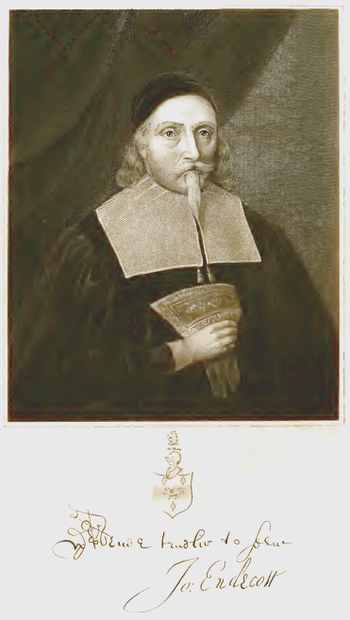
There is an original portrait of the Governor in possession of one
of the family, taken the year he died. By this we learn that his countenance
was open, energetic, and independent, possessing much
individuality of expression, and in perfect harmony with the character
of the man. According to the custom of the age, he wore
mustaches, and a tuft of hair upon his chin. The miniature likeness
which accompanies this Memoir was engraved from this portrait, and
is considered an excellent resemblance, and was presented by the
family to the New England Historic Genealogical Society, Boston,
at their solicitation.
Note. The Charter posesssed by Gov. Endecott, and which is now in the Salem Athenæum,
and the Charter possessed by Gov. Winthrop, and which is now in the State House,
Boston, appear to be duplicate original Charters, provided for in the Charter itself, and neither
of them copies. They are precisely alike in all respects—the same in phraseology and chirography,
and the same in dates. Each Governor was elected and commissioned by the same
Company, and by the same Colony, acted under the same Charter, with the same authority,
and each alike entitled to the official designation of Governor, whether he was elected Governor
by the Company in London, or by the Colony here, for both were elected Governor by each.
ORIGINAL COVENANT OF THE FIRST CHURCH IN SALEM. [18]
We Covenant with our Lord, and one with another; and we do bind
ourselves in the presence of God, to walk together in all his ways, according
as he is pleased to reveal himself unto us in his blessed word
of truth; and do explicitly, in the name and fear of God, profess and
protest to walk as followeth, through the power and grace of our Lord
Jesus Christ.
We avouch the Lord to be our God, and ourselves to be his people,
in the truth and simplicity of our spirits.
We give ourselves to the Lord Jesus Christ, and the word of his
grace, for the teaching, ruling, and sanctifying of us in matters of worship
and conversation, resolving to cleave unto him alone for life and
glory, and to reject all contrary ways, canons, and constitutions of men,
in his worship.
We promise to walk with our brethren, with all watchfulness and
tenderness, avoiding jealousies and suspicions, back-bitings, censurings,
provokings, secret risings of spirit against them; but in all offences to
follow the rule of our Lord Jesus, and to bear and forbear, give and forgive,
as he hath taught us.
In public or private, we will willingly do nothing to the offence of
the church; but will be willing to take advice for ourselves and ours, as
occasion shall be presented.
We will not in the congregation be forward, either to show our own
gifts and parts in speaking or scrupling, or there discover the weakness
or failings of our brethren; but attend an orderly call thereunto, knowing
how much the Lord may be dishonored, and his gospel and the
profession of it slighted, by our distempers and weaknesses in public.
We bind ourselves to study the advancement of the gospel in all
truth and peace, both in regard to those that are within or without; no
way slighting our sister churches, but using their counsel as need shall
be; not laying a stumbling-block before any, no, not the Indians, whose
good we desire to promote; and so to converse as we may avoid the
very appearance of evil.
We do hereby promise to carry ourselves in all lawful obedience to
those that are over us, in Church or Commonwealth, knowing how
well-pleasing it will be to the Lord, that they should have encouragement
in their places, by our not grieving their spirits through our irregularities.
We resolve to approve ourselves to the Lord in our particular callings,
shunning idleness as the bane of any state; nor will we deal hardly or
oppressingly with any, wherein we are the Lord's stewards.
Promising also unto our best ability to teach our children and servants
the knowledge of God, and of his will, that they may serve him
also; and all this not by any strength of our own, but by the Lord
Christ, whose blood we desire may sprinkle this our Covenant made
in His Name.
HERALDRY. — DEFINITION. — ORIGIN AND HISTORY. — BLAZONING, HISTORIFYING, AND MARSHALLING ARMS. — DIFFERENT KINDS OF ARMS. — PARTS OF A COAT OF ARMS.
In preparing this article we have consulted various writers on
the subject of Heraldry, and not only selected our thoughts from
theirs, but used their language when it appeared best adapted to
our object. For a more full account of Heraldry in all its branches,
we refer our readers to Guillim's Banner Displayed, Camden's
British Remains, Kent's Grammar of Heraldry, Edmonson's Complete
Body of Heraldry, Leigh's Accidence of Armorie, Playfair's
British Baronetage, Burke's Peerage and Baronetage, Noble's History
of the College of Arms, Lower's Curiosities of Heraldry,
Dallaway's Inquiries, Newton's Display of Heraldry, Broun's Baronetage,
Collins's Peerage of England, Betham's Baronetage of
England, and the various Encyclopædias.
Heraldry is the science of conventional distinctions impressed
on shields, banners, and other military accoutrements; or it is the
art of armory and blazoning, or the knowledge of what relates to
the bearing of arms, and the laws and regulations appertaining
thereto. Arms in heraldry are ensigns armorial or marks of honor
borne upon shields, banners, and coats of mail, in order to distinction.
The science of Heraldry consists particularly in the appropriation
of figurative representations, designed, by suitable emblems, to
exhibit the achievements of valor, the descent of hereditary honors,
and the distinctions appertaining to nobility.
The Degrees of Honor existing in England in 1597, were nine;
of which five were noble, as Gentleman, Esquire, Knight, Baron,
and Lord; and four were excellent, as Earl, Marquess, Duke, and
Prince.—The Degrees of Honor existing in the British nation in
1847 are eleven; namely, Gentleman, Esquire, Knight, Baron, Baronet,
Lord, Viscount, Earl, Marquess, Duke, and Prince.
Arms may belong to individuals, to families, or to countries.
Badges and emblems on shields and helms occurred in the earliest
times. In Numbers, (chap. i: 52,) the children of Israel are enjoined
to pitch their tents, "every man by his own camp and every
man by his own standard," with the ensigns of his father's house.
The Greek and Roman poets speak of paintings and devices on
shields and helmets. These symbols were, moreover, hereditary.
Thus Xenophon relates that the kings of the Medes bore a golden
eagle on their shields. Suetonius asserts that Domitian had a
golden beard for his coat of arms; and Tacitus says of the ancient
Germans, that they marked their shields with brilliant colors, and
that certain standards were borne before them in battle. Notwithstanding
these traces of armorial bearings in the ancient world, our
heraldry is no older than the tournaments. That armory first
became common and regulated by certain rules at these solemn
festivals, is corroborated by the following reasons. In the first place,
we find no tomb or monument with escutcheons, older than the
eleventh century. The most ancient monument of this kind is
said to be the bearings of a certain Varmond, count of Vasserburg,
in the church of St. Emmeran, at Ratisbon. The shield is coupé
of argent and sable; over it is a lion, with the words "Anno Domini
MX." On most of the other tombs, even of the eleventh century,
no arms are found; and the use of them seems to have first become
common in the twelfth century. The first pope who can be proved
to have had a coat of arms, is Boniface VIII., who filled the papal
see from 1294 to 1303. All the earlier papal arms are the fanciful
inventions of later flatterers. On coins, also, no armorial ensigns
are found till the thirteenth century. A second proof of our
assumed origin of coats of arms is the word blason, which denotes
the science of heraldry in French, English, Italian, and Spanish.
This word has most probably its origin in the German word blasen,
(to blow the horn;) for whenever a new knight appeared at a tournament,
the herald had to sound the trumpet, and, because all
appeared with close visors, to proclaim and explain the bearing of
the shield or coat of arms belonging to each. Because this was
performed by the herald, this knowledge was called heraldry; and
because, in doing so, he blew the trumpet, it was called blazoning
the arms. That this was a prevailing practice at tournaments, may
be proved from the poetry of the Troubadours of the twelfth and
thirteenth centuries. Thence it came, that those knights, whose
right to appear at tournaments had already been announced by
blazoning their arms, bore two trumpets on their crest. From the
Germans, this custom was transmitted to the French; for there is
no doubt, that tournaments were usual in Germany much earlier
than in France. But the French carried to far greater perfection
the tournament, and the blazon or heraldry connected with it, as
they did the whole system of chivalry. Since, moreover, the
French language prevailed at the court of the Norman kings in
England, pure French expressions have been preserved in British
heraldry. Thus the green tincture, (color,) in a coat of arms, is
termed vert, (though in French sinople, which originally denoted a
reddish brown;) bright red is termed gueules, probably with an allusion
to the bloody revenge of wild animals, which play so conspicuous
a part in heraldry; the divided shield is, moreover, called
coupé; and passant, regardant, dormant, couchant, &c., are used.
German heraldry, on the contrary, contains almost pure German
expressions. In a coat of arms, the helm is placed upon the
shield, and the latter is surrounded by the wreath. At a tournament,
the mantle of the knight, with the helm and shield, was suspended
in the lists. The colors or tinctures of the shields had their
foundation in the custom of the most ancient Germans, of giving
their shields various colors—a custom which received a tender
meaning in the tournaments of the middle ages; the knight, bound
to defend the honor of dames, and devote himself to their protection,
wearing their colors on his shield. By degrees, the partitions
or sections on shields came into use; for when, as often occurred,
a knight was the champion of several ladies, he bore several colors
on his shield, which had therefore to be divided into fields. When
the martial youth of almost all Europe left their homes, about the
end of the eleventh century, inspired with religious enthusiasm, to
conquer the Holy Land, the use of arms became still more general
and necessary. In order to distinguish the nations, armies, and
families, the princes and commanders chose their symbols, sometimes
in commemoration of the exploits and events of the campaign,
or of the dignity of the commander, and sometimes from
mere fancy or passing humor.
Blazoning is the methodical description of a bearing. In the
first place, the shield is described according to its tinctures, figures,
and partitions. The inferior parts of an escutcheon are then blazoned—the
helm, with its insignia, which are trumpet, wings, and
plumes, men and animals, or their members; then the wreath and
its tinctures; after which the coronet cap, &c.; finally the supporters,
the mantle, the device, and other secondary things. Such
terms for the color must be used as are agreeable to the station and
quality of the bearer. All persons below the degree of noble must
have their coats blazoned by colors and metals; noble men by
precious stones; and kings and princes by planets.
In emblazoning shields of arms, metals, colors, and furs are used
to depict the device, the technical terms of which are these;—of
metals, gold, called or, and silver, argent, only are employed;—of
colors, red, called gules, blue, azure, black, sable, green, vert, and
purple, purpure;—and of furs, principally the skin of the little
animal called ermine, and a combination of grey and white squirrel
skins, called vair.
In blazoning arms it is an established rule with heralds, that animals
are always to be interpreted in the best sense, that is, according
to their most noble and generous qualities, that the most honor
may redound to the bearers. Thus the fox, being reputed witty
and given to filching for his prey, if this be the charge of an
escutcheon, we are to conceive the quality represented to be his
wit and cunning, and not his theft.
All savage beasts are to be figured in their fiercest action: as a
lion erected, his mouth wide open, his claws extended; and thus
formed he is said to be rampant. A leopard or wolf is to be portrayed
going as it were pedetentim, which form of action suits their
natural disposition, and is called passant. The gentler kinds are to
be set forth in their noblest and most advantageous action, as a
horse running or vaulting, a greyhound coursing, a deer tripping, a
lamb going with smooth and easy pace.
Every animal is to be represented as moving or looking to
the right side of the shield; and it is a general rule, that the right
foot be placed foremost, because the right side is reckoned the beginning
of motion. The upper part is nobler than the lower, and
things that are constrained either to look up or down, ought rather to
be designed looking upwards. We observe however that notwithstanding
such precepts of Guillim and other masters of armory,
there are lions passant, couchant, dormant, as well as rampant, and
most animals in arms look down and not up. Birds are esteemed
a more honorable bearing than fish, and wild and ravenous birds
than tame ones. When their bills and feet are of a different color
from the rest, they are said to be membered. Birds of prey are
more properly said to be armed. In the blazoning of fowls much
exercised in flight, if the wings be not displayed, they are said to
be borne close, for example, he beareth an eagle, a hawk, or a
swallow, close. Fish are borne different ways, upright, embowed,
extended, endorsed, surmounted of each other, fretted, triangled.
Those borne feeding should be termed devouring. Those borne
directly upright are termed Hauriant, and those borne traverse the
escutcheon, naiant.
To historify, in heraldry, is to explain the history of a coat of
arms, its origin, and the changes it has undergone. If the herald
is to explain a bearing historically, he must show that this figure is
the proper emblem of the family or country. He derives, for
instance, from historical sources, the proof that the double-headed
eagle of the Roman king was first introduced in the beginning of
the fourteenth century, under Albert I., and that previously, from
the time of Otho II., the royal eagle had but one head; that the
three leopards in the English arms were first derived in 1127, under
Henry I., from the Norman house.—The marshalling of arms consists
in the preparation of new escutcheons. In this matter, the
herald either follows the orders of a sovereign, or he invents the
idea, and makes the plan of the escutcheon according to his own
judgment, or he composes a new escutcheon from several coats of
arms.
In heraldic science, arms are distinguished by different names,
to denote the causes of their being borne, such as arms of dominion,
of pretension, of concession, of community, of patronage, of family,
of alliance, of succession, and of assumption. Those of dominion
and sovereignty are those which emperors, kings, and sovereign
states constantly bear, being, as it were, annexed to the territories,
kingdoms, and provinces they possess. Thus there are the arms of
England, of France, of the United States, &c. Arms of pretension
are those of kingdoms, provinces, or territories, to which a prince or
lord has some claim, and which he adds to his own, although such
kingdoms or territories are possessed by another prince or lord.
Arms of concession, or augmentation of honor, are entire arms, as the
fortress of Gibraltar on the escutcheon of Lord Heathfield. Arms of
community belong to bishoprics, cities, companies, &c. Arms of
patronage, to governors of provinces, lords of manors, &c. Arms of
family are the property of individuals; and it is criminal in any persons
not of the family to assume them. Arms of alliance show the
union of families and individuals. Arms of succession are taken up,
by those who inherit certain estates, manors, &c., either by will,
entail, or donation, and which they impale or quarter with their
own. This multiplies the titles of some families from necessity,
and not from ostentation. Arms of assumption, or assumptive arms,
are taken up by the caprice or fancy of persons who assume them
without a legal title. They are also such as a man of his proper
right may assume, with the approbation of his sovereign and of the
king of arms.
The parts of arms are the escutcheon, the tinctures, charges, and
ornaments. Heralds distinguish nine different points in escutcheons,
in order to determine exactly the positions of the bearing they
are charged with, as in the figure.
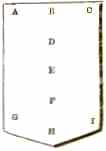
A, dexter chief; B, precise middle chief; C,
sinister chief; D, honor point; E, fess point;
F, nombril point; G, dexter base; H, precise
middle base; I, sinister base. The tinctures
mean the variable hue common both to the
shields and their bearings; and there are seven
tinctures—yellow or gold, expressed by dots;
white or argent; red, by perpendicular lines;
blue or azure, by horizontal lines; purple, by diagonal
lines from right to left; green, by the
same from left to right; black by horizontal and
perpendicular lines crossing; and orange and blood colors are expressed
by diagonal lines crossing each other. The charges are
the emblems occupying the field of the escutcheon, or any part of
it. All charges are distinguished by the name of honorable ordinaries,
sub-ordinaries, and common charges. Honorable ordinaries,
the principal charges in heraldry, are made of lines only, which,
according to their disposition and form, receive different names.
Sub-ordinaries are ancient heraldic figures frequently used in coats
of arms, and which are distinguished by terms appropriated to each
of them. Common charges are composed of natural, artificial,
and even imaginary things, such as stars, animals, trees, ships, &c.
The ornaments that accompany or surround escutcheons were
introduced to denote the birth, dignity, or office of the person to
whom the arms appertain. They are used both by clergy and
laity. Those most in use are of ten sorts; namely, crowns, coronets,
mitres, helmets, mantlings, chapeaux, wreaths, crests, scrolls,
and supporters. The crest is the highest part of the ornaments of
a coat of arms. It is called crest from the Latin word crista, which
signifies a comb or tuft, such as many birds have upon their heads,
as the peacock, &c. Crests were anciently marks of great honor,
because they were worn only by heroes of great valor and high
rank, that they might be the better distinguished in an engagement,
and thereby rally their men if dispersed. They are at present considered
as mere ornaments. The scroll is an ornament usually
placed below the shield and supporters, containing a motto or
sentence, alluding to the bearing or to the bearer's name.
Explanation of the Plate on the following page, taken from Brande's Dictionary of
Science, Literature, and Art.
I. Lines.
1. Horizontal or straight. 2. Angled. 3. Bevelled. 4. Escartele. 5. Nowy or Franche.
6. Arched or enarched. 7. Double arched. 8. Wavy or undee. 9. Invected. 10. Engrailed.
11. Battled-embattled, or crenellee. 12. Battled-embattled. 13. Nebuly. 14. Potent. 15.
Indented. 16. Dancettec. 17. Dove-tailed. 18. Urdee. 19. Rayonnee, or radiant.
II. Points of the Escutcheon, Colors, and Furs.
20. Escutcheon, points of. 21. Or. 22. Argent. 23. Gules. 24. Azure. 25. Sable. 26.
Vert. 27. Purpure. 28. Tenne. 29. Sanguine. 30. Ermine. 31. Ermines. 32. Erminois.
33. Peau. 34. Vair. 35. Varry cuppy.
III. Differences, or Filiations.
36. (First son) Label of three points. 37. (Second) Crescent. 38. (Third) Mullet. 39.
(Fourth) Martlet. 40. (Fifth) Annulet. 41. (Sixth) Fleur-de-lis.
IV. Ordinaries, &c.
42. Chief. 43. Pale (between two annulets.) 44. Pallet. 45. Party per pale. 46. Border.
47. Bars. 48. Fess. 49. Bend. 50. Bend sinister. 51. Border. 52. Chevron. 53. Cross.
54. Cross of St. John of Jerusalem, or Malta. 55. Cross patonce. 56. Cross moline. 57.
Cross of St. Andrew. 58. Crosses humettee. 59. Cross moline in saltier. 60. Cross bottonee
or trefoil. 61. Cross crosslet, fitchee. 62. Cross flory. 63. Cross mascle. 64. Cross
fitchee. 65. Lozenge, fleury.
V. Miscellaneous Bearings.
66. Lion, statant guardant. 67. Passant. 68. Passant guardant. 69. Rampant. 70. Rampant
guardant. 71. Rampant reguardant. 72. Sejant. 73. Couchant. 74. Stag at gaze. 75.
Stag's head caboshed. 76. Tiger, heraldic. 77. Dragon. 78. Griffin. 79. Dragon's head
erased. 80. Wivern. 81. Eagle displayed, with two heads. 82. Boar's head erased. 83.
Water budgets. 84. Snake, bowed debruised. 85. Quatrefoil. 86. Trefoils. 87. Fleur-de-lis.
88. Clarion, or rest. 89. Mullets.
VI. Crowns, Coronets, &c.
90. Crown of England. 91. Coronet of the Prince of Wales. 92. Coronet of a duke. 93.
Marquis. 94. Earl. 95. Viscount. 96. Baron. 97. Mitre of a bishop. 98. Eastern, or antique
coronet. 99. Celestial crown. 100. Crown of Edward I. 101. Mortier, or cap of state.
102. Chapeau, or cap of maintenance. 103. Crown of France. 104. Cardinal's hat. 105.
Crown triple, or tiara of the pope.
RATIFICATION OF THE FEDERAL CONSTITUTION BY MASSACHUSETTS. — YEAS. — NAYS.
[The following account of the Ratification of the Constitution of the United States by
the Convention of the Commonwealth of Massachusetts convened at Boston on the 9th day
of January, 1788, and continued until the 7th of February, was printed in the Massachusetts
Gazette of Feb. 8th, 1788, published by John Wincoll Allen of Boston. It is here inserted
as a historical document of those times that tried men's souls, which will, we think, be read
with deep interest by those of the present generation. In this way, too, it will be preserved,
as it should be, for posterity. It is printed as we find it in the Gazette, with only the addition
of the names of the towns, in which the individuals of the Convention resided. Of the Convention,
John Hancock was President, William Cushing, Vice-President, and George Richards
Minot, Secretary.]
With the highest satisfaction we announce to the publick, that the
Convention of this commonwealth, on Wednesday last, at five o'clock,
P. M. ASSENTED TO the CONSTITUTION, proposed by the late
federal Convention. On this pleasing event, WE DO HEARTILY
congratulate the publick, and do express our sincere wishes, that the
general joy which it has diffused through all ranks of citizens, may be
an auspicious omen of the superiour advantages which will undoubtedly
result from the establishment of such a federal government as
this constitution provides.
Immediately on the news of this joyful decision being announced,
the bells in every publick building in this metropolis began to ring, and
continued to sound the glad tydings for two hours. At sun set the
Convention adjourned: after which, a multitude of people, from all
quarters, moved into State-Street, where they manifested the joy they
felt from this event, by incessant tokens of approbation, and loud
huzzas. The bells of the North church continued to chime harmonious
peals of gratulations the whole night, and part of the next day.
Illuminations were made and other insignia of joy exhibited.
The yeas and nays, on the question of adoption, being taken, agreeably
to the orders of the day, were as follows, viz.
His Excellency JOHN HANCOCK, Esq. President, Hon. James Bowdoin, hon.
Sam. Adams, hon. William Phillips, hon. Caleb Davis, Charles Jarvis, esq. John C.
Jones, esq. John Winthrop, esq. Thomas Dawes, jun. esq. rev. Samuel Stillman,
Thomas Russell, esq. Christopher Gore, esq. Boston, hon. William Heath, hon. Increase
Sumner, Roxbury, James Bowdoin, jun. esq. Ebenezer Wales, esq. Dorchester, rev.
Nathaniel Robbins, Milton, hon. Richard Cranch, rev. Anthony Wibird, Braintree, hon.
Cotton Tufts, Weymouth, hon. Benjamin Lincoln, rev. David Shute, Hingham, rev. Joseph
Jackson, Brookline, rev. Thomas Thacher, Fisher Ames, esq. Dedham, col. William
M'Intosh, Needham, capt. John Baxter, jun. Medfield, hon. Elijah Dunbar, esq. Stoughton,
mr. Thomas Mann, Wrentham, mr. George Payson, Walpole, hon. J. Fisher, Franklin,
mr. Thomas Jones, Hull, rev. Phillips Payson, Chelsea, mr. Ebenezer Warren, Foxborough,
Richard Manning, esq. Edward Pulling, esq. mr. William Gray, jun. mr. Francis
Cabot, Salem, hon. Michael Farley, J. Choate, esq. Daniel Noyes, esq. col. Jonathan
Cogswell, Ipswich, hon. Tristram Dalton, Enoch Sawyer, esq. E. March, esq. Newbury,
hon. Rufus King, esq. hon. Benjamin Greenleaf, esq. Theophilus Parsons, esq. hon.
Jonathan Titcomb, Newburyport, hon. G. Cabot, mr. Joseph Wood, capt. Israel Thorndike,
Beverly, Isaac Mansfield, esq. Jonathan Glover, esq. hon. Azor Orne, John Glover,
esq. Marblehead, Daniel Rogers, esq. John Low, esq. capt. W. Pearson, Gloucester, John
Carnes, esq. capt. John Burnham, Lynn and Lynnfield, mr. William Symmes, jun. Andover,
Bailey Bartlett, esq. capt. Nathaniel Marsh, Haverhill, mr. Israel Clark, Topsfield,
dr. Samuel Nye, mr. Enoch Jackman, Salisbury, capt. Benjamin Lurvey, mr. Willis
Patten, Amesbury, Daniel Thurston, esq. Bradford, mr. Jacob Herrick, Wenham, mr.
Simeon Miller, Manchester, hon. Francis Dana, esq. Stephen Dana, esq. Cambridge, hon.
Nathaniel Gorham, esq. Charlestown, hon. Joseph Hosmer, Concord, hon. Abraham
Fuller, Newtown, capt. Lawson Buckminster, Framingham, Benjamin Brown, esq. Lexington,
Daniel Whitney, esq. Sherburne, capt. Asahel Wheeler, Sudbury, capt. Benjamin
Blaney, Malden, capt. Abraham Bigelow, Weston, maj. gen. John Brooks, Medford, dr.
Charles Whitman, Stow, Leonard Williams, esq. Waltham, hon. J. B. Varnum, Dracut,
hon. J. Pitts, Dunstable, hon. E. Brooks, Lincoln, W. Pynchon, esq. Springfield, hon. C.
Strong, mr. Benjamin Sheldon, Northampton and Easthampton, capt. Lemuel Pomeroy,
Southampton, brig. gen. Elisha Porter, Hadley, hon. Noah Goodman, South Hadley, hon.
J. Hastings, Hatfield, John Ingersol, esq. Westfield, mr. Ebenezer James, Northfield, Abner
Morgan, esq. Brimfield, capt. David Shepard, Chester, mr. Jesse Reed, Charlemont, Nahum
Eager, esq. Worthington, col. Benjamin Bonney, Chesterfield, major Thomas J. Douglass,
Northwick, mr. Aaron Fisher, Westhampton, mr. Edmund Lazell, Cummington and
Plainfield, capt. Thomas Maxwell, Buckland, mr. Elihu Colton, Longmeadow, Joshua
Thomas, esq. mr. Thomas Davis, mr. John Davis, Plymouth, hon. William Cushing,
hon. Nathan Cushing, hon. Charles Turner, Scituate, hon. George Partridge, Duxbury,
rev. William Shaw, Marshfield, Daniel Howard, esq. mr. Hezekiah Hooper, capt. Elisha
Mitchel, mr. Daniel Howard, jun. Bridgewater, rev. Isaac Backus, Isaac Thompson, esq.
Middleboro', capt. John Turner, mr. Josiah Smith, Pembroke, William Sever, jun. esq.
Kingston, hon. Joseph Cushing, Hanover, rev. Samuel Niles, Abington, mr. Freeman
Waterman, Halifax, col. Israel Fearing, Wareham, Shearjashaub Bourn, esq. Barnstable,
David Thacher, esq. capt. Jonathan Howes, Yarmouth, hon. Solomon Freeman,
capt. Kimball Clark, Harwich, rev. Levi Whitman, Wellfleet, capt. Joseph Palmer,
Falmouth, James Williams, esq. Taunton, hon. Elisha May, capt. Moses Willmarth,
Attleboro', col. Sylvester Richmond, hon. William Baylies, Dighton, hon. Thomas Durfee,
Israel Washburne, esq. Freetown, hon. Walter Spooner, rev. Samuel West, New
Bedford, mr. William Almy, Westport, Nathaniel Barrel, esq. York, rev. Moses Hemmenway,
hon. Nathaniel Wells, Wells, Thomas Cutts, esq. Pepperelboro', Jacob Bradbury,
esq. Buxton, capt. John Low, Coxhall, mr. William Mayhew, Edgartown, mr. Cornelius
Dunham, Tisbury, hon. John Sprague, Lancaster, capt. Seth Newton, Southboro',
hon. Samuel Baker, Bolton, major David Wilder, Leominster, mr. Matthew Patrick,
Western, mr. Josiah Goddard, Athol, capt. Ephraim Wilder, Sterling, John K. Smith, esq.
Falmouth, mr. John Fox, capt. Joseph M'Lellan, Portland, David Mitchell, esq. Samuel
Merrill, esq. North Yarmouth, William Thompson, esq. Scarboro', capt. John Dunlap,
Brunswick, capt. Isaac Snow, Harpswell, mr. Joshua Dyer, Cape Elisabeth, rev. Samuel
Perley, Gray, Thomas Rice, esq. mr. David Sylvester, Pownalboro', mr. Nathaniel
Wyman, Georgetown, mr. David Gilmore, Woolwich, William M'Cobb, esq. Boothbay,
capt. Samuel Grant, Vassalboro', Moses Davis, esq. Edgecomb, David Fales, esq. Thomaston,
Dummer Sewall, esq. Bath, John Ashley, jun. esq. Sheffield and Mount Washington,
hon. Elijah Dwight, Great Barrington, hon. T. Sedgwick, Stockbridge, hon. Jonathan
Smith, Lanesboro', hon. T. J. Skinner, Williamstown, mr. Elisha Carpenter, Becket, capt.
D. Taylor, New Marlboro'. Total Yeas 187.
Capt. Jedediah Southworth, Stoughton, mr. Nathan Comstock, Wrentham, mr. Benjamin
Randall, Sharon, mr. M. Richardson, jun. Medway, rev. Noah Alden, Bellingham,
hon. Israel Hutchinson, Danvers, capt. Peter Osgood, jun. dr. Thomas Kittredge, Andover,
capt. Thomas Mighill, Rowley, hon. A. Wood, Boxford, capt. Ebenezer Carlton,
Methuen, dr. Marshall Spring, Watertown, capt. Timothy Winn, Woburn, mr. William
Flint, mr. Peter Emerson, Reading, mr. Jonas Morse, major Benjamin Sawin, Marlboro',
William Thompson, esq. Billerica, col. Benjamin Ely, capt. John Williston, West
Springfield, capt. Phinehas Stebbins, Wilbraham, Mr. Daniel Cooley, Amherst, Mr. Benjamin
Eastman, Granby, Mr. Josiah Allis, Whately, mr. William Bodman, Williamsburg,
mr. Samuel Field, Deerfield, mr. Moses Bascom, Greenfield, mr. Robert Wilson, Shelburne,
capt. Consider Arms, mr. Malachi Maynard, Conway, capt. Zacheus Crocker,
Sunderland, mr. Moses Severance, Montague, capt. Asa Fisk, South Brimfield, mr. Phinehas
Merrick, Monson, mr. Adam Clark, Pelham, capt. Nathaniel Whitcomb, Greenwich,
mr. Timothy Blair, Blanford, mr. Aaron Mirrick, Palmer, mr. John Hamilton, Mr. Clark
Cooley, Granville, mr. John Chamberlain, New Salem, mr. Justus Dwight, Belchertown,
mr. Samuel Eddy, Colrain, mr. Isaac Pepper, Ware, capt. John Goldsbury, Warwick
and Orange, capt. Agrippa Wells, Bernardston, mr. Ephraim Williams, Ashfield, mr. Asa
Powers, Shutesbury, capt. Silas Fowler, Southwick, mr. John Jennings, Ludlow, mr.
Jonathan Hubbard, Leverett, mr. Benjamin Thomas, mr. Isaac Soul, Middleboro', mr.
Nathaniel Hammond, mr. Abraham Holmes, Rochester, capt. Francis Shurtliff, mr.
Elisha Bisbee, jun. Plympton, dr. Thomas Smith, mr. Thomas Nye, Sandwich, col.
Nathaniel Leonard, mr. Aaron Pratt, Taunton, capt. Phanuel Bishop, major Frederick
Drown, William Windsor, esq. Rehoboth, mr. Christopher Mason, mr. David Brown,
Swansey, hon. Holder Slocum, mr. Melatiah Hathway, Dartmouth, hon. Abraham White,
Norton, capt. Ebenezer Tisdell, Easton, capt. John Pratt, Mansfield, capt. Esaias Preble,
York, mr. Mark Adams, mr. James Neal, Kittery, capt. Elijah Thayer, dr. Nathaniel Low,
mr. Richard Foxwell Cutts, Berwick, mr. Thomas M. Wentworth, Lebanon, major
Samuel Nasson, Sanford, mr. Moses Ames, Fryeburg, Mr. Jeremiah Emery, Shapleigh,
rev. Pelatiah Tingley, Waterboro', mr. David Bigelow, Worcester, Edward Thompson,
esq. Mendon, major John Minot, Chelmsford, capt. Gilbert Dench, Hopkinton, mr. Jonathan
Keep, Westford, dr. Benjamin Morse, Joseph Sheple, esq. Groton, mr. Obadiah
Sawtell, Shirley, mr. Daniel Fisk, Pepperell, capt. Daniel Adams, Townsend, capt. John
Webber, Bedford, capt. Sta. Chamberlain, Holliston, mr. Asa Parlin, Acton and Carlisle,
capt. J. Harnden, Wilmington, mr. Newman Scarlet, Tewksbury, mr. Samuel Reed,
Littleton, mr. Benjamin Adams, Ashby, major Hezekiah Bread, Natick, capt. Jonathan
Green, Stoneham, mr. Phinehas Gleason, East Sudbury, mr. Daniel Forbes, mr. N. Jenks,
Brookfield, capt. Jeremiah Learned, Oxford, mr. Caleb Curtis, Mr. Ezra M'Intier, Charlton,
mr. David Harwood, hon. Amos Singletary, Sutton, col. Samuel Denny, Leicester,
mr. James Hathua, Spencer, mr. Asaph Shermon, Rutland, mr. Abraham Smith, Paxton,
capt. Jonathan Bullard, Oakham, capt. John Black, Barre, capt. John Woods, Hubbardston,
capt. Benjamin Joslyn, New Braintree, capt. Stephen Maynard, Westboro', mr. Artemas
Brigham, Northboro', capt. Isaac Harrington, Shrewsbury, capt. John Fuller, Lunenburg,
mr. Daniel Putnam, Fitchburg, dr. Samuel Willard, Uxbridge, Josiah Whitney, esq.
Harvard, mr. Jonathan Day, Dudley, capt. Thomas M. Baker, Upton, capt. Timothy
Parker, Sturbridge, major Martin Kingsley, Hardwick, rev. Joseph Davis, Holden, hon.
John Taylor, Douglass, dr. Joseph Wood, Grafton, Jonathan Grant, esq. capt. Samuel
Peckham, Petersham, John Frye, esq. Royalston, mr. Stephen Holden, Westminster, capt.
Joel Fletcher, Templeton, mr. Timothy Fuller, Princeton, mr. Jacob Willard, Ashburnham,
mr. Moses Hale, Winchendon, capt. Josiah Wood, Northbridge, mr. Joseph Stone, Ward,
mr. David Stearns, Milford, mr. Jonas Temple, Boylston, Daniel Ilsley, esq. Falmouth,
mr. S. Longfellow, jun. Gorham, William Widgery, New Gloucester, capt. David Murry,
New Castle, hon. Samuel Thompson, Topsham, mr. Jonah Crosby, Winslow, mr. Zacheus
Beal, Bowdoinham, William Jones, esq. Bristol, capt. James Carr, Hallowell, mr.
Joshua Bean, Winthrop, mr. Valentine Rathbun, Pittsfield, mr. Comstock Betts, Richmond,
mr. Lemuel Collins, Lenox, capt. Jeremiah Pierce, Adams, Ephraim Fitch, esq.
Egremont, major Thomas Lusk, West Stockbridge, mr. John Hurlbert, Alford, capt. Ezekiel
Herrick, Tyrningham, mr. Joshua Lawton, Loudon, mr. Timothy Mason, Windsor,
Ebenezer Pierce, esq. Partridgefield, mr. David Vaughan, Hancock, capt. Jesse Bradley,
Lee, mr. Zenas Noble, Washington, mr. John Picket, jun. Sandisfield. Total Nays 168.
The open, manly and honourable conduct of the gentlemen who
composed the minority, in the great question on Wednesday, taken in
the honourable convention, was very different from the turbulent
opposers of the constitution in Pennsylvania, who, not content with
their declamatory and odious protest against its adoption, are now
endeavouring to involve their country in all the horrours of a civil
war, by exciting tumult and insurrection. On the vote of adoption
being declared,
Honourable mr. White rose, and said, that notwithstanding he had
opposed the adoption of the constitution, upon the idea that it would
endanger the liberties of his country, yet, as a majority had seen fit to
adopt it, he should use his utmost exertions to induce his constituents
to live in peace under, and cheerfully submit to it.
He was followed by mr. Widgery, who said, that he should return
to his constituents, and inform them, that he had opposed the adoption
of this constitution, but that he had been overruled, and that he had
been carried by a majority of wise and understanding men: that he
should endeavour to sow the seeds of union and peace among the people
he represented—and that he hoped, and believed, that no person
would wish for, or suggest the measure of a PROTEST; for, said he,
we must consider that this body is as full a representation of the
people, as can be conceived.—— After expressing his thanks for the
civility which the inhabitants of this town have shewn to the convention,
and declaring, as his opinion, that they had not in the least influenced
the decision; he concluded by saying he should support, as
much as in him lay, the constitution, and believed, as this state had
adopted it, not only 9, but the whole 13, would come into the measure.
General Whitney said, that though he had been opposed to the
constitution, he should support it as much as if he had voted for it.
Mr. Cooley, (Amherst) said, that he endeavoured to govern himself
by the principles of reason, that he was directed to vote against the
adoption of the constitution, and that in so doing, he had not only
complied with his direction, but had acted according to the dictates of
his own conscience; but that as it has been agreed to by a majority,
he should endeavour to convince his constituents of the propriety of its
adoption.
Doctor Taylor, also said, he had uniformly opposed the constitution,
that he found himself fairly beat, and expressed his determination to
go home, and endeavour to infuse a spirit of harmony and love, among
the people.
Other gentlemen expressed their inclination to speak, but it growing
late, the convention adjourned to Thursday morning, at ten o'clock.
Let this be told to the honour of Massachusetts; to the reputation of her
citizens, as men willing to acquiesce in that republican principle, of submitting
to the decision of a majority.
Yesterday, A. M. the Convention met, according to adjournment,
when a vote was passed for proceeding in procession to the state-house,
and there to declare the ratification of the FEDERAL CONSTITUTION,
which that honourable body, on Wednesday last, by a
majority of NINETEEN assented to, in behalf of the commonwealth
of Massachusetts. About 12 o'clock, the procession moved from their
place of session, preceded by the honourable vice-president of the
Convention. His excellency the president being seated in an elegant
vehicle, was drawn by THIRTEEN patriotick and publick spirited
MECHANICKS, who thus expressed their love and respect for a man
who ever loved and respected his country.
The procession having arrived at the state-house, entered the senate-chamber,
from which his excellency the president, the vice-president,
secretary, high-sheriff of the county of Suffolk, and other respectable
characters, went out upon the balcony of the state-house, from whence
his excellency the president addressed the multitude who had assembled
below, in a short speech, preparatory to what they were about to
hear declared. The high-sheriff then declared the federal constitution
adopted and ratified by the Convention of the commonwealth of Massachusetts.
After which the whole assembly testified their approbation by the
loudest huzzas.
An elegant repast being provided for the occasion in the senate-chamber,
the Convention, and a great number of other gentlemen,
partook thereof, and exhibited such marks of satisfaction, as fully
evinced, that this joyful event would tend to give vigour and energy
to our future continental administrations. After dinner the following
toasts were drank, viz.
1. His excellency the president and convention of Massachusetts.
2. The president and members of the late continental convention.
3. The states that have adopted the federal constitution.
4. A speedy accession to the union by those states who are yet to
deliberate upon the proposed constitution.
5. May the same candour, and liberality, which has so conspicuously
distinguished the minority of Massachusetts, prevail thro' every state
in the union.
6. May the United States of America be as distinguished for their
increase in agriculture, arts and manufactures, as they are for their
attachment to justice and the liberties of mankind.
7. The great and magnanimous ally of the United States of America—his
most Christian majesty.
8. The United Netherlands.
9. May the States of America be the asylum of every distressed son
of liberty, throughout the world.
10. May the flag of American commerce be displayed in every
quarter of the globe.
11. May the landholders of America soon experience the happy
effects intended by the proposed constitution.
12. May the nations of the world, who would be our rivals in trade,
soon find their disappointment in the energy of our councils.
13. May peace, liberty, and safety, be the perpetual birthright of an
American.
It seems that the joy which the adoption of the proposed constitution
has diffused, is not only general, but sincere and grateful.—The
rising sun of yesterday's morn, by its brightness and refulgent beams,
seemed to break forth, from the dusky horizon, with uncommon grandeur,
partaking, as it were, of the joy in which an event so propitious
immersed the souls of the people. The bells of all the churches, &c. in
town, began ringing at early dawn, and continued, most of them without
intermission, thro' the day, and part of last evening.
The hardy sons of Neptune, seemed not to be insensible of the
importance of this great event; for having procured a boat, which they
fixed on a sled, they continued to draw it through the town till near
the close of the day, frequently huzzaing, and loudly exulting in the
anticipation of reviving and flourishing commerce. In the boat was
displayed the flag of the United States, and musick, which kept continually
playing.
In a cart, drawn by five horses, the British flag was displayed, and
insulted by numbers placed in the cart, armed with muskets, who
repeatedly discharged the contents of them through the tattered remnant,
in contempt of that faithless nation, whose exertions have been
unremitted since the peace, to cramp our commerce and obstruct all
our nautical proceedings.
Repeated marks of joy were exhibited during the course of the day
by the lovers and well wishers of our country, but we believe none
will exceed the exhibition which is to take place this day, as will
appear by the following
NOTICE
TO THE TRADESMEN.
THE COMMITTEE of MECHANICKS appointed at their meeting
the 7th. ult. present their compliments to the several TRADESMEN,
MECHANICKS, and ARTIZANS of every description in the
town of Boston, and request their attendance at Faneuil Hall, this
morning, at NINE o'clock, in order to form and proceed in GRAND
PROCESSION therefrom, to testify their approbation of the ratification
of the Federal Constitution, by the Convention of this commonwealth
the 6th instant.
They recommend that the procession be formed as follows—First,
a plough, drawn by a horse, with husbandmen carrying proper utensils—Then
the tradesmen, &c. of the town, each with some tool, decorated;
to proceed by trades; each trade with one person at its head.
With the ship-builders, &c. will be a boat, drawn by horses, properly
manned. They request that the procession may be as full as possible;
that the several drummers, fifers, and other musicians in the town, will
join the procession, with their instruments.
The rout of the procession will be mentioned at the Hall.
Boston, February 7, 1788.
COMPLETE LIST OF CONGREGATIONAL MINISTERS IN THE EASTERN PART OF ROCKINGHAM COUNTY, NEW HAMPSHIRE, FROM ITS SETTLEMENT TO THE PRESENT TIME; TOGETHER WITH NOTES ON THE MINISTERS AND CHURCHES.
BY THE REV. JONATHAN FRENCH OF NORTH HAMPTON.
(Continued from page 157.)
|
| Towns. | Ministers. | Native Place. | Born. | Graduated. | Settled. | Dismissed
or died. |
|
| Exeter | Daniel Rogers | Ipswich, Ms. | | 1707 | Harv., 1725 | Aug. | 31, 1748 | d. Dec. | 9, 1785 |
| A New Church was formed in 1744. | Joseph Brown | Chester, England | Feb. | 8, 1762 | | | 1792 | dism. | 1797 |
| A New Church was formed in 1813. | Isaac Hurd | Charlestown, Ms. | Dec. | 7, 1785 | Harv., 1806 | Sept. | 11, 1817 | |
| Gosport | Joseph Hull, s.s. | England | | | | |
| John Brock, s.s. | Shadbrook, Eng. | | 1620 | Harv., 1646 | | d. June | 18, 1668 |
| Samuel Belcher, s.s. | Ipswich, Ms. | | | Harv., 1659 | | |
| John Tucke | Hampton | Aug. | 23, 1702 | Harv., 1723 | July | 26, 1732 | Aug. | 12, 1773 |
| Josiah Stevens, s.s. | Killingworth, Ct. | | 1740 | | | July | 2, 1804 |
| Samuel Sewall, s.s. | Bath, Me. | | | | | | March | 16, 1826 |
| Origen Smith, s.s. | | | | | |
| A. Plumer, s.s. | | | | | |
| Greenland | William Allen | Boston, Ms. | | 1676 | Harv., 1703 | July | 15, 1707 | Sept. | 8, 1760 |
| Samuel Macclintock, D.D. | Medford, Ms. | May | 1, 1732 | Coll.N.J., 1751 | Nov. | 3, 1756 | April | 27, 1804 |
| James A. Neal | Londonderry, N. H. | | 1774 | —— —— | May | 22, 1807 | July | 18, 1808 |
| Ephraim Abbot | New Castle, Me. | | 1779 | Harv., 1806 | Oct. | 27, 1813 | Oct. | 28, 1828 |
| Samuel W. Clark | Hancock, N. H. | Dec. | 15, 1795 | Dart., 1823 | Aug. | 5, 1829 | |
NOTES.
Exeter. "Exeter New Church," afterwards called "The Second Church of
Christ in Exeter."[19] A considerable number of the members of the First Church
seceded, and "embodied into a New Church, on a day of Fasting and Prayer,
June 7, 1744." There is an error in several publications, giving 1748 as the
date of the formation of that church. This error is found on the monumental
stone of Rev. Daniel Rogers, in the graveyard, in Exeter. It is not strange that,
in so long an inscription, there should have been, through inadvertency, an
omission, by the engraver, or in his copy, of the word installed, immediately
after the name. The words, Pastor of a church gathered in Exeter, should have
been marked by a parenthesis. The inscription on the gravestone was copied
by Alden, into his Collections, and thus currency has been, unintentionally,
given to the error. Original documents show the facts in the case.
The causes of the secession, which issued in the establishment of a New
Church in Exeter, were of a religious nature, but the presentation of them does
not come within the scope of this work, and besides, we have not space for their
discussion.
The Rev. Daniel Rogers was born in Ipswich, Ms., in 1707, and graduated H.
C. 1725. He received ordination, without a pastoral charge, by a council, which
met at York, July 13, 1742. The ministers of the council were Rev. Messrs.
Jeremiah Wise of Berwick, Me.; Nicholas Gilman of Durham, N. H.; John
Rogers of Kittery, (now Eliot,) Me.; and Samuel Moody of York, Me. Rev.
Daniel Rogers "had been many years a tutor in Harvard College, was a pious
faithful minister of Jesus Christ, and a worthy son of Rev. John Rogers, pastor
of the first church in Ipswich, who died, Dec. 28, 1745, in his 80th year. He
was a son of John Rogers of the same place, a physician, and preacher of
God's word, and President of Harvard College, who died, July 2, 1684, aged
54 years. He was eldest son of the Rev. Nathaniel Rogers, who came from
England, in 1636, settled at Ipswich, colleague pastor with the Rev. Nathaniel
Ward, and died, July 2, 1655, aged 57 years. He was son of the Rev. John
Rogers, a famous minister of God's word at Dedham, in England, who died Oct.
18, 1639, aged 67 years. He was grandson of John Rogers of London, Prebendary
of St Paul's, Vicar of St. Sepulchre's, and Reader of Divinity, who was
burnt at Smithfield, Feb. 14, 1555, first martyr in Queen Mary's reign." [Monumental
Stone; Alden's Epitaphs.] Rev. Daniel Rogers died, Dec. 9, 1785, aged
79. When the Covenant of the 2nd church was adopted, it was signed by 30
males and 11 females. During Mr. Rogers' ministry, 22 males and 39 females
were added. It is well known, that Mr. Whitefield preached a few times at
Exeter. During the last week in September, 1770, he preached four times in
Portsmouth. On Saturday morning he rode to Exeter, and preached to a large
concourse of people, assembled in the open air. It was his last sermon. In
the afternoon, he rode to Newburyport, where he died the next morning, on the
30th of September. He was interred on the 2nd of October. Of his pall bearers
were Rev. Dr. Haven of Portsmouth, and Rev. Daniel Rogers of Exeter.
"When the corpse was placed at the foot of the pulpit close to the vault, the
Rev. Daniel Rogers made a very affecting prayer, and openly confessed that
under God, he owed his conversion to that man of God whose precious remains
now lay before them. Then he cried out, O my father, my father! Then
stopped and wept, as though his heart would break; and the people weeping
all through the place. Then he recovered, and finished his prayer and sat down
and wept." [Dr. Gillie's Memoirs of Whitefield.]
The Rev. Joseph Brown was educated at Lady Huntingdon's Seminary, and
was settled in the ministry at Epping, Essex, England, until he came to this
country. When dismissed at Exeter, he removed to Deer Isle, Me., where he
was installed, 1804, and where he died, Sept. 13, 1819, aged 57. From the
death of Mr. Rogers to the close of Mr. Brown's ministry, in the 2nd church in
Exeter, there were added fourteen males, and twenty-four females. During
Mr. Brown's residence at Deer Isle, he was engaged in soliciting aid for some
charitable enterprise. For that purpose he called on some of the people of
Portsmouth. They received him kindly, and only objected that they had just
been doing for this,—that,—and the other objects of benevolence. His reply
is worthy of notice for the sentiment it contains: "I love to come among these
have been doing folks." On the church book are the baptisms of his son Americus,
in 1793; his son Charles Moulson, in 1794; and his son Daniel Rogers,
in 1797. Rev. Charles M. Brown has been a zealous and useful Seamen's
Chaplain. From the close of Mr. Brown's ministry, in the 2nd church in
Exeter, to 1802, there were admitted three males, and nine females. There is
then a chasm in the records, till Sept. 18, 1823, when a majority of the members
remaining in Exeter, and they females, met at the house of Mrs. Martha
Poor. Their proceedings are regularly entered in the church book, the last
date being May 22, 1824.
They had no pastor after Mr. Brown. For a few years they had occasional
preaching. They never formally disbanded; but most of them united, or mingled
in the observance of religious ordinances, with other churches. Their
meeting-house stood where Maj. Waddy V. Cobb's house now stands, on Front
street.
A New Church was formed Dec. 24, 1813, which is now styled "The Second
Church in Exeter." The ministers invited on the occasion by Letters Missive
from "several members of the Religious Society, in the Upper Congregational
Society in Exeter," were the Rev. Messrs. Porter of Rye, Holt of Epping,
Abbot of Hampton Falls, Webster of Hampton, and French of North Hampton.
Mr. Hosea Hildreth, professor of mathematics and natural philosophy, in the
Academy, and who was also a preacher, supplied the pulpit for some time. Mr.
Hildreth was ordained in Gloucester, Ms., in 1825; and installed in Westborough,
Ms., in 1834. He died in Sterling, Ms., his native place, July 10,
1835, aged 53.
Rev. Isaac Hurd, pastor of the present Second Church, was born in Charlestown,
Ms., Dec. 7, 1785; graduated H. C. 1806; studied theology with Rev.
Dr. Osgood of Medford, Ms.; and afterwards at Divinity Hall, in Edinburgh,
Scotland; and commenced preaching in the city of London. He was ordained
pastor of the First Church in Lynn, Ms., Sept. 15, 1813, resigned May 22,
1816, and was, by the unanimous invitation of "The Second Congregational
Church, in Exeter," installed their pastor, Sept. 11, 1817. The sermon was
preached by the Rev. Daniel Dana, D. D., of Newburyport, from 2 Tim. i: 7.
The father of Mr. Hurd was Joseph Hurd, Esq., of Charlestown, Ms., whose
brother, Isaac Hurd, M. D., graduated at H. C. in 1776, and was a physician
of celebrity, in Concord, Ms. The Rev. Mr. Hurd married, March 16, 1819,
Mrs. Elisabeth Emery of Exeter, whose maiden name was Folsom. One of
the sons of Mr. Hurd died in early childhood. His other son, Francis Parkman
Hurd, graduated at H. C. in 1839, and received the degree of M. D. from the
University of Pennsylvania, in 1845.
Gosport, or Star Island, is one of a cluster of eight small islands usually
called The Isles of Shoals, composed of beds of rocks, partly covered with
soil. They are about nine miles from Portsmouth Light House, and twenty-one
from Newburyport Lights. Five of these islands are within the limits of
Maine. Of these, Hog Island is the largest of the whole group, and contains
about 350 acres. Of the three in New Hampshire, Gosport, or Star Island,
formerly called Appledore, is the largest, and contains 150 acres. White
Island, on which the Light House is located, is only one acre. These islands
were visited, as early as 1614, by the celebrated navigator, John Smith, who
gave them his own name; but they have long been called "The Isles of
Shoals." They invited settlement, merely by the advantages they furnished
for fishery. This business was prosperous, for about a century, previous to the
American Revolution. The population varied from 300 to 600, employing a
number of schooners and other craft. A meeting-house, previous to 1641, was
erected on Hog Island, where the people from the several islands used to
assemble. There was also a Court House on the same island. At a subsequent
period, a meeting-house was built on Star Island, where the greater part of the
inhabitants have resided.
Rev. Joseph Hull came from England, and settled in Weymouth, Ms., in
1635. He resigned in 1639, and afterwards preached at the Isles of Shoals.
He is mentioned as "of the Isle of Sholes," by Dr. Cotton Mather, in his list of
the first class of New England ministers. [Magnalia, Vol. I., B. 3.]
Rev. John Brock came to New England in 1637. He commenced preaching
in Rowley, and afterward labored, a number of years, at the Shoals. He was
esteemed eminently pious. The celebrated Mr. Mitchel of Cambridge said of
him, "He dwells as near heaven as any man upon earth." Rev. John Allin of
Dedham observed, "I scarce ever knew any man so familiar with the great
God as his dear servant Brock." There were several remarkable coincidences
between Mr. Brock's prayers and providential occurrences afterward. A man,
whose principal property was his fishing-boat, and who had been very serviceable
in conveying to the place of meeting the inhabitants of other islands,
lost his boat in a storm. He lamented his loss to Mr. Brock, who said to him,
"Go home, honest man, I'll mention the matter to the Lord, you'll have your
boat to-morrow." Mr. Brock made the matter a subject of prayer. The next
day the anchor of a vessel fastened upon the boat and drew it up.
The people were persuaded by Mr. Brock to observe one day in each month,
as an extra season of religious exercises. On one occasion, the roughness of
the weather had for several days prevented fishing. On the day of meeting,
the weather was fine, and the men wished the meeting put by. Mr. Brock,
perceiving that they were determined not to attend, said to them, If you will go
away, I say unto you, catch fish if you can. But as for you that will tarry and
worship the Lord Jesus Christ this day, I will pray unto him for you, that you may
take fish till you are weary. Thirty men went away, and five tarried. The
thirty caught but four fishes. The five, who tarried, went out afterward and
took about five hundred.
Mr. Brock continued at the Shoals till 1662, when he removed to Reading,
Ms., where he was settled, as successor of Rev. Samuel Hough, whose widow
he married, and where he continued till his death, in his 68th year. For other
particulars of Mr. Brock see Magnalia, Vol. II., B. 4, and Am. Quar. Reg., Vol.
VIII., p. 140, and Vol. XI., pp. 176, 190.
Rev. Samuel Belcher, who graduated H. C. in 1659, was preacher at the Shoals
in 1672. From 1698 to 1711, he was pastor of the 2nd church in Newbury,
which became the 1st in West Newbury. He died in Ipswich, his native place,
Aug. 13, 1714, aged 74. "He was a good scholar, a judicious divine; and a
holy, humble man." [Am. Quar. Reg., Vol. VII., p. 259.]
Rev. John Tucke is understood to have been the only pastor ever ordained at
the Shoals. The writer of this article has not been able to ascertain how the
people were supplied, during the forty years immediately preceding the settlement
of Mr. Tucke. Mr. Tucke was the son of John, who was the son of Edward,
who was the son of Robert, who emigrated from Gorlston, Suffolk, Eng.,
about the year 1636, and was among the first settlers in Hampton, N. H. Mr.
Tucke's ordination sermon was preached by Rev. Jabez Fitch of Portsmouth, from
Matt. iv: 19—I will make you fishers of men. It is said that Mr. Tucke was furnished
with a large library, and was, notwithstanding his isolated situation, extensively
acquainted with the affairs of his times. He was one of the forty-five
ministers, whose attestations, by letter, to the revival in 1743, were published.
His remains rest in Gosport. The following inscription on his monumental
stone, has been considered a just tribute to his memory.
Underneath
are the remains of the
Rev. John Tuck, A. M.
He graduated at Harvard
College A. D. 1723—was ordained
here July 26. 1732
and died August 12. 1773.
Æ. 72.
He was affable and polite in his manners;
amiable in his disposition;
of great Piety and Integrity;
given to hospitality;
Diligent and faithful in his pastoral
office, well learned in History and
Geography, as well as general
Science, and a careful Physician
both to the bodies and
The souls of
his people.
Mr. Tucke married, Nov. 26, 1724, Mary Dole of Hampton, a descendant of
Richard Dole of Newbury.
Rev. John Tucke, son of Mr. Tucke of the Shoals, was born in 1740, graduated
H. C. 1758; ordained at Epsom, Sept. 23, 1761, married, March 4, 1762,
to Mary, daughter of Rev. Samuel Parsons of Rye. Love M., daughter of Mr.
Tucke of Epsom, married Simeon Drake. These last mentioned were the parents
of Samuel G. Drake, M. A., of Boston. Mr. Tucke of Epsom remained in that
place till the time of the Revolution. While on his way to join the army as
Chaplain, he was taken with the small-pox, of which he died in Salem, N. Y.,
Feb. 9, 1777, in the 37th year of his age.
Not long after the death of the Rev. Mr. Tucke of Gosport, the war of the
Revolution commenced. The inhabitants were exceedingly exposed; business
was arrested, and many left the Islands not to return. The population for the
last half century, has varied from 66 to 103. The preachers who have resided
there have also instructed the school, and have been supported in part, by the
inhabitants, and in part by contributions from benevolent societies, and individuals.
Near the beginning of the present century, Rev. Josiah Stevens was located
at the Shoals. There was at that time, a comfortable parsonage house,
and a stone meeting-house, which was also the school-house, on Gosport. Mr.
Stevens was much respected and beloved, and very useful as a minister and
teacher. He was born in Killingworth, Ct., about 1740. In mature age, he removed,
with his wife and five or six children, to Newport, N. H. He aided in
founding the church in that place, and was one of its deacons. He served two
short terms in the Revolutionary war; and was in the battle of Bennington.
A fellow-soldier spake of him, as a man of decided piety, who amidst the bustle
of the camp, was constant in his morning and evening devotions. Immediately
after the adoption of the State Constitution, he received a civil commission, and
transacted much business, as a magistrate. He was often engaged in teaching.
After commencing to preach, he labored for a time in Goshen. His father was
Josiah Stevens. A son of Rev. Mr. Stevens, Maj. Josiah Stevens, was also a
deacon of the church in Newport, where he died, in 1844, aged 81. He was
father of Hon. Josiah Stevens of Concord, who was born in Newport, Jan. 28,
1795, and was in 1838 elected Secretary of State. His eldest son is Josiah.
The Rev. Mr. Stevens died in Gosport, where the following inscription is found
on his gravestone:
In memory of the Rev. Josiah Stevens, a faithful instructor of youth, and pious
minister of Jesus Christ, (supported on this Island, by the Society for propagating the
gospel,) who died, July 2, 1804, aged 64 years.
Rev. Samuel Sewall, who labored several years as pastor in Edgecomb, Me.,
removed in 1824 to the Isles of Shoals, "being employed by a benevolent
society in Newburyport and vicinity, as a missionary, and continued in this
employment until the time of his death." He died in Rye, N. H., after a short
sickness, March 16, 1826, leaving the character of an exemplary Christian,
and a devoted and useful minister. Rev. Origen Smith, of the Free-will Baptist
denomination, preached there in 1837. Recently, the Society for Propagating
the Gospel have employed Rev. A. Plumer as preacher, and Mrs. Plumer,
as teacher.
Greenland. It is not ascertained when the church was gathered at Greenland.
It consisted of nineteen members when the Rev. William Allen, their
first minister, was ordained. He was born in Boston, Ms., in 1676, graduated
H. C. in 1703; ordained July 15, 1707; died, Sept. 8, 1760, aged 84. Rev. Dr.
Langdon, in his sermon at the ordination of Mr. Macclintock, as colleague, said
to the people. "Let not your affections be withdrawn from him, who has spent
his strength in your service; and now, bowing under his infirmities, is no
longer able to perform his public work; but is preparing to leave you, that he
may join the church triumphant. Remember he is still your pastor; and, tho'
he cannot minister to you as formerly, he is still concerned for your spiritual
welfare, pouring out his soul the more earnestly in prayer for you, as he sees the
time of his departure is at hand." During Mr. Allen's ministry 293 were added
to the church. In 1728, forty-four were added; in 1735, thirty; in 1742, thirty;
in 1756, the last year of his active ministry, thirteen. Mrs. Eleanor Allen, his
consort, died Jan. 16, 1734-5, aged 52; "an early convert, eminent for holiness,
prayerfulness, watchfulness, zeal, prudence, weanedness from the world, self-denial,
faithfulness, and charity." Mr. Allen is said to have married, for his
second wife, Elisabeth Weare of Hampton Falls.
Rev. Samuel Macclintock, D. D., second pastor, was a son of Mr. William
Macclintock, who came from the north of Ireland, and settled in Medford, Ms.;
was a respectable farmer, the husband of four wives, the father of nineteen children,
and died aged 90. His third wife accompanied him to this country. She
was the mother of Samuel, who was born at Medford, May 1, 1732. He was
religiously educated, from early childhood. His classical education, which
commenced in the grammar-school, at Medford, was continued under the instruction
of the celebrated Master Minot, at Concord, Ms.; and, afterward, under
the preceptorship of the Rev. Mr. Abercrombie, a clergyman, eminent for piety
and learning, in an Academy, near Northampton, Ms. Mr. Macclintock graduated
at the College of New Jersey, 1751. Before the expiration of his senior year,
he was invited, by Pres. Burr, to accept an appointment to a tutorship, which, on
account of other plans, he declined. He was ordained at Greenland, colleague
with Mr. Allen, Nov. 3, 1756. The strain of Dr. Macclintock's preaching was
evangelical, serious, instructive, plain, and practical; his style manly and nervous;
his delivery solemn and unaffected. His sermons were always the fruit
of close application, and finished with a degree of accuracy, that few attempt,
and fewer attain.
He ardently espoused the cause of his country; and was repeatedly with the
army in the Revolution, in the capacity of Chaplain. Three of his sons fell in
the contest. He had fifteen children by his first marriage, and one by his second.
His last preaching was on the annual Fast, April 19, 1804. He died of
a pulmonic fever on the 27th of the same month. His funeral sermon was
preached by Rev. Dr. Buckminster of Portsmouth, from 1 Cor. iii: 22. The
executor of Dr. Macclintock's will was directed by him, to place only a plain
stone at his grave, for which he had prepared the last sentence of the following
inscription.
"To the Memory of Samuel Macclintock, D. D. who died April 27, 1804, in the 72d
year of his age, and the 48th of his ministry. His body rests here in the certain hope of a
resurrection to life and immortality, when Christ shall appear, the second time, to consummate
the great design of his mediatorial kingdom." [Alden's Epitaphs; Dr. Buckminster's Serm.]
Dr. Macclintock's publications were, a Sermon on the Justice of God in the
Mortality of Man, 1759; the Artifices of Deceivers, 1770; Herodias, or cruelty
and revenge the effects of unlawful pleasure, 1772; Sermon at the commencement
of the new Constitution in New Hampshire, 1784; Correspondence with
Rev. John Cosens Ogden, 1791; Sermon, The Choice, occasioned by the
drought, the fever, and the prospect of war, 1798; Oration, commemorative of
Washington, 1800. [Allen's Biog. Dic.; Piscataqua Evan. Mag. Vol. I.]
Rev. James Armstrong Neal, third pastor in Greenland, was a son of John
Neal of Portsmouth, afterward of Londonderry, who married Mary Leavitt of
North Hampton. Their other children were Moses Leavitt, Esq., of Dover,
N. H.; John, superintendent of the Orphan house, Charleston, S. C.; Mary,
wife of Maj. Gershom Cheney, of Rutland, Vt.; Sarah B.; Sophia W., who
married Capt. Samuel F. Leavitt of North Hampton; Joseph, of Hampton;
and Nathaniel P., of New Sharon, Me. Rev. Mr. Neal was born in 1774. He
had a good academical education, and was some years preceptor of a young
ladies' school, in Philadelphia. He was patronized by Rev. Dr. Green, to
whose church he belonged, and under whose direction he commenced his theological
studies. Although he had not been a member of any college, such
were his literary attainments, that Dr. Nesbit, President of Dickinson College,
conferred upon him the degree of M. A. in 1802. Mr. Neal received license
from the Piscataqua Association. He was ordained at Greenland, May 22,
1807. The exercises were, Prayer by Rev. Peter Holt of Epping; Sermon by
Rev. Jesse Appleton of Hampton, from Hag. ii: 6, 7; Ordaining Prayer by
Rev. William Morrison of Londonderry; Charge by Rev. Timothy Upham of
Deerfield; Fellowship by Rev. J. French of North Hampton; Prayer by Rev.
H. Porter of Rye. Mr. Neal possessed popular talents, and died much
regretted, after suffering greatly, from an organic disease of the heart, July 18,
1808, aged 34. He married Christiana Palmer, a lady from Kelso, Scotland.
They had two sons. The oldest, John P., died Nov. 14, 1806, aged 2 years.
Their other son, Joseph Clay Neal, has resided in Philadelphia, and is known
to the public, as the editor of the Philadelphian; author of the Charcoal
Sketches. [Piscat. Ev. Mag.; Alden's Epitaphs; Graham's Mag.]
Rev. Ephraim Abbot, fourth pastor in Greenland, was of the Concord branch
of the Abbot family. He was born in New Castle, Me., in 1779. His father
was Benjamin, who was son of Benjamin of Concord, who was son of Thomas,
who was son of George, who settled in Andover, Ms., in 1647, and who is said
to have emigrated from Yorkshire, England. Rev. Mr. Abbot of Greenland
graduated H. C. 1806, and at And. Theo. Sem. 1810, and was ordained at Greenland,
Oct. 27, 1813. The sermon was by Rev. Eliphalet Pearson, LL. D., from
Matt. x: 16. Mr. Abbot married Mary Holyoke, daughter of Dr. Pearson, who,
after he resigned his professorship in the And. Theo. Sem., resided in Mr.
Abbot's family, in Greenland, where he deceased, in 1826. For some account
of Mr. Abbot's missionary labors, before he was settled at Greenland, see "The
New Hampshire Repository," Vol. II., No. 2.
Mr. Abbot's health becoming infirm, in consequence of a wound in his side,
and not being able to confine himself entirely to the labors of a pastor, he became
the first preceptor of the Academy in the place, established by George
Bracket, Esq. He resigned his ministry, Oct. 28, 1828. The church, at his
ordination, consisted of nineteen members. During his ministry thirty-seven
were added. He removed to Westford, Ms., and took charge of the Academy
in that place. His second marriage was with Miss Bancroft, daughter of Amos
Bancroft, M. D., of Groton, Ms.
Rev. Samuel Wallace Clark was born in Hancock, N. H., Dec. 15, 1795, graduated
D. C. 1823; ordained at Greenland, Aug. 5, 1829. His father, John Clark,
was grandson of Robert Clark, who emigrated from the north of Ireland to Londonderry,
N. H., in company with the early settlers of that place; though not
among the first. Rev. S. W. Clark was the second of ten children, and the
eldest of four sons. His brother, Rev. William Clark, was several years pastor
of the 1st church in Wells, Me., and has since been extensively known, in his
agency for the A. B. C. F. M. Rev. Mr. Clark of Greenland married Frances
M., daughter of Dea. Robert Clark, for many years an elder of the Presbyterian
church, in New Boston. She deceased July 12, 1832, leaving one child, Frances
Wallace. Mr. Clark's second marriage was with Rebecca Elisabeth Howe,
a descendant of the Pilgrim, John Alden. She is a daughter of Josiah Howe,
M. D., of Templeton, and afterwards of Westminster, Ms. The children of Mr.
Clark, by the second marriage, were John Howe, Lucy Barrow, and William
Wallace; the last of whom deceased Aug. 19, 1846.
When Mr. Clark was ordained, his church consisted of twenty-eight members.
In 1846, there were forty communicants.
GENEALOGIES. — THE WOLCOTT FAMILY. — THE MINOT FAMILY. — THE PARSONS FAMILY. [21]
INTRODUCTORY REMARKS.
Henry Wolcott was the first of the Wolcott Family who settled in New
England. He owned a considerable landed property in his native country,
which he held in capite, part of which he sold about the time he left England;
the rest of the estate was sold at sundry times by himself and his descendants;
the last remains were sold since the Declaration of Independence, by Henry
Allen, Esq., of Windsor, who claimed it by female descent. From circumstances
it seems probable that the family are of Saxon origin. Mr. Wolcott, to
avoid the ecclesiastical hierarchy of the English Church, was induced to come
into this country. He first settled at Dorchester, where he continued till 1636,
when he came with the first settlers to the town of Windsor, and with four other
gentlemen, namely, Mr. Ludlow, Mr. Newberry, Mr. Stoughton, and Major Mason,
undertook the settlement of that town, to which they gave the name Dorchester.
The towns of Hartford and Wethersfield were settled the same year, though
the town which is now called Windsor was, upon the first emigration, by far
the most considerable. Previous to this settlement on Connecticut River, one
had been made at Springfield, under the patronage of Mr. Pynchon; and an
earlier settlement, with commercial views, had been made at Saybrook, by Mr.
Fenwick, agent to Lords Say and Seal and Brook. Those who settled on Connecticut
River, in the year 1636, were united with the people of Massachusetts
in religious and civil polity, and seem to have been much under their influence till
1638, when they adopted a civil constitution for themselves, and Mr. Ludlow
was chosen their first Governor, and Mr. Wolcott a magistrate, then called an
Assistant, to which office he was annually chosen till his death, in 1655. His
eldest son Henry was one of the Patentees, whose name is inserted in the
Charter granted by Charles II. Mr. Ludlow went to the West Indies, and
left no posterity in this country. Major Mason, it is said, had no male posterity.
The descendants of the others are well known in Windsor.
GENEALOGY.
Henry Wolcott, Esq., was born A. D. 1578; and on or about the year
1607, married Elisabeth Sanders, who was born in 1589. He lived in
Tolland, near Taunton in Somersetshire, England, till the year 1630,
and then to avoid persecution, came with his family into New England,
and settled at Dorchester. In the year 1636, he went with his
family to Windsor in Connecticut. Mr. Wolcott, Mr. Ludlow, Mr. Newberry,
Mr. Stoughton, and Major Mason, were the five gentlemen that
undertook the settling of the town. Mr. Wolcott was one of the first
magistrates in the Colony of Connecticut; he lived in that post in
Windsor, till he died, May 30, 1655. His wife died July 7, 1655, and
she and her husband lie buried in one tomb in Windsor. Their children
were
1. Anna, who m. Matthew Griswold and d. at Lyme. 2. Henry Wolcott, Esq., b.
1610, d. at Windsor, July 12, 1680. 3. George, who d. at Wethersfield, Feb. 12, 1663.
4. Christopher, who d. in Windsor, Sept. 7, 1662. 5. Mary, m. Job Drake, and d. in
Windsor, Sept. 6, 1689. 6. Simon, b. 1625, d. in Windsor, Sept. 11, 1687; his wife d. Oct.
13, 1719.
The children of Henry, son of Henry, by his wife, Sarah Newberry,
were
1. Henry, b. Jan. 6, 1643, d. in Windsor. 2. John, b. Feb. 28, 1646, d. in Windsor, Jan.
11, 1712. 3. Samuel, b. Oct. 8, 1647, d. June 14, 1695. 4. Sarah, b. July 5, 1649, m.
Walter Price and d. at Salem. 5. Mary, b. Dec. 8, 1651, m. James Russell, Esq., and d.
at Charlestown. 6. Hannah, b. March 8, 1654, d. Sept. 4, 1683. 7. Josiah, b. July 22,
1658, d. at Salem, Feb. 9, 1729.
The children of Henry, son of Henry, son of Henry, by his wife
Abigail Goss, were
1. Elisabeth, m. Matthew Allyn, Esq., Windsor. 2. Abiah. 3. Henry. 4. Sarah,
m. Charles Chancey, d. at Stratfield. 5. Samuel, d. 1707.
The children of John, son of Henry, son of Henry, by his wife, Mary
Chester, were
1. John, d. 1750. 2. Charles. 3. George. 4. Benjamin. 5. Mary, m. John Elliot, Esq.
The children of John, son of John, son of Henry, son of Henry, by
his wife, Hannah Newberry, were
1. Mary, b. Sept., 1704. 2. Hannah, m. Uriah Loomis of Windsor. 3. John, m. Mary
Hawley. 4. Anne, b. Dec. 10, 1711. 5. Abigail, b. Sept., 1717. 6. Jerusha, b. Jan. 18,
1719, m. Erastus Wolcott, Esq.
The children of John, son of John, son of John, son of Henry, son
of Henry, by Mary Hawley, were
1. Mary, b. Dec. 9, 1736, m. Abiel Grant. 2. Lorana, b. June 5, 1739, m. Jonathan
Bement. 3. Hope, b. Dec. 29, 1742, m. Nathaniel Drake. 4. Benjamin, b. Oct. 26, 1744.
5. Anne, b. March 6, 1747, m. —— Vansant.
The children of Benjamin, the son of John, son of John, son of John,
the son of Henry, the son of Henry, by Abigail Pinney, were
1. Miriam, b. Aug. 26, 1766, d. May 29, 1773. 2. Caroline, b. Aug. 29, 1769. 3. Eleanor,
b. Dec. 18, 1770, d. Oct. 18, 1776. 4. Talcot, b. Oct. 1, 1772. 5. Chester, b. Jan. 23, 1775.
6. Eleanor, b. Nov. 2, 1776. 7. Benjamin, b. Dec. 15, 1778. 8. Clarissa, b. June 16, 1781.
9. James, b. June 23, 1784. 10. John, b. July 23, 1786, d. May 21, 1787.
The children of Charles, the son of John, son of Henry, son of Henry,
were
1. Sarah. 2. Elisabeth. 3. George. 4. Mary, m. Jonathan North. 5. Eunice, m.
Benoni Olcott.
The children of Samuel, son of Henry, son of Henry, were
1. Samuel, b. 1679, d. at Wethersfield, Sept., 1734. 2. Josiah, b. Feb., 1682, d. Oct. 8,
1712. 3. Hannah, b. March 19. 1684. m. William Burnham. 4. Sarah, b. Aug. 14, 1686.
5. Lucy, b. Oct. 16, 1688. 6. Abigail, b. Sept. 23, 1690, d. Sept. 9, 1714. 7. Elisabeth,
b. May 31, 1692. 8. Mary, b. May 14, 1694.
The children of Samuel, son of Samuel, son of Henry, son of Henry,
were
1. Abigail, b. June 3, 1707. 2. Oliver, b. Oct. 2, 1709, d. 1734. 3. Samuel, b. April
13, 1713. 4. Mehetabel, Aug. 12, 1715. 5. Elisha, b. Sept. 26, 1717. 6. Josiah, b. March
26, 1720.
The children of Josiah, son of Henry, son of Henry, were, by Penelope
Curwin, his wife,
1. Elisabeth, b. March 30, 1688, d. July 12, 1702;
by Mrs. Mary Treat,
2. Josiah, b. Dec. 21, 1690, d. Jan. 4, 1691. 3. Treat, b. March 26, 1696, d. July 7, 1696.
4. Thomas, b. June 23, 1697, d. Sept. 13, 1697. 5. Mehetabel, b. Aug. 3, 1698, d. July 6,
1721. 6. Josiah, b. July 11, 1700, d. July 31, 1700. 7. John, b. Sept. 12, 1702. 8. Elisabeth,
b. April 1, 1705, d. June 24, 1716. 9. Mary, b. July 13, 1706, d. July 29, 1706.
10. Treat, b. Oct. 9, 1712.
The children of John, son of Josiah, son of Henry, son of Henry, were
1. John, b. Nov. 2, 1721, d. Nov. 27, 1731.
The children of George, son of Henry, were
1. George. 2. Elisabeth. 3. John. 4. Mercy.
The children of Simon, son of Henry, by Martha Pitkin, his wife,
were
1. Elisabeth, b. Aug. 19, 1662, m. Daniel Cooley, d. Jan. 30, 1707. 2. Martha, b. May
17, 1664, m. Thomas Allyn, d. Sept. 7, 1687. 3. Simon, b. June 24, 1666, d. Oct. 30, 1732.
4. Joanna, b. June 30, 1668, m. John Cotton. 5. Henry, b. May 20, 1670, d. Nov., 1746.
6. Christopher, b. July 4, 1672, d. April 3, 1693. 7. Mary, b. 1674, d. 1676. 8. William,
b. Nov. 6, 1676, d. Jan. 6, 1749. 9. Roger, b. Jan. 4, 1679, Governor of Connecticut, d.
May 17, 1767.
The children of Simon, son of Simon, son of Henry, by Sarah
Chester, were
1. Sarah, m. Samuel Treat. 2. Martha, m. William Stoughton. 3. Simon. 4. Christopher.
5. Eunice. 6. James, b. 1700, d. in 1748.
The children of Henry, son of Simon, son of Henry, were
1. Henry. 2. Thomas. 3. Peter, d. Dec. 1735. 4. Rachel, m. Joseph Hunt. 5. Gideon.
Henry, son of Henry, son of Simon, son of Henry, had
1. Henry.—Peter, son of Henry, son of Simon, son of Henry, had Giles.
The children of Gideon, the son of Henry, son of Simon, son of
Henry, were, by Abigail Mather,
1. Abigail, b. April 15, 1741, m. Charles Rockwell;
by Naomi Olmsted,
2. Samuel, b. April 4, 1751. 3. Naomi, b. Sept. 28, 1754, m. Rev. William Robison. 4.
Gideon, b. Nov. 28, 1756. 5. Elizur, b. April 12, 1760.
The children of Samuel, son of Gideon, son of Henry, son of Simon,
son of Henry, by Jerusha Wolcott his wife, were
1. Jerusha, b. Oct. 8, 1775. 2. Naomi, b. Oct. 10, 1777. 3. Samuel, b. Dec. 12, 1781.
4. Elihu, b. Feb. 12, 1784. 5. Sophia, b. March 29, 1786. 6. Ursula, b. Nov. 17, 1788.
The children of William, son of Simon, son of Henry, by Abiah
Hawley, his wife, were
1. Abiah, m. Samuel Stoughton, Windsor. 2. Lucia, m. Stephen Olmsted, Hartford.
3. William, b. July 21, 1711. 4. Martha, m. —— Chapin, Springfield. 5. Ephraim.
The children of William, son of William, son of Simon, son of
Henry, by Abigail Abbot, his wife, were
1. Eunice, b. Dec. 11, 1747. 2. Eunice, b. March 1, 1750. 3. Abigail, b. Dec. 25, 1751.
4. William, b. Feb. 10, 1753, m. Esther Stevens at Castleton. 5. Abigail, b. Feb. 8,
1755, m. Oliver Ellsworth, Esq. of Windsor. 6. Martha, b. April 23, 1757. 7. Abiel, b.
Aug. 10, 1761.
The children of Ephraim, son of William, son of Simon, son of
Henry, by Mary Kellogg, his wife, were
1. Sarah, b. Feb. 25, 1760, m. Josiah Bissell, Windsor. 2. Ephraim, b. Feb. 25, 1762.
The children of Roger, son of Simon, son of Henry, by Sarah Drake,
his wife, were
1. Roger, b. Sept. 14, 1704, d. Oct. 19, 1756. 2. Elisabeth, b. April 10, 1706, m. Roger
Newberry, Windsor. 3. Alexander, b. Jan. 20, 1708, d. Oct. 18, 1711. 4. Samuel, b.
Jan. 9, 1709, d. Dec. 27, 1717. 5. Alexander, b. Jan. 7, 1712. 6. —— (still-born,) b. Dec.
10, 1712. 7. Sarah, b. Jan. 31, 1715, d. Jan. 5, 1735. 8. Hepsibah, b. June 23, 1717, m.
John Strong, E. Windsor. 9. Josiah, b. Feb. 6, 1719. 10. Erastus,[A] b. Feb. 8, 1721, d.
May 12, 1722. 11. Epaphras,[20] b. Feb. 8, 1721, d. April 3, 1733. 12. Erastus, b. Sept. 21,
1722. 13. Ursula, b. Oct. 30, 1724, m. Matthew Griswold, Esq., Lyme. 14. Oliver, b.
Nov. 20, 1726, Governor of Connecticut, d. at Litchfield, Dec. 1, 1797. 15. Maryanna,
b. Jan. 1, 1730, m. Thomas Williams, Esq., Brookline.
The children of Roger, son of Roger, son of Simon, son of Henry,
by Mary Newberry, his wife, were
1. Roger, b. Sept. 18, 1729, d. Dec. 15, 1729. 2. Mary, b. Oct. 15, 1730, d. Aug. 15,
1737. 3. Roger, b. June 16, 1733, d. Nov. 1, 1736. 4. Sarah, b. June 7, 1735, m. Elisha
Steel, Esq., of Tolland. 5. Roger, b. Nov. 10, 1737. 6. Epaphras, b. May 2, 1740. 7.
Mary, b. April 4, 1742, m. John Goodale. 8. Emelia, b. Oct. 20, 1744, d. Feb. 25, 1745.
9. Parmenio, b. April 17, 1746. 10. Emelia, b. Oct. 27, 1750, m. Marvin Lord of Lyme.
11. Martha, b. April 23, 1753, d. May 9, 1753.
The children of Roger, son of Roger, son of Roger, son of Simon,
son of Henry, by Dorcas Burnham, his wife, were
1. Martha, b. Oct. 29, 1777, (?) m. Samuel Treat, Windsor, d. April 27, 1781. 2. Roger,
b. May 25, 1760. 3. Abner, b. March 12, 1762, d. May 11, 1762. 4. Jemima, b. May 14,
1763, m. James Steel. 5. Cornelius, b. July 12, 1765. 6. Hannah, b. Aug. 1, 1769, d.
Dec. 31, 1769. 7. Abigail, b. Dec. 11, 1770. 8. Seth, b. Oct. 11, 1773. 9. Emelia, b. July
17, 1776, d. July 29, 1776. 10. Emelia, b. Feb. 2, 1779. 11. Oliver, b. March 6, 1780, d.
April 24, 1781. 12. Rhoda, b. April 13, 1785.
The children of Roger, son of Roger, son of Roger, son of Roger, son
of Simon, son of Henry, by Mary Steel, his wife, were
1. Maryann, b. Nov. 11, 1784. 2. Mehetabel, b. May 19, 1786, d. July 13, 1787. 3.
Mehitable, b. March 20, 1788, d. April 30, 1788. 4. Oliver, b. May 25, 1789.
The children of Epaphras, son of Roger, son of Roger, son of Simon,
son of Henry, by Mabel Burnham, his wife, were
1. Sarah, b. July 10, 1765. 2. James, b. April 19, 1767. 3. Mabel, b. March 17, 1771.
4. Mary, b. July 26, 1773.
The children of Parmenio, son of Roger, son of Roger, son of Simon,
son of Henry, by Mary Ballard, his wife, were
1. Alfred, b. April 14, 1769. 2. Parmenio, b. Dec. 17, 1770. 3. Prudence, b. Aug. 21,
1772, d. Aug. 2, 1776. 4. Josiah, b. April 20, 1776. 5. Mary, b. Oct. 27, 1778. 6. Pruda,
b. May 10, 1789.
The children of James, son of Epaphras, son of Roger, son of Roger,
son of Simon, son of Henry, by Miriam Munsell were
1. Anson, b. April 9, 1787. 2. Epaphras, b. April 7, 1789.
The children of Alexander, son of Roger, son of Simon, son of
Henry, were, by Lydia Atwater, his wife,
1. Jeremiah, b. Nov. 14, 1733. 2. Alexander, b. 1735, d. 1756. 3. Lydia, b. 1737, m.
Samuel Austin of New Haven;
by Mary Richards,
4. Esther, b. Sept. 16, 1746, d. Oct. 9, 1746. 5. Simon, b. Aug. 9, 1747. 6. Esther, b.
July 17, 1749, m. Samuel Treat of E. Windsor. 7. George, b. May 23, 1751, d. Oct. 17,
1751. 8. George, b. Oct. 17, 1752. 9. Christopher, b. Oct. 1, 1754. 10. Mary, b. Aug.
7, 1756, m. Elihu Griswold of Windsor. 11. Alexander, b. Sept. 15, 1758. 12. Guy, b.
Aug. 7, 1760. 13. Elisabeth, b. Jan. 13, 1763, m. Elizur Wolcott of E. Windsor.
The children of Jeremiah, son of Alexander, son of Roger, son of
Simon, son of Henry, by Sarah Goodsale, his wife, were
1. Martha, b. Aug. 18, 1762. 2. Thomas, b. Aug. 17, 1764. 3. Sarah, b. May 7, 1767.
The children of Simon, son of Alexander, son of Roger, son of Simon,
son of Henry, by Lucy Rogers, his wife, were
1. Emelia. 2. ——. 3. ——. 4. Alexander. 5. Lucy. 6. Mary. 7. Lucy.
8. Martha. 9. Sophia. 10. Catharine. 11. Elisabeth.
The children of George, son of Alexander, son of Roger, son of
Simon, son of Henry, by T—— Rowland were
1. Mary, b. Sept. 25, 1777. 2. Lucy, b. Jan. 31, 1780. 3. Henry Rowland, b. March
22, 1783. 4. William Frederick, b. June 9, 1787. 5. Elisabeth, b. Nov. 14, 1790.
The children of Christopher, son of Alexander, son of Roger, son of
Simon, son of Henry, by Lucy Parsons, his wife, were
1. Laura, b. May 7, 1783. 2. Elisabeth, b. Jan. 20, 1784. 3. Christopher, b. June 20,
1786. 4. Laura, b. Oct. 3, 1789.
The children of Alexander, son of Alexander, son of Roger, son of
Simon, son of Henry, by Frances Burbanks, his wife, were
1. Frances, b. Aug. 9, 1786. 2. Henry, b. March 16, 1788. 3. Alexander, b. Feb. 14,
1790.
The children of Guy, son of Alexander, son of Roger, son of Simon,
son of Henry, by Abigail Allyn, his wife, were
1. Abigail. 2. Abigail, b. Oct., 1786. 3. Guy, b. Oct., 1788. 4. James, b. Nov., 1790.
The children of Erastus, son of Roger, son of Simon, son of Henry,
by Jerusha Wolcott, his wife, were
1. Erastus, b. Dec. 24, 1747, d. Aug. 16, 1751. 2. Fluvia, b. May 27, 1750, d. Aug. 23,
1751. 3. Erastus, b. July 6, 1752. 4. Fluvia, b. Jan. 5, 1754, m. Roswell Grant of E.
Windsor. 5. Jerusha, b. Nov. 29, 1755, m. Samuel Wolcott of E. Windsor. 6. Aiodi,
b. Sept. 29, 1759. 7. Albert, b. Dec. 19, 1761.
The children of Erastus, son of Erastus, son of Roger, son of Simon,
son of Henry, by Chloe Bissell, his wife, were
1. Erastus, b. Oct. 7, 1784. 2. Chloe, b. April 19, 1786. 3. Edward, b. Oct. 12, 1788.
The children of Albert, son of Erastus, son of Roger, son of Simon,
son of Henry, by Hannah Loomis, his wife, were
1. Hannah, b. May 19, 1786. 2. Albert, b. Nov. 20, 1787. 3. Cynthia, b. Sept. 15, 1789.
The children of Oliver, son of Roger, son of Simon, son of Henry,
by Lorana Collins, his wife, were
1. Oliver, b. Aug. 31, 1757, d. Sept. 13, 1787. 2. Oliver, b. Jan. 11, 1760, m. Elisabeth
Stoughton, was Governor of Connecticut, died in New York City, June 1, 1833, and was
interred in Litchfield, Ct., his native place. 3. Lorana, (or Laura,) b. Dec. 15, 1761, m.
William Moseley, Esq. of Hartford. 4. Mary Ann, b. Feb. 15, 1766, m. Chancey Goodrich,
Esq., of Hartford. 5. Frederick, b. Nov. 2, 1767, m. 1. Betsey Huntington of Norwich,
b. Nov. 8, 1774, d. April 2, 1812; 2. Mrs. Sally W. Cook, b. Aug. 7, 1785, d.
Sept. 14, 1842. By his first wife, he had six children; namely, 1. Mary Ann Goodrich, b.
Aug. 9, 1801. 2. Hannah Huntington, b. Jan. 14, 1803. 3. Joshua Huntington, b. Aug.
29, 1804. 4. Elisabeth, b. March 6, 1806. 5. Frederick Henry, b. Aug. 19, 1808.
6. Laura Maria, b. Aug 14, 1811. By his second wife, he had four children; namely,
7. Charles Moseley, b. Nov. 20, 1816. 8. Chauncey Goodrich, b. March 15, 1819. 9.
Henry Griswold, b. Nov. 24, 1820. 10. Mary Frances, b. July 9, 1823.—He d. May 28,
1837.
[The above Family Genealogy was found among the papers of the late Hon. Frederick
Wolcott of Litchfield, Ct., and was transmitted to us for publication, by George C. Woodruff,
Esq. We purpose to publish at some future time, a brief Memoir of the Wolcott Family,
accompanied with an engraving of one of the Governor Wolcotts.]
BY LEMUEL SHATTUCK, ESQ.
(Concluded from page 178.)
FIFTH GENERATION.
(23) V. George Minot [57—3] d. in Dorchester, Nov. 10, 1744, a.
41. He m. Abigail Fenno, Dec. 24, 1729. After his death she m.
William Tucker of Milton. They had
| 133—1 John, | bapt. | Dec. | 6, 1730, | m. Martha Wild of Milton. (51) |
| 134—2 Jerusha, | | Jan. | 13, 1733, | m. Col. Lemuel Robinson of Dorchester. |
| 135—3 Abigail. |
| 136—4 Samuel, | | | 1742. |
(24) V. Dea. George Farrar m. Mary Barrett [61—1] and lived in
Lincoln. He d. of the small-pox, May 28, 1777, a. 73. She d. Sept.
25, 1778, in her 73d year. The children were
| 137—1 George, | b. Nov. | 23, 1730, | gr. H. C., 1751, d. Sept. 17, 1756. See notice of him in History of Concord, p. 247. |
| 138—2 Mary, | b. July | 6, 1732, | m. Nathan Brown of Lincoln. |
| 139—3 Sarah, | b. Aug. | 11, 1733, | d. July 28, 1736. |
| 140—4 Sarah, | b. Oct. | 4, 1736. |
| 141—5 Elisabeth, | b. Feb. | 2, 1739, | m. Stephen Hosmer, Jr., May 3, 1743. |
| 142—6 Humphrey, | b. Feb. | 28, 1740, | m. Lucy Farrar, April 26, 1770. [195—6] |
| 143—7 Joseph, | b. Jan. | 20, 1744, | gr. H. C., 1767. See History of Concord, p. 314. |
| 144—8 Love, | b. June | 13, 1749, | d. young. |
(25) V. Oliver Barrett [64—4] lived in Bolton, where he d. April 4,
1788, a. 76. He m. Hannah Hunt of Concord, Dec. 8, 1738, who d.
April 7, 1774, a. 57. They had
145—1 Rebecca, b. Jan. 1, 1739, m. David Nurse, June 3, 1762, a farmer who settled
in Bolton, had 9 children, d. March 26, 1823.
146—2 Hannah, b. Feb. 19, 1742, m. William Sawyer, Jan. 18, 1764, a farmer of Berlin,
had a family, d. Feb., 1830.
147—3 Bathsheba, April 2, 1744, m. Aholiab Sawyer, June 5, 1769, a farmer of
Templeton, and had a family.
148—4 Oliver, b. July 22, 1746, m. Sarah Whitcomb. Settled on his father's farm.
Had 5 children. He d. May 11, 1817, a. 70. She d. Feb. 5, 1834, a. 80.
149—5 Ruth, b. Dec. 24, 1749, m. Jonathan Nurse, Oct. 20, 1772, a farmer of Bolton,
had 10 children, d. Dec. 16, 1841.
150—6 Abigail, b. Aug. 8, 1752, m. Calvin Sawyer, a farmer of Bolton. She had 8
sons and 2 daughters, d. Nov. 24, 1839, a. 87.
(26) V. Capt. Humphrey Barrett [65—5] lived in Concord, where
he d. March 24, 1783, in his 68th year. He m. his cousin, Elisabeth
Adams, [86—2] Dec. 9, 1742. She d. June 5, 1791, in her 70th year.
The children were
| 151—1 Elisabeth, | b. April | 10, 1745, | m. Dea. Geo. Minot. (111—5.) |
| 152—2 Rebecca, | b. Feb. | 13, 1746, | m. Reuben Hunt, Jan. 18, 1770. |
| 153—3 Mary, | b. Nov. | 18, 1748, | m. Jonas Lee. |
| 154—4 Sarah, | b. Sept. | 8, 1750, | d. Aug. 14, 1751. |
| 155—5 Humphrey, | b. May | 23, 1752, | m. Rebecca Heywood, July 6, 1780. He d. without issue, March 18, 1827, a. 74. |
| 156—6 Sarah, | b. Feb. | 16, 1754, | m. Stephen Barrett, June 22, 1775. [187—7] |
| 157—7 Martha, | b. May | 21, 1756, | m. Dea. Joshua Brooks, Feb. 27, 1780. |
| 158—8 Ruth, | b. Dec. | 25, 1760, | m. Jonas Haywood, Esq., Feb. 3, 1786. |
| 159—9 Abel, | b. Oct. | 28, 1764, | m. Lucy Minot, Dec. 1, 1796. (21—3) He was a merchant; d. in England. She d. Sept. 25, 1798, a. 28, leaving one son, b. Sept. 18, 1797, who d. Jan. 2, 1818, a. 20. |
(27) V. Col. Charles Prescott m. Elisabeth Barrett, [66—6] and
lived in Concord. He represented the town nine years, was Justice of
the Peace and intrusted with many important offices. He d. Feb. 2,
1779, a. 68. She d. April 23, 1799, aged 82. They had 7 children;
| 160—1 Elisabeth, | b. Aug. | 31, 1737, | m. 1. Jesse Hosmer. 2. Aaron Jones. |
| 161—2 Lucy, | b. Dec. | 21, 1738, | d. single, Dec. 22, 1819, a. 81. |
| 162—3 Mary, | b. Aug. | 9, 1742, | d. single, May 4, 1797, a. 55. |
| 163—4 Charles, | b. Sept. | 24, 1744, | d. single, May 10, 1810, a. 65. |
| 164—5 Rebecca, | b. Sept. | 19, 1746, | m. Joseph Hayward. |
| 165—6 John, | b. Oct. | 18, 1748, | d. Sept. 12, 1753. |
| 166—7 Anne, | b. June | 7, 1760, | m. Amos Baker of Lincoln. |
(28) V. John Barrett [67—7] lived in the north part of Concord as
a farmer. He m. Lois Brooks, Nov. 15, 1744, and had
| 167—1 Joseph, | b. Jan. | 5, 1745, | lived in Mason, N. H. |
| 168—2 John, | b. Aug. | 2, 1748, | lived on his father's farm. He m. Experience Ball, Nov. 29, 1780, and was father to Rev. Joshua Barrett, who graduated at Dart. Coll. in 1810, and to Rev. John Barrett, who graduated at Williams Coll. in 1810. |
| 169—3 Lydia, | b. | | m. 1. Silas Mann. 2. Dea. George Minot. [111—5] |
| 170—4 Rebecca, | b. | | m. Samuel White. |
Another daughter m. a Chamberlain, another m. a Boynton, and
another d. single.
(29) V. Benjamin Barrett [61—1] lived in Concord, where he d.
Oct. 23, 1738, having had three children, names given below. He m.
Rebecca Jones, who, after Mr. Barrett's death, m. Jonas Prescott of
Westford, Dec. 25, 1740.
| 171—1 Rebecca, | b. Feb. | 19, 1731, | m. Nathaniel Boynton of Westford. |
| 172—2 Benjamin, | b. Jan. | 9, 1735, | m. Sarah Miriam of Lexington. |
| 173—3 Jonas, | b. Sept. | 24, 1737, | m. |
The last two settled in Ashby.
(30) V. Dea. Thomas Barrett [70—2] d. in Concord, June 20, 1779,
a. 72, on the place where his father lived. He and his brother Col.
James, did a large business and left a large estate. He m. Mary Jones.
They had 7 children, as follows;
| 174—1 Thomas, | b. Nov. | 17, 1731, | m. Dorcas Minot, [110—4] Jan. 15, 1761. |
| 175—2 Ruth, | b. Oct. | 19, 1734, | m. Capt. Charles Miles. |
| 176—3 Charles, | b. Jan. | 13, 1740, | m. Rebecca Minot, [112—6] and lived in New Ipswich, N. H.; had 2 sons and 2 daughters. |
| 177—4 Samuel, | b. | | m. Sarah and lived at the mill east of the old place. He had one son, Samuel, b. Dec. 24, 1773, d. Aug. 1, 1825; and 2 daughters. |
| 178—5 | b. | | m. David Hubbard of Hanover, N. H. |
| 179—6 Amos, | b. April | 23, 1752, | m. and lived where his father did, and had 2 sons and 4 daughters. |
| 180—7 Mary, | b. Nov. | 21, 1756. |
(31) V. Col. James Barrett [71—3] was the distinguished commander
of the Provincial troops in the battle of Concord, when the first
forcible resistance was made to the British, at the commencement of
hostilities in the American Revolution, on the 19th April, 1775. He
died April 11, 1779, a. 68. The following epitaph is on his gravestone
in Concord.
Here rests
in hope the body of
Col. James Barrett
who departed this life
April 11th, 1779, in the 69th year of his age.
Sudden the summons came and quick the flight;
We trust to be with Christ in relms of light.
In public and private life he was courteous, benevolent,
and charitable. His fidelity, uprightness and
ability in various offices and employments, justly
procured him esteem. For many years he represented this
Town in General Court. He early stepped forward in
the contest with Britain and distinguished himself in the
cause of America. His warm attachment to and careful
practice of the religion of Christ compleated his worth as
a Christian and with his other virtues preserve his memory
and keep it with that of the just which is blest.
He m. Rebecca Hubbard, Dec. 21, 1732. Her mother was Rebecca
Bulkeley, a daughter of Capt. Joseph, granddaughter of Hon. Peter, and
great-granddaughter of Rev. Peter Bulkeley the first minister of Concord.
She d. Oct. 18, 1806, a. 90. They had the following children;
namely,
| 181—1 James, | b. Jan. | 4, 1734, | m. Melicent Estabrook, July 4, 1758. |
| 182—2 Nathan, | b. Dec. | 30, 1735, | m. Miriam Hunt, May 22, 1761. |
| 183—3 Lydia, | b. Jan. | 6, 1738, | m. Josiah Melvin. |
| 184—4 Rebecca, | b. Nov. | 19, 1741, | m. Dea. George Minot. (111—5) |
| 185—5 Ephraim, | b. March | 3, 1744, | d. single, March 3, 1761, a. 26. |
| 186—6 Perses, | b. Sept. | 25, 1747, | m. Jonas Patten. She d. Sept. 5, 1781, a. 34, leaving one son and 4 daughters. |
| 187—7 Stephen, | b. Jan. | 29, 1750, | m. Sarah Barrett. [156—6] |
| 188—8 Peter, | b. April | 16, 1754, | m. Mary Prescott, July 8, 1779. [219—8] |
| 189—9 Lucy, | b. July | 20, 1761, | m. Noah Ripley, April 8, 1783. He was brother of Rev. Dr. Ripley of Concord. She d. Dec. 19, 1787, a. 26, leaving 2 sons and one daughter. |
(32) V. Dea. Samuel Farrar of Lincoln m. Lydia Barrett, [72—4]
Jan. 12, 1732. He d. April 17, 1783, a. 75. She d. Children,
| 190—1 Lydia, | b. Sept. | 2, 1736, | m. William Bond, March 6, 1755. |
| 191—2 Samuel, | b. Feb. | 14, 1737, | m. Mary Hoar, Feb. 10, 1772. |
| 192—3 Stephen, | b. Sept. | 8, 1738, | m. Eunice Brown. |
| 193—4 James, | b. July | 21, 1741, | d. in 1767, single, in New Ipswich. |
| 194—5 Rebecca, | b. Aug. | 13, 1743, | m. Dr. John Preston, Nov. 29, 1764. |
| 195—6 Lucy, | b. April | 27, 1745, | m. Humphrey Farrar, April 26, 1770. [142—6] |
| 196—7 Timothy, | b. June | 28, 1747, | m. Nancy Bancroft. |
| 197—8 Mary, | b. July | 5, 1754, | d. Sept. 2, 1756. |
(33) V. Dr. Timothy Minot [77—1] gr. H. C., 1747. He was a
physician in Concord, where he d. July 25, 1804, a. 78. He m. Mary
Martin, daughter of Rev. John Martin of Northborough. She d. Dec.
23, 1801. Children,
| 198—1 Timothy Martin, | b. Aug. | 16, 1757, | m. Hannah Austin, Jan. 27, 1804. Lived in Boston. He d. Nov. 18, 1837. She d. March 17, 1820, aged 59. |
| 199—2 Mary, | b. May | 20, 1759, | m. Ammi White, Aug. 12, 1788. |
| 200—3 Abigail, | b. Aug. | 20, 1761, | d. Aug., 1830, unmarried. |
| 201—4 Stephen, | b. Jan. | 30, 1763, | d. single, in Concord, April, 1821. |
| 202—5 Susannah, | b. Aug. | 4, 1765, | m. Col. John Parker of Billerica. |
| 203—6 James, | b. Jan. | 28, 1767, | d. single in Ohio. |
| 204—7 Sarah, | b. Sept. | 2, 1769, | m. Tilly Merrick, Esq. |
| 205—8 John, | b. Sept. | 26, 1771, | m. Thomasine Elisabeth Bond. |
| 206—9 Beulah, | b. June | 28, 1773, | m. May 17, 1807, Professor Ebenezer Adams of Dartmouth College. |
(34) V. Tilly Merrick m. Mary Minot, [78—2] and settled in Concord.
They had
| 207—1 Tilly, | b. Jan. | 29, 1755, | m. Sarah Minot, his cousin. |
| 208—2 John, | b. Feb. | 7, 1761, | d. single, Aug. 15, 1797, a. 36. |
|
209—3 Stephen, | b. Aug. | 8, 1767. |
| 210—4 Augustus, | b. July | 5, 1759. |
(35) V. Maj. John Minot [80—1] m. Sarah Stow of Marlborough,
Jan. 26, 1744, lived in Concord, where he d. July 31, 1802, a. 85. She
d. Feb. 11, 1796, a. 75. They had
| 211—1 John, | b. | | m. Hannah Hubbard. |
(36) V. Benjamin Prescott, Esq., of Salem, who gr. H. C., 1736, m.
Rebecca Minot, [81—2] Nov. 26, 1741. He d. Aug. 18, 1778, a. 61.
She d. Oct. 8, 1761, a. 41. They had the following children;
| 212—1 Rebecca, | b. May | 20, 1742, | m. Hon. Roger Sherman, May 12, 1763. |
| 213—2 Martha, | b. Nov. | 23, 1744, | m. Stephen Goodhue, Esq., of New Haven. |
| 214—3 Benjamin, | b. March | 14, 1747, | d. May 15, 1751. |
| 215—4 James, | b. March | 16, 1749, | m. Rebecca Barrett, Oct. 28, 1783, daughter of James Barrett, Jr. [181—1] |
| 216—5 Elisabeth, | b. Dec. | 1, 1752, | m. Henry Daggett, Esq., Nov. 26, 1771. |
| 217—6 Mercy, | b. Feb. | 5, 1755, | m. Henry Gibbs, Oct. 29, 1781. |
| 218—7 Benjamin, | b. Oct. | 22, 1757, | m. Hannah Blakely of New Haven. |
| 219—8 Mary, | b. May | 9, 1760, | m. Peter Barrett, July 8, 1779. [188—8] |
(37) V. Capt. James Minot [82—3] m. for his 1st wife Rebecca
Stow of Merrimac, and for his 2nd wife, a daughter of Col. Blanchard
of Tyngsborough. He d. Aug. 2, 1773, a. 47. She d. Feb. 9, 1767, a.
37. They had the following children, of whom I have not been able
to obtain many particulars.
| 220—1 Rebecca, | m. Isaac Newton; |
| 221—2 Rachel, | m. —— Anger and d. without issue; |
| 222—3 Joseph, | d. about 1776, a. 20; |
| 223—4 James, | d. about 1776, a. 18; |
| 224—5 Sarah, | m. —— Upton; |
| 225—6 Hannah, | m. Darly; |
| 226—7 Elisabeth, | m. Smith; |
| 227—8 Martha, | m. —— Squiers. |
(38) V. Rev. Josiah Sherman, minister of Woburn, m. Martha Minot,
[83—4] Jan. 24, 1757. A biographical notice of Mr. Sherman is
in the American Quarterly Register, Vol. XI., p. 188. They had the
following children, born in Woburn, and perhaps others.
| 228—1 Roger Minot Sherman, | b. Dec. | 9, 1757, | settled in Fairfield, Ct. |
| 229—2 Martha, | b. Dec. | 8, 1758. |
| 230—3 Elisabeth, | b. March | 26, 1761. |
| 231—4 Mary, | b. Feb. | 3, 1763. |
| 232—5 Susanna, | b. April | 7, 1765. |
(39) V. Lt. Ephraim Minot, [84—5] d. in Concord, Sept. 30, 1794, a.
53. He was an officer, and was wounded in the battle of Princeton. He
m. Abigail Prescott, who d. Feb. 27, 1825, a. 78. Their children were
| 233—1 Abel, | b. July | 10, 1765, | m. Lydia Shed. He d. in Lincoln, Aug. 6, 1809, having had 6 children. |
| 234—2 Abigail, | b. Jan. | 30, 1778, | m. William Bowers, May 12, 1797. |
| 235—3 Mary, | b. Jan. | 10, 1781. |
| 236—4 George, | b. Jan. | 31, 1783. |
| 237—5 Louisa, | b. Feb. | 10, 1787. |
(40) V. Capt. Daniel Adams [85—1] removed from Lincoln, the
place of his birth, to Townsend, where he d. Oct. 10, 1795, in his 75th
year. He represented the town in General Court, and held many
important civil and military offices. He was thrice married. 1. To Kesia
Brooks, daughter of Benjamin Brooks of Townsend, previously of
Concord, March 1, 1744. She d. in childbirth, Aug. 21, 1754, having had
6 children, 5 of whom survived her. 2. To Mehitable Crosby of Townsend,
by whom he had 10 children. She d. April 4, 1783, a. 49. 3.
Widow Sarah Phelps of Lancaster, Jan. 30, 1784. His children were
as follows;
| 238—1 | | | d. in infancy. |
| 239—2 Daniel, | b. July | 29, 1746, | m. Lucy Taylor. May 21, 1772. He d. June 10, 1827, a. 80. She d. Sept. 12, 1836. He was father to Dr. Daniel Adams of Mont Vernon, author of several valuable school books. |
| 240—3 Abner, | b. Oct. | 22, 1748, | m. 1. Mary Sawtell. 2. Sarah Sawtell. |
| 241—4 Rebecca, | b. July | 6, 1750, | m. James Campbell, Dec. 21, 1769. He lived in Brookline, N. H. She d. at an advanced age, leaving several children. |
| 242—5 Benjamin, | b. Oct. | 15, 1752, | m. Mary Stone of Ashly, July 16, 1778. He d. in Cavendish, Vt.; had 7 children, 4 sons and 3 daughters. |
| 243—6 Ephraim, | b. Aug. | 14, 1754, | m. Lydia Knowlton, lived in Jaffrey, N. H. Had one child, who died without issue. |
| 244—7 Kesia, | b. | | m. John Sherwin. She d. May 25, 1782, a. 23, a few days after her marriage. |
| 245—8 Elisabeth, | b. | | d. unmarried, Jan. 9, 1782, a. 19. |
| 246—9 Mehetabel, | b. | | m. John Smith; lived in Brookline and had 4 sons and 2 daughters. |
| 247—10 Mary, | b. | | m. Dea. John Giles, May 6, 1789. He had been previously m.; and his first wife d. Oct. 17, 1788, a. 24, by whom he had 5 children. By his 2nd wife he had also 5 children. He d. Aug. 14, 1825, a. 62. |
| 248—11 James, | | | d. young. |
| 249—12 Phebe, | b. Dec. | 18, 1770, | m. Solomon Jewett, lived in Townsend and had 4 children: Solomon, Phebe, Kesia, and Rozella. |
| 250—13 James, | b. April | 15, 1773, | m. Sybel Gasset, lived in Townsend, and had 3 daughters. |
| 251—14 Joseph, | b. | | m. Polly Brooks. Two other children d. in infancy. |
(41) V. Capt. Joseph Adams [87—3] d. in Lincoln, March 28,
1807, a. 83. He m. 1. Mary Eveleth of Stow, 1746. She d. July 10,
1791, a. 66, having had 11 children. He m. 2. Mrs. Priscilla Reed
Martin, July 23, 1795. Children,
| 252—1 Mary, | b. April | 29, 1747, | d. Jun. 4, 1748, a. 1 y., 1 m., 6 d. |
| 253—2 Joseph, | b. Jan. | 4, 1749, | m. Love Lawrence, Sept. 4. 1770. He was a physician; d. in England, Feb. 2, 1807, a. 58. He had 12 children. [303—2] |
| 254—3 Charles, | b. Nov. | 8, 1750, | was a physician, and loyalist, d. at Annapolis in Nova Scotia. |
| 255—4 Nathan, | b. Nov. | 11, 1752, | d. Aug. 11, 1756, a. 3 y., 9 m. |
| 256—5 Mary, | b. Oct. | 11, 1754, | d. Aug. 17, 1756, a. 1 y., 10 m., 6 d. |
| 257—6 Sarah, | b. Sept. | 13, 1756, | m. Robert Eames, Sudbury, Aug. 14, 1783. |
| 258—7 Mary, | b. July | 14, 1758, | m. Elisha Wheeler, Sudbury, May 4, 1779. |
| 259—8 Nathan, | b, March | 1, 1760, | m. Hannah McCarty, d. in Charlestown without issue, Sept. 25, 1830, a. 70. |
| 260—9 Martha, | b. July | 15, 1763, | m. Dea. David Lawrence of Littleton, Dec. 23, 1790. |
| 261—10 Daniel, | b. April | 14, 1766, | m. Sarah Goldthwait of Boston. |
| 262—11 Love, | b. March | 21, 1749, | m. Henry Willard of Keene. |
(42) V. Capt. Nathan Brown m. Rebecca Adams, [88—1] March
10, 1749. He d. in Lincoln, Oct. 13, 1781. She afterwards m. Solomon
Foster, Nov. 15, 1790. She d. Dec. 24, 1811, a. 84. Children,
| 263—1 Mary, | b. | | m. Benjamin Allen. |
| 264—2 Rebecca, | b. April | 8, 1751, | d. unmarried, April 27, 1773. |
| 265—3 Elisabeth, | b. Oct. | 1, 1752, | m. Dr. Richard Russell, Jan. 28, 1777. |
| 266—4 Nathan, | b. April | 16, 1755, | m. Lucy Garfield, 1775. He was killed in Concord, by a load of wood passing over him, Dec. 12, 1814, a. 60. |
| 267—5 Daniel, | b. Sept. | 13, 1757, | d. in the West Indies. |
| 268—6 Eunice, | b. Feb. | 13, 1761, | m. William Lawrence of Lincoln, Nov., 1780. |
| 269—7 Lydia, | b. Nov. | 12, 1763, | m. Daniel Weston of Lincoln, 1793. |
| 270—8 Kezia, | b. Feb. | 28, 1769, | m. Solomon Foster of Lincoln. |
(43) V. James Adams [89—5] m. 1. Kezia Conant, Jan. 15, 1756,
by whom he had 3 children. She d. Aug. 22, 1765, in her 37th year.
He m. 2. Delia Adams, daughter of Edward Adams of Sudbury, June
5, 1766, by whom he had 12 children. She d. in Boston, Dec. 9, 1813,
a. 70, and was buried in Lincoln. He d. in Lincoln, March 10, 1805, a.
71. His children were
| 271—1 Betsey, | b. Jan. | 22, 1757, | m. Benjamin Adams of Sudbury, Nov.20, 1777. |
| 272—2 James, | b. Jan. | 14, 1759, | m. Nancy Tarbell of Lincoln, Nov. 15, 1796. |
| 273—3 Kezia, | b. Nov. | 6, 1762, | d. March 30, 1769, a. 6 y., 4 m., 24 d. |
| 274—4 Delia, | b. May | 26, 1767, | m. Ebenezer Woodward of Hanover, N. H., Feb. 26, 1795. |
| 275—5 Andrew, | b. Oct. | 9, 1768, | m. Polly Hartwell of Lincoln, Sept. 10, 1795. |
| 276—6 Eli, | b. March | 14, 1770, | m. Sarah Swift of Boston. |
| 277—7 Samuel, | b. June | 7, 1771, | m. Margaret Austin of Charlestown, Sept. 15, 1797. |
| 278—8 Kezia, | b. Feb. | 19, 1773, | m. Ephraim Jones of Boston, Dec. 6, 1827. |
| 279—9 Joseph, | b. Nov. | 7, 1774, | d. July 7, 1775, a. 8 m. |
| 280—10 Rebecca, | b. April | 4, 1776, | d. Sept. 23, 1780, a. 4 y., 3 m., 19 d. |
| 281—11 Joseph, | b. June | 17, 1778, | d. Sept. 13, 1780, a. 2 y, 2 m., 26 d. |
| 282—12 John, | b. Nov. | 13, 1780, | d. in Havana, Oct. 15, 1809, a. 29. |
| 283—13 Mary, | b. July | 9, 1782, | m. Silas P. Tarbell of Boston, March 10, 1808. |
| 284—14 Joseph, | b. May | 6, 1784, | m. 1. Betsey Archibald of Maine. |
| 285—15 Daniel, | b. Feb. | 20, 1789, | d. Nov. 20, 1789. |
(44) V. Abel Miles m. Lydia Adams, [90—6] Feb. 26, 1756. He
removed from Concord to New Ipswich, N. H., where he d. Dec. 6,
1814, a. 81. She d. March 20, 1804, a. 68. He had the following children,
all born in Concord;
| 286—1 Lydia, | bapt. | Feb. | 20, 1757, | m. David Rumrell, Feb. 20, 1800. |
| 287—2 Elisabeth, | b. | Dec. | 4, 1758, | m. John Shattuck, Dec. 11, 1783. |
| 288—3 Polly, | b. | July | 8, 1760, | d. unmarried in N. Ipswich, Nov. 14, 1804. |
| 289—4 Rebecca, | b. | Jan. | 3, 1762, | m. Levi Mansfield, Jan. 21, 1781. |
| 290—5 Abel, | b. | Oct. | 17, 1768, | m. Betsey Shipley, Nov. 10, 1794. |
(45) V. John Adams [91—1] lived in Lincoln. He m. 1. Lucy
Hubbard, Dec. 12, 1749, who d. Dec. 24, 1791, and 2. Beulah Baker,
Feb. 20, 1794. He had the following children,
| 291—1 John, | b. April | 15, 1751; |
| 292—2 Edward, | b. March | 27, 1753; |
| 293—3 Abel, | b. March | 8, 1755, | d. July 9, 1756; |
| 294—4 Abel, | b. Feb. | 20, 1757; |
| 295—5 Thomas, | b. March | 22, 1761; |
| 296—6 Bulkeley, | b. March | 14, 1759, | m. Persis Stone of Framingham, 1785; |
| 297—7 Lucy, | b. June | 2, 1763; |
| 298—8 Ephraim, | b. Feb. | 24, 1765, | d. Dec. 24, 1765; |
| 299—9 Rebecca, | b. Feb. | 28, 1767; |
| 300—10 Ephraim, | b. Aug. | 16, 1769, | m. Susanna Flagg, 1789; |
| 301—11 James, | b. June | 8, 1772. |
(46) Rev. William Lawrence, minister of Lincoln, m. Love Adams,
[94—2.] He d. April 11, 1780, a. 56. She d. Jan. 3, 1820, a. 95. (See
Hist. Concord, p. 304.) They had children,
| 302—1 William, | b. April | 10, 1752, | m. Eunice Brown, Nov., 1780. |
| 303—2 Love, | b. April | 18, 1754, | m. Dr. Joseph Adams, Sept. 4, 1770. [253—2] |
| 304—3 John Prescott, | b. Dec. | 24, 1755, | m. Abby Kaine, d. Jan. 28, 1808. |
| 305—4 Susanna, | b. Jan. | 4, 1758, | d. March 12, 1836, unmarried. |
| 306—5 Sarah, | b. May | 12, 1760, | m. Samuel Bass, Esq., of Randolph, Oct. 29, 1783. She d. Oct. 12, 1822. He gr. H. C. 1782, d. Feb. 1, 1842. |
| 307—6 Phebe, | b. Jan. | 2, 1762, | m. Rev. Edmund Foster of Littleton, Oct. 29, 1783. |
| 308—7 Anna, | b. March | 15, 1764, | m. James De Wolf, d. Dec. 8, 1807. |
| Mary, | b. Nov. | 1, 1767, | m. Asa Brooks, d. Sept., 1812. |
| 309—8 Abel, | b. Aug. | 23, 1771, | m. Mary Hodge, d. Sept. 1, 1800. |
(47) Capt. Jonas Minot [108—2] m. 1. Mary Hall, daughter of Rev.
Willard Hall of Westford. She was b. July 30, 1738, and d. Nov. 3,
1792, in her 49th year. He m. 2. Mrs. Mary Dunbar, widow of Rev.
Asa Dunbar of Salem. She d. in Boston, Aug. 2, 1830, a. 82. He d.
in Concord, March 20, 1813, a. 78. A great part of Wilmot, N. H., was
granted to him.
| 310—1 Mary, | b. Feb. | 21, 1761, | m. Rev. Laban Ainsworth of Jaffrey, Dec. 4, 1787. |
| 311—2 Sarah, | b. Jan. | 14, 1763, | m. Josiah Melvin, Jan. 28, 1790. |
|
312—3 Jonas, | b. Feb. | 13, 1765, | m. Miriam Barrett, Nov. 18, 1790. She was the dau. of Col. Nathan Barrett. [182—2] |
| 313—4 Elisabeth, | b. Aug. | 22, 1767, | m. Daniel Page, Jan. 25, 1791. |
| 314—5 Abigail, | b. Sept. | 3, 1769, | m. John Stanyan, Oct., 1818. |
| 315—6 Martha, | b. Oct. | 17, 1771, | m. Charles Barrett, Jr., of New Ipswich, Oct. 15, 1799. He was the son of Charles Barrett. [176—3] |
| 316—7 Samuel, | b. April | 1, 1774, | m. Hannah Stow of Concord. |
| 317—8 Stephen, | b. Sept. | 28, 1776, | m. Rebecca Trask, Nov. 9, 1809. |
| 318—9 James, | b. July | 4, 1779, | m. Sally Wilson of Nelson, Feb. 8, 1809. |
(48) Dea. George Minot [111—5] settled in the eastern part of
Concord. He commanded a company in the Revolution, at Saratoga,
(the taking of Burgoyne,) and in several other places; and was a highly
meritorious officer. He was chosen deacon of the church, Aug. 3, 1779,
and continued in office until his death, which took place April 13, 1808,
a. 65. He m. 3 wives, all by the name of Barrett. His 1st wife was
Rebecca, daughter of Col. James Barrett, [184—4] whom he m. Jan.
17, 1765, and who d. March 3, 1775, a. 33. His 2nd wife was Elisabeth,
daughter of Humphrey Barrett, [151—1] whom he m. Dec. 12,
1776, and who d. April 10, 1789, a. 45; and his 3d wife was Lydia,
daughter of John Barrett and widow of Silas Mann. [169—3] He had
the following children all by his first wife;
| 319—1 Rebecca, | b. Feb. | 4, 1768, | m. William Heywood. |
| 320—2 Dorcas, | b. April | 19, 1769, | m. James Barrett, a grandson of Col. James B. [181—1] |
| 321—3 Lucy, | b. April | 27, 1770, | m. Abel Barrett [159—9]. |
(49) V. Stephen Minot [115—1] m. Sarah Clark, only daughter of
Jonas Clark, Esq., of Boston, June 10, 1736. He d. Sunday, Jan. 14,
1787, a. 75. He graduated H. C. 1730, and was a merchant of Boston.
His wife d. June 10, 1783, in her 64th year. They had the following
children;
| 322—1 Jonas Clark, | b. Aug. | 20, 1738, | m. Hannah Speakman. |
| 323—2 Stephen, | b. Feb. | 14, 1740, | merchant in Jamaica, d. single. |
| 324—3 William, | b. Feb. | 7, 1743, | m. Mary Collson, July 1, 1773, one of the first settlers in Camden, Me., d. in Boston, Nov., 1773. |
| 325—4 John, | b. Oct. | 21, 1744, | m. Mary De Rue of Boston; was master of a vessel in the West India and Surinam trade, d. of fever at sea, leaving one child, Stephen. |
| 326—5 Francis, | b. Aug. | 9, 1746, | d. single in Marlborough, where he had been for his health. He was a merchant in Boston. |
| 327—6 Sarah, | b. Nov. | 7, 1749, | m. Gilbert Warner Speakman, by whom she had 6 children. She d. Aug. 29, 1786. |
| 328—7 James, | b. Dec. | 5, 1751, | m. Mary Deming of Boston. |
| 329—8 Christopher, | b. March | 8, 1754, | m. Elisabeth Mayhew of Plymouth. |
| 330—9 George, | b. Sept. | 6, 1756, | d. March 2, 1758. |
| 331—10 George Richards, | b. Dec. | 22, 1758, | He grad. H. C. 1778, and was the historian of Massachusetts. He d. Jan. 2, 1802. He m. Mary Speakman. |
(50) V. Jonathan Minot [130—4] lived in Westford, where he d.
Feb. 7, 1806, a. 83. He married Esther Proctor of Chelmsford, who d.
March 30, 1808, a. 83. They had
| 332—1 Esther, | b. May | 23, 1747, | m. Samuel Wright of Westford. |
| 333—2 Jonathan, | b. Aug. | 23, 1749, | m. Hannah Eastman, Sept. 3, 1771. He d. in Westminster, Ms. |
| 334—3 Joseph, | b. Jan. | 13, 1751. | He was killed in the battle of Bunker Hill. |
| 335—4 Olive, | b. Jan. | 14, 1753, | m. William Reed of Westford. |
| 336—5 Elisabeth, | b. Jan. | 13, 1755. |
| 337—6 John Marston, | | | grad. H. C. 1767, lived in Castine, Me. |
| 338—7 Jesse, | b. Nov. | 5, 1759, | m. Betsey Adams. |
| 339—8 Joash, | b. | | m. —— Hildreth of Westford. |
| 340—9 Patty, | b. | | m. John Clark. |
As it respects the origin of the name of Parsons, some have supposed
that it was derived from the word parson, a clerical title, given from
the fact that a clergyman is the principal person in the church. Hence
in law he is termed ecclesiæ persona, and has full possession of all the
rights of a parochial church. The s is added for euphony's sake, or
from the fact that the individual was the parson's son.
Others have derived it from the word parish, as parish-son, meaning
the son of some parish, one supported or educated by the parish.
And others again have supposed that the name is the same with
Person, Peerson, Pierson, and Pearson, modified in the spelling.
Peirson or Peerson is derived, according to Camden, from son of
Peter or Peterson, the former coming originally from the French word,
Pierre.
It does not appear that there has ever been any attempt to collect
even the materials for a history of the English family of Parsons, so
far as has come to our knowledge, notwithstanding there have been
many individuals among them of great distinction; as knights, baronets,
and noblemen. Those of the name are, and have been for a long
period, found in several counties; as Devonshire, Buckinghamshire,
Nottinghamshire, Oxfordshire, &c.
Prior to 1672, Andrew Parsons, gent., was of Somersetshire, and
Philip Parsons, gent., of Worcestershire. But the earliest record we
have noticed is in
1290. Walter was then a resident of Mulso in Ireland. How long
before this he or his ancestors went there we know not. The name is
still extant there, and something above one hundred years ago, Bishop
Gibson remarked, (in his edition of Camden's Britannia,) "The honorable
family of Parsons have been advanced to the dignity of Viscounts,
and more lately, Earls of Ross."
1481. Sir John was Mayor of Hereford, who had for his armorial
bearings, Gules, a leopard's head between three crosses patee, fitched in
the foot ar.—Crest, a halberd headed az. embued gules.
1546. Robert, afterwards the noted Jesuit, was born this year, and
died April 18, 1610, a. 64. He appears to have been the first of note of
his family. His father lived near Bridgewater, Eng., at a place called
Netherstoway. Robert was educated at Balliol College, Oxford, and
was early distinguished for his abilities, but being accused of some
irregularities he forsook his country and resided for a time at Antwerp,
Louvain, Padua, Rome, Paris and Valladolid. Becoming a convert to
the Romish faith, he propagated that doctrine with all his ability,
and was no small instrument in stirring up the benighted vassals of
Philip II. to attempt the conquest of his native country. The event
of that attempt will always be viewed with an intensity of interest.
How much Father Parsons had to do in circulating the Pope's bulls
and inflammatory tracts in England at the period of the Armada can
never be known, but from his knowledge of the country, the people,
and their language, it is not unlikely that his agency was by no means
inconsiderable. Fuller, in speaking of the fierceness of the battle between
the fleets observes, that "bullets did not fly about so much at
sea, as bastardly libels did by land; so fitly called, because none durst
father them."
He established an English college at Rome and another at Valladolid,
for such of his countrymen as might follow him, or come otherwise
into exile. He published several works, but that by which he is best
known is entitled "Leicester's Commonwealth," which, though abounding
with misstatements, vague rumors, and base insinuations, was
nevertheless a work of great ability. And although the pen of Sir
Philip Sidney was exercised in its refutation, he is not considered to
have completely effected his object. This most singular book of
Father Robert was first printed in 1641, and in less than 70 years had
become so rare that an edition of it was published, purporting to have
been printed from a newly discovered manuscript, and passed current
as such without detection, it is believed. To the original edition is appended
a poem, entitled "Leycester's Ghost," a great literary curiosity.
An extract from the poem is as follows:
Let no man think I exercis'd the Ghost
Of this great Peere that sleepeth in the dust,—
Or conjur'd up his spirit to his cost
To presse with dispraise or praise unjust,
I am not partiall but give him his due,
And to his soule I wish eternall health,
Ne do I thinke all written tales are true,
That are inserted in his Common-wealth;
What others wrot before I do survive,
But am not like to them incenst with hate,
And as I plainely write, so do I strive
To write the truth, not wronging his estate.
Of whom it may bee said and censur'd well,
Hee both in vice and vertue did excell.
1556. Francis was vicar of Rothwell in Nottinghamshire. There
is a wood called Parsons' wood, in the hundred of Nassaburgh, in the
same county.
1618. Bartholomew appears as the author of three sermons—"First
Fruits of the Gentiles," 4to. In 1616, "Assize Sermon," 4to.
1631, "Dorcas, or a Perfect Patterne of a True Disciple," Sermon, 4to.
Oxford.
1634. About this year Thomas Parsons was knighted by Charles I.
The foregoing engraving represents his arms, still retained in the family
in the United States, and by his descendants in London, among
whom were Sir John and Sir Humphrey; the former, Lord Mayor of
that city in 1704, the latter, in 1731 and 1740. The same coat of arms
is also retained by the branch of the Parsons family now long resident
in Barbadoes.
Langley in Buckinghamshire was long a seat of a family of the
name, but they seem to have abandoned it about the end of the 17th
century for a residence in Nottinghamshire. The first of this family
whose descendants we can trace appears to have been
Ralph, of Northampton, who had a son
John, who lived at Boveney, Co. Bucks, who had by his wife, dau.
of —— Cutler, Esq.,
John of Boveney and Langley, who m. Elisabeth, the sole heiress
of Sir John Kidderminster, and had,
1. Charles, b. 1625, d. without issue.
2. William, and three daughters.
This William, the only surviving son, m. Elisabeth, dau. and heiress
of Sir Lawrence Parsons, by whom he had two sons; one a
Colonel, d. without issue, and John, his successor. William Parsons
(the father) was made a baronet by Charles II. for his adherence to
the cause of his father, Charles I. He was somewhat conspicuous
during the interregnum, as may be inferred from his granting a pass
to one of the gentlemen of the privy chamber, to proceed to Ireland.
The gentleman, however, having been taken by the parliament officers,
was, Carte says, put to the rack, "to make him confess." This circumstance
is supposed to have given Butler the ground he has taken in
these lines in his Hudibras:
"Rack 'em until they do confess,
Impeach of treason whom they please,
And most perfidiously condemn,
Those that engaged their lives for them."
Sir Thomas Parsons of Great Milton in Oxfordshire, (before mentioned,)
m. in 1614, Catharine, a dau. of Edward Radcliff of London,
son of Alderman Radcliff, by whom he had Robert, Thomas, Richard,
Anthony, and six daughters. He was the son of Thomas of the
same place, by his first wife, Judith Garbrand of the city of Oxford,
who also had a daughter Amy, m. to Richard Alworth of Turford,
Buckinghamshire. His second wife was Sarah, dau. of Edmund
Waller of Costell, by whom he had three sons, John, Edmund, Francis,
and two daughters, Elisabeth, m. Anthony Radcliff of Chalford,
Co. Bucks, and Ann, wife of Richard Baldwin of Beaconsfield, in the
same county.
The grandfather of Sir Thomas was Thomas of Great Milton, who
m. Catharine, dau. of Hester Sydenham, by whom he had Thomas,
Hugh, and Richard.
Richard m. Miss —— Pierpont, and had a son John of London,
who m. 1. a dau. of Joshua Whistler, by whom he had a daughter
Catharine; he m. 2. Mary Gualter of London. Some of this family
were among the early emigrants to America.
The first of the name we find in New England is Joseph, Springfield,
1636, where he appears as a witness to the deed from the Indians
of the lands of that place and vicinity to William Pynchon and others,
on the fifteenth of July. There appear, however, soon after, at the
same place, Hugh and Benjamin. And family tradition relates that
Joseph and Benjamin were brothers, that they were born in Great
Torrington, near Exeter, Devonshire, England, who, with other children,
accompanied their father to New England, about the year 1630.
It is probable that they came over with Mr. Pynchon.
| (1) | Joseph Parsons,1 as has been mentioned,
was at Springfield in 1636, where he probably remained until 1655, in which year he
removed to Northampton. On the records of the latter town is this entry: "Joseph Parsons
did at a Court in Northampton, holden March, 1662, testifie that he was a witness to a
deed of the lands at Springfield, and a bargain betweene the Indians and Mr. Pynchon,
dated July 15, 1636, for 18 fathoms of wampom, 18 coates, 18 hatchets, 18 hoes, 18
knives."
As soon as the town was incorporated he was elected
"Townsman," (or selectman,) though he subsequently
paid the town 20 shillings not to elect him to any office
during the second year of its incorporation. After that
we find him serving the town as "Townsman" for seven
years. He was a principal founder of Northampton, was
extensively engaged in the fur trade, and acquired a large
estate.
He m. Mary, dau. of Thomas Bliss of Hartford, (afterwards
of Northampton,) Nov. 26, 1646. They resided in
Northampton till 1679, in which year they returned to
Springfield, where they both died. Among the records
of deaths of that town we find, "Cornet Joseph Parsons
was sick and died, Oct. 9, 1683." She outlived him
near 19 years, dying Jan. 29, 1712. Their children were,
|
(2)
(11) | I. | Joseph,2 b. 1647, m. Elisabeth, dau. of Elder John Strong,
whose father was ancestor of the late Caleb Strong,
Governor of Massachusetts. He d. Nov. 29, 1729. She
was b. at Windsor, Ct., Feb. 24, 1648, d. at Northampton,
May 11, 1736, a. 88.
|
| (3) | II. | John,2 b. 1649, m. Sarah, dau. of Lieut. —— Clarke, at
Northampton, Dec. 23, 1675.
|
(4)
(21) | III. | Samuel,2 b. 1652, settled at Durham, Ct., 1706.
|
| (5) | IV. | Ebenezer,2 b. 1655, served against the Indians in Philip's
war, and was killed fighting under Capt. Beers at
Northfield, Sept. 8, 1675, with his commander and many
more. He was the first white child born in Northampton.
|
| (6) | V. | Jonathan,2 b. June 6, 1657, d. Oct. 19, 1684.
|
| (7) | VI. | David,2 b. April 30, 1659.
|
| (8) | VII. | Mary,2 b. June 27, 1661, m. 1. Joseph Ashley of
Springfield, Oct. 15, 1685; 2. Joseph Williston, March 2,
1699.
|
| (9) | VIII. | Hannah,2 b. 1663, m. Rev. Pelatiah Glover of Springfield,
Jan. 6, 1687.
|
| (10) | IX. | Abigail,2 b. Sept. 3, 1666, m. John Colton, Feb. 19, 1689,
d. soon after, leaving a dau. who m. Francis Griswold of
Windsor, Ct.
|
|
(11) | X. | Hester,2 b. 1672, m. Joseph Smith of Greenwich, Ct.
|
Joseph,3 (2) who m. Elisabeth Strong, had,
(12)
(26) | I. | Joseph,3 b. June 28, 1671, graduated at H. C. 1697, being
the first of the name who had graduated there. He m.
Elisabeth, dau. of Dr. Benjamin Thompson of Roxbury,
Ms., (who was son of Rev. William Thompson of Braintree,
Ms.,) in 1701. He settled in the ministry, 1st, at
Lebanon, Ct., 2nd, at Salisbury, Ms., in 1718, where he
d. March 13, 1739, a. 69. His wife d. at Kensington, N. H.
|
| (13) | II. | John,3 b. Jan. 11, 1674.
|
| (14) | III. | Ebenezer,3 b. Dec. 11, 1675, m. Mercy Stebbins, Dec. 15,
1703, d. 1744.
|
| (15) | IV. | Elisabeth,3 b. Feb. 3, 1678.
|
| (16) | V. | David,3 b. Feb. 1, 1680, at Northampton, grad. H. C. 1705,
minister of Malden, 1708, of Leicester, 1721, where he
d. 1737, having been dismissed two years before. His
son David4 graduated at Harvard College in 1729, and
was ordained as the first pastor of the church in Amherst,
Nov. 6, 1739. He m. Eunice Wells of Wethersfield,
Ct., had 9 children, and d. 1781, a. 69. He was the
father of the Rev. David5 Parsons, D. D., of Amherst,
who was b. Jan. 28, 1749, H. C. 1771, settled Oct. 2,
1782, d. 1823, a. 74. Dr. Parsons had eleven children;
namely, Ezekiel Williams,6 a physician in Colchester,
Ct.; David6 of Amherst, an artisan; Prudence Stoddard,6
m. Rev. Marcus Smith,6 Rensselaerville, N. Y.;
Thomas,6 a merchant, New York city, d. a. 41; Harriet,6
m. 1. Rev. Royal Washburn, and 2. Hon. David Mack of
Amherst; Francis,6 an attorney at Hartford, Ct., and
Judge of the Court of Common Pleas; Mary,6 m. Rev.
William Williams, formerly a clergyman, but now a
practising physician at Salem; Caroline,6 d. a. 22;
Sophia,6 m. Rev. Silas Aiken of Boston; William,6 a
physician of Canaan, Ct., d. a. 27; and James,6 a
graduate and an instructor of youth at Savannah, Ga.,
d. a. 29.
|
| (17) | VI. | Josiah,3 b. Jan. 2, 1682, m. Sarah Sheldon, June 22, 1710,
d. April 12, 1768, a. 86.
|
| (18) | VII. | Daniel,3 b. Aug., 1685, at Northampton, m. Abigail Cooley
of Springfield, June 17, 1709, resided in Springfield.
|
| (19) | VIII. | Moses,3 b. Jan. 15, 1687, at Northampton, m. Abigail Ball
of Springfield, Jan. 20, 1710, about which time he removed
to Durham, Ct.
|
| (20) | IX. | Abigail,3 b. Jan. 1, 1690.
|
| (21) | X. | Noah,3 b. Aug. 15, 1692, left descendants.
|
Samuel,2 (4) who settled in Durham, Ct, had,
| (22) | I. | Timothy,3 b. 1694, d. Jan. 28, 1772.
|
| (23) | II. | Simeon,3 b. 1701, d. Jan. 6, 1784.
|
| (24) | III. | Phinehas,3 b. 1703, d. May 6, 1724.
|
| (25) | IV. | Aaron.3
|
| (26) | V. | Ithamar,3 b. 1707, d. Jan. 21, 1786. He and probably all
his brothers left male posterity. David4 and Nathan,4
sons of Ithamar, removed to Granville, Ms., about 1760.
David4 of Granville, Ms., had a son Joel,5 who was
father to the Hon. Judge Anson V.6 Parsons of
Philadelphia.
|
Joseph,3 (12) who m. Elisabeth Thompson, had,
| (27) | I. | Joseph,4 b. in Salisbury, 1702, grad. H. C. 1720, ordained
at Bradford, Ms., June 8, 1726, d. there May 4, 1765, a.
63. His wife was Frances, dau. of John Usher, Lieut. Gov.
of New Hampshire, who was son of Hezekiah Usher,
by Elisabeth, dau. of the Rev. Zachariah Symmes of
Charlestown, Ms. His publications were an Election
Sermon, an Ordination, and an Artillery Election Sermon,
1744. Their children were, 1. Frances,5 b. 1730, d. at
Epping, N. H., Oct. 7, 1808, unmarried, a. 78. 2.
Elisabeth,5 b. 1731, d. 1733. 3. Joseph,5 b. Oct. 5,
1733, minister of Brookfield, Ms., d. Jan. 17, 1771, a.
38. His wife was Sarah, dau. of Rev. Warham Williams of
Waltham, Ms., by Abigail, dau. of Col. George Leonard of
Norton. Rev. Warham Williams was son of Rev. John Williams
of Deerfield, the "Redeemed Captive," and grandson of
Deacon Samuel Williams of Roxbury and Rev. Eleazer
Mather of Northampton, great-grandson of Robert Williams
and Deacon William Park of Roxbury. 4. Thomas,5
b. 1735, who went to Parsonsfield, Me. 5. Samuel,5 b.
1737, of Cornville, Me., d. 1807. 6. Dr. John,5 b. 1740,
of S. Berwick, Me., d. 1775. 7. William,5 b. 1741, d.
1742. 8. William,5 of Alfred, Me., b. 1743, d. Aug. 4,
1826, a. 83. 9. Sarah,5 b. 1745, d. at Parsonsfield,
1800. 10. Edward,5 b. 1747, went in the Revolutionary
army, as Adjutant in Col. Poor's regiment, and d. 1776.
Rev. Joseph Parsons5 of Brookfield left an only dau.,
who m. Samuel Pitkin, Esq., of E. Hartford, Ct. William,5
who d. at Alfred, Me., had nine children, among whom
was Usher,6 M. D., of Providence, R. I., a professor in
Brown University, a surgeon in the war of 1812, and in
Perry's fleet at the battle of Lake Erie. He m. Mary,
dau. of Rev. Abiel Holmes, D. D., author of "American
Annals." Dr. Parsons is himself author of several medical
treatises of great merit.
Thomas5 was the proprietor of Parsonsfield, Me., and
left a numerous posterity—19 children, by two wives.
His first wife was Mary Poor.
|
| (28) | II. | Samuel,4 b. at Salisbury, Ms., 1707, grad. H. C. 1730,
ordained at Rye, N. H., Nov. 3, 1736, m. Mary, only child
of Samuel Jones, Esq., of Boston, Oct. 9, 1739, d. Jan. 4,
1789, a. 82, in the 53rd year of his ministry.
The grandfather of Mary Jones was Capt. John Adams of
Boston, grandson of Henry of Braintree, who was among the
first settlers of Massachusetts, and from whom a numerous
race of the name are descended, including two Presidents
of the United States. Gov. Samuel Adams (the patriot)
was cousin to Mary who m. Samuel Jones.
Rev. Samuel Parsons5 had four children; namely, 1.
Mary, m. Rev. John Tucke of Epsom, whose dau. Love
M. m. Simeon Drake, late of Concord, N. H. 2. Joseph,
M. D., a captain in the Revolutionary army, who d. in
Rye, N. H., in 1832, a. 86. 3. Hannah, d. unmarried. 4.
Betsey, m. Lieut. Samuel Wallace of Rye, whose dau.
m. the late Isaac Waldron, Esq., of Portsmouth, N. H.
|
|
(29) | III. | William,4 b. at Salisbury, April 21, 1716, grad. H. C.
1735, settled over the church in South Hampton, N. H.,
1743, from which he was dismissed after a ministry of
about twenty years. He m. Sarah Burnham of Durham, N. H.,
May 16, 1743. In 1763, he removed to Gilmanton with
his family, that town being then a wilderness, though by
the end of the year about twenty families had arrived
and commenced settlements.[22] Mr. Parsons was
employed by the proprietors to preach to the inhabitants.
He also instructed the youth of the place, and continued
these services after his labors as a minister ceased. He
d. Jan. 31, 1796, and his wife followed him to the grave,
Feb. 28, 1797. His children were Sarah, William,
Elisabeth, John, Joseph, and Ebenezer. Elisabeth m. Gen.
Joseph Badger, Jr., who was the father of Hon. William
Badger of Gilmanton, late Governor of New Hampshire.
|
| (30) | IV. | Elisabeth,4 b. 1718, m. Rev Jeremiah Fogg of Kensington,
N. H. She d. March 5, 1779, a. 61. He d. Dec. 1, 1789, in
the 78th year of his age, and the 52nd of his ministry. A
descendant of Rev. Mr. Fogg is the consort of Rev. James
Farnsworth of Boxboro', Ms.
|
| (31) | V. | John,4 b. Oct. 15, 1725, d. Sophomore in H. C., Oct. 28,
1740.
|
| (1) | Benjamin Parsons,1 younger brother of Cornet Joseph, whose
descendants are above traced, was like him among the
first settlers of Springfield, and a prominent citizen, a
gentleman of exemplary moral character, of great worth
and respectability. He was Deacon of the church, and a
chief instrument in its formation in Springfield, as appears
from his correspondence with the Rev. Dr. Increase
Mather. In the civil affairs of the town, no one held
more responsible offices, or discharged them with greater
fidelity.
Mr. Parsons m. 1st, Sarah, dau. of Richard Vore of
Windsor, who was a member of the Rev. John Warham's
church in Dorchester, and accompanied him to
Windsor in 1635. She d. at Springfield, Jan. 1, 1676.
He m. 2nd, Sarah, relict of John Leonard, Feb. 21, 1677.
Her father having settled in Springfield in 1639. Deacon
Parsons d. August 24, 1689, and his wife in 1690.
|
His children by his first marriage were,
| (2) | I. | Sarah,2 b. at Springfield, (as were probably all his
children,) Aug. 18, 1656, m. James Dorchester.
|
(3)
(10) | II. | Benjamin,2 b. Sept. 15, 1658, m. Sarah, dau. of John Keep
of Springfield, Jan. 17, 1683. He d. at Enfield, Ct., Dec.
28, 1728, a. 60. She d. July 8, 1729. Her mother was
Sarah, dau. of John Leonard of Springfield, and her
father was killed by the Indians at Long Meadow, 1676;
probably on the 26th of March; as on that day, six men
were killed at Springfield, three of them near Pecowsick
brook, as they were passing from Long Meadow to the
town, with an escort under Capt. Nixon. The circumstance
was long perpetuated by the following distich,
but with how much truth we pretend not to say. It is
this:
"Seven Indians, and one without a gun,
Caused Captain Nixon and forty men to run."
|
| (4) | III. | Mary,2 b. Dec. 10, 1660, at Springfield, Jan. 27, 1662.
|
| (5) | IV. | Abigail,2 b. Jan. 6, 1662, m. 1. John Mun, Dec. 23, 1680;
2. John Richards, Oct. 7, 1686.
|
(6)
(14) | V. | Samuel,2 b. Oct. 10, 1666, m. Hannah Hitchcock, March 18,
1683, d. in Enfield, Feb., 1736, a. 70.
|
(7)
(24) | VI. | Ebenezer,2 b. Nov. 17, 1668, m. Margaret, dau. of Samuel
and Katherine Marshfield of Springfield, and
granddaughter of Thomas Marshfield, who came from
Exeter, England, with Rev. Mr. Warham, and settled in
Windsor, Ct. Mr. Parsons d. at Springfield, Sept. 23,
1752, a. 84. His wife d. June 12, 1758, a. 87, as is to be
seen on her tombstone in West Springfield, together with
these lines:
The hope of life immortal
bloom, Dispel ye grave's
most hideous gloom
Christ on ye Resurection
day his Saints with glory shall array.
Mr. Parsons was highly respected, was Deacon of the
Congregational church in West Springfield fifty-two years,
which terminated at his decease.
|
| (8) | VII. | Mary,2 b. Dec. 17, 1670, m. Thomas Richards, Oct. 21, 1691.
|
| (9) | VIII. | Hezekiah,2 b. Nov. 24, 1673, m. Hannah, dau. of Eliakim
Cooley of Springfield, Feb. 20, 1701. [There is a curious
entry on the Springfield records concerning this
match.] They resided in Enfield and Suffield, Ct. He
d. July 11, 1748.
|
| (10) | IX. | Joseph,2 b. Dec., 1675, m. Abigail Phelps, Sept. 15, 1697.
He resided in West Springfield.
|
Benjamin,2 (3) of Enfield, who m. Sarah Keep, had,
| (11) | I. | John,3 b. in Enfield, Nov. 19, 1684, d. there May 9, 1717,
a. 33.
|
| (12) | II. | Benjamin,3 b. March 1, 1688, was of Enfield, Ct., where
he d. unmarried, July 4, 1734, a. 46.
|
| (13) | III. | Christopher,3 b. Jan. 28, 1691, m. Mary Pease of Enfield,
April 22, 1714, d. Sept. 10, 1747, a. 56. They had twelve
children, born between March 1, 1715, and Dec. 23, 1740;
eight sons and four daughters. The sons were John,4
Christopher,4 Benjamin,4 Joseph,4 Ebenezer,4
Benjamin,4 Jabez,4 Noah,4 John,4 m. Ann Colton at
Enfield and had John,5 Ebenezer,5 Jabez,5 and Oliver,5
who d. at Peekskill in 1777, in the Revolutionary war.
Christopher,4 m. Mary, dau. of Samuel Pease, and had
among other children, Asahel5 and Christopher.5
Benjamin,4 m. Sophia Pease, and had Simeon,5 Mary,5
and John.5 He lived at Enfield.
Joseph,4 m. Rebecca Allen of Enfield, Ct., and had
Joseph,5 and Jabez,5 and three daughters. Joseph5 had
a large family in Enfield.
|
| (14) | V. |
Sarah,3 of whom we have no account but of her death, July
8, 1729.
|
Samuel,2 (6) of Enfield, who m. Hannah, dau. of Luke Hitchcock of
Springfield, had,
| (15) | I. | John,3 b. July 23, 1693, m. Thankful Root of Enfield, June
20, 1716. They had seven children, among whom were
John,4 Moses,4 and Thomas.4
|
| (16) | II. | Luke,3 b. Jan. 4, 1696, m. Sarah Osborn, Sept. 13, 1716, at
Enfield. They had seven children, one of whom was
a son, Luke,4 b. April 17, 1724.
|
| (17) | III. | Hezekiah,3 b. April 13, 1698, m. Rebecca Burt, Nov. 15,
1723, d. 1751. He had, besides other children, Hezekiah,4
David,4 Eldad,4 and Charles.4
|
| (18) | IV. | Hannah,3 b. Aug. 2, 1700, m. Nath'l Horton, March 3, 1720.
|
| (19) | V. | Nathaniel,3 b. Dec. 28, 1702, m. Mary Pease, Dec. 18, 1725.
He had Nathaniel,4 Chadwell,4 who m. Ruth, dau. of
Josiah Ward of Enfield, and Stephen.4
|
| (20) | VI. | Moses,3 b. June 10, 1707, m. Hannah, dau. of Samuel
Stebbins of Springfield, Jan. 13, 1736, d. at Enfield,
1786. He had 8 children, 4 sons and 4 daughters. Warham4
m. Mary Pease, and had, besides other children, Martin,5
Warham,5 and Moses.5
|
| (21) | VII. | Miriam,3 b. April 9, 1710, m. Caleb Jones, Nov. 10, 1730.
|
| (22) | VIII. | Samuel,3 b. Nov. 23, 1690, (at Springfield) m. Abigail
Randall, Dec. 4, 1713, and had sons, Samuel4 and
Aaron.4
|
| (23) | IX. | Sarah,3 b. Nov. 10, 1704, m. Thomas Jones, June 10, 1742.
|
| (24) | X. | Daniel, of whom, as yet, nothing appears.
|
Ebenezer,2 (7) of West Springfield, who m. Margaret Marshfield, had,
| (25) | I. | Ebenezer,3 b. at Springfield, Jan. 12, 1691, m. Martha Ely,
1714, d. 1742, leaving 10 children; namely, Martha,4 m.
John Taylor; Eunice,4 m. Daniel H. Phelps of Upper
Housatonick; Margaret,4 m. Daniel Foot of Colchester;
Mary,4 m. William Clark of Colchester; Diana4;
Ebenezer4; Naomi,4 m. Asaph Leonard; Stephen4;
Abigail4; and Seth.4
|
| (26) | II. | Margaret,3 b. Sept. 19, 1693, m. Rev. Daniel Elmer of
Newark, N. J.
|
| (27) | III. | Jonathan,3 b. July 15, 1695. Drowned, July 1, 1703.
|
| (28) | IV. | Benjamin,3 b. Dec. 15, 1696, m. Martha Bliss, Aug. 15,
1723; went to Kingston, thence to Palmer, Ms., d. at
Swansey, in the house of his son, Aaron.4 His wife d. at
Palmer, Ms., July 17, 1760, a. 56. They had 12 children.
Eleanor,4 m. Elizur Fitch of Monson; David4 of Palmer,
Ms.; Tabitha,4 m. Robert McMaster of Palmer, 1766;
Moses,4 d. at the Havanna in the French war; Israel,4 d.
in the same war, at Fort Harmer; Aaron4 of Swansey;
Jonathan,4 m. Mary, dau. Deacon Joseph Merrick of
Springfield, d. at W. Springfield, May 2, 1810, a. 75. She
d. March 15, 1817, a. 84. Joshua,4 m. Eleanor Allen,
lived in Palmer, Ms. Abigail,4 m. Ebenezer Bliss of
Belchertown. Martha,4 m. Daniel Worthington, Vt.;
Benjamin,4 d. in the French war.
|
| (29) | V. | Caleb,3 b. Dec. 27, 1699, m. Miriam Williston, Oct. 4,
1749. She d. at W. Springfield, July 24, 1760, a. 53,
leaving one son, Caleb,4 b. 1755, d. 1760.
|
|
(30) | VI. | Sarah,3 b. Feb. 4, 1703, m. Pelatiah Hitchcock of
Brookfield, Ms.
|
(31)
(33) | VII. | Jonathan,3 b. at Springfield, Nov. 30, 1705, grad. at Y. C.
1729, studied theology with Rev. Elisha Williams,
President of Y. C., and Rev. Jonathan Edwards of
Northampton, ordained at Lyme, March 17, 1730, m. Phebe,
dau. of John Griswold of Lyme, and sister of Gov. Matthew
Griswold.
In March, 1746, Rev. Mr. Parsons removed to Newburyport,
Ms., where he preached until his decease. He
d. July 19, 1776, a. 71, and was interred in a tomb under
his pulpit, by the side of Rev. George Whitefield, who
had died at his house not long before. His wife d. at
Newburyport also, Dec. 26, 1770. He m. 2. Mrs. Lydia
Clarkson, widow of Andrew Clarkson, Esq., of Portsmonth,
N. H. She survived him, and d. April 30, 1778.
Mr. Parsons was author of several occasional and other
sermons in pamphlet form, and two volumes of sixty
sermons in 8vo., advertised as in press at Newburyport,
in 1781, by J. Mycall. As extended memoirs have been
published of him in several works, it is unnecessary to
be more particular at this time.
|
| (32) | VIII. | Abigail,3 b. Oct. 21, 1708, m. Thomas Day of Springfield,
March 19, 1735.
|
| (33) | IX. | Katherine,3 b. Oct. 16, 1715, m. Aaron Taylor of Upper
Housatonick.
|
Rev. Jonathan Parsons3 (31) of Newburyport had 13 children, 6 of
whom d. in infancy. Those who married were,
| (34) | I. | Marshfield,4 b. Feb. 7, 1733, lived at Lyme, Ct., d. there
Jan. 13, 1813, a. 80. He m. 1. Lois, dau. of Richard Wait,
Sen., of Lyme. He m. 2. Abigail Marvin, Nov. 20, 1766.
She d. Aug. 22, 1782, a. 35. He m. 3. Abigail Waterman
of Norwich, Jan. 15, 1783. She d. March 14, 1793, a.
53. He m. 4. Phebe Griffin, Oct. 10, 1793, widow, and
dau. of Pardon Taber of Lyme. He had children only
by his first wife. His son John5 m. Joanna, dau. of
Joseph Mather of Lyme. By a second wife, Lois, dau. of
Richard Wait, Jr., he had 12 children.
|
| (35) | II. | Jonathan,4 b. April 25, 1735, m. Hannah, dau. of Samuel
Gyles of Salisbury, Aug. 26, 1756. They had 10 children,
4 of whom were sons, and all d. unmarried. Elisabeth5
m. 1. Samuel Chandler. 2. John Mycall. Hannah5
m. Abraham Jackson, and had Ellen6 and Isaac Rand6;
the latter d. July 27, 1842, at Copenhagen, while U. S.
Chargé d'Affaires, a. 37. He m. Louisa C. Carroll of
Philadelphia, granddaughter of Charles Carroll of
Carrolton, Md., one of the signers of the Declaration of
Independence.
|
| (36) | III. | Samuel Holden,4 b. May 14, 1737, at Lyme, Ct., grad.
H. C. 1756; in 1781 he received an honorary degree from
Y. C., studied law at Lyme in the office of his uncle,
Gov. Matthew Griswold, admitted to the bar in New
London county, 1759, settled at Lyme, was elected
Representative to the General Assembly in 1762, and
successively for eighteen sessions, which brought him
to the year 1774, when he received the appointment of
King's Attorney, and removed to New London. In 1775
he was appointed Colonel of the sixth Connecticut
regiment, and a Brigadier-General by Congress in 1776,
Major-General in 1780. In 1779 he succeeded Gen.
Putnam in the command of the Connecticut line of the
Continental army, and served in the Revolutionary army
as Major-General until the close of the war. He was
an active member of the Convention of Connecticut in
January, 1788, which ratified the Constitution of the
United States, and was elected President of the "Society
of Cincinnati" of Connecticut. In 1785 he was appointed
by Congress a Commissioner to treat with the Indians
at Miami. In 1788 he was appointed and commissioned
by President Washington, first Judge of the North West
Territory, which included the present States of Ohio,
Indiana, Illinois, and Michigan; and while holding that
office, was, in 1789, appointed by the State of
Connecticut a Commissioner to hold a treaty with the
Wyandots and other tribes of Indians on Lake Erie, for
extinguishing the aboriginal title to the "Connecticut
Western Reserve." While returning to his residence at
Marietta from this service, he was drowned by the
overturning of his boat in descending the rapids of the
Big Beaver river, Nov. 17, 1789, a. 52.
Gen. Parsons m. Mehetabel, dau. of Richard Mather
of Lyme, (a lineal descendant of Rev. Richard Mather of
Dorchester,) Sept. 10, 1761. She was b. in Lyme, March
7, 1743, d. Aug. 7, 1802, and was buried at Middletown,
Ct. The children of Gen. Parsons were, 1. William
Walter,5 b. July 5, 1762, m. Esther, dau. of Thompson
Phillips of Middletown, d. Jan. 24, 1801, leaving
children, Esther Phillips,6 m. to William Hammet of
Bangor, and Thomas,6 who d. young. 2. Lucia,5 b. Nov. 8,
1761, m. Hon. Stephen Titus Hosmer, Chief-Justice of
Connecticut. They had 4 sons and 6 daughters. All the sons
d. young, except Oliver Ellsworth,6 who m. Ann P. Hawes
of N. York. 3. Thomas,5 who d. young. 4. Enoch,5
whose biography was given in the April number of this
work. He was b. Nov. 5, 1769, m. 1. Mary Wyley
Sullivan, May 19, 1795. She was dau. of John Sullivan
of London, and b. in Philadelphia, Nov. 9, 1772, d.
at Middletown, July 2, 1807. He m. 2. Mrs. Sarah
Rosecrants, dau. of Nehemiah Hubbard of Middletown, by
whom he had one son, Henry Ethelbert,6 who m. Abby
C, dau. of John Welles of Ann Arbor, Michigan; and a
dau., Mary Sullivan,6 m. James, son of Robert Dickson
of London, Eng., d. at Philadelphia, Dec. 15, 1841. The
next of the children of Gen. Parsons was, 5. Mehetabel,5
b. Dec. 21, 1772. m. William B. Hall, M. D., of
Middletown, d. Nov. 1, 1823, a. 51, leaving, 1. William
Brenton6; 2. Samuel Holden Parsons6 of Binghampton,
N. Y. 6. Phebe,5 b. Jan. 25, 1775. at N. London, m. Samuel
Tiffen, had a dau.,6 m. to L. T. Clark of Philadelphia. 7.
Samuel Holden,5 b. Dec. 31, 1777, m. Esther, dau. of
Giles Page of Middletown, d. in the West Indies, leaving
a dau., Mary Ann,6 m. to William C. Hammet of
Howland, Me. 8. Margaret Ann.5 9. Margaret,5 b. 1785,
m. 1. Stephen Hubbard of Middletown, who settled at
Champion, N. Y., where he d. 1812. 2. Alfred Lathrop6
of Champion and W. Carthage, N. Y.
|
| (37) | IV. | Thomas,4 b. April 28, 1739, m. 1. Mary Gibson, and had one
son, Jonathan G.,5 who d. without issue. He m. 2. Sarah
Sawyer of Newbury, and had, 1. Sarah,5 m. to Gorham
Parsons, late a merchant of Boston, whose father was
brother to the late Judge Theophilus Parsons of Boston,
descended from that branch of the family settled at
Gloucester, Ms., the ancestor of which was Jeffrey
Parsons, whose pedigree we propose to trace hereafter; 2.
Ann,5 m. Fitz-William Sargent of Gloucester, Ms.; 3.
Mary,5 m. Ignatins Sargent; 4. ——,5 m. Samuel Torrey
of Boston.
|
| (38) | V. | Phebe,4 b. at Newburyport, March 6, 1748, m. Capt. Ebenezer
Lane of Boston, had no children, d. 1781.
|
| (39) | VI. | Lucia,4 b. at Newburyport, Dec. 23, 1752, m. Capt. Joseph
Tappan of that place, d. there in 1815, a. 63, leaving 7
children; 1. Thomas P.5; 2. Phebe Griswold5; 3. Sarah5;
4, John Pike5; 5. Richard5; 6. Joseph5; and 7. Thomas
Parsons.5
|
| (40) | VII. | Lydia, 4 b. April 3, 1755, m. Moses, son of Hon. Jonathan
Greenleaf of Newburyport, Sept. 17, 1776, and had
children. 1. Moses,5 2. Clarina Parsons,5 3. Ebenezer,5
4. Simon,5 b. Dec. 5, 1783, the distinguished attorney
and professor of law in II. C., 5. Jonathan,5 a clergyman
of Brooklyn, N. Y, and author of a memoir of Rev. Jonathan
Parsons in the American Quarterly Register, also
of Ecclesiastical Sketches of Maine.
|
Hugh Parsons appears on the town records of Springfield, 27. 8,
(27 Oct.) 1645. How long before that he was resident there does not
appear, though it is quite probable he was among the first inhabitants.
Whether Hugh were a brother of Benjamin and Joseph, or what
relationship he may have borne to them, nothing has yet come to our
knowledge to enable us to determine; yet he was probably the older
brother of those, and so we shall consider him until we are otherwise
assured. Mr. Parsons married Mary Lewis on the date above mentioned,
by whom he had,
I. Samuel, b. Oct. 4, 1648, d. Oct. 4, 1649.
II. Joshua, b. Oct. 26, 1650, d. June 4, 1651.
About this point of time began the troubles and trials of this devoted
family, and here, on the Springfield town records stands the following
sad entry:
"Joshua Parsons, son of Hugh was killed by Mary Parsons his wife,
4. 1. 1651."
Singular as it may now seem, and notwithstanding the above entry,
fair and legible at this day upon the records, an attempt was soon after
made to throw the cause of the death of the son upon the father, and
that he had effected it by witchcraft! We will not now enlarge on this
subject, as we propose to publish at some future time an article on
witchcraft in our country, and its unhappy effects.
P. S. We originally intended to have given in this number the
genealogy of the branch of the family of Parsons settled at Gloucester,
but for want of room, and some materials, are obliged to defer it to a
future one; meanwhile we hope the descendants of Jeffrey Parsons,
(the progenitor of this branch,) will forward us all the facts they possess
concerning it, that it may be rendered as complete as possible.
For the information of those concerned, it may be proper to state, that
we have a copy of the pedigree which was in the possession of the late
William Parsons, Esq., of Boston, which, though extensive as it respects
the names of the descendants, is very defective in dates and
names of places. In these particulars we especially want information.
SKETCHES OF ALUMNI AT THE DIFFERENT COLLEGES IN NEW ENGLAND. — HON. NATHAN WESTON OF AUGUSTA, ME. — HON. RICHARD LAW OF NEW LONDON, CT. — REV. NAPHTALI SHAW OF BRADFORD, VT. — HON. NAHUM MITCHELL OF PLYMOUTH.
John Weston, from whom the subject of this memoir is the
fourth in descent, came from Buckinghamshire in England to this
country, in 1644, at the age of 13. After residing a few years
in Salem, he purchased a tract of land in what is now South Reading,
Ms., to which he removed, and where he spent the residue of his
days. He died in 1723; being more than 90 years of age. It is
noted on his gravestone, that he was one of the founders of the
church in Reading. A part of his estate remained in the hands of
his posterity for over one hundred years. Stephen, his son, was a
pious, industrious, and respectable man. He had a farm in Reading,
where he died in 1753, at the age of 88.
Stephen, his son, became the owner of a farm in Wilmington,
Ms. He was a leading man there, distinguished for his piety, and
was for many years Deacon of the church in that town, where he
died in 1776, in his 81st year. Nathan, his fifth son, was born at
Wilmington, in 1740. He married Elisabeth, the mother of the
subject of this Memoir. She was the daughter of Samuel Bancroft,
Esq., of Reading, who represented that town for many years
in the General Court, and sister of the late Rev. Dr. Bancroft of
Worcester. He (Nathan) removed to that part of Hallowell which
is now Augusta, in Maine, then a part of Massachusetts, in 1781.
He was for several years in the State government of Massachusetts,
being, at different times, a member of the House, Senate, and
Council of that Commonwealth. He died in 1832, at the advanced
age of nearly 93 years.
Nathan Weston, his son and the subject of this Memoir, was
born at Hallowell, now Augusta, July 27, 1782. He pursued his
studies, preparatory to his entering college, at Hallowell Academy,
under the direction of the late Preceptor Moody. He was graduated
at Dartmouth College, in 1803. He went immediately into the
study of the law. After reading a few months with Benjamin
Whitwell, Esq., of Augusta, he entered the office of George Blake,
Esq., Attorney for the United States, for the Massachusetts District,
at Boston, where he prosecuted his studies, until his admission to
the bar, in the county of Suffolk, in July, 1806.
He soon after opened an office at Augusta, but in March, 1807,
removed to New Gloucester, in the county of Cumberland, where
he continued in full practice in his profession three years, representing
that town in 1808, in the General Court of Massachusetts. In
June, 1809, he married Paulina B., daughter of the Hon. Daniel
Cony, and returned to Augusta, in March, 1810, where he now
(1847) resides. He continued the practice of the law until the fall
of 1811, when he was made Chief-Justice of the Circuit Court of
Common Pleas for the Second Eastern Circuit of Massachusetts,
in which he continued to officiate until the separation of Maine, in
1820. He then became one of the Judges of the Supreme Judicial
Court, and in October, 1834, he was appointed Chief-Justice of that
State, which office he held till October, 1841, when his term of
office expired. In 1831, the honorary degree of Doctor of Laws
was conferred upon him at Dartmouth College, and afterwards at
Waterville and Bowdoin Colleges, Maine.
In February, 1825, at a general meeting of the members of both
houses of the Legislature, then sitting in Portland, without distinction
of party, he was with great unanimity nominated for the office
of Governor, but preferring to remain on the bench, he declined the
nomination.
Judge Weston has four sons; Nathan, Daniel Cony, who married
Mary C. North, granddaughter of the late General William
North of New York, George Melville, and Charles. The first three
were educated at Bowdoin College, and are now in the practice of
law; one in Augusta, one in Orono, and one in Vassalborough, in
Maine. His third son, George Melville, is Attorney for the State
for the county of Kennebec. Charles, his fourth son, has been a
midshipman in the Navy of the United States. Of his daughters,
Paulina Cony died in 1820, aged two years. Two survive, namely,
Catharine Martin and Louisa Matilda.
Chief-Justice Weston is not known as the author of any published
work, beyond an occasional oration or address, in his
younger days; but the decisions of the Supreme Court of Maine,
now extended to about twenty volumes, are filled with legal opinions
drawn by him, which will remain a monument of his learning
and industry.
[This memoir was obtained through the instrumentality of Prof. Kingsley of Yale College.]
Richard Law was a son of the Hon. Jonathan Law, Governor
of Connecticut, and was born at Milford, on the 17th of March,
1733. He was educated at Yale College, where he was graduated
in 1751, and where also he received the degree of LL. D. Immediately
after graduating, he entered upon the study of the law, in the
office and under the instruction of that able jurist and accomplished
lawyer, the Hon. Jared Ingersoll; and after a course of studies
usual at that day, he was, soon after the age of 21, admitted to the
bar, at New Haven; and immediately removed, and settled at New
London, where he became highly distinguished in his profession. As
an advocate at the bar, his style was pure and correct, but not copious
and flowing. He was distinguished more as a learned lawyer, a
close logician, a fair special pleader, than an eloquent orator. His
talents were better adapted to a court than a jury. He possessed
a discrimination, and power of seeing and seizing the great point
in the case—the point on which it must turn; and by a course of
special pleadings—by drawing on the "heartstrings of the law,"
he had a faculty of presenting his point, by forming an issue in law
for the decision of the court, most favorably for his client; and on
such issues, from the logical structure of his mind, he was powerful.
He was thoroughly read in the ancient English law authorities;
and few American lawyers or jurists, of his day and age,
better understood the great principles of the English common law,
or could better discriminate between such of those principles as
were applicable to the genius of a republican government, and such
as were not, than Judge Law. Those which he adopted formed,
as it respected the common law, the polestar of his judicial
decisions.
After a full and lucrative practice of several years, in consequence
of ill health, he was induced to relinquish the bar, and accept a
seat as Chief-Judge on the Bench of the County Court for the
county of New London. This office he held until May, 1784,
when he was appointed one of the Judges of the Superior Court.
In May, 1776, he was chosen an Assistant, a member of the
Council or upper house of Assembly, which office he held by annual
elections of the freemen, until May, 1786, when an act was
passed excluding Judges from a seat in the Legislature.
In 1777, it is believed that at May session, he was appointed by
the General Assembly a member of Congress; and continued with
little, if any intermission, a member of that body until 1782.
On granting the charter to the city of New London, he was by
the freemen in March, 1784, unanimously chosen Mayor; which
office he held until his death—a period of nearly twenty-two years.
On the return of peace, after the Revolution, he was appointed
with the Hon. Roger Sherman, to revise the code of Statute Laws
of the State. This code had not been revised for thirty years, and
had accumulated to a great size, from the great variety of statutes
enacted in the emergencies of the Revolution. In its subjects of correction,
a work of great interest and importance, it required no
small ability so to select and discriminate as to give universal satisfaction.
In the discharge of which duty he discovered great knowledge
of the science of legislation, and the true principles of national
government.
In May, 1786, he was appointed Chief-Judge of the Superior
Court; and continued in that office until the adoption of the Constitution
of the United States; when being by President Washington
appointed District Judge of the District of Connecticut, in October,
1789, he resigned the former and accepted the latter, which
he held until his death, which occurred at New London, Jan. 26,
1806, in the 73rd year of his age.
Judge Law lived in an eventful period of his country, and of the
world; and the many and various important offices which he held
and honorably sustained through the course of a long life, better
bespeak, than language can express, the character, the worth, and
merits of the man.
Naphtali Shaw was born at Bridgewater, Ms., June 20, 1764,
and was the fourth son of his parents. His father, who was by
occupation a tanner and shoemaker, was William Shaw, who lived
in Bridgewater, and married Hannah, daughter of Samuel West,
who was a Deacon of the Congregational Church in that place, and
lived to be more than eighty years of age. He had five sons and
six daughters. At the age of fifteen the subject of this Memoir
enlisted as a soldier in the Revolutionary army, and went with others
to take Rhode Island, which was in 1779 in possession of the
British, but he did not continue long in the service, the object being
accomplished. He prepared for college under the instructions of
Dr. Crane, a physician of Titicut Parish, and the Rev. Dr. Reed of
West Bridgewater. In 1786, he entered the Freshman Class of
Dartmouth College, and graduated there in 1790. After receiving
his bachelor's degree, he taught school at Easton, Ms., and at Boston,
as an assistant of Mr. Caleb Bingham, an instructor of much
celebrity. His theological course of study was pursued under the
direction of the Rev. Dr. Sanger of Bridgewater, who was in the
habit of educating young men for the ministry. He was approbated
to preach the gospel, as it was then called, by the Plymouth Association
of Ministers, Aug. 1, 1792. Jan. 30, 1793, he was ordained
Pastor of the church in Kensington, N. H., where he remained till
Jan. 13, 1813, when he was dismissed on account of ill health. His
ministry was pacific and useful; peace and harmony were restored,
and the cause of education, morals, and religion promoted. His
health was such, that upon resignation, he retired from the ministry,
and devoted himself to agricultural pursuits, having purchased a farm
in the town of Bradford, Vt., where he still lives in the enjoyment of
his bodily and mental powers, to a good degree, at the age of 84 years.
Mr. Shaw married, June 10, 1798, Mary Crafts, daughter of Dr.
John Staples Crafts of Bridgewater, who was to him a great blessing.
"The greatest blessing," said Martin Luther, "with which a
man can be favored is a pious and amiable wife, who fears God
and loves her family, with whom he may live in peace, and in
whom he may repose confidence." The wife of Mr. Shaw died
Jan. 14, 1840. Their children were four;—Thomas Crafts, living
in Bradford, Vt., a farmer, and a deacon of the church in that place,
who married Sarah Jenkins, by whom he has two daughters, Sarah
Jane and Mary Ann; Eliza Park, who married Dea. Randell H.
Wild of West Fairlee, who died in Bradford, Dec. 22, 1841, leaving
two daughters, Elisabeth and Emily; Samuel West, who married
Jerusha Bliss of Fairlee, and died March 12, 1832, leaving no
child; Mary Ann, who died July 12, 1808, in childhood.
Nahum Mitchell was born in East Bridgewater, Feb. 12, 1769.
His father was Cushing Mitchell, son of Col. Edward, grandson of
Edward, and great-grandson of Experience, who was one of the
Pilgrim forefathers, and arrived at Plymouth in the third ship, the
Ann, in 1623. They all lived and died in East Bridgewater, on the
spot which their descendants now occupy. His mother was Jennet,
daughter of the Hon. Hugh Orr, from Lochwinioch, County of
Renfrew, Scotland, who married Mary, daughter of Capt. Jonathan
Bass of East Bridgewater, whose father was Dea. Samuel Bass of
Braintree, whose father was John, who married Ruth, daughter of
the Hon. John Alden, the Pilgrim; and John's father was Dea.
Samuel Bass of Braintree, (now Quincy.) Capt. Jonathan Bass's
wife was Susanna, daughter of Nicholas Byram of East Bridgewater,
whose wife was Mary, daughter of Dea. Samuel Edson of
West Bridgewater, and whose father, Nicholas Byram, married
Susanna, daughter of Abraham Shaw of Dedham.
Cushing Mitchell's mother was Elisabeth, daughter of Elisha
Cushing of Hingham, a descendant from Matthew Cushing, one of
the first settlers in Hingham, and ancestor of all of the name in this
part of the country, and whose father was Peter Cushing of Hingham
in England. Matthew's wife was Nazareth, daughter of Henry
Pitcher. Matthew's son Daniel married Lydia, daughter of
Edward Gilman, ancestor of all the Gilmans in New England.
Daniel's son Daniel, father of Elisha, married Elisabeth, daughter of
Capt. John Thaxter of Hingham, son of Thomas, the ancestor of all
the Thaxters in this vicinity. Capt. John Thaxter's wife was Elisabeth,
daughter of Nicholas Jacob, or Jacobs, of Hingham.
Col. Edward Mitchell's mother was Alice, daughter of Maj. John
Bradford of Kingston, son of William, Deputy-Governor, and grandson
of William Bradford, the Governor. The Governor's wife
was widow Alice Southworth, her maiden name Carpenter. William
the Deputy's wife was Alice, daughter of Thomas Richards
of Weymouth. Maj. John's wife was Mercy, daughter of Joseph
Warren, son of Richard Warren, and his wife Elisabeth, from
London. Joseph's wife was Priscilla, daughter of John, and sister
of Eld. Thomas Faunce of Plymouth. Col. Edward Mitchell's
mother, after the death of his father, married Dea. Joshua Hersey of
Hingham.
The subject of this Memoir prepared for college with the Hon.
Beza Hayward, in Bridgewater, and entered Harvard College, July,
1785, where he graduated in 1789. He kept school at Weston,
while in college, and a few times after graduating, in Bridgewater
and Plymouth; and was engaged in instructing part of the time
while attending to his professional studies. He read law with the
Hon. John Davis, Judge of the District Court of Massachusetts,
lately deceased in Boston, but then living in Plymouth, his native
place. He was admitted to the bar, Nov. 24, 1792, and settled in
the practice of the law in East Bridgewater, his native place.
Judge Mitchell was Justice of the Circuit Court of Common
Pleas for the Southern Circuit, from 1811 to 1821, inclusive, being
Chief-Justice during the last two years of that time. He was Representative
to General Court from Bridgewater seven years between
1798 and 1812; Representative in Congress from Plymouth District
two years, from 1803 to 1805; Senator from Plymouth County two
years, 1813 and 1814; Counsellor from 1814 to 1820, inclusive;
Treasurer of the Commonwealth five years, from 1822 to 1827;
Representative to General Court from Boston, 1839 and 1840, in
which place he then resided. He was appointed by the Governor
one of the Commissioners for settling the boundary lines between
Massachusetts and Rhode Island; and afterwards, for settling the
line between Massachusetts and Connecticut; and was Chairman
of the first Commissioners for exploring and surveying the country
from Boston to Albany for a railroad route, 1827, and is a member
of the Massachusetts Historical Society, and has been Librarian
and Treasurer of that institution. He was also several years
President of the Bible Society in Plymouth county.
Judge Mitchell married, in 1794, Nabby, daughter of Gen. Silvanus
Lazell of East Bridgewater, and has 5 children, Harriet, Silvanus
L., Mary Orr, Elisabeth Cushing, James Henry. Harriet
married the Hon. Nathaniel M. Davis, Esq., of Plymouth; Silvanus
L. married Lucia, daughter of Hon. Ezekiel Whitman of Portland,
Me., Chief-Justice of Court of Common Pleas; Mary O. married
David Ames, Jr., Esq., of Springfield; Elisabeth C. married Nathan
D. Hyde of East Bridgewater; James Henry married Harriet Lavinia,
daughter of John Angier of Belfast, Me., and is a merchant in
Philadelphia; Silvanus L. was graduated at H. C., 1817, and he
and his brother-in-law, Hyde, went into business as merchants at
East Bridgewater, and thence removed to Boston.
Judge Mitchell wrote a short History of Bridgewater, which was
published in 1818, in the Collections of the Massachusetts Historical
Society, Vol. VII., 2nd series. He has since published an enlarged
History of the Early Settlement of that Town, with a particular
Genealogy or Family Register of the Early Settlers.