There are several localities in the deserts, about which cling stories
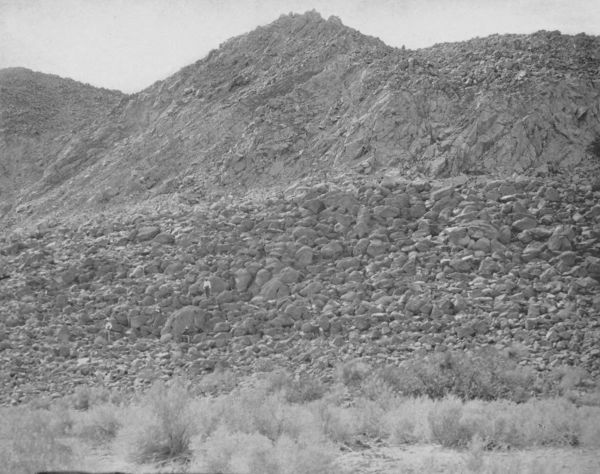
and traditions of unusual interest. Superstition Mountain, situated in
the southwestern portion of the Colorado Desert, is one of these.
This mountain is nearly in the line of the old trail taken by the early
overland pioneers on their way to the coast by the way of Yuma. The
mountain is remarkable in one respect—it scarcely ever presents the
same appearance twice. Its contour is constantly changing, owing to the
fact that it is bordered by gigantic sand-hills, which are carved and
whittled and shaped by the fierce winds which sweep across the plain.
If one notes some point or pinnacle as a landmark to-day, to-morrow he
will have lost his bearings, for the outlines will have been changed.
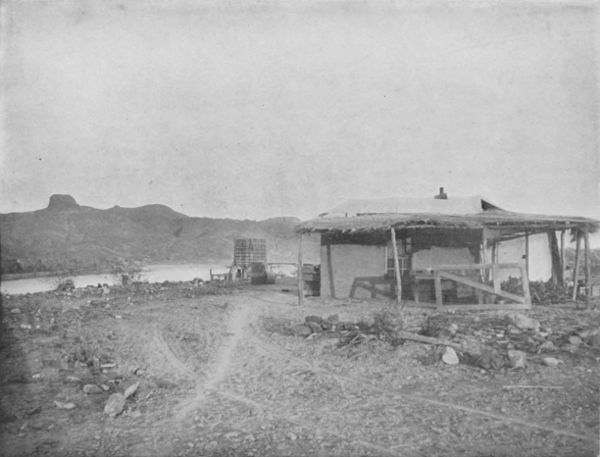
This peculiarity of the mountain has awakened the fears of the Cocopah
Indians, who inhabit that region, and who are naturally superstitious,
and they shun the locality. Nothing will induce them to mount the
eminence, and they even avoid that section of the plain. It is to them
the abode of evil spirits.
Among other evil spirits who, they believe, inhabit the mountain, is
one which bears a strange resemblance to the Gaelic "banshee."
The old folks of the Irish peasantry to this day tell of the banshee, a
little, old weazened woman, who is said to appear to persons, clapping
her hands and wailing, as a warning of approaching death. The Cocopahs
have precisely the same superstition, save that the banshee is a little
old man, "Wah Dindin," who is supposed to come down from Superstition
Mountain to bring death to the one to whom he appears.
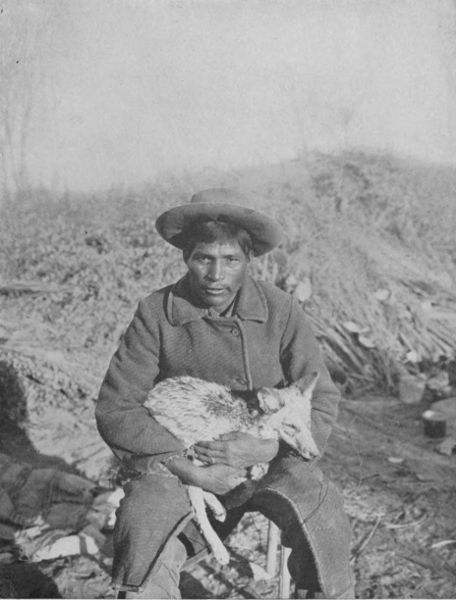
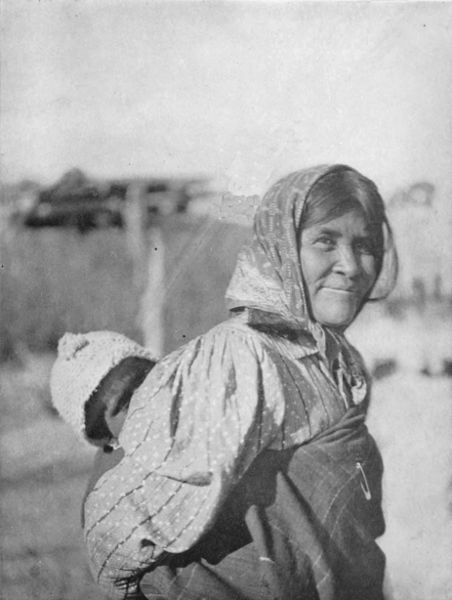
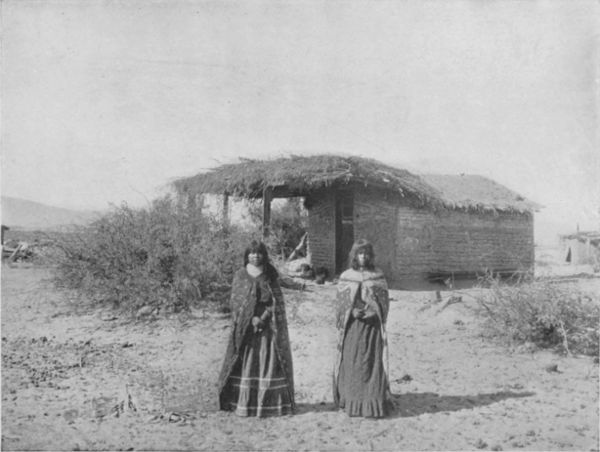
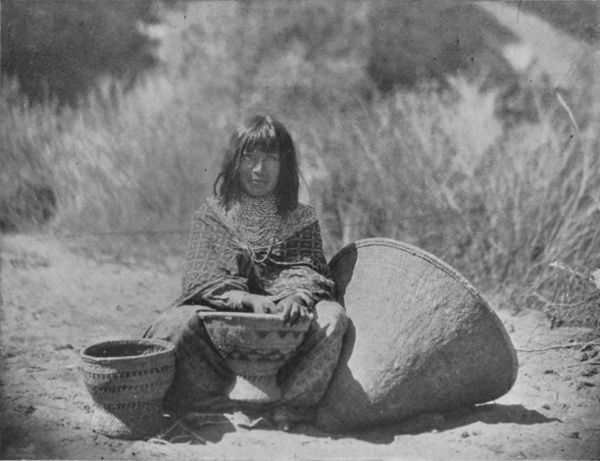
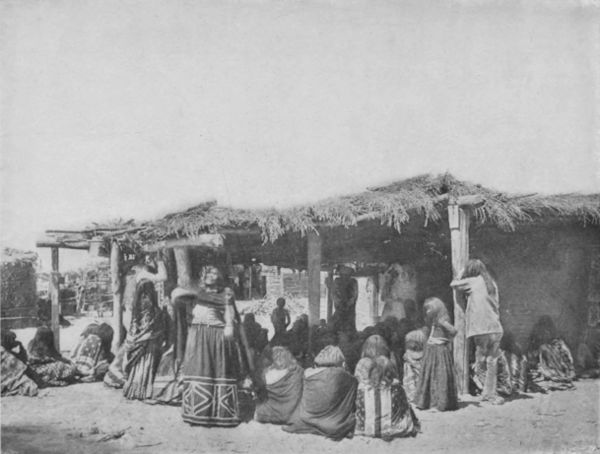
The Cocopahs are very much averse to being photographed, and the sight
of a camera is a signal for them to throw themselves face downward upon
the earth. They believe that their pictures, if taken, are transmitted
to the evil spirits in the mountain, and that, by means of this
picture, the little old man of death—the Cocopah banshee—will be able
to trace them and bring them death. Some of the more enlightened and
more avaricious, however, upon being bribed with silver, so far
overcome their fears as to allow themselves to be photographed.
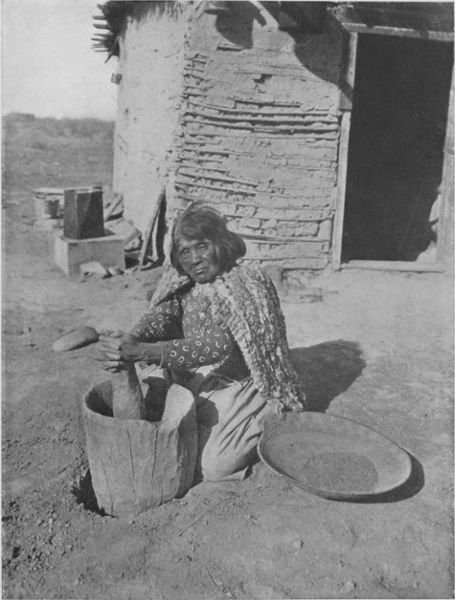
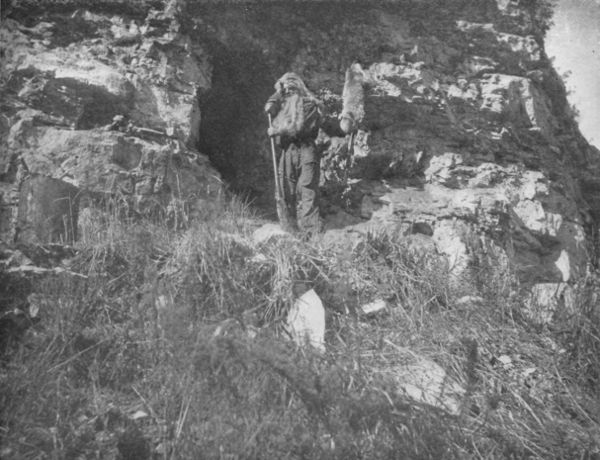
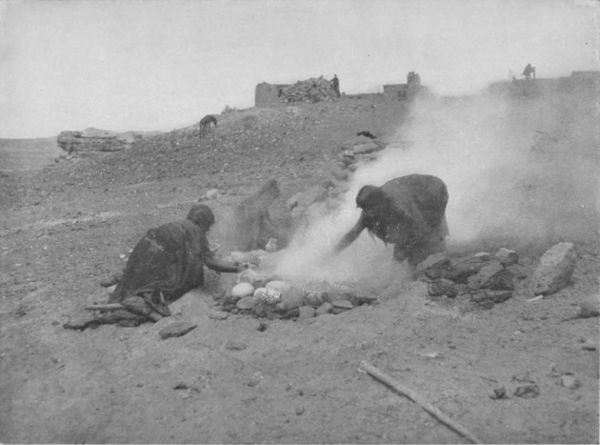 A DESERT POTTERY FACTORY
White men are not so loath to visit the locality. It is believed that
this mountain or some of the adjacent hills holds the famous lost
"Pegleg" gold mine.
In 1837, a one-legged man named Smith found a mine of wonderful
richness in the Colorado Desert. He was piloting a party over the
desert from Yuma, when he came to three hills which rose out of the
plain. Not being sure of his bearings, he mounted the taller of the
hills to get a view of the surrounding country. Upon this hill, which
seemed to be composed of black quartz or rock, he found out-cropping
ore fairly sparkling with the precious metal. He took specimens away
with him and learned, upon reaching his destination, that the metal was
really gold. The mine became known as the "Pegleg Mine" from the fact
that Smith wore a wooden leg and was known as "Pegleg."[1]
After conducting his party safely to Los Angeles, Smith returned to the
desert to investigate his find. He could not locate it. He could not
even find the hills which had been the landmark upon which he depended.
In 1861 or 1862, a prospector passed over the trail from Yuma to Los
Angeles. In the Colorado Desert he chanced upon three hills, and upon
the larger one he discovered gold. He reached Los Angeles with $7000
worth of gold nuggets. He told of his find and described the location.
It tallied with the description given by Smith of his find. A party was
formed for the exploiting of the mine, and the prospector was preparing
to guide his associates to the spot when he was taken ill and died. The
mine was again lost and has never been found.
From time to time expeditions have gone forth to look for the lost
Pegleg mine, but their searches have been fruitless. Scores of lives
have been lost in the quest. To this day skeletons are frequently found
in that section of the desert, grewsome reminders of the tortures of
that terrible region.
One of the last of these search parties consisted of Tom Clover of Los
Angeles and a man named Russell, of San Bernardino. The latter still
lives in San Bernardino, but Tom Clover left his bones upon the
desert. He ascended Superstition Mountain to take observations while
Russell remained upon the plain. They agreed to meet on the opposite
side of the mountain. Russell kept the appointment, but Clover was
never seen again.
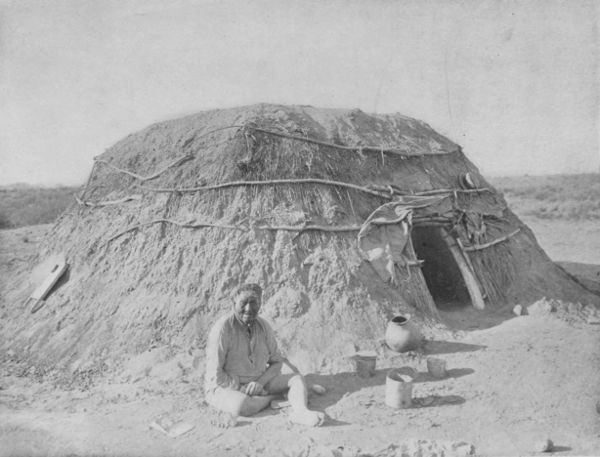
In the midst of the Colorado Desert, where, previous to the bringing in
of water by the Imperial canal system, neither man nor beast could find
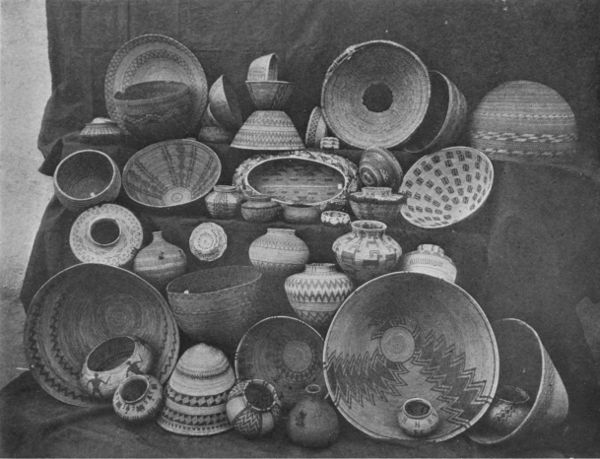
means of subsistence, are found many earthen ollas of Indian make and
of ancient pattern. Nearly every settler in the Imperial Valley has one
or more of these relics, some chipped and broken, but many in a perfect
condition.
These ollas are not found in groups and collections, but in ones and
twos at various intervals in the interior of the desert. They have a
story to tell of conditions in the dim past and explain how it happened
that certain tribes chose so forbidding a region as a dwelling-place.
In ancient times, before the white man—the most formidable foe the
redman has known—came to this continent, the various tribes warred
with each other. The strong wrested the choice portions of the land
from the weaker tribes, and the latter were forced to choose between
the desert with possible death or certain annihilation at the hands of
their foes. They chose the desert.
As was natural in the case, those who dared the desert made their
abiding-place at the oases of the desolate region. Here, after a
certain manner, they lived and accumulated more or less of the things
which represented, to the savage mind, wealth. But even here they were
not yet free from their oppressors, who occasionally bore down upon
them to give them battle.
In the very heart of the desert, far from food or water, these
persecuted Indians finally found refuge. They learned that their
enemies dared not brave the perils of the desert wastes, therefore, in
times of peace, they carried deep into the desert supplies of food and
water, the latter in the large earthen ollas, and cached them in the
sands. Each warrior attended to the supply for himself and family. They
did not store the supplies of the tribe together, but purposely
scattered them.
When an attack was made upon them, each man sought his own cache, and
there he stayed till food and water were exhausted. By that time the
zeal of the foe would have cooled off, no doubt, and they could return
in safety to their homes.
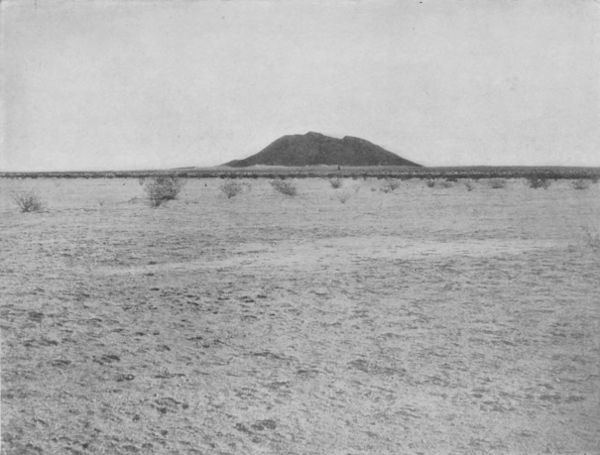 BLACK BUTTES—PHANTOM SHIP OF THE DESERT
The Indians thus persecuted have long since passed away, but the story
of their tribulations is brought down to us in those ollas scattered
over the burning plain.
Before irrigation made habitable a portion of the Colorado Desert,
persons who visited the dread region came back to civilization with
strange tales of a phantom ship which was seen to sail upon a spectral
sea. Sometimes this ship took the form of a full-rigged three-master;
again it was a monster war-ship, with conning-towers and turrets, and
great guns projecting fore and aft. The phantom vessel always appears
in a certain portion of the desert and, instead of sailing slowly into
sight and passing steadily on out of range of vision, as a
well-regulated ship should do, it has the remarkable faculty of rising
suddenly from the mystic sea and as suddenly sinking out of sight
again.
When the Imperial settlements were established in the land of mirages
the mystery of the phantom ship was solved. About thirty miles south of
the international line, in the republic of Mexico, rising out of a
level plain, is a triple-peaked mountain known as the Black Buttes.
When the atmospheric conditions are favorable, which is frequent, the
Buttes, which from the Imperial settlements are below the horizon, are
lifted by refraction into view, and under the transforming power of the
mirage they appear like a great ship sailing upon a vast sea.
Sometimes the three peaks are elongated and appear to be masts, while
the solid granite bulk of the pile takes on the form of sails,
seemingly set to catch the winds of the specter sea. Again the peaks
are less elongated, and they appear like the heavier masts of a
war-ship, and the sails are transformed into turrets and towers. The
mirage eats into the sides of the mountains, leaving exposed several
projecting points, which look like the heavy guns of a battle-ship.
Then, perhaps, while the watcher strains his eye to catch the strange
vision, it suddenly disappears from sight.
At times the transformation from three-master to war-ship, or from
war-vessel to three-master, takes place before the watcher's eyes, as
though some mighty wizard were doing the "Presto, change!" act for the
gazer's benefit. Then, very likely, the Buttes lose all resemblance to
ocean craft and assume their natural shape, but appear to be surrounded
by water—a granite isle in a placid sea. So vivid is this picture that
the mountain casts a perfect inverted shadow of itself in the waters
which apparently surround it, but which actually do not exist.
There are other peaks and mountains which are worthy of mention among
the features of the Colorado Desert. One of these is Pilot Knob, and
Signal Mountain is another. These two mountains are landmarks which
serve to guide those who have occasion to cross the forbidding region.
Pilot Knob, in the southeastern part of the desert, is the point toward
which eastern-bound travelers shape their course. The peak can be seen
more than a hundred miles, and it stands out so distinctly from other
mountains in that quarter of the desert that its identity is not easily
lost.
Signal Mountain rises abruptly from the level plain near the western
side of the desert at the international line. It is visible from all
points in the desert, and has served to guide many a traveler to safety
who otherwise would have perished in the desert wastes. The mountain is
pyramidal in form, and is distinctive from all other peaks of that
region.
Along the eastern rim of the desert stretches a long line of hills two
or three hundred feet in height, which are known as the "Walking
Hills." They are gray and barren but not lacking in picturesqueness,
for many strange and fantastic shapes may be traced in their outlines.
These hills are constantly changing both shape and position, and that
is the reason they have received the name of Walking Hills. East of
these hills run the trains of the Southern Pacific Railroad. The road
was built a little more than a quarter of a century ago, and at that
time the tracks were from one fourth of a mile to two miles west of the
hills. Now the latter are encroaching upon the road and threaten to
bury it beneath millions of tons of sand.
The tracks of the road must either be moved farther east, or else they
must swing in to the west of the hills to escape being engulfed by the
sandy billows. The hills are composed of fine particles of sand which
have been carried before the winds which sweep a hundred miles across a
level and barren plain. What first caused the sand to pile up will
never be known, but once a barrier was formed, all the sand which fled
before the winds piled up, raising the barrier each year. The winds,
which always blow from the west, are continually beating against the
base of the hills, lifting the sands there, sliding them up the sloping
sides and dropping them over the other side. Thus, as the westward
slope is eaten away, the eastern side of the hills is added to and they
slowly advance toward the east.
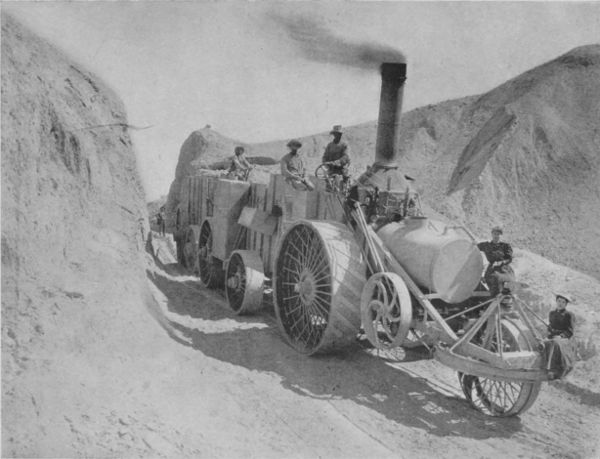
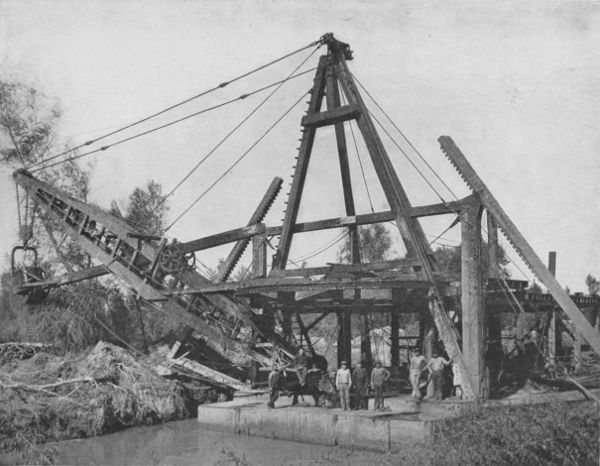 DIGGING THE IMPERIAL CANAL
The range has yet an open field many miles before it comes to the
Colorado River. When the hills reach that point they will disappear,
for the waters of that mighty stream will bear the shifting sands away
toward the sea.
In the southwestern portion of the desert, one hundred miles across the
plain from the Walking Hills, nature has dealt in geometrical figures
on an extensive scale.
The plain, at this point, is composed of claylike soil, very hard and
firm, unlike that of the surrounding desert, which is loose and sandy.
The clay section is smooth as macadam, and is level save for the
geometrical figures which are found thereon in relief.
From beyond the clay-paved section the winds have brought the light,
loose particles of soil and have piled them up in crescent-shaped hills
at various places about the plain. The hills vary in size but not in
shape. Each mound is as true a crescent as is the new moon, or as could
be constructed by the most skillful landscape gardener. The
proportions are carefully preserved in the various mounds.
The horns of the crescents all point eastward. The winds all blow from
the west. Like the Walking Hills, they travel slowly across the plain,
preserving their shape and proportions but growing a little taller, a
little broader, and a little thicker as they go, because of the new
material which is continually being brought across the plain by the
constructive winds.
There is, no doubt, some good and sufficient natural cause for this
peculiar construction. Some unalterable law of nature is probably being
followed in the shaping of these sand-heaps, but thus far no one has
been able to offer an explanation for this remarkable freak of the
winds.
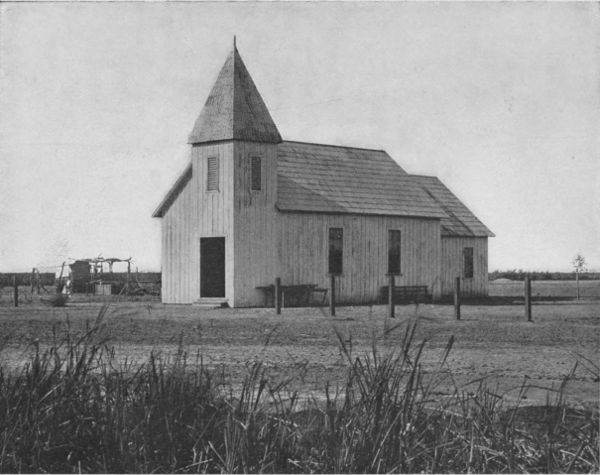 IMPERIAL CHURCH—FIRST WOODEN BUILDING IN LOWER COLORADO
DESERT
IMPERIAL CHURCH—FIRST WOODEN BUILDING IN LOWER COLORADO
DESERT