Abercairnie, Laird of, Mary’s appeal to him on behalf of evicted cottars, 8
‘Actio,’ the, quoted, on Darnley’s murder, 141, 142
‘Admonition to the Trew Lordis,’ cited, 151
Ainslie’s band, purport of, 177, 178;
defaulters from, 181;
Morton’s stipulation, 254;
signers of, 329, 330;
Morton’s adhesion to, 383
Alava, Beaton’s statement to him about Moray, 210
Alloa, Mary at, 80
‘Appeal to Christian Princes,’ cited, 240
Argyll, Earl of, disliked by Darnley, 73;
lodged by Mary in Edinburgh Castle during her labour, 73, 75;
at Craigmillar, 98;
Paris’s statement as to him and Mary on the night of Darnley’s murder, 161;
in confederation against Bothwell, 181;
cited, 38
Arran, Earl of, blamed by Bothwell as the cause of the Protestant rebellion, 47;
feud with Bothwell, 47, 49;
reconciled to him through Knox, 50;
discloses to Knox Bothwell’s plot to seize Mary, 50;
apprises Mary of the plot, 51
Atholl, Earl of (member of council), 172;
confederated against Bothwell, 181;
cited, 203
Baillie Hamilton, Lady, on the Hamilton casket, 368, 369, 370
Balcanquell, Rev. Walter, receives Morton’s confession, 148
Balfour, Sir James, concerned in the murder ‘band’ against Darnley, 88, 90, 99;
gives Bothwell the keys of Mary’s room at Kirk o’ Field, 163;
persuaded by Lethington to surrender Edinburgh Castle, 186;
charged by Mary with complicity in Darnley’s murder, 189;
the Casket in his keeping, 198;
holds Edinburgh Castle, 274
Ballantyne, Patrick, said to have menaced Mary’s life, 38
‘Band of assurance for the murder’ of Riccio, 67, 68
Bannatyne (Knox’s secretary), his account of the death of the Earl of Huntly, 38
Bannister (Norfolk’s servant), Norfolk’s statement to him regarding Letter II., 357
Bargany, Laird of, at cards with Archibald Douglas, 32
Barham, Serjeant, asserts that Lethington stole the Casket Letters and that his wife copied them, 248;
denies that Mary received French copies, 249
Beaton, Archbishop (Mary’s ambassador in France), communicates with Mary about Hiegait and Walker, 110, 114;
affirms that Moray is Mary’s mortal enemy, 210
Beaton, Archibald (Mary’s usher), Mary’s concern for, 6;
misses the keys at Kirk o’ Field, 164, 165
Beaton, James (Archbishop Beaton’s brother), joins Mary at Dunbar, 186;
with her at Carberry Hill, 187;
on Lethington’s treacherous behaviour to Mary, 190
Beaton, Mary (one of the Queen’s Maries), 4;
and Ogilvy of Boyne, 26;
her aunts at feud with Mary, 356;
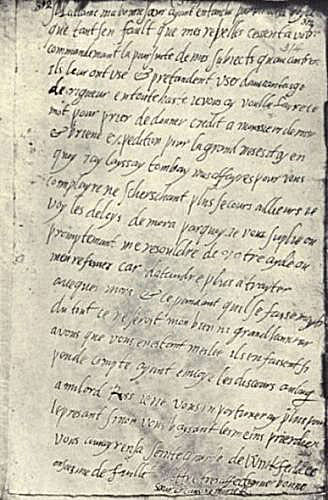
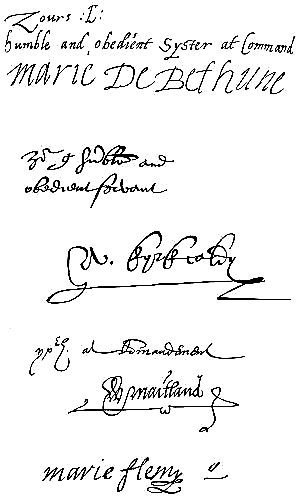
her handwriting, 364
Beaufort, Jane (widow of James I.), 45
Bedford, Earl of (Elizabeth’s ambassador), fears that Mary secretly abetted Bothwell, 56;
on Riccio, 59;
declares Bothwell to be hated in Scotland, 80;
instructs his suite not to recognise Darnley as king, 106
Bellenden (Justice Clerk), member of council, 172, 203;
implicated in Riccio’s murder, 203
Binning (Archibald Douglas’s servant), his confession, 148
Birrel (‘Diary’), on the blowing up of Kirk o’ Field, 140;
on the date Mary left Edinburgh, 292;
nd that of her visit to Glasgow, 379, 380
Black Friars, the Dominican Monastery of, 124, 125, 126, 127, 130, 131
Blackader, William (Bothwell’s retainer), hanged denying his guilt, 153, 195;
cited, 165
Blackwood, on unsigned letters attributed to Mary, 198, 212
Blavatsky case, the, cited, 278, 279
Bolton, Mary at, 249, 250, 251, 283
Book of Articles, cited, 59, 86, 94, 95, 107, 114, 255, 271, 272, 278, 279, 280, 281, 316, 318 note, 322;
on the conference at Craigmillar, 96;
on Darnley’s murder, 141, 142, 148;
on the Glasgow letters, 308, 317;
its supposed author, 318
Borthwick Castle, Mary and Douglas at, 185
Bothwell (James Hepburn, Earl of), personal appearance, 14, 18;
age at Darnley’s murder, 14;
literary tastes, 15;
character as depicted by his foes, 15;
his courage in question, 16;
handwriting, 17;
study of works on art magic, 17;
accused of winning Mary’s favour by witchcraft, 17, 36;
his standard of culture compared with that of Scots nobles, 18;
masterful nature, 18;
hatred of Maitland of Lethington, 25;
epitome of early career, 46;
espouses the cause of Mary of Guise, 47;
seizes Cockburn of Ormiston, 47, 49;
deceives and deserts Anne Throndsön under promise of marriage, 47;
said to have had three wives simultaneously, 48;
at the French Court, 49;
feud and reconciliation with Earl of Arran, 47, 49, 50;
solicits Arran’s aid in a plot to seize Mary, 50;
warded in, but escapes from, Edinburgh Castle, 51, 53;
in league with Huntly, 53;
Lieut.-General and Admiral, 54;
Elizabeth’s prisoner at Holy Island, 54;
Captain of the Scottish Guards in France, 54;
said to have accused Mary of incestuous relations with her uncle the Cardinal, 54;
returns to Scotland and his Border fastness, 56;
outlawed, 56;
summoned by Mary to assist her, 57;
ill-feeling towards Darnley, 57;
marries Lady Jane Gordon, 26, 68;
rescues Mary from prison after Riccio’s murder, 69;
intrigues with Darnley for the ruin of Moray and Lethington, 72, 73;
at the Border during Mary’s accouchement, 76;
Bedford’s statement that he was the most hated man in Scotland, 80;
reconciled by Mary to Lethington, 81;
his guilty intimacy with Mary, 82, 83;
concerned in the murder ‘band’ against Darnley, 90, 98, 99;
wounded in Liddesdale, 93;
visited by Mary at Hermitage Castle, 93;
his share in Darnley’s murder, 117, 118, 136, 139, 142, 144, 145, 147, 148, 149, 150, 158, 159, 160, 161, 163, 164, 165, 166, 167, 171, 172, 175;
escapes to Denmark, 154;
Paris’s evidence as to familiarities between him and Mary, 162;
his possession of the keys to Mary’s room at Kirk o’ Field, 163, 164, 165;
influence over Mary, 176;
objects of ‘Ainslie’s band,’ 177, 178, 181, 329, 330, 383;
seizes Mary and takes her to Dunbar, 179, 330, 332;
is created by Mary Duke of Orkney, and marries her, 183;
intimacy with his divorced wife after marriage with Mary, 27, 184;
at Carberry Hill, 16, 186;
gives Mary a copy of the Darnley murder band, 187;
summons from the Lords for Darnley’s murder and Mary’s abduction, 202;
tried and declared innocent of Darnley’s murder, 177;
Mary’s alleged letter inciting him to Darnley’s murder, 211, 212 (see Casket Letter II.);
the Privy Council’s Declaration, 239;
Mary’s submissive attitude to him, 315;
said to have been present at the brawl between Darnley and Lord Robert Stuart, 328;
advice given by Mary as to his relations with the Lords, 331;
ring sent him by Mary, 335, 337, 341;
betrothal ring given by him to Mary, 340;
letters to his wife after his marriage with Mary, 351;
place of his death and burial, 371, 372, 373.
See Mary Stuart
Bothwell, Lady. See Lady Jane Gordon
Bowes (Elizabeth’s envoy to Scotland), 365;
tries to induce Gowrie to give up the Casket, 366
Bowton, Hepburn of, his statement of Darnley’s murder, 143, 144, 146, 158, 165, 170, 233, 278, 280, 310;
dying confession, 167;
execution, 139
Boyd, Lord, 73
Brantôme, on Bothwell’s personal appearance, 18;
on the Casket Sonnets, 344
Branxholme, the Lady of, rails at Mary’s marriage with Bothwell, 184
Bresslau, Herr, on the Casket Letters, 387
Buchan, Earl of (grandfather of Christian Stewart), 19
Buchan, Master of, killed at Pinkie, 19
Buchanan, George (poet and historian), celebrates Mary’s virtues, 15;
his inaccurate accounts of her behaviour, 33, 34;
anecdotes of visions portending Darnley’s fate, 37;
tale of Mary at Alloa with Bothwell, 80;
on the guilty intimacy of Mary and Bothwell, 81;
respecting Lady Reres, 82, 83;
on the Craigmillar conference, 96, 97, 98;
Latin elegiacs on Mary, 105;
on Darnley’s murder, 141;
his treatment of the Darnley case, 148-151;
on Paris’s Deposition, 157;
on Darnley’s meek endurance of Mary’s slights, 314;
account of a brawl between Darnley and Lord Robert Stuart, 323, 328
Caithness, Earl of (member of council), 172
Calderwood, on Morton’s warrant from Mary for signing Ainslie’s band, 254
Callendar, Mary at, 112, 318 note
Camden, on Lethington counterfeiting Mary’s handwriting, 357, 358
Carberry Hill, Mary and Bothwell at, 186
Cardauns, M., on the translations of the Casket Letters, 386
Carwood, Margaret, Mary’s intended bequest of a casket to, 365
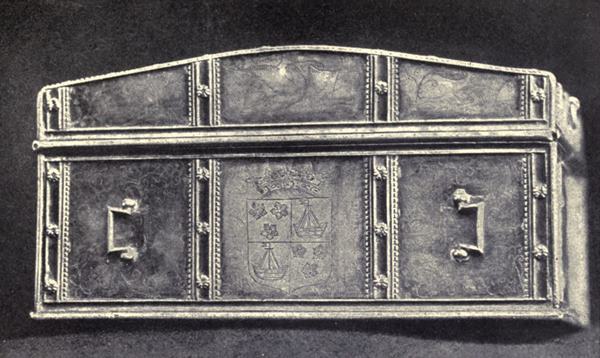
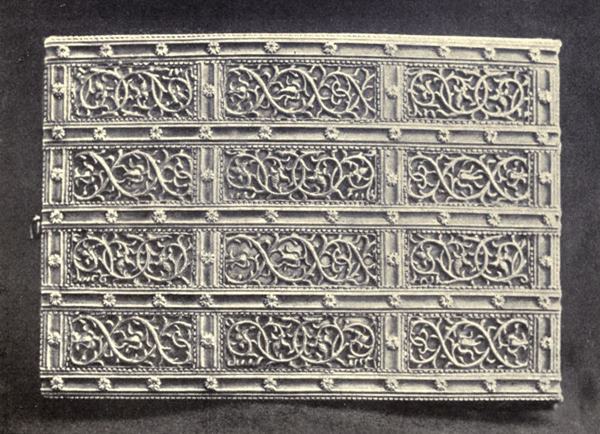
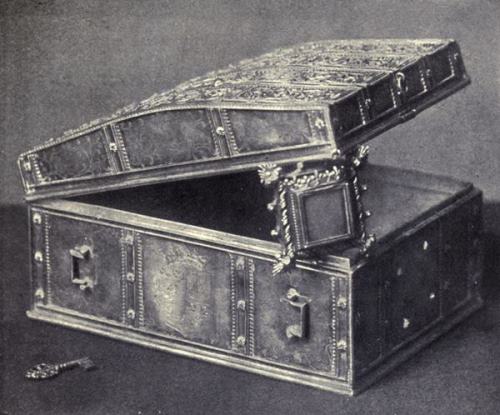
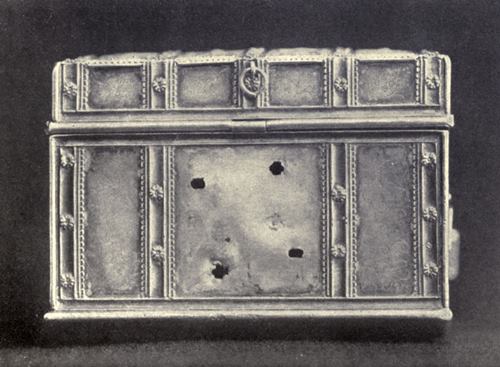
Casket, the, official description of, 365;
the one in possession of the Hamilton family, 367-370
Casket Letter I., its place in order of composition, 290, 291;
question of date, 291, 292;
intelligible if classed as Letter II., 293;
purport, 293;
reference to Lethington in English copy, 294;
possibly authentic and indicating a presumptively authentic Letter II., 295;
published Scots and English translations, 391-393
Casket Letter II., shows Mary’s complicity in the murder of Darnley, 14;
not genuine if the chronology of Cecil’s Journal be accepted, 296;
authenticity opposed by the letter cited by Moray and Lennox, 296, 320;
probably garbled, 297, 300;
difficulties of internal chronology, 297;
Crawford’s corroboration of parts, 297;
theory of dovetailing by a forger, 300 et seq.;
objections based on Crawford’s written Deposition, 302-304;
verbal identities with Crawford’s account, 305, 306;
differences from, 307;
reveals Darnley’s unconcealed knowledge of Mary’s relations with Bothwell, 307;
German theory respecting correspondence of deposition with, 308;
influence of Mary’s memoranda with regard to genuineness, 309;
forgery—balance of probabilities, 309, 313, 314;
not inconsistent with Mary’s style and character, 313;
shows Mary’s remorse and submission to Bothwell, 315;
reasons pointing to partial genuineness, 316;
the phrase ‘a more secret way by medicine,’ 317;
confused by Buchanan with the letter described by Moray and Lennox, 318;
the ‘ludgeing’ in Edinburgh, 318;
the Craigmillar reference, 319, 320;
represents Mary as tortured by remorse, 348;
published Scots and English translations, 393-414;
concerning, 211, 212, 213, 214, 215, 229, 232, 245, 253
Casket Letter III., copy of the French original, 322;
gives brawl between Darnley and Lord Robert Stuart, 323-328;
its affected style, 325, 328;
original French version at Hatfield, 414, 415
Casket Letter IV., subject of, 329;
original French version, 416
Casket Letter V., concerning Mary’s abduction by Bothwell, 329, 330;
the several translations, 330;
original French version at Hatfield, 417, 418
Casket Letter VI., Mary advises Bothwell as to his relations with the Lords, 331;
her excuses for her marriage with Bothwell, 331, 332;
published Scots translation, 418
Casket Letter VII., subject of, 333;
coincidence with Mary’s instructions to Bishop of Dunblane, 359, 360;
Scots version, 419
Casket Letter VIII. (III. in Henderson): reproaches Bothwell with coldness, 334;
concerning the enamel ring sent by Mary to Bothwell, 335;
refers to a betrothal ring received by her from Bothwell, 336;
affectation of its style, 336;
Mary’s gift of a symbolic mourning ring to Bothwell, 337, 341;
contract of marriage with Bothwell, 337, 338;
unknown date, 339;
theory of its having been written to Darnley, 339;
circumstances in Mary’s relations with Bothwell referred to, 339;
original French version, 420, 421
Casket Letter IX.: the French Sonnets, 422, 426
Casket Letters: their discovery, 195, 274, 275;
early tampering with suggested, 198, 199, 200, 208;
published in Scots, Latin, and French, 198;
Scots versions compared with French originals, 226, 243;
unsigned copies, 240;
Scots versions sent to Mary by Lethington’s wife, 248;
French copies, 273;
English translations, 274;
original language in which they were written, 346;
phraseology and orthography, 347;
tone and style, 347, 348;
compared with the Sonnets, 349, 350;
uniformity of sentiment and passion, 350, 351, 352;
authenticity considered, 352;
Lethington’s suspected garbling, 361;
Archibald Douglas a possible forger, 362;
translations of, 385-391.
See under each Casket Letter
Casket Sonnets, 217;
Mary’s love for Bothwell depicted, 235;
topics of, 345;
prove Mary’s passion for Bothwell, 345;
compared with the Letters, 349;
the French, 422, 426
Cassilis (member of council), 172
Catherine de Medicis, 84, 85, 87, 89, 92, 192
Catholic League, the, 64
Cauldwell, Alexander (a retainer of Eglintoun’s), arrested by Mary, 103;
denies the rumour that Darnley was to be put in ward, 110, 111
Cecil (William Lord Burghley), his account of Riccio’s murder, 68;
avers that Bothwell obtained his divorce by accusing himself of an amour with Lady Reres, 82;
circulates libels about Mary, but does not use Paris’s confession, 168;
knows of the existence of the Casket Letters and their proposed uses, 201;
Jhone a Forret’s mission to him, 209;
receives the Itinerary of Mary, 277, 291, 296;
on Mary’s stay at Callendar, 318 note;
Kirkcaldy’s letter to him, 359;
hints at Lethington’s manipulation of the Casket Letters, 361;
his description of the Casket, 369
Chalmers, David (a friend of Bothwell), 82
Charles IX. of France, 80;
resents the publication of the Casket Letters, 200
Chastelard, cited, 39
Chatelherault, Duke of (heir to the Scottish Crown), 10;
suit to be restored, 61;
acquires and builds a château on land near Kirk o’ Field, 125
Clark, Captain (in command of Scots in Danish service), Paris extradited to him, 154, 374;
in correspondence with Moray, 154
Clernault (Frenchman), on the blowing up of Kirk o’ Field, 140
Cockburn of Ormiston, seized by Bothwell while carrying English money to the Lords, 47;
his son carried off by Bothwell, 49
Coventry, Mary at, 337 and note
Craig (Protestant preacher), denounces Mary’s marriage with Bothwell, 183;
Lethington’s statement to him of his offer to Mary, 188
Craigmillar Castle, conference at, 91, 95, 96, 98, 99, 103, 319, 320
Crawford, Thomas (Lennox’s retainer), 35;
on Mary’s visit to Darnley at Glasgow, 113;
Lennox’s letter to him, 226;
deposition at Westminster, 276;
second deposition, 280, 310;
substantiates part of Letter II., 297;
verbal identities of his deposition with, and differences from, Letter II., 303, 304, 305, 306, 307, 385, 389, 390;
his private character, 309, 310, 312;
one indication of the truth of his oath, 311;
deposition anglicised from the Scots, 312;
full text of his deposition, 427-431
Crokat, May (Mrs. Stirling), sees the murderers of Darnley, 147
Cullen, Captain James (a soldier of fortune), 35;
officer of the guard to Mary, 151;
share in the Darnley murder, 152;
executed, 153;
his evidence burked, 156
Cunningham, Robert (Lennox’s retainer), Lennox’s letter to him, 226
Dalgleish, George (Bothwell’s valet), his confession regarding Darnley’s murder, 84, 143, 144, 145, 146, 167, 195, 274, 278;
under torture reveals the Casket, 275;
executed, 144
Darnley, Henry Lord (son of Earl of Lennox), genealogy, 10;
letter to Mary Tudor, 10;
physical, moral and mental characteristics, 11, 18;
influence on Mary, 12;
marries her, 13, 57;
petulance and arrogance of his disposition, 13;
habits and health, 13;
on the possessions of Moray, 19;
his tragic end foretold in spiritual visions, 37;
at feud with the Lennox Stewarts, 58;
estranged from Mary, 59;
fondness for hunting, 60, 61, 62, 63;
removed from Mary’s Council, 60, 62;
at Peebles, 62;
affects to believe in, and have proofs of, Riccio’s amour with Mary, 63, 65, 67;
schemes with his father to obtain the crown, 66;
in league with Ruthven and Morton, 67;
present at Riccio’s slaying, 67;
list of those who aided him in the murder, 67;
his treachery to his associates after Riccio’s murder, 71;
Mary’s growing dislike of him, 73;
tale of Mary’s proposal to him to make Lady Moray his mistress, 74, 86;
urged to ruin Moray and Lethington, 76;
Mary’s gift of a bed to him, 81;
at Meggatdale with Mary, 81;
threatens to fly the country, 84, 85;
invited to state his grievances before the Council, 85;
powerful nobles against him, 85, 87;
determined not to be present at the baptism of his son, 86;
evidence of a signed ‘band’ against him, 87, 88, 90;
visits Mary at Jedburgh, 95, 96;
warned by Lennox of a plan to put him in ward, 101;
does not attend his son’s baptism, 105;
denied his title to the kingship, 106;
will not associate with the English therefor, 106;
anecdote of his treatment by Mary, at Stirling, 107;
wild projects attributed to him, 108;
complains of Mary to the Pope and Catholic Powers, 109;
rumours of his intended arrest, 111;
falls ill at Glasgow, 112;
his reply to Mary when she offers to visit him, 112;
Crawford’s account of his interview with Mary, 113;
returns with her to Edinburgh, 113;
the poison suggestion of his illness, 114;
brought to Kirk o’ Field, 115;
situation, environs, and interior of Kirk o’ Field, 123-133;
his letter to Lennox three days before his death, 133;
Mary’s interview with him on the eve of the explosion, 135;
his last hours, 136;
statements and theories of the manner of his death, 136, 138, 139, 140, 141, 142, 149, 150;
confessions of some of his murderers, 141-153;
his probable murderers, 169;
the band for his murder, 381-385
De Foix (French ambassador), Cecil’s account to him of Riccio’s murder, 68
De Silva (Spanish ambassador) discusses, with Elizabeth, Mary’s share in Darnley’s murder, 171, 172;
knowledge of the Casket Letters, 197;
mentions their existence to Elizabeth, 201;
statement made to him by Mary’s confessor, 210;
Moray reports a guilty letter of Mary’s, 211, 214;
notifies Elizabeth of the Lords’ possession of the Casket Letters, 353
‘Detection,’ on the Craigmillar conference, 96;
on the Casket Letters, 200
‘Diurnal of Occurrents,’ quoted, 36, 139, 292, 378, 380
Douglas, Archibald (cousin of Morton), the ‘parson of Glasgow,’ 30, 31;
in Riccio’s murder, 31;
in Darnley’s murder, 31, 147, 148, 274;
Morton’s go-between, 31;
judge of Court of Session, 32, 147;
career of treachery, 32, 33;
states the existence of the Darnley murder band, 87, 90;
letter to Mary in exile, 89;
account of the band signed by Moray, 91;
endeavours to propitiate Mary, 117, 118, 119;
considered as a forger of the Letters, 362
Douglas, George, concerned in Riccio’s murder, 65;
witness against Moray and Lethington, 76
Douglas, Lady (Moray’s mother), 20
Douglas, Robert (brother of Archibald), at the discovery of the Casket Letters, 275
Douglas, Sir George (father of the Earl of Morton), his treacherous character, 29
Douglas, William, rescuer of Mary from Loch Leven, 6, 7, 34
Douglas, William (of Whittingham), accuses his brother Archibald of forging letters, 32, 362
Dragsholm, Castle of, in Denmark, where Bothwell died, 372, 373
Drummond Castle, Mary at, 112
Drumquhassel, 35
Drury, quoted, on Captain Cullen, 152;
aware of Bothwell’s projected seizure of Mary, 180;
stays Nelson at Berwick, 319 note
Du Croc (French ambassador), on Bothwell’s courage, 16;
on differences between Darnley and Mary, 85, 86, 95;
high opinion of Mary, 87;
on Bothwell’s wound, 93;
declines to meet Darnley, 106;
finds Mary in tears at Stirling, 107;
opposed to Mary’s marriage with Bothwell, 183;
on Lethington’s interview with Mary after Carberry, 188;
leaves Scotland with copies of Casket Letters, 197, 198, 199
Dunbar, Mary at, 180, 186
Dunblane, Bishop of, letter presented by him to the Court of France in excuse of Mary’s marriage with Bothwell, 331, 333;
coincidence of Mary’s instruction to, with Letter VII., 359, 360
Durham, Sandy (Bothwell’s servant), asks Paris for the key of Kirk o’ Field, 163
Durie, Rev. John, receives Morton’s confession, 148
Edinburgh, Mary’s midnight revels in, 4;
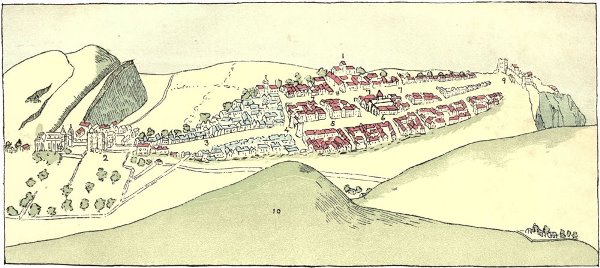
in Mary’s time, 40, 41, 42;
insanitariness, 41;
street brawling, 43;
social condition, 43;
house in, referred to in Mary’s letters, 316, 317, 318
Edinburgh Castle, Bothwell prisoner in, 51, 53;
Mary gives birth to James VI. at, 75;
Sir James Balfour holds, 274
Eglintoun, Lord, an untrustworthy Lennoxite, 110, 111;
evades subscription to the Ainslie band, 178
Elizabeth, Queen, acknowledges Mary’s physical and mental charm, 3, 4;
regards her as a rival, 9;
opinion of Maitland of Lethington, 24;
pestered to recognise Mary as her successor, 55;
congratulations on birth of James VI., 76;
her baptismal gift as godmother, 105;
receives Paris’s deposition, 154;
discusses with De Silva Darnley’s murder, 171, 172;
Lords appeal to her against Mary, 184, 185;
wavers between Mary and the dominant Scots party, 195;
acquainted with the discovery of the Casket Letters, 196;
angry with Lethington about them, 201;
communicates with Mary in Lochleven, 202;
demands of Moray the reason of the Lords’ rebellion, 228, 229;
favourably inclined to Mary, 237;
removes the conference from York to London, 260;
her Council at Hampton Court, 264;
declines Mary’s appeal for a hearing before her, 269;
asks for the Letters, 269;
adds to commissioners at Westminster, 277;
debars Mary her presence, 281, 282;
offers Mary three choices, 283;
refuses to permit Mary the sight of originals or copies of the Letters, 284;
absolves both Moray and Mary, 285;
suspects Lethington of tampering with Letters, 353, 355, 358;
acquaints Mary with Robert Melville’s efforts, 355
Elphinstone, Nicholas (Moray’s messenger), not allowed to give Mary Moray’s letters at Loch Leven, 210
Erskine, Arthur, 34;
escorts Mary to Dunbar, 69
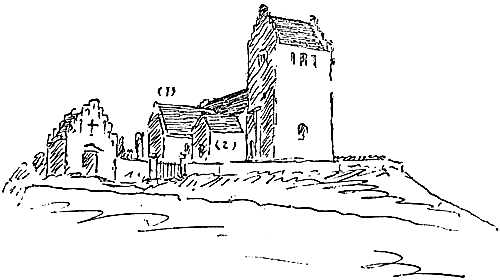
Faarvejle Church, Denmark, Bothwell’s body and grave in, 371 et seq.
Fitzwilliam, John (of Gray’s Inn), Lesley’s letter to him, 286 note
Fleming, Dr. Hay, on Bothwell’s outlawry, 56
Fleming, Mary (Queen Mary’s favourite attendant), 4;
her love affair with Maitland of Lethington, 24;
when Lethington’s wife, copies the Letters, 247, 248
Fleming (member of council), 172
Forbes of Reres, kills Moray’s secretary, 33
Foster, Sir John, 54;
on Mary’s visit to Bothwell, 94;
on the Liddesdale reivers, 180
Froude, Mr. (historian), his opinion of Moray, 22;
on the discovery of the Casket Letters, 196;
on the Glasgow Letter, 212, 213;
on Mary’s attitude towards the Letters, 245
Galloway, Bishop of (member of council), 172
Glasgow, in the sixteenth century, 39;
Darnley ill at, 112
Glasgow Letter, the, 135, 162, 168, 211, 212, 213, 214, 225, 229, 255.
See Letter II.
Glencairn, Earl of, received by Mary at Edinburgh Castle, 73, 92
Goodall, quoted, 312 note
Gordon, John (Mary’s servant), 7
Gordon, Lady Jane (daughter of Huntly, the Cock of the North), wife of Bothwell, 26, 53, 68;
her literary love letters, 26;
conditions of her consent to a divorce with Bothwell, 27, 218;
relations with Bothwell after her divorce, 27, 184;
marries the Earl of Sutherland, and, on his death, Ogilvy of Boyne, 27, 218;
literary contest with Mary, 349, 350
Gowrie, Earl of, in possession of the Casket Letters, 366;
Bowes seeks to obtain them from him, 366;
insists on James’s consent before giving them up, 367;
executed for treason, 367
Greville, Fulke, attracted by the personality of Archibald Douglas, 33
Gueldres, Mary of (widow of James II.), 45
Hamilton, Archbishop of St. Andrews, resides at Hamilton House to prevent Darnley’s occupation, 116;
there on the eve of Kirk o’ Field explosion, 149;
accessory to Darnley’s murder, 150;
member of council, 172;
hanged by Lennox, 150
Hamilton Casket, the, doubts as to its being the true Casket, 369
Hamilton, present Duke of, the Casket in his possession, 367, 368
Hamilton House, 115, 116, 131, 149
Hamilton, John, singular death of, 37
Hamilton, Lord Claude (Gloade), 149
Hampton Court, 264, 279
Handwriting, problems of, 363, 364
Hay, the Younger, of Tala, his complicity in Darnley’s murder, 35, 90, 143, 144, 145, 146, 157, 160, 165, 169, 328;
confession, 278;
execution, 139, 280
Henderson, quoted, on Letter II. and Crawford’s Deposition, 310, 312 note;
his text of the Casket Letters, 387
Henri II. of France, 5
Hepburn of Riccartoun (Bothwell’s agent), 56, 57
Hepburn, Patrick (Bishop of Moray), Bothwell’s great-uncle, 14
Hepburn, Patrick (parson of Kynmoir), evidence to a plot to kill Moray, 375, 376, 377, 378
Hepburns, the, character of, 45, 46
Hermitage Castle, Bothwell visited by Mary at, 39, 54, 93, 94
Herries, Lord, on Mary’s abduction, 241;
at the York Conference, 251;
at Westminster, 267;
challenged to battle by Lindsay, 285
Hiegait, William (Town Clerk of Glasgow), arrested by Mary, 103;
his tale of Darnley’s scheme to kidnap James VI., 108, 109, 110;
denies same before the Council, 110, 111;
cited, 301
Holy Island, Bothwell prisoner at, 54
Holyrood, fable of secret passage between it and Kirk o’ Field, 115, 116;
its environs, 124;
Sebastian’s marriage, 136
Hosack, Mr., on the authenticity of Letter II., 232;
on Glasgow Letter, 296
Hubert, Nicholas, his dying confession, 166
Hume, on Hubert’s confession, 166
Hume, Major Martin, on the Casket Letters, 197
Hunter, Michael, slain by the Black Laird of Ormistoun, 35, 36
Huntly, Earl of (Cock of the North), Mary’s chief Catholic supporter, 52;
dies in battle against her, 53
Huntly, Earl of (son of the Cock of the North; Bothwell’s brother-in-law), influences his sister Lady Jane in her marriage to and divorce from Bothwell, 53;
rescues Mary from prison after Riccio’s murder, 69;
complicity in Darnley’s murder, 90, 167, 168;
at Craigmillar, 98;
evidence against him suppressed, 143;
on the Council, 172;
Mary distrusts him, 330;
trusts him, 331;
manner of his death, 37, 38
James V. of Scotland, 18
James VI. of Scotland (I. of England), birth of, 59, 75;
baptism, 105;
his godmother Queen Elizabeth’s gift, 105;
crowned, 222
James Stuart (Mary’s great-great-grandson), 3
Jedburgh, Mary at, 93, 94, 95, 96
Jhone a Forret (? John Wood), supposed bearer of copies of Casket Letters to Moray and Cecil, 209, 212, 219, 226, 233, 321 note
Joachim (a servant of Mary), cited, 298, 299
Jordan, Sandy (Earl of Morton’s servant), bearer of the Casket to Gowrie, 366
Jusserand, M., on the corpse of Bothwell, 14 note;
on Bothwell’s remains and burial place, 371 et seq.
Keith, Agnes (daughter of the Earl Marischal), married to Moray, 20
Ker, Andrew, of Faldonside (one of Riccio’s murderers), 101, 152 note
Killigrew, his report of the Darnley case, 171
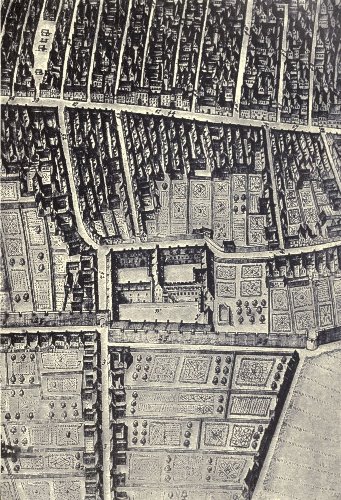
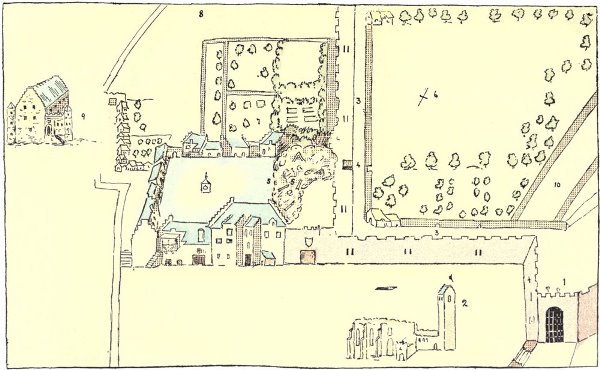
Kirk o’ Field (St. Mary in the Fields), 41, 124;
house prepared for Darnley, 115, 140, 141, 142;
blown up, 140;
site, situation, and environs, 123-132;
map of 1647 and chart of 1567, 127, 128, 129, 130, 131;
interior of the house, 132, 133;
cited in Letter II., 316, 317
Kirkcaldy of Grange, 34;
action against Mary, 184, 185;
Mary’s surrender to him at Carberry Hill, 187;
letter to Cecil, 359
Knollys, his estimate of the character of Mary, 3;
Mary’s accusation against him, 245;
on Mary at the York Conference, 257
Knox, John, denounces the fripperies of women, 4;
in argument on the Mass with Maitland of Lethington, 23, 24;
credited with winning a bride by witchcraft, 37;
patches up a reconciliation between Bothwell and Arran, 50;
Arran reveals to him Bothwell’s plot to seize Mary, 51;
on Bothwell’s escape from Edinburgh Castle, 53;
on Darnley’s sporting tastes, 60;
his drastic advice in the case of Mary, 66;
witch story concerning Lady Reres related to him, 82
Koot Hoomi’s (Blavatsky case) correspondence, cited, 278, 279
La Forest (French ambassador), reports the existence of letters proving Mary’s complicity in the death of Darnley, 197;
his copies and the published Letters, 200
La Mothe Fénelon (French ambassador), on the Lords’ possession of Letters written and signed by Mary, 198, 199;
on their publication in ‘Detection,’ 200;
pleads for Mary to be allowed to see originals or copies of Casket Letters, 284;
opinion of the Casket Sonnets, 344, 345
Laing, Malcolm (historian), on Letter III., 325, 326;
on the Hamilton Casket, 367
Lennox, Earl of (Darnley’s father), 10;
forfeited estates restored, 55;
complains of Mary’s intimacy with Riccio, 58;
a competitor for the Scottish crown, 62;
wishes to see Darnley at Peebles, 62, 63;
schemes to get the crown for Darnley, 66;
accuses Mary of threatening to avenge Riccio with her own hands, 72;
avers that improper relations began between Mary and Bothwell soon after the birth of James VI., 79;
on Mary’s behaviour at Stirling, 80;
warned of a plot to put Darnley in ward, 100;
‘Discourse’ prepared by him for York conference, 101;
‘Brief Discourse’ put in at Westminster, 102;
on a second conference at Craigmillar, 103;
not present at James VI.’s baptism, 105;
sends men to guard Darnley at Stirling, 107, 110, 111;
Minto, Walker, and Hiegait working in his interests, 111;
denies that either Darnley or himself suspected foul play from Mary, 113;
Darnley’s letter to him respecting Mary, 133;
urges the collection of the sayings and reports of all Mary’s servants, 138;
account of his son’s murder, 141;
asks for the deposition of the priest of Paisley, 150;
states that Mary caused a hagbut to be fired as a signal for the Kirk o’ Field explosion, 173;
describes Mary’s conduct at Seton, 175;
asks for the arrest of Bothwell, 176;
flight after his son’s death, 180;
his account of the Glasgow Letter tallies with Moray’s, 214, 215;
his additions to and differences from that Letter, 216 et seq.;
marginal note to Sonnet IV., 217, 218;
common source of his and Moray’s reports, 221;
proposed co-regency, 223;
collects extraneous evidence regarding Mary, 224, 226;
avers that Wood knows the murderers of Darnley, 227;
knowledge of the contents of the Casket Letters, 227, 228;
his indictments against Mary, 222, 223, 229, 230;
cites Letter II., 231;
activity in getting up evidence against Mary before the York Commissioners, 253;
attitude at Westminster, 266;
on Crawford’s talk with Mary, 311, 312 note;
seeks to prove that the Kirk o’ Field plan was arranged between Bothwell and Mary before Mary met Darnley at Glasgow, 316;
Papers, quoted, 58, 59, 74
Lennox, Lady, Mary complains to Elizabeth of her, 225
Lesley (Bishop of Ross), considers Bothwell a handsome man, 18;
wishes Mary to put Moray in ward, 75;
Huntly’s statement to, respecting Mary’s counter accusations, 96;
member of council, 172, 178;
asserts the Letters were not signed, 198;
on unsigned Letters attributed to Mary, 212;
one of Mary’s commissioners at York, 246;
share in the schemes of the Duke of Norfolk, 246;
report of an interview with Mary at Bolton, 247;
confession contradicted by Melville’s, 250;
conference with Lethington about the Letters, 258;
pleads for Mary to be heard in person before Elizabeth, 267;
protests against Moray’s production of the Letters, 270;
Elizabeth’s three choices to him, 283;
charge against Moray and the Lords, 285;
curious letter to John Fitzwilliam, 286 note;
on counterfeiters of Mary’s handwriting, 356
Lethington, Sir Richard (father of Maitland of Lethington), 23
Lethington (William Maitland, the younger), early life and culture, 23;
arguments with Knox, 23, 24;
Secretary to Mary of Guise, 23;
desires the union of the crowns of England and Scotland, 23;
friendly advances to Mary before her arrival in Scotland, 24;
character, 24;
allied by marriage with the Earl of Atholl, 24;
love affair with Mary Fleming, 24;
in every scheme against Darnley, 25;
dislikes and is hated by Bothwell, 25;
joins Mary’s enemies, 25;
nicknamed Michael Wylie (Machiavelli), 26;
political principles, 52;
counsels drastic measures against Riccio, 66;
reconciled by Mary to Bothwell, 81;
concerned in the murder ‘band’ against Darnley, 88, 90;
his method of dealing with Darnley, which Parliament would support, 98, 99, 103;
favours a project of marriage between Norfolk and Mary, 155;
charged with complicity in the Darnley murder, 155, 156, 159;
refuses to aid Moray in betraying Norfolk, 156;
in attendance on Mary, 179;
prisoner at Dunbar, 179, 180, 181;
declares that Mary means to marry Bothwell, 181;
escapes from Bothwell, 182;
question of friendship for or enmity to Mary, 182;
flies to confederated Lords, 185;
persuades Sir J. Balfour to surrender Edinburgh Castle, 186;
interview with Mary, 188, 189;
reasons for his treachery to Mary, 190, 191, 192;
statement to Throckmorton respecting his conduct towards her, 204;
Randolph accuses him of advising Mary’s death, 204;
statement to Throckmorton about the letters, 205;
Mary’s documentary charge against him, 243, 244;
conduct at the York Conference, 246, 252;
accused of stealing the Casket Letters, and having them copied by his wife, 248;
explains the reason for Mary’s abduction, 255;
his privy disclosure of the Letters, 257;
shakes Norfolk’s belief in same, 258;
discriminating attitude between private and public exhibition of Letters, 287;
writes letter to be presented to the French Court concerning Mary’s marriage with Bothwell, 331;
directs the scheme of garbling the Casket Letters, 353;
(?) despatches Melville to Cecil on the day of the finding of the Casket Letters, 355;
privately hints that he had counterfeited Mary’s handwriting, 357, 358;
case against him, 358, 359;
‘Instructions’ drawn by him, 360;
Randolph hints at his tampering with the Letters, 361;
Herr Bresslau’s inferences of tampering, 387
Liddesdale reivers, the, 180
Lindsay, Sir David, pardoned, 112;
the Lords send him to Loch Leven to induce Mary to abdicate, 204;
challenges Herries to combat on Moray’s account, 285;
appointed Lyon King at Arms, 376
Livingstone, Lord, member of council, 172;
his knowledge of Mary’s amour with Bothwell, 253
Livingstone, Mary (Queen Mary’s attendant), 4;
wife of John Sempil, 356;
on ill terms with Mary, 356
Loch Leven, Mary imprisoned at, 192;
Lindsay sent to, to extort her abdication, 204;
Mary’s escape from, 242
Logan of Restalrig, treasure-finding, 375
Lords, Scots, of the Privy Council, banded against Mary, 185;
success at Carberry Hill, 195;
Casket Letters in their possession, 196, 201;
summons against Bothwell, 202;
their mixed character, motives, and statements, 203, 204;
demand of Mary her abdication, 204;
formulate charges against her, 205;
extort from her a consent to their proposals, 205;
vacillations with regard to the Letters, 206, 207;
obtain Mary’s signature to her abdication, 206;
forward copies of Casket Letters to Moray, 212;
publish their Declaration, 238;
accuse Mary of being privy to Darnley’s murder, 239;
on Mary’s handwriting, 241;
cause of their action against Mary, 355
Luzarche, M. Victor, his Coffret de Bijoux, 365
Maitland of Lethington. See Lethington
Mameret, Roche (Mary’s confessor), on the character of the Queen, 210
Mar, Earl of, entertains Mary at Alloa, 80;
deprived of the custody of Edinburgh Castle, 172;
confederated against Bothwell, 181
Marryat, Mr. Horace, and the body of Bothwell, 373
Mary of Gueldres, 45
Mary of Guise, Regent, 19;
her secretary Lethington, 23;
deserted by her nobles, 47;
Bothwell espouses her cause, 47
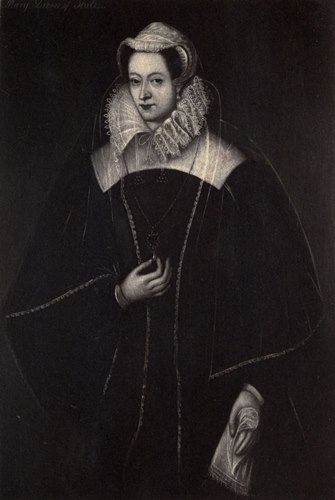
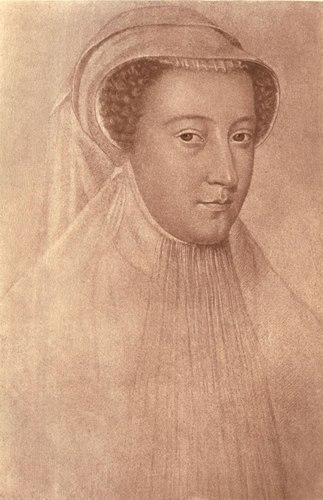
Mary Stuart Queen of Scotland: the Morton portrait, 3;
periwig, 3 note;
midnight revels and masculine energy, 4, 5, 8;
her ‘four Maries,’ 4;
costumes and jewels and their donors, 5;
moods, spirit, and gratitude, 5, 6, 7;
brow-beaten by Knox, 7;
causes provoking hardness of heart, 8;
centre of intrigue, 8, 9;
Elizabeth’s rival, 9;
disposition to yield to masterful men, 9;
Bothwell’s defects instanced against her, 15;
presented by Ruthven with a ring as an antidote to poison, 17, 36;
pensions the assassin of Moray, 22;
kindness to Lethington, 24;
Morton her prosecutor, 31;
virulence of the Preachers of Righteousness against her, 35, 36;
‘bewitched’ by Bothwell, 36;
social condition of Scotland when she became queen, 43;
informed by Arran of Bothwell’s plot to seize her, 51;
political position during her first years in Scotland, 52, 53, 54;
her compromise between Catholicism and Protestantism, 52;
suspected by the Protestant party of favouring Bothwell, 53;
intercedes with Elizabeth to allow Bothwell to go to France, 54;
efforts to fix her as Elizabeth’s successor, 55;
sees Darnley and admires him, 12, 55;
action in Bothwell’s outlawry, 56;
weds Darnley, 13, 57;
summons Bothwell from France against her opponents, 57;
estrangement from Darnley, 13, 57;
political use made of her intimacy with Riccio, 58;
twitted with favouring Riccio and Bothwell, 59;
anger against Moray, 56;
amour with Riccio not credible, 60, 63;
removes Darnley from her Council, 60;
illness, 61;
letter to Pius V., 63, 64;
arranges Bothwell’s marriage with Lady Jane Gordon, 64;
insists on free Mass for all men, 65;
schemes for killing Riccio in her presence, 68;
rescued by Bothwell, Huntly, and Atholl after Riccio’s murder, 69;
at Dunbar, 69, 70, 71;
seeks to quiet the country, 71;
growing hatred of Darnley, 71;
threatens that a fatter than Riccio should soon lie anear him, 72;
pardon of the rebel Lords demanded of her, 72;
befriends Moray, 73;
represented by Lennox as trying to induce Darnley to make love to Moray’s wife, 74;
her bequests to Darnley, 75;
allows Moray and Argyll to be at the Castle during her accouchement, 75;
gives birth to James VI., 75;
protects Moray from Darnley and Bothwell, 77;
Darnley’s jealousy of her favour to Moray, 77;
increasing dislike to Darnley, 78, 80;
passion for Bothwell, 18, 26, 79;
conduct at Alloa and Stirling, 80;
gift of a bed to Darnley, 81;
reconciles Lethington and Bothwell, 81;
Buchanan’s account of her amour with Bothwell, 82, 83;
this legend supported by Sonnet IX. and Dalgleish’s confession, 84;
strained relations with Darnley, 84, 85;
in Jedburgh at a Border session, 93;
visits wounded Bothwell at Hermitage Castle, 93, 94;
illness at Jedburgh, 94;
returns to Craigmillar Castle, 95;
letter from Darnley, 95;
divorce proposed, 96;
Buchanan insinuates her desire to involve Moray in the Darnley murder, 97;
Lennox’s statement that she would have Darnley in ward after James’s baptism, 100, 102;
arrests Hiegait, Walker, Laird of Minto, Cauldwell, 103;
festivities at the baptism of her child at Stirling, 105;
baptizes him by the Catholic rite, 105;
Bedford’s advice, 106;
treatment of Darnley at Stirling, 107;
anxiety concerning Darnley’s projects, 108, 109;
warned by Beaton and the Spanish ambassador of Darnley’s intention to kidnap James VI., 109;
causes Hiegait and Walker to be questioned before the Council, 110;
distress of mind, 111;
at Drummond Castle, Tullibardine, Callendar, and Holyrood, 112;
letter to Beaton, 110, 114;
offers to visit sick Darnley at Glasgow, 112;
Crawford’s account of her visit to Darnley, 113;
induces Darnley to return with her to Edinburgh, 113, 119;
brings him to Kirk o’ Field, 115;
aware of the plot against Darnley, 116, 117;
refuses a written warrant asked for by the conspirators, 118;
hypotheses for her conduct, 120, 121;
her shift of beds at Kirk o’ Field, 134, 162;
story drawn from a Casket Letter, 135, 136, 142;
visits Darnley on the eve of the explosion, 135;
at the marriage of her servant Sebastian that same night, 135, 136, 173;
curious anecdote respecting her, 137;
at supper with the Bishop of Argyle on the night of the murder, 161;
Paris’s evidence as to familiarities between her and Bothwell, 162;
Bothwell asks for the key of her room at Kirk o’ Field, 163, 164, 165;
said to have endeavoured to incite her brother Lord Robert Stuart against Darnley, 135, 165, 166, 323-328, 353;
dying confessions regarding her participation, 167, 169, 170;
theory of her accusers, 170;
conduct after Darnley’s murder, 171;
her letters from and to Beaton, 173;
inference which her letters were meant to suggest, 174;
makes no effort to avenge Darnley, 175, 176;
seized by Bothwell and conveyed to Dunbar, 179;
evidence of the Casket Letters as to her collusion, 179;
Lethington’s attitude towards her, 182;
creates Bothwell Duke of Orkney and is married to him, 183;
her distrust of Huntly, 185;
appeals to the loyalty of her subjects, 185;
surrenders to Kirkcaldy at Carberry Hill, 186;
parting with Bothwell, 187;
conditions of her surrender, 187;
interview with Lethington, 188, 189;
complains of being parted from Bothwell, 188, 194;
denounces Lethington and the members of the Darnley murder band, 189;
incarcerated in Loch Leven Castle, 192;
reported to have prematurely given birth to twins, 194;
motives of the Lords against her, 194;
the compromising Casket Letters, 195, 196, 197, 198, 199, 200, 201, 202, 203, 205, 206, 207 (see Casket Letters);
communication from Elizabeth respecting Melville, 202;
her abdication demanded by the Council, and charges formulated against her, 204, 205;
signs the deeds of her abdication, 207;
her confessor’s opinion of her, 210;
the Glasgow Letter, 135, 162, 168, 211, 212, 213, 214, 225, 229, 255;
complains to Elizabeth of Lady Lennox, 225;
the Glasgow Letter as rendered in the Lennox Papers, 234, 235;
her love for Bothwell as presented in the Casket Sonnets, 235;
the Glasgow Letter discredited, 236;
the Lords’ specific charge against her, 239;
demands to be heard in the Parliament at Edinburgh, 240;
escapes from Loch Leven, 242;
claims the right of confronting her accusers, 243;
her line of defence, 243, 245;
on the handwriting of her accusers, 244;
letter to Lesley, 245;
Lesley’s details of an interview with her at Bolton, 248;
copies of the letters forwarded to her by Lethington, 248, 249;
theory of her translation of Scots copies into French, 249 note;
arrival of her commissioners at York, 250;
assents to Moray’s compromise, 251;
attitude at York, 257;
consents to the removal of inquiry from York to London, 260;
terms of her compromise, 260, 262, 265;
change in her plan of defence, 262;
plea for a hearing before Elizabeth, 267, 268;
injury done to her cause by friends’ renewed efforts for a compromise, 269, 270;
withdrawal of her commissioners from Westminster, 275;
refuses to acknowledge Elizabeth as a judge, 282;
her letter from Bolton, 283;
asks to see the copies and originals of the Casket Letters, 284;
makes their delivery a condition of her production of charges and proofs, 286, 287;
causes of her detestation of Lethington, 288;
her submissive attitude to both Bothwell and Norfolk, 315;
suggestion of marriage with Norfolk, 155;
distrusts Huntly, 330;
trusts him, 331;
her excuses for marrying Bothwell, addressed to the French Court, 331, 332;
sends Bothwell a symbolic mourning ring, 337;
letter to Norfolk from Coventry, 337 and note;
contract of marriage with Bothwell, 338;
receives betrothal ring from Bothwell(?), 340;
hypothesis of her contest in literary excellence with Lady Bothwell, 350;
tone of her letters to Norfolk, 351;
suspicions of Lethington in her instructions to her commissioners, 356;
coincidence between Letter VII. and her instructions to the Bishop of Dunblane, 331, 359, 360;
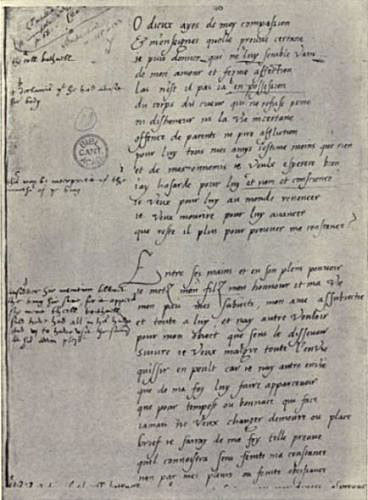
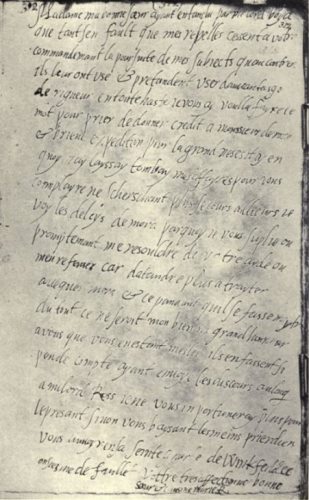
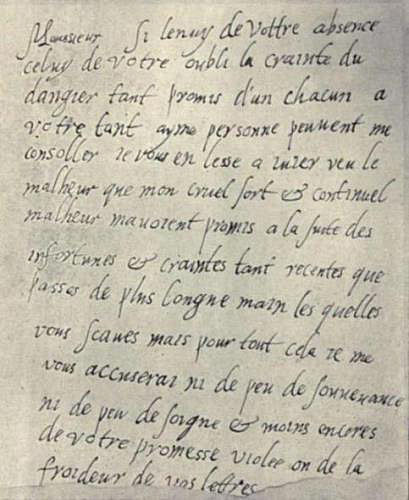
facsimiles of her own and imitated handwriting, 363, 364;
date of her visit to Glasgow, 379, 380;
charges Balfour, Morton and Lethington with complicity in Darnley’s murder, 189, 382
Meggatdale, Mary and Darnley at, 81
Melville, Robert, against Mary, 185;
sent to Elizabeth with news of the discovery of the Casket Letters, 196, 201, 320, 355;
acting for the Lords, 202;
denies his visit to Mary at Bolton before going to commissioners at York, 249, 250;
Lesley’s confession contravened by his, 250;
Moray sends him to Bolton to compromise with Mary, 251;
negotiates with Mary on a compromise, 259;
his statement, 261;
sent by Lethington on ‘sudden despatch’ to Cecil, 354, 355;
friendly efforts in Mary’s behalf, 355;
suspects Kirkcaldy of Grange of counterfeiting Moray’s handwriting, 361
Melville, Sir James, on George Buchanan’s veracity as a historian, 34;
dissuades Mary from putting Moray in ward, 75;
on Darnley’s murder, 140;
on Bothwell’s behaviour in the Queen’s chamber, 181;
at the York conference, 259
Mertine, Barbara, encounters the murderers of Darnley, 147
Middlemore, Mary’s statement to him regarding her accusers, 245
Minto, Laird of, arrested by Mary, 103;
working in Lennox’s interests, 111;
cited, 150
Moray, Regent (natural son of James V.), an enigma, 19;
Protestant and warrior, 19;
acquisitiveness, 19, 20;
secures the Buchan estates in spite of the legal rights of Christian Stewart, 20;
marries Agnes Keith, 20;
ambition, 20;
treachery and caution, 21, 22;
alibis, 21;
as Regent, 22;
Mr. Froude’s estimate of him, 22;
his secretary, John Wood, 33;
believes that Ruthven gave Mary a ring with magical properties, 36;
urged by the preachers to burn witches, 36;
political bias and theological tenets, 52;
tells Mary that either he or Bothwell must quit Scotland, 56;
his rising to prevent Mary marrying Darnley, 59;
seeks for the restoration of Morton and Ruthven, 72;
in favour with Mary, 73, 76, 121;
permitted by Mary to reside in the Castle during her accouchement, 75;
said to be banded against Darnley, 89, 90, 91, 92, 98;
denies that any unlawful ends were mooted at Craigmillar, 98;
winks at the conspiracy against Darnley, 116, 122;
account of the numbers engaged in Darnley’s murder, 141;
laxity in their prosecution, 144, 145;
gives records of examinations to English commissioners, 145;
reasons for not summoning Paris as witness, 154, 155;
opposes marriage between Mary and Norfolk, 155;
takes the evidence of Paris, 155;
delays in forwarding it to Cecil, 156;
seeks to betray Norfolk, 156;
story of his presence at a wrangle between Darnley and Lord Robert Stuart, 166, 323, 327;
informed of the Casket Letters, 196 note;
his sources of information as to Mary’s correspondence, 208;
from friend becomes enemy of Mary, 209, 210;
reports a guilty letter from Mary to Bothwell, 211, 213;
his additions to and differences from the Glasgow letter, 216 et seq.;
common source of his and Lennox’s reports, 221;
‘not capable’ of employing a forged document, 234;
‘most loth’ to accuse Mary, 242;
Scots translations and French originals of Casket Letters, 242;
treats for a compromise with Mary at York, 251;
seeks to know the powers of the English commissioners at York, 253;
exhibits ‘privately’ to them the Casket Letters and other papers, 254;
confers with Norfolk at York, 259;
puts in his proofs at Westminster, 266, 270, 271, 272, 273;
complains of being slandered by Mary’s commissioners, 285;
Mary’s joy at the news of his murder, 22
Moretta (Savoyard ambassador), on Darnley’s murder, 140
Morton, Earl of, joins the Protestants, 29;
sanctimonious remark to Throckmorton, 29;
private life, 30;
schemes with all parties in his own ends, 30;
helps to organise the murder of Riccio, 30;
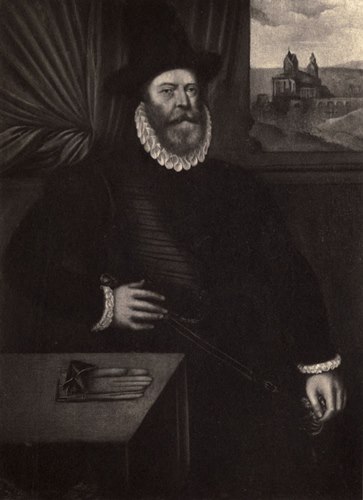
portrait of, 31;
Regent, 32;
political principles, 52;
in league with Darnley to restore Moray, 67;
Moray endeavours his recall, 73;
feud with Darnley, 78;
pardoned, 89, 112;
concerned in Darnley’s murder, 31, 90;
desires the Queen’s warrant before proceeding to extremities with Darnley, 117;
his confession, 118, 147, 148, 167, 168;
confederated against Bothwell, 181;
advised by Lethington to espouse Mary’s cause, 191;
accused by Mary of Darnley’s murder, 244;
Casket Letters entrusted to him, 195, 365;
declaration at Westminster respecting them, 272;
his story of the discovery of the Casket Letters, 274, 275, 276, 277;
in his dying declaration denounces Archibald Douglas, 32;
executed, 382
Napier of Merchistoun (soothsayer), 17, 36
Napier of Merchistoun (inventor of logarithms), 17;
treasure-finding, 375
Nau, Claude, on Mary’s escape to Dunbar, 72;
on the motives of Darnley’s murderers, 90;
on Mary’s abdication, 241;
on the band for Darnley’s murder given to Mary by Bothwell, 243;
account of Lethington’s conduct towards Mary, 288
Nelson (Darnley’s servant), in Kirk o’ Field at the explosion, 116;
on the position of Kirk o’ Field, 129;
escape, 140;
statement on the custody of the keys, 165, 175;
evidence at Westminster, 276;
on Darnley’s refusal to stay at Craigmillar, 319;
detained by Drury at Berwick, 319 note
Norfolk, Duke of, his proposed marriage with Mary, 155;
schemes, 246;
on the York commission of inquiry, 246, 252;
excuses delays of Scots Lords, 256;
for a compromise, 256;
confers with Moray, 259;
opposes a compromise, 261, 262;
doubts authenticity of Letters and would marry Mary, 257, 258, 259, 262;
prevents Mary from abdicating, 262;
Mary’s submissive attitude to him, 315;
Lethington asks him not to believe in Mary’s guilt, 357, 358
Northumberland, Earl of, in arms for Mary, 277
Ogilvy of Boyne, loved by Lady Jane Gordon and Mary Beaton, 26;
marries the divorced Lady Bothwell, 27, 218
Orkney, Bishop of, marries Mary to Bothwell, 62, 183
Orkney, Duke of, Bothwell created, 183
Ormistoun, Black Laird of (one of Darnley’s murderers), his treatment by Mary in prison, 6;
his exordium before being hanged, 35;
confession of a murder-band against Darnley, 99;
executed, 139
Ormistoun, Hob (one of Darnley’s murderers), 101, 139, 339, 341;
executed, 139
Paris (Nicholas Hubert), on the Craigmillar plot against Darnley, 103;
escapes with Bothwell to Denmark, 154;
extradited to Captain Clark, 154;
evidence taken by Moray, 155, 156;
nature of his deposition and the circumstances under which it was made, 156-170;
account of Lady Reres, 162;
receipt and delivery of Glasgow Letter, 292, 293, 299;
on the Glasgow Letter, 316, 327;
cited, 339, 340, 341, 342;
hanged at St. Andrews, 157, 378
Percy, Sir Harry, on Bothwell, 54
Periwigs, worn by Mary, 3 note
Philippson, M., on the translations of the Casket Letters, 386, 388
Pinkie, battle of, 19
Pitcairn’s ‘Criminal Trials,’ cited, 56
Pius V., Mary’s letter to him on political matters, 63
Pluscarden, Prior of, and the Casket, 365
Pollen, Father, cited, 230
Powrie (Bothwell’s servant), statement of, concerning Darnley’s murder, 142, 143, 144, 145, 146, 148, 149, 195, 280
Preston, Laird of Craigmillar (Provost of Edinburgh), Mary imprisoned in his house, 188
Price, Mr. F. Compton, cited, 363
Ramsay, Robert (Moray’s servant), hears Paris avouch the truth of his deposition, 157
Randolph (English ambassador at Holyrood), his opinion of Darnley, 11, 12;
on the Earl of Arran, 49;
reports Bothwell and Atholl all-powerful, 57;
on Lennox at Glasgow, 61;
reports ‘private disorders’ between Mary and Darnley, 63;
on Mary’s demand for free Mass for all men, 65;
aware of Darnley’s and Lennox’s schemes for obtaining the crown, 66;
favours Moray, 73;
on a murder-band, kept in a casket, aimed at Darnley, 87;
on the conduct of Lethington and Kirkcaldy towards Mary, 194, 360;
accuses Lethington of advising Mary’s death, 204;
hints at Lethington having tampered with the Letters(?), 361
Read, John (Buchanan’s secretary), supplies Cecil with a list of the signatories to Ainslie’s band, 177
‘Relation,’ the, cited on Riccio’s murder, 65
Reres, Lady, alleged confidant of Mary’s amour with Bothwell, 33, 48, 82, 83;
telepathic story assigned to her, 82;
Paris’s account of her as a go-between, 162;
rails at Mary’s marriage with Bothwell, 184
Reres, Laird of (son of Lady Reres), 83
Riccio, David, his intimacy with Mary, 58, 59;
complained of as a foreign upstart by Scots nobles, 58, 65;
reasons for discrediting his amour with Mary, 60;
Darnley’s hatred and jealousy of him, 63, 64, 65, 66;
‘band of assurance’ for his murder, 67;
nobles and others concerned, 67;
murdered, 69
Ridolfi plot, the, 6
Robertson, Dr. Joseph, on Lady Reres as wet nurse to Mary’s baby, 83;
on the Paris deposition, 158;
on the Glasgow Letter, 296
Rogers, William, informs Cecil of Darnley’s design to seize the Scilly Isles, 108 note
Ronsard (poet), quoted, 314;
on the Casket Sonnets, 344, 349
Ross, Bishop of. See Lesley
Ruthven Earl of, his account of Riccio’s murder, 17;
presents Mary with a ring as an antidote to poison, 17;
conspiring with Darnley, 67;
seeks refuge in England, 70;
his dying vision, 37;
death, 73
Sadleyr (one of Elizabeth’s commissioners), at the York inquiry, 246
St. Andrews, in Mary’s time, 40
St. Mary in the Fields. See Kirk o’ Field
Sanquhar, signs the band for delivering Mary from Loch Leven, 275, 276
Scarborough, Darnley’s designs on, 108
Schiller’s ‘Marie Stewart,’ cited, 2
Scilly Isles, Darnley’s designs on, 108 note
Scots Parliament, Casket Letters produced before, 241
Scottish Guards (in France), Bothwell captain of, 54
Scott’s ‘Abbot,’ cited, 2
Scrope, quoted, on Captain Cullen, 151-3
Sebastian (Mary’s servant), his marriage at Holyrood, 136, 148
Sempil, John, husband of Mary Livingstone, 356
Sepp, Dr., on the Casket Letters, 242
Seton, Mary (Mary’s attendant), ‘the finest busker of a woman’s hair,’ 3, 4
Seton, Mary’s conduct at, 175
Skelton, Sir John, on Bothwell’s age, 14;
his ‘Maitland of Lethington’ cited, 23;
on Mary’s knowledge of the plot against Darnley, 116, 117;
on Mary’s submissive attitude to Bothwell, 315
Sorcery, belief in, in the sixteenth century, 36
Spens (Black Mr. John), 175
Standen (brothers Anthony), one of them boasts that he saved Mary from assassination, 38;
Darnley’s companions, 60;
their immorality put to Darnley’s account, 75;
romantic memoirs of one of them imprisoned in the Tower, 75;
assist Darnley in his schemes, 108;
the younger, 137, 319 note
Stewart, Christian (heiress to the Buchan earldom), contracted in marriage with Lord James Stewart, 19;
legal inheritress to Buchan estates, 20;
married to Lord James, 20
Stewart d’Aubigny (Duke of Lennox), James’s banished favourite, 367
Stewart, Lord James (Moray’s brother), contracts himself in marriage to the Buchan child-heiress, 19;
secures the right of redemption of the Buchan estates, 19;
marries the heiress but loses the estates, 20
Stewart of Periven (Lennox’s retainer), 226
Stewart of Traquair, escorts Mary to Dunbar, 69
Stewart, Sir William (Lyon Herald), burnt for sorcery, 17, 36, 156, 374-379
Stirling, Mary at, 80;
baptism of James VI. at, 105, 106, 107;
full of ‘honest men of the Lennox,’ 109
Strickland, Miss, on Darnley’s signature to State documents, 60 note
Stuart, Lord Robert (Mary’s brother), account of him drawn from a Casket Letter, 135;
concerned in Darnley’s murder, 162, 165, 166;
Mary’s alleged attempt to provoke a quarrel between him and Darnley, 323, 327
Sussex, Earl of (one of Elizabeth’s commissioners), on Mary’s defence, 245;
believes in an intended compromise, 263;
doubts in judicial proof of Mary’s guilt, 264;
on Mary’s proofs, 287
Sutherland, Earl of, marries Bothwell’s divorced wife, 27;
member of council, 172
Tala. See Hay of Tala
Taylor (Darnley’s servant), killed at Kirk o’ Field, 132, 137, 139, 148
‘The Purpose’ or talking dance, 39
Throckmorton, Sir Nicholas (English envoy), visits Mary in prison, 29;
in communication with Lords of Council, 203, 204;
Lethington acquaints him with Casket Letters, 205, 237;
mentions them to Elizabeth, 355
Throndssön, Anne (Norwegian lady), Bothwell’s treatment of her, 47;
alleges breach of promise of marriage against Bothwell, 48
Tombs of the Kings, the, 39
Tulchan bishops, the, 30
Tullibardine, Mary at, 112
Tullibardine, signs band for releasing Mary from Loch Leven, 276
Walker (Archbishop Beaton’s retainer), on Darnley’s plot to kidnap the infant James, 108, 110, 111
Walsingham, Sir Francis, and the Casket Letters, 365
Westminster Conference, proceedings at, 240, 266, 270-276
Westmorland, Earl of, in arms for Mary, 277
Whithaugh, Laird of, holds Ker of Faldonside prisoner, 101;
shelters the Ormistouns, 101
Wilson, Dr., asks Cecil for Paris’s confession, 168;
on Mary, 247
Witchcraft and sorcery, 17, 36
Wood, John (Moray’s secretary), helps Lennox in his case against Mary, 150;
hears Paris testify to his deposition, 157;
bears letters to Moray and Cecil, 209, 226;
in custody of the Casket Letters, 196, 227, 228, 229;
on Lethington as a commissioner at Mary’s trial, 244;
slain by Forbes of Reres, 33
York, Commission of Inquiry at, 101, 226, 227, 230, 233, 246, 250 et seq.
Zytphen-Adeler, Baron, his care of Bothwell’s remains, 372
PRINTED BY
SPOTTISWOODE AND CO. LTD., NEW-STREET SQUARE
LONDON
Footnotes:
[1] Blackwood’s Magazine, December, 1889.
[2] Bond.
[3] Laing, ii. 284.
[4] See Murdin, p. 57.
[5] Among the mysteries which surround Mary, we should not reckon the
colour of her hair! Just after her flight into England, her gaoler, at
Carlisle, told Cecil that in Mary Seton the Queen had ‘the finest busker
of a woman’s hair to be seen in any country. Yesterday and this day she
did set such a curled hair upon the Queen, that was said to be a perewyke,
that showed very delicately, and every other day she hath a new device of
head dressing that setteth forth a woman gaily well.’ Henceforth Mary
varied the colour of her ‘perewykes.’ She had worn them earlier, but she
wore them, at least at her first coming into England, for the good reason
that, in her flight from Langside, she had her head shaved, probably for
purposes of disguise. So we learn from Nau, her secretary. Mary was
flying, in fact, as we elsewhere learn, from the fear of the fiery death
at the stake, the punishment of husband-murder. Then, and then only, her
nerve broke down, like that of James VIII. at Montrose; of Prince Charles
after Culloden; of James VII. when he should have ridden with Dundee to
the North and headed the clans.
[6] The papers used by Lennox in getting up his indictment against Mary
are new materials, which we often have occasion to cite.
[7] Mr. Henderson doubts if Darnley knew French.
[8] M. Jusserand has recently seen the corpse of Bothwell. Appendix A.
[9] Actio, probably by Dr. Wilson, appended to Buchanan’s Detection.
[10] Teulet, ii. p. 176. Edinburgh, June 17, 1567.
[11] See a facsimile in Teulet, ii. 256.
[12] Appendix B. ‘Burning of the Lyon King at Arms.’
[13] The private report is in the Lennox MSS.
[14] See the sketch, coloured, in Bannatyne Miscellany, vol. i. p. 184.
[15] See description by Alesius, about 1550, in Bannatyne Miscellany, i.
185-188.
[16] Information from Father Pollen, S.J.
[17] This gentleman must not be confused with Ormistoun of Ormistoun, in
Teviotdale, ‘The Black Laird,’ a retainer of Bothwell.
[18] Riddell, Inquiry into the Law and Practice of the Scottish Peerage,
i. 427. Joseph Robertson, Inventories, xcii., xciii. Schiern, Life of
Bothwell, p. 53.
[19] Randolph to Cecil, Edinburgh, Sept. 23, 1560. Foreign Calendar,
1560-61, p. 311.
[20] Hay Fleming, Mary Queen of Scots, p. 236, note 32.
[21] Cal. For. Eliz. 1561-62, iv. 531-539.
[22] Knox, Laing’s edition, ii. 322-327. Randolph to Cecil ut supra.
[23] Knox, ii. 347.
[24] Knox, ii. 473.
[25] Hay Fleming, p. 359, note 29.
[26] Knox, ii. 479.
[27] See Cal. For. Eliz. 1565, 306, 312, 314, 319, 320, 327, 340, 341,
347, 351.
[28] Calendar, Bain, ii. 223.
[29] Bain, ii. 213.
[30] Ibid. ii. 242, 243.
[31] Hosack, i. 524.
[32] Cal. For. Eliz. 1564-5, 464.
[33] Bain, ii. 222-223.
[34] Bain, ii. 225. Cal. For. Eliz. 1564-5, 464, 495. Hay Fleming, pp.
380, 381.
[35] Miss Strickland avers that ‘existing documents afford abundant proof,
that whenever Darnley and the Queen were together, his name was written by
his own hand.’
[36] October 31, 1565. Bain, ii. 232.
[37] Bain, ii. 234.
[38] Randolph to Cecil, Nov. 19, Dec. 1, 1565. Bain, ii. 241, 242.
[39] Bain, ii. 242.
[40] Buchanan, Historia, 1582, fol. 210.
[41] Bain, ii. 247.
[42] The Foreign Calendar cites Randolph up to the place where amantium
iræ is quoted, but omits that. The point is important, if it indicates
that Randolph had ceased to believe in Mary’s amour with Riccio. Cf. Bain,
ii. 248.
[43] Nau, p. 192.
[44] The subject is discussed, with all the evidence, in Hay Fleming, pp.
379, 380, note 33.
[45] Ruthven’s Narrative. Keith, iii. 260. There are various forms of
this Narrative; one is in the Lennox MSS.
[46] Goodall, i. 274.
[47] Bain, ii. 255.
[48] Printed in a scarce volume, Maitland’s Narrative, and in Tytler,
iii. 215. 1864.
[49] Bain, ii. 259-261.
[50] Goodall, i. 266-268.
[51] Hosack, ii. 78, note 3.
[52] See Dr. Stewart, A Lost Chapter in the History of Mary Queen of
Scots, pp. 93, 94.
[53] This is alleged by Mary, and by Claude Nau, her secretary.
[54] Goodall, i. 264, 265.
[55] Bain, ii. 289.
[56] Cal. For. Eliz. viii. 51.
[57] Bain, ii. 276. Cal. For. Eliz. viii. 52.
[58] Cal. For. Eliz. viii. 62.
[59] Bain ii. 278.
[60] Ibid. ii. 281.
[61] See Joseph Robertson’s Inventories, 112.
[62] Bain, ii. 283.
[63] Melville, pp. 154, 155.
[64] Bain, ii. 288, 289.
[65] Bain, ii. 290.
[66] Bain, ii. 294.
[67] Nau, 20, 22.
[68] Bain, ii. 296.
[69] Detection, 1689, pp. 2, 3.
[70] Cal. For. Eliz. viii. 118.
[71] Stevenson, Selections, pp. 163-165.
[72] Cheruel, Marie Stuart et Catherine de Médicis, p. 47.
[73] Robertson, Inventories, p. 167.
[74] Bain, ii. 300.
[75] Detection (1689), p. 4.
[76] Bain, ii. 440.
[77] Bannatyne, Journal, p. 238. This transference of disease, as from
Archbishop Adamson to a pony, was believed in by the preachers.
[78] Teulet, Papiers d’État, ii. 139-146, 147, 151. See also Keith, ii.
448-459.
[79] Frazer, The Lennox, ii. 350, 351.
[80] Cal. For. Eliz. ix. 354, 355.
[81] Laing, ii. 331, 334.
[82] Nau, p. 35.
[83] Bain, ii. 599, 600.
[84] Bain, ii. 276.
[85] Diurnal, p. 99.
[86] See the evidence in Hay Fleming, 414, note 61.
[87] Cal. For. Eliz. viii. 139. Diurnal, 101.
[88] Teulet, ii. 150.
[89] Laing, ii. 72.
[90] Hay Fleming, 418, 419.
[91] Queen Mary at Jedburgh, p. 23.
[92] Bain, ii. 597-599. Anderson, iv. pt. ii. 186. Keith, iii. 290-294.
[93] Goodall, ii. 359.
[94] Historia, fol. 214.
[95] Keith, iii. 294. Bain, ii. 600.
[96] Laing, ii. 293, 294.
[97] The original MS. has been corrected by Lennox, in the passages within
brackets. The italics are my own.
[98] Bain, ii. 516, 517.
[99] De Brienne came to Craigmillar on November 21, 1566, Diurnal.
[100] Nau, p. 33.
[101] Bain, ii. 293, 310.
[102] Melville, p. 172. (1827.)
[103] Crawford, in his deposition against Mary, says that she spoke sharp
words of Lennox, at Stirling, to his servant, Robert Cunningham.
[104] Keith, i. xcviii.
[105] Bain, ii. 293. This Rogers it was who, later, informed Cecil that
‘gentlemen of the west country’ had sent to Darnley a chart of the Scilly
Isles. If Darnley, among other dreams, thought of a descent on them, as he
did on Scarborough, he made no bad choice. Mr. A. E. W. Mason points out
to me that the isles ‘commanded the Channel, and all the ships from the
north of England,’ which passed between Scilly and the mainland,
twenty-five miles off. The harbours being perilous, and only known to the
islesmen, a small fleet at Scilly could do great damage, and would only
have to run back to be quite safe. Darnley, in his moods, was capable of
picturing himself as a pirate chief.
[106] Hay Fleming, p. 415, note 63.
[107] Labanoff, ii.
[108] Labanoff, i. 396-398. Mary to Beaton, Jan. 20, 1567.
[109] Hosack, ii. 580. Crawford’s deposition.
[110] Hosack, i. 534.
[111] Cal. For. Eliz. viii. 163, 164. January 9, 1567.
[112] See Appendix C, ‘The date of Mary’s visit to Glasgow.’
[113] The ‘undermining and’ are words added by Lennox himself to the MS.
They are important.
[114] Maitland of Lethington.
[115] Cal. For. Eliz. viii. 167-168.
[116] On July 16, 1583, she wrote from Sheffield to Mauvissière, the
French Ambassador, bidding him ask the King of France to give Archibald
Douglas a pension, ‘because he is a man of good understanding and
serviceable where he chooses to serve, as you know.’ She intended to
procure his pardon from James (Labanoff, v. 351, 368). She employed him,
and he betrayed her.
[117] Laing, ii. 223-236.
[118] Bain, ii. 599, 600.
[119] Registrum de Soltre, p. xxxv, Bannatyne Club, 1861.
[120] Records of the Burgh of Edinburgh, March 14, 1541.
[121] Registrum de Soltre, xxxvii.
[122] Burgh Records, Nov. 5, 1557.
[123] Burgh Records, Feb. 19, 1560, March 12, 1560.
[124] Burgh Records.
[125] Keith, ii. 151, 152. Editor’s note.
[126] Registrum de Soltre, p. xli.
[127] Burgh Records, Feb. 19, March 12, 1560.
[128] Laing, ii. 254.
[129] Lennox MSS.
[130] See Hay Fleming, p. 434.
[131] Lennox’s sources must have been Nelson and the younger Standen, to
whom Bothwell gave a horse immediately after the murder. Standen returned
to England four months later.
[132] Diurnal, 105, 106.
[133] Keith, i. cii.
[134] Register Privy Council, i. 498.
[135] Melville, p. 174, Bannatyne Club.
[136] Labanoff, vii. 108, 109, Paris. March 16, 1567.
[137] Hosack, i. 536, 537.
[138] Spanish Calendar, i. 635, April 23.
[139] Hosack, i. 534. The ‘Book of Articles,’ of 1568, was obviously
written under the impression left by a forged letter of Mary’s, or by the
reports of such a letter, as we shall show later. Yet the author cites a
Casket Letter as we possess it.
[140] Bain, ii. 393.
[141] This is not, I think, a letter of September 5, but of September 16,
but in Foreign Calendar Elizabeth, viii. p. 342, most of the passage
quoted by Mr. Hosack is omitted.
[142] Laing, ii. 28.
[143] Cal. For. Eliz. viii. p. 392.
[144] Laing, ii. 256.
[145] Diurnal, 127, 128. Cal. For. Eliz. viii. 393.
[146] Hosack, ii. 245.
[147] This was obvious to Laing. Replying to Goodall’s criticism of verbal
coincidences in the confessions, Laing says, ‘as if in any subsequent
evidence concerning the same fact, the same words were not often dictated
by the same Commissioner, or recorded by the Clerk, from the first
deposition which they hold in their hands.’ It does not seem quite a
scientific way of taking evidence.
[148] See the Confessions, Laing, ii. 264.
[149] Bain, ii. 312, 313.
[150] Arnott and Pitcairn, Criminal Trials.
[151] Buchanan, History (1582), fol. 215.
[152] Maitland Miscellany, iv. p. 119.
[153] French Foreign Office, Registre de Depesches d’Ecosse, 1560-1562,
fol. 112.
[154] Cal. For. Eliz. viii. p. 7, No. 31.
[155] Cal. For. Eliz. viii. 229. Drury would not here add to our
confidence by saying that ‘Sir Andrew Ker’ (if of Faldonside) ‘with others
were on horseback near to the place for aid to the cruel enterprize if
need had been.’ Ker, a pitiless wretch, was conspicuous in the Riccio
murder, threatened Mary, and had but lately been pardoned. After Langside,
he was kept prisoner, in accordance with Mary’s orders, by Whythaugh. But
the Sir Andrew of Drury is another Ker.
[156] Bain ii. 321, 325.
[157] Cal. For. Eliz. viii. 252.
[158] Bain, ii. 394. Cullen is spelled ‘Callan,’ and is described as
Bothwell’s ‘chalmer-chiel.’
[159] Bain, ii. 355.
[160] Cal. For. Eliz. viii. 500. Hosack, i. 350, note 2, and Schiern’s
Bothwell.
[161] Laing, ii. 269.
[162] Bain, ii. 698.
[163] See Appendix B, ‘The Burning of the Lyon King at Arms.’
[164] Bain, ii. 667, 668.
[165] Laing, i. 256, 257.
[166] Laing, ii. 253.
[167] Murdin, i. 57.
[168] Laing, ii. 286, 287.
[169] Laing, ii. 259.
[170] Laing, ii. 254.
[171] Laing, ii. 267, 268.
[172] Laing, ii. 287.
[173] Anderson, 1, part II., 76, 77.
[174] Nau, Appendix ii. 151, 152. The Jesuits’ evidence was from letters
to Archbishop Beaton.
[175] Murdin, p. 57.
[176] In the ‘Book of Articles,’ and in the series of dated events called
‘Cecil’s Journal.’
[177] Hay Fleming, p. 444.
[178] Spanish Calendar, i. 628. For Moray’s dinner party, cf. Bain, ii.
317.
[179] Spanish Calendar, i. 635.
[180] Laing, ii. 244.
[181] Labanoff, ii. 2-4.
[182] Venetian Calendar, vii. 388, 389. There were rumours that Lennox had
been blown up with Darnley, and, later, that he was attacked at Glasgow,
on February 9, by armed men, and owed his escape to Lord Semple. It is
incredible that this fact should be unmentioned, if it occurred, by Lennox
and Buchanan.
[183] Hay Fleming, pp. 442-443.
[184] Robertson, Inventories, p. 53.
[185] Anderson, i. 112. Bain, ii. 322.
[186] Keith knew a copy in the Scots College at Paris, attested by Sir
James Balfour as ‘the authentick copy of the principall band.’ This copy
Sir James sent to Mary, in January, 1581, after Morton’s arrest. The names
of laymen are Huntly, Argyll, Morton, Cassilis, Sutherland, Errol,
Crawford, Caithness, Rothes, Boyd, Glamis, Ruthven, Semple, Herries,
Ogilvy, Fleming. John Read’s memory must have been fallacious. There are
eight prelates in Balfour’s band, including Archbishop Hamilton, the
Bishop of Orkney, who joined in prosecuting Mary, and Lesley, Bishop of
Ross (Keith, ii. 562-569). On the whole subject see a discussion by Mr.
Bain and Mr. Hay Fleming, in The Genealogist, 1900-1901. Some copies are
dated April 20. See Fraser, The Melvilles, i. 89.
[187] Spanish Calendar, i. 662.
[188] Cal. For. Eliz. viii. 213.
[189] Bain, ii. 323, 324.
[190] Melville, p. 177.
[191] Melville, p. 178.
[192] Drury to Cecil, Cal. For. Eliz. viii. 222.
[193] Cal. For. Eliz. viii. 223-224.
[194] May 6, Drury to Cecil.
[195] Drury to Cecil, May 6. Cal. For. Eliz. viii. 223, 224.
[196] Undated letter in Bannatyne, of 1570-1572.
[197] See Stewart’s Lost Chapter in the History of Queen Mary for the
illegalities of the divorce. The best Catholic opinion is agreed on the subject.
[198] Melville, 182. Teulet, ii. 153, 170.
[199] Cal. For. Eliz. viii. 235.
[200] Drury to Cecil, Cal. For. Eliz. viii. 240.
[201] Dates from James Beaton’s letter of June 17. Laing, ii. 106, 115.
[202] Nau, 46-48.
[203] Laing, i. 113. June 17, 1567.
[204] Melville, p. 183.
[205] Teulet, ii. 179.
[206] Teulet, ii. 169, 170. June 17.
[207] Bannatyne’s Memorials, p. 126.
[208] Nau, 50-54.
[209] Laing, ii, 115.
[210] Bannatyne, Journal, 477, 482.
[211] Chalmers, Life of Mary, Queen of Scots (1818), ii. 486, 487, note.
I do not understand Randolph to bring these charges merely on the ground
of Mary’s word. That he only adds as corroboration, I think, of facts
otherwise familiar to him.
[212] Mr. Froude has observed that the Lords, ‘uncertain what to do, sent
one of their number in haste to Paris, to the Earl of Moray, to inform him
of the discovery of the Letters, and to entreat him to return
immediately.’ Mr. Hosack says that Mr. Froude owes this circumstance
‘entirely to his imagination.’ This is too severe. The Lords did not send
‘one of their number’ to Moray, but they sent letters which Robert
Melville carried as far as London, and, seventeen days later, they did
send a man who, if not ‘one of their number,’ was probably Moray’s agent,
John Wood (Hosack, i. 352).
[213] Cal. For. Eliz. viii. p. 261.
[214] Spanish Calendar, i. 657.
[215] Cal. For. Eliz. ix. pp. 354, 355.
[216] Fénelon, Dépêches (1838), i. 19, 20.
[217] Fénelon, i. 22. To this point we shall return.
[218] La Mothe Fénelon, vii. 275-276.
[219] Cal. Span. i. 659.
[220] Bain, ii. 336.
[221] Bain, ii. 338.
[222] Bain, ii. 339.
[223] Bain, ii. 341.
[224] Melville to Cecil, July 1. Bain, ii. 343.
[225] Bain, ii. 350, 351.
[226] Bain, ii. 322, 360.
[227] Ibid. 358.
[228] Cal. For. Eliz. viii. 297, 298. Keith, ii. 694, 700.
[229] Already, on July 16, Mary had offered verbally, by Robert Melville,
to the Lords, to make Moray Regent: or, failing him, to appoint a Council
of Regency, Châtelherault, Huntly, Argyll, Atholl, Lennox, and, ‘with much
ado,’ Morton, Moray, Mar, and Glencairn. But she would not abandon
Bothwell, as she was pregnant. Throckmorton does not say that she now
promised to sign an abdication. A letter of Mary’s, to Bothwell’s
captain in Dunbar, was intercepted, ‘containing matter little to her
advantage.’ It never was produced by her prosecutors (Throckmorton, July
18. Bain, ii. 355,356). Robert Melville, visiting her, declined to carry
such a letter to Bothwell. See his examination, in Addit. MSS. British
Museum, 33531, fol. 119 et seq.
[230] Bain, ii. 367.
[231] Bain, ii. 328.
[232] Ibid. i. 346-348.
[233] Bain, ii. 346.
[234] Ibid. 354. July 16.
[235] Alava to Philip, July 17. Teulet, v. 29.
[236] De Silva, July 26, August 2. Spanish Calendar, i. 662, 665. I have
occasionally preferred the Spanish text to Major Hume’s translations. See
also Hosack, i. 215, 216.
[237] Froude, iii. 118. 1866.
[238] Lennox MSS.
[239] The words within inverted commas are autograph additions by Lennox
himself.
[240] Ogilvy of Boyne, who married his old love, Lady Bothwell, after the
death of her second husband, the Earl of Sutherland. See pp. 26, 27, supra.
[241] A Lost Chapter in the History of Mary Stuart.
[242] Throckmorton to Elizabeth, July 18. Bain, ii. 355.
[243] Throckmorton to Elizabeth, July 31, 1567. Bain, ii. 370.
[244] Maitland Miscellany, vol. iv. part i. p. 119.
[245] Teulet, ii. 255, 256.
[246] Labanoff, ii. 106.
[247] Bain, ii. 423.
[248] Ibid. 441, 442.
[249] I do not know where the originals of these five letters now are.
They were among the Hamilton Papers, having probably been intercepted by
the Hamiltons before they reached Moray, Lethington, Crawford, and the
others.
[250] Bain, ii. 514.
[251] Ibid. 523, 524.
[252] For. Eliz. viii. 478, 479. Bain, ii. 426, 427.
[253] Bowton’s confession. Laing, ii. 256, 257.
[254] Cal. For. Eliz. viii. 331.
[255] Cal. For. Eliz. viii. 363.
[256] Moray, Morton, Glencairn, Errol, Buchan, Home, Ruthven, Semple,
Glamis, Lindsay, Gray, Graham, Ochiltree (Knox’s father-in-law),
Innermeith, the treacherous Bishop of Orkney, Sir James Balfour (deeply
involved in the murder), Makgill, Lethington, Erskine of Dun, Wishart of
Pitarro, Kirkcaldy of Grange, and others of less note.
[257] Nau, pp. 71-73.
[258] Teulet, ii. 247.
[259] Act in Henderson, 177-185.
[260] Nau, 74, 75.
[261] Goodall, ii. 361. B. M. Titus, c. 12, fol. 157 (olim 175). ‘And
gif it beis allegit, yat hir matz wretting producit in pliamẽt, sould
proiff hir g, culpable. It maybe ansrit yat yäre is na plane mentione maid
in it, be ye quhilk hir hienes may be convict Albeit it wer hir awin hand
wreitt, as it is not And als the same is cuttit (cullit?) be yame selfis
in sum principall & substantious clausis.’
[262] Sepp, Tagebuch, Munich, 1882.
[263] Bain, ii. 441, 442.
[264] Maitland Club Miscellany, iv. 120, 121.
[265] Teulet, ii. 248.
[266] Bain, ii. 517.
[267] Bain, ii. 434.
[268] Nov. 8, 1571. Murdin, p. 57.
[269] State Trials, i. 978.
[270] As to ‘the subtlety of that practice,’ which puzzled Mr. Froude,
Laing offers a highly ingenious conjecture. Mary was to do the Scots
translations, procured for her by Lethington, into her own French,
omitting the compromising portions. Lethington was next ‘privately to
substitute or produce the Queen’s transcript instead of the originals,
with the omission of those criminal passages, which might then be opposed
as interpolated in the translation.’ But in that case ‘some variance of
phrase’ by Mary could bring nothing ‘to light,’ for there would be no
originals to compare. Lethington, while slipping Mary’s new transcript
into the Casket (Laing, i. 145, 146), would, of course, remove the
original letters in French, leaving the modified transcript in their
place. ‘Variance of phrase’ between an original and a translation could
prove nothing. Moreover, if Lethington had access to the French letters,
it was not more dangerous for him to destroy them than to substitute a
version which Moray, Morton, Buchanan, and all concerned could honestly
swear to be false. The Bishop of Ross did, later, manage an ingenious
piece of ‘palming’ letters on Cecil, but, in the story of ‘palming’ fresh
transcripts into the Casket there is no consistency. Moreover Melville’s
word is at least as good as Lesley’s, and Melville denies the truth of
Lesley’s confession.
[271] British Museum Addit. MSS. 33531, fol. 119, et seq. The MS. is
much injured.
[272] Murdin, pp. 52, 58.
[273] Bain, ii. 524.
[274] Addit. MSS. ut supra.
[275] Goodall, ii. 111.
[276] Bain, ii. 518, 519.
[277] Ibid. 519.
[278] Bain, ii. 524.
[279] Lennox MSS.
[280] Bain, ii. 520, 521.
[281] Goodall, ii. 140.
[282] The production is asserted, Goodall, ii. 87.
[283] Calderwood, iii. 556.
[284] For the Ainslie Band, and the signatories, see Bain, ii. 322, and
Hay Fleming, p. 446, note 60, for all the accounts.
[285] Hosack, i. 543.
[286] There are two sets of extracts (Goodall, ii. 148-153): one of them
is in the Sadleyr Papers, edited by Sir Walter Scott, and in Haynes, p.
480. This is headed ‘A brief Note of the chief and principal points of the
Queen of Scots Letters written to Bothwell for her consent and procurement
of the murder of her husband, as far forth as we could by the reading
gather.’ The other set is in Scots, ‘Notes drawin furth of the Quenis
letters sent to the Erle Bothwell.’ If this were, as Miss Strickland
supposed, an abstract made and shown in June-July, it would prove, of
course, that Letter II. was then in its present shape, and would destroy
my hypothesis. But Cecil endorses it. ‘sent October 29.’ I think it
needless to discuss the notion that Lethington and his companions showed
only the Scots texts, and vowed that they were in Mary’s handwriting! They
could not conceivably go counter, first, to Moray’s statement (June 22,
1568) that the Scots versions were only translations. Nor could they,
later, produce the Letters in French, and pretend that both they and the
Scots texts were in Mary’s hand. Doubtless they showed the French (though
we are not told that they did), but the English Commissioners, odd as it
seems, preferred to send to Elizabeth extracts from the Scots.
[287] Bain, ii. 526-528. See also in Hosack, ii. 496-501, with the
obliterated lines restored.
[288] Bain, ii. 529-530.
[289] Bain, ii. 533, 534.
[290] Goodall, ii. 162-170. The dates here are difficult. Lesley certainly
rode to Bolton, as Knollys says, on October 13, a Wednesday. (See the
English Commissioners to Elizabeth. Goodall, ii. 173. York, October 17.)
By October 17, Lesley was again at York (Goodall, ii. 174). Therefore I
take it that Lesley’s letter to Mary (Bain, ii. 533, 534) is of October
18, or later, and that the ‘Saturday’ when Norfolk and Lethington rode
together, and when Lethington probably shook Norfolk’s belief in the
authenticity of the Casket Letters, is Saturday, October 16.
[291] Bain, ii. 533, 534.
[292] Ibid. ii. 693.
[293] Bain, ii. 541.
[294] Ibid. ii. 533.
[295] Addit. MSS. ut supra.
[296] His letter is given in full by Hosack, i. 518-522.
[297] Goodall, ii. 179-182.
[298] Bain, ii. 551.
[299] Goodall, ii. 182, 186.
[300] Goodall, ii. No. lxvi. 189.
[301] Anderson, iv. pt. ii. 115-121. Goodall, ii. 203-207.
[302] Teulet, ii. 237.
[303] Anderson, ii. 125-128. Bain, ii. 562, 563.
[304] See Hosack, i. 432, 583. The opinions of the Legists are taken from
La Mothe, i. 51, 54. December 15, 1568.
[305] Goodall, ii. 222-227. But compare her letter of Nov. 22, p. 265,
supra.
[306] Bain, ii. 565, 566.
[307] Goodall, ii. 229.
[308] In my opinion the book is by George Buchanan, who presents many
coincident passages in his Detection. On February 25, 1569, one Bishop,
an adherent of Mary’s, said, under examination, that ‘there were sundry
books in Latin against her, one or both by Mr. George Buchanan,’ books not
yet published (Bain, ii. 624). Can the Book of Articles have been done
into Scots out of Buchanan’s Latin?
[309] When Goodall and Laing wrote (1754, 1804) the Minutes of December 7
had not been discovered.
[310] Bain, ii. 569, 570.
[311] Bain, ii. 571-573. (Cf. pp. 254, note 3, and 271, supra.)
[312] See Appendix E, ‘The Translation of the Casket Letters.’
[313] The extant copy is marked as of December viii. That is cancelled,
and the date ‘Thursday, December 29’ is given; the real date being
December 9. (Bain, ii. 576, 593, 730, 731.) This Declaration was one of
the MSS. of Sir Alexander Malet, bought by the British Museum in 1883. The
Fifth Report of the Historical MSS. Commission contains a summary, cited
by Bresslau, in Kassetenbriefen, pp. 21, 23, 1881. In 1889, Mr.
Henderson published a text in his Casket Letters. That of Mr. Bain, ut
supra, is more accurate (ii. 730 et seq.). Mr. Henderson substitutes
Andrew for the notorious Archibald Douglas, and there are other
misreadings in the first edition.
[314] See ‘The Internal Evidence,’ pp. 302-313.
[315] Mr. Bain omits December 13; see Goodall, ii. 252.
[316] Bain, ii. 579, 580.
[317] Froude, 1866, iii. 347.
[318] Proceedings of Society for Psychical Research, vol. iii. pp. 282,
283, 294.
[319] See Bain, ii. 581, for Crawford; the matter of this his second
deposition, made on December 13, is not given; we know it from the Lennox
Papers. The Diurnal avers that Tala, on the scaffold, accused Huntly,
Argyll, Lethington, Balfour, and others of signing the band for the
murder, ‘whereto the Queen’s grace consented.’ Naturally the Queen’s
accusers did not put the confession about Lethington forward, but if Tala
publicly accused Mary, why did they omit the circumstance?
[320] Ballad by Tom Truth, in Bain under date of December, 1568.
[321] Goodall, ii. 257-260. Bain, ii. 580, 581.
[322] Froude, viii. 484. Mr. Froude’s page-heading runs: ‘The English
nobles pronounce them’ (the Letters) ‘genuine.’ But this, as he shows in
the passage cited, they really did not do. They only said that Elizabeth
must not see Mary, ‘until some answer had been made first....’ However,
Elizabeth would not even let Mary see the Letters; and so no ‘answer’ was
possible.
[323] Lingard, vi. 94, note 2 (1855).
[324] Bain, ii. 583.
[325] Another account, by Lesley, but not ‘truly nor fully’ reported, as
Cecil notes, is in Groodall, ii. 260, 261. Compare La Mothe Fénelon, i.
82. Bain, ii. 585.
[326] Hosack, i. 460.
[327] Goodall, ii. 281.
[328] La Mothe, January 20, 30, 1569, i. 133-162.
[329] Goodall, ii. 272, 273.
[330] Goodall, ii. 307-309.
[331] Lesley, like Herries, had no confidence in Mary’s cause. On December
28, 1568, he wrote a curious letter to John Fitzwilliam, at Gray’s Inn.
Lesley, Herries, and Kilwinning (a Hamilton) had met Norfolk, Leicester,
and Cecil privately. The English showed the Book of Articles, but
refused to give a copy, which seems unfair, as Mary could certainly have
picked holes in that indictment. Lesley found the Englishmen ‘almost
confirmed in favour of our mistress’s adversaries.’ Norfolk and Cecil ‘war
sayrest’ (most severe), and Norfolk must either have been dissembling, or
must have had his doubts about the authenticity of the Casket Letters
shaken by comparing them with Mary’s handwriting. Lesley asks Fitzwilliam
to go to their man of law, ‘and bid him put our defences to the
presumptions in writ, as was devised before in all events, but we hope for
some appointment (compromise), but yet we arm us well.’ Mary, however,
would not again stoop to compromise. (Bain, ii. 592, 593.)
[332] Bain, ii. 570.
[333] In the Cambridge MS. of the Scots translations (C) our Letter II. is
placed first. This MS. is the earliest.
[334] It is indubitable that ‘Cecil’s Journal’ was supplied by the
prosecution, perhaps from Lennox, who had made close inquiries about the
dates.
[335] Bresslau, Hist. Taschenbuch, p. 71. Philippson, Revue
Historique, Sept., Oct., 1887, p. 31. M. Philippson suggests that
Lethington’s name may not have been mentioned in the French, but was
inserted (perhaps by Makgill, or other enemy of his, I presume) in the
English, to damage the Secretary in the eyes of the English Commissioners.
[336] Hosack, i. 217, 218.
[337] See the letter in Appendix, ‘Casket Letters.’
[338] ‘Yesternicht’ is omitted in the English. See Appendix E,
‘Translation of the Casket Letters.’
[339] The last italicised words are in the English translation, not in the
Scots.
[340] Hosack, ii. 24.
[341] Father Pollen kindly lent me collations of this Cambridge MS.
translation into Scots, marked by me ‘C.’
[342] See Letter and Crawford’s Deposition in Appendix. Mr. Henderson, in
his Casket Letters (second edition, pp. xxvi, xxvii, 82-84), argues that
the interdependence of Crawford’s Deposition and of Letter II. ‘does not
seem to be absolutely proved.’ Perhaps no other critic doubts it.
[343] Goodall, ii. 246.
[344] The English runs, ‘Indeede that he had found faulte with me....’ Mr.
Bain notes ‘a blank left thus’ (Bain, ii. 723).
[345] Lennox MSS.
[346] Mr. Frazer-Tytler, who did not enter into the controversy, supposed
that Crawford’s Deposition was the actual written report, made by him to
Lennox in January 1567. If so, Letter II. is forged.
[347] Mr. Henderson writes (Casket Letters, second edition, p. xxvi):
‘It must be remembered that while Crawford affirms that he supplied Lennox
with notes of the conversation immediately after it took place, he does
not state that the notes were again returned to him by Lennox in order to
enable him to form his deposition.’ How else could he get them, unless he
kept a copy? ‘It is also absurd to suppose that Lennox, on June 11, 1568,
should have written to Crawford for notes which he had already in his own
possession.’ But Lennox did not do that; he asked, not for Mary’s
conversation with Darnley, but for Crawford’s with Mary, which Crawford
never says that he wrote down ‘at the time.’ Mr. Henderson goes on to
speak of ‘the notes having been lost,’ and ‘these documents had apparently
been destroyed’ (p. 84), of which I see no appearance.
[348] Goodall, ii. 246. Maitland Club Miscellany, iv. pt. i. p. 119. It
will be observed that while Crawford swears to having written down
Darnley’s report for Lennox ‘at the time,’ he says that he ‘caused to be
made’ the writing which he handed in to the Commissioners, ‘according to
the truth of his knowledge.’ Crawford’s Deposition handed in to the
Commissioners, in fact, has been ‘made,’ that is, has been Anglicised from
the Scots; this is proved by the draft in the Lennox Papers. This is what
Crawford means by saying that he ‘caused it to be made.’ There is a
corrected draft of the declaration in the Lennox MSS., but Crawford’s
original autograph text, ‘written with his hand’ (in Scots doubtless), was
retained by the Lords (Goodall, ii. 88).
[349] The Deposition, in Bain, ii. 313, is given under February, 1567, but
this copy of it, being in English, cannot be so early.
[350] Historia, fol. 213. Yet the Lennox dossier represents Darnley as
engaged, at this very time, at Stirling, in a bitter and angry quarrel
with Mary. He may have been in contradictory moods: Buchanan omits the
mood of fury.
[351] Maitland of Lethington, ii. 337.
[352] Mary to Norfolk, Jan. 31, 1570. Labanoff, iii. 19.
[353] Labanoff, iii. 62.
[354] The prosecution is in rather an awkward position as to Bothwell’s
action when he returned to Edinburgh, after leaving Mary at Callendar,
which we date January 21, and they date January 23. Cecil’s Journal
says, ‘January 23 ... Erle Huntly and Bothwell returnit that same nycht
to Edynt [Edinburgh] and Bothwell lay in the Town.’ The Book of
Articles has ‘Bot boithuell at his cuming to Edinburgh ludgit in the
toun, quhair customably he usit to ly at the abbay,’ that is, in Holyrood
(Hosack, i. 534). The author of the Book of Articles clearly knew
Cecil’s Journal; perhaps he wrote it. Yet he makes Mary stay but one
night at Callendar; Cecil’s Journal makes her stay two nights. However,
our point is that both sources make Bothwell lie in the town, not at
Holyrood, on the night of his return from Callendar. His object, they
imply, was to visit Kirk o’ Field privately, being lodged near it and not
in his official rooms. But here they are contradicted by Paris, who says
that when he brought Mary’s first Glasgow Letter to Bothwell he found him
in his chambers at Holyrood (Laing, ii. 282).
[355] Nelson, according to Miss Strickland (Mary Stuart, ii. 178, 1873),
left Edinburgh for England, and was detained by Drury for some months at
Berwick. For this Miss Strickland cites Drury to Cecil, Berwick, February
15, 1567, a letter which I am unable to find in the MSS. But the lady is
more or less correct, since, on February 15, Mary wrote to Robert
Melville, in England, charging him, in very kind terms, to do his best for
Anthony Standen, Darnley’s friend, who was also going to England (Frazer,
The Lennox, ii. 7). A reference to Cal. For. Eliz. viii. 193, No. 1029,
shows that a letter of Mary to Drury, asking free passage for Standen and
four other Englishmen, is really of March 15, not of February 15. Again, a
letter of March 8, 1567, from Killigrew, at Edinburgh, to Cecil, proves
that ‘Standen, Welson, and Guyn, that served the late king, intend to
return home when they can get passport’ (Bain, ii. 347, No. 479). Now
‘Welson’ is obviously Nelson. On June 16, Drury allowed Standen to go
south (Cal. For. Eliz. viii. 252, No. 1305). Nelson, doubtless, also
returned to Lennox. It is odd that Lennox, having these two witnesses,
should vary so much, in his first indictment, from the accepted accounts
of events at Kirk o’ Field. This Anthony Standen is the younger of the two
brothers of the same name. The elder was acting for Darnley in France at
the time of the murder. He lived to a great age, recounting romances about
his adventures.
[356] Mr. Hay Fleming suggests that ‘Jhone a Forret’ may be Forret of that
ilk—of Forret near Cairnie. Of him I have no other knowledge.
[357] Hatfield MSS. Calendar, i. 376, 377.
[358] Melville, Memoirs, 173, 174. Hosack’s Mary, i. 536 (The Book of
Articles). Anderson, ii. 18, 19 (Detection). Cecil’s Journal, under
date Saturday, February 8, has ‘She confronted the King and my lord of
Halyrodhouse conforme to hir letter wryttin the nycht before:’ that is,
this Letter III.
[359] Mr. Hosack makes an error in averring that no letter as to this
intrigue was produced at Westminster or later; that the letter was only
shown at York in October, 1568. There and then Moray’s party ‘inferred,
upon a letter of her own hand, that there was another meane of a more
cleanly conveyance devised to kill the King’ (Goodall, ii. 142; Hosack, i.
409, 410). The letter was that which we are now considering.
[360] The Scots has ‘handling.’ The Cambridge MS. of the Scots translation
reads ‘composing of thame,’ from ‘le bien composer de ceux’ in the
original French.
[361] Dr. Bresslau notes several such coincidences, but stress cannot be
laid on phrases either usual, or such as a forger might know to be
favourites of Mary’s.
[362] Laing, ii. 286.
[363] Mary Queen of Scots, vol. ii. No. 63.
[364] ‘Je m’en deferay au hazard de la faire entreprandre:’ the
translators, not observing the gender referring to the maid, have
blundered.
[365] It appears that they did not officially put in this compromising
Ainslie paper. Cecil’s copy had only such a list of signers ‘as John Read
might remember.’ His copy says that Mary approved the band on May 14,
whereas the Lords allege that she approved before they would sign. Bain,
ii. 321, 322. A warrant of approval was shown at York. Bain, ii. 526. Cf.
supra, p. 254, note 3.
[366] Labanoff, ii. 32-44.
[367] Maitland of Lethington, ii. 224.
[368] Lethington to Beaton, October 24, 1566; cf. Keith, ii. 542.
[369] ‘The safety,’ ‘la seurete.’ Mr. Henderson’s text has ‘la seincte.’
The texts in his volume are strangely misleading and incorrect, both in
the English of Letter II. and in the copies of the original French.
[370] This means a ring in black enamel, with representations of tears and
bones, doubtless in white: a fantastic mourning ring. Mary left a diamond
in black enamel to Bothwell, in June, 1566.
[371] This coincidence was pointed out to me by Mr. Saintsbury.
[372] By the way, she says to Norfolk, in the same Letter, ‘I am resolvid
that weale nor wo shall never remove me from yow, If yow cast me not
away.’ Compare the end of this Letter VIII.: ‘Till death nor weal nor woe
shall estrange me’ (jusques à la mort ne changera, car mal ni bien oncque
ne m’estrangera). Now the forger could not copy a letter not yet written
(Labanoff, iii. 5). This conclusion of her epistle is not on the same
level as the customary conclusion—the prayer that God will give the
recipient long life, and to her—something else. That formula was usual:
‘Je supplie Dieu et de vous donner bonne vie, et longue, et a moy l’eur de
votre bonne grasse.’ This formula, found in Mary’s Letters and in the
Casket Letters, also occurs in a note from Marguerite de France to the
Duchesse de Montmorency (De Maulde, Women of the Renaissance, p. 309). A
forger would know, and would insert the stereotyped phrase, if he chose.
[373] On the point of wearing a concealed jewel in her bosom, the curious
may consult the anecdote, ‘Queen Mary’s Jewels,’ in the author’s Book of
Dreams and Ghosts.
[374] In Laing, ii. 234.
[375] Cecil’s Journal.
[376] Cecil’s Journal.
[377] Laing, ii. 285.
[378] Laing, ii. 289.
[379] Laing, ii. 325, 326. Laing holds that between April 21 and April 23
Mary wrote Letters V. VI. VII. VIII. and Eleven Sonnets to Bothwell:
strange literary activity!
[380] Froude, iii. 75, note 1.
[381] Teulet, ii. 169, 170.
[382] Labanoff, iii. 5.
[383] Labanoff, iii. 64.
[384] Spanish Calendar, i. 659.
[385] Bain, ii. 329, 330.
[386] Privy Council Register.
[387] Bain, ii. 336. Sir John Skelton did not observe the coincidence
between the opening of the Casket and the ‘sudden dispatch’ of Robert
Melville to London. The letter in full is in Maitland of Lethington, ii.
226, 227.
[388] Bain, ii. 339.
[389] Goodall, ii. 342, 343.
[390] Goodall, ii. 388, 389.
[391] Camden, Annals, 143-5. Laing, i. 226.
[392] Laing, ii. 224-240.
[393] Bain, ii. 322.
[394] As to Randolph’s dark hint, Chalmers says, ‘he means their
participation in Darnley’s murder’ (ii. 487). But that, from Randolph’s
point of view, was no offence against Mary, and Kirkcaldy was not one of
Darnley’s murderers.
[395] Cal. For. Eliz. ix. 390.
[396] See Hosack, ii. 217, 218. Bowes to Walsingham, March 25, 1581.
Bowes Papers, 174. Ogilvie to Archibald Beaton. Hosack, ii. 550, 551.
[397] Bain, ii. 569.
[398] Robertson Inventories, 124.
[399] Bowes Correspondence, 236.
[400] Bowes, 265.
[401] Goodall, i. 35, 36.
[402] Vol. lxxx. 131, et seq.
[403] Before the Reformation it belonged to the Bishops of Roskilde, and
was confiscated from them, Henry VIII.’s fashion.
[404] Bain, ii. 250.
[405] Cal. For. Eliz. viii. 413, 414.
[406] This picture seems to be lost.
[407] Diurnal, p. 134.
[408] Birrel’s Diary, p. 17.
[409] Cot. Lib. Calig. B. ix. fol. 272. Apud Chalmers, i. 441, 442.
[410] Bain, ii. 516.
[411] Diurnal, p. 146.
[412] Bain, ii. 665.
[413] Nau, p. 80.
[414] Chalmers’s date, as to Stewart’s expedition to Denmark, differs from
that of Drury.
[415] Such coffers were carefully covered. One had a cover of crimson
velvet, with the letter ‘F’ in silver and gold work (Maitland Club,
Illustrations of Reigns of Mary and James). Another coffer, with a cover
of purple velvet, is described in a tract by M. Luzarche (Tours, 1868).
[416] Nau, p. 48.
[417] Tytler, iv. 324, 1864.
[418] Diurnal, p. 127.
[419] Laing, ii. 293, 294.
[420] Bain, ii. 322.
[421] Laing, ii. 314-318.
[422] Tytler, iv. 323, 1864.
[423] Labanoff, ii. 213.
[424] Bain, ii. 576.
[425] Laing’s efforts to detect French idioms lead him to take ‘all
contrary’—as in
‘Mary, Mary,
All contrary,
How does your garden grow?’—
and ‘all goeth ill’ for French too literally translated.
[426] Casket Letters, pp. 82, 83.
[427] ‘He,’ that is, Lennox.
[428] ‘He,’ misread for ‘I.’
[429] The English translator apparently mistook ‘signer’ for ‘saigner.’
[430] ‘They’: Darnley and Lady Bothwell.
[431] ‘I cannot ceis to barbulze’ (Y).
[432] ‘Humanitie’ (C).
[433] His fair promises (C).
[434] ‘Your brother.’ Huntly.
[435] ‘Scriblit.’ Barbulzeit (C).
[436] Cambridge MS. ‘l’acointance.’
[437] Cambridge MS, ‘je’ omitted.
[438] Cambridge MS. ‘Dont de grief doil me vint ceste dolleur.’
[439] Cambridge MS. ‘Per.’
[440] Cambridge MS. ‘honneur.’