It is a point now universally admitted among practical musicians, that all
children, the deaf and dumb excepted, may be taught to sing; and that the
difference of natural talent in this respect is, probably, not greater, than in
reference to other departments of education. The faculty in question is never
truly instinctive, but always in a great measure acquired. Nature furnishes
us with organs, and with powers of perception. Cultivation must do the rest.
The fact that so large a portion of the present generation are unable to sing,
is not to be attributed to physical deficiencies, but to unfortunate circumstances
in the history of early education. In countries where music is continually
taught in the primary schools, the children, as a matter of course, all
learn to sing: and the same experiment, wherever it has been tried in our own
country, has led to the same happy result. This circumstance alone shows
the importance of early cultivation. If music is neglected till years of maturity,
it will, in the majority of instances, continue to be disregarded through life.
Infancy is undoubtedly the most favorable period for commencing the work.
The foundation must be laid then if distinguished excellence is ever afterwards
to be attained.
Adults, with voices of a most unpromising character imaginable, have
sometimes, it is true, been taught to sing. The thing in its nature is not impracticable,
but it is very difficult. It requires time and labor and perseverance,
such as few, comparatively, are found to possess. But with young children
the task is neither difficult nor laborious. The principle chiefly employed in
forming the voice is imitation. The child, under favorable circumstances,
acquires the management of its voice in singing just as it acquires in speaking
the accurate pronunciation of the mother tongue. In both cases it is the imitative
pupil of its mother, or nurse. Mothers should think of this, and not neglect
to stir up the musical gift that is within them. Though that gift should
be small, it might at least suffice to initiate the listening child in the practice
of an important art which would afterwards be more successfully prosecuted.
One who wishes to acquire practical skill as a player on a musical instrument,
must of necessity begin by drawing forth such tones or executing such
passages, as can be mastered with the greatest facility; deferring such as are
more difficult to a later period of cultivation. For all the purposes of vocal
training, the mother may regard her infant child as such an instrument, not
doubting but perseverance will accomplish the desired object.
There is a special season in infancy when children are full of mimickry.
Then, a great portion of their daily employment, while in perfect health, is
like that of the mocking-bird, to be imitating every pleasant sound that falls
within their hearing. Their earliest efforts in this respect will necessarily be
rude, but, by constant practice, their talent is found to improve; while, at the
same time they acquire an increasing fondness for the exercise. Does not
nature evidently point out this period as the precise time for making musical
impressions upon the child that will be strong and indelible?
Let no one suppose that the voice is necessarily injured by early cultivation.
If the little one is not induced to sing too much or too loud for its general
health, there will be nothing to fear. Its voice will improve much in proportion
to its practice; and when, in subsequent years, its intonation becomes
for a little period broken and discordant, it will be sure to be restored in due
time. Every male child, sooner or later, must pass through such a change, as
the unavoidable result of physical changes in the structure or conformation of
its organs. Daily, moderate practice will be the obvious and certain remedy.
Previous to the period of infantile mimickry above mentioned, the affectionate
mother will often have been soothing her child with the voice of song.
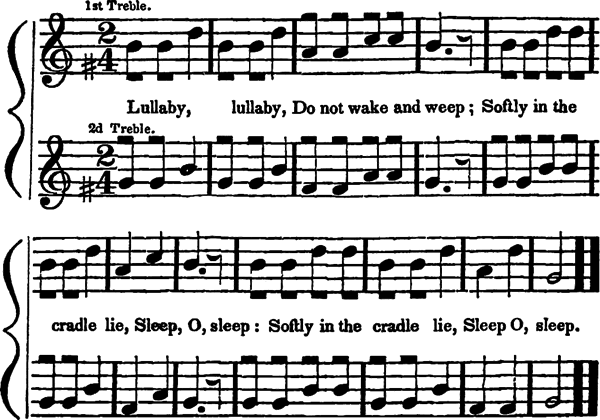
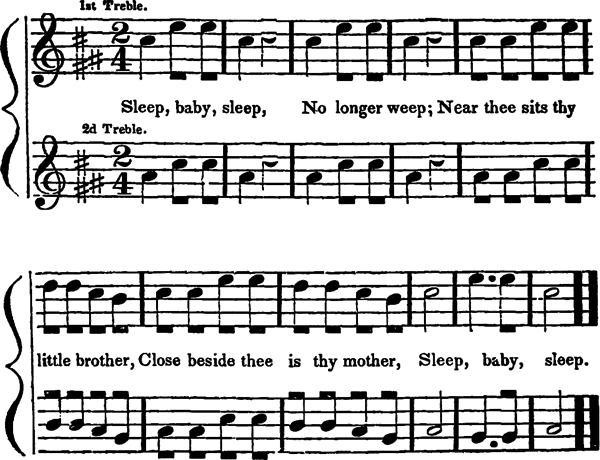
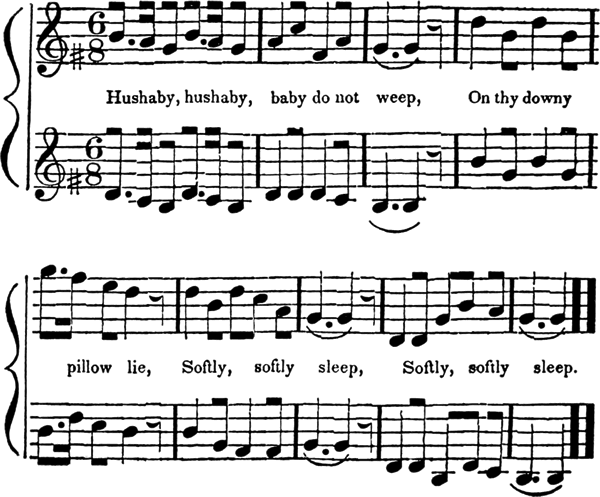
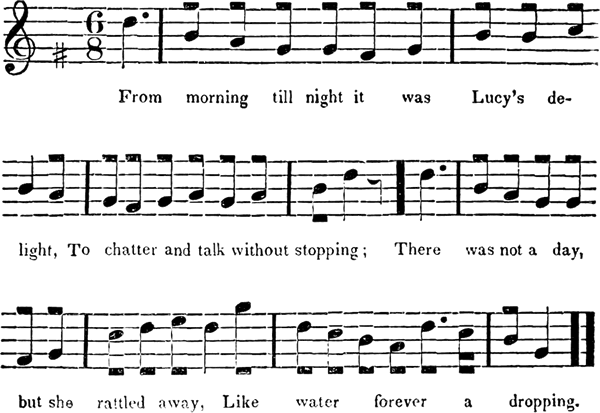
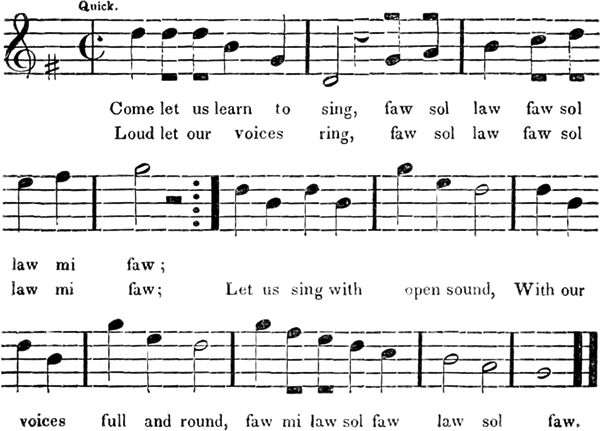
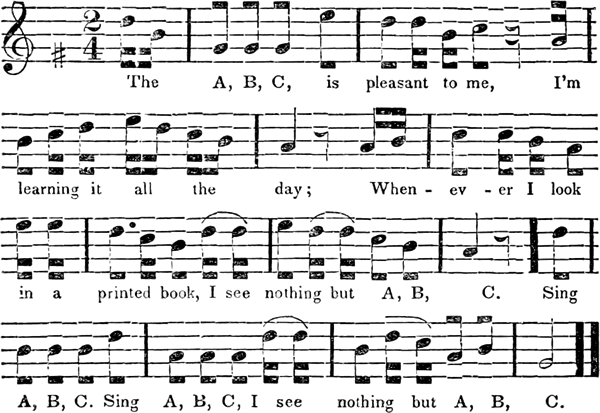
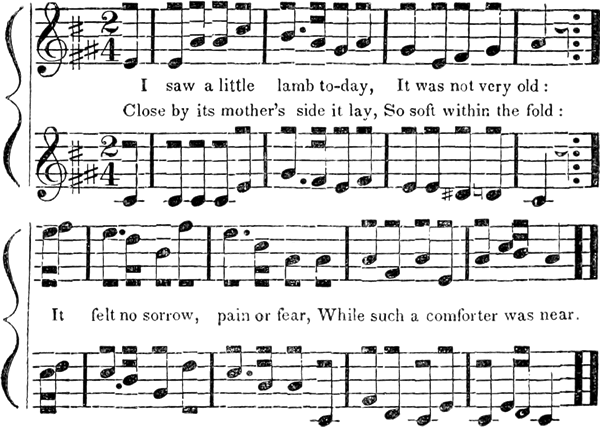
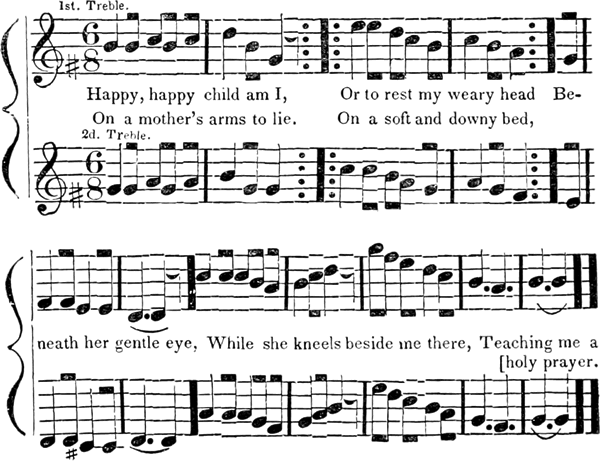
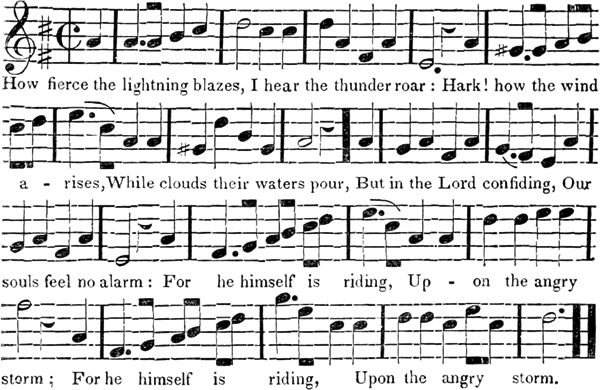
When that period arrives, let her continue the practice in melodies as simple
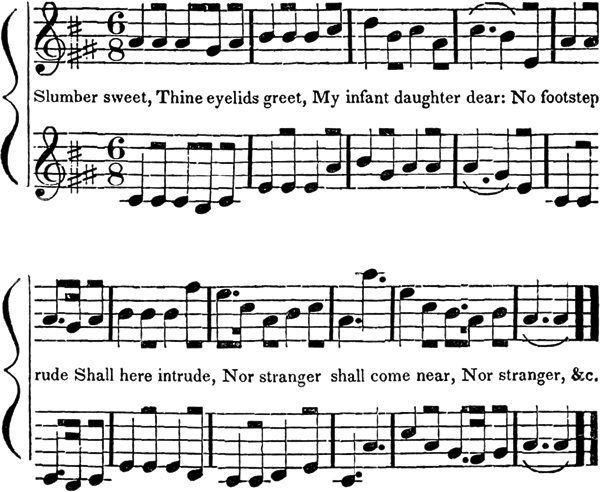
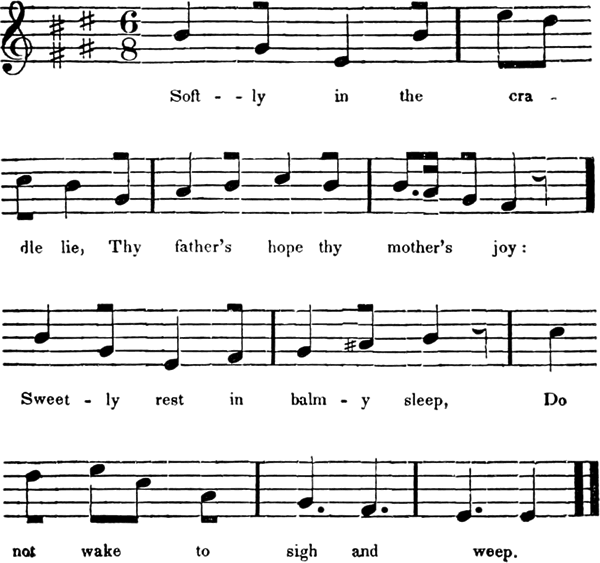
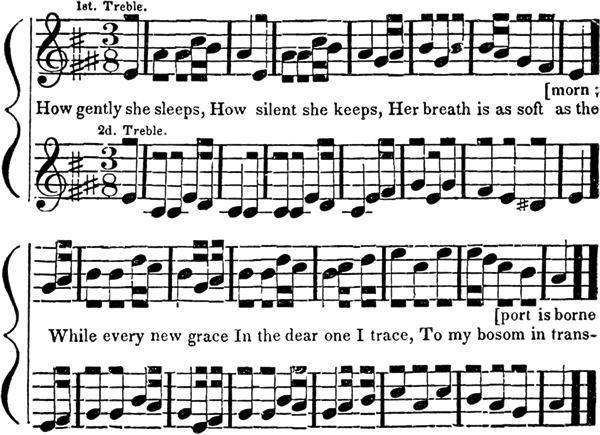
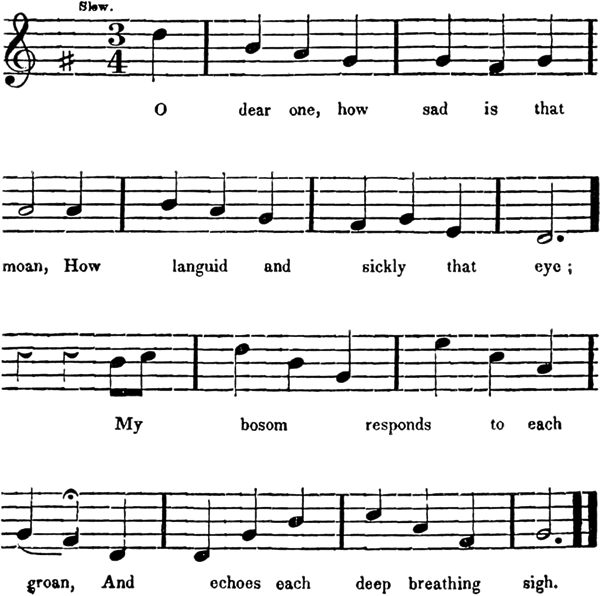
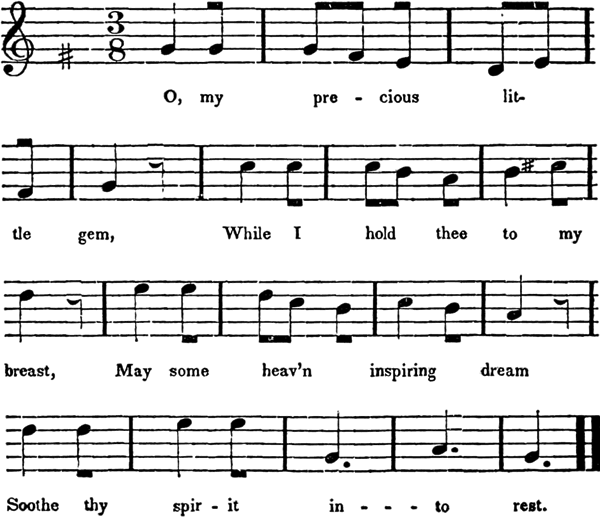
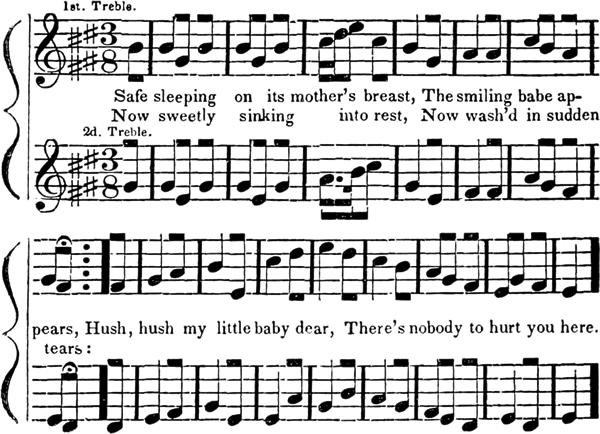
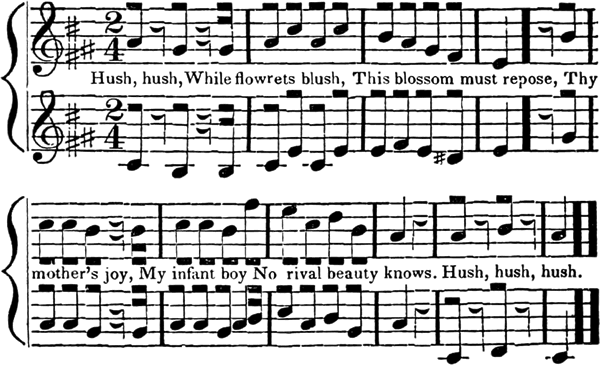
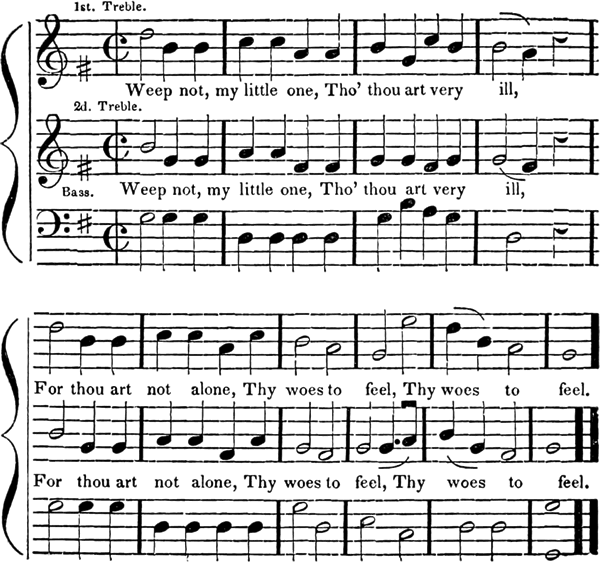
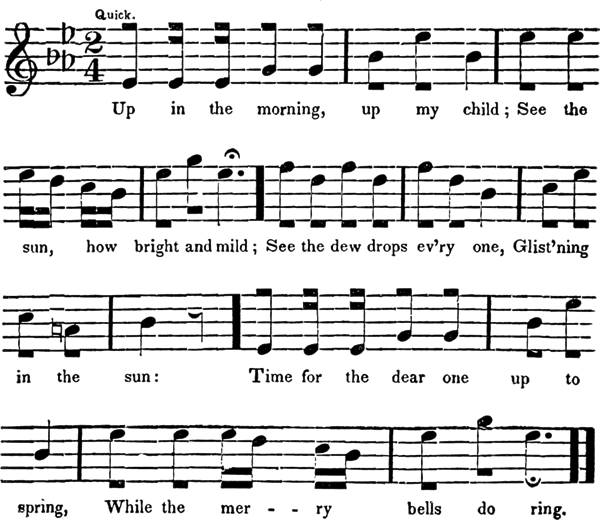
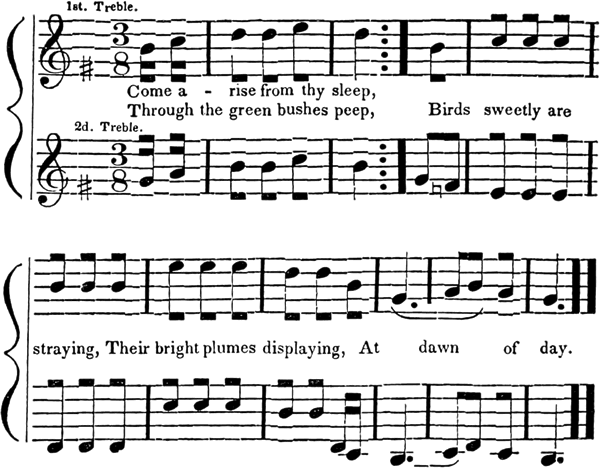
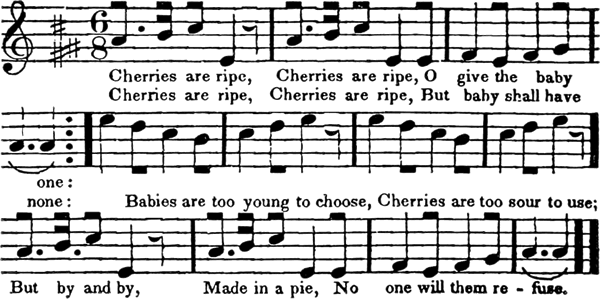
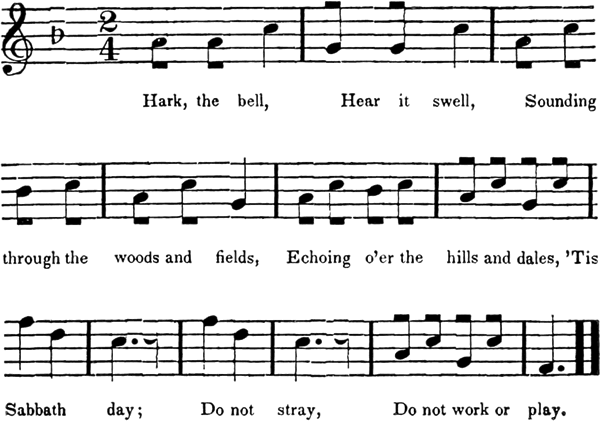
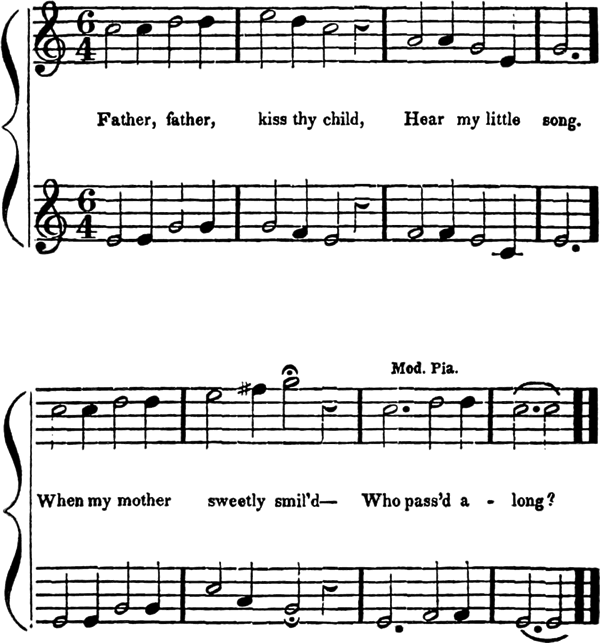
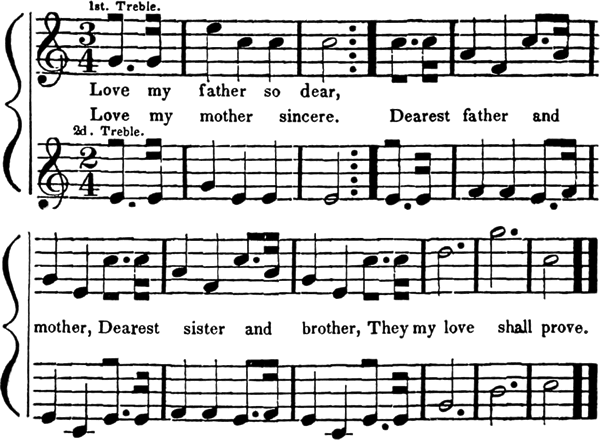
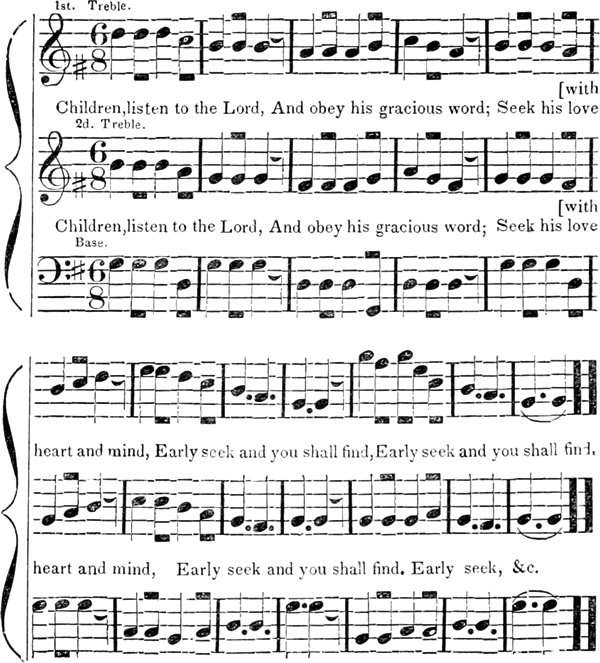
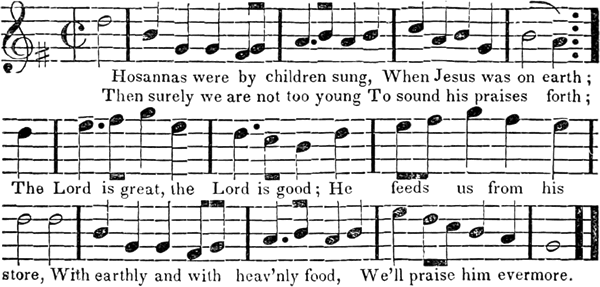
as those of numbers one and two, in part first of this work. And as the child
begins in the smallest degree to play the mimic, let her in turn become the
imitator, so far as to seize upon every note which has resemblance to music,
and thus encourage the child to repeat its efforts. The mother may thus
gradually draw out and form its voice for music, just as she teaches it the
articulations of the native tongue. The latter process she well understands.
She begins with the simplest syllables only, and as she proceeds with those
that are more difficult, the exercise is carefully adapted to the gradual progress
of the child. Nothing is forced. Every thing is made pleasant and amusing
to the little pupil: and the mother at every step is so amply rewarded for her
assiduity, as to feel that her labor is but another name for delightful recreation.
The same course in reference to singing would be rewarded with the same
success. Though the mother should be quite ignorant of the simplest principles
of the science; her skill in minstrelsy would suffice for the work immediately
before her. Let her also frame some simple phrases of melody, that are
very similar to those she notices in the mimickry of her child, gradually heightening
their character as the child improves its vocal powers. All these exercises
perhaps will be inarticulate; and in some cases the child will make more
rapid progress in song than in speech.
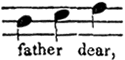
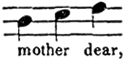
Of all the articulations that fall from the unpractised lips of infancy, the first
and perhaps the sweetest that ever greet the maternal ear, are those of ba, pa,
na, ma, ta, da, followed afterwards by their compounds papa, mama, &c.
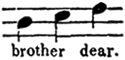
The mother should not fail to set them to music in some such clauses as these
that follow
A considerable portion of time, it is true, may elapse, before such clauses as
these will be fully understood; and the child perhaps will incline to substitute
other clauses in their place, and thus become its own composer. The only
important point here, is to see that its tones are rendered musical.
In process of time let the musical passages be augmented somewhat after
the following method, observing to sing them in a gutteral and not in a nasal
manner:
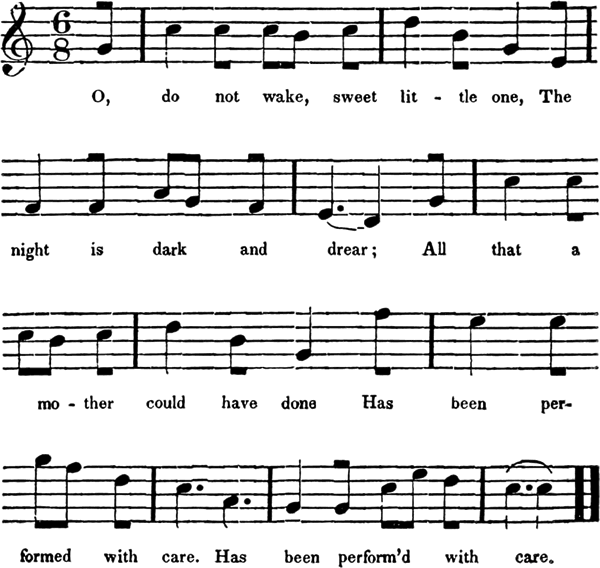
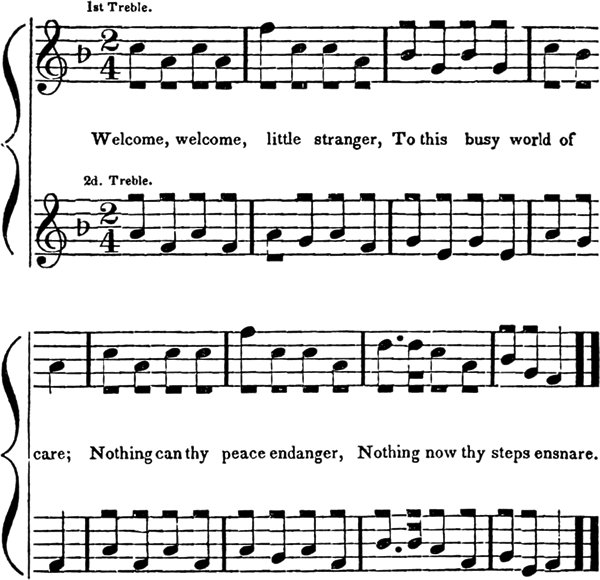
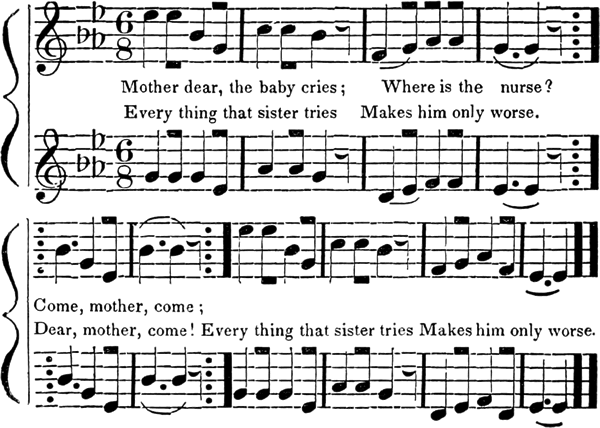
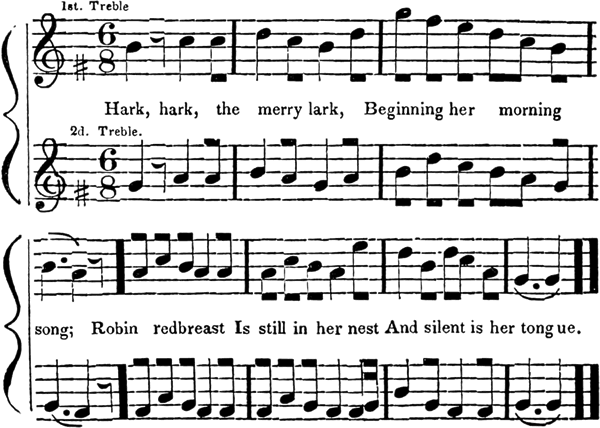
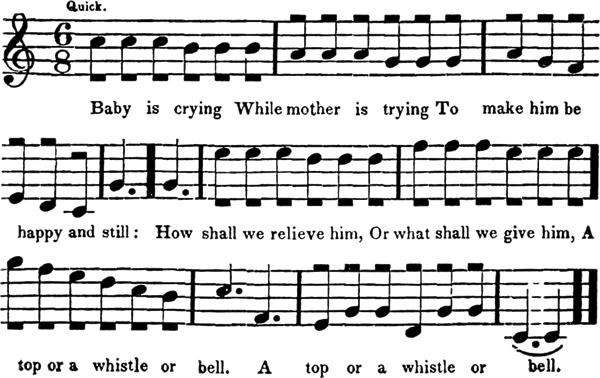
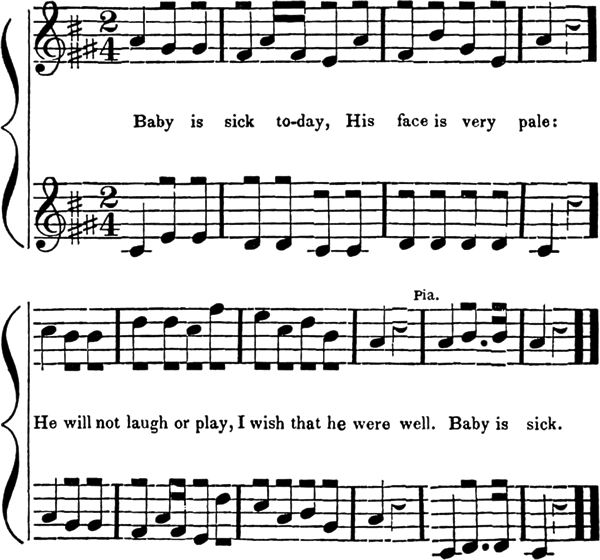
The process from such passages as these, to such as constitute the first and
second lullabys of this collection will be easy: and thenceforward less skill
in adaptation will be required.
The preceding directions may suffice for the object before us: if followed
with perseverance the child will begin to sing long before it is old enough to
understand the rules of the art; and this, much to its own amusement and to
the gratification of its affectionate parents. Some may doubt the practicability
of the course here recommended; but certainly it is an easy one. Let
them be persuaded to try it faithfully and perseveringly, and the author will
consent to be responsible for its success.