Henry Scott Riddell, one of the most powerful and pleasing of the living
national song-writers, was born on the 23d September 1798, at Sorbie, in
the Vale of Ewes—a valley remarkable for its pastoral beauty, lying in
the south-east of Dumfriesshire. His father was a shepherd, well
acquainted with the duties of his profession, and a man of strong though
uneducated mind. "My father, while I was yet a child," writes Mr
Riddell, in a MS. autobiography, "left Sorbie; but when I had become
able to traverse both burn and brae, hill and glen, I frequently
returned to, and spent many weeks together in, the vale of my nativity.
We had gone, under the same employer, to what pastoral phraseology terms
'an out-bye herding,' in the wilds of Eskdalemuir, called
Langshawburn. Here we continued for a number of years, and had, in this
remote, but most friendly and hospitable district, many visitors,
ranging from Sir Pulteney Malcolm down to Jock Gray, whom Sir Walter
Scott, through one of his strange mistakes, called Davy Gellatly....
Among others who constituted a part of the company of these days, was
one whom I have good reason to remember—the Ettrick Shepherd. Nor can I
forbear observing that his seemed one of those hearts that do not become
older in proportion as the head grows gray. Cheerful as the splendour of
heaven, he carried the feelings, and, it may be said, the simplicity and
pursuits of youth, into his maturer years; and if few of the sons of men
naturally possessed such generous influence in promoting, so likewise
few enjoyed so much pleasure in participating in the expedients of
recreation, and the harmless glee of those who meet under the rural
roof—the shepherd's bien and happy home. This was about the time when
Hogg began to write, or at least to publish: as I can remember from the
circumstance of my being able to repeat the most part of the pieces in
his first publication by hearing them read by others before I could read
them myself. It may, perhaps, be worth while to state that at these
meetings the sons of farmers, and even of lairds, did not disdain to
make their appearance, and mingle delightedly with the lads that wore
the crook and plaid. Where pride does not come to chill nor foppery to
deform homely and open-hearted kindness, yet where native modesty and
self-respect induce propriety of conduct, society possesses its own
attractions, and can subsist on its own resources.
"At these happy meetings I treasured up a goodly store of old Border
ballads, as well as modern songs; for in those years of unencumbered and
careless existence, I could, on hearing a song, or even a ballad, sung
twice, have fixed it on my mind word for word. My father, with his
family, leaving Langshawburn, went to Capplefoot, on the Water of Milk,
and there for one year occupied a farm belonging to Thomas Beattie, Esq.
of Muckledale, and who, when my father was in Ewes, had been his
friend. My employment here was, along with a younger brother, to tend
the cows. In the winter season we entered the Corrie school, but had
only attended a short while when we both took fever, and our attendance
was not resumed. At Langshawburn, my father for several winters hired a
person into his house, who taught his family and that of a neighbouring
shepherd. In consequence of our distance from any place of regular
education, I had also been boarded at several schools—at Devington in
Eskdale, Roberton on Borthwick Water, and Newmill on the Teviot, at each
of which, however, I only remained a short time, making, I suppose, such
progress as do other boys who love the football better than the
spelling-book.
"At the Whitsunday term my father relinquished his farm, and returned to
his former employment in the Forest of Ettrick, under Mr Scott of
Deloraine, to whom he had been a shepherd in his younger days. With this
family, indeed, and that of Mr Borthwick, then of Sorbie, and late of
Hopesrigg, all his years since he could wear the plaid were passed, with
the exception of the one just mentioned. It was at Deloraine that I
commenced the shepherd's life in good earnest. Through the friendly
partiality of our employer, I was made principal shepherd at an age
considerably younger than it is usual for most others to be intrusted
with so extensive a hirsel[1] as was committed to my care. I had by
this time, however, served what might be regarded as a regular
apprenticeship to the employment, which almost all sons of shepherds do,
whether they adhere to herding sheep in after-life or not. Seasons and
emergencies not seldom occur when the aid which the little boy can lend
often proves not much less availing than that of the grown-up man.
Education in this line consequently commences early. A knowledge of the
habits, together with the proper treatment of sheep, and therefore of
pastoral affairs in general, 'grows with the growth' of the individual,
and becomes, as it were, a portion of his nature. I had thus assisted my
father more or less all along; and when a little older, though still a
mere boy, I went for a year to a friend at Glencotha, in Holmswater, as
assistant shepherd or lamb-herd. Another year in the same capacity I was
with a shepherd in Wester Buccleuch. It was at Glencotha that I first
made a sustained attempt to compose in rhyme. When in Wester Buccleuch
my life was much more lonely, and became more tinged with thoughts and
feelings of a romantic cast. Owing to the nature of the stock kept on
the farm, it was my destiny day after day to be out among the mountains
during the whole summer season from early morn till the fall of even.
But the long summer days, whether clear or cloudy, never seemed long to
me—I never wearied among the wilds. My flocks being hirsled, as it is
expressed, required vigilance: but, if this was judiciously maintained,
the task was for the most part an easy and pleasant one. I know not if
it be worth while to mention that the hills and glens on which my charge
pastured at this period formed a portion of what in ancient times was
termed the Forest of Rankleburn. The names of places in the district,
though there were no other more intelligible traditions, might serve to
shew that it is a range of country to which both kings and nobles had
resorted. If from morning to night I was away far from the homes of
living men, I was not so in regard to those of the dead. Where a lesser
stream from the wild uplands comes down and meets the Rankleburn, a
church or chapel once stood, surrounded, like most other consecrated
places of the kind, by a burial-ground. There tradition says that five
dukes, some say kings, lie buried under a marble stone. I had heard that
Sir Walter, then Mr Scott, had, a number of years previously, made a
pilgrimage to this place, for the purpose of discovering the sepulchres
of the great and nearly forgotten dead, but without success. This,
however, tended, in my estimation, to confirm the truth of the
tradition; and having enough of time and opportunity, I made many a
toilsome effort of a similar nature, with the same result. With hills
around, wild and rarely trodden, and the ceaseless yet ever-varying
tinkling of its streams, together with the mysterious echoes which the
least stir seemed to awaken, the place was not only lonely, but also
creative of strange apprehensions, even in the hours of open day. It is
strange that the heart will fear the dead, which, perhaps, never feared
the living. Though I could muster and maintain courage to dig
perseveringly among the dust of the long-departed when the sun shone in
the sky, yet when the shadow of night was coming, or had come down upon
the earth, the scene was sacredly secure from all inroad on my part: and
to make the matter sufficiently intelligible, I may further mention
that, some years afterwards, when I took a fancy one evening to travel
eight miles to meet some friends in a shepherd's lone muirland dwelling,
I made the way somewhat longer for the sake of evading the impressive
loneliness of this locality. I had no belief that I should meet accusing
spirits of the dead; but I disliked to be troubled in waging war with
those eery feelings which are the offspring of superstitious
associations.
"While a lamb-herd at Buccleuch, I read when I could get a book which
was not already threadbare. I had a few chisels, and files, and other
tools, with which I took pleasure in constructing, of wood or bone,
pieces of mechanism; and I kept a diary in which I wrote many minute and
trivial matters, as well, no doubt as I then thought, many a sage
observation. In this, likewise, I wrote rude rhymes on local
occurrences. But I have anticipated a little. On returning home from
Glencotha, and two years before I went to Buccleuch, a younger brother
and I had still another round at herding cattle, which pastured in a
park near by my father's cottage. Our part was to protect a meadow which
formed a portion of it; and the task being easy to protect that for
which the cattle did not much care, nor yet could skaithe greatly though
they should trespass upon it, we were far too idle not to enter upon and
prosecute many a wayward and unprofitable ploy. Our predilections for
taming wild birds—the wilder by nature the better—seemed boundless;
and our family of hawks, and owls, and ravens was too large not to cost
us much toil, anxiety, and even sorrow. We fished in the Ettrick and the
lesser streams. These last suited our way of it best, since we generally
fished with staves and plough-spades—thus far, at least, honourably
giving the objects of our pursuit a fair chance of escape. When the hay
had been won, we went to Ettrick school, at which we continued
throughout the winter, travelling to and from it daily, though it lay at
the distance of five miles. This we, in good weather, accomplished
conveniently enough; but it proved occasionally a serious and toilsome
task through wind and rain, or keen frost and deep snow, when winter
days and the mountain blasts came on.
"My father after being three years in Stanhopefoot, on the banks of the
Ettrick, went to Deloraineshiels, an out-bye herding, under the same
employer. In the winter season either I or some other of the family
assisted him; but so often as the weather was fine, we went to a school
instituted by a farmer in the neighbourhood for behoof of his own
family. When by and by I went to herd the hirsel which my father
formerly tended, like most other regular shepherds I delighted in and
was proud of the employment. A considerable portion of another hirsel
lying contiguous, and which my elder brother herded, was for the summer
season of the year added to mine, so that this already large was made
larger; but exempted as I was from attending to aught else but my flock,
I had pleasant days, for I loved the wilds among which it had become
alike my destiny and duty to walk at will, and 'view the sheep thrive
bonnie.' The hills of Ettrick are generally wild and green, and those of
them on which I daily wandered, musing much and writing often, were as
high, green, and wild, as any of them all.... It may be the partiality
arising from early habit which induces me to think that a man gets the
most comprehensive and distinct view of any subject which may occupy
thought when he is walking, provided fatigue has not overtaken him.
Mental confidence awake amid the stir seems increased by the exercise of
bodily power, and becomes free and fearless as the step rejoicing in the
ample scope afforded by the broad green earth and circumambient sky. On
the same grounds, I have sometimes marvelled if it might not be the
majesty of motion, as one may say, reigning around the seaman's soul,
that made his heart so frank in communication, and in action his arm so
vigorously energetic. At all events, there was in these days always
enough around one to keep interest more or less ardent awake—
"'Prompting the heart to pour the impassion'd strain
Afar 'mid solitude's eternal reign,
In numbers fearless all as unconfined,
And wild as wailings of the desert wind.'
"According to my ability I studied while wandering among the mountains,
and at intervals, adopting my knee for my desk, wrote down the results
of my musing. Let not the shepherd ever forget his dog—his constant
companion and best friend, and without which all his efforts would
little avail! Mine knew well the places where in my rounds I was wont to
pause, and especially the majestic seat which I occupied so often on the
loftiest peak of Stanhopelaw. It had also an adopted spot of rest the
while, and, confident of my habits, would fold itself down upon it ere I
came forward; and would linger still, look wistful, and marvel why if at
any time I passed on without making my wonted delay. I did not follow
these practices only 'when summer days were fine.' The lines of an
epistle written subsequently will convey some idea of my habits:—
"'My early years were pass'd far on
The hills of Ettrick wild and lone;
Through summer sheen and winter shade
Tending the flocks that o'er them stray'd.
In bold enthusiastic glee
I sung rude strains of minstrelsy,
Which mingling with died o'er the dale,
Unheeded as the plover's wail.
Oft where the waving rushes shed
A shelter frail around my head,
Weening, though not through hopes of fame,
To fix on these more lasting claim,
I'd there secure in rustic scroll
The wayward fancies of the soul.
Even where yon lofty rocks arise,
Hoar as the clouds on wintry skies,
Wrapp'd in the plaid, and dern'd beneath
The colder cone of drifted wreath,
I noted them afar from ken,
Till ink would freeze within the pen;
So deep the spell which bound the heart
Unto the bard's undying art—
So rapt the charm that still beguiled
The minstrel of the mountains wild.'
"The ancients had a maxim—'Revenge is sweet.' In rural, as well as in
other life, there are things said and done which are more or less
ungenerous. These, if at any time they came my way, I repelled as best I
might. But I did not stop here; whether such matters, when occurring,
might concern myself as an individual or not, I took it upon me, as if I
had been a 'learned judge,' to write satires upon such persons as I knew
or conceived to have spoken or acted in aught contrary to good manners.
These squibs were written through the impulse of offended feeling, or
the stirrings of that injudicious spirit which sometimes prompts a man
to exercise a power merely because he possesses it. They were still,
after all, only as things of private experiment, and not intended ever
to go forth to the world—though it happened otherwise. I usually
carried a lot of these writings in my hat, and by and by, unlike most
other young authors, I got a publisher unsought for. This was the wind,
which, on a wild day, swept my hat from my head, and tattering its
contents asunder from their fold, sent them away over hill and dale like
a flock of wild fowl. I recovered some where they had halted in bieldy
places; others of them went further, and fell into other hands, and
particularly into those of a neighbour, who, a short while previously,
had played an unmanly part relating to a sheep and the march which ran
between us. He found his unworthy proceeding boldly discussed, in an
epistle which, I daresay, no other carrier would ever have conveyed to
him but the unblushing mountain blast. He complained to others, whom he
found more or less involved in his own predicament, and the thing went
disagreeably abroad. My master, through good taste and feeling, was
vexed, as I understood, that I should have done anything that gave
ground for accusation, though he did not mention the subject to myself;
but my father, some days after the mischief had commenced, came to me
upon the hill, and not in very good humour, disapproved of my imprudent
conduct. As for the consequences of this untoward event, it proved the
mean of revealing what I had hitherto concealed—procuring for me a sort
of local popularity little to be envied. I made the best improvement of
it, as I then thought, that lay in my power—by writing a satire upon
myself.
"I continued shepherd at Deloraine two years, and then went in the same
capacity to the late Mr Knox of Todrigg; and if at the former place I
had been well and happy, here I was still more so. His son William, the
poet of 'The Lonely Hearth,' paid me much friendly attention. He
commended my verses, and augured my success as one of the song-writers
of my native land. In those days, I did not write with the most remote
view to publication. My aim did not extend beyond the gratification of
hearing my mountain strains sung by lad or lass, as time and place might
favour. And when, in the dewy gloaming of a summer eve, returning home
from the hill, and 'the kye were in the loan,' I did hear this much, I
thought, no doubt, that
"'The swell and fall of these wild tones
Were worth the pomp of a thousand thrones.'
"William Crozier, author of 'The Cottage Muse,' was also my neighbour
and friend at Todrigg, during the summer part of the year; and even at
this hour I feel delight in recalling to memory the happy harmony of
thought and feeling that blended with and enhanced the genial sunshine
of those departed days. I rejoice to dwell upon those remote and
rarely-trodden pastoral solitudes, among which my lot in the early years
of life was so continually cast; few may well conceive how distinctly I
can recall them. Memory, which seems often to constitute the mind
itself, more, perhaps, than any other faculty, can set them so brightly
before me, as if they were painted on a dark midnight sky with brushes
dipped in the essence of living light. To appreciate thoroughly the
grandeur of the mountain solitudes, it is necessary to have dwelt among
the scenes, and to have looked upon them at every season of the
ever-changing year. They are fresh with solemn beauty, when bathed in
the deep dews of a summer morning; or in autumn, if you have attained to
the border of the mystery which has overhung your path, and therefore to
a station high enough for the survey, all that meets the eye shall be as
a dream of poetry itself. The deep folds of white vapour fill up glen
and hollow, till the summit of the mountains, near and far away—far as
sight itself can penetrate—are only seen tinged with the early radiance
of the sun, the whole so combined as to appear a limitless plain of
variegated marble, peaceful as heaven, and solemnly serene as eternity.
What Winter writes with his frozen finger I need not state. When the
venerable old man, Gladstanes, perished among the stormy blasts of these
wilds, I was one of about threescore of men who for three days traversed
them in search of the dead. Then was the scenery of the mountains
impressive, much beyond what can well be spoken. The bridal that loses
the bride through some wayward freak of the fair may be sad enough; so
also the train, in its dark array, that conveys the familiar friend to
the chamber where the light of nature cannot come. But in this latter
case, the hearts that still beat, necessarily know that their part is
resignation, and suspense and anxiety mingle not in the mood of the
living, as it relates to the dead; but otherwise is it with those who
seem already constituting the funeral train of one who should have
been—yet who is not there to be buried.
"'The feeling is nameless that makes us unglad,
And a strange, wild dismayment it brings;
Which yet hath no match in the solemn and sad
Desolation of men and of things.
* * * * *
"'The hill-foxes howl'd round the wanderer's way,
When his aim and his pathway were lost;
And effort has then oft too much of dismay
To pay well the toil it may cost.
If fate has its privilege, death has its power,
And is fearful where'er it may fall,
But worse it may seem 'mong the blasts of the moor,
Where all that approaches portends to devour,
Nor fixes till first it appal.
"'No mercy obtains in the tempests that rave,
By the sky-frozen elements fed,
And there comes no hand that is willing to save,
And soothe, till the spirit be fled;
But the storms round the thrones of the wilderness break
O'er the frail in the solitude cast,
And howl in their strength and impatience to take
Their course to commix with the roar of the lake
Where it flings forth its foam on the blast.
"'Lo! 'neath where the heath hangs so dark o'er yon peak,
Another of Adam lay lone,
Where the bield could not shelter the weary and weak,
By the strife of the tempest o'erthrown.
No raven had fed, and the hill-fox had fled,
If there he had yet come abroad,
And the stillness reign'd deep o'er his cold moorland bed,
Which came down in the power of the sleep of the dead
When the spirit return'd to its God.'
* * * * *
These are a few out of many more lines written on this subject, which at
the time was so deeply interesting to mind and heart."
Mr Riddell here states that his poetical style of composition about this
period underwent a considerable change. He laid aside his wayward wit
for serious sentiment, an improvement which he ascribes to his
admiration of the elegant strains of his friend, young Knox.
"My fortune in life," he proceeds, "had not placed me within the reach
of a library, and I had read almost none; and although I had attempted
to write, I merely followed the course which instinct pointed out. Need
I state further, that if in these days I employed my mind and pen among
the mountains as much as possible, my thoughts also often continued to
pursue the same practice, even when among others, by the 'farmer's
ingle.' I retired to rest when others retired, but if not outworn by
matters of extra toil, the ardour of thought, through love of the poet's
undying art, would, night after night for many hours, debar the inroads
of sleep. The number of schools which I have particularised as having
attended may occasion some surprise at the deficiency of my scholarship.
For this, various reasons are assignable, all of which, however, hinge
upon these two formidable obstacles—the inconveniency of local
position, and the thoughtless inattention of youth. In remote country
places, long and rough ways, conjoined not unfrequently with wild
weather, require that children, before they can enter school, be pretty
well grown up; consequently, they quit it the sooner. They are often
useful at home in the summer season, or circumstances may destine them
to hire away. Among these inconveniences, one serious drawback is, that
the little education they do get is rarely obtained continuously, and
regular progress is interrupted. Much of what has been gained is lost
during the intervals of non-attendance, and every new return to the book
is little else than a new beginning. So was it with me. At the time when
my father hired a teacher into his house, it was for what is termed the
winter quarter, and I was then somewhat too young to be tied down to the
regular routine of school discipline; and if older when boarded away,
the other obstruction to salutary progress began to operate grievously
against me. I acquired bit by bit the common education—reading,
writing, and arithmetic. So far as I remember, grammar was not much
taught at any of these schools, and the spelling of words was very
nearly as little attended to as the meaning which they are appointed to
convey was explained or sought after.
"But the non-understanding of words is less to be marvelled at than that
a man should not understand himself. At this hour I cannot conceive how
I should have been so recklessly careless about learning and books when
at school, and yet so soon after leaving it seriously inclined towards
them. I see little else for it than to suppose that boys who are bred
where they have no companions are prone to make the most of
companionship when once attained to. And then, in regard to books, as of
these I rarely got more than what might serve as a whet to the appetite,
I might have the desire of those whose longings after what they would
obtain are increased by the difficulties which interpose between them
and the possession. One book which in school I sometimes got a glance
of, I would have given anything to possess: this was a small volume
entitled, 'The Three Hundred Animals.'
"I cannot forbear mentioning that, when at Deloraine, I was greatly
advantaged by an old woman, called Mary Hogg, whose cottage stood on an
isolated corner of the lands on which my flock pastured. Her husband had
been a shepherd, who, many years previous to this period, perished in a
snow-storm. In her youth she had opportunities of reading history, and
other literature, and she did not only remember well what she had read,
but could give a distinct and interesting account of it. In going my
wonted rounds, few days there were on which I did not call and listen to
her intelligent conversation. She was a singularly good woman—a sincere
Christian; and the books which she lent me were generally of a religious
kind, such as the 'Pilgrim's Progress,' and the 'Holy War;' but here I
also discovered a romance, the first which I had ever seen. It was
printed in the Gothic letter, and entitled 'Prissimus, the Renowned
Prince of Bohemia.' Particular scenes and characters in 'Ivanhoe'
reminded me strikingly of those which I had formerly met with in this
old book of black print. And I must mention that few books interested me
more than 'Bailey's Dictionary.' Day after day I bore it to the
mountains, and I have an impression that it was a more comprehensive
edition of the work than I have ever since been able to meet with.
"At Todrigg my reading was extended; and having begun more correctly to
appreciate what I did read, the intention which I had sometimes
entertained gathered strength: this was to make an effort to obtain a
regular education. The consideration of the inadequacy of my means had
hitherto bridled my ambition; but having herded as a regular shepherd
nearly three years, during which I had no occasion to spend much of my
income, my prospects behoved to be a little more favourable. It was in
this year that the severest trial which had yet crossed my path had to
be sustained. The death of my father overthrew my happier mood; at the
same time, instead of subduing my secret aim, the event rather
strengthened my determination. My portion of my father's worldly effects
added something considerable to my own gainings; and, resigning my
situation, I bade farewell to the crook and plaid. I went to Biggar, in
Clydesdale, where I knew the schoolmaster was an approved classical
scholar. Besides, my Glencotha reminiscences tended to render me partial
to this part of the world, and in the village I had friends with whom I
could suitably reside. The better to insure attention to what I was
undertaking, I judged it best to attend school during the usual hours. A
learner was already there as old in years, and nearly as stout in form,
as myself, so that I escaped from the wonderment which usually attaches
to singularity much more comfortably than I anticipated. There were also
two others in the school, who had formerly gone a considerable way in
the path of classic lore, and had turned aside, but who, now repenting
of their apostasy, returned to their former faith. These were likewise
well grown up, and I may state that they are now both eminent as
scholars and public men. The individual first mentioned and I sat in the
master's desk, which he rarely, if ever, occupied himself; and although
we were diligent upon the whole, yet occasionally our industry and
conduct as learners were far from deserving approbation. To me the
confinement was frequently irksome and oppressive, especially when the
days were bright with the beauty of sunshine. There were ways, woods,
and even wilds, not far apart from the village, which seemed eternally
wooing the step to retirement, and the mind to solitary contemplation.
Some verses written in this school have been preserved, which will
convey an idea of the cast of feeling which produced them:—
"Discontented and uncheery,
Of this noise and learning weary,
Half my mind, to madness driven,
Woos the lore by nature given;
'Mong fair fields and flowing fountains,
Lonely glens and lofty mountains,
Charm'd with nature's wildest grandeur,
Lately wont was I to wander,
Wheresoever fancy led me,
Came no barrier to impede me;
Still from early morn till even,
In the light of earth and heaven,
Musing on whatever graces,
Livelier scenes or lonelier places,
Till a nameless pleasure found me
Living, like a dream, around me,—
How, then, may I be contented,
Thus confined and thus tormented!
"'Still, oh! still 'twere lovelier rather
To be roaming through the heather;
And where flow'd the stream so glassy,
'Mong its flowers and margins mossy,
Where the flocks at noon their path on
Came to feed by birk and hawthorn;
Or upon the mountain lofty,
Seated where the wind blew softly,
With my faithful friend beside me,
And my plaid from sun to hide me,
And the volume oped before me,
I would trace the minstrel's story,
Or mine own wild harp awaken,
'Mid the deep green glens of braken,
Free and fearlessly revealing
All the soul of native feeling.
"''Stead of that eternal humming,
To the ear for ever coming—
Humming of these thoughtless beings,
In their restless pranks and pleaings;
And the sore-provoked preceptor
Roaring, "Silence!"—O'er each quarter
Silence comes, as o'er the valley,
Where all rioted so gaily,
When the sudden bursting thunder
Overpowers with awe and wonder—
Till again begins the fuss—
'Master, Jock's aye nippin' us!'
I could hear the fountains flowing,
Where the light hill-breeze was blowing,
And the wild-wing'd plover wailing,
Round the brow of heaven sailing;
Bleating flocks and skylarks singing,
Echo still to echo ringing—
Sounds still, still so wont to waken
That no note of them is taken,
Yet which seem to lend assistance
To the blessing of existence.
"'Who shall trow thee wise or witty,
Lore of "the Eternal City,"
Or derive delight and pleasure
From the blood-stain'd deeds of Cæsar,
Thus bewildering his senses
'Mong these cases, moods, and tenses?
Still the wrong-placed words arranging,
Ever in their finals changing;
Out and in with hic and hockings,
Like a loom for working stockings.
Latin lords and Grecian heroes—
Oh, ye gods, in mercy spare us!
How may mortals be contented,
Thus confined and thus tormented!'
"My teacher, the late Richard Scott, was an accurate classical scholar,
which perhaps accounts for his being, unlike some others of his
profession, free from pedantry. He was kind-hearted and somewhat
disposed to indolence, loving more to converse with one of my years than
to instruct him in languages. He had seen a good deal of the world and
its ways, and I learned much from him besides Greek and Latin. We were
great friends and companions, and rarely separate when both of us were
unengaged otherwise.
"I bore aloof from making many acquaintances; yet, ere long, I became
pretty extensively acquainted with the people of the place. It went
abroad that I was a bard from the mountains, and the rumour affixed to
me a popularity which I did not enjoy. A party of young men in the
village had prepared themselves to act 'the Douglas Tragedy,' and wished
a song, which was to be sung between this and the farce. The air was of
their own fixing, and which, in itself, was wild and beautiful; but,
unfortunately, like many others of our national airs possessed of these
qualities, it was of a measure such as rendered it difficult to write
words for. Since precluded from introducing poetic sentiment, I
substituted a dramatic plot, and being well sung by alternate voices,
the song was well received, and so my fame was enhanced.
"It was about this time that I wrote 'The Crook and Plaid'—not by
request, but with the intention of supplanting a song, I think of
English origin, called 'The Plough-boy,' and of a somewhat questionable
character. 'The Crook and Plaid' accomplished the end intended, and soon
became popular throughout the land. So soon as I got a glimpse of the
Roman language, I began to make satisfactory progress in its
acquisition. But I daily wrote more or less in my old way—now also
embracing in my attempts prose as well as verse. I wrote a Border
Romance. This was more strongly than correctly expressed. Hogg, who took
the trouble of reading it, gave me his opinion, by saying that there
were more rawness and more genius in it than in any work he had seen.
It, sometime afterwards, had also the honour of being read—for I never
offered it for publication—by one who felt much interest in the
characters and plot—Professor Wilson's lady—who, alas! went too early
to where he himself also now is; lost, though not to fond recollection,
yet to love and life below. I contributed some papers to the Clydesdale
Magazine, and I sent a sort of poetic tale to the editor, telling him
to do with it whatever he might think proper. He published it
anonymously, and it was sold about Clydesdale.
"My intention had been to qualify myself for the University, and,
perhaps in regard to Latin and Greek acquirements, I might have
proceeded thither earlier than I ventured to do; but having now made
myself master of my more immediate tasks, I took more liberty. A
gentleman, who, on coming home after having made his fortune abroad,
took up his residence at Biggar. I had, in these days, an aversion to
coming into contact with rich strangers, and although he lived with a
family which I was accustomed to visit, I bore aloof from being
introduced to him. But he came to me one day on the hill of
Bizzie-berry, and frankly told me that he wished to be acquainted with
me, and therefore had taken the liberty of introducing himself. I found
excuse for not dining with him on that day, but not so the next, nor for
many days afterwards. He was intellectual—and his intelligence was only
surpassed by his generosity. He gave me to understand that his horse was
as much at my service as his own; and one learned, by and by, to keep
all wishes and wants as much out of view as possible, in case that they
should be attended to when you yourself had forgotten them. When he
began to rally me about my limited knowledge of the world, I knew that
some excursion was in contemplation. We, on one occasion, rode down the
Clyde, finding out, so far as we might, all things, both natural and
artificial, worthy of being seen; and when at Greenock, he was anxious
that we should have gone into the Highlands, but I resisted; for
although not so much as a shade of the expenses was allowed to fall on
me, I felt only the more ashamed of the extent of them.
"I had become acquainted with a number of people whom I delighted to
visit occasionally; one family in particular, who lived amid the beauty
of 'the wild glen sae green.' The song now widely known by this name I
wrote for a member of this delightful family, who at that time herded
one of the hirsels of his father's flocks on 'the heathy hill.' With
the greater number of persons in the district possessing literary tastes
I became more or less intimate. The schoolmasters I found friendly and
obliging; one of these, in particular (now holding a higher office in
the same locality), I often visited. His high poetic taste convinced me
more and more of the value of mental culture, and tended to subdue me
from those more rugged modes of expression in which I took a pride in
conveying my conceptions. With this interesting friend I sometimes took
excursions into rural regions more or less remote, and once we journeyed
to the south, when I had the pleasure of introducing him to the Ettrick
Shepherd. But of my acquaintances, I valued few more than my modest and
poetic friend, the late James Brown of Symington.[2] Though humble in
station, he was high in virtuous worth. His mind, imbued with and
regulated by sound religious and moral principle, was as ingenious and
powerful as his heart was 'leal, warm, and kind.'
"Entering the University of Edinburgh, I took for the first session the
Greek and Latin classes. Attending them regularly, I performed the
incumbent exercises much after the manner that others did—only, as I
have always understood it to be a rare thing with the late Mr Dunbar,
the Greek Professor, to give much praise to anything in the shape of
poetry, I may mention that marked merit was ascribed to me in his class
for a poetical translation of one of the odes of Anacreon. I had laid
the translation on his desk, in an anonymous state, one day before the
assembling of the class. He read it and praised it, expressing at the
same time his anxiety to know who was the translator; but the translator
having intended not to acknowledge it, kept quiet. He returned to it,
and praising it anew, expressed still more earnestly his desire to know
the author; and so I made myself known, as all great unknowns I think,
with the exception of Junius, are sooner or later destined to do.
"Of the philosophical classes, those that I liked best were the Logic
and Moral Philosophy—particularly the latter. I have often thought that
it is desirable, could it be possibly found practicable, to have all the
teachers of the higher departments of education not merely of high
scholastic acquirements, but of acknowledged genius. Youth reveres
genius, and delights to be influenced by it; heart and spirit are kept
awake and refreshed by it, and everything connected with its
forthgivings is rendered doubly memorable. It fixes, in a certain sense,
the limit of expectation, and the prevailing sentiment is—we are under
the tuition of the highest among those on earth who teach; if we do not
profit here, we may not hope to do so elsewhere. These remarks I make
with a particular reference to the late Professor Wilson, under the
influence of whose genius and generous warmth of heart many have felt as
I was wont to feel. If it brings hope and gladness to love and esteem
the living, it also yields a satisfaction, though mingled with regret,
to venerate the dead; and now that he is no more, I cannot forbear
recording how he treated a man from the mountains who possessed no
previous claim upon his attention. I had no introduction to him, but he
said that he had heard of me, and would accept of no fee for his class
when I joined it; at least he would not do so, he said, till I should be
able to inform him whether or not I had been pleased with his lectures.
But it proved all the same in this respect at the close as it was at the
commencement of the session. He invited me frequently to his house as a
friend, when other friends were to meet him there, besides requesting me
to come and see him and his family whenever I could make it convenient.
He said that his servant John was very perverse, and would be sure to
drive me by like all others, if he possibly could; so he gave me a
watchword, which he thought John, perverse as he was, would not venture
to resist. I thus became possessed of a privilege of which I did not
fail to avail myself frequently—a privilege which might well have been
gratifying to such as were much less enthusiastic with regard to
literary men and things than I was. To share in the conversation of
those possessed of high literary taste and talent, and, above all, of
poetic genius, is the highest enjoyment afforded by society; and if it
be thus gratifying, it is almost unnecessary to add that it is also
advantageous in no ordinary degree, if, indeed, properly appreciated
and improved. Any one who ever met the late Professor in the midst of
his own happy family, constituted as it was when I had this pleasure,
was not likely soon to forget a scene wherein so much genius, kindness,
loveliness, and worth were blended. If the world does not think with a
deep and undying regret of what once adorned it, and it has now lost,
through the intervention of those shadows which no morning but the
eternal one can remove, I am one, at least, who in this respect cannot
follow its example.
"Edinburgh, with its 'palaces and towers,' and its many crowded ways,
was at first strangely new to me, being as different, in almost all
respects, to what I had been accustomed as it might seem possible for
contrariety to make earthly things. Though I had friends in it, and
therefore was not solitary, yet its tendency, like that of the noisy and
restless sea, was to render me melancholy. Some features which the
congregated condition of mankind exhibited penetrated my heart with
something like actual dismay. I had seen nothing of the sort, nor yet
even so much as a semblance of it, and therefore I had no idea that
there existed such a miserable shred of degradation, for example, as a
cinder-woman—desolate and dirty as her employment—bowed down—a shadow
among shadows—busily prone, beneath the sheety night sky, to find out
and fasten upon the crumb, whose pilgrimage certainly had not improved
it since falling from the rich man's table. Compassion, though not
naturally so, becomes painful when entertained towards those whom we
believe labouring under suffering which we fain would but cannot
alleviate.
"I had enough of curiosity for wishing to see all those things which
others spoke of, and characterised as worthy of being seen; but I
contented myself meanwhile with a survey of the city's external
attributes. In a week or two, however, my friend A. F. Harrower,
formerly mentioned, having come into town from Clydesdale, took pleasure
in finding out whatever could interest or gratify me, and of conveying
me thither. With very few exceptions, every forenoon he called at my
lodgings, leaving a note requesting me to meet him at some specified
time and place. I sometimes sent apologies, and at other times went
personally to apologise; but neither of these methods answered well.
Through his persevering attentions towards me, I met with much agreeable
society, and saw much above as well as somewhat below the earth, which I
might never otherwise have seen. In illustration of the latter fact, I
may state that, having gone to London, he returned with two Englishmen,
when he invited me to assist them in exploring the battle-field of
Pinkie. We terminated our excursion by descending one of Sir John Hope's
coal-pits. These humorous and frank English associates amused themselves
by bantering my friend and myself about the chastisement which Scotland
received from the sister kingdom at Pinkie. As did the young rustic
countryman—or, at least, was admonished to do—so did I. When going
away to reside in England, he asked his father if he had any advice to
give him. 'Nane, Jock, nane but this,' he said; 'dinna forget to avenge
the battle o' Pinkie on them.' Ere I slept I wrote, in support of our
native land, the song—'Ours is the land of gallant hearts;' and thus,
in my own way, 'avenged the battle of Pinkie.'
"One of two other friends with whom I delighted to associate was R. B.,
an early school companion, who, having left the mountains earlier than I
did, had now been a number of years in Edinburgh. Of excellent head and
generous heart, he loved the wild, green, and deep solitudes of nature.
The other—G. M'D.—was of powerful and bold intellect, and remarkable
for a retentive memory. Each of us, partial to those regions where
nature strives to maintain her own undisturbed dominion, on all holidays
hied away from the city, to the woodland and mountainous haunts, or the
loneliness of the least frequented shores of the sea. The spirit of our
philosophy varied much—sometimes profound and solemn, and sometimes
humorous; but still we philosophised, wandering on. They were members of
a literary society which met once a week, and which I joined. My
propensity to study character and note its varieties was here afforded a
field opening close upon me; but I was also much profited by performing
my part in carrying forward the business of the institution. During all
the sessions that I attended the University, but especially as these
advanced toward their termination, I entered into society beyond that
which might be regarded as professionally literary. I had an idea then,
as I still have, that, in every process of improvement, care should be
taken that one department of our nature is not cultivated to the neglect
of another. There are two departments—the intellectual and the
moral;—the one implying all that is rational, the other comprising
whatever pertains to feeling and passion, or, more simply, there are the
head and the heart; and if the intellect is to be cultivated, the heart
is not to be allowed to run into wild waste, nor to sink into systematic
apathy. Lore-lighted pages and unremitting abstract studies will make a
man learned; but knowledge is not wisdom; and to know much is not so
desirable, because it is not so beneficial, either to ourselves or
others, as to understand, through the more generous and active
sympathies of our nature, how the information which we possess may be
best applied to useful purposes. This we shall not well know, if the
head be allowed or encouraged to leave the heart behind. If we forget
society it will forget us, and, through this estrangement, a sympathetic
knowledge of human nature may be lost. Thus, in the haunts of seclusion
and solitary thought our acquirements may only prove availing to
ourselves as matters of self-gratification. The benevolent affections,
which ought not merely to be allowed, but taught to expand, may thus not
only be permitted but encouraged to contract, and the exercise of that
studious ingenuity, which perhaps leads the world to admire the
achievements of learning, thus deceive us into a state of existence
little better than cold selfishness itself. Sir Isaac Newton, who soared
so high and travelled so far on the wing of abstract thought, gathering
light from the stars that he might convey it in intelligible shape to
the world, seems to have thought, high as the employment was, that it
was not good, either for the heart or mind of man, to be always away
from that intercourse with humanity and its affairs which is calculated
to awaken and sustain the sympathies of life; and therefore turned to
the contemplation of Him who was meek and lowly. And no countenance
has been afforded to monks and hermits who retired from the world,
though it even was to spend their lives in meditation and prayer; for
Heaven had warned man, at an early date, not to withhold the
compassionate feelings of the heart, and the helping-hand, from any in
whom he recognised the attributes of a common nature, saying to him,
'See that thou hide not thyself from thine own flesh.'
"My last year's attendance at the College Philosophical Classes was at
St Andrews. I had a craving to acquaint myself with a city noted in
story, and I could not, under the canopy of my native sky, have planted
the step among scenes more closely interwoven with past national
transactions, or fraught with more interesting associations. In
attending the Natural Philosophy Class, not being proficient in
mathematic lore, I derived less advantage than had otherwise been the
case with me. Yet I did not sit wholly in the shade, notwithstanding
that the light which shone upon me did not come from that which Campbell
says yielded 'the lyre of Heaven another string.' A man almost always
finds some excuse for deficiency; and I have one involving a philosophy
which I think few will be disposed to do otherwise than acquiesce
in—namely, that it is a happy arrangement in the creation and history
of man, that all minds are not so constituted as to have the same
predilections, or to follow the same bent. Considering that I had
started at a rather late hour of life to travel in the paths of
learning, and having so many things, interesting and important, to
attend to by the way, it was perhaps less remarkable that I should be
one who 'neither kenn'd nor cared' much about lines that had no breadth,
and points which were without either breadth or length, than that I
should have felt gratified to find on my arrival some of my simple
strains sung in a city famed for its scientific acquirements.
"The ruins which intermingle with the scenery and happy homes of St
Andrews, like gray hairs among those of another hue, rendered venerable
the general aspect of the place. But I did not feel only the city
interesting, but the whole of Fifeshire. By excursions made on the
monthly holidays then as well as subsequently, when in after-years I
returned to visit friends in the royal realm, I acquainted myself with a
goodly number of those haunts and scenes which history and tradition
have rendered attractive. A land, however, or any department of it,
whatever may be its other advantages, is most to be valued in respect of
the intelligence or worth of its inhabitants. And if so, then I am proud
to aver that in Fife I came to possess many intelligent and excellent
friends. Many of these have gone to another land—'the land o' the
leal,' leaving the places which now know them no more, the more
regretfully endeared to recollection. Of those friends who survive, I
cannot forbear an especial mention of one, who is now a professor in the
college in which he was then only a student. A man cannot be truly great
unless he also be good, and I do not alone value him on the colder and
statelier eminence of high intellectual powers and scientific
acquirements, but also, if not much rather, for his generous worth and
his benevolent feeling. My friend is one in whom these qualities are
combined, and as I sincerely think, I will likewise freely say, that
those will assuredly find a time, sooner or later, greatly to rejoice,
whose fate has been so favourable as to place them under the range and
influence of his tuition.
"I studied at St Andrews College under the late Dr Jackson, who was an
eminent philosopher and friendly man; also under Mr Duncan, of the
Mathematical Chair, whom I regarded as a personification of unworldly
simplicity, clothed in high and pure thought; and I regularly attended,
though not enrolled as a regular student, the Moral Philosophy Class of
Dr Chalmers. Returning to Edinburgh and its university, I became
acquainted, through my friend and countryman, Robert Hogg, with R. A.
Smith, who was desirous that I should assist him with the works in which
he was engaged, particularly 'The Irish Minstrel,' and 'Select
Melodies.' Smith was a man of modest worth and superior intelligence;
peculiarly delicate in his taste and feeling in everything pertaining to
lyric poetry as well as music; his criticisms were strict, and, as some
thought, unnecessarily minute. Diffident and retiring, he was not got
acquainted with at once, but when he gave his confidence, he was found a
pleasant companion and warm-hearted friend. If, as he had sought my
acquaintance, I might have expected more frankness on our meeting, I
soon became convinced that his shyer cast arose alone from excess of
modesty, combined with a remarkable sensitiveness of feeling. Proudly
honourable, he seemed more susceptible of the influences of all sorts
that affect life than any man I ever knew; and, indeed, a little
acquaintance with him was only required to shew that his harp was strung
too delicately for standing long the tear and wear of this world. He had
done much for Scottish melody, both by fixing the old airs in as pure a
state as possible, and by adding to the vast number of these national
treasures some exquisite airs of his own. For a number of the airs in
the works just mentioned, but particularly in the 'Select Melodies,' he
had experienced difficulty in procuring suitable words, owing chiefly to
the crampness of the measures—a serious drawback which appears to
pervade, more or less, the sweetest melodies of other nations as well as
those of our own. A number of these I supplied as well as I could.
"About this time the native taste for Scottish song in city society
seemed nearly, if not altogether lost, and a kind of songs, such as
'I've been roaming,' 'I'd be a butterfly,' 'Buy a broom,' 'Cherry-ripe,'
&c. (in which if the head contrived to find a meaning, it was still such
as the heart could understand nothing about), seemed alone to be
popular, and to prevail. R. A. Smith disliked this state of things, but,
perhaps, few more so than Mr P. M'Leod, who gave a most splendid
evidence of his taste in his 'Original National Melodies.' Both Smith
and M'Leod were very particular about the quality of the poetry which
they honoured with their music. M'Leod was especially careful in this
respect. He loved the lay of lofty and undaunted feeling as well as of
love and friendship; for his genius is of a manly tone, and has a bold
and liberal flow. And popular as some of the effusions in his work have
become, such as 'Oh! why left I my hame?' and 'Scotland yet!' many
others of them, I am convinced, will yet be popular likewise. When the
intelligence of due appreciation draws towards them, it will take them
up and delight to fling them upon the breezes that blow over the hills
and glens, and among the haunts and homes of the isle of unconquerable
men. To Mr M'Leod's 'National Melodies' I contributed a number of songs.
In the composition of these I found it desirable to lay aside, in some
considerable degree, my pastoral phraseology, for, as conveyed in such
productions, I observed that city society cared little about rural
scenery and sentiment. It was different with my kind and gifted friend
Professor Wilson. He was wont to say that he would not have given the
education, as he was pleased to term it, which I had received afar in
the green bosom of mountain solitude, and among the haunts and homes of
the shepherd—meaning the thing as applicable to poetry—for all that he
had received at colleges. Wilson had introduced my song, 'When the glen
all is still,' into the Noctes, and La Sapio composed music for it;
and not only was it sung in Drury-lane, but published in a sheet as the
production of a real shepherd; yet it did not become popular in city
life. In the country it had been popular previous to this, where it is
so still, and where no effort whatever had been made to introduce it.
"About the time when I had concluded the whole of my college course, the
'Songs of the Ark,'[3] were published by Blackwood. These, as published,
are not what they were at first, and were intended only to be short
songs of a sacred nature, unconnected by intervening narrative, for
which R. A. Smith wished to compose music. Unfortunately, his other
manifold engagements never permitted him to carry his intention into
practice; and seeing no likelihood of any decrease of these engagements,
I gave scope to my thoughts on the subject, and the work became what it
now is. But I ought to mention that this was not my first poetic
publication in palpable shape. Some years previously I published
stanzas, or a monody, on the death of Lord Byron. I had all along
thought much, and with something like mysterious awe, upon the eccentric
temperament, character and history of that great poet, and the tidings
which told the event of his demise impressed me deeply. Being in the
country, and remote from those who could exchange thoughts with me on
the occurrence, I resorted to writing. That which I advanced was much
mixed up with the result, if I may not say of former experience, yet of
former reflection, for I had entertained many conjectures concerning
what this powerful personage would or might yet do; and, indeed, his
wilful waywardness, together with the misery which he represented as
continually haunting him, constituted an impressive advertisement to the
world, and served to keep human attention awake towards him.
"Those who write because it brings a relief to feeling, will write
rapidly: likely, too, they will write with energy, because not only the
head but also the heart is engaged. 'The Monody,' which is of a goodly
length, I finished in a few days; and though I felt a desire of having
it published, yet it lay over for a time, till, being in Edinburgh, a
friend shewed it to Dr Robert Anderson. I had been well satisfied with
the result, had the production accomplished nothing more than procured
me, as it did, the friendly acquaintance of this excellent, venerable
man. He knew more of the minutiæ of literature, together with the
character and habits of the literary men of his day, and of other days
also, than any I had then or have since met with; and he seemed to take
great pleasure in communicating his knowledge to others. He thought well
of 'The Monody,' and warmly advised me to publish it. It was published
accordingly by Mr John Anderson, bookseller, North Bridge, Edinburgh.
"Some of the reviewers, in regard to the 'Songs of the Ark,' seemed to
think that a sufficiency of eastern scenery did not obtain in them.
Doubtless this was correct; but I remark, that if my object in the
undertaking had been to delineate scenery, I would not have turned my
attention to the East, the scenes of which I never saw. Human nature
being radically the same everywhere, a man, through the sympathies of
that nature, can know to a certain extent what are likely to be the
thoughts and feelings of his fellow-kind in any particular
circumstances—therefore he has data upon which he can venture to give a
representation of them; but it is very different from this in regard to
topographical phenomena. It was therefore not the natural, but, if I may
so call it, the moral scenery in which I was interested, more
particularly since the whole scene of nature here below was, shortly
after the period at which the poem commences, to become a blank of
desolate uniformity, as overwhelmed beneath a waste of waters.
"At the risk of incurring the charge of vanity, I would venture to
adduce one or two of the favourable opinions entertained in regard to
some of the miscellaneous pieces which went to make up the volume of the
'Songs of the Ark.' Of the piece entitled 'Apathy,' Allan Cunningham
thus wrote:—'Although sufficiently distressful, it is a very bold and
original poem, such as few men, except Byron, would have conceived or
could have written.' Motherwell said of the 'Sea-gray Man,' that it was
'the best of all modern ballads.' This ballad, shortly after I had
composed it, I repeated to the Ettrick Shepherd walking on the banks of
the Yarrow, and he was fully more pleased with it than with anything of
mine I had made him acquainted with. He was wont to call me his
'assistant and successor;' and although this was done humorously, it yet
seemed to furnish him with a privilege on which he proceeded to approve
or disapprove very frankly, that in either case I might profit by his
remarks. He was pleased especially with the half mysterious way in which
I contrived to get quit of the poor old man at last. This, indeed, was a
contrivance; but the idea of the rest of the ballad was taken from an
old man, who had once been a sailor, and who was wont to come to my
mother's, in the rounds which he took in pursuit of charity at regular
periods of the year, so that we called him her pensioner.
"The summer vacations of college years I passed in the country,
sometimes residing with my mother, and eldest brother, at a small farm
which he had taken at the foot of the Lammermuir hills, in East-Lothian,
called Brookside, and sometimes, when I wished a variety, with another
brother, at Dryden, in Selkirkshire. At both places I had enough of
time, not only for study, but also for what I may call amusement. The
latter consisted in various literary projects which I entered upon, but
particularly those of a poetic kind, and the writing of letters to
friends with whom I regularly, and I may say also copiously
corresponded; for in these we did not merely express immediate thoughts
and feelings of a more personal nature, but remarked with vigorous
frankness upon many standard affairs of this scene of things. To this
general rule of the manner of my life at this time, however, I must
mention an exception. A college companion and I, thinking to advantage
ourselves, and perhaps others, took a school at Fisherrow. The
speculation in the end, as to money matters, served us nothing. It was
easier to get scholars than to get much if anything for teaching them.
Yet neither was the former, in some respects, so easy as might have been
expected. The offspring of man, in that locality, may be regarded as in
some measure amphibious. Boys and girls equally, if not already in the
sea, were, like young turtles, sure to be pointing towards it with an
instinct too intense to err. I never met, indeed, with a race of beings
believed, or even suspected to be rational, that, provided immediate
impulses and inclinations could be gratified, cared so thoroughly little
for consequences. On warm summer days, when we caused the school door to
stand open, it is not easy to say how much of intense interest this
simple circumstance drew towards it. The squint of the unsettled eye was
on the door, out at which the heart and all its inheritance was off and
away long previously, and the more than ordinarily propitious moment for
the limbs following was only as yet not arrived. When that moment came,
off went one, followed by another; and down the narrow and dark lanes
of sooty houses. As well might the steps have proposed to pursue meteors
playing at hide-and-seek among the clouds of a midnight sky that the
tempest was troubling. Nevertheless, Colin Bell, who by virtue of his
ceaseless stir in the exercise of his heathen-god-like abilities, had
constituted himself captain of the detective band, would be up and at
hand immediately, and would say 'Master—sir, Young an' me will bring
them, sir, if ye'll let's.' It was just as good to 'let' as to hinder,
for, for others to be out thus, and he in, seemed to be an advantage
gained over Colin to which he could never be rightly reconciled. He was
bold and frank, and full of expedients in cases of emergency; especially
he appeared capable of rendering more reasons for an error in his
conduct than one could well have imagined could have been rendered for
anything done in life below. Another drawback in the case was, that one
could never be very seriously angry with him. If more real than
pretended at any time, his broad bright eye and bluff face,
magnificently lifted up, like the sun on frost-work, melted down
displeasure and threatened to betray all the policy depending on it; for
in the main never a bit of ill heart had Colin, though doubtlessly he
had in him, deeply established, a trim of rebellion against education
that seemed ever on the alert, and which repulsed even its portended
approach with a vigour resembling the electric energy of the torpedo.
"As we did not much like this place, we did not remain long in it. I had
meanwhile, however, resources which brought relief. Those friends whose
society I most enjoyed occasionally paid us a visit from Edinburgh; and
in leisure hours I haunted the banks of the Esk, which, with wood, and
especially with wild-roses, are very beautiful around the church of
Inveresk. This beauty was heightened by contrast—for I have ever hated
the scenery of, and the effect produced by, sunny days and dirty
streets. Nor do the scenes where mankind congregate to create bustle,
'dirdum and deray,' often fail of making me more or less melancholy. In
the week of the Musselburgh Races, I only went out one day to toss about
for a few hours in the complicated and unmeaning crowd. I insert the
protest which I entered against it on my return:—
"'What boots this turmoil
Of uproar and folly—
That renders the smile
Of creation unholy?
If that which we love
Is life's best assistant,
The thought still must rove
To the dear and the distant.
Would, then, that I were
'Mid nature's wild grandeur—
From this folly afar,
As I wont was to wander;
Where the pale cloudlets fly,
By the soft breezes driven,
And the mountains on high
Kiss the azure of heaven.
Where down the deep glen
The rivulet is rolling,
And few, few of men
Through the solitudes strolling.
Oh! bliss I could reap,
When day was returning;
O'er the wild-flowers asleep,
'Mong the dews of the morning;
And there were it joy,
When the shades of the gloaming,
With the night's lullaby,
O'er the world were coming—
To roam through the brake,
In the paths long forsaken;
My hill-harp retake,
And its warblings awaken.
The heart is in pain,
And the mind is in sadness—
And when comes, oh! when,
The return of its gladness?
The forest shall fade
At the winter's returning,
And the voice of the shade
Shall be sorrow and mourning.
Man's vigour shall fail
As his locks shall grow hoary,
And where is the tale
Of his youth and his glory?
My life is a dream—
My fate darkly furl'd;
I a hermit would seem
'Mid the crowd of the world.
Oh! let me be free
Of these scenes that encumber,
And enjoy what may be
Of my days yet to number!'
"I have dwelt at the greater length on these matters, trivial though
they be, in consequence of my non-intention of tracing minutely the
steps and stages of my probationary career. These, with me, I suppose,
were much like what they are and have been with others. My acquaintance
was a little extended with those that inhabit the land, and in some
cases a closer intimacy than mere acquaintance took place, and more
lasting friendships were formed.
"My brother having taken a farm near Teviothead, I left Brookside, and
as all the members of the family were wont to account that in which my
mother lived their home, it of course was mine. But, notwithstanding
that the change brought me almost to the very border of the vale of my
nativity, I regretted to leave Brookside. It was a beautiful and
interesting place, and the remembrance of it is like what Ossian says of
joys that are past—'sweet and mournful to the soul.' I loved the place,
was partial to the peacefulness of its retirement, its solitude, and the
intelligence of its society. I was near the laird's library, and I had a
garden in the glen. The latter was formed that I might gather home to
it, when in musing moods among the mountains, the wild-flowers, in order
to their cultivation, and my having something more of a possessory right
over them. It formed a contrast to the scenery around, and lured to
relaxation. Occasionally 'the lovely of the land' brought, with
industrious delight, plants and flowers, that they might have a share in
adorning it. Even when I was from home it was, upon the whole, well
attended to; for although, according to taste or caprice, changes were
made, yet I readily forgave the annoyances that might attend alteration,
and especially those by the hands that sometimes printed me pleasing
compliments on the clay with the little stones lifted from the walks. If
the things which I have written and given to the world, or may yet give,
continue to be cared for, these details may not be wholly without use,
inasmuch as they will serve to explain frequent allusions which might
otherwise seem introduced at capricious random, or made without a
meaning.
"Shortly after becoming a probationer, I came to reside in this
district, and, not long after, the preacher who officiated in the
preaching-station here died. The people connected with it wished me to
become his successor, which, after some difficulties on their part had
been surmounted, I became. I had other views at the time which were
promising and important; but as there had been untoward disturbances in
the place, owing to the lack of defined rights and privileges, I had it
in my power to become a peacemaker, and, besides, I felt it my duty to
comply with a call which was both cordial and unanimous. I now laid
wholly aside those things which pertain to the pursuits of romantic
literature, and devoted myself to the performance of incumbent duties.
In consequence of no house having been provided for the preacher, and no
one to be obtained but at a very inconvenient distance, I was in this
respect very inconveniently situated. Travelling nine miles to the scene
of my official duties, it was frequently my hap to preach in a very
uncomfortable condition, when, indeed, the wet would be pouring from my
arms on the Bible before me, and oozing over my shoes when the foot was
stirred on the pulpit floor. But, by and by, the Duke of Buccleuch built
a dwelling-house for me, the same which I still occupy."
To the ministerial charge of the then preaching station of Teviothead Mr
Riddell was about to receive ordination, at the united solicitation of
his hearers, when he was suddenly visited with severe affliction. Unable
to discharge pulpit duty for a period of years, the pastoral
superintendence of the district was devolved on another; and on his
recovery, with commendable forbearance, he did not seek to interfere
with the new ecclesiastical arrangement. This procedure was generously
approved of by the Duke of Buccleuch, who conferred upon him the right
to occupy the manse cottage, along with a grant of land, and a small
annuity.
Mr Riddell's autobiography proceeds:—"In the hope of soon obtaining a
permanent and comfortable settlement at Teviothead, I had ventured to
make my own, by marriage, her who had in heart been mine through all my
college years, and who for my sake had, in the course of these, rejected
wealth and high standing in life. The heart that, for the sake of leal
faith and love, could despise wealth and its concomitants, and brave the
risk of embracing comparative poverty, even at its best estate, was not
one likely overmuch to fear that poverty when it appeared, nor flinch
with an altered tone from the position which it had adopted, when it
actually came. This, much rather, fell to my part. It preyed upon my
mind too deeply not to prove injurious in its effects; and it did this
all the more, that the voice of love, true to its own law, had the words
of hope and consolation in it, but never those of complaint. It appeared
the acmé of the severity of fate itself to have lived to be the mean
of placing a heart and mind so rich in disinterested affection on so
wild and waste a scene of trial.
"From an experience of fourteen years, in which there were changes in
almost all things except in the affection which bound two hearts in one,
before the hands were united, it might be expected that I should give
some eminent admonitions concerning the imprudence of men, and
particularly of students, allowing their hearts to become interested in,
and the remembrance of their minds more fraught with the rich beauty of
auburn ringlets than in the untoward confusion, for example, of
irregular Greek verbs; yet I much fear that admonition would be of no
use. If their fate be woven of a texture similar to that of mine, how
can they help it? A man may have an idea that to cling to the shelter
which he has found, and indulge in the sleep that has overtaken him amid
the stormy blasts of the waste mountains, may be little else than
opening for himself the gates of death, yet the toils of the way through
which he has already passed may also have rendered him incapable of
resisting the dangerous rest and repose of his immediate accommodation.
In regard to my own love affairs, I, throughout all these long years
which I have specified, might well have adopted, as the motto of both
mind and heart, these lines—
"'Oh, poortith cauld and restless love,
Ye wreck my peace between ye.'
I had, as has already been hinted, a rival, who, if not so devotedly
attached as I, nevertheless was by far too much so for any one who is
destined to love without encouragement. He was as rich in proportion as
I was poor. The gifts of love, called the gifts of friendship, which he
contrived to bestow were costly; mine, as fashioned forth by a higher
hand than that of art, might be equally rich and beautiful in the main,
yet wild-flowers, though yellow as the gold, and though wrapped in
rhymes, are light ware when weighed against the solid material. He, in
personal appearance, manners, and generosity of heart, was one with whom
it was impossible to be acquainted and not to esteem; and another
feature of this affair was, that we were friends, and almost constant
companions for some years. When in the country I had to be with him as
continually as possible; and when I went to the city, it was his wont to
follow me. Here, then, was a web strangely woven by the fingers of a
wayward fate. Feelings were brought into daily exercise which might seem
the least compatible with being brought into contact and maintained in
harmony. And these things, which are strictly true, if set forth in the
contrivances of romance might, or in all likelihood would, be pronounced
unnatural or overstrained. The worth and truth of the heart to which
these fond anxieties related left me no ground to fear for losing that
regard which I valued as 'light and life' itself; but in another way
there reached me a matchless misery, and which haunted me almost as
constantly as my own shadow when the sun shone. Considering the dark
uncertainty of my future prospects in life, that regard I felt it
fearful almost beyond measure even to seek to retain, incurring the
responsibility of marring the fortune of one whom nevertheless I could
not bear the thought of another than myself having the bliss of
rendering blessed. If selfishness be thus seen to exist even in love
itself, I would fain hope that it is of an elevated and peculiar kind,
and not that which grovels, dragging downwards, and therefore justly
deserving of the name. I am the more anxious in regard to this on
account of its being in my own case felt so deeply. It maintained its
ground with more or less firmness at all times, and ultimately
triumphed, in despite of all efforts made to the contrary over the
suggestions of prudence and even the sterner reasonings of the sense of
justice. In times of sadness and melancholy, which, like the preacher's
days of darkness, were many, when hope scarcely lit the gloom of the
heart on which it sat though the band of love was about its brow, I
busied myself in endeavouring to form resolutions to resign my
pretensions to the warmer regard of her who was the object of all this
serious solicitude; but neither she herself, nor time and place seemed,
so far as I could see, disposed in the least to aid me in these efforts
of self-control and denial; and, indeed, even at best, I much suspect
that the resolutions of lovers in such cases are only like the little
dams which the rivulet forms in itself by the frail material of stray
grass-piles, and wild-rose leaves, easily overturned by the next slight
impulse that the wave receives. In a ballad called 'Lanazine,' written
somewhat in the old irregular style, sentiments relating to this matter,
a little—and only a little—disguised, are set forth. The following is
a portion of these records, written from time to time for the sake of
preserving to the memory what might once be deeply interesting to the
heart:—
"'O who may love with warm true heart,
And then from love refrain?
Who say 'tis fit we now should part
And never meet again?
"'The heart once broken bleeds no more,
And a deep sound sleep it hath,
Where the stir of pain ne'er travels o'er
The solitude of death.
"'The moon is set, and the star is gone,
And the cure, though cruel, cures,
But the heart left lone must sorrow on,
While the tie of life endures.
"'He had nor gold nor land, and trow'd
Himself unworthy all,
And sternly in his soul had vow'd
His fond love to recall.
"'For her he loved he would not wrong,
Since fate would ne'er agree,
And went to part with a sore, sore heart,
In the bower of the greenwood tree.
"'The dews were deep, and the leaves were green,
And the eve was soft and still;
But strife may reach the vale I ween,
Though no blasts be on the hill.
"'The leaves were green, and the dews were deep,
And the foot was light upon
The grass and flowers, round the bower asleep;
But parting there could be none.
"'He spoke the word with a struggle hard,
And the fair one forward sprung,
Nor ever wist, till like one too blest,
Her arms were round him flung.
"'For the fair one whom he'd woo'd before,
While the chill night breezes sigh'd,
Could wot not why she loved him more
Than ere she thus was tried.
"'A red—not weak—came o'er her cheek,
And she turn'd away anon;
But since nor he nor she could speak,
Still parting there could be none.
"'I could have lived alone for thee,'
He said; 'So lived could I,'
She answer'd, while it seem'd as she
Had wish'd even then to die.
"'For pale, pale grew her cheek I ween,
While his arms, around her thrown,
Left space no plea to come between,
So parting there could be none.
"'She cool'd his brow with the heart's own drop,
While the brain seem'd burning there,
And her whisper reach'd the realm of hope
Through the darkness of despair.
"'She bade his soul be still and free,
In the light of love to live,
And soothed it with the sympathy
Which a woman's heart can give.
"'And it seem'd more than all before
E'er given to mortal man,
The radiance came, and with it bore
The angel of the dawn.
"'For ever since Eve her love-bower would weave,
As the first of all her line,
No one on earth had had more of worth
Than the lovely Lanazine.
"'And if Fortune's frown would o'er him come down,
Less marvel it may be,
Since he woo'd all while to make his own
A lovelier far than she.'
* * * * *
"Notwithstanding the ever-living solicitude and sad suffering
constituting the keen and trying experience of many years, as arising in
consequence of this attachment and untoward circumstances, it has
brought more than a sufficient compensation; and were it possible, and
the choice given, I would assuredly follow the same course, and suffer
it all over again, rather than be without 'that treasure of departed
sorrow' that is even now at my right hand as I write these lines.
"'The Christian Politician'[4] was published during the time of my
indisposition. This work I had written at leisure hours, with the hopes
of its being beneficial to the people placed under my care, by giving
them a general and connected view of the principles and philosophical
bearing of the Christian religion. In exhorting them privately, I
discovered that many of them understood that religion better in itself,
than they appeared to comprehend the manner in which it stood in
connexion with the surrounding circumstances of this life. In other
words, they were acquainted with doctrines and principles whose
application and use, whether in regard to thought, or feeling, or daily
practice, they did not so clearly recognise. To remedy this state of
things, I wrote 'The Christian Politician' in a style as simple as the
subjects treated of in it would well admit of, giving it a
conversational cast, instead of systematic arrangement, that it might
be the less forbidding to those for whom it was principally intended.
Being published, however, at the time when, through my indisposition, I
could take no interest in it, it was sent forth in a somewhat more
costly shape than rightly suited the original design; and although
extensively introduced and well received, it was in society of a higher
order than that which it was its object chiefly to benefit.
"My latest publication is a volume of 'Poems and Songs,'[5] published by
Messrs Sutherland and Knox of Edinburgh. 'The Cottagers of Glendale,'
the 'Lay of Life,' and some others of the compositions in this volume,
were written during the period of my convalescence; the songs are, for
the greater part, the production of 'the days of other years.' Many of
the latter had been already sung in every district of the kingdom, but
had been much corrupted in the course of oral transmission. These
wanderers of the hill-harp are now secured in a permanent form."
To this autobiographical sketch it remains to be added, that Mr Riddell
is possessed of nearly all the qualities of a great master of the
Scottish lyre. He has viewed the national character where it is to be
seen in its most unsophisticated aspects, and in circumstances the most
favourable to its development. He has lived, too, among scenes the best
calculated to foster the poetic temperament. "He has got," wrote
Professor Wilson, "a poet's education: he has lived the greater part of
his days amidst pastoral scenes, and tended sheep among the green and
beautiful solitudes of nature." Sufficiently imaginative, he does not,
like his minstrel predecessor the Ettrick Shepherd, soar into the
regions of the supernatural, or roam among the scenes of the viewless
world. He sings of the mountain wilds and picturesque valleys of
Caledonia, and of the simple joys and habits of rural or pastoral life.
His style is essentially lyrical, and his songs are altogether true to
nature. Several of his songs, such as "Scotland Yet," "The Wild Glen sae
Green," "The Land of Gallant Hearts," and "The Crook and Plaid," will
find admirers while Scottish lyric poetry is read or sung.
In 1855, Mr Riddell executed a translation of the Gospel of Matthew into
the Scottish language by command of Prince Lucien Bonaparte, a
performance of which only a limited number of copies have been printed
under the Prince's auspices. At present, he is engaged in preparing a
romance connected with Border history.
Air—"The Posy, or Roslin Castle."
When my flocks upon the heathy hill are lying a' at rest,
And the gloamin' spreads its mantle gray o'er the world's dewy breast,
I'll take my plaid and hasten through yon woody dell unseen,
And meet my bonnie lassie in the wild glen sae green.
I'll meet her by the trysting-tree, that's stannin' a' alane,
Where I hae carved her name upon yon little moss gray stane,
There I will fauld her to my breast, and be mair bless'd I ween
Than a' that are aneath the sky, in the wild glen sae green.
Her head reclined upon this heart, in simple bliss I'll share
The pure, pure kiss o' tender love that owns nae earthly care,
And spirits hovering o'er us shall bless the heartfelt scene,
While I woo my bonnie lassie in the wild glen sae green.
My fauldin' plaid shall shield her frae the gloamin's chilly gale;
The star o' eve shall mark our joy, but shall not tell our tale—
Our simple tale o' tender love—that tauld sae oft has been
To my bonnie, bonnie lassie, in the wild glen sae green.
It may be sweet at morning hour, or at the noon o' day,
To meet wi' those that we lo'e weel in grove or garden gay;
But the sweetest bliss o' mortal life is at the hour o' e'en,
Wi' a bonnie, bonnie lassie, in the wild glen sae green.
O! I could wander earth a' o'er, nor care for aught o' bliss,
If I might share, at my return, a joy sae pure as this;
And I could spurn a' earthly wealth—a palace and a queen,
For my bonnie, bonnie lassie, in the wild glen sae green!
Scotia's thistle guards the grave,
Where repose her dauntless brave;
Never yet the foot of slave
Has trode the wilds of Scotia.
Free from tyrant's dark control—
Free as waves of ocean roll—
Free as thoughts of minstrel's soul,
Still roam the sons of Scotia.
Scotia's hills of hoary hue,
Heaven wraps in wreathes of blue,
Watering with its dearest dew
The heathy locks of Scotia.
Down each green-wood skirted vale,
Guardian spirits, lingering, hail
Many a minstrel's melting tale,
As told of ancient Scotia.
When the shades of eve invest
Nature's dew-bespangled breast,
How supremely man is blest
In the glens of Scotia!
There no dark alarms convey
Aught to chase life's charms away;
There they live, and live for aye,
Round the homes of Scotia.
Wake, my hill harp! wildly wake!
Sound by lee and lonely lake,
Never shall this heart forsake
The bonnie wilds of Scotia.
Others o'er the ocean's foam
Far to other lands may roam,
But for ever be my home
Beneath the sky of Scotia!
Ours is the land of gallant hearts,
The land of lovely forms,
The island of the mountain-harp,
The torrents and the storms;
The land that blooms with freeman's tread,
And withers with the slave's,
Where far and deep the green woods spread,
And wild the thistle waves.
Ere ever Ossian's lofty voice
Had told of Fingal's fame,
Ere ever from their native clime
The Roman eagles came,
Our land had given heroes birth,
That durst the boldest brave,
And taught above tyrannic dust,
The thistle tufts to wave.
What need we say how Wallace fought,
And how his foemen fell?
Or how on glorious Bannockburn
The work went wild and well?
Ours is the land of gallant hearts,
The land of honour'd graves,
Whose wreath of fame shall ne'er depart
While yet the thistle waves.
The gathering clans, 'mong Scotia's glens,
Wi' martial steps are bounding,
And loud and lang, the wilds amang,
The war pipe's strains are sounding;
The sky and stream reflect the gleam
Of broadswords glancing rarely,
To guard till death the hills of heath
Against the foes o' Charlie.
Then let on high the banners fly,
And hearts and hands rise prouder,
And wake amain the warlike strain
Still louder, and still louder;
For we ha'e sworn, ere dawn the morn
O'er Appin's mountains early,
Auld Scotland's crown shall nod aboon
The yellow locks o' Charlie.
While banners wave aboon the brave
Our foemen vainly gather,
And swear to claim, by deeds o' fame,
Our hills and glens o' heather.
For seas shall swell to wild and fell,
And crown green Appin fairly,
Ere hearts so steel'd to foemen yield
The rights o' royal Charlie.
Then wake mair loud the pibroch proud,
And let the mountains hoary
Re-echo round the warlike sound
That speaks of Highland glory.
For strains sublime, through future time,
Shall tell the tale unsparely,
How Scotland's crown was placed aboon
The yellow locks o' Charlie.
We'll meet yet again, my loved fair one, when o'er us
The sky shall be bright, and the bower shall be green,
And the visions of life shall be lovely before us
As the sunshine of summer that sleeps o'er the scene.
The woodlands are sad when the green leaves are fading,
And sorrow is deep when the dearest must part,
But for each darker woe that our spirit is shading
A joy yet more bright shall return to the heart.
We'll meet yet again, when the pain, disconcerting
The peace of our minds in a moment like this,
Shall melt into nought, like the tears of our parting,
Or live but in mem'ry to heighten our bliss.
We have loved in the hours when a hope scarce could find us;
We've loved when our hearts were the lightest of all,
And the same tender tie that has bound still shall bind us,
When the dark chain of fate shall have ceased to enthral.
We'll meet yet again, when the spirit of gladness
Shall breathe o'er the valley, and brighten its flowers,
And the lone hearts of those who have long been in sadness
Shall gather delight from the transport of ours;
Yes, thine are the charms, love, that never can perish,
And thine is the star that my guide still shall be,
Alluring the hope in this soul that shall cherish
Its life's dearest treasures, to share them with thee.
Our ain native land! our ain native land!
There's a charm in the words that we a' understand,
That flings o'er the bosom the power of a spell,
And makes us love mair what we a' love so well.
The heart may have feelings it canna conceal,
As the mind has the thoughts that nae words can reveal,
But alike he the feelings and thought can command
Who names but the name o' our ain native land.
Our ain native land! our ain native land!
Though bleak be its mountains and rugged its strand,
The waves aye seem bless'd, dancing wild o'er the sea,
When woke by the winds from the hills o' the free.
Our sky oft is dark, and our storms loud and cauld,
But where are the hearts that sic worth can unfauld
As those that unite, and uniting expand,
When they hear but the name o' our ain native land?
Our ain native land! our ain native land!
To hear of her famed ones let none e'er demand,
For the hours o' a' time far too little would prove
To name but the names that we honour and love.
The bard lives in light, though his heart it be still,
And the cairn of the warrior stands gray on the hill,
And songster and sage can alike still command
A garland of fame from our ain native land.
Our ain native land! our ain native land!
Her wild woods are glorious, her waterfalls grand,
And her songs still proclaim, as they ring through the glen,
The charms of her maids and the worth of her men.
Her thistle shall cease in the breezes to wave,
And the floweret to bloom on the patriot's grave,
Ere we cease to defend, with our heart and our hand,
The freedom and faith of our ain native land.
On! on to the fields, where of old
The laurels of freedom were won;
Let us think, as the banners of Greece we unfold,
Of the brave in the pages of glory enroll'd,
And the deeds by our forefathers done!
O yet, if there's aught that is dear,
Let bravery's arm be its shield;
Let love of our country give power to each spear,
And beauty's pale cheek dry its long-gather'd tear
In the light of the weapons we wield.
Awake then to glory, that Greece yet may be
The land—the proud land of the famed and the free!
Rear! rear the proud trophies once more,
Where Persia's hosts were o'erthrown;
Let the song of our triumph arise on our shore,
Till the mountains give back the far sounds, as of yore,
To the fields where our foemen lie strewn!
Oh ne'er shall our bold efforts cease
Till the garlands of freedom shall wave
In breezes, which, fraught with the tidings of peace,
Shall wander o'er all the fair islands of Greece,
And cool not the lip of a slave;
Awake then to glory! that Greece yet may be
The land—the proud land of the famed and the free!
More dark is my soul than the scenes of yon islands,
Dismantled of all the gay hues that they wore;
For lost is my hope since the Prince of the Highlands
'Mong these, his wild mountains, can meet me no more.
Ah! Charlie, how wrung was this heart when it found thee
Forlorn, and the die of thy destiny cast;
Thy Flora was firm 'mid the perils around thee,
But where were the brave of the land that had own'd thee,
That she—only she—should be true to the last?
The step's in the bark on the dark heaving waters,
That now should have been on the floor of a throne;
And, alas for auld Scotland, her sons and her daughters!
Thy wish was their welfare, thy cause was their own.
But 'lorn may we sigh where the hill-winds awaken,
And weep in the glen where the cataracts foam,
And sleep where the dew-drops are deep on the bracken;
Thy foot has the land of thy fathers forsaken,
And more—never more will it yield thee a home.
Oh! yet when afar, in the land of the stranger,
If e'er on thy spirit remembrance may be
Of her who was true in these moments of danger,
Reprove not the heart that still lives but for thee.
The night-shrouded flower from the dawning shall borrow
A ray, all the glow of its charms to renew,
But Charlie, ah! Charlie, no ray to thy Flora
Can dawn from thy coming to chase the dark sorrow
Which death, in thine absence, alone can subdue.
Air—"Cold Frosty Morning."
When the glen all is still, save the stream of the fountain,
When the shepherd has ceased o'er the dark heath to roam,
And the wail of the plover awakes on the mountain,
Inviting her mate to return to his home—
Oh! meet me, Eliza, adown by the wild-wood,
Where the wild daisies sleep 'mong the low-lying dew,
And our bliss shall be sweet as the visions of childhood,
And pure as the fair star, in heaven's deep blue.
Thy locks shall be braided in drops of the gloaming,
And fann'd by the far-travell'd breeze of the lawn;
The spirits of heaven shall know of thy coming,
And watch o'er our joy till the hour of the dawn.
No woes shall we know of dark fortune's decreeing,
Of the past and the future my dreams may not be,
For the light of thine eye seems the home of my being,
And my soul's fondest thoughts shall be gather'd to thee.
Gae, bring my guid auld harp ance mair,—
Gae, bring it free and fast,—
For I maun sing another sang
Ere a' my glee be past;
And trow ye as I sing, my lads,
The burden o't shall be
Auld Scotland's howes, and Scotland's knowes,
And Scotland's hills for me—
I'll drink a cup to Scotland yet
Wi' a' the honours three.
The heath waves wild upon her hills,
And foaming frae the fells,
Her fountains sing o' freedom still,
As they dance down the dells;
And weel I lo'e the land, my lads,
That's girded by the sea;
Then Scotland's dales, and Scotland's vales,
And Scotland's hills for me—
I'll drink a cup to Scotland yet
Wi' a' the honours three.
The thistle wags upon the fields
Where Wallace bore his blade,
That gave her foemen's dearest bluid
To dye her auld gray plaid;
And looking to the lift, my lads,
He sang this doughty glee—
Auld Scotland's right, and Scotland's might,
And Scotland's hills for me—
I'll drink a cup to Scotland yet
Wi' a' the honours three.
They tell o' lands wi' brighter skies,
Where freedom's voice ne'er rang;
Gie me the hills where Ossian lies,
And Coila's minstrel sang;
For I've nae skill o' lands, my lads,
That ken nae to be free;
Then Scotland's right, and Scotland's might,
And Scotland's hills for me—
I'll drink a cup to Scotland yet
Wi' a' the honours three.
I sat in the vale, 'neath the hawthorns so hoary,
And the gloom of my bosom seem'd deep as their shade,
For remembrance was fraught with the far-travell'd story,
That told where the dust of the minstrel was laid:
I saw not his harp on the wild boughs above me,
I heard not its anthems the mountains among;
But the flow'rets that bloom'd on his grave were more lovely
Than others would seem to the earth that belong.
"Sleep on," said my soul, "in the depths of thy slumber
Sleep on, gentle bard! till the shades pass away;
For the lips of the living the ages shall number
That steal o'er thy heart in its couch of decay:
Oh! thou wert beloved from the dawn of thy childhood,
Beloved till the last of thy suffering was seen,
Beloved now that o'er thee is waving the wild-wood,
And the worm only living where rapture hath been.
"Till the footsteps of time are their travel forsaking,
No form shall descend, and no dawning shall come,
To break the repose that thy ashes are taking,
And call them to life from their chamber of gloom:
Yet sleep, gentle bard! for, though silent for ever,
Thy harp in the hall of the chieftain is hung;
No time from the mem'ry of mankind shall sever
The tales that it told, and the strains that it sung."
Air—"Buccleuch Gathering."
No sky shines so bright as the sky that is spread
O'er the land that gave birth to the first breath we drew—
Such radiance but lives in the eye of the maid
That is dear to our heart—to our heart ever true.
With her—yes, with her that this spirit has bless'd,
'Neath my dear native sky let my home only be;
And the valley of flowers, and the heath-covered waste,
Shall alike have a spell of enchantment for me.
Let her eye pour its light o'er the joy of my heart,
Or mingle its beam with the gloom of my woe,
And each shadow of care from the soul shall depart,
Save of care that on her it is bliss to bestow.
My thought shall not travel to sun-lighted isles,
Nor my heart own a wish for the wealth they may claim,
But live and be bless'd in rewarding her smiles
With the song of the harp that shall hallow her name.
The anthems of music delightful may roll,
Or eloquence flow as the waves of the sea,
But the sounds that enchantment can shed o'er the soul
Are—the lass that we love, and the land that is free!
I form'd a green bower by the rill o' yon glen,
Afar from the din and the dwellings of men;
Where still I might linger in many a dream,
And mingle my strains wi' the voice o' the stream.
From the cave and the cliff, where the hill foxes roam,
Where the earn has his nest and the raven his home,
I brought the young flower-buds ere yet they had smiled,
And taught them to bloom round my bower of the wild.
But the fair maidens came, from yon vale far away,
And sought my lone grotto still day after day,
And soon were the stems of their fair blossoms shorn
That the flowers of the bard might their ringlets adorn.
Full fair were they all, but the maiden most fair
Would still have no flower till I pull'd it with care;
And gentle, and simple, and modest, and mild,
She stole my lone heart in the bower of the wild.
The summer is past, and the maidens are gone,
And this heart, like my grotto, is wither'd and lone,
And yet, with the winter, I'll cease not to mourn,
Unless, with the blossoms, these fair ones return.
Oh! had they ne'er come, or had ne'er gone away,
I sing in my sorrow still day after day.
The scene seems a desert—the charm is exiled,
And woe to my blooms and my bower of the wild!
Air—"The Ploughman."
I winna love the laddie that ca's the cart and pleugh,
Though he should own that tender love, that's only felt by few;
For he that has this bosom a' to fondest love betray'd,
Is the faithfu' shepherd laddie that wears the crook and plaid;
For he's aye true to his lassie—he's aye true to his lassie,
Who wears the crook and plaid.
At morn he climbs the mountains wild his fleecy flocks to view,
While o'er him sweet the laverock sings, new sprung frae 'mang the dew;
His doggie frolics roun' and roun', and may not weel be stay'd,
Sae blithe it is the laddie wi' that wears the crook and plaid;
And he's aye true, &c.
At noon he leans him down upon the high and heathy fell,
And views his flocks, beneath him a', fair feeding in the dell;
And there he sings the sangs o' love, the sweetest ever made;
O! how happy is the laddie that wears the crook and plaid;
And he's aye true, &c.
He pu's the bells o' heather red, and the lily-flowers sae meek,
Ca's the lily like my bosom, and the heath-bell like my cheek;
His words are sweet and tender, as the dews frae heaven shed;
And weel I love to list the lad who wears the crook and plaid;
For he's aye true, &c.
When the dews begin to fauld the flowers, and the gloamin' shades draw on,
When the star comes stealing through the sky, and the kye are on the loan,
He whistles through the glen sae sweet, the heart is lighter made
To ken the laddie hameward hies who wears the crook and plaid;
For he's aye true, &c.
Beneath the spreading hawthorn gray, that's growing in the glen,
He meets me in the gloamin' aye, when nane on earth can ken,
To woo and vow, and there I trow, whatever may be said,
He kens aye unco weel the way to row me in his plaid;
For he's aye true, &c.
The youth o' mony riches may to his fair one ride,
And woo across the table cauld his madam-titled bride;
But I'll gang to the hawthorn gray, where cheek to cheek is laid,
Oh! nae wooers like the laddie that rows me in his plaid;
And he's aye true, &c.
To own the truth o' tender love what heart wad no comply,
Since love gives purer happiness than aught aneath the sky?
If love be in the bosom, then the heart is ne'er afraid;
And through life I'll love the laddie that wears the crook and plaid;
For he's aye true, &c.
Air—"Bonnie Mary Hay."
Oh, lassie! if thou'lt gang to yonder glen wi' me,
I'll weave the wilds amang a bonnie bower for thee;
I'll weave a bonnie bower o' the birks and willows green,
And to my heart thou'lt be what nae other e'er has been.
When the dew is on the flower, and the starlight on the lea,
In the bonnie green-wood bower I'll wake my harp to thee;
I'll wake my hill-harp's strain, and the echoes o' the dell
Shall restore the tales again that its notes o' love shall tell.
Oh, lassie! thou art fair as the morning's early beam,
As the image of a flower reflected frae the stream;
There's kindness in thy heart, and there's language in thine e'e,
But ah! its looks impart nae sweet tale o' love to me!
Oh, lassie! wert thou mine I wad love thee wi' such love
As the lips can ne'er define, and the cold can never prove;
In the bower by yonder stream our happy home should be,
And our life a blissful dream, while I lived alone for thee.
When I am far away my thoughts on thee shall rest,
Allured, as by a ray, frae the dwellings o' the blest;
For beneath the clouds o' dew, where'er my path may be,
Oh! a maiden fair as thou, I again shall never see!
When the star of the morning is set,
And the heavens are beauteous and blue,
And the bells of the heather are wet
With the drops of the deep-lying dew;
'Mong the flocks on the mountains that lie,
'Twas blithesome and blissful to be,
When these all my thoughts would employ;
But now I must think upon thee.
When noontide displays all its powers,
And the flocks to the valley return,
To lie and to feed 'mong the flowers
That bloom on the banks of the burn;
O sweet, sweet it was to recline
'Neath the shade of yon hoar hawthorn-tree,
And think on the charge that was mine;
But now I must think upon thee.
When Gloaming stole down from the rocks,
With her fingers of shadowy light,
And the dews of the eve in her locks,
To spread down a couch for the night;
'Twas sweet through yon green birks to stray,
That border the brook and the lea;
But now, 'tis a wearisome way,
Unless it were travell'd with thee.
All lovely and pure as thou art,
And generous of thought and of will,
Oh Mary! speak thou to this heart,
And bid its wild beating be still;
I'd give all the ewes in the fold—
I'd give all the lambs on the lea,
By night or by day to behold
One look of true kindness from thee.
Though all fair was that bosom, heaving white,
While hung this fond spirit o'er thee;
And though that eye, with beauty's light,
Still bedimm'd every eye before thee;
Oh! charms there were still more divine,
When woke that melting voice of thine,
The charms that caught this soul of mine,
And taught it to adore thee.
Then died the woes of the heart away
With the thoughts of joys departed;
For my soul seem'd but to live in thy lay,
While it told of the faithful-hearted.
Methought how sweet it were to be
Far in some wild green glen with thee;
From all of life and of longing free,
Save what pure love imparted.
Oh! I could stray where the drops of dew
Never fell on the desert round me,
And dwell where the fair flowers never grew
If the hymns of thy voice still found me.
Thy smile itself could the soul invest
With all that here makes mortals bless'd;
While every thought thy lips express'd
In deeper love still bound me.
Would that I were where wild woods wave
Aboon the beds where sleep the brave;
And where the streams o' Scotia lave
Her hills and glens o' grandeur!
Where freedom reigns, and friendship dwells,
Bright as the sun upon the fells,
When autumn brings the heather-bells
In all their native splendour.
The thistle wi' the hawthorn joins,
The birks mix wi' the mountain pines,
And heart with dauntless heart combines
For ever to defend her.
Then would I were, &c.
There roam the kind, and live the leal,
By lofty ha' and lowly shiel;
And she for whom the heart must feel
A kindness still mair tender.
Fair, where the light hill breezes blaw,
The wild-flowers bloom by glen and shaw;
But she is fairer than them a',
Wherever she may wander.
Then would I were, &c.
Still, far or near, by wild or wood,
I'll love the generous, wise, and good;
But she shall share the dearest mood
That Heaven to life may render.
What boots it then thus on to stir,
And still from love's enjoyment err,
When I to Scotland and to her
Must all this heart surrender.
Then would I were, &c.
Air—"Paddy's Resource."
Oh! tell me what sound is the sweetest to hear—
The sound that can most o'er our being prevail?
'Tis the sweet melting voice of the maid we love dear,
When chanting the songs of her own native vale.
More thrilling is this than the tone of the gale,
Awakening the wind-harp's wild wandering lore;
More sweet than the songster that sings in the dale,
When the strains of the rest of the warblers are o'er.
Oh! tell me what light, of the earth or the sky,
Can the deepest delight to the spirit impart?
'Tis the bright beaming radiance that lives in the eye
Of the maid that affection has bound to the heart.
More charming is this than the glory of art,
More lovely than rays from yon heavens above;
It heightens each joy, as it soothes every smart,
Enchanting our souls with the magic of love.
Oh! tell me what drop is most melting and meek
That aught 'neath the azure of heaven can share?
'Tis the tear-drop that falls o'er the dear maiden's cheek
When she breathes o'er her lover her sigh and her prayer!
More tender is this—more celestial and fair—
Than the dew-drop that springs from the chamber of morn;
A balm that still softens the ranklings of care,
And heals every wound that the bosom hath borne.
Our Mary liket weel to stray
Where clear the burn was rowin',
And trouth she was, though I say sae,
As fair as ought ere made o' clay,
And pure as ony gowan.
And happy, too, as ony lark
The clud might ever carry;
She shunn'd the ill, and sought the good,
E'en mair than weel was understood;
And a' fouk liket Mary.
But she fell sick wi' some decay,
When she was but eleven;
And as she pined frae day to day,
We grudged to see her gaun away,
Though she was gaun to Heaven.
There's fears for them that's far awa',
And fykes for them are flitting,
But fears and cares, baith grit and sma',
We, by and by, o'er-pit them a';
But death there's nae o'er-pitting.
And nature's bands are hard to break,
When thus they maun be broken;
And e'en the form we loved to see,
We canna lang, dear though it be,
Preserve it as a token.
But Mary had a gentle heart—
Heaven did as gently free her;
Yet lang afore she reach'd that part,
Dear sir, it wad hae made ye start
Had ye been there to see her.
Sae changed, and yet sae sweet and fair,
And growing meek and meeker,
Wi' her lang locks o' yellow hair,
She wore a little angel's air,
Ere angels cam to seek her.
And when she couldna stray out by,
The wee wild-flowers to gather;
She oft her household plays wad try,
To hide her illness frae our eye,
Lest she should grieve us farther.
But ilka thing we said or did,
Aye pleased the sweet wee creature;
Indeed ye wad hae thought she had
A something in her made her glad
Ayont the course o' nature.
For though disease, beyont remeed,
Was in her frame indented,
Yet aye the mair as she grew ill,
She grew and grew the lovelier still,
And mair and mair contented.
But death's cauld hour cam' on at last,
As it to a' is comin';
And may it be, whene'er it fa's,
Nae waur to others than it was
To Mary, sweet wee woman!
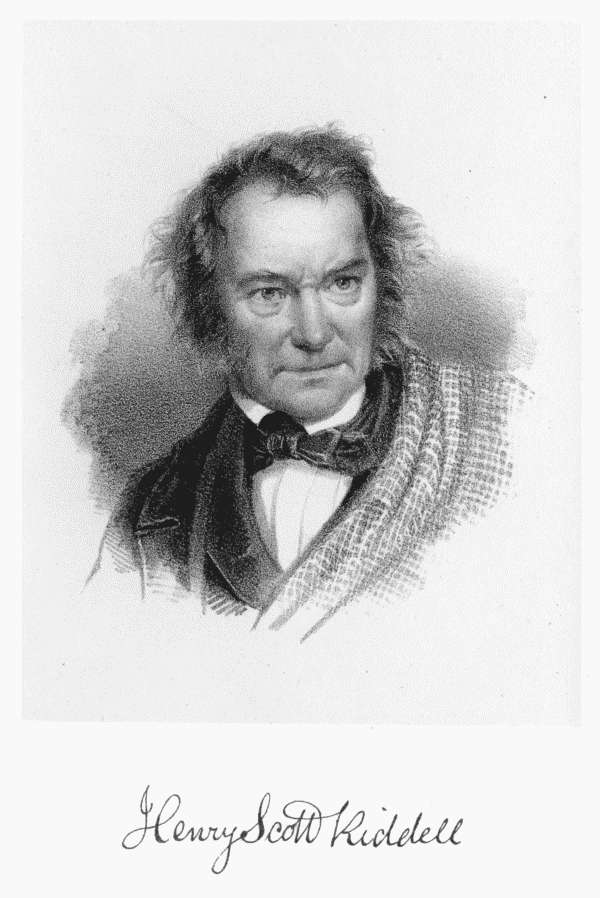 Lithographed for the Modern Scottish Minstrel, by Schenck & McFarlane.