LOVE
A poor stenographer—The positive young lady under altered
circumstances—Miss Gentles's story—A hard road for tender feet—Social
and sentimental—A misunderstanding—Which is
made right in the only way—My boss invites us to dinner—Another
kind of woman—A woman's shrewdness—The social
gift—At the opera—Business and pleasure—Sarah on Mrs.
Dround
It was a hot day in August three years after the trial;
I was sitting in Carmichael's office trying to get a breath
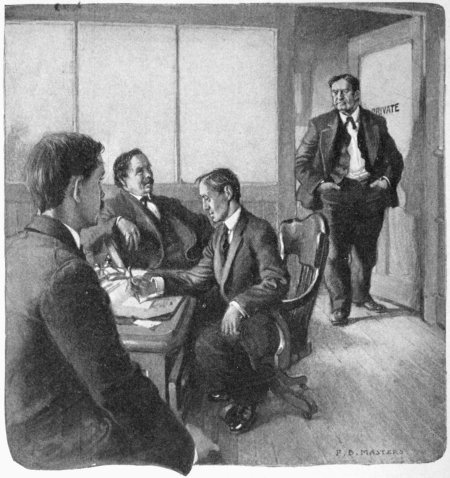
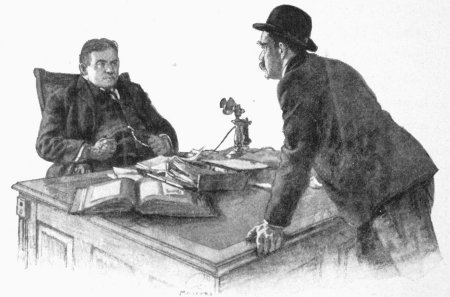
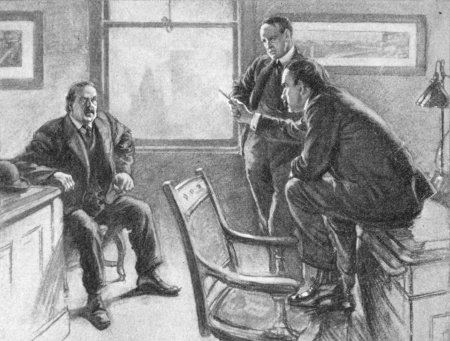
of fresh air from his west windows. I called old Peters
and asked him to send me up a stenographer.
"Haven't a good one in the place, Mr. Harrington," he
said. "All the smart ones are off on their vacation.
There's Miss Gentles, though—the old man generally
keeps her for himself, but he's gone home by this
time."
"Send up anything so long as it can write!"
"Well, she ain't much good," Peters replied.
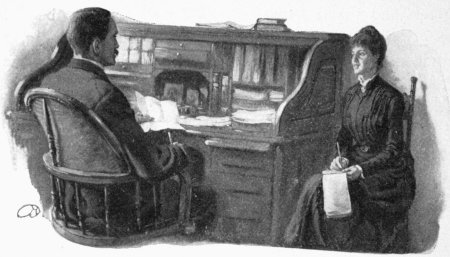
I had my head down behind my desk when the stenographer
came in, and I began to dictate without looking
up. These stenographer ladies were all of a piece to
me,—pert, knowing misses,—all but Miss Harben: she
was fifty and sour, and took my letters like biting off
thread. This one evidently wasn't in her class, for pretty
soon she sang out:—
"Please wait! I can't go so fast."
So I waited, and looked up to see what I had to do with.
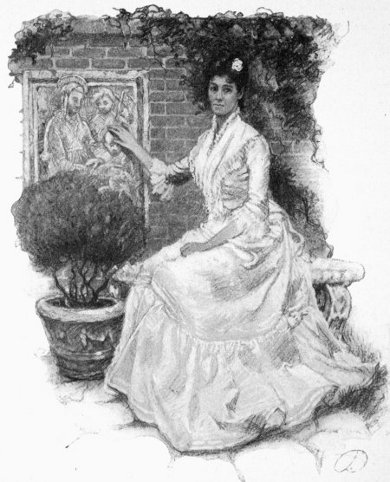
This young woman was a good-looking, ladylike person,
with a mass of lovely brown hair and long brown eyelashes.
She was different from the other girls in the
office, and yet it seemed to me I had seen her before.
She was dressed in black, a sort of half mourning, I
judged. Pretty soon she got stuck again and asked me
to repeat. This time she looked at me imploringly.
"I am not very good," she said with a smile.
"No, you are not," I replied.
She laughed at my blunt answer—laughed pleasantly,
like a lady who knows how to turn off a harsh truth, not
flirtatiously, like most of her profession.
"Been long at it?" I asked the next time she broke
down.
"Not so very. I graduated from the school about six
months ago, and I have always worked for Mr. Dround
since then. He doesn't talk as fast as you do, not
nearly."
She smiled again at me, frankly and naturally. Suddenly
I remembered where I had seen that face before,
and when she looked up again I said:—
"Did you ever find that purse, Miss Gentles?"
She looked puzzled at first; then a light spread over
her face, and she stammered:—
"Why, of course, you are the Mr. Harrington who—But
you have changed!"
"Rather, I hope! And the light wasn't good in the
police station that morning."
Miss Gentles leaned back in her chair and laughed, a
blush spreading prettily over her face.
"It's all so funny!" she exclaimed.
"Funnier now than it was then," I admitted.
"Why, of course, you are the Mr. Harrington who—But you
have changed!"
"I am very glad to meet you again. No, I never found
that purse. The judge still twits me, when he sees me,
about changing my mind. He thinks—" Then she
stopped in embarrassment, and it was some time before I
found out what the judge did think.
"Have you been back to that place in Indiana?" she
asked. And we had quite a chat. She talked to me like
a young lady who was receiving a caller in her father's
house. It took a long time to finish the few letters I had
started to write. When she went, I got up and opened
the door for her. I had to.
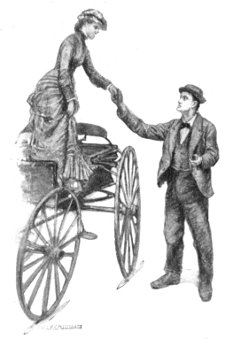
"Good afternoon, Mr. Harrington," she said, holding
out her hand. "I am so glad to have met you again."
Old Peters, who was in the outer office, looked at us in
considerable surprise. When Miss Gentles had gone he
remarked in a gossiping way:—
"So you know the young woman?"
"I met her once years ago," I admitted. "How did
she land here? She doesn't seem to have had much
experience as a stenographer."
"No, she hasn't. Her father died several years ago,
and didn't leave a cent. He was a very popular doctor,
though—a Southerner. They lived kind of high, I
guess, while there was anything. The Drounds knew
them in their better days, and when the doctor died
Mrs. Dround tried to help the girl in one way and
another. Then they fixed up this job for her. I guess
Mr. Dround don't work her very hard. Sorry you were
troubled with her. We'll see that you get a rattler the
next time, Mr. Harrington," he ended. (The men in the
office were pretty nice to "Mr. Harrington" these days!)
"Oh, she isn't so bad!" I said to Peters. For I rather
looked forward to seeing the pretty, pleasant-mannered
girl again. "I'd just as soon have Miss Gentles next
week when Mr. Dround goes East, if no one else wants
her."
Old Peters had a twinkle in his eyes as he answered:—
"Just as you say, Mr. Harrington."
So I came to see a good deal of Miss Gentles that
summer while Mr. Dround was away on his vacation.
I can't say that the young lady developed much business
ability. She forgot most things with a wonderful ease,
and she was never very accurate. But she tried hard,
and it seemed to worry her so when I pointed out her
mistakes that I took to having in another stenographer
in the afternoon to finish what she hadn't done.
Miss Gentles boarded with an old aunt of her mother's
near where Slocum and I lived. I gathered that the
aunt and her husband were not very kind to her. They
thought she ought to marry, having good looks and no
money. Miss Gentles let me call on her, and before the
summer was over we were pretty well acquainted. For
a long time the thought of May had kept me from looking
at a woman; I always saw that little white face
and those searching eyes, and heard that mocking laugh.
But Miss Gentles was so different from May that she
never made me think of the woman I had once loved.
I took Slocum to call on my new acquaintance, but
they didn't get on well together. She thought his old
Yankee ways were hard, and I suppose he thought I was
bound on the voyage of life with a pleasure-loving mate.
He used to growl to me about tying myself to a woman,
but I always said he needn't worry about me—I wasn't
the marrying kind.
"Oh, you'll be wanting to get married the same as the
rest of the world," Sloco would answer, "and have a
wife and children to spend your money on and make you
earn more!"
But I thought differently. A man of my sort, I replied
to him, works and fights just the same without wife or
child, because of the fight in him, because he can't help
himself, any more than the man who wants to drink
can keep his lips from the glass. It's in his blood and
bone....
Miss Gentles had seen a good deal of society,—the best
there was in the city in those early days. It was odd to
hear her talking about people who were just big names
to me, as if she had known them all her life. I must
have struck her as pretty green. But she made me feel
from the first like some one she had always known. She
was proud enough, but simple, and not in the least reserved.
She told me all about her people, the easy times
and the hard times. And never a word of complaint or
regret for all the parties and good things that were gone
out of her life. She was one to take her beer with a
joke when she couldn't have champagne. Of course,
I told her, first and last, all my story. She made me
take her to see the Hostetters at the old place on Van
Buren Street. Then the four of us went up the lake on
a picnic one Sunday. Hillary, I remember, was sullen
because Ed paid so much attention to Miss Gentles on
this trip.
So we became good friends. Yet I never felt really
intimate with her, as I had with Hillary, and when I
tried to step past a certain line she had her own way
of keeping me off, not haughtily or pertly, but like a
lady who knew how people of the great world, where
I had never been, behaved to one another. One day, I
remember, I was fool enough to send her a little fancy
purse with a gold eagle in it, and a line saying that it
was time for me to make restitution, or something of the
sort. My gift came back quick enough, with a clever
little note tucked inside, saying she couldn't let me
admit that I had taken her purse. It was a good lesson
for me.
When Mr. Dround returned in the fall she reported to
him for work, and I was not altogether sorry. I had
plenty of chances to see her outside of the office now,
and I was desperately busy. In a few days, however,
when I happened to be in Mr. Dround's office on some
matter, he began to talk about Miss Gentles. Peters had
told him that I had had her as my stenographer during
his absence, and Mr. Dround would like to have me continue,
as she wasn't adapted to his needs. Then he spoke
of her people, and how he and Mrs. Dround had held them
in the highest esteem, and had tried to do something
for this girl. But there had seemed to be nothing that
she was really fitted to do.
So we began again our work together, only it was
worse; for her fashionable friends were back in the
city now, and they kept inviting her out to parties and
one thing and another, until she was too sleepy to do her
work in the morning and was rather irregular. Then she
was ill, off for a fortnight. I had Peters hire me another
stenographer, a man, and Miss Gentles still drew her pay.
Peters winked at me when I suggested that he needn't
mention the fact of her absence in his report. I suppose,
if I had stopped to think of it, I should have considered
it more businesslike of her to quit her society and parties
when she found they were interfering with her work.
It was human, though, that she should want to get a
little fun out of her life, and not lose sight altogether
of the gay world where they have time to amuse themselves.
And a pretty woman like her could hardly be
expected to take stenography in a stock-yards office
seriously.
Well, I missed her more and more, especially as I
couldn't see her now that she was ill, and had to content
myself with nice little notes of thanks for the
flowers and fruit I sent. She came back at last, looking
weak and droopy, for the first time rather hopeless,
as if she saw that she wasn't fitted for the job and
couldn't keep up with her friends, either. I felt very
sorry for her. She wasn't made for work—any one
could see that—and it was a cruel shame to let her
boggle on with it. Just then I had to go to Texas on
business; when I got back a week or so later, Peters
told me that Miss Gentles had left five days before.
A cold little note on my desk said good-by, and thanked
me for my kindness to her—never a word of explanation.
I was so upset that I didn't wait to open my letters,
but called a cab and started for the aunt's to find out
what was the matter. It was just as well I had been in a
hurry, for in another ten minutes Miss Gentles would have
been on her way to Louisville, and it would have taken
a week to hunt out the small place in Kentucky where
she was going. Her trunk was packed, and she was
sitting with her aunt in the large, ugly parlor, waiting
for the expressman to come. When I walked in,
following the servant, she didn't draw back her veil,
but merely stood up and touched fingers with me.
I saw that something was so wrong that it had to be
made right at once, with no time to spare.
"You will kindly let me speak to Miss Gentles alone,"
I said to the aunt, who was inclined to stick. She went
out of the room ungraciously.
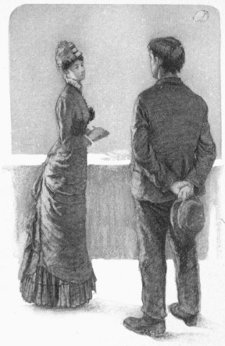
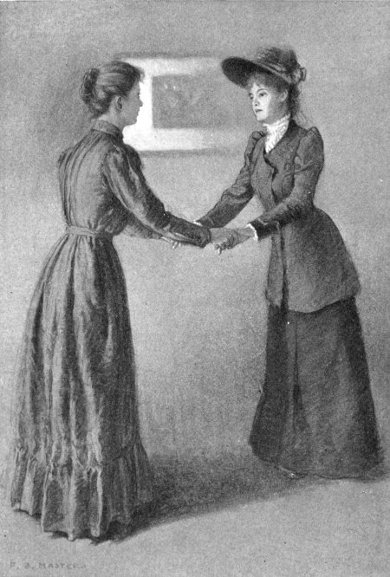
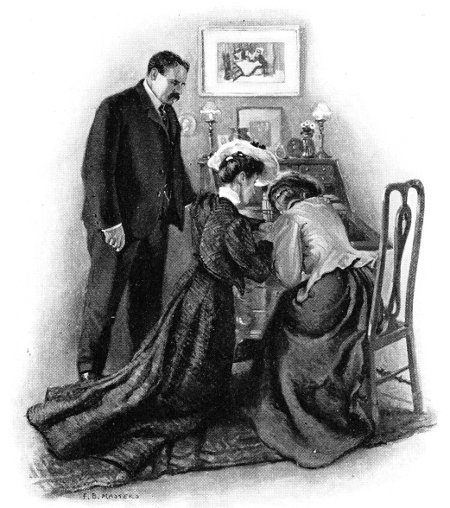
"Now," I said, taking the girl's hand and looking
through her veil into her eyes, "what is the matter?
Tell me."
Her eyes were large and moist, and her lips quivered.
But she shut her teeth down hard and said stiffly:
"Nothing whatever, Mr. Harrington. You are very
kind to come to see me before I leave."
"You aren't going to put me off with any such smooth
answer as that," I said, "or you will have my company
all the way you're going, wherever it may be. Tell me
the straight truth, and all of it."
She began to laugh at my bluffing words, and ended
with a nervous sob. After a while I learned the whole
story. It seems that the man I employed talked out
in the office about how he did all my work, and while
I was South one of the "lady" stenographers had said
something to Miss Gentles—a something she would not
tell me. So she got up and took her leave, and knowing
that her old aunt wouldn't want her around if she had
no job, she had written some cousins in Kentucky and
was going to them.
The expressman came about this time, but he didn't
take her trunk. And when I left that chilly parlor we
were engaged to be married. She said at the last, putting
her hands on my coat: "You know I always liked you,
even in the police station, Mr. Harrington—and—and
I am so very, very happy, now, Van! It was terrible to
think of going away. I had to, before you were due
home. I was never so miserable before in my life!"
Something stirred from the bottom of my heart. I
felt pitiful for all her trouble, her weakness, her struggle
with a world she wasn't made for. Then she said trustingly,
like a little child:—
"And you will always be good to me, as papa was with
mamma, and patient, and love me a great deal, won't
you? Yes, I know you will!"
I kissed her, feeling then that nothing in life could
ever be like the privilege of loving and protecting this
woman in her helplessness. I suppose that words like
those she and I spoke then are common enough between
men and women when they are in love. Yet those words
have always been to me like some kind of sacred oath—the
woman asking, out of her weakness, for love and
protection from the one who holds all happiness and life
for her, and the man, with his hasty passions, promising
of the best there is in him.
Many a time in later years, when it hasn't always been
easy to see things simply as it was then in our first joy,
those words of hers have come back to me and given me
that same soft tug at my heart. To hurt her would be to
strike a child, to wring the neck of a bird that nestled in
your hand. There are a good many kinds of love in this
world, as there are of hate; perhaps about the best of all
is this desire to protect and cherish a woman—the feeling
that any man who is worth his salt has for the one
he wants to marry....
Sarah walked part way back to the office with me that
morning, then turned north, saying she must try to find
Mrs. Dround and tell her. She was so happy she
couldn't go home and sit down quietly until I got back
from the office. Mrs. Dround, she knew, would be
specially glad to hear the news.
"For she thinks you are a very smart young man,"
Sarah added shyly.
"The lady must be a mind reader, then; for in the ten
years I have been with the firm I can't remember seeing
her once."
"Oh, yes, she has seen you. She said so. Anyway,
Jane knows all about you, you may be sure. There isn't
much that goes on around her that Jane doesn't know
about."
With that she gave me a happy little nod and was off
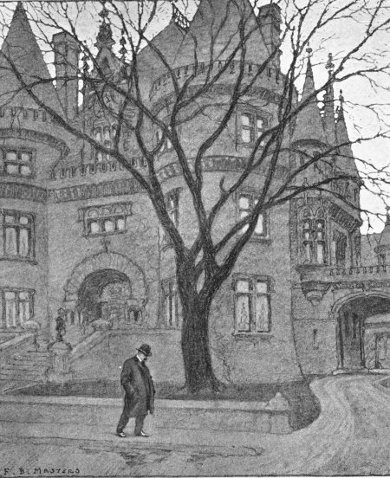
to the great stone house of my boss up north on the lake.
It was a windy, dirty December day, but I was very content
with the world as it was and thought Chicago was
the finest city in the world. As I sat down to my desk
my mind began to dance in a whirl of thoughts—of old
plans and new combinations. I wondered what Sarah
would say to some of my schemes to make our fortune.
Perhaps they would merely frighten her; for a woman is
a natural conservative. I hurried up my business to get
back to her and tell her that some day, not so very
distant, she would be a tolerably rich woman. For now
it seemed only a step into the greater things I had seen
all these years afar off.
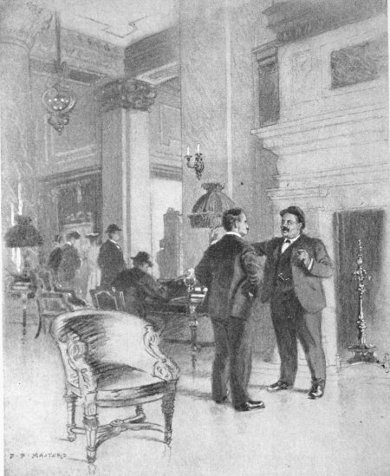
The Drounds gave us a dinner not long afterward.
I reached the house early, expecting to have a little time
with Sarah before the others came. Pretty soon I heard
the rustle of skirts, but, instead of Sarah, a tall, thin
woman in a black lace evening-dress came into the room
where the servant had left me. Instantly I knew that
this was the face I had seen in the carriage the morning
after the anarchist riot. She was a beautiful woman,
with a dark, almost foreign look. She smiled cordially
as she gave me her hand.
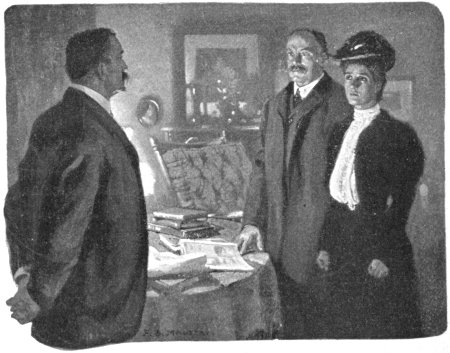
"Sarah is not quite ready. She wants to make herself
very fine—the child! And Mr. Dround is late, too.
I am glad, because it will give us a few minutes to ourselves.
Come into the library."
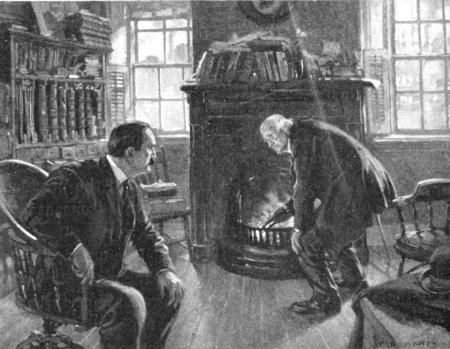
She led the way into a long, stately room, with a
beautiful ceiling in wood and gold. At one end, in a
little arched recess, a wood fire was blazing. There
were a number of large paintings on the walls, and
queer Eastern idols and curios in cabinets. Mr.
Dround had the reputation of being something of a
traveller and collector. My first glance around that
room explained a good deal to me about the head of
our firm.
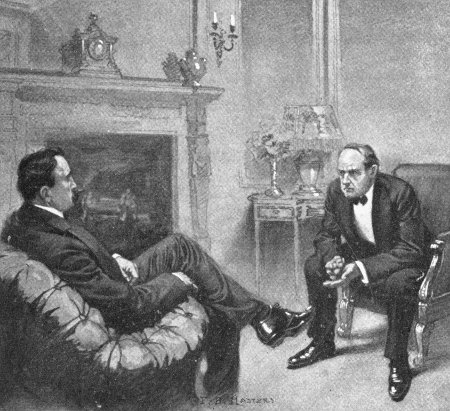
Mrs. Dround seated herself near the fire, where the
light from a great candelabrum filled with candles
flickered above her head. Her dark eyes gleamed
under the black hair; it was a puzzle of a face!
She began pretty soon to talk of Sarah in a natural
but terribly shrewd way.
"I wonder, Mr. Harrington, if you know your treasure,"
she said, half laughing. "It takes most men years
to know the woman they marry, if they ever do."
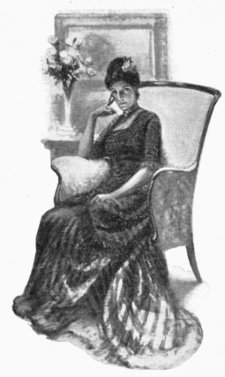
She was reading me like a book of large
print.
"Well, I know
enough now to begin
with!"
"Sarah is such a
woman—tender, loyal,
loving. It needs a
woman to know a woman,
Mr. Harrington.
But she hasn't a particle
of practical sense:
she can't keep an account
straight. She
has no idea what
economy is—only
want or plenty. She
is Southern, so Southern!
Those people
never think what will
happen day after to-morrow."
It seemed queer that
she should be telling
me this kind of thing, which I should be finding out fast
enough for myself before long. Perhaps she wanted to
see what I would say; at any rate I replied clumsily
something about not expecting to make a housekeeper
of my wife.
"Yet," she said slowly, studying me, "a woman can do
so much to make or mar her husband's career."
"I guess I shan't lay it up against my wife, if I don't
pull out a winner."
She laughed at that.
"So you think you are strong enough to win a fight
without a woman's help?"
"I've done it so far," I said, thinking a little of May.
"You have made a beginning, a good beginning," she
remarked judiciously.
She was reading me like a book of large print, leaning
back in her great chair, her eyes half closed, her face in
shade except when the firelight flashed.
"I suppose the only way is to keep on as you begin—keep
your eyes open and take everything in sight," I continued
lightly.
"It depends on how much you want, perhaps."
"I want pretty much all that I can get," I retorted
quickly, my eyes roving over the rich room, with an idea
that I might like to put Sarah in some such place as this.
Mrs. Dround laughed a long, low laugh, as though she
were speculating why I was what I was.
"Well, you are strong enough, my friend, I see. As for
Sarah, love her and don't look for what you can't find."
Just then we heard Sarah's laugh. She came into the
room with Mr. Dround, a smile kindling graciously all
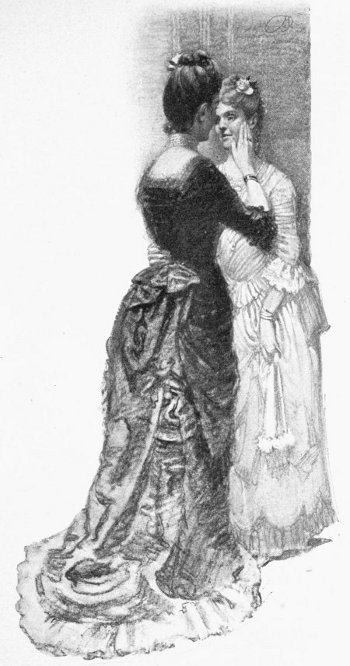
over her face. The two women, as they kissed each other,
made a picture—the dark head against the light one.
Then Mrs. Dround gave Sarah a cool, motherly pat on
the cheek, saying:—
"I have been offering your young man some advice,
Sarah."
"He doesn't need it!" Sarah answered in a flash.
"Well, I don't know that he does," Mrs. Dround
laughed back, kissing her again. Every one loved Sarah
in the same protecting way! Soon after this Mr. Dround
came up, smiling genially at the women's talk, and gave
me his hand.
I had not seen the chief out of business hours before.
I had never thought him much of a business man in the
office, and here, in his own house, with his pictures and
books and curios, he was about the last person any one
would believe spent his days over in Packington.
It wasn't to be a simple dinner that evening. Sarah
whispered that Jane had insisted on inviting a lot of
people, some important people, she said, to meet her
young man. And presently the guests arrived,—Lardner
and Steele and Jefferson with their wives, and a number
of others. About the only ones I knew were big John
and his very fat wife. They seemed to be as much out
of the crowd as I felt I was, with all my coolness. But
Sarah was perfectly at her ease. I admired her all afresh
when I saw how easily and gayly she took the pretty
things those men said to her.
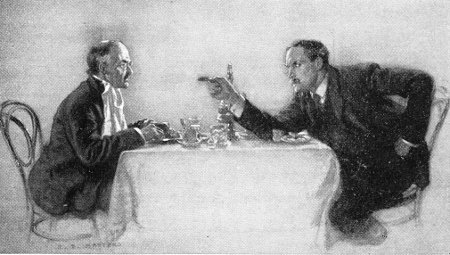
I was more at my ease in the smoking room after
dinner, where I had to tell the story about the theft of
the purse in Steele's store. The shrewd old merchant
laughed heartily.
"I have been offering your young man some advice, Sarah."
"I trust, Mr. Harrington," he drawled, "that now you
are going to marry you will lose your purse there in place
of taking one."
They paid me considerable attention all around, and it
gave me a pleasant feeling—all of which, I knew, was
due to Sarah. I was nothing but a newcomer among them,
but she was the daughter of an old friend. And she had
a wonderful way of her own of coming close to people.
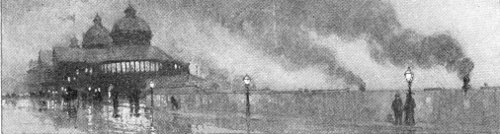
I remember that we went later to the opera, which was
being given in that big barn of an exposition building on
the lake front where I had had my first experience of
Chicago hospitality. We were in a box, and between
the acts people came in to call. Sarah introduced me
to some of them, and she held a reception then and there
while Mrs. Dround looked on and smiled.
I forget the opera that was given,—some French
thing,—but I remember how gay the place was, and
all the important people of the city whom Sarah pointed
out to me. Even as a matter of business, I saw it would
be a good thing to know these people. Of course, the
social side of life doesn't count directly in making money,
but it may count a good deal in getting close to the crowd
that knows how to make money. Perhaps I began to
have even a little more pride in Sarah than I had before,
seeing how she knew people and counted for something
with them. In the game that we were going to play
together this social business might come in handily,
perhaps.
In one of the intervals of the opera Mrs. Dround
remarked as if her mind had been on the same idea:—
"You see Sarah's sphere, Mr. Harrington?"
"Yes," I replied. "And the girl does it tip-top!"
She laughed.
"Of course! It's in the blood."
"Well, it isn't a bad thing, some of it," I went on
with pride and content. "Strauss isn't here, is he?" I
asked.
"The Strausses never go anywhere, you know."
"He's the biggest of them all, too," I said partly to
myself.
"You think so? Why?" she asked, her brows coming
together.
"He's the biggest dog, and it's dog eat dog in our business,
as all over nowadays," I replied.
"Why now more than ever before?" she asked.
"It's in the air. There's a change coming over business,
and you feel it the same as you feel a shift in the
wind. It's harder work fighting to live now than ever
before, and it can't go on like this forever. The big dog
will eat up the rest."
"And you think Strauss is our big dog?" she asked
with a smile.
I saw then where she had led me, but it was too late to
be less frank.
"Yes," I answered, looking her in the eyes.
"Then how should one keep out of his jaws?" she
went on, playing with her fan.
"Well, you can always get out of a scrap and stay out—or—" I
hesitated.
"Or?" she persisted.
"Put up such a fight that the big fellow will give you
good terms to get rid of you!"
"I see. You have given me something to think about,
Mr. Harrington."
"The time is coming," I went on, careless whether
she repeated to Mr. Dround my views, "and mighty
quick, too, when that man Strauss will have the food-products
business of this country in his fist, and the rest
of us will be his hired men, and take what he gives us!"
"What are you two talking about in this intimate
way?" Sarah broke in.
"The future," Mrs. Dround said.
"Business," I added.
"Business!" Sarah sniffed, and I knew I had done
something I ought not to do. "And Nevada singing
so divinely to-night! Come, Van, I want you to meet
Mr. Morehead." And I was led away from our hostess
to keep me out of mischief.
On our way home after the opera Sarah and I talked
of Mrs. Dround. I had never met any woman like her,
and I was loud in her praise.
"Yes," Sarah admitted slowly, "she seemed to like
you. But did you see how she treated the Carmichaels?
Just civil, and hardly that. Nobody can understand
Jane. She just does as she wants always."
"I believe she must have a great head for business.
If she were in Henry I.'s shoes—"
"I don't see why you say that! I am sure you never
hear the least word about business in their house."
I smiled at Sarah's little show of temper, as she
continued:—
"Anyway, it would be strange if she didn't know
something about money-making. Her father was old
Joe Sanson—they say he was a half-breed and made his
money trading with the Indians and getting Government
lands. Father used to tell stories about him. We heard
that he left her a great deal of money, but nobody knows
much about her or her affairs. She's so silent."
"I didn't find her so."
Sarah apparently did not altogether share my enthusiasm
for Mrs. Dround.
"Tell me," she demanded, "just what she said to you,
every word."
"I can't. She talks with her eyes, most."
"Oh, I hate to have men discuss business with women.
It is such bad taste!"
"Why, Sarah, business is the whole thing for me.
There isn't anything else I can talk about except you."
"Talk about me, then. I shall have to keep you out
of Jane's way. I don't want you to talk to her about
things I don't understand."
"Why not?"
She shivered and drew me closer to her.
"Because, Jane—I am afraid of Jane. She is so
strong, and I am so weak. If she wanted you, or anybody,
she would take you."
For all reply to this nonsense I kissed her good night.