PREFACE — CONTENTS — LIST OF ILLUSTRATIONS IN THE TEXT — LIST OF PLATES
WHEN
the able author of this book asked me to
write a Preface to a work on Hospitals, I replied
that I must first see the sheets in proof. This was not
due to any doubt of the ability of the writer, it was
due to some doubt as to the adequacy of the material
at her disposal. This doubt has been much more than
removed. The mass of the material collected is remarkable.
Still more remarkable is the evidence of the very
large part played by Hospitals—in the widest senses of
the word—in the social life of the people of this land in
the earlier Middle Ages. For the fuller understanding of
the social life of our ancestors, this book contributes
information of the most luminous character. It will
serve also as an example and pattern for young and
earnest students of real history, the history of ordinary
human beings rather than of generals and of kings.
And it must be added that, although the division into
numerous headings leads to frequent repetitions of the
names and characters of institutions of the nature of
Hospitals, it has the great advantage of reducing to
order a mass of material which might under less careful
treatment have had a chaotic appearance. As a book of
reference for readers and writers, this treatise on the
Mediæval Hospitals of England ought to hold a distinguished
place.
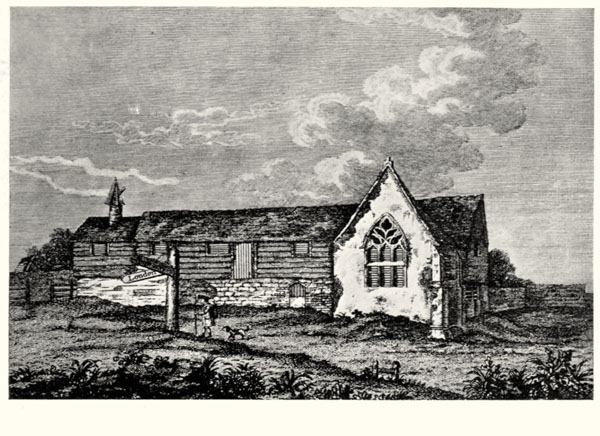
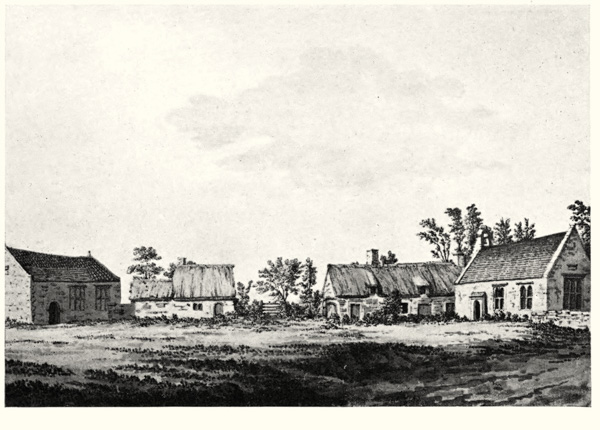
The “Priory” is still picturesque and ivy-clad. The walls are of flints, with large quoins; the original buttresses and windows remain. The chapel (a) is in use.
[Idem.] The chapel was built circa 1247, and restored 1837; now Holy Trinity Church, High Street.
264
INTRODUCTION
“And to relief of lazars and weak age,
Of indigent faint souls, past corporal toil,
A hundred almshouses, right well supplied.”
(Shakespeare: Henry V., i. 1.)
WHILE
we are justly proud of our institutions for
the amelioration of the lot of the infirm and destitute,
we are apt to forget that they are not the
outcome of any modern philanthropic movement, but
are rather England’s inheritance for above a thousand
years.
Much has been written of the regular monastic houses.
These are situated, as it were, upon the high-roads of
ecclesiastical history; but comparatively little attention
has been paid to the existence and development of
the foundations known as “Hospitals.” Although it
is with some trepidation that we tread the less-frequented
by-paths of history, an attempt will be made in this volume
to illustrate the place of the hospital in pre-Reformation
times, and by this means to secure a fuller recognition of
the widespread activity of the Church of England in
former days. Hospitals played an important part in the
social life of the Middle Ages, and from the study of them
much may be learnt of the habits of a distant past.
At the outset it will be well to make clear what the
hospital was, and what it was not. It was an ecclesiastical,
not a medical, institution. It was for care rather than
cure: for the relief of the body, when possible, but pre-eminently
for the refreshment of the soul. By manifold
religious observances, the staff sought to elevate and discipline
character. They endeavoured, as the body decayed,
to strengthen the soul and prepare it for the future life.
Faith and love were more predominant features in hospital
life than were skill and science.
It will surprise many to learn that—apart from actual
monasteries and friaries—there existed upwards of 750
such charitable institutions in Mediæval England.1
To appreciate the relative magnitude of this number,
it must be remembered that the total population was
smaller than that of London at the present day. The
fact proves that clergy and laity were battling bravely
with social problems. There existed a sense of responsibility,
causing real charitable effort, although mediæval
methods may appear mistaken in the light of modern
scientific and economic principles.
The study of these ancient charities calls attention to
the following points. The first is the extent of leprosy in
England. There are, indeed, conflicting opinions concerning
the prevalence of the disease, but it is certain
that the figure mentioned above includes over 200 hospitals
occupied at one time by lepers. Secondly, a number of the
early foundations were in the main houses of hospitality
for strangers; and this testifies to the widespread
practice of pilgrimage. There were also general hospitals
in which temporary and permanent relief was
given to needy persons of all sorts and conditions. Some
were very small institutions, mere cottage-hospitals. It
is often impossible to ascertain the character of an ancient
charity. As long ago as 1594, it was reported concerning
St. Edmund’s, Gateshead: “the poor . . . are
and have been indifferently of both kindes as men and
women; but whether sicke or wholl, lepers or way
fairinge, so they be poore, needie, and indigente, is note
respected.” On the other hand, in the case of large
towns, hospitals were often differentiated. Situated in the
main street, perhaps, was an infirmary-almshouse for the
sick and helpless; near a frequented gate stood a hostel
for passing pilgrims and others; outside the walls there
would be at least one leper-hospital.
It is not possible to be precise in chronology, or even
to give approximate dates. In Chantry Surveys there is
often a memorandum that no foundation can be shown,
this being lost in obscurity, and the house founded “before
time of memory.” Probably the earliest authentic
fact relating to charitable houses other than monasteries
is that concerning the Saxon hospital at York, for although,
in the words of Canon Raine, “its beginning is
enveloped in an atmosphere of historical romance,” the
munificence of Athelstan enables us to date its origin
about the year 937.
The year 1547 serves as a useful limit to our period, and
may well for the purposes of this book denote the close
of the Middle Ages in England. Its selection in no way
implies a lack of continuity in the Church with which
every hospital was intimately associated,—yet it marks
a time of transition. Charity was crippled for a time by
the confiscations of endowments designed for the relief
of the destitute, until a new generation of philanthropists
arose and endeavoured to replace them. Thomas Fuller
truly says, “the reformed Religion in England hath
been the Mother of many brave Foundations.” To support
this he instances certain famous hospitals, as that at
Warwick, built by the Earl of Leicester (1571); Croydon,
by Archbishop Whitgift (1596); Guildford, by Archbishop
Abbot (before 1617), and Sutton’s Charterhouse
(1611). There is, indeed, no fundamental difference between
the earlier and later almshouses of the sixteenth
century. The author of A History of English Philanthropy
gives two reasons for using the period of the
dissolution of monasteries as a starting-point. “It was
then,” he says, “that modern problems began to formulate
themselves with great precision; and charity was
then ceasing to be under the immediate direction and
tutelage of the Church.” For the same reasons, the year
1547 is here used to conclude the earlier philanthropic era.
A tabulated list of hospitals will be found in Appendix
B. Additions and corrections are earnestly invited
by the author, as local and particular knowledge is required
to make it accurate and exhaustive. From this
list are excluded such infirmaries as formed an integral
part of a monastic house; but in cases where some abbey
maintained a separate institution outside its gates (with
distinct constitution, separate dedication-name, and sometimes
a separate seal), the foundation is set down as a
hospital. The institutions known as Colleges have no
place unless, indeed, they maintained bedemen. The
“House of Converts” does, however, rightly belong to
our subject, for it was an almshouse and industrial home.
“Hospitals” of the Orders of the Temple and St. John
of Jerusalem are excluded, because they differ in
character, although the work they carried on was partly
the same. Moreover, as they formed part of great
societies, famous in and beyond Europe, they have their
own historians. Houses of the Knights of St. Lazarus
must, however, consistency notwithstanding, find a
place, because any account of relief provided for lepers
would be incomplete if that comparatively small Order
were passed over. “Hospital” was a wide-embracing
term, and the occasional application of the word to
religious foundations of one kind or another has not
always been accounted a reason for their inclusion.
The history of many houses is obscure, limited in some
cases to a single reference. The great scholars Bishop
Tanner and Sir William Dugdale reaped harvests, which
are garnered in their Monasticons; yet even a humble
student may now glean after them by means of the invaluable
printed Calendars of the Public Record Office.
The labours of the Historical Manuscripts Commission
are likewise fruitful. Wills are useful as showing the
period up to which these institutions had popular support.
Although Appendix B was mainly compiled before
the issue of the Victoria County History, certain shires
have received several additions from that great work, the
forthcoming volumes of which will doubtless supplement
the present list. Episcopal archives throw light upon
hospital-life, as upon every department of ecclesiastical
history; fresh information and confirmatory evidence
about which will be forthcoming when, by means of the
Canterbury and York Society and other Record Societies,
more Registers become accessible. It is much to be
desired that local Archæological Societies should take up
and develop the history of particular houses. It is
difficult to ascertain which ancient charities still continue,
but an attempt has been made to record approximately
in the appended table such endowments as now
exist.
Grateful thanks are due to those who have assisted
the writer in her task. And first, to the Lord Bishop of
Bristol, whose kind offer to contribute the Preface to
this volume is only the latest proof of the ever-helpful
interest he has taken in the whole work. Mention must
also be made of Mr. R. C. Fowler, of the Public
Record Office, who, after personally examining the
List of Foundations, gave hints for its improvement.
The Rev. C. S. Taylor, F.S.A. and the Rev. Canon
Wordsworth have given invaluable assistance, particularly
by the translation of the Office found in Appendix
A. In various ways help has been rendered by Miss
Arnold-Forster, Professor G. H. Leonard, Mr. W. F.
Rawnsley, and by friends and correspondents too numerous
to mention. Lastly, it remains for the writer to
acknowledge her indebtedness to the Rev. Dr. Cox,
General Editor of the Series, without whose kindly encouragement
she would never have ventured to go
beyond a private study of the subject in hand.
1
Nearly 800 are set down in the appended
list, but some are uncertain.
2
From The hye way to the Spyttell hous (circa 1536),
in which Robert Copland speaks with the Porter of a London hospital,
probably St. Bartholomew’s.
CHAPTER I HOSPITALS FOR WAYFARERS AND THE SICK — FIRST PERIOD ( circa 925–1170) — SECOND PERIOD ( circa 1170–1270) — THIRD PERIOD (1270–1470) — FOURTH PERIOD ( circa 1470–1547)
p001
MEDIÆVAL HOSPITALS
OF ENGLAND
PART ONE
“Founded for the maintenance of poor pilgrims and other infirm persons
resorting thither to remain until they are healed of their infirmities.”
“For the poor, for persons going to Rome, for others coming to Canterbury and
needing shelter, and for lying-in women.” (St. Thomas’,
Canterbury.)
THE earliest charitable
institutions of England
were houses of hospitality.
In sketching the development
of these guest-houses
we must bear in mind
that the hospital (derived from
hospes, a host or guest) was
a wayside shelter for all comers.
Travellers were exposed to peril by the rudeness of the
times, but in those early days hospitality was regarded as
a solemn obligation. To receive any stranger was a
p002
duty: to welcome the passing pilgrim was a sacred privilege.
Although the private entertainment of guests was
widely practised, some public institutions were required.
Tradition tells of at least two “hospitals” or hospices
founded in the tenth century (925–940). Both were in
Yorkshire,3
one being in the distant country parts, the
other in the populous town. At Flixton in Holderness
was a house of refuge “to preserve travellers from being
devoured by the wolves and other voracious forest
beasts.”4
The city of York, on the other hand, was so
great a place of thoroughfare that it was impossible to
entertain all who came. Athelstan, recognizing that the
Canons of the Minster were men of holy life, active in
helping the needy who flocked to them, assisted them
in their hospitality by the foundation of St. Peter’s
hospital.
Two other early houses of charity are ascribed to the
Saxon bishops Oswald and Wulstan of Worcester. In
the eleventh century at least we emerge from tradition,
for it seems clear that St. Wulstan founded that hospital
near his cathedral city which afterwards bore his name.
It will be remembered that bishops were especially bound
by their vows at consecration to be given to hospitality.
In pre-Norman days, the solemn question was in substance
what is asked to-day: “Wilt thou shew mercy and
kindness, for the name of the Lord, to the poor, the
stranger, and all in want?” (pauperibus et peregrinis
omnibusque indigentibus). To this the elected bishop p003
replied, “I will.” This formula occurs in the Exeter
Pontifical, compiled about nine hundred years ago, and
is repeated in Osmund’s Sarum Use.
There were, of course, pilgrims among those who
sojourned in early hostels. Englishmen have always
loved travel. Not only did our Saxon forefathers journey
to Rome (receiving shelter by the way in hospitals of
English foundation), but they constantly visited their
national shrines. Probably a fresh impetus was given to
pilgrimage by the coming of the Normans. Monastic
life was strengthened, and this was a guarantee of hospitality.
“Guests are to be received as if they were
Christ Himself,” said the rule of St. Benedict. In the
century after the Conquest, as in those which preceded it,
the chief works of mercy were done in the monastery.
There was the hospitium within the abbey-gate, as at
St. Mary’s, York; and the “Strangers’ Hall” at
Winchester. Then followed the shelter outside the
walls, as at Battle, referred to (circa 1076) as “the
house of the pilgrims which is called the hospital.”
During the twelfth century more independent foundations
became common. All sorts and conditions
of men were lodged—wayfarers, invalids, and even
lepers.
About the year 1148, St. Bartholomew’s, Smithfield,
was the resort of sick pilgrims, of whom “many and
innumerable were schewid tokynnys of myracles.” The
patients who flocked to the famous shrine and hospital
were “langwissyng men greuyd with uariant sorys”; one
sought “remedie of his akynge hede,” another suffered
from “bleriednes of yen” (eyes), and yet another from
“ryngyng of his erys.” Victims of the falling sickness p004
(epilepsy), paralysis, dropsy, fevers, insanity, found
relief; deaf and dumb were healed; a child born blind
received sight from “the heuenly leche.”
Theobald, Archbishop of Canterbury, about 1141, invited
help for “the hospital house of Dover, which two
brethren, Osbern and Godwin, are diligently building for
the reception of the poor and strangers.” This hospital
of St. Bartholomew (Buckland) was also used for lepers.
The need of further provision for travellers was felt, and
a benefactor made extensive grants on condition that a
house was provided for the reception of needy people
disembarking from ships: before 1163 reference is made
to the hospitium for strangers. It was doubtless frequented
by voyagers returning from the Crusades; but
before long an event occurred which brought multitudes
to Dover, and then the old hospital proving insufficient,
became chiefly the resort of lepers, and a new Maison
Dieu was built near the quay. (See Frontispiece.)
The year 1170 marks an epoch, ushering in the great
pilgrimage within and towards England. When the
shrine of St. Thomas of Canterbury became the goal of
pious wayfarers it was necessary to find accommodation
for them. The hospitals of Canterbury and Southwark
bearing the martyr’s name were among the earliest.
Within a few years such houses (often called Domus Dei)
were founded in most of the southern ports and along the
Pilgrims’ Way, as at Dover, Ospringe, and Maidstone.
At Strood “the poor, weak, infirm and impotent, as well
neighbouring inhabitants as travellers from distant p005
places,” were cared for “until they die or depart healed.”
Norfolk, like Kent, was studded with houses of charity,
especially near the highway to Walsingham. Thirteen
pilgrims were lodged at Bec, near Billingford. At
Thetford there was a hospital near the passage
of the river. Among other early hostels we may
enumerate those of Newcastle, Hexham, Ripon, Stamford,
Aynho, London (St. Mary’s), Bridgwater, and
Ledbury.
The hospital was a guest-house and infirmary in one.
That on the outskirts of Oxford was called in a charter
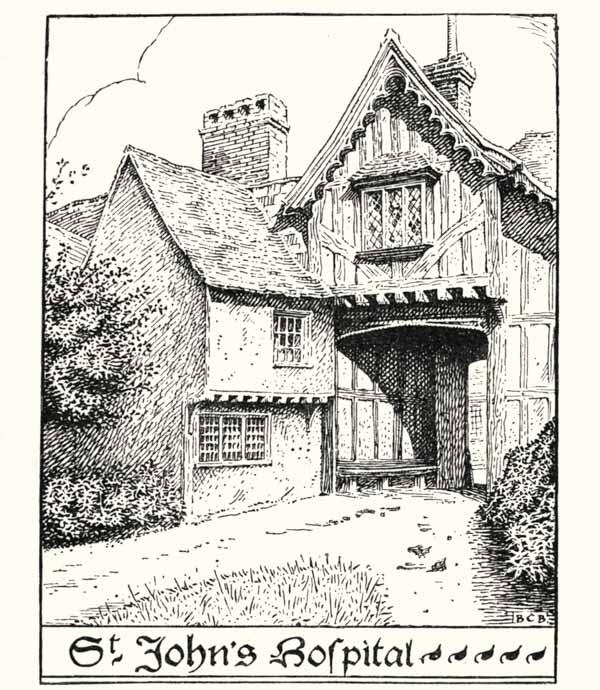
(circa 1194) Herebergeria Hospitalis S. Joh. Bapt.; in
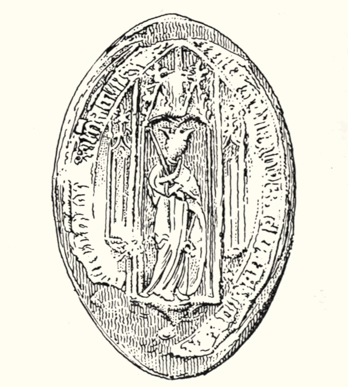
1233 this was refounded (Fig. 1) “that therein infirm
people and strangers might receive remedy of their health
and necessity.” The inmates of St. Nicholas’, Salisbury,
are described as passengers (transeuntes) and as sick
and infirm (egroti et infirmi). The same two-fold work
of charity was carried on at Chichester, as shown by
St. Mary’s statutes:—
“If anyone in infirm health and destitute of friends should
seek admission for a term, until he shall recover, let him be
gladly received and assigned a bed. . . . In regard to the
poor people who are received late at night, and go forth
early in the morning, let the warden take care that their
feet are washed, and, as far as possible, their necessities
attended to.”
There is a MS. in the British Museum entitled The
Pilgrim. It is an allegorical poem in the manner of the
“Pilgrim’s Progress,” and sets forth the adventures of
the traveller. The illustration (Pl. I) and description
were probably taken from experience of earthly pilgrimage.
“Charity” is seen welcoming strangers, p006
at which work she was always busy in mediæval
England:—
(a) Pilgrimage and Vagrancy.—The greatest century
of pilgrimage was past, but vagrancy was an ever-increasing
problem, and inasmuch as
it affected the social life of England, it
affected hospitals, directly or indirectly.
In the Statute of Labourers, drawn up
in 1350, an attempt had been made to
restrain desultory wandering, idleness,
mendicancy and indiscriminate almsgiving.
This was followed by many
ordinances, local and general. By a
proclamation in 1359 the municipal
authorities of London declared
that such unworthy
beggars “do waste divers
alms, which would otherwise
be given to many poor folks, such as lepers, blind, halt, p007
and persons oppressed with old age and divers other
maladies.” In 1369 they issued a precept “for mendicants,
vagrants and pilgrims to leave the city.” The
Statute of Westminster (1383) ordered inquiry concerning
vagabonds “wandering from place to place, running
in the country more abundantly than they were wont in
times past.” The Act of 1388 declared that those who “go
in pilgrimage as beggars” when fit for employment,
should be dealt with according to the previous Statute.
It will be observed that these measures were framed from
an economic standpoint, not to check pilgrimage as such.
Although pilgrimage was declining, there were still
many pilgrims. Some of these were professional palmers,
and hirelings fulfilling vows by proxy; for there are
numerous bequests in the fourteenth century to persons
undertaking journeys on the testator’s behalf to Canterbury,
Walsingham, and Bury St. Edmunds, as well as to
St. James of Compostella, Rome, or the Holy Land.
The special “Jubilee” at Canterbury in 1420 was attended
by 100,000 persons, and in 1434 thousands set sail for
Compostella.
(b) Provision for temporary relief.—Existing houses of
hospitality were kept up, but a growing tendency to
discriminate amongst applicants may be noticed. In
many cases more beds were reserved for chronic invalids
than for casual comers. St. Thomas’ hospital, Canterbury,
carried on its old work, but the renewed statutes
of Archbishop Stratford (1342) direct “that poor pilgrims
in good health shall be entertained only for one night . . .
that greater regard shall be had for the sick than for the
well pilgrims.” With some diplomacy it describes itself,
in a petition to the Pope, as designed “for persons going p008
to Rome (Romipete), for others coming to Canterbury
and needing shelter,”7
etc.
The chief building period was over, as far as this particular
kind of temporary provision is concerned, but one
or two new foundations must be mentioned. St. John’s,
Winchester, was built about 1275 “for the relief of sick
and lame soldiers, poor pilgrims, and necessitous wayfaring
men, to have diet and lodging thereto fit and convenient
for one night or longer, as their abilities to travel
gave leave.” In 1393, the Bishop of Ely offered an indulgence
to persons contributing to the sustentation of
a hospital at Brentford, which consisted of a chapel,
newly constructed, “with two houses built there, furnished
with beds and other necessaries for the entertainment
of poor travellers.” The old hospital at Brackley
was reconstituted for the same purpose (1425). It was,
however, suppressed sixty years later, because hospitality
was being neglected.
One special form of temporary relief came to the front
about this time. The assistance of women in childbirth
was named in the Petition and Statute of 1414 as part of
the recognized aim and scope of hospital charity. The
heading to this chapter alludes to the work undertaken at
St. Thomas’, Canterbury, in 1363. The foundation deed
of Holy Trinity, Salisbury, sets forth that “lying-in
women are cared for until they are delivered, recovered
and churched.” The Spital near Blyth was newly constructed
in 1446 for the lodging of strangers and distressed
women.
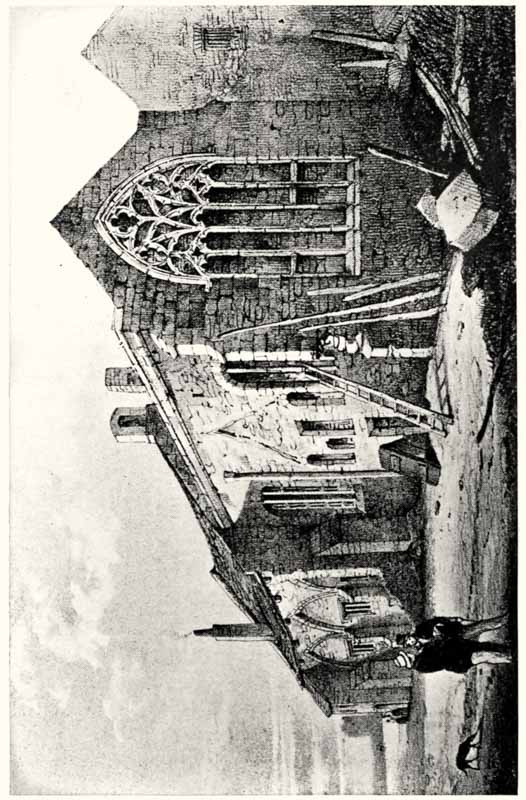
♦PLATE II. HOSPITAL OF ST. THOMAS, CANTERBURY
FOR PILGRIMS
It is recorded that the two London infirmaries of St.
Mary without Bishopsgate and St. Bartholomew p009 undertook
this work; in both institutions the touching provision
was made that if the mother died, her child should be
brought up there until the age of seven.8
In the year 1437
privileges were granted to the latter hospital “in consideration
of their great charges in receiving the poor,
feeble and infirm, keeping women in childbirth until
their purification, and sometimes feeding their infants
until weaned.” William Gregory, a citizen of London,
describing in his commonplace book various foundations,
says of “Bartholomewe ys Spetylle”:—
“Hyt ys a place of grete comforte to pore men as for hyr
loggyng, and yn specyalle unto yong wymmen that have mysse
done that ben whythe chylde. There they ben delyueryde, and
unto the tyme of puryfycacyon they have mete and drynke of the
placys coste, and fulle honestely gydyd and kepte.”
General hospitals for the sick were thus in process of
development. St. Bartholomew’s was steadily fulfilling
its founder’s vow to provide a place for the “recreacion of
poure men.” After three and a half centuries of usefulness,
a roll of 1464 records with approbation “works done
within the hospital in relief of poor pilgrims, soldiers,
sailors and others of all nations.”
(a) It is evident that pilgrimage was no longer an
important factor in the social life of the country. The
daily resort to shrines had practically ceased, but the
special anniversaries were kept. Such pious travellers as
there were, lodged chiefly in inns. At Glastonbury a
Pilgrims’ Inn was built by Abbot John, about the year
1475, to accommodate those visiting the holy places of p010
St. Joseph of Arimathæa and St. Dunstan. A later abbot,
Richard Beere, writing to Archbishop Warham to defend
the genuineness of St. Dunstan’s relics, stated that
people had come from far and near to visit the new shrine,
especially upon St. Dunstan’s Day (1508).9
Although
the regular stream of pilgrims to Canterbury was no
longer seen day by day, the great “Jubilee” celebrations
were popular, the last one being kept in 1520. At that
time the needs of visitors were met by special provision,
a post being set up in the main street with “letters
expressing the ordering of uitell and lodyng for pylgrymes.”
Probably the bailiffs and citizens made all
arrangements for bed and board as they had done in 1420.
Vagrancy still constituted an increasingly grave problem.
By “An Acte agaynst vacabounds and beggers,” in
1495 (re-enacted 1503), previous legislation was amended
and “every vagabound heremyte or pilgryme,” partially
exempt hitherto, was henceforth compelled to fare like
wandering soldier, shipman or university clerk. In a
letter from Henry VIII to the Mayor of Grimsby it is
observed that the relief of the impotent is much diminished
by the importunate begging of the sturdy and idle, and it
is required that measures be taken “that the weedes over
growe not the corne.”10
The Statutes became increasingly
stern, and able-bodied beggars were scourged with the lash
from town to town by the Act of 1530–1. But “the greatest
severities hitherto enacted were mild in comparison with
the severe provisions of the enactment” of the first year
of Edward VI (1547). If the young king’s father had
literally chastised beggars with whips, his own counsellors
desired that they should be chastised with p011
scorpions. They might be reduced to the condition of
slaves: their owners might put a ring round their necks
or limbs, and force them to work by beating and chains,
whilst a runaway could be branded on the face with a
hot iron.11
This brutal law was repealed two years later.
(b) Where towns were few and far between, the need of
shelter for strangers was especially felt. Extensive works
of hospitality were done by religious houses, particularly
in the northern counties. That fresh provision, although
on a small scale, was still made for shelter, indicates its
necessity. When an almshouse was built at Northallerton
(1476), accommodation was made not only for thirteen
pensioners, but for two destitute and distressed travellers,
who should stay a night and no longer. A hostel solely
for temporary shelter was founded at Durham (1493). One
Cuthbert Billingham directed the provision of eight beds
in a “massendeue or spittel,” where “all poore trauellyng
people ther herbery or logyng asking for the loue of
Gode shall be herbered and logide.” In Westmorland,
a little hospital, with two beds for passers-by, was built
by John Brunskill at Brough-under-Stainmoor (1506): it
was situated on the pass into Yorkshire.
At seaports and in places of thoroughfare, shelter was
still provided for travellers. God’s House, Southampton,
expended £28 annually upon “daily hospitality to wayfarers
and strangers from beyond the sea,” and similar
charity was provided at Dover. Leland describes St.
Thomas’, Canterbury, as “An Hospital within the Town
on the Kinges Bridge for poore Pylgrems and way faring
men.” At Sandwich there was a “Harbinge” attached
to St. John’s almshouse. Provision was made for lodgers, p012
and the buildings included “the chambre of harber for
strange wemen, the gentilmen chambre and the long
harbur chamber” (1489). The town authorities ordered
“that no persons do harbour beggars, who are to resort
to St. John’s Hospital” (1524).
The existing provision for temporary relief was in fact
wholly inadequate. In the metropolis, for example, there
was a crying need. It was stated by Henry VII in 1509
that:—
“there be fewe or noon such commune Hospitalls within
this our Reame, and that for lack of them, infinite nombre of
pouer nedie people miserably dailly die, no man putting hande
of helpe or remedie.”
The king, recognizing the need, planned to convert the
old Savoy Palace into a magnificent institution (Pl. XIV)
in which “to lodge nightly one hundred poor folks.” If
this charity corresponded with the recent Statute, it would
relieve those vagrants who alone were exempt, namely,
women in travail and persons in extreme sickness. The
king contemplated building institutions similar to the
Savoy in York and Coventry, but the design was not
carried out.
The problems arising from true poverty and false mendicancy
were, of course, intimately connected with hospital
life. A graphic picture of the difficulties which beset
administrators of charity about the year 1536 is given by
Robert Copland in The hye way to the Spyttell hous. The
author states that one wintry day, he took refuge from
the snow-storm in the porch of a hospital, probably St.
Bartholomew’s. Here he got deep into conversation with
the porter of the house. While they talked, there gathered
at the gate people of very poor estate,—lame, blind, p013
barefoot—and Copland, who does not despise the honest poor,
only those who live in need and idleness, inquires whether
they admit all who ask for lodging. The porter at first
answers, “Forsooth, yes,” and Copland goes on to protest
against indiscriminate hospitality:—
“Me thynk that therin ye do no ryght
Nor all suche places of hospytalyte
To confort people of suche iniquyte.
But syr I pray you, of your goodnes and fauour
Tell me which ye leaue, and which ye do socour.”
The porter replies that the house is no supporter of
sham beggars. There are some who counterfeit leprosy,
and others who put soap in their mouth to make it
foam, and fall down as if they had “Saynt Cornelys
euyll.” He goes on to describe those who hang about by
day and sleep at night at St. Bartholomew’s church door—drunkards,
spendthrifts, swearers and blasphemers,
those who wear soldiers’ clothing, but are vagabonds,
and men who pretend to have been shipwrecked. Many
of these live by open beggary, with bag, dish and staff:—
“And euer haunteth among such ryf raf
One tyme to this spyttell, another to that.”
The porter
intimates that an effort is made to discriminate
among those daily harboured, but he confesses that
they are obliged to receive many unsatisfactory men, and
disreputable women so numerous that they are weary of
them; but they refuse stubborn knaves who are not ill, for
they would have over many. Indeed, the aim of the
hospital is to relieve those who cannot work and are
friendless—the sick, aged, bedridden, diseased, wayfaring
men, maimed soldiers, and honest folk fallen into poverty.
(See p. xxiv.) p014
It is clear, however, that during the sixteenth century
there was much genuine distress besides unthrifty beggary
and sham sickness. From various economic causes there
was a considerable increase of destitution. Legislation
entirely failed to solve the problem of an ever-shifting
population. The Statute of 1530–1 had recognized the
value of charitable foundations by its clause:—“provided
also, that it be lawful to all masters and governors of
hospitals, to lodge and harbour any person or persons of
charity and alms.” Although hospitals had been abused,
the neglect of the sick and homeless which their reduction
involved was a far worse evil. One writer after another
breaks out into descriptions of the increased poverty and
pain. Brinklow, in The Lamentacyon of a Christian
agaynst the Cytye of London (1545), bewails the condition
of the poor:—
“London, beyng one of the flowers of the worlde, as touchinge
worldlye riches, hath so manye, yea innumerable of poore
people forced to go from dore to dore, and to syt openly in the
stretes a beggynge, and many . . . lye in their howses in most
greuous paynes, and dye for lacke of ayde of the riche. I
thinke in my judgement, under heaven is not so lytle prouision
made for the pore as in London, of so riche a
Cytie.”12
Again, referring to the old order and the new, A Supplication
of the Poore Commons (1546) speaks of poor impotent
creatures as “now in more penurye then euer they were.”
Once they had scraps, now they have nothing. “Then
had they hospitals, and almeshouses to be lodged in, but
nowe they lye and storue in the stretes. Then was their
number great, but nowe much greater.”
3
There were probably other Saxon hospitals. Leland
notes the tradition that St. Giles’, Beverley, and St. Nicholas’,
Pontefract, were founded “afore the Conquest.”
CHAPTER II HOMES FOR THE FEEBLE AND DESTITUTE — (1) ALMSHOUSES IN CITIES — (2) ALMSHOUSES IN BOROUGHS — (3) GILD ALMSHOUSES — (4) PRIVATE ALMSHOUSES — (5) HOMES FOR JEWS — (6) HOMES FOR POOR CLERGY AND FOR LAY GENTLEFOLK — (7) HOMES FOR WOMEN AND CHILDREN
“Hospitals in cities, boroughs and divers other places . . .
to sustain blind
men and women . . . and people who have lost their goods and are fallen
into great misfortune.”13
THE
majority of hospitals were for the support of
infirm and aged people. Such a home was called
indiscriminately “hospital,” “Maison Dieu,”
“almshouse” or “bedehouse.” It was, as in the case
of Kingston-upon-Hull, “God’s House . . . to provide
a habitation for thirteen poor men and women broken
by age, misfortune or toil, who cannot gain their own
livelihood.” It occupied the place now filled by almshouses,
union workhouses, and homes for chronic invalids
or incurables.
One of the most ancient hospitals for permanent relief
was St. John’s, Canterbury, founded about 1084, and
still existing as an almshouse. (Pl. III.) Eadmer tells us
that it was intended for men suffering from various infirmities
and for women in ill health. The inmates are
described as a hundred poor, who by reason of age and
disease cannot earn their bread; and again, as a hundred
brothers and sisters blind, lame, deaf and sick. It is p016
characteristic that the earliest foundation of this type
should be found in the chief cathedral city of England:
every such town had a hospital in connection with the
See. The prince-bishops of Durham, for example,
provided houses of charity around the city and at their
manors. Ralph Flambard built St. Giles’, Kepier; Philip
of Poitiers founded St. James’ near Northallerton;
Robert de Stichill, St. Mary’s, Greatham; and Nicholas
of Farnham, St. Edmund’s, Gateshead. The most
famous episcopal hospital remaining is that of St. Cross,
near Winchester. (Pl. VIII.)
Other charities were associated with cathedral clergy.
There was a hospital for the poor in the precincts of
St. Paul’s Cathedral. Before the year 1190, one of the
canons gave his house for the purpose, and the Dean
endowed it with certain tithes. St. Nicholas’, Salisbury,
founded by the Bishop, was afterwards committed to
the Dean and Chapter. The existing almshouses in
Chichester and Hereford were likewise associated with
those cathedrals.
The municipal control of charity is an ancient custom.
Before burgesses were called to Parliament, townsmen
of Exeter, Northampton, Nottingham and Wallingford
were trustees of the hospitals of St. John in those
places. The leper-houses of Lynn and Southampton
were also early instances of municipal administration. In
the reign of Edward I the hospitals in Scarborough were
declared to have been “founded by burgesses of the
town of old.” During the fourteenth century, if not
before, the “keepers” of Beverley, the “jurats” of Hythe, p017
and the commonalties of Bedford, Gloucester, Huntingdon,
Pevensey, Sandwich, Wilton, etc., controlled almshouses
in those towns.14
Old deeds of the Winchester
corporation refer to Devenish’s hospital as “oure hous
of Synt John.” Freemen had an advantage, if not a
monopoly, when seeking entrance into houses under
municipal supervision. The “Customals” of Rye and
Winchelsea show that men and women “who have been
in good love and fame all their time, and have neither
goods nor chattels whereof to live” were received without
payment into the hospitals of the town. Bubwith’s
almshouse, Wells, was to receive men so poor that they
could not live except by begging, and so decrepit that
they were unable to beg from door to door. Reduced
burgesses were assigned “the more honourable places
and beds.” At St. Ursula’s, Chester, candidates were
preferred who had been one of “the twenty-four,” or the
widows of aldermen and common council-men.
In some towns charities were not directly connected
with the municipality but with local trustees. St.
Katherine’s, Rochester, was under the governance and
correction of the parish priest, the city bailiff and the
founder’s heirs. Davy of Croydon put his almshouse
under the vicar and other townsmen, answerable ultimately
to the Mercers’ Company, and provided that his
pensioners should be “householderers or trewe laborers”
from within four miles, preference being given to residents
of long standing, if of good character and destitute. p018
The gilds were an important factor in the economy of
towns, and their works of piety sometimes included
hospital maintenance. St. Cross, Colchester, having
been practically disendowed—the advowson was granted
to the commonalty in aid of the repair of the town
walls—was revived in 1407 as an almshouse under the
auspices of St. Helen’s gild. Barstaple of Bristol
founded his almshouse for twenty-four poor, (granting
the advowson to the mayor and commonalty,) and also a
fraternity for himself, his wife and others who wished to
join. The institutions were incorporated separately.
Each community was ruled by a warden, possessed a
common seal, and had power to make ordinances.15
In
other cases a private individual attached his charity
to an existing association to secure continuity of rule.
Hosyer’s almshouse in Ludlow, e.g., “appertained” to the
Palmers’ gild. These religious societies often began in
connection with some trade. At Winchester, financial
assistance was given to St. John’s by “the fraternity of
St. John, in the hospital there by providence of the
Tailors of Winton first ordained.”
The craft-gilds and city companies supported disabled
members in places like the Maison Dieu of the Shoemakers
at York, called also the Bedehouse of the Cordyners.
There are countless references in wills to the poor
of the Drapers’ or Fullers’ Halls, etc. Although such
institutions were really almshouses, they are not (with
certain exceptions) included in the appended list, and their
history must be sought in connection with the trades. p019
In ports, special provision was made for seafaring men.
Leland remarks that St. Bartholomew’s, Sandwich, was
“fyrst ordened for Maryners desesid and hurt.” The
Fraternity of the Blessed Trinity at Kingston-upon-Hull
maintained “an house of alms of poor mariners,” and a
similar institution was incorporated with Trinity House,
Newcastle-upon-Tyne. A society of merchants at Bristol
provided for poor seamen within the old hospital of St.
Bartholomew (1445). Upon arrival in port, masters and
mariners alike contributed to the charity because “the
wheche prest and pore peple may nott be founden ne
susteyned withoute grete coste.” This fraternity was
in fact a benefit-club, for members became eligible for
admission after paying their dues for seven years. The
community was especially bound to pray for seamen in
time of peril.
In villages, the lord of the manor or squire provided a
charity for his retainers, tenants or neighbours. This
was done at Arundel, Donnington near Newbury, Heytesbury,
Ewelme, Thame, etc. A man who had risen to
prosperity occasionally remembered his birthplace in this
way, as Chichele did at Higham Ferrers.
Although most hospitals were of a general character,
some were designed for particular classes of persons, such as
homeless Jews, poor clergy, decayed gentle-people, women
and children.
The chief “hospital” for Jewish converts was in London.
The inmates were not ailing in health, but they
needed succour because they were unable to earn a p020
living, and were cut off from their own families as apostates.
Converts were often sent to monasteries for maintenance.
The names of almost five hundred, together with
the particular houses that received them, are recorded in
one roll of 39 Henry III.16
Special provision for the maintenance of converted Jews
was made in 1232, when Henry III founded the House
of Converts, Hospital of St. Mary or “Converts’ Inn,”
near the Old Temple. Within twenty years Matthew
Paris described its purpose, also making a drawing
(Fig. 3) in the margin:—
“To this house converted Jews retired, leaving their Jewish
blindness, and had a home and a safe refuge for their whole
lives, living under an honourable rule, with sufficient sustenance
without servile work or the profits of usury. So it p021
happened that in a short time a large number were collected there.
And now, being baptized and instructed in the Christian law,
they live a praiseworthy life under a rector specially deputed to
govern them.”17
The year of this chronicler’s death (1256), upwards of
160 convert brothers received tunics from the king’s
almoner. Probably about half were inmates, and half
unattached pensioners. The number may have been
increased from interested motives on account of the persecution
of Jews which followed the supposed “horrible
crime lately perpetrated in the city of Lincoln, of a
Christian boy crucified.” In January 1256, pardon was
granted to John the convert, who was a Jew of Lincoln
when the so-called “little St. Hugh” was put to death.
The Domus Conversorum was rebuilt by Edward I, who
bestowed much attention upon it. By his ordinance, the
pensioners were taught handicrafts and trained to support
themselves. He ordered that school should be kept and
that suitable converts might be educated as clerks or
chaplains. St. Mary’s was an industrial home or training
institution for persecuted Jewish Christians, who were
safe only under royal protection. Another roll of the
same year shows that a special effort was made at that
time to evangelize the Jews. Orders had recently been
given to repress notorious blasphemers, and those who
after baptism had been “perverted to Jewish wickedness.”
Edward also directed that strenuous efforts should be
made by the Friar Preachers for their conversion.
Finally he set himself to improve the endowments of the
institution:—
“He therefore, in order that those who have already turned p022
from their blindness to the light of the Church may be
strengthened in the firmness of their faith, and those who still
persist in their error may more willingly and readily turn to the
grace of the faith, has taken measures, under divine guidance,
to provide healthfully for their maintenance.”18
The House of Converts was then supporting ninety-seven
persons. Of these fifty-one remained in 1308.
After the great expulsion in 1290, the numbers were
quickly reduced. In 1327, there were twenty-eight. In
1344, the institution supported eight converts and seven
admitted for other causes. After that date the pensioners
dwindled to two. During the fifteenth century, a few
foreign Jews were received from time to time, the household
varying between eight and three. The hospital was
empty in the days of Edward VI, and remained so until
1578; its subsequent history is related by Adler.
The Domus Conversorum in Oxford was likewise founded
by Henry III. There, says Wood, “all Jews and infidells
that were converted to the Christian faith were ordained
to have sufficient maintenance. By which meanes it
was soe brought about that noe small number of these
converts had their abode in this place and were baptized
and instructed.” The building (figured in Skelton’s
Oxonia Antiqua) subsequently became a Hall for scholars.
According to Leland and Stow there were homes, or, at
least, schools, for Jews in London and Bristol before
Henry III turned his attention to this work. Stow, referring
to the original foundation of St. Thomas’ hospital,
Southwark (1213), says that it was a house of alms for
converts and poor children. Leland, quoting from a
manuscript of the Kalendars’ Gild in Bristol, states that p023
in the time of Henry II there were “Scholes ordeyned in
Brightstow by them for the Conversion of the Jewes.”
The information (which he gleaned from the Little Red
Book) originated in the bishop’s inquisition made in 1318,
which found that Robert Fitz-Harding and the Kalendars
“established the schools of Bristol for teaching Jews and
other little ones under the government of the same gild
and the protection of the mayor.” It should be noticed
that scola also refers to a Jewish synagogue, but the
term Schola Judæorum is applied by Matthew Paris to
the House of Converts in London.
Diocesan clergy-homes were provided during the
thirteenth century in most ecclesiastical centres. At
Canterbury, the Archdeacon built (before 1225) the Poor
Priests’ hospital (Fig. 4). St. Richard of Chichester began p024
a similar charity at Windeham in his diocese. Walter de
Merton designed a small institution at Basingstoke for
“ministers of the altar whose strength is failing,” and
incurables of Merton College. There were three beds for
chaplains at St. Wulstan’s, Worcester, and the Stratford
gild intended to initiate a hospital for the diocesan clergy.
To St. Giles’, Lincoln, were admitted “needy ministers
and servants and canons not able to work.”
Similar retreats arose in the following century. The
Bishop of Exeter built near his palace at Clist Gabriel a
home for twelve blind, infirm, ancient or disabled priests,
deacons and sub-deacons. The Dean of York maintained
six infirm chaplains in St. Mary’s, Bootham. Clergy-homes
were usually founded by ecclesiastics; but in 1329,
a London layman, Elsyng by name, touched by the
sufferings of the clergy in that time of scarcity, began his
almshouse, ordaining that among the hundred pensioners,
blind, paralytic and disabled priests should be specially
cared for. The need is evident from a deed concerning
St. Giles’, Norwich (1340). The house had been founded
for the poor “and principally to minister the necessaries
of life to priests of the diocese of Norwich, who, broken
down with age, or destitute of bodily strength, or labouring
under continual disease, cannot celebrate divine
service”; but the number of such priests and infirm
persons “flocking to the hospital hath so grown and
daily groweth” that assistance was urgently required.
Although the priesthood was temporarily diminished by
the pestilence of 1349, clerks acting as chantry priests were
again numerous during the fifteenth century. These
unbeneficed clergy, it was said, “when depressed by the
weight of old age, or labouring under weak health . . .
p025
are by necessity compelled to wander about, begging
miserably for food and raiment . . . to the displeasure of
Him whose ministers they are.” To put an end to this
scandal, “the fraternity of St. Charity and St. John
Evangelist” was founded in London (1442), and this
clerical almshouse was commonly called “The Papey.”
Gregory, who was mayor in 1451, describes it in his note-book:—
♦PLATE IV. HOSPITAL OF ST. GILES, NORWICH
FOR AGED CHAPLAINS AND OTHER POOR
“Pappy Chyrche in the Walle be twyne Algate and Beuysse
Markes. And hyt ys a grete fraternyte of prestys and of othyr
seqular men. And there ben founde of almys certayne prestys,
both blynde and lame, that be empotent.”
Persons of gentle birth who had suffered reverses of
fortune often retreated into convents, or were received
into hospitals with a semi-official position. During the
fifteenth century one or two institutions arose to benefit
those decayed gentlefolk who, as one has said, are of all
people “most sensible of want.” Staindrop College
maintained a staff of priests and clerks, and certain gentlemen
(certi pauperes generosi) and yeomen (pauperes
valecti) who had been in the Earl of Westmorland’s
service. The “New Almshouse of Noble Poverty” (Nova
Domus Eleemosynaria Nobilis Paupertatis), which Cardinal
Beaufort intended to add to the original establishment of
St. Cross, was never fully completed, but there are still
four brethren of the professional class on the Cardinal’s
foundation.
One of the earliest permanent homes for women was
St. Katharine’s-by-the-Tower, London. The sisters of
St. John’s, Reading, are described as “certyn relygyous p026
women, wydowes in chast lyuyngg in God’s seruyce
praying nygt and day.” To provide for fatherless children
and widows was part of the design of Holy Trinity,
Salisbury. In two hospitals outside Lincoln this particular
work was carried on. Originally served by the
Gilbertine Order, they became entirely eleemosynary institutions
under the care of lay-sisters. Many wills about
the year 1400 allude to St. Katharine’s asylum or hospital
for widows, orphans, and bedemen. The daughter-house
was a home for waifs and strays, namely, “certain
orphans placed in danger through the negligence of their
friends, and deserted, and brought into the hospital of
St. Sepulchre, guarded and educated there.”
A further reason for the adoption of children into the
hospital family was this: that when women died in confinement,
their infants were frequently kept and cared
for. (See p. 9.)
In connection with St. Leonard’s, York,
mention is made of “ministering to the poor and sick
and to the infants exposed there.” In 1280 there were
twenty-three boys in the orphanage, with a woman in
charge. Education was provided for them and for the
thirty choristers. Two schoolmasters taught grammar and
music. The Dean and Chapter were forbidden by the
King on one occasion (1341) to meddle with the grammar
school in the hospital. Among the expenses in 1369 is
a gratuity to the bishop of the choir-boys. This shows,
says Canon Raine, that there was a “boy-bishop” at
St. Leonard’s as well as in the Minster.
Nor was it uncommon thus to find young and strong
side by side with aged and infirm inmates. Several
almshouses maintained children. Bishop Grandisson
carried out his predecessor Stapeldon’s intention of p027
adding twelve boys to the foundation of St. John’s,
Exeter, and Archbishop Chichele attached a boarding-school
to his bedehouse at Higham Ferrers. There were
children and adult pensioners in St. Katharine’s, London,
and in Knolles’ almshouse, Pontefract.
Some hospitals had boarders or day-boarders whose
studies were conducted in neighbouring schools. St.
John’s, Bridgwater, maintained thirteen scholars—such
as were habiles ad informandum in grammatical—who
were excused from full ritual that they might keep schools
daily in the town (1298).19
In some cases, like St. Giles’,
Norwich, food was provided for children who were
getting free education elsewhere. At St. Cross, Winchester,
seven choristers were boarded and instructed.
Thirteen poor scholars from the Grammar School also
received a substantial meal daily.
In other instances we find that instruction was provided
without board and lodging. The lads taught in
God’s House, Exeter, were not inmates, like those of
St. John’s in that city. The master of the hospital was
required to teach from three to nine boys, beginning
with the alphabet and going on to the “great psalter
of the holy David.” In the almshouses of Ewelme and
Heytesbury also there were non-resident pupils. Only
the more advanced at Ewelme aspired to “the faculty
of grammar.” It was directed that should the schoolmaster
have no more than four “childer that actually
lernes gramer, besides petettes [i.e. beginners] and reders,”
he should assist at matins and evensong. He must so
rule his scholars that none be tedious, noisome, or troublous
to the almspeople. Payment was forbidden at p028
Heytesbury except as a free gift, or by pupils whose friends
had a yearly income of over £10. Bishop Smyth, a
patron of learning, added a schoolmaster and usher to
his restored almshouse at Lichfield, where very poor
children were to be taught. The Grammar School connected
with St. John’s hospital, Banbury, became
famous.
Lastly, the development of these institutions must be
considered. Many of the almshouses built during the
twelfth and thirteenth centuries were intended from their
foundation for life-pensioners. In other cases, however,
on account of necessity or expediency, the permanent home
was evolved from one originally of a temporary character.
Charities underwent a change during the fourteenth and
fifteenth centuries. This may be attributed to various
social and economic causes—the decline of leprosy, legislation
regarding vagrancy, and the redistribution of
wealth. As the number of lepers decreased, the alms
formerly bestowed upon them were available for other
necessitous persons, and some lazar-houses gradually
became retreats for aged invalids. This was chiefly
during the fifteenth century, but even about 1285 St.
Nicholas’, York, is said to be “founded in the name of
lepers, and for the support of the old and feeble of the
city.” Again, when it was realized that indiscriminate
hospitality encouraged vagrancy, the character of some
hospitals gradually altered. The Statute of 1388 helped
to develop local administration of charity by ordaining
that beggars unable to work must either remain in the
town where they found themselves or return to their birthplace
and abide there for life. p029
The crying need for the permanent relief of genuine
distress made itself heard. Langland, the poet of the
people, called attention to the necessity of rebuilding
hospitals. In his Vision “Truth” begs rich merchants to
put their profits to good uses and “amenden meson-dieux”
therewith. In 1410, and again in 1414, the
Commons suggested that new almshouses might be
founded if some ecclesiastical property were confiscated.
Although this was not done, many were provided through
private liberality. By the redistribution of wealth and
the rise of the middle classes, a fresh impetus was given
to building. The chantry system also had an increasingly
powerful influence upon the charity of this period.
The newer foundations, even more explicitly than the
older, were “bede-houses” or houses of prayer. All p030
charitable foundations were to a certain extent chantries.
Many, alas! were solely on this account marked with the
stigma of superstition, and fell under the two Acts for the
dissolution of chantries: the plea of usefulness, however,
happily prevailed in several cases.20
For a time the
work of building almshouses ceased, but revived after a
while. In 1583 Philip Stubbes complained that although
in some places the poor were relieved in hospitals, yet
more provision was required:—
“For the supplie whereof, would God there might be in
euerie parish an almes house erected, that the poore (such as are
poore indeede) might be maintained, helped, and relieued. For
until the true poore indeed be better provided for, let them
neuer thinke to please God.”21
Notes — Chapter II
13
Rolls of Parl. 2 Hen. V, Vol. IV, p. 19b Petitions, No. III.
14
St. John’s, Bedford, was intended only for townsmen; all
such applying to the master for relief were to be received, but “all
poore folkes dwellyng without the same town to be expulsed and put
out.” Chantry Cert. (ed. J. E. Brown).
“Hospitals . . . to maintain men and women who had lost their wits and
memory.” (Rolls of Parliament, 1414.)
LITTLE
is known regarding the extent and treatment
of insanity during the Middle Ages. Persons
“vexed with a demon” were taken to holy places
in the hope that the “fiends” might be cast out. An
early thirteenth-century window at Canterbury shows
a poor maniac dragged by his friends to the health-giving
shrine of St. Thomas. He is tied with ropes, and they
belabour him with blows from birch-rods. In the second
scene he appears in his right mind, returning thanks, all
instruments of discipline cast away. Even in the sixteenth
century we read of pilgrimage by lunatics, especially to
certain holy wells.
Formerly, all needy people were admitted into the
hospital, mental invalids being herded together with those
weak or diseased in body. From the chronicle of St.
Bartholomew’s, Smithfield, we learn that in the twelfth
century mad people were constantly received as well as
the deaf, dumb, blind, palsied and crippled. One young
man lost “his resonable wyttys” on his journey to
London. He wandered about running, not knowing
whither he went. Arriving in London, he was brought
to the hospital and “ther yn shorte space his witte p032
was recoueryd.” Another patient was taken with the
“fallynge euill” [epilepsy], which is described as a
sickness hindering the operation of the senses. It
would seem that persons subject to fits were sometimes
placed in a lazar-house, for at St. Bartholomew’s,
Rochester (1342), was one patient “struck with the
epilepsy disease.”
The public did not make itself responsible for the
custody of the lunatic, whose own people were required
to guard him and others from harm. One of the
“Customs of Bristol” (1344) orders that the goods and
chattels of demented men be delivered to their friends
until they come to a good state of mind (ad bonam
memoriam). The sad condition of “lunatick lollers” is
described by Langland, who speaks compassionately of
this class of wanderers.
In London, the question of making special provision
for the insane came to the front about this time, for in
1369 one Denton intended to found a hospital “for poor
priests and others, men and women, who in that city
suddenly fell into a frenzy (in frenesim) and lost their
memory,” but his plan was not carried out. Stow
mentions that the earliest asylum for distraught and
lunatic persons was near Charing Cross, “but it was said,
that some time a king of England, not liking such a kind
of people to remain so near his palace, caused them to be
removed farther off, to Bethlem without Bishopsgate.”
St. Mary of Bethlehem was the most famous refuge for
the mentally disordered. In 1403 there were confined six
men deprived of reason (mente capti), and three other
sick, one of whom was a paralytic patient who had been
lying in the hospital for over two years. The good work p033
done in the institution was fully recognized. A bequest
was made in 1419 to the sick and insane of St. Mary de
Bedlam. A Patent Roll entry of 1437 speaks of “the
succour of demented lunatics” and others, and of the
necessity of cutting down these works of piety unless
speedy help were forthcoming. The then town clerk, John
Carpenter, recalled this need and remembered in his will
(1441) “the poor madmen of Bethlehem.” Another citizen,
Stephen Forster, desired his executors to lay out ten
pounds in food and clothing for the poor people “detained”
there. Gregory, citizen and mayor, describes in
his Historical Collections (about 1451) this asylum and its
work of mercy, and it is satisfactory to hear that some
were there restored to a sound mind:—
“A chyrche of Owre Lady that ys namyde Bedlam. And
yn that place ben founde many men that ben fallyn owte of
hyr wytte. And fulle honestely they ben kepte in that place;
and sum ben restoryde unto hyr witte and helthe a-gayne.
And sum ben a-bydyng there yn for evyr, for they ben falle soo
moche owte of hem selfe that hyt ys uncurerabylle unto man.”
Probably the utterly incurable were doomed to those
iron chains, manacles and stocks mentioned in the inventory
of 1398 and quoted at the visitation of 1403:—
“Item, vj cheynes de Iren, com vj lokkes. Item iiij peir
manycles de Iren. ij peir stokkys.”22
In other parts of the country it was customary to
receive persons suffering from attacks of mania into
general infirmaries. At Holy Trinity, Salisbury, not
only were sick persons and women in childbirth received,
but mad people were to be taken care of (furiosi
custodiantur donec sensum adipiscantur). This was at the p034
close of the fourteenth century. In the petition for the
reformation of hospitals (1414) it is stated that they exist
partly to maintain those who had lost their wits and
memory (hors de lour sennes et memoire). Many almshouse-statutes,
however, prohibited their admission.
A regulation concerning an endowed bed in St. John’s,
Coventry (1444), declared that a candidate must be “not
mad, quarrelsome, leprous, infected.” At Ewelme “no
wood man” (crazy person) must be received; and an
inmate becoming “madd, or woode” was to be removed
from the Croydon almshouse.
Such disused lazar-houses as were inhabitable might
well have been utilized as places of confinement. This,
indeed, was done at Holloway near Bath. At what period
the lepers vacated St. Mary Magdalene’s is not known,
but it was probably appropriated to the use of lunatics by
Prior Cantlow, who rebuilt the chapel about 1489. At
the close of the sixteenth century, St. James’, Chichester,
was occupied by a sad collection of hopeless cripples,
among whom were found two idiots. A hundred years
later the bishop reported that this hospital was of small
revenue and “hath only one poor person, but she a
miserable idiot, in it.”
Bethlehem Hospital was rescued by the Lord Mayor
and citizens at the Dissolution of religious houses and
continued its charitable work. In 1560 Queen Elizabeth
issued on behalf of this house an appeal of which a
facsimile may be seen in Bewes’ Church Briefs. “Sume
be straught from there wyttes,” it declares, “thuse be
kepte and mayntend in the Hospital of our Ladye of
Beddelem untyle God caule them to his marcy or to ther
wyttes agayne.”
♦PLATE V. HARBLEDOWN HOSPITAL,
NEAR CANTERBURY ONCE USED FOR LEPERS
CHAPTER IV THE LAZAR-HOUSE — (a) Twelfth and Thirteenth Centuries — (b) Fourteenth Century (1300–1350) — (c) Fourteenth Century (1350–1400) — (d) Fifteenth Century — (e) Sixteenth Century
“For the relief of divers persons smitten with this sickness and destitute
and walking at large within the realm.”23
(Holloway, 1473.)
ON
the outskirts of a town seven hundred years ago,
the eye of the traveller would have been caught
by a well-known landmark—a group of cottages
with an adjoining chapel, clustering round a green
enclosure. At a glance he would recognize it as the
lazar-house, and would prepare to throw an alms to the
crippled and disfigured representative of the community.
It is a startling fact that there is documentary evidence
for the existence of over 200 such institutions
in this country in the Middle Ages, though historians
disagree in their conclusions on this subject, as they
do on the extent and duration of the disease itself.
To some, leprosy is a phantom playing upon the
imagination of a terror-stricken nation; to others, an
all-devouring giant stalking through the land. One
writer surmises that all the British leper-hospitals together
did not exceed fifty, for “there might have been a leper in
a village here and there, one or two in a market-town,
a dozen or more in a city, a score or so in a whole diocese.”
Another says that “the number of these lazar-houses,
however great, was insufficient to accommodate p036
more than a small proportion of those suffering from the
disease. The rest flocked to the high roads, and exposed
their distorted limbs and sores, and sought by attracting
the notice of travellers to gain alms for their support.”
Speaking broadly, one may say that leprosy raged from
the eleventh to the middle of the thirteenth century, when
it abated; that it was inconsiderable after the middle of
the fourteenth; that, though not extinct, it became rare in
the fifteenth; and had practically died out by the sixteenth
century, save in the extreme south-west of England.
It is commonly supposed that leprosy was introduced
into this country by returning crusaders. “The leprosy
was one epidemical infection which tainted the pilgrims
coming thither,” says Fuller; “hence was it brought
over into England—never before known in this island—and
many lazar-houses erected.” Voltaire makes this
satirical epigram:—“All that we gained in the end by engaging
in the Crusades, was the leprosy; and of all that we
had taken, that was the only thing that remained with us.”
This theory, however, is no longer accepted, and Dr. C.
Creighton expresses an opinion that it is absurd to suppose
that leprosy could be “introduced” in any such
way. Geoffrey de Vinsauf, the chronicler who accompanied
Richard I, says, indeed, that many perished from
sickness of a dropsical nature. He was an eyewitness of
the famine which led to the consumption of abominable
food, but there is little proof that these wretched conditions
engendered leprosy among the pilgrim-warriors. Only
once is a leper mentioned in his Itinerary, and then it is
no less a personage than Baldwin IV, the young prince
who became seventh King of Jerusalem and victor over p037
Saladin. It is, moreover, an undeniable fact that there
were lepers in Saxon and early Norman England. The
Anglo-Saxon equivalent is found in the vocabulary
attributed to Aelfric. Roger of Hoveden tells the story
of a poor leper whom Edward the Confessor was instrumental
in curing. Aelfward, Saxon Bishop of London,
retired into a monastery because of this affliction; and
Hugh d’Orivalle, Bishop of London, a Norman, died a
leper in 1085. Finally, at least two lazar-houses were
established within twenty years of the Conquest, and
before the first Crusade.
Leprosy was rampant during the Norman period. By
a happy providence, charity was quickened simultaneously
by the religious movement which illuminated a dark age,
so that the need was met. Two leper-houses were rivals in
point of antiquity, namely, Rochester and Harbledown,
both founded before 1100. These were followed (before
1135) by foundations at Alkmonton, Whitby, London,
Lincoln, Colchester, Norwich, Newark, Peterborough,
Oxford, Newcastle, Wilton, St. Alban’s, Bury, Warwick.
Within the next twenty years hospitals are mentioned at
Canterbury (St. Laurence), Buckland by Dover, Lynn,
Burton Lazars, Aylesbury, York, Ripon, and Northampton;
there were also other early asylums at Carlisle,
Preston, Shrewsbury, Ilford, Exeter, etc. The chief building
period was before the middle of the thirteenth century.
A glance at Appendix B will show how such houses
multiplied. Moreover, many not specifically described as
for lepers, were doubtless originally intended for them.
(Cf. Lewes, Abingdon, Scarborough, etc.) p038
During the first part of the fourteenth century, leprosy
was widespread, but by no means as common as formerly.
Directly or indirectly, testimony is borne to the fact of
its prevalence by national laws, by hospital authorities
and by the charitable public.
In the first place there is the witness of external legislation,
which is two-fold. Schemes of taxation refer
constantly to lepers (Rolls of Parliament, 1307–1324).
Measures were repeatedly taken for their expulsion from
towns. An ordinance was made in the Parliament of
Lincoln (1315) commanding that houses founded for the
infirm and lepers should be devoted to their use. The
admission of other persons was now refused, as, for
example, at St. Giles’, London, and St. Bartholomew’s,
Oxford.24
There is, secondly, the phraseology of contemporary
leper-house statutes, e.g. those drawn up by the Abbot of
St. Alban’s (1344), and by the Bishop of London for Ilford
(1346). Here it is right to note a case where infected inmates
were already in a minority. A summary of the
history of St. Nicholas’, Carlisle (1341), includes this
definite statement:—“until by lapse of time the greater
part of the lepers died, when . . . their places were
filled by poor impotent folk.”25
Thirdly, it is evident from the gifts of charitable
persons that there were still many outcasts in need of
assistance. Bishop Bitton of Exeter left money to lazars
in thirty-nine localities within his diocese (1307). p039
Practically all the wills of the period allude to the presence of
lepers in the neighbourhood. Although there already
existed two asylums outside Rochester (St. Bartholomew’s
and St. Nicholas’ at Whiteditch), to which bequests
were continuously made until far into the next century,26
St. Katherine’s hospital was founded in 1316 for lepers
and other mendicants:—
“if it happe anie man or woman of the cittie of Rouchester
to be uisited with lepre, or other suche diseases that longe to
impotence, with unpower of pouertie, there sholde be
receaued.”
If leper-houses were empty, the fact is largely accounted
for by the mismanagement and poverty of charitable
institutions at that period. This aspect of the subject
has never received adequate attention. Destitute persons
were ousted to make way for paying inmates. One
thirteenth-century master of St. Nicholas’, York, admitted
thirty-six brethren and sisters, of whom four
were received pro Deo, because they were lepers, but the
rest for money. This practice was sadly common, and
notorious instances might be cited from Lincoln (Holy
Innocents’), London (St. Giles’), and Oxford (St.
Bartholomew’s).
Moreover, the leper would probably not be anxious for
admission, because at this time, when hospitals were barely
able to supply the necessaries of life, it meant restriction
without the corresponding comfort which sometimes
made it welcome. It is related that in 1315, the lepers of
Kingston showed their independence by quitting the
hospital and demolishing it. A Close Roll entry relating
to St. Nicholas’, Royston (1359), declares that the “lepers
for a great while past have refused to come or to dwell p040
there.” About the year 1350 the chronicler of St.
Alban’s states that at St. Julian’s hospital “in general
there are now not above three, sometimes only two, and
occasionally one.” Possibly they had rebelled against
the strict life enforced: in 1353 the master and lepers
were made semi-independent by grant of the abbot and
convent.27
In truth, hospitals were in great straits during this distressful
century, and retrenchment was necessary. Leper-houses
in particular were seldom on a sound financial
basis. Even if they possessed certain endowments in
kind there was rarely money to spend on the fabric,
and buildings became dilapidated. Experience teaches
the difficulty of maintaining old-established charities.
Much of the early enthusiasm had passed away, and
charity was at a low ebb.
It was indeed a poverty-stricken period. Heavy taxation
drained the country’s resources. War, famine and
pestilence were like the locust, palmerworm and caterpillar
devastating the land. These were cruel times for
the poor, and also for houses of charity. The mediæval
tale of Sir Amiloun shows that, so long as the land had
plenty, the leper-knight and his companion fared well,
but that when corn waxed dear, they were driven by hunger
from town to town, and could barely keep themselves
alive.
A few instances will show how charity suffered. At
the Harbledown leper-house (1276), voluntary offerings
were so diminished that inmates were come to great want,
and it was feared the sick would be compelled to leave.
In 1301 the authorities of the Stafford hospital were p041
said to be accustomed to receive lepers with goods and
chattels, but they were not bound to support them, and the
prior himself had been driven away by destitution. St.
Giles’, Hexham, was suffering from the Scotch wars. An
inquiry ordered by the archbishop (1320) showed that the
numbers were reduced, that none were admitted without
payment, and that they had to work hard. The allowance
of bread and beer from the priory was diminished, oxen
were borrowed for ploughing, and there was scarcely
enough corn to sow the land.28
Wayfaring lepers had
ceased to frequent St. Mary Magdalene’s, Ripon (where
they used to receive food and shelter), because applicants
went away empty-handed (1317); and a later inquiry
showed that none came there “because it was fallen down.”
In 1327, the Huntingdon lepers had barely sufficient to
maintain their present company, admittance being refused
to applicants solely on that account, and they were
excused taxation in 1340, because if payment were made,
they would have to diminish the number of inmates and
disperse them to seek their food. Civil and ecclesiastical
registers alike, in issuing protections and briefs for
leprous men collecting alms for hospitals, tell a tale of
utter destitution.
Having discussed that portion of the century which
preceded the fateful year 1349, we now inquire to what
extent leprosy existed during the fifty years that followed.
It is no longer mentioned in legislation, and there are
indications that it had come to be regarded chiefly as a
question for local government: the Letter Books
of the p042
Corporation of London record edicts of expulsion. There
are other proofs that the number of sufferers was decreasing.
If, for example, the language be compared of two
Harbledown deeds, dated 1276 and 1371, an appreciable
difference can be discerned. In the first it is declared
that there “a hundred lepers are confined to avoid contagion,”
but a century later it is merely stated that “some of
these poor are infected with leprosy.” It was said at
Maldon in 1402 that there had been no leper-burgesses
for twenty years and more. The mention of burgesses is,
however, inconclusive, for there may have been mendicant
lazars who would gladly have accepted the shelter of
St. Giles’; but the town was not bound to support
them.
The gifts and bequests of this period testify to the fact
that although there were lepers—notably in the vicinity
of towns—yet the institutions provided for them were
small in comparison with former asylums. A new lazar-house
was built at Sudbury in 1373, to accommodate
three persons. Shortly before 1384 a house for lepers
and other infirm was founded at Boughton-under-Blean.29
Richard II left money to complete two hospitals near
London. The will of his uncle, John of Gaunt, who
died the same year (1399), indicates the smallness of
existing institutions within five miles of the city, for
he bequeaths to every leper-house containing five
malades, five nobles, and to lesser hospitals, three nobles
each.
For a time, the pestilence of 1349 had brought financial
ruin to houses dependent upon charity. In London, for
example, in 1355, the full complement at St. Giles’ should p043
have been fourteen—it had originally been forty—but the
authorities complained that they could not maintain even
the reduced number, for their lands lay uncultivated “by
reason of the horrible mortality.” St. James’ hospital—which
used to support fourteen—was empty, save for the
sole survivor of the scourge who remained as caretaker,
nor does it appear to have been reorganized as a leper-asylum.
This diminution in numbers may be attributed to various
causes. An increase of medical knowledge with improved
diagnosis, together with the strict examination which now
preceded expulsion, doubtless prevented the incarceration
of some who would formerly have been injudiciously
classed as lazars. Possibly, too, the disease now took
a milder form, as it is apt to do in course of time. Again,
the Black Death (1349) had not merely impoverished
leper-hospitals, but must surely have been an important
factor in the decline of leprosy itself. If it reduced the
population by two-thirds, or even by one-half, as is computed,
it also carried off the weakest members of society,
those most prone to disease. When the plague reached
a lazar-house, it found ready victims, and left it without
inhabitant. The same may be said of the terrible though
lesser pestilences which followed (1361–76). The attempt
to purify towns by sanitary measures contributed to the
improvement of public health. In Bartholomew’s De
Proprietatibus Rerum (circa 1360) it is declared, among
divers causes of leprosy that:—“sometyme it cometh . . .
of infecte and corrupte ayre.” Steps were taken in
London to improve sanitation (1388) because “many and
intolerable diseases do daily happen.” p044
Having admitted that leprosy was steadily declining, so
that by the year 1400 it was rare, we are not prepared
to echo the statement that its disappearance “may be
taken as absolute.” Certain lazar-houses were, indeed,
appropriated to other uses, as at Alkmonton (1406),
Sherburn (1434), and Blyth (1446). In remembrance of
the original foundation, accommodation was reserved at
Sherburn for two lepers “if they could be found in those
parts” [i.e. in the Bishopric of Durham] “or would
willingly come to remain there,” the place of the sixty-five
lepers being now taken by thirteen poor men unable
of their own means to support themselves.30
This was a
period of transition, and although ruins already marked
the site of many a former settlement, yet there were
places where a few lepers occupied the old habitations.
Leprosy certainly lurked here and there. The testimony
of wills may not be considered wholly trustworthy
evidence, yet they show that the public still recognized
a need. In 1426 a testator left money for four lepers to
receive four marks yearly for ten years. Bequests were
made to lepers of Winchester (1420); to “eche laseer of
man and woman or child within Bury” (1463); to “the
leprous men now in the house of lepers” at Sandwich
(1466). There were, perhaps, cases where testators had
little personal knowledge of the charities. We cannot,
however, doubt that a real need existed when the former
mayor of Newcastle leaves forty shillings to “the lepre
men of Newcastell” (1429), or when p045 John
Carpenter—for over twenty years town-clerk of London—bequeaths
money to poor lepers at Holborn, Locks and Hackney
(1441).
In 1464, when confirming Holy Innocents’, Lincoln, to
Burton Lazars, Edward IV renewed Henry VI’s stipulation
that three leprous retainers should still be supported:—“to
fynde and susteyn there yerely for ever, certeyn
Lepurs of oure menialx Seruauntez and of oure Heires
& Successours, yf eny suche be founde.” The king
relinquished some property near Holloway (Middlesex),
in order to provide a retreat for infected persons. In
the year 1480 there were a few lepers at Lydd, who were
allowed to share in the festivities when the quarrels between
Edward IV and Louis XI came to an end. The
ships of the Cinque Ports had been requisitioned, including
“the George” of Romney. The town-clerk of Lydd
makes an entry of 4d. “Paid to the leperys, whenne the
George was fette home fro Hethe.”31
Cases of true leprosy were now of rare occurrence.
Probably leper hospitals were in the main only nominally
such, as a testator hints in 1519, bequeathing a legacy
“to every Alms House called Lepars in the Shire of
Kent.” But although the social conditions of the country
improved during the Tudor period, they were still low
enough continually to engender pestilence. When
Erasmus visited England, he was struck by the filthy
habits which were prevalent; but the avengers of
neglect of cleanliness were now plague and the sweating
sickness. In some few cases old hospitals were p046
utilized for the sufferers. The plague having lately raged
in Newcastle, it was recorded in the Chantry Certificate of
St. Mary Magdalene’s (1546) that it was once used for
lepers, but “syns that kynde of sickeness is abated it is
used for the comforte and helpe of the poore folks that
chaunceth to fall sycke in tyme of pestilence.”
The south-west corner of England was now the last
stronghold of leprosy. St. Margaret’s, Honiton, had
been refounded about 1530. A new leper-hospital was
built at Newton Bushell near Exeter in 1538:—
“for the releff
of powre lazar-people, whereof grete nomber
with that diseas be now infectid in that partis, to the grete
daunger of infection of moche people . . . for lacke of conueayent
houses in the county of Devonshire for them.”
Even in 1580, none were admitted to St. Mary Magdalene’s,
Exeter, except “sick persons in the disease of
the leprosy.” About the same time it was reported that
“for a long time there had been a great company of
lazar-people” at Bodmin.
A few of the old hospitals were kept up in different
parts. In the first year of Edward VI (1547) it was
enacted that all “leprouse and poore beddred creatures”
who were inmates of charitable houses should continue
in the places appointed, and be permitted to have
proctors to gather alms for them. The Corporation MSS.
of Hereford include a notification that year of the appointment
of collectors for “the house of leprous persons
founded in the worship of St. Anne and St. Loye.”
Strype records similar licences granted to Beccles and
Bury; and he also cites32
“A protection to beg,
granted to p047
the poor lazars of the house of our Saviour Jesus Christ
and Mary Magdalene, at Mile-end [in Stepney], and
J. Mills appointed their proctor” (1551). The sixteenth-century
seal of this Domus Dei et S. Marie Magd. de
Myle End (figured below) shows a crippled leper and an
infirm woman of the hospital. In 1553, £60 was given to
the lazar-houses round London on condition that inmates
did not beg to people’s annoyance within three miles.
It has here been attempted to bring together some
notes touching the extent and duration of leprosy during
the Middle Ages, as affecting the provision and maintenance
of leper-hospitals. Into the nature of the disease
itself we have not endeavoured to inquire, that being
a scientific rather than an historical study. Those who
would go further into the subject must gain access to
the writings of Sir James Simpson, Dr. C. Creighton,
Dr. George Newman and others.
30
One deed of reformation speaks of “the
diminution of the means of
the hospital and the small number of lepers who resort thither.” (Pap.
Lett. 1430–1.)
CHAPTER V THE LEPER IN ENGLAND — 1. PIONEERS OF CHARITY — 2. PUBLIC OPINION — 3. CIVIL JURISDICTION — 4. ECCLESIASTICAL JURISDICTION — 5. EXAMINATION OF SUSPECTED PERSONS — 6. TREATMENT OF THE BODY — 7. TREATMENT OF THE SPIRIT
“From the benefactions and possessions charitably bestowed upon the hospital,
the hunger, thirst and nakedness of those lepers, and other wants and
miseries with which they are incessantly afflicted . . . may be relieved.”
(Foundation Charter of Sherburn.)
WE
now turn from leper-asylums to consider the
leper himself—a sadly familiar figure to the wayfaring
man in the Middle Ages. He wears a
sombre gown and cape, tightly closed; a hood conceals
his want of hair, which is, however, betrayed by the
absence of eyebrows and lashes; his limbs are maimed
and stunted so that he can but hobble or crawl; his
features are ulcerated and sunken; his staring eyes are
unseeing or unsightly; his wasted lips part, and a
husky voice entreats help as he “extends supplicating
lazar arms with bell and clap-dish.”
At the outset it is necessary to state that inmates of
lazar-houses were not all true lepers. Persons termed
leprosi, infirmi, elefantuosi, languidi, frères malades,
meselles, do not necessarily signify lepers in a strict sense.
Gervase of Canterbury, writing about 1200, speaks of
St. Oswald’s, Worcester, as intended for “Infirmi, item
leprosi”; and these words are used synonymously in Pipe
Rolls, charters, seals, etc. “Leprosy” was an elastic
term as commonly used. In the statutes of one hospital, p049
the patriarch Job was claimed as a fellow-sufferer—“who
was so smitten with the leprosy, that from the sole of his
foot to the crown of his head there was no soundness in
him.” A lazar was one “full of sores,” and any person
having an inveterate and loathsome skin-eruption might
be considered infected. Disfiguring and malignant
disorders were common. Victims of scrofula, lepra, lupus,
tuberculosis, erysipelas (or “St. Anthony’s fire”) and
persons who had contracted disease as the baneful result
of a life stained with sin, would sometimes take advantage
of the provision made for lepers, for in extremity
of destitution this questionable benefit was not to be
despised. In foreign lands to-day, some are found not
unwilling to join the infected for the sake of food and
shelter; we are told, for example, that the Hawaiian
Government provides so well for lepers that a difficulty
arises in preventing healthy people from taking up their
abode in the hospitals. On the other hand, it often
happens that those who are actually leprous refuse to join
a segregation-camp.
No one, however, can deny that leprosy was once
exceedingly prevalent, and after weighing all that might
be said to the contrary, Sir J. Y. Simpson and Dr. George
Newman were convinced that the disease existent in
England was for the most part true leprosy (elephantiasis
Græcorum).
One practical outcome of the religious revival of
the twelfth century was a movement of charity towards
the outcast. The Lazarus whom Jesus loved became
linked in pious minds with that p050Lazarus ulceribus plenus neglected by men, but now “in Abraham’s
bosom,” and the thought took a firm hold of the heart
and imagination. Abandoned by relatives, loathed by
neighbours, the famished leper was now literally fed
with crumbs of comfort from the rich man’s table.
The work of providing for “Christ’s poor,” begun by
the great churchmen Lanfranc and Gundulf, was carried
into the realm of personal service by Queen Maud (about
1101), the Abbot of Battle (before 1171) and Hugh,
Bishop of Lincoln (about 1186). Queen Maud is the
brightest ornament of the new movement. Like St.
Francis of Assisi a century later, she “adopted those
means for grappling with the evil that none but an
enthusiast and a visionary would have taken.” Aelred of
Rievaulx relates how Prince David visited her and found
the house full of lepers, in the midst of whom stood the
queen. She washed, dried and even kissed their feet,
telling her brother that in so doing she was kissing the
feet of the Eternal King. When she begged him to
follow her example, he withdrew smiling, afterwards
confessing to Aelred:—“I was sore afraid and answered
that I could on no account endure it, for as yet I did not
know the Lord, nor had His spirit been revealed to me.”
Of Walter de Lucy, the chronicler of Battle Abbey
writes:—
“He especially compassionated the forlorn condition of those
afflicted with leprosy and elephantiasis, whom he was so far from
shunning, that he frequently waited upon them in person,
washing their hands and feet, and, with the utmost cordiality,
imprinting upon them the soothing kisses of love and
piety.”
St. Hugh used to visit in certain hospitals, possibly
those at Peterborough and Newark connected with the p051
See or the Mallardry at Lincoln.33
He would even dwell
among the lepers, eating with them and ministering to
them, saying that he was inspired by the example of the
Saviour and by His teaching concerning the beggar
Lazarus. On one occasion, in reply to a remonstrance
from his Chancellor, he said that these afflicted ones were
the flowers of Paradise, pearls in the coronet of the
Eternal King.34
These noble pioneers were doubtless important factors
in moulding public opinion. They may often have outstepped
the bounds of prudence, but, as one has observed,
“an evil is removed only by putting it for a time
into strong relief, when it comes to be rightly dealt with
and so is gradually checked.” As long as possible the
world ignored the existence of leprosy. The thing was
so dreadful that men shut their eyes to it, until they were
shamed into action by those who dared to face the evil.
The Canon of the Lateran Council of 1179 acknowledged
that unchristian selfishness had hitherto possessed men
with regard to lepers. We need not suppose that the
heroism of those who ministered to lepers was that which
boldly faces a terrible risk, but it was rather that which
overcomes the strongest repulsion for hideous and noisome
objects. There is no hint in the language of the
chroniclers of encountering danger, but rather, expressions
of horror that any should hold intercourse with such
loathsome creatures. The remonstrances of Prince David
and of William de Monte were not primarily on account
of contagion.—“What is it that thou doest, O my lady? p052
surely if the King knew this, he would not deign to kiss
with his lips your mouth thus polluted with the feet of
lepers!” “When I saw Bishop Hugh touch the livid
face of the lepers, kiss their sightless eyes or eyeless
sockets, I shuddered with disgust.”—If St. Francis
raised an objection to inmates wandering outside their
precincts, it was because people could not endure the sight
of them. The popular opinion regarding the contagious
nature of the disease developed strongly, however, towards
the close of the twelfth century. The Canon De
Leprosis (Rome, 1179; Westminster, 1200) declares emphatically
that lepers cannot dwell with healthy men.
Englishmen begin to act consistently with this conviction.
The Prior of Taunton (1174–85) separates a monk
from the company of the brethren “in fear of the danger
of this illness”; and the Durham chronicler mentions
an infirmary for those “stricken with the contagion of
leprosy.”
(a) The Writ for Removal.—The right to expel lepers
was acknowledged before it was legally enforced. An
entry upon the statute-book may be merely the official
recognition of an established custom. The fact that
where use and wont are sufficiently strong, law is unnecessary,
is illustrated to-day in Japan, where public
opinion alone enforces the separation of lepers. At length
English civil law set its seal upon the theory of infection
by the writ De Leproso Amovendo, authorizing the expulsion
of lepers on account of manifest peril by contagion.
An early instance of removal occurs in the Curia Regis
Rolls (1220). It is mentioned that William, son of
Nicholas Malesmeins, had been consigned with the assent p053
of his friends to a certain Maladria in Bidelington, where
he abode for two years. This was the leper-house near
Bramber, mentioned four years previously in a Close Roll
as “the hospital of the infirm of St. Mary Magdalene of
Bidelington.”
Legislation on this subject was chiefly local. The
Assizes of London had proclaimed in 1276 that “no
leper shall be in the city, nor come there, nor make any
stay there.” Edward III supplemented existing measures
by an urgent local edict for London and Middlesex. The
royal proclamation sets forth that many publicly dwell
among the citizens, being smitten with the taint of
leprosy; these not only injure people by the contagion
of their polluted breath, but they even strive to contaminate
others by a loose and vicious life, resorting to houses
of ill-fame, “that so, to their own wretched solace, they
may have the more fellows in suffering.”35
All persons
proved leprous—citizens or others, of whatever sex or condition—are
to quit the city within fifteen days, “and
betake themselves to places in the country, solitary, and
notably distant from the city and suburbs.” This order,
sent to the mayor, was followed by a proclamation to the
sheriff of the county. Lepers are to abandon the highways
and field-ways between the city and Westminster,
where several such persons sit and stay, associating with
whole men, to the manifest danger of passers-by.36
This social problem continued to vex municipal authorities.
A precept was issued (1369) “that no leper
beg in the street for fear of spreading infection.” The
porters of the eight principal gates of the city were sworn p054
to refuse them admittance. (That barbers—forerunners of
the barber-chirurgeons—were included among the gate-keepers
in 1310 and 1375, was perhaps due to their supposed
capability of recognizing diseases.) If a leper
tried to enter, he should forfeit his horse or his outer
garment, and if persisting, be taken into custody. The
foreman at “le loke” and an official at the Hackney
lazar-house were also bound to prevent their entry into
the city.
The “Customs of Bristol,” written down by the recorder
in 1344, declare “that in future no leper reside within the
precincts of the town.” Imprisonment was the penalty—a
plan of doubtful wisdom. The measures ordained by the
burgesses of Berwick-on-Tweed were summary:—
“No leper shall come within the gates of the borough; and
if one gets in by chance, the serjeant shall put him out at once.
If one wilfully forces his way in, his clothes shall be taken off
him and burnt, and he shall be turned out naked. For we have
already taken care that a proper place for lepers shall be kept
up outside the town, and that alms shall be there given to
them.”37
It was comparatively easy for the civic authorities to control
the ejection of lepers when the asylum was under their
supervision, as it frequently was. At Exeter, ecclesiastical
leniency permitted a continuance of the custom (which
was already “ancient” in 1163) of allowing lepers to
circulate freely in the town. In 1244 the bishop seems to
have agreed with the mayor and corporation about the inadvisability
of the practice; and he resigned the guardianship
of the lazar-house, accepting in its stead that of
St. John’s hospital. p055
Municipal documents record the expulsion of lepers.
In Gloucester (1273), Richard, Alice and Matilda gave
trouble and would remain within the town “to the great
damage and prejudice of the inhabitants.” John Mayn,
after repeated warnings to provide for himself some
dwelling outside London, was sworn to depart forthwith
and not return, on pain of the pillory (1372). A Leet
Roll among the records of Norwich states that
“Thomas Tytel Webstere is a leper, therefore he must
go out of the city” (1375). In the following instances,
the infected were consigned to hospitals. Margaret
Taylor came before the keepers of Beverley in the Gild
Hall, and asked by way of charity permission to have
a bed in the lepers’ house outside Keldgate Bar, which
request was granted (1394). The town-clerk of Lydd
makes an entry of ten shillings “Paied for delyvere of
Simone Reede unto the howse of Lazaris” (circa 1460).
The manorial court sometimes dealt with such cases.
That of the Bishop of Ely at Littleport recorded (1321):—“The
jurors say upon their oath that Joan daughter of
Geoffrey Whitring is leprous. Therefore be she set
apart.”38
The law evidently had no power to touch a leper unless
he made himself a source of public danger. No one
interfered with him as long as he remained in a quiet
hiding-place, quitting it, perhaps, only at night. Individuals,
sheltered by the affection or self-interest of relatives,
might never come under the ban of the law: in
the Norwich records, for example, Isabella Lucas seems
to have been allowed to remain at home (1391). Judge
Fitz-Herbert, commenting on the writ of removal, observes p056
that it lies where a leper is dwelling in a town, and will
come into the church or amongst his neighbors.39
English legislation was never severe regarding lepers.
We may believe that the tolerant spirit of a certain
thirteenth-century Scottish canon prevailed throughout
Great Britain. Lepers, it was declared, might well fulfil
their parochial obligations, but “if they cannot be induced
to do so, let no coercion be employed, seeing that
affliction should not be accumulated upon the afflicted,
but rather their misfortunes commiserated.”40
In France,
however, upon one terrible occasion, Philip V was guilty
of the abominable cruelty of burning lepers on the pretext
that they had maliciously poisoned wells. Mezeray
says:—“they were burned alive in order that the fire
might purify at once the infection of the body and of the
soul.” The report of this inhuman act reached England
and was recorded both in the Chronicle of Lanercost
(under date 1318) and also by John Capgrave, who
says:—
“And in this same yere [1318] the Mysseles [lepers] thorow
oute Cristendam were slaundered that thei had mad couenaunt
with Sarasines for to poison alle Cristen men, to put uenym in
wellis, and alle maner uesseles that long to mannes use; of
whech malice mony of hem were conuicte, and brent, and many
Jewes that gave hem councel and comfort.”41
(b) Property.—The legal status of the leper must now
be examined. When pronounced a leper in early days,
a man lost not only his liberty, but the right to inherit
or bequeath property. A manuscript Norman law-book p057
declares “that the mezel cannot be heir to any one.”
In the days of Stephen, for example, Brien Fitz-Count
was lord of Wallingford and Abergavenny. “He had
two sons, whom, being lepers, he placed in the Priory
of Bergavenny and gave lands and tithes there to for
their support,” bequeathing his property to other kinsmen.
Again, two women of the Fitz-Fulke family
appeared in the King’s Court (1203) in a dispute about
property at Sutton in Kent: Avice urged that Mabel,
having a brother, had no claim—“but against this
Mabel says that he is a leper.”42
Even a grant made by
such a person was void. In 1204 King John committed
the lands of William of Newmarch to an official who should
answer for them at the Exchequer, but “if he have given
away any of his lands after he fell sick of the leprosy,
cause the same to be restored to his barony.”43
This
illustrates Bracton’s statement that “a leprous person
who is placed out of the communion of mankind cannot
give . . . as he cannot ask,” and, again, “if the claimant
be a leper and so deformed that the sight of him is insupportable,
and such that he has been separated . . .
[he] cannot plead or claim an inheritance.”44
On the other hand, Lord Coke declares that “ideots,
leapers &c. may be heires,” and he comments thus upon
Bracton and Britton:—“if these ancient writers be understood
of an appearance in person, I think their opinions
are good law; for [lepers] ought not to sue nor defend
in proper person, but by attorney.”45
Possibly the
Norman custom of disinheritance prevailed in England
at one time and then died out. The case of Adam p058
de Gaugy proves that in 1278 this Northumbrian baron
was not liable to forfeiture. He was excused, indeed, from
appearing in the presence of Edward I, but was directed
to swear fealty to an official. Although spoken of as his
brother’s heir, Adam did not long enjoy his property.
He died the same year, childless, but leaving a widow
(Eve), and the barony passed to a kinsman.46
The Norman maxim that the leper “may possess the
inheritance he had before he became a leper” is illustrated
by the story of the youthful heir of Nicholas de
Malesmeins. Having attained full age, he left the hospital
where he had been confined, appeared before his feudal
lord, did homage, made his payment, and entered his
fief.47
Although leprosy was a penal offence, only laymen
could be cited and dealt with by the king, mayor or
feudal lord. Clerks in holy orders had to answer to their
bishop. In the case of parochial clergy, the diocesan
was responsible for their suspension from office, as stated
by the Canon De Leprosis. Lucius III (1181–1185) decreed
that they must serve by coadjutors and wrote to the
Bishop of Lincoln on this subject.48
The episcopal registers
of Lincoln afterwards record the case of the rector
of Seyton (1310). Several leprous parish priests are
named in other registers, e.g. St. Neot, 1314 (Exeter),
Colyton, 1330 (Exeter), Castle Carrock, 1357 (Carlisle).
In the latter instance, the bishop having learned with
sorrow that the rector was infected and unable to
p059
administer the sacraments, cited him to appear at Rose with
a view to appointing a coadjutor.49
It was ordered by
Clement III that when clergy were thus removed, they
should be supported from the fruits of their benefices.
Sir Philip, the leper-priest of St. Neot in Cornwall, was
allowed two shillings a week, besides twenty shillings
a year for clothing. He was permitted to keep the best
room in his vicarage and the adjoining chambers, except
the hall. The rest of the house was partitioned off for the
curate, the door between them being walled up.50
The duty of reporting and examining cases fell to the
clergy, doctors, civil officers or a jury of discreet men.
(Cf. Fig. 7.) A curiously complicated
lawsuit brought into the
King’s Court in 1220 relates how
a certain man had custody of the
children of Nicholas de Malesmeins.
When the eldest-born
became a leper, his perplexed
guardian took the young man
to the King’s Exchequer, and
before the barons of the Exchequer
he was adjudged a
leper, and consigned to a hospital. (See pp.
52,
58.)
In ordinary cases, the leper would show himself to the
parish priest as the only scholar. It was the village
priest who helped the stricken maiden to enter “Badele
Spital” near Darlington, and afterwards attested her
p060
cure, as related by Reginald of Durham. (See p.
97.) The
register of Bishop Bronescomb of Exeter declares that
“it belongs to the office of the priest to distinguish between
one form of leprosy and another.” It was the duty
of the clergy to take cognizance of cases, but it was not
always politic to interfere. In 1433 the parson of Sparham
endeavoured to get a parishioner, John Folkard, to withdraw
from the company of other men because he was
“gretely infect with the sekeness of lepre.” The vicar
advertised him to depart, for “his sekenes was contagious
and myght hurte moche people.” After much disputing,
John went off to Norwich and took an action for trespass
against the parson before the sheriffs. Whereupon the
vicar had to appeal in chancery.51
The writ of removal ordered the careful investigation
of cases in the presence of discreet and lawful men having
the best knowledge of the accused person and his disease.
Probably the best was not very good, for many judged by
the outward appearance only. The Bishop of Lincoln,
directing the resignation of a clergyman (1310), says that
he is besprinkled with the spot of leprosy. The decree of
1346 condemns “all those who are found infected with
leprous spots” to be removed. Anthony Fitz-Herbert,
writing in 1534, points out that the writ is for those “who
appear to the sight of all men that they are lepers,” by
their voice, disfigurement and noisome condition.
In medical treatises, great stress was laid on the necessity
of investigation with pondering and meditation.
The Rosa Anglica of John of Gaddesden (physician to
Edward II) declares that “no one is to be adjudged a
leper, and separated from intercourse of mankind, until p061
the figure and form of the face is actually changed.”
The contemporary French doctor, Gordon, uses almost
the same words; and, repeating his precautions, observes
that “lepers are at the present day very injudiciously
judged.” A later writer, Guy de Chauliac (circa 1363)
says:—
“In the examination and judgement of lepers, there must be
much circumspection, because the injury is very great, whether
we thus submit to confinement those that ought not to be confined,
or allow lepers to mix with the people, seeing the disease
is contagious and infectious.”
Sir J. Simpson gives copious extracts from Guy’s Chirurgia,
which has also been translated into modern French
(1890). Guy describes fully the examination of a suspected
person, giving in detail all possible symptoms.
It may here be observed that Bartholomew Anglicus,
his contemporary, enumerates among the causes predisposing
to leprosy, dwelling and oft talking with leprous
men, marriage and heredity, evil diet—e.g. rotten meat,
measled hogs, flesh infected with poison, and the biting
of a venomous worm: “in these manners and in many
other the evil of lepra breedeth in man’s body.” Guy
advises the doctor to inquire if the person under examination
comes of tainted stock, if he have conversed with
lepers, etc. He must then consider and reconsider the
equivocal and unequivocal signs of disease. After a
searching investigation—not to be confined to one day—the
patient must either be set free (absolvendus) with a
certificate, or separated from the people and conducted to
the lazar-house.
About the time that John of Gaddesden was professor
of medicine at Oxford (1307–1325), and was writing upon p062
leprosy, “experienced physicians” were summoned to
examine a provincial magnate. The mayor and bailiffs of
royal Winchester had been over-zealous “under colour
of the king’s late order to cause lepers who were amongst
the healthy citizens to be expelled.” It was surely a
bitter hour to Peter de Nutle, late mayor of the grand old
city, when his successor and former colleagues hounded
him out! But there was justice for one “falsely accused”;
and subsequently an order of redress was sent, not without
rebuke to the civic authorities for their malicious
behaviour towards a fellow-citizen:—
“as it appears, from the inspection and examination before our
council by the council and by physicians expert in the knowledge
of this disease, that the said Peter is whole and clean,
and infected in no part of his body.”
A few days later the sheriff of Hampshire was directed
to make a proclamation to the same effect, so that Peter
might dwell as he was wont unmolested.52
The royal mandate of 1346 reiterated the stipulation
that men of knowledge should inquire into suspected
cases. It therefore seems unlikely that a London baker
ejected in 1372 was merely suffering from an inveterate
eczema, as has been suggested. Careless as were the
popular notions of disease, medical diagnosis was becoming
more exact; four kinds of leprosy were distinguished,
of which “leonine” and “elephantine” were
the worst.
There is an interesting document extant concerning a
certain woman who lived at Brentwood in 1468. She was
indicted by a Chancery warrant, but acquitted on the p063
authority of a medical certificate of health. The neighbours
of Johanna Nightingale petitioned against her,
complaining that she habitually mixed with them and
refused to retire to a solitary place, although “infected by
the foul contact of leprosy.” A writ was therefore issued
by Edward IV commanding a legal inquiry. Finally,
Johanna appeared before a medical jury in the presence
of the Chancellor. They examined her person, touched
and handled her, made mature and diligent investigation,
going through over forty distinctive signs of disease. She
was at length pronounced “utterly free and untainted,”
and the royal physicians were prepared to demonstrate
this in Chancery “by scientific process.”53
Alleviation was sometimes sought in medicinal waters.
Here and there the site of a hospital seems to have been
selected on account of its proximity to a healing spring,
e.g. Harbledown, Burton Lazars, Peterborough, Newark,
and Nantwich. In various places there are springs
known as the Lepers’ Well, frequented by sufferers of
bygone days.
Tradition ascribes to bathing some actual cures of
“leprosy.” Bladud the Briton, a prehistoric prince, was
driven from home because he was a leper. At length he
discovered the hot springs of Bath, where instinct had
already taught diseased swine to wallow: Bladud, too,
washed and was clean. The virtue of the mineral waters,
well known to the Romans, was also appreciated by the
Saxons; possibly the baths were frequented by lepers p064
from early days, for there was long distributed in Bath “an
ancient alms to the poor and leprous of the foundation of
Athelstan, Edgar and Ethelred.” A small bath was afterwards
set apart for their use, to which the infected flocked.
Leland notes that the place was “much frequentid of
People diseasid with Lepre, Pokkes, Scabbes, and great
Aches,” who found relief. A story similar to that of
Bladud, but of later date, comes from the eastern
counties: a certain man, sorely afflicted with leprosy, was
healed by a spring in Beccles, near which in gratitude he
built a hospital.
There was rivalry between the natural water of Bath
and the miraculous water of Canterbury; the latter
consisted of a drop of St.
Thomas’ blood many times
diluted from the well in the
crypt of the cathedral.54
William of Canterbury, a
prejudiced critic, is careful
to relate how a leper-monk
of Reading, Elias by name,
went with his abbot’s approval
to Bath desiring to
ease his pain, and there
sought earnestly of the physicians
whatever he was able
to gather from them. “He set his hope in the warmth
of the sulphur and not in the wonder-working martyr,”
says William. After forty days in Bath, Elias set out for
Canterbury, but secretly, pretending to seek medicine in
London; because (adds the chronicler) the abbot honoured p065
the martyr less than he ought to have done, and might
not have countenanced the pilgrimage. On his way,
Elias met returning pilgrims, who gave him some of the
water of St. Thomas (Fig. 8); he applied this externally
and internally and became well.55
Lest any should doubt
the miracle, Benedict of Canterbury tells us that many
who were especially skilled in the art of medicine
used to say that Elias was smitten with a terrible leprosy,
and he proceeds to detail the horrible symptoms. In the
end, however, William declares that he who had been so
ulcerated that he might have been called another Lazarus,
now appeared pleasant in countenance, as was plain to all
who saw him. What the Bath doctors and Bath waters
could not do, that the miraculous help of St. Thomas
had achieved.
We see from the story of the monk Elias that the
ministrations of the physician and the use of medicine
were sought by lepers. Bartholomew says that the
disease, although incurable “but by the help of God”
when once confirmed, “may be somewhat hid and let,
that it destroy not so soon”; and he gives instructions
about diet, blood-letting, purgative medicines, plasters
and ointments. Efficacious too was (we are told) the
eating of a certain adder sod with leeks.
There is no information forthcoming as to the remedial
treatment of lepers in hospital. The only narrative we
possess is Chatterton’s lively description of St. Bartholomew’s,
Bristol, the Roll of which he professed to find; it
satisfied Barrett, a surgeon, and a local, though uncritical,
historian. A father of the Austin Friary came to shrive
the lepers (for which he received ten marks) and
to dress p066
their sores (for which he was given fifty marks) saying,
“lette us cure both spryte and bodye.” When barber-surgeons
came for an operation—“whanne some doughtie
worke ys to bee donne on a Lazar”—friars attended “leste
hurte ande scathe bee done to the lepers.” The friars’
knowledge was such that barber-surgeons were willing to
attend “wythoute paye to gayne knowleche of aylimentes
and theyr trew curis.”
Disease was sometimes regarded as an instrument of
divine wrath, as in the scriptural case of Gehazi. Thus
Gilbert de Saunervill after committing sacrilege was smitten
with leprosy, whereupon he confessed with tears that
he merited the scourge of God. The popular view that it
was an expiation for sin is shown in the romance of Cresseid
false to her true knight. But except in signal cases
of wrong-doing this morbid idea was not prominent; and
the phrase “struck by the secret judgement of God” implies
visitation rather than vengeance. Indeed, the use
of the expression “Christ’s martyrs” suggests that the
leper’s affliction was looked upon as a sacrifice—an attitude
which illuminated the mystery of pain. St. Hugh
preached upon the blessedness of such sufferers: they
were in no wise under a curse, but were “beloved of God
as was Lazarus.”
Those responsible for the care of lepers long ago
realized exactly what is experienced by those who carry
on the same extraordinarily difficult work to-day, namely,
that leprosy develops to a high degree what is worst in
man. Bodily torture, mental anguish, shattered nerves
almost amounting to insanity, render lepers wearisome p067
and offensive to themselves no less than to others. These
causes, together with the absence of the restraining
influences of family life, make them prone to rebellious
conduct, irritability, ingratitude and other evil habits.
Hope was, and is, the one thing to transform such lives,
else intolerable in their wintry desolation. St. Hugh
therefore bade lepers look for the consummation of the
promise:—“Who shall change our vile body, that it may
be fashioned like unto His glorious Body.”56
Alleviation of the agonized mind of the doomed victim
was undertaken first by the physician and afterwards by
the priest. A recognized part of the remedial treatment
advocated by Guy was to comfort the heart. His counsel
shows that doctors endeavoured to act as physicians of
the soul, for they were to impress upon the afflicted person
that this suffering was for his spiritual salvation. The
priest then fulfilled his last duty towards his afflicted
parishioner:—
“The priest . . . makes his way to the sick man’s home
and addresses him with comforting words, pointing out and
proving that if he blesses and praises God, and bears his sickness
patiently, he may have a sure and certain hope that
though he be sick in body, he may be whole in soul, and may
receive the gift of eternal salvation.”
The affecting scene at the service which followed may
be pictured from the form in Appendix A. There was a
certain tenderness mingled with “the terrible ten commandments
of man.” The priest endeavours to show the
leper that he is sharing in the afflictions of Christ. For p068
his consolation the verse of Isaiah is recited:—“Surely He
hath borne our griefs and carried our sorrows, yet did we
esteem Him as a leper, smitten of God and afflicted.”
The same passage from the Vulgate is quoted in the
statutes for the lepers of St. Julian’s:—“among all infirmities
the disease of leprosy is more loathsome than any . . .
yet ought they not on that account to despair or
murmur against God, but rather to praise and glorify Him
who was led to death as a leper.”
After separation the fate of the outcast is irrevocably
sealed. Remembering the exhortation, he must never
frequent places of public resort, nor eat and drink with
the sound; he must not speak to them unless they are on
the windward side, nor may he touch infants or young
folk. Henceforth his signal is the clapper, by which he
gives warning of his approach and draws attention to his p069
request. (Fig. 26.) This instrument consisted of tablets of
wood, attached at one end with leather thongs, which
made a loud click when shaken. In England, a bell
was often substituted for this dismal rattle. Stow and
Holinshed refer to the “clapping of dishes and ringing
of bels” by the lazar. The poor creature of shocking
appearance shown in Fig. 9 holds in his one remaining
hand a bell. His piteous cry is “Sum good, my gentyll
mayster, for God sake.” This was the beggar’s common
appeal: in an Early English Legendary, a mesel cries
to St. Francis, “Sum good for godes love.”
Compelled to leave home and friends, many a leper
thus haunted the highway—his only shelter a dilapidated
hovel, his meagre fare the scraps put into his dish. To
others, the lines fell in more pleasant places, for in the
hospital pain and privation were softened by kindness.
56
Compare the title of a modern leper-house at Kumamoto in
Kiushiu, known as “The Hospital of the Resurrection of Hope”: and in
Japanese Kwaishun Byōin—“the coming again of spring.”
CHAPTER VI FOUNDERS AND BENEFACTORS — FIRST PERIOD (BEFORE 1066) — SECOND PERIOD (1066–1272) — THIRD PERIOD (1272–1540) — TOMBS OF FOUNDERS AND BENEFACTORS — AIMS AND MOTIVES OF BENEFACTORS
“Hospitals . . . founded as well by the noble kings of this realm and lords
and ladies both spiritual and temporal as by others of divers estates, in
aid and merit of the souls of the said founders.”
(Parliament of Leicester.)
AS
our period covers about six centuries, some rough
subdivision is necessary, but each century can
show patrons of royal birth, benevolent bishops
and barons, as well as charitable commoners. The roll-call
is long, and includes many noteworthy names.
First, there is the shadowy band of Saxon benefactors.
Athelstan, on his return from the victory of Brunanburh
(937), helped to found St. Peter’s hospital, York, giving
not only the site, but a considerable endowment. (See
p. 185.)
Among other founders was a certain noble and
devoted knight named Acehorne, lord of Flixton in the
time of the most Christian king Athelstan, who provided
a refuge for wayfarers in Holderness. Two
Saxon bishops are named as builders of houses for the
poor. To St. Oswald (Bishop of Worcester, died 992) is
attributed the foundation of the hospital called after him;
but the earliest documentary reference to it is by Gervase
of Canterbury (circa 1200). St. Wulstan (died 1094) p071
provided the wayfarers’ hostel at Worcester which continued
to bear his name. Wulstan, last of the Saxon founders,
forms a fitting link with Lanfranc, foremost of those
Norman “spiritual lords” who were to build hospitals
on a scale hitherto unknown in England.
Lanfranc erected the hospitals of St. John, Canterbury,
and St. Nicholas, Harbledown; these charities remain
to this day as memorials of the archbishop. His friend
Bishop Gundulf of Rochester founded a lazar-house near
that city. In Queen Maud, wife of Henry I, the bishop
found a ready disciple. Her mother, Margaret of Scotland,
had trained her to love the poor and minister to them.
St. Margaret’s special care had been for pilgrims, for
whom she had provided a hospital
at Queen’s-ferry, Edinburgh. The
“holy Queen Maud,” as we have
seen, served lepers with enthusiasm,
and she established a home
near London for them. (Fig. 10.)
Henry I caught something of his
lady’s spirit. “The house of
St. Bartholomew [Oxford] was
founded by our lord old King Henry, who married
the good queene Maud; and it was assigned for the
receiving and susteyning of infirme leprose folk,”
says Wood, quoting a thirteenth-century Inquisition.
Henry endowed his friend Gundulf’s foundation at
Rochester, and probably also “the king’s hospital”
near Lincoln, which had possibly been begun by Bishop
Remigius; that of Colchester was built by his steward p072
Eudo at his command, and was accounted of the king’s
foundation. Matilda, daughter of Henry and Maud, left
a benefaction to lepers at York.
King Stephen reconstructed St. Peter’s hospital, York,
after a great fire. (Cf. Pl. XXIV, XXV.) His wife,
Matilda of Boulogne, founded St. Katharine’s, London,
which continues to this day under the patronage of the
queens-consort. Henry II made considerable bequests
for the benefit of lazars, but it is characteristic that his
hospital building was in Anjou. Richard I endowed
Bishop Glanvill’s foundation at Strood. King John is
thought to have founded hospitals near Lancaster, Newbury
and Bristol. He is sometimes regarded as the conspicuous
patron of lepers. Doubtless this may be partly
attributed to the fact that at the outset of his reign the
Church secured privileges to outcasts by the Council of
Westminster (1200). There seems, however, to be some
ground for his charitable reputation. Bale, in his drama
Kynge Johan, makes England say concerning this king:—
“Never prynce was there that made to poore peoples use
So many masendewes, hospytals and spyttle howses,
As your grace hath done yet sens the worlde began.”
· · · · · ·
“Gracyouse prouysyon for sore, sycke, halte and lame
He made in hys tyme, he made both in towne and cytie,
Grauntynge great lyberties for mayntenaunce of the same,
By markettes and fayers in places of notable name.
Great monymentes are in Yppeswych, Donwych and Berye,
Whych noteth hym to be a man of notable
mercye.”57
Indeed, as the Suffolk satirist knew by local tradition,
King John did grant the privilege of a fair to the lepers
of Ipswich. p073
Henry III erected houses of charity at Woodstock,
Dunwich and Ospringe, as well as homes for Jews in
London and Oxford. He refounded St. John’s in the
latter city, and laid the first stone himself; he seems also
to have rebuilt St. John’s, Cambridge, and St. James’,
Westminster. The king loved Gloucester—the place of
his coronation—and he re-established St. Bartholomew’s,
improving the buildings (Pl. VI) and endowment.
The new hospitals of Dover and Basingstoke were committed
to his care by their founders. Of Henry III’s
charities only that of St. James’, Westminster, was for
lepers; but St. Louis, who was with him while on crusade,
told Joinville that on Holy Thursday (i.e. Maundy Thursday)
the king of England “now with us” washes the
feet of lepers and then kisses them. The ministry of
the good queen Maud was thus carried on to the fifth
generation.
If history tells how Maud cared for lepers and provided
for them in St. Giles’, London, tradition relates that Adela
of Louvain, the second wife of Henry I, was herself a
leper, and that she built St. Giles’, Wilton. A Chantry
Certificate reports that “Adulyce sometym quene of Englande”
was the founder. The present inmates of the
almshouse are naturally not a little puzzled by the
modern inscription Hospitium S. Egidii Adelicia Reg.
Hen. Fund. The local legend was formerly to be seen
over the chapel door in a more intelligible and interesting
form:—
“This hospitall of St. Giles was re-edified (1624) by John
Towgood, maior of Wilton, and his brethren, adopted patrons
thereof, by the gift of Queen Adelicia, wife unto King Henry p074
the First. This Adelicia was a leper. She had a windowe and
dore from her lodgeing into the chancell of the chapel, whence
she heard prayer. She lieth buried under a marble gravestone.”
Although in truth the widowed queen made a happy marriage
with William d’Albini, and, when she died, was
buried in an abbey in Flanders, she did endow a hospital
at that royal manor—maybe to shelter one of her ladies,
whose affliction might give rise to the tale of “the leprosy
queen” and her ghost. When a person of rank became
a leper, the terrible fact was not disclosed when concealment
was possible. This is illustrated by another
Wiltshire tradition—that of the endowment of the lazar-house
at Maiden Bradley by one of the heiresses of
Manser Bisset, dapifer of Henry II. The story is as
old as Leland’s day; and Camden says that she “being
herselfe a maiden infected with the leprosie, founded
an house heere for maidens that were lepers, and endowed
the same with her owne Patrimonie and Livetide.”
Margaret Bisset was certainly free from all taint of
leprosy in 1237, when she sought and gained permission
to visit Eleanor of Brittany, the king’s cousin. She
was well known at court at this time, and a Patent Roll
entry of 1242 records that:—“At the petition of Margery
Byset, the king has granted to the house of St.
Matthew [sic], Bradeleg, and the infirm sisters thereof,
for ever, five marks yearly . . . which he had before
granted to the said Margery for life.” Another contemporary
deed (among the Sarum Documents) may support
the legend of the leper-lady. It sets forth how Margaret
Bisset desired to lead a celibate and contemplative life;
and therefore left her lands to the leper-hospital of Maiden
Bradley on condition that she herself was
maintained there. p075
Many famous churchmen, statesmen and warriors were
hospital builders. Among the episcopal founders who
figured prominently in public affairs were the following.
Ranulf Flambard—“the most infamous prince of publicans”
under William Rufus—founded Kepier hospital,
Durham. The warlike Henry de Blois, half-brother of
Stephen, erected St. Cross near Winchester. Hugh de
Puiset, being, as Camden says, “very indulgently compassionate
to Lepres,” gathered them into his asylum at
Sherburn, but it is hinted that his bounty was not altogether
honestly come by. Again, “the high-souled
abbot” Sampson—he who dared to oppose Prince John
and also visited Richard in captivity—was the founder
of St. Saviour’s, at Bury St. Edmunds.
Even in the troublous days of Stephen there were barons
who were tender towards the afflicted. William le Gros,
lord of Holderness, was one of these. He was the
founder of St. Mary Magdalene’s, Newton-by-Hedon,
for a charter speaks of “the infirm whom William, Earl
of Albemarle, placed there.” The Chartulary of Whitby
relates how the earl—“a mighty man and of great prowess
and power”—was wasting the eastern parts of Yorkshire.
Nevertheless he “was a lover of the poor and especially
of lepers and was accustomed to distribute freely to them
large alms.” Abbot Benedict therefore bethought him of
a plan whereby he might save the threatened cow-pastures
of the abbey from devastation: he permitted the cattle
belonging to the Whitby hospital to join the herds of the
convent; consequently the earl was merciful to that place
on account of the lepers, and the herds fed together
henceforth undisturbed.
Another charitable lord was Ranulf de
p076
Glanvill—“justiciary of the realm of England and the king’s eye”—who
with his wife Berta founded a leper-hospital at West
Somerton upon land granted to him by Henry II. His
nephew Gilbert de Glanvill built St. Mary’s, Strood, near
his cathedral city of Rochester (circa 1193); the loyal
bishop declaring in his charter that it was founded
amongst other things “for the reformation of Christianity
in the Holy Land and for the liberation of Richard the
illustrious king of England.” After the royal captive had
been freed, he endowed his faithful friend’s foundation
with seven hundred acres of land. Among the leading
men of the day who built hospitals were Geoffrey Fitz-Peter
and William Briwere, Peter des Roches and Hubert
de Burgh, together with Hugh and Joceline of Wells.
Yet another distinguished bishop of this period must be p077
mentioned, namely, Walter de Suffield, who was very liberal
to the poor, especially in his city of Norwich. During
his lifetime he established St. Giles’ and drew up its
statutes. He directed that as often as any bishop of the
See went by, he should enter and give his blessing to the
sick, and that the occasion should be marked by special
bounty. His will shows a most tender solicitude for
the welfare of the house, which he commended to his
successor and his executors.
Benefactors included not only men eminent in church
and state, but “others of divers estates,” clerical and lay
commoners. Foremost of these stands Rahere, born of
low lineage, but court-minstrel and afterwards priest.
In obedience to a vision, he determined to undertake the
foundation of a hospital. He sought help from the
Bishop of London, by whose influence he obtained from
Henry I the site of St. Bartholomew’s, Smithfield.
While many founders are forgotten, men delight to
honour Rahere. The chronicler, who had talked with
those who remembered him, records how he sympathized
with the tribulation of the wretched, how he recognized
their need, supported them patiently, and finally helped
them on their way. Rahere’s character is delightfully
portrayed in the Book of the Foundation:—
“whoose prouyd puryte of soule, bryght maners with honeste
probyte, experte diligence yn dyuyne seruyce, prudent besynes
yn temperalle mynystracyun, in hym were gretely to prayse and
commendable.”
Other clerical founders include William, Dean of Chichester
(St. Mary’s), Walter the Archdeacon (St. John’s,
Northampton), Peter the chaplain (Lynn), Guarin the p078
chaplain (Cricklade), Walter, Vicar of Long Stow, etc.
Hugh the hermit was reckoned the founder of Cockersand
hospital, which grew into an abbey:—
“Be it noted that the monastery was furst founded by Hugh
Garthe, an heremyt of great perfection, and by such charitable
almes as [he] dyd gather in the countre he founded an
hospitall.”
The leading townsfolk of England have long proved
themselves generous. Gervase of Southampton is in the
forefront of a line of merchant-princes and civic rulers
who have also been benefactors of the needy. Gervase
“le Riche” was evidently a capitalist, and it is recorded
that he lent moneys to Prince John. His responsible
office was that of portreeve; it may be that while exercising
it, he witnessed sick pilgrims disembark and was
moved to help them. Certainly, about the year 1185,
Gervase built God’s House (Pl. VII) beside the quay,
and his brother Roger became the first warden. Leland’s
version is as follows:—
“Thys Hospitale was foundyd by 2 Marchauntes beyng
Bretherne [whereof] the one was caullyd Ge[rvasius] the other
Protasius. . . . These 2 Brethern, as I there lernid, dwellyd
yn the very Place wher the Hospitale is now. . . . These 2
Brethern for Goddes sake cause[d] their House to be turnid to
an Hospitale for poore Folkes, and endowed it with sum
Landes.”
Among other citizen-founders of this period may be
named Walter and Roesia Brune, founders of St.
Mary’s, Bishopsgate, London; Hildebrand le Mercer,
of Norwich; and William Prodom and John Long, of
Exeter. p079
Few royal builders or benefactors can be named at this
time. Edward I, who, from various motives, set his face
like a flint against the Jews, was a beneficent patron to
those who were prepared to submit to Baptism; and he
reorganized and endowed his father’s House of Converts.
His charity, however, was of a somewhat belligerent
character and partook of the nature of a crusade. He
was always extremely harsh towards the unconverted Jew;
his early training as champion of the Cross in the Holy
Land helped to make him zealous in ridding his own
kingdom of unbelievers. But before finally expelling
them, he did his best for their conversion, enlisting the
help of the trained and eloquent Dominican brethren.
Edward with justice ordained that as by custom the
goods of the converts became the king’s, he should henceforth
“provide healthfully for their maintenance”; and
he granted them a moiety of their property when they
became, by Baptism, “sons and faithful members of the
Church.” The chevage, or Jewish poll-tax, and certain
other Jewish payments, were appropriated to the Domus
Conversorum, over £200 being paid annually from the
Exchequer. Edward took an interest in “the king’s
converts” and drew up careful regulations for them.
Eleanor, his consort, was a benefactor of the royal hospital
near the Tower, and she was also by tradition the founder
of St. John’s, Gorleston.
The unhappy Richard II desired in his will that five
or six thousand marks should be devoted to the maintenance
of lepers at Westminster and Bermondsey.58p080
The reference to “the chaplains celebrating before them
for us” seems to imply that the king was the patron
if not the founder; possibly one house was that of
Knightsbridge. The will of Henry VII provided for the
erection of three great charitable institutions. He was
at least liberal in this, that he began in his lifetime
the conversion of his palace of Savoy into a noble
hospital. (Pl. XIV.) Its completion at the cost of 10,000
marks was the only part of his plan carried out, and of
the 40,000 marks designed to be similarly expended at
York and Coventry, nothing more is heard.
The great lords of this period who were founders
are led by two distinguished kinsmen and counsellors
of Edward III—each a Henry of Lancaster and
Steward of England. The father, when he was becoming
blind, erected St. Mary’s at Leicester for fifty
poor (1330), and his son doubled the foundation.
Richard, Earl of Arundel—the victor of Sluys—began
to found the Maison Dieu, Arundel, in 1380, but
he was executed on a charge of treason; and the work
ceased until his son, having obtained fresh letters-patent
from Henry V (1423), set himself to complete the design.
Several notable veterans of the French campaign may be
mentioned as hospital builders, namely, Michael de la
Pole (Kingston-upon-Hull), Sir Robert Knolles (Pontefract),
Walter, Lord Hungerford (Heytesbury) and William
de la Pole (Ewelme); when the latter became unpopular
and was executed as a traitor, his wife Alice—called on
her tomb fundatrix—completed the building and endowment
of God’s House. (Pl. XVII.)
Although the benevolence of bishops now chiefly took the
form of educational institutions, some well-known prelates p081
erected hospitals. Bubwith—Treasurer of England under
Henry IV—planned St. Saviour’s, Wells, but it was not
begun in his lifetime. Beaufort—Lord Chancellor and
Cardinal—refounded St. Cross, but, owing to the York
and Lancaster struggle, the design was not fully carried
out. His rival Chichele—the faithful Primate of Henry V—built
not only All Souls, Oxford, but the bede-house
at Higham Ferrers. There is a tradition that while keeping
the sheep by the riverside he was met by William
of Wykeham, who recognized his talents and provided
for his education. He afterwards desired to found a college
in the place where he was baptized, and of this
the almshouse formed part. William Smyth—founder of
Brasenose—restored St. John’s during his short episcopate
at Lichfield. When translated to Lincoln, he turned
his attention to St. John’s, Banbury, and bequeathed
£100 towards erecting and repairing its buildings, in
addition to £60 already bestowed upon it. “This man,”
says Fuller, “wheresoever he went, may be followed by
the perfume of Charity he left behind him.”
It was undoubtedly townsfolk who were the principal
founders of the fourteenth and fifteenth centuries. The
name of many an old merchant-prince is still a household
word in his native place, where some institution remains
as a noble record of his bounty. St. John’s, Winchester,
for example, was erected by an alderman, John Devenish,
its revenues being increased by another of the family and
by a later mayor; and the memory of benefactors was kept
fresh by a “love-feast and merry meeting” on the Sunday
after Midsummer Day. William Elsyng established a
large almshouse near Cripplegate. He was a mercer of
influential position, being given a licence to travel in the p082
king’s service beyond seas with Henry of Lancaster; and
it may have been this nobleman’s charitable work in
Leicester that inspired the foundation known as “Our
Lady of Elsyngspital.”
A more famous London mercer, Richard Whittington,
proved himself the “model merchant of the Middle Ages”;
Lysons records his manifold beneficent deeds. Although
he did not live long enough to carry out all his schemes,
his executors completed them, and in particular, the almshouse
attached to St. Michael Royal. In a deed drawn
up after his death (1423) and now preserved in the Mercers’
Hall, is a fine pen-and-ink sketch which depicts the passing
of this “father of the poor.” (Pl. IX.) John Carpenter
and other friends stand round the sick man; nor are we
left in doubt as to the significance of the group at the foot
of the bed—evidently twelve bedemen, led by one who
holds a rosary in token of his intercessory office—it being
recorded in the document that:—
“the foresayde worthy and notable merchaunt, Richard
Whittington, the which while he leued had ryght liberal and
large hands to the needy and poure people, charged streitly on
his death bed us his foresayde executors to ordeyne a house of
almes, after his death . . . and thereupon fully he declared his
will unto us.”59
The same benefactor not only repaired St. Bartholomew’s,
but added a refuge for women to St. Thomas’, Southwark,
as is set forth by William Gregory, one of Whittington’s
successors in the mayoralty:—
“And that nobyl marchaunt Rycharde Whytyngdon, made a
new chamby[r] with viij beddys for yong weme[n] that hadde
done a-mysse in truste of a good mendement. And he p083
commaundyd that alle the thyngys that ben don in that chambyr
shulde be kepte secrete with owte forthe, yn payne of lesynge
of hyr leuynge; for he wolde not shame no yonge women
in noo wyse, for hyt myght be cause of hyr lettyng of hyr
maryage.”
“Verily,” we exclaim with Lysons, “there seems to be no
end to the good deeds of this good man.”
Nor were other places without their public-spirited
townsmen. Unlike “Dick” Whittington who died childless,
Thomas Ellis left twenty-three sons and daughters:
nevertheless this large-hearted draper provided an almshouse
for his poorer neighbours in Sandwich.
The wealth of William Browne of Stamford and of Roger
Thornton of Newcastle-upon-Tyne was proverbial when
Leland visited those industrial centres and saw the charities
which they had established. Browne, founder of the
bede-house (Fig. 5), “was a Marchant of a very wonderful
Richeness.” Thornton, a very poor man, reported to
have been a pedlar, who rose to be nine times mayor, was
remembered as “the richest Marchaunt that ever was
dwelling in Newcastelle.” While in this way many that
were rich made offerings of their abundance, there were
those, too, who gave of their penury. Such was “Adam
Rypp, of Whittlsey, a poor man, who began to build a
Poor’s Hospital there, but had not sufficient means to
finish it.” His work was commended to the faithful by
briefs from Bishop Fordham of Ely (1391–4).
Many benefactors associated themselves
so closely with
their bedemen that they desired to be buried within the
precincts of the hospital. Robert de Meulan, one of the
p084
Conqueror’s lords, is said to have founded and endowed
Brackley hospital, where his heart was embalmed. His
descendant, Roger, Earl of Winchester, a considerable
benefactor in the time of Henry III, “ordered a measure
to be made for corn in the shape of a coffin, and gave
directions that it should be placed on the right side of the
shrine, in which the heart of Margaret his mother lay
intombed,” providing that it should be filled thrice in a
year for ever for the use of the hospital.60
The chapel p085
continued to be a favourite place of interment, for Leland
says:—“There ly buryed in Tumbes dyvers Noble Men
and Women.” Bishop Suffield directed that if he should
die away from Norwich—as he afterwards did—his heart
should be placed near the altar in the church of St. Giles’
hospital. The blind and aged Henry of Lancaster and
Leicester was buried in his hospital church, the royal
family and a great company being present (1345); and
there likewise his son was laid. Few founders’ tombs
remain undisturbed in a spot still hallowed by divine
worship, but some have happily escaped destruction.
Rahere has an honoured place at St. Bartholomew’s. The
mailed effigy of Sir Henry de Sandwich—lord warden of
the Cinque Ports—remains in the humbler St. Bartholomew’s
near Sandwich. The fine alabaster monument of
Alice, Duchess of Suffolk, is in perfect preservation at
Ewelme. The rebuilt chapel of Trinity Hospital,
Bristol, retains a monumental brass of the founder (Fig.
12) and his wife.
It is sometimes asserted that the almsgiving of the
Middle Ages was done from a selfish motive, namely,
that spiritual benefits might be reaped by the donor.
Indeed it is possible that the giver then, like some
religious people in every age, was apt to be more
absorbed in the salvation of self than in the service
of others; but the testimony of deeds and charters
is that the threefold aim of such a man was to fulfil
at once his duty towards God, his neighbour, and himself.
That he was often imbued with a true ministering
spirit is shown by his personal care for the comfort of p086
inmates. Doubtless the hidden springs of charity were as
diverse as they are now: not every name on a modern
subscription list represents one that “considereth the
poor.” No one could imagine, for instance, that Queen
Maud and King John had a common motive in their
charity to lepers; or that the bishops Wulstan and Peter
des Roches were animated by the same impulse when
they provided for the wants of wayfarers.
The alleged motives of some benefactors are revealed in
documents. Henry de Blois, Bishop of Winchester,
refers to St. Cross—“which I for the health of my soul
and the souls of my predecessors and of the kings of England
have founded . . . that the poor in Christ may there
humbly and devotedly serve God.” Herbert, Bishop of
Salisbury, in making a grant to clothe the lepers of a
hospital in Normandy, says that:—“Among all Christ’s
poor whom a bishop is bound to protect and support,
those should be specially cared for whom it has pleased God
to deprive of bodily power,” and these poor inmates “in
the sorrow of fleshly affliction offer thanks to the Lord for
their benefactors with a joyous mind.” Matthew Paris
writes of Henry III that “he being touched with the Holy
Ghost and moved with a regard to pity, ordained a certain
famous hospital at Oxon.”
In the case of Rahere, the foundation of St. Bartholomew’s
was an act of gratitude for deliverance from death,
and the practical outcome of a vision and a sick-bed vow.
While Rahere tarried at Rome,
“he began to be uexed with greuous sykenesse, and his doloures,
litill and litill, takynge ther encrese, he drew to the extremyte of
lyf. . . . Albrake owte in terys, than he auowyd yf helthe God
hym wolde grawnte, that he myght lefully returne to his contray, p087
he wolde make and hospitale yn recreacion of poure men, and
to them so there i gaderid, necessaries mynystir, after his
power.”
Now and again a benefactor evinces deep religious feelings,
as shown in the charter of Bishop Glanvill at the
foundation of St. Mary’s, Strood:—
“Bearing in mind the saying of the Lord: ‘I was an hungred,
and ye gave Me meat; I was thirsty, and ye gave Me drink; I
was a stranger, and ye took Me in;’ . . . And seeing that the
Lord takes upon Himself the needs of those who suffer . . .
we have founded a hospital in which to receive and cherish the
poor, weak and infirm.”
Another founder showed the zeal of Apostolic days; a
layman of Stamford, Brand by name, made an offering
to God and held nothing back. This we learn from a
papal document (circa 1174):—
“Alexander the bishop to his beloved son Brand de Fossato,
greeting . . . we having, been given to understand . . . that
you, guided by divine inspiration, having sold all you did
possess, have erected a certain hospital and chappel . . .
where you have chose to exhibit a perpetual offering to your
creator.”61
The meritorious aspect of almsgiving was sometimes
uppermost. Hugh Foliot, Bishop of Hereford, in founding
his hospital at Ledbury, sets forth the importance
and advantage of exercising hospitality. He illustrates
the point by the case of the patriarchs, who were signally
rewarded for their hospitality:—
“Bearing in mind therefore that . . . almost nothing is to be preferred
to hospitality, and that so great is its value that Lot and p088
Abraham who practised it were counted worthy to receive
angels for guests . . . we have built a certain hospital for
strangers and poor people.”
The Church continued to teach the imperative duty of
almsgiving. It is stated in the will of Henry VII that in
the one act of establishing a hospital the Seven Works of
Mercy might be fulfilled:—
“And forasmuch as we inwardly consideir, that the vij. workes
of Charite and Mercy bee moost profitable, due and necessarie
for the saluation of man’s soule, and that the same vij. works
stand moost commonly in vj. of theim; that is to saye in
uiseting the sik, mynistring mete and drinke and clothing to
the nedy, logging of the miserable pouer, and burying of the
dede bodies of cristen people. . . . We therefor of our great
pitie and compassion . . . have begoune to erecte, buylde and
establisshe a commune Hospital in our place called the
Sauoie . . . to the laude of God, the weale of our soule, and the
refresshing of the said pouer people, in daily, nightly and
hourely exploytyng the said vj. works of Mercy, Pitie, and
Charity.”
To the hospital which he had provided, the founder
looked not only for spiritual and temporal profit in this
life, but above all for help to his soul in the world to come.
The desire for the prayers of generations yet unborn was
a strong incentive to charity. The bede-houses testify to
a purposeful belief in the availing power of intercession.
Thus the patrons of Ewelme speak in the statutes of
“prayoure, in the whiche we have grete trust and hope
to oure grete relefe and increce of oure merite and joy
fynally.” The same faith is expressed by the action of
the merchants and mariners of Bristol in 1445. Because
“the crafte off maryners is so auenturous that dayly beyng in
ther uiages ben sore vexed, trobled and deseased and
p089
distried, the which by gode menys of the prayers and gode werkes
might be graciously comforted and better releced of such
trobles,”
they wished to found a fraternity to support, within the
old hospital of St. Bartholomew (Fig. 13), a priest and
twelve poor seamen who should pray for those labouring
on the sea, or passing to and fro into their port.
An earnest desire to make the world better is shown in
one foundation deed, dating probably from the middle of
the fourteenth century. It concerns Holy Trinity, Salisbury,
erected by Agnes Bottenham on a spot where a p090
house of evil repute had existed “to the great perils of
souls”:—
“The founders, by means of the inspiration of the Holy
Spirit, have ordained thirty beds to the sustentation of the poor
and infirm daily resorting thither, and the seven works of
charity are there fulfilled. The hungry are fed, the thirsty
have drink, the naked are clothed, the sick are comforted, the
dead are buried, the mad are kept safe until they are restored
to reason, orphans and widows are nourished, lying-in women
are cared for until they are delivered, recovered and churched.”
The aim of pious benefactors was indeed the abiding
welfare of their bedemen. The hard-headed, warm-hearted
business men of Croydon and Stamford, no less
than the ladies of Heytesbury and Ewelme, expressed a
hope that the Domus Dei on earth might be a preparation
for the eternal House of God. In the words of the patrons
of Ewelme, they desired the poor men so to live:—
“that aftyr the state of this dedely
[mortal] lyf they mowe
come and inhabit the howse of the kyngdome of heven, the
which with oure Lordes mouth is promysed to all men the
which bene pore in spirit. So be yt.”
“To the master and brethren of the hospital of St. Nicholas,
Scarborough.—Request to admit John de Burgh, chaplain, and grant
him maintenance for life, as John has been suddenly attacked by the
disease of leprosy, and has not wherewith to live and is unable
through shame to beg among Christians.”
(Close Roll, 1342.)
THOUGH
a visit to a modern infirmary calls forth in
us, doubtless, passing thoughts of admiration for
the buildings and the arrangements, what draws
most of us thither is the bond of brotherhood. It is the
inmates of the wards who are to us the centre of attraction.
Looking upon the sufferers, we desire to know
their circumstances, their complaints, their chance of
cure. Nor is it otherwise in studying the history of
ancient institutions. The mere site of an old hospital
may become a place of real interest when we know something
of those who once dwelt there, when we see the
wayworn pilgrim knocking at the gate, the infirm man
bent with age, the paralysed bedridden woman, and the
stricken leper in his sombre gown, and realize what
our forefathers strove to do in the service of others.
In many cases the link between the first founder and
first inmate was very close, being the outcome of personal
relations between master and servant, feudal lord and
tenant. It was so in the case of Orm, the earliest hospital
inmate whose name has been handed down to us. p092
This Yorkshireman, who lived near Whitby eight hundred
years ago, “was a good man and a just, but he was
a leper.” The abbot, therefore, having pity on him,
founded a little asylum, in which Orm spent the rest of
his days, receiving from the abbey his portion of food and
drink. In the same way Hugh Kevelioc, Earl of Chester,
built a retreat outside Coventry for William de Anney, a
knight of his household, which was the origin of Spon
hospital for the maintenance of such lepers as should
happen to be in the town.
In dealing with mediæval miracles it may not unnaturally
be objected that we are wandering from the
paths of history into the fields of fiction; but it is absolutely
necessary to allude to them at some length because
they played so important a part in the romantic tales of
pilgrim-patients. We shall see that sufferers were constantly
being carried about in search of cure, and in some
cases were undoubtedly restored to health. This was an
age of faith and therefore of infinite possibilities. It would
appear that “marvels” were worked not only on certain
nervous ailments, but on some deep-seated diseases. It
is a recognized fact that illness caused by emotion (as of
grief) has oftentimes been cured by emotion (as of hope).
Possibly, too, not a few of the persons restored to health
were suffering from hysteria and nervous affections,
which complaints might be cured by change of scene and
excitement. In the Book of the Foundation is the story of
a well-known man of Norwich who would not take care
of his health, and therefore “hadde lost the rest of slepe,”
which alone keeps the nature sound and whole. His p093
insomnia became chronic, and by the seventh year of his
misfortune he became very feeble, and so thin that his
bones could be numbered. At length he betook himself
to the relics of St. Bartholomew; there, grovelling on the
ground, he multiplied his prayers and began to sleep—“and
whan he hadde slepte a grete while he roys up
hole.”
On the other hand the conviction is forced upon us that
many, perhaps most, of the so-called miracles were not
genuine. Some diseases might have been feigned by
astute beggars. Although experienced doctors and
skilled nurses to-day are quick to detect cases, cleverly
simulating paralysis, epilepsy, etc., the staff in a mediæval
hospital would probably not discover the deception.
When one such person became the hero of a dramatic
scene of healing, the officials would joyfully acknowledge
his cure, without intention of
fraud. The narratives come
down to us through monk-chroniclers,
whose zeal for
their home-shrines made them
lend a quick ear to that which
contributed to their fame. In
those days people were uncritical
and were satisfied without
minute investigation.
There is, indeed, little information
about early hospital
inmates unless they were fortunate
enough to receive what
was universally believed in
those days to be miraculous p094
healing. Startling incidents are related by contemporary
writers, whose vivid and picturesque narratives
suggest that they had met witnesses of the cures related.
The twelfth-century chronicler of St. Bartholomew’s,
Smithfield, gives us eyes to see some of the patients of
that famous hospital.
(1) Patients of St. Bartholomew’s.—The cripple Wolmer,
a well-known beggar who lay daily in St. Paul’s, was a
most distressing case. He was so deformed as to be
obliged to drag himself along on all fours, supporting
his hands on little wooden stools. (Cf. Pl. XX.) His story
is extracted from Dr. Norman Moore’s valuable edition
of the faithful English version of the Liber Fundacionis,
dating about the year 1400.
“There was an sykeman Wolmer be name with greuous and
longe langoure depressid, and wrecchid to almen that hym
behylde apperyd, his feit destitute of naturall myght hyng
down, hys legges cleuyd to his thyis, part of his fyngerys
returnyd to the hande, restynge alwey uppon two lytyll stolys,
the quantite of his body, to hym onerous, he drew aftir
hym. . . .”
For thirty winters Wolmer remained in this sad condition,
until at length he was borne by his friends in a
basket to the newly-founded hospital of St. Bartholomew,
where his cure was wrought by a miracle as he lay extended
before the altar in the church:—
“. . . and by and by euery crokidness of his body a litill &
litill losid, he strecchid un to grownde his membris & so
anoon auawntynge hym self up warde, all his membris yn
naturale ordir was disposid. . . .”
The scene of this incident was, presumably, that noble
building which we still see (Fig. 11), and which was then p095
fresh from the hand of the Norman architect and
masons.
Aldwyn, a carpenter from Dunwich, once occupied a
place in St. Bartholomew’s. His limbs were as twisted
and useless as those of Wolmer; his sinews being contracted,
he could use neither hand nor foot. Brought by
sea to London, the cripple was “put yn the hospitall of
pore men,” where awhile he was sustained. Bit by bit he
regained power in his hands, and when discharged was
able to exercise his craft once more.
Again the veil of centuries is lifted and we see the
founder himself personally interested in the patients. A
woman was brought into the hospital whose tongue was
so terribly swollen that she could not close her mouth.
Rahere offered to God and to his patron prayer on her
behalf and then applied his remedy:—
“And he reuolvynge his relikys that he hadde of the Crosse,
he depid them yn water & wysshe the tonge of the pacient
ther with, & with the tree of lyif, that ys with the same signe
of the crosse, paynted the tokyn of the crosse upon the same
tonge. And yn the same howre all the swellynge wente his
way, & the woman gladde & hole went home to here
owne.”
Perhaps the most startling cure was that of a maid deaf,
dumb, blind of both eyes and crippled. Brought by her
parents to the festival of St. Bartholomew in the year
1173, she was delivered from every bond of sickness.
Anon she went “joyfull skippyng forth”; her eyes clear,
her hearing repaired, “she ran to the table of the holy
awter, spredyng owte bothe handys to heuyn and so she
that a litill beforne was dum joyng in laude of God p096
perfitly sowndyd her wordes”; then weeping for joy she
went to her parents affirming herself free from all infirmity.
In the foregoing narratives it will be noticed that
hospital and shrine were adjacent. This convenient
combination not being found elsewhere, incurable patients
were carried to pilgrimage-places. Two of the chief
wonder-workers were St. Godric of Finchale and St.
Thomas of Canterbury, who both died in 1170. Reginald
of Durham narrates the cure by their instrumentality of
three inmates from northern hospitals.62
(2) The Paralytic Girl and the Crippled Youth.—A young
woman who had lost the use of one side by paralysis, was
brought from the hospital of Sedgefield (near Durham) to
Finchale, where the same night she recovered health.
The poor cripple of York was not cured so rapidly.
Utterly powerless, his arms and feet twisted after the
manner of knotted ropes, this most wretched youth had
spent years in St. Peter’s hospital. At length he betook
himself as best he could to Canterbury, where he received
from St. Thomas health on one side of his body. It
grieved him that he was not worthy to be completely
cured, but learning from many witnesses the fame of St.
Godric, he hastened to his sepulchre; falling down there,
he lay in weakness for some time, then, rising up, found
the other side of his body absolutely recovered. The
lad returned home whole and upright, and this notable
miracle was attested by many who knew him, and by the
procurator of the hospital.
(3) A Leper Maiden.—The touching tale of a girl who
was eventually released from the lazar-house near p097
Darlington (Bathelspitel) is also related by Reginald, and transcribed
by Longstaffe.
“There is a vill in the bishopric called Hailtune [Haughton-le-Skerne]
in which dwelt a widow and her only daughter who
was grievously tormented with a most loathsome leprosy. The
mother remarried a man who soon began to view the poor girl
with the greatest horror, and to torment and execrate her. . . .
She fled for aid to the priest of the vill, who, moved with compassion,
procured by his entreaties the admission of the damsel
to the hospital of Dernigntune [Darlington], which was almost
three miles distant, and was called Badele.”
There the maiden remained three years, growing daily
worse. After describing her horrible symptoms and
wasted frame, the chronicler narrates her marvellous cure
at Finchale. Thrice did the devoted mother take her
thither until the clemency of St. Godric was outpoured
and “he settled and removed the noxious humours.”
When at length the girl threw back the close hood, her
mother beheld her perfectly sound. The scene of this
pitiful arrival and glad departure was that beautiful spot
at the bend of the river Weir, now marked by picturesque
ruins. The complete recovery was attested by all, including
the sheriff and the kind priest, Normanrus. We reluctantly
lose sight of the delivered damsel, wondering
whether the cruel step-father received her less roughly
when she got home. It is simply recorded that never did
the disease return, and that she lived long to extol the
power given by God to His servant Godric.
(4) A Taunton Monk.—Seldom do we know the after-life
of such patients, but a touching picture shows us one
cleansed of his leprosy, serving his former fellow-inmates.
This was John King, a monk of Taunton Priory. Prior p098
Stephen tells how he was smitten with terrible and manifest
leprosy, on which account he was transferred to a certain
house of poor people, where he stayed for more than
a year among the brethren. The prior’s letter, after
declaring how the fame of St. Thomas was growing
throughout the world, refers to divers miracles, by one
of which John was completely cured. Returning from
Canterbury, he was authorized to gather alms for his
former companions:—
“We . . . earnestly implore your loving good will for the
love of God and St. Thomas, that you listen to the dutiful
prayer of our brother John, wonderfully restored to health by
God, if you have power to grant it. For he earnestly begs you
to help by your labour and your alms the poverty of those sick
men whose company he enjoyed so long.”63
Two similar instances of service are recorded. Nicholas,
a cripple child cured at St. Bartholomew’s, was sent
for a while to serve in the kitchen,—“for the yifte of his
helth, he yave the seruyce of his body.” In the same
way a blind man who had been miraculously cured by the
merit of St. Wulstan (1221), afterwards took upon himself
the habit of a professed brother in the hospital of that
saint in Worcester. He had been a pugilist and had
lost his sight in a duel, but having become a peaceable
brother of mercy, he lived there honourably for a long
while.64
Leaving the chronicles, and turning to state records,
we find that the sick, impotent and leprous were recipients
of royal favour. An early grant of maintenance was p099
made in 1235 to Helen, a blind woman of Faversham
whom Henry III caused to be received as a sister at
Ospringe hospital. Similar grants were made from time
to time to faithful retainers, veteran soldiers or converted
Jews (who were the king’s wards).
Old Servants, Soldiers, etc.—The most interesting pensioners
were veterans who had served in Scotland and
France. The year of the battle of Bannockburn (1314), a
man was sent to Brackley whose hand had been inhumanly
cut off by Scotch rebels.65
There are several
instances of persons maimed in the wars who were sent
for maintenance to various hospitals. One of the
many grants of Richard II was made—“out of regard
for Good Friday”—to an aged servant, that he should be
one of the king’s thirteen poor bedemen of St. Giles’,
Wilton. Another of Richard II’s retainers, a yeoman,
was generously offered maintenance at Puckeshall by
Henry IV.66
Jewish Converts.—The House of Converts was akin to
a modern industrial home for destitute Jewish Christians,
inmates being kept busily employed in school and workshop.
During the century following the foundation of
these “hospitals,” many converts are named, Eve, for
instance, was received at Oxford, and Christiana in London.
Usually admitted after baptism, they were enrolled
under their new names. Philip had been baptized upon
St. Philip and St. James’ Day, and Robert Grosseteste
was possibly godson of the bishop. Converts were
brought from all parts. We find John and William
of Lincoln, Isabel of Bristol and her boy, p100
Isabel of Cambridge, Emma of Ipswich, etc.67
A century later pensioners
must have been immigrants, since all Jews resident
in England had been expelled in 1290. A Flemish
Jew, baptized at Antwerp in the presence of Edward III,
was granted permission to dwell in the London institution
with a life-pension of 2d. a day:—
“Inasmuch as our beloved Edward of Brussels has recently
abandoned the superstitious errors of Judaism . . . and
because we rejoice in Christ over his conversion, and lest he
should recede from the path of truth upon which he has entered,
because of poverty . . . we have granted to him a suitable
home in our House of Converts.”
Theobald de Turkie, “a convert to the Catholic Faith,”
was afterwards received, together with pensioners from
Spain, Portugal, France, and Italy. A chamber was
granted to Agnes, an orphan Jewess of tender age and
destitute of friends, the child of a convert-godson of
Edward II. A later inmate, of whose circumstances we
would fain know more, was Elizabeth, daughter of Rabbi
Moyses, called “bishop of the Jews” (1399). Converts
frequently had royal sponsors. Henry V stood godfather
to Henry Stratford, who lived in the Domus Conversorum
from 1416–1441. There was a certain risk in being called
after the sovereign, nor was it unknown for the king’s
converts to change their names. As late as 1532 Katharine
of Aragon and Princess Mary stood sponsor to two
Jewesses.
(1) Lincoln Invalids.—Near Lincoln is a spot still
pointed out as the “Lepers’ Field.” Formerly it was
known as the Mallardry or as Holy Innocents’ hospital. p101
Had one visited this place in the days of Edward I, ten of
the king’s servants—lepers or decrepit persons—would
have been found there, together with two chaplains and
certain brethren and sisters. Thomas, a maimed clerk,
was one of the staff, but after thirty years he incurred the
jealousy of his companions, who endeavoured to ruin his
character while he was absent on business. Brother
Thomas appealed to the king, and justice was administered
(1278). Some time afterwards the household became
so quarrelsome that the king issued a writ, and a visitation
was held in 1291 to set matters straight. In 1290
William le Forester was admitted to the lepers’ quarters,
his open-air life not having saved him from disease.
Dionysia, a widow, took up her abode as a sister the
same year, and remained until her death, when another
leper was assigned her place. An old servant of the
house past work was admitted as pensioner, and also a
blind and aged retainer whose faithfulness had reduced
him to poverty, he having served in Scotland and having
moreover lost all his horses, waggons and goods in the
Welsh rebellion. But strangest of all the residents in
the hospital of Holy Innocents was the condemned
criminal Margaret Everard. She was not a leper, but
had once been numbered among the dead. Mistress
Everard, of Burgh-by-Waynflete, was a widow, convicted
of “harbouring a thief, namely, Robert her son, and
hanged on the gallows without the south gate of Lincoln.”
Now the law did not provide interment for its
victims, but it seems that the Knights Hospitallers of
Maltby paid a yearly sum to the lepers for undertaking
this work of mercy at Canwick.68
On this memorable p102
occasion, however, the body being cut down and already
removed near the place of burial—the lepers’ churchyard—the
woman “was seen to draw a breath and revive.”
We learn from a Patent Roll entry (1284) that pardon
was afterwards granted to Margaret “because her recovery
is ascribed to a miracle, and she has lived two
years and more in the said hospital.”
(2) The Lancastrian falconer and Yorkist yeoman.—A
certain Arnald Knyght, who had been falconer to Henry
IV, Henry V, and Henry VI, caused a habitation to be
built for himself on the site of the hospital by the Whiteditch,
near Rochester, in order that there he might spend
his days in divine service. In consideration of his age and
of his infirmity of leprosy, Henry VI granted to Arnald
and Geraldine his wife not only the building recently
erected, but the lands and rents of St. Nicholas’ hospital.
Edward IV afterwards granted a parcel of land between
Highgate and Holloway to a certain leper-yeoman “to
the intent that he may build a hospital for the relief of
divers persons smitten with this sickness and destitute.”
This man—half-founder, half-inmate—soon succumbed,
for a record four years later states that “the new lazar-house
at Highgate which the king lately caused to be
made for William Pole . . . now deceased” was granted
for life to another leper, Robert Wylson, a saddler,
who had served well “in divers fields and elsewhere.”69
(3) The Mayor of Exeter.—Shortly before 1458, St.
Mary Magdalene’s, Exeter, had a prominent inmate in
the sometime mayor, Richard Orenge. In 1438 Richard
William, p103alias Richard Orenge, is mentioned as a tailor;
he is also described as being a man of French extraction
and of noble family. Once he had been official patron
of the asylum, but when the blow fell, he threw in his
lot with those to whom he had formerly been bountiful.
There, Izacke says, he finished his days and was buried
in the chapel.
(4) Two Norfolk lepers.—We learn incidentally through
a lawsuit that about the year 1475 the vicar of Foulsham,
Thomas Wood, was in seclusion
in a London lazar-house:—“and
nowe it is said God hathe
visited the seid parsone with
the sekenes of lepre and is in
the Spitell howse of knygtyes
brygge beside Westminster.”70
Why the priest came up from
the country to Knightsbridge
does not appear; it would
seem, however, that the Norfolk
manor was temporarily in
the king’s hands, so that possibly
the crown bailiff procured
his removal. One of the latest
leper-inmates whose name is
recorded ended his days at
Walsingham. The patron of the Spital-house left it in
1491 to John Ederyche, a leper of Norwich, and Cecily
his wife, stipulating that after their decease, one or two
lepers—“men of good conversation and honest disposition”—should
be maintained there. p104
It must not be supposed that there were no lepers save
those living in community. To use the old phrase, there
was the man who dwelt in a several house and he who
was forced to join the congregation without the camp.
To lepers “whether recluses or living together” the
Bishop of Norwich bequeathed five pounds (1256).
Hermit-lazar and hospital-lazar alike fulfilled the legal
requirement of separation. It may be noticed that the
service at seclusion implies that the outcast may dwell
alone. In early records, before the king habitually imposed
“corrodies” on charitable institutions, pensioners
are named who were not inhabiting lazar-houses. Philip
the clerk was assigned a tenement in Portsmouth, which
was afterwards granted to God’s House on condition that
Philip was maintained for life, or that provision was
made for him to go to the Holy Land (1236). Long
afterwards, in 1394, Richard II pensioned a groom of the
scullery from the Exchequer, but provided for one of his
esquires in a hospital.71
In hermitage and hospital alike service was rendered to
the leper in his loneliness. The little cell and chapel at
Roche in Cornwall is said to have been a place of seclusion
for one “diseased with a grievous leprosy.” Since
no leper might draw from a spring, his daughter
Gundred fetched him water from the well and daily
ministered to his wants.
Mediæval poems tell of solitary or wandering lepers as
well as of those residing in communities. In the romance
Amis and Amiloun, the gentle knight is stricken with p105
leprosy. His lady fair and bright expels him from his
own chamber. He eats at the far end of the high table
until the lady refuses to feed a mesel at her board—“he is
so foule a thing.” His presence becoming intolerable, a
little lodge is built half a mile from the gate. The child
Owen alone is found to serve Sir Amiloun, fetching food
for his master until he is denied succour and driven away.
Knight and page betake themselves to a shelter near a
neighbouring market-town, and depend for a time upon
the alms of passers-by. The next stage is that of wandering
beggars.72
In the Testament of Cresseid the leper-heroine begged
to go in secret wise to the hospital, where, being of noble
kin, they took her in with the better will. She was conveyed
thither by her father, who daily sent her part of his
alms. But Cresseid could not be resigned to her affliction,
and in a dark corner of the house alone, weeping, she
made her moan. A leper-lady, an old inmate, tries in
vain to reconcile her to her fate—it is useless to spurn
herself against the wall, and tears do but double her woe—but
in vain:—
“Thus chiding with her drerie destenye,
Weiping scho woik the nicht fra end to end.”
This “Complaynt of Cresseid” is affecting in its description
of the lamentable lot of a woman whose high estate is
turned into dour darkness: for her bower a leper-lodge; for
her bed a bunch of straw; for wine and meat mouldy bread
and sour cider. Her beautiful face is deformed, and her
carolling voice, hideous as a rook’s. Under these sad conditions,
Cresseid dwells for the rest of her life in the spital.73
73
R. Henryson, Testament of Cresseid (Bannatyne Club).
CHAPTER VIII HOSPITAL DWELLINGS — i. HALL WITH TERMINATING CHAPEL — ii. HALL WITH DETACHED CHAPEL — iii. GROUP OF BUILDINGS AND CHAPEL — iv. NARROW COURTYARD — v. CRUCIFORM PLAN
“He” [Lanfranc] “built a fair and large house of stone, and added to it
several habitations for the various needs and convenience of the men,
together with an ample plot of ground.” (Eadmer’s
History.)
THE
Canterbury monk mentions the foundation of
Archbishop Lanfranc’s two hospitals. The lepers’
dwellings on the hill-side at Harbledown were merely
wooden houses. The architecture of St. John’s was more
striking: lapideam domum decentem et amplam construxit.
The edifice (palatium) was divided in two parts, to accommodate
men and women. As Eadmer was living until
1124, he saw the hospital shortly after its erection. He
may even have watched the Norman masons complete it,
and the first infirm occupants take up their abode.
Before considering the plan of hospital buildings, it
will be of interest to learn how they impressed men of
those days. The twelfth-century writer of the Book of
the Foundation betrays his unfeigned admiration of
St. Bartholomew’s. The hospital house was at a little
distance from the church, which was “made of cumly
stoonewerke tabylwyse.” The traditional commencement
of the work was that Rahere playfully acted the fool, and
thus drew to himself a good-natured company of children
and servants: “with ther use and helpe stonys and othir
thynges profitable to the bylynge, lightly he gaderyd to p107
gedyr,” until at length “he reysid uppe a grete frame.”
When all was finished and he had set up the sign of the
cross “who shulde not be astonyd, ther to se, constructe
and bylyd thonorable byldynge of pite.”
Matthew Paris gives sketches and brief descriptions
of three hospitals in his Chronica Major.74
St. Giles’,
near London—“the memorial of Matilda the Queen”—seems
to consist of hall and chapel with an eastern tower
and another small tower at the south-west (Fig. 10); of
the Domus Conversorum, London, he says, “Henry built
a decent church, fit for a conventual congregation, with
other buildings adjoining” (Fig. 3); St. John’s, Oxford,
he calls quoddam nobile hospitale. (Fig. 1.) The chronicler
died in 1259, and these sketches were probably made
about ten years previously, when the two latter houses
were newly built.
Two thirteenth-century seals depict hospitals at Exeter.
Mr. Birch describes that of St. John’s as “a church-like p108
building of rectangular ground-plan, with an arcade of
three round-headed arches along the nave, roof of ornamental
shingles, and crosses at the gable-ends.” The
artist contrives to show not only one side, but one end,
apparently the west front, with entrance. (Fig. 16.) The
other seal is that of the neighbouring hospital of St.
Alexis “behind St. Nicholas.” (Fig. 17.) The beautiful
seal of St. John’s, Stafford (reproduced by the kindness
of the Society of Antiquaries) shows architectural features
of the transition period between the Early English and
Decorated styles. The windows are triple-lancets with
a delicately-pierced trefoil above; and an arcade runs
round the base. (Fig. 18.)
Casual references to building in progress occur in
records, but they give little information. As early as
1161–3 Pipe Rolls mention works going on at the houses
of the infirm at Oxford; there is one entry of over £8
spent on repairs. In 1232 timber was being sent to
Crowmarsh to make shingles for the roof of the hospital p109
church. Land was granted to St. Bartholomew’s,
Gloucester, for the widening of their chancel (1265); it is
of interest to compare this fact with the elegant Early
English work shown in Lysons’ view. (Pl. VI.) There
occurs on another roll a licence to lengthen the portico
of the Maison Dieu, Dover (1278).
The arrangement of most of these buildings is unknown,
for frequently not a vestige remains. In many
cases they grew up with little definite plan. A private
dwelling was adapted, further accommodation being added
as funds permitted. The domestic buildings were usually
of wood and thatched, which accounts for the numerous
allusions to fire. Even St. John’s, Canterbury, which
was chiefly of stone, was burnt in the fourteenth century,
but some traces of Norman work remain. (Pl. III.)
In time of war, houses near the Border or on the South
Coast suffered. The buildings of God’s House, Berwick-on-Tweed,
were cast down by engines during a siege. The
master and inmates implored aid in their sore extremity,
declaring that in spite of all efforts to repair the buildings,
the work was unfinished, and that they could not endure
the winter without being utterly perished.75
The same year
(1333) the destroyed hospital at Capelford-by-Norham was
being rebuilt. St. Nicholas’, Carlisle, was levelled to the
ground more than once, and Sherburn was partly demolished
at the time of the Battle of Neville’s Cross.
The same story of attack and fire comes from houses at
Southampton and Portsmouth.
Before proceeding to any classification of buildings,
some of the component parts may be mentioned. The
precincts were often entered by a gateway beneath a p110
tower. (Pl. VIII, XVI.) Sometimes, as at Northallerton,
there was a hospice near the gate, especially intended for
wayfarers who were too feeble to proceed; and an
almonry, as at St. Cross, for the distribution of out-relief.
The mode of life in different hospitals affected their
architectural arrangement. The warden and professed
members of the staff were expected to live in community.
The master of St. John’s, Ely, was charged not to have
delicate food in his own chamber, but to dine in the
refectory. In most houses the rule was relaxed, and the
warden came to have private apartments, and finally, a
separate dwelling. (Pl. XVI, XXI.) In large institutions,
the dining-hall was a fine building. The “Brethren Hall”
at St. Cross (about 36 × 20 feet) consists of four bays,
and has a handsome chestnut ceiling. (Pl. X.) The
beautiful refectory at St. Wulstan’s, Worcester (48 feet × 25
feet 8 inches), adjoins another long, narrow hall; these
buildings present interesting features—such as the screen,
a coved canopy over the dais, and a loft from which reading
was given during meals. The screen, gallery and oriel
are reproduced in Domestic Architecture during the Tudor
Period. The title of “minstrels’ gallery,” given by J. H.
Parker to the screen at the western end of the hall, has
been called in question; but as the same name is found at
St. Cross it may be remarked that in such institutions
minstrels were called in to perform on festal days, for the
account rolls of St. Leonard’s, York (1369), and St. John’s,
Winchester76
(1390), allude to it. The hospital was a
semi-secular house, and such halls were occasionally
used for public affairs. Permission was granted in 1456
that the hall and kitchen of St. Katherine’s Maison Dieu,
p111
Newcastle, might be used by young couples for their
wedding dinner and the reception of gifts, because at
that time houses were not large. Leland notes that Thornton
“buildid St. Katerines Chapelle, the Towne Haulle, and
a Place for poor Almose Menne.” If the above-mentioned
kitchen was as magnificent as that of St. John’s, Oxford
(now incorporated into Magdalen College), a wedding-feast
or civic banquet might well take place there.
The transaction of business was conducted in the chapter-house
or in an audit-room. At Ewelme, for example,
there was a handsome chamber above the steps leading
from the almshouse into the church, and the audit-room
at Stamford is still in use.
The development of hospital buildings has been admirably
dealt with by F. T. Dollman. In his earlier work
(Examples of Domestic Architecture, 1858), he illustrates
in great detail seven ancient institutions; a reprint with
additions followed (1861). The subject calls for a more
exhaustive study, which is now being undertaken by a
competent architect. In this chapter nothing is attempted
beyond a brief indication of the prevalent styles. Frequently,
however, the original construction can be barely
conjectured, for only a part is left, and that has probably
suffered from alteration. Dollman distinguishes four
principal modes of arrangement:—
(i) Great hall—infirmary or dormitory—with chapel at
the eastern end.
(ii) As above, with chapel detached, and entered from
without.
(iii) Suite of buildings, usually quadrangular; chapel
apart.
(a) Infirmary.—The early form of a hospital was that
of a church. A picturesque fragment of St. James’,
Lewes, is figured in Beauties
of Sussex;77
the foundations
remained within memory, consisting,
apparently, of nave,
aisles and chancel, the dimensions
of the latter being about
34 × 15 feet. From an ancient
deed in the Record Office, this
building is shown to have been
the sick-ward with its chapel;
it refers to the “sick poor in
the great hall of the hospital
of Suthenovere.” Mention is
frequently made of chapels
“within the dormitory” or
“in the infirmary,” and of beds
“in the hospital on the west of
the church.” The statutes of
Kingsthorpe show how this
arrangement met the patients’
spiritual wants:—
“In the body of the house
adjoining the chapel of the Holy
Trinity there should be three
rows of beds joined together in
length, in which the poor and strangers and invalids may lie for
the purpose of hearing mass and attending to the prayers more
easily and conveniently.”
p113
The finest remaining example of such an infirmary is St.
Mary’s, Chichester. (Pl. XVIII.) It is now a great hall
of four bays, and seems originally to have been longer by
two bays. (See Ground-plan, Fig. 19.) The hall measures
over 84 feet, and opens into a chapel 47 feet in length. A
wide and lofty roof with open timbers spans the whole
building, the pitch of the roof being such that the north
and south walls are unusually low. (Pl. VI.) The Domus p114
Dei, Portsmouth, was of similar construction. Its thirteenth-century
chapel still exists as the chancel of the Royal
Garrison Church, the nave and aisles of which replace the
infirmary, or “Nurcery” as it is called in one document.
The early French hospitals were usually of three wings,
as at St. Jean, Angers, built by Henry II. It is probable
that the same design was commonly adopted in England.
St. Bartholomew’s, London, had three chapels—besides
those now called “St. Bartholomew’s the Great” and
“the Less”—and possibly these three were terminating
chapels of an infirmary. At St. Nicholas’, Salisbury, a
double-hall opened into two chapels. (Fig. 20, Ground-plan.)
Here there are some traces of Early English work,
which can almost be dated, for an entry of 1231 records
a grant of timber,78
and Bishop Bingham completed
the hospital before 1244. Buckler’s sketches (Pl. XV) give
some idea of the charm of the existing buildings, which are
mainly of the fourteenth century.
(b) Almshouse.—The infirmary-plan became a model
for some of the later almshouses. A fine example remains
at Higham Ferrers (about 1423). The dimensions of this
building were as follows:—Hall, 63 × 24 feet; Chapel,
17 feet, 10 inches × 20 feet. Wooden screens subdivided
the dormitory; and the statutes directed that each bedeman
should join in evening prayers at his chamber door.
Although not so secluded as the separate-tenement type,
the early arrangement was good, for inmates had the
benefit of air from the spacious hall, with its fine and
lofty oak ceiling. Modern examples of this cubicle-system
are still seen at Wells, St. Mary’s, Chichester, and
St. Giles’, Norwich. In the latter case, the dormitory forms p115
part of a church adapted for the purpose; the compartments
communicate with a corridor-hall and are open above
to the panelled ceiling of St. Helen’s church with its
heraldic devices. The early fifteenth-century Maison
Dieu at Ripon was not unlike that of Higham Ferrers.
The ruined chapel exists, with the arch which led into
the domicile. By means of a partition, four men, four
women and two casual guests were accommodated, and
the priest had apartments at the west end.
St. Saviour’s, Wells, was a contemporary foundation.
Leland remarks:—“The Hospitale and the Chapelle is
buildid al in lenghth under one Roofe.” This interesting
old dwelling-place still exists, but has lost its former
character, as has also the Glastonbury almshouse for
men, of which a view and ground-plan are shown on
Plate XI.
Slightly different again was the plan of a two-storied
block, having a chancel-like chapel with a roof of lower
pitch. Sherborne almshouse (Dorset) was built thus. It
opens to both stories of the adjoining domicile; this is
done on the upper floor, by means of a gallery in which
the women sit during service.
Later, it was customary for the chapel to extend to the
height of the whole building under one roof, as at
Browne’s hospital, Stamford. (Fig. 5.) Although the lofty
chapel corresponded in height to both stories, only the
lower one—which in this case was the dormitory—communicated
with it. This block formed part of a suite
ranging round a quadrangle. A ground-plan and views
of this imposing almshouse, with descriptions of its architectural
features, are found in Wright’s history. There
is a striking similarity of construction between it and p116
Wigston’s hospital, Leicester (figured by Nichols79). Both
were good specimens of the domestic Perpendicular
style.
The earlier almshouse in Leicester, called the “Newark”
(afterwards known as Trinity) was a large building.
Nichols’ view (1788)80
shows a range of dwellings below,
others above with dormer windows in the roof, clumsy
chimneys, a bell-cote, and at one end a chancel-like
extension. There must originally have been extensive
buildings to accommodate the hundred poor. Leland
says: “The large Almose House stondith also withyn
the Quadrante of the Area of the College”; and of the
church associated with it Camden says that “the greatest
ornament of Leicester was demolished when the religious
houses were granted to the king.” Bablake hospital,
Coventry (circa 1508), which was somewhat similar to the
Leicester almshouse, still exists. This “Hospitall well
builded for ten poore Folkes,” as Leland reports, formed
a simple parallelogram; below, ambulatory, hall, dining-room,
and kitchen; above, dormitories.
Of a great hall with separate chapel, Dollman cites one
instance, St. John’s, Northampton. Here the hospital
was a parallelogram, the chapel touching it at one corner,
but not communicating with it; another detached building,
sometimes called the Master’s House, was probably
the refectory. (Plan and details, Dollman; see also
T. H. Turner, Domestic Architecture, Vol. III.) From the
engraving (Frontispiece) it would seem that the Maison p117
Dieu, Dover, was similarly designed; at the north-east
angle is the chapel, three bays of which may still be seen.
The various apartments existing in 1535 are mentioned in
the Inventory.81
“The Great Chamber called the Hoostrye”
(hostelry or guest-hall) was probably the common-room
and refectory, but besides trestle-tables, settle and seats,
the furniture included a great bedstead and a little one;
this hall contained an inner room. There were four other
small bed-chambers, a fermery (infirmary) with accommodation
for fifteen persons, besides day-room, kitchens, etc.
(a) GATE. (b) CHAPEL AND PARISH CHURCH. (c) HOSPITAL MANSION.
(d) POOL CLOSE. (e) ORCHARD. (f) COTTAGES. (g) HOUSES, ETC.,
OF DR. BORDOY. (h) GARDENS. (i) WALLS. (l) GALLOWS.
THE CHURCH OF ST. GILES IN THE FIELDS
(a) PARISH CHURCH. (b) HOSPITAL CHURCH. (c) BELL TOWER. (d,
e) ALTARS. (f) ST. MICHAEL’S CHAPEL. (g) SCREEN DIVIDING
CHURCHES. (h) WESTERN ENTRANCE.]
(a) Leper-house.—Although originally lepers had a
common dormitory, the plan began to be superseded as
early as the thirteenth century, when a visitation of
St. Nicholas’, York, shows that each inmate had a room to
himself. The rule at Ilford was that lepers should eat
and sleep together “so far as their infirmity permitted.”
The dormitory afterwards gave place to tenements. The
Harbledown settlement in the eighteenth century is shown
in Pl. II, the buildings being named by Duncombe,
master and historian of the hospital. Facing the “hospital-chapel”
were the “frater-house” and domestic
quarters. The chantry-house by the gateway was, doubtless,
the residence of the staff. (See p.
147.) The original
dwellings must have been more extensive, for they
sheltered a hundred lepers. The view of Sherburn (Durham)
may reproduce the later mediæval design. (Fig. 21.)
In some cases a cloister ran round the buildings. The
statutes of St. Julian’s leper-hospital ordained “that there
be no standing in the corridor (penticio), which
extends in p118
length before the houses of the brothers in the direction of
the king’s road.”
The Winchester leper-house was quadrangular. It
existed until 1788, and was drawn and described in Vetusta
Monumenta. (Fig. 22, Pl. XXI.) A row of habitations extended
east and west, parallel to them was the chapel; the
master’s house connected the two; the fourth side being
occupied by a common hall. Probably St. Bartholomew’s,
Oxford, was of a similar character. (Pl. XXII.) The long
building which remains north of the chapel has four
windows above and four below, as though to accommodate
the eight brethren. When dwellings ranged round an p119
enclosure, it was usual to have a well in the centre.
Such “lepers’ wells” may still be seen on the site
of St. Mary Magdalene’s, Winchester, and at Lyme
Regis.
The lepers’ chapel was almost invariably a detached
building. Sherburn had a fair-sized church, which is
still in use, besides two chapels, one of which communicated
with the quarters of the sick (capella interior infra
domum infirmorum). The above were large institutions;
but at St. Petronilla’s, Bury St. Edmunds—which might
be described as a cottage-hospital for lepers—the chapel
and hall were under one roof. The projection on the
right (more clearly seen in Yates’ engraving) was the p120
refectory. The window of the chapel shown in Pl. XXVIII
still exists, though the ruin is not in situ.
(b) Almshouse.—The modern design of almshouse, consisting
of cottages each with its own fireplace and offices,
developed during the fifteenth century. Thus about the
year 1400, Grendon’s new charity in Exeter became known
as the “Ten Cells.” It was directed by the founder at
Croydon (1443) that every inmate have “a place by himsilf
in the whiche he may ligge and reste.” Some of
these tenement almshouses were quadrangular, whilst
others consisted of a simple row of dwellings. The contemporary
charities established at Ewelme and Abingdon
illustrate the two variations of what was in reality the
same type. The picturesque almshouse at Ewelme, dating
about 1450, is shown in Pl. XVII. The founder’s intention
was thus expressed in the statutes:—
“We woll and ordeyne that the minister . . . and pore men
have and holde a certeyn place by them self within the seyde
howse of almesse, that is to sayng, a lityl howse, a celle or a
chamber with a chemeney and other necessarys in the same, in
the whiche any of them may by hym self ete and drynke and
rest, and sum tymes among attende to contemplacion and
prayoure.”
The buildings (of which Dollman gives views, ground-plan,
etc.) were quadrangular, consisting of sitting-rooms
below, with bedrooms above.
Formerly, inmates gathered round an open hearth
(compare Pl. X) or in a capacious ingle-nook, like that
in use at St. Giles’, Norwich. The chimney—which
originally signified fireplace—is a new feature indicating
a change of life. At Ludlow, for example, Hosyer’s
almshouse was constructed with thirty-three chambers p121
and in every chamber a chimney. Those at St. Cross
are slender and unobtrusive, but the later erections at
St. John’s, Lichfield, are oppressive in size.
Of the simple row of tenements, a beautiful example
remains at Abingdon. (Pl. XXVI.) It was founded by the
Gild of the Holy Cross for thirteen impotent men and
women. The present hospital consists of fourteen dwellings
(with a central hall reconstructed in Jacobean times);
the timbered cloister has recently been carefully repaired.
The Spital Almshouse near Taunton, rebuilt by Abbot
Beere about 1510, consists of a simple two-storied row
of cottages, with a covered way in front.
Ford’s hospital at Coventry (Pl. XIII) is placed in a class
by itself. This half-timbered house is a perfect gem
of domestic architecture. The oaken framework, the
elaborately-carved verge-boards of the gables, the varied
tracery of the windows, the slender pinnacled-buttresses,
alike call for admiration. Entering the doorway, a narrow
court (39 × 12 feet) is reached, perhaps the most beautiful
part of the building. Each dwelling communicates with
the bed-chamber above, and at either end were the chapel
and common hall. Dollman gives the ground-plan, etc.;
Garner and Stratton’s recent work on Tudor Domestic
Architecture also contains lovely plates of the western
front, courtyard and rich details.
The ground-plan of the great Savoy hospital was
cruciform, which is unusual. It would appear from the p122
following extract from Henry VII’s will, that he himself
superintended the architectural design:—
“We have begoune to erecte, buylde and establisshe a commune
Hospital . . . and the same we entende with Godd’s
grace to finish, after the maner, fourme and fashion of a plat
which is devised for the same, and signed with our hande.”
When completed, this was one of the most notable
things of the metropolis. In 1520, some distinguished
French visitors were entertained at a civic banquet. “In
the afternoon, inasmuch as they desired amonge other
things to see the hospital of Savoy and the king’s chapell
at the monastery of Westminster, they were conueyed
thither on horseback.”82
The engraving (Pl. XIV) shows
an imposing pile of buildings.
Hospital buildings were good of their kind, and the
chapels were of the best that could be provided. In
Leland’s eyes Burton Lazars had “a veri fair Hospital
and Collegiate Chirch”; Worcester could show “an
antient and fayre large Chappell of St. Oswald”; St.
John’s, Bridgwater, was “a thing notable” even to that
insatiable sight-seer. Of the finest examples, most
have vanished. At St. Bartholomew’s the Great, Smithfield,
however, a portion survives of those “honourable
buildings of pity” which astonished twelfth-century
onlookers; and the noble church and quadrangles of
St. Cross, Winchester (Pl. VIII), show the scale upon
which some were designed. The church of the Dunwich
leper-house (Pl. XXVIII) was 107 feet in length. (Ground-plan,
Archæologia, XII.) Part of the apse remains,
showing a simple arcade of semicircular arches, the p123
chancel being ornamented with intersecting arches. A
treatise of Queen Mary’s time describes this church as
“a great one, and a fair large one, after the old fashion
. . . but now greatly decayed.”83
The most ancient, and, from an architectural point of
view, one of the most interesting chapels remaining, is
that of St. Bartholomew, Rochester; the domed apse
with its own arch, writes the chaplain, is rare even in the
earliest Norman churches. (Ground-plan, see Journal Arch.
Assoc., XI.) Norman work may be seen in chapels at
Sherburn, Gloucester and Stourbridge, and in the fine
hospital-hall at High Wycombe. Beautiful specimens
of the Early English style remain at St. Bartholomew’s,
Sandwich; the Domus Dei, Portsmouth; and St.
Edmund’s, Gateshead. The latter chapel, built by Bishop
Farnham about 1247, is still in use, for the graceful ruin
drawn by Grimm (Pl. XXX) has been restored. It is
described in Boyle’s Guide to Durham:—“The west
front has a deeply-recessed central doorway, flanked by
two tiers of arcades, whilst over these is an upper arcade,
the alternative spaces of which are pierced by lancet
lights”, etc. The chapel at Bawtry has a fine Early
English window and a handsome niche at the eastern
end.
Among disused or misused chapels may be named
St. Mary Magdalene’s, Gloucester; St. Laurence’s, Crediton;
Stourbridge; Poor Priests’, Canterbury; St. Mary
Magdalene’s, Durham; some, like the last-named, are
beyond restoration. St. Bartholomew’s, Oxford, and
St. James’, Tamworth, long desecrated or deserted, are
now being restored as houses of prayer. St. Katherine’s,
p124
Exeter, has recently been given to the Church Army, for
the use of the destitute poor resorting to the Labour
Home.
♦
23. CHAPEL OF ABBOT BEERE’S ALMSHOUSE, GLASTONBURY
(For interior see Fig. 25)
Ancient chapels remain attached to almshouses in the
following places:—
Bawtry;
Bristol (Three Kings of Cologne);
Canterbury (St. John, St. Thomas);
Chichester;
Gloucester (St. Margaret);
Honiton;
Ilford;
Lichfield;
Oakham;
Ripon (St. John Baptist, St. Mary Magdalene);
Rochester;
Salisbury;
Sandwich;
Sherborne;
Sherburn;
Stamford;
Wimborne;
Winchester (St. John’s);
Glastonbury (2);
Leicester (Trinity);
Tiverton;
Wells.
Those of Wilton (St. John), Taddiport near Torrington,
and Holloway near Bath, are now chapels-of-ease;
that of St. John and St. James, Brackley, is used in
connection with Grammar School and Parish Church;
Roman Catholics worship in St. John’s, Northampton,
and French Protestants use the Anglican liturgy in p125
St. Julien’s, Southampton; the chapel of the Domus Dei,
Portsmouth, is part of the Garrison Church; St. Mark’s,
Bristol, is the Lord Mayor’s Chapel; St. Edmund’s,
Gateshead (Holy Trinity), and St. Cross, Winchester,
are Parish Churches.
“It is agreed amongst men of religion that order be observed, because
without order there is no religion.” (Rules of St. John’s,
Nottingham.)
WE
now turn to the inner working of the hospital
and inquire how the lives of inmates were ordered.
Early charitable institutions were under a definite
rule, either that of the diocesan bishop or of the monastic
order with which they were in touch. In the Constitutions
of Richard Poore of Sarum (circa 1223), one clause
is headed: “Concerning the Rule of Religion, how it is
lawful to found a xenodochium.” Persons desiring so to
do shall receive a form of government from the bishop,
“since too great diversity of forms of religion brings in
confusion to the church of God.” Laymen therefore
applied for an episcopal constitution; the burgesses of
Nottingham, for instance, charged Archbishop Gray with
the drawing up of an “Ordination” for St. John’s
(1231–4). Even when a community was under a monastic
house, the diocesan was often asked to compile statutes,
as Grossetête did for Kingsthorpe and Bishop Stratford
for Ilford; but the abbot of St. Albans drew up his own
code for St. Julian’s. There was apparently a definite
Anglican Rule, for “The Statutes of St. James’ according
to the Use of the Church of England” were promulgated
at Canterbury in 1414. p127
Founders and patrons also had a voice in the matter,
sometimes drawing up the rule and submitting it to their
Father in God; thus the Ordinances of St. Mark’s,
Bristol, made by the patron and “exhibited to the
Bishop” (1268) are entered in the registers.
Most hospitals followed a definite system, at least in
theory, as to admission, observation of regulations and
penalties for disobedience.
(a) Appointments to all offices were usually in the
patron’s hands. In a few privileged houses (e.g. Dover,
Gloucester, Oxford, Cambridge, Norwich) the staff
brothers had licence to elect their superior from amongst
themselves, and to nominate him to the patron. Officials
and inmates alike were admitted by a religious ceremony,
of which the vow formed a prominent part. At St.
Katherine’s, Bedminster, the following oath was taken
before induction by the master:—
“I,——, promise perpetual observance of good morals,
chastity, and denial of property . . . according to the rule of
the Hospital St. Katherine, near Bristol, in the diocese of Bath
and Wells, which I henceforth profess as ordained by the holy
fathers . . . and I will lead my life according to regular discipline.”
The selection of honorary workers on the hospital staff
is dealt with in one of the deeds of St. Mary’s, Chichester
(formerly preserved at University College, Oxford, but
now in the Bodleian):—
“If any one seeks the Hospital of St. Mary, at Chichester,
let the Warden examine whether he is in sound or in infirm
health. If in sound health, whether male or female, let the p128
Warden consider whether he is a person of good conversation,
of honest life and character, likely to be useful to the House,
whether in serving or labouring for the poor. If he should be
found such, the Warden shall first point out to him the poverty
of the House, the poorness of the food, the gravity of the
obedience, and the heavy duties, which may possibly deter him
and induce him to recall his purpose. But if he perseveres in
knocking, then with the counsel of the Lord Dean and the
brethren of the House, he may be received in the name of the
Lord, without the intervention of any money or any compact,
unless he has any property of his own and is disposed to resign
it into the hands of the Warden. But if the character of the
man who seeks admission be insufficient he must be repelled
entirely.”84
A brother or sister being admitted to St. John Baptist’s,
Reading, was professed in the adjoining church. Veni
Creator and certain prayers were said as the candidate
knelt before the altar; after the sprinkling with holy
water he or she then received the habit or veil, a kiss of
charity being bestowed by the rest of the household. A
discourse followed upon the rules and benefits of the
society. The Office for the admission of members to the
staff of St. John’s, Nottingham, is given in the Records of
the Borough. One prayer, at the benediction of the religious
habit, shows the spirit in which hospital officials
were expected to enter upon their duties:—
“O Lord Jesus Christ, who didst deign to put on the covering
of our mortality, we beseech the immense abundance of Thy
goodness, that Thou mayst so deign to bless this kind of vestment,
which the holy fathers have decreed should be borne by
those who renounce the world, as a token of innocence and
humility, that this Thy servant, who shall [use it], may
deserve to put on Thee,” etc. p129
As the brother changed his dress, the Scripture was
repeated concerning putting off the old man and putting
on the new in righteousness. The versicles “Our help is
in the name of the Lord,” “Save Thy servant,” etc., were
also used, together with prayers for the Gift, for increase
of virtue, for light and life.
(b) Almsmen, too, were usually admitted by a solemn
oath. That taken at Oakham is typical:—
“I.—— the which am named into a poor man to be resceyued
into this Hospital after the forme of the Statutes and ordanacions
ordeyned . . . shall trewly fulfille and obserue all the
Statutes . . . in as moche as yey longen or touchen me to my
pour fro hensuorthwardys . . . without ony fraude soe helpe me
God and my Holydom and by these holy Euangelies the whiche
y touche and ley my honde upon.”
At Sandwich, after being sworn in, the person was
introduced by the mayor to the rest of the fraternity, and
was saluted by them all; and after paying the customary
gratuities, the new inmate was put in possession of his
chamber.
The ancient form of admission to St. Nicholas’, Salisbury,
contains such injunctions as:—
“N. thu shalt be trewe and obedient to the maistre of this
place.
“Item, thu shalt kepe pees yn thy self, and do thy deuoyrs
that euery brother and sustre be in parfyte pees, loue and
charite, eche with othre.”
Few foundations have retained their religious and social
life with less change than this hospital, of which Canon
Wordsworth has given us a complete history. Following
the old traditions, the present inmates give a new member
the right hand of fellowship when he is duly installed. p130
(c) Lepers, like other paupers, were admitted either at
the patron’s will or at the warden’s discretion. The
custody of the Crown hospital at Lincoln was at one time
committed to the sheriffs, who were charged to notify
a vacancy to the king or his chancellor “so that he might
cause a leper to be instituted in place of the deceased, in
accordance with the ancient constitution.” Later it was
stated that they were admitted of the king’s gift, or by the
presentation of the mayor. In some instances the right
of nomination was held jointly. There were eight beds
in the Hexham Spital, four being open to poor leper-husbandmen
born within the Liberty, whilst the archbishop
and prior might each appoint two tenants.
A patron or donor often kept the nomination to one bed
or more. Thus the founder of St. Sepulchre’s lazar-house,
Hedon, reserved the right to present one man or woman,
whole or infirm; he even made prudent provision to
sustain any afflicted object allied to the patron within the
fourth degree of blood. As early as 1180, a subscriber to
St. Nicholas’, Carlisle, stipulated that two lepers from
Bampton should be received. According to some statutes
the candidate had also to be approved by his future companions;
“without the consent and will” of the Colchester
lepers, no brother could gain entrance, and the same rule
obtained at Dover. The little Sudbury hospital maintained
three lepers; when one died or resigned, his
comrades chose a third; if they disagreed, the mayor was
informed, and the selection devolved upon the vicar. An
examination by the warden into the candidate’s condition
and circumstances was sometimes ordered, as at Dover.
At Harbledown sufficient knowledge of the simple
formulas of the faith was required. p131
To enter a leper-hospital in early days practically
involved the life of a “religious,” especially in hospitals
attached to monastic houses. The vow of an in-coming
brother at St. Julian’s is given in the Appendix to Matthew
Paris:—
“I, brother B., promise, and, taking my bodily oath by
touching the most sacred Gospel, affirm before God and all His
saints . . . that all the days of my life I will be subservient and
obedient to the commands of the Lord Abbot of St. Albans
and to his archdeacon; resisting them in nothing, unless such
things should be commanded, as would militate against the
Divine pleasure. I will never commit theft, nor bring a false
accusation against any one of the brethren, nor infringe the vow
of chastity.”
He goes on to promise that he will not hold or bequeath
anything without leave; he will be content with the food,
and keep the rules on pain of punishment, or even expulsion.
The oath at St. Bartholomew’s, Dover, is found in
the register:—
“I,——, do promise before God and St. Bartholomew and
all saints, that to the best of my power I will be faithful and
useful to the hospital, . . . to be obedient to my superior and
have love to my brethren and sisters. I will be sober and chaste
of body; and a moiety of the goods I shall die possessed of,
shall belong to the house. I will pray for the peace of the
church and realm of England, and for the king and queen, and
for the prior and convent of St. Martin, and for the burgesses
of Dover on sea and land, and especially for all our benefactors,
living and dead.”
After making this vow, the brother was sprinkled with
holy water and led to the altar, where he received the
warden’s blessing on bended knees. The form of general
benediction was prescribed (with special collects if the p132
candidate were a virgin or a widow), and a prayer was
said at the consecration of the habit.85
The general rule of poverty, chastity and obedience
was supplemented by detailed statutes.
(a) Rules concerning Payment and Property.—There
are some instances of compulsory payment by statute.
If the candidate at Dover satisfied the warden’s inquiries,
he might be received into the community after
paying 100 shillings, or more if he could. Even then
gratuities were expected; half a mark was offered to the
warden and half a mark distributed among the brethren
and sisters. The entrance fee sounds prohibitive, but the
Liber Albus records a similar custom in London under
the title Breve de C solidis levandis de tenemento Leprosorum.
This edict authorized the levying of 100s. from
lepers’ property to be delivered to their officers for their
sustenance.
Sometimes hospital statutes provided against this practice.
Thus the chancellor’s ordinances for St. Nicholas’,
York (1303), forbade the admission of any one by custom
or by an agreement for money or goods, but without fear
of simony the property of an in-coming brother might be
received if given spontaneously and absolutely. The
statutes are of special interest because evidently framed
to reform abuses recently exposed; and the details of the
cross-questioning by the jury and the replies of witnesses
in that visitation are recorded. We learn, for example,
that most of the inmates had been received for money
“each for himself 20 marks more or less”; one, indeed, p133
with the consent of the community, paid 23 marks
(£15. 6s. 8d.), a considerable sum in those days. Under
special circumstances the patron sometimes countenanced
a bargain. Thus when a healthy candidate for admission
to St. Bartholomew’s, Oxford, promised repairs to the
chapel, the timber of which was decayed, he was received
contrary to rules by the king’s express permission
(1321).
The question of the property of the warden, officials
and inmates now comes before us. The staff were frequently
under the three-fold vow which included poverty.
The rule at St. John’s, Nottingham, was as follows:—
“And no one shall be a proprietor, but if any one have any
property, he shall resign it to the warden or master before
seven days . . . otherwise he shall be excommunicated. . . .
But if it shall be found that any one has died with property, his
body shall be cast out from Christian burial, and shall be buried
elsewhere, his property being thrown upon him by the brethren,
saying, ‘Thy money perish with thee.’”
The same enactment is found at St. Mary’s, Chichester,
unless, indeed, the offender make a death-bed confession.
But poor people sojourning there retained their possessions,
and could dispose of them by will:—
“If he has anything of his own let the warden take charge
of it and of his clothes, until he is restored to health; then let
them be given to him without diminution, and let him depart,
unless, of his own accord, he offer the whole, or part, to the
house. If he die, let his goods be distributed as he hath disposed
of them. If he die intestate, let his property be kept for
a year, so that if any friend of the deceased shall come and
prove that he has a claim upon it, justice may not be denied to
him. If no one claim within the year, let it be merged into the
property of the hospital.” p134
A total renunciation of personal goods was required
of the inmates of leper-hospitals in early days. Alms
received by the wayside went into the common chest, as
did money found within the enclosure; if picked up outside,
the finder might keep it. The lepers of St. Julian’s
might not appropriate or bequeath anything without the
consent of the community. A singular article in the oath
of admission was this:—“I will make it my study wholly
to avoid all kinds of usury, as a monstrous thing, and
hateful to God.” In the Dover statutes trading and usury
were strictly forbidden.
The leper’s clothing and furniture were all that he could
call his own. In the disposal of such meagre personal
effects, a precedent was found in the heriot—the best
chattel of a deceased man due to the feudal lord. An
ancient French deed relating to St. Margaret’s, Gloucester,
ordains that “when a brother or sister is dead, the
best cloth that he hath the parson shall have in right
of heriot.” At Lynn, the bed in which he died, and his
chest, if he had one, were appropriated by the hospital,
as well as his best robe and hood. These rules indicate
that the leper furnished his own apartment. The Office
at seclusion enumerates the clothing, furniture and other
articles necessary. (Appendix A.)
One of the questions asked by the official visitor of St.
Mary Magdalene’s, Winchester, was whether the goods
of deceased inmates went to the works of the church after
the settlement of debts. In some hospitals, the rule of
poverty was not held, or it was relaxed as time went on.
By the will of William Manning, lazer, of the house
of Monkbridge, York (1428), he requests that half a pound
of wax be burnt over his coffin; he leaves 6d.
to the p135
works going on at the Minster, 6d. to the Knaresburgh
monks, and the residue to his wife. In the old Scottish
version of Troylus and Cresseid, the latter makes her
testament before dying in the spital-house. She had
lived in poverty, but a purse of gold had lately been
thrown to her in alms. Her cup and clapper and her
ornament and all her gold the leper folk should have,
when she was dead, if they would bury her. The ruby
ring, given her long ago by her lover, was to be carried
back to him by one of her companions.
Pensioners of the better class were expected to provide
all necessary articles, and to contribute what they could
to the funds. Money acquired during residence was
divided, a portion being retained by the individual; at
his death, either half his goods or the whole belonged to
the community. The Heytesbury statutes directed:—
“that euery poreman in his first Admyssion all such moueable
goodes as he hath, pottis, pannys, pewter vessel, beddyng, and
other necessaries, if he haue eny such thynges, to bryng hit
within into the hous. And if he haue eny quycke catell, that
hit be made monay of. And halfe the saide monay to be conuerted
to ye use of ye hous, and ye other halfe to ye poreman to
haue to his own propre use.”
The goods of a deceased member were distributed to
those who should “happe to overlyve,” whether “gownes,
hodys, cotys, skertys, hosyn or shone.” It was ordained
at Higham Ferrers that when an almsman died, his goods
were taken into the storehouse, and either dealt out to
the other poor men, or sold to a new inmate for the benefit
of the rest.
(b) Rules of Conduct.—Social intercourse within the house
and with the outside world was clearly defined. Among p136
habited brethren and sisters, the sexes were rigidly separated,
excepting at worship or work. In the case of inmates
who were not professed, men and women seem to have
lived a common life, meeting in refectory, day room, etc.
As to the intercourse of lepers with the outside world,
there was a curious admixture of strictness and laxity.
The ordinances of early lazar-houses show that the theory
of contagion had little place in their economy. They
recognized that the untainted need not be harmed by
slight communication with the infected. When visitors
came from a distance to Sherburn they were permitted to
stay overnight. The lepers of St. Julian’s were allowed
to see friends—“if an honest man and true come there,
for the purpose of visiting an infirm brother, let him have
access to him, that they may mutually discourse on that
which is meet”—but no woman was admitted except a
mother, sister or other honest matron. The general
public was protected, inmates not being permitted to frequent
the high-road or speak to passers-by (1344). At
the time of seclusion, the leper was forbidden henceforth
to enter church, market or tavern. At St. Julian’s, the
mill and bakehouse were likewise forbidden. The statutes
of Lynn required that the infirm should not enter the
quire, cellar, kitchen or precincts, but keep the places
assigned in church, hall and court. So long as they did
not eat or drink outside their own walls, lepers might
roam within a defined area. The Reading lepers might
never go out without a companion. At Harbledown they
might not wander without permission, which was granted
for useful business, moderate recreation, and in the
event of the grievous sickness or death of parents and
friends. p137
Such rules were more a matter of discipline than of
public health. It was not merely lepers who were required
to keep within bounds, for ordinary almsmen had
similar restrictions. At Croydon they were forbidden to
walk or gaze in the streets, nor might they go out of
sight of home, excepting to church.
The rules of St. Katherine’s, Rochester, were drawn
up by the innkeeper Symond Potyn. He stipulates
that if the almsmen buy ale, it shall be consumed
at home:—
“also that none of them haunt the tauerne to go to ale, but
when theie have talent or desier to drynke, theire shall bye
theare drynke, and bringe yt to the spitell;
“also that none of them be debator, baretor, dronkelew, nor
rybawde of his tounge.”86
If any thus offend, the prior with twain good men of
Eastgate shall go to the Vicar of St. Nicholas’ and the
founder’s heirs, who “shall put them oute of the same
spittle for euermore, withoute anie thing takinge with
them but theare clothinge and their bedde.”
(c) Supervision.—In ecclesiastical hospitals, the approved
method of maintaining order was by weekly
chapter, at which correction was to be justly administered
without severity or favour. The injunctions at St. John’s,
Nottingham, were as follows:—
“They shall meet at least once in each week in chapter, and
excesses shall be there regularly proclaimed and corrected by
warden or master; and the chapter shall be held without talking
or noise, and those who have transgressed shall humbly and
obediently undergo canonical discipline.” p138
At stated periods of a month or a quarter, the statutes
were openly recited, usually in the vulgar tongue. After
the revision of the ordinance of St. Nicholas’, York, it
was ordered that the keepers should read the articles aloud
in their church on the eve of St. Nicholas.
Internal authority was vested in the warden, whose
power was sometimes absolute; but in the case of hospitals
dependent upon a religious house, grave offences were
taken to head-quarters. For external supervision, the
hospital was dependent upon the patron or his agents,
who were supposed to inspect the premises, accounts,
etc., yearly. This civil visitation was frequently
neglected, especially that of the chancellor on behalf of
the Crown. Abuses were apt to accumulate until a royal
commission of inquiry and reformation became obligatory.
Where an institution was under the commonalty,
their representatives acted as visitors. At Bridport
(1265), the town administered the endowment
of the manorial lord; the provosts conducted a yearly
investigation whether the brethren and lepers were well
treated and the chaplains lived honestly. In London,
there were officials who daily inspected the lazar-houses;
these “overseers” and “foremen” seem to have been
busy citizens who undertook this work on behalf of the
corporation (1389). As late as 1536 a gentleman was
appointed to the office of visitor of “the spyttel-howses
or lazar cotes about thys Citye.”
The punishments inflicted by the warden were chiefly
flogging, fasting and fines, but he could also resort to the
stocks, suspension and expulsion. The regulations of p139
St. Mary’s, Chichester, show the discipline suggested for
offenders:—
“If a brother shall have a quarrel with a brother with noise
and riot, then let him fast for seven days, on Wednesdays and
Fridays, on bread and water, and sit at the bottom of the table
and without a napkin. . . . If a brother shall be found to have
money or property concealed from the warden, let the money be
hung round his neck, and let him be well flogged, and do
penance for thirty days, as before.”
The rules were particularly rigorous in lazar-houses.
Among the lepers of Reading, if a brother committed an
offence, he was obliged to sit during meals in the middle
of the hall, fasting on bread and water, while his portion
of meat and ale was distributed before his eyes. The
penalties to which Exeter lazars were liable were fasting
and the stocks. Punishment lasted one day for transgressing
the bounds, picking or stealing; three days for
absence from chapel, malice, or abusing a brother; twelve
days for reviling the master; thirty days for violence. At
Sherburn the prior did not spare the rod. “After the
manner of schoolboys” chastisement was to be meted out
to transgressors, and the lazy and negligent awakened.
“But if any shall be found to be disobedient and refractory,
and is unwilling to be corrected with the rod, let him be
deprived of food, as far as bread and water only.” Equally
severe was the punishment at Harbledown for careless
omission of appointed prayers. Delinquents made public
confession the following Friday, and received castigation.
“Let them undergo sound discipline, the brethren at the
hands of the prior, and the sisters from the prioress.”
The following day the omitted devotions were to be repeated
twice. p140
In the case of almsmen of a later period corporal
punishment was never practised. If a poor pensioner at
Heytesbury, after instruction, could not repeat his prayers
properly, he must be put to “a certayne bodely payne,
that is to say of fastyng or a like payne.” In most
fifteenth-century almshouses, however, the inmates were
no longer boarded, but received pocket-money, which was
liable to forfeiture. An elaborate system of fines was
worked out in the statutes of Ewelme. The master himself
was fined for any fault “after the quality and quantitye
of his crime.” The fines were inflicted not only upon
those who were rebellious, or neglected to clean up the
courtyard and weed their gardens, but also upon those
who arrived in church without their tabards, or were unpunctual:—
“And if it so be that any of theym be so negligent and
slewthfull that the fyrst psalme of matyns be begon or he come
into his stall that than he lese id., and yf any of thayme
be absent to the begynnyng of the fyrst lesson that thanne he
lese iid.; And for absence fro prime, terce, sext and neynth, for
ich of thayme id. Also if any . . . be absent from the masse
to the begynnyng of the pistyll . . . id., and yf absent to the
gospell . . . iid.” etc.
Industry, punctuality and regularity became necessary
virtues, since the usual allowance was but 14d.
weekly.
The rules of the contemporary almshouse at Croydon
were stringent. After being twice fined, the poor man at his
third offence was to be utterly put away as “incorrectable
and intolerable.” When convicted of soliciting alms, no
second chance was given:—“if man or woman begge or
aske any silver, or else any other good . . . let him be p141
expellid and put oute at the first warnyng, and never be
of the fellowship.”
Expulsion was usually reserved for incorrigible persons.
“Brethren and sisters who are chatterboxes, contentious
or quarrelsome,” sowers of discord or insubordinate,
were ejected at the third or fourth offence. Summary
expulsion was the punishment for gross crimes. The
town authorities of Beverley discharged an inmate of
Holy Trinity for immorality. The ceremony which preceded
the expulsion of an Ilford leper is described by a
writer who obtained his information from the leger-book
of Barking Abbey:—
“The abbesse, beinge accompanyed with the bushop of
London, the abbot of Stratford, the deane of Paule’s, and
other great spyrytuall personnes, went to Ilforde to visit the
hospytall theere, founded for leepers; and uppon occacion of
one of the lepers, who was a brother of the house, having
brought into his chamber a drab, and sayd she was his sister.
. . . He came attyred in his lyvery, but bare-footed and
bare-headed . . . and was set on his knees uppon the stayres
benethe the altar, where he remained during all the time of
mass. When mass was ended, the prieste disgraded him of
orders, scraped his hands and his crown with a knife, took
his booke from him, gave him a boxe on the chiek with the end
of his fingers, and then thrust him out of the churche, where
the officers and people receyved him, and putt him into a carte,
cryinge, Ha rou, Ha rou, Ha rou, after him.”87
This public humiliation, violence and noise, although
doubtless salutary, are a contrast to the statute at
Chichester, where pity and firmness are mingled:—
“If a brother, under the instigation of the devil, fall into
immorality, out of which scandal arises, or if he
be disobedient p142
to the Superior, or if he strike or wound the brethren or clients
. . . then, if he prove incorrigible, he must be punished
severely, and removed from the society like a diseased sheep,
lest he contaminate the rest. But let this be done not with
cruelty and tempest of words, but with gentleness
and compassion.”
“No more brethren or sisters shall be admitted than are necessary to
serve the infirm and to keep the goods of the house.” (St. John’s,
Nottingham.)
THE
hospital family varied widely in size and in the
arrangement of its component parts, but this chapter,
like the preceding, is concerned chiefly with the
type of institution which had a definite organization.
The establishments for infected persons will first be considered.
(a) The Master.—“The guidance of souls is the art of
arts,” says St. Gregory: particularly difficult is the
guidance of souls in ailing bodies. Lanfranc realized
that men of special gifts should be selected for the care
of his Harbledown lepers. He not only arranged to supply
all they might need on account of the nature of their
illness, but appointed men to fulfil this work “of whose
skill, gentleness and patience no one could have any
doubt.” The Oxford statutes ordained that the master be
“a compassionate priest of good life and conversation,
who shall reside personally and shall celebrate mass
daily, humbly and devoutly.” He was required to visit
the infirm, to console them as far as possible, and confer
upon them the Sacraments of the Church.88
The priest p144
serving lepers was permitted to dispense rites which did
not pertain to other unbeneficed clergy; thus the Bishop
of London commanded the lepers’ chaplain at Ilford to
hear their confessions, to absolve the contrite, to administer
the Eucharist and Extreme Unction. The ideal man to
fill the unpleasant post of lepers’ guardian as pictured
in foundation deeds and statutes was hard to find: men
of the type of St. Hugh and Father Damien—separated
indeed by seven centuries, but alike in devotion—are rare.
Two Archbishops of Canterbury witness to the scarcity in
a deed referring to Harbledown (1371, 1402). After
stating that clergy are required to celebrate the divine
offices in St. Nicholas’ Church, the document declares:—
“It may be at present, and very likely will be in future,
difficult to find suitable stipendiary priests who shall be willing
to have intercourse in this way with the poor people, especially
as some of these poor are infected with leprosy; and this
hospital was founded especially for sick persons of this sort.”
The master might himself be a leper. An inquisition
of 1223 showed that at St. Leonard’s, Lancaster, it had
formerly been customary for the brethren to elect one
of the lepers as master.89
In 1342 the prior of St. Bartholomew’s,
Rochester, was a leper. The regulations at Ilford
provided for a leper-master and secular master, but those
of Dover merely said that the master may be a leper.
Although the law offered privileges to communities
governed by a leper-warden (see p.
196), it does not appear
to have been a common custom to appoint one. In
hospitals dependent upon a monastery, some monk was
selected to superintend the lazar-house.
(b) The Staff.—It has been said that leper-hospitals p145
were “heavily staffed with ecclesiastics.” There were
indeed three at Lincoln, Ilford and Bolton to minister to
ten or twelve men, but they conducted the temporal as
well as spiritual affairs of the society. At Bolton, for
example, the priests had to administer the manor which
was held by the hospital. It was more usual to have only
one chaplain in a household of thirteen. This was a
favourite number, the figure being regarded with reverence
as suggestive of the sacred band of Christ and His
Apostles: “for thirteen is a convent as I guess,” writes
Chaucer. There were to be at Sherburn “five convents
of lepers, that is of the number of sixty-five at the least”;
five priests ministered to them, of whom one acted as
confessor, and used also to visit the bedridden and read
the Gospel of the day to them.
The collection of alms also fell upon the staff, for as
it was said at Bridport “lepers cannot ask and gather for
themselves.” The procurator or proctor therefore transacted
their business. It was ordained at St. Bartholomew’s,
Oxford, that the clerk serving in the chapel should
collect alms and rents and act as proctor. The staff
sometimes included other untainted persons. Two healthy
brethren at this Oxford leper-house were to be skilled
agricultural labourers, able also to make enclosures and
cover houses.
(c) Attendants.—Domestic and farm service was also
done by paid attendants. There were female-servants
in the Sherburn leper-house, who undertook laundry and
other work, and one old woman cared for the bedridden.
(d) Leper Inmates.—Among the larger asylums, the
approximate accommodation was as follows:—Harbledown
100, Sherburn 65, St. Giles’, London 40, St. Nicholas’, p146
York 40, Thanington near Canterbury 25, Dover 20,
Plymouth 20, Bodmin 19, Winchester 18. There were
13 beds at Carlisle, Exeter, Gloucester, Reading, etc. In
some towns there were several small hospitals. Numbers
were of course liable to fluctuation, and often apply to a company
of infected and healthy persons, as at St. Nicholas’,
York. “They used to have, and ought to have, forty
brethren and sisters, as well lepers as others; now they
have thirty-two only.” (1285.) By an inquisition taken in
1291, it was reported that a former master had admitted
thirty-six, of whom four were received pro Deo because they
were lepers, but the rest for money. The king commanded
that henceforth none should be received without special
mandate, inasmuch as the funds scarcely sufficed for the
multitude already maintained. The same abuse is
noticeable a century earlier, for in 1164 Pope Alexander
III forbade the patrons of St. James’, Thanington, to
admit into the sisterhood any who were not infected,
for healthy women had been importunately begging
admission.90
It was complained in 1321, that St. Bartholomew’s,
Oxford, was occupied by healthy and sturdy men;
and that at St. Leonard’s, Lancaster, there were six whole
and three lepers (1323). Both were originally intended
solely for the diseased, the inmates of St. Leonard’s being
called by Henry III “our lepers of Lancaster.”
It has been represented, as a proof that isolation was
non-existent, that lepers and untainted persons lived
a common life, eating and sleeping together. This was
evidently not the case. The sheriff of Lincoln received
orders that at Holy Innocents’ “the chaplains and
brethren are to reside in one house, the lepers by p147
themselves
and the sisters by themselves.”91
The statutes at
Ilford and Dover give similar directions. The priests at
Sherburn slept apart in a chamber adjoining the church,
but the Harbledown staff lacked such accommodation until
in 1371 it was ordained that they should henceforth dwell
in a clergy-house—“a home separate from the sick persons
and near to them.”
When both sexes were admitted, they lived apart,
a woman with the title of prioress being selected to rule
the female community. Some
houses were set apart for women,
e.g. Alkmonton, Thanington,
Bristol (St. Mary Magdalene),
Newbury (St. Mary Magdalene),
Bury (St. Petronilla), Woodstock,
Clattercot, Hungerford, Arundel,
Westminster, whilst one left behind
it the name of “Maiden”
Bradley. It sometimes happened
that a married couple contracted
the disease. A clerk smitten
with leprosy and his wife with the
same infirmity were seeking admission
to St. Margaret’s, Huntingdon,
in 1327. By the Ilford statutes, no married man was
admitted unless his wife also vowed chastity. On no
account was a married person received at Dover without
the consent of the party remaining in seculo, and then only
upon similar conditions. In this connection a passing
reference may be made to the marriage laws. Although
by the laws of the Franks leprosy was a valid reason for p148
divorce, later Norman laws considered separation unjustifiable;
this latter was the attitude of the Church,
which is given fully in the Appendix to the Lateran
Council of 1179.92
Yet the pathos of the leper’s lot is
suggested by the declaration of Amicia, a woman of
Kent in 1254—that in truth at one time she had a certain
Robert for husband, but that now he had long been a
leper and betook himself to a certain religious house, to
wit, the leper-hospital at Romney.93
For many reasons the leper-household was most difficult
to control: it is small wonder that abuses crept in. Men
forcibly banished were naturally loth to submit to rigorous
discipline. They were persons who would never have
dreamed of the religious life save by pressure of circumstances;
moreover, the nature of their infirmity caused
them to suffer from bodily lassitude, irritability and a
mental depression bordering upon insanity; in the life of
St. Francis is a description of his ministry to a leper so
froward, impious, abusive and ungrateful that every one
thought him possessed by an evil spirit. London lepers
were evidently not less refractory. From early days the city
selected two men as keepers and overseers at St. Giles’, the
Loke and Hackney; these officials, who were accustomed
to visit the lazar-houses daily and to chastise offenders,
were granted exemption from inquests, summonses,
etc., on account of this “their meritorious labour, their
unpleasant and onerous occupation.” (1389.) The London
edict of 1346 confirms the undoubted fact that lepers are
specially tempted to a loose life. Banished from the
restraining influences of home and public opinion, they p149
were found in haunts of vice. The master of the lazar-house
had no means of enforcing control. If the leper
escaped and fell into evil habits none could prevent it:
indeed, this did but ensure the liberty he craved, for the
ultimate punishment of inmates was expulsion.
(a) The Master or Warden, who was also known as
prior, custos, keeper or rector, was usually a priest, but
occasionally a layman. One of the early masters of St.
Mark’s, Bristol, was a knight, Henry de Gaunt, whose
mailed effigy remains in the chapel. Crown hospitals
were often served by chaplains and clerks, but the appointment
of “king’s servants,” yeomen or knights, is noticeable
during the fourteenth century.
It is rarely recorded that the custodian of the sick was
a physician, but the absence of the title medicus in no
way proves that he and his helpers were ignorant of
medicine. In early days, indeed, it was only the clergy,
religious or secular, who were trained in the faculty, and
the master and his assistants must have acquired a certain
intimacy with disease; they would have a knowledge of
the herbals, of the system of letting blood, and other
simple remedies. An important medical work, Breviarium
Bartholomæi, was written late in the fourteenth century by
John Mirfield of St. Bartholomew’s, Smithfield. He acknowledges
that it is a compilation for the benefit of those
who could not afford to buy the treatises whence it was
derived; but he adds that part had been personally
communicated to him and was supported by the experience
of others. The fine manuscript copy in Pembroke p150
College, Oxford, includes a list of medical ingredients,
herbs, etc.94
In some instances the warden is described as a physician.
When the chaplain of St. John’s, Bridport, was
incapacitated, Master John de Brideport, physician, was
deputed to act for him (1265). The Duke of Lancaster
presented his foreign doctor, Pascal de Bononja, to the
Preston hospital (1355). “Louis the physician,” who
held St. Nicholas’, Pontefract (1399–1401), may be
identified with Louis Recouchez, king’s physician,
who was then appointed to the hospital at Westminster.
It is possible that visiting doctors and barber-surgeons
attended hospitals. In an inventory of Elsyng Spital a
debt of xxxvijs. ijd. was due to Robert the leech, and of
xs. to Geoffrey the barber. One of the inquiries at the
Dissolution of religious houses was:—“Whether the
maister of the house doo use his brethren charitably
when they be syke and diseased; and whether, in tyme of
their sykenes, he doo procure unto them physicions.”
The duties—and temptations—of a warden are suggested
by the “Articles of Inquisition touching the
Savoy” (1535). Not only was inquiry made whether the
master visited the poor at least twice a week, and the sick
twice daily, but also:—
“Whether he be mercifull, beningne and louyng to the
poore; and not skoymys [squeamish] or lothesome to uisite
theym or to be among theym.
“Whether he or his ministers by his sufferance do take in
suche as they reken moste clene of the poore, and repell theym
that they reken most sore or deseased, for auoydyng of their
owne lothesomenes or contagion.” p151
The qualifications and duties of the head of an almshouse
are defined in the minute regulations of fifteenth-century
founders. The master of Ewelme must be an
able and well-disposed person in body and soul, one who
could counsel and exhort the poor men to their comfort
and salvation. He had to conduct frequent services, and
was warned to omit none—not even “for plesaunce of
lorde or lady”—save “if he be let by sekenesse or prechyng
of the worde of God, or by visitacion of Fadyre and
modir.” The master of God’s House, Exeter, might not
be absent more than once or twice a year, his recess never
exceeding three weeks and three days. At Wells, a chaplain
of commendable life, manners and learning was
sought—one “circumspect and expert in spiritual and
temporal things, and free from all infamous vice.” The
ale-house and hunting were forbidden to the warden of
Heytesbury, as well as “inhonest playes, as of the Dees,
cartes or of the hande-ball.” He must never be absent at
night, nor for long by day, although it was lawful for
recreation to walk a mile or two at certain times. He
had, indeed, little leisure, for he conducted certain services
both in the chapel and parish church, and kept school,
besides ruling the almshouse.
The model master did not exist only in the imagination
of founders, although he occurred rarely. Among good
men who are not forgotten where they fulfilled their duty,
mention must be made of John de Campeden, warden and
benefactor of St. Cross. His friend William of Wykeham
placed him in charge of that despoiled and dilapidated
institution. He ruled wisely and spent large sums upon
restoration. After a faithful stewardship of twenty-eight
years, his death occurred in 1410. His memorial brass p152
retains its place before the altar. The brasses of several
wardens are also preserved at Greatham.
(b) The Staff: Brethren and Sisters.—These offices became
in some cases mere honorary posts; there was no
salary attached to them, but officials were supplied with
food and clothing. The sisterships at St. Katharine’s-near-the-Tower
used to be given by the queen to her
ladies. Of the eight sisters at St. Leonard’s, York, some
were workers (see p.
154), but others lived apart from the
rest in a place built for them near the hospital, and were
mere pensioners enjoying provision of food, clothing,
fuel and bedding. Unprotected women were often glad
to relinquish some little property by arrangement, and be
settled for life. “Brothers” might be priests, monks or
lay-brethren. The staff of St. John’s, Oxford, consisted
of three Augustinian chaplains—one being elected master—with
six lay-brethren and six sisters. At Lechlade two
brothers distinguished for kindness and courtesy were
selected to exercise hospitality with charity and cheerfulness,
and to watch over the sick.95
Of thirteen brethren at
Kepier, six were chaplains, and the rest acted as steward,
keeper of the tannery, miller, etc. The brethren of St.
John’s, Ely, were forbidden to play with dice, or to be
present at such play, but were to give themselves to contemplation
and study of Scripture, one or two being
deputed to wait upon the infirm. Each lettered brother of
St. Leonard’s, York, was directed to study at his desk in
the cloister two or three times a day.
The “proctor” was the financial agent of the community.
He held an important post, and had occasionally
an official seal. It was sometimes his duty to deliver a p153
charity-sermon—“to preach and to collect alms.” When
the traffic in indulgences began, the proctor became a
“pardoner.” (See p.
189.) Spurious agents abounded, for
the post was lucrative. A man was arrested as feigning
himself proctor of St. Thomas’, Canterbury; another was
convicted of receiving money, beasts, legacies and goods
ostensibly for that house.96
The collector received gifts in
kind, and the following appeal was put forward by St.
John’s, Canterbury:—“if any one wishes to give . . .
ring, brooch, gold, silver, cows, heifer, sheep, lamb or
calf, let him send and deliver it to our proctor.” Sister
Mariana Swetman was licensed to collect alms on behalf
of that hospital (1465), an interesting instance of a woman
virtually holding the office of proctor.
Ministering women have long laboured in our infirmaries
for the benefit of the sick, carrying on their
works of mercy side by side with men. “The lay
sisters shall observe what we have above ordained to be
observed by the brethren, as far as befits their sex,”
decreed Archbishop Gray for St. John’s, Nottingham
(1241). One of the men, corresponding to the monastic
infirmarer, was responsible for the sick ward; thus a
brother of Northallerton held the office of procurator
infirmorum in lectulis, whilst two sisters watched by the
sick, especially at night, and a third attended to household
affairs. At Bridgwater, women “not of gentle
birth but still fit for the purpose” assisted in nursing;
they lodged in a chamber adjoining the infirmary and
were to be always careful and ready both by night p154
and day to help the sick and to minister to them in
all things.
The work of women among the sick developed further
during the fifteenth century; they evidently took a prominent
part in the management of the larger infirmaries.
A lady, corresponding perhaps to the matron of to-day,
was in authority at York. By a will of 1416, money was
bequeathed for distribution among the helpers and inmates
of St. Leonard’s at the discretion of Alice materfamilias.
Long before (1276) the officers had included not only a
brother called Gamel de Firmaria, but a sister named
Ann medica;97
and in 1385 the principal sister was known
as Matilda la hus-wyf.98
In some institutions there were
already distinct ranks among nursing women. The pious
poet Gower remembers in his will (1408) the staff and
patients of four London hospitals; he leaves sums of
money not only to the master and priests of St. Thomas’,
Southwark, but “to every sister professed” and “to each
of them who is a nurse of the sick.”
Woman’s sphere in hospital life was confined to work
by the bedside and domestic duties. Occasionally they
were found to undertake what was not fitting. The prior
of Christchurch, Canterbury, made a visitation of the
daughter-hospital of St. James, Thanington, after which
he issued a deed of reformation (1414). A curious clause
occurs in these statutes:—
“We command that no one of the sisters . . . or any other
woman soever while divine service is being celebrated in the
chapel should stand or sit in any way round or near the
altars or should presume to serve the priests celebrating the p155
divine offices or saying the canonical hours, since, according to
the first foundation of the said hospital its chaplains or priests
ought to have a clerk who ought to officiate in the aforesaid
matters.”
In addition to regular brethren and sisters, there were
under-officials. The staff of the larger institutions included
clerks in minor orders, who assisted in worship
and work. In almshouses where there was no resident
master, a trustworthy inmate held a semi-official post.
Thus at Donnington there were thirteen pensioners, and
“one at their head to be called God’s minister of the poor
house.” When the “tutor” at Croydon went out of doors,
he ordained “oon of his fellawes moost sadde [serious]
and wise to occupy his occupacion for him till he come
ageyne.”
(c) Attendants, etc. Serving men and women were
employed to wait upon the infirm and upon the staff.
Lanfranc ordered that the poor of St. John’s, Canterbury,
should have careful servants and guardians, lest
they should need anything. When the poll-tax was
levied in Oxford (1380), there were twelve servants,
artisans and farm-labourers working at St. John’s. In
the immense establishment at York there were sixteen
male and female servants, besides a host of other stipendiaries—two
or three cooks, bakers, brewers, smiths and
carters, a ferrywoman, twelve boatmen, etc. Working-class
officials called the “man harbenger” and “woman
harbenger” were employed to attend to beggars passing
the night at St. John’s, Sandwich. At the Maison Dieu,
Dover, two women made the beds, served the poor and
washed their clothes. The position of the female attendant
in an almshouse is well described by the name p156
“sister-huswiff” used at Heytesbury. The ideal woman
to hold the post is pictured in the statutes of Higham
Ferrers; of good name and fame, quiet and honest, no
brawler or chider, she should be “glad to please every
poor man to her power.” She had minute directions as
to housekeeping and other duties which would fill the
day, and in illness she must visit the patients at night.
The keeper of the five married couples at Ford’s hospital,
Coventry, was required “to see them clean kept in their
persons and houses, and for dressing their meats, washing
of them, and ministering all things necessary to them.”
(d) The Sick and Infirm.—Having described the officials,
it will be well to form some idea of the number of the
infirm to whom they ministered. The largest establishment
of this kind was St. Leonard’s, York; and at Easter
1370, there were 224 sick and poor in the infirmary,
besides 23 children in the orphanage. About the same
time there were 100 brothers and sisters at St. John’s,
Canterbury. A large number of patients were cared for
in the London hospitals of St. Bartholomew, St. Thomas
and St. Mary. St. Giles’, Norwich, accommodated 30
poor besides 13 aged chaplains, and 40 persons were
maintained at Greatham. The majority of permanent
homes were smaller, thirteen beds being a usual number.
Many hospitals were obliged to reduce the number of
patients as the revenues diminished. In the year 1333,
St. Bartholomew’s, Gloucester, supported 90 sick, lame,
halt and blind; but two centuries later Leland notes that
it once maintained 52, but now only 32.
Of pilgrim, patient and pensioner, little can be recorded.
Temporary inmates came and went, receiving refreshment
and relief according to their needs. Some of the resident p157
poor were chronic invalids, but others were not too infirm
to help themselves and assist others.
The frequent attendance at prayers certainly gave the
almsfolk constant occupation, and they were required to
be busy at worship or work. The poor men of Croydon
were charged “to occupy themsilf in praying and in
beding, in hering honest talking, or in labours with
there bodies and hands.” Inmates at Ewelme must be
restful and peaceable, attending to prayer, reading or
work; their outdoor employment was to “kepe clene the
closter and the quadrate abowte the welle fro wedis and all
odyr unclennesse.” (Pl. XVII.) It was directed at Higham
Ferrers that in springtime each poor man should help to
dig and dress the garden, or if absent, give the dressers a
penny a day. In the same way, at Sandwich, an inmate’s
allowance was stopped if he failed to render such service
as he could. Those brothers at Ewelme who were “holer in
body, strenger and mightier” were commanded to “fauer
and soccour and diligently minister to them that be seke
and febill in all behofull tyme.
CHAPTER XI THE CARE OF THE SOUL — 1. THE SERVICES — 2. THE CHAPEL
“The brothers and sisters must pray continually, or be engaged in work, that
the devil may not find them with nothing to do.”
(Statutes of St. Mary’s,
Chichester.)
THE
daily life in a hospital was essentially a religious
life. From warden to pauper, all were expected to
pay strict attention to the faith and give themselves
to devotion. “The brethren and sisters serving God”
were fully occupied with prayer and work. “A representation
of a mediæval hospital shows the double hall,
the priest is administering the last rites of the Church to
one patient, the sisters are sewing up the body of another
just dead, mass is being sung at the altar, a visitor is
kneeling in prayer.”99
The offices consisted of mass and the canonical hours.
All who could rise attended the chapel on bended knees,
the bedridden worshipping simultaneously. Even sick
people could join in the intercessions; thus the master of
St. John Baptist’s, Bath, agreed that the name of a late
canon of Wells should be daily recited before the brethren,
sisters and poor in the infirmary (1259).
(a) The Staff.—In regular hospitals helpers were directed
to keep the canonical hours unless reasonably hindered,
p159
each being expected to pray according to his powers and
education. The lettered repeated the Hours and Psalter
of the Blessed Virgin, Placebo and Dirige, penitential
psalms and litany. Those who did not know the offices
said Paternoster, Ave Maria, Gloria Patri, and Credo.
The brethren rose early for mattins; after prime and tierce,
mass was celebrated; sext and none followed. They
then gave themselves to household duties, until the day
closed with vespers and compline. Attendance at the
night offices sometimes caused them to fall sick with the
cold, on which account the brethren of St. John’s, Bridgwater,
asked the bishop for relief (1526). Accordingly
they were allowed to hold their first service at 5 a.m. in
summer and 6 a.m. in winter, provided that they first rang
a bell to waken travellers, workmen and others, that they
might attend mass and ask God’s blessing before going
about their work.100
(b) Lepers.—When a leper was solemnly set apart, he
was counselled to say devoutly every day Paternoster, Ave
Maria, Credo in Deum, Credo in Spiritum; he was to say
often Benedicite and protect himself with the sign of the
Cross. In most leper-houses inmates were required to
hear mass daily and keep the canonical hours. At Dover,
they were instructed not only to say their two hundred
Paternosters and Aves by day, but as many at night; one
brother roused the slumbering by ringing the dormitory
bell, and the prayers were repeated sitting erect in bed.
At St. James’, Chichester, a similar custom was confirmed
in 1408; the first hour after midnight, the brethren
(unless too feeble) had to rise together from their cubicles
and say the night office. The prayers included not only p160
the Creed, Lord’s Prayer and Salutation, but intercessions
for the Catholic Church, king and queen and benefactors;
if omitted, they must be said next day. Bishop
Stratford of London, in compiling regulations for Ilford
(1346) writes:—
“We also command, that the lepers omit not attendance at
their church . . . unless prevented by grievous bodily infirmity:
they are to preserve silence there, and hear mattins and mass
throughout, if they are able; and whilst there, to be intent
on prayer and devotion, as far as their infirmity permits
them.”
At Sherburn those unfit to leave their beds were to raise
themselves at the sound of the bell and join in worship,
or in extreme weakness, to lie still and pray.
(c) Almsmen.—Inmates of almshouses were frequently
under a solemn vow regarding religious exercises. By
the oath upon admission to St. Bartholomew’s, Sandwich,
(Pl. XIX) each individual bound himself to
“be obedient wt hooly deuocyon prayyng for the founder of
this place . . . and in especiall I shall be at the bedys [bedes]
in the churche, and at matynys, and atte messe, and euensong
and complyne, as the custome of maner is and usage—so help
me God, and all holy dome, and all seints of heuen.”
The offices were sometimes grouped into morning and
evening worship. Potyn directed that his almsmen at
Rochester should say at a certain hour morning and
evening “our ladie sawter.” As this Psalter of the
Blessed Virgin was the standard form of worship for
the unlettered, a knowledge of it was required before
admission to a hospital. At Heytesbury, the examination
was conducted after entrance:—“and if he cannot perfitely,
we wull that he be charged to cunne [learn] sey p161
ye said Sawter, his Pater Noster, Ave and Credo, as well
as he canne.” The keeper was to teach the ignorant,
and if he were still found defective in repetition, penance
was prescribed until his knowledge were amended.
“We wull also that euerich of ye poremen other tymes of ye
day when they may beste entende and have leyser, sey for ye
state and all ye sowlis abovesaide, iij sawters of ye most glorious
Virgyne Mary. Every sawter iii times, 50 aues, with xv paternosters
& iii credes. . . . And furthermore, that thei say
euery day onys our Lady Sawter for all Christen soulis.”
After supper when the household attended chapel, all
that could joined in De Profundis “with ye versicles and
orisons accustomed to be saide for dede men.” At the
close a bedeman said openly in English the bidding
prayer.
The almsmen of Ewelme after private prayer by their
bedside, attended mattins and prime soon after 6 a.m.,
went at 9 a.m. to mass, at 2 p.m. to bedes, at 3 p.m.
to evensong and compline. About 6 o’clock the final
bidding prayer was said around the founders’ tombs:—
“God have mercy of the sowle of the noble prince Kyng
Harry the Sext and of the sowles of my lord William sum
tyme Duke of Suffolke, and my lady Alice Duchesse of Suffolke
his wyfe, oure fyrst fownders, and of theyr fadyr and modyr
sowles & all cristen sowles.”
The ministry of intercession was fostered in hospital
chapels. A collect, breathing humble and trustful petitions,
was drawn up by Wynard, Recorder of Exeter, who
built God’s House in that city:—
“O Lord Jesu Christ, Son of the Living God, have mercy
upon Thy servant William founder of this place, as Thou wilt
and as Thou knowest best; bestow upon him strong hope, p162
right faith and unshadowed love, and grant to him a good end,
which is a gift above all others. Amen.”
The bidding prayer directed for the use of almsmen at
Lichfield included petitions for the founder and for the
royal family:—
“O God, who by the grace of the Holy Spirit, the Comforter,
pourest the gifts of charity into the hearts of the faithful, grant
to Thy servant William the bishop, our founder, and grant to
Thy servants and to Thy handmaids, for whom we implore Thy
clemency, health of mind and of body; that they may love
Thee with all their strength, and with all joyfulness perform
such things as please Thee, through Christ our Lord.
Amen.”
The pious custom of remembering benefactors is continued
at Lambourn. The little almshouse was founded
in 1501 by John Isbury, who is buried in the adjoining
church. Every morning at 8, the senior almsman repeats
the prayer for the soul of the founder, after which the
pensioners attend mattins. The vicar recently recovered
a part of the original prayer (in brass) from off the tomb.
The life of the community centred in the chapel. Of
the chaplains at St. John’s, Chester, two served in the
church and “the third in the chapel before the poor
and feeble sustained in the said hospital.” There were
three chapels in St. Leonard’s, York (Pl. XXV), including
“St. Katherine in the sick hospital” and “St. Michael in
the infirmary.” Henry III was present at the dedication
of the Maison Dieu, Dover,101
and again long afterwards
when an altar was consecrated to St. Edmund by Richard p163
of Chichester. Every hospital had one or more altars.
Portable super-altars were occasionally kept, these being
probably used when the infirmary did not adjoin the
chapel.
In order to gain an idea of the external side of worship,
some account of the accessories of a chapel, such as
lights, decoration and ornaments, must be given. Lights
were kept burning day and night before the altar. For
this purpose oil lamps with rush wicks, and wax tapers
were required. The two Sandwich hospitals obtained
their supply of tapers thus. When the mayor and townsmen
came in procession to St. Bartholomew’s on the
patronal festival, many bore wax lights which they left in
the chapel for use during the year. St. John’s hospital,
not being equally favoured, arranged otherwise, for the
inmates agreed that if any one reviled another with
vicious language, brawling in ungodly fashion, he
should pay four lb. of wax to the light of the church.
The altar expenses at Holy Trinity, Bristol, included
payments for standards, candlesticks and lamps. The
wax-maker received 5s. 10d. for ten lb. of new wax for the
Sepulchre light, and 8½d. for a “wachyng tapir for the
Sepulcre” (1512).102
The chapel was adorned with paintings and carvings.
The figure of St. Giles now preserved in Lincoln Cathedral
was brought there from the hospital of that name.
When St. Mary Magdalene’s chapel, Durham, was being
rebuilt, the sum of 15s. 1d. was paid for painting an
image of the patron-saint. Alabaster heads of the Baptist
were kept at St. John’s, Exeter, and Ewelme. The
inventory and valuation of Holy Trinity, Beverley, p164
enable one to picture the appearance of the sanctuary.
The ornaments included an alabaster representation of
the Trinity with painted wooden tabernacle, a well-carved
and gilded image of the Blessed Virgin and Child (worth
40s.) with sundry small pictures and crucifixes.
Books, plate and vestments were frequently the gift of
benefactors by will. The founder bequeathed to St.
Giles’, Norwich, “the gilt cup which was the blessed
Saint Edmund’s” (i.e. probably the Archbishop’s); he
left a Bible to the hospital and a missal to the master.
Office-books were costly, the manual and missal at
Holy Trinity, Beverley, being valued at £4 each. A
master of Sherburn bequeathed to that house a richly-illuminated
New Testament (Argenteus Textus), besides
cloths of gold and brocade. John of Gaunt gave to his
Leicester foundation “his red garment of velvet embroidered
with gold suns.” When festal services were
held at St. Mary’s, Newcastle (Pl. XXVII), three gold
chalices were seen upon the altar, whilst the celebrant
wore one of the beautifully-embroidered garments of the
hospitals, which included one wrought with peacocks,
another bordered with roses, and “one entire vestment
of bloody velvet, woven about with a golden
fringe.”
Many valuables fell a prey to dishonest wardens. Frequent
allusions are made to defects in the books, jewels,
etc., of hospital chapels and of their being withdrawn,
put into pledge, or sold. The treasures had often dwindled
considerably before the final pillage, which partly accounts
for entries in Chantry Surveys, etc., “plate and ornaments
none.” But as late as the sixth year of Edward VI,
some traces remained of ornate services. St. John’s, p165
Canterbury, possessed ecclesiastical robes of black velvet,
red velvet and white fustian, and a cope of Bruges
satin. Some of these were removed, but amongst articles
left for the ministration of divine service were “one cope
of blewe saten of bridgs, one cope of whytt fustyan.”
The fittings of such chapels have seldom survived, but
original altar-stones remain in two hospitals at Ripon, as
well as at Stamford and Greatham; the ancient slab found
in the floor at Trinity Hospital, Salisbury, has this year been
restored to its place. The altar (Fig. 25) in the women’s
almshouse at Glastonbury (Fig. 23) has a recess in the
masonry under the south end of the altar-slab. At p166
Chichester and Stamford sedilia and stalls with misericords
may be seen. Wall-paintings remain at Wimborne, and
fragments of ancient glass at St. Cross; St. Mark’s,
Bristol; St. Mary Magdalene’s, Bath; Trinity, Salisbury;
Sherborne; and Stamford.
96
Pat. 6 Edw. II, pt. i. m. 15. Pat. 17 Edw. II, pt. i. m.
10. Compare inscription upon Watts’ Almshouse, Rochester (1579); poor
people to be sheltered “provided they be not rogues nor proctors.”
The law authorizing proctors was repealed in 1597. Cf. Fraternity of
Vagabonds.
97
Chron. and Mem., 71, Historians of York, iii. 202–3.
“Let there be in the infirmary thirteen sick persons in their beds, and let
them be kindly and duly supplied with food and all else that shall tend
to their convalescence or comfort.” (Statutes of Northallerton.103)
IN
considering the provision for material comfort in
hospitals, one must distinguish between residents and
sojourners. Board and clothing had to be found for
the leper or the almsman, and the sick needed food and
shelter for a time. Travellers either called for doles in
passing, or required supper, bed and breakfast. Upon
every pilgrim, sick or well, spending the night at St.
Thomas’, Canterbury, four-pence was expended from the
goods of the hospital. Bodily necessaries of life may be
classified under the headings food, fuel, baths, bedding
and clothes.
(a) Food for resident pensioners.—There was of course
a wide difference between the lot of the ill-fed lazar who
lodged in some poor spital dependent upon the chance
alms of passers-by, and that of the occupant of a well-endowed
institution. At the princely Sherburn hospital,
each person received daily a loaf (weighing five marks)
and a gallon of beer; he had meat three times a week,
and on other days eggs, herrings and cheese, besides p168
butter, vegetables and salt. The statutes laid stress
upon the necessity of fresh food, and it was forbidden to
eat the flesh of an animal which had died of disease.
This was wise, for the constant consumption in the Middle
Ages of rotten meat, decayed fish and bread made from
blighted corn predisposed people to sickness and aggravated
existing disease. Forfeited victuals were granted to
the sick in hospitals at Oxford, Cambridge, Sandwich,
Maldon, etc. The Forest law directed that if any beast
were found dead or wounded, the flesh was to be sent to
the leper-house if there were one near, or else be distributed
to the sick and poor; Dr. Cox in his Royal Forests
cites instances of the lepers of Thrapston and Cotes
benefiting by this statute.
Salt meat was largely consumed, but it was insufficiently
cured on account of the scarcity of salt. Bacon was a
most important article of food; one of the endowments of
St. Mary Magdalene’s, Winchester, consisted of four
flitches annually. About Christmas-tide, according to
the “Customal of Sandwich,” each person at St.
Bartholomew’s received a hog with the inwards and all
its parts. The lepers at St. Albans had a similar custom,
but they made their own selection for the salting-tub at
Martinmas:—“we desire that the pigs may be brought
forward in their presence . . . and there each, according
to the priority of entering the hospital, shall choose one
pig.”
In some households, a meat-allowance was given to
each person, perhaps two-pence a week, or a farthing a
day. There were vegetarians among the residents at
Southampton, for the account-rolls mention Sister Elena
who for a time “ate nothing that had suffered death”, p169
and Sister Joan, “who does not eat flesh throughout
the year.” In those days of murrain they were
prudent, for it is recorded that an ox was killed for
consumption in the house “because it was nearly
dead.”
In the later almshouses the inmates received wages and
provided their own victuals, which were cooked by the
attendant. It was directed at Higham Ferrers:—
“That every poor man shall buy his meat upon the Saturday
. . . and deliver it to the woman, and she shall ask them
which they will have against Sunday, and the rest she shall
powder up against Wednesday; she shall upon Sunday set
on the pot and make them good pottage, and shall give
every man his own piece of meat and a mess of pottage in
his dish, and the rest of the pottage shall be saved until
Monday.”
The remainder was served up on Wednesday by the
careful housewife, who was directed to buy barm on
Fridays for the bread-making.
Baking was done once a fortnight at St. Bartholomew’s,
Sandwich, the allowance to each person being seven penny
loaves. The exact provision of brown and white bread
is sometimes given in regulations. Oats “called La
Porage” was provided for the poor in the Leicester almshouse,
where there was a porridge-pot holding sixty-one
gallons. Ancient cooking utensils are preserved at
St. Cross, Winchester, at St. John’s, Canterbury, and
at Harbledown.
In most hospitals there was a marked difference between
daily diet and festival fare. Festal days, twenty-five in
number, were marked at Sherburn by special dinners.
St. Cuthbert was naturally commemorated; his festival p170
in March and the day of his “Translation” in September
were two-course feasts; but the first falling in Lent, Bishop
Pudsey provided for the delicacy of fresh salmon, if procurable.
Both at Sherburn, and at St. Nicholas’, Pontefract,
there was a goose-feast at Michaelmas, one goose
to four persons. The “Gaudy Days” at St. Cross were
also marked by special fare.
(b) Food for casuals.—Out-door relief was provided in
many hospitals. St. Mark’s, Bristol, was an almonry
where refreshment was provided for the poor. Forty-five
lb. of bread made of wheat, barley and beans, was given
away among the hundred applicants; the resident brethren
“each carrying a knife to cut bread for the sick and impotent”
ministered to them for two or three hours daily. A
generous distribution of loaves and fishes took place at
St. Leonard’s, York, besides the provision of extra dinners
on Sundays.
Special gifts were also provided occasionally, on
founders’ days or festivals. At St. Giles’, Norwich, on
Lady Day, one hundred and eighty persons had bread
and cheese and three eggs each. Maundy Thursday was
a day for almsgiving, when all lepers who applied at the
Lynn hospital were given a farthing and a herring.
“Obits” were constantly celebrated in this way. The
eve of St. Peter and St. Paul, being the anniversary of
Henry I’s death, was a gala-day for lepers within reach
of York; bread and ale, mullet with butter, salmon when
it could be had, and cheese, were provided by the Empress
Matilda’s bounty, in memory of her father. The ancient
glass reproduced on Pl. XX depicts hungry beggars to
whom food is being dealt out.
The Maison Dieu, Dover, kept the memorial days of
p171
Henry III and of Hubert de Burgh and his daughter.
The fare and expenses on such occasions are recorded,
viz.:—
“Also in the daye of Seynt Pancre yerely for the soule
of Hughe de Burgo one quarter of whete
vj. viijd.
Also the same daye if it be flesshe day one oxe and if it
be fisshe day ij barells of white heryng
Probably the annual distribution of three hundred buns
at St. Bartholomew’s Hospital, Sandwich, is handed down
from some ancient custom on the patronal festival, but
almost all these charities came to an end at the Dissolution.
The Commissioners who visited St. Cross,
however, (1535) allowed the continuation of daily dinners
to the hundred poor, on condition that distribution
was made
“to them who study and labour with all their strength at
handywork to obtain food; and in no case shall such alms be
afforded to strong, robust and indolent mendicants, like so
many that wander about such places, who ought rather to be
driven away with staves, as drones and useless burdens upon
the earth.”
The “Wayfarer’s Dole” still given at St. Cross is the
only survival of the former indiscriminate entertainment
of passers-by.
The wood necessary for firing was collected from the
vicinity by permission of the manorial lord. In Henry
III’s charter to St. John’s, Oxford (1234), he granted
wood from Shotover “to cook the portions of the poor
and to warm the poor themselves.” He also permitted
the gathering of faggots for St. John’s, Marlborough, one p172
man going daily for dry and dead wood “to collect as
much as he can with his hands only without any iron tool
or axe, and to carry the same to the hospital on his back
for their hearth.” Early rolls record constant grants of
firewood. St. Leonard’s, York, was supplied with turves
from Helsington Moor.
The supply of fuel was regulated by the calendar. A
benefactor (circa 1180) granted to the lepers of St. Sepulchre’s
near Gloucester, a load of firewood “such as a
horse can carry” daily from November 1 to May 3, and
thrice a week for the rest of the year. From Michaelmas
to All Saints, the lepers of Sherburn—unconscious of
the coalfield all around them—had for their eight fires
two baskets of peat daily, after which until Easter four
baskets were supplied; on festivals extra fuel was given,
and at Christmas great logs were specially provided.
Finally it was directed that:—“if any leprous brother or
sister shall be ill so that his life is despaired of, he shall
have fire and light and all things needful until he amend
or pass away.”
In early days, the sick and poor were laid on pallets of
straw, but wooden bedsteads were probably introduced
late in the twelfth century. A dying benefactor left to the
brethren of St. Wulstan’s, Worcester, the bed on which
he lay and its covering of bys, or deer-skin (1291).105
A
Durham founder bequeathed money to “amend the beds
what tyme they shall happyne to be olde or defective”
(1491). A strange civic duty was performed at Sandwich.
It was customary for the mayor and townsmen, as p173
“visitors” of St. John’s House, to examine the condition
and number of the feather-beds, and bedding, and to
ascertain if all was kept very clean. Where travellers
came and went, it was no light task to supply fresh linen.
At St. Thomas’, Canterbury, an annual payment of
xlvjs. viijd. was made “to Rauf Cokker keper of the seid
hospitall and his wif for kepyng wasshyng of the bedds
for poure peple” (1535). The same year, the inquiry
made into the condition of the Savoy hospital included
these items:—
“Whether the hundred beddes appoynted by the founder be
well and clenely kept and repayred, and all necessaries to theym
belongyng.
“Whether any poore man do lie in any shetes unwasshed
that any other lay in bifore.”
Bathing and laundry arrangements are occasionally
mentioned. The regulations for the Sherburn lepers
direct a strict attention to cleanliness. Two bath-tubs
(cunæ ad balneandum) were supplied; heads were
washed weekly; and two laundresses washed the personal
clothing twice a week. In the fifteenth-century statutes
of Higham Ferrers matters of health and toilet are detailed.
None might be received “but such as were clean men of
their bodies”; and if taken ill, a bedeman was removed
until his recovery. Every morning the woman must
“make the poor men a fire against they rise and a pan of
fair water and a dish by it to wash their hands.” The
barber came weekly “to shave them and to dress their
heads and to make them clean.” When the Savoy
was officially visited in 1535, the authorities were asked p174
“whether the bathes limitted by the founder be well
obserued and applyed.”
As to hair-dressing, “tonsure by the ears” was commonly
used by the staff. After profession at Chichester
it was directed:—“then let the males be cropped below
the ear; or the hair of the women be cut off back to the
middle of the neck.” Among the instructions in the
register of St. Bartholomew’s near Dover is one about the
round tonsure, and there is a marginal note as to the mode
of shaving the head. The visitation of St. Nicholas’,
York (temp. Edward I), showed that formerly brethren
and sisters were tonsured, but that Simon, recently
master, had allowed them to change both habit and
tonsure.106
(a) The habit of the staff.—The dress worn by the master
and his fellow-workers was usually monastic or clerical, but
it varied considerably, for the priests might be regulars or
seculars, the brethren and sisters religious or lay persons.
Occasionally the warden was not in orders; it was directed
at St. Leonard’s, York, that “when the master is a layman,
he shall wear the habit of the house.” In an ecclesiastical
type of foundation, the dress was commonly after the
Augustinian fashion, consisting of black or brown robe,
cloak and hood, with a cross on the outer garment; white
and grey were occasionally worn by officials of both sexes.
The Benedictine brethren of St. Mark’s, Bristol, were
clothed in a black habit with a quaint device, namely, “a
white cross and a red shield with three white geese in the p175
same.” Secular clerks had more latitude in costume; the
sombre mantles were enlivened by a coloured badge, a
pastoral staff at Armiston, a cross at St. John’s, Bedford,
etc.
(b) The almsman’s gown.—The early type of pensioner’s
habit is perpetuated at St. Cross. Ellis Davy, having
sober tastes, provided for his poor men at Croydon that
“the over-clothing be darke and browne of colour, and
not staring neither blasing, and of easy price cloth,
according to ther degree.” This stipulation was probably
copied from the statutes of Whittington’s almshouse, which
as a mercer he would know. The usual tendency of the
fifteenth century was to a cheerful garb. The bedeman of
Ewelme had “a tabarde of his owne with a rede crosse
on the breste, and a hode accordynge to the same.” The
pensioners at Alkmonton received a suit every third year,
alternately white and russet; the gown was marked with a
tau cross in red. At Heytesbury the men’s outfit included
“2 paire of hosyn, 2 paire of shone with lether and hempe
to clowte theme, and 2 shertys”; the woman had the same
allowance, with five shillings to buy herself a kirtle. The
two servitors at St. Nicholas’, Pontefract, wore a uniform
“called white livery.”
(c) The leper’s dress.—The theory of the leper’s clothing
is described in the statutes of St. Julian’s; they ought “as
well in their conduct as in their garb, to bear themselves
as more despised and as more humble than the rest of their
fellow-men, according to the words of the Lord in
Leviticus: ‘Whosoever is stained with the leprosy shall
rend his garments.’” They were forbidden to go out
without the distinctive habit, which covered them almost
entirely. The outfit named in the Manual consisted of p176
cloak, hood, coat and shoes of fur, plain shoes and
girdle.
The hospital inmate in his coarse warm clothing was
readily distinguished from the ragged mendicant. The
brothers and sisters at Harbledown were supplied with a
uniform dress of russet, that is to say, a closed tunic or
super-tunic; the brethren wore scapulars (the short working
dress of a monk), and the sisters, mantles. At St. Julian’s
hospital, the cut of the costume was planned; thus the
sleeves were to be closed as far as the hand, but not laced
with knots or thread after the secular fashion; the upper
tunic was to be worn closed down to the ankles; the close
black cape and hood must be of equal length. The amount
of material is recorded in the case of Sherburn, viz. three
ells of woollen cloth and six ells of linen. At Reading the
leper’s allowance was still more liberal, for the hood or
cape contained three ells, the tunic three, the cloak
two and a quarter; they also received from the abbey
ten yards of linen, besides old leathern girdles and
shoes.
Lepers were forbidden to walk unshod. At Sherburn,
each person was allowed fourpence annually for shoes,
grease being regularly supplied for them. Inmates of
both sexes at Harbledown wore ox-hide boots, fastened
with leather and extending beyond the middle of the
shin. High boots were also worn by the brethren at
St. Julian’s “to suit their infirmity”; if one was found
wearing low-cut shoes—“tied with only one knot”—he
had to walk barefoot for a season.
For headgear at Harbledown, the men used hoods, and
the women covered their heads with thick double veils,
white within, and black without. Hats were sometimes
p177
worn, both in England (Fig. 9) and in France. (Fig. 26.)
In the Scottish ballad (circa 1500), Cresseid is taken to
the lazar-house dressed in a mantle with a beaver hat.
This was probably a secular fashion.
“To the which hospitals the founders have given largely of their moveable goods
for the building of the same, and a great part of their lands and
tenements therewith to sustain impotent men and women.”
(Parliament of Leicester.)
ENDOWMENTS
were to a certain extent supplied
by the patron, but were supplemented by public
charity. The emoluments included gifts of money,
food and fuel, grants of property, admission fees, the
profits of fairs, and collections. Receipts in kind are
seldom recorded, and the changing scale of values
would involve points beyond the scope of this volume.
Particulars may be found in the extant manuscripts of
certain hospitals and abbeys, in Valor Ecclesiasticus, etc.
Extracts from the account-books of St. Leonard’s, York,
have been published in a lecture by Canon Raine. The
finance of such an institution, with scattered and extensive
property, necessitated a department which required a
special clerk to superintend it, and the exchequer had its
particular seal. Reports of the Historical MSS. Commission
give details of the working expenses of hospitals
at Southampton and Winchester.
(a) Endowments in money.—The earliest subscriptions
are recorded in the Pipe Rolls, consisting of royal alms
p179
(Eleemosynæ Constitutæ) paid by the Sheriff of the county
from the profits of Crown lands. Three entries in the
year 1158 will serve as specimens:—
Infirmis de Dudstan. xxs.
Infirmis super Montem. lxs.
Infirmis de Lundon. lxs.
At first sight this seems not to concern hospitals; but a
closer examination proves that sums are being paid to
sick communities—in fact to lazar-houses. For the lepers
of Gloucester dwelt in the suburb of Dudstan, and the
infected inmates of St. Mary Magdalene’s, Winchester,
were known locally as “the infirm people upon the hill”—now
Maun Hill. The grant was paid out of the farm
of the city until, in 1442, the citizens were unable to contribute
that and other sums on account of pestilence and
depopulation. The infirm of London were the lepers
of St. Giles’; and the sixty shillings, originally granted
by Henry I and Maud, was still paid in Henry VII’s
reign, for a writ of 1486 refers “to the hospitallers of
St. Giles for their annuity of lxs.” Between the years
1158 and 1178 subscriptions were paid to infirmi at the
following places:—
Of the latter, some were grants on account of a vacant
bishopric. In addition to the above, sums were given to p180leprosi of Southampton and Peterborough, and to hospitals
of Gravesend, of Norwich, and “of the Queen.”
These contributions vary from 12d. paid to Hereford up
to £6 given to Hecham (Higham
Ferrers). In some cases
corn and clothing were also
contributed. There is a contemporary
representation of
one of these “infirm” persons
on the seal of the lepers of
Lincoln, dating from the days
of Henry II and St. Hugh.
The document to which it is
attached contains a covenant
between Bullington Priory
and the hospital of the Holy
Innocents, Lincoln, concerning
a rent of three shillings
from the hospital.
Revenues also consisted
largely in annual rents arising
from land and house property,
some being appropriated to
specific works. An early grant to St. Bartholomew’s,
Gloucester (circa 1210), was to be expended upon the
maintenance of a lamp in the chapel, and shoes for inmates,
whilst the sum of 5d. was to go towards the
provision of five beds.
(b) Endowments in kind.—The kings were generous in
grants from royal forests. Henry III granted one old
oak from Windsor to the sick of St. Bartholomew’s,
London (1224). He afterwards gave to St. Leonard’s, p181
York, “licence to take what they need in the forest of
Yorkshire for building and burning, and also of herbage
and pasture for flocks and anything needful for their ease,
as they had in the time of Henry II.” Food was also
supplied by patrons, especially in what might be termed
manorial hospitals, consisting generally of a grant of
tithes on produce. Another form of endowment was to
impropriate livings. St. Giles’, Norwich, owned six
manors and the advowson of eleven churches. When
funds were low at Harbledown, the archbishop impropriated
Reculver church, thus augmenting the income
by parochial tithes. This disgusted the parishioners
who sought redress, thinking it “ill to be subject to
lepers.”
The money chest, larder and wardrobe were replenished
largely by legacies. Amongst the earliest recorded
are those of Henry II and his son, William Longespée.
Henry left a large sum to religious houses in
England and Normandy, and particularly to lepers.
Longespée bequeathed cows to lepers in the hospitals of
Salisbury, Maiden Bradley and Wilton, as well as to St.
John’s, Wilton, and St. Bartholomew’s, Smithfield (1225).
Men in humbler circumstances were likewise generous.
A certain William de Paveli left 12d. each to eight hospitals
in Northampton, Brackley, Towcester, Newport
Pagnell, Hocclive and Stra[t]ford (circa 1240).107
Wills
abound in references of a similar character. Early legacies
were made to the hospital as a body, but when the
renunciation of individual property by the staff ceased,
money was given to individuals; a benefactor of St. p182
Giles’, Norwich, left 20 marks to the master and brethren,
40d. each to other officials, and 2s. to each bed (1357).108
Gifts were frequently made to patients; Stephen Forster
desired that 100s. should be given away in five city
hospitals, besides five marks in pence to inmates of St.
Bartholomew’s, Bristol (1458). An endowment of penny
doles was provided by Lady Maud Courtenay in Exeter,
namely thirteen pence annually for twenty years “to xiii
pore men of Symon Grendon is hous” (1464). Testamentary
gifts were also made in the form of clothes, bedding,
utensils, etc. The founder of St. Giles’, Norwich, left to
it “the cup out of which the poor children drank,” probably
some vessel of his own hitherto lent for the scholars
daily meal.
The fair was a great institution in mediæval England,
and the funds of privileged charities were assisted in this
way. At Maiden Bradley the leprous women and their
prior held a weekly market and an annual fair. The Chesterfield
fair was exchanged for a yearly payment of six
pounds of silver from the royal Exchequer, which indicates
the value set upon it. The most notable hospital-fairs
were that of the leper-house near Cambridge (originally
held in the close and still held on Stourbridge Common),
and those connected with St. Bartholomew’s and St.
James’ near London. The story of the former has been
told by H. Morley; and the “May-Fair” of St. James’
leper-house was also famous. These galas were usually
at the patronal festival and lasted two or three days, but
occasionally these profitable festivities were carried on for
a fortnight. Fairs were held at the following hospitals:— p183
Aynho,
Bath (Holloway),
Bury (St. Nicholas,
St. Saviour),
Baldock,
Colchester (St. Mary Magdalene),
Devizes (St.
James & St. Denys),
Dover (Buckland),
Harting,
Ipswich,
Lingerscroft,
Newbury,
Newport,
Newton Garth,
Racheness,
Royston (St. Nicholas),
Swinestre near Sittingbourne,
Thetford (St. John),
Wycomb (2),
etc.
This curious and interesting custom survives in connection
with St. Bartholomew’s, Newbury. The fair,
originally granted by charter of King John (1215),109
still
takes place annually on the day and morrow of St.
Bartholomew (Old Style), upon lands belonging to the
hospital. A “Court of Pie Powder” is held on the
morrow of St. Bartholomew’s day; the proctor of this
ancient charity with the steward and bailiff attend, and
proclamation is made opening the Court. Tolls derived
from stallages are collected, together with an impost of
2d. on every publican in Newbury (the latter due being
resisted in a few cases). The following day the Court
meets again, when the proceeds are divided amongst the
almsmen.110
A considerable pecuniary benefit accrued to hospitals
by the custom of receiving contributions from newly-admitted
members of the household. In some cases a
benefaction was made when persons were received into
a community; thus Archbishop Wichwane as patron
granted permission for a certain Gilbert and his wife to
bestow their goods upon Bawtry hospital and dwell there
(1281).111p184
Rates were levied for hospital maintenance on an
organized system in some foreign countries. Sometimes
a compulsory Hospital Sunday Fund was instituted,
one penny being demanded from the richer, one halfpenny
from the middle-class, and a loaf from lesser
folk. In England, however, the only obligatory support
was an occasional toll on produce, perhaps first ordered
by the feudal lord, but afterwards granted by custom.
The Bishop of Exeter (1163) confirmed to lepers their
ancient right to collect food twice a week in the market,
and alms on two other days,—a custom resented by the
citizens. (See p.
54.)
King John conferred upon Shrewsbury
lazars the privilege of taking handfuls of corn and flour
from sacks exposed in the market (1204). By charter of
the Earls, the Chester lepers were entitled to extensive tolls—upon
salt, fish, grain, malt, fruit and vegetables, to
a cheese or salmon from every load, and even one horse
from the horse-fair. The lepers of St. Mary Magdalene’s,
Southampton, received “from time immemorial” a penny
upon every tun of wine imported.
The mayor and commonalty of Carlisle granted every
Sunday to the lepers a pottle of ale from each brew-house
of the city, and a farthing loaf from every baker who
displayed his bread for sale on Saturday. Their hospital
was also endowed “time out of mind” with a corn-tax
known as the “thraves of St. Nicholas” from every
carucate of land in Cumberland. (The thrave is variously
computed at twelve, twenty or twenty-four sheaves.)
This county had a heavy poor-rate, for the great York
hospital collected likewise from every plough working in p185
the northern Archiepiscopate (Cumberland, Westmorland,
Lancashire and Yorkshire). These “thraves of St. Leonard,”
or “Petercorn,” belonged to the hospital by virtue
of Athelstan’s gift, which had been originally granted to
him by his northern subjects in recognition of his
destruction of wolves. The lands of the Durham
Bishopric contributed “thraves of St. Giles” to Kepier
hospital. The collection of such tolls was a constant
difficulty, for it was resented by landowners, who had also
the ordinary tithes to pay.
(a) Donations.—At first, freewill-offerings were mainly
in kind. The earliest collector whose name occurs is
Alfune, Rahere’s friend. While the founder was occupied
at St. Bartholomew’s, Alfune was wont “to cumpasse
and go abowte the nye placys of the chirche besily to seke
and prouyde necessaries to the nede of the poer men,
that lay in the hospitall.” It fell on a day that as Alfune
visited the meat-market, he came to a butcher whose
persistent refusal of help grieved him. After working
what was regarded as a miracle, Alfune won him over,
and departed with flesh in his vessel: henceforth butchers
were more prompt to give their alms. Almsmen used
sometimes to collect in person. It was customary for
some of the brothers of St. John’s House to “attend the
churches in Sandwich every Sunday, with a pewter dish,
soliciting money to buy meat for dinner on that day.”
Another brother was deputed to travel on an ass through
Kent asking alms—“and he collects sometimes ten
shillings a year, sometimes a mark, above his expenses.”
All save richly-endowed houses were dependent upon p186
casual charity. In St. Mary’s, Yarmouth, it is recorded
“live a multitude of poor brethren and sisters, for whose
sustenance a daily quest has to be made.” One of the
London statutes, enrolled in Liber Albus, directs that
lepers shall have a common attorney to go every Sunday
into the parish-churches to gather alms for their sustenance.
Lest charitable offerings should diminish when
lepers were removed from sight, a clause was added to the
proclamation of 1348:—“it is the king’s intention that all
who wish to give alms to lepers shall do so freely, and the
sheriff shall incite the men of his bailiwick to give alms to
those so expelled from the communion of men.” It would
appear from a London will of 1369, that special chests
were afterwards provided; for bequests are then made to
the alms-boxes (pixidibus) for lepers around London.
Alms-boxes were carried about by collectors, and also
hung at the gate or within the hospital. The proctor of
the staff went on his mission with a portable money-box;
upon one occasion, a false proctor was convicted of pretending
to collect for St. Mary of Bethlehem, for which
fraud he was pilloried, the iron-bound box with which
he had paraded the streets being tied round his neck.
Boxes of this kind, sometimes having a chain attached,
remain in almshouses at Canterbury, Leicester and Stamford.
It was directed by the statutes of Higham Ferrers
that a common box with a hole in the top should be set in
the midst of the dormitory so that well-disposed people
might put in their charity; at certain times also two of the
poor men were to “go abroad to gather up the devotions
of the brotherhood,” the contents being afterwards
divided.
(b) Small Subscriptions.—Some fraternities formed p187
associations for the maintenance of charities. That of St.
John Baptist, Winchester, helped to support St. John’s
hospital with the shillings contributed by its 107 members.
The modern hospital of St. Leonard, Bedford, is
kept up on this principle.
(c) Appeals authorized by the King.—The work of the
proctor was not confined to the neighbourhood. Having
first possessed himself of letters-testimonial, he journeyed
in England, or even in Wales and Ireland. A “protection”
or warrant was necessary, for unauthorized collectors
were liable to arrest; it was in the form of a royal
letter addressed to the archbishops, bishops, abbots,
priors, bailiffs, lieges, etc. Henry III pleads with his
subjects the cause of St. Giles’, Shrewsbury:—“that
when the brethren come to you to beg alms, you will
favourably admit them, and mercifully impart to them
your alms of the goods conferred by God upon you.”
Many letters-patent license the proctors, messengers or
attorneys to collect in churches, or, as at St. Anthony’s,
Lenton (1332), in towns, fairs and markets. Sometimes the
collector went forth supported by Church and State; as
when the king issued mandates (1317, 1331) to welcome
the proctor of the Romsey lepers “authorized by John,
Bishop of Winchester and other prelates.”
(d) Appeals authorized by the Church, as Briefs, Indulgences,
etc.—Bishops likewise issued briefs, or letters of
recommendation, on behalf of institutions in their own
dioceses or beyond. The infirm of Holy Innocents’,
Lincoln, received from their diocesan a mandate (1294),
ordering the parochial clergy to allow their agent to
solicit alms after mass on three Sundays or festivals each
year; later, the stipulation was added, that the Cathedral p188
fabric fund should not suffer thereby. A typical document
is found in the Winchester Register in favour of
St. Leonard’s, Bedford (1321). The mandate was addressed
to the archdeacons, deans, rectors, vicars and chaplains,
commanding them to receive accredited messengers of
that needy hospital, to cause their business to be expounded
by the priest during mass, after which the
collection should be delivered without deduction. The
brief was in force for two years and the clergy were
bidden to help effectually by word and example at least
once a year.
Episcopal Registers include many such documents,
some being granted on special occasions, to make good
losses by murrain, to enlarge premises, or to rebuild after
fire, flood or invasion. Some briefs were not unlike
modern appeals, with their lists of presidents and patrons;
for that on behalf of Romney hospital (1380) was signed
by both archbishops and eleven bishops. It was a recognized
source of raising funds. John de Plumptre in
making arrangements for his almshouse at Nottingham
(1414), provided that the widows, for the bettering of their
sustenance, should “have and hold an episcopal bull and
indulgence . . . procured from the archbishops and
bishops of England, Wales and Ireland.”112
It is curious to watch the increase of the privileges
offered. The earlier bishops remitted penance for seven
or thirteen days, those of a later period, for forty days.
Roman indulgences knew no such limits. The form of
a papal brief (1392) was as follows:—
“Relaxation of seven years and seven quadragene to penitents
who on the principal feasts of the year and those of p189
St. James in the month of July and the dedication, the usual
octaves and six days; and of a hundred days to those who
during the said octaves and days visit and give alms for the
sustentation and recreation of the chapel of St. James’ poor
hospital without the walls, London.”
William, Lord Berkeley directed the executors of his will
(1492):—
“to purchase a pardon from the court of Rome, as large as
may be had, for this Chapple [Longbridge], from evensonge
to evensonge, in the feast of Trinity for ever, for pleyne remission
to them that will be confessed and contrite.”
Offerings stimulated by such pardons were in money or
in kind. A deed belonging to the Bridport Corporation
sets forth that the writer has seen letters from famous
ecclesiastics—including St. Thomas and St. Edmund of
Canterbury—in favour of Allington leper-house, one
being an indulgence of Alexander IV:—
“Item, to alle thos that gevyn broche, rynge, boke, belle,
candell, vestimente, bordclothe, towelle, pygge, lambe, wolle,
peny, or penyworthe, be whiche the sayde hows and hospitale
is amended and mentaynde, the sayd Pope grauntethe the
remission of the vijth parte of penance injunct[ed].”
Thus the questionable trade of the pardoner113
was often
carried on by the hospital proctor; moreover, spurious
bulls were circulated. The abuses to which the practice
gave rise were recognized by Bishop Grandisson, who
announced that questors collecting alms in the diocese of
Exeter were forbidden to preach, or to sell fictitious
privileges, or unauthorized pardons. A papal exhortation p190
on behalf of St. Anne’s, Colchester (1402), forbids these
presents to be sent by pardoners (questuarii). Those who
bought a pardon from the proctor of St. John’s, Canterbury,
were informed that the benefit of 30,000 Paternosters
and Ave Marias was freely imparted to them. But
although indulgences were liable to abuse, it must be
remembered that authorized pardons extended to penitents
only—to those who, being contrite, had already confessed
and received absolution and penance. Upon the indulgenced
feast of St. Michael, so many people flocked to
St. Mary’s, Leicester, that a special staff of confessors
became necessary.
Such visits to hospitals lead to the further consideration
of pilgrimage and devotion to relics, which directly
affected charity. An indulgence was offered to penitents
visiting Yarmouth hospital and the sacred relics therein
and giving a helping hand to the poor inhabitants. The
Maison Dieu at Dunwich possessed a holy cross of great
reputation “whither many resorted to adore it, who
bestowed much alms.” When the precious relic was
carried away and detained “by certain evil-wishers” connected
with St. Osith’s Abbey, the inmates were greatly
impoverished.114
The abbot having been prosecuted, came
into chancery in person and rendered the cross to the king,
who restored it to the master and brethren “to remain in the
hospital for ever.” Holy Cross, Colchester, claimed to
keep a portion of the true Cross; an indulgence was offered
by various bishops to those paying pilgrimage visits and
contributing to the hospital. (See pp.
248–9.)
p191
♦PLATE XXII. LEPER HOSPITAL OF ST.
BARTHOLOMEW, OXFORD
Other treasures visited by pilgrims were of a more
personal character. Anthony à Wood found records of
choice things formerly preserved in St. Bartholomew’s,
Oxford, whereby it was enriched:—“they were possest
of St. Edmund the Confessor’s combe, St. Barthelmew’s
skin, the bones of St. Stephen, and one of the ribbes of
St. Andrew.” The first and foremost of the sacred relics
was evidently a personal possession of the local saint,
Archbishop Edmund Rich, a native of Abingdon:—“Those
that were troubled with continuall headaches,”
(University students, perhaps) “frenzies, or light-headed,
were by kembing their heads with St. Edmund’s combe
restored to their former health.” On high days and holy
days these treasures were exposed to view in the chapel.
(Pl. XXII.) They were of so great value that the authorities
of Oriel College, having acquired the patronage,
appropriated them, “which caused great complaints from
these hospitalliers.”
The alms of pilgrims and other travellers were a
valuable asset in the funds, for it was customary for those
so journeying to spend much in charity by the way. On
the penitential pilgrimage of Henry II to Canterbury
(1174) “as he passed on his way by chapels and hospitals
he did his duty as a most devout Christian and son of
Holy Church by confession of sin and distribution of
offerings and gifts.”115
Halting at Harbledown he left the
sum of forty marks, probably because the hospital
belonged to the bereaved archbishopric. Long afterwards,
another king—John of France—passed along the
road, leaving at sundry hospitals a substantial proof
of his gratitude for release from captivity. Among his p192
expenses are included gifts to “les malades de 4
maladeries depuis Rocestre jusques à Cantobérie, pour
aumosne”; also to the communities of St. James’, St.
John’s at the Northgate, St. Mary’s, and Harbledown,
and to the brethren of Ospringe; whilst the king gave
as much as twenty nobles to the Maison Dieu, Dover,
where he was received as a guest.116
Situated close to the
highway, on the hill which eager travellers were about to
climb to catch their first sight of the grand tower of
Canterbury, the Harbledown lepers benefited by the gifts
of pilgrims for three and a half centuries. Treasured in
the hospital (Pl. V) was a relic of “the glorious martyr”
to whose shrine they wended. “This fragment of his p193
shoe supports this little community of poor men,” says
Ogygius in the Colloquy on Pilgrimages,117
where Erasmus
describes his visit to Canterbury with Dean Colet sometime
before the year 1519. Shortly after leaving the
city, where the road becomes steep and narrow, there is,
he says, a hospital of a few old men. One of the brethren
runs out, sprinkles the travellers with holy water, and
presently offers them the upper part of a shoe, set with
a piece of glass resembling a jewel. This the strangers
are invited to kiss. (Bale satirizes this custom where he
says, “here ys the lachett of swett seynt Thomas shewe.”)
Colet is indignant, but Erasmus, to appease the injured
brother, drops a coin into his alms-box. The quaint old
box is still kept at Harbledown, and is figured above.
113
The word was retained after the Reformation, e.g. 1573,
“paid to a pardoner that gathered for the hospital of Plympton” (T.
N. Brushfield, Devonshire Briefs).
114
Prynne, Usurpation of Popes, p. 1137,
and Close 34 Edw. I, m. 1.
117
Pilgrimages of Walsingham and
Canterbury—Ed. Nichols, 1849, p. 63.
CHAPTER XIV RELATIONS WITH CHURCH AND STATE — (i) RELATIONS WITH THE KING AND THE BISHOP — (ii) RELATIONS WITH THE PARISH PRIEST — (iii) RELATIONS WITH MONK, KNIGHT AND FRIAR — 1. The Monastic Orders — 2. The Military Orders — 3. The Friars
“As to other hospitals, which he of another foundation and patronage than of
the King, the Ordinaries shall enquire of the manner of the foundation,
estate and governance of the same . . . and make thereof correction and
reformation according to the laws of Holy Church, as to them belongeth.”
(Parliament of Leicester.)
ATTENTION
having been already called to the internal
constitution of hospitals, we must now consider
their relation to those in authority. The
position of such a house was necessarily complicated;
there arose a difficulty in reconciling its subordinate, yet
partly independent character. We must see, first, how
its welfare depended to a certain extent on king and
bishop; secondly, its position with regard to the parochial
system; and thirdly, how far it was affected by monasticism.
The hospitals of England have never been exclusively
in the hands of Church or State. The relations which
they bore to each may be subdivided under the headings
of Constitution, Jurisdiction and Finance.
(a) Constitution.—As we have seen, the Church, usually
represented by the diocesan bishop, was responsible for
the rule and statutes by which a hospital was guided.
(b) Jurisdiction.—In the province of administration,
visitation and reform, king and bishop played their p195
respective parts. Speaking generally, the bishop was administrator,
and the king protector; to the former, matters of
religious observance and conduct were referred, to the latter,
questions of temporal privilege, immunity from taxation,
etc. Both had rights as “visitors.” Faithfully conducted,
ecclesiastical visitation might be of great use, but owing to
the huge extent of dioceses, it was infrequent and inadequate,
and where the king was patron, the diocesan
bishop’s visitation was prohibited. Under Henry III,
the royal almoner undertook the keeping of Crown
hospitals, but afterwards this duty fell to the Chancellor,
who alone had the right of visitation; the diocesan bishop
had no jurisdiction in such houses except by special
arrangement, as in the Statute directing that ordinaries
“by virtue of the king’s commission to them directed”
shall take inquisitions and return them into chancery.
Royal interposition was not customary unless the king
were patron; thus an order to inquire into waste at certain
hospitals was cancelled because the king had erred in
believing that they were founded by his progenitors.
When investigations were commanded, they were committed
to a local jury, who were to find by inquisition on
oath of the good men of the county how far rules had
been observed, and they possessed full power “to deal
with the hospital as well in the head as in the members.”
Detailed accounts of such special visitations may
be found among Chancery Miscellanea in the Record
Office.
(c) Finance.—The Lateran Council of 1179 decreed that
leper-communities should not pay tithe from gardens and
orchards, nor of the increase of cattle, and this was ratified
in the Provincial Council of Westminster in 1200. The p196
Church wished to go a step further and ordain that neither
lazar-house, Domus Dei nor poor hospital should pay
taxes, which was set forth by Gregory X; entries upon
Papal Registers in 1278 declare that certain English
houses, including Ospringe, should share this immunity.
But the decree was not necessarily accepted in England,
remission of taxation being a royal prerogative; Ospringe
was a Crown hospital to which exemption was renewed
from time to time of the king’s grace. In the cases of
lazar-houses, a curious distinction was made, witnessing
incidentally to national independence—“And let not the
goods of lepers be taxed where they are governed by
a leper” (par Sovereyn meseal). This rule occurs in the
First Statute of Westminster (3 Edw. I),118
and afterwards
in rolls and writs dated 1297, 1307, etc.119
It was evidently
in allusion to this custom that, in remitting a wool-tax, it
is stated that St. Bartholomew’s, Rochester, was governed
by a leprous prior (1342), but a few years later the king
granted it freedom from taxation for ever. Many houses
were freed by charter from local and general contributions
and tolls.
Land-tenure may be included under finance. Before
the enactment of the Statute De Religiosis, benefactors
met with no hindrance in promoting any plan for endowment,
but after 1279 permission was sought “to alienate
land in mortmain.” On payment of a small fine, communities
were empowered to accept property to a certain
value. This developed into the “licence to found”
named in fourteenth-century rolls, and subsequently into
incorporation. p197
Before the foundation of a hospital chapel, special permission
was required from the bishop, with a guarantee
that it should not interfere with the parochial system. It
was necessary clearly to define privileges, lest friction
should arise. Grants in civil and ecclesiastical registers
include “a chapel, bell and chaplain,” oblations, sepulture
and “the cure of souls.”
(a) Oblations.—One quarter of the offerings received at
St. Katharine’s, Ledbury, was reserved for parochial use.
Unless some definite scheme was arranged, disputes
quickly arose. A serious collision of interests occurred at
Brough. The tiny hostel, founded with the sanction of
bishop and archbishop (1506), developed into a pilgrimage-place.
The injured vicar, with solemn ritual, cursed
with bell, book and candle all concerned with such oblations
as were made in the chapel. The founder, however,
called forth upon his parson the archbishop’s censure “as
an abandoned wretch and inflated with diabolical venom
for opposing so good a work.” The priest in turn
appealed to the Pope. At length it was agreed that 20s.
yearly should be paid to the mother-church.120
(b) Public and private Worship, Bells, etc.—Agreements
as to public worship on certain occasions were made
between the parish and institutions within its boundary.
The biographer of the Berkeley family, quoting from the
episcopal register (1255), records:—
“That
all the seculars in the hospitall of Longbridge, exceptinge
a Cooke, and one person to kepe sick folkes, should in the
spetiall solemne dayes, come to Berkeley Church and there p198
should receive all the ecclesiasticall Sacraments, (except holy
bread and holy water) unles it bee by the dispensation and
leave of the Vicar of Berkeley.”121
To infringe such rules meant trouble. One Easter
(1439), the chaplain of St. Leonard’s, Leicester, permitted
two of the warden’s servants
to receive the Sacrament from
him there, instead of repairing
to the parish church; but the
following Sunday he was
forced to do public penance.
The curious restriction of
repeating divine service with
closed doors and in an undertone
was made at St. John’s,
Nottingham, when the patronal
feasts were being celebrated
in the parish. The
rule for ordinary days was that
of St. James’ near Canterbury
(1414), namely, that the canonical
hours be said audibly
after the sounding of the
handbells or bells according
to ancient custom.
The possession of a bell in
a turret required a special
licence, lest outside worshippers
should attend. A chapel
being added to St. Mary
Magdalene’s, Bristol (1226), the stipulation was made p199
“but the leprous women shall have no bells except handbells,
and these shall not be hung up.” It was agreed at
Portsmouth (1229) that the two bells in God’s House
should not exceed the weight of those of the parish
church, and should only ring at set hours. The Annals
of Dunstable Monastery show how important the matter
was considered:—
“In the same year (1293) the lepers of Dunstaple set up a
mighty bell outside the precincts of their house on two timbers;
but the prior . . . brought that bell within our jurisdiction;
which afterwards he restored to them yet so that they should
by no means use that or any other bell for calling together our
parishioners or other people.”
(c) Burial Rights.—The privilege of sepulture rendered
the community more independent, and secured to it
certain fees and legacies. A popular institution like
St. Leonard’s, York, or St. John’s, Exeter, derived benefits
from the burial of benefactors. There is a will entered
on the Patent Roll of 1341 whereby a certain Vincent de
Barnastapolia requested to be interred in the cemetery
of St. Mark’s, Bristol, to which house he left a considerable
legacy.122
The conferring or denial of a place of
sepulture seems to have been without rule, and was a
matter of favour and circumstance. Thus St. Oswald’s,
Worcester, had a cemetery (probably because it was
originally a leper-house), whilst St. Wulstan’s had
none.
(d) Worship and Burial of Lepers.—To lepers both
chapel and graveyard were willingly granted. This was
an early custom in England, as the Norman architecture
of several chapels shows (e.g. Rochester, circa 1100).
The p200
Gloucester lazars were granted burial rights before 1160,
when they already possessed a chapel, the chancel of
which still stands; the bishop’s licence made the usual
stipulation that none but lepers should be interred.123
A
fresh impetus was given to spiritual provision for outcasts
by the Lateran Council of 1179. Pope Alexander III
decreed as follows:—
“Seeing that it is very remote from Christian piety that
those who seek their own and not the things of Jesus Christ
do not permit lepers . . . to have churches or burial places
of their own, nor to be assisted by the ministry of a priest
of their own, we ordain that these lepers be permitted to have
the same without any contradiction.”
This privilege, it was declared, must not be prejudicial to
the rights of ancient churches.
Digressing from the immediate subject of spiritual
provision for the outcast, one point must be made clear.
It is sometimes thought that the strict parochial discipline
of mediæval England would insist upon the attendance
of the leper at his parish church on certain occasions;
others on the contrary suppose that the leper was excommunicate.
The popular belief is that the Church
provided for his worship the so-called “leper’s window,”
frequently shown in old edifices. The existence of
low-side-windows
at such places as Bridgnorth and Spondon,
where there were leper-colonies, is considered circumstantial
evidence of their origin and purpose. But
name and idea alike are of entirely modern growth,
arising from a misinterpretation of a wall-painting at
Windsor, which Mr. Street took to represent the p201
communicating of a leper through an aperture. Administration
would have been both difficult and irreverent; the
opening, moreover, is often so situated that any such act
would be physically impossible. A manuscript chronicle,
indeed, records how Blase Tupton, who was dwelling
near St. Chad’s, Shrewsbury, about the year 1409, had a
gallery made so that she might join in public worship:—
“Blase . . . cam by chance to be a leeper, and made the
oryell which goythe allong the west side of the churche-yarde,
throughe which she cam aloft to heare serveys throughe a
doore made in the churche wale, and so passyd usually uppon
the leades unto a glasse wyndowe, throughe which she dayly
sawe and hard dayly serveys as longe as shee lyvyd.”124
Now Blase was doubtless a privileged person, being the
daughter of the well-known townsman who had founded
the almshouse adjoining St. Chad’s; and though now
and again a lazar might make his way to a churchyard to
gaze upon the holy mysteries, it is certain that only those
living in a community with a chapel and priest could be
confessed and receive the Blessed Sacrament. Most
antiquaries are of opinion that the popular theory of the
object of lowside-windows is untenable.
Careful provision was made for the religious observances
of the untainted inmates of a hospital as well as for
the leprous. They might use the chapel except on the
greater festivals when they were required to attend the
parish church and make oblations there. At St. Mary
Magdalene’s, Bristol, the infected confessed to their
chaplain, but the rest to the parish priest. No parishioner
of Bedminster might attend the chapel on Sundays or p202
festivals to receive the blessed bread and holy water, the
distribution of which to other than inmates would infringe
parochial rights.125
It was provided by the founder’s
statutes at Sherburn that on Sundays the lepers should
receive “the sprinkling of holy water, blessed bread, and
other things which are fitting.”
(e) Free Chapels.—These were “places of worship
exempted from all relation to the mother church and also
from episcopal jurisdiction, an exemption which was an
equivocal privilege, obtained immediately from the
Crown, or appended to ancient manors originally belonging
to the Crown.”126
St. John’s, Oxford, was a privileged
proprietary chapel. The king withheld the right of
visitation from the bishop of the diocese, who, in turn,
seems to have refused to sanction and consecrate a graveyard.
Henry III called in the Roman Pontiff to arbitrate;
whereupon “the pope at the instance of the king
commanded the Bishop of Lincoln to provide a burial
ground for the hospital of Oxford, for the brethren of the
hospital and for the poor dying therein, the indemnity of the
mother church and of the king as patron being provided
for.”127
The kings contrived to evade the Bishop of Lincoln’s
rightful authority. Edward I wrote to request
Bishop Giffard of Worcester to confer holy orders upon a
brother “because the same hospital is the king’s free chapel
where the diocesan ought to exercise no jurisdiction.”
The Close Roll of 1304 emphasizes the fact that the house
was wholly independent and therefore “quit of payments,
procurations and other exactions of the ordinary.”128p203
A few royal hospitals were subordinate to the Crown
and the papal see. That of Basingstoke, with its “free
chapel of the king”, was granted immunity from episcopal
control by Cardinal Ottobon (1268). The Maison
Dieu, Dover, was taken under immediate papal protection
by a bull of Nicholas III (1277). A unique case occurs
where the lay founder of an almshouse at Nottingham
gained for it freedom from the jurisdiction of the ordinary
or judges, and subjection alone “to St. Peter and the
Apostolic See” (1402).129
(f) “The Cure of Souls.”—Whereas the “free chapel”
had no parochial obligations, there were hospital churches
to which full parochial rights were attached. How or
why such houses as St. Paul’s, Norwich, and Armiston
came to possess “the cure of souls” is uncertain; the
little chapel of St. Mary Magdalene, Durham (now a
ruin), was also a rectorial parish church. More curious is
the fact that several leper-hospitals acquired this peculiar
advantage. Thus in Northampton, although St. John’s
was “no parish church, but only for the company there
inhabiting,” St. Leonard’s was a “liberty” having
parochial rights, not only of burial, but of Baptism. St.
Nicholas’, York, required as master, “a fit clerk who
shall be able to answer for the cure of souls belonging to
the parish church of that hospital.” The Lincoln leper-house
had similar rights.
(g) Almshouses and the Parish Church.—Many of the
later almshouses were closely connected with the parish.
At Ewelme, for example, the almsmen resorted to the
church constantly, and their presence was regarded as so
important that even absence on pilgrimage was
p204
deprecated. Those institutions which had no chaplain of their
own were brought into close touch with the parish priest,
as at Croydon, where the poor men went every day to the
church to “here all manner divine service there to be
songe and saide.”
(h) Collegiate Foundations.—Several large almshouses
possessed collegiate rights or formed part of a college
(e.g. St. Mary’s, Leicester; Shrewsbury, Tong, Heringby).
Sometimes, as at Higham Ferrers, there existed side by
side a parish church, a bede-house for pensioners, and a
college for the priests and clerks.
Inquiry must now be made concerning the relation
between hospitals and monastic life. Although the religious
orders directly influenced certain houses, others
were totally unconnected with them. Canon Raine says
that St. Leonard’s, York, was more of a secular than an
ecclesiastical establishment; he regards it as principally
a lay institution, although religion was, of course, a
strong element in its working. In this hospital “which
is of no order” (says a Papal Letter, 1429) the master
might be a layman.
Here it must be borne in mind that we have nothing to
do with the infirmary and guest-house within conventual
walls. Only such institutions are included as had an
individual, though it may be subordinate, existence.
Some hospitals were founded by an abbot or prior; these
were chiefly dependent upon the mother-house for staff,
income, food and clothing; they had an individual
p205
dedication-name,
but often no common seal (e.g. Bury, Peterborough).
Others had a more independent existence, as
indicated by the possession of separate seals (e.g. Reading,
Abingdon). A community which was under the
direct control of a religious house was of a more monastic
type than others. There was also the hospital established
by a private patron, and merely placed under the administration
of some monastery; here the endowment was distinct,
and the staff might or might not be members of the
convent.
It is in truth often difficult to discriminate between
hospital and priory; sometimes they are indistinguishable
in aim and scope. This was especially the case with the
English Order of St. Gilbert; the two Gilbertine houses
at Lincoln and that of Clattercot were actual infirmaries.
Similarly, several foundations of the Order of the Holy
Sepulchre were pilgrims’ hostels served by a few canons.
In certain cases hospitals developed into priories, some
losing their distinctively eleemosynary character (e.g.
Tandridge, Creak, Cockersand), while in others a mere
change of name took place, as at Maiden Bradley. In the
case of St. Bartholomew’s, Smithfield, priory and hospital
existed side by side, with separate organization, revenue
and seals. Sometimes the titles were used interchangeably;
and at Wilton the “priory” (Pl. XXIII) was merely
a hospital governed by a prior.
Many institutions observed the Augustinian rule.
Austin canons, according to Canon Venables, were
“regular clergy, holding a middle position between
monks and secular canons, almost resembling a community
of parish priests living under rule.” The five
largest London infirmaries were served by Augustinians. p206
Those of St. Thomas’, Southwark, dressed after the
manner of clergy of secular cathedrals and collegiate
churches. The case of an Augustinian master of St.
Thomas’ shows that constitutions differed widely; with
the Bishop of Winchester’s consent, he was transferred to
Sandon hospital (Surrey); but being uneasy, he applied
to the pope for absolution from his vow and sought permission
to live “according to the custom of Sandon.” St.
Bartholomew’s was likewise governed by Austin canons,
although a papal document states that it “has not been
approved by the apostolic see and is not subject to any
regular order.” Elsyngspital was founded for secular
clergy, but, “taught by experience”, regulars were
substituted within twelve years. Among other Augustinian
houses may be named Newcastle (St. Mary’s), Brackley,
Newstead, Bridgwater, Southampton, and Dover. The
Benedictine rule was followed by the staff of St. Mark’s,
Bristol, Strood, and of course in all hospitals under
Benedictine monasteries.
Of the origin and introduction of these Orders more
will be said under the heading of St. John Baptist and St.
Lazarus in Part Two. Here we are rather concerned with
the relations which existed between the knightly brethren
and hospitals in general.
(a) Knights Hospitallers and Templars.—Both Orders
were the recognized guardians of travellers, and much of
their work was akin to that of the hospital for wayfarers.
Thus King Stephen gave the Yorkshire manor of Steynton
upon Blakhommer to the Master of the Temple:—“to
find a chaplain to celebrate divine service daily and to p207
receive and entertain poor guests and pilgrims there, and
to ring and blow the horn every night at dusk lest
pilgrims and strangers should lose their way.” (Richard I
afterwards re-granted the land to the Hospitallers.)130
Similar hospitality was doubtless provided in all commanderies
and preceptories. Although these were often
called “hospitals” (e.g. at Greenham in Berks, Sutton-at-Hone,
etc.) they are not included among the foundations
enumerated in this volume.
Indeed, although these Orders exercised a certain influence
upon hospitals, there was little actual intercourse.
St. Cross, Winchester, was originally placed under the
Knights of St. John of Jerusalem, but the connection was
of short duration; the habit and cross worn by the present
pensioners serve as a reminder of this fact. The patronage
of St. Saviour’s, Stydd by Ribchester, and St. Leonard’s,
Skirbeck, afterwards came into the hands of the Order.
St. Thomas’ hospital in Cheapside was under the
Templars, but since it was not suppressed with their preceptories
(circa 1312), it may be classed among independent
foundations. The full title remained (1340) “the master
and brethren of the Knights Templars of the Hospital of
St. Thomas the Martyr of Aeon of Canterbury.” It may
be here observed that the misleading title “Commandery”
often accorded to St. Wulstan’s, Worcester, suggests a
link with the Knights of St. John which did not exist;
although, curiously enough, the masters of both the
Worcester hospitals were frequently named “preceptor.”
(b) Knights of St. Lazarus.—Although, as has been said,
commanderies and preceptories proper are not included,
the leper-hospitals of the Order of St. Lazarus must of p208
necessity find a place. The principal one was at Burton
Lazars, founded by a crusading Mowbray. Two important
hospitals, those of London and Lincoln, were annexed to
it by Edward I and Henry VI respectively. The staff of
the former are referred to (1337) as the master and brethren
of St. Giles of the Order of St. Lazarus of Jerusalem in
England; soon after it appeared that the master of St.
Giles’ was not carrying out the traditions of the charitable
Knights, having “ousted the lepers and put in brethren
and sisters of his Order who were not diseased.” It is
said that all English leper-houses were in some way subject
to Burton Lazars, but in truth this was not so. It
was the parent-house of cells at Carlton in Moreland,
Choseley and Tilton, the property at the former place
being charged with the support of four lepers, but whether
maintained there or at Burton Lazars is not stated.
Spondon (or Locko) was originally subordinate to a French
house. In time of war, Edward III ordered that the
money hitherto paid over to the
foreign superior, should henceforth
be given to King’s Hall,
Cambridge (1347). That same
year the master of Burton was
also preceptor of “la Maudeleyne,”
Locko.
(c) Monks of St. Anthony.—The
Order of St. Anthony was
likewise an offshoot of that of
St. John. Two of the hospitals
in honour of this saint were
definitely under Antonine monks, viz. London and Hereford.
St. Anthony’s, London, was frequently called a p209
preceptory. At first it was “alien,” subject to the mother-house
of Vienne, but it afterwards became naturalized. It
was stated in 1424 that on account of international war and
of the Schism (i.e. in the Papacy, 1378–1417) few or none of
the French canons had come to England; in 1431 a canon
of Vienne was appointed warden, but was subsequently
replaced by one of the King’s clerks. St. Anthony’s,
York, was independent of the Order.
(d) “Alien” Hospitals.—There were other hospitals subordinate
to foreign convents. The Great St. Bernard in
Savoy established an offshoot at Hornchurch; Altopassu
in Italy maintained St. James’, Thurlow; the leper-house
near Rye was affiliated to Fécamp. Farley, near Luton,
was under Suntingfield by Boulogne; the staff were at
one time brethren of the Order of St. William of the
Desert.131
The varying fortunes of the hospital near
Charing Cross may be learnt from Dr. Jas. Galloway’s
Story of St. Mary Roncevall. Alien houses had a chequered
history, being confiscated in time of war, and most were
suppressed before the general Dissolution.
By word and deed, St. Francis preached the duty of
serving lepers. “He appointed that the friars of his
Order, dispersed in various parts of the world, should for
the love of Christ diligently attend the lepers wherever
they could be found. They followed this injunction with
the greatest promptitude.”132
In England, however, it would
appear that there was not that close association between p210
friars and hospitals which existed in Italy. Led by
national reformers, the work of tending lazars had long
been carried on. The great majority of refuges for them
were founded between 1084 and 1224 before the brethren
arrived in this country. Speaking of the friars’ labours,
Green says that “their first work lay in the noisome lazar-houses,”
and Brewer alludes to “their training for the
leper-hospitals,” but there seems to be little or no definite
record of such service in this country. There were,
however, many individual outcasts, who had not the
comfort of the hospital, and to these the new-comers may
have ministered.
A few hospitals—not for lepers—were indeed appropriated
to the Mendicant Orders, or served by them. The
association is of the slightest, and usually of short duration.
Thus the Bamburgh spital had probably disappeared when
Richard II gave its chapel to the Friars Preachers, “in
part remuneration for a cross made from the wood of the
Holy Cross presented by them to the king” (1382). The
Crutched Friars once had some connection with Holy
Cross, Colchester. The relation between hospitals and
the Bethlehemite and Maturin Orders was closer, and
dated from the friars’ first century of work. St. Mary of
Bethlehem in London was founded upon land belonging
to that community, members of which were its original
officials. Deeds of 1348 call them “the Order of the
Knighthood of St. Mary of Bethlehem”; possibly the
link with the Holy Land led them to adopt this military
title. Maturin or Trinitarian houses were more akin to
the infirmary and pilgrim-hostel than were any other
friaries; one-third of their revenue was spent in relieving
local poor. Their houses (often called “hospitals”) are p211
not included in the present volume, save when they were
not merely friaries. For example, Stephen, Archdeacon
of Wilts, who was rector and patron of Easton Royal,
founded there a house for indigent travellers (1246).133
The
master was a Trinitarian brother, but he was presented by
the patron, to whom he and the other priests owed
obedience; in 1287 the same man was minister of Easton
and of the house of St. Mary Magdalene by Hertford.
St. Laurence’s, Crediton, was served by the Hounslow
Maturin convent. The almsmen of God’s House,
Donnington, worshipped in the adjacent Trinitarian
Chapel.
To recapitulate: the hospital was a semi-independent
institution, subject to royal and episcopal control in
matters of constitution, jurisdiction and finance, yet less
trammelled in organization than most religious houses. It
formed a part of the parochial system, and had also links
of one kind and another with monastic life.
“Many
hospitals . . . be now for the most part decayed, and the goods and
profits of the same, by divers persons, spiritual and temporal, withdrawn
and spent to the use of others, whereby many men and women have died
in great misery for default of aid, livelihood and
succour.”
SUCH
is the preamble to the Statute for the reformation
of hospitals (1414). Responsibility for use and
abuse rested with the patron, but more immediately
with the warden into whose hands he committed the
administration. If this chapter is necessarily devoted to
the seamy side of hospital life, let no one suppose that
officials were all bad, or even all careless. There were
men “in whose purity of conscience the king confides,”
chosen for “probity, character and knowledge.” Yet
upright, thrifty and faithful wardens were far from common,
and it does not sound hopeful when one and another
was appointed “during good behaviour.”
Abuses by Patrons.—On the whole hospitals were well-treated
by their patrons. Their first founders especially
showed both generosity and care, but in many cases the
descendants became indifferent and neglected that careful
selection of wardens which would have done much to
avert evils. But one of the outstanding grievances against
patrons was their claim to “maintenance” free of charge
whenever they desired it. They and the official “visitors” p213
sometimes used these institutions as hostelries for themselves
and their retinue. In the regulations of St. John’s,
Bridgwater (1219), which the bishop drew up for the
manorial lord, it is said:—“We expressly forbid that
either the rich or powerful, whether of diocesan rank or
ordinary people, or the ministers and stewards of the
patron, should lodge, sojourn or be entertained and be a
burden.” It was rather to be a Domus libera Dei, founded
only for the poor of Christ. The kings exercised their
right to lodge at the Maison Dieu, Dover (see Frontispiece),
on their journeys to France. The hospital made a
complaint, however, when Edward, eldest son of Edward I,
was suddenly lodged there with the chancellor and their
suite by the marshal of the household.
The “corrody” was an even greater, because a permanent,
burden. The privilege of board and lodging was
frequently given away by patrons as a reward for service,
but sometimes it was created by grant of the community
itself, or sold by greedy officials. This grievance marks
a period of decline. Whereas Henry III pensioned his
nurses from the Exchequer, Edward I imposed upon
hospitals the maintenance of old servants of the Crown,
sending a former damsel of the queen-mother and her
man-servant to Ospringe to be maintained for life. He
appointed only to houses of royal foundation, but his son
went further, demanding admission, for example, to the
episcopal hospital at Worcester. Caring little that Bishop
Wulstan was the founder, Edward II declares that “the
hospitals in the realm were founded by the king’s progenitors
for the admission of poor and weak persons, and
especially of those in the king’s service who were unable
to work.” An order is sent to Oxford to admit the king’s p214
chaplain to St. John’s, finding him and his clerk food,
drink, robes, shoe-leather, wood, litter, and a fitting
dwelling-place. The Statute of 1314–15 condemned the
tyrannous practice of burdening religious houses in this
manner.
Edward III was checked in the first year of his reign
by a more forcible enactment entitled, “There shall be
no more grants of Corrodies at the King’s Requests.”
It states that many have been hitherto grieved by such
requests “which have desired them by great threats,
for their clerks and other servants, for great pensions
and corrodies.” Edward declares that he “will no more
such things desire, but where he ought”; and henceforth
letters patent of this character are less numerous.
Where the demand was considered unjust, resentment
sometimes took the form of violence. Thus in 1341 the
master of St. John’s, Oxford, with eight men, assaulted
and imprisoned a certain Alice Fitz-Rauf; they carried
her off by night with veiled face, threw her into a filthy
place, and so left her, having taken away the writ requesting
her reception into the hospital. More often a
mild protest was made by officials; they acquiesce “of
mere courtesy,” but beg to be excused in future. Forgetting
that the courtesy of one generation may be the
custom of the next, the much-abused York hospital submits
(1331) provided the demand shall not form a precedent.
Fifty years later, a strong-minded master of that
house refuses to admit a man at King Richard’s command,
replying that it was “founded for the bed-ridden and
not for the able-bodied.”
Cases of oppression “by divers persons spiritual and
temporal” are recorded. Even the mitred abbot of St. p215
Albans was more than once at fault. In 1223 the pope
commanded him not to lay burdens on the leper women
of St. Mary’s by virtue of patronage; and an early
Chancery Proceeding shows that another abbot had
oppressed the poor sick brethren and feeble folk of St.
Julian’s. The Rolls of Parliament reveal that an abbot
of Colchester (temp. Edward I) withheld the accustomed
pension and tithe from “les povere freres malades” of
St. Mary Magdalene’s; by cunning and force he abstracted
their common seal and muniments, and flung their
charters into the fire. At Durham the inmates of St.
Mary Magdalene’s begged redress of grievances (temp.
Edward II). Some previous almoner of the priory, they
declared, had defrauded them of food and clothing; he
had even obtained their muniments by bribing the
guardian with the gift of a fur cloak. The prior and
convent, however, endorse the petition: “but be it known
that this complaint does not contain truth for the most
part.”134
Monastic houses were not as zealous as formerly in the
service of the needy. The great abbey of St. Augustine,
Canterbury, had built and maintained the daughter
hospital of St. Laurence; but in 1341 this is declared to
be of a foundation so weak that it falls very far short of
what is sufficient for their sustenance. The lay patron of
West Somerton leper-house entrusted its custody to
Butley Priory on condition that the usual number of inmates
were maintained. A later prior withdrew the
victuals and reduced the revenue from £60 to 10 marks,
until after twenty years of neglect, it was said (1399) “the
place where the hospital of old time was is now desolate.” p216
Reading Abbey, which once cherished its charitable
institutions, treated them ill in later days. When Edward
IV travelled through the town (1479), wrongs were
reported to him, including “howsys of almes not kept”;
the abbot had appropriated the endowments and destroyed
the buildings. The prior and convent of Worcester themselves
suppressed St. Mary’s, Droitwich, in 1536, and
“expelled the poor people to their utter destruction.”
Contention about patronage was another very serious
evil, causing continual litigation. The representatives of
the first founder, and those of subsequent benefactors, fell
out as to their respective claims. The Crown was ever
ready to usurp patronage, on plea of foundation, wardship,
voidance of See, etc. Thus from generation to
generation, St. Leonard’s, York, was claimed by the
Crown, whereas much of its property had been a gift to
the clergy of the minster by Saxon and Norman sovereigns.
A jury of 1246 decided in favour of the Dean and Chapter
against royal patronage, but subsequently the Crown
recovered it once more.135
Such disputes were not limited
to words. The See of Winchester being void, Edward II
nominated a warden to St. Cross, afterwards declaring
that he had recovered the presentation against the bishop.
The writ was seized and the arm of the king’s messenger
was broken in the contest. The practice of keeping
important posts unfilled was another abuse. A petition
made in Parliament concerning this evil (1314–15)136
maintained
that hospitals were impoverished and destroyed
during vacancy by temporary guardians, in reply to
which, remedy was promised. The warden of St. p217
Nicholas’, Pontefract (in Queen Philippa’s patronage),
complained that during the last voidance, goods had been
lost to the value of £200.
Patrons neglected personal supervision. The founders
of Ewelme inserted in the statutes one clause concerning
the imperative duty of visitation by their representatives;
for, in their experience:—
“Diuerse places of almesse had been yfounded of grete pite
and deuocion to be rewled by many ryght resonable rewlis and
statutis . . . yitte for defaute of dew execucion of the same and
of dew uisitacion and correccion of the brekers of them such
sede howses haue bene by myslyuyng and negligence ybought
to grete heuynesse and at the last to grete desolacon.”
Abuse by Wardens and Officials.—Doubtless wardens
were responsible for the chief part of maladministration.
Misrule by incapable and untrustworthy men was as frequent
as it was fatal. The masters and their deputies had
not the moral qualities of wisdom and honesty to fit
them for so difficult a post. Master Hugh, warden of
St. John and St. Thomas’ at Stamford, reduced it to such
a condition that he petitioned for liberty to resign (1299).
The abbot of Peterborough committed it to a neighbouring
rector until “through the blessing of God its most
high guardian, it shall arrive at a more flourishing estate.”
After four months, however, Hugh was restored to office,
and matters became worse. He defrauded the poor of
their alms, locked up the rooms where strangers and sick
should have been accommodated, and neglected the
chapel. Meanwhile the mild abbot died; a new superior
interfered and Hugh was again deposed. But having
enlisted the mediation of the bishop and archdeacon, he,
after a solemn oath of “reformation of all my excesses,” p218
was actually entrusted for the third time with the
wardenship.137
A more interesting figure is the incorrigible Thomas
de Goldyngton—warden of St. Nicholas’, Carlisle, and St.
Leonard’s, Derby—who appears upon the roll as a flagrant
offender, although a keen medical man. In 1341 he is
perilously near forfeiting his Crown appointments
for acting as leech to Scottish rebels; in 1348 he
“exercises the office of the surgery of the commonalty
[of Derby], neglects the duties of the wardenship
and has dissipated and consumed the goods
and alienated the lands to the great decay of the
hospital.” Thomas had been previously warned after
sundry visitations, for instance (1343): “the king commands
the master at his peril to observe all the rules,
constitutions and ordinances of the hospital [Carlisle] in
their entirety.”138
It seems doubtful whether this energetic
person ever became an exemplary house-surgeon and
physician at that mediæval royal infirmary of Derby.
The staff like the warden defied authority, as is shown
by visitation reports. The brethren and sisters of St.
Nicholas’, York, were cross-questioned by the jury. The
general evidence was that they were living as they
pleased, carrying on business, omitting services, and
wandering. The sisters mostly confessed to knowing
nothing, but one deposed that the brethren were disobedient;
whilst the chaplain reported that “all are
disobedient and do not observe humility.”139
Community life was doubtless trying to the temper,
and there were occasionally disturbances serious enough p219
to reach the king’s ears. Throughout the reign of
Edward II, the name of Nicholas de Staple occurs
periodically on Close Rolls. Brother Nicholas first
appears as an official of the Maison Dieu, Ospringe,
who had become intolerable to his fellows. The king,
in response to an appeal, orders him to transfer himself
promptly to St. John’s, Oxford, to remain until further
notice: “the king wishing to avoid damages and dangers
and dilapidations of the goods of the hospital that, it is
feared, will arise if Nicholas remain there any longer, on
account of the dissensions between him and the other
brethren.” The disturber of the peace retires from parchment
publicity for thirteen years, when an order is sent
to retain him for life as a chaplain-brother. Finally,
after a visit of twenty years to Oxford (whither he was
“lately sent to stay for some time”), the life-sentence is
remitted, and he is allowed to return to Ospringe. Two
years before Nicholas vanishes, Oxford becomes a reformatory
for another Ospringe brother, Thomas Urre,
whom the king caused to be amoved on account of bad
conduct, and because he excited all manner of disputes.
Small wonder that a subsequent visitation of St. John’s
should reveal misrule, dissolute living, disobedient and
quarrelsome brothers, sisters and ministers.
A few years later, the household at Newton in Holderness
is in a like condition, witness the following entry:—
“Commission . . . to make inquisition and certify the king
whether, as he is informed, William Lulleman, chaplain, (who
pretends to be deaf and for that cause has at the king’s request
been admitted to his hospital of Newton to have his sustenance
there,) is sometimes lunatic and mad, and daily stirs up
dissension between the brothers and sisters of the hospital, and p220
so threatens them and the poor residing there, and bears himself
so importunately that he cannot have his conversation
among the master and brethren, nor can the brethren and
sisters live in peace while he is conversant among them.”140
The offender was then removed, but imagine with what
feelings the warden of Newton received the king’s
messenger four years later, and unfastening the roll read
as follows:—
“To the master and brethren, etc. Request to admit
William Lulleman of Bernleye, chaplain, who is detained by
severe sickness, and to give him maintenance for life.”140
Edward III, wishing to guard against the reception of
unworthy men, forbade the master of Ospringe to admit
any brother without special orders; and he removed one
for notorious excesses and disobediences.141
St. Thomas’,
Birmingham, was found in a miserable plight, because
“vile reprobates assumed the habit that they might
continue their abominable lives sub velamine Religiositatis,
and then forsake it, and cause themselves to be called
hermits.”142
No clerk could be ordained without a “title,”
but hospitals were apt to offer this to unproved persons,
which was fatal to the tone of the household. St. John’s,
Ely, was usually governed by clergy under rule, but
in 1454 the Bishop of Dunkeld was collated to the mastership,
because no regulars could be found capable of effecting
its recovery from ruin and wretchedness.
The decline of hospitals was largely owing to the fact
that many wardens were non-residents and pluralists.
It was actually possible to represent one as having died; p221
several appointments are revoked because the master is
discovered to be “alive and well,” so that it was by
“false suggestion that the office was reported as void.”
Meanwhile such men were being supported from the
hospital funds; an absentee governor of God’s House,
Southampton, took his share of the best of its goods,
living at its expense in a private mansion in the country.
The king nominated to Crown foundations men constantly
employed on service elsewhere, and a mastership was a
mere stepping-stone to preferment.
Not only did clergy hold a benefice and hospital together,
but sometimes one man held no less than three
hospitals. About 1350, the “lack of clergy by reason of
the pestilence” was a serious matter. On this plea the
Bishop of Winchester appointed his nephew, a youth in
his eighteenth year, as warden at Portsmouth; before
long the latter held also the mastership of St. Cross, an
archdeaconry, and two canonries. Such practices, begun
of necessity, were continued in the century of lax
Church life which followed. “One of the boys of the
king’s chapel” was given the wardenship of Ilford
hospital in 1405. The mischief that happened through
the plurality and non-residence of parochial and hospital
clergy was at length insisted on in Parliament, when in
response to the petition of the Commons, reformation
was ordered (1425). St. Nicholas’, Pontefract, had
been “ruled by secular masters, some of whom hardly
ever went there”; but in 1438 the management was
undertaken by the prior of Nostell.
Dispensations from Rome were answerable for many
bad appointments, as is shown by entries in the papal
registers of 1427. The master of Newton Garth, for p222
example, was Thomas Bourgchier—“who is in his
sixteenth year only, is of a race of great nobles, and
holds the said hospital, without cure, wont to be assigned
to secular clerks”; moreover it was granted that after his
twentieth year he might hold two houses, resigning or
exchanging them at will. This youthful official seems to
have been following in the footsteps of his ambitious
namesake and contemporary, who secured constant promotion
and finally “wore the mitre full fifty-one years,”
and died Primate and Cardinal. Well might the founders
of Ewelme almshouse provide that, if possible, the master
should be “a degreed man passed thirty winters of age.”
Money was at the root of most ill-doing. Among the
articles concerning ecclesiastical reform set forth by
Henry V and published by the University of Oxford is
one (No. 42) De Reformatione hospitalium, stating that
the poor and needy of the hospitals have been cast out,
whilst the officials convert the goods to their own purposes.
The roll of “evil dispenders” is a long one.
St. Leonard’s, York, is a notable example of the reduction
of income by abuse and misfortune. In Canon
Raine’s lecture upon its history, he gives extracts from
its account-books, which are here given in brief. The
receipts for the year 1369–1370 amounted to over £1,369,
the expenditure to £938. By 1409 the income had fallen
to £546. The number of patients declined proportionably,
falling from 224 in 1370 to 199 in 1377; and though it
rose to 206 in 1423, it was reduced to 127 in 1462. From
these facts several conclusions are drawn. The industrial
and self-supporting character of the hospital was relaxed
because war and pestilence left England shorthanded;
land was uncultivated and the hospital lost its thraves of p223
corn. All this is true, but much of the misery lay at the
door of the wardens. One unscrupulous master made
500 marks yearly by the traffic in pensions; in 1391 the
hospital was “charged with corrodies143
sold and given,
oppressed by the excessive expenditure of its heads, and
laden with debt, so that its remaining revenues are insufficient
to support master, brethren and sisters or the
poor and needy inmates, whereby the hospital is threatened
with extinction.” On another occasion the poor
“Cremettes” (as the inmates were called144) made a petition
to the king because their master had put the chalices
and ornaments of the hospital in pledge, etc. There are
preserved in the Record Office a number of documents
relating to visitations of this house; these confirm the
evidence of contemporary Patent Rolls.
At Gloucester the sale of pensions, jewels, corn, and
even of beds, is reported; bed-money was extracted from
the poor (20s. from one, and 6s. 8d. from another, who
had lost his legs). Part of St. Bartholomew’s was unroofed,
pigs had access to it, the inmates lacked food and
clothing, whilst the utmost depravity prevailed in the
household (1380). One extravagant warden of God’s
House, Portsmouth, spent eight or nine hundred marks
yearly, yet kept no hospitality:—
“butt the master will not obey to that and so seruys the powr
pepull at hys pleysure, that ys, with uere cowrse bred and
smaller drynke, wiche ys contrary to all good consyens.”
When a warden was to be elected to the Maison Dieu,
Dover (1533), a certain John de Ponte announced to
Cromwell:—“The master is dead, and a great benefice p224
is fallen unto the king, with which you may oblige your
friends or take it yourself, and I will serve the same.” If
such was the prevalent tone of those in authority, it is
small wonder that Brinklow wrote about the year 1536:—“I
heare that the masters of your hospitals be so fat that
the pore be kept leane and bare inough.” There is
strong censure upon the administration of the London
hospitals in the petition for their re-foundation (1538);
they had been provided to relieve the poor, but “nowe a
smalle nomber of chanons, preestes and monks be founden
for theyr own synguler proffytt lucre and commodytye
onely,” and these do not regard “the myserable people
lyeing in the streete offendyng every clene person passyng
by the way.” About the year 1536, Robert Copland,
in The hye way to the Spyttell hous, says:—
“For I haue sene at sondry hospytalles
That many haue lyen dead without the walles
And for lacke of socour haue dyed wretchedly
Vnto your foundacyon I thynke contrary.
Moche people resorte here and have lodgyng,
But yet I maruell greatly of one thyng
That in the nyght so many lodge without.”
Many charitable institutions were in a languishing
condition. Some, of course, had never been endowed,
whilst others had only slender resources. Frequently the
depreciation in money had caused a shrinkage in a once-adequate
revenue; sometimes the land had been filched
away by neighbouring landowners. Writing of Sherborne,
Leland observes that the almshouse “stondith
yet, but men get most of the land by pece meales.” He
notes the dilapidated state of houses here and there;
at Beverley “ther was an Hospital of St. Nicholas, but p225
it is dekayid,” and at St. Michael’s, Warwick, “the
Buildings of the House are sore decayed.” The condition
of St. John’s, Lutterworth, described in the Certificate of
1545, was such that no hospitality was kept;145
there were
“noe pore men within the same Hospytal remaynyng or
inhabityng; and the house, with the chapel, gretly in
decaye and ruyne.” At Stoke-upon-Trent, it appeared
that there was a priest called master of St. Loye’s
hospital, but he did not know to what intent or deed
of charity it was founded.146
Frequently the possessions
had dwindled until they barely sufficed to support a
chaplain, and no charity was distributed. The Certificate
of St. John’s, Calne, states that abuse is apparent,
because there are no paupers, but all profits go to the
master; these, however, only amounted to 66s. 5d. St.
John’s, Bedford, was worth 20s. a year, and “there is
found neuer a poore person nor hath not ben by the space
of many yeres.” In some cases the foundation had entirely
dropped out of existence, as at Winchcombe, where Leland
notes that “now the Name onely of Spittle remaineth.”
The Statute of 1545 stated that it was well known that
the governors and wardens of hospitals, or the greatest
number of them, did not exercise due authority nor
expend the revenues in alms according to the foundation.
The avowed object of the Act was “to reduce and bring
them into a more decent and convenient order.
CHAPTER XVI THE DISSOLUTION OF RELIGIOUS HOUSES AND ITS EFFECT UPON HOSPITALS
“The hospital . . . is like to go to utter decay. . . . For
my own part I think often, that those men which seek spoil of
hospitals . . . did never read the twenty-fifth chapter of Matthew;
for if they did, and believed the same, how durst they give such
adventure?”
(Archbishop Grindal,
letter to Burleigh, 1575.)
WHEN
the Primate wrote thus to the Lord Treasurer,
he added:—“that if any hospitals be abused (as
I think some are) it were a more Christian suit to
seek reformation than destruction.” Although the decline
of some hospitals led to the dissolution of many, it by no
means follows that such a course was justifiable.
Speaking generally, charities which had outlived their
usefulness had already been suppressed before the general
Dissolution and their property transferred to other purposes.
The leper-houses of Windsor and Huntingdon,
for example, were evidently deserted and ruinous when
they were annexed to Colleges at Cambridge (1462); and
the hospitals of Romney, Aynho and Brackley had been
appropriated to Magdalen College, Oxford (1481–5)
because they were no longer carrying out the founder’s
intentions. St. John’s, Reading, and St. Bartholomew’s,
Bristol, had already been converted into schools, the
latter as recently as 1532.
In most of the existing hospitals good work was being
p227
done; the Valor Ecclesiasticus and Chantry Surveys show
that money was expended upon useful charities. Layton’s
report of St. Mary’s, Leicester, that it was “well kept
and honest men therein” was true of many almshouses
throughout the land. Where evils are complained of,
they were not so much breaches of morality on the part
of the household, as neglect and wastefulness in administration.
A carefully-regulated commission to inquire
into matters of finance could well have rectified abuses in
ill-managed institutions. Had justice and magnanimity
held sway instead of rapacity and selfishness, the old
houses of mercy would have been refreshed and their
utility doubled just when a far wider charity was needful
on account of the annihilation of benevolent monasteries.
This was done in some foreign countries. Through the
protection of Gustavus Vasa, Swedish lazar-houses survived
the Reformation. In Denmark, Dominican and
Franciscan friaries were transformed into hospitals, and
the leper-houses subsequently became places of isolation
for contagious diseases. In France, where there was no
ecclesiastical upheaval, decayed hospitals were reformed
(1545) and put under the control of the bourgeois class
(1561).
The various Acts of Henry VIII’s reign show that the
oppression of the poor was not at first intended. The
Statute for the suppression of vagrancy (1530–1) approved
the charitable work of hospitals. One clause in that of
1535–6 required that those who entered into possession of
the lands of religious houses should provide hospitality
and service for the poor as of old. In the draft for the bill
of 1539 the Commons proposed that the greater monasteries
not dissolved should build bede-houses in which p228
to maintain for life ten poor men over sixty years of
age.
Here, indeed, was a golden opportunity to increase the
benevolent institutions of the country. Much that was
becoming useless might have been transformed into a
great and permanent benefit. Charitable relief might
have been placed under public control upon a sound
religious and financial basis. But reformation too often
proved to be mere destruction, as “Mors” shrewdly
remarks:—
“Your pretence of putting downe abbeys, was, to amend
that was amisse in them. . . . It is amended euen as the
deuell amended his dames legge (as it is in the prouerbe) whan
he shuld haue set it ryght, he bracke it quyte in peces.”147
It is evident that the monastic system had been gradually
losing its hold on the nation. The idea of partial
disendowment had also been working in men’s minds, no
one foreseeing that the plunder of rich foundations would
ultimately lead to the robbery of poor people. In 1410
the Commons petitioned in the Parliament of Westminster
that the surplus wealth of ecclesiastics might be transferred
to other uses, and that destitute persons might
benefit by the provision of new hospitals. Henry IV
replied that he would deliberate upon the matter, and
although no revised appropriation of funds then took
place, he did afterwards suppress certain alien priories, a
policy which was followed by Henry V. In 1414 the
above proposal was renewed in the Parliament of Leicester,
but the astute Chichele undertook that the clergy should
supply money for the wars:—“a thrust was made at all p229
Abbies,” says Fuller, “which this Archbishop, as a
skilful Fencer, fairly put by.” In the following century
Wolsey, not anticipating the wholesale destruction which
was to follow, sought to dissolve certain small priories in
order to assist educational institutions (1523). A contemporary
writer observes that by this precedent “he
did make loose in others the conscience towardes those
houses.”
The people desired the reformation of hospitals and an
extension of the system. Sir John Oldcastle’s bill in 1414
proposed the foundation of new institutions each to be
endowed with one hundred marks yearly. The Commons
suggested that money now wasted by churchmen might
maintain a standing army and also suffice to provide:—
“an hundred houses of
alms, to the relief of poor people
. . . with oversight of two true seculars unto every house.
And also with provision that every township should keep all
poor people of their own dwellers, which could not labour for
their living, with condition that if more fell in a town than
the town could maintain, then the said almshouses to relieve
such townships.”148
A similar plan was proposed by Brinklow about the
year 1542. He probably uttered what was in the minds of
many when he suggested measures for the re-distribution
of ecclesiastical wealth. One chapter of his Complaint
contains “A Godly aduisement howe to bestowe the
goodes and landes of the Bisshops &c. after the Gospell,
with an admonytion to the Rulers, that they loke better
upon the hospitals.” A part might, he thought, be given
in alms to the blind, sick and lame, to free schools,
or to needy maidens for marriage portions, etc. p230
Poorhouses and parish doctors should be provided, and he
adds:—
“Item, part of these forsayde goodes may be employed to this
use, that in euery hundreth, good towne or citie, certein houses
be mainteined, to lodge and kepe pore men in, such as be not
able to labour, syck, sore, blind, and lame, and euery one of
them to haue wherwith to liue, and to haue poore whole women
to minister unto them. . . . Let Physycians and Chyrurgians
be founde in euery suche town or cyte, where such houses be, to
loke uppon the Poore in that Town, and in all other Joyninge
unto it and they to lyue uppon their stipend onely, without taking
any penny of their pore, uppon payne of lousing both his
eares and his stipend also.”
Henry VIII proposed to the Commons very much what
their predecessors had suggested to Henry IV and Henry
V, omitting, nevertheless, the clause relating to a hundred
new almshouses. If they would grant him the
religious houses, these should not be converted to private
uses, and the army would be strengthened and taxes
reduced. No provision, however, was made for these
projects, but the king was put in possession of the monasteries,
and then of the chantries, hospitals and free
chapels. The Parliament, in granting the hospitals to
the king and his heirs for ever, expressed its confidence in
the royal benevolence towards them and desire for their
improvement:—
“The Kinges Highnes of his most godlie and blessed disposicion
entendeth to have the premisses used and exercised to
more godlie and uertuouse purposes and to reduce and bringe
them into a more decent and convenient order, for the commoditie
and welthe of this his realme and for the suertie of the
subjects.”
When the king went to prorogue Parliament, he seems to p231
have alluded in his “Oration,” as set forth by Foxe, to
the above expression of their hopes and wishes:—
“Surely if I, contrary to your expectation, should suffer the
ministers of the church to decay; . . . or poor and miserable
people to be unrelieved; you might say that I, being put in so
special a trust, as I am in this case, were no trusty friend to
you, nor charitable man to mine even-christened, [fellow Christians],
neither a lover of the public wealth, nor yet one that
feared God, to whom account must be rendered of all our
doings. Doubt not, I pray you, but your expectation shall be
served more godly and goodly than you will wish or desire, as
hereafter you shall plainly perceive.”
But although Henry VIII thus professed to remember
the higher court of justice, his conduct gave no
evidence of it. Brinklow ventured upon a reminder in
A Supplication of the Poore Commons,149
published shortly
after the king’s speech:—
“We beseke you (most deare Soueraine) euen for the hope
you haue in the redemption of Christ, that you call to remembraunce
that dreadfull daye, whan your Highnesse shall stande
before the judgement seat of God in no more reputation then
one of those miserable creatures which do nowe daylye dy in
the stretes for lack of theyr dwe porsion.”
He continues to point out in forcible language that the
portion due by God’s ordinance to poor impotent folk, the
lame, blind, lazar and sore members of Christ—who once
had been lodged in hospitals and almshouses—is now given
by the king and his nobles to “reward those gnatonical
elbowhangers, your chaplaines.” In spite of the vehement
abuse of parasitical clergy in which the above writer indulges,
it was in the main lay-people rather than churchmen
who divided the spoils. Fuller—who quaintly p232
writes that “this king made three meals, or (if you will)
one meal of three courses, on Abbey-lands, besides what
Cardinal Wolsey (the king’s taster herein) had eaten
beforehand”—goes on to say “yet surely more tendernesse
was used to hospitalls,” and finds “very few of
them finally suppressed.” But hospital endowments did
certainly form a substantial dish at Henry’s feast, to which
many royal favourites were bidden. Some fell with the
smaller priories (1536), a few with the greater houses
(1539), and others were extinguished under the Act for
dissolving chantries, free chapels, hospitals, and guilds
(1545); a further Act of confiscation marked the first year
of Edward VI’s reign (1547). In some places charities
were indiscriminately swept away. A manuscript history
of Gorleston records, for example, that “Henry VIII
ordered that all the premises of . . . the Hospitals of St.
James, St. John, St. Bartholomew, St. Luke, and the
church and hospital of St. Nicholas . . . should be sold.”
No consistent plan was followed, but—whether under
ecclesiastical or lay control—charities were destroyed or
spared at will. Speaking generally, institutions in private
hands were suppressed, those in the possession of corporate
bodies, retained.
Few houses of Crown patronage escaped. The Commissioners,
announcing to Cromwell (1537) the dissolution
of certain northern monasteries, add:—“We have also
altered the howse of Sancte Leonerdes in Yourke, after
suche ordre and fassion as we trust shall appeir to your
lordship to be to the kinges honour and contentacion.”150
In truth the alteration meant annihilation for St. Leonard’s;
and St. Nicholas’ hospital in the same city also
p233
disappeared. In London, the Savoy, fresh from the hand of
the builder, was dissolved. The sisters of St. James’,
Westminster, surrendered (receiving life-pensions), whereupon
“the king builded there a goodly Mannor, annexing
thereunto a Parke.”151
The Maison Dieu, Dover, a rich
foundation with good buildings near the quay, was
declared suitable for a victualling yard (1544) which it
eventually became.
Hospitals attached to a cathedral or see were usually,
but not always, spared. In the bishopric of Durham, for
example, the houses of Sherburn and Greatham survived,
but neither Kepier nor the bishop’s hospital at Northallerton.
God’s House, Portsmouth, was surrendered and
became an armoury; in the Library of the Society of
Antiquaries is a document of 1547 concerning “Munycions
within the Churche at Goddeshouse.”152
St. John’s, Ely,
was spared, yet only for a while. The episcopal hospitals
at Bath and Norwich remained in use, but under the
municipality.
If directly dependent upon a monastic house, the fate
of a hospital was practically sealed. Take, for instance,
the case of St. James’, near the gate of Lewes Priory.
From the monastery now demolished thirteen men and one
woman had had all their living; wherefore Peter Thompson
and the bedefolk begged relief (1538).153
Hospitals
of lay-foundation which had been subsequently placed
under monastic supervision, but with distinct endowments,
fell as forming part of the sequestrated property. In
some cases the Crown kept up charities for a time. The p234
return of pensions in 1552 shows that sums were paid
out of the tenements of Nostell Priory to inmates of
St. Nicholas’, Pontefract. The poor dwelling in the
so-called “Kings Majesty’s almshouses” at Glastonbury
(formerly abbey-pensioners) were also granted weekly
allowances. This was generous, for although Henry VIII
and Edward VI were fond of giving their names to charitable
institutions, they too often gave little else.
The two Statutes authorizing the dissolution of Chantries,
etc. (1545–1547) extinguished or reduced in means,
some houses of charity. When an almshouse was spared,
the Crown sometimes demanded an acknowledgment; at
Beverley the rents in 1545 include a new item of £4 paid
by the town to the king and queen for the Trinity Maison
Dieu. “Hospitals” were not rightfully within the scope
of the second Act. Thus Foster’s almshouse in Bristol
being, as the certificate states:—
“for the helpynge relief and comforte of a certeyn nomber of
poore people there to contynue and haue their liuinge from
tyme to tyme for euer, is without the compasse of the statute
and the King’s Majestie not entitled thereunto by force of the
same.”
In the preface to the Yorkshire Chantry Surveys, it is
stated that most, if not all, of the hospitals which were
returned on the certificates there printed were left undissolved,
save that in a few cases funds were transferred
to educational purposes. Testimony is borne in 1552 to
the usefulness of one of the Pontefract almshouses, where
fourteen bedemen were supported:—
“Thes persons be called cremettes and le pore and agyd
people, and placyd in a howse, callyd Seynt Nycoles Hospytell,
p235
and when any of them dyeth another ys placyd in the dedes
roome, and ys very convenyent to be contynuyd, as well for
the helpe of the pore and agyd people of the towne as for
others.”
In many places, however, endowments were seized by
virtue of this Act. A sixteenth-century MS. states:—
“Item, there ar within the towne and parishe of Taunton
xliiijor almshowses full of poore people whereunto there was
certen Lande belonginge which by the Suppression of Chaunteries
was taken awaie soe that now thinhabitaunts doe beare
the whole burden them selues.”154
The dissolution of fraternities also affected the maintenance
of the poor. Of almshouses associated with gilds
at Colchester, Stratford and Abingdon, none survived
save the latter, which was incorporated by Edward VI.
St. John’s hospital in Winchester outlived the fraternity
annexed to it. St. Thomas’, York, which had been
united to Corpus Christi Gild, weathered the storm, its
officials afterwards diplomatically inviting the mayor and
aldermen “to be brether with us in the same hospital.”
Those houses were fairly secure which were already the
property of municipal authorities, who indeed received
fresh patronage at this time (e.g. at Canterbury, Norwich,
Bath)—a policy which obtained the support of the great
middle-class. At this crisis the public-spirited action of
more than one corporation saved charities from extinction.
In the Survey for Wiltshire (1548), quoted by Mr. Leach
in English Schools at the Reformation, the following entry
is made:—“There is an Hospitall within Marleborowe
. . . wiche the sayd mayre and commons humbly desyre
the Kingis Highnes and his mooste Honourable councell p236
to conuerte into a Free scole for the inducement of youth.”
But before the townsmen obtained their school, it was
necessary to sell the stock of plate intended to pass from
mayor to mayor, “as hath byn credibly reported,” says a
book formerly belonging to the Chamber. To cite
another example, the corporation of Bristol received
St. Mark’s as a “gift,” that is, the sum of £1000 was
paid into the treasury of the Court of Augmentations,
besides an annual rent of £20. The city obtained part of
the property in return on easy terms, for, as Fuller
would observe, there were “many good bargains, or
rather cheap pennyworths, bought of abbey lands.” It is
said that more than half the purchase-money was raised
by the sale of church plate.
In London, the citizens, under the leadership of the
Lord Mayor, made an urgent petition to Henry VIII
(1538) for the re-foundation of certain hospitals:—
“for the ayde and comforte of the poore sykke, blynde,
aged and impotent persones, beyng not able to helpe theymselffs,
nor hauyning any place certeyn whereyn they may be
lodged, cherysshed and refresshed tyll they be cured and holpen
of theyre dyseases and syknesse. For the helpe of the said
poore people, we enforme your grace that there be nere and
wtyn the cytye of London three hospytalls or spytells, comenly
called Saynt Mary Spytell, Saynt Bartylmews Spytell, and
Saynt Thomas Spytell, . . . fownded of good
devoon
by auncyent fathers, and endowed wt
great possessions and rents.”
The petitioners promise that if the king will grant the
governance of these hospitals to them with their possessions,
they shall be reformed and their usefulness increased:—
“A greatter nombre of poore nedy sykke and indygent persones
shalbe refresshed maynteyned comforted fownde heled p237
and cured of theyre infyrmytyes frankly and frely, by phisicions,
surgeons, and appotycaryes, . . . so that all impotent persones
not able to labor shall be releued . . . and all sturdy
beggars not willing to labor shalbe punisshed, so that wt
Godd’s grace fewe or no persones shalbe seene abrode to begge
or aske almesse.”
It appears that no response was made to this appeal
until 1544. St. Mary’s had been dissolved, never to be
restored, St. Thomas’ was deserted, and St. Bartholomew’s,
“vacant and altogether destitute of a master and
all fellows or brethren.” After six years’ delay, the king
heeded the petition. He was exceedingly anxious to
emphasize his compassionate character and eager desire
for the improvement of hospitals. If the petitioners had
invited him to win the name of conservator, defender and
protector of the poor, he writes as though he were indeed
all these:—
“We being of the same [hospital] so seised, and, divine
mercy inspiring us, desiring nothing more than that the true
works of piety and charity should not be abolished there but
rather fully restored and renewed according to the primitive
pattern . . . and the abuses, in long lapse of time lamentably
occurring, being reformed, we have endeavoured . . . that
henceforth there be comfort to the prisoners, shelter to the
poor, visitation to the sick, food to the hungry, drink to the
thirsty, clothes to the naked, and sepulture to the dead administered
there . . . we determine to create, erect, found and
establish a certain hospital.”
By virtue of these letters-patent the name of the ancient
institution was to be “The House of the Poor in West
Smithfield of the foundation of King Henry VIII.” The
noble “founder” is commemorated by the gateway and
by a portrait in the Common Room; whilst a window in p238
the hall depicts Sir R. Gresham receiving the “foundation-charter.”
If the “creation” of St. Bartholomew’s—after above
four hundred years of usefulness—was due to Henry VIII,
its preservation was due almost entirely to the good
citizens of London. Its former possessions being now
vested in the Crown, the king agreed by an Act of
Common Council to endow it to the extent of 500 marks
a year (about £333). The citizens—“thinkying it for
their partes rather to litle then enough”—gladly met the
offer with a similar sum annually; they also raised nearly
£1000 for initial expenses and opened the repaired and
refitted hospital for one hundred patients. They agreed
henceforth to buy and provide all manner of apothecary’s
ware, and all that was necessary for making salves and
all other things touching physic or surgery, for the
healing of inmates. From this time onwards the citizens
interested themselves in this great institution which they
supported nobly. It did not become a municipal hospital,
but was under the guidance of the Lord Mayor and
Governors.
By the same covenant the king “gave” St. Mary’s
of Bethlehem to the city. Stow says:—“It was an
Hospitall for distracted people. . . . the Mayor and
Communalty purchased the patronage thereof with all
the landes and tenementes thereunto belonging, in the
yeare 1546, the same yeare King Henry the eight gave
this Hospitall unto the Cittie.” In other words, the
citizens bought back that which had already been in the
guardianship of the city for about two hundred years.
In “The Ordre of St. Bartholomewes”155
drawn up in p239
1552, a report is given, so that all might know how things
were administered and support the work. During the
preceding five years, eight hundred persons had been discharged
healed, and ninety-two had died. The charity
had been carried on in spite of great difficulties, and now
there was a design to increase it:—
“The Citie of their endlesse good wil toward this most
necessarie succour of their pore brethren in Christ, . . . wyshe
al men to be most assuredly perswaded, that if by any meanes
possible thei might, they desire to enlarge the benefyght to a
thousand.”
A wish is expressed that all almoners and houses of alms
might be stirred up to do likewise “at this tyme namely,
when the mysery of the poore moste busily semeth to
awake.” This same year the manor of Southwark was
purchased and St. Thomas’ repaired, so that whereas
it lately accommodated forty sick, it was reopened with
260 beds for the aged, sick and sore. This “Hospitall
of great receite for the poore, was suppressed but againe
newly founded and indowed by the benevolence and
charitie of the citizens,” says Stow. King Edward’s
letters-patent (1551) describe the miserable condition of
the sick poor lying and begging in the streets, “to their
no small grief and pain and to the great infection and
molesting of his subjects. The king desiring the health
of the citizens in general no less than the cure of the
sick, therefore grants permission to the mayor and corporation
to undertake the work.”
The work of the re-founded houses of St. Bartholomew,
St. Thomas, and Bethlehem was supplemented in 1553
by Christ’s Hospital for fatherless children, and Bridewell
for the correction of idle vagabonds. These institutions p240
were provided partly from Edward VI’s private purse
and partly from the dissolved Savoy Hospital and Grey
Friars. Their initiation was due to the influence of
Ridley, Bishop of London, who took counsel with the
Lord Mayor as to the condition of the poor, and reported
it to the young king. With the charitable provision
after 1547 we are not, however, concerned, and only the
ultimate effect of the general Dissolution remains to be
shown.
For, happily, this volume is no history of obsolete
institutions. The heritage of the past is to a certain
extent ours to-day, and we can rejoice in the uninterrupted
beneficence of St. Bartholomew’s which receives in the
twentieth century as in the twelfth, “languishing men
grieved with various sores.” Words spoken by the
Prince Consort in reference to another foundation at
once ancient and modern, are equally true of St. Bartholomew’s
and of the sister-hospital of St. Thomas:—
“It holds to this day the same honourable position in the
estimation of the country which it did in the time of its first
formation, exemplifying the possibility, in this happy country,
of combining the general progress of mankind with a due reverence
for the institutions, and even forms, which have been
bequeathed to us by the piety and wisdom of our forefathers.”156
More has come down to us than perhaps we realize.
Canterbury retains three venerable houses of alms. St.
Mary’s, Chichester; St. Nicholas’, Salisbury; and St.
Giles’, Norwich, are still peaceful retreats in old age. In
the city of Winchester—St. Cross is not merely a monument
of unchangeable usefulness, but increased funds p241
enable it to give pensions in various parts of England to
the value of £1200; the site of St. Mary Magdalene’s is
occupied by an isolation hospital, a portion of the original
endowment maintaining a small almshouse; while St.
John’s has been greatly enlarged.
Even where no ancient stones bear witness, modern
bricks or coins may be eloquent, for a part of the original p242
endowment may be applied to a renewed institution. For
instance, the funds of the demolished leper-hospital at
Chichester are applied to a modern infirmary. Sums
arising from the “Lazarhouse Charity” (Launceston) or
“Magdalene Lands” (in Devonshire) are now and again
expended upon food and fuel for the poor. And although
York shows in the fragment of St. Leonard’s but a memorial
of fallen greatness, what appears to be a remnant of its
rich revenues is still paid to thirty-one poor people, for
the curious name “Cremitt Money” is surely derived
from the inmates of that hospital, commonly known as
“cremettes” (a corruption of eremites). The connection
is clear enough in the case of the “Almsmen of St.
Bartholomew” at Oxford, and “St. Nicholas’ Almsmen”
at Carlisle, who represent former occupants of leper-houses.
Again, the relation may be intimate even when
a modern charity perpetuates the ancient only by force of
association and memory. St. Leonard’s, Bedford, was
revived in 1889, the original charity for the sick, paralysed,
and lepers having lapsed at the Dissolution. No
endowments survived, but it is supported locally. The
present foundation is an association of religious and
philanthropic persons who supply nourishing diet to
invalids in their homes and assist them when convalescent.
Thus, although the sole trace of old buildings is
one pillar-shaft serving as a sun-dial, the charity itself
is a living memorial of the ancient hospital.157
Finally, St. Leonard’s, Sudbury, and Sherburn House,
Durham, illustrate to what advantage the old order may
yield place to new. The income of St. Leonard’s,
originally designed for three lepers, supplemented by p243
voluntary contributions, is applied to the maintenance of
fourteen beds for sick patients, the hospital being fully
equipped with modern medical and surgical appliances
whilst maintaining the former religious traditions.
Sherburn, once a home for sixty-five outcasts, was transformed
into an almshouse when the scourge was removed.
In that “haunt of ancient peace” many are now sheltered
in time of age or chronic sickness; they worship daily in
the old church; they are visited and cheered by a master
who has devoted his life to them, and whose work is a
labour of love. The revenues and practical benefits of the
hospital continue to increase; a modern dispensary is
fitted up there, by means of which hundreds of out-patients
from the neighbouring city are relieved.
“It is this renewing of itself which brings to English
institutions greatness, stability, and permanence. Thus the
great traditions of the past can be happily, wisely, and usefully
combined with the highest aspirations of the present and
future.”
145
It had been declining for above a century; a Papal
Letter (1435–6) states that for fifty years, on account of the
diminution of its fruits, etc., there were no brethren in the
hospital.
“Hospitals . . . founded to the honour of God and of His glorious
Mother.” (Parliament of Leicester.)
THE
words “God’s House,” and “Maison Dieu” were
familiar enough in mediæval England. A hospital
was the house of God, for therein Christ was received
in the person of the needy:—“I was a stranger and ye
took Me in, sick, and ye visited Me.” It was also built in
His Name and to His honour, for the principle underlying
all dedications was, says Hooker, that they “were consecrated
unto none but the Lord only.” But with God’s
Name that of one of His saints was often associated, and
by this the hospital was commonly called; thus a charter
of Basingstoke ran:—“I have given and granted to
God and to the glorious Virgin His Mother, and to my
venerable patron St. John the Baptist the house called
St. John.”
The Holy Trinity.—Hospitals bearing this title are not
very numerous, though it often occurs as first of a group.
There are a few single dedications early in the thirteenth
century, which may be partly attributed to the institution
of the Feast of Trinity by St. Thomas of Canterbury.
Two hundred years later it was a fairly common p245
dedication for almshouses. The seals depict various symbols.
The “majesty” representing the Three Persons, occurs
at Walsoken; the Almighty seated upon a rainbow (Salisbury);
our Lord enthroned (Berkeley); whilst a triple
cross ornaments the Dunwich seal. Bonde’s almsmen at
Coventry bore upon their gowns “the cognizance of the
Trinity.”
The Holy Saviour; Christ; Corpus Christi.—The Second
Person of the Godhead is seldom commemorated, but the
dedication to the Blessed Trinity was regarded as synonymous,
for the almshouse at Arundel occurs indifferently
as Christ’s or Holy Trinity. The Maison Dieu at York,
commonly called Trinity, was properly that of the Holy
Jesus—or Christ—and the Blessed Virgin, and the chantry
certificate is headed “The Hospital of the Name of Jhesus
and Our Blessyd Ladye.” St. Saviour was the invocation
of houses at Norwich and Bury, and the fair in connection
with the latter charity was held at the feast of the Transfiguration.
“Ye masendew of Chryste” at Kingston-upon-Hull
was originally “Corpus Christi,” but it is
remarkable to find that rarely-preserved dedication-name
upon an Elizabethan table of rules. The seal of the
Holloway hospital, near London, shows Christ (with the
orb) and St. Anthony.
The Holy Ghost.—This sacred title, closely associated
with the mediæval charities of Germany and famous in
Rome, was rarely used in England. At Sandon (Surrey)
was a hospital “commonly called of the Holy Ghost,”158
though an alternative name occurs. A hidden dedication
is sometimes revealed, for the houses usually known
as St. Thomas’, Canterbury, St. Margaret’s, Taunton, p246
St. John’s, Warwick, and St. John’s, Hereford, are
mentioned once in documents as being built in honour of
the Holy Ghost as well as of the saints named; all the
above instances refer to the years 1334–1353. At Lyme
there was the suggestive commemoration of the “Blessed
Virgin and Holy Spirit.”
The Annunciation; St. Gabriel; St. Michael; The Holy
Angels.—Two fourteenth-century foundations at Leicester
and Nottingham commemorate the Annunciation of the
Blessed Virgin. The seal of the former house depicts
St. Gabriel delivering his salutation. A kindred thought
underlies the dedication “to our lady St. Mary the Mother
of Christ and to St. Gabriel the Archangel” at Brough.
(It is noteworthy that the parish church was St. Michael’s.)
Another institution, built by Bishop Bronescombe of
Exeter, who had a special devotion to the Archangel, left
its name to Clist Gabriel. The more ancient dedication
to St. Michael occurs at Whitby and elsewhere in Yorkshire.
Michael de la Pole founded an almshouse at
Kingston-upon-Hull, partly in honour of “St. Michael
the Archangel and all archangels, angels and holy spirits.”
A fraternity at Brentford commemorated “The Nine
Orders of Holy Angels,” and in the Valor it is termed
hospitalis Angelorum.
The Blessed Virgin; The Three Kings of Cologne; The
Holy Innocents.—The statement referring to hospitals in
general as “founded to the honour of God and of His
glorious Mother” explains more than one difficult point.
First, numerous as are the dedications to St. Mary, they
are fewer than those of some other saints, for instance,
St. Mary Magdalene. Secondly, a certain number of
houses are set down as having two patrons, yet the
second p247
saint appears to eclipse the Blessed Virgin; that of Newport
in Essex (given as St. Mary and St. Leonard) usually
bore St. Leonard’s name and kept its fair on his festival.
In many such cases there was in truth no double dedication;
and although gifts were made by charter to found a
hospital at Bristol “in honour of God, St. Mary and
St. Mark”, later documents omit the formula and call
it “the house of St. Mark.”
♦PLATE XXVII. HOSPITAL OF ST. MARY THE VIRGIN,
NEWCASTLE-UPON-TYNE
On the other hand many houses were dedicated
solely in honour of the Blessed Virgin, including five
important institutions in London alone. In addition
to St. Mary (without Bishopsgate), St. Mary of Roncevalles
(Charing Cross) and Our Lady of Elsyng
(Cripplegate), there was St. Mary’s hospital or the House
of Converts,—a witness to the doctrine of the Incarnate
Christ,—and St. Mary of Bethlehem, a name chosen on
account of the founder’s intense reverence for the holy
Nativity. Stow quotes the deed of gift made by Simon,
“son of Mary”:—
“having speciall and singulor deuotion to the Church of the
glorious Virgin at Bethlehem, where the same Virgin brought
forth our Saviour incarnate . . . and where [to] the same
Child to us there borne, the Chiualrie of the heavenly Company
sang the new Hymne Gloria in excelsis Deo.”
The Holy Innocents were commemorated in the ancient
leper-house outside Lincoln. The existing chapel of an
almshouse in Bristol built “in the honour of God and
the Three Kings of Cologne” (Leland’s fanam trium
regum) is the sole witness in the way of dedication in
England to the veneration of the Magi. The title is said
to have been the choice of an Abbot of Tewkesbury
at the close of the fifteenth century.
p248
Holy Cross and Holy Sepulchre.—Names commemorating
the Death and Burial of the Saviour are not infrequent.
The history of St. Cross, Winchester, touches that of the
Knights of Jerusalem, with whom both name and badge
are connected. (See p.
207.) On the common seal the
master and priests are shown kneeling at the foot of the
Cross; the descent from the Cross is depicted upon
the walls of the church. This dedication is also appropriately
associated with the hospitals usually known as
St. Mary Magdalene’s at Stourbridge and near Bath, the
fairs of which houses were held on the festivals of the
Invention and Exaltation of the Holy Cross. The chapel
of St. Thomas of Acon in Cheapside—under the Knights
Templars—was dedicated to St. Cross. The church
attached to St. Bartholomew’s, Smithfield, was probably
named out of veneration for the relics of “the tree of life”
which the founder used in healing (see p.
95); and once
exemptions were granted “out of the king’s reverence for
the Holy Cross, in honour of which the church of the
hospital of St. Bartholomew is dedicated.”159
The connection between St. Helen and the Holy Cross
is best told in reference to the hospital at Colchester.
Although authentic records only carry its history back to
1251, an illustrious antiquity is claimed in an episcopal
indulgence purporting to be issued about 1406. The
tradition is quoted (but with modernized spelling) from
the Antiquarian Repertory:—
“Moreover, in the year of our Lord 670, Constantine, the
son of the blessed and holy woman Saint Elyn, sent his mother
unto Jerusalem to inquire of the Holy Cross that our Saviour
Christ Jesu died upon, likewise as it was shewed to him by p249
token in the air and also by revelation of the Holy Ghost.
Then the holy woman, seeing the Will of Almighty God,
departed out of the town of Colchester where she was born
(there where the said hospital is founded in the honour of
Almighty God, the holy Cross and St. Elyn) and took her
journey unto Jerusalem and there . . . did win the same Cross. . . .
Then the holy victorious woman gave laud and loving
to God and took one part of the Holy Cross and closed it with
gold and sent it to her hospital to Colchester evermore to be
abiding, with her ring, her girdle, and her purse, with other 24
curious reliques.”
Finally, after relating a visit of St. Thomas of Canterbury
to that house, the story of the relic, inciting to
devotion, pilgrimage visits and contributions, is brought
up to date:—
“Also in the year of our Lord 1401, there came thieves unto
the hospital by night and brake up the locks where the glorious
relique was, and took it away . . . then they took the blessed
Holy Cross (as it was, closed in gold the weight of 21 ounces)
and cast it into the pond, but it would not sink . . . and so
the folks that did pursue took it up and brought it home to the
place again.”
This Colchester foundation was associated with the gild
of St. Cross (p.
18) and other gilds of that name maintained
charities at Stratford-on-Avon, Abingdon and
Hedon. In the latter place the hospital of St. Sepulchre
gave its title to Newton St. Sepulchre. There were
pilgrim-houses at Nottingham and Stamford with the
same dedication.
St. John Baptist, St. Mary Magdalene and St. Lazarus.—The
cult of these saints is intertwined with the history
of the Religious Military Orders of Jerusalem. The work
of the Knights Hospitallers was to care for sick and p250
needy pilgrims. They maintained two important infirmaries
at Jerusalem, St. John’s for men, and St. Mary
Magdalene’s for women. Grateful guests returning from
pilgrimage bore the report of these houses far and wide;
thus it came to pass that, throughout Europe, hospitals
unconnected with the order were founded, and by force of
association consecrated in honour of these saints. That of
St. John Baptist, Lechlade, is referred to in one deed
as “St. John of Jerusalem.” Such “houses of St. John”
were usually for travellers. One writer remarks that
almost every town had a place to accommodate the sick and
wayfarers, and that they “were invariably dedicated to
St. John Baptist in connection with his wandering life.”
Although this saint did not monopolize the protection of
strangers, he was certainly adopted as patron by some
hundred hospitals (excluding commanderies of the Order
of St. John).
Lanfranc’s foundation in his cathedral city was placed
by him under the patronage of St. John Baptist, on one of
whose festivals (August 29) the archbishop had been consecrated.
The hospital at Thetford kept a fair on that
day called “The Decollation of St. John Baptist”; but the
lepers of Harting celebrated their wake on June 24, “The
Nativity of St. John Baptist.” The strange customs connected
with this latter festival were especially observed in
houses of which he was patron; in memory of St. John
Baptist it was usual at Sherborne for a garland to be
hung up on Midsummer Eve at the door of St. John’s,
which the almsmen watched till morning.
Seals usually depict the saint with his symbol of the
Holy Lamb; sometimes he points to a scroll (Ecce Agnus
Dei). In two instances (Banbury and Bristol) a patriarchal p251
cross, one of the symbols of the Knights Hospitallers, is
shown; this double-armed cross is likewise found on the
gable of St. John’s, Northampton, where it is considered
a unique architectural feature.
St. Lazarus became the guardian of lepers partly
through the influence of the Order whose aim was to
relieve the sick, and especially the leprous, members of
their brotherhood. They were introduced into England in
Stephen’s reign, when the hospital of the Blessed Virgin
and St. Lazarus was founded at Burton, afterwards known
as Burton St. Lazarus. The seal of this house depicts
a bishop carrying in one hand a fork or trident,160
in the
other a book; Dugdale ascribes the figure to St.
Augustine, but Mr. de Gray Birch attributes the mitred
effigy to St. Lazarus, traditional Bishop of Marseilles.
Of the other dedications to St. Lazarus little is known,
some being of doubtful authenticity.
The question naturally arises—why were lepers called
lazars in common parlance, and why was Lazarus chosen
as their patron? A curious confusion of ideas is revealed.
The original person intended was he who lay full of
sores at the rich man’s gate. The banner of a Flemish
lazaretto displays scenes from the life of this Lazarus, who
appears clad as a mediæval leper, and carries a clapper.161
The same idea was familiar in England. David of
Huntingdon having founded a leper-house, Aelred the
chronicler prays at his death:—“Receive his soul into the
bosom of Abraham with Lazarus whom he did not despise
but cherished.” A similar allusion occurs in Langland’s p252Piers the Plowman: “And ich loked in hus lappe · a
lazar lay ther-ynne.” The lazarus ulceribus plenus of
the allegory, however, soon became associated with the
historical Lazarus of Bethany. Thus a colony of north-country
lepers dwelt in Sherburn hospital founded “in
honour of the Saviour, the Blessed
Virgin, St. Lazarus, and his
sisters Mary and Martha.” This
dedication was abbreviated into
St. Mary Magdalene, and the
principal altar was in her honour.
St. Mary Magdalene, universally
identified with St. Mary of Bethany,
was thus commonly involved
in the curious double personality
of St. Lazarus. In England, she
was the most popular of leper-patrons,
no one save St. Leonard
attaining to half her number of
dedications. We are told that
St. Lazarus held this place in
France, St. James in central Europe, St. George in the
North; but in England, the Magdalene was supreme.
The “Maudlin-house” was almost synonymous with
leper-hospital. Place-names testify to the devotion of our
forefathers to St. Mary Magdalene, and in several places
“Mawdlyn lands” mark the site of a leper-colony.
St. Bartholomew had sixteen hospitals in England,
chiefly in the South. An old hymn, quoted by Dr.
Norman Moore, describes the Apostle’s medical powers.
“Lepers he cleanses”—and to him were dedicated ancient
lazar-houses at Rochester, Oxford, Dover, etc. “The sick p253
he restores”—the Apostle having appeared to Rahere, sick
with fever in Rome (perhaps, it is suggested, upon the
island of St. Bartholomew in the Tiber), he builds upon
his recovery a house of healing near London, which for
nearly eight hundred years has been a place of restoration.
“The lunatic are made whole”—and the Book of
the Foundation tells of such a cure at St. Bartholomew’s:—
“ther yn a shorte space his witte was recoueryd, where a
litill tyme he taried, blessyng God that to his apostles hath
uouchsaf to commytte his excellent power, to hele syke, to
clense lepers, and to caste owte feendys.”
At St. Bartholomew’s, Oxford, a relic was treasured,
namely, a portion of the saint’s skin. The legend of his
martyrdom is depicted upon the seal of the Gloucester
foundation, and he is shown knife in hand on the
Rochester seal. (Tail-piece of this chapter.)
St. James.—Of all the Apostles, St. James has the
largest number of hospitals, namely, twenty-six partly
or wholly dedicated to him. This is doubtless due to the
fact that his shrine at Compostella was the goal of Christendom,
and the miracles of “Santiago” world-famous.
St. James’, Northallerton, was named as the direct result
of a pilgrimage to Compostella in the year 1200 by
Philip, Bishop of Durham. Several ports (Dunwich,
Seaford, Shoreham) had houses in his honour. Hospital
seals depict the saint as a pilgrim, with water-bottle and
scrip, whilst one shows the token of escallop shells.
St. James & St. John.—Whereas there was apparently
no parish in England commemorating the brother-apostles,
three hospitals (Aynho, Royston, and Brackley) bore this
double name. About Brackley, indeed, there is some p254
uncertainty. It occurs as “St. John and St. James”
(1226), “St. James and St. John Apostle” (1227); but
also as “St. John Baptist” (1301, 1471). The seal shows
two figures, of which one scantily clad and bearing a
palm suggests the Baptist.
St. John Evangelist & St. John Baptist appear in conjunction
at Exeter, Sherborne, Newport Pagnell, Northampton,
and Leicester. The original and usual title at
Exeter was St. John Baptist; but in 1354 Bishop John de
Grandisson, a benefactor, mentions “St. John the Baptist
and Fore-runner of Christ and St. John His Evangelist
and Apostle.” The seal of Northampton shows both
saints with their symbols, and the appellations BAPTI and
EWA are placed over the figures. On the Leicester seal
the eagle of the Apostle is shown, and the scroll in its
talons may represent the Ecce Agnus Dei. When
“St. John” occurs, the dedication
commonly proves to be to the Baptist;
and even where the Evangelist is expressly
named, some later document
reverts to his namesake, e.g. Blyth,
Burford, Castle Donington, Cirencester.
St. Matthew, St. Mark, and St. Luke
were not uncommemorated. “The
house of St. Matthew” at Maiden
Bradley, which occurs on one Patent
Roll (1242), was commonly called
St. Mary’s; the double dedication is
mentioned in the Obituary Roll of
Prior Elchester of Durham (1484),
viz.: Eccles. B. Mar. et S. Math. Ap. The fair, granted p255
in 1215, was upon the vigil and feast of St. Matthew the
Apostle. The name of St. Mark’s, Bristol, is preserved
in the existing chapel of the hospital; the seal (Fig. 33)
shows the saint writing his gospel, the lion by his side.
“The lepers of St. Luke the Evangelist at the bridge-end
of Beghton” are mentioned in 1334, but the locality
is not identified. There was also a hospital of St. Luke
at Gorleston.
St. Andrew; St. Thomas; St. Stephen.—There were
dedications to St. Andrew at Flixton, Denwall, Cokesford,
and Hythe. It seems probable that the last named was a
re-foundation of St. Bartholomew’s, for “St. Andrew”
only occurs during the few years following its restoration
by Hamo, Bishop of Rochester, of which See that saint
was patron. It is improbable that any of the hospitals of
St. Thomas were under the patronage of that Apostle,
although Tanner erroneously gives an instance at Birmingham.
They sprang up when St. Thomas the Martyr
of Canterbury was of paramount popularity. The ambiguous
“St. Thomas-on-the-Green” at Sherborne, for
example, is referred to by Leland as the “free chapel of
Thomas Becket.” St. Stephen, the almoner of the Early
Church, was the appropriate patron of several houses of
charity, including three in the eastern counties. One was
at Bury St. Edmunds, where there were preserved in the
abbey “certain drops of St. Stephen’s blood which
sprung from him at such time as he was stoned.” The
seals of Norwich and Hempton show their patron
respectively as martyr and minister.
St. Paul the Apostle; St. Paul the Hermit; St. Peter;
St. Petronilla.—Although St. Peter and St. Paul are
commemorated in hundreds of parish-churches, their p256
hospitals number only nine, including those in York and
London which were adjuncts of cathedrals and borrowed
their dedication-names. At Norwich, St. Paul the Hermit
was associated with his namesake. St. Peter and his
daughter St. Petronilla were patrons of leper-houses for
priests and maidens at Bury St. Edmunds. The virgin
saint was famous locally and the skull of St. Petronilla or
Pernell, which was preserved in the abbey, was considered
efficacious in sickness. Indeed, the eastern counties were
rich in her relics, for a casket from the treasury of a
Norwich priory, lent to Henry III, contained, it was
said, “of St. Petronella, one piece.”
St. Clement; St. Lawrence.—There were dedications to
the Bishop of Rome in Oxford,
Norwich and Hoddesdon. On
one seal, the last-named house
is called “the hospital of St.
Clement” (Fig. 34), upon another
“of St. Anthony”; both depict
not only the hermit but a mitred
saint in vestments, with hammer
and horse-shoe. The connection
with the forge is not clear, but
St. Clement is referred to as
patron of ironworkers in Sussex,
and of blacksmiths in Hampshire.
He was popularly regarded
rather as the seamen’s
saint, and was invoked by
mariners of a fraternity of St.
Clement connected with St. Bartholomew’s hospital,
Bristol. St. Lawrence the deacon, whose liberality
p257
towards the sick and poor was proverbial, was guardian of
twelve hospitals, chiefly for lepers. This beloved martyr
of Rome was venerated in Canterbury, and the lepers
dependent upon St. Augustine’s Abbey were under his
protection on a site now marked by St. Lawrence’s
Cricket Ground. “Lawrence Hill,” Bristol, also preserves
the memory of a leper-house. The old seal of
St. Lawrence’s, Bodmin, shows the martyr with his
gridiron.
St. Nicholas.—The dedications in this name amount to
twenty-nine, eleven being in Yorkshire. St. Nicholas’,
leper-house, Harbledown, was founded by the Italian Lanfranc,
whose native land had just acquired the bones of
the benevolent bishop, translated to Bari in 1087. The
hospitals of Royston and Bury St. Edmunds kept their
fairs at the festival of his “Translation.” So great was
his popularity that Miss Arnold-Forster remarks that if
any dedication to St. Nicholas could be traced in Derbyshire,
he would have the distinction of being found in
every county. This one lack among the parish churches to
which she refers, is supplied by the existence of a hospital
in his honour at Chesterfield, and of an almshouse chapel
at Alkmonton.
St. Anthony.—Whereas few churches were consecrated in
memory of this hermit, twenty-one houses of charity were
partly or wholly dedicated to him. His aid was invoked
when pestilence (feu sacré) wasted France, and the initiation
of the Order of St. Anthony spread his fame. The
French priory at Lenton maintained a hospital for “such
as were troubled with St. Anthony’s fire,” i.e. erysipelas.
An indulgence offered to contributors towards
St. Anthony’s in London refers to inmates “of whom p258
some are so tortured and scorched by burnings as of the
pit, that being deprived of all use of their limbs, they
seem to be rather horrible deformities than human beings.”
The saint was invoked against contagion and all diseases.
In England most of his foundations were for lepers. One
of the latest lazar-houses (Holloway, 1473) had a chapel of
St. Anthony; but the full title on the seal is “Holy Jesus
and St. Anthony.”
The seals of the London, Hoddesdon, and Holloway
hospitals (Figs. 30, 34) show St. Anthony with his tau
cross, bell, and pig. When it was forbidden for swine to
roam in the streets, the Antonine monks retained the right
to turn out their pigs, which were distinguished by a bell.
Although the York hospital was not under the Order, the
master claimed one pig out of every litter. As late as
1538, when the London house of St. Anthony had been
appropriated to Windsor, licence was given “to collect
and receive the alms of the faithful, given in honour of
God and St. Anthony, . . . together with swine and
other beasts.”
St. Augustine; St. Benedict; St. Bernard.—Whether the
“hospital for lepers of St. Augustine” at Newport (Isle
of Wight) should be considered a true dedication is hard
to say; like the “Papey” in London it may merely have
been a community under the Austin Rule. A leper-house
in Norwich bore the name of St. Bennet’s; although
situated in St. Benedict’s parish, this must be regarded
as a genuine dedication, for the common seal depicts the
patron. “St. Nicholas and St. Bernard’s” at Hornchurch
took its designation from the Great St. Bernard
in Savoy. (See p.
209.)
p259
St. Julian the Hospitaller was a singularly appropriate
guardian. Gervase of Southampton was himself following
the example of St. Julian when he turned his home
into a resting-place for travellers. Leland refers to God’s
House, Southampton, as “dedicate to Saynct Juliane the
Bisshop,” but it was rather the “good harbourer” who
was renowned in mediæval England. The saint has been
depicted in art helping a leprous youth out of the ferryboat
and welcoming him to his house. (Pl. XXIX.) At
the passage of the river at Thetford was a hospital, the
chapel of which commemorated St. Julian; and the leper-house
near St. Albans was in his honour.
St. Alexis.—The story of Alexis himself is some clue
to the unique dedication found at Exeter. He forsook
his home for many years, and when at last he returned
he was recognized by no one, but his parents welcomed
the ragged stranger for the sake of their wandering son.
St. Alexis was therefore regarded as the patron of mendicants.
St. George and St. Christopher.—There were hospitals
of St. George at Tavistock and Shrewsbury; the latter
gave his name to one of the gates and contributed his
cross to the arms of the town. That of Yeovil was dedicated
to “St. George and St. Christopher the Martyrs”;
each pensioner was to wear upon his breast a red cross
“as a sign and in honour of St. George the Martyr,
patron of the house of alms.” The squire of Thame put
his bedemen under the care of St. Christopher, as is set
forth upon his tomb:—
“that founded in the church of Thame a chantrie, vi pore men
and a fraternitye, In the worship of Seynt Cristofore to be
relevid in perpetuyte.”
p260
St. Margaret; St. Katherine; St. Ursula.—There are
eighteen houses in honour of St. Margaret, and they are
chiefly for lepers. It is possible that in the case of
Huntingdon the name may enshrine the memory of the
saintly lady of Scotland, who died in 1093, although, it is
true, she was not canonized until 1250; her son, David of
Huntingdon, built St. John’s in that town, and he may
have founded St. Margaret’s, of which his daughter and
grandson were benefactors. The hospitals dedicated to
St. Katherine also number about eighteen. That royal
saint was chosen by Stephen’s queen as the protector of her
charitable foundation for women. Katharine of Aragon
obtained for this house a gift of relics, including part of
the tomb of the saint sent by the Pope, “out of respect
for the Hospital of St. Katharine.” The seal of this house
and of that at Bristol (Fig. 35) show the saint crowned, p261
with sword and wheel, and the latter device was also
worn on the habit. Wigston’s hospital, Leicester, was
named “St. Ursula and St. Catherine.” Bonville’s
almshouse at Exeter includes in its unique dedication
St. Ursula’s famed companions; it was in honour of
“The Blessed Virgin, the Eleven Thousand Virgins and
St. Roch.”
St. Anne; St. Helen.—The mother of the Blessed Virgin
was commemorated at Ripon, and together with other
saints at Norwich, Oakham, Stoke-by-Newark, Brentford
and Hereford. St. Helen, the mother of Constantine,
had hospitals at Derby and Braceford, besides that
alluded to under the title “Holy Cross.”
St. Leonard.—The attitude of France to this hermit-saint
was one of deep devotion. Our Norman kings and
nobles shared this veneration. Foundations bearing his
name at Chesterfield, Derby, Lancaster and Nottingham,
had privileges in the adjoining royal forests; and
St. Leonard’s, Launceston, was dependent on the Duchy.
The hospital at Northampton showed a crown upon its
seal, and that of York (re-dedicated to this saint by
Stephen) bore the arms of England. St. Leonard’s,
Alnwick, was erected on the spot where the Scottish
king Malcolm fell. This saint had a reputation as a
healer: “il était le médecin des infirmes.” Some fifty-five
charitable foundations had St. Leonard for patron;
they were mainly for lepers, and in certain counties
(notably Derby and Northampton) even St. Mary
Magdalene had to give place to him in this capacity. p262
The “Hospital of St. Leonard the Confessor” in Bedford
was revived twenty years ago by a band of brothers
who met on St. Leonard’s Day and resolved to restore
the lapsed memory of this patron saint.
St. Giles; St. Theobald.—The houses of St. Giles number
about twenty-five. The chief one was that “in the fields”
near London. He was the cripples’ (and therefore the
lepers’) patron, partly because he himself suffered from
lameness, and partly on account of the legend of the
wounded hart which fled to him, an incident depicted
upon seals at Norwich, Wilton and Kepier. Another
French hermit, St. Theobald, shares the dedication
of the leper-house at Tavistock with St. Mary Magdalene.
St. Denys; St. Martin; St. Leger;
St. Laud; St. Eligius.—The
hospital at Devizes built by the Bishop of Salisbury
was in honour of St. James and St. Denys; the fair
granted to the lepers was held on the vigil and day of
St. Dionysius. The charitable St. Martin occurs, with
or without St. John Baptist, at Piriho. St. Leger was
commemorated at Grimsby. St. Laud (or Lo) is an
alternative patron at Hoddesdon. St. Eligius (or Eloy)
was venerated in houses at York, Stoke-upon-Trent,
Cambridge and Hereford.
St. Louis; St. Roch.—These unique dedications are
welcome among our patron saints. That to the saintly
king occurs in the Ely Registers, contributions being
invited in 1393 towards a chapel newly constructed at
Brentford (Braynford) in honour of the Blessed Anne
and St. Louis (Ludovicus) with houses for the reception
of travellers. St. Roch, who ministered to the plague-stricken
of Italian hospitals in the fourteenth century, p263
was commemorated at Bonville’s almshouse in Exeter,
Rock Lane being a reminder of its chapel of St. Roch.
St. Oswald; St. Wulstan.—One hospital at Worcester
“beareth the name of St. Oswald as a thinge dedicate of
ould tyme to him.” (See p.
2.) The foundation of the
other is ascribed to St. Wulstan himself. The house
grew in importance after the saint’s canonization in
the year 1203, which followed a fresh display of
miracles at his shrine. The possession of the faithful
bishop’s famous staff was disputed between hospital and
priory.162
The common seal shows the patron in the act of benediction,
staff in hand.
St. Godwald; St. David.—The chapel of St. Wulstan’s
was dedicated to St. Godwald. “Some say he was a
bishop” is Leland’s commentary. Miss Arnold-Forster
identifies him with Gulval, hermit-bishop in Wales.
St. David, the Welsh Archbishop (canonized 1120), was
commemorated at Kingsthorpe, by Northampton, the
house being frequently called “St. Dewi’s.”
St. Brinstan; St. Chad; St.
Cuthbert, etc.—Although
Leland had read that “St. Brinstane foundid an hospitale
at Winchester,” nothing is known of it. “Here is a
hospital of St. Chadde,” he remarks at Shrewsbury, referring
to the church and almshouse. Two dedications
sometimes ascribed to St. Cuthbert, namely at Gateshead
and Greatham, within “the patrimony of St. Cuthbert,”
hardly justify his inclusion among patrons, although he
is named in the deed of gift. The same may be said p264
of documentary allusions to St. Erkenwald, St. Hilda
and St. Richard in connection with foundations at Ilford,
Whitby and Chichester.
St. Ethelbert; St. Edmund, King & Martyr; St. Edmund,
Archbishop & Confessor.—The royal Ethelbert and Edmund
are included among our saints. St. Ethelbert’s,
Hereford, is attached to the cathedral and shares its
patron. In the case of the ten houses of St. Edmund, it
is not always possible to determine whether the Saxon
king is intended or Edmund Rich, Archbishop of Canterbury.
The “spital on the street” in Lincolnshire and
the hospital by Doncaster Bridge were in honour of the
royal martyr; whilst those of Leicester and Windeham
commemorated the archbishop, the latter being founded
by his devoted friend, St. Richard of Chichester, who
had recently attended the solemn “Translation” at
Pontigny.
CHAPEL OF ST. EDMUND
THE KING, SPITAL-ON-THE-STREET
CHAPEL OF ST. EDMUND THE ARCHBISHOP,
GATESHEAD
St. Edmund’s, Gateshead, has puzzled historians because
the designations vary between King, Archbishop,
Bishop and Confessor. Surtees and others concluded
that all had reference to one foundation, but Mr. J. R.
Boyle proves that there were two with distinct endowments,
and that both chapels were standing a century
ago. Now it is recorded that Nicholas of Farnham was
the founder of that of “St. Edmund the Bishop.” A
sidelight is thrown upon the subject by Matthew Paris,
whose narrative of the miraculous recovery of Nicholas in
1244 through the agency of St. Edmund has escaped the
notice of local topographers. The emaciated sick man
bade farewell and received the last rites when he was
restored by the application of a relic of the archbishop.
From this incident it seems likely that the hospital was a
p265
votive offering and that it was consecrated soon after Archbishop
Edmund was enrolled among the saints. The
papal letter of canonization (1246) describes his beautiful
character and the miraculous events which followed his
death. When it declares that “he healed the swelling
dropsy by reducing the body to smaller dimensions,”
the allusion is surely to the recent recovery of Bishop
Nicholas, who had been suffering from that infirmity.
St. Thomas the Martyr of Canterbury was believed to
surpass all others in powers of healing. His miracles
were usually wrought by means of water mixed with a
drop of the martyr’s blood; this was carried away in a
leaden ampulla, and its contents worked wonders. (See
Fig. 8.) Others would purchase a “sign,” upon which
was announced in Latin:—“For good people that are sick
Thomas is the best of physicians.” (Fig. 36.) Many of
these pilgrims to Canterbury lodged in the hospital of p266
St. Thomas (Pl. II), said to have been founded by the
archbishop himself, whose martyrdom is depicted on the
walls of the hall. The chapel was dedicated to his special
patron, the Blessed Virgin. St. Thomas’, Southwark,
also claimed him as founder, and two other houses were
intimately connected with him. One was Becket’s early
home in Cheapside, enlarged by his sister Agnes and her
husband, whose charter grants land “formerly belonging
to Gilbert Becket, father of the blessed Thomas the Martyr
. . . being the birthplace of the blessed martyr.” Privileges
were accorded to it long afterwards “from devotion
to the saint, who is said to have been born and educated
in that hospital.” (This foundation was usually called
St. Thomas of Acon, but it is believed that the designation
had at first no connection with Acres, but rather with
the original owner of the property.) The second house
with family associations was at Ilford, for while Becket’s
sister was abbess of Barking, the lepers’ chapel was re-consecrated
with the addition of the name of St. Thomas.
Nor were his friends less faithful, for when Becket’s
chancellor Benedict (afterwards his biographer) was
transferred from Canterbury to Peterborough, he completed
a foundation in his honour. Probably Benedict
was also concerned in the choice of name at Stamford,
especially as that dependent house adopted St. John
Baptist and St. Thomas as joint patrons; for the fact that
the new martyr’s body was laid near the altar of the
Baptist called forth from several chroniclers (as Stanley
points out) the remark that St. John Baptist was the bold
opponent of a wicked king. In a document relating to
the Stamford house, St. Thomas is referred to as “the
proto-martyr,” but the claim is hard to justify. He was p267
commemorated with St. Stephen at Romney, a dedication
which would have given him abundant satisfaction; for
previous to his flight in 1164 he celebrated, as having a
special portent, the mass “in honour of the blessed proto-martyr
Stephen.”
It is a far cry from Kent to Northumberland, but there
existed at Bolton a hospital of St. Thomas. Within a
few miles had been fought the Battle of Alnwick, a victory
won, it was believed, as the result of the king’s public
penance the same day (1174). The date of foundation is
not recorded, but it was begun before 1225. About the
same time a hospital of St. Thomas was being built at
Hereford, by one of the Warennes, whose father had
bitterly opposed the then unpopular Chancellor. The
new devotion to St. Thomas was fanned into flame by the
magnificent ceremony of 1220 on the removal of his body
to its wonderful shrine. Soon after this, a hospital was
founded at Bec, and the patronage annexed to the See of
Norwich; it was consecrated by Bishop Pandulph, who
had taken a leading part in the “Translation,” an event
which was henceforth celebrated on July 7. For centuries
the shrine was held in high honour. The Letter Books
of Christ Church, Canterbury, record miracles in 1394
and 1445.163
So notable was the first of these that
Richard II wrote to congratulate the archbishop, acknowledging
his thankfulness to “the High Sovereign Worker
of miracles who has deigned to work this miracle in our
days, and upon a foreigner, as though for the purpose of
spreading . . . the glorious fame of His very martyr,”
adding a pious wish that it might result in the conversion
of those in error at a time when “our faith and belief p268
have many more enemies than they ever had time out of
mind.” Such signs were, in fact, an antidote to Lollardy,
as is implied by the public testimony of the Chapter to
the cure of a cripple from Aberdeen in 1445.
The kings continued to pay pilgrimage visits, and even
Henry VIII sent the accustomed offerings to Canterbury.
His subsequent animosity towards St. Thomas was a
political move, as is shown by the report of Robert Ward
in 1535; having spied at the hospital of St. Thomas of
Aeon a window depicting the flagellation of Henry II by
monks at the shrine, he pointed out to Thomas Cromwell
that Becket was slain “in that he did resist the
king.” Bale afterwards alludes thus to this burning
question:—
“A trayterouse knave ye can set upp for a saynte,
And a ryghteouse kynge lyke an odyouse tyrant paynte.
· · · · · ·
In your glasse wyndowes ye whyppe your naturall
kynges.”164
In 1538 Henry thought it expedient to inform his loving
subjects that notwithstanding the canonization of St.
Thomas “there appeareth nothing in his life and exteriour
conversation whereby he should be called a saint,
but rather . . . a rebel and traitor to his prince.” Henceforth
few windows remained depicting the acts of the
martyr,—though one representation of the penance of
Henry II is familiar to readers at the Bodleian. The
name was to be no longer perpetuated; “St. Thomas the
Martyr, Southwark,” becomes “Becket Spital” and then
“St. Thomas the Apostle,” whilst “Thomas House” is
found at Northampton. p269
All Saints.—In spite of many general references to All
Saints, the invocation by itself was as rare for a hospital
as it was common for a church. Leland and the Valor
Ecclesiasticus give the dedication of the Stamford bede-house
as “All Saints.” The founder had willed that
“there be for ever a certain almshouse, commonly called
William Browne’s Almshouse, for the invocation of the
most glorious Virgin Mary and of All Saints, to the
praise and honour of the Name Crucified.” The almsmen’s
special chapel in the parish church of All Saints
was in honour of the Blessed Virgin. The existing silver
seal shows the Father, seated, supporting between His
knees the Saviour upon the Cross, whilst the Spirit
appears as a Dove.
There is frequently an uncertainty as to the invocation,
even with documentary assistance. A Close Roll entry
(1214) mentions a foundation at Portsmouth in honour of
Holy Trinity, the Blessed Virgin, St. Cross, St. Michael
and All Saints. Usually the name is simply “God’s
House,” but often St. John Baptist or St. Nicholas. The
seal seems to suggest the original designation, for it
shows a Cross, with the Divine Hand, a scroll and angels.
Again, God’s House at Kingston-upon-Hull was called
Holy Trinity or St. Michael’s, or from its situation “the
Charterhouse hospital”; but its full title was “in honour
of God, and the most glorious Virgin Mary His Mother,
and St. Michael the Archangel, and all archangels,
angels and holy spirits, and of St. Thomas the Martyr,
and all saints of God.” It may be observed that inasmuch
as the founder Michael Pole was Chancellor of England,
p270
he looked to his predecessor in office St. Thomas as
patron, no less than to his name-saint. By the foundation-deed
of Heytesbury almshouse, it was in honour of “the
Holy Trinity, and especially of Christ our Redeemer,
the Blessed Virgin Mary His Mother, St. Katherine and
all saints.” The almsmen wore the letters JHU.XRT. upon
their gowns. The Chantry Certificate, nevertheless,
gives St. John’s. The original seal shows a Cross and
the name domus elimosinaria, but the post-Reformation
seal has St. Katherine. Varying dedications are sometimes
merely mistakes. It must, however, be remembered
that occasionally hospital and chapel had different patrons,
and that both were sometimes rebuilt and, re-consecrated.
As civil and ecclesiastical archives continue to reveal their
long-hidden information, the dedication-names of many
houses will doubtless come to light, together with notices
of foundations at present unknown to us.
Some seventy titles of hospitals are here recorded, as
compared with over six hundred different dedications of
parish churches. In some instances the patron of a
charitable institution bequeathed his name to a parish.
At Tweedmouth, St. Bartholomew of the hospital was
powerful enough to dispossess St. Boisil, the rightful
patron of the place. The parishes of St. Mary Magdalene,
Colchester, St. Giles-in-the-Fields, London, and St. Giles,
Shrewsbury, have grown up round a former leper-house.
Several modern churches, such as St. John’s, Bridgwater,
occupy the site and carry on the name of an old foundation.
In conclusion, it must be observed that since the subject
of England’s Patron Saints has been fully dealt with by p271
Miss Arnold-Forster, no attempt has here been made to
make more than passing allusions to the lives of
hospital saints. The foregoing notes on saints were
suggested by her Studies in Church Dedications.
♦
37. SEAL OF THE HOSPITAL OF
ST. BARTHOLOMEW, ROCHESTER
[Translated from the Manuale ad Usum Insignis Ecclesiæ Sarum,
printed in York Manual, &c., Appendix, Surtees Society, Vol. 63,
p. 105*.]
The Manner of casting out or separating those who are sick with leprosy from
the whole.165
FIRST
of all the sick man or the leper clad in a cloak and
in his usual dress, being in his house, ought to have
notice of the coming of the priest who is on his way to
the house to lead him to the Church, and must in that guise
wait for him. For the priest vested in surplice and stole, with
the Cross going before, makes his way to the sick man’s house
and addresses him with comforting words, pointing out and
proving that if he blesses and praises God, and bears his
sickness patiently, he may have a sure and certain hope that
though he be sick in body he may be whole in soul, and may
reach the home166
of everlasting welfare. And then with other
words suitable to the occasion let the priest lead the leper to
the Church, when he has sprinkled him with holy water, the
Cross going before, the priest following, and last of all the sick
man. Within the Church let a black cloth, if it can be had, be
set upon two trestles at some distance apart before the altar,
and let the sick man take his place on bended knees beneath it
between the trestles, after the manner of a dead man, although p274
by the grace of God he yet lives in body and spirit, and in this
posture let him devoutly hear Mass. When this is finished,
and he has been sprinkled with holy water, he must be led with
the Cross through the presbytery to a place where a pause
must be made. When the spot is reached the priest shall
counsel him out of Holy Scripture, saying: “Remember thine
end and thou shalt never do amiss.” [Ecclus. vii. 36.] Whence
Augustine says: “He readily esteems all things lightly, who
ever bears in mind that he will die.” The priest then with the
spade (palla) casts earth on each of his feet, saying: “Be thou
dead to the world, but alive again unto God.”
And he comforts him and strengthens him to endure with the
words of Isaiah spoken concerning our Lord Jesus Christ:—“Truly
He hath borne our griefs and carried our sorrows, yet
did we esteem Him as a leper smitten of God and afflicted”
[Isa. liii. 4, Vulgate]; let him say also: “If in weakness of
body by means of suffering thou art made like unto Christ,
thou mayest surely hope that thou wilt rejoice in spirit with
God. May the Most High grant this to thee, numbering thee
among His faithful ones in the book of life.
Amen.”
It is to be noted that the priest must lead him to the Church,
from the Church to his house as a dead man, chanting the
Responsorium Libera me, Domine, in such wise that the sick
man is covered with a black cloth. And the Mass celebrated
at his seclusion may be chosen either by the priest or by the
sick man, but it is customary to say the following:—
Introitus.
Circumdederunt me. Quære in Septuagesima.
Secreta et Postcommunio in communibus orationibus.
Communio.
Redime, Deus, Israel ex omnibus angustiis
nostris. p275
When leaving the Church after Mass the priest ought to
stand at the door to sprinkle him with holy water. And he
ought to commend him to the care of the people. Before Mass
the sick man ought to make his confession in the Church, and
never again; and in leading him forth the priest again begins
the Responsorium Libera me, Domine, with the other versicles.
Then when he has come into the open fields he does as is aforesaid;
and he ends by imposing prohibitions upon him in the
following manner:—
“I forbid you ever to enter Churches, or to go into a market,
or a mill, or a bakehouse, or into any assemblies of people.
Also I forbid you ever to wash your hands or even any of
your belongings in spring or stream of water of any kind; and
if you are thirsty you must drink water from your cup or some
other vessel.
Also I forbid you ever henceforth to go out without your
leper’s dress, that you may be recognized by others; and you
must not go outside your house unshod.
Also I forbid you, wherever you may be, to touch anything
which you wish to buy, otherwise than with a rod or staff to
show what you want.
Also I forbid you ever henceforth to enter taverns or other
houses if you wish to buy wine; and take care even that what
they give you they put into your cup.
Also I forbid you to have intercourse with any woman except
your own wife.
Also I command you when you are on a journey not to
return an answer to any one who questions you, till you have
gone off the road to leeward, so that he may take no harm
from you; and that you never go through a narrow lane lest
you should meet some one.
Also I charge you if need require you to pass over some
toll-way (pedagium) through (?) rough ground (super apra), or
elsewhere, that you touch no posts or things (instrumenta)
whereby you cross, till you have first put on your gloves.
Also I forbid you to touch infants or young folk, whosoever
they may be, or to give to them or to others any of your
possessions. p276
Also I forbid you henceforth to eat or drink in any company
except that of lepers. And know that when you die you will
be buried in your own house, unless it be, by favour obtained
beforehand, in the Church.”
And note that before he enters his house, he ought to have a
coat and shoes of fur, his own plain shoes, and his signal the
clappers, a hood and a cloak, two pair of sheets, a cup, a funnel,
a girdle, a small knife, and a plate. His house ought to be
small, with a well, a couch furnished with coverlets, a pillow, a
chest, a table, a seat, a candlestick, a shovel, a pot, and other
needful articles.
When all is complete the priest must point out to him the ten
rules which he has made for him; and let him live on earth
in peace with his neighbour. Next must be pointed out
to him the ten commandments of God, that he may live in
heaven with the saints, and the priest repeats them to him in
the presence of the people. And let the priest also point out to
him that every day each faithful Christian is bound to say
devoutly Pater noster, Ave Maria, Credo in Deum, and Credo in
Spiritum, and to protect himself with the sign of the Cross,
saying often Benedicite. When the priest leaves him he says:—“Worship
God, and give thanks to God.
Have patience, and
the Lord will be with thee. Amen.
APPENDIX B TABULATED LIST OF MEDIÆVAL HOSPITALS IN ENGLAND — EXPLANATION OF HEADINGS, REFERENCES, SIGNS, ETC. — I. BEDFORDSHIRE — II. BERKSHIRE — III. BUCKINGHAMSHIRE — IV. CAMBRIDGESHIRE — V. CHESHIRE — VI. CORNWALL 195 — VII. CUMBERLAND — VIII. DERBYSHIRE — IX. DEVONSHIRE 208 — X. DORSET — XI. DURHAM — XII. ESSEX — XIII. GLOUCESTERSHIRE — XIV. HAMPSHIRE — XV. HEREFORDSHIRE — XVI. HERTFORDSHIRE — XVII. HUNTINGDONSHIRE — XVIII. KENT — XIX. LANCASHIRE — XX. LEICESTERSHIRE — XXI. LINCOLNSHIRE — XXII. MIDDLESEX AND LONDON — XXIII. NORFOLK — XXIV. NORTHAMPTONSHIRE — XXV. NORTHUMBERLAND — XXVI. NOTTINGHAMSHIRE — XXVII. OXFORDSHIRE — XXVIII. RUTLAND — XXIX. SHROPSHIRE — XXX. SOMERSET — XXXI. STAFFORDSHIRE — XXXII. SUFFOLK — XXXIII. SURREY — XXXIV. SUSSEX — XXXV. WARWICKSHIRE — XXXVI. WESTMORLAND — XXXVII. WILTSHIRE — XXXVIII. WORCESTERSHIRE — XXXIX. YORKSHIRE — UNIDENTIFIED
i.e. Houses for Wayfarers, Sick, Aged and Infirm, Insane, and
Lepers, founded before 1547.
Dedication.
When names are stated thus: “St. John [& St.
Anthony],” this signifies that the name in brackets is less frequently
used.
Date.
The date given is that of the first accredited
reference. The foundation was frequently earlier.
c.=circa; bef=before.
Founder.
This term includes benefactor and re-founder.
Patron.
In the majority of cases entered as “Private,”
the advowson was vested in the Lord of the Manor. Where two names are
inserted they represent a change of patronage.
L.
i.e. Leper; this denotes the nominal aim of the
charity, which was not necessarily confined to lepers.
*
An asterisk signifies that there are considerable
architectural remains (chapel, hall, etc.).
This sign before a dedication-name implies that
some endowment exists under that name or the name of the founder.
Seal.
Denotes that either a matrix or an impression
is in existence. A specimen is usually to be found in the British
Museum. Soc. Antiq. refers to the Society of Antiquaries, London.
Italics.
The use of italics implies uncertainty.
Foot-notes.
“Patent” and “Close” refer to the printed
Calendars of the Public Record Office, space not permitting
of fuller details.
165
This is identical with the 3rd Ordo given in Martene,
lib. iii. c.x., from the Ritual of Bourges and Sens issued by the
command of Cardinal Borbonius (Henderson).
166Domum (Henderson); or, reading Donum (with Martene,
etc.) we may translate this:—“may obtain the gift of everlasting
salvation.”
169
“Order of St. William in the Desert” (Patent 1253);
Suntingfield-by-Boulogne (Charter Roll 1285, Pat. 1393); Crown; King’s Coll. Camb. There was “a house of St. Cross
belonging to them” (Pat. 1393); possibly Ludgershall, Bucks?
208
Lepers also at Okehampton, Sutton, Cleve, Modbury,
Chadelynton, Dartmouth, Newton Ferrers, Topsham, Denbury, Tremeton,
St. German’s, etc. (Will 1307, cf. Cornwall.)
“The ‘Antiquary’s Books’ makes an excellent commencement in the first volume. It is in
outward respects a shapely demy octavo in scarlet cloth, well printed, illustrated with thirty or
forty plates.”—Pall Mall Gazette.
“The publishers have been fortunate in securing the services of the Rev. Dr. Cox, one of
the most learned and painstaking of antiquaries, as general editor of the series. Antiquarian
books too often are as dry as matchwood, but there is no reason why they should be so, and the
present volume abundantly testifies to this.”—Birmingham Post.
MESSRS.METHUEN are publishing a series of volumes
dealing with various branches of English Antiquities.
It is confidently hoped that these books will prove to be
comprehensive and popular, as well as accurate and scholarly;
so that they may be of service to the general reader, and at the same time
helpful and trustworthy books of reference to the antiquary or student.
The writers will make every endeavour to avail themselves of the most
recent research.
The series is edited by the well-known antiquary, J. Charles Cox,
LL.D., F.S.A., Member of the Royal Archæological Institute, Corresponding
Member of the British Archæological Association, and Council
Member of the Canterbury and York Record Society, and of the British
Numismatic Society. Each book is entrusted to an expert in the selected
subject, and the publishers are fortunate in having secured the services
of distinguished writers.
A special feature is made of the illustrations, which will vary, according
to the requirements of the subjects, from 50 to 150. Some are in colour.
The type is large and clear, the length of each volume is about 320 pages.
Third Edition
ENGLISH MONASTIC LIFE
By ABBOT GASQUET, O.S.B., D.D.,
PH.D.,
D.LITT.
With 42 Illustrations, 5 Maps, and 3 Plans.
“This delightful book, so full of quaint learning, is like a painted window, through
which, if one looks, one may see the old world of the Middle Ages as that world must
have shown itself to a monk.”—Daily News.
“Curiously interesting and highly instructive.”—Punch.
“An extremely interesting summary of the laws which governed the religious and
domestic life in the great monasteries.”—Yorkshire Post.
REMAINS OF THE PREHISTORIC AGE IN ENGLAND
By BERTRAM C. A. WINDLE, SC.D., F.R.S., F.S.A.
With 94 Illustrations by Edith Mary Windle
“It gives a tabulated list of such remains; divided into counties, and subdivided into
earthworks, barrows, camps, dykes, megalithic monuments, and so on, with detailed
explanations; to these are added a list of museums in which specimens of prehistoric
remains are preserved. Confining himself almost entirely to accepted facts in the science
of archæology, the Professor devotes no more space to what he describes as theory spinning
about the dates of various epochs than is necessary to present the subject with completeness,
especially on its geological side. Mrs. Windle’s excellent illustrations throughout the
volume add greatly to its value.”—Yorkshire Post.
THE OLD SERVICE-BOOKS OF THE ENGLISH CHURCH.
By CHRISTOPHER WORDSWORTH, M.A., AND HENRY LITTLEHALES
With 38 Plates, 4 of which are in Colour
“It is infinitely more than a fascinating book on the treasures of past ages. It is
the history of the making of a great and living book. The illustrations are most beautifully
reproduced.”—St. James’s Gazette.
“Scholars will find that its pages are thoroughly trustworthy. The introduction yields
a great deal of unusual knowledge pertaining to the subject. The illustrations are exceptionally
numerous and creditable in execution for a book of moderate price, and are
reproductions in facsimile from English originals. All save two are, we believe, given here
for the first time.”—Athenæum.
CELTIC ART IN PAGAN AND CHRISTIAN TIMES
By J. ROMILLY ALLEN, F.S.A.
With 44 Plates and 81 Illustrations in the text
“Unquestionably the greatest living authority on the Celtic Archæology of Great
Britain and Ireland, he writes as only a master of his subject can. An admirable piece of
work.”—St. James’s Gazette.
“The letterpress and pictures are remarkably good throughout: both author and publishers
are to be congratulated on the issue of so attractive and useful a book.”—Athenæum.
SHRINES OF BRITISH SAINTS
By J. CHARLES WALL
With 28 Plates and 50 Illustrations in the text
“The present volume may be said to be of a slightly more popular character than that
on ‘Old Service Books,’ but the same wide research and careful compilation of facts have
been employed, and the result will be, to the general reader, equally informatory and
interesting.”—Academy.
“The shrines have for the most part passed away. What they were like may be
learned from this volume.”—Manchester Guardian.
“This is a good subject and one that is well handled by Mr. Wall.”—Athenæum.
ARCHÆOLOGY AND FALSE ANTIQUITIES
By ROBERT MUNRO, M.A., M.D., LL.D., F.R.S.E., F.S.A. Scot.
With 18 Plates, a Plan, and 63 Illustrations in the text
“The author passes in review the more conspicuous instances of sham antiquities that
have come to light since the beginning of the second half of the last century in Europe and
in America.”—Westminster Gazette.
“He provides us with an account of all the most famous attempts made by sinful men
to impede the progress of archæology by producing forged antiquities; and he points out
a number of examples of the way in which Nature herself has done the felony, placing
beneath the hand of the enthusiastic hunter of remains objects which look as if they belonged
to the Stone Age, but which really belonged to the gentleman next door before he threw
them away and made them res nullius.”—Outlook.
THE MANOR AND MANORIAL RECORDS
By NATHANIEL J. HONE. With 54 Illustrations
“This book fills a hitherto empty niche in the library of popular literature. Hitherto
those who desired to obtain some grasp of the origin of manors or of their administration
had to consult the somewhat conflicting and often highly technical works. Mr. Hone has
wisely decided not to take anything for granted, but to give lucid expositions of everything
that concerns manors and manorial records.”—Guardian.
“We could linger for a long while over the details given in this delightful volume, and
in trying to picture a state of things that has passed away. It should be added that the
illustrations are well-chosen and instructive.”—Country Life.
“Mr. Hone presents a most interesting subject in a manner alike satisfying to the
student and the general reader.”—Field.
ENGLISH SEALS
By J. HARVEY BLOOM, M.A., Rector of Whitchurch
With 93 Illustrations
“The book forms a valuable addition to the scholarly series in which it appears. It is
admirably illustrated.”—Scotsman.
“A careful and methodical survey of this interesting subject, the necessary illustrations
being numerous and well done.”—Outlook.
“Presents many aspects of interest, appealing to artists and heraldic students, to lovers
of history and of antiquities.”—Westminster Gazette.
“Nothing has yet been attempted on so complete a scale, and the treatise will take
rank as a standard work on the subject.”—Glasgow Herald.
THE ROYAL FORESTS OF ENGLAND
By J. CHARLES COX, LL.D., F.S.A.
With 25 Plates and 23 Illustrations in the text
“A vast amount of general information is contained in this most interesting
book.”—Daily Chronicle.
“The subject is treated with remarkable knowledge and minuteness, and a great
addition to the book are the remarkable illustrations.”—Evening Standard.
“The volume is a storehouse of learning. The harvest of original research. Nothing
like it has been published before.”—Liverpool Post.
Second Edition
THE BELLS OF ENGLAND
By CANON J. J. RAVEN, D.D., F.S.A., of
Emmanuel College, Cambridge. With 60 Illustrations
“The history of English bells, of their founding and hanging, of their inscriptions
and dedications, of their peals and chimes and carillons, of bell legends, of bell poetry and
bell law, is told with a vast amount of detailed information, curious and quaint.”—Tribune.
“The illustrations, as usual in this series, are of great interest.”—Country Life.
THE DOMESDAY INQUEST
By ADOLPHUS BALLARD, B.A., LL.B., Town Clerk of
Woodstock. With 27 Illustrations
“In point of scholarship and lucidity of style this volume should take a high place in
the literature of the Domesday Survey.”—Daily Mail.
“Replete with information compiled in the most clear and attractive fashion.”—Liverpool Post.
“The author holds the balance freely between rival theories.”—Birmingham Post.
“Most valuable and interesting.”—Liverpool Mercury.
“A brilliant and lucid exposition of the facts.”—Standard.
“A vigorous and independent commentary.”—Tribune.
Second Edition
PARISH LIFE IN MEDIÆVAL ENGLAND
By ABBOT GASQUET, O.S.B., D.D., PH.D., D.LITT.
With 39 Illustrations
“A rich mine of well-presented information.”—World.
“A captivating subject very ably handled.”—Illustrated London News.
“A worthy sequel to the Abbot’s scholarly work on monastic life.”—Liverpool Post.
“Essentially scholarly in spirit and treatment.”—Tribune.
Second Edition
THE BRASSES OF ENGLAND
By HERBERT W. MACKLIN, M.A., St. John’s Coll. Cambridge. President of the Monumental Brass Society
With 85 Illustrations
“There is no volume which covers the ground so fully as this study.”—Birmingham
Post.
“Mr. Macklin writes with enviable lucidity.”—Standard.
“Reveals the value of English brasses as historical documents.”—Westminster Gazette.
“The illustrations are plentiful and excellent.”—Spectator.
Second Edition
ENGLISH CHURCH FURNITURE
By J. CHARLES COX, LL.D., F.S.A., & A. HARVEY, M.B.
With 121 Illustrations
“A mine of carefully ordered information, for the accuracy of which Dr. Cox’s name
on the title page is a sufficient guarantee.”—Athenæum.
“This new volume fully maintains the high repute of its predecessors. Dr. Cox is
one of our ablest ecclesiologists, and he and Mr. Harvey have collected a mass of valuable
information of the greatest importance to antiquaries and architects. . . . There is a
fine index of seventy-five columns, truly a pious work.”—The Architectural Review.
“This volume is one of the ‘Antiquary’s Books’ series, and is more than worthy of
its distinguished association. There has been an unsparing expenditure of time and labour
upon it.”—Spectator.
FOLK-LORE AS AN HISTORICAL SCIENCE
By GEORGE LAURENCE GOMME. Clerk to the London County Council
With 28 Illustrations
“No one will read Mr. Gomme’s thoughtful treatise without being the better able to
understand the significance of popular tales and customs.”—Scotsman.
“A learned and most interesting volume. We can imagine no more fascinating
subject for study.”—Daily Mail.
“An excellent piece of work.”—Dundee Advertiser.
“All will find much that stimulates thought and adds to the inherent attractiveness
of tradition.”—Athenæum.
ENGLISH COSTUME
By GEORGE CLINCH, F.G.S.
With many Illustrations
In this important work an attempt is made to trace the origin and development of all
the chief phases of English Costume from prehistoric times down to the end of the
eighteenth century. Illuminated MSS., sepulchral effigies, monumental brasses, ancient
statuary, mediæval wills, inventories, and the contents of the chief museums, are
the authorities upon which the author has relied in his attempts to get at the actual facts
about this interesting subject. The result is a volume containing a large amount of
original and valuable information. The book is primarily intended for the use of the
antiquary and the artist, but the accurate and precise information which it gives, and the
abundant illustrations and diagrams with which the text is interspersed, can hardly fail to
make “English Costume” a valuable hand-book for the promoters of historical pageants
and theatrical representations.
These Volumes will follow
THE GILDS AND COMPANIES OF LONDON. By GEORGE UNWIN
HERALDRY. By THOMAS SHEPARD
THE ROMAN OCCUPATION. By JOHN WARD, F.S.A.
CASTLES AND WALLED TOWNS OF ENGLAND. By ALFRED HARVEY, M.B.
SCHOOLS IN MEDIÆVAL ENGLAND. By A. F. LEACH
THE MEDIÆVAL HOSPITALS OF ENGLAND. By MISS ROTHA M. CLAY
OLD ENGLISH INSTRUMENTS OF MUSIC. By F. W. GALPIN, M.A., F.L.S
METHUEN & CO., 36 ESSEX STREET, LONDON, W.C
TRANSCRIBER’S NOTE
Original printed spelling and grammar are retained, with a few
exceptions noted below. Many illustrations have been moved from their
original locations to nearby places between paragraphs. Footnotes
have been renumbered 1–479, and changed to endnotes. The transcriber
created the cover image and hereby assigns it to the public domain.
Ditto marks or the word "ditto" were used extensively in the List of
Illustrations, in Appendix B, and in the
Bibliography. The original intended scope of these marks is often
questionable, and would be even more so if they were to be retained
in an ebook. Therefore, dittos are replaced with repeated text.
Likewise, large curly brackets “{” meant to show grouping
of text on multiple lines have been eliminated, either with repeated
text or by including a left-border on a table-cell. The icon ♦ links
to one of these: Table of Contents, List of Illustrations, or List of Plates.
♦
The original printed index employed white space at the beginning of
a line to indicate distinct subtopics under a topic heading; for
instance subtopics St. Chad, St. George, and St. Giles, under heading
Shrewsbury. In this edition, em dashes have been substituted for the
initial spaces. The original index already employed em dashes to
indicate repetition of a first word in several distinct topics. For
instance, topics
“Hugh, St.,
— Foliot, — Garth, — D’Orivalle, and
— Pudsey”. These em dashes have been retained.
Page 154.
Removed unmatched double quotation mark from the end of the first
paragraph.
Page 168. Added right
double quotation mark to the phrase ‘who for a time “ate nothing that
had suffered death’.
Page 236. There is a glyph
in the word "devoon"
that has no unicode point. Herein, this latin letter c with tilde is shown
as an image.
Read The Mediæval Hospitals of England by Rotha Mary Clay — Full Text Online Free | Open Old Books
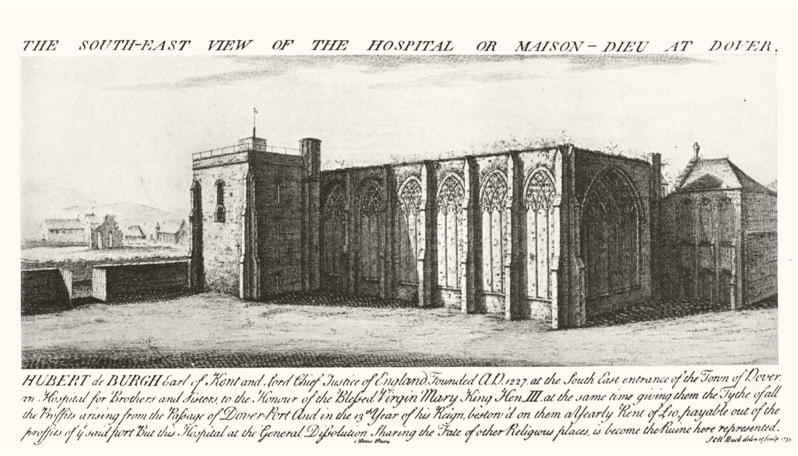

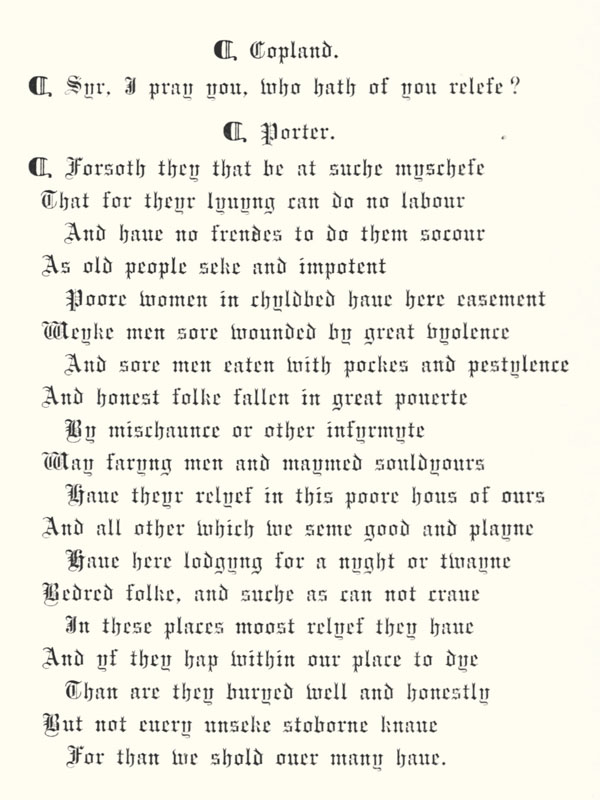
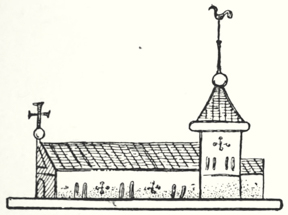
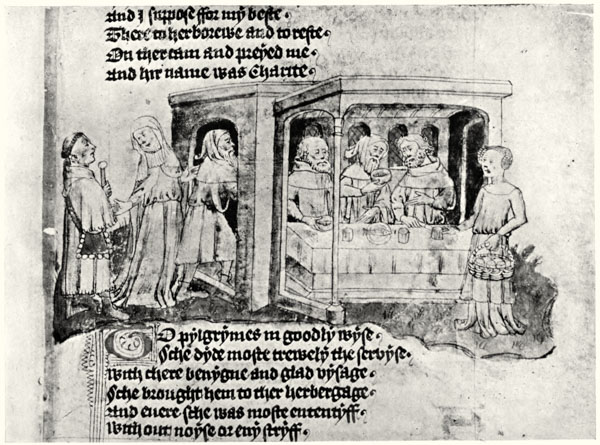
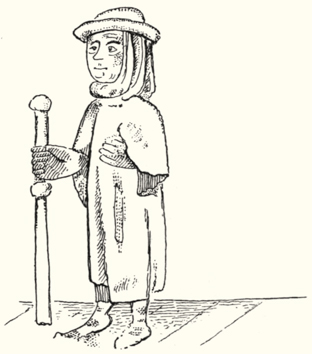
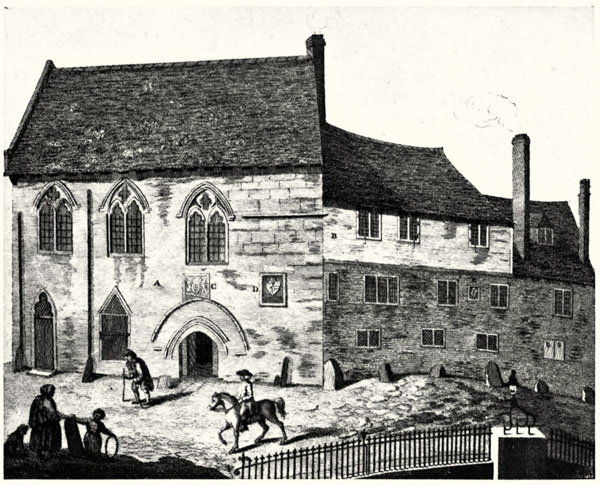
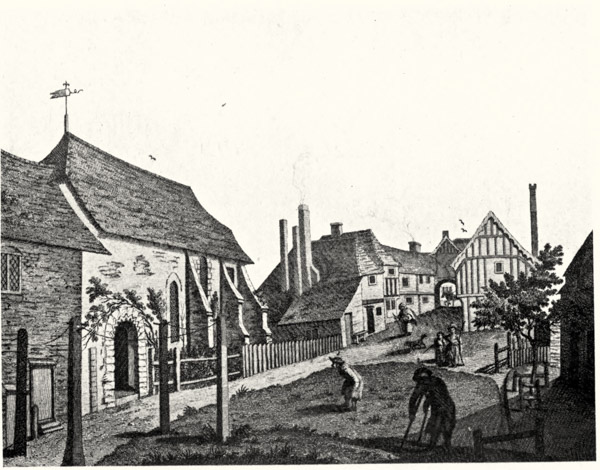
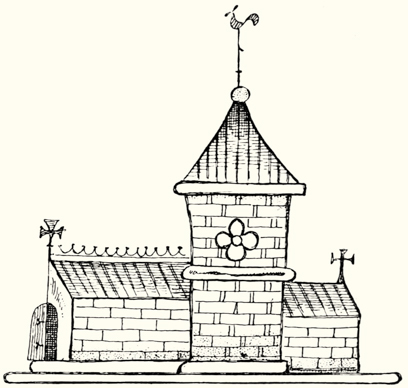
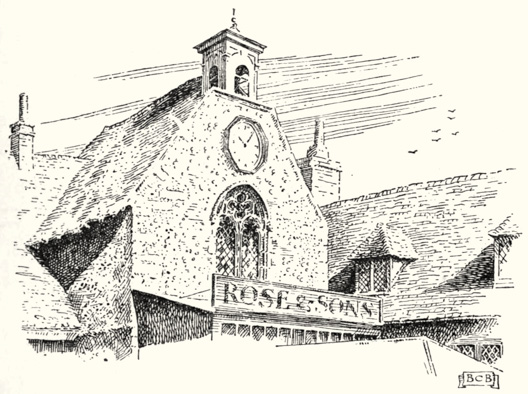
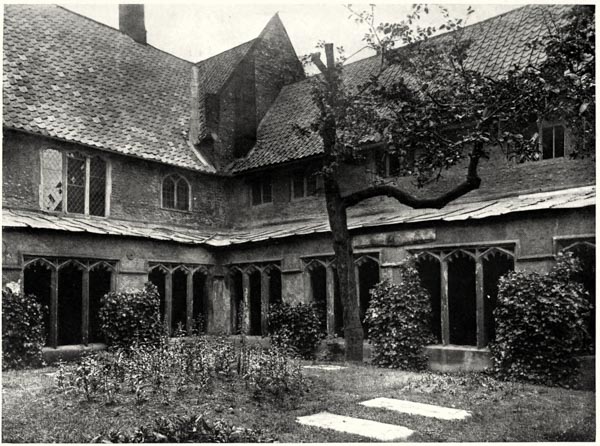
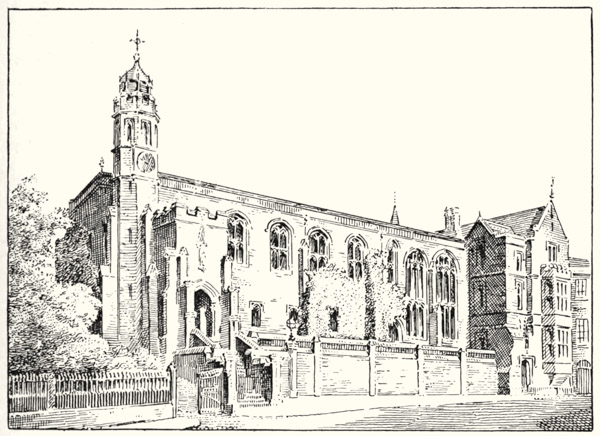
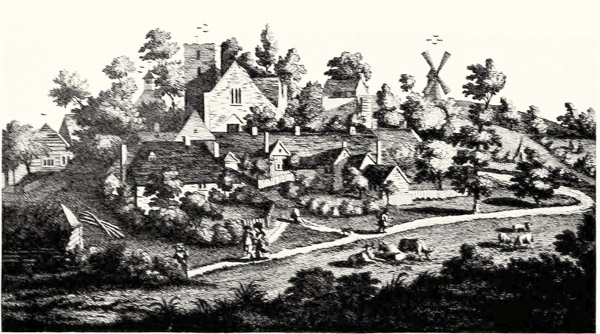
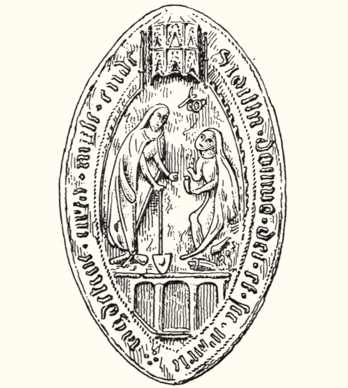
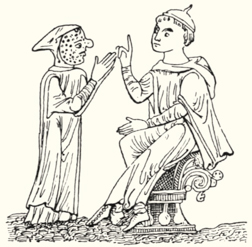
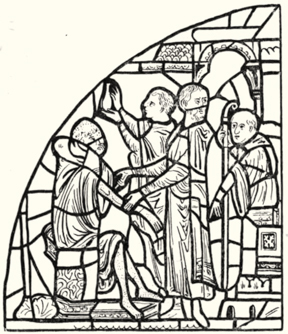
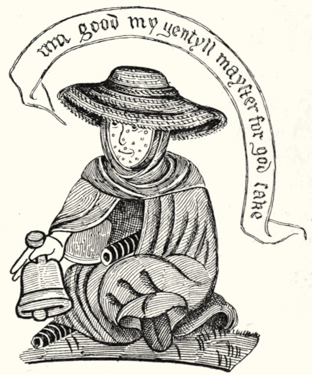
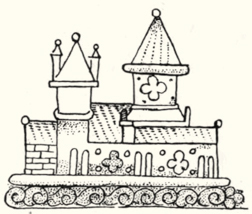
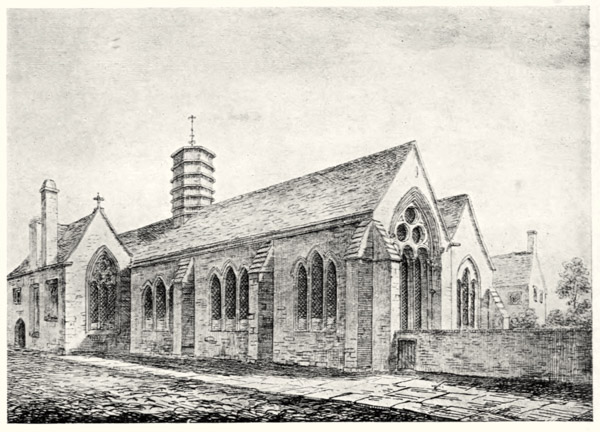
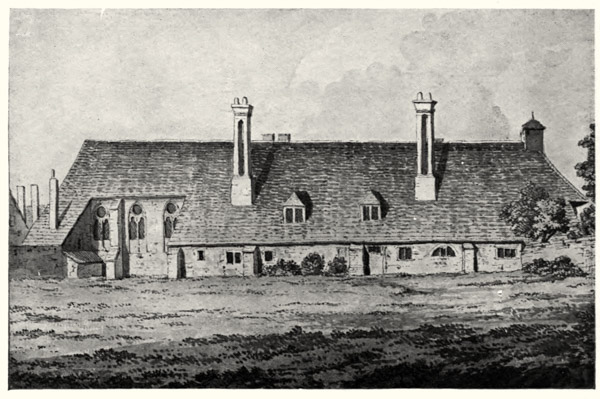
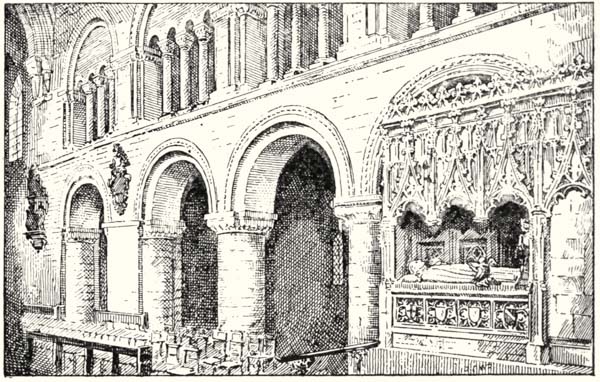
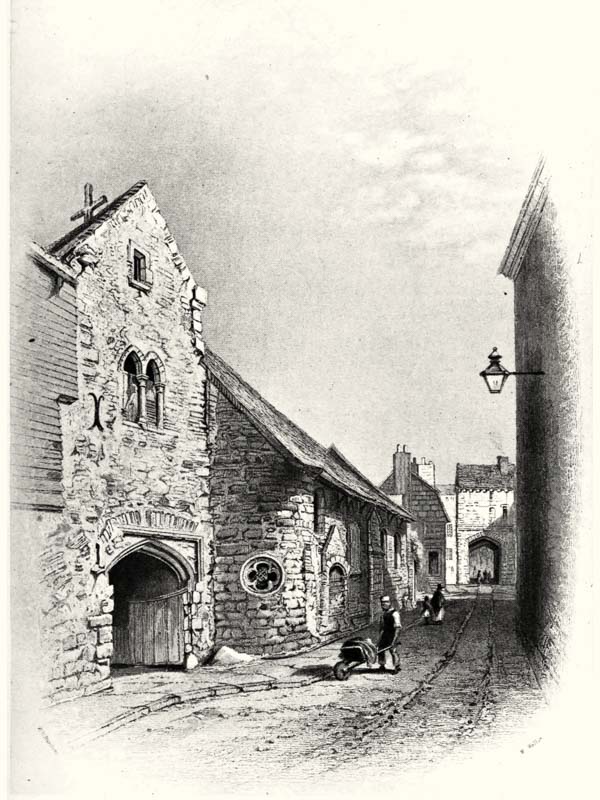
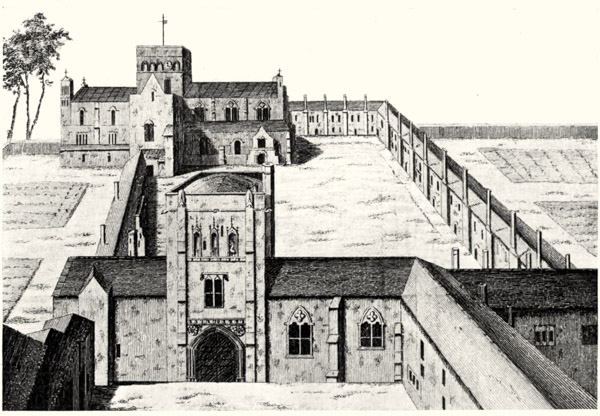
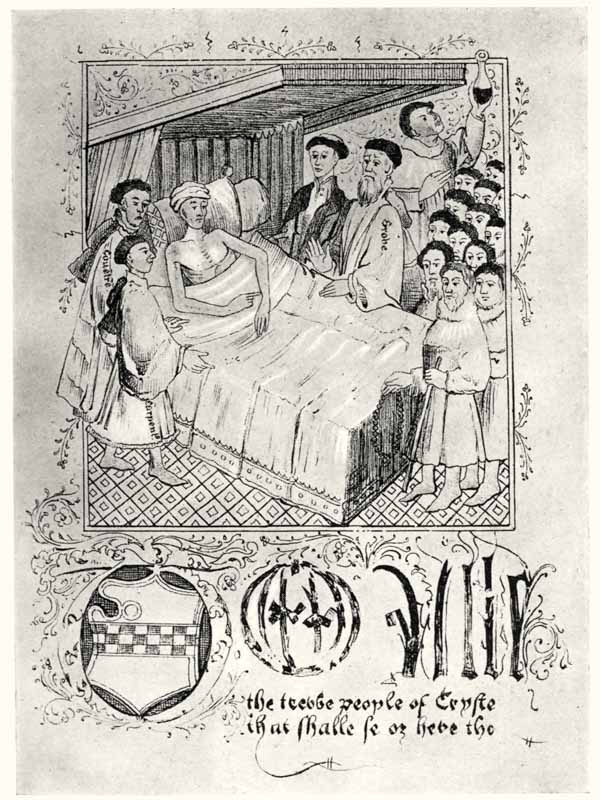
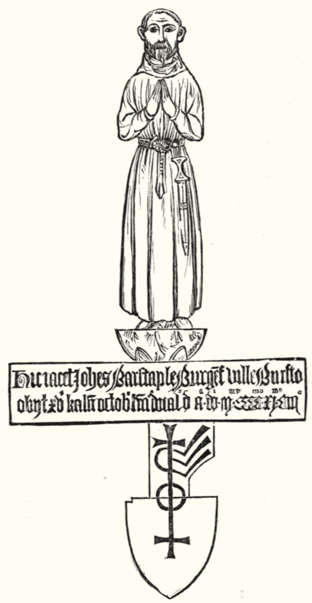
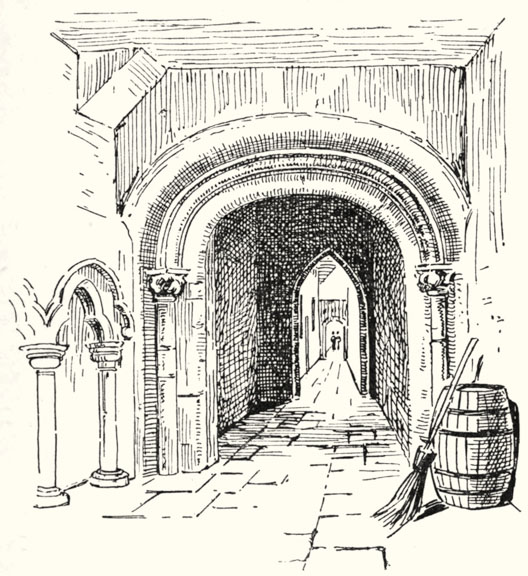
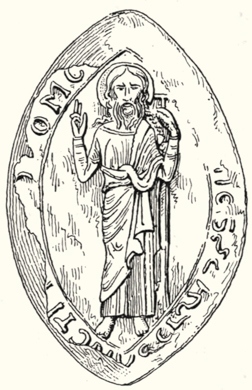
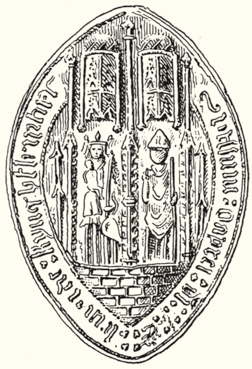
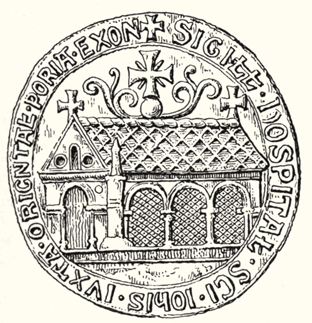
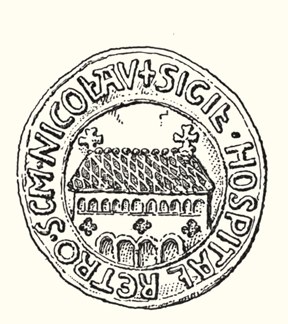
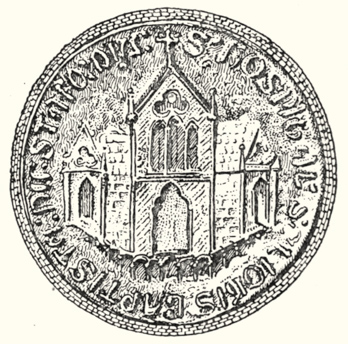
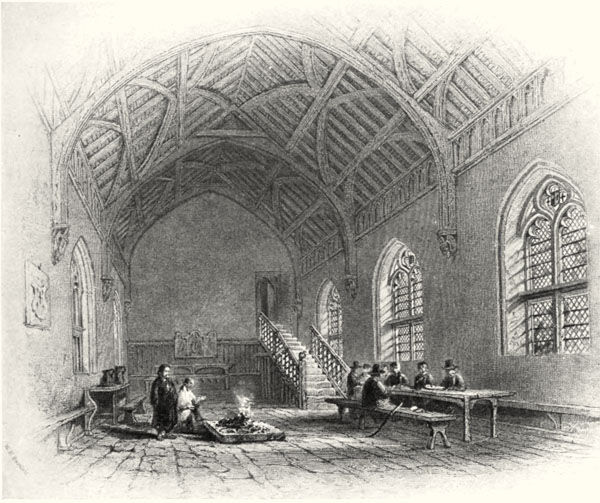
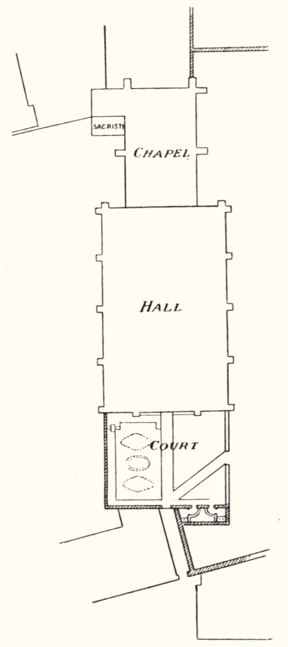
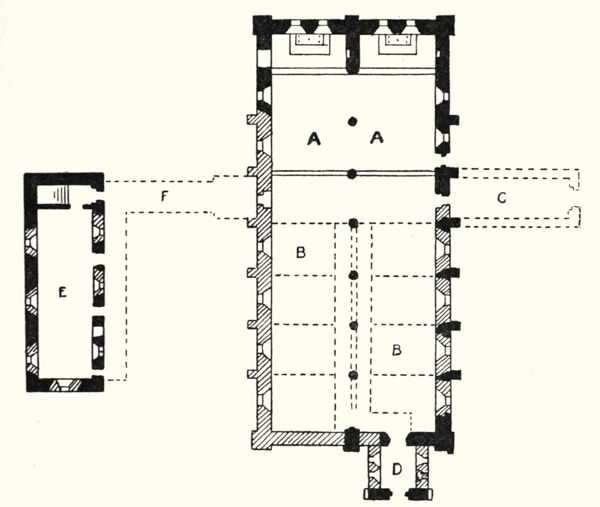
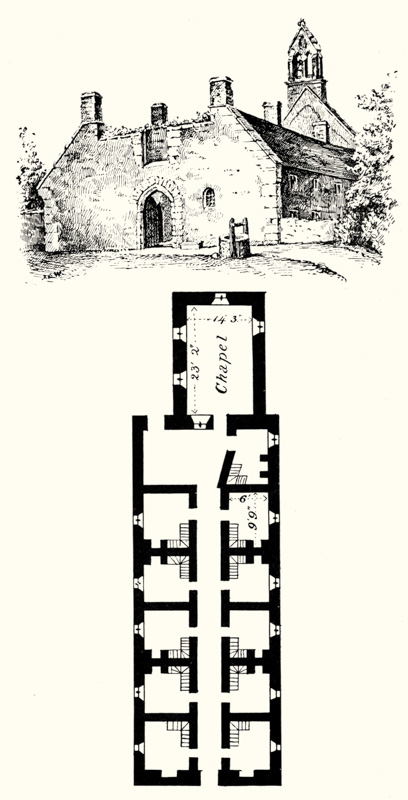
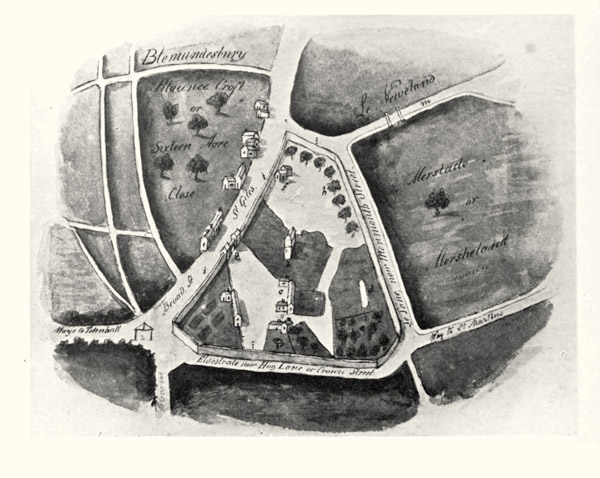
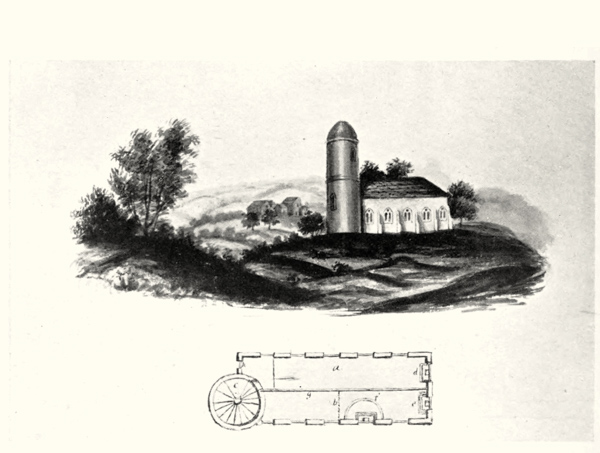
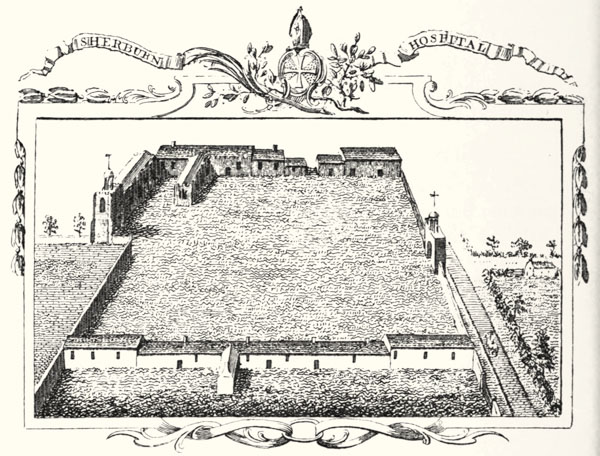
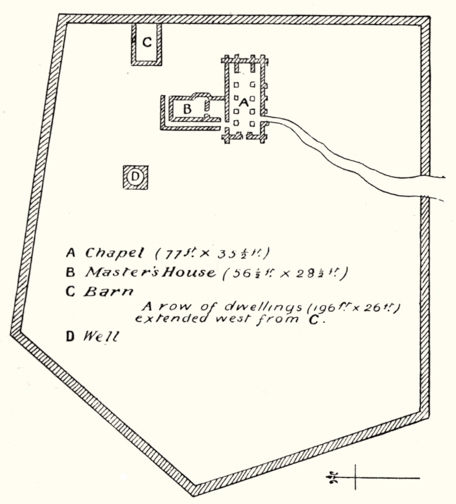
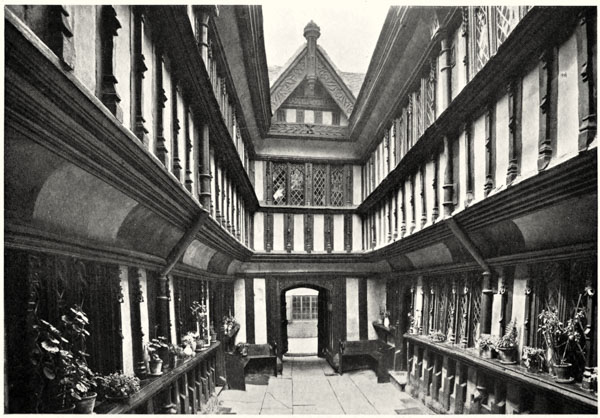
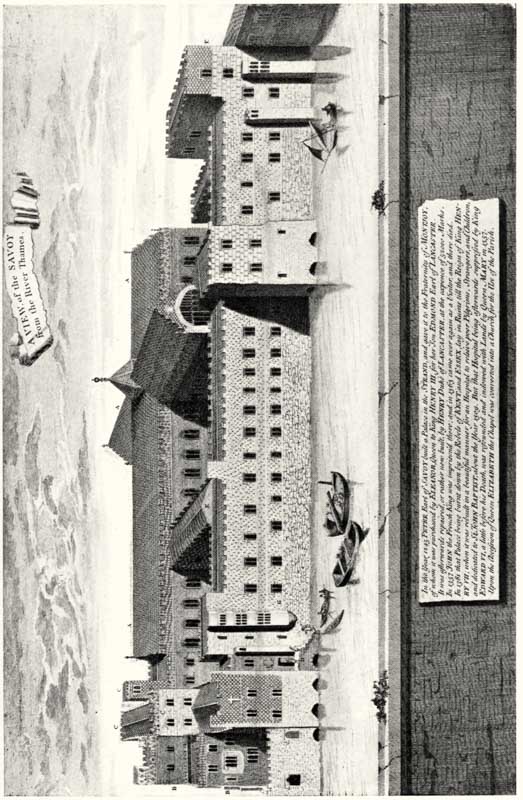
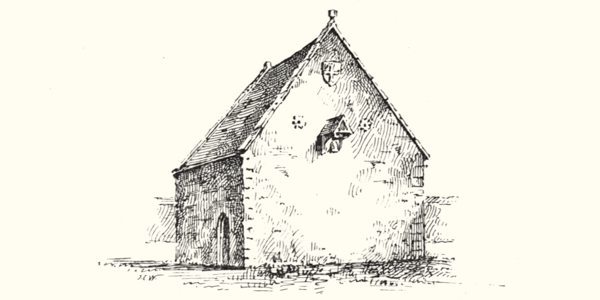
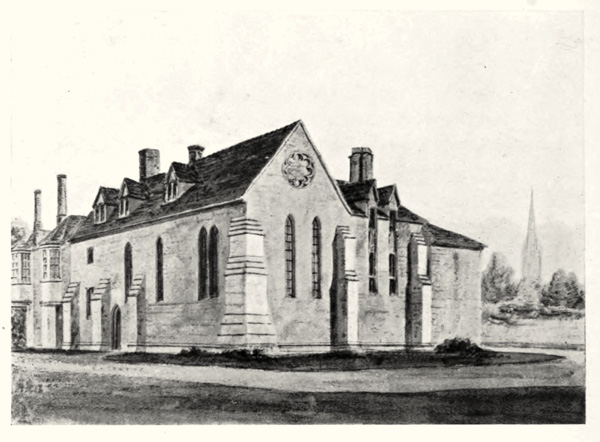
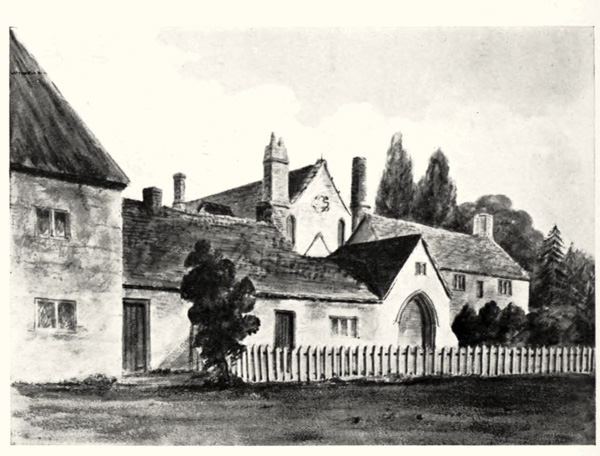
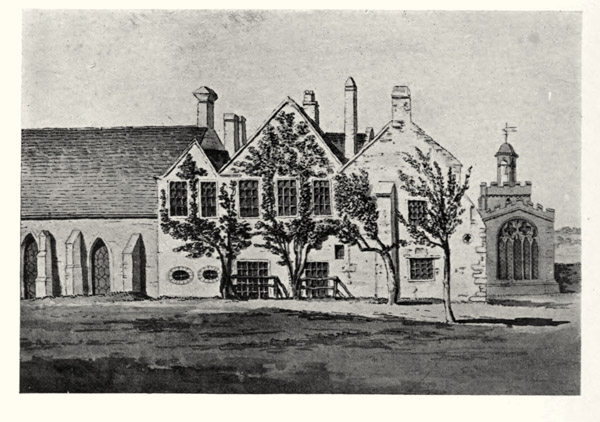
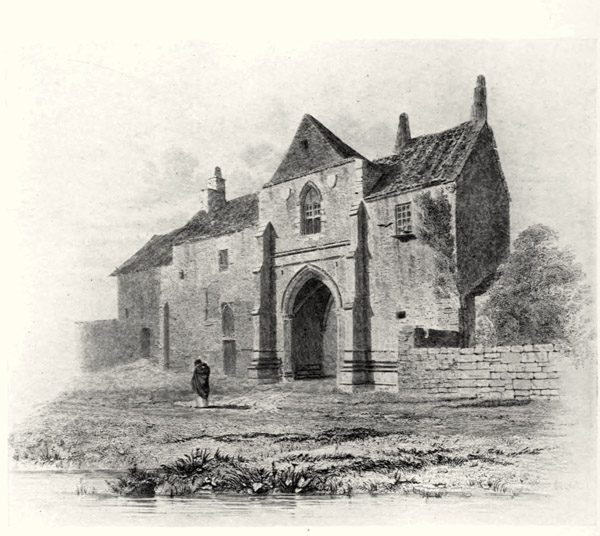
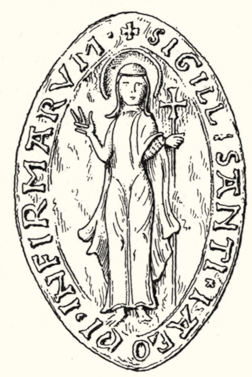
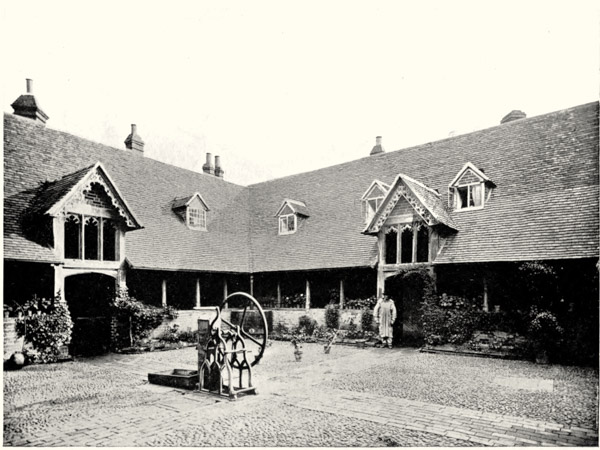
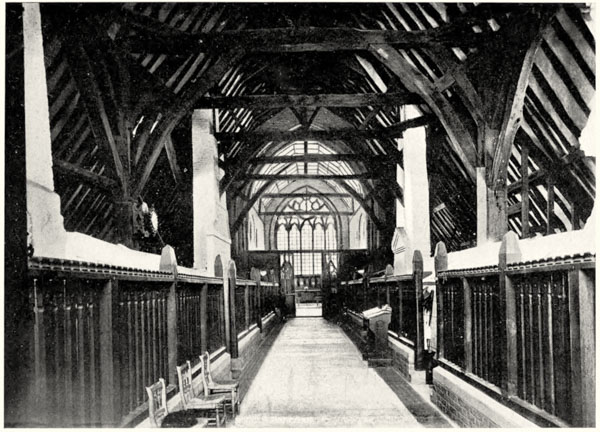
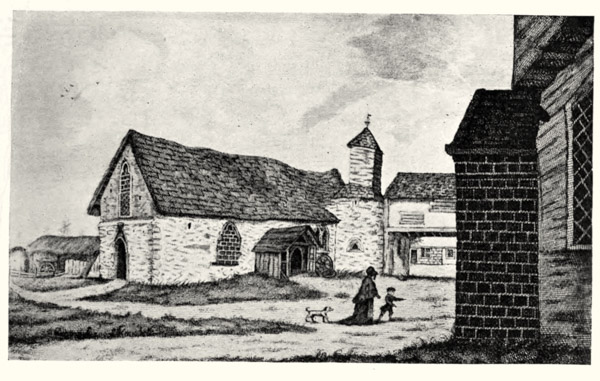
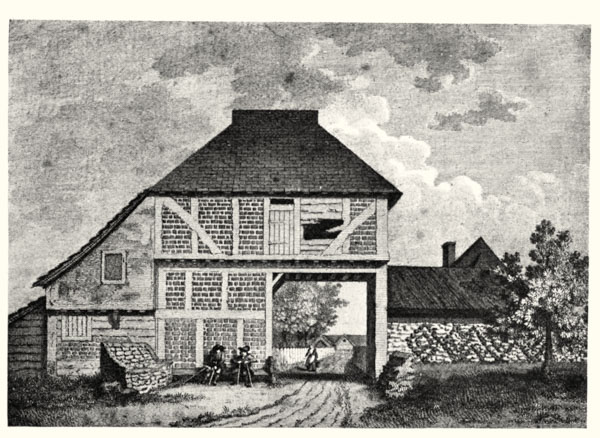
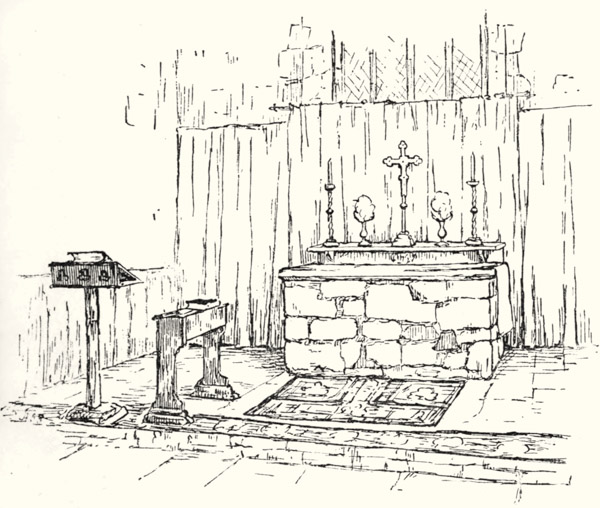
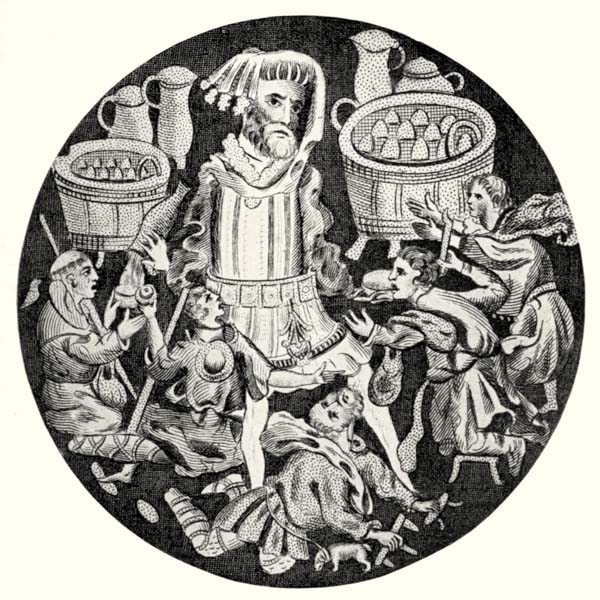
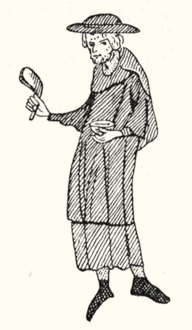
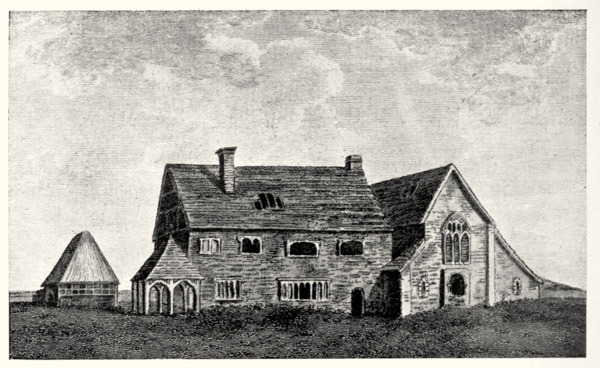
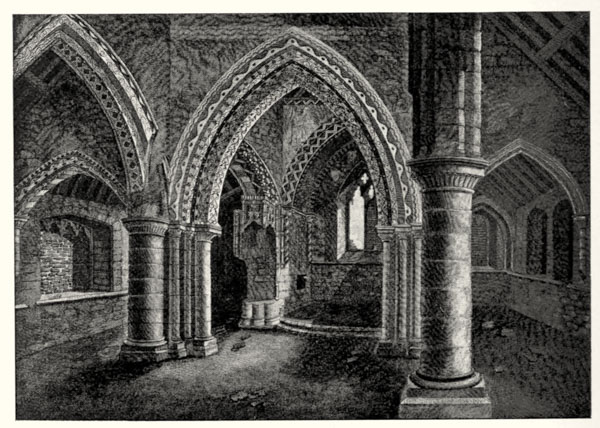
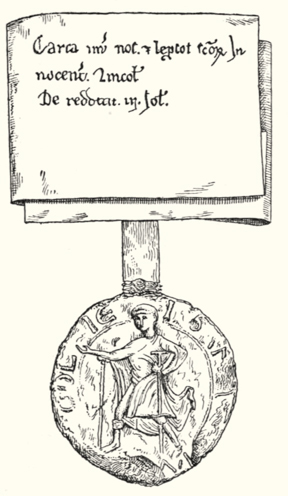
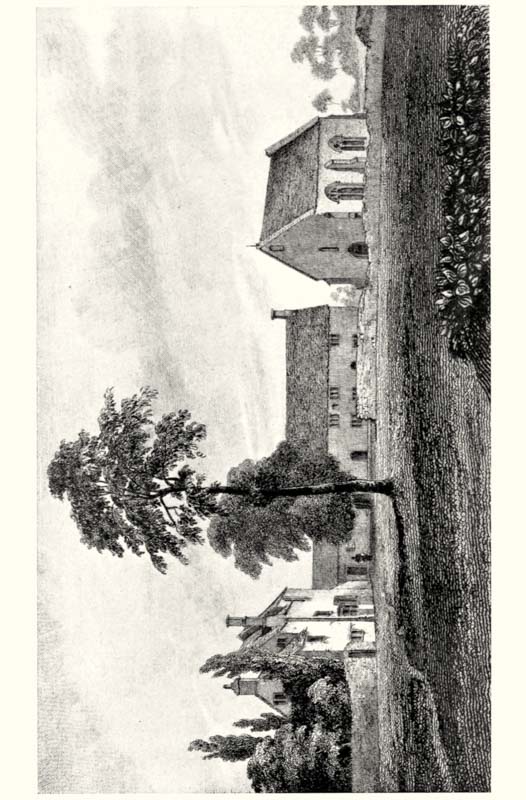
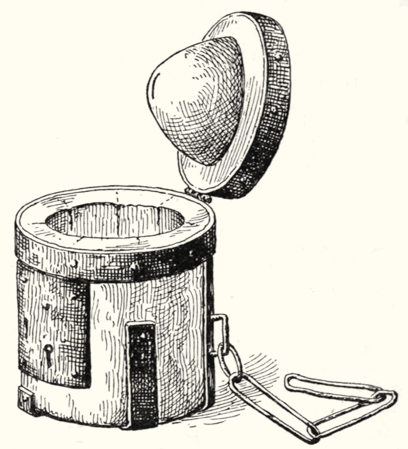
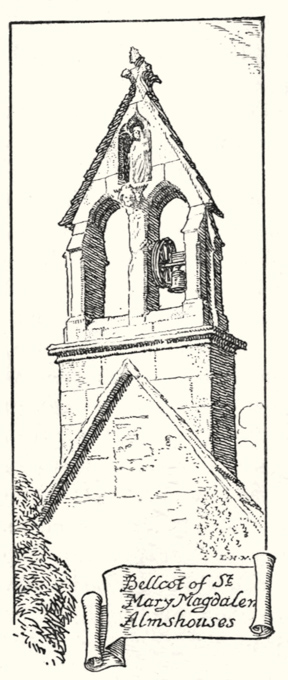
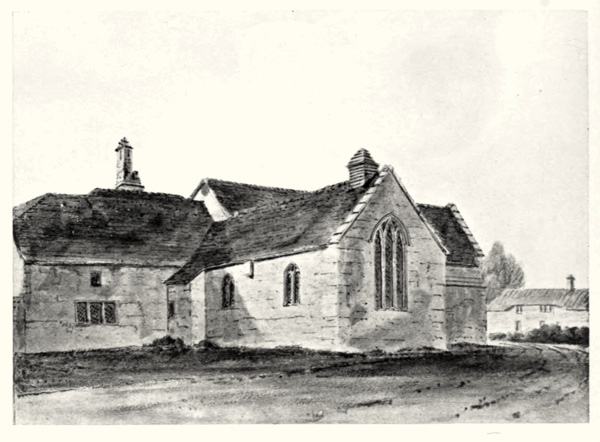
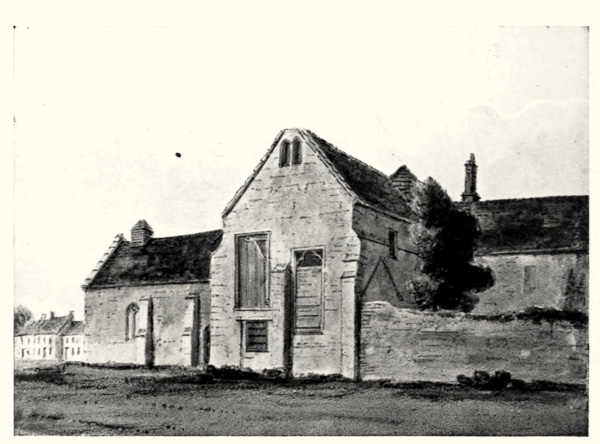
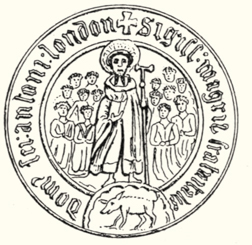
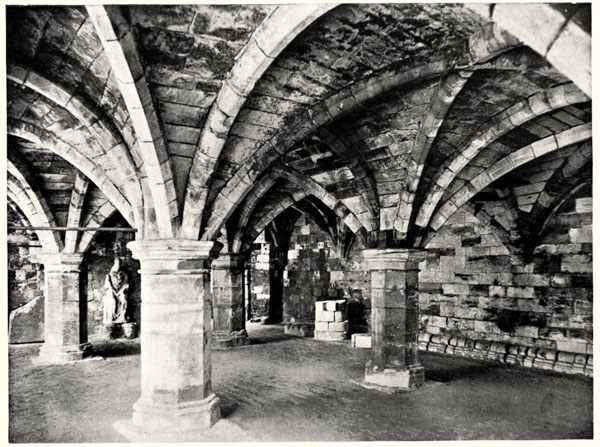
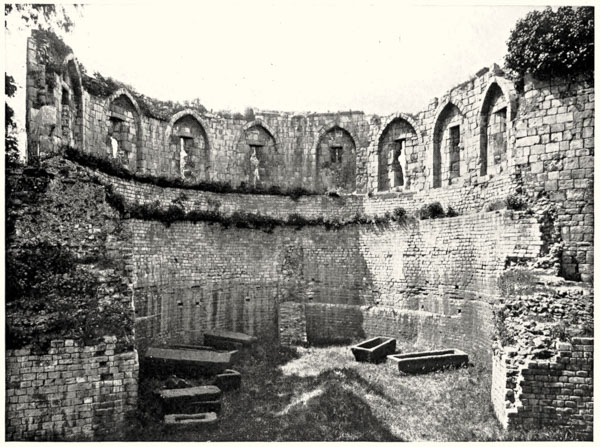
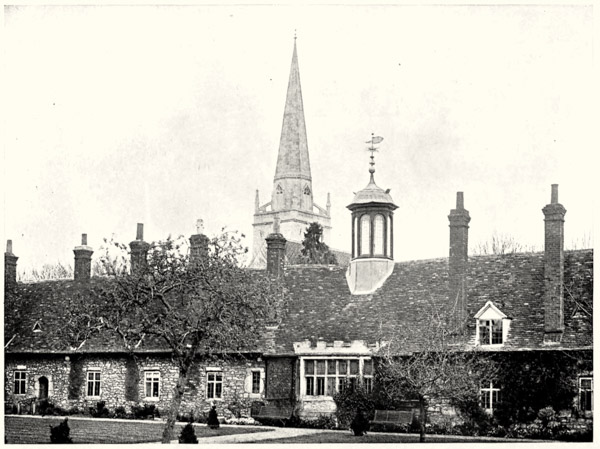
 on