Thus, in 1682, La Salle had secured an empire for
France, and at last found a legitimate field for his own
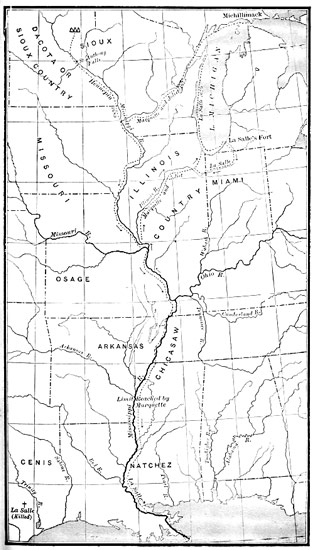
ambition. His Louisiana comprised every thing between
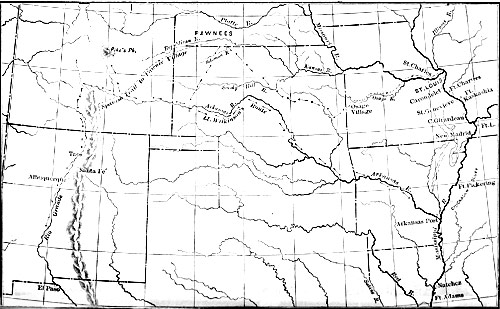
the Alleghanies and Rio Grande, the Gulf of
Mexico and Hudson's Bay. Upon opening the maps
of the time we find the English crowded into the comparatively
narrow limits extending from the eastern
slopes of the Appalachian range to the sea, the Spaniards
occupying those between the Rio Grande and
Gulf of California, while the whole great heart of the
continent, including portions of Carolina and Florida,
with its magnificent system of waterways, is covered
by the names New France and Louisiana.
But La Salle himself, the man of large and luminous
views, had now reached the high-water-mark of his
achievements. The wave which owed its impetus to
his active brain, expended its force with his life.
Upon his return voyage up the Mississippi the explorer
fell sick. He was taken to Fort Prudhomme,
the one built by his order on the way down, where he
lay for months a helpless invalid, chafing under the
inaction thus forced upon him. As soon as he felt
strong enough to bear the journey, La Salle proceeded
on to Michilimackinac, where he was no sooner arrived
than he set about the work of rebuilding the trading-post
on the Illinois, in room of the one his treacherous
followers had destroyed in his absence.
This was to be his half-way house to the Mississippi.
Here he trusted to gather a colony alike capable of
drawing to itself all the trade of a vast tributary region,
as of defending itself and his allies, the Illinois, against
the incursions of the Iroquois.
But La Salle's greater project for securing the results
of his discoveries, by planting a colony at the mouth of
the Mississippi, henceforth looked to reaching that point
by sea and not by land. To transport every thing overland
from Quebec to the Gulf was of course impracticable.
No one knew this better than La Salle himself,
yet he also foresaw the importance of keeping the way
to Canada open if the colony at the Gulf was to thrive.
To this end the fort on the Illinois, and that at the
Chickasaw Bluff, were but incidents.
After establishing himself strongly on the Illinois,
La Salle went to France in order to lay his projects
before the King.
In consequence of a rupture with Spain he found the
court well disposed to listen to his proposals. These
contemplated the building of a fort sixty leagues above
the mouth of the Mississippi, which La Salle assumed
would draw around it, as to a common centre, all the
neighbor tribes. Gifts and good usage had already disposed
these tribes favorably toward the French, while
the Spaniards had already alienated them by harsh
treatment. With their help La Salle asserted that
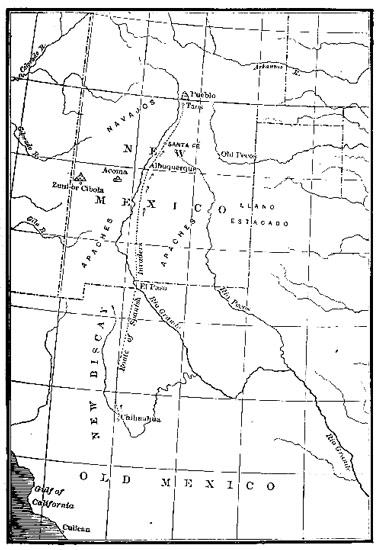
the conquest of New Biscay,[1] with its rich silver-mines,
would be an easy matter, because there were
not more than four hundred Spaniards in all that
province.
The plan met instant favor. To enable La Salle
to carry it out, four vessels were given him instead of
the two he asked for. A naval officer by the name
of Beaujeu was assigned to command them at sea. La
Salle set himself to work with his usual energy. Soldiers,
priests and colonists, arms, munitions and stores,
were provided in sufficient number or quantity to put
the colony on its feet at once.
Long before the ships were ready to sail from Rochefort,
La Salle and Beaujeu had quarrelled. Beaujeu
overrated himself, and underrated La Salle. Often
betrayed by those he trusted most, La Salle's naturally
suspicious nature led him to distrust every one, above
all Beaujeu, who constantly ridiculed him and his
schemes to his friends. So La Salle's reserve gave
offence to Beaujeu, who grew sulky, and was at no
pains to conceal his dislike for the whole affair. Here
then at the very outset the seeds of disaster were sowed.
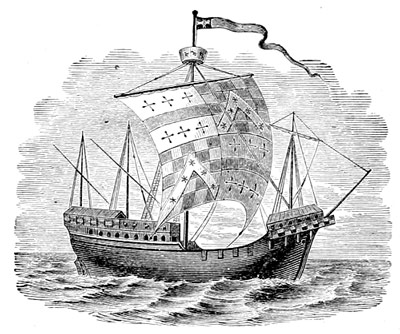
It was under such unpromising conditions that the fleet
set sail in July, 1684, for the Gulf of Mexico.
Three of the vessels reached St. Domingo in two
months, with a large number of sick on board, of whom
La Salle himself was one. The fourth had been taken
at sea by Spanish buccaneers, thus depriving the colonists
of the tools and provisions with which she was
loaded.
Upon La Salle's recovery from what came near proving
a fatal illness, the fleet again put to sea, though it
was now November, and much precious time had been
lost.
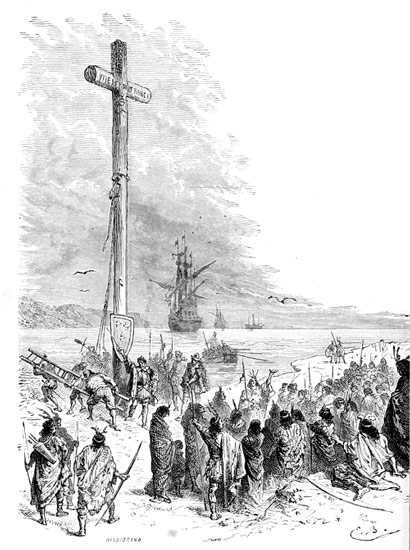
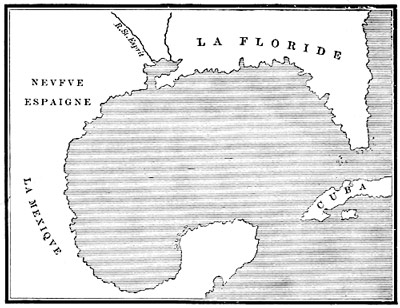
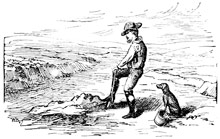
Steering westward into the Gulf, they made their
landfall on New Year's Day, but when La Salle went
on shore to look about him, he could discover no sign
of the great river he was in search of. The colonists
were upon a low, flat coast, without natural landmarks
to guide them, or knowledge of the longitude of the
place they were seeking, or of the currents which the
Gulf sets in motion. No wonder, then, that La Salle
failed to recognize any part of the inhospitable coast
before him.
Finding no trace of the Mississippi, and as the failure
to do so was every day productive of disputes between
himself and Beaujeu, La Salle resolved to land where
he was, notwithstanding his belief that he had gone too
far to the westward. He was, in fact, at the time of
taking this resolution, on the coast of Texas, more than
four hundred miles from the Mississippi.
Almost at the moment of landing, La Salle's storeship,
which contained the greater part of his provisions,
grounded, and became a wreck; it is said, through the
carelessness or treachery of her master, who also was on
bad terms with La Salle. Indeed, from first to last La
Salle's enemies seem to have exerted themselves to ruin
him with a zeal that, if honestly employed, would easily
have insured the success of all his plans.
This disaster, taken with the fact that he knew not
where he was, would have staggered any one but La
Salle. His dispirited people were huddled together on
the sands, among the bales and boxes saved from the
wreck, out of which they made themselves a temporary
intrenchment and shelter, for like vultures who scent
their prey from afar, hostile Indians hovered about the
encampment, watching their chance to cut off any who
should stray away from its protection.
Yet misgiving for the success of an enterprise so disastrously
begun, was turned into dread when the colonists
learned that they were nowhere near their actual
destination. La Salle, indeed, tried to put heart in them
by pretending to believe otherwise, but a little time
soon dispelled this fallacy. He, however, took the best
means of quieting discontent by setting every one at
work. Beaujeu had sailed away after promising much,
but performing little else. The colonists now had
much more to fear from the Spaniards, than the Spaniards
from them. Yet for La Salle nothing remained
but to make the best of the situation until he should
have time to look it fairly in the face.
Meanwhile, the essential thing to be done was to get
his people housed in a situation which should admit of
their living in some comfort and security, as the place
where they first landed was alike destitute of wood,
water and comfortable lodging.
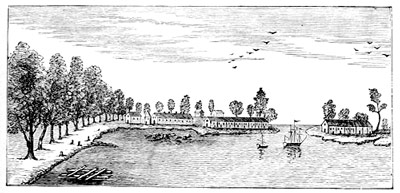
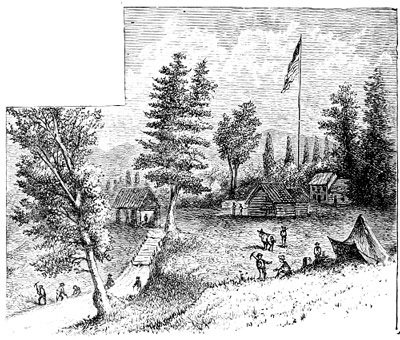
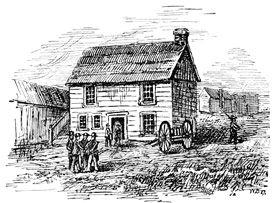
He therefore chose a site on the Lavaca River,[2] two
leagues above its entrance into Matagorda Bay. To
this place the colonists removed themselves and their
goods, and under the energetic direction of La Salle,
whose previous training now stood him in good stead,
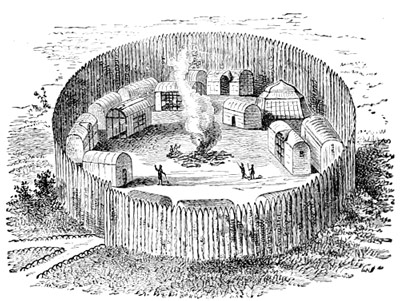
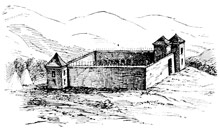
they set about building themselves a home in this out-of-the-way
corner of the world. As it rose from the
soil, the ever-loyal La Salle named it St. Louis,[3] in
honor of his sovereign.
The summer was hot and sickly. Death was soon
busy among the colonists, those who ate wild fruits
imprudently suffering first of all. Now and then the
Indians would kill some straggling hunter. Thus, in
one or another form, death lurked about them. And
beneath these apparent dangers, in which all shared
alike, smouldered the embers of unreasoning discontent
which certain of La Salle's followers were always fanning
into a flame.
Having seen his people comfortably housed, and in
condition to defend themselves, the indefatigable La
Salle now turned his attention to the prime purpose of
his expedition, with the certainty of the needle to its
pole, for all he had so far done was merely a step in
this direction. There was no time to lose.
Although it is not clear why La Salle should determine
to march overland, rather than make search along
the shores, the character of the Gulf coast affords a
possible clew. This is described by Mr. Cable as follows:
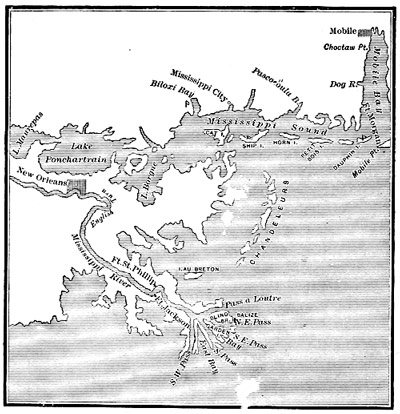
"Across the southern end of the State,"—he is
speaking now of Louisiana,—"from Sabine Lake to
Chandeleur Bay, with a north and south width of from
ten to thirty miles, and an average of about fifteen,
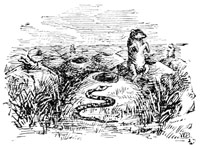
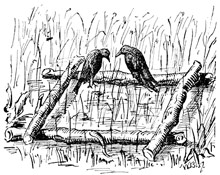
stretch the Gulf marshes, the wild haunt of myriads of
birds and water-fowl, serpents and saurians, hares, raccoons
and wildcats, deep-bellowing frogs, and clouds of
insects, and by a few hunters whose solitary and rarely
frequented huts speck the wide green horizon at remote
intervals."
It was now October, 1685. With fifty men La Salle
set out for the river he had discovered only to lose
again. Those who staid behind, lived on buffalo-meat,[3]
turtles, oysters, fish, and wild fowl which the
prairies or lagoons around them plentifully supplied in
their season.
In March, the exploring party came back unsuccessful
and in rags. They had wandered far, but had not
found the Mississippi. One crowning disaster now befell
these exiles. Up to this time they had kept one little
vessel of their fleet with them, which was to take them
to the Mississippi so soon as its exact situation should
be discovered. This vessel, in which their sole dependence
lay, was now lost.
In desperate situations, desperate measures are alone
to be availed of. La Salle's resolve was heroic. He
determined to make a last effort to reach the Mississippi
and the lakes. Indeed, there was now no hope
of obtaining relief nearer than Canada, therefore to
Canada he must go, leaving the colonists to await his
return.
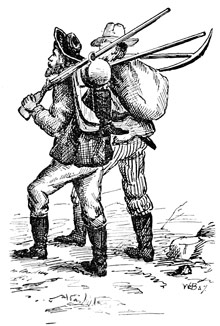
For this purpose La Salle chose twenty men, with
whom he again set out from the fort on the 22d of
April, 1686. Each man carried his own pack and
weapons, and as the little band filed out upon the
prairie, the hopes of the lost colony went forth with
them in their desperate venture.
But these hopes sunk low when La Salle came back
with only eight of the twenty who had gone with him.
The explorers had penetrated as far as the country of
the Cenis Indians,[4] when sickness and desertion had
so crippled their strength as to make further progress
hopeless for the time. They, however, procured some
horses from the Indians which were brought back to
the fort.
No other resource being open, La Salle once more
essayed the task before him. In the straits in which he
and his people were placed, his splendid qualities for
leadership shine out of the gloom like a guiding star.
The resources of the colony were nearly exhausted in
fitting out previous parties, but the scanty stores were
ransacked anew to equip those who were to be the saviors
of the rest. The horses which La Salle had brought in
were loaded with baggage and ammunition. All was
ready. A midnight mass was solemnly said. La Salle
spoke a few hopeful words to those who were to endure
a suspense perhaps even greater than his own, and then,
mastering his own feelings, he turned away to join his
followers,—the forlorn hope of the expiring colony.
On the 15th of March, 1687, the hunters who were
out killed a buffalo. The party therefore halted till
the meat could be brought into camp. Here it was
that the hatred, long nursed in secret, openly revealed
itself in murder. Misery always begets quarrels, but in
this case the sole incitement was revenge. La Salle
had the unhappy faculty of making enemies, of whom
his worst ones were then close at hand, and plotting
for his life. A quarrel about the meat hastened the
work on. Those who were faithful to La Salle became
the conspirators' first victims. Three of these, whom
La Salle had sent over to the hunters' camp, were
butchered while they slept.
La Salle himself was encamped six miles distant from
the place where these murders were committed. Growing
uneasy at the long absence of the men he had sent
away, he started with an Indian guide for their camp.
A friar named Douay also accompanied him. This friar
noted in La Salle's talk and manner the presentiment
of coming evil. On reaching a point which he supposed
to be near the hunters' camp, La Salle fired his musket
as a signal. One of the conspirators showed himself,
while the others lay hid in the long prairie-grass unobserved.
La Salle fell into the snare thus set for him.
While advancing toward the decoy, whose insolent
replies angered him, La Salle constantly neared the
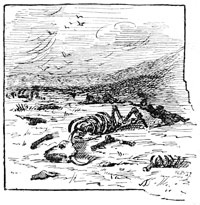
ambuscade. Suddenly a shot was fired. When the
smoke cleared away, La Salle was seen stretched lifeless
upon the prairie. He was quite dead.[5] The bullet
had gone through his brain.
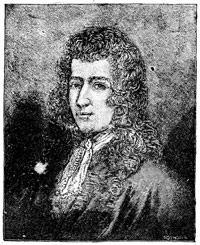
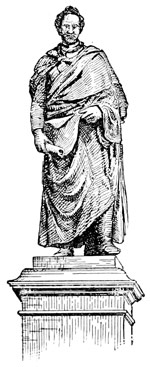
Thus, in the prime of life, fell Robert Cavelier de La
Salle, and thus again must history record its indignant
protest in the death of a man of highest intellectual
force, whose worth to the world was monumental as compared
with that of the vulgar assassin who slew him.
Note.—The Colonists at St.
Louis, except three or four who were
carried into captivity, were all massacred
by the Indians. A Spanish expedition in
1689 found the place a solitude. Those
who escaped subsequently related what
had occurred. Although this was the
first white colony to be founded in
Texas,[6] in itself it was an accident, no
less productive of results, because it led
the Spaniards to occupy the country in
order to keep out intruders like La Salle.
Geographical knowledge was also remarkably
extended.