THE MAKING OF MODERN JAPAN AN ACCOUNT OF THE PROGRESS OF JAPAN FROM PRE-FEUDAL DAYS TO CONSTITUTIONAL GOVERNMENT & THE POSITION OF A GREAT POWER, WITH CHAPTERS ON RELIGION, THE COMPLEX FAMILY SYSTEM, EDUCATION, &c.
Transcriber’s Note:
The cover image was created by the transcriber and is placed in the public domain.
BY THE SAME AUTHOR
A DICTIONARY OF CHINESE-JAPANESE WORDS
IN THE JAPANESE LANGUAGE. (3 Vols.)
THE CIVIL CODE OF JAPAN. (2 Vols.)
With an Introduction on the Japanese Family System.
THE PROGRESS OF JAPAN (1853–71).
THE JAPAN HANDBOOK
(Published by Foreign Office.)
REPORT ON TAXATION AND LAND TENURE
(Parliamentary Papers Series). Etc.
THE MAKING OF MODERN JAPAN
NEW & RECENT BOOKS
The Making of Modern Japan.
An Account of the Progress of Japan
from Pre-Feudal days to Constitutional
Government and the Position
of a Great Power, with Chapters on
Religion, the Complex Family System,
Education, &c. By J. H.
Gubbins, C.M.G., First Secretary of
British Embassy at Tōkiō. With
Illustrations. Demy 8vo. 21s. net.
The Sea Gypsies of Malaya.
An Account of Nomadic Mawken
People of the Mergui Archipelago,
with a Description of their Boats,
Ways of Living, Customs, Habits,
Occupations, &c. &c. By Walter
White, F.R.G.S. With Illustrations
& a Map. Demy 8vo. 21s. net.
The Hill Tribes of Fiji.
A Record of Forty Years’ intimate
connection with the Tribes of the
Mountainous Interior of Fiji, with
a Description of their Habits in War
& Peace, Methods of Living, Characteristics,
Mental & Physical, from
the Days of Cannibalism to the
Present Time. By A. B. Brewster,
F.R.A.I. With Illustrations &
Maps. Demy 8vo. 21s. net.
Kashmir in Sunlight and Shade.
Describing its beauties, & the habits
and customs, & gradual rebuilding
of a once downtrodden people. By
C. E. Tyndale-Biscoe, M.A.
(Cantab). 28 Illustrations & a Map. Demy 8vo. 12s. 6d. net.
The Rift Valleys and Geology of East Africa.
By Prof. J. W. Gregory, D.Sc.,
F.R.S. With many Illustrations & Maps. 32s. net.
A Diplomat in Japan.
The Inner History of the Critical
Years in the Evolution of Japan
when the Ports were Opened & the
Monarchy Restored, Recorded by a
Diplomatist who took an active part
in the events of the time. By The
Right Hon. Sir Ernest Satow,
G.C.M.G., British Minister, Peking,
1900–5; Formerly Secretary to the
British Legation at Tōkiō. With
Illustrations. Demy 8vo. 32s. net.
Second Edition.
The Life and Explorations of
Frederick Stanley Arnot.
Authorised Biography of a Zealous
Missionary & Intrepid Explorer.
By Ernest Baker. With many
Illustrations & a Map. Demy 8vo.
12s. 6d. net.
Second Edition.
Unexplored New Guinea.
Travels, Adventures & Experiences
of a Resident Magistrate in the
Unexplored Interior of New Guinea.
By Wilfred N. Beaver, with an Introduction
by A. C. Haddon, M.A.,
Sc.D., F.R.S. With 24 Illustrations
& 4 Maps. Demy 8vo.
25s. net.
Third Edition.
Prehistoric Man & His Story.
A Sketch of the History of Mankind
from the Earliest Times. By Prof.
G. F. Scott Elliot, M.A.(Cantab),
B.Sc.(Edin.), F.R.S.E., F.L.S.,
F.R.G.S. With 56 Illustrations.
10s. 6d. net.
SEELEY, SERVICE & CO. LTD.
Prince Iwakura.
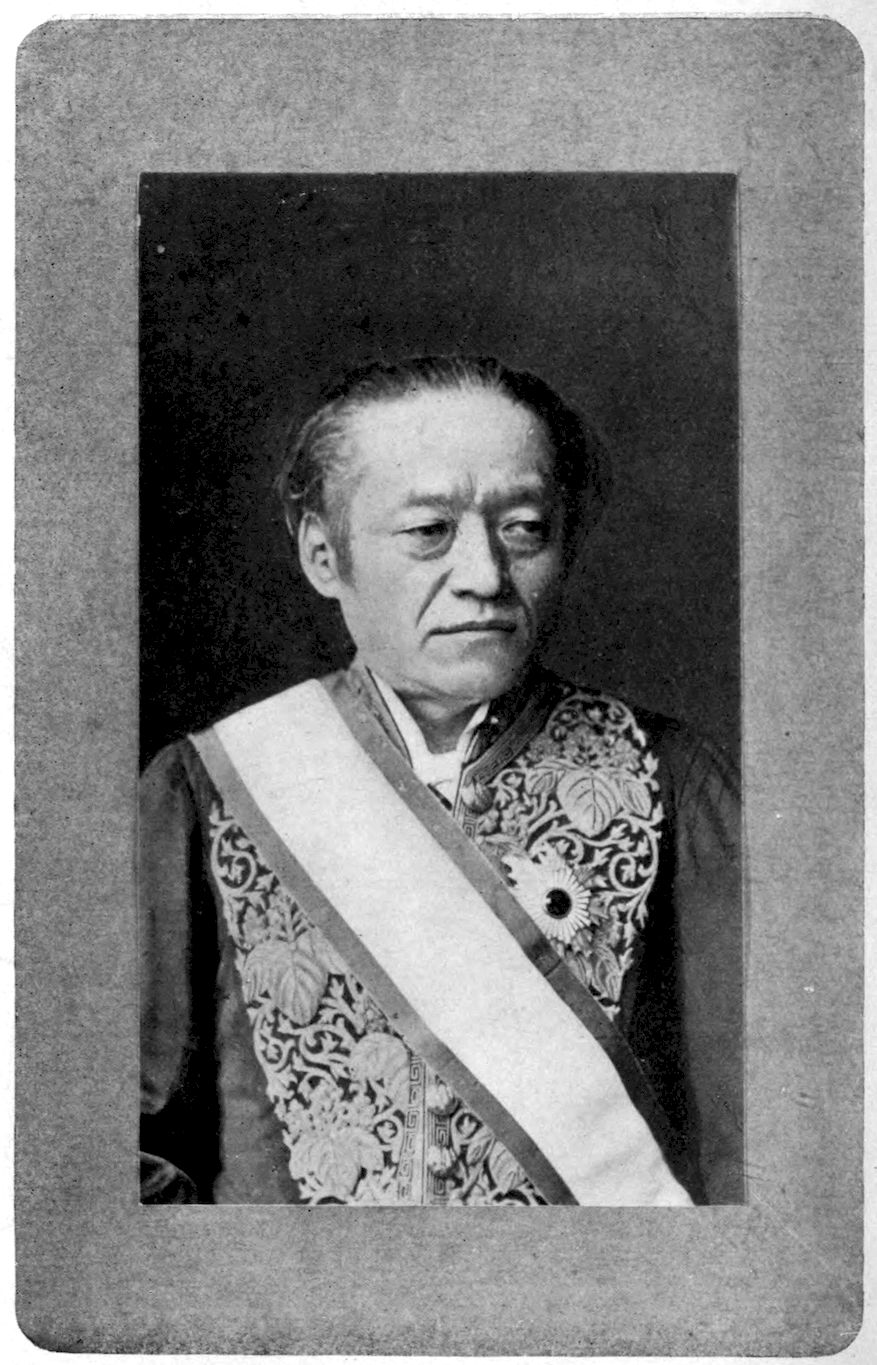
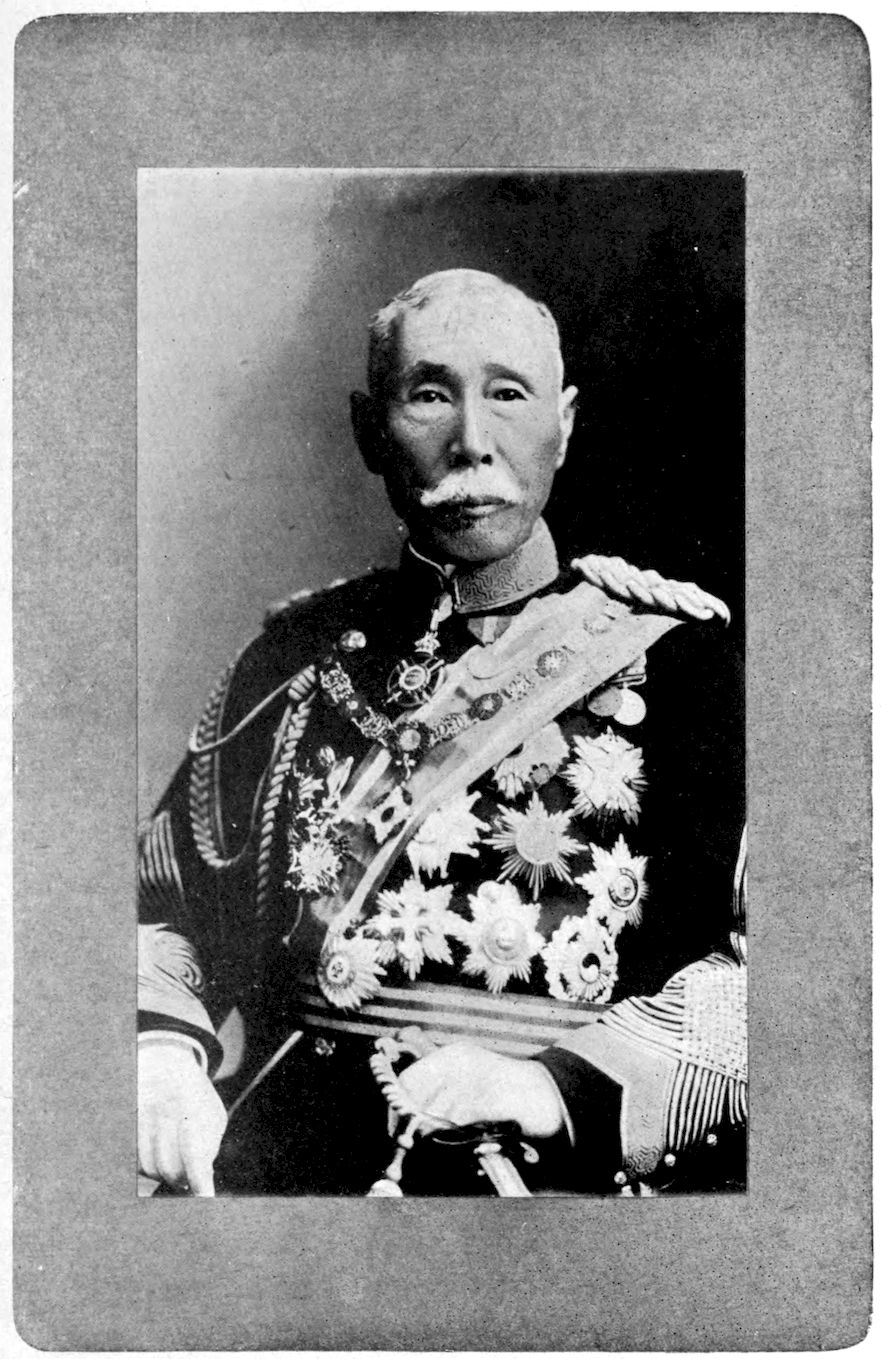
Descended from an ancient family of Court Nobles; he was a leading figure in the Restoration Movement, and in the Government subsequently formed.
BY
J. H. GUBBINS, C.M.G., HON. M.A.(Oxon.)
LATE FIRST SECRETARY & JAPANESE SECRETARY OF BRITISH EMBASSY, TOKIO, AUTHOR OF “A DICTIONARY OF CHINESE-JAPANESE WORDS IN THE JAPANESE LANGUAGE,” “THE PROGRESS OF JAPAN,” “THE CIVIL CODE OF JAPAN,” &c., &c., &c.
WITH ILLUSTRATIONS
LONDON
SEELEY, SERVICE & CO. LIMITED
38 Great Russell Street
1922
TO
THE MEMORY
OF
MY WIFE
PREFACE
The Author’s thanks are due to His Excellency
Baron G. Hayashi, H.I.J.M.’s Ambassador in
London, for most kindly referring to a competent
authority in Japan, for confirmation, a doubtful point in
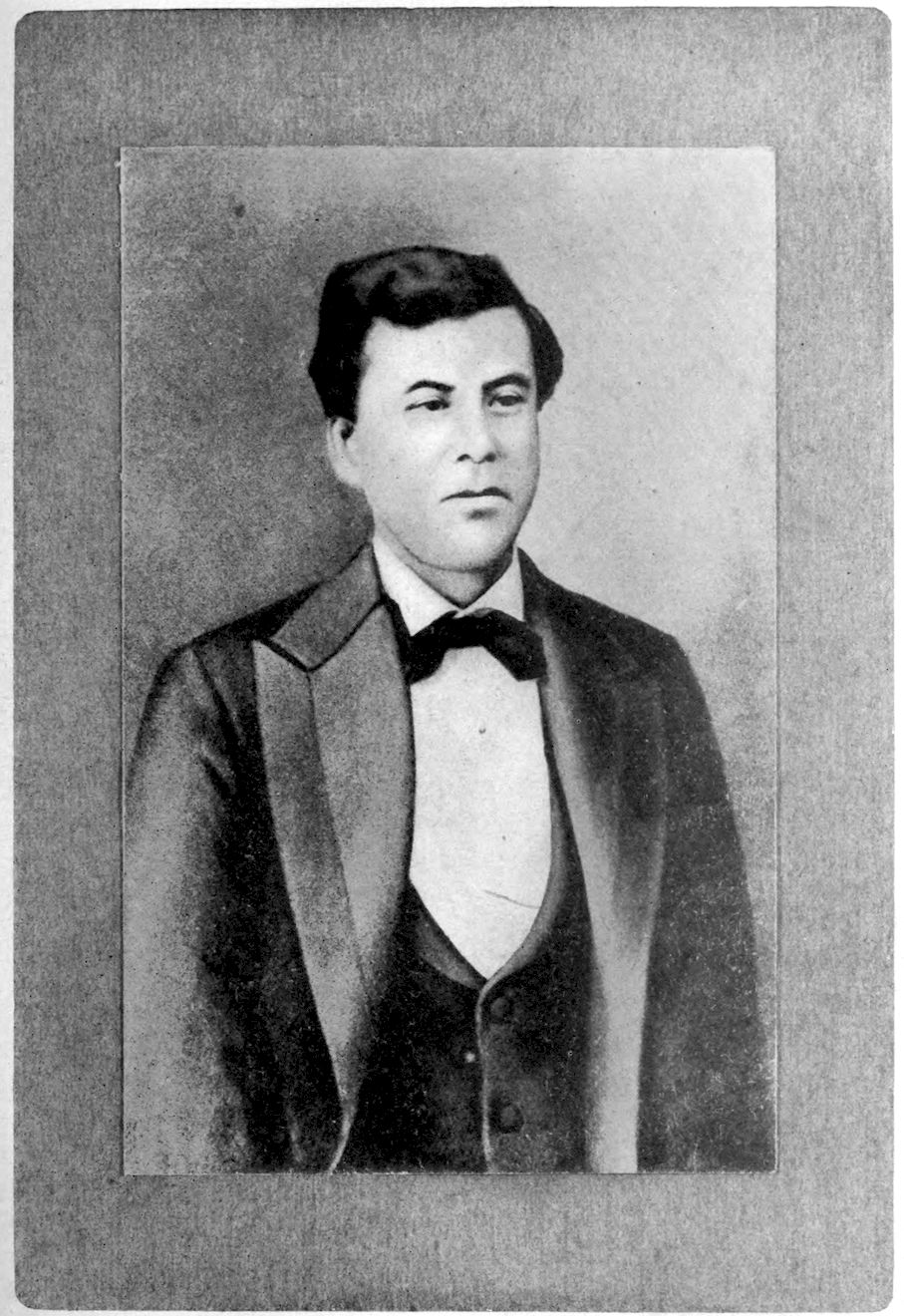
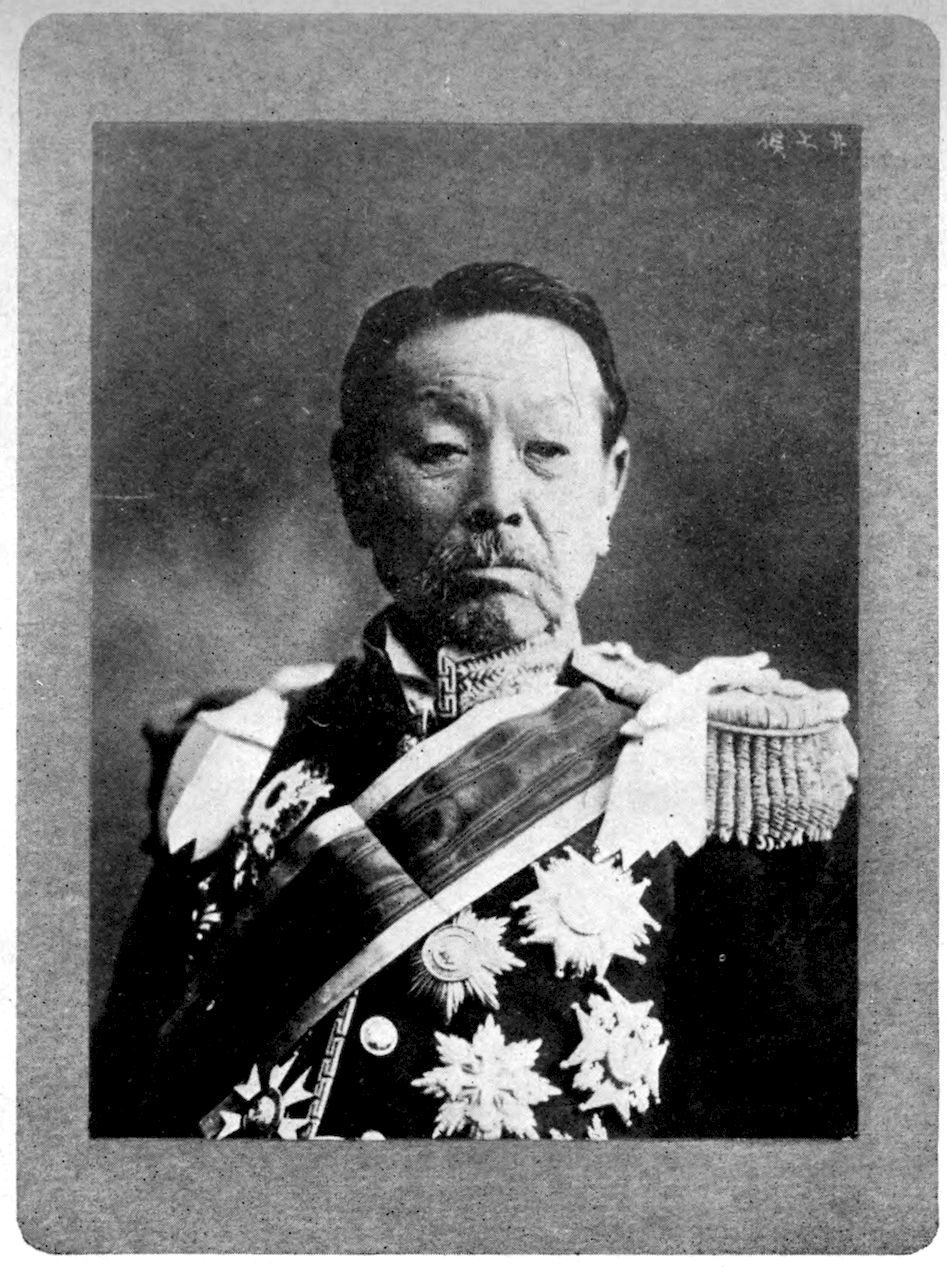
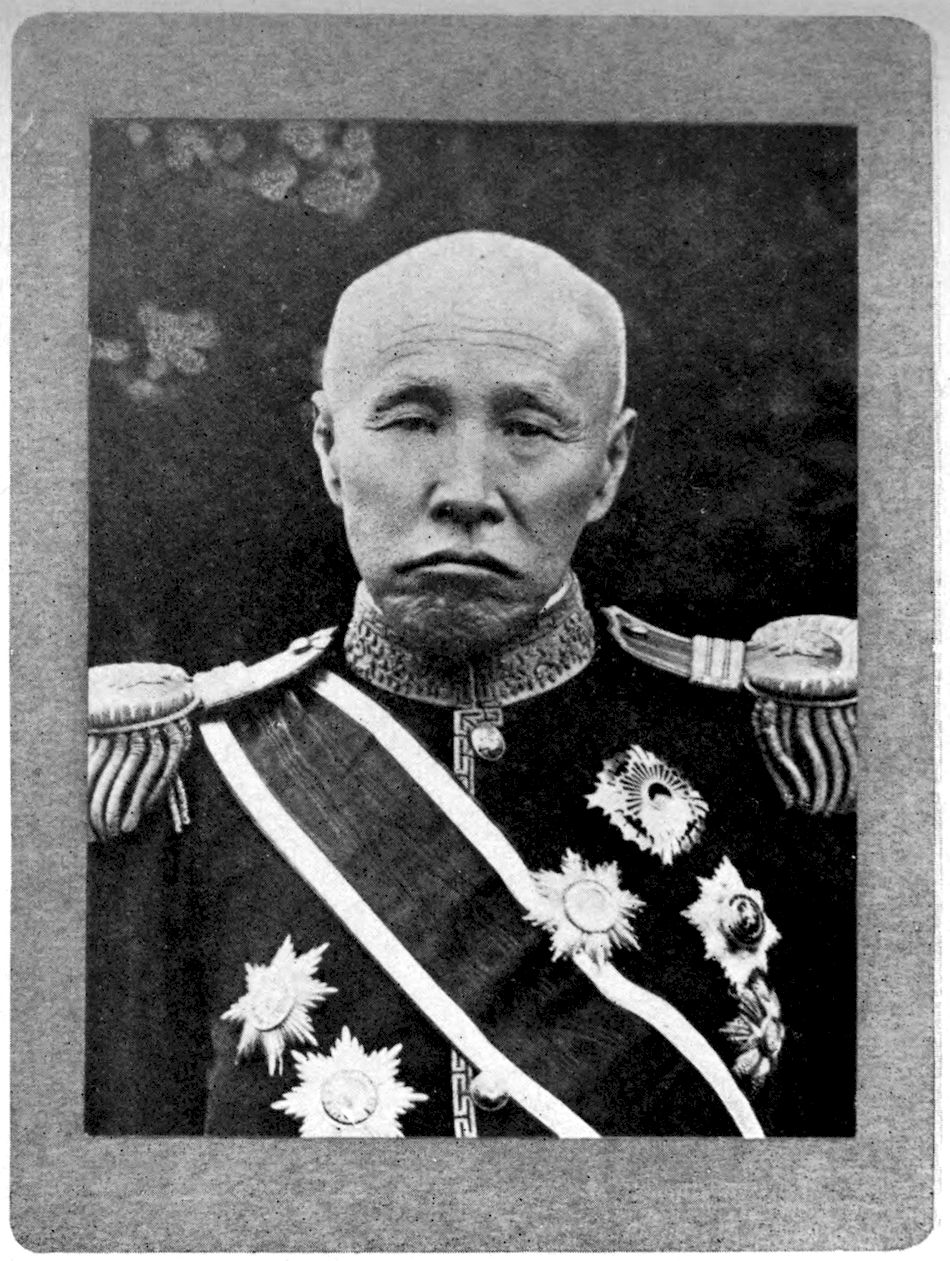
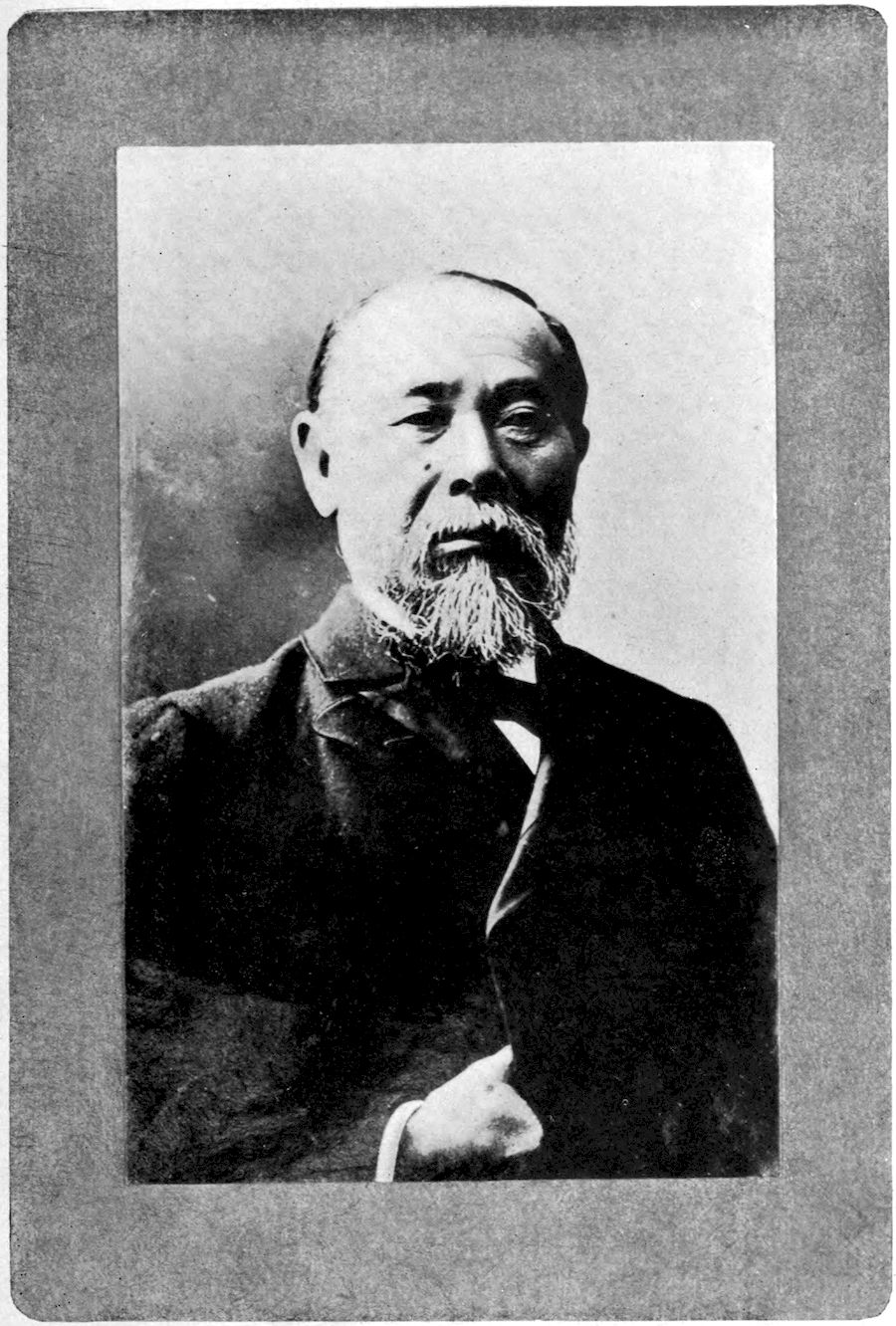
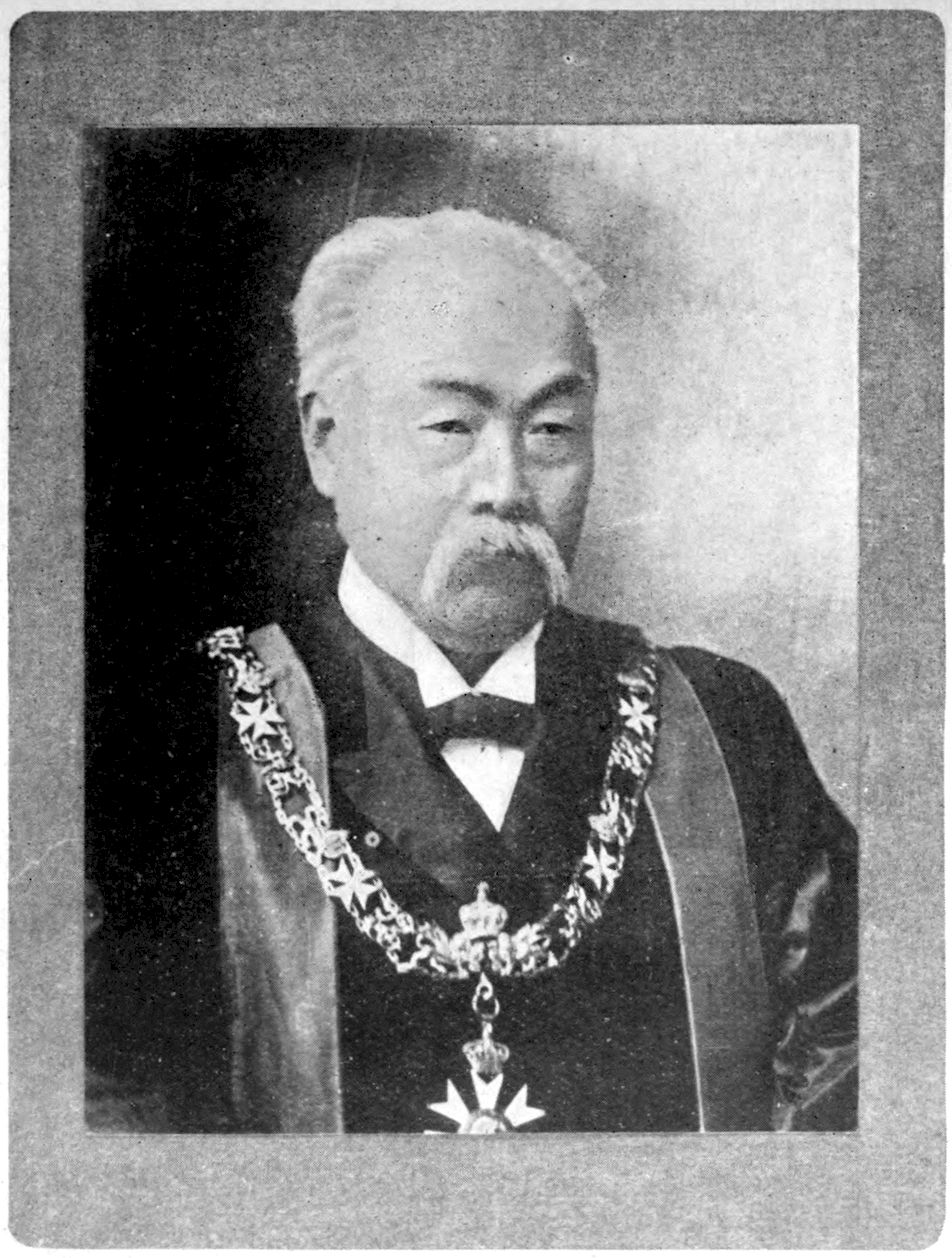
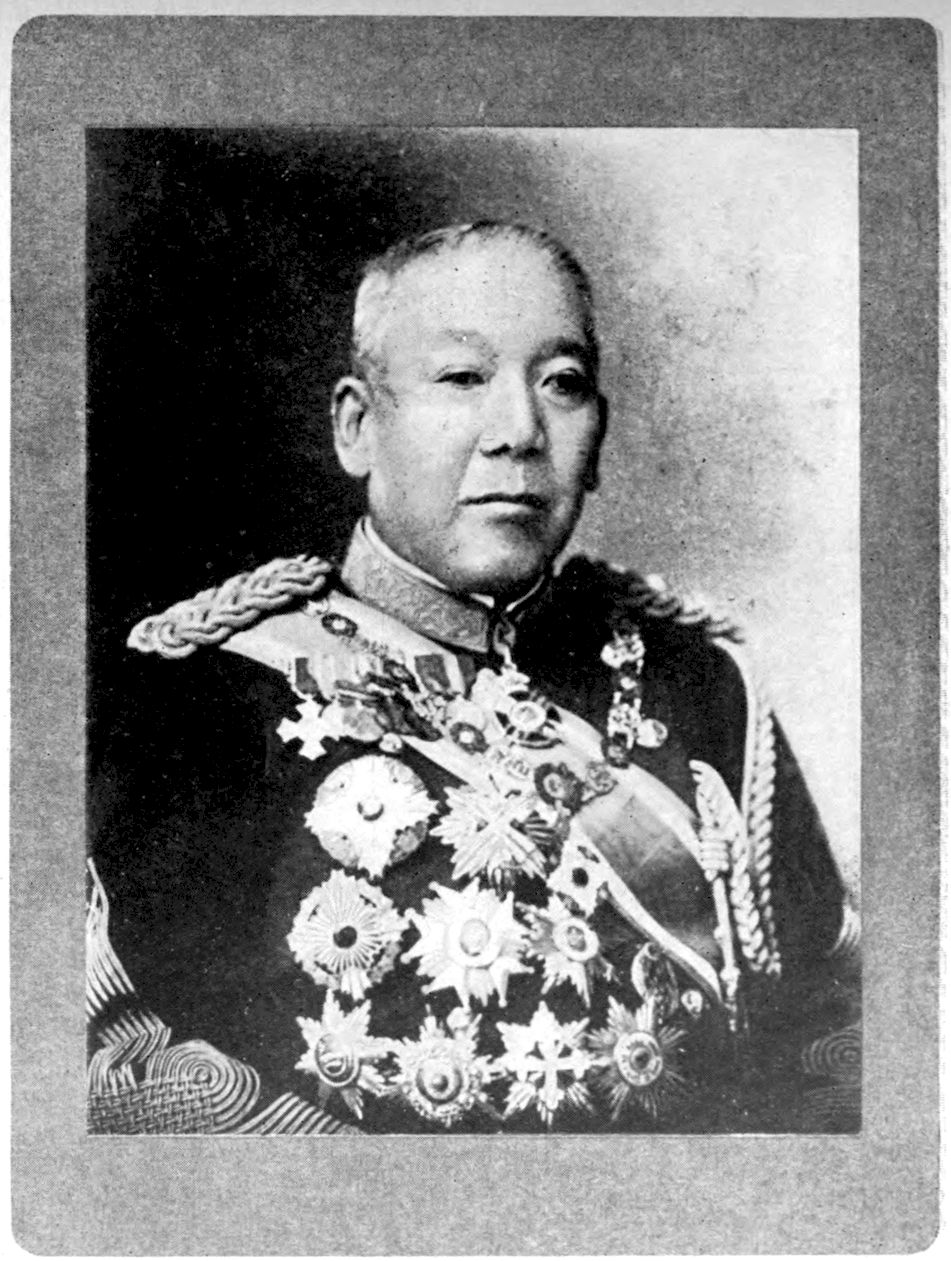
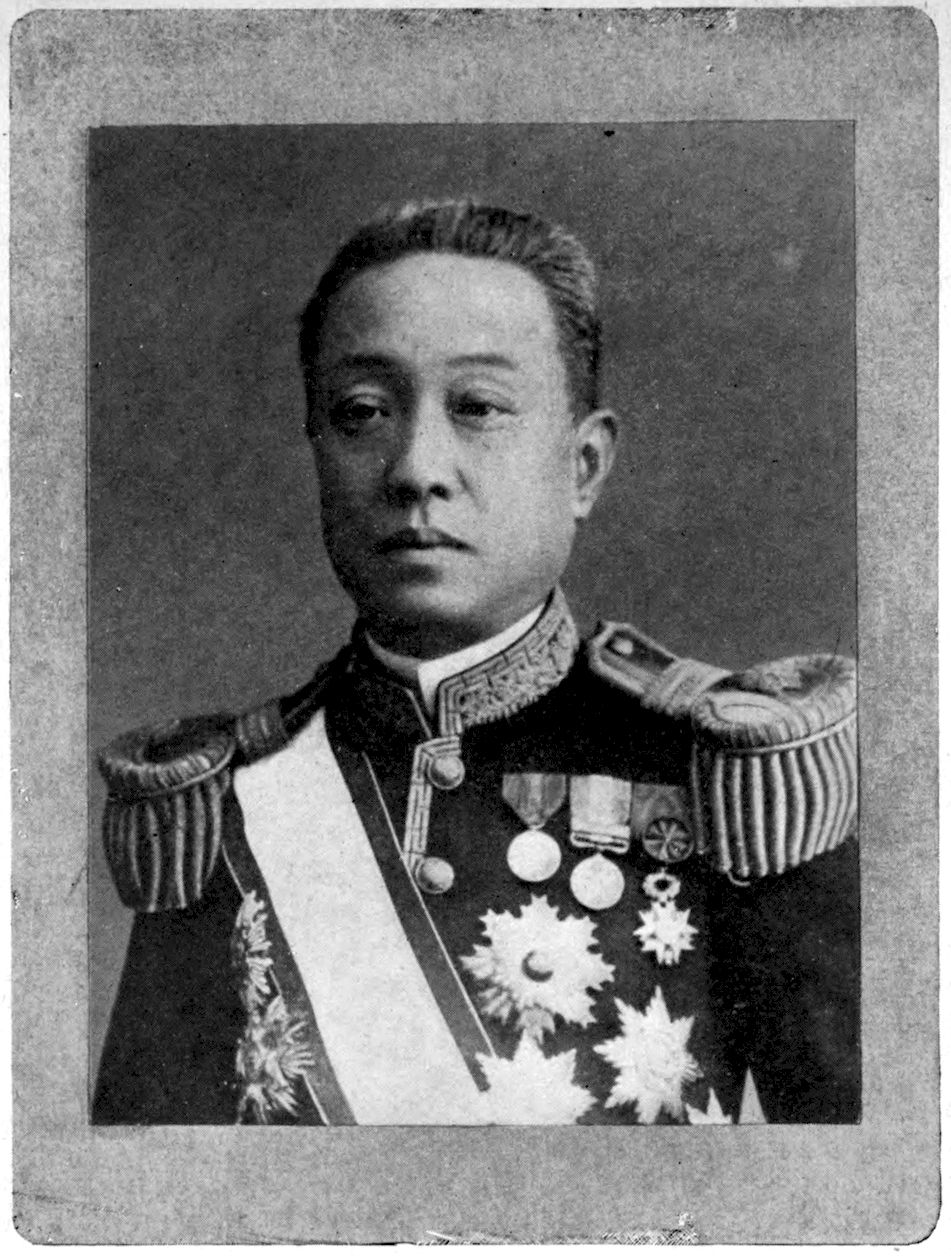
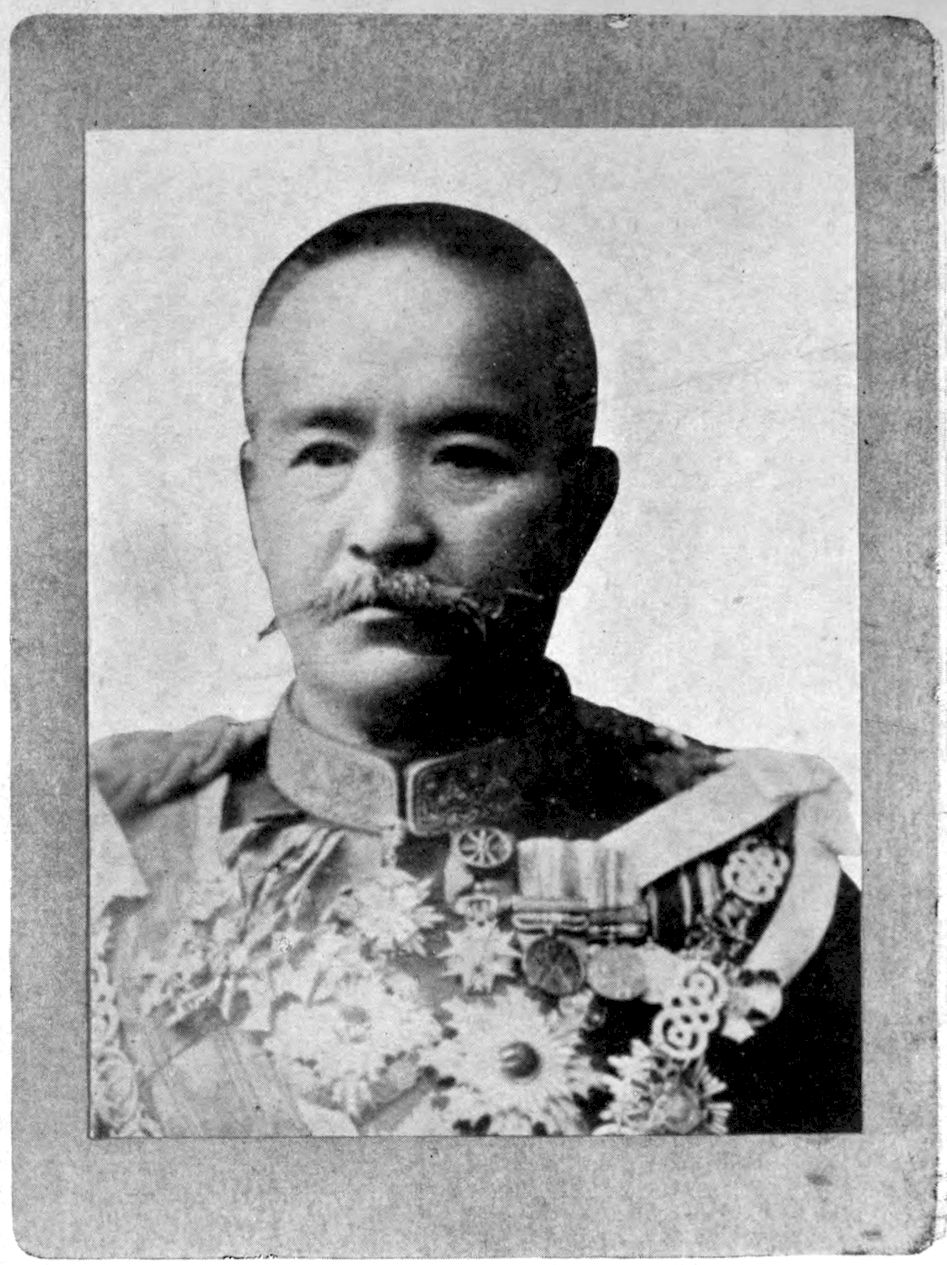
feudal land tenure; to Prince Iwakura, Marquis Ōkubo,
and Marquis Kido for photographs of three of the
eminent statesmen whose portraits appear; to the Right
Honorable Sir Ernest Satow for the trouble he took in
reading the MS. of the book; to Sir E. F. Crowe, C.M.G.,
Commercial Counsellor of the British Embassy in Tōkiō,
for very useful help given in various ways; and to Miss
Maud Oxenden for valuable assistance in proof-correcting.
CONTENTS
11
CHAPTER I
PAGE
Early History—The Great Reform—Adoption of Chinese Culture
Changes and Reforms—Relations with China and Korea—Rupture in Ministry—Secession of Tosa and Hizen Leaders—Progress of Reforms—Annexation of Loochoo—Discontent of Former Military Class
Political Unrest—The Press—Press Laws—Conciliation and Repression—Legal Reforms—Failure of Yezo Colonization Scheme—Ōkuma’s Withdrawal—Increased Political Agitation
Imperial Authority—Privy Council—Local Self-Government—Promulgation of Constitution—Imperial Prerogatives—The Two Houses of Parliament—Features of Constitution and First Parliamentary Elections
Working of Parliamentary Government—Grouping of Parties—Government and Opposition—Formation of Seiyūkai—Increasing Intervention of Throne—Decrease of Party Rancour—Attitude of Upper House
Militarist Policy—Liaotung Peninsula—Intervention of Three Powers—Leases of Chinese Territory by Germany, Russia, Great Britain and France—Spheres of Interest
American Protest against Foreign Aggression in China—Principle of “Open Door and Equal Opportunity”—Financial Reform—Operation of Revised Treaties—The Boxer Outbreak—Russia and Manchuria
Rise of Japan and Germany Compared—Renewal of Anglo-Japanese Alliance—Japan and the Great War—Military and Naval Expansion—Japan and China—The Twenty-one Demands—Agreement with Russia regarding China—Lansing-Ishii Agreement—Effects of Great War on Situation in Far East
There is much speculation, but no certainty, regarding the
origin of the Japanese people. It is, however, generally
held that the Japanese race is made up of two main elements—one
Mongolian, which came to Japan from Northern Asia by way
of Korea, and the other Malayan; a third strain being possibly supplied
to some small extent by the Ainu aborigines, whom the invaders
found in occupation of the country. The prevailing type of feature
is Mongolian, though scientific research claims to have discovered
traces of the physical characteristics of other Asiatic races.
If the earliest Japanese records provide little trustworthy material
for the historian, they show how the legendary heroes of oral tradition
became in the hands of successive chroniclers the deified
ancestors of the reigning dynasty, and indicate the process of transition
by which the feelings of respect and admiration they inspired
developed into a popular belief in the quasi-divinity of Japanese
Sovereigns. It is in this no-man’s-land, where no clear boundaries
divide fable from history, that we are from the first confronted with
the primitive native religion, and realize its weakness as a civilizing
influence. From these same records, nevertheless, as well as from
scanty Chinese sources, we glean certain general facts bearing on the
early development of Japan. Chinese culture is seen trickling in at
a very early date; we hear of the adoption at some time in the fifth
century of Chinese ideographs, the Japanese following in this respect
the example of their Korean neighbours, who, like themselves, had
originally no written language of their own; and we learn of the
introduction of Buddhism a century later. The advent of Buddhism
18was a notable factor in Japan’s progress. Its missionaries assisted
the spread of the Chinese written language, and thus paved the
way for the introduction in A.D. 645 of what is known as the Great
Reform.
The Great Reform gave its name to the first year-period of
Japanese chronology, and to Japanese history its first certain date.
It was the outcome of a movement having for its object the repair
of the authority of the Throne, which had been weakened by the
separatist tendencies of the Sōga family. The new form of government
then established, in imitation of changes made under the T’ang
dynasty in China, was a centralized bureaucracy. The supreme
control of affairs was vested in the Council of State. In this Council
the Prime Minister presided, and with him were associated the two
assistant Ministers of State and the President of the Privy Council.
Of the eight Boards, or Departments of State, five dealt mainly, but
by no means exclusively, with matters relating to Ceremonial,
Religion, the Army, Finance and Taxation respectively; the other
three having the direction of business connected more immediately
with the Imperial Court. There seems, however, to have been no
very clear-cut division of business, Court interests being apparently
mixed up with the affairs of every department. This change in the
form of government was only one of many results caused by the
inrush of Chinese ideas at this time. The influence of the wave of
Chinese culture which swept over the country permeated every part
of the national fabric, remodelling the social system, and laying the
foundations of Japanese law, education, industries and art.
Later on provision was made for the establishment of a regency
during the minority of a reigning Sovereign, the regent (Sesshō) by
virtue of his office ranking at the head of the official hierarchy.
When the regency expired, the ex-regent assumed the title of
Kwambaku (or Sesshō-Kwambaku), retaining his official precedence.
The two posts were subsequently separated, and, like all other Court
offices, became, as the authority of the Court declined, mere honorary
titles. Both posts and honorary titles were hereditary in certain
branches of the Fujiwara family, the only exception to this rule
occurring in the sixteenth century.
It was not till the eighth century that the Japanese elaborated a
written language of their own. The Koreans had done so already,
but the two written languages thus superadded to what was borrowed
19from China have nothing in common. That of the Japanese consists
of two different scripts, each adapted from Chinese characters. The
Korean script bears no resemblance to Chinese. Both countries have
good reason to regard as a very doubtful blessing the possession of
two spoken and two written languages.
At this early stage in Japanese history three things stand out
prominently: the welcome given to foreign ideas; the duality of
religion and language; and the curious atmosphere of divinity surrounding
the Throne, which by an easy process of transition came
to be regarded by the people as a natural attribute of their country
and of themselves. It is not surprising, therefore, to find in the
development of Japan two opposite tendencies constantly at work—the
assimilation of new ideas from abroad, and reaction in favour of
native institutions. Together with the readiness to adopt foreign
ideas, to which the seventh century bears such striking witness, there
existed an intense national pride—a belief in the superiority of Japan,
“the country of the Gods,” to all other lands. The existence of
these two contrary currents of popular feeling, in which religion,
politics and language all play their part, may be traced through the
whole course of Japanese history.
The strengthening of the Throne’s authority, which was effected
by the Great Reform, lasted but a short time, the ruling power soon
passing again into the hands of another powerful family, the House
of Fujiwara. But the centralized bureaucratic form of government
borrowed from China survived, and with it the fiction of direct
Imperial rule.
During the long ascendancy, covering more than three centuries,
of the House of Fujiwara the Sovereigns, despite their assumption
of the recognized titles of Chinese Emperors, sank into the position
of mere puppets, removable at the will of the patrician rulers. It
is important to note, however, that neither the nominal authority
of the occupant of the Throne nor the power of the de facto Government
during this period, and for many years after, extended much
beyond the centre of Japan. The loyalty of district governors in the
south and west was regulated by their distance from the seat of
administration. To the north and east, again, the country was in
the possession of the Ainu aborigines, with whom a desultory warfare
was carried on until their eventual expulsion to the northern island
of Yezo.
20Early in the twelfth century the Fujiwara régime came to an end.
The succeeding administrators were members of the Taira family,
which had gradually risen to importance, and wielded the predominant
influence in the country. Fifty years later their position was
successfully challenged by the rival House of Minamoto, which, like
its two predecessors, could claim royal descent. The long struggle
between these two houses ended in the final overthrow of the Taira
family in the sea battle of Dan-no-Ura (A.D. 1155) and the establishment
of the feudal system, in other words, of a military government.
Yoritomo, the Minamoto leader, who then rose to power, received
from the Court the title of Shōgun (or General), a contraction of the
fuller appellation Sei-i-Tai-Shōgun. This may be rendered Barbarian-quelling
Generalissimo, and was the term originally applied to generals
employed in fighting the Ainu aborigines in the North-Eastern
marches. With the assumption of this title the term itself developed
a new meaning, for it was not as the general of an army that he
thenceforth figured, but as the virtual ruler of Japan. His advent
to power marks a new phase in Japanese history, the inception of a
dual system of government based on feudalism, which lasted, except
for a short period in the sixteenth century, until modern times.
With the establishment of a military government the classification
of society was changed. Thenceforth there were three recognized
divisions of the people—the Kugé, or Court aristocracy, constituting
the former official hierarchy, which, becoming more and more impoverished
as the connection of its members with the land ceased,
gradually sank into the position of a negligible factor in the nation;
the Buké, or military class, which included both daimiōs and their
retainers, and out of which the new official hierarchy was formed;
and the Minké, or general public, which comprised farmers, artizans
and tradesmen, or merchants, ranking in the order named.
Feudalism was no sudden apparition. It was no mushroom growth
of a night. The importance of the military class had been growing
steadily during the prolonged civil strife from which the Minamoto
family had emerged victorious. This and the increasing weakness of
the Government had brought about a change in provincial administration.
Civil governors, dependent on the Capital, had gradually
given place to military officials, with hereditary rights, who looked
elsewhere for orders; manorial estates were expanding into territories
with castles to protect them; and local revenues no longer
21flowed with regularity into State coffers. Thus in more than one
manner the way had been prepared for feudalism.
The same may be said of the dual system of administration, though
here the question is less simple. From all that history tells us, and
from its even more eloquent silence, there is good reason to question
the existence at any time of direct Imperial rule. We hear of no
Mikado ever leading an army in the field, making laws or dispensing
justice, or fulfilling, in fact, any of the various functions associated
with sovereignty, save those connected with public worship. This
absence of personal rule, this tendency to act by proxy, is in keeping
with the atmosphere of impersonality which pervades everything
Japanese, and is reflected in the language of the people. Everything
tends to confirm the impression that the prestige of sovereignty in
Japan thus lay rather in the institution itself than in the personality
of the rulers. The casual manner in which succession was regulated;
the appearance on the Throne of Empresses in a country where little
deference was paid to women; the preference repeatedly shown for
the reign of minors; the laisser-aller methods of adoption and
abdication; the easy philosophy which saw nothing unusual in the
association of three abdicated, or cloistered, monarchs with a reigning
sovereign; and the general indifference of the public to the misfortunes
which from time to time befel the occupant of the Throne,
all point in the same direction—the withdrawal of the Sovereign at
an early date from all active participation in the work of government.
In so far, therefore, as the personal rule of the Sovereign was concerned
it seems not unreasonable to regard the dual system of
government established at this time as the formal recognition of
what already existed. Its association with feudalism, however,
brought about an entirely new departure. Kiōto, indeed, continued
to be the national capital. There the former Ministers of State
remained with all the empty paraphernalia of an officialdom which
had ceased to govern. But a new seat of administration was set up
at Kamakura, to which all men of ability were gradually attracted.
Thenceforth the country was administered by a military government
directed by the Shōgun at Kamakura, while the Sovereign lived in
seclusion in the Capital, surrounded by a phantom Court, and an
idle official hierarchy.
In this question of government there is still something further to
be explained. It should be understood that the Shōgun did not
22personally rule any more than the Mikado. What for want of a
better name may be termed the figure-head system of government
is noticeable throughout the whole course of Japanese history. Real
and nominal power are rarely seen combined either socially or politically.
The family, which is the unit of society, is nominally controlled
by the individual who is its head. But practically the latter is in
most cases a figure-head, the real power being vested in the group of
relatives who form the family council. The same principle applied
to the administration of feudal territories. These were not administered
by the feudal proprietors themselves. The control was entrusted
to a special class of hereditary retainers. Here again, however,
the authority was more nominal than real, the direction of affairs
being left, as a rule, to the more active intelligence of retainers of
inferior rank. Similarly the Shōgun was usually a mere puppet in
the hands of his Council, the members of which were in turn controlled
by subordinate office-holders. This predilection for rule by
proxy was encouraged by the customs of adoption and abdication,
the effects of which, as regards Mikado and Shōgun alike, were seen
in shortness of reign, or administration, and the frequency of the
rule of minors.
The highly artificial and, indeed, contradictory character which
distinguished all Japanese administration had certain advantages.
Abdication was found to be not incompatible in practice with an
active, though unacknowledged, supervision of affairs. It also provided
a convenient method of getting rid of persons whose presence
in office was for any reason inconvenient. In a society, too, where
adoption was the rule rather than the exception the failure of a direct
heir to the Throne, or Shōgunate, presented little difficulty. It was
a thing to be arranged by the Council of State, just as in less exalted
spheres such matters were referred to the family council. Questions
of succession were thus greatly simplified. In this contradiction,
moreover, between appearance and reality, in the retention of the
shadow without the substance of power, lay the strength of both
monarchy and Shōgunate. It was, in fact, the secret of their stability,
and explains the unbroken continuity of the dynasty on which the
nation prides itself. Under such a system the weakness or incompetence
of nominal rulers produced no violent convulsions in the body
politic. The machinery of government worked smoothly on, unaffected
by the personality of those theoretically responsible for its
23control; and as time went by the tendency of office to divorce itself
from the discharge of the duties nominally associated with it increased
everywhere, with the result that in the last days of the
Shōgunate administrative policy was largely inspired at the seat of
government by subordinate officials, and in the clans by retainers of
inferior standing.
The question of dual government, which has led to this long
digression, was more or less of a puzzle to foreigners from the time
when Jesuit missionaries first mistook Shōguns for Mikados; and it
was not until after the negotiation of the first treaties with Western
Powers that it was discovered that the title of Tycoon given to the
Japanese ruler in these documents had been adopted for the occasion,
in accordance with a precedent created many years before, in order
to conceal the fact that the Shōgun, though ruler, was not the
Sovereign.
CHAPTER II Establishment of Feudalism and Duarchy—The Shōgunate and the Throne—Early Foreign Relations—Christian Persecution and Closure of Country.
24
The fortunes of the first line of Kamakura Shōguns, so called
from the seat of government being at that place, gave no
indication of the permanence of duarchy, though it may
have encouraged belief in the truth of the Japanese proverb that
great men have no heirs. Neither of Yoritomo’s sons who succeeded
him as Shōgun showing any capacity for government, the direction
of affairs fell into the hands of members of the Hōjō family, who, by
a further extension of the principle of ruling by proxy, were content
to allow others to figure as Shōguns, while they held the real power
with the title of regents (Shikken). Some of these puppet Shōguns
were chosen from the Fujiwara family, which had governed the
country for more than three centuries. Others were scions of the
Imperial House. This connection of the Shōgunate with the Imperial
dynasty, though only temporary, is a point to be noted, since under
other circumstances it would suggest a devolution rather than a
usurpation of sovereign rights.
It was in the thirteenth century, during the rule of the Hōjō
regent Tokimuné, that the Mongol invasions took place. The reigning
Mikado was a youth of nineteen; the Shōgun an infant of four.
The six centuries which had elapsed since the Great Reform had
witnessed notable changes in the countries which were Japan’s nearest
neighbours. In China the Mongol dynasty was established. In
Korea the four states into which the peninsula had originally been
divided had disappeared one after the other. In their place was a
new kingdom, then called for the first time by its modern name. The
new kingdom did not retain its independence long. It was attacked
and overthrown by the armies of Kublai Khan, the third Mongol
Emperor. By the middle of the thirteenth century the King of
25Korea had acknowledged the suzerainty of China. Kublai Khan then
turned his attention to Japan.
It was customary in those times for congratulatory missions to be
sent by one country to another when a new dynasty was established
or a new reign began, the presents exchanged on these occasions being
usually termed gifts by the country offering them, and tribute by
that which received them. The relations between Japan and the
new Kingdom of Korea had been on the whole friendly, though disturbed
from time to time by the piratical forays which seem to have
been of frequent occurrence. But after Korea had lost her independence
she was obliged to throw in her lot with China. When,
therefore, in 1268, Kublai Khan sent an envoy to Japan to ask why
since the beginning of his reign no congratulatory mission had reached
Peking from the Japanese Court, the messenger naturally went by
way of Korea, and was escorted by a suite of Koreans. The ports in
the province of Chikuzen, on the north of Kiūshiū, the southernmost
of the Japanese islands, were the places through which communications
between Japan and the mainland were then carried on; and it
was at Dazaifu in that province, the centre of local administration,
that the envoy delivered his letter. This was in effect a demand for
tribute, and the Regent’s refusal even to answer the communication
was met by the despatch in the summer of 1275 of a Mongol force,
accompanied by a Korean contingent. Having first occupied the
islands of Tsushima and Iki, which form convenient stepping-stones
between Korea and Japan, the invaders landed in Kiūshiū in the
north-west of the province already mentioned. After a few days’
fighting they were forced to re-embark. In their retreat they encountered
a violent storm, and only the shattered remnants of the
Armada returned to tell the tale. A second invasion, six years later,
planned on a far larger scale, and supported, as before, by Korean
auxiliaries, met with a similar fate. On this occasion severer fighting
occurred. The positions captured at the place of landing in the
province of Hizen were held by the invaders for some weeks. Thence,
however, they could make no headway. When they at length withdrew
in disorder a violent storm again came to the aid of the defenders
and overwhelmed the hostile fleets. The preparations begun
by Kublai Khan for a third invasion were abandoned at his death a
few years later. From that time Japan was left undisturbed.
The circumstances attending the fall of the Hōjō regents in 1333,
26and their replacement by the Ashikaga line of Shōguns, are noteworthy
for the light they throw on the state of the country, and the
unstable and, indeed, ludicrous conditions under which the government
was carried on. It seemed for a moment as if the authority
of the Court was about to be revived. But with the overthrow of
the regents the movement in this direction stopped. The military
class was naturally reluctant to surrender the power which had come
into its hands; the position of the Mikado was also weakened by a
dispute regarding his rights to the Throne. He had just returned
from banishment, and had been at once reinstated as Emperor. But
during his absence another Emperor had been placed on the Throne,
and there were those who thought the latter had a right to remain.
In the previous century it had been arranged, in accordance with the
will of a deceased Emperor, that the Throne should be occupied
alternately by descendants of the senior and junior branches of the
Imperial House. This rule had been followed in filling the vacancy
caused by the banishment of the previous Mikado, and the branch
of the Imperial House which suffered by his reinstatement refused
to accept the decision. Each claimant to the Throne found partizans
amongst the feudal chieftains. Thus were formed two rival Courts,
the Northern and the Southern, which disputed the Crown for nearly
sixty years. The contest ended in the triumph in 1393 of the
Northern Court. Having the support of the powerful Ashikaga
family, it had early in the course of the struggle asserted its superiority,
the Ashikaga leader becoming Shōgun in 1338.
The rule of the Ashikaga Shōguns lasted until the middle of the
sixteenth century, though for several years before it ended the control
of affairs was exercised by others in their name. During this
period, which was favourable to the growth of art and literature, the
seat of government kept changing from Kamakura to the Capital and
back again. The former city shared the fate of the dynasty, and
after its destruction was never rebuilt.
A break then occurred in the sequence of Shōguns. The chief
power passed into the hands of two military leaders, Nobunaga and
Hidéyoshi, neither of whom founded a dynasty or bore the title of
Shōgun. By their efforts the country was gradually freed from the
anarchy which had ensued during the last years of Ashikaga administration.
Though here and there throughout the country there
remained districts whose feudal lords insisted on settling their quarrels
27themselves, a more stable condition of things was introduced, and
the work of the founder of the next and last line of Shōguns was
greatly facilitated.
Europe had long before heard of Japan through the writings of the
Venetian traveller, Marco Polo, who had visited the Court of Kublai
Khan and there learned the failure of the Mongol invasions. It was
not, however, till the middle of the sixteenth century, during the
ascendancy of the first of the two military leaders above mentioned,
that intercourse with European countries was established. The
Portuguese were the first to come, and for this reason. Portugal was
then at the height of her greatness as a maritime power; and by the
Bulls of Pope Alexander VI, which divided the new lands discovered
in Asia and America between her and Spain, those in Asia had fallen
to her share. Some uncertainty exists as to the exact date at which
the new Western intercourse began, and as to the identity of the
first arrivals. Most authorities, however, agree in thinking that the
first European discoverers of Japan were three Portuguese adventurers
who, in the course of a voyage from Siam to China in the
summer or autumn of 1542, were driven by a storm on the coast of
Tanégashima, a small island lying midway between the southern point
of the province of Satsuma and Loochoo. The adventurers who
landed were successful in disposing of the cargo of their vessel,
destined originally for Chinese ports. Their knowledge of firearms
made a favourable impression, and the beginnings were thus laid of
a trade with the Portuguese possessions and settlements in the East
and with the mother country in Europe. Of greater interest and
importance, however, than this early trade is the fact that to Portuguese
enterprise Christianity owed its first introduction into Japan.
Seven years after the arrival of these involuntary traders, who had
spread the news of the strange country they had discovered, one of
the numerous Portuguese trading vessels which were thus attracted
to Japan landed at Kagoshima, the capital of the Satsuma province,
three missionaries—Xavier, Torres and Fernandez. Thenceforth,
until the closing of the country to all but the Chinese and Dutch,
it was the propagation of the Christian faith, not the progress of
trade, which was the important factor in Japan’s foreign relations.
The coming of the first missionaries took place at a time when the
widespread disorder which marked the closing years of the Ashikaga
28administration was at its height. Though Nobunaga was rapidly
acquiring for himself a commanding position, the nation had not yet
felt the full weight of the hand which twenty years later was to take
the first steps towards the pacification of the country. The confusion
of affairs assisted the spread of the new religion, the opposition
offered by some of the leading daimiōs, such as the princes of Satsuma
and Chōshiū, being counterbalanced by the eagerness of others to
profit by the foreign trade which came with the missionaries; while
Buddhist hostility lost much of its sting after the power of the
militant priesthood had been crippled by Nobunaga.
The latter’s successor, Hidéyoshi, whom the Japanese regard as
their greatest military genius, shared neither his sympathy with
Christianity nor his dislike of Buddhism. To matters of religion he
seemed to be indifferent, his one aim being apparently to make himself
master of Japan. In a series of campaigns conducted in different
parts of the country he overcame the resistance of one feudal chief
after another, the last to submit to his authority being the Daimiō
of Satsuma. His ascendancy deprived Christianity of the advantage
it had previously derived from the unsettled condition of the country.
His aim accomplished, Hidéyoshi changed his attitude suddenly, and
in 1587 issued an edict against Christianity. As a result of this edict
the missionaries were expelled from the Capital and the Christian
church there was pulled down. Though the Christian persecution
dates from that time, it was not prosecuted at first with much energy.
Doubtless Hidéyoshi was aware of the connection between Christianity
and foreign trade, and in his desire to profit by the latter was
content not to push matters to extremities. There may also be some
truth in the suggestion of the joint authors of A History of Japan
(1542–61) that he was unwilling to incur the resentment of the
numerous daimiōs in the south of Japan who had welcomed the new
religion. Be this as it may, the initial stages of the persecution did
not apparently affect missionary activity very seriously. We do not
hear of any falling off in the number of converts, which is said to
have attained about this time a total little short of a million.
For nearly half a century the Jesuits had the field of missionary
enterprise in Japan to themselves. To this fact was largely due the
spread of the new religion. In 1591, however, the state of things
was altered by the arrival of members of other religious orders, who
came in the train of a Spanish ambassador from the Philippines.
29This intrusion—which later on received the formal sanction of the
Pope—was resented by the Jesuits; and the position of the Christian
Church, already weakened by persecution, was not improved by the
quarrels which soon broke out between them and the new-comers.
What would have been the outcome of this change in the situation,
if Hidéyoshi’s attention had not been directed elsewhere, it is
impossible to say. At this moment, however, his ambition found a
new outlet. Supreme now at home, he conceived the idea of gaining
fresh glory by conquests abroad. With this object, he embarked on
an invasion of Korea, intending ultimately to extend his operations
to China. His pretext, it is said, for invading the neighbouring
peninsula, like that of Kublai Khan in the case of Japan, was that
Korea had refused or neglected to send the usual periodical missions.
According to another, and perhaps more correct account, he demanded
that Korea should assist him in the invasion of China in the
same way as she had two centuries before aided the Mongols in their
invasion of Japan, a request which, it is said, was scornfully refused.
The Korean campaign, in the course of which a Christian daimiō—Konishi,
the owner of an extensive fief in the province of Higo—greatly
distinguished himself, began in the spring of 1592, the last
land engagement being fought in the autumn of 1598. The war thus
lasted nearly seven years. The preparations made by Hidéyoshi were
on an extensive scale. The army of invasion numbered, if the
statistics of that time can be trusted, nearly 200,000 fighting men.
As reinforcements were sent from time to time from Japan, the
number of troops employed from first to last in the course of the war
must have reached a very high total. Hidéyoshi did not lead his
army in person, but directed the general plan of operations from
Japan. The Japanese were at first successful on land everywhere,
though at sea they met with some serious reverses. The Koreans
were driven out of their capital, and the invaders overran more than
half of the country. Then, however, the Emperor of China intervened
in the struggle. Chinese armies entered Korea, and the tide
of victory turned against Japan. The retreat of the invaders towards
the coast was followed by overtures of peace, which resulted in the
suspension of hostilities in 1594. But the negotiations, in which
China took a leading part, broke down, and three years later a second
Japanese army landed in Korea. On this occasion the Japanese forces
30met with more stubborn resistance. Chinese armies again came to
the help of Korea, and when Hidéyoshi died in 1598 the Japanese
Government was only too willing to make peace. The results of the
war for Korea were disastrous. The complete devastation wrought
wherever the Japanese armies had penetrated left traces which have
never been entirely effaced. Nor did Japan come out of the struggle
with any profit. When the final accounts were balanced all she had
to show for her lavish expenditure in lives and money was the establishment
in Japan of a colony of Korean potters, who were the first
to make the well-known Satsuma faience, and the doubtful privilege
of keeping a small trading post at the southern end of the Korean
peninsula.
For some years after the Korean war had been brought to an end
by the death of Hidéyoshi the position of the Christian Church
showed little change. It was not until 1614, by which time a new
line of Shōguns was ruling the country, that rigorous measures were
adopted against the new religion. The edict which then appeared
ordered the immediate expulsion of all missionaries, and its issue was
followed by a fierce outbreak of persecution in all parts of Japan
where converts or missionaries were to be found.
Evidence of the contradictory state of things then existing is furnished
by the fact that in that very year an Embassy to the Pope
and to the King of Spain was sent by the Japanese Daimiō of Sendai,
whose fief was in the north-east of Japan.
Meanwhile, in 1609, Dutch traders had established themselves in
the island of Hirado, where they were joined four years later by
English traders representing the East India Company. The latter
had not the resources necessary for so distant an undertaking, nor was
the English navy strong enough to support the Company’s enterprise
against the Dutch, who were then wresting from the Portuguese the
supremacy in Eastern waters. At the end of ten years, therefore, the
trading station was abandoned.
The Christian persecution continued with varying intensity for
more than twenty years, culminating in the insurrection of Shimabara
in 1638. With the bloody suppression of that rising, due as much to
local misgovernment as to religious causes, the curtain falls on the
early history of Christianity in Japan. Two years earlier, in 1636,
an edict issued by the third Shōgun, Iyémitsu, forbade all Japanese
31to go abroad, reduced the tonnage of native vessels so as to render
them unfit for ocean voyages, and closed the country to all foreigners
except the Chinese and Dutch. The Portuguese were chiefly affected
by this measure, for the English had abandoned their trading enterprise
in Hirado in 1623, and in the following year the rupture of
relations with Spain had put an end to the residence of Spanish
subjects, thus justifying Xavier’s warning that the King of Spain
should be careful how he interfered with Japan, in case he burnt his
fingers. The Dutch owed their escape from expulsion to the fact
that the Japanese did not regard them as being Christians at all,
because of their openly expressed hostility to the form of Christianity
professed by the missionaries. In neither case was the lot of the two
favoured nationalities at all enviable. In 1641 the Dutch were removed
from Hirado and interned in Déshima, an artificial island
quarter of the town of Nagasaki; and some fifty years later the
Chinese, who had traded at that port in comparative liberty from a
date which is uncertain, were confined in an enclosure close to the
Dutch settlement. Here, paying dearly as State prisoners for the
commercial privileges they enjoyed, these traders carried on a precarious
and gradually dwindling commerce until Japan was opened
for the second time to foreign intercourse in the middle of the nineteenth
century.
CHAPTER III The Tokugawa Shōguns—Consolidation of Duarchy.
32
The rule of Hidéyoshi was followed by that of a new line of
Shōguns. The circumstances under which it was established
are well known. At the death of Hidéyoshi in 1598
the government of the country was, during the minority of his son
Hidéyori, entrusted to five feudal nobles who acted as regents. Of
these, the most prominent was Tokugawa Iyéyasu, who had married
Hidéyoshi’s daughter, and whose feudal territories consisted of the
eight provinces in the east of the main island known as the Kwantō.
Disputes soon arose between the regents, and an appeal to arms
resulted in the decisive victory of Iyéyasu at Séki-ga-hara, near Lake
Biwa. This was in October, 1600. In 1603 he was appointed Shōgun,
and twelve years later the death, in what is known as the Ōsaka
summer campaign, of Hidéyori, the only personage who could
challenge his supremacy, left him without any dangerous rival. Now
for the first time in Japanese history the authority of the Shōgunate
extended throughout the whole of Japan. The prestige of the
previous ruler had been as great, and his reputation in the field higher,
but he was not, like his successor, of Minamoto stock, nor could he
trace his descent from an Emperor; there were remote districts in
the country where his influence had not penetrated, out-of-the-way
places where his writ had never run. In founding a fresh line of
Shōguns the new ruler had other circumstances in his favour. The
country was tired of civil war and exhausted; the fighting power and
resources of turbulent chiefs had been weakened by long-continued
hostilities; and much of the work of pacification had been already
done.
Although the Tokugawa Shōgunate was, in its main outlines, the
repetition of a government which had existed before, it differed in
some important respects from previous administrations.
The third Shōgun, the ruler responsible for the closing of the
33country, put the finishing touches to the new system of government;
but it owed more to the genius of his grandfather, the founder of the
line, who framed it, supervised its operation and left posthumous
instructions, known as “The Hundred Articles,” to ensure its observance
by his successors. Japanese writers agree in stating that “The
Hundred Articles” give a general idea of the system of government
established by Iyéyasu. But it is a very general idea, a mere
outline of things, that we are thus enabled to glean. To fill in the
details of the picture it is necessary to draw on other sources of
information.
The difference between the rule of Iyéyasu and that of previous
Shōguns lay in the more complete subjection of the Imperial Court,
in the wider range of his authority, which surpassed that of his two
immediate predecessors, and in the highly organized and stable
character of the administration he established. The changes he
effected in the government of the country may be conveniently considered
under the following heads, it being borne in mind that they
were the work of several years, and that many were made after his
early abdication in 1605, when he was governing the country, in the
name of his son, the second Shōgun:—
1.
Redistribution of feudal territories.
2.
Position of feudal nobility.
3.
Reorganization of central administration.
4.
Relations between the Court and Shōgunate, and between the Court and Court nobles and the
feudal nobility.
1. The new Shōgun in establishing his rule followed the example
of his predecessors. Maps which give the distribution of feudal territories
before and after the year 1600, and again after the fall of Ōsaka
in 1615, show the sweeping character of the changes he carried out
on both occasions. As a result of these changes, the most extensive
fiefs at the outset of Tokugawa rule were those held by the three
Tokugawa Houses in the provinces of Kii, Owari and Hitachi (Mito),
to which may be added those in the possession of the Daimiōs of
Satsuma, Hizen, Chōshiū, Aki, Tosa, Kaga, Échizen, Sendai and
Mutsu.
2. Before the establishment of the Tokugawa Shōgunate the feudal
nobles were divided into three classes—lords of provinces, lords of
territories and lords of castles. In the organization of the feudal
34nobility, as remodelled by Iyéyasu, this old division was retained, but
he created the three princely Houses of Owari, Kii and Mito (Hitachi),
called collectively the Gosanké, and placed them at the head of the
new order of precedence. It was from the two first-mentioned
Houses, together with the Gosankiō, a family group of later institution,
that, failing a direct heir, subsequent Shōguns were chosen.
To the representative of the third House—that of Mito—the position
of Adviser to the Shōgunate was assigned, and he was supposed to
have a determining voice in the selection of a new Shōgun when this
became necessary. Another important change was the separation of
the feudal nobility into two broad classes—the Fudai daimiōs, or
hereditary vassals, who had submitted to the new ruler before the
fall of Ōsaka, and the Tozama daimiōs, who had acknowledged his
supremacy later. The former class alone had the privilege of being
employed in the Councils of State and the higher administrative
posts. Two new feudal groups also made their appearance—the
Hatamoto, or Bannermen, who filled the less important administrative
posts, besides supplying the personnel of the various departments
of State, and whose fiefs in some cases rivalled in extent those of the
smaller daimiōs; and the Gokénin, a kind of landed gentry.
Full use, too, was made by the new ruler of the custom of retaining
hostages from the feudatories as a guarantee of loyalty, a practice
expanded under the second and third Shōguns into the system known
as San-kin Kō-tai. This provided for the residence of daimiōs in
alternate years at Yedo and in their fiefs, some members of their
families being permanently detained in the Tokugawa capital, which
owed its selection as the seat of government to its favourable location
for the commerce of that day at the head of the bay of the same
name. The system of State services (Kokuyéki), moreover, to which
all daimiōs were liable, was a rich source of revenue to the Shōgunate,
while at the same time it strengthened the authority of the Yedo
Government. By these expedients, and by the encouragement of
ostentation in every form, the feudal nobles were kept in strict subjection,
the steady drain on their finances making it difficult for them
to escape from a condition of impecuniosity. The expense of their
annual journeys to and from the Capital alone constituted a severe
tax on their resources, and was the main cause of the financial distress
which existed at a later date in many of the daimiates. Further
and quite independent proof of the unquestioned supremacy of the
35new Shōgun is supplied by the bestowal of his early family name of
Matsudaira not only on all the heads of feudal families connected
with his own, but on many of the leading lords of provinces. Amongst
other recipients of this questionable privilege—which set the seal on
the submission of the feudal nobility—were the daimiōs of Satsuma,
Chōshiū, Hizen, Tosa and Awa, whose retainers took a prominent
part in the Restoration of 1868–69. In these latter cases, however,
the old surnames were used alternately with the new designations.
3. The main features of Tokugawa administration, as established
by its founder and modified by his immediate successors, remained
practically unchanged for two and a half centuries. Its form was a
centralized bureaucracy based on feudalism. The general direction
of affairs was in the hands of an upper and a lower Council of State,
the members of which were chosen from Fudai daimiōs of varying
distinction. There was usually an inner circle of statesmen, with
whom both initiative and decision rested, while the lesser ranks of
officials were recruited chiefly from the Hatamoto. Decisions on grave
matters of State in times of emergency were referred, when necessary,
to the Gosanké and other leading daimiōs, whose participation in
these deliberations was, however, often more nominal than real. A
leading part in administration was also played by the Jisha-bugiō, or
Superintendents of Buddhist and Shintō temples. In spite of the
religious sound of their titles, these executive officers had an important
voice in State business of all kinds. There was also the
Hiō-jō-sho. This was an institution resembling that originally created
by the Kamakura Shōguns. Established at a time when no clear
distinction existed between executive and judicial matters, it seems
to have combined the functions of a Supreme Administrative Board
and a Superior Court of Justice. It took cognizance of all sorts of
questions, both executive and judicial, and, under the latter head, of
both civil and criminal cases, which were decided by a special office
known as the Ketsudan-sho, or Court of Decisions. The matters
which came before this Board ranged from disputes regarding land,
agriculture and taxation to questions concerning the boundaries of
fiefs and provinces; from complaints of the conduct of the feudal
nobility and Shōgunate officials to appeals from the decisions of local
authorities. The members of the Council of State had the right to
attend the sittings of the Board, being encouraged to make surprise
visits in order to ensure the rendering of impartial justice; and for
36the same reason, apparently, in the earlier days of the Shōgunate, the
attendance of the Shōgun himself was not unusual. A similar Board
at Ōsaka dealt with questions referred to it from the provinces west
of Kiōto, and with appeals from the decisions of local authorities in
the districts in question.
Provincial administration varied according to the locality concerned.
What were known as the Shōgun’s domains—amounting in
extent to nearly one-third of the total area of the country—were
administered by Governors (Daikwan) appointed by the Shōgunate,
this system prevailing also in many of the Fudai daimiates and in
certain coast towns. The feudal territories in the rest of the country,
with the exception named, were governed by the clan rulers. A
general supervision of affairs throughout the country was also exercised
by a special class of officials called Métsuké. Their varied
functions comprised those of travelling inspectors and circuit judges;
they were appointed to enquire into the administration of feudal
territories; and they were frequently employed as deputies or
assistants to governors, delegates and commissioners, when their duty
was to watch and report on the conduct of their superiors. Hence
the description of them as spies by foreign writers on Japan—a description
which was often correct. The system of local government
was based on groups of five households, or families, each under the
direction of a headman, and was the development of an earlier form
of tribal, or patriarchal, government introduced from China at the
time of the Great Reform. The headman of each group was subject,
in towns, to the control of the senior alderman of the ward, and,
in villages, to that of the mayor. The duties of these local officials,
whose posts were often hereditary, were to make known the orders
of the Central Government, or feudal authorities, as the case might
be, to administer justice and to collect taxes.
A noticeable feature of Tokugawa administration was the duplication
of offices. In this a resemblance may be traced to similar
customs in other Oriental countries such as Thibet, Siam and Nepal,
the tendency which inspired the practice being possibly one of the
causes of the partiality of the nation for dual government. The
employment of Métsuké in many cases as supplementary officials has
already been mentioned. The custom was widespread, extending
through all grades of the official class, and survived in Loochoo until
the annexation of that principality in 1879. A curious proof of its
37prevalence was furnished at the time of the negotiation by Great
Britain of the Treaty of 1858. Struck by the double title of the
British negotiator, Lord Elgin and Kincardine, and arguing from
their own methods of procedure, the Japanese officials concluded
that two envoys had been sent, and when, in the course of the
negotiations, no second envoy appeared, they took occasion to
enquire after the missing Kincardine.
4. In his dealings with the Imperial Court at Kiōto the new
Shōgun was content, so far as outward formalities were concerned,
to follow the example of previous administrations, introducing,
nevertheless, under cover of conformity with ancient usage, many
important changes. The empty dignities of the Court were maintained
with some increase of ceremonial etiquette, though without
the lavish display which had reconciled the Throne to the rule of
his predecessor. He was at the same time careful to curtail whatever
vestiges of Imperial authority still remained. The measures taken
for this purpose included the appointment of a Resident (Shoshidai)
in Kiōto, and a Governor (Jōdai) in Ōsaka; the confinement of the
reigning Emperor and cloistered ex-monarch (or ex-monarchs, for
there were not infrequently several abdicated sovereigns at the same
time) to their palaces; and the cessation of Imperial “progresses”—the
name given to Imperial visits to shrines; the isolation of the
Court by the interdict placed on the visits of feudal nobles to the
Capital, even sight-seeing being only permitted to them within certain
specified limits, and on condition of applying for permission for this
purpose; the isolation of the Kugé, or Court nobility, by the prohibition
of marriages and all monetary transactions between them
and feudal families; and the reorganization of the official establishment
of the Court, so as to bring it more completely under the
control of the Shōgunate. Iyéyasu also arranged the betrothal of
his granddaughter to the heir-apparent, an alliance not without
precedent in the past, and he enforced a stricter supervision over the
Imperial Household, the movements of Court ladies, and the daily
routine of the palace.
Some idea of the condition of subservience to which the Throne
was reduced, and of the arrogant position assumed by the new ruler,
may be gathered from a perusal of the “Law of the Court and
Shōgunate,” which, taken in conjunction with the “Law of the
Imperial Court” and the “Hundred Articles,” throws some light
38on the new order of things. One of the provisions of the law in
question transferred from the Court to the Shōgunate the protection
of the Throne against evil spirits by abolishing the long-established
Riōbu Shintō processions in the Capital, and by formally
recognizing the Shintō deity, from whom this protection was
supposed to emanate, as the tutelary deity of the Tokugawa family.
The Shōgun was thus made responsible for the spiritual guardianship
of the Throne, the material protection over which he already exercised
in his capacity of supreme military ruler.
Though nothing of the substance of power was left to the Crown,
the mere fact that authority was exercised in its name led to much
friction in the relations between Kiōto and Yedo, and created an
atmosphere of make-believe in which everything moved. The Crown
still retained the nominal privilege of conferring the much-coveted
Court titles. Its nominal approval was also necessary to the investiture
of a new Shōgun, as well as to other important measures of State.
It claimed the right, moreover, to be consulted in regard to ceremonial
observances of all kinds, to questions of marriage, adoption,
abdication and succession. Naturally, therefore, the large number
of questions calling for discussion between the Court of the Mikado
in the Capital and the Yedo Government gave rise to a voluminous
correspondence, the official importance of which, however, was
diminished by the presence of the Shōgun’s Resident at Kiōto. In
the singular official relations recorded in this correspondence there is
evidence of a settled policy on the part of the Shōgunate to divert
the attention of the Throne from serious affairs and keep it occupied
with the details of complicated ceremonial, and, on the other hand,
of constant, though fruitless, attempts on the part of the Court to
encroach on what had become the prerogatives of the Shōgun.
One or two instances, taken at random from the history of the
Tokugawa period, will illustrate how the dual system of government
worked in practice; what little latitude was left to the Throne even
in matters which might be regarded as lying within its direct control;
and how, whenever friction arose, the Shōgunate invariably had its
own way.
The first trial of strength between Kiōto and Yedo occurred soon
after Iyéyasu’s death, when his son Hidétada was Shōgun. The
trouble arose out of some irregularities which had occurred in the
Imperial Household. The Tokugawa administration was still in its
39infancy, and the Court nobles showed a disposition to dispute its
authority, some of them being indiscreet enough to speak of the Yedo
authorities as being Eastern barbarians. The Shōgun adopted a high-handed
attitude. He threatened to break off the match between his
daughter and the Emperor, which had already received the Imperial
sanction, and he went so far as to intimate that the Emperor might
be required to abdicate. His attitude had the desired effect. The
Court hastened to admit itself in the wrong, and the affair ended in
the banishment of three of the Court nobles.
Another and more serious quarrel occurred not long afterwards in
the reign of the same Emperor and during the rule of the third
Shōgun, to whom many of the later interpolations in the early
Tokugawa laws are generally ascribed. The cause of the dispute was
a trivial matter—the promotion by the Emperor, irregularly as the
Shōgunate claimed, of certain members of the Buddhist clergy connected
with the Court. This time it had a serious ending. The
Emperor, mortified by what he regarded as vexatious interference
with his authority, resigned the Imperial dignity, being succeeded on
the Throne by his daughter, the child of the Tokugawa princess
already mentioned.
A third instance, convenient for our purpose, is typical of the
complications caused both in the matter of succession to the Throne,
and in appointments to the office of Shōgun, by the difficulty of
reconciling the custom of adoption with the dictates of filial piety,
as laid down in Confucian doctrine. The time was the end of the
eighteenth century. There were then a boy-Emperor eight years of
age and a boy-Shōgun a few years older. Each had been adopted
by his predecessor, who in each case had died shortly afterwards, the
young Emperor’s succession to the Throne antedating the appointment
of the young Shōgun by some six years. It was necessary to
appoint a guardian for the young Shōgun, and some members of the
Yedo ministry wished to appoint to this post the father, who belonged
to the Hitotsubashi branch of the Tokugawa family. This
course received the support of the boy-Shōgun, who, to show his
filial respect, desired to instal his father with the title of ex-Shōgun
(Taigiōsho) in the palace at Yedo set apart for the Shōgun’s heir.
The proposal was resisted by the other Ministers on the ground that
it was against precedent and would disturb public morals, in which
ceremonial propriety played, as we know, so important a part. In
40the event of the adoptive parent dying in the lifetime of the real
father—which in this case actually happened—the latter might, it
was said, claim to be received in the former’s place into the adoptive
family, a contingency which would lead to inconvenience and confusion.
While the dispute was going on matters were complicated
by the receipt of a similar request from the boy-Emperor in Kiōto,
who desired that his father might be honoured by being given the
title of ex-Emperor. There were precedents for the favour requested
in the latter instance, and it would probably have been granted had
the Government not felt that the concession would weaken their
position in regard to the young Shōgun. Both requests were consequently
refused; whereupon stormy scenes, we are told, occurred at
the Yedo palace, in the course of which the Shōgun drew his sword
on one of the offending Councillors, and an angry correspondence
continued for two or three years between Kiōto and Yedo. In the
end neither request was granted, and the Ministers whose counsel
prevailed had at least the satisfaction of feeling that the apprehended
danger to public morals had been averted.
Before closing this chapter it may be convenient to dwell for a
moment on two points—the terms used to designate the Sovereign
in Japan and the titles of daimiōs.
That the impersonality shrouding everything Japanese, to which
reference has already been made, should show itself in the terms
used to designate the Sovereign is not surprising. Nor is it in any
way strange that these should include such expressions as “The
Palace,” “The Palace Interior” and “The Household,” for sovereigns
are commonly spoken of in this way, the habit having its origin
in respect. What is curious is that in the case of a sovereign venerated
from the first as a God, and so closely associated with the
native faith, the terms by which he is known to his subjects should,
with one exception, be borrowed from China, and that this one
exception, the name “Mikado,” which means “Honourable Gate,”
should be the term least used.
The titles borne by the feudal nobility were of two kinds—territorial
titles, and the official titles conferred by the Court. The
territorial title of a daimiō consisted originally of the word Kami
joined to the name of the province in which his territories lay. The
title of a daimiō, therefore, in early days had direct reference to the
province in which his fief was situated. In the course of time, however,
41though this territorial title remained in general use, it by no
means followed that there was any connection between the particular
province mentioned and the territory actually possessed by a daimiō.
This change in the significance of the title was due to several causes:
to the partition amongst several daimiōs of lands originally held by
a single individual, to the removal of a daimiō to another fief, to
which he often carried his old title, and to the formation of cadet
houses, which sometimes retained the title of the senior branch.
The multiplication of similar titles led to much confusion, and in
the later days of the Shōgunate, by way of remedying this inconvenience,
a daimiō on appointment to the Council of State was
obliged to change his title, if it were one already borne by an older
member.
The history of the other, or official, titles is this. When the
government of the country passed out of the hands of the Kugé or
Court nobles, into those of the military class, the official posts previously
held by the former were filled by members of the feudal
nobility, who accordingly assumed the official titles attached to those
posts. In the course of time, as successive changes in the details of
administration occurred, the duties of these posts became merely
nominal, until at last the titles, some of which had become hereditary,
came to be merely honourable distinctions, having no connection
with the discharge of official duties. There were in Iyéyasu’s time
about sixty of these official titles, which were, nominally, in the gift
of the Crown. Until the end of the Shōgunate there was much
competition for these titles, which were the cause of constant intrigue
between the Imperial Court and the Yedo Government.
CHAPTER IV Political Conditions—Reopening of Japan to Foreign Intercourse—Conclusion of Treaties—Decay of Shōgunate.
42
Much space has been given in the preceding chapter to the
Tokugawa period of administration. For this no apology
is due to the reader. The period in question, held in
grateful remembrance by the nation as the Era of Great Peace, is
the most important in Japanese history. This importance it owes
to its long duration; to the singular character of its government—a
centralized and autocratic bureaucracy flavoured with feudalism;
to the progress which took place in literature, art and industry; to
its being the immediate predecessor of what is known as the Meiji
Era—the reign of the late Emperor, which began in 1868; and,
consequently, to the fact that the Japanese people, as we see them
to-day, are the product of that period more than of any other.
Before leaving the subject, therefore, it may perhaps be convenient
to explain very briefly what kind of feudal system it was which
formed, as it were, the basis of Tokugawa government, for one
feature of it still survives.
In his History of the Civilization of Europe, Guizot puts forward
on behalf of feudalism the claim that it constitutes an essential stage
in the evolution of nations. It certainly played a very noticeable
part in the development of Japan, lasting as it did from the close
of the twelfth century down to the middle of the nineteenth, a
period of more than seven hundred years. The French author and
statesman in question, however, might have been surprised had he
known that one feature of Japanese feudalism would survive its
abolition, and that feature one not known on the continent of
Europe.
Though in its general character Japanese feudalism resembled the
feudal systems prevailing at various times in the continental countries
43of Europe, in one respect—the position of the population inhabiting
the fiefs—it came closer to the clan type of Scottish feudalism; with
this important distinction, however, that, whereas the Scottish clan
was a family, or tribal, organization, the basis of the Japanese clan
was purely territorial, the clansmen being held together by no family
link. The Japanese word Han (borrowed from China), the usual
English rendering of which is “clan,” does not, in its feudal sense,
refer to the territory included in a fief, but to the people inhabiting
it. In unsettled times, which were the rule and not the exception
before the middle of the sixteenth century, the map of feudal Japan
was constantly changing. The area of a fief expanded, or contracted,
according to the military fortunes of the daimiō concerned; and at
times both fief and feudal owner disappeared altogether. Nor in
the alterations thus occurring from time to time in the feudal map
was any consideration paid to natural boundaries. A daimiō’s fief,
or, in other words, the territories of a clan, might consist of the
whole or only part of a province, of portions of two or three provinces,
or even of several whole provinces, as in the case of the founder of
the Tokugawa line of Shōguns, and, at one time, of Mōri, “the lord
of ten provinces.” In earlier days the word “clan” (Han) was not
much used, the personality of the daimiō of the fief being the chief
consideration. As conditions became more settled, however, under
the peaceful sway of the Tokugawa Shōguns, the boundaries of fiefs
became more fixed and permanent. As a result, too, of these unwarlike
conditions, and of the spread to feudal circles of the corrupt
and effeminate atmosphere of the Imperial Court, the personality of
a daimiō counted for less, while the term “clan” gradually came to
be more commonly employed to express the idea of a distinct feudal
community, united solely by territorial associations. These acted as
provincial ties do everywhere, but where feudal and provincial boundaries
were the same, the tie uniting the population of a fief was
naturally stronger than elsewhere. Some idea of what the clan really
was in Japan is necessary in order to understand how it was that clan
spirit should have survived when feudalism died, and how it is that
Japan to-day, more than half a century after its abolition, should be
ruled by what the Japanese themselves speak of as a clan government
(Hambatsu Séifu).
44We now come to a new chapter in the history of Japan—the reopening
of the country to foreign intercourse. At the close of the
drama which ended in the expulsion, or death, of all missionaries and
their converts the Dutch and Chinese were, as we have seen, the only
foreigners allowed to trade with Japan, the reason being that neither,
so far as the Japanese could judge, had any connection with Christianity,
or missionaries. This was about the middle of the seventeenth
century. Things remained in this state until the beginning of the
nineteenth, by which time the commerce carried on by the traders
of the two favoured nationalities had dwindled to very small proportions.
During the last fifty years of this trade changes full of
meaning for Japan, for the continent of Asia and for the world at
large were taking place. Russia was extending her sphere of activity
in Siberia, and threatening to become an intrusive neighbour in
Saghalin and the Kuriles. American whalers had discovered a profitable
field of enterprise in the Sea of Okhotsk, while, further south,
landing parties from these vessels were making use of the Bonin
islands to obtain water and fresh provisions. The development of
America’s seaboard on the Pacific had led to the opening of a new
trade route with the mainland of Asia, for which the Japanese islands
offered convenient ports of call. And, finally, the governments of
Great Britain and France were busily engaged in demolishing the
barriers of conservative prejudice behind which China had for so long
entrenched herself. These changes, due partly to the introduction
of steam navigation, caused a sudden and rapidly growing increase
in the visits of foreign vessels to Japan. The trend of affairs was
perceived by the Dutch, who warned the Japanese authorities that
the moment was approaching when the policy of isolation could no
longer be pursued without danger to the country. It needed little
to arouse Japanese apprehensions. A system of coast defence was at
once organized. The Bay of Yedo, and its vicinity, the inland sea,
and the harbours in Kiūshiū, including the immediate neighbourhood
of Nagasaki, were places to which special attention was given. It is
clear from the experience of foreign ships which accident or enterprise
carried into Japanese waters, from the detailed instructions
issued periodically from Yedo, and from the reports of movements
of foreign vessels received by the authorities, that there was no lack
of vigilance in the working of the system. Yet it was singularly ineffective;
a result, under the circumstances, not surprising, since the
45policy of the Yedo Government varied according to the degree of
apprehension existing at the moment in official circles, and there was
a general desire to evade responsibility.
Three reasons inspired these visits of foreign vessels: the need of
provisions, looking for shipwrecked crews, or repatriating shipwrecked
Japanese, and a desire to engage in trade, or to establish friendly
relations which would lead to that result. In no case was the reception
accorded encouraging, though a clear discrimination was
exercised between merchant vessels and warships. To the former
scant mercy was shown; but warships were treated with more
respect. They were towed into and out of harbour free of charge,
and were supplied with provisions for which no money was accepted.
America was the country most interested at that time in the
opening of Japan to foreign intercourse on account of the operations
of her whalers in the Pacific and her trade route to China. The
United States Government, therefore, decided to take the initiative
in endeavouring to put an end to the Japanese policy of isolation.
Accordingly, in the year 1845, Commodore Biddle arrived in Yedo
with two men-of-war for the purpose of establishing trade relations
between the two countries. He failed, however, to induce the
Japanese Government to enter into any negotiations on the subject.
Seven years later the matter was again taken up by the Government
at Washington, Commodore Perry receiving orders to proceed to
Japan on a mission to arrange for the more humane treatment of
American sailors shipwrecked on the coasts of Japan; to obtain the
opening of one or more harbours as ports of call for American vessels
and the establishment of a coal depôt; and to secure permission for
trade at such ports as might be opened. No secrecy surrounded the
intentions of the United States. They were known in Europe as
well as in America, as Macfarlane, writing in 1852, mentions, and
the Dutch promptly told the Japanese.
On July 8th, 1853, Perry arrived in the harbour of Uraga, a small
cove in the Bay of Yedo, some thirty miles from the present capital.
His instructions were to obtain the facilities desired by persuasion,
if possible, but, if necessary, by force. He succeeded after some
difficulty in prevailing upon the Japanese authorities to receive the
President’s letter at a formal interview on shore. At the same time
he presented a letter from himself demanding more humane treatment
for shipwrecked sailors, and pointed out the folly of persistence
46in the policy of seclusion. He would return next spring, he added,
with more ships to receive the answer to the President’s letter.
With Perry’s arrival the Shōgun figures under a new title, that of
Tycoon (Taikun), or Great Lord, a term first used in correspondence
with Korea in order to conceal the fact that the Shōgun was not the
sovereign of Japan. This was the word chosen to designate the
Shōgun in the earlier treaties concluded with foreign Powers, and is
the name by which he was commonly known to foreigners until the
Restoration put an end to the government he represented.
On Perry’s return in the following year, 1854, he insisted on
anchoring further up the Bay of Yedo, off what was then the post
town and afterwards the open port of Kanagawa. It was at a village
close to this spot, now known as the town of Yokohama, that on the
31st March he signed the Treaty opening the ports of Shimoda (in
Cape Idzu) and Hakodaté (in Yezo) to American vessels—the former
at once, the latter at the end of a year. This Treaty, which was
ratified in the following year, was the first step in the reopening of
Japan to foreign intercourse.
Perry’s Treaty was succeeded by similar arrangements with other
Powers—with the British in October of the same year (1854), and
in the year following with the Russians and Dutch.
The Dutch benefited greatly by the new direction given to foreign
relations. By the provisional arrangement made in 1855 most of the
humiliating restrictions accompanying the privilege of trade were
removed; and two years later they were allowed “to practise their
own or the Christian religion,” a provision which seems to suggest
that the Japanese idea as to their not being Christians was inspired
by the Dutch. The orders, moreover, with regard to trampling on
Christian emblems were also at the same time rescinded. There was
still some difference between their position and that of other foreigners.
This, however, only lasted a year or two. With the operation
of the later more elaborate treaties the nation which had prided itself
on its exclusive trading privileges with Japan was glad to come in on
the same footing as other Western Powers.
None of the arrangements above described were regular commercial
treaties. The first, concluded with America, was simply an
agreement for the granting of certain limited facilities for navigation
and trade, the latter being a secondary consideration. The
object of the British Treaty, made by Admiral Stirling during the
47Crimean war, was to assist operations against Russia in Siberian
waters. The Russians, for their part, merely wished for political
reasons to gain a footing in Japan; while the Dutch were chiefly
anxious to escape from the undignified position they occupied.
It was not until 1858 that regular commercial treaties were concluded.
Perry’s Treaty had stipulated for the appointment of an
American Consul-General to reside at Shimoda. Mr. Townsend
Harris was selected for the post. His arrival was unwelcome to the
Japanese, who had not expected the enforcement of the stipulation.
They accordingly boycotted him. He could get no trustworthy
information. If he asked for anything, it was withheld as being
“contrary to the honourable country’s law”; and his letters were
not answered because “it was not customary to reply to the letters
of foreigners.” Harris, nevertheless, persevered in spite of Japanese
obstruction with his task of developing American relations with
Japan. In June, 1857, he was able to report the signature of a convention
which extended considerably the facilities conceded to
Perry; in the autumn of the same year he was received in audience
by the Shōgun as the first duly accredited representative of a
Western Power; by the following February negotiations for the
new Treaty were practically completed; and in July of that year
(1858) the Treaty was signed in Yedo Bay on board an American
man-of-war.
The delay of five months was caused by the Shōgunate’s decision
to refer the Treaty before signature to Kiōto for the approval of
the Throne. This reference was not necessary. The right of the
Shōgun to act independently in such matters had been recorded in
the “Hundred Articles,” and long custom had confirmed the rule
thus recorded. But in the embarrassment and trepidation caused by
Perry’s unexpected visit, and still less expected demands, the
Shōgunate had departed from this rule, and revived the obsolete
formality of Imperial sanction, extending at the same time its
application. The Court refused its consent to the proposed Treaty,
but in spite of this refusal the Japanese negotiators signed it; the
Shōgun’s ministers being influenced by the news of the termination
of the war in China, and the impending arrival of British and
French ambassadors, as well as by the representations of the American
negotiator.
Treaties with Great Britain, with Holland, with Russia, and with
48France followed in rapid succession, the first three being signed in
August, the last-named in October. All four reproduced more or
less closely the substance of the American convention. The choice
of open ports in Perry’s Treaty—due to solicitude for American
whalers, and considerations connected with America’s new trade
route to China—had in the interests of general commerce been
unfortunate. This defect was remedied in the new treaties by provisions
for the opening of additional ports. A tariff and a system of
tonnage dues were also established. In other respects the new
treaties merely confirmed, or amplified, the provisions of earlier
arrangements. They were useful, however, as the forerunners of a
whole series of practically uniform agreements, which simplified
Japan’s position, while enlarging the scope of foreign relations.
One of the last to be concluded was the Austro-Hungarian Treaty
of 1869, the English version of which was made the “original,” or
authoritative, text. By virtue of the most-favoured-nation clause,
which figured in all these conventions, it was this instrument which
governed the relations of Japan with Treaty Powers, until the new
revised treaties came into force in 1899. When the Japanese people
became aware that the character of these treaties was different from
those made by Western governments with each other, an early
opportunity was taken to protest against the provisions conceding
ex-territoriality and fixing a low customs tariff, and against the
obstacle to revision presented by the absence in the agreements of
any fixed period of duration. The irritation thus caused led later on
to an agitation for treaty revision, which did much to embitter
Japanese feeling towards foreigners. The complaint was not unnatural,
but in making it there was a tendency to overlook the fact
that the position of foreigners in Japan under these treaties was also
very different from their position under other treaties elsewhere.
The residential and commercial rights of the foreigner in Japan
applied only to the “open ports,” while his right of travel, except
by special permission, not readily granted, did not extend beyond a
narrow area at the same ports known as “treaty limits.” The rest
of the country remained closed. This limitation of facilities for
commercial intercourse was, moreover, accentuated by the fact
that the choice of “open” or “treaty ports” was not, as has been
pointed out, the best that could have been made. Compelled
against their will to consent to foreign intercourse, it was only to
49be expected that the Japanese should seek to render the concession
worthless by selecting harbours neither suitable nor safe for shipping,
and places far from markets, and that a similar spirit should dictate
the choice of sites for foreign settlements. That the early negotiators
who represented Japan were handicapped by ignorance of the principles
regulating international relations is undeniable. But the
injustice, as they considered it, of the conditions against which
protest was made was really a blessing in disguise; for, on the
admission of the Japanese themselves, it served as a powerful stimulus
to progress on the lines of Western civilization.
In the course of five years from the date of Perry’s Treaty no less
than thirteen elaborate agreements, besides other arrangements of a
less formal character, had been concluded by Japan. So rapid an
extension of foreign intercourse might seem to point to a subsidence
of anti-foreign feeling, and a decrease of opposition to the establishment
of friendly relations with foreign countries. Such, however,
was not the case. The negotiations of these various covenants were
carried on in the face of growing anti-foreign clamour, and in the
midst of political confusion and agitation,—the precursors of a
movement which was to end in the collapse of Tokugawa government.
In order that the subsequent course of events may be understood,
some reference, however brief, to the political situation which
existed at this time is necessary. It will be seen what complications—quite
apart from the embarrassments arising out of the reopening
of foreign intercourse—were caused by the inconsequence and
ambition of the Court, the weakness of the Shōgunate, and the
jealousies of rival statesmen. Some idea may also thus be formed of
the ignorance of foreign matters which then prevailed, except in a
few official quarters, and of the clumsy timidity of a policy which
consisted chiefly of shutting the eyes to facts patent to everyone.
Ever since the establishment of Tokugawa rule there had been a
party at the Kiōto Court, consisting of Court nobles, which championed
the pretensions of the Throne, mourned over its lost glories,
conducted its intrigues, and felt a common resentment against what
in its eyes was an administration of usurpers. The fatal mistake of
the Shōgunate in referring to Kiōto Perry’s demands for the reopening
of foreign intercourse on new and strange conditions—a matter
which, in accordance with established precedent, was within its own
50competency—gave an opportunity to this party to revive the long
obsolete pretensions of the Court. The opportunity was at once
seized. The party had at this time powerful adherents. Amongst
them the chief figure was the ex-Prince of Mito. Early in the
previous century his grandfather, the second of his line, had founded
a school of literature and politics, which espoused the Imperial cause,
and encouraged the native religion and language in opposition to
what was borrowed from China,—a profession of principles which
sat curiously on a leading member of the Tokugawa House. Holding
the same views himself, the ex-Prince had been forced to abdicate
some years before in favour of his eldest son for having destroyed the
Buddhist temples in his fief, and made their bells into cannon, for
the alleged purpose of repelling a foreign invasion. With the ex-Prince
were ranged the Tokugawa Prince of Owari and the influential
daimiōs of Chōshiū, Échizen, Tosa and Uwajima, whilst a large
measure of sympathy with Imperial aims existed among the prominent
clans of the south and west. The anti-Shōgunate movement
also derived help from the turbulent class of clanless samurai, known
as rōnin, which at this time was rapidly increasing in numbers owing
to economic distress in feudal territories, and the growing weakness
of the Shōgunate. The latter’s supporters, on the other hand, were
mostly to be found in the centre, the north and the east, all of
which were old Tokugawa strongholds. Its chief strength, however,
lay in its being beatus possidens,—having, that is to say, the command
of State resources, and being in a position to speak for the Throne;
and in the fact that Tokugawa government, by its long duration and
the completeness of its bureaucratic organization, had taken so firm
a hold of the country, that whatever sympathy might possibly be
evoked on behalf of revived Imperial pretensions might not unreasonably
be expected to fall short of material support.
One other advantage the Shōgunate possessed was the presence in
the Government of a minister of distinguished ancestry, and of great
ability and courage, combined with, what was rare in those days,
independence of character. This was the famous Ïi Kamon no
Kami, generally known as the Tairō, or Regent, whose castle-town,
Hikoné, near Kiōto, overlooked Lake Biwa. The early associations
of his family made him a staunch upholder of Tokugawa rule. He
quickly became the leading spirit of the Ministry, and the liberal
views he apparently held on the subject of treaty-making and foreign
51intercourse brought him at once into collision with the boldest and
most uncompromising member of the Court party—the ex-Prince
of Mito. The disagreement between them first showed itself in the
advice called for by the Throne from the Council of State and the
leading feudal nobles on the question of the signature of the American
Treaty of 1858. In the controversy which arose on this point they
figured as the chief protagonists. The policy of the Court in 1853
had been non-committal. In 1855 it had formally approved of the
treaties, the Shōgun’s resident at Kiōto reporting that “the Imperial
mind was now at ease.” Nevertheless, in spite of this approval, and
notwithstanding the signature of fresh treaties, the crusade of the
Court party against foreign intercourse went on unabated. On the
present occasion the ex-Prince of Mito argued strongly against the
Treaty, while the Council of State, adopting the views of Ïi Kamon
no Kami, who was not yet Regent, recommended the signature of
the Treaty as being the proper course to follow. But the question
which provoked the keenest rivalry and the bitterest antagonism
between the two statesmen concerned the succession to the Shōgunate.
The Shōgun Iyésada, appointed in 1853, was childless, and, in
accordance with custom in such cases, it was incumbent on him to
choose and adopt a successor. The ex-Prince of Mito wished the
choice to fall on one of his younger sons, Kéiki, then fifteen years of
age, who having been adopted into the Hitotsubashi family, was
eligible for the appointment. But the new Shōgun was only twenty-nine,
and in no hurry to choose a successor from another family.
His relations, moreover, with the ex-Prince of Mito were not cordial;
and there were other objections. If he were constrained to adopt a
successor, his own choice would, it was known, fall on a nearer
kinsman, the young Prince of Kishiū, a boy of ten. The heir preferred
by the Shōgun was also the choice of Ïi. The parties supporting
the rival candidates were not unequally matched. Though the
weight of clan influence was on the side of Kéiki, fated a few years
later to be the last of the Tokugawa Shōguns, a section of the Court
nobles joined with the Council of State in favouring the candidature
of the young Kishiū prince, behind whom stood also the Shōgun.
The two questions in dispute were thus quite distinct, the one
being a matter of foreign, the other of domestic policy. But the
two protagonists in each being the same, it looked as if the side that
was successful in one issue would gain the day in both. And this in
52fact is what happened. In June, 1858, in the interval between the
second and third missions to Kiōto in connection with the signature
of the American Treaty, Ïi became Regent—an appointment
tenable in times of emergency as well as during a Shōgun’s minority.
The end of the conflict, which had lasted nearly five years, was then
in sight. In July, as already stated, the American Treaty was signed.
Before another week had elapsed the young Kishiū prince was proclaimed
heir to the Shōgunate. Ten days later the Shōgun Iyésada
died.
CHAPTER V Anti-Foreign Feeling—Chōshiū Rebellion—Mikado’s Ratification of Treaties—Prince Kéiki—Restoration Movement—Civil War—Fall of Shōgunate.
53
The signature of the Treaty was loudly condemned by the
Court party, the ex-Prince of Mito being conspicuous
amongst those who protested. He addressed a violently
worded remonstrance to the Council of State, impugning the action
of the Government, which was accused of disrespect to the Throne,
and disobedience to the Imperial commands. The Regent retorted
by striking at once at his enemies with all the force of his newly
acquired position, and the prestige of his success in the matter of the
succession. The ex-Prince of Mito and the Prince of Owari were
confined to their yashikis (a term applied to the feudal residences
occupied by daimiōs during their period of service in Yedo); while
the latter, together with the daimiōs of Échizen, Tosa and Uwajima,
was forced to abdicate. And when the Court, growing uneasy at
this sudden reassertion of authority on the part of the Shōgunate,
summoned the Regent, or one of the Gosanké, to Kiōto to report on
the situation, a reply was sent to the effect that the Regent was
detained by State affairs, and that the ex-Prince of Mito and the
Prince of Owari were confined to their clan yashikis. A mission,
however—the third in succession—proceeded to Kiōto from Yedo.
This submitted a report on the subject of the Treaty, which explained
the reasons for its signature in advance of Imperial sanction
as being the arrival of more Russian and American ships; the defeat
of China by the English and French; the news that these two
countries were sending to Japan special envoys instructed to carry
matters with a high hand; and the advice to sign at once given by
the American minister. The Court’s eventual pronouncement in
favour of the Treaty displayed in a striking manner the perverseness
and inconsequence which characterized Japanese official procedure
54at that time. The decree conveying the Imperial approval expressed
the satisfaction with which the Throne had received the assurance
that the Shōgun, the Regent and the Council of State, were all in
favour of keeping foreigners at a distance; and urged on the attention
of the Shōgun “the Throne’s deep concern in regard to the
sea in the neighbourhood of the Imperial shrines and Kiōto, as well
as the safety of the Imperial insignia,” which, put into plainer language,
meant that no port should be opened near Isé, or the capital.
Two suggestions have been made on good authority regarding this
decree: (1) that the Shōgun’s agents in Kiōto were directed to
accept anything which established the fact of an understanding with
the Court having been effected; and (2) that the agents in question
succeeded in persuading the Court that, though the signature of
this particular Treaty was unavoidable, the Yedo Government was
not really in favour of foreign intercourse. Both suggestions are
probably correct. In any case the Court’s action in ignoring the
Throne’s previous approval of earlier treaties was calculated to stiffen
opposition to the Shōgun’s diplomacy, and was thus doubtless responsible
for some of the subsequent difficulties attending foreign
intercourse, notably in connection with the opening of the port of
Hiogo, which, with the consent of the Treaty Powers, was postponed
until January, 1868.
As showing how meaningless the Imperial approval, in reality, was it
may be well to note that the English text of the Treaty in question
provided for the exchange of ratifications at Washington on or
before the 4th July, 1859, failing which, however, the Treaty was,
nevertheless, to come into force on the date in question. The
Treaty went into operation on the date fixed, but the exchange of
ratifications did not take place until 1860. The ratification on the
part of Japan is described as the verification of “the name and seal
of His Majesty the Tycoon.”
Hostility to foreigners at this time, however, was a feeling common
to most Japanese, even Shōgunate officials being no exception to
the rule. Writers on Japan mention as one cause which served to
increase this feeling the drain of gold from Japan, which began as
early as the operations of the first Portuguese traders. Another—adduced
by the Japanese Government itself—was the great rise in
prices which followed upon the opening of Treaty ports. Sir
Rutherford Alcock, in the Capital of the Tycoon, adds a third—the
55memory of the troubles connected with the Christian persecution
in the sixteenth and seventeenth centuries, and of the serious alarm
then entertained by the Japanese authorities at the undisguised
pretensions of the Pope. The understanding regarding the Treaty
question arrived at by the Regent with the Court did little to check
the growth of anti-foreign feeling, for the Court continued its
intrigues as before, and the Regent’s death, in the spring of 1860 at
the hands of assassins instigated by the ex-Prince of Mito, provided
a further opportunity. The effects of the fierce anti-foreign crusade
upon which it then embarked were seen in the murder of the
Secretary of the American Legation, in the successive attacks made
on the British Legation, and in other violent acts by which foreigners
were not the only sufferers. Yielding to the pressure of public
opinion, the Government itself became almost openly hostile.
Placed in this difficult position, the representatives of the Treaty
Powers found both dignity and safety compromised. What, they
might well ask, was to be gained by protests to the Japanese authorities
in regard to acts with which the latter’s sympathy was barely
concealed, of which they not infrequently gave warning themselves,
but against which they were unable, or unwilling, to afford protection?
Under these circumstances it is not surprising that the
representatives of Great Britain, France, Germany and Holland
should in 1862 have retired temporarily from the capital to Yokohama—an
example not followed by the American representative;
nor that the British Legation on its return, at the Japanese Government’s
request, four weeks later, should have been immediately
attacked in spite of a formal guarantee of protection. In respect of
this attack, in the course of which two sentries were murdered, an
indemnity was afterwards paid. Matters were further aggravated
by the murder in September of the same year (1862) of Mr. Richardson,
a British subject, on the high road near Yokohama by the bodyguard
of a Satsuma noble, Shimadzu Saburō, who was on his way
back to Kiōto from the Shōgun’s Court in Yedo. A formal apology
for this outrage was demanded by the British, together with the
payment of an indemnity.
The growing power of the Court and the anti-foreign party, for
the two were one, showed itself also in its behaviour to the Shōgunate
after the Regent’s death.
The adherents of the ex-Prince of Mito—who survived his adversary
56by only a few months—held up their heads again, while the
late Regent’s friends were, in their turn, dismissed from office, fined,
imprisoned or banished. Nor did the Shōgun’s marriage to the
Mikado’s sister in the spring of 1862 materially improve the relations
between Kiōto and Yedo, or moderate the high-handed attitude of
the Court. In the summer of the same year the Shōgun was peremptorily
summoned to Kiōto, which had not seen a Shōgun for two
hundred and fifty years, to confer with the Court regarding the
expulsion of foreigners; Prince Kéiki, the unsuccessful candidate
for the office of Shōgun in 1858, was made Regent, and appointed
guardian to his rival on that occasion, the young Shōgun Iyémochi,
in the place of a nearer and older relative; while the ex-Prince of
Échizen, one of the late Regent’s enemies, was made President of the
Council of State. That nothing should be wanting to indicate its
displeasure at the position taken up by the Shōgunate in regard to
foreign affairs, the Court went so far as to order the Shōgun’s
consort, who in accordance with custom had, on her marriage,
assumed the title usual in those circumstances, to revert to her
previous designation of princess. Other signs of the times, showing
not only the anti-foreign spirit of the Court, but its determination
to strike at the root of Tokugawa authority, could be noted in such
incidents as the relaxation of the conditions of the residence of
feudal nobles in Yedo, and the release of the hostages formerly
exacted for their good conduct whilst in their fiefs; the solemn
fixing at a Council of princes, attended by the Shōgun and his
guardians, of a date for the cessation of all foreign intercourse; the
revival of the State processions of the Mikado to shrines, which had
been discontinued at the beginning of the Tokugawa rule; and the
residence for long periods at Kiōto of feudal nobles, in defiance of
the Tokugawa regulation which forbade them even to visit the
Capital without permission—a step which showed that they were
not afraid of its being known that they sided openly with the Court
against the Shōgunate. The same spirit accounted for the attempt
to associate the Shōgun and his Regent-guardian with the taking of
a religious oath to expel foreigners, and, finally, for the fact that
while so much that was incompatible with friendly relations with
Treaty Powers was taking place, a mission sent to those very powers
was engaged in persuading them to consent to the postponement
for five years of the dates fixed for the opening of certain ports and
57places to foreign trade and residence. This consent was given, and
was recorded, in so far as Great Britain was concerned, in the London
Protocol of June 6th, 1862.
The communication to the foreign representatives of the decision
to close the country duly took place on the 24th June, as arranged.
But nothing came of it. The foreign governments refused to take
the matter seriously, merely intimating that steps would be taken to
protect foreign interests, and five months later the Shōgunate asked
for the return of the Note.
Sir Rutherford Alcock in the course of a lengthy review of the
situation, in which he seems to have foreseen clearly that the reopening
of the country would eventually lead to civil war, came,
though unwillingly, to the conclusion that foreign governments, if
they wished to ensure the observance of the treaties, must be prepared
to use force, and make reprisals; in fact, that opposition to
foreign intercourse would not cease until the nation should, by
drastic measures, have been persuaded of the ability of foreign
Powers to make their Treaty rights respected. The effect of the
reprisals made by the British Government in the Richardson case, in
the course of which the town of Kagoshima was bombarded, and
partly destroyed, besides the exaction of an indemnity, went some
way to prove the correctness of this view. Its truth was further
demonstrated when a second and graver incident occurred. This
was the firing upon foreign vessels in the Straits of Shimonoséki by
Chōshiū forts on June 24th, 1863. The date on which the outrage
occurred was that fixed at the Council of feudal nobles, attended by
the Shōgun and the Regent, his guardian, in Kiōto for the opening
of negotiations with the foreign representatives for the closing of
the country. It was also that on which, in accordance with the
decision then taken, a communication had been made to them by
the Council of State. The coincidence of dates gave a more serious
aspect to the affair, though the complicity of the Shōgunate was
never whole-hearted. In this case, also, it became necessary to take
the drastic measures which to the British Minister in question had
seemed to be inevitable sooner or later. Neither the first reprisals,
however, instituted at once by the French and American naval
authorities, nor the lengthy negotiations with the Japanese Government
which followed, were of any effect in obtaining redress. For
more than a year the straits remained closed to navigation. Eventually
58joint operations against the hostile forts conducted in August,
1864, by a combined squadron of the four Powers immediately
concerned, accomplished the desired result. The forts were attacked
and destroyed, an undertaking that they should be left in a dismantled
condition was extorted, and an indemnity of $3,000,000
exacted. The lessons thus administered lost none of their force
from the fact that the clans punished were the two most powerful,
and those in which hostility to foreigners was perhaps most openly
displayed. Both this and the Kagoshima indemnity were paid by
the Yedo Government, and not by the offending clans. Were further
proof needed of the strange condition of affairs at this time in Japan
it is supplied by the fact that in both cases the drastic measures
taken resulted in the establishment of quite amicable relations with
the clans in question. This unlooked-for result points to the existence,
both in the nation at large, and in individual clans, of a small
minority which did not share the prevailing hostility to foreigners.
Towards the end of 1863 the British and French Governments
came to the conclusion that the unsettled state of things in Japan,
and the anti-foreign feeling, which showed no signs of decreasing,
made it advisable to station troops in Yokohama for the protection
of foreign interests. Accordingly contingents of British and French
troops were landed, and established in quarters on shore, by arrangement
with the Japanese authorities. Their presence served admirably
the purpose intended; no collision or friction occurred between these
garrisons and the Japanese, and in 1875, when their presence was no
longer needed, they were withdrawn.
The Shōgun had been very reluctant to comply with the Imperial
summons to Kiōto. His ministers had endeavoured to arrange for
the visit to be limited to ten days. Once there, however, he was
detained on various pretexts until June in the following year, by
which time the Court had already embarked on its anti-foreign
policy, and the Shimonoséki incident had occurred. His return to
Yedo was the signal for the outbreak of further bickering between
the Court and the Shōgunate, which revealed the same disposition
on both sides to shut the eyes to facts, and change position with
startling inconsistency. Ignoring its recent co-operation with the
Imperial Court and feudal nobles in the anti-foreign policy initiated
at the Capital, the fixing of a date for the expulsion of the foreigner,
and the communication of its decision to the foreign representatives,
59the Shōgunate presented a memorial to the Throne pointing out
how unfavourable was the present moment for pushing matters to
extremity in the matter of foreign intercourse. The Court, for its
part, while testifying its pleasure at the revival of the ancient practice
of visits to the Capital, rebuked the Shōgun for not keeping the
Throne more fully informed of his movements, for having gone
back to Yedo in a steamer, and for his unsatisfactory behaviour in
regard to foreign relations. Further indications of the general
confusion of ideas and vacillation of purpose which characterized
the proceedings of persons in authority appear in the expulsion of
Chōshiū clansmen from Kiōto as a mark of the Court’s strong disapproval
of the action of the Chōshiū clan in the Shimonoséki affair,
as well as in the startling pronouncement made by the Échizen clan—whose
chief’s enforced abdication has already been mentioned—in
favour of foreign intercourse, and of the “new Christian religion,”
and condemning alike both the policy pursued by the Court, and
that of the Shōgunate.
That a definite rupture of foreign relations did not take place at
this juncture was due to the promptness of the Shōgunate to repudiate
its own acts and to the patience and good-humour of foreign
governments; possibly also to the division of opinion in the country
itself, where the centre of authority was beginning to shift, though
the process was still incomplete. In its place there occurred the first
threatenings, the beginnings, in fact, of the civil war which an
attentive observer had prophesied. Conscious of the Government’s
weakness, while piqued by the Court’s inconsistency, the Chōshiū
clan brought matters to an issue in the summer of 1864 by making
a sudden raid on Kiōto with the object of abducting the Mikado and
raising the Imperial standard. The attempt was defeated; nor did
the clan fare better in its efforts to repel the invasion of its territory
by the Government forces. The resistance offered was soon overcome.
Early in the following year (1865) the rebellion was suppressed,
the severity of the terms imposed on the clan exciting
widespread dissatisfaction. When, shortly afterwards, the same clan
again rebelled, owing, it is said, to the excessive character of the
punishment imposed, it was perceived that the success of the Tokugawa
troops on the previous occasion was due, not to the Shōgunate’s
military strength, but to the co-operation of other clans—notably
that of Satsuma—in the punitive measures directed against the rebels.
60On this latter occasion the support of the other clans was withheld,
with the result that the second campaign, though conducted under
the eye of the Shōgun, who made Kiōto his headquarters for the
purpose, was a complete failure. By the end of the year 1866 a
compromise, designed to save the faces of both parties, had been
effected. Hostilities then ceased. In the course of the negotiations
by which this conclusion was reached the weakness of the Shōgunate
was still further exposed. The prominent part taken by rōnin, both
in the raid on the Capital and in the subsequent proceedings of the
clan, as well as the incapacity of the feudal prince and his son, came
also to light, together with the fact that the affairs of the fief were
controlled by clan retainers, who were divided into two mutually
hostile factions, each of which in turn gained the ascendancy.
The ignominy of defeat at the hands of a rebellious clan, added to
a bankrupt exchequer, not to speak of the acceptance of a compromise
which in itself was a confession of impotence, hastened the
crumbling away of what was left of Tokugawa prestige. Fresh
energy, at the same time, was instilled into the Court party. The
situation became increasingly troubled and confused. While the
Imperialists, as they now came to be called, clamoured more loudly
than ever for the expulsion of foreigners, the ministers of the young
Shōgun—soon to be succeeded very unwillingly by his cousin and
guardian, the regent Prince Kéiki—busied themselves with explanations
to the Court on the subject of the treaties, and to the foreign
representatives on the political situation and the bearing of the Court.
In the meantime, in the summer of 1865, while the Chōshiū
imbroglio was at its height, Sir Harry Parkes had arrived in Japan as
British Minister. Soon after his arrival his attention had been drawn
to the anomalous position of the Shōgun (or Tycoon), who was not
the Sovereign of Japan, as described in the treaties, to the difficult
situation created by the revival of Imperial pretensions, and to the
encouragement afforded to the anti-foreign party by the fact that
the Mikado had not yet given his formal sanction to the treaties of
1858, though they had been ratified by the Shōgun’s Government.
The foreign representatives, who had already received instructions
from their Governments to ask for a modification of the tariff of
import and export duties annexed to the treaties of 1858, decided
to press both questions together and, at the same time, to communicate
to the Shōgunate, on behalf of their Governments, an offer
61to remit two-thirds of the Shimonoséki indemnity in return for
(1) the immediate opening of the port of Hiogo and the city of
Ōsaka, and (2) the revision of the Customs tariff on a basis of 5 per
cent ad valorem. Accordingly, in November, 1865, a combined
squadron visited Ōsaka for that purpose.
Reference has already been made to the constant anxiety of the
Court to keep foreigners away from the neighbourhood of the Capital.
The sensation created, therefore, by the appearance of foreign ships
of war in the Bay of Ōsaka can readily be imagined. It was a repetition
of what had occurred when Perry came. The action taken by
the Court was the same. The demands of the foreign representatives
were referred, as in Perry’s case, to a council of feudal nobles.
These having concurred in the view already put forward by the
Shōgun, and strengthened by his offer to resign, should this be
desired, the Court intimated its intention to accept the advice.
When, however, the necessary decree was issued, it was found to
contain a clause making the sanction dependent on the alteration of
certain points in the treaties which did not harmonize with the
Imperial views, and insisting on the abandonment of the stipulation
for the opening of Hiogo. The decree was duly communicated to
the foreign representatives. But the Shōgunate in doing so, baffled
it may be by the task of endeavouring to reconcile Imperial instructions
with the fulfilment of Treaty obligations, or using, perhaps
unconsciously, the disingenuous methods of the time, concealed the
clause which robbed the sanction of much of its force. The treaties
were sanctioned, it explained, but the question of the port of Hiogo
could not be discussed for the moment. As for the tariff, instructions
would be sent to Yedo to negotiate the amendment desired. This
omission on the part of the Shōgunate to represent things as they
really were misled foreign governments, and caused serious misunderstanding
in the sequel.
The promise regarding the tariff was duly kept. It was fulfilled
in the following year (1866) by the signature in Yedo of the Tariff
Convention. A point to be noted in this instrument is the declaration
regarding the right of individual Japanese merchants, and of daimiōs
and persons in their employ, to trade at the Treaty Ports and go
abroad, and trade there, without being subject to any hindrances, or
undue fiscal restrictions, on the part of the Japanese Government or
its officials. Its insertion was due to the determination of foreign
62governments to put an end to official interference with trade—a relic
of the past, when all foreign commerce was controlled by the
Shōgunate—and to their wish, in view of the reactionary measures
threatened by the Court, to place on record their resolve to maintain
the new order of things established by the treaties. Owing to the
Shōgunate’s monopoly of foreign trade, which was what its control
had virtually amounted to, the profits of commerce had swelled the
coffers of the Government to the detriment of clan exchequers—a
feudal grievance which was not the least of the causes responsible for
hostility to the Yedo Government, and, indirectly, for anti-foreign
feeling.
The course of affairs during the fifteen years which followed the
conclusion of Perry’s Treaty has been described with some minuteness.
This has been necessary owing to the complex character of the
political situation, both foreign and domestic, during this time, and
also because an acquaintance with certain details is essential to the
comprehension of subsequent events. One of the features of the
struggle between the Court and Shōgunate, to which attention has
been called, was the gradual movement of several of the leading clans
to the side of the Court. The stay of the chiefs of these clans in
Kiōto, in defiance of Tokugawa regulations, led to the gradual
loosening of the ties which bound the territorial nobility to Yedo,
and to the shifting of the centre of action to the Capital, where the
final scene of the drama was to be enacted.
At the end of the year 1866 both the Shōgun and his guardian,
Prince Kéiki, were in Kiōto. There the Emperor Kōmei died early
in the ensuing spring, his death being followed within a few days by
that of the young Shōgun. The Emperor Mutsuhito, who was only
fifteen years of age, succeeded to the Throne, and Prince Kéiki
became Shōgun much against his will. Far from inheriting the
forceful character of his father, the ex-Prince of Mito, the new
Shōgun was of a retiring disposition. Though possessed of great
intelligence and no small literary ability, he had a distaste for public
affairs. Well aware of the difficulties of the time, and of the trend
of tendencies unfavourable to the continuance of dual government,
he was reluctant to undertake the responsibilities of the high office
to which he was appointed. Not improbably, too, he may have
inherited some portion at least of his father’s political doctrines.
When, therefore, in October of that year (1867) the ex-daimiō of
63Tosa (whose abdication had been enforced eight years before by the
Regent Ïi) presented a memorial to the Government, advising “the
restoration of the ancient form of direct Imperial government,” the
Shōgun took the advice tendered, and resigned. His decision was
communicated in writing by the Council of State to the foreign
representatives. In this document, which explains briefly the origin
of feudal duarchy and of Tokugawa rule, the Shōgun dwells on the
inconvenience attending the conduct of foreign relations under a
system of dual government involving the existence of what were
virtually two Courts, and announces his decision to restore the direct
rule of the Mikado; adding, however, the assurance that the change
will not disturb the harmonious relations of Japan with foreign
countries. The statement also, it should be noted, contains an
explicit declaration of the liberal views of the retiring ruler, who does
not hesitate to express his conviction that the moment has come to
make a new departure in national policy, and introduce constitutional
changes of a progressive character.
Very possibly the retirement of the Shōgun might have been
arranged in a peaceable manner, for his views were no secret to his
supporters, though few shared them. Unfortunately, the Court,
acting under the influence of leading clans hostile to the Yedo
Government, and bent on a rupture, suddenly issued a decree
abolishing the office of Shōgun, and making a change in the guardianship
of the palace, which was transferred from Tokugawa hands to
those of the opposition. This decree was followed by others proclaiming
the restoration of direct Imperial rule; establishing a provisional
government of Court nobles, daimiōs and the latter’s
retainers; remitting the punishment imposed on the Chōshiū clan;
and revoking the order expelling it from the Capital. The action of
the Court made compromise impossible. The Shōgun withdrew to
Ōsaka, whence, after a half-hearted effort to reassert his authority
by force of arms, he returned to Yedo. The civil war that ensued
was of short duration. The Tokugawa forces were no match for the
Imperial troops, who were superior both in numbers and discipline.
Although a small remnant of the ex-Shōgun’s adherents held out for
some months in certain northern districts of the main island, and
still longer in the island of Yezo, by the spring of 1869 peace was
everywhere restored.
It has been said by a leading authority on Japan, as one reason for
64the fall of the Shōgunate, that dual government was an anachronism.
This in itself presented no insuperable obstacle to its continuance;
for the figure-head system of government, which flourished in an
atmosphere of make-believe, was one which had grown up with the
nation and was regarded as the normal condition of things. To its
inconvenience, however, in the conduct of foreign relations the use
of the title of Taikun (Tycoon) in the eighteenth century, and a
resort to the same device in the nineteenth, bear witness. And it is
reasonable to suppose that a system of administration so cumbrous
would have failed to satisfy for long the practical exigencies of
modern international intercourse. In no case, however, could the
Tokugawa Government have lasted much longer. It carried within
itself the seeds of its dissolution. It was almost moribund when
Perry came. The reopening of the country simply hastened the end.
It fell, as other governments have done, because it had ceased to
govern.
Before its rule ceased the Tokugawa House had abandoned its
dynasty. The three main branches—Mito, Owari and Kishiū—each
in turn deserted the Tokugawa cause; their example being followed
by leading feudal families, such as the Échizen clan, which were connected
with the ruling House.
When the long line of Tokugawa rulers came to an end, it had been
in power for more than two and a half centuries. Of the fifteen
Shōguns of the line, only the founder and his grandson, the third
Shōgun, showed any real capacity. The former was brilliant, both
as soldier and statesman; the latter had administrative talent. None
of the others was in any way distinguished. Nor was this surprising.
The enervating Court life of Kiōto had been copied in Yedo.
Brought up in Eastern fashion from childhood in the corrupt atmosphere
of the women’s apartments, Mikado and Shōgun alike grew
up without volition of their own or knowledge of the outside world,
ready for the rôle of puppets assigned to them. The last of the
Shōguns was no exception to the rule. Had it been otherwise, there
might have been another and quite different story to tell.
On the short but decisive struggle which ended in the Restoration
nothing in the nature of foreign official influence was brought to bear.
The foreign Powers concerned preserved an attitude of strict
neutrality, which was reflected in the action of their representatives.
The task of maintaining neutrality was rendered easier by the fact
65that the interests of all the Powers, with one exception, were commercial
rather than political. The two leading Powers in the Far
East at that time were Great Britain and France, the former’s
commercial interests far outweighing those of her neighbour on the
Asiatic continent. Germany had not yet attained the position of an
empire which she was to reach as the result of the war of 1870, the
responsibilities connected with her slowly growing trade being undertaken
by the North German Confederation, which was then being
formed under the hegemony of Prussia. America, inclined from the
first to regard Japan as her protégé, had not yet fully recovered from
the effects of the Civil War; and though she had opened up a new
avenue of trade with the Far East, the development of her Pacific
seaboard was in its infancy. She prided herself on having no foreign
policy to hamper her independence, nor had she any organized
diplomatic and consular service. The interests of Russia, the exception
referred to, were merely political, and of small importance; for
neither the Amur Railway nor the Chinese Eastern Railway had been
even projected, and the development of Eastern Siberia had hardly
begun. The interests of other Treaty Powers were negligible. While,
however, under these circumstances the conflict between the Tokugawa
Government and the Imperialists lay beyond the sphere of
foreign official influence, there were certain unavoidable tendencies
which manifested themselves before the Civil War broke out. The
presence of French military instructors engaged by the Shōgun’s
Government was regarded as possibly attracting a certain extent of
French sympathy with the Tokugawa cause—an idea which was
strengthened by the attitude of the French representative and the
conduct of one or two of these officers, who accompanied the Tokugawa
naval expedition to Yezo, where a last stand was made. There
was, moreover, quite apart from their official action, a natural bias
on the part of most of the foreign representatives in favour of the
Shōgunate as being the de facto government, a position it had occupied
for two and a half centuries. On the other hand, the formal sanction
given in 1865 by the Mikado at the demand of the foreign representatives
to the treaties of 1858 had undoubtedly encouraged
the Imperialist party in proportion as it had impaired the prestige
of the Tokugawa Government. This demand had arisen out of the
gradual realization of the fact that the Shōgun was not, as represented
in the treaties in question, the real sovereign of Japan. But
66there was a further reason. From the moment that the Tokugawa
Government had at the time of Commodore Perry’s arrival referred
the question of reopening the country to the Throne, instead of
using the full power of dealing with foreign affairs vested in the
Shōgun, there had grown up two centres of authority, one in Kiōto,
which was steadily increasing in influence, the other in Yedo. As
was pointed out in the letters addressed by the foreign representatives
in the autumn of 1864 to the Tycoon (the title given to the Shōgun
in the official correspondence of the time), the existence of these two
different centres of authority had been at the bottom of most of the
complications which had arisen in respect of foreign relations. The
representatives were, therefore, it was said, obliged to insist upon the
Mikado’s recognition of the treaties, “in order that future difficulties
might be avoided, and that relations with foreigners might be placed
upon a more satisfactory and durable basis.” In other words, the
recognition of the treaties by the Mikado was sought in order to
put a stop to the anti-foreign agitation which was paralyzing the
Shōgunate’s conduct of affairs and creating a highly dangerous
situation. The reluctance of the Shōgunate to comply with this
demand did not tend to improve its position with the foreign representatives,
while this position was further weakened by its persistence
in adhering to the false status given to the Shōgun. The continued
use of the term “His Majesty” in official correspondence between
the Shōgun’s Ministers and the diplomatic body long after doubts
had arisen as to its correctness was productive of mistrust; and their
confidence in the Government’s sincerity was shaken by its strenuous
efforts for various reasons to isolate foreigners as much as possible,
and by proof of its complicity in the matter of the Court’s order for
the expulsion of foreigners, as well as in the Shimonoséki affair.
Under these circumstances—and as a result, also, of the friendly
communications established with the two leading clans after the
carrying out of reprisals—it is not surprising that some time before
an appeal to arms took place a tendency to sympathize with the cause
of the Sovereign de jure should have shown itself in certain diplomatic
quarters. The busy intrigues carried on by both contending parties,
which were by no means confined to domestic circles, may have led, and
probably did lead, those whose acquaintance with Japanese history,
though imperfect, far exceeded that of others, to attach undue weight
to the doctrine of active and unimpaired Imperial supremacy sedulously
67inculcated by the Court party, and thus to arrive at the not
illogical conclusion that the Tokugawa Shōguns were the wrongful
usurpers they were described as being by Imperialist historians.
That this pronounced sympathy, before hostilities began, in favour
of what proved to be the winning side was a material factor in the
issue of the struggle there is some reason to believe.
Another point claims passing attention. When the Shōgunate
ceased to rule, the wide territory known as the Shōgun’s domains
came under the control of the new Government. The classification
of lands throughout the country for administrative purposes thus fell
temporarily into four divisions—the small area known under the
Shōgunate as the Imperial domains, the feudal revenue of which had
been quite inadequate for the maintenance of the Court; the former
Shōgun’s domains, the final disposition of which was in abeyance;
the territories of the clans, as modified by the measures taken in
respect of those which, having espoused the Tokugawa cause, had
held out to the last against the Imperialist forces; and the large
cities of Yedo, Kiōto and Ōsaka, which formed a group by themselves.
CHAPTER VI Japanese Chronology—Satsuma and Chōshiū Clans—The “Charter Oath.”
68
In the movement which swept away the Tokugawa Shōguns
two cries were raised by the Imperialists: “Honour the
Sovereign” and “Expel the foreigner.” They constituted the
programme of the party. No sooner had the revolution been
crowned with success than the second part of the programme was
abandoned. The bulk of the military class had been led to believe
that the downfall of the Shōgunate would carry with it the withdrawal
of foreigners and the closure of the country. But the wiser
heads among the revolutionary leaders recognized that this plan was
unrealizable. They had at one time, regardless of consequences,
encouraged the cry in order to stir up popular feeling against the
Shōgunate. But with the disappearance of the Yedo Government
the situation had changed. Moreover, in the course of the fifteen
years which had elapsed since Perry’s Treaty the first bitterness of
anti-foreign feeling had begun to wear off. Earlier ignorance of the
outside world had given way to better knowledge. Closer association
with foreigners had revealed the prospect of certain benefits to be
derived from foreign trade, while the fighting at Kagoshima and
Shimonoséki had been an object-lesson to many, whose reading of
history had given them inflated ideas of the strength of their country.
There were, also, among the leaders men who were aware not only
of the military weakness of Japan, as compared with foreign nations
with whom treaties had been concluded, but of the importance of
introducing changes on the lines of Western civilization in many
branches of administration. So the foreigner remained, and the
foreign policy of the Shōgunate was continued. The other cry of
“Honour the Sovereign” permitted much latitude of interpretation.
The talk about establishing direct Imperial rule, in which Imperialists
so freely indulged, was scarcely intended to be taken literally, any
69more than the vague phrases in the manifestos of the time regarding
the abolition of dual government, for the personal rule of the
Sovereign was in historical times unknown. It simply expressed indirectly
the main object in view—the cessation of Tokugawa rule.
This aim was achieved, and more easily than had been anticipated;
but the dual system of administration, and the figure-head method
of government, were too deeply rooted to be removed all at once,
even had there been a desire to do so. The Shōgunate was, therefore,
replaced by a government of the clans which had taken a leading part
in the Restoration, while the figure-head method of rule worked on
as before.
The Restoration ushered in what is known as the “Meiji Era,” or
“Era of Enlightened Government,” this being the name given to the
new year-period then created. The point is one of no little significance.
This year-period marked the beginning of a reign more
fruitful in rapid and far-reaching changes than any which had preceded
it; it synchronized with the rise of Japan from the position
of an obscure Asiatic, country to that of a Great Power; and it was
chosen with undeniable fitness as the posthumous name of the
monarch with whose death it ended. In dwelling on it, it will be
necessary to go somewhat fully into the rather complicated question
of Japanese chronology, which calls for explanation.
There were formerly four ways in Japan of reckoning time. These
were: (1) By the reigns of Mikados; (2) by year-periods (Nengō),
which constantly overlapped, one ending and the other beginning in
the same year of our chronology, so that the last year of the former
was the first year of the latter, the year in question, which never
began on the first day of the first month, having, therefore, two
designations; (3) by the Chinese sexagenary cycle; and (4) by computation
from the first year of the reign of Jimmu Tennō, the mythical
founder of Japan. The first was used at an early date in historical
compilations. It ceased to be employed long ago, and the records
based on it are unreliable. The second was borrowed from China at
the time of the “Great Reform” in the seventh century, which gave
its name to the first Japanese year-period. This and the third, the
sexagenary cycle, were used both alone and in conjunction with each
other. The fourth system (based on the imaginary reign of the
mythical founder of Japan about the year 660 B.C.) is of comparatively
recent origin, its adoption being due to the same somewhat far-fetched
70patriotism which encourages belief in the divinity of Japanese
sovereigns.
The year-period, or Nengō, copied from China, had in that country
a special raison d’être, for it changed with the accession of a new
Emperor, its duration being consequently that of the reign with
which it began. In Japan, owing probably to the seclusion of the
Sovereign and the absence of personal rule, the year-period had no
direct connection with the reign of a Mikado or the rule of a Shōgun,
the correspondence, when it occurred, being, with few exceptions,
merely fortuitous. As a rule, some unusual or startling event was
made the reason for a change, but in Japan, as in China, great care
was bestowed on the choice of propitious names for new year-periods.
Since the Restoration, however, it has been decided to follow the
old Chinese practice, and create a fresh year-period on the accession
of a new sovereign. This decision was put into force for the first
time on the death of the late Emperor in 1912. The Meiji year-period
then came to an end, and a new year-period, Taishō, or
“Great Righteousness,” began. Owing to the overlapping of year-periods,
to which attention has been called, the new year-period dates
from the same year as that in which the preceding Meiji period
ceased.
The sexagenary cycle was formed by combining the twelve Chinese
signs of the Zodiac, taken in their fixed order, namely, “Rat,”
“Bull,” “Tiger,” “Hare,” etc., with what are known as the “ten
celestial stems.” These ten stems, again, were formed by arranging
the five primitive elements—earth, water, fire, metal and wood—into
two sections, or classes, called respectively “elder” and “younger
brother.” This arrangement fitted in exactly with a cycle of sixty
years, a number divisible by ten and twelve, the numbers of its two
component factors. When the year-period and the sexagenary cycle
were used in conjunction with each other, it was customary to
mention first of all the name of the year-period, then the number of
the year in question in that period, and then, again, the position of
the year in the sexagenary cycle.
Formerly, too, the month in Japan was a lunar month. Of these
there were twelve. Every third year an intercalary month was added
in order to supply the correction necessary for the exact computation
of time. There was no division of time corresponding to our week.
This, however, came gradually into use after the Restoration, the days
71being called after the sun and moon and the five primitive elements.
The weekly holiday is now a Japanese institution. There are also in
each year twenty-four periods of nominally fifteen days each, regulated
according to climate and the season of the year, which are
closely connected with agricultural operations, and bear distinctive
names, such as “Great Cold,” “Lesser Cold,” “Rainy Season,” etc.
Each month, too, is divided into three periods of ten days each, called
respectively Jōjun, Chiūjun and Géjun, or first, middle and last
periods.
With the adoption of the Gregorian Calendar, which came into
force on January 1st, 1873, the sexagenary cycle and lunar month
disappeared, and with them, of course, the quaint Zodiacal appellations
of the years. The other distinctive features of Japanese
chronology have survived. There are now three recognized ways of
computing time annually—by year-periods, by the Christian
Calendar and by the National Calendar, dating from the year
660 B.C. The year 1921 may therefore be spoken of either as we do,
or as the tenth year of Taishō;, or as the year 2581 of the National
Calendar.
The adoption of the Gregorian Calendar caused some grumbling,
as it did when introduced in England in the eighteenth century,
where it was received with the cry: “Give us back our eleven days.”
In Japan there was more reason for complaint, for the year 1872
was shortened by no less than twenty-nine days, what would, under
the old calendar, have been the third day of the twelfth month of
the fifth year of Meiji being altered so as to become the first day of
the first month of the sixth year of Meiji (January 1st, 1873). Much
inconvenience and even hardship were occasioned by the change,
since the end of the year, the time chosen, is the time fixed for the
settling of all accounts between debtors and creditors.
The Restoration was the work of four clans—Satsuma, Chōshiū,
Hizen and Tosa—whose territories lay in each case in the south-west
of the country, though they had no common frontiers. The formation
by feudal chiefs of alliances of short duration for definite objects
had been the distinguishing characteristic of the unsettled times
which preceded the establishment of Tokugawa rule. This was put
an end to by the Tokugawa Shōguns, who by various measures,
already described, kept the feudal aristocracy in complete subjection.
As soon, however, as the power of the Shōgunate began to decline,
72the independent spirit of the clans reasserted itself. This tendency
was encouraged by the attitude of the leading Tokugawa families.
On Perry’s arrival the House of Mito had supported the Court
against the Shōgunate on the Treaty question; while the House of
Owari a few years later sided with Chōshiū in its second and successful
struggle against the Yedo Government, thus definitely abandoning
the Tokugawa cause. The alliances formed in this regrouping of the
clans were of the same artificial kind as those which had taken place
in earlier feudal days. Apart from the common object which brought
them together, the overthrow of Tokugawa rule, there was no real
sympathy between any of the four clans which took the chief part
in the Restoration. It would have been strange if there had been,
for it was no part of the policy of any clan, whose frontiers were
jealously guarded to prevent the entry of strangers, to cultivate
friendly relations with another. In the case of two of the allied clans,
Satsuma and Chōshiū, special difficulties stood in the way of an understanding.
They had long been rivals for the confidence of the Court,
while the constant changes in the relations between Kiōto and Yedo
gave opportunities for further friction and jealousy. More recently,
too, the sinking of a Satsuma steamer by Chōshiū forts, the Chōshiū
raid on the Imperial palace and the subsequent invasion of Chōshiū
territory by the Shōgunate, on both of which occasions Chōshiū
clansmen found themselves fighting against those of Satsuma, had
created a feeling of active hostility. The author of “Ishin Shi,” or
“History of the Restoration,” explains how these difficulties were
eventually removed by the exertions of men in the Satsuma clan,
whom the critical position of affairs brought to the front, by the
mediation of men of influence in the Tosa, Hizen and other clans,
whose political sympathies lay in the same direction, and by the co-operation
of certain Court nobles, whose knowledge of domestic
affairs gained in the conduct of relations between the Court and
Shōgunate, and whose position at the Court were of great value to
the Imperialist party. Some of these Court nobles had been placed
in the custody of the daimiō of Chikuzen after the suppression of the
first Chōshiū rising, and through their efforts, and those of the other
mediators already mentioned, a friendly understanding was at length
established between Satsuma and Chōshiū clansmen. This obstacle
having been removed, a plan of campaign was discussed and settled
by the four clans. The military strength of the alliance thus formed
was soon proved in the short struggle which ended in the fall of the
Shōgunate.
Ōkubo Ichizō.
A leading figure in the Restoration Movement and, until his early death, a member of the Government subsequently formed. His death occurred before the creation of the new peerage, but his son, the present Marquis, was ennobled in recognition of his father’s services.
73There remained other problems of a political kind. These were
solved by degrees in the sequence of events. Not the least of these
was the form of the Government which should replace that which
had fallen. On this point there had before the Restoration been
much divergence of opinion. According to the author of The Awakening
of Japan the Satsuma “Federalists,” as he calls them, wished to
reorganize the feudal system much on the lines existing in the half
century that preceded the Tokugawa domination. The Chōshiū
leaders, we are told, sought their ideal further back. They advocated
the restoration of the Imperial bureaucracy of pre-feudal days. This
view, supported by the Court nobles, who perhaps hoped by increasing
Imperial prestige to strengthen their own position, was the
one which ultimately prevailed. There were two powerful arguments
in favour of its adoption. One was the inadvisability of
attempting to retain the constitution of the previous Government,
even had it been possible to do so. Another lay in the necessity of
taking full advantage of the current of popular feeling in favour of
the Restoration, and at the same time, while as yet the influence of
the rising men was small, to work as far as possible through the class
of Court nobles who had administered this system in early days.
The form chosen for the new administration was that of the
bureaucratic system of pre-feudal days, modified to some extent by
innovations copied from abroad. The chief feature in this administration
was its division into eight departments. Two of these, the
Department of Supreme Administration and the Department of
Shintō (which dealt only with matters concerning the native faith,
Shintō), ranked together, and before the other six, one of which dealt
with legislation, while the remaining five corresponded in a general
way to similar Departments in Western countries. As between the
two senior Departments, however, though authority was nominally
equal, the greater prestige lay with the Department of Shintō.
It will be seen that the new Government, formed in the spring of
1868 before the final surrender of the Tokugawa forces, was at best
a patchwork attempt at administrative reconstruction. Its pre-feudal
form had little in common with the feudalism that still survived,
nor was it possible to harmonize innovations borrowed from
the West with an ancient system in which the highest place was
74reserved for the department which controlled all matters connected
with the primitive Shintō cult. In the autumn of the same year,
and at various times in the course of succeeding years, many administrative
changes were introduced. Into the details of these it is
unnecessary to enter at length. They will be referred to, when
essential, subsequently in the course of this narrative. It will suffice
for the present to note that a Council of State, the constitution and
functions of which were modified from time to time so frequently
as to puzzle the administrators themselves, was substituted in place
of the Department of Supreme Administration, thus reducing the
number of departments to seven; and that the Department of the
Shintō cult underwent many vicissitudes, being eventually reduced
to the comparatively humble status of a bureau in the Home Department,
a position which it occupies to-day. As might have been
expected in the case of a Government which came in on the cry of
the restoration of Imperial power, at a time when an atmosphere of
semi-divinity still surrounded the Court, the new Ministry included
several Imperial princes and Court nobles. Prince Arisugawa became
President of the new Government, while the two Court nobles, Sanjō
and Iwakura, who had been largely instrumental from the first in
promoting the clan alliance which overthrew the Shōgunate, were
appointed Vice-Presidents. Two other Imperial princes and five
Court nobles were placed at the head of the remaining seven departments,
the second position in three of these being given to the
daimiōs of Échizen, Aki and Higo. Among those who held offices
in minor capacities were Ōkubo and Terashima of Satsuma, Kido of
Chōshiū, Gotō of Tosa, Itō and Inouyé, the two young Chōshiū
clansmen, who, on their return from England in 1864, had tried
without success to prevent the Shimonoséki hostilities, Ōkuma of
Hizen and others whose names are household words in Japan.
In the group of princes and other notabilities above mentioned
the only outstanding personality was Iwakura, who at once took a
leading place in the direction of affairs. The rest took no active
part in the administration. They were simply convenient figure-heads,
lending stability and prestige to the new order of things,
their presence also carrying with it the assurance that the main
object of the Restoration had been accomplished.
In spite of the Western innovations embodied in its constitution
the form assumed by the new Government gave little indication of
75the radical reforms which were destined to be accomplished in the
course of the new reign. In the very year of its birth the murderous
attack on the British Minister and his suite when on the way to an
audience of the Emperor in Kiōto furnished incontestable proof of
the existence still of much anti-foreign feeling. In view, however,
of the fact that the cry of “Expel the foreigner” had continued
until the eve of the downfall of the Shōgunate, and that up to the
last moment the bulk of the military class in many districts was led
to believe that the Restoration would be accompanied by the closure
of the country, it was not surprising that the survival of anti-foreign
feeling should show itself in fanatical outbursts of this nature. On
the other hand, the employment in subordinate posts under the new
Ministry of men of the military class who were known to be convinced
reformers furnished good evidence that the policy of the new
Government would, if their views prevailed, be progressive and not
reactionary. And further proof of the new and radical departure
contemplated by those active spirits in the Government was supplied
by what is spoken of as the “Charter Oath” taken by the young
Mikado on the 6th April, 1868, after the new Government had been
formed.
In this Oath he announced his intentions in unmistakable language
which undoubtedly reflected the ideas and aspirations of the reformers.
The first of the five clauses of the Oath furnished the
keynote of the whole, pointing, as it did, to the creation of parliamentary
institutions. “Deliberative Assemblies”—so it ran—“shall
be established on an extensive scale, and all measures of
government shall be decided by public opinion.” And the last
clause reinforced the resolution expressed by stating that “knowledge
shall be sought for throughout the world,” a phrase which
indicated indirectly the intention to draw on the resources of
Western civilization. The other passages in the manifesto simply
expounded the time-worn and vague principles of Chinese statecraft,
which had long ago been adopted by Japanese administrators.
The general correspondence of the Imperial intentions, as set
forth in the Oath, with the views of the last of the Shōguns, as
expressed in the statement announcing his resignation which was
communicated to the foreign representatives in the autumn of the
previous year, is noteworthy. It shows that the liberal policy
enunciated was no monopoly of the party of progress in the new
76ministry, but that a feeling in favour of reform was very widely
entertained. There was, of course, no idea at that time of giving
the masses a voice in the government of the country, for the feudal
system was still in existence, and the bulk of the population had no
interest in public affairs. It was, nevertheless, clear that representative
institutions of some kind, however imperfect the popular
conception of these might be, were the goal towards which men’s
thoughts were turning.
CHAPTER VII New Government—Clan Feeling in Satsuma—Administrative Changes—Reformers and Reactionaries.
77
In the spring of the following year (1869), when order was
finally restored and the young Mikado had held his first
audience of foreign representatives, an attempt was made to
give practical effect to the Imperial intentions by establishing a
deliberative assembly, to which the name of Kōgisho, or parliament,
was given. It consisted of 276 members, one for each clan. Here,
again, we are struck by the wide range of progressive opinion in the
country, irrespective of party feeling and anti-foreign prejudice,
for in a manifesto issued by the ex-Shōgun two months before his
resignation he had stated his desire “to listen to the voice of the
majority and establish a deliberative assembly, or parliament”—the
very word Kōgisho being used.
As might have been foreseen, this first experiment, made in an
atmosphere of feudalism, was a failure; but Sir Harry Parkes, then
British Minister, describing a debate on the subject of foreign trade
which took place, said that the result of the discussion, and its
general tone, were creditable to the discernment of this embryo
parliament.
The treatment accorded to the adherents of the Tokugawa cause
when hostilities finally ceased in the spring of 1869, was marked by a
generosity as wise as it was unlooked for. In Japan up to that time
little consideration had been shown to the defeated party in civil
wars. The defeated side, moreover, in opposing the Imperialists
had earned the unfortunate title of rebels (Chōteki), reserved for
those who took up arms against the Crown. In this instance moderate
counsels prevailed. The territories of the daimiō of Aidzu, the
backbone of Tokugawa resistance, and those of another northern
chieftain, were confiscated; eighteen other daimiōs were transferred
78to distant fiefs with smaller revenues; while in a few cases the
head of a clan was forced to abdicate in favour of some near relative.
Retribution went no further. Later on, when the feudal system was
abolished, the same liberality was displayed in the matter of feudal
pensions, being especially noticeable in the case of two large sections
of the military class, the Hatamoto and the Gokénin, who formed the
hereditary personal following of the Tokugawa Shōguns.
The generosity shown by the Government led to much discontent
in the military class in many clans. This was notably the case in
Satsuma, where there were other grounds for dissatisfaction. The
position of the Satsuma clan had always been somewhat different
from that of other clans. Its situation at the south-western extremity
of the kingdom, far from the seat of authority, had favoured the
growth of an independent spirit, and the clan had long been noted
for warlike qualities. Though subdued by the military ruler who
preceded the Tokugawa Shōguns, and professing fealty to the
Tokugawa House, the clan had preserved an appreciable measure of
importance and prestige, if not independence, which the Shōguns
in question had been careful to respect. The previous head of the
clan had before his death in 1859 adopted as his heir his brother’s
son, then a child of five years. The affairs of the clan had been to a
large extent controlled ever since by this brother, Shimadzu Saburō,
a name familiar to foreigners in connection with the outrage which
led to the bombardment of Kagoshima; but he was in poor health,
and at the time when the new Government was formed the control
of clan matters had largely passed into the hands of the elder Saigō,
a man of commanding personality, whose daring defiance of the
Tokugawa authorities in the stormy days preceding the Restoration
had made him a popular hero, and of other influential clansmen.
Both Shimadzu and the elder Saigō were thorough conservatives,
opposed to all foreign innovations. But there was a strong progressive
group in the clan led by such men as Ōkubo and the younger Saigō,
who were far from sharing the reactionary tendencies of the older
leaders. This division of feeling in the clan was one of the causes of
the dissensions in the ministry which arose in 1870, and it had
important consequences, which were seen a few years later in the
tragic episode of the Satsuma Rebellion.
The first note of discord came from Satsuma. One of the first
acts of the new Government had been to transfer the Capital from
79Kiōto to Yedo, which was renamed Tōkiō, or “Eastern Capital.”
The Satsuma troops which had been stationed in Tōkiō as a guard
for the Government suddenly petitioned to be released from this
service. The ground put forward was that the finances of the clan,
which had suffered from the heavy outlay incurred during the civil
war, did not permit of this expensive garrison duty. But the real
reasons undoubtedly were a feeling of disappointment on the part
of a majority of the clansmen at what was regarded as the small
share allotted to Satsuma in the new administration, and some
jealousy felt by the two leaders who presented the petition towards
their younger and more active colleagues, combined with distrust of
their enthusiasm for reform.
The garrison was allowed to go home, and the elder Saigō also
returned to his province. The moment was critical. The Government
could not afford to lose the support of the two most prominent
Satsuma leaders, nor, at this early stage in the work of reconstruction
which lay before it, to acquiesce in the defection of so powerful an
ally. In the following year (1871), therefore, a conciliatory mission,
in which Iwakura and Ōkubo were the leading figures, was sent to
the offended clan to present in the Mikado’s name a sword of honour
at the tomb of Shimadzu’s brother, the late daimiō of Satsuma.
The mission was also entrusted with a written message from the
Throne to Shimadzu urging him to come forward in support of the
Mikado’s Government. By this step clan feeling was appeased for
the moment, and Saigō returned to the Capital, and became a
member of the Government.
How unstable was the condition of things at that time was illustrated
by the changes in the personnel of the Ministry which took
place in September of the same year, and the administrative revision
which followed within a few months. The effect of the first was to
strengthen the progressive element in the administration at the expense
of the old feudal aristocracy. The Cabinet, as reorganized,
consisted of Sanjō as Prime Minister and Iwakura as Minister for
Foreign Affairs; four Councillors of State, Saigō, Kido, Itagaki and
Ōkuma, represented the four clans of Satsuma, Chōshiū, Tosa and
Hizen, while another Satsuma man, Ōkubo, became Minister of
Finance. The effect of the revision of the constitution was to divide
the Dajōkwan, or Central Executive, established in the previous
year, into three branches, the Sei-in, a sort of Council of State
80presided over by the Prime Minister; the Sa-in, a Chamber exercising
deliberative functions, which before long took the place of the
Kōgisho; and the U-in, a subordinate offshoot of the Council of
State, which was shortly afterwards merged in that body. These
administrative changes had little real significance. Their chief
interest lies in the fact that they show how obsessed some enthusiastic
reformers were with the idea of deliberative institutions, of
parliamentary methods of some kind, being embodied in the framework
of the new constitution; and in the further fact that the new
chief Ministers of State, under this reorganization, the Daijō Daijin,
Sadaijin, and Udajin, borrowed their official titles from the Chambers
over which they presided. Sir Francis Adams, describing these
changes in his History of Japan mentions that the deliberative
Chamber was regarded at the time as “a refuge for political visionaries,
who had thus an opportunity of ventilating their theories
without doing any harm,” and that “the members of the subordinate
executive Chamber (the U-in), who were supposed to meet once a
week for the execution of business, never met at all.” He added that
he had never been able to learn what the functions of this Chamber
were supposed to be, or what its members ever did. The real work
of administration was carried on by the small but active group of
reformers of the four clans, who were gradually concentrating all
authority in their own hands.
The high ministerial offices thus created were filled by Sanjō,
Shimadzu and Iwakura. The last-named, the junior in rank of the
three, shared with Kido and Ōkubo the main direction of affairs.
The other two were mere figure-heads, though their positions at
Court and in Satsuma, respectively, gave strength to the Government.
Kido Junichirō.
In recognition of the services rendered to the state before the creation of the new peerage his son was ennobled after his father’s death. His death occurred before the creation of the new peerage, but his son, the present Marquis, was ennobled in recognition of his father’s services.
81Shimadzu’s appointment was a further step in the conciliation of
Satsuma, a development of the policy of timely concessions which
had averted a rupture with that clan. The conclusion of the alliance
between the four clans, which made the Restoration possible, had,
as we have seen, been a difficult matter. A still harder task confronted
the new Government. This was to maintain the alliance
for future purposes,—to ensure the further co-operation of the same
clans in the work of reconstruction. The first step in the new
direction, the formation of a Government to fill the place of the
Shōgunate, had been taken. Even if this Government had the defects
of its purely artificial character, even if it were nothing better than
a jejune attempt to combine things so incompatible as Eastern and
Western institutions, feudal and pre-feudal systems, it had at least
the merit of being the outcome of a genuine compromise brought
about by the pressure of political need. Of the grave difficulties
attending the work of reconstruction both the conservative and anti-foreign,
as well as the progressive elements in the Ministry—the two
parties to the compromise—must have been more or less conscious.
The discontent in Satsuma was only one of many symptoms of grave
unrest which showed themselves throughout the country. A sinister
indication of the gradual decay of Tokugawa authority had been
furnished by the discontinuance in 1862 of the enforced residence
of feudal nobles at Yedo, with all its attendant results. This decay
had carried with it the weakening of feudal ties. Laxity of clan
administration, its natural consequence, had given opportunities for
mischief to the dangerous class of clanless samurai, or rōnin. Of
these they were not slow to avail themselves, as was shown by the
frequency of murderous attacks on Japanese and foreigners alike;
and the fear of combined action on the part of these ruffians which
might at any moment threaten the safety of the whole foreign
community had led to the stationing of foreign troops in Yokohama,
The action, moreover, of the Imperialists in encouraging anti-foreign
feeling for their own immediate purposes had brought its own
nemesis by giving rein to the turbulent impulses in the national
character. Clan jealousies, too, which the alliance of four clans had
stifled for a time, began to reassert themselves.
With the downfall of the Tokugawa Government these disturbing
influences came into full play, while the resources of the new rulers
for coping with them were very inadequate. From the wreckage of
the complicated system of Tokugawa administration little indeed
which was of material value to the builders of the new framework of
state survived. The hand-to-mouth methods of Tokugawa finance,
largely dependent on irregular feudal contributions, had resulted in
a depleted Exchequer, more debts than assets being left for the
Shōguns’ successors. Nor were the finances of the clans in a better
condition. The currency of the country was in a state of hopeless
confusion due to the great variety of note and metallic issues in circulation
throughout the country, the Shōgunate and most of the clans
having their own paper money, which were at a premium, or discount,
82according to circumstances. Trade and industry were also hampered
in their development by the rigid rules which closed the frontiers of
clans and provinces to strangers, and by the numerous impediments
in the shape of barriers and tolls which obstructed intercourse and
the exchange of commodities between different parts of the country.
To crown matters, the navy consisted of only a few ships, all of
obsolete type with the exception of a monitor bought by the Tokugawa
Government from America, and there was no regular army
at the service of the State.
The military forces at the disposal of the Shōgunate in former
days constituted on paper at least a respectable army for those times,
sufficient, coupled with the policy of divide et impera systematically
followed by Tokugawa Shōguns, to overawe the feudal nobility
whose allegiance was doubtful. The total number of these troops
may be reckoned roughly at about 400,000. They consisted of
levies from the clans. By a law passed in the middle of the seventeenth
century the clans were bound to furnish to the Government
fixed quotas of troops, when occasion demanded, the number of men
to be supplied being regulated by the revenue of a clan—this revenue,
again, being the value of the assessed annual produce of its territories.
But the efficiency of these troops had naturally deteriorated
during the long period of peace coincident with Tokugawa rule,
nor in later Tokugawa days could much dependence be placed on
their loyalty to Yedo. The military weakness of the Shōgunate had
been exposed in the course of the operations against the Chōshiū
clan, nor had sufficient time elapsed for the services of the few
foreign instructors employed by the Tokugawa Government to reorganize
the army to have any good effect. During the civil war the
Imperialists had recourse to the formation of small bodies of irregular
troops called shimpei, or “New Soldiers,” recruited mainly from the
class of rōnin already mentioned, some of whom were armed with
rifles; but these hastily raised troops were untrained, and their lack
of discipline was shown when they acted as a voluntary escort to the
Mikado on his first visit to the new Capital. From their conduct on
that occasion it was obvious that they might easily become a danger
to the authorities employing them.
Encouraged by the success which had attended its efforts in
Satsuma the mission of conciliation sent to that clan proceeded
under instructions to Chōshiū, where a message from the Mikado of
83import similar to that addressed to the Satsuma noble, Shimadzu,
was delivered. Here it was joined by another leading member of
the Government, Kido. The mission, thus reinforced, visited in
succession, Tosa, Owari and other clans. Besides its general purpose
of conciliation, elsewhere, as well as in Satsuma, for the attainment
of which it was necessary to enquire into the state of clan feeling,
and take what steps might be advisable to allay the prevailing discontent,
the chief object of the mission was to enlist the support of
the clans concerned for the Government, and organize a provisional
force to uphold central authority. The result of its efforts, so far
as the chief object was concerned, was the formation of a force of
some eight or nine thousand troops, which was obtained from
various clans. A favourable augury for the future lay in the fact
that it included not only clansmen who had taken part in the
Restoration movement, but others who had supported the Tokugawa
cause. By this means was formed the first nucleus of what was to
develop by slow degrees into a national army.
In view of the slender financial resources at the disposal of the
new Government it was decided to exact a forced contribution for
the purpose of meeting the immediate needs of the Exchequer.
This contribution, to which the term of “tribute” was given, was
levied on all classes of the people, officials being called upon to pay
a tax amounting to one-thirtieth of their salaries.
The important points to be noted in the foregoing imperfect
sketch of the situation which confronted the new rulers at this time
is that the revolution was planned and carried out by the military
class of certain clans, with the aid of the Court, the rest of the
nation taking no part in it; and that the leading men in that class
who came to the front and assumed control of affairs were divided
into two groups, whose views on future policy were in the main
different. On one side were those who clung to the old traditional
methods of administration, amongst whom were to be found,
nevertheless, men of moderate views. In numbers and influence
they were as superior to their opponents as they were inferior in
vigour, ability and insight. The other group consisted of a few
men of more enlightened and progressive views, who were convinced
that the time had come for the nation to break with its past, and that
in the establishment of a new order of things, visible as yet only in
the vaguest outline, lay the best hope for the future. The conservative,
84or reactionary, party, as it may now be called, had long
obstinately opposed foreign intercourse in any form save that which
had kept Dutch traders in the position, virtually, of prisoners of State.
Driven by the force of circumstances from that position, they fell
back on a second line of entrenchments—resistance to changes of
any kind when those changes meant the adoption of foreign customs.
There was a fatal flaw of inconsistency in their attitude of which,
perhaps, they were not unconscious themselves. They made an
exception in favour of foreign innovations which appealed to the
nation at large, such as steamships and material of war. Time, too,
was on the side of their opponents, not on theirs. The doctrines
they upheld were part of an order of things which the nation had
outgrown, and was preparing to discard. New ideas were taking
hold of men’s minds, and deserters from their ranks were one by one
joining the standard raised by the party of reform. Never, even in
pre-Tokugawa days, had the nation lacked enterprise. Intercourse
with the Dutch had quickened appreciation of what was known as
“Western Learning,” and provoked secret rebellion against the
Tokugawa edicts of seclusion. Now the spirit of progress was in the
air. The tide of reform, which later on was to sweep the less
moderate reformers off their feet, had set in.
Fortunately for the country at this juncture there was one point
on which both parties were in agreement. Between the leading
men on each side there was a general understanding that the abolition
of feudalism, repugnant as it was to many, could not well be avoided.
The Tokugawa administration had, as we have seen, been established
on a feudal basis. The survival of this feudal foundation may well
have appeared compatible neither with the removal of the rest of
the administrative structure, nor with the avowed principles of the
Restoration, however broadly the latter might be interpreted. The
Shōgunate, moreover, had filled two rôles, so to speak. Itself part
of the feudal system, it was also the central government. The
extensive territories, situated in different parts of the kingdom,
known as the Shōgun’s domains, the feudal revenues of which
amounted to one-third of the total revenue of the country, had,
under the Tokugawa régime, been administered by the central government.
There were also, as has already been explained, other feudal
territories which, for various reasons, had also been subject, either
from time to time or permanently, to the same central administration.
85How to deal with the large area represented by these domains
and territories if the feudal system were to continue, would have
been a difficult problem. The Shōgun’s domains themselves had
for the time being passed into the hands of the new Government
which was responsible for their administration, but there were
obvious objections to giving to them the permanent character of
Imperial domains. Apart from the difficulty of disposing of so wide
an area in this way, the adoption of this course would have perpetuated
an undesirable arrangement, the dual capacity of ruler and
feudal lord having been one of the weak points in the Tokugawa
system of administration. It would also have lowered the dignity
of the Throne, which in principle at least had been upheld through
all vicissitudes, by placing it on the same feudal plane as the defunct
Shōgunate, not to speak of the reproach of treading in the footsteps
of their predecessors which the new rulers would have incurred. To
have made them Crown Lands would have entailed still more awkward
consequences. On the other hand, a redistribution of this wide
extent of territory amongst new or old feudatories would have
occupied much time, and time was of importance in the work of reconstruction
in hand. Any step, moreover, in this direction, however
carefully designed to reconcile conflicting claims, would have
opened the door to grave dissension at a moment when clan rivalry
was reasserting itself. These and other considerations, in which
questions of national finance—and perhaps also the idea, borrowed
from abroad, that feudalism implied a backward state of civilization—may
have played a part, doubtless contributed to the unanimity
of the decision to cut the Gordian knot by abolishing the feudal
system.
That this solution was one which had already found acceptance in
many quarters there is clear evidence. It is true that no direct
reference to the measure appears in the Charter Oath of April, 1868.
But the manifesto announcing the Shōgun’s resignation, issued in
the autumn of the previous year, contained the suggestion that the
old order of things should be changed, and that administrative
authority should be restored to the Imperial Court. The language
of the Tosa memorial which inspired this resignation was still
plainer. It spoke of the danger to which the country was exposed
by the discord existing between the Court, the Shōgun and the
feudal nobility, and advocated “the discontinuance of the dual
86system of administration” and “a return to the ancient form of
government.” Making due allowance for the vagueness of the
phrases used, if “the discontinuance of the dual system of administration”
meant, as it clearly did, the cessation of Tokugawa rule, “the
restoration of the ancient” (namely pre-feudal) “form of government”
pointed no less plainly to the abolition of feudalism. The
same sequence of ideas appears in the letter addressed by the Shōgun
at the time of his resignation to the hatamoto, the special class of
feudal vassals created by the founder of Tokugawa rule, and in the
communication on this subject presented by his Ministers to the
foreign representatives on the same occasion.
CHAPTER VIII Abolition of Feudal System—Reconstitution of Classes—Effects of Abolition of Feudalism.
87
The abolition of the feudal system formed one of the subjects
of discussion in the embryo parliament, the Kōgisho, soon
after its creation in 1869. The way had been prepared for
this discussion by the presentation of memorials on the subject at
the time of the Shōgun’s resignation eighteen months before from
several clans representing both of the parties which were so soon to
be engaged in active hostilities. Memorials of this kind to the Throne
and Shōgunate, and Edicts and Notifications issued in response to
them, were common methods in those days of arriving at decisions
in grave matters of State. Borrowed originally, like so many other
things, from China, they were part of the machinery of central
government. The recommendations offered in these Memorials
revealed a considerable divergence of opinion. But they also showed,
what has already been pointed out, namely, the recognition of the
close connection between feudalism and the Shōgunate; and the
existence of a very general feeling that, in spite of the serious disturbance
of the whole administrative structure which so sweeping a
change must necessarily involve, nothing short of the surrender of
feudal fiefs to the Crown would be a satisfactory solution of the
problem presented by the fall of the Shōgunate. This conviction
had taken root in the minds of men like Kido, Iwakura and Ōkubo,
whose mission to the clans, mentioned in a previous chapter, was a
proof of their leading position in the new Government.
The method adopted for giving effect to the decision arrived at
was the voluntary surrender of feudal fiefs to the Throne, the lead
in this matter being taken by the same four clans which had planned
and carried out the Restoration. In March, 1869—a memorable date
for the nation—a Memorial in this sense, the authorship of which is
88generally ascribed to Kido, was presented to the Throne by the
daimiōs of Satsuma, Chōshiū, Tosa and Hizen. The chief point
emphasized in the Memorial was the necessity of a complete change
of administration in order that “one central body of government
and one universal authority” might be established; and, in accordance
with the intentions of the Memorialists, the Sovereign was asked
to dispose as he might think fit of the land and the people of the
territories surrendered. The circumstances under which dual government
had grown up were explained, stress being laid on the defect
of that system, “the separation of the name from the reality of
power,” and the Tokugawa Shōguns were denounced as usurpers. In
this denunciation of the last line of Japanese rulers, due to political
reasons, the fact that the system of dual government had grown up
long before the Tokugawa family appeared upon the scene was conveniently
ignored. As to “the separation of the name from the
reality of power,” the expression is a reference to an old Chinese
phrase, “the name without the substance,” a metaphor applied,
amongst other things, to figure-head government. This is a stock
phrase with Chinese and Japanese writers, who constantly appeal to
a rule of conduct more honoured in the breach than in the observance.
The example set by the four clans was followed by others. By the
end of the year out of 276 feudatories there were only seventeen
abstainers from the movement, these being daimiōs of eastern territories
who had taken the Shōgun’s side in the civil war. One of the
earliest and most enthusiastic Memorialists was the daimiō of Kishiū,
the Tokugawa prince who had succeeded to that fief by the promotion
of his relative, Prince Kéiki, to be Shōgun. Only three years before
he had been an advocate of the continuance of the Shōgunate. This
change of attitude on the part of a prince who ranked with the
daimiōs of Owari and Mito at the head of the feudal nobility may
be interpreted as showing how natural was the association of feudalism
with the Shōgunate in men’s minds, and how difficult for him, as for
others, was the conception of a feudal system without a Shōgun.
The reply of the Throne to the Memorialists was of a non-committal
nature. They were told that the question would be
submitted to a Council of feudal nobles shortly to be held in the
new Capital. There is no reason to suppose that the caution displayed
in this answer implied any hesitation on the part of the
Government to carry out the measure contemplated. The drastic
89character of the proposal justified caution in dealing with it, and the
variety of the interests involved called for careful consideration. The
proposal having been submitted to the assembly of daimiōs for their
formal approval, a Decree was issued in August of the same year
announcing its acceptance by the Throne, which felt, it was said,
“that this course would consolidate the authority of the Government.”
As a preliminary step, the administration of clan territories
was remodelled so as to correspond with the new order of things;
the daimiōs called together to pronounce on their own destinies returned
in the altered rôle of governors (Chihanji) to the territories
over which they had hitherto ruled; and the Government settled
down to consider and determine in detail the various arrangements
rendered necessary by the new conditions about to be created.
Two years later, on the 29th August, 1871, the Imperial Decree
abolishing the feudal system appeared. “The clans,” so it ran, “are
abolished, and prefectures are established in their place.” The
brevity of the Decree, singular even for such documents, the length
of which often ranged from one extreme to another, may in this
instance be accounted for by the fact that an Imperial message was
at the same time addressed to the new clan governors. In this
reference was made to the sanction already accorded by the Throne
to the proposal for the surrender of feudal fiefs, and it was pointed
out that the sanction then expressed was not to be regarded as another
instance of the common defect of “the name without the substance,”
but that the Decree now issued must be understood in its literal sense,
namely, the abolition of the clans and their conversion into prefectures.
The message was followed by an order directing the
ex-daimiōs to reside in future, with their families, in Yedo, their
territories being entrusted temporarily to the care of former clan
officers. This measure, while undoubtedly strengthening the hands
of the Government, must have forcibly reminded the nobles concerned
of the precautionary methods of Tokugawa days.
A further step in the same direction was taken by the amalgamation
of the Court and feudal nobility into one class, to which the
new name of kwazoku (nobles) was given. The abolition of feudalism,
moreover, entailed the disappearance of the samurai, the fighting
men of the clans, and the rearrangement of existing classes. Under
the feudal system there had been, outside of the nobility, four classes—the
two-sworded men, or samurai, the farmers, the artizans and
90the merchants, or tradesmen. The new arrangement now introduced
comprised only two classes—the gentry (shizoku), who replaced the
samurai, and the common people (heimin). What also had formed a
pariah class by itself, consisting of social outcasts known as éta and
hinin, was abolished, its members being merged into the class of
heimin. A further innovation was introduced in the shape of a
proclamation permitting members of the former military class to
discontinue the practice of wearing their swords, which had been a
strict feudal rule.
The Decree abolishing the clans was anticipated in one or two
feudal territories, the authorities concerned acting on the previous
announcement of the Imperial sanction having been given to the
proposal of the Memorialists, and amalgamating, of their own accord,
the samurai with the rest of the population. The example was not
generally followed, but ever since the issue of that announcement
memorials and petitions had been flowing in from the military class
in many districts asking for early effect to be given to the measure
in contemplation, and for permission to lay aside their swords and
take up agricultural occupations. Nor was there wanting the
stimulus in the same direction supplied by inspired writers in the
Press that was just coming into existence under official auspices. One
of these observed that what the nation needed was an Imperial army
and uniformity in land tenure, taxation, currency, education and
penal laws—aspirations all destined to be fulfilled in the near future.
The general feeling thus shown doubtless influenced the Government
in taking the final step.
Shortly before the issue of the Decree there occurred a reconstruction
of the Ministry, strengthening the position of the leaders
of the party of reform, and that of the clans they represented, while
the influence of the aristocratic element in the Government was
diminished. In the reconstituted Cabinet, as we may now call it,
Prince Sanjō remained Prime Minister, Prince Iwakura became
Minister for Foreign Affairs, replacing a Court noble, while four
prominent clansmen whom the Restoration had, as we have seen,
brought to the front, took office as Councillors of State. These four
were Saigō, Kido, Itagaki and Ōkuma.
To this date also belongs a troublesome incident which called for
the intervention of the foreign representatives. The Japanese
authorities, fearing a recurrence of the disturbances connected with
91the Christian propaganda of the sixteenth and seventeenth centuries,
had always regarded with misgiving the treaty clause permitting the
erection of Christian places of worship at the open ports. This
apprehension was increased by the renewal of missionary effort when
the country was reopened to foreign trade and intercourse. As a
precautionary measure, the old official notices denouncing Christianity
as a pernicious doctrine had continued to be displayed in all
parts of the country, and at Nagasaki, which had at one time been
a Christian centre, the population had been forced annually to
trample upon emblems of the proscribed faith. On the erection in
1865 of a Roman Catholic Church at that place, which had in the
meantime become an open port, people from the neighbourhood
attended it in such numbers as to attract the attention of the authorities.
It was then discovered that Christian doctrines had not been
completely stamped out there, as had been the case elsewhere. The
offending individuals were consequently ordered to be banished to
remote districts, the foreign representatives being with difficulty
successful in obtaining a temporary suspension of the orders. After
the Restoration the official notices proscribing the Christian religion
were, with the substitution of the Mikado’s authority for that of
the Shōgun, deliberately renewed, and in 1870 the orders for the
banishment of the offenders were carried out in spite of repeated
remonstrances on the part of the foreign representatives. Otherwise,
however, judged by the standard of those days, the treatment
to which the exiles were subjected appears on the whole to have
been free from excessive cruelty. It was not till the year 1873 that
the practice of Christianity ceased to be forbidden. The notices
proscribing the Christian religion were then withdrawn, and the
banished persons were restored to their homes. In curious contrast
to this recrudescence of persecution was the suggestion, made in a
pamphlet about the same time, that Christianity should be officially
recognized, a suggestion which is said to have been carried still further
some years later, when the attraction for Western civilization was at
its height, by a prominent member of the Ministry.
To return to the subject of feudalism, from which this digression
in the interests of chronological order has led us away, its abolition
was the first, as it was also the most radical, of the reforms on which
the new Government embarked. It struck at the root of old-established
things and cleared the way for all future progress. It is
92a pity that Marquis Ōkuma in his Fifty Years of New Japan has
dismissed the subject in a few lines. Himself one of the chief actors
in the scene, no one was better qualified to deal with it. Foreign
writers less well equipped for the task have given it more attention.
Some of these have taken the superficial view, founded on the signatures
appended to the Memorials, that the voluntary surrender of
fiefs was due to the initiative of the feudal nobles themselves, and
have praised their action for what they regarded as its exalted
patriotism and unique self-sacrifice. This view is quite erroneous.
Occasion has already been taken to point out how the surroundings
in which the daimiōs of those days were brought up had the effect
of depriving them of all character and initiative, and how they, like
the Mikado and Shōgun, were mere puppets in the hands of others,
unfitted for responsibility of any kind, unaccustomed to the direction
of affairs. Lest it be thought that the picture has been overdrawn,
it may be well to quote the words of a Japanese writer of the time.
They occur in an anonymous pamphlet published in 1869, extracts
from which are given by Sir Francis Adams in his History of Japan.
“The great majority of feudal lords,” the writer says, “are
generally persons who have been born and nurtured in the seclusion
of the women’s apartments: ... who even when they have grown
up to man’s estate still exhibit all the traits of childhood. Leading
a life of leisure, they succeed to the inheritance of their ancestors....
And in the same category are those who, though designated
vassals, are born of good family on the great estates.”
Of the truth of this statement there is abundant evidence. There
were, indeed, a few instances of feudal chiefs who had some share of
power and influence. But they were exceptions to the general rule,
and the authority they exercised was brought to bear rather on the
affairs of the State than on the administration of their own territories.
Long before the Restoration the government of feudal
fiefs had passed out of the hands of the nominal rulers, and their
hereditary chief retainers, into those of clansmen of inferior status.
These were the real authors of the measure of reform which swept
away the feudal system. They were the same men who carried out
the Restoration. Throughout all the negotiations for the surrender
of their fiefs the feudal nobility counted for nothing, and, as a class,
were only dimly conscious, if aware at all, of what was going on before
their eyes.
93In return for the voluntary surrender of their fiefs the dispossessed
daimiōs received pensions amounting to one-tenth of their former
revenues, the payment of the small hereditary incomes of the samurai,
in their altered status of gentry, being continued for the present by
the Government. From this arrangement, however, the samurai of
one or two clans who had offered a prolonged resistance to the
Imperialist forces were excluded, a distinction which caused much
suffering and hardship.
The surrender of the clan territories involved, of course, the
rendition of the lands, varying greatly in extent, that were held by
the two large sections of the military class already mentioned, the
hatamoto and gokénin. Their pensions were regulated on a scale
similar to that adopted for the feudal nobility.
The amount of the revenues acquired by the Government in consequence
of the surrender of all feudal territories, including the
Shōgun’s domains, the administration of which had previously been
taken over, is not easy to determine. A very rough estimate is all
that is possible. The extent of the latter has already been noticed.
Still more remarkable was its wide distribution. Out of the sixty-eight
provinces into which Japan at the time of the Restoration was
divided no less than forty-seven, by reasons of lands owned therein
by the Shōgunate, contributed towards the Tokugawa exchequer. In
the Tokugawa law known as “The Hundred Articles” the total
assessed yield of the country is given as 28,000,000 koku of rice, the
yield of all land, whatever the nature of its produce, being stated in
terms of that cereal. Of this, 20,000,000 koku represented the
produce of the lands of the feudal nobility and gentry, and the
balance the yield of the Shōgun’s estates. This statement was made
in the seventeenth century, and it is natural to suppose that by the
time the Restoration took place the revenues in question may have
increased with the general progress of the nation. In the absence
of exact data we shall probably not be far wrong if we estimate the
gross revenue which came into the possession of the Government by
the abolition of the Shōgunate and the feudal system, of which it
formed a part, as not much under 35,000,000 koku of rice, equivalent,
at the average price of rice at that time, to about £35,000,000. From
this had to be deducted the share of the cultivators, which varied
according to the locality. Out of the residue, again, the pensions
due to the feudal nobility, and other members of the military class,
94had to be paid, so that the net balance accruing to the national
exchequer in the first years of the new administration could not have
been large.
The effects on the various classes of the nation caused by the
abolition of feudalism were very different, the benefit derived from
it by some contrasting sharply with the hardship inflicted upon
others. These effects, however, were for the most part gradual in
their operation. They were not realized in their full extent until
some years later, when the multifarious details connected with the
carrying out of this great undertaking had been laboriously worked
out.
With the exception of the fudai daimiōs and the feudal groups of
hatamoto and gokénin—which constituted the hereditary personal
following of the Tokugawa Shōguns, standing between the higher
feudal aristocracy and the bulk of the military class—there is no
reason to think that the territorial nobility suffered very greatly by
the change, save, at once, in loss of dignity, and, later on, in the
compulsory commutation of their pensions. Denied by custom all
share in the management of clan affairs, they had little call to object
to a measure the true import of which was imperfectly appreciated,
or do anything else but silently acquiesce in the decisions of the
masterful retainers by whose counsels they and their ancestors were
accustomed to be guided. As a matter of State policy the change
was as much beyond their control as it was above their powers of
comprehension, which rarely strayed outside the orbit of trivial
pursuits and pleasures in which they were content to move. Some,
indeed, may have welcomed the change as a release from irksome
conditions of existence, and as offering a prospect of wider fields of
action. The case of the fudai daimiōs, and others in the same
category, was different. To them the abolition of the feudal system
was a severe blow, for it meant the loss of official emoluments which,
under the Shōgunate, they had enjoyed as a special privilege for
generations.
To the two classes of artizans and merchants the immediate effect
may very naturally have been unwelcome in so far as it entailed disturbance
of existing conditions of livelihood, of old-established usages
of industry and trade. Under feudalism not only had a close system
of clan guilds grown up, but, as in Europe during the Middle Ages,
artizans and tradesmen engaged in the same handicraft or business
95were restricted to separate quarters of a town. The former may also
have had reason to regret the liberal patronage of feudal customers,
which allowed leisure and scope for the exercise of individual skill,
and to view with concern the pressure of open competition in the
industrial market. But as the new conditions became stabilized, and
the benefits of uniformity of administration became apparent, neither
class had any reason to be dissatisfied with the alteration in their
circumstances. Certainly not the merchants and tradesmen. The
disappearance of the barriers between provinces and between clans
was all to their advantage, while the opening up of new channels of
commercial activity must have more than compensated for any drawbacks
attending the new order of things.
One class—the most important at that time—the samurai,
suffered greatly by the change. Accustomed for centuries to high rank
in the social order, to a position of superiority over the rest of the
people, from whom they were distinguished by privileges and customs of
long standing, as well as by a traditional code of chivalry in which
they took a legitimate pride, the samurai found themselves
suddenly relegated to a status little differing from that of their
former inferiors. It is true that the military class, as a whole, had
long been in an impoverished condition owing to the embarrassment of
clan finances, which had led in several cases to the reduction of
feudal establishments, and to the rigid rule which kept the members
of this class from engaging in any of the profitable occupations open
to the rest of the nation; and that the unrest and discontent which
resulted from this state of things may have induced them to regard
with favour any change which held out the prospect of a possible
amelioration in their circumstances. There is some truth also in the
view that the eager enthusiasm of the party of reform, inspired with a
belief in the fulfilment of their cherished aspirations, may have found
an echo in the minds of the military class and stirred the patriotic
impulses so conspicuous in the nation; while, at the same time, the
sentiment of feudal loyalty may have dictated implicit obedience to the
decision of clan authorities. Making allowance for the influence of
considerations of this nature, there can, nevertheless, be little doubt
that the sudden change in the fortunes of the military class aroused
a bitter feeling, which showed itself later in the outbreak of grave
disturbances.
The unpopularity of the measure was increased by the commutation
96of pensions, which bore very hardly on the military class. In
introducing in 1873 a scheme for this purpose the Government was
influenced mainly by the pressing needs of the national exchequer.
Under this scheme Government bonds bearing 8 per cent interest
were issued. Samurai with hereditary incomes of less than 100 koku
of rice were enabled to commute their pensions, if they chose to do
so, on the basis of six years’ purchase, receiving half of the sum to
which they were entitled in cash, and the remainder in bonds; while
the basis for those in receipt of annuities was fixed at four and a half
years’ purchase, the low rates of purchase in both cases being accounted
for by the high rates of interest then prevailing.
Three years later the voluntary character of commutation was
made compulsory, and extended to all members of the military class
irrespective of the amount of income involved. The current rate of
interest having by that time fallen, the basis of commutation was
increased to ten years’ purchase for all alike, a slight reduction being
made in the rate of interest payable on the bonds, which varied
according to the amount of the income commuted. Indirectly this
commutation resulted in further misfortune for the military class.
Unversed in business methods, without experience in trading operations,
many samurai were tempted to employ the little capital they
had received in unremunerative enterprises, the failure of which
brought them to extreme poverty.
CHAPTER IX Effects of Abolition of Feudalism on Agricultural Class—Changes in Land Tenure—Land-Tax Revision.
97
The abolition of feudalism came as a boon to the peasantry.
If it inflicted much hardship on the samurai, who formed
the bulk of the military class, while the verdict as to its
results in other cases depended on the conclusion to be reached
after balancing the gain and loss attending its operation, to the
farmers it was a veritable blessing. Its full significance was, however,
not felt until after the lapse of several years.
Under the feudal system the position of the farmer varied to some
extent according to locality. In Satsuma, for instance, besides the
ordinary farming class, there were samurai farmers. Again, in certain
parts of the province of Mito, and elsewhere, there was a special class
of yeoman farmers who enjoyed some of the privileges of the samurai.
But throughout the country generally the bulk of the agricultural
class consisted of peasant farmers, who, while cultivating their land
on conditions similar to what is known in Europe as the métayage
system, were in many respects little better than serfs. The peasant
farmer could not leave his holding, and go elsewhere, as he pleased;
nor could he dispose of his interest in it, though by means of mortgages
it was possible to evade the law in this respect. To the frequent
call for forced labour he was obliged to respond. He was subject to
restrictions in regard to the crops to be cultivated, and their rotation,
while in the disposal of his produce he was hampered by the interference
of clan guilds. The farmer had also to bear the expense and
risk of conveying the tax-produce of his land to the receiving stations,
besides being obliged to deliver on each occasion an extra amount to
cover the loss supposed to occur in its transportation. On the other
hand, though under the feudal form of land tenure he was tied to
the soil and transferable with it when it changed hands, he was
practically free from disturbance in his holding so long as he paid his
98rent, which took the form of a share of the produce of the land, and
other imposts exacted from time to time by feudal bailiffs. Fixity
of tenure, therefore, he certainly enjoyed; and, looking at the
peculiar nature of his association with the feudal landlord, it seems
questionable whether his rights in the land he cultivated may not be
regarded as having much of the character of ownership. Holdings,
it may be added, descended from father to son, or, failing direct
heirs, in the same family, the right of adoption being, of course,
recognized.
The interests of the peasantry were affected in many ways by the
abolition of the feudal system. The abrupt change in the position
of the cultivator caused by the disappearance of his feudal landlord
opened up the whole question of land tenure and land taxation, not
only as it affected the peasant cultivator, but in its bearing on the
occupiers of all agricultural land throughout the country, as well as
other land not included in this category. To enable the Government
to cope with a task of this magnitude, and at the same time to carry
out their declared aims in the direction of uniformity of administration,
far-reaching legislation was necessary.
In view of the singular character of the feudal tenure we have
described, under which landlord and tenant were associated in a
kind of joint ownership, it might have been supposed that advantage
would be taken of the opportunity offered by the surrender of fiefs
to place the question of land tenure on a clear footing by defining
accurately the position of the people, and more especially the
cultivators, with regard to the land. This, however, was not done.
No Decree affecting the broad issue raised by the abolition of the
feudal system was promulgated. It was only by degrees that the
intentions of the Government became apparent. Step by step the
policy in view was manifested by the removal of the various restrictions
which had curtailed the tenants’ rights, until at length it
became clear that, while retaining the theory that the ownership of
all land was vested as of right in the Crown, the intention was that
each occupier of land should become virtually the proprietor of his
holding.
One of the first acts of the Government at the end of the civil
war had been to place all land as far as possible on a common footing,
the earliest step in this direction being taken in the spring of 1869.
It was then enacted that all land held in grant from previous governments
99should be liable to taxation. This measure affected all
grantees of land, the yashikis, or feudal residences of the territorial
nobility in Yedo, coming under the new rule. The ground covered
by these yashikis, some of which were extensive, forming separate
parks in the neighbourhood of the castle and in other quarters of
the city, had originally, like other grants of land, been handed over
in free gift, neither rent nor land-tax being paid.
An essential point in the uniformity of administration contemplated
by the new Government was the reform of all taxation,
precedence being given to the revision of the land-tax. No hesitation
was shown in taking up this task. Finance was the weak point
in the administrative situation, as it had been that of the previous
Government; and land having since early days been the main
source of revenue, it was natural that the question of the land-tax
should be the first to receive attention. Before the abolition of
feudalism, and while the clans still retained their own provincial
administration, it was not possible to take practical steps towards
fiscal changes that should apply to all parts of the country. But the
movement in favour of the surrender of feudal fiefs had begun almost
as soon as the triumph of the Imperialist forces was assured, and by
the time the feudal system was abolished by the Decree of August,
1871, the subject had been examined by the new Government in all
its bearings, and the shape which the revision of the land-tax should
take had been determined. It was, therefore, possible for a complete
scheme of revision to be brought forward by the Finance Department
before the end of the same year, that is to say, within four
months after the disappearance of the clans.
Before dwelling on the main features of this proposal, for which
Marquis Ōkuma and Marquis Inouyé, then Minister and Vice-Minister
of Finance respectively, and Baron Kanda, an authority on
all questions of administration, were mainly responsible, it may be
well to glance for a moment at the previous system of land taxation
in order that a clear idea of the changes introduced may be
formed.
Put shortly, the position of holders of land in regard to taxation
in the last days of Tokugawa rule was this. Only land under cultivation
was taxed. The land-tax was payable everywhere in rice,
whatever the crop cultivated might be, and was based on the assessed
yield of the land. But the methods of estimating this yield varied
100greatly. In one place this would be done by taking the measurement
of the land bearing the crop; in another the appearance and condition
of the crop would be the decisive factors; while in a third
there would be “assessment by sample,” as it was called, specimens
of the growing crop being selected for the purpose. The land
measures, too, were not everywhere the same. Moreover, the
principle which governed the distribution of the produce of the land
between the cultivator and the landlord—the latter’s share being,
in effect, the former’s land-tax—varied in different provinces, and in
different districts of the same province. In some places seven-tenths
of the yield of land went to the landlord, and three-tenths to the
cultivator; in others these proportions were reversed; there were
districts, such as the Shōgun’s domains, where the cultivator received
three-fifths, and other, again, where the proportions were equal.
There was a general resemblance, dating back to the time of the
Great Reform, between the taxation systems in force throughout the
country. The old classification, under which there were three main
heads of taxation, the land-tax, the industrial-tax and forced labour—all
payable by the cultivator—was retained everywhere in a modified
form. But each clan went its own way in other respects, having
its own methods of assessment and collection, as well as its own
rules of exemption from, and remission of, taxation. Except in the
Shōgun’s domains, where matters, generally, were regulated on a
somewhat better basis than elsewhere, there was no very definite
distinction between central and local taxation; and, whether it was
a clan or the Shōgunate itself to which taxes were due, there was a
constant liability to irregular exactions imposed at the pleasure of
the authorities.
The main features of the new scheme show the importance of the
changes proposed.
A new official survey of land throughout the country was to be
carried out. Title-deeds were to be issued for all land, whether
cultivated or not. Land everywhere was to be valued, and the value
stated in the title-deed. In the case of cultivated land the land-tax
was to be made payable in money, instead of in rice, as before, and
was to be based on the selling value of the land, as declared in the
title-deed, and not, as before, on the assessed yield of the holding.
The proprietor—for this, in effect, the farmer became when the
revision was accomplished—was to be free to cultivate his land in all
101respects as he pleased, and could sell or otherwise dispose of it as he
chose.
The Sei-in—that curious body in the reorganized Government of
1869 which represented an attempt to combine in one branch of
authority legislative, deliberative and executive powers—signified
its approval of the scheme, and arrangements were made to give
effect to some of its provisions. In January, 1872, as a tentative
measure, title-deed regulations were issued. These were made
operative at first only in the Tōkiō prefecture, but their operation
was gradually extended to other places. Shortly afterwards further
regulations providing for the annual payment of land-tax at the
rate of 2 per cent on the value of land, as entered in the title-deed,
were published. And in March of the same year the restrictions on
the alienation of land, which had previously prevented all transfers
of land between the military class and other classes of the people, as
well as between members of the latter, were removed.
Before, however, this scheme for the revision of the land-tax
assumed its final legislative shape it underwent various modifications.
It was submitted early in 1873 to a conference of the chief administrative
officials in the provinces which took place in the Capital. The
necessity of reform on the lines suggested was admitted by all concerned.
The main point on which opinions differed was whether
the revision of the land-tax should be carried out as soon as possible,
or gradually. The advocates of prompt action urged that the question
should be dealt with quickly and decisively, arguing that whatever
disadvantages might attend this course would be more than
counterbalanced by the benefits resulting from a uniform system
of taxation. The other side held that it would be unwise to do away
suddenly with old customs and usages, and that it would be better
to carry out the contemplated changes very gradually, taking care
not to offend local prejudice. In the end the views of the advocates
of prompt action prevailed, and a draft law was prepared. This,
having received the sanction of the Throne, was notified to the
country by Imperial Decree in July of the same year. No direct
reference was made in the Decree either to the change of government,
or to the abolition of feudalism, which were the real causes
that had inspired the measure. It may have been thought inadvisable
to refer to a past so full of dangerous memories, and so
recent as to invite inconvenient comparisons.
102The Decree itself merely stated the object of the measure, which
was “to remedy the existing harsh and unequal incidence of taxation,”
and the fact that local authorities, besides other officials, had
been consulted in its preparation. In the notification accompanying
it further information was given. It was explained that the old
system of paying taxes on cultivated land in rice was abolished; that
as soon as fresh title-deeds had been prepared land-tax would be paid
at the rate of 3 per cent on the value of the land; and that the same
course would be followed in the case of local land taxation, with the
proviso that the local land rate should not exceed one-third of the
Imperial land-tax.
By a looseness of wording, which may have escaped notice at the
time, both the Decree and the Notification spoke of the land-tax as
having been revised. It needed more than a stroke of the pen to do
this. Neither those who in the conference objected to hasty
measures, nor those who were in favour of prompt action, had foreseen
the length of time that would be occupied in the execution of
the reform. It was left to the practical exigencies of the situation
to effect a compromise between the two parties which the conference
had failed to bring about. The original estimate of the time
needed to carry out the measure was found to be quite inadequate.
Though the task was set about at once, several years elapsed before
it was completed; and eventually it was decided to allow the new
scheme to come into operation in each district, as soon as the
requisite arrangements had been made, without waiting for its
adoption in other places.
Voluminous regulations were appended to the Notification. In
one of these a promise was given that the rate of land-tax would be
reduced to 1 per cent whenever the total annual revenue from other
sources should have reached the sum of Yen 2,000,000 (£400,000).
This promise was never fulfilled. By the time the revenue from
other sources had reached the amount stated the needs of the new
Government had so outgrown its resources that reduction to the
extent contemplated was not possible. A reduction from 3 to 2½
per cent was, however, made a few years later, while the work of
revision was still proceeding.
Some other points may be noted in passing which throw light on
the principles underlying the measure.
All holders of land were required to remeasure it, and furnish a
103statement of its value. These estimates were then to be checked by
comparison with similar estimates made by official experts. In the
case of a holder of land refusing to agree to the value fixed by the
assessors, the land was to be sold.
The land-tax of 3 per cent was to be levied only on cultivated
land, this category including both rice land and other arable land.
The tax on house land was higher, while that on other classes of land,
such as land covered by forests, pasture or moorland, was almost
nominal.
The plan adopted, wherever possible, in fixing the value of land
in a district was to take a certain village as a specimen, and, having
fixed the value of the land in it, to make that value the basis for
determining the value of all other land in the district, the guiding
principle being to ascertain the actual profit it yielded to the cultivator.
With this principle in view, the method employed for determining
the value of cultivated land was as follows: Land was first
of all divided into two classes, rice land, and land on which other
crops were grown. The official assessors having, with the assistance
of the cultivator, estimated the annual yield of the holding, this
yield was, in the case of rice, wheat and beans, converted into money
by taking the average market price per koku (about five bushels) of
each of these articles of produce for the five years 1870–4 inclusive.
In fixing this average market price it would have been impossible to
have taken one price for the whole country, since the prices of all
staple articles varied in many districts. The difficulty was, therefore,
met by fixing several market values, to be used as the separate
bases of valuation wherever local conditions and circumstances
required special consideration. Thus in some cases one market price
for rice, or for wheat, was made the basis for valuing land in a whole
province; whereas in other cases separate market prices had to be
determined for particular districts, or even villages. In the case of
land on which other produce, such as tea, silk, hemp and indigo, etc.,
was grown, the method adopted was to estimate what crops of
wheat, or beans, land of the same kind in the same place yielded.
This yield was then taken as that of the land in question, and converted
into money in the usual way. Up to this point the method
followed was the same for all land, whether a man cultivated his own
holding, or held it on lease from the proprietor. In the former case
the next step in the process of fixing land values was to deduct from
104the total value of the yield of the land 15 per cent, as cost of seed
and manure. From the sum that remained the land-tax and local
taxes were again deducted, as well as the cost of wages, if these were
paid, for labour employed. The balance remaining over was taken
to represent the net value of the yield of the land. And, as the
Government decided to regard 6 per cent as the average rate of
profit accruing to a cultivator, the value of a holding was determined
by a simple calculation. This value, so determined, became the
assessed or taxable value of the land, and on this the land-tax was
levied. The process by which the value was arrived at in the case
of a cultivator who held his land on lease was a little more complicated.
Stated in other words, the taxable value of cultivated
land, as determined by the revision, was in all cases the net value
of its yield to the cultivator, whether the latter was owner, or only
tenant.
To the question of the periods of payment of the land-tax much
attention was given. The three instalments in which it was at first
made payable were afterwards reduced to two, the dates of payment
varying according to the nature of the crop cultivated. It
should be noted, also, that in making the revised land-tax
uniform throughout the country an exception was introduced in
favour of Yezo, or the Hokkaidō, to give it its administrative
name. There, in order to encourage the development of what
was then the northernmost island, the rate of tax was fixed at
1 per cent.
Four years after the work of revision had begun the land-tax was,
as already stated, reduced to 2½ per cent. In the Decree announcing
this reduction allusion was made to the growing needs of the country,
which had not yet been able, it was said, to adjust itself to the
changed conditions brought about by the Restoration, and to the
distress still prevailing amongst the agricultural classes. The
apparent slowness with which the work of revision proceeded was
brought to the notice of the local authorities by the Government,
and the year 1876 was fixed as the date by which the revision must
be concluded. Neither that year, however, nor the next saw the
end of the undertaking. It lasted five years longer, being eventually
completed in 1881.
Marquis Inouyé.
Took an active part in the Government formed after the Restoration, and was an outstanding figure in Foreign as well as Financial affairs.
Marquis Ōkuma.
Was prominent in the formation of the new Government subsequent to the Restoration; was for some time in Opposition, returning to the Ministry later. Conspicuous as an advocate of constitutional government, as an author, and as an educationalist, he was the most versatile of all the statesmen of his day.
105By a very rough computation, which is all that the unreliability of
statistics in those days will permit, the extent of taxable land occupied, or owned, by the people previous to the revision may be estimated
at about ten million acres. As the result of the revision this
area was more than quadrupled. On the other hand, the revenue
derived from the land showed a falling off of 5 per cent. This
result is explained by the fact that some of the land had before been
over-taxed, while a large portion of the new taxable area consisted
of uncultivated land paying only a nominal tax, and, therefore,
contributing little to the revenue.
The total cost of the revision of the land-tax, according to official
estimates, was about £7,500,000. Of this sum about £6,000,000
were repaid by the people, the balance being defrayed by the provincial
authorities, with the exception of an item of some £100,000
which was charged to the central government. Heavy as this expense
was, the gain to Japan would have justified a greater cost. For the
first time in her history there was one uniform system of land
taxation for the whole country, and, with the exception above mentioned,
one uniform rate.
Since the completion of the task of revision the system of land
taxation has in its main features remained unchanged. But the
heavy expenditure entailed by the Russo-Japanese war in 1904–5
made it necessary for the Government to increase taxation of all
kinds. Special war taxes were then imposed. Amongst these was an
additional land-tax. When the war came to an end this additional
tax was retained, as was the case with our own income-tax, and the
Chinese transit tax on commodities (lekin), both of which were also
originally war taxes.
A feature to be noted in connection with this land reform is the
change that was made in the title to land. Hitherto the registration
of land in the local land register, in accordance with the practice of
centuries, as well as entries regarding the transfer of land recorded
in the same land register, had constituted the holder’s title. Henceforth
the title to land was determined by the possession of a title-deed.
The new system, however, did not come to stay. After a
trial of over fifteen years it was abandoned in March, 1889, in favour
of the old method of registration in the land books of a district
which, with certain later modifications in matters of detail, is now
in force.
The reclassification of land—one of the results of the land reform—was
set forth in an elaborate schedule, into the details of which it
106is unnecessary to enter. A reference to the various classes into which
land was divided establishes two facts:
1.
All cultivated land, with a few exceptions, belongs to the people.
2.
All waste land, with a few exceptions, belongs to the Government.
To these we may add a third, that all land in Japan is subject to
land-tax, with three exceptions:
(a)
Government land.
(b)
Land held for religious purposes.
(c)
Land used for purposes of irrigation, drainage, and roads.
CHAPTER X Missions to Foreign Governments—Hindrances to Reform—Language Difficulties—Attitude of Foreign Powers.
107
The numerous measures called for by the abolition of
feudalism did not prevent the new Government from
turning their attention to foreign affairs. In the same
year (1871) which saw the issue of the Decree giving practical effect
to the surrender of feudal fiefs a mission composed of Iwakura,
Minister for Foreign Affairs, and two Councillors of State, Kido
and Ōkubo, was despatched to Europe and the United States. The
suite of the mission, which numbered more than fifty persons,
included Mr. (afterwards Prince) Itō.
This was the third mission sent from Japan to the Courts of
Treaty Powers, and by far the most important. The first of these,
despatched by the Tokugawa Government early in 1862, when the
conditions surrounding foreign intercourse were rendered precarious
by the open hostility of the Court party, had achieved some
measure of success in obtaining a postponement for five years of the
dates fixed for the opening of the ports of Hiogo and Niigata, and
the towns of Yedo and Ōsaka; the reasons by which the request
was supported, as well as the conditions on which consent was given,
being recorded so far as Great Britain was concerned, in the London
Protocol of June, 1862. The reasons were: “the difficulties experienced
by the Tycoon and his Ministers in giving effect to their engagements
with foreign Powers having treaties with Japan in consequence
of the opposition offered by a party in Japan which was
hostile to all intercourse with foreigners.” The conditions, shortly
stated, were: the strict observance of all other Treaty stipulations;
the revocation of the old law outlawing foreigners; and the cessation
in future of official interference of any kind with trade and
intercourse.
108The second was sent by the same Government in February, 1864.
Its ostensible object was to apologize to the French Government
for the murder of the French officer, Lieutenant Camus, which had
taken place in October of the previous year. Its real objects, however,
were to endeavour to obtain the consent of Treaty Powers to the
closing of the port of Yokohama, a matter in regard to which the
Shōgun’s Ministers had already appealed in vain to the foreign
representatives; and, incidentally, to take an opportunity if it
offered, of purchasing war material. The mission, which never went
beyond Paris, returned to Japan in the following August at the
moment when arrangements were being completed for the forcing
of the Straits of Shimonoséki by a combined foreign squadron. It
brought for the approval of the Shōgun’s Government a convention
concluded by the members of the mission with the French Government.
This somewhat singular instrument, which bore the signature
of Monsieur Drouyn de Lhuys, then Minister for Foreign
Affairs, provided that it was—after its acceptance by the Shōgun’s
Government—to come into force at once, and was to be regarded
as forming an integral part of the existing Treaty between France
and Japan. It contained, amongst other things, a stipulation for the
reopening of the Straits within three months after the return of the
mission to Japan, and also provided for the co-operation, if necessary,
of the French naval squadron in Japanese waters with the
Shōgun’s forces in the attainment of this object. The Shōgun’s
repudiation of the agreement prevented the occurrence of what
might have been troublesome complications, the only result of the
incident being a delay of a few days in the departure for Shimonoséki
of the allied squadron.
The ostensible object of this third mission, like that of the first,
related to Treaty stipulations. By a clause of the treaties of 1858—the
texts of which were more or less identical, while their interpretation
was governed by the stipulation regarding “most-favoured-nation”
treatment—provision was made for revision by mutual
consent in 1872. This consent it was the purpose of the mission to
obtain. The number of Treaty Powers had by this time increased
to fifteen, but the interests of most of them being very small, it was
recognized that if the consent of the chief Powers could be obtained,
no difficulties would be raised by others.
The working of the treaties had been on the whole satisfactory,
109as satisfactory, that is to say, as it was reasonable to expect from the
exceptional circumstances attending their negotiation; and there
seemed to be no special points in regard to which revision was in any
way urgent. This, however, was not the view taken by the Japanese
Government. Very soon after the coming into operation of the
treaties of 1858 the Japanese authorities and people seem to have
taken umbrage at the extra-territorial privileges enjoyed by foreigners
in Japan under Treaty stipulations. It is more than probable that
this feeling with regard to extra-territoriality may not have been
altogether spontaneous, but may have been inspired at this time by
foreigners actuated by mixed motives, and inclined to draw hasty
conclusions. In any case, the Japanese early became aware that the
enjoyment of extra-territoriality was regarded generally as a privilege
conceded under pressure to the subjects of countries possessing, or
claiming to possess, a civilization more advanced in some respects
than that of the country from which the concession was obtained.
The pride of the nation rebelled against the discrimination thus exercised,
and not unnaturally it was eager to seize the first opportunity
that presented itself to get rid of the obnoxious extra-territorial
clauses that stood in the way of the exercise of Japanese jurisdiction
over foreigners in Japan. This was the main motive underlying the
desire for revision of the treaties.
There were, however, additional objects in view in sending the
mission. To the foreign representatives the Government explained
their anxiety to communicate to the Governments of Treaty Powers
details of the internal history of their country during the years preceding
the revolution of 1868, and their wish to inform them of the
actual state of affairs, and the future policy it was intended to pursue.
They also considered it important, it was added, to study the institutions
of other countries and to gain a precise knowledge of their laws,
of the measures in force regarding commerce and education, as well
as of their naval and military systems.
So far as these minor objects were concerned, the proceedings of
the mission were attended with success. This was shown not only
by the period of its absence abroad, which extended over two years,
far longer than had been intended, but also by the rapid progress of
the work of reform after its return. The information gained by its
members, amongst whom were some of the most talented men of the
day, was later on of much service to their country; while the insight
110they gained into foreign affairs, and the disposition of foreign Governments
towards Japan, was of the greatest value. In the matter of
the ostensible purpose of the mission, however, nothing was accomplished.
The efforts of the ambassadors in this direction met with
no encouragement. The foreign Governments concerned were indisposed
to overlook the constant obstructions to the fulfilment of
Treaty stipulations caused by indifference and ill-will on the part of
Japanese officials. Nor, in view of the short interval that had elapsed
since Japan had emerged from feudalism, were they in any haste to
gratify the aspirations expressed in the Letter of Credence presented
by the head of the mission to the President of the United States—the
first country visited—which spoke of an “intention to reform
and improve the treaties, so that Japan might stand on an equality
with the most enlightened nations.” They accordingly declined to
enter into any discussion on the subject on the ground that the
moment had not arrived when the discussion could be useful.
The rebuff thus administered caused disappointment and ill-feeling,
and led before long to the beginning of an agitation for
Treaty revision, which did much mischief to foreign relations; was
frequently used as a convenient cry by politicians in the course of
attacks directed against the Government of the day; and lasted until
the first of the new revised treaties was signed by Great Britain in
the summer of 1894. Its chief effect, however, so far as foreigners
were concerned, was to strengthen the Japanese Government in its
determination to resist all efforts on the part of foreign Powers to
obtain further access to the interior of the country, and to restrict
in every way possible the granting of any additional facilities for
foreign trade and intercourse under existing treaties.
Much space has been devoted in previous chapters to the abolition
of feudalism as being the starting-point of Japan’s modern progress.
The immediate effect of that step, as well as the various measures
relating to land tenure and land taxation, which were its natural
sequel, have also been explained in some detail. There is, however,
no intention to trace with the same minuteness, or in strict chronological
order, the successive stages of the work of reform. Our purpose
being to give a general idea of the process which brought about the
gradual transformation of an Oriental country into a progressive
modern Empire, we shall pass lightly over many matters, dwelling
111mainly on such conspicuous and outstanding features as will illustrate
most clearly the character and course of Japan’s modern
development.
Before touching on other measures of reform undertaken in the
first years following the Restoration, it may be well to glance at the
conditions under which the work of reform proceeded. The initial
difficulty which hampered the reformers at the outset was the
absence of any definite scheme of reconstruction. Beyond the
surrender of feudal fiefs nothing in the nature of a detailed programme
had been thought out. They had to feel their way. As
one of the leading figures in the events of the Restoration said some
years later, “They could not look far ahead; it was sufficient if they
could agree on the next step to be taken.” Another difficulty with
which they had to contend was the question of language. The spread
of Christianity in the sixteenth and seventeenth centuries had not
been accompanied by the introduction, to any appreciable extent,
of any of the languages of the three nationalities—Portuguese,
Spanish and Italian—to which the early missionaries belonged. The
use of Latin in the religious services, and the study of Japanese by
the missionaries, had rendered this unnecessary. And when Christianity
disappeared, what little Portuguese, or other Latin language,
had come with it disappeared too. But with the advent of the Dutch
things were changed. The Dutch language became the medium of
commerce, and also the medium through which all Western learning,
and indeed all knowledge of the West, was received. A class of
Dutch-speaking interpreters, who found employment in foreign
trade, grew up; and with the enterprise, unsubdued by constant
official repression, and the curiosity for what is new, which have
always distinguished the Japanese people, men took to learning Dutch
in order to educate themselves.
So, when foreign relations were renewed on a wider basis in the
middle of the nineteenth century, Dutch was the language to which
Japanese and foreigners naturally turned as the medium for the
conduct of the newly established intercourse. All communications
were carried on in this language, and it became the authentic text
of all the earlier treaties, including those of 1858. Harris, the first
American representative in Japan, in his diary gives us some idea of
the trouble and vexation involved on both sides in wrestling with the
language problem. The Dutch the Japanese had learnt was, he tells
112us, a mercantile patois, the correct Dutch spoken by the Dutch
interpreters attached to his mission being quite strange to them.
When it came to drawing up written agreements in both languages,
they insisted that every word in the Dutch version should stand in
the same order as its equivalent in the Japanese version. This, he
says, occasioned some difficulty, and we feel that he is not overstating
the case.
The employment of Dutch as the medium of communication in
the early days of renewed foreign intercourse, though inevitable, was
unfortunate. And for this reason. During many years of the Dutch
monopoly—so far as Western nations were concerned—of trade with
Japan, Holland was at the zenith of her power. If not actually
mistress of the seas, she occupied a position of pre-eminence as a
maritime state. But by the time the first treaties with Japan were
negotiated Holland had lost this high position. She was no longer a
great Power, and consequently the knowledge of Dutch possessed by
many Japanese ceased to be useful to Japan. It was necessary for
some other language to take its place. Thanks to the growing commerce
and power of Great Britain and the United States, English
was the language which stepped naturally into the breach, and it
became necessary for the Japanese to abandon Dutch, and turn their
attention to the acquisition of the new language which had superseded
it.
So far we have dwelt on the difficulty connected with the languages
of the foreigners who had made their more or less unwelcome appearance
on the scene, and from whom Japan was intent on borrowing
the materials of the contemplated reforms. If we now turn to the
other side of the question, the difficulty arising from the Japanese
language itself, it will be seen how serious an obstacle to Japan’s
modern progress her own language presented.
Until the seventh century of our era Japan had, as we have seen,
her own language. This was spoken, not written. Then by one of
those unaccountable impulses which affect the destinies of nations,
she followed the example of Korea, which had also spoken dialects
of her own, and adopted the written language of China. Later on,
from the Chinese characters thus borrowed, she evolved syllabaries,
filling the place for her of our alphabet for us, and so developed
native scripts of her own. But this native written language never
prospered in its competition with the Chinese characters from which
113it was derived. Though it was employed in poetry, and other native
classical literature and served a useful purpose as a literary vehicle
for women of the upper classes, in whose hands it displayed unexpected
potentialities, and for the uneducated masses, it eventually
found its most usual place in literature as a simple adjunct to the
use of Chinese.
This incubus of two languages, disguised as one, was rendered still
more irksome by the fact that the borrowed Chinese written language
never became thoroughly assimilated and incorporated with the
Japanese spoken language to which it was joined, but preserved a
more or less separate identity. It would have simplified matters if
the Japanese had given up their spoken language and adopted Chinese
in its place. There would then have been a natural harmony and
relation between the spoken and written tongues, such as exists in
China to-day. Japanese would then have written as they spoke, and
spoken as they wrote. But this they did not do. Their own spoken
language was there, and had sufficient vitality to resent the intrusion
of the alien tongue, though not enough to enable the nation to shake
itself free of the incubus it had voluntarily imposed upon itself by
this wholesale importation of Chinese characters. In these considerations
lies the explanation of the constantly recurring agitation
in favour of the adoption of the Roman alphabet in the place of
Chinese.
In justice to Chinese characters it is well not to overlook the
advantage which a knowledge of them gives to the Japanese people
over foreign competitors in their intercourse and trade with China.
It should also be borne in mind that the Chinese side, so to speak,
of the Japanese language lends itself with peculiar facility to the formation
of new words to express new ideas. In this respect it has
served to encourage the introduction of Western civilization. These
advantages are, nevertheless, counterbalanced to a large extent by
the addition to the language of a countless host of dissyllabic words,
only to be distinguished one from the other by the attendant hieroglyphs.
The result is the creation of a cumbrous vocabulary, based
on Chinese, which is growing so fast as to discourage scholarship, thus
hampering the very progress it is employed to promote.
One other difficulty remains to be considered. In turning to the
West for inspiration in the work of reconstruction Japan was borrowing
not from one country, as before, but from several. Nor was there
114any natural affinity between her and them, as in the case of the first
country, China, which she had laid under contribution. The new
ideas, moreover, she was assimilating belonged not to the same, but
to different periods of time. There was as great diversity of date,
as there was of origin. But they all came together, and had to be
harmonized, in some degree, with a foundation of things in its origin
Chinese. Japan has been generally regarded as having deliberately
embarked on a policy of eclecticism. No other course lay open to
her. Out of the crowd of new things which presented themselves
she had to make a choice. And the urgency of the moment left her
little time in which to make it.
We have noticed some of the difficulties which lay in the path of
Japan’s progress, and tended to complicate the work of reconstruction.
Let us see what advantages she had to help her. There were
not many, and some were moral and not material. The reforming
statesmen were helped by the feeling of exaltation common to all
political revolutions, as well as by the wave of enthusiasm for what
was hailed as the restoration of the direct rule of the Sovereign,
though what this would mean, when accomplished, beyond the disappearance
of the Shōgunate, none of its advocates had any clear
notion. The general feeling in favour of reform which, with exceptions
in the case of the former military class, existed throughout the
country was also in their favour. Japan, too, in these early years was
conscious of the sympathy of Treaty Powers. It has been the fashion
amongst a certain class of writers to decry the attitude of foreign
Powers, who are represented as unsympathetic and as having held
out no helping hand to the young Government then on its trial.
This is an erroneous view. Even before the Restoration, at the time
when the Court was openly hostile to foreign intercourse, and the
Shōgunate, in its extremity, was facing both ways—announcing to
the Throne its determination to expel the hated barbarian, while
assuring the latter in the same breath of the friendliness of its feelings;
conniving at obstruction it would have liked to direct more
openly and then feigning indignation at its own misdeeds—the
forbearance of foreign Governments, and the patience of their
agents, are things of which the West may well be proud. And as
soon as the sincerity of Japanese reforms was clearly understood, the
sympathy of foreign Governments took a more active shape.
Perhaps, also, we shall be safe in assuming that the new Government
115was assisted to some extent in the introduction of reforms by
the submissiveness of the people they were called upon to rule.
Under the influence of Chinese ideas the dividing line separating
rulers from ruled was very sharply drawn. Both in Confucian ethics,
and in Buddhist teaching, the two foundations of Japanese morality,
the greatest weight is given to the virtue of loyalty to superiors,
which comprises—and this is an essential point—obedience to constituted
authorities. Equal prominence in the same ethics and
teaching is assigned to the corresponding duty of the ruler to govern
wisely, or, as the phrase runs, “with benevolence.” The conception
of the relationship between governors and governed, as it presented
itself to the Japanese mind of those days, was that it was the business,
the duty, of the Government to govern, the privilege, or right, of
the subject to be ruled. The latter looked to those in authority for
light and leading. So long as the government was in accordance
with Confucian doctrine, conducted with “benevolence,” that is to
say, without glaring injustice and tyranny, he was satisfied. The
establishment later on of constitutional government and the practical
working of a Diet and local assemblies have somewhat modified this
habit of mind. But even in the most stormy and tumultuous sessions
which have of recent years characterized the development of parliamentary
institutions the influence of this old idea has been apparent;
while in the earlier periods of which we are now speaking it was a
dominant and salutary factor, lightening very materially the task of
the administrator.
There was still another agency working in the same direction.
This was the new field of activity opened by the changes accompanying
the Restoration to the energies of the people, more especially
those of the commercial and industrial classes. Their attention was
engrossed in a large measure by their own concerns, which were
rendered of increased and more varied interest by the upheaval
caused by the revolution in national life. They had thus little time,
even had the wish been there, to enquire closely into the direction
of public affairs.
There was advantage, too, in the fact that Japan had borrowed
before, and had, therefore, gained experience in the art of assimilating
foreign ideas. She was not new to the work. She was only
doing now on a less extensive scale what she had done on a previous
occasion. And her task was rendered more simple because what she
116was now taking from the West lent itself to her immediate requirements,
perhaps, in a more practical way than her borrowings of
former days from a sister nation.
Finally, we must not overlook the immense advantage she had in
the adoption of all reforms which were based on Western models.
At no cost to herself, without expenditure of time, thought, labour
or money, she took the fruit of generations of toil in Europe and
America. She levied toll on all the Western world. Profiting, at
once, by the discoveries and improvements made in the course of
centuries in every field of human energy, she began in her career of
constructive progress at the point which other countries had already
reached.
CHAPTER XI Changes and Reforms—Relations with China and Korea—Rupture in Ministry—Secession of Tosa and Hizen Leaders—Progress of Reforms—Annexation of Loochoo—Discontent of Former Military Class.
117
The changes introduced after the Restoration group themselves
broadly into two kinds—those borrowed from abroad,
and those due to the inspiration of the reformers themselves.
The reforms affecting the land, which we have already
considered, fall essentially into the latter category. Though some
colouring of Western ideas may be apparent in the stress laid on
uniformity of tenure and taxation, and in some other respects, the
land reform, viewed as a whole, was the logical outcome of the
abolition of feudalism. It was thus from the first a matter into
which domestic considerations alone entered, one that was free,
therefore, from any marked foreign influences.
Of a different kind, and bearing the manifest impress of importation
from the West, were the introduction of conscription on
European—mainly German—lines; the creation of a postal system,
and the opening of a mint; the construction of the first railways,
telegraphs and dockyards; the suppression of anti-Christian edicts,
and the cessation of religious persecution; the adoption of the
Gregorian Calendar; the formation of a Board for the development
of Yezo; the establishment of treaty relations with China in accordance
with Western usages; the creation of the Tōkiō University;
and the removal of the prohibition regarding the use, in speech or
writing, of the Mikado’s name. All these changes occurred in rapid
succession in the short space of five years.
With regard to the change, or reform, last mentioned—the removal
of the interdict regarding the use of the Emperor’s name—to
foreigners the permission seems as strange as the prohibition. It
sounds like an echo from remote ages. But it is difficult to exaggerate
the gulf which had hitherto separated the Throne from
118the people. Only in an ironical sense could the phrase “the fierce
light that beats upon a throne” have been applied to a Japanese
monarch. Both the throne and its occupant were veiled in mysterious
shadow, and to the respect due to royalty was added the veneration
paid to a God. In the case of the Mikado, his name never
appeared in writing until 1868, when the Message dated the 3rd
February of that year, announcing to foreign Governments his
assumption of “supreme authority,” in consequence of the Shōgun’s
voluntary resignation of “the governing power,” was delivered to
the foreign representatives. This Message bore the signature
“Mutsuhito,” which purported to be the sign-manual of the
Sovereign. The change introduced was, however, of no practical
importance, for no one wished to make use of the permission vouchsafed.
It is interesting only from the fact of its being a significant
departure from traditional custom, and also because it illustrates
the spirit in which all reform was conceived.
The establishment in 1871 of a new Board, or minor department,
for the development of the then northernmost island of Yezo,
thenceforth to be known as the Hokkaidō, or Northern Sea Circuit—one
of the many geographical areas distinguished by this name into
which Japan is divided—calls for notice chiefly from the fact that
it was one of the few instances of reforms which were unsuccessful.
For the enterprise in question the services of American experts were
engaged. The project, on which in all some £10,000,000 are stated
to have been spent, languished from the outset, though some benefit
was ultimately derived from the horse-breeding industry which was
then created; and ten years later the Board was dissolved. It was
in connection with the abandonment of this undertaking, the
direction of which was entrusted to General Kuroda, a leading
Satsuma clansman, that Marquis (then Mr.) Ōkuma left the Ministry,
which he did not rejoin until seven years later.
Various reasons were assigned for this failure, charges of official
corruption being freely made. As to one contributory cause there
can be little doubt—the distaste, or, it may be, the constitutional
unfitness, of the Japanese people for what may be called the pioneer
work of colonization. Those who differ from this view may point
to the success achieved by Japan elsewhere, in Formosa, for instance,
which she received as part of the fruits of her victory over China in
the war of 1894–95. The conditions in that case, however, were
119exceptionally favourable. The secret of her success there lay in the
great natural riches of the island, due to virtues of climate and soil,
in a plentiful supply of cheap labour, and in the still, industry and
organizing talent which distinguish the Japanese people. Formosa
produces nearly the whole of the world’s supply of camphor, of which
Japan has made a State monopoly. Among other notable products
are cane sugar, now also a State monopoly, tea and rice. The development
of these staple products is a tribute to the thoroughness
of Japanese administrative methods. But the Japanese were never
pioneers there; nor did they create the industries they developed.
These owe their inception to the Chinese population, originally
settlers from the mainland, which was disputing the hill country
with the aborigines when the Japanese arrived. Ten years after the
Japanese occupation of the island the Japanese inhabitants, including
many officials, numbered only 40,000, as compared with some 100,000
aborigines, with whom an intermittent warfare is still being carried
on, and about 3,000,000 Chinese. These figures speak for themselves.
The less favourable conditions of climate and soil under which
similar operations have been conducted in the northernmost Japanese
islands have led to very different results. Of recent years, owing to
the exploitation of coal mines and the general growth of shipping
and commerce, there has been a marked advance in the development
of Yezo. As compared, however, with the great strides made by
Japan in other directions, the record of what has been accomplished
there in the half century which has elapsed since the Restoration is
disappointing. Viewed in conjunction with other facts, it justifies
the inference that while the industry and enterprise of the Japanese
people ensure remarkable results in favourable conditions, where no
pioneer work is demanded,—as in Formosa, Hawaii, and the Pacific
coasts of Canada and America—neither by physique nor by temperament
are they fitted to cope under adverse circumstances with the
strenuous toil and severe hardships of pioneer colonization. And this
conclusion is supported by what we know of the Japanese occupation
of Manchurian territory. The point is of importance as bearing on
the question of finding an outlet for the surplus population of Japan,
a subject which is frequently discussed in the Japanese Press, and
which will be referred to again in a later chapter.
If the importance of a subject in public affairs were measured
merely by the amount of attention and labour bestowed upon it,
120religion would occupy an inconspicuous place in the list of reforms
of the Meiji era. Only to a limited extent, and then only as identified
in a general way with progressive ideas of Western origin, can the
measures taken in regard to religion be regarded as coming under
the head of reforms borrowed from abroad. Apart from slight
changes in the details of ceremonial observances at religious festivals,
adopted later on, and designed to bring such popular celebrations
more into keeping with Western notions of propriety and decorum,
religious reform had from the first a merely negative character. It
did not extend beyond the withdrawal of the anti-Christian measures
that were a survival of the Christian persecutions of the seventeenth
century. It is generally admitted that the anti-Christian feeling
which then arose, and the cruel penal laws it inspired, were due to
political more than to religious causes. In the toleration extended
to Christianity, which found expression in the withdrawal of anti-Christian
edicts, we again see the operation of political rather than
religious motives. Political expediency, not religious animosity, was
thus associated with the beginning and end of the anti-Christian
movement. This is in accordance with all that we know of the
Japanese character. All accounts of Japan, whether written by
Japanese or foreigners, testify to the absence of anything approaching
to religious fanaticism.
As for the other measures affecting religion taken by the new
Government, they were not even progressive in intention, for they
were avowedly a return to what had existed centuries before. They
were, however, in accordance with the principles professed by the
Imperialists at the time of the Restoration; and this was the reason
for their adoption. It will be more convenient to consider these
changes under the head of Religion, which will be treated in subsequent
chapters.
On the return of the Iwakura Mission from abroad in 1873 its
members became aware of the serious crisis in domestic affairs which
had occurred in their absence. A difference of opinion had arisen
on the subject of Korea. Since the ultimate failure of the Japanese
invasion of that country, towards the close of the sixteenth century,
which was due to the intervention of China at a moment when Japan
had exhausted herself in the long struggle, the relations between the
two countries had been restricted to the conduct of a trifling trade,
121and to formal missions of courtesy sent to announce the accession of
a new Sovereign, or to offer congratulations on the occasion. This
trade was carried on by the Japanese at the port of Pusan, on the
southern coast of Korea opposite the Japanese island of Tsushima.
Here there was a small commercial establishment doing business with
the Koreans much in the same way as the Dutch had previously
traded with the Japanese through their factory at Déshima (Nagasaki).
There was a further resemblance between the former Dutch position
in Japan and that of the Japanese in Korea in the fact that through
ill-will, or lack of enterprise on the part of the Koreans, the trading
operations of the Japanese merchants had become gradually more
and more restricted. At the time in question the attitude of the
Koreans towards the residents in the tiny settlement was the reverse
of friendly, and the Japanese authorities had withdrawn from Pusan
all but subordinate officials. According to Japanese accounts, the
Koreans appear to have continued to send periodical missions of
courtesy during the whole period of Tokugawa rule. But when the
Restoration took place they refused to send the customary envoy to
Tōkiō, and also declined to receive the envoy despatched by the new
Japanese Government. Their refusal to have any further intercourse
with Japan was based on the ground that by adopting a new and
progressive policy she had shown herself to be in league with Western
barbarians, thus abandoning the traditions of the Far East to which
China and Korea remained faithful. This affront to Japanese dignity
caused great resentment throughout the country. It came at a
moment when there was already a good deal of friction and smouldering
ill-feeling amongst the leading members of the Government, and
the Cabinet, if we may so regard the inner political group which
controlled affairs, became at once divided into two parties. One of
these, led by the elder Saigō, Soyéshima, Itō Shimpei, Itagaki and
Gotō, urged the immediate despatch of a strong remonstrance. Of
this Saigō was anxious to be the bearer, a course which, as everyone
who knew the then temper of the nation, and the character of the
suggested envoy, was aware, must, if followed, lead to war. The
other party, consisting of Chōshiū and other clansmen centred round
the Prime Minister, though little disposed to condone any deliberate
discourtesy on the part of a neighbouring State which had played so
prominent a part in Japanese history, felt that the moment was
inopportune for war. They also probably distrusted—and not without
122reason—the motives which actuated the advocates of an aggressive
policy.
The matter was referred to Iwakura and his colleagues in the
mission. Their influence turned the scale in favour of a peaceful
solution of the difficulty, with the result that the leaders of the war
party resigned their positions in the Government, their example
being followed by many subordinate office-holders. Saigō and one
or two others retired to their native provinces, the rest remaining in
the Capital. This took place in October, 1873.
The rupture in the Ministry—the first to occur since the formation
of the new Government five years before—had ostensibly arisen over
the Korean question. But in reality there were other issues at stake.
This much is clear from the Memorial presented to the Government
in January of the following year by four of the retiring statesmen,
Soyéshima, Itō Shimpei, Itagaki and Gotō, together with five other
officials of lesser note, whose names do not concern us. Neither in
the Memorial itself, nor in the joint letter in which it was enclosed,
is there a word about Korea. The Memorialists complain in their
letter of the delay of the Government in taking steps for the establishment
of representative institutions. One of the objects of the
Iwakura Mission was, it is pointed out, to gain information for this
purpose. Since its return, however, the promised measures had not
been introduced. The continued withholding from the people of
opportunities for public discussion had created a dangerous situation,
calculated to lead to grave trouble in the country.
It will be seen from this letter that the grievance of the Ministers
who resigned—with the exception of the elder Saigō—related to the
question not of war with Korea, but of the establishment of some
form of representative institutions, as foreshadowed in the Imperial
Oath. Their quarrel with the Government was based on the view
that the latter had broken its promise to take steps in the desired
direction.
The Memorial was a repetition of this charge in very prolix form.
It dwelt on the right of the people to a share in the direction of
public affairs, and on the urgency of establishing representative
institutions.
The absence of Saigō’s signature both from the letter and
Memorial is not surprising. He had no sympathy with popular reforms
of Western origin. His association in the act of resignation
123with men whose political views were so different from his own, and
with whom he could have little in common except dissatisfaction with
the conduct of public affairs, simply indicates the existence of a
general spirit of unrest.
The answer of the Government to the memorialists was not unfavourable.
They were told that the principle of an assembly to be
chosen by the people was an excellent one. The question of the
establishment of local assemblies must, however, take precedence,
and this matter was already occupying the Government’s attention.
When discussing in a previous chapter the effects of the abolition
of feudalism it was pointed out what great hardship this measure
inflicted on the military class. That the ex-samurai, or shizoku, to
give them their new name, should as a class be dissatisfied with the
sudden change in their fortunes was not surprising. It would have
been strange if they had not resented the loss of their many privileges:
the superior social status they enjoyed, their permanent
incomes hereditary in the family; a house and garden free of rent;
exemption from all taxation; and the advantage, appreciated by so
poor a class, of being able to travel at cheaper rates than other people.
In the course of the inevitable reaction which followed on the
accomplishment of the common object which had united the Western
clans, and which, it should not be forgotten, was the work of the
military class, there was ample occasion for the shizoku to realize all
that they had lost by the disappearance of feudalism. The haste,
too, with which the new Government had embarked in their course
of reform, copied from abroad, gave umbrage to the conservatives in
that class who still outnumbered those who were in favour of progress.
Nor was the engagement of foreigners, whose services were
indispensable in the execution of these reforms, less unwelcome. The
foreign experts needed were drawn from various countries. The
assistance of France was invoked for the army, and for legal reforms;
that of Germany for the army and for medical science; that of
Great Britain for the navy, for railway construction, telegraphs and
lighthouses, as well as for technical instruction in engineering;
Americans were called in to help in the matter of education and in
agriculture; while experts from Italy and Holland acted as advisers
on questions concerning silk culture and embankments.
Speaking of the craze for imitating the West which prevailed at
124this period, the History of Japan, compiled under official direction
for the Chicago Exposition of 1893, says: “During the early years
of the Meiji era any knowledge, however slight, of Western science
was regarded as a qualification for official employment. Students
who had shown themselves intelligent were sent to Europe and
America to inspect and report on the conditions existing there, and,
as each of these travellers found something new to endorse and
import, the mania for Occidental innovations constantly increased.
To preserve or revere old customs and fashions was regarded with
contempt, and so far did the fancy run that some gravely entertained
the project of abolishing the Japanese language, and substituting
English for it.”
Captain Brinkley, a friendly critic, in his History of Japan confirms
this statement. “In short,” he says, “the Japanese undertook in
the most lighthearted manner possible to dress themselves in clothes
such as they had never worn before, and which had been made to
fit other people. The spectacle looked strange enough to justify the
apprehensions of foreign critics who asked whether it was possible
that so many novelties should be successfully assimilated, or that a
nation should adapt itself to systems planned by a motley band of
aliens who knew nothing of its characters or customs.”
Nevertheless, in many respects the inner life of the people remained
unaffected by the Western innovations so eagerly adopted. The
nation was not called upon to make such sweeping sacrifices as
appearances suggested. But the dissatisfied conservative of the
former military class who watched the rapid progress of reform in
the hands of enthusiastic reformers was not likely to make any fine
discriminations; nor was it surprising if the zeal he witnessed, and
perhaps also the employment of unwelcome foreigners at what to
him seemed extravagant salaries, served to increase his dissatisfaction
with the new order of things.
In January, 1874, a few days after the presentation of the Memorial
above mentioned, the smouldering discontent burst into flame.
Itō Shimpei, one of the memorialists, who had retired to Saga, the
chief town in his native province of Hizen, collected there a considerable
body of disaffected shizoku and made a successful raid on
the prefectural offices. The Government quickly despatched troops
against the rebels. Driven out of the town, they fled to Satsuma,
hoping to receive assistance from Saigō. No aid, however, was forthcoming
125from this quarter, and Itō and the other insurgent leaders
were arrested and executed.
The Hizen insurrection, and the existence of much discontent
throughout the country, which showed itself, among other incidents,
in the attempted assassination of Iwakura, suggested the advisability
of finding some outlet for the mischievous energies of the disbanded
samurai, and of diverting their attention from home politics. At
this moment there arose an unlooked-for difficulty in connection with
Loochoo, which furnished the desired opportunity.
Loochoo will be remembered as the place which Perry made his
base of operations before negotiating the Treaty of 1853. The
principality—for in those days there was a prince to whom his own
subjects, the Chinese, and even the Japanese, gave the title of King—consisted
of the large island of Okinawa and nine outlying groups
which are situated some two hundred miles south of Japan, according
to the latter’s geographical limits at that time. By a curious “Box
and Cox” sort of arrangement, which lent itself to the relations then
existing between Loochoo and her more powerful neighbours, and
seems to have had the tacit sanction of each suzerain, the principality
regarded itself as a dependency of both China and Japan, paying
tribute to each as its “parents,” in the phraseology of the day. The
payment of tribute to China dated from the fourteenth century;
that to Japan from the beginning of the seventeenth, when the
islands were conquered by the Satsuma clan. In the winter of 1872–3
some Loochooans who were shipwrecked on the coast of Formosa
(then a part of China) had met with ill-treatment at the hands of
savages in that island. When news of the outrage reached Japan,
which was not for some months, the Japanese Government made
representations at Peking. As the Chinese authorities refused to
accept responsibility for the acts of the savages, an expedition was
fitted out in Japan in May, 1894, with the object of exacting reparation
from the offending tribe. General Saigō Tsugumichi, the
younger brother of the ex-Councillor of State, from whom he was
distinguished by his progressive views, was placed in command of
the Japanese forces, which consisted of some three thousand men.
China retaliated by sending troops of her own to Formosa, and for
a time there was every prospect of a collision. The difficulty was
eventually settled through the intervention of the British Minister
at Peking. The Chinese Government agreed to pay an indemnity,
126and the expedition returned to Japan after an absence of six
months.
The dispute with China over Loochoo was thus settled for the
time being, but a few years later, in 1879, when Japan formally
annexed the islands and the King was removed to Tōkiō, the Chinese
Government impugned her action on the ground that Loochoo was
a tributary state owing allegiance to China. The incident became
the subject of lengthy discussion between Peking and Tōkiō, in the
course of which the advice of General Grant, ex-President of the
United States, who was then visiting Japan, is said to have been
sought by Japanese Ministers; but in the end the matter was allowed
to drop without any definite understanding being arrived at.
The difficulty with Korea, which had been the ostensible cause of
the first rupture in the new Government, was also settled by a show
of force without recourse to actual hostilities. In the summer of
1875 a Japanese surveying vessel was fired at whilst surveying the
river leading to the Korean capital. General (later Count) Kuroda
and Mr. (afterwards Marquis) Inouyé, who was a native of Chōshiū,
were sent with ships of war to demand satisfaction. The Korean
Government offered apologies, and the envoys concluded a Treaty
which opened two Korean ports to Japanese trade.
An incident in Japan’s foreign relations occurring about this time,
which calls for passing notice, is the arrangement made with Russia
in regard to Saghalien. In the Treaty of 1858 between Russia and
Japan the island was declared to be a joint possession of the two
Powers. The Tokugawa Government subsequently proposed the
50th parallel of north latitude as the boundary between the two
countries, but no final decision was arrived at. After the Restoration
the Japanese Government reopened negotiations on the subject
through the medium of the United States, proposing the same
boundary. The Russian Government, however, would not accept
this solution of the difficulty. Eventually the two Powers concluded
an agreement at the Russian capital by which Russia gave the Kurile
islands, to which her claim was doubtful, to Japan in exchange for
Saghalien.
Neither the Formosan expedition, nor the resolute measures taken
in regard to Korea, had any salutary effect upon the general discontent
amongst the shizoku, the pacific settlement of both matters
having frustrated any hopes which might have been formed of
127military employment in a foreign campaign. The settlement of the
Korean question was denounced as a weak surrender, and the Ministry
were condemned for making a Treaty on a footing of equality with
a country which acknowledged the suzerainty of China, thus compromising
the dignity of Japan. Nor, in spite of the appointment of
prominent Satsuma men to the chief command of each expedition,
and the inclusion of the Satsuma noble Shimadzu in the Government
in the high position of Sadaijin, or second Minister of State, was
there any improvement in the attitude of the clan.
In the course of 1876 there were two other risings, both promptly
suppressed, in Chōshiū and Higo, and by this time the state of affairs
in Satsuma caused great anxiety to the Government. The tone of
semi-independence assumed, as has already been pointed out, by that
clan during the Tokugawa rule was maintained after the Restoration.
In other provinces the work of administrative unification had progressed
quickly and smoothly, local officials being now frequently
chosen from other parts of the country. But in Satsuma there was
a refusal to accept any official who was not a native of the province.
Some comfort there might be for the Government in the fact that
the clan had abstained from making common cause with the rebellious
clansmen in other provinces, and that the relations between the
two chief leaders, Shimadzu and the elder Saigō, continued to be
strained. But these considerations were outweighed by others.
Of all the measures introduced, or contemplated, by the new
Government, those to which the strongest objection was felt by the
shizoku everywhere were the establishment of conscription, the compulsory
commutation of pensions, and the prohibition of the practice
of wearing swords. The last of these measures came into force in
January, 1877. That conscription should be viewed with disfavour
by the former military class was only natural, if only for the reason
that its adoption by opening a military career to all classes of the
nation offended ancient prejudices, besides being a death-blow to
any hope entertained by reactionary clansmen of reviving feudalism.
The commutation of pensions had, as we have seen, been arranged
in 1871, when feudalism was abolished. But the system then introduced
was voluntary. Now it was made compulsory. Occurring
when it did, it provoked resentment. The wearing of swords had
also at the same date been made optional. The prohibition now
enforced mattered little to the shizoku of the towns, many of whom
128had welcomed the opportunity of relinquishing a custom not without
inconvenience to town-dwellers, and offering no longer any advantage.
But to those in the provinces, with whose traditions and habits
the wearing of swords was intimately associated, the change was most
distasteful. It was, moreover, precisely in Satsuma and one or two
neighbouring clans that the option of not wearing swords had been
availed of least. To the Satsuma malcontents, whose military preparations
included sword exercise, it might well appear that the
prohibition was aimed specially at them.
CHAPTER XII Local Risings—Satsuma Rebellion—Two-Clan Government.
129
When mentioning in a previous chapter the occurrence
of dissensions in the Ministry soon after the Restoration,
attention was drawn to a point of some importance—the
division of feeling which existed in several of the clans. This
was most conspicuous in Satsuma, Chōshiū and Mito. Even before
the Restoration the contentions of rival parties had led in Chōshiū
to grave disorders, which had weakened that clan in its conflict with
the Tokugawa Government; while in Mito the struggle of opposing
factions, supporting, respectively, the Shōgunate, and the Court
party represented by the old Prince of Mito, had resulted in prolonged
and fierce fighting. Though in Satsuma the rivalry of individual
leaders had stopped short of open hostilities, the division of
feeling was not less marked. There, as has been pointed out, the
situation was complicated by the existence of no less than three
parties—two conservative groups led, respectively, by the old noble
Shimadzu, the father of the young ex-daimiō, and by the elder Saigō,
the latter being at once the most influential and most numerous;
and a third—the party of reform—which looked for guidance,
amongst other prominent men, to Ōkubo, Kuroda, Matsugata,
Kawamura and the younger Saigō. After the Restoration the condition
of things became less unsettled in Mito, and to some extent
also in Chōshiū. But in Satsuma the division of feeling remained
unaltered, a circumstance which, added to separatist tendencies that
stood in the way of combined action, was, in the sequel, of much
benefit to the Government.
We have touched on the general and special causes which brought
about, first a rupture in the Ministry, then the earlier risings in
Hizen, Chōshiū and Higo, and lastly the Satsuma rebellion. One
other reason, not yet mentioned, was personal and clan jealousies and
130ambitions. What the disaffected clans and individuals wanted was
a larger share of power. All, perhaps, over-estimated their share in
the accomplishment of the Restoration. They had, they considered,
paid the piper, and they wished to call the tune.
Ever since his retirement from office, and his withdrawal to his
native province in 1873, the elder Saigō had remained in Kagoshima,
the chief town of Satsuma. Here he had established an institution
which, in order to disguise its object, was called a “private school.”
In reality it was a military college. In its central quarters in that
town, and in branches elsewhere, the youth of the clan received a
military training. In the autumn of 1875 it was already in a flourishing
condition, and in the course of the following year there were in
Kagoshima alone some seven thousand pupils, or associates. By this
time much uneasiness prevailed. Public apprehension found free
expression in the Press, which said that the nation was divided into
two parties, one being for the Government, the other for Satsuma,
and asked what could be done to preserve peace.
The coming into force in January, 1877, of the edict, issued in
the previous year, prohibiting the wearing of swords, was followed
by Shimadzu’s resignation of the high office he held in the Ministry.
In disgust at this latest move of a Government with which he had
never from the first been in sympathy, he left Tōkiō. Not being
allowed to travel by sea, he went back to Satsuma by land, following
the historic route he and other nobles had so often taken before.
The members of his retinue carried in cotton bags the swords they
were no longer allowed to wear; and when, at the end of his journey,
the gates of the yashiki at Kagoshima closed upon his palanquin, he
may have realized that he had passed for ever out of the political
life in which he had at one time played so conspicuous a rôle. In
the hostilities which followed he took no part, being content to show
his disapproval of the new régime by withdrawing into a retirement
from which he never again emerged.
Early in 1877 the rebellion broke out. Some excitement had been
caused in Satsuma by the rumour of a plot to murder Saigō, and the
Government thought it prudent to endeavour to remove a part at
least of the stores in the Kagoshima arsenal. The execution of this
plan was prevented by cadets of the “private school,” and an officer
sent from Tōkiō in the middle of January to arrange matters met
with a hostile reception, and was obliged to return without landing.
131War was now certain. A few days later Saigō took the field, and,
marching north rapidly, besieged the castle of Kumamoto, the chief
town of the province of Higo. This step is generally held to have
been fatal to his success. His proper course, it is thought, would
have been to have crossed over at once to the main island and move
straight on Tōkiō, trusting to the magic of his name to secure fresh
adherents on his way. The rebels had some advantages on their side.
Their preparations had been made; their leader was a popular hero;
and the reputation of the clan for fighting qualities was unrivalled.
So universal was the respect inspired by Satsuma swordsmen in those
days that mothers in districts further north would quiet fractious
infants by warnings of the coming of the dreaded Satsuma men,
just as women in Europe in the last century made use, for the same
purpose, of Bonaparte’s name. It was doubtful, moreover, what
reliance could be placed on the mixed force sent by the Government
to encounter the rebels. But in all other respects the Government
was far better equipped for the struggle than its opponents. It had
large military supplies, accumulated in anticipation of what was
coming, besides money and credit. It had the exclusive use of railways
and telegraphs, a small fleet, shipping facilities, and the command
of the sea. The Crown, too, was on its side, an important
point, as we have seen, in Japanese warfare; and it had the further
and somewhat singular advantage of being assisted by the co-operation
in army, navy, and civil administration of the picked men, intellectually
speaking, of the rebel clan, who had thrown in their lot with the
Government, and knew the Satsuma resources better, possibly, than
the rebels themselves. One other factor in the struggle remains to
be noted—the numerous recruits who flocked to the Imperial
standard from districts which had formerly supported the Tokugawa
cause. Amongst these Aidzu clansmen were conspicuous. Filled
with hatred of their late foes in the Civil War of 1868–9, and eager
to take revenge for the disaster which had then overtaken them,
they fought with a dogged courage and tenacity, and, as swordsmen,
in the close hand-to-hand fighting which was a feature of the war,
they more than held their own against their redoubtable antagonists.
The investment of Kumamoto by the rebels gave time for the
Imperial forces to concentrate, and the relief of that place in the
early summer was the turning-point of the struggle. It closed in
132September of the same year with the death of Saigō in Kagoshima,
to which place he had doubled back with a few followers through the
Imperial lines. He died in true samurai fashion. Driven by shellfire
from a hill fort in the Satsuma capital, he was retiring to another
part of the town, when a bullet struck him in the thigh, inflicting a
dangerous wound. He fell, calling on a friend at his side to cut off
his head, so as to avoid the disgrace which, according to the military
code of the day, would be incurred were it to come into the hands
of the enemy. His friend did as he was asked, and made his escape
with the head.
The war was a heavy drain on the Government exchequer. An
official estimate of its cost, made in 1893, placed it as high as
£82,000,000, an estimate which seems excessive. But the benefits
resulting from the dangerous crisis through which the nation had
safely passed far outweighed the sacrifice in lives and treasure. Nor
is it easy to see how they could have been gained in any other way.
The suppression of the rebellion was more than a mere victory for
the Government. It meant the triumph of a progressive policy over
the mediævalism of old Japan. The reactionary and disturbing
elements in the country had been taught that the new order of things
must be accepted. The new conscript army had dispelled all doubts
of its efficiency and had demonstrated, to the surprise of everybody,
that the fighting spirit was not the inheritance solely of the former
military class, but that an army recruited from all classes of the
people was an institution on which the State could safely depend.
Moreover, the administrative organization having successfully passed
the severest test to which it could have been put, the Government
felt that it had acquired the confidence of the nation, and also of
foreign Powers, to a degree unknown before. One result, therefore,
of the rebellion was that the Government emerged from the struggle
stronger and more compact than before. To this must be added
another even more striking: the fact that the Satsuma influence in
the Government remained unimpaired in spite of recent events.
This may be explained partly by the circumstance, already noted,
that the party in the rebel clan in favour of progress had never
wavered in its allegiance to the Government, and, perhaps also,
partly by the generosity shown to the vanquished by the victors.
The liberal policy, quite opposed to the traditions and the spirit of
that day, adopted by the Imperialists at the close of the war of the
133Restoration was again followed after the Satsuma rebellion. No
stigma, when hostilities had ceased, attached to the men who had
fought for the clan. The temple dedicated shortly afterwards to
those who had fallen in the conflict was erected to the common
memory of all, both loyalists and rebels. From that moment, too—though
the tendency in this direction had shown itself earlier—the
administration, instead of being, as after the Restoration, a government
of the four leading clans, became frankly a government of
the two clans of Satsuma and Chōshiū, a character it retains
to-day.
The leading fact which emerges from the foregoing account of
events is the grave difficulties with which the Government established
after the Restoration had to contend. One sees the contest
going on between old and new Japan, and the conflict of views which
divided the men who carried out the revolution; one notices how
tenaciously, in spite of edicts and regulations, old feudal instincts
survived; and one realizes what courage and skill were needed to
enable the Ministry of reformers to steer a middle course between
those who wished to put back the hands of the clock and those who
wanted the rate of progress to be still faster.
During the period of civil commotion, which ended with the
suppression of the Satsuma rebellion, the work of reconstruction did
not stand still altogether. To this period belong the birth of the
Press and the formation of the Mitsu Bishi, the earliest Japanese
steamship company; the first assembly of provincial governors, which,
after the suppression of the Satsuma rebellion, became a yearly
feature of administrative procedure; the issue of regulations which
were the first step in the revision of local administration in towns
and villages; and the creation of a High Court of Justice (Daishinin)
and a Legislative Chamber, or Senate (Genrō-in), composed of
officials, that continued in existence until 1890. The Imperial
message delivered at the opening of the first session announced the
desire to establish representative government gradually, and described
the creation of the Senate as a first step in this direction.
In some respects the functions of this Chamber were more those of
an Advisory Council than a Senate of the character found in Western
Constitutions. It had no power to initiate legislation, nor to give
it final effect. But it filled a useful place as a provisional institution
134in the machinery of administration. It facilitated the work of
government by drafting new laws, and by discussing and suggesting
alterations in any measures submitted for its consideration. In the
domain of foreign affairs, too, by the establishment of treaty relations
with Korea, and the conclusion of an agreement with Russia
regarding Saghalien and the Kurile islands, to which reference has
already been made, controversies of a troublesome nature were
definitely settled. With the restoration of order the work of reconstruction
proceeded more rapidly. A Stock Exchange and a Chamber
of Commerce were formed in the Capital, where also the first National
Industrial Exhibition was held; a bimetallic system of currency was
introduced; while the complications attending the double allegiance
of Loochoo were put an end to by the annexation, already recorded,
of that island. A further step was also taken in the direction of
appeasing popular clamour for representative government by the
promise made in 1878 of introducing prefectural assemblies at an
early date.
It will be remembered that in its answer to the Memorials of
impatient reformers in 1873, when the first rupture in the Ministry
took place, the Government had explained that the introduction of
prefectural assemblies must necessarily precede the creation of a
National Parliament. Its attitude at that time in regard to the
demands of the advanced section of reformers, who were agitating
for the establishment forthwith of representative institutions, was
clearly expressed in an inspired article which appeared in a Tōkiō
newspaper. In this it was pointed out that outside of the official
class there was very little knowledge of public affairs, that the immediate
need of the country was education, and that the Government
could work to better purpose by increasing educational facilities
through the establishment of schools than by the hasty creation of
a Representative Assembly. The definite promise now made after
the lapse of five years was in accordance with the view then expressed
as to the necessity of giving precedence to local assemblies, and was
fulfilled two years later.
It seems desirable to explain more fully how the Government
directed by the four clans which effected the Restoration became a
Government of only two of these. When referring to the concentration
of administrative authority, after the suppression of the
Satsuma rebellion, in the hands of the two clans of Satsuma and
135Chōshiū, mention was made of an earlier tendency in that direction.
This was in 1873, when dissensions in the Ministry first occurred.
The opposition then encountered by the Government came from two
opposite quarters—from reactionaries on the one hand, and, on the
other, from the section of advanced reformers. In each case the
jealousies and ambitions of clans and individuals played, as we have
seen, a certain part. But whereas the aim of the reactionaries barred
the door to compromise, since they were opposed to Western innovations
of any kind, all that distinguished the views of the more
eager reformers from those of the Government was the question of
expediency—in other words, the rate at which progress on modern
lines, equally the object of both, should proceed. The reactionaries
relied on force to gain their ends. They were met by force, and
were crushed. After the failure of local risings, and of the more
formidable Satsuma rebellion, it became clear that the Government
was not to be deterred from pursuing its policy of gradual reform
by the open menace of armed forces. Thenceforth, beyond the
isolated attacks of fanatical assassins, to one of which Ōkubo, one of
the strongest of the new Ministers, fell a victim in the spring of 1878,
the Government had nothing to fear from the reactionary elements
in the country. There remained the weapon of political agitation,
open to all who disagreed with the Government. To this the
advanced reformers resorted.
The charge they brought against the Government of failing to
fulfil the promise regarding the creation of representative assemblies
made in the Imperial Oath was not wholly unfounded. There was,
as we have seen, no obscurity in the wording of the Imperial Oath in
this respect. For a document drawn up in a language which lacks
the precision of European tongues, the Imperial announcement was
singularly clear. It has been stated by more than one writer on
Japan, who has dealt with this question, that the Imperial Oath did
not mean what it said, and that it is a mistake to suppose that the
establishment of representative institutions was seriously contemplated
at that time. There is no reason, it is true, to credit the men
to whose hands the shaping of the new Government was committed
with anything but crude ideas of what the Imperial announcement
was intended to convey; for the Oath was not a declaration of
rights, but simply a statement of intentions, of the principles on
which the new Government was to be conducted. Nor is it likely
136that at a time when the feudal system was in operation any clear-cut
notions of popular rights, as they came afterwards to be conceived,
could have existed. Without doubt, too, those responsible for the
language of the Imperial Oath purposed to impose class restrictions
on the deliberative rights to be granted. This much is clear from the
character given to the deliberative element in the new administration.
What, however, is equally certain is that in a general, though
vague, way there was a hope widely entertained, and supported by
the terms of the Imperial Oath, of broadening, and, in a sense,
popularizing the basis of administration; and that the fact of
representative government and public discussion being important
features of administration in certain Western countries was well
known to many leading Japanese, who understood them to be typical
of advanced conditions of progress, and desired the early establishment
of similar conditions in Japan.
From this point of view the action of the advanced reformers was
not without some justification. The Government, on the other
hand, in deciding to move cautiously in the matter of establishing
representative institutions was probably guided by the conviction
that the promise in the Imperial Oath made, as it was, in the first
flush of revolutionary enthusiasm, should not, in the interests of
the country, be construed too literally; and in the light of subsequent
events the correctness of its decision was abundantly
proved.
The views on the subject of representative government held by
advanced reformers, amongst whom Tosa clansmen predominated,
had, as we have seen, received substantial recognition from those in
authority. A deliberative element had been introduced into the
new administration formed after the Restoration; and the principle,
thus recognized, had been retained throughout all subsequent
administrative changes. After the rupture in the Ministry, which
took place in 1873, the Government had again showed itself anxious
to meet the wishes of the advanced reformers, who had, meanwhile,
formed in the Capital the first political association in
Japan, to which the name of “Association of Patriots” (Aikoku-tō)
was given. About the same time the chief Tosa leader, Itagaki,
had formed in his native province the first local political society
called the Risshi-sha or “Association of men with a definite
purpose.” In the chapter on “Political Parties” in Fifty Years
137of New Japan this society is described as a political school similar
to the Cadet College established by the elder Saigō before the
Satsuma rebellion. Early in 1875 overtures for a reconciliation
had been made by the Ministry, and at a Conference in Ōsaka,
attended by Itagaki, and by Kido who had resigned from office
on another question in the previous year, an understanding was
arrived at, both Itagaki and Kido rejoining the Government. So
far as the former was concerned, one of the conditions of reconciliation
was the creation of the Senate (Genrō-in), to which reference
has already been made.
The reconciliation effected with the Tosa party was of short
duration. At the assembly of prefects, already noted, which was
held a few weeks later, the question of representative government
was discussed. The opinion of the prefects was in favour of the
Government’s previous decision, announced in its answer to the
memorialists in 1873, that the establishment of prefectural assemblies
must precede the creation of a National Parliament. The
prefects’ endorsement of the attitude already adopted by the
Government on this point, and the latter’s final decision not only to
withhold from the Senate the elective character desired by the
advanced reformers, but to restrict membership to officials only,
caused much dissatisfaction in the Tosa party, and in March, 1876,
Itagaki again severed his connection with the Government, to which
he did not return until several years after parliamentary government
had been established. Ever since the first rupture in the Ministry
there had been much sympathy between the Tosa party and those
Hizen clansmen who entertained similar advanced views on reform.
Itagaki’s final withdrawal from the Government led to the establishment
of still closer relations. From this moment dates the formation
of a regular opposition party of advanced Radicals, and the commencement
of a vigorous political agitation in favour of popular
reforms, which continued, with intervals of quiescence, for many
years.
As the estrangement of Tosa and Hizen clansmen from the Government
grew more pronounced in the course of this agitation, the
relations between the other two more conservative, and at the
same time more warlike, clans, which supplied the military
strength essential to the administration, became naturally closer.
After the suppression of the Satsuma rebellion—which, as we have
138seen, in no way impaired Satsuma influence in the Ministry—a
more definite understanding in regard to general policy was
gradually evolved, with the result, already noted, that the direction
of affairs passed into the hands of Satsuma and Chōshiū,
where it still remains.
CHAPTER XIII Japanese Religions before Restoration: Shintō and Buddhism.
139
In the previous chapter the outbreak and suppression of the
Satsuma rebellion were recorded. An outline was also given
of the course of events by which the administration assumed a
new character, the direction of affairs passing into the hands of the
Satsuma and Chōshiū clans. The point now reached, when the new
Government is seen at length firmly seated in the saddle, seems to
furnish a suitable opportunity for dealing with the subject of
religion. Though not in all respects very closely connected with
the development of Japan on modern lines, it was, as we have seen,
indirectly associated with the work of reconstruction and reform;
and this association continues, being noticeable from time to time
in various ceremonial changes and other innovations.
In the moulding of Japanese life and character four religions have
played a part, Shintō, Buddhism, Confucianism and Taoism. To
these a fifth, Christianity in different forms, has in recent times been
added. There is nothing peculiar in this, for other countries have
more than one religion. But in Japan the existence side by side of
religions quite separate in character has had curious results. Not
only have the four earliest of these different religions influenced each
other in a marked degree, this interaction resulting in one case in a
fusion of two faiths which might almost be classified as a fresh
religion, or sect, but the singular habit of professing two religions
at the same time has been evolved—a circumstance without parallel
elsewhere. Every Japanese house, no matter whether the occupant
is an adherent of the Shintō, or Buddhist, faith, has both Shintō and
Buddhist altars, at which daily offerings are made. To the persons
concerned this dual worship conveys no sense of incongruity, nor,
strangely enough, is it regarded as incompatible with acknowledged
adherence to one of the two faiths. When questioned as to the
140religion they profess, they will reply that it is Shintō, or Buddhism,
as the case may be. And there the matter is left.
Referring to this point the Japan Year Book for 1915 admits that
most Japanese are dualist in the matter of religion. “A new-born
child,” it says, “is taken to a Shintō”—[the words “or Buddhist”
should here have been added]—“temple to invoke the help of the
guardian deity for its prosperity or success in life. When it dies, it
is taken to a Buddhist temple for burial.”
The foregoing facts seem to confirm the statement made by the
author of Fifty Years of New Japan as to the freedom of the
Japanese people from sectarian prejudice. “Whereas in China,”
Marquis Ōkuma says, “the co-existence of Taoism, Confucianism and
Buddhism resulted in a war of creeds which weakened that empire,
and was the cause of its present condition, the presence side by side
of four different beliefs in Japan” [not counting Christianity] “gave
rise to no sectarian strife whatever.” Marquis Ōkuma’s assertion
applies, indeed, with more accuracy to present than to past times.
He appears to overlook more than one instance in Japanese history
where excess of religious zeal has caused not only sectarian strife,
but popular commotion, which has led in its turn to interference
on the part of the authorities. There can be little doubt, however,
that the matter of religion has, on the whole, never been taken so
seriously by the Japanese as by other peoples. It is equally clear that
the authorities in their attitude towards religion have invariably
been guided by political expediency, rather than by religious
motives.
How far political considerations have affected religious development
in Japan will be seen later on in the course of the next chapter,
when it will also be more convenient to deal with the latest of
Japanese religions, Christianity, as being specially identified with
the nation’s modern progress. Let us first dwell briefly on the
distinctive features of the religions themselves, as they existed before
the reopening of Japan to foreign intercourse, beginning with Shintō
the native faith.
Originally a form of nature-worship, Shintō at an early date came
to include ancestor-worship. This was due to the influence of
Buddhism and Confucianism. The cult of natural deities known by
the general designation of kami—a word of many meanings—was
thus extended so as to include deified heroes, deceased sovereigns,
141and, finally, abdicated and reigning Mikados, as being of divine
descent. Shintō ritual, as handed down from ancient times, is
limited to formulas of prayer to natural deities; its ceremonial is
concerned solely with purification for wrong-doing, or for defilement
by contact, real or imaginary, with the dead. It had no authorized
funeral rites, nor were there any Shintō cemeteries. It has no sacred
books, no dogmas, no moral code. All these it was left to other
religions, chiefly Buddhism, to supply. Notwithstanding the absence
of these features, common to most religions, the author of a work on
Buddhism, The Creed of Half Japan (the Rev. Arthur Lloyd), speaks
of it as having “a slight flavour of philosophy, a vague but deepseated
religiosity,” and as making “a strong appeal to Japanese
pride.” The correctness of this last statement no one will be inclined
to dispute, for to the influence of Shintō ideas regarding the semi-divinity
of Japanese monarchs the unbroken character of the dynasty
is largely due.
A peculiar feature of the Japanese native religion, namely, its
connection with the worship of animals, is described by Mr. Aston
in his “Shintō”:—
“Animals,” he says, “may be worshipped for their own sakes, as
wonderful, terrible, or uncanny beings. The tiger, the serpent, and
the wolf are for this reason called kami. But there are no shrines
in their honour, and they have no regular cult. A more common
reason for honouring animals is their association with some deity as
his servants, or messengers. Thus the deer is sacred at” [the shrine
of] “Kasuga, the monkey at” [that of] “Hiyoshi, the pigeon to the god
(of war), the white egret at the shrine of Kébi no Miya, the tortoise
at Matsunöo, and the crow at Kumano.... The pheasant is the
messenger of the Gods generally. The best known case of the
worship of an associated animal is that of Inari, the rice-god, whose
attendant foxes are mistaken by the ignorant” [namely, the uneducated
masses] “for the god himself, and whose effigies have offerings made
to them.” The “Korean dogs,” he adds, seen in front of many
Shintō shrines, are meant not as gods but as guardians, like the great
figures on each side of the entrance to Buddhist temples.
Japanese writers fix the date of the introduction of Buddhism
into Japan at about the middle of the sixth century. The Buddhism
then introduced was that of the so-called Northern School, the
doctrines of which are based on what is known as the “Mahayana
142Vehicle.” One of its earliest adherents was the Imperial Prince
Shōtoku Taishi, who, though he never occupied the throne, virtually
ruled the country for many years as deputy, or Vice-Regent, for his
aunt the Empress Suiko. He it was who carried out the “Great
Reform,” which revolutionized Japanese administration in imitation
of Chinese models. He also did much to propagate Buddhism, which
at that time was unsectarian. It was not till after his death in A.D. 620
that the first sects came into existence. By the end of the eighth
century there were eight sects, of which two only, the Tendai and
Shingon, now survive. The chief sects, in addition to these two, are
the Zen, Jōdo, Shin and Nichiren, all of which were founded during
the rule of the Hōjō Regents in the twelfth and thirteenth centuries.
Into the question of the tenets which distinguish these different
sects, one from another, it is unnecessary to enter. It will be sufficient
to indicate the main characteristics of the three, the Zen, Shin
and Nichiren sects, which have by far the most numerous adherents.
The Zen sect, the earliest of the three, which has six sub-sects,
was established in the first years of the thirteenth century, its founder
being the Buddhist priest Eisai Zenshi. It has, Mr. Lloyd tells us,
always been more or less influenced by Confucianism, and is opposed
to what its followers regard as the anthropomorphic tendencies of
other sects. It recognizes a supreme being, but refuses to personify
him, holding that personification of this kind is but a pious device to
adapt the truth to the weakness of human intellect. Apart from
actual doctrine, the main feature of the Zen sect is the practice of
silent meditation for the purpose of acquiring by introspective contemplation
a detached and philosophic habit of mind. Before the
abolition of feudalism it was the favourite sect of the military class,
and to this day it includes more naval and military men among its
adherents than other sects, while its influence on Bushidō has been
very marked.
The Shin sect, which has also six sub-sects, was founded by the
priest Shinran Shōnin. The position which it holds in regard to
other Buddhist sects is in some respects similar to that of Protestantism
in regard to Roman Catholicism. Its followers eat meat, and the
clergy are free to marry. The chief point in its doctrine is salvation
by faith through the mercy of Buddha, and, in Mr. Lloyd’s opinion,
the whole system of the founder “savours strongly of Nestorianism,”
which was propagated in China as far back as the seventh century.
143There remains to be noticed the Nichiren sect. This, the most
active and indeed aggressive, and, it may be added, the noisiest in
the conduct of religious festivals, of all Buddhist sects, was established
by the priest Nichiren. His object, as we learn from the
author previously quoted, was to purge Japanese Buddhism from the
errors which, in his view, had crept into it, and restore the primitive
character imparted to the Buddhist faith by its Indian founder.
The ardour with which he pursued his object led him to trench on
political matters, and brought him into collision with the authorities.
He was a fierce opponent of the Zen sect, and its Confucian tendencies,
describing it as “a doctrine of demons and fiends.”
Owing to the circumstances attending its introduction the traces
of Chinese influence in Japanese Buddhism are naturally very
marked. This influence was increased by the frequent visits paid by
Japanese monks to China, where they came into direct contact with
Chinese religious thought. Nevertheless, the fact that the three
sects most prominent to-day owe their origin and development to
Japanese priests is evidence of a certain tendency towards national
independence in religious matters. Buddhism, it may be added,
has more adherents in Japan than Shintō, though the difference in
numbers is not great.
The fusion of Shintō and Buddhism under the name of Riōbu
Shintō, which, according to the best authorities, took place in the
ninth century, is generally regarded as the work of the Shingon sect
of Buddhists, though the Tendai sect appears to have been associated
in the movement. By this fusion, which seems to have been copied
from earlier attempts in China to amalgamate Buddhism and Confucianism,
the Shintō Kami, or deities, were—by a pious fraud known
to Japanese Buddhists by the term hōben—received into the Buddhist
pantheon as avatars of ancient Buddhas. Its Buddhist character is
sufficiently indicated by the qualifying prefix in its name of Riōbu,
which means “two parts,” namely, the two mystical worlds that
figure in the doctrine of the Shingon sect; its Shintō connection is
shown by the worship of Shintō deities under Buddhist names.
“Despite its professions of eclecticism,” says Mr. Aston in his book
already quoted, “the soul of Riōbu Shintō was essentially Buddhist.”
He speaks, also, of the movement as the formation of a new sect, a
view in which Professor Chamberlain in his Things Japanese does
not seem altogether to concur. The point may be left to Shintō
144and Buddhist scholars to determine. The result of the fusion, in
any case, was that most Shintō shrines became Riōbu Shintō temples.
In many of these Buddhist priests alone officiated, but in some cases
such temples had separate establishments of Shintō and Buddhist
clergy, who conducted services alternately in the same buildings.
Although Confucianists can point to the existence of a temple of
that religion in Tōkiō, neither Confucianism nor Taoism—both of
which came to Japan with the adoption of the written language of
China—had ever quite the status of established religions. It would
be difficult to overestimate the part played by Confucian ethics in
the development of Japanese character and thought. Those, moreover,
who have studied the subject profess to see both in Shintō and
Buddhism the impress of Taoist philosophy. In both cases, however,
the influence of these cults on the Japanese people has been exercised
indirectly, by the infiltration of Confucian and Taoist principles into
other faiths, and not directly, as would have been the case had they
operated in the character of separate and distinct religions.
CHAPTER XIV Japanese Religions after Restoration: Christianity—Bushidō—Religious Observances.
145
The political considerations which have affected religious
development in Japan are chiefly, though by no means
entirely, connected with her modern progress. Under the
Tokugawa administration matters concerning religion were entrusted
to official dignitaries called Jisha-bugiō who, as their name, “Controllers
of Buddhist and Shintō temples,” implies, took charge, in
addition to other and more important administrative duties, of all
business connected with these two religions. Both religions were thus
recognized by the State, and were equally matters of concern to the
Tokugawa Government, though its leanings were towards Buddhism.
The Imperial Court, on the other hand, during this period favoured
Shintō. This it had not always done. Until the advent to power of
the military ruler Nobunaga in the middle of the sixteenth century
Buddhism had for several centuries been the dominating religion.
The Jesuit missionaries who then reached Japan found Buddhism at
the high tide of its power. At the Imperial Court, and everywhere
throughout the country, it exercised a supreme influence. Its military
strength, too, at that time was formidable. The abbots of
Buddhist monasteries in the vicinity of the Capital and elsewhere,
like militant bishops in the Middle Ages in Europe, kept garrisons of
fighting monks, which constituted a serious menace to administrative
authority. A ruthless campaign conducted by the ruler in question
put an end to this state of things. From the blow then dealt to it
the Buddhist militant clergy never recovered. As a result of the
movement in the eighteenth century, known as “The Revival of
Pure Shintō,” to which reference was made in a previous chapter,
Buddhism for a time came under a cloud. But its influence was
subsequently re-established, Shintō sinking back again into the
secondary place it had occupied before.
146When the Restoration took place the respective positions of the
two religions were entirely changed. The professed aim of the
revolution being to restore the system of direct Imperial rule, the
new Government naturally adopted every means of accomplishing
this object. And, as belief in the divine descent of the Mikados was
a part of Shintō doctrine, the encouragement of the native religion
became an important point in the programme of the reformers. In
the organization of the new administration, therefore, formed on an
ancient bureaucratic model, prominence was given to religion in the
single form of Shintō by the creation of a separate department of
State for the control of Shintō affairs. To this the name of Jinji-jimu-Kioku,
shortly afterwards changed to jingikwan, was given.
Shintō thus became a synonym, as it were, for religion; while
Buddhism was left out in the cold, and, as a Church, was practically
disestablished. Nor did the zeal of the reformers, who had thus in
effect created a State religion, end here.
A form of abdication of frequent occurrence in Japan had been
retirement into the Buddhist priesthood. The custom was common
to the whole nation, and its practice by Mikados, princes of the
Imperial House, Court nobles and the feudal aristocracy, had increased
the prestige of Buddhism, while enriching the sects whose
temples were thus favoured. The new Government prohibited this
custom, so far as the Imperial House and the nobility were concerned;
all Riōbu Shintō temples were restored to their ancient status
of Shintō shrines; and at the same time many Buddhist temples
throughout the country were deprived of the lands from which their
revenues were largely drawn. This act of spoliation served a double
purpose. It benefited the depleted national exchequer and discouraged
the adherents of the ex-Shōgun, whose family had always
patronized Buddhism.
An innovation introduced at this time, with the object apparently
of popularizing Shintō and bringing it into line, so to speak, with
religions elsewhere, was the institution of Shintō funerals; the performance
of funeral rights, as well as the care of cemeteries, having
been entrusted hitherto to Buddhist priests.
That these steps were dictated by policy, and were not due to
sectarian feeling, is evident from the whole course of subsequent
action in regard to religious matters. In 1871 the jingikwan was
abolished, and Shintō ceased to be the only State religion, though
147retaining to some extent its privileged character. The place of the
defunct department which had ranked with the Council of State
was taken by the Kiōbusho, or Department of Religion, in which both
Shintō and Buddhism enjoyed official recognition, as before. For
convenience of administration a distinction was made between secular
matters and religious worship, the latter being placed under the
control of a Bureau of Rites and Ceremonies. This distinction is
still maintained. The official recognition enjoyed by each religion
has been tacitly extended to Christianity; but the principle of State
policy regarding Shintō survives. It is still par excellence the Court
religion, though the fact that on the accession of a new Sovereign
his robes are blessed at a certain Buddhist temple in Kiōto shows that
Buddhism has still an accepted position at Court. There is a Shintō
bureau in the Imperial Household Department, and a Shintō shrine
stands in the Palace.
The services in the Palace shrine at which the Emperor personally
officiates, and the worship by members of the Imperial family, or
their proxies, at the chief shrines in the country, secure for the Shintō
faith the first place in public esteem. The erection, moreover, in
the Capital, since the Restoration, of a national shrine to the memory
of all who have died fighting at home, or abroad, has established a
new centre of Shintō worship, where the native religion, in direct
association with military and patriotic sentiment, gains a fresh hold
on popular sympathy. More recently, too, the functions of the
Shintō clergy have been extended so as to include the ceremony of
marriage, which was formerly unconnected with religion of any kind,
while since the annexation of Korea a Shintō shrine has been established
in Seoul.
The purely national character of the Japanese native religion excludes
the idea of its propagation in foreign countries. No such
obstacle exists in the case of Buddhism. After the Restoration several
Buddhist sects turned their attention to missionary effort abroad. A
more or less active propaganda has since then been carried on in
Asiatic countries, and the right of Japanese subjects to engage in
missionary work in China is recognized in the Treaty concluded with
that country in 1905 after the Russo-Japanese War. The activity of
the Buddhist clergy in recent times has shown itself in two ways quite
unconnected with religious propaganda. Extensive journeys in
Central Asia for political and scientific purposes have been undertaken
148by Buddhist travellers, who in the course of their wanderings
have gained much valuable information; while others have done
useful work in supplying the spiritual needs of Japanese communities
abroad.
The reopening of Japan to foreign intercourse added another to
the list of Japanese religions, though it was not till after the withdrawal
of the anti-Christian edicts in 1870 that the Japanese people
were permitted to adopt openly the new faith. If the progress
Christianity has made since then compares unfavourably with its
rapid spread when first introduced in the sixteenth century, this is
explained by the less favourable circumstances attending its reintroduction.
When introduced by Jesuit missionaries, it was
regarded in some places as being simply a new form of Buddhism,
the authorities being misled by a certain resemblance in ritual. On
its later reintroduction it had to contend against official and popular
prejudice due to the previous persecution, while, instead of being
preached, as formerly, in the single form of Roman Catholicism, it
came under several forms, the number of which increased as more
missionaries arrived. A somewhat similar advantage, however,
marked its introduction on each occasion. Just as Christianity, when
introduced under Jesuit auspices, was at first encouraged for the sake
of the trade which came with it, so, on its reintroduction, it was
welcomed as a means of learning English. This advantage it still
retains. An account, written in 1917, of the religious work carried
on by the “Young Men’s Christian Association” since its establishment
in the Capital in 1880 contains the following statement: “One
of the most fruitful phases of the movement has been the securing
of Christian college graduates from Canada and the United States
to teach English in Japanese schools. While these teachers are
appointed and salaried by the schools, they are free to use their
leisure for Christian work among the students. There are now
twenty-seven such teachers.” Evidence, moreover, of the close
connection between Christianity and the modern progress of Japan,
and of the benefit derived by the former from the increased study
of foreign languages, which is one of the results of this progress, is
supplied by a Japanese bishop, the Rev. Y. Honda, and Mr. Y. Yamaji
in the chapter on Christianity contributed by them to the book
already mentioned, Fifty Years of New Japan.
149Opinions differ as to the future of Christianity in Japan. The
Reports of foreign missionary societies furnish encouraging data
regarding the results of missionary efforts during the last half century.
Nevertheless, a feeling of uncertainty regarding the prospects of
Christianity prevails both in Japanese and foreign circles. There is
a tendency to regard the eventual Christianization of the country as
doubtful, though the progress already made is freely admitted. To
enter into the various considerations which influence opinion on this
point would require more space than is at our disposal. An idea,
however, which is entertained by not a few attentive observers is
that, in the event of Christianity becoming in the distant future the
dominant religion of Japan, it will be Christianity in a new form
evolved by the people for themselves. They will do, it is thought,
with Christianity as they have done with the Buddhism imported
from abroad, and mould it to suit their own taste. This view derives
some support from the two separate movements—one towards independence,
namely, freedom from foreign control; the other towards
amalgamation—which have taken place in recent years in several
Japanese Christian churches. A notable instance of the first of these
movements occurred some years ago in the case of the Congregationalist
University in Kiōto. In that case the agitation for independence
resulted in the control of the college passing into the hands of the
Japanese directors, the American missionaries connected with the
institution remaining simply as advisers. American influence predominates
to-day in foreign missionary enterprise, the outstanding
feature in the work of American missions being the establishment of
educational institutions on a Christian basis. According to official
statistics for 1917 the number of Japanese Christians amounted in
that year to a little over 200,000.
No account of Japanese religions can be complete without some
mention of Bushidō, the religion of the warrior, as its name implies.
A product of Japanese feudalism, round which a good deal of romantic
sentiment, and still more philosophical literature, has grown up, it
may be described as an unwritten rule of conduct to be observed by
members of the military class. Its best known exponent is Yamaga
Sokō, whose lectures and writings in the middle of the seventeenth
century on Bushidō, Confucianism and military strategy, as understood
in those days, gained for him a great reputation. Ōishi, the
famous leader of the Forty-Seven rōnin, was one of his pupils. The
150virtues on which stress was laid in Bushidō ethics were chiefly feudal
loyalty, self-sacrifice, filial piety and simple living, all of which might,
perhaps, be summed up in the one word duty. The endeavour of
the samurai who was true to Bushidō ideals was to live a life of self-restraint,
so as to be ready to answer the call of duty at any moment.
This explains the attraction for the adherents of Bushidō which lay
in the Zen sect of Buddhism with its practice of silent meditation.
It helped them to cultivate the austere and detached habit of mind
that was supposed to be essential to the proper observance of the
Spartan rules of Bushidō. At the same time the strong, though unacknowledged,
influence of the Sung school of Confucianism on Zen
doctrine indirectly affected Bushidō ideas, imparting to them a tinge
of the abstruse philosophy of that school. The association of the
Zen sect, moreover, with the quaint ceremonial of tea-drinking known
as “Cha-no-yu,” resulted in the practice of this ceremonial being
widely adopted in Bushidō circles. In no sense a religion in the strict
meaning of the word, despite its connection with Buddhism and
Confucianism, Bushidō in the course of its later development came
to be identified with patriotism. It is this aspect of it which has been
most conspicuous since the disappearance of feudalism. Constant
reference is made by modern Japanese writers on the subject to the
Yamato Damashii, or Japanese spirit, which it is considered to represent;
and though much of what is said is far-fetched, and possibly
meant for foreign consumption, the simple precepts of Bushidō have
undoubtedly served a useful purpose in stimulating in all classes of
the people the exercise of the virtues it inculcates. Quick to recognise
the usefulness of its ethical teaching, the Japanese Government has
availed itself of the services of Bushidō, in conjunction with Shintō,
to strengthen the fabric of monarchy. Its action in this direction,
due, apparently, to motives similar to those which influenced German
policy before the Great War in encouraging a creed of State worship,
was criticized shrewdly, though somewhat harshly, a few years ago
in a magazine article entitled “The Invention of a new Religion.”
The Japanese people may, as has been suggested, be disposed to
take religion less seriously than other nations. As to the great part,
nevertheless, which it plays in the national life, in the shape of
pilgrimages and religious festivals, there can be no question. At
certain periods of the year, regulated by custom so as to cause the
least interference with agricultural operations, thousands of pilgrims
151of both sexes, not content with visiting less remote shrines, make
long journeys to noted shrines throughout the country. The pilgrim
who has thus visited the Great Shrine at Isé, ascended one of Japan’s
many sacred mountains, or worshipped at other distant shrines, not
only “acquires virtue” thereby, but gains social prestige in his home
circle in town, or village, much in the same way as the Mussulman
hadji who has been to Mecca, or the Russian peasant who has seen
the sacred places in the Holy Land. These pilgrimages also serve
indirectly an educational purpose. Among the countless religious
festivals which vary the monotony of daily life in Japan, the flower
fairs are those which are most typically Japanese. On every evening
of the year a flower fair, associated with the festival of a local shrine,
takes place in some quarter of the city of Tōkiō. Nor are these fairs
peculiar to the Capital. They are to be seen in most provincial
towns of importance, though the smaller number of urban shrines
precludes their daily occurrence. Neither pilgrimages nor religious
festivals, it should be noted, are due entirely to religious sentiment.
They appeal to the love of ceremonies, and the passion for sight-seeing,
which distinguish the nation.
Before leaving the subject of religion it may be well to emphasize
a point which has received only passing attention. In all the three
religions which have had most to do with the moulding of Japanese
character and thought, Buddhism, Shintō and Confucianism, the
principle of ancestor-worship is imbedded. The result has been that
a closer, a more intimate, association of the past with the present, of
the dead with the living, is, perhaps, possible in Japan than elsewhere.
The beautiful Buddhist festival of departed spirits; the simpler, if
more primitive, services at Shintō shrines in memory of deceased
relatives; the daily worship at family altars decorated with ancestral
tablets; the careful keeping of the anniversaries of deaths; the
religious care bestowed on graves; and the idea, not to say belief,
in the participation of departed spirits in National Festivals—all tend
not only to keep fresh in men’s minds the memory of their dead, but
to encourage the feeling of their continued existence in spirit land.
Thus the mischief wrought by time is lessened, while death is robbed
of a part of its terrors.
CHAPTER XV Political Unrest—The Press—Press Laws—Conciliation and Repression—Legal Reforms—Failure of Yezo Colonization Scheme—Ōkuma’s Withdrawal—Increased Political Agitation.
152
When the main thread of our narrative was interrupted in
order to enable the reader to form some idea of Japanese
religions, and their relation to the modern progress of the
country, the train of events which resulted in the concentration of
authority in the hands of the Satsuma and Chōshiū clans, and the
formation of a regular opposition party of advanced reformers, had
been briefly described. At this time, as was pointed out, there was
no great difference of principle, so far as domestic reforms were
concerned, between progressive politicians in the Government and
those outside. Both were agreed on the importance of widening the
basis of administration and of associating the people in the work of
government. The idea, also, of what was meant by the people had
grown so as to include all classes of the nation. The point of disagreement
was simply the rate at which progress in the shape of
reform on Western lines should proceed. As between moderate and
advanced reformers, therefore, matters should have been open to
compromise. But the situation was not so simple as it appeared to
be. One circumstance that stood in the way of compromise between
the two sections of reformers was the large number of disbanded
samurai which the abolition of feudalism had thrown upon the
country, and for the absorption of which in other occupations under
the new order of things there had not yet been time. Many men of
this class had really nothing in common with the advanced reformers
save in the matter of discontent. Idle and impecunious, they were
ready for mischief of any kind, and joined eagerly in an agitation for
things of which they were mostly ignorant. Moved by the mere
desire to fish in troubled waters, these people did much harm to the
cause they espoused, giving to it a character of turbulence which
153excited the apprehension of the authorities. A further consideration
which may have influenced the situation was the reaction following
upon the troubled period through which the country had passed.
Fully alive to the serious nature of the crisis it had successfully surmounted,
and, at the same time, conscious of its newly found
strength, the Government was probably in no mood to brook any
opposition, however well-intentioned, to its now settled policy of
gradual reform. The fact, too, that the Ministry was now one of
two clans, and not, as originally, of four, sharpened the line of
cleavage between those who directed affairs and those who, perforce,
looked on from outside. Clan feeling embittered the movement set
on foot by the advanced reformers not only at the outset, but
throughout its whole course. Much of the sympathy and support
they received from many quarters, as the agitation progressed, had
little connection with their declared objects, being due largely to
dislike and jealousy of the continued predominance of men of these
two clans in the Ministry, which was nicknamed the “Satchō
Government.”
The final withdrawal of Itagaki from the Government in the
spring of 1876 has been mentioned as the moment from which the
organized agitation for representative government may be considered
to have commenced. It is difficult to assign exact dates for
political movements of this kind. It may with equal correctness be
considered as having begun in 1873, when the Tosa leader first resigned
office, which is the view taken by Mr. Uyéhara in The Political
Development of Japan. The point is of small importance, but it
seems permissible to regard the agitation as not having assumed the
form of an organized movement until after Itagaki’s final secession
from the Ministry.
Before that happened the Government, doubtless well informed of
the intentions of the advanced reformers, had taken the first step in
a series of repressive measures designed to check the agitation. This
was the Press law promulgated in July, 1875. It is difficult to see
how the Government could at this time have done otherwise, and
remained in power. The attempted assassination of Iwakura by Tosa
malcontents had revealed the danger to be feared from extremists
of a dangerous class, whose dissatisfaction at the pacific settlement
of the Korean difficulty had, it was known, been shared by the Tosa
leader. The disturbed condition of the country had also been shown
154by the abortive provincial risings, and was to be demonstrated still
more clearly by the Satsuma rebellion.
Up to that time there had been little interference with the Press.
The first newspapers had appeared in the late ’sixties. These were
of an ephemeral kind, but a few years later the press in its more
developed and permanent form came into existence. It increased
very rapidly, while its vitality may be gauged by the fact that some
of the papers which then made their appearance are in circulation
to-day. In the Capital alone there were soon six or seven daily papers
of some standing, all of which, with one exception, lent their aid to
the agitation. Into the crusade for popular rights the young Press
flung itself with enthusiasm, finding its advantage in the very circumstances
which were embarrassing to the Government. Amongst the
former military class—the educated section of the nation—which the
abolition of feudalism had left stranded with but scanty means of
subsistence, there were many men of literary attainments, as such
were understood in those days. From these the Press could draw an
ample supply of writers, all with real or fancied grievances, some
with a bias in favour of popular reforms, others again with a veneer
of Western knowledge which did duty for learning. The political
articles which appeared in the newspapers of that time were hardly
of the quality noticeable to-day. They were full of quotations from
European writers on the subject of equality and the rights of man,
interspersed with phrases from the Chinese classics, which were the
stock-in-trade of all journalists; and, strange as was the contrast
presented by materials culled from sources so different, they were all
equally effective for the purpose intended, which was to denounce
what was described as the tyrannical policy of the Government.
Educational influences, other than those working through the
medium of the Press, lent force to the agitation. The fusion of
classes, one of the first results of the Restoration, had the effect of
opening public and private schools alike to all sections of the people,
thus bringing within reach of everyone the education which before
had been the privilege only of the military class and Buddhist clergy.
By teachers in these schools, by educationalists writing for the
express purpose of disseminating Western ideas, and by lecturers,
the work of educating the nation proceeded apace.
By none were greater services rendered in this direction than by
Fukuzawa Yūkichi. Conspicuous in each of these rôles, as schoolmaster,
155author and lecturer, as well as in the double capacity of
founder of a school, which has attained the dimensions of a university,
and chief teacher therein; and as the proprietor and editor of one of
the best Japanese newspapers, the Jiji Shimpō, his name will always
be famous in the history of his time. The “Sage of Mita,” as he
was called from the quarter of the city in which he lived, will be
remembered as one who, besides helping the cause of education,
strove from the first to give effect to the fusion of classes by encouraging
a spirit of independence in those sections of the people
whose self-respect had been weakened by centuries of feudalism.
For purely party politics Fukuzawa had little taste, owing perhaps
to the fact that he had no clan connection with political affairs, nor
was his newspaper ever identified with any political association. But
it was an active champion of popular rights, and his voluminous
writings, the popularity of which was so great that of one book more
than three million copies were printed, gave much indirect encouragement
to the agitation for popular reforms.
The public indignation excited by the Press law was succeeded by
consternation at the rigorous manner in which it was enforced. Imprisonment
of editors for what would now be regarded as trifling
infringements of the law was of common occurrence, while journals
publishing any matter considered by the authorities to be objectionable
were promptly suspended. To such lengths was interference
with the Press carried that at one time more than thirty journalists
were in prison in Tōkiō alone. The constant depletion of the staffs
of newspapers which incurred official displeasure resulted in the
evolution of a class of dummy editors, whose duty it was to be the
“whipping boys” of the papers they represented, and undergo the
sentences of imprisonment imposed. The agitation, nevertheless,
continued unabated, and political associations, in whose programmes
a demand for representative government—never very clearly defined—occupied
the first place, sprang up in various places. A leading
figure in the movement, who came into notice soon after its inception,
and for several years took a prominent part, in company with
Itagaki both as a lecturer and in the formation of political clubs, was
Kataoka Kenkichi, also a native of Tosa. His arrest and that of
other members of the party at the height of the political disturbances
which culminated in the Satsuma rebellion, brought about a temporary
cessation of agitation, and checked for a time the growth of
156political clubs. But with the restoration of order in the country the
agitators resumed their activity. The leaders made tours of the
provinces to stimulate local effort, as a result of which twenty-seven
provincial associations, representing some 90,000 members, were
formed; and at a meeting held in Ōsaka these were amalgamated
under the name of “Union for the establishment of a parliament.”
The Government replied by promulgating in 1880 the Law of Public
Meetings, which restricted considerably the rights hitherto enjoyed
by the public in this respect. But the agitators continued to work
with undiminished energy, and the fact that, in spite of the issue of
this law, a meeting held in Tōkiō in the autumn of the same year
was attended by representatives from more than half of the prefectures
into which Japan was then divided shows how strong a
hold on the country the movement had by this time acquired.
We have seen how the work of reconstruction carried on by the
Government, though hindered, never stopped during the period of
civil commotions. It was the same during the long course of popular
agitation which followed it. Side by side with repression there went
always reform. Steady progress was made with the long and difficult
business of land-tax revision. Involving, as it did, a resurvey
and the valuation of all land, as well as the investigation of titles to
land, and boundaries, this was a task of the first magnitude. At the
same time attention was given to the reorganization of local government.
This included, besides the readjustment of local taxation,
the arrangements necessary for the eventual establishment of the
prefectural and other local assemblies, forming part of the general
scheme of local self-government, which, it was considered, must
necessarily precede the creation of a national parliament. It was
not until after the restoration of order, when it was at length
possible for the task of reconstruction to proceed more rapidly,
that the results of this tedious and little-noticed work became
apparent.
In the spring of 1878 the first of these results was seen in the
completion at the second conference of Prefects, to which reference
has already been made, of drafts of the “three great laws,” as they
were called at the time. These, which conceded a large measure of
local autonomy, concerned local taxation, prefectural assemblies,
and similar smaller bodies to be created in urban and rural districts,
towns and villages.
157The law establishing prefectural assemblies came into force in
1880; the arrangements relating to smaller bodies not until some
years later. These measures will be referred to again when we come
to deal with the whole question of the revision of local government.
It has been said that in the earlier stages of agitation for popular
reforms no concession was ever made by the Government till it was
compelled to do so by the force of circumstances. And the assertion
has been supported by the suggestion of a connection in point of
time between certain manifestations of popular feeling, and some
of the liberal measures adopted by the Government. The attempted
assassination of Iwakura was certainly followed shortly afterwards
by the decree establishing the annual conferences of Prefects. On
the other hand the completion of the drafts of the three laws above mentioned
at the second of these conferences occurred only a month
before Ōkubo’s assassination. In that case there was no possible
connection. Nor in subsequent years does it seem possible to
establish any connection of the kind suggested. If traceable at all,
it may be regarded as due simply to coincidence.
A somewhat similar view as to the pressure put upon the Government
by the agitation is taken by Mr. Uyéhara, the author already
quoted, who does not conceal his sympathy with the advanced reformers.
He speaks of the movement as being from its inception a
struggle for constitutional reform, in which the agitators were
successful, and regards the introduction of representative government
when it came as a proof of their success. It is indeed more
than probable that the agitation they conducted for so long, fortified
as it was by an increasing measure of support from the public,
hastened in some degree the establishment of the representative
institutions for which they clamoured. But the impression one derives
from studying the course of action adopted by the Government
is that, while not hesitating to control the agitation by repressive
measures, as occasion demanded, they were ready to conciliate public
feeling by meeting the views of the advanced party whenever it
seemed expedient to do so; thus pursuing on the whole, consistently,
under circumstances of unusual difficulty, the policy of gradual
reform which it had marked out for itself. Assuming the correctness
of this impression, the progressive stages by which the establishment
of representative government was eventually reached may
158with more reason be regarded as a successful vindication of that
policy, than as a triumph for the agitators. It is important to bear
in mind that the latter were not the only advocates of reform. The
Government itself was a government of reformers, who had more
than justified their title to be regarded as such. Some of its members
had thought of representative institutions even before the Restoration.
The men in power were in a better position than others to
estimate correctly the extent of preparation, the spade-work which
was necessary before any step of practical reform could be accomplished;
and if they were reluctant to move as fast as more eager,
and, possibly, ill-balanced enthusiasm desired, their hesitation may
not unfairly be ascribed to prudent statesmanship.
Nevertheless, in the adoption by the Government of this twofold
policy of conciliation and repression the influence of the conservative
element in the Ministry should not be overlooked. It doubtless
modified earlier ministerial impulses towards a more advanced
programme; increased the hesitation to make what were regarded
as dangerous experiments in view of the nation’s recent emergence
from feudalism; and created the tendency which ultimately showed
itself in the decision to look for guidance in framing representative
institutions, as well as in other matters of administrative reorganization,
to countries less governed by democratic ideas than those from
which the leaders of the Restoration movement had drawn their
first inspiration. Another reason for the cautious trend of ministerial
policy may also be found in the experience gained by some, at
least, of the members of the Government in studying the growth
and development of the Western institutions it was proposed to
copy.
The year 1880 saw the completion of the first legal reforms. In
the course of that year a new Penal Code, and a Code of Criminal
Procedure, in the preparation of which the services of a French
jurist, Monsieur Boissonade, had been utilized, were promulgated.
The first steps in the framing of these important laws, based, it should
be noted, on French models, had been taken seven years before, when
a committee of investigation had been formed in the Department of
Justice. Both of these Codes came into operation early in 1882.
The Code of Criminal Procedure was replaced by a later Code in
1890. The Penal Code also underwent subsequent revision, coming
into force in its revised form in 1908.
159In the autumn of 1881 the ranks of the advanced party were reinforced
by the retirement from the Ministry of Ōkuma. Since the
rupture of 1873, when the leading Tosa and Hizen politicians withdrew
from office, he had been the sole representative of the province
and clan of Hizen. Rumour assigned more than one reason for his
withdrawal. Disagreement on various questions with Chōshiū statesmen,
whose influence was increasing; umbrage at the conduct of
affairs by two clans; the holding of views on reform which were in
advance of those of the Government as a body; and intrigues with
the Court were points to which prominence was given in the
political gossip of the day. That Ōkuma’s liberalism was of a
more pronounced type than that of his colleagues seems very
probable in the light of after events. Personal considerations, however,
had possibly something to do with his leaving the Government.
The force of character, coupled with exceptional and versatile
talent, which marked him out as a leader, made it hard for him
to accept the leadership of others, and detracted from his usefulness
as a colleague.
Shortly before his resignation an administrative scandal had
occurred in connection with the abolition of the Board for the
development of the Hokkaidō, to which reference has already been
made. Its abolition involved the disposal of Government property,
and in the course of the examination of a scheme for this purpose
which had been submitted to the Government grave official irregularities
were disclosed. The scheme, which he had been among the
first to condemn, was consequently abandoned, but the incident
brought discredit on the Ministry.
The retirement of Ōkuma was followed almost immediately by
the issue of a decree fixing the year 1890 as the date for the establishment
of a Parliament.
This definite promise at this juncture of a Parliament was interpreted
in some quarters as a concession necessitated by the discredit
which the Government had incurred through the administrative
scandal, and from its position being weakened by Ōkuma’s retirement.
But the almost simultaneous issue of the law imposing
restrictions on public meetings, and freedom of speech, seems to
justify the view that both measures were simply an illustration of
the twofold policy of repression alternating with reform which the
Government was pursuing.
160With the important concession now made by the Government the
first period, so to speak, of the agitation for popular rights may be
regarded as drawing to its close. The chief features of this period
have been noted; the outbreak and suppression of grave disorders,
which at one time threatened to put a stop to all national progress;
the creation of a strong Government of two clans; the growth of a
political movement which derived a large measure of support from
public feeling; and the measures taken for its control by the
Government. We have also seen how little homogeneous in its
character was the opposition party conducting the movement; how
it comprised genuine reformers, others actuated mainly by clan
jealousy, disappointed politicians, and impecunious shizoku, the
wreckage of the feudal system, who were long a disturbing element
in politics, and developed later on into the class of political rowdies
known as sōshi.
For all of these ill-assorted associates the demand for popular
rights was a convenient rallying cry. To the opposition thus formed,
which grew gradually more compact as it shed its less desirable
elements, the withdrawal of Ōkuma from the Ministry meant the
accession of a powerful ally, though his independence of thought
and somewhat uncompromising temperament never allowed him to
identify himself too closely with the views of other politicians. With
the energy and versatility that marked all his actions he threw himself
into the movement led by the advanced reformers, and soon appeared
in the new rôle of educationalist. Following the example set by
Fukuwaza fifteen years earlier, he established the Waséda College,
now a University, which remains a monument to his abilities. Like
his predecessor, he was a voluminous author, never, however, writing
himself but dictating to an amanuensis, and founded a daily paper
which is still in circulation. Like him, again, he could lay claim
to having trained a very large number of those who now fill official
posts in Japan.
The political creeds of the advanced reformers, with whom Ōkuma
was to be associated for the seven years during which he remained in
opposition, were necessarily shaped to some extent by the foreign
influences with which the Japanese people first came into touch after
the reopening of the country to foreign intercourse. Western
political literature of all kinds, in which the product of advanced
American thought figured largely, was then eagerly studied by a
161people shut out for centuries from contact with the outside world.
Under these circumstances it is only natural that the republican
atmosphere of Japan’s nearest Western neighbour—the first to enter
into Treaty relations with her—should have coloured in some degree
the political aspirations of those who were clamouring for popular
reforms, and have even affected the studies of students in the
educational institutions to which attention has been drawn.
CHAPTER XVI Promise of Representative Government—Political Parties—Renewed Unrest—Local Outbreaks.
162
The decree announcing the Imperial decision to establish a
Parliament in 1890 was issued on the 12th October, 1881.
In this decree the Emperor refers to his intention from the
first to establish gradually a constitutional form of government,
evidence of which had already been furnished by the creation of a
Senate (Genrō-in) in 1875, and the drafting, three years later, of the
laws concerning local government-measures designed, it is explained,
to serve as a foundation for the further reforms contemplated. Conscious,
His Majesty proceeds to observe, of his responsibility in the
discharge of his duties as Sovereign to the Imperial ancestors, whose
spirits were watching his actions, he declares his determination to
proceed with the work of reform, and charges his Ministers to make
preparations for the establishment of a Parliament at the time
appointed; reserving to himself the task of deciding, later on, the
questions of the limitations to be imposed on the Imperial prerogative,
and the character of the Parliament to be created. The decree
dwells on the undesirability of sudden and startling changes in
administration, and concludes with a warning to the people, under
pain of the Imperial displeasure, not to disturb the public peace by
pressing for innovations of this nature.
Although the granting of a Constitution was not expressly mentioned
in the decree, the reference in it to the limitations to be
imposed on the Imperial prerogative clearly implied that the creation
of a Parliament, and the granting of a Constitution, would go together.
That the latter, when promulgated, would be a written
Constitution was also clear both from the circumstances of the time
and from the methods already followed by the Government in carrying
out its policy of legislative reforms.
163No time was lost in beginning the preparations mentioned in the
Imperial announcement. In March of the following year, as we read
in the reminiscences contributed by him to Fifty Years of New Japan,
the late Prince (then Mr.) Itō was ordered by the Emperor to prepare
a draft of a Constitution, and on the fifteenth of the same month he
set out, he tells us, on “an extended journey in different constitutional
countries to make as thorough a study as possible of the actual
workings of different systems of constitutional government, of their
various provisions, as well as of theories and opinions actually entertained
by influential persons on the actual stage itself of constitutional
life.” In the prosecution of this enquiry into constitutional matters,
which occupied his attention for eighteen months, Prince Itō was
assisted by a numerous staff of assistants.
By the definite promise of a Parliament, to be accompanied by a
Constitution, the position of the agitators was changed. With the
disappearance of their chief grievance the ground had been cut from
under their feet. It was no longer a question of whether there should
be a Parliament or not, but what sort of Parliament the one to be
established in 1890 should be. Neither on this point, however, nor
on the framing of the Constitution, was there any intention of consulting
the nation. The decree had expressly stated that these
questions would be reserved for the Imperial decision later on. While
the Government, therefore, proceeded with its preparations for the
establishment of representative institutions, it was incumbent on the
leaders of the opposition party to prepare on their side for the time
when constitutional government of a kind would be an accomplished
fact, and complete their organization in readiness for the Parliament,
whose opening would furnish them with the desired field for their
activities. Thus, the effect of the Imperial decree was to hasten the
development of political parties. For these, when formed, there was
little to do until representative institutions came actually into
operation; and their restricted sphere of utility was still further
reduced by the increasing severity of the repressive measures adopted
by the Government. Nevertheless, the same things which had
previously assisted the progress of the agitation for popular reforms
now encouraged the development of political parties. These were:
the magic of the expressions “public discussion” and “public
opinion,” first heard at the time of the Restoration, which had
captivated the public ear all the more, perhaps, from their being
164imperfectly understood; and the novelty, always attractive to the
Japanese people, of the methods adopted by the advanced reformers
in the shape of public meetings and public addresses which were a
new phenomenon in the history of the country.
Political associations had, as we have seen, been formed before, in
connection with the agitation for popular reforms, both in the Capital
and in the provinces. Owing their creation chiefly to the leader of
the Tosa party and his lieutenants, most of them had led a rather
precarious existence, flourishing or dying down in response to the
degree of severity characterizing the measures of control taken by
the authorities. Neither in point of organization, nor in definiteness
of aim, could they be regarded quite as political parties. The latest
and most important of these associations had been the Union for the
establishment of a Parliament, formed in 1880, which, as already
mentioned, represented between twenty and thirty societies in various
parts of the country. Out of this unwieldy body the first political
party grew, taking the place of the parent society which was dissolved.
This was the Jiyūtō, or Liberal Party, established by Itagaki
in October, 1881, a few days only after the issue of the Imperial
decree. Its birth was signalized by collision with the authorities, a
misfortune which might not incorrectly have been interpreted as an
omen of a stormy career. The party managers had, it seems, omitted
to give notice to the police of gatherings of the party, thereby infringing
the Law of Public Meetings. For their omission to do so
the managers were fined, and a further result of the infringement
was that, though actually founded on the date above mentioned, the
party did not receive official recognition until July of the following
year. Itagaki was elected President of the party, and one of the four
Vice-Presidents was Gotō Shōjirō, whose connection with the resignation
of the last of the Shōguns will be remembered.
The programme of the Liberal Party was comprehensive, if rather
vague. Its intentions, as announced in the manifesto issued, were
“to endeavour to extend the liberties of the people, maintain their
rights, promote their happiness and improve their social condition.”
The manifesto also expressed the party’s desire “to establish a constitutional
government of the best type,” and its readiness to co-operate
with all who were inspired by similar aims. Its President,
Itagaki Taisuké, had from the first been the prime mover in the
agitation for popular reforms, which without his inspiration and
165guidance would never have attained the dimensions it did; both in
and out of season he had pressed upon the attention of the Government
and the country the desirability of broadening whenever and
wherever possible the basis of administration; and he shared with
Ōkuma the distinction of being a pioneer in the organization of
political parties in preparation for the Parliament to be established
and a successful party leader after representative institutions had
come into operation. Lacking the versatility of his Hizen contemporary
and colleague, he was nevertheless a leading figure in political
circles, where his sincerity and tenacity of purpose commanded much
respect. The public indignation excited by the unsuccessful attempt
on his life made in the spring of 1882 was a tribute to his popularity,
and the words he is said to have uttered when stabbed, “Itagaki may
die, but not liberty,” are still quoted. Had he, like other politicians
of his time, lived more in Tōkiō and less in his native province, he
might have been better known outside of Japan.
In the spring of 1882 two other political parties came into existence.
One of these was the “Rikken-Kaishintō,” or Constitutional
Reform Party, which was established by Ōkuma with the co-operation
of a number of well-known men who had followed him into retirement
when he left the Ministry in the previous year. Prominent
among these ex-officials were Shimada Saburō, a distinguished writer,
who afterwards became President of the House of Representatives;
Yano Fumiō, another distinguished writer, who later on filled the
post of Japanese Minister to China; and Ozaki Yukiō, who was afterwards
Minister of Education, as well as Mayor of Tōkiō, and now
occupies a foremost position as speaker, writer and parliamentarian.
The programme of the Kaishintō was more definite than that of the
Liberal Party. Besides the usual stock phrases as to upholding the
dignity of the Throne and promoting the happiness of the people,
it dwelt on the necessity of internal progress as a preliminary step to
“the extension of national rights and prestige,” and advocated the
development of local self-government, the gradual extension of the
franchise pari passu with the progress of the nation, the encouragement
of foreign trade, and financial reform.
The points of difference between the Liberal Party and the
Kaishintō, or Moderate Liberals, as we may call them, were of the
kind that distinguished the two party leaders from each other. The
greater culture and refinement, as well as the moderation, of the
166Hizen statesman were reflected in the more sober views of his party,
which appealed to a more educated section of the people than the
cruder and more radical doctrines and methods of the Jiyūtō.
The third party established at this time was the Rikken Teisei-to,
or Constitutional Imperialist Party. Fukuchi, editor of the Nichi
Nichi Shimbun, which was then a semi-official organ, took an active
part in its formation. Its raison d’être was support of the Government,
which the other two parties opposed. It was, therefore,
usually known as the Government party. Some of the items of its
elaborate programme were in themselves a sufficient indication of its
official sympathies. Approval was expressed of the date (1890) fixed
for the establishment of a parliament; of whatever form of Constitution
might be decided upon by the Government with the
Imperial sanction; of there being two Chambers; of the necessity
of qualifications for members; and of the final decision in all matters
resting with the Emperor. But other points in the programme
suggested some independence of opinion. The party favoured the
separation of the army and navy from politics; the independence of
judges; freedom of public meetings in so far as was consonant with
national tranquillity; as well as freedom of public speech, of publication
and of the Press within legal limits, and financial reform.
The same spirit which led to the formation of these three political
parties in the Capital inspired the birth of many more in the provinces.
More than forty of these sprang up like mushrooms, and the
confusion naturally attending the sudden appearance of so many was
increased by the rule which made it necessary for each to be registered
as a separate organization, even when name and associations
clearly indicated its connection with the parent party in the Capital.
Almost every prefecture could boast of its own political party,
usually affiliated to one of the three chief parties in Tōkiō, whose
example was generally followed in the inclusion of the word “Constitutional”
in the title, a fact which shows what importance was
attached to constitutional principles as a basis of government.
Occasionally, too, the dearth of fixed political ideas was shown by
the comprehensive vagueness of the name chosen. An instance of
this occurred in the case of the political party formed in the province
of Noto, which assumed the non-committal designation of the
Jiyū-Kaishintō, which was intended to mean the Party of Liberty
and Reform, but lent itself to the interpretation of being the Liberal
167and Moderate Liberal Party. In this, as in many other instances, the
name was a mere label without much meaning.
In spite of the flourish of trumpets which accompanied the formation
of these three political parties, and their numerous branches—for
such they mostly were—in the provinces, the movement collapsed
as suddenly as it arose. Before eighteen months had passed one of
the three, the Imperialist Party, had decided to dissolve. A year
later its example was followed by the Liberal Party; while the third,
the party of Moderate Liberals, led by Ōkuma, though it escaped
dissolution, was by the end of 1884 in a moribund condition, without
either president or vice-president.
For this sudden blighting of the hopes of the newly formed class
of politicians there were several reasons. In the first place, in pursuance
of what had been termed its settled policy of alternate
conciliation and repression, the Government, after the issue of the
Imperial decree promising a parliament, had embarked upon a course
of further repressive legislation. The law restricting the right of
public meeting and speech, which had been issued in 1880, was in
1882 revised and made much more stringent. Under this revised law
the powers of the police for inquisitorial purposes were increased;
political parties were bound to furnish full particulars concerning
the rules of association and lists of members; no meeting could be
held unless permission from the police had been obtained three days
before; it was forbidden to advertise the subjects of political lectures
and debates, or to invite attendance at a meeting; political associations
were not only debarred from having branches in other places,
but from holding communications, or carrying on any kind of relations
with other political parties—a provision which was said to be inspired
by fear of the amalgamation of parties opposed to the Government;
and, on the simple ground of its being necessary for the preservation
of the public peace, the police had power at any time to close a
public meeting. And yet, strange to say, the Government which did
these things, which left no stone unturned in its efforts to thwart the
designs of suspected politicians, was itself a Government of reformers,
and betrayed at moments no little sympathy with the popular cause
it was fighting.
The severity of the policy adopted by the Government extended
to the Press. In the spring of 1883 the Press law of 1875, the operation
of which had given rise to a special class of “prison editors,”
168was revised in a spirit of increasing harshness. In cases falling under
what was known as the “Law of Libel,” not the editor of a paper
only, as before, but the proprietor and manager also, were held
jointly responsible; the law itself was construed so as to leave no
loophole of escape for the suspected offender; and the conditions
imposed on journalistic enterprise made it almost impossible to start
a newspaper or to carry it on when started.
The newly formed political parties were also at a disadvantage as
regards the place which was of necessity their centre of operations.
We have seen how before the reopening of Japan to foreign intercourse
Tōkiō, then called Yedo, had for nearly three centuries been
the seat of administration; how with the gradual decay of Tokugawa
authority the centre of political activity had shifted for a time to
the former capital, Kiōto; and how after the Restoration of 1868–9
Tōkiō, now called by its changed name, had more than regained its
position, becoming as the new Capital the place where the new life
of the nation and its interests were focussed. Its position was now
stronger than ever, for the abolition of feudalism had put an end to
all separatist tendencies, and provincial towns had lost much of their
former importance. The change was not without its effect on the
organization of political parties. However great the local influence
of the leaders might be, it was in Tōkiō that the constitution of
parties took place. The provinces counted for little. They might
supply the leaders, but the Capital was the centre of operations.
There, as being the seat of administration, the Government was at
its strongest, while the party politicians on the other hand were at a
disadvantage. Beyond the reach of the local ties in clan or province,
on which they depended for support, they worked in strange and
uncongenial surroundings. Moreover, the enforcement of the rule
forbidding the formation of provincial branches and combination
with other political bodies, condemned them to a position of comparative
isolation.
Another difficulty with which political parties had to contend was
the absence of any concrete and well-defined issues upon which
politicians could concentrate. As, in the early ministerial rupture of
1873, in which political parties had their genesis, no broad question
of principle, so far as reforms were concerned, had divided the
retiring statesmen from their colleagues who remained at the head
of affairs, so it was with political parties at this time, and for many
169years afterwards. No clear line of demarcation separated one from
another. All alike were in favour of progress and reform, all anxious,
though not altogether in equal measure, for the extension of the
people’s rights. It is true that the programmes issued by the different
parties at the time of their formation, as well as the speeches of party
leaders, showed some divergencies, but the views therein expressed
were pious opinions, and nothing more. They dealt with things in
the abstract, not with practical issues, which had not yet arisen. It
is not surprising, therefore, that in the absence of more material
concerns time should have been wasted in vague and futile controversy
on such abstract subjects as sovereign rights and their
exercise; the Liberals declaring that sovereignty lay with the people,
the Imperialists that it rested with the Sovereign; while the party
of Constitutional Reform contended that it resided in something
representing both, namely, a parliament, which had as yet no existence.
Under such circumstances popular enthusiasm declined, and
even serious politicians lost interest in the welfare of their party.
Much mischief was, also, caused by disunion, the result of inexperience
and lack of discipline. This was aggravated in the case of the
Liberal Party by the departure on a tour of observation in Europe
and America of its president, Itagaki, and Gotō, one of its vice-presidents.
The Government was accused of arranging this tour
with the double object of weakening the Jiyūtō by depriving it of
the services of its ablest politicians, and of creating discord between
the Liberals and the Party of Constitutional Reform. If this was
its plan, it certainly succeeded. Not only was the Jiyūtō weakened
by internal dissensions, but the relations of the two parties became
at once estranged. The one accused the other of receiving bribes
from the Government, and when they both practically disappeared
from the scene, the feud was bequeathed to their successors.
One reason alone, however, in the absence of any others, would
probably have sufficed to render futile this first experiment at party
making for parliamentary purposes. There was no parliament, and
no one knew what sort of parliament there would be. In these
circumstances the proceedings of political parties lacked reality, and
gave the impression of a stage performance.
The results of the political activity of the nation in the direction
we have described were certainly not encouraging. All that was left
of the three parties after two or three years of strenuous endeavour
170was a shattered and leaderless remnant of one, the other two having
melted away altogether; and of their work nothing survived save a
faint tracing of lines along which the subsequent development of
political parties proceeded.
More than once in the preceding pages attention has been called
to the embarrassment and danger caused to the country by the large
numbers of ex-samurai with little means and less occupation, whom
the abolition of the feudal system had left stranded, and who now
lay like a blight upon the land. For some of the better educated of
these former members of the military class the rapidly developing
Press had furnished employment. The restless energies of the remainder
had found occupation for a time in the movement for the
formation of political parties. As soon, however, as the first impulse
of the movement had spent its force, and before the actual dissolution
of any of the parties, their attention was diverted to other channels
of political activity which promised more immediate results; and
the occurrence of several outbreaks and plots following one another
at short intervals, testified to the serious mischief still to be apprehended
from this unruly class.
The first of these to call for the intervention of the authorities
was a rising which took place in 1883 in a prefecture to the north of
the Capital. The cause of the trouble was a dispute between the
officials and the people of the district in regard to the construction
of roads. Into the question of road construction, as into that of all
other public works, entered the question of the corvée. This was an
important feature of rural administration, dating back to ancient
times, and consisted of personal service, or its commutation by a
money payment. It opened the door to many abuses, but, if imposed
in the form of personal service at seasons when there was little outdoor
work to be done, it was preferred by the peasant to other modes
of taxation. In the case in question there was no objection in
principle to the corvée, but the action of the authorities was resented
on the ground that the roads it was intended to construct were not
required. Consequently, when the governor called for labour on the
roads, the people refused to work, and the disturbances which ensued
became so serious as to require the use of troops for their suppression.
In pre-Restoration days the trouble would not have extended
beyond the compass of a simple agrarian riot. What made it more
important, and gave it a political aspect, was the admixture of the
171shizoku, or ex-samurai, element, which in feudal times could never
have occurred. One of the ringleaders in this rising, who escaped
with a term of imprisonment for an offence which a few years before
would have cost him his head, afterwards became President of the
House of Representatives. In this capacity he speedily earned fresh
notoriety by headstrong action leading to the immediate dissolution
of Parliament, and the extinction of his parliamentary career.
Other risings and plots which had no connection with local
grievances, but were the outcome of discontent and lawlessness,
occurred in various parts of the country. The most singular, as it
was the last of the series, was a fantastic attempt made in 1885 to
stir up trouble in Korea, in the hope that this might react on the
political situation in Japan, and hasten the establishment of representative
government. Those concerned in the plot were all of
samurai origin, and subsequently took a prominent part in the proceedings
of parliamentary parties.
The complicity of many members of the Liberal Party, both
before and after its dissolution, in these insurrectionary movements
is admitted by Japanese writers, who are disposed to attribute it
mainly to the excessive severity of the measures of repression taken
by the authorities.
CHAPTER XVII Framing of Constitution—New Peerage—Reorganization of Ministry—English Influence—Financial Reform—Failure of Conferences for Treaty Revision.
172
With the return of the Itō mission in September, 1883,
the task of framing a Constitution was commenced.
By that time the conservative tendencies in the Ministry
had become more marked. They were to increase still further as a
result of the study of Western political systems in which the mission
had been engaged. Most of its time had been spent in Germany.
The rapid progress of that country since its expansion into an
Empire, the bureaucratic basis of its administration, the conservative
bias of its rulers, and the personality of Bismarck, were presumably
reasons that pointed to the adoption of German models in constitutional,
as well as other administrative matters, as those best suited
to a nation which had just emerged from feudalism. For a Government,
too, which wished to retain as much power as possible in the
hands of the Crown, a Constitution, such as those of German States,
under which the Sovereign and his ministers were independent of
Parliament, had a natural attraction. And there may have been a
conviction of the necessity of some counterpoise to the democratic
ideas derived from intercourse with republican countries, and from
Western literature of an advanced type, whose mischievous effects
had been shown in the extreme views, and still more extreme
methods, of the political agitators who clamoured for representative
institutions.
In the spring of 1884 Itō became Minister of the Imperial Household,
and a special bureau was formed in that department for the
purpose of drawing up a Constitution under his direction. The
choice of the Household Department for this task was determined
by political considerations. It was desired to emphasize the point
that the constitution was granted of his own accord by the Sovereign,
173not wrested from him by his subjects. There was also a wish to impress
upon the nation the fact that the Throne was the source of all
authority. The arrangement had also the advantage of disarming
criticism, while the privacy associated with the proceedings of a
department representing the Court removed all risk of interference
from outside.
Soon after Itō’s appointment as Minister of the Household new
orders of nobility were created, the model adopted being that of the
continent of Europe. With the fall of the Shōgunate, and the
abolition of the feudal system, all territorial titles had disappeared.
Gone also were the empty Court, or official, titles, so eagerly sought,
the bestowal of which had been one of the last surviving prerogatives
of the Crown.
An account of these ancient titles has already been given. Many
of them had become hereditary in the families which held them,
and their disappearance had been viewed with regret in many
quarters. The creation of the new orders of nobility, therefore,
gained much popularity for the new Minister of the Household.
There was indeed a special reason for the measure. It was the first
step towards the establishment of a constitutional régime. A House
of Peers was to be a leading feature of the Constitution now in
course of preparation, and it was essential to create a new nobility
before the institution of which it was to form a part came into
operation. Some five hundred peers in all were created, the number
including 12 princes, 24 marquises, 74 counts, 321 viscounts and 69
barons. The recipients of these new titles were the ex-Kugé, or
Court nobles, the ex-daimiōs, who under the feudal system had
constituted the territorial nobility, and ex-samurai, still in office,
who had rendered eminent service to the State at the time of the
Restoration. Not unnaturally the lion’s share of the titles received
by commoners fell to Satsuma and Chōshiū men. Assuming the
number of ex-Kugé to be 150, and that of the ex-daimiōs to be 300,
it will be seen that the number of commoners ennobled amounted to
only one-tenth of the whole. The disproportionately large number
of viscounts created is explained by the fact that there was little
difference in the positions of most of the territorial nobility, although
each had his fixed place in the table of official precedence. It was,
therefore, difficult to make any discrimination in these cases when
the old system of things was translated into the new. It would
174appear, moreover, that this was also the case with the old Court
nobility. Among the ex-samurai to be ennobled were the Chōshiū
statesmen, Itō, Yamagata and Inouyé, and three Satsuma members
of the Government, Kuroda, the younger Saigō, and Matsugata, all
of whom became Counts. The services of other ex-samurai who
had distinguished themselves at the time of the Restoration, but were
in opposition when the new nobility was created, were recognized
some years later, Ōkuma, Itagaki and Gotō then receiving the same
title of Count.
In the reorganization of the administrative system which took
place in the following year the hand of the new Minister of the
Household could again be seen. The previous reorganization of the
Ministry had occurred in 1871. The changes then made had been of
two kinds: the substitution in the new Government of the leading
spirits of the Restoration in place of representatives of the feudal
aristocracy, thus strengthening the progressive element in the
Ministry; and the separation of the Central Executive into three
branches directed by the three chief Ministers of State (the Daijō
Daijin, or Prime Minister, the Sadaijin, or Minister of the Left,
and the Udaijin, or Minister of the Right). Under this system,
which, in its main outlines, had continued ever since, there was no
clear division between the different departments of State, nor had
the Prime Minister, in whose name all decrees were issued, proper
control over the ministers in charge of them, who were all independent
of each other. The effect of the change now introduced, in imitation
of the German Cabinet system, was to give increased importance and
authority to the post of Premier who received the new designation of
Minister President of the Cabinet. By the creation of a new Department
of Agriculture and Commerce the number of State Departments
was increased to nine. The Ministers of these Departments, together
with the Minister President, constituted the Cabinet. The Imperial
Household formed a separate department, the Minister of the
Household not being included in the Cabinet. Under the new
arrangement the Premier virtually directed the policy of the State,
and was eligible for a portfolio, if he chose to hold one. Like the
German Chancellors under Hohenzollern rule, he was responsible
for the whole administration, while exercising a general control over
all Departments. The changes involved in this administrative
reorganization, which is still in existence, had also another and
175deeper signification. They meant the final triumph of Western ideas,
and the open assumption of the reins of Government by the men who
had up to that time been working behind the scenes.
Other changes effected about this time, and due to the initiative
of the same statesman, were the creation of the office of Lord
Keeper of the Seals (Naidaijin) who presided over a body of fifteen
Court Councillors (Kiūchiū-Komonkwan), whose duties were to give
advice regarding Court ceremonies and usages; and the establishment
of a system of competitive examinations for employment in
the Civil Service. This reform, which one is tempted to regard as
the application of one of the principles mentioned in the Imperial
Oath, though the motive may have been simply the same that
prompted other Western innovations, put an end to much of the
favouritism which had previously influenced official appointments,
and had furnished political agitators with a useful cry. A further
indication of progressive tendencies was furnished by the adoption
of English as a subject of study in primary schools. This step was
an official recognition of the influence it had exercised and was still
exercising upon the modern development of Japan. That influence
has been fully recognized by Japanese writers. In Fifty Years of
New Japan, a book to which reference has been made more than
once in these pages, Professor Haga, speaking of the effects of the
reopening of Japan to foreign intercourse, tells us that it has always
been through books in the English language that the Japanese people
formed their conceptions of things European, and obtained glimpses
of the general features of the outside world. Elsewhere in the same
work Professor Nitobé, who studied chiefly in the United States,
remarks that “the effect of the English tongue on the mental habits
[? mentality] of the Japanese people is incalculable”; and he adds
that “the moral influence of some of the simple text-books used in
our schools cannot be overrated.”
The year 1886 is associated with a financial reform of the first
importance—the resumption of specie payments, in other words,
the substitution of convertible for inconvertible paper money.
When dwelling for a moment in a previous chapter on the financial
difficulties confronting the new Government that was formed after
the Restoration, mention was made of the confused state of the
monetary system at that time, and more especially the chaotic
condition of the paper money then in circulation. From a History
176of the Currency published by the Government in the above mentioned
year we learn that the money in use at the beginning of the Meiji
era (1868) included four kinds of gold coins (one being a coin not in
general use); two kinds of silver coins, besides bars and balls of silver
of fixed weights; six kinds of copper, brass and iron coins, known
by the general term of zeni, or “cash” (one of these being merely
a money token, and not an actual coin); and no less than 1600
different currencies of paper money. Much of the coinage was
debased. The paper currencies emanated partly from the central
Tokugawa Government and partly from the local feudal authorities.
More than two-thirds of the 270 odd clans then in existence, and
eight hatamoto territories, had paper currencies of their own, and in
many cases issues of different dates were in circulation together.
This paper money, too, was of various kinds. There were gold
notes, silver notes, sen notes, notes representing fixed amounts in
copper, brass and iron “cash,” as well as rice notes representing
definite quantities of rice, and used in the payment of taxes, which
were levied chiefly in kind. There were also what were called
“credit notes”—issued in return for money deposited by the
commercial establishments which did duty for banks in those days—representing
gold, silver, cash, or rice, as the case might be. The
mischief was intensified by the erroneous ideas then held as to the
proper ratio between gold and silver, and between these two metals
and copper, which enabled the foreign trader to make illegitimate
profits, and caused great loss to the country. The steps taken by the
Government, after the establishment of a mint, and the abolition of
the feudal system, to remedy this state of things included the withdrawal
of current issues of coin and paper money, and the issue of
other currency in their place. The first effect, therefore, of these
measures was to increase the existing confusion. The issue of the
new coinage struck at the Ōsaka mint also tended to obscure the
situation. Though the standard adopted was nominally a gold one,
in its working it became bimetallic; for in 1878 the Government
allowed one-yen silver coins to come into general and unrestricted
circulation, a step which was tantamount to changing the monometallic
standard into a bimetallic one.
Prince Itō.
Took an active part in the Government formed after the Restoration; he was the chief framer of the Japanese Constitution and parliamentary institutions, and founder of the Seiyūkai. His last post was that of Governor General of Korea.
177Meanwhile, by the establishment in 1872 of National Banks, empowered
to issue notes in a certain proportion to their capital, it was
sought to facilitate the withdrawal of the old paper money, encourage
banking enterprise on a modern system, and place matters generally
on a more satisfactory footing. At the end of four years only four
National Banks, the pioneers in Japan of modern banking, having
come into existence, it was found necessary to revise the National
Bank regulations. The revision had immediate effect. Within five
years the number of National Banks had increased from four to one
hundred and fifty-one, many of which, however, as Baron Shibusawa,
the well-known banker, explains in his chapter on banking in Fifty
Years of New Japan, were local undertakings of limited importance.
One of the objects of the establishment of National Banks, the
encouragement of banking enterprise, had thus been achieved.
Progress had also been made in the attainment of another object,
the redemption of previous paper currencies by the issue of Paper
Money (Kinsatsu) Exchange Bonds and Pension Bonds, which the
National Banks were allowed to hold as security for their note issue.
But the permission given to the National Banks to issue notes had
been made use of too freely, with the result that paper money
depreciated considerably in value; and when during the Satsuma
rebellion the Government had recourse to a further large issue of
notes in order to meet increased expenditure, a further fall in value
occurred. The lowest level in the price of paper money was reached
in the spring of 1881, when it stood at a discount of over 70 per cent.
The creation of the Bank of Japan in the following year furnished
the country with a banking centre independent of the National
Banks, in a position to exercise a check on their operations, and
empowered to issue convertible notes on the basis of a specie reserve
which the National Banks were required to deposit with it; and a
year later the then Minister of Finance, Mr. (afterwards Marquis)
Matsugata, introduced a scheme for the cessation of the privilege of
issuing notes given to these banks, the gradual withdrawal of their
note issue in circulation, and the alteration of their status to that of
private banks. The adoption of these and other steps, into the
details of which it is unnecessary to enter, rendered it at last possible
to effect specie resumption on a silver basis. A Notification to this
effect was issued in June, 1885, and the measure came into force on
the 1st January, 1886. The gold standard now in existence was not
established until eleven years later.
The same year (1886) witnessed a revival of political agitation.
This had, as we have seen, died down after the failure of the first
178attempt to organize political parties in preparation for the promised
parliament, and the extremist members of the now numerous party
of advanced reformers had been tempted to employ more violent
methods to attain their ends, with results already described. In
September of that year a meeting of politicians of all shades of
liberal and radical opinion was held in the Capital to concert
measures for the taking of united action. Simultaneously with this
renewed activity the field of operations was extended. Ever since
the agitation had assumed a more or less organized form the politicians
conducting it had confined their attention almost exclusively
to domestic affairs. Now, however, an important foreign question
came before the public in a shape more definite than before. This
was the question of Treaty Revision.
It has already been explained in a previous chapter, in connection
with the mission of Iwakura to Europe and America in 1872 for the
ostensible purpose of obtaining a revision of the treaties with foreign
Powers, how soon after the reopening of foreign intercourse, and how
strongly, the Japanese nation resented the exemption of foreigners
from Japanese jurisdiction under the treaties of 1858; what importance
was attached by the Japanese Government to a revision of
those treaties which would do away with extra-territorial privileges;
and what disappointment and ill-feeling, as well as other unwelcome
results, were caused by the failure of the mission to persuade the
foreign Governments concerned to enter into negotiations on the
subject. It will be more convenient to give this important question
a place to itself later on, when the course of our narrative has reached
the point at which the object of the long-continued negotiations was
at length successfully accomplished. For the present it will be
sufficient to mention that the question was not allowed to drop
because of the ill-success of the Iwakura Mission: that negotiations
were reopened by the Japanese Government in 1882, when a Preliminary
Conference was held in Tōkiō; that a further and more formal
Conference took place in the same Capital four years later; and that
on neither of these occasions was a definite result reached.
Such was the position of affairs when in the course of the revival
of political agitation this question, so embarrassing to the Government,
and so irritating to the susceptibilities of the nation, came to
play a more prominent part in public controversies. A national
grievance of this kind felt by all educated persons was naturally
179shared by politicians. It was rendered more acute by the recognition
of the fact, now become common knowledge, that the absence of any
fixed term for the duration of existing treaties constituted a serious
obstacle to their revision. Treaty revision, therefore, became a chief
feature in the programme of political agitators, and increased importance
was given to it by the failure of the second Conference to
achieve any definite results, and by the resignation, as a result of this
failure, of the then Minister for Foreign Affairs, Count (afterwards
Marquis) Inouyé, who, as chief Japanese delegate, had presided over
its meetings.
Some increase of confusion in the country, and a general sense of
instability, were caused too at this time by the pro-foreign tendencies
which for some years had characterized the policy of the Government.
Associated in its origin with a desire for the revision of the
treaties which should relieve Japanese susceptibilities, and with the
well-grounded conviction that the adoption of Western institutions,
laws and customs would enlist the sympathies of foreign countries,
and thus assist the attainment of the end desired, the movement
assumed such proportions in official and Court circles in the Capital
as to lead to the supposition that nothing less than the Europeanization
of Japan was intended. More serious than some in its character,
and in its effects more lasting, it ran its course like other similar
movements, the recurrence of which is a testimony to the impulsive
character of the people; and when it died out the process was so
silent and gradual that no reactionary wave came to swell the normal
tide of anti-foreign sentiment.
The failure in 1887 of the second Conference, which had lasted
more than a year, furnished a welcome opportunity to political
agitators. The moment was favourable for the stirring up of
trouble. The renewal of political activity was signalized by the
formation of a confederation of men of all parties, including even a
sprinkling of conservatives, under the name of General Agreement
Union (Daidō-Shō-i Danketsu), a title which was intended to convey
the meaning that it was an association of persons whose opinions
agreed in the main and differed only in non-essentials. It was not a
political party in the strict sense of the term, but a loose conglomeration
of persons united only by dissatisfaction with the Government.
Encouraged by the birth of this new and powerful association, the
class of political rowdies increased in numbers; the law which imposed
180restrictions on the organization of political parties was evaded
by the formation of secret societies; and eventually the condition
of affairs became so serious that the Government took the strongest
step adopted since the Restoration and issued what are known as the
Peace Preservation Regulations (Hō-an Jōrei). These regulations
prohibited under severe penalties the holding of secret meetings,
the formation of secret societies, and the publication of books or
pamphlets of any kind of a nature to disturb the public peace. They
also armed the authorities with power to arrest and banish for three
years from the district in which he lived any person suspected of
disturbing the public peace who resided within a radius of seven miles
from the Imperial Palace in the Capital.
The regulations were put into force on the date of their promulgation,
the 25th December, 1887. More than five hundred
persons were arrested and banished at twenty-four hours’ notice from
the Capital and its neighbourhood, the number including several
prominent men, who afterwards filled high positions as Cabinet
Ministers or Presidents of the Lower House. The precautions taken
by the authorities did not end here. The garrison of Tōkiō was
increased, the departments of State and the official residences of
Ministers were guarded by police patrols, and the Ministers themselves
never ventured out without an escort of two or three armed
detectives. The nature of the precautionary measures taken indicates
that it was not popular disorders so much as dangerous political
trouble that was feared. That they were needed is proved by the
fact that during the year 1889 one Cabinet Minister was murdered,
while another was dangerously wounded by political malcontents.
As before, conciliation went hand in hand with repression. Three
days after the Peace Preservation Regulations were promulgated the
issue of a new and more lenient Press law encouraged the freer expression
of popular views. And in February of the following year
(1888) public opinion was further conciliated by the inclusion in the
Cabinet of Ōkuma, whose views on constitutional questions had
always been in advance of those of the Ministry which he rejoined.
His return to the Cabinet was of great service to the country at a
critical time, helping the Government to tide over an uncomfortable
interval which still remained before the promulgation of the Constitution.
CHAPTER XVIII Imperial Authority—Privy Council—Local Self-Government—Promulgation of Constitution—Imperial Prerogatives—The Two Houses of Parliament—Features of Constitution and First Parliamentary Elections.
181
The Peace Preservation Regulations provided, as we have
seen, amongst other things, for the removal of persons
suspected of designs to disturb the public peace from areas
in the Capital, and its suburbs, within a radius of seven miles from
the Imperial Palace. This mention of the Imperial Palace shows
how strong the force of habit was, and still is, in Japan. The maintenance
of “the security of the Throne,” a phrase borrowed from
the Chinese classics, was for centuries a leading idea in Japanese
administration. The expression, usually to be found in association
with another classical phrase, “the tranquillity of the people,” recurs
from an early date in all official literature, in Decrees, Memorials and
Manifestos. As remarkable as the continuity of the dynasty, of
which the nation is not unnaturally proud, this constant solicitude
for the Imperial welfare, this manifestation of what to foreign eyes
may seem a somewhat excessive degree of reverence for the Throne,
was often in inverse ratio to the authority it wielded. We have seen,
for instance, how the policy of the founder of the Tokugawa line of
Shōguns was to increase the outward respect paid to the Court by
surrounding it with an enhanced semblance of dignity, while at the
same time its authority was sensibly diminished. At no time was
the ceremonial governing relations between what was left of the
Court and the Shōgunate more elaborate than under the rule of the
Shōguns of this line; never, perhaps, was the authority of the Throne
less effective. This was, however, the effect of deliberate policy,
in which may be traced a desire to hoodwink the nation, and conceal
the ambitious designs of its rulers. When in the closing years of
Shōgunate rule its prestige declined, the reassertion of Imperial
182authority was accompanied by a tendency to lay additional emphasis
on the immemorial respect due to the Throne. It was this feeling
which led the Court party before the Restoration to insist on no
“treaty port” being opened in the five “home provinces” because
of the vicinity of Kiōto, where the Emperor resided. When the
opening of the port of Hiogo could no longer be withstood, the same
feeling inspired the narrowing of “treaty limits”—the name given
to the area in the neighbourhood of a “treaty port” in which
foreigners were allowed under the treaties to make excursions—in
the direction of the old Capital; now, several years later, after the
personal rule of the Sovereign had, in name at least, been re-established,
we notice the same anxiety for the security of the Throne
still closely connected with the maintenance of public tranquillity.
And evidence of the same exalted respect for the Throne will be
seen in the Constitution which was shortly to be promulgated, and
in the official “Commentaries” which accompanied its promulgation.
But the unusual context in which the indirect allusion to the
Throne appeared in the Peace Preservation Regulations showed that
a further reason lay behind this mention of the Imperial Palace. It
was customary then, as now, for the official measurement of all distances
from the new Capital to be taken from a central point in the
city. This was the Nihonbashi, or Bridge of Japan, situated in the
centre of the old town. It being generally understood, however,
that all distances were measured from this centre, it was considered
unnecessary to mention the point. The fact that in the present
instance the point from which distances were to be measured was
mentioned at all, coupled with the substitution of the Imperial
Palace for the bridge in question, could not fail to attract attention.
The public was thereby reminded both of its duty in the matter of
solicitude for the security of the Throne, and of the Imperial authority
that supported the course adopted by the Government. Throughout
the stormy times which followed the establishment of parliamentary
institutions in Japan, the invocation of the Imperial authority, either
directly or indirectly, served as a political barometer by which the
seriousness of a political crisis might be definitely gauged.
In April, 1888, two months after the return of Ōkuma to the
Ministry with the title of Count, the Privy Council (Sūmitsu-in) was
established. The decree announcing its creation stated that the
Emperor found it expedient “to consult personages who had rendered
183signal service to the State” in regard to important matters,
thus making it clear that the functions of the Council would be of
a purely advisory nature—a point confirmed later on by the Constitution—and
that its members would be chosen from officials of
wide experience. The scope of its duties, as defined in the rules
governing its organization, covered a wide field, including, amongst
other matters, the drafting and consideration of new administrative
measures, the revision of existing laws, amendments to the Constitution,
the presentation of its views on treaties with foreign countries
and financial questions.
With functions in some few respects similar to those of the corresponding
body in Great Britain, the Japanese Privy Council fills a
larger place in the political machinery of the State and takes a more
active part in legislation, though it has no judicial functions. Even
more so than with us is it the final goal to which all public servants
aspire, and where their services are still available for the State. But
it is something else, too. It has a political influence which does not
exist in the case of our own institution of the same name; its
members are eligible for re-entry into the Ministry or for other State
employment; and they are in constant and close touch with public
affairs.
The need for something of the kind in Japan was far greater than
in Europe. To realize its necessity it must be remembered that the
same tendencies in Japan which encouraged the system of figure-head
government favoured the existence of advisory councils, whose duties
were to suggest or offer an opinion on administrative policy, the
carrying out of which was entrusted to executive officials. When the
whole system of government was reorganized on a Western basis, the
opportunity of introducing this feature of Western administrative
systems was eagerly seized, as it was felt that it would in some sense
fill the embarrassing gap caused by the disappearance of the groups
of advisers which had played so leading a part under the old régime.
Prompt use was made of the services of the new Council. The
Constitution had by this time been drafted, and was ready for the
consideration of the Privy Council. Accordingly, within a fortnight
of its coming into existence the new Privy Councillors were, in
accordance with the duties assigned to them, discussing the draft
Constitution at a series of meetings, to which the attendance of the
Emperor gave an increased importance.
184The year 1888 was marked by the enactment of another important
measure. This was the local Self-government Act, known as the Law
of Cities, Towns and Villages (Shi-chō-som-pō). The first step in the
reform of local government, by which a representative character was
given to it, had been taken in 1878, when drafts of the “Three Great
Laws,” as they were popularly called, were prepared by the Conference
of Prefects. One of these, the law creating Prefectural
Assemblies, came into force, as we have seen, two years later. The
operation of the other arrangements drafted at the same time, and
affecting smaller areas of local administration, had been postponed.
These now came into force in the spring of 1889, some changes having
in the meantime been made. In the following year these arrangements,
as well as the whole system of local government, underwent
further revision. The revised system then introduced is now in
operation in forty-five of the forty-six prefectures into which Japan
proper is divided, the exception being Loochoo, known since its
annexation as the Okinawa prefecture. The basis of the present
system is the separation of local administration into two main
branches, urban and rural. Each of these prefectures—three of
which (Tōkiō, Kiōto and Ōsaka) have a separate status as urban prefectures
(Fu), the rest being rural prefectures (Ken)—is now divided
into urban districts, or “cities” (Shi), and rural districts, or counties
(Gun). A rural district, or county (Gun), is again subdivided into
towns (Chō) and villages (Son). The classification of a town as an
urban district, or “city” (Shi), or a “town” (Chō), depends on its
population. Unless otherwise determined by the Minister of the
Interior, with whom the final decision rests, all towns of over 25,000
inhabitants have the status of “cities,” enjoying as such a somewhat
larger measure of self-government than those not in this category.
In each prefecture there is a prefectural assembly (Kenkwai or Fukwai,
as the case may be), and an executive council (Sanjikwai). Similar
assemblies and executive councils exist in each rural district and
“city,” but towns and villages, though they are provided with
assemblies, have no executive councils, the duties of these latter
bodies being entrusted to the mayors.
Marquis Matsugata.
Took an active part in the Government formed after the Restoration. As Finance Minister he carried out specie resumption on a silver basis in 1886, and introduced the present gold standard in 1897.
Field-Marshal Prince Ōyama.
Rendered distinguished services in the war with China, and was Commander-in-Chief in the Russo-Japanese war.
185The system of election to local administrative bodies is more or
less the same in each administrative unit. In prefectures where the
population does not exceed 700,000 an assembly has thirty members.
Where the population is larger another member may be elected for
each additional 50,000 inhabitants. “City” assemblies contain more
members, the number varying from thirty to sixty, the latter number
being the maximum. The Sanjikwai, or executive council, of a prefecture
consists of ten councillors chosen by the assembly from
amongst its members. The prefect presides, and is assisted by two
prefectural officials. In rural districts the presiding official is the
Gunchō, or district administrator, who, as in the case of prefects, is
appointed by the Minister of the Interior. In “cities” the mayor
of the city presides, being assisted by a deputy, or deputies, as the
case may be. The chief duty of all these assemblies is to regulate
expenditure, and apportion the taxation required to meet it. In the
scheme of local taxation the corvée still occupies a prominent place,
though, except on occasions of emergency, substitutes may be provided,
or money payments made in commutation. In the election of
members voting is by secret ballot. The property qualification for
electors, and for those eligible as members, is determined by the
annual amount of national, or Imperial, taxes paid by an individual.
The age qualification is fixed at twenty-five years, the legal age at
which majority is attained. The possession of civil rights is also
necessary.
The legislative activity displayed in the series of administrative
measures above mentioned shows how wide an effect was produced
by the decision to create a Parliament, to which a Constitution
became under the circumstances an essential corollary. In some cases
this legislation was the direct offspring of that decision. The new
peerage, the reorganization of the Ministry, the Privy Council, all
had their separate places in the scheme of the Constitution. In other
cases the connection, though not so close, was still obvious; for it
was not possible to make a Constitution and fit it into the existing
framework of government, put together, as the latter had been, piece
by piece, without some sensible alterations of administrative
machinery. From this point of view it will be seen that the reform
of local government, and even the institution of Court Councillors,
who might be chosen to sit in the Upper House, had a definite,
albeit indirect, bearing on the Constitution, and on the National
Parliament about to be established.
The Constitution having been considered and approved by the
Privy Council, to whose deliberations on the subject an increased
dignity had, as we have seen, been given by the attendance of the
186Sovereign, was promulgated by the Emperor in person on the 11th
February, 1889. The ceremony took place in the Throne Room of
the newly built palace in Tōkiō, a building of Japanese architecture,
modified in some of its features by a slight admixture of foreign
designs. The Emperor and Empress occupied daises of unequal
height at one end of the hall, which was filled with the dignitaries
of the Empire, and officials of senior grades. Seats outside the Court
circle were arranged according to the new rules of precedence. The
three first places were assigned to the ex-daimiōs of Satsuma and
Chōshiū and to the new head of the Tokugawa family, in the order
named, all three having the rank of princes in the new nobility. The
head of the Tokugawa House was the cousin and adopted heir of the
ex-Shōgun Kéiki, and succeeded to the headship of the family on
the enforced retirement at the close of the civil war of the last of
the Shōguns. The dignitaries and officials present all wore modern
Court costume of European style, with the marked exception of
Prince Shimadzu of Satsuma, whose appearance in Japanese costume,
with hair dressed in the old-fashioned cue, bore witness to the ingrained
conservatism of the clan he represented. Never before in
the country’s history had a scene more impressive occurred, nor,
indeed, one less in keeping with Japanese traditional ideas. Great as
had always from time immemorial been the reverence felt by all
classes of the people for the Crown, it was a reverence tinged with
political expediency, which showed itself in the fixed policy of
screening from public view the object of veneration. The atmosphere
of mystery and seclusion which surrounded the monarch had
naturally extended to the palace and its precincts, and in a still
greater degree, for reasons common to all Oriental countries, to the
person of the Imperial Consort. Now for the first time the palace
was thrown open to a gathering so large as to deprive it of any very
select or exclusive character, and the tradition of centuries was broken
in a manner contrary, not to say repugnant, to all previous ideas by
the attendance of the Sovereign and his Consort in person, the former
taking an active part in the proceedings. The ceremony, therefore,
in a certain sense symbolized the new spirit which inspired the nation,
ushering in a different order of things. Apart from the pomp and
magnificence of its surroundings, it set the seal on the new departure
in State policy, and represented the final bridging of the gulf between
old and new Japan.
187The speech read by the Emperor on this occasion was couched in
the vague and grandiloquent style common to all utterances from the
Throne. It spoke of the Constitution as “an immutable fundamental
law,” and described the foundations of the Empire as having
been laid by the Founder of the Imperial House and other Imperial
ancestors, with the help of their subjects, on a basis that was to last
for ever, an achievement due to the glorious virtues of the Imperial
ancestors and the bravery and loyalty of the people; and it expressed
the hope that the same loyal co-operation between Sovereign and
subject would for ever secure the stability of the fabric of State
bequeathed by the Imperial ancestors.
The Imperial Decree, or Rescript, issued on the same day as that
on which the Constitution was promulgated, and bearing the sign-manual
of the Sovereign and the signatures of the nine Ministers of
State, appears as a Preamble in the official English text of the
“Commentaries on the Constitution,” though it is not found in the
original Japanese text. It provided that the Imperial Diet (the name
given to the new Parliament) should be convoked for the first time
in 1890, and that the date of its opening should be that on which
the Constitution should come into force. The date thus fixed was
the 29th November, 1890. In this Decree, which contained a reference
to the promise of a Parliament made in 1881, the Emperor
stated his intention to exercise his Sovereign rights in accordance
with the provisions of the Constitution, for the execution of which
the Ministers of State would be responsible. Stress was also laid on
the important condition that any proposal for the amendment of the
Constitution in the future must proceed from the Throne, and that
in no other way would any attempt on the part of the Emperor’s
descendants, or subjects, to alter it be permitted.
Additional solemnity was given to the promulgation of the Constitution
by an Oath taken by the Emperor in the Shintō Shrine
(called the “Sanctuary” in the English official text of the “Commentaries”)
attached to the palace. In this Oath—the second of
its kind, the first having, as we have seen, been taken in 1869—the
Emperor bound himself “to maintain and secure from decline the
ancient form of government,” and, while acknowledging the help
received from the Imperial ancestors in the past, implored the continuance
of their support in the future.
The Constitution, as promulgated, consisted of seventy-six articles
188divided into seven chapters, dealing, respectively, with the position
and prerogatives of the Sovereign, the rights and duties of the people,
the functions of the Diet, the relations between the Cabinet and the
Privy Council, the judicature and finance; and one of the supplementary
rules attached to it provided for its revision, a point reserved,
as we have seen, for the initiative of the Crown. Simultaneously
with its promulgation various accessory laws were enacted. These
were the Imperial House Law, mentioned in the Imperial Oath, the
Imperial Ordinance concerning the House of Peers, the Law of the
Houses, the Law of Election of the members of the House of Representatives
and the Law of Finance.
The general lines of the Constitution follow those of the Bavarian
Constitution, which was taken as the model. Its leading principles
are the small limitations placed on the Imperial prerogative and the
independence of the Cabinet, which is responsible to the Sovereign
alone, and not in any way to the Diet. No mention either of the
Cabinet, or of the Minister President, occurs in the Constitution,
though they are referred to in Prince Itō’s “Commentaries.” But
Article LXXVI of the Constitution provides that all existing enactments,
in so far as they do not conflict with it, shall continue in force.
The enactment of 1885 reorganizing the Ministry comes under this
rule. Consequently the position of the Minister President, and of
the Cabinet over which he presided, remained unaltered after the
Constitution came into operation.
The enumeration of the Imperial prerogatives occupies much space
in the Constitution. The chief points to be noted are that the
Sovereign exercises the legislative powers with the consent of the
Diet; that his sanction is necessary for all laws; that he is empowered
on occasions of emergency which arise when the Diet is not
sitting to issue “Imperial Ordinances” which have provisionally the
force of law, but which require the approval of the Diet at its next
session, when, if not approved, they cease to be operative; that he
determines the peace standing of both army and navy; and that the
authority to declare war, make peace, announce a state of siege and
conclude treaties rests with him. All of these matters are removed
from the control of the Diet, which has also no voice in any future
modifications of the Law of the Imperial House. The remarkable
reverence for the Throne which is characteristic of the people is
illustrated by the declaration, in one of the early articles, of the
189sacredness and inviolability of the person of the Emperor. This, we
are told in the “Commentaries,” is a consequence of his divine
descent. He must, indeed, it is explained, “pay due respect to the
law, but the law has no power to hold him accountable to it”—a
statement which seems to involve a contradiction in terms, for it is
difficult to understand how a Sovereign who is not accountable to
law can be bound to respect it.
Among the duties of Japanese subjects, as defined in the Constitution,
is liability to service in the army or navy. It should be explained,
however, that whereas service in the army is based on conscription
alone, recruiting for the navy is, in practice, based on the volunteer
system, supplemented by conscription. Their rights include immunity
from arrest, trial or punishment, except in accordance with the
provisions of the law; similar immunity in the matter of the entry
or search of houses, and as regards private correspondence; and
freedom of religious belief. With regard to the omission to place
on record the fact that there are two officially recognized religions,
Shintō and Buddhism, one may, after reading the explanations on
this point given in the “Commentaries,” be tempted to think that
the last word has not been said on the subject. At the same time it
will be recognized that the course adopted represents the simplest
solution of the question.
The Diet, or Parliament—for Japanese writers, when writing in
English, use both terms indifferently—comprises two Chambers, a
House of Peers and a House of Representatives. The House of Peers
is composed of members of five different categories: (1) Members
of the Imperial family who have attained majority, fixed in such cases
at twenty years; (2) princes and marquises who have attained legal
majority, namely, twenty-five years; (3) other members of the
nobility chosen by their respective orders; (4) distinguished persons
specially nominated by the Emperor; and (5) persons (one for each
urban and rural district) elected by and from the highest taxpayers.
Those coming under the first, second and fourth categories are life
members; those coming under the third and fifth categories are
elected for seven years. The number of members of the House of
Representatives, as originally fixed by the Constitution, was 300, and
there was a property qualification for membership. They are elected
by voters who have attained legal majority, and pay annually direct
national taxes amounting to about £1. Under the revised Electoral
190Law which came into force in 1902 there is no longer any property
qualification for membership, the only conditions now being an age
limit of thirty years and the possession of civil rights. The same law
reduced both property and age qualifications in the case of electors,
this extension of the franchise resulting in the number of electors
being increased to 1,700,000; substituted the secret ballot for open
voting; and raised the number of members of the Lower House to
381, urban districts returning 73 and rural districts 308. The large
majority of members in this Chamber have always belonged to the
agrarian class. The natural term of the House of Representatives
is four years. Dissolution, which is one of the Imperial prerogatives,
applies only to the Lower House. When it occurs, the Upper House
(or House of Peers) is prorogued. New elections must take place
within five months from the date of dissolution, the next session of
the Diet becoming what is known as an Extraordinary Session.
The Imperial House Law contains various provisions relating to
the succession to the Throne, which is limited to the male line; the
appointment of a Regent, for which post in certain circumstances
the Empress, Empress Dowager and other ladies of the Court are
eligible, and, during the minority of the Sovereign, of a governor, or
guardian; and the age (18) at which a Sovereign attains majority.
A point to be noted is the restriction of the custom of adoption in
the case of the Imperial Family, no member of which is allowed to
adopt a son.
In concluding this brief sketch of the Constitution and accessory
laws, it may be well to mention a point which has an important
bearing on the practical working of the Japanese parliamentary
system, namely, the control exercised by the Diet over the Budget.
This to some extent remedies the weakness of parliamentary opposition
parties—as compared with similar parties elsewhere—which
arises out of the fact that the Cabinet is independent of the Diet.
When conflicts over the Budget take place, the Diet may by withholding
supplies force a dissolution. In these cases by the terms of
the Constitution the Government is obliged to substitute, in place
of the rejected Budget, the Budget of the previous financial year
passed in the preceding session. Any new financial programme,
therefore, to which the Government may have committed itself in
the rejected Budget is consequently held up, and cannot be proceeded
with until a fresh Budget has been passed in a subsequent
191extraordinary session of Parliament. This means a delay of at least
several months. The Government is, however, not necessarily always
the sufferer financially thereby, for, as Marquis Ōkuma points out
in his book already referred to, the effect of dissolutions occurring
through this cause has usually been to reduce expenditure rather than
revenue.
The first parliamentary elections were held in the summer of 1890,
the first session of the Diet taking place in the following autumn.
CHAPTER XIX Working of Representative Government—Stormy Proceedings in Diet—Legal and Judicial Reform—Political Rowdyism—Fusion of Classes.
192
The simultaneous creation in Japan of a Parliament and a
Constitution offers a contrast to the sequence of political
history elsewhere. There is no essential connection between
the two. Some countries have enjoyed parliamentary rights
of various kinds before being endowed with Constitutions. In others,
again, the order of precedence has been reversed. The fact that in
Japan the two came together may be regarded as the natural outcome
of the decision of the new Government formed at the Restoration
to reorganize the general administration of the country on Western
lines. The establishment of parliamentary institutions of some kind
was the fixed idea of all reformers. The working of this leading idea
may be traced throughout the whole course of administrative reconstruction.
Reference to it was made in the Imperial Oath of 1869—spoken
of by Japanese, when writing in English, as the “Charter Oath
of the nation.” It is seen in the introduction of a deliberative
element into the otherwise archaic form given to the new administration;
in the subsequent creation of a Senate (Genrō-in); in the
creation of prefectural assemblies in 1880; in the definite promise
of a Parliament, to be accompanied by a Constitution, in 1881; in
the creation in 1890 of smaller local assemblies on the same representative
basis as the prefectural assemblies; and, finally, in the
promulgation in 1889 of the Constitution which came into operation
in the following year, simultaneously with the Diet, signalizing the
accomplishment of the purpose in view from the first. That the
Constitution, when promulgated, was of a less liberal kind than that
which had been originally intended, and was still desired by advanced
reformers, was due to the pressure of reactionary influences already
described. This, as well as the short space of years covered by the
193transition from feudalism to constitutional government, of the working
of which the nation had no experience, save what little had been
acquired in connection with the revision of local government,
accounts to a large extent for the stormy character which marked the
proceedings of the Diet for several years after it came into existence.
The final establishment of representative government was accompanied
in the same year by evidence of further substantial progress
in the direction of legal and judicial reform. The Code of Civil
Procedure and the Commercial Code were completed. Of these, the
first came into operation immediately; the latter not until eight
years later, by which time it had undergone careful revision. The
law of the organization of Judicial Courts was also promulgated, and
the Criminal Code and the Code of Criminal Procedure, which had
been in force since 1882, appeared in new and revised forms. In the
preparation of all these laws, as in the framing of the Constitution
and other subsidiary measures, much assistance was rendered by
foreign jurists, amongst whom the names of Mr. (now Sir Francis)
Piggott and the late Mr. Feodor Satow may be mentioned.
The interval of nearly two years which elapsed between the promulgation
of the Constitution and its coming into operation was a
period of increased political agitation and unrest. On the very
morning of the promulgation of the Constitution the Minister of
Education, Viscount Mōri, whose pro-foreign tendencies had caused
much irritation in reactionary circles, was murdered by a Shintō
priest in the presence of his guards as he was stepping into his
carriage to proceed to the Palace. It was to his initiative that the
addition of the English language to the curriculum of elementary
schools had been due. It was reported at the time that his assassination
was the result of some real, or fancied, slight on the part of the
deceased statesman when paying an official visit of inspection to the
national shrines at Isé. What truth there was in this rumour will
probably never be known.
The resumption at this time of negotiations for the revision of
the treaties with foreign Powers led to further agitation also on this
subject. When it became known that in the new proposals put forward
by the Japanese Government the appointment of foreign judges
was contemplated, popular indignation at what was regarded as a
slight to the dignity of Japan found vent in an attempt in the autumn
of the same year on the life of the new Minister for Foreign Affairs,
194Count (afterwards Marquis) Ōkuma. Though escaping with his life,
he was so severely injured by the explosion of a bomb thrown by a
political fanatic, a native of his own province of Hizen, that he was
forced to resign. Nor did the opening of the first session of the Diet
have any calming effect on the general unrest which prevailed. So
serious, indeed, was the recrudescence of anti-foreign feeling that in
the spring of 1891 the late Tsar of Russia, Nicholas II, who, as Crown
Prince, was on a visit to Japan, had a narrow escape from injury at
the hands of a policeman on duty, who attacked him with a sword.
If, however, the state of things both on the eve of the opening of
the Diet, and after parliamentary institutions were in full operation,
wore a disquieting aspect, the anxieties of the Government were
lessened by the want of unity among the various political factions in
opposition. The dissolution of the General Agreement Union, one
of whose prominent leaders, Count Gotō, rejoined the Government,
showed that internal dissensions were stronger than the motives
which brought its adherents together, and its example was followed
by other equally ephemeral associations. In the reconstruction of
political parties which subsequently took place the Jiyūtō was revived
under the leadership of Count Itagaki, its numbers being reduced to
very small dimensions; the General Agreement Union reappeared
in the form of an organized political party, a character it had not
possessed before, and under the changed name of the Daidō Club;
while the Kaishintō which had narrowly escaped dissolution, retained
its original constitution, but without its most prominent leaders.
Meanwhile the first elections for the Diet had taken place in the
summer of 1890. The result was in accordance with what might
have been anticipated in view of the confusion of ideas then existing
in the political world, and the local feeling which stood in the way
of combined action. The members who were returned to the first
Parliament owed allegiance to ten different political groups, the most
numerous of all being the free lances, who belonged to no party and
were grouped together under the name of Independents. It was not,
therefore, an organized nor, in any sense, a united Opposition which
confronted Ministers in the Diet; but, much as they might differ
among themselves on questions of the day, the various groups were
capable of forming temporary alliances, which, owing to the uncertainty
resulting from the large number of independent members,
caused no little embarrassment to the “Two-Clan” Government
195which had called them into parliamentary life. The general tone of
the first House of Representatives was unmistakably democratic.
Buckle, in his History of Civilization, makes some remarks on the
social conditions prevailing in France on the eve of the French
Revolution which are applicable to those existing in Japan at the
time of which we are speaking. In the latter country, however,
these conditions were the result, not the forerunner, of revolution.
“As long,” he says, “as the different classes confined themselves to
pursuits peculiar to their own sphere they were encouraged to preserve
their separate habits; and the subordination or, as it were, the
hierarchy of society was easily maintained. But when the members
of the various orders met in the same place with the same object,
they became knit together by a new sympathy. The highest and
most durable of all pleasures, the pleasure caused by the perception
of fresh truths, was now a link which banded together those social
elements that were formerly wrapped up in the pride of their own
isolation.” And he goes on to point out how the new eagerness for
the study of science at this time in France stimulated democratic
feeling.
In Japan the separation of pursuits, to which Buckle alludes, had
been a striking feature of pre-Restoration days. Not only were there
the class distinctions, rigidly maintained, between the samurai, the
farmer, the artizan and the merchant; but two of these classes, those
of the merchants and artizans, were split up into guilds of an exclusive
character. The towns, moreover, like those of mediæval
Europe, were divided into quarters inhabited by those following the
same trade, or handicraft. The fusion of classes had begun even
before the Restoration. The first impulse in this direction had arisen
out of the economic situation which existed towards the close of the
Tokugawa administration. The distress of the farmer, and the
poverty of the samurai, caused breaches in the barriers separating
class from class, and notably in those which divided the two classes
mentioned from the rest of the nation. These were, however, only
premonitory symptoms. The real fusion of classes came after the
Restoration, when the abolition of feudalism put an end to the privileged
position of the samurai, diminishing at the same time, though
not wholly extinguishing, class prejudice. The various reforms which
followed: the establishment of schools and colleges which brought
education within the reach of everyone; the measures affecting land
196tenure and taxation; the codification of laws; and conscription—to
name only a few—all tended to promote uniformity; the final factor
in the process being the creation of parliamentary institutions, which
supplied a meeting-ground for all sections of the nation, and a
common field of interest for all.
An increase of democratic feeling was thus a logical consequence
of the policy of reform on Western lines, on which the Government
had embarked after the Restoration. When the Monarch and his
Ministers proclaimed with one voice their intention to associate the
people in the work of government, when local autonomy was by
degrees introduced, when a Constitution was in operation, and a
Parliament in session, it would have been strange indeed if the
general stream of popular tendencies had not set in the direction of
democratic ideas. Nor were such tendencies incompatible with
Imperialist sentiment, the feeling that had counted for so much in
the overthrow of the previous régime. For this latter feeling was
simply a habit of mind, a passive tradition, a principle which, so far
as politics were concerned, had rarely been translated into practice,
though it formed the groundwork for a more active, if somewhat
artificial, loyalty, and an exaggerated patriotism.
With the coming into force of the Constitution the ancient
monarchy entered upon a new phase in its existence. During the
long period of Tokugawa ascendancy the Crown had slumbered, as
before, in complete security, its repose guarded by the Shōgunate.
Removed from all contact with outside influences, it was free from
all possibility of collision with the people. Although after the
Restoration the severity of its seclusion was relaxed, the personality
of the Monarch made little or no impression beyond the select inner
circle of statesmen who constituted the governing oligarchy. The
representative institutions now established, while limiting Imperial
prerogatives, enabled the Sovereign to come more prominently into
view, and to be brought into direct association with his people within
the forms prescribed by the Constitution.
CHAPTER XX Working of Parliamentary Government—Grouping of Parties—Government and Opposition—Formation of Seiyūkai —Increasing Intervention of Throne—Decrease of Party Rancour—Attitude of Upper House.
197
The stage now reached in our narrative seems to be a suitable
moment for giving a sketch of the main features which
marked the proceedings of the Diet from the date of its
first session up to the present time. By the adoption of this course,
instead of adhering strictly to chronological sequence, it may be
possible to convey a clearer idea of the character and working of
parliamentary government in Japan.
We have seen that the results of the first elections were unfavourable
to the Government, the majority of successful candidates
belonging to one or other of the Opposition factions. While no
single party could point to any decisive numerical superiority as
evidence of the favour of the electors, three of the groups—the
Daidō Club, the Kaishintō, or Progressives, and the Independents—were
nearly equal in numbers, the others being much less strongly
represented. Between the date of the elections, however, and the
opening of Parliament a further reconstruction of parties took place.
Both the Daidō Club and the revived Jiyūtō were dissolved, to reappear
in an amalgamated form under the name of Constitutional
Liberals. A Conservative Party supporting the Government was
also organized. It is unnecessary to refer to the various party manifestos
issued at this time further than to say that they covered a
wide range of subjects; reduction of expenditure, naval and military
policy, finance, questions of local government and taxation constituting
the chief points on which attention was concentrated. Owing
to the sudden changes which had altered the constitution of parties
since the elections, when the Diet met, the new Association of Constitutional
Liberals, whose ranks had meanwhile been further
198strengthened by the adhesion of many independent members, became
by far the strongest party in the House of Representatives, the only
two others of any prominence being the Progressives and the Conservatives.
By the time, therefore, that the first Parliament had
settled down to business the members of the Lower House were
divided into three main groups: the Liberals, the Progressives, and
a Conservative Party, without much cohesion, which supported the
Government. This grouping has, in spite of kaleidoscopic changes
occurring with bewildering frequency, in membership, nomenclature
and political programmes, survived more or less to this day, although
both the Liberal and Progressive parties are now known by other
names, while the foundations on which they rest have to some extent
shifted.
The first session of the Diet passed without a dissolution. Early
in its proceedings the question which has furnished the predominant
note of all parliamentary sessions, that of finance, came to the front.
The Opposition attacked the Budget. In the debates which ensued
a crisis was only averted by a compromise involving a recasting of
the Budget and a large reduction of expenditure. It was Japan’s
first essay in parliamentary government; the new order of things
was on its trial. Both sides, therefore, were probably disinclined to
push matters to extremities. In the remarks on the Constitution
made in a previous chapter it was pointed out that the comparative
weakness of parliamentary Opposition parties in Japan was in some
degree remedied by the control over the Budget exercised by the
Diet, which could force a dissolution by refusing to vote supplies.
This is what happened in the second session. No such moderate
counsels as those which had led to a compromise before prevailed on
this occasion. The Budget was again attacked, the attitude of the
Opposition being so hostile and uncompromising that the House of
Representatives was dissolved soon after the opening of Parliament.
This was the first instance of dissolution. The first Japanese Parliament
had thus lasted for only two years.
The history of these two earliest sessions—a record, that is to say,
of sustained conflict—is the history of many others, and, indeed,
viewed in not too critical a light, it is the history of thirty years of
constitutional government. We see the same tactics pursued by the
Opposition on each occasion, financial questions being almost invariably
the issue which is raised; and the attacks are met in one of
199two ways—by dissolution or compromise. The aims of popular
parties also continue from year to year with little change. Financial
retrenchment, taxation, naval and military establishments, education,
as well as constitutional reform in the shape of party government
and the responsibility of Ministers to the Diet, all figure repeatedly
in party programmes; but, with the gradual rise of Japan to the
position of a world Power, foreign politics, and the development of
national resources, come to occupy a larger share of the Diet’s
attention.
Although the conflicts which occurred between the Diet and the
Government in the first two sessions continued to be a constantly
recurring feature of parliamentary proceedings, in the course of a
few years a marked change in the relations between the Government
and parliamentary parties took place. The Government began to
display more tolerance of popular views which did not altogether
coincide with their own, while resistance to Government measures
on the part of the Opposition became less uncompromising. The
reason for this change of attitude on both sides lay in the fact that
the statesmen in power had begun to realize that, in spite of the
Constitution having been framed on the principle of the responsibility
of Ministers to the Sovereign and their independence of the
Diet, as a matter of practical politics the maintenance of this principle
on too rigid lines was attended by serious disadvantages. In
other words, the position of the Government might be rendered
very uncomfortable, and the conduct of affairs seriously hampered,
by the constant antagonism of an unfriendly Diet. Consequently
from the time of the eighth session (1894–5) a tendency on the part
of one of the Opposition parties to draw nearer to the Government
was observable, and in the course of the next session the Liberals
announced the conclusion of an understanding with the Ministry,
and appeared openly as its supporters. From the original standpoint
the Government had occupied to reliance on the support of a
political party was a significant advance. Two years later the normal
routine of parliamentary government was interrupted by a still more
significant departure in administrative policy. The two chief
Opposition parties, which the Government had, as we have seen,
succeeded in holding in check by playing off one against the other,
combined against it. Confronted by an overwhelming hostile
majority in the Lower House, the Ministry resigned, the formation
200of a new Cabinet being entrusted to the leaders of those parties,
Counts Ōkuma and Itagaki. Since the reconstruction of the Ministry
in 1873 the direction of affairs had rested with the Satsuma and
Chōshiū clans, this policy being continued without change after the
Constitution came into operation. Now, for the first time since the
year in question, the government of the country was placed in the
hands of men of other clans. But with the important reservation that
the control of the army and navy was still confided to Satsuma and
Chōshiū clansmen, and that decisions on important questions of
State still rested with the inner circle of statesmen who guided
affairs. The experiment, for such it was, was not successful. Within
a few weeks after the new Ministers entered upon their duties serious
dissensions broke out, and the Coalition Cabinet resigned in the
autumn of the same year before the opening of Parliament, although
the result of the General Elections had assured it of a majority not
less than before.
The desire to establish party government has been mentioned as
one of the aims kept constantly in view by the parties in opposition.
By party government was meant the party system of government as
it exists in Great Britain and elsewhere. It is interesting to note
that, while the Government in the building up of modern Japan
went to Germany mainly for its materials, there was all the time in
unofficial circles a noticeable undercurrent of opinion in favour of
British ideas and institutions. The establishment of party government
would, of course, involve an amendment of the Constitution,
nor would it be possible so long as the principle of clan government
in its present form survived. Of this the Opposition leaders have
always been well aware, and in making the question of party government
so prominent a point in their programmes their object has
probably been to carry on indirectly a persistent crusade against the
two chief obstacles which lie in their path. Although Japanese
Cabinets are in theory independent of the Diet, they have, as we
have seen, from time to time, like German Cabinets, found it necessary
to rely on parliamentary support, the withdrawal of which has
usually resulted in the fall of the Ministry. Further than that,
however, and the occasional replacement of the outgoing Ministry
by one with stronger democratic leanings, the influence of political
parties has never extended.
An event of great importance which lent a new aspect to parliamentary
201affairs was the reconstitution in 1900 of the Liberal Party
as the “Society of Political Friends” (Seiyūkai)—a name which it
still retains—under the leadership of Prince (then Marquis) Itō, with
the avowed object of perfecting constitutional government. The
Yamagata Ministry had just resigned, and had been succeeded by a
Ministry in which Prince Itō occupied the position of Premier.
Coming as it did from one who was the framer of the Constitution,
and had identified himself with the doctrine of ministerial independence
of Parliament, though he was the first to recognize the
necessity of working in the Diet with party support, the step thus
taken by Japan’s leading statesman was a surprise to the country.
Its futility in the face of existing conditions of administration was
evident from the moment his Ministry was formed, for the control
of the army and navy being reserved, as before, for the two dominant
clans, those departments were virtually independent of the Cabinet.
The new Ministry, in fact, found itself in much the same position
as that formed in 1898. Its success was scarcely greater. It survived,
it is true, one session of Parliament, but it remained in office for
only eight months, its resignation being hastened by the hostile
attitude of the Upper House. Marquis Itō was not more successful
in opposition in the next two sessions than he had been when combining
the functions of Premier and Leader of the Seiyūkai; and
in the summer of the year 1903 he withdrew from the party he may
be said to have created and resumed his former post of President of
the Privy Council.
A feature of some importance in the prolonged constitutional
struggle which has characterized parliamentary government in Japan
has been the increasing tendency of the Government to have recourse
to the intervention of the Throne for the solution of ministerial
crises arising out of conflicts between the Cabinet and the Lower
House, or out of questions that indirectly affect the Diet. This
intervention has taken the form of Imperial Decrees recognizable
through the circumstances attending their issue as being more or
less measures of emergency. Though, as we have seen, the influence
of the Throne, as a silent factor in affairs, had counted for much in
the Restoration movement, and in the consolidation of the new
Government which came into being, the direct intervention of the
Sovereign was but rarely invoked. It was otherwise after the Constitution
came into operation. The difficulties accompanying parliamentary
202government rendered appeal for the direct support of the
Throne more necessary than had been the case before, although the
Government was doubtless fully aware that the influence of the
Throne must inevitably diminish in proportion to the frequency of
its invocation. The most recent instance of direct Imperial intervention
took place when the third Katsura Ministry was formed.
The grave crisis then occurring, which had defied all other remedies,
was brought about by the resignation of the previous Ministry in
consequence of the resistance of the military party to certain projected
economies in the Budget.
A very noticeable feature of Japanese parliamentary government
is the increasing tendency towards moderation observable in the
political world—shown, that is to say, at elections, in parliamentary
proceedings, and in the Press. During the earlier years of the Diet’s
existence elections were conducted amidst scenes of violence and
disorder. Party polemics both inside and outside of Parliament
were carried on with an absence of decorum and self-restraint which
augured badly for the future working of parliamentary institutions;
political passions were inflamed by the recriminations of party
journals; and a new class of political rowdies, called sōshi, stood ready
to intervene whenever their services might be required. Bands of
these rowdies carrying wooden clubs escorted popular leaders in the
Lower House through the streets of the Capital, and during two or
three of the stormiest sessions the precincts of the Diet presented
the singular spectacle of rows of gendarmes and police confronted by
regiments of sōshi. The political rowdy of those days is fast disappearing,
his occupation, like that of his predecessor, the rōnin, having
gone; while turbulence, riotous conduct, and intemperate writing
are no longer regarded as the necessary accompaniments of parliamentary
life. One of the moderating influences in Japanese public
life has been the existence usually of a general understanding, more
tacit, perhaps, than expressed, between the Government and people
on broad questions of national policy. Another may be found in
the rapid progress of the nation. A people so busily engaged as the
Japanese have been in making up for the time lost by centuries
of seclusion is disinclined to pay too much attention to such matters
as jealousy of “clan government,” or objections to naval and
military expansion, more especially if the policy pursued in both
respects is attended with success, as in Japan’s case.
203From this brief sketch of Japanese parliamentary history it will
be seen that circumstances have conspired to focus attention on
the proceedings of the Lower House. It is there that the struggles
between rival factions, and between the Diet and the Government
have chiefly been conducted, and issues involving the fate of parties
and of Cabinets decided. Although, however, the Upper House
has consequently played a less conspicuous part in parliamentary
affairs, this has not been due to any hesitation to assert its authority
when necessary. It has never shrunk from joining issue with the
Lower House in regard to matters within its competency, pushing
its claims so far as to assert successfully its right to amend money
bills. Differing from the other Chamber in its composition, in the
grouping of its members which has no relation to parties in the
Lower House, and in its greater exposure, through the class of
Imperial nominees, to powerful bureaucratic influences, the Upper
House has never concealed the fact that its sympathies are with
the Government; and it was its whole-hearted support that brought
the latter safely through the parliamentary crisis of 1901 and
1902.
In view of the short interval which separated the establishment
of representative institutions from feudalism, and the unsettled
condition of affairs that prevailed for some years after the Restoration,
the nation has good reason to be satisfied with the results which
have so far attended the working of parliamentary government.
CHAPTER XXI Treaty Revision—Great Britain Takes Initiative—Difficulties with China.
204
The year 1894 marks a memorable stage in the rise of Japan
to the position in the world she has since attained. It
witnessed two events of far-reaching importance: the
revision of the Treaty between Great Britain and Japan, which,
though only the first of a series, practically solved the long-pending
question of Treaty revision; and the outbreak of war with China.
The new Treaty with Great Britain was signed on the 16th July,
and within a fortnight of its signature Japan was at war with her
continental neighbour. Both events, it may be noted in passing,
had a calming effect on parliamentary proceedings, the Diet then
in existence, though not actually in session, being the only one
which lasted for the full constitutional term of four years.
The question of the revision of the treaties with foreign Powers
has been referred to more than once in previous chapters. These
treaties, as we have seen, formed part of a series of Conventions
concluded between the years 1858 and 1869, which were framed
on the same lines, while their effect was rendered uniform by
the “most-favoured-nation” clause contained in each. As has
already been pointed out, the features of the treaties which caused
dissatisfaction in Japan were the concession of extra-territoriality,
and the absence of any fixed period for their duration. Revision
being subject to the consent of both parties, it was felt that Japan
might be indefinitely deprived of tariff autonomy and the right
of exercising jurisdiction over foreigners in her own territory.
It was not unnatural that the Japanese Government, while overlooking
the many disadvantages attaching to foreign residence
and trade in what was a mere fringe of the country, should, as soon
as it became aware that the character of the treaties was different
from that of those made by Western Governments with each other,
205have taken an early opportunity to protest against conditions
which were regarded as derogatory to the dignity of the nation,
nor that it should have made repeated attempts to secure their
removal by negotiation with the Powers concerned. We have
seen how the failure of these efforts roused popular feeling, supplied
political agitators with a weapon used with effect in the campaigns
they directed from time to time against the Government, and
eventually led to a serious recrudescence of the anti-foreign feeling
of pre-Restoration days; so that by the time that the Constitution
came into operation Treaty revision was no longer regarded as a
mere matter of departmental policy, with which the public at
large had little concern, but had become, so to speak, a national
question.
In view of the importance which this question gradually came
to assume in public affairs, affecting as it did both domestic policy
and foreign relations, it may be well, at the risk of some repetition,
to give a succinct account of the lengthy negotiations on this
subject, asking the indulgence of the reader, should he be taken
over ground traversed before.
Undeterred by the failure, already recorded, of Prince Iwakura’s
mission in 1872, the Japanese Government made another attempt
two years later to negotiate a new Treaty which would, it was
hoped, be the forerunner of others. The relations between the
United States and Japan were at this time, if anything, more friendly
than those of Japan with other Powers. This was to a great extent
the natural result of circumstances. By taking the initiative in the
reopening of Japan to foreign intercourse, America had given
evidence of an intention to pursue an independent policy in regard
to foreign questions. Having been the first Western Power to appear
on the scene, her influence had been the first to be felt in Japan.
Moreover, her great commercial expansion being still in its infancy,
she had fewer interests to protect in Japan than older countries.
American representatives were thus spared much of the friction
with the Japanese authorities which fell to the lot of other foreign
representatives. Influenced probably by these considerations, it
was to the United States that the Japanese Government addressed
its overtures on this occasion. They were favourably received, and
a new Treaty was negotiated with little difficulty. But the Treaty
remained a dead letter owing to the inclusion of a clause providing
206that it should come into operation only when similar treaties had
been concluded with other Powers.
For several years no further steps were taken by the Japanese
Government in the matter of Treaty revision. Ministerial dissensions
and the disturbed state of the country, which culminated
in the Satsuma rebellion, called for the concentration of attention
on domestic affairs. Foreign questions, therefore, ceased for a
time to be a subject of public interest. By this time also it is
probable that the Government began to realize more clearly than
before the nature of the objections entertained by foreign Powers
to the revision of their treaties with Japan; and to understand
that, so far as the point of extra-territoriality was concerned,
the unwillingness of foreign Governments to accede to Japanese
demands was based on the reasonable ground that, until some substantial
evidence of progress in the direction, at least, of legal
reforms, was forthcoming, they must naturally hesitate to make their
subjects amenable to Japanese jurisdiction. The energy and determination
with which the Japanese Government set to work to
carry out legal and judicial reforms showed that it was alive to
the necessity of meeting the objections of foreign Powers in the
direction indicated. One result of the progressive spirit displayed
was, as we have seen, the promulgation of a Criminal Code and
Code of Criminal Procedure, framed in accordance with Western
ideas, which came into operation early in 1882. In the autumn
of that year negotiations for Treaty revision were reopened, and a
preliminary conference of the representatives of Japan and the
leading Treaty Powers was held in Tōkiō. No definite result was
then reached, but the ground was cleared for subsequent discussion,
which took place four years later, the Japanese Capital being, as
before, the seat of negotiations. At this second and more formal
conference, at which no less than seventeen Treaty Powers were
represented, and which lasted from May, 1886, to June, 1887, definite
progress was made. In the end, however, negotiations were abruptly
broken off by the Japanese delegates, in consequence, as was understood
at the time, of popular dissatisfaction with the proposed
employment of foreign judges in Japanese Courts of First Instance
and Courts of Appeal in cases where foreigners were defendants. In
1889 negotiations were again reopened in Tōkiō. The proposals
then submitted by Count (afterwards Marquis) Ōkuma, as Foreign
207Minister, were accepted by the American and Russian Governments;
but public feeling again showed itself hostile to the appointment
of foreign judges, even on the reduced scale contemplated by the
new proposals. The attempted assassination of the Minister who
had brought them forward once more put a stop to negotiations,
and arrangements were made for the cancellation of the two treaties
that had been concluded.
On all these occasions discussion had centred chiefly round the
question of Japanese jurisdiction over foreigners. The main difficulty
had always been the same: to reconcile the natural desire of
foreign Governments to secure such guarantees in the matter of
the administration of justice as would safeguard the surrender
of extra-territorial privileges with the equally natural wish of
Japan to recover the right of jurisdiction over foreigners in her
territories. And it will be seen that even when a compromise
satisfactory to both negotiating parties had been, or was about
to be, reached, the sensitiveness of the public in Japan concerning
any point which it regarded as detrimental to Japanese dignity
prevented its acceptance by the nation.
In the following year Lord Salisbury presented to the Japanese
Government in Tōkiō proposals for Treaty revision which were
based on the results achieved during the second conference, and
on the general experience gained in the long course of negotiations.
These British proposals conceded the principle of territorial jurisdiction
on the condition that all the new Japanese Codes of Law
should be in operation before the revised Treaty came into force,
and offered an increase of 3 per cent in the Customs Import Tariff.
The period of duration of the proposed Treaty and tariff was fixed
at twelve years, at the end of which time Japan would recover
complete tariff autonomy. The proposed Treaty further provided
for the opening of the whole of Japan to British trade and intercourse,
and for her adhesion to the International Conventions for
the Protection of Industrial Property and Copyright. This latter
provision was called for by the frequent imitation of foreign trademarks,
and the issue of cheap copies of foreign publications. In
order to avoid offending Japanese susceptibilities careful attention
was given to the form in which these proposals were framed. It
might have been expected that proposals so liberal could not fail of
acceptance. The fact that they were so far in advance of the
208views regarding Treaty revision entertained by the majority of
foreign Governments implied a recognition of the progress made
by Japan, and confidence in her future, which could hardly fail to
be gratifying to the Government to which they were presented.
The favourable impression they at first produced justified the
hope that negotiations might result in an agreement on this long-pending
question. Again, however, popular agitation stood in the
way of a settlement. Objection was raised to the ownership of land
by foreigners, a point which had figured in all previous schemes of
Treaty revision, and the matter was quietly shelved without ever
reaching the stage of negotiations. One explanation of the attitude
assumed by Japanese Ministers at this time may be found in the
jealousy prevailing in political circles which made it difficult for any
single statesman, or party, to gain the credit of disposing of a
problem, which had defied solution for so long. Any official jealousy
of this kind which may have existed would tend to encourage
agitation on the subject irrespective of the merits of the question at
issue. Another reason likely to influence public opinion in a nation
in whose character pride is so predominant a trait may have been
the feeling that it was desirable for the country’s prestige that
proposals which should furnish the basis of the new treaties should
emanate from Japan.
Treaty revision had thus become a national question in which
political parties, as well as the Press, took an active interest, and
in succeeding years the Diet was frequently the scene of animated
discussions, which caused no little embarrassment to the Government.
Fortunately for both Government and people, and for
relations between Japan and foreign Powers, the long looked-for
solution came in sight in 1894. In the spring of that year negotiations
were resumed by the Japanese Government in London. The
proposals then submitted to the British Government were practically
the same both in form and substance as the previous British proposals,
the chief difference lying in the substitution of a right of
lease only in place of the right of ownership of land by British
subjects. The Japanese Government had reason subsequently to
regret this alteration, for it gave rise to a controversy, which, on
being referred for arbitration to the Hague Tribunal in 1905, was
decided against Japan. The negotiations proceeded smoothly, and
ended in the signature on the 16th July of that year of a new
209Treaty and Protocol, some minor matters being regulated by an
exchange of Notes. By the new Treaty arrangements consular
jurisdiction was abolished, and the whole of Japan was opened to
British trade and intercourse. It was also provided that before the
new Treaty came into operation the new Japanese Codes should
have been brought into force, and Japan should have notified
her adhesion to the International Conventions for the Protection
of Industrial Property and Copyright. It was also agreed between the
two parties that the new Treaty should not come into operation
before the expiration of five years from the date of signature, the
object of this stipulation being to allow time for the negotiation
of similar treaties with other foreign Powers. The ad valorem
duties in the tariff accompanying the agreement were subsequently
converted into specific rates by delegates of the two Governments
who met in Tōkiō for that purpose.
It is not surprising that the new Treaty should have met with
scanty approval from the British mercantile community in Japan.
In the wide areas over which the interests of the British Empire
are spread it is inevitable that there should at times be some points
of divergence between Imperial policy and local views, between
the appreciation of a situation by the Government with its wider
outlook and far-reaching responsibilities in matters of Imperial
concern, and by British communities abroad. Nor was it unnatural
for British residents in the Far East, accustomed by long experience
to regard extra-territorial privileges in Oriental countries almost as
part of the British Constitution, to view with unwillingness their
surrender. But there can be no doubt that the time had come for
a concession of this kind to be made. The progress of Japan in the
thirty-six years that had elapsed since the treaties of 1858 had
been attended by evidences of stability in administration and
policy which invited the confidence as it evoked the admiration of
the world. The conditions of foreign residence in Japan compared
more than favourably with those in other countries where there was
no exemption from territorial jurisdiction. Nor in any case would
it have been right, or even, under the circumstances, possible,
from the point of the position which Japan had already attained,
for Treaty revision to be longer deferred. Subsequent events
have established the wisdom of the course taken by Great Britain.
It is true that Great Britain gained little material advantage from
210the agreement. But Japan had very little to offer in return for
what she received. Circumstances precluded anything in the
nature of a bargain. The opening of the whole country—already
rendered accessible to travellers, and indirectly to merchants, by
means of a passport system—was of little, if any, benefit to British
commerce, which was unlikely to diverge from the trade routes
already established. But by being the first to revise her Treaty on
terms practically identical with those she had herself offered two
years before, Great Britain showed her frank recognition of the
changed conditions resulting from the steady progress of more
than thirty years. And she thereby retained her position as the
leading Western Power in the Far East, and gained the goodwill
of Japan, thus paving the way for the future Anglo-Japanese
Alliance.
Lest it should be thought that in the foregoing account of
Treaty revision too much importance has been attached to it,
and possibly too close a connection traced between negotiations
on this subject and the development of Japan on Western lines,
it may be well to conclude these remarks with a quotation from a
speech delivered by Viscount Chinda, then Japanese Ambassador
in London, at the Sheffield University on June 29th, 1918.
In the course of his speech Viscount Chinda said: “Perhaps
no one except a Japanese will be able to appreciate truly and
fully the great importance attached to the question of Treaty
revision. For the Japanese, however, the question was a matter
of paramount importance, connoting as it did nothing less than
a national emancipation. The first treaties of Japan with foreign
Powers were signed while the nation was still in a state of torpor
from a long slumber of seclusion, and in the circumstances amounted
almost to duress.... So defective indeed were these treaties
that Japan was in effect deprived of the two essential attributes
of a Sovereign State. The redemption of her judicial and fiscal
autonomy became henceforth the dream of Japanese national
aspiration, and her policies, both foreign and domestic, ever
shaped principally with this one supreme end in view. Innovation
after innovation, often involving sacrifices of traditional
sentiments, were introduced for the purpose of assimilating the
country and its institutions to the standard of Western civilization.”
211Similar language has been held by other prominent Japanese
statesmen, notably by Viscount Kato, at one time ambassador
in London, and now the leader of a powerful political party, whose
experience as a Cabinet Minister qualifies him to speak with authority
on the subject.
The outbreak of war with China within a few days of the signature
of the revised British Treaty has already been mentioned.
To foreign residents in the Far East, who had opportunities of
observing the relations between Japan and China during the
previous years, the event caused little surprise. At no period
of history had their relations been cordial, except perhaps for
a time in the seventh century, when China became the model
on which Japan remoulded her institutions. The Mongol invasions
of Japan in the thirteenth century had left unpleasant memories
in both countries, and relations were not improved by the intervention
of China in support of Korea when the Japanese in their
turn invaded that country. On neither side, however, was the
recollection of past hostilities allowed to stand in the way of the
customary intercourse between neighbouring Oriental States,
which was limited to the despatch at irregular intervals of complimentary
missions, and the occasional visits of Chinese traders.
By the time that Japan embarked on a policy of seclusion, in
consequence of the domestic troubles which arose in connection
with the first efforts of foreign missionary enterprise, Chinese
traders had, as we have seen, established a small centre of commerce
in the south-west of Japan. There, after the country was closed,
they, and the Dutch traders, were allowed to remain, though
under conditions which deprived the privilege of much of its
value, and eventually reduced the commerce thus conducted
to small and rapidly dwindling proportions. Prior to the issue
of the edict which put an end to maritime enterprise the
Japanese had shown no lack of seafaring spirit. Even then,
however, the pursuit of trade as a definite object never seems
to have attracted the nation, the visits of Japanese vessels to
the mainland of Asia being undertaken more with an eye to the
prosecution of piratical raids than the conduct of peaceful commerce.
With the reopening of Japan to foreign intercourse the situation
212underwent a complete change. The establishment of “treaty
ports” and the development of Japanese trade with foreign
countries had the natural effect of drawing Japan and China more
closely together, though for some years circumstances conspired
to prevent the growth of more intimate relations between the
two peoples. Much of the new commercial intercourse between
them was conducted not directly between Chinese and Japanese
merchants, but indirectly through the medium of merchants
of other nationalities, who acted as the middlemen of foreign
commerce in the Far East. Incompatibility of temperament,
moreover, and of ideas—the result of a fundamental difference
in conditions of national development—acted as a barrier between
the two peoples. Nor was the state of affairs in either country
such as to favour a recognition of the common interests which
pointed to the desirability of a closer understanding. The decay
of China under spiritless Manchu rule had already begun. Resting
in fancied security on the traditions of past greatness, and unconscious
of her own decadence, she was too proud to make advances
to a smaller though near neighbour, whose existence she had
hitherto found it convenient to ignore. Japan, for her part, in
the throes of a revolution which was to usher in a new order of
things, was too busy for a time to pay much attention to intercourse
with China, of whose attitude towards herself she was,
nevertheless, well aware.
It was not until after the Restoration that the relations between
the two countries were placed on a formal Treaty basis. The
Treaty concluded at Peking in 1871, on the initiative of the new
Japanese Government, was framed on simple lines, something
both as to form and substance being borrowed from the treaties
in existence between the two nations and Western Powers. By
the most important of its stipulations it was arranged that the
Consuls, or “administrators,” as they were termed, of each country
should exercise supervision and control over their nationals resident
therein; that these officials should endeavour to settle amicably
all disputes that might arise between the subjects of the two
countries; and that, failing a settlement in this manner, the
questions at issue should be referred to the Consuls and local
authorities for joint decision—the latter having, moreover, the
right of arrest and punishment in all criminal cases. Trade regulations
213and an ad valorem tariff were attached to the Treaty, but
no period of duration was mentioned.
Not long after the conclusion of this Treaty the friendly relations
thus formally established between the two countries were
disturbed, as we have seen, by the quarrel which arose out of the
ill-treatment received by natives of Loochoo in Formosa. The
adoption by Japan of Western innovations had already given
offence to the Chinese Government, which viewed with strong
disapproval this departure from the traditional policy hitherto
followed by Far Eastern States. The forcible measures taken by
Japan in connection with this incident to obtain redress caused
both surprise and irritation. These feelings were intensified by
the controversy which took place a few years later over the annexation
of Loochoo by Japan. On this occasion China contented
herself with making a formal protest. No definite understanding
was effected in the course of the negotiations that ensued, and
the incident was closed by China’s tacit acquiescence in the new
situation. Thenceforth, however, the relations between the
two countries assumed a character of estrangement, which only
needed the stimulus of some further dispute to ripen into hostility.
This further cause of quarrel was supplied by Korea.
CHAPTER XXII China and Korea—War with China—Naval Reform—Defeat of China—Treaty of Shimonoséki—Peace Terms.
214
Those who are at all familiar with Chinese history will
scarcely have failed to notice one persistent feature of it—the
suzerainty that China has either exercised, or claimed
to exercise, over neighbouring States which at one time or another
have fallen under her domination. This has been the common
experience of nearly all countries whose situation on the frontiers
of the Chinese Empire has exposed them to invasion by their restless
and powerful neighbour. At the time of which we are speaking
some of these States had already recovered their independence, which
was not, however, always recognized formally by China; in others
Chinese suzerainty had been replaced by that of another Power;
while in a few instances China, in the wish to evade the responsibilities
of a protectorate, had of late years allowed her suzerainty to
become almost nominal. This last-mentioned position was that of
Korea, when Japan in 1876 concluded the Treaty with that country,
to which reference has already been made. For many years previously
Chinese suzerainty had ceased to be effective, but it was still
asserted by China, and acknowledged by Korea. The despatch from
time to time of missions to Peking bearing presents, which the
Chinese were justified in regarding as tribute, the form given to
correspondence between the two countries, and the ceremonies
observed on official occasions, constituted an admission of the status
of vassalage. With this acknowledged status the Treaty of 1876
was inconsistent, since its first Article contained the declaration that
Korea was an independent State; and in 1882—when Great Britain
and America followed Japan’s example by negotiating treaties with
that country—China, with an inconsistency equal to that displayed
by Korea, weakened her own position as suzerain by making a Treaty
215with her nominal vassal on the lines of those already concluded
between Korea and the three Powers above mentioned. This false
step on the part of China strengthened the attitude adopted by
Japan in declining to recognize Chinese suzerainty. At the outset,
therefore, of Japan’s new relations with Korea the situation as between
herself, Korea, and the latter’s nominal suzerain, China, was
anomalous and contradictory. In this fact alone lay the seeds of
future trouble. Nor was the aspect of affairs in Korea itself such as
to offer any assurance that the difficulties which there was every
reason to anticipate would not shortly occur.
Its condition was that of an Oriental State in complete decay.
Long years of misrule had broken the spirit of the people; the
occupant of the Throne was a nonentity in the hands of unscrupulous
and incompetent Ministers, who were supported by rival factions
struggling with each other for power; there were no regular forces,
nor police, worthy of the name; intrigue and corruption prevailed
everywhere unchecked; and the resources of the country were
wasted by swarms of rapacious officials intent only on enriching
themselves.
In these circumstances the appearance on the scene of two neighbouring
Powers, each bent on obtaining a predominant influence in
the peninsula, could only result in making matters worse than they
were before. The introduction of foreign elements into the intrigues
of contending factions gave fresh force to domestic quarrels, until
increasing disorder in the country culminated in anti-foreign disturbances,
in the course of which the Japanese, against whom popular
feeling was chiefly directed, were driven out of Seoul, and their
Legation destroyed. The puppet King, accused of favouring Japan,
was also compelled to abdicate, his father, the Tai-wön-kun, one of
the few Koreans who possessed both character and ability, assuming
charge of the administration. Thereupon China intervened. Exercising
her acknowledged authority as suzerain, she sent a military
force, supported by some men-of-war, to Korea to restore order.
The Korean capital (Seoul) was occupied, and the Tai-wön-kun
arrested and taken to China. This was in 1883. It was then that
Yuan Shih-kai, afterwards President of the Chinese Republic, first
came into public notice on his appointment as Chinese Resident in
Seoul. For a short time after the reassertion of her authority by
China, and the restoration of order in the Korean capital, affairs
216remained quiet, both the Chinese and Japanese Governments maintaining
garrisons in Seoul; but in the following year a conspiracy
fomented by the pro-Japanese party led to the outbreak of further
disturbances, in the course of which a collision occurred between
the Chinese and Japanese garrisons, the latter, which was greatly
outnumbered, withdrawing to the port of Chemulpo.
The critical situation produced by this collision between the
troops of the two Powers in the Korean capital impressed on both
Governments the necessity, if further and more serious trouble were
to be avoided, of arriving at some understanding in regard to action
in Korea. With this object negotiations were opened early in 1885,
and in the spring of that year a convention was signed at Tientsin
between China and Japan, by which the independence of Korea was
recognized. Both Governments agreed to withdraw their forces
from Korea, leaving only small detachments as guards for their
Legations, and to give each other previous notice “in writing,”
should the despatch of troops by either to that country become
necessary at any time in the future. A further stipulation provided
that the King of Korea should be asked to organize an armed force
for the preservation of order and public security, and to engage the
services of foreign military experts for this purpose from a foreign
country other than China and Japan.
This was still the position of affairs in 1894 under the modus vivendi
established by the Tientsin Convention. Though by that agreement
China had abandoned her pretensions to suzerainty, the rivalry
between the two Powers continued unabated. The interval since
1885 had been marked by constant strife among Korean factions,
and the prosecution of busy intrigues between the latter and the
Chinese and Japanese, to which the growing interest now taken by
Russia in the affairs of the peninsula gave fresh impetus. The
Chinese representative in Korea retained the title of Resident, which
conveyed, as was intended, the impression of the superiority of his
position to those of other foreign representatives; and the influence
of China at the Capital—exercised through the masterful Queen,
who did not conceal her pro-Chinese sympathies—was predominant.
Nevertheless, what advantage China enjoyed in these respects over
her rival was more than counterbalanced by the political and commercial
activity displayed by Japan. Proof of this had already been
given by the prompt action of the Japanese Government in obtaining redress for the results of the disturbances of 1882 and 1884, and
by the steadily increasing volume of Japanese trade.
Field-Marshal Prince Yamagata.
Distinguished himself in the Restoration campaign; took an active part in the Government subsequently formed, in the reorganization of the Japanese army, and in the wars with China and Russia; he wielded throughout great influence in State affairs.
217In the spring of 1894 the value of the arrangement under which
the two Powers had agreed to conduct their relations with Korea
was put to the test by the outbreak of an insurrection in the south
of Korea. The Korean troops sent from the Capital to quell the
revolt having been worsted in several encounters with the insurgents,
the Min party, to which the Queen belonged, appealed to China for
assistance. The Chinese Government responded to the appeal by
sending troops to Asan, the scene of the revolt, informing Japan at
the same time, in accordance with the terms of the Tientsin Convention,
of its intention to do so. The Japanese Government replied
by taking similar action. The tenour of the correspondence that
ensued between the two Governments gave little hope of an amicable
settlement of the difficulty, China reasserting the suzerainty she had
previously waived, and seeking to impose limits upon Japanese action;
while Japan insisted on her right to interfere, and supported it by
reinforcing the troops she had already despatched. China at once
took similar measures, but the reinforcements sent never reached
their destination. The British vessel conveying them, under convoy
of Chinese men-of-war, was met and sunk at sea by a Japanese
squadron commanded by Admiral (then Captain) Tōgō. A day or
two later the Chinese and Japanese forces at Asan came into conflict,
with the result that the Chinese troops were defeated and were withdrawn
to China. Hostilities had, therefore, already commenced on
land and sea when simultaneous declarations of war were made by
both Governments on the 1st August.
These first encounters were a true presage of what was to follow.
The war thus begun was disastrous for China. By the wide extent
of her territories, her vast population, her seemingly inexhaustible
resources and her traditions of conquest, not to mention her industrial
and commercial activities, she had for centuries filled a big place in
the world. Japan, on the other hand, was a comparatively small
country, little known, that had just emerged from a long era of
seclusion, and was regarded abroad with feelings which at the best,
apart from the interest her art inspired, did not extend beyond
sympathetic curiosity.
It was quite natural, therefore, that foreigners outside Japan who
knew little of the silent progress made since the Restoration should
218have wondered at her audacity in challenging a neighbour who in
all respects appeared to be so much more powerful than herself. In
reality, however, the prospects of success for China were hopeless
from the first. She was in an advanced stage of decadence. Her
foremost statesman, Li Hung Chang, and the whole official hierarchy
were notoriously corrupt, the arrogant policy the Government still
pursued serving as a cloak to hide the real weakness that lay behind.
Her ill-paid army, led by incompetent officers, was without training
of a modern kind, or discipline; while her navy was a house divided
against itself, the southern squadron refusing to fight on the ground
that the war was not a national war, but one into which the country
had been drawn through the self-seeking policy of Li Hung Chang.
To the Japanese there was nothing that savoured of audacity in
confronting an adversary of whose weakness they were well assured.
Into the policy of reform which the Government had steadily
pursued since the Restoration many considerations had entered.
The course of recent events in China had been an object-lesson by
which it had profited. Having realized that a chief cause of China’s
troubled relations with Western Powers lay in her military inefficiency,
it set to work to reorganize the army. This work was entrusted
to Marshal Prince Yamagata (then a young officer), who had distinguished
himself in the fighting which took place at the time of the
Restoration. He and the younger Saigō (afterwards created a
Marquis) were the chief members of a mission appointed to enquire
into military matters which visited Europe in 1870. The results of
this mission were the engagement of foreign military instructors
and the establishment of conscription, which came into operation
for the first time in 1873. A few years later the discipline and fighting
qualities of the new conscript troops were tested to the satisfaction
of the Government in the Satsuma rebellion. In 1884 a
second military mission, at the head of which was the late Marshal
Prince Ōyama, visited Europe. It was then that the services of a
Prussian officer, the late General Meckel, were secured. The
improvement in the Japanese army which showed itself from that
time is generally ascribed to the ability and energy which that officer
brought to the performance of his duties as military adviser. In
consequence of the sedulous attention thus paid for several years to
military organization, Japan, when military operations against China
commenced, had at her disposal a conscript army of over 200,000
219men, with a corresponding strength of artillery and a supply of
efficient officers. Against an army of this quality, and of these
dimensions, China, who was content to rely on troops recruited on
the voluntary system, could do little, even had she not laboured
under other disadvantages already mentioned.
For obvious reasons the development of the Japanese navy had
lagged behind that of the army. The finances of the country did
not permit of any large expenditure on both services. While the
feudal system had kept alive the warlike spirit of the nation in spite
of a prolonged period of peace, the closing of the country to foreign
intercourse, accompanied as it was by the rigid limitations imposed
on the size of vessels, had stifled maritime enterprise. Japanese naval
training, therefore, had to begin with the rudiments of a sailor’s
education. Service at sea did not at first appeal to a people whose
military class, before it disappeared with the abolition of feudalism,
had been brought up mainly in traditions of land fighting. There
was another reason. Partly by design, partly, also, as the result of
circumstances, the military control exercised by the two clans which
virtually governed the country soon after the Restoration had from
the first been arranged so as to give Chōshiū clansmen the larger
share of army administration, the direction of the navy, on the other
hand, being left chiefly to Satsuma clansmen, whose intelligence and
energy fell short of the standard of their colleagues in the Government.
The same year (1872) in which the reorganization of the army
began saw the first steps taken in the direction of naval reform.
In that year the single department which had hitherto been responsible
for the administration of both army and navy was replaced by
separate departments for each of the two services. It was, as already
noted, to Great Britain that Japan turned for assistance in the
measures subsequently taken for the building up of a navy.
British naval advisers and instructors, amongst whom were the
late Admiral Sir Archibald Douglas and Admiral Ingles were
engaged, and the first vessels of the new Japanese navy were constructed
in England. In 1892 the determination of the Government
to persevere in the task of creating a navy was shown by the Emperor’s
decision to contribute £30,000 annually for eight years towards naval
construction, the funds required for this purpose being obtained by
proportionate reductions in the expenditure of the Court. When
220war was declared, it was the Japanese navy that struck the first blow.
It then consisted of twenty-eight ships, aggregating roughly some
57,000 tons, besides twenty-four torpedo-boats. The day of destroyers
had not yet come. The Chinese fleet at this time was
stronger numerically than that of Japan, and had also an advantage
in the fact that it included one or two ships of a more powerful class
than any Japanese vessel. But this superiority was counterbalanced
by the refusal of the Chinese Southern Squadron, for the reason
already given, to take any part in hostilities; and early in the war
the portion of the Chinese fleet which came into action showed that
it had little stomach for fighting.
Though the war lasted for eight months—from August 1st, 1894,
till the conclusion of an armistice on the 30th March in the following
year—its result was never in doubt. The Chinese troops in the
south of Korea had, as we have seen, been withdrawn to China after
their defeat at Asan. Further north the Japanese at once made the
port of Chemulpo the base of preliminary operations, and having,
on the strength of a treaty of alliance, concluded at the outset of
hostilities with the Korean Government, occupied the Korean
capital, compelled the Chinese forces remaining in Korea to retire
towards the frontier. The only engagement of any consequence in
this early stage of the campaign occurred at Ping-yang, a town
occupying a position of some strategic value in the north-west of
the peninsula sixty miles from the Yalu river, which formed for
some distance the boundary between China and Korea. This place
was held in strength by the Chinese forces, and its capture by the
Japanese on the 17th September involved some severe fighting, in
the course of which a Chinese Mohammedan regiment distinguished
itself by a stubborn resistance, which was in marked contrast to the
behaviour of other Chinese troops. On the same day the Chinese
northern fleet was beaten in the only important naval action of the
war. In this engagement the two Chinese battleships, each more
than a match for any Japanese vessel, suffered little damage, but the
Chinese lost several smaller vessels, while no Japanese ships were
damaged beyond repair. The beaten Chinese fleet made its way to
Ta-lien-Wan, which lies at the neck of the Kwantung peninsula.
There it stayed for some weeks until the landing of a Japanese army
close to that port, which the Chinese made no attempt to defend,
obliged it to take refuge in Weihaiwei. Thence it never again
221emerged, thus leaving to the Japanese until the end of the war the
undisputed command of the sea.
The further course of the war is well known, the general control
of operations remaining, as before, in the hands of Marshal Prince
Yamagata. Nowhere were the Chinese forces able to offer any
effective resistance to the Japanese advance, their experience, whenever
they tried to make a stand, being a repetition of what occurred
at Ping-yang, where their losses, as compared with those of the enemy
(6000 to 200), told their own tale. Towards the end of October the
two Japanese divisions operating on parallel lines in Korea crossed
the Chinese frontier, driving before them the Chinese forces, which
made but a feeble resistance. The Japanese divisions (some 40,000
strong), which had early in November driven the Chinese from
Ta-lien-wan and occupied the isthmus of Chinchou, thus severing
communications between the Kwantung peninsula and the northern
portion of the Fêng-t’ien province, proceeded to invest Port Arthur.
Later on in the month a Chinese army moving from the north was
completely defeated in an attempt to relieve the fortress. On the
21st November, Port Arthur was stormed with small loss to the
Japanese, considering the natural strength of the position, and its
powerful fortifications. Early in December the Japanese forces
operating from Korea, assisted by a third division detached for the
purpose, continued their advance, occupying successively the towns
of Kaiping and Haicheng. In the course of February and March,
1895, this army, now under the command of General (afterwards
Prince) Katsura, pushed still further west, defeated the Chinese in
three successive engagements in the neighbourhood of Newchwang
and occupied that port, the Chinese retreating northwards along the
course of the Liao river. Meanwhile an expeditionary force despatched
from Ta-lien-wan in January had landed in Yung-chêng bay
to the east of Weihaiwei, and, acting in co-operation with the
Japanese fleet, had laid siege to that place. Its gallant defence by
Admiral Ting was for China the only redeeming feature of the war.
On 16th March it surrendered, after a siege of three months, its
gallant defender dying by his own hand. The fall of Weihaiwei,
and the uninterrupted success of the Japanese armies on the Liao
river, convinced China of the hopelessness of further resistance,
though she had still large military reserves in the vicinity of the
Capital. An armistice was accordingly concluded on the 30th March.
222The Chinese Government had previously made informal overtures
for peace through a foreign adviser in the Chinese Customs service,
but these had come to nothing owing to Japan’s insistence upon
treating directly with the responsible Chinese authorities. The peace
negotiations which followed the armistice resulted in the signature
of the Treaty of Shimonoséki on the 17th April. In the course of
these negotiations a slight modification in its demands was granted
by the Japanese Government as reparation for a fanatical attack
made on the Chinese Plenipotentiary, Li Hung Chang, who fortunately
escaped without serious injury.
The main provisions of this Treaty, some of which were altered
by the subsequent intervention of Russia, France and Germany, were
the recognition by China of Korea’s independence; the cession to
Japan of the southern portion of the province of Fêng-t’ien, Formosa
and the Pescadores; the payment by China of an indemnity of
200,000,000 Kuping taels—equivalent, roughly, at the then rate of
exchange, to £40,000,000; and the opening to foreign trade of four
new towns in China. These were Shasi, Chungking, Soochow and
Hangchow. The Treaty also established the right of foreigners to
engage in manufacturing enterprises in China, and provided for the
subsequent conclusion of a Commercial Convention, and of arrangements
regarding frontier intercourse and trade. And it was agreed
that Weihaiwei should be occupied by Japan until the indemnity
had been paid. Under the Commercial Convention, duly concluded
three months later, Japan secured for her subjects extra-territorial
rights in China, but these were withheld from Chinese subjects in
Japan. In the following October a supplementary Protocol of four
articles was added to this Commercial Convention.
It will be seen that Japan in making with China this one-sided
arrangement regarding extra-territorial rights, which limited their
enjoyment expressly to the subjects of one of the contracting parties,
followed the example of Western Powers in their early treaties with
Japan, which were still in existence, the revised Treaty with Great
Britain not coming into operation until 1899. Apart from the
question whether this caution on her part was justified or not by
the conditions of Chinese jurisdiction, it is not easy to reconcile her
action in this respect with her repeated protests against the extra-territorial
stipulations of her own treaties with Western Powers and
with the national agitation for their revision which resulted therefrom.
CHAPTER XXIII Militarist Policy—Liaotung Peninsula—Intervention of Three Powers—Leases of Chinese Territory by Germany, Russia, Great Britain and France—Spheres of Interest.
223
The origin of the activity displayed by Japan in the reorganization
of her army and navy, the efficiency of which was
so strikingly demonstrated in the war with China, may be
traced to the military tendencies of the two clans which had practically
governed the country since the Restoration. It was the military
strength of these clans which was, as we have seen, the determining
factor in the struggle preceding the Restoration; it was this, again,
that carried the new Government safely through the earlier internal
troubles, and enabled it to pursue successfully in the face of many
difficulties its policy of gradual reform. In the process of surmounting
these difficulties, and even more, perhaps, in the very
work of reconstruction, in so far as this related to naval and military
reorganization, it was only natural that the tendencies in question
should be developed. Other influences which worked in the same
direction were the desire to attain equality with Western Powers,
to assert the independence of the nation, still impaired, in public
opinion, by offensive Treaty stipulations, and the wish to be in a
position to act vigorously in matters concerning the nation’s intercourse
with its neighbours on the continent of Asia. Even, therefore,
before the war with China something very near to a militarist spirit
had become apparent in administrative circles. The signal success
achieved by both army and navy in the course of the campaign
favoured the growth of this feeling. It became clear to all attentive
observers that henceforth the existence of a militarist party in the
country was a factor to be reckoned with in any estimate of the
future course of Japanese policy. The leading exponents of this
militarist policy were, of course, to be found amongst naval and
224military officers, but their views were shared by the Japanese statesmen
who had taken a prominent part in military reforms; by others,
whose declarations on foreign policy from time to time were tinged
with a Chauvinism that deepened with the increase of Japan’s
position in the world; and by a section of the Japanese Press.
During the Shimonoséki negotiations the influence of the military
party, fresh from its success in the war, had been exerted to secure
an even larger cession of territory on the mainland than that eventually
agreed upon. The discussions which took place on this point
between the military leaders and the Japanese plenipotentiary, the
late Prince Itō, whose enemies could never accuse him of any leaning
towards Chauvinism, resembled those which took place between
Bismarck and von Moltke at the close of the Franco-German war of
1870. In this instance Prince Itō’s more moderate views prevailed,
with the result recorded in the Treaty.
Had the Japanese Government been gifted with a prescience
enabling it to anticipate the series of aggressive acts on the part of
European Powers for which its attempt to annex territory on the
Chinese mainland gave the signal, the attempt might, possibly, never
have been made. Had it even foreseen the determined opposition
of certain European Powers to the cession of even this extent of
Chinese territory on the mainland, it is probable that its demands
would have undergone still further modification. The ambition of
the German Emperor to play a more active part in foreign questions,
and to secure for Germany an influence abroad commensurate, as it
seemed to him, with its dignity as an Empire, not to mention the
steps he was taking about this time to give effect to his intentions
by commencing the construction of what was soon to become a
powerful navy, had not escaped the attention of Japanese Ministers.
Nor had his warning in regard to what he described as the Yellow
Peril passed unnoticed. Of the general trend of European diplomacy
they were not ignorant, but of its special bearing on Far Eastern
matters they were, apparently, not fully aware, in spite of the indication
of Russia’s interest in Manchuria furnished by her Circular Note
to the Great Powers in February, 1895, and the warning of impending
trouble said to have been given by Germany to Japan in the following
month before the armistice was concluded. The possible extension
to the Far East of the mischievous activity of the Kaiser, the designs
of Russia, and the results which might be expected to follow the
225conclusion of the recent Entente between that Power and France,
were points that seem to have been insufficiently realized.
The Treaty of Shimonoséki was signed, as we have seen, on the
17th April. Eight days later the Russian and French Ministers in
Tōkiō presented to the Japanese Minister for Foreign Affairs (the
late Count Mutsu) identical Notes advising the Japanese Government
“to renounce the definite possession of the Liaotung peninsula,”
on the ground that “its possession by Japan would be a menace
to Peking, and render illusory the independence of Korea.” On the
same day a similar Note was presented by the German Minister.
For the sudden intervention of these three Powers the Japanese
Government was unprepared. The quickness with which it followed
the signature of the Treaty, no less than the form of procedure
adopted, left no doubt as to the serious intentions of the Powers
concerned; while the association of Germany in the matter lent an
ominous weight to the protest. Convinced that this was no idle
threat, and realizing the futility of opposing a demand made by the
three chief military Powers of Europe, the Japanese Government at
once gave way, and consented to relinquish this portion of Chinese
territory in return for an additional indemnity of 30,000,000 Kuping
taels, equivalent to about £6,000,000. A Convention to this effect
was signed at Peking on November 8th, 1895. It provided for the
payment of the additional indemnity by the 25th of that month,
and for the evacuation of the Liaotung peninsula to be completed
within three months from that date.
The mention of “the Liaotung peninsula” in the protest of the
three Powers is the first we hear of the term. It was not used by
the Chinese, nor did it occur in the Shimonoséki Treaty. There the
ceded territory is called “the southern portion of the province of
Fêng-t’ien” (otherwise known as Shengking, and Moukden, though
the latter is really the name of the provincial Capital), the Treaty
frontier (never delimited) running roughly from Yingkow on the
river Liao to the Yalu river, and to the north of the towns of Fenghwangcheng
and Haicheng. But the Chinese used the term Liaotung,
which means “East of the river Liao,” in a vague way to signify the
territory which lies to the left of that river; and foreign geographers,
in ignorance of the meaning of the term, had applied it to the bay
into which the river flows, which appears in atlases as the “Liaotung
Gulf.” When the intervention took place, it was probably found
226convenient to make use in the Notes of protest of a term already
given in foreign atlases to the bay that forms the western boundary
of the territory in question. Hence the adoption of the term “the
Liaotung peninsula,” which was an error in geographical nomenclature.
Once adopted, or, as may be said, invented, the convenience
of the term led to its employment again when the Russo-Chinese
Agreement for the lease of Port Arthur was made in 1898, though
the territory then leased was limited to what is now known as the
peninsula of Kwantung. It reappears in the additional Russo-Chinese
Agreement of the same year. From that time the term
seems to have passed into general use, for we find it in the Portsmouth
Treaty of 1905.
The intervention of the three Powers had far-reaching consequences,
none of which, in all probability, were foreseen at the time
by any of the Governments concerned, though each may have felt
that it had established a claim to the goodwill of China. Four
months after Japan had agreed to the retrocession of the territory
ceded to her by the Shimonoséki Treaty Russia, who had been the
prime mover in the matter, proceeded to lay China under further
obligations by rendering her financial assistance which facilitated the
liberation of her territory. This took the form of a Chinese loan of
£15,000,000, floated in Paris under Russia’s guarantee.
In January, 1896, one of the consequences above mentioned was
seen in the settlement of various questions which the French Government
had been pressing on the attention of the Government of China
for some time. These questions related to the rectification of the
Tonkin frontier, and to railway and mining concessions in the
provinces of Yunnan, Kwangsi and Kwantung. This was only an
instalment of the recompense for her services which France was to
obtain. The arrangement with France regarding the Tonkin frontier
constituted a breach of the Burma Convention of 1886, and of a later
Convention of 1894, regulating the boundaries separating British
and Chinese territories, which provided, inter alia, that no portion
of two small States assigned to China should be alienated to any
other Power without previous agreement with Great Britain. The
dispute which arose over this question was eventually settled—as
between Great Britain and France—by the joint Declaration of
January 15th, 1896, fixing the boundary between the possessions, or
spheres of influence, of the two Powers as far as the Chinese frontier,
227and arranging for all privileges conceded by China in the provinces
of Yunnan and Szechwan to the two Powers, respectively, under
their Agreements with China of 1894 and 1895 to be made common
to both Powers and their nationals; and—as between Great Britain
and China—by an Agreement signed on February 4th, 1897, modifying
the previous boundary in favour of Great Britain, and opening
the West river, which flows into the sea at Canton, to foreign trade.
Russia was the next to profit. She had already decided in 1892
to construct what is now the Trans-Siberian Railway with the object
of linking up the eastern and western extremities of the Empire,
and thus aiding the development of Siberia, as well as strengthening
her position on the Pacific coast. The line, as then projected, was
to run from Chiliabinsk in the Ural Mountains to the south-western
shore of Lake Baikal, and from the south-eastern shore of the lake
to Vladivostok, following for some distance the course of the Amur
river; communication across the lake to be maintained by vessels
specially constructed for the purpose. Work was commenced at both
ends of the railway, and when the Shimonoséki Treaty was signed
the line had been finished as far east as Chita, a town south-east of
Lake Baikal, and within two hundred miles of the Chinese frontier.
The war between China and Japan had served a useful purpose
for Russia in revealing both the weakness of China and the strength
and ambitions of Japan. To check these ambitions in the direction
of Manchuria, and forestall Japan by establishing herself in the
coveted territory, was the task to which she now directed her energies.
In the preliminary step by which the retrocession of the Liaotung
peninsula was effected she was, as we have seen, aided by both
France and Germany. Between the latter and herself some sort of
roughly formulated understanding seems to have been arrived at,
described by Reventlow in his Deutschland’s Auswärtige Politik as a
secret agreement between the Kaiser and the Tsar, the results of
which were to be seen later. With France she worked throughout
in the closest accord in the development of the new line of policy
she had marked out for herself in the Far East, to which Belgian
financiers also lent their co-operation. In return for Russia’s support
in European affairs, as arranged by the Entente concluded between
the two countries, France, for her part, was only too willing to
encourage Russian aims in the Far East; and she was the more ready
to do so, since this course assured her of reciprocal help in the
228prosecution of her own interests in China. Russia had been the
connecting link between the three Powers whose intervention had
restored the Liaotung peninsula to China. It was the relations she
continued to maintain with her two associates after that incident—in
the one case an informal understanding, in the other definite
concerted action—which shaped the course of subsequent events in
the Far East.
In Ma Mission en Chine, M. Gérard, who was French Minister in
Peking during the period 1893–7, gives an account of the secret
negotiations with China by means of which Russia succeeded in
forestalling Japan in Manchuria. His book supplies the key to a
correct understanding of the course of events, and throws much light
on the political situation at the time of which he speaks. We learn
how close was the accord then maintained between France and
Russia; how skilfully Russia made use of the complaisant attitude
of her two associates; and with what unscrupulous determination
to compass her ends she traded on the weakness of China, on the
claims she had established on the latter’s goodwill, and on the vanity
and corruption of Chinese officials.
In May, 1896, according to M. Gérard, a secret Treaty was signed
at St. Petersburg by Prince Lobanoff, then Minister for Foreign
Affairs, and Li Hung Chang, Viceroy of Chihli, who had been sent
to Russia as China’s representative at the Coronation of the late
Tsar Nicholas II. The full text of this Treaty has never been published,
but it promised to China Russian protection against Japan;
China, in return for this guarantee of assistance, granting to Russia
the privilege of using, in time of war, the harbours of Ta-lien Wan,
in the Kwantung peninsula, and Kiaochow, in the province of Shantung,
as bases for her fleet. Three months later (August 27th) a
secret Railway Agreement was signed at St. Petersburg by Li Hung
Chang and the representatives of the Russo-Chinese Bank. This
institution, half the capital of which was French, had been created
at the end of the previous year. M. Gérard explains that, in consequence
of so large a portion of the bank’s capital being furnished
by a French syndicate, the French Government insisted on receiving
definite information regarding the negotiations in question. His
statements regarding the French financial interest in the Russo-Chinese
Bank are confirmed by other writers: by Chéradame,
in his interesting book, Le Monde et La Guerre Russo-Japonaise,
229and by Débidour in Histoire Diplomatique de l’Europe. We learn also
from M. Gérard that the Chinese Government had contributed,
under the title of a deposit, 5,000,000 taels to the capital of the
bank, explaining at the time, in answer to enquiries, that this sum
represented China’s share of the cost of construction of the Chinese
Eastern Railway; that for the building of this line a company called
the Chinese Eastern Railway Company was formed, which, although
Russo-Chinese in name, was a purely Russian concern; and that it
was agreed that on the completion of the line in question the sum
“deposited” by China should be returned to her. He adds that the
President of the bank was Prince Ouchtomsky, who afterwards visited
Peking at the head of a Russian Mission.
Both the Treaty and the Railway Agreement were ratified by the
Chinese Government on the 18th September, and came into force
on that date. The popular rumour which credited the Russian
Minister in Peking with the negotiation of these two instruments
was, it appears, due to the presence of M. Cassini at the Chinese
Capital, where it was considered necessary for him to remain in order
to secure their ratification by China. As a glance at a map of North-Eastern
Asia will show, the Railway Agreement constituted a concession
of the greatest importance to Russia. The Chinese Eastern
Railway, the name of the new line which Russia obtained leave to
construct, became the eastern section of the Trans-Siberian Railway,
connecting Lake Baikal with Vladivostok, Russia’s outlet to the
Pacific. The new line, which would traverse Northern Manchuria
via Kharbin, Tsitsihar and Hailar, would shorten the distance by
more than 300 miles. Moreover, the more level country through
which the line was to pass presented few engineering difficulties, as
compared with the Amur route, a fact which would greatly diminish
the period and the cost of construction. The Agreement was subsequently
rendered complete in every detail by the elaboration of what
were termed the Statutes of the Chinese Eastern Railway. These
were confirmed by the Tsar on the 4th December in the same year.
Although these Statutes (given in Rockhill’s Treaties and Conventions)
provided that the President of this railway company should be
Chinese, the stipulation was purely nominal. The Chinese Eastern
Railway, like the Russo-Chinese Bank, was an exclusively Russian
undertaking, the raising of the capital required, as well as the construction
of the line, being entirely in Russian hands.
230Meanwhile the Kaiser, who personally directed the foreign policy
of Germany, was forming plans for claiming his share of reward for
the triple intervention, and he had, it appears, already approached
the Peking Government on this subject, though without any success.
What, assuming its existence, was the nature of the understanding
arrived at between the Courts of St. Petersburg and Berlin in regard
to Far Eastern affairs will probably remain for ever a State secret.
In any case, however, it is clear, from his own repeated declarations
as to Germany’s need for “a place in the sun,” and from the proceedings
of the German Minister at Peking, that he was bent on
obtaining a foothold of some sort in China, whence Germany’s
future expansion in the Far East might be conveniently developed.
His opportunity came in 1897. In the autumn of that year two
German missionaries were murdered in the province of Shantung.
A few weeks later a German force landed in that province at Kiaochow,
one of the two harbours the use of which in time of war
Russia had acquired eighteen months before under her secret Treaty
with China. M. Gérard in his book above mentioned states that the
German Emperor had before the departure of the German ships
on this errand informed the Tsar by telegraph of his intentions, and,
receiving no reply objecting to the proposed step, took the Tsar’s
silence for consent. Germany’s occupation of this strategic position,
which had the further advantage of being in a region of the Chinese
mainland sufficiently distant from points where other foreign
interests were centred to obviate objections on the part of other
Powers, and, at the same time, ensure an ample and undisturbed
field for German enterprise, was confirmed by a Treaty concluded
with China on March 6th, 1898. By this Treaty China granted to
Germany a lease for ninety-nine years of the port of Kiaochow and
a considerable stretch of “hinterland.” Germany also acquired
under it certain rights of railway construction in the neighbourhood
of the port.
The author of Japan: The Rise of a Modern Power, tells us, on
the authority of a statement said to have been made by Prince Henry
of Hohenzollern, that the Kaiser’s next step was to invite the Tsar
to take Port Arthur and Ta-lien Wan. Whatever truth there may
be in the statement attributed to Prince Henry—M. Gérard thinks
the suggestion may have been made in the telegram announcing his
own intentions—the fact remains that Germany’s abrupt action
231resulted in an immediate scramble on the part of several European
Powers for various portions of Chinese territory. Russia led the
way in these undignified proceedings, for which a harsher word might
with justice be substituted. Two months after the occupation of
Kiaochow by Germany, Russian men-of-war anchored in Port
Arthur. Thither they were followed by British cruisers, and for a
moment it looked as if history would repeat itself, and that Russia
might have to reckon with British interference in her designs.
Other counsels, however, prevailed. The British ships were withdrawn,
and on March 27th, three weeks after the conclusion of the
Kiaochow Agreement, a similar Treaty was signed at Peking by
Li Hung Chang and the Russian Chargé d’Affaires. This Treaty,
the text of which was not published by the Russian Government,
provided for the lease to Russia of Port Arthur, Ta-lien Wan and
adjacent waters for a period of twenty-five years, renewable by
arrangement at the expiration of the term. It was further agreed
that the right to construct the Chinese Eastern Railway across
Northern Manchuria, secured by Russia under the secret Railway
Agreement of August 27th, 1896, should be extended so as to include
the construction of branch lines from a point on that railway to
Ta-lien Wan and other places in the Liaotung peninsula. The
Treaty also provided for a subsequent definition of the boundaries
of the leased area and—a point of some importance in the light of
after events—of a neutral strip of territory separating the Chinese
and Russian spheres. Port Arthur, moreover, was declared to be a
naval port, and as such closed to all vessels save those of the two
contracting parties. Subsequently, on May 7th, a supplementary
Agreement, signed at St. Petersburg, defined the boundaries of the
leased area, and arranged for their delimitation.
It was not long before France, whose services to China at the
time of the triple intervention had, as we have seen, already met
with recognition in the shape of the prompt settlement of various
outstanding questions, obtained, in her turn, a territorial concession
of the same nature—though, perhaps, not so important—as those
granted to Germany and Russia. By a Convention signed at Peking
on May 27th, 1898, China granted to her a ninety-nine years’ lease
for the purpose of a naval station and coaling depôt of the Bay of
Kwang-chow and adjacent territory in the peninsula of Leichow,
together with the right to construct a railway connecting the bay
232with the peninsula. The area of this concession was in the province
of Kwangsi, which adjoins the French territory of Tonkin.
Unlike the three Powers associated in the triple intervention,
whose subsequent action justifies the supposition that they regarded
themselves as brokers entitled to a commission for services rendered,
Great Britain had no special claim on the goodwill of China. Nevertheless,
she joined in the scramble for Chinese territory. A Convention,
signed at Peking on June 9th, 1898, gave her an extension
of territory at Hongkong under lease for a period of ninety-nine
years, the reason assigned for the concession being that this extension
was necessary for the proper protection and defence of that colony.
Three weeks later (July 1st), by another Convention, signed also at
Peking, it was agreed that the Chinese Government, “in order to
provide Great Britain with a suitable naval harbour and for the
protection of British commerce in the neighbouring seas,” should
lease to her Weihaiwei and the adjacent waters “for so long a period
as Port Arthur shall remain in the occupation of Russia.” The area
thus leased comprised the island of Liu-kung, and all other islands
in the bay of Weihaiwei.
In defence of Great Britain’s action it may fairly be pleaded that
her interests in China, and in the Far East generally, which were
more extensive than those of any other Power, with the possible
exception of Japan, made it necessary for her Government to take
prompt measures to counteract the effect of any proceedings on the
part of other Powers which might be prejudicial to those interests.
The political situation created in the Far East by the actions of the
three Powers associated in the triple intervention was the reverse
of reassuring. Russia’s occupation of Port Arthur was in direct
contradiction to the grounds of the joint protest against the annexation
of the Liaotung peninsula by Japan. Neither with France nor
with Russia at that time were our relations what they afterwards
became. Between British and Russian policy there was a scarcely
veiled antagonism, while the French and ourselves had long been
rivals in China, as elsewhere. The concerted action of these two
Powers, not to speak of their support by a third, whose exact relation
to her associates was dubious, was thus calculated to give rise to
apprehensions which would doubtless have been increased had
British Ministers then known all that has since come to light. Additional
gravity was given to Germany’s sudden appearance on the
233scene in a new rôle by, to use M. Gérard’s words, her “occupation
by force and at a moment of complete peace of a port belonging
to the Empire the integrity of whose territory she claimed to have
safeguarded against Japan.” Under these circumstances the British
Government may well have felt that it was justified in regarding
these proceedings as fraught with possibilities of injury to British
interests and prestige, and in adopting what in the light of these
occurrences might reasonably be held to assume the character of
precautionary measures. Such, beyond a doubt, was the general
interpretation given by impartial observers to Great Britain’s action
in arranging for her occupation of Weihaiwei. It was, as the terms
of the Agreement clearly indicated, a direct counter-move to Russia’s
occupation of Port Arthur. As such it was welcomed by Japan, who,
when the time for the evacuation of Weihaiwei arrived, willingly
handed it over to the Power who was shortly to become her ally.
CHAPTER XXIV American Protest against Foreign Aggression in China—Principle of “Open Door and Equal Opportunity”—Financial Reform—Operation of Revised Treaties—The Boxer Outbreak—Russia and Manchuria.
234
In addition to the various Agreements for the occupation of
Chinese territory mentioned in the preceding chapter, negotiations
were conducted with the Chinese Government about
the same time by the European Powers concerned, and also by
Japan, for the purpose of obtaining Declarations regarding the non-alienation
by China of certain territories which were regarded by
them as coming, respectively, within their special spheres of interest.
As a result of these negotiations the French Minister at Peking
received in March, 1897, a verbal assurance, confirmed later in
writing, that the Chinese Government would “in no case, nor under
any form, alienate to another Power the island of Hainan off the
coast of the province of Kwantung.” In February, 1898, a similar
Declaration concerning the riverain provinces of the Yangtse was
made to Great Britain. In the following April the assurance previously
given to France was extended so as to include the three
southern provinces of Yunnan, Kwangsi and Kwantung bordering
on Tonkin; while Japan in the same month received an assurance
of a corresponding nature regarding the province of Fukien, the
Chinese Government signifying its intention “never to cede or lease
it to any Power whatsoever.” In thus obtaining from China a
Declaration of non-alienation respecting the province of Fukien,
similar to those given to Great Britain and France regarding other
portions of Chinese territory, Japan established her claim to rank
as one of the leading Powers in the Far East, a position which, as
will be seen, received further recognition in the following year. Her
success in this respect—due to her victory in the war with China,
and to the alteration in her status as a nation which resulted from
the conclusion of revised treaties with several foreign Powers—was
235rendered the more noticeable by the failure of Italy, after prolonged
negotiations, to gain China’s consent to a territorial concession
similar to those granted to other European Powers.
The years 1898 and 1899 witnessed the negotiation by European
Powers with each other of two other arrangements relating to China
of a somewhat different character. One of these was the Declaration
made by Great Britain to Germany on April 19th, 1898, binding
herself not to construct any railway connecting Weihaiwei, and the
adjoining leased territory, with the interior of the province of
Shantung. The other was the Agreement, effected through an
exchange of Notes at St. Petersburg on April 28th, 1899, by which
the British and Russian Governments recorded their intention to
regard, for the purpose of railway concessions, the basin of the
Yangtse and the region north of the Great Wall as the special spheres
of interest of the two Powers, respectively, confirming, at the same
time, the understanding arrived at between them in regard to the
railway between Shanhaikwan and Newchwang.
The outbreak of war between the United States and Spain in the
spring of 1898 led to the introduction of a new factor into the
situation created in the Far East by the events above described.
One of the results of the war was the cession of the Philippine Islands
to America, who had already, by annexing Hawaii, secured a stepping-stone
across the Pacific. By the acquisition of these former Spanish
possessions, which provided her with a naval base in the Eastern
Pacific for the protection of her commerce in Far Eastern waters,
America’s attitude towards Far Eastern questions was at once
affected. Hitherto in her relations with the Far East—with China,
Japan and Korea—she had maintained a detached attitude in keeping
with her traditional policy of non-interference in foreign questions.
In China, where she came late into the field, she had been content
to follow, at a distance, in the wake of other Powers; sharing in
whatever commercial or extra-territorial privileges might be obtained,
but never breaking the ice for herself, nor—to her credit, be it said—betraying
any aggressive tendencies. As the pioneer of Western
nations in putting an end to the seclusion of Japan and Korea, she
had opportunities for exercising a powerful influence, of which her
traditional policy forbade her to make full use. Regarding both
countries somewhat in the light of protégés, her policy in respect to
each soon settled down into one of benevolent inaction, varied only
236by occasional half-hearted opposition to the less complaisant policy
of other Governments, whenever the duty of a patron, so to speak,
seemed to call for her interposition. We have seen how she was
thus led on two occasions in the matter of Treaty revision into a
premature encouragement of Japanese ambitions, which was the
cause of embarrassment both to herself, and to the nation whose
wishes she was willing to further. The course thus pursued by
America, which precluded concerted action with other Powers, was
in some respects simply an extension to the Far East of the policy
she had previously adopted in regard to European questions. Well
as the traditional principle of holding aloof from affairs outside of
the American continent, through fear of political entanglements,
may have suited the conditions of her earlier existence as a nation,
a too rigid adherence to this principle, when those conditions were
fast disappearing, might lead to consequences more unpleasant than
those she sought to avoid. An attitude of detachment carried too
far might result in her exclusion from a voice in the regulation of
matters of international interest. Towards some such position
America appeared to be drifting, when, to borrow the phrase used
by Mr. Hornbeck in Contemporary Politics of the Far East, she
suddenly “stumbled into World Politics” through her occupation
of the Philippines. From that moment her political isolation was
ended. She began to take a more active and intelligent interest in
Far Eastern questions, though the reluctance to abandon her traditional
policy, which was still noticeable in her action when she did
move, was liable to be mistaken for timidity.
The territorial concessions obtained, one after the other, by
Germany, Russia, France and Great Britain, and the ear-marking of
other Chinese territory by arrangements made either by the Powers
concerned, as well as by Japan, with China, or by certain of those
European Powers between themselves, caused uneasiness in Washington.
There was a fear lest the new activity displayed by various
Governments might result in the closure, or restriction, of Chinese
markets hitherto open to all countries, in which case serious injury
might accrue to American commerce and enterprise. The apprehension
was not unfounded, even so far as the Declarations regarding
the non-alienation of Chinese territory were concerned. Although
the actual wording of these Declarations did not of itself justify an
inference of this nature, from the fact that they were made at all
237it was generally held that their effect was to establish, in each instance,
a sort of priority of right—a position of exceptional advantage
in favour of the Power to whom the Declaration was made. The
inference derived support from the vagueness of the term “spheres
of interest” applied to the regions affected by the Declarations in
question, and was also strengthened by the common impression
formed at the time that this ear-marking of Chinese territory portended
an eventual partition of China. This seems to have been the
view taken by the United States Government.
In September, 1899, the American Secretary of State addressed
Circular Notes to the British, French, German and Russian Governments,
expressing the hope that they would “make a formal declaration
of an ‘open door’ policy in the territories held by them in
China.” An assurance was sought from each Power: that it would
“in no way interfere with any treaty port or any vested interest
within any so-called sphere of interest, or leased territory, it might
have in China”; “that the Chinese Treaty tariff of the time being
should apply to all merchandise landed or shipped to all such ports
as are within the said ‘sphere of interest’” ... and “that duties
so leviable should be collected by the Chinese Government”; and
that it “would levy no higher harbour dues on vessels of another
nationality frequenting any port in such ‘sphere’ than should be
levied on vessels of its own nationality, and no higher railroad charges
over lines built, controlled or operated within its ‘sphere’ on merchandise
belonging to citizens or subjects of other nationalities
transported through such ‘sphere’ than should be levied on similar
merchandise belonging to its own nationals transported over like
distances.” In the following November similar, though not
identical, Notes were addressed to the Governments of France,
Italy and Japan, asking them to join in these formal declarations of
policy.
The reason for the distinction thus made both in the dates and
tenor of the two series of communications may, perhaps, be found
in the fact that the territories leased by the three first-named Powers,
besides their greater strategic importance, were situated in a part of
China where American interests were more closely concerned than
in the region further south affected by French action, and that
Japan, though interested in the Declaration regarding Fukien, had
neither sought nor obtained any cession of territory; while Italy
238had failed in her endeavour to emulate the example of her nearest
continental neighbours.
The assurance received from China by Japan regarding the non-alienation
of the province of Fukien was, as we have seen, in effect,
an admission of the position of power and influence she had by this
time acquired. Her inclusion in the list of States consulted by
America on this occasion was indirectly an endorsement of this
admission, and is the first public recognition of her new status as a
leading Power in the Far East.
Favourable replies were received from all the Powers consulted;
each, however, with the exception of Italy, making the reservation
that assent to the proposals was subject to the condition that all the
Powers interested should participate in the Declarations. Thereupon,
in March, 1900, the American Secretary of State sent instructions
to the American representative at each of the capitals of the
Powers consulted to inform the Government to which he was
accredited that, in his opinion, the six Powers in question and the
United States were mutually pledged to the policy of maintaining
the commercial status quo in China, and of refraining, each within
what might be considered its sphere of influence, “from measures
calculated to destroy equality of opportunity.”
The Notes thus exchanged between the United States and the six
other Powers above mentioned explain the origin, as they also constitute
“the formal basis” (to use Mr. Hornbeck’s words) of what
has ever since been known as the policy of the “Open door and equal
opportunity” in China. The latter part of the phrase was afterwards
used in the Anglo-Japanese Treaty of Alliance to designate the
policy of Great Britain and Japan in Korea as well as in China. To
the former country, now annexed to Japan, it no longer applies; but
the policy has theoretically, if not always practically, been in force
as regards China, for the last twenty-one years, and there is reason
to think that more may yet be heard both of the phrase, and of the
policy it represents, in connection with affairs in China, and possibly
in other parts of Eastern Asia.
In touching on the subject of financial reform in a previous
chapter attention was called to the monetary confusion which existed
after the abolition of the feudal system, when the new Government
which had come into power found itself saddled with clan debts
239and with clan paper money, mostly depreciated and of many different
kinds. It was pointed out how, as a natural consequence of this
monetary confusion and of financial embarrassments due to other
causes, the monetary transactions of the country were for many years
conducted on the basis of an inconvertible paper currency; and
how by successive steps, taken as opportunity offered, to remedy
this state of things, specie resumption on a silver basis was at length
effected in 1886.
It was not till eleven years later, in 1897, that Japan adopted her
present gold standard. The reasons for this step are given in the
chapter on Finance contributed to Marquis Ōkuma’s book, already
mentioned, by Marquis Matsugata, who also explains the means by
which it was accomplished.
“When,” says this authority on Japanese financial matters, “the
Government opened places for the redemption of paper money in
1886, silver coins only were offered in exchange. Such being the
case, the currency of Japan at that time was based practically on a
silver standard, although legally the system was bimetallic. The
price of silver, however, owing to various reasons, gradually fell, and
artificial checks to its fall were effective only for a short time.
Fluctuation after fluctuation in foreign exchange seemed to follow
each other in endless succession. In the meantime Western countries
commenced to adopt gold monometallism. Our authorities knew
very well that, to insure a healthy growth of finance, Japan must
adopt, sooner or later, a monometallic gold standard, and this was
impressed on the minds of financiers so keenly that the Government
determined to effect the reform as soon as possible. The
desired opportunity came with the Peace Treaty of 1895, when
China began to pay to our country an indemnity of 200,000,000
taels” [sic the amount was really 230,000,000 taels]. “Further
negotiations between our Government and the Chinese authorities
resulted in the payment of the indemnity, not in Chinese
money, but in pounds sterling. This was important, since a large
gold reserve was indispensable for the establishment of gold monometallism.”
The experience of 1886, referred to by Marquis Matsugata, proved
that confidence in the Government’s ability to meet its obligations
in paper money was all that was needed. This confidence once
established, no further difficulty presented itself in the passage from
240an inconvertible to a convertible paper currency. Prepared for
heavy calls on the specie resources of the Treasury, the Government
had on that occasion accumulated a reserve of £5,000,000. When,
at the end of a few days after the date fixed for the resumption of
specie payments, the demand for specie ceased, it was found that
the total value of notes presented for conversion did not exceed
£30,000. The change from a silver to a gold standard in 1897 was
conducted with equal facility, a large portion of the Chinese indemnity
being transferred abroad. There it served a useful purpose
in maintaining Japan’s financial credit, and, as a natural consequence,
the market price of the Bonds of her numerous foreign loans, which
for several years, to the surprise of private investors, were quoted at
higher rates abroad than at home.
The year 1899, when the revised treaties came into operation,
marked a fresh stage in the progress of Japan towards attaining a
footing of equality with Western Powers—the aim which her statesmen
had set before themselves ever since the Restoration, and which
had in so many ways been the guiding principle of both domestic
and foreign policy. With the object of allowing time for the negotiation
of similar treaties with other foreign Powers, the revised
British Treaty, signed in London in 1894, had, as already mentioned,
provided that it should not come into force until five years after
the date of signature. Before the expiration of the period named
similar treaties had been concluded with all the other Powers concerned,
those with France and Germany containing a few modifications
of minor importance. In the meantime, moreover, the
conditions specified in the Treaty regarding the new Japanese Codes
and Japan’s adhesion to the International Conventions concerning
Copyright and Industrial Property had been fulfilled. The way was
thus cleared for the operation of the new revised treaties, which,
accordingly, came into force on the 17th July, 1899, the earliest
date possible. Though in these new treaties, recognizing the territorial
jurisdiction of Japan, the stipulation of previous conventions
which chiefly offended Japanese susceptibilities found no place, she
still remained bound for a further period of twelve years—the term
of the revised treaties—by a tariff of a unilateral character. Only
when that period expired would she recover full tariff autonomy and
be free to negotiate reciprocal treaties with the various Powers concerned
241on a footing of complete equality. This opportunity came
to her in 1911, and she at once availed herself of it.
In the spring of the following year (1900) what is known as the
Boxer Rising took place. In its inception it was a protest against
missionary enterprise. As it developed, it became the expression of
a feeling of exasperation among the official and lettered classes of
Northern China engendered by the action of European Powers in
occupying under the guise of leases various portions of Chinese territory
in that region. During the previous autumn a society called
I-Ho-C’uan (Patriot Harmony Fists) had been formed in the province
of Shantung. Its formation was encouraged by the reactionary tendencies
which made their appearance about this time at Peking,
where the Empress Dowager, after the successful coup d’état by which
she had crushed the ill-conducted reform movement in 1898, was
again in power. The magical powers claimed by its members
produced on the ignorant masses an impression that was heightened
by the incantations they performed. As the movement grew, it
attracted the attention of the Governor of the province, who
supported it with, apparently, the twofold idea of utilizing it against
foreign aggression, and gaining favour at Court. As a result of his
outspoken sympathy the Boxer movement assumed formidable
dimensions. Though eventually, through the energy of Yuan
Shih-k’ai, who was at one time, as we have seen, Chinese Resident
in Korea, order was restored in Shantung, the movement spread
northwards towards Peking. There, as Mr. Campbell explains in
the China Handbook prepared under the direction of the Foreign
Office, it gained the powerful support of the ignorant and reactionary
statesman Prince Tuan, the selection of whose son as Heir-Apparent
to the Throne gave him a commanding influence in the councils of
the Empire. In April, 1900, bands of Boxers were drilling in the
outskirts of the Capital, their appearance in every district they
invaded being accompanied by murders of missionaries and massacres
of native converts. Some weeks later the situation became so
threatening that arrangements were made for bringing up to Peking
small contingents of foreign troops for the protection of the Legations
and such portion of the foreign community as still remained.
These guards arrived opportunely at the end of May, by which time
swarms of Boxers infested the Capital, and the Legations were
242practically isolated. Prince Tuan chose this moment for openly
espousing the Boxer cause. This step on his part was followed by
the murders of the Chancellor of the Japanese Legation and the
German Minister, the two outrages occurring within a few days of
each other. The subsequent course of events is well known: the
storming of the Taku forts (June 16th); the siege of the Legations
by Chinese troops and Boxers; the failure of Admiral Seymour’s
attempt to re-establish communications with the Capital; the equipment
of foreign expeditionary forces to operate against Peking; the
issue of an Imperial Decree ordering a general massacre of foreigners
in the Chinese dominions; the attack on the foreign settlements at
Tientsin; the arrival of Russian and British reinforcements, and
the taking of Tientsin city (July 14th); the relief of the Legations,
and occupation of the Chinese capital on the 13th and 14th August
by the allied forces; and the flight of the Chinese Court to Sian-fu,
the ancient capital in the province of Shensi. With the flight of the
Court from the capital Chinese resistance collapsed, and when Count
Waldersee arrived in September with several thousand German troops
to take supreme command of the allied expeditionary forces, there
was no enemy to fight. Hostilities gave place to negotiations between
the foreign Governments concerned and China for the settlement of
the various issues raised by the Boxer outbreak. The negotiations
resulted in two preliminary exchanges of Notes, dated, respectively,
December 22nd, 1900, and January 16th, 1901, embodying the conditions
for the re-establishment of normal relations with China, and
in the signature of a final Protocol on September 7th, 1901. Three
days before its signature Prince Ch’un, who had proceeded on a
mission to Berlin to apologize for the murder of the German Minister,
was received in audience by the Kaiser.
The chief conditions imposed on China by these arrangements were the
payment of an indemnity of 450,000,000 Haikwan taels (equivalent at the
rate fixed—3s. per tael—to £67,500,000); the permanent occupation of
certain places, including Tientsin and Shanhaikwan, for the purpose of
preserving free communications between Peking and the sea; the razing
of the Taku and other forts which threatened those communications; and
the construction of a separate fortified quarter in the Capital for
the foreign Legations, for the further protection of which permanent
foreign guards were to be retained. Other terms included special
reparation for the
243murders of the German Minister and the Chancellor of the Japanese
Legation and the desecration of cemeteries; the punishment of
Prince Tuan, as well as other personages and officials responsible for
the attacks on foreigners; and the prohibition of the import of
arms.
Thanks, as we learn from the Handbook already quoted, to the
good sense of the leading provincial authorities, such as the Viceroys
of Nanking and Wuchang and the new Governor of Shantung, who
had the courage to disobey the Imperial Decree, the Boxer movement
was stifled in the central and southern regions of China. There,
in spite of considerable unrest, order was preserved. But further
north in Manchuria the Governors were not so judicious. In
obedience to instructions from the Court they declared war on the
Russians. The sudden attacks made by Chinese forces created a
panic on the Amur, and brought about the savage reprisals which
occurred at Blagovestchensk on that river, and the occupation of the
whole of Manchuria by Russian troops. The folly of the Empress
Dowager and of the ignorant clique by whose counsels she was guided
gave Russia the opportunity she desired for pursuing her designs of
aggression in the Far East. Her subsequent conduct throughout the
negotiations, and after their conclusion, destroyed the good effect
produced by her valuable co-operation in the fighting at Tientsin,
where the Russian reinforcements were, undoubtedly, the chief
factor in saving the foreign settlements from destruction.
In the military operations against Peking, and in the protracted
negotiations which succeeded them, Japan played a conspicuous part.
She had suffered injury similar to that sustained by other foreign
Powers in connection with the Boxer Rising, and she had a common
interest with them in adopting whatever measures might be necessary
in the international emergency which had arisen. Her proximity
to China and her military resources enabled her to strike quickly, and
with effect. To the invitation to take part in the expeditionary force
in process of organization, which was addressed to her by the other
interested Powers, with the exception of Russia, she responded with
alacrity; and in a short space of time a well-equipped Japanese force
took its place with the troops of other Powers, and joined in the march
on Peking for the relief of the besieged Legations. The discipline
and efficiency of the Japanese contingent won well-deserved praise
from those best qualified to judge. In the subsequent negotiations
244the readiness shown by Japan to act in harmony with other Powers,
whose attitude was influenced by consideration for the general
interests of all concerned, facilitated the solution of many difficulties;
and, when the question of claims for indemnity came to be discussed,
the moderation of her demands was equalled only by that of Great
Britain and the United States.
CHAPTER XXV Agreement between Great Britain and Germany—The Anglo-Japanese Alliance.
245
Soon after the opening of negotiations for the re-establishment
of friendly relations with China the Governments of
Great Britain and Germany concluded an Agreement of a
self-denying character which confirmed, though in different words
and with special application to the situation then existing in China,
the principle of the “open door and equal opportunity,” as set forth
by the United States, and accepted by the Powers consulted, in the
autumn of 1899 and the spring of the year following. By this
Agreement, signed in London on October 16th, 1900, the two
Powers bound themselves to support the principle above mentioned;
to abstain from making use of the existing troubles in China to
“obtain for themselves any territorial advantages”; and to co-operate
for the protection of their interests in the event of any
attempt on the part of another Power to obtain such advantages
under existing conditions. The Agreement was, as prearranged,
communicated to other interested Powers, who were invited “to
accept the principles recorded in it.” Replies more or less favourable
were received from the Powers addressed. The French Government
referred to its prompt adhesion to the proposals of the United
States in the previous year as a proof of its long-entertained wishes
in the direction indicated; while the Russian reply, which, like the
French, took the form of a Memorandum, went so far as to say that
Russia had been “the first to lay down the maintenance of the
integrity of the Chinese Empire as a fundamental principle of her
policy in China.” The Japanese Government, in its answer, stated
that, in view of the assurance received that in adhering to the Agreement
Japan would be placed in the same position as she would have
occupied had she been a signatory instead of an adhering State, it
had no hesitation in adhering to the Agreement, and accepting the
principles embodied therein.
246Subsequently, when it became apparent that Russia had no idea
of evacuating the territory she occupied in Manchuria, the German
Government explained that the Agreement was never intended to
apply to that territory.
The course pursued by Russia from the outset of the negotiations
in Peking was in marked contrast to the attitude adopted by the
other Powers concerned, and in direct contradiction to the principles
embodied in the Anglo-German Agreement in which she professed
to acquiesce. From some of the demands made by the other Powers
conjointly she dissociated herself, while her conduct in keeping her
troops stationed in the furthest positions to which they had penetrated
during the Boxer outbreak indicated an intention to give a
permanent character to her occupation of Manchuria. Her attitude
in this latter respect was doubtless encouraged by the fact that,
whereas the Final Protocol provided for the withdrawal of foreign
troops, under certain conditions, from Peking, and the province of
Chihli, it contained no reference to the evacuation of Manchuria.
Further proof of her designs was furnished by the conclusion in
January, 1901 (subject to confirmation by the Peking Government),
of an Agreement between Admiral Alexeieff and the Tartar General
at Moukden, placing the province of Fêng-t’ien (Shenking) under
Russian control, and by the subsequent opening of negotiations at
St. Petersburg for a formal Convention, which would have established
a Russian Protectorate over the whole of Manchuria, besides
giving her exclusive, or preferential, rights in Mongolia and Chinese
Turkestan. These attempts to obtain China’s consent to her occupation
of Manchuria, and to secure for herself a position of exceptional
advantage elsewhere, were frustrated by the vigilance of
Great Britain, the United States and Japan, and by the general
indignation they aroused in China. The Government at Peking,
yielding to the pressure thus brought to bear upon it, withheld its
confirmation of the Moukden Agreement; the Chinese Minister at
the Russian capital was forbidden to sign the Convention under
negotiation; and eventually, in August, 1901, the Russian Government
issued an official communiqué announcing the shelving of the
proposed Convention owing, as it was explained, to the misrepresentation
of Russia’s intentions. Russian troops, nevertheless, remained
in Manchuria, and it was not until after the conclusion of the
Anglo-Japanese Alliance that Russia at length made an Agreement
247with China for the evacuation of the territory she had occupied, an
Agreement which, as M. Witte afterwards explained to the British
Ambassador in St. Petersburg, she never intended to observe.
On the 30th January, 1902, the Anglo-Japanese Treaty of Alliance
was signed in London by the Marquess of Lansdowne and the
Japanese Minister there, the late Count (then Baron) Hayashi, who
was afterwards Japanese Minister for Foreign Affairs. The Treaty
related to affairs in “the Extreme East,” and came into effect immediately
after signature. It was terminable after five years’ duration,
at one year’s notice on either side, subject to the condition that
should either of the contracting parties be at war when the period
of the Treaty came to an end it should remain in force until peace
was concluded. By this Agreement the contracting parties recognized
the independence of China and Korea, and the special interests
therein of Great Britain and Japan respectively. They bound themselves
to maintain strict neutrality in the event of either of them
being involved in war, and to come to one another’s assistance in the
event of either being confronted by the opposition of more than one
hostile Power. The Treaty also, as we have seen, affirmed the
principle of “equal opportunity.”
In his despatch to the British Minister in Tōkiō notifying the
signature of the Agreement the Marquess of Lansdowne observed
that it might be regarded as the outcome of the events which had
taken place during the last two years in the Far East, and of the
part taken by Great Britain and Japan in dealing with them. Count
Hayashi, in his Secret Memoirs, published in London in 1915 after
his death, confirms this statement, but puts the date at which
tendencies began to take shape in this direction somewhat further
back. The idea of an alliance between the two countries first came,
he says, into the minds of Japanese statesmen soon after the triple
intervention of 1895, and was favoured by Count Mutsu, who was
at the time Minister for Foreign Affairs. The effect of that intervention,
he explains, was to cause a regrouping of Powers in the
Far East: France, Russia and Germany forming one group, while
Great Britain, Japan and the United States represented another.
Having this regrouping in view, he himself, in the summer of that
year, suggested the desirability of such an alliance, should the unfriendly
attitude of certain Powers towards Japan be continued.
The suggestion was made in articles contributed to a leading Tōkiō
248journal after he had ceased to be Vice-Minister for Foreign Affairs,
and on the eve of his appointment as Japanese Minister to China.
The following extracts from a summary of these articles, which
is given in the Memoirs, show how, undismayed by the retrocession
of the Liaotung peninsula, Japanese statesmen still held firmly to
their settled policy of attaining for the nation a footing of equality
with Western Powers, realizing perhaps more clearly than before that
the increase of Japan’s naval and military strength was the only
means of attaining their object.
“We must,” the writer of the articles says, “continue to study
according to Western methods, for the application of science is the
most important item of warlike preparations that civilized nations
regard. If new ships of war are considered necessary, we must build
them at any cost. If the organization of the army is found to be
wrong ... the whole military system must be entirely changed.
We must build docks to be able to repair our ships. We must establish
a steel factory to supply guns and ammunition. Our railways
must be extended so that we can mobilize our troops rapidly. Our
oversea shipping must be developed so that we can provide transports
to carry our armies abroad. This is the programme that we
have to keep always in view.... What Japan has now to do is to
keep perfectly quiet, to lull the suspicions that have arisen against
her, and to wait, meanwhile strengthening the foundations of her
national power, watching and waiting for the opportunity which
must one day surely come in the Orient. When that day comes,
she will be able to follow her own course.”
How sedulously all the steps indicated were subsequently carried
out is now common knowledge. Preparations on a scale so extended
could mean only one thing—provision against the possible eventuality
of war with the Power that might stand in the way of Japan’s
“following her own course.”
Marquis Saionji.
Descended from an ancient family of Court Nobles. A prominent figure in diplomacy and parliamentary life. He was chief delegate for Japan at the Versailles Conference.
General Prince Katsura.
Rendered distinguished services in the war with China and Russia; he was conspicuous both as soldier and statesman.
249The idea of an alliance, or some sort of understanding, between
the two countries thus put forward in 1895 seems to have gradually
made way both in Japan and in Great Britain. We learn from the
same Memoirs that in 1898 Mr. Joseph Chamberlain, then Colonial
Minister, expressed to Viscount (then Mr.) Kato, who was at that
time Japanese Minister in London, the readiness of Great Britain
to enter into an agreement with Japan for the settlement of affairs
in the Far East, and that the latter, in reporting the conversation
to the Foreign Minister in Tōkiō, strongly supported the suggestion.
The subject, it appears, was again discussed in the course of a conversation
which Count Hayashi had with the late Marquis Itō and
with Marquis (then Count) Inouyé in Tōkiō in 1899, prior to his
(Count Hayashi’s) appointment as Minister in London. His account
of what passed on this occasion shows that the Japanese Government
was at that time hesitating between two opposite courses—an agreement,
or alliance, with Great Britain, and an understanding with
Russia; and it seems to have been thought that the latter Power
was in a position to offer better terms. Soon after his arrival, early
in January, 1900, to take up his post in London the new Minister
met the late Dr. Morrison, then Times correspondent in Peking, with
whom he discussed the question of an alliance between the two
countries. He seems then to have formed the impression that most
British journalists were in favour of an Anglo-Japanese alliance.
It was not, however, until the following year that the question
began to assume a practical aspect. The first move came from an
unexpected quarter, the German Embassy in London. In March,
1901, Freiherr von Eckhardstein, who was then, owing to the illness
of the German Ambassador, in the position of Chargé d’Affaires,
called on Count Hayashi and expressed the opinion that a triple
alliance between Germany, Great Britain and Japan was the best
means of maintaining peace in the Far East. He suggested that he
(Count Hayashi) should take the initiative in proposing this alliance.
The latter, who had, as we know, been one of the first to advocate
an Anglo-Japanese alliance, reported the suggestion to his Government,
and was instructed to sound the British Government unofficially
on the subject. Much light is thrown on the subsequent
course of negotiations by the Memoirs already mentioned, and
Freiherr von Eckhardstein’s “Reminiscences” (Lebens Erinnerungen
und Politische Denkwürdigkeiten), published in Leipzig in 1920. The
ball thus set rolling, the question was, we learn, discussed informally
from time to time, on the one hand between the Japanese Minister
and Lord Lansdowne, and, on the other, between the latter and the
German Chargé d’Affaires; but it was never reopened by the
German Embassy with the Japanese Minister.
There seems to have been little enthusiasm for the project of a
triple alliance on the part of any of the foreign Ministries concerned.
Great Britain appears to have shown more inclination in
250this direction than the other two Powers, for until a late stage in
the negotiations with Japan the point would seem to have been kept
in view by the British Cabinet. If the German Government ever
seriously entertained the idea—which is very doubtful—it was merely
for the reasons mentioned by the Foreign Office in Berlin, that the
inclusion of Japan might be acceptable to her on general grounds,
since she would “find herself in good company,” and might make
negotiations with Great Britain easier, “as Japan was popular in
Germany.” The alliance with Great Britain was regarded as the
main consideration; and even in this matter there is no reason to
think that the German overtures were sincere, for Berlin’s insistence
on Austria’s being brought into the business, though not as a contracting
party, added to the difficulties already in existence. Nor, on
the side of Japan, where the part played by Germany in the Liaotung
incident was not forgotten, does there seem to have been any marked
desire for the inclusion of that Power in any understanding between
herself and Great Britain. This explains the separate character of
the negotiations carried on in London. As between Great Britain
and Germany, they lasted no longer than a few weeks, during which
time they appear to have been kept alive only by the efforts of the
German Chargé d’Affaires, to whose initiative the project was due.
After the resumption of his duties by the German Ambassador the
negotiations were transferred to Berlin, where they soon came to
an end. Their failure is described by the author of the Reminiscences
as “the starting-point of the encirclement [Einkreisung] of
Germany, and of the world-war which was the mathematical
consequence.”
The parallel negotiations between Great Britain and Japan were
not interrupted by the inability of the British and German Governments
to arrive at an understanding. No obstacles of the kind that
stood in the way of an agreement between the two other Powers
existed. The cordial relations which had been established as a result
of the settlement of the long-pending question of Treaty revision
had been improved by the close co-operation of the two countries
in the international measures in which both had joined at the time
of the Boxer outbreak, and by the harmony of views that was developed
during the Peking negotiations. The only difficulty which
presented itself lay in the fact, already referred to, that the Japanese
Government was hesitating between two opposite courses—an understanding
251with Russia and an agreement with Great Britain. The
decision rested with the leading statesmen, who on this point were
divided into two parties, one led by the late Prince Itō and the late
Marquis Inouyé, the other by Prince (then Marquis) Yamagata and
the late Prince Katsura. Itō, whose pro-German tendencies were
well known, was in favour of coming to an understanding, if possible,
with Russia, and his opinion was shared by Inouyé. Yamagata and
Katsura, on the other hand, were inclined towards an alliance with
Great Britain. Fortunately for the London negotiations, the
cleavage of opinion did not follow clan lines. The Chōshiū party,
to which the four statesmen in question all belonged, was itself
divided. Fortunately, also, Katsura was then Premier. His and
Yamagata’s policy was adopted by the Cabinet, and finally prevailed.
In his opposition to the Cabinet’s policy Itō went so far as to arrange
that a visit he was about to make to America in connection with
celebrations at the University of Yale should be extended to Russia,
where he seems to have exchanged views with Russian statesmen.
His action threatened at one moment to imperil the success of the
London negotiations, and it became necessary for the Japanese
Government to explain that his visit to Russia had no official character.
In the face of this disavowal he could do little. Whatever
plans he and those who supported him may have formed came to
nothing, and in the end he was forced to content himself with
criticizing unfavourably the draft of the Anglo-Japanese Treaty
which embodied the final amendments proposed by Japan. The
strength of his position in the country at the time, as well as his
influence with the late Japanese Emperor, may be gathered from the
fact that these last amendments were transmitted by the Government
to him in Russia by special messenger, with a request for his
opinion.
It is unnecessary to emphasize the importance of the Anglo-Japanese
alliance. Count Hayashi, in speaking of it as “an epoch-making
event,” does not overstate the case. For both countries it
was a new and grave departure in policy, ending an isolation which
was a source of weakness to each in the quarter of the world to
which it applied. For Japan it had a treble value. It practically
assured her against a repetition of the Liaotung incident, while the
mere fact of her becoming the ally of one of the leading Powers of
the world added greatly to her prestige, and it facilitated the floating
252of loans on the London market. If the benefit accruing to Great
Britain may seem to have been less, the alliance was nevertheless
opportune in view of the close understanding between Russia and
France in the Far East, the open menace to her interests offered by
Russian designs in Manchuria and the danger to be apprehended
from their further extension. The fact that the alliance was renewed
in an extended form three years later, was again renewed in
1911, and is still in force, shows that both Governments have reason
to be satisfied with its results.
The conclusion of the Anglo-Japanese alliance drew from the
Russian and French Governments a Declaration, signed in St. Petersburg
on March 3rd, 1902, which left no doubt as to the interpretation
placed on it in St. Petersburg and Paris. In this Declaration the
two Governments, while approving of the fundamental principles
affirmed in the Anglo-Japanese Agreement, reserved to themselves
the right to consult each other, if necessary, regarding the protection
of their interests. The comment of the author of Le Monde et la
Guerre Russo-Japonaise on this counter-move was that “it had almost
no value as an answer to the Anglo-Japanese Treaty.”
The action of Russia in prolonging indefinitely her occupation of
Manchuria, in spite of the protests of other Powers, and her attempts
to strengthen her position there by secret arrangements with China,
in defiance of the principle of “the open door and equal opportunity”
which she had united with other Powers in accepting, caused
fresh uneasiness in Washington. On February 1st, 1901, almost
simultaneously with the signature of the Anglo-Japanese Treaty, the
American Secretary of State, to whose initiative in 1899 the acceptance
of this principle had been due, addressed Circular Notes to the
Governments of China, Russia and nine other Powers on the subject
of the situation created in Manchuria by the Russian occupation.
Any agreement, he pointed out, by which China ceded to corporations,
or companies, exclusive industrial rights and privileges in
connection with the development of Manchuria constituted a
monopoly, and, being a distinct breach of the stipulations of treaties
between China and foreign Powers, seriously affected the rights of
American citizens. Such concessions would be followed by demands
from other Powers for similar exclusive advantages in other parts
of the Chinese Empire, and would result in “the complete wreck
of the policy of absolute equality of treatment of all nations in
253regard to trade, navigation and commerce within the confines of
the Empire.”
Influenced, perhaps, by the Anglo-Japanese alliance and the
written protest of the United States, Russia at length, on the 8th
April, 1902, concluded at Peking an Agreement for the evacuation
of Manchuria. The Agreement was to come into force from the
date of signature, and was to be ratified within a period of three
months, but this latter stipulation was never observed. It provided
for the evacuation to be conducted in three stages, and to be completed
in eighteen months—that is to say, by October, 1903. The
evacuation was, however, made dependent on two conditions: the
absence, meanwhile, of disturbances in the province, and the abstention
of other Powers from any action prejudicial to Russian interests
therein. The first stage fixed by the Agreement, the withdrawal of
Russian troops from the south-western portion of the province of
Moukden (Fêng-t’ien), was duly carried out by the date agreed upon,
the 8th October, 1902. Before, however, the date fixed for the
completion of the next stage of evacuation (March, 1903), the withdrawal
of Russian troops from the remainder of the province of
Moukden and from the province of Kirin, other and quite new
conditions were formulated by the Russian Government, one being
that no “treaty ports” should be opened in the evacuated territory.
In the face of the well-known fact that the fresh commercial treaties
which America and Japan were negotiating with China contemplated
the opening of additional places for foreign trade in Manchuria,
these sudden demands indicated no intention on Russia’s part to
abide by the Agreement. If any doubt in this respect existed, it was
removed by her action in reoccupying early in 1903 districts she had
already evacuated, this step being followed by the issue in July of
the same year of an Imperial Ukase appointing Admiral Alexeieff
Viceroy of the Amur and Kwantung territories—the latter being, as
already mentioned, the name of the small peninsula in which Port
Arthur is situated.
CHAPTER XXVI War with Russia—Success of Japan—President Roosevelt’s Mediation—Treaty of Portsmouth—Peace Terms.
254
The threatening attitude of Russia, who no longer made any
pretence of masking her designs in China, was regarded
with increasing anxiety in Japan, where the necessity of
preparing to meet force with force had already been foreseen. But
the high-handed proceedings of the Russians in Manchuria were
not the only cause of the tension that from this moment began to
appear in the relations between the two countries. Mischief of a
kind which had already led to war between China and Japan was
also brewing in Korea. By the Treaty of Shimonoséki, which ended
the war, the independence of that country was recognized. China
in relinquishing her claim to suzerainty no longer maintained Chinese
guards for her Legation in Seoul, and ceased from all political
activity in the peninsula, where the influence of Japan for a time
became predominant. But history was about to repeat itself. Into
the place vacated by China, Russia at once stepped, and Japan found
herself confronted by another and far more dangerous competitor.
The positions of the two new rivals in Korea were very different.
The alliance forced by Japan on the Korean Government at the
outset of the war with China had enabled her to strengthen her
political influence, while the energy she threw into the development
of business projects of various kinds had increased her material
interests in the peninsula. The lion’s share of Korea’s foreign trade
and maritime transport was in the hands of Japan. She had also
constructed and was in charge of the working of telegraphic communications
in that country; she had secured a concession for the
construction of railways; and she had her own postal service.
Russia, on the other hand, took no part in business enterprise, and
her trade with Korea was insignificant. She could not, like China,
255point to traditions of old-established intercourse, nor had she the
latter’s plea of suzerainty to justify interference in Korean affairs.
Her position in the peninsula was, nevertheless, not without some
advantages. As in the case of China, her territory was co-terminous
for a considerable distance with that of Korea. This supplied a
reason for regarding with disfavour the extension of Japanese influence
on the mainland, as well as a pretext for the activity she soon
began to display in political matters. Moreover, having gained the
ear of the formerly pro-Chinese Court party and—which was more
important—the favour of the masterful Queen, she acquired valuable
support in the campaign of political intrigue upon which both
Powers embarked.
The situation in Korea thus became in many ways similar to what
it had been before, when China and Japan were contending for
supremacy in the peninsula. We have seen in the former instance
the attempts that were made from time to time by the Chinese and
Japanese Governments to arrive at an understanding with regard to
their respective interests which should introduce more stable conditions
into Korean administration, and put an end to the dangerous
outbreaks which disturbed the country and threatened at any
moment to produce a collision between the two Powers concerned.
The process was now repeated, Russia occupying the position held
by China before. In 1896 an arrangement was effected between
the Russian and Japanese representatives in Korea. This tided over
the first difficulties that had arisen, and later in the same year was
confirmed by a Convention signed at St. Petersburg by Prince
Lobanoff, the Russian Minister for Foreign Affairs, and Prince (then
Marquis) Yamagata, who had gone to the Russian capital to attend
the late Tsar’s coronation. Count de Witte, in his recently published
Memoirs, referring to this Convention, says that Prince
Lobanoff “knew no more about the Far East than the average
schoolboy.” Two years later a more detailed Agreement in the
form of a Protocol was concluded at Tōkiō between Viscount (then
Baron) Nishi, the Japanese Minister for Foreign Affairs, and the
Russian Minister to Japan, Baron Rosen. This Agreement resembled
closely the Convention negotiated at Tientsin in 1889 between China
and Japan.
The conclusion of the above mentioned Agreements did not prevent
the occurrence of disputes between the two rival Powers.
256These differences were aggravated by the mischievous influence of
Korean political factions, which lost no opportunity of fomenting
trouble between the two Powers whose protection was sought. The
harmony of relations was also impaired by the presence of Russian
and Japanese guards in the capital; by the Russian efforts to obtain
control of the Korean army and finances; by the unfortunate
implication of the Japanese Minister in Seoul in the murder of the
Queen; by the virtual imprisonment of the King in one of the
royal palaces; and by his subsequent escape from confinement to
the Russian Legation, where he remained for some time under
Russian protection. Matters were at length brought to a crisis by
the refusal of Russia in the spring of 1903 to evacuate Manchuria
in pursuance of her Agreement with China concluded in the previous
October. This refusal was followed by the appointment of Admiral
Alexeieff as Viceroy of the Russian Far Eastern Territories, and an
increase of activity in Korea, where large timber concessions were
obtained, and other Russian enterprises set on foot. For this renewal
of aggressive action on the part of Russia the way had been
prepared by the construction of railways in Siberia and Manchuria—a
work of many years; and it is significant that Russia should have
timed her refusal to carry out the Agreement for evacuation so as
to coincide with the completion of the Chinese Eastern Railway,
which practically established direct railway communication between
Moscow and Port Arthur. There could no longer be any doubt that
the Russian Government had not abandoned the far-reaching designs
which her lease of Port Arthur had heralded, and was bent on
pursuing a provocative policy. Count de Witte, in the Memoirs
already quoted, holds the late Tsar directly responsible for the
course adopted, which he describes as “the Far Eastern adventure.”
The Tsar, he says, had no definite programme of conquest, but was
anxious to spread Russian influence in the Far East by acquiring
fresh territory, and he speaks of him as having a thirst for military
glory and conquests. He further explains that the Tsar at this
time came under the influence of Bezobrazov, Plehve and other
unscrupulous officials, who encouraged him to defy Japan. Had
Russia at this stage of affairs been content to limit her activity to
Manchuria, leaving Japan a clear field in Korea, the Russo-Japanese
war would probably not have taken place, or it might, at least, have
been postponed. A proposal to this effect was, indeed, made by
257Japan in the course of the negotiations between the two Powers,
which were commenced at the Russian capital about the time of
Alexeieff’s appointment, and continued until early in the following
year. Russia, however, refused to entertain it. The uncompromising
and obdurate attitude she displayed was in marked contrast
to the conciliatory disposition evinced by Japan. For the deadlock
thus created Russia alone was responsible. The Japanese Government,
recognizing the futility of any further attempt to arrive at a
satisfactory understanding with her, decided to take the bull by the
horns, and terminate negotiations. Accordingly, in two Notes
addressed to the Russian Government on the 5th February, 1904,
it announced its intention to break oil diplomatic relations, reserving
to itself the right to take what independent action might be necessary
to defend its threatened interests. At the same time the Japanese
Government sent a circular despatch to the same effect to its diplomatic
representatives abroad for the information of the Governments
to which they were accredited.
Hostilities were commenced by Japan at Port Arthur and
Chemulpo two days before her formal declaration of war, which
was not made until the 10th February. This action on her part
evoked some unfavourable criticism, though many precedents for
this step existed. Her declaration of war was followed a fortnight
later by the signature at Seoul of a Protocol by which Japan guaranteed
the independence and territorial integrity of Korea, who in
return granted to her all facilities in the peninsula which might be
necessary for the prosecution of the war. It will be remembered
that a similar step was taken by Japan at the outset of her war with
China.
When the latter conflict took place the world in general, for the
most part ignorant of the conditions existing in the two countries,
anticipated the defeat of Japan, an opinion governed to a great
extent by considerations of geography, population and visible resources.
On the same grounds a similar view, adverse to Japan’s
chances of success in a struggle with Russia, prevailed in most
quarters. For a nation far inferior in extent of territory, population,
military organization, and resources, to challenge a leading European
Power seemed, on the face of things, a proceeding which could only
invite disaster. The two countries were, nevertheless, not so unevenly
matched as was supposed to be the case. Without doubt
258Russia was an adversary with whom the strongest military state
would have preferred to keep on good terms. Her extensive territories
and large population, her apparently inexhaustible resources,
gave her great advantages over Japan. These advantages were,
however, counterbalanced by certain patent weaknesses. The war
was unpopular. The policy of adventure which provoked it was
condemned by her own wisest statesmen. There was much political
unrest. She was fighting not in Europe, but on a remote fringe of
her vast empire. The Amur Railway, projected with a view to
consolidate her widely separated dominions, was not completed east
of Lake Baikal; nor had the railway authorities yet finished the
portion round the southern end of that lake, communication across
which was still maintained by specially built steamers. It was
doubtful, therefore, if the recently built Chinese Eastern Railway,
which served as a temporary substitute, would prove to be a reliable
line of communications for war purposes. In Japan, on the other
hand, the war was not only popular, but eagerly welcomed. The
efficiency of the army, no less than the fighting capacity and endurance
of the Japanese soldier, had been tested in the war with China,
and in the course of the eight years that had since elapsed the
Government had spared no effort to bring it to the level of European
standards. Though Japanese statesmen, conscious of Russia’s
strength, might share the apprehensions felt abroad as to the issue
of the struggle, they derived encouragement from the whole-hearted
support given to the Government by the people. All classes
realized that the stake at issue for Russia was very different from
what it was for Japan. The former was fighting to acquire fresh
territory; the latter was fighting for her life. Under these circumstances
a warlike nation, fighting at its own doors, might conceivably
accomplish great things against a foe whose heart was not in the
struggle. The spirit which animated her people and her army was
one of the factors in Japan’s success.
No time was lost by the Japanese in the conduct of military
operations. On the 8th February a Japanese squadron, escorting
transports, arrived off Chemulpo, where two Russian vessels were
lying at anchor unprepared for hostilities. Given the choice of being
attacked in the harbour or fighting outside, the Russian commander
chose the latter alternative. His two vessels were no match for the
squadron they encountered. Driven back into port badly damaged,
259one was sunk and the other blown up by its crew. The same night
Admiral Tōgō, the Japanese naval Commander-in-Chief, delivered a
torpedo attack on the Russian fleet at Port Arthur. In this action
two Russian battleships and a cruiser sustained severe damage. On
the following day the Japanese troops (some four battalions) which
had arrived under naval escort at Chemulpo landed, and occupied
the Korean capital. The first actions of the war thus resulted in
favour of Japan.
At this early stage it became apparent that Russia’s superiority at
sea was greatly nullified by the faulty disposition of her squadrons.
While her main fleet in Far Eastern waters was stationed at Port
Arthur, a powerful squadron remained isolated at Vladivostok. A
large portion of her navy, moreover, was kept at home, whence it
only emerged late in the war to be destroyed in the battle of Tsushima.
Two other obstacles the Russian commanders had to contend with:
the ice-bound condition of Vladivostok for several months in the
year, and the almost insurmountable difficulty of repairing vessels
owing to the absence of adequate dockyard facilities. In all these
respects Japan had an advantage. Her harbours were free from ice.
She was well provided with naval arsenals, and with dockyards for
the repair of her ships. On the outbreak of war, too, her fleet was
at once concentrated at Sasébo, the naval arsenal near Nagasaki, a
detached squadron being posted in the Korean straits, whence it
could watch Vladivostok. From the first, therefore, the Russian
naval forces in the Far East were separated, nor throughout the war
were they ever able to effect a junction. Moreover, whereas the
Russian home fleet took no part in the war until it was drawing to
a close, the Japanese navy early in the struggle received a welcome
reinforcement in the shape of two new battleships acquired in
Europe from a neutral Power.
In the naval operations which ensued at Port Arthur the Japanese,
besides resorting to vigorous bombardments, delivered repeated
torpedo attacks, and attempted on several occasions to seal up the
harbour by sinking vessels at the entrance. Neither of these courses
was attended with the success hoped for; nor had they the effect
of inducing the Russian fleet to come out and fight. Greater success
resulted from the laying of mines in front of Port Arthur. In April
the Russian flagship Petropavlosk struck one of these mines and was
blown up, the new Russian admiral, Makharoff, who had just taken
260over command of the fleet, being killed in the explosion. Another
battleship was at the same time seriously damaged. A little later
the Japanese also laid mines at the entrance of Vladivostok, thus
restricting the movements of the Russian squadron at that port,
which had previously shown mischievous activity in attacks on
Japanese transports. When the Russians, copying the methods of
the enemy, took to laying mines themselves, the results were disastrous
for the Japanese, two of their best battleships and a despatchboat
being destroyed by this means in the month of May. These
losses were, however, so carefully concealed that the Russians knew
nothing of their occurrence till it was too late to take advantage
of them.
The excessive caution displayed by the Russian naval commanders
in the opening stages of the war was no effective answer to the bold
tactics of their opponents. The inaction of the main fleet at Port
Arthur, its refusal for several months to accept the risks of a general
engagement, gave the Japanese navy thus early in the struggle a
moral superiority that was never lost. Furthermore, it enabled
Japan to gain practically the command of the sea, so essential to the
prosecution of military operations on the mainland.
The Japanese operations on land began with the disembarkation
of the 1st Army of three divisions under General Kuroki at the
mouth of the Ta-tong river and the occupation of the important
town of Ping-yang, where the Chinese army had made its first stand
in the war of 1894–5. The few Russian troops in the neighbourhood
fell back on the Yalu river, the boundary at this point between
Korea and China. Here in a strong position on the Chinese side
of that river, and at its junction with a tributary stream, the Ai-ho,
a Russian army of some 20,000 men under General Zasulich awaited
attack. This was delivered by the Japanese after some preliminary
skirmishing on the 30th April, and resulted in the defeat of the
Russians with the loss of over twenty guns, their casualties being
far greater than those of the victors. A few days later the 2nd
Japanese army under General Oku landed at Pitzuwo, a place on
the east coast of the Liaotung peninsula some sixty miles from Port
Arthur, and cut the railway line connecting that fortress with Liao-yang,
the town chosen by General Kuropatkin, the Russian Commander-in-Chief,
for the concentration of his forces. The disembarkation
of this army was covered by the Japanese fleet, which
261had made the Elliot islands its advanced base. In the middle of
May another Japanese force, which afterwards formed part of the
4th Army led by General Nodzu, landed at Takushan, midway
between Pitzuwo and the mouth of the Yalu. At the end of that
month the 2nd Army, after a severe struggle, defeated a Russian
force entrenched in a formidable position at Nanshan, on the
isthmus of Chinchou, which connects the two peninsulas of Liaotung
and Kawn-tung. The position captured was of importance, as
guarding the approaches to Port Arthur. On this occasion the
Japanese took many siege guns, but their casualties were much
heavier than those of the Russians. The landing of Oku’s army was
followed early in June by that of the 3rd Army under General Nogi,
to whom was assigned the rôle of besieging Port Arthur. Soon afterwards
the repulse by General Oku of a Russian force sent to relieve
the fortress enabled the 3rd Army to begin the execution of its
task. Meanwhile further Japanese reinforcements had reached
Takushan, and in July General Nodzu arrived and took command
of the 4th Army, the formation of which was by this time complete.
This, and the 1st Army under Kuroki, then moved westwards on
parallel lines through the mountain passes of Southern Manchuria,
driving before them the Russian forces which they encountered;
while General Oku with the 2nd Army moving from the south-west
struck northwards, the objective in each case being Liao-yang, where
General Kuropatkin had established his headquarters. At this stage
the campaign in Manchuria divided itself into two distinct and
independent operations: the advance north and west of the three
Japanese armies under Generals Oku, Kuroki and Nodzu in a converging
movement towards Liao-yang; and the investment of Port
Arthur by the 3rd Army under General Nogi.
As the result of the converging movement of the northern armies,
in the course of which the treaty port of Newchwang was occupied,
their total length of front had in the beginning of August been
reduced from 150 to 45 miles. This success was not gained without
severe fighting at different points, in which, however, the Japanese
losses compared, on the whole, favourably with those of the enemy.
On the 10th of the same month the Russian fleet at Port Arthur
made its first and only sortie in full strength, its object being to
join forces with the squadron at Vladivostok. The attempt failed.
In the general engagement that ensued four Russian ships succeeded
262in running the gauntlet of the Japanese fleet and reaching neutral
ports, but the other vessels were driven back into harbour severely
damaged. Of those which escaped, three were interned at the ports
where they arrived; while the fourth, the Novik, which had put
into Kiaochow, was subsequently intercepted and sunk on her way
to Vladivostok. A similar sortie made about the same time by the
Vladivostok squadron was equally unsuccessful. These two engagements
put an end to the activity of the Russian naval forces in the
Far East.
The battle of Liao-yang, the first big battle of the war, was fought
under the immediate direction of Marshal Ōyama, the Japanese
Commander-in-Chief, who had accompanied the 2nd Army on its
march north. There was little disparity in point of numbers between
the forces engaged on each side, but the Russians had an advantage
in cavalry over the Japanese, and were also much stronger in artillery.
Beginning on the 23rd of August, it lasted until the morning of the
3rd September, when Kuropatkin gave orders for the retirement of
the whole army towards Mukden. The losses on each side were
about equal, a fact which, considering the strength of the Russian
position, was very creditable to the Japanese. In the beginning of
October the second big battle, that of the Shaho, so called from the
name of a river in the vicinity, took place. On this occasion it was
Kuropatkin who took the offensive. Again the Japanese were
successful, the Russians being driven back with twice the loss sustained
by their opponents.
On the 2nd January Port Arthur fell. After the investment of
the fortress had become complete, three successive general assaults
made in August, October and November had failed. Eventually, on
the 5th of December, the Japanese succeeded in storming the
position known as 203 Metre Hill, which commanded the remaining
defences, as well as the harbour in which was contained what was
left of the Russian main fleet. A month later the commander of
the fortress, General Stoessel, surrendered. The siege had cost the
Japanese between thirty and forty thousand casualties, but the prize
was well worth this cost. The Russian main fleet had ceased to exist,
and Nogi’s troops were free to march north to reinforce the Japanese
armies threatening Mukden. During the short interval separating
the fall of Port Arthur from the final battle of the war Kuropatkin
again assumed the offensive. But the attack was not pushed vigorously,
263and after a few days of fighting the Russians at the end of
January retired, having sustained heavy losses. It was now midwinter,
but, in spite of the intense cold, the Japanese Commander-in-Chief
decided to continue his advance on Mukden. In this
decision he was influenced by the successful working of the single
line of railway by which the communications of the Russian armies
were maintained. The utility of this line had exceeded all expectations.
By this means constant reinforcements were reaching Kuropatkin.
Delay until spring, moreover, would help the Russians in
several ways: it would give time for the arrival of fresh troops; it
would enable them to strengthen their entrenchments at Mukden;
and the break-up of winter would render military operations difficult.
A further consideration, which doubtless had some weight in the
resolution formed by Ōyama, lay in the fact that his armies would
shortly be strengthened by the addition of Nogi’s troops from Port
Arthur.
The battle of Mukden resolved itself into a series of engagements
lasting from the last day of February until the 16th of March, when
Kuropatkin, acknowledging defeat, retreated up the railway to
Tiehling with an estimated loss of 140,000 men and a vast quantity
of war material. The Japanese losses were well under 50,000 killed
and wounded.
The final episode of the war took place at sea some two months
later. The fierce assaults delivered by the Japanese army besieging
Port Arthur in the previous autumn had been hastened by the news
that the Russian Baltic fleet was on its way to the Far East, having
sailed on the 15th October, 1904. Delayed by coaling difficulties
and the necessity of maintaining a uniform rate of progress, this
fleet did not reach Japanese waters until May, 1905. On the 27th
of that month it was met in the Tsushima straits by a Japanese fleet
under Admiral Tōgō and completely defeated, only two vessels
escaping to tell the tale of disaster.
The exhaustion of both combatants in the long and arduous
struggle prepared the way for the termination of hostilities. Though
she had been successful on land as well as at sea, the military reserves
at the disposal of Japan were seriously depleted, and the people were
tired of war. Russia, on the other hand, though free from anxiety
on this score, was beset by internal difficulties of a kind which
threatened grave trouble were the war to be prolonged. In these
264circumstances the overtures set on foot in the following June by
President Roosevelt, acting of his own accord as peacemaker, were
welcomed by both Powers. The negotiations, conducted at Portsmouth
in the United States, resulted in the conclusion of peace on
the 5th day of September, 1905. By the Treaty of Portsmouth,
Russia acknowledged the preponderating interests of Japan in Korea,
ceded to Japan the southern half of Saghalien, which the latter had
exchanged in 1875 for the Kurile islands, and transferred to her the
larger and more valuable portion of the rights in Manchuria acquired
from China in connection with the lease of Port Arthur in 1898.
No war indemnity, however, was paid by Russia, though she undertook
to reimburse Japan for the cost of maintenance of the large
number of Russian prisoners taken during the war. The absence of
any provision for an indemnity caused considerable dissatisfaction in
Japan, some slight disturbances occurring in the Capital. Japan had,
indeed, no reason to be dissatisfied with the results of her success in
the war, for it placed her at once in the position of a first-class Power
in the Far East.
The conclusion of peace was followed by the signature in the
Korean capital on the 17th of November of a Convention establishing
a Japanese protectorate over Korea. The formal consent of
China to the provisions of the Treaty of Portsmouth, ceding to
Japan the lease of Port Arthur, and transferring to her the southern
portion of the Manchurian Railway, was also obtained by a Treaty
between China and Japan, which was signed in Peking on the 22nd
of December. And in the following June a Japanese Imperial
Ordinance was issued establishing the South Manchurian Railway
Company, by which, thenceforth, the administration of the line,
and of the strip of territory through which it passed, was conducted.
CHAPTER XXVII Weakening of Cordiality with America—Causes of Friction—Expansion and Emigration—Annexation of Korea—New Treaties.
265
Attention has already been called to the very friendly
relations existing for many years between Japan and the
United States, relations so cordial as to be responsible for
the distinction made between the British and American nations by
the Japanese Press, which spoke of the former as “Our Allies,” and
of the latter as “Our best friends.” The reasons for the friendly
feeling of the Japanese people for America are not far to seek.
It was from America that the first ideas of Western civilization
came; it was her influence which was most felt in the earlier years
of reopened intercourse with foreign nations; and her policy of
diplomatic independence and isolation, illustrated strikingly by her
behaviour in the crucial question of Treaty Revision, gave to her
dealings with Japan an air of disinterested benevolence that contrasted
favourably with the less complaisant attitude of other
Powers.
The cordiality of American feeling towards Japan had of late
years diminished in some degree owing to various causes. Amongst
them were the unexpected disclosure of Japan’s military strength in
the war with China; her apparent willingness to associate herself
with other Powers in the aggressive policy in regard to China, which
was one of the causes of the Boxer Rising, and drew forth the remonstrances
addressed by the United States to the Governments concerned;
her territorial expansion in Manchuria at the expense of
Russia; and the protectorate she had assumed in Korea, which the
United States Government had been inclined to regard in the light
of a protégé. The Japanese people were seemingly unconscious of
any change in the attitude of the American public; and no serious
differences had occurred to disturb the harmony of relations. In
2661906, however, what is known as the School Question of California
gave rise to a troublesome controversy.
In the autumn of that year the San Francisco Board of Education
issued an order excluding Japanese children from the ordinary public
schools which they had hitherto attended, and providing for their
segregation in the common Asiatic school established in 1872 in the
Chinese quarter in pursuance of a State Law setting up separate
schools for children of Mongolian or Chinese descent. The law had
been enacted in consequence of the great increase of Chinese immigration.
Welcomed at first owing to the demand for labour on the
Pacific coast, this influx of Chinese was attended by obvious drawbacks,
both social and moral, which were regarded by the people of
California as detrimental to the interests of the community. In
considerations of this kind Labour Unions in the State found their
opportunity, and an agitation was fomented against “Chinese cheap
labour,” with the result that steps were taken by the United States
Government to reduce this immigration to comparatively small
proportions.
Behind the question raised by the school authorities of San
Francisco—which was a mere pretext—the same forces were at work.
The segregation of Japanese school children produced serious resentment
in Japan, the ill-feeling evoked thereby being aggravated by
misunderstanding on the part of the public in both countries and
by intemperate writing in the Press. The incident, which led to
some diplomatic correspondence between the Governments concerned,
was eventually closed through the intervention of President
Roosevelt early in 1907. Apart from its international aspect, the
difficulty had involved the troublesome issue of Federal and State
rights. By a compromise arrived at between the President and the
School Board it was agreed that all alien children—no mention being
made of Japanese—above a certain age who, after examination,
should be found to be deficient in the elements of English, might
be sent to special schools; the President, at the same time, undertaking
to secure some limitation of Japanese immigration. In
accordance with this undertaking a clause, providing for the exclusion
of certain classes of immigrants, was inserted in the Immigration Act
of February, 1907, the right to legislate in such matters having been
expressly reserved by the United States in the revised Treaty with
Japan of 1894. Further negotiations between the two countries
267resulted in the conclusion in 1908 of what is known as the “Gentlemen’s
Agreement”—effected by an exchange of confidential Notes—by
which the Japanese Government consented to co-operate in
carrying out the purpose of the Act by taking measures to restrict
labour immigration from Japan to the United States. When, therefore,
in 1911 a new Treaty of commerce and navigation between
America and Japan was negotiated at Washington there was good
reason to regard it as putting an end to the controversy. The
United States Senate in ratifying it recorded the understanding
“that the Treaty should not be deemed to repeal or affect any of
the provisions of the Immigration Act of 1907”; and the understanding
was confirmed by a Declaration—appended to the Treaty—stating
the intention of the Japanese Government to maintain with
equal effectiveness the limitation and control which it had exercised
for the past three years in regulating the emigration of labourers to
the United States.
The hope that nothing more would be heard of the difficulty was
frustrated by the action of the Californian Legislature. In May,
1913, in spite of the opposition of the Federal Authorities, it passed
a law giving the right of owning land only to “aliens eligible to
citizenship.” The passing of this law caused renewed resentment
in Japan, where, notwithstanding the form in which it was worded,
it was correctly interpreted as being aimed at Japanese residents.
The Japanese Government at once protested on the ground that
Japanese subjects being debarred from naturalization in America
the law in question discriminated unfairly against them, and was in
effect a violation of Japan’s treaty rights. This view the American
Government declined to accept, supporting the action of the State
by the argument that every nation had the right to determine such
questions for itself. The correspondence between the two Governments
continued for some time without any settlement being
reached. It was published at the request of Japan in 1914. This
discrimination between the Japanese and other aliens, who, unlike
them, are eligible for naturalization as American citizens, remains a
sore point with the Japanese people, and is a stumbling-block in the
relations between Japan and America.
Opposition to Japanese labour immigration was not confined to
the United States. Similar anti-Japanese feeling arose in Canada.
In consequence of the outbreak of disturbances due to this cause a
268Canadian Mission was sent to Japan in November, 1907, for the
purpose of restricting this emigration within what were described as
proper limits, and thus averting any renewal of the trouble that
had occurred. The object of the mission was attained by an exchange
of Notes between the head of the mission, Mr. Lemieux, and the
Japanese Minister for Foreign Affairs. By the arrangement arrived
at—which may have facilitated that concluded, as we have seen, in
the following year between America and Japan—the Japanese
Government undertook to adopt effective measures for restricting
this immigration.
Of late years there has been a tendency, both in the Press and in
books about Japan, to associate closely two things which are not
necessarily connected—Japanese expansion and emigration. For
instance, the author of Contemporary Politics of the Far East, speaking
of Japanese emigration to the United States, observes that
“Japan required room for her excess [sic] population, and outlets
for her expanding commerce,” thus linking the two questions together.
And other writers have used similar language. The tendency
referred to is probably due to the fact that, different as the two
things are—one being simply a movement of population, the other
an enlargement of territory—there has in some countries been a
direct connection between them. In Japan this is not the case.
There, both movements have taken place, but they have remained
distinct and separate.
Japanese expansion stands in a category by itself. It has attracted
attention for the reason that it was unexpected, the tendency of
Oriental countries in modern times being to contract rather than
extend their frontiers; from its rapidity and wide extent; and also
because it has been the result either of successful wars or of a
policy of aggrandisement justified, in Japanese opinion, by State
necessity.
Far otherwise is it with Japanese emigration. What importance
it possesses is derived not from the scale on which it has hitherto
been conducted—which by comparison with other movements of
the kind elsewhere is insignificant—but from the international
difficulties it has produced, from its association in people’s minds
with national expansion, and from fear of the dimensions it may
assume in the future. Into the many considerations involved in
Japanese emigration it is unnecessary to enter, the question being
269too wide to be discussed with advantage within the limits of these
pages. A few remarks on the subject may, however, not be out of
place.
The movement is usually held to be due to an excess of population.
This, at least, is the view held by many writers. The increase of
population in Japan has certainly been rapid. In 1872 the population
was thirty-three millions. In 1916 it had risen to nearly fifty-six
millions. Assuming the rate of increase to be maintained, the total
population ten years hence should be well over sixty millions. In
the course of sixty years, therefore, the population will have very
nearly doubled itself. Striking as these figures are, the inference to
be drawn from them is not necessarily that Japan is no longer able
to support her people in their present numbers, and that some
further outlet for her surplus population is, therefore, a necessity.
While the rapid increase of population in a country may serve as a
stimulus to emigration, it is not the sole or even the governing factor
in the question. That other influences count for much is shown by
what has taken place in Germany. Fifty years ago German statesmen
had good ground for anxiety in the growing statistics of German
emigration to the United States. Before the end of the century the
movement was arrested, and soon afterwards ceased altogether. The
two chief causes of this change were the increase of wealth and
industrial development. Japanese emigration to certain countries
may before long, for the same reasons, show a similar decline. The
industrial development of Japan has kept pace with her progress in
other respects. Her financial position has also changed. Instead of
being a debtor to the world, as she was before the Great War, she
has now become to an appreciable extent its creditor. Although,
moreover, parts of Japan may be overcrowded, there still remain
large areas in the northern islands, and in her newly acquired territories
on the mainland, which are still sparsely populated. The
pressure of increasing population alone does not seem likely to affect
emigration in any marked degree in the near future. A cause more
powerful, and in its operation more constant, may be found in the
natural energy and enterprise of the people, stimulated, perhaps, by
their release from the enforced isolation of the past. This supposition
is supported by the wide distribution of Japanese emigration, and
by the varied nature of the pursuits in which Japanese emigrants
engage abroad. Though, as has already been observed, the Japanese
270have not, as yet, disclosed any special aptitude for colonization of
the pioneering type, they are to be met with to-day in South America
and elsewhere as workers on the land, and traders; in Australasia
as pearl-fishers; in China, the Straits Settlements and Java, as well
as in India and Australia, as traders and shopkeepers; in Manchuria
as agricultural labourers and farmers, the Korean immigrants there
having since the annexation of Korea become Japanese subjects; on
the coasts of the northern and southern Pacific as fishermen; in
America and Canada as traders, farmers, shopkeepers, market-gardeners
and labourers; and in the Malay States as planters.
In its inception, it may be added, Japanese emigration took the
form of indentured labour. The first labour emigrants went to
Hawaii—not then annexed to America—under conditions regulated
by the Japanese and Hawaiian Governments; and it was the surreptitious
entry of many of these labourers into California from
Hawaii that first aroused American hostility. The development of
this branch of emigration—encouraged by agencies established for
the purpose, but still subject, as before, to a certain measure of
official supervision—would seem to be a mere question of supply and
demand. The future of other emigration will depend on the degree
of opposition, or competition, it encounters. So far, however, as
the United States and Canada are concerned, the hostility it has
evoked, and the willingness of the Japanese Government to co-operate
in its restriction, suggest that the number of emigrants to
those countries will gradually decline.
The immediate results of Japan’s success in the Russo-Japanese
war were, as we have seen, the establishment of a protectorate over
Korea and the negotiation of a Treaty with China, confirming
certain provisions of the Treaty of Portsmouth concerning the
transfer to her of the Russian lease of Port Arthur and of the southern
portion of the Manchurian railway. Anxious to devote herself to
the task of consolidating her new position in the Far East, Japan
during the next few years was as busily engaged in negotiating
treaties and agreements with other Powers as she had been in the
fifteen years of treaty-making which followed the signature of Perry’s
Treaty. In 1907 she concluded an arrangement for safeguarding
peace in the Far East with France; a similar Agreement with Russia
(in the form of a Convention), which, however, included a mutual
271pledge to respect the territorial integrity and the rights of each
accruing from arrangements in force between it and China; a
Commercial Treaty, a Fisheries Treaty and a Consular Protocol with
the same country; an Agreement with China regarding the Simmintun,
Mukden and Kirin Railway; and a fresh Treaty with Korea,
which placed all administrative authority in the peninsula in the
hands of the Japanese Resident-General. The following year witnessed
the negotiation of an Arbitration Treaty with the United
States, as well as an exchange of Notes between the same two Governments
for the declared purpose of preserving the independence and
territorial integrity of China. Two other arrangements testified to
her treaty-making activity. One of these was another railway Agreement,
made in 1907, with China. On this occasion the railway in
question was the line now connecting Mukden with the port of
Antung. It was presumably this fresh railway Agreement which
induced the American Government to submit to other Powers
interested in the Far East in the autumn of the same year a proposal
for the neutralization of Manchurian railways. Far from being
accepted by Russia and Japan—the two Powers chiefly concerned—the
proposal only resulted in the conclusion in the following year of
an Agreement by which each undertook to maintain, by joint action,
if necessary, the existing status quo in Manchuria.
The other, of a very different character, was a Treaty with Korea
annexing that country to Japan, which was signed at Seoul in August,
1910, by the Japanese Resident-General and the Korean Minister-Resident.
The annexation of a country by Treaty in the absence
of prior hostilities was an unusual procedure for which no precedent
existed. No less remarkable than the method adopted was the fact
that Article 8 of the instrument recorded with unconscious irony
the consent of the Sovereign of the annexed State to the loss of its
independence. This independence Japan had on several occasions
announced her intention to respect in engagements entered into with
other Powers—with China, with Russia and with Great Britain, as
well as with Korea herself. Her annexation of Korea, being for this
reason unexpected, met with much unfavourable criticism abroad.
The course, however, that she had adopted at the outset of her
wars with China and Russia of making free use of Korean territory
showed that she was not disposed to let the wishes, or convenience,
of the Korean people stand in the way of military operations. The
272protectorate she had already established over Korea in 1905, and her
assumption of the control of administration in that country two
years later, were also ominous indications of what might happen
later. Some justification of the final act of annexation, singular as
the method employed may have been, is to be found in the fact that
the chronic disturbances in Korea, for which Japan was by no means
solely responsible, had led to two wars, and that there was some
blunt truth in the statement in the preamble to the Treaty, which
declared one of the objects of annexation to be the preservation of
peace in the Far East. It may even be said that an unprejudiced
observer of the condition of affairs in Korea in the years previous
to the establishment of the protectorate would have no hesitation
in holding the view that Japanese administration of that country is
preferable, even in the interests of the Koreans themselves, to the
shocking misgovernment of the past.
The signature of the Treaty of Annexation was accompanied by
a Declaration on the part of the Japanese Government announcing
certain arrangements designed to lessen any irritation which the
abrupt and arbitrary annulment of Korea’s treaties with other
countries might occasion. These concessions to foreign feeling included
matters relating to jurisdiction, Customs, tonnage duties and
the coasting trade. Four years later the foreign settlements in Korea
were abolished with the consent of the Powers concerned.
Her Revised Treaties with foreign Powers, which came into
operation in 1899 for a term of twelve years, gave Japan the right
to denounce them at the end of that period—in other words, to
announce her intention to terminate them by giving the twelve
months’ notice required. This notice was given by Japan to all the
Treaty Powers in July, 1910. The liberty to conclude new treaties
when the term of notice expired involved a point of essential importance,
the recovery of tariff autonomy—the right, that is to say, to
control her own tariff. Negotiations for the conclusion of new
treaties were at once set on foot, the first to be concluded being that
with the United States, which was signed in February of the following
year; the second, the Treaty with Great Britain, which followed
a few months later. The new treaties came into force in July of
the same year, the period of operation being twelve years. The
first public recognition of the increasing importance of Japan in the
Far East occurred, as we have seen, when she was included in the
273list of Powers consulted by the American Government in 1899 in
regard to the observance of the principle of the “open door” and
“equal opportunity” in China. By her success in the Russo-Japanese
war six years later she established her claim to be regarded
as a leading Power in the Far East. Her position, nevertheless, was
inferior in one respect to that of the Western States, for she had
not the entire control of her tariff. With the conclusion of the new
treaties, by which this last disability was removed, she took rank on
a footing of complete equality with the great Powers of the world.
CHAPTER XXVIII Rise of Japan and Germany Compared—Renewal of Anglo-Japanese Alliance—Japan and the Great War—Military and Naval Expansion—Japan and China—The Twenty-one Demands—Agreement with Russia regarding China—Lansing-Ishii Agreement—Effects of Great War on Situation in Far East.
274
The rise of Japan finds a parallel in that of Germany. There
are, indeed, in the circumstances attending the development
of the two countries not a few points of resemblance.
In each case the direct cause was military success, and in each the
long existence of feudalism had the effect of rendering a naturally
warlike people submissive to the will of its rulers and responsive to
the teaching of tradition. In each loyalty to the Throne was accompanied
by an exaggerated form of patriotism, which needed only
opportunity to become aggressive. In each, again, autocratic instincts,
the centralization of authority, and the pressure of a powerful
bureaucracy, combined to exalt the State at the expense of the
individual. And though the personal rule of the Sovereign, so conspicuous
in German history, was lacking in Japan, its absence was
more than compensated for by the popular belief in the divine
descent of the monarch.
Under these circumstances it is not surprising that Germany
should have been chosen as the model for so many of the new institutions
established in the course of the Meiji era, or that the modern
Japan which ultimately took shape should in many of its characteristics
come to bear a still closer resemblance to the country whence
so much had been borrowed. A nation that in the process of its
evolution draws upon others so freely as Japan has done inevitably
imbibes ideas which affect its whole outlook on the world. What
happened in early days, when Japan adopted the written language,
ethics, and administrative system of China, occurred again, though in
a lesser degree, when she became the pupil of Germany in matters
275relating to administration, law and military science. Thus the
Constitution itself, framed, as we have seen, on a German model,
reserved all real power in important matters of State to the Crown;
while the adoption of the German system of military organization
and training increased the influence of the army and encouraged the
growth of militarism.
Describing the position acquired by Germany at the time when
William II succeeded to the Throne as King of Prussia and German
Emperor, Mr. S. J. Hill, at one time U.S. Ambassador in Berlin, in
his Impressions of the Kaiser, says: “The unity of the German
States was secure ... and the work of Bismarck was complete.
That the Empire was an achievement of superior military force on
the part of Prussia, and in no sense a creation of the German people,
was universally understood.” His statement is confirmed by an
article which appeared in August, 1918, in a German newspaper, the
Arbeiter Zeitung. “It is,” it says, “to the Monarchy, the Junkerdom
and the Army that the German bourgeoisie owes the establishment
of the new Empire, which was followed by so tremendous a development
of economic strength, wealth and power.”
Japan at the moment of which we are speaking had, in like manner,
achieved a unity of a kind unknown before. In the realization of
her ambition to become a great Power she had triumphantly overcome
all the difficulties inherent in the process of transition from
conditions imposed by centuries of isolation to the new circumstances
of a modern State. The work of the group of statesmen
successively engaged in the task of reconstruction was, like that of
Bismarck, complete. And it was generally acknowledged that all
that had been accomplished had been done by the Government, and
not by the Japanese people.
The Government clothed with this prestige was still a Government
of two clans, which had gained their predominance by military
strength, and retained it for the same reason; the portfolios of War
and the Navy, and, with these, the control of the forces of the State,
having become, so to speak, a monopoly of Satsuma and Chōshiū
clansmen, who, as heads of these departments, were virtually independent
of the Ministry of the day. The results of the dominating
influence of the two clans in the administration, and the supremacy
of German ideas in the army, had already shown themselves in the
growth of a strong military party; in a cry for national expansion
276beyond existing frontiers, which seemed to have less reason behind
it than the Pan-Slavist and Pan-German racial aspirations in Europe;
in the development of the simple feudal maxims of Bushidō into what
came near to being a national creed; and in the increase of Chauvinistic
writing in a section of the Press. Under these circumstances it
was not surprising if from this time forward a louder note should
be heard in diplomatic utterances, and a more aggressive tone appear
in foreign policy.
This change of attitude in matters of foreign policy may be
traced in the successive alterations that took place in the terms of
the Anglo-Japanese alliance. The original Agreement of 1902
related only to China and Korea, the contracting parties recognizing
the independence of both States and declaring themselves “to be
entirely uninfluenced by any aggressive tendencies in either country.”
When the Agreement was renewed in August, 1905, its application
was extended so as to include Eastern Asia and India. No more is
heard of the independence of Korea, but Japan’s paramount rights
in that country are recognized, subject only to the maintenance of
the principle of “equal opportunity,” this recognition being followed
three months later by the establishment of a Japanese protectorate.
In the Agreement when renewed again in 1911 all reference to Korea
disappears, that country having the year before been annexed to
Japan.
Nor was this change of attitude due entirely to a consciousness of
new power and increased prestige. In copying other countries as
closely as was done the process of imitation had been carried so far
as to extend to the adoption of principles which were not regarded
with unqualified approval even in the countries where they originated.
An instance in point is the enforcement by the Japanese
Government in China of extra-territoriality, against which, when
applied to Japan by Western Governments, it had constantly protested
on the ground that the principle was incompatible with the
sovereignty of a State.
The action of Japan on the outbreak of the Great War in August,
1914, at once dispelled all doubt which may have existed as to her
participation in it. It also showed that she had no intention of
playing a purely passive rôle. Within a fortnight after the commencement
of hostilities between Great Britain and Germany the
Japanese Government presented an ultimatum to the latter Power
277demanding the immediate withdrawal from Japanese and Chinese
waters of all German vessels of war, and the evacuation by a given
date of the leased territory of Kiaochow, with a view to its eventual
restoration to China. The ultimatum was followed a week later by
a declaration of war. It has been suggested that this swift action
frustrated a design on the part of Germany to remove the leased
territory from the field of hostilities by handing it back to China
for the period of the war. Both in the ultimatum and in the declaration
of war reference was made to the Anglo-Japanese alliance, which
had been renewed in 1905 during the Russo-Japanese war, and again
in 1911, when an Arbitration Treaty was in process of negotiation
between Great Britain and the United States. This marked allusion
to the alliance pointed to the conclusion that Japan’s entry into the
war was in pursuance of a special understanding between the Governments
concerned. It was, however, no secret that the acquisition
of Kiaochow by Germany had been as displeasing to Japan as the
Russian occupation of Port Arthur, nor was it unreasonable to suppose
that she would welcome the first occasion that might come to get
rid of the obnoxious intruder. The opportunity furnished by her
entry into the war was promptly seized. A strong expeditionary
force, which included a contingent of British troops, was organized,
and by the first week of November the German flag had ceased to
float at Kiaochow. The Japanese occupation in the previous month
of the Caroline, Marshall and Marianne, or Ladrone, groups of
islands contributed to the elimination of Germany from the Pacific.
The war that gave Japan the excuse she needed to destroy the
German foothold in China presented her with other opportunities
of strengthening her position in the Far East. The magnitude of
the military operations in Europe absorbed all the energies of the
belligerent States which had interests in Eastern Asia. They were
unable to devote much attention to Far Eastern affairs. Japan thus
acquired a liberty of action which under other circumstances might
possibly have been denied to her.
In an article contributed in 1914 to the November number of the
Shin Nippon, or “New Japan,” a magazine published in Tōkiō,
Marquis Ōkuma, who was then Premier, pointed out that the tendency
of the times was such as to justify the assumption that in the
distant future a few strong nations would govern the rest of the
world, and that Japan must prepare herself to become one of these
278governing nations. And when addressing the Diet in the following
month he stated, in explanation of the programme of naval and
military expansion submitted to Parliament, that in order to make
Japanese diplomatic dealings more effective an increase of force was
needed. The lengths to which the Japanese Government was prepared
to go in order to render its diplomacy more effective were
disclosed when in January, 1915, the Japanese Minister in Peking
presented directly to the President of the Chinese Republic the
well-known twenty-one Demands.
Divided into several groups, the Demands in the first four included
the assent of China to whatever might afterwards be agreed upon
between Japan and Germany in regard to the German leased territory
in Shantung taken by the Japanese in the previous November; the
non-alienation by China to a third Power of any territory in that
province or any island along its coast; concessions for railway construction,
and the opening of further places for foreign trade in the
same province; the extension from twenty-five to ninety-nine years—the
term of the German lease of Kiaochow—of the terms of the
former Russian leases of Port Arthur, Dalny and the South Manchurian
Railway, and of the subsequent Japanese lease of the Antun-Mukden
Railway; the control and management of the Kirin-Changchun
Railway, when completed, to be granted to Japan for
the same term of ninety-nine years; the grant of mining rights to
Japan in South Manchuria and Eastern Inner Mongolia; the consent
of Japan to be obtained prior to permission being given to other
foreigners to build railways, or make loans for railway construction
in the territories in question, or prior to the pledging of local taxes
in those territories as security for loans made to China by a third
Power; Japan to be consulted before the employment by China in
the same territories of any political, financial, or military advisers;
concessions giving Japan practical control over the valuable coal and
iron mines near Hankow belonging to the Hanyeiping Company,
which had borrowed money from Japanese firms; and non-alienation
to a third Power of any harbour, bay, or island on the coast of China.
A further fifth group of Demands included an undertaking on the
part of China to employ “influential Japanese as advisers in political,
financial and military affairs”; to grant to Japanese hospitals,
churches and schools in the interior of China the right of owning
land—a right still withheld from foreigners in Japan; to place the
279police administration of all important places in China under joint
Japanese and Chinese control, or, in lieu of this concession, to employ
a large number of Japanese in the police departments of those places;
to purchase from Japan 50 per cent, or more, of all munitions of
war needed by China, or, in lieu of this concession, to arrange for
the establishment in China of an arsenal under the joint management
of Japanese and Chinese, the material required to be purchased
from Japan; to grant further concessions for railway construction
in the interior of China; to consult Japan before employing foreign
capital for the working of mines, and the construction of railways,
harbours and dockyards in the province of Fuhkien; and to grant
to Japanese subjects the right to propagate religious doctrines in
China. This last point concerned, of course, only Buddhist missionary
propaganda, since the propagation of Shintō doctrine in a
foreign country was obviously impossible. Its inclusion in the list
of demands may seem strange in view of the religious indifference
of the Japanese people. The reasons for it may be found in the
desire of the Japanese Government to overlook no point which might
serve to place Japan on a footing of equality in all respects with
Western countries, and its wish to utilize the services of Buddhist
missionaries to obtain information about matters in the interior of
China.
The startling character of these Demands, no less than the peremptory
manner in which they were made, provoked some public
criticism even in Japan, and led to enquiries from more than one
foreign Government. In the course of the negotiations which
ensued at Peking the Chinese raised objections to several points.
Eventually the last-mentioned group of Demands was withdrawn for
the time being, the Japanese Minister for Foreign Affairs explaining
that they were never points on which his Government had intended
to insist. Some modifications, moreover, were made in the other
groups in order to meet Chinese objections. The Demands thus
revised were presented afresh in April, a time limit being named for
their acceptance, and on the 9th May the Chinese Government
yielded to the pressure and signified its consent. The various points
on which the Japanese Government insisted were finally settled on
the 25th May by the conclusion of Treaties, the exchange of Notes
and the making of Declarations, all bearing that date, as suited the
convenience of Japan.
280It is difficult to reconcile the assurances repeatedly given by
Japanese statesmen as to the absence of any aggressive intentions in
regard to China with the policy represented by the Demands above mentioned.
Nor is it possible to deny that the pressure thus put
upon China constituted just such an interference in the internal
affairs of a neighbouring State as the Press of Japan had been the
first to denounce.
The various engagements entered into between Japan and Russia
in the years shortly following the Treaty of Portsmouth, more
especially the Agreement of 1907, to which reference has already
been made, were in themselves signs of a relaxation of the tension
created by the Russo-Japanese war. And when in 1910 the two
Powers concluded the Agreement for maintaining the status quo in
Manchuria, which blocked the Knox proposal for neutralizing all
railways in that region, it became dear that they discerned the
mutual advantage to be gained by working together in the Far East.
This common policy, if it may be so called, was strengthened after
the outbreak of the Great War by the conclusion of a secret Treaty
in the summer of 1916, a moment when the war was not progressing
very favourably for the Allies. By this Treaty, signed in the Russian
capital, the contracting parties recognized that “the vital interests”
of both required “the safeguarding of China from the political
domination of any third Power whatsoever having hostile designs
against Russia or Japan.” Whatever hopes may have been entertained
in either country from the closer co-operation in China
established by this Treaty were put an end to by the Russian revolution
in the spring of 1917. It is unnecessary to emphasize the
important bearing on Far Eastern affairs of this event, and of its
sequel—the military collapse of Russia. The mere fact that China
was thus freed from the danger of a combined aggression which she
was powerless to resist speaks for itself.
In the autumn of the same year, by which time America had been
drawn into the war, Japan, still intent on consolidating her position
in the Far East, entered into negotiations at Washington with the
United States in regard to the policy to be pursued by the two
countries in China. The Japanese negotiator designated as special
ambassador for this purpose was Viscount Ishii, who had recently
been Minister for Foreign Affairs, and had previously visited America
in an official capacity. By the understanding arrived at in November
281of that year, known as the Lansing-Ishii Agreement, the United
States Government formally recognized, though without defining
them, the special interests of Japan in China arising out of geographical
propinquity—a concession which tended to extend the liberty
of action which Japan had already acquired as a result of the war.
The reason for the conclusion of this Agreement, as stated in the
Notes exchanged on this occasion, “was in order to silence mischievous
reports” that had from time to time been circulated.
Another reason may well have been the wish to clear the ground for
American and Japanese business co-operation in China, which had
been advocated for some time in the Japanese Press, and received
some measure of support from capitalists in both countries. The
idea was not welcomed by the American community in China, and
the efforts made in this direction do not appear to have been attended
with any striking success during the continuance of the war.
In the military intervention of the Allied and Associated Powers
in Siberia Japan took a prominent part. The course of events in
Russia after the revolution caused uneasiness in Great Britain and
France. When the Bolsheviks gained control of affairs, the German
and Austro-Hungarian prisoners of war, who, owing to the disintegration
of the former Russian armies had regained their liberty, and
were free to uphold German ambitions, made common cause with
them; and it was felt that there was danger of these combined
forces spreading through Central and Eastern Siberia. How best to
meet this danger, and at the same time to relieve the Czecho-Slovak
troops, composed of ex-prisoners of war, who had refused to join
the Bolsheviks and were retreating along the Trans-Siberian Railway,
was a question which forced itself on the attention of the Governments
concerned. The idea of sending an expeditionary force for
this double purpose was first mooted in the summer of 1917, but it
was not until a year later that an understanding was effected. In
this military intervention six of the Allied and Associated Powers
were represented, Japan, owing to her nearness to the scene of action,
being the first to place troops on the spot.
Meanwhile, in view of the same danger and for the same objects,
the Japanese and Chinese Governments had some months before
(in May, 1918) concluded a secret military Agreement for Common
Defence for the duration of the war, by which arrangements were
made for the co-operation of Japanese and Chinese troops both in
282Chinese and Russian territory. In the following September “detailed
stipulations” were attached to the Agreement. One of these provided
that Chinese troops when operating in Russian territory should
be under the control of a Japanese commander. A similar Naval
Agreement was concluded at the same time. In pursuance of the
Military Agreement considerable Japanese and Chinese forces were
mobilized and employed in operations in Chinese territory and across
the Russian border.
The conspicuous services rendered by the navy of Japan throughout
the war earned the warm appreciation of her allies; the work
done in clearing the seas of predatory enemy craft, convoying
troopships from the British dominions to Europe and combating the
submarine menace, deserving, as indeed it received, the highest praise.
If at times there may have appeared to be a disposition in certain
Japanese circles to anticipate the success of German arms, and if the
pro-German sympathies of a section of the public may have seemed
to assert themselves too loudly, allowance should be made for the
large extent to which German ideas had been utilized in the making
of modern Japan, and for the natural tendency of army officers to
believe in the invincibility of the nation in whose military methods
they had been trained.
The Peace Conference which assembled in Paris in January, 1919,
set the seal on Japanese ambitions. The representatives of Japan
took part in all important deliberations on a footing of recognized
equality with those of Great Britain, France, Italy and the United
States, while, as one of the Great Powers composing the Supreme
Council, Japan has had a voice in the decisions that have guided the
destinies of the world.
CHAPTER XXIX The Japanese Family System.
283
More than once in the course of this narrative has reference
been made to the Japanese family system, the
influence of which is responsible for so much that is
distinctive in the political and social life of the people. A short
sketch of this system, as it works to-day, may therefore be not
without interest for the reader.
Prior to July, 1898, when the present Civil Code came into force,
matters concerning family law were governed by local custom, which
varied not only in each province, but often in different districts of
the same province. All such matters are now dealt with in accordance
with the provisions of Books IV and V of this Code, and in
accordance with the complementary Law of Registration, which
came into operation in a revised form on the same date as the Code.
The working of the family system since then has, therefore, been
uniform throughout the country.
Before going further it may be well to explain what is meant by
the word “family” in Japanese law. It denotes something to which
we have nothing analogous. It means a grouping of persons bearing
the same surname and subject to the authority of one who is the
head of the family, and who may or may not be the common parent,
or ancestor; and it is in this sense that the term “member of a
family” is used in the Code, and in the complementary law above
mentioned. This family, which may be comprised in one household,
or may embrace several, may be the main branch of the parent stock,
or only a cadet branch. In either case it constitutes what is known
to the law as a family; succession to the headship of it is regulated
by strict provisions; and the person who is its head is invested with
certain well-defined authority. Kinship is not essential to membership
in this family group, for the law provides that a relative of an
284adopted person may under certain circumstances become a member
of the family which the latter has entered.
There is, however, another and larger family group which consists
of all those who stand towards each other in the position of kindred
as defined in Article 725 of the Code. In this latter group, which
finds its embodiment, so to speak, in family councils, lies to a great
extent the key to the real position of the individual in Japan.
The Japanese family system is thus a combination of relatives into
two groups, and every Japanese, therefore, is to be regarded in two
capacities: first as a member of the smaller family group—the legal
family—and, as such, unless he is head of the family himself, subject
to the authority of its head; and, secondly, as a member of the
wider group of kindred, with whom he is closely connected by rights
and duties, and as such, whatever his position in the family may be,
subject in certain matters to the control of family councils. But the
position of a Japanese in his dual capacity as a member of both the
smaller and larger family groups has little in it of the permanency
and stability which are found in our family life. It is affected not
only, as with us, by marriage and divorce, but is also liable to constant
change by separation from the family through adoption, and its
dissolution, through abdication or other causes mentioned in the
Code, and by the conditional liberty given to a person to change
his family allegiance, so to speak, and transfer himself from the
authority of one head of a family to that of another. The artificial
character of both groups is likewise heightened by the frequency of
adoption, which so closely resembles kinship that no material difference
exists between the two.
In noting briefly the main features of the Japanese family system
it will be convenient to begin with those which have their counterpart
in Roman Law, namely, parental authority, the position of
women, the custom of adoption, and the religious rites of the
family.
Parental Authority.—It is doubtful if at any time parental
authority in Japan ever approached the rigour of the Roman patria
potestas, although in the now obsolete Codes offences were punished
more severely when committed by children against parents than when
the reverse was the case. The doctrine of filial piety, however, which
inspired this discrimination, never in practice excluded the duties of
parents to children. In Japan, moreover, parental authority has
285always been subject to two weakening influences—the intervention
of family councils, and the custom of abdication. It now includes
both paternal authority, and, in certain cases, maternal authority, a
thing unknown to Roman law. This authority, never of a joint
nature, is exercised over children who are “members of the family”
of the parent in question during their minority, and even afterwards
so long as they do not earn an independent living. Japanese law
speaks of a person as a child, irrespective of age, as long as either of
the parents is alive, and a parent’s right to maintenance by a son, or
daughter, has precedence over the rights in that respect of the
latter’s children and spouse.
Position of Women.—The legal position of women in Japan
before modern legislative changes is well illustrated by the fact that
offences came under different categories according to their commission
by the wife against the husband, or by the husband against
the wife, and by the curious anomaly that, while the husband stood
in the first degree of relationship to his wife, the latter stood to him
only in the second. The disabilities under which a woman formerly
laboured shut her out from the exercise of almost all rights. The
maxim Mulier est finis familiæ (“The family ends with a woman”)
was as true in Japan as in Rome, though the observance may have
been less strict owing to the greater frequency of adoption. All this
has been greatly changed. In no respect has greater progress been
made than in the improvement of the position of women. Though,
like those of her sex in other lands, she still labours under certain
disabilities, a woman can now become the head of a family; she can
inherit and own property, and manage it herself; she can exercise
parental authority; if single or a widow, she can adopt; she can
act as guardian, or curator; and she has a voice in family councils.
Adoption.—The desire to preserve the continuity of a family is
usually the motive of adoption wherever the custom is found; and
in countries like Japan, where ancestor-worship has survived in the
practice of family rites, the anxiety to make due provision for the
performance of these rites has acted as an additional incentive. But
nowhere else, probably, has adoption been conducted on so large a
scale, or played so important a part in the social life of the community
that has practised it. It is not limited, as with us, to the
adoption of minors, for the adoption of adults is as common as that
of children. Nor is it confined to the adoption at any one time of a
286single individual, the adoption of a married couple, though somewhat
rare, being a recognized custom. Nor does any character of finality
attach to the act, for a person may adopt, or be adopted, more than
once, and adoption may be dissolved or annulled.
The elaborate treatment given to the custom in the Civil Code
testifies to its importance in Japanese social life, and at the same time
shows the extent to which the interests of the individual in this
respect are subordinated to those of the family.
Before leaving the subject it may be well to remind the reader
that in the case of the Imperial Family the custom of adoption was,
as already mentioned, abolished some years ago.
Family Rites.—The characteristic attitude of mind towards religious
matters, referred to in an earlier chapter, which enables a
Japanese writer to describe his countrymen as being dualist in
respect of religion, is reflected in Japanese family, or household, rites.
Before the introduction of Buddhism in the sixth century each
household had its kamidana, or Shintō altar, which is a plain wooden
shelf. On this the cenotaphs of deceased members of the family
were placed. The adoption of Buddhism led to the introduction of
a butsudan, or Buddhist altar, which is a miniature shrine of wood,
and to this the ancestral cenotaphs were transferred. But the Shintō
altar remained, and served as the depository of charms from the
chief Shintō shrine, the Daijingū of Isé, as well as of charms from
the shrines dedicated to the various tutelary deities of members of
the family, and, in spite of the Shintō revival that accompanied the
Restoration of 1868–9, the two altars, with their respective uses,
have remained unchanged.
The performance of family rites in the strictest manner is usually
confined to the upper classes and well-to-do farmers. In the worship
of Shintō deities these rites consist of reverential obeisances made
every morning before the Shintō altar, the lighting of a small lamp
on it every evening and the presentation of offerings of rice and saké
on certain days of each month. From time to time also branches of
the Cleyera japonica are laid on the altar. The ancestral rites conducted
before the Buddhist altar differ in some points of detail
according to the professed religion, Shintō or Buddhist, of the
family. In each case, however, the cenotaph of the deceased person,
which is a small wooden tablet bearing the posthumous name or
date of death, is placed on, or in front of, the Buddhist altar. When
287these cenotaphs become too numerous, one or two are made to serve
for all. Offerings of food are made, and religious services held on
various anniversaries of the death. On these occasions a feast is also
provided. In Buddhist households the Buddhist altar is never without
flowers, while offerings of tea and rice are made, and incense
sticks lighted, every morning. During the annual “Festival of the
Dead,” which is not recognized by the Shin, or Montō, sect of
Buddhists, more elaborate rites are performed.
The other features of the family system which remain to be
noticed are the position occupied by the head of a family, succession
thereto, abdication, family councils, marriage and registration.
Headship of Family.—In Japan the parental authority and the
authority exercised by the head of a family are quite distinct, but
the two may be vested in the same individual, who may be a woman.
When vested in different individuals, they represent a sort of condominium,
as, for instance, in cases where the consent not only of
the parent, but of the head of the family, is required.
The head of a family exercises authority over all its members
whom the law recognizes as such. It is not necessary that these
should form part of his or her household, for, as has already been
explained, the group represented by the word family may embrace
several households. Nor need they be relatives, though usually some
tie of kinship exists. This authority includes the right of consent
to the marriage and divorce, the adoption, and the dissolution of
adoption, of each member of the family; the right of determining
his or her place of residence; and the right of expelling such person
from the family, and of forbidding his or her return to it. The
head of a family has also the right of succession to property in default
of other heirs. But the headship of a family carries with it also
duties and responsibilities; the duty of supporting indigent members
of it; the duty, under certain circumstances, of guardianship, and
responsibility for the debts of all.
Save in exceptional cases, succession to the headship of a family
is limited to persons who are “members of the family,” in the legal
sense of the term. These rank according to the degree of relationship.
Failing lineal descendants, an heir may be appointed in other
ways defined by the Code.
Abdication.—What for want of a better word is generally known
to foreigners by the term abdication is the retirement of a person
288from the position of head of a family. As women can under the
Civil Code become heads of families, it follows that abdication is
no prerogative of the male sex.
Japanese scholars who have investigated the subject, notably
Professors Hozumi and Shigéno, agree in tracing the origin of the
present custom to the abdication of sovereigns, instances of which
occur at an early period of Japanese history. These earlier abdications
were independent of religious influences, but with the advent
of Buddhism abdication entered upon a new phase. In imitation,
it would seem, of the retirement of head priests of Buddhist monasteries,
abdicating monarchs shaved their heads and entered the
priesthood; and when, later on, the custom came to be employed
for political purposes the cloak of religion was retained. From the
Throne the custom spread to regents and high officers of State;
and so universal had its observance, amongst officials of the higher
ranks, become in the twelfth century that, as Professor Shigéno
states, it was almost the rule for such persons to retire from the
world at the age of forty or fifty, and nominally enter the priesthood,
both the act and the person performing it being termed niūdō.
In the course of time the custom of abdication ceased to be confined
to officials, and extended to the feudal nobility, and the military
class generally, whence it spread through the nation. At this stage
of its transition its connection with the phase it finally assumed
becomes clear. But with its extension beyond the circle of official
dignitaries, and its consequent severance from tradition and religious
associations, whether real or nominal, abdication changed its name.
It was no longer termed niūdō (entrance into religion), but inkio
(retirement), the old word being retained only in its strictly religious
meaning; and inkio is the term in use to-day.
The connection of the custom with religion having long since
vanished, the Japanese of the present day who abdicates is in no
way actuated by the feeling that impelled European monarchs in
past time to end their days in the seclusion of the cloister, and which
finds expression in the phrase “to make one’s soul.” Apart from
the influence of traditional convention, which explains the great hold
upon the nation acquired by the custom, the motive seems to be
somewhat akin to that which leads people in other countries to
retire from active life at an age when bodily infirmity cannot be
adduced as the reason. In the one case, however, it is the business,
289or profession, the active work of life, which is relinquished, while
in Japan it is the position of head of a family which is given up, the
result being the effacement of the individual so far as the family is
concerned. Moreover, although abdication usually implies the
abandonment of business, this does not necessarily follow. That in
many cases the reason for abdication lies in the wish to escape from
the tyrannical calls of family life, encumbered as it is with legal
duties and responsibilities, as well as tedious ceremonies, is shown by
the fact that the period of a person’s greatest activity not infrequently
dates from the time of his withdrawal from the headship
of the family.
As in the case of adoption, abdication is now more strictly regulated
than formerly. Women are permitted to abdicate irrespective
of age; but a man is not allowed to abdicate until he has attained
sixty years of age, except under certain conditions imposed by law.
Family Councils.—Family councils represent, as has already been
explained, the larger of the two groups into which Japanese society
may be regarded as divided. They usurp many of the functions
which we are accustomed to associate with Courts of Law, and,
though an appeal may always be made to the latter from the decision
of a council, apart from the reluctance of most people to take this
step, the chances of success are too remote to favour its frequent
adoption.
Family councils are of two kinds: those convened for the determination
of some particular question; and those which are established
for the purpose of taking charge of the affairs of persons without
legal capacity. The former are dissolved when the question at issue
has been settled; the latter continue until the legal incapacity
ceases. The summoning of a council and the selection of its members
rest with a court of law, but in certain cases the members may be
appointed by will. The functions of family councils cover a wide
field, ranging from giving consent to marriage and adoption to protecting
the interests of a minor in cases where the interests of parent
and child conflict. Their authority in no way diminishes the influence
brought to bear upon an individual by the wide circle of
relations from whom they are chosen, but rather serves to increase
it; nor does their existence as a species of family tribunal preclude
the settlement of family matters in an informal manner without
recourse to the elaborate machinery provided by the law.
290Marriage.—Before the present Civil Code came into operation
the question of marriage was regulated by fragmentary enactments
issued from time to time, which dealt with various points connected
with marriage and divorce, but never with the subject as a whole.
Validity of marriage is quite independent of the marriage ceremony,
which is a purely social function. Marriage is effected simply by
registration. Notice is given to a registrar by both parties and two
witnesses who are of age. This notice may be either verbal or
written. When the registrar has satisfied himself that the marriage
is in accordance with the provisions of the law, the name of the
person entering the other’s family is inscribed in the register of that
family and is expunged from the register of the family to which he,
or she, previously belonged. The marriageable age for men is seventeen
years; that for women fifteen. No one who is not the head
of a family can marry without the consent of the head of the family.
In many cases, also, the consent of parents, or of a guardian, or of a
family council, is necessary. Japanese law recognizes two kinds of
divorce: judicial divorce; and divorce by arrangement between the
parties.
Family Registration.—If proof were needed that society in
Japan centres round the family, and not the individual, it would be
supplied by the institution known as Family Registration. The
subject is too complicated to justify any detailed reference to it in
these pages. It will be sufficient to mention that in every district
a separate register is kept for each house in which the head of a
household is also the head of a family; those whose names appear
therein being regarded as having what is called their “permanent
register” (honséki) in the place in question. Persons who are heads
of households, but not of families, are borne on other family registers.
Thus the names entered in a family register at the time it is prepared
under the address of a certain house are not necessarily those
of persons who are members of the particular household indicated.
Nor are they necessarily those of persons who were, or are, resident
in the district. They are simply those of all persons who, irrespective
of their place of residence, are members of the family of which the
occupant of the house in question is the head at the time when the
family register is prepared. The family, therefore, and not the
household, is the basis of this registration, the house merely supplying
the address where the permanent register is established. Family
291registers are prepared (1) when a person establishes a new family,
or (2) when the head of a family chooses to transfer his permanent
register to another place, in which case the previous register is called
“original permanent register” (genséki). Except in these cases,
family registration and residence are quite independent of one
another.
As in the case of Status and Residential Registration, matters
concerning family registration are dealt with by the registrar of a
district. It is notice to this official that gives validity to marriage
and divorce, to adoption and its dissolution, to abdication and to
succession to the headship of a family.
CHAPTER XXX Education.
292
Before the Restoration the State concerned itself little with
education. There were, indeed, in Yedo, as Tōkiō was then
called, two or three Government schools open to youths of
the military class, and similar institutions existed in the provinces,
both in clan territories and in those of the Shōgun. In these instruction
was given in the Chinese classics and in military accomplishments.
Except for this slender provision for educational needs,
the matter was left, to a great extent, in the hands of the people
themselves. Such education as was thought to be necessary for
children other than those of the military class was obtained in
Buddhist temple schools (terakoya). In the case of the military
class private tuition took the place of these schools, both for elementary
instruction, and for such further education as might be desired;
it being customary for students above a certain age to become pupils
of some scholar of repute, in whose house they often resided during
their course of study. From the absence of any regular official
control of education it must not be inferred that learning was discouraged
in Japan. On the contrary, it was encouraged from early
times, both by the Court in pre-feudal days and by the later Tokugawa
rulers, with the result that the Japanese nation had, as is well
known, attained a high degree of culture of an Oriental kind before
the reopening of the country to foreign intercourse. But the
interest taken in education was only spasmodic. No attempt was
made to systematize it, and make it a branch of the general administration
of the country.
In the programme of the men who effected the Restoration
educational reform occupied a prominent place; but while feudalism
lasted not much could be done. Neither the control of education
by one central authority, nor the defiance of class prejudice by
293throwing education open equally to all, was possible. The enlargement
of the few existing colleges, the opening of a few more in
places where they were most needed, the engagement of foreign
teachers, and the selection of students represented all that was attainable
for the moment. The desired opportunity came with the
abolition of feudalism, and the disappearance of the military class.
It was in the summer of 1871 that the Decree which swept away the
feudal system was issued; a week or two later the Department of
Education was established; and in the following year (1872) the
first Educational Code was drawn up and promulgated. Compulsory
education for both sexes dates from this time.
To the frankly utilitarian spirit disclosed in the preamble to the
Code the late Baron Kikuchi, at one time Minister of Education,
drew attention in his London lectures on the subject delivered in
1909. In it there is no mention of religion, nor is anything said
about moral instruction. The Code provided for the creation of no
less than eight universities and a corresponding number of elementary
and middle schools, both being far in excess of the requirements of
the country at that time. No surprise, therefore, was felt when in
1879 this plan was abandoned, and a scheme better suited to existing
conditions adopted in its place. Nevertheless, in these seven years
a good beginning had been made. The principle of compulsory
education for all children between six and fourteen years of age had
been introduced. The Tōkiō University had been established, and
though expectations regarding the growth of middle schools had not
been realized, in the creation and working of elementary schools
satisfactory progress had been made.
The Code of 1879, by which a simpler and more practical form
was given to elementary education, was in its turn replaced by the
educational law of 1886. Under the new measure elementary education
was divided into two courses; more attention was given to normal
education; new features in the shape of moral and physical training
were introduced; and the method of regulating educational affairs
by means of Codes was discontinued. Various changes were made in
subsequent years, but the system then established is, in its main
outlines, in force to-day.
At the threshold of the present system lies the kindergarten,
formed on the European model.
The actual system begins with elementary schools. These are of
294two kinds, the ordinary, and the higher, elementary schools. In the
first the course extends over six years, and is compulsory for all
children who have completed their sixth year. At thirteen years of
age, therefore, compulsory education ceases. Ordinary elementary
education is free, the cost being met by local taxation.
From the ordinary elementary school the child, boy or girl, whose
education does not stop there, passes on to the higher elementary
school. Here the course lasts for two years, a supplementary course
being provided, as in the case of ordinary elementary schools, for
those desiring it whose education ceases at this stage.
In elementary schools of both kinds boys and girls receive practically
the same education. They are taught in the same schools, and
often in the same classes. It is after this stage that the education
of boys and girls becomes distinct, both as regards the schools and
the subjects taught in them. Elementary schools established by the
State are open to the children of all classes; but there are also
private elementary schools of the same grades, which are recognized
by law and are subject to official supervision.
At the age of fourteen or fifteen a boy enters what is known as
a middle school, where he remains for five years. With the termination
of this course, by which time he is about nineteen years of age,
a Japanese youth has completed his general education. If he elects
to go further, he must specialize, passing to a higher school in
preparation for the University, to a technical school, to the higher
normal school, or to what is termed a “special” (semmon) school,
as the case may be.
The educational training open to girls on leaving the higher
elementary schools is less extensive. They may enter a high school
for girls, which corresponds more or less to the middle school for
boys. Here the course is from four to five years, with a supplementary
course spread over another two. Or they may enter a
normal, or technical school. With the exception of some higher
normal schools, no further provision for the more advanced education
of women is made by the State.
Private enterprise and munificence have done much to supplement
the educational work of the State. Besides the private elementary
schools already mentioned, a certain proportion of the middle schools
are also in private hands, whilst educational facilities of a more
advanced standard are supplied by the flourishing colleges founded
295by Mr. Fukuzawa and Marquis Ōkuma. There are also Buddhist
schools, and educational establishments of various kinds wholly or
partly maintained by foreign missionary societies. Nor is the aid
thus directed by private initiative confined to pupils of one sex. To
what extent the education of women has profited is shown by the
existence in the Capital of institutions so well known—to mention
only a few—as the Women’s University founded by Mr. Narusé;
the Girls’ College, which owes its creation to Mrs. Shimoda; and the
schools for girls of the nobility, in which the late Empress, its founder,
took special interest.
Let us now see what is taught under the present system of education.
The course of instruction in elementary schools comprises morals;
reading, writing and letter writing, which are grouped together as
one subject called “the Japanese language”; arithmetic and the
use of the abacus, the counting-board of the ancients; gymnastics,
drawing and singing; and (for girls) needlework. In the higher
elementary course three additional subjects—history, geography and
science—are included.
What, it may be asked, is meant by instruction in “morals,” the
first subject mentioned in this curriculum? It is based on the
principles laid down in the Imperial Rescript on Education promulgated
in 1890, a copy of which, besides a portrait of the Emperor,
hangs on the walls of elementary schools. Speaking of this, Baron
Kikuchi in the lectures above mentioned says: “Our whole moral
and civic education consists in so imbuing our children with the
spirit of the Rescript that it forms a part of our national life.” No
excuse is needed for dwelling at some length on a point to which
he attaches so much importance.
The principles on which stress is laid in the Imperial Rescript are
mostly of a kind with which the reader is more or less familiar,
showing in the reference made to the duties of a Japanese subject
to the Imperial Ancestors, to the Sovereign, to the State, and to
society, their Confucian and Shintō origin. Attention has been
drawn to the absence of any reference to moral teaching in the
preamble of the Code of 1872. The fact that a different note is
struck in the Rescript published eighteen years later does not justify
the inference that the Government had seen reason to change its
mind on the subject. For, only a year before the Rescript appeared,
296the Department of Education had issued a notification declaring it
to be essential to keep religion and education apart, and forbidding
the teaching of any religious doctrine, or the conduct of any religious
ceremonies, in schools licensed by the State. It seems correct, therefore,
to suppose that the attitude of the Government in regard to
the relation of religion to education remained unchanged, but that
the official mind made a distinction between moral teaching as
identified with religious doctrines, and moral teaching of a more
general kind. This supposition derives support from the close resemblance
which the Rescript bears to a document entitled A Short
Exhortation to the People, which was, as we have seen, published and
circulated widely by the new Government in the early days of the
Restoration. The object then in view was to divert to the Sovereign
the old feudal feeling of devotion to the clan chief; to make the
Throne, at a time when the fabric of old Japan was crumbling to
pieces, the centre round which the nation could rally. The aim of
the Rescript was the same, allowing for the change in circumstances,
namely, to strengthen the framework of government by encouraging
a fresh spirit of patriotism and loyalty. That education should be
chosen as the medium for impressing upon the nation the spirit of
precepts appealing with the force of tradition to national sentiment
was very natural.
For the teaching of morals in elementary schools text-books are
provided. These contain a series of illustrated homilies designed to
inculcate the virtues to which prominence is given in Confucian
ethics. The children are also taught in conversations with the
teachers matters concerning the Emperor and the Court. They are
brought to realize the extent of the Imperial solicitude for the
people; these lessons leading up to the inevitable conclusion that the
illustrious virtues of the Sovereign must be reverenced. Similar
lessons are given on the subject of the national flag, with the object
of promoting patriotism. In this respect the Japanese are fortunate
in possessing a word of Chinese origin, which means literally “requiting
the country for favours received,” and thus conveys the
sense of duty on which the virtue rests. In their third school year
the children learn about the Empress, and acquire some general
knowledge of her position and responsibilities. And so they pass on
to learn in succeeding courses, and always in the same sequence of
moral ideas, what is meant by “the fundamental character of the
297Japanese Empire”—the relation, that is to say, of the Imperial
House to the people—and something of the nature of government
and civic duties.
It is not till the middle schools are reached that the influence of
Western thought is noticeable in any marked degree. There the
curriculum embraces morals, the Japanese language and Chinese
literature, foreign languages, history, geography and mathematics.
Moral instruction is continued on the lines on which it was begun
in the elementary schools. It is not the fault of the teacher, nor of
the system, if at the end of this stage of his education the pupil
has not acquired a general perception of what is required of him
in the way of his duty to ancestor, parent and neighbour, of his
obligations to himself, to the family, to society and to the State,
and if he is not also imbued with a deep sense of the fortunate privilege
of Japanese nationality. It will be at once apparent how wide
a field is covered by the subject of morals, and how practical is the
end it is designed to subserve. The teaching of foreign languages
in middle schools amounts practically to the teaching of English,
this being in most of such schools the only foreign language taught.
If, in spite of the prominence given to it, progress in the study of
English is disappointing, the result is due to the false economy
which substitutes for competent foreign teachers Japanese, whose
knowledge and pronunciation are often defective.
The curriculum of the higher schools, the preparatory stage for
the University, varies according to the three sections—Law and
Literature, Science, and Medicine—into which they are divided.
Four subjects, however, are common to all three. These are Morals,
the Japanese language, Foreign Languages, and Gymnastics. Two
of three foreign languages—English, French, and German—are taught
in each section. In the Medical section German, and in the Science
section English, is compulsory.
The course of University instruction does not call for any
special notice. It is sufficient to say that it is modelled on Western
lines.
Of late years the Government has given special attention to the
establishment of Technical and Normal Schools. The fact that the
pupils in these latter schools receive disciplinary training similar to
that of military schools shows the anxiety of the authorities to foster
a military spirit in the nation.
298It will be seen that at every stage in the present system of education
the Japanese language is one of the subjects of study. This is
due not less to its complicated character than to the high degree
of skill required in its writing, for which brushes and not pens are
employed. In alluding to this point in a previous chapter attention
was drawn to the difficulty created by the adoption of the Chinese
written language by a people who had a spoken language of their
own, and to the confusion that afterwards supervened when the
borrowing nation devised written scripts for itself. The final result
of this process of linguistic growth was the division of Japanese
writing into three main branches—the Chinese style, in which
Chinese hieroglyphs are used much as the Chinese use them; the
native scripts, or syllabaries; and a third which is a mixture of the
other two, and in varying forms is the one most in use to-day. Of
the two elements that thus form the Japanese language of the
present time—Chinese characters and the Japanese syllabaries—the
former has so far proved itself the stronger and, in a sense, the
more useful: stronger because of its having been the means by
which Chinese civilization was introduced, and of its connection
with the foundation upon which education has always rested; more
useful because its effect on national culture has not only survived
the reopening of Japan to foreign intercourse, but, owing to the
fact that the native scripts are adapted for the writing only of
native words, has increased twenty-fold. Just as we go to Latin
and Greek to coin new words when we want them, so to Chinese
the Japanese have always gone on the same quest; and for the better
part of a century they have been busily engaged in coining new
words for all the new things that have come to them in the train
of Western learning. Thus the language which served to introduce
Chinese institutions and culture many centuries ago is performing
the same duty to-day for institutions and culture of quite another
order. In this Japan seems to have been the sport of fate. She
started with Chinese as the chief factor in her culture. The exigencies
of language and circumstance drove her in later years, when her
civilization was tending in an opposite direction, to draw again
under altered conditions on the same resources as before, and thus
expose herself afresh to the operation of the very influences from
which in the first flush of her ardour for Western reforms she was
striving to emancipate herself.
299How greatly education is hampered by the difficulty of the
language will be understood when it is mentioned that a Japanese
youth who goes through the whole educational course provided by
the State is still studying it when on the threshold of the University;
and that if he desires to attain any real literary scholarship he must
continue this study for some time after his education is completed.
To show that the difficulty has not been exaggerated it may be well
to quote two independent authorities, both Japanese. Baron Kikuchi
tells us that “to those who are engaged in education, especially
elementary education, the difficulty that a child has to encounter
in learning Chinese characters is an ever-present and pressing question;
with so many subjects to be learnt it is impossible to spend
the enormous time that would be necessary in the mere learning of
ideographs.”... “When we come to secondary education,” he adds,
“the difficulty is increased still further.” Marquis Ōkuma, who has
held the same portfolio, and speaks with the authority of a leading
educationalist, is still more emphatic. “The greatest difficulty of
all connected with education is,” he says, “the extreme complexity
of the Japanese language. Japanese students to-day are attempting
what is possible only to the strongest and cleverest of them, that is
to say, two or three in every hundred. They are trying to learn
their own language, which is in reality two languages ... while
attempting to learn English and German, and, in addition, studying
technical subjects like law, medicine, engineering or science.”
It is a mistake to suppose that because foreign influences enter so
largely into the educational course Japan must necessarily end by
becoming Europeanized. The foundation of her culture is too
deeply laid for that. So long as elementary education remains, as
it is now, practically untouched by Western influences, no great
change of the kind in question is likely to happen. All that educational
reform, as illustrated in the present system, implies is the
making of education one of the chief concerns of the State and the
diffusion of Western knowledge. The first has affected the whole
nation; the latter chiefly the upper classes.
CHAPTER XXXI The Makers of Modern Japan—How Japan is Governed.
300
In preceding pages some account has been given of the steps
by which a Far Eastern nation has risen to its present position
of a Great Power. The period occupied by this transformation
is less than half a century. For during the first two decades that
followed the reopening of Japan to foreign intercourse reactionary
influences supported by anti-foreign feeling were, as we have seen,
in the ascendant; and it was not till after the Restoration that the
work of remoulding all branches of administration commenced.
While giving full credit to the Japanese people for the possession
of the qualities that made this great change possible, the genius of
the statesmen by whom they were guided should not be overlooked.
Although the new direction given to national policy, the consummation
of which is seen to-day, did not take place until after
the Restoration, the services rendered by some of the statesmen
whose names are associated with it date from before that time. The
Restoration was not the work of a day, the effect of a sudden impulse.
Weak as the Shōgun’s Government was, it was too firmly rooted by
the mere length of its duration, by the weight of time and usage,
to be easily overthrown. Before this could be done something in
the nature of a united movement, a combination of forces, was
essential. And in the feudal conditions then prevailing it was just
this point which presented the greatest difficulty. The military
strength, as after events showed, was there, but clan jealousies stood
in the way of united effort. The first attempt at rebellion made
by the Chōshiū clan failed, it will be remembered, for this reason,
the Satsuma clan siding with the Yedo Government. Only when
these two clans were persuaded to work together, and were joined by
two others, as well as by disaffected members of the military class
who flocked to the Imperialist standard from all parts of the country,
did it become possible to organize insurrection on a scale that endangered
301the continuance of Tokugawa rule. It was in the formation
of this alliance that the men who subsequently filled the chief offices
under the new Government first came into prominence. They form,
as it were, a group by themselves as the pioneers of the Imperialist
movement. It was another and later set of men who took up
the work thus begun, and accomplished the task of modernizing
Japan.
What Japanese writers tell us of the relations subsisting between
the Court at Kiōto and the Yedo administration brings out very
clearly the fact that the Kugé or Court nobles, who had in former
days governed the country, never ceased to regard the Shōguns as
usurpers, the Capital serving as the focus of constant intrigues
directed against the Government of the day. It was only natural,
therefore, that the Imperialist movement should find strong support
at Kiōto, and that the men who undertook the delicate and dangerous
project of uniting the southern clans in organized resistance to the
Shōgunate should be in a position to vouch for the secret approval
of the Throne, whose formal sanction recorded in State edicts
remained to the last days of Tokugawa rule one of the few shreds
of prestige still left to the Sovereign. Though the Kugé, as a body,
having long been excluded from active participation in public affairs,
were at the time in question little better than nonentities, in view of
the fact that the movement in contemplation had for its avowed
object the restoration of direct Imperial rule, it seems to have been
regarded as essential to establish a close connection with the Court.
This explains the inclusion of two Court nobles, Sanjō and Iwakura,
each of whom afterwards received the title of Prince. The former,
it is said, owed his selection mainly to the accident of birth. As
representative of one of the oldest Kugé families, his name alone
gave weight to the Imperialist cause. Of him we hear little subsequently,
as the political situation developed, apart from his filling
the post of Prime Minister. Iwakura stood on a different footing.
His commanding abilities and natural talent for affairs made his
services indispensable, and for several years he was a dominant figure
in the Ministry. Two of the most notable clansmen who were
associated with Iwakura in this early period were Ōkubo (father of
the present Marquis), a native of Satsuma, whose death by the
hands of assassins in 1878 has already been mentioned, and Kido
(father of the present Marquis), a native of Chōshiū, who died of
302illness not long after the new Government had been established.
Both combined great capacity with very liberal views, the adoption
of Western ideas in the reconstruction of the administrative system
being largely due to their initiative. Of the elder Saigō, at first the
most influential member of this group, the reader has already heard
in connection with the Satsuma rebellion. All three, it will be seen,
belonged either to the Satsuma or to the Chōshiū clan. The Ministerial
dissensions which caused the withdrawal from the Government
of leading men of the two other clans which had taken part in the
Restoration led, as has already been explained, to the disappearance
from the scene of the Tosa and Hizen clans at an early stage of the
new régime, and to the direction of affairs being assumed and continued
till to-day by Satsuma and Chōshiū statesmen. The list,
however, of those who came into notice during this critical period
would be incomplete without the addition of the names of Itagaki
and Gotō of Tosa, and Soyéshima and Ōki of Hizen.
The most conspicuous of the statesmen who have been mentioned
as composing the second and later set—a description not quite
accurate, since the careers of some overlapped those of their predecessors—are
Princes Yamagata, Itō, Ōyama and Katsura, and
Marquises Inouyé, Matsugata, Ōkuma and Saionji. Their names
have long been familiar to the public abroad, for all at one time or
another have been recognized as entitled to the popular appellation
of Genrō, or Elders, a term never applied to the earlier statesmen.
To the part played by each in the rise of Japan attention has already
been drawn in the course of this narrative. With the exception of
the two last-named, all of these so-called Genrō were Satsuma or
Chōshiū clansmen.
In an undertaking so vast as the recasting of a nation’s institutions
on lines quite new, and in their nature so opposed to traditional
usages, many minds of necessity co-operated. The selection for the
present purpose only of the few whose names will always be household
words in Japan implies no lack of recognition of what was done
by many others, less conspicuous in their time, who rendered signal
service to the country. In estimating the difficulties encountered
by the statesmen who undertook the task of introducing Western
reforms, and successfully maintained and carried through the Liberal
policy adopted after the Restoration, regard should be paid to the
dangerous conditions amidst which much of this work was done.
303The opposition they met with came, as we have seen, from two
quarters—reactionaries, who for a time were very hostile to foreigners,
and those who were more advanced in their views than Ministers
themselves. The old ideas associated with vendettas, which, so long
as feudalism lasted, could be prosecuted under official sanction, had
produced an atmosphere of insecurity to life that survived well into
the Meiji era. The frequency of political assassinations, and the
precautions taken even in recent times to protect members of the
Government from attack, show how real were the risks to which
prominent statesmen were exposed.
The influence in public affairs of the Genrō, and of the earlier
leaders of the Restoration movement who never received that
appellation, has never been questioned. The columns of the Japanese
Press have constantly borne witness to the position they have held
in public estimation. They seem to have assumed from the first the
functions formerly exercised by the Council of State in Tokugawa
times, with this difference, that, as a body, no official recognition
was ever accorded to them. The Japanese family system gave opportunities
to the Genrō of strengthening their position by the tie of
adoption as well as by that of marriage; and in availing themselves
of these they followed the example of the feudal nobility and
courtiers of earlier days. Several were thus connected with each
other by one, or both, of these ties, the support thus obtained being
independent of that which came from their purely political followers.
When in the course of administrative reconstruction the Ministry
was reorganized on European models, the exact position they occupied
was not inaccurately represented in popular parlance by the
expression Kuromaku-daijin, which, freely rendered, means “unseen
Ministers of State.” The anomalous and singular situation thus
created will be understood when it is explained that the Ministry
of the day might, according to circumstances, be composed entirely
of Genrō, though latterly this became unusual, or might include
several Genrō, or even none. In the last-mentioned case the Ministry
without Genrō had very little to do with decisions on important
questions. Of recent years the number of surviving Genrō has
gradually decreased. Other causes, too, than that of death—namely,
increasing age, the lesser prestige of later statesmen and the constitutional
changes which resulted in the creation of two consultative
bodies, the Privy Council and Court Councillors—have tended to
304diminish the influence of the Genrō who still remain. The institution
of these two consultative bodies has had an important bearing on
the direction of affairs. The idea prevailing at one time in political
circles that the ranks of the Genrō would be reinforced from time
to time, as occasion served, by the introduction of younger and rising
statesmen, as actually took place in one or two instances, does not
appear to have met with general approval. The present tendency
seems rather to lie in the direction of enlarging the circle of influential
statesmen so as to include those members of the Privy
Council and House of Peers as well as Court Councillors, whose age
(to which much respect is still paid), experience, and clan connections
mark them out for selection. This tendency, if continued, will have
the effect of perpetuating a state of things under which the Cabinet
will, as hitherto, be kept in a position of subordination to higher
though veiled authority; for the Constitution works without excessive
friction, and neither the Lower House nor the political parties
it represents have much real power.
There are in the modern development of Japan a few salient
points which invite attention. The opening episode itself is one of
these. Beyond the fact that the Government which was overthrown
had outlasted its time, the Restoration bears no close resemblance
to other revolutions. The impulse that produced it did not come
from the body of the people. It was in no sense a popular uprising—due
to class grievances, and aimed against oppression which had
become unbearable. The discontent that existed was of a kind that
is found everywhere when the machinery of administration shows
signs of breaking down. Nor was it altogether a movement from
above of the nature of those which elsewhere have put an end to
feudalism by a concentration of authority in the hands of a monarch.
In its inception it was simply a movement directed against the
Shōgun’s Government by a section of the military class belonging
to the Southern (or, as the Japanese would say, Western) clans. The
cry of “Honour the Sovereign” derived much of its efficacy from
the appeal to drive out foreigners which accompanied it. The
abolition of feudalism was mainly an afterthought.
Other outstanding features, taken in the order of events, are the
Satsuma rebellion (in which the progressive element in the clan
supported the Government); the establishment of parliamentary
government; treaty revision, in which Great Britain took the lead;
305the war with China and that with Russia; the annexation of Korea;
and, more recently, the Great War.
Had the Satsuma insurgents triumphed when they rose in rebellion,
the new direction given to Japanese policy would have been arrested,
with results very different from anything we see to-day. With the
establishment of parliamentary government, which came into force
together with the Constitution, Japan broke finally with her past
traditions and came into line with Western countries. The conclusion
of the new Treaty between Great Britain and Japan, which
was followed by the conclusion of similar treaties with other foreign
Powers, put a stop to the mischievous agitation concerning Treaty
revision which had long troubled the Government. The war with
China, which increased Japanese territory and material resources,
revealed a military strength unsuspected abroad, and gave Japan a
new and commanding position in the Far East. Of still greater
importance were the results of the Russo-Japanese war. It changed
the whole face of Far Eastern affairs, and won for Japan admission
to the ranks of Great Powers. By the annexation of Korea Japan
added to her military security, and removed what in past years had
been a constant source of disturbance in Far Eastern affairs. How
the financial position of Japan has been affected by the Great War,
and the expansion of territory she has acquired, we have seen. As
to what further consequences for her may result from the defeat of
Germany, the collapse of Russia and the newly awakened interest of
the United States in foreign questions, all that can safely be said is
that indulgence in speculations on this point will find little assistance
from analogies looked for in the past.
To the question, How much in Japan has been changed? an
answer is difficult. Outwardly, of course, the effects of the wholesale
adoption of much of the material civilization of the West are
very plain. Whether these effects extend much deeper is another
matter. Japan, it must be borne in mind, is in a state of transition.
The new ideas imported from abroad exist side by side with the
old, so that the former balance of things has disappeared. Two
instances taken from the highest and lowest circles will serve to
illustrate the conflict still going on between the old and new cultures.
The Gregorian Calendar adopted in 1873 for official purposes counts
for little in agricultural operations, and in the pilgrimages and
religious festivals which play so important a part in Japanese life.
306These are still conducted according to the old calendar. This is
not surprising, for the interior of Japan has only been open to
foreign residence and trade since 1899, the date when the revised
treaties came into operation. Since then, moreover, foreign trade
has continued to move in the grooves first created, the so-called
Treaty ports, the rest of the country having been affected but little
by foreign intercourse. A similar contrast is noticeable in ceremonial
procedure. On certain State occasions the Sovereign performs the
functions of a European monarch in accordance with the formalities
of European Courts. On others, acting as high priest in the shrine
attached to the palace, he conducts a Shintō service according to a
ritual so ancient as to be almost unintelligible, and quite out of
keeping with the modern ideas which the nation has adopted. It
would be in no way surprising to those who have studied Japanese
progress in the last fifty years of foreign intercourse if in the not
distant future the present Civil Code, based on that of Saxony, were
to be revised with the object of bringing it more into harmony with
Japanese tradition and sentiment.
Yuan Shih-kai, Chinese Resident in Seoul, 215, 241
Printed in Great Britain at
The Mayflower Press, Plymouth. William Brendon & Son, Ltd.
1922
Demy 8vo. With Illustrations & Plans. Price 32s. Nett
A DIPLOMAT IN JAPAN
The Inner History of the Critical Years in the Evolution of Japan when the Ports were opened and the Monarchy restored, recorded by a Diplomatist who took an active part in the events of the time, with an account of his personal experiences during that period
BY
THE RT. HON. SIR ERNEST SATOW
P.C., G.C.M.G., LL.D., D.C.L.
British Minister at Peking, 1900–5
Formerly Secretary of the British Legation at Tōkiō.
The Family Crest of the Tokugawa Shōguns.
SOME EARLY REVIEWS.
A truly remarkable series of impressions of memorable and notable scenes.
Sheffield Independent.
“SIR ERNEST SATOW DESCRIBES ONE OF THE MOST FATEFUL
CHAPTERS IN THE HISTORY OF THE FAR EAST WITH THE
AUTHORITY OF A CHIEF ACTOR in the scenes that he narrates.... He played
his part not infrequently at the risk of his own life.”—Times.
“The renascence of Japan is unique in modern history. Half a century ago the
country was governed by a feudal system more ancient than mediævalism.... The story
of this wonderful transformation is told by Sir Ernest Satow who lived through it, and
played a notable part in bringing it about.... Sir Ernest Satow recalls and will
preserve a thousand details of a story the like of which has never been conceived in
fiction.... Like his friend and colleague, the late Lord Redesdale, Sir Ernest Satow
varied his official life in Japan with risky excursions full of incident and unconventionality....
THE MOST PICTURESQUE STORY OF A DIPLOMAT’S ADVENTURES
THAT HAS APPEARED since Lord Redesdale’s famous book, which was based in
part upon Sir Ernest’s lively diary.”—Yorkshire Post.
“A REMARKABLE BOOK.... The author has the ability to make his history
interesting in the highest degree.... He saw everything that he wished to see. He had
business with all classes of people from the temporal and spiritual rulers down to the
humblest of the people.... Most valuable.... A book to be read with interest and
profit by all who have to do with Japan.”—Dundee Courier.
“Sir Ernest penetrated the veil.”—London and China Express.
“Not the least interesting part of the book consists of the glimpses it gives into the
inner workings of diplomacy.”—Manchester Guardian.
AMONG PRIMITIVE PEOPLES IN BORNEO
A Description of the Lives, Habits & Customs of the Piratical Head-Hunters of North Borneo, with an Account of Interesting Objects of Prehistoric Antiquity discovered in the Island
BY
IVOR H. N. EVANS, B.A.
Fellow of the Royal Anthropological Institute.
A Bornean Hat.
Demy 8vo.With Many Illustrations & a Map.21s. Net
SOME EARLY REVIEWS.
“Supremely absorbing.”—Western Daily News.
“Contains an enormous amount of intensely interesting information about North
Borneo.”—Sheffield Independent.
“AN ADMIRABLE BOOK FOR THE MANY WISTFUL WANDERERS WHOSE
TRAVELLING MUST PERFORCE BE DONE BY PROXY. A valuable contribution
to anthropology, handsomely Illustrated.”—The Times.
“Amply stocked with most interesting and valuable information.”—Glasgow Herald.
“A BOOK OF RARE MERIT, full of quaint personal experiences, vivid description,
and shrewd comment.”—Sunday Times.
“There are no more interesting primitive peoples than those in Borneo. That they are
or have been head-hunters makes them especially attractive to the general reader, if not
to their neighbours. Their tribal life, moreover, is extraordinarily interesting. This is
REALLY A VALUABLE CONTRIBUTION to the study of these peoples.”—Pall Mall Gazette.
“A valuable contribution to anthropology.”—Scotsman.
“IT IS IMPOSSIBLE TO QUOTE HERE THE HUNDRED AND ONE INTERESTING
THINGS WHICH ARE TO BE FOUND IN THIS BOOK. Messrs.
Seeley, Service are to be congratulated on publishing books which are so full of valuable
information, and at the same time so enjoyable to read.”—Glasgow Citizen.
“A fine volume. It presents the minutest details of the daily life and habits, social
conditions, superstitions etc., of a primitive people, written by a man who had long experience
of the people he describes. There are many illustrations and a good map.”—Newcastle Chronicle.
IN UNKNOWN CHINA
A Record of the Observations, Adventures and Experiences of a Pioneer of Civilization During a Prolonged Sojourn Amongst the Wild and Unknown Nosu Tribe of Western China
BY
S. POLLARD
Author of “In Tight Corners in China.”
Demy 8vo.With Many Illustrations & Maps.Price 25s. Nett
SOME EARLY REVIEWS.
“Fascinating, racy and humorous.”—Aberdeen Journal.
“An amazing record of adventure. Mr. Pollard is delightful from every point of view.
By the valiance of his own heart and faith he wins through.”—Methodist Recorder.
“Mr. Pollard is not merely an interesting man, but a courageous one.... The first
white man to penetrate into Nosuland where live the bogey-men of the Manchus.... This
is a people that has struck terror into the hearts of the neighbouring Chinese by the cruelty
and the fierceness of its valour.”—Sketch.
“Mr. Pollard’s book is laid where dwell amid almost unpenetrable hills a race the Chinese
have never yet succeeded in subduing.”—Western Morning News.
“In addition to its engrossing matter, Mr. Pollard’s book has the attraction of a bright
and pleasant style, which reveals at times a happy sense of humour, a characteristic
feature not always very marked in this branch of literature.”—Glasgow Herald.
“Nosuland is a very interesting region.... Mr. Pollard has some awkward experiences.
That, of course, makes his narrative all the more lively and interesting.”—Liverpool Post.
“Mr. Pollard during his travels held his life in his hand from day to day, and owed his
ultimate safety to his own conciliatory prudence.”—Manchester Guardian.
“Full of adventure and strangeness, with many excellent photographs.”—Daily Mail.
“Very readable and valuable.... Admirably printed and generously illustrated.”—Bristol Times and Mirror.
UNEXPLORED NEW GUINEA
Travel, Adventure, and Observation amongst Head-Hunters and Cannibals of the unexplored interior
BY
WILFRID N. BEAVER
For many years Resident Magistrate in Western New Guinea.
“A vivid and carefully detailed record in which humour and horror keep company.”—Dundee Advertiser.
“Mr. Beaver has contributed much of value and interest to the gradually accumulating
knowledge of New Guinea, and his premature death will prove a great loss to the science
of anthropology.”—A. C. Haddon, M.A., Sc.D., F.R.S.
“A most valuable and informing book describing a weirdly fascinating country, and Mr.
Beaver’s account is all the more valuable as it is the only book that deals with the western
division as a whole.”—Aberdeen Journal.
“A true explorer who achieved much. The book deals with its most formidable division—the
vast unknown West ... illustrated with unique photographs, and told in simple,
modest language which can hardly fail to grip the reader.”—Country Life.
“The Ukairavi people are cannibals who used literally to regard the Morobai as a kind
of larder from which supplies of fresh meat could be obtained together with a little excitement
in the hunting of their victims.”—Glasgow Herald.
“May be taken as the first standard work on the interior of New Guinea ... contains a
wealth of detail admirably illustrated. A really valuable and at the same time an intensely
interesting book.”—Sheffield Telegraph.
SEELEY, SERVICE & CO., LTD., 38 GREAT RUSSELL STREET, W.C.
TRANSCRIBER’S NOTES
Silently corrected obvious typographical errors and variations in spelling.
Retained archaic, non-standard, and uncertain spellings as printed.