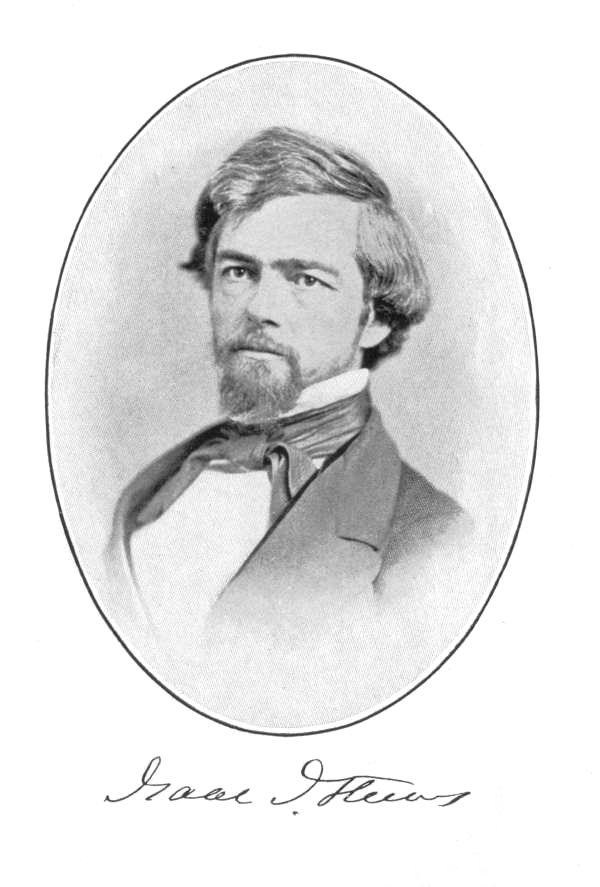
Governor Stevens regarded his Indian treaties and Indian policy, and his
management of the Indians of the Northwest, as among the most important,
beneficial, and successful services he rendered the country. By ten
treaties and many councils and talks, he extinguished the Indian title
to a domain larger than New England; and by the Blackfoot council and
treaty he made peace between those fierce savages and the whites and all
the surrounding tribes, and permanently pacified a region equally
extensive, embracing the greater part of Montana and northern Idaho; and
during the four years, 1853–56, he treated and dealt with over thirty
thousand Indians, divided into very numerous and independent tribes and
bands, and occupying the whole vast region from the Pacific to and
including the plains of the upper Missouri, and now comprising the
States of Washington, part of Oregon, northern Idaho, and the greater
part of Montana. Moreover, by gaining the wavering friendship and
fidelity of doubtful tribes, and even many members of the disaffected,
he frustrated the well-planned efforts of the hostile Indians to bring
about a universal outbreak, and saved the infant settlements from
complete annihilation at the hands of the treacherous savages.
His Indian policy was one of great beneficence to the Indians, jealously
protected their interests, and provided for their improvement and
eventual civilization, while at the same time it opened the country for
settlement by the whites. The wisdom with which it was planned, and the
ability and energy with which it was carried out, during this brief
period, are attested by the remarkable success which attended it, and by
the fact that many of these tribes are to-day living under those very
treaties, and have made substantial progress towards civilized habits.
It is believed that in their extent and magnitude, in their difficulties
and dangers, and in the permanence and beneficence of their results,
these operations are without parallel in the history of the country. Yet
for several years Governor Stevens’s Indian treaties were bitterly
assailed and misrepresented both by hostile Indians and by officers high
in authority; their confirmation was refused by the United States
Senate, and he himself was made the target for virulent abuse. It was
his intention to write the history of these operations, an intention
which the pressure of public duties during the few remaining years of
his life, and his early death, prevented. In his final report on the
Northern route he remarks, in words of manly fortitude and confidence:—
“I trust the time will come when my treaty operations of 1855,—the
most extensive operations ever undertaken and carried out in these
latter days of our history,—I repeat, I trust the time will come
when I shall be able to vindicate them, and show that they were wise
and proper, and that they accomplished a great end. They have been
very much criticised and very much abused; but I have always felt
that history will do those operations justice. I have not been
impatient as to time, but have been willing that my vindication
should come at the end of a term of years. Let short-minded men
denounce and criticise ignorantly and injuriously, and let time show
that the government made no mistake in the man whom it placed in the
great field of duty as its commissioner to make treaties with the
Indian tribes.”
And in another place he adds:—
“I intend at some future day to give a very full account of these
large operations in the Indian service.”
In his journey across the plains, amid all the cares and labors of the
great exploration, Governor Stevens took the utmost pains, by messages,
talks, and councils to and with the Blackfeet and other tribes, to
prepare them for the great council and peace treaty which he saw was
necessary for the opening and settlement of the country, and on arriving
in his own Territory was equally indefatigable in impressing upon the
Indians there the advantages of living at peace with the white man, of
adopting his better mode of livelihood, and of securing the aid and
protection of the Great Father in Washington. Among his first acts was
the appointment of Indian agents, and sending them to urge these views
upon the tribes. It was high time for judicious and prompt action; for
the Indians, especially the powerful and warlike tribes of the upper
Columbia, were becoming alarmed at the way the whites were pouring into
the country, and, under the invitation of Congress given by the Donation
Acts, were taking up their choicest lands without asking their consent.
On his recent visit in Washington he had impressed his views upon the
government, obtained its sanction and authorization for the Blackfoot
council, and the necessary authority and funds for treating with the
Indians of his own superintendency. He now planned treating first with
the tribes on Puget Sound and west of the Cascades for the cession of
their lands, then with the great tribes occupying the country between
the Cascades and Rocky Mountains for their lands, and then, crossing the
Rockies, to proceed to Fort Benton, accompanied by delegations from the
hunting tribes of Washington and Oregon, and there hold the great
pre-arranged peace council with the Blackfeet, Crows, and Assiniboines
of the plains east of the mountains, and the Nez Perces, Flatheads, Pend
Oreilles, etc., of the western slope.
Immediately on his return to Olympia the governor sent out the agents
and messengers to assemble the Sound Indians at designated points for
council and treaty making, and early in January dispatched Mr. Doty with
a small party east of the Cascades to make the preliminary arrangements
for bringing together in council the Indians of that region.
The Indians on the Sound, including those on the Strait of Fuca,
numbered some eight thousand five hundred, and were divided into a great
many tribes and bands. They were canoe Indians, and drew most of their
food from the waters, chiefly salmon and shell-fish, eked out with game,
roots, and berries. Those about the upper Sound had bands of ponies,
with which they roamed the prairies in summer. They lived in large
lodges, several families together, constructed of planks split from the
cedar, with nearly flat roofs, and often thirty or forty feet long and
twenty wide. They showed no little artistic skill in their canoes,
paddles, spears, fish-hooks, basket-work impervious to water, and mats
of rushes. Out of a single cedar-tree, with infinite pains and labor,
they hewed and burned the most graceful and beautiful and finest canoe
ever seen, the very model, in lines and run, of a clipper ship. These
varied in size from the little fishing-craft, holding but two persons,
to a great canoe carrying thirty. They held as slaves the captives taken
in war and their descendants, and, singularly enough, the heads of the
slaves were left in their natural state, while the skulls of the
free-born were flattened by pressure during infancy into the shape of a
shovel. Many of the bands were remnants of former large tribes, for they
had been greatly diminished in numbers by the ravages of smallpox and
venereal disease. They lacked the energy and courage of the Indians of
the upper country, and lived in perpetual dread of the gigantic and
savage northern Indians,—the Hydahs and other bands of Tlinkits of
British Columbia and Alaska,—who would periodically swoop down the
coast in their great war canoes and raid these feebler folk, ruthlessly
slaughtering the men, and enslaving the women and children. They
suffered also, but to a less degree, from incursions of bands of Yakimas
across the mountains, equally on trade and plunder bent, whom they
designated “Klikitats,” or robbers, a term which has been taken as a
tribal name. To these dangers were now added the fear of the
all-powerful and ever-increasing whites. Thus situated and thus
apprehensive, the messages and exhortations of the governor promising
them protection, pointing out the way of bettering their condition, and
of even imitating the envied superior race, broke upon them like a
lighthouse in a dark night upon the storm-tossed mariner, relieved their
fears and anxieties, and gave them hope. They hastened to assemble at
the appointed council grounds, eager to listen to the new white chief,
and to learn what he offered from the Great Father for their benefit.
On December 7, only two days after delivering his message to the
legislature, Governor Stevens organized his treaty-making force by
appointing James Doty secretary, George Gibbs surveyor, H.A.
Goldsborough commissary, and B.F. Shaw interpreter, Colonel M.T. Simmons
having already been appointed agent. The governor assembled these
gentlemen to confer upon the projected treaties. After giving his views,
and showing the necessity of speedily treating with the Indians and
placing them on reservations, he had Mr. Doty read certain treaties with
the Missouri and Omaha tribes, which contained provisions he deemed
worthy of adoption, and invited a general and thorough discussion of the
whole subject. So many points were settled by this frank and free
interchange of views that Mr. Gibbs was directed to draw up a programme,
or outline of a treaty, which on the next meeting on the 10th, after
discussion and some changes, was adopted as the basis of the treaties to
be made with the tribes on the Sound, coast, and lower Columbia.
No better advisers could have been found than the men with whom he thus
took counsel; and one is struck by the clever and considerate way in
which he secured the best fruits of their knowledge and experience, and
enlisted their best efforts in carrying out the work. Simmons and Shaw
were old frontiersmen, among the earliest settlers, and had dealt much
with, and thoroughly understood, the Indians, and were respected and
trusted by them. Simmons has been justly termed the Daniel Boone of
Washington Territory. Shaw was said to be the only man who could make or
translate a speech in Chinook jargon offhand, as fast as a man could
talk in his own vernacular. The Chinook jargon was a mongrel lingo, made
up for trading purposes by the fur-traders from English, French, and
Indian words, and had become the common speech between whites and
Indians, and between Indians of different tribes and tongues. He greatly
distinguished himself afterwards in the Indian war as lieutenant-colonel
of volunteers. Gibbs and Goldsborough were men of education, and had
lived in the country long enough to know the general situation and
conditions, and to learn much about the Indians. Gibbs, indeed, made a
study of the different tribes, and rendered an able report upon them as
part of the Northern Pacific Railroad exploration. Doty, a son of
ex-Governor Doty, of Wisconsin, was a young man of uncommon ability and
energy, who had spent the preceding winter at Fort Benton, and had
studied and made a census of the Blackfeet.
The salient features of the policy outlined were as follows:—
1. To concentrate the Indians upon a few reservations, and encourage
them to cultivate the soil and adopt settled and civilized habits.
2. To pay for their lands not in money, but in annuities of blankets,
clothing, and useful articles during a long term of years.
3. To furnish them with schools, teachers, farmers and farming
implements, blacksmiths, and carpenters, with shops of those trades.
4. To prohibit wars and disputes among them.
5. To abolish slavery.
6. To stop as far as possible the use of liquor.
7. As the change from savage to civilized habits must necessarily be
gradual, they were to retain the right of fishing at their accustomed
fishing-places, and of hunting, gathering berries and roots, and
pasturing stock on unoccupied land as long as it remained vacant.
8. At some future time, when they should have become fitted for it, the
lands of the reservations were to be allotted to them in severalty.
“It was proposed,” reported the governor, “to remove all the Indians on
the east side of the Sound as far as the Snohomish, as also the
S’Klallams, to Hood’s Canal, and generally to admit as few reservations
as possible, with a view of finally concentrating them in one.” It was
found necessary, however, in consequence of the mutual jealousies of so
many independent tribes, to allow more reservations than he first
intended, but some of them were established temporarily, with the right
reserved in the President to remove the Indians to the larger
reservations in the future.
The schooner R.B. Potter, Captain E.S. Fowler, was chartered at $700 per
month, manned and victualed by the owner, to transport the personnel
and treaty goods from point to point on the Sound. Orrington Cushman,
Sidney S. Ford, Jr., and Henry D. Cock, with several assistants, were
employed as quartermasters, to prepare camps and council grounds, make
surveys, etc.
In all his councils Governor Stevens took the greatest pains to make the
Indians understand what was said to them. To insure this he always had
several interpreters, to check each other and prevent mistakes in
translation, and was accustomed to consult the chiefs as to whom they
wanted as interpreters.
“It was my invariable custom,” he states in the introduction to his
final railroad report, page 18, “whenever I assembled a tribe in
council, to procure from them their own rude sketches of the
country, and a map was invariably prepared on a large scale and
shown to them, exhibiting not only the region occupied by them, but
the reservations that were proposed to be secured to them. At the
Blackfoot council, the map there exhibited of the Blackfoot
country—of the hunting-ground common to the Blackfeet and the
Assiniboines, of the hunting-ground common to the Blackfeet and the
tribes of Washington Territory, and of the passes of the Rocky
Mountains by which this hunting-ground was reached—was the
effective agent in guaranteeing to the Indians the exact facts as to
what the treaty did propose, and to give them absolute and entire
confidence in the government.”
He always urged and encouraged the Indians to make known their own
views, wishes, and objections, and gave them time to talk matters over
among themselves and make up their minds. Between the sessions of the
council he would have the agents and interpreters explain the terms and
point out the benefits of the proposed treaty, and would frequently
summon the chiefs to his tent, and personally explain matters to them,
and draw out their ideas. He also frequently invited public officers,
and citizens of standing, to attend the councils, and would make use of
them also to talk with and satisfy the Indians. All the proceedings of
these councils, the deliberations and speeches as well as the treaties,
were every word carefully taken down in writing, and transmitted to the
Indian Bureau in Washington, where they are now on file. No one can read
these records without being impressed with Governor Stevens’s great
benevolence towards the Indians, and the absolute fairness, candor, and
patience, as well as the judgment and tact, he manifested in dealing
with them. One is also likely to be enlightened as to the native
intelligence, ability, and shrewdness of the Indians themselves.
The first council was held on She-nah-nam, or Medicine Creek, now known
as McAlister’s Creek, a mile above its mouth on the right bank, just
below the house of Hartman, on a rising and wooded spot a few acres in
extent, like an island with the creek on the one side (south) and the
tide-marsh on the other. This stream flows along the south side of the
Nisqually bottom, parallel to and half a mile from the river. The
governor and his party, including Mason, Lieutenant W.A. Slaughter, of
the 4th infantry, Doty, Gibbs, Edward Giddings, and the governor’s son,
Hazard, a boy of twelve, went down to the treaty ground by canoes on
December 24, and found a large space cleared of underbrush, the tents
pitched, and everything made ready for the council by Simmons, Shaw,
Cock, Cushman, and others, who had been sent ahead for that purpose.
Seven hundred Indians of the tribes dwelling upon the upper Sound and as
far down as the Puyallup River, including the Nisqually, Puyallup, and
Squaxon tribes, were encamped near by. It rained nearly all day. In the
afternoon the Indians drove a large band of ponies across the creek,
forcing them to swim. Provisions were issued to the chiefs to distribute
among their people.
On the following day the Indians assembled, taking seats on the ground
in front of the council tent in semi-circular rows, and the objects and
points of the proposed treaty were fully explained to them. The governor
would utter a sentence in simple and clear language, and Colonel Shaw
would interpret it in the Chinook jargon, which nearly all the Indians
understood. The governor was extremely careful to make the Indians
comprehend every sentence. Colonel Simmons, Gibbs, Cushman, and the
citizens present, all knew the Chinook, and attentively followed Shaw as
he interpreted, so that no mistake or omission could occur. It was slow
and fatiguing work, this going over the ground sentence by sentence, and
after several hours the Indians were dismissed for the day, told to
think over what they had heard, and to assemble again the next morning.
The governor wished to give them time to fully understand and reflect
upon the proposed treaty, and encouraged them to talk freely to himself
or any of his assistants in regard to it.
On the 26th the Indians assembled about nine o’clock to the number of
650, and Governor Stevens addressed them as follows:—
“This is a great day for you and for us, a day of peace and
friendship between you and the whites for all time to come. You are
about to be paid for your lands, and the Great Father has sent me
to-day to treat with you concerning the payment. The Great Father
lives far off. He has many children. Some of those children came
here when he knew but little of them, or of the Indians, and he sent
me to inquire about these things. We went through this country this
last year, learned your numbers and saw your wants. We felt much for
you, and went to the Great Father to tell him what we had seen. The
Great Father felt for his children. He pitied them, and he has sent
me here to-day to express these feelings, and to make a treaty for
your benefit. The Great Father has many white children who come
here, some to build mills, some to make farms, and some to fish;
and the Great Father wishes you to learn to farm, and your children
to go to a good school; and he now wants me to make a bargain with
you, in which you will sell your lands, and in return be provided
with all these things. You will have certain lands set apart for
your homes, and receive yearly payments of blankets, axes, etc. All
this is written down in this paper, which will be read to you. If it
is good you will sign it, and I will then send it to the Great
Father. I think he will be pleased with it and say it is good, but
if not, if he wishes it different, he will say so and send it back;
and then, if you agree to it, it is a fixed bargain, and payments
will be made.”
The treaty was then read section by section and explained to the
Indians, and every opportunity given them to discuss it.
Governor Stevens then said:—
“The paper has been read to you. Is it good? If it is good, we will
sign it; but if you dislike it in any point, say so now. After
signing we have some goods to give you, and next summer will give
you some more; and after that you must wait until the paper comes
back from the Great Father. The goods now given are not in payment
for your lands; they are merely a friendly present.”
The Indians had some discussion, and Governor Stevens then put the
question: “Are you ready? If so, I will sign it.” There were no
objections, and the treaty was then signed by Governor I.I. Stevens, and
the chiefs, delegates, and headmen on the part of the Indians, and duly
witnessed by the secretary, special agent, and seventeen citizens
present.
The presents and provisions were then given to the chiefs, who
distributed them among their people. Towards evening Mr. Swan arrived
with twenty-nine Indians of the Puyallup tribe, and reported twenty more
on the way. They had started three days before, but had been detained by
bad weather. The governor decided to send them presents from Olympia.
Thus it will be seen that the governor first explained the objects and
terms of the treaty generally, and the next day had the text of it read
to them and also explained. The idea of selling their lands and being
paid for them was not new to the Indians, for the settlers were in the
habit of assuring them, when they objected and complained at the
appropriation and fencing up of their choicest camping, root, and berry
grounds, that the Great Father would soon pay them well for their
country.
The scope and policy of the treaty will best appear by the following
abstract of its thirteen articles:—
1. The Indians cede their land to the United States, comprising the
present counties of Thurston, Pierce, and parts of Mason and King.
2. Sets off and describes the reservations, viz., Klah-she-min Island,
known as Squaxon Island, situated opposite the mouths of Hammersley’s
and Totten’s inlets, and separated from Hartstene Island by Pearl
Passage, containing about two sections of land, or 1280 acres, a square
tract of two sections near and south of the mouth of McAlister’s Creek,
and another equal tract on the south side of Commencement Bay, now
covered by the city of Tacoma. Provision is made for the Indians to
remove to these reservations, and for roads through them and from them
to the nearest public highways.
3. Gives the Indians the right of fishing at their accustomed grounds,
except the right of taking shell-fish from beds staked out or cultivated
by citizens, and the rights of hunting, gathering berries and roots, and
pasturing herds on unclaimed land.
4. $32,500 to be paid in annuities of goods, clothing, and useful
articles during the next twenty years.
5. And $3250 to be expended in aiding the Indians to settle on their
reservations.
6. Empowers the President to remove the Indians to other reservations,
when the interests of the Territory require it, by remunerating them for
their improvements.
7. Prohibits the use of annuities to pay the debts of individuals.
8. Prohibits war or depredations, and the Indians agree to submit all
grievances to the government for settlement.
9. Excludes ardent spirits from the reservations on penalty of
withholding annuities.
10. Provides at a central or general agency a free school, a blacksmith
shop, and a carpenter shop, and to furnish a blacksmith, a carpenter, a
farmer, and teachers, all to give instructions for twenty years.
11. Frees all slaves and abolishes slavery.
12. Prohibits the Indians from trading outside the dominions of the
United States, and forbids foreign Indians to reside on the reservations
without the permission of the superintendent or agent.
13. The treaty to go into effect as soon as ratified by the President
and Senate.
The twelfth article was aimed against the liquor traffic, and also to
counteract the undue influence of the Hudson Bay Company. It carried out
the idea expressed in the governor’s instructions to McClellan and
Saxton at the outset of the exploration, already quoted. “The Indians
must look to us for protection and counsel.... I am determined, in my
intercourse with the Indians, to break up the ascendency of the Hudson
Bay Company, and permit no authority or sanction to come between the
Indians and the officers of this government.”
Sixty-two Indians signed this treaty, “chiefs, headmen, and delegates of
the Nisqually, Puyallup, Steilacoom, Squawksin, S’Homamish, Steh-chass,
T’Peek-sin, Squiaitl, and Sa-ha-wamish tribes and bands of Indians,
occupying the lands lying around the head of Puget Sound and the
adjacent inlets, who, for the purpose of this treaty, are to be regarded
as one nation.” The Indians all made their marks to their names as
written out in full by the secretary. They were: Qui-ee-metl,
Sno-ho-dum-set, Lesh-high, Slip-o-elm, Kwi-ats, Sta-hi, Di-a-keh,
Hi-ten, Squa-ta-hun, Kahk-tse-min, So-nan-o-youtl, Kl-tehp, Sahl-ko-min,
T’Bet-ste-heh-bit, Tcha-hoos-tan, Ke-cha-hat, Spee-peh, Swe-yah-tum,
Chah-achsh, Pich-kehd, S’Klah-o-sum, Sah-le-tatl, See-lup, E-la-kah-ka,
Slug-yeh, Hi-nuk, Ma-mo-nish, Cheels, Knut-ca-nu, Bats-ta-ko-be,
Win-ne-ya, Klo-out, Se-uch-ka-nam, Ske-mah-han, Wuts-un-a-pum,
Quuts-a-tadm, Quut-a-heh-mtsn, Yah-leh-chn, To-tahl-kut, Yul-lout,
See-ahts-oot-soot, Ye-tah-ko, We-po-it-ee, Kah-sld, La’h-hom-kan,
Pah-how-at-ish, Swe-yehm, Sah-hwill, Se-kwaht, Kah-hum-kit, Yah-kwo-bah,
Wut-sah-le-wun, Sah-ba-hat, Tel-e-kish, Swe-keh-nam, Sit-oo-ah,
Ko-quel-a-cut, Jack, Keh-kise-be-lo, Go-yeh-hn, Sah-putsh, William.
Lesh-high, the third signer, was the principal chief and instigator of
the Indian war that broke out the following year, and, after the
outbreak was suppressed, was tried and executed for the murder of
settlers, after an excited controversy and strenuous efforts to save him
on the part of some of the regular officers. Born of a Yakima mother, he
was a chief of unusual intelligence and energy, had much to do with the
Hudson Bay Company’s people at Fort Nisqually, by whom he was much
trusted as a guide and hunter, and was supposed to be well affected
towards the whites. The first signer, Qui-ee-muth, was Lesh-high’s
brother, and met with a more tragic fate, being slain by a revengeful
settler after he was captured. Sta-hi, the fifth signer, was killed
during the Indian war.
The witnesses who signed the treaty, nineteen in number, including
well-known public men and pioneers, were the following: M.T. Simmons,
Indian agent; James Doty, secretary; C.H. Mason, secretary of the
Territory; W.A. Slaughter, 1st lieutenant, 4th infantry, U.S. A.; James
McAlister, E. Giddings, Jr., George Shazer, Henry D. Cock, Orrington
Cushman, S.S. Ford, Jr., John W. McAlister, Peter Anderson, Samuel
Klady, W.H. Pullen, F.O. Hough, E.R. Tyerall, George Gibbs, Benjamin F.
Shaw, interpreter, Hazard Stevens.
The governor became satisfied at a later date that the reservations set
off for the Nisquallies and Puyallups were inadequate for their future
needs, being of inferior soil and heavily timbered, and in 1856 caused
them to be exchanged for two larger tracts of fine, fertile bottom
land,—one on the Nisqually, a few miles above its mouth, and the other
at the mouth of the Puyallup River, directly opposite the city of
Tacoma, which the Indians still occupy.
In the evening, after the council broke up, the governor had another
long conference with his advisory board, and settled the points and
programme for other treaties. The next morning, directing Gibbs to
survey the lines of the two reservations on Nisqually and Commencement
bays, and dispatching Simmons and Shaw with the rest of the party in the
schooner to the lower Sound to assemble the Indians for the remaining
treaties, he returned to Olympia with Mason and Doty. The treaty was
immediately forwarded to Washington, and was ratified by the Senate,
March 3, 1855, but little over two months after the council.
The next council was held at Mukilteo, or Point Elliott, where, between
January 12 and 21, the Indians of the east side of the Sound assembled
to the number of 2300. On the latter date Governor Stevens arrived on
the Major Tompkins, accompanied by Secretary Mason, and by his friend,
Dr. C.M. Hitchcock, of San Francisco, who was visiting the country.
After a long conference with his assistants in regard to the most
suitable points for reservations, and the views and feelings of the
Indians, he appointed Gibbs secretary, in place of Doty, who had
departed on his mission east of the mountains, and directed him to
prepare the draft of a treaty embodying the points decided upon, and in
terms similar to the one recently concluded.
The next morning the Indians all assembled; the four head
chiefs—Seattle, chief of the Duwhamish and other bands on White River
and the Sound within twenty miles of Seattle; Pat-ka-nim, chief of the
Snohomish; Goliah, chief of the Skagits; and Chow-its-hoot, chief of the
Bellingham Bay and island Indians—took seats in front on the ground;
the sub-chiefs occupied a second row, and the various tribes took places
behind them in separated groups. The governor then addressed them as
follows, Colonel Shaw interpreting:—
“My children, you are not my children because you are the fruit of
my loins, but because you are children for whom I have the same
feeling as if you were the fruit of my loins. You are my children
for whom I will strenuously labor all the days of my life until I
shall be taken hence. What will a man do for his own children? He
will see that they are well cared for; that they have clothes to
protect them against the cold and rain; that they have food to guard
them against hunger; and as for thirst, you have your own glorious
streams in which to quench it. I want you as my children to be fed
and clothed, and made comfortable and happy. I find that many of you
are Christians, and I saw among you yesterday the sign of the cross,
which I think the most holy of all signs. I address you therefore
mainly as Christians, who know that this life is a preparation for
the life to come.
“You understand well my purpose, and you want now to know the
special things we propose to do for you. We want to place you in
homes where you can cultivate the soil, raising potatoes and other
articles of food, and where you may be able to pass in canoes over
the waters of the Sound and catch fish, and back to the mountains to
get roots and berries. The Great Father desires this, and why am I
able to say this? Here are two thousand men, women, and children,
who have always treated white men well. Did I not come through your
country one year since? Were not many of you now present witnesses
of the fact? [All said Governor Stevens came.] Did I then make
promises to you? [All said he did not.] I am glad to hear this,
because I came through your country, not to make promises, but to
know what you were, to know what you wanted, to know your
grievances, and to report to the Great Father about you. I have been
to the Great Father and told him your condition. Here on this Sound
you make journeys of three and four days, but I made a journey of
fifty days on your behalf. I told the Great Father I had traveled
six moons in reaching this country, and had never found an Indian
who would not give me food, raiment, and animals to forward me and
mine to the great country of the West. I told him that I was among
ten thousand Indians, and they took me to their lodges and offered
me all they had, and here I will pause and ask you again if you do
not know that I have been absent several months on this business?
[All shout, ‘Yes.’] I went away, but I left a good and strong man in
my place. I call upon Governor Mason to speak to you.”
Mr. Mason then addressed them, and then the governor called upon Colonel
Simmons, who made them a speech in Chinook, at the conclusion of which
the Indians cheered.
The governor then resumed:—
“The Great Father thinks you ought to have homes, and he wants you
to have a school where your children can learn to read, and can be
made farmers and be taught trades. He is willing you should catch
fish in the waters, and get roots and berries back in the mountains.
He wishes you all to be virtuous and industrious, and to become a
happy and prosperous community. Is this good, and do you want this?
If not, we will talk further. [All answer, ‘We do.’]
“My children, I have simply told you the heart of the Great Father.
But the lands are yours, and we mean to pay you for them. We thank
you that you have been so kind to all the white children of the
Great Father who have come here from the East. Those white children
have always told you you would be paid for your lands, and we are
now here to buy them.
“The white children of the Great Father, but no more his children
than you are, have come here, some to build mills, some to till the
land, and others to build and sail ships. My children, I believe
that I have got your hearts. You have my heart. We will put our
hearts down on paper, and then we will sign our names. I will send
that paper to the Great Father, and if he says it is good, it will
stand forever. I will now have the paper read to you, and all I ask
of you two thousand Indians is that you will say just what you
think, and, if you find it good, that your chiefs and headmen will
sign the same.”
Before the treaty was read, the Indians sung a mass, after the Roman
Catholic form, and recited a prayer.
Governor Stevens: “Does any one object to what I have said? Does my
venerable friend Seattle object? I want Seattle to give his heart to
me and to his people.”
Seattle: “I look upon you as my father. All the Indians have the
same good feeling toward you, and will send it on the paper to the
Great Father. All of them—men, old men, women, and
children—rejoice that he has sent you to take care of them. My mind
is like yours; I don’t want to say more. My heart is very good
towards Dr. Maynard [a physician who was present]; I want always to
get medicine from him.”
Governor Stevens: “My friend Seattle has put me in mind of one thing
which I had forgotten. You shall have a doctor to cure your bodies.
Now, my friends, I want you, if Seattle has spoken well, to say so
by three cheers. [Three cheers were given.] Now we call upon
Pat-ka-nim to speak his mind.”
Pat-ka-nim: “To-day I understood your heart as soon as you spoke. I
understood your talk plainly. God made my heart and those of my
people good and strong. It is good that we should give you our real
feelings today. We want everything as you have said, the doctor and
all. Such is the feeling of all the Indians. Our hearts are with the
whites. God makes them good towards the Americans.” [Three cheers
were given for Pat-ka-nim.]
Chow-its-hoot: “I do not want to say much. My heart is good. God has
made it good towards you. I work on the ground, raise potatoes, and
build houses. I have some houses at home. But I will stop building
if you wish, and will move to Cha-chu-sa. Now I have given you my
opinion, and that of my friends. Their feelings are all good, and
they will do as you say hereafter. My mind is the same as Seattle’s.
I love him, and send my friends to him if they are sick. I go to Dr.
Maynard at Seattle if I am sick.” [Cheers for Chow-its-hoot.]
Goliah: “My mind is the same as the governor’s. God has made it so.
I have no wish to say much. I am happy at heart. I am happy to hear
the governor talk of God. My heart is good and that of all my
friends. I give it to the governor. I shall be glad to have a doctor
for the Indians. We are all glad to hear you, and to be taken care
of by you. I do not want to say more.” [Cheers were given for
Goliah.]
The treaty was then read and interpreted to them, and the governor asked
them if they were satisfied with it. If they were, he would sign it
first, and then they should sign it. If not, he wished them to state in
what they desired it to be altered. All having signified their
approbation, it was signed first by Governor Stevens, and afterwards by
the chiefs and headmen.
The hour being late when the signing was finished, the distribution of
the presents was deferred to the next day.
Tuesday, January 23. The Indians having reassembled, Governor Stevens
informed them that he was about to distribute some presents. They were
not intended as payment for their lands, but merely as a friendly token
of regard. He gave them but few things at this time, but the next summer
he should again give them a larger present, when the goods intended for
them arrived.
Seattle then brought a white flag, and presented it, saying:
“Now, by this we make friends, and put away all bad feelings, if we
ever had any. We are the friends of the Americans. All the Indians
are of the same mind. We look upon you as our father. We will never
change our minds, but, since you have been to see us, we will always
be the same. Now! now! do you send this paper of our hearts to the
Great Chief. That is all I have to say.”
The presents were then given to the chiefs to distribute among their
people, the camp was struck, and the party embarked on board the
steamer, which had been chartered for the purpose of expediting the
preparations for the next council, that with the S’Klallams and
Sko-ko-mish, but, a heavy blow coming on, she lay at anchor till
morning. An Indian express arrived with news that the Indians were
collected at Fort Gamble, awaiting the arrival of the governor.
The tribes, as enumerated in the treaty, furnish a long list of
unpronounceable Indian names, as follows: Dwamish, Suquamish,
Sk-tahl-mish, Sa-mah-mish, Smalh-ka-mish, Skope-ah-mish, Sno-qual-moo,
Skai-wha-mish, N’Quentl-ma-mish, Sk-tah-le-jum, Sto-luck-wha-mish,
Sno-ho-mish, Skagit, Kik-i-all-us, Swin-a-mish, Squin-a-mish,
Sah-ku-me-hu, Noo-wha-ha, Nook-wa-chah-mish, Me-see-qua-guilch,
Cho-bah-ah-bish, and others.
The fifteen articles of this treaty contain the same general provisions
as that of She-nah-nam Creek. The territory ceded by Article 1 extends
from the summit of the Cascades to the middle of the Sound, and from the
49th parallel as far south as the Puyallup River, very nearly, and
comprises the present counties of King, part of Kitsap, Snohomish,
Skagit, Whatcom, Island, and San Juan.
The reservations, Articles 2 and 3, included 1280 acres at Port Madison,
1280 acres on the east side of Fidalgo Island, and the island called
Chah-chu-sa in the Lummi River. An entire township on the northeast side
of Port Gardner, embracing Tulalip Bay, was made the principal
reservation, to which the Indians might be removed from the smaller
ones; $150,000 in annuities in goods, etc., for twenty years, and
$15,000 for improvements on the reservation were provided. The rights of
fishing, hunting, gathering berries and roots, and pasturage on vacant
land were secured to the Indians. Slavery was abolished, liquor
prohibited on the reservations, wars and depredations forbidden, and
trading in foreign dominions prohibited. A free school, teachers,
doctor, blacksmith and carpenter with shops, and a farmer were provided
for, and provision made for eventually allotting the reservations to
them in severalty.
The first chief to sign the treaty was Seattle, after whom was named the
metropolis of the Sound; the next was Pat-ka-nim, then Chow-its-hoot,
then Goliah, and then follows the long list of guttural and sibillant
native names, unspeakable by white lips, some of which were accompanied
by an alias, as the Smoke, the Priest, General Washington, General
Pierce, Davy Crockett, etc.
The treaty was witnessed by M.T. Simmons, C.H. Mason, Charles M.
Hitchcock, H.A. Goldsborough, George Gibbs, John H. Scranton, Henry D.
Cock, S.S. Ford, Jr., Orrington Cushman, Ellis Barnes, P. Bailey, S.M.
Collins, Lafayette Balch, E.S. Fowler, J.H. Hall, Robert Davis, and
Benjamin F. Shaw,—seventeen in number.
The ratification of this and all Governor Stevens’s subsequent Indian
treaties was delayed some four years in consequence of the Indian war
which broke out in the fall of 1855, and the misrepresentations made
concerning them, and the charges that they were the cause of the
war,—misrepresentations and charges originally started by the hostile
Indians, and taken up by prejudiced army officers and political and
personal enemies; and it was not until he entered Congress, and
personally vindicated his treaties before the government and Senate,
that they were ratified, on March 8, 1859.
The next council was held at Point-no-Point, on the west side of the
Sound, opposite the southern end of Whitby Island. The weather was very
stormy on the 24th and 25th, but twelve hundred Indians assembled here,
comprising the S’Klallams or Clallams, who occupied the shores from half
way down the Strait of Fuca to the council ground; the Chim-a-kums, of
Port Townsend Bay and the lower end of Hood’s Canal; and the Skokomish
or Too-an-hooch, from Hood’s Canal and the country about its southern
extremity. The Major Tompkins reached Point-no-Point on the 24th, and,
leaving the schooner at anchor, and the men on shore to form camp, ran
down to Port Townsend to bring up additional provisions, and returned in
the afternoon. On the 25th, notwithstanding the storm, the Indians
gathered at the council ground, and, having seated themselves in a
circular row under their chiefs, Governor Stevens addressed them as
follows:—
“My children, you call me your father. I, too, have a father, who is
your Great Father. That Great Father has sent me here to-day to pay
you for your lands, to provide for your children, to see that you
are fed, and that you are cared for. Your Great Father wishes you to
be happy, to be friends to each other. The Great Father wants you
and the whites to be friends; he wants you to have a house of your
own, to have a school where your children can learn. He wants you to
learn to farm, to learn to use tools, and also to have a doctor.
Now, all these things shall be written down in a paper; that paper
shall be read to you. If the paper is good, you will sign it and I
will sign it. I will then send the paper to the Great Father. If
the Great Father finds that paper good, he will send me word, and I
will let you know. The Great Father lives a long way off, and some
time will be required to hear from him. I want you to wait patiently
till you hear from him. In the mean time the Great Father has sent
to you some presents simply as a free gift. Some of these presents I
will give you to-day, but I shall give you more in the course of the
summer. You will also have your agent, Mr. Simmons, to take care of
you. This you will have all the time; and, when the paper comes from
the Great Father, then you will have your own houses and homes and
schools. Now, what have you to say? If good, give your assent; if
not, say so. Now, sit quiet a moment, and the paper will be read.”
After the treaty had been read and interpreted, Governor Stevens again
asked them if they had anything to say.
Che-lan-teh-tat, an old Skokomish, then rose and said:—
“I wish to speak my mind as to selling the land. Great Chief, what
shall we eat if we do so? Our only food is berries, deer, and
salmon. Where, then, shall we find these? I don’t want to sign away
all my land. Take half of it, and let us keep the rest. I am afraid
that I shall become destitute and perish for want of food. I don’t
like the place you have chosen for us to live on. I am not ready to
sign that paper.”
S’Haie-at-seha-uk, a To-an-hooch, next spoke:—
“I do not want to leave the mouth of the river. I do not want to
leave my old home and my burying-ground. I am afraid I shall die if
I do.”
Dah-whil-luk, the Skokomish head chief, an old man, rose and said:—
“I do not want to sell my land, because it is valuable. The whites
pay a great deal for a small piece, and they get money by selling
the sticks [timber]. Formerly the Indians slept, but the whites came
among them and woke them up, and we now know that the lands are
worth much.”
Hool-hole-tan or Jim said:—
“I want to speak. I do not like the offers you make in the treaty to
us. You say you will give us land, but why should you give us the
mouth of the river? I don’t like to go on a reservation with the
S’Klallams; and, in case of trouble, there are more of them than of
us, and they will charge us with it. Before the whites came among
us, we had no idea who made the land; but some time ago the priests
told us that the Great Chief above made it, and also made the
Indians. Since then the Americans have told us that the Great Father
always bought the land, and that it was not right to take it for
nothing. They waked the Indians up by this, and they now know their
land was worth much. I don’t want to sign away my right to the land.
If it was myself alone I signed for, I would do it; but we have
women and children. Let us keep half of it, and take the rest. Why
should we sell all? We may become destitute. Why not let us live
together with you? I want you to hear what I have to say. All the
Indians have been afraid to talk, but I wish to speak and be
listened to.”
Chits-a-mah-han or the Duke of York, the head chief of the Clallams:—
“My heart is good. I am happy since I have heard the paper read, and
since I have understood Governor Stevens, particularly since I have
been told I could look for food where I pleased, and not in one
place only. Formerly the Indians were bad towards each other, but
Governor Stevens has made them agree to be friends. Before the
whites came we were always poor; since then we have earned money,
and got blankets and clothing. I hope the governor will tell the
whites not to abuse the Indians, as many are in the habit of doing,
ordering them to go away, and knocking them down.”
Other chiefs of the Clallams and of the Chem-a-cums followed in the same
strain as the Duke of York, approving the treaty. After further
explaining its provisions the governor adjourned the council to the
morrow at the request of the Skokomish chief, in order that they might
talk it over and understand it thoroughly.
It will be observed that this treaty encountered considerable opposition
on the part of the Skokomish, who were, however, the most benefited by
it, as the reservation was located in their country. They were largely
influenced by the example of the other tribes, and after much discussion
among themselves, and talks between sessions with the governor and his
assistants, concluded to accept it.
The next morning was a fine, pleasant one, and the Indians came to the
council bearing white flags. The governor addressed them, pointing out
that the treaty gave them all those things that a father would give his
children, as homes, schools, mechanics, and a doctor; the right to fish,
hunt, and gather roots and berries. Besides, it prohibited fire-water,
and does not a father prevent his children from drinking fire-water? The
Great Father was good to his children, and did not wish to steal their
lands. It was for them to say what they thought right. If they had
anything to say, say it now.
The Duke of York then presented a white flag, saying:
“My heart is white, so are those of my people, and we will never
stain it with blood.”
Dah-kwil-luk, the Skokomish chief, said:—
“My heart, too, has become white, and I give it to the chief. I put
away all bad feelings. I will be as a good man, not stealing or
shedding blood. We have thrown away the feelings of yesterday and
are now satisfied.”
He also presented a flag to the governor.
Kul-kah-han, the Chem-a-cum chief, then presented his flag, saying:—
“We can say nothing but what this flag tells. We give our hearts to
you with it in return for what you do for us. We were once wretched,
but since you came you have made us right. Formerly other Indians
did wrong us, but since the whites came we are free and have not
been killed.”
Then all signed the treaty, and at a signal a salute was fired from the
steamer in honor of the event.
Some hostile feelings having previously existed between the tribes,
Governor Stevens now declared that they must drop them forever, and that
their hearts towards each other should be good as well as towards the
whites. Accordingly the three head chiefs, in behalf of their people,
then shook hands. Then the presents were distributed to them. In the
afternoon the party reëmbarked, Mr. Mason returning to Olympia on the
steamer, and Governor Stevens with the remainder proceeding to Port
Townsend in the schooner, on his way to Cape Flattery, the next point of
meeting.
The tribes mentioned in the treaty as parties thereto are the Skokomish,
To-an-hooch, Chem-a-cum, and S’Klallam, and the sub-bands of the last,
viz., Kah-tie, Squah-quaihtl, Tch-queen, Ste-teht-lum, Tsohkw, Yennis,
Elh-wa, Pishtst, Hun-nint, Klat-la-wash, and O-ke-ho, occupying lands on
the Strait of Fuca and Hood’s Canal.
A reservation was set off at the mouth of the Skokomish River, of 3840
acres. $60,000 in the usual annuities, and $6000 for the improvement of
the reservation, were provided, and the other provisions were the same
as in the Tulalip and She-nah-nam Creek treaties. This treaty was
witnessed by the same gentlemen who witnessed the preceding.
From Port Townsend the schooner sped rapidly down the Strait of Fuca,
running one hundred and twenty miles in two days,—no holiday voyage, in
a small vessel in midwinter, along that exposed and shelterless
coast,—and reached Neah Bay on the evening of the 28th. At this point,
just inside Cape Flattery, the Makah Indians had their principal
village. Messengers were immediately dispatched to call in the Indians
of the other Makah villages, and of tribes farther south on the coast.
The tents, goods, and men were landed on the 29th, and camp established.
The following day the governor, accompanied by Mr. Gibbs, crossed the
Cape Flattery peninsula to the Pacific coast, and examined the country
for the purpose of selecting a suitable reservation. In the evening he
called a meeting of the Makah chiefs on board the schooner, the other
villages having come in during the day, and explained the principal
features of the proposed treaty. The Great Father had sent him here to
watch over the Indians. He had talked with the other tribes on the
Sound, and they had promised to be good friends with their neighbors,
and he had now come to talk with the Makahs. When he had done here, he
was going to the Indians down the coast, and would make them friends to
the Makahs. He had treated with the other Sound Indians for their lands,
setting aside reserves for them, giving them a school, farmer,
physician, etc., etc. When he concluded, Kal-chote, a Makah chief,
spoke: “Before the big chiefs Klehsitt, the White Chief, Yall-a-coon or
Flattery Jack, and Heh-iks died, he was not the head chief himself, he
was only the small chief, but though there were many Indians then, he
was not the least of them. He knew the country all around, and therefore
he had a right to speak. He thought he ought to have the right to fish,
and take whales, and get food where he liked. He was afraid that if he
could not take halibut where he wanted, he would become poor.”
Keh-tchook, of the stone house: “What Kal-chote had said was his wish.
He did not want to leave the salt water.”
Governor Stevens informed them that, so far from wishing to stop their
fisheries, he wished to send them oil-kettles and fishing apparatus.
Klah-pr-at-loo: “He was willing to sell his land. All he wanted was the
right of fishing.”
Tse-kan-wootl: “He wanted the sea. That was his country. If whales were
killed and floated ashore, he wanted, for his people, the exclusive
right of taking them, and if their slaves ran away, he wanted to get
them back.”
Governor Stevens replied that he wanted them to fish, but the whites
should fish also. Whoever killed the whales was to have them if they
came ashore. Many white men were coming into the country, and he did not
want the Indians to be crowded out.
Kal-chote: “I want always to live on my old ground, and to die on
it. I only want a small piece for a house, and will live as a friend
to the whites, and they should fish together.”
Ke-bach-sat: “My heart is not bad, but I do not wish to leave all my
land. I am willing you should have half, but I want the other half
myself.”
It-an-da-ha: “My father! my father! I now give you my heart. When
any ships come and the whites injure me, I will apply to my father,
and tell him of my trouble, and look to him for help, and if any
Indians wish to kill me, I shall still call on my father. I do not
wish to leave the salt water. I want to fish in common with the
whites. I don’t want to sell all my land. I want a part in common
with the whites to plant potatoes on. I want the place where my
house is.”
Governor Stevens asked them whether, if the right of drying fish
wherever they pleased was left them, they could not agree to live at one
place for a winter residence and potato ground, explaining the idea of
subdivision of lands, and he desired them to think the matter over
during the night. They were asked to consult among themselves upon the
choice of a head chief. As they declined doing this, on the ground that
they were all of equal rank, the governor selected Tse-kan-wootl, the
Osett chief, as the head, a choice in which they all acquiesced with
satisfaction. Temporary papers in lieu of commissions were then issued
to a number of the sub-chiefs.
The Indians assembled in council on the morning of January 31. The
number of the tribe was found to be six hundred. Governor Stevens
explained the provisions of the treaty:—
“The Great Father sent me to see you, and give you his mind. The
whites are crowding in upon you. The Great Father wishes to give you
your homes, to buy your land, and give a fair price for it, leaving
you land enough to live on and raise potatoes. He knows what whalers
you are, how far you go to sea to take whales. He will send you
barrels in which to put your oil, kettles to try it out, lines and
implements to fish with. The Great Father wants your children to go
to school, to learn trades.”
The treaty was then read and interpreted and explained, clause by
clause.
Governor Stevens then asked them if they were satisfied. If they were,
to say so. If not, to answer freely and state their objections.
Tse-kan-wootl brought up a white flag and presented it, saying: “Look at
this flag. See if there are any spots on it. There are none, and there
are none on our hearts.”
Kal-chote then presented another flag and said, “What you have said is
good, and what you have written is good.”
The Indians gave three cheers or shouts as each concluded. The governor
then signed the treaty, and was followed by the Indian chiefs and
principal men, forty-one in number, of the Neah, Waatch, Tsoo-yess, and
Osett villages, or bands of the Makahs. Among the names are
Klah-pe-an-hie or Andrew Jackson, Tchoo-quut-lah or Yes Sir, and Swell
or Jeff Davis.
The witnesses were M.T. Simmons, Indian agent; George Gibbs, secretary;
B.F. Shaw, interpreter; C.M. Hitchcock, M.D.; E.S. Fowler, Orrington
Cushman, and Robert Davis.
The provisions of this treaty are the same as in the others. The
annuities in goods, etc., amounted to $30,000, and $3000 were provided
to improve the reservation, which embraced Neah Bay and Cape Flattery
and their principal village. It was intended only for a place of
residence, with enough cultivable land for potatoes and vegetables, and,
what was more important, to prevent their being crowded off by fishing
establishments. The locality is unfit for agriculture, being rocky and
sterile, with an annual rainfall of 122 inches. And the reserve was all
they needed, for the Makahs are bold and skillful fishermen and sailors,
accustomed to venture thirty to fifty miles out to sea in their large
canoes, and take the whale and halibut, while inshore they hunt the seal
and sea-otter, and catch the salmon. They are a more sturdy, brave, and
enterprising race than the natives of the Sound, more resembling the
northern Indians. In their remote, rocky stronghold, protected by the
strong arm of the government extended over them by this treaty, but
depending upon the sea and their own efforts for a livelihood, they have
prospered greatly, putting up vast quantities of fish, furs, and oil for
market; and there are few white communities that have so much wealth per
capita, or wealth so evenly distributed, as these industrious and manly
Indians.
Immediately after the signing the presents were distributed, the camp
was broken up, and in the evening the party reëmbarked. The little
vessel at once hoisted sail for Port Townsend, where, after a three
days’ trip, being delayed by head winds, she arrived February 3. The
next day the governor, with some of the party, took the Major Tompkins
for Victoria, in order to confer with Governor Douglass upon the means
of preventing the piratical incursions of the northern Indians upon the
Sound. On the 5th he returned to Port Townsend, and reached Olympia on
the night of the 6th.
This brief campaign was Napoleonic, in rapidity and success. In six
weeks Governor Stevens met and treated with five thousand Indians, of
numerous independent and jealous tribes and bands, and in four separate
councils carefully and indefatigably made clear to them the new policy,
convinced them of its benefits to them, and concluded with them four
separate treaties, by which the Indian title to the whole Puget Sound
basin was extinguished forever, and the great source and danger of
collision between the races was removed. For the eight thousand five
hundred Indians hitherto ignored by Congress and treated by the settlers
as mere vagrants, to be shoved aside at the whim or self-interest of any
white man, he established nine reservations, containing over 60,000
acres, for their permanent homes and exclusive possessions; provided
annuities of clothing, goods, and useful articles for twenty years,
aggregating $300,000; abolished slavery and war among them; excluded
liquor from the reservations; extended over them the protection of the
government, with agents, schools, teachers, farmers, and mechanics to
instruct them; and, in a word, set their feet fairly on “the white man’s
road.” To accomplish this astonishing work in such brief time, he
traveled eight hundred miles upon the Sound and Strait in the most
inclement season of the year, half the distance, and that the most
dangerous, in a small sailing-craft. He disregarded the storms and rains
of that inclement season, and spared neither himself nor his assistants.
It is not easy to say who had the hardest task, the agents and
messengers who traveled all over the Sound in canoes in the tempestuous
rainy season to call the scattered bands together, or the unfortunate
secretary, who had to catch and set down on paper the jaw-breaking
native names.
The success and rapidity with which he carried through these treaties
were due to the careful and thorough manner in which he planned them,
and prepared the minds of the Indians by his tour among and talks to
them a year previous, and by the messages and agents he had sent among
them. Besides, the Indians realized their own feebleness and uncertain
future, divided into so many bands, exposed to the depredations of the
northern Indians, and dreading the advent and encroachments of the
whites. Their minds consequently were well attuned for treating; and
when they understood the wise and beneficent policy and liberal terms
offered by the governor, they gladly accepted them, and put their trust
in him as their friend and protector, a trust never withdrawn and never
forsaken.
The Indian war which occurred soon after, and the delay in the
ratification of the treaties, seriously militated against carrying out
the beneficent policy so well inaugurated, and later the occasional
appointment of inefficient and dishonest agents has proved even more
detrimental; but notwithstanding all these drawbacks the Indians have
made substantial advances in civilization, and it is interesting to
compare their present condition, as given in the last reports of the
Commissioner of Indian Affairs, and from local sources.
Their numbers have diminished only about one half. No one seeing their
debased condition in 1850 to 1860 (except the Makahs) would have deemed
it possible for them to hold their own so well.
| Makahs | 750 |
| Tulalip Agency, lower Sound Indians | 1700 |
| Puyallup Agency, upper Sound Indians | 1850 |
| | 4300 |
All now wear civilized dress, and live in houses. Many can read and
write, and many of their children attend the reservation schools.
“Among the Makahs, many of the younger Indians are turning their
attention to farming and raising stock, and many of them have fine
gardens. They still catch a great many fish, sending them to market
in Seattle by steamer, and have caught and shipped as high as 10,000
pounds in one day. There are few places with so large a population
where so little crime is committed.”
All the reservations on the Sound have now been allotted, and the
Indians are living on their respective allotments. A considerable number
have taken up farms under the homestead laws, or purchased lands from
the whites, and are farming successfully. Such Indians are frequently
seen driving into the towns with good wagons and teams, as well dressed
as the average white rancher, and accompanied ofttimes by their wives
and children.
“Practically all these Indians dress as civilized men and women, and
live in houses, some of which are good, comfortable, and roomy,
fully equal to the average farm dwellings in prosperous communities
of whites, and from these they grade down to the most squalid shacks
imaginable. Under the influence of the teachers, and the example of
the more advanced Indians and the better class of white neighbors,
there is slow but sure improvement in this particular.”
During the fall hundreds of them congregate on the hop-fields, where
they supply the most reliable hop-pickers, whole families—men, women,
and children—diligently working together. After this harvest crowds of
them flock into the towns, and lay in stores of clothing and provisions
for the winter before returning home.[11]
The Riverside Press
Electrotyped and printed by H.O. Houghton & Co.
Cambridge, Mass, U.S.A.