It will not be unacceptable to the reader to peruse this first report
of a young gentleman who afterwards performed so distinguished a part
in the revolution of his country, it is therefore inserted at large.
I was commissioned and appointed by the Hon. Robert Dinwiddie, Esq.
Governor &c. of Virginia, to visit and deliver a letter to the
commandant of the French forces on the Ohio, and set out on the
intended journey on the same day: the next, I arrived at
Fredericksburg, and engaged Mr. Jacob Vanbraam to be my French
interpreter, and proceeded with him to Alexandria, where we provided
necessaries. From thence we went to Winchester, and got baggage,
horses, &c. and from thence we pursued the new road to Wills' Creek,
where we arrived the 14th November.
Here I engaged Mr. Gist to pilot us out, and also hired four others as
servitors, Barnaby Currin, and John M'Quire, Indian traders, Henry
Steward, and William Jenkins; and in company with those persons left
the inhabitants the next day.
The excessive rains and vast quantity of snow which had fallen,
prevented our reaching Mr. Frazier's, an Indian trader, at the mouth
of Turtle creek, on Monongahela river, until Thursday the 22d. We were
informed here, that expresses had been sent a few days before to the
traders down the river, to acquaint them with the French general's
death, and the return of the major part of the French army into winter
quarters.
The waters were quite impassable without swimming our horses, which
obliged us to get the loan of a canoe from Frazier, and to send
Barnaby Currin and Henry Steward down the Monongahela, with our
baggage, to meet us at the forks of Ohio, about ten miles; there, to
cross the Alleghany.
As I got down before the canoe, I spent some time in viewing the
rivers, and the land in the fork, which I think extremely well
situated for a fort, as it has the absolute command of both rivers.
The land at the point is twenty, or twenty-five feet above the common
surface of the water; and a considerable bottom of flat, well timbered
land all around it very convenient for building. The rivers are each a
quarter of a mile or more across, and run here very nearly at right
angles; Alleghany, bearing northeast; and Monongahela, southeast. The
former of these two is a very rapid and swift running water, the other
deep and still, without any perceptible fall.
About two miles from this, on the southeast side of the river, at the
place where the Ohio company intended to erect a fort, lives Shingiss,
king of the Delawares. We called upon him, to invite him to council at
the Loggstown.
As I had taken a good deal of notice yesterday of the situation at the
fork, my curiosity led me to examine this more particularly, and I
think it greatly inferior, either for defence or advantages;
especially the latter. For a fort at the fork would be equally well
situated on the Ohio, and have the entire command of the Monongahela,
which runs up our settlement, and is extremely well designed for water
carriage, as it is of a deep, still nature. Besides, a fort at the
fork might be built at much less expense than at the other places.
Nature has well contrived this lower place for water defence; but the
hill whereon it must stand being about a quarter of a mile in length,
and then descending gradually on the land side, will render it
difficult and very expensive to make a sufficient fortification there.
The whole flat upon the hill must be taken in, the side next the
descent made extremely high, or else the hill itself cut away:
otherwise, the enemy may raise batteries within that distance without
being exposed to a single shot from the fort.
Shingiss attended us to the Loggstown, where we arrived between
sun-setting and dark, the twenty-fifth day after I left Williamsburg.
We travelled over some extremely good and bad land to get to this
place.
As soon as I came into town, I went to Monakatoocha (as the half king
was out at his hunting cabin on Little Beaver creek, about fifteen
miles off) and informed him by John Davidson, my Indian interpreter,
that I was sent a messenger to the French general; and was ordered to
call upon the sachems of the Six Nations to acquaint them with it. I
gave him a string of wampum and a twist of tobacco, and desired him to
send for the half king, which he promised to do by a runner in the
morning, and for other sachems. I invited him and the other great men
present, to my tent, where they stayed about an hour and returned.
According to the best observations I could make, Mr. Gift's new
settlement (which we passed by) bears about west northwest seventy
miles from Wills' creek; Shanapins, or the forks, north by west, or
north northwest about fifty miles from that; and from thence to the
Loggstown, the course is nearly west about eighteen or twenty miles:
so that the whole distance, as we went and computed it, is, at least,
one hundred and thirty-five or one hundred and forty miles from our
back inhabitants.
25th. Came to town, four of ten Frenchmen, who had deserted from a
company at the Kuskuskas, which lies at the mouth of this river. I got
the following account from them. They were sent from New Orleans with
a hundred men, and eight canoe loads of provisions, to this place,
where they expected to have met the same number of men, from the forts
on this side of lake Erie, to convoy them and the stores up, who were
not arrived when they ran off.
I inquired into the situation of the French on the Mississippi, their
numbers, and what forts they had built. They informed me, that there
were four small forts between New Orleans and the Black Islands,
garrisoned with about thirty or forty men, and a few small pieces in
each. That at New Orleans, which is near the mouth of the Mississippi,
there are thirty-five companies of forty men each, with a pretty
strong fort mounting eight carriage guns; and at the Black Islands
there are several companies and a fort with six guns. The Black
Islands are about a hundred and thirty leagues above the mouth of the
Ohio, which is about three hundred and fifty above New Orleans. They
also acquainted me, that there was a small pallisadoed fort on the
Ohio, at the mouth of the Obaish, about sixty leagues from the
Mississippi. The Obaish heads near the west end of lake Erie, and
affords the communication between the French on the Mississippi and
those on the lakes. These deserters came up from the lower Shannoah
town with one Brown, an Indian trader, and were going to Philadelphia.
About three o'clock this evening the half king came to town. I went up
and invited him with Davidson, privately, to my tent; and desired him
to relate some of the particulars of his journey to the French
commandant, and of his reception there; also, to give me an account of
the ways and distance. He told me, that the nearest and levelest way
was now impassable, by reason of many large miry savannas; that we
must be obliged to go by Venango, and should not get to the near fort
in less than five or six nights sleep, good travelling. When he went
to the fort, he said he was received in a very stern manner by the
late commander, who asked him very abruptly, what he had come about,
and to declare his business: which he said he did in the following
speech:
"Fathers, I am come to tell you your own speeches; what your own
mouths have declared. Fathers, you, in former days, set a silver basin
before us, wherein there was the leg of a beaver, and desired all the
nations to come and eat of it, to eat in peace and plenty, and not to
be churlish to one another: and that if any such person should be
found to be a disturber, I here lay down by the edge of the dish a
rod, which you must scourge them with; and if your father should get
foolish, in my old days, I desire you may use it upon me as well as
others.
"Now, fathers, it is you who are the disturbers in this land, by
coming and building your towns; and taking it away unknown to us, and
by force.
"Fathers, we kindled a fire a long time ago, at a place called
Montreal, where we desired you to stay, and not to come and intrude
upon our land. I now desire you may despatch to that place; for be it
known to you, fathers, that this is our land and not yours.
"Fathers, I desire you may hear me in civilness; if not, we must
handle that rod which was laid down for the use of the obstreperous.
If you had come in a peaceable manner, like our brothers the English,
we would not have been against your trading with us, as they do; but
to come, fathers, and build houses upon our land, and to take it by
force, is what we can not submit to.
"Fathers, both you and the English are white, we live in a country
between; therefore, the land belongs to neither one nor the other. But
the great Being above allowed it to be a place of residence for us;
so, fathers, I desire you to withdraw, as I have done our brothers the
English; for I will keep you at arm's length. I lay this down as a
trial for both, to see which will have the greatest regard to it, and
that side we will stand by, and make equal sharers with us. Our
brothers, the English, have heard this, and I come now to tell it to
you; for I am not afraid to discharge you off this land." This he said
was the substance of what he spoke to the general, who made this
reply.
"Now, my child, I have heard your speech: you spoke first, but it is
my time to speak now. Where is my wampum that you took away, with the
marks of towns in it? This wampum I do not know, which you have
discharged me off the land with: but you need not put yourself to the
trouble of speaking, for I will not hear you. I am not afraid of flies
or musquitoes, for Indians are such as those: I tell you down that
river I will go, and build upon it, according to my command. If the
river was blocked up, I have forces sufficient to burst it open, and
tread under my feet all that stand in opposition, together with their
alliances; for my force is as the sand upon the sea shore: therefore
here is your wampum; I sling it at you. Child, you talk foolish; you
say this land belongs to you, but there is not the black of my nail
yours. I saw that land sooner than you did, before the Shannoahs and
you were at war; Lead was the man who went down and took possession of
that river. It is my land, and I will have it, let who will stand up
for, or say against it. I will buy and sell with the English
(mockingly). If people will be ruled by me, they may expect kindness,
but not else."
The half king told me he had inquired of the general after two
Englishmen, who were made prisoners, and received this answer:
"Child, you think it a very great hardship that I made prisoners of
those two people at Venango. Don't you concern yourself with it: we
took and carried them to Canada, to get intelligence of what the
English were doing in Virginia."
He informed me that they had built two forts, one on lake Erie, and
another on French creek, near a small lake, about fifteen miles
asunder, and a large wagon road between. They are both built after the
same model, but different in size: that on the lake the largest. He
gave me a plan of them of his own drawing.
The Indians inquired very particularly after their brothers in
Carolina gaol.
They also asked what sort of a boy it was who was taken from the south
branch; for they were told by some Indians, that a party of French
Indians had carried a white boy by Kuskuska town, towards the lakes.
26th. We met in council at the long house about nine o'clock, when I
spoke to them as follows:
"Brothers, I have called you together in council, by order of your
brother the governor of Virginia, to acquaint you, that I am sent with
all possible despatch, to visit and deliver a letter to the French
commandant, of very great importance to your brothers the English; and
I dare say to you, their friends and allies.
"I was desired, brothers, by your brother the governor to call upon
you, the sachems of the nations, to inform you of it, and to ask your
advice and assistance to proceed the nearest and best road to the
French. You see, brothers, I have gotten thus far on my journey.
"His honour likewise desired me to apply to you for some of your young
men to conduct and provide provisions for us on our way; and be a
safeguard against those French Indians who have taken up the hatchet
against us. I have spoken thus particularly to you, brothers, because
his honour our governor treats you as good friends and allies, and
holds you in great esteem. To confirm what I have said, I give you
this string of wampum."
After they had considered for some time on the above discourse, the
half king got up and spoke.
"Now, my brother, in regard to what my brother the governor had
desired of me, I return you this answer.
"I rely upon you as a brother ought to do, as you say we are brothers,
and one people. We shall put heart in hand and speak to our fathers,
the French, concerning the speech they made to me; and you may depend
that we will endeavour to be your guard.
"Brother, as you have asked my advice, I hope you will be ruled by it,
and stay until I can provide a company to go with you. The French
speech belt is not here; I have it to go for to my hunting cabin.
Likewise, the people whom I have ordered in are not yet come, and can
not until the third night from this; until which time, brother, I must
beg you to stay.
"I intend to send the guard of Mingos, Shannoahs, and Delawares, that
our brothers may see the love and loyalty we bear them."
As I had orders to make all possible despatch, and waiting here was
very contrary to my inclination, I thanked him in the most suitable
manner I could; and told him that my business required the greatest
expedition, and would not admit of that delay. He was not well pleased
that I should offer to go before the time he had appointed, and told
me, that he could not consent to our going without a guard, for fear
some accident should befall us, and draw a reflection upon him.
Besides, said he, this is a matter of no small moment, and must not be
entered into without due consideration; for I intend to deliver up the
French speech belt, and make the Shannoahs and Delawares do the same.
And accordingly he gave orders to king Shingiss, who was present, to
attend on Wednesday night with the wampum; and two men of their nation
to be in readiness to set out with us next morning. As I found it was
impossible to get off without affronting them in the most egregious
manner, I consented to stay.
I gave them back a string of wampum which I met with at Mr. Frazier's,
and which they sent with a speech to his honour the governor, to
inform him, that three nations of French Indians, viz. Chippoways,
Ottoways, and Orundaks, had taken up the hatchet against the English;
and desired them to repeat it over again. But this they postponed
doing until they met in full council with the Shannoah and Delaware
chiefs.
27th. Runners were despatched very early for the Shannoah chiefs. The
half king set out himself to fetch the French speech belt from his
hunting cabin.
28th. He returned this evening, and came with Monakatoocha, and two
other sachems to my tent; and begged (as they had complied with his
honour the governor's request, in providing men, &c.) to know on what
business we were going to the French? This was a question I had all
along expected, and had provided as satisfactory answers to as I
could; which allayed their curiosity a little.
Monakatoocha informed me, that an Indian from Venango brought news, a
few days ago, that the French had called all the Mingos, Delawares,
&c. together at that place; and told them that they intended to have
been down the river this fall, but the waters were growing cold, and
the winter advancing, which obliged them to go into quarters; but that
they might assuredly expect them in the spring, with a far greater
number; and desired that they might be quite passive, and not
intermeddle unless they had a mind to draw all their force upon them:
for that they expected to fight the English three years (as they
supposed there would be some attempts made to stop them) in which time
they should conquer. But that if they should prove equally strong,
they and the English would join to cut them all off, and divide the
land between them: that though they had lost their general, and some
few of their soldiers, yet there were men enough to reinforce them,
and make them masters of the Ohio.
This speech, he said, was delivered to them by one Captain Joncaire,
their interpreter in chief, living at Venango, and a man of note in
the army.
29th. The half king and Monakatoocha, came very early and begged me to
stay one day more: for notwithstanding they had used all the diligence
in their power, the Shannoah chiefs had not brought the wampum they
ordered, but would certainly be in to night; if not, they would delay
me no longer, but would send it after us as soon as they arrived. When
I found them so pressing in their request, and knew that returning of
wampum was the abolishing of agreements; and giving this up was
shaking off all dependence upon the French, I consented to stay, as I
believed an offence offered at this crisis, might be attended with
greater ill consequence, than another day's delay. They also informed
me, that Shingiss could not get in his men; and was prevented from
coming himself by his wife's sickness; (I believe, by fear of the
French) but that the wampum of that nation was lodged with Kustalogo,
one of their chiefs, at Venango.
In the evening, late, they came again, and acquainted me that the
Shannoahs were not yet arrived, but that it should not retard the
prosecution of our journey. He delivered in my hearing the speech that
was to be made to the French by Jeskakake, one of their old chiefs,
which was giving up the belt the late commandant had asked for, and
repeating nearly the same speech he himself had done before.
He also delivered a string of wampum to this chief, which was sent by
king Shingiss, to be given to Kustalogo, with orders to repair to the
French, and deliver up the wampum.
He likewise gave a very large string of black and white wampum, which
was to be sent up immediately to the Six Nations, if the French
refused to quit the land at this warning; which was the third and last
time, and was the right of this Jeskakake to deliver.
30th. Last night, the great men assembled at their council house, to
consult further about this journey, and who were to go: the result of
which was, that only three of their chiefs, with one of their best
hunters, should be our convoy. The reason they gave for not sending
more, after what had been proposed at council the 26th, was, that a
greater number might give the French suspicions of some bad design,
and cause them to be treated rudely: but I rather think they could not
get their hunters in.
We set out about nine o'clock with the half king, Jeskakake, White
Thunder, and the Hunter; and travelled on the road to Venango, where
we arrived the fourth of December, without any thing remarkable
happening but a continued series of bad weather.
This is an old Indian town, situated at the mouth of French creek, on
Ohio; and lies near north about sixty miles from the Loggstown, but
more than seventy the way we were obliged to go.
We found the French colours hoisted at a house from which they had
driven Mr. John Frazier, an English subject. I immediately repaired to
it, to know where the commander resided. There were three officers,
one of whom, Captain Joncaire, informed me that he had the command of
the Ohio; but that there was a general officer at the near fort, where
he advised me to apply for an answer. He invited us to sup with them,
and treated us with the greatest complaisance.
The wine, as they dosed themselves pretty plentifully with it, soon
banished the restraint which at first appeared in their conversation,
and gave a license to their tongues to reveal their sentiments more
freely.
They told me, that it was their absolute design to take possession of
the Ohio, and by G-d they would do it: for that, although they were
sensible the English could raise two men for their one, yet they knew
their motions were too slow and dilatory to prevent any undertaking of
theirs. They pretend to have an undoubted right to the river from a
discovery made by one La Salle, sixty years ago: and the rise of this
expedition is, to prevent our settling on the river or waters of it,
as they heard of some families moving out in order thereto. From the
best intelligence I could get, there have been fifteen hundred men on
this side Ontario lake. But upon the death of the general, all were
recalled to about six or seven hundred, who were left to garrison four
forts, one hundred and fifty or thereabout in each. The first of them
is on French creek, near a small lake, about sixty miles from Venango,
near north northwest: the next lies on lake Erie, where the greater
part of their stores are kept, about fifteen miles from the other:
from this it is one hundred and twenty miles to the carrying place, at
the falls of Lake Erie, where there is a small fort, at which they
lodge their goods in bringing them from Montreal, the place from
whence all their stores are brought. The next fort lies about twenty
miles from this, on Ontario lake. Between this fort and Montreal,
there are three others, the first of which is nearly opposite to the
English fort Oswego. From the fort on lake Erie to Montreal is about
six hundred miles, which, they say, requires no more (if good
weather,) than four weeks voyage, if they go in barks or large
vessels, so that they may cross the lake: but if they come in canoes,
it will require five or six weeks, for they are obliged to keep under
the shore.
5th. Rained excessively all day, which prevented our travelling.
Captain Joncaire sent for the half king, as he had but just heard that
he came with me. He affected to be much concerned that I did not make
free to bring them in before. I excused it in the best manner of which
I was capable, and told him, I did not think their company agreeable,
as I had heard him say a good deal in dispraise of Indians in general:
but another motive prevented me from bringing them into his company: I
knew that he was an interpreter, and a person of very great influence
among the Indians, and had lately used all possible means to draw them
over to his interest; therefore, I was desirous of giving him no
opportunity that could be avoided.
When they came in, there was great pleasure expressed at seeing them.
He wondered how they could be so near without coming to visit him,
made several trifling presents, and applied liquor so fast, that they
were soon rendered incapable of the business they came about,
notwithstanding the caution which was given.
6th. The half king came to my tent, quite sober, and insisted very
much that I should stay and hear what he had to say to the French. I
fain would have prevented him from speaking any thing until he came to
the commandant, but could not prevail. He told me, that at this place
a council fire was kindled, where all their business with these people
was to be transacted, and that the management of the Indian affairs
was left solely to Monsieur Joncaire. As I was desirous of knowing the
issue of this, I agreed to stay; but sent our horses a little way up
French creek, to raft over and encamp; which I knew would make it near
night.
About ten o'clock, they met in council. The king spoke much the same
as he had before done to the general; and offered the French speech
belt which had before been demanded, with the marks of four towns on
it, which Monsieur Joncaire refused to receive, but desired him to
carry it to the fort to the commander.
7th. Monsieur La Force, Commissary of the French stores, and three
other soldiers, came over to accompany us up. We found it extremely
difficult to get the Indians off to-day, as every stratagem had been
used to prevent their going up with me. I had last night left John
Davidson (the Indian interpreter) whom I brought with me from town,
and strictly charged him not to be out of their company, as I could
not get them over to my tent; for they had some business with
Kustologa, chiefly to know why he did not deliver up the French speech
belt which he had in keeping: but I was obliged to send Mr. Gist over
to-day to fetch them, which he did with great persuasion.
At twelve o'clock, we set out for the fort, and were prevented from
arriving there until the eleventh by excessive rains, snows, and bad
travelling through many mires and swamps; these we were obliged to
pass to avoid crossing the creek, which was impossible, either by
fording or rafting, the water was so high and rapid.
We passed over much good land since we left Venango, and through
several extensive and very rich meadows, one of which, I believe, was
nearly four miles in length, and considerably wide in some places.
12th. I prepared early to wait upon the commander, and was received,
and conducted to him by the second officer in command. I acquainted
him with my business, and offered my commission and letter: both of
which he desired me to keep until the arrival of Monsieur Reparti,
captain at the next fort, who was sent for and expected every hour.
This commander is a knight of the military order of St. Louis, and
named Legardeur de St. Pierre. He is an elderly gentleman, and has
much the air of a soldier. He was sent over to take the command,
immediately upon the death of the late general, and arrived here about
seven days before me.
At two o'clock, the gentleman who was sent for arrived, when I offered
the letter, &c. again, which they received, and adjourned into a
private apartment for the captain to translate, who understood a
little English. After he had done it, the commander desired I would
walk in and bring my interpreter to peruse and correct it; which I
did.
13th. The chief officers retired to hold a council of war, which gave
me an opportunity of taking the dimensions of the fort, and making
what observations I could.
It is situated on the south, or west fork of French creek, near the
water; and is almost surrounded by the creek, and a small branch of it
which forms a kind of island. Four houses compose the sides. The
bastions are made of piles driven into the ground, standing more than
twelve feet above it, and sharp at top; with port holes cut for
cannon, and loop holes for the small arms to fire through. There are
eight six pound pieces mounted in each bastion, and one piece of four
pound before the gate. In the bastions are a guard house, chapel,
doctor's lodging, and the commander's private store: round which are
laid platforms for the cannon and men to stand on. There are several
barracks without the fort, for the soldiers' dwelling, covered, some
with bark, and some with boards, made chiefly of logs. There are also
several other houses, such as stables, smith's shop, &c.
I could get no certain account of the number of men here; but
according to the best judgment I could form, there are an hundred,
exclusive of officers, of which there are many. I also gave orders to
the people who were with me, to take an exact account of the canoes
which were hauled up to convey their forces down in the spring. This
they did, and told fifty of birch bark, and an hundred and seventy of
pine; besides many others which were blocked out, in readiness for
being made.
14th. As the snow increased very fast, and our horses daily became
weaker, I sent them off unloaded, under the care of Barnaby Currin and
two others, to make all convenient despatch to Venango, and there to
wait our arrival, if there was a prospect of the river's freezing: if
not, then to continue down to Shanapin's town, at the forks of Ohio,
and there to wait until we came to cross the Alleghany; intending
myself to go down by water, as I had the offer of a canoe or two.
As I found many plots concerted to retard the Indians' business, and
prevent their returning with me, I endeavoured all that lay in my
power to frustrate their schemes, and hurried them on to execute their
intended design. They accordingly pressed for admittance this evening,
which at length was granted them, privately, to the commander and one
or two other officers. The half king told me that he offered the
wampum to the commander, who evaded taking it, and made many fair
promises of love and friendship; said he wanted to live in peace and
trade amicably with them, as a proof of which, he would send some
goods immediately down to the Loggstown for them. But I rather think
the design of that is to bring away all our straggling traders they
meet with, as I privately understood they intended to carry an
officer, &c. with them. And what rather confirms this opinion, I was
inquiring of the commander by what authority he had made prisoners of
several of our English subjects. He told me that the country belonged
to them; that no Englishman had a right to trade upon those waters;
and that he had orders to make every person prisoner who attempted it
on the Ohio, or the waters of it.
I inquired of Captain Reparti about the boy that was carried by this
place, as it was done while the command devolved on him, between the
death of the late general, and the arrival of the present. He
acknowledged that a boy had been carried past: and that the Indians
had two or three white men's scalps, (I was told by some of the
Indians at Venango, eight) but pretended to have forgotten the name of
the place where the boy came from, and all the particular facts,
though he had questioned him for some hours, as they were carrying
past. I likewise inquired what they had done with John Trotter and
James M'Clocklan, two Pennsylvania traders, whom they had taken with
all their goods. They told me that they had been sent to Canada, but
were now returned home.
This evening, I received an answer to his honour the governor's
letter, from the commandant.
15th. The commandant ordered a plentiful store of liquor, provision,
&c. to be put on board our canoes, and appeared to be extremely
complaisant, though he was exerting every artifice which he could
invent to set our Indians at variance with us, to prevent their going
until after our departure: presents, rewards, and every thing which
could be suggested by him or his officers. I can not say that ever in
my life I suffered so much anxiety as I did in this affair. I saw that
every stratagem, which the most fruitful brain could invent, was
practised to win the half king to their interest; and that leaving him
there was giving them the opportunity they aimed at. I went to the
half king and pressed him in the strongest terms to go; he told me
that the commandant would not discharge him until the morning. I then
went to the commandant, and desired him to do their business, and
complained of ill treatment; for keeping them, as they were part of my
company, was detaining me. This he promised not to do, but to forward
my journey as much as he could. He protested he did not keep them, but
was ignorant of the cause of their stay; though I soon found it out.
He had promised them a present of guns, &c. if they would wait until
the morning. As I was very much pressed by the Indians to wait this
day for them, I consented, on a promise that nothing should hinder
them in the morning.
16th. The French were not slack in their inventions to keep the
Indians this day also. But as they were obliged, according to promise,
to give the present, they then endeavoured to try the power of liquor,
which I doubt not would have prevailed at any other time than this:
but I urged and insisted with the king so closely upon his word, that
he refrained, and set off with us as he had engaged.
We had a tedious and very fatiguing passage down the creek. Several
times we had like to have been staved against rocks; and many times
were obliged all hands to get out and remain in the water half an hour
or more, getting over the shoals. At one place, the ice had lodged,
and made it impassable by water; we were, therefore, obliged to carry
our canoe across the neck of land, a quarter of a mile over. We did
not reach Venango until the 22d, where we met with our horses.
This creek is extremely crooked. I dare say the distance between the
fort and Venango, can not be less than one hundred and thirty miles to
follow the meanders.
23d. When I got things ready to set off, I sent for the half king, to
know whether he intended to go with us, or by water. He told me that
White Thunder had hurt himself much, and was sick, and unable to walk;
therefore he was obliged to carry him down in a canoe. As I found he
intended to stay here a day or two, and knew that Monsieur Joncaire
would employ every scheme to set him against the English, as he had
before done, I told him, I hoped he would guard against his flattery,
and let no fine speeches influence him in their favour. He desired I
might not be concerned, for he knew the French too well, for any thing
to engage him in their favour; and that though he could not go down
with us, he yet would endeavour to meet at the forks with Joseph
Campbell, to deliver a speech for me to carry to his honour the
governor. He told me he would order the Young Hunter to attend us, and
get provisions, &c. if wanted.
Our horses were now so weak and feeble, and the baggage so heavy, (as
we were obliged to provide all the necessaries which the journey would
require) that we doubted much their performing it. Therefore, myself
and others, except the drivers, who were obliged to ride, gave up our
horses for packs, to assist along with the baggage. I put myself in an
Indian walking dress, and continued with them three days, until I
found there was no probability of their getting home in any reasonable
time. The horses became less able to travel every day; the cold
increased very fast; and the roads were becoming much worse by a deep
snow, continually freezing: therefore, as I was uneasy to get back, to
make report of my proceedings to his honour the governor, I determined
to prosecute my journey, the nearest way through the woods, on foot.
Accordingly, I left Mr. Vanbraam in charge of our baggage, with money
and directions to provide necessaries from place to place for
themselves and horses, and to make the most convenient despatch in
travelling.
I took my necessary papers, pulled off my clothes, and tied myself up
in a watch coat. Then, with gun in hand, and pack on my back, in which
were my papers and provisions, I set out with Mr. Gist, fitted in the
same manner, on Wednesday the 26th. The day following, just after we
had passed a place called Murdering town, (where we intended to quit
the path and steer across the country for Shanapin's town) we fell in
with a party of French Indians, who had laid in wait for us. One of
them fired at Mr. Gist or me, not fifteen steps off, but fortunately
missed. We took this fellow into custody, and kept him until about
nine o'clock at night, then let him go, and walked all the remaining
part of the night without making any stop, that we might get the
start, so far, as to be out of the reach of their pursuit the next
day, since we were well assured they would follow our track as soon as
it was light. The next day we continued travelling until quite dark,
and got to the river about two miles above Shanapin's. We expected to
have found the river frozen, but it was not, only about fifty yards
from each shore. The ice, I suppose, had broken up above, for it was
driving in vast quantities.
There was no way for getting over but on a raft, which we set about,
with but one poor hatchet, and finished just after sun setting. This
was a whole day's work: we next got it launched, then went on board of
it, and set off; but before we were half way over, we were jammed in
the ice, in such a manner, that we expected every moment our raft to
sink, and ourselves to perish. I put out my setting pole to try to
stop the raft, that the ice might pass by, when the rapidity of the
stream threw it with so much violence against the pole, that it jerked
me out into ten feet water; but I fortunately saved myself by catching
hold of one of the raft logs. Notwithstanding all our efforts, we
could not get to either shore, but were obliged, as we were near an
island, to quit our raft and make to it.
The cold was so extremely severe, that Mr. Gist had all his fingers,
and some of his toes frozen, and the water was shut up so hard, that
we found no difficulty in getting off the island on the ice in the
morning, and went to Mr. Frazier's. We met here with twenty warriors,
who were going to the southward to war; but coming to a place on the
head of the great Kanawa, where they found seven people killed and
scalped, (all but one woman with very light hair) they turned about
and ran back, for fear the inhabitants should rise and take them as
the authors of the murder. They report that the bodies were lying
about the house, and some of them much torn and eaten by the hogs. By
the marks which were left, they say they were French Indians of the
Ottoway nation, &c. who did it.
As we intended to take horses here, and it required some time to find
them, I went up about three miles to the mouth of Yohogany, to visit
queen Alliquippa, who had expressed great concern that we passed her
in going to the fort. I made her a present of a watch coat and a
bottle of rum, which latter was thought much the best present of the
two.
Tuesday, the first of January, we left Mr. Frazier's house, and
arrived at Mr. Gist's, at Monongahela, the second, where I bought a
horse, saddle, &c. The sixth, we met seventeen horses loaded with
materials and stores for a fort at the forks of Ohio, and the day
after, some families going out to settle. This day, we arrived at
Wills' creek, after as fatiguing a journey as it is possible to
conceive, rendered so by excessive bad weather. From the first day of
December to the fifteenth, there was but one day on which it did not
rain or snow incessantly; and throughout the whole journey, we met
with nothing but one continued series of cold, wet weather, which
occasioned very uncomfortable lodgings, especially after we had
quitted our tent, which was some screen from the inclemency of it.
On the 11th, I got to Belvoir, where I stopped one day to take
necessary rest; and then set out and arrived in Williamsburg the 16th,
when I waited upon his honour the governor, with the letter I had
brought from the French commandant, and to give an account of the
success of my proceedings. This I beg leave to do by offering the
foregoing narrative, as it contains the most remarkable occurrences
which happened in my journey.
I hope what has been said will be sufficient to make your honour
satisfied with my conduct; for that was my aim in undertaking the
journey, and chief study throughout the prosecution of it.
The author is indebted, for the letter alluded to, to the Editor of
the Lancaster Journal.
Sir,—I am really sorry that I have it not in my power to answer your
request, in a more satisfactory manner. If you had favoured me with
the journal a few days sooner, I would have examined it carefully, and
endeavoured to point out such errors as might conduce to your use, my
advantage, and the public satisfaction; but now it is out of my power.
I had no time to make any remarks upon that piece which is called my
journal. The enclosed are observations on the French notes. They are
of no use to me separated, nor will they, I believe, be of any to you;
yet I send them unconnected and incoherent as they were taken, for I
have no opportunity to correct them.
In regard to the journal, I can only observe in general, that I kept
no regular one during that expedition: rough minutes of occurrences I
certainly took, and find them as certainly and strangely
metamorphosed—some parts left out which I remember were entered, and
many things added that never were thought of; the names of men and
things egregiously miscalled; and the whole of what I saw Englished,
is very incorrect and nonsensical:—yet, I will not pretend to say
that the little body who brought it to me, has not made a literal
translation, and a good one.
Short as my time is, I can not help remarking on Villiers' account of
the battle of, and transactions at the Meadows, as it is very
extraordinary, and not less erroneous than inconsistent. He says the
French received the first fire. It is well known that we received it
at six hundred paces distance. He also says, our fears obliged us to
retreat in the most disorderly manner after the capitulation. How is
this consistent with his other account? He acknowledges that we
sustained the attack, warmly, from ten in the morning until dark, and
that he called first to parley, which strongly indicates that we were
not totally absorbed in fear. If the gentleman in his account had
adhered to the truth, he must have confessed, that we looked upon his
offer to parley as an artifice to get into and examine our trenches,
and refused on this account, until they desired an officer might be
sent to them, and gave their parole for his safe return. He might
also, if he had been as great a lover of the truth as he was of vain
glory, have said, that we absolutely refused their first and second
proposals, and would consent to capitulate on no other terms than such
as we obtained. That we were wilfully, or ignorantly deceived by our
interpreter in regard to the word assassination, I do aver, and will
to my dying moment; so will every officer that was present. The
interpreter was a Dutchman, little acquainted with the English tongue,
therefore might not advert to the tone and meaning of the word in
English; but, whatever his motives were for so doing, certain it is,
he called it the death, or the loss of the Sieur Jumonville. So we
received and so we understood it, until to our great surprise and
mortification, we found it otherwise in a literal translation. That we
left our baggage and horses at the Meadows is certain; that there was
not even a possibility to bring them away is equally certain, as we
had every horse belonging to the camp killed or taken away during the
action; so that it was impracticable to bring any thing off that our
shoulders were not able to bear, and to wait there was impossible, for
we had scarce three days provisions, and were seventy miles from a
supply; yet, to say we came off precipitately is absolutely false;
notwithstanding they did, contrary to articles, suffer their Indians
to pillage our baggage, and commit all kinds of irregularity, we were
with them until ten o'clock the next day; we destroyed our powder and
other stores, nay, even our private baggage, to prevent its falling
into their hands, as we could not bring it off. When we had got about
a mile from the place of action, we missed two or three of the
wounded, and sent a party back to bring them up-this is the party he
speaks of. We brought them all safe off, and encamped within three
miles of the Meadows. These are circumstances, I think, that make it
evidently clear, that we were not very apprehensive of danger. The
colours he speaks of to be left, was a large flag of immense size and
weight; our regimental colours were brought off and are now in my
possession. Their gasconades, and boasted clemency, must appear in the
most ludicrous light to every considerate person who reads Villiers'
journal;—such preparations for an attack, such vigour and intrepidity
as he pretends to have conducted his march with, such revenge, as by
his own account, appeared in his attack, considered, it will hardly be
thought that compassion was his motive for calling a parley. But to
sum up the whole, Mr. Villiers pays himself no great compliment, in
saying, we were struck with a panic when matters were adjusted. We
surely could not be afraid without cause, and if we had cause after
capitulation, it was a reflection upon himself.
I do not doubt, but your good nature will excuse the badness of my
paper, and the incoherence of my writing—think you see me in a public
house in a crowd, surrounded with noise, and you hit my case. You do
me particular honour in offering your friendship: I wish I may be so
happy as always to merit it, and deserve your correspondence, which I
should be glad to cultivate.
Sir,—We your most obedient and affectionate officers, beg leave to
express our great concern, at the disagreeable news we have received
of your determination to resign the command of that corps, in which we
have under you long served.
The happiness we have enjoyed, and the honour we have acquired
together, with the mutual regard that has always subsisted between you
and your officers, have implanted so sensible an affection in the
minds of us all, that we can not be silent on this critical occasion.
In our earliest infancy you took us under your tuition, trained us up
in the practice of that discipline, which alone can constitute good
troops, from the punctual observance of which you never suffered the
least deviation.
Your steady adherence to impartial justice, your quick discernment,
and invariable regard to merit, wisely intended to inculcate those
genuine sentiments of true honour and passion for glory, from which
the greatest military achievements have been derived, first heightened
our natural emulation and our desire to excel. How much we improved by
those regulations and your own example, with what alacrity we have
hitherto discharged our duty, with what cheerfulness we have
encountered the severest toils, especially while under your particular
directions, we submit to yourself, and natter ourselves that we have
in a great measure answered your expectations.
Judge, then, how sensibly we must be affected with the loss of such an
excellent commander, such a sincere friend, and so affable a
companion. How rare is it to find those amiable qualifications blended
together in one man! How great the loss of such a man! Adieu to that
superiority, which the enemy have granted us over other troops, and
which even the regulars and provincials have done us the honour
publicly to acknowledge! Adieu to that strict discipline and order,
which you have always maintained! Adieu to that happy union and
harmony, which have been our principal cement!
It gives us additional sorrow, when we reflect, to find our unhappy
country will receive a loss no less irreparable than our own. Where
will it meet a man so experienced in military affairs—one so renowned
for patriotism, conduct, and courage? Who has so great a knowledge of
the enemy we have to deal with?—who so well acquainted with their
situation and strength?—who so much respected by the soldiery?—who,
in short, so able to support the military character of Virginia?
Your approved love to your king and country, and your uncommon
perseverance in promoting the honour and true interest of the service,
convince us that the most cogent reasons only could induce you to quit
it; yet we, with the greatest deference, presume to intreat you to
suspend those thoughts for another year, and to lead us on to assist
in the glorious work of extirpating our enemies, towards which, so
considerable advances have been already made. In you, we place the
most implicit confidence. Your presence only will cause a steady
firmness and vigour to actuate in every breast, despising the greatest
dangers, and thinking light of toils and hardships, while led on by
the man we know and love.
But if we must be so unhappy as to part, if the exigencies of your
affairs force you to abandon us, we beg it as our last request, that
you will recommend some person most capable to command, whose military
knowledge, whose honour, whose conduct, and whose disinterested
principles, we may depend on.
Frankness, sincerity, and a certain openness of soul, are the true
characteristics of an officer, and we flatter ourselves that you do
not think us capable of saying any thing contrary to the purest
dictates of our minds. Fully persuaded of this, we beg leave to assure
you, that, as you have hitherto been the actuating soul of our whole
corps, we shall at all times pay the most invariable regard to your
will and pleasure, and will always be happy to demonstrate by our
actions with how much respect and esteem we are, &c.
The delegates of the United Colonies of New Hampshire, Massachusetts
Bay, Rhode Island, Connecticut, New York, New Jersey, Pennsylvania,
the counties of Newcastle, Kent and Sussex on Delaware, Maryland,
Virginia, North Carolina and South Carolina:
To George Washington, esquire.
We, reposing special trust and confidence in your patriotism, valour,
conduct, and fidelity, do, by these presents constitute and appoint
you to be general and commander-in-chief of the army of the United
Colonies, and of all the forces now raised, or to be raised by them,
and of all others who shall voluntarily offer their service, and join
the said army for the defence of American liberty, and for repelling
every hostile invasion thereof: and you are hereby invested with full
power and authority to act as you shall think for the good and welfare
of the service.
And we do hereby strictly charge and require all officers and soldiers
under your command, to be obedient to your orders, and diligent in the
exercise of their several duties.
And we also enjoin and require you to be careful in executing the
great trust reposed in you, by causing strict discipline and order to
be observed in the army, and that the soldiers be duly exercised and
provided with all convenient necessaries.
And you are to regulate your conduct in every respect by the rules and
discipline of war, (as herewith given you) and punctually to observe
and follow such orders and directions from time to time as you shall
receive from this or a future congress of these United Colonies, or
committee of congress.
This commission to continue in force, until revoked by us, or a future
congress.
This letter is so truly characteristic of the writer, and treats in a
manner so peculiar to himself, the measures of congress on this
subject, that, although it may not be immediately connected with the
Life of General Washington, the reader will not be displeased with its
insertion.
Stamford, January 22, 1779.
Sir,—As General Washington has informed the congress of his motives
for detaching me, it is needless to trouble you upon the subject. I am
therefore only to inform you that I have collected a body of about
twelve hundred men from the colony of Connecticut, whose zeal and
ardour demonstrated on this occasion can not be sufficiently praised.
With this body I am marching directly to New York to execute the
different purposes for which I am detached. I am sensible, sir, that
nothing can carry the air of greater presumption than a servant
intruding his opinion unasked upon his master, but at the same time
there are certain seasons when the real danger of the master may not
only excuse, but render laudable, the servant's officiousness. I
therefore flatter myself that the congress will receive with
indulgence and lenity the opinion I shall offer. The scheme of simply
disarming the tories seems to me totally ineffectual; it will only
embitter their minds and add virus to their venom. They can, and will,
always be supplied with fresh arms by the enemy. That of seizing the
most dangerous will, I apprehend, from the vagueness of the
instruction, be attended with some bad consequences, and can answer no
good one. It opens so wide a door for partiality and prejudice to the
different congresses and committees on the continent, that much
discord and animosity will probably ensue; it being next to impossible
to distinguish who are, and who are not the most dangerous. The plan
of explaining to these deluded people the justice and merits of the
American cause is certainly generous and humane, but I am afraid, will
be fruitless. They are so riveted in their opinions, that I am
persuaded should an angel descend from heaven with his golden trumpet,
and ring in their ears that their conduct was criminal, he would be
disregarded. I had lately myself an instance of their infatuation
which, if it is not impertinent, I will relate. At Newport I took the
liberty, without any authority but the conviction of necessity, to
administer a very strong oath to some of the leading tories, for which
liberty I humbly ask pardon of the congress. One article of this oath
was to take arms in defence of their country, if called upon by the
voice of the congress. To this Colonel Wanton and others flatly
refused their assent; to take arms against their sovereign, they said,
was too monstrous an impiety. I asked them if they had lived at the
time of the revolution whether they would have been
revolutionists—their answers were at first evasive, circuitous, and
unintelligible, but, by fixing them down precisely to the question, I
at length drew from them a positive confession that no violence, no
provocation on the part of the court, could prevail upon them to act
with the continent. Such, I am afraid, is the creed and principles of
the whole party great and small.—Sense, reason, argument, and
eloquence, have been expended in vain; and in vain you may still argue
and reason to the end of time. Even the common feelings and
resentments of humanity have not aroused them, but rather with a
malignant pleasure they have beheld the destruction of their
fellow-citizens and relations. But I am running into declamation,
perhaps impertinent and presuming, when I ought to confine myself to
the scheme I submit to your consideration. It is, sir, in the first
place, to disarm all the manifestly disaffected, as well of the lower
as the higher class, not on the principle of putting them in a state
of impotence (for this I observed before will not be the case) but to
supply our troops with arms of which they stand in too great need.
Secondly, to appraise their estates and oblige them to deposite at
least the value of one half of their respective property in the hands
of the continental congress as a security for their good behaviour.
And lastly, to administer the strongest oath that can be devised to
act offensively and defensively in support of the common rights. I
confess that men so eaten up with bigotry, as the bulk of them appear
to be, will not consider themselves as bound by this oath;
particularly as it is in some measure forced, they will argue that it
is by no means obligatory; but if I mistake not, it will be a sort of
criterion by which you will be able to distinguish the desperate
fanatics from those who are reclaimable. The former must of course be
secured and carried to some interior parts of the continent where they
can not be dangerous. This mode of proceeding I conceive (if any can)
will be effectual—but whether it meets with the approbation or
disapprobation of the congress, I most humbly conjure them not to
attribute the proposal to arrogance, or self-conceit, or pragmatical
officiousness, but, at worst, to an intemperate zeal for the public
service.
Notwithstanding the apparent slimness of the authority, as I am myself
convinced that it is substantial, I think it my duty to communicate a
circumstance to congress. I have with me here, sir, a deserter from
Captain Wallace's ship before Newport. It is necessary to inform you
that this Captain Wallace has the reputation of being the most
imprudent and rash of all mortals—particularly when he is heated with
wine, which, as reported, is a daily incident: that in these moments
he blabs his most secret instructions even to the common men. This
deserter, then, informs us that the captain a few days ago assembled
the sailors and marines on the quarter-deck, and assured them, by way
of encouragement, that they were to proceed very soon to New York,
where they were to be joined by his majesty's most loyal subjects of
White Plains, Poughkeepsie, and Long Island, and at the same time
bestowed abundantly his curses on the admiral and general for their
dilatoriness and scandalous conduct in not availing themselves sooner
of the invitation they had received from the worthy gentlemen. The
congress will make what comments they please on this information,
which I must repeat I thought it my duty to communicate. Upon the
whole, sir, you may be assured that it is the intention of the
ministerialists to take possession, and immediately, of New York. The
intercepted letters, the unguarded expressions of their officers, in
their interviews with ours on the lines, but above all the manifest
advantages resulting to their cause from this measure, put their
intention beyond dispute. With submission therefore to the wisdom of
the congress, it behooves them, I should think, not to lose a moment
in securing this important post, which, if in the hands of the enemy,
must cut the continent in twain, and render it almost impossible for
the northern and southern colonies to support each other. This crisis,
when every thing is at stake, is not a time to be over complacent to
the timidity of the inhabitants of any particular spot. I have now
under my command a respectable force adequate to the purpose of
securing the place, and purging all its environs of traitors, on which
subject I shall expect with impatience the determination of the
congress. Their orders I hope to receive before or immediately on my
arrival.
This instant, the enclosed, express from the provincial congress of
New York, was delivered into my hands, but as these gentlemen probably
are not fully apprised of the danger hanging over their heads, as I
have received intelligence from the camp that the fleet is sailed, and
that it is necessary to urge my march, I shall proceed with one
division of the forces under my command to that city. A moment's delay
may be fatal. The force I shall carry with me is not strong enough to
act offensively, but just sufficient to secure the city against any
immediate designs of the enemy. If this is to give umbrage, if the
governor and captain of the man of war are pleased to construe this
step as an act of positive hostility, if they are to prescribe what
number of your troops are and what number are not to enter the city,
all I can say is that New York must be considered as the minister's
place, and not the continent. I must now, sir, beg pardon for the
length of this letter, and more so, for the presumption in offering so
freely my thoughts to the congress, from whom it is my duty simply to
receive my orders, and as a servant and soldier strictly to obey;
which none can do with greater ardour and affection than,
Sir,
Your most obedient humble servant,
CHARLES LEE.
To the honourable John Hancock, esquire, president of the continental
congress.
THE NAMES OF THE MEMBERS WHO SUBSCRIBED THE DECLARATION OF
INDEPENDENCE WERE AS FOLLOWS, VIZ:
New Hampshire.
Josiah Bartlett,
William Whipple,
Matthew Thornton.
Massachusetts Bay.
Samuel Adams,
John Adams,
Robert Treat Paine,
Elbridge Gerry.
Rhode Island, &c.
Stephen Hopkins,
William Ellery.
Connecticut.
Roger Sherman,
Samuel Huntington,
William Williams,
Oliver Wolcott.
New York.
William Floyd,
Philip Livingston,
Francis Lewis,
Lewis Morris.
New Jersey.
Richard Stockton,
John Witherspoon,
Francis Hopkinson,
John Hart,
Abram Clark.
Pennsylvania.
Robert Morris,
Benjamin Rush,
Benjamin Franklin,
John Morton,
George Clymer,
James Smith,
George Taylor,
James Wilson,
George Ross.
Delaware.
Cesar Rodney,
George Reed.
Maryland.
Samuel Chase,
William Paca,
Thomas Stone,
Charles Carroll, of Carrollton.
Virginia.
George Wythe,
Richard Henry Lee,
Thomas Jefferson,
Benjamin Harrison,
Thomas Nelson, jun.
Francis Lightfoot Lee,
Carter Braxton.
North Carolina.
William Hooper,
Joseph Hughes,
John Penn.
South Carolina.
Edward Rutledge,
Thomas Heyward, jun.
Thomas Lynch, jun.
Arthur Middleton.
Georgia.
Button Gwinn,
George Walton,
Lyman Hall.
The people of the United States have taken such universal interest in
the composition of this celebrated instrument as to excuse a more
minute attention to it than has been bestowed on the other
cotemporaneous state papers.
Mr. Jefferson has preserved a copy of the original draft as reported
by the committee, with the amendments made to it in congress, which
has been published in his correspondence. The following is extracted
from that work.
| Mr. Jefferson's draft as reported by the committee. |
As amended by congress. |
| A declaration by the representatives of the United States of America
in general congress assembled. |
A declaration by the representatives of the United States of America in
congress assembled. |
| When in the course of human events it becomes
necessary for one people to dissolve the political bonds which have
connected them with another, and to assume among the powers of the earth the
separate and equal station to which the laws of nature and of nature's God
entitle them, a decent respect for the opinions of mankind requires that
they should declare the causes which impel them to the separation. |
Not altered. |
| We hold these truths to be
self-evident, that all men are
created equal; that they are
endowed by their creator with
inherent and inalienable
rights; that among these are
life, liberty, and the pursuit
of happiness; that to secure
these rights, governments are
instituted among men, deriving
their just powers from
the consent of the governed;
that whenever any form of
government becomes destructive
of these ends, it is the
right of the people to alter or
to abolish it, and to institute
new government, laying its
foundation on such principles,
and organising its powers in
such form, as to them shall
seem most likely to effect their
safety and happiness. Prudence
indeed will dictate that
governments long established
should not be changed for
light and transient causes;
and accordingly all experience
hath shown that mankind are
more disposed to suffer while
evils are sufferable, than to
right themselves by abolishing
the forms to which they
are accustomed. But when a
long train of abuses and
usurpations begun at a
distinguished period and
pursuing invariably the same
object, evinces a design to
reduce them under absolute
despotism, it is their right,
it is their duty to throw off
such government, and to provide
new guards for their
future security. Such has
been the patient sufferings of
these colonies; and such is
now the necessity which constrains
them to expunge their
former systems of government.
The history of the
present king of Great Britain
is a history of unremitting
injuries and usurpations
among which appears no
solitary fact to contradict the
uniform tenor of the rest, but
all have in direct object the
establishment of an absolute
tyranny over these states. To
prove this let facts be submitted
to a candid world, for
the truth of which we pledge
a faith yet unsullied by
falsehood. |
We hold these truths to be self-evident, that all
men are created equal; that they are endowed by their creator with certain inalienable rights;
that among these are life, liberty, and the pursuit of happiness; that to
secure these rights, governments are instituted among men, deriving their
just powers from the consent of the governed; that whenever any form of
government becomes destructive of these ends, it is the right of the people
to alter or to abolish it, and to institute new government, laying its
foundation on such principles, and organising its powers in such form, as to
them shall seem most likely to effect their safety and happiness. Prudence
indeed will dictate that governments long established should not be changed
for light and transient causes; and accordingly all experience hath shown
that mankind are more disposed to suffer while evils are sufferable, than to
right themselves by abolishing the forms to which they are accustomed. But
when a long train of abuses and usurpations pursuing invariably the same object,
evinces a design to reduce them under absolute despotism, it is their right,
it is their duty to throw off such government, and to provide new guards for
their future security. Such has been the patient sufferance of these
colonies, and such is now the necessity which constrains them to alter their former
systems of government. The history of the present king of Great Britain is a
history of repeated injuries and usurpations, all having
in direct object the establishment of an absolute tyranny over these
states. To prove this let facts be submitted to a candid world. |
| He has refused his assent to laws the most wholesome
and necessary for the public good. |
Not altered. |
| He has forbidden his
governors to pass laws of
immediate and pressing
importance, unless suspended
in their operation till his
assent should be obtained;
and when so suspended he
has utterly neglected to
attend to them. |
Not altered. |
| He has refused to pass
other laws for the accommodation
of large districts of
people, unless those people would relinquish the right of
representation in the
legislature, a right inestimable
to them, and formidable to
tyrants only. |
Not altered. |
| He has called together
legislative bodies at places
unusual, uncomfortable, and distant from the depositary of
their public records, for the
sole purpose of fatiguing
them into compliance with his
measures. |
Not altered. |
| He has dissolved representative
houses repeatedly and
continually, for opposing with
manly firmness his invasions
on the rights of the people. |
He has dissolved representative houses repeatedly
for opposing with manly firmness his invasions on the rights of the
people. |
| He has refused for a long
time after such dissolutions to
cause others to be elected,
whereby the legislative
powers, incapable of annihilation,
have returned to the people
at large for their exercise,
the state remaining, in the
mean time, exposed to the
dangers of invasion from
without and convulsions
within. |
Not altered. |
| He has endeavoured to
prevent the population of
these states; for that purpose
obstructing the laws for the naturalization of foreigners,
refusing to pass others to
encourage their migrations
hither, and raising the
conditions of new appropriations
of lands. |
Not altered. |
| He has suffered the administration of justice
totally to cease in some of these states, refusing his assent to laws for establishing
judiciary powers. |
He has obstructed the administration of
justice by refusing his assent to laws for establishing
judiciary powers. |
| He has made our judges dependent on his will
alone for the tenure of their offices, and the amount and payment of their
salaries. |
He has made judges dependent on his will alone for
the tenure of their offices, and the amount and payment of their salaries. |
| He has erected a multitude
of new offices, by a self-assumed power, and sent hither swarms of new officers to harass our
people and eat out their substance |
He has erected a multitude of new offices, and
sent hither swarms of new officers to harass our people and eat out their
substance. |
| He has kept among us in times of peace standing
armies and ships of war without the consent of our legislatures. |
He has kept among us in times of peace standing
armies without the consent of our legislatures. |
| He has affected to render the military independence
of and superior to the civil power. |
Not altered. |
| He has combined with
others to subject us to a
jurisdiction foreign to our
constitutions and
unacknowledged
by our laws, giving his assent
to their acts of pretended
legislation for quartering
large bodies of armed troops
among us; for protecting by
a mock trial from punishment
for any murders which they
should commit on the inhabitants
of these states; for cutting
off our trade with all
parts of the world; for imposing
taxes on us without
our consent; for depriving us
of the benefits of trial by
jury; for transporting us beyond
seas to be tried for pretended
offences; for abolishing
the free system of English
laws in a neighbouring province,
establishing therein an
arbitrary government, and
enlarging its boundaries, so
as to render it at once an
example and fit instrument for
introducing the same absolute
rule into these states; for
taking away our charters,
abolishing our most valuable
laws, and altering fundamentally
the forms of our governments;
for suspending our
own legislatures, and declaring
themselves invested with
power to legislate for us in
all cases whatsoever. |
He has combined with others to subject us to a
jurisdiction foreign to our constitutions and unacknowledged by our laws,
giving his assent to their acts of pretended legislation for quartering
large bodies of armed troops among us; for protecting by a mock trial from
punishment for any murders which they should commit on the inhabitants of
these states; for cutting off our trade with all parts of the world; for
imposing taxes on us without our consent; for depriving us in many cases of the
benefits of trial by jury; for transporting us beyond seas to be tried for
pretended offences; for abolishing the free system of English laws in a
neighbouring province, establishing therein an arbitrary government, and
enlarging its boundaries, so as to render it at once an example and fit
instrument for introducing the same absolute rule into these colonies;
for taking away our charters, abolishing our most valuable laws, and
altering fundamentally the forms of our governments; for suspending our own
legislatures, and declaring themselves invested with power to legislate for
us in all cases whatsoever. |
| He has abdicated government
here, withdrawing his governors and declaring us
out of his allegiance and protection. |
He has abdicated government here by declaring us out of his protection and waging war against us. |
| He has plundered our seas, ravaged our coasts, burnt
our towns and destroyed the lives of our people. |
Not altered. |
| He is at this time transporting large armies of
foreign mercenaries to complete the works of death, desolation and tyranny
already begun with circumstances of cruelty and perfidy unworthy the head
of a civilized nation. |
He is at this time transporting large armies of
foreign mercenaries to complete the works of death, destruction and tyranny
already begun with circumstances of cruelty and perfidy scarcely
paralleled in the most barbarous ages and totally
unworthy the head of a civilized nation. |
| He has constrained our
fellow-citizens taken captive
on the high seas to bear arms
against their country, to
become the executioners of
their friends and brethren, or
to fall themselves by their
hands. |
Not altered. |
| He has endeavoured to bring on the inhabitants of the frontiers the merciless
Indian savages whose known
rule of warfare is an
undistinguished destruction of
all ages, sexes and conditions
of existence. |
He has excited domestic insurrections among us
and has endeavoured to bring on the inhabitants of the frontiers the
merciless Indian savages whose known rule of warfare is an undistinguished
destruction of all ages, sexes, and conditions. |
| He has excited treasonable insurrections of our
fellow-citizens, with the allurements of forfeiture and confiscation of our property. |
Struck out. |
| He has waged cruel war
against human nature itself,
violating its most sacred
rights of life and liberty in
the persons of a distant people
who never offended him,
captivating and carrying them
into slavery in another
hemisphere, or to incur
miserable death in their
transportation thither.
This piratical warfare, the
opprobrium of INFIDEL powers,
is the warfare of the CHRISTIAN
king of Great Britain.
Determined to keep open a
market where MEN should be
bought and sold, he has prostituted his negative for
suppressing every legislative
attempt to prohibit or to
restrain this execrable commerce.
And that this assemblage
of horrors might want no fact of
distinguished die, he is now
exciting those very people to
rise in arms among us, and to
purchase that liberty of which
he has deprived them, by
murdering the people on whom he
also obtruded them; thus paying
off former crimes committed
against the LIBERTIES of one
people with crimes which he
urges them to commit against
the LIVES of another. |
Struck out. |
| In every stage of these
oppressions we have petitioned for redress in the most
humble terms; our repeated
petitions have been answered
only by repeated injuries. |
Not altered. |
| A prince whose character is thus marked by every act
which may define a tyrant is unfit to be the ruler of a
people who mean to be free.
Future ages will scarcely
believe that the hardiness of one
man adventured, within the
short compass of twelve years
only, to lay a foundation so
broad and so undisguised for
tyranny over a people fostered
and fixed in principles of
freedom. |
A prince whose character is thus marked by every act
which may define a tyrant is unfit to be the ruler of a free people. |
| Nor have we been wanting in attention to our British
brethren. We have warned them from time to time of attempts by their
legislature to extend a jurisdiction over
these our states. We have reminded them of the circumstances of our
emigration and settlement here; no one of
which could warrant so strange a pretension; these
were effected at the expense of our own blood and treasure,
unassisted by the wealth or the strength of Great Britain;
that in constituting indeed our several forms of government,
we had adopted one common king; thereby laying
a foundation for perpetual league and amity with them;
but that submission to their parliament was no part of our
constitution, nor ever in idea if history may be credited;
and we appealed to their native justice and magnanimity,
as well as to the ties of our common kindred, to disavow
these usurpations which were likely to interrupt our
connexion and correspondence. They too have been deaf to
the voice of justice and of consanguinity, and when
occasions have been given them by the regular course of their
laws, of removing from their councils the disturbers of our
harmony, they have by their free election re-established
them in power. At this very time too, they are permitting
their chief magistrate to send over not only soldiers of our
common blood, but Scotch and foreign mercenaries to invade
and destroy us. These facts have given the last stab to
agonizing affection, and manly spirit bids us to renounce
for ever these unfeeling brethren. We must endeavour
to forget our former love for them, and hold them
as we hold the rest of mankind, enemies in war, in
peace friends. We might have been a free and a great people
together; but a communication of grandeur and of
freedom, it seems, is below their dignity. Be it so, since
they will have it. The road to happiness and to glory is
open to us too. We will tread it apart from them, and acquiesce in the necessity
which denounces our eternal separation. |
Nor have we been wanting in attention to our British
brethren. We have warned them from time to time of attempts by their
legislature to extend an unwarrantable jurisdiction over us. We have
reminded them of the circumstances of our emigration and settlement here; we have appealed to their native justice and magnanimity, and we have conjured them by the ties of our common kindred to disavow these usurpations which would inevitably interrupt our connexion and correspondence. They too have been deaf to the voice of justice and of consanguinity. We must therefore acquiesce in the necessity which denounces our separation, and hold them as we hold the rest of mankind, enemies in war, in peace friends. |
| We, therefore, the representatives of the United
States of America in general congress assembled, do, in the
name and by the authority of
the good people of these
states, reject and renounce all
allegiance and subjection to
the kings of Great Britain,
and all others who may hereafter
claim by, through or
under them; we utterly dissolve
all political connexion which
may heretofore have
subsisted between us and the
people or parliament of Great
Britain; and finally we do
assert and declare these colonies
to be free and independent
states, and that as free and independent states, they have full power to
levy war, conclude peace, contract alliances, establish commerce, and to do
all other acts and things which independent states may of right do. |
We, therefore, the representatives of the United
States of America in general congress assembled, appealing to the supreme judge of the world for the rectitude of our intentions, do in the name, and by the good people of these colonies, solemnly publish and declare that these united colonies are and of right ought to be free and independent states; that they are absolved from all allegiance to the British crown, and that all political connexion between them and the state of Great Britain is, and ought to be, totally dissolved;
and that as free and independent states they have full power to levy war,
conclude peace, contract alliances, establish commerce, and to do all other
acts and things which independent states may of right do. |
| And for the support of this declaration, we mutually
pledge to each other our lives, our fortunes, and our sacred honour. |
And for the support of this declaration, with a firm
reliance on the protection of divine providence, we mutually pledge to
each other our lives, our fortunes, and our sacred honour. |
The words expunged from the original draft are distinguished by
italics, as are the words that were introduced by congress.
"My reasons for this measure," said the Commander-in-chief in his
letter to General Lee, ordering him to cross the Hudson, "and which I
think must have weight with you, are, that the enemy are evidently
changing the seat of war to this side of the North river; that this
country, therefore, will expect the continental army to give what
support they can; and, if disappointed in this, will cease to depend
upon, or support a force by which no protection is given to them. It
is, therefore, of the utmost importance that at least an appearance of
force should be made, to keep this state in connexion with the others.
If that should not continue, it is much to be feared that its
influence on Pennsylvania would be very considerable; and the public
interests would be more and more endangered. Unless, therefore, some
new event should occur, or some more cogent reason present itself, I
would have you move over by the easiest and best passage. I am
sensible your numbers will not be large, and that the movement may not
perhaps be agreeable to your troops. As to the first, report will
exaggerate them, and there will be preserved the appearance of an
army, which will, at least, have the effect of encouraging the
desponding here; and, as to the other, you will doubtless represent to
them, that in duty and gratitude, their service is due wherever the
enemy may make the greatest impression, or seem to intend to do so."
In a postscript, it is stated, that an accurate return could not be
obtained, but that from the best estimate he could form, the whole
force in Jersey fit for duty was under three thousand; all of whom,
except nine hundred and eighty-one, were militia, who stood engaged
only until the last of that month. The continental troops under
inoculation, including their attendants, amounted to about one
thousand.
In a letter of the sixth of March to Governor Trumbull, calling on the
state of Connecticut for two thousand militia to be marched to
Peekskill, after complaining of the militia he had called from the
southern states, who came and went as their own caprice might direct,
he says, "I am persuaded, from the readiness with which you have ever
complied with all my demands, that you will exert yourself in
forwarding the aforementioned number of men, upon my bare request. But
I hope you will be convinced of the necessity of the demand, when I
tell you, in confidence, that after the 15th of this month, when the
time of General Lincoln's militia expires, I shall be left with the
remains of five Virginia regiments, not amounting to more than as many
hundred men, and parts of two or three other continental battalions,
all very weak. The remainder of the army will be composed of small
parties of militia from this state and Pennsylvania, on whom little
dependence can be put, as they come and go when they please. I have
issued peremptory orders to every colonel in the regular service, to
send in what men he has recruited, even if they amount to but one
hundred to a regiment: if they would do this, it would make a
considerable force upon the whole. The enemy must be ignorant of our
numbers and situation, or they would never suffer us to remain
unmolested; and I almost tax myself with imprudence in committing the
secret to paper; not that I distrust you, of whose inviolable
attachment I have had so many proofs; but for fear the letter should
by any accident fall into other hands than those for which it is
intended."
Justice to the unfortunate demands that an extract from the
correspondence between Generals Burgoyne and Gates on this subject
should be inserted.
The British general had complained of the harsh treatment experienced
by the provincial prisoners taken at Bennington, and requested that a
surgeon from his army should be permitted to visit the wounded; and
that he might be allowed to furnish them with necessaries and
attendants. "Duty and principle," he added, "make me a public enemy to
the Americans, who have taken up arms; but I seek to be a generous
one; nor have I the shadow of resentment against any individual, who
does not induce it by acts derogatory to those maxims, upon which all
men of honour think alike." In answer to this letter, General Gates,
who had just taken command of the American army, said, "that the
savages of America should, in their warfare, mangle and scalp the
unhappy prisoners who fall into their hands is neither new nor
extraordinary, but that the famous Lieutenant General Burgoyne, in
whom the fine gentleman is united with the soldier and the scholar,
should hire the savages of America to scalp Europeans, and the
descendants of Europeans; nay more, that he should pay a price for
each scalp so barbarously taken, is more than will be believed in
Europe, until authenticated facts shall, in every gazette, confirm the
truth of the horrid tale.
"Miss M'Crea, a young lady, lovely to the sight, of virtuous
character, and amiable disposition, engaged to an officer of your
army, was, with other women and children, taken out of a house near
fort Edward, carried into the woods, and there scalped and mangled in
a most shocking manner. Two parents with their six children, were all
treated with the same inhumanity, while quietly resting in their once
happy and peaceful dwelling. The miserable fate of Miss M'Crea was
particularly aggravated, by being dressed to receive her promised
husband; but met her murderer employed by you. Upwards of one hundred
men, women and children, have perished by the hands of the ruffians to
whom, it is asserted, you have paid the price of blood."
To this part of his letter, General Burgoyne replied, "I have
hesitated, sir, upon answering the other paragraphs of your letter. I
disdain to justify myself against the rhapsodies of fiction and
calumny, which from the first of this contest, it has been an unvaried
American policy to propagate, but which no longer imposes on the
world. I am induced to deviate from this general rule, in the present
instance, lest my silence should be construed an acknowledgment of the
truth of your allegations, and a pretence be thence taken for
exercising future barbarities by the American troops.
"By this motive, and upon this only, I condescend to inform you, that
I would not be conscious of the acts you presume to impute to me, for
the whole continent of America, though the wealth of worlds was in its
bowels, and a paradise upon its surface.
"It has happened, that all my transactions with the Indian nations,
last year and this, have been clearly heard, distinctly understood,
accurately minuted, by very numerous, and in many parts, very
unprejudiced persons. So immediately opposite to the truth is your
assertion that I have paid a price for scalps, that one of the first
regulations established by me at the great council in May, and
repeated and enforced, and invariably adhered to since, was, that the
Indians should receive compensation for prisoners, because it would
prevent cruelty; and that not only such compensation should be
withheld, but a strict account demanded for scalps. These pledges of
conquest, for such you well know they will ever esteem them, were
solemnly and peremptorily prohibited to be taken from the wounded, and
even the dying, and the persons of aged men, women, children, and
prisoners, were pronounced sacred, even in an assault.
"In regard to Miss M'Crea, her fall wanted not the tragic display you
have laboured to give it, to make it as sincerely abhorred and
lamented by me, as it can be by the tenderest of her friends. The fact
was no premeditated barbarity. On the contrary, two chiefs who had
brought her off for the purpose of security, not of violence to her
person, disputed which should be her guard, and in a fit of savage
passion in one, from whose hands she was snatched, the unhappy woman
became the victim. Upon the first intelligence of this event, I
obliged the Indians to deliver the murderer into my hands, and though
to have punished him by our laws, or principles of justice, would have
been perhaps unprecedented, he certainly should have suffered an
ignominious death, had I not been convinced from my circumstances and
observation, beyond the possibility of a doubt, that a pardon under
the terms which I presented, and they accepted, would be more
efficacious than an execution, to prevent similar mischiefs.
"The above instance excepted, your intelligence respecting the cruelty
of the Indians is false.
"You seem to threaten me with European publications, which affect me
as little as any other threats you could make; but in regard to
American publications, whether your charge against me, which I acquit
you of believing, was penned from a gazette, or for a gazette, I
desire and demand of you, as a man of honour, that should it appear in
print at all this answer may follow it."
Lord Suffolk, secretary of state, contended for the employment of
Indians, in the war. "Besides its policy and necessity," his lordship
said, "that the measure was also allowable on principle, for that it
was perfectly justifiable to use all the means that God and nature had
put into our hands."
This moving the indignation of Lord Chatham, he suddenly rose, and
gave full vent to his feelings in one of the most extraordinary bursts
of eloquence that the pen of history has recorded: "I am astonished,"
exclaimed his lordship, "shocked to hear such principles confessed; to
hear them avowed in this house or even this country. My lords, I did
not intend to have encroached again on your attention, but I can not
repress my indignation. I feel myself impelled to speak. My lords, we
are called upon as members of this house, as men, as christians, to
protest against such horrible barbarity. That God and nature had put
into our hands! what ideas of God and nature that noble lord may
entertain I know not, but I know that such detestable principles are
equally abhorrent to religion and humanity. What, to attribute the
sacred sanction of God and nature to the massacres of the Indian
scalping knife! to the cannibal savage, torturing, murdering,
devouring, drinking the blood of his mangled victims! such notions
shock every precept of morality, every feeling of humanity, every
sentiment of honour. These abominable principles and this more
abominable avowal of them, demand the most decisive indignation. I
call upon that right reverend and this most learned bench to vindicate
the religion of their God, to support the justice of their country. I
call upon the bishops to interpose the unsullied sanctity of their
lawn, upon the judges to interpose the purity of their ermine, to save
us from this pollution. I call upon the honour of your lordships, to
reverence the dignity of your ancestors, and to maintain your own. I
call upon the spirit and humanity of my country, to vindicate the
national character. I invoke the genius of the constitution. From the
tapestry that adorns these walls, the immortal ancestor of this noble
lord, frowns with indignation at the disgrace of his country. In vain
did he defend the liberty, and establish the religion of Britain
against the tyranny of Rome, if these worse than popish cruelties and
inquisitorial practices are endured among us. To send forth the
merciless cannibal thirsting for blood!—against whom?—Your
protestant brethren—to lay waste their country, to desolate their
dwellings, and extirpate their race and name, by the aid and
instrumentality of these horrible hell-hounds of war! Spain can no
longer boast preeminence of barbarity. She armed herself with
blood-hounds to extirpate the wretched natives of Mexico, but we more
ruthless, loose these dogs of war against our countrymen in America,
endeared to us by every tie that should sanctify humanity. My lords, I
solemnly call upon your lordships, and upon every order of men in the
state, to stamp upon this infamous procedure the indelible stigma of
the public abhorrence. More particularly I call upon the holy prelates
of our religion to do away this iniquity; let them perform a
lustration to purify their country from this deep and deadly sin. My
lords, I am old and weak, and at present unable to say more, but my
feelings and indignation were too strong to have said less. I could
not have slept this night in my bed, nor reposed my head upon my
pillow, without giving this vent to my eternal abhorrence of such
enormous and preposterous principles."
The following are the letters which passed between the two generals
on this subject:
Albany, December 18, 1777.
Sir,—I shall not attempt to describe what, as a private gentleman, I
can not help feeling, on representing to my mind the disagreeable
situation which confidential letters, when exposed to public
inspection, may place an unsuspecting correspondent in; but, as a
public officer, I conjure your excellency, to give me all the
assistance you can, in tracing out the author of the infidelity, which
put extracts from General Conway's letters to me into your hands.
Those letters have been stealingly copied; but, which of them, when,
or by whom, is to me, as yet, an unfathomable secret.
There is not one officer in my suite, or amongst those who have a free
access to me, upon whom I could, with the least justification to
myself, fix the suspicion; and yet, my uneasiness may deprive me of
the usefulness of the worthiest men. It is, I believe, in your
excellency's power to do me, and the United States, a very important
service, by detecting a wretch who may betray me, and capitally injure
the very operations under your immediate direction. For this reason,
sir, I beg your excellency will favour me with the proofs you can
procure to that effect. But, the crime being, eventually so important,
that the least loss of time may be attended with the worst
consequences; and, it being unknown to me whether the letter came to
you from a member of congress, or from an officer, I shall have the
honour of transmitting a copy of this to the president, that congress
may, in concert with your excellency, obtain, as soon as possible, a
discovery which so deeply affects the safety of the states. Crimes of
that magnitude ought not to remain unpunished.
I have the honour to be,
Sir, With the greatest respect,
Your excellency's most humble and most obedient servant,
HORATIO GATES.
His excellency General Washington.
Valley Forge, January 4, 1778.
Sir,—Your letter of the 18th ultimo, came to my hands a few days ago,
and to my great surprise informed me, that a copy of it had been sent
to congress, for what reason, I find myself unable to account; but, as
some end doubtless was intended to be answered by it, I am laid under
the disagreeable necessity of returning my answer through the same
channel, lest any member of that honourable body should harbour an
unfavourable suspicion of my having practised some indiscreet means to
come at the contents of the confidential letters between you and
General Conway.
I am to inform you then, that ——, on his way to congress in the
month of October last, fell in with Lord Stirling at Reading: and, not
in confidence that I ever understood, informed his aid-de-camp, Major
M'Williams, that General Conway had written thus to you, "heaven has
been determined to save your country, or a weak general and bad
counsellors[106] would have ruined it." Lord Stirling, from motives of
friendship, transmitted the account with this remark. "The enclosed
was communicated by ——to Major M'Williams; such wicked duplicity of
conduct I shall always think it my duty to detect."
In consequence of this information, and without having any thing more
in view, than merely to show that gentleman that I was not unapprised
of his intriguing disposition, I wrote him a letter in these words.
"Sir, a letter which I received last night contained the following
paragraph.
"In a letter from General Conway to General Gates, he says, heaven has
been determined to save your country, or a weak general and bad
counsellors would have ruined it. I am, sir, &c."
Neither the letter, nor the information which occasioned it, was ever,
directly, or indirectly, communicated by me to a single officer in
this army (out of my own family) excepting the Marquis de Lafayette,
who having been spoken to on the subject, by General Conway, applied
for, and saw, under injunctions of secrecy, the letter which contained
this information; so desirous was I of concealing every matter that
could, in its consequences, give the smallest interruption to the
tranquillity of this army, or afford a gleam of hope to the enemy by
dissensions therein.
Thus, sir, with an openness and candour, which I hope will ever
characterize and mark my conduct, have I complied with your request.
The only concern I feel upon the occasion, finding how matters stand,
is, that in doing this, I have necessarily been obliged to name a
gentleman, who, I am persuaded, (although I never exchanged a word
with him upon the subject) thought he was rather doing an act of
justice, than committing an act of infidelity; and sure I am, that,
until Lord Stirling's letter came to my hands, I never knew that
General Conway, (whom I viewed in the light of a stranger to you) was
a correspondent of yours, much less did I suspect that I was the
subject of your confidential letters. Pardon me then for adding, that,
so far from conceiving that the safety of the states can be affected,
or in the smallest degree injured, by a discovery of this kind, or
that I should be called upon in such solemn terms to point out the
author, that I considered the information as coming from yourself, and
given with a friendly view to forewarn, and consequently forearm me,
against a secret enemy, or in other words, a dangerous incendiary, in
which character sooner or later, this country will know General
Conway. But, in this, as well as other matters of late, I have found
myself mistaken. I am, sir,
Your most obedient servant,
GEO: WASHINGTON.
To Major General Gates.
During the existence of this faction, an attempt appears to have been
made to alienate the affections of the leading political personages in
the states from the commander-in-chief. The following letters exhibit
a very unsuccessful effort of this sort, which was made on Governor
Henry, of Virginia, by a gentleman not supposed to be a member of
congress from that state.
Williamsburgh, February 20, 1778.
Dear Sir,—You will no doubt be surprised at seeing the enclosed
letter, in which the encomiums bestowed on me are as undeserved, as
the censures aimed at you are unjust. I am sorry there should be one
man who counts himself my friend, who is not yours.
Perhaps I give you needless trouble in handing you this paper. The
writer of it may be too insignificant to deserve any notice. If I knew
this to be the case, I should not have intruded on your time, which is
so precious. But there may possibly be some scheme or party forming to
your prejudice. The enclosed leads to such a suspicion. Believe me,
sir, I have too high a sense of the obligations America has to you, to
abet or countenance so unworthy a proceeding. The most exalted merit
hath ever been found to attract envy. But I please myself with the
hope, that the same fortitude and greatness of mind which have
hitherto braved all the difficulties and dangers inseparable from your
station, will rise superior to every attempt of the envious partisan.
I really can not tell who is the writer of this letter, which not a
little perplexes me. The hand writing is altogether strange to me.
To give you the trouble of this, gives me pain. It would suit my
inclination better, to give you some assistance in the great business
of the war. But I will not conceal any thing from you, by which you
may be affected, for I really think your personal welfare and the
happiness of America are intimately connected. I beg you will be
assured of that high regard and esteem with which I ever am,
Dear sir,
Your affectionate friend and very humble servant,
P. HENRY.
His excellency General Washington.
(Letter enclosed in the preceding.)
Yorktown, January 12, 1778.
Dear Sir,—The common danger of our country first brought you and me
together. I recollect with pleasure the influence of your conversation
and eloquence upon the opinions of this country in the beginning of
the present controversy. You first taught us to shake off our
idolatrous attachment to royalty, and to oppose its encroachments upon
our liberties with our very lives. By these means you saved us from
ruin. The independence of America is the offspring of that liberal
spirit of thinking, and acting, which followed the destruction of the
sceptres of kings and the mighty power of Great Britain.
But, sir, we have only passed the Red Sea. A dreary wilderness is
still before us, and unless a Moses or a Joshua are raised up in our
behalf, we must perish before we reach the promised land. We have
nothing to fear from our enemies on the way. General Howe, it is true,
has taken Philadelphia; but he has only changed his prison. His
dominions are bounded on all sides by his outsentries. America can
only be undone by herself. She looks up to her councils and arms for
protection; but alas! what are they? her representation in congress
dwindled to only twenty-one members—her Adams—her Wilson—her Henry,
are no more among them. Her councils weak—and partial remedies
applied constantly for universal diseases. Her army—what is it? a
major general belonging to it called it a few days ago in my hearing a
mob. Discipline unknown or wholly neglected. The quartermaster and
commissary's departments filled with idleness, ignorance and
peculation—our hospitals crowded with six thousand sick, but half
provided with necessaries or accommodations, and more dying in them in
one month, than perished in the field during the whole of the last
campaign.
The money depreciating without any effectual measures being taken to
raise it—the country distracted with the Don Quixote attempts to
regulate the prices of provisions, an artificial famine created by
it, and a real one dreaded from it. The spirit of the people failing
through a more intimate acquaintance with the causes of our
misfortunes—many submitting daily to General Howe, and more wishing
to do it, only to avoid the calamities which threaten our country. But
is our case desperate? by no means. We have wisdom, virtue, and
strength eno' to save us if they could be called into action. The
northern army has shown us what Americans are capable of doing with A
GENERAL at their head. The spirit of the southern army is no ways
inferior to the spirit of the northern. A Gates—a Lee, or a Conway
would, in a few weeks, render them an irresistible body of men. The
last of the above officers has accepted of the new office of inspector
general of our army, in order to reform abuses—but the remedy is only
a palliative one. In one of his letters to a friend he says, "a great
and good God hath decreed America to be free—or the —— and weak
counsellors would have ruined her long ago"—you may rest assured of
each of the facts related in this letter. The author of it is one of
your Philadelphia friends. A hint of his name, if found out by the
hand writing, must not be mentioned to your most intimate friend. Even
the letter must be thrown in the fire. But some of its contents
ought to be made public in order to awaken, enlighten, and alarm our
country. I rely upon your prudence, and am, dear sir, with my usual
attachment to you, and to our beloved independence,
Yours, sincerely.
His excellency P. Henry.
Williamsburgh, March 5, 1778.
Dear Sir,—By an express which Colonel Finnie sent to camp, I enclosed
you an anonymous letter, which I hope got safe to hand. I am anxious
to hear something that will serve to explain the strange affair, which
I am now informed is taken up, respecting you. Mr. Custis has just
paid us a visit, and by him I learn sundry particulars concerning
General Mifflin, that much surprise me. It is very hard to trace the
schemes and windings of the enemies to America. I really thought that
man its friend: however, I am too far from him to judge of his present
temper.
While you face the armed enemies of our liberty in the field, and, by
the favour of God, have been kept unhurt, I trust your country will
never harbour in her bosom the miscreant who would ruin her best
supporter. I wish not to flatter; but when arts unworthy honest men
are used to defame and traduce you, I think it not amiss, but a duty,
to assure you of that estimation in which the public hold you. Not
that I think any testimony I can bear, is necessary for your support,
or private satisfaction, for a bare recollection of what is past must
give you sufficient pleasure in every circumstance of life. But I can
not help assuring you, on this occasion, of the high sense of
gratitude which all ranks of men, in this your native country, bear to
you. It will give me sincere pleasure to manifest my regards, and
render my best services to you or yours. I do not like to make a
parade of these things, and I know you are not fond of it; however, I
hope the occasion will plead my excuse.
The assembly have at length empowered the executive here to provide
the Virginia troops serving with you, with clothes, &c. I am making
provision accordingly, and hope to do something towards it. Every
possible assistance from government is afforded the commissary of
provisions, whose department has not been attended to. It was taken up
by me too late to do much. Indeed the load of business devolved on me
is too great to be managed well. A French ship, mounting thirty guns,
that has been long chased by the English cruisers, has got into
Carolina, as I hear last night.
Wishing you all possible felicity, I am, my dear sir,
Your ever affectionate friend,
and very humble servant,
P. HENRY.
His excellency General Washington.
Valley Forge, March 27, 1778.
Dear Sir,—About eight days past, I was honoured with your favour of
the 20th ultimo.
Your friendship, sir, in transmitting me the anonymous letter you had
received, lays me under the most grateful obligations; and, if any
thing could give a still further claim to my acknowledgments, it is
the very polite and delicate terms in which you have been pleased to
make the communication.
I have ever been happy in supposing that I held a place in your
esteem, and the proof of it you have afforded on this occasion makes
me peculiarly so. The favourable light in which you hold me is truly
flattering, but I should feel much regret if I thought the happiness
of America so intimately connected with my personal welfare, as you so
obligingly seem to consider it. All I can say, is, that she has ever
had, and, I trust, she ever will have, my honest exertions to promote
her interest. I can not hope that my services have been the best; but
my heart tells me that they have been the best that I could render.
That I may have erred in using the means in my power for accomplishing
the objects of the arduous, exalted station with which I am honoured,
I can not doubt; nor do I wish my conduct to be exempted from the
reprehension it may deserve. Error is the portion of humanity, and to
censure it, whether committed by this or that public character, is the
prerogative of freemen....
This is not the only secret insidious attempt that has been made to
wound my reputation. There have been others equally base, cruel, and
ungenerous; because conducted with as little frankness and proceeding
from views perhaps as personally interested.
I am, dear sir, &c.
GEO: WASHINGTON.
To his excellency Patrick Henry, esquire, Governor of Virginia.
Camp, March 28, 1778.
Dear Sir,—Just as I was about to close my letter of yesterday, your
favour of the fifth instant came to hand.
I can only thank you again, in the language of the most undissembled
gratitude, for your friendship: and assure you, the indulgent
disposition which Virginia in particular, and the states in general
entertain towards me, gives me the most sensible pleasure. The
approbation of my country is what I wish; and, as far as my abilities
and opportunity will permit, I hope I shall endeavour to deserve it.
It is the highest reward to a feeling mind; and happy are they who so
conduct themselves as to merit it.
The anonymous letter with which you were pleased to favour me, was
written by ——, so far as I can judge from a similitude of hands....
My caution to avoid any thing that could injure the service, prevented
me from communicating, except to a very few of my friends, the
intrigues of a faction which I know was formed against me, since it
might serve to publish our internal dissensions; but their own
restless zeal to advance their views has too clearly betrayed them,
and made concealment on my part fruitless. I can not precisely mark
the extent of their views, but it appeared in general, that General
Gates was to be exalted on the ruin of my reputation and influence.
This I am authorized to say from undeniable facts in my own
possession, from publications the evident scope of which could not be
mistaken, and from private detractions industriously circulated. ——,
it is commonly supposed, bore the second part in the cabal; and
General Conway, I know, was a very active and malignant partisan; but
I have good reason to believe that their machinations have recoiled
most sensibly upon themselves. I am, dear sir, &c.
GEO: WASHINGTON.
His excellency Patrick Henry, esquire, Gov. of Virginia.
The following extract is taken from a letter written about the same
time to a gentleman in New England, who had expressed some anxious
apprehensions occasioned by a report that the commander-in-chief had
determined to resign his station in the army:
"I can assure you that no person ever heard me drop an expression that
had a tendency to resignation. The same principles that led me to
embark in the opposition to the arbitrary claims of Great Britain,
operate with additional force at this day; nor is it my desire to
withdraw my services while they are considered of importance in the
present contest; but to report a design of this kind, is among the
arts, which those who are endeavouring to effect a change are
practising to bring it to pass. I have said, and I still do say, that
there is not an officer in the service of the United States, that
would return to the sweets of domestic life with more heartfelt joy
than I should. But I would have this declaration accompanied by these
sentiments, that while the public are satisfied with my endeavours, I
mean not to shrink from the cause: but the moment her voice, not that
of faction, calls upon me to resign, I shall do it with as much
pleasure as ever the wearied traveller retired to rest."
The following is an extract of a letter addressed on this occasion by
General Washington to congress:
"Though I sincerely commiserate the misfortune of General Lee, and
feel much for his present unhappy situation; yet, with all possible
deference to the opinion of congress, I fear that their resolutions
will not have the desired effect, are founded in impolicy, and will,
if adhered to, produce consequences of an extensive and melancholy
nature.
"Retaliation is certainly just, and sometimes necessary, even where
attended with the severest penalties: but when the evils which may,
and must result from it, exceed those intended to be redressed,
prudence and policy require that it should be avoided.
"Having premised thus much, I beg leave to examine the justice and
expediency of it in the instance before us. From the best information
I have been able to obtain, General Lee's usage has not been so
disgraceful and dishonourable, as to authorize the treatment decreed
to these gentlemen, was it not prohibited by many other important
considerations. His confinement, I believe, has been more rigorous
than has been generally experienced by the rest of our officers, or
those of the enemy who have been in our possession; but if the reports
received on that head be true, he has been provided with a decent
apartment, and with most things necessary to render him comfortable.
This is not the case with one of the officers comprehended in the
resolves, if his letter, of which a copy is transmitted, deserves your
credit. Here retaliation seems to have been prematurely begun, or to
speak with more propriety, severities have been, and are exercised
towards Colonel Campbell, not justified by any that General Lee has
yet received.
"In point of policy, and under the present situation of our affairs,
most surely the doctrine can not be supported. The balance of
prisoners is greatly against us, and a general regard to the happiness
of the whole should mark our conduct. Can we imagine that our enemies
will not mete the same punishments, the same indignities, the same
cruelties, to those belonging to us in their possession, that we
impose on theirs? why should we suppose them to have more humanity
than we possess ourselves? or why should an ineffectual attempt to
relieve the distresses of one brave man, involve many more in misery?
At this time, however disagreeable the fact may be, the enemy have in
their power, and subject to their call, near three hundred officers
belonging to the army of the United States. In this number there are
some of high rank, and the most of them are men of bravery and of
merit. The quota of theirs in our hands bears no proportion, not being
more than fifty. Under these circumstances, we certainly should do no
act to draw upon the gentlemen belonging to us, and who have already
suffered a long captivity, greater punishments than they now
experience. If we should, what will be their feelings, and those of
their numerous and extensive connexions? Suppose the treatment
prescribed for the Hessian officers should be pursued, will it not
establish what the enemy have been aiming to effect by every artifice,
and the grossest misrepresentations? I mean, an opinion of our enmity
towards them, and of the cruel conduct they experience when they fall
into our hands; a prejudice which we, on our part, have heretofore
thought it politic to suppress, and to root out by every act of
kindness and of lenity. It certainly will. The Hessians will hear of
the punishments with all the circumstances of heightened exaggeration,
and would feel the injury without investigating the cause, or
reasoning upon the justice of it. The mischiefs which may, and must
inevitably flow from the execution of the resolves, appear to be
endless and innumerable."

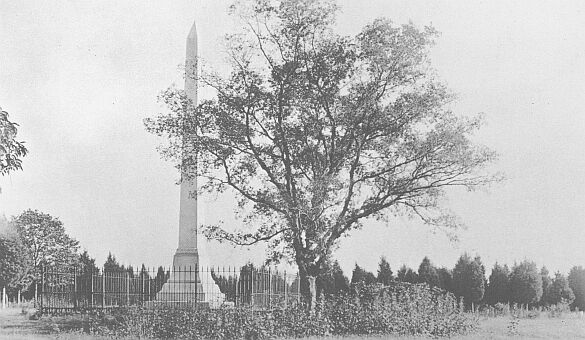
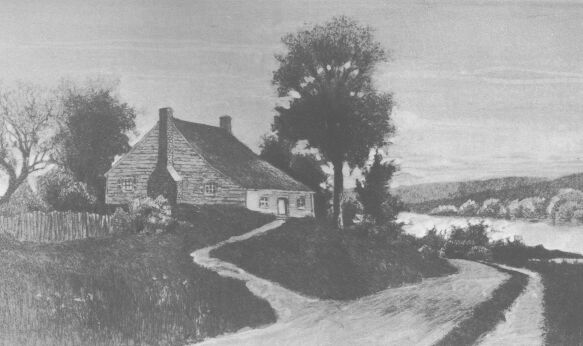
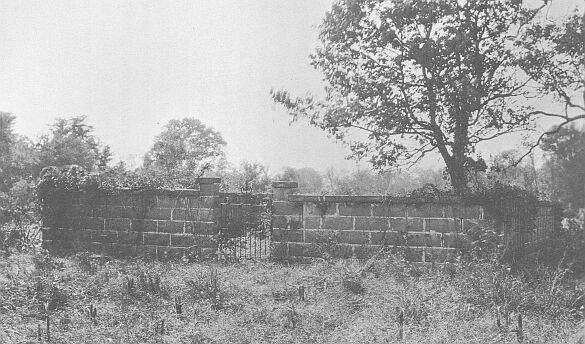
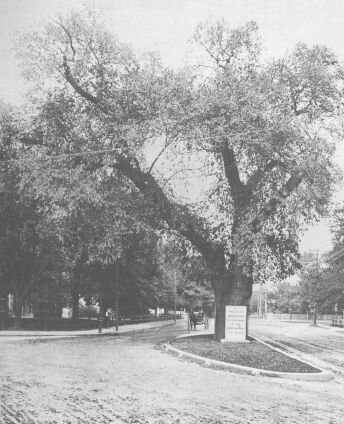
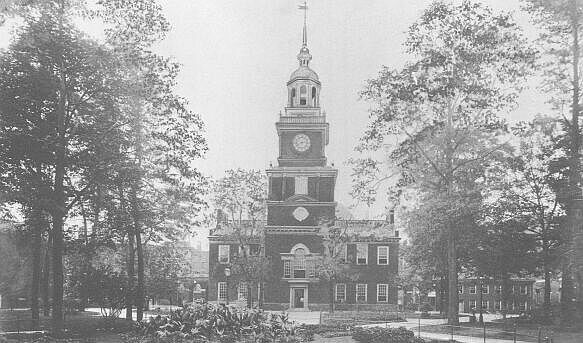
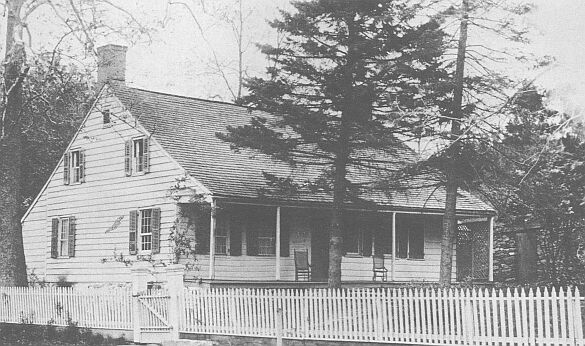
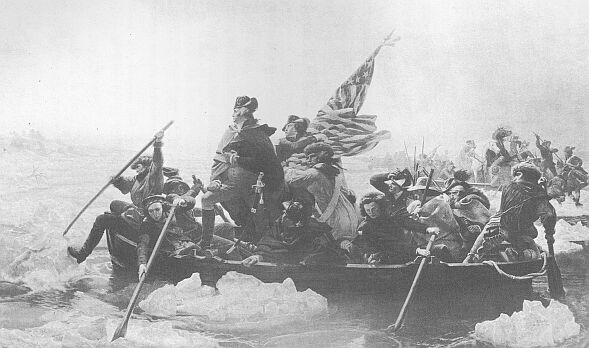
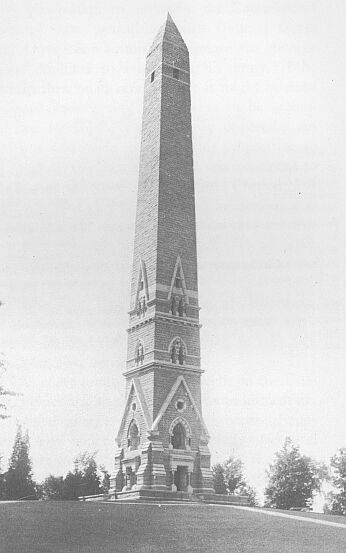
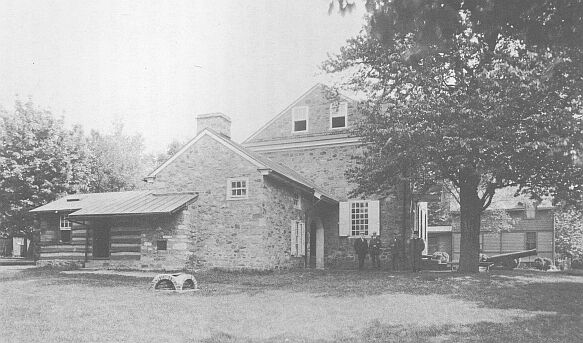
![[Enlarge]](images/242b.jpg)