The easiest way to bring order into
the chaos of desirable books, is, doubtless, to begin
historically with manuscripts. Almost every age that has
left any literary remains, has bequeathed to us relics which are
cherished by collectors. We may leave the clay books of the
Chaldeans out of the account. These tomes resemble nothing
so much as sticks of chocolate, and, however useful they may be
to the student, the clay MSS. of Assurbanipal are not coveted by
the collector. He finds his earliest objects of desire in
illuminated manuscripts. The art of decorating manuscripts
is as old as Egypt; but we need not linger over the beautiful
papyri, which are silent books to all but a few
Egyptologists. Greece, out of all her tomes, has left us
but a few ill-written papyri. Roman and early
Byzantine art are represented by a “Virgil,” and
fragments of an “Iliad”; the drawings in the latter
have been reproduced in a splendid volume (Milan 1819), and shew
Greek art passing into barbarism. The illumination of MSS.
was a favourite art in the later empire, and is said to have been
practised by Boethius. The iconoclasts of the Eastern
empire destroyed the books which contained representations of
saints and of the persons of the Trinity, and the monk Lazarus, a
famous artist, was cruelly tortured for his skill in illuminating
sacred works. The art was decaying in Western Europe when
Charlemagne sought for painters of MSS. in England and Ireland,
where the monks, in their monasteries, had developed a style with
original qualities. The library of Corpus Christi at
Cambridge, contains some of the earliest and most beautiful of
extant English MSS. These parchments, stained purple or
violet, and inscribed with characters of gold; are too often
beyond the reach of the amateur for whom we write. The MSS.
which he can hope to acquire are neither very early nor very
sumptuous, and, as a rule, MSS. of secular books are apt to be
out of his reach.
Yet a collection of MSS. has this great advantage over a
collection of printed books, that every item in it is absolutely
unique, no two MSS. being ever really the same. This
circumstance alone would entitle a good collection of MSS. to
very high consideration on the part of book-collectors.
But, in addition to the great expense of such a collection, there
is another and even more serious drawback. It is sometimes
impossible, and is often extremely difficult, to tell whether a
MS. is perfect or not.
This difficulty can only be got over by an amount of learning
on the part of the collector to which, unfortunately, he is too
often a stranger. On the other hand, the advantages of
collecting MSS. are sometimes very great.
In addition to the pleasure—a pleasure at once literary
and artistic—which the study of illuminated MSS. affords,
there is the certainty that, as years go on, the value of such a
collection increases in a proportion altogether marvellous.
I will take two examples to prove this point. Some years
ago an eminent collector gave the price of £30 for a small
French book of Hours, painted in grisaille. It was
in a country town that he met with this treasure, for a treasure
he considered the book, in spite of its being of the very latest
school of illumination. When his collection was dispersed a
few years ago this one book fetched £260.
In the celebrated Perkins sale, in 1873, a magnificent early MS.,
part of which was written in gold on a purple ground, and which
was dated in the catalogue “ninth or tenth century,”
but was in reality of the end of the tenth or beginning of the
eleventh, was sold for £565 to a dealer. It found its
way into Mr. Bragge’s collection, at what price I do not
know, and was resold, three years later, for £780.
Any person desirous of making a collection of illuminated
MSS., should study seriously for some time at the British Museum,
or some such place, until he is thoroughly acquainted (1) with
the styles of writing in use in the Middle Ages, so that he can
at a glance make a fairly accurate estimate of the age of the
book submitted to him; and (2) with the proper means of collating
the several kinds of service-books, which, in nine cases out of
ten, were those chosen for illumination.
A knowledge of the styles of writing can be acquired at second
hand in a book lately published by Mr. Charles Trice Martin,
F.S.A., being a new edition of “Astle’s Progress of
Writing.” Still better, of course, is the actual
inspection and comparison of books to which a date can be with
some degree of certainty assigned.
It is very common for the age of a book to be misstated in the
catalogues of sales, for the simple reason that the older the
writing, the plainer, in all probability, it is. Let the
student compare writing of the twelfth century with that of the
sixteenth, and he will be able to judge at once of the truth of
this assertion. I had once the good fortune to “pick
up” a small Testament of the early part of the twelfth
century, if not older, which was catalogued as belonging to the
fifteenth, a date which would have made it of very moderate
value.
With regard to the second point, the collation of MSS., I fear
there is no royal road to knowing whether a book is perfect or
imperfect. In some cases the catchwords remain at the foot
of the pages. It is then of course easy to see if a page is
lost, but where no such clue is given the student’s only
chance is to be fully acquainted with what a book ought to
contain. He can only do this when he has a knowledge of the
different kinds of service-books which were in use, and of their
most usual contents.
I am indebted to a paper, read by the late Sir William Tite at
a meeting of the Society of Antiquaries, for the collation of
“Books of Hours,” but there are many kinds of MSS.
besides these, and it is well to know something of them.
The Horae, or Books of Hours, were the latest development of the
service-books used at an earlier period. They cannot, in
fact, be strictly called service-books, being intended only for
private devotion. But in the thirteenth century and
before it, Psalters were in use for this purpose, and the
collation of a Psalter is in truth more important than that of a
Book of Hours. It will be well for a student, therefore, to
begin with Psalters, as he can then get up the Hours in their
elementary form. I subjoin a bibliographical account of
both kinds of MSS. In the famous Exhibition at the
Burlington Club in 1874, a number of volumes was arranged to show
how persistent one type of the age could be. The form of
the decorations, and the arrangement of the figures in borders,
once invented, was fixed for generations. In a Psalter of
the thirteenth century there was, under the month of January in
the calendar, a picture of a grotesque little figure warming
himself at a stove. The hearth below, the chimney-pot
above, on which a stork was feeding her brood, with the
intermediate chimney shaft used as a border, looked like a
scientific preparation from the interior anatomy of a house of
the period. In one of the latest of the MSS. exhibited on
that occasion was the self-same design again. The little
man was no longer a grotesque, and the picture had all the high
finish and completeness in drawing that we might expect in the
workmanship of a contemporary of Van Eyck. There was a full
series of intermediate books, showing the gradual growth of the
picture.
With
regard to chronology, it may be roughly asserted that the
earliest books which occur are Psalters of the thirteenth
century. Next to them come Bibles, of which an enormous
issue took place before the middle of the fourteenth
century. These are followed by an endless series of books
of Hours, which, as the sixteenth century is reached, appear in
several vernacular languages. Those in English, being both
very rare and of great importance in liturgical history, are of a
value altogether out of proportion to the beauty of their
illuminations. Side by side with this succession are the
Evangelistina, which, like the example mentioned above, are of
the highest merit, beauty, and value; followed by sermons and
homilies, and the Breviary, which itself shows signs of growth as
the years go on. The real Missal, with which all
illuminated books used to be confounded, is of rare occurrence,
but I have given a collation of it also. Besides these
devotional or religious books, I must mention chronicles and
romances, and the semi-religious and moral allegories, such as
the “Pélérinage de l’Ame,” which
is said to have given Bunyan the machinery of the
“Pilgrim’s Progress.” Chaucer’s and
Gower’s poetry exists in many MSS., as does the
“Polychronicon” of Higden; but, as a rule, the
mediæval chronicles are of single origin, and were not
copied. To collate MSS. of these kinds is quite
impossible, unless by carefully reading them, and seeing that the
pages run on without break.
I should advise the young collector who wishes to make sure of
success not to be too catholic in his tastes at first, but to
confine his attention to a single period and a single
school. I should also advise him to make from time to time
a careful catalogue of what he buys, and to preserve it even
after he has weeded out certain items. He will then be able
to make a clear comparative estimate of the importance and value
of his collection, and by studying one species at a time, to
become thoroughly conversant with what it can teach him.
When he has, so to speak, burnt his fingers once or twice, he
will find himself able to distinguish at sight what no amount of
teaching by word of mouth or by writing could ever possibly
impart to any advantage.
One thing I should like if possible to impress very strongly
upon the reader. That is the fact that a MS. which is not
absolutely perfect, if it is in a genuine state, is of much more
value than one which has been made perfect by the skill of a
modern restorer. The more skilful he is, that is to say the
better he can forge the style of the original, the more worthless
he renders the volume.
Printing seems to have superseded the art of the
illuminator more promptly and completely in England than on the
Continent. The dames galantes of
Brantôme’s memoirs took pleasure in illuminated Books
of Hours, suited to the nature of their devotions. As late
as the time of Louis XIV., Bussy Rabutin had a volume of the same
kind, illuminated with portraits of “saints,” of his
own canonisation. The most famous of these modern examples
of costly MSS. was “La Guirlande de Julie,” a
collection of madrigals by various courtly hands, presented to
the illustrious Julie, daughter of the Marquise de Rambouillet,
most distinguished of the Précieuses, and wife of
the Duc de Montausier, the supposed original of
Molière’s Alceste. The MS. was copied on
vellum by Nicholas Jarry, the great calligraph of his time.
The flowers on the margin were painted by Robert. Not long
ago a French amateur was so lucky as to discover the MS. book of
prayers of Julie’s noble mother, the Marquise de
Rambouillet. The Marquise wrote these prayers for her own
devotions, and Jarry, the illuminator, declared that he found
them most edifying, and delightful to study. The manuscript
is written on vellum by the famous Jarry, contains a portrait of
the fair Julie herself, and is bound in morocco by Le
Gascon. The happy collector who possesses the volume now,
heard vaguely that a manuscript of some interest was being exposed
for sale at a trifling price in the shop of a country
bookseller. The description of the book, casual as it was,
made mention of the monogram on the cover. This was enough
for the amateur. He rushed to a railway station, travelled
some three hundred miles, reached the country town, hastened to
the bookseller’s shop, and found that the book had been
withdrawn by its owner. Happily the possessor, unconscious
of his bliss, was at home. The amateur sought him out, paid
the small sum demanded, and returned to Paris in triumph.
Thus, even in the region of manuscript-collecting, there are
extraordinary prizes for the intelligent collector.
If the manuscript is of English or French writing of the
twelfth, thirteenth, fourteenth, or fifteenth centuries, it is
probably either—(1) a Bible, (2) a Psalter, (3) a book of
Hours, or (4), but rarely, a Missal. It is not worth while
to give the collation of a gradual, or a hymnal, or a
processional, or a breviary, or any of the fifty different kinds
of service-books which are occasionally met with, but which are
never twice the same.
To collate one of them, the reader must go carefully
through the book, seeing that the catch-words, if there are any,
answer to the head lines; and if there are
“signatures,” that is, if the foot of the leaves of a
sheet of parchment has any mark for enabling the binder to
“gather” them correctly, going through them, and
seeing that each signed leaf has its corresponding
“blank.”
1. To collate a Bible, it will be necessary first to go
through the catch-words, if any, and signatures, as above; then
to notice the contents. The first page should contain the
Epistle of St. Jerome to the reader. It will be observed
that there is nothing of the nature of a title-page, but I have
often seen title-pages supplied by some ignorant imitator in the
last century, with the idea that the book was imperfect without
one. The books of the Bible follow in order—but the
order not only differs from ours, but differs in different
copies. The Apocryphal books are always included. The
New Testament usually follows on the Old without any break; and
the book concludes with an index of the Hebrew names and their
signification in Latin, intended to help preachers to the
figurative meaning of the biblical types and parables. The
last line of the Bible itself usually contains a colophon, in
which sometimes the name of the writer is given, sometimes the
length of time it has taken him to write, and sometimes
merely the “Explicit. Laus Deo,” which has found its
way into many modern books. This colophon, which comes as a
rule immediately before the index, often contains curious notes,
hexameters giving the names of all the books, biographical or
local memoranda, and should always be looked for by the
collector. One such line occurs to me. It is in a
Bible written in Italy in the thirteenth century—
“Qui scripsit scribat. Vergilius spe
domini vivat.”
Vergilius was, no doubt, in this case the scribe. The
Latin and the writing are often equally crabbed. In the
Bodleian there is a Bible with this colophon—
“Finito libro referemus gratias Christo
m.cc.lxv. indict. viij.
Ego Lafräcus de Päcis de Cmoa scriptor
scripsi.”
This was also written in Italy. English colophons are
often very quaint—“Qui scripsit hunc librum fiat
collocatus in Paradisum,” is an example. The
following gives us the name of one Master Gerard, who, in the
fourteenth century, thus poetically described his
ownership:—
“Si Ge ponatur—et rar simul
associatur—
Et dus reddatur—cui pertinet ita vocatur.”
In a Bible written in England, in the British Museum, there
is a long colophon, in which, after the name of the
writer—“hunc librum scripsit Wills de
Hales,”—there is a prayer for Ralph of Nebham, who
had called Hales to the writing of the book, followed by a
date—“Fes. fuit liber anno M.cc.i. quarto ab
incarnatione domini.” In this Bible the books of the
New Testament were in the following order:—the Evangelists,
the Acts, the Epistles of S. Peter, S. James, and S. John, the
Epistles of S. Paul, and the Apocalypse. In a Bible at
Brussels I found the colophon after the index:—“Hic
expliciunt interpretationes Hebrayorum nominum Do gris qui potens
est p. süp. omia.” Some of these Bibles are of
marvellously small dimensions. The smallest I ever saw was
at Ghent, but it was very imperfect. I have one in which
there are thirteen lines of writing in an inch of the
column. The order of the books of the New Testament in
Bibles of the thirteenth century is usually according to one or
other of the three following arrangements:—
(1.) The Evangelists, Romans to Hebrews,
Acts, Epistles of S. Peter, S. James, and S. John,
Apocalypse.
(2.) The Evangelists, Acts, Epistles of
S. Peter, S. James, and S. John, Epistles of S. Paul,
Apocalypse. This is the most common.
(3.) The Evangelists, Acts, Epistles of S. Peter,
S. James, and S. John, Apocalypse, and Epistles of S. Paul.
On the fly leaves of these old Bibles there are often very
curious inscriptions. In one I have
this:—“Hæc biblia emi Haquinas prior monasterii
Hatharbiensis de dono domini regis Norwegie.” Who was
this King of Norway who, in 1310, gave the Prior of Hatherby
money to buy a Bible, which was probably written at
Canterbury? And who was Haquinas? His name has a
Norwegian sound, and reminds us of St. Thomas of that
surname. In another manuscript I have seen:—
“Articula Fidei:—
Nascitur, abluitur, patitur, descendit at ima
Surgit et ascendit, veniens discernere cuncta.”
In another this:—
“Sacramenta ecclesiæ:—
Abluo, fumo, cibo, piget, ordinat, uxor et ungit.”
I will conclude these notes on MS. Bibles with the following
colophon from a copy written in Italy in the fifteenth
century:—
“Finito libro vivamus semper in
Christo—
Si semper in Christo carebimus ultimo leto.
Explicit Deo gratias; Amen. Stephanus de
Tantaldis scripsit in pergamo.”
2. The “Psalter” of the thirteenth century
is usually to be considered a forerunner of the “Book of
Hours.” It always contains, and usually commences
with, a Calendar, in which are written against certain days the
“obits” of benefactors and others, so that a
well-filled Psalter often becomes a historical document of high
value and importance. The first page of the psalms is
ornamented with a huge B, which often fills the whole page, and
contains a representation of David and Goliath ingeniously fitted
to the shape of the letter. At the end are usually to be
found the hymns of the Three Children, and others from the Bible
together with the Te Deum; and sometimes, in late examples, a
litany. In some psalters the calendar is at the end.
These Psalters, and the Bibles described above, are very
frequently of English work; more frequently, that is, than the
books of Hours and Missals. The study of the Scriptures was
evidently more popular in England than in the other countries of
Europe during the Middle Ages; and the early success of the
Reformers here, must in part, no doubt, be attributed to the wide
circulation of the Bible even before it had been translated from
the Latin. I need hardly, perhaps, observe that even
fragments of a Psalter, a Testament, or a Bible in English, are
so precious as to be practically invaluable.
3. We are indebted to Sir W. Tite for the following
collation of a Flemish “Book of Hours”:—
1. The Calendar.
2. Gospels of the Nativity and the
Resurrection.
3. Preliminary Prayers (inserted
occasionally).
4. Horæ—(Nocturns and
Matins).
5. ,, (Lauds).
6. ,, (Prime).
7. ,, (Tierce).
8. ,, (Sexte).
9. ,, (None).
10. ,, (Vespers).
11. ,, (Compline).
12. The seven penitential Psalms
13. The Litany.
14. Hours of the Cross.
15. Hours of the Holy Spirit.
16. Office of the Dead.
17. The Fifteen Joys of B. V. M.
18. The seven requests to our
Lord.
19. Prayers and Suffrages to various
Saints.
20. Several prayers, petitions, and
devotions.
This is an unusually full example, but the calendar, the
hours, the seven psalms, and the litany, are in almost all the
MSS. The buyer must look carefully to see that no
miniatures have been cut out; but it is only by counting the
leaves in their gatherings that he can make sure. This is
often impossible without breaking the binding.
The most valuable “Horæ” are those written
in England. Some are of the English use (Sarum or York, or
whatever it may happen to be), but were written abroad, especially in
Normandy, for the English market. These are also valuable,
even when imperfect. Look for the page before the
commencement of the Hours (No. 4 in the list above), and at the
end will be found a line in red,—“Incipit Horæ
secundum usum Sarum,” or otherwise, as the case may be.
4. Missals do not often occur, and are not only very
valuable but very difficult to collate, unless furnished with
catch-words or signatures. But no Missal is complete
without the Canon of the Mass, usually in the middle of the book,
and if there are any illuminations throughout the volume, there
will be a full page Crucifixion, facing the Canon. Missals
of large size and completeness contain—(1) a Calendar; (2)
“the proper of the Season;” (3) the ordinary and
Canon of the Mass; (4) the Communal of Saints; (5) the proper of
Saints and special occasions; (6) the lessons, epistles, and
gospels; with (7) some hymns, “proses,” and
canticles. This is Sir W. Tite’s list; but, as he
remarks, MS. Missals seldom contain so much. The collector
will look for the Canon, which is invariable.
Breviaries run to an immense length, and are seldom
illuminated. It would be impossible to give them any kind
of collation, and the same may be said of many other kinds of old
service-books, and of the chronicles, poems, romances, and
herbals, in which mediæval literature abounded, and which
the collector must judge as best he can.
The name of “missal” is commonly and falsely given
to all old service-books by the booksellers, but the collector
will easily distinguish one when he sees it, from the notes I
have given. In a Sarum Missal, at Alnwick, there is a
colophon quoted by my lamented friend Dr. Rock in his
“Textile Fabrics.” It is appropriate both to
the labours of the old scribes and also to those of their modern
readers:—
“Librum Scribendo—Jon Whas Monachus
laborabat—
Et mane Surgendo—multum corpus macerabat.”
It is one of the charms of manuscripts that they illustrate,
in their minute way, all the art, and even the social condition,
of the period in which they were produced. Apostles,
saints, and prophets wear the contemporary costume, and Jonah,
when thrown to the hungry whale, wears doublet and trunk
hose. The ornaments illustrate the architectural taste of
the day. The backgrounds change from diapered patterns to
landscapes, as the modern way of looking at nature penetrates the
monasteries and reaches the scriptorium where the
illuminator sits and refreshes his eyes with the sight of
the slender trees and blue distant hills. Printed books
have not such resources. They can only show varieties of
type, quaint frontispieces, printers’ devices, and
fleurons at the heads of chapters. These
attractions, and even the engravings of a later day, seem meagre
enough compared with the allurements of manuscripts. Yet
printed books must almost always make the greater part of a
collection, and it may be well to give some rules as to the
features that distinguish the productions of the early
press. But no amount of “rules” is worth six
months’ practical experience in bibliography. That
experience the amateur, if he is wise, will obtain in a public
library, like the British Museum or the Bodleian. Nowhere
else is he likely to see much of the earliest of printed books,
which very seldom come into the market.
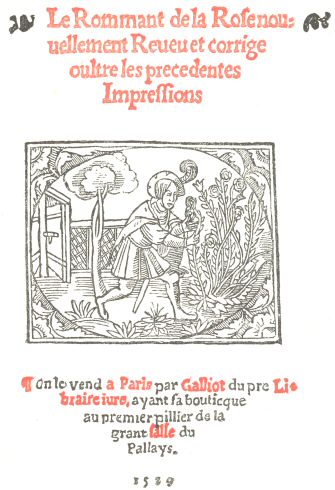
Those of the first German press are so rare that practically
they never reach the hands of the ordinary collector. Among
them are the famous Psalters printed by Fust and Schoffer, the
earliest of which is dated 1457; and the bible known as the
Mazarine Bible. Two copies of this last were in the Perkins
sale. I well remember the excitement on that
occasion. The first copy put up was the best, being printed
upon vellum. The bidding commenced at £1000, and very
speedily rose to £2200, at which point there was a long
pause; it then rose in hundreds with very little delay to
£3400, at which it was knocked down to a bookseller.
The second copy was on paper, and there were those present who
said it was better than the other, which had a suspicion
attaching to it of having been “restored” with a
facsimile leaf. The first bid was again £1000, which
the buyer of the previous copy made guineas, and the bidding
speedily went up to £2660, at which price the first bidder
paused. A third bidder had stepped in at £1960, and
now, amid breathless excitement, bid £10 more. This
he had to do twice before the book was knocked down to him at
£2690.
A scene like this has really very little to do with
book-collecting. The beginner must labour hard to
distinguish different kinds of printing; he must be able to
recognise at a glance even fragments from the press of
Caxton. His eye must be accustomed to all the tricks of the
trade and others, so that he may tell a facsimile in a moment, or
detect a forgery.
But now let us return to the distinctive marks of early
printed books. The first is, says M. Rouveyre,—
1. The absence of a separate title-page. It
was not till 1476–1480 that the titles of books were printed on
separate pages. The next mark is—
2. The absence of capital letters at the beginnings
of divisions. For example, in an Aldine Iliad, the
fifth book begins thus—
Νθ
αυ τὖδέιδῃ
Διυμήδεῑ
ἔ
παλλὰς
ἀθήνη
δῶκε μένος
καὶ
θάρσος
ἵν’
ἔκδηλος
μετὰ πᾶσιν
ἀργείοισι
γένοιτο,
ἰδέ κλέος
ἐσθλὸν
ἄροιτο.
It was intended that the open space, occupied by the small
epsilon (ἔ), should be filled up with a coloured and gilded
initial letter by the illuminator. Copies thus decorated
are not very common, but the Aldine “Homer” of
Francis I., rescued by M. Didot from a rubbish heap in an English
cellar, had its due illuminations. In the earliest books
the guide to the illuminator, the small printed letter, does not
appear, and he often puts in the wrong initial.
3. Irregularity and rudeness of type is a
“note” of the primitive printing press, which very
early disappeared. Nothing in the history of printing is so
remarkable as the beauty of almost its first efforts. Other
notes are—
4. The absence of figures at the top of the
pages, and of signatures at the foot. The
thickness and solidity of the paper, the absence of the
printer’s name, of the date, and of the name of the town where the
press stood, and the abundance of crabbed abbreviations, are all
marks, more or less trustworthy, of the antiquity of books.
It must not be supposed that all books published, let us say
before 1500, are rare, or deserve the notice of the
collector. More than 18,000 works, it has been calculated,
left the press before the end of the fifteenth century. All
of these cannot possibly be of interest, and many of them that
are “rare,” are rare precisely because they are
uninteresting. They have not been preserved because they
were thought not worth preserving. This is a great cause of
rarity; but we must not hastily conclude that because a book
found no favour in its own age, therefore it has no claim on our
attention. A London bookseller tells me that he bought the
“remainder” of Keats’s “Endymion”
for fourpence a copy! The first edition of
“Endymion” is now rare and valued. In trying to
mend the binding of an old “Odyssey” lately, I
extracted from the vellum covers parts of two copies of a very
scarce and curious French dictionary of slang, “Le Jargon,
ou Langage de l’Argot Reformé.” This
treatise may have been valueless, almost, when it appeared, but
now it is serviceable to the philologist, and to all who care to
try to interpret the slang ballades of the poet
Villon. An old pamphlet, an old satire, may hold the key to
some historical problem, or throw light on the past of manners
and customs. Still, of the earliest printed books,
collectors prefer such rare and beautiful ones as the oldest
printed Bibles: German, English,—as Taverner’s and
the Bishop’s,—or Hebrew and Greek, or the first
editions of the ancient classics, which may contain the readings
of MSS. now lost or destroyed. Talking of early Bibles, let
us admire the luck and prudence of a certain Mr. Sandford.
He always longed for the first Hebrew Bible, but would offer no
fancy price, being convinced that the book would one day fall in
his way. His foreboding was fulfilled, and he picked up his
treasure for ten shillings in a shop in the Strand. The
taste for incunabula, or very early printed books,
slumbered in the latter half of the sixteenth, and all the
seventeenth century. It revived with the third jubilee of
printing in 1740, and since then has refined itself, and only
craves books very early, very important, or works from the press
of Caxton, the St. Albans Schoolmaster, or other famous old
artists. Enough has been said to show the beginner, always
enthusiastic, that all old books are not precious. For
further information, the “Biography and Typography of
William Caxton,” by Mr. Blades (Trübner, London,
1877), may be consulted with profit.
Following the categories into which M. Brunet classifies
desirable books in his invaluable manual, we now come to books
printed on vellum, and on peculiar papers. At the origin of
printing, examples of many books, probably presentation copies,
were printed on vellum. There is a vellum copy of the
celebrated Florentine first edition of Homer; but it is truly sad
to think that the twin volumes, Iliad and Odyssey, have been
separated, and pine in distant libraries. Early printed
books on vellum often have beautifully illuminated
capitals. Dibdin mentions in “Bibliomania”
(London, 1811), p. 90, that a M. Van Praet was compiling a
catalogue of works printed on vellum, and had collected more than
2000 articles. When hard things are said about Henry VIII.,
let us remember that this monarch had a few copies of his book
against Luther printed on vellum. The Duke of
Marlborough’s library possessed twenty-five books on
vellum, all printed before 1496. The chapter-house at Padua
has a “Catullus” of 1472 on vellum; let Mr. Robinson
Ellis think wistfully of that treasure. The notable Count
M’Carthy of Toulouse had a wonderful library of books in
membranis, including a book much coveted for its rarity,
oddity, and the beauty of its illustrations, the
“Hypnerotomachia” of Poliphilus (Venice, 1499). Vellum was the favourite
“vanity” of Junot, Napoleon’s general.
For reasons connected with its manufacture, and best not inquired
into, the Italian vellum enjoyed the greatest reputation for
smooth and silky whiteness. Dibdin calls “our modern
books on vellum little short of downright wretched.”
But the editor of this series could, I think, show examples that
would have made Dibdin change his opinion.
Many comparatively expensive papers, large in format,
are used in choice editions of books. Whatman papers, Dutch
papers, Chinese papers, and even papier vergé, have
all their admirers. The amateur will soon learn to
distinguish these materials. As to books printed on
coloured paper—green, blue, yellow, rhubarb-coloured, and
the like, they are an offence to the eyes and to the taste.
Yet even these have their admirers and collectors, and the great
Aldus himself occasionally used azure paper. Under the head
of “large paper,” perhaps “uncut copies”
should be mentioned. Most owners of books have had the
edges of the volumes gilded or marbled by the binders. Thus
part of the margin is lost, an offence to the eye of the
bibliomaniac, while copies untouched by the binder’s shears
are rare, and therefore prized. The inconvenience of uncut
copies is, that one cannot easily turn over the leaves. But, in the present state of the fashion,
a really rare uncut Elzevir may be worth hundreds of pounds,
while a cropped example scarcely fetches as many shillings.
A set of Shakespeare’s quartoes, uncut, would be worth more
than a respectable landed estate in Connemara. For these
reasons the amateur will do well to have new books of price bound
“uncut.” It is always easy to have the leaves
pared away; but not even the fabled fountain at Argos, in which
Hera yearly renewed her maidenhood, could restore margins once
clipped away. So much for books which are chiefly precious
for the quantity and quality of the material on which they are
printed. Even this rather foolish weakness of the amateur
would not be useless if it made our publishers more careful to
employ a sound clean hand-made paper, instead of drugged trash,
for their more valuable new productions. Indeed, a taste
for hand-made paper is coming in, and is part of the revolt
against the passion for everything machine-made, which ruined art
and handiwork in the years between 1840 and 1870.
The third of M. Brunet’s categories of books of prose,
includes livres de luxe, and illustrated literature.
Every Christmas brings us livres de luxe in plenty, books
which are no books, but have gilt and magenta covers, and great
staring illustrations. These are regarded as drawing-room
ornaments by people who never read. It is scarcely
necessary to warn the collector against these gaudy baits of
unregulated Christmas generosity. All ages have not
produced quite such garish livres de luxe as ours.
But, on the whole, a book brought out merely for the sake of
display, is generally a book ill “got up,” and not
worth reading. Moreover, it is generally a folio, or
quarto, so large that he who tries to read it must support it on
a kind of scaffolding. In the class of illustrated books
two sorts are at present most in demand. The ancient
woodcuts and engravings, often the work of artists like Holbein
and Dürer, can never lose their interest. Among old
illustrated books, the most famous, and one of the rarest, is the
“Hypnerotomachia Poliphili,” “wherein all human
matters are proved to be no more than a dream.” This
is an allegorical romance, published in 1499, for Francesco
Colonna, by Aldus Manucius. Poliam Frater Franciscus
Columna peramavit. “Brother Francesco Colonna
dearly loved Polia,” is the inscription and device of this
romance. Poor Francesco, of the order of preachers,
disguised in this strange work his passion for a lady of
uncertain name. Here is a translation of the passage in
which the lady describes the beginning of his affection.
“I was standing, as is the manner of women young and fair,
at the window, or rather on the balcony, of my palace.
My yellow hair, the charm of maidens, was floating round my
shining shoulders. My locks were steeped in unguents that
made them glitter like threads of gold, and they were slowly
drying in the rays of the burning sun. A handmaid, happy in
her task, was drawing a comb through my tresses, and surely these
of Andromeda seemed not more lovely to Perseus, nor to Lucius the
locks of Photis. [6] On a sudden, Poliphilus beheld me,
and could not withdraw from me his glances of fire, and even in
that moment a ray of the sun of love was kindled in his
heart.”
The fragment is itself a picture from the world of the
Renaissance. We watch the blonde, learned lady, dreaming of
Perseus, and Lucius, Greek lovers of old time, while the sun
gilds her yellow hair, and the young monk, passing below, sees
and loves, and “falls into the deep waters of
desire.” The lover is no less learned than the lady,
and there is a great deal of amorous archæology in his
account of his voyage to Cythera. As to the designs in
wood, quaint in their vigorous effort to be classical, they have
been attributed to Mantegna, to Bellini, and other artists.
Jean Cousin is said to have executed the imitations, in the Paris
editions of 1546, 1556, and 1561.
The
“Hypnerotomachia” seems to deserve notice, because it
is the very type of the books that are dear to collectors, as
distinct from the books that, in any shape, are for ever valuable
to the world. A cheap Tauchnitz copy of the Iliad and
Odyssey, or a Globe Shakespeare, are, from the point of view of
literature, worth a wilderness of
“Hypnerotomachiæ.” But a clean copy of
the “Hypnerotomachia,” especially on VELLUM, is one of the jewels of
bibliography. It has all the right qualities; it is very
rare, it is very beautiful as a work of art, it is curious and
even bizarre, it is the record of a strange time, and a
strange passion; it is a relic, lastly, of its printer, the great
and good Aldus Manutius.
Next to the old woodcuts and engravings, executed in times
when artists were versatile and did not disdain even to draw a
book-plate (as Dürer did for Pirckheimer), the designs of
the French “little masters,” are at present in most
demand. The book illustrations of the seventeenth century
are curious enough, and invaluable as authorities on manners and
costume. But the attitudes of the figures are too often
stiff and ungainly; while the composition is frequently left to
chance. England could show nothing much better than
Ogilby’s translations of Homer, illustrated with big florid
engravings in sham antique style. The years between 1730
and 1820, saw the French “little masters” in their
perfection. The dress of the middle of the eighteenth
century, of the age of Watteau, was precisely suited to the gay
and graceful pencils of Gravelot, Moreau, Eisen, Boucher, Cochin,
Marillier, and Choffard. To understand their merits, and
the limits of their art, it is enough to glance through a series
of the designs for Voltaire, Corneille, or Molière.
The drawings of society are almost invariably dainty and
pleasing, the serious scenes of tragedy leave the spectator quite
unmoved. Thus it is but natural that these artists should
have shone most in the illustration of airy trifles like
Dorat’s “Baisers,” or tales like Manon Lescaut,
or in designing tailpieces for translations of the Greek idyllic
poets, such as Moschus and Bion. In some of his
illustrations of books, especially, perhaps, in the designs for
“La Physiologie de Gout” (Jouaust, Paris, 1879), M.
Lalauze has shown himself the worthy rival of Eisen and
Cochin. Perhaps it is unnecessary to add that the beauty
and value of all such engravings depends almost entirely on their
“state.” The earlier proofs are much more
brilliant than those drawn later, and etchings on fine papers are
justly preferred. For example, M. Lalauze’s
engravings on “Whatman paper,” have a beauty which
could scarcely be guessed by people who have only seen specimens
on “papier vergé.” Every collector of
the old French vignettes, should possess himself of the
“Guide de l’amateur,” by M. Henry Cohen
(Rouquette, Paris, 1880). Among English illustrated books,
various tastes prefer the imaginative works of William Blake, the
etchings of Cruikshank, and the woodcuts of Bewick. The
whole of the last chapter of this sketch is devoted, by Mr.
Austin Dobson, to the topic of English illustrated books.
Here it may be said, in passing, that an early copy of William
Blake’s “Songs of Innocence,” written,
illustrated, printed, coloured, and boarded by the author’s
own hand, is one of the most charming objects that a bibliophile
can hope to possess. The verses of Blake, in a framework of
birds, and flowers, and plumes, all softly and magically tinted,
seem like some book out of King Oberon’s library in
fairyland, rather than the productions of a mortal press.
The pictures in Blake’s “prophetic books,” and
even his illustrations to “Job,” show an imagination
more heavily weighted by the technical difficulties of
drawing.
The next class of rare books is composed of works from the
famous presses of the Aldi and the Elzevirs. Other presses
have, perhaps, done work as good, but Estienne, the Giunta, and
Plantin, are comparatively neglected, while the taste for the
performances of Baskerville and Foulis is not very
eager. A safe judgment about Aldines and Elzevirs is the
gift of years and of long experience. In this place it is
only possible to say a few words on a wide subject. The
founder of the Aldine press, Aldus Pius Manutius, was born about
1450, and died at Venice in 1514. He was a man of careful
and profound learning, and was deeply interested in Greek
studies, then encouraged by the arrival in Italy of many educated
Greeks and Cretans. Only four Greek authors had as yet been
printed in Italy, when (1495) Aldus established his press at
Venice. Theocritus, Homer, Æsop, and Isocrates,
probably in very limited editions, were in the hands of
students. The purpose of Aldus was to put Greek and Latin
works, beautifully printed in a convenient shape, within the
reach of all the world. His reform was the introduction of
books at once cheap, studiously correct, and convenient in actual
use. It was in 1498 that he first adopted the small octavo
size, and in his “Virgil” of 1501, he introduced the
type called Aldine or Italic. The letters
were united as in writing, and the type is said to have been cut
by Francesco da Bologna, better known as Francia, in imitation of
the hand of Petrarch. For full information about Aldus and
his descendants and successors, the work of M. Firmin Didot,
(“Alde Manuce et l’Hellénisme à Venise:
Paris 1875),” and the Aldine annals of Renouard, must be
consulted. These two works are necessary to the collector,
who will otherwise be deceived by the misleading assertions of
the booksellers. As a rule, the volumes published in the
lifetime of Aldus Manutius are the most esteemed, and of these
the Aristotle, the first Homer, the Virgil, and the Ovid, are
perhaps most in demand. The earlier Aldines are consulted
almost as studiously as MSS. by modern editors of the
classics.
Just as the house of Aldus waned and expired, that of the
great Dutch printers, the Elzevirs, began obscurely enough at
Leyden in 1583. The Elzevirs were not, like Aldus, ripe
scholars and men of devotion to learning. Aldus laboured
for the love of noble studies; the Elzevirs were acute, and too
often “smart” men of business. The founder of
the family was Louis (born at Louvain, 1540, died 1617).
But it was in the second and third generations that Bonaventura
and Abraham Elzevir began to publish at Leyden, their editions in
small duodecimo. Like Aldus, these Elzevirs aimed at
producing books at once handy, cheap, correct, and beautiful in
execution. Their adventure was a complete success.
The Elzevirs did not, like Aldus, surround themselves with the
most learned scholars of their time. Their
famous literary adviser, Heinsius, was full of literary
jealousies, and kept students of his own calibre at a
distance. The classical editions of the Elzevirs,
beautiful, but too small in type for modern eyes, are anything
but exquisitely correct. Their editions of the
contemporary. French authors, now classics themselves, are
lovely examples of skill in practical enterprise. The
Elzevirs treated the French authors much as American publishers
treat Englishmen. They stole right and left, but no one
complained much in these times of slack copyright; and, at all
events, the piratic larcenous publications of the Dutch printers
were pretty, and so far satisfactory. They themselves, in
turn, were the victims of fraudulent and untradesmanlike
imitations. It is for this, among other reasons, that the
collector of Elzevirs must make M. Willems’s book
(“Les Elzevier,” Brussels and Paris, 1880) his
constant study. Differences so minute that they escape the
unpractised eye, denote editions of most various value. In
Elzevirs a line’s breadth of margin is often worth a
hundred pounds, and a misprint is quoted at no less a sum.
The fantastic caprice of bibliophiles has revelled in the
bibliography of these Dutch editions. They are at present
very scarce in England, where a change in fashion some years ago
had made them common enough. No Elzevir is valuable
unless it be clean and large in the margins. When these
conditions are satisfied the question of rarity comes in, and
Remy Belleau’s Macaronic poem, or “Le Pastissier
Français,” may rise to the price of four or five
hundred pounds. A Rabelais, Molière, or Corneille,
of a “good” edition, is now more in request than the
once adored “Imitatio Christi” (dateless), or the
“Virgil”’ of 1646, which is full of gross
errors of the press, but is esteemed for red characters in the
letter to Augustus, and another passage at page 92. The
ordinary marks of the Elzevirs were the sphere, the old hermit,
the Athena, the eagle, and the burning faggot. But all
little old books marked with spheres are not Elzevirs, as many
booksellers suppose. Other printers also stole the designs
for the tops of chapters, the Aegipan, the Siren, the head of
Medusa, the crossed sceptres, and the rest. In some cases
the Elzevirs published their books, especially when they were
piracies, anonymously. When they published for the
Jansenists, they allowed their clients to put fantastic
pseudonyms on the title pages. But, except in four cases,
they had only two pseudonyms used on the titles of books
published by and for themselves. These disguises are
“Jean Sambix” for Jean and Daniel Elzevir, at Leyden,
and for the Elzevirs of Amsterdam, “Jacques le
Jeune.” The last of the great representatives of the
house, Daniel, died at Amsterdam, 1680. Abraham, an
unworthy scion, struggled on at Leyden till 1712. The
family still prospers, but no longer prints, in Holland. It
is common to add duodecimos of Foppens, Wolfgang, and other
printers, to the collections of the Elzevirs. The books of
Wolfgang have the sign of the fox robbing a wild bee’s
nest, with the motto Quaerendo.
Curious and singular books are the next in our
classification. The category is too large. The books
that be “curious” (not in the booksellers’
sense of “prurient” and “disgusting,”)
are innumerable. All suppressed and condemned books, from
“Les Fleurs du Mal” to Vanini’s
“Amphitheatrum,” or the English translation of
Bruno’s “Spaccia della Bestia Trionfante,” are
more or less rare, and more or less curious. Wild books,
like William Postel’s “Three Marvellous Triumphs of
Women,” are “curious.” Freakish books,
like macaronic poetry, written in a medley of languages, are
curious. Books from private presses are singular. The
old English poets and satirists turned out many a book curious to
the last degree, and priced at a fantastic value. Such are
“Jordan’s Jewels of Ingenuity,”
“Micro-cynicon, six Snarling Satyres” (1599), and the
“Treatize made of a Galaunt,” printed by Wynkyn de
Worde, and found pasted into the fly-leaf, on the oak-board
binding of an imperfect volume of Pynson’s
“Statutes.” All our early English poems and
miscellanies are curious; and, as relics of delightful singers,
are most charming possessions. Such are the “Songes
and Sonnettes of Surrey” (1557), the “Paradyce of
daynty Deuices” (1576), the “Small Handful of
Fragrant Flowers,” and “The Handful of Dainty
Delights, gathered out of the lovely Garden of Sacred Scripture,
fit for any worshipful Gentlewoman to smell unto,”
(1584). “The Teares of Ireland” (1642), are
said, though one would not expect it, to be “extremely
rare,” and, therefore, precious. But there is no end
to the list of such desirable rarities. If we add to them
all books coveted as early editions, and, therefore, as relics of
great writers, Bunyan, Shakespeare, Milton, Sterne, Walton, and
the rest, we might easily fill a book with remarks on this topic
alone. The collection of such editions is the most
respectable, the most useful, and, alas, the most expensive of
the amateur’s pursuits. It is curious enough that the
early editions of Swift, Scott, and Byron, are little sought for,
if not wholly neglected; while early copies of Shelley, Tennyson,
and Keats, have a great price set on their heads. The
quartoes of Shakespeare, like first editions of Racine, are
out of the reach of any but very opulent purchasers, or unusually
lucky, fortunate book-hunters. Before leaving the topic of
books which derive their value from the taste and fantasy of
collectors, it must be remarked that, in this matter, the fashion
of the world changes. Dr. Dibdin lamented, seventy years
ago, the waning respect paid to certain editions of the
classics. He would find that things have become worse now,
and modern German editions, on execrable paper, have supplanted
his old favourites. Fifty years ago, M. Brunet expressed
his contempt for the designs of Boucher; now they are at the top
of the fashion. The study of old booksellers’
catalogues is full of instruction as to the changes of
caprice. The collection of Dr. Rawlinson was sold in
1756. “The Vision of Pierce Plowman” (1561),
and the “Creede of Pierce Plowman” (1553), brought
between them no more than three shillings and sixpence.
Eleven shillings were paid for the “Boke of
Chivalrie” by Caxton. The “Boke of St.
Albans,” by Wynkyn de Worde, cost £ 1: 1s., and this
was the highest sum paid for any one of two hundred rare pieces
of early English literature. In 1764, a copy of the
“Hypnerotomachia” was sold for two shillings,
“A Pettie Pallace of Pettie his Pleasures,” (ah, what
a thought for the amateur!) went for three shillings,
while “Palmerin of England” (1602), attained no more
than the paltry sum of fourteen shillings. When Osborne
sold the Harley collection, the scarcest old English books
fetched but three or four shillings. If the wandering Jew
had been a collector in the last century he might have turned a
pretty profit by selling his old English books in this age of
ours. In old French, too, Ahasuerus would have done a good
stroke of business, for the prices brought by old Villons,
Romances of the Rose, “Les Marguerites de
Marguerite,” and so forth, at the M’Carthy sale, were
truly pitiable. A hundred years hence the original editions
of Thackeray, or of Miss Greenaway’s Christmas books, or
“Modern Painters,” may be the ruling passion, and
Aldines and Elzevirs, black letter and French vignettes may all
be despised. A book which is commonplace in our century is
curious in the next, and disregarded in that which follows.
Old books of a heretical character were treasures once, rare
unholy possessions. Now we have seen so many heretics that
the world is indifferent to the audacities of Bruno, and the
veiled impieties of Vanini.
The last of our categories of books much sought by the
collector includes all volumes valued for their ancient bindings,
for the mark and stamp of famous amateurs. The French, who
have supplied the world with so many eminent
binders,—as Eve, Padeloup, Duseuil, Le Gascon, Derome,
Simier, Bozérian, Thouvenin, Trautz-Bauzonnet, and
Lortic—are the chief patrons of books in historical
bindings. In England an historical binding, a book of
Laud’s, or James’s, or Garrick’s, or even of
Queen Elizabeth’s, does not seem to derive much added charm
from its associations. But, in France, peculiar bindings
are now the objects most in demand among collectors. The
series of books thus rendered precious begins with those of
Maioli and of Grolier (1479–1565), remarkable for their
mottoes and the geometrical patterns on the covers. Then
comes De Thou (who had three sets of arms), with his blazon, the
bees stamped on the morocco. The volumes of Marguerite of
Angoulême are sprinkled with golden daisies. Diane de
Poictiers had her crescents and her bow, and the initial of her
royal lover was intertwined with her own. The three
daughters of Louis XV. had each their favourite colour, and their
books wear liveries of citron, red, and olive morocco. The
Abbé Cotin, the original of Molière’s
Trissotin, stamped his books with intertwined C’s.
Henri III. preferred religious emblems, and sepulchral
mottoes—skulls, crossbones, tears, and the insignia of the
Passion. Mort m’est vie is a favourite device
of the effeminate and voluptuous prince. Molière himself was
a collector, il n’es pas de bouquin qui
s’échappe de ses mains,—“never an
old book escapes him,” says the author of “La Guerre
Comique,” the last of the pamphlets which flew from side to
side in the great literary squabble about
“L’École des Femmes.” M.
Soulié has found a rough catalogue of
Molière’s library, but the books, except a little
Elzevir, have disappeared. [7] Madame de
Maintenon was fond of bindings. Mr. Toovey possesses a copy
of a devotional work in red morocco, tooled and gilt, which she
presented to a friendly abbess. The books at Saint-Cyr were
stamped with a crowned cross, besprent with
fleurs-de-lys. The books of the later
collectors—Longepierre, the translator of Bion and Moschus;
D’Hoym the diplomatist; McCarthy, and La Vallière,
are all valued at a rate which seems fair game for satire.
Among the most interesting bibliophiles of the eighteenth
century is Madame Du Barry. In 1771, this notorious beauty
could scarcely read or write. She had rooms, however, in
the Château de Versailles, thanks to the kindness of a
monarch who admired those native qualities which education may
polish, but which it can never confer. At
Versailles, Madame Du Barry heard of the literary genius of
Madame de Pompadour. The Pompadour was a person of
taste. Her large library of some four thousand works of the
lightest sort of light literature was bound by Biziaux. Mr.
Toovey possesses the Brantôme of this dame
galante. Madame herself had published etchings by her
own fair hands; and to hear of these things excited the emulation
of Madame Du Barry. She might not be clever, but she
could have a library like another, if libraries were in
fashion. One day Madame Du Barry astonished the Court by
announcing that her collection of books would presently arrive at
Versailles. Meantime she took counsel with a bookseller,
who bought up examples of all the cheap “remainders,”
as they are called in the trade, that he could lay his hands
upon. The whole assortment, about one thousand volumes in
all, was hastily bound in rose morocco, elegantly gilt, and
stamped with the arms of the noble house of Du Barry. The
bill which Madame Du Barry owed her enterprising agent is still
in existence. The thousand volumes cost about three francs
each; the binding (extremely cheap) came to nearly as much.
The amusing thing is that the bookseller, in the catalogue which
he sent with the improvised library, marked the books which
Madame Du Barry possessed before her large
order was so punctually executed. There were two
“Mémoires de Du Barry,” an old newspaper, two
or three plays, and “L’Historie Amoureuse de Pierre
le Long.” Louis XV. observed with pride that, though
Madame Pompadour had possessed a larger library, that of Madame
Du Barry was the better selected. Thanks to her new
collection, the lady learned to read with fluency, but she never
overcame the difficulties of spelling.
A lady collector who loved books not very well perhaps, but
certainly not wisely, was the unhappy Marie Antoinette. The
controversy in France about the private character of the Queen
has been as acrimonious as the Scotch discussion about Mary
Stuart. Evidence, good and bad, letters as apocryphal as
the letters of the famous “casket,” have been
produced on both sides. A few years ago, under the empire,
M. Louis Lacour found a manuscript catalogue of the books in the
Queen’s boudoir. They were all novels of the
flimsiest sort,—“L’Amitié
Dangereuse,” “Les Suites d’un Moment
d’Erreur,” and even the stories of Louvet and of
Rétif de la Bretonne. These volumes all bore the
letters “C. T.” (Château de Trianon), and
during the Revolution they were scattered among the various
public libraries of Paris. The Queen’s more important
library
was at the Tuileries, but at Versailles she had only three books,
as the commissioners of the Convention found, when they made an
inventory of the property of la femme Capet. Among
the three was the “Gerusalemme Liberata,” printed,
with eighty exquisite designs by Cochin, at the expense of
“Monsieur,” afterwards Louis XVIII. Books with
the arms of Marie Antoinette are very rare in private
collections; in sales they are as much sought after as those of
Madame Du Barry.
With these illustrations of the kind of interest that belongs
to books of old collectors, we may close this chapter. The
reader has before him a list, with examples, of the kinds of
books at present most in vogue among amateurs. He must
judge for himself whether he will follow the fashion, by aid
either of a long purse or of patient research, or whether he will
find out new paths for himself. A scholar is rarely a rich
man. He cannot compete with plutocrats who buy by
deputy. But, if he pursues the works he really needs, he
may make a valuable collection. He cannot go far wrong
while he brings together the books that he finds most congenial
to his own taste and most useful to his own studies. Here,
then, in the words of the old “sentiment,” I bid him
farewell, and wish “success to his inclinations, provided
they are virtuous.” There is a set of collectors,
alas! whose inclinations are not virtuous. The most famous
of them, a Frenchman, observed that his own collection of bad
books was unique. That of an English rival, he admitted,
was respectable,—“mais milord se livre à
des autres préoccupations!” He thought a
collector’s whole heart should be with his treasures.
En bouquinant se trouve grand soulas.
Soubent m’en vay musant, à petis pas,
Au long des quais, pour flairer maint bieux livre.
Des Elzevier la Sphere me rend yure,
Et la Sirène aussi m’esmeut. Grand cas
Fais-je d’Estienne, Aide, ou Dolet. Mais Ias!
Le vieux Caxton ne se rencontre pas,
Plus qu’ agneau d’or parmi jetons de cuivre,
En bouquinant!
Pour tout plaisir que l’on goute
icy-bas
La Grace a Dieu. Mieux vaut, sans altercas,
Chasser bouquin: Nul mal n’en peult s’ensuivre.
Dr sus au livre: il est le grand appas.
Clair est le ciel. Amis, qui veut me suivre
En bouquinant?
A. L.


![“The Deaf Post-Boy.” From Clarke’s “Three Courses and a Dessert,” 1830. Drawn by G. Cruikshank; engraved by S. Williams [?]](images/p153b.jpg "“The Deaf Post-Boy.” From Clarke’s “Three Courses and a Dessert,” 1830. Drawn by G. Cruikshank; engraved by S. Williams [?]")


