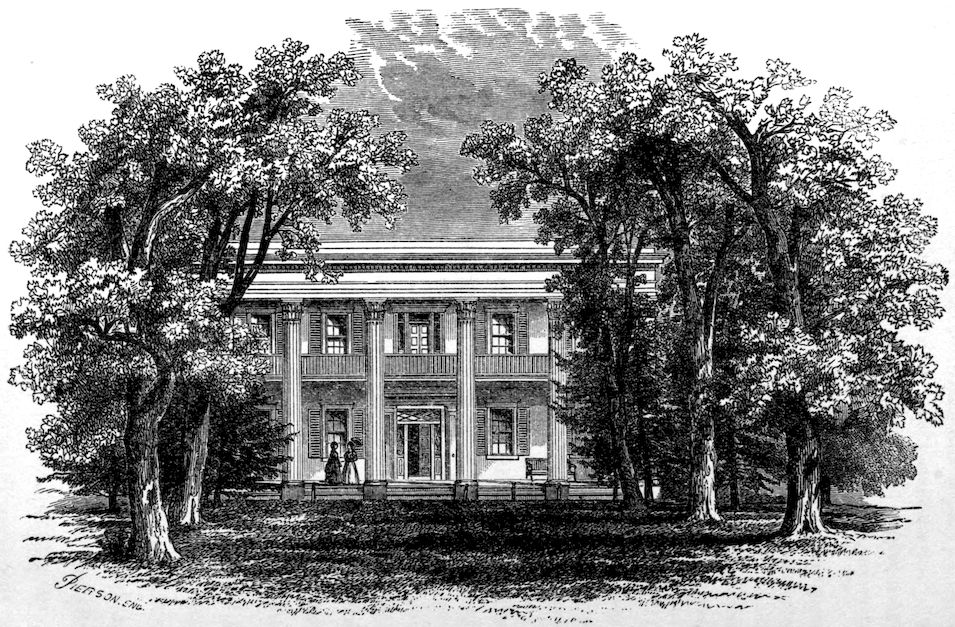
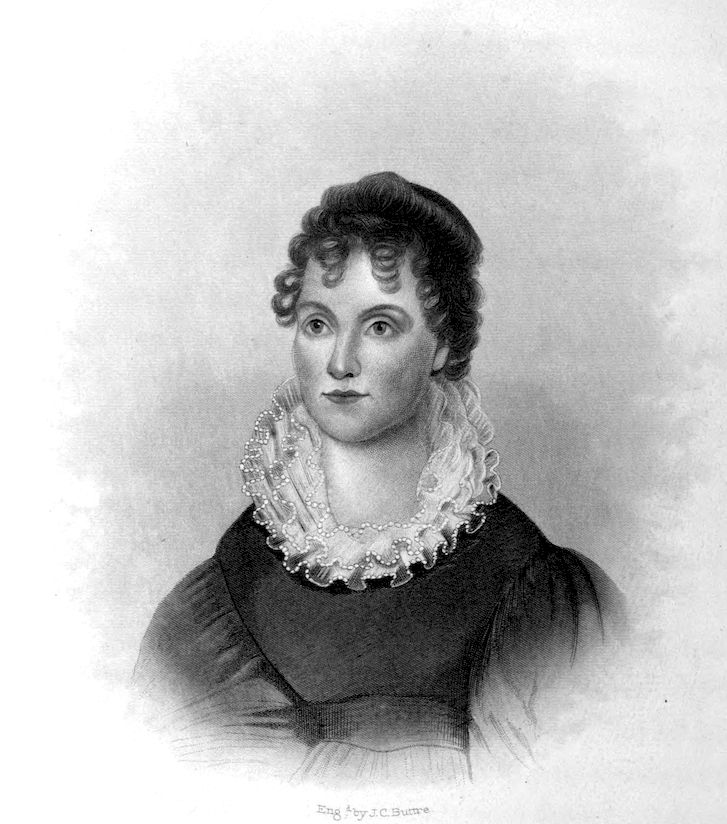
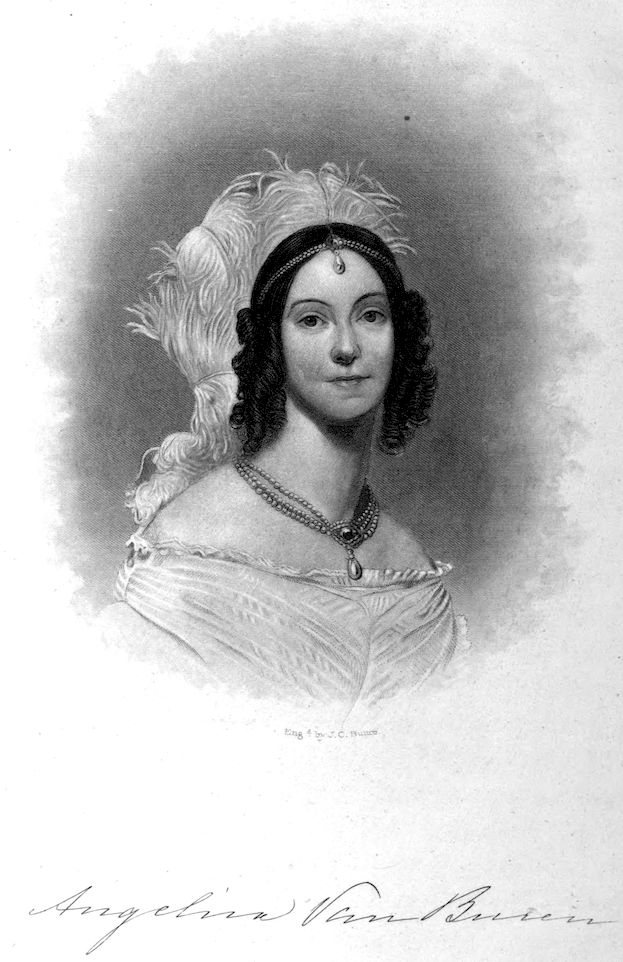
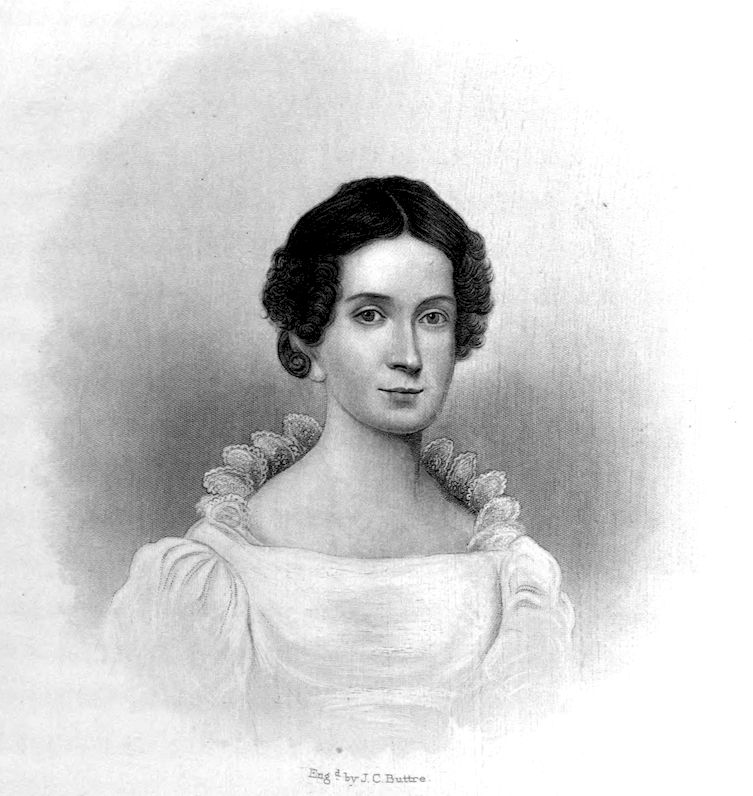
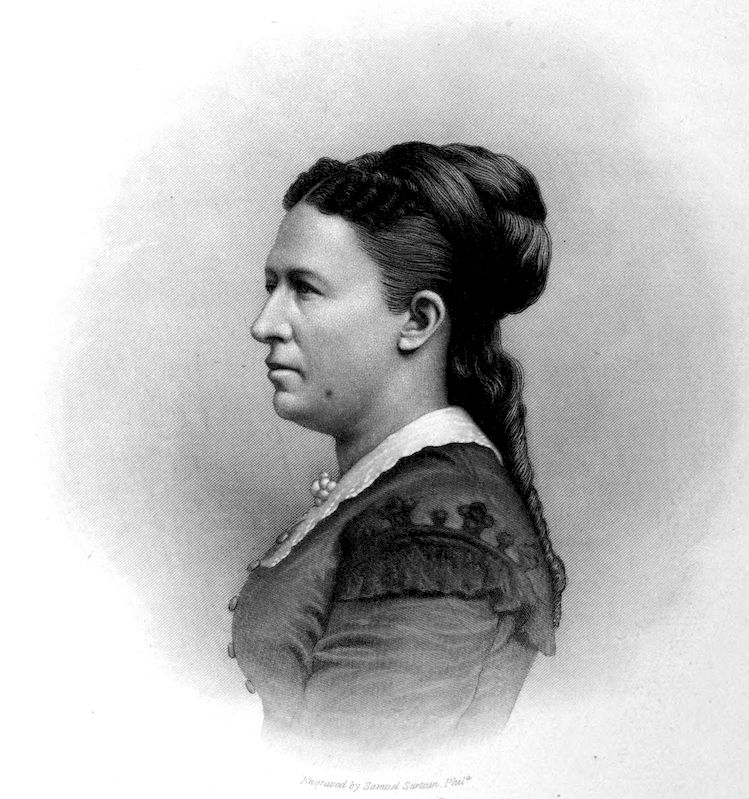
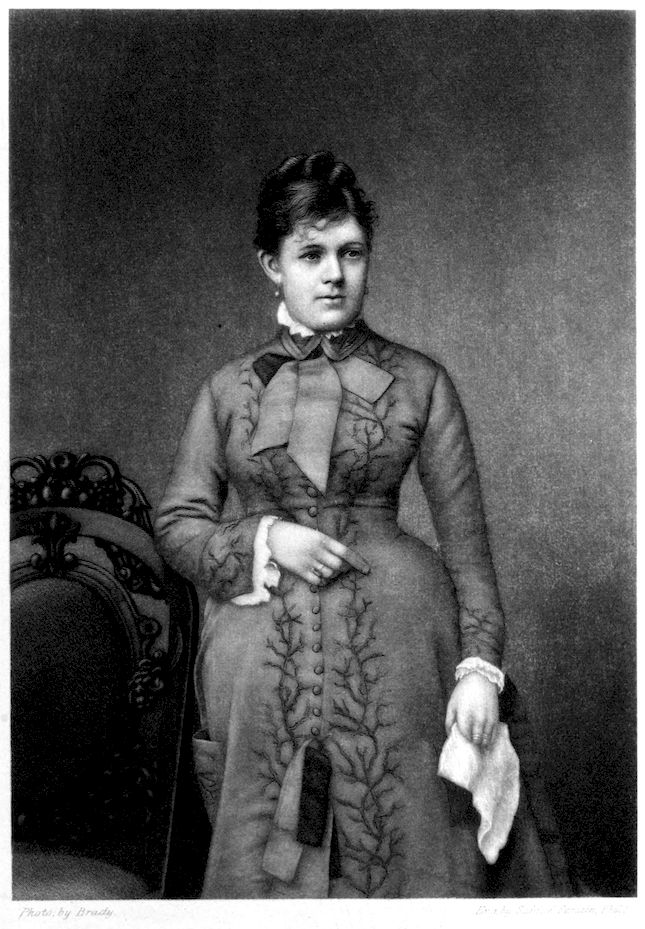
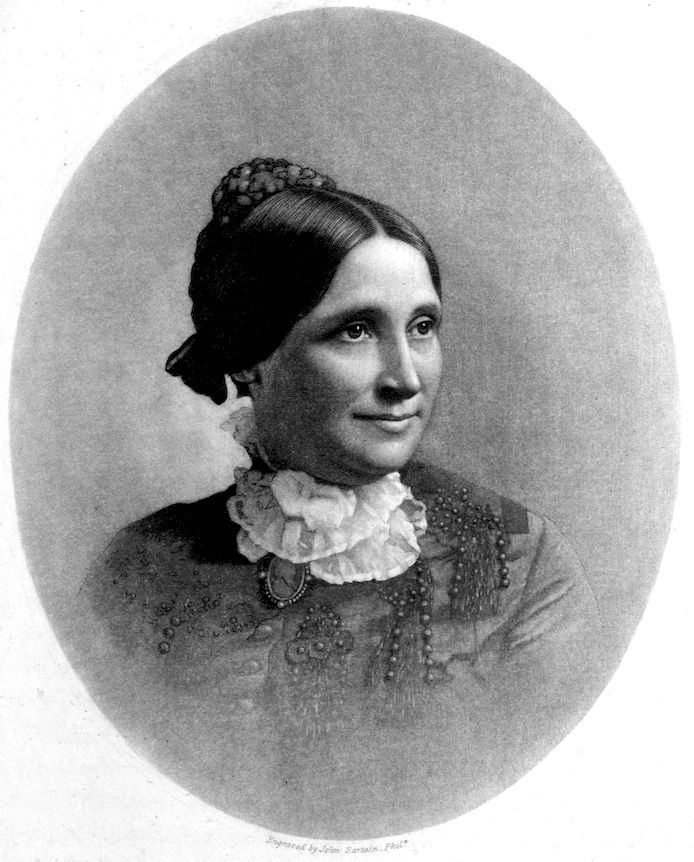
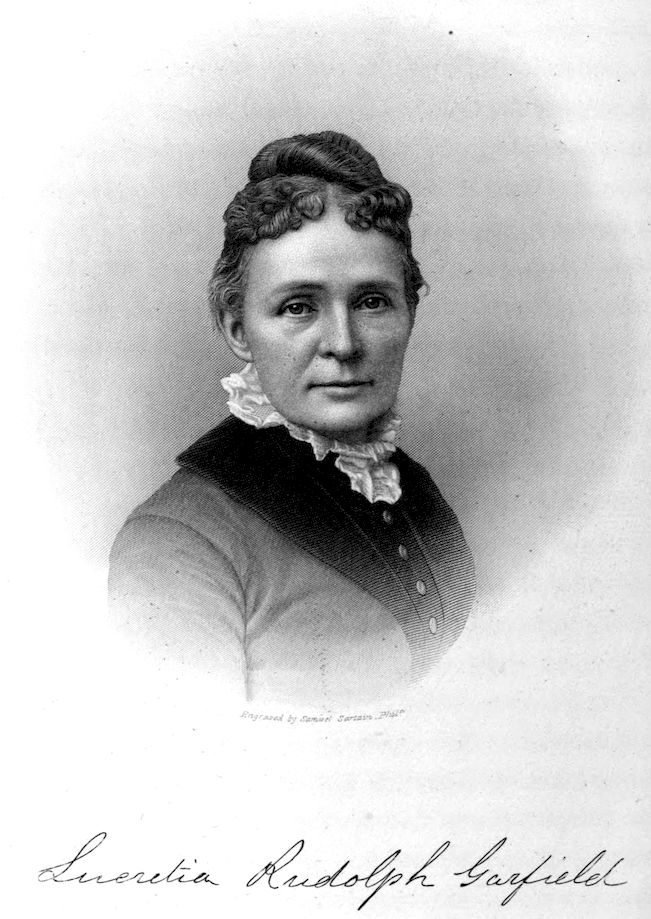
THE Ladies of the White House ; OR, In the Home of the Presidents . Being a Complete History of the Social and Domestic Lives of the Presidents from Washington to the Present Time—1789–1881.
Transcriber’s Note:
The cover image was created by the transcriber and is placed in the public domain.
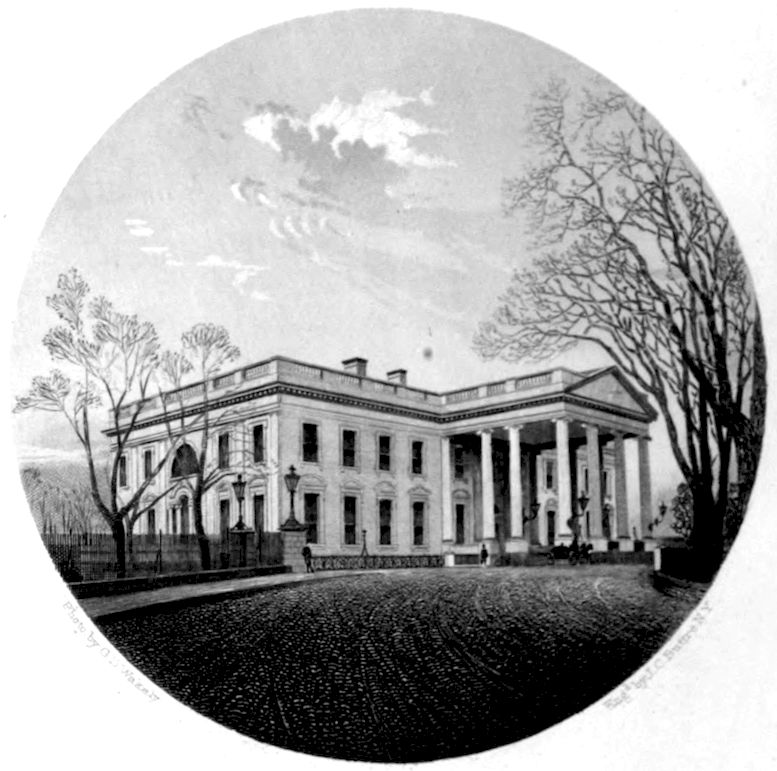
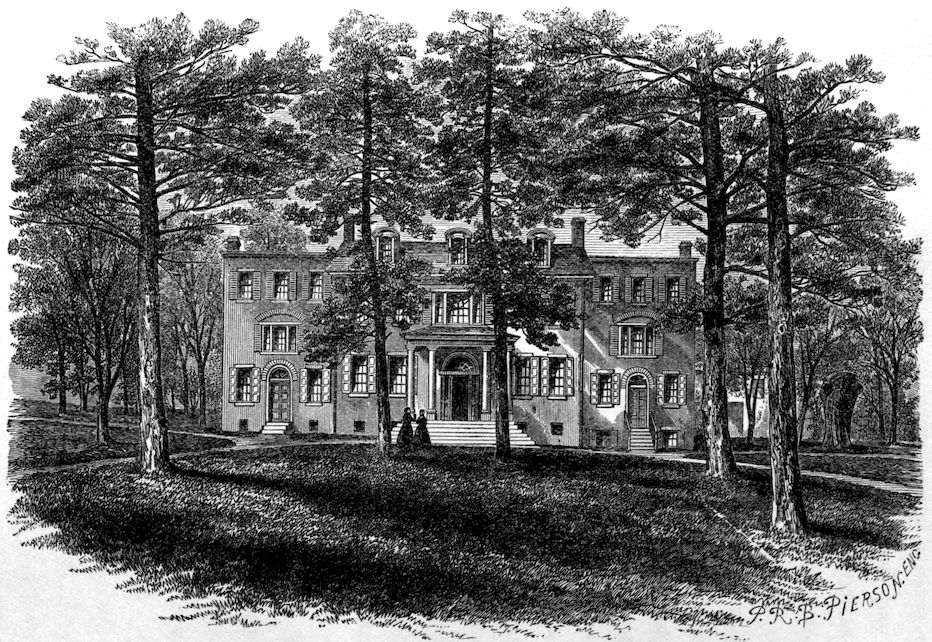
The White House
BY
LAURA C. HOLLOWAY.
WITH NUMEROUS ENGRAVINGS ON STEEL AND WOOD.
CINCINNATI:
FORSHEE & McMAKIN,
188 & 190 West Fifth Street.
1881.
Entered according to Act of Congress, in the year 1881, by
LAURA C. HOLLOWAY,
In the Office of the Librarian of Congress, at Washington.
FERGUSON BROS. & CO.,
PRINTERS AND ELECTROTYPERS.
PHILADELPHIA.
PREFACE.
3
The Ladies of the White House have had no biographers. The
custom of the Republic, which relegates back to private life those
who have served it, has made it difficult to gather much of stirring
interest concerning the women who have made the social history of
the different administrations. From privacy they came, to privacy
they were returned, and the world took little cognizance of them
beyond noting the entertainments they gave, and the success that attended
their dinners and receptions.
In the historical works of the age—even in the biographies of the
Presidents themselves—not much has been said of women, who, for
the most part, were powerful adjuncts to their popularity, and exerted
great influence over their lives. The most that has been written of
them heretofore were descriptions in the daily papers of the appearance
of the lady of the White House on some public occasion, and
with this the world has been content until now. We have had a
hundred years of domestic honor in the White House—a hundred
years which has added much to the glory of the country abroad, and
it is but fitting that women, who have held the highest social and
semi-official position in the nation, should be made historic subjects.
No better time than the present could be found for filling this serious
gap in general American history. The moral influence that has been
exerted by the untarnished reputations and high social qualities of the
women who have successively filled the position of Hostess of the
Presidents’ House, cannot be estimated. Without the effective and
intelligent aid they rendered, no administration would have been
satisfactory; and though the political historian may ignore such service,
the right-thinking, honorable men or women of this country
have a higher appreciation of the services rendered by these ladies,
who were the power behind the throne, equal in social influence to
the throne itself, and a historical work bearing upon their lives is a
valuable contribution to the nation’s official history.
4Such a one is now offered to the people of this country. It is a
complete work, comprising a biographical sketch of every President’s
wife and hostess of the Executive Mansion from Mrs. Washington
down to Mrs. Garfield.
The information contained in the volume has never been compiled
in any other form, and there are many historical facts of a most interesting
nature for the first time presented to the public. The book
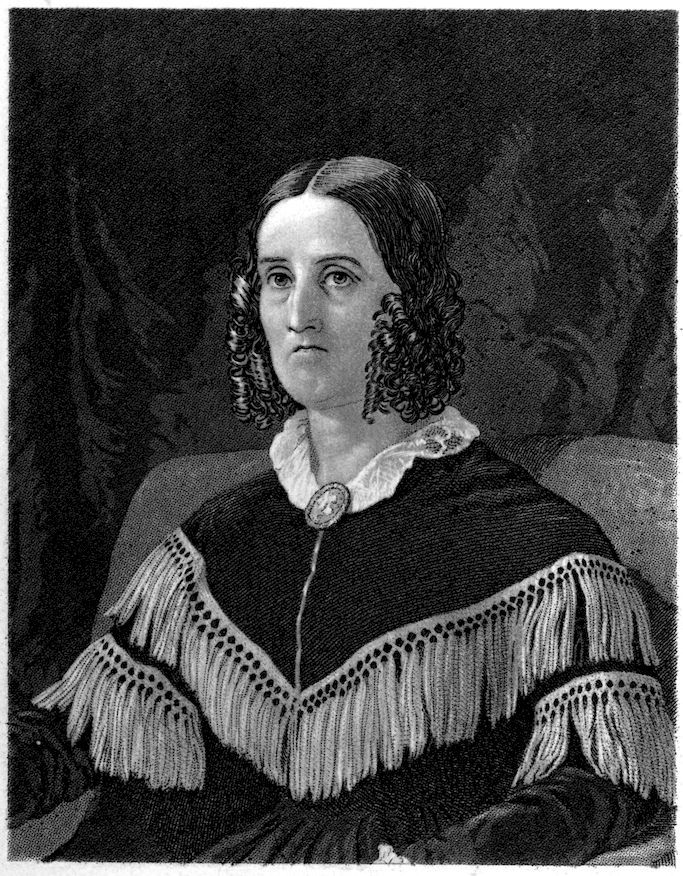
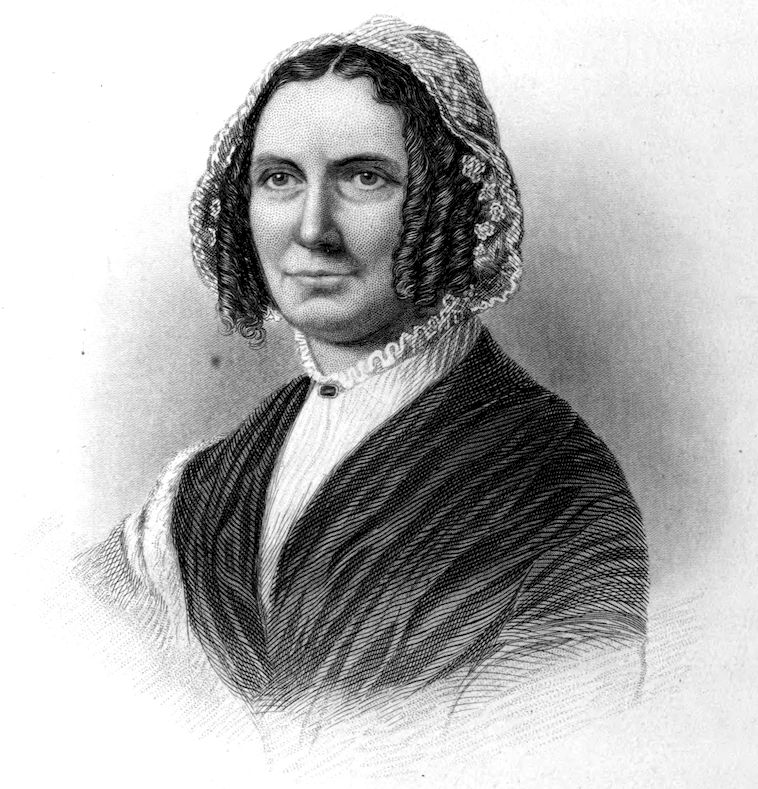
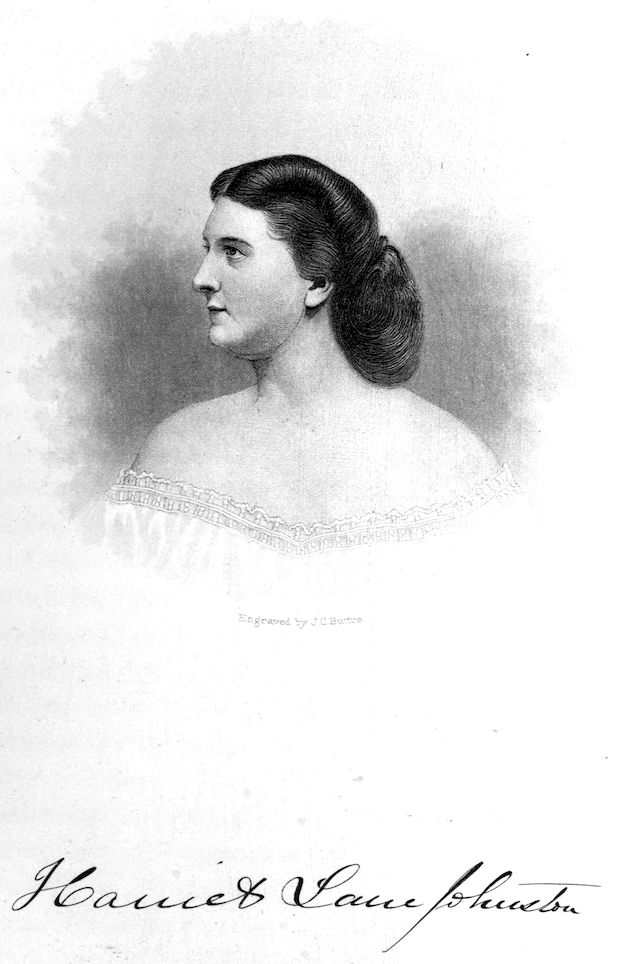
contains the portraits of the wives of the Presidents, and of the
ladies who presided over the Mansion during the administrations of
unmarried Presidents. At a time when the women of this country
are commanding the attention of the civilized world by reason of
their higher education, superior mental attributes, and exalted social
status, such a book is of exceptional value.
The mechanical execution of the work will commend itself to all
lovers of excellence in book-making. Nothing has been left undone
that would make it worthy of the ladies whose records it contains.
The unusual attractions of the theme, the style in which it is published,
and the place in the country’s history which such a book fills,
conspire to render it a work which the public and private libraries of
this country cannot afford to be without; they cannot be called complete
without a copy of the “Ladies of the White House.”
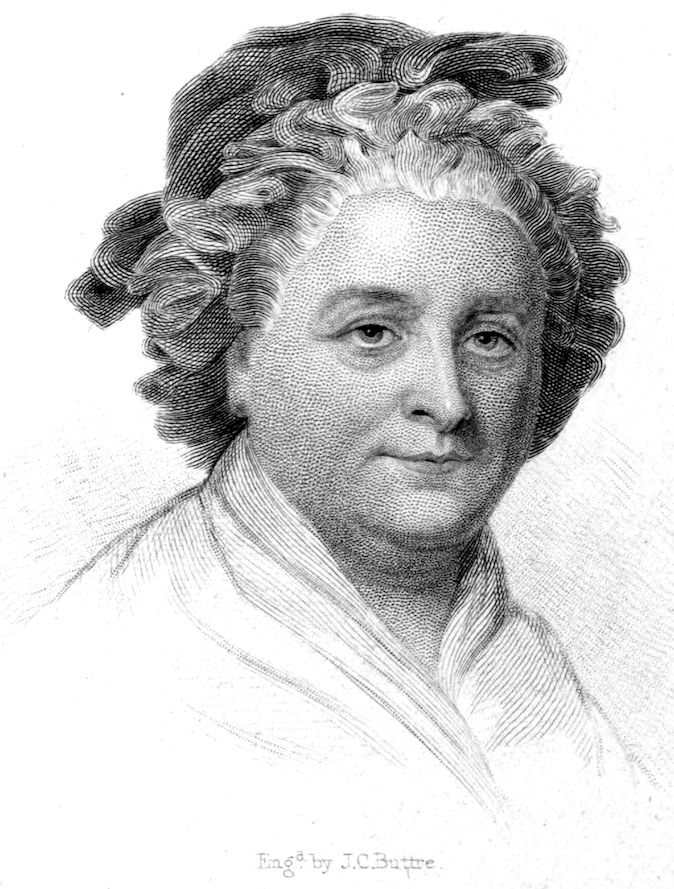
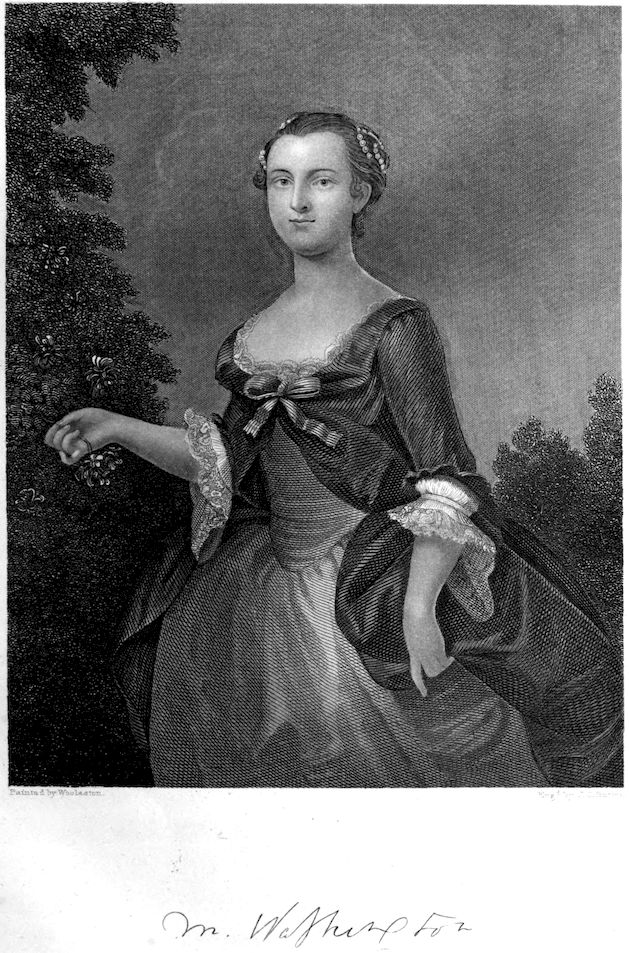
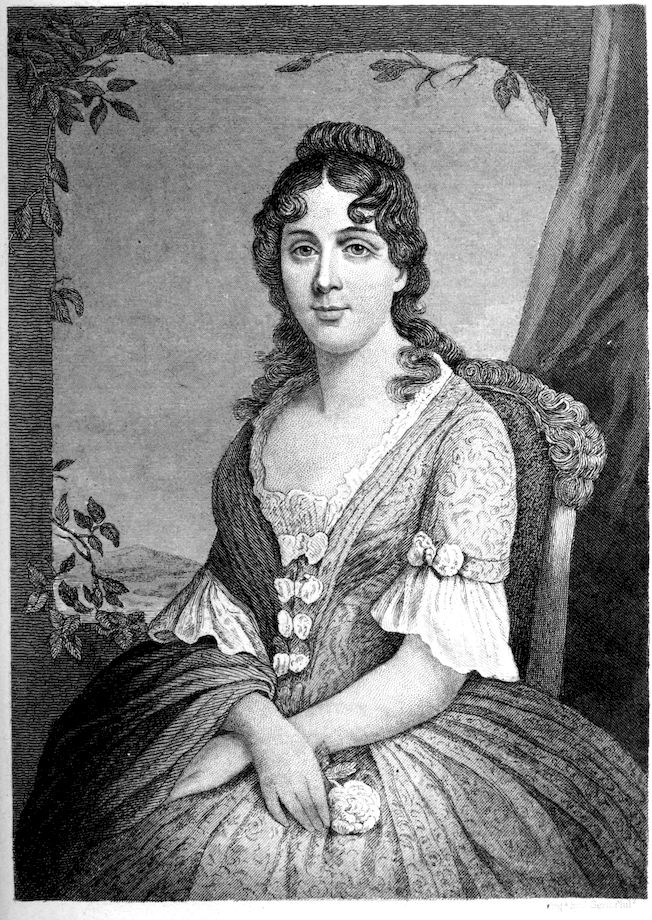
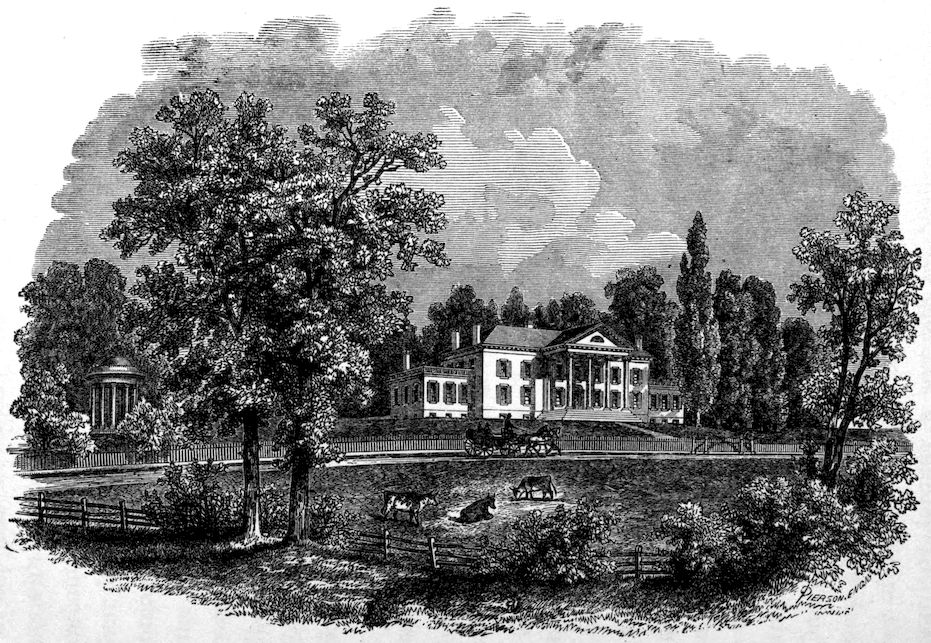
Personal appearance of Mrs. Custis—Introduced to Colonel Washington—Traditions relating to their first interview—The body-servant’s long wait for his master’s appearance—His orders to put up the horses for the night—The wooing of the soldier lover—Returns from the seat of government to offer himself—Engagement—Marriage—The wedding at the “White House”—The Virginia home of the bride—A most joyous and happy event—The girlhood of Martha Dandridge—The belle of Williamsburg—Her first marriage—Death of her eldest son—Colonel Custis—His fine character and romantic nature—Happy married life with him—Left with two children—She manages her estate after her husband’s death—Residence near her father’s home—Twenty-six years old when she becomes Mrs. Washington—Had never known care or poverty—Her high social position—Removal to Mount Vernon—Again the mistress of a wealthy planter’s home—Often with Washington in Williamsburg while he was a member of the Legislature—Her life a happy one—Washington’s great consideration for her—Only letter preserved that was written by him to her—Mrs. Washington before her death destroyed all her letters—This one overlooked—His assurance that he is unwilling to part with her and their children, at the time that he is made Commander-in-Chief of the Continental Army—His only unhappiness due to her loneliness—Urges her to be content, and not complain of what he could not avoid—Makes his will in her favor, and hopes that his “dear Patsy” is pleased
with its provisions—Her visits to him—Travels in her private carriage to his head-quarters each year—The servants wish his return home—Washington anxious about her, and after her arrival sent letters of thanks to all who had been attentive to her—The officers glad to see her—Once insulted in Philadelphia through party bitterness—Sensitive to her husband’s fair fame—Mrs. Washington not fond of dress—The spinning wheels and looms in her house—Washington’s inaugural suit the handiwork of his household—She wears “a simple russet gown and white handkerchief about her neck” to a ball given in her honor—Two of her dresses woven from the ravelings of brown silk stockings and old crimson chair-covers—Washington’s return to Mount Vernon—called again from his retirement—Mrs. Washington’s crowning glory—Some other attributes—Her life an interesting one, viewed historically—Mrs. Washington not much of a reader—A good daughter and mother, but not a notable housekeeper—Her husband the manager of the establishment—The children governed by him—A source of regret that he had no sons and daughters—His countrymen glad that there was no parental tie to divert him from his public service—Death of Miss Custis—John Parke Custis with General Washington—His young wife and children at Mount Vernon—Mrs. Washington at Valley Forge during the winter of 1777–78—Death of her son—General Washington adopts her two grandchildren, and returns to Mount Vernon with the mourners—Mrs. Washington’s first reception as
wife of the Chief Magistrate—Pleased with her lofty position—The levees held at the Republican Court—The residence of the President in New York—The etiquette of the mansion—Mrs. Washington’s views on the subject of her elevation—A letter to a friend, in which her philosophy is shown—Removal of seat of government to Philadelphia—Letter of the Rev. Ashbel Green—Mrs. Washington again at Mount Vernon—The President rents a house in Market street between Fifth and Sixth, and furnishes it handsomely—Return of the President and Mrs. Washington from Mount Vernon—Congress assembles—Mrs. Washington’s drawing-rooms held on Friday evenings—Early hours for retiring—She tells her company that her husband retired at “ten” and she followed very soon afterward—Stiffness and formality of the drawing-rooms—How Mrs. Washington received—No hand-shaking in those days—The grandchildren of Mrs. Washington—Mrs. Robert Morris receives with Mrs. Washington—The Marchioness d’Yuro—The first levee in Philadelphia the most brilliant occasion of the kind ever known in this country—Recollections of Mrs. Binney—Mrs. Washington’s punctuality in returning calls—Her manners easy and pleasant—Makes tea and coffee for an English guest—Her plain cap and gray hairs, as described by this visitor—Return to Mount Vernon—The old life resumed—Washington lays out the future capital—The “White House” named in honor of the former home of his wife—The building afterward partly burned by the British—Anecdote of “obstinate” David
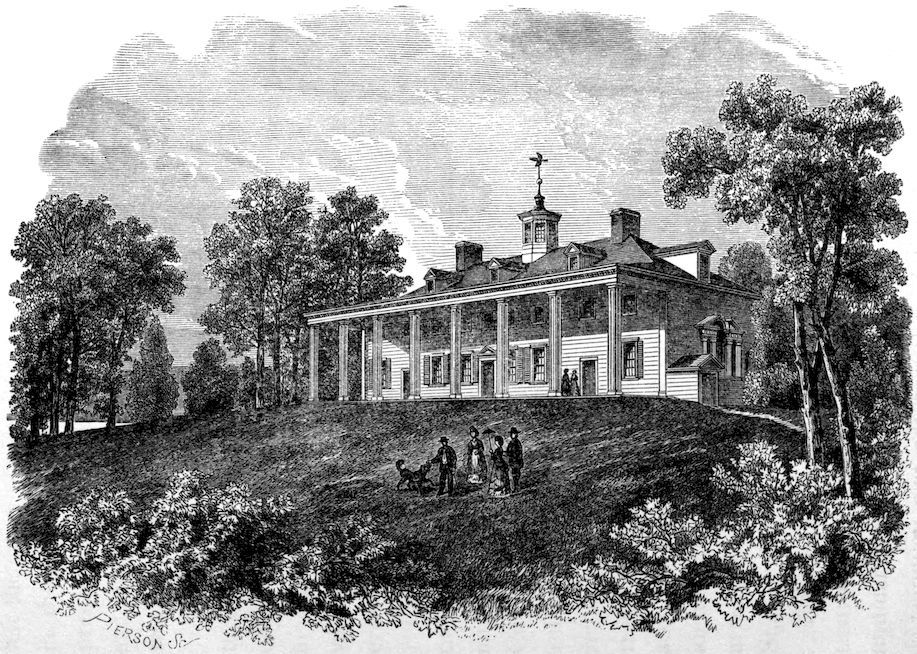
Burns—“What would Washington have been if he hadn’t married the Widow Custis?”—Mount Vernon thronged with visitors—Closing years of Washington’s life—His death in 1799—Grief of Mrs. Washington—Refuses to be comforted—Never re-enters the chamber in which he died—Congress passes resolutions of respect and condolence—Entreats Mrs. Washington’s consent to the interment of the remains in Washington—She gives reluctant consent to the request—Remains interred at Mount Vernon, where they are now—Mrs. Washington’s resemblance to her husband—Her dependence upon his guidance and love—Her appearance at this time—Serene of countenance—A devoted Christian—His death a fatal blow—Her death two and a half years later—Their bodies side by side—Visit of Lafayette to Mount Vernon in 1826—Visit of Albert Prince of Wales, in 1860, in company with President Buchanan—Description of the place as it appeared before its restoration
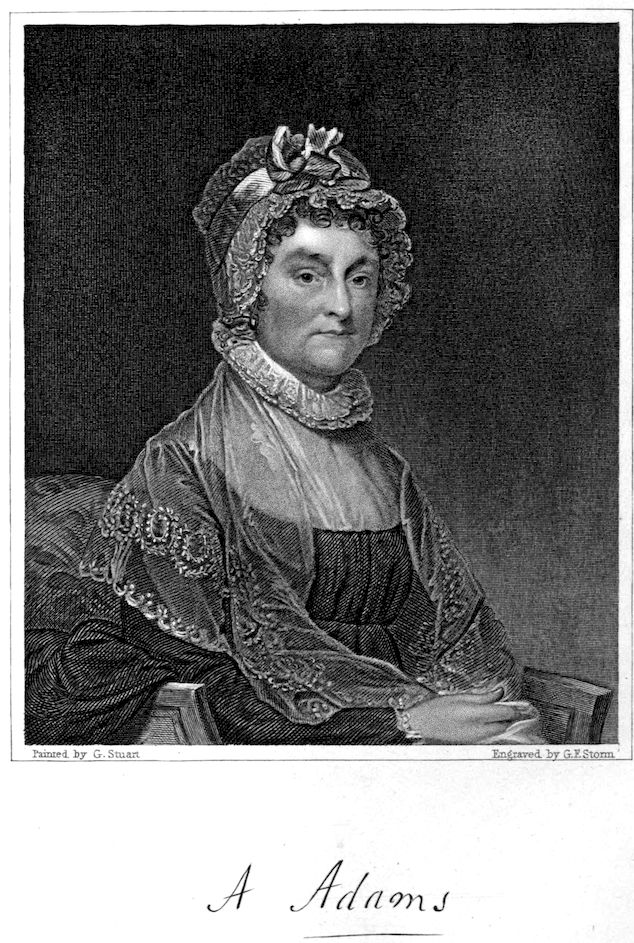
The daughter of a New England minister—Instructed by her grandmother—Durable impressions received from her—Never at school—Always sick—Austere religious habits and customs of her kindred—Imaginative faculties suppressed—A great letter writer—A reader of standard works—Not a learned woman—Her fondness for religious topics and discussions—The daughters taught home duties—The sons sent to college—No career for woman outside the domestic circle where she toiled—Marriage of Abigail Smith to John Adams—Her parents rather opposed to the match—She was the daughter and granddaughter of a minister, and hence superior to him in social position—Incident connected with her marriage—Her Father’s sermon—A happy marriage—The mother of three sons and a daughter—Mr. Adams a delegate to the Colonial Convention—Made the trip from Boston to Philadelphia on horseback—Elected to Congress—His wife alone at Braintree—Hears news of the battle of Lexington—Manages her farm and does her own house-work—Studies French at night—Long evenings alone with her four little children—Three deaths in her household—Cheers her husband at his far-off post of duty—The proclamation of the King arouses her patriotism—In sight of the cannonading at Boston, and in the midst of pestilence—Mr. Adams returns to his suffering family—Leaves, after a month’s visit, for Philadelphia—The roar of British cannon before Boston—Mrs. Adams climbs a hill to watch the shells falling about the city—Writes her husband from her post of observation—His long absence—No joy in his return to his wife when she learns his news—Appointed Minister to France—Sails in company with his eldest son—Mrs. Adams again alone—Manages her farm and teaches her children—Does not hear from her husband for six months—Her business ability enables her to support herself and make her home a happy asylum for family—Writes sadly to her husband—He returns after eighteen months—Ordered to Great Britain to negotiate peace—Two of his sons accompany him—“The cruel torture of separation”—Letter to her eldest son—Lofty sentiments and sound views of the self-sacrificing woman—Rather her boy were dead than immoral—A Spartan mother—Mr. Adams elected Vice-President—Mrs. Adams with him in New York—Is the object of much social attention—Dines with the President, “the ministers and ladies of the court”—Washington gives her sugar-plums to take to her grandson—Mrs. Adams congratulates her husband on his election to the Presidency—Her feelings not those of pride but solemnity—She joins the President in Philadelphia—Seat of government removed to Washington—Letter to her daughter—Graphic description of Washington—The city only so in name—None of the public buildings finished—The White House cheerless and damp—Fires in every room to secure its inmates against chills—Thirty servants required to keep the house in order—Surrounded with forests, yet wood is scarce and expensive—Mrs. Adams returns the visits of Georgetown ladies—Inconveniences of a new country—No fence or yard about the White House, and not an apartment finished—The East Room used to dry clothes in—Only six chambers habitable—Mrs. Washington sends a haunch of venison from Mount Vernon—Invites Mrs. Adams to visit her—Mrs. Adams has no looking-glasses and not a twentieth part lamps enough to light the house—The roads intolerable—The work of a day to make a visit—Location of city beautiful—Hon. Cotton Smith describes Washington—The huts of the residents contrast painfully with the public buildings—First New Year’s reception in 1801—The etiquette of Washington’s time adopted—Guests received in the Library—Mrs. Adams ill—Returns to Quincy, Massachusetts—In the White House four months—Attends to her husband’s private affairs—Cheerful and bright under all circumstances—Retirement of Mr. Adams from public life—Mrs. Adams the “Portia” of the rebellious provinces—Her marked characteristics, truthfulness and earnestness—Her place in history—Indifference to fashionable life—Seventeen years of home-life—Writes her granddaughter on her fiftieth marriage anniversary—Thankfulness for so much happiness—Eldest son appointed Minister to Great Britain by President Madison—Appointed Secretary of State by President Monroe—Death of her daughter, Mrs. Abigail Smith—Friendship with President Jefferson broken—Political differences the cause—Silence of many years broken by the death of Jefferson’s daughter—Her second letter criticising his course in the appointments to office—The correspondence unknown to her husband—His later endorsement—Jefferson writes to Adams—They never meet again—Mrs. Adams’ imposing appearance—Her face strongly intellectual, but never beautiful—Her old age possessed of the sweetness of youth—Death of Mrs. Adams in 1818—A nation’s private tribute to her worth—Jefferson expresses his sympathy to Mr. Adams—Buried in the Congregationalist Church at Quincy—Her husband buried beside her
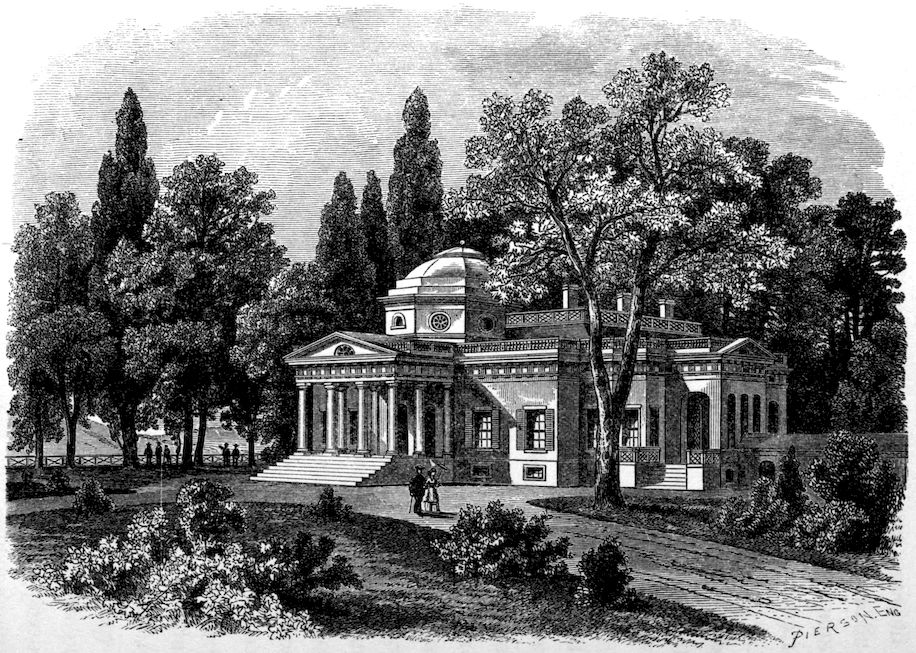
Jefferson’s wife died before his elevation to office—No formal receptions during his administration—Married to Mrs. Martha Shelton, of Charles City county—Marriage bond drawn in his own handwriting found—His bride a beautiful and clever woman—Exquisite form and fine complexion—A fine conversationalist and musician—How Jefferson defeated his rival suitors—They listen outside while the two sing—Marriage at “The Forest”—Trip to Monticello—Travel in a snow-storm—Arrived late at night—A bottle of wine serves for fire and supper—Happy married life—Mother of five children—Governor Jefferson declines a mission to Europe—Her health failing—Flies from her home with her babe in her arms—Arnold’s march to Richmond—Efforts to capture Jefferson—Wife and children sent into the interior—Monticello captured—Many negro slaves taken away—Cæsar secretes the plate—Is fastened under ground eighteen hours—Family return home—Mrs. Jefferson very ill—Clings to life—Intense affection for husband and children—Jefferson by her side until she dies—Beautiful and strong character—The eldest daughter sent to school—Her youngest sister dies—Jefferson sends for Martha and Marie—Placed at a French convent—Mrs. Adams’ description of Marie—A girl of superior beauty—Martha asks permission to remain in a convent—Taken from school—Jefferson returns to America with his daughters—Marriage of Martha to Thomas Macon Randolph, Jr., her father’s ward and her cousin—Marie is married to Mr. Eppes, of Eppington—Jefferson
a member of Washington’s cabinet—Afterward Vice-President—Inaugurated President in 1801—Letter of Sir Augustus Foster—Martha the mother of several children—Her home near Monticello—Washington City society—Some novel aspects—Incidents of a call—Letter from father to daughter—Death of Mrs. Eppes—Personalities concerning her—Letter from Mrs. Adams—Her attachment to Marie Jefferson—Jefferson’s second inauguration—Martha Randolph and her children at the White House—Washington unhealthy in summer—Mrs. Randolph a busy Virginia matron—“The sweetest woman in Virginia”—Jefferson’s retirement to Monticello—His daughter his housekeeper—Hundreds of guests—People watch for a sight of the ex-President—A window-pane broken by a curious woman—Men and women gaze at him as he passes through his hall—No privacy in his home—Jefferson’s letter concerning his daughter—The education of girls—“The apple of his eye”—Were life to end—Loss of property—Martha the companion and nurse of her father—Her children his idols—Mr. Randolph’s ill-health and failure—Death of Jefferson—Mrs. Randolph at his bedside—A little casket—His last pang of life is parting from her—A touching tribute to his daughter—Jefferson’s estate insolvent—Monticello sold—Exhibition of public feeling—Death of Mr. Randolph—The family separated—Letter from her daughter—Interesting facts of her family—Death of Martha Jefferson Randolph in 1836—Buried beside her father at Monticello
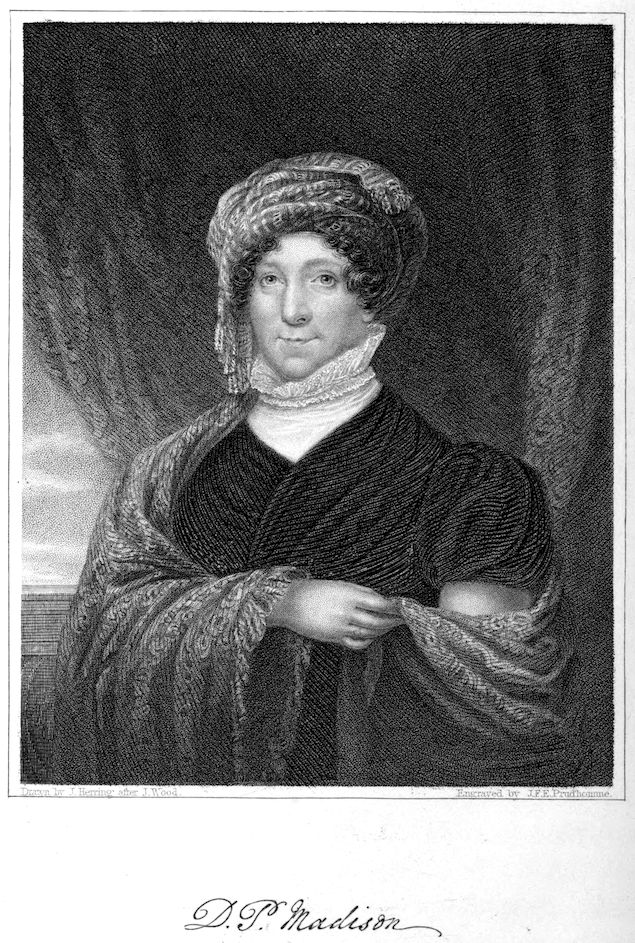
Washington Irving’s letter—Mrs. Madison’s drawing-room—Her two sisters—The daughter of Virginians—Granddaughter of William Coles, Esq., of Coles’ Hill—Her parents join the Friends’ Society—Reside in Philadelphia—Daughter reared in strict seclusion—Her sunny nature—Married at nineteen to a young lawyer—Her sisters—Mrs. Washington and Mrs. Cutts—Mrs. Paine’s fascination of manner and beauty of person—Left a widow with an infant son—A general favorite in society—Object of much attention—Courted by many suitors—Marriage to Mr. Madison, then a member of Congress—The match a brilliant one—The bride of twenty-three years of age—The wedding at the residence of her sister, in Virginia—Resides in summer at Montpelier—Winters spent in Washington—Generous and hospitable—A happy domestic life—Mr. Madison appointed Secretary of State—Removal to Washington—Gay social life—Her house a radiating point for friends—A noble, high-minded woman—Her power of adaptiveness—Loved by all parties—A strong support to her husband—Dispensed his abundant wealth with open hand—Received President Jefferson’s guests with him—Election of Mr. Madison to succeed Jefferson—Mrs. Madison hostess of the White House—Stiffness and formality laid aside—Mrs. Madison never forgetful of a name or face—Her field of action her parlor—Makes her husband’s administration popular and brilliant—The first four years in the White House—No children by Mr. Madison—Her table ridiculed by a foreign minister—“Abundance
preferable to elegance”—War with Great Britain—Mr. Madison’s declaration—Second appeal of the United States to arms—The British advance on Washington—All the public records removed—The people in a panic—“The enemy coming”—The people flee from their homes—Entrance of British—The Capitol burned—The American army retreats to Georgetown—The glare of light seen for miles—The President across the Potomac—Mrs. Madison remains to gather up valuables—Notes to her sister—Houses fired all over the city—Mrs. Madison urged to fly—Waits to secure the safety of General Washington’s portrait—Colonel Custis comes from Mount Vernon to remove it—Mrs. Madison orders its frame broken—Carried to Georgetown—The White House left in the care of servants—Mrs. Madison joins her husband—The enemy ransack the White House, and then fire it—Thieves pillage the burning building—Furniture and family stores belonging to the President lost—A coarse pun—The War Department spared because of the storm—The British commanders regretting the escape of the President and his wife—Wanted to be exhibited in England—A week of terror—No sleep or rest for the frightened people—Terrible storm—The British amazed at the force of the tornado—Appalling disasters—Two cannons lifted from the ground—The enemy anxious to leave Washington—Mrs. Madison in Virginia—Fleeing troops and panic-stricken families—Rumors of the approach of the British—The elemental war—Mrs. Madison awaits the coming of her husband—Insulted by women—Refused shelter
from the storm—Madison charged with the responsibility of the war—The tavern closed to herself and escort—The latter forces an entrance—The lady who did not forget her station—People who had been her guests denounce her—Mrs. Madison’s anxiety for her husband—The hours drag slowly by—Reaches her at night-fall—Careworn and hungry—A courier at midnight—The President seeks safety in the distant woods—No enemy coming—The evacuation of Washington unknown to the President—Bids his wife disguise herself and fly—Hears next day of the retreat—Returns to the Long Bridge—Is refused a boat—No one recognizes the disguised woman—Gives her name and is ferried over the river—Finds her home in ruins—Desolation everywhere—Seeks the residence of her sister—Sends word to the President—His return to Washington—Rents the “Octagon” and lives there—Treaty of peace signed—Various residences of Mr. Madison in Washington—Last reception held by the President—The most brilliant ever held up to that date—Peace commissioners to Ghent present—Heroes of the war of 1812—Mrs. Madison “every inch a queen”—She offers Mr. Clay a pinch of snuff—Her bandana handkerchief—Fond of elegant apparel—Two visitors from the West—“P’rhaps you wouldn’t mind if I jest kissed you”—A graceful salutation—Mr. Madison not attractive to the ladies—His charming wife atones for his gravity—His admiration for her social characteristics—A curious coincidence—Three of the first four Presidents marry young widows—Two of the Presidents childless,
and all without sons—All Virginians—Anecdote of Mrs. Madison—Recollections of Mr. Trist—Led to dinner by President Jefferson—Rage of the British minister—A stir made about the “insult”—Mr. Monroe, Minister to England, informed of the facts—An expected call for official explanations—Mr. Monroe delighted with the prospect—Precedence over his own wife under analogous circumstances—Excellent materials in his possession—Expresses his satisfaction over an opportunity to retaliate, which was not granted—Mrs. Madison always presided at the dinners given by President Jefferson—His disregard of official etiquette—The British minister and his wife never his guests again—Thomas Moore lampooned the President—Disliked everything American—Mrs. Madison’s regret over the occurrence—Expiration of the President’s second term—He prepares to leave Washington—Mrs. Madison’s Washington friends—Sorrow over her departure from the city—Residence at Montpelier—Quiet country life—The mansion of the ex-President—His mother an inmate of his home—Devotion of Mrs. Madison to her—The object of the venerable lady’s grateful affection—A devoted wife to an appreciative husband—Admirable in all the relations of life—“Cordial, genial and sunny atmosphere surrounding her”—Her son—Paine Todd an undutiful son—The sorrow of her life—Mr. Madison’s kindness to him—His conduct heartless and unprincipled—Death of Mr. Madison—The end of a noble career—Offers Congress her husband’s manuscripts—President Jackson sends a special
message to Congress regarding the subject—Thirty thousand dollars paid her for the work—“Debates in the Congress of the Convention during the years 1782–87”—Congress also confers the franking privilege upon Mrs. Madison—Votes her a seat upon the floor of the Senate—The last years of Mrs. Madison’s life—Her residence in Washington—Beautiful old age—Her public receptions on national holidays—The throng of visitors equal to that assembled at the President’s house—Her death in 1849—Funeral in Washington—Aged eighty-two years—Buried beside her husband at Montpelier
The era in which Mrs. Monroe lived—Her father an ex-officer of the British Army—Miss Kortright a belle of New York—Her sister—Mr. Monroe a Senator from Virginia—Falls in love with the pretty girl—Married during the session in 1789—Reside in Philadelphia, the second seat of the General Government—Pleasant home-life in that city—Mr. Monroe appointed Minister to France in 1794—The first five years of Mrs. Monroe’s married life—A polished and elegant lady—Proud of her husband and of her country—Fit representative of her countrywomen at the Court of St. Cloud—Her daughter at school in Paris—Mr. Monroe an ardent advocate of free government—Not careful to recognize the opposite feeling in Imperial France—Unpopular with the Court—His recall asked—Intense sympathy for Lafayette, then in prison—Agents of the United States employed in his behalf—Mrs. Monroe warmly interested in the fate of Madame Lafayette—The private feelings of President Washington not expressed in his official communications—Lafayette’s son his guest while in the United States—Recognizes treaty obligations with France—Mr. Monroe sends his wife to visit Madame Lafayette—The carriage of the American Minister at the prison—Mrs. Monroe asks admittance—Is permitted to see the Marchioness—Emaciated and prostrated from fright—Anticipating the summons of the executioner—Her last hope departing when the sentinel stops at her cell—Her visitor is announced—Thoughts of her husband and America overcome her—Sinks
at the feet of Mrs. Monroe—Presence of sentinels preclude conversation—Mrs. Monroe assures her friend she would return the following morning—Speaks so as to be heard by those about her—The visit saves Madame Lafayette’s life—Was to have been executed that afternoon—The officials change their mind—Is liberated next day—Attentions paid her by the American Minister and his wife—The prestige of the young Republic appreciated—Madame Lafayette’s eldest son, George Washington, sent to Mount Vernon for safety—She leaves Paris accompanied by her two daughters—Disguised and under the protection of American passports—Seeks the prison of her husband—Signs her consent to share his captivity—Stays by his side until released—Mr. Monroe recalled—His course defended in America—Mrs. Monroe proud of his conduct—A greater honor to have saved Madame Lafayette than to have remained Ambassador—Friendship between Monroe and Lafayette—Offer of pecuniary help—Generous conduct on both sides—Returns to New York—With her family and friends—Mr. Monroe elected Governor of Virginia—Husband and wife gladdened by this evidence of affection—The old commonwealth proud of her son—Mrs. Monroe the mistress of the Governor’s mansion at Williamsburg—Governor Monroe appointed Envoy Extraordinary to France to negotiate the purchase of Louisiana—Robert R. Livingston the other Envoy—The purchase effected—Mrs. Monroe accompanies her husband—While in Paris is appointed Minister to England—Sent to Spain on a mission—Mr. Monroe
returned home at the breaking out of the War of 1812—Ten years’ absence in Europe—Return to Oak Hill, their Virginia estate—Home-life not destined to last—Mr. Monroe elected to the Legislature—Chosen Governor a second time—Secretary of State under Madison—Mrs. Monroe and her daughters retire to Oak Hill before the fall of Washington—Remains until peace is declared—Anxious about her husband—Mr. Monroe succeeds President Madison in office—Removal to the White House in 1817—Personal description of her—Mrs. Monroe not like Mrs. Madison—Is not fond of general society—Her health delicate—She received visits but returned none—Her “drawing-rooms” were largely attended—An English writer’s comments—Held once a fortnight on Wednesday evenings—The condition of the White House—The grounds unimproved—Congress orders a silver service—The furniture of the East Room purchased—The crown of Louis XVIII. supplanted by the American Eagle—Mrs. Monroe an invalid during the second term—Marriage of her daughter at the age of seventeen—Wedding reception—A State Dinner at the White House—The East Room unfinished—Mr. Cooper’s letter—Mrs. Monroe weary of public life—Close of President Monroe’s second term—Retires to Virginia—Assists in establishing the University of Virginia—Chosen President of the State Convention to amend the Constitution—Mrs. Monroe heavily taxed with company—The three ex-Presidents neighbors—People from all the world their guests—Alone with her husband—Both daughters married—Anxious for
her husband to give up work—His last public position—Magistrate of Loudon County—Death of Mrs. Monroe—Oak Hill closed—The ex-President resides in New York—His youngest daughter his comfort in old age—His death in 1831—Survived his wife one year, dying on the Fourth of July—Funeral procession the largest ever seen in New York—Samuel Gouverneur, Postmaster of New York City, his son-in-law—Remains interred in New York—Afterwards removed to Richmond—Few descendants living
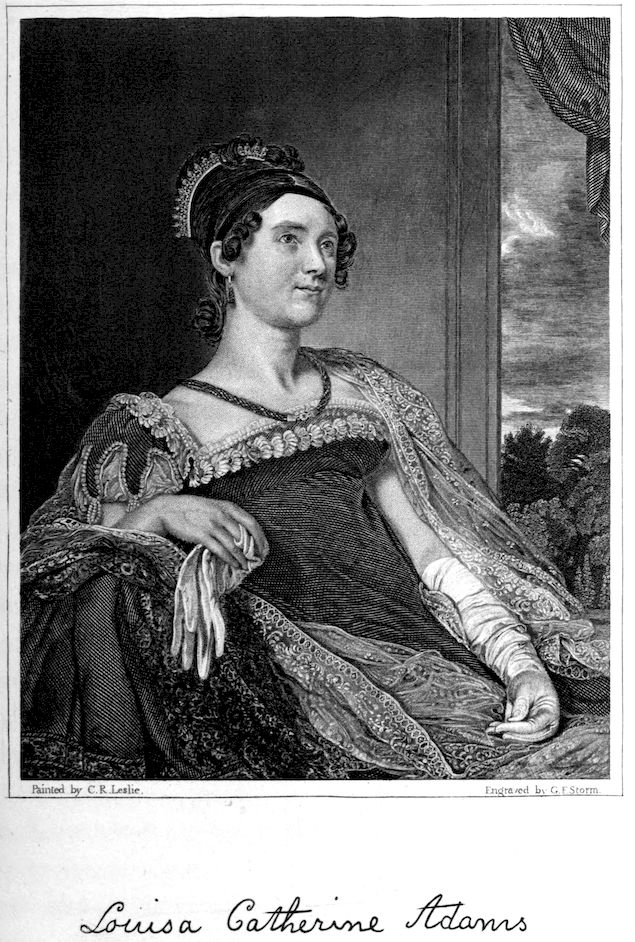
Mrs. Adams the last of the ladies of the Revolutionary period—Born in London—Her father, Mr. Johnson, a Maryland patriot—United States Commissioner in France until 1782—Consul to London—Mr. Adams a guest of Mr. Johnson—Meets his future wife—Marriage in 1797—Mr. Adams takes his bride to Berlin—Four years’ residence there—Returns to America—Settles in Boston—Mr. Adams elected Senator—Residence in Washington—Pleasant era of Mrs. Adams’ life—With her own family—Summers spent in Boston—Washington a congenial residence for Mrs. Adams—Eight years spent there—Her husband appointed Minister to Russia—Mrs. Adams accompanies him—Two children left behind—Takes the youngest, an infant—Long voyage—Arrives in St. Petersburg—Prefers exile in Russia to separation from her husband—In the midst of stirring scenes—Europe a battle-field—Napoleon spreading terror everywhere—Shut up in St. Petersburg—Six years in Russia—Death of an infant—Mr. Adams’ mode of life—Respected for learning and talent—War between England and America—Mrs. Adams weary of Russia—Anxious to return home—Mr. Adams a Commissioner to Ghent—The stepson of President Madison—His position greatly exaggerated abroad—News from home—Mrs. Adams alone in St. Petersburg with her son—Travels to Paris to meet her husband—Dangers encountered—Traces everywhere of war—Passports of little protection—Fastened in a snow-drift—Dug out by the peasantry of the neighborhood—Robbed by her own servants—The symbol of a Polish cap—Hears
of Napoleon’s return from Elba—Every crossroad guarded—Surrounded by soldiers—The presence of mind exhibited by Mrs. Adams—Meets her husband in Paris—Witnesses the arrival of Napoleon—Flight of the Bourbons—The reception at the Tuileries—Ladies of the Imperial Court—Napoleon preparing for Waterloo—Advantages enjoyed by Mrs. Adams—Events of the hundred days—Martial music heard on every side—Arrival of her children from England after six years of separation—Departure for England—Mr. Adams Minister to the Court of St. James—Charles King’s eulogy of Mr. Adams—Pleasant life in London—The centre of a cultivated circle—Return to America—Mr. Adams appointed Secretary of State—Mr. Adams the recipient of public attentions—Grand banquet in his honor—Residence in Washington—A charming home—Multitudes of visitors entertained there—Letter from Mrs. Adams to John Adams—Her appreciation of her mother-in-law—Her studies—Does not think highly of the mental capacity of her sex—Course of reading—How she estimates the philosophers—Likes nothing so well as the doctrines of Christianity—Her reading too diffuse to be beneficial—The wicked theories of French authors—How their venom was destroyed in her case—Her early ideas of life—Views changed with age—Discusses the nature of democratic institutions—Her faith in the people—Pride in her name—“Uneasy lies the head that wears a crown”—Complaints of hard times—The morals of the day portrayed—Mrs. Adams’ habits as a hostess—No exclusions in her invitations—Keenly
alive to the reputation of her husband—Her success in her semi-official position—Mr. Adams a candidate for the Presidency—Violence of partisan warfare—Mrs. Adams lives more secluded—Her husband elected Chief Magistrate—Description of the inaugural of Adams—Failure of her health—Presided at public receptions—Not seen on other occasions—Is tired of public life—Entertains Lafayette—His affecting farewell—The President and Mrs. Adams start to Quincy—Mrs. Adams ill in Philadelphia—Mr. Adams proceeds without her—Administration of Mr. Adams—Quietness throughout the world—Much done to consolidate the Union—Mr. Adams a learned man—The man who had read one more book than John Quincy Adams—Mrs. Adams glad to leave the White House—Retires to private life—Enjoys it but a short time—Letter describing her husband and home—Mr. Adams elected a member of Congress—Removes again to Washington—Occasional visits to Quincy—Illness of Mr. Adams—He is struck with paralysis—Dies in the Speaker’s room in the Capitol—Mrs. Adams by his side—Funeral at the Capitol—Remains deposited in the Congressional burying-ground—Letter from Mrs. Adams to the Speaker of the House of Representatives—Her thanks to the House for the regard manifested for Mr. Adams—Mrs. Adams retires to Quincy—Surrounded by her children and relations—A great writer and translator—Varied accomplishments which gave her pleasure in her old age—Died in 1852—Her grave beside her husband’s at Quincy, Mass
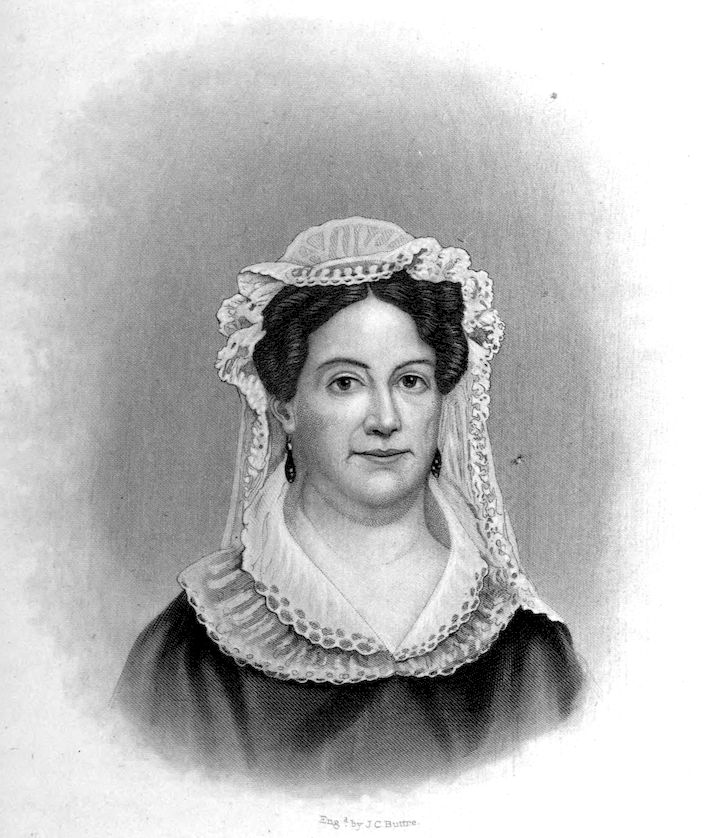
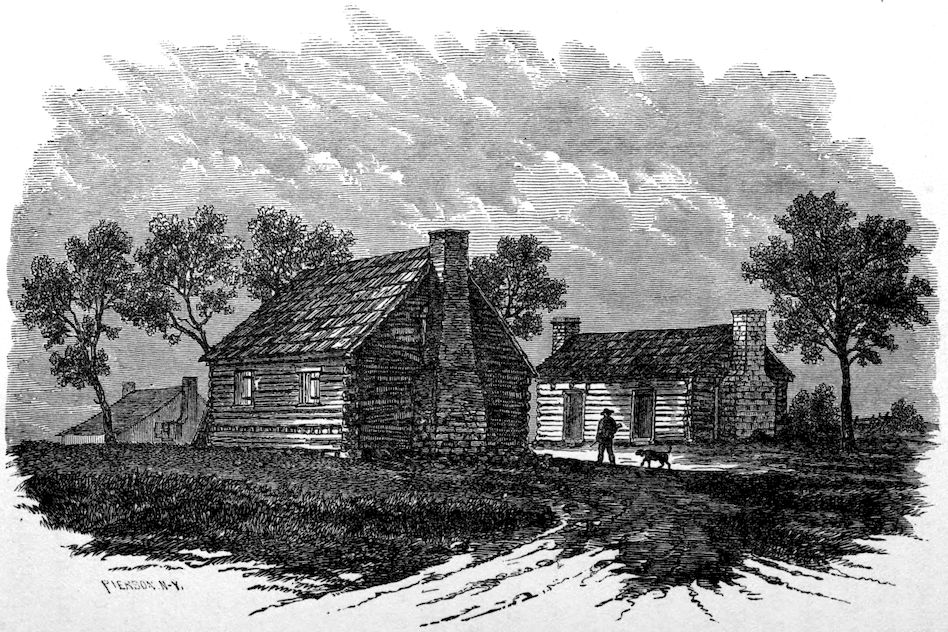
Party strife and bitterness of Jackson’s day—Mrs. Jackson a victim of cruel misrepresentation—Her early life—Daughter of Colonel John Donelson—Emigrants from Virginia—Travelling in the wilderness—A two thousand mile journey—Thrilling incidents and dangerous accidents—Indians dogged their footsteps—Rachel Donelson at the age of twelve—Colonel Donelson a wealthy settler—A person of consequence—Removal to Kentucky—Marriage of his daughter—Home in Kentucky—Mr. and Mrs. Robards very unhappy—His disposition extremely unfortunate—Requests Mrs. Donelson to send for her daughter—Her brother takes her to Tennessee—A good daughter-in-law—Mrs. Robards not censured—Her husband solely to blame—A reconciliation effected—Andrew Jackson a boarder at Mrs. Donelson’s—Mrs. Robards returns to her husband—Unmanly conduct—Second separation—Jackson and his friend seek another home—Mrs. Robards seeks an asylum in Mississippi—Her husband’s threats—Jackson’s sympathy for her—Jackson accompanies the party to Natchez—Dangers from the Indians—Jackson returns to Nashville—Judge Overton’s letters—Robards divorced from his wife—Decree supposed to be final—Marriage of Jackson and Mrs. Robards two years later—Return to Nashville—A second divorce—Jackson’s surprise and sorrow—Marriage ceremony twice performed—Information slow in travelling—No mails in those days—A perfect union—Jackson’s love for his wife—Mrs. Jackson a noble woman—Hospitable home—Jackson buys the Hermitage—His small log-house—Lafayette
his guest—A ball given in his honor—Mrs. Jackson adopts a child—Jackson’s love for the baby—A lamb and a child—Andrew Jackson, Jr.—After the battle of New Orleans—Mrs. Jackson in that city—The recipient of marked attentions—A valuable present—Her dress of white satin—Portrait at the Hermitage—General Jackson builds a church—A new house erected—A present to his wife—The stately Hermitage—Description of the house—Spacious and handsome—An extensive garden—General Jackson appointed Governor of Florida—Mrs. Jackson and the “two Andrews” accompany him—Homesick—Mrs. Jackson’s dislike of the State—No minister there—Does not like the theatre—Her health not good—Pensacola not a pleasant place—Mrs. Jackson’s request regarding the Sabbath—Her wishes obeyed—Horses neglected—Inhabitants Spanish and French—Governor Jackson resigns—Return to the Hermitage—A journey of twenty-eight days—Mrs. Jackson receives much attention—Fifty callers a day—Her health feeble—Four years of home-life—With her husband in New Orleans—His splendid reception—Four days of festivity—Jackson a Presidential candidate—Mrs. Jackson’s disease asserts itself—Undue excitement its cause—Painful publications regarding her—The facts of her marriage misunderstood—Jackson’s political enemies—Cruel falsehoods circulated—Her heart broken by slander—“He to whom she had devoted her affections”—General Jackson elected President—His wife’s gratitude—Glad for his sake—Regretted the necessity of leaving home—“That palace in Washington”—Frequent
visits to Nashville—Preparing for the winter—A fatal shopping occasion—Overhears a conversation—The calumnies her husband has kept from her—His effort to prevent her suffering—On her death-bed she tells him the cause of her illness—A noble life crucified by scandal—A ball that did not occur—A grand dinner that was not eaten—Proposed anniversary festivities—Mrs. Jackson very ill—Dies of spasms of the heart—Grief of Jackson—Nashville in mourning—Action of the city authorities—Forty years of married life—“Never an unkind word between them”—The loss of such a wife—Jackson’s convulsive grief—The parting scene—His farewell to the beloved remains—A sad scene at the funeral—A great throng of mourners—Dust to dust—Jackson’s intense feelings—The grave cannot conquer it—The unpardonable crime—A bruised and lonely heart—Great sympathy for the old hero—The grief of the servants and neighbors—Testimonials of sympathy from many sources—General Jackson a changed man—The pleasant home-life gone—Her picture worn about his neck—By his bedside at night—His eyes fixed on it in death—Bequeaths it to his granddaughter—The monument over the grave of husband and wife—The inscription on the tablets—Jackson’s tribute to his dead—They sleep side by side
Mistress of the White House—Daughter of Captain John Donelson—A rarely beautiful woman—Wealth and high standing of her father—Known as the “lovely Emily”—Married at sixteen—The groom her cousin, and protégé of General Jackson—Major Donelson the private secretary of the President—A question of precedence—Mrs. Jackson “mistress of the Hermitage”—Tact and brilliancy of Mrs. Donelson—Personal description—A face of singular fascination—Her “inauguration” dress—General Jackson’s love for her—Arbiter in matters of etiquette—Her attitude during the Eaton controversy—Refuses to visit her—The mother of four children—All born in the White House—Their christenings occasions of great ceremony—General Jackson very fond of them—A lovely family group—Mrs. Donelson’s ill-health—Compelled to leave Washington—A victim of consumption—Medical skill unavailing—A speedy decline—“Don’t forget, mamma”—Death
The wife of Andrew Jackson, Jr.—Miss Yorke of Philadelphia—Well educated and accomplished—Her marriage—Goes to the White House a bride—Affection for General Jackson—He compliments her to a Pennsylvania delegation—Shares the honors of hostess—A devoted daughter to General Jackson—His declining years soothed by her—The hospitality required of her—A heavy tax—Her dependents her special care—A happy mother—Death of her father and her husband—Alone with her children—The Hermitage a place of memories—Death of a son—Still at the Hermitage—The estate owned by the State of Tennessee—A peaceful old age
Of Dutch descent—Born at Kinderhook on the Hudson—Ancestry for many generations New Yorkers—Married to Mr. Van Buren—A love affair begun in childhood—The young couple cousins—Reside in Hudson City—Charming home-life—Four sons born to them—Loss of the youngest—Mr. Van Buren removes his family to Albany—A political leader—Wealth, fame and honor acquired—The reward of twenty years of labor—One of New York’s famous lawyers—Mrs. Van Buren’s life a pleasant one—High social position—Declining health—Long months an invalid—A modest and good woman—Her dying counsel—The death-scene a remarkable one—Dead at the early age of thirty-five years—Burial custom omitted for the sake of the poor—“Sweet was the savor of her name”—Died in February, 1819—Seventeen years later her husband was President
Lady of the White House in 1838—Daughter of Richard Singleton, of South Carolina—Her grandfathers Revolutionary heroes—Her kinsmen notable people—Early advantages—Superior education—High social rank—In Washington with relatives—Mrs. Madison a cousin—Presents her to the President—Reception very flattering—A great favorite of the President’s—Marriage to Major Van Buren—The eldest son and private secretary—Major Van Buren a graduate of West Point—His wife’s first appearance as hostess—A New Year’s Day Reception—A universally admired bride—The only South Carolina lady who has held the position—A tour in Europe—Presented at the Court of St. James—Her uncle American Minister—In London during the season—The Emperor of Russia and other foreign notables—Exceptionally pleasant visit—A three months’ tour—In Paris—Attentions from General Cass, the American Minister—Presented to the King and Queen—The guest of Louis Philippe—The King’s unceremonious attentions—Shows his visitors over the palace—Knocks at the room of the Comte de Paris—The Queen’s amusement—Her grandchildren asleep—The return to America—In Washington when Congress met—Closing year of the administration—Mrs. Van Buren mistress of Lindenwald—Her winters spent in South Carolina—Removes to New York in 1848—Residence in that city—Three years’ sojourn in Europe—Home-life in New York—A long and happy career—Death of her husband and son—Her own death
The wife of the ninth President—Born in the year of Independence—A native of Morristown, N. J.—A motherless girl—A dangerous journey through British lines—Her father a Colonel in the Continental Army—Assumes the disguise of a British officer—Takes his child to her grandparents on Long Island—Separated from her for many years—Little Anna’s early training—Her grandmother an excellent woman—A careful teacher and Christian guide—Her grandchild grows to womanhood—Sent to New York to school—With her grandparents until nineteen years old—Goes to Ohio with her father—Colonel Symmes—A step-mother—Settles at North Bend—His second wife—Daughter of Governor Livingston, of New York—Judge Symmes a Judge of the Supreme Court—Often absent from home—Anna Symmes with her sister in Kentucky—Meets her future husband—Captain Harrison, of the United States Army—In command of Fort Washington, the present site of Cincinnati—Marriage—A bride at twenty—Captain Harrison resigns—Elected to Congress—Mrs. Harrison accompanied him to Philadelphia—Visits Virginia relations—A healthy, handsome woman—Medium height and slight in person—An intellectual face—General Harrison appointed Governor of Indiana Territory—Removes to Vincennes, the seat of government—Many happy years spent there—Mrs. Harrison popular and admired—A household of love—Twenty years of pleasant home-life—Governor Harrison continues in power until 1812—Appointed to the command of the Northwestern Army—The Battle of Tippecanoe—Defeat
of Tecumseh—General Harrison removes his family to Cincinnati—Major-General—Marches to the frontier—Mrs. Harrison and her children—Long separated from her husband—General Harrison resigns—Removes to North Bend, on the Ohio—Mrs. Harrison a pleasant neighbor—The mother of ten children—Her husband much from home—Responsibility and care of the wife and mother—Generous hospitality—The children of the neighborhood study with her sons and daughters—Honored and loved in all relations—Loses several of her children and grandchildren—Thirty years of home-life at North Bend—Her children devoted to her—An incident of the Presidential canvass—Delegation of politicians not welcome—General Harrison declines to violate the Sabbath—His respect for his wife’s feelings—Nominated for the Presidency—Mrs. Harrison greatly annoyed—Three candidates in the field—Van Buren elected—A happy woman at North Bend—Harrison the Whig candidate in 1840—Idol of his party—An exciting canvass—The financial condition of the country—“Tippecanoe and Tyler too”—Stirring campaign songs—Intense interest manifested—Log-cabins and military parades—The Whigs triumphant—General Harrison elected—Mrs. Harrison grateful for her husband’s success—Sorry for herself—Not fond of worldly gayeties—A domestic and retiring nature—General Harrison leaves home—Welcome at Washington—Visits his old home in Virginia—The inauguration in 1841—A gala day—General Harrison rides a white charger—Canoes and cabins in the procession—Throngs of people
from distant places—Mrs. Harrison remains at North Bend to settle her husband’s affairs—Preparing for her long stay in Washington—Her husband accompanied by their daughter in-law, Mrs. Jane F. Harrison—Several relatives of President Harrison in the White House—The first month of Presidential life—General Harrison killed by office-seekers—The Whigs clamorous for place—Weak and aged he sinks under the pressure—Dies the 4th of April—One month in the White House—Funeral in the East Room—Temporarily buried in Washington—The Capital in mourning—Mr. Willis’s poem—Mrs. Harrison apprised of her loss—Anticipating a speedy reunion when the messenger arrives—Preparations stopped—A grief-stricken woman—Return of her daughter-in-law and sons—A change of residence—Children and grandchildren pay her reverence—Resides with her son—An interested observer of events—Her views regarding slavery—The civil war—Her grandsons in the army—A cheerful, contented spirit to the end—Death at eighty-nine—Survived her husband nearly a quarter of a century—Buried beside her husband—Their graves at North Bend
A Virginian—Her father a friend of Washington’s—A gentleman of fortune and position—A member of the Legislature for many years—Letitia Christian a most refined and modest girl—One of the belles of West Virginia—Her suitors—John Tyler her lover—A rising young lawyer and son of Governor John Tyler—Marriage in 1813—The union approved by both families—The wedding festivities at Cedar Grove—The young couple in their home in Charles City county—A happy marriage—A husband whose affections are satisfied and his pride gratified—A love-letter of the olden time—Mr. Tyler for several years a member of the Legislature—His wife in Richmond but rarely—Kept at home by her young children—Two died in infancy—Mr. Tyler elected Governor—Mrs. Tyler mistress of the Executive mansion—Dispensing its honors with ease and grace—Her young children about her—Her husband elected to Congress—She returns to her country home—One winter in Washington—A notable housewife—Her home the abode of comfort and beauty—Maintained the pecuniary independence of her husband—A matron of the old school—A letter from her daughter-in-law—Description of Mrs. Tyler and her home—Mrs. Tyler’s health fails—Her husband becomes President—Removal to Washington—Her regrets at leaving her home—Becomes the mistress of the White House—Her great fondness for flowers—Mrs. Robert Tyler her representative in society—Her letter to her sister—Rarely seen at the receptions or state dinners—Her daughter Elizabeth married in
the East Room—Mr. Webster and Mrs. Madison at the wedding—Mrs. Tyler present—Mrs. Semple’s letter—The bride returns to Virginia to live—The youngest daughter still a child—The President gives private balls with dancing—Washington Irving appointed Minister to Spain—Letters from Major Tyler—A levee at the White House—Mrs. Tyler’s health fails—Her death—Her funeral in the White House—The remains conveyed to Virginia—A committee of the citizens of Washington escort the body—The President and all his family attend it to its resting-place—Her loss mourned by her old friends—The President retires to his home—Remains in seclusion until Congress meets—A sad return to Washington
The second marriage of John Tyler—His bride Miss Julia Gardiner—The first and only marriage of a President—The event much discussed—Miss Gardiner a beautiful young lady—Educated in New York—A resident of Gardiner’s Island, New York Bay—Travels in Europe—Her father her escort—Visits Washington with him, and meets the President—Invited to take an excursion—Captain Stockton in charge of the party—The trip to Alexandria—Guests invited on deck to witness the firing of cannon—The President and ladies in the cabin—Gentlemen on deck—A terrible catastrophe—Piercing cries of the wounded—Mr. Gardiner among the victims—The bodies conveyed to the White House—Funeral services in the East Room—Miss Gardiner prostrated with grief—An only child—The President’s interest in her—Six months later they were married—The ceremony performed in New York—Grand reception at the White House—A beautiful bride—Mistress of the White House eight months—Close of the administration—Ex-President a Virginia farmer—Resides at his estate on the James river—Mrs. Tyler the mother of many children—Death of the ex-President in 1862—Mrs. Tyler returns to New York—Resides at Carleton Hill, Staten Island—Losses of property—Asks Congress for a pension—Subsequent residence in Georgetown, Maryland
The daughter of a Tennessee farmer—Reared in easy comfort—Educated at a Moravian school—A happy girlhood—Clouds and sunshine—Married at nineteen—The wedding of James Knox Polk and Sarah Childress—Mr. Polk a member of the Legislature—Elected to Congress—Represents his district for fourteen sessions—Speaker of the House of Representatives—Mrs. Polk popular in Washington—Is conspicuous in society—An interested spectator of passing events—Studies politics—Her Tennessee home—Summers spent in it—A member of the Presbyterian Church—Mr. Polk elected Governor of Tennessee—Removes to Nashville—Mrs. Polk among old friends—Devotes her time to social duties—The Presidential campaign of 1840—Political rancor and animosity—The bearing of the Governor’s wife—Governor Polk the Presidential candidate of 1844—Henry Clay his opponent—Election of Governor Polk—Inaugurated in 1845—A disagreeable day—Mrs. Polk mistress of the White House—Has no children to occupy her time—Her weekly receptions—Received her company sitting—Great dignity of Mrs. Polk—A daughter of the old school—A woman of strict decorum—No dancing allowed in the White House—Mrs. Polk’s admirers—Her personal appearance—Excellent taste in dress—Poetical tribute from Mrs. Ann S. Stephens—The receptions largely attended—Mrs. Polk’s costume—Distinguished people present—A neat compliment—The war with Mexico inaugurated—Its continuance until 1848—President Polk’s affable manners—Newspaper compliments to Mrs. Polk—Dangerous
illness in the White House—Taylor elected President—Ex-President Polk gives a dinner party to him—The closing levee at the While House—The farewells to the ex-President and Mrs. Polk—Departure from Washington—Demonstrations of respect—Arrival at Nashville—A fitting welcome—Purchase of Polk Place—A contemplated tour to Europe—Ill-health of Mr. Polk—His death—Buried in the grounds of his late residence—A marble temple—Mrs. Polk resides alone—Every courtesy and sympathetic attention paid her—The ex-President’s study kept as he left it—Public marks of respect paid Mrs. Polk—The members of the Legislature pay her New Year’s calls—During Confederate days—Mrs. Polk a type of a class passing away—A descriptive letter—An old age of comfort and peace—Reticent concerning herself—Surrounded by relatives and friends
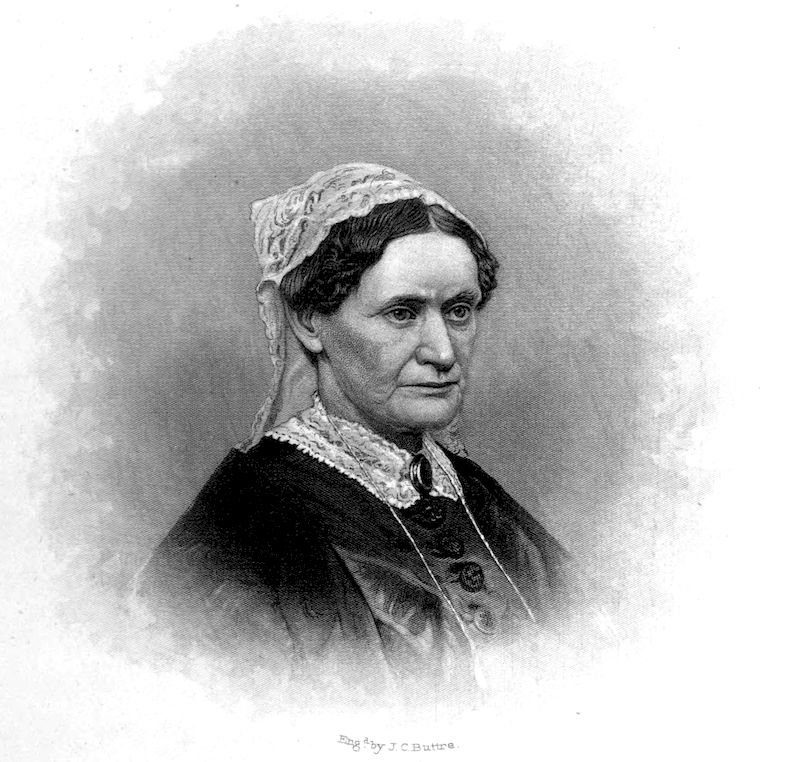
The wife of an army officer—Little known to the public—Opposed to public notice—General Taylor a frontier officer—The hero of the Black Hawk and the Seminole wars—Mrs. Taylor’s army experience—Never willingly separated from her husband—An example of wifely devotion—With her husband at Tampa Bay—A quarter of a century of tent life—Always at the side of her husband—A happy and contented wife—A very domestic woman—Her housekeeping accomplishments—Mrs. Taylor a Maryland lady—Received a practical education—Her one ambition—Married in early life—Her husband a young officer—Removal to the West—Her attentions to her husband—Her children—Sent to her relatives to be reared and educated—Rapid promotion of her husband—His wife the presiding genius of the hospital—The comforts of a home always his—Established at Baton Rouge—The pretty cottage on the river bank—Once a Spanish commandant’s house—A delightful home at last—Mrs. Taylor and her two daughters—Busy with household cares—Domestic life complete—War with Mexico—General Taylor ordered to the front—Miss Betty in the perfection of her womanhood—Her happy home-life—The “Army of Occupation”—General Taylor made Commander-in-Chief—Mrs. Taylor and other daughters remain in their home—Honors to General Taylor—Mrs. Taylor’s success with her garden and dairy—An example to the young officers’ wives—Has a chapel prepared and the Episcopal services read—A rector’s occasional presence secured—A handsome church erected later—The garrison chapel a popular resort—Many officers’ wives at the post—Their anxiety over the war—Battles fought and officers killed—Mrs. Taylor’s strength and courage—A runaway match—Miss Sarah Taylor’s marriage to Lieutenant Jefferson Davis—General Taylor’s opposition to his daughters marrying officers—His displeasure over the elopement—Away from home at the time—His rage at Lieutenant Davis’s conduct—No honorable man would so act—Death of Mrs. Davis—No reconciliation with her father—The loss a great trial to him—Mrs. Taylor deeply affected—General Taylor’s sense of sorrow—Meets Jefferson Davis at Buena Vista—Reconciliation on the battle-field—An embrace on the battle-field—The end of the campaign—General Taylor a hero—Miss Betty the object of much interest—The Presidential candidacy—Taylor elected—The cottage on the river a Mecca—A year of great excitement—Mrs. Taylor’s hospitality—Her indifference to public honors—Her desire for retirement—“A plot to deprive her of her husband’s society”—The army life ended—Miss Betty Taylor’s marriage—A bride at twenty-two—Her husband, Major Bliss, her father’s Adjutant-General—Mistress of the White House—Mrs. Taylor declining responsibility—“Miss Betty” the hostess—An attractive woman—The inauguration—Wildest enthusiasm—Washington’s welcome to the nation’s idol—A grand ball—Scenes at the ball—General Taylor’s appearance—Madame Bodisco’s dress—Zachary Taylor’s favorite child—Her appearance as she entered the ball-room—Timid and faltering in step—The vast crowd pleased—Overwhelming enthusiasm—The home-life at the White House—Mrs. Taylor absent from official entertainments—Her simple habits ridiculed—The summer passed in quietness—A reception to Father Matthew—The public not satisfied—A desire for greater ostentation at the White House—The following winter—Official life begun—Distinguished men in the Cabinet—The admission of California—Fiery eloquence of Clay—Webster and Calhoun members of the Senate—Political excitement—The change in the President’s manner—Begins to realize the opposition—Is equal to the emergency—Mrs. Taylor abandons domestic affairs—Devotes herself to social duties—Appreciates the importance of her elevation—More ostentation displayed—A social revolution—The new era inaugurated by the ladies—Reception on the first anniversary of the inauguration—The President’s family appear to advantage—General Taylor a surprise to his friends—A new rôle played with success—Miss Betty the leader of society—The press expresses admiration—Cabinet changes—The general character of the administration—The spring passes away—Seventy-fourth anniversary of National Independence—Laying the corner-stone of the Washington Monument—General Taylor presides—The day intensely hot—Exposed to the sun—A notable event—The complaints of General Taylor regarding the heat—Never experienced such heat in Florida or Mexico—His return to the White House—Drank freely of cold water and ate fruit—Violent illness—General Taylor has the cholera—His premonitions regarding the end—The remarks concerning his performance of duty—“His motives misconstrued; his feelings grossly betrayed”—Mrs. Taylor admits the possibility of his death—Bitterly regrets their coming to Washington—Prostrate at her husband’s bedside—Her children about her—The death-bed scene—The last good-bye—The grief of the family—Heart-rending cries of agony—The end—The removal of the President’s remains—Mrs. Taylor’s retirement from the White House—Her dream of happiness ended—Never alluded to her life in Washington—With her friends in Kentucky—Finds personal utterances of sympathy oppressive—Retires to her son’s residence—Her home near Pascagoula, Louisiana—Leads a quiet life—Death of Major Bliss—A second marriage—The historical name laid aside—The end of a public career
A daughter of Rev. Lemuel Powers—Born in 1798—A descendant of Henry Leland, of Sherbourne—Loses her father in infancy—Her mother her teacher and guide—Removal to Cayuga county, New York—A frontier settlement—Stern lessons of poverty—A studious and ambitious girl—Teaches school during the summer months—A well-educated woman—The omnipotence of energy—Miss Power’s blessing of physical health—Personal appearance—Flowing curls of flaxen hair—Her face a mirror of her soul—Much strength of character—Marriage of her mother—The daughter a teacher—Her home with a relative—Meets Mr. Fillmore—A teacher of the village school in winter—The father’s unwise selection of work—The son ambitious and studious—Studying law while a clothier’s apprentice—A friendly hand extended—The youth assisted—The foundation of usefulness laid—Removes to Erie county—Miss Powers his inspiration and hope—Their engagement—Separated for three years—Too poor to make a journey of 150 miles—Married in 1826—Life in the wilderness—Poor and content—Their first home—The wife teaches school, keeps house, and helps her husband—Relieves him of care—His progress rapid—Practises law—Elected to the Legislature—Mrs. Fillmore a true help-meet—Intellectually her husband’s equal—A sunny nature—Two children in her home—Letters to an old friend—Removal to Buffalo—Mr. Fillmore prospering—Domestic happiness—Social pleasures—Mr. Fillmore’s tribute to his wife—Greeted his entire married life with smiles—Her supreme devotion
to her husband—Mr. Fillmore in Congress—Elected Vice-President—Death of President Taylor—Mr. Fillmore’s accession to the Presidency—Mrs. Fillmore in the White House—Her daughter assumes the first position—Mrs. Fillmore in feeble health—Fond of the society of friends—Her love of music—Mrs. Fillmore a great reader—No library in the White House—President Fillmore asks an appropriation—Mrs. Fillmore arranges the library—A happy gathering-place—The weekly receptions at the White House—Dinner parties—A large circle of cultured people in Washington—Their welcome to the White House—Flowers, music, and literary entertainments—Mrs. Fillmore’s pride in her position—Deeply regrets her ill-health—Her son and daughter assist her in all ways—Visit of the President’s father—“Cradle him in a sap-trough, sir” Attentions paid the venerable man—A gradual failure of health—Mrs. Fillmore’s last illness—Death—Buried in Buffalo—The affection of her family—Mr. Fillmore’s devotion to her memory—Lines on her death
The only daughter of President Fillmore—Lady of the White House—A cultured woman—Intimacy with Harriet Hosmer—A linguist, musician, and scholar—Presides at the White House with great dignity—A credit to her sex—Educated by Miss Sedgwick—Qualified herself to teach—Studied at the State Normal School—Graduated with high honors—Her father becomes President—Becomes the first lady in the land—A successful career—Returns the affection bestowed upon her—High social qualities—Her mother’s death—The pride and comfort of her father—A visit to her grandfather—Sudden illness—Her father summoned—Dies of cholera—The blow a heart-rending one—Her father and brother left alone—Only twenty-two—Many tributes to her memory—A general favorite in society—Wife and daughter buried in less than one year
The daughter of Rev. Jesse Appleton, D. D., President of Bowdoin College—Reared in an atmosphere of cultivation—A gifted child—Delicate and intensely sensitive—Mental qualities—Married in 1834—Mr. Pierce a gifted man—Politics utterly distasteful to Mrs. Pierce—A union of lasting happiness—A devoted husband—Personal popularity of Mr. Pierce—A public position undesired—A good wife, mother, and friend—Home at Concord—Mr. Pierce resigns his seat in the Senate—Loss of two sons—Resumes the practice of law—Tendered the position of Attorney-General—His wife’s illness his reason for declining—An invalid most of the time—Mr. Pierce enlists in the army—Goes to Mexico—Returns a Brigadier-General—Absent from home nearly a year—A wife’s anxiety—Left alone with an only son—Mr. Pierce nominated for the Presidency—His election—Death of her only child—Killed on a railroad train—A bright boy of thirteen—Husband, wife, and child go down together—The search for the boy—Still in death—A sad return home—Mistress of the White House under sad circumstances—In feeble health and deep grief—Always present at the public receptions—Presided at State dinners—Agreeable memories of Mrs. Pierce in Washington—Her observance of the Sabbath—The influence she exerted—Retirement of President Pierce—Travels abroad—Six months in Madeira—A long sojourn in the old world—Death of Mrs. Pierce in 1863—Kindly things said of her—Death of Mr. Pierce in 1869
The niece of James Buchanan—Her name nearly associated with his fame—Given to his care when an infant—A child to him—The ancestry of Pennsylvania blood—Her grandfather—Family of James Buchanan—His favorite sister—Married to Eliot T. Lane—Mr. Lane’s position—Their youngest child—A vivacious and mischievous girl—Little Harriet’s impressions of her uncle—Death of her mother and father—Possessed of worldly goods—Chooses her uncle’s home—His pride in this affectionate child—Her guide, philosopher, and friend—“She never told a lie”—A wilful domestic outlaw—An anecdote of her girlhood—Her uncle’s rebuke—Harriet sent to school—Objections to her teachers—Her letters to her uncle—Under surveillance—Early hours, brown sugar and cold hearts—Another school selected—Her sister her companion—Three years of study—Fond of music—A visit to Bedford Springs—Her uncle makes her happy—In a convent—In Washington every month—Delightful visits—Miss Lane’s popularity at school—A favorite with the sisters—The nuns instruct her in music—Her uncle’s letters—Graduated with honor—Loved and regretted by her schoolmates—A beautiful woman—Personal description—Taste in dress—Her uncle’s idol—His account of her athletic powers—Anecdote of a race she ran—At Wheatland—Her fondness for reading aloud—Discusses politics and plans improvements about the grounds—Gay visits to different cities—Admired by gentlemen—Her uncle’s house invaded by her lovers—Her brothers and sister—Mr. Buchanan appointed
Minister to England—His services to his country—In Congress, Minister to Russia, Secretary of State—Twice offered a seat upon the Supreme Bench—Miss Lane’s entrance into English society—Publicly identified with Mr. Buchanan—Her rank—The Queen her admirer—Decides her place in the diplomatic corps for her—A blooming beauty—First appearance at a drawing-room—A memorable occasion—Unconscious of the attention she attracted—Mr. Buchanan’s remark to her—Distinguished attentions of the Queen—Regarded with favor by the royal family—Added greatly to the social reputation of her uncle—An elegant-looking couple—A delightful specimen of American womanhood—The guest of distinguished people—Offers of marriage—Confides her love-affairs to her uncle—Brightest years of her life—Miss Lane’s love for England and English people—An incident of her stay abroad—Travels on the continent—With Mr. Mason’s family in Paris—Their guest for two months—Miss Lane a great belle—With her uncle at Oxford—The degree of Doctor of Civil Laws conferred on Mr. Tennyson and Mr. Buchanan—The students cheer her—Their admiration openly expressed—Return to America—Leaves her uncle behind—He regrets the separation—Long letters to her—The purpose of her coming home—At Wheatland—Her sister to join her—Death of her sister—Mr. Buchanan’s return—Nominated for the Presidency—Miss Lane’s social duties—Mistress of the White House—Death of her brother—A terrible blow to her—The recipient of much sympathy—Elegant manners of the Lady
of the White House—The most admired woman in America—Her life a series of honors and pleasures—The formal receptions—The President’s appearance—His niece by his side—A trying social position—Visit of the Prince of Wales to this country—The guest of the President—A delightful visit—An occurrence of memorable interest—Visit to Mount Vernon—The Prince a pleasant guest—His frank manners and interest in social matters—Wishes to dance—The President declines to permit it—The departure of the Prince—Letter from the Queen and the Prince—Presents the President with his portrait—Sends Miss Lane engravings of the Royal Family—Presented to them, not to the nation—Letter from Lord Lyons to Mr. Buchanan—The closing year of the administration—Miss Lane a comfort to her uncle—The approaching war—A time of anxiety—The President’s gratitude for her admirable demeanor—Faithfully represents him in his drawing-room—Retirement—At Wheatland—Continued attentions—Enthusiastic admirers—Miss Lane joins the church—No other relative than her two uncles—Engagement to Mr. Johnston—Marriage at Wheatland—The struggle between two loves—Mr. and Mrs. Johnston’s tour to Cuba—Settle in Baltimore—A luxurious home—A gift for “the lady of his dreams”—Happiness of the young couple—Mrs. Johnston as a wife and mother—Death of her uncle—In summer at Wheatland—A happy life—Later shadows—Death of her eldest son—A noble youth—Letter from Judge Black—A great bereavement
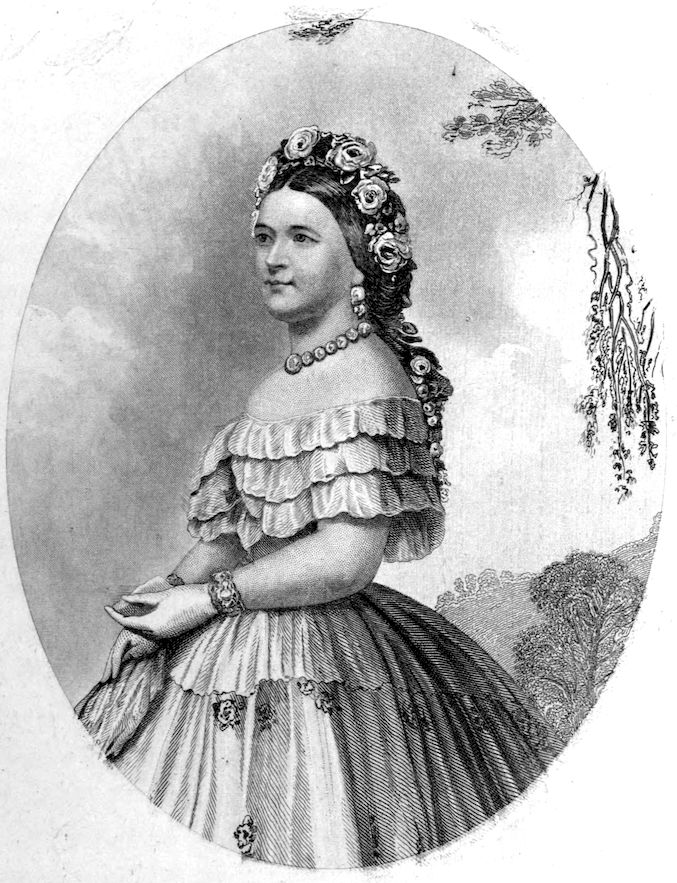
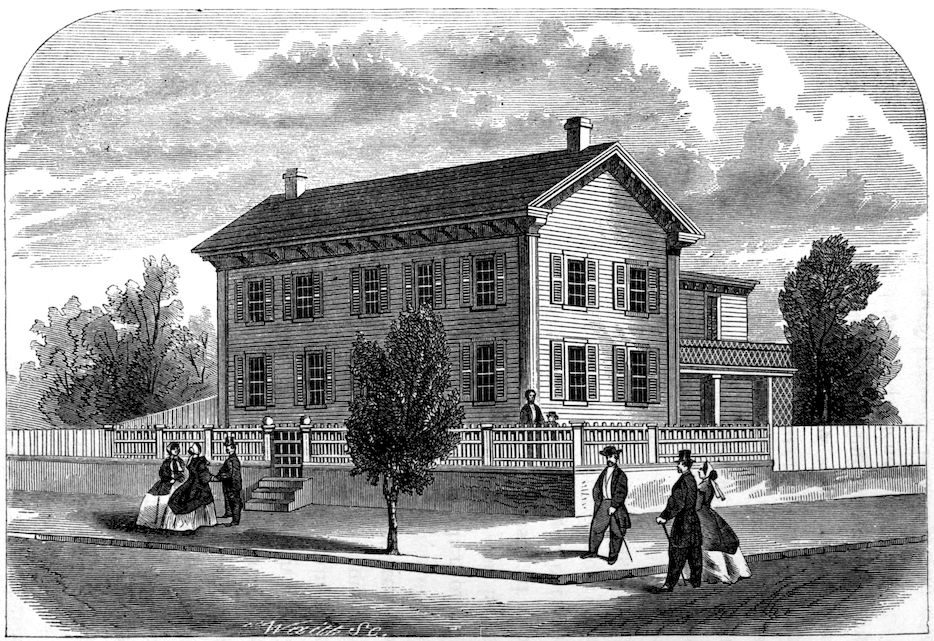
Ambitious to go to the White House—A hope long entertained—The desire gratified—Impressed with this feeling in early youth—Calculated the probabilities of such a success with friends—Refused to marry a statesman—Accepts a less brilliant man believing in his future—A Kentuckian by birth—Member of the Todd family—Childhood and youth—Restless and not happy at home—Goes to Springfield, Illinois—The attractions of this place—Residence with her sister—Marriage to Abraham Lincoln—Their home at the Globe tavern—The husband’s letter—Early married life—Mr. Lincoln elected to Congress—His wife and children at home—State of the country—The public life of Mr. Lincoln—His fondness for his children—A good husband and kind man—Mrs. Lincoln a fortunate woman—The mother of four children—Her pleasant home—The aspirations and efforts of her husband—His character untarnished by corruption—The place he fills—The basis of his greatness—The time of war and anxiety—Less fortunate than any of her predecessors—The people not gay—Social duties ignored—The conditions under which her Washington life was passed—Preceding events—Republican Convention of 1860—The nomination of Mr. Lincoln—Mrs. Lincoln’s excitement—Her husband’s thoughtfulness—His remark about her—The excitement over the result—Springfield crowded with strangers—A great crowd at Mr. Lincoln’s house—An elated woman—Her husband a grave man—Had none of the airs of eminence—The same honest, simple-hearted man—Answered his own bell—Mrs. Lincoln annoyed by visitors—Her husband receives his guests elsewhere—Not inclined to be friendly—Her improper estimate of her position—Very ambitious but not conciliatory—A singular circumstance—Superstition of Mr. Lincoln—The thrice repeated apparition—His wife’s interpretation of it—A sign of his future honors and sudden death—Viewed in the light of subsequent events—Its startling import—Mrs. Lincoln starts for Washington—Her three sons with her—At Springfield—A salute of thirty-four guns—At Cincinnati—The family of General Harrison—The inauguration—General Scott in command of the troops—An exciting day in Washington—Presidents Buchanan and Lincoln—The oath of office administered—At the White House—Mrs. Lincoln and her sisters—The first levee—The lady of the White House—Description of her appearance—The desire of her heart gratified—A fortunate woman—Fond of society and excitement—Not equal to the emergency—Her conduct criticised—State dinners abandoned—Years of hardship and trial to Mr. Lincoln—The death of their son—Grief of both parents—Incidents of Mr. Lincoln’s love for his children—Request to Commodore Porter—Tad’s love of flowers—A gratification to his boy—At Fortress Monroe—Mr. Lincoln dreams of Willie—Overcome with emotion—Reads from “King John” and sobs aloud—A loving father—A relative’s opinion of him—Never heard to utter an unkind word—Mrs. Lincoln in the White House—Much alone—The state of the country preventing gayety—At the watering-places—The Presidential Canvass of 1864—Re-election of Mr. Lincoln—The New Year’s reception in 1865—The most brilliant reception given—Thousands present—The war drawing to a close—The inauguration—Anxiety concerning it—Safely accomplished—Joy succeeds sorrow—General rejoicing at the North—Surrender of General Lee—Peace declared—The White House thronged—Congratulations from all directions—Anniversary of the fall of Fort Sumter—The President and family at the theatre—The greetings of a great audience—Those beside him—In a private box—Looking pensive and sad—Shot—John Wilkes Booth the assassin—Great consternation—The President removed from the theatre—Mrs. Lincoln unnerved—At her husband’s death-bed—The return to the White House—Grief of the nation—The afternoon before his death—Out riding—Mrs. Lincoln’s reference to the occasion—His remarks to his wife during the ride—They go alone at his wish—His touching allusion to their son—“We have been very miserable”—A miserable household—Grief of little Tad—Utterly inconsolable—His remarks about his father—Mrs. Lincoln unnerved by the shock—Never wholly recovers—Ill for many weeks—The funeral cortege leaves Washington—The journey to Illinois—Mourning of the people—Impressive scenes—The eldest son accompanies the cortege—Returns to his mother’s side—Mrs. Lincoln’s long stay in the White House—Embarrassed officials—President’s Johnson’s considerate course—Final departure of Mrs. Lincoln—Death of Tad—Subsequent life of Mrs. Lincoln—In ill-health—Travels abroad—Petitions Congress for a pension—Restless and depressed in spirit—The end of her ambitions, hopes and thoughts of home-life—Life abroad—Return to America—Again at Springfield
The only child of a widow—Married at seventeen—Her husband a tailor’s apprentice—A mountain home—Well instructed in ordinary branches—A very beautiful girl—The wife of an ambitious man—His widowed mother’s chief support—An additional incentive to study—The young couple learn together—His wife teaches him to write—She reads to him as he works—Three women—The zeal and energy of one of them—The tailor boy’s incentives—Little children about his hearth—Mr. Johnson elected alderman—The joy of a good wife—The village “Demosthenes”—Chosen Mayor of Greenville—Three terms in office—A reputation for honest deeds and correct principles—Mrs. Johnson’s devotion to her husband’s interests—Death of their mothers—Mr. Johnson a member of the Legislature and Governor of Tennessee—His wife remains in Greenville—Her children’s education her care—Their Greenville home—Andrew Johnson’s first home—His old shop—A poor man and honest official—Elected Senator—Mrs. Johnson in Washington—Failing health—Her return home—Separated from her husband for two years—The civil war—Cut off from news of home—Mrs. Johnson and family ordered out of East Tennessee—Time asked—Too ill to travel—The start made—Ordered to return—A long and trying journey—Passes through Confederate lines—A night spent on the cars—Without food or beds or fire—A tired party—Mrs. Johnson and her children in Nashville—The heroic conduct of the former—Remembered kindly by friend and foe—A long-separated family reunited—Mrs. Johnson an invalid—Death of her eldest son, Dr. Johnson—Governor Johnson, Military Governor of Tennessee—Nominated for the Vice-Presidency—Goes to Washington—His family remain in Nashville—Preparing to return to Greenville—The assassination of the President—Andrew Johnson, President of the United States—Senator Doolittle’s account of the assassination conspiracy—His letters to the Wisconsin State Historical Society—President Johnson’s narrow escape—Governor Farwell’s presence of mind—Leaves the theatre to find Mr. Johnson—Fears for his safety—Warns the hotel clerks—“Guard the doors: the President is assassinated”—Rushes to the Vice-President’s room—His anxiety supreme—Is reassured by hearing Mr. Johnson’s voice—The terrible news he bears—A moment of supreme excitement—Hasty plans for safety—The moment of danger passed—The hotel guarded—Personal friends pouring in to learn his fate—News of Secretary Seward’s condition—Thousands of people in the streets—A time of horror—The President dying—Mr. Johnson determined to see him—His refusal to go guarded—Accompanied by Major O’Beirne and Governor Farwell—At the bedside of the dying President—Mrs. Johnson presented with an album containing Governor Farwell’s account of the conspiracy plot—The family at the White House—Mrs. Patterson the Lady of the White House—“A plain people from the mountains of Tennessee”—Mrs. Johnson assumes no social duties—An invalid—Only once in the East Room—Her household—The four years in the White House—Her glad return to Tennessee—Death of Colonel Robert Johnson—Ex-President Johnson elected Senator—His wife greatly pleased—Living in her old home—Illness of her husband—His death—Six months of suffering—Her death—Buried beside her husband—A superb monument
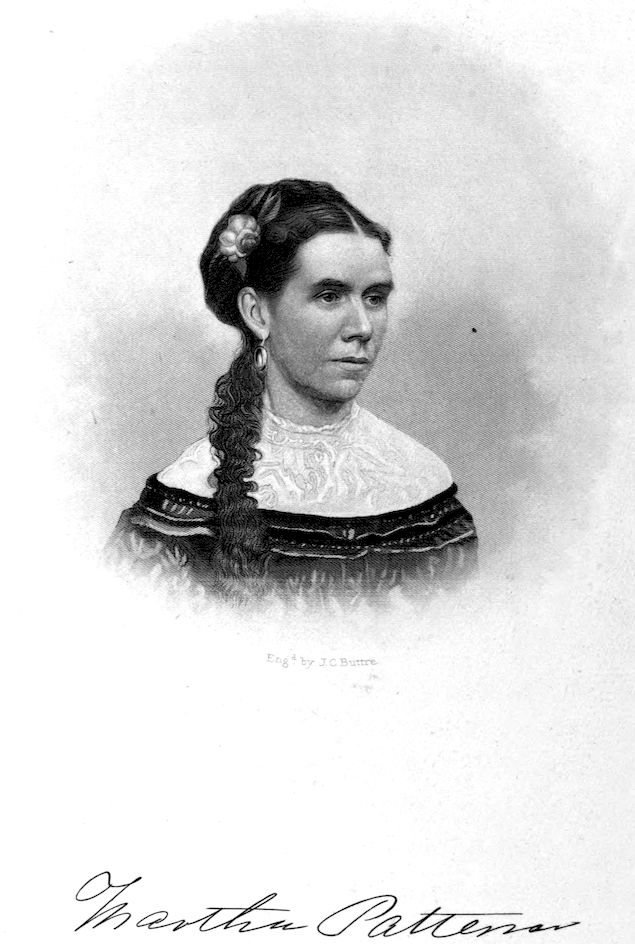
Like her father in personal appearance and character—A strong, earnest woman—Description of her mental characteristics—Her executive ability and energy—The pleasant manners of the President’s daughter—An unostentatious person—A dutiful daughter and kind sister—She never had time to play—A busy school-girl—Her mother’s assistant—The earnest years of early life—At school in Georgetown—A guest at the White House—Mrs. Polk’s bashful visitor—Many of her holidays spent there—The marriage of Miss Johnson to Judge Patterson—A visit to her father at Nashville—Her home in East Tennessee—The mother of two children—The war—Joins her parents at Nashville—Her home sacked—The preparations to return to East Tennessee—News of the assassination—Mrs. Patterson and Mrs. James K. Polk occupy a carriage in the procession in honor of Lincoln—Removal to Washington—A dismantled mansion—The East Room in a wretched condition—A severe task before the new mistress—President Johnson’s first reception—Mrs. Patterson and Mrs. Stover beside their father—The White House refurnished—Mrs. Patterson’s severe duties—A summer spent in Washington renovating the home of the Presidents—A notable housekeeper—Travels with her father—The wife of a Senator and daughter of the President—President Jefferson’s second daughter similarly situated, but not the lady of the White House—Golden opinions of Mrs. Patterson—Compared to Mrs. John Adams—Superior common sense and strong will-power—A Southerner’s love
of home—Her conduct during the impeachment trial—A patient and busy person—The strength and support of her father—His companion and counsellor—Devotion to his interests—A levee at the White House—Mrs. Patterson’s costume described—The farewell reception—Five thousand people present—The State dinners given by President Johnson—The last entertainment of this kind—An interesting account of it—The President’s hospitality—Retirement from the White House—A stormy and trying ordeal over—Farewells to old friends
The second daughter of President Johnson—A widow when she went to Washington—A statuesque blonde—Her children with her—The grandchildren of the President—A happy home circle—A stately woman on public occasions—Her indifference to society—The amusement of friends at her manner with strangers—A shy sufferer in society—Her devotion to her children—An unaffected and sensible lady—A pleasant memory in Washington
The inauguration of President Grant in 1869—Youngest man who has occupied the office—His family—Mrs. Grant as hostess, wife and mother—Personal friends and relatives about her—Her personal influence—A Missourian by birth—Her father’s social position—Her brother a West Point graduate—Introduced to his classmate—The engagement of the young lieutenant and Miss Julia—The match not pleasing to her parents—The young officer ordered to frontier duty—With General Taylor in Mexico—Saved the life of Lieutenant Dent—The family relent—An engagement of five years—Married in 1848—A merry wedding—The bride at her husband’s post—Housekeeping in Detroit—A vine-covered cottage—The children of this union—Captain Grant leaves the army—Returns to Missouri—Poor and without prospects—Tries farming—Not successful in his efforts—“Hardscrabble”—Enters a real estate office—Years of adversity—The hope and trust of Mrs. Grant—A visit to his father—What came of it—In business at Galena—Six hundred a year—“Hardscrabble” still—His wife maid of all work, nurse and teacher of her children—An uncongenial business—Hard work and little reward—His position disagreeable on various accounts—The outbreak of the war—The turning point in his life—Appointed Captain—Speedy promotions—Governor Washburne his friend—Is made a Brigadier-General—Mrs. Grant and her children in Kentucky—His father’s house her home—Her loyal devotion to her husband—Predicts higher distinction for him—His defender always—Much
of his success due to her recognition of his character—With him at Fort Donelson and in Mississippi—Serenaded in St. Louis after the surrender of Vicksburg—Her appearance greeted with cheers—Shares with her husband his military renown—At head-quarters—Mrs. Grant’s opinion of her husband—“A very obstinate man”—He becomes Lieutenant-General—Resides in Washington City—Three years of home-life under pleasant circumstances—The most successful General of the age—Is nominated for the Presidency—Inauguration of President Grant—Mrs. Grant in the White House—The domestic life of the President’s family—Three years of the administration—At Long Branch in summer—Debut of Miss Nellie—Her tour in Europe—Distinguished attentions shown her—Their sons at home from school—Marriage of Nellie Grant—The lover from over the water—National interest in the event—The sixth wedding in the White House—The ceremony in the East Room—The groom Algernon Sartoris, of Hampshire, England—The son of Adelaide Kemble, and grandson of Charles Kemble—His aunt the famous actress Fanny Kemble—An exceptionally brilliant life—President Grant’s pride in his daughter—Her wedding the finest ever known in Washington—Guests present—Departure for Europe—The President and Mrs. Grant at Long Branch—Colonel Fred Grant’s marriage—Mrs. Grant’s social administration—Elaborate entertainments—Notable social events—Royal visitors at the White House—Eight years in the Executive Mansion—Close of the administration of President Grant—The
recipient of constant attentions—Guests of the ex-Secretary of State—Preparations for a tour around the world—The guest of George Washington Childs, Esq., in Philadelphia—Honors paid to the ex-President—The last week made memorable—Departure from Philadelphia—The trip down the Delaware—Enthusiasm of the people—The farewell to friends—Parting salute—The steamer “Indiana” departs—Welcomed on English soil—The journey around the world—Two years and a half of sight-seeing—The return to the United States—In sight of home—Arrival at San Francisco—Universal rejoicings—Invitations from all the large cities of the Union—The ex-President surprised at the heartiness of his reception—Pleasant incidents—A present to Mrs. Grant from the Chinese delegation—The dinner given her in China—Guest of the wife of the Viceroy of China—John Russell Young’s description of the entertainment—She is accompanied by the European ladies in Tientsin—“What shall we wear?”—They decide in favor of French fashions—The procession of chairs to the Yamen—Mrs. Grant in the first chair—An American and a Chinese band—The refinement of the hostess—The Viceregal family—Costumes of the Chinese ladies—Crowds of servants in attendance—Tea served in the library—At dinner—The dining-room and table furnishing—A Chinese and European feast—The fortitude of the guests—Chopsticks handled with dexterity—The civility of the hostess—Democratic customs in China—The crowd about the windows and doors—The toast of the hostess—Barbarian ladies
surprise her—The Viceroy looking on—Anxious for the success of the entertainment—The singing and dancing of the guests—Barbarian customs approved by the Oriental ladies—German music in the Viceroy’s palace—High-bred courtesy of the hostess—Stands or sits as her guests do—A refined lady—Accompanied Mrs. Grant to her chair—The adieux—Mrs. Grant travels—Has received at the hands of foreigners more attention than any other White House occupant—The guest of the crown heads of Europe—Her chief pleasure in life—Popular in society—Untrammelled with cares—The motives governing her public career—Domesticity her leading characteristic—An excellent mother—Adored by her children—Identified with her husband’s public career—Her name a theme of praise—The summer of her life—The future that yet awaits her
Widely popular—An element in the Administration—Her influence admirable—The representative of the third period of White House ladies—The women of the Revolution—Their successors—The second century of the Republic—Mrs. Hayes a representative of it—Her qualifications and ambition—An ideal wife—Happy married life—Long experience in semi-official life—Her grace, culture and social attributes—Pleasant duties well performed—Has created a higher reverence for her sex—As compared with others of her rank—What men have learned from the days of Socrates to President Hayes—The domestic lives of great men—The glory of life realized—Mrs. Hayes’ birth-place—Daughter of Dr. James Webb—Ancestry—The mother of Mrs. Hayes—A noble woman—Her careful training of her children—Pupils at Wesleyan University—Cottage home of Mrs. Webb—Lucy a fellow-student with her brothers—Sent to the Wesleyan Female College—Excellent school advantages—A graduate of the first chartered college for young women in the United States—Is introduced to a promising young lawyer—His interest in the under-graduate—What he wrote concerning her—Pleasant school-memories of Mrs. Hayes—Her schoolmates’ opinion of her—‘Absolutely will not talk gossip’—The trait a gift from her mother—An exemplification of the Golden Rule—A member of the church—A clever student—At the head of her class—School life closed—Married to Mr. Hayes—The wedding—A marriage crowned with affection—“All the world loves a lover”—Sensitive appreciation
of what is due her husband’s fame from her—An incident—Mrs. Hayes a strong, self-respecting woman—A minister’s tribute to her temperance views—Ranks her with the Marys who stood at the cross—President Hayes—A widow’s son—His mother—A self-reliant woman—Devotion to her children—Mr. Hayes a graduate of Kenyon College, and of the Cambridge Law School—Practises law in Fremont—Removal to Cincinnati—Offices held by him—Enters the army as Major—Distinctions won during the war—At the battle of South Mountain—Wounded in four engagements—An instance of her life in camp—“A woman who mends the boys’ clothes”—A kind deed to a soldier—Mrs. Hayes searching the Washington hospitals—Fails to get tidings of him—Finds him at Middletown, Maryland—Her brother with him—Establishes herself as nurse—In the family of Captain Rudy—Their opinion of Mrs. Hayes—Her easy, affable ways—Visits the hospitals and nurses the soldiers—A welcome presence in the sick-room—Returns to Cincinnati with her husband—Her departure sincerely regretted—Attentions to Miss Rudy—A guest in the Governor’s house—President Hayes’ letter on the death of Captain Rudy—The close of the war—General Hayes elected to Congress—Re-elected—Nominated Governor of Ohio—Re-elected—The Executive Mansion at Columbus—Social life there—Elegant hospitality extended—Mrs. Hayes’ public duties—Works to enlarge the State Charities—Identified with all good causes—Her wide influence—The mother of eight children—An excellent mother—Admirable in all the relationships
of life—Summers spent at Fremont—“Spiegel Grove”—A hospitable mansion—Description of the house and surroundings—Burchard Park—Pen-portrait of Mrs. Hayes—Medium height and well built—Fine eyes and expressive features—An animated face—Excellent health and sunny nature—A splendid specimen of physical womanhood—The Presidential canvass in 1876—An exciting event—A season of great anxiety—President and Mrs. Hayes in Washington—The guests of Mr. Sherman—The inauguration—Scene in the Senate Chamber—The happy face in the gallery—A bright glance that reassured the principal actor—At the White House—The two Presidents at lunch—Ex-President and Mrs. Grant leave the White House—The farewells at the door—The new life begun—Arrival of the children and guests—First day in the White House—Mrs. Hayes delighted with her position—Her admissions on this subject—Anticipates enjoyment—A pleasant incident—Class testimonial to Mrs. Hayes—The college badge—The device made in flowers—The note accompanying the gift—“The best plans will go aglee”—The note lost—Mrs. Hayes in a quiver of excitement—How she learned the names of the donors—The end felicitous—The ladies invited to the White House—A happy occasion—Mrs. Hayes’ Bibles—Enough to stock a hotel—The first reception—The most gratified lady in the land—A radiant face—The effect as she received—Her toilette—A simple, elegant dress—Rare laces—The second entertainment—Dinner to the Grand Dukes Alexis and Constantine of Russia—A brilliant gathering—The drawing-rooms—Flowers
and Sevres china—The table and dining-room ornaments—The grand promenade—The Grand Duke Alexis and Mrs. Hayes—President Hayes and Lady Thornton—Other members of the brilliant company—The toilette worn by Mrs. Hayes—The facts about the use of wine on this occasion—Not seen on subsequent occasions—A compliment for Mrs. Hayes from Paris—Her first Sunday in Washington—Attends the Foundry Methodist Church—Mrs. Hayes does not interfere in official matters—Considers no applications for appointments—A notable instance of her deviation from this rule—A temperance postmistress retained—The reason for her interference—Mrs. Hayes’ attentions to her “poor relations”—Democratic independence—An instance of it—The best carriage and liveried servants—Plain people from Ohio—A few frills put on for their sakes—The household at the White House—The children of the President—What an old schoolfriend said of Mrs. Hayes—Mrs. Mary Clemmer writes of her—The eyes of a Madonna—A woman of the hearth and home—Strong as fair—“Holding the white lamp of her womanhood unshaken”—The finest-looking type of man and woman—A Southerner’s opinion—“A God beautiful woman”—President Hayes—Description of personal appearance—Manly, refined and polished in manners—Silver-wedding—First ever celebrated in the White House—Rev. Dr. McCabe renews his pastoral blessing—The wedding dress of the bride—Friends present—Interesting event—The children who were christened—The family dinner—Formal reception next evening—The Executive Mansion
brilliant with flowers and gay costumes—Dress worn by Mrs. Hayes—Wedding dress too small—Her guests—Those who attended the first wedding—The only present received—A gift to Mrs. Hayes—In memory of past kindness—From the officers of the 23d Ohio Volunteer Infantry—A silver plate in an ebony frame—The inscription—The log hut and torn battle-flags—Scenes in the Kanawha Valley in 1863–64—The banquet—All the magnificent White House tableware in use—Superb flowers—A blessing asked—Telegrams offering congratulations—One of the pleasant affairs connected with the administration—The two notable features it exhibited—The cards of invitation and the present—Mrs. Hayes’ friendly interest in the soldiers—“The mother of the Regiment”—The White House during Mrs. Hayes’ administration—Her entertainments public and private—Marriage of Miss Platt in the White House—Many bridal parties there—A lunch party to young ladies—Mrs. Hayes’ tours with her husband—Never tired of having a good time—The most idolized woman in America—Uses the world without abusing it—An honor to women—Presentation of her portrait to the nation—Description of picture and frame—Farewell to Washington—Welcome home
Self-control—Her characteristics—Before her marriage—General Garfield’s early life—Elected to the Senate—Death of a child—Letter to her husband—Her husband’s tribute—The family at Mentor—Description of her home—Mrs. Garfield at home—Personal appearance—“Mother Garfield”—A scene at the inauguration—The President’s family at Washington—Early life of Mother Garfield—Mother and son—Inauguration scenes—A brilliant scene—The inauguration ball—The ladies of the Cabinet—The children of the President—Mrs. Garfield’s illness—At Long Branch—Saturday, July 2d, “The President shot”—Incidents of the assassination—Removal to the White House—Heroic suffering—Letter to Mother Garfield—Not a politician—Sympathy of the people—The relapse—Removal to Long Branch—A little boy’s sympathy—Anxious waiting—Died September 19th, 1881—The death-bed scene—Alone with her dead—Mother Garfield—Leaving Elberon—Tributes by the way—The last look—The Queen’s floral tribute—The start for Cleveland—Scenes by the way—At Cleveland—The funeral procession—At the cemetery—The last scene—The Queen’s sympathy
The first who, in our young republic, bore the honors
as a President’s wife, is described “as being rather
below the middle size, but extremely well-shaped, with
an agreeable countenance, dark hazel eyes and hair,
and those frank, engaging manners so captivating in
American women. She was not a beauty, but gentle
and winning in her nature, and eminently congenial to
her illustrious husband. During their long and happy
married life, he ever wore her likeness on his heart.”
“It was in 1758 that an officer, attired in a military
undress, attended by a body-servant tall and militaire as
his chief, crossed the ferry over the Pamunkey, a branch
of the York River. On the boat’s touching the southern
or New Kent side, the soldier’s progress was
arrested by one of those personages who give the beauideal
of the Virginia gentleman of the old regime; the
very soul of kindliness and hospitality. It was in vain
the soldier urged his business at Williamsburg; important
communications to the Governor, etc. Mr.
40Chamberlayne, on whose domain the officer had just
landed, would hear no excuse. Colonel Washington
was a name and character so dear to all Virginians, that
his passing by one of the old estates of Virginia without
calling and partaking of the hospitalities of the host was
entirely out of the question. The Colonel, however, did
not surrender at discretion, but stoutly maintained his
ground, till Chamberlayne brought up his reserve in the
intimation that he would introduce his friend to a young
and charming widow then beneath his roof. The soldier
capitulated on condition that he should dine, only
dine, and then, by pressing his charger, and borrowing
of the night, he would reach Williamsburg before his
Excellency could shake off his morning slumbers.
Orders were accordingly issued to Bishop, the Colonel’s
body-servant and faithful follower, who, together with a
fine English charger, had been bequeathed by the dying
Braddock to Major Washington on the famed and fated
field of the Monongahela. Bishop, bred in the school
of European discipline, raised his hand to his cap, as
much as to say, ‘Your honor’s orders shall be obeyed.’
The Colonel now proceeded to the mansion, and was
introduced to various guests (for when was a Virginia
domicil of the olden time without guests?), and, above
all, to the charming widow. Tradition relates that they
were mutually pleased on this their first interview, nor
is it remarkable; they were of an age when impressions
are strongest. The lady was fair to behold, of fascinating
manners, and splendidly endowed with worldly
41benefits; the hero, fresh from his early fields redolent
of fame, and with a form on which ‘every god did seem
to set his seal, to give the world assurance of a man.’
The morning passed pleasantly away; evening came,
with Bishop, true to his orders and firm at his post,
holding the favorite charger with the one hand, while
the other was waiting to offer the ready stirrup. The
sun sank in the horizon, and yet the Colonel appeared
not, and then the old soldier wondered at his chief’s
delay. ’Twas strange; ’twas passing strange. Surely
he was not wont to be a single moment behind his
appointments, for he was the most punctual of all punctual
men. Meantime, the host enjoyed the scene of the
veteran on duty at the gate, while the Colonel was so
agreeably employed in the parlor; and proclaiming that
no guest ever left his house after sunset, his military
visitor was, without much difficulty, persuaded to order
Bishop to put up the horses for the night. The sun
rode high in the heavens the ensuing day when the
enamored soldier pressed with his spur his charger’s
sides and sped on his way to the seat of government,
when, having despatched his public business, he retraced
his steps, and at her country-seat, the White House, after
which the home of the Presidents was called, the engagement
took place, with arrangements for the marriage.”
It is pleasant to remember that, with all the privations
and hardships endured by both in after years, they never
encountered poverty. When Colonel Washington married
Mrs. Custis, the ceremony was performed under
42the roof of her own home, and the broad lands about it
were but a part of her large estate. Immediately after
their wedding, which has been described repeatedly as a
most joyous and happy affair, in which every belle and
beau for miles around took part, they repaired at once
to Mount Vernon. Here for seventeen bright and
beautiful years they enjoyed the society of relatives
and friends, and the constant companionship of each
other. During those years of prosperity, Mrs. Washington
had ample opportunity to manifest that elegance
of manner for which she was remarkable. In
her girlhood, as Miss Dandridge, she had enjoyed
the best society of Williamsburg, and during Governor
Dinwiddie’s residence there, she had been one of
the most popular and admired of the many blooming
girls who had rendered the court of the Governor
attractive.
Nothing remains to us of her childhood save an indistinct
tradition;[1] perhaps her infant years were spent
at her father’s country home, unmarked but by the
gradual change of the little one into the shy young lady.
That she was educated after the exigency of her time, at
home, is likewise a truth gathered from the echoes of the
past generation. Virginia in those early days—for she
was born in May, 1732—possessed no educational facilities,
and the children of the wealthy were either sent
abroad for accomplishments unattainable in their native
land, or put under the care of tutor or governess at
home. Such knowledge as she possessed of the world
was gleaned from the few books she read, and the
society of her father’s friends, for she had never been
farther from home than Williamsburg.
1. She was a descendant of the Rev. Orlando Jones, a clergyman of Wales.
43She is first mentioned as a rustic beauty and belle at
the British Governor’s residence, and was there married,
when very young, to Colonel Custis. After her
marriage her home was not far distant from her father’s
plantation, and these fleeting years were so fraught with
every conceivable blessing that her young heart asked
no other boon. Endeared to each other by the warmest
affection, her time spent in dispensing that hospitality
which was deemed a duty and a virtue, it
seemed as if no trouble could ever mar her happiness.
Colonel Custis was a gifted and refined man, of eminently
polished and agreeable manners, and the possessor
of a generous nature, which rendered him
widely popular. The congenial couple lived in happy
contentment in the enjoyment of their own and their
children’s society, surrounded by friends, and the possessors
of all those creature comforts which add so
essentially to the pleasures of existence. They had
three children, the eldest of whom was a son, unusually
endowed with mental gifts, and giving promise of a
bright future. His health was not good, and though
watched over with continuous care and forethought he
died, and his untimely death hastened the disease
already manifest in his father’s system. Colonel Custis
44died of consumption a short time afterward, and thus
was the wife and mother deprived of her companion,
whose affection was in keeping with his many virtues and
elevated mind, and the boy whose existence had first
called into being all the deathless love of a mother.
Time soothed the wounds naught else could heal, and
the young widow discharged the duties that belonged to
her position. The trust her husband reposed in her—in
leaving their large property in her own hands to
control—she amply vindicated, and her estate was one
of the best managed in the county. When she met
Colonel Washington she was twenty-six years of age,
and was remarkably youthful in appearance and very
handsome. She had ever been the object of warm and
disinterested affection, and from her first entrance into
the society of Williamsburg, down to the last hour of
her life, it was eminently illustrated. Few had been
her sorrows, and for each and every one endured she
could count a twofold blessing. There was nothing in
her life to foster the faults incident to human nature,
for the rank weeds of poverty and lack of opportunity,
which cramp and deform so many earth-lives, were unfelt
and unknown to her.
Mount Vernon was the gift to Colonel Washington
from his elder and bachelor brother Lawrence, and the
estate was then one of the finest in Virginia. Washington
had made it his occasional residence before his
marriage, but it was not until he took his bride there
that it became his permanent home. The life that Mrs.
45Washington led there was similar in outward circumstances
to her former position as Mrs. Custis, for she
was again the wife of a wealthy, prosperous planter, the
centre of the refined society of the county. The sameness
of country life was interrupted by her frequent
trips with her husband to Williamsburg, where he was
for fifteen successive years a member of the Legislature.
“How noiseless falls the foot of time
That only treads on flowers!”
Engaged in fascinating pleasures and congenial pursuits,
it did not occur to Mrs. Washington how many
summers of fragrantly blooming flowers and ripening
fruits had sunk into the unreturning past; nor did she
consider that the long term of years in which she had
been so happy had meted to others measured drops of
bitterness, turning all their harvest-times into chilling,
dreary winter. There came to her a time when the
pleasant home-life had to be abandoned, and for eight
years the harmony of domestic peace was banished.
The following letter, the only one preserved of the
many addressed to her, is full of interest, and is replete
with that thoughtfulness which characterized Washington
in his capacity as a husband. Mrs. Washington, shortly
before her death, destroyed every testimonial of this
kind, unwilling that any other should read these evidences
of affection:
“Philadelphia, 18th June, 1775.
“My Dearest: I am now set down to write to you on
46a subject which fills me with inexpressible concern, and
this concern is greatly aggravated and increased when I
reflect upon the uneasiness I know it will give you. It
has been determined in Congress that the whole army
raised for the defence of the American cause shall be
put under my care, and that it is necessary for me to
proceed immediately to Boston to take upon me the
command of it.
“You may believe me, my dear Patsy, when I assure
you, in the most solemn manner, that, so far from seeking
this appointment, I have used every endeavor in my
power to avoid it, not only from my unwillingness to
part with you and the family, but from a consciousness
of its being a trust too great for my capacity, and that
I should enjoy more real happiness in one month with
you at home, than I have the most distant prospects of
finding abroad if my stay were to be seven times seven
years. But as it has been a kind of destiny that has
thrown me upon this service, I shall hope that my undertaking
it is designed to answer some good purpose.
You might, and I suppose did, perceive, from the tenor
of my letter, that I was apprehensive I could not avoid
this appointment, as I did not pretend to intimate when
I should return. That was the case. It was utterly out
of my power to refuse this appointment, without exposing
my character to such censures as would have reflected
dishonor upon myself, and given pain to my friends.
This, I am sure, could not and ought not to be pleasing
to you, and must have lessened me considerably in my
47own esteem. I shall rely, therefore, confidently on that
Providence which has heretofore preserved and been
bountiful to me, not doubting but that I shall return safe
to you in the fall. I shall feel no pain from the toil or
danger of the campaign; my unhappiness will flow from
the uneasiness I know you will feel from being left alone.
I therefore beg that you will summon your whole fortitude,
and pass your time as agreeably as possible.
Nothing else will give me so much sincere satisfaction
as to hear this, and to hear it from your own pen. My
earnest and ardent desire is, that you would pursue any
plan that is most likely to produce content and a tolerable
degree of tranquillity, as it must add greatly to my
uneasy feelings to hear that you are dissatisfied or complaining
at what I really could not avoid.
“As life is always uncertain, and common prudence
dictates to every man the necessity of settling his temporal
concerns while it is in his power, I have, since I
came to this place—for I had no time to do it before I
left home—got Colonel Pendleton to draft a will for me
by the directions I gave him, which I will now enclose.
The provisions made for you, in case of my death, will, I
hope, be agreeable. I shall add nothing more, as I have
several letters to write, but to desire that you will remember
me to your friends, and to assure you that I am,
with the most unfeigned regard, my dear Patsy,
“Your affectionate George Washington.”
This trial of separation was mitigated, although often
48prolonged to weary months. Ever when the long Indian
summer days of October shed glory over the burnished
forest trees, her cumbrous carriage with its heavy hangings
and massive springs, suggestive of comfort, was
brought to the door and laden with all the appurtenances
of a winter’s visit. Year after year, as she had ordered
supplies for this annual trip to her husband’s camp, she
trusted it would be the last; and each time as the servants
cooked and packed for this too oft-repeated absence,
they wished it might hurry him home, to remember
how many were needing his presence there. The battles
were fierce and the struggles long, and if the orderly
matron disliked the necessity of leaving home so often
and for so long a time, her heart was glad of the sacrifice
when she reached the doubly anxious husband who
was watching and waiting for her—anxious for his wife,
somewhere on the road, and for his bleeding country,
struggling unavailingly for the eternal principles of freedom.
It was her presence that gave comfort to the ofttimes
dispirited commander, and sent a gleam of sunshine
to the hearts of the officers, who saw in her coming
the harbinger of their own happiness. For it was an
established custom, for all who could, to send for their
families after the commander had received and welcomed
his. General Washington, after her annual trip, invariably
wrote to persons who had been attentive and obliging,
and punctually thanked every one who had in any
way conduced to her comfort during her tedious stages
from Mount Vernon. Never but once or twice had those
49yearly moves been disagreeable, and though universally
unoffending, she felt the painful effects of party bitterness;
but the noble intrepidity of General Washington
relieved the depressing influences of such unusual occurrences.
Her own pride suffered nothing in comparison
to the natural sensitiveness she felt for her husband’s
fair fame, and the coldness on the part of others affected
only as it reflected on her noble protector. Once, after
a disastrous campaign, as she was passing through Philadelphia,
she was insulted by the ladies there, who declined
noticing her by any civilities whatever. The tide in the
affairs of men came, and, alas for human nature! many
of these haughty matrons were the first to welcome her
there as the wife of the President.
Mrs. Washington was unostentatious in her dress,
and displayed little taste for those luxurious ornaments
deemed appropriate for the wealthy and great. In her
own home the spinning wheels and looms were kept
constantly going, and her dresses were, many times,
woven by her servants. General Washington wore at
his inauguration, a full suit of fine cloth, the handiwork of
his own household. At a ball given in New Jersey in
honor to herself, she wore a “simple russet gown,” and
white handkerchief about her neck, thereby setting an
example to the women of the Revolution, who could ill
afford to spend their time or means as lavishly as they
might have desired. “On one occasion she gave the
best proof of her success in domestic manufactures, by
the exhibition of two of her dresses, which were composed
50of cotton, striped with silk, and entirely home-made.
The silk stripes in the fabric were woven from
the ravelings of brown silk stockings and old crimson
chair-covers!”
When peace was declared and her mantle folded round
the suffering young Republic, Mrs. Washington welcomed
to Mount Vernon her hero-husband, who naturally
hoped that he might “move gently down the stream
of life until he slept with his fathers.” But a proud, fond
people called him again from his retreat to guide the
ship of state; nor was he who had fought her battles,
and served her well, recreant now.
Mrs. Washington’s crowning glory in the world’s
esteem is the fact that she was the bosom companion of
the “Father of his Country;” but her fame as Martha
Dandridge, and afterwards as Martha Custis, is due
alone to her moral worth. To her, as a girl and woman,
belonged beauty, accomplishments, and great sweetness
of disposition. Nor should we, in ascribing her imperishable
memory to her husband’s greatness, fail to do
reverence to the noble attributes of her own nature; yet
we cannot descend to the hyperbolical strain so often
indulged in by writers when speaking of Mrs. Washington.
In tracing the life of an individual, it becomes necessary
to examine the great events and marked incidents
of the times, and generally to form from such landmarks
the motives that prompted the acts of an earth-existence.
More especially is this necessary if the era in which our
subject lived was remarkable for any heroic deeds or
51valorous exploits which affected the condition of mankind.
Personally, Mrs. Washington’s life was a smooth
and even existence, save as it was stirred by some natural
cause, but viewed in connection with the historical
events of her day, it became one of peculiar interest.
As a wife, mother, and friend, she was worthy of respect,
but save only as the companion of Washington is
her record of public interest. She was in nowise a
student, hardly a regular reader, nor gifted with literary
ability; but if stern necessity had forced her from her
seclusion and luxury, hers would have been a career of
active effort and goodness. Most especially would she
have been a benevolent woman, and it is to be regretted
by posterity as a misfortune that there was no real
urgency for a more useful life. Her good fortune it
was to be wealthy, of good family, young and attractive;
and if she was not versed in the higher branches
of literature, it was no fault of her own, probably,
since the drawbacks incident to the pursuit of knowledge,
under the difficulties and obstacles of a life in a
new country, together with their early marriages, deterred
women from “drinking deep of the Pierean
spring;” but, under the benign influences of Christian
morality, the maidens of the Old Dominion were carefully
and virtuously trained, and were exemplary daughters,
wives, and mothers.
Many have occupied the nominal position Mrs. Washington
held, but, in reality, no American, or, indeed, no
woman of earth, will ever be so exalted in the hearts of
52a nation as was she; and yet there is no single instance
recorded of any act of heroism of hers, although she
lived in times that tried men’s souls, and was so intimately
associated through her husband with all the great
events of the Revolution. “Nor does it appear, from
the documents handed down to us, that she was a very
notable housewife, but rather inclined to leave the matter
under her husband’s control, whose method and love of
domestic life admirably fitted him to manage a large establishment.
They evidently lived together on very excellent
terms, though she sometimes was disposed to
quarrel with him about the grandchildren, who he insisted
(and he always carried the point) should be
under thorough disciplinarians, as well as competent
teachers, when they were sent from home to be educated.”
It was a source of regret that she bore no children to
him, but an able writer has said: “Providence left him
childless that he might be the father of his country.” It
is hard to judge whether or not it was a blessing; but it
certainly has not detracted from his greatness that he left
no successor to his fame. On the contrary, it is all the
brighter from having no cloud to dim the solitary grandeur
of his spotless name. Few sons of truly great and
illustrious men have ever reflected honor upon their
fathers and many have done otherwise. When we consider
how many representative men of the world, in all
nations and ages, have been burdened and oppressed
with the humiliating conduct of their children, let it be a
53source of joy, rather than of regret, that there was but
one Washington, either by the ties of consanguinity or
the will of Providence. This character was never marred
by any imperfect type of its own, and in Washington’s
life we recognize the fact that occasionally, in great emergencies,
God lifts up a man for the deed; when the
career is ended, the model, though not the example, is
lost to the world.
Mrs. Washington’s two children (Martha and John
Parke Custis) were with her the bright years of her
life intervening between her marriage and the Revolution.
Her daughter was fast budding into womanhood,
and how beautiful, thought the loving mother,
were the delicate outlines of her fair young face!
Airy castles and visionary scenes of splendor reared
their grand proportions in the twilight-clouds of her
imagination; and in the sunlight of security she saw
not, or, if perchance did define, the indistinct outlines of
the spectre, grim and gaunt, heeded not its significant
appearance at her festive board.
In all the natural charms of youth, freshness, and
worldly possessions, the mother’s idol, the brother’s playmate,
and father’s cherished daughter, died, and the light
of the house went out, and a wail of anguish filled the
air as the night winds rushed hurryingly past that desolate
home on the shore of the murmuring river.
A great purpose was born out of that grief: a self-abnegated
firmness to rise above the passionate lamentations
of selfish sorrow; and though afterward, for
54years, the shadow of a past woe rested upon that
famous home, the poor loved it better than ever before,
and meek charity found more willing hands than in the
days of reckless happiness. Religion, too, and winning
sympathy, softened the poignant grief, and
“The fates unwound the ball of time,
And dealt it out to man.”
The cannon of the Continental Militia at Lexington
belched forth its hoarse sound on the morning of the
15th of April, 1775, as in the gray twilight of approaching
day a band of invaders sallied up to demand the dispersion
of the rebels. The echo of those reports went
ringing through the distant forests, and fleetest couriers
carried its tidings beyond the rippling waves of the Potomac,
calling the friends of freedom to arms. Mrs.
Washington heard the war-cry, and felt that the absence
of her husband was now indefinite; for she knew that
from his post in the councils of the nation he would go
to serve his country in the field. Nor was she mistaken
in her conclusions.
She met the Commander-in-chief at his winter head-quarters
at Cambridge, after an absence of nearly a year,
in December, 1775, and remained with him until opening
of the spring campaign. During the Revolution she
continued to spend each winter with him at his head-quarters.
Early in this year she returned to her home,
leaving behind her son, John Parke Custis, who had been
with his adopted father from the beginning of the war.
55The next winter she passed at Morristown, New Jersey,
where she experienced some of the real hardships and
sufferings of camp life. The previous season, at Cambridge,
the officers and their families had resided in the
mansions of the Tories, who had deserted them to join
the British; but at Morristown she occupied a small
frame-house, without any convenience or comforts, and,
as before, returned in the spring, with her daughter-in-law
and children, to Mount Vernon.[2]
2. Mr. John Parke Custis was married to Miss Nelly Calvert the third of February,
1774.
Valley Forge, during the last months of 1777 and the
early part of 1778, was the scene of the severest sufferings,
replete with more terrible want than any ever
known in the history of the Colonies.[3]
3. Six miles above Norristown, Pennsylvania, and twenty from Philadelphia, on
the Schuylkill river, is the deep hollow known as Valley Forge. It is situated at the
mouth of Valley creek, and on either side rise the mountains above this lonely spot.
To the fact that in this valley there had once been several forges, it owes its name,
and here Washington found winter-quarters for his suffering army.
During all this winter of horrors, Mrs. Washington
remained with her husband, trying to comfort and animate
him in the midst of his trials. Succeeding years
brought the same routine, and victory and defeat walked
ofttimes hand in hand. October of 1781 brought glad
tidings of great joy, in the capture of Yorktown, and
nothing seemed to defer the long anticipated return of
General Washington to his family and friends.
Ere yet the shouts of victory rang out upon the listening
ear of a continent, Colonel Custis was borne from
56the scene of triumph to a village in New Kent county to
die, and soon the messenger startled the wife and
mother at Mount Vernon with the mournful intelligence.
Washington, amid the intense joy of his troops, could not
conceal his anxious feelings over the condition of this
deeply loved son of his adoption, and his heart went out
to his crushed wife, so soon to be widowed, and to Mrs.
Washington, who idolized the son of her youth. “He
left Yorktown on the 5th of November, and reached,
the same day, the residence of his old friend, Colonel
Bassett. He arrived just in time to receive the last
breath of John Parke Custis, as he had several years
previously rendered tender and pious offices at the
death-bed of his sister, Miss Custis. The deceased had
been the object of Washington’s care from childhood, and
been cherished by him with paternal affection. Reared
under his guidance and instructions, he had been fitted
to take a part in the public concerns of his country, and
had acquitted himself with credit as a member of the
Virginia Legislature. He was but twenty-eight years
old at the time of his death, and left a widow and four
young children. It was an unexpected event, and the
dying scene was rendered peculiarly affecting from the
presence of the mother and wife of the deceased. Washington
remained several days at Eltham to comfort them
in their affliction. As a consolation to Mrs. Washington
in her bereavement, he adopted the two youngest children
of the deceased, a boy and girl, who thenceforth
formed a part of his immediate family.”
MT. VERNON—THE HOME OF WASHINGTON.
57Mrs. Washington did not know that her husband had
left the scene of his triumph, until he suddenly appeared
in the room of death; and it calmed her to have his
presence in so trying an hour. He returned with the
sad mourners to Mount Vernon, and mingled with those
two sorrowful hearts the tears of his own sad soul.
The world and its cares called him hence, and he
turned away from his quiet home to meet the demands
of his country for his services. Congress received him
in Philadelphia with distinguished honors, and he everywhere
was the recipient of his country’s love and reverence.
Called from his retirement to preside over the destinies
of his country as its first President, Washington
immediately left his home and repaired to New York
City, the seat of government.[4]
4. The journey to New York was a continued triumph. The august spectacle at
the bridge of Trenton brought tears to the eyes of the Chief, and forms one of the
most brilliant recollections of the age of Washington.
Our young country demanded, in the beginning, that
regard for forms and etiquette which would command
respect in the eyes of foreign courts; and, acting in
accordance with this design, the house of the first President
was furnished with elegance, and its routine was
arranged in as formal a manner as that of St. James or
St. Cloud.
Always an aristocrat, Mrs. Washington’s administration
as hostess was but a reproduction of the customs
and ceremonies of foreign heads of government, and her
58receptions were arranged on the plan of the English and
French drawing-rooms.
She assumed the duties of her position, as wife of the
Chief Magistrate, with the twofold advantage of wealth
and high social position, and was, in manner, appearance
and character, a pleasing and graceful representative
of American womanhood.
Reared as she had been, a descendant of the chivalry
of Virginia, who in their turn were the descendants of
the English nobility—aristocratic, proud and pleased
with her lofty position—she brought to bear all the
brightness of a prosperous existence, and her influence
extended to foreign lands.
The levees held at the Republican Court—then
located at No. 3 Franklin Square, New York—were
numerously attended by the fashionable and refined of
the city. The rules of the establishment were rigorous,
and persons were excluded unless in the dress required.
Access was not easy, and dignified stateliness reigned
over the mansion of the first President of the United
States. The subjoined letter, written to Mrs. Warren
soon after Mrs. Washington’s arrival at the seat of
government, will present her views on the subject of
her elevation more correctly than could be given otherwise.
“Your very friendly letter of last month has afforded
me much more satisfaction than all the formal compliments
and empty ceremonies of mere etiquette could
59possibly have done. I am not apt to forget the feelings
which have been inspired by my former society with
good acquaintances, nor to be insensible to their expressions
of gratitude to the President; for you know
me well enough to do me the justice to believe that I
am fond only of what comes from the heart. Under a
conviction that the demonstrations of respect and affection
to him originate in that source, I cannot deny that
I have taken some interest and pleasure in them. The
difficulties which presented themselves to view upon his
first entering upon the Presidency, seem thus to be in
some measure surmounted. It is owing to the kindness
of our numerous friends in all quarters that my new
and unwished-for situation is not a burden to me.
When I was much younger, I should probably have
enjoyed the innocent gayeties of life as much as most
persons of my age; but I had long since placed all
prospects of my future worldly happiness in the still
enjoyment of the fireside at Mount Vernon. I little
thought, when the war was finished, that any circumstances
could possibly happen which would call the
General into public life again. I had anticipated that
from that moment we should be suffered to grow old
together in solitude and tranquillity. That was the first
and dearest wish of my heart. I will not, however, contemplate
with too much regret, disappointments that
were inevitable, though his feelings and my own were
in perfect unison with respect to our predilection for
private life; yet I cannot blame him for having acted
60according to his ideas of duty in obeying the voice of
his country. The consciousness of having attempted to
do all the good in his power, and the pleasure of finding
his fellow-citizens so well satisfied with the disinterestedness
of his conduct, will doubtless be some compensation
for the great sacrifices which I know he has made.
Indeed, on his journey from Mount Vernon to this place,
in his late tour through the Eastern States, by every
public and every private information which has come to
him, I am persuaded he has experienced nothing to
make him repent his having acted from what he conceives
to be a sense of indispensable duty. On the
contrary, all his sensibility has been awakened in receiving
such repeated and unequivocal proofs of sincere
regard from his countrymen. With respect to myself, I
sometimes think the arrangement is not quite as it
ought to have been; that I, who had much rather be at
home, should occupy a place with which a great many
younger and gayer women would be extremely pleased.
As my grandchildren and domestic connections make
up a great portion of the felicity which I looked for in
this world, I shall hardly be able to find any substitute
that will indemnify me for the loss of such endearing
society. I do not say this because I feel dissatisfied
with my present station, for everybody and everything
conspire to make me as contented as possible in it; yet
I have learned too much of the vanity of human affairs
to expect felicity from the scenes of public life. I am
still determined to be cheerful and happy in whatever
61situation I may be; for I have also learned from experience
that the greater part of our happiness or misery
depends on our dispositions and not on our circumstances.
We carry the seeds of the one or the other
about with us in our minds, wherever we go.”
The second year of Washington’s administration, the
seat of government was removed to Philadelphia. Mrs.
Washington was sick when she started on the journey,
and remained in Philadelphia until she was strong
enough to go on to Mount Vernon.
The late Rev. Ashbel Green, for a long time President
of Princeton College, and one of the early Chaplains
of Congress, in speaking of the seat of government,
said: “After a great deal of writing and talking
and controversy about the permanent seat of Congress
under the present Constitution, it was determined that
Philadelphia should be honored with its presence for ten
years, and afterward the permanent location should be
in the city of Washington, where it now is. In the
meantime, the Federal city was in building, and the
Legislature of Pennsylvania voted a sum of money to
build a house for the President, perhaps with some hope
that this might help to keep the seat of the general
government in the Capital; for Philadelphia was then
considered as the Capital of the State. What was
lately the University of Pennsylvania, was the structure
erected for the purpose. But as soon as General
Washington saw its dimensions, and a good while
62before it was finished, he let it be known that he would
not occupy it, and should certainly not go to the expense
of purchasing suitable furniture for such a dwelling;
for it is to be understood, in those days of stern
republicanism, nobody thought of Congress furnishing
the President’s house; or if perchance such a thought
did enter into some aristocratic head, it was too unpopular
to be uttered. President Washington therefore
rented a house of Mr. Robert Morris, in Market street,
between Fifth and Sixth, on the south side, and furnished
it handsomely but not gorgeously.”
From New York, by weary processes, the household
furniture of individuals and government property were
moved. General Washington superintended the preparation
and embarkation of all his personal effects,
deciding the time and manner in which every article
was taken or sold, and attending to all with a scrupulous
zeal which is surprising when we consider his public
position. His letters to Mr. Lear are as characteristic
of his private life as was his career as founder of the
Republic. On Saturday afternoon, November the 28th,
the President and his wife returned from Mount
Vernon, and took up their residence in the house of
Mr. Morris, which the corporation had obtained for
them. They found Congressmen and public characters
already assembled, in anticipation of a gay and brilliant
season. Mrs. Washington held her drawing-rooms on
Friday evening of each week; company assembled early
and retired before half-past ten. It is related on one
63occasion, at a levee held in New York the first year of
the administration, that she remarked, as the hands on
the clock approached ten, “that her husband retired
punctually at ten, and she followed very soon afterward.”
A degree of stiffness and formality existed at
those receptions that we of this age can scarcely understand,
accustomed as we are to the familiarity and freedom
of the present-day gatherings; but the imposing
dignity of the Executive himself rebuked all attempts at
equality, and the novelty of the position itself caused a
general awkwardness. Unlike latter-day levees, the
lady of the mansion always sat, and the guests were
arranged in a circle round which the President passed,
speaking kindly to each one. It is to be regretted that
no descriptions exist of the appearance of Mrs. Washington
at these fête evenings. Little or no attention,
outside of social life, was paid to such items as how
ladies dressed and what they appeared in, and letter-writing
on this subject was not so universal as we of
modern times have made it; hence there remains no
source from whence to gather these little trifles which
form part of every newspaper edition of the present
day.
However, we do know that the President always had
his hair powdered, and never offered his hand to any
one at his public receptions.
“On the national fête days, the commencement of the
levee was announced by the firing of a salute from a
pair of twelve-pounders stationed not far distant from
64the Presidential mansion; and the ex-Commander-in-chief
paid his former companions in arms the compliment
to wear the old Continental uniform.”
The grandchildren of Mrs. Washington were her
only companions during the President’s long absences
in his office; and Mrs. Robert Morris was the most
social visitor at the mansion. Several times mention
is made of her presence at the side of Mrs. Washington
during the presentations at the receptions. And
at all the dinners by the republican Chief Magistrate,
the venerable Robert Morris took precedence of every
other guest, invariably conducting Mrs. Washington,
and sitting at her right hand. At this, the meridian
period of her life, Mrs. Washington’s personal appearance
was, although somewhat portly in person, fresh
and of an agreeable countenance. She had been a
handsome woman thirty years before, when, on the 6th
of January, 1759, she was married to Colonel Washington;
and in an admirable picture of her by Woolaston,
painted about the same time, is seen something
of that pleasing grace which is said to have been her
distinction. During these years of her married life,
she had enjoyed ample opportunity to cultivate that
elegance of manner for which she was conspicuous,
and to develop those conversational powers which rendered
her so attractive. Washington, ever quiet and
reserved in manner, depended on her; and her tact
and gentle womanly politeness relieved him from the
irksome duties of hospitality when business called him
65elsewhere. His first levee, the Marchioness D’Yuro
wrote to a friend in New York, was brilliant beyond
anything that could be imagined. She adds: You never
could have had such a drawing-room; and though
there was a great deal of extravagance, there was so
much of Philadelphia tact in everything that it must
have been confessed the most delightful occasion of the
kind ever known in this country.
Mrs. Washington at this time was fifty-eight years
old; but her healthful, rational habits, and the ceaseless
influence of the principles by which her life was
habitually regulated, enabled her still to exhibit undiminished
her characteristic activity, usefulness, and
cheerfulness. From the “Recollections” of a daughter
of Mrs. Binney, who resided opposite the President’s
house, we have some interesting accounts. She says:
“It was the General’s custom frequently, when the day
was fine, to come out to walk attended by his secretaries,
Mr. Lear and Major Jackson. He always crossed
directly over from his own door to the sunny side of
the street, and walked down.” She never observed
them conversing, and often wondered and watched as
a child to see if any of the party spoke, but never perceived
that anything was said. He was always dressed
in black, and all three wore cocked hats. “It was
Mrs. Washington’s custom to return visits on the third
day, and in calling on her mother, she would send a
footman over, who would knock loudly and announce
Mrs. Washington, who would then come over with Mr.
66Lear.” “Her manners were very easy, pleasant, and
unceremonious, with the characteristics of other Virginia
ladies.” An English manufacturer breakfasted
with the President’s family on the 8th of June, 1794.
“I confess,” he says, “I was struck with awe and veneration
when I recollected that I was now in the presence
of the great Washington, ‘the noble and wise benefactor
of the world,’ as Mirabeau styles him. The
President seemed very thoughtful, and was slow in
delivering himself, which induced some to believe him
reserved. But it was rather, I apprehend, the result
of much reflection; for he had, to me, an appearance
of affability and accommodation. He was at this time
in his sixty-third year, but had very little the appearance
of age, having been all his life so exceedingly
temperate. Mrs. Washington herself made tea and
coffee for us. On the table were two small plates of
sliced tongue, and dry toast, bread and butter, but no
broiled fish, as is the general custom here. She struck
me as being something older than the President, though
I understand they were both born the same year. She
was extremely simple in her dress, and wore a very
plain cap, with her gray hair turned up under it.”
Eight years of prosperity and progression blessed
the administration of Washington, and now the hour
of departure was drawing near. With feelings of
pleasure, Mrs. Washington prepared for the long-desired
return to her home on the Potomac; and when
the dauntless robins began to sing and hardy daisies
67to bloom, the family set out, accompanied by the son of
General Lafayette. Once again the wife and grandmother
assumed the duties congenial to her nature, and
it was reasonable to hope that she might pass many
years of tranquil, unalloyed happiness under her own
vine and fig-tree. The old life was resumed, and the
long-silent house echoed the voices of the young and
happy. It was during this season of rest and quiet that
Washington devoted much of his time to the planning
and laying out of the city which bears his name. An
account is given of his coming, on one occasion, to it,
and when he reached the wharf the cannon pealed forth
a welcome. Passing along the Georgetown road, he
halted in front of the locality intended as a residence
for the President, where workmen were then laying the
foundation of the building. He was deeply interested
in the welfare of the chosen seat of the government,
and an amusing anecdote is related of his conference
with David Burns, whose residence was on the ground
south of the Presidential mansion, and was until recently
standing. Washington alludes to him in one of
his letters as the “obstinate Mr. Burns;” and it is related
that, when the President was dwelling upon the
advantage he would derive from the sale, the old man
replied, “I suppose you think people here are going to
take every grist that comes from you as pure grain; but
what would you have been if you hadn’t married the
widow Custis?”
Mount Vernon was constantly thronged with visitors;
68and to the “Correspondence of Washington,” which,
during these last two years of his life, are very voluminous,
we are indebted for many items of public and
private interest. But a blow was in store for the contented
wife which none suspected. A cold, taken after
a long ride about the farm, produced fever and swelling
of the throat, which, on the 14th of December, 1799, resulted
in the death of the deeply loved husband. A
wail of anguish went up from the nation as the direful
news flew by each hut and hamlet; but in that hallowed
room, forever consecrated, the bereaved woman who
has lost her all sits calmly serene. She suspects that
he is dead, for the doctor and Mr. Lear are gazing at
each other in mute anguish; and rising from her low
seat at the foot of his bed, she sees the limbs are composed
and the breath gone. O agony! what is there
so fearful to a clinging woman’s heart as to see the
strong, loving arm that enfolded her cold and stiff forever?
The cover is straightened as he fixed it, and his
face is composed after the violent struggle; but what is
this appearance of triumph to the desolate wife, who
gasps for breath like one drowning as she totters to his
side? Yet the sweet expression calms her; perhaps
she is thinking of how he would have her do if his spirit
could only speak. Whatever of inward peace receiving,
there is a determined effort at control perceptible, and
she is saying, “’Tis well; all is now over. I shall soon
follow him. I have no more trials to pass through.”
One long look, as if her hungry soul was obtaining food
69to feed on through all eternity, and she is assisted from
the room. How full of holy memories must that chamber
of death have been to her as she summoned courage
to turn and drink in the last look! The great fireside,
with the smouldering embers dying into ashes gray,
the quaint old mantel, all covered with vials and appendages
of a sick apartment, their easy-chairs side by
side, one deserted forever, and upon the bed lay the
form of her friend and companion. It was wrong to
let her stand there and suffer so, but her awe-stricken
appearance paralyzes the stoutest heart, and they only
stand and wait. A pale, haggard look succeeds the fierce
intensity of her gaze, and she wraps her shawl about her
and turns forever from all she in that hour lost. Another
room receives her; another fire is built for her;
and in the endless watches of that black night she
mastered the longings of her heart, and never more
crossed the threshold of that chamber of her loved and
lost. A sickening feeling of utter loneliness and desolation
ushered in the early morn of the first day of her
widowhood, but her resolve was made; and when her
loved ones saw it pained her, they urged no more that
she should go back to the old apartment she had occupied
all her married life.
“Congress resolved, that a marble monument be
erected by the United States, in the Capitol at the city
of Washington, and that the family of George Washington
be requested to permit his body to be deposited
under it, and that the monument be so designed as to
70commemorate the great events of his military and political
life. And it further resolved,
“That there be a funeral procession from Congress
Hall to the German Lutheran Church in honor of the
memory of General George Washington, on Thursday,
the 26th inst., and that an oration be prepared at the
request of Congress, to be delivered before both Houses
on that day, and that the President of the Senate and
Speaker of the House of Representatives be desired to
request one of the members of Congress to prepare
and deliver the same. And it further resolved,
“That the President of the United States be requested
to direct a copy of the resolutions to be transmitted
to Mrs. Washington, assuring her of the profound
respect Congress will ever bear to her person and
character; of their condolence on the late afflicting
Dispensation of Providence, and entreating her assent
to the interment of the remains of General George
Washington in the manner expressed in the first resolution.
And it further resolved,
“That the President of the United States be requested
to issue a Proclamation notifying the People
throughout the United States the recommendation contained
in the third resolution.”
In reply to the above resolutions, which were transmitted
by the President (John Adams) on the 23d Dec.,
1799, Mrs. Washington says:
Mount Vernon, Dec. 31st, 1799.
“Sir:—While I feel with keenest anguish the late
71dispensation of Divine Providence, I cannot be insensible
to the mournful tributes of respect and veneration which
are paid to the memory of my dear, deceased husband,
and as his best services and most anxious wishes were
always devoted to the welfare and happiness of his
country, to know that they were truly appreciated
and gratefully remembered, affords no inconsiderable
consolation.
“Taught by that great example which I have so long
had before me, never to oppose my private wishes to
the public will, I must consent to the request made by
Congress which you have had the goodness to transmit
to me, and in doing this I need not, I cannot say, what a
sacrifice of individual feeling I make to a sense of public
duty.
“With grateful acknowledgments and unfeigned
thanks for the personal respects and evidences of condolence
expressed by Congress and yourself,
“I remain, very respectfully,
“Your most obedient and humble servant,
“Martha Washington.”
But this pain might have been spared her, for the
monument is not yet erected, and the remains are still
at Mount Vernon, their most fitting resting-place.
The twofold duties of life pressed constantly upon
her, nor did she shirk any claim. Yet the compressed
lip, and the oftentimes quivering eyelid betrayed the restless
moanings of her aching heart.
72It has been remarked that she resembled Washington
in manners and person; she was like him as every
weaker nature is like a stronger one living in close
relationship. She received from his stronger will his
influences, and he impressed her with his views so
thoroughly that she could not distinguish her own.
Relying on his guidance in every thing, she studied his
features until her softer lineaments imperceptibly grew
like his, and the tones of her voice sounded wonderfully
similar. Imbibing the sentiments and teachings of such
a nature, her own life was ennobled and his rendered
happy.
She had lived through the five grand acts of the
drama of American Independence, had witnessed its
prelude and its closing tableaux, and stood waiting to
hear the swell of the pëan she was yet to sing in
heaven. Her life was passed in seasons of darkness, as
of glorious, refulgent happiness, and was contemporaneous
with some of the greatest minds that will ever
shine out from any century. Her sphere was limited
entirely to social occupations, and possessing wealth
and position she gratified her taste. Had her character
been a decided one, it would have stamped the age in
which she flourished, for, as there never was but one
Washington, so there will never come a time when there
will be the same opportunities as Mrs. Washington had
for winning a name and an individuality. But she did
not aspire to any nobler ambition than merely to perform
the duties of her home, and she lives in the
73memories of her descendants, and in the hearts of the
people of the United States, as the wife of the illustrious
Father of his Country, and the first in position of the
women of the Revolution.
In the engraving we have before us, taken while in
the Executive Mansion, we trace the gradual development
of her life. All the way through it has counted
more of bliss than of sorrow, and the calm contentment
of the face in repose speaks of a heart full of peace and
pleasantness. How expressive of sympathy and kindness
of heart is that serene face, and how instinctively
we would trust it! Sustained as she was by her deep
devotional piety, and shielded by the protecting arm of
her husband, she grew in spiritual development and
fondly believed herself strong and self-reliant. But
when she was tested, when the earthly support was
removed, the inward strength was insufficient, and she
pined under the loss until she died.
The death of her husband was the last event of Mrs.
Washington’s life. It shattered her nerves and broke
her heart. She never recovered from it. The shaft of
agony which had buried itself in her soul was never
removed. Fate had now dealt the last deadly blow to
her earthly happiness. Her children, their father, the
faithful, affectionate, sympathizing friend and counsellor,
with whom through so many years she had stood
side by side in great and grievous trials, dangers, and
sorrows—all were gone? It was useless to strive to be
courageous: a glance at the low, narrow vault under the
74side of the hill unnerved her. She stood, the desolate
survivor, like a lone sentinel upon a deserted battle-field,
regarding in mute despair the fatal destruction of hope,
and love, and joy. Through all time that Saturday
night would be the closing scene of her life, even
though her existence should be lengthened to a span of
years.
“The memory of his faintest tone,
In the deep midnight came upon her soul,
And cheered the passing hours so sad, so lone,
As on they rolled.”
Thirty months numbered themselves among eternity’s
uncounted years, and it became apparent to all that
another death-scene was to be enacted, and the lonely
occupant of the room above that other chamber of death,
was reaching the goal of its long felt desire. The
gentle spirit was striving to free itself, and the glad light
in the dim eye asserted the pleasure experienced in the
knowledge of the coming change.
For many months Mrs. Washington had been growing
more gloomy and silent than ever before, and the friends
who gathered about her called her actions strange and
incomprehensible. She stayed much alone, and declined
every offer of company, but the last days of her life
she seemed more cheerful and contented. When the
end came on that bright, spring morning in 1801 she
gave her blessing to all about her, and sank quietly to
rest, in the seventy-first year of her age, and the third
of her widowhood.
75Her resting-place beside her husband is, like Mecca
and Jerusalem, the resort of the travellers of all nations,
who, wandering in its hallowed precincts, imbibe anew
admiration and veneration for the immortal genius,
whose name is traced in imperishable remembrance in
the hearts of his grateful countrymen. Side by side
their bodies lie crumbling away, while their spirits have
returned to their Author. The placid Potomac kisses
the banks of that precious domain, and the ripple of
the receding waves makes pleasant music all day along
the shore of Mount Vernon.
The temptation to see this historic and romantic home
of the most beloved of the nation’s dead was not to be
resisted, and one winter day in company with one of the
few surviving relatives who bear that honored name, the
start was made from Washington. Although the weather
was cold and disagreeable, with a threatening aspect of
a snow-storm, we found the little vessel filled with
pilgrims, bound to the tomb of Washington. This trip
is one of intense interest, and particularly since the
events of the civil war have given to all the locality
additional attraction. Arlington, Alexandria, and Fort
Washington! what memories are stirred by mention of
these names, and how acute is remembrance when we
stand face to face with these places. The old commonwealth
is dear to every generous American, whether of
northern or southern birth, but more especially to the
people of the South, whose ancestors fondly termed it
the “motherland.”
76It was the quaint look of the place which appealed
strongest to the senses, and the fact that it is long past
a century old, its foundation having been laid in 1748.
The boat anchored at Alexandria, and we gazed wistfully
up those streets through which Washington had often
passed, and looked in vain to see some “vast and venerable
pile, so old it seemed only not to fall,” but the
residences of most of the old inhabitants are the abodes
of wealth, and they exhibit evidences of care and preservation.
Alexandria was early a place of some note, for five
colonial governors met here by appointment, in 1755,
to take measures with General Braddock respecting his
expedition to the West. “That expedition proceeded
from Alexandria, and tradition still points to the site
on which now stands the olden Episcopal Church (but
then, in the woods), as the spot where he pitched his
tent, while the road over the western hills by which his
army withdrew, long bore the name of this unfortunate
commander. But the reminiscences which the Alexandrians
most cherish are those which associate their town
with the domestic attachments and habits of Washington,
and the stranger is still pointed to the church of which
he was vestryman; to the pew in which he customarily
sate; and many striking memorials of his varied life are
carefully preserved.”
That old church where Washington and his wife were
wont to worship, how tenderly it is looked upon now,
and with what hallowed feelings! All the commonplace
77thoughts that fill our minds every day are laid aside,
while we contemplate the character of the man who has
stamped his image in the hearts of freemen throughout
the world. There is another church at which one feels
these ennobling heart-throbs, and which I confess
moved me as sensibly, and that is the little Dutch church
in “Sleepy Hollow,” once the shrine at which Washington
Irving offered the adoration of his guileless
heart. His beautifully expressed admiration of Washington
possibly occasioned the constant comparison, and
to many these two temples are as inseparable as the
memories of these great men are linked.
The weather, which had been indicative all day of a
storm, cleared off as we approached Mount Vernon, and
as we landed at the wharf, it shone brightly upon us.
Winding round the hill, following a narrow pathway,
we reached the tomb before the persons who had taken
the carriage-way came in view, but preferring to examine
it last, we continued the meandering path to the front
of the house. It had been the home, in early youth, of
the person who accompanied me, and, listening to her
explanations and descriptions, an interest was felt which
could not otherwise have been summoned. The house
is bare of any furniture whatever, save a small quantity
owned by the persons who live there, and on a winter’s
day looked cheerless and uninviting. The central part
of Mount Vernon house was built by Lawrence Washington,
brother to the General; the wings were added
by the General, and the whole named after Admiral
78Vernon, under whom Lawrence Washington had served.
The dining-room on the right contains the Carrara
marble mantle-piece sent from Italy to General Washington.
It is elaborately carved and is adorned with
Sienna marble columns; Canova is said to be the artist
who carved it. We feel ashamed to add, it is cased in
wire-work to prevent its being demolished by injudicious,
not to say criminal visitors. The rooms are not large,
with the exception of the one mentioned above, which
is spacious; the quaint old wainscoting and wrought
cornices are curious, and in harmony with the adornments
of the mansion. The piazza reaches from the
ground to the eaves of the roof, and is guarded on the
top by a bright and tasteful balustrade; the pillars are
large and present a simple and grand idea to the mind.
Beneath this porch the Father of his Country was
accustomed to walk, and the ancient stones, to hearts of
enthusiasm, are full of deep and meditative interest.
The room in which he died is small and now bereft
of every thing save the mantle-piece; just above is the
apartment in which she breathed her dying blessing.
A narrow stair-case leads from the door of his room,
which was never entered by her after his death. The
green-house, once the pride of Mrs. Washington, has
since been burned, and there remains but a very small
one, put together carelessly to protect the few rare
plants remaining. In front of the house, the front facing
the orchards, and not the river, is a spacious lawn
surrounded by serpentine walks. On either side, brick
79walls, all covered with ivy and ancient moss, enclose gardens.
The one on the right of the house was once filled
with costly ornamental plants from the tropical climes,
and in which was the green-house; but the box trees
have grown high and irregular, and the creepers are
running wild over what hardy rose bushes still survive
to tell of a past existence of care and beauty. In the
lifetime of Mrs. Washington, her home must have been
very beautiful, “ere yet time’s effacing fingers had traced
the lines where beauty lingered.” It is even now a
splendid old place, but rapidly losing the interest it once
had. The estate has passed out of the family, and the
furniture has been removed by descendants, to whom it
was given: much that lent a charm to the place is gone,
and the only interesting object, save the interior of the
mansion itself, is the key of the Bastile, presented by
Lafayette, and hanging in a case on the wall. Portions
of the house are closed, and the stairway in the front
hall is barricaded to prevent the intrusion of visitors.
The room in which Mrs. Washington died, just above
the one occupied by her husband, was locked, and we did
not view the room in which she suffered so silently, and
from which her freed spirit sought its friend and mate.
The small windows and low ceilings, together with
the many little closets and dark passage-ways, strike
one strangely who is accustomed to the mansions of
modern times; but these old homesteads are numerous
throughout the “Old Dominion,” and are the most
precious of worldly possessions to the descendants of
80worthy families. There must be more than twenty
apartments, most of them small and plain in finish.
The narrow doors and wide fire-places are the ensigns
of a past age and many years of change, but are eloquent
in their obsoleteness.
The library which ordinarily is the most interesting
room in any house, should be doubly so in this home of
Washington’s; but, bare of all save the empty cases in
the wall, it is the gloomiest of all. Books all gone, and
the occupation of the room by the present residents
deprives it of any attractions it might otherwise have.
Here, early in the morning and late at night, he worked
continuously, keeping up his increasing correspondence
and managing his vast responsibilities.
Murmurs of another war reached him as he sat at his
table planning rural improvements, and from this room
he wrote accepting the position no other could fill while
he lived.
Here death found him, the night before his last
illness, when cold and hoarse he came in from his long
ride, and warmed himself by his library fire. That night
he went up to his room over this favorite study, and
said in reply to a member of his family as he passed
out, who urged him to do something for it, “No, you
know I never take any thing for a cold. Let it go as it
came.”
The winds and rains of eighty-odd years have beaten
upon that sacred home on the high banks of the silvery
waters beneath, since the widowed, weary wife was laid
81to rest beside her noble dead, and the snows of winter
and storms of summer have left its weather-worn and
stained front looking like some ghost of other days
left alone to tell of its former life and beauty. In its
lonely grandeur it stands appealing to us for that
reverence born of sentiments, stirred by the recollections
of the great and good.
There was no resisting the feelings of gloomy depression
as we passed out the front toward the river, and
took the path leading to the tomb. Far down the side
of the hill, perched on a knoll surrounded by trees, a
summer-house was seen, and the walk leading by many
angles down to it. The view of the river is said to be
fine from this point, but we did not undertake the
difficulties of getting to it. The wooden steps constructed
across the ravines are fast sinking to ruin, and
the swollen stream from the side of the hill dashing
against them, was distinctly audible to us as we stood
far above. The swallows and bats seem to have built
their nests in its forsaken interior, and we were not
inclined to molest them.
Many times we looked back at the old homestead
endeared to every American, and stamped upon
memory each portion of its outlines.
High above it, the small cupola sported its little
glittering weather-vane as brilliant as though it had
been gilded but yesterday. Here again was an object
which unconsciously associated Washington with his
namesake, Washington Irving. In the pleasant summer-time
82I had stood in front of the little “Woolfort’s
Roost,” and enjoyed to the finest fibre of feeling its
lovely simplicity. Above it, too, a little weather-cock
coquetted with the wind as it swept down from Tappan
Zee, the same said to have been carefully removed from
the Vander Hayden palace at Albany, and placed there
by tender hands long years ago. Upon the side of the
hill I had stopped then as now, and looked back at the
house above, embosomed in vines interspersed with
delicately tinted fuchsias.
Even as we were standing now looking for the first
and perhaps the last time upon Mount Vernon, so in the
beautiful harvest month we had gazed upon the Hudson,
spread out like a vast panorama with its graceful
yachts and swift schooners, and descended the winding
path to the water’s edge. But Mount Vernon was
dressed in winter’s dreariness, and its desolate silence
oppressed rather than elevated the feelings. It is a
fit place for meditation and communion, and to a
spiritual nature the influences of the ancient home
are full of harmony. When the only approach was
by conveyance from Alexandria, the visitors were not
so numerous as since the days of a daily steamer from
Washington City, and much of the solemnity usually
felt for so renowned a spot is marred by the coarse
remarks and thoughtless acts of the many who saunter
through the grounds.
A gay party of idlers had arranged their eatables
upon the stone steps of the piazza, and sat in the sunshine
83laughing merrily. Even those old rocks smoothly
worn, where so often had stood the greatest of men,
were not hallowed nor protected from the selfish
convenience of unrefined people. Callous, indeed,
must be the heart which could walk unmoved through
so endeared a scene. To tread the haunts where
men have thought and acted great, is ennobling to
sensitive organizations, and to linger over evidences
of olden times inspires all generous minds with
enthusiasm.
The grounds roll downward from the mansion house,
and in a green hollow midway between that and the
river, and about one hundred and fifty yards west from
the summer-house, and thirty rods from the house, is the
vault where reposed the remains of Washington and
Martha his wife. Now the tomb contains about thirty
members of his family, and is sealed up, and in front of
the main vault, enclosed by an iron railing, are the two
sarcophagi containing the ashes of husband and wife.
“A melancholy glory kindles around that cold pile of
marble,” and we stood mute in thought.
But before reaching it we pass the old vault where for
a few years he was buried. The few cedars on it are
withered and the door stands open, presenting a desolate
appearance. With vines and flowers, and leafy
trees filled with singing birds, this sight would perhaps
be less chilling; but the barren aspects of nature united
with the solemn stillness of the country, conspired to
84freeze every thought of life and beauty, and the mind
dwelt upon the rust of decay.[5]
5. This sketch was written previous to the restoration of the place by the Ladies’
Mount Vernon Association. Now it has been restored as far as possible, and many
old relics have been returned to their apartments. The equestrian portrait of
Washington by Rembrandt Peale, the harpsichord which was presented by Washington
to his step-daughter, and which is well preserved, together with many old
paintings and Revolutionary relics, adorn the once bare rooms. The bed on which
Washington died has been restored to its place, and a number of pieces of furniture
in the house at the time of Mrs. Washington’s death are again there. The grounds
have been put in excellent order, and the old farm is cultivated and yields a revenue
to the Mount Vernon Ladies’ Association, which deserves unbounded credit for rescuing
the grand old place from destruction, and restoring it as far as possible to its
former appearance and condition.
Lafayette stopped at Mount Vernon when about to
return to France after his visit to this country, in 1826,
having reserved for the last his visit to Washington’s
Tomb, and the scene is thus described by Mr. Seward
in his Life of John Quincy Adams:
“When the boat came opposite the tomb of Washington,
at Mount Vernon, it paused in its progress. Lafayette
arose. The wonders which he had performed for
a man of his age, in successfully accomplishing labors
enough to have tested his meridian vigor, whose animation
rather resembled the spring than the winter of life,
now seemed unequal to the task he was about to perform—to
take a last look at ‘The Tomb of Washington!’
“He advanced to the effort. A silence the most impressive
reigned around, till the strains of sweet and
plaintive music completed the grandeur and sacred solemnity
85of the scene. All hearts beat in unison with the
throbbings of the veteran’s bosom, as he looked for the
last time on the sepulchre which contained the ashes of
the first of men! He spoke not, but appeared absorbed
in the mighty recollections which the place and the occasion
inspired.”
During the summer of 1860, Albert, Prince of Wales,
and heir apparent to the throne of England, visited, in
company with President Buchanan, the tomb of Washington.
Here amid the gorgeous beauties of a southern
summer, the grandson of George the Third forgot his
royalty in the presence of departed worth; and bent his
knee in awe before a mere handful of ashes, which, but
for the cold marble encompassing them, would be blown
to the four winds of the earth. It was a strange sight
to see that bright, youthful form kneeling before the
tomb of the Father of his Country, and attesting his appreciation
of the great spirit which more than any other
wrested its broad domains from him.
Stealthily the years go by, and we wist not they are
passing, yet the muffled and hoarse voice of a century
astounds us with its parting. The centennial birthdays
have been celebrated; we have passed the hundredth
anniversary of victories won and independence achieved.
If the glad, free spirits of the Chief and his companion
are permitted to review their earthly pilgrimage, let it
be a source of gratification to us to know they smile
upon a Republic of peace. Their bodies we guard,
while they crumbled away in the bosom of their birth-place,
86and as long as a son of America remains a freeman,
it will be a well-spring of inspiration to feel that
Virginia contains the Pater Patriæ and the woman immortalized
by his love.
II. ABIGAIL ADAMS.
87
Abigail Smith, the daughter of a New England Congregationalist
minister, was born at Weymouth, in 1744.
Her father was the settled pastor of that place for more
than forty years, and her grandfather was also a minister
of the same denomination in a neighboring town.
The younger years of her life were passed in the quiet
seclusion of her grandfather’s house; and under the instructions
of her grandmother, she imbibed most of the
lessons which were the most deeply impressed upon her
mind. “I have not forgotten,” she says in a letter to
her own daughter, in the year 1795, “the excellent lessons
which I received from my grandmother at a very
early period of life; I frequently think they made a more
durable impression upon my mind than those which I
received from my own parents. This tribute is due to
the memory of those virtues, the sweet remembrance of
which will flourish, though she has long slept with her
ancestors.”
Separated from the young members of her own family,
and never subjected to the ordinary school routine, her
imaginative faculties bade fair to develop at the expense
of her judgment, but the austere religion of her ancestors,
and the daily example of strict compliance to forms,
prevented the too great indulgence of fancy. She had
88many relations both on the father’s and mother’s side,
and with these she was upon as intimate terms as circumstances
would allow. The distance between the homes of
the young people was, however, too great, and the means
of their parents too narrow, to admit of very frequent
personal intercourse, the substitute for which was a rapid
interchange of written communication. “The women of
the last century,” observes Mr. Charles Francis Adams
in his memoir of his grandmother, “were more remarkable
for their letter-writing propensities, than the novel-reading
and more pretending daughters of this era:
their field was larger, and the stirring events of the times
made it an object of more interest. Now, the close connection
between all parts of this country, and rapid
means of transmitting intelligence through the medium
of telegraphs and newspapers, renders the slow process
of writing letters unnecessary, save in instances of
private importance. The frugal habits of the sparsely
settled country afforded little material for the fashionable
chit-chat which forms so large a part of the social
life of to-day, and the limited education of woman was
another drawback to the indulgence of a pleasure in
which they really excelled. Upon what, then, do we
base the assertion that they were remarkable for their
habits of writing? Even though self-taught, the young
ladies of Massachusetts were certainly readers, and their
taste was not for the feeble and nerveless sentiments,
but was derived from the deepest wells of English literature.
Almost every house in the colony possessed
89some old heir-looms in the shape of standard books,
even if the number was limited to the Bible and dictionary.
Many, especially ministers, could display relics
of their English ancestors’ intelligence in the libraries
handed down to them, and the study of their contents
was evident in many of the grave correspondences of
that early time.” To learning, in the ordinary sense of
that term, she could make no claim. She did not enjoy
an opportunity to acquire even such as there might have
been, for the delicate state of her health forbade the
idea of sending her away from home to obtain them. In
speaking of her deficiencies, the year before her death,
she says: “My early education did not partake of the
abundant opportunity which the present day offers, and
which even our common country schools now afford. I
never was sent to any school, I was always sick.” Although
Massachusetts ranked then, as it does now, first in point
of educational facilities, it is certainly remarkable that its
women received such entire neglect. “It is not impossible,”
says Mr. Adams, “that the early example of Mrs.
Hutchison, and the difficulties in which the public exercise
of her gifts involved the colony, had established
in the public mind a conviction of the danger that may
attend the meddling of women with abstruse points of
doctrine; and these, however they might confound the
strongest intellects, were nevertheless the favorite topics
of thought and discussion in that generation.”
While the sons of a family received every possible
advantage compatible with the means of the father, the
90daughter’s interest, as far as mental culture was concerned,
was generally ignored. To aid the mother in
manual household labor, and by self-denial and increased
industry to forward the welfare of the brothers,
was the most exalted height to which any woman aspired.
To women there was then no career open, no life-work
to perform outside the narrow walls of home. Every
idea of self-culture was swallowed up in the wearying
routine of practical life, and what of knowledge they
obtained, was from the society of the learned, and the
eagerness with which they treasured and considered the
conversations of others.
On the 26th of October, 1764, Abigail Smith was
married to John Adams. She was at the time twenty
years old. The match, although a suitable one in many
respects, was not considered brilliant, since her ancestors
were among the most noted of the best class of their
day, and he was the son of a farmer of limited means,
and as yet a lawyer without practice. Mrs. Adams
was the second of three daughters, whose characters
were alike strong and remarkable for their intellectual
force. The fortunes of two of them confined its influence
to a sphere much more limited than that which
fell to the lot of Mrs. Adams. Mary, the eldest, was
married in 1762 to Richard Cranch, an English emigrant,
who subsequently became a Judge of the Court
of Common Pleas in Massachusetts. Elizabeth, the
youngest, was twice married; first to the Reverend John
Shaw, minister of Haverhill, and after his death, to the
91Reverend Mr. Peabody, of New Hampshire. This anecdote
is told in connection with the marriage of Mrs.
Adams. When her eldest sister was married, her
father preached to his people from the text, “And Mary
hath chosen that good part, which shall not be taken
away from her.” The disapprobation to his second
daughter’s choice was due to the prejudice entertained
against the profession of the law. Mr. Adams, besides
being a lawyer, was the son of a small farmer of the
middle class in Braintree, and was thought scarcely
good enough to match with the minister’s daughter,
descended from a line of ministers in the colony. Mr.
Smith’s parishioners were outspoken in their opposition,
and he replied to them immediately, after the marriage
took place, in a sermon, in which he made pointed
allusion to the objection against lawyers. His text on
this occasion was, “For John came neither eating bread
nor drinking wine, and ye say, He hath a devil.” Mr.
Smith, it may be as well to add, was in the habit of
making application of texts to events which in any
manner interested himself or his congregation. In a
colony founded so exclusively upon motives of religious
zeal as Massachusetts was, it necessarily followed that
the ordinary distinctions of society were in a great
degree subverted, and that the leaders of the church,
though without worldly possessions to boast of, were
the most in honor everywhere. If a festive entertainment
was meditated, the minister was sure to be first
on the list of those invited. If any assembly of citizens
92was held, he must be there to open the business with
prayer. If a political measure was in agitation, he was
among the first whose opinions were to be consulted.
He was not infrequently the family physician. Hence
the objection to Mr. Adams by her friends was founded
on the fact that she was the daughter and granddaughter
of a minister, and his social superior according to the
opinions of zealous Christians, whose prejudices were
extreme toward a calling they deemed hardly honest.
Ten years of quiet home-life succeeded her marriage,
during which time little transpired worthy of record.
“She appears to have passed an apparently very happy
life, having her residence in Braintree, or in Boston,
according as the state of her husband’s health, then
rather impaired, or that of his professional practice,
made the change advisable. Within this period she
became the mother of a daughter and of three sons.”
Mr. Adams was elected one of the delegates on the
part of Massachusetts, instructed to meet persons chosen
in the same manner from the other colonies, for the
purpose of consulting in common upon the course most
advisable to be adopted by them. In the month of
August, 1774, he left home in company with Samuel
Adams, Thomas Cushings, and Robert Treat Paine, to
go to Philadelphia, at which place the proposed assembly
was to be held. In two months, Mr. Adams was home
again. Congress met again in May, 1775, and Mr.
Adams returned to Philadelphia to attend it. The long
distance was traversed on horseback, and was replete
93with hardships. At Hartford he heard of the memorable
incident at Lexington, only five days after his
departure from Braintree. Up to this time, the trouble
between the two countries had been a dispute, henceforth
it resolved itself into open hostilities.
“In November, 1775,” says Bancroft, “Abigail Smith,
the wife of John Adams, was at her home near the foot
of Penn Hill, charged with the sole care of their little
brood of children; managing their farm; keeping house
with frugality, though opening her doors to the houseless,
and giving with good-will a part of her scant
portion to the poor; seeking work for her own hands,
and ever busily occupied, now at the spinning wheel,
now making amends for having never been sent to
school by learning French, though with the aid of books
alone. Since the departure of her husband for Congress,
the arrow of death had sped near her by day,
and the pestilence that walks in darkness had entered
her humble mansion. She herself was still weak after
a violent illness; her house was a hospital in every part;
and such was the distress of the neighborhood, she
could hardly find a well person to assist in looking after
the sick. Her youngest son had been rescued from the
grave by her nursing. Her own mother had been
taken away, and after the austere manner of her forefathers,
buried without prayer. Woe followed woe, and
one affliction trod on the heels of another. Winter was
hurrying on; during the day family affairs took off her
attention, but her long evenings, broken by the sound
94of the storm on the ocean, or the enemy’s artillery at
Boston, were lonesome and melancholy. Ever in the
silent night ruminating on the love and tenderness of
her departed parent, she needed the consolation of her
husband’s presence; but when she read the king’s
proclamation, she willingly gave up her nearest friend
exclusively to his perilous duties, and sent him her
cheering message: ‘This intelligence will make a plain
path for you, though a dangerous one. I could not
join to-day in the petitions of our worthy pastor for
a reconciliation between our no longer parent state, but
tyrant state, and these colonies. Let us separate; they
are unworthy to be our brethren. Let us renounce
them; and instead of supplications, as formerly, for their
prosperity and happiness, let us beseech the Almighty
to blast their counsels and bring to naught all their
devices.’”
Such words of patriotism falling from the lips of a
woman who had just buried three members of her
household, one her own mother, and who was alone
with her four little children within sight of the cannonading
at Boston, discovers a mind strong, and a
spirit fearless and brave under scenes of harrowing
distress.
Now she was alone, and she writes to her husband,
“The desolation of war is not so distressing as the havoc
made by the pestilence. Some poor parents are
mourning the loss of three, four, and five children, and
some families are wholly stripped of every member.”
95December found Mr. Adams once more at home to
cheer his suffering family, but Congress demanded his
presence, and after a stay of one month, he returned
again to the halls of the nation. March came, and her
anxious, solitary life was in nowise brightened. The
distance, in those days of slow travel and bad roads,
from Boston to Philadelphia was immense, and letters
were precious articles hard to receive. In speaking of
the anticipated attack on Boston, she says: “It has
been said to-morrow and to-morrow; but when the
dreadful to-morrow will be I know not.” Yet even as
she wrote, the first peal of the American guns rang out
their dissonance on the chilling night winds, and the
house shook and trembled from cellar to garret. It
was no time for calm thoughts now, and she left her
letter unfinished to go out and watch the lurid lights
that flashed and disappeared in the distance. Next
morning she walked to Penn’s Hill, where she sat
listening to the amazing roar, and watching the British
shells as they fell round about the camps of her friends.
Her home at the foot of the hill was all her earthly
wealth, and the careful husbanding of each year’s crop
her only income; yet while she ever and anon cast her
eye upon it, the thoughts that welled into words were
not of selfish repinings, but of proud expressions of
high-souled patriotism. “The cannonade is from our
army,” she continues, “and the sight is one of the
grandest in nature, and is of the true species of the
sublime. ’Tis now an incessant roar. To-night we
96shall realize a more terrible scene still; I wish myself
with you out of hearing, as I cannot assist them, but I
hope to give you joy of Boston, even if it is in ruins
before I send this away.” But events were not ordered
as she feared, and the result was more glorious than she
dared hope. All the summer the army lay encamped
around Boston, and in early fall her husband came
home again, after an absence of nearly a year. Yet his
coming brought her little satisfaction, since it was to announce
the sad truth that he had been chosen Minister
to France. Could he take his wife and little ones? was
the oft-recurring question. A small and not very good
vessel had been ordered to carry him: the British fleet
knew this, and were on the watch to capture it. On
every account it was deemed best he should go alone,
but he finally concluded to take his eldest son, John
Quincy Adams, to bear him company, and in February,
1778, sailed for Europe.
The loneliness of the faithful wife can hardly be
understood by those unacquainted with the horrors of
war. Yet doubtless there are many, very many, who
in the dark gloom of the civil war can record similar
feelings of agony, and can trace a parallel in the solitary
musings of this brave matron. The ordinary
occupations of the female sex have ever confined them
to a very limited sphere, and there is seldom an occasion
when they can with propriety extend their exertions
beyond the domestic hearth. Only through the
imagination can they give unlimited scope to those
97powers which the world until recently has never understood,
and which are even now but dimly defined. Had
mankind given them the privileges of a liberal
education, and freedom to carve their own destiny, to
what dazzling heights would a mind so naturally gifted
as Mrs. Adams’, have attained? Circumscribed as her
lot was, she has left upon the pages of history an
enviable record, and while Americans forget not to do
honor to her husband’s zeal and greatness, her memory
lends a richer perfume, and sheds a radiance round the
incidents of a life upon which she wielded so beneficial
an influence.
Ofttimes weather-bound and compelled to remain indoors
for days, with no society save her children and
domestics, it is not strange that she should be lonely.
Nor could her mind dwell upon any pleasing anticipations
for the future. Her husband three thousand
miles away, a hostile army encompassing the country,
poor and forlorn, she yet so managed and controlled
her little estate, that it served to support her, and in
old age, to prove the happy asylum of her honored
family. Mr. Adams knew her exposed condition, yet
trusted to her judgment to protect herself and little
ones. On a former occasion he had written to her
“in case of danger to fly to the woods,” and now he
could only reiterate the same advice, at the same time
feeling that she was strong and resolute to sustain
herself. Six months passed, and Mrs. Adams writes to
him: “I have never received a syllable from you or my
98dear son, and it is five months since I had an opportunity
of conveying a line to you. Yet I know not but
you are less a sufferer than you would be to hear from
us, to know our distresses, and yet be unable to relieve
them. The universal cry for bread to a humane heart
is painful beyond description.” Mr. Adams returned to
his family after an absence of eighteen months, but no
sooner was he established in his happy home, than he
was ordered to Great Britain to negotiate a peace.
Two of his sons accompanied him on this trip. He
went over night to Boston to embark early next day,
and the sad heart left behind again, found relief in the
following touching words: “My habitation, how disconsolate
it looks! my table, I sit down to it, but cannot
swallow my food! Oh, why was I born with so much
sensibility, and why, possessing it, have I so often been
called to struggle with it? Were I sure you would not
be gone, I could not withstand the temptation of coming
to town though my heart would suffer over again the
cruel torture of separation.” Soon after this time, she
wrote to her eldest son in regard to his extreme reluctance
at again crossing the ocean, and for its perspicuity
and terseness, for the loftiness of its sentiments,
and the sound logical advice in which it abounds, ranks
itself among the first literary effusions of the century:
“June, 1778.
“My Dear Son: ’Tis almost four months since you
left your native land and embarked upon the mighty
99waters in quest of a foreign country. Although I have not
particularly written to you since, yet you may be assured
you have constantly been upon my heart and mind.
“It is a very difficult task, my dear son, for a tender
parent, to bring her mind to part with a child of your
years, going to a distant land; nor could I have acquiesced
in such a separation under any other care than
that of the most excellent parent and guardian who accompanied
you. You have arrived at years capable of
improving under the advantages you will be likely to
have, if you do but properly attend to them. They are
talents put into your hands, of which an account will be
required of you hereafter; and, being possessed of one,
two, or four, see to it that you double your number.
“The most amiable and most useful disposition in a
young mind is diffidence of itself; and this should lead
you to seek advice and instruction from him who is your
natural guardian, and will always counsel and direct you
in the best manner, both for your present and future
happiness. You are in possession of a natural good
understanding, and of spirits unbroken by adversity and
untamed with care. Improve your understanding by
acquiring useful knowledge and virtue, such as will
render you an ornament to society, an honor to your
country, and a blessing to your parents. Great learning
and superior abilities, should you ever possess them,
will be of little value and small estimation, unless virtue,
honor, truth, and integrity are added to them. Adhere
to those religious sentiments and principles which were
100early instilled into your mind, and remember that you
are accountable to your Maker for all your words and
actions. Let me enjoin it upon you to attend constantly
and steadfastly to the precepts and instructions of your
father, as you value the happiness of your mother and
your own welfare. His care and attention to you render
many things unnecessary for me to write, which I
might otherwise do; but the inadvertency and heedlessness
of youth require line upon line and precept upon
precept, and, when enforced by the joint efforts of both
parents, will, I hope, have a due influence upon your
conduct; for, dear as you are to me, I would much
rather you should have found your grave in the ocean
you have crossed, or that any untimely death crop you
in your infant years, than see you an immoral, profligate,
or graceless child.
“You have entered early in life upon the great theatre
of the world, which is full of temptations and vice of
every kind. You are not wholly unacquainted with history,
in which you have read of crimes which your inexperienced
mind could scarcely believe credible. You
have been taught to think of them with horror, and to
view vice as
“‘A monster of so frightful mien,
That, to be hated, needs but to be seen.’
Yet you must keep a strict guard upon yourself, or the
odious monster will lose its terror by becoming familiar
to you. The modern history of our own times furnishes
as black a list of crimes as can be paralleled in ancient
101times, even if we go back to Nero, Caligula, Cæsar
Borgia. Young as you are, the cruel war into which we
have been compelled by the haughty tyrant of Britain
and the bloody emissaries of his vengeance, may stamp
upon your mind this certain truth, that the welfare and
prosperity of all countries, communities, and, I may add,
individuals, depend upon their morals. That nation
to which we were once united, as it has departed from
justice, eluded and subverted the wise laws which formerly
governed it, and suffered the worst of crimes to
go unpunished, has lost its valor, wisdom, and humanity,
and, from being the dread and terror of Europe, has
sunk into derision and infamy.
“But, to quit political subjects, I have been greatly
anxious for your safety, having never heard of the
frigate since she sailed, till, about a week ago, a New
York paper informed that she was taken and carried into
Plymouth. I did not fully credit this report, though it
gave me much uneasiness. I yesterday heard that a
French vessel was arrived at Portsmouth, which brought
news of the safe arrival of the Boston; but this wants
confirmation. I hope it will not be long before I shall
be assured of your safety. You must write me an account
of your voyage, of your situation, and of every
thing entertaining you can recollect.
“Be assured, I am most affectionately
“Your mother, Abigail Adams.”
The Government was organized under its present
102Constitution in April, 1789, and Mr. Adams was elected
Vice-President. He established himself in New York,
and from there Mrs. Adams wrote to her sister, “that
she would return to Braintree during the recess of Congress,
but the season of the year renders the attempt
impracticable.” She speaks in one of her letters of the
drawing-rooms held by Mrs. Washington, and the many
invitations she received to entertainments. After a residence
of one year in New York, the seat of government
was removed to Philadelphia. She says in a letter to
her daughter, “that she dined with the President in company
with the ministers and ladies of the court,” and that
“he asked very affectionately after her and the children,”
and “at the table picked the sugar-plums from a cake
and requested me to take them for Master John.” In
February, 1797, Mr. Adams succeeded President Washington,
and from Braintree she wrote to her husband
one of the most beautiful of all her noble effusions:
“‘The sun is dressed in brightest beams
To give thy honors to the day.’
“And may it prove an auspicious prelude to each
ensuing season. You have this day to declare yourself
head of a nation. ‘And now, O Lord my God,
thou hast made thy servant ruler over the people;
give unto him an understanding heart, that he may
know how to go out and come in before this great people;
that he may discern between good and bad. For
who is able to judge this thy so great a people:’ were
103the words of a royal sovereign, and not less applicable
to him who is invested with the Chief Magistracy of
a nation, though he wear not a crown nor the robes of
royalty. My thoughts and my meditations are with
you, though personally absent; and my petitions to
heaven are that ‘the things which make for peace may
not be hidden from your eyes.’ My feelings are not
those of pride or ostentation upon the occasion. They
are solemnized by a sense of the obligations, the important
trusts, and numerous duties connected with it.
That you may be enabled to discharge them with honor
to yourself, with justice and impartiality to your
country, and with satisfaction to this great people, shall
be the daily prayer of yours—”
Soon as the funeral rites of Mrs. Adams, the venerable
mother of President Adams, were performed,
and the sad leave-takings over, Mrs. Adams set out to
join her husband at Philadelphia, from whence the seat
of government was removed in June, 1800, to Washington
City.
Her impression of the place is graphically described
in the following letter to her daughter, Mrs. Smith:
“Washington, November 21st, 1800.
“My Dear Child:—
“I arrived here on Sunday last, and without meeting
with any accident worth noticing, except losing ourselves
when we left Baltimore, and going eight or nine
miles on the Frederick road, by which means we were
104obliged to go the other eight through woods, where
we wandered two hours without finding a guide or the
path. Fortunately, a straggling black came up with
us, and we engaged him as a guide to extricate us out
of our difficulty. But woods are all you see from Baltimore
until you reach the city,—which is only so in
name. Here and there is a small cot, without a glass
window, interspersed amongst the forests, through which
you travel miles without seeing any human being. In
the city there are buildings enough, if they were compact
and finished, to accommodate Congress and those
attached to it; but as they are, and scattered as they
are, I see no great comfort for them. The river, which
runs up to Alexandria, is in full view of my window, and
I see the vessels as they pass and repass. The house is
upon a grand and superb scale, requiring about thirty
servants to attend and keep the apartments in proper
order, and perform the ordinary business of the house
and stables: an establishment very well proportioned
to the President’s salary. The lighting the apartments,
from the kitchen to parlors and chambers, is a tax indeed;
and the fires we are obliged to keep to secure us
from daily agues, is another very cheering comfort. To
assist us in this great castle, and render less attendance
necessary, bells are wholly wanting, not one single one
being hung through the whole house, and promises are
all you can obtain. This is so great an inconvenience,
that I know not what to do, or how to do. The ladies
from Georgetown and in the city have many of them
105visited me. Yesterday I returned fifteen visits,—but
such a place as Georgetown appears,—why our Milton
beautiful. But no comparisons;—if they will put
me up some bells, and let me have wood enough to
keep fires, I design to be pleased. I could content
myself almost anywhere three months; but surrounded
with forests, can you believe that wood is not to be had,
because people cannot be found to cut and cart it?
Briesler entered into a contract with a man to supply
him with wood; a small part, a few cords only, has he
been able to get. Most of that was expended to dry
the walls of the house before we came in, and yesterday
the man told him it was impossible for him to procure
it to be cut and carted. He has had recourse to coals:
but we cannot get grates made and set. We have
indeed come into a new country.
“You must keep all this to yourself, and when asked
how I like it, say that I write you the situation is beautiful,
which is true. The house is made habitable, but
there is not a single apartment finished, and all withinside,
except the plastering, has been done since Briesler
came. We have not the least fence, yard, or other convenience,
without, and the great unfinished audience-room
I make a drying room of, to hang up the clothes
in. The principal stairs are not up, and will not be this
winter. Six chambers are made comfortable; two are
occupied by the President and Mr. Shaw; two lower
rooms, one for a common parlor and one for a levee
room. Up-stairs there is the oval room, which is designed
106for the drawing-room, and has the crimson furniture
in it. It is a very handsome room now, but when
completed will be beautiful. If the twelve years, in which
this place has been considered as the future seat of government,
had been improved, as they would have been
if in New England, very many of the present inconveniences
would have been removed. It is a beautiful spot,
capable of every improvement, and the more I view it,
the more I am delighted with it. Since I sat down to
write, I have been called down to a servant from Mount
Vernon, with a billet from Major Custis, and a haunch
of venison, and a kind, congratulatory letter from Mrs.
Lewis, upon my arrival in the city, with Mrs. Washington’s
love, inviting me to Mount Vernon, where, health
permitting, I will go, before I leave this place.... Two
articles are much distressed for: the one is bells, but
the more important one is wood. Yet you cannot see
wood for trees. No arrangement has been made, but
by promises never performed, to supply the newcomers
with fuel. Of the promises, Briesler had received his
full share. He had procured nine cords of wood: between
six and seven of that was kindly burnt up to dry
the walls of the house, which ought to have been done by
the commissioners, but which, if left to them, would have
remained undone to this day. Congress poured in, but
shiver, shiver. No wood-cutters nor carters to be had
at any rate. We are now indebted to a Pennsylvania
wagon to bring us, through the first clerk in the Treasury
Office, one cord and a half of wood, which is all we
107have for this house, where twelve fires are constantly
required, and where, we are told, the roads will soon be
so bad that it cannot be drawn. Briesler procured two
hundred bushels of coal, or we must have suffered.
This is the situation of almost every person. The public
officers have sent to Philadelphia for wood-cutters and
wagons.
“The vessel which has my clothes and other matter is
not arrived. The ladies are impatient for a drawing-room;
I have no looking-glasses, but dwarfs, for this
house; nor a twentieth part lamps enough to light it.
Many things were stolen, many were broken, by the removal;
amongst the number, my tea-china is more than
half missing. Georgetown affords nothing. My rooms
are very pleasant, and warm, whilst the doors of the hall
are closed.
“You can scarce believe that here in this wilderness-city,
I should find myself so occupied as it is. My visitors,
some of them, come three and four miles. The
return of one of them is the work of one day. Most of
the ladies reside in Georgetown, or in scattered parts of
the city at two and three miles distance. We have all
been very well as yet; if we can by any means get wood,
we shall not let our fires go out, but it is at a price indeed;
from four dollars it has risen to nine. Some say it
will fall, but there must be more industry than is to be
found here to bring half enough to the market for the
consumption of the inhabitants.”
The Hon. John Cotton Smith, a member of Congress
108from Connecticut, describing Washington as it appeared
to him on his arrival there, wrote as follows:
“Our approach to the city was accompanied with sensations
not easily described. One wing of the Capitol
only had been erected, which, with the President’s
House, a mile distant from it, both constructed with
white sandstone, were striking objects in dismal contrast
with the scene around them. Instead of recognizing
the avenues and streets portrayed on the plan of the
city, not one was visible unless we except a road, with
two buildings on each side of it, called the New Jersey
Avenue. The Pennsylvania, leading as laid down on
paper, from the Capitol to the Presidential mansion, was
then nearly the whole distance a deep morass, covered
with alder bushes, which were cut through the width of
the intended Avenue the then ensuing winter.... The
roads in every direction were muddy and unimproved;
a sidewalk was attempted in one instance by a covering
formed of the chips of the stones which had been hewed
for the Capitol. It extended but a little way, and was
of little value, for in dry weather the sharp fragments
cut our shoes, and in wet weather covered them with
white mortar; in short, it was a new settlement. The
houses, with two or three exceptions, had been very recently
erected, and the operation greatly hurried in
view of the approaching transfer of the national government.
A laughable desire was manifested by what few
citizens and residents there were, to render our condition
as pleasant as circumstances would permit. Notwithstanding
109the unfavorable aspect which Washington
presented on our arrival, I cannot sufficiently express
my admiration of its local position. From the Capitol
you have a distinct view of its fine, undulating surface,
situated at the confluence of the Potomac and its Eastern
Branch, the wide expanse of that majestic river to
the bend at Mount Vernon, the cities of Alexandria and
Georgetown, and the cultivated fields and blue hills of
Maryland and Virginia on either side of the river, the
whole constituting a prospect of surpassing beauty and
grandeur. The city has also the inestimable advantage
of delightful water, in many instances flowing from
copious springs, and always attainable by digging to a
moderate depth.
“Some portions of the city are forty miles from Baltimore.
The situation is indeed beautiful and pleasant.
“The President’s house was built to be looked at by
visitors and strangers, and will render its occupants an
object of ridicule with some and of pity with others. It
must be cold and damp in winter, and cannot be kept in
tolerable order without a regiment of servants. There
are but few houses at any one place, and most of them
small, miserable huts, which present an awful contrast to
the public buildings. The people are poor, and as far
as I can judge, they live like fishes, by eating each
other.”
The first New Year’s reception at the White House
was held by President Adams in 1801. The house was
110only partially furnished, and Mrs. Adams used the oval
room up-stairs, now the library, as a drawing-room.
The formal etiquette established by Mrs. Washington
at New York and Philadelphia was kept up in the wilderness-city
by Mrs. Adams.
At this time the health of Mrs. Adams, which had
never been very firm, began decidedly to fail. Her
residence at Philadelphia had not been favorable, as it
had subjected her to the attack of an intermittent fever,
from the effects of which she was never afterward perfectly
free. The desire to enjoy the bracing air of her
native climate, as well as to keep together the private
property of her husband, upon which she early foresaw
that he would be obliged to rely for their support in
their last years, prompted her to reside much of her time
at Quincy.
Thus closed Mrs. Adams’ life in Washington, of which
she has given a picture in her letter to her daughter;
and spring found her once more in her Massachusetts
home, recuperating her failing health. She lived in
Washington only four months—and yet she is inseparably
connected with it. She was mistress of the White
House less than half a year, but she stamped it with her
individuality, and none have lived there since who have
not looked upon her as the model and guide. It is not
asserting too much, to observe that the first occupant
of that historic house stands without a rival, and receives
a meed of praise awarded to no other American
woman.
111In the midst of public or private troubles, the
buoyant spirit of Mrs. Adams never forsook her. “I
am a mortal enemy,” she wrote upon one occasion to
her husband, “to anything but a cheerful countenance
and a merry heart, which Solomon tells us does good like
a medicine.” “This spirit,” says her son, “contributed
greatly to lift up his heart, when surrounded by difficulties
and dangers, exposed to open hostility, and
secret detraction, and resisting a torrent of invective,
such as it may well be doubted whether any other
individual in public station in the United States has ever
tried to stem. It was this spirit which soothed his
wounded feelings when the country, which he had
served in the full consciousness of the perfect honesty
of his motives, threw him off, and signified its preference
for other statesmen. There are oftener, even in this
life, more compensations for the severest of the
troubles that afflict mankind, than we are apt to think.”
The sacrifices made by Mrs. Adams during the long
era of war, pestilence, and famine, deserves and should
receive from a nation’s gratitude a monument as high
and massive as her illustrious husband’s.
Let it be reared in the hearts of the women of
America, who may proudly claim her as a model, and
let her fame be transmitted to remotest posterity—the
“Portia” of the rebellious provinces.
Statues and monuments belong rather to a bygone
than a present time, and are indicative of a less degree
of culture than we of this century boast. The pages
112of history are the truest, safest sarcophagi of greatness,
and embalm in their records the lives of the
master-workers. Not in marble or bronze be her
memory perpetuated, for we need no such hieroglyphics
in this country of free schools. Place her history in the
libraries of America, and the children of freedom will
live over her deeds. To the crumbling monarchies of
Europe on their way to dissolution, it may be necessary
to erect statues of past greatness, that some shadow of
their nothingness may remain as warnings; but the men
and women of revolutionary memory are become a part
and parcel of this government, whose very existence
must be wiped from the face of the earth ere one jot or
tittle of their fame is lost.
In viewing the character of Mrs. Adams, as it looms
up in the pages of the past, we can but regret that she
occupied no more enlarged sphere. The woman who
could reply as she did to the question, (“Had you
known that Mr. Adams would have remained so long
abroad, would you have consented that he should have
gone?”)—could have filled any position in civil life. “If
I had known,” she replied, after a moment’s hesitation,
“that Mr. Adams could have effected what he has done,
I would not only have submitted to the absence I have
endured, painful as it has been, but I would not have
opposed it, even though three more years should be
added to the number. I feel a pleasure in being able to
sacrifice my selfish passions to the general good, and in
imitating the example which has taught me to consider
113myself and family but as the small dust of the balance,
when compared with the great community.”
With the marked characteristics which made her
determined and resolute, she could have occupied any
post of honor requiring a strong mind and clear perceptions
of right; cut off, as was her sex, from participation
in the struggle around her; confined by custom
to the lonely and wearisome monotony of her country
home, she nevertheless stamped her character upon the
hearts of her countrymen, and enrolled her name
among its workers. Had she been called into any of
the departments of State, or required to fill any place
of trust, hers would have been an enviable name; even
as it is, she occupies the foreground of the Revolutionary
history, and so powerful were the energies of her
soul, that biographers and historians have deemed it
worth their while to deny, in lengthy terms, her influence
over her husband, and exert every argument
to prove that she in no way controlled his actions.
The opinions of men differ on this point, and the students
of American biographies decide the questions
from their own stand-points. Yet who will not venture
to assert, that with the culture bestowed upon her which
many men received, she would have towered high above
them in their pride and selfishness! Controlled by the
usages of society, she could only live in her imagination,
and impress upon her children the great ideas that
were otherwise doomed to fritter away uselessly in her
brain. Indifferent to the charms of fashionable life,
114deprived of the luxuries which too often enervate and
render worthless the capacities of woman, she was as
independent and self-supporting in her actions, as were
the inspirations of her mind; and through good and
evil report, conduced by her example to place that
reliance in her country’s success which in a great
measure secured its independence. Her character was
one of undeviating fairness and frank truthfulness, free
from affectation and vanity.
From the year 1801 down to the day of her death,
a period of seventeen years, she lived uninterruptedly
at Quincy. The old age of Mrs. Adams was not one
of grief and repining, of clouds and darkness; her
cheerfulness continued with the full possession of her
faculties to the last, and her sunny spirit enlivened the
small social circle around her, brightened the solitary
hours of her husband, and spread the influence of its
example over the town where she lived. “Yesterday,”
she writes, to a granddaughter, on the 26th of October,
1814, “completes half a century since I entered the
marriage state, then just your age. I have great cause
of thankfulness that I have lived so long and enjoyed so
large a portion of happiness as has been my lot. The
greatest source of unhappiness I have known, in that
period, has arisen from the long and cruel separations
which I was called, in a time of war, and with a young
family around me, to submit to.”
The appointment of her eldest son as Minister to
Great Britain, by President Madison, was a life-long satisfaction
115to her; and the testimony President Monroe
gave her of his worth, by making him his Secretary of
State, was the crowning joy of her life. Had she been
spared a few years longer, she would have enjoyed seeing
him hold the position his father had occupied before
him. Mrs. Adams lost three of her children: a daughter
in infancy; a son grown to manhood, who died in
1800; and in 1813 her only remaining daughter, Abigail,
the wife of Colonel William S. Smith.
The warmest feelings of friendship had existed between
Mr. Jefferson and herself until a difference in
political sentiments, developed during the administration
of President Washington, disturbed the social relations
existing. “Both Mr. Adams and Mr. Jefferson tried as
hard as men could do, to resist the natural effect upon
them of their antagonist positions. They strove each in
turn, to stem the proscriptive fury of the parties to which
they belonged, and that with equally bad success.
“Mrs. Adams felt as women only feel, what she regarded
as the ungenerous conduct of Mr. Jefferson towards
her husband during the latter part of his public
life, and when she retired from Washington, notwithstanding
the kindest professions from his mouth were
yet ringing in her ears, all communication between the
parties ceased. Still, there remained on both sides,
pleasant reminiscences to soften the irritation that had
taken place, and to open a way for reconciliation whenever
circumstances should present a suitable opportunity.”
116The little daughter of Mr. Jefferson, in whom Mrs.
Adams had taken so much interest in 1787, had in the
interval grown into a woman, and had been married to
Mr. Eppes of Virginia. In 1804 she ceased to be numbered
among the living, and almost against her own
judgment Mrs. Adams wrote to him. He seemed to
be much affected by this testimony of her sympathy, and
replied, not confining himself to the subject-matter of
her letter, and added a request to know her reasons for
the estrangement that had occurred. Without the
knowledge of her husband she replied to him, but he
at first did not choose to believe her assertion. Fortunately,
the original endorsement, made in the handwriting
of letters retained by herself, will serve to put
this matter beyond question. Her last letter to him was
as follows:
“Quincy, 25th October, 1804.
“Sir: Sickness for three weeks past has prevented
my acknowledging the receipt of your letter of Sept.
11th. When I first addressed you, I little thought of
entering into a correspondence with you upon subjects
of a political nature. I will not regret it, as it has led to
some elucidations, and brought on some explanations,
which place in a more favorable light occurrences which
had wounded me.
“Having once entertained for you a respect and esteem,
founded upon the character of an affectionate parent,
a kind master, a candid and benevolent friend, I could
not suffer different political opinions to obliterate them
117from my mind. I felt the truth of the observation, that
the heart is long, very long in receiving the conviction
that is forced upon it by reason. It was not until circumstances
occurred to place you in the light of a rewarder
and encourager of a libeler, whom you could not but
detest and despise, that I withdrew the esteem I had long
entertained for you. Nor can you wonder, Sir, that I
should consider as a personal unkindness, the instance I
have mentioned. I am pleased to find that which respected
my son altogether unfounded. He was, as you
conjecture, appointed a commissioner of bankruptcy, together
with Judge Dawes, and continued to serve in it
with perfect satisfaction to all parties (at least I never
heard the contrary), until superseded by the appointment
of others. The idea suggested that no one was in office,
and consequently no removal could take place, I cannot
consider in any other light than what the gentlemen of
the law would term a quibble—as such I pass it. Judge
Dawes was continued or reappointed, which placed Mr.
Adams in a more conspicuous light as the object of personal
resentment. Nor could I, upon this occasion, refrain
calling to mind the last visit you made me at
Washington, when in the course of conversation you
assured me, that if it should lay in your power at any
time to serve me or my family, nothing would give you
more pleasure. With respect to the office, it was a
small object, but the disposition of the remover was considered
by me as the barbed arrow. This, however, by
your declaration, is withdrawn from my mind. With
118the public it will remain. And here, Sir, may I be allowed
to pause, and ask whether, in your ardent desire
to rectify the mistakes and abuses, as you may term
them, of the former administrations, you may not be led
into measures still more fatal to the constitution, and
more derogatory to your honor and independence of
character? I know, from the observations which I have
made, that there is not a more difficult part devolves
upon a chief magistrate, nor one which subjects him to
more reproach and censure, than the appointments to
office. And all the patronage which this enviable power
gives him is but a poor compensation for the responsibility
to which it subjects him. It would be well, however, to
weigh and consider characters, as it respects their moral
worth and integrity. He who is not true to himself, nor
just to others, seeks an office for the benefit of himself,
unmindful of that of his country. I cannot accord with
you in opinion that the Constitution ever meant to withhold
from the National Government the power of self-defence;
or that it could be considered an infringement
of the liberty of the press, to punish the licentiousness of
it. Time must determine and posterity will judge with
more candor and impartiality, I hope, than the conflicting
parties of our day, what measures have best promoted
the happiness of the people; and what raised them from
a state of depression and degradation to wealth, honor,
and reputation; what has made them affluent at home and
respected abroad; and to whomsoever the tribute is due,
to them may it be given. I will not further intrude upon
119your time; but close this correspondence by my wishes
that you may be directed to that path which may terminate
in the prosperity and happiness of the people
over whom you are placed, by administering the government
with justice and impartiality; and be assured,
Sir, no one will more rejoice in your success than
“Abigail Adams.”
(Memorandum subjoined to the copy of this letter, in the handwriting of Mr. Adams.)
“Quincy, 19th November, 1804.
“The whole of this correspondence was begun and
conducted without my knowledge or suspicion. Last
evening and this morning, at the desire of Mrs. Adams,
I read the whole. I have no remarks to make upon it,
at this time and in this place.
“J. Adams.”
“A new and strong tie was beginning indeed to bind
the stately old men together. They were speedily becoming
the last of the signers of the Declaration of
Independence—the last of the great actors and leaders
of 1776. Their common and dearly-loved friend Rush
had died in April, 1813, after a brief illness.” Mr.
Jefferson wrote to Mr. Adams of this occurrence, and
said: “Another of our friends of seventy-six is gone, my
dear sir, another of the co-signers of the independence
of our country. I believe we are under half a dozen at
present; I mean the signers of the Declaration. Yourself,
Gerry, Carroll and myself, are all I know to be
living.”
120Appended to a letter from Adams to Jefferson, dated
July 15th, 1813, we find the following:
“I have been looking for some time for a space in my
good husband’s letters to add the regards of an old
friend, which are still cherished and preserved through
all the changes and vicissitudes which have taken place
since we first became acquainted, and will, I trust, remain
as long as
“A. Adams.”
“Neither Mrs. Adams nor her husband ever met
Mr. Jefferson again, but she had the opportunity, and
eagerly availed herself of it, to bestow kindly and assiduous
attentions on some of his family.
“She lost none of the imposing features of her character
in the decline of life. An observing and intelligent
gentleman who was a guest at Quincy within a year or
two of her death, has given us a description of his visit.
Mr. Adams shook as if palsied; but the mind and the
heart were evidently sound. His spirits seemed as elastic
as a boy’s. He joked, laughed heartily, and talked
about everybody and everything, past and present, with
the most complete abandon. He seemed to our highly
educated informant to be a vast encyclopædia of written
and unwritten knowledge. It gushed out on every possible
topic, but was mingled with lively anecdotes and
sallies, and he exhibited a carelessness in his language
which suggested anything but pedantry or an attempt at
‘fine talking.’ In short, the brave old man was as delightful
as he was commanding in conversation. While
121the guest was deeply enjoying this interview, an aged
and stately female entered the apartment, and he was
introduced to Mrs. Adams. A cap of exquisite lace
surrounded features still exhibiting intellect and energy,
though they did not wear the appearance of ever having
been beautiful. Her dress was snowy white, and there
was that immaculate neatness in her appearance which
gives to age almost the sweetness of youth. With less
warmth of manner and sociableness than Mr. Adams,
she was sufficiently gracious, and her occasional remarks
betrayed intellectual vigor and strong sense. The
guest went away feeling that he never again should
behold such living specimens of the ‘great of old.’”
Mrs. Adams died of an attack of fever, the 28th of
October, 1818, at the advanced age of seventy-four years.
“To learning,” says her grandson, “in the ordinary sense
of that term, Mrs. Adams could make no claim. Her
reading had been extensive in the lighter departments
of literature, and she was well acquainted with the poets
in her own language, but it went no further. It is the
soul, shining through the words, that gives them their
great attraction; the spirit ever equal to the occasion,
whether a great or a small one; a spirit, inquisitive and
earnest in the little details of life, as when she was in
France and England; playful, when she describes daily
duties, but rising to the call when the roar of cannon is
in her ears—or when she reproves her husband for not
knowing her better than to think her a coward and to
fear telling her bad news.”
122“The obsequies of Mrs. Adams were attended by a
great concourse of people, who voluntarily came to pay
this last tribute to her memory. Several brief but beautiful
notices of her appeared in the newspapers of the
day, and a sermon was preached by the late Rev. Dr.
Kirkland, then President of Harvard University, which
closed with a delicate and affecting testimony to her
worth. ‘Ye will seek to mourn, bereaved friends,’ it
says, ‘as becomes Christians, in a manner worthy of the
person you lament. You do then bless the Giver of
Life that the course of your endeared and honored friend
was so long and so bright; that she entered so fully
into the spirit of those injunctions which we have explained,
and was a minister of blessings to all within her
influence. You are soothed to reflect that she was sensible
of the many tokens of divine goodness which
marked her lot; that she received the good of her existence
with a cheerful and grateful heart; that, when called
to weep, she bore adversity with an equal mind; that
she used the world as not abusing it to excess, improving
well her time, talents and opportunities, and though desired
longer in this world, was fitted for a better happiness
than this world can give.’”
Mr. Jefferson, despite the feeling that he had not been
understood by Mrs. Adams as he thought he deserved,
never lost any part of the profound respect and friendship
he entertained for her, and soon as the news of
her death reached him he wrote as follows to her
husband:
123To John Adams.
“Monticello, November 13th, 1818.
“The public papers, my dear friend, announce the fatal
event of which your letter of October the 20th had given
me ominous foreboding. Tried myself in the school of
affliction, by the loss of every form of connection which
can rive the human heart, I know well, and feel what you
have lost, what you have suffered, are suffering, and have
yet to endure. The same trials have taught me that
for ills so immeasurable, time and silence are the only
medicine. I will not, therefore, by useless condolences,
open afresh the sluices of your grief, nor, although
mingling sincerely my tears with yours, will I say a word
more where words are vain, but that it is of some comfort
to us both that the time is not very distant at
which we are to deposit in the same casement our sorrows
and suffering bodies, and to ascend in essence to
an ecstatic meeting with the friends we have loved and
lost, and whom we shall still love and never lose again.
God bless you, and support you under your heavy affliction.
“Th. Jefferson.”
Side by side in the Congregational church in Quincy,
to which he had given the donation to erect it with, lie
the mortal remains of Mr. and Mrs. Adams. Within
the same house, a plain white marble slab, on the right
hand of the pulpit, surmounted by his bust, bears the
following inscription, written by his eldest son:
124Libertatem. Amicitiam. Fidem Retinebis.
D. O. M.
Beneath these walls,
Are deposited the mortal remains of
JOHN ADAMS,
Son of John and Susanna (Boylston) Adams,
Second President of the United States,
Born ¹⁹⁄₃₀ October, 1735.
On the fourth of July, 1776,
He pledged his life, fortune, and sacred honour,
To the Independence of his country.
On the third of September, 1783,
He affixed his seal to the definitive treaty with Great Britain,
Which acknowledged that independence,
And consummated the redemption of his pledge.
On the fourth of July, 1826,
He was summoned
To the Independence of Immortality
And to the judgment of his God.
This house will bear witness to his piety;
This Town, his birth-place, to his munificence;
History to his patriotism;
Posterity to the depth and compass of his mind.
At his side,
Sleeps, till the trump shall sound,
ABIGAIL,
His beloved and only wife,
Daughter of William and Elizabeth (Quincy) Smith.
In every relation of life a pattern
of filial, conjugal, maternal, and social virtue.
Born November ¹¹⁄₂₂ 1744,
Deceased 28 October, 1818,
Aged 74.
Married 25 October, 1764.
125During an union of more than half a century
They survived, in harmony of sentiment, principle and affection,
The tempests of civil commotion.
Meeting undaunted and surmounting
The terrors and trials of that revolution,
Which secured the freedom of their country;
Improved the condition of their times;
And brightened the prospects of futurity
To the race of man upon earth.
Pilgrim!
From lives thus spent thy earthly duties learn:
From fancy’s dreams to active virtue turn:
Let freedom, friendship, faith, thy soul engage,
And serve, like them, thy country and thy age.
III. MARTHA JEFFERSON.
126
Mrs. Jefferson had been dead nineteen years when,
in 1801, President Jefferson took possession of the
White House, and there was, strictly speaking, no lady
of the mansion during his term. His daughters were
with him in Washington only twice during his eight
years’ stay, and he held no formal receptions as are
customary now; and being of the French school of
democratic politics, professed a dislike of all ceremonious
visitors.
On the 1st day of January, 1772, Mr. Jefferson was
married to Mrs. Martha Skelton, widow of Bathurst
Skelton, and daughter of John Wayles, of “the Forest,”
in Charles City County.
Mr. Lossing, in his very interesting book of the
Revolution, gives a fac-simile of Mr. Jefferson’s marriage
license bond, drawn up in his own handwriting,
which the former found in a bundle of old papers in
Charles City Court House while searching for records
of Revolution events. “Mrs. Skelton was remarkable
for her beauty, her accomplishments, and her solid
merit. In person she was a little above medium height,
slightly but exquisitely formed. Her complexion was
brilliant—her large expressive eyes of the richest tinge
of auburn. She walked, rode, and danced with admirable grace and spirits—sang and played the spinet and
harpsichord [the musical instruments of the Virginia
ladies of that day] with uncommon skill. The more
solid parts of her education had not been neglected.”
She was also well read and intelligent, conversed agreeably,
possessed excellent sense and a lively play of
fancy, and had a frank, warm-hearted and somewhat
impulsive disposition. She was twenty-three years of
age at the time of her second marriage, and had been
a widow four years. Her only child she lost in infancy.
MARTHA JEFFERSON RANDOLPH.
127Tradition, says Randall, has preserved one anecdote
of the wooers who sought her hand. It has two renderings,
and the reader may choose between them.
The first is that two of Mr. Jefferson’s rivals happened
to meet on Mrs. Skelton’s door-stone. They were
shown into a room from which they heard her harpsichord
and voice, accompanied by Mr. Jefferson’s violin
and voice, in the passages of a touching song. They
listened for a stanza or two. Whether something in
the words, or in the tones of the singers appeared suggestive
to them, tradition does not say, but it does aver
that they took their hats and retired to return no more
on the same errand! The other, and, we think, less
probable version of the story is, that the three met on
the door-stone, and agreed that they would “take turns”
and that the interviews should be made decisive; and
that by lot or otherwise Mr. Jefferson led off, and that
then during his trial they heard the music that they concluded
settled the point. After the bridal festivities at
128the Forest, Mr. and Mrs. Jefferson set out for Monticello,
and they were destined to meet some not exactly
amusing adventures by the way. A manuscript of their
eldest daughter (Mrs. Randolph) furnished Mr. Randall
by one of her granddaughters and published in his
“Life of Jefferson”—says: “They left the Forest after a
fall of snow, light then, but increasing in depth as they
advanced up the country. They were finally obliged to
quit the carriage and proceed on horseback. Having
stopped for a short time at Blenheim (the residence of
Colonel Carter) where an overseer only resided, they
left it at sunset to pursue their way through a mountain
track rather than a road, in which the snow lay from
eighteen inches to two feet deep, having eight miles to
go before reaching Monticello.
“They arrived late at night, the fires all out and the
servants retired to their own houses for the night. The
horrible dreariness of such a house, at the end of such
a journey, I have often heard them both relate.” Part
of a bottle of wine, found on a shelf behind some
books, had to serve the new-married couple both for
fire and supper. Tempers too sunny to be ruffled by
many ten times as serious annoyances in after life, now
found but sources of diversion in these ludicrous contretemps,
and the horrible dreariness was lit up with songs,
and merriment and laughter.
Nine years afterward, Mrs. Jefferson, the mother of
five children, was slowly declining, and her husband,
refusing a mission to Europe on that account, determined
129to give up all other duties to soothe and sustain
her. She had borne her fifth child in November, and
when it was two months old, she had fled with it in her
arms as Arnold approached Richmond. “The British
General Tarleton sent troops to capture Governor Jefferson,
who was occupied in securing his most important
papers. While thus engaged, his wife and children were
taken in a carriage, under the care of a young gentleman
who was studying with him, to Colonel Coles,
fourteen miles distant. Monticello was captured (if a
residence occupied by unresisting servants may be said
to be captured), and the house searched, though not
sacked by the enemy. Many of the negroes were
taken, and but five ever returned, while the greater part
of those left behind sank under the epidemics raging at
the time. The house was robbed of nothing save a few
articles in the cellar, the farm was stripped of valuable
horses, and many thousand dollars’ worth of grain and
tobacco. An anecdote is told of two of Mr. Jefferson’s
slaves—Martin and Cæsar, who were left in charge of
the house and were engaged in secreting plate and
other valuables under the floor of the front portico,
when a party of British soldiers arrived. The floor was
then of planks. One of these was raised, and Martin
stood above handing down articles to Cæsar, in the
cellar improvised by the faithful slaves in the emergency.
While he was finishing his packing, Martin
heard the tramp of horses’ feet, and looking in the
direction indicated saw the red coats coming. For
130Cæsar to get out was to inform the British where the
valuables they were trying to save were secreted, and
without a word of warning the plank was put down.
Cæsar understood the sudden action to mean danger,
and very soon he knew by the noise overhead that the
enemy had come. For eighteen hours he remained in
the dark hole, and was not released until Martin was
sure of the departure of the last one of the raiders.”
In April, the loss of her infant, together with constant
anxiety for the safety of her husband, shattered the
remaining strength of Mrs. Jefferson. Toward the close
of 1781, she rallied. Her last child was born the 8th
of May, 1782. Greater apprehensions than usual had
preceded the event and they were fatally verified. The
delicate constitution was irrevocably sapped. “A momentary
hope for her might sometimes flutter in the
bosom of her lonely husband, but it was in reality a
hope against hope, and he knew it to be so. That
association which had been the first joy of his life, which
blent itself with all his future visions of happiness, which
was to be the crowning glory of that delightful retreat
he was forming, and which was to shed mellow radiance
over the retirement to which he was fondly looking
forward, was now to end; and it was only a question of
weeks, or, possibly, months, how soon it would end.
Mrs. Jefferson had returned her husband’s affection,
with not only the fervor of a woman whose dream of
love and pride (for what woman is not proud of the
world’s estimation of her husband?) has been more than
131gratified, but with the idolatrous gratitude of a wife who
knew how often that husband had cast away the most
tempting honors without a sigh, when her own feeble
health had solicited his presence and attentions. And
now, as the dreadful hour of parting approached, her
affection became painfully, almost wildly absorbing. The
faithful daughter of the church had no dread of the
hereafter, but she yearned to remain with her husband
with that yearning which seems to have power to retard
even the approaches of death. Her eyes ever rested
on him, ever followed him. When he spoke, no other
sound could reach her ear or attract her attention.
When she waked from slumber, she looked momentarily
alarmed and distressed, and ever appeared to be frightened,
if the customary form was not bending over her,
the customary look upon her. For weeks Mr. Jefferson
sat at that bedside, only catching brief intervals of rest.”
She died on the 6th of September. Her eldest
daughter, Mrs. Randolph, many years afterward, said
of the sad scene: “He nursed my poor mother in turn
with Aunt Carr and her own sister, sitting up with her
and administering her medicines and drink to the last.
For four months that she lingered, he was never out of
calling; when not at her bedside he was writing in a
small room which opened immediately into hers.”
To her were denied the honors that later in life
crowned the brow of her gifted husband. Had she
survived, no more pleasant life could have been traced
than this gentle, cultivated woman’s. Hers was no
132passive nature, swayed by every passing breeze, but a
loving, strong heart, a rare and gifted intellect, cultivated
by solid educational advantages, experience, and
the society of the greatest statesman and scholar of his
day. In the midst of all happiness, vouchsafed to humanity,
she died; and her husband, faithful to her
memory, devoted himself to their children, and lived
and died her lonely-hearted mourner.
Martha Jefferson, after the death of her mother, was
placed at school in Philadelphia, at the age of eleven
years, where she remained until her father took her, in
1784, to Europe. His other two daughters, being too
young for such a journey, were left with their maternal
aunt, Mrs. Eppes, wife of Francis Eppes, Esquire, of
Eppington, Chesterfield County, Virginia. Mary, the
second of his surviving children, was six years old, and
Lucy Elizabeth, the third, was two years old. The latter
died before the close of 1784. The child of sorrow and
misfortune, her organization was too frail and too intensely
susceptible to last long. Her sensibilities were
so precociously acute, that she listened with exquisite
pleasure to music, and wept on hearing a false note.
After a short period of sight-seeing, Martha Jefferson
was placed at a convent, and continued to reside there
during her father’s stay in Europe. In July, 1787, “the
long-expected Mary (called Marie in France, and
thenceforth through life, Marie) reached London.” She
had crossed the Atlantic with simply a servant girl,
though doubtless they were both intrusted to the charge
133of some passenger friend, or some known and trusted
ship commander, whom we do not find named. They
were received by Mrs. Adams, and awaited an expected
opportunity of crossing the Channel with a party of
French friends of Mr. Jefferson. These continued to
defer their return, and Mr. Jefferson became too impatient
to await their movements. Accordingly, his
steward, the favorite and trusty Petit, was sent to London
after Marie, and she reached her father’s hotel in
Paris, on the 29th of July, just three days before her
ninth birthday.
Mrs. Adams thus describes her little guest, immediately
after her departure, in a letter to her sister, Mrs. Cranch,
of Massachusetts:
“I have had with me for a fortnight a little daughter
of Mr. Jefferson’s, who arrived here with a young negro
girl, her servant, from Virginia. Mr. Jefferson wrote me
some months ago that he expected them, and desired me
to receive them. I did so, and was amply rewarded for
my trouble. A finer child of her age I never saw. So
mature an understanding, so womanly a behavior, and
so much sensibility, united, are rarely to be met with. I
grew so fond of her, and she was so attached to me, that
when Mr. Jefferson sent for her, they were obliged to
force the little creature away. She is but eight years
old. She would sit, sometimes, and describe to me the
parting with her aunt, who brought her up,[6] the obligations
she was under to her, and the love she had for her
134little cousins, till the tears would stream down her cheeks;
and how I had been her friend, and she loved me. Her
papa would break her heart by making her go again.
She clung round me so that I could not help shedding a
tear at parting with her. She was the favorite of every
one in the house. I regret that such fine spirits must be
spent in the walls of a convent. She is a beautiful girl,
too.”
Marie (for so we shall henceforth call her, unless when
adopting her father’s sobriquet of Polly) was soon placed
with Martha in the school of the Abbaye de Panthemont.
Martha had now grown into a tall, graceful girl, with that
calm, sweet face, stamped with thought and earnestness,
which, with the traces of many more years on it, and the
noble dignity of the matron superadded, beams down
from the speaking canvas of Sully. The most dutiful
of daughters, the most attentive of learners, possessing
a solid understanding, a judgment ripe beyond her years,
a most gentle and genial temper, and an unassuming
modesty of demeanor, which neither the distinction of her
position, nor the flatteries that afterward surrounded
her, ever wore off in the least degree, she was the idol
of her father and family, and the delight of all who knew
her.
The little Marie has been sufficiently described by
Mrs. Adams. “Slighter in person than her sister, she
already gave indications of a superior beauty. It was that
exquisite beauty possessed by her mother—that beauty
which the experienced learn to look upon with dread,
135because it betrays a physical organization too delicately
fine to withstand the rough shocks of the world.”
In April, an incident of an interesting character occurred
in Mr. Jefferson’s family. His oldest daughter,
as has been seen, had been educated in the views and
feelings of the Church of England. Her mother had
zealously moulded her young mind in that direction.
Her father had done nothing certainly, by word or act,
to divert it from that channel; and it had flowed on, for
aught Martha knew or suspected to the contrary, with
his full approbation. If she had then been called upon
to state what were her father’s religious beliefs, she would
have declared that her impressions were that he leaned
to the tenets of the church to which his family belonged.
The daring and flippant infidelity now rife in French society,
disgusted the earnest, serious, naturally reverential
girl. The calm seclusion of Panthemont, its examples
of serene and holy life, its intellectual associations, wooed
her away from the turmoil and glare and wickedness and
eruptions without. After meditating on the subject for
a time, she wrote to her father for his permission to remain
in a convent, and to dedicate herself to the duties
of a religious life.
For a day or two she received no answer. Then his
carriage rolled up to the door of the Abbaye, and poor
Martha met her father in a fever of doubts and fears.
Never was his smile more benignant and gentle. He
had a private interview with the Abbess. He then told
his daughters he had come for them. They stepped into
136his carriage, it rolled away, and Martha’s school life was
ended. Henceforth she was introduced into society, and
presided, so far as was appropriate to her age, as the
mistress of her father’s household. Neither he nor
Martha ever, after her first letter on the subject, made
the remotest allusion to each other to her request to
enter a convent. She spoke of it freely in after years, to
her children, and always expressed her full approbation
of her father’s course on the occasion. She always spoke
of her early wish as rather the dictate of a transient sentiment
than a fixed conviction of religious duty; and she
warmly applauded the quick and gentle way which her
father took to lead her back to her family, her friends,
and her country. Mr. Jefferson left the shores of Europe
with his two daughters the 28th of October, 1789, and
the following February Martha was married to Thomas
Mann Randolph, Jr., who had been a ward of her father’s.
“The young people were cousins, and had been attached
to each other from childhood. He was tall, lean, with
dark, expressive features and a flashing eye, commanding
in carriage, elastic as steel, and had that sudden sinewy
strength which it would not be difficult to fancy he inherited
from the forest monarchs of Virginia.”
On his return home, Mr. Jefferson was immediately
tendered, and accepted a position in President Washington’s
cabinet, and made his home in New York and
afterward in Philadelphia until his withdrawal from public
life.
Mr. Jefferson was elected Vice-President on the ticket
137with President John Adams, and at the end of this administration
he was elected to fill the first position in the
gift of the nation. On the fourth of March, 1801, he was
inaugurated President of the United States. His daughter
Martha was living at her husband’s country home
near Monticello, the mother of several children, and
Marie, who had previously married Mr. Eppes, of
Eppington, was happily situated at Monticello, awaiting
her father’s promised visit in early summer.
Sir Augustus Foster, who was Secretary of Legation
at Washington to the British Minister, Mr. Merry,
has given some rather entertaining accounts of the
state of society there in the time of Jefferson. “In
going to assemblies, one had to drive three or four
miles within the city bounds, and very often at the risk
of an overturn, or of being what is termed stalled, or
stuck in the mud, when one can neither go backward
nor forward, and either loses one’s shoes or one’s
patience. Cards were a great resource of an evening,
and gaming was all the fashion, for the men who frequented
society were chiefly from Virginia or the Western
States, and were very fond of brag, the most gambling
of all games. Loo was the innocent diversion of
the ladies, who when they were looed, pronounced the
word in a very mincing manner.
“The New Englanders, generally speaking, were very
religious, but though there were many exceptions, I
cannot say so much for the Marylanders, and still less
for the Virginians. But in spite of its inconveniences
138and desolate aspect, it was, I think, the most agreeable
town to reside in for any length of time. The opportunity
of collecting information from Senators and Representatives
from all parts of the country—the hospitality
of the heads of the Government and the Corps
Diplomatique—of itself supplied resources such as could
nowhere else be looked for.”
In Mr. Jefferson’s time, the population numbered
about five thousand persons, and their residences were
scattered over an immense space. Society presented a
novel aspect; unconnected by similarity of habits, by
established fashions, by the ties of acquaintance or consanguinity,
the motley throng became united into one
close and intimate circle by a feeling common to all;
they were strangers in a strange land, and felt the
necessity of mutual aid and accommodation, and might
be compared to a beautiful piece of mosaic, in which
an infinity of separate pieces of diversified colors are
blended into one harmonious whole. Mr. Jefferson,
many years after his retirement from public life, recurring
to that time, remarked to a friend that the peculiar
felicity of his administration was the unanimity that
prevailed in his Cabinet; “we were,” said he, “like one
family.” The same spirit of union and kindness pervaded
the whole circle of society—a circle at that time
very limited in its extent and very simple in its habits.
The most friendly and social intercourse prevailed
through all its parts, unshackled by that etiquette and
ceremony which have since been introduced, to the no
139small detriment of social enjoyment. The President’s
house was the seat of hospitality, where Mrs. Madison
always presided (in the absence of Mr. Jefferson’s
daughters) when there were female guests. Mrs.
Madison and her husband spent three weeks at the
White House after their arrival in the city, until they
could make arrangements to obtain a suitable house.
President Jefferson abolished the custom of holding
levees which Mrs. Washington had introduced, and the
fashionable people of the city did not like the innovation.
The ladies in particular were opposed to it, and
they made up their minds to muster in force at the Presidential
Mansion at the usual time. They accordingly
did so, and the President received them as they found
him, hat in hand, spurs on his feet, and clothing covered
with dust just after a long ride on horseback. He welcomed
his guests heartily, did what he could to make
their call agreeable, but it was not repeated. His opposition
to levees was said to be due to the fact that he
was democratic in his ideas and thought them unsuited
to American institutions. But the fact that there was
no lady to preside over them was doubtless one of his
reasons.
In March, 1802, Mr. Jefferson wrote to his youngest
daughter that he would be at home between the 15th
and 20th of April, and that he wished her to be prepared
to go back to Washington with him and her sister;
but Congress did not adjourn as he expected, and
he did not get off until the first of May. The measles
140broke out in the family of Mrs. Randolph, and she did
not go to Washington. The same cause prevented
Mrs. Eppes from seeing her father, but during the summer
months he was at Monticello as usual.
From the letters of Mr. Jefferson of November and
December to his youngest daughter, we find him advising
her to have good spirits and profit by her sister’s
cheerfulness. “We are all well here,” he says, “and
hope the post of this evening will bring us information
of the health of all at Edgehill, and particularly that
Martha and the new bantling are both well; and that
her example gives you good spirits.” “Take care of
yourself, my dearest Marie, and know that courage is
as essential to triumph in your case as in that of a
soldier. * * * Not knowing the time destined for
your expected indisposition, I am anxious on your account.
You are prepared to meet it with courage, I
hope.” And again he writes:—
“Washington, March 3, 1804.
“The account of your illness, my dearest Marie, was
known to me only this morning. Nothing but the impossibility
of Congress proceeding a single step in my
absence, presents an insuperable bar. Mr. Eppes goes
off, and, I hope, will find you in a convalescent state.
Next to the desire that it may be so, is that of being
speedily informed and of being relieved from the terrible
anxiety in which I shall be till I hear from you. God
bless you, my ever dear daughter, and preserve you
safe to the blessing of us all.”
141But she was not preserved: frail and sensitive, her
nervous system gave way, and she died on the 17th of
April, little more than a month after her father’s letter
was written, leaving to her sister’s care her children, the
youngest of whom was a young infant. Her niece in
writing of her some years later said:—“She had been
delicate and something of an invalid, if I remember right,
for some years. She was carried to Monticello from
her home in a litter borne by men. The distance was
perhaps four miles, and she bore the removal well.
After this, however, she continued as before steadily to
decline. She was taken out when the weather permitted,
and carried around the lawn in a carriage, I think
drawn by men, and I remember following the carriage
over the smooth green turf. How long she lived I do
not recollect, but it could have been but a short time.
One morning I heard that my aunt was dying; I crept
softly from my nursery to her chamber door, and being
alarmed by her short, hard breathing, ran away again.
I have a distinct recollection of confusion and dismay in
the household. I did not see my mother. By-and-by
one of the female servants came running in where I was
with other persons, to say that Mrs. Eppes was dead.
The day passed I do not know how. Late in the afternoon
I was taken to the death-chamber. The body was
covered with a white cloth, over which had been strewn
a profusion of flowers. A day or two after, I followed
the coffin to the burying-ground on the mountain side,
and saw it consigned to the earth, where it has lain undisturbed
for more than fifty years.
142“My mother has told me that on the day of her sister’s
death, she left her father alone for some hours. He
then sent for her, and she found him with the Bible in
his hands. He who has been so often and so harshly
accused of unbelief, he, in his hour of intense affliction,
sought and found consolation in the sacred volume.
The Comforter was there for his true heart and devout
spirit, even though his faith might not be what the world
called orthodox.
“There was something very touching in the sight of
this once beautiful and still lovely young woman, fading
away just as the spring was coming on with its buds
and blossoms—nature reviving as she was sinking and
closing her eyes on all that she loved best in life. She
perished not in autumn with the flowers, but as they
were opening to the sun and air in all the freshness of
spring. I think the weather was fine, for over my own
recollection of these times there is a soft, dreamy sort
of haze, such as wraps the earth in warm, dewy, spring-time.
“You know enough of my aunt’s early history to be
aware that she did not accompany her father, as my
mother did, when he first went to France. She joined
him, I think, only about two years before his return, and
was placed in the same convent where my mother received
her education. Here she went by the name of
Mademoiselle Polie. As a child she was called Polly by
her friends. It was on her way to Paris that she stayed
a while in London with Mrs. Adams, and there is a
pleasing mention of her in that lady’s published letters.
143“I think the visit (not a very long one) made by my
mother and aunt to their father in Washington, must
have been in the winter of 1802–3. My aunt, I believe,
was never there again; but after her death, about the
winter of 1805–6, my mother, with all her children, passed
some time at the President’s House. I remember that
both my father and uncle Eppes were then in Congress,
but cannot say whether this was the case in 1802–3.”
Ever delighting in the society of his two children and
deeply attached to his home, Mr. Jefferson felt this blow
with terrible anguish. Worthy of so good a man’s affection,
they were never so happy as in being with their
father, contributing to his comfort in numberless ways.
They both married cousins when quite young, but were
never far from their childhood’s home, and were always
under his roof when he paid his semi-annual visits there.
Mrs. Randolph was a brilliant woman; and had her
tastes been less inclined to domestic life, she would
have been a renowned belle. Educated abroad and
strengthened mentally by travel and the society of the
literary talent ever to be found about her father, she became
conversant with knowledge’s richest store, and
surpassed most of the women of her day in accomplishments.
Though widely different in other respects, there
was much resemblance between the President and Vice-President
in the intensity of their love for their daughters.
Theodosia Burr and Martha Jefferson will be
familiar names so long as the history of this country,
shall be among the things of earth. Both intellectual
144companions of their only parents, both ardently attached
to fathers they deemed the wisest and greatest of earth—they
have become forever linked with the life and
times of each, and covers for the one a multitude of
faults, and has made the other dear to his people. Both
were great men, adored by daughters gifted and good.
Theodosia Burr has thrown around her father’s name a
romantic interest which veils many infirmities, and adds
lustre to the traits which in the eyes of the world redeemed
him.
Mrs. Adams, who had known Maria Jefferson and
loved her when a child, overcame the pride she had allowed
to control her silent pen, and wrote to Mr. Jefferson,
awakening in his heart tender feelings of friendship
too long allowed to lie dormant. He replied that her
former kindnesses to his lost child made a deep impression
on her mind, and that to the last, on our meetings
after long separations, “whether I had heard lately of
you,” and “how you did,” were among the earliest of her
inquiries. Mrs. Adams’ letter was as follows:
“Quincy, 20th May, 1804.
“Had you been no other than the private inhabitants
of Monticello, I should, ere this time, have addressed you
with that sympathy which a recent event has awakened
in my bosom; but reasons of various kinds withheld my
pen, until the powerful feelings of my heart burst through
the restraint, and called upon me to shed the tear of sorrow
over the departed remains of your beloved and deserving
daughter—an event which I sincerely mourn.
145“The attachment which I formed for her when you
committed her to my care, upon her arrival in a foreign
land, under circumstances peculiarly interesting, has remained
with me to this hour: and the account of her
death, which I read in a late paper, recalled to my recollection
the tender scene of her separation from me, when,
with the strongest sensibility, she clung round my neck,
and wet my bosom with her tears, saying, ‘Oh! now I
have learned to love you, why will they take me from you?’
“It has been some time since I conceived that any
event in this life could call forth feelings of mutual sympathy.
But I know how closely entwined around a
parent’s heart are those cords which bind the paternal to
the filial bosom; and, when snapped asunder, how agonizing
the pangs. I have tasted of the bitter cup, and
bow with reverence and submission before the great
Dispenser of it, without whose permission and overruling
providence not a sparrow falls to the ground. That you
may derive comfort and consolation in this day of your
sorrow and affliction from that only source calculated to
heal the wounded heart—a firm belief in the being, perfection
and attributes of God—is the sincere and ardent
wish of her who once took pleasure in subscribing herself
your friend,
“Abigail Adams.”
Mr. Jefferson was inaugurated President a second time
on the 4th of March, 1805, then in the sixty-second year
of his age. The following winter his only daughter, with
all her children, passed most of the season in Washington.
146She never made but two visits there; one with
her sister, the second year of his first term, and this
last one in the winter of 1805–6, after her sister’s death.
Means of travel were not so rapid or pleasant as now,
and the laborious and extremely tedious undertaking of
travelling so far in a carriage was sufficient to dampen
the desire of living for a few alternate months with her
father. The unhealthy condition of Washington at that
time, its low and marshy condition, engendering disease,
rendered it absolutely necessary for those unacclimated
to be out of its limits during the hot months of summer.
The increasing cares of children and the duties of Virginia
matrons also deterred Mrs. Randolph from becoming,
as we must only regret she did not, permanently
located in the President’s House.
MONTICELLO—THE HOME OF THOMAS JEFFERSON.
147Her memory is so fragrant with the perfume of purity
and saintly sweetness, that it is a privilege to dwell and
muse upon a theme so elevating. The world has not
yet developed a more harmonious, refined or superior
type of womanhood than the daughters of Virginia in
the last century. Reared in ease and plenty, taught the
virtues that ennoble, and valuing their good name no
less than prizing their family lineage, they were the most
delightful specimens of womanhood ever extant. Most
particularly was Martha Jefferson of this class, whose
image is fast losing originality in the modern system of
utilitarian education. Her father’s and her husband’s
great enemy, pronounced her “the sweetest woman in
Virginia;” and the assurance comes laden with the testimony of many tongues, that her existence was one of
genial sunshine and peace. Are not such natures doubly
blessed, first, in the happiness they secure to themselves,
and, secondly, in the blessing they are to those who walk
in the light of their example? With the retirement of
Mr. Jefferson from public life, came a new trouble in the
shape of innumerable visitors, and the seventeen years
he lived at Monticello was one continued scene of new
faces and old friends. Even after the loss of property
and accumulated debts, he was compelled to entertain
thoughtless crowds who made pilgrimages to his shrine.
Time and again he would go to an adjoining estate to
secure that rest and quiet so essential to his health; but
these visits were never of long duration, for he could
not consent to be separated from his daughter, even
though accompanied by his grandchildren. As the
shadows began to darken round his earth-life, and bankruptcy
to hover over him, he turned with redoubled
affection to this idol, and she was strong and faithful to
the last. Mother and sister she had buried, and she
was yet strong enough to see her husband and father
taken.
“There were few eminent men of our country who did
not visit Mr. Jefferson in his retirement, to say nothing
of distinguished foreigners.” But all visitors were not
as agreeable as “eminent men.” “There are a number
of persons now living who have seen groups of utter
strangers, of both sexes, planted in the passage between
his study and dining-room, consulting their watches, and
148waiting for him to pass from one to the other to his
dinner, so that they could momentarily stare at him. A
female once punched through a window-pane of the house
with her parasol to get a better view of him. When
sitting in the shade of his porticoes to enjoy the
coolness of the approaching evening, parties of men
and women would sometimes approach within a dozen
yards, and gaze at him point-blank until they had
looked their fill, as they would have gazed on a lion in a
menagerie.”
Mrs. Randolph was “the apple of her father’s eye.”
All his letters bear witness to his affection, and all his
life records this prominent sentiment of his heart. A
gentleman writing to him for his views on a proper
course of education for woman, he takes the opportunity
of complimenting her unconsciously. “A plan of female
education,” he says, “has never been a subject of systematic
contemplation with me. It has occupied my attention
so far only as the education of my own daughters
occasionally required. Considering that they would be
placed in a country situation where little aid could be
obtained from abroad, I thought it essential to give them
a solid education, which might enable them—when become
mothers—to educate their own daughters, and even
to direct the course for sons, should their fathers be lost,
or incapable, or inattentive.
“My surviving daughter accordingly, the mother of
many daughters as well as sons, has made their education
the object of her life, and being a better judge of
149the practical part than myself, it is with her aid and
that of one of her élèves, that I shall subjoin a catalogue
of the books for such a course of reading as we have
practised.”
Again, in a letter to his grandson, Thomas Jefferson
Randolph, he says:
“You kindly encourage me to keep up my spirits; but
oppressed with disease, debility, age and embarrassed
affairs, this is difficult. For myself, I should not regard
a prostration of fortune; but I am overwhelmed at the
prospect of the situation in which I may leave my
family. My dear and beloved daughter, the cherished
companion of my early life, and nurse of my age, and
her children, rendered as dear to me as if my own, from
having lived with me from their cradle, left in a comfortless
situation, hold up to me nothing but future gloom;
and I should not care were life to end with the line I am
writing, were it not that in the unhappy state of mind
which your father’s misfortunes have brought upon him,
I may yet be of some avail to the family.”
Ex-President Jefferson died the 4th of July, 1826, and
at nearly the same hour passed away the spirit of John
Adams. He lingered a little behind Jefferson, and his
last words, uttered in the failing articulation of the
dying, were: “Jefferson still survives.” Mrs. Randolph
left no written account of the scene. On the 2d of July,
Mr. Jefferson handed her a little casket. On opening
it, after his death, she found a paper on which he had
written the lines of Moore, commencing—
150“It is not the tear at this moment shed
When the cold turf has just been lain o’er him”—
There is also a touching tribute to his daughter, declaring
that while he “goes to his fathers,” “the last
pang of life” is in parting from her; that “two seraphs”
“long shrouded in death” (meaning doubtless his wife
and younger daughter) “await him;” that he will “bear
them her love.”
After this all is sadness. To satisfy creditors, all the
property was sold, and the proceeds did not fully meet
the debts.
“When it became known that Monticello had gone,
or must go out of the hands of Mr. Jefferson’s family,
and that his only child was left without an independent
provision, another exhibition of public feeling took place.
The Legislatures of South Carolina and Louisiana
promptly voted her $10,000 each, and the stocks they
created for the purpose sold for $21,800. Other plans
were started in other States, which, had they been carried
out, would have embraced a liberal provision for
Mr. Jefferson’s descendants. But, as is usual on such
occasions, the people in each locality obtained exaggerated
impressions of what was doing in others, and slackened
their own exertions until the feeling that prompted
them died away.”
Two years passed, and Mrs. Randolph was called
upon to see her husband die, and she of all her name remained
to link the memory of her ancestors with those
of her descendants.
151To her daughter, Mrs. Virginia Jefferson Trist, I am
indebted for this narrative of the closing eight years of
Mrs. Randolph’s life:
“My Dear Mrs. Holloway:
“I wish it were in my power to answer your inquiries
more satisfactorily than I am able to do. My recollections
of my mother, at so early a period of my life as
the one referred to, are altogether childish and imperfect.
It is true, my very earliest recollections are connected
with a winter passed in the White House during my
grandfather’s Presidency, but they are so few and so
scanty and childish, as they rise before me in the mists
of long past years, that really nothing worth offering
you suggests itself to my mind.
“My mother was born in September, 1772, and had
therefore entered her 29th year when her father was
elected President. She was then the mother of five
children, having married at the early age of seventeen.
Thus surrounded by a family of young children, she
could not pass much of her time in Washington; she did,
however, spend two winters there, the first in 1802–3,
the second in 1805–6. Her health was very bad on the
first of these two occasions of her visiting her father.
Having an abscess on her lungs, she was advised by her
physician to go to pass the winter in Bermuda, and for
this purpose left her home in Albemarle, Virginia, to go
as far as Washington in her travelling carriage—the
only mode at that day of making the journey of four
152days’ duration. During this journey the abscess broke,
and she felt so much relieved that her going to Bermuda
was no longer considered necessary, and she passed that
winter with her father. I believe my father was in Congress
at that time. My mother’s only sister, Marie Jefferson,
then Mrs. John W. Eppes, was also a member of
her father’s family that winter, her husband being in
Congress. There was a difference of six years in the
ages of the sisters; my mother, who was the oldest, had
accompanied her father to France, where she was educated
under his eyes. My aunt had afterward followed
them to Paris under the wing of Mrs. John Adams, in
whose correspondence mention is made of her. The
three became thus reunited only two years before their
return home, after which she (my aunt) was placed at
school in Philadelphia. She grew up possessed of rare
beauty and loveliness of person as well as disposition;
but her health was delicate, and her natural modesty
and timidity was so great as to make her averse to society.
Undervaluing her own personal advantages, she
regarded with the warmest admiration, as well as sisterly
affection, her sister’s more positive character and brilliant
intellectual endowments. My mother was not a
beauty; her features were less regular than her sister’s,
her face owing its charms more to its expressiveness,
beaming as it ever was with kindness, good humor, gayety
and wit. She was tall and very graceful, notwithstanding
a certain degree of embonpoint. Her complexion
naturally fair, her hair of a dark chestnut color, very long
153and very abundant. I have always heard that her manners
were uncommonly attractive from their vivacity,
amiability, and high breeding, and her conversation was
charming. These two sisters were the ladies of the
White House in 1802–3. My mother was very sociable
and enjoyed society. I remember hearing her mention a
circumstance which seemed to illustrate the natural difference
of their characters. She said one day, laughingly,
‘Marie, if I had your beauty, I should not feel so indifferent
as you do about it.’ My aunt looked vexed and
pained, and observed, ‘Compliments to a pretty face
were indications that no intellectual attractions existed
in its possessor.’
“From their contemporary, Mrs. Madison, I have
heard, that that winter when the sisters were going
together into society, although on entering a room all
eyes were turned on the younger, who became a centre
of attraction, particularly to the gentlemen, that by
degrees my mother’s vivacity and the charms of her
conversation and manners drew around her a circle of
admirers who delighted in listening to her even more
than in looking at her beautiful sister. These two sisters
lived in perfect harmony, linked together by the
warmest mutual affection, as well as their common devotion
to their father, whom both idolized.
“My mother’s second visit to her father was in the
winter of 1805–6. She had then lost her sister. My
aunt left two children, Francis and Maria Jefferson; the
little girl was only a few months old and did not long
154survive her mother. Francis passed that winter under
my mother’s care, his father being still in Congress.
One of my brothers was born that same winter; the first
birth which took place in the White House. He was
called James Madison. Mrs. Madison was an intimate
and much valued friend of my mother’s, and her amiable,
playful manners with children attracted my sisters and
myself and made her a great favorite with us. Among
my childish recollections is her ‘running away with us,’
as she playfully expressed it, when she took us away
with her in her carriage, to give us a drive and then
take us home with her to play with two of her nieces
near our ages, and lunch on cranberry tarts. My oldest
sister, Anne, completed her fifteenth year that winter,
and was not yet going into society; but my mother
permitted her to go to a ball under the care of a lady
friend, who requested that my sister might go to her
house to dress and accompany her own daughter near
her age to the ball. My sister excited great admiration
on that occasion. She had a ‘remarkably classic head,’
as I remember hearing an Italian artist remark at Monticello
upon seeing her there after she was the mother
of several children. Her hair was a beautiful auburn,
and her complexion had a delicate bloom very becoming
to her, and with the freshness of fifteen I can
readily imagine how strikingly handsome she was. My
mother, accompanied by Mrs. Cutts—the mother of
Gen. Richard D. Cutts—went to the ball at a later
hour. She was very short-sighted, and seeing my sister
155on entering the ball-room she asked Mrs. Cutts, ‘Who
is that beautiful girl?’ Mrs. Cutts, much amused, answered,
‘Why, woman, are you so unnatural a mother
as not to recognize your own daughter?’
“My sister died many years ago; if she were now
living, she could no doubt tell much of what happened
that winter in the White House. She formed some
pleasant acquaintances in Washington, and made some
friends with whom she corresponded for years. I have
some recollections of the house as it was before being
burned by the British, and as it was rebuilt on the same
plan, I have since recognized parts of it most familiar
to my eyes. A lasting impression was made upon my
memory by the reception in one of the drawing-rooms,
of the Tunisian Ambassador and suite; the brilliantly
lighted room, the odd appearance to my puzzled senses
of the rich Turkish dresses, and my alarm at receiving
a kiss from the Secretary of the Ambassador, whilst
one of my sisters, just two years old, whose Saxon
complexion and golden hair made her a beautiful picture,
was honored by a kiss from the Ambassador, of
which she has no recollection. I heard of the elegant
presents brought by them for my mother and aunt, and
which were publicly exhibited and sold. My mother
wished to purchase one of the shawls intended for her,
but when Mrs. Madison went to make the purchase she
found that she had been anticipated by another person.
The talk about these presents could not, of course, fail
to greatly excite my childish curiosity, but my desire to
156see them was not gratified. My grandfather did not
allow them to be brought to the President’s House, as
it was then called—a name which, it seems, was too
plain English to suit modern notions of dignified refinement,
for it has been superseded by the more stately
appellation of ‘Executive Mansion.’
“From its being the cause of my disappointment in
seeing those beautiful specimens of Oriental luxury
and taste, my grandfather’s strictness on that occasion
served to impress upon my mind, earlier than it otherwise
would have been impressed, a trait of his character
which afterward became as familiar to me, and as natural
a part of himself, as the sound of his voice—I
mean his scrupulousness in conforming to the laws in
all things, great or small.
“To return to my mother, it is to that period that
belongs a remark which long afterward I was told had
been made of her by the Marquis de Yrugo, the Spanish
Ambassador, that she was fitted to grace any court
in Europe. I was then too young to know and appreciate
her as I afterward came to do. I have never
known any one who accomplished as much as she did,
making use of all she had been taught, in an education
which fitted her for the performance of the various
duties which fell to her lot. After my grandfather retired
from public life, she became the mistress of his
house. My father visited his farm in the neighborhood
of Monticello daily, and during the busy season of harvest
my mother always stayed with him while it lasted.
157My mother educated her six daughters unassisted by
any one. During the summer months, the crowds of
visitors to my grandfather who filled the house and engrossed
much of her time, interrupted our studies and
made us lose much precious time; but she had the art
of awakening an interest in what she taught us, and
exciting a desire for improvement, which made us make
the most of the quiet winter months which she could
devote to us. She was a good musician, and was fond
of gardening; she superintended personally all household
matters, and in the winter evenings when my
grandfather was seated in his arm-chair in the chimney
corner, a small candle-stand was placed between them,
and they spent the evenings reading. She had all the
tastes which made country life agreeable, without losing
her relish for the attractions of town life. Such was
my mother as I knew her, and I remember her most
perfectly. She was the mother of twelve children,
eleven of whom lived to grow up.
“My youngest sister’s name was Septimia. She was
my mother’s seventh daughter, and her name was the
occasion of a poetic compliment to my mother from an
old Portuguese gentleman, the Abbé Correa de Serra,
who visited my grandfather every year during his long
residence in Philadelphia. He was for several years
Portuguese Ambassador to the United States. His
learning, his interesting and instructive conversation,
the amiable, child-like simplicity of his character and
manners, made this old philosopher alike attractive to
158the older and younger members of the family. His
visits were enjoyed by us all, from my grandfather and
mother down to the youngest child of the house, only
two years old. In allusion to her name of Septimia, he
said to my mother, ‘Your daughters, Mrs. Randolph,
are like the Pleiades; they are called seven, but six only
are seen.’ The second daughter died an infant.
“My mother survived her father upward of ten years,
and her husband about eight years; during that period
losing a grown son, James Madison Randolph, born in
the President’s House.
“In the autumn after my grandfather’s death, she
went to Boston, and passed the winter in the house of
her son-in-law, Mr. Joseph Coolidge, of that city, having
with her the two youngest children, Septimia and
George Wythe, who went to day-schools during that
winter. Septimia was the only one of her daughters
who ever went to school at all; my other sisters and
myself having our education conducted by our mother;
she being our only teacher, assisted somewhat by her
father. The following summer she accompanied my
sister, Mrs. Coolidge, to Cambridge, where the two children
again attended day-schools. My eldest brother,
Mr. Jefferson Randolph, was his grandfather’s executor;
he had been in all business affairs the staff of his declining
years, and afterward became a father to his
younger brothers. The sale of furniture, pictures, and
other movables at Monticello, took place the winter
following my grandfather’s death, after my mother’s
159departure for Boston. The rest of the family passed
that winter in my brother’s house, then the ensuing
summer at Monticello, a purchaser for which could not
be found until two years or more after. My mother
remained in Cambridge the second winter, as a boarder,
with her two children, in the family of Mr. Stearns, law-professor
of Harvard College, to whose excellent family
she became much attached.
“My sister Cornelia went to join her in Cambridge,
and the two were alternately in Boston and Cambridge,
the one with Mrs. Coolidge, and the other with the
children.
“In the spring of 1828, my mother returned to Monticello,
accompanied by Cornelia and Septimia, leaving
my brother at a boarding-school in the country near
Cambridge. This being their first separation, it was
felt most acutely on both sides, for he, just ten years
old, was an unusually sensitive and warm-hearted boy,
and as the ‘youngling of her flock,’ was the darling of
her heart. He was to remain behind among strangers,
whilst his mother, the object of his passionate fondness
and devoted attachment, was to return without him to
that dear old home he so well remembered and loved.
My mother, on her return to Monticello after an absence
of eighteen months, found my father very ill. He
had been a part of the previous winter in Georgia, engaged
as commissioner on the part of the United States
in establishing a boundary line between that State and
Florida. His letters spoke of his enjoying the climate,
160and he enjoyed also the opportunities which he there
found of gratifying his fondness for botanical studies;
but he returned home in very bad health, and after a
few months of severe suffering, died on the 20th of June,
1828, in his sixtieth year. Monticello was sold the
following winter. My mother took leave of her beloved
home in December—that home which had been the
scene of her happiest years, where she had enjoyed her
dear father’s society, and been the solace of his age;
where her children had been, most of them, born and
grown up around her, and where her own happy childhood
had been passed before the death of her mother.
“She removed with her family to the house of her son
Jefferson. My mother lived a year with my brother’s
family, during which time she formed a plan of keeping
a school for young ladies, assisted by her unmarried
daughters, who were to be teachers under her superintendence.
This plan was, however, rendered unnecessary
by the donations so generously made her by the
States of South Carolina and Louisiana, of $10,000
each. About this time, also, Mr. Clay, then Secretary
of State, prompted by the wish to do something in aid
of Mr. Jefferson’s daughter, offered to my husband, who
had just then commenced the practice of the law, one
of the higher clerkships in the State Department, with a
salary of $1,400. This offer was accepted by him, with
the understanding that my mother and sisters would go
with us to live in Washington as one family. In the
autumn of 1829, we bade adieu to our native mountains,
161and removed to Washington. We occupied a small
house with a pretty garden, pleasantly situated, where
we lived together, forming one family, consisting of
seven grown persons and four children, the two youngest
being my own, and the other two orphans of my
eldest sister, who had been taken by their grandmother
to her home at Monticello, while her father was still
living.
“Upon her arrival in Washington, my mother was
visited by everybody, and received the most marked
attentions. The President and the Heads of Departments
called upon her; the lady of the White House
of that day, Mrs. Donelson, and the wives of the cabinet
ministers, laid aside etiquette, and paid her the
respect of a first call.
“General Jackson, during the whole time of her residence
in Washington, never omitted making her a visit
once a year, accompanied usually by the Secretary of
State. As a tribute to her father’s memory, these marks
of respect were peculiarly gratifying. Her disposition
was naturally cheerful and social, though she was not
dependent on society for happiness. Her habits of
regular occupation, possessing as she did various tastes,
the cultivation of which afforded her variety, and increased
her interest in life; and surrounded as she was
by a large, cheerful family circle, she lived contentedly
in the country, even during the winters at Monticello,
which were seldom enlivened by visitors. That season
was devoted principally to the education of her children;
162the constant crowds of visitors during the rest of the
year leaving her very little time not engrossed by household
cares, arising from the duties of hospitality.
“During the years which she passed in Washington,
she resumed many of her old occupations; her taste for
flowers revived, and good music afforded her enjoyment,
although she no longer played much herself after my
grandfather’s death. Her habits of reading she never
lost, and she always began the day with some chapter
of the New Testament. She was an early riser in
summer and in winter. She liked an east window in
her bedroom, because it enabled her to read in bed
before the household were stirring. Every year she
visited alternately my elder brother at his residence
near Monticello, in the southwest mountains of Virginia,
or my sister, Mrs. Joseph Coolidge, in Boston.
“In the spring of 1831 she was called on to make a
painful sacrifice, such as mothers only can appreciate—she
gave her consent to George’s entering the navy.
After passing a winter with her in Washington, he had
entered a school near the University of Virginia, when
a midshipman’s warrant was procured for him. At his
boarding-school in Massachusetts, his conduct had gained
for him the respect, confidence, and good-will of all,
teachers and associates; but he was yet a mere child,
and his mother’s heart sickened at the thought of his
going forth alone to encounter the naval perils, as well
as brave the hardships of a sea-faring life. She had,
however, the fortitude to approve of what was judged
163best for his future, and her sorrow was borne with
the patient and cheerful resignation which belonged to
her character.
“The recollection of that parting as a trial for her
stirs up, even at this distance of time, the long dormant
feelings which I thought my last tear had been shed for.
You, dear madam, will excuse this revival of incidents
not required for your sketch, and will use such things
only as may have an interest for the public. His first
cruise lasted eighteen months, in the U. S. ship John
Adams, which went up the Mediterranean as far as
Constantinople; and one of its incidents was the breaking
out of the cholera on board. He got back to us
safely, however, and my mother was rewarded for her
sufferings by the encomiums elicited by his conduct and
character from the officers under whom he had served,
and their predictions as to the useful and honorable
career which lay before him. She continued to hear
him highly spoken of, and to learn that he was respected
by all who knew him, and that his leisure hours on board
the ship were devoted to reading and study. In the
interval between his cruises, he was to stay with her in
Washington.
“In the second year of her residence there, she had
the happiness of having my brother Lewis, another of
her younger children, added to her family. He obtained
a clerkship, which afforded him a post while he was
qualifying himself for the practice of the law, and he
remained with us until his marriage, which took place a
164few years later. He was highly gifted, remarkably
handsome, and shone in the social circle, but never
formed one of the idle throng always to be found in
cities. Very domestic in his tastes and habits, his leisure
hours were divided between his professional studies and
associates belonging to the circle in which his family
moved. He married Miss Martin, a niece of Mrs.
Donelson, with whom he became acquainted at the
‘White House,’ where she was staying. He then
moved to the young State of Arkansas, where a promising
career at the bar was cut short by an early death
from congestive fever, less than a year after his mother’s
death.
“In the summer of 1832, my mother parted with the
orphan granddaughter, Ellen Bankhead, whom she had
adopted, and who, being then married to Mr. John
Carter, of Albemarle, returned to live on his estate in
his native mountains, and among the scenes of her childhood.
Willie, her little orphan brother, was about that
time claimed by his paternal grandfather, and placed at
a day-school near him. In the following spring, Mr.
Trist purchased a house into which we all moved. I
think my mother felt more at home in this pleasant, new
abode than she had ever done since leaving Monticello.
The house had been built by Mr. Richard Rush, our
Minister to England for many years, and when we first
moved to Washington, was occupied by this gentleman
and his lovely wife and family. It was a spacious dwelling,
admirably planned and built, with a large garden
165and out-buildings, the whole enclosed by a high brick
wall. There the last three years of my mother’s life
were spent, although her death took place suddenly at
Edgehill, my brother’s residence in Virginia.
“The winter preceding had been marked by the
death of my brother, James Madison Randolph, who had
just completed his 27th year. He was buried at Monticello
on a cold day in January. I remember the
negroes assembled there, and made a fire to keep them
warm while they waited for the procession which followed
him to his early grave, who, they said, was the
‘black man’s friend,’ and would have shared his last cent
with one of them. At the time of our removal to that
pleasant new home, my brother-in-law, Mr. Joseph Coolidge,
of Boston, having gone to China, was engaged in
business in Canton; his family remaining in Boston. In
the summer of 1834, and during the absence of her husband,
my sister paid us a visit, passing the summer in
Virginia at my brother’s, and the following winter with
us in Washington. On that occasion, my mother had
all her daughters with her for the last time; and Lewis,
yet unmarried, was still living with her. The season
was remarkable for its severity, the thermometer falling
so low as 16° below zero, on a gallery with a southern
exposure of our house, and so late even as the 1st day
of March, stood at zero—the snow a foot deep in the
garden. Soon after the purchase of that house, Mr.
Trist, whose health had been very delicate, was appointed
by General Jackson to be United States Consul
166at Havana, which post had become vacant by the death
of Mr. Shaler, long distinguished as our Consul at Algiers.
He proceeded there alone, and in the summer
returned to Washington. After remaining with us a
few months, he again went to Havana alone to pass one
more winter there, and then return to take charge of
the office of First Comptroller of the Treasury, which
General Jackson had tendered to him. He was still in
Havana in the spring of 1835, when my brother Lewis
left us to be married in Tennessee, and Mr. Coolidge
arrived from China and came immediately to Washington,
where his wife and family were still staying with us.
He found my mother slowly recovering from a very
severe illness, considered by our friend and physician,
Dr. Hall, as a ‘breaking up of her constitution,’ and
which was regarded by my brothers, Jefferson and Benjamin
Franklin (who repaired from their homes in Virginia
to their mother’s bedside), as seriously alarming.
She, however, recovered to a certain point, but never
perfectly. Mr. Coolidge and my sister with their children
returned to Boston, whilst my mother was to follow
them as soon as she was able to travel. Accordingly,
when her strength became sufficiently restored,
she made the journey, going from Washington to
Baltimore by steamer down the Potomac and up the
Chesapeake Bay, she not having strength for the stagecoach
ride of forty miles, then the only direct public
conveyance between the two cities. My sister Mary
accompanied her, and she reached Boston safely. Mr.
167Trist returned from Havana in August after my mother’s
departure. He had then decided, most reluctantly yielding
to the advice of his physician, to prolong his residence
in Havana: his continuance in that climate for several
years being judged essential to his recovery from an affection
of the throat, of which there were at that period
a number of fatal cases. That winter, instead of accompanying
my husband on his return to Havana, as I
should have wished, I had to take up my abode in Philadelphia
to be near our little mute son, Thomas Jefferson,
whom I entered—the youngest pupil there—as a
boarder at the institution for deaf-mutes. This last
winter of her life my mother passed in Boston with but
two of her children near her: Mrs. Coolidge and Mary—the
others scattered far away from her, fortunately
for their peace of mind unconscious how soon the last
parting was to come. My own departure for Havana
the following autumn was decided on, but dreaded by
all—still nearer was that other parting scene at which
we were to meet no more on earth.
“In the month of May, 1836, my mother left Boston
for Virginia, accompanied by my sister Mary. A final
adieu it proved to her daughter, Mrs. Coolidge—her
favorite child, it was generally thought, but we never
felt jealous of her. Our family was, I think, a very
united one. On her journey south, she passed some
weeks in Philadelphia on a visit to her sister-in-law, Mrs.
Hackley, the mother of Mrs. Cutts. I was still in Philadelphia
with my little deaf-mute boy, and it was on
168that occasion that this precious portrait was secured
by my prevailing on her to sit to Mr. Sully, then considered
the best female portrait painter in our country.
Twenty years previously, Mr. Sully had passed some
time as a guest at Monticello, having been employed to
make a portrait of my grandfather for the Military
Academy at West Point. Since that time my mother
had changed very much. Mr. Sully had then found her
living with her dear father in that happy home, surrounded
by a large, cheerful family circle unbroken by
death. But in the long interval, many of its members
had been taken away, and grief had left its traces not
less plainly stamped upon her face than age. She was
thinner and more feeble than I had ever seen her—it
was just six months before her death. I accompanied
her to Mr. Sully’s studio for her first sitting, and as she
took her seat before him she said playfully: ‘Mr. Sully, I
shall never forgive you if you paint me with wrinkles.’
I quickly interposed,—‘Paint her just as she is, if you
please, Mr. Sully: the picture is for me.’ He said, ‘I
shall paint you, Mrs. Randolph, as I remember you
twenty years ago.’ He approved of her dress, particularly
a large cape worn by old ladies, and requested her
not to make any change in it. The picture does represent
her twenty years younger than when she sat
to him, but it failed to restore the embonpoint, and especially
the expression of health, and cheerful, even
joyous, vivacity, which her countenance then habitually
wore. While she was sitting for her portrait, her
169youngest daughter, Septimia, arrived by sea from Pensacola,
where she had been taken by Mr. Trist to pass
the winter with some friends, soon after which my
mother pursued her journey to Virginia, accompanied
by Mary and Septimia.
“Mr. Trist returned in August, and I set out with him
in September for Virginia to take leave of my friends.
On our arrival at Washington, finding General Jackson
there alone in the White House—soon to set out for
Tennessee, where his family had preceded him—the
General expressed a wish for my husband’s company
during the days he might still be detained there. This
being acceded to, I pursued my journey alone, little
dreaming that this detention of a few days was to deprive
my husband of ever again seeing my mother, between
whom and himself the warmest attachment existed.
On reaching Edgehill, I found them all assembled
under my brother’s roof, soon to travel together
northward again before the separation so dreaded by us
all. My mother and Mary were to pass the winter with
Mrs. Coolidge, in Boston, whilst Cornelia and Septimia
were to accompany me to Havana. I found my mother
still looking very delicate and troubled with sore throat,
for which a gargle had been prescribed by my brother,
Dr. Benjamin F. Randolph. She complained of a vertigo
when she threw back her head in using it. The
day appointed for our departure being close at hand,
she had exerted herself more than usual in packing a
trunk; the following day she had a sick-headache and
170kept her bed. She had all her life been subject to these
headaches, but within the last few years had ceased to
have them. One of my sisters expressed the hope that
their recurrence might be a favorable symptom, a proof
of returning vigor, as she had not had anything of the
sort since her illness eighteen months before in Washington.
We watched by her bedside, though feeling no
alarm at an affection which we had always been accustomed
to see her suffer with for several days at a time.
One of my sisters slept in the room with her, and before
parting with her for the night, I gave my mother some
arrow-root. Early next morning I was called and told
she was worse. I hurried to her bedside, but was too
late to be recognized, a blue shade passed over the
beloved face; it was gone and she lay as in sleep, but
life had gone too. It was apoplexy. She died on the
10th of October, 1836, having just completed her sixty-fourth
year on the 27th of September, ten years and
three months after her father, and was laid by his side in
the graveyard at Monticello.”
IV. DOROTHY P. MADISON.
171
Washington Irving, in one of his letters, has given
an amusing account of his troubles in Washington, in
preparing to attend a levee given by President Madison.
After a ludicrous description of his vexations, he says,
he finally emerged into the blazing splendor of Mrs.
Madison’s drawing-room. Here he was most graciously
received, and found a crowded collection of great
and little men, of ugly and old women, and beautiful
young ones. Mrs. Madison, he adds, was a fine, pretty
buxom dame, who had a smile and a pleasant word for
everybody. Her sisters, Mrs. Cutts and Mrs. Washington,
were also present on this occasion, and looked “like
the merry wives of Windsor.”
Dorothy Payne, the second child of John and Mary
Coles Payne, was born the 20th of May, 1772. Her
mother was a daughter of William Coles, Esq., of Coles
Hill; and was a lady of pleasing social manners. The
family were Virginians, and though Mrs. Madison was
born in the State of North Carolina, she ever prided
herself on a title so dear to all its possessors: that of
being a daughter of the old commonwealth. Her
parents removed to Philadelphia when she was quite
young, and joined the Society of Friends at that place.
Here their little daughter was reared according to the
172strict system of the society, and by example and precept
taught to ignore all those graceful accomplishments
deemed so necessary in the formation of a woman’s
education. Attired in the close-fitting dress of her
order, she would demurely attend to the duties imposed
upon her, and the wonderful undertone of sweetness in
her character kept the brow serene, and the heart ever
bright and hopeful. Hers was a sunny, elastic nature,
even as a child; and if she was not permitted to learn
the worldly arts she desired, her disposition was not
soured by these restrictions, and the inner graces which
afterward made her famous, blossomed and bloomed in
native harmony. Nothing could conceal her beautiful
character. Nor could the quaint bonnet of the Friends
hide her sparkling eyes and perfectly rounded features
from the admiring gaze of her young acquaintances.
At the age of nineteen she was married to John Todd, a
rising young lawyer of Philadelphia and a member of
the Society of Friends. Her father had manumitted his
slaves when he moved to the city, and Miss Payne was
accustomed to a life of simplicity and plentifulness, but
never to even comparative wealth. Nor was she remarkable
for her literary abilities or acquired attainments;
but her warm heart beamed goodness from her
expressive lips and lent a fascination to her frank,
earnest face. After her union with Mr. Todd, her time
was spent in her modest home according to the secluded
manner of her sect, and during her short married life
she pursued the even tenor of her quiet way, unconscious
173of her rapidly unfolding beauty, or of the admiration
it was exciting. Soon she was left a widow with
an infant son, and made her home with her widowed
mother.
The personal charms of the young widow, united as
they were, with manners cordial, frank and gay, excited
the admiration and awakened the kind feelings of all
who came within their influence, and unaided by the extrinsic
and accidental advantages of fortune or fashion,
she became a general favorite, and the object not only
of attention, but of serious and devoted attachment.
In October, 1794, Mrs. Todd was married to Mr.
Madison, then one of the most talented members of Congress,
a statesman of wealth and social position, and
withal a great and good man. She had been a widow
less than a year, and was at the time of her second marriage
in the twenty-third year of her age. The ceremony
was performed at “Harewood,” Jefferson county, Virginia,
the residence of her younger sister, Lucy, the wife
of George Steptoe Washington. From this time forward
she lived at “Montpelier,” the rural home of Mr.
Madison, until he was called again to public life. It was
at this time of her life that she developed the loveliest
traits of her noble character. Placed in a position where
she could command resources, the warmth and generosity
of her nature was displayed, not in lavish personal
expenditures, but in dispensing the bounties bestowed
upon her to all who came as suppliants, and in giving to
her widowed mother and orphaned sisters a home. The
174blessings of her kindred, and the fond love of her husband,
gladdened these, the first years of her married life,
and her relatives and friends were made partakers of
her abundance, while the tender attentions of Mr. Madison
to her aged mother filled her heart to repletion.
Had she not been placed in a position harmonious to
her nature, it is probable that her days would have been
spent in indifferent adherence to a dull routine, and the
rills of her heart which bubbled and sang so gleefully in
the summer of her content, never been discovered beneath
the weight of circumstances. Fortunately hers
was a disposition to rightfully appreciate the gifts of fortune
and social consideration, and in accepting her
bright future prospects, she determined to nourish the
smothered generosity of her soul. Hitherto her lot had
been circumscribed and the charitable desires of her
heart been restrained; but when the power was given
her to do good, she filled the measure of her life with the
benedictions of humanity, and reigned in the affections
of her friends without a rival.
Mr. Jefferson appointed Mr. Madison Secretary of
State in 1801, and in April of that year he removed with
his family to Washington. Here her position was in
perfect accordance with her disposition, and her house
was a radiating point for every acquaintance. The great
secret of her success lay in the innocence which dwelt
in her noble nature; and this nobleness of innocence
underlaid the dignity and high-mindedness which attested
an elevated nature. She drank the wine of human existence
175without the lees, and inhaled the perpetual
breath of summer, even after the snows of winter had
clogged the dull course of life. She was gifted with that
which was better than Ithuriel’s spear, whose touch reveals
the beauty which existed in everything, for she was
humble-hearted, tolerant and sincere. Entirely free
from malignant cavil, her instinctive sympathy with the
good and beautiful led her to seek it in everything
around her, and her life, if not devoted to the higher cultivation
of the mind, developed the sunny brightness of
her heart.
The power of adaptiveness was a live-giving principle
in Mrs. Madison’s nature. With a desire to please, and
a willingness to be pleased, she was popular in society,
and was to her husband a support and friend. Washington
was little more than a wilderness, when, in the
spring, she commenced life there as the wife of a cabinet
officer. The elements which combined to form the society
of the Capital were various, and difficult to harmonize,
and her situation was a delicate one to fill; yet
she was loved by all parties, and embittered politicians
who never met save at her hospitable board, there forgot
“the thorns of public controversy under the roses
of private cheerfulness.” In those days steamboats were
just beginning, railroads unknown, stage-coaches extremely
inconvenient, national, indeed even turnpike
roads were very rare, and the journeys were mostly performed
in the saddle. The daughter of one of the senators,
who wished to enjoy the gayeties of the Capital,
176accompanied her father five hundred miles on horseback.
The wife of another member not only rode fifteen hundred
miles on horseback, but passed through several Indian
settlements, sleeping for many nights in a tent in
the woods. Mrs. Madison herself had travelled from her
Virginia home by easy stages, cumbered with household
furniture, and stopping on the road to visit relatives; occupying
what seems to us at this day an incredible
length of time to perform such a journey. Her house,
after the President’s, was the resort of most company,
and the cordial manners of the hostess lent a peculiar
charm to the frequent parties there assembled.
Political feuds ran high, and party spirit was more
virulent than ever before experienced. Washington’s
administration had been a success, and in the eyes of the
public, he was not included in any party, but was above
them all. Yet he placed himself, when the question was
of a political order, under the banner of the federal
party, and was the declared advocate of the unity and
force of the central power. He insured its triumph
during his two terms, and let his mantle descend upon
one of his most attached friends. The democratic
party, desiring the rule of the majority, opposed to the
preponderance of the higher classes, and to aristocratic
tendencies, overcame the successor of Washington, who
was defeated by Mr. Jefferson, the leader of the opposition.
At the commencement of this era, Mrs. Madison
appeared upon the scene, and gave to her husband that
support which enhanced his popularity as a public man,
177and made his house the most attractive place of resort
in the city. During his eight years’ life as Secretary of
State, she dispensed with no niggard hand the abundant
wealth she rightly prized, and the poor of the district
loved her name as a household deity.
In 1810, Mr. Madison was elected President, and after
Mr. Jefferson left the city, he removed to the White
House. Under the former administration, Mrs. Madison
had, during the absences of Mr. Jefferson’s daughters,
presided at the receptions and levees, and was in every
particular fitted to adorn her position as hostess of the
mansion she was called to preside over. Every one in
Washington felt that her watchful care and friendly interest
would be in nowise diminished by her advancement
to a higher position; and the magical effects of her
snuff-box were as potent in one capacity as another.
The forms and ceremonials which had rendered the
drawing-rooms of Mrs. Washington and Mrs. Adams
dull and tedious, were laid aside, and no kind of stiffness
was permitted. Old friends were not forgotten, nor new
ones courted; but mild and genial to all, each person
felt himself the object of special attention, and all left
her presence pleased and gratified with her urbanity and
refinement.
Possessing a most retentive memory, she never miscalled
a name, or forgot the slightest incident connected
with the personal history of any one; and therefore impressed
each individual with the idea of their importance
in her esteem. Mrs. Madison’s sole aim was to be popular
178and render her husband’s administration brilliant
and successful. Her field was the parlor; and with the
view of reigning supreme there, she bent the energies
of her mind to the one idea of accomplishment. In her
thirty-seventh year she entered the White House. Still
youthful in appearance, denied the cares of maternity,
which destroy the bloom of beauty on the delicate faces
of American women, she assumed her agreeable position
with no encumbrances, no crosses, in perfect health, the
possessor of great beauty of feature and form, and
eminently happy in the sincere regard of her husband.
Contentment crowned her lot with happiness, and the
first four years of her life there must have been one
continued pleasure.
With all her appreciation of admiration, she was not
extravagant; her house, during the time of Mr. Jefferson’s
term, was very plainly furnished, and in no way
elegant. Like most Virginians, she delighted in company,
and her home was the most hospitable abode in
Washington. Her table was her pride; and the multiplicity
of dishes, and their size, was a subject of ridicule
to a foreign minister, who observed “that it was more
like a harvest-home supper, than the entertainment
of a Secretary of State.” She heard of this and similar
remarks, and only observed with a smile, “that she
thought abundance was preferable to elegance; that
circumstances formed customs, and customs formed
taste; and as the profusion so repugnant to foreign customs
arose from the happy circumstance of the superabundance
179and prosperity of our country, she did not
hesitate to sacrifice the delicacy of European taste for
the less elegant, but more liberal fashion of Virginia.”
But this time of prosperity was doomed, and war insatiate
was already treading upon the shores of the Atlantic.
Mr. Madison, the peace-loving, humane Executive, was
compelled to declare war with Great Britain; and after a
time its actual presence was felt at the National Capital.
June, 1812, is memorable as the second appeal of the
United States to arms, to assert once more the rights of
its freemen; and for three years its fierceness was felt
from Canada to New Orleans, and over the blue waters
of the oceans of the world.
“Generous British sentiments revolted at the destruction
of the American Capital: which might not have been
branded with universal infamy if confined to navy yards,
warlike implements, vessels of war, and even private
rope-walks, if the enormity had stopped there. But no
warfare can satisfy its abominable lust with impunity on
libraries, public and private, halls of legislation, residences
of magistrates, buildings of civil government,
objects of art, seats of peace, and embodiments of rational
patriotic pride. The day before the fall of Washington
was one of extreme alarm: the Secretary of State
wrote to the President: ‘The enemy are advanced six
miles on the road to the wood-yard, and our troops are
retreating, you had better remove the records.’ Then
commenced the panic which was destined to grow more
general the coming day. Tuesday night every clerk was
180busy packing and aiding in the removal of valuables.
Coarse linen bags were provided, and late in the evening,
after all the work was over, and the bags were hanging
round the room, ready at a moment’s warning to be
moved, Mr. Pleasanton, one of the clerks, procured conveyances,
and crossing the Potomac, deposited them in
a mill three miles off. But fearing for their safety, he determined
to go farther into the interior, and the next
night slept at Leesburg, a small town thirty-five miles
from Washington. The light that shone against the
cloudless sky revealed the fate of the city, and the doom
of his charge had they delayed. Amongst the documents
were the original Declaration of Independence, the Federal
Constitution, and General Washington’s commission
as Commander-in-chief of the Army of the Revolution,
which he relinquished when he resigned it at Annapolis
(found among the rubbish of a garret). Scarcely had the
wagon that bore the papers crossed the wooden bridge of
the Potomac, than crowds of flying fugitives, men, women
and children, pressed upon it in such numbers as to render
the threatened danger almost imminent. The frightened
multitude swayed to and fro, seeking means of
escape till night closed the horrible drama; then upon
Capitol Hill appeared the red-coated soldiery of the
British army. The sun sank beneath the golden sheen
of fleecy clouds that floated softly over the southern
horizon, but the going down of the king of day in nowise
relieved the atmosphere. Dust and heat were intolerable,
and a rumor that the water was poisoned rendered
181the sufferings of the weary soldiers painful in the
extreme. For the seventh time that day a retreat was
commanded, and the city troops, mortified and enraged,
refused to obey. Back from the city to the heights of
Georgetown was the order; but how could they leave
their families, their homes and property, and march by
those they were sworn to protect! Down the long,
broad, and solitary avenue, past the President’s now deserted
house, through Georgetown, and some as far as
Tenlytown, the disorganized, demoralized remnant of the
army strayed, and slept on the ground, lighted up by the
fiery red glare from the burning buildings in Washington.
All night they lay alarmed and distressed, while but few
could steal a moment’s repose. The bursting shells in
the navy yard were heard for miles, and each boom was
a knell to the agonizing hearts, who knew not where
their helpless ones were in this hour of horrors. When
the British marched slowly into the wilderness city, by
the lurid light that shot up from the blazing capitol, the
population had dwindled down to a few stragglers and
the slaves of the absent residents. The houses, scattered
over a large space, were shut, and no sign of life was
visible. The President had crossed the Potomac early in
the afternoon, and Mrs. Madison had followed in another
direction. The bayonets of the British guard gleamed
as they filed down the avenue, and the fulminations from
the navy yard saluted them as they passed. Nothing
but the prayers and entreaties of the ladies, and the expostulations
of the nearest residents, deterred the British
182General Ross from blowing up the Capitol; but he ordered
it to be fired at every point, and many houses near
it were consumed. A house hard by, owned by General
Washington, was destroyed, which, in justice to human
nature be it said, the General regretted. Not so the
Admiral, who ordered the troops to fire a volley in the
windows of the Capitol, and then entered to plunder. I
have, indeed, to this hour (said Mr. Richard Rush, in
1855), the vivid impression upon my eye of columns
of flame and smoke ascending throughout the night
of the 24th of August from the Capitol, President’s
house, and other public edifices, as the whole were on
fire, some burning slowly, others with bursts of flame and
sparks mounting high up in the dark horizon. This
never can be forgotten by me, as I accompanied out
of the city, on that memorable night, in 1814, President
Madison, Mr. Jones, then Secretary of the Navy, General
Mason, of Anacostia Island, Mr. Charles Carroll, of
Bellevue, and Mr. Tench Ringgold. If at intervals the
dismal sight was lost to our view, we got it again
from some hill-top or eminence where we paused to look
at it.”
It was among the stories when Congress met near
the ruins three weeks afterward, that the Admiral in a
strain of coarse levity, mounting the Speaker’s chair,
put the question, “Shall this harbor of Yankee democracy
be burned?” and when the mock resolution was
declared unanimous, it was carried into effect by heaping
combustibles under the furniture. The temporary
183wooden structure, connecting the two wings, readily
kindled. Doors, chairs, the library and its contents, in
an upper room of the Senate-wing, everything that
would take fire, soon disappeared in sheets of flame,
illuminating and consternating the environs for thirty
miles around, whence the conflagration was visible.
Through “the eternal Pennsylvania Avenue,” the Admiral
and General led their elated troops, where but a
few hours before the flying, scattered Americans, dismayed,
ashamed, and disgusted, had wended their sorrowing
way. The Capitol behind them was wrapt in
its winding robes of flame, and on through the darkness
they passed to that other house of the nation.
An aged lady lived in the nearest residence to the
Presidential Mansion, and here the ruffianly Cockburn
and the quiet, sad General Ross halted and ordered
supper, which they ate by the light of the burning
buildings. A letter written by Mrs. Madison to her
sister at Mount Vernon, gives us an insight into her
feelings, at this time of trial and danger.
“Tuesday, August 23d, 1814.
“Dear Sister:—My husband left me yesterday morning
to join General Winder. He inquired anxiously
whether I had courage or firmness to remain in the
President’s House until his return, on the morrow or
succeeding day, and on my assurance that I had no
fear but for him and the success of our army, he left
me, beseeching me to take care of myself, and of the
184Cabinet papers, public and private. I have since received
two dispatches from him written with a pencil;
the last is alarming, because he desires that I should
be ready at a moment’s warning to enter my carriage
and leave the city; that the enemy seemed stronger
than had been reported, and that it might happen that
they would reach the city with intention to destroy it. * * *
I am accordingly ready; I have pressed as
many Cabinet papers into trunks as to fill one carriage;
our private property must be sacrificed, as it is impossible
to procure wagons for its transportation. I am
determined not to go myself, until I see Mr. Madison
safe and he can accompany me—as I hear of much
hostility toward him. * * * Disaffection stalks
around us. * * My friends and acquaintances are
all gone, even Colonel C., with his hundred men, who
were stationed as a guard in this enclosure. * *
French John (a faithful domestic) with his usual activity
and resolution, offers to spike the cannon at the gate,
and lay a train of powder which would blow up the
British, should they enter the house. To the last proposition
I positively object, without being able, however, to
make him understand why all advantages in war may
not be taken.
“Wednesday morning, twelve o’clock.—Since sunrise
I have been turning my spy-glass in every direction and
watching with unwearied anxiety, hoping to discover the
approach of my dear husband and his friends; but, alas!
I can descry only groups of military wandering in all
185directions, as if there was a lack of arms, or of spirit,
to fight for their own firesides!
“Three o’clock.—Will you believe it, my sister? we
have had a battle or skirmish near Bladensburg, and I
am still here within sound of the cannon! Mr. Madison
comes not; may God protect him! Two messengers
covered with dust come to bid me fly; but I wait for
him. * * * At this late hour a wagon has been
procured; I have had it filled with the plate and most
valuable portable articles belonging to the house;
whether it will reach its destination, the Bank of Maryland,
or fall into the hands of British soldiery, events
must determine. Our kind friend, Mr. Carroll, has
come to hasten my departure, and is in a very bad
humor with me because I insist on waiting until the
large picture of General Washington is secured, and it
requires to be unscrewed from the wall. This process
was found too tedious for these perilous moments; I
have ordered the frame to be broken and the canvas
taken out; it is done—and the precious portrait placed
in the hands of two gentlemen of New York for safekeeping.
And now, my dear sister, I must leave this
house, or the retreating army will make me a prisoner
in it, by filling up the road I am directed to take. When
I shall again write to you, or where I shall be to-morrow,
I cannot tell!”
On the removal of the seat of government to Washington,
in 1800, a magnificent portrait of General
186Washington, painted by Stuart partly, and completed
by Winstanley, to whom President John Adams’ son-in-law,
Colonel Smith, stood for the unfinished limbs and
body, hung in the state dining-room. Colonel Washington
Parke Custis, of Arlington, a grandson of Mrs.
Washington, called at the President’s to save this picture
of his illustrious grandfather, in whose house he
was reared. Then, as now, it was one of the very few
ornaments which adorned the White House, and at the
risk of capture Mrs. Madison determined to save it.
The servants of the house broke with an axe the heavy
gilt frame which protected the inner one of wood, upon
which the canvas was stretched, and removed, uninjured,
the painting, leaving the broken fragments screwed to
the wall, which had held in place the valued relic.
Mrs. Madison then left the house, and the portrait was
taken by Mr. Baker beyond Georgetown and placed in
a secure position.
Half a century later, when the White House was
undergoing a renovation, this portrait was sent, with
many others subsequently added to this solitary painting,
to be cleaned and the frame burnished. The
artist found on examination that the canvas had never
been cut, since the rusted tacks, time-worn frame, and
the size compared with the original picture, was the
most conclusive evidence that Mrs. Madison did not cut
it out with a carving-knife, as many traditions have
industriously circulated.
The frame was a large one, hanging high on the wall,
187and it was impossible that a lady could by mounting a
table be enabled to reach any but the lower portion;
then, too, in that moment of nervous alarm, the constant
noise of cannon filling each heart with dread, it seems
improbable that any hand, above all a woman’s, could
be steady enough to cut, without ruining the canvas.
Again, from the lips of a descendant, the assurance is
given that Mrs. Madison repeatedly asserted that she
did not cut it, but only lingered to see it safely removed
before she stepped into her waiting carriage and was
driven rapidly toward Georgetown.
First to the residence of the Secretary of the Navy,
then to Belleview, and joined by the family of Mr. Jones
and Mr. Carroll, she returned to town insisting that
her terrified coachman should take her back toward
the President’s house to look for Mr. Madison, whom
she unexpectedly found near the lower bridge, attended
by Mr. Monroe and Mr. Rush, who had reached the
White House soon after she left it and stopped for refreshments.
It has been related that the British found a sumptuous
meal smoking on the table when they reached there
after dark, and that they enjoyed the iced wines and
cold ham, amusing themselves with the coarse assertion
that “Jemmy” ran from his bacon “to save his bacon.”
The low pun found ears ready to credit and circulate it,
but the porter, who died but a few years since, has
repeatedly asserted that the occupants of the house had
been in such constant fright that but little had been
188cooked, and no regular meal partaken of that day; that
there was always plenty in the larder for any emergency,
and a wine-cellar kept well stored, but that after the
President’s party had eaten on their arrival, soon after
Mrs. Madison’s departure, and given the remnants of
their hasty meal to the tired, jaded soldiers of Col.
Savol’s regiment, that there was nothing left.
Water was furnished the troops in buckets, and all
the wine in the house given them. John Siousa, the
French porter, after seeing the President and his attendants
off, took the parrot belonging to Mrs. Madison to
the residence of Col. Tayloe, and then returned and
fastened the house securely and took the keys with him
to Philadelphia. All the afternoon, parties of straggling
soldiers, on their way to Georgetown, hung about the
house and grounds, and vagrant negroes pilfered in
spite of the efforts of the servants. Many articles were
taken from the house to be secured and returned as
some were, but much was never restored. The porter
secreted the gold and silver mounted carbines and
pistols of the Algerian minister, which are now in the
Patent Office, but the revolvers belonging to the Secretary
of the Treasury, which the President laid on a
table, were stolen.
Gloating with revenge, at the escape of the President
and his wife, “whom they wanted to show in England,”
the enemy broke open the doors of the White House,
and ransacked it from cellar to garret, finding nothing
of value, or as objects of curiosity, save a small parcel
189of the pencil notes received from her husband by Mrs.
Madison, while he was with the troops, which she had
rolled up together and put in a table drawer. To all
the rest of the contents: furniture, wines, provisions,
groceries, and family stores, which cost Mr. Madison
twelve thousand dollars, together with an excellent
library, the torch was applied. Fire was procured at a
small beer house opposite the Treasury to light the
buildings with, and while the commanders were eating
their evening meal at the house of Mrs. Suter, on the
corner, the common soldiers, together with the negroes
and thieves of all grades, were pillaging the rapidly
burning buildings.
The White House was not so large or complete then
as now; the East Room, which had served Mrs. Adams
for a drying room, was unfurnished and unoccupied,
and the front vestibule not then added, which so greatly
enhances the interior of the present mansion. The
House was plain, unfinished, and totally destitute of
ornament, the grounds uninclosed, and materials for
building purposes lying scattered about the woods which
have since become the ornament of this portion of the
city. Nothing but the lateness of the hour, and the
storm coming on, saved the War Department. The
squadron which was to have co-operated with them, failing
to come, filled the officers with timorous fear, and
they determined to evacuate the city the next day unless
it should arrive in the meantime. For over a week the
unhappy citizens of Washington had not slept or pursued
190the avocations of daily life. Constant rumors and
frights had unnerved the stoutest hearts, and families
fleeing from a foreign foe rendered the situation of
those who could not leave more distressing. Every
vehicle had been pressed into service, and valuables
scattered over the country for safety. The city contained
about eight thousand inhabitants, living at great
distances, of whom not more than one-tenth remained in
its limits to see the entrance and exit of the British
army. Over the Long Bridge, until it was in danger of
giving way, through the country into the interior of
Maryland and beyond the Georgetown limits, the flying,
frightened people wandered, not caring whither or how
they went, so that they escaped from their remorseless
foes. It was a whole week, said the aged Mrs. Suter
(at whose house the intruders demanded supper), of
great trouble, no one sleeping at night and the day
spent in fright. After the terrors of that sad week and
dreadful day, the Capitol and other buildings blazing, the
ammunition in the navy yard exploding, a rain set in which
in intensity and duration was scarcely ever witnessed,
and which continued during the following day. A British
narrator states, “that the most tremendous hurricane
ever remembered by the oldest inhabitant in the place
came on. Of the prodigious force of the wind, it is impossible
for you to form any conception. Roofs of
houses were torn off by it, and whisked into the air like
sheets of paper; while the rain which accompanied it
resembled the rushing of a mighty cataract, rather than
191the dropping of a shower. The darkness was as great
as if the sun had long set and the last remains of
twilight had come on, occasionally relieved by flashes
of vivid lightning streaming through it, which together
with the noise of the wind and the thunder, the crash of
falling buildings, and the tearing of roofs as they were
stripped from the walls, produced the most appalling
effect I shall probably ever witness. This lasted for
nearly two hours without intermission; during which
time many of the houses spared by us were blown
down, and thirty of our men, beside several of the inhabitants,
buried beneath their ruins. Our column was
as completely dispersed as if it had received a total
defeat; some of the men flying for shelter behind walls
and buildings, and others falling flat upon the ground to
prevent themselves from being carried away by the
tempest; nay, such was the violence of the wind that
two pieces of cannon which stood upon the eminence,
were fairly lifted from the ground and borne several
yards to the rear.”
This second storm, which was most terrifying to the
British, unaccustomed as they were to the grand forests
and heavy rains of America, was, if possible, more destructive
than the one of the night before. It commenced
about one o’clock in the afternoon, and was so
awful to the troops that they neglected to fire the post-office,
and Congress was thereby saved the necessity of
being driven to Georgetown or Philadelphia, when it
again met in three weeks. After an occupation of
192twenty-nine hours, the British withdrew and Washington
was evacuated.
Mrs. Madison, after meeting her husband, accompanied
him to the banks of the Potomac, where one
small boat was kept ready—of the many others all sunk
or removed but that one—to transport the President,
Mr. Monroe, Mr. Rush, Mr. Mason, and Mr. Carroll to
the Virginia shore. The boat was too small to carry all
at once, so that several trips were necessary; and as
the shades of night set in upon them, they looked like
departing spirits leaving the world behind, to be ferried
over an inevitable Styx. Bidding them adieu as the
last one entered the frail bark, Mrs. Madison returned
to her friends at Georgetown, but agreeably to her husband’s
orders, she started on to a more secure retreat.
The roads were so blocked with wagons that their
progress was very slow, and they left their carriages and
walked to relieve their anxiety. Crowds of soldiers,
panic-stricken, were retracing their steps to the remnant
of troops with General Winder. Families, with their
conveyances loaded down with household goods, moved
slowly forward, amid the tumult, while the coming darkness
increased the general alarm. Long after dark, the
party accompanying Mrs. Madison reached the residence
of Mr. Love, on the Virginia side of the Potomac,
where they begged the privilege of remaining all night.
There was little need of beds for that agitated band of
frightened women, and the night was passed by some in
tears; by Mrs. Madison in sitting by an open window,
193gazing back upon the weird and fantastic flames as they
met and lapped in the far distance.
Smothered rumbling noises started the listening ear,
as ever and anon some huge edifice or wing of a building
fell. The head of the house was away with the
troops, and his wife was ill and alone with her servants,
but the sudden visit of so many strangers was no check
to the hospitality of the hostess. Every sofa and available
substitute was brought into requisition, and all rendered
comfortable. Sleep was banished from all eyes,
even had any been inclined to repose. The clanking,
clattering noise of several hundred disorderly cavalrymen
around the house kept every one awake, while all
felt the desolate weariness of the night to be but a harbinger
of the coming day. “What must have been the
feelings of the occupants of that house that summer
night, we of the present day cannot realize,” writes an
eminent historian in 1842; but those who had not “fallen
asleep” when the summer of 1862 came upon us, endured
similar hours of anguish, which seared their hearts
forever. No scene of horror was enacted in or about
Washington in that week of excitement that was not
repeatedly paralleled in the sad years of our civil war.
Long before day, the sleepless caravan, with Mrs.
Madison at the head, started forward to the place appointed
for a meeting with Mr. Madison. Consternation
was at its uttermost: the whole region filled with
frightened people, terrified scouts roaming about and
spreading alarm that the enemy were coming from
194Washington and Alexandria, and that there was safety
nowhere. As the day wore on, in which the British
were plundering and burning Washington, the storm
that sent terror to their superstitious bosoms overtook
the tired refugees. But the elemental war, with its
bolts of thunder and zigzag lightning penetrating the
darkened recesses of the forest, caused no feeling so
insupportable as the flying rumor that the negroes were
in revolt, and maddened with drink and promised liberty,
were roaming in numbers, committing every excess,
worse than those at Hampton the year before.
As the day gradually drew to a close, the faint and
drenched companions of Mrs. Madison reached the
appointed place, sixteen miles from Washington. But
the President was not there, and here occurred one of
those disagreeable scenes that are a disgrace to the
name of humanity, and which, be it said to the shame of
her sex, are oftener the acts of woman than of man.
Crowds of persons from Washington occupied the tavern,
and the women declared that the wife of him who
had brought war upon the country, should not find
shelter with them, its innocent victims. Jaded and exhausted
from constant travel and want of sleep, the
devoted band about Mrs. Madison waited in the rain,
urging the tavern-keeper to give them an apartment
until the President should arrive. The furious storm
grew louder, the sky, lowering before, was black as
night now, and a tornado of tropical fury set in which
spread desolation for many miles around. Women
195who had repeatedly enjoyed the hospitalities of the
White House, been admitted with kind cordiality to
drawing-rooms and dinings, now vied with the wife of
the landlord in denouncing vehemently the inclination
of the men present to admit the Presidential party.
Embittered by their real and imaginary wrongs, they
lost all sense of honor and refinement, and stood in
their true colors before the lady who never for one
moment forgot the dignity becoming her station. She
preferred exposure to the storm to contention; but the
escort with her, indignant at the contemptible conduct
of the rude persons within, obliged the ungracious occupants
to open the doors. The old tavern stood in the
midst of an apple orchard laden with ripening fruit, and
hardly had the travellers left their carriages when the hurricane
dashed the apples, in several instances the entire
trees, with fearful strength against the house. Mrs. Madison
spread the lunch she had prepared the day before at
the White House, and in silence, interrupted only by her
inquiries for the welfare of her attendants, they ate their
damp food and smothered the intense disgust they felt
for families who only the day before they deemed firm
friends. The hours dragged slowly on, and the anxious
wife looked in vain for her absent husband. Did she, in
that hour of grief and humiliation, think of her illustrious
predecessors who had endured like her the black ingratitude
of the women of her country? Had she forgotten
that the ladies of Philadelphia, in 1776, refused
Mrs. Washington similar attention, and treated with
196scorn the wife of the Commander-in-chief, who was using
every human endeavor to organize and establish a continental
army? Or did it recur to her that a time would
come when, like Mrs. Washington, she would again,
through the brightening prospects of peace, receive the
flattering adulation of those very persons, and the respect
and admiration of the more cultivated throughout the
land? Did she think of that strong, resolute “Portia”
of the Revolution who, in her modest home near the sea,
denied and scorned the report that her husband had
deserted to the British, yet who patiently submitted to
the averted looks, and silent reproaches of those whom
she thought her friends, and waited for the storm to blow
over, and truth once more to triumph? Philadelphia
was a great distance then from the coast of Massachusetts,
and mails were brought only at rare intervals, but
with her strong faith she trusted in her husband’s honor
and felt that it was not betrayed. Time corrected the
false rumor, but her heart had been deeply wounded,
and it never forgot, if it forgave, the conduct of many
who, in her hour of trial, turned against her.
Nervous and impatient, Mrs. Madison waited in her
inhospitable quarters for the President’s coming; and as
night came on, her mind was relieved by seeing him
approaching, accompanied by the friends with whom she
left him the night before. He was careworn and hungry,
and after devouring the remnants of her scanty meal,
sought the repose he so needed. “That uneasy and
humiliating repose, not the last of Mr. Madison’s degradations,
197was, however, the turning point of his fortunes;
for while he slept, Ross hastily and clandestinely evacuated
Washington, victor and vanquished alike victims of,
and fugitives from, imagined perils.” But the terrified
citizens knew not that the British were impotent, and
dismayed at the non-appearance of their fleet. Every
crash of thunder was to them a source of alarm, and its
rumblings in the distant clouds the imagined noise of
approaching troops. Toward midnight, a courier, breathless
from fatigue and excitement, warned the President
that the enemy were coming, and he was compelled to
pass the rest of that miserable night in a hovel in the
distant woods, with the boughs sobbing and sighing their
requiem around him, and the last efforts of the storm
expending itself in moans, while the wind swept through
the tall trees. The atmosphere was cooled by the great
and prolonged storm, but all nature seemed to weep
from exhaustion, and the stillness of the closing hours of
the night were in marked contrast to the roar and din of
the preceding twenty-four hours.
Mrs. Madison was warned by her husband to use a
disguise, and leaving her carriage and companions, procure
another conveyance and fly farther. Attended by
a nephew of Judge Duvall, she set out accompanied by
one soldier, and at the dawn of day left the inhospitable
inn where the most unhappy night of her life had been
passed. Her carriage and four horses were left with her
friends, and a substitute obtained from a gentleman of
Georgetown. Soon tidings reached her that Washington
198was evacuated, and retracing her steps, she reached, after
a weary ride, the Long Bridge, which had been burned
at both ends. Here the officer in charge positively refused
to let an unknown woman cross in a carriage in
his only remaining boat. No alternative was left her
but to send for him and explain who she was, when she
was driven in her carriage upon the dangerous little raft,
which bore her nearer home. Reaching Washington, so
disguised that no one knew her, in a strange carriage,
she found her former home in ruins, and the noblest
buildings reduced to blackened heaps of smoking timber.
Desolation met her on every side, and the deserted
streets were as quiet as the depths of the forest through
which she had passed. Fortunately her sister, Mrs.
Cutts, lived in the city, and she repaired there to await Mr.
Madison’s return. “The memory of the burning of Washington,”
says another, “cannot be obliterated. The subject
is inseparable from the great international principles
and usages. It never can be thought of by an American,
and ought not to be thought of by an enlightened Englishman,
but in conjunction with the deplorable and reprehensible
scenes it recalls. It was no trophy of war for a
great nation. History cannot so record it. Our infant
metropolis at that time had the aspect of merely a straggling
village, but for the size and beauty of its public
buildings. Its scattered population scarcely numbered
eight thousand; it had no fortresses or sign of any; not
a cannon was mounted.”
Late in the morning, news reached the President at his
199hiding-place in the hovel, that the enemy were retreating
to their shipping—and he, too, turned his steps toward
the capital, and found his wife before him. He rented
the house called the Octagon, owned by Colonel Tayloe,
where his family passed the winter, and where he signed
the treaty of peace.
It was situated on the northeast corner of New York
Avenue and Eighteenth street. He afterward removed
to the northwest corner of Pennsylvania Avenue and
Nineteenth street, where he resided until the President’s
House was repaired. This house had been previously
occupied by the Treasury Department. On F street, in
a house between Thirteenth and Fourteenth streets, now
numbered 246, Mr. and Mrs. Madison lived when he
was Secretary of State. All three of these residences
still remain.
At the last New Year’s Reception held by President
Madison, he was dressed in a full suit of cloth of American
manufacture, made of the wool of merinoes raised in
the United States.
“An old citizen has informed me,” says Mr. Gobright,
in his “Men and Things at Washington,” “that the levee
of Mr. Madison, in February, 1816, was remembered for
years as the most brilliant ever held up to that date in
the Executive Mansion. The Justices of the Supreme
Court were present in their gowns, at the head of whom
was Chief-Justice Marshall. The Peace Commissioners
to Ghent—Gallatin, Bayard, Clay and Russell—were in
the company. Mr. Adams alone was absent. The levee
200was additionally brilliant—the heroes of the war of 1812,
Major-Generals Brown, Gaines, Scott and Ripley, with
their aides, all in full dress, forming an attractive feature.
The return of peace had restored the kindest feeling at
home and abroad. The Federalists and Democrats of
both Houses of Congress, party politicians, citizens and
strangers were brought together as friends, to be thankful
for the present, and to look forward with delight to the
great future. The most notable feature of the evening
was the magnificent display of the Diplomatic Corps,
prominent in which was Sir Charles Bagot, special ambassador
from our late enemy, Great Britain. It was on
this occasion that Mr. Bagot made the remark, that Mrs.
Madison ‘looked every inch a queen.’ The only incident
of a disagreeable character was the coolness
toward the French minister (who was very popular with
the Republicans) by the Representatives of the Holy
Alliance. Mrs. Madison, like Mr. Clay, was very fond
of snuff. The lady offered him a pinch from her splendid
box, which the gentleman accepted with the grace for
which he was distinguished. Mrs. Madison put her hand
into her pocket, and pulling out a bandanna handkerchief,
said, ‘Mr. Clay, this is for rough work,’ at the same time
applying it at the proper place; ‘and this,’ producing a
fine lace handkerchief from another pocket, ‘is my polisher.’
She suited the actions to the words, removing
from her nose the remaining grains of snuff.”
Mrs. Madison at this time was represented as being
a very gay lady, with much rouge on her cheeks, and
201always appearing in a turban. She was fond of bright
colors and the elegances of the toilet; yet she generally
wore inexpensive clothing, preserving always the neatness
of a Quaker, with the elegance of a lady of taste.
Two plain ladies from the West, passing through
Washington, determined to see Mrs. Madison; but as
they reached there late at night, and were to leave early
next day, they were much puzzled to know how the feat
should be performed. Meeting in the street an old gentleman
next morning, they timidly approached and asked
him to show them the way to the President’s House.
Being an old acquaintance of Mrs. Madison, he took
pleasure in conducting the strangers to the White House.
The President’s family were at breakfast when the
party arrived, but Mrs. Madison good-naturedly went
in to be seen by the curious old ladies, who were evidently
much astonished to find so august a personage
in a plain dark dress, with a linen handkerchief pinned
about her neck. Her friendly welcome soon put them
at ease, and rising to leave, after a visit never to be forgotten,
one of them said, “P’rhaps you wouldn’t mind if
I jest kissed you, to tell my gals about.” Mrs. Madison,
not to be outdone by her guest’s politeness, gracefully
saluted each of the delighted old ladies, who adjusted
their spectacles, and, with evident admiration, departed.
Mr. Madison was a silent, grave man, whose nature
was relieved by a vein of quiet good humor, which in his
moments of relaxation gave an inexpressible charm to
his presence. A statesman of vast mind and research,
202he could not always descend to the graceful little accomplishments
which were so attractive to many ladies,
and hence he was not so universally admired by the
fair sex as his charming wife was by the gentlemen; but
nothing gave him more pleasant satisfaction than to feel
that Mrs. Madison could do credit to both in the drawing-room,
and he was willing to be banished to his
cabinet.
When Mr. Madison was attending Congress in 1783,
he became attached to an interesting and accomplished
young lady, daughter of an old friend of Mr. Jefferson,
who was a co-signer with him of the Declaration of Independence.[7]
This attachment, which promised at one
time the most auspicious result, terminated at last in
disappointment. The following extract of a letter addressed
to him on the occasion by Mr. Jefferson, is
given because of its connection with an event which is
never without importance in the life of a man of virtuous
sensibilities, and as affording a touching proof of
the intimate and fraternal sympathies which united the
two friends.
7. General William Floyd, one of the delegates of New York.
“I sincerely lament,” he said, “the misadventure which
has happened, from whatever cause it may have happened.
Should it be final, however, the world still presents
the same and many other sources of happiness,
and you possess many within yourself. Firmness of
mind and unintermitting occupation will not long leave
you in pain. No event has been more contrary to my
203expectations, and these were founded on what I thought
a good knowledge of the ground. But of all machines,
ours is the most complicated and inexplicable.”
A curious coincidence connected with three of the
four first Presidents is, that they married widows, and
each had been at a previous time seriously interested
in other ladies. It is also remarkable that neither
Washington, Jefferson, Madison, or his successor, had
sons, and two of them were childless.
Mrs. Madison was not a learned woman, but decidedly
a talented one, and her name will ever be a synonym
for all that is charming and agreeable.
A warm admirer of hers was convincing a friend that
she was not vain. “But,” said the other, “you tell me
she used rouge and powder.” “Yes, yes, she did,” he replied,
“but it was to please and gratify those who were
thrown with her, not because she was fond of admiration.”
Mrs. Trist, the daughter of Mrs. Randolph, in reply
to my request for her description of Mrs. Madison, sent
me the following:
“My recollections of Mrs. Madison are of the most
agreeable nature, and were formed from a long, intimate
acquaintance beginning in my childhood, and ending
only with her life. She had a sweet, natural dignity of
manner which attracted while it commanded respect; a
proper degree of reserve without stiffness in company
with strangers; and a stamp of frankness and sincerity
which, with her intimate friends, became gayety and
204even playfulness of manner. There was, too, a cordial,
genial, sunny atmosphere surrounding her, which won
all hearts—I think one of the secrets of her immense
popularity. She was said to be, during Mr. Madison’s
administration, the most popular person in the United
States, and she certainly had a remarkable memory for
names and faces. No person introduced to Mrs. Madison
at one of the crowded levees at the White House
required a second introduction on meeting her again,
but had the gratification of being recognized and addressed
by his or her own name. Her son, Payne Todd,
was a notoriously bad character. His misconduct was
the sorrow of his mother’s life. Mr. Madison, during
his lifetime, bore with him like a father, and paid many
of his debts, but he was an incorrigible spendthrift. His
heartless, unprincipled conduct embittered the last years
of his mother’s life, and no doubt shortened it.”
An anecdote is related of Mrs. Madison, in connection
with Mrs. Merry, wife of the British Minister, and
Thomas Moore, the poet. Mr. and Mrs. Merry were invited
to dine with President Jefferson; when dinner was
announced, Mrs. Madison happened to be standing and
talking to the President, at some distance from Mrs.
Merry, and he offered his arm to her and conducted her
to the table, where she always presided when no members
of his family were present. This attention to the
wife of the Secretary of State was considered by Mrs.
Merry as an insult. “Such a stir was made by the angry
ambassador, that Mr. Madison wrote to Mr. Monroe (who
205had succeeded Mr. King as our Minister to England),
apprising him of the facts, to enable him to answer an
expected call of the British Government for official explanations.
Mr. Monroe, however, got his first information
from a friendly British under-secretary, who intimated
that he would soon probably hear of the matter
through a different channel. The Minister was delighted.
Within a very short period, the wife of an English under-secretary
had been accorded precedence over his own,
under analogous circumstances. He had no great fund
of humor, but the absurdity of the whole affair, and the
excellent materials in his possession for a reply to a call
for explanations, struck him in a most amusing light.
Shaking with merriment, he hinted to his informant the
satisfaction the call would give him. He never afterward
heard a lisp on the subject.”
President Jefferson had abolished all etiquette in
regard to official precedence when he went in office,
and Mrs. Merry knew this, but she never forgave the
occurrence, and never afterward went to the White
House. Mrs. Madison regretted being the innocent
cause of such a trouble, but she was spared further notoriety
by the absence of the British Minister or his family
ever afterward at the President’s reunions. The affair was
not, however, destined to end here, for after the first
clamor had subsided, the President, through another foreign
Minister, inquired if Mr. and Mrs. Merry would accept
an invitation to a family dinner. It was understood
that they would accept, and Mr. Jefferson wrote the invitation
206himself. Mr. Merry addressed a note to the Secretary
of State to know if he was invited in his private
or official capacity; “if in the one, he must obtain the
permission of his sovereign; if in the other, he must receive
an assurance in advance that he would be treated
as became his position.” Mr. Madison ended the correspondence
with a very dry note. Thomas Moore, who
was travelling in the United States at this time, and
being a friend of Mrs. Merry’s, and disgusted with his
reception, fell to lampooning the President and everything
American, except a few attentive Federal gentlemen
and ladies.
In 1817, President Madison’s term expired, and his
Secretary of State, James Monroe, assumed the duties
of President. Washington had so long been the home
of Mrs. Madison, that it was with much regret she prepared
to leave the city. Many and dear were her
friends, and the society of relatives was another strong
link binding her to the city.
Always fond of agricultural pursuits, Mr. Madison
joyfully returned to his beautiful and peaceful home.
Montpelier was within less than a day’s ride of Monticello,
and in the estimate of a Virginian, Mr. Jefferson
and Mr. Madison were neighbors.
The National Republican, of November 2d, 1831, thus
speaks of Mr. and Mrs. Madison:
MONTPELIER—THE HOME OF PRESIDENT MADISON.
207“How must they look in these days on the tempestuous
sea of liberty; on the dangers incident to the little
barks now floating on its agitated surface. Can they
feel for the safety of that on which embarked the fortunes
of Henry Clay? We hope and trust they do;
and at any rate we rejoice that, safe in port, they can
review with just pride and pleasure their own safe and
triumphant voyage, and can recollect the auspicious day
of their landing. One of them the rallying point, the
beginning and end of the cabinet in all of its just works,
and the other the chief ornament and glory of the drawing-room,
in the purest and most intelligent days of
our Republic.”
“Embosomed among the hills which lie at the foot of
the South Mountain, is the paternal estate of Mr. Madison.
A large and commodious mansion, designed more
for comfort and hospitality than ornament and display,
rises at the foot of a high wooded hill, which, while it
affords shelter from the northwest winds, adds much to
the picturesque beauty of the scene. The grounds
around the house owe their ornaments more to nature
than art, as, with the exception of a fine garden behind,
and a wide-spread lawn before the house, for miles
around the ever-varying and undulating surface of the
ground is covered with forest trees. The extreme salubrity
of the situation induced the proprietor to call it
Montpelier.
“One wing of the house during her lifetime was exclusively
appropriated to the venerable and venerated
mother of Mr. Madison, to which were attached offices
and gardens, forming a separate establishment, where
this aged matron preserved the habits and the hours
208of her early life, attended by old family slaves, and
surrounded by her children and grandchildren.
“Under the same roof, divided only by a partition-wall,
were thus exhibited the customs of the beginning
and end of a century; thus offering a strange but
most interesting exhibition of the differences between
the old and the new age. By only opening a door, the
observer passed from the elegancies, refinements, and
gayeties of modern life into all that was venerable,
respectable, and dignified in gone-by days; from the
airy apartments—windows opening to the ground, hung
with light silken drapery, French furniture, light fancy
chairs, gay carpets, etc., etc., to the solid and heavy
carved and polished mahogany furniture darkened by
age, the thick rich curtains, and other more comfortable
adjustments of our great-grandfathers’ times. It was
considered a great favor and distinction by the gay visitors
who thronged Mrs. Madison’s hospitable mansion,
to be admitted to pay the homage of their respect to his
reverend mother.” A lady who visited Montpelier in
1836, when the latter was in her ninety-seventh year,
said of her:
“She still retained all her faculties, though not free
from the bodily infirmities of age. She was sitting, or
rather reclining, on a couch; beside her was a small table
filled with large, dark, and worn quartos and folios of most
venerable appearance. She closed one as we entered,
and took up her knitting which lay beside her. Among
other inquiries, I asked her how she passed her time. ‘I
209am never at a loss,’ she replied; ‘this and these (touching
her knitting and her books) keep me always busy;
look at my fingers, and you will perceive I have not
been idle.’ In truth, her delicate fingers were polished
by her knitting-needles. ‘And my eyes, thanks be to
God, have not failed me yet, and I read most part of
the day; but in other respects I am feeble and helpless,
and owe everything to her,’ pointing to Mrs. Madison,
who sat by us. ‘She is my mother now, and tenderly
cares for all my wants.’ My eyes were filled with tears
as I looked from the one to the other of these excellent
women, and thought of the tender ties by which they
were united. Never, in the midst of a splendid drawing-room,
surrounded by all that was courtly and
brilliant, all that was admired and respected—the centre
of attraction—the object of admiration—never was Mrs.
Madison so interesting, so lovely, so estimable as in
her attendance on this venerable woman, the acknowledged
object of her grateful affection.
“Much as she graced her public station, she has not
been less admirable in domestic life. Neighborly and
companionable among her country friends, as if she had
never lived in a city; delighting in the society of the
young, and never better pleased than when promoting
every youthful pleasure by her participation; she still
proved herself the affectionate and devoted wife during
the years of suffering health of her excellent husband.
Without neglecting the duties of a kind hostess, a faithful
friend and relative, she soothed and enlivened, occupied
210and amused, the languid hours of his long confinement;
he knew, appreciated, and acknowledged the blessing
which heaven had bestowed on him in giving him such a
wife.”
At about sixty-six years of age Mr. Madison retired
from public life, and ever after resided on his estate in
Virginia, except about two months while at Richmond
as a member of the convention in 1829, which sat there
to remodel the constitution of that State. His farm, his
books, his friends, and his correspondence, were the
sources of his enjoyment and occupation during the
twenty years of his retirement. During most of that
time his health, never robust, was as good as usual, and
he partook with pleasure of the exercise and the conviviality
in which he had always enjoyed himself.
At eighty-five years of age, though much reduced by
debility, his mind was bright, his memory retentive, and
his conversation highly instructive and delightful. Suffering
with disease, he never repined. Serene and even
lively, he still loved to discuss the constitution, to inculcate
the public good, and to charge his friends with
blessings for his country. He was long one of the most
interesting shrines to which its votaries repaired: a relic
of republican virtue which none could contemplate without
reverence and edification.
On the 28th of June, 1836, he died; as serene, philosophical,
and calm in the last moments of existence as
he had been in all the trying occasions of life.
In the winter of 1836, Mrs. Madison wrote to President
211Jackson in regard to a manuscript left by her
husband and which he intended for publication. The
copyright had been offered to several publishing houses,
but their offers had fallen so far below her expectations,
that she determined to lay the matter before the Chief
Magistrate. In a special message, the President communicated
the contents of her letter to Congress, and
the manuscript was purchased as a national work, and
thirty thousand dollars paid her for it.
The novel and interesting features of the case, the
venerable relict of one of the founders of the Republic
coming before the country with a manuscript precious
in its relation to its national destiny, were such that the
proposition was not to be met with a cold appreciation
of merits, or with nice questions of Congressional power.
It was this feeling also which induced Congress to pass
a subsequent act, giving to Mrs. Madison the honorary
privilege of a copyright in foreign countries. The work
is a record of the Debates in the congress of the convention
during the years 1782–1787.
Congress also conferred the franking privilege upon
Mrs. Madison, and voted her a seat upon the floor of the
Senate.
The last twelve years of Mrs. Madison’s life were spent
in Washington, where she mingled in the society of the
young and happy, as well as the aged and recluse. Many
remember her dignified bearing, and gentle, kind manner
in her old age, and it was considered a pleasure to be
a guest where she was to be present. On New Year’s
212and Fourth of July, she held public receptions, and the
throng of visitors was equal to that which assembled at
the President’s house. She took up her residence in
Washington in 1837, in the house in which she died.
This house on the southeast corner of H. street North
and Madison Place was built by President Madison in
1819; after her death it was purchased by Captain
Wilkes and by him enlarged. She died on the 12th of
July, 1849, at age of eighty-two years. Her funeral,
which was attended by a large concourse of people, took
place on the 16th, from St. John’s Episcopal Church,
and the interment took place at Montpelier. The grave
is near by that of her husband’s, over which latter a
noble monument stands. The old homestead has
passed into other hands, but it will ever be associated
with the illustrious man who gave it name and fame,
and the fact that it is the last resting-place of the fourth
President of the United States, and of his wife, will ever
hallow it in the hearts of reverent Americans.
V. ELIZABETH K. MONROE.
213
The era in which Mrs. Monroe lived was the most
eventful in the history of nations, and her record
is of interest and value, in a twofold degree. The
women who stamp the influence of their virtues on a
time of public excitement and wonderful changes, bear
in their natures strength of character worthy of emulation;
and they become the benefactors of succeeding
ages, as they were the blessings of their own. The memorials
of such should be familiar to the children of
America, who under the genius of Republican institutions,
are the inheritors of, and successors to, their fame
and positions. No daughter of Columbia should be
ignorant of the history and experiences of their national
ancestors, whose lives were beautiful in their simplicity,
and rich in varied experiences.
The rarest treasure our country possesses is the
fame of her children; and her noblest legacy to posterity
should be the record of those, who by their talents
have adorned, and by their wisdom sustained, the
pioneers of liberty in their first weak efforts. Of such
a class was Mrs. Monroe, whose husband for half a century
reaped the reward of his country’s constancy, and
filled in that period more important offices than any
other man in the United States.
214Statesmen in this country are too often forced to give
way to politicians, and patriots to demagogues. The
perpetual agitations of a Republic carry up on the flood
those who in turn are swept down with the tide; while
in the commotion many are lost to history. But this is
less the case with Virginia statesmen than with any
other class of public men. Whatever may be said of
the ingratitude of other States, the “Old Mother” has
been true to her children, and the caprice and changeableness
of younger commonwealths but render her
trust and confidence the more conspicuous. And if she
has trusted implicitly the integrity of her offspring, she
has been rewarded by the love and fidelity of the
noblest public men of the nation.
The inauguration of Washington at New York, in
1789, was followed by the immediate assembling of
Congress, and thither went Mr. Monroe, as Senator
from Virginia, accompanied by Mr. Jefferson, the newly-appointed
Secretary of State.
The ancient seat of the Dutch dynasty on this Continent
was a place of much wealth; and not the least of
its possessions were the bright-eyed, rosy-cheeked descendants
of the rich old Patroons, whose delight knew
no bounds when their city was chosen as the capital.
No less pleased were their fathers who, in their capacities
as merchants and capitalists, hoped to achieve new
honors and increased wealth.
The festivities which subsequently followed the inauguration
were attended by all the members of Congress,
215who, as strangers of distinction, received the
largest share of the young belles’ attention. Prominent
among these belles was Miss Elizabeth Kortright, the
daughter of Lawrence Kortright, a former captain in
the British army. After the peace of 1783, he remained
with his family in New York, where his children were
reared and educated. Of this interesting family there
were one son and four daughters, two of whom, Mrs.
Heyliger, of Santa Cruz, whose husband, Mr. Heyliger,
had been Grand Chamberlain to the King of Denmark,
and Mrs. Knox, were married when Congress assembled
in their adopted city. The other daughter was the wife
of Nicholas Gouverneur of New York.[8]
8. The only daughter of Mr. and Mrs. Knox married Colonel Alexander Hamilton,
son of the statesman, Alexander Hamilton.
Mrs. Monroe’s marriage took place in New York, in
1786, while Mr. Monroe was attending a session of
Congress. Soon after their marriage they took up
their abode in Philadelphia, whither the seat of the
General Government had been removed. In this position
he remained until 1794, when he was appointed
from the Senate to be Envoy Extraordinary and Minister
Plenipotentiary to France. Thus is shadowed
forth the five years of Mrs. Monroe’s life succeeding
her marriage. Nothing more definite can be gathered.
It is a matter of regret that no biographer of her day
anticipated the needs of a coming generation, and transcribed,
with all the facts and incidents fresh in his mind,
216an impartial account of the every-day existence of the
woman whose memory appeals now for justice.
Very little was written of her during her life, beyond
occasional mention after her husband’s election to the
Presidency, nor has any history of his life been written
from which to glean even a mention of her name. This
is a remarkable fact, that in none of the public libraries
of New York or Brooklyn, is there any history of a man
who occupied the Presidential chair eight years, and
whose record should be the inheritance of his descendants.
A brief sketch, written many years ago, is all that
was to be found, and there is no mention of his wife in it.
Of dignified and stately manners was Mrs. Monroe, and
possessed of a face upon which beauty was written in unmistakable
lines. Tall and gracefully formed, polished
and elegant in society, she was one fitted to represent
her countrywomen at the court of St. Cloud. Her position,
as the wife of a wealthy Virginia Senator, surrounded
by luxury and prosperity, proud of her husband
and of her country, was calculated to enhance the
pleasure of a trip to Europe, while the comparative infrequency
of a voyage across the Atlantic heightened the
pleasure with which she received the announcement of
his appointment.
During their residence in Paris, the eldest daughter
of Mr. and Mrs. Monroe, who afterwards married Judge
George Hay, of Richmond, Virginia,[9] was a pupil at
217Madame Campan’s celebrated school, where Hortense
Beauharnais, the daughter of Josephine, and the future
Queen of Holland and mother of Napoleon III., was
also a pupil, and between whom there existed a warm
friendship.
9. Their eldest daughter, Hortensia, a very beautiful girl, married Lord Rogers,
of Baltimore.
Young and ambitious, full of enthusiasm and admiration
for the principles of a free government, Mr. Monroe
left the shores of his native land, whose liberty he had so
recently assisted in establishing. He had entered the
service of his country as a cadet in a corps under the
command of the gallant General Mercer, of Virginia.
Soon afterward he was appointed a lieutenant, and joined
the army at New York. Following the fortunes of the
Chief, he was with him at Trenton, Princeton, Brandywine,
Germantown and Monmouth. Retiring from the
staff of Lord Sterling, where he had served two campaigns,
after being wounded in the shoulder at Trenton,
he repaired to Virginia to raise a regiment. From various
causes he failed in this undertaking, and did not
return to the army, but entered Mr. Jefferson’s office as
a student at law. A member of the Legislature, and at
the age of twenty-four elected to the Continental Congress,
from which he passed to the Congress of the
United States, we find him from his earliest boyhood
devoted to the land of his birth, and serving it in these
various positions of honor and eminence.
But glowing with youthful admiration for the Republic
he had left behind, he was not careful to conceal his feelings
in imperial France, and hence made himself unpopular
218with those in power. He was deemed too enthusiastically
engaged in the feelings of revolutionary
France to do justice to his own country, and he was
recalled by Washington.
In August, 1792, Lafayette was taken prisoner by the
Austrians, and after being thrown like a criminal in the
Prussian dungeon at Wesel on the Rhine, was transferred
successively to Magdeburg, Glatz, Neisse, and
finally to Olmutz. In this Austrian dungeon he was
convinced by the rigor of his confinement and the brutal
treatment of his captors that his fate was sealed.
Down in his dark cell, ten paces deep, where the rain
through the loop-holes poured, and the sun did not shine,
the young defender of American liberty lay chained,
while the weary months dragged by, and no word of
hope or certainty of death came from his wife and
children left behind in Paris. Wasted by disease, deprived
of light, air, and decent food—the loathsome
dampness and filth of his dungeon so reducing him that
his hair fell from him entirely by the excess of his sufferings,
his cruel tormentors cheered his gloom and oppression
by no word or look of sympathy. America knew
the fate of his loved ones, and while his estates were
confiscated, his wife in the prison of La Force, and his
little children, two of whom shared the confinement of
their mother, awaiting the wrath of their oppressors, the
agents of the country whose once hopeless cause he had
espoused were actively employed in behalf of their
former friend.
219It is not to be wondered that Mrs. Monroe shared the
feeling entertained by her husband, or that her warmest
womanly feelings were stirred by the recital of Madame
Lafayette’s woes. The Marquis de Lafayette was adored
by Americans, and the indignities heaped upon his
heroic wife could scarcely be borne by the Minister and
his family, when they felt that the death of a martyr
would be the result of her cruel and protracted confinement.
The lofty position America had just assumed
among the nations of the earth, and the respect engendered
by her success rendered her Ministers in foreign
countries objects of special attention and regard. When
Mr. Monroe decided to risk displeasure by sending his
wife to see Madame Lafayette, he appreciated the decided
effect it would have for good or evil. He well knew
that either it would meet with signal success, and be of
benefit to his unfortunate friend, or render her slight
claim to clemency yet more desperate. Enlisted as his
feelings were, he determined to risk the die, and Mrs.
Monroe was consulted in regard to the plan. To her
husband’s anxious queries, she replied calmly, and
assured him of her ability to control and sustain herself.
As the carriage of the American Minister, adorned
with all the outward emblems of rank, halted before the
entrance of the prison, the keeper advanced to know the
object of the visit. Mrs. Monroe, with firm step and
steady voice, alighted and made known her business,
and to her surprise was conducted to the reception-room, while the official retired to make known her request.
220Her heart beat loudly as she alone listened to
the tread of the jailer as he closed the heavy door and
passed down the long hall which separated the cells.
After a lapse of time, which to one in her nervous state
seemed an age, she heard the footsteps returning, and
soon the opening of the ponderous door discovered to
her astonished view the presence of the emaciated
prisoner, assisted by her guard.
The emotion of the marchioness was touching in the
extreme, and she sank at the feet of Mrs. Monroe,
unable to articulate her joy.
All day she had been expecting the summons to prepare
for her execution, and when the silence of her cell
was disturbed by the approach of the gendarmes, her
last hope was fast departing. Instead of the cruel announcement—the
assurance that a visitor awaited her
presence in the receiving-room of the prison, and on
finding in that visitor the American Ambassadress, the
representative of her husband’s adopted home, her long-pent
feelings found relief in sobs. The reaction was
sudden, and the shock more than her feeble frame could
bear.
The presence of the sentinels precluded all efforts at
conversation, and both hesitated to peril the frail chance
of life, or to abuse the unheard-of privilege of an interview.
After a painful stay of short duration Mrs. Monroe
rose to retire, assuring her friend in a voice audible
to her listeners, for whom it was intended, that she
would call the following morning, and then hastened to
relieve the anxiety of her husband.
221Madame Lafayette’s long-delayed execution had been
decided upon, and that very afternoon she was to have
been beheaded, but the unexpected visit of the Minister’s
wife altered the minds of the officials, and to the
surprise of all, she was liberated the next morning.
The prestige of the young Republic was appreciated
by the French in power, and they dared not, from motives
of self-interest, sacrifice a lady in whom the American
Minister was so directly interested. They had not
forgotten with what admiration the people of the United
States looked upon her husband, the Marquis de Lafayette.
Deaf to all the entreaties of her friends, and firm in
her determination to carry immediate consolation to the
dungeon of her persecuted husband, Madame Lafayette
left Paris accompanied by her two daughters in disguise,
and under the protection of American passports.
Passing under the name of Mrs. Motier, she landed
at Altona on the ninth of September, 1795, and after
repeated difficulties eventually reached the prison,
where she was notified that if she passed its threshold,
she must remain.
The heroic woman signed her consent and determination,
to share his captivity in all its details, being “fully
determined never again to expose herself to the horrors
of another separation.”
The two most conspicuous men of their age, George
Washington and Napoleon Bonaparte, effected by their
co-operation the release of Lafayette and his deeplyinjured
222family—the former after an imprisonment of
more than five years, the latter a period of twenty-two
months.
Mr. Monroe was recalled, and after his return to
America, he published a justification of his conduct while
abroad; the pamphlet settled nothing, but justified both
parties in the views which they had taken.
Thus was Mrs. Monroe’s short stay in Europe
brought to a termination. In many ways it had been
pleasant and beneficial, and although she regretted her
husband’s unfortunate recall, she rather joyed in the
conduct which had produced this result. Unacquainted
with diplomacy and the line of action necessary between
nations, she allowed her own feelings to decide her
movements, and honored the same spirit in her husband.
The privilege of being a succor and means of
relief to Madame Lafayette satisfied her more than ministerial
honors, and she would rather have performed
this deed prompted by Mr. Monroe’s advice than remained
the wife of the Ambassador.
The friendship between Mr. Monroe and Lafayette
was very strong. The latter felt that Mr. Monroe was
largely instrumental in the presentation of the $200,000
which the United States gave him in 1824, and also for
kindness shown his son, George Washington Lafayette,
when he was in prison. The lad was about to be conscripted
into the army, and Mr. Monroe, aided by two
American gentlemen, Joseph Russell and Col. Perkins,
raised the amount necessary to buy a substitute ($1,500),
223and then sent him to America, where he was the guest
of Washington for a year.
When news reached Lafayette in 1828 of the pecuniary
trouble which Mr. Monroe was in, and the ill-health of
his wife, he wrote him offering him the proceeds of the
sale of half of his Florida lands, which were very valuable,
as a loan, and urging Mr. Monroe not to mortify him
by a refusal, since he had accepted like favors from him
in the past. The generous offer was declined by Mr.
Monroe.
Paris as now, though in a less degree, was the centre
of all that was to be enjoyed, and Mrs. Monroe did
not regret her stay there, though so abruptly ended.
This first trip over the tedious waters was fraught with
interest and improvement to both. New fields of thought
were explored by them, and the expanse of their souls,
under a sense of freedom and change, gained for their
ultimate happiness more than mere worldly honors could
give or take away.
Thus in the devious windings of life we are constantly
reminded that after the lesson is the application, and experience
pronounces both, though hard to bear, necessary
for ultimate progression.
Mrs. Monroe returned to New York with her husband,
who was looked upon as a disgraced minister, and being
the first who had been so designated, was viewed by his
friends with deep sympathy. For a time the society of
her family and friends soothed her sensitive feelings, but
she soon afterwards accompanied her husband to Virginia,
where he was at once chosen Governor.
224This evidence of affection gladdened the hearts of both
recipients, and during the constitutional term of three
years, through which he served, Mrs. Monroe added to
the dignity and success of his official life by her uniform
and acceptable course. The capital of the State at that
time was Williamsburg, a place of refined hospitality
and sociability, and here the fine character of the Governor’s
wife was discovered under the most delicate circumstances,
as well as during the most pleasing occasions.
After President Jefferson came into power, he appointed
Mr. Monroe Envoy Extraordinary to the Court
of France, to act with Mr. Livingston in negotiating for
the purchase of Louisiana. As soon as he arrived on
the French soil, Mr. Livingston wrote as follows to
him:
Paris, 10th of April, 1803.
Dear Sir:—I congratulate you on your safe arrival.
We have long and anxiously wished for you. God grant
that your mission may answer your and the public expectation.
War may do something for us; nothing else
would. I have paved the way for you, and if you could
add to my memoirs an assurance that we were now in
possession of New Orleans, we should do well. But I
detain Mr. Beutalon, who is impatient to fly to the arms
of his wife. I have apprised the minister of your arrival,
and told him you would be here on Tuesday or Wednesday.
Present my compliments and Mrs. Livingston’s to
Mrs. Monroe, and believe me, dear sir, your friend and
humble servant,
Robert R. Livingston.
225After the business of the treaty was arranged, Mr.
Monroe was sent as Minister to London, to succeed Mr.
King, who wished to return home. From there he was
ordered to Spain, which country he visited by way of
Paris. Mrs. Monroe accompanied him in all his wanderings,
and returned with him to England soon after
the death of Mr. Pitt.
Mr. Monroe was minister to England when the attack
on the frigate “Chesapeake” placed the two countries,
already irritated, in a hostile attitude, and finding his
position at the St. James anything but pleasant, he returned
to this country. Thus did Mrs. Monroe spend
almost ten years in Europe, returning only when the
country was plunging again into a second war with the
mother land. She gladly sought retirement at Oak Hill,
her husband’s Virginia home, and the following years
passed in the enjoyment of the serene pleasures of
country life—Mr. Monroe engaged during the day in
reading and taking the general supervision of his plantation,
while she supervised the education of their two
daughters and the household duties, which, in a Virginia,
home were always arduous.
But this quiet home-life was not destined to last, and
the husband and father resumed the duties of a politician,
and was elected to the Legislature. In a few months he
was again chosen Governor of the old commonwealth,
and continued to discharge the duties of that office until
chosen Secretary of State by President Madison.
When the war of 1812 was declared, Mrs. Monroe was
226living in Washington City, dispensing the duties of a
minister’s wife, and enjoying the society of her two
daughters.
As the strife came nearer home and the capital was
threatened, she returned to Oak Hill, and there remained
until peace was finally proclaimed. Anxious and uneasy
about her husband, who was ever beside the President,
she yet felt that her place was at her own home, that he
might feel assured of the safety of herself and children.
In 1817, Mr. Monroe became President of the United
States, and removed his family to the White House,
where they continued to reside during both terms of his
administration. Mrs. Monroe was spoken of at this time
by the leading paper of the day as follows:
“Mrs. Monroe is an elegant, accomplished woman.
She possesses a charming mind and dignity of manners,
which peculiarly fit her for her elevated station.
Her retired domestic habits will be much annoyed by
what is here called society, if she does not change the
etiquette (if it may be called so), established by Mrs.
Washington, Adams and Madison, a routine which her
feeble constitution will not permit her to encounter. To
go through it, she must become a perfect slave to the
sacrifice of her health. The secretaries, senators, foreign
ministers, consuls, auditors, accountants, officers of the
navy and army of every grade, farmers, merchants, parsons,
priests, lawyers, judges, auctioneers and nothingarians—all
with their wives and some with their gawky
offspring, crowd to the President’s house every Wednesday
227evening; some in shoes, most in boots, and many in
spurs; some snuffing, others chewing, and many longing
for their cigars and whiskey-punch left at home. Some
with powdered heads, others frizzled and oiled, with
some whose heads a comb has never touched, half-hid by
dirty collars, reaching far above their ears, as stiff as
pasteboard.”
And an English writer comments in a similar strain:
“Mrs. Monroe is a lady of retired and domestic habits,
not ungraceful and apparently very amiable.
“Having resided in Europe with her husband, she
has acquired some of its manners and a good deal of its
polish. She receives company, but returns no visits;
she seems more attached to the silence and peace of
obscurity, than the bustle, confusion and glare of public
assemblies. But to preserve a custom established by
her predecessor, a lady it is said of great elegance of
manners and much dignity of deportment, she gives
what are termed ‘drawing-rooms’ for the purpose of
gratifying the wishes and curiosity of such strangers as
may please to visit her and the President.
“These drawing-rooms are conducted on principles
of republican simplicity, and are widely different from
the magnificence and splendor of the English levees.
They appeared to me, however, very unpleasant; the
rooms are so crowded, the hum of voices so loud, and
the motion of the company so incessant, that the possibility
of continuing a conversation on any subject is
wholly precluded, and you are jostled every instant
228without the power of enjoying the ‘feast of reason’ or
even the pleasure of the senses.”
The White House had been partly rebuilt when Mr.
Monroe became President, but it possessed but few comforts
and no elegance. The furniture was not of the
kind nor quality befitting the house of the Chief Magistrate,
and the débris of the former ill-fated building lay
in heaps about the mansion. The country being once
more at peace, Congress ordered Consul Lee, then residing
at Paris, to purchase a silver service of plate,
which was forwarded at once, and which has continued
in use until replaced by a more modern and expensive
set in March, ’69.
About the same time was bought for the East Room
the furniture which now adorns that famous apartment.
When the purchase was made in Paris, each article was
surmounted by the royal crown of Louis XVIII. This
ornament of gilt was removed, and the American Eagle
substituted before it was sent from France. To the
thoughtful mind this furniture is of interest in so far as
it recalls the dead who have long since crumbled back
to dust, yet, whose memory is associated with the chairs
and ottomans still remaining where they were placed
years ago. True, they have been often repaired, but the
original eagles are as bright as when they left the shores
of the Empire, to grace the house of the Republic.
Mrs. Monroe mingled but little in the society of Washington,
and always secluded herself from the observation
of the throng. Her health was frail during the latter
229years of her life in the White House, and she became
more than ever a recluse. One of the many guests of
the President and Mrs. Monroe during the last winter
of their stay in the White House was Lafayette, who
afterward visited them at their residence in Loudon
county, Virginia.
In a recent publication there is a copy of an old letter
written by Mr. Cooper, in which he thus mentions a
dinner and a reception at the White House during Mr.
Monroe’s time.
“On this occasion we were honored with the presence
of Mrs. Monroe and two or three of her female relatives.
Crossing the hall we were admitted to a drawing-room,in
which most of the company were already assembled. The
hour was six. By far the greater part of the guests were
men, and perhaps two-thirds were members of Congress.
“There was great gravity of mien in most of the company,
and neither any very marked exhibition, nor any
positively striking want of grace of manner. The conversation
was commonplace and a little sombre, though
two or three men of the world got around the ladies,
where the battle of words was maintained with sufficient
spirit. To me the entertainment had rather a cold than
a formal air. When dinner was announced, the oldest
Senator present (there were two, and seniority of service
is meant) took Mrs. Monroe and led her to the
table. The rest of the party followed without much
order. The President took a lady, as usual, and preceded
the rest of the guests. The dining-room was in better
230taste than is common here, being quite simple and but
little furnished. The table was large and rather handsome.
The service was in china, as is uniformly the
case, plate being exceedingly rare, if at all used. There
was, however, a rich plateau, and a great abundance of
the smaller articles of table-plate. The cloth, napkins,
etc., etc., were fine and beautiful. The dinner was
served in the French style, a little Americanized. The
dishes were handed around, though some of the guests,
appearing to prefer their own customs, coolly helped
themselves to what they found at hand.
“Of attendants there were a good many. They were
neatly dressed, out of livery, and sufficient. To conclude,
the whole entertainment might have passed for a
better sort of European dinner party, at which the guests
were too numerous for general or very agreeable discourse,
and some of them too new to be entirely at their
ease. Mrs. Monroe arose, at the end of the dessert, and
withdrew, attended by two or three of the most gallant
of the company. No sooner was his wife’s back turned
than the President reseated himself, inviting his guests
to imitate the action. After allowing his guests sufficient
time to renew, in a few glasses, the recollections of similar
enjoyments of their own, he arose himself, giving the
hint to his company that it was time to rejoin the ladies.
In the drawing-room coffee was served, and every one
left the house before nine.”
“On the succeeding Wednesday, Mrs. Monroe opened
her doors to all the world. No invitation was necessary,
231it being the usage for the wife of the President to receive
company once a fortnight during the session, without
distinction of persons. We reached the White House
at nine. The court (or rather the grounds) was filled
with carriages, and the company was arriving in great
numbers. On this occasion, two or three additional
drawing-rooms were opened, though the frugality of
Congress has prevented them from finishing the principal
reception-room of the building. I will acknowledge the
same sort of surprise I felt at the Castle Garden fête, at
finding the assemblage so respectable in air, dress and
deportment. The evening at the White House, or
drawing-room, as it is sometimes pleasantly called, is, in
fact, a collection of all classes of people who choose to
go to the trouble and expense of appearing in dresses
suited to an ordinary evening party. I am not sure that
even dress is much regarded, for I certainly saw a good
many there in boots. The females were all neatly and
properly attired, though few were ornamented with jewelry.
Of course, the poor and laboring classes of the
community would find little or no pleasure in such a
scene. The infamous, if known, would not be admitted, for
it is a peculiar consequence of the high tone of morals
in this country, that grave and notorious offenders rarely
presume to violate the public feeling by invading society.
“Squeezing through the crowd, we achieved a passage
to a part of the room where Mrs. Monroe was standing,
surrounded by a bevy of female friends. After making
our bow here, we sought the President. The latter had
232posted himself at the top of the room, where he remained
most of the evening, shaking hands with all who approached.
Near him stood all the secretaries, and a
great number of the most distinguished men of the nation.
Individuals of importance from all parts of the
Union were also here, and were employed in the manner
usual to such scenes. Besides these, one meets here a
great variety of people in other conditions of life. I have
known a cartman to leave his horse in the street, and go
into the reception-room to shake hands with the President.
He offended the good taste of all present, because
it was not thought decent that a laborer should
come in a dirty dress on such an occasion; but while he
made a trifling mistake in this particular, he proved how
well he understood the difference between government
and society. He knew the levee was a sort of homage paid
to political equality in the person of the First Magistrate,
but he would not have presumed to enter the house of the
same person as a private individual without being invited,
or without a reasonable excuse in the way of business.”
Maria Monroe, the youngest daughter of the President,
was married March, 1820, in the East Room, to her cousin,
Samuel L. Gouverneur, of New York, after what a letter
writer of that day describes as “the New York style.”
This was a wedding where only the attendants, the relations,
and a few old friends of the bride and groom
witnessed the ceremony. Then the bridesmaids were
dismissed until a week from that day, when the bride
received visitors. A reception was given then at which
233Mrs. Gouverneur presided in the place of her mother,
and was formally introduced to all the guests present.
The President and Mrs. Monroe mingled with the crowd,
and left the bridal couple to do the duties of host and
hostess. The bridal festivities were to include general
receptions, and Commodore and Mrs. Decatur gave the
young couple a largely attended ball shortly after the
White House reception. Cards had been issued by
Commodore Porter for an entertainment in their honor,
when the news of the death of Commodore Decatur put
an end to all gayety in Washington. The couple soon
after took up their residence in New York. The eldest
daughter was living at this time in Richmond, Virginia.
After Mr. Monroe retired from office, he returned to
his home in Loudon county, and engaged with Messrs.
Jefferson and Madison in establishing the University of
Virginia. This occupation formed a pleasant pastime
to him, and was of lasting benefit to his beloved State.
Afterward he was chosen President of the Virginia Convention
to amend the Constitution of his native State.
Meanwhile Mrs. Monroe found womanly employment
for hands and heart in caring for those dependent upon
her bounty, and entertaining the various throngs who
delighted to do honor to the three ex-Presidents of the
United States, and sons of the old commonwealth.
Mrs. Monroe was now alone and becoming aged, and
was pleasing herself with the delusion that after so
many years of public life, her husband would spend the
evening of his days with her, around the fireside. But
234he felt as if he could never cease to serve Virginia.
Long after his duty to his country had been performed
and she had dismissed him with plaudits and laurel
wreaths, he struggled under accumulated infirmities and
trials, and to the last hearkened to the voice of his
State. The last public position he held was a magistracy
in the county of Loudon, where he resided, and
was as attentive and devoted to the performance of
every duty as when holding the highest office in the gift
of the people.
Mrs. Monroe died suddenly in 1830, and thus was
ended the old home-life. Oak Hill was closed, and the
crushed husband sought refuge from loneliness in the
home of his daughter, Mrs. Gouverneur, in New York,
whose devoted affection soothed his pathway to the grave.
The venerable Dr. Francis tells us that he often met
Mr. Monroe walking out when the weather was fine,
and that on these occasions he was the object of the
most affectionate attentions. He has often met him
making purchases for the family, at the Centre Market,
where all the stallmen knew and honored him.
He was tall and spare, very modest in his bearing,
dignified and gentlemanly. In his address, he was hesitating
and diffident, and polite to the poorest and humblest
as to any. He was one of the most industrious
of men, a hard student, and his cares left their marks on
his face. The wound he received at Trenton was felt
for many years afterward—indeed, throughout his life
he occasionally suffered from it.
235Less than a year after Mrs. Monroe’s death her husband
was preparing to join her. On the 4th of July,
1831, the anniversary of American Independence, just
five years after his predecessors had quitted this scene
of their labor and their triumph, he, too, joined them.
His funeral was a very imposing one—the largest
that at that time had ever been seen in New York.
The military under Gen. Jacob Morton, Grand Marshal,
filled Broadway from Prince to Broad Street, through
which it passed to the cemetery. The day was fine,
and the signs of mourning were generally adopted by
the citizens of New York.
There is an old cemetery on the north side of Second
street, in this city (New York), between First and
Second Avenues, separated from the sidewalk by a tall
iron fence, placed upon a granite foundation.
The shrubbery is always clean and vigorous; the
grass is always the greenest, and the walks are scrupulously
neat. There are many tasteful and appropriate
monuments to the dead that sleep within this hallowed
inclosure; but to the memory of the most famous of its
dumb inhabitants there was no marble shaft, no obelisk,
not even a head-stone erected. But upon a simple slab
of marble that lies flat, some two feet square, upon the
earth, and is almost covered by grass, is the following
inscription:
JAMES MONROE,
ROBERT TILLOTSON,
Vault No. 147.
236There is nothing to indicate that the James Monroe
mentioned is the Monroe who was in the battle of White
Plains, and received a ball in the shoulder at the attack
on Trenton, who fought by the side of Lafayette at
Brandywine, who was Minister to France in 1794, and
afterward to England; who was Secretary of State in
1811, and for two full terms President of these United
States. Yet such is the fact, and that weather-stained
slab of marble, two feet square, covered for many years
the grave of Ex-President Monroe.
Many years afterward, by order of the Virginia Legislature,
the remains of Ex-President Monroe were removed
to Richmond, and a monument befitting his fame
was erected over his grave.
The property of Oak Hill is now owned by Mr.
Fairfax, and with it one thousand acres of land. Three
hundred acres are comprised in the McGowan estate.
The second daughter of President Monroe, Mrs.
Maria Gouverneur, died in 1850 at Oak Hill, where she
was buried by the side of her mother. The eldest
daughter died in Paris, and was buried in Pere la
Chaise. There are now living but few descendants of
Mrs. Monroe.
At this short remove from her day, not many incidents
relating to her career are extant. She lived as
public a life as did Mrs. John Adams, and was far
better acquainted with society in this country and
Europe than several of the ladies who preceded her in
the semi-official position she filled, but her ill-health
237and her temperament unfitted her for familiarity with the
people, and kept her from being popular in the sense
that Mrs. Madison was. The difference between these two
women was that the latter was fond of company, enjoyed
life and had a healthy, hearty interest in the
events transpiring about her. The other lived in retirement
as far as possible, and the record of so quiet
an existence is not as familiar to the people of this
country as is that of those of her contemporaries who
occupied the high place she filled.
Society was differently organized in her time than it
is now. It is difficult to realize that newspaper correspondents
were the exception and not the rule, and that
public attention was rarely directed to ladies; whereas
now it is impossible for women in semi-official life to
keep themselves out of the multitudinous prints of the
day, object as they may.
VI. LOUISA CATHERINE ADAMS.
238
Mrs. Adams was the sixth in the succession of occupants
of the Executive Mansion, and with her closed
the list of the ladies of the Revolution. A new generation
had sprung up in the forty-nine years of Independence,
and after her retirement, younger aspirants claimed
the honors. Born in the city of London on the 12th of
February, 1775, she received advantages superior to
those enjoyed by most of the ladies of America. Her
father, Mr. Johnson, of Maryland, although living at the
outbreak of the war, in England, was ever a patriotic
American, and soon after hostilities commenced, removed
with his family to Nantes, in France. “There he
received from the Federal Congress an appointment as
Commissioner to examine the accounts of all the American
functionaries then entrusted with the public money
of the United States, in Europe; in the exercise of the
duties of which he continued until the peace of 1782.
Our National Independence having then been recognized,
he returned to London, where he continued to
reside, and where he acted as consular agent for the
United States, until his final return in 1797, to his native
soil.”
239It was fortunate for Mrs. Adams that her husband
was a strong, intellectual nature; he both satisfied and
sustained her, and rendered her sojourn on earth contented
and agreeable. In her father’s house in London
he first saw her, in 1794, and on the 26th of July, 1797,
they were married at the Church of All-Hallows. Soon
afterward his father became President, and he was
transferred to Berlin, where he repaired with his wife as
a bride, to play her part in the higher circles of social
and political life. It need scarcely be added that she
proved perfectly competent to this; and that during
four years, which comprised the period of her stay at
that court, notwithstanding almost continual ill-health,
she succeeded in making friends and conciliating a degree
of good-will, the recollection of which is, even at
this distance of time, believed to be among the most
agreeable of the associations with her varied life. In
1801, after the birth of her eldest child, she embarked
with Mr. Adams on his return to the United States.
Not to Maryland, the home of her childhood, but, a
stranger to their habits and manners, she went among
the New England people, and settled with her husband
in Boston. Here she determined to be satisfied and
live with a people whom in feeling she was not unlike,
but scarcely was she beginning to feel at home when
Mr. Adams was elected Senator, and she removed with
him to Washington. A sister was already established
there, and she met once more the members of her own
family, where to her the winter months passed pleasantly
away. Each summer she returned to Boston, and
thus alternating between there and Washington in winter,
240she passed the eight years of Jefferson’s term. To
many, the capital was an out of the way place, and not always
pleasant to Congressmen’s wives, some of whom left
the gayeties of larger cities to be detained six or eight
months; but Mrs. Adams was peculiarly fortunate in her
position, having around her near and dear relations from
whom she had been separated many years. It became
home to her, and to a Southerner, the climate was more
congenial than the region of her husband’s birth-place.
Mr. Adams, called by President Madison, to embark
for Russia as its first accredited minister, Mrs. Adams
determined to go, even at the cost of leaving her two
eldest children with their grandparents, and taking with
her a third, not yet two years old. They sailed from
Boston early in August, and after a long and somewhat
hazardous passage arrived in St. Petersburg toward the
close of October.
What voyages those must have been, when nearly
three months was consumed in getting from one country
to another; when weary weeks of summer merged into
winter before the barrier between the old and the new
world could be passed. Yet how often had members
of that family braved dangers unknown to perform some
duty in the other world. Far back into the past, their
Puritan ancestors had found a refuge on “wild New
England’s shore,” and in that interval, the waters of the
sea had wafted the children of the third and fourth generations
over its crested waves, to ask for the heritage
their forefathers claimed—liberty of conscience, and
freedom to worship God.
241Years before, a brave, strong woman had, with
streaming eyes, seen the form of her eldest boy start
over the same track he was now treading, and she had
gone back to her lonely home to suffer. Now, through
its well-known and treacherous path, that son, grown to
man’s estate, with children of his own left behind, wends
his tedious way, to bear to the halls of remotest nations
the wishes and intentions of his young country.
His wife, preferring an uncertain exile in a foreign
country to a separation from her husband, suffered extremest
anguish as she thought of her weeping children,
for the first time separated from her. She felt the great
distance and doubtful prospects of hearing from them,
not less keenly than she did the length of time which
might elapse before she again would tread the shores of
her native land. And the bleak climate to which she
was hastening in nowise tended to make her cheerful;
nor did the fact that Mr. Adams was the first Minister,
allay her anxious sadness. Never, perhaps, in the history
of the world, were such scenes being enacted as
now. Europe was literally a battle-field, and Napoleon,
the scourge of the continent, was ruling, by the mighty
force of his great skill, the destinies of the Old World.
Shut up in St. Petersburg, Mrs. Adams gathered rumors
of the progress of that “man of destiny,” and
listened for his knock even at the gates of the imperial
capital.
During the six years of her stay in Russia, what wondrous
things transpired! What intense interest marked
242the era, we, of comparative quiet, can scarcely conceive.
Death took from her an infant, born whilst there, and
the twofold affliction of public and private trouble
weighed upon her.
“Mr. Adams,” said his son, “lived there poor, studious,
ambitious and secluded, on the narrow basis of the parchment
of his commission, respected for learning and talents,
but little given to the costly entertainments of an
opulent and ostentatious court circle. But the extraordinary
mission could afford and was entitled to more
expensive circulation in the splendid palaces of a magnificent
city, inhabited by the owners of thousands of
serfs, and some of them of Ural Mountains containing
mines of gold. Living frugally, withdrawn from all but
indispensable parade, Mr. Adams laid the basis of a
modest competency for his return to America, whose
official acquisition American, republican parsimony induces,
if not justifies.”
The war between England and America broke out in
the meantime, and communication was almost entirely
cut off. British ships cruised about our ports to capture
peaceful vessels, and thundered their cannon at the capital
of the country. While Mrs. Adams grew tired and
weary of her cheerless abode in that far, northern climate,
British troops were busy devastating the country round
about her old home, and burning the mansion which later
in life she was to occupy. Completely cut off from all
that made life dear, Mr. Adams hoped for some opportunity
to be recalled, and restore his divided family to
243each other. Emperor Alexander unconsciously prepared
the way for their return by proposing to be mediator for
England and the United States. In consequence of this
offer, the commissioners repaired to St. Petersburg, accompanied
by Mr. Payne Todd, the stepson of President
Madison, whose simple position in America was exaggerated
by European mistake to princely position.
Their coming was a source of pleasure to Mrs. Adams,
whose time had been spent so quietly, and it was her
hope to return with them; but while the commissioners
enjoyed themselves with the sights of the Russian capital,
great changes were taking place on the continent, and
they were unaware how radical they were. The return
ship to the United States brought the news to Boston
that Napoleon was banished to Elba, Louis the XVIII.
propped on the throne of his ancestors by foreign
armies, and England was at the zenith of her power and
greatness. Never were the prospects of republican
America so low since its independence, and the hearts of
those patriots trembled when they thought of the future.
The Russian mediation failed, but the commissioners
afterward met at Ghent, where delays succeeded each
other until on Christmas eve, Saturday, 24th December,
1814, the treaty was signed. It was the desire of Mr.
and Mrs. Adams to have returned home this winter, but
the failure of the commissioners at St. Petersburg necessitated
the presence of Mr. Adams at Ghent, and it was
thought best she should remain in Russia. The state of Europe,
restless and revolutionary, was considered another
244argument in favor of her remaining, and consequently
Mr. Adams set out without her. Alone in that place
where she had lived five years, where she had buried one
child, and where she hoped her husband would soon rejoin
her, she passed the sixth winter, and wished only
for the spring to come to release herself and son from
their exile. How her heart must have yearned, in days
short only because the darkness was so long, for her
little ones over the wide Atlantic, and with what zeal
must she have prepared for that homeward-bound trip,
so near in anticipation, yet in reality so far off. But her
trial was in proportion to her strength, and if she did not
go home, her children came to her afterward.[10] Spring
at last came, on the almanac at least, if not in the gorgeous
beauty it was wont to appear in her far-off southern
home, and she was advised to travel by land to rejoin
her husband at Paris, whither he had gone from Ghent.
The difficulties and dangers of a land route through the
late theatre of a furious war, had no influence to bear
upon her determined idea to go, and braving solitary
journeys, rogues, and dangers of every conceivable kind,
set out with her child to travel to France. Hers must
have been an indomitable spirit, else the lonely days of
constant travel through villages and wild, uncultivated
countries, where every inanimate thing bore traces of
245grim-visaged war, would have convinced her of the risk
she was running. With the passports of the Russian
government, and the strong recommendation of being
the American minister’s wife, she bade adieu to all apprehensions,
and risked all to only get nearer to home
and children.
10. Mrs. Adams had four children, three sons and a daughter. 1. George Washington
Adams, born in Berlin, 12th April, 1801. 2. John Adams, born in Boston,
4th July, 1803. 3. Charles Francis Adams, born in Boston, August 18th, 1807. 4.
Louisa Catherine Adams, born in St. Petersburg, August 12th, 1811, and died there
the next year.
Her son, in speaking of this time, said: “In such
circumstances, to be fastened in a snow-drift with night
coming on, and to be forced to rouse the peasants of the
surrounding country to dig them out, which happened in
Courland, was no slight matter. But it was of little significance
compared to the complicated anxieties incident
to the listening, at every stopping-place, to the tales of
robbery and murder just committed on the proposed
route, so perpetually repeated at that time to the traveller;
and to the warnings given by apparently friendly
persons of the character of her own servants, corroborated
by the loss of several articles of value, and, most
of all, to the observation of the restless contention between
jarring political passions under which the whole
continent of Europe was heaving until it burst forth at
the return of Napoleon from Elba. Hardly a day passed
that did not require of Mrs. Adams some presence of
mind to avoid becoming implicated in the consequences
of party fury. For even the slight symbol of a Polish
cap on the head of her servant came near making food
for popular quarrel.”
On the way she heard of Napoleon’s return from
Elba, and knew that his coming would be disputed not
246only by the Bourbons in power, but that it would be the
signal for a general uprising throughout Europe. As
she journeyed along from place to place, she witnessed
the excitement that followed the news, and saw, with
much concern, the preparations for hostile demonstrations.
As she neared the border the activity of the military
was observable on all sides. Napoleon was making
by forced marches the seven hundred miles that lay between
the seaport at which he landed and Paris, and
at every point he was receiving the accessions to his
numbers that increased until he reached Paris at the
head of an army. The immense influence which his
past successes had over the French people was thus exhibited,
and he took possession of the capital amid the
huzzas of the populace and to their great delight. It
was at such a time that Mrs. Adams was approaching
the city, and it may well be imagined that her every
thought was in the direction of her own and her children’s
safety. Later, when the events were over, and
she was at liberty to recall them, she dwelt with interest
upon the dangers confronted and the anxieties she had
endured, nor did she express regret that her experiences
had been what they were. The scenes she witnessed
were commanding the consideration of the world, and
romance in her wildest dreams had not conceived of anything
more thrilling than the enterprise in which Napoleon
had embarked. It was a matter that concerned
all Europe, and the moment he set foot upon French
soil, the crown-heads of the old world began to prepare
247for a conflict that was to end his career, or change the
fate of nations.
Mrs. Adams found, as she neared Paris, the dangers
to which she was exposed, and dismissing her servants,
who were afraid to go farther, hired others and continued
her approach to her husband. But every crossroad
and forest path was filled with soldiers wild with
enthusiasm, rushing forward to join their great chief, and
at one time she found herself surrounded by them. This
was a very awkward position, as the troops seemed disposed
to require from all around them the most unequivocal
declaration of political faith. Mrs. Adams
appealed to the commander of the detachment, and by
his advice she was enabled to fall back, although not
without the exercise of considerable prudence, until the
last of the men had passed, when she diverged into
another road, and by making a considerable circuit,
avoided any further meeting.
Having proved, in this manner, that calmness and
presence of mind render many things perfectly practicable
which imagination at first invests with insuperable
difficulties, she arrived in Paris safe and well,
there to be greeted by her husband, on the evening
of the 21st of March, 1815, immediately after that of
the memorable arrival of Napoleon and the flight of the
Bourbons.
The advantages thus thrown in the way of an
American woman were justly appreciated by Mrs.
Adams, and she, free from prejudice, studied the strange
248perversities of fortune. The events of the hundred
days were enough to crowd the memory for a lifetime.
They fill us at this day, as we ponder over them, with
awe and amazement. All was activity and eagerness,
all bustle and confusion. The armies were reviewing in
the square of the Place Carousel, and the inspiriting
notes of martial music added enthusiasm to the grandness
of the time and place.
But the arrival of her children in England, from
whom she had been separated since the autumn of 1809,
nearly six years, was of more interest to her than the
events happening around her. On the 25th of May,
1815, Mr. Adams went to London with his family,
and soon afterward learned that he was appointed
Minister to the Court of St. James. The impression
made upon the most eminent circles during his residence
in London has been retained up to the present
time. It has been said of him that “his simple habits,
his plain appearance, his untiring industry, his richly
stored mind, his unbending integrity, his general intercourse
and correspondence with foreign courts and
diplomatists of the greatest distinction, all tended to
elevate, in a high degree, the American character in the
estimation of European nations.”
Mrs. Adams had advantages in London which
scarcely any American woman has ever had since; true,
she had not wealth to make a great display, but her
home was one of pleasant comfort, and enjoying as she
did the society of one of the most intelligent of men,
249and of the best informed circle in the great capital,
she had signal opportunities for cultivation. Charles
King, in his eulogy on John Quincy Adams, speaks
thus: “It was while Mr. Adams was Minister of the
United States in London, that it was my personal good
fortune to be admitted to his intimacy and friendship.
Being then in London on private business, and having
some previous acquaintance with Mr. Adams, I found
in his house an ever kind welcome, and in his intercourse
and conversation unfailing attraction and improvement.
Under an exterior of, at times, almost repulsive
coldness, dwelt a heart as warm, sympathies as
quick, and affections as overflowing, as ever animated
any bosom. His tastes, too, were all refined. Literature
and art were familiar and dear to him, and hence
it was that his society was at once so agreeable and so
improving. At his hospitable board, I have listened
to disquisitions from his lips on poetry, especially the
dramas of Shakespeare, music, painting, sculpture—of
rare excellence and untiring interest. The extent of
his knowledge, indeed, and its accuracy, in all branches,
were not less remarkable than the complete command
which he appeared to possess over all his varied stores
of learning and information.”
Mr. Monroe succeeded Mr. Madison in the Presidential
chair in 1817, and immediately appointed Mr.
Adams his Secretary of State. On receiving notice of
his appointment to this responsible office, Mr. Adams
with his family embarked for the United States, on
250board the packet-ship “Washington,” and landed in New
York on the 6th of August, 1817. A few days after his
arrival, a public dinner was given him in Tammany Hall,
New York. The room was elegantly decorated. In
the centre was a handsome circle of oak leaves, roses,
and flags—the whole representing, with much effect, our
happy union—and from the centre of which, as from her
native woods, appeared our eagle, bearing in her beak
this impressive scroll:
“Columbia, great Republic, thou art blest,
While Empires droop, and monarchs sink to rest.”
Soon afterward, Mr. Adams and family went to
Boston to visit his father’s family, where he was the
recipient of another public dinner: the last meeting
with his mother on earth, it was one which he never
forgot. It was gratifying to her sensitive nature to see
him thus rising from one elevated position to another,
and it soothed her aged heart beyond any power of
expression. Many years of his life had been spent far
away from her, and his absences were long and
unbroken. She had always written regularly to him,
and by example and precept endeavored to instil into
his nature some portion of her own aspirations. When
his talents had won for him this last position, she
bowed her head and thanked God. Perhaps her spirit
recognized his still higher promotion, and the natural
conclusion, arrived at from former precedents, that by
gradual ascent he would reach the place his father occupied,
251occurred to her. When she died at her home
in Quincy, he was in Washington, busy with the manifold
duties of his place, whither he had gone to reside permanently,
in September, 1817.
The performance of the duties of the State Department
necessarily required a residence at Washington,
and the manner in which Mr. Adams thought proper to
devote himself to them, devolved upon his lady the entire
task of making his house an agreeable resort to the
multitudes of visitors who crowd to the capital on
errands of business, or curiosity, or pleasure, from the
various sections of the United States during the winter
season. A large diplomatic corps from foreign countries,
who feel themselves in more immediate relations
with the Secretary of State, and a distinguished set of
public men, not then divided by party lines in the manner
which usually prevails, rendered the society of that
time, and Mrs. Adams’ house where it most often congregated,
among the most agreeable recorded in the
social history of the capital.
Much as it has been ridiculed since, the “era of good
feeling” had some characteristics peculiar to itself. For
an instant, sectional animosities relented, the tone of
personal denunciation and angry crimination, too generally
prevailing in extremes, yielded; and even where
the jealous rivalry for political honors still predominated
in the hearts of men, the easy polish of general society
removed from casual spectators any sense of its roughness,
or inconvenience from its impetuosity. Washington
252may have presented more brilliant spectacles since,
but the rancor of party spirit has ever mingled its baleful
force too strongly not to be perceptible in the personal
relations which have existed between the most
distinguished of our political men.
The following letter, not before published, from Mrs.
Adams to her father-in-law will be read with interest.
She corresponded regularly during her life in Washington,
with him, until his death, in 1826:
To John Adams.
“Washington, 16th April, 1819.
“Yes! my dear sir, was my mind sufficiently strong
or capacious to understand, or even to comprehend the
study of ancient and modern philosophy, I am certain I
should derive very great advantage from that study;
but you certainly forgot when you recommended it, that
you were addressing the weaker sex, to whom stoicism
would be both unamiable and unnatural, and who would
be very liable in avoiding Scylla, to strike upon Charybdis,
or to speak without metaphor, to rush into scepticism.
Have you perceived anything like fatalism in my
letters? I am unconscious of it, though I fear there
may sometimes be a little inclination toward it. The
woman you selected for your wife was so highly gifted
in mind, with powers so vast, and such quick and clear
perception, altogether so superior to the general run
of females, you have perhaps formed a too enlarged
opinion of the capacities of our sex, and having never
253witnessed their frailties, are not aware of the dangers to
which they are exposed, by acquirements above their
strength.
“The systems of the ancients have been quite out of
my reach, excepting the Dialogues of Plato, which Mr.
A. recommended to me last year, and which I read attentively.
I cannot say that I am entirely unacquainted
with their different theories, but that acquaintance has
been too superficial to make them well understood, and
I have been too much inclined to view them, as difficult
of practice, and not tending much to the real benefit of
mankind. With the modern philosophers I have become
more intimate, if I may make use of such a word, speaking
of works which I have read, but which I could not
understand or digest. Locke has puzzled me, Berkley
amused me, Reid astonished me, Hume disgusted me,
and Tucker either diverted me or set me to sleep. This
is a very limited sort of reading, and you will laugh at
my catalogue of names which have at best, I believe,
but little title to the rank of philosophers, or at least
must come in at the fag end. I have dipped into others
and thrown them aside, but I have never seen anything
that would satisfy my mind, or that would compare with
the chaste and exquisitely simple doctrines of Christianity.
“I fear you will find this letter more extravagant than
any you have ever received from me, but I have made
it a rule to follow where the current of my ideas carried
me, and to give them to you in a perfect undress. My
254reading has been too general, and too diffuse to be very
beneficial. French authors have occupied my attention
the largest portion of my life, but their venom was
destroyed, by the events which were continually passing
almost before my eyes, and which showed how wicked
was the practice resulting from such theories. You, my
dear sir, have ever possessed a nature too ardent, too
full of benevolent feelings to all your race, with a mind
too noble, and a capacity too enlarged, to sink into the
cold and thankless state of stoicism. Your heart is too
full of all the generous and kindly affections for you
ever to acquire such a cold and selfish doctrine. No,
my dear sir, it was, it is impossible. Look at your past
life, retrace all the eminent services you have rendered
to your country, and to mankind, and if you, by unforeseen
and uncontrollable events, have been prevented
from doing all you wished, all you desired, toward promoting
their felicity, let their unequalled prosperity (in
producing which, you had so large a share) sooth your
latest hours, and cheer your heart with the conviction,
that to you, in a great measure, they owe it; and this
sentiment alone will be sufficient reward. I set out in
life with the most elevated notions of honor and principle;
ere I had entered it fairly, my hopes were blasted,
and my ideas of mankind, that is, all the favorable ones
almost, were suddenly chilled, and I was very near
forming the horrid and erroneous opinion, that no such
thing as virtue existed. This was a dreadful doctrine at
the age of little more than twenty, but it taught me to
255reflect and not to ‘build my house in the sand.’ My
life has been a life of changes, and I had early accustomed
myself to the idea of retirement. The nature of
our institutions, the various turns of policy to which an
elective government is ever liable, has long occupied
my thoughts, and I trust I may find strength to sustain
any of the changes which may be in store for me, with
fortitude, dignity, and I trust cheerfulness. To these
changes, I can never attach the idea of disgrace. Popular
governments are peculiarly liable to factions, to
cabals, to intrigue, to the juggling tricks of party, and
the people may often be deceived for a time, by some
fair speaking demagogue, but they will never be deceived
long; and though they may, in a moment of excitement,
sanction an injustice toward an old and faithful
servant, they appreciate his worth, and hand his name
down with honor to posterity, even though that ‘name
may not be agreeable to the fashionables.’ It is one
which I take a pride in bearing, and one that I hope and
pray my children may never dishonor.
“What you say concerning the Floridas is, I believe,
universally allowed, and as to the effect upon the name,
why, it is of little importance, provided the substance is
left, and the act undeniable. There is the lance, let the
lance speak—I can safely swear as an individual I never
set my heart on what the world calls a great reward. I
am too well assured that ‘uneasy lies the head that
wears a crown,’ and the station is too full of thorns to
render it very desirable. I have no relish for being absolutely
256crucified for the sake of a short pre-eminence.
You have, I suppose, seen the correspondence between
Gen. Scott and old Hickory? How do you like the
epistle of the former? What do you think of De Witt
Clinton’s reply to the charge insinuated against him?
We hear of nothing but complaints of the times, and
our commercial world are in great distress. In Baltimore
(that city where the South American privateers
are owned and fitted out by native citizens in the very
face of the public, and committing depredations on the
property of their fellow-citizens) there are failures every
day, and it is said the mischief will extend to all parts
of the Union. In Virginia, a man who broke out of the
jail in this city, has offered himself as a candidate for
Congress, telling the electors that he would take only
six dollars a day, as he thinks eight too much; because
if he found his pay insufficient, he would play, and by
this means insure himself a living. That he had often
played with their late member, and with many of the
most distinguished members of Congress, who used to
send for him to play with them. Such things are—
“Adieu, my dear Sir.”
“During the eight years in which Mrs. Adams presided
in the house of the Secretary of State,” writes her
son, Hon. Charles Francis Adams, in 1839, “no exclusions
were made, in her invitations, merely on account
of any real or imagined political hostility; nor, though
keenly alive to the reputation of her husband, was any
257disposition manifested to do more than to amuse and
enliven society. In this, the success was admitted to be
complete, as all will remember who were then in the
habit of frequenting her dwelling. But in proportion as
the great contest for the Presidency, in which Mr. Adams
was involved, approached, the violence of partisan warfare
began to manifest its usual bad effects, and Mrs. Adams
decided to adopt habits of greater seclusion. When at
last the result had placed her in the President’s mansion,
her health began to fail her so much, that though she
continued to preside upon occasions of public reception,
she ceased to appear at any other times, and she began
to seek the retirement which since her return to private
life she has preferred. Mr. Adams has been, it is true,
and still continues, a representative in Congress, from
the State of Massachusetts, and this renders necessary
an annual migration from that State to Washington and
back again, as well as a winter residence within the
sound of the gayeties of that place; but while her age
and health dispense her from the necessities of attending
them, severe domestic afflictions have contributed to remove
the disposition. Thus the attractions of great
European capitals, and the dissipation consequent upon
high official station at home, though continued through
that part of her life when habits become most fixed, have
done nothing to change the natural elegance of her manners,
nor the simplicity of her tastes. In the society of
a few friends and near relatives, and in the cultivation
of the religious affections without display, she draws all
258the consolation that can in this world be afforded for her
privations. To the world Mrs. Adams presents a fine
example of the possibility of retiring from the circles of
fashion, and the external fascinations of life, in time still
to retain a taste for the more quiet though less showy
attractions of the domestic fireside. A strong literary
taste which has led her to read much, and a capacity for
composition in prose and verse, have been resources for
her leisure moments; not with a view to that exhibition
which renders such accomplishments too often fatal to
the more delicate shades of feminine character, but for
her own gratification and that of a few relations and
friends. The late President Adams used to draw much
amusement, in his latest years at Quincy, from the accurate
delineation of Washington manners and character,
which was regularly transmitted, for a considerable
period, in letters from her pen. And if as time advances,
she becomes gradually less able to devote her
sense of sight to reading and writing, her practice of the
more homely virtues of manual industry, so highly commended
in the final chapter of the book of Solomon,
still amuses the declining days of her varied career.”
On the fourth of March, 1825, John Quincy Adams
was inaugurated as President of the United States, and
took the executive chair, which had been entered twenty-eight
years before by his venerated father. The scene
at the inauguration was splendid and imposing. At an
early hour of the day, the avenues leading to the capitol
presented an animated spectacle. Crowds of citizens on
259foot, in carriages and on horseback, were hastening to
the great centre of attraction. Strains of martial music
and the movements of the various military corps heightened
the excitement.
At 12 o’clock, the military escort, consisting of general
and staff officers and several volunteer companies, received
the President-elect at his residence, together with
President Monroe and several officers of government.
The procession, led by the cavalry, and accompanied by an
immense concourse of citizens, proceeded to the capitol,
where it was received with military honors by the U. S.
Marine Corps, under Col. Henderson.
Meanwhile the hall of the House of Representatives
presented a brilliant spectacle. The galleries and the
lobbies were crowded with spectators. The sofas between
the columns, the bar, the promenade in the rear
of the Speaker’s chair, and the three outer rows of the
members’ seats, were occupied by a splendid array of
beauty and fashion. On the left, the Diplomatic Corps,
in the costume of their respective courts, occupied the
place assigned them, immediately before the steps which
led to the chair. The officers of the army and navy
were scattered in groups throughout the hall. In front
of the clerk’s table chairs were placed for the Judges of
the Supreme Court.
At twenty minutes past 12 o’clock, the marshals, in
blue scarfs, made their appearance in the hall, at the
head of the august procession. First came the officers
of both Houses of Congress. Then appeared the President-elect,
260followed by the venerable ex-President Monroe,
with his family. To these succeeded the Judges of
the Supreme Court, in their robes of office, the members
of the Senate, preceded by the Vice-President,
with a number of the members of the House of Representatives.
Mr. Adams, in a plain suit of black, made entirely of
American manufactures, ascended to the Speaker’s chair
and took his seat. The Chief-Justice was placed in front
of the clerk’s table, having before him another table on
the floor of the hall, on the opposite side of which sat
the remaining judges, with their faces toward the chair.
The doors having been closed and silence proclaimed,
Mr. Adams arose, and in a distinct and firm tone of voice
read his inaugural address.
The congratulations which then poured in from every
side, occupied the hands, and could not but reach the
heart, of President Adams. The meeting between him
and his venerated predecessor had in it something peculiarly
affecting. General Jackson was among the earliest
of those who took the hand of the President; and their
looks and deportment toward each other were a rebuke
to that littleness of party spirit which can see no merit
in a rival, and feel no joy in the honor of a competitor.
Shortly after 1 o’clock, the procession commenced leaving
the hall. The President was escorted back as he
came. On his arrival at his residence, he received the
compliments and respects of a great number of ladies
and gentlemen, who called on him to tender their congratulations.
261The proceedings of the day were closed
by an inaugural ball in the evening. Among the guests
present were the President and Vice-President, ex-President
Monroe, a number of foreign ministers, with many
civil, military and naval officers.[11]
Mrs. Adams gave up the comforts of her home, and
took possession of the White House soon after the inauguration.
The spring and summer wore quietly away,
for even in the White House, gayety was confined to
the winter season, and save the visits of friends, nothing
occurred to vary the quiet of every-day life. Her children
were a consolation to her in her infirm condition,
for her health failed her as soon as she moved into the
President’s house.
It was the happy fortune of Mrs. Adams to be the
occupant of the White House when Lafayette visited
the United States, who at the invitation of the President
spent the last weeks of his stay at the Executive
Mansion, and from there, on the 7th of September, 1825,
bade an affecting farewell to the land of his adoption.
As the last sentence of this farewell address was
pronounced, Lafayette advanced and took President
Adams in his arms, while tears poured down his venerable
cheeks. Retiring a few paces, he was overcome
by his feelings, and again returned and falling on
the neck of Mr. Adams, exclaimed in broken accents,
“God bless you.” The sighs and tears of the many
262assembled bore testimony to the affecting solemnity of
the scene. Having recovered his self-possession, the
General stretched out his hands, and was in a moment
surrounded by the greetings of the whole assembly,
who pressed upon him, each eager to seize, perhaps for
the last time, that beloved hand which was opened so
freely for our aid when aid was so precious, and which
grasped with firm and undeviating hold the steel which
so bravely helped to achieve our deliverance. The
expression which now beamed from the face of this
exalted man was of the finest and most touching kind.
The hero was lost in the father and the friend. Dignity
melted into subdued affection, and the friend of Washington
seemed to linger with a mournful delight among
the sons of his adopted country.
A considerable period was then occupied in conversing
with various individuals, while refreshments were
presented to the company. The moment of departure
at length arrived; and having once more pressed the
hand of Mr. Adams, he entered the barouche, accompanied
by the Secretaries of State, of the Treasury, and
of the Navy, and passed from the capital of the Union.
The whole scene—the peals of artillery, the sounds of
numerous military bands, the presence of the vast concourse
of people, and the occasion that assembled them,
produced emotions not easily described, but which every
American heart can readily conceive.
In the following September, she accompanied her
husband on a visit to his aged father at Quincy, but
263being taken very ill at Philadelphia, the President
was compelled to proceed without her. He did not
remain long, and on the 14th of October set out again
for Washington. It was the last time Mr. Adams ever
saw his father! “The aged patriarch had lived to see
his country emancipated from foreign thraldom, its independence
acknowledged, its union consummated, its
prosperity and perpetuity resting on an immovable foundation,
and his son elevated to the highest office in its
gift. It was enough! His work accomplished—the
book of his eventful life written and sealed for immortality—he
was ready to depart and be at peace.
The 4th of July, 1826, will long be memorable for one
of the most remarkable coincidences that have ever
taken place in the history of nations. It was the fiftieth
anniversary, the jubilee of American Independence!
Preparations had been made throughout the Union to
celebrate the day with unusual pomp and display. John
Adams and Thomas Jefferson had both been invited to
participate in the festivities of the occasion, at their several
places of abode. But a higher summons awaited
them: they were bidden to a ‘jubilee’ above, which
shall have no end! On that half-century Anniversary
of American Independence, at nearly the same hour of
the day, the spirits of Adams and Jefferson took their
departure from earth! Amid the rejoicings of the people,
the peals of artillery, the strains of music, the exultations
of a great nation in the enjoyment of freedom,
peace, and happiness, they were released from the toils
of life, and allowed to enter on their rest.”
264These two patriarchs had been corresponding regularly,
and their letters had attracted the attention of Europe
as well as America. Mr. Adams had written the
last letter, in which occurs the following expression:
“Half an hour ago, I received, and this moment have
heard read, for the third or fourth time, the best letter
that was ever written by an octogenarian, dated June
1st.”
The editor of the London Morning Chronicle prefaces
his notice of this correspondence with the following
remarks:
“What a contrast the following correspondence of
the two rival Presidents of the greatest republic of the
world, reflecting an old age dedicated to virtue, temperance,
and philosophy, presents to the heart-sickening
details occasionally disclosed to us, of the miserable
beings who fill the thrones of the continent. There is
not, perhaps, one sovereign of the continent, who in any
sense of the word can be said to honor our nature, while
many make us almost ashamed of it. The curtain is
seldom drawn aside without exhibiting to us beings
worn out with vicious indulgence, diseased in mind, if
not in body, the creatures of caprice and insensibility.
On the other hand, since the foundation of the American
Republic, the chair has never been filled by a man
for whose life (to say the least) any American need
once to blush. It must, therefore, be some compensation
to the Americans for the absence of pure monarchy,
that when they look upward, their eyes are not always
met by vice, and meanness, and often idiocy.”
265The administration of Mr. Adams was remarkable for
the peace and prosperity of the country, and there was
therefore no event in Mrs. Adams’ social life of a stirring
nature. Her husband was certainly the most learned
man who has yet occupied the Presidential chair. No
one at all acquainted with his life will deny this assertion.
Profoundly versed in the lore of the ancients, he
was yet more thoroughly acquainted with the history of
modern governments, and was a deep thinker, as well as
an eloquent speaker. A Southern clergyman visited him
during his administration, and was astonished to find he
was intimately acquainted with all sects and creeds, and
had read every book he could mention. Finally he remembered
one work of importance, and asked if he had
read it. Mr. Adams had not, whereupon the minister,
delighted with his success, told it everywhere and was
afterward known as the man who had read one more
book than John Quincy Adams.
Mrs. Adams retired from the White House with
heartfelt pleasure, and sought the quiet her delicate
health demanded.
The following interesting account of an interview with
ex-President Adams, by a Southern gentleman, in 1834,
affords some conception of the home of Mrs. Adams at
Quincy.
“Yesterday, accompanied by my friend T., I paid a
visit to the venerable ex-President, at his residence in
Quincy. A violent rain setting in as soon as we arrived,
gave us from five to nine o’clock to listen to the
266learning of this man of books. His residence is a
plain, very plain one; the room into which we were
ushered (the drawing-room, I suppose) was furnished in
true republican style. It is probably of ancient construction,
as I perceived two beams projecting from the
low ceiling, in the manner of the beams in a ship’s cabin.
Prints commemorative of political events, and the old
family portraits hung about the room; common straw
matting covered the floor, and two candlesticks, bearing
sperm candles, ornamented the mantel-piece. The
personal appearance of the ex-President himself corresponds
with the simplicity of his furniture. He resembles
rather a substantial, well-fed farmer, than one who
has wielded the destinies of this mighty confederation,
and been bred in the ceremony and etiquette of a
European court. In fact, he appears to possess none
of that sternness of character which you would suppose
to belong to one a large part of whose life has been
spent in political warfare, or, at any rate, amidst scenes
requiring a vast deal of nerve and inflexibility. Mrs.
Adams is described in a word—a lady. She has all the
warmth of heart and ease of manner that mark the
character of the Southern ladies, and from which it
would be no easy matter to distinguish her.
“The ex-President was the chief talker. He spoke
with infinite ease, drawing upon his vast resources with
the certainty of one who has his lecture before him
ready written. The whole of his conversation, which
steadily he maintained for nearly four hours, was a continued
267stream of light. Well contented was I to be a
listener. His subjects were the architecture of the
middle ages; the stained glass of that period; sculpture,
embracing monuments particularly. On this subject,
his opinion of Mrs. Nightingale’s monument in Westminster
Abbey differs from all others that I have seen or
heard. He places it above every other in the Abbey,
and observed in relation to it, that the spectator ‘saw
nothing else.’ Milton, Shakespeare, Shenstone, Pope,
Byron, and Southey were in turn remarked upon. He
gave Pope a wonderfully high character, and remarked
that one of his chief beauties was the skill exhibited in
ranging the cesural pause, quoting from various parts
of his author to illustrate his remarks more fully. He
said very little on the politics of the country. He spoke
at considerable length of Sheridan and Burke, both of
whom he had heard, and could describe with the most
graphic effect. He also spoke of Junius; and it is remarkable
that he should place him so far above the best
of his cotemporaries. He spoke of him as a bad man;
but maintained, as a writer, that he had never been
equalled. The conversation never flagged for a moment;
and on the whole I shall remember my visit to
Quincy as amongst the most instructive and pleasant I
ever passed.”
Mrs. Adams enjoyed the pleasures of her home but
one year, when Mr. Adams was elected a member of
Congress, and from that time forward to the hour of
his death he represented the Plymouth district with
268fidelity and ever increasing honor and power. Mr.
Adams took his seat in the House of Representatives
in December, 1831, and he lived in his own house situated
on I street. For fifteen years he was a member
of Congress, residing continually at Washington, although
making frequent visits to his old home.
More than fourscore years had left their impress upon
Mr. Adams’ brow, and he was still in the midst of his
usefulness. In November, 1846, he had a stroke of
paralysis, from which he never recovered. On the
morning of that day, while sojourning at the residence
of his son, in Boston, preparing to depart for Washington,
he was walking out with a friend to visit a new
medical college, and was attacked by the way. After
several weeks, he improved sufficiently to return to his
duties at the capital, but never afterward entirely recovered.
On Monday, the 21st of February, 1848, at
half-past one o’clock, whilst in his seat in the House, he
was struck a second time with the same disease. He
was removed to the Speaker’s apartment, borne on a
sofa by several members, and plasters applied, which
seemed to relieve him. Mrs. Adams was sent for, and
on his recovering consciousness, was gladdened by her
presence in answer to his inquiry for her. She was in
extreme illness and suffering acute pain, but remained
beside him, sustained by her niece and nephew. Mr.
Adams lay in the Speaker’s room in a state of apparent
unconsciousness through the 22d and 23d—Congress,
in the mean time, assembling in respectful silence, and
269immediately adjourning from day to day. At seven
o’clock on the evening of the 23d he died. President
Polk issued a Proclamation announcing his death, and
orders were issued from all the Departments directing
that suitable honors should be paid the illustrious dead.
The funeral took place in the Capitol, at twelve o’clock,
Saturday, 26th of February, after which the body was
conveyed to the Congressional burying-ground, to remain
until the completion of the preparations for the
removal to Quincy.
The following letter of thanks from Mrs. Adams,
addressed to the Speaker, was laid before the House of
Representatives:
“Washington, February 29th, 1848.
“Sir:—The resolutions in honor of my dear deceased
husband, passed by the illustrious assembly over which
you preside, and of which he at the moment of his
death was a member, have been duly communicated
to me.
“Penetrated with grief at this distressing event of my
life, mourning the loss of one who has been at once my
example and my support through the trials of half a
century, permit me nevertheless to express through you
my deepest gratitude for the signal manner in which the
public regard has been voluntarily manifested by your
honorable body, and the consolation derived to me and
mine from the reflection that the unwearied efforts of an
old public servant have not even in this world proved
270without their reward in the generous appreciation of
them by his country.
“With great respect, I remain, Sir, your obedient
servant,
“Louisa Catherine Adams.”
On the following week, the remains of the deceased
ex-President were conveyed to Quincy, accompanied by
a committee of one from each State and Territory in
the Union.
After this sad event in Mrs. Adams’ life, she lived
uninterruptedly at her home in Quincy, enjoying the
society of her children and relations. Mr. Charles
Francis Adams thus closes a letter regarding his
mother:
“I should be very glad to be of service to you if I
were possessed of the material which you desire in
connection with the life of my mother. But I fear
they are not to be found among the papers left by
her. She wrote much and read a great deal, both of
French and English literature, and translated from the
former for the amusement of her friends. She also
wrote verses frequently in the same way. But all
these accomplishments of hers, including a nice taste in
music and a well-cultivated voice, are matters of little
moment in a publication, however much they may contribute
to the refinement of the social circle at home.
Although she lived to quite an advanced age, her
health was always delicate and variable, so as to interrupt
271the even tenor of her life and disincline her to the
efforts required for general society, especially during
her twelve years spent at different courts in Europe.”
Mrs. Adams died the 14th of May, 1852, and was
buried by the side of her husband, in the family burying-ground
at Quincy, Massachusetts.
VII. RACHEL JACKSON.
272
The cruel misrepresentations of political opponents
had crushed the heart of Rachel Jackson, and ended
her days before her husband took possession of the
Home of the Presidents. She was denied the gratification
of accompanying him to Washington, and
of gracing the White House, but she was even in
death the President’s wife, and as such is ranked. In
his heart she lived there, the object of the most deathless
and exalted affection, the spiritual comforter and
companion of his lonely hours. The friends and visitors
of the new President saw her not, nor was she
mentioned by the throng; but to him she was ever
present in the form of memory and eternal, undying
love.
The day of party strife and bitterness toward General
Jackson has passed away forever, and the nobility
and refined sensibility of his nature are at last appreciated.
The slanders and falsehoods which embittered
his earthly life, have been eclipsed by the sunlight of
truth, and over the lapse of years comes ringing the
prophetic assertion of the immutability of right. He is
avenged. Once it was the fashion to revile him, and
multitudes in this country who had no independent
judgments of their own, took up the gossip of the day
and pursued their congenial calling, even after death had
taken him from their sight forever.
Mrs. ANDREW JACKSON.
273Down from the canvas beams his speaking eye upon
us, and its meaning seems to say, justice to her is honor
to me. With feelings an American only can appreciate,
the task is undertaken, and whatever its defects may
be, its merit is its truthfulness.
In 1779 Colonel John Donelson, a brave and wealthy
old Virginia surveyor, started to the banks of the Cumberland
with a party of emigrants. He had been preceded
by Captain James Robertson and his companions,
nine sturdy pioneers, who had engaged to build huts,
plant corn, and make as comfortable a home as possible
for the band that was to follow. This consisted of
families, and among them the families of several of
those adventurous pioneers.
The country was full of Indians, the forests deep,
wild and unexplored, and the perils very great. In
order to escape the toil and danger of travelling through
the wilderness, Colonel Donelson accomplished the
journey by water. It was a distance of more than two
thousand miles, and never before had any man been
bold enough to project such a voyage. They sailed
down the Holston river to the Tennessee, down the
Tennessee to its junction with the Ohio, up the Ohio
till they reached the Cumberland, and up this stream to
the French Salt Springs, on the spot where now stands
the city of Nashville. Colonel Donelson kept an account
of this remarkable and perilous voyage, entitled,
274“Journal of a voyage, intended by God’s permission, in
the good boat Adventure, from Fort Patrick Henry on
Holston river, to the French Salt Springs on Cumberland
river, kept by John Donelson,” and the thrilling
incidents and remarkable personal adventures are
deeply interesting.
They were four months on the journey, the sufferings
and privations of which can scarcely be appreciated by
the more fortunate who now travel the same way amid
quiet woods, green fields, and peaceful country homes.
To those adventurers, the dangerous points of the rivers
were unknown, and many were the accidents that befell
them. They started in the depths of winter, and were
obliged to encounter excessive cold and frosts. But
worse than all, the Indians were ever on the watch to
entrap them. The journal says, “we still perceived
them, marching down the river in considerable bodies,
keeping pace with us.” The wildest, most romantic, and
lonely spot on this continent is the “Whirl,” in the Tennessee
river, where the river is compressed within less
than half its usual width by the Cumberland mountain
which juts in on both sides. Its beauty is only equalled
by its danger. In passing through this place, a large
canoe, containing all the property of one of the emigrants,
was overturned and the little cargo was lost. The family
had gone into a larger boat for safety. “The company,”
says Colonel Donelson, “pitying their distress, concluded
to halt and assist in recovering the property. We had
landed on the northern shore, at a level spot, and were
275going up to the place, when the Indians, to our astonishment,
appeared immediately over us on the opposite
cliffs, and commenced firing down upon us, which occasioned
a precipitate retreat to the boats. We immediately
moved off.”
One of this intrepid little band of emigrants, sharing
in its hardships and dangers, was Rachel Donelson, the
daughter of Col. John Donelson. She was then a bright-eyed,
black-haired, sprightly, pretty child of about twelve
years. On the 24th of April, 1780, they reached the little
settlement of log-cabins that Captain Robertson and his
band had made ready for them. But perils and privations
were not past. The Indians were wily and untiring
in laying their crafty ambushes, and many were the
victims that fell within their deadly grasp, and were
despatched by their murderous weapons. With all
these troubles, however, the settlement grew in numbers
and in strength; such was the intrepidity and the persevering
energy which inspired these heroic men and
women. As Colonel Donelson was one of the most
influential, he became one of the wealthiest of the settlers.
He had owned extensive iron works in Pittsylvania
County, Virginia, which he had sold when he started to
the West. Prior and subsequent to the revolution, he
was a member of the House of Burgesses, and had repeatedly
represented the counties of Campbell and Pittsylvania.
Thomas Jefferson and Patrick Henry were
his personal friends; he held commissions under each
of them to execute important trusts, such as the survey
276of State lines, the negotiating of treaties with Indians, or
establishing the authority of the State over distant territory.
His confidence in General Washington was implicit,
and the earnestness with which he spoke his
sentiments had a most happy and conservative influence
over the people of the West. The little colony soon
began to suffer from the insufficient supply of corn and
of powder and lead, and as the family of Colonel Donelson
numbered many children and servants, he concluded
to remove with them to Kentucky. He had in that State,
moreover, land claims which he could more easily attend
to and secure by being there. During his residence
there, his daughter Rachel was married to Lewis Robards,
a man of good family. She had grown up amid the trials
and dangers of a frontier life, but the examples that she
daily saw of noble fortitude, of calm bravery, and of
heroic labor were worth many a tamer and weaker
lesson of more civilized life. She grew up accomplished
in the higher art of making home attractive and relatives
happy. She was at the same time lively and gentle,
gifted with patience and prudence, and winning in her
simple and unaffected manners.
Soon after his daughter’s marriage, Colonel Donelson
returned to Tennessee with his family. In the fall of
1785, while surveying in the woods far from home, this
brave and gallant gentleman was pierced by bullets from
an unseen foe, and died the same night. Judge John
Overton, then a young lawyer, in the fall of 1787, went
to Mercer County, Kentucky, and became a boarder in
277the family of Mrs. Robards, where Lewis Robards and
his wife were living. Judge Overton was not long in
discovering that they lived very unhappily, because Captain
Robards was jealous of a gentleman named Short.
His disposition was extremely unfortunate, and kept the
whole family in uneasiness and distress. This unpleasant
state of affairs continued to increase until Captain
Robards wrote to his mother-in-law, the widowed Mrs.
Donelson, requesting that she would take her daughter
home, as he did not intend to live with her any longer.
Some time in the latter part of 1788, Samuel Donelson
came and started away with his sister. Judge Overton
says, “my clear and distinct recollection is, that it was
said to be a final separation, at the instance of Captain
Robards; for I well recollect the distress of old Mrs.
Robards on account of her daughter-in-law Rachel
going away, and on account of the separation that was
about to take place, together with the circumstance of
the old lady’s embracing her affectionately. The old
lady always blamed her son Lewis, and took the part of
her daughter-in-law.”
Judge Overton further remarks that he never heard
any of the family censure young Mrs. Robards on account
of the unhappy difference between her husband
and herself; but that he frequently heard them express
the most favorable sentiments regarding her.
As stated in his narrative, published in 1827, Judge
Overton, deciding to fix his residence in Tennessee, left
old Mrs. Robards, with the promise that he would use
278his best endeavors to effect a reconciliation between her
son Lewis and his wife, particularly as her son seemed
unhappy, and regretful of what had occurred. The
Judge took occasion to speak with him upon the subject,
and he said he was convinced that his suspicions were
unfounded, and that he wished to live with his wife.
Upon arriving at his destination in Tennessee, by a remarkable
and romantic coincidence, the Judge again
became a boarder in the same house with Mrs. Lewis
Robards. Mrs. Donelson, her mother, was not only
willing to accommodate him, but was glad to add to the
number of her protectors against the Indians. Another
lawyer, Andrew Jackson, became a boarder with Mrs.
Donelson at the same time, being introduced by Judge
Overton. “Soon after my arrival,” continues the Judge
in his narrative, “I had frequent conversations with Mrs.
Lewis Robards, on the subject of living happily with her
husband. She, with much sensibility, assured me that
no effort to do so should be wanting on her part; and I
communicated the result to Captain Robards and his
mother, from both of whom I received congratulations
and thanks.
“Captain Robards had previously purchased a preemption
in this country on the south side of the Cumberland
river, in Davidson county, about five miles from
where Mrs. Donelson then lived. In the arrangement
for a reunion between Captain Robards and his wife, I
understood it was agreed that Captain Robards was to
live in this country instead of Kentucky; and that until
279it was safe to go to his own land, he and his wife were to
live at Mrs. Donelson’s.” They became reunited in the
year 1789.
“Not many months elapsed before Robards became
jealous of Jackson, which, I felt confident, was without
the least ground. Some of his irritating conversations
on this subject with his wife, I heard amidst the tears of
herself and her mother, who were greatly distressed. I
urged to Robards the unmanliness of his conduct, after
the pains I had taken to produce harmony as a mutual
friend of both families, and my honest conviction that his
suspicions were groundless. These remonstrances
seemed not to have the desired effect. As much commotion
and unhappiness prevailed in the family as in
that of Mrs. Robards, in Kentucky. At length I communicated
to Jackson the unpleasant situation of living
in a family where there was so much disturbance, and
concluded by telling him that we would endeavor to get
some other place. To this he readily assented.
“Being conscious of his innocence, Jackson said he
would talk to Robards. What passed between them I
do not know. Mrs. Donelson related that Robards became
violently angry and abusive, and said that he was
determined not to live with Mrs. Robards. Jackson retired
from the family and went to live at Mansker’s Station.
Captain Robards remained several months with
his wife, and then went to Kentucky. Soon after this
affair, Mrs. Robards went to live at Colonel Hays’, who
married her sister.
280“Some time in the fall of 1790, there was a report
afloat that Captain Robards intended to come down and
take his wife to Kentucky. This created great uneasiness
both with Mrs. Donelson and her daughter, the
latter of whom was much distressed, being convinced after
two fair trials, as she said, that it would be impossible
to live with Captain Robards; and of this opinion was I,
with all those I conversed with, who were acquainted
with the circumstances. During the winter of 1791, Mrs.
Donelson told me of her daughter’s intention to go down
the river to Natchez, to some of their friends, in order
to keep out of the way of Captain Robards, as she said
he had threatened to haunt her. Knowing, as I did,
Captain Robards’ unhappy disposition, and his temper
growing out of it, I thought she was right to keep out
of the way, though I do not believe that I so expressed
myself to the old lady or to any other person.
“The whole affair gave Jackson great uneasiness. In
his singularly delicate sense of honor, and in what I
thought his chivalrous conceptions of the female sex, it
occurred to me that he was distinguishable from every
other person with whom I was acquainted. About the
time of Mrs. Donelson’s communication to me respecting
her daughter’s intention of going to Natchez, I perceived
in Jackson symptoms of more than usual concern. Wishing
to ascertain the cause, he frankly told me that he was
the most unhappy of men, in having innocently and unintentionally
been the cause of the loss of peace and
happiness of Mrs. Robards, whom he believed to be a
281fine woman. It was not long after this before he communicated
to me his intention of going to Natchez with
Colonel Stark, with whom Mrs. Robards was to descend
the river, saying that she had no friend or relation that
would go with her, or assist in preventing Stark and his
family and Mrs. Robards from being massacred by the
Indians, then in a state of war and exceedingly troublesome.
Accordingly, Jackson, in company with Mrs.
Robards and Colonel Stark, a venerable and highly esteemed
old man and friend of Mrs. Robards, went down
the river from Nashville to Natchez, in the winter or
early spring of 1791. It was not, however, without the
urgent entreaties of Colonel Stark, who wanted protection
from the Indians, that Jackson consented to accompany
them.
“Previously to Jackson’s starting, he committed all
his law business to me, at the same time assuring me
that as soon as he should see Col. Stark and his family
and Mrs. Robards situated with their friends, he would
return and resume his practice. He descended the
river, returned from Natchez to Nashville, and was at
the Superior Court, in the latter place, in May, 1791,
attending to his business as a lawyer and solicitor-general
for the government. Shortly after this time, we
were informed that a divorce had been granted by the
Legislature of Virginia.
“The divorce was understood by the people of this
country to have been granted in the winter of 1790–1791.
I was in Kentucky in the summer of 1791, remained
282at old Mrs. Robards’, my former place of residence,
a part of the time, and never understood otherwise
than that Captain Robards’ divorce was final, until
the latter part of the year 1793. In the summer of 1791,
General Jackson went to Natchez, and, I understood,
married Mrs. Robards, then believed to be freed from
Captain Robards, by the divorce in the winter of 1790–1791.
They returned to Nashville, settled in the neighborhood
of the city, where they have lived ever since,
esteemed and beloved by all classes.
“About the month of December, 1793, after General
Jackson and myself had started to Jonesborough, in East
Tennessee, where we practised law, I learned for the first
time that Captain Robards had applied to Mercer Court,
in Kentucky, for a divorce, which had then recently been
granted; and that the Legislature had not absolutely
granted a divorce, but left it for the Court to do. I need
not express my surprise, on learning that the act of the
Virginia Legislature had not divorced Captain Robards.
I informed General Jackson of this, who was equally
surprised; and during our conversation, I suggested the
propriety of his procuring a license on his return home,
and having the marriage ceremony again performed, so
as to prevent all future cavilling on the subject.
“To this suggestion, he replied that he had long since
been married, on the belief that a divorce had been
obtained, which was the understanding of every person
in the country; nor was it without difficulty he could be
induced to believe otherwise.
THE FIRST RESIDENCE OF ANDREW JACKSON.
283“On our return home from Jonesborough, in January,
1794, to Nashville, a license was obtained, and the marriage
ceremony again performed.
“The slowness and inaccuracy with which information
was obtained in Tennessee at that time, will not be surprising
when we consider its insulated and dangerous
situation, surrounded on every side by the wilderness,
and by hostile Indians, and that there was no mail established
until about 1797.”
Subsequent events proved this marriage to be one of
the very happiest that was ever formed. A romantic
person would say that it was made in Heaven, and certainly
it had the requisites of a heavenly union. Nothing
could exceed the admiration, and love, and even
deference of General Jackson for his wife. Her wish to
him was law. It was a blessed ordering of Providence
that this kind, good heart should find at last, after so
many troubles, a tender and true friend and protector,
understanding her perfectly, and loving her entirely.
Mrs. Jackson was a noble woman, and abundantly
blessed with superior sense. She was a good manager,
a kind mistress, always directing the servants, and taking
care of the estate in her husband’s frequent absences,
and withal a generous and hospitable neighbor.
She had a great many nieces and nephews, some
of whom were nearly all the time staying with her.
She was very lively in her manners, well knowing how
to tell stories, and amuse the young people of the neighborhood,
who were much attached to her, all calling her
284affectionately Aunt Rachel, as her nieces and nephews
did.
About the year 1804, General Jackson fixed his residence
upon a superb estate of a thousand acres, twelve
miles from Nashville, which he named the Hermitage.
They lived at first in an ordinary frame building, sufficiently
comfortable, but rather small. No lack of space
in the house, however, could contract the liberal and
hospitable spirit of the master and mistress of the Hermitage.
When the Marquis de Lafayette visited Nashville
on his return to America, there was an entertainment
given in his honor at the Hermitage, to which many
ladies and gentlemen were invited. At this banquet,
and during his stay in Nashville, General Lafayette was
particularly respectful and attentive to Mrs. Jackson;
and after his return to France, he never failed, in writing
to General Jackson, to send her his compliments.
But the General was the “prince of hospitality,” as
one of his neighbors said, “not because he entertained
a great many people, but because the poor belated pedlar
was as welcome as the President of the United
States, and made so much at his ease that he felt as
though he had got home.”
One who often visited General Jackson’s house wrote
that “it was the resort of friends and acquaintances, and
of all strangers visiting the State; and the more agreeable
to all from the perfect conformity of Mrs. Jackson’s
character to his own. She had the General’s own warm
heart, frank manners, and hospitable temper, and no two
285persons could have been better suited to each other,
lived more happily together, or made a house more attractive
to visitors. She was always doing kind things
in the kindest manner. No bashful youth or plain old
man, whose modesty set them down at the lower end
of the table, could escape her cordial attention, any more
than the titled gentlemen at her right and left.”
She had no children of her own, and it was a source
of regret to both; but a fortunate circumstance threw a
little child across her pathway, and she gladly took the
babe to her home and heart. Her brother had twin
boys born to him, and wishing to help her sister in a
care which was so great, took one of them to the Hermitage
when it was but a few days old.
The General soon became extremely attached to the
little guest, and adopted him, giving him his own name,
and treating him from that time with unremitting kindness
and affection, as if he were indeed his only son.
A traveller, who arrived at the Hermitage one wet, chilly
evening in February, says: “I came upon General Jackson
in the twilight, sitting alone before the fire, a lamb
and a child between his knees. Seeing me, he called a
servant to remove the two innocents to another room,
and said that the child had cried because the lamb was
out in the cold, and begged him to bring it in, which he
had done to please the child—his adopted son, then not
two years old.” This son, Andrew Jackson, jr., was the
sole heir of the General’s large estate. His widow
resides yet at the Hermitage, at the request of the
286State of Tennessee, which purchased the homestead at
the close of the war.
A few days after the battle of New Orleans, Mrs.
Jackson arrived in that city with a party of Tennesseeans,
bringing with her the little Andrew, then about seven
years old. She participated in the attentions that were
showered upon the General, who showed her, himself,
the most marked respect and deference. The ladies of
New Orleans presented her with a valuable and beautiful
set of topaz jewelry. In her portrait, at the Hermitage,
Mrs. Jackson wears the dress which she appeared
in at the grand ball given in New Orleans, in honor of
the General. It is white satin, ornamented with lace,
and jewelry of pearls. This portrait was painted by
Earl, an artist who married a niece of Mrs. Jackson’s
and resided many years in General Jackson’s family.
In 1816 Mrs. Jackson joined the church, while attending
the ministry of the Rev. Gideon Blackburn, a Presbyterian
divine, whom she ever after regarded with the
deepest veneration. To gratify her, General Jackson
built a little church on the estate, a quarter of a mile
from the house. It was plain and simple, and small, but
very dear to Mrs. Jackson, who spent in it many happy
hours. It was a blessing to the neighbors, who found it
convenient and pleasant to send their children to Sunday-school,
and to attend church themselves when it was
impossible to go farther.
A new house was built during the summer of 1819.
It was erected expressly for Mrs. Jackson, and everything
287regarding it was done exactly in accordance with
her wishes. Major Lewis, who visited the site, recommended
a more elevated position to the General. “No,
Major,” said he, “Mrs. Jackson chose this spot, and she
shall have her wish. I am going to build this house for
her; I don’t expect to live in it myself.” He was at the
time very feeble and exhausted from the severe illness
succeeding his return from the Seminole war, and was,
as he supposed, not long for this world.
The house is situated in a level place, rather lower
than the avenue which leads to it, and from the gate
only glimpses of it can be obtained. The surrounding
country is exceedingly beautiful. The long stately
avenue of cedars ends in an oval-shaped lawn in which
stands the mansion. Both in front and in the rear of
the house there are grand double piazzas, with stone
floors supported by large fluted columns, round which
cling and bloom beautiful rose vines. Under the shade
of these drooping tendrils, General Jackson and his
cherished wife were wont to saunter, occasionally stopping
to more distinctly hear the rich notes of the southern
songsters, or to catch the mournful cry of the ringdove
in the distant cotton-field.
The walls of the hall are covered with scenes from
Telemachus, which was formerly so fashionable for papering.
The fairy beauty of Calypso’s enchanted island,
with its sparkling fountains, its flowery groves, its elegant
pillared palaces, its dancing nymphs, its altars of incense
and votive wreaths, its graceful groups of statues on the
288sea-shore, and, above all, its lovely queen and the noble
youth and his wise Mentor, lend an air of interest and
beauty to this cool hall which is delightful. There is
hanging here a handsome portrait of Columbus. The
furniture is old-fashioned and dignified, and there are
several busts of distinguished men. That of General
Jackson was taken by Mr. Persico, made in Italy and
presented to the General.
The parlors are large, pleasant rooms, in which there
are many curiosities, and various odd and exquisite pieces
of furniture that were presented at different times to
General Jackson. The house is spacious and handsome.
When first built, it was the most elegant one in all the
country around. It was a gift of love from the General
to his beloved wife, when he did not expect to survive
her; and it was arranged to suit her slightest wish, that
nothing might be wanting to her satisfaction, which it was
possible in his power to provide. The extensive and
carefully-ordered garden was tended and overlooked by
her, and contains a great many sweet shrubs and evergreens
and beautiful flowers, a large number of which
she planted herself.
THE HERMITAGE—THE HOME OF ANDREW JACKSON.
289In 1821 General Jackson was appointed Governor of
Florida, and left the Hermitage the 18th of April, accompanied
by Mrs. Jackson and the “two Andrews,” the
adopted son and nephew—Andrew Jackson Donelson.[12]
The following September she wrote to a friend
at Nashville: “The General, I think, is the most anxious
man to get home I ever saw. He calls it a wild-goose
chase, his coming here. He tells me to say to you and
Captain Kingsley, that in the multiplicity of business, if
he had or could have seen any advantages for your
better prospects, he would have written Captain Kingsley
long since. You are in the best country in America.
O, how has this place been overrated. We have had a
great many deaths; still I know it is a healthy climate.
Amongst many disadvantages, it has few advantages. I
290pity Mr. J., he will have so much fatigue. Not one minister
of the gospel has come to this place yet; no, not
one; but we have a prayer-meeting every Sabbath. The
house is crowded so that there is not room for them.
Sincere prayers are constantly sent up to the Hearer of
prayer for a faithful minister. Oh, what a reviving, refreshing
scene it would be to the Christians, though few
in number. The non-professors desire it. Blessed be
God, he has a few even here that are bold in declaring
their faith in Christ. You named, my dear friend, my
going to the theatre. I went once, and then with much
reluctance. I felt so little interest in it, however, I shall
not take up much time in apologizing. My situation is
a peculiar one at this time. I trust in the Lord my dear
child, Andrew, reached home in safety. I think you all
must feel a great deal for me, knowing how my very
heart recoiled at the idea of what I had to encounter.
Many have been disappointed. I have not. I saw it as
plain as I now do when it is passing. O Lord, forgive,
if thy will, all those my enemies that had an agency in
the matter. Many wander about like lost sheep; all
have been disappointed in offices. Crage has a constable’s
place of no value. The President made all
the appointments and sent them from the City of Washington.”
12. After General Jackson landed at Blakely, near Mobile, he proceeded up the
river about forty miles, to a military post under the command of Colonel Brook, and
called “Montpelier.” Here he was detained some days, during which time he
learned that the Indian Chief “Weatherford,” who commanded at the destruction
and massacre of Fort Mimms, was living but a few miles off. General Jackson remembered
the brave conduct of the Chief at the battle of “Horse Shoe,” where
losing the most of his warriors, he surrendered alone, remarking, that “he had
fought as long as he had men, and would fight longer if he could;”[13] and at his
suggestion Colonel Brook invited the Chief to dinner the following day. The next
day his appearance attracted much attention at the fort, and when dinner was announced,
General Jackson escorted him to the presence of the ladies, introducing
him to Mrs. Jackson as the Chief of the Creek Indians and the bravest of his tribe.
She smilingly welcomed him and said, “she was pleased to meet him at the festive
board, and hoped that the strife of war was ended forever.” “I looked up,” he
said, “and found all eyes upon me, but I could not speak a word. I found something
choked me, and I wished I was dead or at home.” Colonel Brook came to
his rescue by replying to Mrs. Jackson, and the dinner passed off pleasantly, but the
Chief related the occurrence a few years later, and said, “he was never caught in
such quarters again.”
13. Weatherford’s words were, “I am in your power. Do with me what you please.
I have done the white people all the harm I could. I fought them, and fought them
bravely. There was a time when I had a choice; I have none now. Even hope
is dead. Once I could animate my warriors; but I cannot animate the dead. They
can no longer hear my voice; their bones are at Tallushatches, Talladega, Emucfaw
and To-ho-pé-ka.”
General Jackson, in a letter to Captain John Donelson,
Sr., speaks thus of his wife:
“I hope we will be able to leave here by the 1st of
October for home. Mrs. Jackson’s health is not good,
291and I am determined to travel with her as early as my
business and her health will permit, even if I should be
compelled to come back to settle my business and turn
over the government to my successor. I am determined
to resign my office the moment Congress meets, and live
near you the balance of my life. * * * Before this
reaches you, Colonel Butler and our little son will be
with you, I hope. I trust you will extend your care over
him until we are where he has gone. You may be sure
your sister will not remain long behind. We all enjoy
tolerable health at present, but I am wearied with business
and this hot weather.”
Mrs. Jackson sighed for her quiet home and her little
church during her stay in Florida. Pensacola was so
different, and the people so entirely divided in all their
tastes and pursuits from the devout Christian matron,
that she could not be satisfied. “Three Sabbaths,” she
says, “I spent in this house before the country was in
possession under American government. The Sabbath
profanely kept, a great deal of noise and swearing in the
streets; shops kept open, trade going on I think more
than on any other day. They were so boisterous on that
day I sent Major Stanton to say to them that the approaching
Sunday would be differently kept. And must
I say, the worst people here are the outcast Americans
and negroes! Yesterday I had the happiness of witnessing
the truth of what I had said. Great order was
observed; the doors kept shut; the gambling houses
demolished; fiddling and dancing not heard any more
on the Lord’s day; cursing not to be heard.
292“Pensacola is a perfect plain: the land nearly as
white as flour, yet productive of fine peaches, oranges
in abundance, grapes, figs, pomegranates, etc. Fine
flowers grow spontaneously, for they have neglected the
gardens, expecting a change of government. The
town is immediately on the bay—the most beautiful
water prospect I ever saw; and from 10 o’clock in the
morning until 10 at night we have the finest sea-breeze.
There is something in it so exhilarating, so pure, so
wholesome, it enlivens the whole system. All the
houses look in ruins, old as time. Many squares of
the town appear grown over with the thickest shrubs,
weeping-willows, and the Pride of China: all look neglected.
The inhabitants all speak Spanish and French.
Some speak four or five languages. Such a mixed multitude
you nor any of us ever had an idea of. There
are fewer white people far than any other, mixed with
all nations under the canopy of heaven, almost in
nature’s darkness.”
On the 3d of November, General and Mrs. Jackson
arrived at the Hermitage, delighted to be again at
that home within whose doors the angels, Peace and
Happiness, awaited their return, and sat with folded
wings.
General Jackson set out for Washington, accompanied
by his wife, in 1824, going all the way in their own
coach and four, and being twenty-eight days on the
journey. In a letter to a friend in Nashville she says:
“We are boarding in the same house with the nation’s
293guest, General Lafayette. When we first came to this
house, General Jackson said he would go and pay the
Marquis the first visit. Both having the same desire,
and at the same time, they met on the entry of the
stairs. It was truly interesting. At Charleston, General
Jackson saw him on the field of battle; the one a boy
of twelve, the Marquis, twenty-three.”
A great many persons paid their respects to Mrs.
Jackson. She says, “there are not less than from fifty
to a hundred persons calling in one day.” While
wondering at “the extravagance of the people in dressing
and running to parties,” she speaks with enthusiasm
of the churches and the able ministers.
Soon after their return home, Mrs. Jackson’s health
began to decline, and in the succeeding years of General
Jackson’s campaign for the Presidency, it continued
delicate. She went with the General to New Orleans,
in the beginning of the year 1828, and witnessed
his splendid reception there. “She was waited on by
Mrs. Marigny and other ladies, the moment she landed
from the Pocahontas, and conducted to Mr. Marigny’s
house, where refreshments had been prepared, and
where she received the salutations of a large and brilliant
circle. The festivities continued four days, at the
end of which, the General and Mrs. Jackson and their
friends re-embarked on board the Pocahontas and returned
homeward.”
Mrs. Jackson’s health continued to fail, and no excursions
or remedies were found availing. She had
294suffered from an affection of the heart; a disease which,
increased and heightened by every undue excitement,
was, in her case, exposed to the most alarming extremes
and continually liable to aggravation. The
painful paragraphs in regard to her character with
which the papers of the country abounded, wounded
and grieved her sorely. The circumstances of her
marriage, so easily misconstrued and so lamentably misunderstood
by many whom distance and meagre information
had kept in ignorance, were used by the political
enemies of General Jackson as lawful weapons
wherewith they might assail his fair fame and obstruct
his rapid progress to the highest place in the land.
Considered in all its bearings, there is not in the whole
world a position more honorable, more important, or
more responsible, than that of the President of the
United States. Well were it needful to choose with
circumspection the Chief Magistrate of a country so
vast, of a people so intelligent and brave, and possessing
the elements of such greatness and glory; who
holds in his grasp such a multitude of destinies; and
who is able, by his decisions, to continue the sunshine
of prosperity, or to bring the bitter blasts of adversity
and discord. Hence the ardor and even the desperation
of the struggles for victory in each Presidential
campaign. The same enthusiasm which actuated
the friends of General Jackson, actuated also his enemies;
and nothing could exceed the earnestness and
rancor with which they attacked him. Not content
295with reviling him, they must needs drag before the
public the long-forgotten circumstances of his marriage,
and wrest them to suit their unworthy purposes.
The kind heart of Mrs. Jackson, though wrung with
mortification and grief, prompted no utterance of impatience.
She said very little, but was often found in
tears. Meanwhile, her health continued to decline.
It was too hard to bear that he to whom she had devoted
the affections and energies of her long life,
should be taunted, for her sake; that he should, for
her sake, be considered unworthy of the trust of that
nation for whose defence and honor he had undergone
unnumbered fatigues and conflicts and perils. This
silent suffering told upon her spirits, but anxiety to
know the event sustained her.
When the news arrived of General Jackson’s election
to the Presidency, it was received with rejoicings
and hilarity in Nashville as everywhere else, but with
calmness by him and her who were so highly honored.
Her gratification must have been too deep and heartfelt
to be expressed with noise and mirth. Despite
the calumnies which their enemies had heaped upon
her and the General, the nation had bestowed upon
him its highest gift; and had confided, for a time, the
keeping of its honor and well-being into his hands.
The sorrows through which she had passed, those
clouds that had hung over her thorny way, had been
dispersed by the favoring wind of truth, and the bright
rays of peace shone upon her heart. But she was not
296dazzled by the new prospects opening before her. The
splendors and gayeties of a life in the White House
could offer her no attractions. Her domestic and simple
tastes found more pleasure in her own home and
family circle at the beloved Hermitage. “For Mr. Jackson’s
sake,” said she, “I am glad; for my own part, I
never wished it.” She seemed to regret the necessity of
a residence in Washington, and remarked to a friend with
an expression of the utmost sincerity, “I assure you that
I would rather be a door-keeper in the house of my
God, than to live in that Palace in Washington.”
Mrs. Jackson always purchased all the clothing and
household articles, both for her own and the servants’
use. Desiring to arrange everything comfortable during
the winter, for she knew that General Jackson
would have many friends at the Hermitage, she made
frequent visits to Nashville, and on one occasion heard
the thoughtless remarks of persons who probably forgot
a moment afterward the words which broke the
heart of their victim. It was her custom usually to go
to one of her most intimate friends on reaching the city,
and have the horses and carriage put in the stable, and
then go out shopping; but on this occasion she went
early in her cumbrous coach, and as she had many places
to visit, determined to send the driver to a livery stable
and meet it in the afternoon at the Nashville Inn, then
the principal hotel in the city.
Weary and exhausted after a tedious day’s shopping,
she went at the appointed hour to the parlor of the
297hotel, and while waiting there, she heard her name
called in the adjoining room. It was impossible for her
not to hear, and there she sat, pale and excited, listening
to a repetition of calumnies which political strife had
magnified and promulgated. The bare truthful outlines
of her early unfortunate marriage were given, but so
interwoven with false misrepresentations, that she could
hardly believe herself the subject of remark. All she
did hear was never known, but on her death-bed she
told the circumstance to her husband, and then he understood
the cause of her violent attack. He had tried to
keep every paragraph and abusive line out of her sight,
and hoped that now, after the election was decided, this
unhappy subject of “her marriage before a divorce was
granted,” would be dropped forever. She had acted as
she thought was the best, and indeed in every act of her
life she discovered the fine sense she displayed in her
conduct towards her first husband. But the malicious
envy of people who could not bear her elevation, caught
at every straw to revile her pure and blameless life.
Had she lived unhappily with General Jackson, there
might have been some excuse for considering her a
weak woman; but her long, happy and beautiful existence
as his wife, was a convincing proof of her affectionate
nature, and religious, high-minded soul. The
fatal error of her youth, in marrying a man her intellectual
and moral inferior, was more than atoned for in the
miserable years she spent as his unappreciated wife.
She was sensitive and refined, and her nature revolted
298at his coarseness. She had acted rashly in marrying
him, but she was loth to part with him. Was she
to blame that she did not know his character thoroughly
before her marriage? The sigh that heaves from the
hearts of thousands of women as they recall a similar
experience, attests her innocence. Was she to blame
for marrying again, when she and every one who knew
her believed her free? He had never provided a home
for her, she had always been compelled to live either
with her mother or his, thereby sealing her doom, for no
wife, however kind her husband may be, can be as happy
in the home of her parents as she could in one of her
own, be it ever so lowly. Captain Robards never tried
to make her comfortable or contented, but augmented
the sorrows of her young heart by a course of conduct
revolting in even the most degraded of men, and inexcusable
in him, since he was of a respectable family, and
supposed to be somewhat cultivated.
But her offence was the acceptance of a companion and
friend, who would shield her from poverty and unhappiness,
and add to her life, what she had never known, a
husband and a home. The bonds of a civil marriage
had been dissolved, not by her efforts, but by her ungenerous,
narrow-minded husband, and she had become the
wife of a man eminently suited to her. With all the
bitter experience of her short married life, she trustingly
confided her happiness into the keeping of one who
never betrayed it, and who made her existence a continued
source of joy. In the higher courts, in her conscience,
299but one marriage tie was recognized, and but
one possessed the entire affection of her young and
chastened heart.
It had been arranged that a grand dinner and ball
should be given on the 23d of December, to General
and Mrs. Jackson, that day being the anniversary of the
night-battle below New Orleans; a day rendered celebrated
in the annals of his country by his own heroic
achievements.
A week previous to this intended festival, and a few
days after her visit to Nashville, Mrs. Jackson was seized
with a spasmodic affection of the muscles of the chest
and left shoulder, attended with an irregular action of
the heart, and great anxiety of countenance. The suspense
and uneasiness occasioned by the late political
strife being at an end, and the uncertainty of the event
no longer torturing her, she could bear up no further.
One of the physicians in attendance upon her,
gives the following minute and interesting account:
“Being hastily sent for, I lost no time in rendering
her all the assistance in my power. Finding she had
been bled before my arrival, without any manifest abatement
of the symptoms, I repeated the operation, which
was again had recourse to in the evening, on the arrival
of Dr. Hogg, an eminent physician of Nashville, who
had been sent for simultaneously with myself. These
successive bleedings, together with other treatment, produced
great relief, and an entire subsidence of all the
alarming symptoms. The three following days she continued
300to improve; she was cheerful, and could sit in
her chair and converse with her friends. On Monday
night, however, she sat up too long, caught cold, and had
slight symptoms of pleurisy. These soon yielded to the
proper remedies, a profuse perspiration ensued, which it
was thought proper to encourage with mild, diluent
drinks; everything promised a favorable issue. In this
situation, after Dr. Hogg and myself had retired to an
adjoining room, our patient unfortunately got up twice
and sat by the fire. The perspiration became suddenly
checked. She cried out, ‘I am fainting,’ was placed in
bed, and in a moment afterwards she was a lifeless
corpse!
“All our efforts for her restoration were vain and fruitless.
No blood could be obtained either from the arm
or the temporal artery. Sensibility had ceased, life had
departed; and her meek and quiet spirit sought that
rest with her God and her Redeemer, which a cruel
world refused to grant.
“From a careful review of the case, there seems to be
no doubt but that there was a sudden reflux of the blood
from the surface and the extremities, upon the heart and
other organs, producing an engorgement and consequent
spasm of that important viscus. That her death
is to be attributed to this cause, rather than to an effusion
of the brain, seems to be inferable from the fact
of the total and instantaneous cessation of the functions
of the heart. Not a pulsation could be perceived; her
lungs labored a minute or two, and then ceased.
301“How shall I describe the agony—the heart-rending
agony—of the venerable partner of her bosom? He
had, in compliance with our earnest entreaties, seconded
by those of his wife, left her chamber, which he could
seldom be persuaded to do, and had lain down in an adjoining
room, to seek repose for his harassed mind and
body. A few minutes only had elapsed, when we were
hastily summoned to her chamber; and the General, in
a moment, followed us. But he was only in time to witness
the last convulsive effort of expiring nature. Then
it was that all the feelings of the devoted husband burst
forth. His breast heaved, and his soul seemed to
struggle with a load too oppressive for frail humanity.
Nor was he the only mourner on this melancholy occasion.
A numerous train of domestics crowded around
the bed of their beloved mistress, and filled the room
with their piercing cries. They could not bring their
minds to a belief of the painful reality that their mistress
and friend, for such indeed she was, lay before them
a lifeless corpse. ‘Oh! is there no hope?’ was their
agonizing question; and vainly would they flatter themselves
with the belief, that perhaps ‘she was only fainting.’
“The distressing event spread with the rapidity of the
wind; and neighbors and relatives thronged the house
from midnight until late the following morning. Soon
the painful tidings reached Nashville, twelve miles
distant, and a fresh concourse of friends pressed forward
to show their respect for the dead and to mourn with
the living.”
302Early on the morning of the 23d December, while
active preparations for the expected banquet were
going on, and many bright eyes and gay hearts were
already, in anticipation, beginning the pleasures of the
day, the afflicting news reached the city, of the President’s
unlooked-for and terrible bereavement. This
sad paragraph appeared in the papers and cast a gloom
over the breakfast-tables where so many had assembled
in joy. “In the midst of preparations for festivity
and mirth, the knell of death is heard, and on
the very day which it was arranged and expected that
our town should be a scene of general rejoicing, we
are suddenly checked in our career, and are called on to
array ourselves in garments of solemnity and woe.
Mrs. Rachel Jackson, wife of General Andrew Jackson,
President-elect of the United States, died last night,
at the Hermitage, in this vicinity. The intelligence
of this awful and unlooked-for event has created a
shock in our community almost unparalleled. It was
known, a few days since, that Mrs. Jackson was violently
attacked by disease; which, however, was supposed
to have been checked, so as to afford a prospect
of immediate restoration to health. This day, being
the anniversary of an interesting and important event
in the last war, was appropriately selected to testify the
respect and affection of his fellow-citizens and neighbors
to the man who was so soon to leave his sweet
domestic retirement, to assume the responsibilities and
discharge the important duties of Chief Magistrate of
303the nation. The preparations were already made; the
table was well-nigh spread, at which all was expected to
be hilarity and joy, and our citizens had sallied forth on
the happy morning with spirits light and buoyant, and
countenances glowing with animation and hope,—when
suddenly the scene is changed, congratulations
are converted into expressions of condolence, tears are
substituted for smiles, and sincere and general mourning
pervades a community where, but a moment before,
universal happiness and public rejoicing prevailed. But
we have neither time nor room, at present, to indulge in
further reflections on this melancholy occurrence. Let
us submit with resignation and fortitude to the decrees,
however afflicting, of a just and merciful, though
mysterious and inscrutable Providence.”
The preparations making for the festivity were immediately
stopped, upon the arrival of the melancholy
information; and, in their stead, the committee of arrangements,
together with the Mayor and Aldermen of
the city, recommended to the citizens, as an evidence of
their deep regret and sympathy for the calamity which
had befallen their honored fellow-citizen, to suspend for
one day the ordinary business of life, which was
cordially observed. In the course of the morning,
a card eight inches long and six inches wide, with a
mourning border one-third of an inch in width, was
printed, containing the following announcement:
“The committee appointed by the citizens of Nashville
to superintend the reception of General Jackson
304on this day, with feelings of deep regret, announce
to the public that Mrs. Jackson departed this life last
night, between the hours of ten and eleven o’clock.
“Respect for the memory of the deceased, and a
sincere condolence with him on whom this providential
affliction has fallen, forbid the manifestations of public
regard intended for the day.
“In the further consideration of the painful and unexpected
occasion which has brought them together,
the committee feel that it is due to the exemplary
virtues and exalted character of the deceased, that some
public token should be given of the high regard entertained
towards her while living. They have, therefore,
resolved,
“That it be respectfully recommended to their
fellow-citizens of Nashville, in evidence of this feeling,
to refrain, on to-morrow, from the ordinary pursuits of
life.
“Josiah Nichol, Chairman.
“December 23d.”
The city authorities also passed suitable resolutions,
the last of which reads as follows:
“Resolved, That the inhabitants of Nashville are respectfully
invited to abstain from their ordinary business
on to-morrow, as a mark of respect for Mrs. Jackson,
and that the church bells be tolled from one until two
o’clock, being the hour of her funeral.”
These proceedings were signed by Felix Robertson,
Mayor, and attested by E. Dibbrell, Recorder.
305About a fortnight before her death, she remarked to
a friend, that although she had lived with Mr. Jackson
nearly forty years, there had never an unkind word
passed between them, and the only subject on which
they ever differed, or where there was the slightest
opposition, was his acceptance of appointments when
conferred upon him; she being always unwilling for him
to enter upon public life. Such was the woman whom
General Jackson was called upon to separate from, at a
moment of all others the most trying.
Although the weather was unfavorable, her friends
assembled from every point, to pay the last tribute of
respect to one who could befriend them no more. Every
vehicle in Nashville, and there were more at that day
than now, in proportion to the population, was put in
requisition. The road to the Hermitage had not been
macadamized, and it was, consequently, at that season
of the year almost impassable; yet an immense number
of persons attended the funeral.
When the hour of interment drew near, the General,
who had not left the beloved remains, was informed that
it was time to perform the last sad rites. The scene that
then ensued is beyond description. There was no heart
that did not ache, no eye that did not weep. Many of
the officers present, who had shared with the General
his difficulties and dangers; who had seen him in the
most trying situations; who had eyed him when his
gallant soldiers were suffering for food to sustain life,
and he unable to relieve them; who had witnessed him
306on the battle-field, when the wounded and the dying were
brought before him, and every muscle seemed moved,
and his very frame agonized with sorrow; yet had seen
no suffering, however poignant or excessive, affect the
General like this great affliction. When he bade his
final adieu to the last kindred link that bound him to
earth, his Roman fortitude seemed for a time to be completely
overcome. It was a soul-rending sight to see an
old veteran, whose head was whitened by the hardships
he had endured for his country, bending over the lifeless
form of an affectionate wife, whose death was hastened
by the cruelty of those whose rights he had so nobly defended.
By a muscular and almost superhuman effort,
he endeavored to check the current of his grief; and,
waving his hand to the afflicted company, begged them
to weep no more. “I know,” said he, “it is unmanly,
but these tears were due to her virtues. She shed
many for me.” But one wish pervaded the assembly,
that the individuals who had hastened this scene by their
relentless attacks on an unoffending woman, could be
brought to witness the saddest spectacle that any present
had ever beheld.
But they were not there to witness the effects of their
calumnies. She was dead, and they were vanquished.
Ever after that funeral, his opponents complained that
his personal feelings were allowed to govern his public
acts, and that to be suspected by him of having believed
aught of slander against his wife, was the unpardonable
crime which he never forgave. Brave old Hero! how
307deathless was the feeling which to the latest hour of his life
displayed the strength made manifest from its inception!
Silent and grave he was on the subject, but forgetfulness
or indifference did not occasion such a course of action,
as too many found to their sorrow. A dangerous look
in his flashing eye satisfied any one of the sacred ground,
and few braved his anger by recalling an unpleasant
recollection connected with her. The inhumanity of the
world robbed him of his treasure, and darkened his life,
but while he lived her name was a hallowed sound
breathed in the darkened recesses of his bruised and
lonely heart, which cheered him on to the portals of the
tomb through which she had passed to immortality.
The dear remains were interred in a corner of the Hermitage
garden; and thither the afflicted General was supported
by General Coffee and Major Rutledge. The
following gentlemen were pall-bearers: Governor Sam
Houston, Col. Ephraim H. Foster, Col. George Wilson,
Gen. Robert Armstrong, Col. Sam. B. Marshall, Col.
Allen, Mr. Solomon Clark, and Major G. W. Campbell.
A resident of Nashville, writing to his brother in Philadelphia,
said: “Such a scene I never wish to witness
again. I never pitied any person more in my life than
General Jackson. I never before saw so much affliction
among servants on the death of a mistress. Some
seemed completely stupefied by the event; others wrung
their hands and shrieked aloud. The woman that had
waited on Mrs. Jackson had to be carried off the ground.
After the funeral, the General came up to me and shook
308my hand. Some of the gentlemen mentioning my name,
he again caught my hand, and squeezed it three times,
but all he could utter was ‘Philadelphia.’ I shall never
forget his look of grief.”
Through the kindness of Sarah Jackson, the widow of
General Jackson’s adopted son, I am in possession of a
book compiled by Mr. Earl, under the direction of the
General himself, entitled in gilt letters on the back,
“Obituary Notices of Mrs. Jackson.” It contains the
funeral card before mentioned; a great number of
eulogies taken from the papers of the day; innumerable
paragraphs expressive of respect and sympathy; and a
synopsis of the funeral sermon, in manuscript. It was
preached by the Reverend William Hume, of Nashville,
and has never heretofore been published. It will be
found interesting, not only as the funeral discourse of so
eminent a lady, but as a specimen of a sermon delivered
forty years ago, in a country so undeveloped as Tennessee
was in those days.
“The righteous shall be in everlasting remembrance.”
Psalm cxii., 6th verse.
“These words might be applied to that venerable
matron, with much propriety, as she gave every reasonable
evidence that she was among the righteous. Indeed,
as her name is indissolubly connected with that of
the President of the United States, it shall be held in
remembrance while the page of history displays the
memorable actions of General Jackson. The words of
309the Psalmist, however, are applicable to her in a much
nobler sense.
“The death of this worthy lady is much deplored, not
only by her distinguished husband and immediate relations,
but by a large majority of the people of the
United States of America. Her character was so well
known to multitudes who visited the Hermitage, the
abode of hospitality, that the following remarks will
readily be acknowledged as true:
“With respect to her religious principles, they were
such as are held sound by all religious denominations
that are commonly called evangelical. Convinced of
the depravity of human nature, as taught in the Holy
Scriptures, she relied on the Spirit of God alone, to
illuminate, renovate and purify that nature that it might
be qualified for the unspotted society of heaven. Believing
with the inspired Paul, that by the works of the
law, no flesh can be justified in the sight of God, her
dependence for eternal life was placed on the merits
and mediation of Jesus. Fully persuaded that the law
is holy and the commandment holy, and that God will
not acquit the sinner from condemnation, in a way that
will conceal the dignity of His government, the purity
of His nature, the truth of His threatening, or the glory
of His unchangeable justice, she derived all her hope of
acceptance with God from Him who ‘bore our sins in
His own body on the tree; who suffered, the just for the
unjust, that He might bring us to God.’
“While, however, her whole dependence for acceptance
310with God was founded upon the atonement of the
Son of God, through whom grace reigns unto eternal
life, she knew that this doctrine did not tend to immorality.
She was taught by Paul that holiness is
always inseparably connected with this dependence on
the merits of the Saviour, and that every motive to holiness
arising from interest or gratitude or the pleasures
of religion remains in full force; she therefore abounded
in good works. Assured by the infallible testimony of
her Lord and Master, that every branch of the true vine,
as it derives its verdure, beauty, vigor, and sap from
the vine is fruitful, she, a genuine branch, was so too.
In acts of piety, as adoration, thanksgiving and praise,
she took delight. Her seat was seldom empty in the
house of God. Though very often surrounded with
company from every State in the Union, neither she nor
her illustrious husband neglected the house of God on
that account. The tears of genuine penitence were
often shed by her in the temple of the Lord. She had
a tender and a feeling heart, and sometimes I have seen
the tears bedewing her cheeks while she was speaking
of the dangerous condition of those around her, who
seemed to be entirely careless about a future state. Indeed,
her devotional spirit was manifest in all her conduct.
She meditated on the wonders of redeeming love
with much delight, as the source of her present joy and
future hope of glory. Indeed, her piety was acknowledged
by all who knew her, as it manifested itself by the
most unequivocal proofs; a reverential awe, a supreme
311love and profound veneration for the incomparable excellences
of God, and a cordial gratitude to Him as the
source of all her mercies. Her love to God was displayed
by an unusual obedience to His commands and
by an humble submission to His providence.
“As a wife, connected with one who stood so high in
the estimation of his fellow-citizens, she was, as a Christian,
exposed to some peculiar temptations; for who can
resist the fascinations of honor and of power? While
she rejoiced in the honor of a nation of freemen spontaneously
given to a husband so dear to her heart, yet
no unbecoming elation of mind, no haughtiness, no
overbearing conduct, could ever be seen, even by an
inimical eye, in this amiable lady. She was adorned
with the ornament of a meek and quiet spirit, in an
eminent degree. Esteem and affection were so mixed
in her bosom for her husband, that her respectful behavior
to him, in her house and among her connections
and acquaintances, struck every beholder as the soft impulse
of the sweetness of her disposition; so that by her
kindness and affability, her husband was more happy in
his own family than in the midst of his triumphs. In
consequence of her amiable manners, his own house was
the chief place of his enjoyment.
“The tears and lamentations of the servants are
proofs of the most unequivocal kind of her excellence
as the mistress of her household. Never did children
seem to mourn more sincerely for a mother than the
household servants lament for her. The cordial regard
312of her servants may well be attributed to the gentleness
of her commands, the calmness of her temper, and her
tenderness in treating them in health and in sickness.
She was, indeed, a mother to her family.
“The widow and the orphan will long lament the
death of Mrs. Jackson. In the circle of the widows and
orphans her benevolence accompanied with the most
substantial acts of beneficence, shone with distinguished
splendor. To her the words of Job may be properly
applied: ‘When the ear heard her, then it blessed her;
and when the eye saw her, it gave witness to her, because
she delivered the poor that cried, and the fatherless,
and him that had none to help him. The blessing
of him that was ready to perish came upon her, and she
caused the widow’s heart to sing for joy. She put on
righteousness, and it clothed her. Her judgment was a
robe and a diadem. She was eyes to the blind, and feet
to the lame, and a mother to the poor.’ Blest with
affluence, she had a heart to feel and a hand to relieve
the poor and the needy. She viewed the bounties of
Providence not only to refresh herself and her family,
but as designed by her Benefactor to flow in channels
leading to the doors of those who were perishing of
thirst, that they, also, might quaff and be satisfied.
“Some, indeed, during the Presidential struggle, with
unfeeling hearts and unjustifiable motives, exerted all
their powers to throw her numerous virtues into the
shade. It was, no doubt, the intention of the defamers
to arouse the indignation of her husband that he might
313perpetrate some act to prevent his elevation to that high
station to which the American people resolved that he
should be raised. Under this cruel treatment Mrs.
Jackson displayed the temper of a disciple of Him who
was meek and lowly of heart. Her meekness was conspicuous
under all the injuries and provocations which
were designed to provoke and exasperate her. Seldom,
indeed, has the busy tongue of slander and detraction
been more gratuitously and basely employed; never
was it put to silence with more helplessness and confusion
than in the case of this amiable and pious lady.
Influenced by the religion that she professed, she restrained
all immoderate sallies of passion and harsh language
on that trying occasion. She felt, indeed, the
injustice of the warfare. Her compassionate heart was
wrung with sorrow. Her tears flowed, but there was no
malevolence in her bosom. She could have received no
pleasure in giving pain to her detractors. Confiding in
God, that He would bring forth her righteousness as the
light, and her salvation as a lamp that burneth, she was
not disappointed.
“She was permitted to live until the people of
America, by their unbiased suffrage, asserted their full
conviction of her innocence in a manner calculated to
shame and confound the most furious and unprincipled
of her defamers. Yes, she lived to see every cloud of
calumny blown away by the united breath of the American
people; and found herself and her beloved husband
in the enjoyment of an unclouded sky, favored with
314the smiles and the esteem of a people uninfluenced by
detractors and qualified to form their own opinions.
“While we cordially sympathize with the President of
the United States, in the irreparable loss he has sustained
in the death of his amiable lady, whom he
deemed so worthy, as he said, of our tears; we, from
our long acquaintance with Mrs. Jackson, and our many
opportunities of seeing her virtues displayed, cannot
doubt but that she now dwells in the mansions of glory
in company with the ransomed of the Lord, singing the
praises of that Saviour whom she loved and served
while she was a pilgrim on earth. In heaven, she drinks
of the pure stream of the river of life, issuing from the
throne of God and of the Lamb.”
Various newspapers, and among them, the Mercury
of Philadelphia, clothed their columns in the badge of
mourning; which was “alike merited,” says the Mercury,
“by his services and fame and her virtues and
piety.”
The ladies of Abingdon, Virginia, met and entered
into resolutions to transmit to General Jackson a letter
“assuring him of the sincere regard they bore the character
and person of his deceased lady, and the sorrow
they feel at his afflictive bereavement,” and also to wear
mourning badges on their dresses for thirty days. The
following is a copy of the letter of condolence to General
Jackson:
“January 5th, 1829.
“Dear Sir: We have heard, with the deepest sorrow,
315of your late afflictive bereavement in the death of your
truly pious and amiable wife; and we have met to mingle
our tears with yours for the irreparable loss you have
sustained. To weep on such an occasion is not blamable;
it is but a becoming tribute to departed worth; yet, at
the same time, we should bow with submission to the will
of Him who ‘gives and who takes away at his pleasure.’
She has gone, we trust, to those mansions ‘where the
wicked cease from troubling and the weary are at rest,’
where the voice of malice cannot reach her or the tongue
of calumny disturb her.
“On such an occasion, when religion is deprived of
one of its brightest ornaments, and society of one of its
most valuable members, we consider it our duty to offer
to her memory the tribute of esteem which is due to her
worth; and to give you, Sir, our sincerest condolence for
this late afflictive dispensation. At the same time, we
offer our fervent prayer to the Almighty disposer of
human events, that your administration of the high
office to which you have lately been elected may be as
wise and happy as your military career was brilliant and
successful.
“Sarah P. Preston.”
This effusion expressive of womanly feeling does infinite
credit to the highly esteemed authoress. She was
a daughter of General William Campbell, who so gloriously
commanded the Virginia militia, and afterwards a
gallant corps in the battle of Guilford Court House, who,
316in the language of the historian, were “the first engaged
and the last to quit.”
The Board of Mayor and Aldermen of Knoxville,
Tennessee, unanimously adopted a preamble and resolutions
in regard to the death of Mrs. Jackson. Joseph
C. Strong was Mayor, and William Swan, Recorder.
Colonel Jacobs offered the paper, and we annex the
resolutions:
“Resolved, That while we deeply regret the death of
Mrs. Jackson, we cannot but express our gratitude to
the Supreme Governor of the universe, that she was not
taken from time to eternity until the people of the Union
had given a clear and distinct manifestation of the high
estimation in which they held the reputation of herself
and husband.
“Resolved, That in consequence of the death of Mrs.
Jackson, the Mayor be directed to request the Rev.
Thomas H. Nelson to preach a sermon suitable to the
occasion, in the First Presbyterian Church, at eleven
o’clock A. M., on Thursday, the first day of January next.
“Resolved, That the inhabitants of Knoxville be respectfully
requested to attend church, and abstain from
their ordinary business on Thursday, the first day of
January next, as a tribute of respect to the memory of
the deceased. Dec. 29th, 1828.”
In accordance with the request contained in the second
resolution, the Reverend Thomas H. Nelson preached
a funeral sermon on Thursday the first day of January,
1829.
317The Common Council of the city of New York passed
resolutions of condolence to mark their “deference for
her domestic virtues, her benevolence and her piety.”
An authenticated copy of these resolutions was forwarded
to General Jackson.
A public gathering assembled at the Vine Street
Meeting House, Cincinnati, Ohio; at which a very
large committee was appointed to draft resolutions
which they did, in honor of “a lady in whom by universal
consent, the practical charities of the heart were
gracefully blended with the purest and most unaffected
piety.”
On the 8th of January, throughout the country, instead
of the customary firing of cannon commemorative of the
day, a solemn silence was maintained, as a token of respect
for the deceased. At various public dinners on
that day, Mrs. Jackson’s death was alluded to in the most
gentle and sympathetic terms. As an illustration of the
tone and spirit of these allusions, we copy the following.
At Boston, this toast was offered by S. Fessenden, Esq.:
“The memory of Mrs. Jackson—sadness to our joy, but
for the bright hope that the event which hath wrought
for him whose praise we celebrate a cypress chaplet,
hath introduced her whose memory we revere and whose
death we deplore, to a crown of unfading glory.”
In New Orleans the following toast was offered: “The
memory of Mrs. Jackson—an example of piety, benevolence,
and every Christian virtue. ‘The only amaranthine
flower on earth is virtue.’”
318In Nashville, Captain Parrish presented this—“The
memory of Mrs. Jackson.”
In Harrisburg, Pennsylvania, at the celebration of the
members of the Legislature, the following toast was
drunk:—“The memory of Mrs. Jackson—the amiable
wife of the slandered hero. The grave now shrouds her
mortal remains, but her virtues will shine in brilliant
purity, when her unprincipled slanderers are lost to the
memory of man.”
A touching reference to the sad event was made in
the House of Representatives by the Hon. Pryor Lea,
of the Tennessee Delegation.
And so hundreds of pages of eulogies published in
every section of the Republic might be copied.
Many pieces of poetry mourning the death of Mrs.
Jackson appeared in the papers, one of which, from the
Cincinnati Advertiser, is subjoined:
MONODY
ON THE DEATH OF MRS. JACKSON.
“As wintry blasts succeed the summer’s bloom,
And summer suns give place to winter’s gloom;
As to morn’s radiance o’er creation spread,
The night succeeds, when every ray is fled;
Or as the heart, but erst with joy elate,
To sorrow turns beneath some stroke of fate;
So a joy’d nation Fate has bid to turn
Its smiles of joy to tears o’er Virtue’s urn.
Sacred the numbers breathed in Virtue’s name.
Dear still to goodness, if unknown to fame.
Be thine the grateful task, O humble muse
(Virtue’s thy theme, and thou canst ne’er refuse),
319Be thine the task that goodness to deplore,
Which Death, relentless, bids to be no more;
To sing th’ unspotted life, unknown to blame.
But every virtue dear to woman’s name;
The meek-eyed charity, the guileless heart,
The long enduring under sorrow’s smart;
The ready friend to comfort in distress;
The hand as willing as the heart to bless;
The every charm exalted virtue lends,
Conferring blessings as its means extends;
The mind sincere, unknown to pious guile;
Which ne’er deceit, dishonest, could defile,
But still intent religion to obey,
And as she taught its precepts, led the way;
To all its active impulses awake,
And virtuous only for fair virtue’s sake.
“Scarce was the contest o’er, the victory won,
Mysterious Fate! But half thy will was done.
From that first hour a nation made its choice
Of him in whose great name its sons rejoice,
From the first hour the grateful news was hailed,
Even from that hour her gentle spirit failed.
While o’er the land loud peals of triumph rang,
Her milder nature felt the mortal pang
Which still protracted, nought availed to save
Her suffering nature from an honored grave.
“Eternal Providence! Whate’er thy ways,
’Tis still our duty to adore and praise.
Lo, the bright virtues from her earliest time,
Which souls ungenerous slandered into crime.
Lo, her loved husband’s fame, by foes assailed,
Impotent still. And while each effort failed,
Behold them turn with most dishonest arts,
Against domestic Peace their venomed darts.
Nor sex, nor purity, nor honored age
Could save them from the shafts of blinded rage.
320Yet she but lived to triumph and to see
Her fame proved pure as ’twas designed to be,
When Nature, in her great and high behest,
Formed, of her daughters, her among the best.
Yet shall her cherished memory long endure,
To still assuage the grief it may not cure.
As when the glorious sun retires to rest,
He leaves a golden twilight in the west,
Where the mild radiance of his thousand rays
Illumes the skies and gladdens every gaze;
So the remembrance of her virtues dear
Shall o’er the hearts of those who loved her here
Shed the mild radiance of that tranquil joy,
Which death, nor fate, nor ill can e’er destroy.”
Until a few days before his death, the General wore
always around his neck and hidden in his bosom a miniature
of Mrs. Jackson, on the back of which is a pretty
little wreath made of his and her hair. The chain to
which it is attached is curiously wrought of black beads
intermingled with a flower-work of bright gold ones, into
which these words are skilfully introduced: “Presented
to General Andrew Jackson as a token of esteem, from
Caledonia M. Gibson. May blessings crown thy hoary
head.” Every night he placed this miniature on a little
table by his bedside, leaning against his Bible, with the
beloved face towards him, so that the kind, familiar smile
should be his first greeting when he waked. His granddaughter,
now Mrs. Lawrence, bears the honored name
of his wife, Rachel Jackson, and was an especial favorite
of his. His eyes were often fixed upon her during his
last illness with peculiar interest and affection. One
morning within a few days of his death, when she came
321to bid him good-bye, before starting to the city to
school, he threw the chain around her neck and asked
her to wear, for his sake, the miniature he had loved and
worn so long.
In a corner of the garden at the Hermitage there is a
simple elegant monument raised over the vault in
which lie the remains of General Jackson and his wife.
The steps run around the circular area, eighteen feet
across. From this platform spring eight fluted columns
of the Doric order, surmounted by a handsome entablature
supporting the dome, which is crowned with a funereal
urn. On the interior, a plain cornice of vaulted
ceiling, stuccoed in white, gives an air of purity and
comeliness, well suited to a tomb. From the centre of
the platform rises a pyramid on a square base. On the
floor, on each side of this pyramid, lie the tablets which
contain the inscriptions. The one on the left is the
General’s, which bears only his name, and the record of
his birth and death. The hand of an undying affection
has covered the other with a long and tender testimony
to her worth. It runs thus:
“Here lie the remains of Mrs. Rachel Jackson, wife
of President Jackson, who died the 22d of December,
1828, aged 61. Her face was fair, her person pleasing,
her temper amiable, and her heart kind; she delighted
in relieving the wants of her fellow-creatures, and cultivated
that divine pleasure by the most liberal and unpretending
methods; to the poor she was a benefactor,
to the rich an example; to the wretched a comforter, to
322the prosperous an ornament; her piety went hand in
hand with her benevolence, and she thanked her Creator
for being permitted to do good. A being so gentle and
yet so virtuous, slander might wound but could not dishonor.
Even death, when he tore her from the arms of
her husband, could but transport her to the bosom of
her God.”
Here in the freshness and greenness of the garden
they planted, surrounded with climbing vines and fragrant
blooms, the General and his beloved wife sleep
their last sweet sleep. Across a garden path lie the
remains of Mr. Earl, the artist, “friend and companion
of General Andrew Jackson.” Beside him lies Andrew
Jackson, the adopted son of the General; and near are
two of his infant sons, and a grown son, Samuel, who
fell in battle.
General Jackson survived his wife more than sixteen
years, and, unto the end, his love for her burned as
brightly as in the hey-day of his youth. Though aged
and suffering greatly, he was remarkably energetic and
kept up his correspondence with his old and dear friends.
The last letter that he ever wrote, only two days before
his death, was addressed to the Hon. Mr. Polk, President
of the United States, expressing confidence in his
judgment and ability to guard well and truly the interests
of his country.
VIII. EMILY DONELSON.
323
Mrs. Emily Donelson, the accomplished mistress of
the White House during General Jackson’s Presidential
term, was the youngest child of Captain John Donelson,
a man of sterling integrity and irreproachable character,
perfect in all the relations of life, respected as a citizen,
honored as a Christian, and beloved as a friend and
neighbor. She was born in Davidson County, Tennessee,
and educated at the Old Academy, in Nashville. Of
rare personal loveliness and superior intellect, no expense
or care was spared to fit her for the high position she
was destined to fill in society. Though her childhood
was spent in what was then called the “backwoods,” it
was not passed in obscurity, for her close relationship
with Mrs. Jackson, the public prominence of her near
relations, Generals Smith, Coffee, and Hayes, and the
great wealth and high standing of her father, early made
her familiar with camps and crowds, and developed that
courtly grace and ease of manner for which she was
afterwards so pre-eminent. A host of suitors contended
for the beautiful maiden’s hand, among whom were General
Sam Houston, Col. Ephraim H. Foster, and
Major Gustavus A. Henry; they always spoke of her
as the “lovely Emily,” and delighted in expatiating on
the charms of her mind and person.
324At the early age of sixteen she was married to her
cousin, Major Andrew J. Donelson, the protégé and confidential
adviser of General Jackson. She was ever a
fond and faithful wife, sharing the joys and triumphs of
her husband, relieving his cares and sorrows, filling his
home with peace and comfort, and his heart with happiness.
On General Jackson’s election to the Presidency, he
appointed Major Donelson his private Secretary, and
invited Mrs. Donelson to officiate as mistress of ceremonies
at the Executive Mansion.
To settle a delicate question of precedence between
Mrs. Jackson, jr., and Mrs. Donelson, who were both inmates
of the President’s House and nieces of General
Jackson, he said to Mrs. Jackson, “You, my dear, are
mistress of the Hermitage, and Emily is hostess of the
White House.” Both were satisfied with this decision,
and ever afterward Mrs. Donelson occupied the first
position in the President’s Mansion. This was a position
that the elegance and refinement of the former mistresses
of the mansion had invested with great respect;
and Mrs. Donelson filled it as they had done, ever
mindful of her dignity as a lady, and true to her duty as
a wife and mother. In all that is lovely and noble in
woman, she was the peer of her illustrious predecessors;
and her tact and grace contributed much to render General
Jackson’s term such a brilliant epoch in American
history. It was a day of fierce party spirit; political animosity
spared neither sex nor condition, yet the voice of
detraction was never raised against her honored name.
Friend and foe alike paid homage to her charms.
325Mrs. Donelson was of medium height, with dark
auburn hair, dark brown eyes, fair complexion, lips and
brow exquisitely moulded, slender symmetrical figure,
and hands and feet tiny as a child’s. Her portrait bears
a striking resemblance to the pictures of Mary Queen
of Scots. No stranger ever passes it without commenting
on its singular fascination. Young, fond of society
and pleased with attention, she entered with zest into
the festivities of Washington, and participated in all its
gayeties. Her taste in dress was exquisite, and her
toilette was the envy and admiration of fashionable
circles. The dress she wore at the first inauguration,
an amber-colored satin, brocaded with bouquets of rosebuds
and violets, and richly trimmed with white lace and
pearls, was a present from the General, and was described
in every paper of the Union. It is still preserved
in the family, and even in this day of costly attire,
would be a gala dress. Beloved as a daughter by Mrs.
Jackson, and intimately associated with her for years, she
was beside that honored and dear friend at the time of
her death; and her tenderness and sympathy did much
to mitigate the poignancy of the General’s bereavement.
He always called her “my daughter;” and often when
wearied with the cares of office, would seek relaxation
amid her family circle. Arbiter in politics, he deferred
all matters of etiquette to her; and when she would
appeal to him to settle any knotty social point, he would
reply, “You know best, my dear. Do as you please.”
Of lively imagination, she was quick at repartee, and had
326that gift possessed by so few talkers, of listening gracefully.
Thrown in contact with the brightest and most
cultivated intellects of the day, she sustained her part;
and her favor was eagerly sought by the learned and
polished. A foreign minister once said to her, “Madam,
you dance with the grace of a Parisian. I can hardly
realize you were educated in Tennessee.” “Count, you
forget,” was the spirited reply, “that grace is a cosmopolite,
and like a wild flower, is much oftener found
in the woods than in the streets of a city.”
During the Eaton controversy, the public was curious
to see what course she would take. Her friends were
also Mrs. Eaton’s friends, it was her policy to please
General Jackson, and General Jackson’s heart was set
on Mrs. Eaton’s social recognition. At the public receptions
and levees, she received Mrs. Eaton with her
usual dignity and courtesy; but when the General asked
her to visit that lady, and set the example of public
recognition of his favorite, she refused decidedly, saying,
“Uncle, I will do anything on earth for you, consistent
with my dignity as a lady, but I cannot and will not visit
any one of Mrs. Eaton’s reputation.” She carried her
point, and the President never alluded to the distasteful
subject again in her presence.[14]
14. Mr. Eaton was the Secretary of War, and Mrs. Eaton, with whose name scandal
was rife, was ignored by the wives of the Cabinet officers as well as by the generality
of ladies in Washington. The Secretary was an old and intimate friend of the
President’s, and his sympathy was enlisted on Mrs. Eaton’s side of the quarrel, but
without avail, so far as securing her social recognition was concerned.
Mrs. Donelson’s four children were all born at the
White House, and their earliest reminiscences are of
327the East Room, levees, state dinners, and processions.
General Jackson made their christenings occasions of
great ceremony. He was god-father of two of them,
Mr. Van Buren of another, and General Polk of the
youngest. General Jackson was very fond of these little
ones, and took a grandfather’s interest in all their plays
and games. The White House has probably never had
a more charming tableau than that presented by the old
hero, surrounded by the lovely family group, of which he
was the soul and idol. Of Mrs. Donelson’s children,
only her two daughters are now living. Her two sons
passed away in the spring-time of life. They were
young men of great promise, superior intellect, and high
social standing. Andrew, the eldest, was captain of
engineers in the United States army, and died of consumption
in 1859. John was captain in the Confederate
service, and fell in the battle of Chickamauga, fighting
bravely in defence of the cause he had espoused.
In the spring of 1836, Mrs. Donelson’s health became
so delicate that she concluded to leave Washington and
go home to Tennessee, hoping, in the quiet and seclusion
of her beautiful home (Tulip Grove) soon to regain her
health and strength. But her symptoms grew more
alarming, and it soon became evident that consumption
had marked her for its victim. The scene changes now
from the gay festivities of Washington to the loneliness
and suffering of the sick-room. The hectic flush and
wasting form marked the rapid progress of the insidious
disease, and thoughts of death became familiar. Though
328so young and gay, she bore her suffering with the patience
and fortitude of an angel, and submitted without a murmur
to the decree that tore her away from husband, children
and friends. Shortly before her death, she made a
public profession of religion, and connected herself with
the Presbyterian Church. Every resource of medical
skill and experience was tried to stay the course of her
disease, but in vain; and in December her spirit passed
from earth. Her death was as peaceful and hopeful as
her life had been loving and happy. Always a fond and
proud mother, as the time drew near for a final separation
from her children, she clung to them with a tenderness
and devotion touching to behold. A few evenings
before her death, she was sitting at an open window,
admiring the beauty of a winter sunset, when a bird
entered, and flying several times around the room,
alighted on her chair. One of her little children, playing
by her side, made some exclamation and tried to catch
it. “Don’t disturb it, darling,” said the dying mother,
“maybe it comes to bid me prepare for my flight to
another world. I leave you here, but the Heavenly
Father, who shelters and provides for this poor little bird
this wintry day, will also watch over and take care of you
all when I am gone. Don’t forget mamma; love her
always, and try to live so that we may all meet again in
heaven.” Ere the week closed, her chair was vacant;
earth had lost one of its noblest, purest spirits, but
heaven had gained an angel.
“Lovely, bright, youthful, chaste as morning dew,
She sparkled, was exhaled and went to heaven.”
IX. SARAH YORKE JACKSON.
329
The wife of President Jackson’s foster-son was the
daughter of Peter Yorke, of Philadelphia, whose grandfather,
Judge Yorke, held an appointment under the crown
of Great Britain prior to the Revolution. She was educated
in that city, and received all the accomplishments
a mind of superior order under similar fortunate circumstances
would be capable of appreciating. Left an
orphan at an early age, her affections were concentrated
upon those nearest of kin to her, and well and nobly has
she fulfilled all the requirements of sisterly love. A large
circle of friends and relatives rendered her young life
happy by their sympathy and affection, and her youth
is remembered as a scene of varied though ceaseless
pleasures.
Miss Yorke was married to Mr. Jackson soon after
the inauguration of his adopted father, and made her
entrée at the White House as a bride. Necessarily the
object of remark and criticism, which has not generally a
tendency to promote ease of manner, she yet managed
to win sincere admiration from all who came in contact
with her. Seldom has any one in so conspicuous a position
exhibited so much of the perfect self-possession
which distinguishes the lady “to the manor born.” She
combined the opposite qualities of dignity and affability,
330and secured thereby a lasting influence over those with
whom she was associated. Blending a quick temper and
high spirits with much kindliness of heart, she was, as is
often the case with such natures, generous and forbearing
toward loved ones—determined and unyielding where
her rights were invaded. Her affection for her father-in-law
was intense, and he often testified his love for
her.
On one occasion, when receiving a deputation from
the Keystone State, he remarked to them, “Gentlemen,
I am very glad to see you, for I am much indebted to
Pennsylvania. She has given me a daughter who is a
great comfort to her father.”
The tone and impressive manner convinced his hearers
of the entire truth of his remark, while the look of affectionate
pride bestowed upon her filled her heart with
happiness.
At the White House she shared the honors of hostess
with her kinswoman, Mrs. Donelson, whose superior
charms were gracefully acknowledged by Mrs. Jackson,
and acted in accordance with the President’s suggestion
to remain as the mistress of his own home.
During the long period of ill-health which accompanied
the declining years of General Jackson, she
ministered to him as only a loving woman can. Never
for a moment was her watchful care withdrawn, but
leaving all other duties, she devoted herself to his
comfort.
The crowds of company which flocked to the Hermitage
331were always smilingly received by her, and her
name was dear to all who enjoyed the hospitality of the
home of old Hickory. After the death of Mrs. Donelson
and the failing health of her father, her task was one
of severity, but the method and order which reigned in
and about her home—the attention she bestowed upon
her children, and the manner in which she cared for the
dependent ones about her, attest her strong Christian
character, and convince us that her success was entire.
Hospitality at the Hermitage was taxed in a scarcely
less degree than Monticello had once been, and for many
years Mrs. Jackson received the world’s votaries at the
shrine of greatness.
In addition to all this, there was a never ceasing demand
on her time and brain for the welfare of her
numerous dependents. She was a true friend to the
slaves of the family, and the many helpless ones always
seen on a large plantation were her special property.
The wants of the sick, the control of the young and the
management of all, was a task only appreciated by those
accustomed to an institution now extinct. On Sabbath
evenings, for many years, it was her habit to have all
who would choose to gather around, to hear her read
of eternal life, and to instruct the children in religious
duties.
Called to pass through great afflictions—to part
with father and husband, and later to mourn the loss of
a son in his early manhood, whose life was just budding
into promise of future usefulness, her sorrows rest now
332in her declining years heavily upon her. Her grief is
sacred.
During the civil war, whose earliest tocsin was sounded
near her, and whose dying echoes reverberated along
the banks of the Cumberland, she remained in the lonely
home of her happier youth, amid scenes which continually
recall the unreturning past. In the quiet of a winter’s
night, or even amid the beauty of a midsummer’s
day, she looks upon the tomb in the garden, and hallowed
recollections fill her heart. Through the triumphs of life
she has passed, and now in the eventide sits beside her
graves.[15]
15. The State of Tennessee owns the Hermitage, and Mrs. Jackson resides there
as its guest.
Now, as in early youth, she evinces her submission
to the will of God, and the little church adjoining the
Hermitage is as sacred to her as it was dear to her
adopted mother.
In her present retirement with her children, of whom
two remain to bless her evening of life, and grandchildren
to cheer her with their innocent gayety, let us hope
that further trials may be spared her, and that even to
the end she may enjoy the sweet security of a promise
made to those like her, who have finished their course,
and are called to enter into the joys of their Lord.
Mrs. MARTIN VAN BUREN.
X. HANNAH VAN BUREN.
333
The wife of President Van Buren was born at Kinderhook,
on the Hudson, in the year 1782, a few months
after the birth of her future husband, whose schoolmate
and companion she was during their early years. She
was of Dutch descent, and the original name Goes, but
pronounced by her ancestors Hoes, and since so called
by all the members of the family in this country, is
familiar to those who are acquainted with the history of
the Netherlands.
If the charms of nature—grand scenery, magnificent
views, and the ever-varying harmony of beautiful skies—could
add to the growth and development of childhood,
Hannah Hoes was incomparably blest. The years
of her life were spent in a happy home circle in the most
beautiful section of her native State—a State remarkable
for the grandeur of its mountain scenery, and the number
of its romantic rivers. Chief among these, and surpassed
by none in the world, is the Hudson, in sight of
whose classic waters she lived and died.
Her ancestors were sturdy, enterprising Dutch, whose
homes for many generations had been along the banks
of the stream discovered by their renowned countryman,
and not one of the rosy urchins of their households but
334knew of the adventures of Hendrick Hudson, and reverenced
him not only as the hero of their race and the discoverer
of their river, but the founder of their prosperity.
Nor could the tales of the old dames who resided nearest
the lofty Catskills—that he and his followers still haunted
the mountains and were the direct cause of calamities—divest
their minds of his wondrous exploits. In each
ripple of the dancing waves, in the denseness of the gray
fog, or perchance in the quiet stillness of eventide, they
recognized some similarity, and recalled a parallel of his
experiences.
Mid such scenes and under such influences passed all
the years of Mrs. Van Buren’s life.
In February, 1807, at the age of twenty-five, she was
married to Mr. Van Buren. The intimacy which resulted
in this union was formed in early childhood, and the
marriage took place as soon as his position at the
bar would justify such a step. The steadfastness of his
attachment to his young relative was a remarkable trait
in the character of Mr. Van Buren, and adds a lustre to
his honored name.
Some time after their marriage they removed to Hudson
City, where eight years of wedded life passed fleetly
away, they losing, in the meantime, the youngest of their
four sons, an infant only a few weeks old. In 1816,
Mr. Van Buren removed his family to Albany, drawn
thither, doubtless, by his increased and increasing professional
standing and political leadership.
From this time forth, the highest wishes of his early
335life were crowned with complete success. Wealth, fame
and influence were the fruits of his unremitted industry
for nearly twenty years. “His natural talents had
reached their full expansion; his laborious industry exhibited
its proper results; and amid a constellation of
great minds, whose brilliant efforts erected and adorned
the fabric of New York jurisprudence, the vigor of his
intellect and the richness of his learning won for him a
conspicuous and acknowledged eminence.”
But the voice of adulation fell upon unheeding ears
when sickness invaded the household and hastened the
cherished wife and mother from her loved ones. Not
even the ardent devotion, the deathless affection of the
husband whose efforts in life had all been made for her,
could stay the destroyer in his cruel work. For months
she lay an invalid, tended by those who loved her more
than life, and then sank into the grave a victim of consumption.
A gentleman of high distinction, who knew her intimately
from her earliest years, said, “There never was a
woman of a purer and kinder heart.” Gentle and winning
in life, her memory is redolent with the perfume of
her saintly sweetness and purity. Miss Cantine, the
niece of Mrs. Van Buren, who was but sixteen years of
age at the time of her aunt’s death, gives this picture of
her last days: “Aunt Hannah lived but a short time
after their removal to Albany, dying at the early age of
thirty-five, when her youngest child was still an infant.
I can recall but little about her till her last sickness and
336death, except the general impression I have of her
modest, even timid manner—her shrinking from observation,
and her loving, gentle disposition. The last, long
sickness (she was confined to the house for six months)
and her death are deeply engraved on my memory.
When told by her physicians that she could live, in all
probability, but a few days longer, she called her children
to her and gave them her dying counsel and blessing,
and with the utmost composure bade them farewell and
committed them to the care of the Saviour she loved,
and in whom she trusted.
“This scene was the more remarkable to those who
witnessed it, as, through the most of her sickness, she
had been extremely nervous, being only able to see her
children for a few moments on those days on which she
was most comfortable. They could only go to her bedside
to kiss her, and then be taken away. As an evidence
of her perfect composure in view of death, I will
mention this fact. It was customary in that day, at least
it was the custom in the city of Albany, for the bearers
to wear scarfs which were provided by the family of the
deceased. Aunt requested that this might be omitted at
her burial, and that the amount of the cost of such a
custom should be given to the poor. Her wishes were
entirely carried out.”
The following obituary notice is in itself a sketch of
the character of Mrs. Van Buren, and was written by
one who knew her better than any one out of her own
family.
337From the Albany Argus Feb. 8, 1819.
“Died in this city, on the evening of Friday, the 5th
inst., after a lingering illness, Mrs. Hannah Van
Buren, wife of the Hon. Martin Van Buren, in the
thirty-sixth year of her age. The death of this amiable
and excellent woman is severely felt by a numerous
circle of relatives and friends. As a daughter
and a sister, wife and mother, her loss is deeply deplored,
for in all these various relations she was affectionate,
tender, and truly estimable. But the tear of
sorrow is almost dried by the reflection that she lived the
life and died the death of the righteous. Modest and
unassuming, possessing the most engaging simplicity of
manners, her heart was the residence of every kind
affection, and glowed with sympathy for the wants and
sufferings of others. Her temper was uncommonly
mild and sweet, her bosom was filled with benevolence
and content—no love of show, no ambitious desires, no
pride of ostentation ever disturbed its peace. When
her attention was directed, some years before her death,
to the important concerns of religion and salvation, she
presented to the gospel she embraced a rich soil for the
growth and cultivation of every Christian principle.
Humility was her crowning grace, she possessed it in a
rare degree; it took deep root and flourished full and
fair, shedding over every action of her life its genial
influence. She was an ornament of the Christian faith,
exemplifying in her life the duty it enjoins, and experiencing,
in a good degree, its heavenly joys, its cheering
338hopes. In her last illness she was patient and resigned.
In the midst of life, with all that could make it worth
possessing—esteemed and loved, happy in her family
and friends—she was forced away. But she left all without
a sigh. She waited the approach of death with
calmness—her Redeemer had robbed it of its sting and
made it a welcome messenger. Doubtless, ‘’twas gain
for her to die.’ Doubtless, she is now enjoying that
rest ‘which remaineth for the people of God.’ Precious
shall be the memory of her virtues,
“Sweet the savor of her name,
And soft her sleeping bed.”
XI. ANGELICA VAN BUREN.
339
The era in which Hannah Van Buren lived was far
removed from her husband’s ascension to the Presidency,
for she had been dead seventeen years, when, in 1837,
that event occurred. He remained a widower, and, but
for the presence of his accomplished daughter-in-law, his
administration would have been socially a failure. The
prestige of his high position was not complete until the
honors were shared with his young relative.
Angelica Singleton, the daughter of Richard Singleton,
Esq., was born in Sumpter District, South Carolina.
Her grandfather Singleton, and her great-grandfather
General Richardson, served with distinction in the revolutionary
war. On the maternal side, her grandfather,
John Coles, Esq., of Albemarle county, Virginia, was
the intimate and valued friend of Presidents Jefferson
and Madison, and two of his sons were respectively their
private secretaries during their Presidential terms.
Miss Singleton’s early advantages were in keeping
with her elevated social position. To complete an
education superior to the generality of her sex at that
day, she spent several years at Madame Grelaud’s seminary,
in Philadelphia. The winter previous to her
marriage, she passed in Washington, in the family of
340her kinsman, Senator William C. Preston. Soon after
her arrival, her cousin, the justly celebrated Mrs. Madison,
procured the appointment of a day to present her
to the President, accompanied also by Senator Preston’s
family. Her reception was a very flattering one, and
she became a great favorite with President Van Buren.
In November of the year following (1838), she was
married at her father’s residence, to Colonel, then Major,
Van Buren, the President’s eldest son, and his private
secretary—a graduate of West Point and long an officer
in the army. Her first appearance as the lady of the
White House was on the following New Year’s day,
when, supported by the ladies of the cabinet, she received
with the President.
The following brief though favorable cotemporaneous
notice of that occasion is taken from a long and racy
account by a correspondent of the Boston Post, of the
movements at the capital on New Year’s day:
“The Executive Mansion was a place of much more
than usual attraction in consequence of the first appearance
there of the bride of the President’s son and private
secretary, Mrs. Abram Van Buren. She is represented
as being a lady of rare accomplishments, very modest,
yet perfectly easy and graceful in her manners, and free
and vivacious in her conversation. She was universally
admired and is said to have borne the fatigue of a three
hours’ levee with a patience and pleasantry which must
be inexhaustible to last one through so severe a trial.
A constant current set from the President’s house to the
341modest mansion of the much respected lady of ex-President
Madison. Ex-President Adams and his lady were
also cordially greeted at their residence by a number of
friends.”
Mrs. Van Buren is the only daughter of South
Carolina who has graced the White House as hostess,
and her life there was rendered as entirely agreeable as
the combined influences of wealth, station, and refinement
could make it. The reminiscences of her early
life carry us back to a period when South Carolina enjoyed
the distinction of sharing with Virginia the honor
of being the seat of elegant hospitality and refined culture.
Under the benign influences of a matchless climate and
great wealth, the people of the Palmetto State enjoyed
the leisure and opportunity of developing all those characteristics
which adorn humanity and render life attractive.
The citizens of this State were fortunate in being
the descendants of the best families of Virginia, and Mrs.
Van Buren was a most pleasing representative of this
old aristocracy.
Perhaps no aristocracy in this country was ever so
entirely modeled after the ways and habits of the English
nobility as that of Virginia and South Carolina. The
people were enabled, through the institution of slavery,
to keep up a style of living impossible under other
conditions, and they had the wealth and the inclination
to be its successful imitators. They were a monarchial
class in a republican government.
The position of Mrs. Van Buren’s family was always
342such that all the avenues of intellectual enjoyment were
open to her, while her natural endowments were of that
high order which rendered cultivation rapid and pleasant.
Added to her many gifts was the irresistible one of
beauty of form and deportment. The engraving, from
a portrait by Inman, painted soon after the time of her
marriage, represents the exceeding loveliness of her
charming person. More potent than mere regularity
of features is the gentle, winning expression of her clear
black eyes; and the smile about her finely chiselled
lips betokens the proud serenity of her most fortunate
life.
Mrs. Van Buren was, on her mother’s side, descended
from a long line of ancestors, and the genealogical
tables of the family discover many of the leading names
of American politicians and statesmen. Aside from
mere wealth, they possessed abilities which, in many instances,
secured them the highest position in the gift of
their government. Prominent among these was her
uncle, Mr. Stevenson, Minister to England. In the
spring of 1839, Colonel and Mrs. Van Buren made a
rapid visit to Europe, returning at the request of the
President in the following fall in time for the session of
Congress. While abroad, they enjoyed the most unusual
social advantages, being members of the President’s
family, and she a niece of the American ambassador,
who had been a resident of London several years.
They were in London during the whole of the season of
the year following the queen’s coronation, which derived
343especial brilliancy from the presence of the present
Emperor of Russia, Prince Henry of Orange, and other
foreigners of note.
No American lady has ever visited Europe under
similar circumstances. Nor have any of her countrywomen
made a more lasting impression than did this
young representative of the President’s family. By her
cultivated, unassuming manners she made herself most
agreeable to the court circles of England, and maintained
in the saloons of royalty the simplicity and dignity
of her republican education.
Mrs. Stevenson was the chaperon of Mrs. Van Buren
on all public occasions, and the recollections of evenings
spent with her at “Almack’s,” at the Palace, and in the
society of the cultured and noble, were always sunny
memories in the heart of her niece.
Major Van Buren’s position as private secretary rendered
their unexampled and most fortunate visit to
England of short duration. To reach America before
the meeting of Congress, they left London for the continent.
In the course of their hurried tour, they passed
some weeks in Paris, and were presented by the American
minister, General Cass, to the king and queen.
They were invited to dine at St. Cloud, and were received
with the kind, unceremonious manner which, it is
well known, distinguished all the members of that branch
of the Orleans family. After dinner, Louis Philippe
conducted them through the rooms of the Palace, even
to the door of the sleeping apartment, as he supposed,
344of his grandson, the Comte De Paris, at which he
knocked without obtaining any response. The queen,
having been told by Mrs. Van Buren on her return of
what had happened, said, laughingly, “Ah! that is all
the king knows about it! After his mother left with the
Duc D’Orleans for Algiers, I caused the child to be removed
to a room nearer my own.” She then proposed
to send for him, and for her Wurtemberg grandchild
also, but unfortunately for the gratification of her
guest’s natural curiosity, the little princes were fast
asleep.
After the expiration of President Van Buren’s term
of office, Mrs. Van Buren and her husband lived with
him at Lindenwald through several years of his retirement,
passing much of the winter months with her
parents in South Carolina, and in 1848 establishing
themselves in the city of New York, which has since
been their home uninterruptedly, except by visits to the
South, rendered necessary by the death of her father
and the consequent charge of her patrimonial estate,
and by a three years’ absence in Europe, superintending
the education of their sons.
Mrs. Van Buren’s middle life was spent in New York,
where she lived a pleasant existence, surrounded by her
family, and in the midst of a charming social circle. Her
career was an exceptionally prosperous one, and she enjoyed
life thoroughly. She was a cultivated, elegant-mannered
person, considerate of others, sweet in disposition,
and gracious in speech. Her home was the centre of
345elegant hospitality, and in the gayest city on this continent
she was accounted a society leader. She was an
unselfish woman, and she was never tardy in employing
her gifts or her means in behalf of others. Prosperous
and educated to the enjoyment of wealth; cultured and
inclined to appreciate all that was pleasing and beautiful
in life, her career is a delightful one to chronicle. She
knew sorrow in the early death of two of her children;
and in later years the loss of relatives and friends cast a
momentary gloom about her. But few earthly lives
have been so unvaryingly even and free from strong
contrasts. Up to the time of her death (which occurred
the 29th of December, 1878) she was a lady upon whom
it was a pleasure to look; whose bearing discovered
aristocratic lineage, and cultivation under happy conditions.
XII. ANNA SYMMES HARRISON.
346
Anna Symmes, the wife of the ninth President of the
United States, was born the famous year of American
Independence, and but a few months after the renowned
skirmish at Lexington. Her birth-place was near Morristown,
New Jersey, the scene of suffering the following
year, where the tracks of the blood-stained feet of the
soldiers attested their forlorn condition. Soon after her
birth, which occurred the 25th of July, 1775, her mother
died. Bereft of her care, she was thrown upon her
father’s hands for those attentions necessary for one of
such a tender age, which until her fourth year he carefully
bestowed. Her maternal grandparents, Mr. and
Mrs. Tuthill, were residing at Southhold, Long Island,
and thither at the age of four years she was taken by
her surviving parent. The incidents of her journey from
Morristown to Long Island, then in the possession of the
British, she remembered through life. Her father, the
Hon. John Cleves Symmes, though at the time a Colonel
in the Continental army, was so anxious to place his
daughter with her grandmother, that he assumed the
disguise of a British officer’s uniform and successfully
accomplished his perilous undertaking. Leaving her in
the home from which he had taken her mother years
before, he joined his own troops and served with distinction
347during the war. Not until after the evacuation
of New York, in the fall of 1783, did the father and child
meet again, nor did she return to his New Jersey home.
Under the care of her excellent grandmother, she became
early imbued with a love of religious reading, and
learned those early habits of industry which the young
under the right influences early attain. Mrs. Tuthill was
a godly woman, whose soul had been deeply stirred by
the preaching of Whitfield, whom she greatly reverenced
and admired. From her lips the little Anna received
her first religious instructions, the good impressions of
which lasted her through life. She often remarked that
“from her earliest childhood, the frivolous amusements
of youth had no charms for her. If ever constrained to
attend places of fashionable amusement, it was to gratify
others and not herself.”, In this early home of quiet and
retirement, she acquired habits of order and truthfulness
which characterized her conduct in after years. Her
hands, even as a child, were never idle, but as a Christian
virtue, she was trained to diligence, prudence, and economy.
When old enough to attend school, she was placed
at a seminary in East Hampton, where she remained
some time, and subsequently she was a pupil of Mrs.
Isabelle Graham, and an inmate of her family in New
York city. Here she readily acquired knowledge, and
improved the opportunities afforded her. For her
teacher she ever retained the highest regard, and cherished
the memory of that pious and exemplary woman
through all the changes of her own life.
348At the age of nineteen she bade adieu to her aged
grandparents, and accompanied her father and step-mother
to Ohio, in 1794. A year previous to this time,
Judge Symmes had located a small colony of settlers who
had accompanied him from New Jersey, at a point on
the Ohio river, afterward known as North Bend. Returning
to the Eastern States, he married Miss Susan
Livingston, a daughter of Governor Livingston, of New
York, and in the autumn started again, accompanied by
his wife and daughter, for his frontier home. The journey
was made with great difficulty, and the party did not
reach North Bend until the morning of the 1st of January,
1795. Thus was the youthful Anna a pioneer in the
land which she lived to see blossoming as the rose under
the hands of civilization and material progression.
Judge Symmes was one of the Associate Judges of the
Supreme Court of the Northwestern Territory, and was
often called to attend court in a distant part of the Territory.
During the absence of her father on these journeyings,
Anna would spend most of her time with an elder
sister, who had previously removed to Lexington, Kentucky.
It was while on one of these visits to her sister,
Mrs. Peyton Short, that she formed the acquaintance
of her future husband, then Captain Harrison,[16] of the
349United States Army, and in command of Fort Washington,
the present site of Cincinnati. The youthful Virginian
was much attracted by the gentle, modest
manners and the sweet face of Anna Symmes, and he
determined on winning her hand. The effort was highly
successful, for they were married at her father’s house,
North Bend, Ohio, November 22d, 1795.
16. William Henry Harrison, the third and youngest son of Benjamin Harrison, of
Virginia, was born the 9th day of February, 1773, at Berkley, on the James river,
about twenty-five miles below Richmond, in Charles City county. His father was
a signer of the Declaration of Independence, a member of the Continental Congress,
and afterward Governor of Virginia. Young Harrison was educated at
Hampden Sydney College, and afterward studied medicine. After his father’s
death, in 1791, he became the ward of Robert Morris, the celebrated financier,
whose private fortune so often relieved the sufferings of the Continental Army.
When about to graduate as a physician, the reports of troubles in the West decided
him to join the frontier troops. The opposition of his excellent guardian was not
sufficient to deter him from his purpose, and as his design was approved by Washington,
who had also been a warm friend of his father, he received from that noble
warrior an ensign’s commission in the first regiment of United States Artillery, then
stationed at Fort Washington.
Thus, in less than one year after her removal from
her childhood’s home, in the twentieth year of her age,
Anna Symmes became the wife of Captain Harrison,
subsequently the most popular General of his day and
President of the United States.
Soon after their marriage, Captain Harrison resigned
his commission in the army, and was elected the first
delegate to Congress from the Northwest Territory.
Mrs. Harrison accompanied him to Philadelphia, then
the seat of the General Government, but spending,
however, most of the session in visiting her husband’s
relatives in Virginia.
From those who knew Mrs. Harrison at this period
of her life, is given the assurance that she was very
350handsome. Her face was full of animation and kindliness,
and her health, which was perfectly robust, added
a glow to her features, very pleasing to behold. Her
figure was not large, but a happy medium, although
rather inclined to become reduced upon the slightest
occasion. Later in life, as her health grew more delicate,
she looked much smaller than when in youth’s
bright morn she became a bride. In a letter received
by her in 1840, from a friend who had known her at
eighteen years of age, this passage occurs: “I suppose
I should not recognize anything of your present countenance,
for your early days have made such an impression
upon my mind that I cannot realize any countenance
for you but that of your youth, on which nature
had been so profusely liberal.” In the pictures taken
later in life, her face exhibits a very intellectual and
animated expression, and there are traces of former
beauty in the delicate features and bright black eyes.
When the Indiana Territory which now forms the
State of Indiana, was formed out of a portion of the old
Northwestern Territory, General Harrison was appointed
its first Governor by President Adams.
He removed his family to the old French town of
Vincennes, on the Wabash, then the seat of the Territorial
Government, where Mrs. Harrison lived for many
years a retired but very happy life.
Dispensing with a liberal hand and courteous manner
the hospitality of the Governor’s Mansion, she was beloved
and admired by all who knew her. General Harrison
351retained this position during the administrations of
Adams, Jefferson and Madison, until the inglorious surrender
of Hull in 1812, when he was appointed to the
command of the northwestern army. Mrs. Harrison
remained in Vincennes during the fall of 1811, while her
husband was marching with his small force to disband
the tribes of hostile Indians gathering for battle at
Prophet’s Town, and was there when the news of the
battle of Tippecanoe reached her. But she rejoiced
that it was over, and the formidable combinations of
Tecumseh and the Prophet were dissipated forever.
Henceforth the settlers might work in peace, for the foot
of the red man came never again across the Wabash
with hostile intent.
The battle-ground of Tippecanoe, the scene of General
Harrison’s dearly-bought triumph, after the lapse
of three-quarters of a century, is as quiet and green as
a village churchyard. A low white paling fence surrounds
it, and the trees are tall and carefully pruned of
undergrowth. Mounds, so frequently observed in the
west, and here and there a quaint wooden headboard
marks the spot of some brave soldier’s fall. The train
as it rushes from Lafayette, Indiana, through what was
formerly a wilderness, to the west, gives the traveller but
a moment to look upon this historic spot, where on that
fatal 7th of November morning, the Indians rushed unexpectedly
upon the weary troops, sleeping after the
exhaustive fatigue of travel, and met with a defeat that
made the spot famous.
352After the battle of Tippecanoe, General Harrison removed
his family to Cincinnati, and accepted the position
of Major-General in the forces of Kentucky, then
about to march to the relief of the Northwestern
Territory.
Mrs. Harrison was thus left a comparative stranger
in Cincinnati, with the sole charge of her young and
large family of children during the greater part of the
war of 1812. During this time, several of the children
were prostrated by long and severe illness, and to this
trial was added the painful anxiety attending the fate of
her husband. But under these and all afflictions, Mrs.
Harrison bore up with the firmness of a Roman matron,
and the humility and resignation of a tried Christian
mother.
In 1814, General Harrison resigned his position in
the army and went to live at North Bend, fifteen miles
below Cincinnati, on the Ohio. In the limits of this
sketch it is impossible to give all the interesting details
of Mrs. Harrison’s life during her thirty years’ residence
at the old homestead. Many, very many of her acts of
neighborly kindness and Christian charity will never be
known on earth, for she shrank from any display of
benevolence.
General Harrison being much from home, engaged in
public affairs, she was left in the control of her large
family of ten children, and ofttimes the children of her
friends and neighbors. Schools in that new and unsettled
country were “few and far between,” and Mrs.
353Harrison always employed a private tutor. The generous
hospitality of North Bend being so well known, it
was not surprising that many of the children of the
neighborhood became inmates of her family for as long
as they chose to avail themselves of the privileges of the
little school.
Although at this time in delicate health, Mrs. Harrison
never wearied or complained in the discharge of domestic
duties, and forgot the multiplied cares she assumed
in the thought of the benefit the children of others
would derive from such an arrangement. She was sustained
by her husband, and loved by her children and
servants, and the burden was lightened spiritually if not
materially.
But here commenced the long series of trials which
tested her character and chastened her heart. During
her thirty years’ life at North Bend, she buried, one
child in infancy, and subsequently followed to the grave
three daughters and four sons, all of whom were settled
in life, and ten grandchildren. In view of these bereavements
she wrote to her pastor, “And now what shall I
say to these things; only, ‘Be still and know that I am
God.’ You will not fail to pray for me and my dear son
and daughter who are left. For I have no wish for my
children and grandchildren than to see them the humble
followers of the Lord Jesus.”
Her influence over her family was strong and abiding,
and all loved to do reverence to her consistent, conscientious
life. Her only surviving son wrote in 1848,
354“That I am a firm believer in the religion of Christ is not
a virtue of mine. I imbibed it at my mother’s breast,
and can no more divest myself of it than I can of my
nature.”
The same was true of all her children, and what errors
they might embrace, they could not forget the religion
of their mother, nor wander far from the precepts, for
“whatever is imbibed with the mother’s milk lasts forever
for weal or for woe.” The following incident will
show that her precepts and examples as a member of
the church were not unappreciated by her husband. In
1840, during the Presidential canvass, a delegation of
politicians visited North Bend on the Sabbath. General
Harrison met them near his residence and extending his
hand, said: “Gentlemen, I should be most happy to welcome
you on any other day, but if I have no regard for
religion myself, I have too much respect for the religion
of my wife to encourage the violation of the Christian
Sabbath.”
In 1836, General Harrison was first nominated for the
Presidency. Mrs. Harrison was much annoyed by even
the remote possibility of his election. There were no
less than three candidates of the old federal party in the
field, and the triumph of either was almost an impossibility.
Yet even this probability of having to break up
the retirement of her old home at North Bend and be
thrown in the station of fashion and position in Washington,
filled the heart of Mrs. Harrison with dismay.
When the trio of candidates had defeated themselves
355and elected the champion of the Democracy, Mrs. Harrison
felt heartily glad that her quiet was again restored,
and she contemplated with renewed delight the happy
contentment of her western home on the banks of the
sparkling, flowing river.
In 1840, the Federal party had ceased to exist; the
opponents of Jackson and the system which emanated
from his administration had taken the name of the Whig
party, and Harrison, the sagacious Governor of the
Northwestern Territory, the successful General, and
later the farmer of North Bend, was the chosen of the
people, and the idol of his party.
The canvass, for months before the day of the election,
carried the most intense excitement and unbounded
enthusiasm throughout the Union. The pecuniary difficulties
of the country, during the past administration,
left the people an opportunity for political gatherings.
Financial prostration and hopeless bankruptcy paralyzed
the various trades; and in the workshop, as in the counting-house,
in the streets, in the fields, in vacant factories
and barns, in the mechanic’s as in the artisan’s room,
were heard debates of the pending question. Everywhere
long processions with mottoed banners were seen
marching to music, and throughout the land was heard
the famous old “Tippecanoe and Tyler too,” and “Van is
a used-up man,” campaign songs. Never before or since
was such interest manifested, and never again will there
be the same admiration expressed for any aspirant to
public honors. Log-cabins, illustrative of General Harrison’s
356early days, were “raised” everywhere, and “companies”
visited from place to place, equipped in handsome
uniforms, and accompanied by bands of music.
The whigs struggled manfully to elect their candidate,
bringing to their service powerful appeals in the forms
of stirring song, executed by youths in the streets, and
dwelling continually upon the resumption of specie payment,
revival of languishing trade, and public retrenchment
and economy. The result was such as every one
expected. General Harrison was elected President by
a large majority, and John Tyler, of Virginia, was chosen
Vice-President. This triumphant victory brought no
sense of pride or elation to Mrs. Harrison. She was
grateful to her countrymen for this unmistakable appreciation
of the civil and military services of her husband,
and rejoiced at his vindication over his traducers, but
she took no pleasure in contemplating the pomp and circumstance
of a life at the Executive Mansion. At no
period of her life had she any taste for the gayeties of
fashion or the dissipations of society. Her friends were
ever welcome to her home, and found there refined pleasures
and innocent amusements, but for the life of a
woman of the world she had no sympathy.
General Harrison left his home in February, and was
received in Washington with every demonstration of respect,
and welcomed by Mayor Seaton in a speech delivered
at City Hall. It was raining hard when he left the
railroad depot, yet he walked with his hat in his hand,
accompanied by an immense concourse of people. He
357went from Washington to his old home in Virginia for a
few days, but returned in time for the Inauguration. The
morning of the 4th of March, 1841, was ushered in by a
salute of twenty-six guns. The day was devoted entirely
to pleasure. The city of Washington was thronged with
people, many of whom were from the most distant States
of the Union. The procession was in keeping with the
enthusiasm and interest displayed throughout the campaign.
Ladies thronged the windows, and waved their
handkerchiefs in token of kind feelings, while the wild
huzzas of the opposite sex filled the air with a deafening
noise. General Harrison was mounted on a white
charger, accompanied by several personal friends, and
his immediate escort were the officers and soldiers who
had fought under him. Canoes and cabins, covered with
appropriate mottoes, were conspicuous, and the scene
was one of universal splendor.
Mrs. Harrison’s health, delicate for many years, was
particularly frail in February when her husband left home
for Washington, and her physicians protested against
her crossing the mountains at that season of the year,
and urged her remaining in Ohio until the opening of
spring. General Harrison was accompanied to Washington
by his daughter-in-law, Mrs. Jane F. Harrison,
the widow of his namesake son, and her two sons. She
was a very refined, accomplished person, and exceedingly
popular during her short stay as mistress of ceremonies
at the White House. Besides Mrs. Jane F. Harrison,
there were several ladies of the President’s family residing
358temporarily with her until Mrs. Harrison should
come on. Mrs. Findlay, the wife of General Findlay
and aged aunt of Mrs. Harrison, Miss Ramsay, a cousin,
and Miss Lucy S. Taylor, of Richmond, Virginia, a niece
of the President’s, these were the occupants of the mansion
the few short weeks of the President’s life, for in
one month from the day of his inauguration he died.
Pneumonia was the avowed cause, but it was the applicants
for office who killed him. He was weak and aged,
and unaccustomed to the confined life forced upon him
in his new position, and the gentle kindness with which
he received all who were clamoring for office did but
inspire them with renewed ardor. The whig party had
been out of power many years, and the greed of the
politicians snapped the tendrils of the veteran’s declining
years and sent him to the tomb before the glad notes of
the inauguration anthem had died over the Virginia hills.
President Harrison died the 4th of April, 1841, and on
the 7th was laid temporarily to rest in the Congressional
burying-grounds. The service was performed in the
White House, by Rev. Mr. Hawley, in the presence of
President Tyler, ex-President Adams, members of the
cabinet, of Congress, and the foreign ministers. The
procession was two miles in length, and was marshalled
on its way by officers on horseback carrying white
batons with black tassels. At the grounds, the liturgy
of the Episcopal church was recited by Mr. Hawley.
The coffin having been placed in the receiving vault,
and the military salute having been fired, the procession
359resumed its march to the city, and by five o’clock that
evening nothing remained but empty streets, and the
emblems of mourning upon the houses, and the still
deeper gloom which oppressed the general mind with
renewed power after all was over; and the sense of the
public bereavement alone was left to fill the thoughts.
The following touching lines, from the gifted pen of
N. P. Willis, remarkable for their pathos and harmony,
need no apology for being introduced here.
The grandeur and simple beauty of the swelling poem
deserve a more lasting record than transitory verses
usually receive.
What soared the old eagle to die at the sun,
Lies he stiff with spread wings at the goal he has won!
Are there spirits more blest than the planet of even
Who mount to their zenith, then melt into heaven?
No waning of fire, no quenching of ray,
But rising, still rising, when passing away!
Farewell, gallant eagle! thou’rt buried in light!
God-speed unto heaven, lost star of our night!
Death! Death in the White House! ah, never before
Trod his skeleton foot on the President’s floor;
He is looked for in hovel and dreaded in hall,
The king in his closet keeps hatchments and pall,
The youth in his birth-place, the old man at home,
Make clean from the door-stone the path to the tomb;
But the lord of this mansion was cradled not here,
In a churchyard far off stands his beckoning bier:
He is here as the wave crest heaves flashing on high,
As the arrow is stopp’d by its prize in the sky—
The arrow to earth, and the foam to the shore,
Death finds them when swiftness and shankle are o’er;
But Harrison’s death fills the climax of story:
He went with his old stride from glory to glory.
360Lay his sword on his breast! there’s no spot on its blade
In whose cankering breath his bright laurels will fade:
’Twas the first to lead on at humanity’s call,
It was stay’d with sweet mercy when “glory” was all;
As calm in the council as gallant in war,
He fought for his country, and not its “hurrah!”
In the path of the hero with pity he trod,
Let him pass with his sword to the presence of God!
What more? Shall we on with his ashes? Yet stay!
He hath ruled the wide realm of a king in his day;
At his word, like a monarch’s, went treasure and land,
The bright gold of thousands has passed through his hand.
Is there nothing to show of his flittering hoard?
No jewels to deck the rude hilt of his sword—
No trappings—no horses? what had he? But now,
On, on with his ashes! he left but his plough!
Brave old Cincinnatus! unwind ye his sheet:
Let him sleep as he lived—with his purse at his feet.
Follow now as ye list: the first mourner to-day
Is the nation—whose father is taken away.
Wife, children and neighbor may moan at his knell—
He was “lover and friend” to his country as well!
For the stars on our banner grown suddenly dim
Let us weep, in our darkness—but weep not for him.
Not for him, who, departing, leaves millions in tears;
Not for him, who has died full of honor and years;
From the round at the top he has stepped to the sky—
It is blessed to go when so ready to die!
The members of President Harrison’s family immediately
vacated the Executive Mansion, and the grief-stricken
widow ceased the preparations for her prolonged
absence from home. What a shock this death must
have been to her! For many months an interested
spectator, if not an actor, in the stirring events of the
361canvass and election, afterward a sharer in the triumphs
of her husband, and for weeks anticipating the happy
reunion in the mansion of the Presidents, to be rudely
torn by fate from his presence for ever, and to see every
hope lying crushed around her, would have harrowed a
nature of coarsest mould. She was summoned from the
busy care of forwarding some matter of interest to be
told that he was dead. Dead! she could scarcely believe
the evidences of her senses. Dead! or was she
mistaken in what was said to her? His last letter was
before her, and she had scarcely ceased reading the accounts
in the papers of the magnificence of the inaugural
ball.
Howsoever cruel the blow, it was borne meekly and
humbly by the Christian wife and mother, and she
aroused herself from the stupor in which the announcement
had thrown her.
In July, the remains of the sincerely regretted President
and deeply mourned husband and father were removed
to their present resting-place at North Bend.
Had her husband lived, Mrs. Harrison would have
gone to Washington and discharged faithfully and conscientiously
the duties of her position. But her residence
there would not have been in accordance with her wishes
or her taste.
She continued to reside at her old home, where the
happiest years of her life had been spent, until the
autumn of 1855, when she removed from the old homestead
to the residence of her only surviving son, Hon. J.
362Scott Harrison, five miles below North Bend, on the
Ohio river. She remained an inmate of his family until
her death.
During the latter part of her life, she had many and
severe attacks of illness, and perhaps nothing but the
skill and devoted medical services of her physicians,
and the almost idolatrous attentions of her granddaughters,
kept the lamp of her life flickering so long.
Her grandsons, too, claimed their share in this labor of
love, and when the telegraph bore to their distant homes
the tidings of her illness, they came with their wives to
wait at her bedside, and whatever of business was suspended
or neglected, their attentions to her were not
relaxed for a moment. In a recent letter received from
a granddaughter of Mrs. Harrison’s, this paragraph occurs:
“Of many of the facts of her later life I was an
eye-witness, as I was an inmate of my father’s family for
three years previous to her death, and had the inestimable
privilege of seeing her beautiful Christian resignation
and conformity to the will of God as life drew to
its close. Indeed, it was upon my breast that she
breathed her precious life away.”
Mrs. Harrison was not indifferent to the political
events of the age in which she lived, and few were better
informed with regard to public men and measures than
herself. Much of her time she spent in reading, during
the closing years of her life, and she kept herself informed,
through the medium of the daily papers, of the
transactions of the outside world. Very few persons of
363even younger years took a greater interest in the movements
of the armies during the late civil war, or could
give a more succinct and graphic account of the details
of a campaign.
She was not radical in her sentiments, and indulged in
no preconceived prejudices against the South and its
objectionable institution. In regard to the holding of
slaves, she was willing that all should be fully persuaded
in their own minds as to its propriety, but her own convictions
were strongly against it.
Many of her grandsons were officers and soldiers in
the Union army, and as occasion would permit, they
would visit her to ask her blessing and her prayers.
The one was given and the other promised with a patriotic
zeal and ardor that many of the sterner sex might
well have emulated.
During the war, a grandson and member of the family
in which she resided came home on a brief leave of absence.
The day of his departure arrived, and he went
to the chamber of his grandmother to take what he supposed
to be his last farewell in this life, as she was then
confined to her bed with a severe illness. She received
him with great affection, and in reply to his expressions
of regret at leaving her, she said, “O, no, my son, your
country needs your services; I do not. Go and discharge
your duty faithfully and fearlessly. I feel that my
prayers in your behalf will be heard, and that you will be
returned in safety. And yet, perhaps, I do not feel as
much concerned for you as I should: I have parted so
364often with your grandfather under similar circumstances,
and he was always returned to me in safety, that I feel it
will be the same with you.”
The young Captain did return to see his grandmother
again in this life after several hard-fought battles,
in which he received complimentary notice from his commanding
officers. Her granddaughter says: “My husband,
Dr. Eaton, one of her physicians being in the
house and an invalid, spent much of his time in her
room, and would often say to me, ‘I never met a more
entertaining person than your grandma. I could sit for
hours and listen to her conversation.’ Such is not often
said, by a man in the prime of life, of an old lady nearly
ninety years of age. Since then he has gone to join her
in her heavenly home.”
Mrs. Harrison’s distinguishing characteristics were
her Christian humility and total want of selfishness; her
modest, retiring manners and generosity and benevolence.
She was always anxious to promote the well-being
of others at her own expense, and sacrificed herself
for the good of others.
Many incidents of generosity are remembered and
treasured by her descendants, which, though not of sufficient
interest to record, are of priceless value to those
who witnessed their exhibition, and were recipients of
her beneficence.
Every public and private charity was near her heart,
and received liberally from her hand. But those who
enjoyed her bounty knew not of its source. To a poor
365minister she would write: “Accept this trifle from a
friend.” To the Bethel Sabbath school, “This is but a
widow’s mite.” To the suffering poor of the city, “Please
distribute this from one who wishes it was a thousand
times more.”
She continued to bear on her praying lips the salvation
of her descendants, and as she drew near the closing
scene, this was her song:
“Just as I am, without one plea
But that thy blood was shed for me,
And that thou bidd’st me come to thee,—
O Lamb of God! I come.”
Her intellectual powers and physical senses were retained
to the last, and at the age of eighty-eight she was
an agreeable companion for both old and young.
On the evening of the 25th of February, 1864, in the
eighty-ninth year of her age, Mrs. Harrison died at the
residence of her son.
Her funeral took place at the Presbyterian church at
Cleves, on Sunday, February the 28th. The sermon was
preached by the Rev. Horace Bushnell, from the text,
“Be still and know that I am God.” The selection was
made by herself and given several years before to Mr.
Bushnell, her pastor and intimate friend for many years.
The remains were deposited beside those of her husband,
and they together sleep by the banks of the beautiful
Ohio at North Bend.
XIII. LETITIA CHRISTIAN TYLER.
366
The first wife of John Tyler, tenth President of the
United States, was the third daughter of Robert Christian,
Esq., of Cedar Grove, in New Kent county, in the
State of Virginia; a gentleman of good private fortune,
an earnest Federalist of that day in his political opinions,
and an attached friend and adherent of George Washington.
He possessed the highest social and political
influence in the county of his residence, and, indeed,
throughout the Peninsular District, embraced between
the York and James rivers. His house was the seat of
genuine Virginia hospitality, and his neighbors, trusting
implicitly to his good sense and integrity, appealed to his
arbitration in matters involving legal controversy, in
preference to submitting their cases in the courts. For
many consecutive years, he was not only the presiding
magistrate of his county, but also its representative in
the Legislature of the State; and his brothers, among
whom was the late Major Edmond Christian, of Creighton,
Marshal of Virginia, were men of mark and influence.
This worthy gentleman married in early life Mary
Brown, an amiable lady of high worth and character,
with whom he lived in happiness until her death, and
through whom he was blessed with a large family of sons
and daughters; the males being, without exception, distinguished
for their personal courage, intelligence, and
graceful appearance and manners, and the daughters for
their beauty, piety, and domestic virtues.
MRS. LETITIA CHRISTIAN TYLER.
367Among that bevy of fair daughters, Letitia, afterward
Mrs. Tyler, born on the 12th of November, 1790, under
the paternal roof at Cedar Grove, was, perhaps, the
most attractive in her modest refinement and striking
loveliness of person and character; and although always
instinctively shrinking from public observation, she was
regarded as one of the belles of Eastern Virginia. Her
hand was sought in marriage by many suitors, but from
the number who presented themselves—some of whom
were the possessors of large estates—her heart and
excellent judgment selected the then talented and rising
young lawyer, who, inheriting the unrivalled popularity
of his father, Governor John Tyler, with a mind still
more brilliant and cultivated, was just entering upon
that remarkable career which has so directly and powerfully
impressed his genius, not only on the history of his
noble old State, but on that of the United States of
America.
The marriage of the youthful pair, on the 29th of
March, 1813, she being in the twenty-second year of her
age, and he having completed his twenty-third on that
day, was particularly acceptable to both houses; and
Letitia being the idol of her brothers and sisters, upon
Mr. Tyler was at once concentrated the unfailing affection
and support—an affection and support which attended
368him through life—of every member of the numerous
and powerful Christian family, harmonizing to
no inconsiderable extent in Lower Virginia, and uniting
in his favor both of the great political parties of the day—his
own father having been, privately and publicly, the
constant friend of Henry and of Jefferson, a leader in
the movement and war of Independence, and the special
representative of the State Rights Republicans in his
own right, and Mr. Robert Christian having been the
constant friend of Washington, and a prominent leader
and representative man among the Federalists.
The wedding festivities over, Mr. and Mrs. Tyler retired
to their own home in Charles City county, a part
of the “Greenway” estate of his father, which at once
became an object of attraction and intense interest to
the many admirers, friends, and relatives of its happy
inmates. Dating from this period until Mrs. Tyler’s
death in the Executive Mansion, at the city of Washington,
nearly thirty years afterward, nothing, except the
loss of two infant children and her subsequent ill-health,
ever transpired to mar the felicity of this auspicious
union.
In the unselfish, constant, and vigilant affection of his
wife, in her personal charms, in her strong common
sense and excellent judgment, in her unaffected religious
sentiments, in the sweet purity of her gentle life, in her
parental and filial devotion, in her watchful care and love
for her children, Mr. Tyler found everything to satisfy
his affections and to gratify his pride.
369In his admitted integrity and worth as a man and
citizen, in his great intellectual powers, in his constantly
increasing prosperity and rising reputation, in the accounts
she received of his eloquence both at the bar and
in the legislature, and in the high official trusts which
ultimately were literally showered upon him, one after
the other, almost without intermission; and finally in his
tender solicitude to restore her failing health and to
minister to her slightest wish, she discovered all that her
woman’s heart, or her feminine ambition required, to
complete and secure her wedded happiness. The following
letter, the first that Mr. Tyler ever ventured to
address to her before marriage, and the original of
which is still preserved in the family—apart from the
natural simplicity of its style and the ordinary interest
that would attach to it—not only presents the most
unmistakable evidence of the sound and healthy sentiments,
emotions, and principles of character associated
with both and impelling to their union, but it is also a
remarkable illustration, in view of a long engagement
prior to marriage, of the delicate tone and exalted
purity of the social structure and civilization that surrounded
them and under whose happy influences they
were born and reared.
“Richmond, December 5th, 1812.
“Although I could not entirely obtain your permission
to write to you, yet I am well aware that you will
not be displeased at my exercising a privilege, so valuable
370to one standing in the relation that I do to you.
To think of you and to write to you, are the only
sources from whence I can derive any real satisfaction
during my residence in this place. The prerogative of
thinking of those we love, and from whom we are separated,
seems to be guaranteed to us by nature, as we
cannot be deprived of it either by the bustle and confusion
of a town, or by the important duties that attach to
our existence. Believe me, my L., that this observation
has been completely verified by me since I last saw you,
for although deafened by noise, and attentive to the
duties of my station, yet you are the subject of my
serious meditations and the object of my fervent prayers
to heaven. From the first moment of my acquaintance
with you, I felt the influence of genuine affection; but
now, when I reflect upon the sacrifice which you make
to virtue and to feeling, by conferring your hand on me,
who have nothing to boast of but an honest and upright
soul, and a heart of purest love, I feel gratitude superadded
to affection for you. Indeed, I do esteem myself
most rich in possessing you. The mean and sordid
wretch who yields the unspeakable bliss of possessing
her whom he ardently loves, may boast of his ill-acquired
wealth, and display his treasures in all the pride
of ostentation to the world, but who shall administer to
him comfort in the hour of affliction? Whose seraph
smile shall chase away the fiends which torment him?
The partner of his bosom he neither esteems nor regards,
and he knows nothing of the balm which tender
371affection can bestow. Nature will be still true to herself,
for as your favorite Thomson expresses it,
“‘Naught but love can answer love,
Or render bliss secure.’
“You express some degree of astonishment, my L.,
at an observation I once made to you, ‘that I would not
have been willingly wealthy at the time that I addressed
you.’ Suffer me to repeat it. If I had been wealthy,
the idea of your being actuated by prudential considerations
in accepting my suit, would have eternally tortured
me. But I exposed to you frankly and unblushingly
my situation in life—my hopes and my fears, my
prospects and my dependencies—and you nobly responded.
To ensure to you happiness is now my only
object, and whether I float or sink in the stream of
fortune, you may be assured of this, that I shall never
cease to love you. Forgive me for these remarks,
which I have been irresistibly led to make.
“Colonel Christian will deliver you this letter, together
with the first two volumes of the ‘Forest of Montabano,’
I do not trouble him with the last two volumes, for fear
of incommoding him, and because I shall be at your
father’s on Wednesday evening, if the business before
the Legislature be not very important. You will feel
much sympathy for the unfortunate Angelina, and
admiration for the character of good Father Patrick.
Frederick is inexplicable until the last volume is
read.
372“Again suffer me to assure you of my constant
esteem and affection, and believe me to be yours most
faithfully,
“John Tyler.
“To Miss Letitia Christian,
“New Kent.”
Mrs. Letitia Semple, the only surviving daughter of
Mrs. Letitia Tyler, says, regarding this letter, “I enclose
you a copy of the first letter my father ever wrote to
my mother; and I had a book of original sonnets written
by him in his youthful days, many of which were addressed
to her; for he was full of music and full of
poetry and possessed an exquisite literary taste; but this
book has been lost to us, in one of my writing desks
stolen during the war.
“My father and my mother were born in the same
year—that of 1790, he being from the 29th March to the
12th November older than she was. They were married
on father’s twenty-third birthday following that of
his birth, after a courtship and engagement of nearly
five years. He met her for the first time at a private
party in the neighborhood, while on a visit to ‘Greenway,’
the home residence of grandfather Tyler, in Charles
City county, adjoining that of New Kent, where grandfather
Christian resided at ‘Cedar Grove.’ He had
already taken his collegiate degrees at William and
Mary College when scarcely more than seventeen years
old, and was at the time a law student in Richmond,
under the special office counsel and instruction of the
373celebrated Edmund Randolph, justly esteemed as the
father of the Constitution of the United States, as Mr.
Jefferson was of the Declaration of American Independence,
and who had been the Attorney-General of President
Washington, and the Secretary of State of President
Jefferson, my grandfather Tyler being Governor of Virginia,
and then residing in Richmond. After their troth
was plighted, he had been twice or thrice elected to the
State Legislature before their marriage was solemnized;
and his last visit to her at ‘Cedar Grove’ was only three
weeks before the wedding, yet I have heard him repeatedly
say that, ‘then, for the first time, he ventured to kiss
her hand on parting, so perfectly reserved and modest
had she always been.’
“My mother’s mother was Mary Brown, of the same
family with that of the late Judge John Brown, of Williamsburg,
and Professor Dabney Brown, of William
and Mary College, the former of whom finally moved to
Kentucky, and the latter more recently to California;
and with that of the Hon. James Halyburton, late Judge
of the United States District Court of Virginia, and of the
Hon. John M. Gregory, late Judge of the Henrico Circuit
and Governor of Virginia; and as to the late Judge
Christian, and the present Judge Christian, of the Peninsular
Circuit and of the General Court of Virginia, the
first was her son, and the last her cousin, as are also the
present Doctors William and Edward Warren, formerly
of Edenton, North Carolina, whither they moved from
New Kent in Virginia, but now of Baltimore.”
374Not long after her marriage, Mrs. Tyler had the misfortune
to lose both of her parents, and now having two
less to love in this world, she freely gave the share which
had been theirs, to her husband and her children, and to
her sisters and her brothers. In truth, at no period of
her life does it seem that she existed for herself, but only
for those near and dear to her.
She was noted for the beauty of her person and of
her features, for the ease and grace of her carriage, for
a delicate refinement of taste in dress that excluded
with precision every color and ornament not strictly becoming
and harmonizing in the general effect. Possessing
an acute nervous organization and sensitive temperament,
combined with an unusually correct judgment,
any observant stranger of polished education would
have been almost unconsciously attracted to her among
thousands by her air of quiet courtesy and benignity.
With these engaging qualities, and the social advantages
attaching to her position, she could easily have
impressed her power upon what is termed society had
she so desired, still she never aspired to wield the
sceptre of fashion, and never sought to attract attention
beyond the limits of her own family, and the circle of
her immediate friends and relatives.
She modestly shrank from all notoriety and evaded
the public eye as much as possible. She had not the
faintest wish to enjoy the reputation of authoress or wit,
or for maintaining an ascendency in the company of
brilliant men and women of the world. She was perfectly
375content to be seen only as a part of the existence
of her beloved husband; to entertain her neighbors in
her own easy, hospitable, and unostentatious way; to
converse with visitors on current topics intelligently; to
sit gently by her child’s cradle, reading, knitting, or
sewing; or else to while away pleasant hours in the endearing
companionship of her sisters and her intimate
acquaintances.
It appears that, though she resided in Richmond
during the period that Mr. Tyler was Governor of Virginia,
and did the honors of the Executive Dwelling of
the State with ease, and grace, and singular discretion,
winning the commendation of all at a time when the
metropolis of Virginia was unexcelled upon the American
continent, either in respect to elegant men or accomplished
women; yet that she had rarely visited the
city while he was a member of the Legislature, and that
during his long term of service as Representative and
Senator in the Congress of the United States—having
been three times elected to the House and twice to the
Senate,—she suffered herself to be persuaded only once
to pass a winter in Washington, and at the end of
another session only reluctantly consented, at his earnest
entreaty, to visit one summer the gay centres and
resorts of the North.
When either her own health, or that of her husband,
or that of her children, absolutely required a change of
air and scene, as several times happened, she vastly preferred
the bracing temperature and invigorating atmosphere
376of the mountains of Virginia and the life-imparting
Greenbriar waters to the seats of more fashionable display
and empty vanity. She was, under all circumstances,
the wife and mother, sister and friend, apparently
living in and for those whom she loved, and not
for herself.
No English lady was ever more skilled and accomplished
in domestic culture and economy than was Mrs.
Tyler, and she was never so happy as when in the enjoyment
of domestic privacy. At her own home she
was a pattern of order, system, and neatness, as well as
of hospitality, charity, benevolence, and conscientiousness
in the discharge of every duty incumbent upon the
mistress of a large household, and scrupulously attentive
to every wish expressed by her husband as to the
management of his interests in his absence on public
affairs.
Nothing escaped her watchful yet kindly eye, either
within or without the mansion. She loved all pure and
beautiful things, whether in nature or in art. The
grounds within the curtilage were tastefully arranged in
lawns and gardens, and under her immediate inspection
were kept carefully adorned with shade trees, and flowering
shrubs, and odoriferous plants, and trailing vines,
so that in the spring, summer, and fall the airs around
were literally loaded with sweets. The kitchen-garden
and fruit-orchards were always extensively cultivated.
The dairy and laundry were sedulously supervised,
and in all directions poultry and fowls of almost every
377kind most prized for the table, were to be seen in flocks.
She preferred that her servant-women should be held to
these milder employments, and to spinning and weaving,
knitting and sewing, rather than being assigned to the
more onerous tasks of the field upon the plantation.
Thus, under her superintendence, not only were all
the negro field-hands and negro children comfortably
provided with clothing of home manufacture and make,
as well as ministered to with care and supplied with all
necessary medical attendance when sick, but, at the same
time, the members of the immediate household had their
wants, in these respects, for the most part bountifully
met; while the rarest and most beautiful toilet fabrics,
and counterpanes, and coverlets, such as are not now to
be had at any price, were produced by her handmaids,
assisted by those of the neighborhood inheriting the art.
Beyond all question, and without regard to the portion
she brought with her after marriage, as the gift of her
father, which was by no means relatively inconsiderable,
she maintained by her active economy the pecuniary independence
of her husband under his continued public
employments, in an age of public virtue, when the representatives
of the people, as well as those of the States,
received but slight remuneration for their services, and
when, in all probability, he would have been otherwise
compelled to have withdrawn from the public councils,
and to have relinquished the career of ambition in view
of his family necessities and requirements.
Mrs. Tyler was baptized in infancy in the Protestant
378Episcopal Church, and in early life became a consistent
communicant. At every stage of her existence she was
pervaded by a deep religious sentiment, and the Bible
was her constant companion. For her neighborly and
charitable nature she was proverbial. Although every
one who knew her as a young unmarried lady, and
nearly all of her contemporaries in more advanced years,
are now dead, still her reputation in these respects
abides among the living, and is particularly referred to
and commented upon in every communication we received
concerning her, as well as in all of her obituaries
that we have read. And one of the most beautiful traits
in her lovely and almost faultless character, in the midst
of all her mildness, meekness, gentleness and amiability,
was the perfect self-respect which constantly attended
her, beating in unison with her true woman’s soul, suffering
no encroachment upon true propriety and decorum
in her presence, and sustaining her dignity as a Virginia
matron, which never, under any circumstances whatever,
deserted her.
Mrs. Robert Tyler, the wife of her oldest son, thus
wrote concerning her, at her own home, in the bosom of
her own family, in the old city of Williamsburg, Virginia,
under the first impressions she received after she was
married in Pennsylvania, to her sisters at the North:
“Williamsburg, Virginia, October, 1839.
* * * “The bridal festivities so profusely extended
to us in Charles City, that most hospitable of counties,
ended last week. My honeymoon has waned, and I have
379at last settled down at home. If I can ever learn to
think any place a home where my own dear father and
sisters are not, I certainly can do so here, for a new
father and mother have opened their arms and their
hearts to me; new and lovely sisters cluster around me;
and I am welcomed and approved of by any number of
uncles, aunts and cousins. The introduction to all of
them was an awful ordeal to go through, you may be
sure, but it is happily over, and I have now settled myself
down absolutely as one of the family. I know you
want me to tell you of each separate member, and of the
house, and all my surroundings.
“You know how entirely charming Mr. Tyler’s father
is, for you saw him at my wedding in Bristol, but you
cannot imagine the tenderness and kindness with which
he received me, his ‘new daughter,’ as he called me. Mr.
Tyler’s mother is very much as I imagined her from his
description. She must have been very beautiful in her
youth, for she is still beautiful now in her declining years
and wretched health. Her skin is as smooth and soft as
a baby’s; she has sweet, loving black eyes, and her features
are delicately moulded; besides this her feet and
hands are perfect; and she is gentle and graceful in her
movements, with a most peculiar air of native refinement
about everything she says and does. She is the most
entirely unselfish person you can imagine. I do not believe
she ever thinks of herself. Her whole thought and
affections are wrapped up in her husband and children;
and I thank God I am numbered with those dear children,
380and can partake with them in the blessing of her
love. May He give me grace to be ever a kind and
loving daughter to her.
“The house is very large and very airy and pleasant,
fronting on a large lawn and surrounded by a most
beautiful garden. The parlor is comfortably furnished,
and has that homelike and occupied look which is so
nice. The prettiest thing in it, to my taste, though very
old-fashioned, is the paper upon the walls, which depicts
in half life-size pictures the adventures of Telemachus
on Calypso’s enchanted isle. Telemachus is very handsome,
Calypso and her nymphs as graceful as possible;
and old Mentor as disagreeable and stern as all Mentors
usually are. I find something new in the paper every
day, and love to study it. The dining-room is opposite
the parlor, across a broad passage, kept too bright and
shiny almost to step upon, and is also a very spacious
room, with a great deal of old family silver adorning the
sideboard, and some good pictures upon the walls.
There are two other rooms behind the parlor and the
dining-room, one of which is used as a sitting and reading-room,
for it is a large double house, flanked by offices
in the yard in which the library is kept, and one of which
is used for law and business purposes by Mr. Tyler’s
father and himself.
“The room in the main dwelling furthest removed and
most retired is ‘the chamber,’ as the bedroom of the mistress
of the house is always called in Virginia. This last,
381to say nothing of others, or of the kitchen, storerooms
and pantries, is a most quiet and comfortable retreat,
with an air of repose and sanctity about it; at least I
feel it so, and often seek refuge here from the company,
and beaux, and laughing and talking of the other parts
of the house; for here mother, with a smile of welcome
on her sweet, calm face, is always found seated on her
large arm-chair with a small stand by her side, which
holds her Bible and her prayer book—the only books
she ever reads now—with her knitting usually in her
hands, always ready to sympathize with me in any little
homesickness which may disturb me, and to ask me
questions about all you dear ones in Bristol, because she
knows I want to talk about you. Notwithstanding her
very delicate health, mother attends to and regulates all
the household affairs, and all so quietly that you can’t
tell when she does it. All the clothes for the children,
and for the servants, are cut out under her immediate eye,
and all the sewing is personally superintended by her.
All the cake, jellies, custards, and we indulge largely in
them, emanate from her, yet you see no confusion, hear
no bustle, but only meet the agreeable result. * * * *
All Mr. Tyler’s sisters are lovely and sweet. Sister
Mary—Mrs. Jones, who is the oldest of all—I have
already introduced you to in my letter from Charles
City, where she resides, at ‘Woodburn,’ one of the plantations
or ‘farms’ as they are called here, of her husband,
and where she so happily entertained us recently.
Next comes Letitia, Mrs. Semple, married last February.
382She is very handsome and full of life and spirits. She
has a place called ‘Cedar Hill,’ some distance from Williamsburg,
in New Kent county, but is now here on a
visit. Then comes Elizabeth, a very great belle here,
though she is not yet seventeen. She is remarkably
sweet and pretty, with beautiful eyes and complexion,
and her hair curled down her neck. John, who is next
to Mr. Tyler in age, and who was at my wedding, and
therefore needs no description, is not here now, but he
and his wife will spend next winter with his father, as he
still attends the law department and higher scientific
courses of ‘William and Mary’ college, as it is termed
in accordance with the original charter of King William
and Queen Mary, although it is now and has been for
many years a university.
“I have not seen her yet, but hear that she is very
beautiful. The two younger children, Alice and Tazewell,
make up the family. * * * The children, with
all the rest of the family, seem very, very fond of me, but
you must not suppose that all this affection and kindness
makes me vain. It is very comforting and sweet, but I
know they all love me from no merit of my own, but from
the devotion the whole family feel for Mr. Tyler, who is
idolized by his parents, and profoundly loved and
respected by his brothers and sisters.”[17]
17. The ancient Tylers of Virginia, of whom but few are left in the State, were from
a younger branch of the Tylers of Shropshire, in Wales, bordering on England.
John and Henry, brothers, came to Virginia in the beginning of the settlement, and
finally took up their abode in the “Middle Plantations” between Jamestown and
Yorktown, in 1636.
President Tyler was the fifth John from the first of the name. The older line in
Shropshire, now divided, still maintain their status there, represented by the present
Sir Charles, son of the late Sir William. The Tylers of the North have never been
able to trace any connection or common origin with those of Virginia, either in their
correspondence with the first Governor Tyler, or with President Tyler; but of recent
years many have poured into Eastern Virginia, and some have now purchased estates
that formerly belonged to the ancient Virginia family. History in the future will
doubtless, under these circumstances, become confused on the subject.
383Mrs. Letitia Semple, in a letter addressed to her
brother, and which he kindly placed at my disposal, thus
writes:
* * * * * * “It is a sad truth, but
I know of no one now alive who remembers my mother
in her youth. As late as 1861, there were several who
had known her from infancy, but now they are all gone.
We have not an uncle, or an aunt, of all our once numerous
family, left on earth. The early portion of her life
must be gleaned from the little incidents we, her children,
may remember to have been recited concerning her, by
those now dead. Apart from ourselves, there are those
who may recall something of her married life, but these
have been scattered by the events of the war far and wide
asunder. Her character was so unobtrusive, and her
personal deportment was so little influenced by a desire
to shine before the public eye, that those alone best knew
her who were intimately associated with the family as
near relatives, or as private friends. Our older and two
younger sisters are dead; our elder brother, and one
younger, the one driven by the relentless fates to Alabama,
and the other to California, and you, the sport of
384a similar fatality, together with myself, may recollect many
little things sacred to filial devotion. The beautiful affection
ever manifested toward her by every member of
the family—by her uncles and her aunts, by her sisters
and her brothers, her nephews and her nieces, and by her
cousins, male and female—by all without exception—we
know of, and can speak to the fact. It was with each one
of them the unadulterated affection of the heart for piety,
purity and goodness. There was nothing else to attract
it, for their mere worldly circumstances were, in every
direction, fully equal to her own, and in many instances
superior in affluence to those she enjoyed. Nothing
could have exceeded the devotional regard of her sister
Anna, the owner of the paternal estate of Cedar Grove,
and who in addition to her own inheritance, had derived
a large fortune by marriage and the early death of her
husband, Mr. Savage. And I have often heard aunt
Elizabeth Douglas, her oldest sister, speak of her obedient
disposition and truthfulness as a child, and of her
almost surpassing beauty, grace, elegance, and refinement
in riper years. We ourselves know how exemplary
a wife and mother she was. One of the earliest
memories I have of her is, that she taught me my letters
out of the family Bible. Over and often can I recall her
with a book in her lap, reading and reflecting, while her
fingers were knitting or stitching for some of us; or
while watching over us until a late hour of the night, in
the absence of our father upon his public duties.
“You know that these days of our childhood were
385days of struggle with our father, under heavy security
obligations, and she had but one idea apart from conjugal
piety and affection, and that was to save him from every
care and every expense in her power.
“His pecuniary independence was preserved, and
much of his success was secured, through her economy,
her diligence, her providence, and her admirable self-sacrificing
demeanor. I have frequently heard our
father say that he rarely failed to consult her judgment
in the midst of difficulties and troubles, and that she
invariably led him to the best conclusion, and that he had
never known her to speak unkindly of any one. She
was permitted to see him fill the highest office in the gift
of his country, but before he was suffered to enter into
his rest from political life, she had gone to that rest remaining
for the people of God. She died, as you know,
on the 10th September, 1842, in the Executive Mansion
at Washington, where her third daughter, our sister
Elizabeth Waller, had been shortly before married, and
where two of her grandchildren now living,—the oldest
daughter of our brother Robert, named Letitia, and the
youngest son of our sister Mary, named Robert—were
born.
“You remember her fondness for flowers. Her favorite
flower was the monthly damask rose, and that
brought in to her on the morning of the day of her
death, was found clasped in her hand when the spirit was
fled. From the time that she had been first stricken by
paralysis, her health had been frail, but none of us anticipated
386an immediate, or even an early renewal of the
attack, and far less a sudden dissolution of her system;
and I had closed my last visit to her only a few days
before, and had gone to ‘Cedar Grove’ to inform Aunt
Anne of the condition in which I had left her, as if the
sad Fates had carried me there to be ready to receive
her remains, returning to the place of their birth to
repose, in their separation from her husband, by the side
of those of her father and her mother, as when first
quickened into life; but our sister, Elizabeth Waller, and
our Aunt Elizabeth Douglas, were with her, and witnessed
her last breath, and they told me this particularly
sweet circumstance of her favorite rose still clinging to
her hand in death.”
These letters, taken with the obituaries subjoined, and
the lines of Mr. Sargent, together with other communications
descriptive of the daily social routine in the
“White House” at this epoch, which remain to be submitted
and cannot fail to interest, leave but little necessary
to fill out and perfect the portraiture of one of the
loveliest characters in history.
Upon the accession of her husband to the Presidential
office in the beginning of April, 1841, Mrs. Tyler proceeded
with him to the Executive Mansion of the nation,
at Washington, but with many sighs and tears at parting
with her own home, and without the thought of personal
triumphs in the world of fashion and display. She resigned
herself to the change simply to be with her loved
ones, and to receive the tender care and attention of
387those in whom she literally “lived and had her being.”
Her health had become greatly impaired from a severe
attack of illness during the year 1839, and her condition
remained as has been described by her daughter-in-law,
Mrs. Robert Tyler, then to have been in the month of
October. Nevertheless, in all the private apartments of
the President’s mansion, the same modes of life were
maintained as those to which she had ever been accustomed.
Her sisters and brothers and other relatives, as
well as her children, still hovered around her, as they
had always done, with increased and increasing affection
as they discovered her frame becoming somewhat more
feeble. She passed her time chiefly in their society,
receiving but few visitors and returning no visits. Her
health, indeed, required that she should delegate to
some one of her married daughters the semi-official
duties of her position.
For the greater part of the time, her own married
daughters, Mrs. Jones[18] and Mrs. Semple, were compelled
by their domestic duties, in the line of the private
388affairs and personal interests of their husbands, to remain
at their respective residences in Virginia, but
frequently coming to Washington, for brief periods, it is
true, through solicitude for her health and to bestow
their affection upon her; and as regards her two remaining
daughters, Elizabeth, afterwards Mrs. Waller, was
just grown up to womanhood, and was not yet married;
and Alice, afterward Mrs. Henry M. Denison,[19] was still
but a child. However it fortunately so happened that
her oldest son and his wife had not permanently located
themselves in life since their recent marriage, and it was
considered best they should continue in the family.
Sometimes, on the temporary visits of Mrs. Jones and
Mrs. Semple, all her married daughters would appear
together in the Reception-rooms; but under the circumstances,
the constant task of representing her mother, in
respect to the honors of the establishment, was delegated,
with the consent of the President, to Mrs. Robert
Tyler,[20] a lady of admirable culture and address, to
389whom she was, as well as the rest of the family, devotedly
attached as to her own daughter. One of the
few occasions on which she assented to appear personally
in the public Reception-rooms, before a large
and distinguished assemblage of men and women associated
with the world of fashion and that of politics and
diplomacy, was that of the marriage of her daughter
Elizabeth, and is thus portrayed by Mrs. Robert Tyler
shortly afterward, in a letter addressed to her relatives
near Philadelphia:
18. Mary, the first child and oldest daughter of Mrs. Letitia Tyler, in her features
bore a marked but refined and delicate likeness to her father, and strikingly blended
in her character the admirable attributes of both father and mother. She was a
lady of the most exalted worth and lovely mould. She married, at an early age,
Mr. Henry Lightfoot Jones, of Charles City county, Virginia, and died after her
mother, leaving an infant daughter that soon followed her spirit, and three sons, two
of whom only survive, Henry and Robert, who fought in the ranks in Lee’s army,
both being mentioned in orders, and the latter of whom, born in the “White
House,” was promoted for a feat of daring gallantry and three wounds received at
Gettysburg, to a first-lieutenancy.
19. Alice, fourth and last daughter of Mrs. Letitia Tyler, resembled her mother in
features more than any other child. She married, years after her mother’s death,
the Rev. Henry M. Denison, of Wyoming, Pennsylvania, a clergyman of marked
ability, eloquence, and conscientiousness, of the Protestant Episcopal Church, and
Rector, at the time, of old Bruton Parish Church, at Williamsburg, Virginia. She
died while he was assistant to the Bishop of Kentucky, at Louisville, and he died
while Rector at Charleston, South Carolina, a victim to his high sense of duty to
his congregation during the prevalence of the yellow fever in that city before the
war. They left an infant daughter named Elizabeth, who has been reared and educated
by her aunt, Mrs. Letitia Tyler Semple.
20. Mrs. Robert Tyler, wife of the second child and oldest son of Mrs. Letitia
Tyler, is the daughter of Thomas Abthorpe Cooper, the distinguished tragedian, an
English gentleman, ward and nephew of Goodwin, the political economist, pupil of
Holcroft, and friend and relative of Shelley, the poet. Her mother was the daughter
of Major Fairlee, of New York, an officer of the Revolutionary war of Independence,
and of the Governor Yates and Vanness family. Her eldest daughter,
named after her grandmother, Letitia Christian, was born in the White House.
“Washington, February, 1842.
* * * “Lizzie[21] has had quite a grand
wedding, although the intention was that it should be
390quiet and private. This, under the circumstances,
though, was found impossible. The guests consisted of
Mrs. Madison, the members of the cabinet, with their
wives and daughters, the foreign ministers near the government,
and some few personal friends, outside of the
family and their relatives.
21. Elizabeth, third daughter of Mrs. Letitia Tyler, was married to Mr. William
Waller, of Williamsburg, Virginia, in the East Room of the President’s Mansion, at
Washington, on the thirty-first day of January, 1842, in the nineteenth year of her age.
In character she greatly resembled her mother, and showed much of her early beauty
and grace. Her oldest son, named William, resigned from the West Point military
school and married during the recent war between the States the youngest sister of
the wife of President Davis, in the Executive Mansion of the Confederate States, at
Richmond. And her second son, John, though a mere lad, was killed during the
war, “fighting for his mother’s grave,” to use his own words. Another son,
Robert, and a daughter, Mary, had been born to her before she died. Her children,
through their great-grandfather, the first Secretary of the American Colonial Congress,
and their great-grandmother, his wife, the sister of the Earl of Traquaire, and
whose grandson is the present titular Earl, bear in their veins, probably, the nearest
living blood to that of Queen Mary Stuart, of Scotland, whose name her daughter
bears.
“Lizzie looked surpassingly lovely in her wedding
dress and long blonde lace-veil; her face literally covered
with blushes and dimples. She behaved remarkably
well, too; any quantity of compliments were paid to her.
I heard one of her bridesmaids express to Mr. Webster
her surprise at Lizzie consenting to give up her belle-ship,
with all the delights of Washington society, and the advantages
of her position, and retire to a quiet Virginia
home. ‘Ah,’ said he,
‘Love rules the court, the camp, the grove,
And love is heaven, and heaven is love.’
“Our dear mother was down-stairs on this occasion
for the first time, in so large a circle, since she has been
in Washington. She gained by comparison with all the
fine ladies around her. I felt proud of her, in her perfectly
faultless, yet unostentatious dress, her face shaded
by the soft fine lace of her cap, receiving in her sweet,
gentle, self-possessed manner, all the important people
who were led up and presented to her. She was far
more attractive to me in her appearance and bearing
than any other lady in the room, and I believe such was
the general impression. Somebody says, ‘the highest
391order of manner is that which combines dignity with
simplicity;’ and this just describes mother’s manner, the
charm of which, after all, proceeds from her entire forgetfulness
of self, and the wish to make those around her
happy.”
Major Tyler, who was for more than three years
“Major Domo” of the establishment, and to the last private
secretary, says, regarding the modes and inmates
of the President’s house during this time:
“My mother’s health was entirely too delicate to permit
her to charge herself with the semi-official social requirements
of the mansion, and my married sisters being
unavoidably absent for the most of the time, the task devolved
upon Mrs. Robert Tyler to represent my mother
on stated occasions. She continued in the rôle of
honors, as they are termed, until after my mother’s
death, and my brother made his arrangements to practise
law in Philadelphia, by which time it also happened that
Mr. Semple’s affairs became differently accommodated,
and he proceeded to sea as a Purser in the United
States Navy, when my sister Letitia[22] became at liberty
to take up her abode in Washington. Accordingly,
392both the President and myself now addressed to her
letters, inviting her to assume the position and duties of
hostess of the White House, which she consented to do,
and so acted until May, 1844.
22. Letitia, the second and only surviving daughter and fourth child of Mrs. Letitia
Tyler, married in early life the nephew and adopted son of Judge Semple, of Williamsburg,
Virginia, who reared and educated him to manhood, his own father,
a brother of the Judge, as well as his mother, dying in his infancy, leaving him by
will a handsome fortune. The Semples are of the family of the Earls Dundonald,
of Scotland, and of the same branch with that of the celebrated Blair, appointed by
King James the first commissioner of Virginia, and who was afterward President of
William and Mary College.
“During my mother’s life, and up to this date, always
contemning pretension and worldly vanity, we lived in
the ‘White House’ as we lived at home, save that we
were obliged to have rather more company, less select
as to true worth than was altogether agreeable. In the
course of the ‘fashionable season,’ and while the sessions
of the Congress lasted, we gave two dinner parties each
week, very much after the plain, substantial Virginia
manner and style, to the first of which, usually confined
to gentlemen from different parts of the country visiting
Washington, and who had shown respectful attention to
the President and family, twenty guests were always invited;
and to the second, usually embracing both ladies
and gentlemen from among the dignitaries of the different
departments of the Federal and State governments,
and the diplomatic corps of foreign governments, forty
persons were invited, making in either case quite a full
table.
“Our drawing-rooms, as at home, were open every
evening informally until 10 o’clock—never later—when
the family rose and retired, and doors were closed. Before
my mother’s death, we gave occasionally during
the winter months, by special invitations, in the general
reception-rooms, a private ball, attended with dancing,
but terminating at 11 o’clock. In addition to these
393private entertainments and strictly social converse, we
introduced at this period—for the first time it had been
done—music on the grounds of the south front of the
Mansion, on the Saturday evenings of each week during
the mild weather of the spring, summer, and fall, for the
recreation of the public at large; and to a similar end a
public levee was held once a month, in addition to the
general receptions on the first day of January and the
Fourth of July, of each year.
“Nothing whatever preceded by cards of invitation
was permitted to be considered in any other light than
as a private affair of the Presidential family, with which
the world outside and the public press had nothing
whatever to do, just precisely as if we had been in our
own house in Williamsburg. Even in respect to the
public receptions mentioned, the Madisonian was never
suffered to indulge in a description either of the persons
or characters present, in an individualizing manner, after
modern usages, and no encouragement was given to
any one so to do. I send you a specimen of the only
sort of notice, even in the latter case, that was regarded
as at all admissible while my mother lived. Anything
more particular would have shocked her delicate sense
of propriety, and been absolutely offensive to the President.
“From the Madisonian, Washington, Monday, March 17th, 1842.
“The Last Levee of the Season.
“The levee held by the President on Tuesday evening
last was a brilliant affair, and gave satisfactory evidence
394of the esteem in which that high functionary is held in
social circles.
“Among the visitors of peculiar note were the distinguished
authors of the ‘Sketch-Book,’ and of the ‘Pickwick
Papers,’ in addition to whom almost all the Ministers
of Foreign Powers to our Government were in attendance
in full court dress.
“The rooms were filled to overflowing with the talent
and beauty of the metropolis, whilst Senators and Members
of Congress, without distinction of party, served to
give interest and to add animation to the scene. It
seems to us that these levees, as at present conducted,
are peculiarly adapted to the genius of our Republican
institutions, inasmuch as all who please may attend
without infringement of etiquette. We almost regret
their termination for the season, but look forward with
pleasure to the period when they will be renewed.”
“I may say that this notice, as restrained as it is, bears
internal evidence showing that it would not have been
made but for the necessity of informing the public in
some indirect manner of the termination of the public
receptions for a season. I find none other. In another
column, and in quite a different connection, the Madisonian
says: ‘The Richmond Whig admits, and we
heartily concur in the sentiment, that Mr. Tyler, in his
appointment of Washington Irving, the author of the
‘Sketch-Book,’ as minister to Spain, has paid a just
tribute to the most distinguished ornament of American
letters.’ Scarcely any notice appears of the marriage of
395my sister Elizabeth in the preceding January, that being
regarded as a purely family matter.”
No perceptible change in Mrs. Tyler’s condition of
health occurred until Friday, the 9th day of September,
1842. On the morning of that day, her family physician
detected a change unhappily for the worse, and a threatened
renewal of paralysis. He instantly called in consultation
others of the faculty, and everything devised
by the skill of the profession to ward off the fatal
stroke was promptly applied. But all in vain. On the
evening of the next day, Saturday, September the 10th,
at eight o’clock, the hour came for her to be joined to
her fathers. A pious communicant of the Church of
Christ, innocent in soul as a little child, crowned with
the virtues which had marked her useful and unselfish
life, fearing and loving God, reverencing her husband,
adoring and adored by her children—she passed into
the heavenly kingdom palpitating with the immortal
joys of a spirit released from every earthly pain and
sorrow. On Sunday, the Executive Mansion stood
arrayed in mourning, and the tolling of the bells of the
city announced the sad visitation to those among the
living. Every honor that the sincerest respect and the
purest love and the sense of a bitter bereavement could
suggest, was paid to her remains. A committee of the
citizens of Washington conveyed her body, after it had
laid in state in the East Room for several days, to the
family burial-ground at the old paternal residence in
New Kent county, and there, in the midst of a sorrowing
396assemblage of relatives and friends and neighbors who
had known her from birth, the parting tears of her husband
and her children, gushing up from the fountain of
their hearts, were shed upon her coffin ere it was deposited
in the earth, where reposed already the dust of
her parents and of others she had loved, and who fondly
loved her.
Thus lived and died Mrs. Letitia Tyler, wife of the
last of the Virginia Presidents of the United States, a
model of the exalted civilization of the “ancient commonwealth
and dominion,” a representative of her sex
worthy of their grateful memory, and an honor to the
human family.
XIV. JULIA GARDINER TYLER.
397
President John Tyler was married to Miss Julia
Gardiner the 26th day of June, 1844, at the Church of
the Ascension, New York city. Immediately after the
wedding, the bridal party returned to the White House,
where they held a grand reception in lieu of the usual
wedding festivities. It was the first, and up to the present
time, the only instance of the marriage of a President,
and the affair created great excitement and
interest throughout the United States, heightened doubtless
by the recollection of the tragic death of the father
of the bride, a few months previous.
Miss Gardiner was the daughter of a wealthy gentleman
residing on Gardiner’s Island, and the eldest of
three children. Her education, continued at home until
her sixteenth year, was completed at the Chegary Institute,
in New York city. Immediately after the termination
of her school life, she accompanied her father to
Europe. Returning from abroad after an extended
tour, she visited, during the sitting of Congress, the
National Capital, and there for the first time met
the distinguished man to whom she was afterward
married.
It was while on a visit to Washington in the winter of
1844, that Mr. Gardiner and his young daughter were
398invited by Captain Stockton to accompany a large party
of the President’s friends to Alexandria, and on the return
trip, when just opposite to the fort, all the gentlemen were
invited on deck to witness the firing of the “peacemaker.”
Many of the party, who were all partaking of a
collation, responded to the invitation; among the number
the father of Miss Gardiner. The explosion startled the
President, who with the ladies had remained below, and
in a moment the piercing cries of the wounded filled
the hearts of the passengers with terror. Death had
made fearful havoc, and the living waited in breathless
anxiety for the announcement of the names of the
victims.
The bodies were conveyed to the White House, where
the funeral services were preached, and the last sad rites
performed.
The following summer Miss Gardiner was married,
and from that time until the close of her husband’s
administration, a period of eight months, she did the
honors of the Executive Mansion, performing her
agreeable task with credit to herself and pleasure to her
friends.
After President Tyler’s retirement from public life, he
removed to his home in Virginia, where he continued to
reside until his death, which occurred in Richmond, the
17th of January, 1862.
Of late years Mrs. Tyler has suffered pecuniary losses,
and in the winter of 1879 she petitioned and received
from Congress a pension. She has resided for the past
399few years in Washington City, and at present (1881) is
living in Georgetown. A devoted Catholic, she finds it
pleasant to be a resident of that retired and peaceful
place, near to Washington, and yet not in it.
XV. SARAH CHILDRESS POLK.
400
Sarah Childress, the daughter of Captain Joel and
Elizabeth Childress, was born near Murfreesboro, in
Rutherford county, Tennessee, the 4th day of September,
1803. In that beautiful portion of the South, almost
a wilderness then, passed the younger years of her life,
and there is little to record of it save its contentment and
tranquil happiness. Her father, a farmer in easy circumstances,
and considered rich for those days, allowed his
children every benefit to be derived from his fortunate
circumstances, and she was early placed at school. The
Moravian Institute at Salem, North Carolina, was chosen
by Mr. Childress as the most suitable place for his little
daughter, and she was placed in that strict and most
thorough establishment. There she attained discipline
and culture, and her school days with their varying
shadows and sunshine passed quietly away. There was
nothing to mar the influence of those happy school days,
and each as it came, did its appointed duty in moulding
her character. The April life fleeted by, clouds and sunshine,
little griefs and joys, the studious hour, the frank
companionship of girlhood, the animating walk, hand in
hand with young friends and with nature, soon rolled
away, and Sarah Childress returned home. Surrounded
in her father’s house by all the comforts possible to obtain in that State in those days, and possessing a hopeful
temperament and sunny heart, adorned with all the accomplishments
that the attention of parents and teachers
could bestow, she was a bright ornament in her home,
and a pleasure to her friends and society.
Mrs. JAMES K. POLK.
401At the early age of nineteen she was married to
James Knox Polk, in Murfreesboro. The wedding was
a festival of rejoicing, at which many friends of the
bride and groom assisted, and was characterized by the
abundance and merriment customary at that day.
Mr. Polk had recently entered public life, and was then
a member of the Legislature of Tennessee. In the following
year he was elected to Congress from the district,
at that time composed of the counties of Giles, Maury,
Lincoln, and Bedford. During fourteen sessions he
continued the representative of that district. After
having served on the most important committees in the
House, he was, in 1836, elected Speaker of the House
of Representatives, a position for which his studious and
industrious habits, together with his constantly increasing
popularity, peculiarly fitted him.
Mrs. Polk did not fail to accompany her husband to
Washington every winter except in a single instance.
She occupied there a conspicuous place in society, and
by her polite manners and sound judgment made her
companionship pleasant and inspiriting, not only to Mr.
Polk, but to the friends by whom he was surrounded.
Mrs. Polk was a highly cultivated without being a literary
woman. Being interested in all that related to her husband,
402she took pains to inform herself fully in political
affairs, and read all the news and discussions of the day
relating to the well-being of the country, subjects which
to most ladies of that day proved wearisome and hard
to understand. Living in the atmosphere of politicians
and surrounded by public men, she however avoided the
maelstrom upon which ladies are often stranded, and
never discussed a subject in relation to which her sex
were expected to be entirely ignorant. Women were
then as now, supposed to be too weak to understand the
mighty problem of Government, and they evidenced
their acquiescence in such a supposition by remaining
entirely unacquainted with the politics of the country.
Not so Mrs. Polk, who however was no politician, for
her visitors were not aware of the depth of her understanding,
nor were they offended by the recurrence to a
subject deemed out of her sphere. There was an intuitive
feeling in her heart of what was due to her delicacy,
and she was wise enough to be consistent and
appropriate in all her actions. Yet her mind was
strengthened by careful reading and intimate intercourse
with many of the finest minds in the country.
Mr. Polk’s residence was at Columbia, Tennessee,
where the intervals between the sessions of Congress
were spent among his relatives. In the year 1834, Mrs.
Polk joined the Presbyterian Church of that place.
Since that time her character has been entirely a Christian
one. Faithful and devout, consistent in her conduct
to every rule and requirement of her sect, she has exemplified
403in her life the punctual observance of a vow
to serve her God through the acknowledged tenets of
the Presbyterian faith.
On the departure of Mr. and Mrs. Polk from Washington,
in 1839, Mrs. Polk received the graceful compliment
of a copy of verses addressed to her by the eminent
jurist, Hon. Joseph D. Story.
In the same year Mr. Polk was made the Governor
of Tennessee, and removed his residence to Nashville,
in order to fulfil the duties of his new position. Mrs.
Polk, always amiable and animated by the truest fidelity
to her husband’s interests, exerted a wide influence in
the new circle into which her life had been cast. By the
winning gentleness which ever accompanied her fine
social qualities, she attracted even those members of the
Legislature who were among the opponents of Mr. Polk.
And this is saying a great deal when it is remembered
that the political campaign of 1840 was the most fierce
and exciting one in the history of the country. It is
known as the “hard cider and log-cabin campaign.”
Political rancor and animosity prevailed to an unprecedented
degree. But the lady-like affability, and high
and exalted virtues of Mrs. Polk, won universal admiration
from friend and foe alike. She lived above the
warring elements that surrounded her. The calm and
charming bearing of the Governor’s wife was a source
of constant praise.
From the sister States of Tennessee and Kentucky
came the opposing Presidential candidates in 1844.
404Henry Clay, the idol of the Whig party, and the most
popular public man in the Commonwealth, against the
champion of Democracy, James K. Polk.
The election was keenly contested, and the result
most damaging to the Whig party. March 4, 1845, Mr.
Polk was inaugurated. The day was very disagreeable,
rain and mud rendering much of a display out of the
question. He was accompanied from the Capitol to the
White House by the retiring President, who there took
a kindly leave, wishing him prosperity and happiness in
his new and exalted position. Mrs. Polk immediately
assumed the agreeable duties of the lady of the White
House, and having no children to occupy her time, she
devoted herself entirely to the pleasures of her new
station. She held weekly receptions, and it was customary
for her to receive her company sitting. The extreme
formality required now was not practised then.
The crowds that attend the few levees held by the President’s
family render everything like sociability out of
the question. Farther and farther from the old landmarks
we are drifting. In Mrs. Washington’s day the
company were seated, and herself and the President
passed among the company. Later in the history of the
Chief Magistrates, President Adams dispensed cake and
wine to the guests, and General Jackson cheese. As the
throng grew more numerous, Mrs. Polk did away with
refreshments, and now policemen are stationed in the
Mansion during receptions to keep the crowds from
crushing the President and family, who are compelled
405to stand and shake hands the entire evening. Verily
we are a progressive people.
The reputation which Mrs. Polk had acquired was
nobly sustained, even when subjected, as one might say,
to the gaze of the whole world. Every circumstance,
whether of embarrassment, perplexity or trial, added to
the undiminished lustre of her name. She maintained
the dignity of the President’s Mansion, which, in this
country of republican freedom and simplicity, was often
in danger of being lowered. Her parents were of the
old school, high-toned in manners and principles, and she
had imbibed from them what may be called the aristocracy
of virtue; an idea that, whatever the mass of society
might consider themselves at liberty to do, it was indispensably
due to her station to preserve inviolate the
strict laws of decorum and of the purest principles.
Hence it will not be surprising that during her occupancy
of the White House the practice which had formerly obtained,
of dancing there, was discontinued; a practice
which was evidently out of all harmony with the place,
and more suitable anywhere else.
The return of Mrs. Polk to Washington was anticipated
by her friends with the liveliest gratification. She
was considered, by those who knew her, remarkably
fitted to fill and adorn the high seat to which she was
bidden. The following extracts will show the feeling
which was rife. The Tennessee Democrat said:
“We have recently noticed in our exchange papers,
of both political parties, the most respectful and flattering
406compliments paid to the amiable and accomplished
lady who is shortly to take charge of the White House.
We cannot refrain from copying the following complimentary
tribute to Mrs. Polk, which is taken from the
Southern (Miss.) Reformer, and we are sure that in this
community, where Mrs. Polk is best known, the compliment
will be duly appreciated.”—
“‘This lady is one of the most sensible, refined and
accomplished of her sex, and will adorn the White House
at Washington, over which she is destined to preside,
with distinguished honor to her country. All who have
mingled in her society know well how to appreciate the
gracefulness of her disposition. We have seen few
women that have developed more of the genuine republican
characteristics of the American lady. She has had
her admirers not only in the highest, but in the humblest
walks of life. The poor know her for her benevolence;
the rich for the plainness of her equipage; the church
for her consistency; the unfortunate for her charities;
and society itself for the veneration and respect which
her virtues have everywhere awarded her. We feel
proud that the southwest can boast of such a noble offspring.’”
“Washington City, February 24, 1845.
“My Dear Sir:—The advent of our President-elect
has concentrated everything to and about him. The
prudence that he observed before he reached here in
reference to the formation of his Cabinet still exists. He
keeps his own counsels, and no tie of personal or political
407friendship, as far as we can learn, has been enabled
to get from him a glimpse of the future. It is generally
believed here that Mr. Polk will be influenced by no
ultra party considerations; that he will look to the great
interests of the country as a whole, and study, with the
incentives of a statesman and a patriot, so to administer
the government. Should he prescribe to himself this
policy, those who know him best know that he has firmness
of purpose commensurate to its fulfilment.
“Whatever the diversities of opinion that divide politicians,
and whatever the asperities of feeling engendered
by the conflicts to which they lead, they seem, by common
consent, to be surrendered upon the altar that is reared
in every chivalrous heart, to the meed most justly due to
elegance and excellence of female character, in the person
of the lady of the President-elect.
“All approach her with the tribute that is due to her
exalted station, and all leave her with the pleasing impression
that the refinement and blandishments of her
manners, the gentleness of her disposition, and unostentatious
bearing, fit her eminently for the place and part
she is to occupy for the next four years. At home and
abroad, the influence of her character will do honor to
our country. These are the impressions of your friend.”
“Not long since, in the Nashville Union, appeared a
communication in which the writer very justly applauds
the lady of the President of the United States in consequence
of her dignified and exemplary deportment
since her occupancy of the Presidential Mansion. Among
408other remarks, the following occur: ‘She is a consistent
member of the Presbyterian Church, and therefore has
abolished dancing and other light amusements in her
house.’ Assuredly nothing more effectually commends
the religion of the Bible than the holy and consistent
conduct of those who profess to be governed by its
precepts.
“A professor of religion, doubtless Mrs. Polk deeply
realized the responsibility of her position. Exposed to
the temptations of fashionable life in their most alluring
forms, it required no trivial amount of gracious influence
to enable her to abjure the maxims and customs of an
ungodly world. The friends of religion anxiously looked
forward in regard to the course she might think proper
to adopt in that respect, and thanks to Providence and
her own pious heart, their hopes and expectations have
not been disappointed. By her consistent and exemplary
conduct she has secured the gratitude and respect
of the friends of religion of every name, yea, of all
whose good opinion is most worth enjoying; while, in
the meantime, the friends and advocates of the rejected
pastimes, nolens volens, will even on that account feel constrained
to accord to her the homage of their augmented
respect.
“The example of Mrs. Polk can hardly fail of exerting,
in various respects, a salutary influence. Especially does
it rebuke the conduct of those ladies who, professing
godliness, nevertheless dishonor its profession by their
eager participation in the follies and amusements of the
409world. However politicians may differ in regard to the
merits of Mr. Polk’s administration, there can be no difference
as respects that of his lady, in her department of
the Presidential Mansion. All will agree that by the exclusion
of the frivolities spoken of, and her excellent deportment
in other respects, she has conferred additional
dignity upon the executive department of our government,
and may well be considered a model worthy of
imitation by the ladies who may hereafter occupy the
elevated position from which she is about to retire. This
excellent lady, ere long, it is presumed, will return to the
society of kindred and friends, among whom, it is sincerely
hoped, she may long live to receive and confer
happiness upon all around, and as hitherto, continue to
be an ornament to the religion and church her example
has so signally honored.”
In her elevated and conspicuous situation, the stateliness
of Mrs. Polk’s bearing was strikingly becoming and
appropriate. With this an English lady was impressed,
who averred that not one of the three queens whom she
had seen could compare with the truly feminine yet distinguished
and regal presence of Mrs. Polk. She says:
“Mrs. Polk is a very handsome woman. Her hair is
very black, and her dark eye and complexion remind one
of the Spanish donnas. She is well read, has much talent
for conversation, and is highly popular. Her excellent
taste in dress preserves the subdued though elegant
costume which characterizes the lady.”
The same feeling of admiration seemed to inspire the
410graceful writer, Mrs. Ann S. Stephens, in the following
tribute:
“Lady, had I the wealth of earth
To offer freely at thy shrine,
Bright gold and buds of dewy birth,
Or gems from out the teeming mine,
A thousand things most beautiful,
All sparkling, precious, rich and rare,
These hands would render up to thee,
Thou noble lady, good and fair!
“For as I write, sweet thoughts arise
Of times when all thy kindness lent
A thousand hues of Paradise
To the fleet moments as they went;
Then all thy thoughts were winged with light,
And every smile was calm and sweet,
And thy low tones and gentle words
Made the warm heart’s blood thrill and beat.
“There, standing in our nation’s home,
My memory ever pictures thee
As some bright dame of ancient Rome,
Modest, yet all a queen should be;
I love to keep thee in my mind,
Thus mated with the pure of old,
When love, with lofty deeds combined,
Made women great and warriors bold.
“When first I saw thee standing there,
And felt the pressure of thy hand,
I scarcely thought if thou wert fair,
Or of the highest in the land;
I knew thee gentle, pure as great,
All that was lovely, meek and good;
And so I half forgot thy state
In love of thy bright womanhood.
411“And many a sweet sensation came,
That lingers in my bosom yet,
Like that celestial, holy flame
That vestals tremble to forget.
And on the earth or in the sky,
There’s not a thought more true and free,
Than that which beats within my heart,
In pleasant memory of thee.
“Lady, I gladly would have brought
Some gem that on thy heart may live,
But this poor wreath of woven thought
Is all the wealth I have to give.
All wet with heart-dew, flush with love,
I lay the garland at thy feet,
Praying the angel-forms above,
To weave thee one more pure and sweet.”
The receptions of the President were always largely
attended, and were made agreeable to everybody by the
spirit of liveliness as well as of courtesy that prevailed.
A visitor says: “Last evening I had an opportunity of
seeing the members of the royal family, together with
some choice specimens of the Democracy, in the ‘circle-room’
of the White House. It was reception night, and
the latch-string, in the shape of a handsome negro, was
‘outside the door.’ On entering, I found the room full.
Mr. Polk is so affable as to prevent one from feeling
any awe that he is in direct communication with the concentrated
majesty of the whole United States and Territories.
“The wife of the President was seated on the sofa,
engaged with half a dozen ladies in lively conversation.
412Ill and clumsy as I am at millinery, yet for the sake of
my fair readers, I will try to describe her toilet. A
maroon colored velvet dress, with short sleeves and high
in the neck, trimmed with very deep lace, and a handsome
pink head-dress was all that struck the eye of the
general observer. Mr. Willis would, no doubt, have noticed
many other little accompaniments, interesting to
ladies, but I never could indulge in any such familiarity.
Who would think of plucking at an angel’s wing in order
to give an analysis of its fibre? Mrs. Polk is a handsome,
intelligent and sensible woman, better looking and better
dressed than any of her numerous lady visitors present
on the occasion.
“Among the guests of distinction were the Hon. Cave
Johnson, Postmaster-General, who bears a strong resemblance
about the head to Mr. Greeley, of the Tribune;
Mr. Vinton, of Ohio, Commodore De Kay, Mr. Rockwell,
of Connecticut, and a Wall Street financier, who can draw
a larger draft on London than any other man in the
country. There were two or three pairs of epaulettes;
a couple of pretty deaf and dumb girls, who only talked
with their fingers; and scores of others who talked with
their eyes, while a whole regiment of the ‘raw material’
of the Democracy in frock coats, stood as straight as
grenadiers around the outer circle of the room, gazing
in silent astonishment at the President and the chandeliers.”
On one of the reception nights a distinguished gentleman
from South Carolina remarked in a loud tone of
413voice to Mrs. Polk, “Madam, there is a woe pronounced
against you in the Bible.” Every one ceased conversing
for a moment, when Mrs. Polk inquired what he meant.
“Well, the Bible says, ‘Woe unto you when all men
shall speak well of you.’” A general laugh followed,
and the remark was considered very appropriate.
During President Polk’s administration, the war with
Mexico was inaugurated by a difficulty about the boundary
line of Texas. The country is acquainted with the
brilliant successes of the American troops in Mexico,
and of General Scott’s glorious successes, whereby he
reached and revelled in the halls of the Montezumas.
The war ended in 1848, the year before Mr. Polk’s retirement.
President Polk’s easy, courteous manners,
went far toward allaying the opposition which is ever apparent
in times of national trouble, and the affable manners
of Mrs. Polk rendered his efforts the more successful.
With the exception of the summer of 1847, spent
in Tennessee, Mrs. Polk remained uninterruptedly at
the White House; the visits of members of her family
cheering the otherwise monotonous routine of her life
there.
A gentleman who called at the White House one evening
in the fall of 1846, writes in the following terms of
his visit: “We were met by Mr. Walker, the Private
Secretary, with much politeness, the President being absent,
and were received by Mrs. Polk in the kindest, and
at the same time most graceful, manner. It may be said
with truth, she is a lady of commanding dignity at all
414times; and her conversation, generally of the most
agreeable character, is always happily directed. In my
judgment, at no period in our history have we seen the
hospitalities and ceremonies of the White House more
handsomely dispensed, or displayed with greater republican
simplicity than at the present time. If my observation
be correct, no invidious or improper distinction
seems to be made in the circle of visitors. There is no
imposing movement or extra formality exhibited when a
Secretary or some other high officer of Government presents
himself. The quiet and unheralded citizen receives
a polite and cordial salutation, as well as the haughty millionnaire,
or some proud minister of state. And this is
precisely as it should be, a just and beautiful commentary,
alike upon our noble institutions, and the
charming social qualities of the President and his family.
“I was struck not only with the easy and fascinating
manners of Mrs. Polk, but equally with her patriotic
sentiments and feelings. A gallant Lieutenant just
from the bloody but glorious conflict at Monterey, was
there also; and as Mrs. Polk gracefully carried back his
thoughts to the distant field of his early fame, he caught
the inspiration at once, and dwelt briefly for her entertainment
upon some of the thrilling incidents of those
scenes. In the course of this animated conversation to
which I was a favored listener, the modest young officer
remarked, in a playful manner, that something which I
do not now recollect was rather too democratic; to which
Mrs. Polk replied, that ‘whatever sustained the honor,
415and advanced the interests of the country, whether regarded
as democratic or not, she admired and applauded.’
The sentiment was a truly noble one.”
A correspondent of the New York Journal of Commerce
has also given to the public a sketch of a visit to
the Presidential Mansion, which is interesting. “These the
musings were soon interrupted by the entrance of Mrs.
Polk who, with an easy smile and a graceful simplicity
of manner, bid me welcome as an American citizen, and
partaker of a common faith. She bears her honors
meekly, and surely it is no mean elevation to be the
wife of an American President; an elevation to which
many fond and ambitious aspirations are doubtless secretly
cherished in the bosoms of high-minded American
women, but which only one, now and then, can enjoy.
And this one, probably, was among the last to expect it,
till the news came to disturb the quietude of her happy
domestic life in Tennessee.
“Mrs. Polk may be considered a felicitous specimen of
the intelligent, refined American lady, who, without artificial
airs, without any assumption of stateliness of manners,
without any ambitious ornaments of dress, exchanges
the courtesies of social life, and demeans herself
in public, with a sincerity somewhat rare in the current
circles of fashion.
“I cannot but think that the basis of her style of character
is laid in a true and unaffected piety. She is regular
in her attendance on divine worship and on the
communion of the Lord’s supper. In our conversation,
416she expressed her great delight, among similar things,
in having recently witnessed and welcomed the admission
of three or four interesting youths to the communion
of the Presbyterian Church, of which she is a
member. Unlike some of her predecessors, Mrs. Polk
has no taste for the gay amusements of the lovers of
pleasure.”
In the early fall of 1847, the illness of Mrs. Polk threw
a cloud of sorrow and apprehension over many hearts;
but it was only a cloud, and the recovery of this beloved
and honored lady was hailed with delight and thanksgiving.
Some one writing to the Baltimore Sun says:
“This fall we have a peculiar sorrow, in the dangerous
illness of the honored lady of President Polk. She came
among us almost a stranger, respected on account of
her station, but unknown to most of us; she is now the
pride of society, as well as the object of our tender
affection. The social circles of Washington gratefully
acknowledge the happiness she has diffused through
them; the needy and suffering bless God for such a
friend. All admire her character, all revere her virtues,
and all with one consent join in supplicating the Father
of mercies to spare her long, very long to her distinguished
husband and the friends to whom she is so
dear.”
A few days before the close of his administration, a
splendid dinner party was given by the President to
General Taylor. At the levee, the same evening, a
great concourse of persons—acquaintances, admirers,
417and friends—assembled to pay their last respects and
take their last adieu of the President and his wife.
On Sunday afternoon, in the first Presbyterian
Church, Mrs. Polk participated for the last time in the
solemn services of the communion. The Rev. Mr. Ballentyne
addressed the distinguished lady in a most appropriate
manner; and on the conclusion of the ceremonies,
the pastor and a large number of the communicants
approached and bade her an affectionate farewell.
The following morceau appears in the Washington
Union:
A FAREWELL TO MRS. POLK.
“Lady, farewell! amid the gloom of grief,
How many a heart will utter that sad sound!
Farewell! for thee a thousand hearts will mourn;
So much of friendship lost, of sorrow found.
And thou shalt leave a void in Friendship’s hall,
Where joyous notes were once so wont to rise,
Like that fair Pleiad which forsook its home,
And caused to mourn the sisters of the skies.
But thou must go: yet with thee thou shalt bear
A stranger’s hope upon the distant way,
And only fade to give a calmer day.
A welcome, too, I’d give thee to my home,
My sunny home, the old Palmetto soil;
Where many a heart, all warm and true and kind,
Shall chase away the gloom of travel’s toil.
And may life pass as soft as sunset hour,
When gentle rays gleam on the skies above,
And may each pulse in sweetest union beat
To the soft music of the harp of love.
“Constancy.”
418The departure from Washington and return to Nashville
was a continued scene of ovation and triumph.
Everywhere along the route, demonstrations of respect
and esteem greeted the distinguished travellers. Arriving
at home, the citizens of Nashville showed them every
possible mark of regard.
Before the expiration of Mr. Polk’s Presidential term,
he had purchased a house in Nashville, from the Hon.
Felix Grundy, in the most commanding position in the
city. It was enlarged and ornamented and put in the
most complete and elegant order. Ever since it has
been known as “Polk Place.” The surrounding grounds
are tastefully and elaborately arranged and adorned
with flowers and shrubbery. They extend from Vine
street on the east, to Spruce street on the west; and
from Union street on the north, to Polk avenue, which
leads from the mansion to Church street, on the south.
The dwelling, is large and imposing, and the grounds
ample, forming one of the most attractive places in the
city. This was the chosen spot for the declining days
of the recent occupants of the White House.
Soon after their return from Washington, the ex-President
and his wife contemplated a tour in Europe;
then a much more serious undertaking than at the
present day. He even engaged a courier who could
speak and write French and German, to obviate many
difficulties of the journey. But ill-health and the speedy
termination of the statesman’s life, put an end to the
pleasant scheme.
419After the death of Mr. Polk, a small but beautiful
temple, of native marble, was erected on the grounds
on the eastern front, beneath which lie the remains of
the distinguished statesman. On three sides of a monument
within the temple, there are full and lengthy
inscriptions, recording the principal events of a useful
and honored life. The death of her husband was the
only affliction of Mrs. Polk’s life. It had been invariably
calm, cheerful, and happy. “In this great trial and
deep draught of the waters of bitterness, she was sustained
and consoled by the divine principles and precious
promises of her religion. She was enabled by faith to
look forward to a reunion in the better land, with him
on whose strong arm she had so long leaned, and to
whom her attachment and companionship had been so
dear. She had removed her membership from the
church in Washington, and had become connected with
the First Presbyterian Church of Nashville, of which the
lamented Dr. John T. Edgar was so long the beloved
pastor.” The sympathizing attention paid to Mrs. Polk
in her grief was universal. From every lady and gentleman
of her wide acquaintance she received letters of
condolence and consolation.
The study of the President, a large room in the second
story, commanding a view of the Capitol, is kept by
Mrs. Polk just as he left it. Here are his books, his
papers, his pen and all the little articles that betoken
an apartment in daily use; as if he had just stepped out
and would soon return. It is kept in order by her own
hands.
420Such public marks of respect have been shown to
Mrs. Polk as it has been no other American lady’s fortune
to receive. Prominent men of all classes and callings
rarely visit the city without paying their respects
to her. It was for years the habit of the Legislature
to call upon her, in a body, on New Year’s Day. Large
delegations of Masons, of Odd Fellows, and of Sons
of Temperance, at the various meetings of their societies,
have done themselves the honor to be presented to her.
Numbers of the members of the General Assembly of
the Presbyterian Church have, at different times, visited
Polk Place to evince their sincere respect for her whose
life has been so pure and blameless, and whose Christian
character is so shining an example.
During the Confederate days of Nashville, Mrs.
Polk received the kind attentions of the supreme officers;
among others of Gen. Beauregard, of Gen. Breckenridge,
and of Gen. Preston. Afterward, Gen. Buell,
Gen. Thomas, Gen. Nelson, Gen. Mitchell, Gen. Crittenden,
Gen. McCook, Gen. Sherman, Gen. Wood, and
many others, and staff officers innumerable, called to
pay their duty to the distinguished mistress of Polk
Place.
In a letter from a visitor at Melrose, the residence
of Mrs. Gov. A. V. Brown, in the vicinity of Nashville,
is the following pleasant description: “Among the pleasures
that we most value and trust never to lose, was
meeting and becoming acquainted, while at Melrose,
with one of Nashville’s most valued residents—Mrs.
421President Polk. By far the most interesting spot in
that city is Polk Place, this lady’s home, an elegant and
stately erection, the portico of the noblest architecture,
exquisite in design and proportion. The house has
large, lofty rooms, a noble hall, rich in presents received
by Mrs. Polk during the Presidential career of her husband.
Among them is a beautiful drawing of Niagara,
a fine oil painting of De Soto, and walking sticks in
curious shapes and of precious-looking wood. Besides
these, the walls are hung with portraits of illustrious
men, and fine likenesses of the President, repeated at
different ages. In this cherished retirement, enlivened
by the presence of a sweet little relative, an adopted
daughter of Mrs. Polk’s, men of all parties meet, forgetting
their political differences in social enjoyment.
“But the house, noble as it is, is not the goal of the
visitor’s pilgrimage. As at the Hermitage, the true
shrine is to be found in the shade, the verdure, the fragrance
of a sloping garden, amid dazzling masses of
verbena, geraniums, heliotrope and jessamine. In the
centre of this lovely mosaic is a fine monument, erected
over the remains of him whose brief and bright career
was cut suddenly short, enriched by an elegant inscription
from Mrs. Polk’s pen; a true and noble record, honorable
alike to the departed and to the survivor. Here,
amid the song of birds and the odor of flowers, we paid
willing homage to all that remained of one who died
lamented by his countrymen of every sect and party.
“His mourners were two parts, his friends and foes.
422He had kept the whiteness of his soul, and thus men o’er
him wept.
“Meeting Mrs. Polk was like seeing the original of a
familiar picture, and in a few moments after seeing her,
we were surprised to find ourself forgetting, in a confiding
feeling, that we were conversing with a lady who
had presided at the Executive Mansion with a wider
popularity than has since been attained by any of her
successors. She seems to have a warm and unenvying
sympathy in the success of others, and in her conversation
there is an expression of those affectionate sympathies
which made her beloved in a more elevated sphere.
She has a pleasing figure, what we call lady-like, delicate,
erect and graceful, with a great deal of manner, in the
last respect resembling the late Mrs. Madison. Mrs.
Polk’s mental endowments, as well as her personal qualities,
combine to render her a general favorite, while her
manners and character give a permanence to her social
success by converting admirers into friends.”
In a pecuniary point of view, Mrs. Polk’s life has
passed in ease and affluence. Her father was comparatively
wealthy, and Mr. Polk’s circumstances were always
good. In addition to his property in Tennessee, he
owned a large and flourishing plantation in Mississippi.
Chief-Justice Catron, Major Daniel Graham and other
distinguished personal friends, have attended to Mrs.
Polk’s financial affairs during her widowhood, and have
thus relieved her from all care.
Mrs. Polk, though ever willing to converse, and always
423enriching the conversation from her ready store of information
and observation, is remarkably reticent in regard
to her own life. Her most familiar friends fail to
persuade an account of incidents relating purely to herself.
She is never seen in public except at church. The
visits of chosen friends are grateful to her, but she does
not return them, and no attraction is sufficient to draw
her far away from the home where cluster so many dear
and sacred memories. Occasionally she spends a few
days with her relatives in other counties.
Having no children, Mrs. Polk, some time after the
death of her husband, adopted a niece, who has ever
since been an inmate of her house. No employment
could have served better to console the many lonely
hours that must be the inevitable heritage of a widowed
heart, than the charge of a daughter.
Mrs. Polk was born in the dawn of the nineteenth
century, and is a pure type of a class which is rapidly
becoming extinct. With her will pass away many of the
excellences and not a few of the foibles of a class modelled
after the aristocracy of the old world on their
graftings in the new. Her life has been spent in
an age and country where chivalric honor to woman is
a matter of national pride, yet in a land of slaves and
slavery. The young and middle-aged of to-day will
never know the opportunities of time and means which
she, half a century ago, enjoyed; for the South is changed,
and verily old things have passed away and all are new.
The present generation, thrown more upon their own
424resources, and passing through the perplexities of change
and misfortune, will grow away from the old regime, and
may perhaps lose many of their virtues with too few of
their faults.
During the late civil war, she suffered in common with
the people of the South, losing much of her valuable
property, but was fortunately left with sufficient means
to enable her to live in her usual style of comfort. Her
sympathies were with the section of country in which
she was reared, but her conduct was throughout befitting
her station, and no expression or action of hers is
a reflection of aught save refined bearing and high-toned
sensibility.
Surrounded with comforts and luxuries, and enjoying
the companionship of her relatives and friends, Mrs. Polk
glides calmly down the vale of years, with the memory
of a past all brightness, and the hopes of a future all
peace. The lifetime imitation of a pure and useful
standard of excellence has rewarded her with a glorious
fame, and she dwells among the friends of her youth,
honored and respected, trusted and beloved.
XVI. MARGARET TAYLOR.
425
The importance attached to Presidential honors is not
in our country the inheritance of persons born to the
wearing of them. Monarchial governments, by tradition
and law, designate not only who is the “chief magistrate,”
but also provide candidates in advance for the
succession. People, therefore, born to such high estate
are always, from infancy onward, objects of world-wide
interest; and the minutest acts of their lives, before they
achieve their inherited position as well as after, are subjects
of note from a thousand pens.
In our own country the popular will selects its candidates
for the highest office within its gift as often from
those who have suddenly received popularity as from
those who have, by antecedent history, become known
to fame. It is probably true that, just before the
breaking out of actual hostilities between this country
and Mexico, there was no military officer—his long and
faithful public service considered—who was as little
known to the country at large as General Taylor.
That the future Mistress of the White House who
was buried in the seclusion of his retired private life,
should be little known out of her domestic circle, is therefore
not surprising; and that a family, the members of
which had always courted seclusion and were satisfied
426with making perfect the narrow circle of their accepted
duties, should shrink from publicity and notice, is not to
be wondered at; and, as a consequence, there is but
little left to afford material for the pen of the historian.
Mrs. Taylor and her daughter “Betty,” who for a
while shone forth as the acknowledged “first ladies of
the land,” never sympathized with the display and bustle
of the White House, and they always performed such
official duties as were imperatively forced upon them, by
their exalted position, as a task that had no compensation
for the sacrifices attending it.
The key to Mrs. Taylor’s life was touched by General
Taylor himself, who, when receiving from an appointed
speaker, at Baton Rouge, the official announcement that
he was elected President of the United States, among
other things said:
“For more than a quarter of a century, my house has
been the tent, and my home the battle-field.” This statement,
which might have been used with propriety as figurative
language by any officer who had been for more
than a quarter of a century on active duty, was literally
true of General Taylor’s experience. He was emphatically
a hard-working officer: either from choice or accident,
his public life was never varied by those terms of
“official repose” which give officers a rest at Washington,
at West Point, or at head-quarters in some large
city.
On the contrary, General Taylor, from the time he
entered the army as a lieutenant until he laid aside his
427well-earned commission as a Major-General to assume
the highest responsibility of Commander-in-Chief of the
Army and Navy, had never been out of what might be
termed the severest frontier duties.
He was known as having acquired the largest experience
as an Indian fighter. He was alike the hero
of the “Black Hawk,” as he was the most prominent
officer in the Seminole war. Hence it is that Mrs.
Taylor, more than any other mistress of the White
House, had seen more army service, and passed through
more varied frontier experiences; for she would never,
under any circumstances, if she could avoid it, separate
herself from her husband, no matter how severe were
the trials resulting from wifely devotion.
This heroic spirit, that gives such grace and beauty to
useful qualities, carried her cheerfully to Tampa Bay,
that she might be near her husband when he was endeavoring
to suppress the wily Seminoles in the swamps
and everglades of Florida; and as the long previous
years in the western country made her familiar with the
attributes of savage triumphs, so the final defeats that
eventually secured our settlers a peaceful home on the
rich plains of Mexico, and laid the foundation of the
prosperity of the great West.
In all this quarter of a century so feelingly alluded to by
General Taylor, as the time when his house was a tent and
his home the battle-field, it was seldom that Mrs. Taylor
was not at his side, bearing her share of the hardships incidental
to her husband’s life, and cheerfully attending to
428the duties which fell to her to perform. All this while the
modest accommodations were acceptable, the log-cabin in
winter, the tent if necessary in summer, with the coarse
but substantial food of the soldiers, and often even this
not in abundance. Deprived of the little elegancies
which are so necessary for a woman’s comfort—separated
from the society of her children, who were almost
always away at school—nothing stood in the way of her
fealty to her husband, and she was content thus to live.
Through all these trying circumstances Mrs. Taylor,
by her good sense, her modesty, her uncomplaining
spirit, her faculty of adding to the comforts and surroundings
of her husband’s life, filled the measure of her
duty, and set an example of the true woman, especially
a soldier’s wife, that her sex for all time can admire and
point to as worthy of imitation.
Her domestic duties, so far as they related to the comfort
of her family, she would never intentionally abandon
for a single day to menial hands. Especially was she
careful in the preparation of the food for the table, and
however simple the meal might be, she saw that the material
was carefully prepared. And this home training
General Taylor displayed when in Northern Mexico,
away from his domestic care; for while he was indifferent
to a degree about luxuries, yet what he did eat, he
persisted in having carefully selected and prepared with
due regard to healthfulness; and his tent was ever a
model of neatness and rude comfort.
Mrs. Taylor’s maiden name was Margaret Smith. She
429was born in Maryland, and came of a family identified
for their substantial qualities which distinguished intelligent
agriculturists. She received such an education as
was at the command of female pupils in the beginning
of the century. An education which considered the
practical, rather than the intellectual, and to this plane
of her school life she was trained with special care in
all the accomplishments of domestic duties.
“Maryland housekeeping” was for years in the southwest,
and is still among the “old settlers,” a complimentary
remark, if applied to a lady from any part of
the country, so excellent was considered the housewives’
work of those who learned their duties on the tidewaters
of the Chesapeake Bay, and among those examples
of domestic perfection in her State, Mrs. Taylor was
eminent. And to be more than this—to make her home
happy—she evidently had no ambition. Marrying an
officer of the United States army, who was born in Kentucky,
and was appointed from private life, her husband
had no associations that took him to the North, which,
independent of official opportunities, are increased by a
student’s career at West Point. “Captain Taylor” was
therefore, from the beginning of his public life, confined
to the frontiers, and was known as one of the “hard-working,”
and “fighting officers.” His boyhood days
were made up of adventures with Indians, and around
the fireside of his own home, listening to his father and
his father’s friends, talk over the struggles, sufferings,
and triumphs they endured as active participators in the
430Revolution, under the leadership of General Washington
and General Wayne, and of their subsequent hard lives
after they left Virginia, to found homes “in the dark and
bloody ground.”
To accept with pleasure the incidents of the consequent
life was the true spirit of the American heroine,
and to adorn it through long years of privations and
sufferings as Mrs. Taylor did, is the noblest tribute that
can be paid to her virtues. For sixteen years after the
conclusion of our second war with England, the time
indicated in history as the “treaty of Ghent,” Major
Taylor spent an active life in what was then known as
our western frontiers. He established forts and corresponded
with the Government on Indian affairs. His
custom was to personally superintend the varied and
difficult labors imposed upon him. All this while he was
literally in the savage wilderness, and Mrs. Taylor, then
a young wife, persistently accompanied him. To her
attentions to her husband the country was largely indebted
for his usefulness, and by her influence and
example the subordinates, who were attached to the
pioneer army, were made contented and uncomplaining.
This era of Mrs. Taylor’s life she was wont always to
speak of with subdued enthusiasm.
It was while thus living that her children were born.
They followed her fortunes as long as a mother’s care was
absolutely necessary for their safety; but the moment
they were sufficiently matured to leave her protection,
she submitted to the painful sacrifice of having them
431sent to her relatives in the “settlements,” for a less
perilous life and the enjoyment of the facilities of educational
institutions; but she never thought of abandoning
her husband, her first duty being for his interest and comfort.
It is not surprising that when the “Florida war”
began, that the Captain Taylor of twenty years previous
was now a Colonel, and that his past services should
have secured for him the difficult and dangerous honor
of taking command against the treacherous Seminoles
of the Everglades. True to the characteristics of his
whole life, he quietly proceeded to this new field of
action, and to the surprise of the country, the people of
which now began to know Colonel Taylor, it was heralded
in the papers that Mrs. Taylor had established herself
at Tampa Bay. It was looked upon at the time as a
piece of unpardonable recklessness that she should thus
risk her life, when to the outward world the odds at the
time seemed to be against her husband’s success. But
she evidently knew his character and her own duty best,
and through the lasting struggle, made so terrible and
romantic by the incidents of the battle of Okee-Chobee,
Mrs. Taylor was of immense service in superintending
the wants of the sick and wounded, but more especially
so by shedding over disaster the hopefulness created
by her self-possession and seeming insensibility to the
probability of the failure of her husband’s final triumph
over the enemy.
At the conclusion of active hostilities, the then Secretary
of War, addressing Gen. Jessup, said: “You will
432establish posts at Tampa, and on the eastern shore, and
wherever else they are in your opinion necessary to preserve
the peace of the country; and I would suggest the
propriety of leaving Col. Zachary Taylor, of the First
Infantry, in command of them.” Agreeably to this order,
General Taylor in time of peace repeated his previously
pursued life on the northwestern frontiers, of forming
new military stations in the wilderness and paving the
way for the amelioration of peaceful populations. If he
had one thought that he needed repose, or that his
patriotism was overtaxed by such a continued demand on
his time, he had the comforts of a home and a devoted
wife with him, and thus cheered and sustained, he
patiently performed his severe duties; thus the country
was indebted to Mrs. Taylor for the constant services
performed by her gallant husband.
In the year 1840, General Taylor, who now had
almost become forgotten in this obscurity of the Florida
swamps, asked to be relieved of his command, and
soon afterward arrived with his family in New Orleans.
The “Old Colonel,” as he was called by the citizens of
Louisiana, came unostentatiously, and was permitted,
much to his own gratification, to proceed quietly to
Baton Rouge, which place should be for a while, at least,
the head-quarters of his family. With this understanding,
Mrs. Taylor joyfully established herself with surroundings
more comfortable than were afforded in the
Florida swamps.
This idea encouraged her to arrange a home which she
433hoped would be abandoned only when the “General”
had selected some quiet place, where they would together
peacefully end their days.
The barracks at Baton Rouge are picturesquely situated
upon the high land, that here, in a sort of a peninsula,
rising out of the surrounding level, reaches the
river. The soldiers usually quartered at Baton Rouge
were mustering along the banks of the Red river, and
the buildings were left, save a single company of infantry,
without occupants, and Mrs. Taylor could select her
“quarters” with all the facilities the place afforded.
Leaving the imposing brick buildings, with their comfortable
arrangements for housekeeping, to the entire
possession of one or two officers’ families, Mrs. Taylor
selected a little tumble-down cottage, situated directly
on the banks of the river, which was originally erected
for, and inhabited by the Captain-commandant, when the
post belonged to Spain.
In the long years of its existence, the cottage, consisting
only of a suite of three or four rooms, inclosed
under galleries, had become quaint in appearance and
much out of repair, and was hardly considered else than
a sort of admitted wreck of former usefulness, left because
it was a harmless, familiar object, entirely out of
the way of the lawn and parade ground. To Mrs. Taylor’s
eye, this old cottage seemed to possess peculiar charms,
for she promptly decided to give up the better quarters
at her disposal, as the wife of the Commander-in-Chief
of the military department, and move into this cottage.
434With the aid of her own servants, two in number, and
the usual assistance always afforded by invalid soldiers
unfit for military duties, she soon put the neglected place
in proper order. It was remarked by the people of
Baton Rouge, how rapidly the old “Spanish Commandant’s
cottage” became transformed into a comfortable
dwelling under the superintendence of the new occupants.
And in a country where so much is left to servants,
and where the mistress and daughters had so
many at command, they set the noble example of doing
much themselves.
The work employed their minds, and they were happier
in the performance of the details of their well-directed
industry. It is certainly true that Mrs. Taylor
and her daughter, Miss Betty, were evidently too much
engaged in managing their household duties to have
time for unhappiness or regrets, if they had cause to
indulge in them.
The house had but four rooms, surrounded on all sides
by a verandah, and thus in the hottest weather there
was always a shady side, and in the coldest, one most
sheltered; and so cozy and comfortable did the house
become under the management of its new mistress, that
Mrs. Taylor was most thoroughly justified in her choice
by the universal commendation of the citizens of the
town—that it was now the pleasantest residence in all
the country round, and its inmates were probably as
contented and happy as people can be.
General Taylor himself was not idle, but was kept
435busy visiting Fort Gibson and Fort Smith, until finally,
to be near his family, was at his own request transferred
to Fort Jessup, Louisiana. He bought the house selected
by his family, within his military department.
The domestic life of General Taylor’s family was now
complete. He had performed public duties enough his
friends thought, to permit him to indulge in the luxury
of being left quietly at the head-quarters of a frontier
department, where he could enjoy repose from severe
military duties, look after his neglected private interests,
and for the few years that remained live a kind of
private life. Alas! how the dream was to be dissipated.
Texas was at this time a State, acting independently
of Mexico, yet unacknowledged as such by the mother
country. The Texans, inspired by the difficulties of
their situation, and surrounded by political influence in
the United States, agitated the question of coming into
the Union. The result was that General Santa Anna,
then President of Mexico, made preparations which contemplated
the reassertion of the national government in
the revolted province.
This naturally made the southern border line of Louisiana,
the Sabine, an object of attack, and as General
Taylor had, with the idea of being left in peaceful retirement,
asked to be in command in Louisiana, he unconsciously
placed himself in the very position that was to
call him into a more active and important field of duty
than had yet been entrusted to him.
436Mrs. Taylor, meantime, painfully unconscious of the
drama that was opening before her, calmly and full of
content, went about her domestic duties. A garden was
planted, and she cherished the first signs of the growing
vegetation with almost childish delight. Her old friends
among the citizens of the neighborhood made friendly
visits. Miss Betty, who was now in the very perfection
of her blooming womanhood, was popular with the
young ladies of her age and station.
The “old General” was here and there, according to
his habits; one day away attending to some military
matter, then enjoying what seemed to him an endless
source of interest, the examination of the workings of
plantation life. He began, in fact, to assume the airs of
an agriculturist; invested what means he had in a cotton
farm on the Mississippi, and looked forward to the time
when his income would be large and liberal for the pursuits
of peace.
All this time to the south of General Taylor’s military
department there were signs of trouble, and one day he
received from the Adjutant-General of the Army a letter,
which announced that there was great danger of a hostile
incursion of Indians on the southern border of his
department. The letter thus concluded: “Should the
apprehended hostilities with the Indians alluded to break
out, an officer of rank—probably yourself—will be sent
to command the United States forces to be put in the
field.”
The quiet domestic life so much desired by Mrs. Taylor
437was becoming a dream. The events which followed so
rapidly soon placed her husband on the banks of the Sabine
as commander-in-chief of the “Army of Occupation.”
A succeeding order, and he invaded the disputed territory,
and by one single stride rose from the comparative
obscurity of a frontier fighter to be the observed of all
the world, in a conflict where two Christian nations were
to struggle for supremacy in an appeal to arms. The
succeeding actions, that began at Palo Alto and ended
at Buena Vista, made him for the time being a hero.
While these events were culminating, Mrs. Taylor and
Miss Betty remained in the little cottage on the banks
of the Mississippi, each hour becoming objects of greater
interest, and from their quietness and unobtrusive life
making themselves dear to the nation.
But the applause and flattery that began to reach the
inmates of the old Spanish cottage made no apparent
impression. Mrs. Taylor, while her husband distinguished
himself on the Rio Grande, only worked harder
in her little garden, and she had no superior among the
planters of the vicinity of Baton Rouge in the raising of
succulent luxuries for the table, and she seemingly took
more pride in showing these triumphs of her industry
than she did in hearing compliments upon her husband’s
growing fame. Nay, more than this, she instituted a
miniature dairy, and added to her other comforts what
was almost unknown at the time in the vicinity—an
abundance of fresh milk and butter. It may be readily
imagined that with such care and supervision the little
438cottage in the garrison was illustrative of domestic comfort
nowhere else surpassed. Thus practically Mrs.
Taylor taught the young wives of the officers residing in
the barracks their duties, and prepared them by her excellent
example to perform the arduous task imposed
upon them as soldiers’ wives in a manner best calculated
to insure their own happiness and secure honor and renown
to their patriotic husbands.
But Mrs. Taylor’s usefulness did not end with the perfect
performance of her household responsibilities. The
town of Baton Rouge at this time had no Protestant
Episcopal Church. It was a want which she, in common
with other officers’ wives and some few persons in the
village, felt keenly; and in her quiet, practical way, she
set about meeting the demand. It was, of course, only
necessary for her to designate a proper room in the garrison
buildings to be used as a chapel, when it was at
once prepared for that purpose. She superintended
with others the labor necessary to fit up a chapel, then
used her influence to secure the occasional services of a
rector who resided at some distance away. Meantime
her expressed wish that “the service” be regularly read
was responded to, and thus was secured to Baton Rouge
a commencement of a religious movement that in a few
subsequent years crystallized in the building of a handsome
church, and the establishment of a permanent and
intelligent congregation.
This garrison chapel in time became a place of great
interest. Owing to active hostilities in Mexico the number
439of officers’ wives increased, and it included, as may
be supposed, some of the most accomplished and elegant
ladies in the land. Their husbands, gallant and noble
soldiers, were involved in the duties of actual war, and
they, brave-hearted and courageous, comforted each
other. As the news came that actual collision was
threatened, some of these ladies, unable to control their
anxiety for the safety of their husbands, would be overcome
with suppressed emotion, and grow for the moment
wild with terror. It was on these occasions that
Mrs. Taylor and Miss Betty maintained their self-possession,
and had kind words and hopeful suggestions for
those suffering sisters. And when at last some rumors
reached Baton Rouge of battles fought, of blood being
shed, of men and officers falling in the strife; when those
heart-stricken wives and daughters of the soldiers engaged
were left to the agony of apprehension, Mrs.
Taylor, still always calm and cheerful, was a constant
source of comfort, and shed around her an atmosphere
of hope, an inspiration of true courage. At last when
names were given of those who fell on the fields of Palo
Alto and Resaca de la Palma, the stricken ones of the
garrison suppressed their wild sorrow, lest they should
wound the feelings of their superior in rank and influence,
and in the little chapel founded by Mrs. Taylor
sought, through the holy influences of religion, that consolation
that could reconcile them to the irretrievable loss
of friends, brothers, fathers and husbands. There was
at this time, amid these scenes of actual war, a bit of
440domestic history revived in Mrs. Taylor s mind that no
doubt made a strong impression.
General Taylor was a great admirer of business men,
and was opposed to his daughters marrying officers of
the army. He condemned his own life by saying that
soldiers never had a home, and in this sentiment was
cordially sustained by Mrs. Taylor, who no doubt in her
heart reviewed her varied life from place to place on the
frontiers, and her constant separations from her husband,
with a regret she could not conceal. It was this cause
that called forth so much opposition from the family to
Lieutenant Jefferson Davis marrying the second daughter,
Sarah, which opposition resulted in an elopement
and runaway marriage. General Taylor, at the time this
occurred, was away from home on military service, and
when he heard of it he expressed himself in the most
unmeasured terms of disapprobation. He seemed utterly
insensible to the feelings which inspired the young
people in such an adventure, and persisted in looking
upon “young Davis” as having done a dishonorable
thing, and his daughter as being entirely regardless of
her filial obligations. To all protests calculated to
lessen his indignation, he would make the invariable
replies, “that no honorable man would thus defy the
wishes of parents, and no truly affectionate daughter be
so regardless of her duty.” General Taylor, though a
man of strong impulses, and possessed of but little
training to conceal his feelings, except what military discipline
enforced, was at heart of a generous and forgiving
441nature; and no doubt time would have brought
about its softening influences, and the usual ending which
follows all runaway matches would have taken place,—reconciliation
and entire forgiveness. But ere this occurred,
within a few short months of her marriage, Mrs.
Davis suddenly died, and a beloved child upon whom
he had garnered all his affections passed forever away,
the last words she had from him being those of reproof
and condemnation. This incident and the sudden death
of her daughter left a deep impression upon Mrs. Taylor’s
life. Naturally of a quiet disposition and living
from necessity almost entirely away from influences of
society, this sad domestic history was left to make the
greatest possible impression upon her mind. That General
Taylor keenly cherished for long years his sense of
sorrow was destined to be most romantically displayed.
His call for volunteer troops at the time he believed his
little army was imperilled, on the eve of its memorable
march from Corpus Christi to the Rio Grande, was answered
promptly by Louisiana and Mississippi. The last-named
State promptly organized a splendid regiment,
composed of the very elite of the native young men, and
Jefferson Davis was elected its commander.
At Monterey the 1st Mississippi regiment was stationed
at one of the forts in the suburbs of the city, and
in the battle that ended with the defeat of Ampudia, its
Mexican defender, Jefferson Davis received a slight
wound. Before this event, at the time and subsequently,
it was noticed that Colonel Davis and General Taylor
442had never met, and it was evident that this was designed
and not the result of accident—there was an understanding
seemingly that kept them apart. The cause of
this was freely discussed, and it came to the surface that
a reconciliation had never taken place between General
Taylor and Colonel Davis on account of the elopement,
and so things remained until the close of the three days’
struggle that ended in triumph at Buena Vista. It was
on the occasion when victory seemed hesitating where
she should bestow her wreath—when the men of the
North and the West had exhausted their energies—when
Clay, Crittenden, Yell, and their brave compatriots slept
in death on the bloody field—at this moment, when
Santa Anna believed and announced himself the hero
of the field, and when he concentrated his favorite troops
to make a last charge upon our dispirited and exhausted
columns, that Colonel Davis, at the head of his Mississippi
regiment, nobly sustained the shock, and sent the
foe back disappointed and dismayed. Then it was that
“Old Zach,” seeing by whom he, his gallant men, and
his country’s honor, had been saved, had no place in
his heart but for gratitude, and the long estranged
embraced each other and wept tears of reconciliation
upon the battle-field.
Time passed on, and General Taylor completed his
brilliant campaign. Our country had then, for nearly
two generations, been unused to war, and the magnificent
achievements of old “Rough and Ready” filled the hearts
of the people with the intensest admiration. The old
443cottage on the low bluff at Baton Rouge gradually became
of classic interest. Grateful people travelling
along the highway of the great Mississippi, representing
every State in the Union, and every civilized nation of
the earth, would admiringly point out General Taylor’s
residence. If any of those great western floating palaces
stopped at Baton Rouge, some of the passengers would
climb up the hill and visit the “garrison grounds,” and
the young ladies especially would make the pilgrimage
in hopes they might see Miss Betty, whom they with
woman’s quickness of perception, felt was to be the first
lady of the land, by presiding at the White House.
How much the neatness of that home, its characteristic
simplicity, its quiet domestic comforts, the self-possession
and unpretending, yet lady-like manners of its inmates,
impressed themselves on the public, and prepared
the way for that popular affection that greeted General
Taylor on his return from Mexico, and culminated in his
triumphant election to the Presidency, is difficult to
decide; but that it had an element of strength and of
vast importance is certain, and presents in a strong view
how much can be done by the devoted, sensible wife, in
aiding her husband in achieving success.
Meantime, General Taylor returned, the triumphant
soldier, to the United States. However wonderful were
the subsequent victories achieved over the Mexicans, in
the brilliant march from Vera Cruz to the City of Aztecs,
the novelty of the war when this was enacted, was gone.
The first impressions remained vivid, the subsequent ones
444were received with gratification, but not enthusiasm.
General Taylor returned, not only a military hero, but
over his head was suspended the wreath of an approaching
civic triumph; and the little cottage on the bank of
the Mississippi that Mrs. Taylor selected for her strictly
private residence, became a Mecca for pilgrims from all
lands, and for more than a year it was the centre of interest,
where patriotism, intellect, and beauty paid homage.
In recalling the impressions made upon the public
through the press, it is well remarked what a full share
of compliments were paid to Mrs. Taylor, and how grateful
was the task of every one to praise Miss Betty for her
agreeable manners, her hospitality, and her resemblance
to her father in matters of good sense, and the further
possession of all accomplishments that adorn her sex.
But this flow of visitors, this public ovation, this constant
bustle about Mrs. Taylor was submitted to and borne,
but never received her indorsement and sympathy.
Her heart was in the possible enjoyment of a quiet
household. She saw nothing attractive in the surroundings
of the White House. All this “worldly glory” defeated
her womanly ambition, and her life-long dream
that, at some time or another, “the General” would be
relieved of his public duties, and that together in the retirement
of their own estate, unnoticed and unknown
except to their friends, they might together peacefully
end their days; and that the realization of her modest
ambition was due to her, for the separations and wanderings
that had characterized all her early married life.
445General Taylor was by habit a public servant, and his
future, as shaped by circumstances, he quietly accepted.
But Mrs. Taylor opposed his being a candidate for the
Presidency. She spoke of it as a thing to be lamented,
and declared when such a position was first foreshadowed,
that the General’s acquired habits would not
permit him to live under the constraints of metropolitan
life; and to those of her intimate friends who spoke of
his being President, she sadly replied, “That it was a
plot to deprive her of his society, and shorten his life by
unnecessary care and responsibility.” With the announcement
that General Taylor was President-elect, came his
resignation as an officer of the army. It was after all a
sad day for him and his family, when he severed a connection
that had lasted so long, and had been made so
memorable by a life of conscientious duty. Miss Betty
now appeared on the scene as an agent of national interest.
The White House under Mrs. Polk had been grave
and formal. There was a cold respectability and correctness
about it, that was somewhat oppressive to the citizens
of Washington; and there was a degree of earnest
pleasure created in the public mind when it was understood
that as a consequent of General Taylor’s election,
there would preside over the White House a lady eminently
attractive in her personal appearance, young in
years, accomplished in mind, and made more interesting,
if possible, by being the bride of Major Bliss, who had
served so faithfully under her father as his accomplished
Adjutant-General.
446Elizabeth Taylor, third and youngest daughter of
President Taylor, was twenty-two years of age, when, as
Mrs. Bliss, she assumed the formal duties of Hostess of
the White House, her mother, from disinclination, refusing
to accept the responsibility of official receptions.
Mrs. Bliss, or Miss Betty, as she was popularly called,
was at this time admired by all who saw her, and had the
distinction of being the youngest daughter of any chief
magistrate who had honored our Presidential receptions
with her presence. Her face was pleasant, her smiles
exceedingly attractive, and her eyes beamed with intelligence.
She had been throughout her life but little with
her parents. When not among her relations in Virginia
or Kentucky, she was at some boarding-school. Her
education was completed at Philadelphia, after which she
resided with her parents. No inauguration of any of
the later Presidents was more enthusiastically celebrated
than General Taylor’s. He was at the time the nation’s
idol. Everything in his history charmed the popular
mind, and the fact that he was a total stranger to Washington—that
his family were unknown, gave a mystery
and novelty to the whole proceeding quite different from
common place precedence.
For this reason, more than ordinary encouragement
was given to the celebration of the occasion by a grand
ball. A wooden building of enormous size was erected,
which at the time was considered an “immense affair.”
It was tastefully decorated with flags and other proper
insignia; in the enthusiasm of the hour, many articles
447were loaned for its decorations by citizens, who ordinarily
took no interest in these “stated occasions.” The
best music that could be obtained was in attendance,
and to give the crowning zest, “Miss Betty” was to be
present. The Lady of the Mansion for the next four
years, young, handsome, and hopeful, was to be presented
to the admiring public.
There was the usual crowd and the characteristic confusion;
but nevertheless there pervaded the multitude
an intense desire to behold the new occupant of the
White House. There was a “Hero President.” There
was a charming young bride, a young and graceful lady
to do the honors of the public receptions. “At eleven
o’clock, General Taylor entered, leaning on the arms of
Major Seaton and Speaker Winthrop.” His fine eye
was bright, his step was elastic, he was brave, he was a
conqueror, he was President, and the gentlemen expressed
their feelings in spontaneous cheers, while ladies
waved their handkerchiefs and many wept for sympathy.
A silence ensued, a movement at the head of the room
indicated that a new scene was to be enacted. The throng
pressed back, and Mrs. Bodisco, then the young and
handsome wife of the Russian Minister, enveloped in a
cloud of crimson satin and glistening with diamonds,
supported by two ambassadors emblazoned in gold lace
and orders, came forward—just behind were two “Louisiana
beauties,” a blonde and a brunette, whose brilliant
charms subsequently divided the gentlemen in perplexity
as to which should be acceded the palm of the belle
448of the evening. “Which is Miss Betty?” whispered the
throng as these queenly creatures, by their native
charms, without the aid of dress, eclipsed the more glowing
splendor of the Russian court. Then behind these
came “Miss Betty,” plainly dressed in white, a simple
flower in her hair, timid and faltering, yet with an expression
in her eye that showed she was Zachary Taylor’s
favorite child. The expectations of the vast crowd
were for the moment realized, and then followed expressions
of enthusiasm that were overwhelming.
The reaction that followed the inauguration in Washington
was, as usual, intense. The season was more
than usually warm, and the Congress fled from the Capital.
Mrs. Taylor was never visible in the reception-room; she received her visitors in her private apartments,
and escaped all observation from choice. Once
established in her new home, she selected such rooms
as suited her ideas of housekeeping, and, as far as was
possible, resumed the routine that characterized her life
at Baton Rouge. As was her merit, she attended personally
to so much of it as affected the personal comforts
of the General, and it was not long before the
“opposition” found fault with her simple habits, and
attempted, but without effect, to lessen the public esteem
felt for General Taylor, by indulging in offensive personalities.
General Taylor was, from principle and choice, an
abstemious man. On the sixth of July, the dullness of
Washington was enlivened by the presence of Father
449Mathew, the Apostle of Temperance. To know him,
General Taylor invited him to the White House. The
press discussed this honorable notice of the great philanthropist,
and spoke of “Miss Betty” as presiding at the
reception with unusual grace and affability.
The winter following opened officially and fashionably
with the commencement of Congress. There was then
in the Senate, Clay, Webster, Calhoun, Benton, Cass,
and lesser but still shining lights. Mr. Fillmore presided
over the body with dignity, and such an array of
talent and statesmanship divided the public mind with
the claims of the White House.
Few official receptions were given. The excitement
attending the admission of California—the fiery eloquence
of Mr. Clay—the attack of Mr. Calhoun or
Mr. Benton, and the growls of disappointed office-seekers,
divided the current that might have otherwise
flowed on to the Executive Mansion, and it is apparent
that this created no regrets in the minds of the ladies
of the President’s House. It was soon understood that
set, formal, and official dinners were not coveted, and
they were not encouraged. But social and unceremonious
visits prevailed beyond any precedent, and Miss
Betty was always ready to dispense the honors of her
exalted position, with a grace and frankness that was
constantly securing for her a wide circle of admiring
friends. Thus the first winter of General Taylor’s term
passed away.
To those who were familiar with the actual life of the
450White House, it was apparent that a change had gradually
taken place in the feelings of the female inmates.
Mrs. Taylor had gradually abandoned much of her personal
superintendence of domestic matters, and Miss
Betty had assumed the manner of one who began to
appreciate the importance of her social elevation. The
embarrassments that General Taylor suffered from the
betrayal of “false friends” had the double effect, to make
the members of his family more devoted to each other,
and at the same time created a resolve to more ostentatiously
perform the duties of their high social position.
A revolution, political and social, had been resolved
upon without the parties interested being aware of the
change. This new era was inaugurated by the ladies
of the President’s House having a reception on the 4th
of March, 1850, in honor of the inauguration. The
affair was of singular brilliancy. It was remarked at the
time that the ladies never appeared to better advantage;
the rustling of costly dresses and the display of diamonds
were paramount, while the gentlemen, for the time being,
eschewing the license of Republican institutions, accepted
the laws of good society, and appeared in dress coats and
white kid gloves. General Taylor surprised his friends
by the courtliness and dignity of his manner. Some of
his soldiers who saw him in his battles said there was
mischief in his eye. He was evidently attempting a new
rôle, and doing it with success.
Miss Betty, as hostess, was entirely at her ease, and
made the ladies by her affability feel at home in the
451National Mansion. For the first time, at the public receptions,
she led off in conversation, and her remarks
were full of quiet humor and good sense. The following
day, the papers expressed their admiration in different
ways. “Miss Betty” was complimented with the remark
that, in manner and grace at a public reception, Victoria
could not surpass her. General Taylor, it was said,
“had at last determined to open the campaign for the
second term, and those about him, who were intriguing
for the succession for others than for himself, would
have to stand aside.” These suspicions were justified
by constantly repeated rumors that Cabinet changes
would be made that would entirely change the character
of the general Administration. Mr. Webster began now
to visit the White House, and was treated with marked
consideration by its female inmates. The influence of
the ladies of the White House began to be felt in
political circles, and what had been for the preceding
year a negative, now became a positive power. Gentlemen
who had distinguished themselves for the early
advocacy of General Taylor’s election, but who had received
no recognition, were now welcomed to the White
House. It was evident that a radical change had come
over its inmates. General Taylor seemed at last to
begin to understand his duties, and knowing them, he
commenced their performance with the same zeal and
determination that marked his military career. Four
months of spring and summer passed away. The
seventy-fourth anniversary of our national Fourth of
452July was approaching. It was decided that the event
should be celebrated by the laying of the corner-stone
of the Washington Monument. General Taylor accepted
the invitation to be present without hesitation,
and surprised his friends at the pleasure he evinced at
the opportunity.
The day was unusually warm and oppressive for
Washington City. The procession out to the banks of
the Potomac moved slowly, and General Taylor suffered
with the intense heat. Upon taking his seat upon the
stand, he remarked that he had never before experienced
such unpleasant sensations from the sun, much as
he had borne its unshielded rays in the swamps of Florida
and Mexico. General Foote was the official orator, and
Washington Parke Custis took part in the proceedings.
It was noticed that General Foote addressed
to General Taylor many of his most pointed remarks in
praise of Washington. The papers of the day said that
“when the orator quoted from a letter of Hamilton to
Washington, protesting against his refusing to serve a
second term, President Taylor, who sat on the left of the
orator, roused from his listless attitude, as if desirous of
catching every word.” “Perhaps,” added a reporter,
“General Taylor was thinking what would be his conduct
in a similar emergency.”
From the celebration the President returned to the
White House, and to relieve himself from the terrible
thirst the heat had occasioned, in accordance with his
primitive tastes, he partook freely of cold water and
453fruit. In less than an hour he was seized with symptoms
of a fearful sickness. The announcement that the
President was prostrated by indisposition, struck the
people of Washington with prophetic terror, for the
news went from house to house, as if presaging the
fatal result. General Taylor, after the first paroxysms
were over, seemed to anticipate that he would never
recover. He yielded to the solicitations of his physicians,
and the efforts of his afflicted family to assist him.
On the evening of the third day of his sufferings, he
said:
“I should not be surprised if this were to terminate
in death. I did not expect to encounter what has
beset me since my elevation to the Presidency. God
knows, I have endeavored to fulfil what I considered
to be an honest duty; but I have been mistaken, my
motives have been misconstrued, and my feelings
grossly betrayed.”
Mrs. Taylor, who heard these remarks, for the first
time admitted to herself the possibility of her husband’s
death. She then recalled, in the bitterness of her soul,
the remark she made when it was announced to her that
possibly General Taylor would be President:
“It was a plot to deprive her of his society and shorten
his life by unnecessary care and responsibility.” This
was indeed about to happen, and in the agony of that
hour she prostrated herself at her husband’s bedside,
while her children clung around her.
The sun, on the morning of the 9th of July, 1850 rose
454gloriously over the White House. The President’s
family and Colonel Bliss had remained by his bedside
all night, refusing the indulgence of necessary repose.
Each hour it was evident that the catastrophe was
nearer. Mrs. Taylor would not believe that death was
possible. He had escaped so many dangers, had been
through so much exposure, he could not die surrounded
with so many comforts and loved so intensely by his
family and friends. The emotions of apprehension
were so oppressive, that overtaxed nature with Mrs.
Taylor found relief in fits of insensibility.
At thirty-five minutes past ten P. M., the President
called his family about him, to give them his last
earthly advice and bid them his last good-by. No conventional
education could restrain the natural expressions
of grief of the members of this afflicted household,
and their heart-rending cries of agony reached the
surrounding street. “I am about to die,” said the
President, firmly, “I expect the summons soon. I have
endeavored to discharge all my official duties faithfully.
I regret nothing, but that I am about to leave my
friends.”
Mrs. Taylor and family occupied the White House
until the sad ceremonies of the funeral ended with the
removal of the late President’s remains. The bustle
and the pomp was now painful to her sight and ears,
and she realized, in the fearful interval of time, how
truly he was dead, who, though the nation’s successful
General and a President, was to her only a cherished
455husband. It can easily be imagined that, as the glittering,
heartless display of the Executive Mansion commenced
fading away from her sight, that she must have
regretfully turned to the peaceful era of her last home
at Baton Rouge, and the unpretentious cottage, the
neglected garden; and the simple life connected with
these associations, must have appeared as a dream of
happiness when contrasted with the fearful year and a
half of sad experiences in Washington. From the time
Mrs. Taylor left the White House, she never alluded to
her residence there, except as connected with the death
of her husband.
Accompanied by her daughter, Mrs. Bliss, after
leaving Washington, she first sought a home among her
relations in Kentucky, but finding herself oppressed
by personal utterances of sympathy, she retired to the
residence of her only son, near Pascagoula, Louisiana,
where, in August, 1852, she died, possessed of the
same Christian spirit that marked her conduct throughout
her life. The sudden and lamented death of Major
Bliss soon followed, and without children by her marriage
“Miss Betty Taylor,” as she must ever be known
in history, studiously sought the retirement of private
life, and found it in the accomplished circles of the
“old families of Virginia,” with so many of whom she
was connected by ties of blood. By a second marriage,
her historical name passed away. But when
the traditions and histories of the White House have
the romance of time thrown around them, Miss Betty
456Taylor will be recalled to mind, and for her will there
be a sympathy that is associated with youth, for she
was the youngest of the few women of America who
have a right to the title of Hostess of the President’s
House.
MRS. ABIGAIL FILLMORE.
XVII. ABIGAIL FILLMORE.
457
Abigail Powers, the youngest child of Lemuel
Powers, a prominent Baptist clergyman of that day, was
born in Stillwater, Saratoga county, New York, March,
1798.
Dr. Powers was of Massachusetts descent, being one
of the nine thousand six hundred and twenty-four descendants
of Henry Leland, of Sherburne, and a cousin
and life-long friend of the eccentric and talented John
Leland. Though not a wealthy man, he yet possessed
a competence, and his profession was the most honored
and respected of all pursuits.
Only a short decade from the martyr memories of
New England, and not entirely removed from the influences
of that severely religious section, he was yet without
the sternness and rigor usual to individuals holding
his high office.
He died while yet his daughter was in her infancy,
leaving to the care of a watchful mother her education
and training.
Soon afterward, Mrs. Powers, finding that her income
would not justify her in liberality of expenditure, determined
to remove with her brother and several families
of relations and friends to a frontier settlement, and
458thus, at the early age of ten, we find our little heroine
established in her new home in Cayuga county. Here
began the stern lessons which ultimately educated the
pioneer child, and from this point may be dated the
foundation of her noble character, made strong through
discipline and spiritualized through sorrow. She was
studious and ambitious, and with her mother’s assistance,
rapidly progressed in knowledge; her improvement
must have been very rapid, for at an early age she
assumed the duties of a teacher, and for many years
continued her chosen avocation. Her mother, after the
settlement of her father’s estate, being greatly reduced
in outward circumstances, was compelled to use the
most undeviating industry and economy; and she, feeling
the necessity of relieving her of the burden of her
education, began to teach, during the summer months, to
pay her winter’s tuition. Thus, alternating between
teaching and studying, between imparting and receiving
instruction, she became a thorough scholar and remarkable
woman. There are circumstances of poverty which
throw an interest around those involved in them far
greater than the noblest gifts of prosperous fortune
could confer. The sight of a young, aspiring woman
actuated by the loftiest, purest desire implanted by nature,
overcoming obstacles, laughing to the winds the
remonstrances of weak and timid natures, and mounting,
by patient toil and unceasing labor, the rugged hill of
wisdom—is calculated to dignify humanity and render
homage to God.
459Man may at once determine his calling and assert his
place—woman has hers to seek, and however resolute
she may appear, with all the dignity she may assume,
there are hours of fearful despondency, and moments
when, in the crowded avenues of trade, the craving for
solitude and aloneness absorbs the energies of her nature,
and stills the voice of ambition. Yet the example
of this young life is proof that woman’s dependence is
more the result of custom, than the fiat of nature, and
the record of her trials and final success is a testimonial
of virtue’s reward, and energy’s omnipotence.
Varied as were the experiences of Miss Powers’ life,
they only served to develop all the latent strength of
her body as well as mind; her singular embodiment of
the physical was not less remarkable than the depth and
research of the intellectual.
Commanding in person, for she was five feet six
inches in height, of exceeding fairness of complexion and
delicacy of features, hers was a harmonious blending of
beauty and strength. But she did not possess that mere
superficial beauty which cannot retain if it awakens
admiration. Hers was no statue-like perfection of
figure, nor classically symmetrical face. Genuine kindliness
of heart beamed through her light, expressive
eyes, and her brow was the throne of pure and lofty
inspirations. Perhaps, if any one of her features was
more universally admired than the others, it was her
light luxuriant hair, which fell in flowing curls round her
finely-shaped head.
460Thus particular in describing her personal appearance,
a circumstance never to be omitted in sketches of
women, we but recognize these facts—that the face is
the mirror of the soul, and that the law of unerring nature
is, that the exterior is symbolical of the inner being.
In the backwoods of New York State, where the borders
of the adjoining county were the limits of civilization,
accustomed only to the society of the village people,
Miss Powers passed the first twenty-eight years of
her apparently uneventful life, but in reality, the intensity
of her moral and affectional nature gave breadth
and depth to her every-day existence, and in the
quiet recesses of her heart she lived life over more than
once.
Her occupation as a teacher was continued after her
mother’s second marriage, which occurred about this
time, and henceforth her home was in the family of a
much loved relation. It was while in this home that she
first met Mr. Fillmore, then a clothier’s apprentice, and
during the winter months a teacher in the village
school.
His father’s unwise choice of a trade for his son but
added to his all-absorbing desire to become a lawyer.
But he was not yet twenty, his time was his parents’,
and his poverty compelled him to serve out his apprenticeship,
and, even after he had commenced the study of
law, to desire to return to his trade.
The assistance of a gentleman who became much
interested in the ambitious youth, enabled him to buy
461his time and devote himself to study. Thus he overcame
the adverse circumstances which denied him freedom
of action, and attained for himself leisure to lay the
foundation of future usefulness.
His subsequent removal to Erie county deprived him
of the society of Miss Powers—his now promised wife,
and so limited were his means, that for three years he
was unable to travel a distance of one hundred and fifty
miles to see her.
In February, 1826, they were married at the residence
of her brother, Judge Powers, in Moravia. Erie county
was as much a wilderness to the young wife as Cayuga
had been years before, but the obstacles to be overcome
were not considered by the affectionate couple, and they
started out in their married life buoyed by a confidence
in their own strength, and a reliance on a higher power.
Into the small house built by the husband’s hands, the
wife carried all the ambition and activity of other days,
and at once resumed her avocation as a teacher, whilst
performing the duties of maid of all work, housekeeper,
and hostess.
Mr. Fillmore was thus enabled to practise his profession,
relieved of all care and responsibility by his
thoughtful wife, and so rapid was his progress that in less
than two years he was elected a member of the State
Legislature.
Mrs. Fillmore rendered her husband most efficient
help in his struggle for eminence, and was the wings by
which he soared so high. Instead of clogging his footsteps
462by her helplessness, she, with her intellectual
strength, relieved and sustained his every effort. So
enthusiastic and unchanging was her attachment to him,
that no duty was burdensome, no privation sufficient to
cloud her brow. The struggles those first years with
poverty and increasing cares were trying, but her dignity
never forsook her—her chosen path never became
distasteful. Many are noble from choice, she was so from
necessity. The greatness of soul and devotion to principle
inherent in her nature left no other course.
A letter now old and worn, written in her neat style,
has been placed in my hands by a member of that happy
household in which she resided so long. It was addressed
to one of the sisters, now dead, and cherished
by another for the reminiscences it recalls of the beautiful
attachment which existed through life between these
two friends.
“Aurora, August 27th, 1826.
“Dear Maria:—Although I have been guilty of
breaking my promise to you of writing, and treated you
with neglect and indifference, still you are dear and near
to me, still you are remembered with that affection which
one must feel after being so long an inmate with so kind
a girl, one who has bestowed upon me so many acts of
kindness and friendship. No, Maria, I feel that I can
never forget your family. My mind often reverts to the
pleasant hours I have passed at your house. Many
friendly conversations I have had with your mother after
the family had retired to rest,—but those hours are gone
463never to return, yet the remembrance of them is sweet.
Oh, that I may again have the pleasure of spending
a happy evening in your family with the little children
sitting near me, asking a thousand interesting questions.
Perhaps I may see that time next winter—I hope so.
“Would you like to know how I am pleased with the
country? It does not appear to me as pleasant as
Cayuga, but perhaps it may in time. I enjoy myself as
well as I expected to; the inhabitants, as far as I am acquainted,
appear friendly. I am not yet housekeeping,
but am teaching school. But Mr. Dunning will give all
these particulars more fully than I can write on this sheet
of paper. You will have a pleasant visit with his sister
Emily; I think her an amiable girl.
“Maria, if you can forgive me for not writing, I hope
you will let me hear from you by the bearer of this.
Write me all the news. You cannot imagine how any
little circumstance concerning my friends interests me
when absent so far from them. Ask Olive to write to
me if she can find leisure. My best respects to your
parents, and affectionate remembrance to your brothers
and sisters, and believe me your sincere friend and
cousin,
“Abigail Fillmore.
“Mr. Fillmore wished me to present his respects to
yourself and parents.
“To Miss Maria Fuller.”
In the spring of 1830, Mrs. Fillmore removed with her
464husband to Buffalo. In the enjoyment of her children’s
society, her husband’s prosperity, and the pleasure of
entertaining her friends, she found great happiness, and
as the years passed by they were noted only for the
peace and contentment they brought her.
As her life previous to this time had been spent in
comparative seclusion, so now it was a scene of gay
society. The social element was very largely developed
in her nature, and constant practice rendered it a
marked characteristic. All the associations of her
youth had been those of the country, and in its freshness
and beauty, as well as its drearier garb, she had
revelled. Now, in her city home she was the same
artless, warm-hearted woman of other years, basking in
the brightness about her and reflecting upon others her
own quiet peace. Well balanced and self-reliant, affectionate
and happy, there was wanting nothing to complete
her character. The domestic harmony of her life
can be partly appreciated from the remark made by her
husband after her death. “For twenty-seven years, my
entire married life,” he said, “I was always greeted with
a happy smile.”
The result of such unusual evenness of disposition was
owing, in a great measure, to the tender sympathy and
ennobling affection of her husband, whose ambition was
gratified only when he saw that she was content. With
her there was no variation or change, no despondency
or doubt as to his success in any avocation; she hovered
round his pathway, a beacon, and the light never grew
465dim. True and faithful in all things, at all times, she
ever was; but there was even more of ceaseless vigilance
than mere faith implies, where he was concerned.
To him who shielded her in her sensitiveness and overflowing
affectional nature, and, by his gentleness and
unremitting watchfulness, guarded every avenue of her
heart from sorrow, she meted the wealth of her love and
fondness—and existed in the sunshine of his presence.
After her husband’s accession to the Presidency, she
went to the White House; but the recent death of a
sister kept her from entering into the gayety of the outer
world. As much as possible she screened herself from
public observation, and left to her daughter the duties
devolving upon her. Her health had become impaired,
and she rather shrank from the necessity of appearing
before the world in the position in which she was more
than competent to acquit herself. In such a formal routine
of life she did not delight; hers was a confiding
nature, and to her family she always turned for the happiness
the world could not give.
Mr. Fillmore’s friends in New York, soon after he became
President, presented her with a fine carriage and
a costly pair of horses. This carriage was used by the
family during their stay in the White House. After his
wife’s death, Mr. Fillmore sold it and invested the proceeds
in a set of plate, which he preferred to the elegant
equipage and horses.
But only by the most exact details, by endless particularities,
breathing out her whole life and giving evidence,
466by their nature, of the depths from which they
spring; only by such means is it possible, in a degree,
to give some perception of her remarkable life—the
fountain can only be judged of by the channel through
which it flows.
She died at Willard’s Hotel, Washington City, on the
30th of March, 1853.
In testimony of respect to the memory of the deceased,
the public offices were closed, both houses of
Congress adjourned, and other marks of respect were
adopted. Her remains were conveyed to Buffalo, where,
on the 2d of April, they were laid to rest.
The accompanying letter, written by a well-known
lady of Buffalo, who was much of the time an inmate of
the White House during Mrs. Fillmore’s stay there, is
replete with interest, and gives us an insight into the
home-life of this noble woman, we could in no other way
obtain.
“The great interest I feel in your undertaking has
outweighed my diffidence and decided me, in accordance
with your request, to state briefly some of my recollections
of the habits and social traits of my late friend,
Mrs. Fillmore, with incidents of life at the White House.
“The retiring modesty of manner so inseparable from
the idea of a perfect lady, was eminently characteristic
of Mrs. Fillmore. Although well qualified and, when
occasion required, ever ready to act her part in the position
which Providence assigned her, she much preferred
the quiet of domestic life. Her home was pleasant, and
467while she was a woman of strong common sense, her
tastes were highly refined. Especially was she fond of
music and of flowers. Her love for the former received
great gratification from her daughter’s musical attainments,
and her fondness for flowers amounted to a passion,
and much of her time in her own home was devoted
to their culture and care.
“Mrs. Fillmore read much and carefully, and being
possessed of excellent powers of observation, was consequently
a well-informed and cultivated woman. With
qualities like these, it is superfluous to say that, when
she was called to preside at the White House, she did it
with dignity and propriety. She was not strong in
health, and had suffered much from a sprained ankle,
from which she never fully recovered. Fortunately for
her, the etiquette of Washington did not require the
President and his wife to return visits or to attend parties,
though I believe the President did sometimes dine
with a cabinet minister. All the claims of society were
met and attended to by the daughter, and how well she,
a young girl just from school, acquitted herself in this
trying position, all will remember who were fortunate
enough to come within the circle of her happy influence.
“When Mr. Fillmore entered the White House he
found it entirely destitute of books. Mrs. Fillmore was
in the habit of spending her leisure hours in reading, I
might almost say in studying. She was accustomed to
be surrounded with books of reference, maps, and all
the other acquirements of a well-furnished library, and
468she found it difficult to content herself in a house devoid
of such attractions. To meet this want, Mr. Fillmore
asked of Congress and received an appropriation, and
selected a library, devoting to that purpose a large and
pleasant room in the second story of the house. Here
Mrs. Fillmore surrounded herself with her own little
home comforts, here her daughter had her own piano,
harp, and guitar, and here Mrs. Fillmore received the
informal visits of the friends she loved, and for her the
real pleasure and enjoyments of the White House were
in this room. With strangers she was dignified, quiet,
and rather reserved; but with her friends, she loved to
throw aside all restraint and enjoy a good laugh and indulge
in a little vein of humor, which lay quietly hidden
under the calm exterior.
“Mrs. Fillmore was proud of her husband’s success in
life, and desirous that no reasonable expectations of the
public should be disappointed. She never absented
herself from the public receptions, dinners, or levees
when it was possible to be present; but her delicate
health frequently rendered them not only irksome, but
very painful, and she sometimes kept her bed all day to
favor that weak ankle, that she might be able to endure
the fatigue of the two hours she would be obliged to
stand for the Friday evening levees.
“The President and Mrs. Fillmore received on Tuesday
mornings, from twelve to two o’clock. The levees
were on Friday evenings, from eight till ten, and at these
there was generally a band of music, but no dancing.
469Every Thursday evening there was a large dinner party,
and frequently another on Saturdays. Then there
were often smaller dinners in the family dining-room,
which were more sociable and agreeable, as the invitations
were usually confined to the personal friends of
the family.
“But what Mrs. Fillmore most enjoyed was to surround
herself with a choice selection of congenial friends
in her own favorite room—the library, where she could
enjoy the music she so much loved, and the conversation
of the cultivated society which Washington at that time
certainly afforded. One of these evenings I remember
with more than ordinary pleasure. Mr. Webster was
there, and Mr. Corwin, and Mrs. A. H. H. Stuart, of
Virginia, Judge Hall and his wife, and possibly some
other members of the Cabinet; Mr. and Mrs. Brooks,
of New York, Miss Derby, of Boston, then a guest at
the White House, Mr. and Mrs. Carroll, and several
others of the distinguished residents of Washington.
Mrs. Brooks’ daughter, then quite too young to appear
in general society, was there by special request of Mrs.
Fillmore, who so enjoyed her wonderfully sweet singing,
that she relied upon her as one of the attractions for
this evening. Miss Fillmore played the piano with
much skill and exquisite taste. Indeed, few ladies excelled
her in this accomplishment; and this evening she
was particularly successful in her efforts to please. Mrs.
Brooks accompanied her upon the harp, which instrument
she played with much grace. Altogether, the
470music, the conversation, and the company made it an
occasion long and pleasantly to be remembered.
“One of the events of Mr. Fillmore’s first winter in
the Executive Mansion was a visit from his father. It
was the first time any President had ever entertained his
father in the White House, and Mrs. Fillmore was very
anxious lest some unlooked-for event might prevent this
anticipated pleasure. But he arrived in safety one
Monday night. Tuesday was reception day. The
morning papers announced that the venerable father of
the President arrived in town the evening before. There
was an unusual attendance at the reception that day,
and it was interesting to watch each person, as they cast
their eyes about the room, unable to light upon any one
who answered to their idea of the ‘venerable father of
the President,’ and when they were presented to him, as
he stood before them, tall and perfectly erect, and with
hair but little whiter than the President’s, there was a
general expression of surprise. They had evidently expected
to see an infirm old man, bent with years, and
leaning upon a cane, and Mr. Nathaniel Fillmore, at the
age of eighty, did not answer to that description. Senators
and Judges, and Foreign Ministers came that
morning, all anxious to pay their respects to the President’s
father. One gentleman from New York, desirous
of drawing him into conversation, said to him ‘Mr Fillmore,
you have been so very successful in bringing up
sons, I wish you would tell me how to raise my little
boy.’ ‘Cradle him in a sap-trough, sir,’ said the old
471gentleman, always ready with an answer. That was an
interesting reception, to the President and to all, and
when it was over, Mr. Fillmore the elder said to me, ‘If
I had had the power to mark out the path of life for my
son, it would never have led to this place, but I cannot
help feeling a kind of pride in it now that he is here.’
“The routine of life at the White House which came
under my observation, did not vary materially from
week to week. The social habits of both Mr. and Mrs.
Fillmore were simple and in accordance with those of
well-bred people everywhere. Without ostentation or
arrogance, they maintained the honor of the high position
they were called to occupy, with quiet dignity and
ease.
“I was not in Washington the winter Mrs. Fillmore
died, and therefore know nothing, except from others, of
her illness and death, but I know that she died lamented
by all who knew her well, and leaving behind her many
pleasant memories.
“Her death was a terrible blow to her family, and to
none more than to her daughter, a young lady whose
beautiful life and sad death, following so soon upon her
return to her own home, made such an indelible impression
upon her friends, and for whom all her native
city so justly mourned.
“The reverence her son had for her memory proves
her to have been a devoted mother, and how tenderly
Mr. Fillmore cherished that memory is shown in the
sacredness with which he treasures every memento of
472her. I have heard him say that he has carefully preserved
every line she ever wrote him, and that he could
never destroy even the little notes she sent him on business
to his office.
“Such affectionate regards from the living speak
volumes for the dead.”
Lines on the death of Mrs. Millard Fillmore, by Miss
Matilda Stuart, on the occasion of her burial at Forest
Lawn, April 2d, 1853.
Give room, give room, a friend is here,
She comes to tarry with us now—
And though no greeting on her lips,
No light of gladness on her brow,
Yet this is home—that hallowed place
Where she had fondly longed to rest.
Here were her earlier, fresher joys,
Here was the hearth-stone love had blest.
Though she had moved ‘mid stranger scenes,
To share the honor and the strife
Of him whose life was dearer far
Than friend or kindred, home or life—
Though she had tasted pleasure’s cup,
While it was sparkling to the fill,
And seen what few may ever see,
Hope’s brightest dreams grow brighter still;
Yet there were places in her heart
Where love could rest and friendship live.
There was a light within her soul
Which earth could neither take nor give,
And there were accents for her ear,
More winning than the notes of fame,
Where household voices softly breathed
The sweetness of a mother’s name.
473And when she heard the other voice
That comes but once, yet comes to all,
Alike to him who longs to go,
And him who dreads to hear the call;
She looked toward her brighter home,
And left life’s garments frail and worn,
As calmly as she laid aside
The robes of honor she had borne.
Now she has come to sleep in peace
Within our grand old forest shades,
And fresher than the spring-time leaves
Are those sweet memories that have come
To steal the bitter tear away,
And bid us look, as she had done,
Beyond the pomp of Time’s brief day.
Around her loved and honored grave
The severed “household band” may come,
And seem to hear those blessed tones
That made the music of their home.
The faded form, the silent shroud,
These, these were all they gave the tomb;
She watches o’er them, while she wears
The freshness of immortal bloom.
Note.—President Fillmore died at his residence in Buffalo, March 8th, 1874.
XVIII. MARY ABIGAIL FILLMORE.
474
The only daughter of President Fillmore was, during
her father’s administration, in consequence of her
mother’s ill-health, the Lady of the White House, and
as such deserves more mention than the limits of this
sketch will allow. She was remarkable for her mental
and intensely affectional nature, and discovered during
her brief life only those traits which served to render
her a source of interest and admiration. As a child, she
was precocious; latterly in life, her physical health was
so entirely good that it overcame every tendency to brain
ascendency.
She was well fitted, by education and a long residence
in Washington, to adorn the high station she was destined
to fill, and acquitted herself there, as in every other position,
with great dignity and self-possession.
Her talents were varied, nor was she a dull scholar at
anything she attempted. With the French, German,
and Spanish languages, she was thoroughly conversant;
so thorough, indeed, was her mastery of the former
that a French professor declared her accent equal to
that of his own countrymen.
Her taste for sculpture was fostered by association
475with a loved schoolmate, the since renowned Harriet
Hosmer.
Had her life been spared, she would have become
famous through the exercise of some one of the many
talents given her, but in less than a year after her
mothers death she, too, passed away. Her father and
brother were left alone for a few days, that she might go
and see her aged grandparents. From this journey she
did not return. A message in the night-time roused her
parent from his slumber to hasten to her, and though no
time was lost, it was too late. She was nearing the
golden gates of the spirit-land, when those two of a once
happy band reached her bedside.
So full of life and health had she been but a few short
days before, and so entirely unconscious of any illness
of body, that she anticipated a visit of great pleasure;
after her death, a memorandum of house-work to be
performed while she was absent, was found in her basket,
she expecting to be gone but a few days.
The obituary notices are so complete that I am constrained
to quote them in lieu of my own imperfect
material, believing they discover a more thorough
acquaintance with the subject than I can gather through
other sources.
“The character of Miss Mary Abigail Fillmore, daughter
of ex-President Fillmore, whose sudden death was
announced yesterday, deserves a more extended notice.
Though young—being but twenty-two years of age on
the 27th day of March last—she was widely known.
476“Being a native of the city of Buffalo, most of her life
had been spent here, where she had a numerous circle
of sincere and devoted friends. From her early childhood
she evinced great talent and industry, combined
with judgment and discretion, and softened by a cheerful
and affectionate disposition, which made her with all a
safe and welcome companion.
“As an only and much beloved daughter, her parents
were resolved to give her an excellent, practical education.
As they were unwilling to spare her from the
little family circle, she received much of her primary
education at our excellent public schools, and the higher
branches, with the modern languages, music, drawing,
and painting, were taught her by private tutors. That
she might learn, away from home, something of the
world without imbibing its vices, and be taught self-reliance
under judicious restraints, she was sent for a single
year to the celebrated select family school of Mrs. Sedgwick,
in Lenox, Massachusetts. She left that school,
feeling the necessity of an education not merely of grace
and ornament, but which should, in case of a reverse of
fortune, place her beyond that degrading and painful
feeling of dependence which so often renders the life of
a female in this country one of wretchedness and misery.
She therefore expressed a desire to attend the State
Normal School and qualify herself to be a teacher. This
she could not do without assuming an obligation to
teach. To this requirement she readily submitted and
entered the school.
477“Graduating at the end of six months with the highest
honors, she was then employed as a teacher in the
higher department of one of the public schools of Buffalo
for three months, where she exhibited an aptitude
and capacity for teaching that gave entire satisfaction.
But the death of General Taylor and the consequent
elevation of her father to the Presidency, compelled his
family to relinquish their residence here and remove to
Washington. This introduced her into a new sphere of
action, but she moved in it with the same apparent ease
and grace that she would have done had she been bred
in the midst of the society of the Federal city. At the
close of her father’s official term, she was destined to
suffer a heart-rending bereavement in the death of her
excellent and devoted mother. She returned with her
father and brother to their desolate home in this city,
and by her entire devotion to the duties thus suddenly
devolved upon her, she relieved her father from all
household cares, and exhibited those high domestic and
social qualities which gave a grace and charm, as well as
system and regularity, to the home over which she presided.
She again called around her the friends of her
childhood and early youth, for no change of fortune had
in the least impaired her early attachments—attachments
which she continued to cherish with unabated ardor and
devotion. The home of her bereaved father had once
more become cheerful and happy, for her whole mind
and heart were given to promote his happiness and that
of her only brother, and they repaid her devotion with
the kindest and most grateful affection.
478“She had some weeks since promised a visit to her
grandfather, at Aurora, about seventeen miles from this
city. She went from here in the afternoon of Tuesday
last in good spirits and apparent good health, and she
reached Aurora in the evening. She appeared well and
cheerful on her arrival, and after conversing with her
grandparents she retired to rest about nine o’clock.
“She was soon after attacked with what proved to be
the cholera; but unwilling to disturb the family, she
called no one until after 12, when a physician was immediately
sent for, but alas! too late. A messenger was
dispatched for her father and brother, but they only
arrived to see her breathe her last, unconscious of their
presence. She died about 11 o’clock on Wednesday
morning. The effects of this crushing shock upon her
fond and devoted father and her affectionate brother
may perhaps be imagined, but cannot be described.
“Her remains were immediately removed to Buffalo
and interred yesterday in the Forest Lawn Cemetery
by the side of her mother. She was followed to her
last resting-place by a numerous concourse of sorrowing
friends.
“In the absence of the Rev. Dr. Hosmer, her pastor,
the Rev. Dr. Shelton officiated in the funeral services.”
The Late Miss Fillmore.
From the Buffalo Commercial Advertiser, of July 28th, 1854.
“We yesterday announced in the usual terms the
death of Mary A. Fillmore. The sad event seems to
479demand some expression of our esteem for her character,
and of our grief at the heavy loss. We would not,
indeed, obtrude our consolations upon those hearts,
broken by so sudden a calamity, whose sorrows human
sympathy can only pity in reverent silence, nor do we
expect either to soothe or express the feelings of that
intimate circle of friends which her many attractions had
drawn around her. But the contemplation of her virtues
is a relief to friendship, and we shall perform a
most useful duty, if, by a slight sketch of her character,
sincerely and simply drawn, others shall be inspired to
the pursuit of similar excellence. Miss Fillmore’s character
was written upon her face. It was not beautiful,
yet it was so full of vivacity of intellect, of cordiality,
and of goodness, that it attracted more than any beauty,
and as it rises before us now its expression only suggests
the simple thought,
“‘How good, how kind! And she is gone.’
In that character were mingled, in just proportion, almost
masculine judgment and the most feminine tenderness.
Its leading feature was excellent common sense,
united with great vivacity of temperament, genuine
sensibility, and real intellectual force. With a
keen sense of the ridiculous, overflowing with wit and
humor, all her views of life were nevertheless grave
and serious, and she saw clearly beneath its forms and
shows in what consists its real happiness, and devoted
herself to the performance of its duties, with all the
480energies of a powerful will, and the fidelity of the
strictest conscientiousness. This fidelity to her own
sense of duty had led her most carefully to cultivate
all of her talents; and it is no exaggeration to say that
she was among the most accomplished young women
we have ever seen among us.
“She was, for her years, uncommonly familiar with
English literature; spoke the French language with
ease and elegance, was well versed in Italian, and had
lately made great progress in her German studies.
She had much taste in drawing, but had mostly abandoned
that accomplishment for music; because, as she
said, the latter gave greater pleasure to her friends,
and she was a skilful performer both upon the piano
and the harp. Shortly before her death, she had begun
to pay some attention to sculpture, and had got
her materials together for self-instruction in this highest
branch of art. It affords an instructive lesson upon
the use of time to know, that she had perfected herself
in all these studies and accomplishments since her
father’s accession to the Presidency, and in the leisure
moments of a life almost devoted to society. In
Washington, the etiquette of the place and her mother’s
feeble health combined to devolve upon her, almost
unaided, the entire performance of the social
duties incident to her father’s station. She was but a
young girl fresh from school; but all admired the
self-possession, the tact, and the kindness with which
she filled the position allotted to her; and how, young
481and retired as she was, society in her presence became
something more genuine and hearty, as if ashamed of
its false mockeries in the light of her sagacious mind
and honest heart.
“She was eminently social, and latterly her conversational
powers were of the first order. She had read
much; her advantages had been great, and she had
reaped their entire fruit. She was a keen but kind observer
of character, had been familiar with men and
women of very various ranks and descriptions, and she
would paint to the life the very interesting events which
she had witnessed, and the character of the many
distinguished persons with whom her fortune had made
her acquainted. Full of information and of spirits,
more anxious always to listen than to talk, yet never at
a loss, even with the dullest, for something pleasant
and entertaining to say, with a countenance beaming
with honesty and intellect, and with a sweet cordiality
of manners which invited at once confidence, affection,
and respect. No wonder that wherever she went she
became the centre of a circle of friends who loved her
most tenderly, and at the same time looked up to her
as one of a stronger mind and heart, as a guide and
confidante.
“She was a genuine tender-hearted woman. Observant
of all the forms of elegant life, yet with the most
utter contempt for its mere fashions; kind and attentive
to all, yet without one point of sympathy with
merely worldly people, she loved her friends with all the
482affection of a strong and ardent nature. She never saw
or read of a kind or noble deed that her eyes did not
fill with tears.
“She clung to her old friends without regard to
their position in life, and her time and talents seemed
devoted to their happiness; she was thinking constantly
of some little surprise, some gift, some journey, some
pleasure, by which she could contribute to the enjoyment
of others. ‘Blessing she was, God made her
so;’ and with her death, with many of her friends is
dried up forever the richest fountain of their happiness.
“She was reserved in the expression of her religious
views. As is natural with youthful and independent
minds, she had little comparative respect for creeds and
forms, perhaps less than she would have manifested in
maturer years, but her intimate friends knew that she
was always governed by a sense of religious duty, that
her relations to her Creator and her Saviour were the
subject of her constant thought, and that she trusted for
her future happiness to the kind mercies of a benevolent
Father, to the conscientious improvement of all her
talents, to a life devoted to deeds of kindness, and to a
heart as pure and unspotted as a child’s. At home—ah!
that house, all ‘emptied of delight,’ over which she presided
with so much dignity and kindness, that forsaken
parlor where all the happiness that social life can give
was wont to be so freely and hospitably enjoyed; the
weeping servants—those bleeding and broken hearts—let
these tell what she was at home!
483“But she is gone! and young though she was, she has
accomplished much. She has done much to lay the
foundation in our midst of a mode of social life more
kind, genuine, and cultivated than most of what is called
society; and she has left behind her the example of her
life, which, though most private and retired, will always
be a blessing to her friends, and through them, we trust,
to a wider circle for many coming years.
“Farewell!
“Forgive our tears for one removed,
Thy creature whom we found so fair,
We trust she lives in Thee, and there
We find her worthier to be loved.”
XIX. JANE APPLETON PIERCE.
484
There are two classes of ladies of whom the biographer
is compelled to write, and both are alike interesting.
One includes those whose lives have been
passed in the sunshine of prosperity and allurements of
fashionable society, who have been widely known, and
who have mingled with the leading characters of this
country. The lives of such women include innumerable
incidents of public and private interest, and are, in fact,
necessary to a perfect history of their time. They are a
part of the great world about them, and it as easy to
gather the facts of their careers, as of the great men
with whom they have been associated nearly or remotely.
The other class is composed of those of whom the
world knows little; whose perfect seclusion even in a
public position has given but little evidence of their abilities,
and the world, with its eager curiosity, has been
but imperfectly apprised of their merits. Such natures,
howsoever cultivated and developed, receive but a small
portion of that admiration awarded to the first-mentioned
class. Their lives are known only to the inmates
of their homes, and though cherished there as a beautiful
harmony, and their memory as a holy, sealed book, the
inquirer after facts and incidents is dismayed by the
485small amount of material to be gathered from such an
existence. Such an one was Jane Means Appleton
Pierce, who was born at Hampton, New Hampshire,
March 12th, 1806. She was but one year of age when
her father, Rev. Jesse Appleton, D. D., assumed the
presidency of Bowdoin College. Reared in an atmosphere
of cultivation and refined Christian influences,
the delicate child grew in years, unfolding rare mental
qualifications, but fragile and drooping in health, developing
year by year the most exquisite nervous organization.
Naturally inclined to pensive melancholy—the
result, partly, of her physical condition, she was from her
childhood the victim of intense sensibilities and suffering,
and was during her life the unfortunate possessor
of an organism whose every vibration was wonderfully
acute and sensitive. The world of suffering locked up
in the hearts of such persons it is impossible to estimate;
but happier by far is the day of their deaths than the
years of their lives. Blended with a naturally strong
mind, Miss Appleton possessed a quick appreciation of
the beautiful, which in the later years of her life was of
priceless value to her own heart. Thrown by her marriage
into the political arena, and much in the society of
public men of note, she yet soared to a higher theme,
and, when not incompatible with politeness, discovered
to her company the natural elevation of her nature.
Politics, a theme most generally uninteresting to woman,
was peculiarly so to her, and it was in her presence
impossible to sustain a conversation on the subject. In
4861834, at the age of twenty-eight, she was married to
Hon. Franklin Pierce, then of Hillsborough, and a member
of the lower house of Congress. The match was a
pleasing union of kindred natures, and was a source of
deep and lasting happiness. The wealth and tenderness
of Mr. Pierce’s nature, appreciated to its fullest extent
by her, had its reflex in the urbanity and courteousness
with which his conduct was ever characterized toward
others. He is spoken of in a recent publication as the
most popular man, personally, in the District of Columbia,
who ever occupied the position he filled.
To a person organized as was Mrs. Pierce, public
observation was extremely painful, and she shrank from
it always, preferring the quiet of her New England home
to the glare and glitter of fashionable life in Washington.
A friend has said of her: “How well she filled her station
as wife, mother, daughter, sister, and friend, those only
can tell who knew her in these private relations. In this
quiet sphere she found her joy, and here her gentle but
powerful influence was deeply and constantly felt, through
wise counsels and delicate suggestions, the purest, finest
tastes and a devoted life.”
“She was not only ministered to, but ever ministering,”
and there is so much of the spiritual in her life that
from Bulwer we gather a refrain most applicable to her.
“The cast of her beauty was so dream-like and yet so
ranging; her temper was so little mingled with the common
characteristics of women; it had so little of caprice,
so little of vanity, so utter an absence of all jealousy and
487all anger; it was so made up of tenderness and devotion,
and yet so imaginative and fairy-like in its fondness,
that it was difficult to bear only the sentiments of earth
for one who had so little of earth’s clay.”
In 1838, Mr. Pierce removed from Hillsborough to
Concord, where he afterward continued to reside. Four
years later, he resigned his seat in the Senate to practise
law, and thereby make provisions for the future. A
bereavement, the second of its kind, occurred two years
later in the loss of his second son, Frank Robert.
When President Polk tendered Mr. Pierce the position
of Attorney-General, it was the illness of his wife
which drew from him his reply declining it. He says:
“Although the early years of my manhood were devoted
to public life, it was never really suited to my taste.
I longed, as I am sure you must often have done, for the
quiet and independence that belong only to the private
citizen, and now, at forty, I feel that desire stronger than
ever.
“Coming so unexpectedly as this offer does, it would
be difficult, if not impossible, to arrange the business of
an extensive practice, between this and the first of November,
in a manner at all satisfactory to myself, or to
those who have committed their interests to my care,
and who rely on my services. Besides, you know that
Mrs. Pierce’s health, while at Washington, was very
delicate. It is, I fear, even more so now; and the responsibilities
which the proposed change would necessarily
impose upon her, ought, probably, in themselves
488to constitute an insurmountable objection to leaving our
quiet home for a public station at Washington.”
Mrs. Pierce was not called upon to leave her pleasant
home, and for another year she passed her time in tranquil
happiness, little dreaming that her country would so
soon demand the sacrifice of him who thought not of
public honors when she was concerned.
The declaration of war with Mexico found him ready
and willing to serve the best interests of his State and
Government, by enlisting as a private soldier in a company
raised in Concord. He was subsequently appointed
Colonel, and finally Brigadier-General, which position he
filled with honor and distinction. He sailed from Newport,
the 27th of May, 1847, and remained in Mexico
nine months, during which time Mrs. Pierce and her son
continued at their home in Concord. Her health during
his absence was not more frail than usual, but anxiety
and suspense, watching yet fearing to hear of the absent
one, kept her from regaining or improving her impaired
constitution, and of renewing the slender chord by
which her life was held.
The mother of three children, none survived her, and
the death of the last, under circumstances so peculiar,
shattered the small remnant of remaining health, and left
her mother’s heart forever desolate. On the 5th of January,
previous to the inauguration of Mr. Pierce as
President, an accident occurred on the Boston & Maine
Railroad, which resulted in a great calamity; among the
passengers were the President-elect, his wife, and only
489son, a bright boy of thirteen years. The family were on
their return to Concord from Boston, and it was between
Andover and Lawrence that the axle of one of the passenger-cars
broke, and the cars were precipitated down
a steep embankment. Mr. Pierce, sitting beside his
wife, felt the unsteady movements of the train and instantly
divined the cause. Across the seat from them
sat their son, who but a moment ago was amusing them
with his conversation. A crash, a bounding motion as
the cars were thrown over and over down the hill, and
men began to recover from their fright and assist in aiding
those injured in the fearful accident. Mr. Pierce,
though much bruised, succeeded in extricating his wife
from the ruins, and bearing her to a place of safety,
returned to hunt his boy.
He was soon found; his young head crushed and
confined under a beam, his little body still in death.
Even now it is a subject too painful to dwell upon.
What must have been the feelings of those grief-stricken
parents, in a moment bereft of their all!
The remains were conveyed to Andover until arrangements
could be made for their removal to Concord.
Under such a bereavement, in feeble health and exhausted
vitality, came Mrs. Pierce to the White House.
Through the season, before her great trial was sent
upon her, she had been nerving herself for the undesired
duties and responsibilities of her public station
at Washington; and with the burden of that crushing
490sorrow she went forward, with the noblest self-sacrifice,
to do what was to be done, as well as to bear what was
to be borne. That she performed her task nobly and
sustained the dignity of her husband, the following letter
will prove.
From Mr. J. H. Hoover, who, during President Pierce’s
administration, was Marshal of the District of Columbia,
the following facts were received:
“My Dear Madam: I learn that Prof. Aiken’s notice
of Mrs. Pierce, that appeared in the Observer, has been
sent to you, and I presume it does not contain information
on all the points you desired to reach particularly.
Hence this note. The idea has somehow gone out that
Mrs. Pierce did not participate in the receptions and
entertainments at the White House. Mr. Gobright, in
his book recently published, ‘Recollections of Men and
Things at Washington,’ makes the statement that Mrs.
Pierce did not, until the close of the administration of
President Pierce, appear at the receptions. This is an
inexcusable blunder, for Mr. Gobright was here on the
spot, and should have known better. The fact is, Mrs.
Pierce seldom omitted attendance upon the public receptions
of the President. She was punctually present
also at her own Friday receptions, although at times
suffering greatly. Often in the evening of the President’s
levee, she would allow herself to be conducted
into the Blue Room, and there remain all the evening
receiving, with that quiet ease and dignity that characterized
491her always: a duty which few ladies, indeed,
would have had the courage to perform in her then
delicate state of health. She presided, too, with the
President at the State dinners, as well as those of a
more social character, and certainly never before or
since, was more hospitality dispensed by any occupant
of the White House. The most agreeable memories of
Mrs. Pierce at the Presidential Mansion, and such only,
are retained and cherished in this city. The days of
that period when a quiet and dignified but hearty hospitality
signalized the Executive Mansion, and the protection
of the Constitution, which diffused a sense of all-pervading
security, were indeed the bright days of the
Republic. This is the view of our own people, and who
are better judges than they who have seen so many
Administrations here?
“Every one knew and respected the enfeebled condition
of Mrs. Pierce’s health, and felt that the sad event
which happened only a short time before she came to
Washington, on that fatal railroad train, might have shattered
a much hardier constitution than was hers, and at
least have unfitted her, physically as well as mentally, to
discharge the duties of the Lady of the White House.
Yet she suppressed her inward grief before the public
eye, and overcame her debility in deference to what she
believed to be her duty toward her distinguished husband’s
exalted position. Those who knew Mrs. Pierce
well at this time eulogized her heroism.
“No lady of the White House left more warm friends
492in Washington among our best people, and she had not
a single enemy. What I have written above, you are
at liberty, madam, to use (if you deem it worthy) in
your forthcoming work. It has the merit at least of
being the testimony of ‘one who knows.’ I give it
in order that the grievously wrong statements in Mr.
Gobright’s work, concerning Mrs. Pierce, may be corrected,
and the error exposed before it passes into
history.”
Another friend says of her: “It is no disparagement
to others who have occupied her station at the White
House, to claim for her an unsurpassed dignity and
grace, delicacy and purity, in all that pertains to public
life. There was a home, a Christian home, quietly and
constantly maintained, and very many hearts rejoiced in
its blessings.”
Mrs. Pierce was always extremely delicate, and was
reduced to a mere shadow after the loss of her son. I
have heard a gentleman say, who was a member of Mr.
Pierce’s family at the time, that “it was with the utmost
difficulty she could endure the fatigue of standing during
a reception, or sitting the tedious hours of a dinner
party,” and her courage must have been all-powerful to
have sustained her under the most uncongenial of all
things to an invalid—the presence of comparative, and
in many cases entire, strangers. Her pious scruples
regarding the keeping of the Sabbath were a marked
attribute of her life. Each Sunday morning of her four
493years’ stay in the White House, she would request, in
her gentle, conciliatory way, all the attachés of the Mansion
to go to church, and on their return, would make
pleasant inquiries of what they had heard, etc. “Many
a time,” remarked Mr. Webster, the Private Secretary,
“have I gone from respect to her, when, if left to my
own choice, I should have remained in the house.” In
her unobtrusive way, ever thoughtful of the happiness
of those about her, she diverted their minds to the elevated
and spiritual, and sought, in her own life, to be a
guide for the young with whom she was thrown. How
rare are these exquisite organizations, and how little do
we know of them, even though they have lived in our
midst, and formed a part of us! A while they linger
here to learn the way to brighter spheres, and when they
vanish, naught is left but a memory fragrant with the
rich perfume of a beautiful, unselfish life.
In the autumn of 1857, Mrs. Pierce, accompanied by
her husband, left the United States, on the steamer
“Powhatan,” for the island of Madeira, and passed six
months in that delightful place. The following eighteen
months were spent in Portugal, Spain, France, Switzerland,
Italy, Germany, and England. Of her appreciation
of this lengthy sojourn in the most historic and renowned
countries of the old world, we have no evidence save in
the supposition, how one of her fine nervous nature must
have enjoyed the bygone splendors of Spain, the ever-ranging
panorama of luxurious Paris, and the snow-capped
mountains of Italy and Switzerland, of the Alps, of
494Mont Blanc, and the tamer scenery of German towns and
cities! Would that it were possible to present even one
of her letters to the American public who have ever
evinced their regard and admiration for Mrs. Pierce,
through the sympathy extended to her now desolate husband.
But that repugnance to publicity, so characteristic
in life, is respected now by the few of her family who have
survived her, and the painful recollections of what she
suffered are as yet too fresh in the minds of her friends
to desire them to be recalled.
From ex-President Pierce, who very kindly replied to
my many inquiries, the following letter was received just
previous to his death, which occurred on the 8th of
October, 1869:
“If your attention has been called to the obituary notice
of Mrs. Pierce, published in the Boston Recorder, of
January 8th, 1864, and reproduced in the New York Observer
within two or three weeks of that date, you may
have been impressed with the sentences, ‘She shrank
with extreme sensitiveness from public observation.’ I
cannot help being influenced by that very controlling
trait of her character, and this, I am sure, is true of all
her relatives. Hence, and indeed, in consulting our own
tastes, we were thoroughly satisfied with the sketch from
the hand of one who knew her intimately, from his early
manhood, and loved her well.
“Mrs. Pierce’s life, as far as she could make it so, was
one of retirement. She very rarely participated in gay
amusements, and never enjoyed what is sometimes called
495fashionable society. Her natural endowments were of a
high order, recognized by all persons with whom she
was, to any considerable extent, associated. She inherited
a judgment singularly clear and correct, and a taste
almost unerring. She was carefully and thoroughly educated,
and moved all her life, prior to her marriage, very
quietly in a circle of relatives and intimate friends of rare
culture and refinement.”
On the 2d of December, 1863, at Andover, Massachusetts,
she died. Many of her kindred and all her children
had gone before her, and she was ready to join them.
But she was patient, and had “learned to wait, with
growing confidence and love, for the revealing of her
Heavenly Father’s will.” Among her last words was the
familiar line,
“Other refuge have I none,”
repeated with all the emphasis of which she was then
capable. Now she has reached that refuge.
On the 5th of December, she was buried by the side
of her children in the cemetery at Concord, New Hampshire.
Those who knew her will be glad, glad just in proportion
to the intimacy of their acquaintance with her, to be
reminded of the qualities in which they found so much
delight. To others who have only known of her, and
that mainly in connection with her sorrows, it will be just
to present very briefly other aspects of her life. Her
496fine natural endowments were developed by a careful
and generous culture, not merely under the forms of
education, but through the agency of all the examples
and influences of her early home and the circle of related
families. No one knew better how to make tributary all
the experience of life. All her instincts and choices
drew her toward, and attracted toward her, whatever was
refining and elevating. Her tastes were of exceeding
delicacy and purity. Her eye appreciated, in a remarkable
degree, whatever was beautiful in nature and art.
During the last years of her invalid life, she found not
merely physical relief, but the deepest gratification in
foreign travel, and in residence near our own New England
mountains and sea-shore. This contact with nature’s
freshness and variety and beauty, often renewed
her strength when the ministries of human affection and
skill were alike powerless.
The following touching tribute was written by a friend
whose affection for Mrs. Pierce knows no change. He
sent it carefully wrapped in many covers to protect it.
Oft used and much worn as it is, he prizes the paper,
from the associations clustered with its appearance, and
the circumstances under which it was written. Its beauty
is its truth and simplicity.
“The distinctions of earth fade away in the presence
of death; but the memory of departed excellence comes
forth fresh and perennial from the very portals of the
grave.
“To-day this paper records the lamented decease of
497one who has filled the highest station in the land with
dignity and propriety unsurpassed, and who has adorned
private life with every estimable quality which could
become a true Christian gentlewoman.
“The many who have esteemed and respected her
throughout life will deeply deplore her loss, and will sincerely
sympathize with him who has been thus called to
submit to one of the severest of human afflictions.
“His beloved companion has passed through great
sufferings, bearing always with him the memory of a
great grief; and she has doubtless gone to that rest
which we know ‘remaineth for the people of God.’”
XX. HARRIET LANE.
498
The name of Harriet Lane is so nearly associated
with the latest and most illustrious years of her uncle,
James Buchanan, that it is quite impossible to write a life
of the one in which the other shall not fill some space.
Of all his kindred she was the closest to him. Given to
his care when she was scarcely past infancy, she took
the place of a child in his lonely heart, and when she
reached womanhood she repaid his affection by ministering
with rare tact and grace, abroad and at home, in
public life and in private, over a household which would
otherwise have been the cheerless abode of an old
bachelor. The sketch of her history which we propose
to give will, therefore, necessarily involve many recollections
of the great ex-President, with whom her name
is inseparably associated.
Harriet Lane is of Pennsylvania blood, of English
ancestry on the side of her father, and Scotch-Irish on
that of her mother. Her grandfather, James Buchanan,
emigrated to America from the north of Ireland, in the
year 1783, and settled near Mercersburg, in Franklin
county, Pennsylvania. In the year 1788, he married
Elizabeth Speer, the daughter of a substantial farmer, a
woman of strong intellect and deep piety. The eldest
child of this marriage was James, the late ex-President.
He spoke uniformly with the deepest reverence of both
his father and mother, and took delight in ascribing to
the teaching’s of that good woman all the success that he
had won in this world.
499Jane Buchanan, the next child after James, his playmate
in youth, his favorite sister through life, known as
the most sprightly and agreeable member of a family all
gifted, was married, in the year 1813, to Elliot T. Lane,
a merchant largely engaged in the lucrative trade at that
time carried on between the East and the West, by the
great highway that passed through Franklin county. In
this trade James Buchanan the elder had accumulated
his fortune, and on the marriage of his daughter with
Mr. Lane much of his business passed into the hands of
the latter.
Mr. Lane was descended from an old and aristocratic
English family, who had settled in Virginia during the
Revolution, and he was connected with some of the best
names of this land. His business talents were well
known and trusted, and all who enjoyed his acquaintance
testify to the uncommon amiability of his disposition.
Harriet, the youngest child of Elliot T. Lane and Jane
Buchanan, spent the first years of her life in the picturesque
village of Mercersburg, in the midst of a society
distinguished for its intelligence and refinement. She
inherited the vivacity of her mother, was a mischievous
child, overflowing with health and good humor. Her
Uncle James, then in the prime of life, and already an
500illustrious man, paid frequent visits to his birth-place,
and the impression which his august presence and
charming talk made upon little Harriet was deep and
lasting. She conceived an affection and reverence for
him which knew no abatement till the hour of his
death.
Her mother died when she was but seven years old,
and her father survived but two years longer. She was
left well provided with money, and with a large family
connection, but at his solicitation she accepted as a home
the house of her Uncle James, and sought his guardianship
in preference to that of any of her other relatives.
Although Mr. Buchanan was not particularly fond of
children, he was attracted toward this frank and handsome
child from her earliest infancy. Her exuberant
spirits, love of mischief, and wild pranks called forth from
him daily lectures and severe rebukes, but his acquaintances
all knew that he was well pleased to have been
singled out by the noble and affectionate girl as her guide,
philosopher, and friend. No doubt that even at that early
age he recognized in her a kindred spirit, and his good
angel whispered to him that the boisterous child who
sometimes disturbed his studies and mimicked his best
friends, would one day be to him a fit adviser in difficulty,
a sympathetic companion in sorrow, the light and
ornament of his public life, and the comfort, at last, of
his lonely hearth.
Mr. Buchanan was reticent in speaking the praises,
however well deserved, of his near relatives, but he has
501been known, especially of late years, to dwell with a
delight he could not conceal upon the admirable qualities
displayed by Miss Lane in childhood. Said he:
“She never told a lie. She had a soul above deceit or
fraud. She was too proud for it.”
During the earliest years of Miss Lane’s residence
with her uncle, in Lancaster, she attended a day-school
there, and though she evinced much more than the
usual aptitude for study, she was chiefly distinguished
as a fun-loving, trick-playing romp, and a wilful domestic
outlaw.
There was one anecdote her uncle liked to tell of
her, as an evidence of her independent spirit and her
kind heart. When she was about eleven years old,
she was well grown and, indeed, mature looking for
her age. Unlike most young ladies at that ambitious
period of life, she was entirely unconscious of her budding
charms, never dreaming that men must pause to
wonder at and admire her, and that her actions were
no longer unimportant as those of a child. One day
Mr. Buchanan was shocked upon beholding from his
window Miss Harriet, with flushed cheek and hat awry
trundling along, in great haste, a wheelbarrow full of
wood. Upon his rushing out to inquire into the cause
of such an unseemly and undignified proceeding, she
answered in some confusion, that she was just on her
way to old black Aunt Tabitha, with a load of wood,
because it was so cold.
In administering the reproof that followed, Mr.
502Buchanan took good care that she should not see the
amused and gratified smile with which he turned away
from the generous culprit.
About this time, her uncle executed a threat which
he had long held suspended over Harriet. This was
to place her under the tender care of a couple of elderly
maidens of the place—ladies famous for their
strict sense of propriety and their mean domestic economy—just
such rule as our high-spirited young lady
would chafe under. She had never believed her uncle
to be in earnest about the matter, and her horror at
finding herself duly installed in this pious household,
under the surveillance of these old damsels, must have
been comical enough to Mr. Buchanan, who was never
blind to the funny side of anything. He was in the
Senate at the time, and she was in the habit of pouring
out her soul to him in childish letters that complained
of early hours, brown sugar in tea, restrictions
in dress, stiff necks, and cold hearts. The winter
passed slowly away, only solaced by the regular arrival
of fatherly letters from her uncle, or by an occasional
frolic out of doors—to say nothing of pocketsful of
crackers and rock-candy, with which the appetite of the
young woman was appeased, her simple fare being, if
not scanty, unsuited to the tastes of one who had sat at
Mr. Buchanan’s table.
The next autumn, when she was twelve years old,
she was sent with her sister, a lovely girl but a few
years Harriet’s senior, to a school in Charlestown,
503Va. Here they remained three years. Harriet was
not a student, but she knew her lessons because it was
no trouble for her to learn them. She was excessively
fond of music, and made great progress in it. Her
vacations were spent with Mr. Buchanan; but the great
event of those three years was a visit with him to Bedford
Springs. It was a glorious time, which even now
the woman of the world looks back upon with her own
bright smile of pleasure.
She was next sent to the convent at Georgetown—a
school justly celebrated for the elegant women who
have been educated there. Miss Lane went over to
Washington every month, and spent Saturday and
Sunday with her uncle, then Secretary of State. These
visits were, of course, delightful. Without seeing any
gay society, she always met at Mr. Buchanan’s house
such men as few young girls could appreciate, and
listened to such conversation as would improve the taste
of any one.
Miss Lane at once became a great favorite with the
sisters, who constantly expressed the highest opinion
of her talents and her principles.
Before Mr. Buchanan had decided to send her to
the convent, he had asked, “Do you think you would
become a Roman Catholic?” She was anxious to go,
but she answered, “I can’t promise; I don’t know
enough about their faith.” “Well,” said he, “if you are
a good Catholic, I will be satisfied.”
She did not change her religious opinions, but her
504intercourse with the good sisters has always made her
respect the old church, and has taught her sympathy
and charity for all God’s people.
Here she became very proficient in music, an accomplishment
which, unfortunately for her friends, she has
much neglected, owing to her constant engagements in
social life and her disinclination for display in her public
position. The nuns were anxious to have her learn to
play upon the harp, not only on account of her musical
taste, but because of her graceful person and exquisite
hand. For some reason, however, she never took lessons
upon that beautiful instrument, so well calculated
to display the charms of a graceful woman.
Her uncle once asked in a letter what were her favorite
studies. She answered, “History, astronomy, and especially
mythology.” Mr. Buchanan did not forget this
avowed preference, and in after years gratified his
natural disposition to quiz those of whom he was fond,
by appealing to his niece as authority on mythological
questions, in the presence of company before whom she
would have preferred to be silent.
Miss Lane was exceedingly quick and bright. She
never applied her whole mind to study except the last
of the two years she spent at Georgetown. The result
of that effort was that she won golden opinions and
graduated with great honor. She left the school, loved
and regretted by the sisters, with some of whom she has
been on terms of close friendship ever since. They
always speak of her with pride, and have followed her
505career with an interest they seldom evince in anything
outside their sphere of seclusion and quiet.
At this time, Miss Lane’s proportions were of the
most perfect womanliness. Tall enough to be commanding,
yet not high enough to attract observation—light
enough to be graceful, but so full as to indicate the perfect
health with which she was blest. Indeed, this
appearance of health was the first impression produced
by Miss Lane upon the beholder. It made one feel
stronger only to watch her firm, quick step and round,
elastic form. Her clear, ringing voice spoke of life.
The truthful, steady light of her eyes inspired one with
confidence in humanity, and the color that came and
went in her cheek, set one’s own blood to a more youthful,
joyous bound.
Miss Lane was a blonde, her head and features were
cast in noble mould, and her form, when at rest, was
replete with dignified majesty, and, in motion, was instinct
alike with power and grace. Hers was a bright,
good face upon which none looked with indifference.
Those deep violet eyes, with the strange dark line
around them, could glance cold, stern rebuke upon the
evil-doer, and they could kindle, too, and pour young
scorn upon what was small and mean. Yet of all her
features, her mouth was the most peculiarly beautiful.
Although in repose it was indicative of firmness, it was
capable of expressing infinite humor and perfect sweetness.
Her golden hair was arranged with simplicity,
and in her dress she always avoided superfluous ornament.
In toilet, speech, and manner she was a lady.
506Miss Lane was fond of games, and invariably excelled
at all she ever attempted. Her uncle secretly prided
himself upon her prowess, and, in her absence, frequently
spoke of this success of hers: but he liked to
laugh at her for being able to “distance everybody else
in athletic sports.” He used to tell about her daring
some young man to run a race with her, and then leaving
him far behind and out of breath. Yet it was known he
had, upon this occasion, rebuked her for want of that
dignity which, in his heart, he gladly owned she did not
lack.
At Wheatland, Miss Lane saw much company from
a distance, her uncle constantly entertaining his foreign
and political friends. Their conversation and her historic
reading, directed by Mr. Buchanan, made her a
most congenial companion for him.
She was a good reader, her voice sweet and pure, and
her enunciation clear and distinct. She was in the habit
of reading aloud the newspapers, and afterward discussing
with him the news and the political and literary
subjects of the day. She took great interest in the
grounds, and it was her taste that suggested many of
the improvements made at Wheatland.
The quiet of her life here was interrupted by gay
visits to Philadelphia, New York, Pittsburgh, Washington,
and Virginia. Wherever she went, she left hosts
of friends, and never came home without bringing with
her scores of masculine hearts. Indeed, their former
owners often followed them and the young lady, in hopes
of obtaining her hand in exchange. She remained,
however, “fancy free,” until her heart was touched by
the love-tale of Mr. Johnston, whom she met at Bedford
Springs, during the annual visit made there by herself
and Mr. Buchanan.
WHEATLAND—THE HOME OF PRESIDENT BUCHANAN.
507Mr. Johnston was a young gentleman of Baltimore,
fresh from college honors, manly, frank, and kind—full
of enthusiasm, and as demonstrative as youth and
Southern blood make an earnest man when deeply in
love.
Geranium leaves exchanged in those golden days of
youth—withered surely in the lapse of time, and, one
would fancy, long since cast aside—are worn by Miss
Lane and her husband in memory of a dawning affection
of which neither could have foreseen the end.
Miss Lane’s brothers lived in Lancaster. One of
them married there. Her sister Mary, who had been
married to Mr. George W. Baker, also resided in Lancaster,
and was much with Harriet until her removal to
California. It was during her absence, in 1852, that Mr.
Buchanan went as Minister to England, taking Miss
Harriet Lane with him.
No more illustrious man than James Buchanan had
ever been sent to represent his country at the court of
the greatest empire of the world. His fame as a statesman
had preceded him. To the public men and educated
classes of England his name was familiar, for he
had been one of the most conspicuous figures in the
United States for the third of the century. No citizen
508of this country had ever held so many great stations as
he. His life had been crowded with the gravest public
employments. Apart from his reputation as a statesman,
he had won the highest encomiums at the bar.
For ten consecutive years he had sat in the lower house
of Congress. As Minister to Russia, he had negotiated
our first commercial treaty with that empire. In the
Senate of the United States he had stood for years in
the foremost rank of those mighty men whose statesmanship
and eloquence made that body, thirty years
ago, the most dignified assembly on earth. When he
resigned his seat as a Senator, it was to become Secretary
of State, and during that period, when he held that
position, he refused a seat on the Supreme Bench of the
United States, urged upon him by Mr. Tyler, and afterward
by Mr. Polk. His name had, for half his lifetime,
been associated with the Presidency. When he went to
England, it was at the earnest solicitation of Mr. Pierce,
who was unwilling to trust the settlement of the great
questions then at issue between the two countries, to
any hands less able than his, and it was well believed
by many friends that, his work abroad completed, he
would return to take possession of the Executive Chair.
In the blaze of this reputation, and led by the protecting
hand of one so illustrious, did Harriet Lane make
her entrance into English society.
And now she became publicly identified with Mr.
Buchanan. At dinners and upon all occasions, she
ranked, not as niece, or even daughter, but as his wife.
509There was, at first, some question on this point, but the
Queen, upon whom the blooming beauty had made a
deep impression, soon decided that, and our heroine was
thenceforward one of the foremost ladies in the diplomatic
corps at St. James.
Her first appearance at a Drawing-room was a memorable
occasion, not only to the young republican girl
herself and her uncle, but to all who witnessed her
graceful and dignified bearing at the time. Notwithstanding
her youthful appearance, it could scarcely be
credited that she, who managed her train so beautifully,
appeared so unconscious of the attention she attracted,
and diffused her smiles in such sweet and courtly manner,
had never before been in the presence of royalty.
That night when she and Mr. Buchanan discussed the
events of the day—as they habitually did before retiring—he
suddenly turned about, saying, “Well, a person
would have supposed you were a great beauty, to have
heard the way you were talked of to-day. I was asked
if we had many such handsome ladies in America. I
answered, ‘Yes, and many much handsomer. She
would scarcely be remarked there for her beauty.’”
Upon every occasion Miss Lane was most graciously
singled out by the Queen, and it was well known that
she was not only an unusual favorite with her majesty,
but that she was regarded with favor and admiration by
all the royal family. She was so immediately and universally
popular, that she was warmly welcomed in
every circle, and added much to the social reputation
510Mr. Buchanan’s elegant manners won him everywhere.
At her home she was modest and discreet, as well as
sprightly and genial, and her countrymen never visited
their great representative in England without congratulating
themselves upon having there also such a specimen
of American womanhood.
The limits of our sketch prevent us from dwelling
upon particular characters, political, noble and literary,
with whom Miss Lane constantly came in contact. Nor
have we time to mention the country houses of lord and
gentry where Mr. Buchanan and herself were gladly received.
Suffice it to say that her offers of marriage were
very numerous, and such as would do honor to any lady
of any land—men of great name, of high position and
immense fortune, English and American.
She always confided these affaires du cœur to her
uncle, who gave his advice as freely as it was asked.
But he never attempted to influence her affections,
although one could not have blamed him for wishing
her to remain as she was. She always decided for her
uncle, and ended the consideration of each proposal by
trusting to the happiness she had already tried.
The years that Miss Lane spent in England were
probably the brightest of her life. She loved England,
English people, and English habits, and fortunate indeed
it was for her that in the days of her early youth, when
just entering upon womanhood, she acquired that taste
for exercise, early hours, wholesome food, and healthy
living, which make the ladies of Great Britain the fairest
and most substantial beauties in the world.
511One of the incidents of her stay abroad with her uncle
was her visit with him to Ostend, at the time of the celebrated
conference between the American Ministers to
England, France, and Spain. From here she travelled
with Mr. Mason and others to Brussels, Aix-la-Chapelle,
Coblentz, and Frankfort on the Main, and thence joined
Mr. Buchanan and Mr. Soulé at Brussels, where the
business of the Conference was completed.
She accompanied Mr. Mason on his return to Paris,
and spent two months at his house. It is needless to
say that these were happy months, for Mr. Mason’s
elegant hospitality, and the agreeable manners, and kind
hearts of wife and daughters, made his home a thronged
resort of all Americans who visited the gay capital.
Miss Lane’s recollections of that noble man are as warm
as those of any of the thousands who were familiar with
his virtues, and whose feeling regarding him was happily
expressed after his death in an obituary written by a
near friend, who summed up his faults and his merits in
the title taken from the most genial character ever drawn
by Bulwer, of “Old Gentleman Waife.”
Among the brilliant circle that nightly assembled
in the saloons of Mr. Mason, Miss Lane reigned a pre-eminent
belle.
We must also particularly refer to the enthusiasm
excited by Miss Lane upon a memorable occasion in
England. We mean the day when Mr. Buchanan and
Mr. Tennyson received the degree of Doctor of Civil
Laws at the University of Oxford. Her appearance was
512greeted with loud cheers by the students, and murmurs
of admiration.
She returned to America, leaving Mr. Buchanan in
London, waiting for a release from his mission, which
he had long urged, but which the State Department at
Washington had failed to give him.
During this separation, her uncle wrote her long
letters, overflowing with affection and regret that he
had suffered her to leave him. Indeed, she would
never have consented to absent herself from his side
for an hour, had she not been expecting a visit at
Wheatland from her sister, Mrs. Baker, whose sweet
companionship she had missed in all her pleasures and
triumphs. It was soon after her happy arrival at dear
old Wheatland, with the welcome of friends still in her
ears, and amid hurried and loving preparations for the
reception of this beautiful and only sister, that the
dreadful tidings of her death on the distant shores of the
Pacific, smote on the sad heart of Harriet. In the agony
of her first great grief, brooding over the memory of
this twin soul, often did she echo in feeling those verses
of Tennyson:
“Ah yet, even yet, if this might be,
I, falling on thy faithful heart,
Would, breathing through thy lips, impart
The life that almost dies in me.
“That dies not, but endures with pain,
And slowly forms the firmer mind;
Treasuring the look it cannot find,
The words that are not heard again.”
513Under these sad circumstances Mr. Buchanan came
home, and the news of his nomination for the Presidency
soon afterward reached Wheatland. Miss Lane
heard it, not with indifference, but with less enthusiasm
than she had shown about anything in which her uncle
was concerned. She, however, received his friends with a
grace which, if sadder than of old, was none the less interesting;
and the noble figure clad in mourning, and the modest,
tender face beneath her dark English hat, will never be
forgotten by those who saw Harriet Lane dispensing the
dignified hospitalities of Mr. Buchanan’s table, or calmly
strolling over the lawn during the summer of 1856.
Saddened by suffering, but sustained by her warm
affection for her uncle, she became the mistress of the
White House. Her younger and favorite brother,
Eskridge, accompanied Mr. Buchanan and Miss Lane
to Washington, and after a few days’ stay there went
home to Lancaster, promising his sister, who was loth to
bid him good-by, that he would return in about a month.
But just a month from that parting, the telegraph bore
to Mr. Buchanan the news of his sudden death.
The President loved this youth above all his nephews,
and had meant to have him with him at Washington.
This was a terrible blow to him, but in his affliction he
was mindful of Harriet, and it was with the kindest care
he broke to her the intelligence.
The sister, again and so soon smitten, with a crushed
heart set out for the scene of death, there to yearn, over
the dear clay of that lost brother.
514When Miss Lane returned to her uncle, it was not to
parade her trouble, but quietly and cheerfully to assist
him in his social and domestic life; to keep her grief for
her closet, and in the endurance of it, to ask no help but
God’s. Yet all who saw her, subdued but dignified, as
she received familiar friends during those first months in
Washington, were struck with the elegant repose of her
manners, her sweet thanks for sympathy, and her kind
and gentle interest in everything about her.
The next winter she went to no entertainments, but
the usual dinners and receptions at home were not omitted.
In her new high sphere she was as much admired
as she had always been, and after she began to participate
in the gayeties of that gayest administration, her
life was made up of a series of honors and pleasures
such as have never fallen to the lot of any other young
lady in the United States.
On the occasion of a New Year’s reception, when
Mr. Buchanan stood up to receive the ambassadors of
the world’s kingdoms and empires, his great frame, his
massive head, his noble countenance, marked and
adorned by the lines of thought, but untouched by the
wrinkles of decay, made him a spectacle so impressive
and majestic, that it did not require the addition of his
courtly manners to elicit a thrill of pride in the breast of
every American who beheld him.
It would have been a trying contrast to the beauty
and dignity of any one to have stood by his side; yet it
was difficult for those who saw Harriet Lane there to
515decide between the uncle and the niece—to say which
looked the proudest and the greatest—the man or the
woman, the earlier or the later born.
Miss Lane’s position was more onerous and more
crowded with social duties than that of any other person
who had filled her place since the days of Martha Washington,
because Mr. Buchanan received not merely official
visits in the capacity of President, but his wide acquaintance
at home and abroad was the cause of his constantly
entertaining, as a private gentleman, foreigners and
others, who came, not to see Washington and the President,
but to visit Mr. Buchanan himself.
Jefferson Davis, who, for reasons creditable to Mr.
Buchanan’s course at the outbreak of the secession
movement, was not friendly to him, speaking to Dr.
Craven at Fortress Monroe, said: “The White House,
under the administration of Buchanan, approached more
nearly to my idea of a Republican Court than the President’s
house had ever done before since the days of
Washington.” In this compliment, extorted by truth, of
course Miss Lane shared.
In the summer of 1860, Queen Victoria accepted the
invitation of the President for the Prince of Wales to
extend his Canadian tour to this country. The duty of
preparing for the Prince’s reception devolved upon Miss
Lane, and so admirably did she order the Executive
household, that a party far less amiable than the Prince
and the noble gentlemen who accompanied him, could
not have failed to find their visit an agreeable one.
516Apart from the personal qualities of this distinguished
guest (and Mr. Buchanan always spoke with enthusiasm
of the admirable qualities and excellent disposition of
his young friend), his visit was an occurrence of memorable
interest, being the first occasion on which an heir
apparent to the Crown of Great Britain had stood in the
Capital of her lost colonies. Especially did this interest
attach, when, standing uncovered by the side of the
President, before the gateway of Washington’s tomb,
and gazing reverently on the sarcophagus that holds his
ashes, the great-grandson of George the Third paid open
homage to the memory of the chief who rent his empire—when
the last born king of William the Conqueror’s
blood bowed his knee before the dust of the greatest
rebel of all time.
The modesty of the Prince’s behavior, and his perfectly
frank manners attested the excellence of the training
given him by his good mother and his high-souled, wise,
and pious father. He entered with all the freshness of
youth into every innocent amusement planned to beguile
the hours of his stay.
It may be well here to mention, as an instance of Mr.
Buchanan’s care for the proprieties of his station, that,
anxious as it was possible for man to be to gratify
the Prince, who, on more than one occasion, proposed
dancing, approving of it as a harmless pastime, and fond
of it as a spectacle, he yet declined to permit it in the
White House, for the reason that that building was not
his private home, that it belonged to the nation, and that
517the moral sense of many good people who had assisted
to put him there, would be shocked by what they
regarded as profane gayety in the saloons of the State.
The visit of the English party lasted five days, and
they separated from Mr. Buchanan and Miss Lane
leaving behind them most agreeable recollections.
On the Prince’s arrival in England, the Queen
acknowledged her sense of the cordiality of his reception
by the President, in the following autograph letter,
in which the dignity of an official communication is
altogether lost in the personal language of a grateful
mother thanking a friend for kindness done her firstborn
child. It is the Queen’s English employed to
express the sentiments of the woman:
“Windsor Castle, Nov. 19th, 1860.
“My Good Friend:—Your letter of the 6th ult. has
afforded me the greatest pleasure, containing, as it does,
such kind expressions with regard to my son, and
assuring me that the character and object of his visit to
you and to the United States have been fully appreciated,
and that his demeanor and the feelings evinced by
him, have secured to him your esteem and the general
good-will of your countrymen.
“I purposely delayed the answer to your letter until I
should be able to couple with it the announcement of
the Prince of Wales’ safe return to his home. Contrary
winds and stress of weather have much retarded his
arrival, but we have been fully compensated for the
anxiety which this long delay has naturally caused us,
518by finding him in such excellent health and spirits, and
so delighted with all he has seen and experienced in his
travels.
“He cannot sufficiently praise the great cordiality
with which he has been everywhere greeted in your
country, and the friendly manner in which you have
received him; and whilst, as a mother, I am grateful
for the kindness shown him, I feel impelled to express,
at the same time, how deeply I have been touched
by the many demonstrations of affection personally
toward myself which his presence has called forth.
“I fully reciprocate toward your nation the feelings
thus made apparent, and look upon them as forming
an important link to connect two nations of kindred
origin and character, whose mutual esteem and
friendship must always have so material an influence
upon their respective development and prosperity.
“The interesting and touching scene at the grave of
General Washington, to which you allude, may be fitly
taken as the type of our present feeling, and, I trust, of
our future relations.
“The Prince Consort, who heartily joins in the
expressions contained in this letter, wishes to be kindly
remembered to you, as we both wish to be to Miss
Lane.
“Believe me always
“Your good friend,
“Victoria R.”
519The Prince spoke for himself in the following note:
“Jaffa, March 29th, 1862.
“Dear Mr. Buchanan:—Permit me to request that
you will accept the accompanying portrait as a slight
mark of my grateful recollection of the hospitable
reception and agreeable visit at the White House on the
occasion of my tour in the United States.
“Believe me, that the cordial welcome which was
then vouchsafed to me by the American people, and
by you as their chief, can never be effaced from my
memory.
“I venture to ask you at the same time to remember
me kindly to Miss Lane, and
“Believe me, dear Mr. Buchanan,
“Yours, very truly,
“Albert Edward.”
The portrait to which the Prince alludes in the preceding
letter was a handsome painting of himself, done
by Sir John Watson Gordon, and sent to Mr. Buchanan.
The Prince also presented Miss Lane with a set of
engravings of the Royal Family, which are now in her
possession. A newspaper correspondent, after Mr.
Lincoln’s inauguration, wrote that the appearance of the
Mansion was very much changed by the removal of the
portraits, which had been presented for the White
House.
Mr. Buchanan could not let so grave a charge remain
520unanswered, and wrote to Lord Lyons, whose
letter is for the first time published.
“Washington, Dec. 24th, 1861.
“Sir: I have this morning had the honor to receive
your letter of the 19th of this month, requesting me to
state the facts connected with a present made by His
Royal Highness, the Prince of Wales, to Miss Lane, of
a set of engravings representing Her Majesty, the
Queen, and other members of the Royal Family.
“The Prince of Wales told me, when His Royal
Highness was at Washington, that he had asked Miss
Lane to accept these engravings—he said that he had
not them with him there, but that he would send them,
through me, from Portland. His Royal Highness
accordingly sent them on shore immediately after he
embarked at that place.
“They were marked with Miss Lane’s name, in the
handwriting of General Bruce.
“In obedience to the commands I had received
from the Prince, I presented them in his name, to Miss
Lane. I had the honor of placing them myself in her
hand.
“I have the honor to be, with the greatest respect,
Sir,
“Your most obedient humble servant and friend,
“Lyons.
“The Honorable
“James Buchanan, etc., etc., etc.”
521When the secession movement was inaugurated by
South Carolina, immediately after the election of Mr.
Lincoln, the position of Mr. Buchanan become one of
extreme delicacy and difficulty, and in its great cares
as well as in its petty social annoyances, Miss Lane
bore a heavy part.
During those last months of his administration, when
Mr. Buchanan was harassed on every side, when his
patriotism was doubted, when his hands—eager to hold
steady the reins of Government—were tied fast by
the apathy of Congress and the indifference of the
Northern people, his mind was lightened of much of
its load of anxiety by the consciousness that his niece
faithfully represented him in his drawing-room, and that
his patriotism and good sense would never suffer by any
conversational lapse of hers. He always spoke with
warmth and gratitude of her admirable demeanor at this
critical time.
And now we see Miss Lane once more at Wheatland,
sharing and enjoying the dignified retirement of
her uncle.
The society of that revered man who was preparing
for a better world and appealing to a higher judgment
than that of a selfish faction, the calm pleasures of country
life, the continued attentions of enthusiastic admirers,
the many visits of dear tried friends, the consolations
of religion, and the devotion of one true heart that had
never ceased its homage, was her compensation for many
trials.
522In 1863, Miss Lane was confirmed in the Episcopal
Church, at Oxford, Philadelphia, of which her uncle was
the rector, by Bishop Stevens. She would have joined
the Presbyterian Church, to which her uncle belonged,
had he desired it, because she was as liberal as he is
known to have been in his religious views, and they
never differed on doctrinal points. But several circumstances
had made it convenient for her to attend the
Episcopal Church a great deal, and she had early learned
to love its beautiful prayer book, and in any other church
to miss its significant forms.
About this time occurred the death of James B. Lane,
leaving Harriet no brother nor sister, nor indeed any
near relations except her two uncles, the Rev. E. Y.
Buchanan, and the ex-President, to whom she clung with
renewed affection.
However, one morning in January, 1866, when the
evergreens before the old house at Wheatland were
burdened with snow, and the lawn was white, and the
spring was frozen, and icicles hung from the roof, the
grounds there were made gay and bright by the assemblage
of carriages that brought guests to see the marriage,
by the Rev. Edward Y. Buchanan, of Harriet
Lane and Henry Elliott Johnston. Indoors, there was
nothing in the glow of the fire, the odor of the flowers,
the gratified appearance of the host, or the sunny faces
of the wedding party, to indicate the struggle just finished
between two loves.
Some weeks after the marriage, Mr. and Mrs. Johnston
523went to Cuba, where they spent a month or two
most delightfully. From there, Mr. Johnston took his
wife to his house in Baltimore, which, with characteristic
taste, thoughtfulness, and liberality, he had elegantly
and luxuriously fitted up for the lady of his dreams, to
whom he forthwith presented it.
It would scarcely be fair to dwell, in print, upon the
happiness of this congenial pair, but it would be unpardonable
if we did not assure the reader, that Mr. Johnston
is all that Miss Lane’s husband ought to be. Even
those who naturally disliked to see Miss Lane pass out
of the house of her great kinsman into any other home,
soon became charmed with Mr. Johnston, and could not
but congratulate Miss Lane upon this choice, made from
many lovers.
Nor can we consent to close this sketch of Mrs. Johnston’s
life without attracting attention to her in her last
and most endearing relation. In her most glorious days,
she was never more beautiful than as a mother, and the
matronly grace with which she cares for her child is
sweeter to her husband than the early flush or the
queenly prime when he occasionally ventured on presents
of fruits and flowers.
Would that we could now drop the curtain upon this
fair domestic scene without noticing the cloud that darkened
the prosperous life of Mrs. Johnston after her marriage.
The death of Mr. Buchanan caused her the
greatest grief of her life, and is its permanent bereavement.
524Again, she is at Wheatland—now her own summer
home—mourning for the good man gone; but comforted
by the thought that, though in all his dear familiar haunts
she will see him nevermore, he is already understood
and appreciated, and that history is even now doing him
justice. Comforted also in knowing that her husband
ministered to her uncle’s dying days, and that he received
his unqualified confidence and affection. Comforted
also in the sweet task, the great work of training
up her boy to be worthy the name of James Buchanan
Johnston....
This son grew to be a noble youth of fourteen, and
died on the 25th of March, 1881. His character was
affectionate and truthful, and his bearing was distinguished
for its grace. His death was a terrible blow to
his parents, of whom and of him Judge Jere. S. Black
wrote as follows in a letter to a friend:
“I have just returned from the funeral of James
Buchanan Johnston, affected by a deeper sense of bereavement
than any death outside of my own immediate
family has caused me in many years. It is strange that
we cannot get hardened to these calamities in the course
of time, or at least learn to accept some measure of consolation
when our friends are fatally stricken. But human
philosophy, how well soever it may be strengthened by
trials, is powerless to save our equanimity in cases like
this. The overwhelming grief of that beloved mother and
the awful break down of the proud father’s spirit cannot
even be thought of without strong emotion. Besides
525that I had built much hope of my own upon the future
of that bright and beautiful boy. He was gifted with
uncommon talents, so well cultivated, and developing so
rapidly, that even at the age of fourteen he was intellectually
a full-grown man. With moral principles
clearly defined and quick perceptions of the right, his
sense of justice and his love of truth would have given
him a dignity of character not surpassed by that of his
illustrious uncle. But these visions of a moment are
faded forever, and we can only sigh ‘for the touch of a
vanished hand’ and listen in vain ‘for the sound of a
voice that is still.’”
XXI. MARY TODD LINCOLN.
526
To Mrs. Lincoln more than to any other President’s
wife was the White House an ambition. She had ever
aspired to reach it, and when it became her home, it was
the fruition of a hope long entertained, the gratification
of the great desire of her life. In her early youth she
repeatedly asserted that she should be a President’s
wife, and so profoundly impressed was she with this
idea, that she calculated the probabilities of such a success
with all her male friends. She refused an offer of
marriage from Stephen A. Douglas, then a rising young
lawyer, doubting his ability to gratify her ambition, and
accepted a man who at that time seemed to others the
least likely to be the President of the United States.
MRS ABRAHAM LINCOLN
527Mary Todd was a Kentuckian by birth, and a member
of the good old Todd family, of Lexington. Her
younger years were spent in that homely town of
beautiful surroundings, with an aunt who reared her, she
being an orphan. Childhood and youth were passed in
comfort and comparative luxury, nor did she ever know
poverty; but her restless nature found but little happiness
in the society of her elders, and she went, when
just merging into womanhood, to reside with her sister
in Springfield. The attraction of this, then small place,
was greatly augmented by the society of the young
people, and Mary Todd passed the pleasantest years of
her life in her sister’s western home. On the 4th of
November, 1842, at the age of twenty-one, she was
married to Abraham Lincoln, a prominent lawyer, of
Illinois. A letter written the following May, to Mr.
Speed, of Louisville, Kentucky, by Mr. Lincoln, contains
the following mention of his domestic life: “We are
not keeping house,” he says, “but boarding at the Globe
Tavern, which is very well kept now by a widow lady,
of the name of Beck. Our rooms are the same Dr.
Wallace occupied there, and boarding only costs four
dollars a week. I most heartily wish you and your
Fanny will not fail to come. Just let us know the time,
a week in advance, and we will have a room prepared
for you, and we’ll all be merry together for a while.”
The pleasant spirits in which the husband wrote, must
have argued well for the married life they had entered
upon. Although much in public life, Mr. Lincoln was
holding no office at the time of his marriage, but four
years later he was elected to Congress, and took his
seat December 6th, 1847. Mrs. Lincoln did not accompany
her husband to Washington, but remained at her
home. It was a season of war and general disturbance
throughout the country, and while her husband attended
to his duties at the Capital, she lived quietly with her
children in Springfield. In August he returned to enter
upon the duties of his profession, and to “devote himself
to them through a series of years, less disturbed by
528diversions into State and National politics than he had
been during any previous period of his business life. It
was to him a time of rest, of reading, of social happiness,
and of professional prosperity. He was a happy
father, and took an almost unbounded pleasure in his
children. Their sweet young natures were to him a
perpetual source of delight. He was never impatient
with their petulance and restlessness, loved always to
be with them, and took them into his heart with a fondness
which was unspeakable. It was a fondness so
tender and profound as to blind him to their imperfections,
and to expel from him every particle of sternness
in his management of them.”
At this time Mrs. Lincoln was the mother of four
children, and though one had passed on to the higher
life, her home was one of happiness. Ministered to by
a husband who never knew how to be aught but kind
to her, and surrounded by evidences of prosperity, her
lines had fallen in pleasant places, and she was considered
by her friends a fortunate woman.
Mr. Lincoln was a hard student and constant reader,
and was steadily progressing in knowledge. Thrown
among talented and educated gentlemen, and possessing
an intense desire for improvement, he had become,
during the years of his married life, a superior lawyer
and statesman. His was an aspiring nature, striving
for the golden truths of sage experience.
HOME OF ABRAHAM LINCOLN AT SPRINGFIELD.
529His enemies sometimes speak of him as a man who
owed his eminence rather to the contrast between his
social and his political rank, between his qualifications
and the place in history which it was his fortune to fill,
than to his personal character or his political capacity,
but the estimate is not a true one. A man so revered
as is his memory by all classes of his countrymen, had
a character untarnished by corruption, and a moral refinement
far above the comprehension of the average
public man. He was in his domestic life the embodiment
of fidelity and gentleness. His career as a statesman,
and not the manner of his death, places him next to
Washington in the hearts of Americans. His services
to the country rank as the noblest performed in its history
after those of Washington. Opportunity, while it
did much for him, was not all that made Lincoln
great; it was his readiness to meet the emergency
when it came; his ability to seize the occasion, and
use it to the honor of his country, and his own lasting
fame.
Mr. Lincoln was so intensely individual in his career,
and his life was so devoted to public affairs, that it is
with difficulty that a sketch of Mrs. Lincoln can be
written that is not largely composed of the events pertaining
to the official life of her husband. The White
House during her life in it was the reverse of gay. Officials
were the chief callers at the mansion, and the
movement of armies, and the news from the front occupied
the attention of its inmates. She was less fortunate
than any lady who had ever preceded her in this
respect, and to judge of her success in her position, it is
530needful to keep in mind the conditions under which the
administration existed.
The Republican Convention at Chicago verified Mrs.
Lincoln’s prophecy of being the wife of a President. It
assembled the 16th of June, 1860, and after a close contest
between the two favorites of the Republican party—Governor
Seward and Mr. Lincoln—the latter was
declared unanimously nominated as a candidate for
the Presidency. In Springfield, Mrs. Lincoln waited in
her own home for the result of her prediction, and when
at noon the cannon on the public square announced the
decision of the Convention, breathless with expectancy,
she scarcely dared to ask the result. Her husband, in
the excitement of the moment, did not forget her, but
putting the telegram in his pocket, remarked to his
friends that “there was a little woman on Eighth street
who had some interest in the matter,” walked home to
gladden her heart with the good news. That Friday
night must have been the very happiest of her life, for
few women have ever craved the position as she did,
and it was hers! Crowds of citizens and strangers
thronged her home all the afternoon, and the roar of
cannon and the wild, tumultuous shouts of excited men
filled the town with a deafening noise. At night the Republicans
marched in a body to Mr. Lincoln’s house,
and, after a brief speech, were invited, as many as could
get into the house, to enter, “the crowd responding that
after the fourth of March they would give him a larger
house. The people did not retire until a late hour, and
531then moved off reluctantly, leaving the excited household
to their rest.”
And now commenced the life which Mrs. Lincoln had
so long anticipated, and if her husband was not elated, she
was, and the hearts of these two, so nearly concerned in
this great honor, beat from widely different emotions.
“He could put on none of the airs of eminence; he
could place no bars between himself and those who had
honored him. Men who entered his house impressed
with a sense of his new dignities, found him the same
honest, affectionate, true-hearted and simple-minded
Abraham Lincoln that he had always been. He answered
his own bell, accompanied his visitors to the door
when they retired, and felt all that interfered with his old
homely and hearty habits of hospitality as a burden—almost
an impertinence.” She, annoyed by the crowds
who thronged the house, and the constant interruptions,
found it so intolerable that Mr. Lincoln took a room in
the State House, and met his friends there until his departure
for Washington.
Mrs. Lincoln was not greatly inclined to observe the
requirements of her social position, and she thereby lost
opportunities of advancing her husband’s interests of
which she perhaps was unaware. She did not rightly
estimate the importance of conciliatory address with
friend and foe alike, and seemed not conscious of the
immense assistance which, as the wife of a public man,
she had it in her power to give her husband. And this
was all the more singular for the reason that she was
very ambitious.
532Just after the election, a circumstance occurred which
Mrs. Lincoln interpreted in a manner which forced one
to recall the predictions of her childhood. Mr. Lincoln
thus repeated it. “It was after my election, when the
news had been coming in thick and fast all day, and there
had been a great ‘hurrah, boys!’ so that I was well tired
out and went home to rest, throwing myself upon a
lounge in my chamber. Opposite to where I lay was a
bureau with a swinging glass upon it; and looking in
that glass, I saw myself reflected nearly at full length;
but my face, I noticed, had two separate and distinct
images, the tip of the nose of one being about three inches
from the tip of the other. I was a little bothered, perhaps
startled, and got up and looked in the glass, but
the illusion vanished. On lying down again, I saw it a
second time, plainer, if possible, than before; and then I
noticed that one of the faces was a little paler, say five
shades, than the other. I got up and the thing melted
away and I went off, and in the excitement of the hour
forgot all about it—nearly, but not quite, for the thing
would once in a while come up, and give me a little
pang, as though something uncomfortable had happened.
When I went home, I told my wife about it, and
a few days after I tried the experiment again, when, sure
enough, the thing came back again; but I never succeeded
in bringing the ghost back after that, though I
once tried very industriously to show it to my wife, who
was worried about it somewhat. She thought it was a
‘sign’ that I was to be elected to a second term of
533office, and that the paleness of one of the faces was
an omen that I should not see life through the second
term.”
Mr. Lincoln regarded the vision as an optical illusion,
caused from nervousness, “yet, with that tinge of superstition
which clings to every sensitive and deeply
thoughtful man, in a world full of mysteries, he was so
far affected by it as to feel that ‘something uncomfortable
had happened.’” Viewed in the light of subsequent
events, Mrs. Lincoln’s prophetic interpretation of
the vision had almost a startling import.
Mr. and Mrs. Lincoln and their three boys, accompanied
by a number of Mr. Lincoln’s old friends, left
Springfield in a special car, and all along the route they
were welcomed by the people with every demonstration
of hearty good-will. It was a time of anxiety, and the
throngs that gathered about the newly elected Chief
Magistrate seemed impelled by a stronger feeling than
mere curiosity or excitement. Between Chicago and
Indianapolis, the stations were decorated, the towns and
villages were gay with flags and flower-bedecked mottoes,
and wherever a stop was made, men, women and
children grasped the hand of Mr. Lincoln, and wished
him a safe journey and all success in the trying place he
was going to fill.
An immense crowd cheered him as the train reached
the depot at Indianapolis, and a national salute was fired
in his honor. The Cincinnati committee of reception,
filling his car, met the party there, and accompanied it
534next day. The train passed by the burial-place of General
Harrison, who had for a short month occupied the
Presidential chair, and here the family of the deceased
patriot were assembled. Mr. Lincoln bowed his respects
to the group and to the memory of his predecessor.
The morning of the fourth of March, 1861, broke
beautifully clear, and it found General Scott and the
Washington police in readiness for the day. The friends
of Mr. Lincoln had gathered in from far and near, determined
that he should be inaugurated. In the hearts of
the surging crowds there was anxiety; but outside all
looked as usual on such occasions, with the single exception
of an extraordinary display of soldiers. The public
buildings, the schools and most of the places of business
were closed during the day, and the stars and stripes
were floating from every flag-staff. There was a great
desire to hear Mr. Lincoln’s inaugural; and at an early
hour, Pennsylvania Avenue was full of people, wending
their way to the east front of the Capitol, from which it
was to be delivered.
At five minutes before twelve o’clock, Vice-President
Breckinridge and Senator Foote escorted Mr. Hamlin,
the Vice-President-elect, into the Senate Chamber, and
gave him a seat at the left of the chair. At twelve, Mr.
Breckinridge announced the Senate adjourned, and then
conducted Mr. Hamlin to the seat he had vacated. At
this moment, the foreign diplomats, of whom there was
a very large and brilliant representation, entered the
535chamber, and took the seats assigned to them. At a
quarter before one o’clock, the Judges of the Supreme
Court entered, with the venerable Chief-Justice Taney
at their head, each exchanging salutes with the new
Vice-President, as they took their seats. At a quarter
past one o’clock, an unusual stir and excitement announced
the coming of the most important personage
of the occasion. It was a relief to many to know that
he was safely within the building; and those who were
assembled in the hall regarded with the profoundest
interest the entrance of President Buchanan and the
President-elect—the outgoing and the incoming man.
A procession was then formed which passed to the platform
erected for the ceremonies of the occasion, in the
following order: Marshal of the District of Columbia,
Judges of the Supreme Courts and Sergeant-at-Arms,
Senate Committee of Arrangements, President of the
Senate, Senators, Diplomatic Corps, heads of departments,
Governors of States and such others as were in
the chamber.
After the reading of the inaugural and the oath of
office, administered by the venerable Chief-Justice
Taney, Mr. Lincoln was escorted back to the White
House, where Mr. Buchanan took leave of him, and
where he received the large number of persons who
called to see him.
During the afternoon, Mrs. Lincoln took possession
of the White House, and her eventful life commenced in
Washington.
536The following days were spent with her sisters in
happy bustle and excitement, arranging for the first
levee, and domesticating themselves in their new
abode.
It was held the 9th of March, and was the only one
of the season. Her personal appearance was described
in these words:
“Mrs. Lincoln stood a few paces from her husband,
assisted by her sisters, Mrs. Edwards and Mrs. Baker,
together with two of her nieces, and was attired in a rich
pink moire-antique, pearl ornaments, and flowers in her
hair and hands. She is a pleasant-looking, elegant-appearing
lady, of perhaps forty, somewhat inclined to
stoutness, but withal fine-looking and self-possessed.”
The levee was a brilliant one, and many citizens and
strangers, not accustomed to taking part in the gay
world about them, did themselves the pleasure of paying
their respects to the new President and his family.
It was perhaps the proudest occasion of Mrs. Lincoln’s
life—a triumph she had often mused upon and looked
forward to as in store for her. The desire of her heart
was gratified, and she was mistress of the White
House.
Mrs. Lincoln was a fortunate woman in that she
secured the measure of her ambition, but it was the
impartial judgment of her friends that she was not a
happy person. The match was an unfortunate one, in
that it united two people of widely divergent tastes and
characteristics. Mr. Lincoln was utterly devoid of those
537social qualities which would have made him agreeable
in the drawing-room and in the presence of fashionable
people. His wife was fond of society, pleased with excitement,
and gratified to be among the gay and brilliant
company which she, by reason of her husband’s position,
found herself in. She would have made the White
House, socially, what it was under other administrations,
but that was impossible. She found herself surrounded
on every side by people who were ready to exaggerate
her shortcomings, find fault with her deportment on all
occasions and criticise her performance of all her semi-official
duties. The state dinners were abandoned and
she was said to be parsimonious. Weekly receptions
were substituted, and her entertainments were made the
topic of remark. The first two years of the administration
of Mr. Lincoln were years of the severest trial to
him, and his gloom and absorption affected his family.
The death of Willie, the second son, occurred during
this period of anxiety, and for nearly two more years
the President’s family were in mourning. Mrs. Lincoln
grieved long and deeply over her loss, and it was not
possible for either husband or wife to allude to him without
showing intense feeling. Mr. Lincoln rarely mentioned
his name, and Mrs. Lincoln never afterward
entered the room where he died, or the Blue Room in
which his body lay. Several instances are told by Mr.
Carpenter, the artist, of the affection entertained by the
President for his sons. On one occasion while paying a
visit to Commodore Porter at Fortress Monroe, “Tad,”
538the youngest son, accompanied his father, and the latter,
noticing that the banks of the river were dotted with
spring blossoms, the President said, with the manner of
one asking a special favor: “Commodore, Tad is very
fond of flowers; won’t you let a couple of your men take
a boat and go with him for an hour or two along shore,
and gather a few? it will be a great gratification to him.”
On another occasion, while he was at Fortress Monroe
awaiting military operations upon the Peninsula, he
called his aide, who was writing in the adjoining room,
and read to him selections from “Hamlet” and “King
John.” Reciting the words where Constance bewails
her imprisoned lost boy, Mr. Lincoln said: “Colonel,
did you ever dream of a lost friend, and feel that you
were holding sweet communion with that friend, and yet
have a sad consciousness that it was not a reality? Just
so I dream of my boy Willie.” Overcome with emotion,
he dropped his head on the table and sobbed
aloud.
A man who could thus feel towards his children may
well be called an excellent father: and such Mr. Lincoln
was. He was, as a lady relative of his who spent many
months in his house said of him, “all that a husband,
father and neighbor should be: kind and affectionate to
his wife and child and very pleasant to all around him.
Never,” said she, “did I hear him utter an unkind
word.”
Mr. Herndon, Mr. Lincoln’s law partner, who knew
both husband and wife well, summed up his estimate,
539based on long acquaintance, in a single sentence: “All
that I know ennobles both.” Mrs. Lincoln was a lonely
woman much of the time spent in the White House.
The President had but little leisure to devote to her, and
the state of the country was such that any display or
gayety seemed out of keeping with the position she occupied.
In the summer of 1864, the political canvas absorbed
attention, and much of the season Mrs. Lincoln
spent at the watering-places. In the autumn she renewed
the receptions, and after the re-election of Mr.
Lincoln the White House habitués saw promise of more
pleasure than had been enjoyed there. The New Year
reception of 1865 was the most brilliant entertainment
given by the administration. Thousands of people paid
their respects to the President and Mrs. Lincoln, and
congratulated them on the confidence reposed in him by
the people. The war was drawing to a close, and the
North was inclined to look upon the Union as well-nigh
restored. The inauguration was anxiously looked forward
to, and when it was safely over the people
breathed freer, and gave up the fear that had oppressed
them.
There was general rejoicing in the land when the long
anticipated peace was declared. General Lee surrendered
on the 9th of April, and the White House was the
scene of excitement from that time on to the close of
the President’s life. People thronged to congratulate
him, and from all parts of the nation telegrams poured
in upon him. The 14th of April was the fourth anniversary
540of the fall of Sumter, and on that evening the
President, Mrs. Lincoln, Major Rathbone, of the United
States army, and a daughter of Senator Harris attended,
by invitation, the performance at Ford’s Theatre. A
large audience greeted the President as he took his seat
at the front of the private box. As he sat waiting for
the curtain to rise on the third act, looking pensive and
sad, as was his wont, he was shot from behind by John
Wilkes Booth, the leader of a gang of conspirators, who
had carefully matured their plans to kill the President
and members of the Cabinet. The shot was a deadly
one, and total insensibility followed it.
Mrs. Lincoln, unnerved by the sudden and terrible
event, was assisted from the theatre to a house across the
street, where her husband had been taken. She remained
beside him until death released him from all
pain. The return to the White House was a journey
never to be forgotten by those who witnessed it. The
grief of Mrs. Lincoln and her children was shared by a
nation of people, but nothing could restore the dead, or
give back the husband and father who went out from
their midst so well only the evening before.
The afternoon of the day on which the President was
shot he was out driving with his wife, and she subsequently
remarked that she never saw him so supremely
happy as on this occasion. When the carriage was
ordered she asked him if he would like any one to accompany
them, and he replied, “No; I prefer to ride
by ourselves to-day.” During the ride his wife spoke
541of his cheerfulness, and his answer was: “Well, I may
feel happy, Mary, for I consider this day the war has
come to a close;” and then added: “We must both
be more cheerful in the future; between the war and
the loss of our darling Willie, we have been very miserable.”
His household was very miserable from that
awful night.
The grief manifested by little Tad, the youngest son,
on learning that his father had been shot was touching
to behold. For twenty-four hours he was inconsolable.
He frequently said that “his father was never happy after
he came here,” and asked questions of those about him
as to their belief in his being in heaven. He seemed
resigned when this idea fastened itself strongly in his
mind, and in his simplicity he imagined that his father’s
happiness in heaven made the sun shine brightly.
Mrs. Lincoln never recovered from the shock. After
the death of the President she remained in the White
House five weeks, too ill to depart. The remains of her
husband were borne back to Illinois, through towns,
villages and hamlets, bearing every outward token of
woe, and the cortege was met at each stopping-place by
thousands of mourners who paid their respects to the
great dead. Impressive scenes occurred all along the
route, and the funeral pageant which met the remains at
Springfield was the largest ever assembled in the
country. Robert Lincoln, the eldest son, accompanied
the remains, and after all honor had been paid the body
of the martyred father, he returned to remove his mother
to their future home.
542The White House was like a public building during
these sad weeks. The officials were embarrassed under
the extraordinary circumstances, and the mansion was
given over to servants. The soldiers on duty there had
no other authority than to keep out the rabble, and no
one felt justified in taking charge of the house while
Mrs. Lincoln remained. The new President, Mr. Johnson,
disavowed any inclination to hasten her departure;
and when at last Mrs. Lincoln removed from the building,
it was in the condition to be expected after the hard
usage it had received subsequent to the tragedy.
Mrs. Lincoln left Washington accompanied by her
sons, the youngest, “Tad,” being her special care and
protection.
The country learned with sincere regret of the death
of this lad after the return of the family to their western
home. Mrs. Lincoln, after all the excitement and the
trials through which she had passed, was unable to live
quietly in any place, and travelled with the hope of recovering
her health. In 1868 she went abroad and remained
a considerable time in Germany. During her
stay there she asked Congress for a pension, her letter
to the Vice-President bearing date of January 1st, 1869.
The bill was presented by Senator Morton, of Indiana,
and was adversely reported upon by the Committee on
Pensions. It read as follows:
“The committee are aware the friends of the resolution
expect to make a permanent provision for the lady
under the guise of a pension; but no evidence has been
543furnished to them, or reasons assigned why such provision
should be made. If such was the intention, the
committee submit, the reference should have been made
to some other committee, as the Committee on Pensions,
at least for some years past, have not thought it compatible
with their duty or the objects of their appointment
to recommend in any case the granting of any
special pension, or any pension of a greater amount than
is allowed by some general law. If they thought the
amount so allowed too small, they would feel it incumbent
on them to report a general bill for the relief in all
similar cases. If the increase proposed was on account
of extraordinary military or naval services, the proper
reference would be to the military or naval committee.
Under all these circumstances, the committee have no
alternative but to report against the passage of the general
resolutions.”
It was, however, granted her by a later Congress.
Broken in health and depressed in spirits, Mrs. Lincoln
has lived in various countries, much of her time for
several years being spent in France. She has not and
will not recover from the catastrophe which robbed the
country of its President, and her of her husband. With
him died all her hopes of ambition, of home-life, and of
rest and companionship in old age.
In October, 1880, Mrs. Lincoln returned to the United
States from France on the steamer Amerique, and
among her fellow-voyagers was Mlle. Bernhardt, the
French actress. The New York Sun, in describing the
544arrival and reception of the latter thus incidentally mentions
Mrs. Lincoln:
“A throng was assembled on the dock and a greater
throng was in the street outside the gates. During the
tedious process of working the ship into her dock there
was a great crush in that part of the vessel where the
gang plank was to be swung. Among the passengers
who were here gathered was an aged lady. She was
dressed plainly and almost commonly. There was a bad
rent in her ample cloak. Her face was furrowed, and
her hair was streaked with white. This was the widow
of Abraham Lincoln. She was almost unnoticed. She
had come alone across the ocean, but a nephew met her
at Quarantine. She has spent the last four years in the
south of France. When the gang plank was finally
swung aboard, Mlle. Bernhardt and her companions, including
Mme. Columbier of the troupe, were the first to
descend. The fellow-voyagers of the actress pressed
about her to bid adieu, and a cheer was raised, which
turned her head and provoked an astonished smile, as
she stepped upon the wharf. The gates were besieged,
and there was some difficulty in bringing in the carriage
which was to convey the actress to her hotel. She temporarily
waited in the freight office at the entrance to
the wharf. Mrs. Lincoln, leaning on the arm of her
nephew, walked toward the gate. A policeman touched
the aged lady on the shoulder and bade her stand back.
She retreated with her nephew into the line of spectators,
while Manager Abbey’s carriage was slowly brought in.
545The Bernhardt was handed inside, and the carriage made
its way out through a mass of struggling ’longshoremen
and idlers who pressed about it and stared in at the
open windows. After it, went out the others who had
been passengers on the Amerique, Mrs. Lincoln among
the rest.”
Mrs. Lincoln went at once to Springfield, where her
sister resided, and took up her abode with her, leading
thenceforth a quiet and retired life. Her only son
Robert was appointed Secretary of War by President
Garfield. Some years previous to that event he had
married the daughter of ex-Senator Harlan, and has a
family of children growing up about him.
XXII. ELIZA McCARDLE JOHNSON.
546
In the autumn of 1824, the term of a fatherless boy’s
apprenticeship expired, and he entered the world rich
only in energy, and a noble ambition to provide for a
widowed mother. But he was sensitive and anxious to
enlarge his facilities for an education, and his strong
mind grasped and analyzed the fact that to succeed he
must form new ties, and find a broader field of action.
Tennessee was the land of promise which attracted his
attention, and accompanied by his mother, who justly
deserved the affection he bestowed upon her, he reached
Greenville in 1826.
Young, aspiring, and ambitious, he was not long in
making friends, and among them a beautiful girl evinced
her appreciation of his character, by becoming his wife.
Eliza McCardle was the only daughter of a widow, whose
father had been dead many years, and whose life had
been spent in her mountain home. When she was married,
she had just reached her seventeenth year, and her
husband was not yet twenty-one.
Education in those days did not comprehend and
embrace the scientific accomplishments it does now, but
a naturally gifted mind, endowed with much common
sense, received a broad basis for future development.
She was well versed in the usual branches of instruction, and possessed, in an extraordinary degree, that
beauty of face and form which rendered her mother one
of the most beautiful of women.
Mrs. ANDREW JOHNSON.
547It is a mistaken idea that she taught her husband his
letters; for in the dim shadows of the workshop at
Raleigh, after the toil of the day was complete, he had
mastered the alphabet and made himself generally acquainted
with the construction of words and sentences.
The incentive to acquire mental attainment was certainly
enhanced when he felt the superiority of her acquirements,
and from that time his heroic nature began
to discover itself. In the silent watches of the night,
while sleep rested upon the village, the youthful couple
studied together; she ofttimes reading as he completed
the weary task before him, oftener still bending over
him to guide his hand in writing.
He never had the benefit of one day’s school routine
in his life, yet he acquired by perseverance the benefits
denied by poverty. What a contemplation it must have
been to those mothers who watched over their children
as they struggled together! Let time in its flight transport
us back to those years, and see what a scene was
being then enacted there. In that obscure village in the
mountains, three strong, yet tender-hearted women
watched over and cherished the budding genius of the
future statesman. History, in preserving its record of
the life and services of the seventeenth President of
the United States, rears to them a noble tribute of their
faithfulness.
548The young wife, thrifty and industrious all day,
worked patiently and hopefully as night brought her
pupil again to his studies, and punctually completed
her womanly duties that she might be ready for the
never-varying rule of their lives. Much of latent
powers he owed to her indefatigable zeal and encouragement,
and he never forgot those evening hours years
ago when the scintillations of natural genius first began
to dawn, which ultimately converted the tailor boy into
the Senator, and subsequently into the President of his
country.
Year after year she watched him as he rose step by
step, and always as willing and earnest as when in life’s
bright morn they were married.
The later years of Mrs. Johnson’s life were crowned
with the honors her husband’s successes had won, but
the story of her younger days is fraught with most interest
to all who can appreciate true worth and genuine
greatness of soul.
In her girlhood she was the purest type of a Southern
beauty, and like her mother was very graceful and agreeable
in her manners. I have heard persons say that her
mother was the handsomest lady in all that region of country,
and her old neighbors stoutly maintained that Mrs.
Johnson was the image of her. Her extreme modesty
denied the imputation that she was the belle of the
county.
While their means increased as time passed, and the
caroling of their little children gladdened their home,
549Mr. Johnson received his first substantial proof of the
confidence of the community in which he lived in his
election as “alderman.” How intense must have been
the joy of the good wife as she saw her pupil progressing
in a career he was so well fitted to occupy!
At this time their residence was situated on a hill just
out of Greenville, simple and plain in its surroundings,
yet the resort of the young people of the village. The
college boys, as they passed to and fro on errands,
always stopped to enjoy a chat with their “Demosthenes,”
and were ever welcomed by the genial, frank
manners of the gentle wife.
Fresh laurels crowned the alderman’s brow when he
was chosen Mayor, and for three terms he filled the position
with credit, winning for himself an enviable reputation
for honest deeds and correct principles.
Little has been written of Mrs. Johnson, mainly from
the fact that she always opposed any publicity being
given to her private life, and from the reluctance of her
friends to pain her by acceding to the oft-repeated requests
of persons for sketches of her. In a conversation
held with her while she was in the White House,
she remarked “that her life had been spent at home,
caring for her children, and practising the economy rendered
necessary by her husband’s small fortune.”
An impartial writer cannot be swayed by such natural
and creditable sentiments, nor is it just that a woman
who was the means of advancing her husband’s interests
so materially, and who occupied the position she did,
550should be silently passed by. She deserved, as she received
from all who were fortunate enough to know her,
the highest encomiums; for by her unwearying efforts
she was a stepping-stone to her husband. Patient and
forbearing she was universally liked, and if she had an
enemy it was from no fault of hers, nor did she number
any among the acquaintances of a lifetime.
Like Mr. Johnson she had very few living relatives;
her children having neither aunts nor uncles, and being
deprived of both grandmothers while they still were
young. Mrs. Johnson’s mother died in April, 1854, and
his parent lived until February, 1856; each having been
the object of his tenderest care, and living to see him
holding the highest position his native State could bestow.
There was not two years’ difference in the deaths of these
two mothers, and it was the unspeakable happiness of
their children to know that as the wick burned low, and
the lamp of time went out, all that peace and plenty
could devise for their happiness they received, and their
departure from earth was rendered calmly serene by the
assurance that their work was well done and finished.
When the civil war, which snapped the cords of so
many old persons’ lives and hurried them to premature
graves, sounded its dread tocsin through East Tennessee,
it was a source of mournful satisfaction to know
that those two aged mothers lay unconscious of the approaching
conflict which was to bathe that section of the
State in blood. The tall grass grew unharmed, and
no impious hand desecrated the resting-place of departed
virtue.
551During the meetings of the Legislature to which Mr.
Johnson was repeatedly called, Mrs. Johnson remained
at Greenville; and while he sought honors and support
away from home, she found compensation for his prolonged
absence in the knowledge that she best promoted
his interest when she lived within their still
slender means. Her children received the benefit of
her ripe, matured experience, until one by one they left
their home; two to marry and dwell near her, and the
youngest to be a comfort in her days of suffering. Her
home in Greenville was thus described in 1865: “Just
down there, at the base of this hill, stands a small brick
building with a back porch, and around it the necessary
fixtures. It stands on the corner of the square, near
where the mill-race passes under the street on its way
down to the little mill. That is the first house Andrew
Johnson ever owned. It now belongs to another person.
Almost directly opposite the mill, whose large wheel is
still moving, but whose motion is scarcely perceptible,
you will see a rather humble, old-fashioned-looking, two-story
brick house, standing near the south end of Main
street. It has but one entrance from the street. In
front of it stand three or four small shade trees. The
fences of the lot and windows of the house show evident
signs of dilapidation, the consequences of rebellion
and of rebel rule. Like many other windows in the
South, a number of panes of glass are broken out and
their places supplied with paper. Glass could not be
obtained in the Confederacy. As you pass along the
552pavement on Main street, by looking into the lot you
will see several young apple trees, and in the spaces between
two of them are potatoes growing. In the rear
of the kitchen stands a small aspen shade-tree, and down
there in the lower end of the lot is a grape-vine trained
upon a trellis, forming a pleasant bower. Scattered
over the lot are a number of rose, currant, and gooseberry
bushes. At the lower end of the lot, and just
outside, stand two large weeping willows, and under
their shade is a very beautiful spring. This is the residence
of Andrew Johnson, President of the United
States. Up the street stands his former tailor shop,
with the old sign still on it. And in an old store-room
up the street are the remains of his library. At present,
it consists principally of law books and public documents,
most of his valuable books having been destroyed by
the rebel soldiers.”
In the spring of “’61,” Mrs. Johnson spent two
months in Washington with her husband, then a Senator,
but failing health compelled her early return to Tennessee.
Long and stormy were the seasons which passed
before she again met Mr. Johnson, and how changed
were all things when they resumed the broken thread
of separation, after an interval of nearly two years!
At her home quietly attending to the duties of life,
and cheered by the frequent visits of her children, she
was startled one bright morning by the following summons:
553“Head-quarters Department of East Tennessee,}
“Office Provost-Marshal, April 24th, 1862.}
“Mrs. Andrew Johnson, Greenville:
“Dear Madam:—By Major-General E. Kirby Smith
I am directed to respectfully require that you and your
family pass beyond the Confederate States’ line (through
Nashville, if you please) in thirty-six hours from this
date.
“Passports will be granted you at this office.
“Very respectfully,
“W. M. Churchwell,
“Colonel and Provost-Marshal.”
This was an impossibility, both on account of her very
poor health, and the unsettled state of her affairs. Nor
did she know where to go; rumors reached her of the
murder of Mr. Johnson in Kentucky, and again at
Nashville; then again she would hear that he had not
left Washington. She knew not what to do, and accordingly
wrote to the authorities for more time to
decide on some definite plan.
The military movements delayed the execution of
the next order sent her, and the continued illness of
Mrs. Johnson distressed her children, who knew that a
change of residence would sooner or later become
necessary. All the summer she remained in Greenville,
occasionally visiting her daughters, and hoping daily to
hear of her husband. September came, and knowing
she would be compelled to leave East Tennessee, she
applied to the authorities for permission to cross the
554lines, accompanied by her children and her son-in-law,
Mr. Stover.
Finally, after numerous endeavors, the cavalcade set
out. A few miles out from town they were overtaken
by an order to return.
Reaching Murfreesboro, exhausted and weary from
the long trip, the little band were told they could not
go through the lines. The Confederate troops occupied
this once beautiful town, and no accommodations were
to be obtained. Wandering from one house to another
after the long walk from the depot, in the night-time,
without food or shelter, Mrs. Johnson and her children
despaired of securing any more inviting abode than the
depot, and that was a long distance from the centre of
the town. As a last resort, a woman was requested to
share her home with the tired refugees, and she consented
with the understanding that in the morning they
would depart. Their Union sentiments made them
obnoxious, and it required courage to show them hospitality.
Next day they returned to Tullahoma, but on
arriving there received a telegram to retrace their
steps, as arrangements had been made for their passage
through to Nashville.
A former friend of the family obtained this favor for
them, and, nothing daunted, night again found the same
band at Murfreesboro.
No effort was made to secure lodgings, all preferring
to stay on the cars, rather than undertake the experiences
of the previous night.
555The eating-house near by was vacant, and into this
Colonel Stover conducted the tired party. Without fire
or food, or any kind of beds or seats, they determined
to stay as best they could; and but for the thoughtful,
motherly care of Mrs. Johnson, it would have been a
night of horrors. She had provided herself with candles
and matches before starting, and the remnants of an old
lunch satisfied the hunger of the little ones, and rendered
less cheerless their lonely abode.
Thus, from one trouble to another, subject to the commands
of military rulers, liable to be arrested for the
slightest offence, and ofttimes insulted by the rabble,
Mrs. Johnson and her children performed the perilous
journey from Greenville to Nashville. Few who were
not actual participators in the civil war can form an estimate
of the trials of this noble woman. Invalid as she
was, she yet endured exposure and anxiety, and passed
through the extended lines of hostile armies, never
uttering a hasty word or by her looks betraying in the
least degree her harrowed feelings. Wherever she
passed she won kind words and hearty prayers for a safe
journey, and is remembered by friend and foe as a lady
of benign countenance and sweet, winning manners.
The following day Mrs. Johnson received the following
note:
“Murfreesboro, October 12th, 1862.
“Mrs. Andrew Johnson:—General Forrest sends a
flag of truce to Nashville to-morrow morning, and he
wishes you and your party to make your arrangements to
go down with the flag, at seven o’clock A. M., to-morrow.
556“The General regrets that he has no transportation
for you; he will send a two-horse wagon to carry your
baggage, etc. By remaining until to-morrow, you can
go the direct route to Nashville; by going previous to
that time, the route would be necessarily circuitous.
Respectfully,
“Isham G. Harris.”
A diary kept by a citizen of Nashville at this time
contains the following:
“Quite a sensation has been produced by the arrival
in Nashville of Governor Johnson’s family, after incurring
and escaping numerous perils while making their
exodus from East Tennessee. The male members of
the family were in danger of being hung on more than
one occasion. They left Bristol in the extreme northeastern
section of the State, on the Virginia line, by permission
of the rebel War Department, accompanied by
a small escort. Wherever it became known on the railroad
route that Andrew Johnson’s family were on the
train, the impertinent curiosity of some rebels was only
equalled by the clamor of others for some physical
demonstration on Johnson’s sons. Arriving at Murfreesboro,
they were met by General Forrest and his
force. Forrest refused to allow them to proceed, and
they were detained some time, until Isham G. Harris and
Andrew Ewing, noted rebels, telegraphed to Richmond,
and obtained peremptory orders allowing them to proceed.
The great joy at the reunion of this long and
557sorrowfully separated family may be imagined. I will
not attempt to describe it. Even the Governor’s Roman
firmness was overcome, and he wept tears of thankfulness
at this merciful deliverance of his beloved ones
from the hands of their unpitying persecutors.”
Nashville and comparative quiet were at last reached,
and the long separated family hoped their trials were
over. Mrs. Johnson had exhausted her strength, and
for many months kept her room, too feeble to venture
out. But her little grandchildren enjoyed the freedom
of play once more, and their happy faces are remembered
by strangers and friends who watched them in
their gambols about the capital.
By-and-by Mrs. Patterson joined the family in the
safe asylum they had found in Nashville, and young and
old were happy in the reunion. But trouble, never far
from Mrs. Johnson, came very near in the cruel death
of her eldest son. Not long after receiving his diploma
as physician, he was appointed a surgeon in the First
Tennessee Infantry.
One bright spring morning, he started on his rounds
of professional duty. In the exuberance of health, youth,
and spirits, he sprang upon the horse of a brother officer.
He had gone but a short distance, when the high-mettled
creature reared upon its hind feet suddenly; the
young man was thrown backward, and falling upon the
frozen earth, was instantly killed. The concussion fractured
his skull. Mrs. Johnson grieved for this son as
did Jacob for his beloved Joseph, and not only the
558mother, but the whole family, mourned with unusual
poignancy his untimely death. Any mention of “Charlie’s”
name for years after brought the hot tears to their
eyes, and a sadness, hard to dispel, gathered about their
lips, when some familiar object recalled their loved and
early lost one.
The convention, in 1864, nominated Andrew Johnson,
then Military Governor, for the Vice-Presidency, on the
ticket with Mr. Lincoln. In March, 1865, Mr. Johnson
left his family in Nashville and went on to Washington.
It was their intention to vacate the house then occupied
by their family and remove to their home in Greenville,
but the events of the coming month caused them to form
other plans. President Lincoln was assassinated the
14th of April, and the Vice-President was immediately
sworn into office. A telegraphic notice in the Nashville
papers the next morning contained the following:
“The Vice-President has already assumed the authority
which the Constitution devolves upon him, and
we feel doubly assured that he will so conduct himself
in his high office as to merit the affection and applause
of his countrymen.” As this was the first murder of
a ruler in the experience of the Republic, it will ever
occupy a prominent place in the history of America,
and, involving as it did the result of civil war, will live a
silent monitor to all democratic countries. Had the conspiracy,
which had been carefully planned, been successfully
executed, the Government would have been
paralyzed. Even as it was, and there was but one
559death, when many others were meditated, the shock was
terrible and lasting. It was a humiliating calamity to
our free government, and a source of national sorrow
and mortification. Men and women, reared to idealize
rather than ponder the principles of the system
under which they had lived; educated to give a ready
assent to the hero worship of the signers of the
Declaration, and voluntary adoration to the First
General of the army, and the first President, rudely
awakened from their dream of a perfect Government,
became discouraged and dismayed at the unexpected,
never to be thought of, murder of a President. It may
not be amiss to give a few facts in connection with this
unhappy affair, relative to the husband of Mrs. Johnson,
which, affecting her interests materially, are not out of
place in this sketch of her life.
After her arrival in Washington, a beautifully bound
album, containing the letters of the Wisconsin State
Historical Society, to Senator Doolittle, and the replies
of himself and Ex-Governor Farwell, was presented to
her. The letters were inscribed by an expert penman,
and are prized by the family as a truthful account of
Mr. Johnson’s narrow escape from death, together
with the main incidents of the assassination conspiracy.
The Historical Society of Wisconsin, through Hon.
L. C. Draper, its Secretary, wrote to Senator J. R. Doolittle
for a full account of the circumstances; to which
he replied, that “by the sagacity, presence of mind,
courage, and devotion of Governor Farwell, our own
560distinguished fellow-citizen, Mr. Johnson was apprised
of his danger, and his life secured, if not absolutely
saved from destruction;” “and it is a matter of congratulation
to ourselves and our State that a former
Governor of Wisconsin was successfully efficient in
securing the life of the nation’s Chief Magistrate.”
Governor Farwell’s letter, in reply to the request of
the Society, through Senator Doolittle, is perhaps the
most authentic statement ever made in regard to the
unfortunate affair. It is as follows:
“Washington, February 8th, 1866.
“Hon. James R. Doolittle, United States Senate
“Dear Sir: I have received your favor of the 22d
ult., requesting, on behalf of the Wisconsin State Historical
Society, a statement of my connection with the
occurrences that took place in this city on the night of
the assassination of President Lincoln. It is a mournful
task to recall the terrible scenes that I then witnessed.
Yet in order that the expressed wishes of that Society,
of which from the time of its formation I have been a
member, and in which I have always taken a deep
interest, may be gratified, and a truthful account of
those events, so far as I witnessed them, may find its
way into history, I comply with the request.
“At the time of the assassination of President Lincoln,
I was boarding at the Kirkwood House, my family
being then in Wisconsin. The Vice-President had
rooms, and was boarding at the same place, and I there
561came to know him, and occasionally passed an evening
in his room.
“Early in the evening of April 14th, 1865, I called
to see Mr. J. B. Crosby, of Massachusetts, and found
that he had but a short time to stay and was very desirous
of seeing the President before his return. Having
noticed in the papers a statement that Mr. Lincoln
was expected to be present at Ford’s Theatre on that
evening, to witness the play entitled ‘Our American
Cousin,’ we concluded to go thither for the express
purpose of seeing him. This we did, and procured
seats having the President’s box in full view on our
right. When the fatal shot was fired, we involuntarily
turned our eyes to the box from which the sound
proceeded, and at the same instant the horrible vision
of J. Wilkes Booth flashed upon my eyes, brandishing
a knife, and jumping from the President’s box repeating
the words, ‘Sic Semper Tyrannis.’ I had scarcely
seen and heard him before he had vanished from the
stage. As the President fell, and the cry ran through
the house that he was assassinated, it flashed across my
mind that there was a conspiracy being consummated
to take the lives of the leading officers of the Government,
which would include that of Mr. Johnson. The
cause of this suspicion and of my alarm for the safety
of Mr. Johnson was, probably, the fact of my having
read in some newspaper the article copied from the
Selma (Ala.) Despatch, being an offer by some fiendish
rebel to aid in contributing a million of dollars for
562procuring the assassination of Lincoln, Johnson, and
Seward.
“While some seemed paralyzed by the boldness of
the deed, and others intent upon knowing how seriously
the President was injured, I rushed from the theatre, and
ran with all possible speed to the Kirkwood House, to
apprise Mr. Johnson of the impending danger, impelled
by a fear that it might even then be too late. Passing
Mr. Spencer, one of the clerks of the hotel, who was
standing just outside the door, I said to him, ‘Place a
guard at the door: President Lincoln is murdered;’ and
to Mr. Jones, another clerk, who was at the office desk
as I hurried by—‘Guard the stairway and Governor
Johnson’s room: Mr. Lincoln is assassinated;’ and then
darting up to Mr. Johnson’s room, No. 68, I knocked,
but hearing no movement, I knocked again, and called
out with the loudest voice that I could command, ‘Governor
Johnson, if you are in this room I must see you.’
In a moment I heard him spring from his bed, and exclaim,
‘Farwell, is that you?’ ‘Yes, let me in,’ I replied.
The door opened, I passed in, locked it, and told him
the terrible news, which for a time overwhelmed us both,
and grasping hands, we fell upon each other as if for
mutual support. But it was only for a moment. While
every sound suggested the stealthy tread of a conspirator,
and every corner of the chamber a lurking place, yet
Mr. Johnson, without expressing any apprehension for
his own safety, and with that promptness and energy
which has always characterized him, at once deliberated
563upon the proper course to meet the emergency. But
the moment of danger had passed. The officers of the
hotel, as requested by me, had stationed guards, who in
a short time were released by Secretary Stanton. Soon
many personal friends of Mr. Johnson arrived, anxiously
inquiring for his safety. In the meantime, the news of
the murderous assault upon Secretary Seward and his
son Frederick had reached us, and justified our fears as
to the general purpose of the conspirators. Mr. Johnson
was desirous of knowing the real condition of the
President and Mr. Seward, and requested me to go and
see them personally, and not to credit any story or rumor
that might be flying about the city. This was no easy
task. Distrust and horror seemed to fill every mind.
The very atmosphere was burdened with stories of dark
conspiracies and bloody deeds. Thousands of excited
citizens, soldiers, and guards, blocked up every avenue
leading to Mr. Peterson’s house, No. 453 Tenth Street,
to which the President had been carried, and in which he
was dying. None but prominent citizens, either known
to the officers of the guard, or who could be generally
vouched for, were allowed to pass, and it was with the
utmost difficulty that I succeeded in working my way
through the crowd and past the guards to the house,
and then into the room in which the President had been
placed. The news was all too true. There he lay,
evidently in the agonies of death, his medical attendants
doing all that human zeal or skill could devise, and
many of his friends had gathered about him, some in
564tears. Turning away from this sad sight, I worked my
way to the house of Secretary Seward, and there, too, I
found that the villains had done their work. I then
returned and reported to Mr. Johnson the disastrous
doings of the conspirators. In a short time Mr. Johnson
resolved to see the President himself. His friends
thought he ought not to leave the house when there
was so much excitement in the city, and when the extent
of the conspiracy was unknown. President Lincoln had
just been shot in the presence of a crowded assembly,
and his assassin had escaped. Secretary Seward had
been stabbed in his chamber, and the minion had fled.
But he determined to go. Major James R. O’Beirne,
commanding the Provost Guard, desired to send a detachment
of troops with him, but he declined the offer,
and, buttoning up his coat, and pulling his hat well
down, he requested me to accompany him and the
Major to lead the way, and thus we went through the
multitude that crowded the streets and filled the passage-way,
till we joined the sad circle of friends who
were grouped around the bedside of the dying President.
It is unnecessary to add anything more to this
account of my connection with an event which forms,
with the rebellion plot, the darkest chapter in our country’s
history.
“If it is true, as regarded by many, that the life of
President Johnson was saved by the timely arrival of
citizens at the Kirkwood, at the risk of their lives, then
such risk was properly, and so far as I am concerned,
565joyfully incurred, and this statement may be worthy of
preservation. Trusting that this may meet the wishes
of the Society as expressed through you,
“I have the honor to be,
“Respectfully,
“Your obedient servant,
“L. J. Farwell.”
The Washington correspondent of the Chicago Republican
thus speaks of Mrs. Johnson:
“Mrs. Johnson, a confirmed invalid, has never appeared
in society in Washington. Her very existence
is a myth to almost every one. She was last seen at a
party given to her grandchildren. She was seated in
one of the Republican Court chairs, a dainty affair of
satin and ebony. She did not rise when the children
or old guests were presented to her; she simply said,
‘My dears, I am an invalid,’ and her sad, pale face and
sunken eyes fully proved the expression. Mrs. Johnson
looks somewhat older than the President, and her age
does exceed his by a few swings of the scythe of time.
She is an invalid now, but an observer would say, contemplating
her, ‘A noble woman—God’s best gift to
man.’ Perhaps it is well to call to mind at this time
that it was this woman who taught the President to
read, after she became his wife, and that in all their
earlier years she was his counsellor, assistant, and guide.
None but a wise and good mother could have reared
such daughters as Mrs. Patterson and Mrs. Stover.
566When Mrs. Senator Patterson found herself ‘the first
lady in the land,’ she made this remark, which has been
the key-note of the feminine department of the White
House from that day to the present time: ‘We are
plain people, from the mountains of Tennessee, called
here for a short time by a national calamity. I trust
too much will not be expected of us.’ When Anna
Surratt threw herself prostrate upon the floor of one of
the ante-rooms of the White House, begging to see
Mrs. Patterson, she said: ‘Tell the girl she has my sympathy,
my tears, but I have no more right to speak than
the servants of the White House.’ When the ‘pardon
brokers’ trailed their slimy lengths everywhere about
the Mansion, they never dared to cross a certain enchanted
pathway; and the face of any lobbyist set in
this direction has always brought up in the end against
a stone wall.”
Mrs. Johnson shared as little as possible in the honors
accorded her family, as well after as during their stay in
the White House, and gladly turned her face homeward,
to find rest and repose so necessary to her feeble condition.
Once more quietly established at home, she anticipated
renewed happiness in the presence of her reunited
family, and reasonably hoped to have much happiness
in the future.
Death hovered near her when least expected, and one
night, as the servant entered the room of her son (Col.
Robert Johnson), he was discovered in a dying condition,
567and in an unconscious state passed from earth.
From a tear-stained letter is gathered these sad particulars.
“He was well and on the street at five o’clock,
and at dusk, as the servant went as usual to light his
lamp, she discovered that he was in a deep sleep. He
was never aroused from it. All the physicians of the
village were immediately called in, but alas! too late to
do any good. He breathed his last at half-past eleven
that night, without a single groan or struggle.
“I do not suppose he ever made an enemy in his life.
He was certainly the most popular boy ever raised in
this part of the country, and continued so after he became
a man. Oh, if he could only have spoken one
word to us! but he passed into the tomb, unconscious
of all around him. He was buried with Masonic honors,
and the largest funeral ever before seen in this village
accompanied his remains to the grave.”
After seven years of wanderings, he was permitted to
accompany his parents to their home, and to die surrounded
by the friends of his youth.
Mrs. Johnson grieved deeply for this son as she had
done for his brother. She lived in and for her family, and
the loss of any one dear to her affected her seriously.
Frail in health, tried by anxiety and care in early life,
and a confirmed sufferer in maturer years, she became
now a helpless invalid; and though she was glad to be
at home again, pleased to see the kindly faces of her old
neighbors and friends, she could not be an active participator
in anything. She could only mourn for her dead,
568and receive and give comfort to those about her in her
own home. The world saw but little more of her. The
suggestion at this time that she would live longer than Mr.
Johnson, if made to her, would have been derided. She
had little thought of recovering her health at any time,
and particularly after the first ten years of her invalidism.
Subsequent to her return, and the death of Robert, she
ceased to entertain the wish to live many years, for she
was less and less concerned in public affairs, now that
her husband had retired, and was likely to remain, as she
thought, in private life. His health was not as robust as
formerly, and during the summer succeeding his return
from Washington, he was stricken with cholera, and his
life was for a time despaired of. From this he recovered,
and in the fall he was again participating in the service
of redeeming Tennessee from the reconstruction errors
into which it had been led by men more eager for place
than true principle.
In 1874 Mr. Johnson was elected to the Senate to
succeed William G. Brownlow, and his wife saw him set
out again for Washington, holding the same position he
had held before the war. She rejoiced in the ovation
that was paid him; read all that the papers said of him,
and was pleased that his career was not over, as she had
at one time supposed. He was again in Greenville in
the early spring, and the quiet home-life was continued
during the summer. He spent much time from home
during the following season, making speeches throughout
the State, and giving his time as of old to politics.
569As a defeated candidate, he returned to Greenville from
Nashville that season, and Mrs. Johnson then felt that
they were two old people who would go towards the
grave together quietly, surrounded by the worldly comfort
he had secured for his family. This was not to be,
however.
It was given him to enjoy the triumph of a re-election
to the Senate for the long term, beginning in
December, 1874, and he sat out the extraordinary session,
and made his last speech in the Louisiana case.
But it was not given this indomitable patriot long to
enjoy the dignity with ease, which his own party and his
opponents equally wished. He only lived to attend
this one session, and the opportunity was given him to
make one speech of importance to himself as a vindication
of the course he had pursued while President. It
was an appeal for the rights of a population whose government
was kept from them by military force, and in it
he threw all the fervor and sincerity of a man who was
not only deeply interested in the subject, but who was
speaking in favor of a policy he had devised and upheld
under most adverse circumstances. Naturally enough,
it was the grandest effort of his life, as it was his last.
He went back from the Senate to his own people, and
in midsummer he was stricken down with death. On
the morning of the 31st of July, 1875, he died at the residence
of his youngest daughter in Carter county. Her
home was not far distant from Greenville, and he
thought that, though ill when starting, he would recuperate
570from the fatigue of the ride, and recover more
speedily in the country than in town. He had frequently
said to his physician that “he did not think he
could hold out more than a year or two longer, as
he was completely worn out.” Two days before his last
illness, he made a similar remark to his wife, who was
anxiously noting the change that had come over his
spirits. He left her in the early morning, saying good-bye,
with no thought of a longer absence than a week or
two. The next morning his son and daughter were
summoned to their father’s bedside, and the startling
news was broken to the invalid wife. She could not go
to him, and her part was to remain alone in her deserted
house, while her children hastened away. When they
returned, it was to bring with them the dead. From
this shock she did not recover. At no time had she
ever entertained the slightest thought of outliving her
husband, and now that this event had occurred, she was
stunned and bewildered. She lived for six months, and
died at the home of her eldest daughter on the 13th of
January, 1876. It was not an unlooked-for event, though
her children had become so accustomed to her invalidism,
that they could not realize she was dying. She was
always quiet and gentle, and her serenity deceived even
those who watched over her continually. Very patiently
and uncomplainingly she bore her part of sorrows, and
it was only after she was dead that others realized what
a sufferer she had been. Denied every other means of
serving her loved ones, she cheered them, and the unselfishness
571of her life was not fully understood until two
white hands were clasped in death, and her sad eyes
were closed forever. She lived for others, and counted
not self, and was rewarded for all life’s trials in the love
she was capable of giving to others. She was a woman
of heroic mould, and her life-example was a noble one
to her family, to her friends, and to the world.
Mrs. Johnson was buried beside her husband in the
romantic place he selected many years ago. At the time
he bought the property, Mr. Johnson offered to purchase
sufficient ground for a public cemetery, provided
the authorities would improve it. The liberal offer was
not accepted, and for a time there were no other graves
there. The monument erected by the children is a
superb structure, standing twenty-six feet high, with a
base that is nearly ten feet square. Granite piers rest
on each of the graves, lying side by side, over which is
sprung a granite arch, and upon this the monument
rests, leaving an opening under the arch, through which
are seen the graves. The structure is one of great
beauty, with its four funeral urns supported on pilasters,
and its exquisite carving. Upon the front of the arch
is carved a scroll, representing the Constitution of the
United States, and an open book with a hand resting
upon it, representing the taking of the oath of office.
Over the apex of the shaft—which of itself is thirteen
feet high—hangs an American flag in graceful folds, and
surmounting the whole is an American eagle with outstretched
wings. On the 28th of May, 1878, this monument
572was unveiled with the most imposing ceremonies,
and for the first time the simple inscription was seen.
It contained the names, ages, and death dates of Mr.
and Mrs. Johnson, and underneath the name of the
seventeenth President is the motto:
“His faith in the people never wavered.”
XXIII. MARTHA JOHNSON PATTERSON.
573
The resemblance to her father is a marked attribute
of Mrs. Patterson’s face; a reproduction, though moulded
in a softer cast, of his distinct and strong features and
expressive eyes. She inherited his executive ability, his
comprehensiveness, and many of his characteristic peculiarities.
Her countenance denotes strength, and the
organs of the head indicate a harmonious and perfect
blending with the finer sentiments of the heart.
Eyes large and full discover her power of language,
and the development of form, color, size and weight,
attest her ability to judge correctly and estimate proportions
unerringly. Viewed from a phrenological standpoint,
hers is a remarkable organism. The head is symmetrical,
tending upward from the brow, indicating
spirituality, and gently sloping to the ears and neck, embracing
in its outlines the faculties of firmness, generosity
and benevolence.
Never led off by persuasion from what her judgment
decides correct, she rarely makes a mistake in regard to
persons or places, and is the firm advocate of those less
fortunate than herself. Like her heart, her mouth is
large, the lips partaking more of the intellectual than
574of the sensual. The length, prominence, and compression
of the upper lip, bespeaks the firmness and strength
of character which stamps her, wherever she goes, a
woman of rare powers. Adapting herself to circumstances,
she quickly masters any situation in which she
is placed, and controls rather than follows the will of
others. The intellectual lobe is large, the perceptive
and reflective faculties are harmoniously blended, and
withal hers is an educated intellect, with an available
mind. She is possessed of almost sleepless energy, and
her slight, frail form seems knitted for endurance.
Never restless or impatient, she comprehends at a
glance her position and requirements, and by the force
of her will overcomes obstacles and bears up with fortitude
under accumulated trials.
Reared in the mountains of East Tennessee, her
nature is untrammeled by artistic contortions, and her
manners are as free from ostentation as are the feelings
which prompt them. The eldest of five children, she
was to her mother an efficient aid in the care of her
brothers and sister, and in the management of her house.
When she was old enough to attend school, it was her
task to assist in keeping house, and no duty was neglected.
It has been remarked that she never had time
to play. While other school-girls amused themselves in
the sports of the season, the pale, quiet Martha Johnson
hastened back to relieve her mother, and by her indefatigable
industry performed the many deeds so grateful
to a parent, when offered by a child. The neighbors
575called her a strange, silent being, indifferent to
the ordinary amusements of the young, but she felt herself
ennobled by the work she daily made a part of her
life, and passed these younger years in her own earnest
way.
She was placed by her father, who was then a member
of Congress, at school in Georgetown, where she
remained three terms, and there laid the foundation of
the structure which, as she grows older, develops her
native strength of mind.
It happened that, during her school life in Georgetown,
President Polk, of Tennessee, occupied the White
House, and she became his frequent guest, spending
most of her holidays in the mansion in which, later in
life, she was to preside. Her own accounts of her
sojourn are amusing, deprecating as she does the awkward
conduct of the timid, bashful girl, in the stately
residence, through which the voices of children never
resounded. She was shy and distant, and the stately
kindness of the hostess could not overcome her shrinking
reserve; it was her greatest delight then to observe
persons, and the opportunity afforded was not lost upon
her. She returned home in 1851, and was married to
Judge David T. Patterson, on the 13th of December,
1856. No wedding festivities marked the occasion, it
being congenial to her habits to have a quiet ceremony.
After which she visited Nashville, where her father was
residing as Governor of the State. Extending her tour
through the Southern cities to New Orleans, she returned
576to her old home in Tennessee, where she continued to
live until the war in 1860 disturbed the private relations
of the entire family. Throughout the stormy years of
’61 and ’62, she remained in East Tennessee, nor did
she leave there till, late in the next year, she visited her
mother’s family at Nashville. It was her intention to
remain several months and then go back to her home;
but before she again crossed its threshold, the two contending
armies had passed through the place, leaving
nothing but the empty house. Every particle of furniture,
every prized relic of her own and her children’s
infant years were gone, and their home was desolated.
She trod its familiar apartments where she had left so
many mementos of a happy past, and nothing remained
save the bare walls. Well she remembered the arranging
and adjusting of everything before closing it up, and
as she gazed upon its comfortless appearance, her mind
dwelt upon the time she had spent in adding to its
adornment.
The family were in Nashville when the nomination of
the father, then Military Governor of Tennessee, as
Vice-President was announced, and they witnessed the
delight of the Union men of the Capital, as the news
spread of his success.
Early in February, the Vice-President proposed to
leave Tennessee, and his children decided to seek once
more their home in Greenville. The news of the assassination
of President Lincoln flashed over the wires on
the morning of the 15th of April, as the drums were
577beating and soldiers parading for a grand review and
procession in honor of the recent victories. It reached
the family of Mr. Johnson as they were preparing for
their removal home, and awakened in their breasts
anxious fears for the fate of the husband and father.
Assurances of his safety calmed their minds, and with
deep thankfulness that he was spared, they sorrowed
for the untimely death of the President. The Nashville
papers of the 19th of April thus speak of the funeral
procession in honor of the murdered Chief Magistrate:
“All places of business were closed, and every store
and dwelling appropriately draped in mourning. The
procession numbered upward of fifteen thousand persons;
among them were Generals Thomas, Miller,
Whipple and Donaldson, and in the line of civilians
which swelled its length was seen the carriage of Mrs.
James K. Polk, occupied by herself and Mrs. Patterson,
the daughter of President Johnson.”
The family of the new President reached Washington
in June, and soon after took up their residence in the
White House. Here was a new field entirely for the
diffident woman who was compelled to do the honors in
lieu of her mother, who was a confirmed invalid. After
the harrowing scenes through which the former occupants
had passed, the House looked anything but inviting
to the family. Soldiers had wandered unchallenged
the entire suites of parlors; and the East Room, dirty
and soiled, looked as little like itself as could be imagined.
Guards had slept upon the sofas and carpets
578until they were ruined, and the immense crowds who,
during the preceding years of war, filled the President’s
house continually, had worn out the already ancient
furniture. No sign of neatness or comfort greeted
their appearance at their new home, but evidences
everywhere of neglect and decay met their eyes. To
put aside all ceremony and work constantly, was the
portion of Mrs. Patterson, under whose control were
placed the numerous servants connected with the establishment.
“The first reception held by President Johnson was
on the first of January, 1866, assisted by Mrs. Patterson
and Mrs. Stover, his two daughters. Their softness and
ease of manner had an eloquent external expression in
the simple neatness of their apparel, and surpassed in
quiet dignity all who gathered to see them. The house
had not been renovated, and the apartments were dingy
and destitute of ornament save two kinds, which are
more touchingly beautiful than gems of the East.
Natural flowers were in profusion, and left their fragrance,
while the little children of the house were living,
breathing ornaments attracting every eye. The old
injured furniture of the East Room was removed, and
the worn-out carpets covered with linen. The supervision
of Mrs. Patterson made the house quite presentable.
Mrs. Patterson was attired in a blue velvet, white
lace shawl, and point lace collar. Her dark hair was put
back from her face, with pendent tresses, and adorned
with a single white flower. Mrs. Stover, who was yet in
579half-mourning for her gallant husband, wore a heavy
black silk, with no ornaments in her light hair.”
During the early spring an appropriation was made
by Congress of thirty thousand dollars to refurnish the
Executive Mansion, and during the long and warm summer
succeeding, Mrs. Patterson struggled unceasingly
with the atlas-heaps of lumber and old furniture scarcely
worth repairing, but which was renovated for use. The
firmness and decision of her character was fully tested
in this trying ordeal, but she triumphed over every
difficulty, and so managed the amount appropriated
that the Executive Mansion was once more comfortable
and more beautiful than ever before.
Appreciating the condition of the country just emerging
from a long strife, she determined to make the funds
voted sufficient to satisfy the demands of the upholsterer,
and to do so she constituted herself agent.
Hearing the proposals of various firms, she found, to
put the matter in other hands, she could not more than
furnish the parlors and reception-rooms, and then her
determination was formed to superintend the purchases.
By dint of perseverance and the co-operation of competent
assistants, she had the house completed when the
winter season approached. Old and abused sets were
repolished and covered, and the papering which she had
not the means to remove entirely, was made to assume a
brighter appearance by the addition of panelings and
gilt ornaments.
The warm weather, which had ever found her before
580the war in her mountain home, now came upon her in
its intensity, as she labored with her numerous assistants
in arranging the comfortless residence over which she
presided. Who, while admiring the elegant and refined
atmosphere of the historic house during her father’s administration,
imagined that the entire labor was accomplished
by the tact and energy of the daughter who received
and entertained her visitors so unostentatiously?
Tenderly caring for her invalid mother, and her children,
who grew weary of the restraints imposed upon
them, she struggled on and succeeded in making the
house not only attractive to her friends, but to citizens
and strangers, who pronounced it handsomer than it
ever was in times past. The exquisite walls of the
Blue Room long remained a lasting proof of her
artistic and cultivated taste, and the graceful adornments
of the hitherto stiff and ungainly East Room
were evidences of her ability. A newspaper correspondent
who visited the White House complimented
Mrs. Patterson upon the Republican simplicity of the
establishment, to which she replied, “We are a plain
people, sir, from the mountains of Tennessee, and we
do not propose to put on airs because we have the fortune
to occupy this place for a little while.” “There is
a homeliness in this utterance,” said the Albany Evening
Journal, “which will shock the sensitive refinement of
‘ottar of roses and lavender water classes,’ but it has a
sentiment in it which must meet with response from
every true lover of democratic ideas and practices.”
581Throughout the White House there existed not a
single evidence of tawdry gaudiness or coarseness in
color or quality; and from cellar to garret it was overhauled
and adorned by the unaffected hostess, who
called herself “a plain person from East Tennessee.”
“The reference of Mrs. Patterson to the mountain
home of her family, is suggestive of the fact that when
the tornado of war was sweeping over Tennessee, President
Johnson’s kin dwelt where its ravages were most
dreadful, and that while some who are now leading the
shoddy aristocracy of the metropolis were coining their
ill-gotten dollars from the sufferings and blood of brave
men, they were being hunted from point to point, driven
to seek a refuge in the solitude of the wilderness, forced
to subsist on coarse and insufficient food, and more than
once called to bury with secret and stolen sepulture those
whom they loved: murdered because they would not join
in deeds of odious treason to union and liberty. A family
with such a record of devotion and suffering, needs
for its recognition none of the adventitious aids of show
and pretence. It is refreshing in these days of extravagant
and pompous display, when silly pretence is made
to pass current for gentility, when bombast and fustian
are palmed off as good breeding, when the shopman’s
wife emulates the luxury of a duke’s household, when
no one is presumed to be worthy the honors of good
society who does not ‘put on airs,’ to hear that the
President’s daughter, who, by courtesy of her new
position as his housekeeper, is the first lady of the land,
582proposes to set the example of a truly republican simplicity
all too rare among those who influence the
customs of the land.”
In September, 1867, Mrs. Patterson accompanied the
Presidential party on their tour through the Northern
and Western States, leaving her two children with her
mother at the White House. Returning in a few weeks,
she resumed the routine of her life, and prepared for
the approaching season.
Mrs. Patterson is the first instance of the wife of a
Senator and a daughter of the President presiding over
the Executive Mansion. President Jefferson’s second
daughter, Mrs. Eppes, held a similar position, but she
never presided over the Mansion, and was but once a
visitor at the President’s house during her short life,
after her father’s election. The threefold responsibilities
were accepted and endured with a calm reliance, on
the energies of a mind ever ready for the occasion, and
the world has already rendered the verdict of “many
daughters have done virtuously, but thou excellest them
all.”
Simple but elegant in her apparel, never descending
to a disregard of place, yet not carried away by the
follies of fashion, Mrs. Patterson pleased the eye, and
gratified the pride of all who felt an interest in her
success. Golden opinions of her taste were won by the
rich simplicity of her toilet on every public occasion, and
the beauty of her dress in part consisted in the artless,
unassuming manner of the wearer.
583In the combined elements which go to form the
marked character of Mrs. Patterson, she was not unlike
Mrs. John Adams, and her will-power, guided by
superior common sense, recalls to mind the life of that
brave woman of the Revolution; but the current of circumstances
into which she has been thrown, has been
almost too strong to allow her perfect freedom of action.
In her life there has never come a time when
she might choose between diverging pathways; but if
she could not alter the stern fiats of fate, she had the
power of dignifying little insignificant things, and, by
her manner of meeting them, making the pleasantest
side appear. In an eminent degree she inherits that
most marked trait of her father’s character, patient endurance,
and knows “how sublime a thing it is, to suffer
and be strong.” Treading unmurmuringly the appointed
way of life, she depends upon her judgment to
guide her bark, recognizing the fact that when nature
fills the sails the vessel goes smoothly on; and when
judgment is the pilot the insurance need not be high.
In the higher walks of literary pursuits she will never
shine, nor yet as a conspicuous person in any department
of life. She has essentially a Southerner’s love of
home; and the duties devolving upon her as a mother,
daughter, and wife, fill the meed of her ambition. True
to principle, she will perform the duties of her station,
be it high or low, and the amount of courage hidden
away in the recesses of her nature would lead her in
emergencies to dare—if need be—to die.
584Simple to a fault in her desires, she has learned to
gather happiness from within, and to rely upon the cold
charity of the world for nothing. She would not pine
for luxuries which others deem necessities, but even
rather scorns the value many set upon them. Reared as
she was in childhood by parents remarkable for ceaseless
industry, she imbibed the lessons taught her by
example, and is energetic to restlessness, and vigilant in
working while the day lasts.
During the impeachment trial of her father, Mrs.
Patterson was asked what she thought of it, and how
it would terminate. “I have so much to do,” she replied,
“that I have no time to discuss the subject, and
I suppose my private opinion is not worth much; I do
not know how it will end, but all we can do is to wait.”
And she did wait, bending every energy to entertain
as became her position, and wearing always a patient,
suffering look. Through the long weeks of the trial,
she listened to every request, saw every caller, and
served every petitioner (and only those who have filled
this position know how arduous is this duty), hiding
from all eyes the anxious weight of care oppressing
her. If she was indisposed after the acquittal, it surprised
no one who had seen her struggling to keep up
before.
There are no triumphs or displays to record of her life,
no travels in foreign lands, nor novel sights of strange
places. She has not stood in the Orient and watched
the great stars swim down hot southern skies, nor heard
585from the distant palm groves the orioles and nightingales.
The even tenor of her way has been spent far from the
palaces of luxury or the frivolities of fashion. She has
not trodden the gilded halls of ephemeral wealth, nor
basked in the sunlight of uninterrupted prosperity, but
from the emanations of her father’s genius she has
gathered the forces which strengthen her own mind, and
the rounds she has mounted in the ladder of progressive
development have been won by earnest thought and the
gradual experiences of a still young life.
She more than any other of her name and race, appreciated
the giant efforts of her father, and upon her he
devoted most attention. The companion in childhood
of the village tailor, she became in womanhood the
counsellor and friend of the successful statesman.
Louis Napoleon, in his Life of Julius Cæsar, says:
“How little able are common men to judge of the motives
which govern great souls.” The history of Mrs.
Patterson’s stay in the Executive Mansion suggests the
thought how unappreciated she was by those who fawned
around her in her hour of triumph. Possessing native
intellect to a high degree, she knows her latent powers,
and her head thinks and her soul feels the difference between
her sound principles and practical sense, and the
flippant, vain women who consider her unfashionable.
With such a class she could have no sympathy; and it is
foreign to her nature to dissemble. Circumventing all
attempts at advice and assistance, she taught many who
insisted upon helping her, that a sensible woman is never
586at a loss for words or manners, and to such Presidents’
houses are as simple residences, requiring only the refinement
of the lady and the ability of a resolute, determined
person. Genial and social to familiar friends, she
was generally distant and reserved toward promiscuous
visitors; while, at the same time, she had a high sense
of the justice due the masses from the family of the first
official in the nation. This feeling of duty toward others
actuated her course in keeping the White House ready
always to be seen by the crowds who daily throng it.
Parlors and conservatories were kept open as much as
consistent, though many times very annoying to the inmates,
and rendering the privacy of their own apartments
rather a matter of chance than of certainty. It
was not unfrequent that idle curiosity-seekers ventured
through the closed doors which separated the private
from the public wing of the building, and intruded upon
the forbearing occupants; yet such occurrences were
never made the occasion of trouble—a polite request
and pleasant acceptance of the proffered apology sufficed,
and not unfrequently added the offenders of etiquette
to her list of new-made friends.
It was the custom of Mrs. Patterson to rise early; and
after a simple toilet, to skim the milk and attend to the
dairy before breakfast. In the hall connecting the conservatory
to the main building, her clean pails might be
seen ranged in regular order. When, on Saturday afternoons,
the greenhouses were thrown open to the
public, these evidences of her housekeeping propensities
587were removed. Fond of the delicacies of the table,
she valued home-made articles, and the delicious food
found always upon her table gave evidence of her personal
oversight and thoughtfulness.
Caring for real comforts, to the exclusion of costly expenditures,
she prided herself upon gratifying the wants
and tastes of her household, and rendering the domestic
life of the White House a reality.
In the possession of such principles, and actuated by
motives which redound to her praise, Mrs. Patterson’s
life cannot fail to be worthy of emulation, and the satisfaction
of her conscience must be a well-spring of pleasure,
sparkling like sunshine through the darkest places
in her earthly career.
The last levee held by President Johnson was discussed
by a Washington paper after the following manner:
“The levees at the Executive Mansion have always
been occasions of especial interest to strangers who
chanced to be in Washington during the session of Congress;
but never before, since receptions were inaugurated,
has there been such an ovation at a Presidential
levee as was last night at President Johnson’s closing
reception. The attendance comprised not only an unusual
number of our own citizens, but also a greater
multitude of visitors from all parts of the world, than
was ever present on a similar occasion. As early as
half-past seven, and long before the doors were opened,
there were numerous arrivals at the Presidential Mansion.
An hour later, and the rush had commenced in
588good earnest. A long line of carriages extended from
the street to the portico in front of the house; every car
on the F street and avenue lines added fresh accessions
to the crowd; while hundreds, availing themselves of
the pleasant weather, came on foot. Although an extra
police force had been detailed for the evening, and
every arrangement had been made in the cloak-room
for the accommodation of all, so great was the rush that
confusion was, in a measure, unavoidable. The dressing-rooms
and corridors were closely packed with people
mainly striving to reach the entrance to the Reception-room,
and it was found necessary to close the outside
doors, and also the door leading from the hall into the
Red Parlor. The crowd here was fearful, but, fortunately,
it was composed mainly of the male sex.
“Those in front were pushed on by those behind, and
the position of every one was most uncomfortable, while
at one time, persons were in actual danger of being
crushed. However, the utmost good humor prevailed,
and we heard of no accidents. In the ladies’ dressing-room,
the pressure was also very great, and the breaking
down of a table caused some thoughtless person to
raise an alarm of fire, which for a few moments created
terror and consternation among the timid fair ones. At
ten o’clock, the line of equipages not only filled the carriage-way
from the east to the west gate, but extended
for two squares on Pennsylvania Avenue.
“The space in front of the Mansion, and the sidewalk
from the portico to the gate, was crowded with people,
589waiting in the hope of gaining admission to the house.
Policemen were now stationed at the front entrance, and
only a few were admitted at a time. Those who made
their exit from the mansion were obliged to pass under
the arms of the policemen, who were stationed to keep
back the surging crowd. Hundreds left unable even
to reach the portico. The door leading to the ladies’
dressing-room was blocked by gentlemen looking for
those under their charge, while scores of bright eyes
searched anxiously through the throng seeking in vain
for escorts not to be found. Many of the ladies, unable
to find their escorts, were pushed on by the crowd, and
were obliged to make their entrance into the Blue
Room unattended, and in several instances it was not
until the close of the reception that parties who had been
separated at the commencement of the evening were
again united.
“The President occupied his usual position near the
entrance of the Blue Parlor, the visitors being presented
by Marshal Gording. From eight o’clock until after
eleven, the crowd poured through the apartments, and
to each person, however humble his or her station, President
Johnson extended a pleasant and cordial greeting.
Mrs. Patterson, who stood at the right of the President,
and a few steps farther back in the room, was attired
with customary taste and elegance. She wore a Lyons
black velvet, handsomely trimmed with bands of satin
and black lace. A shawl of white thread lace fell in
graceful folds over her dress. Her hair was simply and
590becomingly ornamented, and her jewelry was of the
most chaste description. The ceremony of introduction
was graciously performed by General Mickler. In the
vast concourse assembled to pay their respects to the
retiring Chief Magistrate were many persons of distinction
from abroad, as well as an unusual number of
Washington celebrities. From Maine to Florida, and
from the Atlantic coast to the seaboard on the Pacific,
there was scarcely a State or Territory that was not
represented last night, at the farewell reception of Andrew
Johnson, whose kindly grasp and sincere smile
called forth many a hearty wish for his future happiness
and prosperity. Exquisite bouquets of choice exotics
were scattered through the rooms. The superb East
Parlor was dazzlingly illuminated. Magnificent mirrors
flashed back the light from the quivering crystals of the
massive chandeliers. From the ante-chamber came the
sweet strains of the Marine Band, floating in softened
cadence through the sumptuous apartments. The scene
was one of unrivalled interest, and will never be forgotten
by those who were present. The display of wealth
and beauty was bewildering. It would be a difficult
task to describe the toilettes of the many lovely ladies
present, and it would be still harder to decide, among so
large a number of magnificent dresses, which was the
most beautiful.”
Another prominent daily contained a lengthy and
interesting account of this reception, the largest ever
held in the Executive Mansion, and from all the circumstances
591connected with the unpleasant political life of
the President, was a significant proof that he was socially
pre-eminently popular. Every grade of citizens, representing
every party and creed, vied with each other in
their expressions of admiration for the honest, upright
conduct of the retiring Executive and his charming
daughters.
“Last night, President Johnson held his farewell
reception at the White House, and certainly quite in a
blaze of glory, as far as social attention is concerned.
Perhaps the whole history of the Presidential Mansion
gives no record of such a crowded reception. It is estimated
that some five thousand people sought admittance
in vain, while fully as many must have gained an
entrance, almost each individual member of this successful
crowd submitting the host of the evening to the
inevitable hand-shaking. He bore it well, and until the
last moment a sweet, suffering smile irradiated his countenance.
The band struck up ‘Hail Columbia,’ and the
doors were thrown open. The President received the
crowd in the Blue Room, which was handsomely lighted
up, and adorned in the centre with a magnificent stand
of fragrant flowers. As the crowd increased, the sagacious
official abandoned the system of announcing
names, so that the President accepted without explanation
all who presented themselves.
“A few steps from the President, and near the stand
of flowers, Mrs. Patterson, a handsome, though not tall
lady, of very pleasing manners and appearance, ‘received’
592the lady guests. She wore an elegant white lace
shawl, which quite enveloped her person, and a long curl
fell down her back. The simply unaffected grace of
this lady, and her entire freedom from pretension, either
in garb or manner, attracted highly favorable comment.
Mrs. Patterson is quite a young lady, and when some
of the bare-armed, bare-necked, would-be-juvenile dowagers
were presented to her, the contrast was entirely in
favor of the President’s daughter.”
Of the many elegant entertainments given by President
Johnson, none surpassed the State dinners. They
were conducted on a most generous and princely scale,
and reflected lasting honor upon the taste and judgment
of his daughter, to whom was left the entire arrangement
of every social entertainment. The magnificent
State dining-room, which had been closed during the
last few years of President Lincoln’s administration,
became again a scene of hospitality, and resounded once
more with the voices of welcome guests and personal
friends.
Nothing contributed more than these “affairs of State”
to win for the family that popularity, apart from their
lofty social position, which they enjoyed whilst in Washington.
A letter written by a lady who was familiar
with the home-life of Mrs. Patterson, may not prove uninteresting,
pertaining, as it does, particularly to the
subject of State dinners.
“Late in the afternoon I was sitting in the cheerful
room occupied by the invalid mother, when Mrs. Patterson
593came for me to go and see the table. The last
State dinner was to be given this night, and the preparations
for the occurrence had been commensurate with
those of former occasions. I looked at the invalid,
whose feet had never crossed the apartment to which
we were going, and by whom the elegant entertainments
over which her daughters presided, were totally unenjoyed.
Through the hall and down the stairway, I
followed my hostess and stood beside her in the grand
old room. It was a beautiful and altogether rare scene
which I viewed in the quiet light of this closing winter
day, and the recollections and associations of the time
linger most vividly in memory now. The table was
arranged for forty persons, each guest’s name being
upon the plate designated in the invitation list.
“In the centre stood three magnificent ormolu ornaments
filled with fadeless French flowers, while beside
each plate was a bouquet of odorous green-house exotics.
It was not the color or design of the Sevres china, of
green and gold—the fragile glass, nor yet the massive
plate which attracted my admiration, but the harmony
of the whole, which satisfied and refreshed. From the
heavy curtains, depending from the lofty windows, to
the smallest ornament in the room, all was ornate and
consistent. I could not but contrast this vision of
grandeur with the delicate, child-like form of the
woman who watched me with a quiet smile as I enjoyed
this evidence of her taste and appreciation of
the beautiful.
594“All day she had watched over the movements of
those engaged in the arrangement of this room, and
yet so unobtrusive had been her presence and so systematically
had she planned, that no confusion occurred
in the complicated household machinery. For the
pleasure it would give her children hereafter, she had
an artist photograph the interior of the apartment,
and he was just leaving with his trophy when we
entered.
“Long we lingered, enjoying the satisfaction one experiences
in beholding a beautiful and finished task.
All was ready and complete, and when we passed from
the room, there was still a time for rest and repose
before the hour named in the cards of invitation.
“Through the Red and Blue parlors we sauntered
slowly, she recalling reminiscences of the past four
years, and speaking with unreserved frankness of her
feelings on her approaching departure. It was almost
twilight as we entered the East Room, and its sombreness
and wondrous size struck me forcibly. The hour
for strangers and visitors had past, and we felt secure
to wander in our old-fashioned way up and down its
great length. It was softly raining, we discovered as
we peered through the window, and a light fringe of
mist hung over the trees in the grounds, and added a
shade of gloom to the cheerless view. The feeling of
bodily comfort one has in watching it rain, from the
window of a cozy room, was intensified by the associations
of this historic place, and the sadness of time was
lost in the outreachings of eternity.
595“Its spectral appearance as we turned from the window
and looked down its shadowy outlines—the quickly
succeeding thoughts of the many who had crowded into
its now deserted space, and the remembrance of some
who would no more come, were fast crowding out the
practical, and leaving in its place mental excitement,
and spiritualized, nervous influences, not compatible
with ordinary every-day life. Mrs. Patterson was first
to note the flight of time, and as we turned to leave with
the past the hour it claimed, her always grave face
lighted up with a genuine happy expression, as she said,
‘I am glad this is the last of entertainments—it suits me
better to be quiet and in my own home. Mother is not
able to enjoy these things. Belle is too young, and I
am indifferent to them—so it is well it is almost over.’
As she ceased speaking the curtains over the main entrance
parted, and the President peered in, ‘to see,’ he
said, ‘if Martha had shown you the portraits of the
Presidents?’ Joining him in his promenade, we passed
before them, as they were hanging in the main hall, he
dwelling upon the life and character of each, and we
listening to his descriptions, and personal recollections.
The long shadows of twilight and deepening gloom disappeared
before the brilliant glare of the gas, and we
turned from this place of interest, reminded that the
present was only ours, and with the past we could have
no possible business when inexorable custom demanded
of us speedy recognition and attention.”
On the morning of the 4th of March, 1869, President
596Johnson, accompanied by his family, bade adieu to the
servants and employés of the Mansion, and were
driven to the residence of Mr. Coyle, on Missouri
Avenue. Mrs. Patterson accepted the hospitality of
Secretary Wells, and reached there soon after twelve
o’clock.
Thus closed the administration of President Johnson.
The most perilous, stormy, and trying one ever
known in the history of this country; a record of rude
unpleasant contact with defiled revilers, and a continued
struggle from first to last to maintain untarnished the
oath too sacred to be violated. Not here, but in the
annals of history will all its triumphs be written; not in
this day or generation can its untainted and correct
measures be fully estimated, but to the coming men
of America it is bequeathed, a sad acknowledgment of
the tyrannous oppression of a President, and a testimony
of his undeviating course, moving onward, swerving
neither to the right nor to the left, but forward to
the cradles of posterity who will pass judgment and
wreathe immortelles to the memory of the patriot,
whose truth will not be doubted, whose honesty cannot
be impeached.
During the afternoon of the day the President left
the Executive Mansion, the house in which he was a
visitor was crowded to overflowing with friends and admirers
who gathered about the members of his family
to express their attachment. For two weeks the same
scene was re-enacted, and day and night the numerous
597callers crowded the spacious dwelling. One continued
ovation of people of every political party assured them
of their popularity, too wide-spread to be circumscribed
by party lines. Behold them, reader, as they were seen
that last night in Washington! The invalid wife is in
her room, too feeble to walk, but surrounded by hearts
softened and eyes moistened at the prospect of seeing
her no more. Mrs. Patterson is bidding a farewell to the
sorrowing band of employés who have asked as a last favor
for a photograph, and she makes the gift the more acceptable
by presenting them with pictures of all the family,
accompanied by her deeply felt and eloquently expressed
thanks for faithful services and personal friendship.
Ever and anon the familiar face of a servant appears,
and is not disappointed in the welcome received, or the
parting token of well-merited reward for faithful services.
Flowers, “recalling all life’s wine and honey,”
shed their aroma through space, and soften by their delicate
beauty the feelings of all kindly natures.
Time unheeded passes, and yet the advent of callers
forbids the wearied eyes to close, or the final preparations
to be made. With a hand raw and swollen from
the hand-shakings in Baltimore a few days before, Mr.
Johnson stands placid, earnest, and deeply interested in
the final words of all. The lateness of the hour, not
the last of the stream of visitors ended the affecting
scene, and a weary but happy household slept at last,
and their public life in Washington was ended.
XXIV. MARY STOVER.
598
The second daughter of President Johnson was married
in April, 1852, to Mr. Daniel Stover, of Carter
county, East Tennessee. He died December 18, 1864,
leaving her with three small children.
Mrs. Stover remained at home after the removal of
her father’s family to Washington until the last of
August, and then, accompanied by her interesting
family, took up her residence in the White House.
Said a newspaper correspondent of her: “Visitors at
the White House during the past two or three years
may retain the memory of a dignified, statuesque
blonde, with a few very fine points which, a fashionable
butterfly once said, would make any woman a belle
if she only knew how to make the most of them. Mrs.
Stover never became a star in fashionable circles, and
now that she has left the gay capital, perhaps for a
lifetime, she is remembered by those who knew her
best as a charming companion of the domestic fireside, a
true daughter and judicious mother.”
During the administration of President Johnson, the
White House was brightened by the glad, happy faces
of children, and for the first time since its occupation
they became a part of the society of the House, and exerted
a powerful social influence outside. Nothing
599afforded their little friends more pleasure than to be invited
to the President’s House, and the agreeable
manners of the hostesses and hosts rendered their visits
always delightful.
Mrs. Stover’s little trio, and her sister’s son and
daughter, were an attraction not to be resisted; and
nothing pleased old acquaintances more than to be
invited into their private apartments, where the games
and plays of the young people interested more sedate
heads. During the day, writing and music lessons
hushed their merry voices, and the tasks of indulgent
mothers occupied reasonable spaces; but after the evening
meal and the return of the boys from out-door
sports, the merriment began to the infinite delight of
every one. Strangers who at the formal receptions saw
the stately, sometimes haughty appearing daughter receiving
with quiet grace the many who drew near for the
inevitable shake of the hand, little knew the sociability
and good nature hidden beneath her calm exterior.
It was a source of enjoyment and much laughter to
Mrs. Stover’s friends to watch her actions on social occasions,
especially when her sister was not present.
Like a statue the first part of the evening, with a look
of resignation on her face irresistible, she would gravely
return the salutations proffered, and resume her forlorn
expression as soon as the persons passed on, only to be
addressed again by other strangers, whose names their
owners sometimes forgot and she rarely ever heard.
Much sympathy she would receive from kind-hearted
600acquaintances who supposed her wearied, until the band
struck up the last air, and then they would be astonished
at the glad light in her eye and the fervor with which
she would bow them out. Bantering did no good, nor
good-natured rebukes from the many spies who enjoyed
her agony and deprecated her evident regret at parting.
Often as she performed the task, she acted over her
amusing rôle; and the last time she assisted at a reception,
before her departure for her home, her penetrating
eye discovered the suppressed smile, which broadened
into hearty laughter as she tried to suffer meekly the
infliction she would bear no more; but true to habit,
she expressed her farewells with so much impressiveness
that old habitués detected her and the old suspicion was
aroused as to her sincerity. Long after the lights in the
parlors were out, she repeated her experiences up-stairs
to a friend, and congratulated herself that she was relieved
from the only irksome task connected with her
life there.
It was from no want of appreciation or just estimate
of her position, but an unfeigned diffidence which she
could not overcome, which kept her from mingling in the
society of the Capital. And perhaps a feeling that she
was not understood, developed this disinclination to
meet strangers. To persons to whom she was attracted,
she was gay and affectionate, full of interest and
thoroughly devoid of affectation. Her children imbibed
this trait, and none ever saw evidences of deceitfulness
on the part of any member of the family. A native
601strong sense, called common, but in fact a rarity, enabled
her to discern the true merits of individuals, and in her
conduct toward others to recognize the truth of her
father’s motto, that
“Worth makes the man, the want of it the fellow.”
To devise new means of enjoyment for her children,
and provide for their mental and bodily needs, was her
first thought, and each day was spent with them at some
one of their duties, often at their dancing school, again
overlooking their efforts at writing, never so well content
as when performing some conscientious duty. It
was in this character she made so many love her, and
people who never knew her until she went to Washington,
were never weary of praising the young mother,
who so unaffectedly acted her part in the high station to
which she was called.
Recollections of Mrs. Stover will not outlive the
changes of time in the bosoms of the “society” people,
who tried so vainly to enlist her in their set; but the
sewing-women and trades-people, the attachés of the
White House, in all capacities, and the servants who
served her four years, will never forget her generous
liberality of manners and means; her polite civilities to
all who approached her, and the evident interest she
took in their affairs, won her their lasting regards. The
night before she left for her Southern home several days
previous to the departure of the President and members
of the family, the servants who had learned to appreciate
602her friendship, wept unrestrainedly as they bade her
and her children a last good-by.
The house was lonelier after her departure, and the
voices of her little ones gladden the ears no more of
those so long accustomed to hear their noisy gambols.
No President ever before had in the White House so
many children, or as youthful ones as were the five
grandchildren of President Johnson, nor will there ever
be a brighter band there again.
Mrs. ULYSSES S. GRANT.
XXV. JULIA DENT GRANT.
603
The inauguration of General Grant as President of
the United States placed his wife in the exalted social
position of Mistress of the White House. Mrs. Grant’s
first reception on the 4th of March, 1869, marked the
passing away of just fourscore years since Mrs. Washington
so gracefully dispensed the ceremonious hospitality
of the Executive Mansion.
Her husband being the youngest man who has occupied
the Presidential office, he consequently carried with
him into the White House the novelty of a family of
youthful children, and a wife who was still possessed of
the ambition to shine in society, and who enjoyed the
blandishments and excitements of high social position.
The prestige of General Grant’s military reputation
added increased lustre to his new position, and, consequently,
could but render any triumph of political life
the more signal, since his experiences had been of a
widely different character. Upon Mrs. Grant, therefore,
devolved the pleasure of performing a twofold part, in
the discharge of which the people of this country from
the beginning have desired her entire success. Unobtrusively
and quietly she entered upon her duties as
hostess of the White House, and devoted her attention
as in the past to her husband’s interests. She entertained
604personal friends and relatives in large numbers,
and not one of her old acquaintances was neglected or
overlooked by her in those her days of unbounded prosperity
and happiness. Very kindly the press of the
nation referred to her, and always, upon every occasion,
she so conducted herself as to dignify the name she
bears, and to gratify her countrywomen. As wife and
mother she is greatly admired, and in both these relations
she is a credit to the sex and an honor to the
nation she has represented so well. The moral atmosphere
of the Presidential Mansion was a matter of congratulation
to the American people, and they do not
forget that the personal influence of Mrs. Grant had
much to do with impressing this characteristic of her
husband’s administration upon the world at large. She
is essentially a good woman, and as daughter, sister,
wife, and mother, she has been all that could be desired,
and has in an eminent degree fulfilled the promise of
her early years, and the predictions then made for her
by her friends.
Mrs. Grant is a Missourian by birth, and her early
years were spent on her father’s farm, Whitehaven (now
the property of her husband), near St. Louis. Her
father, Judge Dent, was a man of position and importance,
and his son was, at the time now referred to, a
cadet at West Point. Through her brother Miss Dent
made the acquaintance of his classmate, and in the
course of events very naturally this young couple, mutually
pleased with each other, plighted their troth. The
605match was not particularly pleasing to the parents of
Miss Julia, and it was with no little satisfaction that they
saw the young officer ordered to frontier duty with the
army under General Taylor. Once out of sight they
hoped that their daughter’s feelings would undergo a
change, and that she eventually would make a more
brilliant match. But events occurred which endeared
him to the family, and when, to crown all, young Grant
saved the life of Lieutenant Dent in Mexico, the objections
of the family gave way and they unconditionally
surrendered. The constancy of the young people was
rewarded after an engagement of five years, when, on
the 22d of August, 1848, they were married. The wedding
took place at Judge Dent’s residence in St. Louis,
and a merry one it was to all concerned. After the festivities
the young bride accompanied her husband to
Sackett’s Harbor, on Lake Ontario, and after a stay
there of six months, removed with him to Detroit, where
he was stationed for more than two years. They kept
house in a little vine-covered cottage near the barracks,
and lived in the most unpretentious style. During their
residence in Detroit, Mrs. Grant made a visit to her
parents in St. Louis, and during her stay their first son,
now Lieut.-Colonel Fred. D. Grant, was born. Two
years later, and while the father was on the Pacific
coast, Ulysses, the second son, was born at the residence
of his paternal grandfather, in Bethel, Ohio. The other
children born of this union are Nellie, the only daughter,
and Jesse; the former in August, 1855; the latter in
6061858. Both of these were born at their grandfather
Dent’s country home, near St. Louis, the birth-place of
their mother.
After Captain Grant’s resignation, in 1854, he returned
to Missouri, poor and disheartened, and with no
prospects before him. His father-in-law, to assist him,
gave his wife a farm of sixty acres, and here for several
years he fought poverty with his plough and axe—poor
weapons, indeed, for one born to wield the sword, and
educated in a military school. Of course he failed, and
leaving “Hardscrabble,” the title which he had himself
given to the scene of such hard and unrequited labors,
he entered the real estate office of a cousin of his wife’s
in St. Louis. He began his career as agent without a
hope of success, and but for his family would doubtless
have thrown up the position in despair. Nothing sustained
him in all these years of bitter adversity and
uncongenial surroundings but the hopefulness of his
wife and the unaffected and unchanging faith she had in
him. It nerved him to renewed effort, and animated
him with fresh zeal each time that he faltered in his
rough pathway. Her affection was appreciated by him
in return, and his tenderness and fidelity was such that
to them poverty was less terrible to bear than it was to
their friends to witness. But there were four little
mouths to feed, and the father felt that yet greater effort
must be made for them. His wife did all the work of
their home, and yet with the most frugal care he could
not meet his expenses.
607In the spring of 1860 he paid a visit to his father at
Covington, Kentucky, to take counsel with him concerning
his future, and to plan some new way to struggle
for bread. His father owned a valuable business at
Galena, where two younger brothers were making
money, and into this establishment went the unfortunate
ex-captain on a salary of six hundred dollars a year.
Moving his little family to Galena, he commenced work
in the tannery which has since been made famous by his
association with it. Poverty went with him to his new
home, and what had been “hardscrabble” on the little
farm, and in St. Louis, was hardscrabble still; he could
not meet expenses. Twice his salary was increased, yet
he could not afford to keep any help, and his wife was
maid of all work, and nurse and teacher of her children
as well.
The business did not grow more congenial to the
husband, though he tried his best to do his duty in it,
and worked many times as hard as would have been
necessary had he loved his task. Possibly, one reason
of his unpleasant position was due to the fact that
his brother, who was thirteen years his junior, was his
employer, and as the success of the business was due
to the enterprise of this brother and another still
younger, the place he held, and which he could not
satisfactorily fill, grew daily more disagreeable and unpleasant.
The twelfth of April, 1860, the day of the fall of Fort
Sumter, and the death-knell of slavery, was the turning
608point in the life of Captain Grant, as it was to many
thousands of others, both North and South. But to no
one man in the nation has it proven of such personal
significance as to him.
He was soon appointed captain of a volunteer company
raised in Galena; afterwards was made colonel,
and later, through Gov. Washburne’s influence, he received
the appointment of brigadier-general. From
this time he rapidly rose to distinction and recognition.
Mrs. Grant and the children were at her father’s or
visiting his father’s family at Covington, during these
first years of the rebellion; she caring for her husband’s
honor and studying his interest in every possible
way.
While General Grant was in command at Cairo, just
after the battle of Belmont, and while his promotion to
a major-generalship was being discussed, a relation of
his said to her: “Ulysses may get along as brigadier,
but he had better be satisfied with that and not seek to
rise higher.”
“There is no danger of his reaching a position above
his capacity,” she replied, indignantly. “He is equal to
a much higher one than this, and will certainly win it if
he lives.” And this was the recognition she always
gave him, and to this fearless advocate of his worth he
was indebted for much of the material help he had received
from both his and her family. In this time of
success—though as well of anxiety—she repeatedly defended
him, and more than once brought smiles to the
609faces of her friends by saying: “Mr. Grant has great
natural ability, he would fill any public position well if
he once had a chance.”
After the capture of Fort Donelson, while yet the
country was ringing with praises of her husband’s exploits,
she visited him at that point, and later she paid
him a visit at Jackson, Mississippi. Just after the surrender
of Vicksburg she was in St. Louis, where she
was serenaded by a great concourse of people, and in
response to their repeated demand she appeared on the
balcony of the hotel, leaning on the arm of General
Strong. The moment she came in view the people
greeted her with vociferous cheers. She was beginning
to be made aware of the exalted place her husband had
won in the admiration of the people, and for the first
time she was sharing with him the dignity of the place
to which he had risen.
Several weeks were spent with her husband at Vicksburg,
and then, when his head-quarters were established
at Nashville, she removed her children there, and remained
in that city until after his appointment as lieutenant-general,
making during the time a visit to St.
Louis.
The implicit confidence Mrs. Grant reposed in her
husband has long ago been rewarded, and there is now
no one to question his ability as a military officer. But
there was a time when her faith in him was in marked
contrast to the opinions entertained by his and her
relatives. They had seen him fail at farming and in the
610leather business, and a man, in their opinion, who could
not make money in either of these pursuits, was not
likely to reach success in anything.
But his wife was loyal to him, and, when asked by a
party of ladies her opinion concerning her husband’s
new responsibilities and prospects, just before the battle
of the Wilderness, she replied:
“Mr. Grant has succeeded thus far, wherever the
Government has placed him, and he will do the best he
can.”
“Do you think he will capture Richmond?”
“Yes, before he gets through: Mr. Grant always was
a very obstinate man.”
With the return of peace General Grant settled in
Washington City, where his head-quarters as commander-in-chief
of the army were established. His family were,
for the first time in many years, again with him, and
they greatly appreciated the three years of comparative
rest they enjoyed. But they were destined to play a
still higher part in the national life. General Grant,
the idol of the people after Lincoln, and the most successful
general of the age, was elected President of the
United States.
Mrs. Grant parted reluctantly with her own home and
prepared to take up her abode in the White House, but
it was not before the fall of the year that she settled
down to the routine life there, and prepared to perform
the duties expected of her.
The first three years passed away pleasantly and without
611any very great éclat. The President’s household was
accounted an eminently happy one, and there was always
in the house some one or more of his own or his
wife’s kindred. But the children were at school, and
there was less of gayety than when, later, Miss Nellie
made her début into society, and the young cadet son
had returned from West Point, and was his sister’s
escort and companion.
The family travelled a great deal more perhaps than
that of any other of the Presidents. Every summer
they spent at the sea-shore, and now Long Branch is
their permanent home in the warm season. The children
travelled abroad during their father’s administration,
the daughter receiving the most distinguished
attentions while in England and elsewhere; and when
at home their young friends gathered about them, eager
to enjoy the pleasure of their company and the hospitalities
of their splendid home.
But the event that drew the American people to the
President and his household, as nothing else could have
done, was the marriage of his only daughter. Mrs.
Grant and Nellie became, from the moment her engagement
was announced, the most interesting persons in
the nation. What will the mother do for her child that
shall be befitting the occasion? was the question the
young and old of the sex asked of each other all over
America. And grave old men, who had long ago forgotten
the excitements of their own wedding days,
caught the prevailing infection and became interested in
612the sole daughter of the house, soon to be an inmate of
it no longer. Mothers’ hearts ached with Mrs. Grant’s
over the thoughts of the long separation, for Nellie was
to marry an Englishman and live in England; and when
at last the time drew near for the nuptials, the entire
nation became interested spectators of an event which
they could not but feel was the most pleasing, and yet
the most sad act of all the grand drama of the double
administration.
Nellie Grant’s was the seventh wedding which had
taken place in the White House. President Monroe’s
daughter, Marie, and President Tyler’s daughter, Lizzie,
among others, had passed out from it as brides, and
now, more than thirty years later, this youngest of the
Presidents saw his only daughter wedded in the famous
East Room, on Thursday, May 21st, 1874. The wedding
took place under circumstances of peculiar brilliancy.
Mr. Algernon Sartoris, the groom, was, at the time of his
marriage, twenty-three years of age, and Nellie was
nineteen. He had been educated in England and Germany,
and was a son of Mr. Edward Sartoris, of Hampshire,
England, and his wife, Adelaide Kemble, daughter
of Charles, and sister of Fannie Kemble.
Mrs. NELLIE GRANT SARTORIS.
613Nellie Grant had led an exceptionally happy life, and
for ten years previous to her marriage had been the
recipient of the most distinguished attentions. Her
father’s position, and his rapidly increasing wealth, had
enabled him to gratify every wish of his daughter, and
as if to reward the fidelity of his wife in years past, he
surrounded her children with every earthly blessing. It
seemed only strange that one so situated, and withal so
young, should consent to marry and retire to private
life. But the love affair, begun on the Russia, was destined
to terminate auspiciously, and eighteen months
afterwards the young couple were united. The wedding
was the finest ever known in Washington, and was the
theme of newspaper comment both in this country and
Europe. All that affection, wealth and high social position
could devise were combined to make it an event
that should fittingly express the love and pride of the
parents in their only daughter.
Not more than two hundred guests were present, but
they represented the officials of the government and
their families; the army, navy and marine corps and
their families; the diplomatic corps and personal friends.
The floral decorations of the house were superb, those
of the East Room being the richest. The bridal party
was accompanied by the President and Mrs. Grant, and
the brothers of the bride, to New York, from which port
the young couple sailed for England.
The summer was passed by the President and Mrs.
Grant at Long Branch, and in the autumn the social life
of the White House was resumed. Colonel Fred. Grant
introduced his bride (Miss Honore) during the season,
and the winter passed off pleasantly, though the daughter
of the House was missed sadly.
The eight years’ social administration of Mrs. Grant
was characterized by great elegance and dignity. All
614official and social observances were conducted on a scale
of magnificence, and the mansion itself was richly furnished—costly
plate and decorations were supplied, and
the entertainments were on a more elaborate scale than
had marked previous administrations. Among the social
events of an official character that occurred were
receptions and state dinners in honor of the Duke of
Edinburgh, of England, the Grand Duke Alexis, of
Russia, the King of Kalakaua, and the first Chinese
Ambassador. The official entertainments were frequent,
and the social career of Mrs. Grant as Lady of the
White House closed with one of the most brilliant receptions
ever given in it. After leaving the White
House, ex-President and Mrs. Grant became the
guests of Secretary and Mrs. Fish, and during their
stay in Washington were the recipients of continued
social attentions.
It had been the long-expressed desire of General
Grant to visit Europe, and soon after the close of his administration
he began the preparations for an extended
journey. Returning from a visit to Galena, he arrived
in Philadelphia a week previous to the day appointed
for the departure of the steamer, and with Mrs. Grant
became the guests of George Washington Childs, Esq.
The most flattering attentions were bestowed upon them.
Military parades, public receptions, and private entertainments
followed each other in quick succession. The
vessel selected by General Grant on which to make the
voyage was the “Indiana,” one of the only American
615line of steamships crossing the Atlantic ocean. On the
morning of the departure Mr. Childs entertained at
breakfast a number of guests, including the late Secretary
of State, Hon. Hamilton Fish, General Sherman,
Governor Hartranft, and others, and afterwards the
party, augmented by the presence of a large number of
prominent gentlemen, proceeded down the Delaware.
Mrs. Grant, accompanied by the youngest son, Jesse,
who made the tour with them, Mr. and Mrs. Childs,
Mrs. Sharp—Mrs. Grant’s sister—and many other ladies
and gentlemen were taken down the river to the
“Indiana” on the revenue cutter “Hamilton.” Arriving
at New Castle after a sail of thirty-five miles, the voyagers
bade adieu to their friends and boarded the
steamer. The scenes which accompanied the ex-President
and his family from the moment of leaving the hospitable
mansion of Mr. Childs to the farewells at the
vessel were such as never before had been witnessed in
this country. Thousands of people lined the wharves
and the air resounded with their cheers. The shipping
was gayly decorated, and the flags of all nations floated
in the breeze. Steam-whistles blew their shrill notes,
and salutes were thundered forth from the larger vessels
as the ex-President and his friends passed down the
river to their vessel. The party sailed on the 17th of
May, 1877, and from the moment of landing on English
soil they were welcomed with generous hospitality by all
the nations they visited. Over the continent of Europe,
through Egypt, the Holy Land, and back through Italy,
616Spain, Ireland and India, to China and Japan they travelled,
and were everywhere the objects of distinguished
hospitalities. The return voyage to San Francisco was
completed in September, 1879, and the reception at San
Francisco was of such magnitude and enthusiasm as to
greatly surprise the ex-President. The people, without
respect to race or party, joined in the hearty welcome
home. The festivities varied each day, and every city
in the Union sent invitations to the ex-President to
extend his travels to all parts of his own country. One
of the pleasantest incidents connected with their stay in
San Francisco was the visit of a delegation of the Chinese
of that city to General Grant, and the presentation
to him of an address and a scroll of worked silk. General
Grant, in acknowledging the great kindness and hospitality
shown him by the people and authorities of China,
expressed the hope that the country, by breaking down
the seclusion in which she had been shrouded for ages,
would continue to draw nearer to her the trade and sympathy
of the civilized world. The head of the delegation
then presented to Mrs. Grant a small ivory casket,
saying that she had done much to break down the spirit
of domestic exclusiveness that reigns in China, and that
the Chinese in San Francisco desired to thank her for it.
This circumstance recalls an exceptional honor paid
Mrs. Grant while in China, an honor the like of which no
other woman has ever shared. And though she received
distinguished attentions in all her travels, she remembers
this as one of the most marked and most pleasant
617incidents of her journeyings over the world. The occasion
was a dinner given by the wife of the Viceroy of
China. In view of the fact of the exclusiveness of the
Chinese as a race, and the position of woman in that
country, it is one of the events of the age. Mr. John
Russell Young, the historian of the travellers, gives an
entertaining description of it,[23] from which is taken the
following excerpt:
“It was a radical thing for the Viceroy to throw open
the doors of his house and bring the foreign barbarian
to his hearth-stone. This dinner was arranged for our
last night in Tientsin, and in honor of Mrs. Grant. The
principal European ladies in the colony were invited.
Some of these ladies have lived in Tientsin for years
and had never seen the wife of the Viceroy—had never
seen him except through the blinds of the window of his
chair. The announcement that the Viceroy had really invited
Mrs. Grant to meet his wife, and European ladies
to be in the company, was even a more extraordinary
event than the presence of General Grant or the arrival
of the band. Society rang with a discussion of the
question which, since Mother Eve introduced it to the
attention of her husband, has been the absorbing theme
of civilization—what shall we wear? I have heard many
expositions on this theme, but in Tientsin it was new
and important. Should the ladies go in simple Spartan
style: in muslin and dimity, severely plain and colorless,
618trusting alone to their graces and charms, and thus show
their Chinese sister the beauty that exists in beauty unadorned;
or should they go in all their glory, with gems
and silks and satins and the latest development of French
genius in the arrangement of their hair? It was really
an important question, and not without a bearing, some
of us thought, on the future domestic peace of the
Viceroy. The arguments on either side were conducted
with ability, and I lament my inability to do them justice,
and hand them over to the consideration of American
ladies at home. The discussion passed beyond me and
entered into the sphere of metaphysics, and became a
moral, spiritual—almost a theological theme, and was
decided finally in favor of the resources of civilization.
The ladies went in all the glory of French fashion and
taste.
“No gentlemen were invited to the Viceroy’s dinner,
and the Viceroy himself did not entertain his guests. It
was arranged that the ladies should go in chairs. Of
ladies there were in all, Mrs. Grant, Mrs. Detring, Mrs.
Denny, Mrs. Dillon, Mrs. Forrest, Mrs. Dorian, and Miss
Denny. It was a distance of two miles to the Yamen,
and the streets were filled with a curious multitude
watching the procession of chairs, and having their own
thoughts, we can well fancy, at this spectacle of the vice-regal
home invaded by the wives of foreign barbarians.
It was quite dark when the ladies reached the Yamen.
They alighted in a courtyard illuminated with lanterns,
and crowded with officials in their quaint costumes.
619The band of the ‘Richmond’ had been sent ahead by
Captain Johnson, and as our ladies arrived they were
welcomed with the familiar notes of home music. The
Viceroy also had a band, and the musical effect of the
two styles of music—the Chinese running largely to
gongs, and the American with trumpet and drum—was
unique, and added to the strangeness of the ceremony.
“As Mrs. Grant, who was in the first chair, descended,
she was met by the wife of the Viceroy, who took her
hand and escorted her into the house. The other ladies
were shown in by one of the missionary ladies, who came
to act as interpreter. They passed through a sort of
hall into a small library. The walls of this library were
cut up into pigeon-holes, filled with Chinese books made
of soft, tough paper. The Viceroy’s wife took her seat
at the head of the table, and as each lady entered she
was introduced by the interpreter. The hostess arose
and shook hands with each in cordial European fashion,
with perfect grace, and as though it had been her custom
all her life to use this form of salutation. There were
two other ladies of the vice-regal family present, the
daughter of the Viceroy, a maiden of sixteen, and his
daughter-in-law, a lady of twenty-three. They sat at the
opposite end of the table from the hostess, looking on
with curious interest at the company of foreign ladies,
the first they had ever seen. Still they restrained their
curiosity, showing no wonder, no surprise, and received
their European friends with as much ease as if they
620had been accustomed to a London drawing-room. The
daughter-in-law of the Viceroy was dressed in subdued
colors, much the same as the hostess, but the maiden
was brilliantly costumed in a bright pink satin jacket,
and green satin trousers, the whole embroidered with
gold thread, and silk of a variety of colors. At every
movement she tinkled with her abundant ornaments of
pearl and jade, which hung in long pendants from her
ears, wrists, fingers, and the cord of her fan. She wore
two long gold finger-nail shields on the third and fourth
fingers of her left hand, a curious ornament made necessary
by the custom of high-bred persons in China of
allowing the finger-nails to grow. Both of the young
ladies wore their hair ornamented in the same manner
as the wife of the Viceroy.
“The company sat in the library about ten minutes.
During this time they were served with strong pale tea,
without sugar or milk, in tiny porcelain cups. Then, at
a gesture from the hostess, the ladies arose and walked
into another room, a larger one, the hostess conducting
Mrs. Grant. Crowds of servants swarmed about, and
other crowds of curious persons looked in at the windows
and doors at the unusual spectacle. The dining-room
was furnished in European fashion, with divans
and chairs. A chandelier of four gas jets hung over the
centre of the table, and was an object of curiosity to all,
as Tientsin has not yet attained to the blessing of gas.
The dinner table was set in European style, with silver
and French china, and decorated with a profusion of
621flowers. The ladies took seats according to the rank
of their husbands, Mrs. Grant sitting on the right and
Mrs. Denny on the left of the hostess. Each of the
ladies had her own servant who waited on her. The
dinner was a blending of Chinese and European cookery.
First came a European course. Then came a Chinese
course, served in silver cups with small silver ladles and
ivory chopsticks. Smaller silver cups in saucers sat at
each plate, filled with the warm Chinese wine which you
find at every dinner. The ladies tasted their Chinese
food with fortitude, and made heroic efforts to utilize the
chopsticks. The Chinese ladies partook only of their
own food. The hostess kept up a conversation with all
the ladies. First she asked each one her age, which in
China is the polite thing to do. I have no information
as to the responses elicited by this inquiry, the sources
of my knowledge failing at this point. Then questions
were asked as to the number of children in the families
of the married ladies, and the age of each child. The
younger Chinese ladies of the party sat at the other end
of the table, and having no interpreter made themselves
understood by signs—by graceful little gestures of the
hand, nods, questioning eyes. It is wonderful how
much talk can be done by pantomime, and the Chinese
ladies with their quick intelligence soon found themselves
in earnest conversation with their European
friends. During the dinner there was a Chinese Punch
and Judy show, and the noise of this entertainment, with
the chatter of the servants, and the curious gazing crowd
622who never left the doors and windows, made an unceasing
din. China has democratic customs and privileges
which are never invaded. Whenever General Grant
and party dined as the guest of a Chinaman, in Canton,
or Shanghai, or Tientsin, it was always in presence of a
multitude. If the people were to have the doors closed
upon them, even the doors of the Viceroy, it would make
trouble. And now, of all days in the calendar of China,
this day when female barbarians are welcomed to a
nobleman’s house, it is important that all the world
should stand by and see the wonder.
“The hostess, with a gesture and smile of welcome,
drank from her cup of warm wine a toast to her friends.
The ladies sipped their wine in response. This astonished
the hostess, who had been told that it was the
custom of barbarian ladies to drink their glasses dry.
But it was explained that while some ambitious gentlemen
in foreign society ventured upon such experiments, the
ladies never did. The hostess wondered at this, and
seemed to think that somehow it would be more like
what she had heard if the ladies drank more champagne,
if they drained their glasses and turned them upside
down. Then the jewels were passed from hand to hand
to be examined by the Chinese ladies. This study of
jewelry, of diamond and emerald, of ruby and turquoise,
occupied most of the time that remained to the dinner.
Once or twice the tall form of the Viceroy could be observed
looking over the heads of the crowd to see how
his wife and foreign friends were enjoying themselves.
623When observed his Excellency withdrew. Although
not appearing during the dinner, nor at the reception
before, the Viceroy was now and then seen moving
about among the curious gazers, evidently anxious about
his feast, anxious that nothing should be wanting in
honor of his guests.
“After the dinner the party went into another room.
Here was a piano which had been brought from the
foreign settlement. This was a new delight to the
hostess, who had never seen a piano, and she expressed
her pleasure and surprise. One of the pieces was a
waltz, a merry German waltz, and two of the ladies
went through the measures, giving variety to the dance
by balancing separately with one arm akimbo, the other
holding up the skirt, then twirling away to different
parts of the room and coming together again. This
revelation of barbarian customs created great astonishment,
and when the dance stopped there was a chorus
of approbation from the Chinese, as if they had discovered
a new pleasure in the world, the hostess nodding
and smiling with more energy of manner than she had
shown during the evening. This performance was witnessed
by the Viceroy, who perhaps had his own
thoughts as a far-seeing statesman as to what China
would become if German music ever found its way into
Chinese households, and mothers and maidens gave way
to the temptations of the waltz. There were snatches
of singing, one of the ladies who had an expressive
voice warbling some roundelay from the Tyrol. This
624created another sensation, and was so new, and strange,
and overwhelming that the Chinese maiden in the dazzling
pink jacket lost her Oriental composure, and gave
a faint start and laughed, and fearing she had committed
some breach of propriety, suddenly recovered herself
and coyly looked about to see if she had in any way
given offence to her barbarian guests. The hostess,
however, sat by the side of Mrs. Grant during the whole
performance, and looked on as calmly at these strange
phenomena of an unknown civilization as if she had
known the waltz and heard Tyrolean ditties all her days.
The hostess, with high-bred courtesy, always arose when
her guests did, and never sat down until they were seated.
The feet of the Chinese ladies were extremely small—scarcely
more than two or three inches long—and when
they walked it was with difficulty, and only by the aid of
the waiting-women who walked behind. A Chinese lady
of rank does nothing without the aid of servants. If she
wishes to take a handkerchief out of her pocket a servant
performs the office. But during the whole evening, at
every phase of the reception and the entertainment, the
hostess showed a self-possession and courtesy that might
have been learned in the drawing-rooms of Saint Germain.
She took pains to show attention to every one.
When the time came to leave she went with Mrs. Grant
to her chair. When the others left she took her leave
of them at the door, and they parted with good wishes
and polite little speeches of thanks and welcome.”
Mrs. Grant has the distinction of having travelled
625more than any other lady who has graced the White
House, and of having received at the hands of foreigners
more attention than has fallen to the lot of any
other American lady. In her tour she was the guest of
the heads of the government in all countries, and participated
in hospitalities of crown heads and the representative
nobility. Her life from the period when her
husband became the victorious general of the army, has
been one of high social rank, and the years as they
have passed have brought her many blessings. She has
known public honors and domestic happiness, and is a
most fortunate woman. She has sought her chief
pleasure in life in the family circle, and her reward has
been found in their happiness. The White House
under Mrs. Grant’s social administration was a delightful
home, and was ever the abode of many relatives
and friends who shared in the many pleasures it
afforded. An atmosphere of pleasant social life was
felt by all visitors at the Executive Mansion, and though
Mrs. Grant was not particularly fond of society, her stay
in the White House is remembered as a period of great
gayety in Washington. She was identified with the
events of the administration in all semi-official ways,
and was as popular in society as any of the women who
had preceded her. A wife and mother, she was occupied
with the duties pertaining to domestic relations, and divided
her time between her public and private obligations.
In this respect of having twofold duties to perform she was
like all the wives of the Presidents, and with one exception
626the White House has known no lady differently situated.
Harriet Lane was untrammelled with domestic
cares when she presided there, and was moreover a great
belle. Society claimed more from her than it ever did
of any other lady, and the circumstances attending her
life there made it the most marked in many respects that
has yet been chronicled. Mrs. Grant’s deep interest in
the success of her husband, and her commendable desire
to have her countrywomen satisfied with her administration
as hostess, were motives sufficiently impelling to
incite her to every exertion necessary to the accomplishment
of her purpose, and she has the satisfaction of
knowing that her career was approved. In her domesticity,
which is her leading characteristic, and with her
strong sense and practical ideas, she had ample armor of
protection against mistakes, and she lived eight years in
the White House as serenely as she would have done in
Galena. It is to her credit that her sons, grown to manhood,
pay her marked attentions, and that she is to them
the ideal mother. To be approved by one’s friends is
comfort, but to be adored by one’s children is to be
crowned with the most imperishable of earthly diadems.
When Mrs. Grant appeared in sight of the people of San
Francisco, she was leaning on the arm of one of her
boys, who had gone out to meet her, and it was a
pleasing sight to those who saw the tender devotion of
the son to his long absent mother. General Grant was
in the hands of the committees who were to show him
honor, but his wife was accepting homage far more satisfying.
627Her mother’s heart was far more touched by
the welcome she received than any other that could be
given her. It is this womanly quality which has influenced
her to be a less conspicuous figure than her position
lent her opportunity for being. She has not cared
to be recognized apart from her husband, but to be identified
with him, and while this trait is an admirable one,
it has none the less conspired to limit rather than enlarge
the acquaintance of the public with her. But she
is a woman approved by her sex, and her record is one
that her sister-women will always admire. She has enjoyed
great honors, and abused none of her gifts, and
her name will ever be associated in terms of praise with
that of the country’s second military President, and the
most successful general of his day. Her life is yet in
its summer, and the laurels bestowed upon her are
bright and undimmed, and for a long time yet she will
be in the enjoyment of them. Whatever future awaits
her she will meet it with dignity and appreciative consideration
of the exceptionally brilliant position she has
filled.
XXVI. LUCY WEBB HAYES.
628
Mrs. Hayes was the most widely known and universally
popular President’s wife the country has known.
She was an element in the administration that was
gladly recognized, and her influence was most potent
and admirable. In her successful career as the first lady
of the land was outlined the future possibilities of her
sex in all other positions and conditions. She represented
the new woman era, and was the first of the
women of the White House of the third period. The
women of the Revolutionary period of American history
exhibited stronger traits of character than those who
succeeded them. There was necessity for higher qualities—the
display of courage, heroism and fortitude, and
they were discovered in every emergency. The country
was young and the people were experimenting with
liberty; there were common dangers to be shared, and
fewer honors than have fallen to those who came into
the inheritance secured for them. With the end of the
administration of John Quincy Adams a new generation
of men and women claimed public notice, and the women
who came to hold the highest place of honor in the
land were the representatives of this second era of the
country’s history. They were social queens, but nothing
more. They aspired to supremacy in the drawing room,
and were content to acquire it. Some were too little
used to the world to care for even this, and led retired
domestic lives, wholly apart from the public careers of
their husbands.
LUCY WEBB HAYES.
629Mrs. Hayes is the product of the last half of the nineteenth
century, and in her strong, healthful influence
gives the world assurance of what the next century women
will be. Her life, for many years, was spent before
the public, and she so fully identified herself with her
husband’s administration that it can never be remembered
apart from her. She gave her every thought to
the maintenance and advancement of her husband’s fame
and name as the Chief Magistrate of the United States;
she deemed no act, however insignificant of itself, too
slight to be considered unimportant if, in its results, it
could add to his renown. In no one particular did she
so ably display her strength of character as in commanding,
by her strict adherence to her domestic duties,
the recognition due her for her able performance of the
responsibility devolving upon her as the counsellor and
friend of the President. Mrs. Hayes went to the White
House prepared through her happy married life, through
her winsome, cheerful spirit; through her long experience
in official circles; through her intelligence and
culture, and her social rank and attributes, to fill the
highest place a woman can occupy in a Republic.
Through her husband the dignified place she filled was
hers, and in the daily performance of the pleasant duties
of hostess of the Executive Mansion she thought of his
630honor first. In the results attained by her was again
exemplified the truth of the old adage that we cannot
rightly help others without helping ourselves. She, in
lending additional strength to her husband’s administration,
commanded increased respect for her sex. She
gave the world a fair example of the power for good
which a woman of fine breeding and social opportunities
can exercise. Mrs. Hayes called forth, through her successful
efforts in placing herself beside her husband in
his official rank, a more just appreciation of her womanhood
and a higher reverence for the relations of wifehood
and motherhood. This service, though it has not
been generally recognized as such, is perhaps the greatest
she could have done the world. The assertion will
be endorsed when the fact, which cannot be controverted,
is recognized, that great men in this country
have not always been fortunate in being wedded to
representative women. From the time of Franklin
down to the era of Henry Clay, and even more recently,
the wives of many of the leading public men of the
country have not been remarkable. It will require but
little effort to recall the many representatives of the
commonplace in women who have filled—or rather
failed to fill—the places made theirs by reason of their
husbands’ positions. The harmony of domestic life has
been lost to public men, no less than to those not known
to the public, by their refusal or their inability to recognize
the individuality of their wives and the duty these
same wives owed to society and the world at large.
631Ignorance and prejudice, combined with jealousy, have
cost men in their domestic relations more misery than
the world readily perceives, but it is gradually coming
to appreciate the fact through the tares that have come
up in the places where a harvest was anticipated. People
do not gather grapes from thistles nor figs from thorns
with any greater success than in olden times. And
from the days of Socrates down to that of President
Hayes homes have been bright and happy, or otherwise,
according to the respect in which the women at the head
of them were held. Many of our great men have left
an unpleasant record of their domestic lives, and the
retribution has come in the misconduct of children,
sometimes to the third and fourth generation. Mrs.
Hayes, in her honored place, helped men and women to
realize the glory of life when love is its impelling power;
and in the hearts of women this feeling was much
strengthened by observing the universal and spontaneous
reverence exhibited toward a woman who was
strong in herself and in the public position she sustained.
Mrs. Hayes was born in Chillicothe, when it was the
capital of Ohio, and was the daughter of Dr. James
Webb, and the granddaughter of Dr. Isaac Cook. The
Webbs were natives of Granville county, North Carolina.
In the last century three worthy brothers belonging
to this family went out from home to carve their
own way. One of them became a leading merchant of
Richmond, Virginia; a second one lived near his old
632home, wedded to farm life; and the third removed to
Ohio and became a prominent physician. This latter
brother was the father of Lucy Webb. He died in 1833,
of cholera, in Lexington, Kentucky, where he had gone
to complete arrangements for sending slaves to Liberia
who had been set free by himself and his father. The
maternal grandfather of Miss Webb was one of the first
settlers of Chillicothe, and belonged to the best Puritan
stock of New England. Her mother, Mrs. Webb, was
a lady of unusual strength of character and of deep religious
convictions. After the death of her husband she
removed to Delaware, in order to be near the Wesleyan
University, where her sons were educated. Her fortune
was ample, and she was enabled to give her children
every advantage. In order to be near them she fitted
up a cottage on the college grounds, and her house was
thenceforth a happy gathering-place for the classmates
of the brothers at holiday times. She studied with her
brothers and recited to the college instructors, and had
the advantages of a training which prepared her for the
Wesleyan Female College at Cincinnati, which she entered
at the same time that her brothers commenced their
studies in the medical college. She was peculiarly fortunate
in having as her early teachers the professors of the
university at Delaware, and it is no small credit to the
denomination to which she belonged to have it said that
it gave to both sexes the best school advantages to be
procured in the West in that day or at the present time.
The training of girls was not considered as important
633twenty-five years ago as it is now, and when the
opportunities enjoyed by Miss Webb are considered,
together with the fact that she was a graduate of the
first chartered college for young women in the United
States, it will be realized from whence came her executive
ability and well-balanced character. She was, while at the
college in Cincinnati, under the instruction and in the
family of Rev. Mr. and Mrs. P. B. Wilbur, and her stay
with them was a season of enjoyment and study. It was
during her life in this school that her affections were engaged
by Mr. Hayes, then a promising young lawyer of
Cincinnati and a native of Delaware. She was at the
Delaware Sulphur Springs enjoying a vacation when
she formed his acquaintance, and he thenceforth became
a frequent visitor at the Friday evening receptions held
at the college parlors. The expression the vivacious
under-graduate made upon him during this summer
vacation is expressed in a letter he wrote to a friend in
Delaware after his return to the city. He says: “My
friend Jones has introduced me to many of our city
belles, but I do not see any one who makes me forget
the natural gayety and attractiveness of Miss Lucy.”
Her schoolmates have many pleasant memories of
her. One of them, writing of her in 1880, while she was
yet in the White House, referred to her great likeness
to her mother in mental and moral qualities in this wise,
and thus speaks of one of her traits of character. She
says: “There is one trait in the character of Mrs. Hayes
which I should like to emphasize. She absolutely will
634not talk gossip. Even in the intimate confidences of
daily intercourse she is as guarded as in the presence
of a multitude. The Executive Mansion has for its
mistress one who is a living exemplification of Christ’s
Golden Rule. Except in very rare instances, when some
act of oppression to the poor or the defenceless outrages
her sense of right, she is always thoroughly kind in expression.
I think this trait of carefulness for the feelings
of others a gift from her mother, who had a nature exceedingly
genial and kind. It is indeed a blessed thing
for our country that such a woman had the training of
our President’s wife.”
While yet at school Miss Webb became a member of
the Methodist Episcopal church, and was even in those
early years ardently attached to the duties and requirements
of a Christian life, and in this, as in other respects,
followed closely in the footsteps of her mother. She
was a clever student, as one of her companions in school
admits in a letter in which she says: “Lucy Webb was
a first-class student in botany and other studies, and I
have reason to recall my feeling of mingled annoyance
and admiration as our teacher, Miss De Forrest, would
turn from us older girls to Miss Webb, who sat at the
head of the class, and get from her a clear analysis of
the flower under discussion, or the correct transposition
of some involved line of poetry. Somewhat of this
accuracy was doubtless due to the fact that she had
been trained in the severe drill of the Ohio Wesleyan
University. She remained in the Ladies’ College of
Cincinnati until she completed its course of study.”
635In 1852, two years subsequent to her meeting with
Mr. Hayes, the young lady, whom he had courted most
assiduously while she was yet engaged with her studies,
became his bride. The marriage ceremony was performed
by Professor L. D. McCabe, of the Wesleyan
University, December 20, 1852, and the only attendant
of the young pair was a pretty child of eight years, the
daughter of the bridegroom’s only sister. It was a simple,
unpretentious wedding, attended by loving friends,
and crowned by the most absolute affection. It has
proven a marriage of absolute happiness, and the successful
career of Mr. Hayes is in a large measure due
to the devotion of his wife, and the intelligent appreciation
of his aspirations which she had, and which she
inspired and encouraged. This sentiment of loyalty for
and faith in her husband is one of her admirable traits,
and it has been one which has greatly endeared her to
others; “all the world loves a lover,” runs the old saying,
and if the feeling entertained for Mrs. Hayes by the
public were analyzed it would be found to be due to her
womanly and wifely qualities and to the healthful atmosphere
of her home-life. Several incidents which aptly
portray the sensitive appreciation she has of what is
due the fame of her husband from her are related, the
following being a prototype of many told. Soon after
Mrs. Hayes reached the White House she was visited
by the wife of a minister of Washington, and asked to
forbid the use of wine in the mansion during her stay
there. Mrs. Hayes heard the request with polite surprise,
636and replied in these words: “Madame, it is my
husband, not myself, who is President. I think that a man
who is capable of filling so important a position, as I
believe my husband to be, is quite competent to establish
such rules as will obtain in his house without calling
on members of other households. I would not offend
you, and I would not offend Mr. Hayes, who knows
what is due to his position, his family and himself, without
any interference of others, directly or through his
wife.” This reply, in the face of the fact that Mrs.
Hayes was a strong temperance woman, a Methodist,
and very likely as entirely decided in her mind then as
later regarding the subject, is a pleasing evidence of
the earnest self-respect of the President’s wife. As to
the stand she did take, the following letter, written by
Rev. Dr. Read, fully explains. The subject created considerable
discussion at the time and afterwards:
“Mrs. Hayes has decided that hereafter, while she
occupies the White House, there shall be no wine upon
the table, even upon state occasions, when American
citizens dine with the President. Noble stand for a
noble Christian woman! God be praised for such a
grand, heroic woman to occupy the highest social position
in the nation at this time! It is an answer to
prayer. She comes from Ohio, where the woman’s crusade
against intemperance began, and where she caught
from her Christian sisters something of that noble,
heroic spirit that dares to do right in the face of the
world. Henceforth the name of Mrs. Hayes shall be
637enrolled with the noblest women of the race, and with
the Marys who stood by the cross of Jesus, even when
all the men, except the womanly John, had deserted
him.”
President Hayes, whose public life for a quarter of a
century has been a series of successes, was the youngest
child of Rutherford Hayes, who died before his son’s
birth. The mother upon whom the sole care of the
family devolved, and the only parent her boy ever knew,
was a character of rare sweetness and strength. She
was left in straitened circumstances, but was a self-reliant
woman and a good manager, and she was able to
give her children excellent educational advantages. Mr.
Hayes was a graduate of Kenyon College, Ohio, and of
the Cambridge Law School. In 1845 he was admitted
to practice before the Supreme Court of Ohio, and
began his legal life in Fremont, his present home. He
removed to Cincinnati in 1850, and resided there for
many years. Mr. Hayes was twice elected city attorney
of Cincinnati, and at the outbreak of the civil war
entered the army as Major of the 23d Ohio Volunteers,
of which General Rosecrans was Colonel and Hon.
Stanley Matthews Lieutenant-Colonel. During the war
he was four times wounded, and served with distinction
until the close, though he was elected to Congress before
peace was declared.
Mrs. Hayes spent two summers and a winter taking
care of her husband’s soldiers, and they loved her for
her motherly ministrations to them in their hours of
sickness and mental dejection.
638A member of the Twenty-Third Ohio, who went out
with the regiment at the beginning of the war, tells the
following anecdote, which occurred during the first visit
of Mrs. Hayes to her husband’s camp. It is a simple
story, which illustrates the character of the President’s
wife completely.
“It was the first of our being out, when we had as yet
known but little of the hardships of war. One day
Mrs. Hayes arrived in camp, but the fact was not generally
known. James Saunders was a member of my
company. Jim, as he was called, was a tall, lean, unsuspecting,
awkward country-boy—a good soldier, but not
overly smart in detecting a joke. Consequently the
boys used frequently to sell him quite badly; but he took
it all in good part, and was entirely ready the next time
a sell came along to ‘bite’ at it.
“For some time there had been sad need of some
means of mending our clothes. This need was being
discussed the next day after Mrs. Hayes’ arrival, and
Jim was especially strong in his expressions of need for
some one to mend his blouse, which really was in a very
unpresentable condition.
“‘Why, Jim,’ said one of the boys, ‘didn’t you know
that there is a woman in camp whose business it is to
mend the boys’ clothes?’
“‘No,’ said Jim, in astonishment. ‘Where is she?’
“‘Up at the Colonel’s tent,’ said the other. ‘I was
there and had her fix my coat yesterday, and she did a
smackin’ good job, too.’
639“‘Golly’ said Jim. ‘I’ll go up, then, this very afternoon,
and git my blouse doctored. That is very handy,
indeed.’
“True to his word Jim called around at the Colonel’s
tent, and, with his hat under his arm, presented himself,
with his awkwardest bow, at the entrance. He was received
with marked politeness by the Colonel, and the
boys who were lurking about appreciating the joke
awaited developments. In a few moments Jim again
appeared outside in his shirt sleeves, and the radiant
smile that lit up his honest features showed that he had
not been rebuffed, at least. Calling him aside, where a
group of the boys were gathered, the following conversation
took place:
“‘Well, Jim, did you find your woman?’
“‘Of course I did. She was just a settin’ there, and
she’s a mighty good-looking woman, too.’
“‘What did you say?’ all chuckling.
“‘Why, when I went in I told the Colonel that I heerd
there was a woman there to do sewing for the boys, and
as my blouse needed mendin’ and buttons sewed on, I
had come to git it done. He kind of smiled, and
turned to the woman settin’ there and asked her if she
could fix the blouse for me, and she said she could as
well as not, as she had nothing special on hand. So I
took it off and left it, the Colonel tellin’ me to call ‘round
this afternoon and git it. You all seem to laugh, but I
don’t see anything funny. If she is here to do the sewing,
why not do mine?’
640“This was too much. The boys all broke out into a
loud chorus of laughter, and as soon as it subsided, one
of them said:
“‘Jim, don’t you know that that woman is the Colonel’s
wife?’
“‘I don’t care; she’s a lady anyhow,’ as though that
didn’t follow, ‘and I am goin’ to git my blouse, just as
she told me to.’
“And he did go, and was again received in that manner
which made him forget himself and his awkwardness,
and she restored his blouse to him in perfect
repair.
“This little incident was all that was needed to fix the
affections of all the boys upon the Colonel’s wife, and
whenever she appeared again in camp, she was certain
to receive the warmest welcome.
“Poor Jim died in a Southern hospital, and his name
may now be seen upon the monument standing in the
village square at Mesopotamia, Trumbull county, Ohio,
and we have often wondered if the President and his
wife ever think of mending his blouse, rather than be
parties to a sell upon an innocent soldier boy.”
At the battle of South Mountain Colonel Hayes was severely
wounded, and his wife learning of his condition hastened
to Washington, where she expected to find him in
some one of the hospitals. Failing to get tidings of him she
went on to Frederick, accompanied by a relative, Mr. Platt.
At last in the village of Middletown, Maryland, she
found him, cared for by her brothers, one of whom was
641surgeon of the regiment. She was a welcome addition
to the Colonel’s corps of nurses, and as soon as she
was established beside him his improvement began.
The family in whose house the wounded Colonel lay,
Captain Rudy’s, said of her long afterwards: “The
moment she crossed our threshold we knew she was a
good woman and natural lady. She made herself easily
at home, and next morning after she came she was
down in the kitchen early and asked leave to cook the
Colonel’s favorite dish.”
As soon as he was able to walk about the house she
spent a portion of every day in the hospitals, visiting
Union and Confederate wounded alike, and carrying
them grapes and other delicacies. She read to those
who were well enough to be interested, and made herself
a welcome presence to the sick and the dying. Her
mild manners and unaffected kindly ways won her
friends everywhere, and when she left the place to return
to Cincinnati with her husband, her departure was
sincerely regretted. They had been well cared for by
the family with whom they had stayed, and when Colonel
Hayes became Governor of Ohio, Mrs. Hayes sent for
one of the young ladies of the household, and entertained
her most hospitably. Long afterward, when
Governor Hayes had become President, he heard of the
death of Captain Rudy, and wrote a letter of sympathy,
in which he reverted kindly to the time when he was
disabled and found a home with them. Leaving the
field as a Brigadier-General to take his seat in the
642Thirty-ninth Congress, Cincinnati people saw little of
Mr. Hayes for several years, for he was re-elected to
Congress, and resided, until nominated for Governor, at
the capital.
The Executive Mansion at Columbus was conducted
on the most generous scale socially, and the Governor
and his wife entertained continuously. Both are pre-eminently
social in their natures, and in all the public
positions he filled, she extended elegant hospitality.
Their circle of private friends is very extensive, and
Mrs. Hayes has ever delighted to be a hostess, so that
their home, wherever it was, has been rarely without
guests.
Mrs. Hayes worked to enlarge the charities of the
State, and was identified with all good causes during
her life in Columbus, and constantly interested herself
in church work. She enjoyed an experience and exerted
an influence that ably fitted her for the position of lady
of the White House. Her domestic responsibilities
were not light, for she has been the mother of eight
children, five of whom are living, and her duty has been
performed as well in that as in every other relationship
in life. It has been the custom for Mr. and Mrs. Hayes
to spend as much of the time in the summer in their own
home at Fremont as possible, and up to the time of their
removal to the White House “Spiegel Grove” was the
resort of many friends during the warm season. It became
their place of residence after their removal from
Washington. This home is beautifully situated on
643Burchard Avenue, so named in honor of Sardis Burchard,
the uncle and guardian of Mr. Hayes. The house
was erected by Mr. Burchard in 1860, and it stands in
the centre of thirty acres of woodland. Immediately
surrounding the house are handsome lawns and gardens,
with some fine old oaks left standing in their midst, and
which contrast most charmingly with the otherwise open
grounds. The house is of brick, two stories high, and
nearly surrounded by a wide verandah. It is a large and
comfortable mansion, furnished like any country residence
of a person of means. There is a library-room on the
second floor well stocked with books and adorned with
pictures, and in the handsome parlors are paintings by
American, French and German artists. The surroundings
of the place are remarkably tasteful and attractive.
Burchard Park, which was a gift to the town of Fremont
from Mr. Burchard, lies near the mansion, and there are
handsome residences in the neighboring avenues, which
enhance the beauty of Spiegel Grove.
Mrs. Hayes’ personal appearance has been so often
reproduced through photographs and pen-pictures that
it is almost superfluous to give any lengthy description,
particularly as the engraving accompanying this sketch
is an accurate likeness of her face. She is of medium
height, is squarely built, and has large features. Her
hair is a particularly noticeable feature, partly from the
manner in which it is worn, and mainly for its abundance
and beauty of color and texture. Her brow is low and
broad, and is unmarked by care. The mouth is large
644and adorned with beautiful teeth. Her eyes are large
and expressive, and deepen in color from gray to black
as the feelings are wrought upon. All her features are
expressive, and her face is a most pleasing and animated
one. She has a gay and sunny temperament,
hence her face is the mirror of much that is bright
and beautiful. She owes much of her good looks and
her happiness to her wonderful health, for she is as
splendid a specimen of physical womanhood as the
country can boast, and her presence is a tonic to weaker
women.
The Presidential canvass in 1876 was an exciting one,
and its disputed results, its electoral commission, and
final settlement tested the equanimity of all parties, and
created greater anxiety than any event which succeeded
the war. President and Mrs. Hayes reached Washington
the day before the inauguration, and became the
guests of Senator Sherman. An immense throng filled
the Capitol on the morning of the 4th of March to witness
the inaugural and to see the new President. He
rode with ex-President Grant through the city, and
alighted at the eastern portico, welcomed by hundreds
of people of all classes. Passing into the Senate chamber,
he was seated in front of the Speaker’s desk, beside
the retiring Chief Executive. In the gallery sat his wife,
watching him with an eagerness that betrayed her happiness,
and an anxiety that discovered her intense interest
in the occasion. He looked as impassive as the
taciturn soldier beside him, until glancing his eyes over
645the Senate gallery he caught sight of his wife. There
was a mutual glance of recognition, an assuring smile,
and the inaugural address was given in clear, earnest
tones. Immediately following the ceremonies the newly-made
President and Mrs. Hayes lunched at the White
House with ex-President and Mrs. Grant. In the afternoon
a carriage drove up to the steps, and soon General
Grant and wife appeared, followed by President and Mrs.
Hayes without hat or head-covering. They bade each
other good-bye, and as the carriage moved away, President
Hayes remarked to General Grant: “General, if I
had a slipper, I’d throw it after you.” The President
and Mrs. Hayes stood a few moments looking after
it, and she, stopping to kiss one or two children near
her, passed with her husband into the house, and the
new life was begun. The children of the President, who
with relatives had been at the Ebbitt House, during their
parents’ stay with Senator and Mrs. Sherman, joined
them later in the day, and the first day in the White
House closed in excitement and happiness. Mrs. Hayes
was delighted with the high place to which she had
attained. She made no denial on this point, and freely
admitted the satisfaction it gave her, and the enjoyment
she hoped to have. One of the pleasantest of the many
pleasant incidents connected with her advent into the
White House was the class testimonial presented to her
by several of her old schoolmates at the Female Wesleyan
College, who were in Washington at the time of
the inauguration. They arranged to send her a floral
646offering, and fixed upon the happy device of the college
badge. It is composed of a heart in an open Bible, the
motto of the thirty-first chapter of Proverbs, marked
with an anchor. The floral tribute was formed of a
heart centre of white rosebuds, with an outside border
of fine white flowers, the intervening space being filled
with blue forget-me-nots. Upon this was placed an
open Bible—a real Bible—held open by an anchor
formed of white roses, like the heart, and a single rosebud
marked the following passage:
“Her husband is known of the elders and praises her
in the gates.”
Accompanying the beautiful gift was a note written
by Miss Rariden, and signed by the several ladies. It
was couched in these pleasing words:
“Washington, March 5th, 1877.
“Dear Sister:—It will need but the sight of our
offering—the old school badge—to remind you of the
lang syne when school lessons were our greatest duties,
and school triumphs our highest rewards. Since then
you have added to the title of good scholar the higher
ones of good wife and tender mother, and now the voice
of the people has called you to come higher.
“We, the representatives of the Alma Mater, beg the
acceptance of our flowers as a tribute to the first of our
number called to preside at the White House, though
the offering is less due to you as our President’s wife
than to the true woman you have proved yourself in
every relation of life.
647“We hope you will have the kindness to appoint an
early day, when we can express in person our congratulations.
“Mary Brown Hitt,
“Mary C. Rariden,
“Mrs. J. Eddy Somers,
“Miss Easton,
“Mrs. Eliza Letford Nordhoff.”
Of the number, Mrs. Hitt and Miss Rariden were
the only classmates; the others were alumni. The best
plans will go aglee, and in the conveyance of this lovely
gift the note was abstracted or lost, and Mrs. Hayes was
in a quiver of excitement over the anonymous offering.
That evening upon receipt of another Bible (she had
enough Bibles given her to stock a hotel), she spoke
of the more precious one accompanying the college
badge, and crossing the room pointed out its beauties.
The husband of one of the donors happened to be
present, and communicated their names. The end was
felicitous. Mrs. Hayes appointed the next morning to
receive the ladies. She met them with charming friendliness,
conducted them through the green-house, sent
for her husband and children, and in the words of one
of her guests, “was all that a courteous hostess could
be.”
Four weeks after taking up her residence in the
Executive Mansion, she held her first Saturday afternoon
reception, and on this occasion she was as well
648satisfied a lady as had ever stood in her place. A friend
who observed her on that day said that “her eyes
looked as black as night, and they had a lustre rarely
seen. She made no effort to conceal her delight. Her
whole face was positively radiant. The effect as she
received, assisted by her friends, was precisely that of
all the light thrown upon one figure of a tableau.” The
toilette worn by Mrs. Hayes on this occasion was a
black gros grain princesse dress, square at the neck,
and perfectly fitting, and relieved of its plainness by
exquisite point-laces. The next public occasion on
which she appeared was at the dinner given to the Russian
Grand Dukes Alexis and Constantine. The gathering
was as brilliant as any ever assembled in the Executive
Mansion. The drawing-rooms were elaborately
decorated with flowers, and the State dining-room never
presented a finer appearance. The table was a mass of
flowers and cut-glass and Sevres china. In the centre
was an oval mirror representing a lake with tropical
banks of ferns and trailing vines. In the centre of the
lake was an island of pink azalias studded with cloth of
gold roses, while over the outer surface were vines
massed to look like water-lilies. The banks of the lake
were strewn with graceful hills formed with vases of
tropical fruit, and here and there a pyramid or column
of candied fruits and bon-bons rose between. At each
end of the lake were tall frosted cakes decorated with
white azalias and pink and tea roses and smilax. Delicate
pink and white vases of frosted glass and silver
649stands stood at each plate, the pink vases holding clusters
of white buds, and the white vases pink buds.
Azalia trees, camelias and other flowering plants were
arranged about the room, ornamenting by their proximity
to them the chocolate and strawberry pyramids
that stood at the north side of the room. Vines
of smilax strung on gilt wire were draped about
the table, chandeliers and pictures. The Grand Duke
Alexis with Mrs. Hayes led the promenade through
the East Room, the Marine Band playing the Russian
march, followed by the Grand Duke Constantine and
Mrs. Evarts. The President escorted Lady Thornton,
and when seated at the table, the two Grand Dukes
were on either side of Mrs. Hayes, and the President
sat opposite, between Lady Thornton and Mrs. Shishkin,
wife of the Russian Minister. The other members of
the brilliant company were ranged about the table in
regular order. The toilette worn by Mrs. Hayes at
this entertainment was an exquisite cream-colored faille,
richly trimmed with the material and elegant lace.
As regards the use of wine on this occasion, about
which the press of the entire country had so much to
say, the actual facts are these. The President and Mrs.
Hayes objected to its use, but the Secretary of State,
Mr. Evarts, was of the opinion that the Grand Dukes
and other foreigners, being accustomed to dine with
wine, would not enjoy their dinner without it, and the
master of ceremonies was ordered to provide it. He
was at the same time informed that on all future occasions,
650when the President entertained citizens of the
United States, wine would be omitted.
In the American Register, at Paris, appeared, shortly
after the inauguration, the following complimentary
allusion to the new lady of the White House: “The
administration of Mrs. Hayes receives quite as much
attention as does that of the President. Her beauty,
simplicity, womanliness and frankness have taken the
blasé society of Washington by storm. Her dresses
of rich material are very simply made, high at the neck,
long at the wrist, with fine laces at both, but no jewelry;
her hair is neither puffed nor frizzed, but coiffured plainly
at the back and held in place with a shell comb. She
is a lady by birth and education, and is a member of the
Methodist Episcopal Church. The first Sunday she and
her husband were in Washington they stole quietly to
the Foundry Methodist Episcopal Church, while the
Rev. Dr. Newman, ‘Inspector of Consuls,’ Chaplain to
the Senate, Pastor of the Great Metropolitan Court
Church, ‘was all primed and powdered’ for their
appearance. But they came not. Everybody who
knows the style and quality of the Metropolitan
Methodist Episcopal Church was exceedingly pleased
at the incident.”
When Mrs. Hayes went to the White House it was
said that she had decided not to interfere with appointments,
or to consider any application for her influence
in any matter with which her husband had to do.
Applications for office were turned over to the secretaries,
651and through the years of her stay in the White
House she succeeded in avoiding this source of annoyance.
Occasionally she deviated from this rule, as in the
case of the postmistress of a town in Pennsylvania, who
was turned out of office because of her strong temperance
proclivities. The member of Congress who
represented the district in which this woman held office
succeeded in getting a man appointed in her place who
would not work with temperance organizations to
defeat party candidates. The order for her removal
had been made out at the Post-Office Department,
when a lady friend of Mrs. Hayes, who had passed
through the town, and learned the facts, telegraphed to
her for a stay of proceedings till the case could be
explained. The request was granted, and the next
news the member of Congress received from home was
that the postmistress had been reinstated by order of
the President.
A Washington correspondent describes Mrs. Hayes’
attention to some “poor relations” who were visiting
her. The description is well worth reproducing as
showing her democratic independence and her appreciation
of her friends.
“Not long ago I was passing Corcoran’s Art Gallery,
and saw Mrs. Hayes assisting into her carriage
some people of a sort that are usually described as
‘countrified.’ They were not finely-dressed, nor were
their garments fashionably made. Quite the reverse
was the case. But it struck me that the horses were
652unusually well groomed, and there was a footman in
livery, which is a bit of style Mrs. Hayes seldom
assumes. It was not the every-day carriage, either, but
the best one, and I am as sure as if Mrs. Hayes had
told me so, that she was putting on a few frills just to
please her guests, for human nature is human nature,
and Mrs. Hayes has a keen sense of perception. I
afterwards learned that a party of Mrs. Hayes’ friends
were visiting the White House, from the interior of
Ohio. They were humble people and had never been
in Washington before, but their great-grandchildren
will all know about that visit, and the taking of those
folks around in the President’s best carriage, with driver
and footman in livery, will be a tradition in that family
for generations. This wasn’t an isolated occurrence.
Similar people have visited the White House before, and
have received similar attentions. Mrs. Hayes has taken
them to the Capitol, and they have sat beside her in
the President’s seat in the reserved gallery, and had they
been the Queen of England and the Princesses Royal,
Mrs. Hayes couldn’t have been more devoted than she
was to her ‘poor relations.’”
Mrs. Hayes entertained many guests in the White
House, and she made it particularly attractive to her
young friends and relatives. She gave them an
opportunity of seeing Washington life from the high
vantage-ground of the White House, and showed them
at the same time the domestic side of a lovely home-life.
No mistress of the Executive Mansion, it can
653truly be said, ever made more of her opportunity in
the direction of true sociability. She, from the first,
displayed a generous hospitality, not so much to official
people as to her old friends and her husband’s and their
young connections. She exhibited all the possibilities
of a happy home, and left an influence upon the growing
generation about her that will never be forgotten.
In years to come they will tell of the sweet simplicity
of her life there, and the great influence that she had
over a public, hardly recovered from all the excessive
extravagance and display that followed the restoration
of peace, and reached its height under the preceding
administration. There was felt towards her a prejudice
on the part of a portion of the public, which opposed
her temperance views, but she has her surest fame in
this stand which no predecessor of hers was ever strong
enough to assert and maintain. And from the millions
of homes in this country, where young men are growing
to manhood with their sisters beside them, have gone
up from the hearts of parents thankful, grateful prayers
for the honor and reverence paid to the one cause in
this land which has most lacked for recognition in high
places. Whatever course may be adopted by future
generations, the social administration of Mrs. Hayes
marks a new era in the history of temperance, and it will
be a mile-stone to show the turn in the tide in favor of
this principle which had languished for want of just
the recognition she gave it and her sex, its standard-bearer.
Such is her fame, and her reward is the
gratitude of the best men and women of the age.
654Mrs. Hayes had with her in the White House all of
her children, save the eldest son, who is an Ohio lawyer.
The second son, whose coming of age was appropriately
celebrated in the White House, acted as his father’s
confidential secretary; a third son was at school, and the
only daughter and youngest son were with their parents
there.
Mrs. Hayes has the distinction of being one of the
few women who have lived in the glare and glitter of
society in Washington and avoided all manner of extremes
in dress. She did not appear in diamonds, eschewed
low-neck and short-sleeved dresses, never varied
her individual fashion of arranging her hair, and, to
quote the remark of one of her girlhood friends, made
at the commencement of her husband’s administration,
“she is the same Lucy as of old.” This same friend said
of her, “It is just like Lucy to go to the Foundry Church.
She always despised shams and ostentation.”
Of all the Washington scribes who have written of
Mrs. Hayes, Mary Clemmer, in describing the inauguration,has
said the most pleasing things. And the queries she
made of her possible course are answered in the remark
of Mrs. Hayes’ school friend. She wrote of her after seeing
her in the Senate Chamber on that auspicious occasion:
“Meanwhile, on this man of whom every one in the
nation is this moment thinking, a fair woman between
two little children looks down. She has a singularly
gentle and winning face. It looks out from the bands
of smooth dark hair with that tender light in the eyes
655which we have come to associate always with the Madonna.
I have never seen such a face reign in the
White House. I wonder what the world of Vanity Fair
will do with it? Will it friz that hair? powder that face?
draw those sweet, fine lines awry with pride? bare those
shoulders? shorten those sleeves? hide John Wesley’s,
discipline out of sight, as it poses and minces before the
first lady of the land? what will she do with it, this
woman of the hearth and home? Strong as she is fair,
will she have the grace to use it as not abusing it; to be
in it, yet not of it; priestess of a religion pure and undefiled,
holding the white lamp of her womanhood, unshaken
and unsullied, high above the heated crowd that
fawns, flatters and spoils? The Lord in heaven knows.
All I know is that Mr. and Mrs. Hayes are the finest-looking
type of man and woman that I have seen take
up their abode in the White House.” This description
of her tallies with that given by a white-haired Southerner
who went to a White House reception, and remarked
to his friends that Mrs. Hayes was a “God
beautiful woman.” President Hayes cannot be described
in so graphic a way, though he is a man easily
sketched. His eyes are blue and kindly in expression;
his features are strong and his manners are polished.
His home-life is, as may well be judged by all that has
been said in the foregoing sketch, beautiful. He is
refined, affectionate and manly, and when he and his
wife stood together in the Blue Room of the White
House, on the 31st of December, 1877, to celebrate the
656twenty-fifth anniversary of their marriage, their friends
gathered about them coincided in the opinion that they
were “the finest-looking type of man and woman that
they had ever seen take up their abode in the White
House.” This silver-wedding, the first ever celebrated
in the White House, was a social event which proved
of genuine interest to the people of the country, who,
irrespective of party, wished them a long-continued
career of happiness. The anniversary was celebrated
on the afternoon of the 30th, when the Rev. Dr.
McCabe, who married, them, renewed his pastoral blessing
in the same words and heard the same pledges
given that were uttered a quarter of a century ago.
Mrs. Hayes wore the same satin dress and slippers
which she wore on her wedding-day, and they were
surrounded by their five children and the following
personal guests: Mr. and Mrs. Herron, Dr. and Mrs.
Davis, of Cincinnati; General and Mrs. Force, Secretary
Rogers and wife, Miss Platt, Miss McKell, Colonel
Wier, Miss Foote and Mrs. Mitchell. After the celebration
of the ceremony a most interesting event followed.
The infant daughter of Mr. Herron was christened,
and received the name of Lucy Webb, in honor
of Mrs. Hayes. After it was baptized the President
presented his daughter Fannie and youngest son Scott
Russell, for baptism, and then the party were ushered
into the dining-room, where dinner was served. The
next evening the formal ceremonies were held, and one
hundred guests were present. The Executive Mansion
657was brilliantly illuminated, and the parlors and the East
Room were elegantly decorated with flowers. Mrs.
Hayes wore a reception dress of white striped silk,
trimmed with point lace. Her wedding dress of white
satin was exhibited to her lady friends, but the idea at
first entertained of wearing it was abandoned because
of its size, it being too small. The guests were as far as
possible the same who attended the wedding in 1852,
and among the number were Mr. Rogers, the private
secretary and former law partner of the President, Mr.
and Mrs. Wilber, Mrs. Hayes’ former teachers, and
Mrs. Mitchell, the President’s niece, who as a little girl
was the bride’s attendant and held her hand during the
ceremony. A large portion of the company present
were Ohioans, and the entertainment was social and informal.
The only present received, for it had been
made known distinctly that the President would accept
none, was a gift to Mrs. Hayes from the officers of the
Twenty-Third Ohio Volunteer Infantry, consisting of a
silver plate imbedded in a mat of black velvet and enclosed
in a richly ornamented ebony frame. The present
was given in memory of kindness received at the
hands of Mrs. Hayes in the field, and it was inscribed
on its face, “To the Mother of the Regiment.” The inscription
on the silver is:
“To Thee, ‘Mother of ours,’ from the 23d O. V. I.
To Thee, our Mother, on thy silver troth, we bring this
token of our love. Thy boys give greeting unto thee
with burning hearts. Take the hoarded treasures of thy
658speech, kind words, gentle when a gentle word was
worth the surgery of an hundred schools to heal sick
thought and make our bruises whole. Take it, our
mother: ’tis but some small part of thy rare beauty we
give back to thee, and while love speaks in silver, from
our hearts we’ll bribe Old Father Time to spare his
gift.”
Above the inscription is a sketch of the log hut erected
as Colonel Hayes’ head-quarters in the valley of the
Kanawha, during the winter of 1863 and 1864, and
above it the tattered and torn battle-flags of the regiment.
After the invitations were written, the President personally
addressed each and added these words: “I hope
you will be present.”
The White House was a family mansion in the fulness
of the term while Mrs. Hayes was in it. She kept it
filled with relatives and friends, and gave receptions
and entertainments suited to the tastes of those she designed
to honor. The President’s niece, Miss Platt, who
made her home with her uncle, was married in the mansion,
and bridal parties were entertained there from all
parts of the country. Mrs. Hayes, on one of her tours
with her husband, was asked if she did not get tired of
seeing so many people and going so much, and she replied:
“Oh, no; I never get tired of having a good
time.” She really liked to meet the people who wished
to see her, and to shake hands with all who chose to
offer her congratulations and respect. She was the
659most idolized woman in America during her husband’s
administration, and not because she held the rank she
did, for many have held it before her, who were not
known outside a small circle, but for the reason that she
is a loving, sunny-hearted, unselfish woman, liking popularity
and seeking it according to the Bible injunction:
“A man that hath friends must show himself friendly.”
She uses the world without abusing it, and carries herself
through its pomps and vanities unspotted and
pure.
The closing months of President Hayes’ administration
were marked by national good feeling and cordiality,
and the social life of the White House was most
brilliant. Dinner parties and invitation receptions followed
each other in rapid succession, and the guests
that were entertained there were great in numbers.
The extent of her hospitality was estimated by ladies
whose husbands had official relations with the President,
and who by right of their positions were often at the
White House entertainments, as being greater than any
other hostess who had preceded her in her high position.
She never gave a dinner or an evening party that was
not on a scale of elegance compatible with her position,
and hence only praise can be said of her administration.
One of the most charming of the entertainments she
gave was a lunch party to fifty young ladies in honor of
eight guests. There was no married lady present except
Mrs. Hayes. The young ladies invited to meet her
youthful visitors were the daughters of the members of
660the Cabinet, of the Chief-Justices, members of Congress,
of the foreign Ministers, and army and navy officers in
the city, and they included many beautiful and not a few
distinguished ladies. The lunch was given in the state
dining-room, and as only forty persons can be seated at
the table, it was extended by long tables reaching nearly
across the room, placed at right angles with it at each
end. Mrs. Hayes sat at the head of the room, and the
young ladies staying in the house were dispersed among
the guests. No gentlemen were present. The table
was exquisitely adorned with flowers and dishes of fresh
and candied fruits, candelabra, etc. Potted plants were
also grouped about the room. The plants and ferns in
the conservatory were seen to great advantage through
the long windows. A photograph was taken of the
table and the vista through the conservatories before the
guests assembled. The bon-bons served were of many
choice and novel varieties, and the menu included every
delicacy. The dinner cards were perfectly plain, square,
white cards, with a silver edge, and the coat-of-arms of
the United States upon them.
In addition to the many incidental receptions and entertainments,
and apart from the usual Presidential receptions,
Mrs. Hayes was invariably at home to welcome
whoever chose to call upon her from eight to ten o’clock
each evening. And there was scarcely an evening in
the week when the green parlor was not full of people.
Whether these were strangers from out of the city or
personal acquaintance, they were received informally, and
661as they took their departure it was most usually the case
that they carried away with them flowers, which were
always to be seen in all the rooms during her life
there.
Mrs. Hayes left the White House signally honored by
her own sex. She received during the closing days of
her stay in Washington every recognition that the women
of this country could give her, and she returned to her
home in Ohio assured of the esteem of those whose
good opinions she would naturally value. She did not
win the regard of her sex by seeking for their favorable
opinions, but by being true to herself.
The presentation of her portrait, a life-size painting
by Huntington, was made to the nation by the temperance
people, who felt that her course deserved some
more marked tribute than could be paid her in words.
The picture represents her standing, holding in her
hands a cluster of roses. She is arrayed in a ruby
velvet, the rich color being toned by white laces about
her neck and sleeves. The canvas is seven feet four
inches high by six feet wide, and the frame (of oak)
stands nearly ten feet in height. The sides of the frame
are in the form of pilasters with a capital at the top and a
plinth at the base, the sides supporting a rich projecting
cornice. This cornice presents a hollow moulding a foot
deep, on which are carved branches of oak in high relief,
above which is displayed in unique designs the American
flag. The capitals on the pilasters are in a pattern
of lilies (purity), the bases of these in laurel (victory),
662the bottom in the English hawthorn and the water lily,
the top in oak leaves and acorns (power and strength),
together with several other less noticeable designs.
The frame was made by the Cincinnati School of Design,
under Mr. Benn Pitman, and is the finest ever
carved. The presentation was made in the East Room
on the morning of the 8th of March, General Garfield
replying to Miss Frances Willard, who, as President of
the National Woman’s Christian Temperance Union,
tendered it. The event awakened interest throughout
the nation. Everybody felt renewed interest in the
woman who had done such worthy things as to secure
to herself a following such as no other member of her
sex ever had in this country. She came to her fame step
by step, proving with each day’s life that she was building
character and not seeking applause. She had no
more power in the White House than she had in Ohio,
for though her husband’s ear was ever conveniently
near by, she did not impose taxes upon him or make
him pay tribute to her rank as his wife. With him she
shared his high place, but it was not used selfishly to
advance her popularity or to win for her aught of selfish
fame. In the midst of her surroundings, which were
outwardly captivating enough to turn a strong head, she
lived a self-respecting life, individualizing it without
antagonizing her husband’s public interests. In the
stand she took in refusing to use wine on her table, she
exhibited rare courage, because it was not only an unpopular
step, but it was one that placed her in contrast
663with her predecessors in the position she was holding—a
circumstance which was her chief regret. As to the
right of a woman to take the authoritative stand she
did, she did not stop to consider, for she was in her own
home even if in the Executive Mansion, and the public
had no more right to dictate what she should drink than
what she should eat or wear. Mr. Hayes, had he set
aside her wishes and trampled her authority, would have
committed in so doing no act that would have condemned
him in the eyes of the majority of people. But
she reaped as she had sown, and was respected in the
measure of her self-respect, and it was this evidence of
her moral power, more than the mere fact of her being
a temperance advocate, that drew the women of this
country about her. And taken all in all, she is one of
the finest representatives of her sex who has held the
place she has filled. This is the verdict of the women
of this country, who by thousands signed the testimonials
sent her, and united in presenting to the nation her portrait,
as a manifestation of their gratitude for worthy
representation. It is the first instance of the kind in
the history of any nation, and it marked the prestige of
a people who are every year becoming more renowned
throughout the world, and more and more an example
of the advancing power of civilization.
Ex-President and Mrs. Hayes, accompanied by their
children and a party of friends, left Washington on
Saturday morning, the 5th of March, and hardly had
they begun their journey when an accident occurred
664which came nigh proving disastrous. Fortunately none
of the persons with the ex-President were hurt, though
two persons on the train were killed and a number were
seriously injured. The accident occurred near Baltimore
in the afternoon of the day they left Washington.
Arriving at Fremont the people received the long absent
family with every manifestation of delight and regard,
and welcomed them with music, banners and speeches.
At night the town was illuminated, and the house of the
ex-President was crowded with neighbors and friends,
who made the home-coming as pleasant as the God-speed
had been hearty and earnest.
XXVII. LUCRETIA RUDOLPH GARFIELD.
665
A woman who had known Mrs. Garfield for a number
of years previous to the election of her husband to the
Presidency said of her, in reply to a question regarding
her fitness for the place she was to fill:
“She will have a most beneficent influence upon society
in Washington. She loves truth and despises shams.
She is a woman of exceeding good sense, and will perform
her entire social duty when called upon.”
“Will she be popular with what is called the fashionable
world?”
“Mrs. Garfield is not what would be termed a fashionable
woman in Washington, but she will command the
respect of all classes. She inclines to retirement, and
is very quiet and serious, naturally.”
“A home-body, then!”
“Yes, a home-body; and a lady whose refinement,
attainments and fine character the people will like.”
Mrs. Garfield went to the White House under the
most advantageous circumstances, but it was the common
remark of her friends that she was not likely to
make as much of her opportunity, as the First Lady of
the Land, socially, as some of her predecessors had.
“I hope I shall not disappoint you,” she said to several
women who called upon her during the inauguration
666week. She seemed to feel that more was expected of
her than she was likely to perform, and her eyes were
full of tears when she made this remark. Had no circumstance
occurred to call into prominence the finest
characteristics of her nature, she would probably have
been slow in producing upon the general public the
appreciation she deserved. Her qualities of heart and
mind are those that pass for less than their value in
what is termed society life. She is not a woman of
showy attainments; is not given to the saying of sharp
things that sound clever when repeated, but generally
hurt those to whom they are addressed. She had no
ambition to shine as the leader of Washington society,
as the public discovered during the few months of her
life in the President’s House. The newspapers overpraised
her accomplishments, and this troubled her, as
all exaggerations did. She remarked the injustice inaccurate
publications did her predecessors, but she could
do nothing more than pursue the even tenor of her
way, performing what she knew to be her duty. The
earlier months of the Administration passed quietly
away, the social season being over and her health being
poor, and it was remarked that she kept herself secluded
from public gaze. By and by her severe illness was
announced, and the public sympathized with her husband,
who seemed to be borne down by anxiety and
dread lest she should be taken from him.
It was evident to those who came in contact with the
new Lady of the White House that, though fragile in
667appearance, she possessed great powers of endurance,
and her deliberate and thoughtful utterances gave assurance
of a mind and heart that could but prove a blessing
to her in her new field of action. The qualities for which
she was praised on every side had characterized her
through life, but the full opportunity for their display
came to her for the first time as the President’s wife.
She was found to be undemonstrative and self-contained,
and showed by her words and her acts that she valued
the place she occupied mainly because it reflected her
husband’s greatness and could be made a help to him.
Beyond her duties she had no inclinations or aspirations.
Her influence had never been exerted selfishly,
and she was not likely to change in any respect, because
she was greater in herself than she was in the place
she had been called to fill for a time. Her husband’s
interests were her chief concern, and she lived at his
side, aiding and blessing him. She was to him an inspiration—a
perpetual joy and solace. He was her
rock of strength—her ever-present refuge and rest.
He was hers, she was his, and the two were one in
their children.
The story of their two lives is well known in this country.
Both were born in Ohio; he was the son of a
widowed mother, she the daughter of a home full of
children. Neither was well-to-do in worldly ways, and
he was very poor, and with nothing but a stout heart
and a mother’s love to depend upon in the beginning of
his career.
668When the little girl, Lucretia Rudolph, met James
Garfield, her senior by a few years, he was in the same
school she attended, Geauga Seminary, and was a strong,
healthy boy who was working assiduously to fit himself
for college. She was a studious girl who had no very
definite plans until she became acquainted with him, and
imbibed his taste for books. For several years they
were at this school, and then young Garfield entered
Hiram College, just completed. In a short time, through
the illness and retirement of one of the tutors, he became
a teacher, and into his class-room came the
reserved young girl, who for two years recited Latin to
him. He evidently taught her well, for twenty years
later she instructed her boys in Latin, preparatory to
their entering college.
Her father, Mr. Zebulon Rudolph, was a farmer living
near Garrettsville, and was one of the founders of
Hiram College. Her mother was a daughter of Elijah
Mason, of Lebanon, Connecticut, and a descendant, on
her mother’s side, of General Nathaniel Greene.
Her parents reared their daughter in a practical manner,
early imbuing her with ideas of self-restraint and
self-government that admirably fitted her for her after
career.
After she was graduated from Hiram College she
taught school in order to relieve her parents of her support
and lift herself above dependence upon them.
When Mr. Garfield went to Williams College to continue
his education, she went to Cleveland, to teach in one of
669the public schools. Both studied: she, with a view to
self-improvement that she might be a fitting companion
for her ambitious lover; he, that he might be prepared
for the place among men he aspired to take. They
loved each other, and were engaged to be married
before their departure from Hiram.
At the end of the year they met at Hiram, and when
he had graduated and returned there, she was still teaching.
She taught for a year after, though not in Cleveland,
and in a letter written by the Hon. A. M. Pratt, of
Bayou, Ohio, is given this picture of the two:
“Twenty-three years ago Mrs. Garfield sought and
taught scholars in painting and drawing in this then
very insignificant village, and not getting very large
classes, living meantime in my house, the guest and
friend of my then wife. The future President was frequently
entertained at my table; he, a young, strong,
green, great-hearted, large-headed youth, but two years
from college, hopeful, full of life and push; she, graceful,
sweet, amiable, retiring, with a disposition as lovely
as a star-lit sky—both poor. Their fortune was their
youth, health, hearts, intellects, hopes, and, glad am I to
say, love.”
The marriage took place at the house of the bride’s
parents, November 11, 1858. Mr. Garfield had been
made Principal of Hiram College, and considered himself
fairly started in life, so that there was no reason for
longer deferring the union. He was not rich enough
to give his bride a home, and for some years they
670boarded. Pupils of his during that time knew his wife
as a quiet, retiring person, who always welcomed them
kindly and showed real interest in their school work and
progress. She was an admirable school-teacher’s wife,
because of her acquaintance with the work and her appreciation
of the responsibility as such. They were a
poor couple and lived much within themselves; but they
were happily united and congenially employed. She
had been taught by her parents—to whom she owes
much for such instruction—to be a truth-speaking,
right-thinking young woman, and added to this rare
training were her excellent school advantages and her
practical use of them. She was the outgrowth of this
fine family government, and such womanhood as she has
developed is a credit to her and an encouragement to
other parents.
The husband she selected was eminently fitted by his
rearing to appreciate her worth, and it was with genuine
satisfaction that their friends saw them unite their
two lives.
Of General Garfield’s career much could be written,
did the limits of this sketch admit. After his election to
the Presidency, considerable was said of his ancestry, but
the people of this country cared little for genealogical
records in his case. The story of his mother’s struggles
to rear her young children, the success achieved in
her labors, and her own personal worth, added to what
is known of the character of his early lost father, were
enough to convince his country people that he came of
good stock and had a glorious heritage.
671When the father of James Garfield lay dying, he
pointed to his children, and said to his wife, “Eliza, I
have planted four saplings in these woods; I leave them
to your care.” He was buried in a corner of a wheat
field on his little farm, and the mother and her boys
worked in the fields together. James was her baby.
When he was four years old he went to the district
school. He was sent thus early that he might learn to
read and write before he became old enough to assist
on the farm. The three elder children were at work,
and when the mother could spare time from her indoor
duties she helped them to gather hay, plant
corn, and, with her eldest boy’s aid, she cleared new
land and fenced it in. Little James learned to spell and
read, and imbibed with every passing day the inspiration
of purpose and reverence for work that came by-and-by
to be second nature to him. His mother early
saw that he loved study, and she determined to help
him gratify his taste. She could not send him to
school in winter, because it was too far for his little feet
to plod alone, and she offered to give a corner out of
her farm if her neighbors would put up a school-house.
It was done, and James became a pupil. He carried
home a New Testament at the close of the first term
for being the best boy in school.
When he was sixteen he walked sixteen miles to offer
his services to a farmer who wanted laborers. He was
asked what pay he expected, and replied, “A man’s
wages—a dollar a day.” It was refused, and then he
672volunteered to mow hay by the acre, with the help of a
boy older than himself. The offer was accepted, and he
earned his dollar before four o’clock in the afternoon.
Who does not know the story of his life? The
tow-boy on the Erie Canal; the steersman; the labor-loving
and industrious widow’s son whose respect
for women all through his life was founded on his respect
for his mother. He was not long from home at
any time, because she could not bear it, and when he
talked about being a sailor she told him of a better
life to lead. She was no drudge whose poverty had
quelled ambition. She was a true mother, and lived
over her life in her children. To her persevering persuasions
her boy owed his opportunity for study. Had
she possessed riches she could not have done more
for him and might have done less. Her youngest born,
whom the neighbors, looking at in the cradle, thought
would be better off out of the world than in it, followed
the way she led, and gave up his desire to work in
order to get an education. She was helped in her
effort by a spell of sickness he had, and which kept him
in the house with her. To that attack of ague, and the
opportunity it gave his mother, he largely owed his
future career.
If anybody in the day of his power was surprised at
the extreme and enthusiastic devotion he paid his
mother, it was from a lack of knowledge of how he
loved her. The sons of widows are, as a rule, far
more appreciative of their mothers than are other
673boys. It needs not a very extended outlook of history
to be able to recall numerous instances of this
truth, and among the Presidents themselves are several
notable examples of the influence of widowed mothers
over ambitious sons. And it is well to observe that
great men who have owed their training directly to their
mothers have never failed to be the strictest observers
of the fifth commandment. It is not possible in the
limits of this sketch to trace all the struggles of the
youth to get an education. His history is one that
should be studied by the young of both sexes in this
country. The life-work of Mother Garfield is written in
the worthy lives of all her children, and imperishably
in the fame of her “baby” boy, the twentieth President
of the United States.
Mr. and Mrs. Garfield resided in Hiram until 1860,
when he was elected to the State Senate, and went to
Columbus. He had previous to this time made up his
mind that he would become a lawyer, and was admitted
to the bar. His intention was to settle in Cleveland
and practise his profession, and he doubtless would have
done so but for the breaking out of the war. In 1861
he left the Senate to become Colonel of the Forty-second
Ohio Regiment. At an earlier period of his life, and
while a teacher, he had become a preacher of the Church
of the Disciples—a sect known as the Campbellites.
His ministerial work was, however, incidental, and not
at any time a regular pursuit, though his friends desired
him to adopt it as such.
674Mr. Garfield went to the war a poor man, not even
owning a home, and it was with money saved while
in the service that his wife bought a house and lot at
Hiram, for which $800 was paid. His wife and children
lived in that modest little cottage, which he greatly
improved, and owned no other house until, in 1870, after
several years of Congressional life, he built himself a
dwelling in Washington. When he went to the Senate
his salary of $5,000 a year was the largest amount of
money he had ever earned, and with a feeling of lessened
pecuniary cares was entertained the desire of
owning a farm in Ohio, where his fast-growing boys
could spend their vacations, and where he could give
his wife and himself the rest they required after the busy
winters in Washington. Lawnfield, a place now historic,
was purchased, and Mrs. Garfield designed the house,
which was erected in 1880, and into which the family
moved that summer.
The long years of the war were spent by Mrs. Garfield
at her home in Hiram. Her parents were living
not far away, and the absence of the husband and father
was as far as possible atoned for by the presence of relatives
and the companionship of Mother Garfield, whose
home was with her son from the time he had one to
offer her. The months dragged slowly by, until after
the battle of Corinth, when Mrs. Garfield was gladdened
by the return of her husband, now Brigadier-General,
who remained at home for six months suffering
from fever and ague, contracted on the tow-path when
675a boy, and from the effects of which he was never able
to completely rid himself.
On his return to the front he joined General Rosecrans
as Chief of Staff, and at the battle of Chickamauga
he won his Major-General’s stars.
It was during this absence that he lost his infant
daughter, and when the news reached him he hastened
home to attend the funeral. His dead child was
photographed in his arms, and this picture is among
the treasures cherished of him now. He was greatly
attached to his children, and in speaking of his lost one
and the circumstance mentioned, he said to his friend,
President Hinsdale: “As I sat with that dead child in my
arms my eyes rested upon my bright blue uniform, so
recently bestowed upon me, and I thought: ‘How small
are all the honors of this life—how insignificant are all
its struggles and triumphs!’ I am grieved and broken
in spirit at the great loss which has been inflicted upon
me, but I can endure almost anything so long as this
brave little woman is left me.”
While at the front the people of his district elected
him to Congress; and, in 1863, his career in Washington
began, and for eight terms he was re-elected. Afterward
he was chosen to succeed Mr. Wade in the Senate.
The first years General Garfield lived in Washington,
whether in boarding-houses or in rented dwellings, his
wife and himself were people of no great prominence
socially, because they were poor; both were busy and
their children absorbed their evenings. Their circle of
676friends was a charming one, however, because their quiet
tastes and studious habits made them attractive to really
accomplished people.
When Mrs. Garfield moved into her own house she
was as happy as a woman could be, and her husband
was not less pleased that he could at last shelter his
children under his own roof and at his own fireside.
Doubtless, this time spent in their modest home was as
free from care as any they ever knew. But wherever
they were they were happy together. The mother
had her heart’s desire in giving her children the careful
home training she could not have bestowed without
such a home as she possessed. Her house was a real
home because her husband was one with her in all
things, and his life and hers were not separated in
pleasure or in duty. She was as fond of books as he,
and he was always her teacher. It was beyond doubt
due to his influence over her life in its formative period
that she became a teacher. Her appreciation of his
ability and their kindred tastes made them comrades in
study and in work. They were united in more than in
their domestic relations, and grew nearer together as
the years passed.
It is rarely that two people marry, who have known
each other so long and so well as did this couple, and it
is one of the causes of congratulation that their example
has been so prominently set before the world.
Men and women of the nobler sort, who appreciate the
need there is in public life of notable examples of happy
677marriages will never regret that the opportunity was
given this man and woman to discover their home-life
to the people of this country, however much they may
deplore the terrible calamity that was the means of unveiling
the sacred side of their lives to the world. The
comfort it is to the American people—in view of the
world-wide publicity given the slightest circumstance
connected with their career—that these two people were
so admirable in their personal characters and in their
home-life, has not been fully realized generally; but it is
undeniably true that it was the one sweet strain that
sang itself into the wounded hearts of a nation in their
time of grief and pain.
Ten years before Mrs. Garfield went into the White
House, and during one summer when the family were
in Ohio, she was compelled to do much of her own
work. In the temporary absence of her husband from
home, she wrote him a letter, which, intended for no
other eye than his, fell into the hands of President Hinsdale,
who made an extract from it for the use of his
pupils, as showing the character of the President’s wife
and her views upon the subject of woman’s work. It is
appropriate here, and is as follows:
“I am glad to tell that out of all the toil and disappointments
of the summer just ended, I have risen
up to a victory; that silence of thought since you have
been away has won for my spirit a triumph. I read
something like this the other day: ‘There is no healthy
thought without labor, and thought makes the labor
678happy.’ Perhaps this is the way I have been able to
climb up higher. It came to me one morning when I
was making bread. I said to myself, ‘Here I am compelled
by an inevitable necessity to make our bread this
summer. Why not consider it a pleasant occupation,
and make it so by trying to see what perfect bread I
can make?’ It seemed like an inspiration, and the
whole of life grew brighter. The very sunshine seemed
flowing down through my spirit into the white loaves,
and now I believe my table is furnished with better
bread than ever before; and this truth, old as creation,
seems just now to have become fully mine—that I need
not be the shrinking slave of toil, but its regal master,
making whatever I do yield me its best fruits. You
have been king of your work so long that maybe you
laugh at me for having lived so long without my crown,
but I am too glad to have found it at all to be entirely
discontented even by your merriment. Now, I wonder
if right here does not lie the ‘terrible wrong,’ or at least
some of it, of which the woman suffragists complain.
The wrongly educated woman thinks her duties a disgrace,
and frets under them or shrinks them if she can.
She sees man triumphantly pursuing his vocations, and
thinks it is the kind of work he does which makes him
grand and regnant; whereas it is not the kind of work
at all, but the way in which he does it.”
In this letter is discovered the quality for which Mrs.
Garfield is distinguished—self-discipline. She is a woman
fitted for emergencies, and it requires them to show her
679real worth. The control she has over her emotional
nature gives her an immense advantage in meeting a
trying exigency. She withstands surprises, shocks and
disasters with a steady courage that commands respect,
and long ago made her a heroine in the eyes of her husband.
In speaking to a friend, a few months before he
was inaugurated, while remarking upon some public
man whose domestic affairs had crippled his course of
usefulness, he said of her:
“I have been singularly fortunate in marrying a
woman who has never given me any perplexity about
anything she has said. I have never had to explain
away words of hers. She has been so prudent that I
have never been diverted from my work for one minute
to take up any mistakes of hers. She is perfectly unstampedable.
When things get worse and there is the
most public clamor and the most danger to me and to
us, then she is the coolest. Sometimes it looks a little
blue before me, but I get courage from her perfect
bravery.”
A Washington correspondent, in writing of Mrs. Garfield,
paid her this tribute:
“She was in Washington City during the years of extravagance,
and almost every Congressman’s wife had
a carriage and every house competed for brilliant visitors.
She lived through that time as if she belonged
to a different social scale. She would not refuse to see
anybody, but was seldom dressed as if ready for company.
She never apologized for her appearance, and
680she made visits about twice or three times a year, generally
calling on foot, but never failing to please with
the sweetness of her countenance, the beauty of her
eyes, and a self-restraint and reserve perfectly natural.”
Another correspondent, in referring to the same
period, says:
“Quietly, but with the truest kindness, has Mrs. Garfield
presided over her modest house at the corner of
Thirteenth and I streets, in this city, during the years
since General Garfield purchased it. In it she has entertained,
often in the simplest style, but ever with old-fashioned,
true-hearted hospitality, all of wit, wisdom,
beauty that Washington has had during the years she
has been here. She is an accomplished hostess as well
as an accomplished woman—they’re two very different
things. Living as the Garfields have had to live, in the
most economical way, doing without elegant clothes, fine
furniture, sumptuous food, good, new, and rare old
books, dearer than all else to them, they have contributed
more to make Washington winter life pleasant
and profitable than many other families who have supplemented
less taste and culture with more money.
Mrs. Garfield’s receptions have been the largest ever
held by the wife of a mere Representative. They have
far surpassed those of more ambitious Senators’ wives,
and have approximated those of the ladies of the Supreme
Court and Cabinet families in size merely. In
attractions they have stood abreast of any of them.
This simply because Mrs. Garfield is a sweet-tempered,
681cultured, refined woman, in whose smile it is a pleasure
to bask.
“When we consider that, without allowing her manifold
cares to interfere with the performance of her social
duties, she has managed her establishment alone, and
personally conducted the training of her boys for college,
we can conceive her superiority, with all her social
success, to the mere ‘society leader.’ General Garfield
is the president of our literary society, and during the
past year it has met at his house. It was more pleasantly
entertained there than it had ever been before.
Mrs. Garfield exerted even her latent social powers that
night, and it was difficult for her guests to break away
from her delightful parlors.”
The summer preceding the Chicago Convention, the
Garfield family went to Mentor rather late in the season,
and remained there through the fall and winter. It had
been their intention to return to Washington as usual
before the reassembling of Congress, but the result of
the Convention changed previous plans, and the household
continued there until the week before the inauguration.
During that time the crowds continually visiting
Mentor left Mrs. Garfield but little time for relaxation and
rest. She was in the midst of excitement of a political
kind constantly, and to it were added the onerous duties
of hostess—a position scarcely to be desired, under such
circumstances. She shrank from the publicity which the
nomination of her husband to the highest gift in the
nation subjected her, though she met the requirements
682of the position with a pleasant demeanor and quiet reserve
natural to her.
The newspapers abounded in personal allusions to
the family, and many efforts were made to obtain her
photograph for publication in the illustrated periodicals.
This she would not permit, either during the canvass or
after the election. It was not in her power, however, to
prevent those who had her picture from showing it to
their friends, and finally she recognized the natural
desire of the public to see the photograph of the Lady
of the White House, and she sat for one that was
approved by herself and husband. The engraving
accompanying this sketch is from that photograph, and
is a correct likeness of her, as she appeared at that
time.
Though the newspapers could not obtain her photograph,
the correspondents made pen-pictures of herself
and her home. One of them (writing to the Detroit
Evening News) gave so pleasant a picture of her that
it is reproduced in part. It was written shortly after
the election:
“The historic orchard and pumpkin-fields were lying
peacefully now under their snowy covering, and giving
no signs of the recent scenes of devastation. Crossing
the wide veranda, the solitary pilgrim rang the bell,
and was ushered by a wonderfully patient-looking colored
man-servant into the reception-room, although
that is quite too formal a name to give a room combining
such an air of comfort with its elegance; it is the
683emanation of an artist and a fireside genius in one, and
you are not surprised to learn later that the mistress of
the mansion is an artist of considerable skill. A royal
grate-fire burns brightly at one end of the room, over
which is a Queen Anne mantel, with cabinet photographs
of Garfield and Arthur, painted candles, and
numerous articles of bric-a-brac. At the opposite end
of the apartment stands a fine upright piano, adorned
with photographs of Hancock, Marshall Jewell and Ole
Bull. Over this is a French picture in bright watercolors,
on one side of which hangs a copy of Meissonier’s
Napoleon, on the other a little landscape, painted
and given her, Mrs. Garfield relates, by her old drawing
teacher, of whom she tells some interesting reminiscences.
“The quiet tinted walls of the reception-room are
further adorned with large portraits of the General and
his mother, one of Alexander Campbell, the founder of
the faith which Garfield indorses, and a number of
other pieces, among them a copy of Miss Ransom’s
‘Hagar and her Son,’ from—‘let me see if I can remember
the name,’ Mrs. Garfield said, turning the picture
and spelling out the Italian name from a card on
the back. ‘Miss Ransom put the card there so that I
shouldn’t forget the name, because he was not one of
the best known painters.’
“‘And this,’ pointing to a little gilt frame decorated
with pansies, ‘was sent to the General by a little Vermont
girl, her own work, and the verse inscribed on it
was written for her by Whittier.’
684“In this interest in her pictures and their histories
Mrs. Garfield showed constantly the artistic element in
her nature, as well as in a hundred touches about the
rooms.
“A small-figured dark carpet covered the floor, a
Smyrna rug lay before the fire, in the glow of which sat
the famous grandmother, a quaint little figure, making
with her snowy hair and cap, and her knitting-work, a
fitting adjunct to an ‘interior’ charming enough for
anybody’s pencil. There were easy-chairs and lounges,
speaking of solid comfort, and a little centre-table piled
up carelessly with all kinds of books, school-books,
story-books, a gay-colored copy of Chic, a life of the
President-elect, and ‘Bits of Talk,’ by H. H., being
among them. And there were also upon that table—yes,
actually, dear prim housekeepers—the well-known
slouch hat of the General’s, and a roll of red flannel,
with a thimble beside it.
“Everywhere—in every nook and corner—there are
books. A case in the parlor contains editions of
Waverley and Dickens, French history in the original,
old English poets and dramatists richly bound in black
and gold, and a choice collection of miscellaneous
works; in the little hallway leading to the dining-room
are books, and in the dining-room itself more books.
The last is a cheery room with its handsome tiled mantle,
open fire, pictures and shining silver. There is
everywhere evidence of the dainty housekeeper.
“The pilgrim wandered out through the back regions
685of the house where the tin wash-basin and milk-cans,
which were really seen, would no doubt be deemed
objects of sacred interest to the enthusiastic adorer, and
crossed over to the detached office, whose walls are
lined with ponderous volumes, and where busy clerks
and a peculiar hum of the wires gives one some idea of
the work done there. A peculiarity of the telegraph
wires running into General Garfield’s office is that the
sound of Cleveland’s church bells is conveyed distinctly
over them, thirty miles.
“Under a tree near the office was a spirited picture.
The two youngest scions of the house and the great
Newfoundland dog, all three in a state of frantic delight,
were chasing a coon which had been sent the
General by train that morning, a sample of the odd and
incongruous quality of the presents which are showered
upon the family. Returning to the parlor, the visitor
found Mrs. Garfield seated before the fire, and received
her pleasant and cordial consent to the sketching of her
home for the benefit of the public, who have a natural
and loyal interest in it. To those who would wish to
see a brilliant society leader in the White House, Mrs.
Garfield will perhaps be a disappointment; but those
who have been led to think of her as a retiring, mere
domestic woman, inadequate to the position, will also
be disappointed. She is a lady of admirable self-poise,
dignity and thorough culture, reserved yet affable, and
with the distinguishing trait of genuineness. There
is not a trace of affectation about her. A Mentor
686gentleman remarked, ‘There isn’t a family in town,
apparently, so little set up by the situation as the
Garfields.’
“When asked if she dreaded the coming responsibilities
(so much has been said of her retiring nature), she
said, slowly, with her brown eyes fixed thoughtfully on
the fire: ‘Yes, in many ways; but it has always been
my experience, so far, that one grows fitted for responsibility
as it comes. My greatest fear is that the time
will slip by, and when it is over I shall have it to look
back to with regret for the many things that ought to
have been done.’
“With such a spirit it will be safe to trust the woman
influence in the next administration. That it is going
to be an influence that will be felt, no one who is acquainted
with Mrs. Garfield doubts....
“Her youth was spent quietly at Hiram, and there
were struggles connected with it, in obtaining her education,
which have doubtless aided in developing her
self-reliant spirit. Since marriage her life has been devoted
to her family, but she has always given up a great
deal of time to the rites of hospitality.
“‘Bless you,’ said a local gossip, ‘they have always been
overrun with visitors. Why, Mrs. Garfield hasn’t had a
chance to get acquainted, hardly, with people here.’ The
same oracle said: ‘Mrs. Garfield is wonderfully firm; if she
once makes up her mind to a thing nothing can turn her.
Now, the general can be coaxed, but they both have
splendid family government.’... The pilgrim boarded
687the train, with a good-bye, for Mentor, and an uncommonly
pleasant picture tucked away in his memory of a
charming home, and of the future mistress of the White
House. The latter picture is in personnel a slender,
graceful lady, with a transparently clear complexion,
with delicate features, and clear, penetrating, brown
eyes; hair the same shade of brown, worn in a braid at
the back, and frizzed quite in conventional style in front.
A dark blue dress, simple lace tie, and little or no jewelry,
completed the lady’s home appearance.
“A gentleman, well acquainted with the family, remarked:
‘Mrs. Garfield looks a little worn now, and no
wonder. She has changed a good deal within the last
year. When she got the telegram announcing the nomination
the tears came into her eyes, and when she was
asked if she was not glad and proud to hear it, she said:
“Oh, yes; but it is a terrible responsibility to come to
him and to me;” but I tell you she has put her shoulder
to the wheel bravely so far, and she will continue to the
end.’”
The allusion to Miss Ransom, the artist, in this extract,
recalls the fact that a year or more previous to
the election, General Garfield commissioned her to paint
a portrait of Mrs. Garfield. The two were old Cleveland
friends, and had been intimately associated for years.
The portrait was painted, and during the week of the inauguration
it was seen by many strangers in Washington
who visited her studio. She told a characteristic thing
of Mrs. Garfield in connection with this portrait. Miss
688Ransom for a background sketched a beautiful view from
the Soldiers’ Home, showing the Capitol, and the Potomac,
like a thread of silver, in the far distance. Mrs.
Garfield objected to it, saying, “That will do for a President’s
wife who resides at the Soldiers’ Home a part
of each year, but not for me.” The artist argued and
pleaded, but in vain. Mrs. Garfield was decided in her
mind, and refused to have it. She however added to
her objection the remark, that she would be pleased if
there could be introduced into the picture a view of
Franklin Park—“the corner opposite my window, where
I have so often watched my children at play,” she said.
The artist still demurred, on the ground that the park
was so near and so shut in that it was impossible to get
the perspective requisite for a good background, but the
children and the General were delighted with Mrs. Garfield’s
idea, and Miss Ransom yielded to their united
request, and the portrait was finished accordingly. General
Garfield was greatly pleased with the result, and
would not let the portrait be taken from Washington to
the artist’s studio in Cleveland, where she proposed to
complete it, lest something might befall it in the transportation.
ELIZA BALLOU GARFIELD.
689Of the mother of General Garfield much was said
previous to the inauguration, and has been since. She
is the first mother of a President who has lived in the
White House, and by reason of the deference and distinction
her son showed her has been the recipient
of exceptional attentions. No one who ever saw her
in his company but felt that an unusual tie bound them.
They were the ideal mother and son, and were so recognized
years before he had grown into a public man.
“You never see General Garfield at church without his
wife and mother,” was the remark of a resident of
Washington who lived near the Church of the Disciples.
“He goes by here almost every Sunday with his wife
on one arm and his mother on the other.”
People who called at the house saw the bright old
lady, who was “grandma” to so many children, and
knew by her sunshiny manner that she was an honored
member of the family—not a mere guest or an inmate
of the house. She was “mother” to Mrs. Garfield as
well as to her son, and the two women loved each other
because their hearts were centred in him.
Many incidents are related of her sterling worth and
integrity of character. Few women of to-day have
known such rugged experiences with poverty as she
had for long years after she lost her young husband.
She must have been possessed of intense force of will,
or she would have failed in the work she accomplished.
All her children were blessings to her, and honored her
absolutely. She lived for years a life of toil, and in the
neighborhood of the old home are told many circumstances
creditable to her. Her eldest son was a little
boy when his father died, and was not able to wield an
axe. She wanted fences made, and her neighbors
offered to do the job for her, as they did for each other.
The custom was a common one, and all that was expected
690in return was a supply of whiskey. She refused
to furnish liquor to them—she the widow, with fatherless
boys about her, watching her example and knowing
no other guide. She wielded her maul and split her
own rails, without subjecting her boys to temptation or
perilling their future by any act of hers. Widow Garfield
would not open her door to an enemy too strong for
women to cope with in strangers and the bitterest of foes
to encounter in the home circle, and wisely decided to
save her young at whatever sacrifice. If people occasionally
wondered at the depth of her children’s love,
and the jealous care they bestowed upon her, it was
because she had earned such riches for herself and was
wearing the crown that was of her own making.
The scene at the inauguration of her son—when he
stood in the presence of the most distinguished men
and women of the land, and saw a sea of human beings
before him such as no man could count, and turning
from them all kissed his old mother first and then his
wife—will never be forgotten. The people could talk of
nothing else then, and cannot now recall the event without
dwelling upon it. The new President might well
have overlooked his mother at such a time and been
formal with his wife, but he was husband and son first,
and the young men who witnessed the spectacle were
benefited and blessed by it.
Such filial and husbandly devotion won President
Garfield the respect of wives and mothers throughout
the land—a respect which kindled into affection in the
691time that came. A speedy illustration of the effect of this
act was given by a young school-girl who had been an eye-witness
to it, and whose enthusiasm was checked by her
companion. “It was done for effect,” he teasingly remarked.
“It was done because he is a knight—a real
Sir Galahad!” she replied, the bright eyes sparkling,
the rosy cheeks flushing, as she defended her hero.
That little act was the tie that bound the women of this
country to those two women as nothing else could, and
it was an assurance of a happy home which aroused
generous American sentiment for the new White House
occupants.
Mrs. Garfield was eighty years of age when her
youngest child entered upon the performance of the
highest office in his country, and very naturally she
was the object of much sincere interest. When the
Presidential party reached Washington, she was
escorted from the car by her son and placed in the
carriage of President Hayes, which awaited her coming.
She was driven to the White House direct, and was
there to welcome her son and daughter when they came
over from the Riggs House in the evening to see her.
Her heart must have throbbed with thankfulness and
delight that night as she looked back over the years
that lay behind her, thought of the husband dead for
fifty years, and dwelt upon the career of her boy, who
had grown up by her side, and was the first in the land
and ruler of a nation.
Incidents of her early life are rare, and from a relative,
692an aged man, who knew her in girlhood, these facts
are obtained:
“Eliza Ballou and a sister, about 1820, by the death
of their parents, were left alone in the world and unprovided
for, so far as the inheritance or possession of
property was concerned. Preferring to live among relatives,
one went to reside with an uncle in northern Ohio,
and the other, Eliza, came to another uncle, the father
of Samuel Arnold, who then lived on a farm near Norwich,
Muskingum county, Ohio. There Eliza Ballou
made her home, cheerfully helping at the house or in the
field, as was then sometimes the custom in a pioneer
country. Having something more than what at that day
was an ordinary education, Eliza procured about twenty
pupils and taught a summer school. The school-house
was one of the most primitive kind, and stood in the
edge of a dense and heavily-timbered woods. One day
there came up a fearful storm of wind and rain, accompanied
by thunder and lightning. The woods were badly
wrecked, but the wind left the old log school-house uninjured.
Not so the lightning. A bolt struck a tree
that projected closely over the roof and then the roof
of the building itself. Some of the pupils were greatly
alarmed, and no doubt thought it the crack of doom or
day of judgment. The teacher, as calm and collected as
possible, tried to quiet her pupils and keep them in their
places. A man who was one of the pupils, in speaking
of the occurrence, says that for a little while he remembered
nothing, and then he looked around and saw the
693teacher and all the pupils lying dead on the floor, as he
thought. Presently the teacher began to move a little,
and rose to her feet. Then, one by one, the pupils got
up, with a single exception. Help, medical and otherwise,
was obtained as soon as possible for this one, and,
though life was saved for a time, reason had forever
fled. This was a fearful experience for a young female
teacher, and it probably ended her career as an
instructress.
“Eliza Ballou’s sister married in northern Ohio, and
while on a visit to her the former made the acquaintance
of Abram Garfield, and subsequently married him.
When James was about sixteen years old, he and his
widowed mother visited Muskingum county in search of
a school for the young man. They visited the family of
the elder Arnold, at Norwich, and also the family of
Samuel Arnold, now a citizen of New Lexington, and
before referred to. The unusual intelligence of the boy
and the astonishing affection between mother and son
were what chiefly impressed itself upon the minds of
those who entertained the poor humble boy who was to
become a future President of the United States, and die
a martyr to the high official position, more widely
lamented than any other man had ever been. There
appeared to be no opening for a school in the neighborhood
of Norwich, and mother and son went to Uncle
Ballou’s, in another part of the county, where James got
a school and taught a single term. The money thus
earned he applied in further educating himself. And
this was why he and his mother were hunting a school.”
694Forty-five years later the proudest day of that
mother’s life had come, and she went forth to meet
it, treading lightly, forgetting that she was old,
and remembering that it was “her baby” who
was to be made President of the United States.
“There is the President’s mother,” was whispered
among the throng, as a small, elderly lady, dressed
in black silk, with her white head covered with a close-fitting
bonnet, stepped into the Senate gallery. It was
the woman in her that made her so calm and composed
as she looked down upon the scene before her; it was
the mother in her that caused her withered cheeks to
flush and the tears to start as she saw her son come upon
the floor, surrounded by the chief officers of the nation.
She was the first to receive him as he entered the
Executive Mansion, and a sweeter picture has rarely
been seen on earth than this little mother presented as
she advanced, with a proud step and eyes full of tears,
to greet her son. What mattered it to her if the
grandest civil and military procession ever seen in
Washington had escorted him there and was awaiting
his presence impatiently! She was his mother by right
of royal reverence as by ties of nature, and she was not
disappointed in the honor paid her. She could walk
under his outstretched arm thirty years before without
stooping; but he paid her the same deference he gave
her when he was a little son and not a great man—when
she was a hard-toiling and strong-armed woman,
and not the mother of the Chief Magistrate of the
country.
695Despite her fatigue she wanted to see all that was
done in her son’s honor, and when the party left the
lunch-table and went to the reviewing-stand on the
avenue in front of the Mansion, Mother Garfield was one
of the number, and for a long while sat near her son
enjoying the sight. The vast multitude that filed in
front of that stand scarcely had time to note the presence
of the venerable woman before them, but the people
about her watched her with a satisfaction almost
undefinable to themselves and never to be forgotten
now, in view of all that has transpired.
A few days after she was established in the White
House she wrote a letter to a relative in the West
which, as here given, does not show the handwriting
tremulous with age, yet exhibits all the beautiful spirit
of the writer:
“White House, March 7, 1881.
“My Dear Cousin:—I received your good letter and
your picture also, and would have answered sooner, but
waited to get my picture. I have some, and will send
you one, though they are not good. I am happy to tell
you that we are all pretty well, but a good deal tired
out. We have passed through the greatest rush of
people for the last six months that I ever saw. Since
the Inauguration it is one steady stream of old friends
calling. It takes pretty much all of the time to entertain
them; they want to see the President’s mother. I
am the first mother that has occupied the White House
and her son President, but I feel very thankful for such
696a son. I don’t like the word proud, but if I must use it
I think in this case it is quite appropriate. How many
times my mind goes back to our girlhood school days!
but changes take place. I have seen sorrowful days
and have seen happy days. I was once young and am
now old, but I have never seen the righteous forsaken
or his seed begging his bread. I have got a very
pleasant room, nice furnished, and waited on in the
very best manner possible. Now I want you to write
to me. Our folks all send love to you; with very much
love, I remain your aged cousin,
“Eliza Garfield.”
Notwithstanding the novelty of her position, the first
instance of the kind in the history of the Presidents, although
her son was not the first President whose mother
was living during his term of office, she was at once established
as a great favorite, and her short stay in the
White House was as happy as worldly honors and human
affection could make it. When the summer came
she longed for the country and old friends in Ohio, and
accompanied by her two youngest grandsons, she returned
to Mentor. She expected her son to visit her
during the summer, and to return with her daughter in
the fall to the White House.
MENTOR—THE HOME OF PRESIDENT GARFIELD.
697No more imposing ceremonies were ever witnessed
in Washington, or in this country, than those which
attended the inauguration of President James A. Garfield.
Thousands of National Guardsmen and scores
of civic associations were in the procession, which, with
the exception of the famous review in 1865, was the
finest pageant the country has yet seen. Twenty
thousand men were in line, and the cortege occupied
two hours in passing the review-stand. From the
White House to the Capitol there was a mass of people,
and the decorations of the historic avenue were profuse
and handsome. The snow lay on the parks and terraces
about the Capitol, and the day was raw and disagreeable,
though the sun shone at noonday and dispelled
the sombre clouds that hung heavy over the
city after the storm of the preceding night and early
morning.
In the front row of the Senate gallery the wife and
mother of General Garfield sat beside Mrs. Hayes, and
with them were the only daughters of the incoming
and outgoing Presidents. The galleries were very
soon crowded with a brilliant audience, and on the
floor of the Senate were many distinguished men.
General Hancock, the Democratic candidate for the
Presidency, was among the number, and the ovation
tendered him was second only to that bestowed upon
the President-elect. The ceremony of introducing his
successor was performed by Vice-President Wheeler;
and after the oath of office had been administered to
Vice-President Arthur, and Mr. Wheeler had said his
farewell to the Senate, the assembly adjourned to the
eastern portico to witness the taking of the oath of
office by President Garfield. The spectacle was a grand
698one. A vast multitude of people gazed upon the immense
platform upon which were seated General Garfield,
with Chief-Justice Waite on his right and Sergeant-at-Arms
Bright on his left. Immediately back of the
three, who were directly in the centre of the platform,
sat President Hayes, Mrs. Hayes and Mrs. Garfield
and the mother of General Garfield. Still behind them
stood Mollie Garfield and Fanny Hayes, and to their
right sat the Speaker of the House of Representatives,
Mr. Randall. The gentlemen sat with their heads uncovered.
The Chief-Justice rose from his seat, and instantly
the noise and din died away, and the oath of
office was administered. Then followed the inaugural
address, after which Mr. Hayes shook hands with the
new President, as did the Chief-Justice. Turning from
them, President Garfield tenderly kissed his mother and
then his wife. This being the first incident of its kind,
the people noted it with great gratification, and the
throng rent the air with huzzas, while the President
received the congratulations of those about him as he
slowly made his way back to the head of the procession.
The ladies of the party returned first, and were
at the White House before the procession got under
way from the Capitol. The President’s carriage was
drawn by four horses, and the escort were the Cleveland
troops, in showy uniforms. General Sherman rode
at the head of the procession. The reviewing-stand in
front of the White House was occupied by a distinguished
company, which awaited the coming of the
699Presidential party from the White House, whither they
had gone to lunch. At half-past two the President and
ex-President walked down to the stand, followed by
their families and the entire White House party. The
President stood with his wife and his mother on his
right, and ex-President and Mrs. Hayes on his left, with
General Hancock immediately behind and above him,
and surrounded by the members of the Cabinet, Senators,
Congressmen and a numerous company of ladies.
President Hayes and his family became the guests of
Secretary and Mrs. Sherman, and after the procession
had passed they returned to the door of the Mansion,
took leave of the President and Mrs. Garfield, and with
their son, who welcomed Mrs. Garfield as she crossed
the threshold, were driven away.
The city was brilliantly illuminated at night, and the
inauguration ball in the Museum Building was attended
by nearly every person of distinction in Washington.
Mrs. Garfield was arrayed in a magnificent dress of lavender
satin, with trimmings of point lace and a corsage
bouquet of pansies. Mrs. Hayes wore a white satin de
Lyons trimmed with pearl passementeries. Both costumes
were elegant and were worn without jewels. In
a ball-room thronged with ladies whose superb diamonds
were resplendent and glittered with reflected light, their
simplicity was all the more charming.
The National Museum is a building designed in the
form of a Greek cross, the arms diverging from a central
octagonal, surmounted by a dome, and the temporary
700decorations were magnificent, consisting of statues,
tropical plants, flowers and the national colors, draped
with evergreen, and coats-of-arms. The President and
Mrs. Garfield received on a raised dais. The gallery
above them was for the use of Mrs. Garfield and Mrs.
Hayes and their invited guests. Another was occupied
by General Hancock, who was the guest of the committee,
surrounded by a distinguished party of military officers.
The scene, viewed from the balcony near the rotunda,
had the appearance of a series of halls, separated
by arches, and affording an extended and varied vista.
The view was enchanting and bewildering. The picture
was a never-to-be-forgotten one. With all the adjuncts
of famous people, gorgeous in apparel and surrounded
by music and flowers, the ball-room is remembered as a
fairy place and recalled as a bright dream.
Succeeding the inauguration were days of bustle
and excitement for the new inmates of the White House.
They had many friends in the city where they had lived
so long and entertained so hospitably, and all were anxious
to see them. So likewise were the hundreds of
strangers who had visited the Capitol to witness the inaugural
ceremonies, and the Saturday evening following
the event the President and Mrs. Garfield received. In
the matter of dress Mrs. Garfield came up to the requirements
of her position. At this reception she wore
a rich ruby velvet, made in princess style, the facings of
the long bow and loops that fastened the fullness at the
back being of Sultan red satin. The open neck and the
701half-long sleeves were ornamented with elegant lace.
Her hair was simply arranged after the prevailing style,
and she wore no jewels.
Several afternoon receptions were held during the
spring, and many invited guests were informally entertained,
but there was no opportunity for social gayeties,
and the anticipations were all the brighter for the coming
winter. The ladies of the Cabinet numbered several
long accustomed to official life in Washington, and it was
anticipated that the receptions and State dinners the coming
winter would be rendered brilliant by the circle immediately
about the President. Mrs. Blaine, Mrs. MacVeagh,
Mrs. James, Mrs. Lincoln, and in fact all, were
well known in Washington society, and were united in
their desire to make the Administration, socially, as successful
as it promised to be officially.
The spring wore away, and the summer came, bringing
with it the two elder sons of the President, who had
been away at school.
The five children of the President and Mrs. Garfield
attracted much attention while in the White House, particularly
the two eldest boys, Harry and James, just
developing into manhood, and Mollie, the only daughter.
Two younger lads, Irwin and Abram, were less before
the public than the elder children, and were in Washington
but a short time, having returned to Ohio in the
early summer. The elder boys were at their studies,
and the daughter was too young to participate in the
few public receptions given by the President.
702The family were all together for a time in the
spring, and this description of a dining-room scene is
given by a Washington correspondent:
“In the cosy family dining-room the President’s seat
is midway the length of the table on its west side, and
Mrs. Garfield sits opposite, with Harry, her eldest, a
decided ‘mother boy,’ as near her as the presence of
almost constant guests will permit, while Jimmie sits
correspondingly near his father, where also ‘Grandma’
Garfield has an honored place. She is always waited on
first, whoever else may be present. Mollie sits at the
north end of the table, and the two younger boys are
disposed a little promiscuously, according to the exigencies
of the case. Harry is eighteen, tall and graceful,
with the regular features of his mother. The down of
manhood appears on his cheeks. Jimmie, sixteen years
old, is nearly or quite as tall as his brother and broader
shouldered, with the Saxon hair and large features of his
father, whom he bids fair to resemble strongly in person
and intellect. Mollie, aged fourteen, has the dark-brown
hair of her mother and the lineaments of her
father not unhandsomely reproduced. When womanhood
has softened the charm of her face she will be
very fine-looking. She is a great pet with her father.
Irwin, aged eleven, and Abram, aged nine, you already
know through descriptions, especially the former, who is
the eccentric one, possibly the genius of them all. He
is named for General McDowell, and insists that his
name must be always written, not Irwin M., but Irwin
703McD. Meal-time is almost the only time the President
has lately had with his children, and he devotes himself
in great part to them at that time, after asking questions
on some interesting point of Harry or James or Mollie
to draw them out, and then explaining it at considerable
length, instructing by the Socratic method as it were.”
The eldest and the youngest of the household are dead;
the latter, an infant son, having died in Washington four
years before the President’s election. It is related of
General Garfield that he suffered intense grief at the
loss of his children, and his friends frequently during his
last months of life recalled the sorrow he manifested at
the time of his little child’s death in Washington.
In June the public was startled with the news of Mrs.
Garfield’s illness, and it was with great concern that the
announcements from the sick-room were learned. The
President gave up all public matters, and for days
watched over her, giving her the medicines prescribed
and remaining at her bedside day and night. Happily,
her life was saved, and so soon as she could be conveyed
from Washington, she was taken to Long Branch, where
it was hoped the sea air would restore her. She was so
weak when she got there that she had to be carried to
her room, and was but beginning to grow strong when the
President left her and returned to Washington, preparatory
to making a trip to New England and the White
Mountains. He was daily cheered by the news of his
wife’s steady improvement, and was anticipating a happy
visit to Williams College, his Alma Mater. The party
704were to leave Washington on the third of July, and be
joined by Mrs. Garfield and her friends at New York.
The trip was all arranged, and the morning of the
eventful day came. Mrs. Garfield at Long Branch was
anticipating a reunion with her husband, and was making
final preparations to start from the hotel to the train
when the news that startled the nation reached there
and was in part tenderly broken to her. She was taken
from Washington, at a leisurely gait, a helpless invalid,
but the telegram that shocked her that July morning
sent her back at the rate of fifty miles an hour. Even
that seemed slow to the anxious wife and the suffering
husband. The event was the never-to-be-forgotten,
never-to-be-forgiven tragedy of the shooting of President
Garfield, the particulars of which are briefly told here.
On the morning of Saturday, July 2d, when it was
supposed that the President was on his way from Washington
to New York, accompanied by all his Cabinet,
their wives and several friends, this news was flashed
over the wires: “President Garfield was shot before
leaving on the limited express train this morning!”
The brief announcement, made in two lines, that the
President of the United States had been shot by an assassin,
excited great incredulity, then amazement, and
finally a feeling of horror that rendered suspense almost
intolerable. The second despatch followed speedily,
and it conveyed the intelligence that Colonel Corbin had
returned to the President with a physician. This was
meagre enough, and the third was waited with intense
705excitement. It said: “President Garfield was shot this
morning at the Baltimore and Potomac depot by an assassin.
It is reported that he is mortally wounded.
The assassin was caught.”
The fourth despatch, dated half an hour later, was to
the effect that Dr. Bliss had said that the President’s
wound was not a mortal one, and that concerning the
assassin nothing was known except that he was under
arrest. A subsequent message announced that the
physicians attending the President were holding a consultation.
Soon came the particulars of the shooting:
The President and Mr. Blaine rode from the White
House to the depot in the Secretary’s carriage. Reaching
the entrance on B street, the President and the
Secretary left it and entered the ladies’ waiting-room,
walking arm-in-arm. Just at the moment that they
were passing through the door into the main room,
two shots were fired. Mr. Blaine saw a man run
through the room at that instant, and started toward
him, but turning to the President and seeing that
he had fallen he sprang to his side, as did several
others, and raised his head from the floor. One shot
passed through the arm, and the other took effect in the
lower part of the back. There were few people in the
room when the shots were fired. The members of the
President’s party were on the platform beyond the waiting-room,
or in the car that was ready to start the
moment the President was aboard. Secretaries Windom
and Hunt were promenading on the platform, Postmaster-General
706James stood at the side of the car in
which were seated the ladies of the party. They were
all chatting as they watched for the coming of the
President. Colonel Jamison, of the Post-office Department,
ran out of the depot immediately after the shots
were fired and exclaimed, “The President is shot!” One
of the party made a doubting reply, but when their informant
answered “I saw it,” they rushed back and
found the President on the floor, his head supported by
Mrs. White, the woman in charge of the waiting-room,
who had witnessed the shooting. The entire party
hastily quitted the car and followed them to the scene,
and a large crowd gathered about the prostrate form.
Shortly after a mattress was brought in and the President
was removed to the upper floor of the depot. Within
an hour an ambulance had arrived and the President,
who had grown very weak, was removed to it and conveyed
to the White House. The news spread like wildfire,
and those who at first doubted the report became
convinced that something had happened by the rapid
driving of a carriage through Pennsylvania avenue,
clearing the way for the ambulance which followed
driven at a rapid pace, and surrounded by mounted police.
An excited throng followed. The President bore
the removal with great fortitude, and in fact, after the first
paroxysm of pain and faintness had passed, he seemed
not again to lose his self-control. His first thought
after the shock of the shooting had passed was of his
wife, and from speaking reassuringly to his son James,
707who was beside him, he dictated to Colonel Rockwell
this despatch to her:
“The President wishes me to say to you from him
that he has been seriously hurt. How seriously he cannot
yet say. He is himself, and hopes you will come to
him soon. He sends his love to you.”
The ladies of the party hurried to the White House to
make preparations for the reception of the President, and
when the sad procession reached the Mansion, everything
was in readiness for him. As he was lifted from the ambulance
he saw some familiar faces at the windows, and
with a smile, which those who saw it will never forget,
he raised his right hand and gave the military salute.
His face was ghastly white, and it was thought that his
moments were numbered. He was carried into the
“southwest chamber,” that he had recently occupied as
a sleeping room, and was soon surrounded by the physicians.
The events that transpired in that room during
the day were made known throughout the land, and
are familiar to all readers of the newspapers.
It is not needful in a sketch of Mrs. Garfield to recite
the painful history of the creature who shot the President,
or to give any of the particulars of his case. His
name is execrated wherever it is heard, and the world
would be glad to bury it in eternal oblivion. The only
emotion of a human kind exhibited by him was his
hesitation to shoot the President when he went to Long
Branch with Mrs. Garfield. In his confession he stated
that he was at the depot for that purpose, but noticing
708that Mrs. Garfield was pale and ill, and clung tenderly
to her husband’s arm, he decided not to take his life
then.
It was seven o’clock in the evening when the train
dashed at express speed into Washington. Shortly afterward
the President heard the wheels of a carriage on the
drive, and speaking to Mrs. James, who sat beside him,
said, “That is my wife.” Alighting from the carriage she
was accompanied up the stairs by her son James and Attorney-General
MacVeagh. She hurried to the bedside
of the President, and greeted him with a cheerful smile.
Her self-control and quiet demeanor were noted by the
doctors, who returned to the room and terminated the interview
for the time being. She was escorted out of her
husband’s presence, and then broke down, weeping
piteously. Shortly afterward she returned to the bedside
and had a second private interview with him.
From that time he manifested favorable symptoms and
hope was revived. Later in the evening, as Mrs. James
sat beside him watching him as he slept, he suddenly
awoke, and said to her: “Do you know where Mrs. Garfield
is now?”
“Oh, yes,” Mrs. James answered; “she is close by,
watching and praying for her husband.”
He looked up to the lady with an anxious face, and
said, “I want her to go to bed. Will you tell her that I
say if she will undress and go to bed, I will turn right
over, and I feel sure that when I know she is in bed, I
can go to sleep and sleep all night? Tell her that I
will sleep all night if she will only do what I ask.”
709Mrs. James went immediately with the message to
Mrs. Garfield, who quickly replied: “Go back and tell
him that I am undressing.” She returned with the answer,
and the President turned over on his right side
and dropped asleep almost instantly.
Throughout the night he was cheerful, and to Dr.
Bliss, who, in replying to his question as to his condition,
had told him that there was a chance of recovery,
said hopefully, “We will take that chance.”
The people, impressed with this remark and the cheerfulness
it indicated, renewed the hope which had well
nigh been extinguished by the repeated assurances of
the physicians that he could not live through the night.
The Fourth of July, the saddest ever known in this
country, passed; the news from the bedside of the
nation’s patient was less cheering, and the gloomy tide
of a great sorrow ran a strong current under the ordinary
occupations and duties of every-day life. No
gathering of people was possible where it was not the
dominant subject, and it took weeks of weary anxiety
to quell the spirit of revenge that was universal in the
hearts of men against the wasp that had stung the President
and had poisoned his life-blood. The sympathy
of other countries soothed this feeling in time, and the
demeanor of the President was such an example to the
country that it was impossible to express hostile feelings
with such a pattern of submission before them. Great
as had been President Garfield’s services in the past,
his heroic bearing in affliction was of more value
710to the people, and his influence did more to bring
about harmony of feeling, brotherly love and the obliteration
of party bitterness than any work he had done
in his days of health and activity.
As he lay on his bed of sickness, he thought of his
mother, whose absence from him troubled him. He
hoped at first to go to her soon and to recuperate
his strength at Mentor, but while waiting for the
strength that never came he wrote her this letter:
Washington, D. C., August 11th, 1881.
Dear Mother:—Don’t be disturbed by conflicting
reports about my condition. It is true I am still weak
and on my back, but I am gaining every day, and need
only time and patience to bring me through.
Give my love to all the relatives and friends and especially
to sisters Hetty and Mary. Your loving son,
James A. Garfield.
Mrs. Eliza Garfield, Hiram, Ohio.
Telegrams of sympathy reached his bedside from all
parts of the earth, and wherever the news had gone in
other lands there came back gratifying evidences of
world-wide sorrow.
As the days passed the alternations of hope and
despair kept the feeling of the people at its highest
tension, and during this time of anxious waiting, Mrs.
Garfield was the recipient of countless messages, letters
and assurances of every kind of the sentiment of her
countrymen and women. She appreciated all that was
felt and said; and on one occasion, when some unusual
711incident had received her attention, she said in a voice
broken with emotion and with tears in her eyes: “If it
were possible for my husband and me to go around and
see all those dear people who have been so grateful in
their remembrance for us here of late days, I would be
so happy; and I know he would, too. I want to thank
them—to tell them all how kindly I feel toward them
for what they have said to me. I never could understand
anything about politics, and if I liked a person it
made no difference whether they were Republicans or
Democrats; and now I have grown to think that there
is not much difference between the two great parties,
for one says just as kind words in our present affliction
as the other. It makes me feel like forming an opinion
as to what I would do were women permitted to vote
as well as men. I believe I would get two tickets, fold
them together so as to look like one, and drop both in
the ballot-box.”
The love and respect for her womanly attributes and
fine self-government increased as time passed; and it was
evident that her conduct under the most trying circumstances
that could come to a woman had aroused the
enthusiasm of the entire country. From the various
organizations, without respect to their nature or object,
were received at the White House kind wishes for the
President and earnest assurances to him that his family
was not forgotten in his time of helplessness and suffering.
The practical spirit of the people was aroused,
and the question was repeatedly asked: “What can we
712do to make it easier for the President?” Presents of
all descriptions, from the rich and the poor, the great
and the humble, patriarchs and little children, were sent
to the White House in great numbers. Everybody
wanted to do something, and it was painful that so little
could be offered that would be of use. Sick-room appliances
reached the physicians in such quantities that the
basement of the mansion was crowded, and the slightest
intimation of a change in the nourishment or treatment
of the distinguished sufferer sent numberless articles
for trial. That he might have the richest Alderney
milk, an eager owner of an imported cow quickly forwarded
the animal, and he was repaid many times over
with the knowledge that the patient saw from the window
the fine creature that had been sent to minister to his
comfort, and spoke of it. Little children sent their
tributes, and the gift of a pet squirrel from two little
people who had learned that the President had expressed
a desire for such food, brought tears to the eyes
of all who knew of the circumstance. The tender, constant
and ever deepening feeling of the people for their
sick President must have helped him immeasurably, for
he was borne up and cheered daily by the affection that
went out from all human hearts toward him. It seemed
to the people that he must get well, that the prayers of
a nation would be answered; that the assassin’s work
would fail; that love would conquer death, and
that into the weary pain-worn body of the sufferer
would be renewed the strong life-currents. Who
713can ever forget, though long years may dim other
memories, the daily and nightly watch over that
sick-chamber! When the relapse came weeks after
the crisis was thought to be passed, the excitement
and interest grew terrible in its intensity. Those who
had the dissemination of the news aged under it as
the bulletins that came from their hands banished hope.
The day of saddest gloom, Saturday, August 27, was
given up to prayer, and when Sunday came, and word
went forth that the President was better, the people called
it resurrection, and said in their joy that God had given
back to them in answer to their petitions him who was
thought to be dead.
Through it all stood Mrs. Garfield, eager and watchful,
but steady and strong in heart. When the doctors told
her of their fears she did not sink down or show dismay.
She bade them do their best, and never to give up, and
leaving them she went back with a cheerful face to her
husband and resumed her place at his bedside. Too weak
and weary to give thought to others, the heroic sufferer
watched her face and was understood by her when to
others his wishes were unintelligible. If he held on to
life with a tenacity that surprised every one, his strength
in large measure was drawn from her. She was more
to him than all else, and she furnished the strongest
motive he felt for his recovery. The thought that was
agitating many minds, that he be given assurance that
his family would be taken care of in case he died, was
voiced by Mr. Cyrus W. Field, of New York, who proposed
714that a fund of $250,000 be raised for Mrs. Garfield
and her children, and settled upon her. He started the
fund with a large subscription, and the amount subscribed
before and after the death of the President reached
nearly $350,000. Though no public acknowledgment
was made of the gift, it is a fact that the President’s
mind was greatly relieved by this considerate act, and
his last days were not troubled with dread of the
future for his wife and children. When the sultry August
days had tried his strength beyond endurance, and
it was apparent that a removal from the malarial
atmosphere of the capital was imperative, the journey
to Long Branch was undertaken. Many plans
had been suggested and the practicability of all
considered; but Mrs. Garfield, who knew of her husband’s
love for the sea, and of the benefit that she
had derived from her stay there, insisted upon this
trip. The journey was undertaken after careful
preparation, and the details of the trip from Washington
to Elberon were read with thrilling interest at the
time. At every station and wayside crossing the people
gathered, and stood with uncovered heads as the
train with its precious freight passed by. The sympathy
with which every heart was overflowing was deep
but voiceless; all felt the need the sufferer had of silence
and repose. Bulletins were thrown off the cars at different
points, and it was with unspeakable relief that the
arrival at the Francklyn Cottage was announced. For
days before, workmen had been busy preparing a roadbed
715for a track from the Elberon station to the cottage,
and four hundred men spent the night before his arrival
in laying the track. In this work the hundreds of
guests at the various hotels and cottages of Long Branch
took great interest, an interest touchingly expressed in
the request of a little boy, who with his father was
watching the progress of the workmen. He desired
to do something for the President, and leaving his
father’s side he approached a man who was driving
a pile and asked to be permitted to help. The man
carelessly said to him that he was too small, and could
not lift the maul. “Let me try,” he urged; the
heavy weight was given him, and with the workman’s
assistance the pile was put down in place. The task
completed, the child returned with a radiant face, saying,
“There, papa, I have done something for the President.”
Happy child, to have relieved his feelings by striking a
blow in the service of the sufferer! How many thousands
upon thousands of people would have accomplished
herculean tasks, if by so doing they could have
been of service to the President! Mr. Francklyn, whose
beautiful summer home was tendered Mrs. Garfield, and
accepted, was kindly envied by the public whose houses
would gladly have been given up for a like purpose.
The room into which the President was taken was
Mrs. Francklyn’s own boudoir, on the southeast corner
of the second story, overlooking the sea; and his
pleasure in beholding the broad Atlantic from his bed
gave hope that he would get well. It was expected that
716he would revive rapidly under the combined influences
of a cooler atmosphere, the sight of the sea, and the
change of scene. That he did not mend rapidly
troubled the people, and they murmured. Then remembering
Mrs. Garfield’s remark, made in reply to the
physician who told her at the time of the relapse in
Washington that only a miracle could save her husband—“Then
that miracle will be performed: he will live”—they
redoubled their earnestness in prayer, and believed
that the bitter cup would be taken from unwilling lips.
The gloom of the September days deepened and the
reluctant warning was sent out—“Hope no more, hope is
dead.” Still the people hoped, relying upon the faith of
Mrs. Garfield, the wonderful vitality and heroic demeanor
of the invalid. They believed in the impossible, and
prayed yet more fervently. Never in the world’s history
was any one so universally prayed for. It seemed like
doubting God’s goodness to despair of the President’s
life. Still the same anxious waiting was continued, and
with each telegram that was sent came a knell to the
hopes of millions. He must die, they said, and that
last Monday was like the funeral day of a race. People
sought their homes that night oppressed with sad forebodings,
and their petitions were for strength to meet
the impending calamity.
He died September 19th, 1881, the first news reaching
the people in the cities through the tolling of the
bells. When the strokes commenced, those who listened
thought it was the striking of the hour, but soon they realized
717the meaning of the slow tolling, and as the church
bells began to give out their dissonance on the night
wind, the hearts of the listeners sank within them. “’Tis
he,” they said, and their eyes overflowed with tears as
they thought of the stricken mourner who would now
watch no more at his bedside. From out their homes
the people hurried, and the streets of the cities were
crowded with a restless throng surging aimlessly
along, seemingly panic-stricken and unnerved.
All that day the watchers at the bedside counted the
hours with feverish dread, for the physicians had foretold
the end and the brave wife had gathered her
strength to meet the inevitable. Much of the time she
had watched at his bedside, and at intervals when she
could be spared had sat alone at a window overlooking
the water, white and still, making no complaint, causing
no unnecessary anxiety on her account. At last, utterly
weary, and believing that her husband was resting
quietly, she retired to her room, leaving him without a
thought of immediate death. A summons to come
quickly was made shortly after ten o’clock, and when
she hurried into the room, seeing the change that had
come over the beloved face, she exclaimed, “What does
this mean?” and then, realizing the situation, cried, “Oh,
why am I made to suffer this cruel wrong!” That was
all the outburst made by her then or after. The death-damp
was on her husband’s brow, and the end had come.
She sat upon the bed beside him, holding his hand
in hers and gazing into the eyes no longer able to return
her look.
718The history of the dying scene can be told in a few
words. General Swaim was watching, when the President,
who had been sleeping, suddenly awoke and
said, “Oh, Swaim! this terrible pain!” indicating its
locality by placing his hand on his breast over the region
of the heart. “Oh, Swaim!” he exclaimed again
later, “this terrible pain! Press your hand on it!
Oh, Swaim!” The eyes were set in death a moment
later, and no other words were spoken. “Dan,” the
colored man, came into the room at that moment and
was hurriedly despatched for Dr. Bliss. The latter
was sitting at a table over his letters. Colonel Rockwell
had just left the room and joined his wife and
daughter on the piazza. The moment Dr. Bliss glanced
at the face of the President, before he had touched his
pulse he said, “Swaim, he is dying. Call Drs. Agnew
and Hamilton, and send for his wife.”
When Mrs. Garfield entered the room, the President
was quite unconscious. There was no sound except the
occasional heavy breathing of the President, and an occasional
whisper between the doctors. The light which
had been burning behind the screen was carried nearer
the bed, and the group, which comprised Dr. Bliss, who
stood at the head of the bed noting the pulse of the patient,
Mrs. Garfield, who sat on the bed, Drs. Agnew,
Hamilton and Boynton, Col. Rockwell, Gen. Swaim, and
Dan, waited in silence. Mollie Garfield, who was by her
mother’s side, put her arms about her neck and asked,
“Is it death?” The mother clasped her to her heart, saying
719convulsively, “My daughter.” Soon the President’s
breathing ceased, his head fell back on the arm of Dr.
Bliss, and the latter whispered, “It is all over.” Mrs.
Garfield arose and went from the room, the fixed lines
about her face showing the effort she was making to
control herself. At the door of her room she broke
quite down and sobbed aloud. She was alone but a few
minutes and then returned to the bed where her dead
husband lay. The eyelids had been closed and the seal
of death was set upon the rigid limbs. She sat by the
bed for three hours, the tears raining down her face and
her form shaking violently. The cold hand she held returned
no answering pressure, and she stroked the arm
mechanically as she looked upon the face of her dead.
When it was necessary for the last service that the
living could ever pay to the departed to be performed,
she was led to her room, where Dr. Bliss from an adjoining
apartment heard her pacing the floor all night long.
She did not forget the broken-hearted mother in her
distant home, and General Swaim was commissioned to
telegraph her.
When the aged woman came from her room early in
the morning, she asked for the telegram that was expected
every day, but was induced to have her breakfast
first and then read the news.
“Grandma,” said her granddaughter, in reply to a
request that she be given the telegram that she knew
must be there, “would you be surprised to get bad news
this morning?”
720“Well, I don’t know,” she answered slowly.
“Grandma,” she said, “there is bad news.”
“Is he dead?” asked the old lady tremulously.
“He is.”
The tears started as she asked, “Is it true? Then the
Lord help me, for if he is dead what shall I do? I have
no further wish to live, and I cannot live if it is so.”
The tolling of the bells had not wakened her in the
night, and every care was taken to keep her from excitement;
but she was rendered nervous and weak, and those
about greatly feared the result of the shock. Several
times she retired to her room, and later in the day it
was evident that she had brought herself into a composed
state. Alone in her grief she had found strength
to meet the blow, and she read the telegram which
said, “James died this evening at 10.35. He calmly
breathed his life away.” Then after a long silence she
slowly said, “I can firmly believe that God knows best,
and I must not murmur.”
At Mentor the two younger sons were staying with
Mrs. Garfield’s brother, and in the early morning they
were told of their loss. At Williams College were
Harry and James, the latter ill of malaria contracted in
Washington. The eldest son reached his mother’s side
the next day, leaving his brother behind.
At Elberon preparations were making for the removal
of the body to Washington, and Mrs. Garfield was
surrounded by the ladies of the Cabinet and others. After
the autopsy, which revealed the nature of the wound
721and showed that the President could not have recovered,
and that had he lived he would have been a hopeless
invalid, the brave, suffering woman grew calmer,
and with unfailing courage met the demands made upon
her. She saw President Arthur, who called with General
Grant, and refused herself to none whose presence was
warranted by right of official rank or personal friendship.
It was Mrs. Garfield’s wish that there should be a religious
service held at the cottage before the start was
made for Washington. At half-past nine on Wednesday
morning the doors were closed to the public, and the
Rev. Charles J. Young, of Long Branch, stepped to
the head of the bier to begin the service. The audience
gathered about him comprised the highest officials
of the land and their wives, together with all
who had been in attendance upon the President. At
the moment when all was in readiness, Mrs. Garfield
leaned towards Colonel Rockwell, who stood near her,
and spoke in a whisper to him. He raised his hand
to bid the minister wait, and said in a low tone that Mrs.
Garfield wished to look into the coffin before the service.
Immediately she arose and taking her daughter by the
hand went to the side of it. Both stood hand in hand,
the daughter weeping violently, the mother looking
down into the coffin, showing no emotion beyond a face
like marble. She stood motionless for what seemed
a very long time to the anxious friends about her.
There was not a dry eye in the room, and strong men
wept as they gazed upon the touching scene.
722The mournful procession that moved out of the cottage
was led by Mrs. Garfield, who leaned upon the arm of
her son Harry. She was clad in heavy mourning, her
veil almost entirely concealing her face from view. As
the train moved slowly away, a passing glimpse of her
face was seen as she gazed upon the windows of the
room where her husband had died. Loving hearts were
all about her, but she was thinking of him: there was
no panacea for her pain. Had there been, the touching
demonstrations of sorrow at every point along the
road to Washington would have brought it. The
school-children gathered in groups at the various stations,
weeping as they stood with uncovered heads; the
country people gathered in groups, with bared heads; the
tolling of bells and emblems of mourning everywhere
moved the observers to tears. At Princeton Junction
the College students scattered flowers along the track.
At Washington, where the feeling was intense, and
where every possible expression had been given to the
grief of the people, the funeral train was received by
the army and navy officials and thousands of citizens.
Mrs. Garfield and her children became the guests of
Attorney-General MacVeagh, and remained there during
her stay in Washington. She went to the White
House the day preceding her departure to remove
her husband’s papers, her friends having packed her
possessions for her the preceding day. Upon entering
the room in which her husband so long lay ill she grew
deathly pale, but maintained her self-composure, and
723gratefully noticed the flowers with which some kind soul
had decorated the bed in anticipation of her coming.
The body of the President lay in state in the Capitol
from Wednesday morning until the following Friday
afternoon. Mrs. Garfield visited it there on Thursday,
and viewed the face for the last time. When the
throngs of people pressing about the entrances from
every side understood the reason for which the doors
had been closed, they waited in silence and patiently
until they were opened again.
Leaning on General Swaim’s arm, and followed by
her son and daughter, Mr. MacVeagh and others, Mrs.
Garfield entered the building, the guards concealing
themselves behind the columns and draperies or standing
with their faces to the wall. When the rotunda
was reached she entered it alone, those with her waiting
outside until she returned. For twenty minutes
she remained with her dead, and when she came out
she carried in her hand a flower she had taken from
the coffin. On the casket rested the magnificent wreath
presented by Queen Victoria through the British Legation,
and about it on all sides were countless designs.
The wreath from the Queen was composed of
white and Marshal Niel roses, on a base of smilax, and
the inscription was, “Queen Victoria to the memory of the
late President Garfield; an expression of her sorrow and
sympathy with Mrs. Garfield and the American nation.”
Tributes were there from old friends, from organizations
and municipal authorities, and all were taken at
724Mrs. Garfield’s request to Mentor to be preserved
for her children, for whom she desired to keep them.
Some of the devices were of great beauty and fine workmanship,
but none seemed to touch the emotions of
the people so deeply as the offering of England’s Queen
to America’s widow.
The start to Cleveland was made Friday afternoon,
after the funeral in the Capitol. President Arthur, the
two ex-Presidents Grant and Hayes, and the Cabinet
of President Garfield, together with former members of
Cabinets, General Hancock, who accompanied the remains
to Cleveland, as did General Sherman and thousands
of the residents of Washington, followed the
hearse to the depot. The Capitol gave up all that was
mortal of President Garfield with manifestations of sorrow
that showed how deeply he had been loved and
honored during his life there.
Through every town and hamlet that the mourning
train passed, the beautiful affection of the people was
shown. Mrs. Garfield, more composed than on the
journey from Long Branch, looked out upon the crowds
and the sable draperies, and expressed herself as thankful
for the sympathy manifested. At one town, where
the train stopped, some one offered to pull down the curtain,
but she declined the service, saying she loved to
look at the dear people.
The scenes at Cleveland on the arrival of the train,
during Sunday, and on Monday, the 21st, the day of
the funeral, can never be pictured by pen. The mother
725of the dead President, his sisters and brother, and the
relatives and old neighbors, were waiting for the coming
of the cortege, and Mrs. Garfield was reunited to her
three sons, James having reached Cleveland from Williams
College previous to her arrival. The reception
procession through the streets to the pavilion catafalque
erected upon Monument Square was an imposing one.
Thousands of people viewed the coffin as it rested
upon the structure appropriately draped from base to
dome with black and white crape. The two carloads
of flowers that decorated the interior of the pavilion
were sent from Cincinnati, and this temple for the dead
was an honor to the willing hands and loving hearts
that had fashioned it. No more beautiful structure ever
held the body of the revered dead.
Mrs. Garfield, who had not attended the funeral at the
Capitol in Washington, had expressed her desire to
take part in the last honors paid to her husband, and
the committee having in charge the arrangements had
assigned to her use the interior of the temple beside
the coffin, and well screened by the flowers from
the public gaze. She rode in the procession to the
catafalque and was seated there between the only
brother of the President and his aged mother. Her
children were about her, and the members of the Cabinet
and their wives, General Swaim and wife, Colonel
Rockwell and wife, Secretary Brown, ex-President and
Mrs. Hayes and others. After all had been given seats,
the mother, supported by a lady friend, walked up to the
726coffin, and laid her face upon the fastened lid. She
stood there for a short time weeping and praying softly,
while the people about stood in silence, uncovered, and
with sympathy in every heart. After the funeral services,
performed by Dr. Errett, Bishop Bedell, and Dr. Houghton,
Dr. Errett preaching the funeral oration at the request
of Mrs. Garfield, in accordance with an old compact
made between himself and General Garfield, the
long procession moved to the cemetery. The streets were
filled with people; the crossings were decorated with
mourning emblems of all descriptions; superb flowers,
the offerings of various towns and cities, outlining many
beautiful designs. At the cemetery the troops formed
in a half diamond in front of the vault, and into the space
between them and the vault, the funeral car, drawn by
twelve coal-black horses, was driven. The ground was
covered with flowers and evergreens. Mrs. Garfield’s
carriage was driven into the centre of the court formed
by the troops, and in it were seated the widow and
mother of the President, Harry, James and little Abe
Garfield. The two eldest sons alighted and stood at
either end of the vehicle. Miss Mollie Garfield and
her brother Irwin were in the next carriage, and Secretary
Blaine’s came next and took up a position near
Mrs. Garfield’s carriage. A number of prominent gentlemen,
Secretary Blaine, ex-President Hayes, ex-Secretary
Evarts, General Swaim, Colonel Corbin, and
others, and the officiating clergymen, were grouped about
the vault door. The marines bore upon their shoulders
727the coffin, and as they passed in front of the carriage,
a stifled sob broke from Mrs. Garfield. Rev. J. H. Jones
made an address; President Garfield’s favorite ode, the
22d ode of Horace, was sung; a prayer was offered, and
General Swaim and Colonel Rockwell escorted Harry
and James into the vault to look for the last time upon
the casket containing all that was earthly of their father.
The door was closed and all was over.
The day succeeding the funeral, Mrs. Garfield, accompanied
by Mother Garfield, her children, Colonel Rockwell,
General Swaim and their wives, and Private
Secretary Brown, went to Mentor in the mourning car
that conveyed her from Long Branch.
Through all the trying scenes of the drama, now
closed forever, Mrs. Garfield had so conducted herself
that the nation was proud of her as the wife of its President,
and the grief of the people was mitigated by their
admiration of her bravery and heroism under circumstances
that would have crushed the majority of women.
And looking back at the tragedy from the day the
President was shot, through the eighty-two days of his
sufferings, through the death-scene, and even to the
end, the country saw no act, heard no remark of Mrs.
Garfield’s that was not ennobling and beautiful. On
every occasion, through every crisis, and for a week
after the death, while she was constantly passing from
one painful interview or scene to another, she was the
same quiet, self-controlled woman. Her husband had
said of her that he never knew her to be stampeded; that
728she could not be thrown into a panic, and right nobly
she vindicated the truth of his saying. Her courage
was indomitable, and her composure so great that she
was an enigma to many of her own sex. Much of her
self-control was due to her unselfishness. She thought
of others when she was the greatest sufferer, and met
the requirements made upon her with a self-possession
that led many to believe she would break down utterly
when the excitement was over.
At Long Branch the evening after the President’s
death she sent for all the wives of the members of the
Cabinet, and in her own room she thanked them for
their presence and active sympathy during the trying
weeks since her husband was stricken. She told them
that their kind words of encouragement had helped to
sustain her own fortitude which was so necessary to
the sufferer, and spoke of conversations with her husband
before the fatal relapse in August, in which he
had expressed himself in the tenderest terms regarding
the members of his official family and their wives.
He loved them as brothers and sisters, and was sure
they loved him. Then with a sweet tenderness of
manner she assured them that one of the sharp sorrows
she was suffering was the knowledge that the ties so
pleasant were to be severed, and that she was to see
them about her no more.
All the beautiful memories that people treasure of
her to-day were created by her in like acts. When she
got to Cleveland, where the sight of so many familiar
729faces brought anew the realizing sense of her loss,
she forgot herself in thinking of others. Her first act
was to visit Mother Garfield, and comfort her as only
she could, and to offer her sympathy to the sorrowing
sisters and brother of her husband. She visited the
cemetery and viewed the spot selected for the grave of
the President, and made the people of Cleveland proud
that they had given it to her, by her satisfaction with it.
The spirit of peace and love seemed to be with her and
sustain her, even back to the home she had left under
such different circumstances. Into it followed the affection
of a nation of people, and across the water came
tokens of tenderness from many sources.
The Queen, whose womanly sympathy for Mrs. Garfield
made her dear to the American people, sent her
at her home a message which, with its reply, was as
follows. The message was sent to Minister Lowell,
who transmitted it to Secretary Blaine.
“I have received the following telegram from the
Queen: ‘Would you express my sincere condolence to
the late President’s mother, and inquire after her health,
as well as after that of Mrs. Garfield.’ Her Majesty
adds: ‘I should be thankful if you would procure me a
good photograph of General Garfield.’”
Acting Secretary Hitt returned the following reply,
with the request that a fitting communication should be
made to Her Majesty:
“Your telegram expressing the compassion of the
Queen for the mother of the late President was duly
730forwarded to Mrs. Garfield, at Mentor, Ohio. Have
just received the following reply: ‘Please request Mr.
Lowell to express to Her Majesty, the Queen, the
grateful acknowledgments of the mother of General
Garfield, and my own for the tender, womanly sympathy
she has been pleased to send; also that Her Majesty’s
wish will be complied with at an early day.’
“Lucretia R. Garfield.”
Mrs. Garfield returned to Cleveland to be present at
the arrangements made for the final interment, and
when the monument, to be erected in Lakeview Cemetery
by the people, is completed, she will take part in
the ceremonies then.
When she went into the White House she was asked
for some particulars of her life for publication. Her
reply was, “I have done nothing that can be written
about. Wait until I have, and then it will be time
enough to write.” The time came sooner than she anticipated,
and in a way that not the wildest imagination
would have fancied, seeing her in the fulness of life, at
the top round of worldly honors, and happy in all relations.
It came, and from the fiery furnace of suffering,
disappointed hopes and loss, she emerged to shed
bright lustre on her sex, and to elevate the world’s
judgment of women in all the relations of life. She
was given the opportunity to “do something,” and so
well was her duty performed, that the world will never
cease to do homage, to the character and virtues of the
widow of the Twentieth President of the Republic,
Lucretia Garfield.
XXVIII. “THE WHITE HOUSE.”
731
The corner-stone of the Presidents’ House was
laid on the 13th of October, 1792, and the building
was constructed after the designs and under the directions
of Captain James Hobon, Architect. After its
destruction by the British, in 1814, the interior was
rebuilt by Captain Hobon. It is located at the intersection
of Pennsylvania, New York, Connecticut, and
Vermont Avenues, which radiate from this point as
centre.
The house is constructed of Virginia free-stone,
which is excessively porous, and consequently would
cause great dampness in the interior, were it not for a
thick coat of white lead, which is applied about once
in ten years at an enormous expense. The rock used
in the construction of the foundation was quarried by
Captain Samuel Smallwood (afterward mayor of
Washington), on the banks of Rock creek, from the
lower or K-street bridge, as far as Lyonshouse wharf.
The grounds were formerly enclosed with a high stone
wall. The old sycamore trees which stand in the sidewalk
on Pennsylvania Avenue, in front of the mansion,
occupy a line running parallel with the former site of
that wall. The portico on the north front was added
732to the building during the administration of President
Jackson.
The latitude to the nearest second, 38° 53′ 12″, north.
Longitude of the Presidents’ House from the Paris
observatory, 79° 17′ 16″, west.
In 1793, about eighty paces west of the brick arch
on Pennsylvania Avenue, a log was thrown over the
Tiber, which served as a bridge over which the procession
passed, headed by General George Washington.
Here the boys caught herring and other fish. The
waters of the Tiber occasionally extended in places over
the present Pennsylvania Avenue, the road to the
Presidents’ House being considerably north of it, and
along which a traveller in that day might pass from the
Capitol square to the former without seeing a human
being. The house of David Burns, which stood in the
grounds south of the Presidents’ House, is now owned
by his descendants, and is an object of interest to all
who remember Washington’s notion of him as the
“obstinate” Mr. Burns.
In 1796, as President Washington passed the Presidents’
House (then building), a salute of sixteen guns
was fired by the artillery company stationed at that
point.
The Presidents’ House is situated in the western part
of the city, on a plot of ground of twenty acres; forty-four
feet above high-water mark. It has a southern and
a northern front; the southern sloping towards the
Potomac and commanding a view of it. A semi-circular
733balcony extends out from the Parlors on this side
and overlooks the private garden near by, and the
public grounds beyond. The high basement gives
the house a third story on this side. On both fronts
the grounds are laid out with taste and planted with
forest trees and shrubbery. The walks are of gravel,
broad and delightful.
The mansion is two stories and very lofty, one hundred
and seventy feet front, and eighty-six feet deep.
The northern front is ornamented with a lofty portico
of four Ionic columns in front and three on either side.
Beneath this portico drive the carriages of visitors;
immediately opposite the front door, across the open
vestibule or hall, is the Reception Room. The East
Room is eighty feet long, forty feet wide, and twenty-two
high. There are four mantels of marble with
Italian black, and gold fronts, and very handsome grates;
each mantel is surmounted with a French mirror, the
plates of which measures one hundred and fifty-eight
inches, framed in splendid style. Four other large
mirrors, two at each end of the room, reflect the rays
from three large chandeliers, from which depend glass
pendants, which glitter in the light like diamonds; each
chandelier has twenty-seven burners.
In front of the Presidents’ House, in a small enclosure,
is the bronze statue of Jefferson, presented to
the government by Captain Levy, of the United States
army, who was, at that time (1840) owner of Monticello.
The statue stands on a pedestal: in his left
734hand Jefferson holds a scroll of the Declaration of Independence,
and in his right hand a pen, as though
he had just finished that immortal instrument, and was
anticipating the glorious results of its influence; the
terror it would strike among the foes of freedom; the
strength with which it would nerve the patriot’s heart;
the bitter opposition which it would meet with from
some; the joy with which it would be hailed by more;
and, if adopted, the high destinies which awaited Young
America.
It now occupies an eligible position, and will long
stand in honor alike of the great man it so faithfully
represents, and of the noble spirit of patriotism that
secured and presented it to the nation. It formerly
stood in the Rotunda of the Capitol.
The Presidents’ House, during Mr. Jefferson’s administration,
stood unenclosed, on a piece of waste and
barren ground, separated from the Capitol by an almost
impassable marsh. That building was not half completed,
and standing as it did amidst the rough masses
of stone and other materials collected for its construction,
and half-hidden by the venerable oaks that still shaded
their native soil, looked more like a ruin in the midst of
its fallen fragments and coëval shades, than a new and
rising edifice. The silence and solitude of the surrounding
space were calculated to enforce this idea, for beyond
the Capitol hill as far as the eye could reach, the
city, as it was called, lay in a state of nature, covered
with thick groves and forest trees, wide and level
735plains with only here and there a house along the intersecting
ways, that could not yet be properly called
streets.
Thomas Moore visited the United States in 1804, and
writes in his letters to his mother, that “the Presidents’
House is encircled by a very rude pale, through which a
common rustic stile introduced visitors.”
The Executive Mansion was opened for the reception
of visitors on the 1st of January, 1818, being the first
time since the completion of repairs subsequent to its
destruction by the British.
Gas was introduced into the White House during
President Polk’s administration, the 29th of December,
1848.
Until President Fillmore’s time there was no library.
The circular room in the second story contains now a
fine collection of books, many of them purchased during
President Buchanan’s administration. The trees on
the western side of the mansion were planted by President
John Quincy Adams. At various times there have
been complaints made of the “palace” in which the
Presidents were entertained during their terms, and not
a few have been the bitter denunciations, written and
spoken, “of its inappropriateness,” averring that it is too
fine and too large for a republican Chief Magistrate.
However, as the country has increased in population and
wealth, these objections ceased to be made, and since
the most interested persons say nothing now of its being
too large or elegant, it is to be supposed that it will continue
736to be the Executive Mansion as long as the country
remains under its present form of government.
Congress has heretofore made an appropriation after
the election of each new President,[24] for repairing and
refurnishing the mansion. After the close of the late
civil war, it was in a sad condition, having been subjected
to hard usage. It was renovated, and the first
floor beautifully papered and refurnished under the
auspices of Mrs. Patterson, the daughter of President
Johnson.
24. There was none made during President Tyler’s administration.
The green-house was partly burned in the winter of
1868, but is now greatly enlarged, and adds much to
the beauty of the fine old mansion.
From the library-window on the second floor the view
of the Potomac is very extended and magnificent. On
a clear day, the distant points of Fort Washington may
be dimly defined, and the old city of Georgetown distinctly
seen.
The White House was so called in honor of the Virginia
home of Mrs. Washington, in which her wedding
occurred. Washington had pleasant memories of that
residence, and suggested the building of a white house
for the Presidents. It cost originally three hundred
thousand dollars, and was smaller at the time it was
burned by the British than now. Its rebuilding, refurnishings
from time to time, and the additions and alterations,
have cost a trifle over one million seven hundred
thousand dollars.
TRANSCRIBER’S NOTES
Silently corrected obvious typographical errors and variations in spelling.
Retained archaic, non-standard, and uncertain spellings as printed.