They walked together around the curving
road, leaving Haru with the tea-basket.
"Patsy would have come," Barbara had said,
"but she is in the clutches of her dressmaker." And
Daunt had answered, "I have a distinct regard for
that Chinaman!"
His black mood had vanished, and the leering
imps had flown. In the brightness of her physical
presence, how baseless and foolish seemed his sullen
imaginings! What man who owned a steam yacht,
knowing her, would not wish to name it the Barbara?
Walking beside her, so near that he could
feel the touch of her light skirt against his ankles,
it seemed impossible that he should ever again be
other than light-hearted. She was no acquaintance
of hours, after all. He had known her for seven
years. He was in wild spirits.
The sky was duller now. Its marvelous haze of
blue and gold had turned pallid, and the sun glared
with a pale, yellowish effrontery. A strange sighing
was in the air, so faint, however, that it seemed
only the stirring of innumerable leaves, the resinous
rasping of pine-needles and the lisping fall of the
flaming petals from the century-old camelia trees,
that stained the ground with hot, bleeding red. Far
below in the shallow pools, nut-brown, bare-legged
girls were gathering seaweed in hand-nets, kimono
tucked beneath their belts and scarlet petticoats falling
to their knees, like a flock of brilliant flamingos.
At a turn in the road stood a stone image of Jizo,
with a red paper bib about its neck. Before it lay
three small rice-cakes; somewhere in the neighborhood
was a little sick child, three years old. At its
base were heaps of tiny stones, piled by mothers
whose little children had died.
They stopped at a tea-house open on all sides, and,
sitting cross-legged on its tatamé, drank tea from
earthenware pots that held only a small cupful,
while they listened to a street minstrel beating on a
tom-tom, and singing a mysterious song that seemed
about to choke him. They fed a crisp rice-cake to a
baby sagging from an urchin's shoulder. A doll
was strapped to the baby's back. They peered into
a Buddhist temple where a monotonous chant came
from behind a blue-figured curtain. They went,
laughing like two children, down the zigzag stone
steps, past innumerable uomitei—crimson-benched
"resting-houses," where grave Japanese pedestrians
sat eating stewed eels and chipping hard-boiled
eggs—to the rocky edge of the tide, which now
rolled in with a measured, sullen booming. He
pointed to a gloomy fissure which ran into the
mountain, at a little distance.
"O Maiden, journeying to Holy Ben-ten," he
said, "behold her shrine!"
"How disillusioning!"
"People find love so, sometimes."
She slowly shook her head. "Not all of them,"
she said softly. "I am old-fashioned enough not to
believe that." Her brown eyes were wistful and a
little troubled, and her voice was so adorable that
he could have gone on his knees to her.
"We will ask Ben-ten about it," he said.
"Oh, but not 'we!'" she cried. "I must go alone.
Don't you know the legend? People quarrel if they
go together."
"I can't imagine quarreling with you. I'd rather
quarrel with myself."
"That would be difficult, wouldn't it?"
"Not in some of my moods. Ask my head-boy.
to-day, for instance—"
"Well?" For he had paused.
"I was meditating self-destruction when I met
you."
"By what interesting method, I wonder?"
"I was about to search for a volcano to jump
into."
"I thought the nearest active crater is a hundred
miles away."
"So it is, but I'm an absent-minded beggar."
She laughed. "May I ask what inspired to-day's
suicidal mood?"
"It was—a telegram."
"Oh!" She colored faintly. "I—I hope it held
no bad news."
He looked into her eyes. "I hope not," he said.
Something else was on his tongue, when "Look!"
she exclaimed. "How strange the sea looks off
there!"
A sinister, whitish bank, like a mad drift of smoke,
lay far off on the water, and a tense, whistling hum
came from the upper air. A drop of water splashed
on Daunt's wrist. "There's going to be a blow,"
he said. "The seaweed gatherers are all coming
in, too. Ben-ten will have to wait, I'm afraid. See—even
her High Priest is forsaking her!"
From where they stood steps were roughly hewn
into the rock, winding across the face of the cliff.
Beside these, stone pillars were socketed, carrying
an iron chain that hung in rusted festoons. Along
this precarious pathway from the cavern an old man
was hastily coming, followed by a boy with a sagging
bundle tied in a white cloth. "That parcel, no
doubt," said Daunt, "contains the day's offerings.
Wait! You're not going?" For she had started
down the steps.
She had turned to answer, when, with the suddenness
of an explosion, a burst of wind fell on
them like a flapping weight, spattering them with
drops that struck the rock as if hurled from a sling-full
of melted metal. Barbara had never in her life
experienced anything like its ferocity. It both
startled and angered her, like a personal affront.
Daunt had sprung to her side and was shouting
something. But the words were indistinguishable;
she shook her head and went on stubbornly, clinging
to the chain, a whirl of blown garments. She
felt him grasp her arm.
"Go back!" she shrieked. "It's—bad—luck!"
As he released her there came a second's menacing
lull, and in it she sprang down the steps and ran
swiftly out along the pathway. He was after her
in an instant, overtaking her on a frail board trestle
that spanned a pool, where the cliff was perpendicular.
Here the wind, shaggy with spume, hurled
them together. Daunt threw an arm about her,
clinging with the other hand to the wooden railing.
Her hair was a reddish swirl across his shoulder and
her breath, panting against his throat, ridged his
skin with a creeping delight. The rocks beneath
them, through whose fissures tongues of water ran
screaming, was the color of raspberries and tawny
with seaweed. There was only a weird, yellow
half-light, through which the gale howled and scuffled,
like dragons fighting. A slather of wave licked
the palsied framework.
He bent and shouted into her ear. All she caught
was: "Must—cave—next lull—"
She nodded her head and her lips smiled at him
through the confused obscurity. A thrill swept her
like silver rain. Pulse on pulse, an emotion like fire
and snow in one thrilled and chilled her. She closed
her eyes with a wild longing that the wind might
last for ever, that that moment, like the ecstasy of an
opium dream, might draw itself out to infinite
length. Slowly she felt the breath of the tempest
ebb about them, then suddenly felt herself lifted
from her feet, and her eyes opened into Daunt's.
Her cheek lay against his breast, as it had done in
that short moment in the Embassy garden. She
could feel his heart bound under the rough tweed.
Once more the wind caught them, but he staggered
through it, and into the high, rock entrance of the
cave.
Inside its dripping rim the sudden cessation of the
wind seemed almost uncanny, and the boom of the
surf was a dull thunderous roar. He set her on her
feet on the damp rock and laughed wildly.
"Do you realize," she said, "that we have transgressed
the most sacred tenet of Ben-ten by coming
here together? We are doomed to misunderstanding!"
"Now that I recollect, that applies only to lovers,"
he answered. "Then we—"
"Are quite safe," she quickly finished for him.
"Come, I want to see the shrine. We must find a
candle."
He peered into the gloomy depths. "I think I see
some burning," he said. "We will explore."
A little way inside they came to a small well, with
a dipper and a rack of thin blue-and-white towels to
cleanse the hands of worshipers. On a square pedestal
stood a stone Buddha, curiously incrusted by drippings
from the roof. Near it was a wooden booth,
its front hung with pendents of twisted rice-straw
and strips of white paper folded in diagonal notches.
It held a number of tiny wooden torii strung with
lighted candles, above each of which was nailed a
paper prayer. A few copper coins lay scattered beneath
them. Daunt thrust two of the candles into
wooden holders and they slowly followed the narrowing
fissure, guttered by the feet of centuries, between
square posts bearing carven texts, and small
images, coated with the spermy droppings from innumerable
candles.
She held up her winking light toward his face.
"What a desperate absorption!" she said laughingly.
"You haven't said a thing for five minutes."
"I'm thinking we had better explain at once to
Ben-ten that we're not lovers. Otherwise we may
get the penalty. Perhaps we'd better just tell her
it was an accident, and let it go at that? What do
you think?"
"That might be the simplest."
"All right then, I'll say 'Ben-ten, dear, she wanted
to come alone; she really did! We didn't intend it
at all. So be a nice, gracious goddess and don't
make her quarrel with me!'"
"What do you suppose she will answer?"
"She will say: 'Young man, in the same circumstances,
I should have done exactly the same myself.'"
The passage had grown so low that they had to
bend their heads, then all at once it widened into a
concave chamber. The cannonading of the wind
rumbled fainter and fainter. He took her hand and
drew her forward. "There is Ben-ten," he said.
The Goddess of Love sat in a barred cleft of the
rock, enshrined in a dull, gold silence. Beads of
moisture spangled her robe, glistening like brilliants
through the mossy darkness. "Poor deity!" said
Barbara. "To have to live for ever in a sea-cavern!
It's a clammy idea, isn't it?"
"That's—" He paused. "I could make a terrible
pun, but I won't."
"One shouldn't joke about love," she said.
"Have you discovered that too?"
She gazed at him strangely, without answering.
In the wan light his face looked pale. Her unresisting
fingers still lay in his; he felt their touch like
a breath of fire through all his veins. Her eyes
sparkled back the eery witch-glow of the candle-flames.
"You are a green-golden gnome-girl!" he
said unsteadily. "And I am under a spell."
"Yes, yes," she said. "I am Rumptydudget's
daughter! I have only to wave my candlestick—so!—to
turn you into a stalagmite!"
She suited the action to the word—and dropped
her candle, which was instantly extinguished on the
damp floor. Bending forward to retrieve it, Daunt
slipped. The arm he instinctively threw out to save
himself struck the wall and his own candle flew from
its socket. As he regained his footing, confused by
the blank, enfolding darkness, he stumbled against
Barbara, and his face brushed hers. In another
instant the touch had thrilled into a kiss.
A moment she lay in his arms, passive, panting,
her unkissed mouth stinging with the burn of his
lips. The world was a dense blackness, shot with
fire and full of pealing bells, and the beating of her
heart was a great wave of sound that throbbed like
the iron-shod fury of the seas.
"I love you, Barbara!" he said simply. "I love
you!"
The stammering utterance pierced the swift, confused
sweetness of that first kiss like a lance of desperate
gladness. Through the tumbling passion of
the words he poured into her heart, she could feel
his hands touching her face, her throat, her loosened
hair.
"Barbara! Listen, dear! I must say it! It's
stronger than I am—no, don't push me away! Love
me! You must love me!
With her arms on his breast, she had made a
movement to release herself. "We are mad, I
think!" she breathed.
"Then may we never be sane!"
"I—you have known me only two days!
What—"
"Ah, no! I've known you all these years and
have been loving you without really knowing it. I
made a woman out of my own fancy, that I dreamed
alive. In the long winter evenings when I worked
at my models in the little house in Aoyama, I used
to see her face in my driftwood blaze and talk to
her. I called her my 'Lady of the Many-Colored
Fires.' I never thought she really existed, but that
first night in the Embassy garden I knew that my
dream-woman was you!—you, Barbara!"
Her hands pushed him from her no more. They
fell to trembling on his breast. In the dense, salty
obscurity, she turned her head sharply, to feel again
his lips on hers, her own molding to his kiss. She
drooped, swaying, stunned, breathless.
"Barbara, I love you!"
"No—not again. Light—the candle."
"Just a moment longer—here in the dark, with
Ben-ten. It's fate, darling! Why should I have
been in Japan and not in Persia when you came?
Why did I happen to be there in the garden that
night, at that particular moment? Why, it was the
purest accident that I came here to-day! No—not
accident. It was kismet! Barbara!"
"Make—a light. I—beg you!"
His lips were murmuring against her cheek. "Say
'I love you,' too!"
"I—can not. You ... you would hold me
cheap ... I would be—I am!... What?
Yes, it was a tulip tree. I was sixteen.... Oh,
you couldn't have—why, you'd forgotten the whole
thing! You had, you had!... Don't hold me....
No, I don't care what you think!...
Yes, I do care!... Yes, I—I ... This is
perfectly shameless!... Dark? That makes it
all the worse. What will you ... No, no! You
must not kiss me again! We must go back!—I will
go back...."
She freed herself, and he fumbled for his fallen
candle. He struck a match. The sputtering blue
flame lit her white, languorous face, her fallen hair,
her heaving breast. It went out. He struck another
and the wick blazed up.
"Look at me, dear!" he said. "Tell me in the
light. Will you marry me?"
"I can not answer—now."
"Why? Don't you love me?"
"I—in so short a time, how could I? Let us go
now. I don't know myself—nor—nor you!"
She was trembling, and he noted it with a pang
of compunction.
"To-morrow, sweetheart? Will you give me my
answer then?"
"Yes!" It was almost inaudible.
"At the Foreign Minister's ball to-morrow night?
I'll come to you there, dearest. I—"
He stopped. She had caught her hand to her
throat with a wild gesture. "Ben-ten! She—she is
frowning at us! There—look there!"
"My poor darling!" he said. "You are nervous.
See, it was only the shadow! I ought not to have
brought you into this dismal hole! You are positively
shivering."
"Let us hurry," she said, and they went quickly
into the warmer air and light of the entrance.
The squall had passed with the fateful swiftness
of its coming. The waves still gurgled and tumbled,
but the fury of the wind was over. The murk light
had lifted, showing the wet sky a patchy drab, which
again was beginning to show glimpses of golden
hue.
They walked back to Haru at the tea-house, beneath
the wild, poignant beauty of disheveled cryptomeria,
echoing once more the eternal song of the
semi—along paths strewn with drenched petals and
sweet with the moist scents of sodden leaves—then
together, down the steep, templed hill and across
the planked walk to the mainland, where a trolley
buzzed through the springing rice-fields, musical
now with the mé kayui—mé kayui of the frogs.
Daunt accompanied them to the through line of the
railway. From there he was to return to Kamakura
for the answer to his letter.
The sun was setting when the Tokyo express
pulled into the station. As Haru disappeared into
the compartment, Daunt took Barbara's hand to help
her to the platform. There had been no other first-class
passengers to embark and the forward end of
the asphalt was deserted. Her lovely, flushed face
was turned toward him, and there in the dusk of the
station, he bent swiftly and kissed her once more on
the lips.
"Dearest, dearest!" he said behind his teeth, and
turned quickly away.
In the car, as the train fled through the glory of
the sunset, Barbara closed her eyes, the longer to
keep the impression of that eager gaze: the lithe,
muscular poise of the strong frame, the parted lips,
the brown hair curling under the peak of the cloth
cap. She tried to imagine him on his backward
journey. Now the trolley had passed the rice-fields,
now he was striding along the shore road toward
Kamakura, where the great bronze Buddha was lifting
its face of dreamless calm. Now, perhaps, he
was turning back toward the deepening blur of the
green island. She shivered a little as she remembered
the frown that had seemed to rest on the stony
countenance of Ben-ten in her cave.
Her thought drifted into to-morrow, when she
was to give him her answer. Ah, she knew what
that answer would be! She thought of the telegram
of the night before, which she had read in the
candle-lighted street! To-morrow Ware also was
coming—for an answer! She knew what that
would be, too. She felt a sudden pity for him. Yet
she knew now—what wisdom she had gained in
these two swift days!—that his was not the love
that most deserved it. Daunt's parting kiss clung
to her lips like a living flower. The hand he had
clasped still burned to his touch; she lifted it and
held it against her hot face, while the darkening
carriage seemed to fill with the dank smell of salty
wind and seaweed, mingled with his voice:
"Barbara, I love you!—Dearest! Dearest!"
She thought the gesture unseen, unguessed by
any one. But in the forward car, beyond the glass
vestibule door, which to her was only a trembling
mirror, a man sat watching with burning eyes. He
had been gazing through the window when the
train stopped, had risen to his feet with instant
recognition—to shrink back into his seat, his fingers
clenched, his bitten lip indrawn, and a pallor on his
face.
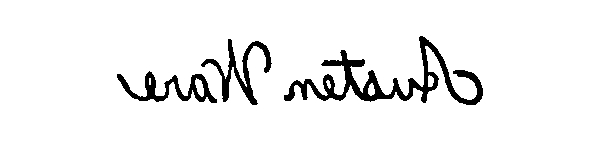
It was Austen Ware, and he had seen that kiss.