Volume IX of the Journal of the American Irish Historical Society,
containing the proceedings of the Annual Meeting of 1910,
essays and papers by learned members on timely subjects within the
scope of our work, and a substantial quantity of material of interest
to the Society, is now presented in the hope that it will serve the
purposes of its predecessors in making better known the Irish chapter
in American history and disseminating valuable information, not only
to the increasing number of public and private libraries, where our
volumes are always most welcome, but to the public in general. The
Society is to be congratulated on the large number of additions to
its membership roll of persons of high standing in the country’s
affairs, as well as the completion of the most prosperous year in its
history.
I acknowledge with deep appreciation the kind assistance rendered
by the Executive Council, the several learned members who have
contributed articles of great historic interest and deep research, the
Chairman of the Membership Committee, and the members of the
Society, through whose hearty coöperation and helpful suggestions
this Volume has been made possible.
Thomas Zanslaur Lee,
Secretary-General.
OFFICERS OF THE AMERICAN-IRISH HISTORICAL SOCIETY. — EXECUTIVE COUNCIL. — STATE VICE-PRESIDENTS. — OTHER VICE-PRESIDENTS.
8
President-General,
Francis J. Quinlan, M. D., LL. D.,
33 West 38th Street, New York City.
————
Vice-President-General,
Hon. Thomas B. Fitzpatrick,
Essex Street, Boston, Mass.
————
Secretary-General,
Thomas Zanslaur Lee, Esq.,
49 Westminster Street, Providence, R. I.
————
Treasurer-General,
Michael F. Dooley, Esq.,
President National Exchange Bank, Providence, R. I.
————
Librarian and Archivist,
Thomas B. Lawler, Esq.,
70 5th Avenue, New York City.
————
Historiographer,
Hon. James F. Brennan,
Peterborough, N. H.
The foregoing and
Hon. John D. Crimmins, 624 Madison Avenue, New York City.
Hon. William McAdoo, 30 Broad Street, New York City.
Patrick F. Magrath, Esq., Binghamton, N. Y.
Rev. John J. McCoy, LL. D., St. Ann’s Church, Worcester, Mass.
Thomas Addis Emmett, M. D., LL. D., 89 Madison Avenue, New York City.
9Hon. Edward J. McGuire, 52 Wall Street, New York City.
Hon. John F. O’Connell, 377 Westminster Street, Providence, R. I.
James L. O’Neill, Esq., Elizabeth, N. J.
Stephen Farrelly, Esq., 39 Chambers Street, New York City.
Rev. Cyrus Townsend Brady, LL. D., Haddon Hall, Kansas City, Mo.
Hon. Thomas J. Lynch, Augusta, Me.
Gen. Phelps Montgomery, 48 Church Street, New Haven, Conn.
Patrick Carter, Esq., 32 Westminster Street, Providence, R. I.
Hon. Patrick Garvan, 236 Farmington Avenue, Hartford, Conn.
John J. Lenehan, Esq., 71 Nassau Street, New York City.
Col. John McManus, 87 Dorrance Street, Providence, R. I.
Hon. William Gorman, Stephen Girard Bldg., Philadelphia, Pa.
J. Lawton Hiers, M. D., Savannah, Ga.
John F. Doyle, Esq., 45 William Street, New York City.
Arizona—Robert Dickson, Esq., Parker.
California—Capt. James Connolly, Coronado.
Colorado—Hon. Thomas F. Walsh, Denver.
Connecticut—Dennis H. Tierney, Esq., Waterbury.
Delaware—John J. Cassidy, Esq., Wilmington.
Florida—James McHugh, Esq., Pensacola.
Georgia—Capt. John Flannery, Savannah.
Illinois—Hon. Maurice T. Moloney, Ottawa.
Indiana—Very Rev. Andrew Morrissey, C. S. C., Notre Dame.
Iowa—Rt. Rev. Philip J. Garrigan, D.D., Sioux City.
Kansas—Patrick H. Coney, Esq., Topeka.
Kentucky—James Thompson, Esq., Louisville.
Louisiana—John T. Gibbons, Esq., New Orleans.
Maine—James Cunningham, Esq., Portland.
Maryland—Michael P. Kehoe, Esq., Baltimore.
Massachusetts—Hon. Joseph F. O’Connell, Boston.
Michigan—Hon. Howard W. Cavanagh, Homer.
Minnesota—Hon. C. D. O’Brien, St. Paul.
10Mississippi—Dr. R. A. Quin, Vicksburg.
Missouri—Hon. John Baptiste O’Meara, St. Louis.
Nebraska—Rev. M. A. Shine, Plattsburg.
New Hampshire—Hon. William E. Chandler, Concord.
New Jersey—Gen. Dennis F. Collins, Elizabeth, N. J.
New York—Joseph I. C. Clarke, Esq., New York City.
North Carolina—Michael J. Corbett, Esq., Wilmington.
Ohio—John Lavelle, Esq., Cleveland.
Oklahoma—Joseph F. Swords, Esq., Sulphur.
Oregon—J. P. O’Brien, Portland.
Pennsylvania—Hugh McCaffrey, Esq., Philadelphia.
Rhode Island—Hon. Charles Alexander, Providence.
South Carolina—William J. O’Hagan, Esq., Charleston.
South Dakota—Hon. Robert Jackson Gamble, Yankton.
Texas—James Moroney, Esq., Dallas.
Utah—Joseph Geoghegan, Esq., Salt Lake City.
Vermont—Capt. William Cronin, Rutland.
Virginia—Capt. James W. McCarrick, Norfolk.
Washington—Daniel Kelleher, Esq., Seattle.
West Virginia—John F. Healy, Esq., Thomas, Tucker County.
District of Columbia—Hon. Edward A. Moseley, Washington.
Ireland—Dr. Michael F. Cox, Dublin.
Germany—Hon. T. St. John Gaffney, Dresden.
Australia—Frank Coffey, Esq., Sydney.
Japan—Hon. Thomas J. O’Brien, Tokyo.
PREAMBLE, CONSTITUTION AND BY-LAWS OF THE AMERICAN IRISH HISTORICAL SOCIETY ADOPTED AT THE ORGANIZATION MEETING JANUARY 20, 1897. — ARTICLE II. Objects and Purposes. — ARTICLE III. Membership. — ARTICLE IV. Classes of Members. — ARTICLE V. Officers. — ARTICLE VI. The President-General. — ARTICLE VII. The Vice-Presidents. — ARTICLE VIII. The Secretary-General. — ARTICLE IX. The Treasurer-General. — ARTICLE X. The Librarian and Archivist. — ARTICLE XI. The Historiographer. — ARTICLE XII. The Executive Council. — ARTICLE XIII. Meetings. — ARTICLE XIV. Subsidiary Societies. — ARTICLE XV. Amendments. — BY-LAWS. — Note. — GENERAL INFORMATION REGARDING THE AMERICAN IRISH HISTORICAL SOCIETY. — A FEW OF THE INTERESTING PAPERS READ BEFORE OR REPRINTED BY THE SOCIETY. — PRESIDENTS-GENERAL OF THE SOCIETY.
11
Preamble.
Believing that the part taken in the settlement, foundation and
upbuilding of these United States by the Irish race has never received
proper recognition from historians, and inspired by love for
the republic, a pride in our blood and forefathers and a desire for
historic truth, this Society has met and organized.
Its mission is to give a plain recital of facts, to correct errors, to
supply omissions, to allay passion, to shame prejudice and to labor
for right and truth.
While we as loyal citizens of this republic are earnestly interested
in all the various phases of its history, we feel that we should be
false to its honor and greatness and recreant to our own blood if
we did not make a serious effort to leave to those generations which
will follow us a clearer and better knowledge of the important work
done by men and women of the Irish race on this continent.
People of this race—men and women born on Irish soil—have
been here from the first, prompted in their flight by the motives common
to all immigration, dissatisfaction with the old order of things
and the resolve to obtain a freer and better life in the new land under
new conditions.
And so we have come together—natives of Ireland, American
sons of Irish immigrants, and descendants of immigrants even unto
the seventh, eighth and ninth American generations—to duly set
forth and perpetuate a knowledge of these things.
In the days to come that lie in the womb of the future, when all
the various elements that have gone and are going to make the republic
great are united in the American—the man who in his person
will represent the bravest elements of all the old races of the earth—we
desire that the deeds and accomplishment of our element shall
12be written in the book of the new race, telling what we did and no
more, giving us our rightful place by the side of the others.
To accomplish this is the purpose of this organization. It is a
work worthy of the sympathy and aid of every American who can
rise above the environment of today and look into the broad future.
Fidelity, truth, honor are the watchwords of such a purpose, and
under their noble influences should our work be done.
The objects and purposes of this Society are:
(1) The study of American history generally.
(2) To investigate, especially, the immigration of the people
of Ireland to this country, determine its numbers, examine the
sources, learn the places of its settlement, and estimate its influence
on contemporary events in war, legislation, religion, education and
other departments of human activity.
(3) To examine records of every character, wherever found,
calculated to throw light on the work of the Irish element in this
broad land.
(4) To endeavor to correct erroneous, distorted and false views
of history, where they are known, and to substitute therefor the truth
of history, based on documentary evidence and the best and most
reasonable tradition, in relation to the Irish race in America.
(5) To encourage and assist the formation of local societies in
American cities and towns for the work of the parent society.
(6) To promote and foster an honorable and national spirit
of patriotism, which will know no lines of division, which will be
based upon loyalty to the laws, institutions and spirit of the republic
to whose upbuilding the Irish element has unselfishly contributed in
blood and treasure, a patriotism whose simple watchwords will be
true Americanism and human freedom and which has no concern
for any man’s race, color or creed, measuring him only by his conduct,
effort and achievement.
(7) To promote by union in a common high purpose a sincere
fraternity, a greater emulation in well doing, a closer confidence and
mutual respect among the various elements of the Irish race in
13America, that by putting behind them the asperities of the past they
may unite in a common brotherhood with their fellow citizens for
the honor of the race and the glory of the republic.
(8) To place the result of its historical investigations and researches
in acceptable literary form; to print, publish and distribute
its documents to libraries, institutions of learning, and among its
members, in order that the widest dissemination of historical truth
may be obtained and placed within the reach of historians and other
writers and readers.
(9) To sift and discriminate every paper, sketch, document bearing
on the Society’s line of work before the same is accepted and
given official sanction in order that its publication may be a guarantee
of historical accuracy; to do its work without passion or prejudice,
to view accomplished facts in the true scientific historical spirit
and having reached the truth to give it to the world.
Any person of good moral character who is interested in the
special work of this Society shall be deemed eligible for membership
in the same. No tests other than that of character and devotion
to the Society’s objects shall be applied to membership.
Every applicant for membership shall be recommended by two
members of the Society before his application shall be considered by
the Secretary-General, and the application shall be accompanied by
the dues in the amounts laid down in the by-laws.
Members will be elected as follows: Candidates may send their
applications—for which blanks will be furnished—to the Secretary-General,
accompanied by the fee as provided in the by-laws,
and each application must be endorsed by two members of the Society.
The Secretary-General shall submit the application to the
executive council, and a three fourths vote of that body by ballot or
otherwise will be necessary to elect the candidate.
The Society shall comprise life members and annual members,
who shall pay dues as provided in the by-laws. The Society may
14also choose honorary and corresponding members, who shall be
exempt from dues but shall not have the right to vote.
The officers of The Society shall consist of:
1.
A President-General.
2.
A Vice-President for each state and territory and for the District of Columbia.
3.
A Secretary-General.
4.
A Treasurer-General.
5.
A Librarian and Archivist.
6.
An Historiographer.
7.
An Executive Council.
(The word “General” herein to be considered equivalent to National.)
The officers of the Society shall be elected annually.
The duties of the President-General shall be to open and preside
over the Society during its deliberations, to see that the Constitution
is observed and the by-laws enforced, to appoint committees, and
to exercise a watchful care over the interests of the Society, that
its work may be properly done and its purposes adhered to. In
the absence of the President-General a presiding officer pro tem.
may be chosen.
It shall be the duty of the Vice-President of each state to represent
the President-General at all meetings of state chapters of the
Society and for the Vice-President of the state to which the President-General
belongs, or in which the meeting is held, to represent
him at all meetings of the parent Society when he cannot be present
and in his absence to act as chairman pro tempore. In the absence
15of both the President-General and state Vice-President, a presiding
officer pro tem. may be chosen from the assembled members of the
Society.
The Secretary-General shall keep a record of all the proceedings
of the Society and the executive council. He shall have charge
of the seal and records. He shall issue and sign in conjunction with
the President-General all charters granted to the subsidiary chapters,
and shall with him certify to all acts of the Society. He shall,
upon orders from the President-General, give due notice of time and
place of all meetings of the body; give notice to the several officers
of all votes, resolutions, orders and proceedings of the body affecting
them or appertaining to their respective offices and perform such
other duties as may be assigned him.
The Treasurer-General shall collect and receive all dues, funds
and securities and deposit the same to the credit of the American-Irish
Historical Society, in such banking institution as may be approved
by the Executive Council. This money shall be drawn to
the check of the Treasurer-General for the purposes of the Society
and to pay such sums as may be ordered by the Executive Council
of the Society in meeting, said orders to be countersigned by the
President-General and Secretary-General. He must keep a full
and accurate account of all receipts and disbursements and at each
annual meeting shall render the same to the Society, when a committee
shall be appointed by the President-General to audit his accounts.
He shall present at annual or special meetings a list of
members in arrears.
The Librarian and Archivist shall be the custodian of all published
books, pamphlets, files of newspapers and similar property
16of the Society. He shall have charge of all documents, manuscripts
and other productions not assigned by this Constitution to other
officers of the Society, and shall keep the same in a place or places
easy of access and safe from loss by fire or other causes.
The Historiographer or official historian of the Society shall perform
the duties usually pertaining to that office.
The Executive Council shall consist of the President-General,
Secretary-General, Treasurer-General, Librarian and Archivist, Historiographer
and ten members, all to be elected by the Society.
The Executive Council shall be the judge of the qualifications of
applicants for admission and if satisfactory shall elect the same. The
Council shall recommend plans for promoting the objects of the
Society, digest and prepare business, authorize the disbursement and
expenditure of unappropriated money in the treasury for the current
expenses of the Society; shall prepare and edit—or cause to be
prepared and edited—contributions of an historical or literary character
bearing on the special work of the Society for publication
and distribution; may appropriate funds for the expenses of special
branches of research for historical data and for the purchase of
works to form a library for the Society whenever it shall have a
permanent home or headquarters. The Council shall have power to
fill vacancies in office until the annual meeting, exercise a supervisory
care over the affairs of the Society and perform such other
duties as may be entrusted to them. At a meeting of the Executive
Council five members shall constitute a quorum.
The annual meeting of this Society shall be held on the third
Wednesday in January. A field day of the body shall be held during
17the summer of each year at such time and place as the Executive
Council shall select, due regard being given to the convenience
of the greatest number, and, as far as possible, the meeting place
selected shall be one whose historical associations are of interest to
American citizens.
The annual meeting shall be for the purpose of electing officers,
hearing reports and transacting such other business as may come
properly before it. Until otherwise ordered such meeting shall be
held in the city of Boston, Mass. There shall be four stated meetings
each year.
Special meetings may be called at any time by the Executive
Council.
Chapters of the parent Society may be established in any city
or town in the United States upon the petition of ten persons for
a charter, and such charter shall be issued upon payment of the
sum designated for such in the by-laws.
The President, Secretary, Treasurer, Librarian and Historiographer
of all subsidiary societies shall be admitted to all meetings
of the parent Society as members during their term of office, with all
the privileges of membership except that of voting.
Amendments to the Constitution shall be submitted to the Executive
Council through the Secretary-General at least thirty days before
the meeting of the Society. A vote of two thirds of the members
present at the meeting shall be necessary for the adoption of
such amendments.
(1) The initiation fee shall be three dollars. The annual membership
fee shall be three dollars, payable not later than the first
day of February in each year.[1]
18(2) Payment of fifty dollars in advance at one time shall constitute
a life membership. Life members shall be exempt from further
dues.
(3) The Executive Council shall provide for each regular meeting
of the Society an address, essay or paper dealing with some
topic in the Society’s line of work.
(4) A copy of all original productions read before the Society
shall be requested for deposit in the Society’s archives.
(5) The annual field-day program shall include an oration, poem
and dinner. Other features of an appropriate nature may be added.
(6) A fraternal spirit shall be cultivated with other American
historical bodies. The Society shall also keep in touch with historical
organizations in Ireland, France and other countries.
(7) Any person elected to membership in this Society who fails
to pay his initiation fee within one year from the date of his election
shall, having been duly notified by the Secretary-General, be
considered as having forfeited his right to membership and his
election shall be cancelled.
(8) A member neglecting for two years to pay his annual fee
shall be notified of such omission by the Secretary-General. Still
neglecting for three months to pay the dues such delinquent member
shall be dropped as no longer belonging to the Society.
(9) The stated meetings of the Society shall be held in January,
April, July and October. The President-General, upon receiving a
request in writing, signed by ten members, asking for a special
meeting, shall cause the said meeting to be convened forthwith.
(10) Ten members shall constitute a quorum at any meeting of
the Society, except stated meetings, when fifteen members shall be
necessary.
(11) The general order of business at meetings of the Society
shall be as follows:
(a)
Minutes of previous meeting.
(b)
Report of Executive Council on candidates for membership.
(c)
Balloting on candidates for membership.
(d)
Reports of officers and committees.
(e)
Unfinished business.
(f)
New business.
(g)
Adjournment.
19(12) When not otherwise provided, Cushing’s Manual shall be
the authority on points of procedure at meetings of the Society.
(13) No part of these by-laws shall be amended, altered or repealed
unless proposition is submitted in writing covering the proposed
amendment at least thirty days before the meeting when it is
to be acted upon, when, if two thirds of the members present and
voting express themselves in favor of the change, the same shall be
made.
A committee consisting of Michael J. Jordan, Esq., Hon. Patrick
J. McCarthy, Joseph T. Ryan, Esq., John E. O’Brien, Esq., and the
Secretary-General, has been appointed by the President-General to
revise the Constitution. As the report of this committee has not
yet been adopted, the foregoing Constitution is still in force.
The Society was organized on January 20, 1897, in Boston, Mass.,
and now has members in nearly all the states, the District of Columbia,
one territory and four foreign countries.
The object of the organization is to make better known the Irish
chapter in American history.
There are two classes of members—Life and Annual. The life
membership fee is $50 (paid once). The fee for annual members
is $5, paid yearly. In the case of new annual members, the initiation
fee, $5, also pays the membership dues for the first year.
The government comprises a President-General, a Vice-President-General,
a Secretary-General, a Treasurer-General, a Librarian and
Archivist, a Historiographer and an Executive Council. There are
also State Vice-Presidents.
The Society has already issued several bound volumes and a number
of other publications. These have been distributed to members,
public libraries, historical organizations and universities. Each
member of the Society is entitled, free of charge, to a copy of every
publication issued from the time of his admittance. These publications
20are of great interest and value, and are more than an equivalent
for the membership fee.
The Society draws no lines of creed or politics. Being an
American organization in spirit and principle, it welcomes to its
ranks Americans of whatever race or descent, and of whatever creed,
who take an interest in the objects for which the Society is organized.
Membership application blanks will be furnished on request to the
Secretary-General at his office, 49 Westminster Street, Providence,
R. I., or to John J. Lenehan, Chairman of the Committee on Membership,
71 Nassau Street, New York City. Blank applications
found at the end of this volume.
The membership includes many people of prominence and occupies
a position in the front rank of American historical organizations.
The Society is a corporation duly organized under the laws of the
State of Rhode Island and is authorized to take, hold and convey
real and personal estate to the amount of $100,000.
Gifts or bequests of money for the uses of the Society are solicited.
We depend entirely on our membership fees and dues, and if we had
a suitable fund on hand its income would be most advantageously
used for historical research, printing and issuing historical works and
papers and adding to our library. The following is a form of bequest
good in any state or territory:
“I give and bequeath to the American Irish Historical Society
—— dollars.”
If desired, a donor or testator may direct the application of principal
or interest of his gift or bequest.
“Irish Settlers in Pennsylvania.”
“Early Irish in St. Louis, Missouri.”
“Patriots Bearing Irish Names Who Were Confined Aboard the
Jersey Prison Ship.”
“Commerce Between Ireland and Rhode Island.”
“Some Irish-French Officers in the American Revolution.”
“The Voyage of the Seaflower.”
21“The Defense of Fort Stephenson on the Sandusky.”
“Irish Settlers on the Opequan.”
“Irish Pioneers in Boston and Vicinity.”
“The Irish in America.”
“Goody Glover, an Irish Victim of the Witch Craze, Boston,
Mass., 1688.”
“Capt. Daniel Neill, an Artillery Officer of the Revolution.”
“Richard Dexter, One of Boston’s Irish Pioneers.”
“The New Hampshire Kellys.”
“Some Early Celebrations of St. Patrick’s Day in New York
City, 1762–1788.”
“Master John Sullivan of Somersworth and Berwick and His
Family.”
“Martin Murphy, Sr., an Irish Pioneer of California.”
“Historical Notes of Interest.”
“Irish Ability in United States.”
“The Affair at Fort William and Mary.”
“Incident of an Expedition under Gen. John Sullivan.”
“Irish Builders of White House.”
“Col. Francis Barber, a Soldier of the Revolution.”
“A Glance at Some Pioneer Irish in the South.”
“Walsh’s Irish Regiment of Marine Artillery, French Army.”
“Irish Influence in the Life of Baltimore.”
“A Bit of New York History.”
“The Kelts of Colonial Boston.”
“The Battle of New Orleans.”
“Battles of Lexington, Concord and Cambridge.”
“Matthew Watson, an Irish Settler of Barrington, R. I., 1722.”
“Irish Emigration During the Seventeenth and Eighteenth Centuries.”
“Some Pre-Revolutionary Irishmen.”
“Some Irish Settlers in Virginia.”
“The ‘Scotch-Irish’ and ‘Anglo-Saxon’ Fallacies.”
“Early Irish Settlers in Kentucky.”
“The Irish in South Carolina, Georgia, Alabama, Louisiana and
Tennessee.”
“Hugh Cargill, a Friend of Liberty.”
“The Irish Settlers of Pelham, Mass.”
“Thomas Fawcett, Irish Quaker, American Pioneer.”
22“Early New Hampshire Irish; Some Pre-Revolutionary Dennises,
Corneliuses, Patricks and Michaels.”
“The United States Torpedo Boat O’Brien.”
“Daniel Morgan and the Battle of Cowpens.”
“Irish Schoolmasters in the American Colonies, 1640–1775.”
“The Irish at Bunker Hill.”
“David Hamilton, a Soldier of the American Revolution.”
“Irish Pioneers in Texas.”
“The Irish Chapter in the History of Brown University.”
“Men of Irish Blood Who Have Attained Eminence in American
Journalism.”
“William Prendergast, a Pioneer of Chautauqua County, N. Y.”
“The Battle of Rhode Island.”
“Rev. James MacSparran, Irishman, Scholar, Preacher and
Philosopher, 1680–1757.”
“Irish Pioneers and Builders of Kentucky.”
“Rev. James Caldwell, a Patriot of the American Revolution.”
“Great Irishmen in New York’s History.”
“Life and Deeds of Major-General John Sullivan.”
“Irish Pioneers in New York.”
“Irish Pioneers of the West and Their Descendants.”
“Advantages of Historical Research to Irish Americans.”
“Proceedings and Addresses at Dedication of Sullivan Memorial.”
“Civic Value of Memorials.”
“Joseph O’Connor, Editor, Author and Poet.”
“History of the Society of the Friendly Sons of St. Patrick in
the city of New York.”
“Early Marine Wireless.”
“Sketches of William Dunlap, Thomas P. Johnson and Thomas
Sharp.”
“Distinguished Irish Americans in Revolutionary Times.”
“The First Census of the United States with Pointed Comments
on Taking Same and Results Thereof.”
“Memorial to Jersey Prison Ship Heroes.”
“The Irish in the Revolutionary War.”
“Hon. Eli Thayer, One of the Early Members of the American
Irish Historical Society.”
23
1897.
Rear-Admiral Richard W. Meade, U. S. N.
1897–1898.
Hon. Edward A. Moseley, Washington, D. C.
1899–1900.
Hon. Thomas J. Gargan, Boston, Mass.
1901–1902.
Hon. John D. Crimmins, New York City.
1903–1904.
Hon. William McAdoo, New York City.
1905.
Hon. John D. Crimmins, New York City.
1906–1907.
Rear-Admiral John McGowan, U. S. N. (retired), Washington, D. C.
1908–1910.
Francis J. Quinlan, M. D., LL. D., New York City.
RECORDS OF THE TWELFTH ANNUAL MEETING AND BANQUET OF THE AMERICAN IRISH HISTORICAL SOCIETY AT THE HOTEL PLAZA, NEW YORK CITY, JANUARY 8, 1910. — THE AMERICAN IRISH HISTORICAL SOCIETY. — THE AMERICAN IRISH HISTORICAL SOCIETY.
24
It having been voted at the Eleventh Annual Meeting in Washington
to hold the next annual meeting in New York, the Executive
Council considered the necessary arrangements and resolved to make
the Twelfth Annual Meeting and Banquet the most notable in the
Society’s history.
Heretofore it had been the custom to hold the meeting and banquet
of the Society the same evening, commencing at six o’clock and
ending toward midnight. This gave little opportunity for a discussion
of the papers presented, and many members who had been
invited at these previous meetings to prepare papers were obliged
to submit them to the Secretary-General without reading, with the
result that the other members obtained information as to the contents
of these only after they were printed in the volume of the
Journal issued next succeeding the meeting.
The President-General appointed the following gentlemen a Dinner
Committee, to arrange the details of the meeting and dinner:
Mr. Stephen J. Farrelly, Chairman; and Messrs. Joseph I. C.
Clarke, John D. Crimmins, Edmond J. Curry, Victor Herbert,
John J. Lenehan and Joseph T. Ryan.
After negotiations with the various high-class hostelries in New
York and exhibiting a desire to procure for the use of the Society the
best accommodations to be found in New York, the Dinner Committee
finally decided upon the Hotel Plaza as the place and arranged
for the business meeting of the Society to commence at two o’clock
in the afternoon and terminate at six, and the dinner to begin at
seven o’clock.
The following circular was issued and sent to each member of the
Society, containing the arrangements for the meeting:
25
Announcement for the Annual Meeting and Twelfth Annual Dinner of the Society.
The Twelfth Annual Meeting of the American Irish Historical Society will
take place at the Hotel Plaza, New York City, Saturday, January 8, 1910,
commencing at two o’clock in the afternoon.
It has been the custom at previous meetings of the Society to assemble
at six o’clock, hold a short business meeting, followed by a dinner commencing
at seven o’clock, at the conclusion of which historical papers would
be read.
It has been found difficult to properly appreciate the learning and research
shown by the eminent authors of historical papers in the meagre time between
the termination of a good dinner and the hour when the meeting should
end, and this year the Executive Council has made a new departure in
this regard, which it is earnestly hoped will meet with the approval of
our members.
The meeting of the Society will be called to order at two o’clock in the
afternoon in the New Banquet Room on the first floor of the Hotel Plaza
by the President-General. The first business will be the presentation of
reports of the President-General, Treasurer-General, and Secretary-General, followed
by the election of General Officers, Executive Council and State Vice-Presidents
for the ensuing year.
The Executive Council, at a meeting held in New York, November 12,
1909, nominated a board of officers to be voted upon at this meeting, the
names of whom appear elsewhere in this circular.
The report of the Secretary-General will contain the statistics of the
Society, the list of new members, names of those dropped for non-payment
of dues, synopsis of the work the Society has done during the past year, and
other interesting information.
It is expected that the business of the Society and the presentation of scientific
papers will all be completed at an hour which will give members ample
time to dress for dinner.
The Meeting Room will be open at 12.30 o’clock, and members on their
arrival are requested to register themselves and their guests.
The annual dinner will take place in the Grand Ball Room promptly
at seven o’clock, and the Dinner Committee are informed that the management
of the hotel plan to give us a most enjoyable dinner and extend
us every possible courtesy.
The Executive Council, following the departure inaugurated at the Eleventh
Annual Meeting in Washington, D. C., January 16, 1909, have voted that
members may invite ladies and gentlemen as guests.
The price of the dinner tickets is $5.00 each, and it is advisable to promptly
send applications, accompanied by cheque to the Secretary-General, who is
Secretary of the Dinner Committee; so that seats may be allotted. Allotments
26will be made in the order in which applications are received, and
parties of six or more, desiring to be seated together, can be accommodated
by making that fact known when the tickets are purchased.
Among those who will furnish scientific papers during the afternoon session
will be Hon. Joseph F. O’Connell, Hon. Henry Groves Connor, John
Louis Sheehan, LL. D., Hon. James Fitzgerald, M. X. Sullivan, Ph. D.,
Joseph I. C. Clarke, Esq., and Alfred J. Talley, Esq., Judge Joseph T. Lawless,
and others.
The speakers at the dinner will be Hon. Michael F. Dooley, Hon. William
McAdoo, Rev. J. Havergal Sheppard, D. D., Hon. William A. Prendergast,
Hon. Joseph H. O’Neil, Hon. John W. Goff, Hon. Alexander C. Eustace
and others.
Souvenirs of the occasion containing the seal of the Society, menu, list of
speakers, officers and other detailed information, have been prepared, after
competitive bidding, by the Gorham Manufacturing Company. These are very
beautiful and artistic and will be distributed among members and guests
at the dinner.
The committee of the Society having the dinner in charge is as follows:—Stephen
Farrelly, Esq., Joseph T. Ryan, Esq., John J. Lenehan, Esq., Joseph
I. C. Clarke, Esq., Hon. John D. Crimmins, Edmond J. Curry, Esq., Victor
Herbert, Esq., and Hon. Edward J. McGuire, President-General Quinlan
and the Secretary-General ex officio.
As the seating capacity of the Grand Ball Room of the Plaza is limited
to 425, it is earnestly desired that members make applications for dinner
tickets at once, in order that the Committee may complete arrangements as
early as possible and bring about a pleasant reunion of our members and
their guests.
Yours fraternally,
FRANCIS J. QUINLAN, M. D., LL. D.,
President-General,
33 West 38th Street, New York City.
Thomas Zanslaur Lee,
Secretary-General,
49 Westminster Street, Providence, R. I.
A little later an additional circular letter was issued and sent to
each of the members, giving additional information about the meeting
and dinner that was sought for by quite a few:
Twelfth Annual Meeting and Dinner at Hotel Plaza, New York City, January 8, 1910.
The Dinner Committee are greatly pleased with the prompt purchase of
tickets by so many members of the Society, and the absolute success of the
Twelfth Annual Banquet is now an assured fact.
The President-General and the Executive Council respectfully request that
27those who intend to be present at the dinner, but have not yet taken tickets
or ordered seats for themselves or guests, will do so at the earliest possible
moment so that seats may be provided and their comfort looked after. The
tickets are five dollars each, and may be had upon application to the Secretary-General,
accompanied by check. Members may invite guests, ladies or gentlemen.
The business meeting will be called to order promptly at two o’clock p. m. in
the New Banquet Room on the first floor of the Hotel Plaza.
Scientific papers will be presented by the following members: Hon. Joseph
F. O’Connell, Hon. Henry Groves Connor, John Louis Sheehan, LL. D.,
Hon. James Fitzgerald, M. X. Sullivan, Ph. D., Joseph I. C. Clarke, Esq.,
Alfred J. Talley, Esq., and others.
The speakers at the dinner will be: Hon. Michael F. Dooley, Hon.
William McAdoo, Rev. J. Havergal Sheppard, D. D., Col. Charles Alexander,
Hon. William A. Pendergast, Hon. John W. Goff, Edward M.
Tierney, Esq., and others.
The Secretary-General will be in attendance at the Society’s headquarters
at The Plaza after 9 a. m., the day of the meeting and banquet, and will have
on sale tickets for those who up to that time have not been provided with
them. The seats, however, will not be as desirable for those who wait until
the day of the banquet to get their tickets, but there are plenty of desirable
places remaining unsold.
The attendance of every member who can possibly be present is strongly
urged, with the hope of making this meeting and banquet the greatest the
Society has ever held. The Hotel Plaza is the most desirable place for a
banquet in New York, and was selected by the Dinner Committee with the
sole idea of having the best obtainable for our Society.
The management has given the members the benefit of a low rate for
accommodations, and authorizes the following quotations to our members and
guests:
Single rooms with bath for one person $4.00, $5.00 and $6.00 per day, according
to location.
Double rooms with bath for two persons $6.00, $7.00 and $8.00 per day, according
to location.
Dinner at seven o’clock in the Grand Ball Room. An exquisite souvenir
designed by the Dinner Committee and executed by Gorham Company, containing
program, songs and useful information about the Society, will be
presented each member and guest in attendance at the dinner.
FRANCIS J. QUINLAN, M. D., LL. D.,
President-General,
33 West Thirty-Eighth Street, New York City.
Thomas Zanslaur Lee,
Secretary-General,
49 Westminster Street, Providence, R. I.
At the conclusion of the business meeting the assembly room was
cleared and properly arranged for a reception to the members of the
28Society, to be given by the officers. This function was well attended,
and the large assembly hall was filled to overflowing with members
and their lady and gentlemen guests.
The programme of the evening was executed by the Gorham
Manufacturing Company from designs and suggestions furnished
by the New York members of the Dinner Committee, and is considered
the most artistic programme ever used at a similar function in
New York.
The menu of the dinner, which was served under the personal
direction of Mr. C. E. Railing, the manager of the Plaza, was as
follows:
Hors D’Oeuvre
Consomme Beatrice
Sherry
Supreme de Sole a la Russe
Sauterne
Filets de Boeuf Pique
Garni Bouquetiere
Pommes Fondantes
Margaux
Sorbet au Marasquin.
Poularde a la Broche
Salade
Bombe Surprise
Petits Fours
Cafe
White Rock
Fonseca Cigars
Cigarettes
This banquet was served in the principal dining hall of the Hotel
Plaza, which, on account of the great number of tickets sold, was
crowded to the doors with members of the Society and guests.
President-General Francis J. Quinlan presided at the meeting and
later at the banquet, and divine grace was asked at the latter by
Right Reverend James A. McFaul, D. D., Bishop of Trenton.
29The Society acknowledges the many courtesies extended to it by
the management of the Hotel Plaza and the earnest effort to do
everything possible for our pleasure and comfort, and the painstaking
efforts and excellent direction of Mr. C. E. Railing, in immediate
charge in behalf of the Hotel Plaza of our arrangements, are
gratefully appreciated by the Society.
The proceedings of the twelfth annual meeting and banquet of
the Society were stenographically reported by Miss Viola Follis of
Providence, R. I., whose faithful and accurate transcription of last
year’s proceedings won so much favor.
MINUTES OF THE ANNUAL MEETING. — Life Members. — Annual Members. — REPORT OF THE SECRETARY-GENERAL. — Donations. — Administration Expenses.
30
It was voted that the reading of the minutes of the Eleventh Annual
Meeting be omitted.
The admission of new members being the first business in order,
the following list of applicants was read by the Secretary-General,
all of whom, by unanimous vote, were duly elected:
James Butler, Esq., 230 West 72d Street, New York City. Proposed
by Francis J. Quinlan, M. D.; seconded by Hon. John D.
Crimmins.
William J. Dooley, Esq., 17 Gaston Street, Boston, Mass. Proposed
by John J. Lenehan.
Hon. John B. O’Meara, 1413 Syndicate Trust Building, St. Louis,
Mo. Proposed by John J. Lenehan.
John J. Bealin, Esq., 2334 Valentine Avenue, New York City.
Proposed by Philip J. Kearns; seconded by Owen J. Brady and
John J. Lenehan.
Thomas P. Fitzsimmons, Esq., 169 West 76th Street, New York
City. Proposed by John J. Lenehan.
James F. McNaboe, Esq., 137 West 92d Street, New York City.
Proposed by John J. Lenehan.
Dr. John Guerin, 3958 Ellis Avenue, Chicago, Ill. Proposed by
Hon. M. T. Moloney.
Rev. Edmond Heelan, Sacred Heart Church, Fort Dodge, Iowa.
Proposed by Patrick E. C. Lally; seconded by John J. Lenehan.
John P. Sutton, Esq., 134 N. 18th Street, Lincoln, Neb. Proposed
by Hon. M. T. Moloney.
31Thomas O’Reilly, Esq., 8 Mt. Morris Park West, New York City.
Proposed by John J. Lenehan.
John J. Manning, Esq., 143 West 95th Street, New York City.
Proposed by John J. Lenehan.
Hon. Richard H. Mitchell, 38 Park Row, New York City. Proposed
by John J. Lenehan.
Frank Keenan, Esq., 210 West 107th Street, New York City.
Proposed by Francis J. Quinlan, M. D.; seconded by John J. Lenehan.
Jerome B. Coggins, Esq., 920 17th Street, Denver, Colo. Proposed
by James J. Sullivan; seconded by John J. Lenehan.
William J. Colihan, Esq., 141 East 95th Street, New York City.
Proposed by John J. Manning; seconded by John J. Lenehan.
James Moroney, Esq., 303 Elm Street, Dallas, Texas. Proposed
by John J. Lenehan.
George A. Hopkins, Esq., 526 West 111th Street, New York City.
Proposed by Col. David M. Flynn; seconded by John J. Lenehan.
William J. Whelen, Esq., 326 South Broad Street, Elizabeth,
N. J. Proposed by William J. McCloud.
Richard T. Potts, Esq., 73 Broad Street, Elizabeth, N. J. Proposed
by William J. McCloud.
T. A. Riordan, Esq., Flagstaff, Arizona. Proposed by John J.
Lenehan.
M. D. Gallagher, Esq., 402 West 146th Street, New York City.
Proposed by Gen. Michael Kerwin.
Dr. William J. Sullivan, President Lawrence Board of Trade,
Lawrence, Mass. Proposed by Dr. M. F. Sullivan.
Cornelius J. Corcoran, Esq., City Clerk of Lawrence, Lawrence,
Mass. Proposed by Dr. M. F. Sullivan.
Thomas F. Kennedy, Esq., of Yund, Kennedy & Yund, Amsterdam,
N. Y. Proposed by John J. Lenehan.
Patrick J. Bergin, Esq., 169 Blackstone Street, Boston, Mass.
Proposed by Michael J. Jordan; seconded by John J. Lenehan.
Martin J. Wade, Esq., Iowa City, Iowa. Proposed by Hon. M.
T. Moloney.
Joseph M. Feely, Esq., 304–5 Powers Building, Rochester, N. Y.
Proposed by P. F. Magrath.
HONORABLE THOMAS J. O’BRIEN,
American Ambassador to Japan.
32Joseph A. Kenefick, M. D., 78 East 54th Street, New York City.
Proposed by Francis J. Quinlan, M. D.
Dudley Field Malone, Esq., 37 Wall Street, New York City.
Proposed by John J. Lenehan.
Hon. Charles V. Fornes, 425–427 Broome Street, New York
City. Proposed by John E. O’Brien.
John F. Harrigan, Esq., 66 High Street, Worcester, Mass. Proposed
by John J. Lenehan.
Timothy J. Phelan, Esq., Narragansett Hotel, Providence, R. I.
Proposed by Michael W. Norton; seconded by Thomas F. Kilkenny.
Hon. John J. Mee, Woonsocket, R. I. Proposed by Thomas Z.
Lee.
Denis A. McAuliffe, Esq., 312 E. 57th Street, New York City.
Proposed by Francis J. Quinlan, M. D.
Hon. John T. Coughlin, Mayor of Fall River, Fall River, Mass.
Proposed by Thomas E. Maloney.
Henry F. Nickerson, Esq., 524 Durfee Street, Fall River, Mass.
Proposed by Thomas E. Maloney.
Michael J. Coughlin, Esq., 178 Bedford Street, Fall River,
Mass. Proposed by Thomas E. Maloney.
Hon. W. E. Chandler, formerly U. S. Senator from New Hampshire,
Concord, N. H. Proposed by Thomas Z. Lee.
William Sydney Rossiter, Esq., The Rumford Press, Concord,
N. H. Proposed by Thomas Z. Lee.
Hon. Zenas W. Bliss, Lieut.-Governor of Rhode Island, Providence,
R. I. Proposed by Hon. Patrick J. McCarthy.
Edward S. Murphy, Esq., 1205 Park Avenue, New York City.
Proposed by John J. Manning.
James Hanley, Esq., of The James Hanley Brewing Co., Providence,
R. I. Proposed by Hon. Michael F. Dooley.
John P. Donohoe, Esq., Care of The Barclay-Westmoreland
Trust Co., Greensburg, Penn. Proposed by John J. Lenehan.
George W. McNulty, Esq., 153 West 79th Street, New York City.
Proposed by John J. Lenehan.
John J. Powers, Esq., 424 Habersham Street, Savannah, Ga.
Proposed by Col. M. J. O’Leary; seconded by John J. Lenehan.
33Lieut.-Col. John G. Butler, 20 Congress Street, West, Savannah,
Ga. Proposed by Col. M. J. O’Leary; seconded by John J. Lenehan.
Thomas M. Blake, Esq., 11 St. Luke’s Place, New York City.
Proposed by Robert E. Danvers; seconded by John J. Lenehan.
Thomas B. Fitzgerald, Esq., Elmira, N. Y. Proposed by Hon.
Alexander C. Eustace.
John F. Murtaugh, Esq., Realty Building, Elmira, N. Y. Proposed
by Alexander C. Eustace.
M. M. Shannon, Esq., 512 Davis Street, Elmira, N. Y. Proposed
by Hon. Alexander C. Eustace.
John M. Connelly, Esq., President Elmira Chamber of Commerce,
Elmira, N. Y. Proposed by Hon. Alexander C. Eustace.
Michael J. O’Brien, Esq., Superintendent’s Office, Western Union
Building, Day Street and Broadway, New York City. Proposed by
Joseph I. C. Clarke.
John L. Linehan, Esq., 165 Broadway, New York City. Proposed
by Alfred J. Talley; seconded by Patrick S. MacDwyer.
Patrick H. Harriman, M. D., Norwich, Conn. Proposed by Rev.
William Keefe.
John P. S. Mahoney, Esq., Lawrence, Mass. Proposed by Dr.
M. F. Sullivan.
W. I. Boland, Esq., Toronto, Canada. Proposed by William
H. Delany.
Capt. Daniel P. Foley, Wilmington, N. C. Proposed by Michael
J. Corbett.
Michael W. Rayens, Esq., 206 Broadway, New York City. Proposed
by Henry L. Joyce.
John W. Kelley, Esq., of Kelley, Harding & Hatch, Exchange
Building, Portsmouth, N. H. Proposed by Hon. W. E. Chandler.
Joseph P. Bourke, Esq., World Building, Manhattan, New York
City. Proposed by William H. Delany.
James Regan Fitzgerald, Esq., 90 West Broadway, New York
City. Proposed by Patrick S. MacDwyer.
Hon. Ernest Harvier, 1193 Broadway, New York City. Proposed
by William H. Delany.
John Taaffe, Esq., General Post Office, Yonkers, N. Y. Proposed
by William H. Delany.
Charles V. Halley, Jr., Esq., 756 E. 175th Street, Bronx, New
York City. Proposed by Charles V. Halley.
34Dr. William Streker, Messer Street, Providence, R. I. Proposed
by Dr. S. E. Donovan, New Bedford, Mass.
Jeremiah P. Daly, Esq., 1747 Lexington Avenue, New York City.
Proposed by John J. Daly.
Paul J. Morrison, Esq., Asst. Chief Clerk, U. S. Immigration
Station, Department of Commerce and Labor, Ellis Island, New
York. Proposed by John J. Daly.
Peter P. Sherry, Esq., 254 West 14th Street, New York City. Proposed
by William H. Delany.
Desmond FitzGerald, Esq., Brookline, Mass. Proposed by John
J. Lenehan.
The President-General, at this point, made a most interesting and
instructive address upon the work of the Society, pointing out what
had been accomplished during the past twelve months and indicating
what its general policy would be for the future. A review was
made of the work of the different officers of the Society, and recommendations
of an appropriate and timely nature were presented.
Unfortunately, the text of the President-General’s remarks cannot be
given as the stenographic clerk was temporarily absent.
The Secretary-General presented and read the following report,
which, by unanimous vote, was accepted and placed on file:
It is with much pleasure I present the report of my office for 1909,
which has been to the Society a year of success, prosperity and great
advancement.
At the commencement of my term of office as Acting Secretary-General
in September, 1908, there were 538 members enrolled on
the books. Many of these had not paid dues for a number of
years, and had lost all interest in the Society and its objects, while
others had deceased and no record had been kept of them because
word had not been communicated to the Secretary-General.
A general house-cleaning took place, and a list of members in arrears
for two years and more was prepared and submitted to the
Executive Council, which ordered extra notices sent to every delinquent
in order that each member in arrears might know the extent
of his obligations.
35The Committee on Delinquent Members appointed January 16th,
1909, sent out printed notices, through this office, urging the necessity
of prompt payment of dues, and in short every reasonable means
to stimulate payment and activity was taken. Some responded, but
the majority did not and their names have been stricken from the roll
of the Society.
January 16th, 1909, the date of the last annual meeting, the Society
had 687 members, 149 applicants having been admitted since
September, 1908. During the year 1909, 239 members were admitted,
largely through the energy and recommendations of the Committee
on Membership, of which John J. Lenehan, Esq., is chairman
and active head. During the year we lost 7 by death, 13 by resignation,
and 23 by order of the Executive Council for non-payment of
dues. This leaves the membership of the Society in good standing
at present as follows: Life members, 74; annual members, 828;
total, 951.
Although the membership is satisfactory in numbers and the
Committee on Membership has performed a wonderful work during
the past year, the Society is not as large as it should be. Efforts
should be made to ascertain the names of those Americans prominent
in all walks of life, in whose veins Irish blood flows and who are
interested in seeing that the history of our country chronicles and
credits the doings of fellow citizens of Irish blood equally with those
of other nationalities, and each member should constitute himself a
committee to act in conjunction with the Membership Committee
and obtain an addition to the Society wherever he can, always assuring
himself that the applicant he presents is of good character and
intelligence and interested in the work for which the Society is
organized.
There are few distinguished families in the United States that
are not partially of Irish ancestry, and since our Society has become
so well known throughout the country it has stimulated those who
have never cared, for reasons best known to themselves, to cause it
to be known that Irish blood flowed in their veins, not only to admit
the fact but really and truly to assert it, and willingly to accept the
credit that comes from such ancestry. Many men whose entire
time and energy are devoted to extensive business will take little
time to inform themselves of the doings of our Society, unless members
in different localities will take it upon themselves to seek out
36just such men, inform them of the work we are doing, and enlist
their hearty coöperation in it.
We are the largest and most prominent society of our kind in the
United States, and cover a field that until we were organized had
been practically untouched. The influence of our work for the last
few years has been marked, and the average chronicler of American
history will think twice in recording events before he permits any
bigotry or outside influence to prevent him from giving the American
of Irish ancestry his share of credit for deeds performed. The
magazines and newspapers bear evidence of this, for, as soon as an
attack is made upon the American-Irishman or failure to give him his
just due is discerned, there are those who, stimulated by the influence
of our Society in different parts of the country, will immediately
bring the erring party to bar and suggest the proper corrections.
An illustration of this spirit may be gained from a recent event in
Providence. A book called “The Modern City” was published and
circulated by Professor Kirk of Brown University, and pretended to
be a history of Providence as it was and is, with sufficient general
reference to surrounding subjects to make it generally a complete
history of that city. Among the contributors were Professor William
MacDonald, who occupies the chair of American history and
whose work as an historian is highly regarded both here and abroad,
Professor Dealey, Professor Poland and others.
It was noticed upon an examination of this book that failure to
give credit to whom credit was due among our race was most marked,
and immediately the authors of these articles and Professor Kirk
himself were called to account by members of our Society, the truth
properly exhibited and demonstrated, and the evil effect of the book
as a work of history dissipated as far as Rhode Island and the city
of Providence were concerned. The members of our Society took
hold of this matter with a will, and the articles written and circulated
with the purpose of correcting the work of these professors and stating
fully and truthfully what they failed fairly to state, are now in
the archives of the Society and open to the inspection of those who
may be interested.
On several occasions I have suggested to the Society the advisability
of having a more complete and less perfunctory business
37meeting. Until the annual meeting of 1909 it had been the custom
to transact all of the business of the Society between the hours of
six and seven in the evening, and have all our scientific papers
read at a dinner, which, by reason of them, would be prolonged to
an unseemly hour. Opportunity to consider and digest excellent
papers was lacking, and no time whatever was given for the discussion
of them.
At our Washington meeting we transacted all of the Society’s business,
with the exception of the reading of certain papers, during the
afternoon, so that we had the entire evening for the dinner and the
presentation of four important papers. This year the Executive
Council decided that the business meeting should commence at two
o’clock in the afternoon, and from that hour until five or half past
we could present a number of scientific papers, elect our officers, read
the monographs on deceased members, and transact the other business
of the Society.
This, in my opinion, is a step in the right direction, but not a
sufficient one. There should be a session of at least two days, at
which members from all over the country would be earnestly solicited
to attend and for whom the railroads would give round-trip rates to
our place of meeting for one and one-third single fares. The first
morning should be devoted to the reading of two or three historical
papers, followed by discussion. A luncheon should take place,
given by some member of the Society or by some organization affiliated
with it or having some connection with it. The afternoon
session could be devoted to more historical papers and discussion,
and in the evening a lecture should be given by some person of international
reputation on subjects connected with our work. The next
day could be similarly used, and in the afternoon of the second day
the officers of the Society for the ensuing year might be elected; and
that night the annual dinner of the Society would take place, which,
instead of being carried out with a studied programme filled with
scientific literary matter, would be truly “a feast of reason and a flow
of soul,” where our members would have an opportunity to pass an
evening of real sociability and pleasure, which would be restful after
two days’ work.
Such a convention would attract the greatest attention; our doings
would be reported in the public press, and our papers, carefully
prepared by men of ability, would in all probability be published, in
38part or in full, thus doing more toward bringing the Society to the
attention of the American people in general than any other medium
could possibly do. While it might be impossible for all of our
members to attend two days, we could have more of them present at
some time during the convention than attend the dinner at present.
The movement encouraging the attendance of ladies at our dinner
has received hearty congratulations on all sides. There is no
reason why women should not be interested in American history
equally with men. The other historical societies encourage women to
become members, and a step in the right direction has been inaugurated
during the past year, when not only were two leading Chicago
women admitted as members of the Society, but the Executive Council
voted that our members could invite ladies as guests.
The Society is very much in need of endowments and donations.
A fund should be established, the income of which would be sufficient
not only to maintain a proper building of modest proportions,
in which the archives of the Society could be kept and the general
headquarters maintained, but to compensate historians and writers
for work and research on lines that would be dictated by a committee
having that branch of our work in charge, as well as to furnish
competitive prizes for historical essays.
If a substantial fund for these purposes were at hand we might
reduce the dues from five dollars per annum to three dollars, leaving
the life membership fee as at present, and place on sale copies
of our publications under the direction of a librarian, who would
have charge, with his other duties, of this branch.
All of the leading historical societies have substantial sums in
their treasury, contributed by interested members. Yet the American-Irish
Historical Society, nine-tenths of whose members are men
of more or less wealth, has never, as far as I can see from an examination
of the Society’s records, received a single dollar for these
purposes, and the Society has done its work on its own meagre revenue,
with no assistance save the dues of its members.
Contemplating the liberal endowment of other historical and antiquarian
associations, the American-Irish Historical Society may
justly be proud of its record; but this will not be a sufficient answer
39to the next thousand members that join our ranks. We must have
suitable headquarters, a suitable library and a proper place for our
archives; establish an exchange list with other libraries and institutions,
and solicit additions not only of books, prints and engravings,
but other articles that are of historic interest; and all these
should be under the management of a librarian or custodian, by
whom the large correspondence now entailed on the Secretary-General
should be conducted and fostered.
It will take money to do these things, but not as large an amount
as, at first blush, one would think. The Society having been incorporated
in Rhode Island, its headquarters must necessarily be
there, and it is fitting that the centre of the work of this Society
should be somewhere in New England. Massachusetts and Rhode
Island have many historical and antiquarian societies, and nowhere
in the whole United States is the spirit of historical research and
pride of ancestry more strongly developed than in these two states.
It is possible for an investment of less than five thousand dollars
to purchase a lot and erect a building sufficient for our needs for
many years to come, within the shadow of Brown University on
College Hill, which has for so many years been regarded as the seat
of learning in Rhode Island. This amount is mentioned after
thoughtful consideration of the needs of the Society, and would
equip the building to contain a substantial library as well as the entire
present equipment, paraphernalia and archives of the Society.
In looking over the newspaper accounts of the wills of various
members of the Society who have deceased within the past two years,
I have noted no bequest to our Society, yet many bequests to other
public and private institutions. I cannot help but believe that if
our needs were brought forcibly to the attention of the members, as
I am striving to do in this part of my report, it might stimulate a bequest
from those of our members who are able and interested enough
to make one, for outside of the charitable institutions there is no organization
more worthy of staunch support than is the American-Irish
Historical Society, nor one which would put a gift to better
use.
No officer or member of this Society drawls any salary, but each
officer does the work allotted to him with a good heart and for love
of the cause. We are under no charges for rent and pay nothing for
40the excellent articles which appear in our annual volume, the writers
of these coöperating with the officers and furnishing the time, energy
and ability necessary to make the researches entailed without any
compensation.
The entire expense outlay of the Society is for the printing, binding
and circulation of the annual volume, the printing of circulars,
stationery, etc., and postage, and a small sum for a stenographer in
conducting the correspondence of my office, keeping track of the
dues and other details; but I can easily see opportunities for the
dissemination of knowledge and an enlarged application of the purposes
for which our Society was incorporated if we should have at
our disposal the modest sum of money herein mentioned. The members
of the Society residing in Rhode Island will gladly contribute
in accordance with their means, and I embody this matter in my
report at this time for the purpose of bringing it sharply for the
first time to the attention of our members.
Although repeated at other times heretofore, I beg to make the
following suggestions to our members, not only for their benefit,
but for the convenience of the Society’s administration as well:
1. Annual dues should be paid promptly because upon these and
the life membership fees we depend for the payment of our obligations.
2. Biographical sketches should be furnished when requested by
the Secretary-General, and a member should not permit any feelings
of personal modesty to interfere with the desire of the Society to
have in its archives as complete a statement of the life and works of
each member as he or his friends can give to it.
3. Upon learning of the decease of any member, immediate notice
should be sent to the Secretary-General by telegraph, in order that
the attention of the President-General may be called and a committee
appointed to attend the funeral of the deceased member or to do
whatever may be needful or advisable under the circumstances.
4. Current local history is as much part of the work of the Society
as is the delving into ancient records, and any newspaper clipping
or account of any public or private affair that, in the opinion
of any member, is of interest to the Society or its work should be
promptly sent to the Secretary-General, who will gladly receive,
41index and place it in the archives of the Society, where it may be
referred to in a convenient form at any time.
5. It is intended that the correct address of every member shall
be recorded in our files, and when a member changes his address he
is respectfully requested to notify the Secretary-General of that
fact, so that future communications may not be misdirected.
6. Suggestions as to the management and improvement of the Society
in its membership, line of work or in any other way are most
earnestly solicited, and any such suggestions, if sent to this office,
wall be brought before the Executive Council, which meets frequently,
and carefully considered by it.
7. State Vice-Presidents are strongly urged to recruit in their
respective states the ranks of the Society, and to this end they will
find active and hearty coöperation. Vice-President Moloney of Illinois
set the pace this year in obtaining fifty-one applications for
membership, all from persons who have made their mark in life and
with whom it is a pleasure for us to associate. Vice-President
McCaffrey of Pennsylvania, Vice-President O’Hagan of South Carolina,
Vice-President Corbett of North Carolina, Vice-President Connolly
of California, and Vice-President McCarrick of Virginia have
all done notable work and set a good example, while Georgia, under
the guidance of Vice-President Flannery and Dr. J. Lawton Hiers
of the Executive Council, proposes to return a significant number
of applications within a very short time.
In conclusion, I take this opportunity of paying a heartfelt tribute
to the efficiency and earnestness of President-General Quinlan, Treasurer-General
Dooley, Chairman Lenehan of the Membership Committee,
and the members of the Executive Council, all of whom have
the best welfare of the Society continually at heart and whose
courtesy and great kindness have rendered my own shortcomings less
marked and the work of the Society a pleasure.
Mr. Michael F. Dooley, Treasurer-General of the Society, presented
the following report, covering the period from January 15,
1909, to January 1, 1910, and the same was adopted by unanimous
vote:
ANNUAL REPORT OF THE TREASURER-GENERAL.
42
Providence, R. I., January 1, 1910.
Permanent Fund—American Irish Historical Society.
1910.
Jan.
1.
Amount of deposit with the National Exchange Bank, Providence, R. I.
$129.20
American Irish Historical Society.
Balance on hand at last report, January 15, 1909
$2,438.51
RECEIPTS.
1909.
Jan.
Balance remaining from 1909 dinner account
$47.00
Jan.
Membership fees
615.00
Feb.
Membership fees
710.00
March
Membership fees
820.00
April
Membership fees
490.00
May
Membership fees
85.00
June
Membership fees
180.00
July
Membership fees
516.00
Aug.
Membership fees
154.80
Sept.
Membership fees
265.00
Oct.
Membership fees
255.00
Nov.
Membership fees
605.00
Dec.
Membership fees
250.00
$4,992.80
Dec.
From Western News Company for one Journal
2.00
Exchange and Rebates
.57
Interest on Bank Account
69.15
Total Receipts
5,064.52
$7,503.03
DISBURSEMENTS.
1909.
Jan.
16.
Mrs. Murray, salary and telephones
$51.50
Jan.
21.
Akerman Co., record book, Secretary-General
7.85
Jan.
23.
Viola Follis, expenses as stenographer
42.20
Jan.
27.
Snow & Farnham Co., printing for Secretary-General
16.25
Jan.
29.
Library Bureau, files and cards for Secretary-General
Remington Printing Company, printing for Secretary-General
46.00
Total Disbursements
$3,636.41
Balance on hand Jan. 1st, 1910
3,866.62
$7,503.03
Summary of Receipts and Disbursements.
From January 15, 1909, to January 1, 1910.
Balance on hand, January 15, 1909
$2,438.51
45
RECEIPTS.
Membership fees from old members
$2,736.00
Annual fees from 236 new members
1,189.80
Life membership fees from old members
220.00
Life membership fees from 16 new members
800.00
Balance remaining from 1909 dinner account
47.00
For one Journal
2.00
Exchange and rebates
.57
Interest from bank
69.15
Total receipts
$
5,064.52
$7,503.03
DISBURSEMENTS.
Mrs. Murray, salary and expenses
$62.50
Printing Journal and shipping charges
1,550.19
Expenses of Committee on New Members
766.58
Expenses of Treasurer-General, postage
1.00
Expenses of Secretary-General’s Office:
Books
$9.15
Cards and files
81.05
Printing
127.46
Clerical
282.34
Postage
120.00
General and incidental expenses
289.08
$909.08
Stenographers for Committee on Revising Constitution
$4.00
Printing by-laws
20.00
Expressing
20.00
Publication of death notices
13.60
Expense of articles of association
6.00
Life membership certificates
263.46
Executive Committee transportation
20.00
Total disbursements
$3,636.41
Balance in National Exchange Bank of Providence, R. I.,
January 1, 1910
$3,866.62
$7,503.03
Michael F. Dooley,
Treasurer-General.
REPORT OF THE COMMITTEE ON MEMBERSHIP. — EXECUTIVE COUNCIL. — STATE VICE-PRESIDENTS. — OTHER VICE-PRESIDENTS. — ANNUAL BANQUET.
46
The following report was presented by Chairman John J. Lenehan
in behalf of the Membership Committee, and was accepted by unanimous
vote:
Mr. Lenehan: Mr. President, I did not expect to be called upon
for any report, and therefore am quite unprepared, and this particularly
so because my work is necessarily confined to action rather
than expression. We have an eloquent President-General, and a
Secretary-General who is surpassed by no one, either in eloquence
or in ability; wherefore it behooves those of us who labor behind
the machinery to work hard and say little.
I may, however, say briefly that when we took up the work of the
Membership Committee in October a year ago, we found the roll contained
about 545 members, of whom perhaps 100 were somewhat inactive,
being remiss in their dues and not taking all the interest they
might have taken in the affairs of our Society; so that substantially
the active membership was about 450.
Inside of fourteen months we have brought the membership up to
nearly 1,000, including many life members. We introduced them
into our circle from all over the United States and even further, for
they included members from such far distant points as the Hon.
Thomas J. O’Brien, American Ambassador to Japan, and Richard
Bradshaw of Fort Pickens, Florida. United States Senators, Congressmen,
generals, bankers, merchants—the best men throughout
the land have joined our ranks.
It required hard work; but, as the Treasurer-General has pointed
out, we brought in about 400 members and nearly $2,000 in money
at a cost of approximately $700, which, as a business venture, has
the endorsement of a bank president, our Treasurer-General.
The great advantage of this increase is that, if we have 500 new
members and they pay us $2,500 a year, while there is no further
expense in connection with those members, they return each year an
annual dividend of $2,500, which will readily equal the dividends
paid by any good, working trust. So much for the genius of the
race.
The work progresses splendidly. This morning’s receipts, for
example, consisted of five names. I have just handed them to the
47Secretary-General in the form we always pursue, but it will give you
an idea of the membership we get and the way they come in if I read
them to you:
Mr. John P. Donohoe, a director of the Barclay-Westmoreland
Trust Company of Greensburg, Pa.; Major George W. McNulty, a
civil engineer and a man very highly regarded in constructive work in
this city of New York; Mr. John J. Powers, cashier of the Exchange
Bank of Savannah, Georgia, and President of the Knights of Columbus
Investment company; John G. Butler of Savannah, Lieutenant-Colonel
of the 1st Infantry National Guard of Georgia, proposed
by Colonel O’Leary, who is Colonel of the First Regiment of
Infantry of Savannah; Mr. Butler is president of the J. G. Butler
Supply Company, a director of the Citizens Trust Company, and
Grand Knight of the Knights of Columbus; Mr. Thomas M. Blake
of this City, proposed by Mr. Danvers; and Mr. Desmond FitzGerald
of Brookline, Mass., past President of the American Society
of Civil Engineers and consulting Hydraulic Engineer.
The committee would urge that each one bring in at least one new
member this year, so that we may have 2,000 members before the
close of 1910.
I trust the work of the Membership Committee meets with your approbation.
Dr. Quinlan: The next order of business will be the report of
the Constitutional Committee. I will ask Mr. O’Brien to report in
behalf of that committee.
Mr. John E. O’Brien: Mr. President and Fellow Members, the
committee appointed at the last annual meeting were called together
shortly after their appointment and decided that it was important
that the constitution should be amended in several matters. The
present constitution is somewhat antiquated, and that applies equally
to the by-laws because of changed conditions and changes in policy.
For example, under the present by-laws the dues are only two
or three dollars a year, whereas we have been charging five dollars;
and the officers provided for are somewhat different than those that
have been elected for years. The committee, therefore, have determined
upon and beg to submit the following constitution. I hesitate
to read this, Mr. President, because it is rather long.
Dr. Quinlan: Could you not read it in abstract? Then we
shall get the essence of it. Will it come before the meeting for action?
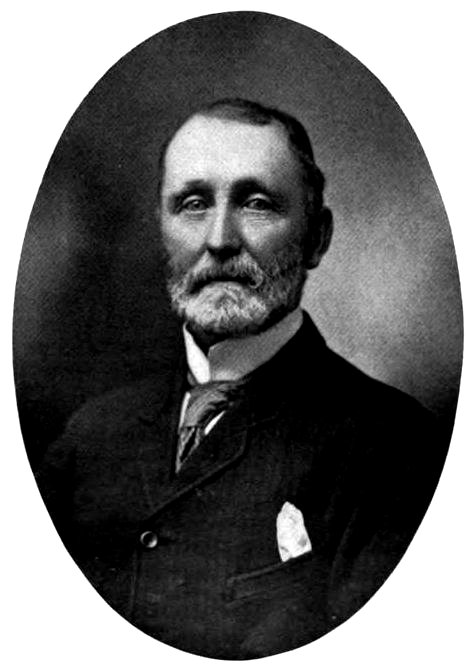
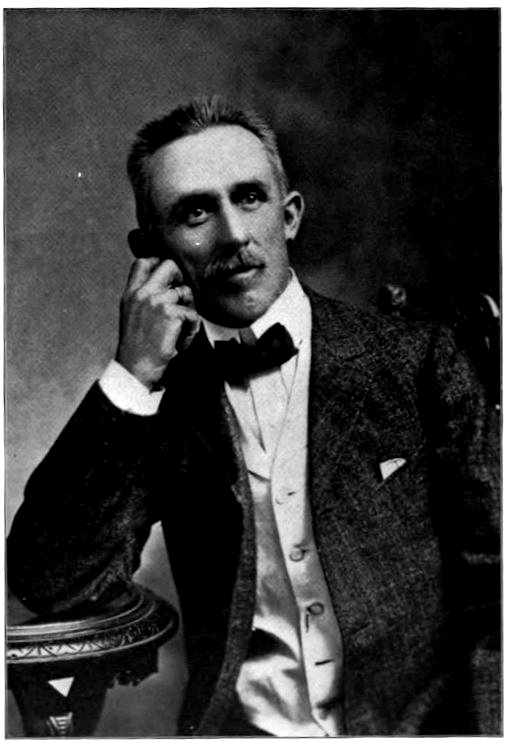
WILLIAM H. DELANEY, ESQ.,
Of New York City.
A Member of the Society.
48Mr. Lenehan: Mr. President, I would suggest that a constitution
which covers so many points ought more properly to be printed
and possibly submitted to the Executive Council for consideration,
and later may be submitted to the Society for other suggestions.
Dr. Quinlan: That is a splendid suggestion and if the reader
will accept the same and incorporate it in his report, I think it will
be very wise. As you say, Mr. O’Brien, it is rather lengthy.
Mr. O’Brien: I think it is a very good suggestion. The present
constitution provides it may be amended at any regular meeting,
so it seems unnecessary to give notice. I second the recommendation
and hope, when this comes before the members of the Society, they
will compare it carefully with the constitution now printed in the
Journal, and recommendations of any changes will be very gladly
received. Therefore I move that this be referred to the Executive
Council, and that they be instructed to provide for the printing and
distribution of the same among the members of the Society.
Dr. Quinlan: I will ask, however, that Mr. O’Brien give in a
brief way an abstract of it, alluding to the salient changes.
Mr. John J. Rooney: I will make a further suggestion. We
are all of us more or less familiar with the present constitution,
and, instead of an abstract, he might indicate the changes.
Dr. Quinlan: Very good. Mr. O’Brien, will you proceed?
Mr. O’Brien: In the first place, we say the object of the Society
is “to make better known the Irish chapter in American history,”
substituting that in the place of about two pages.
Under Article II, entitled “Membership,” we provide for three
classes of members, life, annual and honorary. We see no necessity
for corresponding members, and, in fact, I believe there are none
such in the Society.
The provisions in regard to applications for membership are
about the same as at present. Election shall be by the Executive
Council or at the annual meetings of the Society. Dues are fixed at
$5.00 for annual membership, and are made payable on the first day
of January in each year in advance. The life membership fee remains
the same.
To the officers we have added a Vice-President-General, there being
no provision for such an officer in the present constitution.
49The duties of the Executive Council we have defined somewhat
more clearly, generally to manage and conduct the affairs of the Society.
We have provided that six members thereof shall be a
quorum.
We have defined the duties of the officers a little more definitely
than in the present constitution. There is one thing in particular
that I would say in this regard: In the present constitution it is
provided that the duties of the Historiographer shall be the usual
duties of that office. That was rather indefinite, so we substitute this
instead: “The Historiographer shall write such histories or historical
articles as the Executive Council may from time to time require;
assist in the preparation of the annual journal and other
historical works of the society; and perform the other duties usually
pertaining to his office.”
We provide for an annual meeting to be held in the month
of January in each year, the day and place to be determined by the
Society in general meeting, or by the Executive Council in case the
Society fails to do so. Special meetings of the Society may be called
at any time by the Executive Council. A quorum for the transaction
of business at all meetings of the Society is fixed at thirty-five,
instead of ten, as at present.
State Chapters: We have provided that ten or more members
of good standing in this Society may organize a subsidiary chapter
by obtaining a charter from the Executive Council; that the Vice-President
of this Society for the particular state shall, by virtue of
that office, be President of that chapter, and such chapter may elect
from their own number a Vice-Chairman, a Secretary, a Treasurer
and such other officers as may be necessary to manage its affairs; and
that membership in such chapters shall be limited to members of
this Society in good standing.
Those are the principal points, Mr. President.
Dr. Quinlan: You have heard this report. What is your
pleasure in the matter?
Mr. Martin I. J. Griffin: Mr. President, why should it be referred
to the Executive Council? It will be another year before it
comes before the Society again. We have been without the revision
for a whole year, and now it is proposed to be postponed again. I
believe it should be acted upon here. I move that the report be read
and acted upon.
50Dr. Quinlan: That would consume more time than possibly the
afternoon session would permit, and I am afraid it would take away
from the scientific part of our programme.
Mr. Griffin: The same would apply next year.
Dr. Quinlan: We will take it up as a whole next year.
Mr. Crimmins: I concur with the last speaker. It seems to me
eminently proper that we should act upon the matter at this time.
I fully agree with the remark of the last gentleman that possibly
this might be postponed for another year. It seemed to me very
clear and concise language was used, and covered all the situations
that might arise in the administration of the Society, and I move
now, in general, that the suggestion made by the gentlemen who proposed
these amendments be adopted.
Mr. Lenehan: The constitution is the most important document
which this Society could possibly pass upon. If the committee who
were entrusted with the charge of this matter had had it printed and
distributed among the members we would have come here today prepared
to vote on it in an intelligent manner. If we vote on the constitution
as proposed now, we are voting upon something about which
we know little, for it has not been read. I, for one, will not vote on
a paper I have not read. If we are going to vote intelligently we
must take it up section by section, have each read and voted upon
separately.
We have struggled along for twelve years with our present constitution,
and I do not see that the Society will suffer any injury if we
are obliged to continue the work under the present constitution for
twelve months longer. In the meantime the committee can print its
report and distribute the same among the members and if there
should be any need for expedition it could be referred to the Executive
Council with power to consider the matter and adopt such
constitution as they deem wise. In that way the constitution could
be adopted in three or four months’ time, and in the meantime, if we
are furnished with copies, we shall have the benefit of careful consideration
of the same. If we vote now it may be for something we
shall regret later. Safety lies in thorough consideration of the subject,
and I therefore hope, Mr. President, that the motion to adopt
this constitution unread, unseen, unheard, will be either withdrawn or
defeated.
51Mr. Thomas S. Lonergan: How soon does the Executive Council
of the Society meet?
Dr. Quinlan: Subject to the chair. We meet four or five times
a year.
Mr. Lonergan: I move an amendment to the last motion that
the committee on the revision of the constitution submit its report to
the Executive Council, and that the Executive Council print that
report and distribute same among the members.
Mr. Crimmins: Mr. President, where will that leave us?
Mr. Lonergan: You will have it in three months.
Mr. Crimmins: It seems to me, after listening to the suggestions
made, that the proposed constitution, in a few concise words, states
our annual dues and also fixes the number of members constituting a
quorum for the transaction of business. It makes another provision
which I think very important, that in relation to state chapters. I
don’t like to differ with Mr. Lenehan because there is no other member
who has any more interest in the Society than he has, and no more
effective work has been done by anyone than by him. Still I see no
reason why we should not take action on this matter today.
The salient points in the constitution are very well put, and it
seems to me we would get along a little faster if we adopted it in
general. There might be a few corrections to be made, and they
could be referred to the Executive Council, which could complete
the work and then send out printed copies to the members of the
Society. You know yourself, Mr. President, how difficult it is to
get any great number together, and we probably would not, within
a year, get as large a number of members at a meeting as today.
That is my idea; I am not at all alarmed with the haste to be made
by action today.
Mr. T. Vincent Butler: I heartily endorse the statement of
the last speaker. I think this entire constitution could be read and
passed on intelligently inside of a space of three-quarters of an hour.
It is eminently proper that it should be brought up before this meeting.
The committee who brings this constitution, or simply an
amendment in a few features of something already existing, has
done so with care and deliberation. It will be absolutely impossible
to have the excellent results come from the same unless it is immediately
adopted, and there should be no delay in passing promptly
upon the various changes suggested. I therefore move, Mr. Chairman,
52as the sense of this meeting, that we proceed to pass upon the
constitution with the various amendments outlined immediately.
Dr. Quinlan: You have heard the motion before the house.
Was Mr. Lonergan’s amendment previously made seconded?
Mr. Rooney: Yes.
Mr. Delany: Mr. Chairman, I think Mr. Lonergan is more or
less reconciled by the suggestion of Mr. Crimmins that the constitution
be referred to the Executive Council with power to act.
Mr. Lenehan: Mr. Chairman, if this committee had prepared a
copy of the constitution and sent it to the members asking for suggestions,
if the committee had discharged its duty in an orderly manner
as I consider, it would have prepared and sent this document
around to the members, and we would thereby have been prepared
today to act intelligently upon the subject.
Take, for example, the chopping off of the first paragraph of our
present constitution, and restating the purpose of this Society in two
or three lines. The purposes of this Society as expressed in the constitution
as it now stands are most beautifully expressed. It is such
an eloquent exposition of our ideas that under no circumstances
should it be erased from the constitution. I have a copy of it here,
and I ask it to be read so that we may contrast it with this proposed
amendment which puts in two or three lines the purpose of this
Society. It is splendidly, eloquently, magnificently expressed in our
present constitution by a master of the English language, and I ask
any man to read it, put it side by side with this proposed amendment,
and note the eloquence with which the purpose of our Society
is expressed.
Mr. T. V. Butler: I claim the gentleman is not in order.
There is a motion before the house.
Dr. Quinlan: This is a debatable subject.
Mr. Lonergan: My amendment, Mr. President, is to Mr. Crimmins’
motion, that this revised constitution by the committee be sent
to the Executive body, and I wish to say here that the Executive
body is more representative of this Society than this gathering here
today; and why, because there are a thousand members in the Society,
and we have less than a hundred here today. I therefore move that
this revised constitution be sent to the Executive Council, with power
to amend and revise, and that a copy thereof be sent forward to
every member within three months’ time.
53Mr. O’Brien: This proposed constitution has been signed and
approved by Judge Lee, Mr. Joseph T. Ryan, Mr. Patrick J. McCarthy
and John E. O’Brien. It has had considerable study, and its
provisions are very simple. We think it is more businesslike and a
little more artistic, perhaps, than the present one. It has not been
submitted in writing to the members of the Society for two reasons:
first, the present constitution does not require any such submission;
and in the second place, it would take time and there would be considerable
expense.
Now, these terms are very plain and simple. They are drawn in a
businesslike way rather than in beautiful language; there is no attempt
at that. And since the statement of the purpose of the Society
has been particularly spoken of, I will say that the matter was
brought to our attention by former officers of the Society, who
thought the present statement, while couched in beautiful language,
was rather out of place in a businesslike constitution.
I do believe, now, after considering the matter and talking with
Judge Lee, that this might be passed upon. He has approved it, it
has been in effect approved by the Executive Council, and I don’t
think it should be delayed for another year. If necessary, it might
be read; I can read it in ten minutes, perhaps.
Dr. Quinlan: The amendment of Mr. Lonergan is before the
house. All who are in favor of the same signify by saying “aye.”
Mr. Lonergan: It seems to me before the question is put everybody
should have a chance to speak, so that when we vote we can do
so intelligently.
Dr. Quinlan: We have so much business on hand this afternoon
that my idea was to get this question disposed of, not that we
wish to curtail anything; but these matters take up so much time and
there is so much scientific matter, our programme is so lengthy, that
I simply want to be fair and just to everybody.
General Collins: I have no desire to take up the time unnecessarily,
but it seems to me we do not make a constitution every day
in the week, and I am heartily in accord with the suggestion made by
Mr. Lenehan that it should be left over. I do not think, as a matter
of fact, we have any right to adopt a constitution. It is a question
to me why every member of the Society ought not to be notified.
Where members are living in all parts of the country and it is practically
impossible for some of them to attend the meetings, it seems
54to me every member should be notified or a copy of the new constitution
should be served on them. We do not make a constitution every
day in the week, and the matter can very well wait over. It seems
to me no detriment would be incurred by reason of holding over.
Dr. Quinlan: You have heard the motion that this constitution
be referred to the Executive Council for revision.
Mr. Crimmins: You mean by that the Executive Council would
have to report back to the Society?
Mr. Lonergan: I want to be as brief as possible. I take it the
Executive Council is more representative of the Society at large than
this gathering is, and I therefore move that this revised constitution
be submitted to the Executive Council, with power to amend and
revise, and that a copy thereof be sent forward to every member.
General Collins: Can this Society delegate the power of adopting
a constitution to the Executive Council?
Dr. Quinlan: The Executive Council would have to report
back to the Society.
General Collins: The gentleman’s motion does not concur
with that idea. His idea is that we submit it to the Executive Council
with power to adopt, and it shall then stand.
Dr. Quinlan: I don’t think that would be constitutional. It
must be voted upon by the Society at large. Mr. Lonergan’s amendment
is before the house. All in favor signify by saying “aye.” It
seems to be carried; it is carried.
All who are in favor of Mr. Lonergan’s motion will stand until
counted. Forty-three.
All who are opposed to Mr. Lonergan’s motion will stand until
counted. Twenty-seven.
These voices must have stentorian tones, if not a re-echo. The
chair reverses its decision, and the verdict is that Mr. Lonergan’s
amendment stands.
Judge Lee: That was your decision in the first place.
General Collins: I understand the decision, as interpreted by
the chair, to be that the Executive Council report back to another
meeting of the Society.
Dr. Quinlan: That was the interpretation.
The next business in order being the election of officers for the
ensuing year, the Secretary-General read the following list of nominees
selected by the Executive Council to be voted upon at this
55meeting, and the same were elected by unanimous vote to serve until
the next meeting and until others are chosen in their stead:
President-General,
Francis J. Quinlan, M. D., LL. D.,
33 West 38th Street, New York City.
· · · · ·
Vice-President-General,
Hon. Thomas B. Fitzpatrick.
Essex Street, Boston, Mass.
· · · · ·
Secretary-General,
Thomas Zanslaur Lee, Esq.,
49 Westminster Street, Providence, R. I.
· · · · ·
Treasurer-General,
Hon. Michael F. Dooley,
President National Exchange Bank, Providence, R. I.
· · · · ·
Librarian and Archivist,
Thomas B. Lawler, Esq.,
70 5th Avenue, New York City.
· · · · ·
Historiographer,
Hon. James F. Brennan,
Peterborough, N. H.
The foregoing and
Hon. John D. Crimmins, 624 Madison Avenue, New York City.
Hon. William McAdoo, 30 Broad Street, New York City.
56Patrick F. Magrath, Esq., Binghamton, N. Y.
Rev. John J. McCoy, LL. D., St. Ann’s Church, Worcester, Mass.
Thomas Addis Emmett, M. D., LL. D., 89 Madison Avenue, New York City.
Hon. Edward J. McGuire, 52 Wall Street, New York City.
Hon. John F. O’Connell, 377 Westminster Street, Providence, R. I.
James L. O’Neill, Esq., Elizabeth, N. J.
Stephen Farrelly, Esq., 39 Chambers Street, New York City.
Rev. Cyrus Townsend Brady, LL. D., Haddon Hall, Kansas City, Mo.
Hon. Thomas J. Lynch, Augusta, Me.
Gen. Phelps Montgomery, 48 Church Street, New Haven, Conn.
Patrick Carter, Esq., 32 Westminster Street, Providence, R. I.
Hon. Patrick Garvan, 236 Farmington Avenue, Hartford, Conn.
John J. Lenehan, Esq., 71 Nassau Street, New York City.
Col. John McManus, 87 Dorrance Street, Providence, R. I.
Hon. William Gorman, Stephen Girard Bldg., Philadelphia, Pa.
J. Lawton Hiers, M. D., Savannah, Ga.
John F. Doyle, Esq., 45 William Street, New York City.
Arizona—Robert Dickson, Esq., Parker.
California—Capt. James Connolly, Coronado.
Colorado—Hon. Thomas F. Walsh, Denver.
Connecticut—Dennis H. Tierney, Esq., Waterbury.
Delaware—John J. Cassidy, Esq., Wilmington.
Florida—James McHugh, Esq., Pensacola.
Georgia—Capt. John Flannery, Savannah.
Illinois—Hon. Maurice T. Moloney, Ottawa.
Indiana—Very Rev. Andrew Morrissey, C. S. C., Notre Dame.
Iowa—Rt. Rev. Philip J. Garrigan, D. D., Sioux City.
Kansas—Patrick H. Coney, Esq., Topeka.
Kentucky—James Thompson, Esq., Louisville.
Louisiana—John T. Gibbons, New Orleans.
Maine—James Cunningham, Esq., Portland.
Maryland—Michael P. Kehoe, Esq., Baltimore.
57Massachusetts—Hon. Joseph F. O’Connell, Boston.
Michigan—Howard W. Cavanaugh, Homer.
Minnesota—Hon. C. D. O’Brien, St. Paul.
Mississippi—Dr. R. A. Quin, Vicksburg.
Missouri—Hon. John Baptiste O’Meara, St. Louis.
Nebraska—Rev. M. A. Shine, Plattsburg.
New Hampshire—Hon. William E. Chandler, Concord.
New Jersey—Gen. Dennis F. Collins, Elizabeth, N. J.
New York—Joseph I. C. Clarke, Esq., New York City.
North Carolina—Michael J. Corbett, Esq., Wilmington.
Ohio—John Lavelle, Esq., Cleveland.
Oklahoma—Joseph F. Swords, Esq., Sulphur.
Oregon—J. P. O’Brien, Esq., Portland.
Pennsylvania—Hugh McCaffrey, Esq., Philadelphia.
Rhode Island—Hon. Charles Alexander, Providence.
South Carolina—W. J. O’Hagan, Esq., Charleston.
South Dakota—Hon. Robert J. Gamble, Yankton.
Texas—James Moroney, Dallas.
Utah—Joseph Geoghegan, Esq., Salt Lake City.
Vermont—Capt. William Cronin, Rutland.
Virginia—Capt. James W. McCarrick, Norfolk.
Washington—Daniel Kelleher, Esq., Seattle.
West Virginia—John F. Healy, Esq., Thomas, Tucker County.
District of Columbia—Hon. Edward A. Moseley, Washington.
Australia—Frank Coffey, Sydney.
Ireland—Michael F. Cox, M. D., M. R. I. A., Dublin.
Germany—Hon. T. St. John Gaffney, Dresden.
Japan—Hon. Thomas J. O’Brien, Tokyo.
Mr. Henry L. Joyce: I ask that the report of the nominating
committee be amended by inserting under Vice-Presidents, “Australia,
Mr. Frank Coffey.” Mr. Coffey is a native of New York,
who emigrated to Australia thirty-five years ago and makes a pilgrimage
here every two years. He is one of the leading merchants
of Australia, and I proposed him at his own request. Since his
election, he has sent in the names of two others, accompanied
58by his check for their dues. I think a man who takes an interest of
that kind is entitled to some recognition of it.
Dr. Quinlan: Vice-Presidents are provided for in the different
States of the Union. May I ask if the constitution provides for or
permits a Vice-President in the country suggested? I think, if the
constitution does not so provide, it ought to. Mr. O’Brien, will you
kindly inform us?
Mr. O’Brien: I believe it is only so provided in the cases of
Canada and Ireland.
Dr. Quinlan: The motion of Mr. Joyce is in order and has
been duly seconded. All in favor of the same signify by saying
“aye,” those opposed “no.” It is carried.
Mr. T. Vincent Butler: Before we proceed, Mr. President, to
the intellectual treat, may I be permitted to relieve myself of a very
perplexing pecuniary situation. As the treasurer of the New York
State Chapter of the American-Irish Historical Society, in connection
with the Hudson-Fulton Celebration, I would like to make my
final report to somebody.
Question as to whether or not the speaker was in order was raised
and discussed, whereupon Dr. Quinlan remarked:
The chair will listen to Mr. Butler, but we will ask him to come
to the point quickly because our time is short.
Mr. Butler: Gentlemen, this is simply a brief report of what
became of a contribution of $126 from twenty-seven of our members.
At a special meeting held in Delmonico’s in May, 1909, the suggestion
was made that the American-Irish Historical Society should
interest themselves by coöperating with the Friendly Sons of St.
Patrick in properly celebrating the Hudson-Fulton celebration. As
an evidence of the appreciation of our members in that direction we
received at that meeting contributions of five dollars each from the
following gentlemen:
J. I. C. Clarke
$5.00
Dr. Quinlan
5.00
J. O’Sullivan
5.00
Mr. McKenna
5.00
F. X. Curry
5.00
F. X. Butler
5.00
E. J. McGuire
5.00
Richard Donovan
5.00
M. J. Mulqueen
5.00
59Patrick McGowan
5.00
William J. Delany
5.00
Mr. Joyce
5.00
William J. Farrell
5.00
Philip Kearns
5.00
William M. Byrne
5.00
A. J. Talley
5.00
J. J. Boyle
5.00
Dr. Mooney
5.00
Mr. O. J. Brady
5.00
Mr. O’Brien
5.00
T. V. Butler
5.00
J. J. Falahee
5.00
BY CHECK.
J. J. Rooney
5.00
D. Healy
5.00
D. Spellisy
5.00
$125.00
Contribution
1.00
$126.00
And $1.00 from some modest individual who didn’t give his
name, making a total of $126.00.
The disbursements are:
May
10.
For printing
$14.49
Delmonico’s
21.50
June
11.
Delmonico’s
7.33
Oct.
6.
By check to President of the State Chapter, Mr. Clarke, for pamphlets distributed on boat
75.00
$118.32
Leaving a balance of $7.68 in the treasury for your action.
Dr. Quinlan: This is really a part of the business of the State
Chapter, and the report should be accepted through the Vice-President.
I will ask Mr. Clarke to receive the same.
Mr. Butler: Mr. President, I think it is also eminently proper
that we recognize our obligation to the members of our Society who
60guaranteed fifty dollars each towards expenses. The amount is
small, but let it be recognized as a liability.
Mr. Joseph I. C. Clarke: The matter that Mr. Butler has
brought before the meeting is really a matter belonging to the New
York Chapter, and I don’t think it is pertinent with this meeting at
all. I shall be very glad at a subsequent meeting of the chapter to
take up this matter. The money that was collected has been expended,
and I believe there is still a balance. I would like to see the
meeting proceed to the literary end of it.
Dr. Quinlan: The next order of proceedings will be the presentation
of scientific papers. The first to have been read was by Hon.
Joseph F. O’Connell, member of Congress from Massachusetts. Unfortunately,
Mr. O’Connell is detained unavoidably at Boston on
account of a hotly contested municipal election, and has notified us
of his inability to be present. He will, however, submit his paper
to the Secretary-General later, which, after approval by the Executive
Council, will be ordered printed.
The next is an article on Stonewall Jackson by John Louis Sheehan,
LL. D., Professor at Boston University School of Law.
Dr. Sheehan: Mr. President-General, Officers and Members
of the American Irish Historical Society, it gives me great pleasure
today to pay tribute to the memory of that hero of the South,
Thomas “Stonewall” Jackson.
Doctor Sheehan then read his paper, which is printed in full elsewhere
in this volume.
Dr. Quinlan: As these papers are published in full in the
Journal of the Society, and as our time is getting so short, I will
ask, if it be consistent, that the readers give them in abstract.
The next article is by Mr. Joseph I. C. Clarke, Vice-President of
the Society for New York, on the Hudson-Fulton Celebration. This
paper is of great length and has been prepared with the utmost
care and painstaking effort by Vice-President Clarke, complying
with a vote of the Society requesting the same, passed October 1,
1909, at an informal meeting of the Society on board the “Asbury
Park.” The introduction to this article not being complete at this
time, the reading will be omitted, but the paper ordered printed in
its entirety in Volume IX.
The next is by Hon. James Fitzgerald, Justice of the Supreme
Court of the State of New York, on the Sixty-Ninth Regiment.
61Judge Fitzgerald: Mr. President and Gentlemen: I felt honored
by the request to prepare a paper for this interesting meeting
and was particularly pleased that the subject suggested was one very
near to my heart as it is to the hearts of all men of Irish blood in
America. We have just listened to the splendid eulogy by the gentleman
from Boston of a great soldier who fell in the Civil War
battling for the lost cause. My paper deals with the record of the
gallant 69th Regiment, which fought so valiantly for the Union,
and it is a high tribute to the nature of our institutions and the character
of our people to be able to say that an eulogy of this regiment
delivered in Charleston, Savannah or Richmond would be as enthusiastically
received as the address on Stonewall Jackson has been
received in New York.
I have prepared a paper and hold it in my hand as we say in the
courts as “the best evidence” that I have performed the work. The
story of the Sixty-ninth is, however, necessarily a long one; it involves
a recital of many glorious events, and its reading, even in the
condensed form of my paper, would, in view of the many matters
to be disposed of at this gathering, occupy too much of your time.
I will, therefore, only tell you about it in the abstract, requesting,
as is frequently done in Congress, “leave to print.”
The Sixty-ninth has existed as a regiment for nearly sixty years,
and throughout all that period, in peace and in war, its ranks have
practically been made up of men of Irish blood; it is the typical
Irish-American regiment, and its record is a source of pride and
pleasure, not only to Irishmen and their descendants, but to all
Americans. You may call us Irish-Americans or American-Irish,
but we are, nevertheless, Americans of the American. We were
among the earliest settlers upon the Continent; we kept on coming
steadily from those early times in large numbers, and under existing
conditions upon the other side of the Atlantic, it is fair to predict
that the flow of Irish emigration to the United States is liable to
continue in the future. The expressions, “Irish-American” or
“American-Irish,” in their real significance, mean intense, true
Americans. We love the Union, we are devoted to the principles of
the Constitution; we are obedient to the law; we are peaceable, industrious
and loyal. For all our fellow Americans, no matter what
their national origin, we entertain a spirit of fraternity and are
bound to them by the ties of common brotherhood; the flag of the
62Republic is for us the symbol of a sovereignty under which we are
proud and happy to live, and in defense of which we are at all times
ready to take up arms.
In 1861, the prompt response of Corcoran to the call of President
Lincoln sounded a bugle note of readiness electric in its effect.
Nearly forty years thereafter, upon the breaking out of the Spanish
War, the Government was desirous of obtaining exact information
as to the extent the organized militia of all the different states could
be depended upon. Major-General Roe, at that time the commander
of the National Guard of the State of New York, communicated
with the different regimental commanders, inquiring what number of
men belonging to the militia would volunteer to serve the Government
beyond the territorial limits of the state. The answer of Colonel
Duffy, in 1898, rang true as the answer from Corcoran in
’61:
“Every officer and every enlisted man of the 69th volunteers to
defend the flag in any part of the world the government may require
their services.”
When a French delegation was sent here a few years ago to participate
in the ceremonies connected with the unveiling of the
Statue of Rochambeau at Washington, its members were entertained
in this city by The Friendly Sons of St. Patrick; their escort to the
banquet at Delmonico’s was the 69th Regiment, and General Brugere
and Admiral Fournier were warm in their praise of the appearance
of the regiment; and later, when President Roosevelt was the guest
of the same Society at its 121st Annual Dinner on St. Patrick’s Day,
1905, the regiment again acted as escort to the distinguished guest
of the Society.
Colonel Duffy, who served in the regiment for a period of over
forty years and commanded it during the Spanish War, has recently
resigned with the rank of brigadier-general. Lieutenant-Colonel
Conley has since been in command, and it was only last night that
I received a most interesting item of news from him. In the office
of the adjutant-general of the State at Albany, the reports contain
practically no record of the war services of the 69th, the reason
being, it is presumed, that during that time it was out of the service
of the State and constituted part of the National armed force known
as United States Volunteers. Every regiment of the National Guard
is entitled to have a silver ring upon its lances for each engagement
in which it participated and for other meritorious service rendered
63in times of danger. Owing to the defective state records, the 69th,
after participating in all of the battles of the war, from Bull Run
to Appomattox, has been denied the privilege of placing these commemorative
rings upon its lances. Colonel Conley informed me last
evening, and I am happy to be able to announce to you today, that
this inexcusable error is about being redressed, and in the next
report of the adjutant-general, the full record of the regiment in the
Civil War will be published, and the lance of the National Regimental
Color will for the future be practically covered with inscribed
rings bearing the name and date of the hundred battles in
which it has participated.
All these matters will be found more fully set forth in this paper
which I have prepared, and I can only express in conclusion the
assurance that as long as the spirit which animated the 69th Regiment
in the past continues to inspire the manhood of America, we
need have little fear of attempted domestic revolution or of the
perils of foreign war.
Judge Fitzgerald’s paper is printed in full elsewhere in this
volume.
Dr. Quinlan: The next paper is by Michael X. Sullivan, Ph. D.,
formerly of the faculty of Brown University and now of the
Bureau of Soil, Washington, D. C.
Doctor Sullivan read his paper, which is printed in full elsewhere
in this volume.
Dr. Quinlan: Before we proceed to the next paper, I would
like to introduce to you the vice-president-general of our Society,
Mr. Thomas B. Fitzpatrick of Boston.
Mr. Fitzpatrick: I am very glad to meet the members of the
American-Irish Historical Society here today. It has been of special
interest to listen to the excellent papers read and the speeches delivered
by some of our worthy representatives. The facts referred to
concerning the proud position held by our race in the past and in the
present, are a valuable asset of information to every man and woman
of Irish blood.
THOMAS M. MULVY, ESQ.,
President of the Emigrant Industrial Savings Bank of New York.
A Member of the Society.
64I was very much impressed by the last speaker, Judge Fitzgerald,
when he emphasized the fact that whether we are Irish-Americans
or American-Irish, we are part and parcel of this great country. It
reminded me of what I had heard a great thinker in our own city
say a few years ago (the late Mr. Edward Atkinson) upon the
subject of restricted immigration. He, with two other very representative
men, discussed this question of restricted immigration before
the Beacon Society of Boston. His opening salutation was: “Fellow
Immigrants, the Beacon Society of Boston.” It is needless to
say they were surprised at this unexpected and novel introduction.
It was sufficiently explained, however, when he said: “Some of your
forefathers may have come over in the ‘Mayflower,’ some of them
fifteen generations ago, some of them ten, some of them perhaps not
more than three or four; but you must remember that the space of
time between the landing of the first immigrant and those of today
marks but a short period in the lifetime of a nation, and therefore
we are a nation of immigrants. We have no more right to say today
to the immigrant landing on our shores that he must not land, than
your forefathers and mine had to forbid the landing of the immigrants
of their day.”
I believe, Mr. President, that it would be well for us to appreciate
Mr. Atkinson’s statement that this is virtually a new country, a land
of immigrants, and that we are all Americans. As Americans, we
are interested in everything that concerns the well-being of this
great and glorious republic, being mindful at the same time of the
priceless inheritance it is to every man of our blood to sacredly
treasure what has been accomplished by the people of our race in
the history and development of this new world. I am glad that
these papers are to be published in order that they may be preserved
as a fruitful means of inspiration for future generations. It
shows the great field of endeavor that is open to this worthy association.
Mr. Martin I. J. Griffin: Mr. President, as these papers are
to be published, it is essential that no known errors should appear in
them, that is, in the papers published in the name of the Society.
In the last paper read, it was stated that James Logan was more
tolerant than William Penn in the matter of the celebration of Mass
in Philadelphia. I know that not to be a fact. The speaker has
misinterpreted what he alleges to be a fact. William Penn did not
object to Mass being celebrated in Philadelphia, and therefore James
Logan was not more tolerant in allowing it.
The Episcopalians objected to the public celebration of Mass in
Philadelphia. William Penn was in London at the time, and was
65notified by the English government of the fact that Mass had been
celebrated. Thereupon Penn wrote to James Logan, his agent, to
send him the fact of the matter. He did not say anything about
the “scandal of the Mass,” but that Mass was celebrated in a
“scandalous manner.”
William Penn was the Father of Religious Liberty in America,
and it was founded in Philadelphia, not elsewhere.
But a more important statement which is common belief among us
Irish and is constantly repeated, but which has no foundation in
fact, is that one-half of the Revolutionary Army was Irish, and
Joseph Galloway is quoted as proof of that.
Dr. Sullivan has only to go to the library and get a copy of the
Examination of Joseph Galloway by a Committee of the House
of Commons, and he will find that, upon his making the statement
the Doctor has recited, Galloway was asked how he knew that. His
reply was, “By the deserters that came in.”
I might state that previous to the Revolutionary War, Joseph
Galloway had been Speaker in the Assembly. When Sir William
Howe took possession of the city of Philadelphia, Joseph Galloway,
having gone over to the British side, was appointed Superintendent
of the City by him.
And I would say that, if the question as to what proportion of
the Revolutionary Army was made up of men of our race is to be
asked, we are the ones who should answer it, and not let our enemies
do it. Therefore, I have always objected to that statement of Joseph
Galloway’s. It is not exactly true, for I secured his report
giving figures of deserters of Washington’s army at Valley Forge,
and the galleys in the Delaware River. It was about forty-five
per cent., not fifty.
But I ask the members not to have that statement published.
Joseph Galloway was a deserter from the cause of Liberty and went
over to the British. When he was before the committee of the
House of Commons he made that statement; but we do not give the
answer he made when questioned as to how he knew. It is unfair
to have that answer produced against us when we make the statement
that one-half of the Revolutionary Army was Irish.
While all the State forces and the Continental Army were largely
Irish, I have no belief whatever that one-half of the Revolutionary
Army was at any time composed of natives of Ireland. We ought
66not to assert that it was because we cannot prove it. Nothing should
appear in our official proceedings but what we can prove if called
upon to do so.
That is why I speak for accuracy in all statements. I would ask
that those two, with any others that may be found, be stricken out
or revised, and that all the papers be submitted for criticism so that
nothing will appear in the records of the American-Irish Historical
Society but what we can submit to the country as well-founded. But
those statements relative to Joseph Galloway and William Penn and
James Logan ought to be revised.
Dr. Quinlan: I think it is certainly befitting that we should
go before the world as correct historians, and not state facts unless
well-founded.
Dr. Sullivan: I don’t think there is any controversy about the
matters suggested. My research has been an entirely scientific one,
and we never let anything go out of our department unless we have
good evidence to base it upon. Before the paper goes out, those
remarks will all be verified. I see no reason for any controversy.
Dr. Quinlan: I thought the subject might be discussed. Perhaps
it would be well for you and Mr. Griffin to take it up together.
Mr. Ryan: I think Mr. Talley’s point is admirably taken.
There is one thing I would like to mention that has just come to my
notice. One of the professors of Harvard University died within
a very short time, and it is interesting to know that at the time of his
death he was engaged in writing an article on the life and doings
of Daniel Shay. At a recent meeting of an historical society here,
the sentiment was expressed that the manuscript was in such shape
that it would be a valuable contribution to American history if it
should be published by somebody who would take an interest in the
work.
Dr. Quinlan: We have additional papers to be submitted. At
the close of the reading of these, I shall be very happy to receive
what suggestions you may have to offer in that regard.
The next article is by Rev. Cornelius F. O’Leary of Wellston, Mo.
Rev. Cornelius F. O’Leary: I will follow the good example of
others and merely submit it to the Society for publication. I may
give you a preface though, showing forth the reason that led me,
for I was in harmony with the great object of this Society, to trace
the footsteps, of the Irish in America, and, as I am a resident of
67St. Louis, thought well to bring forward the early history of St.
Louis.
The Connors, the McKnights and the Bradys, they were foremost
in everything. The first man to open a hotel in St. Louis was a man
named Brady. The first man to publish a newspaper west of the
Mississippi was an Irishman named Charless. The first man to open
an English speaking school in that French village was an Irishman.
The Irishmen were prominent in everything.
I hope you will find this paper interesting. I will not take the
time to read it now, but will submit it this evening to Judge Lee.[2]
Dr. Quinlan: The next paper is by M. R. F. McCarthy, Esq.,
of Binghamton, N. Y., entitled “A Little Mosaic of the Life of
Henry W. Grady.”[3]
Judge Lee: Mr. McCarthy is not here, but has sent me his
paper. I have no authority from Mr. McCarthy to read the same,
but, if agreeable to yourself and the members of the Society, after
approval by the Executive Council, I move that it be printed.
Dr. Quinlan: Those in favor of the motion signify by saying
“aye”; those opposed “no.” The motion is carried.
Dr. Quinlan: I desire to make mention at this time of an article
by Hon. Joseph T. Lawless on Daniel Morgan of Cowpens.
This article was prepared after painstaking research by Judge Lawless,
and should have been published in the Journal of the Society
of 1907. For some reason or other, it was omitted, but will now
be published in Volume IX. in accordance with the desire of the
Executive Council.
Scientific papers have already been received from Michael J.
O’Brien, Esq., Thomas S. Lonergan, Hon. William J. Onahan and
Hon. Patrick T. Barry, and papers are promised and now in
process of preparation by Rev. William J. McCoy, LL. D., Michael
J. O’Brien, Esq., Hon. Michael P. Kehoe, Hon. James F. Brennan
(our Historiographer), Edgar Stanton Maclay, Esq., Prof. Andrew
J. Hogan, Martin I. J. Griffin, Esq., Dr. J. Lawton Hiers, Col.
Alfred Moore Waddell, and Frank M. Coffee, Jr.
68You see, gentlemen, there is no paucity now of literary material.
We simply can’t stop the flood.
The next order of business is the reading of obituaries. The first
is that of Rev. Daniel H. O’Dwyer, by Chairman John J. Lenehan
of the Membership Committee. The same has been submitted and
will be published in Volume IX.
The next is that of Mr. Patrick O’Brien, which, after its reading
by the Secretary-General, will be ordered published.
The Secretary-General read the sketch.
Dr. Quinlan: The next is the obituary of Rev. Michael Aloysius
McManus, by James L. O’Neill, Esq.
Judge Lee: Doubtless many of us who were present at our
annual meeting in Washington last year will remember Father
McManus. His soul was so in the work that he didn’t wait to be
proposed, but proposed himself at that meeting. The obituary notice
is here, and has been well prepared by one of the members of the
Executive Council, Mr. James L. O’Neill. With your permission,
we will follow the usual course and publish the same in Volume IX.
Dr. Quinlan: Very well. The next is that of Mr. Philip C.
Walsh by Philip C. Walsh, Jr.
Judge Lee: Mr. Philip C. Walsh, Jr., is not a member of the
Society, but has sent me an obituary notice of his father which is
quite complete. The same will take the usual course.
Dr. Quinlan: The next is the obituary of Mr. James McGovern
by John G. O’Keefe. I understand the same is to be turned over
to the Secretary-General for publication.
The next order of business is the reading of letters of regret by
the Secretary-General.
Communications were then read by the Secretary-General from
Ex-President-General Edward A. Moseley, Hon. William A. Prendergast,
Rev. Dr. John J. McCoy, John F. Harty, Esq., Hon. Martin
J. Wade, Dr. J. Lawton Hiers, Hon. M. F. Kennedy, John Wood,
Esq., James H. Devlin, Esq., Thomas F. Kailkenny, Esq., John H.
Maloney, Esq., Daniel Hanrahan, Esq., Rev. Edmond Heelan,
Anthony McOwen, Esq., Vice-President James Thompson, Vice-President
Thomas J. Lynch, Hon. Patrick T. Barry, Rt. Rev. Phillip
G. Garrigan, D. D., Hon. Patrick E. C. Lally, M. P. Tully, Esq.,
Dr. George McAleer, Hon. T. P. Linehan and others.
69Dr. Quinlan: The next in order, gentlemen, is the unfinished
business.
Judge Lee: There is none.
Dr. Quinlan: Any new business?
Judge Lee: None.
Dr. Quinlan: There is a communication here that I would like
you to take home for consideration:
“Members and guests will assemble in this room, which will be
rearranged for a reception room, at 6.30 p. m. A ladies’ room across
the hall has been prepared, and a gentlemen’s room a few doors
down. Attendants of the hotel under the direction of the Reception
Committee will wait upon the members and guests, and until
seven a reception by the officers to members and guests will be held
under the direction of the Reception Committee.
“Dinner will be served at seven promptly in the Grand Banquet
Hall. Seating lists have been provided and will be distributed at
the reception, so that each member and guest may know where he is
to sit. Applicants for tickets received today will be seated by the
Reception Committee to the best of its ability. Dinner tickets of
members and guests will be taken up by the hotel attendants at the
entrance to the Grand Banquet Hall.”
Before we adjourn, I want to ask Mr. Michael J. Corbett, one of
our members, to say a word.
Mr. Corbett: Gentlemen, I am glad to have been here today.
I have enjoyed all the papers that have been read, and have no
doubt I shall enjoy the banquet later in the evening.
Motion made and seconded that the meeting adjourn.
Dr. Quinlan: This closes the scientific meeting of the American-Irish
Historical Society, and I declare it adjourned.
70
President-General Quinlan: Ladies and Gentlemen and
Honored Guests, in the name of the American-Irish Historical
Society, I bid you welcome to our city and to the Twelfth Annual
Banquet of our Society.
During the last year, some events have crowded into the history
of the Irish people in this country that give thrill and romance to
the race. One feature that is preëminent, and one that stands vividly
before us as if yesterday, was the pageant on the land and sea of the
Hudson-Fulton celebration. That grand occasion, ladies and gentlemen,
brought forth in this city and its environs a multitude of
people who have come to honor the men who have placed their
names in American history and who have perpetuated its grandeur.
The conditions surrounding this great event are only too well known
to you, and it would be like bringing coals to Newcastle were I
to burden your memory by referring to that occasion.
Tonight we have assembled to commemorate an event in the
history of this Society. Some twelve years ago, in the city of Boston,
a call was sent out by the late Secretary-General of this organization
to some men in the outlying cities and suburban towns to assemble
and organize a society that would correct the wrong that had been
done the American-Irish or Irish-American, and make known what
they had achieved. The history of our country has oft been written
by men of English blood, and it was the purpose of that body that
was assembled to correct erroneous impressions and give color,
feature and dignity to the men who have made it possible for us to
enjoy the beautiful flag of our Union. (Applause.)
This Society is essentially American because its interests are
coupled with the defence of the flag, and we have everything in common
with the community of our great nation. It is Irish because its
sons and grandsons have made their weight felt in every walk of
life, and are commemorating the conditions that were given to them
by their sires. It is historic because it is our pleasure, our pride and
our privilege to record the achievements of Irishmen in every walk
of life, and to make them better known in the history of today and
in the history to come, and to give force and color and emphasis to
what they have done for our Republic. (Applause.)
71As this is an historical body, it may be my privilege tonight to
refer occasionally to manuscript, in order that every word uttered
by the executive may bear the imprint of record. Sustained as I
am on both sides by the law and the Church, I could not otherwise
but give utterance to that which emanates from and has been conceived
by people who have toiled and wrought and developed a
condition and a color that has stood out for what is right.
With the inception of our country, Irishmen have been ever foremost
to proclaim their allegiance—from Charles Carroll of Carrollton,
who dedicated his life and fortune to the cause of Independence,
to the humblest wage-earner who contributes his quota, from
the bleak shores of Alaska to the Mexican Gulf. They have added
lustre to Columbia’s Coronet, and in the womb of the unborn future
they will continue their unswerving devotion to the cause of Freedom.
This is the youngest historical daughter of Erin in America. It
has been suckled at the breasts of the Mother Irish Societies here,
many of whom are older than the very country itself. It has grown
and matured because it was sustained by a spirit of justice, and it
has lived and prospered under the sheltering influence of the Stars
and Stripes.
Our fathers sought this country as an asylum from the tyranny
and misrule of England, and they builded far better than they
knew. For the past two hundred years, they were deprived of every
condition, social and educational, that belonged to a country whose
civilization at one time had illumined the world. The pages of
Irish history for the past seven hundred years present little else than
sorrow, privation and oppression. During the past two hundred
years, Irishmen have come to Columbia’s open arms, and they have
not been unworthy of her tender care and affection. We stand here
tonight entrenched behind the history of our past, and Ireland’s
sons and daughters have taken their place in the household of
America, and we will strive to be worthy of the position assigned
to us in her family.
I am pleased to announce that the past year has witnessed industrial
and educational changes in the Emerald Isle. One-half of
the present occupiers of the land have purchased the ground outright
(Applause) and the division of the untenanted pasture lands
among the people has stimulated thrift and neatness, as well as
increased production, whilst the Irish trade-mark has protected its
home industries. Home Rule agitation has strengthened the position
of Mr. Redmond and vindicated his Parliamentary activity.
The prospects for Home Rule in Ireland, whether from the tariff
reform or from the Conservatives or Free Trade Liberals, are now
brighter than they have been since the year 1885. (Applause.)
HONORABLE THOMAS F. GILROY,
Far Rockaway, Queen’s County, New York.
Formerly Mayor of New York City.
72It is not my thought, in this prefatory address, to invade the
province of subsequent speakers, but rather to introduce to you in
a modest way our position as an historical body in this great nation.
The gentlemen who will follow me will give you detailed accounts
of our activity and strength in this country, whereas it is my humble
part to explain our existence and ratify our importance as one of
the races that make up this glorious Republic. (Applause.)
We know no creed except the Sermon on the Mount; no race
but the community of honest purpose; no politics but those which
serve for the betterment of mankind. We want our record from the
voyage of Brendan, who antedated Columbus nine hundred and
fifty years, to this country, down to the invention of Brennan of
the monorail, inscribed upon the pages of history as products of
Irish thought and ingenuity.
I will take a minute, if I may, to explain in a digressional way
what I have alluded to in my last sentence. Mr. Louis Brennan,
inventor of the Brennan torpedo and the Brennan monorail, of
which he recently gave a successful exhibition in London, was born
in Castlebar, County Mayo, Ireland. He was, from 1887 to 1896,
superintendent of the Government Brennan Torpedo Factory, of
which he is at present the consulting engineer. The first monorail
for commercial purposes will soon be in operation in the city of
New York. Mr. Brennan estimates that it can easily attain a speed
of 140 miles an hour, and that danger is practically negative.
Your Presidents-General, from Admiral Meade to Admiral
McGowan, have been men who have stood for the great ideals of
this country. Their labors in this Society have been crowned with
success, and those of this group of executives who have been removed
by the hand of Death can look from their exalted places tonight and
feel proud of their meritorious work. They have erected the edifice;
it is only left for us to maintain the structure. The work of
this Society would be like a “Rope of Sand,” as my friend Clarke
would say, unless we perpetuate our traditions and realize the anticipations
of our forefathers.
73This Society needs a Chapter in every State of the Union, where
semi-annual meetings should be held for the purpose of reading historical
papers, and at the same time to draw closer and closer
together our people. Bring your sons into our Society that they,
too, may enjoy the glorious association of our kinsfolk. (Applause.)
There is a tendency, however, among the young people (and this
I say with regret) to regard anything Irish as unstylish and, perhaps,
a trifle low. Now, such thoughts must be eliminated by their
presence and coöperation with us, and their participation in all
our allied interests.
My work among you has been a labor of love. The administration
has been ably seconded in all its efforts, and the Membership
Committee, headed by its indefatigable captain, has regenerated
our Society by its colossal work. In two years our forces have
been increased to nearly one thousand members (Applause) and
the Society has benefited numerically and intellectually, as well as
financially.
It is a well-known fact, that, in the event of death, either by
illness or accident, of the Great Father of our Country, it was his
express wish that the command of the Continental Army should be
given to General John Sullivan. (Applause.)
That seven of the sixteen generals in that same army were Irishmen
or Irishmen’s sons. That Commission No. 1 in the Continental
Navy was given to Jack Barry of the City of Wexford. (Applause.)
That the first naval victory of the Revolution on the high seas was
won by Maurice O’Brien of Maine and his seven sons (Lexington
of the Seas). (Applause.)
That four months before a shot was fired at Lexington, proclaiming
the War of Independence, a handful of patriots, mostly Irish
boys, led by John Sullivan of Portsmouth, New Hampshire, overpowered
an English garrison at Newcastle and captured guns and
ammunition that were used with deadly effect at Bunker Hill.
(Applause.)
It was said this afternoon at our scientific gathering by one
familiar with the subject that the finest lot of books that ever came
into America at one time was presented to Yale College by Bishop
Berkeley of Cloyne, Ireland, and formed the nucleus of its great
library. That Thomas Dongan, Earl of Limerick, as Governor of
New York, gave the Colony its first great Charter in 1683; and
74that twelve of the signers of the Declaration of Independence were
Irishmen or men of Irish extraction.
Wireless telegraphy owes its discovery to the son of a Dublin
mother, steam navigation to a son of Erin, and the great Erie
Canal—it ought to be the Erin Canal—to the descendant of a
Celt. Through the bodies of eight presidents of our Nation coursed
Irish blood, and many of the gifted dramatists and actors of our
country have come from gentle Irish stock; whilst editors and literateurs
have been pleased to call their inspiration purely Celtic.
Fortified by such forces in the past, we are here tonight to blow life
into the mummified historians of our day, and to awaken in them
the honest motto of our Society, “That the World may know.”
(Applause.)
George II had reason to say: “Cursed be the laws that deprived
me of these subjects,” and how George III could re-echo these fateful
words after his unjust taxation upon the early colonists is to
be marvelled at; but the Irish were here then, as they are here now,
ready to avenge to the hills their treasured wrongs.
It is not my purpose on such an occasion as this to dim your eyes
or sadden your thoughts with unhappy reflections, but custom holds
me to a strict account; therefore a befitting allusion to our departed
brothers is not out of place, and such an omission would indeed be
culpable.
Our ranks have been depleted during the past year by the Great
Leveller. Many of these we could ill afford to lose, but, by Divine
Command, they have gone where, with watchful eyes, they will
continue to follow us in spirit. Let us be worthy of the heritage they
have given us, and when we, too, part company from those we love,
let it be said of us as it is said of them, “They are absent but not
forgotten.” (Applause.)
The band will now play the “Star Spangled Banner,” and I will
propose a toast to the President of our Nation, William H. Taft.
(Toast drunk standing.)
President-General Quinlan: Ladies and gentlemen, you will
kindly be seated. We are only upon the threshold as yet, we shall
soon invade the building.
In my enthusiasm I forgot, in the opening part of my speech,
to thank the men who have elected me for the third time to the
presidency of this great Society.
75I want the women here tonight to take this matter up with these
derelicts—I won’t say whether it is father, husband or son. You
see mothers are always before me, and I can’t get away from the
mental picture as well as the physical one. But the women can do
much good. Look what they have done tonight! If you could
stand here and see this beautiful picture, effulgent with everything
lovely, it seems that the flowers and shrubs of Paradise have been
sent down here in order to give color and radiance to this picture!
And then the inspiration—Mr. Crimmins says a feast in itself.
Now I want the good women to talk about the American-Irish
Historical Society, to boom it, so to speak, and I feel confident that
much good will be accomplished through their efforts.
I am going to ask the Secretary-General to read one or two communications
from absent members, and we will go through this
programme like Paderewski does with his touch on the piano.
Secretary-General Lee: Mr. President—
(Applause.)
Ladies and Gentlemen of the American-Irish Historical Society,
I thank you sincerely. At the direction of the President-General,
I have three communications to read. The first is from our fellow
member, Mr. Victor Herbert. It is a telegram to the President-General:
“Am prevented from being present tonight on account of attack
of tonsilitis, confining me to residence. Wish fellow members and
guests a right good time.
“Victor Herbert.”
(Applause.)
The next two are letters from ex-United States Senator William
E. Chandler, who is Vice-President of the Society for New Hampshire:
“Concord, N. H., January 6, 1910.
“My Dear Mr. Lee:
“It gives me pleasure to be allowed to apply to be a member of
the American-Irish Historical Society.
76“Should I be elected, please give me the necessary notice. I find
I shall not be able to attend the meeting of Saturday; but if I can
be of service to you in Concord or Washington it will give me
pleasure to do so.
“Very truly,
“Wm. E. Chandler.”
“Washington, D. C., January 6, 1910.
“My Dear Mr. Lee:
“I recommend for membership John W. Kelley of Portsmouth,
N. H. I reckon, however, he is now a member.
“Hastily yours,
“Wm. E. Chandler.”
I move you, Mr. President, Mr. Kelley’s election as a member of
this organization.
President-General Quinlan: You have heard the motion that
Mr. John W. Kelley be elected a member of the American-Irish
Historical Society. Those in favor say “aye,” those opposed “nay.”
Mr. Kelley is unanimously elected.
President-General Quinlan: It is necessary that you give
your undivided attention to the next speaker. He is the financial
agent, or, rather trust president of our corporate body. Mr. Dooley
has been associated with the American-Irish Historical Society for
many years. You all know Judge Lee, because he is in touch with
you constantly upon the various matters that concern our Society,
whether historical or social; but Mr. Dooley has so little occasion
to remind you of your obligations, as the wave of financial return
sweeps into him without any reminder from his office. He is quiet,
modest and dignified, like a great many of our New Englanders.
Now, within the borders of that section of New England—notice
New “England,”—it is now nearly New “Ireland,”—Mr. Dooley
represents one of the largest moneyed organizations in the City of
Providence. And he is so proud of his Irish blood that sometimes
I am fearful lest he be overtaken with a patriotic seizure; his enthusiasm
seems to know no bounds. We will now hear him in his own
plain, honest words. I have the pleasure of presenting to you the
Treasurer-General of our Society, Hon. Michael F. Dooley.
(Band plays “Oh, Mr. Dooley” amid hearty applause.)
77Treasurer-General Dooley: This is not the first time I have
been greeted with that song, and, while the voices here tonight have
been exceedingly delightful to listen to, I can’t help thinking of a
criticism that was once passed by the New York Sun upon the “Boston
Ideals,” who had been singing English opera, and had done it
splendidly. They came to New York determined to enter the field
of Italian opera, and the morning following their first night the
Sun, in its criticism, started in by saying: “Ideals rush in where
artists fear to tread.” I congratulate you upon the song; you sang
it so well.
I regret very much that an imperfect memory makes it necessary
for me to read this paper to you, but its brevity, I hope, will make
good what it otherwise lacks.
AN UNSOLVED PHASE OF AMERICAN HISTORY.
The hoary and honored dictum that “History is a conspiracy
against truth” is like the cry of David in his desolation calling all
men liars. There is food for meditation in the two utterances, and
candor compels the admission that the world believes there is more
than a modicum of justification for them both.
And this reminds me that a meeting of the American Historical
Society was held at New York a few days ago at which Professor
Albert Bushnell Hart of Harvard, an authority of high repute, and
a man of great critical judgment and learning, delivered an address
on “Imagination in History.” He told his hearers among many
other things well worth remembering, that “even historical scholars
are not without their failings, their prejudices and their falsehoods.”
Now, while the discovery is not new, the announcement of it has
never found more forceful expression or been backed by a more
expert opinion—and it is of more than passing interest to our
Society whose cardinal principle is “to make better known the Irish
Chapter in American History.” It emphasizes the usefulness and
necessity of this and kindred organizations to make straight the
crooked ways, to save from obscurity the names and deeds of those
who achieved, and if they do not live, to have live in our country’s
annals the Irishmen and the sons of Irishmen worthy of the honor.
In the days before the Christian era and for long after, it was not
78an infrequent practice for the Roman people to deify their great
men and erect temples in their honor, worship at their shrines, and
pay reverence to their memory. Among those to whom such honors
were paid were deities of Greek origin, who had been adopted by
the Romans, either under their own names or under others that
equally as well served; but they were always Romans, their origin
being obscured or totally ignored. This custom has not been unknown
among the moderns, and should a general apotheosis occur
in our country, it is but fair that among the shrines in the temple
some few be reserved, if they deserve it, for that people who contributed
at least 5,000,000 souls, living, creative and creating to the
growth and greatness of the land.
It is needless to enter upon the social, political and religious conditions
which brought to these shores in mid-colonial times, a considerable
number of Irish, whose identity became merged in the
great mass of the people. I speak of it only to note the fact that
there was such an immigration, and that the influence of this stranger
people upon the habits and character of the colonists must have been
felt in some degree, however insignificant, in the communities in
which they and the Irish dwelt together. For, in the lapse of time
by intermarriage and the daily routine of life, whether as master
and servant, landholder and tenant, or husband and wife, there
could not fail to come a slow, perhaps, but sure blending of qualities
and characteristics that influenced the evolution and development
of the American man as we find him in certain parts of the
South at the time of the Revolution. This intermixture of races can
be readily understood as not difficult of accomplishment when it is
recalled that they both spoke the same tongue, and were generally
in large part of the same religion if not of the same church.
At the outbreak of the Revolution many of those belonging to this
emigrant class, or their sons, had risen to prominence and already
made themselves felt in the trade and commerce of their communities,
or had become land owners of importance.
With rare exceptions they ardently sympathized with their fellow
colonists in their aspirations for liberty, and a very large number of
them enlisted in the American army.
The war gave further impetus to Irish immigration for reasons
easily divined, and so marked were their numbers in Washington’s
forces that at the close of the conflict, in an investigation by the
English Parliament into the causes and conduct of the war, it was
79said by some of the witnesses that the Irish in no small degree contributed
to the loss of the colonies by the mother country. When
I put it in this form I modify materially the testimony of some of
the witnesses who flatly declared that it was the Irish who won the
Revolution.
This to me has always appeared to be an exaggerated statement,
particularly when I read the roster of the Sons of the Revolution—for
either nearly all the Irish were killed in action or died soon
after—or possibly there has been some legerdemain in the nomenclature
of the survivors. But that there were some Irish in the
Revolutionary forces who fought well and died, history has recorded,
and American historians have admitted it, but have not chronicled
the fact with any wealth of detail or enthusiasm.
As the eighteenth century ended, the Irish began coming hitherward
in greater force than had marked the preceding years, and continued
coming in increasing volume during the succeeding fifty
years, until about 1847, when their numbers grew enormously. From
that time on, until 1890, immigration statistics show that about
4,000,000 Irish came to America, which is one of the greatest race
movements, if not the greatest in the history of the world.
Up to the beginning of this great exodus from Ireland, with the
exception of that period during which the Alien and Sedition laws
were passed and repealed, the Irish had grown into the fibre and
woof of the nation with slight friction and with little open objection,
but when every port of our eastern shore became a haven for ship
after ship bringing emigrants from Ireland, the country paused and
wondered. But they came and continued to come until wonder
turned to anxiety, which was but a step from hostile alarm, and this
eventually took shape in the formation of patriotic societies all over
the thickly settled parts of the country, for the purpose of having
laws passed restricting immigration and the granting of political
rights. This situation was further complicated by the great mass
of the invaders being unlettered and untrained in the common avocations
of life, whether as tillers of the soil, mechanics, or clerks.
As we look back to the events of that period, it is not surprising
that the people already here viewed with aversion and fear the presence
of this vast army of aliens.
HONORABLE THOMAS F. WALSH.
Of Denver and Washington.
Vice-President of the Society for Colorado.
Copyright, 1909.
By J. Knowles Bishop.
80The impossibility of assimilating this large influx of Irish, even
if assimilation had been desired, and the possibility of the Irish
eventually assimilating their not entirely voluntary hosts were
questions that deeply moved men of earnest convictions, but perhaps
of limited vision.
Unfortunately, it was just about this epoch that histories of an
ambitious and standard character began to be written, and some
taking on the passions of the time and the prejudices of the author’s
environment, have not given the Irish the place that their services
and devotion to the country’s welfare entitled them to hold. It is
further to be deplored that full recovery from the bitterness of those
days has not been hastened by incidents growing out of political
and other conditions.
Even today, when calm, cold reason has had had time to resume
her sway, it is largely magazine writers who are delving into the
historic past, and presenting to the people a panorama of national
life which displays upon its unfolding roll, not only the original
settlers and their descendants, but also the pioneer Irish and their
sons who had their part in the upbuilding and maintenance of the
nation. But the healing touch of time will change, let us hope, if
it does not entirely cure, that obliquity of vision which distorts
much that it sees or fails to see that which it may not distort.
When some full, adequate chronicle comes to be written of the
Irish race movement to this country due consideration will be given
to the influence it has had on the manners and customs of the
country, and it will not be complete if it takes not into account the
contributions of brawn and brain, labor and energy that it has given
to our national progress.
The versatility of talent and the buoyancy of spirit and the native
wit and humor which distinguish this people, have diffused themselves
through American life and infused themselves into it, softening
its severe, rigid lines, and helping to lift the gloom, that often
concealed the splendid qualities of the Puritan whose spirit has
spread over the land carrying to its uttermost limits the blessings
of self government and radiating an influence for the uplift of
mankind.
While I am on this subject, permit me to digress for a moment,
to speak of a thing which is, perhaps, outside the range of this
paper, and that is the insensible, subtle change that I believe the
Irish have wrought in our Eastern section in the voice and accent
of the descendants of the first settlers. The sharp nasal tone, so
81common half a century ago, has almost entirely disappeared in the
cities and is fast disappearing in the country. This is probably due
in great measure to the fact that most of the immigrant Irish
brought with them the rich, rare brogue of their fatherland, and the
others the cultivated voice of the educated Irishman, both full of
music and “sweet as the dying note of a broken harp string”—a
music, whose soft, pervasive tones have added an indescribable charm
to the spoken word that the stern hills of New England rarely
knew, but which in time they have felt the touch of. Today it is
difficult to tell the origin of the speaker, whether he be a tenth
generation Puritan or a second generation Irish, in communities
where the latter abound.
The scope of this paper is general and not personal, and for that
reason I have not gone through the gamut of names of Irish origin
whose owners merited well of the country. Their fame is secure and
permanent—and while in some instances overshadowed and lost
sight of through the neglect, or let us call it the caprice, of the
historian—it is safe.
Its single purpose has been to fathom the causes of the total or
partial eclipse of a great body of people whose achievements entitle
them to shine among the greater or lesser luminaries of this Republic,
if not among the greatest.
To repair the injustice and the cruel omissions of history, is a
noble mission and as patriotic as any that ever moved men to deeds
of valor and sacrifice. It is not for us to keep alive the memory
of those who have their place in the imperishable annals of our
country—but it is for us to rescue from oblivion the men that
lived and worked and wrought, whom historical writers by accident,
indifference or design, have ignored in their researches, or
buried in a foot note at the bottom of a page.
If we do this, we do not come together in vain.
President-General Quinlan: This “squib” appeared in last
night’s paper, and was handed to me this afternoon: “The man
who writes a poem does so under reasonably safe conditions. Nothing
more dangerous than a bean-blower is apt to be used against
him; lemons and vegetables may come his way, but this is the worst,
save the scorn of the critics. But the McDonalds and McAdoos
lived in the underground; they met irate landlords and the general
‘cussedness’ of inanimate things, all with smiling patience and invincible
courage.”
82The McDonalds and the McAdoos are famous in the annals of
Irish history. Some of the McAdoos have lived and toiled under
the ground; others have existed in the open. From the humblest
walk of life to the highest position, next to the chamber of the
Executive, one of your officials has risen. It is like naming a member
of his own household to his family to present your illustrious
ex-President-General, Hon. William McAdoo. (Applause.)
Hon. William McAdoo: Mr. Chairman, Ladies and Gentlemen,
I fear that sometimes many of the elements that go to make up
the very cosmopolitan population of our country think that we of the
American-Irish Historical Society are too insistent upon the part
which our people played in the formative period of the Republic.
Now we have an affectionate feeling towards our Motherland
because she much needs the help of her children. If Ireland were
a great and powerful country, like Germany, rich with an army
and navy of its own, with its ambassadors and representatives in
every land and with its great universities spreading German ideas
among the people; if Ireland had all those accessories she would
have made her claims felt in the history of the United States without
the need of societies like this; but Ireland, “Erin, the isle of
sorrows,” is an unfortunate country, subjugated, impoverished, despoiled
and misrepresented and when, therefore, the membership of
this Society, these gentlemen who have given to it such unselfish
labor, discovered the errors and mistakes and the indifference and
sometimes the prejudices of historians of the United States in regard
to Ireland in America, as so well pointed out by Mr. Dooley, they
organized this Society for the purpose of doing justice to those
brave Irish men and virtuous women who came here, especially prior
to the Revolution, and who did so much to make this a great and
free country.
Now the trouble with most of us Irish Americans—I am Irish
in the first degree, having been born in Ireland while most of you
are probably only second-class Irish or even third or fourth—is that
when we are serious and in deep earnest we are taken to be play
acting, and when we are jocose or humorous and contributing to the
“gaiety of nations” we are taken to be most in earnest. It is hard
for an Anglo-Saxon to understand an Irish Celt. One of the
greatest difficulties between England and Ireland is the fact that the
mental attitude of the two races is far apart, the intellectual agility
83of the one and the slow, if certain, processes of the other are obvious
to any one acquainted with both countries. Let me illustrate it
by a little story:
There was a party at an English country house, and they had been
passing a rather dull English winter afternoon by proposing and
guessing at riddles; and finally one of the guests turned to the host
and said, “Sir Charles, why don’t you propose a riddle?” He said,
“Really, now, I’m not half clever enough to do such a thing as that.
I couldn’t really do it, don’t-cher-know.” “Well, you might try;
you don’t know what you can do.” Finally Sir Charles said, “Well,
it stands on one leg and it has feathers and it barks like a dog.”
So they all guessed and guessed, everything in the animal and vegetable
kingdom, and they finally gave it up; and Sir Charles said,
“Why, really, I had no idea I was so clever; I thought you would
easily guess it”; and they said, “It is impossible to guess.” And
he said, “Well, that’s easy; it’s a stork.” “Well,” they exclaimed,
“but surely, Sir Charles, a stork doesn’t bark.” And Sir Charles
replied, “Well, that’s the cleverest part of it; I put that in to make it
hard.”
And when we come to our Scotch friends we can readily understand
how hard it is for a Scotchman to thoroughly comprehend an
Irishman. A friend of mine was telling this story in Glasgow to the
Board of Trade at its annual dinner: He said an Irishman was
coming down the Bowery in New York late one night and met a
policeman, and he said to him, “What time is it?” and the policeman
replied, “It’s two o’clock.” And the Irishman said, “I’m a
bit deaf and I didn’t hear you; would you mind repeating it?” and
the policeman yelled at him, “It’s two o’clock.” “Very queer,”
says the Irishman, “but really I didn’t hear you. Would you mind
saying it again?” and thereupon the policeman (one of my former
companions in arms) took his constitution-preserving stick and hit
him on one side of the head and said “One,” and then he hit him a
clip on the other side of the head and said “Two.” “Did you hear
me that time?” “I did, begorra, and I’m glad I didn’t meet you
at twelve.”
A friend of mine, a Scotchman by descent, told that story to the
Glasgow Board of Trade, and there sat those Scotchman in solemn
black around the festive board, and there wasn’t a smile in the room.
And finally one old Scotchman, by way of defending the storyteller,
84said, “Weel, now, I dinna blame the policeman so much; it’s
very aggravating to be asked the same question so often.”
Now this Society was formed, among other things, for the purpose
of clearing up the underbrush in American history, or, in other
words, “laying” the Scotch-Irish ghost. (Applause.)
There was a ghost in my native county of Donegal called the
“Fanad Ghost.” It was said to have been raised by a free mason
skilled in the “Black Art” while in an hilarious mood, but after
it was up the mason couldn’t put it down and the ghost began throwing
things around—the delft on the dresser, the noggins, the pots,
the stones on the chimney—pulling out the scobes in the thatch
on the roof, and raising Cain generally. The Presbyterian minister
came in and prayed until he had corns on his knees, and the ghost
took a day off. The Catholic priest was called in and did the best
he could, and the ghost acted “dacintly” for two days, at the end
of which time he was more vigorous than ever. Well, finally they
sent to the city of Derry and got a delegation of free masons, and
they labored one week, night and day—with refreshments—and
at last one morning, when the refreshments were running low, the
head mason came to the door with perspiration streaming off his
face and his legs wobbly, and said, “Get a black cock without a
white feather and another keg of Charley Oge’s poteen, and with
the help of Heaven we’ll lay him before morning.” And as the last
crow went of the cock and the last drop out of the keg the Fanad
Ghost was laid forever with a whiff of sulphur up the chimney and a
trembling of the kitchen floor. (Laughter and applause.)
And so this Society is looking for the white cock of Truth to crow
soon over the Scotch-Irish ghost, for if ever there was a veritable
ghost it is the Scotch-Irishman in America. (Applause.)
The “Scotch-Irishman” in America, Mr. Dooley has told us, had
his historic origin about the time of the great famine period in Ireland,
when almost one-half of the inhabitants of that unfortunate
land, starved, diseased and in rags, were huddled in cargo ships
and treated worse than any negro slaves that ever came to this country.
They died by thousands and strewed the bottom of the Atlantic
with their bodies.
A friend of mine in a thriving Western city the other night met
a man who is today one of the leading citizens in that place, and he
said to my friend, “I am the sole survivor of five of my family who
85came over in those diseased and hellish ships in which England sent
our people in the black days of the famine. My sister and my
brother lie in the unfathomed caves of the Atlantic Ocean; my father
and mother followed them. Twelve thousand of our race lie
beneath the monument which the Ancient Order of Hibernians have
erected on Groose Isle in the St. Lawrence below Quebec.”
And these unfortunate people, libelled before they landed, without
means, without education, without knowledge of the people among
whom they came, were not received with open arms. The resulting
Anti-Irish feeling in the United States at that period has been
most delicately and diplomatically pointed out by Mr. Dooley tonight.
Men and women otherwise honest and unprejudiced stood
appalled at the thought of nationally assimilating this wretchedness,
and in that period the bitter prejudice against the Irish in
America took root.
It was at this same time that American history began to take form,
and the omissions, which are as criminal as some of the things they
tell, crept into the books which our children read in school. And it
is due to those omissions, Gentlemen, that this grand, painstaking
and justice-seeking Society was formed.
If ever you want to get the white cock of Truth to crow over the
Scotch-Irishman, take a look into the history of North Carolina.
There is scarcely another state in America to which so many of the
Northern Irish went before the Revolution as to North Carolina,
and to no other state before the Revolution did so many Scotchmen
go.
After the battle of Culloden, where the Scottish clans had so
valiantly fought for Charles Edward, a number of them were given
the privilege of leaving Great Britain and coming to America, first
taking the oath of allegiance to the English crown. A great number
of these broken clansmen came to North Carolina and they were
there at the outbreak of the Revolution; but they had been preceded
by a large number of Protestant Irishmen from the Province of
Ulster.
If the Scotchman who went to Ireland in 1610, and from that
until the seventeenth century, if he still remained obdurately a
Scotchman, breaking the rule of all other races in Ireland, would
he not have fraternized and made common cause with the Scotch
people he met in the new world? On the contrary, when the Revolution
86broke out the broken clansmen, the MacDonalds, the MacNeils,
the MacIntoshes, and even Flora MacDonald herself, the
great heroine of story and song, became the most desperate loyalists
and Torys in that state. They organized armies, they fought
with courage and tenacity, and their leaders were guilty of horrible
atrocities in putting down the Northern Irish, who were all patriots
and Whigs and who are now called the “Scotch-Irish.”
The Irishmen in North Carolina, largely Presbyterians in religion,
were unanimously patriotic as Americans from the beginning, and
they did not assimilate with the Scotchmen, who came direct from
Scotland. Flora MacDonald, whose story we all know, her five
sons and her husband, entered the British Army and continued
throughout the Revolution; that is, such of them as were not taken
prisoners and expatriated to Nova Scotia, where her descendants are
today most vigorous supporters of English rule. Her husband was
early taken a prisoner of war and confined at Halifax, Virginia,
and in 1776 Flora went back to Scotland, where she was afterwards
rejoined by him.
To Worcester, Massachusetts, in the early Colonial days came
three hundred Irishmen from the Province of Ulster, probably
many from my own county of Donegal, to dwell among those ever
hospitable and warm-hearted gentlemen, the Puritans. Here was
a fine combination—a “Scotch Irish” Presbyterian meeting a Puritan,
a Calvinistic Reunion! But how did they act when these three
hundred men and women from Ulster arrived in Massachusetts?
Perhaps some of you may think they were received with great hospitality.
Well, they were not. They were received, says a “Scotch-Irish”
historian, with marked aversion and bitter prejudice against
them as being Irish. A gentleman writing in favor of the so called
“Scotch Irish” in America says the New England colonists could
not differentiate these Irish Protestants, though they were different
in religion from the mass of Irishmen. Is not that a delicious confession
in the papers of the Scotch Irish Society? The Puritans
could not understand that they were anything but Irish; they recognized
them as such and did everything to make it unpleasant for
them (and they were artists in that work), and to get them out of
the community as soon as they could, short of inviting a physical
controversy, for looking at these stalwart Irishmen they made up
87their minds if it came to a fight, they could, in the language of the
Bowery, put up a “peach” of a one. (Laughter and applause.)
The first man who died on the battlefield for American liberty,
south of Mason and Dixon’s line, was a great “Scotch-Irish” Anglo-Saxon
named John Grady; and when Grady died the captain of his
army, Thomas Gove, a family well known to any Donegal man, took
off his sword and deposited it with the body of Grady as a mark of
respect and love for so brave and patriotic a man.
Now our great American historians, from Bancroft and Motley
and Parkman down to Henry Cabot Lodge, have quietly ignored the
Irish in America, or have given all the credit for their achievements
to this myth, the “Scotch-Irishman.” It is a singular thing, when
you read the things this Society puts before you, the absolute facts
of history, that no American historian of Anglo-American ancestry
has had the fairness and the courage and the sense of justice to do
for Ireland what so many of them have done for other nationalities.
Mr. Motley wrote a whole library about the Dutch Republic,
constituting a standard work among the Dutchmen of today of the
history of their people and achievements. Mr. Parkman’s history
of the French in Canada is unexcelled. Even that good historian,
Mr. John Fiske, never rose above his environment; and I say it is no
credit to American historians of the highest class that they have not
seen fit to do justice to the patriotism, the sacrifices, the intellectual
efforts and the financial contributions which the great body of the
Irish people made to secure liberty to the United States. (Applause.)
Wouldn’t it have been a splendid and a generous thing if Motley
had written a little of Ireland as he wrote of the Dutch Republic and
the New Netherlands; if Parkman had done for Ireland in this
country what he did for the French in Canada? And yet, from
the earliest times, there came an unending stream to this country
from Ireland of the cream of its chivalry and virtue, courage, industry
and intellect, and sacrificed it most generously and without
hope of reward at the altar of American liberty. (Applause.)
But the “Scotch-Irishman,” as considered, let us look at him.
Now we will never understand the history of the Irish in America
unless we go back to Ireland. I have a lot of friends among
Americans of other stocks who undertake to appreciate the part the
Irish have played in the upbuilding of this nation, but they can’t
88estimate it correctly unless they know something of the history of
Ireland itself.
Every race that came to Ireland was assimilated. The Danes
came, and those not driven to sea quickly became converted to Irish
ideas. The Normans came, and they, too, became assimilated; and
the Scotchmen came to Ireland, to the Plantation of Ulster, a subject
too broad to be discussed now.
Commencing in 1610 and from that on to the end of the seventeenth
century, the Scotchman came to Ireland, and he hadn’t been
there long before he became civilized, smoothed, rounded, the heart
of him given free play—in equality with the head; he joined the
revolutionary societies such as the Irish had in those days, took pot
shots at the landlord, and cultivated a sense of humor, conspired
against English rule, and, coming to America, became a most bitter
Rebel and a valiant soldier in Washington’s army.
Now I intend, at the request of your worthy Ex-President, Mr.
Crimmins, who has done so much for this Society, to prepare some
facts with reference to the settlement of Ulster, and what the immigrants
from Ulster did in America, especially in the Revolutionary
War. And I assert tonight, without fear of contradiction
from any historian, American or English, that the blundering, unjust
and criminal acts of England in Ireland, and especially in the
province of Ulster, did more to fill the armies of George Washington
with brave soldiers than almost any other cause. (Applause.)
If I were asked to point out one single thing that did more to
make sure American liberty than any other, I would speak of the
tithing of the Presbyterians in the province of Ulster. When this
colony had been planted in Ulster on the “confiscated” lands of the
O’Donnells and O’Neils and other septs, when these brave, intellectual,
industrious, independent Scotch Celts (for that is what the
large majority of them were) brought over to settle this province
under promises not kept—and in this connection it should be remembered
that these settlers had no part in the conspiracy of Sir
Arthur Chichester and Sir John Davies and other English “Civilizers”
and land grafters in despoiling the O’Donnells and O’Neils
and minor Irish septs of 3,000,000 acres of the best land in Ulster—were
confronted with the test oath of Queen Anne applied to Catholics
and Presbyterians alike, when they were compelled to pay tithes,
the same being taken from their fields of wheat or the corn from
89their barn, to support a church into which they would not enter
in common with their Catholic fellow countrymen, upon emigrating
to this country they became American Rebels on every battlefield in
the United States. They came to the States before the Revolution
in such numbers that in one year twelve thousand Ulster Presbyterian
Irish left that province for American ports. The flow of
immigration was so continued and so great in volume that it is a
matter of record, which anyone can read in the State Papers, that
the Presbyterian ministers of the province of Ulster petitioned the
King to stop the immigration by repeal of obnoxious laws and alien
injustice, or they would have no congregations left in Ireland.
You can trace them today from Londonderry, N. H., and Dublin
in the same state, to Donegal in Pennsylvania, and down the whole
Appalachian chain into Florida; and everywhere you will find settlements
and towns bearing the good old Irish names and founded
by these patriots, who stood by Washington and whose motto was,
“No surrender to the British Government.” (Applause.)
On that subject alone I hope to be permitted, Mr. President, if I
can find the leisure, to present to this Society, with due historical
references, the truth of history as regards that period.
During the famine period that I spoke of there was a Cunard
ship called the “Cephelonia.” The “Cephelonia” was one of the most
celebrated ships of the Cunard line, and, during the famine period,
she brought great numbers of Irish immigrants to Boston. One day
not many years ago I was talking to a couple of Irish American
friends of mine in Boston, when a third man came up and gave the
time of day to my friend and passed on. One of my friends turned
to the other and said, “Is he a ‘Mayflower’?” and my friend replied,
“No, he,” said he, “is a ‘Cephelonian.’ The ‘Cephelonians’
now outnumber the ‘Mayflowers.’”
Now, my friends, I am really trespassing on your good nature
because I am keeping you from a great treat. I came here tonight
and found my countryman, McManus of Donegal, and then I found
I had the honor of sitting next to a good man from County Tyrone
(and next to Donegal Tyrone is a good substitute), the Rev. Dr.
Sheppard.
All I have to say in conclusion is this: I say to my American
friends, we are not seeking to inject a foreign story with foreign
prejudices and old world bitterness into your history; we are not
90asking for any place in that history which we do not deserve; we are
not asking you to subvert the facts of American history; we are making
no special plea for our nationality or our race; but we are
demanding justice and we are going to get it.
You younger members will live to see the time when, a convention
of historians being called in the city of New York, as was
the other day, your honored President will be invited to fill an enviable
place in that convocation; and when the heads of our great
universities, when the men who stand for the most learned in America,
undertake to pass upon the historical phases of that period of
our history from the beginning up to 1860, Ireland and Irish men
and women will be given their proper place. (Applause.)
We need no vindication after 1860. We vindicated our place in
American history on every battlefield of the Civil War. We were
at Bull Run, at Fredericksburg, at Gettysburg and Appomattox.
They cannot rub the Irish names off the records of the Civil War
because they are too numerous. There was scarcely a home in
Ireland in any county or parish which had not its representative
under that flag when it was embattled and endangered on the fields
of the South. (Applause.)
And I repeat it now; I have said it before and I repeat it now,
that that horrible, fratricidal, prolonged and bloody conflict did as
much for the Irish in America as it did for the negro whom it
freed. It vindicated the patriotism and gratitude and loyalty of the
Irishman, and the valor and chivalry of his race displayed by him
under that flag, from the beginning to the close of the war, was
second to none. And in every sacrifice that has been made to found
or perpetuate this nation, Irish men and Irish women, Irish courage
and Irish conscience, a never changing faith in God, a high Celtic
idealism, which is the salt that gives savour to the gross materialism
of the age, a firm belief in the divine and national mysteries,
sound morals and gratitude, and devotion to American ideals, have
played a most prominent part in the history of this, our beloved
country. (Applause.)
President-General Quinlan: I will be most grateful to Mr.
McAdoo, if, before the next annual meeting of this Society, he will
have the time and inclination to pen down the beautiful remarks
that are in his brain tonight regarding the Irish in North Carolina.
His magnificent speech gives me a cleavage in my continuity of
91thought. There is a Society in the history of the city known as
“St. Andrew’s.” This Society has $250,000 in its treasury. The
illustrious Scotchmen have sought, by money, by force of will and by
power, to perpetuate the traits and achievements of their race and
they have done so.
Now I would appeal to all of you that when you feel the desire or
when an occasion presents itself, you will aid us in the way the
Scotchmen have aided their Society, by making a contribution to
the American Irish Historical Society in order that we, too, may have
an opportunity of exploiting our literary geniuses. This matter,
ladies and gentlemen, I lay before you for your consideration and
hope it may receive from you assimilative thought.
The most famous Irish societies in this country, the Hibernian
Society in Boston, the Friendly Sons of St. Patrick in Philadelphia
and the Friendly Sons of St. Patrick in this city, were all founded
and brought about by the intense patriotism and zeal of Irish Protestants.
It has been most gratifying for us to hear tonight that force
and eloquence from one who came from the Province of Ulster.
Now we will hear a re-echo, probably equally as eloquent, from
one who came from a neighboring county in Ireland and settled
within the borders of New York State. I have much pleasure in
presenting to you the Rev. J. Havergal Sheppard, D. D., a member
of our Society and the next speaker on the program, whose subject is
THE IRISH IN PROTESTANT DENOMINATIONS IN AMERICA.
Rev. J. Havergal Sheppard, D. D.: Mr. President-General, Ladies
and Gentlemen, Honored Guests and Fellow Members of the American
Irish Historical Society: I esteem it a very great honor that
you have conferred upon me tonight in asking me to speak at this,
your annual gathering. I must confess that I feel somewhat embarrassed
in facing such a body of distinguished Irishmen and their
friends. It has not often been my lot to meet so many “Sons of the
Ould Sod” or those whose Sires settled on these shores in the passing
92years as it is tonight. Nevertheless I am proud to be one of you on
this occasion; in fact, I feel like a fellow countryman of mine, who
was in the company of an Englishman and a Scotchman. They were
complimenting each other, when the Englishman asked the Scotchman
if he were not a Scotchman what would he be, and he answered,
an Englishman. Then the Scotchman, not to be outdone, asked the
Englishman if he was not an Englishman what he would be, and, of
course, he answered a Scotchman. Then they turned to Pat, who had
been listening to their expressions of friendship, and they asked him,
“Pat, if you were not an Irishman, what would you be?” And he,
in turn, in true Celtic fashion, answered, “If I was not an Irishman
I would be ashamed of myself.” So if I was not an Irishman, after
this gathering and greeting and what the Irish have done for this
country, I would be ashamed of myself.
An old philosopher once said, “Let us give the past to oblivion,
the present to duty, the future to Providence,” and I am sure we
agree with him in two of his propositions, but we differ with his
first. We are willing to give the present to duty and trust the
future to Providence, but never give the past to oblivion; not until,
at least, every true American knows the Irish chapter in American
history. And it is such a body as this that will hasten that glad day
for the Irish race, when men will know that we have as much right
to these shores as any race that ever landed here. That starry flag,
with its red for love and its white for law and its blue for the hope
that our fathers saw in a larger liberty, has been consecrated with
the blood of the liberty-loving sons of the sod.
There has never been a battle for right against wrong but “That
rascal, Pat,” has been to the front, not only to fight as a private
soldier, but to often lead the van as a commanding officer. We
find him on the bench and at the bar pleading as an able lawyer;
before the altar or in the pulpit, performing the sacred duties
of religion. In fact, wherever you go or whatever profession or
trade you enter you will find “That Rascal, Pat.” They are no
newcomers to these shores, for shortly after that memorable landing
of the Pilgrims at Plymouth Rock they made their way across the
trackless main for this new land.
It was not the lure of gold but the love of liberty that brought
93them. Down-trodden and oppressed in the land of their birth,
whether Roman Catholic or Non-conformist, by unjust and tyrannical
laws passed by a government that had no sympathy with the
suffering Irish, every possible means of culture were denied them,
until life in the land they loved became unbearable; so those who
were able to muster enough money and courage crossed the briny
deep, with many sad farewells and heartbreaking partings.
It is true that many of those early settlers were from the north
and had, undoubtedly, been descendents of men who settled there
from Scotland and other parts of Britain and Europe; but they
had been residents of Ireland for several generations before they
emigrated here, and by the right of birth were “Sons of the Sod.”
Many Americans of later days, as well as British historians, have
given the glory to Scotland for what they did for America, and they
always speak of them as Scotch-Irish, and when you ask the reason
this is done they will tell you it is to distinguish between them and
the Roman Catholic Irish, but supposing we follow that method in
our historic research. We would have to say that every Episcopalian
was an Englishman, that every Presbyterian was a Scotchman
and every Roman Catholic was an Italian. But again they answer:
These people came originally from Scotland, hence they are Scotch-Irish;
but taking that for granted, which is not the whole truth, as
we have many other races in Ireland, most of those early Scotch
settlers bear Highland names and were not the Scotch Highlanders,
the same race by blood, as the original Irish, and the only thing that
made them Scotch was the fact of birth in Scotland; hence when
they arrived back in Ireland they became Irish by the same right
that they were Scotch, that of birth. In fact, they became more
Irish than the Irish themselves. I think enough has been said to
introduce my subject tonight.
It is my purpose to put on record a few facts in regard to the great
part our fellow countrymen played in the Protestant denominations,
in America. As I have already stated, most of the early Irish settlers
on these shores came from Ulster and were of the Presbyterian
faith. Cotton Mather says that previous to 1640 four thousand
Presbyterians had arrived in New England, and there is no doubt
that many of these came from Ireland. As early as 1662 a group
of Irish and Scotch Presbyterians worshipped in Jamaica, Long
94Island, and it is claimed that this was the first church of that denomination
on this continent.
Between 1670–1680 a body of Presbyterians settled on the eastern
bank of the Elizabeth River in Virginia, who had with them
their pastor from Ireland, who continued to labor among them until
his death in 1683. Later one hundred families from Ireland settled
Londonderry, New Hampshire, bringing their pastor, Rev. James
McGregore, who faithfully and affectionately labored for their
good.
As early as 1680 several families of Irish Presbyterians settled
in the lower counties of Maryland and erected several houses of
worship, as a letter from one of them, Colonel William Stevens,
was presented in 1680 to the Laggan Presbytery in Ireland, requesting
that a minister by sent to labor in Maryland, and in 1683 the
Rev. Francis Makemie arrived by the way of Barbadoes and founded
the church at Snow Hill. For several years he labored as an itinerant
preacher or missionary, founding churches or strengthening
those already started.
“This pioneer of the church,” says a Presbyterian authority, “was
born in County Donegal, Ireland, and was so earnest, fearless and
indefatigable that he persevered so well in obtaining fellow laborers,
though he must cross the ocean for them, and in 1704 brought out
two young men, one being John Hampton, a fellow countryman.
He was instrumental in organizing the first classical assembly of the
Presbyterian church in America, 1706.”
Under the name of the “Presbytery of Philadelphia,” with the
Presbytery of Dublin as a model, Makemie being elected moderator
and thus logically becoming the founder of organized Presbyterianism
in America.
In 1716 there arrived in New York the Rev. William Tennent
with his three sons, Gilbert, William, Jr., and John, from the County
Armagh. After a period of labor in New York State he was called
to the pastorate of the Presbyterian church at Neshiminy, Penn.,
where he established “The Log College” in 1726, himself an eminent
scholar. He trained a number of godly and useful young
men for the ministry, among who were Samuel Blair and his own
three sons. This college was the foundation of which the present
Princeton University was built and all those whom I have mentioned,
as well as others who graduated, became leaders in the denomination.
95It would be superfluous for me to weary you with an
account of all the great Presbyterian ministers who came to our
shores from the Emerald Isle. Suffice to say that the names of
Makemie, Mackie, Hampton, Tennent, Blair, Drs. Neill, Junkin,
Elliott, Murry, Allison, Potts, Patterson and Hall stand out in
letters of gold in the successful history of that church.
1760. A party of Irish emigrants might be seen at the Custom
House Quay in Limerick, preparing to leave their native land for
these congenial shores. One of the company, a young man with
thoughtful look and resolute bearing, entered the vessel and from
the deck preached a farewell sermon to those friends who were to
be left behind. This was no other than Philip Embury, who was
destined to play a prominent part in the Methodist denomination in
America. It was in 1766 that he first conducted services in New
York in his own house to five people. As the congregation increased
he removed to a rigging loft, then building with his own hands
the first Methodist church in the new world, which was called
“Wesley Chapel” after the founder of the denomination in the old
land. It was situated on John street, and on Oct. 30th, 1768, Embury
preached the sermon of dedication.
Sometime in 1770, after Rev. Robert Williams, another fellow
countryman arrived in New York, he removed to Camden Valley
with several Irish families, then a vast wilderness, and organized
the Methodist society at Ashgrove, which was named after another
Irishman, Thomas Ashton, and there he labored until his death in
1773. At the age of 45 years his remains, after several removals
and not even a stone to mark the spot where slept the silent dust,
now rests under a marble shaft erected by the National Local
Preachers’ Association of the Methodist Episcopal church in the
village cemetery at Cambridge, N. Y., on which the following inscription
appears: “Philip Embury, the earliest American minister
of the Methodist Episcopal church, here finds his last resting place.”
Born in Ireland, an emigrant to New York, Embury was the first to
gather a little class in that city to set in motion a train of influences
which resulted in the founding of the John street church, the cradle
of American Methodism, the introduction of a system which has
beautified the earth with salvation and increased the joys of heaven.
It is worthy of note that this inscription was penned by a famous
fellow countryman of Embury, the Rev. Dr. John Newell Maffitt,
the silver-tongued orator of southern Methodism.
HONORABLE CHARLES ALEXANDER,
Of Providence.
Vice-President of the Society for Rhode Island.
96Simultaneously with Embury’s ministry in New York another
Irishman, Rev. Robert Strawbridge, who was born at Drumsnagh,
County Leitrim, and who, like Embury, had been a preacher in
Ireland, settled at Sams Creek, Frederick County, Maryland, where
he organized several Methodist societies. He had all the characteristic
traits of his fellow countryman. He was generous, energetic,
versatile and somewhat intractable to authority. During his
life he was poor and his family were often straitened for food.
His members appreciated his genuine zeal and self-sacrifice, so they
took care of his little farm gratuitously in his absence.
Strawbridge founded Methodism in Baltimore and Hartford counties,
where he raised up several preachers, among who were numbered
Owen, Stephenson, Perigau, Webster, Watters, Gatch, Haggerty,
Durbin and Garrettson. We discover him penetrating into
Pennsylvania and then arousing the population of the eastern shore
of Maryland. We trace him at last to the upper part of Long
Green, Baltimore County, where an opulent and generous public
citizen, who admired his character and sympathized with his poverty,
gave him a farm free of rent for life. It was during one of
his visiting rounds to his spiritual children that he was taken sick
at the home of Joseph Wheeler and died in the summer of 1781.
His grave may be seen today in the Mount Olivet cemetery at Baltimore,
where his greatest success was achieved.
Robert Williams, with whom we became acquainted on his arrival
in New York and whose passage was paid from Ireland by
his friend, Thomas Ashton, and who took charge of the John street
church, New York, after Embury, was the pioneer Methodist in
Virginia, forming a society in Norfolk, 1772, which was the germ
of the denomination in the state. In 1773 he traveled in various
sections of the state, preaching and forming societies, then extending
his ministry into North Carolina, where he also was the
first to plant Methodism. A signal example of his usefulness was
the conversion of Jesse Lee, the heroic founder of Methodism in
New England. He died on the 26th of September, 1775.
“He was a plain, pointed preacher, indefatigable in his labors,”
says a historian of the church, and another says, “His grave is
unknown but he will live in the history of the Methodist church
forever.”
Time would fail me to tell of all the Sons of Erin who labored
in those early days for the success of the Methodist cause, but
97enough has been said to prove, at least, that Irishmen can claim a
large place in the founding of that denomination on these shores.
In the year of 1809 there came to America from Ballymena,
County Antrim, Ireland, Thomas Campbell and his son Alexander.
They were men of sterling character, marked ability and decided
convictions. For several years they were active and successful workers
in the Baptist denomination and in 1823 Alexander Campbell
established the Christian Baptist and continued as its editor until
his break with that denomination on doctrinal grounds, and in 1827
he organized the Church of the Disciple of Christ. So successful
became his ministry that a college was demanded for the training
of young men for the ministry and in 1840 he established Bethany
College at Bethany, West Virginia, which has sent out in the
world more than eleven thousand graduates in the past seventy years,
and the denomination which he founded ranks fifth in the protestant
denominations in America, with a membership of over one
million and a half.
He died March 4th, 1866, and his remains rest in Bethany, West
Virginia.
I wish I had time to tell you of those of Irish birth who filled
prominent positions in the pulpits of these denominations in later
years. At one period three of Erin’s sons adorned the pulpits of
New York City: Rev. Dr. George S. Rainsford, of St. George’s
Protestant Episcopal Church; Rev. Dr. John Hall, of the Fifth
Avenue Presbyterian Church, and Rev. Dr. Henry M. Gallagher, of
the Hanson Place Baptist Church of Brooklyn.
I have presented these facts, not to arouse religious strife, but
rather to give glory to the land of my birth for what her sons have
done on these shores, in peace as well as in war.
I am happy to say we are not here representing any sect but a
country; in fact, we are all Irishmen tonight.
We have done much for America and well may we be proud of
it, but never forget that America has done much for us.
When it was impossible for us to develop the latent powers born
in our race in the land we loved we found the opportunities so
badly needed under the folds of that starry banner, to the joy of
every true Irish heart in this and the old land.
I hope that we will get to know each other as the years go by and
that this organization will grow and flourish to the true glory of
“Dear Old Ireland.”
98God bless you, I say, however you pray;
Your faith will ne’er meet my derision.
Can’t we kindly talk o’er this matter, asthore,
And band curse, strife and division.
And we’ll love one another, my Catholic brother,
Like loyal-souled Irishmen ever.
And the heathenish strife that’s consuming our life,
We’ll bury it forever and ever.
President-General Quinlan: Ladies and gentlemen, tomorrow
will soon be here, when we can all rest, but an intellectual treat
such as you have tonight is seldom offered this assemblage to participate
in. One of the great features of this Society is to have
annual meetings, and these are prefaced by holding Executive
Council meetings at different places. Last summer the Executive
Council met in the city of Providence, and while there one of our
number entertained us with that pure Celtic hospitality. This gentleman
is one of the few who has participated in every event since
his advent into the Society, and it is he, Alexander, who entertained
the Executive Council in his princely style at Macedonia. I now
present to you, Ladies and Gentlemen, Colonel Charles Alexander of
Providence, Vice-President of the Society for the State of Rhode
Island.
Hon. Charles Alexander: Mr. President, Ladies and Gentlemen,
it is indeed a privilege and an honor for me to meet you tonight
for the first time as a new member.
I met one of the gentlemen of this association a few days ago,
and calling him by name I said, “Do you know that I have been
railroaded to the speakers table January 8th?” He said, “That is
good,” but I said, “No, that is bad, for I don’t know what to say.”
It reminded me very much of the story of two men who met.
One said to the other, “I have been married since I met you last.”
“That is good.” “Not so good; my wife has a temper.” “That’s
bad.” “Not so bad; she’s got some money.” “That’s good.”
“Not so good; I put the money into sheep and they all died.”
“That’s bad.” “Not so bad; I got the wool.” “That’s good.”
“Not so good; I put the proceeds of the wool into a tavern, and the
tavern burned to the ground.” “That’s bad.” “Not so bad; my
wife burned with it.”
Mr. Toastmaster, I am from Rhode Island, and you know what
that means, Ladies and Gentlemen. It means that the hand of good
99cheer is always extended to anyone visiting our shores. (Applause.)
I will take but a very few moments of your time.
The first tablet to be placed in the State House of Rhode Island
in honor of an eminent Rhode Islander is that of John Sullivan.
It occupies a conspicuous niche near the main entrance, and was
placed there by this Society. Our State House has ample provision
for many more such memorials, but this is the only one which has
been erected at the present time.
The American Irish who are making history today will be memorialized
by the descendants of some of the present gathering because
of their achievements, many of whom, I trust, are at this hour
here assembled. This Society has reason to be proud of the exploits
of those whose worthy deeds it celebrates on every such occasion,
and the whole country should share with it such pride. In
all the wars in the country’s history, they have occupied a position
to be proud of, throughout the peaceful periods, in the halls
of legislation and in public life; but the honors to be celebrated are
not as yet all achieved.
Americans of Irish descent are making new names every day, contributing
new achievements to the record of the country’s service,
which future meetings of this organization in years to come will
surely celebrate. The achievements of the past will be a stimulation
in the future to every member to become worthy of the tribute
of this Society; and from this fact will be no small incentive to exalted
service. So I say—from the present generation—right from
around this board, history will select for remembrance and fame
more honorable names to add to the roll, which it will be the privilege
and the duty of this Society to preserve.
Ladies and Gentlemen, you are a friend to man, and this association
means something. You are a friend to man, and may I be
permitted to recite just two or three verses in that line? They
emanate from the pen of a gentleman who has the ability to put
splendid thoughts into words.
There are hermit souls that live withdrawn
In the place of their self-content;
There are souls, like stars, that dwell apart,
In a fellowless firmament;
There are pioneer souls that blaze their paths
Where the highways never ran;
But let me live by the side of the road
And be a friend to man.
100Let me live in a house by the side of the road,
Where the race of men go by—
The men who are good and the men who are bad,
As good and as bad as I.
I would not sit in the scorner’s seat,
Or hurl the cynic’s ban—
Let me live in a house by the side of the road
And be a friend to man.
I see from my house by the side of the road,
By the side of the highway of life,
The men who press on with the ardor of hope,
And the men who are faint with the strife.
But I turn not away from their smiles or their tears—
Both parts of an infinite plan;—
Let me live in my house by the side of the road
And be a friend to man.
I know there are brook-gladdened meadows ahead
And mountains of wearisome height;
That the road passes on through the long afternoon
And stretches away to the night.
But still I rejoice when the travellers rejoice,
And weep with the strangers that moan,
Nor live in my house by the side of the road,
Like a man who dwells alone.
Let me live in a house by the side of the road,
Where the race of men go by—
They are good, they are bad, they are weak, they are strong,
Wise, foolish—so am I.
Then why should I sit in the scorner’s seat,
Or hurl the cynic’s ban?—
Let me live in my house by the side of the road
And be a friend to man.
I thank you, Ladies and Gentlemen. (Applause.)
President-General Quinlan: We have been entertained by
many distinguished orators in the past and even on this great occasion
in our Society’s History—the classic prose is every-day work
but poetry seems almost a gift of inspiration. One of our number
has again drawn his pen, called upon the Muse, and how readily
she has answered him you soon shall know. I will only mention
our Poet’s name, Mr. John Jerome Rooney, who will read a poem
which he has composed and dedicated to our Society.
Mr. John Jerome Rooney: Mr. President, “Ballad of Saucy
101Jack Barry.” The incident which is the subject of these lines is
one of the picturesque incidents in the life of John Barry, the father
of the American Navy.
The incident occurred in the winter of 1778, February 26, and the
scene was the Delaware River. The British were occupying Philadelphia
at the time, and a British fleet was anchored in the Delaware,
opposite the city of Philadelphia. John Barry, with his ship,
“Effingham,” and two or three smaller boats, had been compelled
to take refuge, in the presence of a superior fleet, in the upper waters
of the Delaware at Burlington; but it was not the intention of John
Barry to sit still while there was a possibility of adventure of any
kind, and he petitioned Congress, after he had been there only three
or four weeks, to be allowed to make an attack upon a British war
vessel that was anchored in the lower Delaware, by name the “Alert,”
that was convoying two transports filled with food and forage for
the sustenance of the British in Philadelphia. The request was
granted, and the story that I have tried to tell is the story of how
John Barry went down the river; the result I will leave to the
fortunes of the rhyme.
Ballad of Saucy Jack Barry.
(Episode of February 26, 1778.)
They have taken the old rebel city of Penn;
Lord Howe, he has filled it with red-coated men.
“What terror,” said he, “has the winter for me,
Since I hold the town and my ships hold the sea?”
But it never is safe, in making a boast,
To reckon too easy, not counting your host;
Or is it quite prudent to count on your boat
When saucy Jack Barry is up and afloat?
There were banquets for Captains and plenty for all;
The horses had forage, too much for the stall;
Double rations were served—in truth ’twas a feast,
And prospects were cheery for man and for beast.
But bins have a bottom and larders grow thin
When plenty comes out and nothing goes in;
But his Lordship smiled blandly such trifles away—
“The ‘Alert’ and two transports are down in the Bay!”
102But it never is safe, in making a boast,
To reckon too easy, not counting your host;
Or is it quite prudent to count on your boat
When saucy Jack Barry is up and afloat?
The Delaware waters come down with a sweep
Past Burlington town, snow-clad and asleep,
And there lay our “Effingham,” silent and stark,
A ghost of the sea, looming up thro’ the dark.
Then, sudden, four boats sweep out from her side,
With oars swift and muffled swing down in the tide;
The moon has gone black, the wind whistles high,
And the scud of the thunder-storm darkens the sky.
Down the river they went, like the flight of a bird;
The twenty and seven said never a word—
They are after the fox of the ocean again,
And they’ll make not a stir as they enter his den.
It was three o’ the clock when, faintly ahead,
The lights of the city flashed yellow and red—
Then, sudden, a gleam, a cannon’s dull roar,
A challenge and halt from the river and shore.
But, surely, no need then to speak to them twice—
Four nautical heels were shown in a trice;
Down thro’ the night, like a hound, they’re away
To the lair of their quarry in Delaware Bay.
The sun had come up when they rounded Port Penn.
And O what a sight there for gods and for men!
A schooner (ten guns pointed out from her side,
With the flag of the Briton) swung free in the tide.
With a leap like a tiger the boats swung around,
Then straight for the Briton, with bound upon bound.
“Grapple tight!” cried the Captain, and guiding his band,
Up the side went Jack Barry, with cutlass in hand!
He is over the rails in the flash of an eye,—
“Strike, strike yonder flag or, by heaven, you die!”
But never a hand or a foot there did turn;
They were frozen with terror from stem unto stern.
103With a yell the bold Britons their weapons let go,
Then, like mice in a pantry, they scurried below.
“Boys, batter the hatches,” called Jack to his men;
“We have got the red fox, at last, in his den.”
The “Kitty” and “Mermaid” awoke, with a start,
With the guns of their gallant trained straight at their heart.
Their “Alert” was caught napping (drowsy lovers, beware!)
And saucy Jack Barry had captured the fair.
“Ho, run her in shore to yonder good pier;
We’ll see how the foxes are burrowing here.
Now loosen the hatches! Come foe or come friend!
You’ll find Yankee sailors will take either end!”
Then up came a Major; forsooth, he was glum;
Two Captains, lieutenants, a man with a drum;
Ten soldiers paced out, then a hundred marines,
Like a troop in a play, strode out from the scenes!
O the twenty and seven who came down thro’ the night
Were as proud as the Cæsars to see such a sight;
Three cheers, and three more boomed up, like the seas,
As the flag of the Stars broke out on the breeze!
O it is never safe, in making a boast,
To reckon too easy, not counting your host;
Nor is it quite prudent to count on your boat
When saucy Jack Barry is up and afloat!
John Jerome Rooney.
President-General Quinlan: Owing to the absence of Hon.
W. A. Prendergast, who has been kept away by illness, we will proceed
to the next speaker. I will ask you all to remain seated for a
little while longer. I introduce to you one of the most distinguished
Irishmen in our great city,—the man who, on every occasion where
the cause of Ireland could be voiced, has stood in the foremost
ranks; and, although he has petitioned me tonight to let him off,
it would be like the play of “Hamlet” without Hamlet. I will ask
Hon. John W. Goff, one of the Justices of the Supreme Court of
the State of New York, to say a few words to this assemblage.
(Applause.)
HON. PATRICK F. McGOWAN.
President of the Board of Aldermen and Acting Mayor of New York. 1906, 1907, 1908, and 1909.
Life Member of the Society.
104Hon. John W. Goff: The hour is late. I beg of you to excuse
me tonight and grant the privilege of allowing me to speak at some
other time, when I shall have the advantage of being better prepared.
(Applause.)
President-General Quinlan: We have at our table a dark
horse in the Lists of Orators, and one who has often entertained,
edified and educated his auditors, not only by easy rhetoric, show of
measured eloquence, but also by the erudition of his thoughtful
words. I take the privilege of introducing to you Mr. Edward
M. Tierney.
Mr. Edward M. Tierney: Mr. Toastmaster, Ladies and Gentlemen,
it would be most ungenerous for me to make a distinction of
a different character from that already presented by the honorable
gentleman who has just sat down and attempt, at this late hour, to
give you the speech that I had prepared for this evening.
You have been regaled with oratory sublime; all that is great and
glorious to the Irishman has been brought down deep into the recesses
of his heart tonight by the preceding speakers. I have a
speech that I may twist and distort, perhaps, to suit the hour without
making it too lengthy, and, if you will bear with me for a few
moments, I may interest you before I sit down.
When your President-General invited me to make this speech he
was full of prescience, if I may call it so, for he limited me to ten
minutes. Why he placed this restriction on me some two weeks
ago I was then at a loss to understand; but it is very plain to me tonight,
Ladies and Gentlemen, the object being to give the President-General
an unbridled opportunity to furnish all the hot air
for this occasion himself. That’s all right, for he belongs to a
profession that understands the symptomatic temperament of an audience,
and can tell just when to administer the anæsthetic. It’s
about time to do it now, Doctor.
I was warned not to make my speech too serious, nor yet permit
it to impinge too closely on the border line of levity, and so I am
cautioned in advance to mend my speech lest it mar my fortune.
This is a difficult feat to perform for one whose blood is tingling
with the pent-up enthusiasm of an American-Irishman, who
feels a native pride in the long line of conquests of his people in
every clime the sun shines on, and who tonight rejoices in the triumphs
of this Society, which is the medium of bringing together,
105under the broad canopy of fraternity, the men and the women here
assembled. Isn’t this a beautiful spectacle to behold? Here we
are, all animated by the same desire to perpetuate in a fitting manner
the names and deeds of the men with Irish blood in their veins,
who gave to the world the highest and noblest attributes of their
minds and hearts for the betterment of mankind and for the elevation
of the race.
An American-Irishman, like myself, should be very grateful to
be alive, which is saying a great deal in some localities, since the
tramp of the ancient hordes is heard in the land, and the scions of
shattered dynasties are now holding the sceptre of power through
the influence of dominant wealth.
I believe more and more in the theory that, to get the best out of
an individual or a nation, you must first subject them to some gross
injustice, which stings the pride and awakens the indignation, until
they arm themselves with stirring forces to right the wrong.
It often happens that a great man is sometimes willing to humble
himself by indifferently sitting on the cushion of advantage and going
to sleep. And it is only when he is driven, annoyed and defeated
that he is put to his wits’ end and compelled to draw on his manhood
to learn the things most essential to his preservation and his
honor.
It was through such exigencies as these that the Irishmen in
America were pushed to find moderation and success in the highway
of honest endeavor, which led on and on into the field of
competitive personal rivalry, where at last the genius of the race
was triumphant over every phase of intimidation and coercion.
The success of Irishmen in this home of the exile may be due, in
large measure, to the application of the lesson that is taught by
Balzac:
“To make your way in the world, you must plough through
humanity like a cannon ball, or glide through it like a pestilence.”
This axiom bears particular significance when applied to the
pioneers of our race, who were confronted with obstacles and difficulties
that loomed up like pyramids in the desert of despair, only
to retard their progress in the onward march toward the golden
temple of hope, around whose throne were clustered the cherished
symbols of religious freedom and individual liberty, that shone
forth, in resplendent array, to light the wanderer’s footsteps and
106guide him along the green and thriving path of industrial and commercial
supremacy that is vouchsafed to every man of honor and
thrift, who comes to this free country to escape the thralldom and
tyranny of a foreign yoke.
Here he can find the glorious sunburst of consolation in the cloudless
sky of equality that sheds its rays amid the conflicting emotions
of hope and fear, and blood and carnage, and doubt and bigotry, and
chivalry and patriotism—all alike being imbued with the warmth
and glow of its comforting and protecting influence, that ensures
to every loyal son an equal privilege to that liberty and pursuit of
happiness which is the birthright of every American citizen.
Forever float that standard sheet!
Where breathes the foe but falls before us
With freedom’s soil beneath our feet,
With freedom’s banner streaming o’er us!
Breathes there a man with soul so dead
Who never to himself hath said,
“This is my own, my native land.”
If there be such a man in all the world, I pity him. One thing
is certain, he is not an Irishman, for if he were the blood would congeal
in his veins and he would be branded as a wanderer upon the
face of the earth, with no place to lay his hypocritical head.
Much has been said about the Irishman in America, but nothing
has been said so far about the American in Ireland. It might be
well for me to touch on the subject somewhat and tell you a little
of my experience in Ireland, and by way of preface it seems to me
that every Irish-American must hold down deep in his heart a lurking
desire to visit the Green Isle, the land of his fathers, just as I
did before I went over there five years ago and saw for myself the
things that have made Irishmen great in America.
How vividly the memories of that visit rise up before me to bring
added joys to the realities of life! That you may better understand
my first impressions of Ireland, I will tell you that I was after
finishing an extended tour of the Orient, which included the
Holy Land and a great part of Continental Europe, when I entered
the portals of the historic city of Dublin. My heart leaped
with joy as I felt the friendly breeze of welcome soothe my throbbing
brain, and I longed at that moment to share the sublime satisfaction
that came o’er me with some kindred spirit who had years
107ago trod the same earth and looked with beseeching glance, as perhaps
millions more did before him, out beyond the great waters,
where liberty and personal freedom were to be found.
But I was alone and could not impart to another the impulses
that rose up within me and bade me view the matchless beauty of that
fair city wherein is consecrated all the glories of Erin’s past, and
where today, on the living altar of heroic patriotism, is to be seen the
surpliced messenger of Home Rule, ready with trumpet in hand to
proclaim to all the world that Emmet’s epitaph shall soon be written.
To stand upon the sod made sacred by the ties of kinship and hallowed
by memories that made the new scenes seem as familiar as
though one were born and reared among them was the sensation I
experienced when I first set my foot upon the soil where my father
and mother first saw the light of day. There was something indefinably
realistic about my presence in the small town of the Six
Mile Bridge in County Clare.
The very atmosphere seemed to be full of the incense of welcome
that made me feel at home, and when I entered the old church, which
had so often been described to me in earlier days by my parents, there
came over me an awesome reverence for every stick and stone in it.
I could picture in my mind’s eye the very spot where they knelt to
pledge their plight and to offer up prayers for their safe voyage to
America, whither they were compelled to come to seek that means of
subsistence which their own impoverished village could not provide.
He who has not felt the thrill of such heart-throbs has missed the
holiest emotions of earth.
To visit Ireland and not go through the Gap of Dunloe and take
a nip of poteen and goat’s milk at Kate Kearney’s cottage on the
way to the Lakes of Killarney, and then to be safely rowed through
them by four sturdy oarsmen, with a stop at Dinas Island (for nautical
purposes only), would be a loss even as great as not to visit
Blarney Castle and kiss the Blarney Stone.
Ever since that eventful day when I hung over the parapet and
essayed to take osculatory liberties with that hammer face member
of the stone family, there seems to be an elasticity to my tongue and
oleaginous flavor to my words that are possessed only by the lovers
of art and nature, who believe in the Stone Age and in Memnon’s
harp that plays a melody, far away from the habitat of man, to give
greeting each morn to the rising sun.
108A scene of lasting remembrance to me was the one I witnessed in
Queenstown the night before our good ship, “Majestic,” sailed for
this port. On every hilltop and from every vantage point one
could discern, like a silhouette athwart the blackened night, bonfires
brightly burning, each one being the harbinger of friendly greeting
to the other and all betokening the emblems of Ireland’s motto,
“Hospitality, virtue and courage.”
That scene symbolized in no uncertain meaning the genuine love
and sincerity of a loyal people, who made those beacon lights shine
forth in luminous colors to give encouragement to the faithful hearts
of the blushing maids and the fearless lads, who were about to leave
the land of their birth and sever forever the ties of friendship by
coming to America to find here a haven of safety from the thralldom
and oppression of their home land.
I will conclude by quoting a few lines from Emerson:
Teach me your mood, O patient stars;
Who climb each night the ancient sky,
Leaving no space, no shade, no scars,
No trace of age, no fear to die.
If Emerson had dedicated this sentiment to Ireland and her patriotic
sons, he could not more fittingly have described her relations to
the implacable foe whose mood, after centuries of oppression and
warfare, has not been able to dim the lustre of that patient Star of
Hope which will shine on continuously to illumine space, without
shading, but with the scars of memory to make more radiant the valor
and virtue of her people who carry on their brow no trace of age,
and in their hearts no fear to die in the cause of human freedom.
I thank you.
President-General Quinlan: This concludes the Twelfth
Annual Banquet of the American-Irish Historical Society. I thank
you all in the name of the administration for your presence and your
hearty coöperation in this feast of reason and flow of soul.
Historical Papers. — THE IRISH SHARE IN THE HUDSON-FULTON CELEBRATION. — INTRODUCTION. — How the Celebration Took Shape. — Organization of the Irish Participation. — Reception of the Half Moon and Clermont. — The Illuminations on Water and Land. — The Irish Concert. — The Historical Parade. — The Police and Their Task. — The Military Parade. — The Naval Parade. — Meeting of the American Irish Historical Society. — The Carnival Parade.
109
110
BY JOSEPH I. C. CLARKE, ESQ., VICE-PRESIDENT OF THE SOCIETY FOR NEW YORK.
New York, greatest of American cities and second of all cities of
the world in point of population and perhaps of wealth, paused for
a week in September, 1909, nominally to honor two great memories,
really to celebrate itself.
It may be that Henry Hudson, when he sailed the Half-Moon up
the great North River to the head of navigation and then returned
to the ocean in 1609, never set foot on the Island of Manhattan; but
the settlement by the Dutch that followed was certainly the result
of his voyage of discovery. His was, therefore, a good epoch-making
name to honor. More directly was it meet to honor the name of
Robert Fulton, whose conquest of the waters with the power of
steam in 1807 was made from New York shipyards, and upon the
mighty stream that Hudson was the first white man to navigate.
That in the person of Fulton, Ireland had a share in the memories
of these celebrated men—for he was the son of Irish immigrants—appealed
powerfully, as it should, to the race pride of the Irish-born
and Irish-descended of the City of New York. It insured their
hearty coöperation in the plans for the Hudson-Fulton celebration.
But to many the event suggested the question, what share the Irish
race has had in the upbuilding of New York, and what stake it
holds in its life and its prosperity today. Others better fitted must
work out the details of the answer, of which here is presented something
of a summary. At any rate, it covers matters well worthy of
the research which naturally drifts to a society like ours. Before
attempting to record the Irish share in New York’s Hudson-Fulton
celebration, let us examine briefly Ireland’s share in New York
itself.
Here came the bulk of the great successive waves of emigration
from Ireland. How large the total of the children of Ireland, who
cast their lot with this Republic, history does not tell us with any
111accuracy. They were here from the very beginning of the white
man’s settlement on Manhattan Island. Before 1820, no governmental
roster of immigrants was kept, but in the eighty years from
1821 to 1900, the United States census bureau counts up a total of
3,871,253 Irish immigrants, nearly 3,000,000 coming hither between
1851 and 1900. That this enormous inflow came from a country that
at its highest tide-mark of population never numbered more than
8,000,000 souls is a fact at once astounding and appalling. Ireland
literally cuts itself in two to supply the emigration to America.
Besides this outflow to America, another stream ran to England,
Australia and New Zealand, but to each in much smaller volume
than crossed the Atlantic. At its highest flow it brought over nearly
a million Irish souls in ten years, namely, between 1851 and 1860.
Since then it has fallen away, but what this immigration has meant
in the upbuilding of the country at large may be imagined from the
deduction made by the United State census of 1900. It is therein
stated that “Ireland contributed more than two-fifths of the immigration
between 1821 and 1850; more than one-third from 1851
to 1860; nearly one-fifth from 1861 to 1870.” In the following
decade the stream held about the same level. Between 1881 and
1890 it rose again by nearly fifty per cent. Thenceforward the drain
upon Ireland was to lessen, and with a total of 390,179 between
1891 and 1900 it represented barely more than one-tenth of the total
immigration for the ten years. Since 1900 it has steadily declined,
mainly for the reason that Ireland is nearly drained of its emigration
material, but also in some degree that better conditions are
obtaining there. A backward glance shows that of the nearly
twenty millions of immigrants from all lands up to 1900 one in
every five came from Ireland.
For the eighty years back of 1820 the proportion of Irish immigrants
was even larger—probably one in four. And it was not,
as many of the descendants of the early Irish immigration have
imagined, entirely of the better off and entirely from the north of
Ireland. Doubtless the Presbyterians of the northern Irish counties
predominated, and counted in their ranks men of the learned professions
as well as artificers and merchants, but of the tens of
thousands of pure Celts from the central, southern and western
counties deported to the West Indies in the seventeenth century
many thousands found their way to the settlements of what are now
the southern states of the Union. Original researches among colonial
112records by a member of our society show that during the century
and a half before the Revolution several thousand immigrants
of Celtic stock came direct to the colonies from Ireland.
Of the Irish emigration before the Revolution and up to 1820,
the presence in New York of numbers of Irish high in standing as
well as stalwart in activity is easily proven. One of the leading
merchants in 1655 bore the historic name of Hugh O’Neale. New
York City received its first charter from the hands of Sir Thomas
Dougan, an Irishman, in 1684. Many old Irish names appear in
the census of the City of New York for 1703. New York’s first
mayor after the Revolution, James Duane, was the son of a Galway
man. The first governor of the State of New York, and afterwards
vice-president of the United States, George Clinton, was also an
Irishman’s son. His kinsman, DeWitt Clinton, was a mayor of
New York, United States senator and governor of the State, and is
known to history as “the father of the Erie Canal.” Christopher
Colles, from County Cork, Ireland, was the originator of our system
of rail and waterways. His grave is in St. Paul’s. Thomas
Addis Emmet, a resident of New York, was attorney general of the
State. Daniel O’Brien established the first ferry to Perth Amboy.
Dominick Lynch first introduced Italian opera to our city. He was
also the founder of the Town of Rome, N. Y.
Resounding names of men of Irish blood are, indeed, plentiful,
but they are only in this paper to be taken as symptomatic of the
Irish-born and descended population, gradually growing in the city
to a commanding influence. Peter McCartee was an alderman in
1815, and John McManus marshal of police in the same year. Irish
names grew to prominence not only in the police and fire departments,
but in the ranks of the teachers in the public schools. Of this eminence
in three branches of the public service perhaps the greatest
stress should be laid on the last. As school teachers, women and
men, the Irish and Irish-descended have held the front place, in
brains as well as numbers, for a hundred years in New York, holding
it still, from William H. Maxwell, the great superintendent of the
past twenty years, down to the latest teachers in the primary grades.
As early as 1833 it was computed that there were 44,000 of Irish
birth or descent in New York City, which at that time meant Manhattan
Island only. But the days were at hand when the combination
of famine with brutal oppression was about to result in the
casting forth from Ireland literally of millions of our people. That
113America should receive the greatest share was inevitable, and that
New York should receive, if only for a temporary stay, the majority
of these was natural. From 1846 to 1860 fully a million and a half
of the famine-driven children of Ireland were poured upon the
shores of America. And they came, for the very largest part, poorly
clad, unlettered, uncouth, often weakened sorely in body by prolonged
semi-starvation. Thousands—men, women and children—died
of ship fever, of sea-sickness in debilitated frames, of inability
to digest the wretched food supplied them on the long passage in
the overcrowded sailing ships of the day. How many died of heartbreak
alone, God only knows. But the survivors! In their bodies, at
least, they soon vindicated the indestructibility of the Celt. Unskilled,
except in a very small fraction, they took up the hardest
kind of labor. They built the railroads, the canals; they “carried
cities upon their backs.” It was a terrible story, working slowly to
a happier consummation. They brought an instinctive loyalty to
American institutions. Bitter were the prejudices they had to face,
but they managed to outlive them all.
Naturally, in such case, they clung together. New York already
had given the Irish exiles a home. Here their real qualities had had
time to assert themselves, and here, accordingly, the newcomers of the
later forties and early fifties settled freely. In politics they became
Democrats, simply because Democracy never joined in their proscription
as emigrants unfit to be Americans, while other parties did
in lesser or greater degree. In religion they remained Catholic or
Protestant as they came, and that meant largely Catholic.
This large substratum of newcomers from Ireland found here, as
has been intimated, a large and fairly prospering Irish-born and
Irish-descended population—furnishing men of eminence to all the
higher callings—judges, lawyers, clergymen, physicians, merchants
and manufacturers. With an assimilation more rapid than with any
other race, the famine-exiles took up the order of American life.
Their children filled the public schools and found Irish teachers
there. They attended and supported churches whose hierarchy from
archbishop to priest was almost wholly Irish. Thus the Celtic complexion
of the city was enhanced, and it is no doubt true that at the
outbreak of the Civil War, the population of New York (Manhattan)
was nearer to one-third than one-fourth of Irish blood.
It is not the purpose to pursue here the history of the Irish in
New York City from the outbreak of the Civil War through the
114half century to our day. To the battle for the Union, however, the
New York Irish furnished magnificent quotas of fighting men, and
capable officers, earning names for bravery and skill, as would be
expected of their race. Indeed, it was the whole-souled devotion of
the Irish all over the northern states and their brilliant services in the
field and on the sea that threw down the last barriers of prejudice
against their people in America. Such a name as Phil Sheridan’s
was one to charm with, not to name another of the galaxy of great
Irish captains of the war.
The Irish immigrant stream was, however, still flowing. From
1861 to 1900 they numbered over 2,000,000 souls, but this later
flood came in somewhat better estate than their forerunners—fairly
equalling in condition the concurrent German immigration and easily
surpassing all others. It is for the most part, naturally, of these
comers since 1860, that our Irish-born of today are composed, and
through the entire country they can be found in substantial positions.
But it is of their children and the children and grandchildren
of the earlier immigration that the wonder-story of worldly uprise
is to be told. New York, of course, has its share, and a large one,
in this. If we can pick out from the later decades of the nineteenth
century such names as James T. Brady and Charles O’Conor at
the bar, A. T. Stewart among the merchants, Eugene Kelly among
the bankers, William H. Grace, the great pioneer merchant of South
America and twice our mayor; Archbishop Hughes, Cardinal
McCloskey among the clerics, John W. Mackay among the great
capitalists, Augustus St. Gaudens among the sculptors, O’Callaghan,
Murphy and O’Reilly among the historians, how many names of
eminence in every walk of art, science, law, religion, commerce,
manufacture can be furnished from the Irish-born and Irish-descended
of today! There are the great builders like John B.
McDonald, who constructed the subway; James Coleman, who built
the great Croton dam; but why enter on a list as long as that of the
ships in Homer? Be it Thomas Fortune Ryan or John D. Crimmins
in the world of finance, the representatives of Irish brain are there.
It is of record that the second president of the New York Chamber
of Commerce, which was founded in 1768, was Hugh Wallace, an
Irishman. It is worthy of remark that Alexander E. Orr, also a
native of Ireland, was president of the same body, until a year ago,
and that his successor is J. Edward Simmons, also of Irish blood,
who in his time has been lawyer, bank president, President of the
115Stock Exchange, President of the Board of Education and President
of the New York Clearing House.
It is, however, to the collective work of the Irish of New York
one had better turn. From the United States census of 1900 it is
deduced that the natives of Ireland in Greater New York numbered
285,000, while the children of Irish parents numbered 308,000, and
the descendants of Irish in the third and fourth generations numbered
200,000, or a total of 793,000 of Irish blood in a total for
the city of 3,437,000—a proportion little less than one in four.
With the increase of the city’s population since 1900 it is not quite
likely that the Irish stock has kept pace, and a diminishing ratio in
point of numbers may be expected. The inflow from southeastern
Europe, from Poland, Russia and Italy has greatly (and happily)
exceeded the stream from Ireland. Yet here in New York will be
found, when the census of this year is taken, an Ireland of not far
from a million, in its expected total approaching 5,000,000 souls.
Not all of that million remembers Old Ireland as Motherland,
but it must be the task of societies like ours to awaken the sleeping
memories.
There is no way of arriving directly at the proportion of the
city’s wealth which is the possession of the Irish million. It would,
doubtless, prove a mighty total, for Irish thrift and Irish talent for
accumulation have been proven here to be as existent and constant as
the carefully nurtured legend to the contrary. If there was some
uproarious spending among the earlier arrivals on their first contact
with earned American gold, and if they rose slowly, at first, from
the poor estate in which they came, yet the families they raised in
decency, the imposing array of churches and schools they paid for
the building of, and still sustain, are first hand proofs that they
are sound and normal in the greater civic virtues. The Catholic
churches in Greater New York, from the great cathedral of St.
Patrick and the splendid St. Francis Xavier of the Jesuits to the
smallest suburban chapel, number 257 edifices, and it is safe to say
that ninety-eight per cent. of the funds for rearing them and keeping
them have come from the Irish immigrants and their children, not
in great gifts, not often in large individual subscriptions, but dollar
by dollar and dime by dime from the building of St. Peter’s in
Vesey Street a hundred years ago down to the present day. The
Catholic parochial schools—the creation, one may say, of the past
116quarter century—most of them imposingly housed, number 154,
instructing 120,000 pupils and almost all at the cost of Irish Catholic
contributions. It is not proper here to discuss the church policy,
which puts this charge upon its faithful over and above the share
they pay in common with other citizens to the public school fund
but it may here be noted that the parochial schools are a significant
monument to Irish generosity and the deeper devotion which puts
the moral and religious above the mere utilitarian. The public
school pupils number over 600,000, but the seating capacity of the
schools has never filled the wonderfully growing demand. The
alternative of half-day classes in the most congested neighborhoods
has even failed to take in all the children seeking instruction. The
public schools attract a large proportion of the Irish-descended
children of the great city, and, as has been noted, the number of
Irish-descended teachers is very high in comparison with those from
other nationalities. Here, however, side by side with the great educational
work of the municipality, is a school system instructing one-fifth
as many children in the name of religious ideality and entirely
supported by the resident members of the Catholic faith. In addition
to these are thirty-seven colleges and academies of higher
learning and two religious seminaries educating for the priesthood.
The 450 edifices, thus scantily summarized, represent a total valuation,
according to the best authorities, of not less than $40,000,000,
and possibly, with work in progress, approach the great total of
$50,000,000. This is a very noble portion of Ireland’s monument
in New York.
Great as these sums may be, they give but a sorry measure of the
value of the churches to the Irish themselves, furnishing as they
have done a moral anchorage beyond the power of words to describe.
Most necessary were they to a people taken rudely from their homes
and sent naked and adrift in a new and strange world, where the
battle was no longer the mere struggle for existence but a conflict
for power and wealth, in which the sharpest wits, acting through the
loosest morals, were often the victors. Well may the New York
Irish view this array of churches, schools and colleges with some
glow of pride—and gratitude.
It is not that the Protestant Irish of New York were wanting in
their share of church building. They more rapidly merged in the
American branches of their respective sects, but it is well to remember
117that an “Irish Presbyterian Church” existed on Orange Street
in New York in 1811, as well as an “Erin Lodge of Freemasons,”
and that Irish Protestant clerics like the late Dr. John Hall have
in goodly numbers filled the most important pulpits in New York
and Brooklyn for over a century and a half. The famous John Street
Methodist Church was founded by Irishmen. It is probable that in
the greater city there are 200,000 persons of Protestant faith, who are
either native Irish or in whole or in part of Irish descent.
In such an establishment as St. Vincent’s hospital, in the New
York Foundling Asylum, the Roman Catholic Orphan Asylum, the
Catholic Protectory, the House of the Good Shepherd are other
highly valuable proofs of organizing genius and generous sustaining
power on the part of the Irish of New York.
Among the long-established and wisely administered savings
banks of the city, none has a prouder record or a firmer base than
the Emigrant Industrial Savings Bank, which has been distinctly,
almost wholly, Irish in its administration and until lately in its
depositors. In the last few years it has attracted great numbers of
Italians, scared out of their first implicit faith in the many irresponsible
“banks” set up by their countrymen. With its deposits over
$98,000,000, an army of depositors numbering over 122,000, and
an unbroken history of successful management of sixty years (it was
incorporated in 1850) the Emigrant Bank is surely a magnificent
exhibit of Irish trust and Irish efficiency. Its president, Thomas
Mulry, was, up to the first of the year, Commissioner of Charity for
New York. In that office he was succeeded by Michael J. Drummond,
one of the Emigrant Bank’s trustees. Like Mr. Mulry, Mr.
Drummond is Irish-born, and is a former president of the Friendly
Sons of St. Patrick in the City of New York.
The individual thrift of the Irish has, indeed, been notable. Their
favorite investments have been in real estate and these, in thousands
of instances, have proved the foundation of the Irish fortunes of
today.
The Catholic Club has taken a notable place among the best
institutions of the kind in the city; its membership is largely Irish
stock.
In the public offices, the police and fire departments, the number
of Irish-descended is very large. An idea is abroad that this is wholly
in consequence of the adherence of the Irish population to the fortunes
118of the political organization known as Tammany Hall, but
it is only a half-truth. Tammany Hall, during a great part of its
history, has been the “regular” Democracy, and that was enough for
many who had grown up with it, but the forces of revolt from within
the Democratic party have frequently overthrown Tammany, and it
was generally Irish names that then came to the front. The late
Mayor William H. Grace is an instance. In the recent election
Tammany met a pretty general defeat, but its Irish-descended nominee
for mayor, William H. Gaynor, was elected, and foremost among
those of the victorious opposition, who will share the great city’s
government with him, are William A. Prendergast, son of Irish
parents, as Comptroller; George McAneny as president of the
Borough of Manhattan, and John Purroy Mitchel, grandson of John
Mitchel, the famous Irish patriot of 1848, as President of the aldermen.
In the civil service examinations the Irish hold their own and
more, so that whatever political party may be in power the racial
ratio in New York’s public offices is not likely to change for many
years to come, where merit and moral and physical fitness are at all
the test of appointment.
It would be easy to point to great individual instances of successful
Irishmen in the wholesale and the greater retail business of the
city, but enough has been said here to show how strong is the hold
of the Irish here and how great their stake in the fortune and wealth
of the city. Nevertheless, one may well be surprised to note how
little that is distinctly Irish, as apart from Catholic or Protestant,
Democrat or Republican (to mention a couple of lines of emotional
and rational cleavage), meets the eye in the city’s edifices or public
monuments. In the churchyard of St. Paul’s Protestant Episcopal
Church are three notable monuments—a monolith to the memory
of Thomas Addis Emmet, another to the memory of Dr. William
James MacNevin, and a monument in the wall of the church itself
over General Montgomery of Revolutionary fame. In Trinity
churchyard is the tomb of Robert Fulton. In Central Park there is
a bust of Thomas Moore, the Irish poet. The list ends somewhere
there—pretty meagrely.
There are and have been many Irish societies, patriotic, social,
benevolent, literary and musical, but although the existence of one
runs back over a century and a quarter and has always included in
its ranks the most flourishing of Ireland’s sons, without any regard to
119politics or religion, it has never owned a home of its own. Like the
others, it is housed from occasion to occasion wherever the choice of
its officers may lead it, yet it has long owned a considerable building
fund. Another body, large in numbers, is understood to own a
building site, but there the matter rests. This, to the lover of Ireland,
is not an encouraging condition. One would expect to see a
number of splendid edifices devoted to Irish social, scientific and
artistic objects. One would expect to see fine monuments in public
places to the great men of Irish-American history—such even as
those late-comers, the Italians, have erected to their countrymen,
to wit: the fine Columbus pillar, the Garibaldi, the Verdi and the
Verazzano monuments.
Should there not be a trumpet note of change sounded over these
glaring deficiencies? Should not there be at least one great Celtic
Institute founded with a large and imposing auditorium for Irish
gatherings, and with suites of rooms and smaller assembly halls for
such organizations as the American-Irish Historical Society’s New
York Chapter, for the Gaelic, the literary, the artistic, musical,
benevolent and social Irish organizations of the city not religious in
character? It is easily within the reach of accomplishment. It but
needs the effort of a few of the really rich and public-spirited men
of Irish blood to give it the proper financial basis and provide
thereafter for its economical management.
Among other things it would insure the much-neglected history
of our race in New York a chance to be the object of real service,
instead of as now, the hobby of comparatively few.
In another particular a deficiency is noted, which there is at
present some effort making among the churches to supply, namely, a
care for the social welfare, for the spread of uplifting, refining
influences among the young men and women of the Irish race after
they have finished their terms at school. Local Homes for the Irish
young men and women informed in their directorates with intelligent,
animating spirit, should flourish all over New York. The
Y. M. C. A. has sufficiently blazed the way. It is a great and inviting
work. Such life could be given to these Homes that their attraction
would be irresistible. The good they would do, the results they
would achieve for civic uplift and domestic and social refinement
would well repay all they would cost in money and care.
To kindred objects the New York Irish have been continual givers
120rather than large donors in the American sense, but last year the gift
of $4,500,000 by John M. Burke, of New York, for founding and
endowing a Home for Convalescents indicates that the rich Celt is
falling into the line of broad and bold American philanthropy. What
more vital to the standing and the future of the race in New York
can be thought of than a great Celtic Institute or the Neighborhood
Homes as outlined above?
It is true that in the case of the Irish immigration of the past
sixty years the material had to be taken as it came to these shores,
and that not everything could be done with it, or for it, at once;
but the situation is no longer the same. Looking over the external
sources of future population for the whole United States, as well as
for New York City, it becomes pretty evident that the Irish race will
not furnish any but a diminishing quota; that the future of the Irish
race in America depends almost entirely on the Irish already here.
It is also true that the social condition of the Irish stock is bettering
every day. Other European races, broadly speaking, are doing the
laborers’ work of the country as well as the city. The Irish millionaire,
the Irish captain of industry, the Irish leader in thought
and education is largely represented here. We produce great laymen
as well as great clerics, and it becomes daily more incumbent on the
prosperous to turn with the open purse and the hand of uplift to
the less favored by fortune, in order that they may make hereafter
for the fame and condition of the race in America. That there is a
tendency among the very well-to-do children and grandchildren of
the Irish immigrants away from Irish association is largely true.
It is so with German-descended in a degree, as to their racial fellows,
but these latter did not have behind them the history of bitter, poverty-smitten
struggles for a foothold here, which befel the bulk of
the Irish immigration. The Germans came from a prosperous land,
seeking greater prosperity. Even the poorest Italians, coming from
a hungering country, bring with them the dower of a historic past,
rich with the highest artistic embellishment and spiritual fulfilment.
Back of the Irish immigration was an immediate past of hunger,
oppression, intolerance and passionate, ineffectual revolt, and long
vague memories of distant splendors that came to them, partly in
legend and partly in the ruins of pillar-towers, castles, abbeys and
half-obliterated carvings over graves. Out of these legends and
these ruins and graves came to them the true whisperings of the
121race. The Celtic renaissance in Ireland itself grows because these
whisperings are a little better heard. A like cultivation may follow
here if the race is true to itself. It is within the memory of many
like myself that to be Irish has taken on a substantial social consideration
but grudgingly accorded thirty or forty years ago. So
many have arrived at fortune, have done great public service, have
attained social heights that it becomes a matter of social self-defense
with them to see that no child of their race shall lack for the incentive
and something of the opportunity to enter and carry on the
battle of life under inspiring conditions.
In attempting to visualise the Irish share in New York itself, the
preceding considerations appear to be as necessary as the mere
record of mighty numbers and massed achievement, but enough has,
perhaps, been said to show that, by and large, the Irish here have survived
their greatest trials, have largely developed the civic virtues
and reached a plane of prosperity inferior to no race on the continent.
They are one-fourth of New York’s population, and probably
hold almost an equally high fraction of its personal wealth,
bating, of course, that enormous increment which comes to the
metropolis from its commanding position as the continental centre of
investment. May the Irish chapter of New York in the next fifty
years be more inspiring still.
It is worth while looking into the way the celebration shaped itself.
Much was written about it as it occurred. In a general way its story
is common property, and its great success is history. The centennial
of Robert Fulton’s most notable achievement—the first voyage of
his steamboat up the Hudson—fell in the year 1907. It did not
pass without notice at the time, but the proposal to make it the central
point of a municipal festival at once brought to mind that in
another two years (namely, in 1909) would occur the ter-centenary
of Henry Hudson’s discovery and navigation of the great river. Here
then, was a chance for a dual display. The recent date and comparative
failure of the St. Louis Exposition, combined with New
York’s distaste for the prolonged inattention to its real business
involved in an international exposition, decided against the exposition
idea. A commission, to be called after the two men whose memory
122the celebration was to honor, was formed by Act of the Legislature.
It was given a large fund by the State. New York City followed
with another large sum, and private local patriotism and civic
pride followed with large subscriptions. The commission was well-founded
and amply funded. At its head was placed the veteran soldier,
lawyer, Congressman, diplomatist and man of affairs, General
Stewart L. Woodford, whose courtly presence, gentle bearing, handsome
face, white hair and beard gave a pictorial dignity to the office
hard to find elsewhere. But the active leadership, the real working
headship of this affair great in scope and multifariousness, fell upon
Hermann Ridder, a New-York-born German-American of great
executive skill, whose resolute uprise in the world of journalism and
whose wide acquaintance with the city, social, racial, religious, industrial
and financial, bespoke his fitness. To aid him were appointed
many men of standing in the city, but while they came and went
at his call, and attended this meeting and that, one and all they
agreed that since the work had fallen on such competent shoulders
there they would carefully allow it to remain. Mr. Ridder took up
the burden and carried it, carried it through. He shirked nothing,
he directed everything, he organized his staff of helpers, artistic and
clerical, and kept them busy. He looked after the formation of the
working committees who would work out the enormous detail which
the naval, military, police, social, artistic and publicity problems
involved. Then he let the committees work, and wisely dealt with
results. So, he kept an even keel, if one might put it that way,
amid the occasional storms that will arise in such cases. The city
surely owes him something for his whole-hearted devotion and unwearying
service that did not cost the city a cent, and insured the
memorable success of a great festival worthy of the greatest city on
the continent, all the sooner for his work, perhaps, to be the greatest
city in the world.
The celebration, then, was arranged on a scale more elaborate
than anything theretofore undertaken by an American municipality,
and in this the Commission was seconded by the wonderful natural
setting of the city, fronting the expanse of the harbor and with
broad rivers on either side of the long tongue of land—Manhattan—that
gently uplifts its serried lines of stately homes and massive
buildings, from South to North. One of these rivers, the Hudson,
a stream noble in itself and the scene of the great suggestive
123feats of Henry Hudson and Robert Fulton, invited special attention.
It was, therefore, early decided that New York’s tribute to
these two great men and grand memories should share its functions
between land and water. Accordingly while a section of the
Commission planned land decorations, parades, assemblies, illuminations
and banquets to fill an entire week, the officers busied themselves
first with the Federal government at Washington to invite
the naval powers of the world to send warships wreathed in flowers,
as it were, and asking for a mighty squadron of our own ocean
thunderers to greet the armored Tritons from oversea. Then Holland,
in whose service Henry Hudson sailed the blue waters, offered
a gift of unique kind, namely a duplicate of the little ship,
Half Moon, in which Hudson traversed the Atlantic and ascended
the river that has rightly come to bear his name. It was not
strange, then, that the Commission should resolve to build a replica
of that other historic craft, the Clermont, in which Fulton first went
up the same river under steam.
From these starting points it was not so difficult to outline the rest
of the water programme. There should be a ceremony of receiving
the two historic craft down the bay and conducting them in a
mighty parade consisting of all the steam craft plying the nearby
waters, ranged in a fair flotilla up Hudson’s River passing the long
range of seven miles of warships and, after a ceremony of reception,
returning in like order to their berths and piers. There should
be on land and water a grand illumination by night with fireworks
of the most spectacular kind. There should again be a beautiful
water pageant when the Half Moon and the Clermont were escorted
up the river that the towns and cities along its banks might partake
of the glory of the time. They would let the procession of ships
from New York end their pilgrimage at Newburg and there let
another flotilla conduct the memorial ships to Albany where the
river narrows and shoals. So was the unique water side of the
celebration outlined. For the land side the preparations were on
an equally grand scale, but here they were dealing with more
familiar material. We had had festival parades of like kind before;
now we were to have more of them than ever and each one
to be more marvellous of its kind than anything before conceived.
No less than three great processions were arranged—a grand civic
procession illustrating in floats three centuries of New York’s history,
124and made up of the men of the forty races and nationalities
of which our population is compounded; a military parade to display
every branch of our army service, state and national, and in
which details of sailors and marines from the foreign warships
as well as our own, should paradoxically testify to international
brotherly love by marching peacefully together armed to the teeth.
Lastly was designed a Carnival parade—a night march, devoted
to artistic symbols on illuminated floats and conducted by costumed
thousands from the German, Austrian and Swiss societies of the
City.
It was natural to call on the city to drape and decorate its buildings
lavishly, to arrange for general illumination: to design a finely
pillared Court of Honor on Fifth Avenue just below 42d St. and
hang it with mazes of electric lights, to erect a grand reviewing
stand facing the Avenue and with its back to the great Library
Building just emerged from its scaffolding.
In such cases, many minor suggestions follow on the heels of the
great ones, and the week of wonders threatened to extend indefinitely.
A notable loan collection of paintings of the Dutch school
was assembled for exhibition at the Museum of Art, a rare collection
of Colonial furniture was also secured. Then came a reception
with oratory at the Metropolitan Opera House, an Irish concert
at Carnegie Hall, an opera house music festival, aquatic sports,
an exhibition of flying machines and a beautiful open air fête for
40,000 school children in the parks.
In a retrospect for our particular purpose, it is as well to grasp
in some such general way the chief features of the event. For the
year in which it had been actually incubating New York heard little
and did not care much about it, and wakened very gradually to
the great festal proportions it was to take. In fact people were returning
to New York from mountain and seaside after the heats of
Summer before they clearly understood how much was afoot in
the way of civic entertainment. New York’s self-consciousness
differs from that of every other American city. There is, for instance,
no feeling that its greatness needs proclamation. It is not
worried about its growth: it has been always growing. It is
imaginatively undisturbed about its future: it is too busy to trouble
about its past. Perhaps it has never taken to any civic phrase more
kindly than describing itself as “little old New York,” while it
125knows it is not little, and if it has any municipal thrill it is over
its modernity. Here was something coming which might be thought
of as an attempt to awaken “the Chicago feeling” in Gotham—that
is a somewhat delirious sensation of the bumptious and divinely
ordained, the throbbing of the inflamed nerve of Destiny. In a
way of its own New York gave way to it. The city began to hum,
and when the time came in September’s days of warm colors and
genial airs the people were ready to cheer, to march, to sail in
line, to celebrate.
It was during the months of the previous springtime that the
Irish share in the celebration took shape, when Hermann Ridder
met the representatives of the Irish societies, and stating briefly but
clearly the general plan of the celebration, called for 10,000 Irishmen
to take part in the Historical civic parade. And to this they
agreed. In a compendious sketch he described the divisions of the
procession and the historical floats that were to make part of each—the
Indian period, the Dutch period, the Colonial period, the Revolutionary
period, the Modern period. Over forty nationalities besides
the native American were to be represented. To the Irish he
conceded the right of the line. To them would be assigned certain
historic floats. In the upbuilding of New York Mr. Ridder recognized
that the immigrants from Europe had contributed the major
share. In other words it had been fed with population mainly from
oversea. Of the original Dutch stock but a trace remained: it had
largely scattered or died out. The early English stock had similarly
passed on. The influx from rural America or other American towns
and cities had been constant and latterly was increasing. Still the
immigrant and the children of the immigrant preponderated in the
great city.
ROBERT FULTON Esqr
From a Celebrated Picture through the Courtesy of Vice-President Joseph I. C. Clarke of New York.
126The American Irish Historical Society, through its New York
chapter, took part in the earliest gatherings. The Friendly Sons
of St. Patrick in the City of New York, the oldest Irish organization
in the country with a history of 126 years behind it, was also early
in the field. Its President, William Temple Emmet, was chosen
chairman of the gathering of Irish societies and Alfred J. Talley
of the American Irish Historical Society was elected Secretary.
First and last some eighty Irish societies answered to the
call. Broadly these were the Ancient Order of Hibernians, the
Clan-na-Gael, the Irish American Athletic Club, the Irish Counties
Athletic Clubs, the two societies named above and a number of
Gaelic and Literary societies. There appeared at first to be no
difficulty whatever about furnishing the quota called for: indeed
there was some claim that less than 12,000 would be inadequate,
judging from the muster rolls of all the societies desiring to participate.
So there was some indignant protest when it was learned
later that on account of the inordinate length of time it would
take to get the procession past a given point on the basis first laid
down, the Irish contingent would necessarily be cut down to 5,000
men. Eventually it was recognized that this was just as well. It
developed curiously that the Irish in New York are not as numerously
organized as they would seem. When they get the Society
habit they are likely to belong to many societies, and this possibly
multiplies by four their apparent number. Many of the
delegates belonged to half a dozen of the societies represented. Naturally
they could march with only one. The falling off from this
cause was most noticeable with the Ancient Order of Hibernians—numerically
the largest on its lodge rolls.
Committees of various kinds were appointed and to one—the
Historical—fell the lot of securing the appropriate floats to escort
in the procession. It was obvious that they should claim the Clermont
float, for was not Robert Fulton the American-born son of
an Irish father and Irish mother? It was equally obvious that they
should claim the Erie Canal float with which the name of Governor
De Witt Clinton, also of Irish descent and one-time Mayor of New
York was inseparably connected. In some predacious way the
Scotch societies had secured the Fulton Ferry float, claiming Fulton
to be a Scottish name. It was seen by the Historical Committee
that an omission of a grave kind had been made by the designers
of the floats in not having one to celebrate the giving of the first
charter to the City of New York by Governor Dongan—a charter
always quoted with approval by the commentators on New York’s
civic history. Now Dongan was a fine official of well-balanced
mind, a learned man and an Irishman, and his appointment came
from King James II, who did not object to him as Irish and gave
him the place because he was a Catholic as well as otherwise qualified.
127The Commission agreed to rectify its omission and ordered a
Dongan float. The Clermont, Erie Canal and Dongan floats were
thereafter assigned to the Irish societies, to man and to escort.
Much amusing detail might be added to this but it can be indicated
in the joyous way in which Martin Sheridan, the great athlete and
champion hurler of the discus, was chosen to impersonate Robert
Fulton and John Flanagan, the giant hammer-thrower of the Irish
Athletic club, was named for the engineer. Thomas P. Tuite, whose
admirable sketch of the life of Fulton is one of the memorable outcomes
of the celebration, was enthusiastically impressed to act as
steersman of the Erie Canal barge. With the Dongan float there
was a difficulty. Major E. T. McCrystal, editor and soldier, was
easily persuaded to stand for Governor Dongan, and it was not hard
to get representatives for the New York councilmen who were to
accept the charter, but when it came to getting impersonators for a
file of British soldiers in red coats who were to stand as representatives
of the British monarchy, there was indignation and revolt.
Finally the British soldiers were cut out, and Dongan tendered his
charter without any red-coated backing. The choosing of the ladies
for the floats was wisely left to some ladies’ societies.
The best idea that came of the work of the Irish committees was
that of a concert of Irish music. It was brought forward by
Jeremiah Lawlor, of the Ancient Order of Hibernians, and ardently
worked for by him. Once presented to the Hudson-Fulton
Commission it was given a place on the official programme. Fortunately
Victor Herbert, the distinguished operatic composer and
orchestra leader, was at hand, and instantly accepted the concert
committee’s invitation to take charge of the programme. It involved
some sacrifice on his part but he gladly made it, and the success
of the result must certainly have compensated him.
It was in the springtime, too, that another Irish feature of the
celebration was arranged, the chartering of the splendid Sandy Hook
steamer, Asbury Park, for the naval parade up the Hudson River.
The American-Irish Historical Society and the Friendly Sons of
St. Patrick coöperated in this—at a cost of $5,000 for the use
of the steamer for that single day.
128
The last week in September is apt to be blessed with fine, mild
weather in New York, and this time it held good. No more beautiful
day could be wished than Saturday, September 25, 1909, when
the banks of the Hudson River for ten miles from its mouth became
the vantage ground for many more than a million sightseers,
with the great stream itself a Broadway of the water over which the
floating procession was to pass. Toward the City shore the long line
of the gathered warships stretched adrape with gay bunting. Behind
the water-front packed with human beings from the Battery
Park to Grant’s tomb and beyond, rose the great mass of the city,
its lifted turrets and spires and its soaring buildings forming a majestic
background. Power spoke in every line and mass that met the
eye, and beauty of a kind seldom seen gave its impress of delight.
Down the harbor, the fleet of steamers was gathering in its hundreds,
every craft from great Hudson River and Sound steamers
and private yachts to squadron upon squadron of tugs. All were
flag-draped and all were laden with joy-bound participants. The
Brooklyn shore down to Fort Hamilton at the Narrows, and the
heights and shore of Staten Island from Fort Wadsworth curving
around the harbor were black with human beings. Hard by the Kill
von Kull lay the Half Moon and the Clermont, the one a quaint,
picturesque ghost of the great days of adventure of the early seventeenth
century, the other in its long square ugliness a reminder
that adventure with steam power in a new element was concerned
with fitness and not with beauty; that Fulton was thinking of the
turning of his ridiculous paddle wheels rather than the looks of
things. And on the Dutch craft stood a make-believe Henry Hudson
with a Dutch crew clad in the sea-dogs’ garments of his time.
What a dim, pathetic figure that real Hudson of whom here was the
twentieth century shadow. He must have been a man of grim
purpose and of strong flesh and blood, but never did a man so near
our time fade out into the mist more completely than he who first
sent the prow of a white man’s ship up past the Palisades and the
Highlands. On the Clermont was also a goodly company rigged
out in the habiliments of 1807 that still bore something of the
lines of the dandies of Paris in the time of the Directory. But it
was a man of Robert Fulton’s blood who impersonated the creator
129of the first steamship that could truly navigate, and that meant
that there was Irish blood in him.
It was when the procession in the course of the afternoon began
to move with our long slim darting torpedo boats escorting the Half-Moon
and the Clermont and all the other steam craft following that
the true glory of the day began, and as the vessels swung into line
heading northward every piston-beat of the engines, every turn of
the churning screws and splashing paddles seemed to make a chorus
of Fulton! Fulton! Fulton! and in a precious undertone to many a
thousand of the onlookers it murmured Ireland! Ireland! Ireland!
whence came the brain that had put a heart of giant power into
every floating fortress, every giant of the transatlantic trade that the
great flotilla passed as it swept up the river. As the little ship of
Hudson and the ungainly master-boat of Fulton passed, the fleets
of the world saluted them. So they passed up, acclaimed from
the banks and the stream, the Half-Moon and the Clermont halting
at the picturesque water gate on the Riverside slope for the reception
ceremonies where the dignitaries waited from the Governor
of New York state down.
For the rest of those afloat it was a sail nearly to Yonkers before
the last of the United States battleships was passed, and the turning
point reached. By this time the evening was falling rapidly in a
glory of crimson sunset that made the river glow as paven with red
gold, the Palisades rising black as ebony against the west, and the
lingering rays falling in warm ivory and pale pink on the white
house-line of New York on its hills farther down the stream. But
as the light paled, and the shadows filled with purple and presently
when a misty greyness was coming over all on land and water,
another glory began which was to gladden and grow until it made a
great picture that perhaps the world had never seen and certainly
the world of Columbus and Hudson and Fulton had never witnessed
before—the festal lighting on water and on land.
Lucky were those in that day procession up the river whose craft
could linger in the upper reaches until all the glory of night was
ablaze. The warships outlined in strings of electric lamps, the lights
130on the moving craft, the monuments on shore brilliantly set off with
skeleton tracing of light, building after building on both sides of
the river glowing with electric lights in every fantasy of device and
color, the houses one and all lit up at every window, the tower
of Madison Square one mighty shaft of light. Farther South the
sky-piercing tower of the Singer building like a glowing mural
crown dominated the vast field of the twenty-story office buildings,
all illuminated to their roofs. In the harbor the Liberty Statue
shone in an island of light. Up the East River a special glory
was seen with its three great bridges spanning the stream in glittering
cobwebs of light that hung between the water and the sky.
All the buildings on the New York and Brooklyn shores swam in a
shimmering golden haze. The avenues were long lines of diamonds
strung from pillar to pillar, and then to the north a wonderful
aurora of fan-spread search-lights, and from a dozen points over the
island and the rivers spouted, great fountains of fireworks storming
the heavens with jets of colored fire. It was fascinating, intoxicating,
and the millions watched it in a daze from nightfall until midnight
when at last the city and the river were left to the stars.
On Sunday, September 26, New York was fain to rest from its
long outing of Saturday. When, however, night had fallen there
was no fatigue visible in the smiling faces that gathered for the
Irish Concert in Carnegie Hall. In securing the hearty coöperation
of Victor Herbert, the famous composer and orchestra leader,
the committee had armed itself for a triumph. Mr. Herbert is
Irish-born, and of true Irish stock, a grandson of Samuel Lover, the
Irish novelist and ballad writer whose “Low-backed Car” and “Rory
O’Moore” threaten to outlive most of the lyrics of his generation. In
Germany he received his musical education which was thorough. As
a student of harmony and counterpoint none surpassed him in avidity
to master all that the best could impart. Learning successively to
play well nigh every instrument in the orchestra, he became proficient
on the violoncello, acting as solo violoncellist in the Royal
Court orchestra at Stuttgart, and taking a high rank as a virtuoso.
When he came to this country in 1886 it was to take the important
131post of solo violoncellist under Anton Seidl, the great Wagnerian
conductor at the Metropolitan opera house. His German was so
good that musical people around Fortieth street wondered “how well
the Dutchman spoke English,” a curious reversal of Lever’s humorous
conceit: “I knew by your French you were English, and I knew
by your English you were Irish.” Herbert, however, was not long
in the land of the free before his Irish heart made itself known to
his fellow-Gaels, and ever since it has beat in unison with them. In
music he heard a higher call than being a prominent figure among
the instrumentalists of even so famous a Wagnerian as Anton Seidl.
When Patrick Sarsfield Gilmore, of loving musical memory, passed
away, it was Victor Herbert who was called to succeed him as bandmaster
of the 22d regiment, and thereafter waved the magical baton
of Gilmore’s wonderful band. To this he added the duties of Kappellmeister
to Anton Seidl’s orchestra and to the famous organization
of Theodore Thomas. In 1898 he obeyed a call to Pittsburg to
head a great orchestra, and remained there six years, his power and
talent developing all the while. Returning to New York he recruited
an orchestra of his own which soon won popular and critical esteem.
But his forte lay in musical composition. The immediate road to
success and fortune was, to his mind, by the way of comic opera, and
work after work of this nature came sparkling from his brain to the
joy of multitudes and to his own rapid enrichment. Still he led his
now famous orchestra all over the land, working day and night, for
he loved his work. The ambition to do greater things, however,
never left him, and passing from mere facile outpouring of the riches
of his inspiration he turned to the higher work in the realm of
music. His oratorio, “The Captive,” a fine work, first heard at the
Worcester (Mass.) musical festival was highly praised. Many of his
serious fugitive pieces became popular with musicians and the world
of music awaits with pleasant anticipation the grand opera into
which he has for some time been putting his soul. He has for years
been a member of the Friendly Sons of St. Patrick, always prompt
to make the musical features of its gatherings notable, and always
lending freely of his geniality to its symposiums of good fellowship.
Bear with me for this straying into the paths of biography, for
Victor Herbert’s personality, his training, and his Irish birthright
should be known to every son of Ireland in America, not merely as
a matter of race pride but of race inspiration. We pride ourselves
132on our love of music. The echoes of the olden Celtic harps must be
in our souls, but we have done little enough as a people to deserve the
exquisite heritage. Our innate love of the art should be broadly
cultivated and steadily developed, and in Victor Herbert I see a man
who may yet do something great in this way for his race and ours, as
he is sure to do in lofty composition for his own enduring fame.
That is why I have dwelt on his striking career. In securing his
hearty interest in the Irish Concert success was assured, for it brought
with it the services of the magnificent orchestra trained for years
under the sway of his relentless baton.
We do not lack for solo artists of merit and skill, but in choral
music we have not done all we could. In Ireland a modern school
of composers is doing work of which we know little here. The mending
of this should be a first step in the Irish musical renaissance. If
we find poets to write the books and lyrics, and musicians to compose
the vibrant measures to fit them, we must have singers to interpret
them and instrumentalists to give them the breadth and depth
of the full artistic inspiration. Let the little band of sixty or seventy
(little as choral renderings go in these days) who came together from
the Catholic Oratorio Society for the Irish Concert be the melodious
forerunners of Irish choral societies that may gather thousands at a
time in one burst of song. At the Irish Concert the chorus sang
admirably. May every member thereof be blessed for her or his
participation, and their example give heart to a new musical impulse
among our people.
The great house was filled to its capacity with a representative
Irish gathering and presented a fine picture of comely women and
handsome men. The Hudson-Fulton Celebration Commission had
given the concert official place in its programme; the visiting guests
of the Commission were invited. Governor Hughes of the State of
New York, who boasts of Irish blood, and our one-time mayor and
one-time president of Columbia College, Seth Low, as chairman of
the Commission’s reception committee, occupied with the governor’s
staff the central box on the grand tier. It was a “warm house,”
then, that greeted the entry of the orchestra and the chorus on the
broad stage, and listened raptly to what proved a fine concert of
Irish music, deserving all the applause it received. And this was
the programme:—
133
1.
Overture—“Maritana,”
W. V. Wallace
Orchestra.
2.
Song—(a) “Ban-Chnoic Eireann, O”
Mac Conmara
Lyric—(b) “The Penal Days”
Davis
Mrs. Helen O’Donnell.
3.
Chorus—(a) “The Minstrel Boy”
Moore
(b) “Oft in the Stilly Night”
Balfe
Catholic Oratorio Society.
4.
Song (Irish)—“Thuit ar an m-bu-adharg”
MacHale
Lyric (b)—“Sweet Harp of the Days That Are Gone,” words by Samuel Lover; music by his grandson, Victor Herbert.
Mr. William Ludwig.
5.
Irish Symphony—(a) “Andante Con Moto” (two movements)
(b) “Allegretto Motto Vivace”
V. Villiers Stanford
Orchestra.
6.
Irish Rhapsody—“Erin, Oh, Erin” composed by Victor Herbert and dedicated to the Gaelic Society
Orchestra.
7.
Song—“An Irish Noel”
Augusta Holmes
Madame Selma Kronold.
8.
Chorus—(a) “Hath Sorrow Thy Young Days”
Balfe
(b) “The Fenian War Song”
Sir. R. P. Stewart
Catholic Oratorio Society.
9.
Song—(a) “Irish Reaper’s Harvest Hymn”
Keegan
(b) “Old Ireland Shall Be Free” (words by J. J. Rooney, old air arranged by Victor Herbert)
Mr. William Ludwig.
10.
American Fantasy
Victor Herbert
Orchestra.
11.
Anthem—“The Star Spangled Banner”
Orchestra and Chorus.
Singers and players performed delightfully. Mrs. O’Donnell,
Madame Kronold and William Ludwig—that famous veteran of
the German opera and great interpreter of Irish ballads—all won
new laurels. Mr. Ludwig’s rendition of the spirited song by John
134J. Rooney, author of so many fine lyrics and ballads, was particularly
impressive. But it was the work of Victor Herbert’s orchestra
that lifted the occasion to its real height. The performance of Villiers
Stanford’s Irish symphony and Herbert’s own Irish rhapsody
was as true and fine as could be conceived, and in every way worthy
of the brilliant compositions themselves. The chorus gave the Balfe
lyric and “Oft in the Stilly Night” with fine shading and their singing
of “The Fenian War Song” won an encore that would not be
denied.
As a whole the concert gave an impression profoundly gratifying
to all connected with it. I have said that it was conceived in the
first place by Jeremiah Lawlor. It is right to add that Major
E. T. McCrystal, chairman of the Concert committee, worked hard
with Mr. Lawlor for the result achieved. To Mr. Lawlor, Seth
Low wrote after the concert that he found it “most enjoyable,” and
added:—
“The music itself was interesting, and it was rendered in a way
worthy of all admiration. I think that those who have labored so
hard for so many years to awaken interest in Gaelic culture have
not only done a service for the members of the Irish race in this
country, but, as illustrated by this really beautiful concert, they have
rendered a valuable service to the whole country.”
It is a pleasure to bear out Mr. Low, and to formulate the hope
that the Irish Concert of that Sunday evening may be parent of
great effort among our people to justify to themselves and the world
their boasted love of the art that made Ireland famous a thousand
years ago.
On Tuesday, September 28, the weather in the morning held little
promise of procession weather. It had rained, and in some degree
dampened ardor, but the meteoric luck of the celebration was to prevail
and by noon the skies were opening, and just the right condition
overhead and underfoot assured. The line of the three great
processions, of which this was to be the first, had been well chosen.
Assembling north of Central Park the parade was to pass down the
broad avenue of Central Park West, a straight line of two miles and
a half, turning east at 59th street for a short half mile to Fifth
135avenue, then down the avenue a straight line for another two miles
and a half to the point of dispersal. For three miles the parade was
to pass between a succession of stands for spectators, with stands
at every available point on Fifth avenue and the grand stand in the
Court of Honor at 42d street, as we have noted before.
It was a fine and suggestive parade. The fifty great floats provided
with so much care did not, perhaps, come up in all things to
expectations. Cold daylight plays havoc with such expressions of
historic symbolism. It shows the gilding, the high colors, the make-believe
material too unsparingly. It betrays the utter modernity of
the costumed posturers standing for legendary and historic figures.
Perhaps this was not the view of the cheering thousands as the floats
passed by. Art-knowledge makes one hypercritical and art-smattering
makes one expect too much. Let us take it as it seemed to the
multitude—the heroism of history on wheels.
But the parade, on its really inspiring side, was its men. As
phalanx after phalanx passed by at a marching step one felt the
greatness of the land that had beckoned to the peoples of the world
with such commanding gesture that they had sent hither the flower
of their manhood to share the great heritage of democracy on a continent
of unbounded opportunity. There they were, the Irish, the
Italian, the Teuton, the Magyar, the French, the Scotch, the Dutch,
the English, the Czech, the Pole, the Slav, the Greek, the Syrian,
the Dane, the Swede; and the man of the great conglomerate, the
man of the evolving type—the American.
After the line of splendid-looking mounted police, trim-built and
firmly seated with many a Celtic face among them, marched on foot
Hermann Ridder and the Mayor—two contrasting figures—Ridder,
tall and erect, the Mayor short and dapper. Together they
stepped the length of the way, both beaming with fair satisfaction,
the populace cheering and the band playing.
Then came a line of green, Irish flags with crownless harps of
gold.
The Irish had the right of the line—the Friendly Sons of St.
Patrick (with whom the American-Irish Historical Society marched)
were at the head of the parade, William Temple Emmet leading.
Following came the Ancient Order of Hibernians with many Irish
banners and led by Thomas Kelly. They wore wide-brimmed felt
hats of military trim, and carried themselves admirably. Band after
136band and phalanx after phalanx of this nationality or that came on,
some like the Hungarians in marvels of hussar costume, others in
military coats, the breasts covered with multitudes of medals, won
maybe at schutzenfest or turnverein, but probably not in war.
The Clan-na-Gael made a gallant showing, and the Irish Athletic
societies, headed by the redoubtable P. J. Conway, turned out in
force, marching with a free swing that caught the onlookers immensely.
A feature was the Tammany column—a thousand or more
tall-hatted and frock-coated stalwart, presentable men, with Charles
F. Murphy at their head. They paraded, be it understood, as representing
the charitable and benevolent and not the political side of
the long-lived organization. They were popular with the crowds.
Notable was the passage of the Clermont float. It was well
known to all that Martin Sheridan and John Flannagan were to be
there, and where there was any doubt among the onlookers as to
which was which, were not the policemen along the route ready to
tell them? “That’s Martin Sheridan, the man in the bell-topper,”
alluding to the remarkable headgear under which the great athlete
stood for the great inventor. So the cheers billowed for the Clermont
all the way, a cheer for Robert Fulton and “a tiger, boys, for
Martin!”
And as to those great-bodied policemen who held the swarming,
sometimes obstreperous, but generally patient crowds in check, how
finely they did it all. I would hesitate to say whether their faces
or their accents indicated sixty or seventy per cent. of live Celtic
blood in them, but it was not less than the lower figure, and may
have been more than the greater. They won golden opinions on
every side and from all classes that day, and for the many long,
arduous days until the celebration was over. It was not merely to
hold the line—a task calling for firmness, tact, strength and continuous
good nature, but handling with skill the enormous crowds
that filled the avenues when the processions had gone by, and all
were rushing for their homes, filling to overflowing every car-line,
every elevated roadway, and particularly cramming to congestion in
the subway. In addition they had at all times to be “guide, philosopher
and friend” to the full million of visitors new to metropolitan
ways and pavements. And that was a task in itself.
137
For Thursday, September 30, came another splendid day when the
military parade made New York tingle with marching tunes and the
rhythmic tramp of men. Here was something that always quickens
the popular pulse. We had seen many like it in this big, thrilling
town, but none that surpassed it. The primal impulse coming from
the thought: “Here are our defenders; here our men who face death
for Fatherland,” has to answer, no doubt, for the cheers that greet
the men at arms as they swing marching by. When kingcraft added
pomp, glitter and jingle to it and tamed the trumpet to sing a siren
song, and patriotism fluttered flags above it rich in color and hung
on gold-tipped spears, the magic was complete. Yet this pageant
showed us more in one way and less in another. More, in the fact
that it showed us thousands of soldiers and armed man o’ warsmen
from many alien ships and lands—some time or other our possible
enemies, our possible allies—but all keeping step with our own
brave men in the name of a pictorial friendship and in the hope of
an unbroken peace; above all paying this passing tribute to our city
and our country. Less, in that it showed us the stripping off of the
gauds and finery of war, bringing more directly home to us that
war today will none of these, but must keep the human material of
battle in ready fighting trim. Glory was marching in khaki and
scorned all gold galloon. Over the same path as the civic procession
of Tuesday came Military Glory in its ranked and regimented
thousands, giving something of the thought that if called on to take
to the trenches or march to the attack by the time it reached Washington’s
arch, the men would be ready. Thus it gave two distinct
sensations to the hundreds of thousands who watched it, outside
the particular thrills that came when some well-remembered or much-admired
division of the troopers came tramping grimly by.
Our Irish citizens enjoyed it immensely, for they knew when the
“regulars” were passing that it was dotted all over with Irish faces;
that it was the army that Andrew Jackson gloried in; that Phil
Sheridan, Kearney, Meagher and a hundred other brilliant men of
Irish blood and strain had led on fields of death. Was not their own
69th there swinging along as it had swung at any time in fifty years
that the country called? It was, and gallantly held its own for
drill and trim and soldier bearing. Did they not warm to the
138thought that the Irish volunteers were marching, men soldiering for
the very love of it, and cherishing an olden hope that sometime,
somewhere they might be allowed to charge a battery or storm a
height for Ireland—Ireland far away, but Ireland ever near to
their hearts. And this thought gave friendliness to their hail of the
French marines and the French sailors, for the French had been Ireland’s
friend as well as America’s in the old troubled times, and
many a one lilted under his breath “Oh, the French are on the sea,
says the Shan van Vocht” when the Gallic tri-color went dancing
past. These thoughts made it seem tolerable that the English were
in the line and went so far as to let them give the Germans a cheer or
two, and extending various degrees of approval to Italians, Brazilians
and Argentines. But the West Point cadets! There, the innate
love of the fighting man by the fighting race found intimate appeal.
Many the Irish captain, great in the battlefield, had learned the
grim trade in that battalion, and now to see how fine and supple yet
tense they seemed, how superbly they marched, how arrowlike their
alignment, how wonderfully they wheeled or countermarched, and
the bands playing through it all. It was a glorious day for all who
took part and all who looked on.
Another day on the water came with Friday, October 1, and the
weather again was all that could be wished. Early the excursion
steamers took on their loads, for the route was long of the Naval
Parade. Shorn of the hundreds of tugboats and small craft that had
swarmed the water on the Saturday before, it was a powerful and
select squadron that turned its prows upstream to escort the Half
Moon and the Clermont as far as Newburg, fifty-five miles above
New York. The torpedo boats and a couple of the new sub-marines
formed the governmental escorting party—the very old and the very
new thus touching sides—and then came over one hundred powerful
craft in line, decked in vari-colored bunting and with bands playing.
It was a splendid sight, as passing the war ships they swept on beyond
Manhattan island up the broad, deep stream. Commander Peary
on his stout ship, Roosevelt, freshly arrived that morning from the
North and his conquest of the Pole, received the tribute of the thousands
139in the procession. The dark rocky masses of the Palisades,
now glowing here and there with autumn foliage, towered on the
left, and on the right lay the river towns set amid fields and woods.
Many a flag of Ireland fluttered from the upper works of the great
swift steamer “Asbury Park” on which had gathered some nine
hundred of the Friendly Sons of St. Patrick and the American-Irish
Historical Society with their families and friends. Every provision
for their comfort had been made, and the occasion rapidly became
one of delightful enjoyment under the stimulation of the grand and
historic scenery of the noble river, and the glow of friendly courtesy
wherever the Irish race foregathers. The pace could not be very
fast, for the greatest of the steamers was bound by the speed of the
slowest, and these latter were the Half-Moon and the Clermont.
All the more could the time of observation of the many points
of interest along the river be extended. Dobb’s Ferry, where
Washington had headquarters for so long, while his little army
watched the English forces then holding New York against the
patriots. Sleepy Hollow, Washington Irving’s home and the scene
of his romance of The Headless Horseman, were pointed out. Tarrytown,
where Major André, the British spy, was arrested, and Tappan,
where he was executed, were noted as the line of steamers
ploughed through the Tappan Zee where the Hudson broadens
almost to a lake, and is four miles wide and twelve miles long, then
past the great prison of Sing Sing on the East bank. Presently, the
line was passing Stony Point, the promontory of the Hudson near
the entrance to the Highlands. And the gallant story was retold
of how the Revolutionary soldiers posted in the rude fortress there
had succumbed to an attack by the British; how the loss of the fort
rankled in the patriots’ breasts, and how, at the dead of night, in
mid-July of 1779, mad Anthony Wayne with a devoted band delivered
so sudden and overwhelming an assault that the British garrison
was slain or captured, and the stars and stripes were sent aloft never
since to give way to an alien flag. On then through the Highlands
of the Hudson where the mountains slope down to the river on either
side. Old river men aboard pointed out Fishkill Mountain, Storm
King, Crow’s Nest, Donderberg, Anthony’s Nose, names written in
the history of the country and the literature of the river. At West
Point was seen perched on the cliffs the quarters of the military academy
of the United States, whence so many great soldiers had been
graduated and rich in the memory of Ireland’s celebrated sons as
well. Across the river was pointed out the road, still winding down
to the stream, by which the traitor, Benedict Arnold, fled, taking
boat to the English brig of war, when he surely knew that his treason
had been discovered in the capture of Major André. Swinging carefully
then around the West Point bend in the river, that scene of rare
beauty—the straight stretch of ten miles up to Newburg bay—broke
upon the view.
WILLIAM TEMPLE EMMET, ESQ.,
Member of the Society, and President of the Society of the Friendly Sons of St. Patrick in the City of New York.
140
Under the inspiration of these stirring memories, the stimulus of
the celebration and the desire of all concerned, a brief but memorable
meeting of the American-Irish Historical Society was held on the
forward covered deck of the “Asbury Park.” The Vice President
of the New York Chapter discussed the events of the day and the
week, and the Irish share therein, extending welcome to the members
who had come from other states at the Chapter’s call to meet their
brethren in this festal trip, and called on President-General, Dr.
Francis J. Quinlan, to address the company. The members warmed
to the President’s appeal, for he has the happy gifts of enthusiasm
and Celtic eloquence. He spoke for the spread of the society and
its usefulness in gathering for future generations the story of the
Irish race in America, and laying a foundation for a greater communion
among its men and women of today. He was followed by
Thomas Zanslaur Lee, Secretary General of the Society, who succinctly
told of the recent remarkable gains in membership, and gave
practical hints for a still greater accession to the Society’s ranks.
William Temple Emmet, President of the Friendly Sons of St.
Patrick, made a short speech of sympathy with the aims of the
Society, and the proceedings terminated in an interchange of salutations
shared by all present.
In Newburg bay the steamers of the fleet were gathering now,
hovering and slowly circling about the Half-Moon and the Clermont
and their escorts. The ancient town rising on the west bank of the
river showed a gala front of flags, while thousands crowded the
heights to view the scene upon the bay. The steamer Providence,
bearing the officials of the day, had drawn up to the landing, and
141while they took part in a procession and made speeches appropriate
to the occasion, those on the rest of the fleet dined and made merry.
Never before, perhaps, had the waters thereabout furnished such a
scene as that of the flag-decked fleet going to and fro under the blue
sky, framed in the red and gold of autumn on the hills and breaking
with screw and paddle the silver of the wide and placid stream.
Would that Washington, whose fearless eyes had often gazed in the
weary days of the long-drawn war, out over the river there, had
caught that vision of young and strong America afloat and rejoicing
a century after his passing away! His, however, were the eyes that
saw across the mountains, and in the darkest day beheld the sun upon
the hills beyond, and it is not for us to say what he did not see.
From Albany far up the Hudson had come the officials to take
charge of the Half-Moon and the Clermont, and the pleasant task
of the fleet from New York was done. Down the river, then, the
prows were turned, and the homeward journey was begun. Many
were the visits made and returned on board the “Asbury Park” as
she headed south. The evening was deepening as she came by the
city now breaking into light, a beautiful spectacle. So ended a day
long to live in memory. As the excursionists stepped ashore to each
one was handed a souvenir copy of Mr. Tuite’s “Robert Fulton and
His Achievement,” which is reproduced in the volume farther on.
By the indefatigable secretary of the New York Chapter, Alfred
J. Talley, I am furnished with the following list of the members of
the Society who with their families and friends were on board:—
Albeus T. Adams, M. E. Bannon, Michael Blake, John J. Boyle,
Henry J. Breen, William J. Broderick, Francis X. Butler, Edward
R. Carroll, F. J. Cavanaugh, J. I. C. Clarke, Andrew J. Connick,
Patrick J. Conway, Hugh M. Cox, E. J. Curry, Robert E. Danvers,
Thomas F. Donnelly, Richard J. Donovan, Willis B. Dowd, John
F. Doyle, M. J. Drummond, John J. Falahee, Joseph P. Fallon,
Edward D. Farrell, Frank S. Gannon, Charles V. Halley, John
H. Halloran, John Hannon, David Healy, John J. Hickey, Michael
J. Jennings, Alfred J. Johnson, James G. Johnson, Michael J.
Joyce, Phillip J. Magrath, P. J. Kelly, T. P. Kelly, Daniel Kennedy,
T. Zanslaur Lee, Charles Leslie, Warren Leslie, Thomas S.
Lonergan, Richard J. Lyons, D. H. McBride, Robert E. McDonnell,
D. J. McGinnis, James J. McGuire, Edward J. McGuire,
142John C. McGuire, James A. McKenna, Stephen McPartland,
Stephen J. McPartland, J. D. Morton, John Morgan, Bartholomew
Moynahan, Michael J. Mulqueen, John E. Murphy, Thomas F.
Noonan, John E. O’Brien, John O’Connell, John G. O’Keefe, D. P.
O’Neil, James O’Shea, John O’Sullivan, Sylvester J. O’Sullivan,
James W. Power, Francis J. Quinlan, Clarence W. Ramsey, James
F. Reilly, James Rorke, Joseph Rowan, James T. Ryan, John J.
Ryan, William Ryan, Dennis A. Spellissy, Thomas N. Mulry, Alfred
J. Talley, Edward M. Tierney, Frank L. Tooley, William
Tully, Watson Vredenburgh, Jr., Henry Wright, A. J. MacGuire,
Harry L. Joyce, Thomas A. Emmet, William M. Byrne, William E.
Hill, James A. McKenna, William J. Farrell, James Martin, Daniel
M. Brady, John Fitzgibbon, Timothy Murray, William T. Emmet.
The guarantors of the contract were:
On behalf of the American Irish Historical Society: J. I. C.
Clarke, Edward J. McGuire, T. Vincent Butler, William Michael
Byrne, P. J. Magrath, Harry L. Joyce, John O’Sullivan, Francis J.
Quinlan, M. D., Alfred J. Talley.
On behalf of the Friendly Sons of St. Patrick: William Temple
Emmet, Thomas T. Fitzsimons, Morgan J. O’Brien, Edward B.
McCall, Warren Leslie, John D. Crimmins, John G. O’Keefe, Edward
R. Carroll.
For finish to the week of celebration came on the evening of Saturday,
October 2, the Carnival Parade, over the same route as those
of Tuesday and Thursday. It was a brilliant spectacle of lighted
floats and costumed paraders that passed down the avenues with their
strings of electric lights on either side. One cannot describe it all
except in general terms. It defies words, as a flight of rockets defies
them, but the Germans, Austrians and Swiss, who mostly furnished
the human side of the spectacle, did nobly.
It was a week to remember, and, as has been indicated, Ireland’s
sons had a handsome share in it.
“MANHATTAN.”
143
An Ode for the Hudson-Fulton Celebration, September, 1909.
BY JOSEPH I. C. CLARKE.
Here at thy broad sea gate,
On the ultimate ocean wave,
Where millions in hope have entered in,
Joyous, elate,
A home and a hearth to win;
For the promise you held and the bounty you gave,
Thou, and none other,
I call to thee, spirit; I call to thee, Mother,
America!
Spirit of world of the West
Throned on thy lifted sierras,
Rivers the path for thy feet,
Forests of green for thy raiment,
Wide-falling cascades the film of thy veil,
Moon-glow and star-flash thy jewels,
Sunrise the gold of thy hair,
Sweet was thy lure and compelling.
Europe, pale, jaded, had palled us,
Asia, o’ergilded, repelled us,
Africa, desert faced, haunted us,
Thou, when in freshness of morning, hadst called us,
And wanted us,
Held us.
Over the ocean we came then,
Wondering, hoping, adoring,
Called thee our mother, kissing thy feet,
Kindling our love into flame, then
Old worlds and old loves ignoring,
Making new bondage sweet.
Bless us today, O Mother.
Hark, how the bells are chiming,
How wind the horns, how cymbals clash,
And a chorus, in might volume timing,
To tramping beat that never lags!
Heavily booming the cannons flash,
And the air is thrilled with the snapping flags!
144Where passed the grim Briton with venturing prow
In the cycles fled,
The city that stands like a fortress now,
Turreted high by the edge of the water,
America’s eldest, magnificent daughter,
With garlands is twining her brow,
For joy that her laughing heart remembers
Three hundred red and gold Septembers.
To catch the glint of her proudest glance,
To hear the heartening music of her drum,
To see her banners flutter and advance,
Glad in the sunrise, let us come,
Not as came Hudson thro’ mists of the sea—
Dipping and rolling his Dutch-built ship—
Scanning the land fall with hungering eyes
And close-clenched lip,
By morning and noon,
Creeping past headland and sand-billowed dune,
Wing-weary ghost of a phantom quest,
Steering athrill but where waters led west.
Not as when taking the sweep of the bay,
Sparkling agleam in the brave Autumn weather,
Silent of man in the new dawn aquiver,
Anchored his lone ship lay.
Not as he sailed where the hills draw together
Holding his course up the broad-breasted river,
Only the dream of Beyond in his brain,
Only the seas of Cathay to attain,
On till the narrowed stream told him ’twas vain.
Then back as one baffled, undone,
Unknowing he’d won by the gate of the sea
The throne of an empire of peoples to be.
Peace to his dream that found ghastly close
Mid the sheeted wraiths of the arctic snows!
Not as came Fulton; even he
Came brooding at the level of the sea,
Elect among the genius-brood of men,
Grandson of Ireland, son of the land of Penn,
Pale-browed, nursing a great work-day dream—
Harnessing the racers of the deep to steam
Here first his Clermont turned her paddle blades,
And so, our flag above his craft unfurled,
He steamed beneath the Palisades,
The Father of all steam-fleets of the world.
145Well may Manhattan glory in his fame,
And on her highest roster carve his name,
Yet, not as came he, let us come.
No: to the skies as on wings
Let us rise
And come from the east with the faint red dawn,
Haven and harbor are carpets of trembling gold,
And the silver mist to the green hills clings
Till the mounting sun has the web withdrawn,
And behold,
The city lifts up to its height at last,
With frontage of hull and funnel and mast
In the day’s full beam,
And over the sky-topping roofs in the blue,
Over the flags of many a hue
Are waving white pennons of steam.
We know thee, Manhattan, proud queen,
And thy wonderful mural crown,
With Liberty islanded there at thy knee,
Uplifting her welcome to those who’d be free,
And beckoning earth’s trodden down.
We know how the waters divide
And unite for thy pride,
And the lofty bridges of steel stretch hands
To the burg on the height that stands
For thy wealth’s overflow:
With the freighters creeping between,
And the slow, slanted sails slipping to and fro,
As the giants of ocean steam in and go forth.
We trace thy slim island reach up to the north,
Its streets in arrowy distance aloom,
Its marts, its homes, its far off tomb;
The pleasure greens dotting thy vesture of white,
And tower and steeple like spears in the light.
Lift thee, Manhattan, no peer to thy strength,
Energy crystalled in turrets of stone,
Force chained to form thro’ thy breadth and thy length,
The builders’ Gibraltar, the fortress of trade,
Might of the mart into monument fashioned,
Mammon translated to mountain man-made,
The clouds ever nigher and nigher;
And the clang of the anvil, the steam-shriek impassioned
Seem calling from girder and frontlet of steel
Upward thrown,
146With the square-chiseled blocks,
As they build ever higher and higher,
And then, for firm planting thy heel,
They delve ever deeper to heart of the rocks.
Deep in thy vitals the dynamos whirring,
Are feeding thy nerves that are wires,
Thy tunnels, thy veins,
Stretch out as the human tide swerves,
And thy hidden fires
With the breath of thy bosom stirring,
Make life in the dark for thy lightning trains.
And out of it all a new beauty arising,
The beauty of force,
Winning a triumph beyond thy devising,
Height-mad and power-glad
Pinnacled, domed, crenelated,
Masonry clambering course upon course,
To a glory of skyline serrated,
Lofty and meet
For the worship of all the waves laving thy feet.
Mighty, ay mighty Manhattan,
Grown, while Time counted but three arrow flights,
From bare strand and woodland and slow rising knoll—
A handful of redmen encamped on thy heights—
To the city of millions;
Of millions too ever the goal,
City whose riches are billions,
Whose might never fails,
Whom the nations from far off salute,
And the voice of a continent hails
On thy festival day!
While the cries of the multitude roll
In praise of thy marble-hewn body majestic,
Sing to me, queen, of thy soul.
Sing of thy spirit, thy mind,
Remembering then,
The kernel and not the rind,
The heat not the fires.
We shall not judge thee by thy tallest spires,
But by the stature of thy men;
Not thy great wealth of bales and casks and gold,
Nor mounting scales of what thou’st bought or sold
Shall here suffice,
But riches thine in virtues beyond price:
147Not all thy beauteous daughters costly gowned,
But of thy women chastely wived and crowned;
Not all thy gold in public service spent,
But test of equal, honest government;
Not creeds or churches, tabernacles, shrines,
But faith that lives and love that shines;
Not courts and Judges multiplied,
But justice throned and glorified;
Thy reasons clear before the world avowed,
Not voice of easy conscience of the crowd;
Not by thy thousand colleges and schools,
But culture greater than their sums and rules;
Not by thy topmost reach of speech and song,
But by their lift of light and art that’s long,
And from the mingling races in thy blood,
The wane of evil and the growth of good;
Not the high-seated but the undertrod;
The brother love of man for man,
Ideals not ambitions in the van;
Not thy lip-worship but the imminence of God.
But we who’d mete thy steps upon the heights,
And thy soul-message ask
Know well the battles that thy day’s work brought.
No Greek Atlantis are thou, Plato’s thought
Made sudden real;
No fair Utopia thou of mounts ideal,
Eased of thy burden and thy task
With long surmountings in the darkness fraught.
Swift thy foundations grew, but nights of tears
And days of dark foreboding marked thy years.
Here freedom battled with the tyrant’s might,
Here Washington—Immortal One—made fight.
Here swung the prison ships and here the jail
Whose gallows freed the soul of Nathan Hale.
The orange flag of Holland flew
Above thee for a space.
Then England’s red for decades few
Flushed crimson in thy face,
Until our arms set over thee
The flag none may displace;
That waving free shall cover thee
While lasts the human race—
The flag that to the breeze we threw
When skies of hope were bare,
Its red our blood, the sky its blue,
Its stars our watchlights there.
148Full oft the ocean harvests at thy doors
Shed sodden grain upon thy threshing floors,
The sound, sweet ears with wild tares reached thee mixed,
Long-fixed beliefs came hitherward unfixed.
Long-crushed desires that freedom bids to bloom,
The yoke thrown off, for lawlessness made room.
How could it other? Shorn of lords and guides
They pressed atow’rd thee over westering tides.
From lands of Czars and Princes still they come,
Some young and lusty, open-browed, and some
Oppression-stunted, famine-driven, sad.
All praying thee for welcome fair and glad—
A niche, a shelter, honest toil and home,
And these thou givest, Queen beside the foam.
And stout their grateful millions stand on guard,
Their brain and muscle working thee reward—
The solid Dutch, the level English strain,
The gifted French, our allies tried and true,
The German staunch, the Kelt of Ireland bold,
Italian fire and Spanish pride; the Jew
Keen-witted, dragging here no ghetto chain;
Each giving thee their lore, their art of old;
Each fired by thee with hopes and raptures new.
And Queen, thy women exquisite,
Thy clear-eyed maids, thy mothers pure—
Pledge of thy greatness sweetly to endure!
By these I bless thee in thy day of joy,
Thy wide-thrown halls, thy hospitable board,
Thy heart of anxious service, and the rays
Of kindliness within thy bosom stored.
No evil shall thy graciousness destroy,
And so I bid thee with increasing days
No whit thy fair ambitions to abate;
Fulfill thy destiny of good and great.
Hark, the message of Manhattan’s soul!
Constant my soul on the hard path of duty,
Striving to win to the levels above,
Longing my soul in the gardens of beauty,
Eager my soul in the service of love,
Tender my soul to the angels of pity,
Humble my soul to the bearers of light,
Fearless my soul at the gates of the city,
Stalwart my soul for the ultimate right.
149Mighty my dreams of a city imperial,
Radiant, free with an ordered law,
Rich, but with mind-gold beyond the material,
Powerful, merciful, just without flaw,
Thrift-strong and gentle-voiced, rippling with laughter,
Song-filled, and thrilled with the triumphs of art,
Poverty banished, and now and hereafter,
Peace in my bosom, joy in my heart.
IRISH STARS IN THE ARCHIVES OF NEW YORK PROVINCE.
BY HON. HUGH HASTINGS, FORMER STATE HISTORIAN OF NEW YORK.
The Irish have never been known as explorers or as discoverers.
Their forte is recognized as establishing success where others have
tried and failed. Stranded as they were on their desert habitat, we
can easily understand why the early annals of our country are not
more frequently embellished by Irish names. As early as October
12, 1605, Sir Arthur Chichester wrote from Ireland to the English
prime minister, Robert Cecil, Earl of Salisbury, that it “was
absurd folly to run over the world in search of colonies in Virginia
or Guiana, whilst Ireland was lying desolate.” The first expedition
that left England—almost three years before Henry Hudson
discovered the river that bears his name—brought over the first
Irishman to America, Francis Maguire, who arrived at Jamestown
Virginia, with Captain Christopher Newport, May 6, new style,
1607. Maguire remained in the new country for nearly a year and
returned to England with Newport. He wrote an account of his
voyage to Virginia and submitted it to the Privy Council of Spain.
Many years elapse before an Irish name is discovered among the
early settlers of New York, and then it is so overwhelmed and encumbered
with Dutch orthography and Dutch pronunciation as to
be well nigh indistinguishable, even to its owner if he ever ran over
it. Against an ancient Dutch muster roll profound knowledge must
bow deferentially. The most expert linguist stands in awe of it,
and his most skilful expedients are often baffled in efforts to translate
it, for the Seventeenth Century Dutch scrivener knew, read,
150saw, felt, thought, recognized nothing but Dutch—nor were mustees,
Indians and negroes exempt from this classification. All were
clothed in Dutch orthographical habiliments as religiously as they
were fed with suppawn at breakfast, whether it was welcome or not.
When the time arrived, however, for Irish names to appear officially
in the Archives of the Province of New York, it is supremely
gratifying to us, who are proud of our Irish blood and the State
and country in which we live, to discover two bright particular stars
blazing steadily from a firmament black with corruption.
When Thomas Dongan, a gallant soldier and experienced man
of affairs, arrived in New York City, in the fiftieth year of his
age, as governor of the province, liberty of action was restrained
as arbitrarily as liberty of speech was repressed. The printing press
was embargoed. Freedom of worship was circumscribed. Quakers
and Jews were ostracized and driven from the pale. Dongan
was charged by his royal master with three important duties:
1.
To call an assembly of representatives of New York.
2.
To allure the Indians from the French.
3.
To introduce the Roman Catholic religion into the Province.
The first was easy of accomplishment, for the governor was
simply required to carry out the King’s orders, which were most
agreeable to the persons directly affected. The second was facilitated
by the governor’s recognized status as a Catholic. The third
was impossible, because of the anomalous position of the King and
the avowed and deep-rooted hostility of the people to the church of
Rome. Furthermore, in the prosecution of his work toward the
fulfillment of these obligations the governor invariably was balked
by the prurient meddling of his royal master.
The General Assembly met at Fort James in the Battery, New
York, in October, 1683, held a three weeks’ session and passed
fourteen measures, including the famous “Charter of Liberties and
Privileges.” In this act occurred the first official mention of “the
people” in a constitutional document in America, or, as it reads, the
supreme authority under the King and the duke “shall forever reside
in a governor, council and the people met in general assembly.” It
was also provided that the representatives should appoint their times
of meeting and that they could adjourn from interval to interval
at their will; that no tax should be imposed but by the consent of the
151governor, the council of twenty-one and the representatives; and
that no billeting of troops in time of peace should be tolerated. Full
and free liberty was granted to all persons professing faith in God
by Jesus Christ, unmolested to exercise the mode of worship agreeable
to them, provided “the good people be not disturbed.” To
Albany and New York were given charters.
In this connection before proceeding to the consideration of the
broader lines of Dongan’s policy and of the matters he accomplished
or failed to accomplish, it may not be amiss to glance at some of the
restrictions placed upon and some of the liberties enjoyed by the
New Yorker of that period. The population of the province was
estimated at 20,000 souls. None but freemen were permitted to sell
by retail or exercise any handicraft trade; a tax of £3, 12s. was laid
upon every merchant and shopkeeper and of £1, 4s. upon every
handicraft man when set free; only freemen or a resident of the city
three years were permitted to trade upon Hudson river; all the
inhabitants on the Hudson river were prohibited from trading across
the sea; bakers were required to keep good household bread made of
flour, as “the meals come from the mill”; no flour bolted or “bisket”
should be made for exportation but in the city; no flour or bread
should be imported into the city from any other part of the province;
the assize for bread was established every three months.
A few ancient police regulations of Dongan’s time will forcibly
appeal to the modern dweller in New York. Servile work on the
Lord’s day was proscribed under a penalty of ten shillings, with
double the fine for each repetition. Children were forbidden from
gathering in the streets or places to play on that day. Public
houses were prohibited from selling liquor on the Sabbath during
divine service unless to travellers. Constables were compelled to
walk the streets with their staffs to see that the law was fulfilled,
and were further required to return the names of all strangers that
come to reside within the ward as masters of public houses were ordered
to report all strangers that come to lodge or live with them,
as the custom is today in every European city. In the days of
Dongan twenty carmen and no more were appointed under proper
regulations—one of which demanded that they fill up, amend and
repair the breaches in the streets and highways, in and about the
city, when required by the Mayor, gratis. No negro or other slave
152was permitted to drive any cart, except brewers’ drays, within the
city. The carrying of concealed weapons was interdicted.
The high hopes the colonists had entertained of the liberal and
enlightened policy James had outlined by Dongan’s introduction
were soon dashed to the ground and they suffered all the pangs of
a crushing disappointment. The Assembly promised by the Charter
of Liberties was never convened, for in February, 1685, Charles
II, King of England, died. His brother, the Duke of York, ascended
the throne and as James the King promptly repudiated the
Colonial policy of James the Duke, the charter was vetoed, the
Assembly was abolished and the province was precipitated backward
to the old Monarchial order of things.
Dongan in the meantime had won the affection and confidence of
the Iroquois, partly by means of his religious professions and by
his tact and straightforwardness in dealing with them. The innocent-hearted
child of the forest trusted Corlear most implicitly in
spite of French intrigue and French subsidies. It was the influence
which Dongan had gained that restrained the tribes from a
contemplated foray in Virginia. With the Indian situation confidently
in his hand, Dongan was checked by his King, who had entered
into a religious coalition with Louis XIV, the most powerful
sovereign in Europe. James ordered the governor to prevent the
Iroquois from attending a council in Canada to entertain proposals
for peace. The lieutenant on the ground, unbiased by notions of
European politics, far better understood the situation in New York
than his royal master three thousand miles away. The governor
was more far-sighted than his King. Dongan diligently aspired to
annihilate French supremacy over the Indians, but questioned the
wisdom of using Jesuits, whose predilections for the French were
well known to him. The Iroquois were loyal to New York and had
never forgiven the French for the seizure of their sachems by order
of Louis XIV. Dongan faithfully attempted to foster the former
sentiment, as he never neglected an opportunity to remind his red
allies of the latter prejudice. The efficacious methods he had pursued
were destroyed by the treaty of neutrality which inhibited New
England and France from assisting Indians who were at war with
one another.
Dongan’s crowning offense, however, in the eyes of his King was
his failure to force his faith upon a people who were in no mood, as
153later events proved, to permit their religious prejudices to be tampered
with. Again were the prudence and the wisdom of the lieutenant
demonstrated at the expense of the intelligence of the King.
Dongan’s loyalty and devotion to his church never was doubted nor
questioned. The course he pursued reflects the highest credit upon
his conservatism, his courage and his fidelity to religious principle.
If any event were needed in the life of a King to prove deficiency
in judgment, and incompetence as a ruler, the action of the unfortunate
James II in superseding Thomas Dongan at this critical
time and for the specific cause selected would prove sufficient and
convincing.
We all have read and listened to the marvellous tales of that
jaunty terror of the seas, Captain William Kidd, and been brought
up from childhood on the mournful ballad of William Moore—household
names both of them—but how many remember the importance
of the influence exercised in those days by the governor of
New York, Richard Coote, Earl of Bellomont, in the formation of
the expedition organized by the former and in the apprehension of
the culprit for the murder of the latter. The times were scandalously
corrupt and corrupt individuals lived extravagantly up to the
times. Land-grabbing was practised as an art in New York then
as it is practised in Oregon today. Indian rings and land grants
were common and notorious and flourished brazenly. Officers of
the Crown who should have crushed them were often ringleaders
in organizing them; ministers of the gospel, who should have interceded
for and protected the innocent child of the forest, basely betrayed
their trust, and were leagued in corruption to acquire vast
tracts of valuable land from the confiding aboriginal owner. The
governor of the province seldom arose above his environment. As a
rule he possessed no capabilities for the position. If he were not
bankrupt he was ignorant, or a degenerate representative of the nobility,
despatched to New York to repair or redeem his shattered
fortune or to make one by whatever means he might employ, the
province being regarded by the home authorities as a common receptacle
to be utilized for the purposes named. Sympathy for the
colonists on the part of a governor was displayed as seldom as integrity
or interest in the future of the province. The ambition of
the governor seemed to be bounded by perquisites and he generally
left the shores of New York for England with a fortune that placed
154him on a plane with the richest men of the old world. Privateering
was a prolific source of revenue. No man with ready cash disdained
identity with it. It was countenanced by so gracious a ruler
as William III, who encouraged and patronized it. A change of
flag only was necessary to convert an innocent privateer into a ferocious
and bloodthirsty pirate. These wild rovers of the sea respected
neither vessel nor nation. Many bore commissions from
James II and from William III and many bore none at all. Governor
Fletcher was their acknowledged friend and alleged co-partner
in their villainies. New York City was their recognized headquarters.
It was because Bellomont had established a reputation as a man
of resolution and of integrity that he was chosen by his King as
governor of New York. His orders imposed obligations that reflected
credit upon his abilities as an executive of the purest virtue
and the strongest character. Discontent and disorder were rampant
because of the cruel murder of Leisler and Milborne. Uneasiness
and anxiety prevailed throughout the province because of the threatened
attitude of the Indians. The rapacity and greed of his predecessor,
Fletcher, had engendered enmities and jealousies that even
the mighty resources of the King were powerless to allay.
Bellomont’s requisition for a frigate to suppress piracy was vetoed,
for the reason that England needed her entire available marine
force for service in home waters because of the war with France.
The suggestion of a private ship was more successful and met with
the financial assistance of the King, the duke of Shrewsbury, lord
chancellor Somers, the Earls of Oxford and Romney, Robert Livingston
and others, Bellomont assuming the responsibility of equipment.
It was this ship, the Adventure, which was turned over to
William Kidd, a resident of New York, then in London. Kidd, beyond
question, ranks as the transcendent specimen of his class. He
was a navigator par excellence, a man of the world; a type that,
when pushed by fortune into any orbit, commands the situation by
the power of his own robust characteristics. Kidd’s orders were simple.
He was to prey upon French commerce and to destroy pirates.
In the first desideratum he proved a failure; in the second, by becoming
a pirate himself he achieved a brilliant and, in the end, a
fatal success. Upon his career on the high seas, as a privateer and
pirate, it is not necessary to dilate. Two years after his departure
155from Plymouth he arrived in New York, only to find that his friend,
Governor Fletcher, and other piratical sympathizers were no longer
in control of the affairs of the province. Kidd sailed Eastward
along the Sound and buried part of his plunder on Gardiner’s Island.
He then proceeded to Boston, where he appeared on the streets in
the gorgeous raiment of a man of fashion. Governor Bellomont
happened to meet him, recognized him, arrested him and shipped
him to Europe. Kidd was tried and convicted for the murder of
William Moore—and was hanged as a pirate.
In the meantime Bellomont deplored the legacy his predecessor,
Fletcher, had left him: A divided people, an empty purse, a few
miserable, naked, half-starved soldiers, not half the number the King
allowed pay for; the fortifications and the governor’s house very
much out of repair, and “in a word the whole government was out of
frame.” The province was rent with turmoil and turbulence in consequence
of the Leisler-Milborne rebellion. The new governor’s
sympathies had been drawn toward the martyr Leisler, whose enemies
in the aristocratic party resisted almost to the point of violence
Bellomont’s efforts to make restitution for a monstrous crime. As
a rebuke to the rascality of his predecessor Bellomont had declared:
“I will take care there shall be no misapplication of the public
money; I will pocket none of it myself nor shall there be embezzlement
by others.” To this standard he unflinchingly held. No
breath of scandal, no charge of prostitution of duty for self-aggrandizement
tainted his reputation. He loyally protected the interests
of those whom he was sent to govern. He was distinctively
a statesman of the constructive school, in marked contradistinction
to many of those governors who preceded and who followed him,
who pursued a policy of confiscation or of destruction—of confiscation
in grabbing everything in sight and of destruction by undermining
the liberties of the people and by attempted restriction of their
God-given rights. Under Bellomont’s short administration the
frontiers were strengthened, a library was established, printing was
encouraged, shipping promoted and education, which had been neglected,
stimulated. His untimely death, however, prevented the
development of many beneficent reforms which he had under contemplation.
Under the cloak of politics repressive religious measures were
adopted and inhuman persecutions practised. Dongan, an Irish
156Catholic, favored an act permitting Jews to exercise their religion,
but the New York Common Council vetoed the proposition, while
Bellomont, an Irish church of England worshipper, approved the
measure proscribing priests, on the ground that Catholic prelates uniformly
labored to excite the Indians against the Anglo-Americans.
Both governors recommend themselves to posterity for enlightened
statesmanship that throws into deep obscurity the times in which they
lived. Dongan brought to the province of New York the first
semblance of a representative form of government; under Lord
Bellomont the first spark of American Independence flashes, by the
demand that the colonists repudiate the laws of England because the
colonists are not represented in the parliament that frames these
laws. The board of trade of London directs Bellomont to check this
heresy because “the independence the Colonists thirst for is so notorious.”
During the Colonial epoch England assigned many men to govern
New York. The governor possessed unlimited despotic powers. He
exercised authority denied to the King. He not only made the
laws but interpreted and executed them, and when necessary unmade
them. He usurped the prerogatives of the Assembly and of the
courts; his council was merely an aggregation of automatons who
danced when he pulled the string. No act of the Assembly was
placed on the statute book without his signature and no decision of
the court was valid until he, as chief justice, passed judgment, and
in this respect he exercised powers denied to the King, for his
Majesty, while permitted to sit on the king’s bench, was prohibited
from expressing judgment. There were two governors of early
New York who never have been brought under the ban of usurping
the functions of the coördinate branches of government nor of debasing
the powers confided to them by their superiors, Thomas
Dongan and the Earl of Bellomont. No charge ever has been
brought that they carried away money unworthily raised or dishonestly
made. Nor has either ever been accused of using his
high position for unmeritorious or discreditable purposes. Both,
however, have received the encomiums and praise of historians of
England and America as rulers and statesmen of the highest degree
of efficiency and honesty at a time when the standard of morals and
of statesmanship was lamentably low and unquestionably debased.
Toward both every Irishman and every New Yorker should turn
157with sentiments of the strongest esteem and admiration of the highest
calibre, not only in commendation of the success they gained in
the fulfillment of official obligations in the face of discouraging and
corrupt environment, but for the sturdy and sterling manhood they
displayed in the maintenance of their official honor and in the normal
performance of their official duty.
In this connection it may not be amiss for us to pay a deserved
tribute to Dr. Edmund Bailey O’Callaghan, a native of Ireland, who
was more instrumental in awakening the study of the Dutch language
and of our priceless Dutch records than any other man since
the creation of the State of New York. Dr. O’Callaghan represented
the type of the pushing, aggressive and scholarly Irishman.
Two years of his early life were devoted to the study of medicine in
Paris. At the age of twenty-six he crossed the ocean, settled in
Canada and at once became prominent in the agitation for Catholic
emancipation in Ireland and England. He became secretary
of an organization for Irish immigrants to America, edited a newspaper
in Montreal, and was sent to the Provincial Parliament, where
his activity and ability placed him in the front rank as a leader.
His radical views and conduct, however, brought a mob of tories
to his office and led to the destruction of his type, press and establishment.
His neighbors, however, made it so unpleasant that he
was compelled to seek refuge in the United States when he was forty
years of age. He established his residence in Albany, was fortunate
in the selection of his most intimate friend, Chancellor Reuben Hyde
Walworth, practised his profession with more or less success, and
at the same time conducted an industrial paper called the Northern
Light. It was at this period that, during the anti-rent disturbances,
he undertook the study of the Dutch language. His “History of
New Netherlands” made him famous and stimulated the study of
Colonial records and Colonial research throughout the United
States.
HONORABLE JAMES FITZGERALD.
Justice of Supreme Court of the State of New York.
THE SIXTY-NINTH REGIMENT, NEW YORK CITY. — Field and Staff. — Company Commanders. — Field and Staff. — “ Sixty-Ninth Regiment Infantry National Guard, New York , — “ Headquarters Division National Guard, State of New York, “Capitol, Albany , December 20th, 1909. — Civil War , 1861–1865. — Field and Staff. — Line.
158
A Paper Read before the American-Irish Historical Society, at
its Twelfth Annual Meeting, Held at the Hotel Plaza, New York
City, Saturday, January 8, 1910, by Hon. James Fitzgerald, Justice
of the Supreme Court of the State of New York.
The patriotic founders of our government looked with disfavor
upon the existence of large standing armies in times of peace for
very many reasons. Not only did they consider them a tax upon
industry and a drain upon the young manhood of the country, but
they felt that their maintenance constituted a menace to liberty, and
yet these wise and far seeing builders of the Republic realized that
there could be no security for personal liberty or property rights in
a State that had not at its command an armed force, and so we find
imbedded in the fundamental law a provision that “a well regulated
militia being necessary to the security of a free state, the right of
the people to keep and bear arms shall not be infringed” (Art. 2,
1st Amendts. U. S. Const. March, 1789). Freedom had just been
achieved by the sword, and that reliance for its preservation must
at all times rest upon arms was a doctrine to which the statesmen
of the Revolution unreservedly subscribed. Soldiers were necessary
but it was not necessary that all good soldiers should be professionals.
To citizens engaged in the ordinary avocations of life, in
industrial arts, in commercial pursuits, in commerce or trade, in the
professions, military instruction could be given, opportunities for
practice and drill formations afforded, including lessons in the
organization and mobilization of armies, so that when necessity
required, a well disciplined armed body might be readily summoned
from civil ranks for service in the field and as readily
absorbed back into industrial life when the hour of peril had
passed, the threatened danger had been averted and the emergency
no longer existed for martial music, emblazoned banners, marching
legions and tented fields.
Since the earliest settlement of this continent, the Irish race has
been prominently identified with our history. Irishmen were among
the first settlers; they continued to come uninterruptedly, they are
still coming, and unless conditions change very much for the better
159in the Green Isle, they are going to keep on coming in the future.
The spirit of Irish-Americanism is a spirit of intense Americanism;
it stands for the Union of States, the sovereignty of the flag, obedience
to the laws, loyalty to the government, good citizenship in peace,
and in war, prompt response when volunteers are called for. Volumes
would be insufficient to spread the record of the achievements
of the sons of Erin upon American battlefields; individuals might
be cited by the score or by the hundred whose intrepidity and devotion
shed glory upon our arms on sea and shore.
The Constitution of the State of New York, adopted April 20,
1777, contained the clause: “The militia of this State at all times
hereafter, as well in peace as in war, shall be armed, disciplined and
ready for service.” The necessary enactments to carry out this provision
were provided for by legislation the following year. (Chap.
33. “An Act for regulating the Militia of the State of New York.”
Passed April 3, 1778; Chap. 46, An Act to amend an act entitled
“An Act for regulating the Militia of the State of New York.”
Passed June 30, 1778.) Outside of a few cities, while the militia
force was large upon paper, it was in reality but a mere skeleton.
Until at the end of 1860, there were less than 15,000 men uniformed,
disciplined and drilled, or in any sort of readiness for military duty,
and this meagre force was chiefly confined to the cities of New York
and Brooklyn, with contingents at Kingston and Albany.
The first record of the 69th Regiment of New York City is
the order issued by the Adjutant General, bearing date November
1, 1851, and designated “General Order 489.” This order provided
for the consolidation into a single regiment of a number of independent
companies which had been separately organized prior to that
time chiefly by men of Irish birth or parentage. About this period,
owing to the vast volume of immigration in the preceding decade,
New York contained the largest Irish population of any city in the
world, and from the first, the 69th became identified in the public
mind as a regiment composed of Irishmen. Among its early
officers appear the names of some men who were well-known in
connection with the Young Ireland movement, which had culminated
but a few years previously. Its first commander was Colonel Charles
S. Roe, who served until 1854, and was succeeded by Colonel James
B. Ryan, who was followed August 26, 1859, by the gallant and
beloved Col. Michael Corcoran. The regiment crept early into
the affections of the people of the metropolis and was beloved by
160the Irish residents. Its distinctive character was manifested in
numerous and emphatic ways,—sometimes by the wearing of green
faced tunics, at others by the display of plumes showing the green
above the red, the carrying of the Irish flag, or other similar devices.
It had usually the right of the line in the St. Patrick’s Day parades,
and in all functions in which it participated, its approach was
heralded by the strains of well-known Irish music. It rapidly
became the typical Irish military organization of the country, and
for its success or failure, the children of the race throughout the
Union felt themselves responsible.
In 1860, the then Prince of Wales—now Edward VII, King of
Great Britain—visited the United States, and was scheduled to
arrive in New York City on Thursday, October 11, of that year.
The First Division, New York State Militia, was ordered out to
receive him and directed to form at the Battery for the purpose
of parade and review. All the regiments of the Division with the
exception of the Sixty-ninth Regiment, assembled at the time and
place appointed for the formation. The order received by Colonel
Corcoran from headquarters was not promulgated, and he was immediately
ordered under arrest and a court martial summoned to try
him upon a charge of disobedience of orders. This circumstance
fixed firmly in the public mind the race and sentiments of the commander
and the men of the 69th.
April 12, 1861, witnessed the firing upon Fort Sumter, and on
the 15th, President Lincoln issued his proclamation calling out the
militia of the several states to the number of 75,000 men, and five
days thereafter, the court martial which had been ordered to try
Colonel Corcoran was dissolved, the pending charges were dismissed,
and he was at once restored to his command. The order dismissing
the charges, which bears date, April 20, 1861, is designated Special
Order No. 9, and reads as follows:
“In pursuance of Special Orders No. 58 from General Headquarters,
the Court Martial detailed for the trial of Colonel Corcoran
is dissolved, and the charges dismissed, and Colonel Corcoran
is directed forthwith to resume the command of his regiment.
“By order of
“Charles W. Sanford,
“Major-General.
“George W. Morell,
“Div. Eng’r. and Div. Insp’r.”
161Colonel Corcoran at once resumed command of the regiment and
issued General Order No. 1, an historic order concluding with the
words: “The Commandant feels proud that his first duty after being
relieved from a long arrest is to have the honor of promulgating an
order to the regiment to rally to the support of the Constitution
and Laws of the United States.” Within twenty-four hours from
the posting of this order, six thousand men had volunteered, but the
instructions of Governor Morgan prohibited the enlistment of more
than the regimental compliment of one thousand men. The twenty-third
of April, 1861, dawned bright and clear, but warmer than
usual at that season, over the Empire City; apprehension and gloom
prevailed throughout the country; ten sovereign states had formed a
powerful confederacy and were in armed revolt against the authority
of the Federal Government. Many of the ablest soldiers and statesmen
of the Republic had taken their stand against the Union; the
timid were upon the verge of panic, and misgivings and uncertainty
were paralyzing even the resolute and strong. Under such circumstances,
faithful and loyal, the gallant Sixty-ninth Militia assembled
in Prince Street, near the then St. Patrick’s Cathedral, the
Cathedral of the great Archbishop of New York, the Most Reverend
John Hughes, and proceeded thence to the rendezvous at Great
Jones Street. Hope was given to the hearts of the good people of
this city as they witnessed the spirit displayed by this brave body of
citizen soldiery, and when at the appointed hour, the order to march
was sounded and the regiment proceeded down Broadway to the
strains of martial music, the surging multitude that lined the
streets, the myriad spectators that filled the windows along the
route to Cortlandt Street broke into continuous cheers. Twin flags
floated everywhere on that day. Twin banners were carried by the
regimental standard bearers—the flag of Columbia with all its stars
emblazoned on its field of blue, the green banner of Erin with the
harp uncrowned. The regiment boarded the Steamer “James
Adger,” at Pier 4, North River, reached Annapolis on the twenty-sixth
of April, and proceeding up the Potomac to Washington by
Steamer “Marion,” was mustered into the service of the United
States on May 9 for three months. The following is a list of the
field, staff and company commanders at this time:
162
Colonel—Michael Corcoran, Commanding.
Lieutenant Colonel—Robert B. Nugent.
Major—James Bagley.
Adjutant—John McKeon.
Chaplain—Rev. Thomas Mooney.
Engineers—Hon. John H. McCunn, James B. Kirker.
Surgeon—Dr. James L. Kiernan.
Assistant Surgeon—Robert Johnson.
Quartermaster—Joseph B. Tully.
Paymaster—Martin Kehoe.
Company “A”—Captain Haggerty.
Company “B”—Captain Lynch.
Company “C”—Captain Cavanagh.
Company “D”—Captain Clark.
Company “E”—Captain Kelly.
Company “F”—Captain Breslin.
Company “G”—Captain Duffy.
Company “H”—Captain James Kelly.
On the 22nd of May a body of three hundred men, known
as Meagher’s Zouaves, recruited after the regiment’s departure,
joined Colonel Corcoran at the Capitol City. At midnight on the
23d of May the 69th, together with the 5th Massachusetts, the 28th
New York, and a detachment of regular cavalry, crossed the Aqueduct
Bridge at Georgetown into Virginia. On the following morning
the regiment began the construction of Fort Corcoran, which,
with Fort Runyon, constituted the first regular works erected by
Federalist forces at the beginning of the Civil War, and the ceremonies
attending the raising of the flag on the occasion were participated
in by Colonel Corcoran, Colonel David Hunter and Captain
Thomas Francis Meagher, two of whom subsequently attained
the rank of Brigadier General (Corcoran and Meagher) and the
third of whom (Hunter) afterwards became a Major General.
The 69th, together with the 79th and 13th New York and 2d Wisconsin
regiments, and a Battery of Light Artillery, U. S. A., composed
163the 3d Brigade of the 1st Division of McDowell’s Army,
having for its Brigade Commander Colonel William Tecumseh
Sherman, of the 13th U. S. Infantry, whose distinguished achievements
in after years elevated him to foremost rank among the great
Captains of history. Brigadier General Daniel Tyler commanded
the division.
On July 21st, the regiment participated in the Battle of Bull
Run (Manassas). Col. Corcoran was wounded and fell into the
hands of the Confederates. The regiment lost one hundred and
fifty of its members, among them its gallant Acting Lieutenant
Colonel James Haggerty, of whom the eloquent Meagher said:
“No braver soldier was ever produced by the land of Sarsfield and
Shields.” The three months period of service having expired, the
69th Regiment, New York State Militia, was mustered out of the
United States service August 3, 1861, and returned to New York
City, resuming its position as a militia regiment of the State. The
time for which the regiment had been called into service had ended
but the great war had only fairly begun, and President Lincoln
having issued his call for 500,000 men for three years or the war,
about 800 of the returned militiamen volunteered to re-enlist, and
on August 30, 1861, under orders from the War Department, the
69th Regiment, New York Volunteers, was formed. Robert Nugent
was selected as Colonel; James Kelly, Lieutenant Colonel; and
James Cavanagh, Major. This regiment was rapidly recruited to
full strength, and so many additional recruits presented themselves
that it was decided to organize a brigade. The 63d and 88th Regiments,
together with the 14th and 15th Independent Batteries, New
York Light Artillery, in furtherance of this design, were immediately
formed. The organization of the brigade was entrusted to
Thomas Francis Meagher, who, on February 6, 1862, assumed its
command as Brigadier General. This gifted and daring soldier and
patriot, the Commander of the Irish Brigade, will ever be remembered
as a conspicuous figure of his time. In his early manhood,
by gift of genius, he had leaped to foremost rank among public
men in his native isle. He had pleaded the doctrine of armed resistance
to tyranny with an inspired eloquence and had defied the
might of his country’s oppressors by participating in an insurrection;
he had been condemned to death and had suffered a long imprisonment.
The electric eloquence of the peroration of a speech delivered
164by him in Conciliation Hall in Dublin in 1846, during the Repeal
agitation, caused him to be referred to thereafter as “Meagher of
the sword.” His fidelity to the warlike principles advocated in his
youth on behalf of Ireland was demonstrated by gallant conduct
in many of the bloodiest battles of the American Civil War, and
well established his title to high rank among the soldier sons of a
fighting race. To tell the story of the Irish Brigade would be to
recite the history of the Civil War. It participated rapidly in the
Battle of Fair Oaks, May 31st; Gaines Mill, June 28th; Savage
Station, June 29th; Peach Orchard, White Oaks Swamp, Glendale,
June 30th; and Malvern Hill, July 1st, marching thereafter to
Newport News, and proceeding by transports and on foot to Falmouth,
Alexandria, Arlington Heights, Falls Church, Fairfax Court
House and Centreville, crossing the Potomac at Chain Bridge, and
marching to Tenallytown, Rockville and Frederick City, Maryland,
crossing South Mountain to Antietam, participating in that battle
and leaving two hundred and one of its members either killed or
wounded to testify to the character of the resistance offered by these
sons of the Gael to the rebel line in front of the “Bloody Lane.”
On December 13th the regiment constituting part of Meagher’s
Brigade took part in the desperate attempt to carry the impregnable
position of the Confederate forces on Marye’s Heights at Fredericksburg.
The valor displayed by the officers and men on this memorable
day must dwell forever in the memory of mankind. Inspired
by the traditions of the old brigades, the brigades of O’Brien, Dillon,
Lally, Sarsfield, the brigades of Landen, Ramilles and Fontenoy;
aroused by the burning eloquence and encouraged by the intrepid
daring of their fearless leader; mindful of the wrongs which
exiled them from their native shores; grateful to the free, fair land
that welcomed them to home and liberty, there was no danger too
great for them to face, no suffering too severe to endure, no odds
too overwhelming to encounter. Five hundred and forty-five
soldiers of the Irish Brigade fell in that heroic charge in that most
bloody quarter of a mile ever dashed over by armed men in the annals
of civilized warfare. The testimony of the London Times correspondent
will be regarded at least as not coming from an unduly
partial source. This is his description of the charge of the Irish
Brigade: “Never at Fontenoy, Albuera, nor at Waterloo was more
undaunted courage displayed than during those six frantic dashes
165which the Irish Brigade directed against the almost impregnable
position of their foe. That mortal man could have carried the position,
defended as it was, seems idle for a moment to believe, but
the bodies which lie in dense masses within forty-eight yards of the
muzzles of Colonel Walton’s guns are the best evidence of what
manner of men they were who pressed onto death, with the dauntlessness
of the race which has gained glory on a thousand battlefields
and never more richly deserved it than at the foot of Marye’s
Heights on the 13th day of December, 1862.” In his official report
General Meagher says: “Of the 1,200 men I took into action, only
280 appeared on parade next morning.”
To the achievements of Meagher’s Brigade must be added a reference
to the gallant services of the renowned Corcoran Legion, for, in
simple justice, all of the regiments composing the Brigade and the
Legion must be regarded as branches of the parent tree, the root of
which was the old 69th Regiment of
’51, which has continuously
flourished so far for nigh a decade more than a full half century.
The exchange of Colonel Corcoran as a prisoner of war was effected
through the instrumentality of President Lincoln, August 15, 1862,
more than a year after his having fallen into Confederate hands,
and he was at once commissioned Brigadier General, with rank and
pay dating from the day of his capture over a year before. His
reception upon his return to the City of New York was most enthusiastic,
he having endeared himself to its people, not only by his
brilliant and daring actions in the field, but by his heroic conduct
in refusing liberty upon the condition that he would not again take
up arms in his country’s cause. The Legion was at once organized
and was composed of the 155th, 164th, 170th and 69th (subsequently
changed to the 182d to avoid confusion) Regiments, New York
Volunteers. General Corcoran reported with his command to General
John A. Dix, at Fortress Monroe, in November, 1862. The
Legion was in active service for nearly three years and participated
in many of the bloodiest battles of the war, among them Suffolk,
Spottsylvania, Cold Harbor, Reams Station and Port Hudson.
Upon these and other fields it served and fought, lavish of blood,
reckless of life, mindful only of the honor of the race and the
preservation of our glorious Union of States. After Fredericksburg,
the remnant of the 69th Regiment continued in the service,
fought at Chancellorsville May 3d, 1863, and at Gettysburg July
1661st, upon whose historic ground a beautiful Celtic Cross has since
been erected by the State of New York as a testimonial of appreciation
of the splendid services rendered to the Union cause by the
Irish Brigade and of the heroism, sacrifice and patriotism of its
members.
After Gettysburg, recrossing the Potomac, the regiment participated
in actions at Auburn Ford, Bristow Station and the Mine
Run Campaign. By this time it was practically wiped out and returned
to New York City January 2, 1864, where it was recruited
nearly up to its original strength and returned to the front. On
May 4th, crossing the Rapidan, it took part in the Battle of Spottsylvania,
May 8, where it met with heavy loss. It was again in
action May 27th at Totopotomoy Creek, and at Cold Harbor on June
3d. It later participated in the siege of Petersburg. Colonel
Nugent, who had commanded the regiment through the greater part
of its long campaigning, was again with it at Hatchers Run, Five
Forks, Southerland Station, South Side Railroad, Amelia Springs,
Farmville, and down to Appomattox, April 9, 1865.
When General Grant determined upon demanding the surrender
of the Confederate forces, the first communication upon this subject
was carried by Colonel Nugent to an officer of General Lee’s Army.
This famous order was as follows:
“April 7, 1865.
“General:
“The result of the last week must convince you of the hopelessness
of further resistance on the part of the Army of Northern
Virginia in this struggle. I feel that it is so, and regard it as my
duty to shift from myself the responsibility of any further effusion
of blood by asking of you the surrender of that portion of the Confederate
States Army known as the Army of Northern Virginia.
“(Signed) U. S. Grant,
“Lieutenant General.”
Thus from Bull Run to Appomattox, from the firing upon Sumter
to the fall of Richmond, the 69th Regiment was in continuous
service, participating in all the decisive battles of a four years’ war
unsurpassed in magnitude and fierceness. When mustered out of the
service, after passing in the grand review at the National Capitol,
May, 1865, with decimated ranks and shattered banners, it could
167claim the proud record of never having disobeyed an order, of
never having lost a flag. In Fox’s Regimental Losses in the Civil
War the 69th heads the roll of regiments recruited in the Empire
State in the number of killed and wounded.
By Chap. 477, L. 1862, passed April 23, entitled “An Act to provide
for the enrollment of the Militia, the organization and discipline
of the National Guard of the State of New York, and for the
public defense,” the uniformed and equipped militia of the State
became recognized as the National Guard. The 69th Militia as
the 69th regiment, National Guard, entered the service of the United
States in May of that year and served until the September following,
when it was mustered out. It was again in the service of the
United States for the thirty days between June 25th and July 25th,
1863, and again in 1864, it was mustered into the service of the general
government for three months, or until October of that year.
Colonel Bagley was in command of the regiment during these years
and until February, 1866, when General Martin T. McMahon was
selected to succeed him. This distinguished citizen soldier merits
more than passing notice. He, with two of his brothers, served with
distinction during the great war; one of them—John Eugene
McMahon, Colonel of the 164th Regiment, New York Volunteers,
Corcoran Legion, died of disease contracted in the service in March,
1863, and the other, James Powers McMahon, who after serving as
Lieutenant Colonel of the 155th New York Volunteers, was selected
to succeed his deceased brother as Colonel of the 164th. This daring
soldier was killed in action at Cold Harbor, June 3, 1864, while
planting the colors of his regiment on the breastworks of the enemy,
in the midst of a hailstorm of bullets, and performing “as proud
a feat of arms” as was ever recorded in history. The following
extract of a letter from General Thomas Francis Meagher shortly
preceding his death describes in glowing words the heroism of
James P. McMahon, at Cold Harbor:
“Next came the news that McMahon—planting his colors with
his own hands on the enemy’s works—planting them there with a
boldness worthy of the grand soldier name he bore, and which perhaps
the recollection of the Malakoff and its Irish Conqueror may
have inspired, was stricken down by the bullets he so splendidly
defied. Who of the old Brigade—the favorite Brigade of Sumner
and Richardson—can forget the dashing, handsome, indefatigable
168soldier, with his strictly defined features, oftentimes with the
enthusiasm, sometimes with the scorn and haughtiness of a true
blooded Celt, with a heart for hospitality, with a soul for glory,
and scorn and sarcasm for what was mean, and a quick look and
blow for what was treacherous—who can forget his fine bearing,
erect and graceful, his rare heartiness, the decisive character of his
intellect, his high pride, his humor, his physical activity, all those
healthy and superior gifts which made him a soldier at the start,
and qualified him even in the first hours of boyhood to be a conspicuous
exponent of his martial race and kindred—who can forget
all this whenever that grand picture of McMahon, planting the
colors of his regiment in the face of the fire storm, and foot to foot
with the desperate foe, is spoken of in the Camp and by the Survivors
of the Irish Brigade of the Army of the Potomac?”
The survivor of these three young Irish American brothers, General
Martin T. McMahon, had a distinguished career alike in civil and in
military life. He was appointed Captain and Aide-de-Camp on the
Staff of General George B. McClellan, October 25, 1861, and on
the 29th of October, 1862, became Adjutant and Chief of Staff of
the 6th Army Corps, successively commanded by Colonels W. B.
Franklin, John Sedgwick, and Horatio G. Wright. He was brevetted
Colonel August 1st, 1864, and Brigadier and Major General, March
13, 1865. In civil life General McMahon was most distinguished;
he was a member of the Bar of the State of New York, of recognized
standing and ability for a great many years, and served as a
public officer in the National, State and City Governments with
ability and integrity, winning general public approval. He was
appointed United States Minister to Paraguay in 1868, and was subsequently
Corporation Attorney of New York City, Receiver of
Taxes, and in 1885 was appointed by President Cleveland United
States Marshal for the Southern District of New York. He served
in the Senate and Assembly of the State of New York, and at the
time of his lamented death on April 21, 1906, was a Judge of
the Court of General Sessions, the highest court of exclusive criminal
jurisdiction. His honored remains were accorded soldierly
sepulchre in the National Cemetery at Arlington, where thousands
of his comrades of war’s dread days rest peacefully, awaiting the
169trumpet of the resurrection, and over whose arched entrances are
engraven the touching lines of the hero-poet:
On fame’s eternal camping ground
Their silent tents are spread,
And glory guards with solemn round
The bivouac of the dead.
A splendid type of an American and a true scion of the stock that
has furnished statesmen and soldiers to many lands and had given
to the Second French Empire its ablest Marshal, and to the Republic
of France a President, whose fame is so universal that a
single descriptive word would be superfluous.
General McMahon’s successor was Colonel James Cavanagh, a
veteran of one hundred fields, known to many of us and beloved by
all, who was retired December 1st, 1893, with brevet rank of Brigadier
General, who was followed in command by Colonel George
Moore Smith, August 9, 1895, who, on July 1, 1901, was commissioned
Brigadier General, and in October following was assigned
to the command of the First Brigade of the National Guard.
The breaking out of the War with Spain in the Spring of 1898
afforded another opportunity for the conspicuous display of the
spirit of valor and loyalty that at all times animates the officers and
men of the 69th. Major General Roe, the commander of the National
Guard of the State of New York, at that time was desirous
of ascertaining the number of members in the different regiments that
could be relied upon to volunteer for service beyond the territorial
boundaries of the State, and directed the various regimental commanders
to question their officers and men upon the subject. Lieutenant
Colonel Edward Duffy was then in command of the 69th,
and his answer was immediate and characteristic: “The 69th will
volunteer to a unit to serve anywhere that the country might require
its services.” Upon his return to the Armory after this interview
with General Roe, Colonel Duffy issued Order No. 47, which bears
date April 1st, 1898, and contains the following stirring words:
“The Commanding Officer, mindful of the record and traditions
of the regiment, rests assured of the enthusiastic support and co-operation
of every member, and takes occasion to impress upon all
the necessity for the vigorous recruiting of the different companies,
so that our ranks may be swelled to full numbers. The example of
170our heroic predecessors of 1861 should be always before us, and
it should be our pride to emulate their glorious conduct if called
upon to vindicate the nation’s honor and defend in any quarter the
flag of our country.”
The strength of the regiment at this time was thirty-one officers
and five hundred and twenty-nine enlisted men. On the 28th of
April Colonel Duffy received authority to recruit the regiment to
twelve companies of three officers and eighty-one men each, and so
rapidly was this work performed, that on the 2d of May the regiment
left its armory for Camp Black, Hempstead Plains, Long
Island, with full ranks, and was mustered into the service of the
United States on May 19th following, on which occasion it was
presented with a stand of colors by the Friendly Sons of St. Patrick
of the City of New York. Describing the scene of this presentation
in The Criterion the distinguished Irish-American dramatist,
poet and journalist, Joseph I. C. Clarke,[4] said:
“The deeper notes in the diapason of history vibrate in us, and
Irish brigades of other centuries and other lands seem once more
enacting their outlined braveries beneath many skies, under many
banners fluttering in a breeze as fresh as that blowing cool and
damp in our faces now. In a good round voice a civilian orator,
Judge Fitzgerald, is telling without oratorical periphrase what the
gathering means. His sentences tell clearly that the thousand men
before him love the great land of their adoption, the great State that
sends them forth and the land that gave them or their fathers
birth—a Shamrock of love, he says poetically. As he speaks, flag
after flag is unfurled—first the red, white and blue of the Stars
and Stripes, eagle crowned; next the white figured flag of the State
of New York, and last the green sunburst flag of Ireland, surmounted
by a gold pikehead, all brave and beautiful, and each one
flapping and whipping from its staff like a great tropical bird first
trying its bright wings upon the wind. Cheer upon cheer rises from
the crowd, and rolls back as in echo from the regiment. Colonel
Duffy salutes, and says briefly that his regiment thanks the Friendly
Sons of St. Patrick for their silken gift, and says for his men that
they will carry the flags to the war with pride and bring them home
without stain. It is all very simple and in proportion touching.”
171The regiment left Camp Black, on Hempstead Plains, for Chickamauga,
under orders to report to General John R. Brooke, of the
United States Army, at that point, and its march through the City
of New York on May 24th was a memorable and notable event.
The New York Herald of the succeeding day said:
“Not since the stirring days of ‘
’61’ has New York so thrilled
with patriotic fervor as it did yesterday, when the 69th Regiment
marched through the city on its way to the front. If they had been
battle-scarred heroes of one hundred fights, Colonel Duffy and his
boys could not have received a more enthusiastic welcome than that
which greeted them. From East to West through the city they
marched amid a flourish of flags, and the tramp of their feet was
lost in the cheers that roared from tens of thousands of throats.
Fifth Avenue and Tenth Avenue united in enthusiasm. Truck drivers
and longshoremen did not shout louder than bankers and clubmen,
and the fluttering flags in Fifth Avenue were not less numerous
than the banners that waived from factories and tenements.”
Sub-joined is a list of the officers composing the Field, Staff and
Line of the Regiment as it marched through the City on that bright
May day, when, after thirty-five years of peace, the dark shadow of
war again clouded the horizon of the Republic.
Colonel—Edward Duffy.
Lieutenant Colonel—Joseph L. Donovan.
Majors—Thomas F. Lynch, Michael J. Spellman, Edward T.
McCrystal.
Adjutants—John A. Davidson, May 2–Nov. 19th; Granville T.
Emmet, Sept. 21–Jan. 31st.
Quartermaster—James M. Cronin, May 2–Oct. 17th.
Surgeons—George D. Ramsey, Francis L. Oswald.
Assistant Surgeons—John H. Fuchsius, Robert M. Daly.
Chaplain—Rev. William J. B. Daly.
Co. “A”—Michael Lynch, Captain; Patrick M. Harran, 1st
Lieut.; William F. Guilfoyle, 2d Lieut.
Co. “B”—Peter W. Maguire, Captain; John J. Henry, 1st Lieut.;
Martin L. Crimmins, 2d Lieut.; Martin O’Neill, 2d Lieut.
172Co. “C”—John J. Kennedy, Captain; Patrick J. McKenna, 1st
Lieut.; Felix McSherry, 2d Lieut.
Co. “D”—James Plunket, Captain; James J. Tuite, 1st Lieut.;
Christopher H. R. Woodward, 2d Lieut.
Co. “E”—Michael J. Ryan, Captain; John F. Bolger, 1st Lieut.;
John P. Scanlan, 2d Lieut.
Co. “F”—Anthony J. Griffin, Captain; Phillip E. Reville, 1st
Lieut.; James H. Little, 2d Lieut.
Co. “G”—John E. Duffy, Captain; Bernard F. Cummins, 1st
Lieut.; William J. Costigan, 2d Lieut.
Co. “H”—Daniel C. Devlin, Captain; Timothy H. Leary, 1st
Lieut.; William W. Bryant, 2d Lieut.
Co. “I”—Charles Healy, Captain; Patrick J. Mollohan, 1st
Lieut.; Daniel P. Sullivan, 2d Lieut.
Co. “K”—Daniel McCarthy, Captain; Francis J. Keaney, 1st
Lieut.; Edward P. Gilgar, 2d Lieut.
Co. “L”—Hugh J. Barron, Captain; Francis J. Cronin, 1st
Lieut.; William J. P. McCrystal, 2d Lieut.
Co. “M”—John J. Roche, Captain; John P. Devane, 1st Lieut.;
Leo F. Rooney, 2d Lieut.
May 27th the regiment arrived at Chickamauga and was attached
to the 2d Division of the Third Army Corps, and on May 30th proceeded
to Tampa, Florida, under orders to report to General Carpenter,
and was assigned to the 2d Brigade, 2d Division, 4th Army
Corps. June 5th it was placed in the 2d Brigade of the 3d Division,
commanded by General Guy V. Henry, and was sent forward
to Fernandina, Florida. The regiment was honored by visits from
Governor Black of New York, Governor Shaw of Iowa, and Secretary
of War Alger, and took part in the general review of the
4th Corps, at Huntsville, Alabama, September 23, 1898. Impressed
with the appearance of the regiment upon this occasion, the
Brigade Commander addressed the following note of congratulation
to Colonel Duffy:
“My dear Colonel:
“I desire to express my admiration of the magnificent appearance
made by your regiment today. The Sixty-ninth is certainly a fine
example of the volunteer soldier, and you can well, with your brother
173officers, feel proud of so efficient a regiment. Promptness is the
foundation of all military efficiency; your command was halted in
position assigned for the formation for review exactly on time.
With best wishes for yourself and splendid command.
“Respectfully,
“(Signed) James Rush Lincoln,
“Brigadier General Vols.”
The regiment remained in the service of the United States until
the 31st of January, 1899, on which date it returned home and received
a magnificent welcome, significantly demonstrative of the
warm affection and pride in which its officers and men were held by
the people of the City of New York. On the evening of this day
the regiment was honorably mustered out of the service of the United
States. Upon its discharge by the general government, the regiment
at once resumed its former position in the National Guard of
the State.
The cornerstone of the new Armory was laid April 23, 1904, the
forty-fourth anniversary of the departure of the regiment for the
Civil War. This splendidly equipped building, from a military
standpoint, on the west side of Lexington Avenue, between 25th
and 26th Streets, was completed within two years. It occupies
the entire front on the Avenue, extending in depth over 300 feet, and
is provided with every modern requirement. On October 13, 1906,
the regiment left its old armory over Tompkins Market, and made
its formal entry into its new home, on which occasion it was escorted
by the 7th Regiment, the Old Guard, 1st and 2d Batteries of New
York, and the 9th Regiment of Boston, that justly renowned Irish-American
Military organization of the old Bay State.
At the Dinner given by the Friendly Sons of St. Patrick on the
evening of May 20, 1902, in honor of the representatives of the government
of the French Republic, at the unveiling of the Rochambeau
Statue at Washington, the delegates were escorted by the 69th
to Delmonico’s. In response to a toast, Admiral Fournier of the
French Navy said: “The 69th Regiment reminded me by its very
appearance of a crack French regiment on parade.”
CAPTAIN JAMES CONNOLLY,
of Coronado, Cal.
Vice-President of the Society for California.
174Again on the 17th of March, 1905, the regiment escorted the Hon.
Theodore Roosevelt to the 121st Annual Dinner of the Friendly
Sons of St. Patrick, the first appearance of Mr. Roosevelt at any
public function in his native city after his installation in the high
office of President of the United States for the term for which he
had been elected. In his address upon that occasion President
Roosevelt said:
“I wish to express at the outset my special sense of obligation—and
I know that no one present will grudge me doing so—my special
sense of obligation to Colonel Duffy and the officers and men of
the 69th, who were my escort today. I shall write Col. Duffy later
making formal acknowledgment to the regiment of my appreciation,
but I wish to express it thus fully tonight.”
Colonel Duffy commanded the regiment during the Spanish War
and for many years after its discharge from the service of the United
States and return to its position in the National Guard of the State.
He is entitled to great credit for the energy, industry and persistency
with which he labored, happily successfully, to secure for the
regiment the new armory into which he had the pleasure of leading
it. Colonel Duffy enlisted as a private in Company “E,” June 3,
1867; promoted Corporal May 14, 1868; Sergeant, September 10,
1868; First Lieutenant, March 14, 1871; Regimental Adjutant,
December 31, 1874; Major, September 10, 1875; Lieutenant Colonel,
March 25, 1896; Colonel, April 13, 1898, and was brevetted
Brigadier General August 14, 1903, for long and meritorious service,
and after forty-two years of continuous service was retired, at his
own request, in 1909, with the rank of Brigadier General, since
which time the regiment has been under the command of Lieutenant
Colonel Louis D. Conley, a young officer of experience and capacity,
who is zealously laboring to maintain the high record of the regiment
for efficiency.
A grave injustice has resulted for years owing to the defective records
of the Adjutant General’s Office, no mention appearing therein
of the services rendered during the Civil War by the 69th Volunteers
of the Irish Brigade or of the Irish Legion. These omissions
are about being supplied, as appears from the following letters, composing
a part of a correspondence upon the subject, and as it is a
most interesting matter of recent occurrence, I give them in full as
kindly furnished me by the courtesy of Colonel Conley:
175
“68 Lexington Avenue,
“New York, December 17th, 1909.
“Lieut.-Colonel Chauncey P. Williams, Albany, New York.
“My dear Colonel Williams:
“Under date of August 9th, 1909, we forwarded to the Adjutant
General, S. N. Y., a summary of the record of the regiment for insertion
in the official register, together with a list of engagements for
which we requested authority to place silver service rings on our
colors.
“Receipt of our communication was acknowledged over your signature
on September 3, 1909, and further information was asked in
regard to certain engagements, and as to difference in dates of
others. We sent the required information through the channel on
October 8th, 1909, together with a revised list of engagements, and
we have not heard anything further in regard to the matter.
“We would like very much to have the matter adjusted in time to
permit of its being included in the official register for 1909, and to
have the required authority as to the silver rings published in orders
before the end of the year.
“Knowing your familiarity with the subject and feeling that had
you remained at General Headquarters the matter would have been
favorably acted upon by this time, I am taking the liberty to ask
if you would be kind enough to use your good offices with the
Adjutant General to have the matter approved before January 1,
1910.
“With best wishes, I am,
“Yours sincerely,
“(Signed) Louis D. Conley,
“Lieut.-Colonel.”
176
“Colonel Louis D. Conley, 69th Regiment, N. G. N. Y., New York City.
“My dear Colonel Conley:
“I have just received your favor of the seventeenth instant, having
been on duty in New York City on Friday and Saturday last.
“I have submitted the matter to Captain Reagan, Adjutant General’s
Office, who has such subjects in hand, and he tells me that the
record has been accepted and will appear in the official register when
published, and that the authority for the silver rings will be published
in the next General Orders, which cover changes in organization
and in which I believe silver rings are generally authorized.
“With best wishes for a Merry Christmas and a Happy New Year,
believe me,
“Yours sincerely,
“(Signed) Chauncey P. Williams.”
A separate silver engraved ring will be authorized to be placed
upon the Lance of the National Color for each of the following
engagements:
Blackburn’s Ford, Va., July 18th, 1861.
Bull Run, Va., July 21, 1861.
Rappahannock Station, Va., March 28, 29, 1862.
Yorktown, Va., April 16, May 4, 1862.
Fair Oaks, Va., June 1st, 1862.
Savage Station, Va., June 29, 1862.
Gaine’s Mills, Va., June 27–28th, 1862.
Peach Orchard, Va., June 29, 1862.
White Oaks Swamp, Va., June 30, 1862.
Glendale, June 30, 1862 (Va.).
Malvern Hill, Va., July 1st, 1862.
Antietam, Md., Sept. 17th, 1862.
Charlestown, W. Va., Oct. 16th–17th, 1862.
Snickers Gap, Va., Nov. 2d, 1862.
Hartwood Church, Va., Nov. 17th, 1862.
177Fredericksburg, Va., Dec. 11th–15th, 1862.
Deserted House, or Kelly’s Store, near Suffolk, Va., Jan. 30, 1863.
Suffolk, Va., April 11th–May 4th, 1863.
Chancellorsville, Va., May 1–3d, 1863.
Holland’s House, near Carrsville, Va., May 16, 1863.
Blackwater, Va., June 15th–18th, 1863.
Gettysburg, Pa., July 1–3d, 1863.
Auburn Mills, Va., Oct. 14, 1863.
Bristoe Station, Va., Oct. 14, 1863.
Mine Run, Va., Nov. 26, Dec. 2d, 1863.
Wilderness, Va., May 5–7th, 1864.
Po River, Va., May 9–10th, 1864.
Spottsylvania (angle), May 8–21st, 1864.
Landron House, Va., May 18, 1864.
North Anna River, Va., May 22–26th, 1864.
Totopotomoy Creek, Va., May 27–31, 1864.
Cold Harbor, Va., June 1–12th, 1864.
Petersburg (Assault), Va., June 16, 1864.
Welden Rail Road, Va., June 21–23–26–29th, 1864.
Deep Bottom, Va., July 27th–29th, 1864.
Strawberry Plains, Va., August 14–18th, 1864.
Reams Station, Va., August 25, 1864.
Boydtown Plank Road, Va., Oct. 27–28th, 1864.
Hatcher’s Run, Va., Dec. 8–9th, 1864.
Hatcher’s Run or Dabney’s Mills, Va., Feb. 5–7th, 1865.
Skinner’s Farm, Va., March 25, 1865.
Crow’s House near Petersburg, Va., March 31, 1865.
Hatcher’s Run, Va., March 31, 1865.
Siege of Petersburg, Va., June 17, 1864–April 2d, 1865.
Sutherland Sta. Boydtown Plank Rd., Va., April 2, 1865.
Sailor’s Creek, Va., April 6, 1865.
Farmville, Va., April 9, 1865.
Appomattox Court House, Va., April 9th, 1865.
And for the Spanish-American War, 1898.
Also on the Lance of the State Color for meritorious services,
as follows: Quarantine Riots, 1858; Draft Riots, 1863; Fire Island,
1892; Brooklyn, 1895.
I am also indebted to Colonel Conley for the following copy of
the Roster of the commissioned officers of the regiment at the present
time (January 7th, 1910):
178
Lieut. Colonel Commanding—Louis D. Conley.
Majors—Michael Lynch, John E. Duffy, Philip E. Reville, F. L.
Oswald.
Captains—John J. Phelan, Thomas F. McGuire, William M.
Ford, Bernard J. Glynn, John W. Elmes, Thomas J. Barry.
First Lieutenants—Patrick J. Mulcahy, Elwyn G. B. Riley, Felix
A. Donnelly.
Second Lieutenants—Percival E. Nagle, Rhinelander Waldo.
Chaplain—Rev. James D. Lennon.
Captains—Co. “A,” Michael J. Dwyer; Co. “B,” Edmond M.
Dillon; Co. “C,” Felix J. McSherry; Co. “D,” John P. Everett;
Co. “E,” John J. Scanlon; Co. “F,” Patrick J. Maguire; Co. “G,”
Bernard F. Cummings; Co. “H,” W. Clayton Woods; Co. “I,”
Charles Healy; Co. “K,’’ William J. Costigan.
First Lieutenants—Co. “A,” William B. Stacom; Co. “C,” T.
Harry Shanton; Co. “E,” William E. Morris; Co. “F,” Michael A.
Kelly; Co. “G,” Edward Kirkpatrick; Co. “H,” Thomas J.
O’Reilly; Co. “K,” James E. Dillon.
Second Lieutenants-Co. “B,” Jeremiah A. O’Leary; Co. “C,”
John E. Chicquette; Co. “E,” James L. Doyle; Co. “G,” John E.
O’Brien.
Any sketch of the 69th would be incomplete if it failed to call attention
to the Veteran Corps, an organization which has always
kept in close touch with the regiment and has done much for its
welfare throughout all these years. Not many of the heroic followers
of Corcoran and Meagher are within its ranks today, but a
few, thank God, are still happily left among us. Each year their
diminishing ranks are being still further thinned by the inexorable
ravages of time. They are but few indeed, and all the more for
this reason we delight in honoring them. Brave veterans, may you
long be spared to illustrate by your simple lives the virtues of patriotism
and courage, and to inspire the soldier sons of the Republic
with a desire to emulate your daring and sacrifice. Captain O’Connell,
the President of the Corps, has kindly furnished me with the
179names of the survivors at present upon the roll of those who followed
the colors from
’61 to
’65:
Captain James J. Smith.
Captain John O’Connell.
Captain Garrett Nagle.
Captain John R. Nugent.
Captain Thomas M. Canton.
Lieutenant Richard R. Bermingham.
Sergeant John Lonegran.
Private John Kevill.
Private Thomas Smith.
Private Thomas Burns.
Private Richard Keyes.
Private Richard Finnan.
Private Patrick Barrett.
Private Charles E. Neilson.
Private John Fallon.
For very many years the writer has been favored with the friendship
of the 69th Regiment; it has conferred honors upon him, of
which he is very proud. He had the privilege of delivering the oration
upon the occasion of the laying of the cornerstone of the new
armory, and was called upon to preside at the memorable ceremonies
attending the formal opening of the completed building. The
great consideration at all times shown him will be ever gratefully remembered,
and it is his hope that this paper, prepared at the request
of the American-Irish Historical Society, may serve in slight
degree to perpetuate the well-earned glory of an historic and gallant
corps, which we trust may long remain a notable and reliable unit
in the military forces of the United States. Neither the elements
of social disorder laboring from within to undermine the fabric of
our Constitution, nor the international complications possible to
arise, by which our people may be subjected to the perils of foreign
war, can menace our beloved country with permanent danger as
long as the manhood of the Nation is animated by the spirit and
courage associated with the history and traditions of the 69th Regiment.
JOHN LOUIS SHEEHAN, LL. D.,
Of Boston, Mass.
Author of paper on Thomas Jonathan (Stonewall) Jackson.
Member of the Society.
THOMAS JONATHAN (STONEWALL) JACKSON.
180
A Paper Read at the Twelfth Annual Meeting of the American-Irish
Historical Society, January 8, 1910, at Hotel Plaza in New
York, by John Louis Sheehan, LL. D. of Boston University School
of Law.
In scanning the pages of American history, one pauses at the name of Stonewall Jackson. In imagination the reader goes back more than half a century, to fields of fierce conflict where a nation was drenched in human blood. He hears the cry of the torn and mangled, the roar and shriek of the bursting shell, and when for a moment the flash of cannon clears away the smoke of battle, there is seen the form of one admired by all, the ingenious, the courageous, the redoubtable Jackson.
Nerve and a spirit of independence appears in his great grandmother,
Elizabeth Cummins, a woman over six feet tall, who quarreled
with her father and left for America, after throwing a silver
tankard at his head, while he was keeper of “The Bold Dragoon”
in London. On her arrival she married John Jackson, a man of Irish
birth. Later on, when young Jackson compared notes, he found that
his ancestors came from the same parish in Londonderry as those
of President Andrew Jackson. The married couple settled on a
farm in northwestern Virginia. It was out of this stock that our
hero was born about January 21, 1824.
Jonathan Jackson, the father of Thomas Jonathan, retained little
of the mettle of the early pioneers. His health, credit, and fortune
were gambled away, and he died leaving his widow and four children
to the care of his relatives. Stonewall was three years old at
this time. Four years later, called to the bedside of his mother, he
witnessed all that was mortal of her pass out of this life.
The orphan went to live with his uncle, Cummins Jackson, who
gave him complete freedom in the open air. The boy became a good
rider and grew fond of all out door sports. These days spent among
remote kin were looked upon by him as the saddest of his life; he
never cared to talk about them for this reason. Yet his temper as a
boy was cheerful and generous. He had a high regard for truth,
181and his sense of justice was very strong. He was quick to resent an
insult, would never yield to defeat, but when fairly treated was
always gentle and kind.
He was eighteen years old when he became a constable of Lewis
County. This office he held for a time, though the age required by
law was twenty-one. “But since a desire for knowledge had been
the passion of his youth,” it is needless to say that he was glad to
resign on receiving an appointment to the military academy at West
Point. On his arrival at Washington, the congressman from his
district, introduced him to the secretary of war, as a young man
with a limited education, with “an honorable desire for improvement.”
His conversation must have pleased the secretary, for he
said: “Go to West Point; and the first man who insults you, knock
him down, and have it charged to my account.” The term at the
academy having already began, the youth had to hasten to West
Point. Before leaving he climbed the roof of the Capitol, and
looked out over Washington. Nobody noticed him there, nobody
looked for him in that great city; but there came a time when folks
did look for him, and when the inhabitants shook at the mere mention
of his name; yes, when the mere threat of an attack caused the
greatest fear at Washington, and disturbed the whole United States.
It is said that he was a “gawky” youth, with an ill-looking jaw,
wearing homespun clothes, when he presented himself to the officers
at West Point. His appearance led the cadets to attempt fun at
his expense. In a measure they were disappointed. After many
trials they decided that the young fellow had come to stay. But
Jackson did not make great progress in his studies. He could do
the necessary riding and running, but he was slow in his book learning,
and always two or three lessons behind his class. He barely
got through his mid-year examinations, yet this pass gave him courage,
and he studied even after the taps “for lights out.” The end
of the first year, however, found him on safer ground.
When his class was graduated at the end of four years, Jackson
stood seventeenth among the seventy. The world was to hear of
that class later, for in it were many destined for distinguished
honors; among them were Generals A. P. Hill, Pickett, Maury,
D. R. Jones, W. D. Smith, and Wilcox of the Confederate Army,
and Generals McClellan, Foster, Reno, Stoneman, Couch, and
Gibbon of the Federal Army. Jackson himself was no longer an
182awkward boy, for the training and system at West Point had wrought
a change which clung to him through life. He was kind and courteous,
but not altogether sociable and had only a few good friends.
He was now twenty-two years old, with the brevet rank of second
lieutenant of artillery. Our country had already declared war
against Mexico, and when his whole class was ordered to the front,
Jackson went to New Orleans from whence he sailed to Mexico.
General Winfield Scott was there, and Jackson joined his army at
Vera Cruz. From this time on, fortune placed him in the centre of
the stage. He took part in nearly all the great battles of this war.
He was many times mentioned for bravery. At the storming of the
Castle of Chapultepec, Captain Magruder recommended him for
promotion in the following words: “I beg leave to call the attention
of the Major General commanding, to the conduct of Lieutenant
Jackson of the First Artillery. If devotion, industry, talent and gallantry
are the highest qualities of a soldier, then is he entitled to
the distinction which their possession confers.” At once he was
brevetted a captain, and a little later made major. It is said “no
other officer in the whole army in Mexico was promoted so often for
meritorious conduct or made so great a stride in rank.”
On September 14, the American Army occupied the city of Mexico.
A garrison was finally left to guard the city, and Jackson spent
pleasant days in this life of ease among the Mexican people. He
learned their language, and took part in some of their pastimes. It
was here that religion grew upon him. He began the study of the
differing forms of creeds and service taught by soldier chaplains,
Mexican priests, and citizen ministers. The Archbishop of Mexico
explained to him the system of the Church of Rome, but Jackson was
quite undecided when he had listened to them all, and left his selection
to a later day.
In 1848 the army vacated the city. Major Jackson was sent to
Fort Hamilton, on Long Island, where two uneventful years quickly
passed. He was next ordered to Fort Meade, near Tampa Bay,
Florida, where he stayed for six months. A pleasant change awaited
him, for he was elected professor of Natural and Experimental
Philosophy and Artillery Tactics at the Virginia Military Institute,
where he went in March, 1851.
It was at Lexington, where the Shenandoah flows through the
“Valley of Virginia,” that Jackson spent the next ten years, teaching
183the cadets, and very interesting work he found it. He loved every
inch of the beautiful grounds, and enjoyed every hour of those days.
It was here that he met Doctor White, a Presbyterian minister, in
whom he found a congenial “spiritual commanding officer.” After
examination of all the creeds, Jackson was baptized “a member of
Doctor White’s congregation,” and began straightaway, with a zeal
that was all his might, the business of leading a veritable “religious
life,” and this life he lived to the letter, as far as it is possible for
man to live it in this world. “Every act, it seemed to him, was fit
occasion for a prayer,—prayer before he drank a glass of water, in
the class-room, a blessing on his scholars, on mailing a letter, an
appeal for the person to whom it was sent,—silent prayers in most
cases; for there appeared little of the Roundhead in this simple man,
who could speak out when he thought it necessary, but shrank from
uncalled for show.”
In 1853 Jackson was married to Elinor, daughter of President
Junkin, of Washington College. Less than one happy year were
they together, for she died in childbirth, and Jackson sank in
despair.
There have been many descriptions of this Major Jackson. He
is described as being “tall, erect, muscular, with uncommonly large
hands and feet, and with a diffident manner of meeting people that
was exaggerated by his habitually awkward movements. He walked,
it is said, like a dismounted horseman; in the saddle sat loosely, in
a kind of slovenly ease, unless, as later, in battle, he was moved by
excitement, when his whole body became rigid with martial lines,
and he rode with a distinction as imposing, almost, as that of ‘the
man on the horse himself.’ The heavy (bearded) jaw, however,
was not square, but oval, and Jackson’s eyes, which were large and
blue, had a trace of soft light in them not accounted for in this
picture of an iron warrior.”
In 1856 Major Jackson visited Europe. He scanned every inch
of the “beaten path,” and in gratifying his curiosity went to the
Battlefield of Waterloo. While he felt that Napoleon was the
greatest of commanders, he was sure that he made an error in
choosing the Chateau of Hugomont as the vital point of attack on
the British line; it should have been the village of Mont St. Jean.
In this far away land, his thoughts wandered back to the country
of his birth, and to a dear little girl he had known before his marriage.
184He made her his wife a year after his return. They led a
plain, simple, Christian life.
Jackson, a keen observer, saw at last the dark clouds of rebellion
on the horizon. These signs meant much to him, and, like many
another, he was greatly concerned.
Though Jackson took no active part in the secession arguments, he
nevertheless came to the definite conclusion that the northern states
were using the power of the Washington government for the private
advantage of their section, and were seeking to oppress the south.
He believed that the Lord had ordained slavery, but apart from this
he stood for “the right of the sovereign state.” Said he: “The South
ought to take its stand on the outer verge of its just rights, and then
resist aggression, if necessary, by the sword,” and when the war came
at last, there was no question in his mind on which side he was to
fight. He thought of the days under the “Old Flag,” and what
those days had been to him; yet after all, he felt that the “act of
his state” absolved him,—Virginia was with the Confederacy.
The feeling was now running high in the South. At a meeting
of the military academy, where Jackson was called upon to speak,
he arose during the cheers of those present, and said: “Soldiers, the
time may come when your state will need your services, and, if that
time does come, then draw your swords and throw away the scabbards.”
It was on a Sunday morning that Governor Letcher sent the order
for Jackson to march his cadets to Richmond. Then he turned them
over to his superior officer. Promotions were taking place, commands
were given out to some who had had no war experience. He
was now getting anxious, when he was about to be sent to the engineers’
department. Friends from his district interfered with such
effect that he was given a commission as colonel of Virginia troops,
and the command of Harper’s Ferry.
General Beauregard held a position about sixty miles away across
the Blue Ridge Mountains. Near Manassas Junction and the Bull
Run water, was the Union General McDowell. President Davis
received on July 17 Beauregard’s telegram: “The enemy has assaulted
my outposts in heavy force—send forward any reinforcements
at the earliest possible instant, and by every possible means.”
The first Virginia Brigade of Johnson’s army marching with Jackson
were reserved in the woods at Bull Run to support the left.
185McClellan made his first attack on the twenty-first at this point.
The battle had waged but a short time, when it looked bad for the
Confederate side. Federal troops were rapidly moving to the front
of the stream, and the Confederate line gave way. Jackson steadied
his men as the Carolina and Georgia troops rushed into the ravine.
They listened not to the shouting of their generals, Johnson and
Beauregard. The enemy turned to destroy Jackson’s line, and complete
their victory, when General Bee cried, “General, they are beating
us back.” The deep lines stood out on Jackson’s firm face as he
replied, “Well, we will give them the bayonet.” Bee rode up to his
men and shouted, “Look, there is Jackson standing like a stonewall.”
This rallying cry went through the lines, the men turned and advanced,
and Jackson gave the order to charge,—“and yell like
fury.” The Federal troops fell back, and this, the first great Confederate
victory, was won.
Contrary to custom Jackson did not go into winter quarters at
Winchester. He wanted to go ahead. He felt that the duty of a
soldier was to seek out the enemy and fight him. This, he said, was
the only way to shorten the war. Accordingly he prepared to attack
the Federal forces at Bath and at Romney, up in the northwest.
But the winter was a severe one, and his men suffered greatly. The
way was covered with ice and snow. Thy had to cut through the
untraveled roads; the horses could not get a footing on the ice, and
two miles a day were all they could make. His men were dissatisfied;
others spread the news in Winchester of Jackson’s ill luck, and
he was criticised severely. General Loring wrote to Richmond of
the danger of an attack on Winchester, and the secretary of war telegraphed
Jackson to recall his general. Jackson was displeased at
this. He felt on the whole that his campaign was successful. He
was indignant at the action of the war department, and, ordering
General Loring to return to Winchester, resigned from the army.
General Johnson delayed the letter, and wrote to Jackson, approving
of the Romney and Bath expeditions. Private citizens petitioned
him not to resign, for the Confederacy needed him. The
“Governor of Virginia sent a kind of ambassador to treat” with him,
and later President Davis refused to consider the acceptance of the
resignation, and the governor personally withdrew it. Jackson, with
“views unchanged,” remained with his command.
General McClellan had now made up his mind to capture the
186Confederate capital. General Banks commanded the right wing at
Harper’s Ferry. His plan was for Banks to force out all the
southern troops from the valley, then fall in with the army before
Richmond. McClellan, thinking that Jackson had fled from the
valley, drew some of the Banks forces to him. Jackson immediately
returned and attacked the enemy at Kernstown, near Winchester.
The firing was hot and bloody, and the Confederate troops, under
Gannett in the centre, retired from the field, and the whole army fled
after them. One-fourth of Jackson’s command was lost, but he was
satisfied that the Federal loss was greater than his own, and that the
object of the attack had been gained. Banks had to stay in the
valley, the regiments which started to join McClellan were recalled,
and in the following April, President Lincoln withdrew McDowell’s
whole corps to defend the Capitol at Washington.
Jackson’s successful operation had gained much for the cause of
secession, and the Confederate government, to help him carry out
his plans, determined to let him have all the troops it could spare
from the defense of Richmond.
In May, 1862, Jackson found himself at Bull Pasture. On the
eighth day Milroy hit the “Stonewall Brigade,” and brought on the
battle of McDowell. During the three hours of fighting Jackson
lost heavily in killed and wounded. When night came on, the enemy
lighting misleading camp fires, retreated under the protection of
Freemont. The Federals reported a victory in this battle, and “God
blessed our armies at McDowell yesterday,” was the despatch Jackson
sent to President Davis. Ewell was immediately sent for, and
Jackson started out for General Banks.
On May 23, the Union forces held Fort Royal against him, then
fled to Banks, who was on a quick run to beat Jackson into Winchester.
Banks won, and planted his batteries on the outskirts of the
town. Jackson shelled him, and Ewell’s brigade drove the Federals
through the town. Jackson rested here for two days before marching
on to Harper’s Ferry. He wanted to invade the North, but
Lee insisted that he first help him drive the enemy away from Richmond.
When Jackson received word to go back into the mountains
where he would be safe he answered: “Give me fewer orders, and
more men.” He evidently did not appreciate the danger, for Lincoln
had already ordered Freemont to join McDowell and Shields
and capture Jackson. A long march was ahead of him, and there
187was no time to lose. His infantry which was called “foot cavalry,”
on account of its reputation for fast marching, had to travel forty
miles to Strasburg. Freemont could not reach them in time to do
harm. Shields took a wrong road, and could not repair bridges in
time to overtake Jackson, who, after a few skirmishes, reached Port
Republic for a two days’ rest.
On Sunday, June 8, Shields pierced his lines, and Jackson was
almost taken prisoner. Ewell and Freemont began the fighting at
Cross Keys. Jackson crossed the stream and joined them. Shields
beat him back, and it was only the arrival of Confederate reinforcements
that saved the day for Jackson. He made a flank attack, and
Shields retreated. The “Stonewall Brigade” now got a much
needed rest of five days.
On June 11, General Lee wrote Jackson: “Your recent successes
have been the cause of the liveliest joy in this army as well
as in the country.” There was no doubt now as to Jackson’s standing
as a soldier, and he was admired and loved by his men. This
confidence in him is expressed by a song written by one of his soldiers,
which carried them many times into victory.
He’s in the saddle now! Fall in!
Steady, the whole Brigade!
Hill’s at the Ford, cut off!—we’ll win
His way out, ball and blade!
What matter if our shoes are worn?
What matter if our feet are torn?
Quick step, we’re with him before morn!
That’s Stonewall Jackson’s way.
On June 23, General Lee called to his headquarters for consultation,
Generals A. P. Hill, D. H. Hill and Longstreet of the army
before Richmond. Jackson was there, after fifty miles of continuous
riding during the night. Lee told them of his plan to attack the
Federal right wing, and left the details to them. At the end of the
discussion Longstreet said to Jackson: “As you have the longest
march to make and are likely to meet opposition, you had better fix
the time for the attack to begin.”
Said Jackson: “Daylight of the 26th.”
Longstreet said: “You will encounter Federal cavalry, and roads
blocked by felled timber, if nothing more formidable. Ought you
not to give yourself more time?”
188“No, daylight of the 26th,” and Jackson returned to his men.
Blunders and mistakes delayed Jackson.
In two days he was at Ashland. He spent the nights following
moving about his men, giving orders and praying for his success.
Daylight of the 26th did not find him moving, and it was seven
o’clock before his army got under way. The generals waited for
him, and finally A. P. Hill opened his batteries on Mechanicsville “to
hurry Stonewall Jackson on.” The Confederates made an attack
on the enemy at Beaver Dam Creek; “but there was no Jackson to
turn the Federal right.” The Confederates retreated with terrible
loss. Night saw Jackson’s approach. At daybreak the enemy, learning
of this, retreated down the Chickahominy toward Gaines Mill
and Cold Harbor. Jackson was after them. The firing of the
heavy guns told him that the fight was getting hotter. Jackson had
gone out of his way, and it was feared that Hill’s command would
be shattered before he could arrive, because Longstreet was held
back to join with Jackson in the attack. Lee sent word to Longstreet
that, unless he could move forward, the day would be lost.
At this moment, two of Jackson’s brigades joined Longstreet. Jackson’s
men did not seem to find their places. They were disorganized.
Jackson, calling Captain Pendleton to him, said: “Go to the line and
see all the commanders. Tell them this thing has hung in suspense
too long. Sweep the field with the bayonet.”
McClellan, considering himself defeated, marched southeastward
toward the James River, under the protection of gunboats. A. P.
Hill and Longstreet were sent to head him off. Jackson was to attack
the Federal rear. Hill and Longstreet attacked McClellan at
Frayzer’s Farm, but Jackson was a day behind the battle, and when
he reached White Oak Swamp, the roads were blocked, bridges were
burned, and the guns of the enemy were trained upon the fords.
He withdrew, and McClellan retreated again when the Frayzer’s
Farm battle was over.
Meantime people were asking: “What was the matter with Jackson?”
His actions puzzled them. His delays had been costly to the
Confederacy. He seemed to be not the same fighter of old. But, as
General D. H. Hill said, “Jackson’s genius never shone when he
was under the command of another.” He seemed then to be shrouded
or paralyzed. The fact was that he was tired and worn out by the
wet swamps; the fever and forced marches. Lee’s plans having
189miscarried, he was now forced to attack McClellan on Malvern Hill.
His loss was terrible. When the Federal general withdrew, they
were a little easier at the Confederate capitol.
Pope was now in command of the Federal Army of Virginia. It
was one of the finest armies that ever faced a foe. Lee sent Jackson
to fence with him. Jackson immediately called for reinforcements
and rested his horses and men while awaiting a reply. In August,
A. P. Hill came to his aid. Pope was now on the Rappahannock.
When Jackson moved to attack him, Banks met him with all his
strength in the Battle of Cedar Mountain, August 9. Banks seemed
to be winning the battle, for the Confederate centre was broken, but
Jackson’s supports turned the balance the other way. Jackson
wrote to Lee: “On the evening of the 9th inst. God blessed our
armies with another victory.” General Lee now joined Jackson at
Gordonsville. The Federal Army was at Culpepper Court House.
Pope took shelter across the river, and Lee conceived a plan to drive
him out. Stonewall Jackson was selected for this work. On the
25th he began the move “in his old-time mystery” across the Rappahannock
and marched away from the Federals, turning at right
angles in the morning toward the line of the Federal communication
with Washington. He passed Thoroughfare Gap, and fell on
the enemy’s depot of supplies at Manassas Junction. One of Pope’s
despatches, captured the next day, disclosed his plan to concentrate
his forces at Manassas. Acting upon this, Jackson advanced and
met the enemy on the old field of Bull Run. Jackson held his position
in this bloody fight, and when the enemy fell back at midnight,
he was content not to follow him.
Both sides were ready at dawn of day. Longstreet just reached
the field as Pope with his whole army ploughed the Confederate
lines. Lee, now Jackson’s superior, helped win another victory for
the South.
The great leader of the Confederate army evidently understood
General Jackson. He gave him something to accomplish, then let
him alone. He had now something of importance in his mind. It
was the capture of Harper’s Ferry. Lee was going to invade the
North. The army crossed the Potomac and entered Frederick City.
Stonewall Jackson was riding ahead. They occupied the city for
several days. Meanwhile the Federal forces were gathering around
Washington. The garrison at Harper’s Ferry did not move and Lee
on September 10 sent Jackson to assault it. Four days later the
white flag was raised over it. The men were taken prisoners, and
their arms, ammunition, and supplies came to Jackson’s men. Immediately,
he joined Lee at Sharpsburg; he was wanted, for McClellan
was at Antietam Creek.
MOST REVEREND JOHN M. FARLEY, D. D., LL. D.,
Archbishop of New York.
190At midnight of the 16th a part of Jackson’s men again became
engaged; and when “at the dawn of the 17th, Hooker made his terrible
attack on the left of the Confederate battle line, Stonewall
Jackson stood in the way.”
The morning sun of this day looked down on a sight that was
awful beyond conception. In the corn field at the Dunker Church
the men fought and fell, cut down like the corn, in the order in
which they were standing. “It was never my fortune to witness a
more dismal battlefield,” Hooker wrote. “Terrible carnage,” said
Jackson, and as he watched the deadly fire, planned a new attack.
He immediately formed his cavalry to turn the Federal right.
“Move your divisions to the front, and attack the enemy as soon as
you hear Stuart’s guns,” he said. “We’ll drive McClellan into the
Potomac.” But Stuart’s guns were not heard, for the enemy was
already on the river. The Federals next pressed A. P. Hill’s
division; but he was helped in holding possession by the arrival of
the remainder of the troops from Harper’s Ferry. Lee crossed the
Potomac, and the final victory was with McClellan. The forces
remained for three months in camp.
Jackson was made a lieutenant-general in October of this year.
Lee now said of him: “Such an executive officer the sun never shone
on. I have but to show him my design, and I know if it can be
done, it will be done.”
In December, when Burnside moved toward Richmond, Lee went
out to meet him. In the battle of Fredericksburg, Jackson commanded
the Confederate right, and resisted every attack. Longstreet
held the left in this last victory for the South, in this
campaign.
Jackson’s wife and his child came to visit him at Hamilton’s
Crossing. To Mrs. Jackson he felt disposed to talk of the war.
“We must make this campaign an exceedingly active one,” he said.
“Only thus can a weaker country cope with a stronger. It must
make up in activity what it lacks in strength.”
On April 29, a messenger drew rein at his door. “General Early’s
191adjutant wishes to see General Jackson.” Jackson looked out and
said: “That looks as if Hooker were crossing.” He was right.
When Jackson’s aide notified Lee, the latter remarked: “Say to
your good general that he knows what to do. I will join him at
the front.” Jackson threw his army against the enemy, who fell
back on Chancellorsville.
The war department at Washington had made up its mind that
the only thing to be done was to march steadily on to Richmond.
Hooker faced the Confederates, determined to smash through their
divisions. Lines of telegraph were at his service, signal stations and
captive balloons were ready for his use. In the green fields behind
him was “the finest army on this planet,” as he himself said. There
was no sleep in the Confederate camp on the night of the first of
May. Lee and Jackson discussed plans of a circuit around Hooker’s
right and an attack on his rear.
“General Jackson,” said Lee, “what do you propose to do?”
“Go around here.” Jackson’s finger moved on the map before
them.
“What do you propose to make this movement with?”
“With my whole corps.”
“What will you leave me?” Lee asked.
“The divisions of Anderson and McLaws,” answered Jackson.
Lee paused and then said: “Well, go on.”
Jackson saluted, saying: “My troops will move at once, sir.”
Everything was ready, every order was given, when Jackson
looked at his watch. It was six o’clock in the evening,—“You may
go forward, sir.”
This whole Southern force moved like an avalanche on the unsuspecting
Federals, who received a deadly fire from behind.
They ran before the advancing foe. Here and there they took a
stand to resist the attack, then on again. Jackson followed them with
his pounding artillery. “Press right ahead, press them, press them,”
cried Jackson, as he rode by his men.
“You should not expose yourself so much,” said a staff officer as
he grabbed his rein.
“There is no danger, sir,” he replied; “the enemy is routed. Go
back and tell General Hill to press on.” But Hooker appeared
before the right of his men, ordered a stand to be taken, and Jackson
was obliged to stop and collect his scattered troops.
192But half a mile now divided the Confederate and Federal lines;
Jackson’s men were scattered in the dark woods, and were running
about, “disorderly as a city mob.” Divisions, brigades, companies,
all were mixed. At nine o’clock the “rising moon lit dimly the
broken, shadowed spaces of the battlefield.” Jackson and his staff
were moving quietly about. He drew rein one hundred yards away
and listened. To the North Carolina brigade, they looked like
Federal cavalry. The skirmish line fired a few shots towards the
staff, then a whole company turned a volley to the front; two
officers fell. Jackson struck the spurs to his horse and advanced
toward the lines, when a regiment blazed out upon him. His horse
jumped and started in the direction of the enemy. The limbs of the
trees whipped the face of the rider, and Jackson’s arms fell to his
side. He was lifted from his saddle to the ground, and Hill bent
over him. “General, are you much hurt?” “I think I am,” said
Jackson, “and all the wounds are from my own men.”
The North Carolina soldiers stopped firing, but soon the battle
began again. As Jackson was being removed to the rear, he said:
“Tell them simply that you have a wounded officer.” But, as he
passed, a soldier cried out: “Good God, it is General Jackson!”
When Mrs. Jackson arrived on Sunday morning, May 10, Jackson
was very low. She told him he was going to die. He tossed about
during the afternoon, and his mind began to be cloudy. In a restless
sleep he muttered, “Order A. P. Hill to prepare for action.
Pass the infantry to the front.” It was a little later, when he made
his famous saying, “No, let us pass over the river, and rest under
the shade of the trees.” He spoke no more, but fell into the sleep
which knows no waking.
“Could I have dictated events,” wrote General Lee, “I should have
chosen, for the good of the country, to have been disabled in your
stead.”
It seemed strange that Jackson could die, he had survived danger
so long. It was at the closing of his grave on the hill at Lexington
that his deep loss was felt in the whole South. “The man was so
much needed. He had the mark of victory upon him, and his presence
in the fight lent faith to the cause everywhere.” A flower of
the South had fallen, never to rise again.
At a dedication of a Jackson monument sometime afterwards in
New Orleans, Father Hubert prayed, “God, when thou did’st decree
193that the Confederacy should not succeed, thou had’st first to take
thy servant, Stonewall Jackson.”
Such was the brief career of a poor orphan boy,—of a Christian
and patriotic soldier,—of a descendant of an Irish immigrant,
“who achieved the last and greatest of his successes in dying for his
country. He perished doubly a martyr, and in his last breath
attested the righteousness of the cause which he sealed with his
blood.”
SOME IRISH CONTRIBUTIONS TO EARLY AMERICAN HISTORY.
Paper read before the American Irish Historical Society, January 8,
1910, at its twelfth annual meeting at Hotel Plaza, New York
City.
BY MICHAEL XAVIER SULLIVAN, PH. D.
When in the course of time a new nation has become firmly established and has taken its place among the powers of the world and leisure is afforded men to look back to the early days of their country in an historical way so dear to man’s heart, it is pleasing to the student to find that the race from which he springs has played a prominent part even in the early days of his nation.
It is in such a spirit of pleasure that we find ourselves convinced
on making but a preliminary survey of our early history that in the
foundation, the creating, the strengthening, and maintenance, of this
great republic, the Irish race from which you and I spring has done
its duty and has done it well.
In speaking of the part the Irish race has played in this great
land I do not intend to indulge in self gratification, nor to give the
Irish greater praise than they deserve nor to take from others in
extolling those in whom ran the blood that runs in you and me.
Every race that played its part in creating the American nation
should be given its meed of praise, but in loving our land for what
it has been to us and for what it has inspired, we are but the greater
patriots in giving just praise to that race from which we spring for
its noble duty in the cause of justice and of freedom.
The present paper does not purport to be a detailed study but
194merely touches on the high points of the Irish contributions to early
American history.
In February, 1903, Miss Linehan[5] read a paper before the Connecticut
Historical Society. This paper contains an excellent account
of the earliest immigration of Irish to this country. From her paper
may be quoted:
“The early Irish came to this country in three distinct periods,
the first dating from 1621 to 1653, the second from 1653 to 1718,
and the third from the latter period to the Revolution.”
It is with the third period that we shall deal for the most part.
In 1737, according to Rev. J. A. Spencer,[6] “multitudes of laborers
and husbandmen in Ireland unable to procure a comfortable subsistence
for their families in their native land embarked for Carolina.
The same writer again, Vol. 1, p. 214, speaking of New Hampshire
in 1738, says: “the manufacture of linen was considerably
increased by the coming of the Irish Immigrant to this colony.”
“During the whole period of her controversy with Britain,” says
Mr. Grahame,[7] “America increased in strength from domestic
growth and from the flow of European emigration. No complete
memorial has been transmitted of the particulars of the emigration
that took place from Europe to America at this period, but (from
the few illustrative facts that are actually preserved) they seem to
have been amazingly copious. In the year 1771 to 1772 the number
of immigrants to America from the north of Ireland alone amount to
17,350, almost all of whom emigrated at their own charge, a great
majority consisting of persons employed in the linen manufacture
or farmers and possessed of some property which they converted into
money and carried with them. Within the first fortnight of August,
1773, there arrived at Philadelphia three thousand five hundred
emigrants from Ireland. About seven hundred Irish settlers repaired
to the Carolinas in the autumn of 1773.”
Pennsylvania very early had a large Irish colony. In 1699 James
Logan accompanied William Penn to his new plantation and
became one of the leading men. According to Spencer, Vol. 1, page
186, he was many years colonial secretary and member of the Council.
195He governed the Colony for two years after the death of Penn’s
widow and previously in Penn’s absence. Charles Gookin, a gentleman
of ancient Irish family, was governor of Pennsylvania from
1709 to 1716.
According to Grahame, Vol. II., page 84, “In 1729 no fewer than
six thousand two hundred and eight European settlers resorted to
this Province.” They are thus particularized by Anderson in his
Historical Deductions of the Origin of Commerce; English and
Welsh passengers and servants, 267; Scotch servants, 43; Irish passengers,
1,155; Palatine passengers, 243. At Newcastle, in Delaware,
passengers and servants, chiefly from Ireland, 4,500.
The colony of Maryland was founded in 1634[8] by Cecilius Calvert,
with Leonard Calvert as first Governor. Foremost among the
Irish families early in Maryland were the Carrolls, all of whom
threw their influence on the side of independence and at least three of
whom played particularly distinguished parts in the subsequent conflict.
The first of them to come to Maryland was Charles Carroll,
who was a clerk in the office of Lord Powis in the reign of James the
Second and who left Ireland on the accession of William and Mary
in 1689. Before he was two years in Maryland he was appointed
Judge and register of the land office and receiver of the rent of Lord
Baltimore. His son, Charles Carroll, was one of the most prominent
men in the colony, whose son, Charles, was a signer of the Declaration
of Independence. Charles, the signer’s cousin, John Carroll, a
priest of God, was sent with Franklin, Charles Carroll and Samuel
Chase in 1776 to secure the coöperation of the French Catholics with
the American cause. After the war, Father Carroll became Bishop
and Archbishop. Daniel Carroll, cousin of both Charles and John,
was one of the foremost members of the first Congress. He was a
member of the Continental Congress for four years and a delegate to
the convention that framed the Constitution of the United States.
His farm formed a part of the site of the present City of Washington.
Associated with him in Congress was Thomas Johnson, whose
grandfather, also Thomas Johnson, came from Ireland in 1689 with
Charles Carroll, the founder of the Carroll family in Maryland. He
was three times Governor of Maryland, Chief Judge of the General
Court of Maryland and Justice of the United States Supreme Court.
In regard to South Carolina[9] Ramsay says, Vol. I., page 20, “Of
196all other countries none has furnished the province with so many
inhabitants as Ireland. Scarcely a ship sailed from any of the ports
that was not crowded with men, women and children.” Among the
prominent men of Irish origin were the Moores, Rutledges, Jacksons,
Lynches, Polks, Calhouns, who distinguished themselves as
patriots and statesmen.
Speaking of Kentucky, H. Marshall[10] says: “John Finley explored
Kentucky in 1767 and circulated accounts and descriptions which
Boone authenticated and enlarged.” Finley was the pilot of Boone
in 1769. No permanent settlements were made in Kentucky till
1775. According to Marshall, page 13, in this year, a few permanent
settlements were made, particularly at Harrodsburg and at
Logan’s Camp, later called St. Asaphs, and at Boonesborough,
named after Boone, the leader of the first colony to the bank of the
Kentucky River.
Associated with Boone in his hazardous labors we find Michael
Stoner.
Logan, after whom the Camp was named, was of Irish parents,
and was among the earliest settlers of Kentucky. He was a man of
prominence. On page 42, Marshall says: “The names of Mrs.
Denton and Mrs. McGary and Mrs. Hogan are worthy of mention,
they being the first white females who appeared with their
husbands and children at Harrodsburg.” Speaking of Mr. McGary
he says: “For enterprise and daring courage none transcended Major
Hugh McGary.” Others were Butler, McLellan and Hogan, all
Irishmen, pioneers and among the first to explore the country beyond
the Ohio. In the wars with Indians, Butler, Bulger and Logan were
especially prominent.
The Massachusetts Bay Colony legislated against the Irish of all
creeds and in 1720 ordered them out. “As early as 1632,” however,
as may be read in Haltigan’s “The Irish in the American Revolution,”
we find mention of Irish in Boston. In an old legal document
of that year an Irishman named Coogan is described as the
first merchant of Boston. Miss Linehan, previously referred to,
says: “In 1718 a petition was sent to Governor Shute of Massachusetts
by three hundred and twenty leading Irishmen, among whom
were ministers, asking permission to settle in the State. The same
year one hundred and twenty Irish families arrived in Boston and
197brought with them the manufacturing industry of linen and also
introduced the use of potatoes. There was not a town incorporated
from that time on but what contained the descendants of those men
or of those who followed them directly.”
“In 1730 the First Presbyterian Irish Church was founded in
Boston.”
The Boston Irish Charitable Society was founded in 1737 on St.
Patrick’s Day.
James Sullivan, son of Owen Sullivan, the emigrant from Limerick
and brother of General Sullivan, represented Massachusetts in
Congress in 1788 and was later Attorney General and Governor
of Massachusetts.
That the Irish were fairly plentiful in Boston in pre-revolutionary
days is well brought out by Cullen.[11] He found that among the
earliest records there appeared such distinctly Irish names as Cogan,
Barry, Connors, McCarty, and Kelly.
In the register of births, marriages and deaths in Boston from
1630 to 1700 there was, according to Cullen, over two hundred entries
of names distinctly Irish and probably many others just as certainly
Irish, but not so entered. Under Cromwell’s government many
Irish people were sent to New England. In 1654 the ship “Goodfellow,”
Captain George Dell, arrived in Boston with a large number
of Irish immigrants that were sold into service to such of the inhabitants
as needed them. This service was only temporary, to pay
for the expense of transportation.
During the two years, 1736–38, ten ships are on record as coming to
Boston from Ireland with a total of nearly one thousand passengers.
On the rolls of Bunker Hill are very many purely Irish names.
“In New Hampshire,” writes John C. Linehan,[12] “as early as 1631,
according to military records, the first representative of the Emerald
Isle made his appearance in the person of Darby Field, an Irish
Soldier.” According to the same writer, in Vol. I., “Provincial
Papers,” 1641 to 1660, are found such names as Duggan, Dermott,
Gibbon, Vaughan, Neal, Patrick, Buckley, Kane, Kelly, Brian,
Healey, Connor, MacMurphy, Malone, Murphy, Corbett, McClary,
McMillen, Pendergast, Keily, McGowan, McGinnis, Sullivan and
198Toole. Later records show that the Irish were very numerous in
the early days in New Hampshire, even long before the settlement
of Londonderry.
Londonderry, New Hampshire, was settled by Irish Presbyterians
in 1719. Few settlements were more prosperous. In the process of
time, according to Barstow, in his “History of New Hampshire,”
page 130 (1853), the descendants of the Londonderry settlers
spread over New Hampshire and Vermont.
Barstow speaks of them as Scotch, but as quoted by Linehan, p.
66, Rev. James McSparran, an Irish Protestant Clergyman of Rhode
Island, writing in 1752, referring to the New Hampshire settlement,
says: “In the province lies that town called Londonderry—all
Irish and famed for industry and riches.”
In Maine, we may mention among the early Irish, the five O’Brien
brothers, of Machias, including Captain Jeremiah O’Brien, who
fought and won the first sea fight with the British. O’Brien’s
exploits are well described by the Rev. A. M. Sherman in “The
Life of Captain Jeremiah O’Brien of Machias, Maine.” Owen
Sullivan, the father of Gen. John Sullivan and of James, Governor
of Massachusetts, arrived at Boston, 1723, and settled in Berwick,
Maine, about 1730. Being of an excellent education, he was a
teacher in Berwick, Maine, and Somersworth, N. H. Several of the
highest grade families of Massachusetts are descendant from Owen
Sullivan.
The Irish have always been an upbuilding part of the population
in New York. In O’Callaghan’s “Documentary History of New
York,” as shown by M. J. O’Brien,[13] are found men named Gill,
Barrett, and Ferris, settlers and Indian fighters in New Netherlands
in 1657, and in 1673 Patrick Dowdall, John Fitzgerald, Benjamin
Cooley, Thomas Basset, L. Collins, and Thomas Guinn were enrolled
in the militia.
In the census of the City of New York in 1703, appear such names
as Mooney, Dooley, Walsh, Carroll, Dauly, Corbett, Coleman, Curre,
Kenne, Gilley, Gurney, Mogan, Buckley, etc., all with an Irish
ring. In 1733 many others of clearly Irish origin are mentioned.
In the muster roll of the militia of New York City in 1737, are such
Irish names as Welsh, McDowell, Ryan, Mooney, Hayes, Donlon,
199Gill, Murfry, Magee, Kelly, Sutton, Farley, Sullivan, McMullen,
O’Brien, etc.
John Anderson of Dublin was high in the affection of the old
Dutch settlers of Beverwycks, now Albany, as early as 1645, as
shown by Danaher in “Early Irish in old Albany,” N. Y., 1903.
He is mentioned in the old Dutch records: “Jans Andriessen de
Iersman van Dublingh,” and as an instance of his popularity he is
affectionately referred to as Jantie or Jantien, meaning Johnnie or
little Johnnie. As shown by the same writer, many Irishmen were
early prominent in Albany.
Thomas Dongan, the son of an Irish baronet, governed New York
in 1683. During his administration he did much to encourage education.
He was a Catholic, tolerant of all forms of religion. In
1687 he promulgated the “Declaration of Indulgence,” which authorized
public worship by any sect and abolished all religious qualifications
for office.
In a work entitled “Names of Persons for whom Marriage Licenses
were Issued by the Secretary of the State of New York previously to
1784,” compiled by Gideon J. Tucker (when Secretary of State),
page after page looks more like a record of the province of Munster
than of the province of New York. “It is quarto volume,” says
O’Brien, “printed in small type and there are eleven pages devoted
to persons whose names commence with Mac and three to the O’s.
Nearly every name common to Ireland is here represented.”
Between 1600 to 1775, many Irishmen were teaching in the Colonies.
Of these I may mention a few. In 1640, William Collins in
New Haven; Peter Pelham, in Boston in 1734. Robert Alexander
is justly regarded as the founder of Washington and Lee University;
Rev. Francis Allison of Donegal, Ireland, came to America in 1735.
In 1752 he took charge of an educational institute in Philadelphia
and became vice provost and professor of moral philosophy in the
College of Pennsylvania in 1755. Rev. Samuel Finley, native of
Armagh, Ireland, was president of the College of New Jersey in
1761. Michael Walsh came to America in 1792. He was a teacher
in an academy at Marblehead, Mass. Among his pupils was Joseph
Storey of the United States Supreme Court. Harvard conferred a degree
upon him. In 1737, John Sullivan taught school at Somersworth,
N. H. William Donovan, an Irish schoolmaster, kept a grammar
school in the town of Weare, N. H., in 1773. Humphrey Sullivan
200was a school teacher of Exeter, N. H. Darby Kelly taught school
in New Hampshire, etc. Bishop Berkeley, author of “Westward the
Star of Empire takes its course,” came from Kilkenny to Newport,
R. I., in 1729. He donated to Yale College an excellent collection
of books.
At the opening of the revolutionary era, the whole Irish race
threw its weight into the colonial scale. The Irish Commons, according
to T. D’Arcy McGee in “The Irish Settlers in America,”
refused to vote forty-five thousand dollars for the war. The Irish
in England, headed by Burke, Barrè, and Sheridan, spoke and wrote
openly in defense of America. The Irish in France were equally
zealous. Counts MacMahon, Dillon, Colonel Roche-Fermoy, General
Conway, etc., held themselves ready to volunteer into the service
of America and afterwards at the desire of the American agent
in Paris did so.
John Barry was the first Commodore of the American Navy. He
was in many actions and was always successful. He has been called
by naval writers “The father of the American Navy.” The first
prize carried into the United States was a British ship captured by
Captain O’Brien and brought into Marblehead.
Charles Thompson, an Irishman, was secretary to the first Continental
Congress. He wrote out the Declaration of Independence
from Jefferson’s draft. Mr. John Dunlap, a native of Strabane,
Ireland, issued in 1771 the Pennsylvania Packet, the first daily
paper published in America. He was printer to the Convention of
1774 and to the first Congress, and was the first who printed the
Declaration of Independence.
Nine of the signers of the Declaration of Independence were of
Irish origin: Secretary Thompson, Thornton for New Hampshire,
James Smith for Pennsylvania, George Taylor, Pennsylvania;
George Read, Delaware; Charles Carroll, of Carrollton, Maryland;
Thomas Lynch, of South Carolina; Thomas McKean, a signer for
Pennsylvania; Edward Rutledge, of South Carolina. Six of the
thirty-six delegates to the Convention for ascertaining the Constitution
were Irish: Read, McKean, John Rutledge, Pierce Butler,
of South Carolina, Daniel Carroll and Thomas Fitzsimmons. The
site of Washington is partly on the farm of Daniel Carroll, a cousin
of Charles, the signer, and was presented to Washington by him.
As regards the Continental Army it may be said that Mr. George
201Washington Parke Custis, the adopted son of Washington, says in
his Personal Recollections, that Ireland contributed to the Continental
Army one hundred to one of any nation before the coming of
the French. Among the French, as is well known, there were many
Irish. Others have put the number of Irish in Washington’s army
as high as fifty per cent. Since I have not been able to get original
records regarding the Irish in the Revolutionary army I shall leave
the question with the statement, supported by fairly wide reading on
the subject, that to put it conservatively a very large number of the
soldiers were Irish, or of Irish origin, as were many of the officers.
The question of the Irish, composition of the army of the Revolution
is being considered and an investigation of the muster rolls is being
made by one of our members, so that in the near future the Irish
contribution in this regard will receive an unquestionable verification.
The Friendly Sons of St. Patrick was founded at Philadelphia in
1771, where Catholic, Presbyterian, Quaker, and Episcopalian were
united like a band of brothers. It was composed of the most active
and influential men. The devotion of its members to the cause of
freedom was acknowledged by Washington in a letter to the President
of the Society where he described the Society as “distinguished
for the firmness of its members to the glorious cause in which we are
embarked.” Of the Society seven were generals in the Revolutionary
army. Wayne, Stewart, William Thompson, Knox, Irvine, Hand,
and Moylan, the latter being the first President of the Society. This
Society rendered material assistance to the necessities of the army.
At a time when everything depended on a vigorous prosecution of the
war it was found impossible to arouse the public spirit of the Americans.
In this emergency was conceived and carried into operation
the plan of the Bank of Pennsylvania, established for supplying the
army of the United States with provisions for two months. Ninety-three
individuals and firms subscribed and the amount realized was
three hundred thousand pounds. Of this twenty-seven members of
the Friendly Sons of St. Patrick subscribed one hundred and three
thousand five hundred pounds.
John Sullivan and John Langdon, in 1774, seized the military
stores at Fort William and Mary at the entrance of the Harbor of
Portsmouth, New Hampshire, and thus enabled the so-called rebels
to fight the battle of Bunker Hill.
Richard Montgomery, who was born in the County of Donegal,
Ireland, was the first general of the Continental Army to fall.
202It is quite evident, even from the present surface survey of the
part played by the Irish early in our history, that the Irish took a
prominent part in the settlement of the original thirteen colonies.
It seems strange, but yet it is true, that there is a paucity of recognition
of the splendid services of the Irish emigrant on the part of
some historians. Irish may be met with, however, everywhere in the
early records. By hardy pluck and upbuilding, energy and sterling
personality they made their way even in the face of prejudice and
bigotry which were occasionally met with.
At the present day men of the Irish race and Irish ancestry are at
the forefront in many lines of human endeavor, as might easily be
shown by the quotation of names and achievements. I feel that in
this glorious land of promise we have our eyes on the ideal and are
ever improving, ever growing, doing our duty as we go, and leaving
the world better, not only by deeds done and tasks performed, but
better still by the cheering word and hearty sympathy, by the shedding
of radiant happiness and buoyancy of spirit about us as the
Irishman has been wont to do in all times and in all climes. We
Americans of Irish descent can hold our heads high in the spirit
of things done, in the fairness of our natures and the purity of our
motives, seeking pure justice and asking but the favors that in all
charity we give to others.
THE IRISH IN THE EARLY DAYS OF ST. LOUIS.
203
BY REV. CORNELIUS F. O’LEARY OF WELLSTON, MO.
“Quae regio in terris nostri non plena laboris?”
If our Mantuan bard could have looked into the not very distant
future he would have beheld a people immeasurably more cosmopolitan
than the Trojans, and infinitely more deserving of the
above proud boast. Having in mind the scattered children of the
Gael, could he not ask with greater truth: “What land on earth
has not borne witness to our toil?”
Who has not heard of the military adventures of the ancient Gael
pursuing his conquering march to the very walls of Rome and dictating
to its proud citizens humiliating terms of surrender? It was
on one of these occasions that a Roman general complained of the
severity of the fine when the intrepid Gael added to the scale by
placing thereon his sword, uttering the Vae Victis of the Conqueror.
Abandoning the course of horrid war, which is hell let loose, the
men of Erin turned their minds and hearts to Christianity. The
land became dotted over with churches and monasteries until the
very place became Religion. Then a beautiful chapter opens to us—the
exodus of Irish missionaries to foreign lands—to England
and Scotland, to Germany and France, to Belgium and even Italy,
in allusion to which Darcy McGee remarks that the sun rises in the
West and sets in the East—“Ireland enlightens Rome by the light
derived from Rome”—
But the flight is far too long;
Weak the wings of worldly song;
David’s muse alone could rise
To a theme of such emprise
As to give in long array
Those who in that happiest day
Bore on faith’s bright flag unfurl’d
Erin’s name throughout the world.
Then came a dark night which brooded over the land, and Erin’s
sons were forced to emigrate to France and Spain and finally to
204America, that Greater Island, by which name she was known ten
centuries ago.
To pursue the history of the Irish in America is the pleasing and
fruitful task set before the members of this grand society, and so
I hope I am in harmony with its spirit and aim if I essay to trace
the footsteps of the Irish in the early days of St. Louis.
By the Treaty of Paris 1762 New Orleans and Upper Louisiana
became the property of Spain. The Kings of that country sent
Antonio de Ulloa, Viceroy of Louisiana, to establish Spanish authority
here in 1767. The French did not at first take kindly to
Spanish domination, and so the gentle Ulloa is ignominiously expelled
from New Orleans. Spain, in its anger, turned to an Irish
officer in its military service, Count Alexander O’Reilly, who soon
brought the French of Louisiana to see the folly of resistance. Count
O’Reilly was born at Baltrassna, Co. Meath, Ireland, A. D. 1722.
He had seen much service in European wars, chiefly under the flag of
Spain. The following list of his titles shows the prominence he attained
in military life: Don Alexander O’Reilly, Commander of
Benfayon of the Order of Alcantara; Lieutenant-General of the
armies of His Most Catholic Majesty, Inspector General of Infantry,
and by Commission Governor and Captain-General of the
Province of Louisiana. Promoted to be Field Marshal, he was
subsequently sent to Havana, which he newly fortified and strengthened,
and later was sent in June, 1768, to recover Louisiana.
Though never having set foot in St. Louis, he is credited with having
outlined its governmental policy.
In the year 1804, when the formal transfer of Louisiana occurred,
we find mention of John Mullanphy’s arrival in the village of St.
Louis. Born in 1758 near Enniskillen, Co. Fermanaugh, Ireland,
John Mullanphy entered the Irish Brigade in the service of France
at the age of twenty. At its dispersion, on the imprisonment of
Louis XVI, Lieutenant Mullanphy returned to Ireland, and in 1789
married Miss Elizabeth Brown. Three years after this Mr. and
Mrs. Mullanphy, with one child, sailed for America, landing in
Philadelphia, which became their home for a time. They next resided
in Baltimore, where they formed the acquaintance of Rev.
John Carroll, afterwards the first bishop of America, between whom
a strong friendship took root. Remembering the lines of Berkeley,
“Westward the star of Empire takes its way,” our citizen of the
205world turned towards Kentucky, where he established his home in
1798. While here his home in Frankfort became the stopping
place of the early Catholic Missionary, and the temporary chapel
of the scattered children of the Church. In 1804 Mr. Gratiot coming
to Frankfort, his acquaintance with Mr. Mullanphy grew into
closest friendship, which led our hero to move to St. Louis, where he
was appointed Justice of the Peace. Here fortune smiled upon him,
but he was not the man whom riches could corrupt. He made to
himself friends of the Mammon of Iniquity, and so filled his life
with noble deeds. In 1827 he settled upon the Ladies of the
Sacred Heart twenty-four arpents of land, adjoining the village, today
worth millions, on which was a brick house, and gave them ready
money for its necessary furnishings. The condition of this bequest
was that the Sisters should care for and educate in perpetuity twenty
young orphan girls. Mr. Mullanphy assisted in establishing an
orphan home for boys. He likewise founded a home for aged and
destitute widows, and, assisted by Bishop Rosati, brought out the
Sisters of Charity—the spiritual daughters of St. Vincent de Paul—to
take charge of a hospital, the first of its kind in St. Louis,
which is now called by his name. Besides his never-failing daily
charities, he in times of scarcity gave sums of money to the bakers
to furnish bread to the hungry poor, and when the cholera was raging
employed a young physician, Dr. Henry, to visit the sick throughout
the surrounding country. Mr. Mullanphy died in St. Louis in
1833. His only surviving son, Bryan, was also remarkable for his
great charities. In November the 14th, 1845, Judge Bryan Mullanphy
was chairman of the Committee of Catholic gentlemen who
founded the first conference of the St. Vincent de Paul society in the
New World. He also established an immense fund for the relief
of emigrants on their way to settle in the West.
The next Irishman who figured prominently in the early history of
St. Louis was Mr. Jeremiah Connor. He came to St. Louis in 1805.
He was the third sheriff of that city, appointed by Governor Wilkinson
in 1806, serving as such for four years and acting also as collector
and treasurer. He laid out Washington Avenue, one of the
finest streets of the city, through the center of his private property,
which he generously relinquished to the city without consideration.
When Bishops Flaget and Dubourg came to St. Louis in 1818, the
latter to establish his Episcopal residence there, Jeremiah Connor
donated a thousand dollars towards his reception. Later he gave
the bishop the site afterwards occupied by the Jesuit Church and
College, known as the St. Louis University.
HON. ZENAS W. BLISS.
Lieutenant-Governor of Rhode Island.
A New Member of the Society.
206Another son of the Emerald Isle, a man of ability and prominence,
was Joseph Charless, Sr., who was born in Westmeath in
1772. Being implicated in the Irish rebellion in 1795, he fled to
France and thence to America in 1796. After a few years’ stay
in Philadelphia he removed to Louisville, Ky. He came to St.
Louis in 1808, where he established the first newspaper west of the
Mississippi River—the Missouri Gazette, the name being afterwards
changed to Missouri Republican when under the management
of his son Edward in 1822. It continues to this day under
the name of the St. Louis Republic.
Alexander McNair, born in Pennsylvania of Irish parents, was
the fourth sheriff in St. Louis, succeeding Jeremiah Connor in that
office. During the war of 1812 he raised a company of Mounted
Rangers of which he was elected the captain. In 1816, when Congress
established a land office for the St. Louis district, he was
appointed by President Madison the first register of the same, and
held office four years until he was elected, in 1820, the first governor
of the state.
Quite a large number of Irish settlers came to St. Louis, rowing
their own boat down from Pittsburg, and reaching St. Louis early
in 1809. The leaders were John McKnight and Thomas Brady,
who had formed a co-partnership in the east. They opened a store
at once, and being enterprising, intelligent men, the house of
McKnight & Brady was not long in acquiring prominence, and soon
became extensively known for its enterprise and public spirit. In
1816 they erected a double brick house of two stories, which was
opened as the Washington Hall—the seventh brick house in St.
Louis, and the first built for a hotel, in which, on the twenty-second
of February, 1817, the first observance of Washington’s birthday,
west of the Mississippi, took place by a public dinner presided over
by Gov. William Clark, brother of Gen. George Rodger Clark,
styled the Hannibal of the Revolution, who were of Irish descent.
Mr. Brady died October, 1821. The Rt. Rev. Bishop Dubourg
officiated at the funeral obsequies. Mr. Brady’s father-in-law was
John Rice Jones, then chief justice of the Supreme Court of the
state.
207We may form an idea of the strength of the Irish contingent in
early history when we read of the following annals: 1818, Feb. 9—Erin
Benevolent Society. A meeting of Irishmen to form a benevolent
society was held at the house of Jeremiah Connor, Thomas
Brady, Chairman, and Thomas Hanly, secretary. A committee of
five: Jeremiah Connor, James McGunnegle, John Mullanphy, Alexander
Blackwill and Arthur McGinnis, were appointed to frame
resolutions. Adjourned to meet Tuesday, 24th inst., at 10 o’clock
a. m., at the house of Thomas Brady.
1819, October 10—At meeting of Irish citizens held at the house
of Jeremiah Connor at which he presided, and James Nagle, Esq.,
acted as secretary, adopted a constitution for the Erin Benevolent
Society and adjourned to Thursday 21.
October 21—Met pursuant to adjournment and proceeded to the
election: Jeremiah Connor, president; Thomas Hanly, vice-president;
Hugh Ranken, treasurer; Laurence Ryan, secretary; Thomas
English, James Timon, Robert N. Catherwood, Joseph Charles and
Hugh O’Neil, standing committee; and John Timon, Robert Ranken
and Francis Rochford, visiting committee.
1820, March 17—The first observance of the day in St. Louis
by a procession of the society and a dinner at which a number of
toasts and sentiments were drunk.
Another historic character of Irish birth was Col. Luke E. Lawless,
who came to St. Louis in 1816. He was born in Dublin in 1781.
He was called to the bar in 1805. In 1810 he passed over to France
and entered the French military service under his uncle, General
William Lawless. He was appointed military secretary to General
Clark—Duc of Feltre,—and promoted to a colonelcy. On the
return of Napoleon from Elba he read the address of congratulation
from his regiment to the Emperor. After the final defeat of
Napoleon, in 1815, he came to the United States, and adopted his
former profession of law. Governor Dunklin appointed him Judge
of the circuit of St. Louis. He died in 1846.
Another honored name of the early days is that of Charles Chambers,
who was born in Dublin, in 1784. His father, John Chambers,
was one of the oldest stationers and publishers of that city. He was
a member of the Society of United Irishmen, and was arrested in
that memorable year, 1798. He accompanied to New York, Thomas
Addis Emmet, Dr. McNevin and Dr. Cummings. Charles Chambers
208came to New York in 1803. In 1817 he married Jane, the
third daughter of John Mullanphy. We find him in St. Louis in the
spring of 1819.
The Ranken brothers, Hugh, Robert and David, were born in
Londonderry, Ireland. They emigrated to America, remaining in
Philadelphia for some time. We find two of the brothers engaged in
business as early as 1819, the third brother, David, arriving as late
as 1850. They had been very successful in business.
In 1818 we find Capt. James McGunegle, a member and one of
the founders of the Erin Benevolent Society, appointed Deputy
Quartermaster-General for St. Louis. He purchased the Territorial
Bank of St. Louis, which he held until his death, in 1822. He
was buried with military honors by the St. Louis Guards.
About this time there came to America from gallant Tipperary
a lad of twenty, named Edward Walsh, Sr. He came to Missouri,
where he soon made his mark as a man of surpassing ability and
indomitable courage. He turned his attention to many of the great
utilities of this progressive age—from the mining industry to the
construction of great lines of railroads, and from street car projects
to the banking business. It may be truly said of him that he was a
vital force in the life and development of St. Louis and entitled to
be numbered among the city’s founders and promoters. He left a
family of four sons and two daughters, who added to the lustre of
his name.
James Tomon came to St. Louis in 1819. He was a man of
superior character. His eldest son, John, became the much beloved
bishop of Buffalo, N. Y.
Dr. James O’Fallen, born in Athlone, Ireland, served as a surgeon
in the Continental Army under Washington. His wife was Frances
Clark, the youngest sister of General George Rodger and William.
Dr. O’Fallen died in Louisville in 1793, leaving two sons, John and
Benjamin. In 1811, John O’Fallen, then twenty years of age,
fought under Col. Davies at the battle of Tippecanoe, where he was
severely wounded. While connected with the army he won much
distinction. He settled in St. Louis, of which he became one of her
most prominent and public-spirited citizens. He died in 1865.
The Morrison brothers were among the most noted of the early
Americans of our territorial days, remarks Billon. They were of
Irish origin and settled in and around St. Louis, and even at the
209present day their descendants are men of influence in Missouri and
Illinois.
We find a Patrick Walsh, from the Town of Sligo, in St. Louis
in 1820. Having been a merchant, he was commissioned by the
governor a justice of the peace for the Township of St. Louis.
Patrick Dillon, from Londonderry, came to the United States in
1809. We find him engaged in the mercantile business in St. Louis
as early as 1817. He laid out several additions to St. Louis, and
one of the streets is named in his honor.
Patrick K. Dowling, a Waterford man, came to St. Louis in
1817. One of his sons, Richard, who died not many years ago,
was a very interesting personage. He possessed a rich fund of historical
reminiscences.
Thomas Hanley, who was the first secretary of the Irish Benevolent
Society, came to St. Louis in 1816. He was a merchant.
John Finney and his family came to St. Louis about the year
1818. He and his sons acquired prominence and position in social
and mercantile life.
Arthur McGinnes, born in County Antrim, Ireland, came to St.
Louis in the year 1818. He was a young lawyer of considerable
ability and force of character. He pushed his way to the front,
attaining much social prominence. He removed to Washington, D.
C., about the year 1840, where he continued to reside until his death,
in 1848.
William Higgins came with his wife and family from Ireland to
St. Louis in 1820. His youngest daughter, Winifred, married a
Mr. Patterson. She became noted in later years for her princely
gifts to charity. She deserves to have her name perpetuated in
marble and bronze.
James Nagle and Hugh Johnson came to St. Louis in 1820.
“They were two young Irishmen of good education,” remarks our
annalist. They carried on a successful mercantile business for many
years. After the death of Mr. Johnson, in 1825, Mr. Nagle entered
into the practice of law.
And thus did the exiled children of Erin come to this Key City
of the Mississippi Valley to grace every sphere of life. There is
one sphere to which I have not alluded—that of the sanctuary.
And here let me mention the illustrious name of Most Rev. Peter
Richard Kenrick, who was born in Dublin in 1806, ordained for
210that diocese in 1832, and soon changed the field of his labors for
America at the earnest solicitation of his illustrious brother, Francis
Patrick, Archbishop of Philadelphia. Bishop Rosati of St. Louis,
desiring a coadjutor, his choice fell on this brilliant young Irish
priest. He was consecrated coadjutor-bishop of St. Louis in 1841.
DANIEL MORGAN—ABLE TRIBUTE TO THE MOST UNIQUE FIGURE IN THE ANNALS OF AMERICAN COMMONWEALTHS.
An address delivered before the Society, copy for which was received too late for publication in Vol. VIII of the Journal.
BY HON. JOSEPH T. LAWLESS, NORFOLK, VA.
Mr. President and Fellow Members:
By the grace of your invitation, I have the honor of addressing this
Society a second time. With the invitation was coupled the admonition
that I should devote myself to the subject which our distinguished
President has just announced. Deeply distrusting my
ability to discharge the commission to your entertainment and within
the limitation of time the occasion prescribes, but taking courage
from your desire to have recorded the facts of unwritten history as
they affect the objects of this organization, and relying upon your
patience to hear, though your interest should wane, I have come
tonight in obedience to your summons to speak of the most unique figure
in the annals of American Commonwealths. The place of his
birth unknown even to himself—his parentage wrapped in an
oblivion which he steadfastly refused to penetrate—a farm laborer
in the Valley of Virginia in 1755—a teamster in the British army in
the French and Indian war—he advanced without the aid of adventitious
circumstances to the command of an army of his compatriots
and fought and won at the Cowpens the battle which made possible
the triumph at Yorktown!
All this, indeed, did Daniel Morgan. But he did more. He conquered
his own weaknesses, and scorned the allurements of unworthy
preferments. He overcame the excesses of youthful appetite; he
211flouted the proffered temptations of a commission in the royal army
of Great Britain while a ragged prisoner of war amidst the snows
of Quebec; and in the hour of his subsequent glory on the field at
Saratoga, he disdained the persuasions of Gates to join the “Conway
Cabal” and remained loyal to Washington and to the liberties of his
country.
With his lineage unknown, his birthplace unestablished, his advent
unheralded, and his history but sparsely written, no man can
speak with certainty of the race from which he sprung. But if
there be aught distinctive in racial characteristics; or aught indicative
in that accent of human speech which makes the Irish brogue
sound as music on the ear, Daniel Morgan was of that race which
has ennobled Celtic history, and the lullaby which first soothed him
into sleeping was the crooning of a mother’s voice that spake the
Irish tongue. But, my countrymen, whatever his lineage and wherever
the place of his birth, tonight, on the one hundred and twenty-fifth
anniversary of his greatest battle, when we have assembled in
New York’s banquet hall to honor his memory and to make better
known a renown which should be as firmly established as the liberties
of his country, we may well pause to trace the course of those
wonderful activities which have no parallel in Revolutionary lore.
The earliest, and perhaps his sole biographer, James Graham,
declares he was of Welsh extraction, and that he went to Virginia
from the banks of the Delaware. This declaration is based on a
manuscript prepared for the biographer by Dr. William Hall, of
Winchester, who knew General Morgan in his lifetime and attended
his bedside during his last illness. The uniform refusal of Morgan
to discuss his parentage and the resultant uncertainty which surrounds
his racial extraction, entitle such a statement on the part of a person
who was his friend in life to consideration and respect. But I
submit a statement of another person who knew him during life to
substantiate the belief which exists in Virginia that he was of Irish
blood.
The grandmother of Colonel Charles Triplett O’Ferrall, a late
Governor of that Commonwealth, lived near and knew Daniel Morgan.
During a close association at Richmond, Governor O’Ferrall
frequently told me anecdotes of him which he learned from the lips
of his grandmother, who in her early life saw much of Morgan and
212was present at his funeral. In reciting some of these anecdotes the
Governor would imitate the Irish brogue which appeared to distinguish
the accent of Morgan. Born within a few miles of Morgan’s
home, O’Ferrall lived in the Valley all his life and for twelve
years represented that District in the House of Representatives of
the United States. Three times in that body he introduced a bill
having for its object the erection of a monument to mark the grave
of Morgan. No citizen gave more thought to the personality of the
man and his career as a soldier than did Governor O’Ferrall. In
his published memoirs he closes the last chapter with a tribute to him
and expresses the hope that some successor in Congress from the
Valley District will be able to persuade Congress to mark his lowly
grave. “I had set my heart on its passage,” he says, on page 358;
“every emotion of my soul was aroused in its behalf. I had carefully
studied the hero’s life and character and it read like a romance
to me.” Concerning Morgan’s brogue, he could not have been misinformed
by his grandmother. Res ipsa loquitur. Himself of Irish
extraction and as game a cavalryman as ever drew a blade, who can
doubt that it was because of the blood that ran in Morgan’s veins,
scarcely less than his services to his country, that impelled O’Ferrall
to so interest himself in his career?
When about the age of seventeen, in the year 1753, a tall, raw-boned
boy, calling himself Daniel Morgan, “turned up” near the
village of Winchester in Virginia. There was nothing about him to
excite the good opinion of those frontiersmen, except his willingness
to work. He had scant acquaintance with the three R’s. His
writing was barely legible; his reading, painful to everybody who
heard—especially to himself; his knowledge of the simplest principles
of arithmetic, was small; his manners were rude; and his
conversation so unpolished as to class him with the humblest order
of men. The only occupation he understood was that of a land-grubber
and rail-splitter, and it was at these hard tasks that he
sought employment. He found it. And such was his strength and
his industry that no man engaged Daniel Morgan to clear a piece of
new land or to split white-oak rails for a snake-fence and ever regretted
his contract! Within a year he became a wagoner for Nathaniel
Burwell, Esquire. In a little more than two years his industry
and thrift enabled him to purchase a wagon and team of his
213own; and then—a forerunner of the Wells Fargo—he established
an express between the Valley and points beyond the Blue Ridge,
east of the Range.
As his fortunes improved, there came improvement in his mind.
His manners, too, changed. The raw-boned boy of seventeen had
developed into the man of twenty-one, and with the development
came a reputation for great physical strength and a courage that
was dauntless—great virtues, always, on the frontier. With these
qualities he coupled a natural wit, a quick intelligence, a manliness,
and a frankness of manner which won the admiration of his sturdy
neighbors.
When Braddock landed his army on the upper banks of the
Potomac to make good the claim of his sovereign to the fertile
region west of the Alleghanies, Morgan became a teamster with the
ill-fated soldiers and accompanied the baggage train of the Second
Division. In 1756 he was sent to Fort Chiswell with a wagon-load
of supplies. It was while at this post that he received the terrible
beating on his bare back which would have cost a less hardy man his
life. A British lieutenant insulted him by striking him with the
flat of his sword and was immediately stretched senseless on the
ground by a blow from the teamster’s fist. A drum-head courtmartial
sentenced him to receive five hundred lashes. He was forthwith
stripped and tied to a white-oak tree. At the end of the castigation
his flesh hung in tags. But his spirit was unbroken and King
George was never forgiven for the cruelty his soldiers then inflicted.
When he arrived at about the age of twenty-three, he was a strikingly
handsome man. In height, he was upward of six feet; his
frame was massive and symmetrical; and, without carrying an ounce
of superfluous flesh, his weight was two hundred pounds. But his
conduct was not exemplary. He became at this time a trencherman
of distinction. Yet so powerful was his constitution he was able to
bear excess of liquor without becoming entirely under its influence.
As a card player, he was as skillful as the most skillful, and he used
his talent to add to his estate. So great was his prowess at fisticuffs
and so constant his engagements thereat, that the little town of
Berryville in the County of Clarke, where these combats were always
held, is called “Battletown” to this day by the older residents of
the Valley.
214This, indeed, was the most unpromising time of Daniel Morgan’s
life. To most of the vices which end in ruin, he was addicted. But,
in the Providence of God, he was not overwhelmed. Grave faults,
indeed, he had in plenty; but they appear to have proceeded, not
from a depraved heart but from the rollicking, devil-may-care
nature of a young frontiersman. Without parents to advise or
friends to admonish, his bold wayward spirit was conscious of no
restraint when impulse impelled it to action. What he needed to
round the man was adventurous enterprise—dangerous commissions!
The dash within him—the spirit of command—needed
war. And, war came! Like Hotspur, he must have blows and “pass
them current, too.”
First it was “Lord Dunmore’s War” for the protection of the
frontier against the Indians under Chief Logan and Cornstalk.
General Andrew Lewis, an Irishman born and thirteen years of
age before he left Ireland for Virginia, was ordered to raise four
regiments in the Southwestern counties; and while Lewis was organizing
his forces, Morgan, now holding a commission by grace of
William Nelson, Esquire, President of His Majesty’s Council and
Commander-in-chief of the Colony and Dominion of Virginia, took
the field under Major Angus McDonald. He became at once an
active factor. His splendid judgment, his knowledge of woodcraft,
his understanding of the Indian character and their methods of
warfare, his boldness and his courage, soon distinguished him among
his comrades in arms as a man fit for leadership.
“Lord Dunmore’s War” ended with the defeat of Cornstalk at
Point Pleasant and Morgan’s command turned homeward. When
they reached the mouth of the Hockhocking, those stupendous events
which had been happening in England and the Colonies during their
absence became known to these Virginians, fresh from the wilderness.
They learned that the Parliament of Great Britain had ordered
the port of Boston to be closed. They were informed that the
General Assembly of the mother colony had protested against such
despotic legislation. They were told with solemn voices that representatives
of the people were then assembled at Philadelphia to consider
ways and means to resist the encroachments of the crown. And
then and there, amidst the solitude of that wilderness, far from the
outposts of civilization, Daniel Morgan and his band of liberty-loving
215Virginians resolved upon their course. “Upon hearing these
things,” he wrote in an all-too-inadequate sketch of his military services,
“we, as an army victorious, formed ourselves into a society,
pledging our words of honor to each other to assist our brethren of
Boston in case hostilities should commence.” I need not ask you
New Englanders tonight how well they kept that pledge!
On the 22d day of June, 1775, by a unanimous vote of the Committee
of Safety of Frederick County, he was appointed to command one
of the two companies of Riflemen which the Continental Congress
had ordered to be raised in Virginia. “In less than ten days after
the receipt of his commission,” says Graham, “he raised a company
of ninety-six young, hardy woodsmen, full of spirit and enthusiasm
and practised marksmen with the rifle. John Humphreys, who was
killed in the assault on Quebec, was his first lieutenant. William
Heth, afterwards a Colonel, who greatly distinguished himself in
the subsequent events of the war, was his second lieutenant. His
ensign was Charles Porterfield, afterwards a Colonel, and an officer
who by his many brilliant and daring achievements had earned a
proud name among the defenders of his country, and was rapidly
rising to distinction when he fell in the bloody field of Camden.
A finer body of men than those who composed his company are seldom
seen. One that rendered better service, or that shed a brighter
lustre on the arms of their country, never had existence.”
In twenty-one days, Morgan, at the head of this company, each
Rifleman wearing a cap with the legend “Liberty or Death,” marched
a distance of six hundred miles to Boston, and when the roll was
called every member of the command was present and ready for duty.
He was now come for the first time on that broader field of action
in which he won a renown which will never die. It is not my
purpose to dwell on the hardships of that extraordinary march into
Canada led by Arnold. The sufferings endured by the Americans
in the midst of the snow’s and ice of the Canadian winter are beyond
the power of human speech to depict. Half-clad, bare of foot
or shod only with moccasins, half-starving, with their comrades in
arms dropping in their weary tracks to die—such sufferings could
only be endured by men whose natural hardihood and love of country
could not be overwhelmed by the agonies of physical torture. At
intervals, some helpless hero would be overcome by the hardships
216of the march and tenderly laid aside to die, with a single devoted
comrade to hunt for a squirrel or jay or to gather wild herbs for
his food, the while he watched his expiring breath and caught the
last whispered message of affection for the loved ones at home. Morgan
himself was dressed in a costume similar to that of an Indian.
He wore leggings and a cloth about the middle. His thighs were
bare and their laceration because of it was painfully obvious. But
he appeared to be impervious to pain. Judge Henry, who was a
member of the expedition, in his “Campaign” describes Morgan at
this time as being “a large, strong-bodied personage”—“with a
stentorian voice”—“whose appearance gave the idea history has
left us of Belisarius.” Those high qualifications for command,
which became more and more distinguished as the war progressed,
manifested themselves on this occasion. He led the vanguard. And
in eight weeks’ time he penetrated an unexplored wilderness for six
hundred miles and stood ready with his Riflemen to assault the fortified
walls of gun-fringed and snow-crowned Quebec.
If the fame of Daniel Morgan as one of the most intrepid of
soldiers depended alone on his conduct at the storming of Quebec, it
would live as long as the heroic deeds of the Revolution are remembered
of men. At the height of a tempest in which the blinding
snow was driven with terrible effect, in the early hours of the first
day of the New Year, 1775, the assault began. Armed with scaling-ladders
and spontoons, as well as rifles, Morgan’s men, with
their captain at their head, were first over the walls. With a sublime
courage and a voice which rang above the roar of the tempest he
commanded his men, and they, with a devotion as faithful as it was
unquestioning, obeyed. Into the heart of the town they fought
their way. But, alas, the brave fellows were not supported. The
disastrous results of the assault—the wounding of Arnold at its
commencement, the death of Montgomery, the brave, while leading
those sixty heroes from New York, and the capture of Morgan, of
the lion’s heart—are tales of devotion which every American schoolboy
knows and which were so extraordinary as to become the subject
of public eulogy in the Commons of Great Britain. With “the
flower of the rebel army,” Morgan was “cooped up” in the town. His
half-starved and poorly clad men were all but frozen in the terrible
northeast storm. Their eyes could not endure the hail; their faces
217were “hoar with frost” and weird with pendant icicles; their rifles
were practically useless. Finding himself alone with a few of his
men and a sprinkling of brave Pennsylvanians, and confronted in a
narrow street by his massed enemies, he resolved to cut his way
through. The attempt was madness itself. At last, he stood at bay
with his back to a wall. With tears streaming down his face, he
refused to surrender and challenged his enemies to come and take
his sword. A hundred muskets were levelled at his breast, when
several of his men begged him to resist no further. Denouncing
his enemies as cowards, he acquiesced in the importunities of his followers,
but refused to surrender his sword to any person save a noncombatant
priest who chanced to be near.
The heroism of the Americans in this assault attracted the admiration
of the world. Frederick, of Prussia, praised Montgomery as a
military chieftain. In the British Parliament, Barrè, Montgomery’s
veteran friend and comrade in the war with France which annexed
Canada to the crown, “wept profusely,” in extolling his virtues and
the bravery of his men. Edmund Burke pronounced him a hero and
his men brave patriots. Lord North, in reply for government, cursed
the virtues of the Americans and denounced them as rebels. “The
term rebel,” retorted Fox, “is no certain mark of disgrace. The
great assertors of liberty, the saviors of their country, the benefactors
of mankind in all ages have been called rebels. We owe the constitution
which enables us to sit in this house to a rebellion.”
And North was silent!
It was during his confinement in “The Seminary,” following his
capture, that Morgan was tempted by the British to desert the cause
of his country. Had he been made of common clay he might have
yielded. He was half-naked; the few garments he wore were in
tatters; he was a thousand miles from home; he was a prisoner of
war with no prospect of release. But beneath the ragged hunting
shirt of this nobleman from the Virginia forests beat a heart as full
of loyalty as of love for his country. The polished and generous
Governor-General, Sir Guy Carleton, knew of his wonderful courage
in the assault. Through the mediation of a subordinate, he tendered
Morgan in delicate and diplomatic language “the commission, rank
and emoluments of a colonel” in the British Army. “I hope, sir,”
was his disdainful reply, “I hope, sir, you will never again insult me
218in my present distressed and unfortunate situation by making me offers
which plainly imply that you think me a scoundrel.”
On the 10th day of August, 1776, the prisoners of war in Quebec
were released on parole, and a month later landed from the transports
at Elizabethtown Point. General Washington gave Morgan
a flattering reception. His high qualifications as an officer had become
known throughout the army, and the Commander-in-chief desired
to avail of his talents at once. From the Heights of Harlem,
on the 20th day of September, 1776, General Washington addressed
a communication to the President of Congress urging the appointment
of Morgan to succeed Colonel Hugh Stephenson of the Rifle
Regiment lately ordered to be raised. He stated “his conduct as an
officer, in the expedition with General Arnold last fall, his intrepid
behavior in the assault on Quebec, when the brave Montgomery
fell, the inflexible attachment he professed to our cause during his
imprisonment, and which he perseveres in,” all entitled him “to the
favor of Congress.” After his release from his parole, Congress
acted on the recommendation and Captain Morgan became “a Colonel
of the Eleventh Regiment of Virginia in the army of the United
States.” Before the year 1776 closed he was once more in the field
of active operations.
He was ordered northward with a regiment of his own recruiting
to check the ravages of the Indians attached to Burgoyne’s army.
During that ever memorable campaign under Gates, Morgan and
his men were in the thick of every engagement until the capitulation
of the British at Saratoga. “Sir, you command the finest regiment
in the world,” was Burgoyne’s outburst to him when they were introduced
after the surrender. And in his “Review of the Evidence taken
before the House of Commons,” in which Burgoyne’s conduct was a
subject of investigation, in speaking of Morgan’s regiment having
driven the British light infantry from the field and attacked them
in their entrenchments, Burgoyne remarks: “If there can be any
person who, after considering that circumstance and the positive
proof of the subsequent obstinacy of the attack on the post of Lord
Balcarras, and various other actions of the day, continue to doubt
that the Americans possess the quality and faculty of fighting (call
it by whatever term they please) they are of a prejudice that it would
be very absurd longer to contend with.”
219That is honorable testimony from an able adversary of the part
Morgan bore in those momentous days. And yet the name of Morgan
was omitted from the official account of the surrender which he
did so much to compel. The reason was not far to seek and is now
well-known. Again—this time on a triumphant field—did the
innate nobleness, the loyalty and love of country of Daniel Morgan
overcome the blandishments of the tempter and scorn his proffered
preferments. General Gates sought to persuade the honest woodsman
to join him and his co-conspirators in the “Conway Cabal,” which
had for its object the promotion of Gates over Washington. He refused.
Had he yielded, his name would have blazoned the dispatches
announcing the capitulation. When Gates had concluded his request,
the frank and honest soul of Morgan was aflame with indignation.
“I have one favor to ask of you, sir, which is never to mention that
detestable subject to me again; for under no other man than Washington
as commander-in-chief would I ever serve.”
Vain was the attempt to ignore the services of Morgan and his regiment
in the campaign against Burgoyne! The omission of his name
by Gates in the dispatches should be supplied by the mighty pen of
his grateful countrymen, and writ large, in letters of gold, upon the
imperishable annals of the Republic. His enemies paid homage to
his gallantry. An incident occurred at this time, as related by Lee
in his Memoirs, which illustrates the resentment of Gates towards
Morgan and demonstrates how unworthy and undeserved was his
malice. Shortly after the rejection by Morgan of General Gates’
proposition to join the “Conway Cabal,” Gates gave a dinner to the
principal officers of Burgoyne’s army. The principal officers of the
American army were also present. But Morgan was not invited.
Having occasion to seek an interview with General Gates before
the entertainment was concluded, the British officers, observing the
noble mien and soldier-like carriage of Morgan and that he wore the
uniform of a field officer, made inquiries concerning his identity immediately
upon his withdrawal. When informed that he was Colonel
Morgan, of the Rifle Regiment, they arose to a man, and overtaking
him in the road severally introduced themselves and declared their
admiration for his bravery and skill as a commander.
After the surrender, Colonel Morgan, by express command of General
Washington, marched southward to join him. The commanderin-chief
220was then operating on the Hudson and in New Jersey and
Pennsylvania and was anxious to avail himself of the remarkable
talents of Morgan, whose Rangers were now become the elite rifle-corps
of the army. To follow him in all of his engagements while
under the immediate command of Washington would prolong this
address beyond the limitations which patience and the conventions
prescribe. No undertaking having for its object the success of the
American cause was too hazardous, no service too difficult for him
to perform. It was during this period that developed those intimate
personal relations between Colonel Morgan and General Lafayette
which continued through life and which is affectionately manifested
in the correspondence of the polished Marquis with his unaccomplished
friend. In a letter from Fishkill, November 28, 1778,
Lafayette, in thanking Morgan for the friendship and good opinion
he expressed for him on the eve of his departure for France, said:
“Both are extremely dear to my heart; and I do assure you, my dear
sir, that the true regard and esteem and the sincere affection you
have inspired to me, will last forever.
“Farewell, my dear sir, don’t forget your friend on the other side
of the great water, and believe me ever,
“Your affectionate,
“Lafayette.”
But while he was held in the highest esteem by his superior officers
and had rendered extraordinary services to his country, Congress ignored
him in dispensing its favors and continued to promote over his
head men of smaller talents who had friends at court. Finally he
determined to resign. Not even the influence of Washington, once
his mind had been formed, was powerful enough to dissuade him
from his purpose. Early in July, 1779, he presented a laudatory letter
from Washington to Congress and offered his resignation. It was
accepted, and the war-worn hero mounted his horse and rode homeward
to the verdant valley of the Shenandoah. Greatly was his departure
regretted in the army. In a letter to him dated “Haverstraw,
Nov. 9, 1779,” General John Neville, then an officer in Woodford’s
brigade, said: “Then, say they, for old Morgan a brigadier,
and we would kick the world before us. I am not fond of flattery;
221but I assure you, on my word, that no man’s ever leaving the army
was more regretted than yours, nor no man was ever wished for more
to return.”
For fifteen months he remained with his family, a close student
of passing events in the progress of the war. The attention of the
British was now directed towards the South and Morgan was filled
with apprehension by the preparations being made to bring it under
British subjection. Leading three thousand fresh troops from New
York, Cornwallis had arrived near Charleston to take command in
that section. So rapid and effective were his operations that on the
12th day of May, 1780, when he was ready to assault the town by
land and water, General Lincoln signed a capitulation of the city
and surrendered his army. By the end of June, the British commander
was able to report that he had put an end to all resistance in
South Carolina and Georgia; and that in accordance with his plan
of operations, he would after the September harvest reduce the province
of North Carolina, continue his march to the Chesapeake, and
from that base conquer the province of Virginia.
Disregarding the wishes of Washington, Congress on the 13th day
of June unanimously named General Gates, instead of General
Greene, to succeed Lincoln in command of the Southern Department.
It proved to be one of the saddest blunders of the war.
In receiving this independent command, Gates was instructed to
report directly to Congress and not to the commander-in-chief. He
was authorized to appoint his own staff-officers; to address himself
directly to Virginia and to the States north of it for supplies; and
to engage his army in such manner for the defense of the South as
his judgment alone should approve. Ambitious as Lucifer, and vain
by nature, this mark of great distinction—bestowed in spite of the
known opinion of Washington concerning its unwisdom—gave Gates
unlimited confidence in his abilities. Miscalculating the fighting
strength of his “grand army,” two thirds of which consisted of raw
militia from the various provinces that had never been paraded together,
he marched against the best disciplined troops in the world,
led by Cornwallis, at Camden, and suffered a defeat which demoralized
the entire South, deprived him of his command and terminated
his military career. “Two thirds of the army ran like a torrent,”
he wrote, forgetting to add that he ran with them and did not quit
running until he arrived, ahead of the fleetest of the fugitives, at
Hillsborough, North Carolina, two hundred miles away—making
the distance in the splendid time of three and one half days!
MAJOR JOHN W. BOURLET.
Of Concord, N. H.
Many years in charge of the printing and publishing of the volumes of the Society.
Deceased, January 19, 1910.
222At this juncture, Cornwallis was the most conspicuous figure in the
British Army in America. Already “the pride and delight” of Lord
George Germain, his successes vindicated the opinion which that
minister entertained of his military talents, and he was now designed
by the Cabinet to supersede Clinton as commander-in-chief—being
considered “the one man on whom rested the hopes of the ministry
for the successful termination of the war.” Proud of this favoritism
on the part of the Cabinet and conscious of the hopes and expectations
of the King, Cornwallis began preparations for his northward
march. Success had elated him. He believed he would swing
from victory unto victory until he had brought all of the people south
of the Delaware again under the dominion of the crown.
He began the work of subjugation by inaugurating a reign of
terror not excelled in point of barbarity in the annals of civilized
warfare. After his victory at Camden, he erected a gibbet, and began
the summary and indiscriminate execution of those among his prisoners
who had formerly received their parole. He gave stringent
orders to his subordinates to imprison all who refused to enter the
British Army and thus became the instrument of their own subjection.
The confiscation of property and the destruction of life assumed
hideous forms. “South Carolina,” says Bancroft, “was writhing
under the insolence of an army in which every soldier was licensed
to pillage, and every officer outlawed peaceful citizens at will.” The
gold and silver plate and other valuables divided amongst the victors
at the fall of Charleston amounted in value to a million and a half
dollars, the dividend of a major-general alone being four thousand
guineas. Cold-blooded assassinations by men holding the King’s
commission, often in the presence of the wives and children of the
helpless victims, were frequent. No engagements by capitulation
were respected. Woodsmen in their rude cabins were suddenly surrounded
and put to death, not because they were in arms against the
King, but because they were not in arms for him. The tomahawking
in June, 1777, of poor Jane McRae by one of the two Indians in the
British service who were escorting her under British protection from
Fort Edward, New York, to her expectant betrothed in the British
223lines, and who quarreled over the reward promised for her safe arrival,
found a fitting complement three years later in South Carolina
when Colonel Tarleton, of His Majesty’s service, personally beat the
wife of a general officer of the Continental army because of his activity
in the cause of his country. Equalling this villainy, Lord
Rawdon, one of Cornwallis’ commanders on the Santee, who had
found great difficulty in forcing his Irish Regiment to fight against
the American patriots, issued an order dated July 1, 1780, in which
he said: “I will give the inhabitants ten guineas for any deserter
belonging to the volunteers of Ireland and five guineas only if they
bring him in alive.”
To the disgrace of the ministry of Lord North, these practices were
not only known to but were approved by the Cabinet. Indeed, they
met the “hearty and repeated applause” of those charged with the
conduct of the war, Germain declaring in orders to Clinton that
“no good faith or justice is to be expected from them and we ought
in all our transactions with them to act upon that supposition.”
Such was the temper of the British and such was the condition of
the people of South Carolina when Cornwallis moved forward.
The army was in three divisions—the main body under Cornwallis,
at Camden; Tarleton’s Legion, at Winnsborough; and the
Brigade of Provincial troops under Major Ferguson, at Post Ninety-Six.
It was at this time that Morgan again took the field. The
defeat of Gates at Camden had stirred his patriotism to its very
depths. In the distress of his country he buried all resentment of
the ill-treatment he had received from both Gates and the Congress—the
hardy warrior again drew his sword. And Gates with his pride
humbled and his heart filled with humility by adversity, desiring
to retrieve his fallen fortunes, resolved upon giving Morgan an independent
command. The British began their march in the second
week of September—a delightful season in the southern clime, perhaps
the loveliest of the year. The earlier cereals had yielded to
the sickle, and the sheaves, standing like mute sentinels in the field,
had been bound by the reapers. The maize was nearly ripe. Supplies
for the troops were plentiful. Indeed, the proud Cornwallis
had no thought of care for his army that did not dissolve in the
kindling prospect of glory and renown.
In the opinion of Bancroft, the ablest British partizan officer at
224that time in America was Major Patrick Ferguson, in command of
the left division of the army. He was ordered to enlist as he passed
northward, the young loyalists who had fled to the mountains for
security and those fugitives whose love of plunder would find indulgence
and protection under the British standard. House-burners
and assassins, plunderers and wrongers of women and children, were
massed in his command. But neither Ferguson nor his desperate
troops were fated much longer to pillage, burn and kill. At King’s
Mountain, on the 7th day of October, the backwoodsmen from the
Virginia mountains, the commands of Isaac Shelby and John Sevier,
the men from North Carolina under McDowell and Cleaveland—all
by common consent under the command of the redoubtable Virginian,
William Campbell, a brother-in-law of Patrick Henry—every
man armed with his own rifle and riding his own horse, determined
to avenge the wrongs which they and their kinsmen had suffered
at the hands of the British troops. A bloody battle was fought
and Ferguson was pierced through the heart. His entire command
was captured.
Six days after this event, on the recommendation of Thomas Jefferson,
Governor of Virginia, and John Rutledge, the great chief
magistrate of South Carolina, Congress appointed Daniel Morgan a
Brigadier-General in the army of the United States. The news of the
death of Ferguson and the surrender of his army at King’s Mountain
reached Cornwallis on the march from Charlotte to Salisbury. The
destruction of one-third of his army, at a single blow, and the death
of his ablest commander were reverses as stunning as they were unexpected.
His fears were at once aroused for the safety of the posts
in his rear, now being constantly menaced by Marion and Sumpter.
He first halted. Then he retreated. Determining to reinforce his
army, before resuming his march, with the three thousand men under
General Leslie at Portsmouth, Virginia, he ordered that officer
to join him by way of Charleston. He recrossed the Catawba and
posted himself at Winnsborough on the 29th day of October, intending
to await the coming of Leslie. On the 4th day of December,
1780, General Nathaniel Greene succeeded General Gates in command
of the American army in camp at Charlotte. And now began
the series of stirring events which culminated in the most remarkable
and surprising battle of the war and the destruction of the second
division of Cornwallis’ proud army.
225The whole American force at this time did not exceed two thousand
men, only eight hundred of whom were regulars. It was an
army almost entirely devoid of necessary equipment. It had no tents
and few wagons; it was badly armed and its supply of ammunition
was short. Its men were almost naked, with not more than three
days’ provisions in store. General Greene’s orders, under these circumstances,
were as necessary as wise—he determined to divide his
force into two bodies and post them on the right and left flanks of
the British. Under his own command, the main body was to occupy a
position on the Pedee River; while a detachment under General
Morgan was to operate between the Broad and Pacolet. The detachment
under Morgan consisted of five hundred and eighty men in all—three
hundred and twenty-eight light infantry, two hundred Virginia
militia and about eighty cavalry. They were put in motion
on the 20th of December, 1780, for the country between the rivers
I have just named. Greene offered him wagons. He refused them
as being incompatible with the nature of light troops. When Cornwallis
learned of Morgan’s movement, he misinterpreted it to mean
an attack on the British post called Ninety-Six. On the 2d day of
January, 1781, Cornwallis addressed this familiar note to Tarleton,
which is indicative of the close personal relations existing between
the parties to it, as well as the wholesome respect they had for
Morgan:
“Dear Tarleton: I sent Haldane to you last night, to desire you
would pass Broad River with the legion and the first battalion of the
71st as soon as possible. If Morgan is still at Williams’, or anywhere
within your reach, I should wish you to push him to the utmost.
I have not heard, except from McArthur, of his having cannon,
nor would I believe it, unless he has it from very good authority.
It is, however, possible, and Ninety-Six is of so much importance that
no time is to be lost.
“Yours sincerely,
“Cornwallis.”
Tarleton promptly obeyed these instructions and was soon in possession
of sufficient information to warrant him in assuring Cornwallis
that Ninety-Six was in no immediate danger from Morgan. He
then conceived and proposed to Cornwallis the plan of operations
226against Morgan which ended in the celebrated battle which we commemorate
tonight and immortalized the name and fame of the big
raw-boned boy with the Irish brogue who came to the Valley of Virginia
in 1755 “out of the land of God-knows-where”!
That plan contemplated a joint movement against Morgan on the
part of Tarleton and Cornwallis by which they would compel him
“either to fight, disperse across the mountain or surrender.” It was
at once approved. Cornwallis sent Tarleton a reinforcement of two
hundred and fifty men and on the 7th of January put the main body
in motion to act in conjunction with him. On the 16th day of January
Cornwallis reached Turkey Creek. Filled with anxiety lest
Greene should attack and defeat the troops under Leslie, and having
no doubt that the dashing Tarleton with his superior numbers
would defeat Morgan if he overtook him, Cornwallis determined to
await at Turkey Creek until General Leslie joined the main army. It
was a fatal decision. Not more than twenty-five miles away was
about to be enacted the tragedy to the British arms, in which a rude
and untutored genius, commanding undisciplined woodmen half-naked
and half-starved, was matched against an educated and accomplished
officer in command of regular troops greater in number,
well-fed, well-conditioned, and as thoroughly disciplined as any
troops in the world. The beginning of the end of British authority
over American soil was at hand.
Through his superior system of scouts and their knowledge of
woodcraft, Morgan was always thoroughly informed of the movements
of his enemies. The orders of General Greene required him
to hold his ground as long as he possibly could and not to dispirit the
inhabitants by a retreat unless it were a necessity to save his troops
from destruction or capture. But the time had now come for him to
retire in haste before the British or to give battle to Tarleton before
Cornwallis could join him. With a noble confidence in his troops,
Morgan determined to fight. He made his camp on the night of January
16, 1781, two miles from a grazing-ground for cattle known as
the Cowpens, sixteen miles from Spartansburg, South Carolina, and
five miles from the North Carolina line. The news that he had determined
to give battle to Tarleton was received by his men with exclamations
of joy. He knew the enemy’s strength was superior to his
own—that the British infantry embraced twice his number and the
227cavalry three times the little force under his command. He knew the
advantage of the British because of their artillery. But he was
unafraid. Against the superiority of numbers, he placed the skill of
his riflemen and their zeal to punish an enemy who had wantonly
inflicted upon them and their kinsmen and kinswomen personal
wrongs of the most grievous character. But above all, he placed their
love of country and a willingness to die in its defense.
“The night before the battle,” says Major Thomas Young in
Orion, Vol. III., page 88, “he went among the volunteers, helped
them to fix their swords, joked them about their sweethearts, and
told them to keep in good spirits, and the day would be ours. Long
after I laid down, he was going about among the soldiers encouraging
them, and telling them that the ‘Old wagoner would crack his
whip over Ben (Tarleton) in the morning, as sure as he lived.’ ‘Just
hold up your head, boys,’ he would say, ‘three fires and you are
free! And when you return to your homes, how the old folks will
bless you and the girls will kiss you for your gallant conduct.’ I
don’t think he slept a wink that night.”
It is as far beyond my purpose, Mr. President, as it is beyond my
ability, to describe the action which began at sunrise on the 17th
day of January, 1781, and ended at “two hours before noon.” In the
judgment of Bancroft, Morgan was at this time the “ablest commander
of light troops in the world,” and I content myself with
saying that on that bloody but happy day his disposition of his troops,
his personal bravery, and the result which attended it, all, all confirm
the pronouncement of the great historian. The battle was
fought in an open wood, “affording to the movements of an army all
the facilities of a plain.” Tarleton himself declared it to be “as
proper and convenient a place for an action as he could desire.” It
resulted in an American loss of twelve killed and sixty wounded. Of
the enemy, “ten commissioned officers were killed and more than
a hundred rank and file; two hundred were wounded; twenty-nine
commissioned officers and more than five hundred privates were taken
prisoners besides seventy negroes.” Two standards, upward of a
hundred dragoon horses, thirty-five wagons, eight hundred muskets
and two field pieces were also captured. The British army was practically
destroyed—the fragment which survived, with the flying
Tarleton at their head, being driven pell-mell in ignominious flight to
228the main body at Turkey Creek. Thus again, by a single blow, was
another third of Cornwallis’ proud army annihilated.
The fame of this surprising victory spread throughout the country.
Greene announced it to the army in general orders, saying the victors
were “the finest fellows on earth, more worthy than ever of love.”
The governors of the Southern States made proclamation of the
event. The Commonwealth of Virginia, in the plenitude of her
gratitude, voted Morgan a house and sword as a testimonial of “the
highest esteem of his country for his military character, so gloriously
displayed.” From Charlotte, under date of January 21, 1781, the
gallant General Davidson, who was so soon to yield his life in resisting
Cornwallis’ passage of the Catawba, sent Morgan a note by
“Parson McCaully” extending his “warmest congratulations on the
late glorious victory,” and saying “you have, in my opinion, paved the
way for the salvation of the country.”
Greene wrote him from Camden August 20, 1781: “The people
of this country adore you.” “Great generals are scarce—there are
few Morgans to be found.” From Montok Hill, August 15, 1781,
while Morgan was recuperating his health, Lafayette wrote: “My
dear Friend: I have been happy to hear your health was better. I
hope the springs will entirely recover it; and then, my dear sir,
I shall be happier than can be expressed, at seeing you with the army.
You are the general and the friend I want.” In the Congress, a
resolution was adopted placing on record on behalf of the people
of the United States “the most lively sense of approbation of the
conduct of Morgan and the men and officers under his command.”
It ordered that a medal of gold be struck and presented to him in
commemoration of the gratitude of his countrymen. It attempted to
sum up his merit in three words: “Virtus unita valet.”
Modest, indeed, was the report of Morgan himself of the battle.
“Our success,” said he to Greene, “must be attributed to the justice
of our cause and the gallantry of our troops. My wishes would induce
me to name every sentinel in the corps.” He did name some of
his officers in that original report of the battle dated “Camp near
Cain Creek, Jan. 19, 1781,” and it will arouse the pride of every
man of Irish blood to read them. Listen to this much of it: “Major
McDowell, of the North Carolina volunteers, was posted on the
right flank in front of the line, one hundred and fifty yards; and
229Major Cunningham, of the Georgia volunteers, on the left, at the
same distance in front. Colonels Brannon and Thomas, of the South
Carolinians, were posted in the right of Major McDowell and
Colonel Hayes and McCall, of the same corps, on the left of Major
Cunningham. Captains Tate and Buchanan, with the Augusta riflemen,
to support the right of the line.” In the Maryland Regiment,
were Major Edward Giles, Morgan’s aid; Captain Gilmore, and
Ensign McCoskell. McDowell and Cunningham and Tate and
Giles and Gilmore and Hayes and McCoskell and McCall and
Brannon, commissioned officers all, in one battle! From this array,
it would seem that the Irish may modestly lay claim to have struck at
least one blow for Independence!
The military career of Morgan was now nearly ended. Immediately
upon the termination of the engagement, he began that masterly
retreat for a distance of one hundred and fifty miles before the
troops of Cornwallis and Leslie, to form a junction with Greene,
which was so necessary to save his little corps from annihilation or
capture. To overtake him, Cornwallis destroyed his entire baggage
train, and converted his army into light troops. But in vain. Though
heavily encumbered by the captured munitions of the enemy and his
celerity retarded by the prisoners of war, Morgan conducted his retirement
with great prudence and success, and in twenty-one days
joined Greene at Guilford Court House, his pursuers being but
twenty-five miles in his rear. His heroic band was saved.
Emaciated from want and crippled with disease resulting from
hardships he endured in the Canadian campaign, Morgan was now
scarcely able to sit upon his horse. When mounted he could not
ride out of a walk. He “was a sufferer to the verge of human endurance,
and was forced to ask for leave of absence to regain his broken
health. Slowly and painfully he made his way homeward; and he
was never again physically fit for active operations. But his warlike
spirit was never at rest while an armed enemy of his country
was in the field. In June, 1781, when Tarleton was raiding eastern
Virginia, he raised and equipped a body of cavalry at his own expense
and at the earnest importunity of Benjamin Harrison and
Archibald Cary, Speakers of the House of Delegates and Senate of
Virginia, he placed himself at their head to join Lafayette. But in
August his old malady compelled him again to retire.
230The spirit of the old hero chafed under his enforced idleness. The
termination of the titanic struggle was now discernible to his experienced
eye and he longed to participate in the closing events. The
French fleet was in the Chesapeake, cutting off the escape of Cornwallis
by sea. In his rear was Lafayette—there was no retreat to
the southward. On his flank was the Marquis of St. Simon—there
was no flight to the mountains. And from the north, at the head
of the main army, marched George Washington with his veteran
troops.
The stupendous event which took place at Yorktown on the 19th
day of October, 1781, at 4 o’clock p. m., and its influence on the
history of the human race, all the world knows. Morgan was at
home at that time on a bed of sickness. He wrote Washington under
date of September 20, lamenting that his condition prevented him
from serving in the field. It was a letter full of personal and patriotic
utterances—so much so that Washington felt impelled to answer
it in kind. His answer is dated “Headquarters, before York, 5th
October, 1781.” “Surrounded as I am,” he wrote, “with a great variety
of concerns on the present occasion, I can yet find time to answer
your letter of the 20th ultimo, which I have received with
much satisfaction; not only as it is filled with such warm expressions
of desire for my success on the present expedition, but as it
breathes the spirit and ardor of a veteran soldier, who, though impaired
in the service of his country, yet retains the sentiments of a
soldier in the firmest degree.
“Be assured that I most sincerely lament your present situation,
and esteem it a peculiar loss to the United States that you are, at
this time, unable to render your services in the field. I most sincerely
thank you for the kind expressions of your good wishes, and
earnestly hope that you may soon be restored to that share of health
which you may desire, and with which you may again be useful to
your country in the same eminent degree as has already distinguished
your conduct.”
Within two weeks’ time from the date of that cordial letter, Cornwallis
surrendered his army, the war of the Revolution had been
fought to a finish and the military life of Daniel Morgan was ended.
To his estate in Clarke County, Virginia, which he proudly called
“Saratoga,” he now retired; and there he spent his declining days.
231For two years, in obedience to the call of his people, he served them
in the Congress of the nation; but, as he had been most warlike in
time of war, in time of peace he preferred the quiet shades of private
life. On the sixth day of July in the year 1802, in about the sixty-seventh
year of his age, he passed out at Winchester, in Virginia, and
there lies his dust in an humble grave.
Mr. President, the dust of Daniel Morgan is noble dust. Saving
alone those of the commander-in-chief, his services to his struggling
country are the most remarkable in the annals of the war. From
the valley of the Hockhocking in 1774, he pledged himself to the
services of his brethren of Boston and marched his riflemen six hundred
miles to their relief. Into the hardships of the Canadian Campaign
he led the van; and three times before Quebec he guided his
men to the fire-fringed heights with the courage of a demi-god. To
him belongs the chief glory of Burgoyne’s surrender; and at the
Cowpens he won what Bancroft affirms was “the most astonishing
victory of the war.” His life was a succession of sacrifices for his
country. Measure his services as you may—in number, in value, or
in brilliancy—they are not surpassed by those of any officer of the
Revolution, saving always the unapproachable Washington. In fifty
contests with the enemy he participated—eight of them being general
engagements—and in those in which he was charged with the
responsibility of command, he was either successful or achieved results
which were equivalent thereto. His patriotism was proof against
British allurements when he was a ragged prisoner of war; and his
sense of honor repelled the temptations of a superior brother-officer
in the hour of victorious exultation. Into every danger where wartime
duty called him, he “fought a good fight”; in spite of every
wile of the seducer, “he kept the faith”; into the quietude of private
life he carried the praises of the whole army and the plaudits of the
civil representatives of his country. But he did not escape calumny.
He paid the inevitable penalty which success entails, and paid it with
the smile of scorn and the noble silence of conscious rectitude. The
American people, as yet, have no Madeleine, no Valhalla, no Westminster,
wherein repose the ashes of their mighty dead. But when
that national mausoleum comes, as come it ought and come it will, to
it in some future generation the dust of Daniel Morgan will be tenderly
borne and in honor inurned beneath its vaulted halls. Meantime,
232he sleeps yonder at Winchester amidst the lovely hills of Old
Virginia, and, “in honored rest,” sleeps well well—
“His truth and valor wearing.”
No marble pile marks his resting place. He needs none! Congresses
may, his countrymen never will, forget his devotion to the Republic.
On the portals of St. Paul’s Cathedral, the stranger who would behold
the monument of its architect, Sir Christopher Wren, is admonished
in stately Latin to “look around him.” Si quaeris monumentum,
circumspici! Ye who would behold the monument of Daniel
Morgan, lift your eyes to the towering dome of your country’s
Capitol and consider all that it represents! Read the Bill of Rights
incorporated in the charters of your commonwealths, and reflect upon
the inalienable prerogatives it preserves to eighty millions of freemen!
Study the constitution itself and realize with Gladstone that
it is “the most wonderful work ever struck off in a given time by the
brain and purpose of man!” Ponder those blessings of liberty which,
in their full flower and fruition, every American enjoys tonight!
And when ye have done this, remember that Daniel Morgan was of
the fathers by whose blood and spirit they were established. Sublimer
than effigies of brass, more enduring than granite shafts, are
these memorials of the men of the old heroic days. Upon the rights
of mankind are they founded, and they will remain even unto the last
day of recorded time. And when Time shall be no longer—when,
in the ultimate convulsion of nature, the archangel-trumpeter shall
sound his summons for the living and the dead to render final accounting
of their stewardship—before the Judge of the Nations in
the group of immortals who blazed the way for the glory of the
American Republic, will stand the tall Irish chieftain of the Virginia
Riflemen, “with a countenance like the lightning and in raiment as
white as snow.”
ST. BRENDAN, AMERICA’S FIRST DISCOVERER. HOW A LEARNED AND ADVENTUROUS IRISHMAN AND SIXTY MONKS OUTSTRIPPED COLUMBUS BY NEARLY TEN CENTURIES IN HIS QUEST OF THE WESTERN HEMISPHERE—A GRAPHIC AND CONVINCING TREATISE.
233
BY THOMAS S. LONERGAN, NEW YORK CITY.
During all historic time, the Irish have been noted for their love of
adventure and travel, and had commercial intercourse with the leading
ports of Europe and Asia for centuries before and after St.
Patrick’s time, which is proof that they had sailing vessels of no
mean order. The conversion of the Irish people to Christianity, in
the fifth century, is unique in the annals of Christendom, because it
was accomplished by one man and without the shedding of a single
drop of human blood—but the discovery of America by Irish monks
in the middle of the sixth century is still a mooted question, notwithstanding
the historical researches of Irish, French, German and
American scholars, which prove that St. Brendan was the first discoverer
of this western hemisphere. His expedition was essentially
a religious undertaking, as well as the fulfillment of a well-known
prophecy.
St. Brendan was born in the year 484, at a place now called
Tralee, in the County of Kerry, Ireland. He was the son of Finnlogha,
of the race of Ciar, son of Fergus. He was educated by his
relative, the Bishop of Erc, who was head of a local monastery at
Kerry. When a child, young Brendan was placed in charge of St.
Ita, at Killeedy, in the County of Limerick, where he remained for
five years, after which he returned to Bishop Erc’s monastery, and
began his ecclesiastical studies with marked ability. He was sent
from there to St. Jarlath’s College of Tuan for the purpose of
studying the laws and rules of the saints of Ireland, with the injunction
to return to Bishop Erc for holy orders, and in due course of
time he was ordained.
THOMAS S. LONERGAN, ESQ.,
Of New York City.
Member of the Society, Litterateur and Lecturer.
234St. Brendan belonged to what is known as the second order of
Irish Saints. Shortly after his ordination, a passionate desire took
possession of him to go forth on expeditions for the discovery of
strange lands and the salvation of souls. At his ordination the words
of St. Luke produced a profound impression on his mind, which
subsequently formed his determination to forsake his native country
and to embark on a voyage to a mysterious land, far from human
ken and beyond a mighty ocean.
It is certain that Irishmen, in ancient days, found their way to the
Hebrides, the Shetland and Faroe Islands, and even to Iceland. St.
Brendan is said to have visited the Western and Northern Islands,
and Brittany in France between 530 and 540. When he returned
home the passion to discover the Land of Promise, as foretold in
St. Patrick’s prophecy, was stronger than ever. He went to St. Ita,
his old nurse, for counsel, and she advised him to build a ship of
wood, and she told him that he would find the distant land beyond
the great ocean. He immediately set out for Galway in Connacht,
and gathered several of his faithful monks about him, and they there
and then began to build a large wooden ship. We are told that they
built a peculiar mast in the middle of the ship, and secured all the
other rigging for such a craft. They put aboard various kinds of
herbs, seeds and provisions. They sailed from Galway along the
Irish Coast to the Bay of Kerry.
In 545, according to the Irish annals and the Latin manuscripts,
St. Brendan and sixty Irish monks, sailed from the Bay of Kerry,
which still bears his name, and after an adventurous voyage of forty
days, they reached the shores of what is now Virginia or Carolina,
and are said to have remained in this western hemisphere for seven
years, exploring and preaching the Gospel of Christ to the natives,
especially along the shores of the Ohio River. Most probably they
trod the soil of New England. The reports of what they saw and
endured are simply marvellous. They found a fertile land, thickly
wooded and full of birds and flowers, strange animals and strange
human beings.
There is every reason to believe that before the close of that eventful
century the story of St. Brendan’s voyages and discovery was
well known in every part of Europe. There are still extant thirteen
Latin manuscripts in the National Library of Paris which have come
down from the tenth century, and contain elaborate accounts of St.
235Brendan’s discovery of America. The Bodlien Library of Oxford
and the Nuremburg Library of Germany contain several of the
Brendan MSS. There are also versions of the discovery in Gaelic,
German, Spanish, Portuguese and Italian.
In the year 1892, the late General Daniel Butterfield, the noted
American soldier and scholar, photographed one of the original
Latin manuscripts of Brendan in the Bibleothèque Nationale of
Paris, which he translated on his arrival in this country, and he subsequently
prepared a learned lecture on the subject, which he delivered
before the New York Gaelic Society. The translation, has been
vouched for by Cardinal Gibbons of Baltimore as being almost
literal.
The manuscript begins with a sketch of St. Brendan’s career and
of the confession made to him by Father Barindus, which was
instrumental in firing the imagination of the great abbot to make a
voyage in search of the Land of Promise, which was America. St.
Brendan laid his full statement of the confession before the seven
wisest counsellors of his community, which concluded in the following
words, as translated:
“My Beloved Fellow Warriors: I now ask of you counsel and
help, inasmuch as my thoughts and my heart are bent on one desire,
if it be the will of God. That land whereof Father Barindus has
spoken, is the land of promise of the saints. I have yet set my heart
upon. What say you? What counsel do you give me? Their
answer was, ‘Abbot, your will is ours; have we not left our parents,
have we not forsaken our inheritance, have we not delivered ourselves
up unto you? Therefore with you we are ready to go unto
life or death.’”
They considered the story or confession a revelation to enable them
to reach the land, of which Patrick’s prophecy had foretold. When
once upon the highlands of Munster, and looking out upon the
Atlantic Ocean, St. Patrick said that a man of renown should arise
in those lands and go out upon the sea and find the promised land.
That prophecy has been a household word with the people in the
Kerry region for more than fourteen centuries, and was well known
for several years before St. Brendan was born. The traditions of the
Brendanian voyages, like Banquo’s ghost, will never down, because
they are embodied in the literature of many European nations.
236The following passage appears in Otway’s Sketches, published in
Dublin in 1845.
“Brendan, having prosecuted his inquiries with all diligence, returned
to his native Kerry, and from a bay sheltered by a lofty
mountain, that is now known by his name, he set sail for the Atlantic
land and directing his course towards the Southwest, in order to
meet the summer solstice, or what we call the ‘tropic’ after a long
and rough voyage, came to summer seas where he was carried without
sail or oar for many a long day. This, it is presumed, was the
great Gulf Stream and which brought his vessel to shore, somewhere
about the Virginia Capes, or where the American coast tends eastward
and forms the New England States. There landing, he and
his companions marched far into the interior and came to a large
river, flowing East and West, which was evidently the Ohio River.
After some years’ exploration, the holy adventurer was about to cross
the river when he was accosted by a person of noble presence (but
whether a real or imaginary man does not appear), who told him
that he had gone far enough in that direction and that further discoveries
were reserved for other men who would in due time come
and Christianize all that pleasant land. The above, when tested by
common sense, clearly shows that Brendan landed on a continent and
went a good way into the interior.”
It is now supposed that St. Brendan and his companions soon
returned to Ireland. Some writers state that he made a second voyage
to this country, but there is no proof for that statement.
In the sagas of Scandinavia, America is called Irland Mikla, or
“Great Ireland.” The Scandinavian records contain an account of
three voyages made to America after the time of St. Brendan and
before the arrival of Columbus. Voraginius, the Provincial of the
Dominicans and Bishop of Genoa in the thirteenth century, devotes
much space in his “Golden Legend” to St. Brendan’s Land. Wynkyn
de Worde, the first English printer, wrote a life of St. Brendan,
which was published in 1483, just nine years before Columbus sailed
from Palos. Several Italians, who wrote in the fifteenth century,
had much to say about St. Brendan’s discovery, and it is to be presumed
that the mind of Columbus was well stored with the traditions
of America’s first discoverer, which had come down through the
Middle Ages.
237Here are a few sentences spoken by St. Brendan on the banks of
what is now supposed to be the Ohio River:
“Behold the land which you have longed for so long a time.
“The reason you saw it not sooner was that God desired to show
you the secrets of the ocean.
“Return, therefore, to the land of thy nativity, carrying with you
of the fruits and gems of all that your ship will carry, for the days
of your journey are near to a close, and you shall sleep with your
fathers. But after the lapse of many years this land shall be made
known to your descendants, when Christianity shall overcome Pagan
persecution. Now, this river which you see divides the land, as it
now appears to you rich in fruits, so shall it always appear without
any shadow of night, for its light is Christ.”
If the foregoing is not positive proof, it is at least pretty good
circumstantial evidence of St. Brendan’s discovery of this western
hemisphere.
Nearly all writers on Columbus bear witness to the traditional
value of the voyage of St. Brendan in guiding and inspiring Lief
Erickson in the tenth century, and Columbus in the fifteenth, to the
discovery of the New World.
The legend of St. Brendan is treated in the general histories of
American discovery. In Winsor’s “Narrative and Critical History
of America,” volume I, page 48, there is a list of some of the different
texts of the legend. Payne’s “History of America” gives a brief
summary of the legend. He says: “No story was more popular in
the end of the fifteenth century. The critic who does not absolutely
reject it, as the Bollandists have done, may take his choice of original
versions of it in eight different languages: and St. Brandan occupies
ten dense pages in William Caxton’s version of the Golden Legend.”
An English version of the legend was published by the Percy Society
in 1844 under the title, “St. Brandan, a mediæval legend of the sea,
in English prose and verse (London, 1844).”
Gaffarel’s “Histoire de la dècouverte de l’Amerique,” volume I,
contains a chapter entitled “Les Irlandais en Amerique avant
Colomb,” in which he gives an extended account of the story of St.
Brendan, with references to authorities.
HON. THOMAS B. FITZPATRICK,
Of Boston, Mass.
Vice-President-General of the Society.
238De Roo, in his “History of America Before Columbus,” published
in 1900, says: “The story of St. Brendan was one of the most
remarkable and widely spread of the middle ages. The number of
its ancient copies, carefully preserved to the present day, its various
translations and its learned commentaries, published of late, sufficiently
testify to the living interest which the ‘Navigatio’ of St.
Brendan excited. There is scarcely a MSS. Collection in Europe, of
any account, where it cannot be found.” There is a copy of the
“Navigatio” in the Vatican Library since the Ninth Century. De Roo
gives full credence to the St. Brendan narrative.
Learned writers like Moosmuller of Germany, Gravier of France,
Palfry and De Costa of America, not to speak of Irish scholars, have
written much on St. Brendan and prehistoric America. Cardinal
Moran of Australia has recently written a very able work on St.
Brendan. O’Donoghue’s Brendaniana and Webb’s Compendium of
Irish Biography make mighty interesting reading.
There are several ancient maps in the European Libraries which
mention St. Brendan’s Land or “Great Ireland” and those maps are
being closely examined by historical students interested in pre-Columbian
discoveries.
Columbus himself, while he was endeavoring to fit out his first
expedition, wrote these words: “The land of St. Brendan is the land
of the Blessed, towards the West, which no one can reach except by
the power of God.”
It is not too much to claim that the Irish chapter in American
history began with St. Brendan. It is to be hoped and expected that
the future historians of this Western Hemisphere will recognize
Brendan, the Irish monk and famous navigator, as America’s first
discoverer and give credit to whom credit is due.
There is still extant in the Monastery of St. Gall in Switzerland,
an ancient MS. containing the prayer of St. Brendan for the safety
of himself and his companions in his trans-Atlantic voyage.
“Judging by the ancient documents,” says the learned Dane, Professor
Rafn, “we can have no doubt that Great Ireland was settled
long before the year 1000 by a Christian Colony from Ireland.”
What Rafn calls Great Ireland, we now call the United States of
America. Rafn also claims that a people speaking the Irish language
were found in Florida as far back as the eighth century.
The latest book on this subject is by Mrs. Marion Mulhall, the
wife of the famous statistician, entitled “Explorers in the New
World Before Columbus,” recently published by Longmans, Green
& Co. Every student of pre-Columbian discoveries ought to read
239that splendid work, which deals with a mighty interesting theme in
the field of historical research.
In the sixteenth century, traces of Gaelic speech and a knowledge
of the poems of Ossian were discovered among the Indians of Florida.
Ossian was an Irish poet who flourished two centuries before St.
Brendan was born. Both Thomas Jefferson and Napoleon considered
him the greatest poet that ever lived.
In the light of modern historical research, it is absurd to claim
that Columbus was the first discoverer of America. I am fully satisfied
that Lief Erickson and his Norsemen from the islands of the
Baltic discovered this Continent 500 years before Columbus; and I
am as fully convinced that St. Brendan and his Irish Monks landed
on the shores of this country about the middle of the sixth century.
Owing to the fact that no permanent settlement or lasting results
came from these discoveries, therefore they do not take a jot or tittle
from the achievement of Christopher Columbus, whose name and
fame are bound to live forever in the annals of the human race.
The Oxford University press has just published a number of
Irish manuscripts in the English language which have been in the
Bodlien Library for centuries. Some of those Gaelic manuscripts
also refer to the Brendanian voyages and discoveries.
The early Portuguese explorers believed in the existence of the
El Dorado, the undiscovered country of St. Brendan. The strongest
proof of this is that when the Crown of Portugal was ceded to the
Castilians, the treaty included St. Brendan’s land as a certain future
discovery.
The high religious reputation and singular fame of St. Brendan
gave considerable value to his manuscripts, from which sprang up an
unique literature, that planted in the brain of Columbus a desire
to find the long lost Land of Promise, which he eventually discovered
in the year 1492, a year forever memorable in the history of
civilization.
Why is it that nearly all the original Brendan manuscripts are in
the Latin tongue? Chambers in his “Cyclopedia of English Literature”
gives an excellent explanation: “The first unquestionably real
author of distinction is St. Columbanus, a native of Ireland, who
contributed greatly to the advance of Christianity in Western Europe
and died in 615. He wrote religious treatises and Latin poetry. As
yet no educated writer composed in his vernacular tongue. It was
240generally despised by the literary class, and Latin was held to be the
only language fit for regular composition.”
Both Columbanus and Columkill or Columba were contemporaries
of St. Brendan. Doubtless St. Brendan was an accomplished Latin
scholar. Throughout Europe, during the Middle Ages, Brendan’s
voyage was a most popular subject in church literature. The Brendanian
Manuscripts are still locked up in the various libraries of
Europe, and only a few of them have been translated into any of
the modern languages. It is to be hoped that some of the great
scholars of Germany, as well as those of Ireland, will soon turn their
attention to those old manuscripts. The Book of Lismore contains
a life of Brendan in the Gaelic language, and the annals of Clonmacnoise
devote considerable space to the career and achievements of
the famous navigator.
In view of St. Patrick’s prophecy, which was fulfilled by St.
Brendan’s voyage, it is a singular fact that the Atlantic Cable was
laid by Cyrus W. Field in 1857 within sight of Mount Brendan,
which stands out in bold relief on the Irish coast, at an altitude of
fully three thousand feet, overlooking the Atlantic Ocean.
In childhood young Brendan inhaled the ocean breezes, and was
familiar with the magnificent scenery of his native Kerry. At the
foot of his mountain retreat was Brendan Bay, from which he sailed
for this Western continent almost fourteen centuries ago.
The Sailor Saint is known as St. Brendan the Elder, in contradistinction
to St. Brendin, the Abbot or Bishop of Birr. Some writers
have confounded those two illustrious Irishmen who flourished in
the same century.
Many beautiful poems on “The Sailor Saint” are to be found in
the modern languages of Continental Europe, and some historical
ballads by Denis Florence McCarthy, Thos. Darcy McGee and
others in the English language. Here is one stanza from McGee’s
well-known ballad:
“Mo-Brendan, Saint of Sailors, list to me,
And give thy benediction to our bark,
For still, they say, thou savest souls at sea,
And lightest signal fires in tempest dark.
Thou sought’st the Promised Land far in the West,
Earthing the Sun, chasing Hesperian on,
But we in our own Ireland have been blest
Nor ever sighed for land beyond the Sun.”
241It has been recently pointed out by a writer on the subject
that the ancient Irish would have turned the discoveries of St.
Brendan to good account, and would have kept up communication
with America, if their attention had not been drawn to the severe
combat carried on in England between the Britons and the Saxons.
Then, at a later period, the Danes invaded Ireland, and for almost
300 years the Irish at home were engaged in continuous warfare
against those Pagan marauders, and consequently were in no position
to carry out any great peaceful enterprise in distant lands.
In the year 553, St. Brendan founded the famous monastery of
Clonfert, in the County Galway, Ireland. In after years that seat
of learning had over 3,000 students within its walls, most of whom
came from foreign countries. They were educated and entertained
without fee or reward, and the same was true of all the other great
schools and colleges during the Golden Age of Ireland, which
embraced the sixth, seventh and eighth centuries. History tells us
that Ireland was then “the school of the West, and the quiet habitation
of sanctity and learning.”
During that age, “the monasteries at Bangor, Clonfert and elsewhere,”
says Montalembert in his “Monks of the West,” “became
entire towns, each of which enclosed more than 3,000 students. The
Thebiad reappeared in Ireland, and the West had no longer anything
to envy in the history of the East. There was besides an intellectual
development, which the Eremites of Egypt had not known.
The Irish communities joined by the monks from Gaul and Rome,
whom the example of St. Patrick had drawn upon his steps, entered
into rivalry with the great monastic schools of Gaul. They explained
Ovid there; they copied Virgil, they devoted themselves especially
to Greek literature; they drew back from no inquiry, no discussion;
they gloried in placing boldness on a level with faith.”
Religion and education went hand in hand in ancient Ireland from
the birth of St. Brendan in 484 to the Danish invasion, which took
place in the closing years of the eighth century. In that period Ireland
was the most learned country in all Europe. The fame of her
schools had travelled far and wide. The languages of Greece and
Rome, as well as her old Gaelic tongue, were studied and mastered,
and thousands of pilgrim students came to her shores, among them
were Alfrid, King of Northumbria, and Dagobert II., King of
France.
242Love of learning has been an Irish attribute from time immemorial;
no mind, not even the Athenian, had ever a greater thirst
for knowledge than the Irish mind. Ossian, who lived in the third
century of the Christian Era, is to Gaelic literature what Homer is
to Greek literature. Intellectual vigor, spiritual fervor and love for
travel have been and still are the predominant characteristics of the
Irish. Wherever the Irish monks went they founded monasteries,
churches and colleges, and laid the foundation for modern civilization
and culture. The truest history of Ireland is to be found in
the poetry of her bards and in the writings of her exiled monks.
For proof see Zimmer’s “Irish Element in Medieval Culture” and
Hyde’s “Literary History of Ireland.”
St. Columkill, a contemporary of St. Brendan, has been called the
father of monasticism in the British Isles. He and Columbanus are
acknowledged to be the two most learned men of their age. It is a
well established fact that St. Brendan visited his countryman, Columkill,
at his monastery at Iona on the west coast of Scotland in 564.
On that occasion he founded two monasteries in Scotland. He also
travelled in Wales and England, where he founded some churches
and schools and converted thousands to the Christian faith. He built
the Monastery of Ailech in Britain, which is now called St. Malo.
That was several years before St. Augustine landed on British soil.
So we see that Lecky was justified in stating that “England owes a
great deal of her Christianity to Irish monks, who labored among
her people before the arrival of Augustine.”
Most of the history which has been written during the past four
centuries has been a conspiracy against truth, but in these opening
years of the twentieth century history is being rewritten in the light
of historical research, and in keeping with the spirit of truth and
justice. The late Lord Acton was the pioneer, and his example is
being followed by some of the great scholars of Germany and other
European countries, which may throw a flood of light on the chronicles
and traditions of St. Brendan, as well as on the golden Age of
Hibernia.
St. Brendan attended the inauguration of Aedh Caemh (anglicized
Hugh Keeffe), the first Christian King of Cashel in Tipperary
in 570, when he took the place of the official bard, who was a Pagan.
On that occasion he converted the bard to Christianity and gave him
243the name of Colman, now known as St. Colman of Cloyne, in whose
honor St. Colman’s College at Fermoy was named.
According to Ussher, St. Brendan died at Annadown in 577, in
the 94th year of his age, and was buried in his own monastery at
Clonfert. His day on the calendar is May 16—a day forever sacred
to the memory of Hibernia’s greatest navigator. No complete compilation
of biographical work fails to mention the name of St.
Brendan, who is preëminently the mariner saint of the calendar.
The literary fame of historic Clonfert is known only to the
students of history. Most of the precious manuscripts of that great
institution of learning were destroyed by the Danes and Anglo-Normans
centuries ago, and its walls have long since crumbled into
ruins.
“Clonfert,” says the scholarly Butterfield, “should be dear to all
Americans, because our first discoverer was Clonfert’s Bishop. The
Sea of Clonfert will doubtless remain during future ages as a shrine
of pilgrimage to numberless tourists, for it holds in its midst an
honored grave, where rests the dust of the patriarchal navigator who
first designated this hemisphere as a paradise of loveliness, to give
happy homes and altars free to the myriad outcasts of the human
family.”
During the past two centuries, countless thousands of Erin’s sons
and daughters have found happy homes and civil and religious liberty
in “Brendan’s Land,” now and forevermore the land of Washington,
which has been for more than a century and a quarter an asylum for
the poor and oppressed of every race and every clime.
Owing to the ruthless destruction of vast numbers of ancient Irish
archives by the Danes and English, our knowledge of the first discovery
of America is not as exact as could be desired, yet there is
enough known to justify Americans, regardless of race or creed, in
claiming the honor of that discovery for St. Brendan and his sailor
monks, almost a thousand years before Columbus landed on the soil
of San Salvador.
HON. JAMES F. BRENNAN.
Of Peterborough, N. H.
Historiographer of the Society.
THE IRISH SETTLERS OF SOUTHERN NEW HAMPSHIRE.
244
BY HON. JAMES F. BRENNAN, HISTORIOGRAPHER AND MEMBER OF THE
EXECUTIVE COUNCIL OF THE AMERICAN IRISH HISTORICAL SOCIETY,
A MEMBER OF THE NEW HAMPSHIRE HISTORICAL SOCIETY,
AND HISTORIOGRAPHER OF THE PETERBOROUGH HISTORICAL SOCIETY,
PETERBOROUGH, N. H.
The men who endured the hardships of this rough climate and encountered the dangers incident to the opening up of this wild country, had to be a class of men with strong hearts and resolute purposes. It was no place for the weak; each had to be a soldier in the battle for existence; each had to do his share in conquering the hardy soil and defending himself and his family against the ever present dangers of Indians and the wild beasts which then infested the territory.
The Plymouth Colony, composed largely of Englishmen, had for
over a century established itself in Eastern Massachusetts, provided
itself with comfortable settlements and enacted laws as intolerant as
this country has ever known, but had not penetrated into New Hampshire.
These Puritans, who, it is said, “first fell on their knees and
then on the aborigines,” had roasted witches, driven Quakers, Baptists
and all others, who were outside the pale of the Church of
England, with buck shot into the tender mercies of the savage interior;
fleeing from the intolerance of their own church in their quest
of religious liberty, they inaugurated a system of unparalleled religious
slavery here.[14]
These Puritans were not the kind of men, with their selfish views,
245best calculated to extend civilization; they received with disfavor
and imprecations the hardy Irish Presbyterians who arrived in Boston
in 1736. These Englishmen always treated the emigrants from Ireland
in a way calculated to discourage further Irish emigration, but
this did not deter these hardy men, who, however, found the inhospitable
and cold interior preferable to the section where the influence
of Puritanism had established itself and left the darkest record
of intolerance to be found in the history of this country.
Irish in considerable numbers had landed eighteen years before,
but the continuing antipathy, which had ever existed in these English
Puritans against the “Wild Irishmen,” as they termed them, were
renewed on the arrival of the men in 1736 who were destined to
bring civilization into New Hampshire.
In the summer of 1718 five ships, with a hundred or more emigrant
families, came over from Ireland to Boston; some of them
found their way to Worcester and thence to Palmer, Pelham, Coleraine
and other towns in Massachusetts; a large number, under the
lead of the Rev. John Morehead, founded the Federal Street Church
in Boston, and one ship with some twenty families, sailing for the
Merrimac late in the autumn, was driven into Casco Bay, and was
frozen in for the winter at the place, which soon afterwards became
the town of Portland; their provisions giving out, they suffered some
hardships, but found relief among the inhabitants there.
A few families settled in that vicinity; the rest, in the spring of
1719, sailed up the Merrimac to Haverhill, and thence proceeded to
that high and beautiful region of country that was called Nutfield,
because it abounded in nuts; and there they determined to locate
their grant of twelve miles square of land.
This grant had been made by Gov. Samuel Shute, then governor
of both provinces, upon a petition signed in Ireland, March 26, 1718,
by 217 persons, all but seven signing “in a fair, legible hand,” before
they set out on their voyage. These sixteen first settlers and their
families that had thus arrived, on the 22d day of April, 1719, had
come over in company with their pastor, the Rev. James McGregor,
most of them from his parish of Aghadowey, six miles south of
Coleraine in the County of Londonderry, Ireland. Among them
were Samuel Allison, James Gregg, James McKean, John Mitchell,
John Morrison, Thomas Steele and John Stuart. They were soon
joined by a large number of their compatriots, the lands were divided
246out to a long list of grantees, and in 1722 the town was incorporated
by New Hampshire authority by the name of Londonderry.
In 1736, seventeen years later, another ship, with emigrants from
Ireland, landed at Boston. These families passed the winter at
Lexington, and in the next summer settled at Lunenburg, Massachusetts,
and other towns in that vicinity. Among them were the names
Cunningham, Ferguson, McNee, Little, Robbe, Scott, Smith, Stuart,
Swan, White and Wilson.
From these two colonies southern New Hampshire was first settled.
At the time when Londonderry, New Hampshire, was founded,
descendants of the English Puritans from Massachusetts had settled
along the Merrimac River as far north as the old town of Dunstable.
Bitter jealousies existed between the two sorts of people. At first it
was said the Puritans hardly knew what to make of the newcomers;
they called them the “Wild Irish.” When they started up the Merrimac
in boats, and one boat was upset in the rapids, a Puritan poet
wrote:
“They soon began to scream and bawl,
As out they tumbled one and all,
And, if the devil had spread his net,
He could have made a glorious haul.”
The Puritans, in ridicule, said of these Irishmen that “they held
as fast to their pint of doctrine as to their pint of rum.”
Thus was shown the relations existing between these Englishmen
and Irishmen at that early period. Will this feeling of unfriendliness
ever change? When the English people release Ireland from
bondage and permit her to take such a position among the nations
of the earth that Emmet’s epitaph can be written, then and not till
then will the Irish people look with favor upon England and her
government.
These Irish settlers were intensely anti-English long before that
sentiment found violent expression in the War of the Revolution,
in which they participated with such zeal and self-sacrifice. As
recorded in the Peterborough town history, it was the attempts to
establish the Church of England and to destroy the prevailing religious
systems, so dear to the people, together with the oppressive land
laws, that created in these Irish Presbyterians a hatred for the form
of government under which they lived. In Ireland they were made
247by that church the objects of persecutions as mean, cruel and savage
as any which have disgraced the annals of religious bigotry and
crime. “Many were treacherously and ruthlessly butchered, and the
ministers were prohibited, under severe penalties, from preaching,
baptizing or ministering in any way to their flocks.”
And it is further stated that the “Government of that day, never
wise in their commercial relations or their governmental affairs,
began to recognize them only in the shape of taxes and embarrassing
regulations upon their industry and trade. In addition to these
restrictions, the landlords—for the people then as now did not own
land, they only rented it—whose long leases had now expired, occasioned
much distress by an extravagant advance of the rents, which
brought the people to a degrading subjection to England; and
many of them were reduced to comparative poverty.”
They would no longer submit to these wrongs, and “animated by
the same spirit that moved the American mind in the days of the
Revolution, resolved to submit to these oppressive measures no
longer, and sought a freer field for the exercise of their industry and
the enjoyment of their religion.” How like the present condition!
The sentiments of these people were the same as of the present
emigrants from Ireland. They were composed in a very small part
of Scotchmen, Englishmen and other nationalities, but the essential
part of the pioneers of this section, in fact, nearly all of them, were
Irishmen, for I assume that where men were born in Ireland, as they
were, where many of their fathers, some of their grandfathers and
great grandfathers were born, they were men who can unqualifiedly
be called Irishmen.
Adopt any other standard and a large part of the inhabitants of
Ireland at the time they emigrated would not be considered Irishmen,
and probably few persons in this town today would be considered
Americans.
These Scots (who, it must always be remembered, were of ancient
Celtic origin) from whom the pioneers of this section trace their
ancestry landed in Ireland, as the Londonderry, New Hampshire,
history records it, in 1610, more than a century and a quarter before
their descendants came to this country in 1736.
The early settlers of this vicinity may be taken as typical of the
men who settled other towns in southern New Hampshire. They
248were practically all Irish, many from the northern counties, with
some from the middle and southern counties of Ireland.
The towns settled by these Irishmen were, in most instances, named
in honor of one of the settlers, or from towns in Ireland; some,
however, submitted to a change from the names first adopted by
them, in order to insure the obtaining of their charters; thus, when
John Taggart and others from Peterborough in 1769 settled in what
is now Stoddard, they named it Limerick and it was thus known up
to the time of incorporation in 1774, when its present name was
adopted; the name of the township of Boyle was changed to Gilsum
when incorporated in 1763; other similar changes were made under
English régime and through English influences. When, however,
these Irish settlers themselves selected names for their towns, no
English influence obtained, for it must be remembered that the present
English and Scotch sentiments, we now hear so much about, did
not possess that sturdy, loyal Irish people; the modernly invented
name of “Scotch-Irish,” for instance—so far as we have any history,
tradition or information—was unknown, unmentioned and
unrecorded by any of them at any time, the originators and promoters
of this strange and peculiar “Scotch-Irish” theory being strictly products
of our own time and of our own country; there were, for example,
no such names as London, Liverpool, Leeds, Sheffield, Edinburgh,
Glasgow, Aberdeen, given to towns where these settlers
located, but the selection of names was from their own people, or
from their own Ireland, which they loved so well, where they and
their ancestors for many generations were born, where their kinsmen
and their descendants remaining are found today resenting this
modern “Scotch Irish” appellation, as these settlers would undoubtedly
do themselves if living; it was in Ireland their sympathies
centered and found expression in their selection of distinctly Irish
names for the towns they settled, such as Dublin, Belfast, Coleraine,
Boyle, Limerick, Derry, Kilkenny, Antrim and many other purely
Irish names.
These Irish, who settled southern New Hampshire—the pioneers
in the march of civilization—became the establishers and defenders
of popular government here; their blood, transmitted to the generation
following them, produced patriots who stood as a secure bulwark
in defense of the political structure their forefathers had reared;
thus, Irishmen have been identified with every movement in our state
249history from the time when the Irishman Darby Field discovered the
White Mountains (naming them after Slieve Bawn or White Hills,
in the barony of South Ballintubber, County Roscommon, Ireland)
down to the present day. I cannot in this brief sketch refer to the
part played by men of Irish descent such as Gen. John Stark, Gen.
John Sullivan, Gen. James Miller, Col. Hercules Mooney and hundreds
of others, who have left their impress upon the annals of our
commonwealth. In the history of our state and nation one thing is
satisfactorily settled and entirely clear, namely, that where Irish
blood is found, there you will find true, unflinching, uncompromising
defenders of the honor and integrity of our government and laws.
The late Judge Jeremiah S. Black once said: “I have seen black
swans, and have heard of white crows, but an Irish traitor to American
liberty I never saw nor even heard of.”
These early Irish settlers were, in their religious belief, uncompromisingly
rigid Presbyterians of the strictest stamp.[15] Their progeny,
however, have almost entirely abandoned that severe old doctrine for
the, so called, liberal modern modes of worship. However well
anchored these old timers may have been in their religious belief, it
seemingly was not such as commended itself to their posterity,[16] and
250today we find no church of their denomination in this section, and
indeed comparatively few in the state.
In 1799 the disaffection in Peterborough with the old mode of
Presbyterian worship took tangible form; it was too strict; personal
controversies at first broke out which led to dissensions and the somewhat
easier ritual of Congregationalism attracted a considerable number,
and, having at that time only one church edifice, in the interest
of peace and convenience, communion was served at stated times in
the Presbyterian form and at other times in the Congregational form;
but liberalism was not then satisfied and Unitarianism appeared to
claim its share; with these dissensions came the Baptists and Methodists,
then other religions of modern invention and atheism with no
religion at all, finally shared in the general mix-up; a sort of go-as-you-please
condition, embodying the so-called up-to-date ideas, where
each strikes out a new religion to suit himself, or takes a hand in
reforming old notions, until the original anchorage was abandoned
and entirely new dogmas were substituted for the old.[17]
None of these old Irish settlers were Catholics, far from it; but
the Catholic Church, which they abhorred, was destined to flourish
and grow in the town they established, and today that church has
251a resident priest and the largest religious congregation in Peterborough.
But the religion of these Irish settlers is not important in our
present inquiry; I merely mention it in passing. We are not asking
whether they were Catholics or Presbyterians, Whigs or Tories,
but are dealing with the more pertinent inquiry—from a cosmopolitan
standpoint at least—namely, the nationality of the men who
brought civilization to this section.
While many of us may not indeed agree with all their religious
ideas, we cannot but admire their sterling qualities and take a racial
pride in the fact that the land from which they and their forefathers
came, was the same land from which we and our forefathers
came; a land where the people possessed the fear of God, and clung
to virtue, fidelity and patriotism as cardinal principles; a people
having the courage, constancy and industry necessary for successful
pioneers in this new country.
They were in no sense “Irish Scots” or “Scotch-Irish,” but Irishmen
pure and simple; Irishmen to the manor born; Irishmen by
origin, ancestry, sentiment, names, education and tradition; Irishmen
with all the manners, traits and characteristics of the Irish.
This name “Scotch-Irish” is of modern invention. Why did it not
exist in writings of years ago? Simply because these Irishmen
claimed no Scotch relationship.
I verily believe that if a person had called one of these hardy
Irishmen a Scotch-Irishman, he would have received the same
treatment Rev. James McGregor dealt out, when an impertinent
fellow replied to the parson, that “Nothing saved him but his cloth,”
he immediately threw off his coat and squared himself for action,
saying, “It shall not protect you, sir,” and gave the fellow a
thrashing.
In these latter days, as the late lamented Col. John C. Linehan
well said, a new school of writers has sprung up, whose pride of
ancestry outstrips their knowledge, and whose prejudices blind their
love of truth. With the difference in religion between certain sections
of the Irish people as a basis, they are bent on creating a new
race, christening it “Scotch-Irish,” laboring hard to prove that it is a
“brand” superior to either of the two old types, and while clinging
to the Scotch root, claim that their ancestors were different from the
Irish in blood, morals, language and religion.
252This is a question not difficult to settle for those who are disposed
to treat it honestly, but, as a rule, the writers who are the most
prolific, as well as the speakers who are the most eloquent, appear
to know the least about the subject, and care less, if they can only
succeed in having their theories accepted.
The Irish origin of the Scots[18] is studiously avoided by nearly all
the “Scotch-Irish” writers, or, if mentioned at all, is spoken of in a
manner which leaves the reader to infer that the Scots had made
mistakes in selecting their ancestors, and it was the duty of their
descendants, so far as it lay in their power, to rectify the error.
These old settlers possessed the energy, faith and cheerful nature
that could make life endurable under the hardships and privations
of their situation on the frontier of civilized society. They had
brought with them the manners, customs and habits of the Ireland of
the seventeenth and first half of the eighteenth century. I need not
repeat examples of their quaint humor and queer stories, or of their
use of the ardent spirits on public occasions, church-raising, trainings,
dancing parties, weddings and funerals. They believed in
ghosts and witches and of course the devil; indeed, the devil was
253seen in person, if old Fiddler Baker told the truth, at the fork of the
road, with horns and cloven foot, spitting fire.[19]
Under the conditions of this early time we need not wonder that
when the admission of a new member to the church was in question
and objection was raised that he made too free use of the bottle,
“Well,” said the grave elder, “if the Lord may have a church in
Peterborough He must take such as there be.”
Nearly all of the schoolmasters of these early times were Irishmen
from the central and southern counties of Ireland, but their
history has been suppressed by modern writers, to the extent, indeed,
in some instances, of omitting altogether the mention even of their
Irish names.
Rev. John H. Morison, a Unitarian minister, wrote in 1845 a
history of Judge Jeremiah Smith,—before this system of suppressing
and falsifying history had reached its present perfection—and
in recording the facts of Smith’s boyhood of about 1771, on page 14,
stated: “He began to study Latin, when about twelve years old, with
Rudolphus Greene, an Irishman, employed by the town to keep
school a quarter of the year in each of the four quarters of the town.
While he was hearing a boy recite he usually held a stick in his hand,
on which he cut a notch for every mistake, and, after the recitation
was ended, another stick was employed to give a blow for every
notch that had been cut.” On page 16 it is recorded that “he was
sent for a short time to New Boston, to be under the instruction of
an Irishman, named Donovan.”
VERY REVEREND ANDREW MORRISSEY, C. S. C., D. D., LL. D.,
University of Notre Dame.
Vice-President of the Society for Indiana.
254Some of the more recent histories, however, neglect to state that
these men were Irish. For instance, in the biographical sketch of
this same Judge Smith, the Peterborough History (1876), page 288,
states: “At the age of twelve he began to study Latin at the public
school, which was then kept in the old meeting house, by Master
Rudolphus Greene. After this he studied for a short time with a
Mr. Donovan at New Boston,” quoted, with the word “Irishman”
stricken out.
It is strange what an aversion some of the recent town historians
have had to telling the truth about these Irishmen, and with what
studied efforts they have suppressed facts.
The Antrim (N. H.) Town History—which, in its dealings with
the early Irish settlers of that town, presents the work of an expert
in this perversion—in recording, on page 215, the services of that
old Irish schoolmaster, Tobias Butler, makes no mention whatever
of his nationality.
The seeker of exact truth and complete historical data will, however,
hardly consult histories written by narrow men, whose paramount
idea apparently was to twist the actual facts to conform to the
way they would have wished those facts to have been.
The only explanation or excuse for this condition is, that town
histories have to be written by persons familiar with the locality,
hence the writer could be chosen only from a comparatively small
number, and the selection, unfortunately, of men of contracted ideas
sometimes becomes unavoidable; but these writings relative to these
Irishmen and their achievements, will never be accepted by the
future seeker of truth; it remains for the present generation, advanced
beyond the prejudices of the past, to write the true history
of these Irish settlers.
THE CARROLL FAMILY IN MARYLAND. — Archbishop John Carroll. — Charles Carroll of Carrollton. — Charles Carroll, Barrister. — Daniel Carroll.
255
BY MICHAEL P. KEHOE, ESQ., VICE-PRESIDENT OF THE SOCIETY FOR MARYLAND.
[The Material from which this Article is taken on the Carroll
Family in Maryland was gathered together by the late Mr. D. J.
Scully, who had compiled a great mass of material for the purpose
of publishing a History of the Irish in Maryland, when he was
unfortunately stricken down with a fatal illness. This material has
been placed at my disposal by Mr. Peter J. Scully, who is a brother
of the late Mr. D. J. Scully and his Executor. I want to offer my
thanks to Mr. Scully for so kindly tendering the material collected
by his late brother at a great sacrifice of time.]
The Carroll family of Maryland has been for three centuries a
prominent one in the Province and the State, and may be said to have
left an indelible impress upon the history of the Commonwealth. It
would be gratifying to members of the Irish race to know that the
family is distinctively a Gaelic one and occupied for centuries a high
position in Ireland, being one of royal origin. The Carrolls are
descended from Cian, the youngest brother of Eoghan (Owen or
Eugene “Mor” great) and son of Olioll Olum, first king of Munsters,
who was the ancestor of O’Cearbhaill (Cearball)—Irish for
massacre or slaughter—referring to some incident possibly of the
bearer’s life, Anglicized O’Carroll Ely, Karwell, Carroll, Gervil and
McCarrell. It is therefore not to be wondered at that the descendants
of this knightly race achieved equally knightly distinction in
America. There were several different branches of the O’Carroll
family all from the same parent stock, the principal one of which
was that of the princess of Ely O’Carroll, territory which comprised
the barony of Lower Ormond in Tipperary, with the barony
of Clonlisk and part of Ballybut in the kings county, extending to
the Slieve Bloom Mountains, in the Queens County.
MICHAEL P. KEHOE, ESQ.,
Baltimore, Md.
Vice-President of the Society for Maryland.
256The title “Ely” as prefixed to the O’Carrolls is derived from Eile,
a prince of the fifth century. Cearbhaill or Carroll was also the last
king of Leinster who lived in Naas, the capitol in the County of
Kildare. He died in 909 and was a noted warrior, his sword being
treasured for centuries as a precious relic by fighting men. It is
evident from what is known of this sword of Carroll that sword-making
was a fine art in Ireland in those days. There is extant an
ancient poem in the Gaelic dedicated to the sword of Carroll which
was recently translated by Prof. Kuno Meyer of the Liverpool University,
who is a noted Gaelic scholar. The poem is addressed to the
famous blade and is taken from the “Book of Leinster.” It is written
in that intricate metre known as “Derbhde” which it is impossible
to reproduce in English on account of its difficulty and has long
ceased to be practised by the Gaelic poets. Its opening lines are as
follows:
“Hail, sword of Carroll. Oft hast thou been in the great woof of war,
Oft giving battle, beheading great princes.
Oft hast thou gave a raiding in the hands of kings of high judgment.
Oft hast thou divided the spoil when with a king worthy of thee.
Oft hast thou been among kings, oft among great hands.
Many were the kings with whom thou hast been when thou madest fight.
Many a shield hast thou cleft in battle, many a head, many a chest, many a fair skin.”
The O’Carrolls belonged to the second order of the Irish royal
line that is the provincial kings, of whose ancestors sat on the imperial
throne, although in the later days of the kingdom, since the dawn
of the Christian era, the Ard Righs were chosen from the four great
families of O’Melaghlin of Meath, O’Neill of Tyrone, O’Brien of
Thomond and O’Loghlin of Tirconnell and O’Connor of Connaught.
Baltimore and Maryland have had no citizen more distinguished
or generally respected than the Most Reverend John Carroll, first
Archbishop of Baltimore and first Primate of the United States. He
was universally beloved while living and generally regretted at his
257decease. Dr. Carroll was born in Upper Marlboro, Maryland, in
1735, and was a kinsman of Charles Carroll of Carrollton and
Charles Carroll, Barrister, springing from the same noble stock. He
was the son of Daniel and Eleanor Carroll and first saw the light
within a few miles of the birthplace of Thomas Clagget, the first
bishop of the Protestant Episcopal Church in Maryland, and the
first one of that Church consecrated in the United States. The little
old-fashioned house in which he was born is still standing. In his
veins ran the blood of two old Maryland families, his mother being
a woman of many accomplishments and one who left a deep impress
upon the mind and habits of her distinguished son. Dr. Carroll’s
early training was directed by her. As a youth of eleven years, he
entered the Jesuit School at Bohemia Manor, named St. Xaverius,
where he spent one year as a preparation for entrance into the school
at St. Omers, in French Flanders. After six years of study at St.
Omers, he entered in 1753 the novitiate of the Jesuits at Watton,
where he spent two years in preparation for an ecclesiastical career
and four years later at the college of the Society at Liege. On February
2, 1771, he was ordained a Priest and a member of the Society
of Jesus. He surrendered his patrimonial fortune to the Jesuits
under the laws of the Order. The agitation against the Jesuits
being then under way in France, and the Government having suppressed
the Order, Dr. Carroll with his colleagues was expelled
from St. Omers and fled to Bruges in Belgium. He was later chosen
by the Order in France to act as Secretary in correspondence with
the French Court. His correspondence with the Government was
extensive, but was without avail as far as causing the prohibition
against the Society to be removed, yet he created a favorable impression
on both sides by his thorough knowledge of French and Latin,
and the manner in which he handled the situation. Pope Clement
XIV finally on August 16, 1773, promulgated his famous Brief,
which he had signed a month before, suppressing the Society of Jesus,
and Dr. Carroll, having shared the prosecutions and brief captivity
of his colleagues, sought and found refuge in England, where
he was selected by Lord Houston, a Roman Catholic nobleman, to
be tutor to his son and in that capacity made a tour of Europe with
his pupil.
On the breaking out of the American Revolution, Father Carroll
258returned to Maryland to share the fortunes of his native land,
his experiences in England having by no means created within his
breast respect or love for her much vaunted institutions. He rejected
many solicitations to remain in England, preferring to cast
his lot with his own countrymen in what appeared at that time to be
a struggle to the death. He secured faculties as a secular Priest from
the Vicar Apostolic of London “in partibus infidelium” as it was
then known in the annals of the Vatican, and landed in Virginia on
June 27, 1774. Passing over into Maryland he took up his abode
with his mother, on Rock Creek, and having placed himself under
the direction of the Vicar General, in Maryland, Rev. John Lewis,
he carried on mission work from Rock Creek to Aquia Creek, in
Virginia. The congregation gathered in a small room in his mother’s
mansion. It soon grew so large that St. John’s Church was built
with Dr. Carroll as pastor. The Revolution when it broke found
the old Catholic families in Maryland on the side of the colonists
and Dr. Carroll naturally was one of the most ardent adherents of
the patriot cause. During the Revolution he established himself
near Baltimore, where he became the assistant to the Rev. John
Ashton, a zealous priest, who had the honor of celebrating the first
mass ever said in Baltimore. Father Carroll’s talent as a Pulpit
Orator soon attracted attention even from non-catholics. St. Peter’s
Church was often thronged with persons of many religious faiths,
who came to hear his sermons. Because of the fact that his reputation
for piety, learning and eloquence became so extensive and that
through his long sojourn in France, he had become thoroughly familiarized
not only with the French language but with the French
people, he was appointed in February, 1776, by the Continental
Congress, in company with Charles Carroll of Carrollton, Dr.
Benjamin Franklin and Judge Samuel Chase, on a commission to proceed
to Canada in behalf of the patriot cause. The object of the
journey was to create sympathy in Canada among the French Canadians
in particular, with the American cause and to induce them to
revolt against Great Britain. However, the Canadians proved indifferent;
a survival of the intense hatred which had existed for generations
previous between the French Catholic Colonists of Canada
and the Protestant Colonists of the Colonies, who were prior to the
Revolution pro-English and anti-French in sympathies. Therefore
259all hopes were disappointed and the mission failed. This refusal to
throw off the yoke of the oppressor was a decision which it is but
reasonable to suppose that the French Canadians have long regretted,
as their present unrest and discontent illustrates they have not, even
today, succeeded in securing happiness under the rule of the English
and are still an alien people in Canada. The defeat of Montgomery
before Quebec and the strong opposition of the Canadians to union
with the Colonies rendered all efforts toward inciting revolt during
the Revolution unavailing. Father Carroll and Judge Chase finally
gave up the undertaking in disgust and returned home, leaving
Franklin and Charles Carroll to continue the negotiations, which,
however, proved fruitless.
After the American Revolution was begun, the Catholics within
the several states, and they were most numerous in Maryland, became
anxious for a separation from England. Many attempts had been
made to give the Colonies now embraced in the United States a
bishop of their own, as it had been deemed impossible for them to live
under the jurisdiction of the Bishop of Quebec, who was under
English rule, and the Archbishop of Mexico, who was under Spanish
rule. As political reasons had kept a Protestant Episcopal bishop
or church of England bishop from the Colonies, so State reasons
had also made the Catholics Colonists unwilling to accept an English
prelate to govern them spiritually. The Revolution precipitated
many things and solved many problems concerning the Colonies
and their inhabitants. The year of 1783 for instance after liberty
had been established found both the Catholic and the Anglican
churches in the United States both considering the question of having
bishops of their own who would be Americans and the founders
of American hierarchies. As is known, the efforts of the Protestant
Episcopal churches or Anglican, as they were then termed in Maryland
and later of those in New York, Pennsylvania, New Jersey,
Delaware and Virginia, resulted in the consecration of Bishop Seabury
of Connecticut, by the Scotch non-jurors in 1784, and of Bishop
White of Pennsylvania and Samuel Prevost of New York in 1787
by English prelates. Father Carroll, while he did not engage actively
in the War of the Revolution, was an ardent and active patriot,
the more so because the Bill of Rights adopted by the First Assembly
of Maryland held under the free Government, had bestowed full
260citizenship upon him and all Catholics and he was therefore in an
unfettered position to work for the cause.
A portion of what Father Carroll did for the patriot cause was
told in an interesting article published in the Catholic Mirror of
February 10, 1900, which is quoted: “A century ago, on February
16, 1801, it was publicly announced that the sleeplessness of George
IV. was occasioning extreme anxiety to the British royal family.
On that day William Pitt resigned, because of the king’s refusal to
give effect to the spirit of the recent union of Great Britain and
Ireland by removing the disabilities of his Catholic subjects. It is
interesting to note that an American bishop, as recalled in the following
paragraphs, was responsible in part for the King’s insomnia:
Benjamin Franklin was sent by Congress to France to intercede with
the King in behalf of the Colonies. He was not successful. One
bright morning he was sitting in the waiting room of the King’s
palace for an audience, looking downhearted and forsaken, for he
had received a letter from Washington, saying: ‘If France did not
send over her army, the cause must fail, for his troops were commencing
to mutiny and he could not raise funds to pay them; they
had no rations, their feet were on the ground and cut and bleeding
from the cold.’ Franklin, looking downcast and woebegone, as he
was revolving Washington’s letter in his philosophical mind, was
aroused from his melancholy stupor by a voice calling: ‘Mr. Franklin!
Oh, Mr. Franklin!’ Franklin jumped up and rubbed his eyes.
It was the Pope’s nuncio. ‘I have good news for you,’ he said. ‘I
have just got consent of the King to send over a French army and
navy to aid your countrymen.’ Franklin, astonished, threw himself
on his knees and clasped the hand of the nuncio, kissing it several
times. ‘Oh,’ he said, ‘Rome has saved my country. America will
never forget it for Rome! The Catholics shall have all the rights
the Protestants have. Convey to his Holiness the Pope my thanks
for all the American people. We shall never, no never, forget it
for Rome.’ The nuncio said: ‘Mr. Franklin, you must thank
Father Carroll (Bishop Carroll) for it was he who induced the
Pope of Rome to send me here in the interest of the American people.
His letters in favor of your cause were laid by me before the French
King and Cabinet, and success has crowned his efforts.’”
So, readers, if you want to learn something of the man who next
261to Almighty God and Washington gave your flag and country, turn
to the Catholic Cathedral at Baltimore and see his tomb. Washington
himself said: “Of all men whose influence was most potent in
securing the success of the Revolution, Bishop Carroll of Baltimore
was the man.” The English King called him “the rebel bishop,
Washington’s Richelieu, the prime minister and adviser of Congress,
the man who got the Pope of Rome to use his influence at the French
Court for the Americans.” “No, no, sir,” he said, turning to Mr.
Pitt, the prime minister of England, “I shall never sign a bill granting
Catholic emancipation after the action taken by the rebel Catholic
Bishop of Baltimore. He had America detached from my dominions
by the aid of the French army and navy and by the force of
Irish Catholics. No, no, Mr. Pitt, you need not stop to argue the
question with me, my mind is made up on that question.” “Then,”
said Mr. Pitt, “if that’s your majesty’s determination, I cannot
remain in office, for I am pledged in one of the articles of union
between England and Ireland to grant Catholic emancipation. It is
necessary to save the union of the British empire. I must resign.”
“Then,” said the King, “do so, do so.” So Pitt resigned like a man
and Catholic emancipation was not granted for twenty years after
this.
This shows what Ireland suffered for American independence. It
also shows that Bishop Carroll’s influence was instrumental in securing
our independence. The people of Boston turned out to receive
the French army, which was led by a Catholic priest, with a crucifix
in his hand, through the streets of Boston. All the ancient burgesses
of Boston turned out and went to the Catholic Church in compliment
to the French and all the old English statutes against the Catholics
were repealed.
This is the record of the day. The incidents narrated in the foregoing
article throw some light on the services of the illustrious clergyman
to the American cause and also show why he was elevated to the
primacy of the Catholic Church in America. Subsequent to the
Revolution, when full freedom dawned on the former Colonies, the
Catholics in the several states, and they were most numerous in
Maryland, desired no connection with England, religiously, because
English Catholics were at that time proscribed persons and without
political rights or standing before the law, although it is true that
262active persecution had ceased. Yet still although freemen the American
Catholics were under the jurisdiction of the English Bishops,
or Vicars Apostolic, and it was this connection that it was desired to
sever, so that the Americans could have absolute independence religious
as well as political. Father Carroll was one of the six priests
who met on June 27, 1783, in Baltimore and held a conference at
which the necessity of being independent of England was considered.
At this conference were present Father John Ashton, the ex-Jesuit
priest, who may be fitly styled the Nestor of the Catholic priesthood
of the Archdiocese of Baltimore, and Rev. Leonard Neale, afterwards
Archbishop of Baltimore. On October 11, 1784, Father Carroll
took part in a second conference, at which a plan of Government
for the Catholic Church in the United States was drawn up, which
included nineteen rules for the Government of the Clergy, was also
adopted and a chapter of body corporate was formed, of which
Father Ashton was chosen procurator general and he was given
charge of all the church property in the Union. The chapter at a
subsequent meeting at Whitemarsh, Prince Georges County, resolved
to found Georgetown College, Father Ashton being named as one
of the first board of directors. Father Carroll was made vicar general
in 1786; in 1788 in company with Father Ashton and Rev.
Robert Molyneux, afterwards vicar general, drew up a petition asking
that the American Catholic Church be given greater liberty by
being put under the charge of a bishop directly responsible to the
Congregation of the Propaganda, which at that time was understood
to be dominated by French influence. This petition was successful,
and Father Carroll was unanimously nominated for the proposed
prelacy.
Dr. Benjamin Franklin, at that time residing at Passy near Paris,
as the American Ambassador to the Court of France, who was aware
of Father Carroll’s charming manner, learning and ability, was
able to use his personal friendship to assist in having the distinguished
divine elevated to the episcopacy. But at first Father Carroll
had no idea of aspiring to be bishop, and in fact the petition
which was sent to a friend of his in Rome to be brought before the
Pope asked that the Rev. John Lewis be appointed for the United
States, with power to confer confirmation and to do temporarily
other duties pertaining to the office of bishop. But, it is said that
263through the French minister to the United States a plan had been
started to place a French bishop over the church in this country and
Dr. Benjamin Franklin, ignorant of the position of the Catholics
of the United States and of their wishes, was induced at first to lend
his aid to the plan; but Father Carroll’s name was mentioned and
he immediately recommended him to the Authorities at Rome. The
Vatican was impressed with the recommendations of Dr. Franklin,
whose fame was then as universal as that of Washington and who
was the idol of the Courts of the Continent; thus a Protestant
Quaker became a potent power in naming the first Primate of the
Catholic Church in the United States. On June 7, 1784, Pope Pius
VII., ratified the appointment of Father Carroll as prefect apostolic
and the nuncio at Paris calling on Dr. Franklin to acquaint him
with the appointment notified him that Father Carroll would be
probably made a bishop.
Accepting the office in 1785, Father Carroll began his visitation
and made a call for more priests. At this time his salary, 210 pounds
sterling, was paid by the Chapter, the organization formed in 1784,
which was composed solely of ex-Jesuit Fathers. A few years only
were necessary to show the propaganda as well as all others interested
in the growth of the Catholic church in America, the necessity for
the appointment of a bishop for the new country, one who would be
endowed with full powers of consecration and authority. So a petition
to that effect was again forwarded to Rome signed by Father
Carroll and the Reverends Robert Molyneux and John Ashton.
This petition was sent through the Spanish minister, with whom
Father Carroll had talked in reference to the subject, during a visitation
to New York. Through his energetic course and his knowledge
of the needs and hardships of the American mission as shown in his
“Address to the Roman Catholics of the United States,” published in
1784, in reply to a paper of the Rev. Charles H. Wharton and in his
report to Cardinal Antonelli, prefect of the Propaganda, in 1785,
Father Carroll had demonstrated the wisdom of his having been
chosen prefect apostolic. Cardinal Antonelli replied to the petition
on July 12, 1788, and communicated to the signers authority from
the Pope to call a meeting of the American Clergy and nominate a
candidate for bishop and select a See. Accordingly they called a
synod or conference at Whitemarsh, Md., and by a vote of 24 to 2
264selected Father Carroll as the candidate for bishop and Baltimore
was unanimously selected as the place of the See. Father Carroll
wrote in reply to a communication from his fellow clergymen, notifying
him of what they had done, that “he was by that event deprived
of all expectation of rest and pleasure henceforward” and filled “with
terror with respect to eternity.” The nomination was approved on
September 14, 1780, by the Cardinals of the Sacred Congregation
and Pius VI. issued on November 6th following the bill erecting the
See of Baltimore and appointing Rev. John Carroll bishop. Father
Carroll accepted the appointment and sailed at once for England to
be consecrated.
Father Carroll was the recipient of numerous courtesies while in
England, but soon hurried back to organize and develop his See. He
returned to America early in October, landing at Baltimore on December
7th. He was received at Light Street dock by the Catholic
laity and escorted to a palace which had been provided for him at the
corner of Charles and Saratoga Streets. On the following Sunday
old “St. Peter’s church,” which was selected as a pro-Cathedral,
was crowded with citizens of all denominations, to hear the new
bishop speak. He made an impressive address, in which he said: “In
this, my new station, if my life be not one continued instrument of
instruction and example of virtue to the people committed to my
charge, it will become in the sight of God a life not only useless but
even pernicious.” Shortly after his accession, Bishop Carroll received
the Rev. Charles Nagot and several other Sulpitian Fathers,
who had been sent to Baltimore by the Superior General of the Order
at Paris, Father Emery, at the request of Father Carroll, to establish
a seminary for the education of young men for the priesthood.
Father Emery had laid before Bishop Carroll in England shortly
after his consecration a plan for the establishment of a seminary in
Baltimore. To this plan Father Carroll had given his approval.
Five seminarians accompanied the Sulpitians to this Country. It is
told that on the same ship there was a young Frenchman who was
then misled by Voltaire’s infidel teachings, but who later became
converted to the doctrines of Christianity and consecrated his brilliant
imagination and fascinating style to the service of religion and
became the author of “The Genius of Christianity.” He was the
illustrious Count de Chateaubriand. Acting under Bishop Carroll’s
265advice, Father Nagot and his companions rented a house in West
Baltimore located on the present Paca Street, near Franklin, known
as “The One Mile Tavern,” and there they opened on October 3,
1791, the now famous institution, St. Mary’s Seminary. This institution
may be indeed styled the mother of the American Catholic
priesthood. Probably more Irish-American young men have been
educated within its walls than of any other nationality.
A letter to General Washington congratulating him on his open
advocacy of religion and morals and upon the many notable honors
that had been paid him, was presented to the great tribune by Bishop
Carroll, Thomas Fitzsimmons and Thomas Lynch in 1792, on behalf
of the Catholic clergy and laity of Baltimore. This letter contained
many lofty sentiments, among them the following: “You encourage
respect for religion. There is prospect of a nationality peculiarly
Democratic, because while our country preserves independent politics
and policies we shall have a well-founded title to claim from her
justice, equal rights of citizenship, as well as the price of our blood
spilt under your eyes, as of our warm exertions for her defence under
your auspicious conduct—rights indeed the more dear by the remembrance
of former hardships. While we pray for the preservation of
these rights we expect the full justice of them, from the justice of
those states which still restrict them.” It will be observed that the
gentlemen who signed this letter were all of Irish connection, judging
from their names, which are distinctively Gaelic. At this time
the Federal Constitution was being discussed and the American Catholics
had good reason to fear that the persecution and intolerance as
well as the deprivation of political rights which had prevailed in
regard to them in Colonial days, might be favored and legally declared
in the provisions of that instrument. For there were those in
and out of the State of Maryland who despite what Catholics and
Dissenters had done in the battlefield for the achievement of American
liberty and despite the aid of Catholic France which made the
securement of that liberty possible were disposed to establish a State
religion and to deny religious liberty at least to their fellowmen,
excluding Catholics from all political rights, although there had been
many Catholics in the Continental armies battling for the political
rights of New Jersey and kindred “blue law” states. But these
patriotic Catholics did not throw down their arms because of these
266abominable enactments, for their patriotism was too intense to be
weakened by impulses of resentment. Therefore the American Catholic
was none too sure of his status in this Country and it is even a
fact that efforts were made before the Maryland Legislature to have
an established church; in other words, a state religion in Maryland,
and that the Anglican or Episcopalian church should retain the same
relation to the State of Maryland as it had to the colony of Maryland.
But a vigorous agitation led by Bishop Carroll on behalf of
the Catholics and Rev. Dr. Allison for the Presbyterians effectually
prevented such a proposition from being made a law. On February
22, 1800, Dr. Carroll delivered a memorable sermon in his Cathedral
on the life and character of the illustrious Washington, who had died
on the December 14 preceding.
As an Irish-American, Charles Carroll of Carrollton easily stands
first among all of his race in the history of the past of this Republic,
at least so far as the State of Maryland is concerned, in character,
in patriotism, in self-sacrifice and in services, if not in abilities.
He was born at Annapolis on September 30, 1737, and was the son
of Charles and Elizabeth Brooke Carroll and grandson of Charles
Carroll of Kings County, Ireland. At eight years of age he was sent
by his parents to France, where he received his education, remaining
six years at the Jesuit College at St. Omers, six years at the Jesuit
College, Rheims, two years at the College of St. Louis le Grand,
Paris, and one year at Bruges, Belgium, to study civil law; returning
again to college at Paris. Mr. Carroll went to London, in 1757, and
commenced to study law in the Middle Temple, where he took his
degree in 1764, and returned to Maryland, equipped with all of the
attributes and capacities of a trained scholar and lawyer. Yet with
it all as a Catholic, he had no political rights in the Colony, where
he was born and where by right of inheritance he was the wealthiest
man in the realm.
Mr. Carroll, however, had no need to earn his living in the Courts
and first rose to fame through his memorable controversy with Daniel
Dulany, in which he took the popular side, although politically without
personal status, and posed as the foremost champion of freedom.
267In this contest Mr. Carroll proved an able controversialist and it was
generally conceded the victor. His superb education had equipped
him with every advantage; he was the inferior of no man in the
Colony. The effect of his bold assertions and declarations against
the Proprietary Governor was electric on the people and made them
the more apt for revolution. Mr. Carroll wrote under the nom de
plume of “First Citizen” and it was not until the controversy was at
an end that his identity became known. His popularity became
intense throughout the Province. It was but natural that when the
clamors of revolution became potent among the people that he should
become a candidate for public favor and honors. In December, 1774,
he was selected as one of the Commissioners of Observation for Anne
Arundel County and also on the Committee of Safety of the Province.
He was elected to represent Anne Arundel County in Maryland
Convention on December 7, 1775, and in February, 1776, was
appointed by the Continental Congress a commissioner with Benjamin
Franklin, Samuel Chase and Rev. John Carroll to visit Canada
and endeavor to kindle the fires of revolt in that Country. Congress
then took up the discussion of a Declaration of Independence from
England, and on June 28, 1776, the Maryland Convention in session
at Annapolis resolved that the Congressional Deputies from the State
be empowered and authorized to concur with the United Colonies or
a majority thereof in declaring all of the Colonies “Free and Independent.”
On July 4, 1776, Messrs. Charles Carroll, Matthew Tilghman,
Thomas Johnson, William Paca, Samuel Chase, Thomas Stone
and William Alexander were elected delegates to Congress then in
session at Philadelphia. Mr. Carroll took his seat on July 18th,
having just returned from Canada. It is related that on August 2
an engrossed copy of the famous Declaration of Independence was
placed on the desk of the Secretary of Congress for the signature of
the members. Mr. John Hancock, the President of the body, in a
conversation with Mr. Carroll, asked him if he would sign the document.
“Most willingly,” said Mr. Carroll, who then took up a pen
and signed his name—“Charles Carroll of Carrollton.” He affixed
the name of his manor of Carrollton in order to be distinguished
from his eminent relative, Charles Carroll, Barrister, and not, as is
generally supposed, to show his defiance of England and of the consequence
which might accrue in case the Revolution would be crushed
268by Great Britain, which would be, at least, the confiscation of his
estates and his own reduction to poverty, if not execution as a traitor.
His act is generally interpreted to have been caused by such an
impulse alone, but chivalry as well as the fine sense of honor, which
then governed men and women, was evidently his motive in doing
so. He was then the richest man in the Colonies and his action simply
meant also that if Great Britain won, he was prepared to sacrifice
more than any man in the Colonies at the time. His cousin, Charles
Carroll, Barrister, was almost as rich as he was, however, and either
would have been a rich prize to the British if the Revolution had
failed. “There goes a few millions,” said one of the delegates who
stood around and who had seen Mr. Carroll sign the Declaration,
thus showing that all agreed at the time that Carroll’s action was
regarded as extraordinary. It was a truth that no single signer of
the greatest Charter of Human Rights ever written risked as much
intrinsically as Mr. Carroll. He was a member of the Board of
War, and served in Congress until November 10, 1776, with marked
ability; being succeeded by his namesake, Barrister Carroll.
In December, 1776, he was a member of the first Maryland Senate
and in 1777 he was returned to Congress and in 1781 was re-elected
to the Maryland Senate. In 1788 he was elected one of the
first United States Senators from Maryland, and in 1789 and 1806
was elected and reëlected to the Senate of Maryland. He was also
appointed in 1797 one of the Commissioners from Maryland to settle
the boundary line dispute between Maryland and Virginia. Mr.
Carroll continued a member of the Maryland Senate until 1824,
when he retired from public life. In April, 1827, he was elected a
director of the Baltimore & Ohio Railroad Company, and on July 4,
1828, he laid the corner stone of the railroad at Mount Clare, Baltimore.
While in Baltimore he resided at the mansion located at the
corner of Lombard and Front Streets, which was also the home of
his son-in-law, Richard Caton, and his famous granddaughters, the
beautiful Misses Caton, called “The Three Graces.” On November
30, 1832, Mr. Carroll died in Baltimore, full of years and of honors,
having been for many years the last of the signers of the famous
Declaration. Physically he was of slight build and below the middle
size, his face being strongly featured, his eyes quick, inquisitive,
piercing and therefore thoroughly Gaelic; his countenance was
269noble, and while in action and general bearing replete with energy.
His manners were graceful and easy, as became a man of gentle
breeding and education, and his expressions elegant, refined and usually
considerate, even in conversation with his servants.
In June, 1768, he married Miss Mary Darnell, daughter of Henry
Darnell, Jr., and had three children by the union, Charles Carroll,
who married in 1799, Harriett Chew, daughter of the Hon. Benjamin
Chew of Pennsylvania and sister of the famous “Peggy” Chew of
“Mischeanza” fame and wife of Gen. John Eager Howard; Elizabeth
Carroll, who married Richard Caton, and Catherine Carroll,
who married Robert Goodloe Harper. Charles Carroll, eldest son
of Charles and Harriett Chew Carroll, married Mary Higgs Lee
and was the father of Hon. John Lee Carroll, late Governor of
Maryland. Mr. Carroll, in his declining years, particularly, was
one of the best known and beloved of Baltimoreans. He attended
high mass at the Cathedral regularly every Sunday and dined frequently
with the Archbishops of Baltimore, particularly with Dr.
Whitefield, with whom he was intimate. The Archepiscopal residence
was then located on North Charles Street, on a portion of the site of
the former Young Men’s Christian Association Building, at Charles
and Saratoga Streets. On one occasion, it is related that Mr. Carroll
was introduced to a number of the altar boys, on whose heads he
placed his hands as they passed by where he stood and exclaimed:
“God bless you, my boys. Love God and obey your superiors. Honor
and defend your Country’s flag, venerate your parents and obey the
authorities of the civil Government.”
DR. BRYAN DeFORREST SHEEDY,
Of New York City.
A Member of the Society.
270Mr. Carroll at the time of his death was 95 years of age, his frame
being bent, although his voice was strong, his walk firm and quick
and his eyes and face benevolent in expression. He dressed after the
fashion of his day, his apparel including a dark waistcoat and knee
breeches, black silk hose, low cut shoes and silver buckles. He attended
many functions, even just before his death, and was particularly
in request at patriotic gatherings. One of the last public
events in which he took part was that of a great dinner given to him
by the great Irish merchant William Patterson, at the latter’s country
residence, “Cold Stream,” near the City. The dinner was held July
4, 1831, the 54th anniversary of the adoption of the Declaration
to bring together the remnant of the Revolutionary heroes, then living
in Baltimore. The occasion was made notable in every possible
way, numerous invitations having been sent out by the hospitable
host, who was himself a hero of the great struggle for human freedom.
Everything set before the guests except the wines and brandies
was produced on Mr. Patterson’s estate and the dinner was, as tradition
states, a feast worthy of the distinguished company which attended
it. The reception to Mr. Carroll was a most cordial one. He
drove out to Cold Stream, as was the fashion of the time, in his own
carriage, with his own colored coachman on the box, and was escorted
to the shady grove, wherein the dinner was spread by Mr.
Patterson and several crippled veterans of the Revolution. There
he was greeted by the assembly with uncovered heads and was given
a rousing chorus of cheers. Patriotic speeches and songs were given
during the dinner, which lasted far into the evening and was enjoyed
thoroughly by Mr. Carroll.
The great tribune was eminently social in his nature and many
stories are existent which illustrate this trait. One of these relates
to the famous collation given by Lloyd Dulany at his private residence
at Annapolis, now part of the City Hotel, a few days after the
burning of the Peggy Stewart, at which function Mr. Carroll was one
of the guests. At this collation there was used a punch bowl which
had been brought over from England in the Peggy Stewart, and Mr.
Dulany explained how he had come into the possession of the article,
which had been sent to him as a present. The Captain, he stated,
said to him that the bowl was not a part of the cargo of the Peggy
Stewart, as it was not on the manifest. The Captain had placed the
bowl in his cabin with his private property and had delivered it in
person to him. To this observation Mr. Carroll is said to have
smilingly observed: “We accept your explanation, provided the bowl
is always used to draw the same kind of tea.” As is well known,
the Peggy Stewart was destroyed because she had a cargo aboard
of the obnoxious stamp burdened tea, but the bowl was full no doubt
of that superior kind of punch which the Marylanders of that day so
well knew how to brew. This bowl stood for years on the counter
of the City Hotel at Annapolis, and thousands of Marylanders have
drank the same kind of “tea” out of it since the time when Mr. Carroll
made his famous expression. This function, it may be well observed,
271was held in the abode of an Irish American Lloyd Dulany,
who was a connection of the celebrated Daniel Dulany. Mr. Carroll
was also connected in a way with the famous episode of the burning
of the Peggy Stewart at Annapolis and the destruction of her cargo
of tea by men disguised as Indians. It was he who interceded with
the mob at Annapolis in behalf of the owner of the Peggy, Mr.
Anthony Stewart, and he harangued the crowd from the steps of Mr.
Stewart’s residence and thus prevailed on them not to do violence to
the merchant, whose pro-English proclivities were well known. He
was the one to suggest that Mr. Stewart himself would destroy the
vessel, and its offensive cargo of “tea,” a suggestion which the mob
accepted with delight, and which no doubt saved Stewart’s residence
from destruction. Mr. Carroll accompanied the frightened and
shaking merchant, as a protector, on that eventful day, when he
went down to Windmill Point, where the Peggy lay, and himself
applied the torch to the brig and her cargo.
Mr. Carroll in those days lived in Annapolis and maintained the
life of a wealthy Maryland gentleman. He dwelt in a spacious mansion
on what was known as the “Spa,” in the ancient City, a quarter
which was then the fashionable one at the State Capitol, and had
been the same during the Colonial Government and was known far
and wide throughout the Colonies, as the most elegant locality in
Annapolis, then termed “The Athens of America.” His terraced
garden sloped down to the brink of the lovely “Spa” and was held in
by a pavilion with sandstone walls and ornamented by a pavilion
where the owner and his guests could sit on a warm afternoon and
enjoy the cool breezes from the water. It was here that he wrote
his famous “First Citizen” letters attacking the proclamation of Governor
Eden (Colonial), imposing an extra tax on the people by increasing
official fees and by raising the special assessments on the
clergy from 30 to 40 pounds of tobacco per annum. Mr. Carroll, as
has been stated, took up the popular side and defended the people,
being antagonized by Mr. Daniel Dulany, whose nom de plume was
“Antillon.” In a reply as to whom the “First Citizen” was, Mr.
Carroll wrote: “Who is the citizen? A man, in the prosperity of
his country, a friend to liberty, a settled enemy to lawless prerogatives.”
It was in this controversy that Mr. Dulany threw the taunt
to Mr. Carroll that he was a disfranchised English citizen and could
272not vote. All of which was true, for, while he could not vote, he
was at that time the richest man in the Colonies and worth at least
two million pounds.
Charles Carroll, termed “The Barrister,” to distinguish him from
his eminent namesake, Charles Carroll of Carrollton, with whom he
is often confounded, was of Irish descent and was descended from
the elder branch of the Carroll family, in Maryland, thus being derived
from the family of Ely O’Carroll of Ireland. About 1681 the
estates of the O’Carrolls in Ireland were confiscated to the Crown,
the family being accused of being royalists. This confiscation was
the cause of the emigration of the first ancestor of Charles Carroll,
Barrister, also a Charles Carroll, to Maryland. He accumulated a
large landed estate, having friends at Court, in the Calverts, which
consisted of large tracts on the Eastern Shore, in Frederick County,
in Anne Arundel County, in and near the site of the City of Baltimore,
on Carroll’s Island, at Mount Clare near Baltimore’s original
site; and at other points. The Plains, an estate near Annapolis,
Claremont, for many years the residence of Hon. Carroll Spence,
later Minister of Turkey, and The Caves, an estate owned for generations
by the Carrolls and last held by Gen. John Carroll, which
was located in Baltimore County, were also included in the possessions
of this thrifty Gael. This Carroll was in religion a Protestant,
as were all of his descendants, including The Barrister, which gave
him great advantages politically as well as commercially, under the
Colonial Government. He was a Physician by profession and was
known as Dr. Charles Carroll. He married Dorothy Blake, daughter
of Charles Blake, of an ancient English family and had by her several
children, who were Charles Carroll, Barrister, Mary Clare Carroll,
ancestress of Gen. John Carroll of “The Cave” and John
Henry Carroll, who died without issue.
At an early age, young Carroll was sent to Portugal, where he was
educated at a college in Lisbon under the immediate tuition of the
Rev. Edward Jones. At ten years of age, his parents removed him
to England, where he studied at Eton and matriculated at the University
of Cambridge, where his education was completed. Mr.
273Carroll afterwards studied law at the Middle Temple, London. He
returned to Maryland in 1746, where because of his thorough familiarity
with general affairs both in Europe and in this country, he
made an early entrance into public life. Thus he became one of
the people’s trusty guides in the stormy days, before and during that
Revolution which accomplished so much for the welfare of mankind.
Being a talented speaker and writer as well, he was placed on all
important committees and had occasion to prepare many public documents
which were in their day influential and are therefore historic.
One of these papers, the Declaration of Rights which was adopted
by the Maryland Convention, November, 1776, was drawn by him and
is a powerful as well as uncompromising elucidation of the rights
of the people as well as arraignment of the English tyrant King
George III. He was appointed one of the Committee on Correspondence
of the Maryland Convention of 1774. The first Constitution
and Laws of the State of Maryland was also drawn by him
and in August, 1775, he was selected as one of the Committee of
Safety. Mr. Carroll was also one of the members of the Maryland
Convention which assembled at Annapolis in 1775 and served on a
committee which on January 12, 1776, prepared instructions for the
guidance of the first Maryland Deputies to the Continental Congress.
In 1776, he was selected President of the Maryland convention held
at Annapolis, on May 25th of that year, and was also elected a
member of the committee of Safety of that year. At this Convention
over which he presided the final acts of the separation of Maryland
from England was accomplished, in the deposition of Governor
Robert Eden and the notification of that personage that the
public quiet and safety demanded, in the judgment of the Convention,
that he leave the Province. Mr. Carroll was also an active member
of the Convention which met at Annapolis on June 23, 1776, and
which declared the Colonies free and independent States. At the
Convention which assembled at Annapolis on August 17, 1776, he
was also a prominent figure and was on August 18 chosen one of
a committee to draft a Charter of Rights and a Constitution for
Maryland.
On November 10, 1776, he was elected to Congress as the successor
of his more famous relative Charles Carroll of Carrollton,
by whom he was overshadowed in reputation but not in patriotism
274or abilities or in services to his country. When the State Government
was formed he was appointed Chief Justice, but he declined the
honor. He was then elected to the first Senate of Maryland, where
he rendered distinguished service. Mr, Carroll was justly regarded
as being next to Daniel Dulany, Jr., Maryland’s greatest lawyer.
He was indirectly descended, as were all of the Carrolls of Maryland,
from Daniel Carroll of Ely, who presented twenty sons all equipped
and armed to the Earl of Ormond for service under Charles I.
Mount Clare, his home, was a favorite resort of General Washington
before and during the Revolution, and there is a copy of a picture
extant, showing the illustrious patriot and Mr. Carroll going on a
fishing excursion, from the latter’s mansion, their objective point being
the waters of the Chesapeake, which were easily accessible from
Mount Clare. This mansion is now incorporated in the limits of
Carroll Park, in the southwestern section of Baltimore.
Mr. Carroll at his death left his estates to his nephews, Nicholas
and James MacCubbin, the sons of his sister Mary Clare Carroll,
on the condition that they took their mother’s maiden name, “Carroll,”
and that only and use the coat of arms forever after. The will
was dated August 7, 1781. The MacCubbins accepted the requirements
of the will and their names were changed by special act of the
Legislature of Maryland in 1783 and approved by the Governor William
Paca. These Carroll-MacCubbins left a numerous progeny,
which has intermarried and is connected with many of the leading
families of the State. Among the men of this branch who have
distinguished themselves in the public service may be mentioned
Hon. James Carroll, who was a member of Congress and also ran
for Governor against Governor Platt. He afterwards served as a
Judge of the Orphans Court, and was a highly educated and accomplished
man. Hon. Charles Carroll Spence of Baltimore was also
a scion of the family, who became distinguished. He represented
Baltimore in the Maryland Legislature in 1845 and was later appointed
by President Buchanan to effect the ratification of a treaty
between the United States and Persia. Subsequently he was sent as
United States Minister to Turkey, filling the post with distinction.
Gen. John Carroll of the Caves is also a scion of the family and
is a well known citizen of Baltimore County. He was a member of
the Maryland Legislature of 1860, when only 22 years of age and
275was Chief of Cavalry in Maryland, with the rank of Brigadier
General in 1870.
Daniel Carroll was a brother of the great Archbishop and is of
a consequence somewhat overshadowed by his name and fame, and
yet he was a man who achieved considerable distinction in his day
and was a worthy member of his distinguished family. He was
born in 1730 at Upper Marlboro and was a man of high character
and attainments. As soon as the shackles placed upon the Catholics
in Maryland were stricken off by the Revolution and they were given
free participation in public affairs, Mr. Carroll was elected a member
of the Maryland State Senate and was constantly in public life, either
as a member of the Senate or as a Delegate to the Continental Congress,
a representative to Congress prior to the adoption of the Federal
Constitution, or as a delegate to the Federal Constitutional Convention
of 1787. He was also appointed by Washington a member
of the commission to select the site of the National Capitol, serving
with Governor Johnson of Maryland and Dr. David Stewart of Virginia.
He died in May, 1796, aged 66 years. Mr. Carroll was a
man of great wealth, possessing in addition to his own share of his
father’s property, also that renounced by his brother Archbishop
Carroll when he became a Jesuit. He owned considerable real estate
in the District of Columbia and in the present boundaries of Washington,
D. C., including the site of the Capitol, and also had large
real estate holdings within the corporate limits of the City of Baltimore.
In fact, with Charles Carroll of Carrollton, he owned practically
all of the original site of Baltimore.
HOW IT BECAME PLAIN “MR. PRESIDENT” [20] —DETERMINED OPPOSITION OF AN IRISH-AMERICAN DEFEATED THE EFFORTS OF THE TITLE SEEKERS IN THE EARLY HISTORY OF OUR REPUBLIC. — I. Many Favored Monarchial Forms. — II. A Committee on Titles. — III. Powerful Leaders Support Titles. — IV. Precedents Favor Titles. — V. Forcing the Fight on Titles. — VI. Adams Explains. — VII. Politics and Titles. — VIII. The Great Debate of May 8, 1789. — IX. “ His Elective Highness. ” — X. “ Royal Etiquette. ” — XI. Defeat of the Titleists. — XII. “ What Will the Common People Say. ” — XIII. “ High-Sounding Pompous Appellation. ” — XIV. “ Affectation of Simplicity. ” — XV. “ Your Highness of the Senate. ” — XVI. Senate Favors Titles. — XVII. Washington’s Attitude. — XVIII. No Titles “for the Present.”
276
BY MR. EDGAR STANTON MACLAY.
So far as the writer has been able to ascertain the United States
Senate never has officially repudiated a resolution placed on its
files, May 14, 1789, to the effect that it favored a title for the President
and, inferentially, titles of commensurate degrees for the members
of the Cabinet, Congress and other Government officials down
to the Sergeant-at-arms of the Senate whom Vice-President John
Adams wished to style “Usher of the Black Rod.” It was even
suggested that a “canopied throne” be erected in the Senate chamber
for Washington’s use.
277Among the titles seriously considered for Washington were “His
Elective Majesty,” “His Highness, the President of the United
States of America and Protector of the Rights of the Same,” “His
Elective Highness,” etc.; while his inaugural address was referred
to in the minutes of the Senate as “His Most Gracious Speech.”
It is of record that Senators were addressed as “Your Highness of
the Senate” and Representatives as “Your Highness of the Lower
House,” while it was solemnly suggested that the proper manner
for the Senate to receive the Clerk of the House of Representatives
was for the Sergeant-at-arms or “Usher of the Black Rod,” with the
mace on his shoulder, to meet the Clerk at the door. In view of the
ire aroused between the two Houses at that time, a mallet in the
hands of the “Usher of the Black Rod,” when he met the Clerk of
the House of Representatives at the door, would have carried out
the feelings of some of the Senators better than a mace.
These are some of the apings of royalty that were seriously considered
by Congress and, on May 14, 1789, endorsed in the Senate by
the very respectable vote of ten to eight. When the British burned
some of the Federal buildings in Washington, 1814, many public
records were destroyed, so there is difficulty in determining if this
endorsement of monarchial forms was rescinded at any time from
1789 to 1814. Still, though one hundred and eighteen years have
lapsed since 1789, it is not yet too late for the Senate to purge itself
of this “dreadful” contempt of the great American people on this
subject of titles.
For some reason, best known to themselves, the members of the
first Senate decided that their session should be held behind closed
doors. House rule No. 11, as inscribed on the cover of William
Maclay’s journal, reads: “Inviolable secrecy shall be observed with
respect to all matters transacted in the Senate while the doors are
shut or as often as the same is enjoined from the chair.” The result
has been that for more than a century afterward this important
chapter in our history has remained almost a blank. Fortunate it
was that Maclay, who with Robert Morris represented Pennsylvania
in the first Senate, kept a daily record of the doings of the Upper
House for the two years he was Senator.
It appears from this journal that the first great question that confronted
Congress when it held its initial session in New York, April,
2781789, was whether or not this “experiment” in government was to
assume monarchial forms. Under date of May 1, 1789, Maclay
records: “That the motives of the actors in the late Revolution were
various cannot be doubted. The abolishing of royalty, the extinguishment
of patronage and dependencies attached to that form of
government, were the exalted motives of many revolutionists and
these were the improvements meant by them to be made of the war
which was forced on us by British aggression—in fine, the amelioration
of government and bettering the condition of mankind. These
ends and none other were publicly avowed and all our constitutions
and public acts were formed in this spirit.
“Yet there were not wanting a party whose motives were different.
They wished for the loaves and fishes of government and cared
for nothing else but a translation of the diadem from London to
Boston, New York or Philadelphia, or, in other words, the creation
of a new monarchy in America and to form niches for themselves in
the temple of royalty. This spirit manifested itself strongly among
the officers at the close of the war and I have been afraid the army
would not have been disbanded if the common soldiers could have
been kept together. This spirit they developed in the Order of Cincinnati,
where I trust it will expend itself in a harmless flame and
soon become extinguished.”
Congress was to have met March 4, 1789, but a quorum of the
House of Representatives was not had until April 1 and in the Senate
not until four days later. From this time until the arrival of President
Washington, April 23—Vice-President John Adams arriving
only three days before—the attention of Congress was taken up with
preliminary matters such as providing a home for the Executive,
framing rules for themselves, considering details of the inauguration,
etc.
On April 23 Senators Oliver Ellsworth, William S. Johnson (both
of Connecticut) and Richard Henry Lee of Virginia, at the instance
of Adams, were appointed a committee to confer with the House of
Representatives on titles—and thus began one of the fiercest debates
279in the history of the first United States Senate. On its outcome
hinged the question whether the new government was to be monarchial
in its forms or strictly plebeian.
As a preliminary skirmish Lee, on April 23, produced a copy of
the resolution for appointing the Title Committee and moved that
it be transmitted to the House of Representatives. This was opposed
by Maclay, who records that Lee knew “the giving of titles would
hurt us. I showed the absurdity of his motion, plain enough, but it
seems to me that by getting a division of the resolution I could perhaps
throw out the part about titles altogether. Mr. [Charles]
Carroll of Maryland showed that he was against titles.” The
motion, notwithstanding, was carried.
But now Adams precipitated matters by asking how he should
direct a letter to the Speaker of the House of Representatives and
called on the Senators for enlightenment. There was a manifest
disinclination to interfere, but the Vice-President persisted until the
question was pointedly put as to whether the Speaker should be
styled “Honorable.” It was passed in the negative and the first
victory against titles was scored.
It was only a few days after this, May 16, that a letter was received
in the Senate addressed “His Excellency, the Vice-President.”
Adams said that he supposed that it was intended for him but was
improperly directed. “He asked the opinion of the Senate, laughingly,
and concluded it was against all rule. I [Maclay] said that
until we had a rule obliging people to be regular we must submit to
their irregularities, more especially of this kind. Mr. Morris said
the majesty of the people would do as they pleased. All this I considered
as sportive. But Adams put a serious question: Should the
letter, so directed, be read? John Langdon [Senator from New
Hampshire] and sundry others said yes, and read it was. It proved
to be from Loudon, the printer, offering to print for the Senate.”
That Adams was honest in his belief in titles, insignia of rank and
outward exhibitions of authority, and that he took a leading part in
the effort to establish them in the new government, is more than
280probable. In 1829 John Randolph of Virginia recorded: “I was in
New York when John Adams took his seat as Vice-President. I
recollect that I was a school boy at the time, attending the lobby of
Congress when I ought to have been at school. I remember the
manner in which my brother was spurned by the coachman of the
then Vice-President for coming too near the ‘scutcheon of the viceregal
carriage.’” In a letter to [James] Madison, Jefferson wrote
that the question of titles had become serious in the two Houses.
“J. Adams espoused the cause of titles with great earnestness. His
friend, R. H. Lee, although elected as a Republican enemy to an
aristocratic Constitution, was a most zealous second.... Had
the project succeeded, it would have subjected the President to a
serious dilemma and given a deep wound to our infant Government.”
Under date of June 12, 1789, Senator William Grayson of Virginia
wrote to Patrick Henry: “Is it not still stranger that John
Adams should be for titles and dignities and preëminences, and
should despise the herd and the ill-bred? It is said he was the
primum nobile in the Senate for titles for the President.” “Even
Roger Sherman” [Congressman from Connecticut], wrote John Armstrong
to General Gates, April 7, 1789, “has set his head at work to
devise some style of address more novel and dignified than ‘Excellency.’
Yet, in the midst of this admiration, there are skeptics who
doubt its propriety and wits who amuse themselves at its expense.
The first will grumble and the last will laugh, and the President
should be prepared to meet the attacks of both with firmness and
good nature.”
That there existed a strong sentiment against titles can be surmised
from a caricature that appeared in New York about the time
of Washington’s inauguration. It was entitled “The Entry” and
was “full of very disloyal and profane allusions.” Washington was
depicted riding on a donkey. Colonel David Humphreys [Washington’s
aide-de-camp] was represented as leading the animal and
“chanting hosannas and birthday odes.” In the background the
devil is represented as saying:
“The glorious time has come to pass
When David shall conduct an ass.”
281
It should not be forgotten, however, that Adams, Lee and other
advocates of titles were powerfully supported in their position by
precedents. It was shown that in almost every other detail Americans
had adopted English and German—then the dominating races
in the thirteen colonies—methods of procedure. The postal service
was based on imported lines, our dollar was copied from the
Bohemian “thaler,” colonial jurisprudence had its main inspiration
in British law. Churches and custom-houses were conducted much
the same as in the old countries.
The very fact that opposition to any elaborate form of divine service
being connected with Washington’s inauguration was overruled
shows how closely the founders of the “new” government followed
Old World examples. It appears that the inauguration had been
planned with a view to excluding the clergy in their official capacities
and, in all probability, this programme would have been carried
out had not the ministers in New York protested. Here again
precedents from motherlands carried the day. When, at the eleventh
hour the “sacrilege” was called to the attention of the Right
Reverend Provoost, Episcopal bishop of New York, he cautiously
replied that the Church of England “had always been used to look
up to Government upon such occasions.” “The question of holding
services on the day of the inauguration,” records Ebenezer Hazard,
“had been agitated by the clergymen in town.... The bishop
thought it prudent not to do anything till they knew what Government
would direct. If the good bishop never prays without an order
from Government,” wrote Hazard, “it is not probable that the
kingdom of heaven will suffer much from his violence.”
In the light of these facts it is not strange that we find Adams, Lee
and others turning their eyes to procedures of the Old World for
guidance in the matter of titles. To be sure, the Constitution not
only declared that no titles of nobility shall be granted by the United
States but that employès of the Government, of whatever degree,
shall not accept them from any foreign potentate. Yet there was a
large question as to what kind of title might have been meant;
whether a patent of nobility with landed estates to be handed down
282from generation to generation—which, undoubtedly, was the “evil”
aimed at by the framers of the Constitution—or a mere title of
courtesy as “Mister” or “Mr.” or “Sir” used in ordinary correspondence.
Congress had met to put the Constitution in operation
and had the power to construe doubtful passages. Broader interpretations
of the articles have been made than those proposed by the
titleists.
Adams had spent much time in Europe and had been impressed
with the effect of formalities, titles, wigs, gowns, etc., on the “common”
people. That he was correct, in some degree, in his advocacy
of these forms is attested by the fact that gowns have come more and
more into use in the administration of the judiciary of some states
and in the Supreme Court of the United States while, in the general
run of commerce, liveries—the insignia of station or rank—are
getting to be the rule rather than the exception.
Acting with his usual energy, Adams forced the fighting on titles
from the start. He arrived in New York on Monday, April 20, and
by Thursday, April 23, he had the Title Committee appointed; and
the discussion of titles occupied most of the time of the Senate from
then until May 14, when it was finally disposed of. Pending the
inaugural, April 30, the subject lay in abeyance. On the morning
following, May 1, the Senate met at 11 o’clock. At the conclusion
of “prayers” was the reading of the minutes and almost the first
words were “His Most Gracious Speech”—referring to Washington’s
inaugural address. Adams frankly admitted that these words
had been inserted at his instance by Samuel Otis, the secretary of
the Senate.
Maclay records: “I looked all around the Senate. Every countenance
seemed to wear a blank. The Secretary was going on. I
must speak or nobody would. ‘Mr. President, we have lately had a
hard struggle for our liberty against kingly authority. The minds
of men are still heated; everything related to that species of government
is odious to the people. The words prefixed to the President’s
speech are the same that are usually placed before the speech
283of his Britannic Majesty. I know they will give offense. I consider
them improper. I, therefore, move that they be struck out and that
it stand simply address or speech as may be adjudged most suitable.’
“Mr. Adams rose in his chair and expressed the greatest surprise
that anything should be objected to on account of its being taken
from the practice of that Government under which we had lived so
long and happily formerly; that he was for a dignified and respectable
government and, as far as he knew the sentiments of the people,
they thought as he did; that, for his part, he was one of the first
in the late contest [the Revolution] and, if he could have thought of
this, he never would have drawn his sword.
“Painful as it was, I had to contend with the Chair. I admitted
that the people of the colonies had enjoyed, formerly, great happiness
under that species of government but the abuses of that Government
under which they had smarted had taught them what they
had to fear from that kind of government; that there had been a
revolution in the sentiments of people respecting that government,
equally great as that which had happened in the government itself;
that even the modes of it were now abhorred; that the enemies of
the Constitution had objected to it believing there would be a transition
from it to kingly government and all the trappings and splendor
of royalty; that if such a thing as this appeared on our minutes, they
would not fail to resent it as the first step of the ladder in the ascent
to royalty.
“The Vice-President rose a second time and declared that he had
mentioned it to the Secretary; that he could not possibly conceive
that any person could take offense at it. I had to get up again and
declare that, although I knew of it being mentioned from the Chair,
yet my opposition did not proceed from any motive of contempt;
that, although it was a painful task, it was solely a sense of duty
that raised me.
“The Vice-President stood during this time; said he had been
long abroad and did not know how the temper of people might be
now. Up now rose [George] Reed [Senator from Delaware] and
declared for the paragraph. He saw no reason to object to it because
the British speeches were styled ‘most gracious.’ If we choose to
object to words because they had been used in the same sense in
Britain, we should soon be at loss to do business. I had to reply:
284‘It is time enough to submit to necessity when it exists. At present
we are not at loss for words. The words, speech or address, without
any addition will suit us well enough.’ The first time I was up
Mr. Lee followed me with a word or two by way of seconding me;
but when the Vice-President, on being up last, declared that he was
the person from whom the words were taken, Mr. Lee got up and
informed the Chair that he did not know that circumstance as he
had been absent when it happened. The question was put and
carried for erasing the words without a division.”
After the adjournment of the Senate that day the Vice-President
drew Maclay aside and explained that he was for an efficient government,
that he had the greatest respect for the President; and gave
his ideas on “checks to government and the balances of power.”
Maclay protested that he “would yield to no person in respect to
General Washington,” that he was not wanting in respect to Adams
himself; that his wishes for an efficient government were as high
as any man’s and begged “him to believe that I did myself great
violence when I opposed him in the chair and nothing but a sense of
duty could force me to it.”
Commenting on this day’s debate Maclay records: “Strange,
indeed, that in that very country [America] where the flame of freedom
had been kindled, an attempt should be made to introduce these
absurdities and humiliating distinctions which the hand of reason,
aided by our example was prostrating in the heart of Europe. I,
however, will endeavor (as I have hitherto done) to use the resentment
of the Representatives to defeat Mr. Adams and others on the
subject of titles. The pompous and lordly distinctions which the
Senate have manifested a disposition to establish between the two
Houses have nettled the Representatives and this business of titles
may be considered as a part of the same tune. While we are debating
on titles I will, through the Speaker, Mr. Muhlenberg and other
friends, get the idea suggested of answering the President’s address
without any title, in contempt of our deliberations, which still continue
on that subject. This, once effected, will confound them [the
285Senators] completely and establish a precedent they will not dare to
violate.”
On Saturday, May 2, the day following the debate on “His Most
Gracious Speech,” the Senate met and several of the members congratulated
Maclay on the stand he had taken. Langdon “shook
hands very heartily with me,” but some of the other New England
Senators were “shy.” Senator William Paterson of New Jersey
“passed censure on the conduct of the Vice-President” and “hinted
as if some of the Senate would have taken notice of the ‘gracious’
affair if I had not. I told him I was no courtier and had no occasion
to trim, but said it was a most disagreeable thing to contend
with the Chair and I had alone held that disagreeable post more
than once.”
On Friday, May 8, on motion of Ellsworth, the report of the
Joint Committee on Titles was taken up by the Senate and the
great battle was fairly under way. Two days before this Maclay
noted that “the title selected from all the potentates of the earth for
our President was to have been taken from Poland, viz., ‘Elective
Majesty.’ What a royal escape!”
Surprise, naturally, might be expressed that Lee, elected as a
“Republican enemy to an aristocratic constitution,” should have
taken the lead in advocating titles. Light is thrown on the situation
from the following entry in Maclay’s journal under date of May 15,
1789: “Lee has a cultivated understanding, great practice in public
business.... He has acted as a high priest through the whole
of this idolatrous business.... Had it not been for Mr. Lee I
am firmly convinced no other man would have ventured to follow our
Vice-President. But Lee led, Ellsworth seconded him, the New
England men followed and Ralph Izard [Senator from South Carolina]
joined them but really haud passibus aequis, for he was only for
the title of ‘Excellency,’ which had been sanctified by use.
UNITED STATES SENATOR ROBERT JACKSON GAMBLE.
Vice-President of the Society
for South Dakota.
286“It is easy to see what his [Lee’s] aim is. By flattering the President
of the Senate he hopes to govern all the members from New
England and with a little assistance from Carolina or Georgia,
to be absolute in the Senate. Ellsworth and some more of the New
England men flatter him in turn, expecting he will be with them on
the question of residence [of Congress]. Had it not been for our
Vice-President and Lee I am convinced the Senate would have been
as adverse to titles as the House of Representatives. The game that
our Vice-President and Mr. Lee appear to have now in view is to
separate the Senate as much as possible from the House of Representatives.
Our Vice-President’s doctrine is that all honors and
titles should flow from the President and Senate only.”
But whatever Lee’s motives may have been, it is indisputable that
he threw his great weight and splendid abilities in favor of titles. In
the momentous debate of May 8 he declared that all the world, civilized
and savage, called for titles; that there must be something in
human nature that occasioned this general consent and, therefore,
he conceived it was right. “Here he began,” records Maclay, “to
enumerate many, many nations who gave titles—such as Venice,
Genoa and others. The Greeks and Romans, it was said, had no
titles, ‘but’ (making a profound bow to the Chair) ‘you were pleased
to set us right in this with respect to the Conscript Fathers the other
day.’ Here he repeated the Vice-President’s speech of the 23d ultimo
almost verbatim all over.
“Mr. Ellsworth rose. He had a paper in his hat which he looked
constantly at. He repeated almost all that Mr. Lee had said but got
on the subject of kings—declared that the sentence in the primer of
fear God and honor the king was of great importance; that kings
were of divine appointment; that Saul, the head and shoulders
taller than the rest of the people, was elected by God and anointed
by his appointment.
“I sat after he had done for a considerable time to see if anybody
would rise. At last I got up and first answered Lee as well as I
could with nearly the same arguments, drawn from the Constitution,
as I had used on the 23d ult. I mentioned that within the space of
twenty years back, more light had been thrown on the subject of governments
and on human affairs in general than for several generations
before; that this light of knowledge had diminished the veneration
287for titles and that mankind now considered themselves as
little bound to imitate the follies of civilized nations as the brutalities
of savages; that the abuse of power and the fear of bloody
masters had extorted titles as well as adoration, in some instances
from the trembling crowd; that the impression now on the minds of
the citizens of these states was that of horror for kingly authority.
“Izard got up. He dwelt almost entirely on the antiquity of kingly
government. He could not, however, well get farther back than
Philip of Macedon. He seemed to have forgot both Homer and
the Bible. He urged for something equivalent to nobility having
been common among the Romans, for they had three names that
seemed to answer to honorable or something like it, before and something
behind. He did not say Esquire. Mr. Carroll rose and took
my side of the question. He followed nearly the track I had been in
and dwelt much on the information that was now abroad in the
world. He spoke against kings.
“Mr. Lee and Mr. Izard were both up again. Ellsworth was up
again. Langdon was up several times but spoke short each time.
Paterson was up but there was no knowing which side he was of.
Mr. Lee considered him as against him and answered him—but
Paterson finally voted with Lee. The Vice-President repeatedly
helped the speakers for titles. Ellsworth was enumerating how
common the appellation of President was. The Vice-President put
him in mind that there were presidents of fire companies and of a
cricket club. Mr. Lee, at another time, was saying he believed
some of the states authorized titles by their constitutions. The Vice-President,
from the chair, told him that Connecticut did it. At
sundry other times he interfered in a like manner. I had been frequently
up to answer new points during the debate.
“I collected myself for a last effort. I read the clause in the Constitution
against titles of nobility; showed that the spirit of it was
against not only granting titles by Congress but against the permission
to foreign potentates granting any titles whatever; that as to
kingly government, it was equally out of the question as a republican
government was guaranteed to every State in the Union; that they
were both equally forbidden fruit of the Constitution. I called the
attention of the House to the consequences that were likely to follow;
that gentleman seemed to court a rupture with the Lower House.
288The Representatives had adopted the report [rejecting titles] and
were this day acting on it or according to the spirit of the report.
We were proposing a title. Our conduct would mark us to the
world as actuated by the spirit of dissension; and the characters of
the [two] Houses would be as aristocratic and democratical.”
Finally the matter came to a vote and the report of the Title
Committee, conferring the title of “Elective Majesty” on Washington
was rejected. Then began the fight, for, at least, some kind of
a title for the President. Izard moved for the title of “Excellency,”
but he withdrew it, upon which Lee suggested “Highness” with
some prefatory word such as “Elective Highness.” Maclay records:
“It was insisted that such a dignified title would add greatly to the
weight and authority of the Government, both at home and abroad.
I declared myself of a totally different opinion; that at present it
was impossible to add to the respect entertained for General Washington;
that if you gave him the title of any foreign prince or
potentate, a belief would follow that the manners of that prince
and his modes of government would be adopted by the President.
(Mr. Lee had, just before I got up, read over a list of the titles of
all the princes and potentates of the earth, marking where the word
‘highness’ occurred. The Grand Turk had it, all the crown princes
of Germany had it, sons and daughters of crown heads, etc.) That
particularly ‘Elective Highness,’ which sounded nearly like ‘Electoral
Highness,’ would have a most ungrateful sound to many thousands
of industrious citizens who had fled from German oppression;
that ‘Highness’ was part of the title of a prince or princess of the
blood and was often given to dukes; that it was degrading our
President to place him on a par with any prince of any blood in
Europe, nor was there one of them that could enter the list of true
glory with him.”
289
This debate, beginning probably at the usual time for the Senate’s
meeting, namely 10 a. m., lasted until 3.30 p. m., by which time
another committee was appointed to consider a title for the President.
Concluding his record of the notable debate of this day,
Maclay writes: “This whole silly business is the work of Mr. Adams
and Mr. Lee. Izard follows Lee and the New England men ...
follow Mr. Adams. Mr. [Charles] Thompson [Secretary of the
old Congress] says this used to be the case in the old Congress. I
had, to be sure, the greatest share in this debate and must now have
completely sold (no, sold is a bad word for I have got nothing for
it) every particle of court favor, for a court our House seems determined
on, and to run into all the fooleries, fopperies, fineries and
pomp of royal etiquette.”
When Maclay attended the Senate on the following day, Saturday,
May 9, he notes: “I know not the motive but never was I received
with more familiarity, nor quite so much, before by the members.
Ellsworth, in particular, seemed to show a kind of fondness.”
After correcting the minutes, the Title Committee, appointed by
the Senate on the day before, reported “His Highness, the President
of the United States of America, and Protector of the Rights of
the Same” for Washington. Senator William Few, of Georgia,
spoke to Maclay, intimating his unwillingness to do anything hastily.
He then addressed the Senate on the same lines, although he did not
pointedly move for postponement. Meantime the clerk of the House
of Representatives appeared at the bar and announced the adoption
of the report of the Joint Committee, which rejected all titles.
At this point Maclay got up, said that what Few had said
amounted to a motion for a postponement and asked leave to second
him. “I then pointed out,” records Maclay, “the rupture that was
likely to ensue with the other House; that this was a matter of very
290serious import and I thought it our indispensable duty to avoid any
inconvenience of that kind; that by the arrangement between the
Houses, in case of disagreement, a conference might be requested;
that my intention was, if the postponement was carried, to move
immediately for a Committee of Conference to be appointed on the
differences between the Houses and I had hopes that by these means
all subjects of debate would be done away.”
Now Reed moved that the report might be adopted but he was
not seconded. Senator Caleb Strong [of Massachusetts] was in favor
of the postponement but was interrupted by the Chair. Senator
[Tristram] Dalton [of Massachusetts] also was in favor of it and
Maclay records: “I could now see a visible anxiety in the Chair.
Strong was up again and said among other things that he thought
the other House would follow—but there was risk in it.”
Evidently the tide began to turn against titles, for Maclay records:
“I had a fine, slack and easy time of it today. Friends seemed to
rise in succession. Lee went over his old ground twice but owned,
at last, that there was difficulty every way but said plainly that the
best mode for the House was to adopt the [Senate] report—and
then the other House would follow. He found, however, the current
began to turn against him and he laid his head on his hands as
if he would have slept.”
Finally Izard got up and said that he was in favor of a postponement.
“I could see the Vice-President kindle at him,” records
Maclay. “Izard had remarked that the House of Representatives
had adopted the report rejecting titles but the Chair interrupted him,
saying: ‘No, we had no right to know, nor could we know it until
after the clerk had this morning official information.’ The members
fixed themselves and the question was called for.”
At this point Adams got up and for forty minutes addressed the
Senate. Maclay writes: “He began first on the subject of order
and found fault with everything almost; but down he came to particulars
and pointedly blamed a member for disorderly behavior.
The member had mentioned the appearance of a captious disposition
in the other House. This was disorderly and he spoke with asperity.
291The member meant was Mr. Izard. All this was prefatory.
On he got to his favorite topic of titles and over the old ground of
the immense advantage of, the absolute necessity of them. When he
had exhausted this subject he turned a new leaf, I believe, on the
conviction that the postponement would be carried and, perhaps,
the business lost by an attention to the other House.
“‘Gentlemen’ [said Adams], I must tell you that it is you and
the President that have the making of titles. Suppose the President
to have the appointment of Mr. Jefferson at the court of France.
Mr. Jefferson is, in virtue of that appointment, the most illustrious,
the most powerful and what not. But the President must be himself
something that includes all the dignities of the diplomatic corps and
something greater still. What will the common people of foreign
countries, what will the sailors and the soldiers say, ‘George Washington,
President of the United States?’ They will despise him to
all eternity. This is all nonsense to the philosopher—but so is all
government whatever.’
“The above I recollect with great precision; but he said fifty more
things equally injudicious which I do not think worth minuting. It
is evident that he begins to despair of getting the article of titles
through the House of Representatives and has turned his eye to get
it done solely by the Senate.”
Maclay had intended saying not another word on this subject for
this day, but some remarks in the Vice-President’s speech impelled
the Pennsylvanian to rise. He said: “Mr. President, the Constitution
of the United States has designated our Chief Magistrate by the
appellation of the ‘President of the United States of America.’ This
is his title of office; nor can we alter, add to or diminish it without
infringing the Constitution. In like manner persons authorized
to transact business with foreign powers are styled Ambassadors,
Public Ministers, etc. To give them any other appellation would
be an equal infringement. As to grades of order or titles of nobility,
nothing of the kind can be established by Congress.
“Can, then, the President and Senate do that which is prohibited to
the United States at large? Certainly not. Let us read the Constitution.
292‘No title of nobility shall be granted by the United States.’ The
Constitution goes further. The servants of the public are prohibited
from accepting them from any foreign state, king or prince. So that
the appellation and terms given to nobility in the Old World are
contraband language in the United States; nor can we apply them to
our citizens consistent with the Constitution. As to what the common
people, soldiers and sailors of foreign countries may think of us, I
do not think it imports us much. Perhaps, the less they think or have
occasion to think of us, the better.
“But suppose this is a desirable point; how is it to be gained? The
English excepted, foreigners do not understand our language. We
must use Hohen Mogende to a Dutchman, Beylerbey to a Turk or
Algerine and so of the rest. From the English, indeed, we may borrow
terms that would not be wholly unintelligible to our own citizens.
But will they thank us for the compliment? Would not the
plagiarism be more likely to be attended with contempt than respect
among all of them? It has been admitted that all this is nonsense
to the philosopher. I am ready to admit that every high-sounding,
pompous appellation, descriptive of qualities which the object does
not possess, must appear bombastic nonsense in the eye of every wise
man. But I cannot admit such an idea with respect to government
itself. Philosophers have admitted not the utility but the necessity
of it and their labors have been directed to correct the vices and
expose the follies which have been engrafted upon it and to reduce
the practice of it to the principles of common sense, such as we see
exemplified by the merchant, the mechanic and the farmer whose
every act or operation tends to a productive or beneficial effect; and,
above all, to illustrate this fact that government was instituted for
the benefit of the people and that no act of government is justifiable
that has not this for its object. Such has been the labor of philosophers
with respect to government and sorry indeed would I be if
their labors should be in vain.”
Vice-President Adams now put the question and the postponement
was carried; immediately after which Maclay offered a resolution
for a conference between the two Houses. It was carried and the
293committee appointed. But now Ellsworth drew up another resolution
in which the differences between the two Houses were to be
kept out of sight and to proceed de novo on a title for the President.
“I did not enter into the debate,” records Maclay, “but expressed
my fear that the House of Representatives would be irritated and
would not meet us on that ground. And, as if they meant to provoke
the other House, they insisted that the minute of rejection
should go down with the appointment of the committee. Little good
can come of it thus circumstanced, more especially as the old committee
were reappointed,” namely, Ellsworth, Johnson and Lee.
Monday, May 11, on motion of Lee, the subject of titles was postponed
to the following day, but under date of May 12 Maclay
records: “The business of considering the title, which was laid on
the table, was postponed to see what would be the result of the conference
of the Joint Committee on that subject.” Adams’s solicitude
for titles was evident, for when the Senate met, May 13, he reminded
the members that the report for the President’s title lay on the table.
The Senate was informed by Lee that the committee on titles had met
in the Senate chamber but were interrupted by the assembling of that
body and had agreed to meet on the following morning. Again, on
May 14, the Vice-President “reminded us of the title report” but the
committee was out on it. In a short time, however, they reported
that the Lower House “had adhered in the strictest manner to their
former resolution,” which was against the granting of titles of any
kind.
This, indeed, was a heavy blow for the advocates of titles. Catching
at the last straw, Lee now moved that the Senate de novo committee’s
report in favor of titles be taken from the table and entered
on the files of the House. The spirit of his motion was that attention
should be paid to the usages of civilized nations in order to
keep up a proper respect to the President; that “affectation of simplicity
would be injurious”; that the Senate had decided in favor of
titles but, in deference to the expressed feelings of the Lower House,
the Senate, “for the present,” should address the President without
title.
294
On the day preceding this debate the Speaker Muhlenberg of the
House of Representatives had accosted Maclay as “Your Highness
of the Senate,” saying that Congressman Henry Wynkoop, of Pennsylvania,
had been christened by them “His Highness of the Lower
House.” As the question of titles was gone all over again, Maclay
records that he determined to try what ridicule would do. He said:
“Mr. President, if all men were of one stature, there would be neither
high nor low. Highness, when applied to an individual, must naturally
denote the excess of stature which he possesses over other men.
An honorable member [Ellsworth] told us the other day of a certain
king [Saul] who was a head and shoulders taller than anybody else.
This, more especially when he was gloriously greased with a great
horn of oil, must have rendered him highly conspicuous. History,
too, if I mistake not, will furnish us with an example where a great
Thracian obtained the empire of the world from no other circumstance.
But, if this antiquated principle is to be adopted, give us
fair play. Let America be searched and it is most probable that the
honor will be found to belong to some huge Patagonian. This is
indeed putting one sadly over the head of another. True, but Nature
has done it and men should see where she leads before they adopt
her as a guide.
“It may be said that this business is metaphorical and the high
station of the President entitled him to it. Nothing can be true
metaphorically which is not so naturally, and under this view of the
proposed title it belongs with more propriety to the man in the
moon than anybody else as his station (when we have the honor of
seeing him) is certainly the most exalted of any we know of. Gentlemen
may say this is fanciful. Would they wish to see the subject
in the most serious point of view that it is possible to place it? Rome,
after being benighted for ages in the darkest gloom of ecclesiastical
and aristocratic tyranny, beheld a reformer [Rienzi] in the fourteenth
century who, preaching from stocks and stones and the busts
and fragments of ancient heroes, lighted up the lamp of liberty to
meridium splendor. Intoxicated with success, he assumed a string
of titles, none of which, in my recollection, was equally absurd with
295the one before you; in consequence of which and of his aping some
other symbols of nobility and royalty, he fell and pulled down the
whole republican structure along with him; marking particularly the
subject of titles as one of the principal rocks on which he was shipwrecked.
As to the latter part of the title, I would only observe
that the power of war is the organ of protection. This is placed in
Congress by the Constitution. Any attempt to divest them of it,
even with George Washington, is treason against the United States or,
at least, a violation of the Constitution.”
With a view to “cutting up the whole matter by the roots” the
anti-titleists moved a general postponement of the Senate report on
titles—and the motion was carried. But with a tenacity worthy of
a better cause, Lee insisted on placing the report on the files of the
House as indicating that the Senate was in favor of titles. Carroll
opposed this on the ground that an imperfect resolution should not
be filed. He was seconded by Maclay as the filing carried with it
the idea of adoption. This part of the motion was lost by a general
postponement.
Even after the subject had been postponed, the Senators persisted
in the discussion. Morris rose and said that he disliked the title
“Highness and Protector of the Rights of America” as protection
lay with Congress. He was told that the question of postponement
had been carried. Then Carroll rose, said he disliked the first part
of the motion which stated the acts of the Senate to be in favor of
titles. But, as a matter of fact, no such resolution had been passed
in the Senate.
Maclay then rose and moved a division on the motion and was
seconded by Carroll. This precipitated another long debate on
titles. Ellsworth went over the field again; Johnson “spoke much
more to the point, Paterson said that a division should take place at
the word ‘Senate’ and on this point he was supported by Morris and
Maclay, the latter withdrawing his motion and seconding Paterson’s
for a division at the word ‘Senate.’ The division was full enough
to answer all purposes which they avowed, taking it at this place.”
296It was apparent, however, that the titleists still clung to their hope
and even went so far as to charge the Lower House with affecting
simplicity.
Carroll declared that it was well known that all the Senators were
not for titles, yet the idea held forth was that the Senate favored
titles. He wished to have the yeas and nays placed on record and
“let the world judge.” Senator Few said that it was too late for the
yeas and nays as they should have been called for when the report
against titles was rejected. Finally the question was put and it stood
“eight with us; ten against us. Mr. Carroll called for the yeas and
nays.” None rose with him except Senator John Henry of Maryland
and Maclay “and for want of another man we lost them”—Rule
15 of the Senate holding that the yeas and nays can be placed on the
journal of the House only when called for by one-fifth of the senators
present.
It will be interesting to note Washington’s bearing on the subject
of titles while it was under debate in Congress. His position was
most embarrassing and called for tact and equanimity as the first
title considered was that for the President. On its fate depended
the granting of titles for the lesser officers of the government. That
Washington conducted himself with his usual fortitude, impartiality
and broad-mindedness is fully attested by the following entry in
Maclay’s journal: “Through the whole of this base business [granting
titles] I have endeavored to mark the conduct of General Washington.
I have no clew that will fairly lead me to any just conclusion
as to his sentiments. I think it scarce possible but he must have
dropped something on a subject which has excited so much warmth.
If he did, it was not on our side or I would have heard it. But no
matter. I have, by plowing with the heifer of the other House, completely
defeated them.”
And so ended the momentous debate in the first United States
Senate on the subject of titles which, in one form or another, “engaged
almost the whole time of the Senate from the 23d of April,
297the day that our Vice-President began it,” until May 14 when the
Senate, by a vote of ten to eight decided that they, “for the present,”
would not press the subject of titles but so arranged the records as
to give the impression that they sanctioned them. When it came to
reading the minutes on the following day, Friday, May 15, Few
moved that the minute on the division of Lee’s motion be struck out
because, as it stood, it had the appearance of unanimity. Lee opposed.
Few was supported by Carroll, Ellsworth and Maclay—but
the minute stood.
One hundred and eighteen years have lapsed since this debate on
a title for the President of the United States—and the consequent
“ennobling” of the lesser officials of the “new” government—took
place. That debate left the situation as follows: the House of
Representatives rejected titles of any kind most positively. The
Senate, finding that it could not bring the whole Congress to the
point of giving titles, fell back to the position that the President and
the Senate were the only fountain heads of titles and that, merely as
a matter of accommodation, “for the present” they waived the question
but put themselves on record—by placing on the files of the
Senate a resolution which never was passed—as being in favor of
appellations of nobility.
IRISH PIONEERS OF THE UPPER MISSISSIPPI VALLEY—JOHN WOOD, THE FIRST REAL PIONEER SETTLER—FOUNDER OF QUINCY, MODEL STATE EXECUTIVE AND PATRIOT—HEROIC SETTLERS IN VARIOUS STATES. — “ War Department, Washington, D. C. , April 13, 1862.
298
BY MR. MICHAEL PIGGOTT, QUINCY, ILL.
After many thousand years separation at the cradle of their race,
in India, it was the coming together and blending of pure Celtic
and Teutonic families that finally gave order and civilization to
Europe after the fall of Greece and Rome produced the dark ages.
It was the further mingling and blending of the same kindred blood
in America that produced the men, who, in 1776, gave the governments
and civilizations of the world their brightest jewel in the
Declaration of American Independence, a new civic chart to inspire
and guide all nations on the highway of justice, freedom and equality
to the highest civilization. It was a further blend of the same virile
and liberty-loving blood that enabled the immortal Lincoln to save
the Republic in 1861 and place it at the head of the nations, without
a peer in ancient or modern history.
It was the marriage of an Irishman and a German woman in the
Mohawk Valley of New York in 1795 that gave America, in the person
of John Wood, one of her best and bravest sons; the Mississippi
Valley, its first real pioneer settler; Quincy, its beloved founder;
Illinois, a model executive and the republic a patriotic defender.
Governor John Wood was born in Moravia, New York, December
20th, 1798. He was the second child and only son of Doctor Daniel
Wood, and Catherine (Crouse) Wood. His father, a surgeon and
captain under Washington during the war of freedom from British
despotism, was of Irish descent, being the grandson of Timothy
Wood, of Longford, Ireland.
Doctor Daniel Wood was a man of unusual attainments as a
scholar and linguist. He was proficient in several languages; his
medical books in French and German, with his own marginal notes,
indicate the high standard of his professional acquirements.
299At the close of the revolution, he settled in Cayuga County, on a
large tract of land which he received as a bounty from the government,
where he died at the ripe age of ninety-two years. His body
was exhumed by his son and brought to Quincy and buried in Woodland
Cemetery on a high natural knoll overlooking the waters of
the Mississippi, in view of George Rogers Clark’s monument, designed
by a son of General Mulligan and erected by the State of
Illinois during the past year. Irish patriotism and valor are here
well represented by the names of Clark, Wood and Mulligan.
The mother of Governor Wood, who died while he was under
five years of age, was a woman of unusual beauty and was several
years younger than her husband. She was of old “Mohawk Dutch”
stock, and while well informed could only speak the “Dutch” language.
In 1818, John Wood came West in quest of home and fortune.
He spent two years exploring the advantages offered to young men in
the valleys of Kentucky, Tennessee and Alabama, also in southern
Ohio and Indiana. In 1820, while at Cincinnati, he met a young man
by the name of Willard Keyes, a native of Vermont and two years
older than himself. Keyes had spent a year at Prairie du Chien, on
the Upper Mississippi, teaching French and Indian half-breeds.
They entered into a partnership to go on the frontier and commence
farming. They secured between them some young steers, a heifer
and a few swine, a plow and a limited supply of provisions, then
treked across the country into the wilderness of the great Northwest
to find a suitable location, finally stopping at a place about thirty
miles southeast of Quincy, where they established a rude bachelors’
hall and raised three crops.
In the spring of 1821, Wood, while hunting for game, met two
Irishmen named Peter Flynn and James Moffatt, soldiers of 1812,
who had located government warrants on the banks of the Mississippi,
west of the Wood and Keyes locations. John Wood visited the
Flynn and Moffatt locations and, being a keen observer and a natural
lover of beauty, admiring their high advantages and beautiful surroundings,
immediately resolved to make his home with them.
In the fall of that year, Jeremiah Rose, wife and five-year-old
daughter came to the Wood and Keyes settlement. He was of Irish
descent, born in Rensselear County, New York. In the fall of 1822,
300Wood and Rose arranged to locate at the Flynn and Moffatt settlements,
but Rose took sick and remained with his family, while
Wood went on, and with the assistance of Flynn and Moffatt built
a log cabin eighteen by twenty feet, the first white man’s home in
this section of Illinois, as Flynn and Moffatt had built no cabins on
their locations but camped with the Indians who lined the river
banks north and south for several miles. John Wood being unmarried,
the Rose family occupied his cabin and remained with him
until 1826, when Rose located a mile back from the river and about
a mile north, on what is now known as Twelfth Street.
In the spring of 1824, Williard Keyes came and built a cabin
sixteen by sixteen feet at the foot of what is now Vermont Street.
In the same fall, John Drulard, a Frenchman, built a cabin a short
distance south of Wood, making a white man’s village of three cabins
where Indians had held dominion and war dances for ages. Between
the cabins of Wood and Keyes, on the high bluffs where Main Street
has been cut through to the river, there was a “Sauk” village of
friendly Indians. They lingered in the vicinity for several years,
coming back annually until after the Black Hawk war to decorate
and worship at the graves of their fathers.
In the fall of 1824, John Wood caused to be inserted in the
Edwardsville Spectator a notice that application would be made at
the next session of the legislature, for the organization of a new
county, defining its boundaries. In 1825 the Legislature authorized
its establishment, fixing the boundaries described in Wood’s notice
and as they now exist. Three commissioners were appointed to locate
the county seat. After going over the boundaries, they selected
the place suggested by John Wood as the most suitable. They christened
the new town Quincy and the county Adams, in honor of the
president. Thenceforth the little village of three log cabins rejoiced
in a name. A space four hundred feet square was reserved in the
center of the town for a public square, now known as Washington
Park, the home of the friendly squirrels and birds that sport in
safety amid its elms, shrubs and fountains. The first election for
officers of the county was held July 2, 1825, when forty votes were
polled.
From 1825 to 1830, the growth of Quincy was very slow, caused
by the privations incident to a pioneer’s life. The little settlement
301was many miles distant from mills or places where necessary family
supplies could be obtained. Instead of coffee the settlers used okra
seeds, which they cultivated for that purpose and sweetened with wild
honey found in great abundance in the neighboring woods. Their
nearest blacksmith was at Atlas, forty miles distant, where they carried
their plows to be sharpened, swung upon horses’ backs.
Among the voters who took part in the election for county officers
in July, 1825, appear the Celtic names of George Frazier, Michael
Dodd, Thomas McCreary, Louis Kinney, Daniel Moore, H. Hawley
and Ben McNitt, besides the others above mentioned. Below appear
the names of the Irish pioneers who came after the county and the
town were organized.
From the beginning, John Wood was the moving spirit of the
young settlement. Its subsequent growth and prosperity were due
to his untiring zeal which he maintained to the end of his long and
useful life.
In 1827, John Wood visited the lead mines at Galena, but maintained
his home at Quincy and was constantly identified with its
progress, serving as its mayor four times and a number of years as
one of its councilmen. His influence was not confined to Quincy
alone. He was early recognized throughout the State as a rising
man of mark. The manner in which he organized Adams County
and defeated a movement of men from Kentucky, who, in 1824, desired
a convention for a new constitution to allow them to bring their
slaves to Illinois, gave him prominence among the politicians of the
State.
At the time John Wood built his Quincy cabin, St. Louis and Missouri
were the attractive places of the opening West, but the black
gangrene of human slavery repelled John Wood and caused him to
prefer the free soil of Illinois. When the question was submitted to
the people, John Wood made a canvass of the Bounty Land or Military
Tract as it was called, and out of one hundred and three votes
cast secured all but four against a change. He regarded with equal
disfavor the political organization known as the abolitionists, considering
them civic disturbers.
THOMAS F. RYAN, ESQ.,
Of New York City.
Life Member of the Society.
302In 1832 John Wood served as a volunteer in the Blackhawk War.
In 1848, with two sons, he went to California, but remained there
only a year. In 1850 he was elected to the State Senate and in 1856
was elected Lieutenant Governor of Illinois, and became governor
of the State in 1859 on the death of Governor Bissell. He was one
of the five delegates who, in February, 1861, represented Illinois at
the peace convention in Washington. On the breaking out of the rebellion
he was appointed Quartermaster General of Illinois, and
served with great efficiency until June, 1864, when, at the age of
sixty-six years, he went to the field of war as Colonel of the One
Hundredth and Thirty-Seventh Illinois. At Memphis, Tennessee,
he was assigned to the command of a brigade and discharged his
duties gallantly while under fire.
The value of Governor Wood’s services to State and Nation were
handsomely acknowledged in 1868 by Illinois’ great war governor,
Richard Yates, then United States Senator, in a letter to Governor
Wood. Senator Yates wrote: “I have never expressed to you,
though I have many times spoken of it to others, my grateful remembrance
of your great assistance during those trying times. Often
when discouraged, as we all were, I believe, except you, I have been
cheered and sustained by your confidence and what many persons
told me of your kindly mention of my acts as governor. This, I
assure you, my dear Governor, is one of the pleasant memories connected
with those eventful and trying times, and it is not too late,
I hope, for me to express my unfeigned gratitude. It has always
afforded me pleasure, when friends have given me the credit, to tell
them the truth, how vastly the State was indebted to Governor
Wood for the great energy he displayed in his office, which was the
most trying office of us all, and for his warm and enthusiastic words
for his country in those days of doubt and trial. I hope you will
not consider these words flattering, but as a grateful expression of
your true friend, Richard Yates.”
Governor Wood “was a superb specimen of the highest human type;
six feet in height; hair and beard flowing and as white as snow;
ruddy face; strong cut features; muscular frame and a pleasing
dignity gave him the appearance of a Roman Senator, causing Governor
Yates and others to refer to him frequently as the “Old Roman
from Adams.” His nature was bold, frank and generous. He was
a stranger to moral or physical fear. A few years before his death,
with his wife, and a party of Quincy friends, he visited California.
While on a steamer visiting places in Southern California, he was
303wrecked by the boat running on a rock. The Captain, after placing
women and children safely on boats, said: “Now, Governor Wood,
you take your place.” His answer was that of a hero. “Send the
young folks first. I am seventy years old. Save the young.””
Before 1858, Governor Wood resided in a large two-story frame
dwelling with pilastered portico, which that year he moved across
Twelfth Street into his old orchard, and on the old site he erected
a magnificent sandstone palace, the finest then in the State, costing
$125,000. It is now used as a boy’s school by the Methodist Church,
while the old frame dwelling is owned by the Quincy Historical Society,
both, with immense tracts of land within the city limits, having
passed from the Governor shortly before his death through the
unfortunate speculations of his sons on the Chicago Board of Trade;
he surrendered everything to pay their debts.
He died in Quincy, June 4th, 1880, full of honor, at the ripe age
of eighty-two years, and was buried by the side of his patriotic
father in Woodland Cemetery, on a high knoll facing the magnificent
waters of the Mississippi and within four blocks of where he
built his log cabin in 1822. Immediately south of Woodland lies
Indian Mound Park, and a mile north is Riverview Park, where
George Rogers Clark’s monument stands in repose with a Continental
hat in hand and arms folded, looking out in admiration on the lands
his valor had saved for American freemen. There are numerous Indian
mounds, both in the cemetery and parks, and they extend for
many miles along the bluffs, North and South of Quincy.
A life-sized bronze statue of Governor Wood is in Washington
Park, located in the business center of the city, erected by the city
which he founded, nursed through infancy with care to the full
maturity of the “Gem City” of the Mississippi, with a prosperous
population of forty-five thousand intelligent people, whom he honored
by a patriotic and a stainless Christian life.
Before the election of Governor Wood, Illinois had three governors
of Celtic descent—Duncan, Carlin and Ford. Both Ford
and Carlin, previous to their election, had resided in Quincy.
In 1812, the territory between the Illinois and the Mississippi
Rivers, was set aside by Congress as a military or bounty land district,
wherein the soldiers of the War of 1812 might locate their
warrants for a one hundred and sixty-acre land grant as a bounty
304from the government. Quincy was made one of the land offices for
that purpose, which brought many of the ex-soldiers, especially from
Tennessee and Kentucky, to Adams County. The names of those
who were Irish, or of Irish descent, holding warrants issued in 1817
and 1818 and located in Adams County before 1836, were the following:
Peter Flynn, James Moffatt, Patrick Nugent, John McDade,
David Higgins, John W. McFadon, John O’Roork, Williams McCauley,
John Arthur, David Bagley, John Patterson, Nicholas Farrell,
John McKenzie, David McIntire, Hugh Cannon, John Smith,
John McIlvain, Dennis Sweeny, James Murry, Thomas Boyd, Peter
Long, Thomas Smith, Arch McCrea, Joseph Carter, David Smith,
Samuel Thayer, Joseph Clark, Butler Powers, John Thompson,
Henry Kelly, William Keen, John Manning, James Kernan, Thomas
Moore, Joseph Cady, Thomas Matthews, Thomas Rankins, James
Connor, Dennis Darling, Charles Mooney, Hugh Riley, Patrick Callahan,
Robert McRey, James Doty, John Russell, John Blevins,
James Denning, Patrick Coyle, Felix McNalley, Patrick Reardon,
Dennis Kelley, Bernard Murphy, Nicholas Conner, Maurice O’Conner,
Anson Kennedy, John Dempsey, John McClure, William Currey,
George McIntire, Arch McLaughlin, James Clark, Isaac Gleason,
Donald McQuinn, John Collins, John Murry, Martin Finnagin,
Daniel Daugherty, John McInelley, John Carter, Solomon McKinney,
James Welsh, John Campbell, Michael Smith, M. Garvin, William
Steward, William Hynes, Robert McCulley, James Miles, James
Flanigan, James Downey, William Green, Patrick Barrett, Dennis
Carvin, Thomas Wall, Thomas Cochran, John Hayes, James Donaldson,
William Bryant, James McKeen, Peter O’Donnel, John Fitzgerald,
William Furguson, Hugh Neely, Ben Connelley, Patrick
McGaugh, James Mullen, W. Bradley, J. H. Lancaster, James McDonald,
Arthur Campbell, Michael McGuire, John Campbell,
Michael McDermott, Timothy Shields, John Smith, Mathew Williams,
Dennis Connor, Cornelius Kelly, John Ray, Simon Bradley,
William Flynn, Peter Curry, Patrick McBrierly, Michael Moore,
John Green, Jeremiah McChesney, Michael O’Cain, Hugh Brown,
Barney McHatten, John Kincaid, Jeremiah Fallon, Samuel Cochran,
Thomas Redmon, James Brannon, Daniel McDonald, Michael McKay,
Daniel McNutt, Robert Bradley, Peter Kennedy, Barney
O’Neil, John Dunn, George McConley, Henry McCleary, Thomas
305Burke, William Hughes, Patrick Haffey, Morris Walsh, Martin
Eaton, Jeremiah Sullivan, Daniel McWright, Gago Murphy, Isaac
Hughes, John Murphy, James Kirkpatrick, Thomas Kavin, Mathew
Campbell, Jacob McMahon, Samuel McEvans, William Clemens,
George McCoy, James Daugherty, David Hanes, James Doty, William
Kelley, William McCassell, Patrick Hart, John McKinzey,
Patrick Holland, John McCurdy, George Mahon, Richard Moody,
James Kelley, Richard Harrington, William McClure, Thomas Higgins,
Owen McGaffery, Thomas Powers, Cornelius McMahon, Edward
Murphy, Hugh McDermott, John Fitzpatrick, John Butler,
John Pickett, Richard Daily, William Clark, William McCullough,
John Lawrence and William Haslett.
Many of those who located their warrants on land in Adams
County before 1836, afterwards became prominent business men in
Quincy, while others immediately after filing claims sold their locations
to land sharks for a few dollars, and moved north to the lead
mines at Galena.
During the decades between 1820 and 1840, large numbers of
Irish pioneers came to Quincy, many of them direct from Ireland.
They were the following: Rev. Fr. Michael Ahern, Richard and
William Ahern, James Arthur, Nathaniel, Thomas, Robert and William
Benneson, Rev. William Best and six sons (John H., Alexander,
William, Jr., James, George, Joseph), Patrick and Michael
Barry, Patrick and Matthew Brady, Patrick Britt, John Beattey,
Thomas Burns, John Boles, George Callihan, Arthur Carroll, James
Campbell, Matthew Cashman, William, Matthew, Andrew and Terence
Clark, Matthew Campion, Matthew, David and John Cary,
Matthew Carmody, Patrick Curnan, Thomas Clancy, Michael Corcary,
Matthew and David Costigan, Martin Collins, John Connery,
Edward Crotty, Michael Connell, Thomas Clancy, Edward Condon,
Patrick Costigan, Patrick and John Cronin, Anthony and Montgomery
Coyle, Michael Crough, Patrick Cody, Patrick Curley, Patrick
Corrigan, Perry Cushin, Rev. Fr. Derwin, Delany Desmonde, James
Dillon, Patrick Dowd, Patrick Daily, John and Thomas Dwyer,
Patrick and Michael Derry, Patrick Eagan, John Enright, Robert
Evans, Michael, William and John Fitzgerald, Dr. John and William
Fitzpatrick, James Flynn, Rev. William B., James B. and
Matthew B. Finlay and their three sisters, Ann B. Padgett, Jane B.
306and Mary B. Finlay, Michael Feeney, James Fisher, Michael and
Martin Farrell, Richard and James Grant, Mathew Gorman, John
and James Gregory, Michael and Patrick Gerry, Oliver and William
Geary, Jackson Grimshaw, Patrick and Michael Haley, Joseph and
Robert Hartley, John Heelan, John Hurley, Thomas and Patrick
Heires, Andrew and John Haire, Sylvester, Thomas, Michael, Patrick
and Timothy Haires, Patrick Hade, David and Dennis Higgens,
Edward Hoverton, Arthur Hughes, Daglon Hoolihan, Patrick Igo,
Michael Ives, Daniel Karns, Patrick Kirby, Patrick Kinsella, James
Kane, David Keef, Thomas Keough, Timothy, William and John
Kelley, Patrick and Maurice Lenehan, William Kennedy, Andrew,
Robert, Joseph and William Long, Thomas Landers, James Lawler,
Thomas Leahy, Dr. John Leavey, Michael Lawton, Samuel Lowry,
Barney Little and son Edward, John William and Charles Lee, Rev.
Fr. Peter McGirr, James McGrath, Thomas McFall, Bernard McCann,
Michael McKevitt, Bernard McDermott, Michael McCarty,
Patrick McDonald, Joseph McConnell, Barney McCabe, John W.
McFadon, John McDade, Michael Maloney, Patrick, Edward and
John Murphy, Michael, John and Peter Meehan, John Murray,
Michael Gilbert, John Mahaney, James and Richard Montgomery,
Patrick Nealon, John Nolan, Richard Nagle, Timothy Noonan, John
Nevins, James and Frederick O’Connor, Patrick, John, Daniel, Jeremiah,
William, James and Michael O’Brien, Charles O’Neil, Michael
and William B. Powers, Richard Purcell, George and John Padgett,
John Piggot, Michael Quin, Patrick Quigley, William Richards,
Thomas, Michael, George and James Redmond, Michael, James and
Patrick Reardon, James, Daniel, Patrick and William Ryan, John
and Patrick Reagan, David Roach, Patrick and Hugh Rudden, William,
John and Patrick Shanahan, Hugh, John and William Smyth,
John and Thomas Sheridan, Owen, A., Terrence and Peter Smith,
Timothy, Daniel, Florence and Henry Sullivan, Maurice Savage,
Patrick Sweeny, Darby and Jeremiah Shea, Michael Sheehan,
Thomas, Tobin, James and William Troy, Edward Trulock, Patrick
Tully, William Thompson, Sylvester and William B. Thayer, Terrence
Waters, Michael, David, Richard, Edward, John and Perry
Whalen, Benjamin Watson, James and Philip Walsh.
The following were among the farmers and land-holding taxpayers
in Adams County, as appear by the tax records for the year
3071845: James, John and Henry Burke, James Bailey, Thomas Bryan,
Thomas Bray, Daniel Bradley, Thomas Boyd, John Buckley, John
Brady, Thomas Beaty, John Burns, Sr., William Boyle, Michael
Bradly, John Calihan, Thomas, William and Hugh Clark, Michael
and James Collins, Edward Corrigan, Thomas Curry, J. W. Cassidy,
William Cadogan, James, John and William Campbell, Hugh Connor,
John Caldwell, Hugh Carlin, James Colvin, Philip Cain, John
and Joseph Craig, John Cunningham, Jacob Dailey, Alexander Donovan,
Peter Donnell, John Donnelly, Charles Dempsey, John Dorsey,
Patrick and John Fitzgerald, Hugh Furguson, William Finley, James
and L. Frazier, Ben Galliher, Jeremiah Galliger, James Galligher,
Daniel Higgins, Sr., and Daniel Higgins, Jr., John and William
Hughes, James Hawley, John Hagerty, William and Jesse Hogan,
Joseph, John, James, Thomas, William and Patrick Kelly, Maurice
Kelley, Andrew Long, Richard Lee, William Lynch, John, William,
Ben and Joshua Laughlin, Michael Limbaugh, John Lawless,
James Moore, James Mehan, John Moran, James Mulligan,
Edward, William and Henry Murphy, John and Charles Mullan,
John Malone, John Murry, William McAdams, James McNutt,
William McKinney, James and Michael McCann, Mathias McNeal,
Martin McNitt, Thomas McKee, James and William McLaughlin,
Dennis McCalip, John, Isaac, Samuel and Thomas McVay, John
McClarry, Dennis McKellup, John and Robert McBride, A. McClain,
Robert and John McCoy, Dennis McDaniel, Philip McKay,
John McKinzie, William and John McClintock, Samuel McNulty,
William and Michael McGingley, William, John and James McCormick,
Dorsy, Smith and James McGinnis, George McMurry, James
McCorian, Robert and John McBratney, William McCreary, Ben
and Joseph McFarland, Alex McGuire, James McAnulty, William
McGaughey, William McFarlin, Robert McWiney, S. McKinney,
Robert and Andrew McCully, Ed McCafferty, John, William and
Andrew McNay, John McGibbons, Hugh Nevin, William O’Harra,
Doud L. Patterson, William Piggott, John Padget, Robert Rankin,
William and Luke Riley, Andrew Redman, Michael Rawlings, John
and James Smith, William Smyth, John and Bradley Stewart, William
Stewart, Sr., John Savage, James Shannon, Dennis Seals, John
Shaw, M. Scoggan, D. Sullivan, Michael, Peter and James Thomas,
John Terry, James and Michael Welsh.
308The records of the county land warrants filed in Adams County
before 1836, by ex-soldiers, plainly show that Irish-Americans were
as well represented in the war of 1812 as they were in that for
American Independence. The following names are taken from Volume
9, Adjutant General’s reports of Illinois, published by the State
in 1902, giving a complete roster of Illinois officers and enlisted men
in the Blackhawk war of 1831–2, and the Mexican war of 1846–8,
both taken from the official rolls on file in the War Department,
Washington, D. C., to show the strength of Irish-Americans among
the pioneers of the Mississippi Valley in those early days, as well as
to show that the race never fails to respond in large numbers to the
war-call of their country in time of danger.
The following served in the Blackhawk war: John and Daniel
Wood, Daniel Hayes, James McCarlin, Thomas Duncan, Bernard
Fleming, Thomas Gulley, H. Riley, Timothy Inghram, John Russell,
Thomas Stanly, John, James and George Karnes, John and
James Caldwell, Richard Hogan, Aaron Quigley, Peter Smith, William
Lafferty, James and Jacob L. Reynolds, James Pougee, James,
William, John and Reubin Clark, Michael and Ezekiel Rawlings,
William, John and William C. Murphy, Charles Dunn, James McColugh,
John Dobbins, Richard Hughes, Jacob Kennedy, John
McCove, James Rose, James Duncan, James Bryant, John Lowrey,
William and F. A. Riley, John and A. S. Fitzgerald, Hugh and
Robert McDaniel, Charles Sexton, David Ray, James, William and
James N. Clark, Serratt Riley, John, Eagon, Franklin S. and I. S.
Casey, William and Thomas Hayes, James Rhea, James Flannagan,
William, John and Edward Kirkpatrick, John McMurphy, John
Cain, William Finney, James Shaw, William Logan, James Cummings,
John Cowan, Patrick and I. H. Tennery, John McConkey,
James Bailey, John C. Bradley, Patrick Whalen, Josiah and Abraham
Welsh, William F. McClure, Samuel Burk, James Dunlap, Marshall
Lafferty, William and John McCabe, John McGuire, Cornelius
Doherty, John McCoy, Dennis Keen, James McMillan, Patrick,
William and Robert Campbell, Thomas McDonald, James Buchanan,
Samuel Dunlap, Bonapart Gallaher, Joseph McCreary, William
McKinney, Hugh McCrakin, John Haynes, Robert McClarney, Robert
Patterson, Alexander McKinsey, Martin and John Farley, Nathan
McCarty, John McCoy, John R. Mullins, Nimrod, John, Dudly,
309Richard and Benjamin Murphy, John McConnell, Edward McGovern,
Nelson McDowell, D. B. McConnell, William and John Duncan,
John Dougherty, James Kirby, William Patterson, Thomas
McAdams, Joseph Burk, Thomas Evans, Thomas C. Hughes, John
McCurry, James Kincaid, William Finley, John McFain, John
Guffy, Phellonson and John Higgins, Joseph McKinney, Jonathan
McClanan, George W. McCarty, William, William R. and Samuel
McAdams, Josiah T. Bradley, Charles D. Kelley, John B. Logan,
Samuel McCully, John M. O’Harnett, John O’Mulvany, Albert B.
Murphy, Hiram Casey, Jesse Ford, Thomas McDowell, Andy and
John McFarlin, Richard Bradley, Robert Caldwell, James McCabe,
Keavan Murry, Edward McNabb, David McNair, Peter O’Leary,
Patrick Clary, Patrick Gallagar, Patrick Karnes, Daniel McKaney,
John Ragan, Timothy Barrett, John and James McDeed, Hugh
Finley, John Lancaster, Thomas Welch, James, Francis, John and
William Kirkpatrick, Dennis Quinlivan, John Foley, John Brophy,
David, William and James McKee, Isaac Kilpatrick, James Patterson,
John Hughes, James Mulligan, Patrick Flaherty, James Whalen,
Michael Davis, John O’Hara, James, John and Samuel Burns,
Mathew Lynch, John Nevins, John Powers, John McMullin, Jeremiah
Kelly, Hugh McGary, Michael Brockett, Michael Fanin, John
McDaniel, James Clark, Thomas Kenney, Andrew Malone, Daniel
Moore, John Sheeney, William Shaw, Mathew Bailey, William Mallory,
Thomas Kinney, William Lynch, James Green, Murry McConnell,
John Laughrey, John, William and James McKee, James
McNabb, Daniel Riley, James McGee, Michael Killion, Daniel Carter,
Michael and Jacob Kellyon, William Kelly, Daniel Doolin,
Michael Horin, James McMurty, George Higgins, Thomas McBride,
Hugh Cochran, Robert McMahan, James McElroy, Thomas McConnell,
Patrick Gray, Michael Klean, Patrick Kenney, Dennis Quinliven,
John O’Neil, Patrick and John Dugan, Patrick Gilroy and
Michael Meara.
There were six Illinois regiments mustered for the Mexican war.
The first, second and third were enrolled and mustered as a brigade
by Gen. Philip Kearny at Alton, men principally from the “Bounty
Land” district. The general, being the grandson of an Irishman,
drew many of that race to his standard. The following are the
names: John W. Burns, William Cassedy, William Finney, Richard
310Grant, John McCoy, Daniel McNeil, James Ramsey, Patrick Higgins,
William A. Clark, Patrick Mehan, Patrick Burk, Peter Conover,
Patrick Clemens, Chandler Bradley, Peter Dolin, Thomas Cain,
Dennis Griffin, Thomas Gorman, Francis Quinn, Thomas Riley, John
Smith, Jeremiah Sullivan, George Connor, Hiram Clark, R. F. Cochran,
John W. Hughes, William Long, James Murry, Hugh Fee,
Thomas Turley, John Crogan, James and Thomas Bryant, John Carter,
C. McConnell, James Neeley, Patrick O’Neil, James Stewart,
Isaac Curry, James Doyle, James T. Lawler, Daniel McClelland,
John Scanland, Francis Ryan, John McKibbin, John Hughes, Daniel
Curry, James Campbell, James Cavanaugh, Austin Daugherty, John
Kincade, James McClure, Arch McBride, John McIntosh, Francis
McLeary, Daniel Shean, William Taggart, James Buchanan, James
Converse, William McAvoy, J. McCullum, Ezekiel and Thomas
Flynn, John Fisher, Dawson Cary, Michael Little, Edward and
Timothy Kelley, John Lynch, Timothy McCarty, John McDonnald,
James Stewart, Mathew Moran, Michael Brennan, James Carlin,
Michael Hyde, Michael McCarty, Frank Carney, James and Thomas
Clark, John Carroll, Arthur Hughes, Patrick Murry, Michael Page,
William and James Wall, Larkin Riley, Mathew Bradley, Benjamin
Clark, Robert and Alex Kelley, Mathew McAnnelly, James McCoy,
Thomas Kinney, Ben. F. McNeil, David Rawlings, James Russell,
James McGuire, William Roach, John Tully, Joshua Walsh, George
Burk, William Barry, George Clark, Clark Higgins, Isaac Kelly,
Andrew McCauly, John Bostick, Murry Tully, Cornelius and Asa
Cochran, John Burns, Mason and Jobe Kelly, Michael McHale,
James Hayes, Michael McCarty, Michael Foy, John A. Logan,
James Burk, James Dunn, Charles McAnelly, John and Daniel
McCarty, Richard McCord, Daniel Carter, John Delancey, John
Dougherty, Edward Little, Joseph and Reuben McDade, McDaniel
Welch, Hugh McElhanan, William Dempsey, John Flanagan, John
Curry, William Hughes, Patrick McGee, James Hayes, James Mulligan,
James McCru, Thomas Montgomery, David McCann, Patrick
Kelly, Robert Burk, Patrick Lanon, George Cochran, Dennis Campbell,
Charles Devine, Andrew Hayes, James Lancaster, Joseph Quigley,
Hardy Carroll, Myron Burns, William Cassidy, Martin Clark,
Damon Kennedy, Josiah McCormick, William McCassilin, Thomas
Mullen, Martin McRorgh, James McDonald, James McFadden,
311George Nolan, Thomas Sheridan, Patrick Casey, Thomas Carnahan,
John Connor, Warwick Flanagan, John Fitzgerald, Robert and John
McKinney, James, John and Keran McGinnis, John McMillan,
James O’Leary, John McAllister, William Donley, Patrick Flarity,
George McGuire, James Murphy, Patrick Cruis, John Duncan,
John Dwyer, Charles Hunter, James Hackney, William Kennedy,
James McGovern, James O’Connor, John Quirck, Michael Riley,
James Ryan, Daniel Dougherty, James Phelan, James Regan, Arthur
Gallagher, John Kennedy, William Murry, John, Felix and Edward
Clark, George Carey, Carter Murry, John O’Brien, Daniel Sexton,
James Collins, Hugh Kelly, Levi McBride, William Bryant, Mathew
Gillespie, Patrick Green, George McConkey, James Rafferty, Andrew
Shaw, Thomas Smith, Francis Clark, Alexander Dougherty, William
McMullen, Michael Brennan, Daniel Doyle, David Sullivan, Mathew
McWorter, William Bradley, Patrick Hannon, Henry McGuire,
James Shaw, Hugh Duffy, Thomas Gaffeny, Daniel O’Melvaney,
Andrew Burk, John Crowley, Patrick Murphy, John Welch, Hugh
McKinley, James Barry, John Burns, Richard Carter, James Logan,
James Fitzgerald, Timothy Ryan, Patrick and Samuel McDonald,
Thomas McGill, Hugh Riley, David Mooney, James Collins, Timothy
Ryan, Daniel Duff, William and James Flint, Jackson Larkin,
Robert and John Patterson, John Little, Davis Murphy, James
McCrary, James Rearden, Timothy and John Ingram, Patrick Scully,
James Donovan, Charles Lowrey, Logan Lynch, Thomas Reynolds,
John Brady, James O’Neil, John Mahan, George Haley, James and
William Nolan, John Casey, Josiah O’Riley, William and John Burk,
Charles and John Lynch, Thomas and James Kelly, Patrick McKelvy,
James Murphy, William and Andrew McGuire, James Hughes, William
Clark, James Galliher, Thomas McDonald, Dennis Bolan,
James Eagan, Peter Murphy, John McCary, James McGuire, Patrick
Toucy, Peter Foy, William Grace, Peter Welch; Mathew Murry,
James Conolly, James McCabe, Charles Dillon, James Dailey,
Michael Fitzpatrick, Daniel Shields, Patrick McKee, Patrick Kelly,
Michael King, Daniel Kennedy, Daniel McClusky, John O’Malloy,
Charles McCarty, Peter O’Neil, Cornelius Mahoney, Thomas Mulligan,
James Lancaster, James Murphy, James Phalan, Jeremiah Sullivan,
Patrick Plunkett, John Foley, Patrick Power and Michael K.
Lawler.
312Many of these soldiers became very prominent in the political and
social affairs of the state and nation, especially John Wood, Murry
McConnell, Michael K. Lawler and John A. Logan.
After the Blackhawk war, two militia companies were organized
in Quincy, the “Quincy Rifles” and the “Montgomery Guards,” the
latter principally Irish, organized and commanded by Timothy Kelley,
who was afterwards killed at the battle of Buena Vista, Mexico.
We were unable to secure a roster of Captain Kelley’s Militia Company,
but from men of his time, we were informed that the following
were among its members: William Kelley, a brother of Timothy;
William Kennedy, James Ryan, James O’Connor, a veteran of 1812;
Thomas Landon, Oliver and William Geary, William Thompson,
Thomas Mannix, John Dwyer, Richard Grant, James Dillon, James
Sheerin, Michael Corcary, Thomas Leahey, Bernard McDermott,
John McDaniel, James Clark, Thomas Kenney, Andrew Malone,
Daniel Moore, John Sheeney, William Shaw and Thomas Hickey,
who still survives at the age of eighty years, in the Illinois Soldiers
and Sailors’ Home at Quincy. John Kelley, a son of William, served
honorably in an Ohio regiment during the war for the Union.
There were several Kelley families in Adams County. Next to the
family of Timothy Kelley, that of Maurice Kelley became the most
noted as men of mark. Maurice Kelley came to Adams County in
1836 with his parents and settled on a farm in the southeast part of
the county. Being temperate and industrious, the family prospered.
Maurice was elected sheriff of Adams County in 1860, and as a
member of the Legislature in 1870; in 1874 as a state senator, where
he served three terms. He was collector of internal revenue at
Quincy under President Cleveland. He was for ten years a supervisor
of the county, as was his brother Michael from an adjoining
township. Maurice Kelley is still living at Mt. Sterling, Illinois.
Many of the old pioneers moved off with the human current to
California and other attractive places in the Far West. Only a
few of those who remained in Quincy are still living, but many of
their children are among the leading men of affairs in every branch
of business as well as the professions in Quincy and its vicinity.
In many instances, whole families came together, as will be noticed
in the list of names given above, as having come before 1840. The
most noted of them was that of the Rev. William Best, with his five
313sons and a daughter Charlotte Best Finlay, who with her husband
accompanied them. The Reverend Best became a prominent minister
of the Methodist Episcopal Church of Illinois and lived to a ripe old
age, to see his family all successful in worldly affairs. His youngest
son Joseph served as adjutant of the Twenty-first Missouri Infantry
in the Union army; the other sons being over the military
age supported the cause at home. His grandsons and great grandsons
are now among our best business men. A grandson, John H.
Best, has served as mayor of Quincy and is now president of one of
our banks, a stockholder and director in nearly every corporation
doing business here; also a large land owner in Illinois, Missouri,
Oregon, Idaho and Montana, while his brother, Ezra Best, is president
of the Best Plumbing and Steam Heating Company, one of the
largest and most successful in the West. Both brothers coöperate
and invest together. They are model citizens and have the respect
and confidence of all our people.
The Finlay family, Rev. William B., James B., Matthew B., with
their three sisters, Ann B. Padgett, Jane B. and Mary B. Finlay,
became equally prominent. They came to America with the Best
family in 1839, from County Cavan, Ireland. The Rev. William B.
Finlay was an ardent church worker, and a school teacher in Ireland.
His father, before him, was a school teacher and a member of the
English church. His mother was a primitive Methodist and a member
of the Bell family, hence the initial “B” was retained by the
brothers and sisters. He had his religious training under such noted
ministers as Rev. G. B. Moffatt, Doctor Averill and Gideon Ousley,
D. D., a converted priest, who generally preached a part of his sermons
in Irish. In his twentieth year, his father having died in 1829,
the Rev. William Bell Finlay took charge of his father’s old parish
school. In 1830 he attended the Kildare College in Dublin. He
afterwards served five years as a government teacher, from which he
resigned to accept charge of a school in the Parish of Tyholland,
County Monaghan, where he married Charlotte Best and united with
the Methodist Church. He remained at Tyholland, teaching and
as an exhortor, until he started for Quincy, where he arrived June
sixth, 1839, and the following Sunday united with the Methodist
Church. He was licensed to exhort in September of that year, and
in 1849 was ordained by Bishop Janes when the conference met at
314Quincy. The year before he died, he prepared a little sketch of his
life work, which was found by his children after his death. The last
paragraph, which we quote, shows that his was a beautiful Christian
life: “So I am now in my eighty-ninth year, and an official member
of the old Illinois Conference, still in the church of my childhood
and of my youth, and of riper years. And now, old and grey-headed,
I love the church of my choice; I love her doctrines and her ways.
Though feeble in body, praise God, my mind is clear and sound as
a bell. I don’t know how soon I may be permitted to leave for home,
but it cannot be long. But Glory, honor, power and dominion be
unto God, and the lamb, forever. Amen and Amen.” He died
October fourth, 1898, at West Point, Illinois, within a few days of
his ninetieth year. His four sons were all in the Union army and
made excellent soldiers; William J. B. Finlay is dead; Matthew G.
Finlay is a wealthy farmer; John H. Finlay is living at Warsaw, Illinois,
a prominent lawyer and wealthy; Gerald H. Finlay is a retired,
wealthy farmer and merchant in Quincy; all of fine reputations.
His brother Matthew B. Finlay was a prosperous merchant
and died wealthy, about ten years ago, leaving no children. James B.
Finlay was not married. He died shortly after coming to Quincy.
Ann B. Finlay married George Padgett before leaving Ireland. Her
grandson, George H. Wilson, is a prominent attorney at the Quincy
bar, and now a member of the State Legislature. Jane B. Finlay was
married in Quincy to F. K. Carrott. Her son James Finlay Carrott,
was a graduate of Harvard, and at the time of his death was an
attorney for the Chicago, Burlington & Quincy Railroad and was
succeeded by his son, Matthew Finlay Carrott, also of Harvard, who
is married to a daughter of Judge Montgomery, president of the State
Savings, Loan and Trust Company, one of the oldest banking institutions
in Quincy, and lives in the handsome Matthew B. Finlay homestead.
Her daughter, Helen Carrott Walz, had two sons, one now
being dead, the other an attorney in Chicago. Mrs. Walz was at
one time considered Quincy’s brightest daughter. She now resides
in Chicago with her son. Mary B. Finlay married William Jones in
Quincy. Three of her sons are now railroad men in the West. One
of them is in charge of the telegraph system of the Santa Fé Railroad.
William Finlay Morgan, a grandson of Mary B. Finlay Jones,
is now located in New York City. He married the daughter and only
315child of Mr. Nevins, head of the American Cordage Company. Before
his marriage, he was in the employ of the company, first at St.
Louis and then in New York, and made good in every department
entrusted to his care.
The Redmond family became quite prominent. Thomas Redmond
was sixteen years of age when he came from Ireland. He first located
in Vermont, where he obtained employment at whatever offered.
He came to Quincy in 1837. Being young, vigorous and industrious,
success attended him from the start. He soon accumulated sufficient
capital as a common laborer to purchase a few horses, carts and
wagons, which enabled him to accept contracts in constructing railroads,
at which he made money rapidly and invested every surplus
dollar in Quincy real estate. In 1848 he was elected a member of
the city council; in 1860, mayor; in 1864 to a seat in the State
Legislature. From 1837 until his death in 1883, he was a valuable
servant of the city and state. He was one of the twenty citizens who
furnished the capital from their private funds to build and equip the
Quincy, Missouri and Pacific Railroad, from Quincy toward Omaha,
Nebraska. Possessed of large wealth, he employed it liberally to
beautify and advance the interests of the city in which it was accumulated.
His son, Patrick H. Redmond, was educated at the Catholic
College in Washington, D. C., and became a brilliant newspaper
writer as editor of the Quincy Herald, but did not survive his father.
His son, James Redmond, continued his father’s occupation as a contractor
and is still in Quincy. Two of his daughters are living here.
Margaret is the widow of Jacob Dick of the noted Dick Brothers
Brewing Company. She is very wealthy, is a shrewd financier and
is a prominent worker in the Catholic Church. She has two sons, who
with their cousins manage the great brewing business established by
their fathers. The daughter of Margaret Redmond Dick, Mrs. John
B. Ellis, is a widow, who owns and manages the Quincy Whig and is
a favorite in society. A daughter of Thomas Redmond, Catherine,
is the wife of J. Frank Ricker, cashier of the Ricker National Bank,
one of the strongest financial institutions in Illinois.
The Heire or Haire Brothers—spelled both ways—came to
Quincy before 1840. They proved to be valuable and influential citizens
as merchants and professional men. Captain Thomas J. Heire,
a son of Thomas, Sr., served his country gallantly in the Union Army.
316He is a printer by trade and after the war published the Quincy
Evening News. For a number of years he held the office of city
clerk. He was popular and efficient, the soul of honor and as honest
as the sun. In late years he held a position in the Treasury
Department at Washington, but is now taking life easy among his
relatives and the friends of his youth in Quincy.
The Long Brothers came in 1839 with the Best and Finlay families,
to whom they were related. They were both contractors and
farmers, settling in or near the city and becoming wealthy. Their
sons are still in Quincy. They are grain buyers and large capitalists.
They stand well in the community and are active members of the
Methodist Church.
The McCormick Brothers came in company with the Longs and
located on farms close to Quincy. A number of their collaterals are
still in the city and county, all fairly prosperous and respected.
James McCormick, Jr., went to California in 1848 and became very
wealthy as a merchant at Redding. He died without direct heirs, a
few years ago, leaving his wealth to his nephews and nieces here
and at other places in the West.
Thomas Rhea came in 1839. He settled on a farm near the Longs
and became wealthy. He is an admirable citizen, industrious and
frugal. He has lately moved into the city to take his remnant of life
easy.
Dr. John Fitzpatrick remained unmarried. He acquired much
wealth, which he left to his nephews and nieces. It was said that he
had been a priest. He was highly eccentric, but honorable.
John W. McFadon came before 1830, after serving his adopted
country in the war of 1812. He followed merchandising and farming
and became very wealthy. He left two sons and a daughter—William
and Robert McFadon, both graduates of Harvard and lawyers
of a high grade. Both died in Chicago, where they added to
their wealth in the practice of their profession, and by largely dealing
in real estate. At the time of his death, William McFadon was
attorney for the Lake Shore Railroad. He left two sons, John W.
and Donald, both of Harvard and attorneys, also a daughter Anna.
His daughter Anna is the wife of Hon. William A. Richardson, son
of Senator W. A. Richardson, who in the days of Douglas was one of
the best known democrats in the republic. They have no children.
317Robert McFadon left one son, Robert, lately graduated as an attorney
from Harvard, and two daughters who are in Chicago.
James Arthur was born in Londonderry, Ireland, March 2, 1811,
and came to America in 1833. For a number of years he owned and
operated steamboats on the Illinois and Mississippi rivers. In 1840
he located in Quincy as a pork packer and general merchant. He
also operated a saw mill. He died wealthy in 1899, at the age of
eighty-eight years. He was moral, temperate and frugal. Four sons
and three daughters survived him. The only one of the family now
in Quincy is a daughter Virginia M., widow of Col. Edward Prince.
One of his sons, James A. Arthur, owns a large farm at La Belle,
Missouri. The other sons, I. H., William N. and W. A., are successful
merchants in western cities.
The Little, Carroll and Campbell families were related by marriage
and came to Quincy direct from Ireland in 1836. Edward Little
had two sons, Patrick H. and Frank E., both well educated, and
are now successful business men in St. Louis, Missouri. James Campbell
had three sons, who are now in the lime business in Quincy, as
was their father and also their uncle Arthur Carroll.
The Benneson Brothers, Nathaniel, Thomas, Robert and William
were born in Newcastle County, Delaware. Both parents came
from Ireland in 1800. All of these brothers became prosperous citizens
of Quincy. In their youth, all learned the carpenter’s trade,
except William, who was the youngest. They came to Quincy in
1837. The carpenters worked at their trade as journeymen until they
accumulated funds that enabled them to become contractors, in which
Thomas continued until his death in 1870. Nathaniel and Robert
became successful lumber merchants. Robert retired from the lumber
business in 1872 and devoted himself to buying and improving
real estate, in which he was also successful. Many of the most imposing
and durable buildings in the city were erected and owned by
Robert Benneson. He filled many positions of trust and honor. He
served as alderman and as mayor, and for several years preceding his
death was president of the school board. He was president of the
gas company, which he helped to organize; was a director in numerous
corporations, among them the First National Bank, the Gas
Company and the Quincy, Alton and St. Louis Railroad. He was a
zealous and generous supporter of the moral, social and commercial
growth of the city, and none ranked higher in public esteem. He
died at the age of eighty-five years.
HON. JOHN J. MEE,
Judge of Probate, Woonsocket, R. I.
A Member of the Society.
318William Benneson was a lawyer. His first partner was Stephen A.
Douglas. Theirs was the first law office in Quincy. Mr. Benneson
had served as clerk of the circuit court. After Mr. Douglas went on
the bench, Mr. Benneson was identified with several of the leading
lawyers of Illinois. When the civil war broke out he was made
Colonel of the Seventy-eighth Illinois. After the war, he resumed
his practice. He was made postmaster of Quincy by President Johnston.
He died in 1899 at the age of eighty-one years. Like his
brothers, Colonel Benneson was a man of the strictest integrity.
The Brothers, David and Dennis Higgins, came to Quincy before
1840. Both were successful contractors in railroad building and
street grading and became property holders. David died several
years ago at a ripe age, leaving sons and daughters. Dennis died in
1904 at the age of ninety-two, and although married he had no
children. Both brothers were devout Catholics. David was a staunch
Democrat and Dennis equally as staunch a Republican. They were
good citizens.
James Fisher was born in 1811 near Londonderry, Ireland, and
with two sisters came to Quincy in 1833. They were strict Presbyterians.
Mr. Fisher was a successful dry goods merchant and died
wealthy while attending to his business at his store in 1898, at the
age of eighty-eight. He had three sons, who are now doing business
at Kansas City and other places in the West. Mr. Fisher’s sisters
never married. Both are now dead.
William B. Powers was born at Temple, New Hampshire, of
Irish descent. He came to Quincy in 1838; was a brickmason and
followed that trade for several years, then entered into partnership
with Matthew B. Finlay in the clothing business, where he accumulated
much wealth. After the death of Governor Wood, the
beautiful Woodland Cemetery was neglected and commenced to run
down. Mr. Powers organized the Woodland Cemetery Association,
of which he was chosen president, and soon restored that sacred garden
of the dead to its former position, the most beautiful cemetery in
the West. He died in 1895 at the age of eighty-four years. Only
one son, W. C. Powers, survived him, and he is now a retired merchant.
319The Shannahan Brothers, John, William and Patrick, born in
Waterford County, Ireland, came to Quincy before 1840. They
were all successful railroad builders and constructed roads in all
parts of the country. In 1852 they built sections of the Iron Mountain
Railroad in Missouri. They constructed the Northern Cross
Railroad between Quincy and Clayton. Had contracts on the Hannibal
and St. Joseph road, and the Quincy, Alton and St. Louis road.
John and William lived to a ripe age. Patrick survived them. He
died in 1895 at the age of eighty-four years, leaving three sons,
James P., Richard and William, and four daughters, all in Quincy
except William, who is in California. John Shannahan had two sons,
but William had none. A brother, Thomas, came from Ireland in
1851.
John Burns, Sr., was born in Maine of Irish parents and came to
Quincy in 1834 with a family of several sons. He was a man of
strong religious convictions and a hater of slavery. John Burns, Jr.,
went to California in 1849 and became a prominent man of that
state. George W. Burns went with his brother, but returned after
one year and engaged in the mercantile business in the town of Payson,
eighteen miles south of Quincy, where his father was then residing.
In 1854 he returned to Quincy, and in company with John
Wood, Jr., engaged in the flour milling business. In 1862 he was
appointed paymaster in the army with the rank of Major, and was
captured on the Red River and held for three months. He was
elected a state senator in 1874. In 1880, he went again to California,
where in a gallant effort to catch a team of runaway horses attached
to a carriage containing ladies, he was killed on the streets
of Sacramento. Major Burns inherited a brave and generous disposition
to risk his own life to save that of others, as shown by the
brave conduct of his father in saving and protecting the noted Doctor
Nelson, the most brilliant man among the early pioneers. Dr.
David Nelson was born in Tennessee. He was a friend of Andrew
Jackson and served under him as surgeon during the war of 1812.
He had been an infidel, but was converted and became an ardent advocate
of Christianity. He was an extensive slave holder and moved
with them to Missouri, near Palmyra, eighteen miles west of Quincy.
He was a kind and humane master and soon caused a bitter feeling
against himself among his slave holding neighbors by persisting
320in teaching his negroes to read and write and giving them religious
instruction in defiance of a law then existing forbidding the teaching
of negroes. He attempted to found a college at Palmyra, and had
books shipped to him from the East. Upon opening one of the boxes,
it was found that not being quite full of books, it had been filled
with anti-slavery pamphlets, by some eastern man who knew his desires
to educate and uplift the blacks. The knowledge of the receipt
of the pamphlets spread like wild-fire among the slave holders, who
determined to take his life. The Doctor was spirited away by his
friends and hid in a cave, where he wrote the first chapter of his
great work on “Infidelity,” while his enemies were scouring the
country for him, with all of the roads guarded and every supposable
means of escape cut off. His friends implored him to come to
Quincy. Making his way through a heavy forest, he arrived at midnight
on the west bank of the Mississippi River opposite Quincy,
where John Burns and other friends were to meet him and row him
across. While waiting at the edge of the forest for his friends to
appear, with the wide sweeping river before him and the lights of
Quincy on the opposite shore, he composed that beautiful hymn,
“The Shining Shore”:
My days are gliding swiftly by
And I, a pilgrim stranger,
Would not detain them as they fly,
Those hours of toil and danger.
Chorus.
For Oh, we stand on Jordan’s strand,
Our friends are passing over,
And just before, the shining shore,
We may almost discover.
When Burns and his friends arrived with boats, they informed
him that a number of infuriated slave holders were on the other side,
determined to seize him and bring him back to Missouri. To avoid
them, they rowed up the river twenty miles before crossing to Illinois,
then quietly brought him down, overland, to Quincy. Several
efforts were afterwards made to retake Doctor Nelson to Missouri,
but John Burns and his loyal friends vigilantly guarded him until
321the bitter feeling subsided and died out. In Quincy Doctor Nelson
established one of his four institutes to educate young men for Christian
Missionaries, in which he spent all of his own means besides
much money raised by him in the East. He died poor, at the age
of fifty-one, and was buried in Woodland Cemetery, where friends
have erected a large granite monument to his memory. He left only
a daughter, a Mrs. Rose Clapp, who, if living, is now in California.
One of John Burns’ daughters is in Quincy, Mrs. Schermerhorn.
Miss Julia Burns, long a school teacher here, is now employed in the
Treasury Department at Washington.
Samuel Hopkins Emery, D. D., born at Andover, Massachusetts,
in 1815, died in Taunton, Massachusetts, October fifth, 1901, was
a Manx and Irish Celt. His father was John Emery, who traced
back to John Emery of Newbury, Massachusetts, who, with his
brother Arthur, came to America from Ramsey, Isle of Man, England,
in 1635. His mother was a daughter of Colonel Welch of New
Hampshire, who commanded a regiment under Washington during
the war for American freedom. Doctor Emery graduated at Amherst
College, a classmate of Henry Ward Beecher. He was one of the
brainy Americans, who made their age and time famous for high
thought and culture. He came to Quincy as pastor of the First Congregational
Church in 1855, at the height of the formative thought
that lifted the Republic out of the black slime of human slavery and
made of it in deed, as well as name, what their fathers of 1776 meant
it should be, a real land of the free and home of the brave. Doctor
Emery remained in Quincy fifteen years, during which time he endeared
himself to all by a kind and generous nature and an untiring
interest in the public welfare. During the war there were three
military hospitals in Quincy, crowded with sick and wounded soldiers
brought up the river on boats from the frontier. Doctor
Emery was the army chaplain in charge. He comforted and cheered
as few men could, the sick and wounded, especially those on whose
brows the cold hand of death was laid, because his heart was in the
cause of the country for which they were suffering and dying. Early
in the war, he aided in organizing two patriotic bands of Quincy
women devoted to the relief and comfort of soldiers, not only in his
own hospitals, but on the fields everywhere. They were known as
the “Needle Pickets” and “The Good Samaritans,” among whom
322were Mrs. Governor Wood, Mrs. Anna McFadon, Mrs. Robert Benneson,
Mrs. Anna McMahon, Miss Ella Carrott and Mrs. Finlay,
the wives and daughters of Irish pioneers. Those consecrated women
devoted their time and strength and means to furnish supplies for
the hospitals at home and on the fields of conflict. They commenced
their work early, scraping lint and rolling bandages, and remained
active until the close of the war. They organized an “Old Folks”
concert company that gave entertainment in cities in Illinois, Iowa
and Missouri. They sent nurses to the front. They held a fair in
Quincy that continued two weeks and netted them $36,000. With
the consent of President Lincoln, they sent Doctor Emery to visit
the hospitals in the South and report on their condition. The following
is a copy of his pass or authority:
“Ordered; That permission be given to the Rev. S. Hopkins
Emery of Quincy, Ill., to pass within the lines of the United States
forces to Savanna, Tennessee, and wherever the sick and wounded
soldiers of the United States may be, together with any ladies and
gentlemen that may be in his company, for the purpose of affording
care and attendance to the sick and wounded. The quartermasters
and commissaries will afford them transportation when required and
all officers and persons in the service or employment of the United
States will afford them courtesy, assistance and protection.
“(Signed) Edwin M. Stanton,
“Secretary of War.”
The Illinois Sanitary Fair, which was held in mammoth tents which
covered Washington Park at Quincy, Illinois, attracted the attention
of the nation. One of the things offered by them at auction
was a book of autographs signed for the occasion by some of the
most distinguished men and women of the time. The one from
James Russell Lowell was accompanied by the following note and
verses:
“I couldn’t send a bare signature to a state which has sent 200,000
men to fight the battles of us all and whose regiments bear on their
tattered flags the names of our most glorious victories.
323“Tears may be ours, but proud for those who win
Death’s royal purple in the enemy’s lines.
Peace, too, brings tears, and ‘mid the battle din,
The wiser ear some text of God divines.
For the sheathed blade may rust with darker sin.
“God give us peace, not such as lulls to sleep,
But sword on thigh and brow with purpose knit
And let our Ship of State to harbor sweep,
Her ports all up, her battle lanterns lit
And her hushed thunders gathering for their leap.
“(Signed) J. R. Lowell.
“Cambridge, Mass., October, 1864.”
No grave of all the millions who maintained the Union cause on
or off the battlefield deserves to be more gratefully remembered and
strewn with flowers each recurring Memorial Day than that which in
Taunton, Massachusetts, contains the remains of the patriotic Quincy
Chaplain, Dr. S. Hopkins Emery. At the time of Doctor Emery’s
death, his two sons were among the most prominent business men
in Quincy, S. H. Emery, Jr., was vice-president and manager of
the Straw Board Paper Company; J. W. Emery is president of one
of our largest stove foundries, and father of an interesting, growing
family. S. H. Emery, Jr., died shortly after his venerable father,
leaving only a daughter, Mrs. Ellis, surviving him.
George Brophy came from Kilkenny, Ireland. He was an assistant
in the county clerk’s office for many years. In 1868 he was himself
elected as clerk and by repeated elections held the office for
twenty-four years. He had but one son, who died at about the age of
thirty years, and two years before the death of his father. His only
daughter is the wife of Duke Schroer, now one of the editors of the
Quincy Journal.
John Lawless was born in Stafford County, Virginia, June 20,
1795. His father was John Lawless of Irish blood and a slave holder.
He served all through the Revolutionary War and was wounded at
the battle of Cowpens. His mother was a Scotch lady. She was a
devout Catholic and also a doctor who practised a little. The subject
of our sketch, while still a boy, moved to Kentucky with his
324mother’s parents, where he received a common school education. On
February 24, 1820, he married Margaret Skirvin, a devout Baptist,
and settled in Grant County, Kentucky, on a farm. In 1835, with
a family of seven children, they came to Adams County, Illinois, and
settled on a farm twelve miles northeast of Quincy, where his descendants
are still living. It required four weeks to come in an
ox-wagon from Kentucky to Quincy. After coming to Adams County,
three more children were born to them. John Lawless was a model
pioneer. He was a fine rifle shot and enjoyed the use of a gun. He
was a very successful farmer; a good business man; an excellent
hand to write deeds and legal documents for his friends and neighbors.
He was a consistent Old School Baptist. He died May 13,
1865. All of his ten children grew to maturity. Like their father,
all may well be considered western pioneers. His oldest son, Henry
Harrison, died at the age of twenty-one; Mary Ann, the second
child, is still living at the age of eighty-six years at Columbus, Illinois.
She was married in 1846 to William Judy, who died a year
later. A son, William H., was born to them. Her daughter-in-law
and three children are living in Pawnee, Oklahoma. Elizabeth Jane
Lawless, born December 8, 1824, was married to John P. Yeargain
April 9, 1849, and died April 15, 1899. Her descendants number
thirty-two. John Quincy Lawless, born December 1, 1826, was
married to Elizabeth Pearce, February 26, 1863. Both are living
in Columbus, Illinois. They have two sons and two daughters, all
married, and five grandchildren. William Conrad Lawless was born
in 1828, and was married February 1, 1855, to Mary Ann Pierce.
He died February 15, 1898. Their descendants, including sons and
daughters, number twenty-six. Sarah Margaret Lawless was married
to John Lummis, February 26, 1852. She still lives at Paloma,
Illinois, a widow. She has eight children and twenty-three grandchildren.
Thomas Lawless was born March 21, 1834; died February
28, 1897. He married Annie M. Ferguson, in 1874. They have
three sons, a daughter-in-law and one grandchild. Susannah Lawless,
born March 18, 1836, died November 25, 1876. She married
James R. McBroom October 10, 1855. Their living descendants
number twenty-eight. James Sanford Lawless lives on the farm
where he was born seventy-one years ago. He married Clara Ferguson
in 1871. They have seven children; two of them are married.
325Oliver Perry, the youngest, born July 20, 1841, married Margaret
Gutherie, March 10, 1864. This branch numbers twenty-one.
They have all followed farming, taking up much of their lands in a
wild state when of but little value. They broke out the prairie sod,
fought their way through the hardships known only to the early
settler, and are now turning over these farms in a high state of cultivation
to their children. But, better than this, they are leaving
an example in their lives, which is worthy of imitation. The third
generation numbers eighty-five. The most active of all at the present
time running in age from children to sixty years of age. They represent
various avocations of life, but the greater part are farmers.
There are seventy-nine of the fourth generation, scattered among
five states, and seven of the fifth generation, a total of one hundred
and eighty-four. Very few families have held together so long in
residence and association; comparatively few are living outside of
Adams County, and those who are keep in close touch with the rest.
On the twenty-first day of August, 1909, the Lawless family held a
reunion at Columbus. It was the largest gathering of this kind
ever held in Adams County. The Lawless family of Adams County
and its branches are the only ones known in the West. It is known
prominently still in Virginia.
Oan Piggott, father of the writer, came from near Thurles, County
Tipperary, Ireland, in 1844, with two sons and two daughters by a
first marriage and one son by a second marriage. He came via New
Orleans to St. Louis, Missouri. William was the oldest son. He
was a steamboat mate on the lower Mississippi and was killed in the
Confederate service during the civil war, as an officer in an Arkansas
regiment. Michael, the next son, learned the bricklayers’ trade in
St. Louis, and at the age of twenty moved to Quincy, where he commenced
business for himself as a builder. When the war commenced,
he enlisted in the Union Army in Company “F,” Birge’s sharpshooters,
subsequently known as the Fourteenth Missouri Infantry, and
finally as the Sixty-sixth Illinois Infantry, commanded by Col. Patrick
E. Burk of St. Louis, Mo. At Fort Donaldson, he was promoted
as Captain of his company. In February, 1864, his company
reënlisted. On the fourteenth day of the following May, he lost a
leg at the battle of Resace, Georgia, where Burk was killed. The older
of the two girls, Honora, entered a Catholic convent at St.
326Louis, and died in 1865. The younger, Mary, died in St. Louis in
1847 from cholera. James, the youngest son, a stove moulder by
trade, died at Louisville, Kentucky, since the civil war. Two children
by the second marriage were born in St. Louis, Richard and
Sarah, both now living, Richard in St. Louis, and Sarah in Calaway
County, Missouri, the wife of Christopher Connell, a prosperous
farmer. Richard served with Price in the Confederate service, until
captured at the battle of Iuka, Mississippi, in 1863. Oan Piggott
died on a farm in Warren County, Missouri, in 1876.
The Flynn, Kirby and Larkin families are well represented by
grandsons, now able managers of the J. J. Flynn Company, extensive
manufacturers of carbonated waters, syrups and extracts in
Quincy.
To Joseph W. Stewart, son of the pioneer William Stewart, Sr.,
the State of Oregon is indebted for the scientific development of
its fruit interests at Medford. It is said that every fruit tree in
Oregon is a monument to the memory of Joseph Stewart. His brother
William is a scientific fruit grower near Quincy and resides in the
city.
The grandsons of these early pioneers are now forging their way
to the front in the professions and in business. In the forties, a poor
widow, by the name of Wall, came to Quincy, with two children, a
boy and a girl. After coming from Ireland, she and her husband located
at Baltimore, Maryland, where her children were born. There
with her brother, who was a Welch, her husband commenced contracting
in the building of railroads, moving west with the roads.
They reached Danville, Illinois, where her husband died and left
her in very poor circumstances financially. She came with her children
to Quincy and raised both to respectable positions in society.
The boy, who was named Edmond Wall, is now nearly seventy years
of age and a bookkeeper for a tobacco manufacturing company. He
is the father of four sons; the oldest is John E., a member of the
law firm of Wilson & Wall. He is an eloquent advocate and has the
promise of a great political future. J. W. Wall, a brother, is the
active manager of the Gardner Governor Company, the largest institution
of its kind, perhaps, in the world, and he has two younger
brothers as assistants.
A grandson of an Irishman, C. B. McCrory, is judge of our
327County or probate court, while Erde Beatty, also a grandson of an
Irishman, is clerk of our Circuit Court, and William Smith, another
grandson, is an assistant clerk in the County Court. Major George
W. Green, of Chicago, is the grandson of John McDade, a soldier
of 1812. Major Green is the head of a large lumber company in
Chicago. He was major of the Seventy-eighth Illinois Infantry during
the civil war and was severely wounded. He is a prominent member
of the Loyal Legion. The grandsons of Timothy Castle are successful
managers of the Comstock Castle Stove Company in Quincy,
Keokuk and other cities.
Barney Corrigan, with his wife and ten children, came to Quincy
in 1840 from Tyrone County, Ireland. In 1843 he settled on a farm
southeast of the city, purchased from a soldier of 1812 an Irishman
by the name of Constantine Clark. His children all married after
coming to America, and had large families, excepting Edward, who
died a few years after his arrival. The old homestead is still in the
family, having passed from Barney Corrigan to his son James, who
raised a family of seven sons and two daughters. James occupied
the farm for fifty-three years, and at his death it passed to his son
Daniel, whose brother, James B. Corrigan, has been Treasurer of
Adams County for two terms of four years and deputy treasurer for
several terms.
Among the steamboats running from St. Louis on the upper Mississippi
between 1827 and 1836 which were owned or commanded by
Irishmen were the following: The Omega, by Captain Rafferty;
the Shamrock, by Captain May; the Emerald, the Gypsy and the
O’Connell, by the Reynolds Brothers, and the Josephine, by Captain
Clark.
Our subject has run away with us and has taken us far beyond the
limits we designed when we commenced these notes. The field occupied
by the Irish-American pioneers of the upper Mississippi Valley,
in even the vicinity of Quincy, is not exhausted by these notes.
REV. FRANCIS MAKEMIE—THE PAUL OF SEAGIRT ACCOMAC, THE KNOX OF CHESAPEAKE, AND FOUNDER OF ORGANIZED PRESBYTERIANISM IN AMERICA.
328
BY REV. HAVERGAL SHEPPARD, D. D., MINISTER OF THE FIRST BAPTIST CHURCH AT SCHENECTADY, N. Y.
Just fifty-five years after the accession of the House of Stuart to the British Crown; years born of those awful times of the Reformation, when men hated each other for their creed rather than for their conduct; in the year in which Cromwell died, 1658, Francis Makemie was born in that little out of the way village of the north of Ireland, Ramelton, County Donegal.
That beautiful arm of the Atlantic, called by the natives Lough
Swilly, lay hard by his home and undoubtedly many were the times
as a boy he played on its shores or swam in its clear, cool waters.
Like many of the world’s great preachers, he became hopefully
pious at the age of fifteen, according to his own testimony in his
answer to Keith’s “Libel Against a Catechism,” published by Francis
Makemie, in Boston, 1694, he says:
“’Ere I received the imposition of hands in that Scriptural and
orderly separation with my holy and ministerial calling, that I gave
requiring satisfaction to Godly, learned and judicious, discerning
men, of a work of grace and conversion, wrought in my heart at fifteen
years of age, by and from the pains of a Godly schoolmaster;
who used no small diligence in gaining tender souls to God’s service
and fear.”
At seventeen he was enrolled in the University of Glasgow in the
third class, with the ministry in view. Next we see him, January
28th, 1860, appearing before the Presbytery of Laggan at St. Johnstown,
Ireland, with a recommendation from his Pastor, Mr. Thomas
Drummond, and so began his theological training and examination;
from time to time he presents himself before the Presbytery and is
examined by a competent committee.
329Mr. William Liston reports: “September 29th, 1680, that Mr.
Francis Makemy desires some more time and that he is diligent.”
Again, March 9th, 1681: “Upon the good report we get of Messrs.
Francis Makemy and Mr. Alexander Marshall, the meeting think fit
to put them upon trials in order to their being licentiates to preach
and they name I. Timothy 1:5 to Mr. Makemy.”
Again, April 20th, 1681, Francis Makemy delivered his homily
upon I. Timothy 1:5 and was approved. Matt. 11:28 was appointed
to him for the next meeting.
May 25th, 1681, Mr. Francis Makemy delivered his private homily
on Matt. 11:28 and was approved.
The last entry in the minute book of the presbytery of Laggan,
previous to December 30th, 1690, was on July 31st, 1681. “The
meeting see fit to lay aside their ordinary business at this extraordinary
meeting, only, if time will permit, we will hear the exegeses of
the two young men who are upon their trials.”
It is more than likely, as Dr. Briggs says in the appendix to American
Presbyterianism: “That Mr. Makemy was probably licensed in
the autumn of 1681 and after several appropriate trials and having
preached for Mr. Hempton at Burt, April 2d, 1682, he was ordained
to go out to America.”
Two years previous, or 1680, Colonel William Stevens laid before
the Presbytery of Laggan by letter the desire of the Presbyterian families
in the lower counties of Maryland on the eastern shore, for a
minister to labor in that part of the country.
The clergy of the established church in Virginia and Maryland
were not those who would appeal to earnest and pious nonconformists;
Hammond in “Leah and Rachel or Two Fruitful Sisters, Virginia
and Maryland” (London, 1656) used strong language in speaking
of the supply of clergy from the old land, “Yet many came, such
as wore Black coats, and could babble in a Pulpit, roar in a Tavern,
exact from their Parishioners and rather by their dissoluteness destroy,
than feed their Flocks;” to this may be added the testimony of
Bishop Meade of Virginia (1829–1862) “Immense were the difficulties
in getting a full supply of ministers of any character, and of
those who came, how few were faithful and duly qualified for the
station.”
It is a well established fact that some who were discarded from
330the English Church obtained livings in Virginia, there was not only
defective preaching but most evil living among them. One of them
was for years president of a Jockey Club and another fought a duel
in sight of the very church in which he had performed the solemn
offices of religion.
Governor Berkeley’s testimony in the matter has been frequently
quoted, “As to religious teaching—we have forty-eight parishes and
our ministers are well paid and by my consent should be better if
they would pray oftener and preach less, but as of all other commodities,
so of this, the worst are sent to us, and we have few that
we could boast of since the persecution in Cromwell’s tyranny drove
divers worthy men hither.”
Again, according to Meade, “It is not wonderful that disaffection
should take place and dissent begin.” It was under these conditions
and after Lord Howard of Effingham succeeded Culpepper in Virginia,
having received royal instructions “to allow no person to
use a printing press, on any occasion whatsoever,” that there came
into Virginia the man whose influence in the cause of religious liberty
in the colonies must be reckoned as second to that of but few others—this
was Francis Makemie, the Irish founder of organized Presbyterianism
in America. He came by the way of the Barbadoes and
settled at Rehoboth by the river and founded the Presbyterian Church
at Snow Hill, Maryland, 1683. He was earnest, fearless and indefatigable
in his labors for the spiritual uplift of the people with
whom his lot was cast, and it is worth noting that in those days of
the intolerance of the established church, that the Presbyterian denomination
began its existence in a colony founded by a Roman Catholic
nobleman, Lord Baltimore. Having raised the blue banner in
Maryland, he traveled by land as far as Norfolk and proceeded to
Carolina, where it seems he labored among the people until the
spring of the following year, as he was in North Carolina in May.
In a letter to Increase Mather, written July 22d, 1684, from Elizabeth
River, Virginia, he speaks of a voyage engaged to South Carolina,
but he met with contrary winds and was driven as far north
as Delaware Bay and eventually had to put into Virginia, where he
was persuaded by Colonel Anthony Lawson and other inhabitants of
the Parish of Linhaven in lower Norfolk County to stay that season.
331Their pastor, formerly from Ireland, died the August before and left
them without a leader.
Makemie seems to have remained at Elizabeth River for a considerable
time. He writes again from there to Increase Mather,
Boston, N. England, under date of July 28, 1685, in which he
acknowledges the receipt of a letter and three books and refers to a
Mr. Thomas Barret, a minister living in South Carolina and from
whom he had received a letter from Ashley River, stating that he
was about to take shipping for New England and for whom Makemie
enclosed a letter. Just how long after this he remained with this
people is not known, only that in the following year he made an extended
preaching tour southward to Carolina, ministering to the
spiritual necessaries of the people in neglected communities and performing
the other duties devolving upon a true minister of the Gospel.
It was no easy task that confronted him, while nearly three
fourths of the population were dissenters from the established church.
“It is safe to say,” says Cobbs, “that no small proportion of the
people were without any definite religion.” This was especially true
of North Carolina.
As late as 1729 Colonel William Byrd wrote of Edenton, then capital
of North Carolina: “I believe this is the only metropolis in the
Christian or Mohammedan world where there is neither church,
chapel, mosque, synagogue, or any other place of worship of any sect
or religion whatever.
“They pay no tribute either to God or to Cæsar.”
With a knowledge of such conditions before him he put himself
forward in 1686, with that fearlessness characteristic of his race, to
preach the Gospel to the regions beyond.
How long he labored here is impossible to tell, but he returned
and took up his residence on the eastern shore at Matchatauk, Virginia.
His name appeared for the first time on the court records of
Accomac County, Virginia, in 1690, and John Galbraith’s will, made
August 12th, 1691, refers to Makemie as Minister of the Gospel at
Rehoboth town. In that year he made a visit to England and returned
either that autumn or the following spring, after an earnest
endeavor to inspire interest in the religious life of the new colony. It
was during the year 1692 that Makemie visited Philadelphia and
planted the seed of Presbyterianism by preaching the first sermon in
332the Barbadoes store, northwest corner of Second and Chestnut streets,
after which, in the autumn of this year, he sailed for the Barbadoes,
where he remained several years, combining the life of a minister
and a merchant, as shown by letters dated December 28th, 1696;
January 17th, 1697, and, February 12th, 1697, which are still preserved.
It was either during the year 1697 or the early part of the succeeding,
1698, that he returned to his old home on the eastern shore
and married Naomi Anderson, according to Dr. Hill’s “Rise of American
Presbyterianism.”
In a will signed by William Anderson, July 23d, 1698, and recorded
October 10th, he refers to Mr. Francis Makemie and Naomi,
his wife, my eldest daughter. Again, the will says, “If my daughter
Naomi have no issue,” showing that no children were born at that
time.
In Virginia he suffered much annoyance from the authorities, but
was the first dissenting minister to obtain a certificate under the toleration
act, 1689, of William and Mary, having previously a certificate
of his qualifications at Barbadoes, yet it was not until ten years
later, 1699, that the Virginia legislature grudgingly granted this with
licenses for two houses in Accomac, as places of dissenting worship,
to which another was added in 1704.
How much he did for the cause he espoused through the years
following cannot be computed, as he went in and out among the
people, many of them Presbyterians from Scotland and Ireland,
bringing the faith of their fathers with them, but in this new colony,
in an environment opposed to religious feeling, they drifted
into many sins and habits that fared well to spoil their early impressions
of piety.
It is worthy of note that all this time he supported himself by
business pursuits; realizing the responsibility of the growing work,
he executed a power of attorney to his wife May 30th, 1704, reciting
that he was about to depart for Europe, which he did, arriving
in London that summer, he then appealed to the nonconformists
ministers for men and funds to sustain them. The London ministers
responded by agreeing to furnish support for two missionaries, for
two years, and Makemie at once secured two young men, John
Hampton, a fellow countryman, and George McNish, a Scotchman
(?).
333It was while he sojourned in London that he published his “Plain
and Friendly Persuasive to the Inhabitants of Virginia and Maryland
for promoting Towns and Cohabitations, by a well wisher to
both Governments,” returning in 1705 with the foregoing young
men. We find that there were five church edifices and as many organized
Presbyterian congregations in Somerset County as a result
of his previous labor.
In 1706 he had the new church building at Rehoboth erected on his
own land. Indeed this was an eventful year for the Presbyterian
Church, as on March 22d the first Classical Assembly organized under
the name “Presbytery,” presumably in the building of the First
Presbyterian Church erected 1705 at Market and Banks Streets,
Philadelphia.
Makemie seems to have been elected the first Moderator, as his
name is the first to appear on the oldest records extant. This body
was composed of three pastors and four missionaries, and was a
happy union of men from different parts of the British possessions—Makemie
and Hampton from Ireland, McNish from Scotland (?),
Andrews, Wilson, Taylor and Davis from New England. A marked
absentee was Josias Makie, the Irish pastor at Elizabeth River.
It claimed no authority, but it was a broad, generous, tolerant
spirit which effected this union, and it seems to have taken the Presbytery
of Dublin as a model. The record of this first meeting is
lost, but, according to Briggs, “American Presbyterianism,” after
the adjournment of the Presbytery in October, Francis Makemie
took John Hampton with him and set out on a journey to Boston,
on arrival in New York he was invited by the Dutch minister, Rev.
Gualtherus du Bois to preach in the Reformed Church, but Lord
Cornbury forbade the service. The preacher, not insisting on the use
of the church, held service and preached in the house of William
Jackson “with open doors.”
HONORABLE EDWARD E. McCALL.
Justice of the Supreme Court of New York.
A Life Member of the Society.
334Hampton preaching also on the same Sunday, January 20th, 1707,
at Newtown, L. I. So bold a defiance aroused the wrath of the
Governor, who, on the 24th of the month issued a warrant for the
arrest of both men, “who have taken upon them to preach in a private
house without having obtained any license for so doing, as they have
gone into Long Island with intent there to spread their pernicious
doctrines and principles to the disturbance of the church by law,
established and of the government of this province.” The warrant
was executed and the culprits were brought for examination before
the Governor when Makemie defended his liberty on the toleration
act of England—this act Cornbury declared to be without any force
in his government, and required the prisoners to give bonds for good
behaviour and to promise not to preach in New York or New Jersey.
Makemie was willing to give bonds, but refused the promise, and
both men were put in jail, where they remained six weeks and four
days, during the absence of Chief Justice Momperson. On the return
of the Judge they were brought before him on a writ of “habeas
corpus.” Hampton was discharged without trial as a “man of less
interest,” while Makemie was liberated under bonds to appear for
trial at the next session of the court, the Grand Jury having found
a true bill against him, “that he did take upon himself to preach in a
conventicle and meeting not permitted or allowed by law, under
color or excuse of religion in other manner than according to our
Liturgy and practice of the Church of England.”
On his release he immediately returned to Philadelphia with
Hampton for the meeting of Presbytery March 22d, 1707. From
thence he writes to Benjamin Colman of Boston: “Since our imprisonment
we have commenced a correspondence with our Reverend
Breth of the ministry at Boston, which we hope according to our
intention has been communicated to you all, whose sympathizing concurrence
I cannot doubt of, in an expensive struggle for asserting
our liberty against the powerful invasion of Lord Cornbury, which is
not yet over.
“I need not tell you of a picked jury and the penal laws are invading
our American sanctuary without the least regard to the toleration,
which should justly alarm us all.”
At the trial, in the following June, the prosecution relied on the
royal instruction to Cornbury, rather than on the ministry act, as
though conscious that said act, while establishing a church, yet
inflicted no penalties for non-conformity.
Makemie defended himself, producing licenses from the Governors
of Virginia and Maryland, contending that there was nothing in the
English common or statute law to hold him, and nothing in the laws
of New York against the liberty he had exercised.
As to the Governor’s ecclesiastical authority, he argued that it
could not exist without the due promulgation of law.
335The plea of Makemie was so forceful that a jury “Packed to convict”
was won over to his cause and unanimously acquitted him. The
court, however, would not release him until he had paid all the costs,
which, together with his expenses, amounted to £83, as sufficiently
heavy burden, for which he must yet have had great compensation
in the consciousness that he had fought a great fight and won a
great victory in the cause of human liberty. Never again did a New
York Governor attempt to silence any orderly preaching of the
Gospel.
To Cornbury the issue of the case brought a bitter mortification,
and he seems to have been seriously alarmed for the consequence to
himself from the reports of the trial made by Mr. Makemie and his
friends in England and the Colonies.
Writing to the lords of trade in October, 1707, he denied that
Makemie had applied to him for a license, and said: “I entreat your
Lordship’s protection against that malicious man, who is well known
in Virginia and Maryland to be a disturber of the peace and quiet of
all places he comes into; he is a Doctor of Physic, a Merchant, and
attorney or counsellor at law, and, which is worse of all, a disturber
of governments.”
It does not appear that Makemie ever took any action against
Cornbury, nor was it needed to the damage of his Lordship’s reputation,
which his course had so deeply stained.
The trial being over, Makemie seems to have continued on his
journey to New England, as he addressed a letter to Lord Cornbury
from Boston in July, 1707, and, according to a bequest in his will
made soon after, “Mr. Jedediah Andrews, Minister at Philadelphia,
is given my new cane, bought and fixed in Boston.” This will was
signed April 27th, 1708, in which he refers to his wife and two
daughters, Elizabeth and Anne Makemie.
Some time between this and August 4th, when the will was ordered
to be recorded, Makemie died, with a solemn declaration of
attachment to his mother church and so ended the career, at the age
of fifty, of one of the greatest men who ever came to our shores
in the interest of the protestant religion and it is safe to say had he
lived in the times of the Revolution, he would have been one of
the many of his fellow countrymen who went forth to fight for
the flag of this new nation and raised their voices in behalf of human
liberty.
JAMES L. O’NEILL, ESQ.,
Of Elizabeth, N. J.
Member of the Executive Council.
336May 14th, 1908, a handsome monument was dedicated to his memory
on the banks of Holden’s Creek, Accomac County, Virginia.
HOLLIDAYSBURG—THE HOLLIDAY FAMILY—DEATH OF LIEUTENANT HOLLIDAY AT THE BATTLE OF BRANDYWINE—MASSACRE OF A PORTION OF WILLIAM HOLLIDAY’S FAMILY—JOHN HOLLIDAY, AUGHWICK—GEORGE CROGAN.
BY JAMES L. O’NEILL, ELIZABETH, NEW JERSEY, MEMBER OF THE EXECUTIVE COUNCIL.
William and Adam Holliday, cousins, emigrated from the north
of Ireland about 1750, and settled in the neighborhood of the Manor,
in Lancaster County, Penn. The feuds which existed between the
Irish and German emigrants, as well as the unceasing efforts of the
proprietary agents to keep emigrants from settling upon their lands,
induced the Hollidays to seek a location farther west. Conococheague
suggested itself to them as a suitable place, because it was so far
removed from Philadelphia that the proprietors could not well dispossess
them; and, the line never having been established, it was
altogether uncertain whether the settlement was in Pennsylvania or
Maryland. Besides, it possessed the advantage of being tolerably
well populated. Accordingly, they settled on the banks of the Conococheague
and cleared land, which they purchased and paid for soon
after the survey.
During both the French and Indian wars of 1755–56 and the war
of 1762–63 the Hollidays were in active service. At the destruction
of Kittaning, William Holliday was a lieutenant in Colonel Armstrong’s
company, and fought with great bravery in that conflict with
the savages. The Hollidays were emphatically frontiermen; and
on the restoration of peace in 1768, probably under the impression
that the Conococheague Valley was becoming too thickly populated,
337they disposed of their land, placed their families and effects upon
pack-horses, and again turned their faces toward the west. They
passed through Aughwick, but found no unappropriated lands there
worthy of their attention. Thence they proceeded to the Standing
Stone, but nothing offered there; nor even at Frankstown could they
find any inducement to stop; so they concluded to cross the mountain
by the Kittaning Path and settle on the Alleghany at or near
Kittaning.
William knew the road, and had noticed fine lands in that direction.
However, when they reached the place where Hollidaysburg
now stands, and were just on the point of descending the hill toward
the river, Adam halted, and declared his intention to pitch his tent
and travel no farther. He argued with his cousin that the Indian
titles west of the mountains were not extinguished; and if they
bought from the Indians they would be forced, on the extinguishment
of their titles, to purchase a second time, or lose their lands and live
in constant dread of the savages. Although William had a covetous
eye on the fine lands of the Alleghany, the wise counsel of Adam prevailed,
and they dismounted and prepared to build a temporary
shelter. When Adam drove the first stake into the ground he casually
remarked to William, “Whoever is alive a hundred years after
this will see a tolerable-sized town here, and this will be near about
the middle of it.” This prediction had been verified to the letter long
before the expiration of the allotted time.
In a day or two after a shelter had been erected for the families,
William crossed the river to where Gaysport now stands, for the purpose
of locating. The land, however, was too swampy, and he
returned. Next day he crossed again, and found a ravine, south of
where he had been prospecting, which appeared to possess the desired
qualifications; and there he staked out a farm—the one now owned
by Mr. J. R. Crawford. Through this farm the old Frankstown and
Johnstown Road ran for many years—the third road constructed
in Pennsylvania crossing the Alleghany Mountains.
These lands belonged to the new purchase, and were in the market
at a very low price, in order to encourage settlers on the frontier.
Accordingly, Adam Holliday took out a warrant for 1,000 acres,
comprising all the land upon which Hollidaysburg now stands.
(Hollidaysburg, named after Adam and William Hollidays, is now
338the county seat of Blair County.) The lower or southern part was
too marshy to work; so Mr. Holliday erected his cabin near where
the American House now stands, and made a clearing on the high
ground stretching toward the east. In the meantime, William Holliday
purchased of Mr. Peters 1,000 acres of land, which embraced the
present Crawford and Jackson farms and a greater part of Gaysport.
Some years after, finding that he had more land than he could conveniently
cultivate, he disposed of nearly one half of his original
purchase to his son-in-law, James Somerville. Adam Holliday, too,
having a large lot of land, disposed of a portion of it to Lazarus
Lowry. Thus matters progressed smoothly for a time, until, unfortunately,
a Scotchman, named Henry Gordon, in search of lands,
happened to see and admire his farm. Gordon was a keen, shrewd
fellow, and, in overlooking the records of the land office, discovered
a flaw or informality in Adam’s grant. He immediately took advantage
of his discovery, and took out a patent for the land. Litigation
followed as a matter of course. Gordon possessed considerable legal
acumen, and had withal money and a determined spirit. The case
was tried in the courts below and the courts above—decided sometimes
in favor of one party and sometimes in favor of the other, but
eventually resulted in Gordon wresting from Adam Holliday and
Lazarus Lowry all their land. This unfortunate circumstance deeply
affected Mr. Holliday, for he had been grossly wronged by the adroitness
and cunning of Gordon; but relief came to him when he least
expected it. When the war broke out, Gordon was among the very
first to sail for Europe; and soon after the Council proclaimed him
an attainted traitor, and his property was confiscated and brought under
the hammer. The circumstances under which he had wrested the
property from Holliday were known, so that no person would bid,
which enabled him to regain his land at a mere nominal price. He
then went on and improved, and built a house on the bank of the
river, near where the bridge connects the boroughs of Hollidaysburg
and Gaysport.
During the alarms and troubles which followed in the course of
the war Adam Holliday took a conspicuous part in defending the
frontier. He aided, first, in erecting Fetter’s Fort, and afterwards
expended his means in turning Titus’s stable into a fort. This fort
was located on a flat, nearly opposite the second lock below Hollidaysburg,
339and the two served as a place of refuge for all the settlers
of what was then merely called the Upper End of Frankstown District.
He, also, with his own money purchased provisions, and
through his exertions arms and ammunition were brought from the
eastern counties. His courage and energy inspired the settlers to
make a stand at a time when they were on the very point of flying
to Cumberland County. In December, 1777, Mr. Holliday visited
Philadelphia for the purpose of securing a part of the funds appropriated
to the defence of the frontier. The following letter to President
Wharton was given to him by Colonel John Piper, of Bedford
County:
“Bedford County, December 19, 1777.
“Sir: Permit me, sir, to recommend to you, for counsel and direction,
the bearer, Mr. Holliday, an inhabitant of Frankstown, one of
the frontier settlements of our county, who has, at his own risk, been
extremely active in assembling the people of that settlement together
and in purchasing provisions to serve the militia who came to their
assistance. As there was no person appointed either to purchase
provisions or to serve them out, necessity obliged the bearer, with the
assistance of some neighbors, to purchase a considerable quantity of
provisions for that purpose, by which the inhabitants have been
enabled to make a stand. His request is that he may be supplied with
cash not only to discharge the debts already contracted, but likewise
to enable him to lay up a store for future demand. I beg leave, sir,
to refer to the bearer for further information, in hopes you will provide
for their further support. Their situation requires immediate
assistance.
“I am, sir, with all due respect, your Excellency’s most obedient
humble servant,
“John Piper.”
Mr. Holliday’s mission was successful; and he returned with
means to recruit the fort with provisions and ammunition, and continued
to be an active and energetic frontier-man during all the
Indian troubles which followed. Notwithstanding the distracted
state of society during the Revolution, William Holliday devoted
much time and attention to his farm. His family, consisting of his
wife, his sons, John, William, Patrick, Adam, and his daughter Janet,
340were quartered at Holliday’s Fort; and it was only when absolute
necessity demanded it that they ventured to the farm to attend to the
crops, after the savage marauders so boldly entered the settlements.
James, who we believe was next to the eldest of William Holliday’s
children, joined the Continental army soon after the war broke out.
He is represented as having been a noble-looking fellow, filled with
enthusiasm, who sought for, and obtained without much difficulty, a
lieutenant’s commission. He was engaged in several battles, and conducted
himself in such a manner as to merit the approbation of his
senior officers; but he fell gloriously at Brandywine, while the battle
was waging, pierced through the heart by a musket ball. He was
shot by a Hessian, who was under cover, and who had, from the
same place, already dispatched a number of persons. But this was
his last shot, for a young Virginian, who stood by the side of Holliday
when he fell, rushed upon the Hessian, braving all danger, and
hewed him to pieces with his sword before any defence could be made.
The death of young Holliday was deeply lamented by his companions-in-arms,
for he was brave and generous, and had not a single
enemy in the line. His friends, after the battle, buried him near the
spot where he fell; and it is doubtful whether even now a hillock
of greensward remains to his memory.
About the beginning of the year 1779, the Indians along the frontier,
emboldened by numerous successful depredations, came into
Bedford County—within the boundaries of which Holliday’s Fort
then was—in such formidable bands that many of the inhabitants
fled to the eastern counties. The Hollidays, however, and some few
others, tarried, in the hope that the Executive Council would render
them aid. The following petition, drawn up on the 29th of May,
1779, and signed by William Holliday and others, will give the
reader some idea of the distress suffered by the pioneers:
“To the Honorable President and Council:
“The Indians being now in the county, the frontier inhabitants
being generally fled, leaves the few that remains in such a distressed
condition that pen can hardily describe, nor your honors can only
have a faint idea of; nor can it be conceived properly by any such
as are the subjects thereof; but while we suffer in the part of the
county that is most frontier, the inhabitants of the interior part of
this county live at ease and safety.
341“And we humbly conceive that by some immediate instruction
from Council, to call them that are less exposed to our relief, we
shall be able, under God, to repulse our enemies, and put it in the
power of the distressed inhabitants to reap the fruits of their industry.
Therefore, we humbly pray you would grant us such relief in
the premises as you in your wisdom see meet. And your petitioners
shall pray, etc.
“N. B.—There is a quantity of lead at the mines (Sinking Valley)
in this county Council may procure for the use of said county,
which save carriage, and supply our wants with article, which we
cannot exist without at this place; and our flints are altogether
expended. Therefore, we beg Council would furnish us with those
necessaries as they in their wisdom see cause.
“P. S.—Please to supply us with powder to answer lead.
(Signed) “William Holliday, P. M.
Thomas Coulter, Sheriff.
Richard J. Delapt, Captain.
Sam. Davidson.”
The prayer of these petitioners was not speedily answered, and
Holliday’s Fort was evacuated soon after. The Council undoubtedly
did all in its power to give the frontiers support; but the tardy
movements of the militia gave the savages confidence, and drove
the few settlers that remained almost to despair. Eventually relief
came, but not sufficient to prevent Indian depredations. At length,
when these depredations and the delays of the Council in furnishing
sufficient force to repel these savage invasions had brought matters
to such a crisis that forbearance ceased to be a virtue, the people of
the neighborhood moved their families to Fort Roberdeau, in Sinking
Valley, and Fetter’s Fort, and formed themselves into scouting parties,
and by these means protected the frontier and enabled the settlers
to gather in their crops in 1780; still, notwithstanding their
vigilance, small bands of scalp-hunters occasionally invaded the
county, and, when no scalps were to be found, compromised by stealing
horses, or by laying waste whatever fell in their way.
In 1781, when Continental money was so terribly depreciated that
it took, in the language of one of the old settlers, “seventeen dollars
of it to buy a quart of whiskey,” the government was in too straitened
a condition to furnish this frontier guard with ammunition and provisions,
342so that the force was considerably reduced. Small scouting
parties were still kept up, however, to watch the savages, who again
made their appearance in the neighborhood in the summer, retarding
the harvest operations. About the middle of July, the scouts reported
everything quiet and no traces of Indians in the county. Accordingly,
Mr. Holliday proceeded to his farm, and, with the aid of his
sons, succeeded in getting off and housing his grain. Early in
August, Mr. Holliday, accompanied by his sons Patrick and Adam
and his daughter Janet, then about fourteen years of age, left Fort
Roberdeau for the purpose of taking off a second crop of hay. On
their arrival at the farm they went leisurely to work, and mowed the
grass. The weather being extremely fine, in a few days they began
to haul it in on a rudely constructed sled, for in those days few
wagons were in use along the frontiers. They had taken in one load,
returned, and filled the sled again, when an acquaintance named
McDonald, a Scotchman, came along on horseback. He stopped,
and they commenced a conversation on the war. William Holliday
was seated upon one of the horses that were hitched to the sled, his
two sons were on one side of him, and his daughter on the opposite
side. All of the men, as was customary then, were armed with rifles.
While this conversation was going on, and without the slightest
previous intimation, a volley was suddenly fired from a thicket some
sixty or seventy yards off, by which Patrick and Adam were instantly
killed and the horse shot from under Mr. Holliday. The attack was
so sudden and unexpected that a flash of lightning and peal of thunder
from a cloudless sky could not have astonished him more. The
echoes of the Indian rifles had scarcely died away before the Indians
themselves, to the number of eight or ten, with a loud “whoop!”
jumped from their place of concealment, some brandishing their
knives and hatchets and others reloading their rifles. Appalled at the
shocking tragedy, and undecided for a moment what course to pursue,
Holliday was surprised to see McDonald leap from his horse,
throw away his rifle, run toward the Indians, and, with outstretched
arms, cry “Brother! Brother!” which it appears was a cry for
quarter which the savages respected. Holliday, however, knew too
much of the savage character to trust to their mercy—more especially
as rebel scalps commanded nearly as good a price in British gold in
Canada as prisoners; so on the impulse of the moment he sprang
343upon McDonald’s horse and made an effort to get his daughter up
behind him. But he was too late. The Indians were upon him, and
he turned into the path which led down the ravine. The yells of the
savages frightened the horse, and he galloped down the path; but
even the clattering of his hoofs did not drown the dying shrieks of
his daughter, who was most barbarously butchered with a hatchet.
In a state of mind bordering on distraction, Holliday wandered
about until nearly dark, when he got upon the Brush Mountain trail,
on his way to Sinking Valley. His mind, however, was so deeply
affected that he seemed to care little whither he went; and, the night
being exceedingly dark, the horse lost the trail and wandered about
the mountain for hours. Just at daybreak Mr. Holliday reached the
fort, haggard and careworn, without hat or shoes, his clothes in tatters
and his body lacerated and bleeding. He did not recognize
either the fort or the sentinel on duty. He was taken in, and the fort
alarmed, but it was some time before he could make anything like an
intelligible statement of what had occurred the day previous. Without
waiting for the particulars in detail, a command of fifteen men
were despatched to Holliday’s farm. They found the bodies of
Patrick and Adam precisely where they fell, and that of Janet but
a short distance from the shed, and all scalped. As soon as the
necessary arrangements could be made, the bodies of the slain were
interred on the farm; and a rude tombstone still marks the spot
where the victims of savage cruelty repose.
This was a sad blow to Mr. Holliday; and it was long before he
recovered from it effectually. But the times steeled men to bear misfortunes
that would now crush and annihilate the bravest.
After the declaration of peace, or, rather, after the ratification of
the treaty, Gordon came back to Pennsylvania and claimed his land
under its stipulation. He had no difficulty in proving that he had
never taken up arms against the colonies, and Congress agreed to
purchase back his lands. The Commissioners to adjust claims, after
examining the lands, reported them worth sixteen dollars an acre;
and this amount was paid to Adam Holliday, who suddenly found
himself the greatest monied man in this county—having in his possession
sixteen or seventeen thousand dollars. Adam Holliday lived
to a good old age, and died at his residence on the bank of the river,
in 1801. He left two heirs—his son John, and a daughter married
to William Reynolds.
344After the estate was settled up, it was found that John Holliday
was the richest man in this county. He married the daughter of
Lazarus Lowry, of Frankstown, in 1803, and in 1807 he left for
Johnstown, where he purchased the farm, and all the land upon
which Johnstown now stands, from a Doctor Anderson, of Bedford.
Fearing the place would never be one of any importance, John Holliday,
in a few years, sold out to Peter Livergood for eight dollars an
acre, returned to Hollidaysburg, and entered into mercantile pursuits.
William Holliday, too, died at a good old age, and lies buried on
his farm by the side of his children, who were massacred by the
Indians. In the ordinary transmutation of worldly affairs, the lands
of both the old pioneers passed out of the hands of their descendants;
yet a beautiful town stands as a lasting monument to the name, and
the descendants have multiplied until the name of Holliday is known,
not only in Pennsylvania, but over the whole Union.
[Note.—There are several contradictory accounts in existence
touching the massacre of the Holliday children. Our account of it
is evidently the true version, for it was given to us by Mr. Maguire,
who received it from Mr. Holliday shortly after the occurrence of
the tragedy. It may be as well here to state that the original Hollidays
were Irishmen and Presbyterians. It is necessary to state this,
because we have heard arguments about their religious faith. Some
avow that they were Catholics, and as an evidence refer to the fact
that William called one of his offspring “Patrick.” Without being
able to account for the name of a saint so prominent in the calendar
as Patrick being found in a Presbyterian family, we can only give
the words of Mr. Maguire, who said: “I was a Catholic, and old
Billy and Adam Holliday were Presbyterians; but in those days
we found matters of more importance to attend to than quarrelling
about religion. We all worshipped the same God, and some of the
forms and ceremonies attending church were very much alike, especially
in 1778, when the men of all denominations, in place of hymn-books,
prayer-books, and Bibles, carried to church with them loaded
rifles!”]
GEORGE CROGAN AND AUGHWICK, HUNTINGDON COUNTY, PENNSYLVANIA.
345
BY JAMES S. O’NEILL, ELIZABETH, N. J.
George Crogan was born in Dublin, Ireland. He came to Aughwick
Huntingdon County, Pennsylvania, about the year 1742 and
soon after took up the business of an Indian trader. At first he
located at Harris’ trading house, now Harrisburg, on the Susquehanna,
and from there moved over the river into Cumberland, some
eight miles from his first place. From there he made excursions to
Path Valley, Aughwick and finally to the Ohio river by way of the
old Bedford trail. His long residence among the Indians not only
enabled him to study Indian character thoroughly, but he acquired
the language of both the Delaware and Shawnee tribes.
The history of Aughwick and of Crogan are identical during the
years 1754–55–56. Aughwick was not originally an Indian town,
as is generally supposed, but was a settlement of whites to which
the Indians came after Crogan had made it his residence, the time
of their coming being clearly shown by official records. It is therefore
difficult, if not impossible, to give any reliable information concerning
the origin of the name. There is no certainty that it belongs
to any of the Indian languages; the probability is that it is derived
from one of the European tongues. The first settlers there, as in
nearly all parts of Huntingdon County, were Irish. They could furnish
a name, or the town which they may have proposed founding,
without resort to any other vocabulary than their own. Aughwick
is said to resemble in sound two Irish words which mean literally
“Swift running steed.” In early times the orthography of the name
was almost as various as were the hands by which it was first written.
Crogan at first wrote it “Aughick,” afterwards “Aughick Old
Town” and finally “Aughwik Old Town.” Crogan—first letter—published
in the Colonial Records, is dated “May 26, 1747,” and is
directed to Richard Peters. It was accompanied by a letter from
the Six Nations, some wampum and a French scalp, taken somewhere
on Lake Erie. In a letter from Governor Hamilton to Governor
346Hardy, dated July 5, 1756, in speaking of Crogan, who was at
one time suspected of being a spy in the pay of the French, Hamilton
says: “There were many Indian traders with Braddock—Crogan
among others, who acted as a captain of the Indians under a warrant
from General Braddock, and I never heard of any objections
to his conduct in that capacity. For many years he had been very
largely concerned in the Ohio trade, was upon that river frequently,
and had a considerable influence among the Indians, speaking the
language of several nations, and being very liberal in his gifts to
them, which, with the losses he sustained by the French, who seized
great quantities of his goods, and by not getting the debts due to him
from the Indians, he became bankrupt, and since has lived at a place
called Aughwick, in the back parts of this province, where he generally
had a number of Indians with him, for the maintenance of whom
the province allowed him sums of money from time to time, but not
to his satisfaction. After this he went by my order with these
Indians, and joined General Braddock, who gave the warrant I have
mentioned. Since Braddock’s defeat, he returned to Aughwick,
where he remained till an act of assembly was passed here granting
him a freedom from arrest for ten years. This was done that the
province might have the benefit of his knowledge among the Indians;
and immediately thereupon, while I was last at York, a captain’s
commission was given to him, and he was ordered to raise men for
the defence of the western frontier, which he did in a very expeditious
manner, but not so frugally as the commissioners for disposing
the public money thought he might have done. He continued in the
command of the companies he had raised, and of Fort Shirley, on
the western frontier, about three months; having a dispute with the
commissioners about some accounts between them, in which he
thought himself ill-used, he resigned his commission, and about a
month ago informed me that he had not received pay upon General
Braddock’s warrant, and desired my recommendation to General
Shirley; which I gave him, and he set off directly for Albany, New
York.”
Crogan settled permanently in Augwick in 1754, and built a stockade
fort, and must have been some kind of an agent among the
Indians, disbursing presents to them for the government. In December
of that year he wrote to Secretary Peters, stating the wants
347of his Indians, and at the same time wrote to Governor Morris as
follows:
“I am Oblige to advertize the Inhabitance of Cumberland county
in ye honours Name nott to barter or sell Spirituous Liquors to the
Indians or any other person to bring amongst them, to prevent ye
Indians from Spending there Cloase, tho I am obliged to give them
a bag Now and then my self for a frolick, but that is Attended with
no Expense to ye Government nor bad consequences to ye Indians as
I do it Butt onst a Month. I hope your honour will approve of this
Proceeding, as I have Don itt to Prevent Ill consequences attending
ye Indians if they should be always be kept Inflamed with Liquors.”
That Crogan and his Indians were of some service would appear
from the fact that the assembly passed a law exempting him from
arrests—for debt it is supposed—for ten years, and commissioning
him a captain in the Colonial service. The supposition that Crogan
was a spy in the service of the French was based upon the idea that
he was a Roman Catholic, inasmuch as he was born in Dublin, Ireland.
His loyalty was first brought into question by Governor
Sharpe, in December 1753, who wrote to Governor Hamilton, informing
him that the French knew every move for defence made in
the Colonies, and asked his opinion of Crogan. In answer, Governor
Hamilton said: “I observe what you say of Mr. Crogan; and,
though the several matters of which you have received information
carry in them a good deal of suspicion, and it may be highly necessary
to keep a watchful eye upon him, yet I hope they will not turn
out to be any thing very material, or that will affect his faithfulness
to the trust reposed in him, which, at this time, is of great importance
and a very considerable one. At present I have no one to inquire of
as to the truth of the particulars mentioned in yours but Mr. Peters
who assures me that Mr. Crogan has never been deemed a Roman
Catholic, nor does he believe that he is one, though he knows not
his education, which was in Dublin, Ireland, nor his religious profession.”
To keep the Indians loyal, he advanced many presents to
them and the company of Indians he commanded was fitted out at
his own expense; and it was the attempt to get what he advanced
on that occasion that led to his quarrel with the commissioners and
his resignation.
348From Philadelphia, Pa., he went to Onondago, in September, 1756,
and soon after was appointed deputy-agent, and again he took an
active part in Indian affairs. After the French had evacuated Fort
Duquesne, in 1758, Crogan resided for a time in Fort Pitt. From
there he went down the river, was taken prisoner by the French, and
taken to Detroit. Soon after his liberation he went to New York,
where he died in 1782.
Thus ended the career of George Crogan, who was an old acquaintance
of George Washington.
EXTRACTS FROM AMERICAN-IRISH HISTORY AND BIOGRAPHIES. — “ Proportions of Original Races in America.
BY DR. MICHAEL F. SULLIVAN.
The history of a people, like the history of the literature of a people, depends upon the historian’s accumulation and verification of knowledge and the manner in which this knowledge is presented to the reader.
It would be an extraordinary thing, indeed, if all writers of history
and biography were to speak and write the truth; it would still
be a most remarkable condition if many people would overcome their
prejudices and recognize the truth when they saw it.
It is lamentable to see how persons of the best intentions will let
themselves be deceived when they have taken a false position and try
to maintain it.
Some British and pro-British writers have taken a prejudiced
position into which they will admit only such truthful ingredients as
meet their views and shut out all the rest; just as much truth, as
much sincerity, as much justice, as will allow them to call themselves
fair and unbiased. It cannot be said that all act wittingly and purposely,
but it seems to be the favorite practice of many writers of
American history and biography to write events and conditions as
they would like to have had them occur rather than as they really
were.
349What real historian, or writer of historical truths, will deny to
the Celts the credit due them for the wonderful part taken by them
in the constructing, upbuilding and general welfare of our great
country? What people have done more than the warm-hearted and
susceptible Celts, the hereditary fervor of their patriotism, the sacrifices
which they have made and which—unchecked by defeat and
disappointment, and hope deferred—they are daily making for their
country and every country of their adoption; their Celtic veneration
for ancient usages, and more than Celtic tenacity of ancient recollections;
above all, their still unextinguished spirit of nationality and
imperfect amalgamation even to this day with English interests and
English feeling, could not fail, one would suppose, to find an echo in
the heart of the most prejudiced writer of history. England has not
only stolen the country of the Celt, but she has often stolen her
genius. The biographical history of Ireland cannot be contemplated
without pride and satisfaction to every one who feels an interest in
her glory and sympathy with her sufferings.
Reduced to a condition of slavery such as no other nation on earth
has endured—her name a by-word—her miseries a mockery—herself
the amphitheatre upon which the dishonest ministers of England
exhibited their games of blood and rioted in drunkenness and corruption,—it
is, nevertheless, consoling to discover that from her
condition she has partially recovered and is not completely cursed,
but that the master spirits whom she produced may well take their
stand beside the highest minds of any other nation, whether in poetry
or literature, in eloquence or statesmanship, in camp or court.
Oppression, however it may debase the physical and mental energies
of a people, cannot thoroughly destroy them; those very periods
that to the ordinary observer seem less likely to be illuminated by
distinguished minds, genius has often most splendidly adorned.
Mrs. Stopford Green, in her book, “The Making and Undoing
of Ireland,” says: “There is no more pious duty to all of Irish birth
than to help in recovering from centuries of obloquy the men of
noble birth, Irish and Anglo-Irish, who built up the civilization that
once adorned their country.
“It is by the study of this history alone that Irishmen will find a
just pride restored and their courage assured. In this effort, however,
Irishmen are confronted with a singular difficulty.
JOHN O’SULLIVAN, ESQ.,
Of New York City.
A Member of the Society.
350“In no other country in the world has it been supposed the historian’s
business to seek out every element of political instability,
every trace of private disorder, every act of personal violence, every
foreign slander and out of these alone neglecting all indications of
industry or virtue to depict a national life.
“Irish annals are still in our own days quoted by historians as
telling merely the tale of a corrupted land,—feuds and battles,
murderings and plunderings; with no town or church or monastery
founded, no law enacted, no controversy healed by any judgment of
the courts. If the same method had been found for England, what
an appalling story we should have had of that mediæval time, of its
land-thefts, its women lifting, its local wars, the feuds handed from
father to son with their countless murders and atrocious devastating
for generations whole country sides.
“The Irish have long been famed for their love of learning. By
their missionaries they gave to the English the alphabet and the
Christian faith. When the English made returns by breaking the
Irish schools and destroying their libraries, they were still forced
to recognize the talents of the people—‘sharp-witted lovers of
learning, capable of any study to which they bend themselves,’
lovers of music, poetry and all kinds of learning.”
Bancroft says, in Volume 5, in referring to the Irish in 1763:
“Their industry within the kingdom was prohibited or repressed by
law, and then they were calumniated as naturally idle. Their savings
could not be invested on equal terms in trade, manufactures or
real property; they were called improvident. The gates of learning
were shut on them and they were derided as ignorant. In the
midst of privations they were cheerful. Suffering for generations
under acts which offered bribes to treachery, their integrity was not
debauched; no son rose against his father, no friend betrayed his
friend. Fidelity to their religion, to which afflictions made them
cling more closely, chastity, and respect for the ties of family remained
characteristics of the down-trodden race.”
Gordon’s Civil War in Ireland speaks of the literature of Ireland
as follows: “The literature of Ireland has a venerable claim to antiquity;
for, as has been already mentioned, in the centuries immediately
following the introduction of Christianity, many writers
arose, whose works principally consist of lives of Saints, and works
of piety and discipline, presenting to the inquisitive reader many
singular features of the history of the human mind. The chief glory
351of the ancient Irish literature, arises from the revival of the rays of
science, after it had almost perished in Europe, on the fall of Roman
Empire in the west. The Anglo-Saxons, in particular, derived their
first illumination from Ireland; and in Scotland, literature continued
to be the special province of the Irish clergy, ’till the thirteenth
century.”
Greece and Egypt, in very remote antiquity, were seminaries of
learning to the rest of the world; and Ireland, in latter days, seems
to have answered the same description to the other nations of Europe.
When the ravages of the Goths and Vandals had desolated the
improvements of Europe, and reached also to a considerable extent
on the African continent, learning appears to have flourished in
Ireland. Spencer says it is certain that Ireland had the use of
letters very anciently, and long before England; he thought they
were derived from the Phœnicians. Bede speaks of Ireland as the
great mart of literature, to which they resorted from all parts of
Europe. He relates that Oswauld, the Saxon King, applied to Ireland
for learned men to instruct his people in the principles of
Christianity. Camden says, it abounded with men of splendid
genius, in the ages when literature was rejected everywhere else;
according to him and others, who wrote at the same time, the abbeys
Luxieu in Burgundy, Roby in Italy, Witzburg in Frankland, St.
Gall in Switzerland, Malmsbury and Lindisfern in England, and
Jona in Scotland, were founded by Irish Monks. The Younger
Scaliger, and others, say, at the time of Charlemagne, and two hundred
years before, almost all the learned were of Ireland. The first
professors in the University of Paris were from this Island; and the
great Alfred even brought professors to his newly founded college
of Oxford from this country. It would be too tedious to enumerate
the benefits diffused through various parts of Europe, by the numbers
of distinguished and learned men from Ireland, who imparted the
early lights of Science and of Christianity, and founded monasteries
in various parts of Britain, France and Italy. At this day, the
Patron Saints, as they are called, of several nations on the continent,
are acknowledged to be Irish; hence we may see, how Ireland obtained
the name of Sanctorum Patria. We have also the testimony
of venerable Bede, that, about the middle of the seventh century,
whole flocks of nobles and other orders of the Anglo-Saxons, retired
from their own country into Ireland, either for instruction, or for
352an opportunity of living in monasteries of stricter discipline; and the
Scots (as he styles the Irish) maintained them, taught them, and
furnished them with books, without fee or reward; “a most honorable
testimony,” says Lord Lyttleton, “not only to the learning, but
likewise to the hospitality and bounty of that nation.” Dr. Leland
remarks, “that a conflux of foreigners to a retired Island, at a time
when Europe was in ignorance and confusion, gave peculiar lustre
to this seat of learning; nor is it improbable or surprising, that seven
thousand students studied at Armagh, agreeable to the accounts of
Irish writers, though the seminary of Armagh was but one of those
numerous colleges erected in Ireland, and the grand ruins of them,
to this day, stand as so many learned monuments of the ancient and
literary fame of the country. Ireland retained the name of Scotia,
till so late as the fifteenth century, with the addition of Major, or
Vetus, to distinguish it from Caledonia or Albania, that is, the
present Scotland, which, in the eleventh century, began to be called
Scotia Minor, as deriving its improvement immediately from hence.
The ancient Scotch writers, of the greatest repute, are so far from
denying their Irish extraction, that they seem to glory it; and King
James I, in one of his speeches, boasts of the Scottish dynasty being
derived from that of Ireland.”
The dazzling array of Irish names by which the annals of America
has been graced is far more extensive than the ordinary observer
would suppose.
To some of the friendly and to all of the unfriendly a man to be
Irish must bear a pronounced Celtic name.
It is a fact from the most reliable authority that many Irish on
coming to this country adopted English names, many taking the
names of colors and trades. Dr. Thomas Dunn English says “they
often took the names of Black, Brown, Grey and Green, or as fancy
may dictate.” He says “the names were generally retained on this
side of the Atlantic.” He also adds: “In the eighteenth century as
well as the latter part of the seventeenth century, Philadelphia, then
the greatest commercial port, was the spot of the greatest debarkation
of the Irish hosts. While many remained in the east there was
a time when the greatest portion pushed their way into the western
wilds where the land could be had for the asking. They scattered
themselves over the slopes of the great Allegheny range and its
various spurs and tributaries.”
353From Londonderry in New Hampshire down to Coloraine in the
far south, Dr. English says he found many Celtic names changed
with the “Macs” and “O’s” dropped. He said: “If nevertheless all
these names were blotted out and their place taken by those of
English or German sound the character of the original settlement
would be known by the prevalence of certain words and survival of
certain customs.”
Spencer, the historian, says: “Multitudes of laborers and husbandmen
from Ireland embarked for the Carolinas. The first colony of
these located in 1737 near Santee.” He also says “emigration to
America was so heavy as to show the depopulation of whole country
districts in Ireland.” Ramsey, the historian of the Carolinas, declares
“that of all the European countries none has furnished this
province with so many inhabitants as Ireland. Scarcely a ship,” he
says, “sailed from any Irish port for Charlestown that was not
crowded.” All this, he declares, occurred years and decades before
the revolutions.
Jenkins, in his life of President Polk, says: “About the year 1735
two large parties from Ireland sought the wilds of America, one by
the Delaware to Philadelphia and the other by Charlestown, South
Carolina.”
New York World’s History of the United States says: “An Irish
colony under Ferguson settled in South Carolina in 1679.”
There was a combined movement of Celts, Catholic and Presbyterian
and Quakers to South Carolina and of all the colonies sent
out by the prolific isle none had greater Americans than the emigration
between 1750–’70.
At any rate it may challenge comparison with any other—Jackson,
Calhoun, O’Kelly, O’Grady, Polk, Crockett, Houston, McDuffie,
Adair, McKemy, McWorter, O’Farrell, McNairy. All these are
of Irish extraction and still (some of them Americanized by dropping
the O’ or the Mc) adorn the annals of their states or nation.
If anyone had said, in 1692, that a British parliament could succeed
in exiling thousands of Catholic and Protestant Irish in such a way
as to make them fight side by side with Catholic Frenchmen and
non-sectarian colonists against the United Kingdom he would have
been denounced as a fool. The wise men would have told him that
legislative folly might do wonders, but it could not work miracles.
Yet that is just what parliament accomplished, for scarcely was the
354ink dry on the treaty of Limerick (which provided that Catholics
should enjoy in Ireland such rights as they had enjoyed in the reign
of Charles II) when it was violated by a series of laws that now
make honest Englishmen blush. It is needless to repeat the black
details. Says one British writer: “The laws were so many and so
atrocious that an Irishman could scarcely draw a full breath without
breaking a law.”
Grimshaw’s History of the United States, 1821, says: “Philadelphia
in 1683, which was begun on the site of the Indian village,
Coquanoc, derives its name from a city in Asia Minor celebrated
in sacred history for its having been the seat of an early Christian
church. During the first twelve months of its foundation about a
hundred houses were erected and, since that period, it has received a
continual accession of inhabitants from Ireland and Germany.” It
also says: “In the interval between 1730 and the period when this
history will relinquish the distinct colonial proceedings to conduct
the narrative of a more sublime and awful period when individual
interests combine and move forward with a unity of action there
was an annual influx of emigrants. These were principally from
Germany and Ireland. The Irish and German people at an early
day brought the useful arts and manufactures into Pennsylvania.
The Irish and French emigrants had enjoyed a large share of civil
liberty and boldly contended for total enfranchisement from regal
domination.”
Grimshaw says, in relating an incident of the war of 1812:
“Scenes of the most distressing kind were occurring in the Chesapeake.
It was now that Admiral Cockburn was satiating his unmanly
and unsoldierlike propensities in a species of warfare at once reflecting
dishonor. At first his depredations were directed against the
farm houses and seats of private gentlemen. These were plundered,
their owners in the rudest manner insulted, and cattle which could
not be removed were wantonly destroyed.
“Georgetown and Fredericktown were destroyed. The people of
Frenchtown, after firing a few shots, fled on the enemy’s approach
with the exception of an old Hibernian, named O’Neil. This heroic
citizen continued the battle alone, loading a piece of artillery and
firing it himself, until, by recoiling, it ran over his leg and wounded
him severely; and even then, exchanging his piece of ordnance for
a musket, and limping away, he still kept up a retreating fight with
355the advanced column of the British. He was, at length, made
prisoner, but soon afterwards released.” Holmes (Annals of
America) says: “From Dec. 31, 1728, to Dec. 31, 1729, there entered
the port of Philadelphia 5,655 Irish immigrants, 243 Germans,
267 English and Welsh and 43 Scotch.”
Rev. S. F. Hotchkin, in Penn’s Greene Country Towne, writes:
“In 1729 Miss Elizabeth McGawley, an Irish lady, brought hither
tenantry to the Dickson property between Nicetown and Frankford
and had a chapel there. A priest named Michael John Brown was
buried in a stone enclosure not far away. Roman Catholic services
may be traced, as Watson says, to a letter of Penn to Logan, in 1708,
wherein he mentions that Mass had been celebrated in Philadelphia
and that the services were held in a frame building on Cor. of
Front and Walnut Sts.”
The New York Sun, in commenting on Galletin, says his sponsors
were John Smilie, Blair McClenachan, and Thomas McKean, sturdy
leaders of the strong Philadelphia Irish colony of that era, 1789.
John Sanderson’s Biography (1823) of the signers of the Declaration
of Independence, says: “In Pennsylvania the Quakers reared
the most durable monuments of their fame, and advanced of their
most elevated grade the interests of their order. The freedom,
liberality and benevolence of their policy invited among them, as
well from the adjacent provinces as from Europe, a numerous population;
and the industry of the German, the activity and enterprise
of the Irishman joined to the pre-existing order and economy of this
province, raised it to a sudden height of prosperity which has been
seldom equalled in the history of nations.”
Drake, in his Landmarks of Boston, says: “About 1718 a number
of colonists arrived from Londonderry, Ireland, bringing with them
the manufacture of linen and the implements used in Ireland.”
Early records of the Town of Derryfield, now Manchester, N. H.,
1751–’82, says: “On Sept. 23, 1751, at the call of John McMurphy,
the proprietors, free-holders and inhabitants of Derryfield gathered
at the inn of John Hall for the purpose of laying the foundation of
self-government. Its early inhabitants were made up of Irish, who
had begun to settle within its bounds as early as 1718, mostly near
Amoskeag Falls. About 100 families settled there at that time.”
Harris’ Memorials to Oglethorpe (1841) says: “Governor Oglethorpe,
founder of the colony of Georgia’s Mother was Elenora
356Wall, an Irishwoman of Rogane, Ireland.” Charles Dempsey was
an able assistant to Governor Oglethorpe and did much to settle
differences between Florida and Georgia. Under Governor Oglethorpe,
as a military officer, was a Patrick Sutherland. That there
were thousands of Irish settled not only in New Hampshire, Georgia,
Pennsylvania, the Carolinas, but Maine, Virginia, Massachusetts and
New York, in colonial days, may be attested if we are to believe
Prendergast in his book, “Cromwellian Settlement of Ireland,” he
says: “Thousands of Irish were sold into a kind of slavery by Cromwell
to Massachusetts and the West India Islands from Ireland.
Between 1651 and 1655 over 6,000 boys and girls, namely from the
south of Ireland, were shipped to those two ports.” It seems difficult
for some writers to give credit and justice to a people against
whom they have an unwarranted prejudice—prejudice stimulated
by ignorance of facts or malice.
After the quotations from the most reliable authorities as to the
early settlement of America in colonial days by the Irish, it is to be
wondered at which of the afore-mentioned causes impelled the president
of a great university to give credit to other peoples in the settlement
and upbuilding of America and omit the important part
taken by the Irish.
Was it malice or ignorance that caused a gentleman holding one
of the two highest positions in the United States government from
Massachusetts, to give the Irish but partial credit in his paper, “Distribution
of Ability in the United States,” published in the Century
Magazine? The honorable gentleman quotes Appleton’s Encyclopedia
of Biography for his authority, which, if closely examined, it
will be found that his time or vision must have been exceedingly
limited. A careful examination of the above authority will prove
malice or ignorance or delegating the examination to some Celtophobe
of the Goldwin Smith stamp. These writers can be truly
accused of carelessness or credulity. The colonial settlers from Ireland
did not claim to be anything but Irish,—God had not created
at that time the new breed of higher animals, the Scotch-Irish.
Mr. James McMillen of Cincinnati, Ohio, in the New York Sun,
refers to an article of Dr. Lyman Abbot in the North American
Review, in which “he (Dr. Abbot) declares that the great forces
which contribute to our civilization in this country are not Celtic,
Slavic, Mongolian or African, but Anglo-Saxon.” Mr. McMillen
357adds: “From the very beginning we have been in the front ranks
with our Anglo-Saxon brethren and will not be crowded out at this
late day by any authority who would place us in the same category
with the African, Mongolian or Slavic so long as we continue to
demonstrate our equality if not superiority to the Anglo-Saxon.”
The Abbots, Lodges, Eliots, Fisks and other minor satellites will
find it an impossibility to eliminate from the pages of American
history the absolutely necessary part taken by the Celt in the originating
and perpetuating American liberty, institutions and ideals.
The misinformers of history should stop to consider that civilization
is not made up only of heat or cold, light or darkness, but a community
of human beings, with likes and dislikes, with hopes and aspirations,
with hearts beating with passion or sentiment and while
human peculiarities are modified to a certain degree by condition
and environment, they are not wholly changed. This will apply to
the early Irish and English settlers of America. It would be a very
uncertain belief to suppose that the thousands of Irish who settled
in America in colonial days to escape the lauded Anglo-Saxon civilization,
would tamely submit to a continuance of it in this broad land
of liberty and opportunities.
The Celt came to America to better his condition and not for
exploitation and plunder; and his splendid sentimental and kindly
nature did have a modifying effect on the character of the brutal
Saxon and if much of the land of America in colonial days was
claimed as the land of the Saxon the sun that gave it national heat
and light was Celtic love of God, Celtic love of justice, Celtic valor,
Celtic zeal, Celtic intelligence that made it the greatest country on
earth.
He who has read American history has read it in vain, if he does
not know that had it not been for the moral and physical aid given
by not only the Irish colonists, but by the people of Ireland, American
independence would not have been achieved. Washington, himself,
acknowledged publicly the great indebtedness to Ireland.
The admirers of the prefix and hyphen in American history probably
had in mind the attempts of that brilliant young Irish scientist,
John Butler Burke, to produce life artificially. The preface to
Burke’s book, “Origin of Life,” somewhat changed, is “Although
it is not the object of this book to lend support to the doctrine of
abiogenesis or the development at the present day of living from
358absolutely non-living (Scotch-Irish) matter, the more hopeful,
though as it must be admitted less gratifying view to take is that we
have arrived at a method of structural organic synthesis of artificial
(Scotch-Irish) cells, which if it does not give us organic life such
as we see around us, gives us, at least, something which, according
to (Eliot, Lodge, Fisk and others) admits of being placed in the
gap, or, as it might be preferably called, the borderland between
living and dead matter.” Dr. Burke says: “The why and wherefore
we may ask, but get no answer to; the how is our only consolation;
and even in that do the most careful steering to avoid the pitfalls
and precipices of error.”
The afore-mentioned “historians” did not share Dr. Burke’s doubt,
but went ahead and created a new set of cellular tissue and called
it the Scotch-Irish. With characteristic zeal and industry begotten
of their love of justice and fair play, “that the world may know” a
Murray, a Linehan, a Roache, a Gargan and hosts of others of
beloved memory have shed lustre on Ireland not only as men of
Irish blood but as disseminators of historical truths as to the priceless
part taken by men of Irish blood from the earliest days of the
country’s history until the present time for the permanency of
American institutions and government. In no man’s heart do the
Stars and Stripes awake a more sincere and ardent patriotism than
the Irish-American.
Rev. Edward Everett Hale writes in the Boston Daily Advertiser,
January, 1852, the following:
“In writing these letters to the Boston Daily Advertiser, I attempted
to confine myself to the facts which directly affect legislation
or charitable action. There is, however, a curious question as
to the effect to be produced on national character by intermixture of
blood and race, produced by such large emigration as we see. What
I have said in my last letter has been carefully guarded, so as to
refer everywhere to the absolutely unmixed Celtic race. Of its
value intermixed I have spoken as highly as I could.
“An anxious question is asked, however, by men of the old American
blood, whether there is not an over-preponderance of the Celtic
element coming in upon us? I do not profess to answer the question,
how far the origin of the native American blood is Celtic.
359“In what proportions do the Celtic and Gothic or Germanic elements
mingle in the Englishman of today (1852) and, of course, in
the American of today? Dr. Kombst estimates in 1841 that there
are of pure German blood in England 10,000,000. Of mixed blood
where the Teutonic prevailed in England and the northeast of Ireland,
6,000,000. Of mixed blood, where the Celtic prevailed in
England, Scotland and Ireland, 4,000,000. And of pure Celtic in
Scotland, Wales and Ireland, 6,000,000.
“But Dr. Lantham, with more reason, I think, doubts the purity
of any Germanic blood in England, saying that ‘a vast amount of
Celticism, not found in our tongue, very probably exists in our pedigrees.’
And in another place he says that in nine-tenths of the displacements
of races made by conquest the female half ancestry of the
present inhabitants must have belonged to the beaten race.
“I think the history of the Saxon invasions is such as to give color
to this idea in the case of England. And I am not sure, but what it
could be made out, that the American people, before the recent Irish
invasion, showed in their proportion of black-haired men of dark
complexion and other Celtic signs that as large a fraction as two-thirds
of its blood ran in the dark ages of the past in Celtic veins.
If this be so, if the proportion, two-thirds Celtic to one-third Gothic
or Germanic, is the proportion which makes up that ‘perfect whole,’
the ‘true American,’ which considers itself so much finer than either
of the ingredients, the recent emigrations furnish a happy co-incidence
with the original law. For five past years the arrivals at New
York, which are three fourths the whole, and represent it in kind
exactly, have been 547,173 Irish; 278,458 Germanic; 153,969 English
and Scotch; 71,359 others. Now keep these 71,359 ‘others’
for condiments in the mixture. There are Norwegians and French,
Belgians and Spaniards, Swiss and Italians, balanced against each
other (and a few Magyars).
“The English, of course, we need not count; but of pure Celts
and pure Germans we have to fraction just two to one; and in that
proportion are they to affect the blood of the American people.
“This computation which I had prepared before I read a courteous
article in the American Celt of January 24, 1852, will, perhaps,
show to the writer of that paper, that we are not so far apart
in our views as he supposed.”
Mr. James Anthony Froude, in his history of Ireland, maligned
360the Irish people and did much to prejudice the world against them.
Previous to his death he tried to undo the injustice he had done
them. The following letter from Mr. Philbrick, superintendent of
schools, explains itself:
Donohue’s Magazine, August, 1855, taken from Boston Transcript
letter by Mr. Philbrick, superintendent of schools in Boston.
“James Anthony Froude, in his recent rapid passage across the
country on the homeward stretch of his round-the-whole trip, was
interviewed in New York and among other things was asked for
reminiscences of his visit to the United States.
“The reading of the notice of his interview revived the memory
of an incident of that visit, which is perhaps worth relating.
“During this visit, Mr. Froude delivered lectures in the principal
cities on the Irish question. The theory which he propounded and
advocated was, that the troubles in Ireland were not the result of
bad government at all, but of bad blood in the Irish race. But he
was anxious to get more light on the subject, if possible, and so,
when in Boston, he wanted to visit public schools which were frequented
by children of the Irish race. Accordingly, I took him to
some boys’ schools and some girls’, where the children were almost
wholly of Irish parentage. At the last of these girls’ schools, of the
grammar grade installed in a splendid new school house of large
size, after passing through twelve or fourteen rooms, filled with
bright, well-dressed girls full of animation in their recitation in the
various branches of instruction, Mr. Froude asked: ‘Do you mean to
says that these are the children of Irish immigrants?’ ‘Yes,’ I answered,
‘I believe there is not a single pupil in this school of the
Yankee race.’ ‘Well,’ he continued, ‘I must confess I’m staggered.’
‘Now,’ said I, ‘I will take you to a mixed school (boys and girls
being in separate rooms and classes), which stands on a spot that
two years ago was a mud hole in a marsh surrounded by poor dwellings,
mostly occupied by Irish immigrants.’
“After passing through most of the rooms in the fine building, in
which were neatly-dressed pupils in the most perfect order, earnestly
engaged in their work, we came to a boys’ room where a recitation
in history was in progress. Here he took a seat and proceeded to
question the class, from which he got very prompt and appropriate
361answers. At length, he singled out a little tan-headed boy of the
Irish nationality and plied him with a lot of pretty hard questions,
but every one was answered with admirable promptness and accuracy.
Mr. Froude stopped, remained silent for a short time with
his eyes cast down as though in a profound study. He then addressed
the boys again and said: ‘My boys, where did you learn this?’ ‘Out
of a book, sir,’ was the ready reply. ‘And where did you get the
book?’ ‘Out of the public library,’ was the answer.
“Mr. Froude then arose to leave and I said: ‘Now, Mr. Froude, I
will take you to the Girls’ High School, where you will find representatives
of the Irish nationality in a higher grade of instruction.’
‘Well,’ replied Mr. Froude, ‘you may take me where you please; it
makes no difference; I’m full; I can’t hold any more.’”
Spencer says: “The Irish had the use of letters long before the
English, and that Oswald, a Saxon king, applied to Ireland for
learned men to instruct his people.”
Camden says: “Ireland abounded with men of genius and erudition
when learning was trampled on in every other quarter of the
globe.”
Plutarch calls Ireland, “Ogygia,” i.e., the most ancient isle.
Ralph Waldo Emerson says: “The sources from which tradition
derives their stock are mainly three. And, first, they are of the
oldest blood in the world, the Celtic. Some people are deciduous
or transitory.
“Where are the Greeks? Where the Etrurians? Where the
Romans?
“But the Celts or Sidonides are an old family, of whose beginning
there is no memory and their end is likely to be still more remote in
the future; for they have endurance and productiveness. They
planted Britain, and gave to the seas and mountains names which
are poems and imitate the pure voice of nature.
“They are favorably remembered in the oldest records of Europe.
They had no violent feudal tenure, but the husbandman owned the
land. They had an alphabet, astronomy, priestly culture, and a
sublime creed and precarious genius. They made the best popular
literature of the middle ages in the songs of Merlin and the tender
and delicious mythology of Arthur.”
The most ancient manuscripts in the world are in the Irish language
362and the oldest Latin manuscripts were written by an Irishman.
The Irish language is as old as Hebrew and more ancient than
Greek or Latin.
Matthew Arnold made the statement: “If Celticism had not
moulded England she would not have produced a Shakespeare.”
There were a few Irishmen evidently in business in Boston before
1847–8. The Columbian Centennial of May 12 and March 17,
1812, gives James Magee, owner of Coffee Exchange House; William
Barry, Dealer in Hats and Furs; William Sullivan, Corn Hill
Square, Sale of farms; J. L. Sullivan, Manager of Merrimac Boating
Co.; William Sullivan’s orations for sale; James Barry, Fish,
Pork and Lard Dealer; Walter Welsh, Real Estate.
THE IRISH IN RHODE ISLAND, TO AND INCLUDING THE REVOLUTION. — FIRST TRACE OF THE IRISH IN NEW ENGLAND. — THE IRISH IN KING PHILIP’S WAR. — THE IRISH AND BROWN UNIVERSITY. — IRISH RHODE ISLANDERS IN THE REVOLUTION.
BY JOHN J. COSGROVE, PROVIDENCE, R. I.
When it was first suggested to me that I prepare a paper dealing with some phase of the history of the Irish in America I decided that I would take as my subject the history of the Irish in Rhode Island up to the present time. My belief was that the part played by the men and women of Irish birth or descent in the early history of our state was so slight, and the facts relating thereto so meagre, that I could in a few words deal with the early history of the Irish in Rhode Island, and could pass on to their history for the last three-quarters of a century.
Upon beginning my researches I was at once convinced of my
mistake and soon learned that if I adhered to my original intention,
instead of preparing a short paper I would be obliged to write a
large volume. Therefore, I have taken as my subject: “The history
of the Irish in Rhode Island to and including the Revolution,” with
the hope that some abler Irish man or woman will, at some future
time, tell the story of the part played by the men and women of
Irish birth or extraction in the modern history of the “lively experiment”
of Roger Williams.
363In discussing the history of the Irish in America it is not our
intention to belittle the work of others, or to steal from other nations
the glories of their achievements; neither are we seeking to dim the
lustre of the Puritan crown, nor to call our own the mighty deeds
of the pioneer Pilgrims who landed in New England and conquered
the wilderness. We have no desire to turn Plymouth Rock
into a Blarney Stone. We are not going to assert that Roger Williams
was the grandson of Fin Mac Cumbal, or that the clam was
first planted in Narragansett Bay by the founder of Clan McFadden.
Our object is simply to record the deeds of the men and women of
our race in the making of America; to enable Americans to judge
us in true perspective; to tell the world what we Irish have done and
are doing in the upbuilding of this state and nation. We are trying
to bring to the minds of the country a knowledge of the fact that we
have been here from the beginning, that we have given our service
and our lives for the promotion of America’s happiness, that, by
our brain, by our brawn, by our courage, tenacity of purpose, morality,
we have fairly earned the right to the highest and best that America
can offer to its devoted sons and daughters. We seek to tear away
the veil of ignorance that has blinded many to our worth and to
bring into relief a better picture of our race that has too often been
falsely depicted. We are proving our claim, not by appeals to race
prejudice or bigotry, but by incontrovertible evidence. In the
words of the American-Irish Historical Society, we are laboring
“that the world may know.”
There is a very erroneous impression in the minds of many, even
in this enlightened age, that the struggle for liberty in Ireland has
been a religious struggle, a struggle for the principles of Catholicity
and for these principles alone. Our fight is not a religious fight.
It is the fight for the liberties of a race, not a religion; for the
right of a distinct, ethnic entity to work out its salvation in the way
best suited to its temporal needs. “Nations have no hereafter, their
reward must be of this world”; neither have they religions as
nations.
Many are also of the opinion that unless a man or woman is a
Catholic he or she is not Irish, though bearing an Irish name. Thus
we see people of other faith with the name of Sullivan or Murphy
classed as “Scotch-Irish,” that race with no existence, repudiated
364alike by Irish and Scotch, and which someone has called the
“Equinoctial Gael.”
Another fact to be borne in mind in connection with Irish names
is that many Irish men and women have come to America, and
particularly to New England, who, for one reason or another, bore
names distinctly un-Irish. Why this is so will be explained later.
The first trace of the Irish in New England of which we have any
record is found in the story of the “Mayflower.” In his book,
“Brave Little Holland and What She Taught Us,” Rev. William
Elliot Griffiths says: “In the Mayflower were one hundred and one
men, women, boys and girls as passengers, besides captain and crew.
These were of English, Dutch, French and Irish ancestry.” History
has established beyond the possibility of doubt that Priscilla Mullins
and John Alden were both Irish.
Plymouth was founded in 1620. William Bradford, governor of
the colony, tells us that a ship arrived at Plymouth, 1626–7, and a
large number of passengers, “cheefe among these people was one
Mr. Fells and one Mr. Sibsie, which had many servants belonging
unto them, many of them being Irish.”
In Winthrop’s Journal it is stated that on March 15, 1636, a
ship arrived “called the Saint Patrick, belonging to Sir Thomas
Wentworth, Deputy of Ireland, one Palmer, Master.”
Soldiers of Irish birth or extraction had made their mark in the
colonies as early as the Pequot War, among them Darby Field and
Daniel Patrick or Gilpatrick. Field is mentioned as having explored
the White Mountains in 1642 with a band of Indians. (Winthrop’s
Journal and Sketches of Early Irish Settlers by Linehan.)
It is now necessary to turn to the history of England for an
explanation of why so many Irish came to this country, beginning in
1641, and why some of them did not bear Irish names.
In the reign of Charles First there occurred what is known as
“The Revolution of 1641.” At that time many of the gentry of the
west of Ireland held their lands under what parliament claimed a
defective title. Charles, after promising the Irish that we would
remove the cloud on their title, immediately went back on his word,
and, in order to give his conduct some show of justification, had
365thousands of Irish men and women tried on an absurd charge of
treason and their lands and goods confiscated. The history of
England, gleaned from the records of the House of Commons, tells
us that in two days over two thousand Irish were indicted, “tried,”
convicted and sentenced for treason, or one for each one and one-half
minutes in a working day of twelve hours; a fair sample of English
“justice” in Ireland. The English army overran Ireland, slaughtered
a very large number of men, women and children, besides
shipping many thousands to New England as slaves. These exiles
were obliged to change their names and adopt English names.
After the fall of Charles First, Cromwell started a similar
crusade in Ireland. He also caused to be sent to the colonies many
thousands of Irish boys and girls who were given names different
from those of their fathers. Cromwell also shipped large numbers
of adults to the colonies from Ireland where they were sold
as slaves. In 1652, the Cromwell Commission recommended that
“Irish women as being too numerous now be sold to merchants and
transported to ... New England.” In 1653 Captain John
Vernon contracted with Messrs. Selleck and Leader for 250 women
of the Irish nation and 300 men “to transport them into New
England”; these to be secured in the country within twenty miles
of Cork, Youghal, Kinsale, Waterford and Wicklow.
The women thus sold into slavery were to be given in marriage
to the colonists, as it was impossible to get English women to
emigrate to the colonies willingly. Sales were conducted and each
man paid for his wife as he did for his chattels at public auction.
An interesting account of the manner of conducting these sales
may be found in the histories of Virginia and in a popular book of
fiction of a few years ago: “To Have and To Hold.”
So brisk was this trade for a time that finally the ship owners,
in their greed, forcibly abducted some English women and children,
and this led to the stopping of the traffic.
We see, therefore, some reason for the fact that many people of
undoubted Irish origin did not bear Irish names, some of them taking
the names of their owners, and others dropping their Irish names
to save themselves from persecution. In addition to this, no ship
could clear for the colonies from an Irish port. She must first
proceed to an English port and thence outward. When she did
clear all her passengers were required by law to adopt some name
other than an Irish one. Lest I be accused of romancing I will
quote the law of England of the time:
JAMES THOMPSON, ESQ.,
Of Louisville, Ky.
Vice-President of the Society for Kentucky.
366“An Act that Irishmen dwelling in the counties of ... go
appareled like Englishmen, and wear their beards after the English
manner, swear allegiance, and take English sirnames; which sirnames
shall be of one town, as Sutton, Chester, Trim, Skyrne, Corke,
Kinsale; or colors, as white, black, brown; or arts or sciences, as
smith, carpenter; or office, as cook, butler, etc., and it is enacted
that he and his issue shall use this name under pain of forfeyting
his goods yearly.” (Paternalism with a vengeance. If the law had
required him to wear a monocle in his left eye the picture would have
been complete, and instead of building railroads he could have
married an American heiress.)
We can from this easily perceive the policy of England: to wipe
out from the minds of the Irish all thoughts of nationality, and to
exterminate the race.
Many of these exiles, of course, obeyed the law, as being along
the lines of least resistance. The banished children did not even
know their right names; and thus we see the names of Smith, Carpenter,
Chester, Sterling, Kinsale, White, Butler, etc., borne by
Irishmen. We shall also see that names distinctly Irish were found
in Rhode Island at that period, demonstrating one of two things,
or perhaps both: that many of the Irish were smuggled out of the
country without touching at English ports, and that many others,
on arriving in this country, resumed their original names.
The popular histories of England and the colonies make no note
of these facts, but there is a more reliable source than the histories
for confirmation of these assertions, and that is the records of
England. It is one of the established customs of English law to
sacredly preserve all papers of this character, and it is from these,
even more authentic than histories, that we have discovered the
facts.
Thomas Hamilton Murray, late Secretary-General of the American-Irish
Historical Society, has compiled a list of Irish names in
the records of Rhode Island, giving the years in which the men were
known to have lived here. These are all strictly Irish names and
exclude those of doubtful origin:
These are all names of people who lived in Rhode Island prior
to the American Revolution. When such a large number of names is
found in the records it is but fair to assume that there were many
others to us unknown and who lived and died without ever having
their names recorded anywhere.
In the early history of New England there were of course no
directories of names, few, if any, records of births, marriages or
deaths, and practically the only time when men’s names were
written was in time of war or public danger, and it is in war that we
first find the names of any large number of Irishmen in Rhode
Island.
King Philip’s War started in 1675 and was begun for the purpose
of ending the rule of the white man in the colonies. Time
will not admit of a detailed account of the part played by the
Irish in that terrible conflict and only passing mention can be made.
Again taking the writings of Thomas Hamilton Murray (“Irish
Soldiers in King Philip’s War”) we find the names of one hundred
and fourteen men of undoubted Irish birth or descent. I have
verified these names. The list excludes the names of doubtful origin.
It is to be borne in mind that the men who wrote the names were,
in many instances, guided largely by sound, owing to the inability
368of the bearer of the name to spell it correctly, or at all. The list
follows:
Benjamin Barrett.
James Barrett.
John Barrett.
Peter Bennett.
William Blake.
John Bolen.
John Boyd.
Alexander Boyle.
John Brandon.
James Briarly.
Richard Brine.
Robert Bryan.
William Buckley.
Richard Burke.
Joseph Butler.
Phillip Butler.
Stephen Butler.
James Callan.
Daniel Canada.
John Cann.
James Carr.
John Cary.
Peter Cary.
John Casey.
John Clary.
Lawrence Clinton.
Joseph Collins.
Robert Corbett.
Richard Coy.
Timothy Cunnell.
John Davis.
Thomas Davis.
John Day.
William Day.
Hugh Drury.
John Drury.
James Ford.
Samuel Gary.
Thomas Gery.
John Gleeson.
Phillip Gleason.
John Good.
Daniel Gowen.
Matthew Griffin.
Richard Griffin.
John Hand.
James Harrington.
Lawrence Hart.
John Harvey.
William Harvey.
Sylvester Hayes.
John Healey.
Nathaniel Healey.
William Healy.
Daniel Herrington.
Joseph Holland.
James Hughes.
Matthew Hurley.
John Jackson.
Phillip Keane.
Lawrence Kellon.
Michael Kelly.
John Kennedy.
Henry Kenny.
Thomas Kenny.
Peter King.
John Lane.
Peter Lane.
John Larkin.
Edward Larkin.
Timothy Larkin.
Phillip Long.
John Lyon.
Thomas Lyon.
369Charles Macarthy.
Daniel Magennis.
John Malone.
John Maloney.
William Manley.
Nicholas Manning.
Thomas Manning.
John Martin.
David Mead.
Peter Mellardy.
Daniel Moore.
Edward Moore.
Joseph Moore.
Patrick Moran.
Darby Morris.
Brian Murphy.
James Murphy.
Arthur Neale.
Jeremiah Neale.
Richard Nevill.
John Norton.
David O’Kelly.
James Read.
John Read.
Edward Reade.
John Riley.
James Ross.
Joseph Sexton.
Dennis Sheehy.
Thomas Tally.
Hugh Taylor.
Jeremiah Toye.
Daniel Tracy.
Daniel Warren.
Thomas Warren.
James Welch.
Phillip Welch.
Thomas Welsh.
Lawrence White.
Joseph Winn.
“Richard Brine” in the above list is undoubtedly Richard
O’Brien, “Daniel Canada,” Daniel Kennedy; and “John Cann,”
John McCann. There are many other names in the records who
may have been Irish, like Owens, Stewart, etc., but these are not
claimed.
One Henchman was among the captains of the colonists in the
campaign against Philip at Mount Hope. In his command were
Joseph Ford, John Barrett, Daniel Magennis, a corporal, John
Good, John Cann, or McCann, Joseph Lyon, William Healy, Daniel
Kennedy, John Moore, Patrick Moran, William Manley and others.
Henchman marched to Dedham, along with a troop of cavalry
under Prentice, thence to Attleborough and Swanzey, where they
joined Captain Mosley. All then proceeded against Philip at
Mount Hope. In Mosley’s company were Richard Nevill, Joseph
Sexton, Edward Reade, Samuel Lane, Richard Brine, probably
O’Brien, Thomas Welch, Peter Lane and Philip Keane.
In Captain Wadsworth’s company were Matthew Hurley, James
Ford, Robert Corbett, James Stuart and William Lyon.
370Under Captain Lathrop were William Buckley, Edward Moore
and Stephen Butler.
Major Willard’s command included Thomas Tally, Phillip Read,
John Barrett, John Healy, Daniel Gowen, John Gleeson.
Joseph Winn was in Captain Wheeler’s company; John Riley,
Thomas Davis, Sylvester Hayes and Arthur Neale, in Captain Appleton’s.
John Lane, John and William Day served under Captain
Poole.
It was also necessary to garrison the towns and settlements to
protect the women and children from prowling Indians. Among
those who did this perilous work were John Cary, James Carr, John
Malone, John Larkin, Daniel Kennedy, Thomas Owen, Timothy
Larkin, John Boyd, Thomas Welch, Joseph Griffin, Brian Murphy,
James Harrington.
In Captain Davenport’s company were Nathaniel Henly, John
Drury, Daniel Harrington, Jeremiah Toye, Patrick Moroney.
Moroney is also mentioned as having served under Captain Oliver;
and Cornelius Davis is reported in Mosley’s company.
In the Great Swamp Fight, which took place at South Kingstown
on December 19, 1675, we find Captains Mosley, Prentice, Davenport,
Appleton and Oliver, and as shown above, all these commands
contained many Irish.
In that fight Philip had assembled an army of three thousand
warriors, and had laid in his winter’s supplies, with the determination
to hold his position. We find the colonists wading through
fifteen miles of snow in the middle of winter and dislodging him;
and if the history of the Irish race on the battlefield proves anything
it is fair to assume that the Irish were not in the rear. The Swamp
Fight was the beginning of the end to Philip’s hopes.
In March, 1676, one Captain Michael Peirce had an engagement
with a band of Indians at Pawtucket. His force was wiped out
and massacred. Two days later the Indians crossed the Seekonk
River and fell upon the inhabitants of what is now Rumford. The
old histories tell us that when the Indians approached “Ye Irishman,
Robert Beers, was sitting at a window reading ye bible. He
was warned of ye approach of ye Indians and told to fly. He refused
to move, saying that ‘he who was engaged in ready Holy Writ would
not be molested by ye enemy.’” The story goes on to say that “ye
Indians, disregarding ye biblical injunction, incontinently scalped
371ye Irishman Robert.” Robert was a mason by trade, and is the
first Irishman of whom we have any record in the present town of
East Providence.
The war ended in 1676, on the murder of Philip at Mount Hope.
The Indians had devastated the entire colony. Crops were destroyed,
or had not been planted. There was neither food nor clothing.
Nine hundred men had fallen. Homes had been razed and starvation
stared the colonies in the face.
And here we see again of what the Irish are made. We see the
people of Ireland collecting money, food and clothing and fitting
out the ship “Katherine” and sending her to the relief of the
colonies. History calls this the “Irish Donation.”
Freeman, the historian, in mentioning the fact, says:
“It is somewhat remarkable that from ‘divers Christians’ in England
and Wales no word of cheer greeted the suffering colonists,
and no contribution, save that of Ireland, is recorded in this dark
and perilous period.” Continuing he says: “It is worthy of particular
notice, to the honor of humanity, that in the time of the
distress of the Plymouth and Massachusetts colonies, by reason of
the wars, when few families remained that were not in mourning
for the loss of some relative, and whose pecuniary embarrassments
pressed upon them, the donation from Ireland to which we referred
‘for the relief of the impoverished, distressed and in necessity by the
war’ was received. We record with pleasure this noble instance of
benevolent sympathy.”
Bailies, in “History of New Plymouth,” says:
“Ireland was the only place in the British European dominions
which bestowed any relief on the suffering colony.”
For a full account of the above see “Bodge’s Writings on King
Philip’s War”; Publications of the New England Historic, Genealogic
Society; Histories of Rhode Island and the Colonies;
Writings of Thomas W. Bicknell, and many other authorities therein
cited.
In the records of the State of Rhode Island we learn that
Michael Kelly was a prominent man in the island of Conanicut as
early as 1667. Michael was apparently a Quaker, and was one of
372a committee of three formed in that year for the purpose of defence
against the Indians.
One of the founders of the town of East Greenwich was Charles
Macarthy. He was afterwards given five thousand acres of land
by the General Assembly for services in King Philip’s War.
Matthew Watson, another Irishman, was one of the most prominent
inhabitants of the town of Barrington as early as 1722. His
history has been written by Mr. Bicknell.
The present town of Warren was named in honor of Sir Peter
Warren, an Irishman.
Another prominent family in the life of Rhode Island from the
beginning to the present is that of Dorrance. We shall meet them
again.
What is perhaps the most interesting of all, interesting because
it deals with the intellectual life of the state, is the story of the part
played by the Irish in the founding and maintaining of our most
noted institution of learning, Brown University.
I was always under the impression that if there was one institution
in the making of which we Irish had no part, that institution
was the college on the hill; and when I first read that the first
money contributed for its founding was obtained in Ireland, I confess
that I accused the writers of deserting the field of fact and entering
the realm of romance. Subsequent investigation, however, convinced
me that the claims of the Irish were established beyond
peradventure, no less an authority than the records of Brown itself
proving our case.
To go back a little before the founding of the college, history tells
us of eight Irish schoolmasters who taught in Rhode Island during
the eighteenth century. Rev. James MacSparran, Rev. Marmaduke
Brown, Stephen Jackson, “Old Master” Kelly, Knox, Crocker,
Terrence Reilly and John Phelan.
MacSparran was an Irishman who settled here about 1718. For
forty years he was pastor of St. Paul’s Church in Narragansett,
where he taught many pupils at his home, among them Thomas
Clapp, afterwards President of Yale.
Rev. Marmaduke Brown, the son of Rev. Arthur Brown, a native
of Drogheda, county Louth, Ireland, where his mother was also
373born, was the Rector of Trinity Church, Newport. He also had a
school there. In 1763 he had a school of thirty, fifteen of each sex.
He was a member of the first Board of Fellows of Rhode Island
College, now Brown University.
Stephen Jackson, a native of Kilkenny, came to America in 1724.
In 1762 he was living on Benefit Street. One of his grandsons was
for years town clerk of the town of Providence, and one of his great-grandsons
was Governor of Rhode Island.
“Old Master Kelly” taught school at Tower Hill, South Kingstown,
for a great many years. Among his pupils was Oliver Hazard
Perry, who, we claim, was the son of an Irish mother. I have not
gone into the ancestry of Commodore Perry in detail, as the proper
place for the treatment of that subject is the history of the Irish
Rhode Islanders in the war of 1812.
“Before 1800, Messrs. Knox and Crocker, natives of Ireland,
taught school at Bowen’s Hill (Coventry) and the neighborhood.”
(Cole’s History of Washington and Kent Counties.)
Terrence Reilly and John Phelan were schoolmasters in the time
of the Revolution, but after the founding of the college.
But the first man who ever caused the idea of a college to take
definite shape was none other than the ablest educator of them all,
the Irish bishop, George Berkeley, who was born in Kilkenny. He
started for America in 1729 for the purpose of educating and Christianizing
the American Indian. He arrived in Newport in the same
year. His first idea was to establish a college in Bermuda, but he
soon changed his plan and determined to establish it in this state.
His plans did not mature and he returned to Ireland. Shortly after
his return he sent to Yale College the best collection of books ever
received in this country up to that time. He also gave to the college
a deed of his farm of ninety-six acres in Rhode Island, to be
held by trustees for the support of three scholarships, to be bestowed
upon the best classical scholars. The Rhode Island farm was
rented in 1762 for a period of 999 years, and the Dean’s Bounty,
as the fund is called, is still in existence and devoted to the same
purpose. He also contributed to the libraries of Harvard, King’s
College (now Columbia University), and the Redwood Library of
Newport. He was a famous scholar and poet and is best known
as the author of the line:
“Westward the star of empire takes its way.”
374William E. Foster, librarian of the Providence Public Library,
says of him (in speaking of the founding of Brown): “By thus
anticipating by a third of a century the actual establishment of a
college in Rhode Island, his plans unquestionably had an important
bearing on the steps leading up to it.”
In 1762 the Philadelphia Baptist Association determined to form
a college in Rhode Island. Rev. Morgan Edwards and Rev. Samuel
Jones were placed in charge of the movement. The institution
was incorporated in 1762 and was at first in Warren. In 1770 it
was removed to Providence and the name was changed to Brown
University in 1804.
Doctor Guild in “The First Commencement of Rhode Island
College” says: “It is a singular and well-known fact ... that
the first funds of the college were obtained from Ireland, in guineas
and half-guineas, from Mary Murphy, Susanna Pilson, Joseph
Fowke and other members of Protestant churches and societies in
Cork, Waterford, Belfast, Ballymony, Coleraine, Londonderry and
Dublin. This may be accounted for when we learn that Mr. Edward’s
first settlement in the ministry, before coming to this country,
was in Cork, where he married his wife (Mary Nunn). The original
subscription book, with genuine signatures, is one of the most interesting
documents on file in connection with the history of the
University.”
Morgan Edwards went to Ireland and England in 1767. The
list of his Irish contributors is a long one, and not all were Protestants.
There were several Catholic contributors, as shown by the
histories of the families in Ireland, still extant. Some of those who
contributed were Mary Murphy, Matthew O. Dwyer, Francis
Macarthy, Humphrey Crowley, Samuel Neale, Mrs. Luke Kelly,
Rachel Connor, John Reilly, James Martin, Samuel McCormick,
James Brennan and many others.
In 1769–70, Rev. Hezekiah Smith solicited funds for the college
in South Carolina and Georgia. Among his contributors were
Malachi Murfee, Edward Dempsey, Charles Reilly, Patrick Hinds,
James Welsh, Hugh Dillon, John Boyd, Matthew Roach, John
Canty and many others.
Someone has said that the names on the payrolls of the publications
controlled by James Gordon Bennett remind one of a Fenian
Roster. With as much truth could it be said that the names of the
375contributors to Brown University in its infancy would be taken
for the chief marshal and his staff in a St. Patrick’s Day parade in
Providence.
William Edwards, son of Morgan, was graduated from Brown
in 1776. Marmaduke Brown was a member of the first Board of
Fellows. Another graduate of Brown and afterwards one of its
Board of Governors was John Dorrance. George Dorrance and his
two sons, George and James, came from Ireland between 1715 and
1720, and settled in the town of Foster. John graduated from
Brown and was afterwards president of the Providence Town
Council for sixteen years.
Time will not admit of any further treatment of the history of
Brown and I will close this part by mentioning the names of only
a few of the graduates of Irish birth or ancestry in its early history:
James Sullivan, brother of Major-General John Sullivan, received
the degree of LL. D. in 1779; John Meredith Read, LL. D., John
Mackie, A. B. 1800, M. D. 1813; Andrew Mackie, 1814; Joseph
Mulliken, 1817; John Sharp Maginnis, 1844; Joseph Moriarty,
1830; Mark D. Shea and James G. Dougherty, 1865.
We see from this brief account that the Irish race has done its
part in the making of Brown. From its inception until today hundreds
of its graduates of Irish birth or descent have left its halls and
have gone forth into the world, doing honor to their race and to
their alma mater. At present it numbers among its students many
men and women of that race. The President of the Class of 1910
in the Women’s College is, I understand, a namesake of mine,
Miss Lillian Ruth Cosgrove.
We are proud of the part played by our people in the history of
Brown, proud of its sons and daughters of our race. We are confident
that some day an Irish graduate of Brown will tell the world
the whole story of the Irish chapter in the history of Rhode Island;
and may we not hope that in the not far distant future we will see
on the campus on the hill, along with the statues of Marcus Aurelius
and others, a monument perpetuating the memory of the Irish men
and women who made the dream of the Irish Bishop Berkeley a
living fact.
376
We now come to the greatest event in the history of our state and
nation, the American Revolution. We have heard and read so much
about the colonists throwing off the yoke of the “mother country”
that it would seem to be necessary to determine who is entitled to the
credit of being called the “mother country.”
Washington, Lee, Franklin, Custis and others, all men of English
descent, tell us that one-half of the continental army was Irish.
Galloway, Mountjoy and Robertson reported to England the same
fact. Galloway stated to a committee of the British House of Commons
that: “There were scarcely one-fourth natives of America;
about one-half Irish, the other fourth were English and Scotch.”
We do not claim that Galloway’s testimony was entirely trustworthy,
and it is only quoted here in corroboration of the testimony of the
others.
In the story of the part played by the Irish Rhode Islanders in
the Revolution I have carefully omitted names of doubtful origin
and have confined myself to those whose nationality cannot be
questioned.
In 1765 Rhode Island opposed the Stamp Act. In 1766 a Liberty
Tree was planted in Newport. In 1768 a similar event took
place in Providence. In 1772 the “Gaspee” was attacked in the
Providence River. Her commander was wounded and Dr. Henry
Sterling, an Irishman, lent him assistance. In 1775 James and
Alexander Black, two Irishmen, were leading merchants in Providence.
On May 4th, 1776, the people of Rhode Island formally
renounced allegiance to England, two months before the signing of
the Declaration of Independence in Philadelphia.
The records in the State House and elsewhere show that some
three hundred soldiers of Irish birth or extraction enlisted from this
state. I have been conservative in my estimates and have excluded
names which may have been English, Irish or Scotch, as Carpenter,
Chester, etc., although, as we have seen, these were as likely to be
Irish as anything else. A detailed list of these names may be found
in Murray’s “Irish Rhode Islanders in the American Revolution.”
That publication also gives the names of the Irish who enlisted in
the Massachusetts, New Hampshire and Connecticut regiments.
These add several hundred more. In this collection of names we
377find Bennets, Boyds, Carrolls, Caseys, Cooneys, Daleys, Donohues,
Dorrances, Fitzgeralds, Gallaghers, Hanleys, Hogans, Larkins, Mahoneys,
McCarthys, McDonalds, McNamaras, Murrays, Morans,
O’Briens, Murphys, Sullivans, Tracys, Watsons and Wrights. We
also find the three Irish fighting names: Kelly, Burke and Shea.
These are only some of the names found which include about every
Irish name imaginable.
Likewise we find the names Blake, Bowen, Carr, Cummings,
King, Harvey, etc., but these are of doubtful origin and are not
claimed by us.
Henry E. Knox, one of Washington’s generals, the son of an
Irishman, visited Rhode Island in 1776 and laid out certain forts
at Newport.
At the beginning of the war Washington ordered two invading
armies into Canada. One of these was commanded by Richard
Montgomery, a native of Raphoe, County Donegal, Ireland. The
other was commanded by Benedict Arnold. In these armies were
many Irish Rhode Islanders. Captain Simeon Thayer of Providence
organized a company for the expedition. In it were John
Barrett, John Carrell, Edward Connor, Thomas Garey, Patrick
Hannington, James Hayden, Cornelius Higgarty, Edward Mulligan,
John Ryan, Patrick Tracy and James Welch.
Captain Ward of Westerly also had a company on the expedition
and this included Thomas Dougherty and John Hickey. Captain
Topham of Newport had many Irish in his command. In this campaign
every regiment from the colonies contained numerous Irish
soldiers, as shown by the muster rolls.
In the spring of 1776 Washington ordered General Sullivan to the
support of the armies in Canada, assigning six regiments to his
care. Owing to the death of the commander-in-chief before Quebec
the mission of Sullivan was a failure. Sullivan’s regiments
contained a large number of Irish soldiers, but as we are concerned
only with the Irish in Rhode Island it is not necessary to mention
all their names here.
Sullivan was given command of the army in Rhode Island in
1778. Under him were Generals Lafayette and Greene, each commanding
one-half of the army, with Sullivan Commander-in-Chief.
The object of Washington was to emphasize the alliance with France
by making a successful attack on the British forces, military and
378naval, aided by the French fleet. Every schoolboy knows the result
of that campaign. How its complete success was rendered impossible
by a storm off Point Judith and how Sullivan, Lafayette and
Greene saved their forces from disaster by their masterly tactics.
With Sullivan were his two brothers, James and Eben, and the
muster rolls of the regiments in the Rhode Island campaign read
like the Directory of the Ancient Order of Hibernians.
I have purposely omitted to go into detail as to the history of the
two greatest Irishmen in the Revolution, Major General John Sullivan,
and Commodore Barry, “the Father of the American Navy.”
My object has been to record the deeds of the Irishmen who fought
in the ranks rather than to try to add lustre to those two men.
Enough has been written of them. Their story and their work are
well known.
It is possible to mention the names of only a few Irish Rhode Islanders
who took part in the different battles of the Revolution:
George Dorrance was an ensign in the Regiment of Providence in
the “Army of Observation.” George Dorrance, probably the same,
was, in 1780, lieutenant of the second company of Scituate. Again
we find the name as captain, in 1781, in a regiment raised by act of
the General Assembly and again we read of a George Dorrance
commissioned Major in the Third Regiment of Militia.
Dr. Henry Sterling, the Irish surgeon, is stated as “being in hearty
sympathy with the revolution and aided the patriot cause with his
advice and professional services.” He was born in Londonderry,
Ireland.
Patrick Tracy of Thayer’s company was killed before Quebec and
Hagerty and Hayden were wounded. In Colonel Elliot’s regiment
were John McCarthy, Cornelius Sullivan, John McCoy, John Lyon
and Daniel Conway.
Thomas Hughes, known as “gallant Thomas Hughes,” was Irish,
a captain in the Revolution and a major in the War of 1812. Many
articles have been written about him, and as there are some of his
descendants living today, who have told of him better than I can
do, I will pass him with this brief mention. Miss Mary A. Greene,
one of his descendants, is a prominent Rhode Island writer and
scholar.
William Ennis became a sergeant in Sherburn’s command. William
Lawless was a captain. William McCoy was a quartermaster in
379Colonel Christopher Greene’s command. Rev. Erasmus Kelly lost
his household effects in Warren by pillage. James Foster, a native of
Dublin, with a name that would not indicate his Irish origin, “enlisted
for the war.” John Harrington was an ensign in Sheldon’s
company. Elizabeth O’Brien was a nurse. The name “Ensign M.
Carthy,” probably Ensign McCarthy, appears as among those of Israel
Angell’s regiment. John Tracy was an aide-de-camp on the staff
of General Glover on the island of Rhode Island under Sullivan.
William Lawless, probably the person mentioned before, was made
captain in 1778 under Colonel Crary. Edward Ross was an ensign
in the Second Infantry Company of Westerly. William Creed became
a captain. John Larkin was, in 1776, a member for Hopkinton
of the “committee to procure arms and accoutrements.”
In the Rhode Island regiments at Yorktown were Dennis Hogan,
sergeant; John Butler, sergeant; Michael Kelly, Cornelius Driscoll,
William Sullivan, Nicholas Hart, Matthew Hart, Michael Doherty,
Peter Burns, James Hayes, Thomas Mitchell, Charles McAfferty,
Michael Wright, John Kirby, Matthew Henly, Christopher
Moore, Anthony Griffin, Daniel and Peter Collins, William McCall,
John Haney, James Mitchell, Thomas Melony, Francis Cavan,
Hugh McDonald, John McDonald and many others.
Captain Olney’s company, known throughout the colonies for its
many deeds of courage, was the first to scale the walls of Yorktown.
It contained many Irish, as shown by its rolls.
Among the men of Irish descent in Lafayette’s army were Count
Arthur Dillon, Aide-de-Camp Isidore de Lynch (who afterwards
became the commander of the Irish-French regiment of Walsh),
Lieutenant-Colonel Barthelemy Dillon. Theobald Dillon also saw
service in America and was a member of the Cincinnati. Matthew
Dillon also saw service here. M. de McCarty was an officer with
the French army at Newport and in the Rhode Island campaign.
Edward Stack, another Irishman, was with Rochambeau.
Some of the other Irishmen who served in America with the
French were: Commandant O’Neill, wounded at Savannah; Captain
James Shee, Captain MacDonnall, Captain Mullens, Lieutenant
Taaffe, Lieutenant Farrell, James O’Moran, Lacy and Whalen.
Charles Geoghegan, an Irishman in the French army, received the
decoration of the Cincinnati at the hands of Washington.
380In the navy we find the Irish race well represented. It is, of
course, impossible to tell whence these sailors and marines came, but
we know that they served.
John Murphy of Rhode Island commanded a privateer. William
Malone was captain of the Harbinger. Francis Mulligan was the
owner of the Chance. Oliver Reed was master of the privateer
General Rochambeau. Peter Day commanded the Molly’s Adventure.
M. Mackey was the commander of the Greyhound.
Stephen Ready, John Welch, Edward McGrath, William Kelly,
John Murphy and Charles Buckley, all of Rhode Island, were imprisoned
in England.
On the sloop Providence we find Patrick McMullen, Matthew
McCaffray, Bernard Gallagher; on the Alfred, Patrick McNamara,
George O’Hara, armorer’s mate, Patrick O’Brien and William
Burns; on the Columbus, Edward Burke, Lieutenant of Marines,
Thomas Burns, surgeon’s mate, John McLaughlin, Peter Morris,
Charles McDonald, Arthur Nagle and Thomas Murray.
Mr. Field in his work, “Esek Hopkins, Commander-in-Chief of
the Continental Navy, 1775 to 1778,” tells us that in Hopkin’s command
were many Irishmen, some of them being Anthony Dwyer,
Richard Sweeney, Patrick Kaine, Thomas Doyle, John Connor, Andrew
Magee, Thomas Dowd, John Roatch and George Kennedy.
We also find Captain Mellaly commanding a privateer and capturing
the British sloop Crawford.
These are only a few of the names found in the records, but they
show unmistakably the part played by the men and women of our
race in our “Little Rhody” to and including the Revolution.
Some reliable writers have stated that the officers of the continental
army were twenty-five per cent Irish. Some of them were
Generals Stephen Moylan (first president of the Friendly Sons of
Saint Patrick of Philadelphia), Henry E. Knox (first Secretary of
War), John Shee, “Mad Anthony” Wayne, Matthew Irvine, Edward
Hand, Richard Butler, Walter Stewart and William Thompson;
Colonels John Nixon, Sharp Delaney, Charles Stewart, John
Patton, George Lattimer, Thomas Robinson, Barrett, Smith and
Davis; Captain Parker and many others. As we have seen, there
were many officers of lesser rank, both in the army and the navy.
Among the first sea fights of the Revolution was the capture of the
British sloop Margaretta at Machias Bay on the coast of Maine, May
38111th, 1775, known as “The Lexington of the Seas.” The Americans
were commanded by Captain O’Brien, the son of a native of
Ireland.
Captain Parker, killed at Lexington, was an Irishman, as were
Colonels Barrett, Smith and Davis, who commanded at Concord.
The monument at Bunker Hill is covered with Irish names.
The two most famous women of the Revolution were Molly
Pitcher and Nancy Hart, both Irish.
But it was not alone in battle that our race distinguished itself.
At Valley Forge the army of Washington was in dire peril. The
troops had neither food, clothing, shelter nor equipment. Disaster
met them everywhere and failure threatened the patriot cause. Faultfinders
and malcontents were urging the giving up of the struggle.
The hopes of Washington and his devoted band had almost disappeared,
when thirty Irishmen of the Friendly Sons of Saint Patrick
of Philadelphia subscribed six hundred thousand dollars. When
we consider what that amount of money meant in those days, is it
not fair to assume that this contribution was the real means by
which the power of England was finally driven from this continent?
It entailed hardships and sacrifices which we cannot appreciate now.
Robert Morris, a banker, and Blair McClenachan gave fifty thousand
dollars each. James Mease, a native of Strabane, County
Tyrone, Ireland, and General Matthew Irvine gave twenty-five thousand
dollars each and the other members subscribed the remainder.
Among the fifty-six signers of the Declaration of Independence
were eleven of Irish birth or descent: John Hancock, William
Whipple, Matthew Thornton, John Hart, George Taylor, George
Read, James Smith, Thomas McKean, Charles Carroll, Edward
Rutledge and Thomas Lynch.
The Declaration of Independence is in the handwriting of Charles
Thompson, a native of Londonderry. It was first read to the public
in Philadelphia by John Nixon, son of a native of Wexford and a
member of the Friendly Sons of Saint Patrick, and was first printed
by John Dunlap, a native of Strabane, county Tyrone, Ireland.
When the colonists sought the assistance of France Bishop Carroll
accompanied Benjamin Franklin to that country and it was
due mainly to the Bishop’s representations that French assistance
was obtained.
HON. ELMER J. RATHBUN.
Justice of the Superior Court of the State of Rhode Island.
A Member of the Society.
382In all the battles of the Revolution, at Bunker Hill, Concord,
Lexington, Monmouth, Valley Forge and Yorktown, we did our
part. In the hour of the nation’s peril we gave freely of our substance.
We helped to kindle and keep alive the flame of liberty.
Wherever and whenever men were needed there were found Irish
hearts and Irish hands ready to give up all for the establishment of
free institutions, for the right of a nation to be free. Here at last
we had found a country worth fighting for and worth dying for.
Here we had found the principle of individual liberty a living,
throbbing thing. We have been true to America, whatever our
enemies may say; we are true to it today; and America knows that
if ever the liberties of the republic are threatened the Irish, of
whatever faith or political belief, will be found doing their part as
of old.
In peace and in war we have done our part. We are doing it
today and will continue to do so as long as the fame of Washington
and Lincoln endure. We stand for patriotism, for respect for
just laws, for the sanctity of the marriage tie, for the purity of our
homes, the education of our children and the morality of the people.
S. Banks Nelson, an Irish clergyman of this state, has stated that
we govern every nation but our own. We also submit to government
and the history of our own city of Providence for the last few
years has shown that religious bigotry or race prejudice are not failings
of the Irish race in Rhode Island.
All we ask is our share of that reward that goes to labor well
performed. We ask to be treated justly. We do not claim office because
we are Irish and, on the other hand, we insist that office shall
not be denied us because of that fact. We have made mistakes and
will make them, but they are not fatal. We stand on our record as
American citizens and as such entitled to an equal share in its government.
All we ask is that you sympathize with us in our struggle,
that you teach your children some little knowledge of our history,
that you learn to know us as we are and not as we are sometimes
represented. Above all we ask you never to permit men or
women, on the stage or elsewhere, to utter indecencies or obscenities
in the name of our womanhood; for all must admit that our
women, by their matchless purity and virtue, are the honor and
glory of humanity.
CAPTAIN JOHN O’BRIEN OF MACHIAS, MAINE—REVOLUTIONARY HERO—A BIOGRAPHICAL SKETCH.
383
BY REV. ANDREW M. SHERMAN, LL. D., OF MORRISTOWN, NEW JERSEY.
Captain John O’Brien, the subject of this sketch, was the third eldest son of Morris O’Brien and Mary O’Brien, and was born in 1750, in Scarboro, on the Maine seacoast, about ten miles to the southwestward of Portland.
At the early period under present review, the region including
Scarboro was greatly harassed by the Indians, whose depredations
are said to have sometimes been instigated by the French, who were
jealous of the English settlers in western Maine (then a part of
the Province of Massachusetts), and hoped to thus drive out the
English already there, and prevent others from coming into what was
regarded as preëmpted territory.
In consequence of the frequent attacks of the Indians upon the
English, at Scarboro, it sometimes became necessary, as a means of
self-preservation, for the settlers to flee into the surrounding wilderness,
and there carefully secrete themselves until the savages should
depart from the vicinity; when they would return to their homes,
which were sometimes found to have been despoiled and destroyed
during their enforced absence.
While John O’Brien was an infant in his mother’s arms, an attack
upon the English settlement at Scarboro, by the Indians, was threatened;
and it was therefore resolved to flee for safety into the surrounding
wilderness. Fearing that the crying of the infant would
disclose to the savages the direction to be taken by the settlers in
their flight, and also their chosen hiding-place, it was advised, and
insisted that the mother leave her infant behind, in the settlement.
Against this she earnestly protested, assuring her neighbors that she
could keep the infant quiet. She was, therefore, allowed to take the
infant along. Folding him affectionately to her breast, and soothing
him as only a fond mother could, she succeeded in keeping the infant
quiet, not only during their hasty flight but during their sojourn in
the depths of the wilderness.
384This incident is related by the descendants of Captain John
O’Brien as a most impressive illustration of mother-love, which,
indeed, it is. They congratulate themselves also upon the fact that
an infant who, on reaching manhood, became so famous as he as a
patriot and as a successful privateersman in connection with the
Revolution; and so conspicuous, in later years, as a citizen and as
a man of affairs, should have been thus providentially preserved in
tender infancy from the hands of hostile Indians.
To the terrors of Indian depredations, experienced by the early
settlers of Scarboro, were added those of extensive forest fires, which
sometimes devastated the entire region about them, and threatened
their extinction.
Of the boyhood of John O’Brien, in Scarboro, little has been
preserved. He must, however, have been different from other boys
of his age, if he did not, living in such close proximity to the water,
acquire a fondness for it. This much is certainly known; that in the
autumn of 1765, when the robust boy was about fifteen years of age,
the entire family, comprising Mr. and Mrs. O’Brien and six sons and
three daughters, removed to Machias, on the southeasterly coast of
Maine; the father and two eldest sons having been down there on a
prospecting trip, in a sailing vessel, during the previous year.
From the arrival of the lad, John O’Brien, in Machias, until the
breaking out of the Revolution, little or nothing is certainly known
concerning him. That he attended school, for a time, at least; and
that he engaged in the usual sports of lusty boyhood, including swimming,
fishing and boating, may be safely inferred. Neither is it a
far-fetched conclusion, that, on attaining to a suitable age, he assisted
his father, and two eldest brothers, Jeremiah and Gideon, in the
sawmills erected by them in Dublin, as the southern village of
Machias was early named, and by which it is still known.
The Machias River, which separates the northern and southern villages
of Machias, empties into Machias Bay, about four miles to the
southeastward of the town; and the river, as far inland as Machias,
is navigable for large vessels. Machias, therefore, was, and is a
seaport town; and vessels of various kinds were constantly arriving
and leaving. Machias early became the shiretown of Lincoln
County, now Washington County, and hence was a place of considerable
importance. In the light of these facts it is not surprising
that most of Morris O’Brien’s “six strapping boys” were, in early
385life, at least, seafaring men; for from their peculiar environment
they naturally acquired a taste for that sort of employment. John
O’Brien, as will be seen, devoted himself, in later life, exclusively
to commercial and mercantile pursuits, with excellent success; indeed,
had the acquisition of “filthy lucre” been his chief ambition, he
might easily have become one of the wealthiest men of his time.
It is in connection with the outbreak of the Revolution that the
subject of this sketch first comes into public notice as a citizen and
an ardent patriot; and as the war progressed, his fame as a privateersman
increased. His achievements as a privateersman have never
received the publicity they unquestionably deserve; and it will be the
aim of this sketch to acquaint the American reading people, so far
as can be done in the limited space allowed, with the story of the
truly romantic career of this hitherto “unsung hero” of New
England.
John O’Brien, at the outbreak of the Revolution, was about twenty-four
years of age. He was fully six feet in height; and must have
weighed at that time not far from one hundred and seventy-five
pounds. That he was well endowed with force of character was
amply demonstrated at the very opening of his public career; as an
illustration of which it may be said that none was more resolutely
opposed to, nor more fearlessly outspoken against the repeated acts
of tyranny of the mother country, than he. He was a member of the
first Committee of Safety appointed in Machias, after the issuance of
the proclamation of the Provincial Congress of Massachusetts,
authorizing and requiring preparations and efforts to be made incident
to a state of hostility.
At the first recorded gathering of the Machias patriots, held in
the east room of the Burnham Tavern,[21] John O’Brien was present,
and gave his hearty assent to the proposition for the erection of a
liberty pole in the village, as a symbol of the freedom, for the
achievement of which the people of that then isolated frontier town
were willing, if need be, to sacrifice their fortunes and their lives.
386In procuring, and afterward raising the liberty pole, young O’Brien
played a unique and conspicuous part.
When Captain Moore, the gallant young Irishman commanding
the British armed schooner “Margaretta,” then lying at anchor in
the Machias River, came on shore, and demanded that the liberty
pole be taken down, John O’Brien, on behalf of the inhabitants,
defiantly refused to accede to the peremptory demand of the King’s
officer, The following conversation[22] is said to have taken place:
“Who erected this pole?” inquired Captain Moore, as he came
ashore from the “Margaretta”; to which the staunch Machias
patriot, John O’Brien, replied:
“That pole, sir, was erected by the unanimous approval of the
people of Machias.”
“Well, sir,” said Moore, “with or without their approval, it is my
duty to declare it must come down.”
“Must come down!” repeated O’Brien, with warmth. “Those
words are easily spoken, my friend. You will find, I apprehend, that
it is easier to make than it will be to enforce a demand of this kind.”
“What! Am I to understand that resistance will be made? Will
the people of Machias dare to disregard an order, not originating
with me, but the government whose officer I am?”
“The people of Machias,” replied O’Brien, “will dare do anything
in maintenance of their principles and rights!”
“It is useless to bandy words,” rejoined the officer, a little nettled
at the determined spirit manifested around him; “my orders are
peremptory, and must be obeyed. That liberty pole must be taken
down, or it will be my painful duty to fire on the town!”
From that rash act, however, Moore was dissuaded by a mutual
friend; and the liberty pole stood until it “rotted down!”
To John O’Brien, so it is said by some writers, belongs the honor
of proposing, at a meeting of the Machias patriots, held in a private
house soon after the notable gathering in the Burnham Tavern, that
Captain Moore be seized while attending the village church, on the
following Sunday; after which, in accordance with the well-conceived
plan there agreed upon, the “Margaretta” was to be captured,
also. In compliance with young O’Brien’s expressed wish, he was
chosen to be the principal actor in the proposed seizure of Moore.
387John O’Brien, as he subsequently stated, hid his gun under a
board, before entering the church. He was expected, at a signal to
be given by one of the patriots outside of the church, to personally
seize Captain Moore, when his compatriots were to come to his assistance.
So far as young O’Brien was concerned, the preliminaries
were well carried out. Because of the vigilance and prompt action
of the British officer, however, the plan for the seizure miscarried.
Receiving timely warning of the trap into which he was being
lured, he escaped from the church by way of a low, open window.
On reaching his vessel, he was quickly assisted on board by an officer
awaiting his arrival; and, after firing a few shots over the villagers’
heads, for intimidation, he dropped down the river to a place of
safety.
When it had been resolved by a few of the bolder spirits of
Machias to attack and capture the “Margaretta,” by pursuing and
boarding her, John O’Brien and his five brothers, Jeremiah, Gideon,
William, Dennis and Joseph, were among the party of about thirty-five
who sailed down the Machias River in the lumber sloop
“Unity,” on that extremely hazardous undertaking. After the little
American sloop had entered Machias Bay, and the “Margaretta”
had been sighted, Jeremiah O’Brien was unanimously chosen to the
command of the “Unity.”
“The first man who boards her (the “Margaretta”) shall be entitled
to the palm of honor,” said Captain Jeremiah O’Brien, soon
after taking command of the lumber sloop.
After the “Margaretta” had been sighted in Machias Bay, where
she was becalmed, the American sloop was brought alongside of her.
As the two vessels came together, the rigging of the “Unity” became
entangled with that of the British vessel. The two vessels had no
sooner touched, than John O’Brien, who was standing at the bow of
the “Unity,” leaped aboard the “Margaretta.” Almost at the same
moment, the American sloop, having no grappling-irons, the vessels
suddenly parted and young O’Brien was left alone on the quarterdeck
of the British schooner. Seven Britishers almost simultaneously
fired at the intrepid Yankee boarder; but he was unhurt. The
Britishers then charged upon O’Brien with their bayonets; and to
save his life he jumped overboard and started to swim to the Yankee
sloop, which had then drifted about seventy-five feet away.
On reaching the side of the American sloop, John O’Brien was
388promptly assisted on board. As he stepped upon the deck of the
“Unity,” his brother, Captain Jeremiah, grasped him by the hand,
exclaiming, as he did so:
“Brother John, you’ve won the palm;” and then addressing his
men, he continued: “But man the sweeps, my hearties, and lay us
alongside once more, and stand ready to fasten on to him when you
reach him.”
For the second time the two vessels came together; and this time,
in accordance with orders, they were fastened together.[23] The “Margaretta”
was boarded, and in an hour’s time was captured, and was
taken in triumph up the river to Machias, reaching the wharf at
about sunset of the same day, which was the 12th of June, 1775.
Captain Moore, the gallant commander of the captured British vessel,
was mortally wounded, and died next day in Machias.
John O’Brien, as a recognition of the conspicuous bravery exhibited
by him in the capture of the “Margaretta,” was sent, by the Machias
Committee of Safety to the Provincial Congress, then in session at
Watertown, Massachusetts, to officially inform that body of the
brilliant victory won, and to ask protection for the feeble settlements
in eastern Maine, including Machias.
The news of the splendid victory in Machias Bay spread rapidly
through the Colonies, and everywhere the colonists were stirred with
the ambition to emulate the achievement of the Machias lumbermen.
The “Unity” was at once fitted out as a cruiser, the armament of
the “Margaretta” being transferred to her. She was re-named the
“Machias Liberty,”[24] and Captain Jeremiah O’Brien was appointed
as her commander.
After the capture, in July, 1775, of the British armed vessels
“Diligence” and “Tapnaquish,” near Buck’s harbor, in which captures
John O’Brien, on his brother Jeremiah’s vessel took part, the
former vessel was refitted as an American cruiser. Of the “Machias
Liberty” (or “O’Brien”), Jeremiah O’Brien was continued as commander;
and his younger brother, William, was appointed First
Lieutenant. John Lambert was appointed to the command of the
“Diligence,” and John O’Brien was appointed as First Lieutenant.
389The “Diligence” had a crew of forty men, and carried eight guns
and twenty swivels.
For nearly a year, the “Machias Liberty” and the “Diligence,” by
order of the Provincial Congress of Massachusetts, cruised, chiefly
up and down the eastern coast, protecting American shipping, and
capturing British prizes. John O’Brien contributed in no small
measure to the success of the cruise. Sometime in the early part of
1776 the “Diligence” was laid up; but the “Machias Liberty” was
continued a few months longer in the Provincial service.
During the night following its capture, the “Margaretta” was
taken up Middle River, a branch of the Machias River, a few miles,
and there beached.[25] “We cut down trees and bushes and enclosed
her from view so much as we could and returned to Machias in
season for a late breakfast,” said one who took an active part in the
disposal of the captured British schooner.
Early in the autumn of 1776, John O’Brien, and a few others, uncovered
and floated the “Margaretta,” and brought her down the
Middle River and fitted her out as a privateer. New sails were
made, a few five-pounders were placed on board; and with a crew
of about twenty men she set sail, under the command of Captain
John O’Brien, in search of British prizes, of which he brought several
into Machias.
It was late in September or early in October, 1776, that the “Margaretta,”
re-named the “Machias Cruiser,” sailed from Machias,
going westward. When in the vicinity of Mt. Desert, O’Brien espied
in the offing what he supposed was a British merchant vessel, going
to the eastward. Upon drawing nearer to the vessel, with a view to
giving her battle, O’Brien ascertained that she was a British warship.
Crowding on all sail, he turned the prow of the “Machias Cruiser”
away from the enemy, for which he well knew his vessel was no
match. He hoped to be able to reach Machias Bay, and there find
harbor and shelter. The British warship was gaining rapidly on
the American vessel; sending a shot now and then after O’Brien,
whose vessel, however, remained unharmed. When off Sawyer’s
Cove, about forty miles to the eastward of Mt. Desert, O’Brien, who
390saw that he would be overtaken by his fleet pursuer, ran his vessel
into the cove, beached her on the flats, and he and his men jumped
into the shallow water and swam and waded ashore. They found
shelter in half a dozen dwelling houses in the vicinity. This was the
first and the last defeat Captain John O’Brien, in his long career,
ever suffered.
As near as can now be ascertained, it was sometime during 1778 or
early in 1779, that Captain John O’Brien removed to Newburyport,
Massachusetts; and his brothers, Dennis and Joseph, soon after followed
him to the same village in Newbury township. In Newburyport,
the three brothers jointly engaged in mercantile and commercial
pursuits.
On the 21st of September, 1779, Captain John O’Brien and Miss
Hannah Tappan, daughter of Richard Tappan, were united in marriage.
They had first met during a previous visit of Captain O’Brien
to Newburyport. It is said that Miss Tappan was at first attracted
to Captain O’Brien because of what she had heard of his highly
meritorious connection with the capture of the “Margaretta”; in
her eyes he was, therefore, a hero.
In Newburyport, Captain and Mrs. O’Brien moved in the best
society of the place; his reputation as a prominent character in connection
with the Revolution, and his upright, manly bearing, opening
to him the avenues of entrance to society. As a full-dressed gentleman
of the period, he is said to have made a very fine appearance.
One of Captain John O’Brien’s descendants, a grandson, thus speaks
of his ancestor: “In the olden times, when my grandfather was in
his prime, his ships visited the Indies, and the rich owners lived in
stately mansions and made a great display of style in dress and manner.
The gentlemen of fashion almost outdid the ladies in the
neatness of their attire. I have in my possession some articles of
dress worn by my grandfather when he lived in Newbury; they
answer to the description given by the historians of the time of the
brilliant appearance which a full-dressed gentleman must have made
in a social party. A long blue coat, with ample pockets and silver
buttons; a white satin vest, of capacious dimensions; velvet breeches
reaching to the knees and fastened there by silver buckles; silk
stockings and buckled shoes; ruffles in the bosom, and at the wrists,
and a richly embroidered scarf around the neck—all this gorgeous
array presents a striking contrast to the studied simplicity of a gentleman’s
391dress in our day. Later in life, my grandfather laid off
some of this finery; but he retained his ‘small clothes’ and knee
buckles and silk stockings to the last.
During the summer of 1780, Captain John O’Brien and his
brother Joseph built in Newburyport a vessel intended for the
privateer service. She was named the “Hannibal,” and was to carry
twenty-four guns and have a crew of one hundred and thirty men.
On her first cruise, to Port au Prince, San Domingo, she was commanded
by Captain John O’Brien; he captured several important
British prizes.
After the capture of the “Hannibal,” while in command of Captain
Jeremiah O’Brien, by the British,[26] late in 1780 or early in 1781,
Captain John O’Brien and a few others built in Newburyport another
vessel for the privateer service, which was named the “Hibernia.”
She was a small vessel, but a splendid sailer. The “Hibernia”
carried six three-pound guns. Of this vessel Captain John O’Brien
took command (Captain Jeremiah O’Brien was then on board the
prison ship Jersey, at Wallabout Bay). Captain John O’Brien
inflicted great damage upon British shipping with the “Hibernia.”
On his first cruise, which lasted less than four weeks, he captured
three brigs, a ship and two schooners from the enemy. During this
cruise O’Brien met with a sixteen-gun British ship of war, with
which he engaged in a fight lasting nearly two hours. From this
evidently unequal encounter he escaped with the loss of three killed
and several wounded. One of the wounded men on board the
“Hibernia” had an arm shattered by a cannon-shot from the enemy.
The surgeon on board, instead of proceeding to amputate the arm,
stood trembling, afraid to undertake the operation. The wounded
man was rapidly bleeding to death. Captain O’Brien drew his
pistol, and, pointing it at the surgeon, said: “Do your duty, sir, or
I’ll blow your brains out!” The arm was speedily amputated, and
the man’s life was thereby saved.
As a result of a subsequent cruise in the “Hibernia,” Captain John
O’Brien brought into Newburyport eleven British merchant vessels,
all richly laden, out of a fleet of twelve with which he had fallen in
off the mouth of the Narrows, below New York.
Captain O’Brien, while cruising in the vicinity of New York,
392espied a large vessel which he supposed was a British merchantman,
and he at once “bore down” upon the craft. Upon ascertaining that
the vessel was a British man-of-war, O’Brien immediately crowded
on all sail, and, suddenly altering the course of the “Hibernia,” ran
from the enemy’s vessel. The British man-of-war pursued the
“Hibernia,” and as the former was the faster sailer, she was rapidly
gaining on the American privateer. It was then nearly dusk. As
soon as darkness settled down upon the water, O’Brien ballasted a
hogshead, set firmly in one side of it a pole, at the top of which he
placed a large, lighted lantern. Lowering the hogshead into the
water, O’Brien ordered an anchor cast; the fog, by this time being
so dense that the “Hibernia” could not be discerned by the British
man-of-war. The heavy muffled sound of booming cannon was soon
heard on board the American privateer. It proved to be the enemy
furiously bombarding the floating hogshead, which had been taken
by the British commander for the “Hibernia.” At length silence
reigned. When morning broke, the British man-of-war was nowhere
to be seen; the commanding officer no doubt congratulating himself
upon the destruction of O’Brien’s vessel.
“It has been said,” remarks a Machias friend of Captain O’Brien,
“and is doubtless in the main true, that the proceeds of the sales of
the vessels and cargoes captured by Captain John O’Brien during the
Revolution, contributed to the foundation of the fortunes of many
of the residents of Newburyport, into which they were brought.”
Captain O’Brien, upon delivering the captured prizes at the wharves
or out in the harbor, would say: “Here, boys, you take care of these,
and I’ll go out for more.” He evidently did not care so much for
money as he did for the opportunity of seeing the British flag come
down.
“He had a heart as big as an ox,” is the estimate of Captain
O’Brien given by those well qualified to judge in the matter.
Of the home of Captain John O’Brien, in Newburyport, a granddaughter
says, in some papers left by her at her decease:
“Most of my childhood and youth was spent in the house of my
maternal grandfather. I loved my own home, my little flower bed,
my dog, my brothers; I reverenced my father almost to idolatry, and
doted on my sweet, indulgent mother, but I recollect no such expansion
of feeling as I always experienced at my grandfather’s. There
393was a life and a movement in the family, a freedom just within the
bounds of license, and an overflowing joyfulness which suited my
buoyant and eager temper. His residence was in a large and pleasant
seaport town in Massachusetts; the dwelling, a handsome three-story
house, stood on a little eminence, withdrawn from the public road,
and commanding from the upper windows a delightful view of the
town, the surrounding country, and the distant sea.
“The house, in front, and at the ends appeared square, but on
reaching the rear it was perceived that the ends projected perhaps
twenty feet beyond the main body, leaving a deep recess which looked
a little like the interior court in eastern dwellings. This was a cool
and shady spot, the grass growing thick and green under foot, and
all around the three enclosed sides of the house, immense bushes of
roses, white and red, rich and fragrant enough for Paradise, climbed
almost to the chamber windows. Through the centre ran a narrow
gravel-walk to a door which opened opposite the large front entrance,
and this arrangement gave in summer a delightful draft, and made
this little court one of the pleasantest of retreats. A wooden platform,
perhaps five feet wide, ran the whole length of the rear, and
here, in a sunny day, lay old Bravo, that wondrous dog, who had
gone through almost as many adventures as his master, basking in the
warm beams. Here, too, in a warm afternoon, sat Uncle Joseph, that
pleasantest of granduncles, in his morning gown, with his pipe in
his mouth, ready with his joke for every passerby. I have good
cause to remember him, for I was his pet and plaything, and was
teased and indulged for his amusement more than was good for my
temper.”
After the close of the Revolution, Captain O’Brien continued for
several years to reside in Newburyport. In command of his own
vessels he visited many ports, American and foreign; including
Philadelphia, the West Indies, Liverpool, London, France and
Spain. During one of his visits in London, he purchased some long
silk stockings, such as were worn by gentlemen at the time. On the
voyage home he opened the package only to discover that he had paid
for a lot of stocking legs, minus feet. Being in London a few
months later, he made a second purchase of silk stockings in the
same store where the first lot had been purchased. The English
merchant did not recognize his customer. The price asked by the
394merchant was very low for the quality of stockings offered. Taking
advantage of the low price asked, Captain O’Brien made a large
purchase, and laid the pay, in gold, on the counter. Upon seeing the
merchant about to take the stockings purchased, away, ostensibly
to wrap them, Captain O’Brien took the purchase from the counter,
remarking, as he did so: “Don’t trouble yourself, I’ll take them as
they are”; and, to the great disgust of the tricky Englishman,
O’Brien at once left the store with his purchase. The London merchant
was outwitted by the Yankee customer; for he intended to
repeat the dishonesty of the first transaction.
Captain John O’Brien was once challenged by a Frenchman to
fight a duel; the Frenchman having for some reason taken offense.
The challenge was accepted, and as the challenged party, Captain
O’Brien chose as his weapon, a cannon; and in accordance with the
rules of duelling, he was to have the first shot. Upon being informed
of the weapon chosen by the visiting Yankee, the Frenchman, hitherto
so brave, was terrified, and withdrew his challenge.
Having disposed of his cargo in a foreign port into which he had
sailed, Captain O’Brien went on board his vessel with the proceeds
of the sale, which was in gold. This he had placed in his capacious
satin vest pocket. During his absence on shore the crew of his vessel
had formed a plot to kill him when he came on board, and take from
him, and divide among themselves, the large amount of money they
knew he would have about his person. Captain O’Brien had no
sooner stepped upon the deck of his vessel than one of the crew,
chosen for the work, struck him on the head with a mauling spike.
He fell, stunned, upon the deck. After taking from his vest pockets
the gold, several of the mutinous crew threw the unconscious officer
overboard. As he struck the water (this he subsequently related),
he partially recovered consciousness; but down, down, down he went,
until his feet touched bottom, when he gave an energetic spring
upward, and soon reached the surface. Having fully recovered consciousness,
he swam for his vessel, which was but a short distance
away. While Captain O’Brien was in the water the crew had
attempted to kill his brother, William, the first mate; but he had
escaped from his would-be murderers by seeking shelter behind one
of the big guns on board. Unseen by the crew, Captain O’Brien
reached the deck of his vessel, and immediately seizing a mauling
spike, he rushed into the midst of the mutineers, swinging the heavy
395instrument to the right and left with tremendous vigor. Supposing
Captain O’Brien to be an apparition, as they took it for granted he
had been drowned, the mutineers became so thoroughly affrighted
that they tumbled almost headlong down the hatchway, hastily
closing it after them. Captain O’Brien, with the assistance of the
first mate, at once securely fastened the hatchway. He then went on
shore and notified the civil authorities of the mutiny of the crew,
and of their attempt upon his life, and that of his brother, William.
The mutineers, twenty-five in number, were arrested, tried, convicted
and sentenced to death. Through the intercession of Captain
O’Brien, however, the sentence of death was changed to banishment
to a desert island. “My grandfather, though so bold, was also
tenderhearted,” said one of his descendants, “and could not bear to
have so many lives taken, especially as some of the crew had, he
believed, been dragged into the mutiny; so he interceded for them
with the government, and obtained a commutation of the penalty.”
“One day while in Madrid,” I now quote the words of a descendant,
“he (Captain O’Brien) visited a friend at his house; and when
leaving, toward evening, to return to the ship (the harbor was
several miles from the city), he was presented with a stout cane, an
Irish shilelah, with the remark that he might find it useful sometime
for self-defense. My grandfather accepted the cane, and, thanking
his friend, went out to hire a hack which should take him to the
port. He passed along a row of carriages, but no driver was willing
to go out of the city at so late an hour, till he reached the very last
man of all. When asked whether he would go, he glanced at the
sun, now almost down, and intimated that he would. He was a
suspicious looking fellow, whom one would not care to meet in a
lonely place, but there was no choice. So he mounted the carriage
and was driven off. My grandfather was said to have never known
fear, and his courage stood him in good stead now. There was a
partition between the two men. When they were well out of the
city, in the open country, my grandfather observed the driver making
a movement as if to get nearer to him. Watching his chance, just
as the fellow raised his body, my grandfather planted his feet against
the driver and pushed him off the seat on to the ground. Then
instantly jumping out, Captain O’Brien stood directly over the prostrate
and astonished driver, with his stout cudgel in his hand, and
exclaimed: ‘Now, get on that seat, and drive me as I tell you, or
396I’ll knock your brains out!’ The wretch taken by surprise, and
perceiving that he had fallen into formidable hands, dared not disobey.
As the driver sprang to his seat, my grandfather instantly followed
him, holding over him his shilelah, ready to execute his threat.
When they reached the port, the sun was set. My grandfather
jumped off the carriage, threw some money upon the ground and
went aboard his ship.
“Some years after, he chanced to meet his friend, who expressed
great surprise at seeing him. ‘What, are you alive, Captain! When
I learned that you had left the city with that villain of a driver, I
never expected to see you again. It is notorious that he has killed
many persons under similar circumstances.’
“‘Thanks for your shilelah,’ said my grandfather, ‘which through
a kind Providence saved me from death. I shall always cherish it
as a memento of my friend, and for the good service it did me.’”
In the year 1820, Captain John O’Brien removed to Brunswick,
Maine, where he had purchased about twenty acres of land. Upon
a portion of this land he built a house, said to have been the finest
in the place. Here, Captain O’Brien resolved to spend the remainder
of his days in well-earned rest from a long, arduous and highly eventful
public career.[27]
Another grandson of Captain O’Brien thus speaks of the latter’s
home in Brunswick: “Without the slightest exaggeration I can say,
that my grandfather’s place was a ‘glowing rose-garden of rapture,’ a
paradise; and when its pearly gates now and then opened to let me
in for a few days’ visit, I was perfectly happy. When the time came
to leave, though I had a good home to go to, it was, I imagine, with
some such feelings as Adam had when he turned his back upon Eden,
only that I had this advantage over my unhappy progenitor, that I
was not forbidden to return some happy day. What a halo about
397that spot, to my youthful imagination! There was no place like it
in the world; how pleasant it lies in my memory, with a brightness
that has never faded.”
During his residence in Brunswick, Captain O’Brien used occasionally
to visit Machias, where his parents, and two brothers, Colonel
Jeremiah, and Gideon, resided. On one of the visits to Machias a
daughter accompanied him. As they were passing through a piece
of dense, dark woods, many miles from a human habitation, a man
climbed into the rear of the vehicle, for the purpose, evidently, of
robbing Captain O’Brien. Doubtless the would-be robber thought
an aged man, such as his prospective victim seemed to be, would be
an easy case to deal with; but, as he soon ascertained, appearances
are often deceiving. Placing the reins in the hands of his daughter,
and instructing her to drive the horse at a rapid speed, he stood up in
the vehicle, and, reaching round to the rear, he laid the whip on to
the intruder with such great vigor that he jumped to the ground,
and was soon left far behind.
While a resident of Brunswick, Captain O’Brien, through the intercession
of Mr. Joseph Wheaton, a former Machias acquaintance, who
then held a position under the Government, at Washington, was
appointed postmaster.
Mr. Wheaton, who it should be said, took part in the capture of
the “Margaretta,” thus writes Captain O’Brien, from Washington,
with regard to his appointment, as postmaster, at Brunswick; the
letter was written in 1823:
“I represented to him (Mr. Harris, of the House of Representatives)
your ardent zeal for the country in your youth, your manly
conduct in the affair you touched upon, relating to the Margaretta
schooner and called to his recollection that in that action we became
pirates, traitors and rebels, according to the laws of England at
that time; that our success (established) the necessity of manly
resistance everywhere or the consequences would have been more distressing
than death—it would have been universal slavery to all the
people; that Captain Moore was the first naval officer that fell in the
Revolution; that your services had been uniform and of the highest
manly character, and that you were now advanced in years and it
would be most grateful to your feelings to receive some token that
you were not refused a small favor.”[28]
HON. JAMES M. GRAHAM.
Of Springfield, Ill.
Member of Congress from his state and an earnest member of the Society.
398A grandson of the subject of this sketch thus describes the character
of his grandfather: “... my maternal grandfather
developed a character in which energy and decision were prominent
qualities. It was said of him later in life, that he never knew what
fear was; but though possessed of a strong will and prompt to exact
obedience when in command, he had a calm and reasonable temper
and a gentlemanly bearing which gained for him the respect and confidence
of the community. He was not a man to trifle with, neither
was he a man to stand in dread of. He was just and honorable in his
treatment of others, and gentle to the young and helpless.”
A most touching story is related concerning the burial of Mrs. John
O’Brien, with whom the captain had lived happily for nearly fifty
years. On the day of the funeral, held at his home, he was seen
standing at the foot of the flight of stairs, leading from their bedroom
down into the front hallway, as if he was waiting for some one
to come down. For several years it had been his custom, on Sunday
morning, to thus stand, and wait for Mrs. O’Brien to come down, to
accompany him to the house of worship in the village. For a moment,
on the occasion above referred to, he seemed to have forgotten that
his wife was to be buried, and he was watching for her to come down
stairs to go with him, as usual, to the village church. When he
awoke to the fact that his beloved wife was that day to be buried,
he was well nigh overcome with grief. This was in 1826.
About six years later, on the 8th of May, 1832, Captain John
O’Brien died. He was then 82 years of age. He was buried in
Brunswick, where his remains now rest.
All honor to his memory!
The writer of this sketch wishes hereby to gratefully acknowledge
his indebtedness to Heman W. Chaplin, Esq., of Boston, for no
inconsiderable portion of the materials drawn from in its preparation.
THE DICKSON LETTERS.
399
In “The Dickson Letters,” compiled and edited by James O.
Carr, Esq., of the Wilmington, N. C., bar, appears a comprehensive
sketch of the Dickson family, and “An act to erect and establish an
academy in the County of Duplin,” the text of the act being as follows:
Whereas, the establishing an academy in the said County for the
education of Youth, will be attended with great advantages to the
State in general and the County of Duplin in particular:
1. Be it therefore enacted by the General Assembly of North
Carolina, and it is hereby enacted by the authority of the same, that
Thomas Routledge, James Kenan, Joseph Dickson, Thomas Gray,
William Dickson, David Dodd, John James, Israel Bordeaux and
James Gillespie, Esquires, be and they are hereby constituted and
appointed trustees with full power and authority to receive into their
hands and possession all monies and other property which have been
or hereafter may be subscribed for the purpose of erecting an academy
on the lands lately purchased of Nicholas Hunter in said County, by
name of Grove Academy; and the said trustees and their successors
shall be able and capable in law to ask for and demand, receive and
possess of the several subscribers all sums by them respectively subscribed,
and in case of refusal of any of them to pay the same, to sue
for and recover by action of debt or otherwise, in the name of the
trustees, the sum which such person so refusing shall have subscribed,
in any jurisdiction having cognizance thereof; and the monies when
collected and received, to be applied by the said trustees or a majority
of them towards paying for the lands already contracted for, and
erecting thereon a suitable and convenient house, to contract with and
employ a tutor or tutors, and to perform every act or thing that they
or a majority of them shall think necessary and expedient for the
advancement of the said academy and the promotion of learning
therein.
2. And be it further enacted by the authority aforesaid, that the
trustees hereinbefore mentioned, shall, previous to their entering on
the execution of the trust reposed by this Act, give bond to the court
400of the County, payable to the Chairman and his successor, in the sum
of One Thousand Pounds specie, with condition that they shall well
and faithfully account for and apply all gifts, donations, bequests
and monies which they may receive of and by virtue of this act for
the purposes aforesaid.
3. And be it further enacted by the authority aforesaid, that if any
of the trustees by this Act appointed shall die, refuse to act or remove
away that he cannot attend the duties of his appointment, the remaining
trustees may appoint another in his stead, who shall exercise the
same powers as trustees appointed by this Act: and when met together
within the said County shall have power and authority to elect and
constitute one or more tutor or tutors, and a treasurer, and also to
make and ordain such rules and regulations, not repugnant to the
laws of this State, for the well ordering of the students, their morals,
studies and academical exercises, as to them shall seem meet; and
to give certificates to such students as shall leave said academy, certifying
their literary merit; in general they shall or may do all such
things as are usually done by bodies corporate and politic, or such
as may be necessary for the promotion of learning and virtue; and
the said trustees, or a majority of them are hereby empowered, and
shall have lawful authority to remove the tutor or tutors, treasurer
or any of them if they shall find it necessary, and on the death, resignation
or refusal to act of any of them, to appoint and elect others
in the stead of those displaced, dead or refusing to act.
4. And be it further enacted by the authority aforesaid, that the
trustees by this Act appointed, or a majority of them, and their successors,
shall meet annually on the first Friday of March in each
and every year, or at any other time they may find more convenient,
and elect a proper person out of their own body to preside for the
term of one year, who may convene the trustees at any time he may
find it necessary. Provided always that he shall give ten days previous
notice of such meeting and that the President and Treasurer shall
be chosen on the said first Friday of March unless in cases of unavoidable
accidents.
5. And be it further enacted by the authority aforesaid, that the
treasurer of the said Board of Trustees shall enter into bond with
sufficient security to the trustees, conditioned for the faithful discharge
401of the trust reposed in him by this Act, and that all monies
and chattels that shall be in his hands, at the expiration of his office,
shall be immediately paid into the hands of the succeeding treasurer;
and every treasurer shall receive all monies, donations, gifts, bequests
and charities that may belong or accrue to said Academy during his
office, and at the expiration thereof shall account with the trustees or
a majority of them for the same, and on refusal or neglect to pay
and deliver as aforesaid, the same mode of recovering may be had
against him as is or may be provided for the recovery of money from
sheriffs or other public officers.
In his sketch of the Dickson Family the author says: Simon
Dickson was born in England about the year 1607, or 1608. He was
a stern English Puritan, an ardent adherent of Oliver Cromwell, and
served faithfully as an officer in the Parliamentary army during
that fierce struggle between Parliament and the King; his official
rank, however, is unknown to us. After the Revolution was over,
as a reward for his services, he received a grant of four hundred
acres of valuable land within two miles of Dromore, in the county
of Down, Ireland. Here he settled and had a numerous offspring,
but the exact number of his children is unknown. At the restoration
of Charles II, the land grants of the Cromwellian administration
were annulled, and Simon Dickson became a tenant on the same
land he had previously owned.
“Simon Dickson was the father of Joseph the first, who was the
father of Joseph the second, who was the father of Michael, who
was the father of John.” Joseph the second lived to be ninety-four
years old, and Michael passed his eighty-fourth year.
John Dickson was born in Ireland about the year 1704 and died
in Duplin County, North Carolina, on the 25th day of December,
1774, just at the beginning of the American Revolution. He emigrated
from Ireland to the State of Pennsylvania in the year 1738
and settled in Chester County, where he resided several years and
had two sons born to him, Michael and William. He then moved
to Maryland, where he remained only a short while, and leaving
there he came to Duplin County between 1740 and 1745. Upon his
death in Duplin, in 1774, he left surviving him seven sons and one
daughter, whose names are given in order of their age, as follows:
Michael, William, Robert, Joseph, Alexander, Edward, James and
Mary.
402Michael Dickson moved to Georgia just before or after the Revolution,
where it is said he has many descendants, though no definite
information about them can be obtained.
William Dickson, the second son of John Dickson, and the writer
of the Dickson Letters, was born in Pennsylvania about the year
1740, and came to Duplin County with his father when quite a small
boy. Upon arriving at manhood he took an active part in public
affairs and during Revolutionary times he was the foremost man in
his county as a leader in civil affairs, while his compatriot, Colonel
James Kenan, was at the head of all military operations. It is
probable, almost certain, that he entered the army as a regular militiaman
under Colonel Kenan, and served through the entire war. His
educational advantages were very limited, and a family tradition tells
us that his school days were comprised within a space of three months.
Notwithstanding this, he was a man of broad ideas, mature judgment,
and profound wisdom; and he discussed political affairs with an intuitive
knowledge and foresight that were remarkable. His comments
on the American form of government (then an untried theory) in his
letter of 1790, his reasons why North Carolina adopted the federal
constitution, his prediction that “the southern states will not receive
equal benefit in the government with the northern states” and that
the North would eventually demand the emancipation of slavery
(and this written seventy years before the Civil War)—all these
are ideas worthy of a statesman and found conception in no ordinary
mind.
He was a man of wonderful native ability; but was modest to a
fault, and seldom in his letters to his cousin in Ireland does he even
refer to the services he rendered in the Revolution. Tradition has
it that he was for forty-four successive years clerk of the court in
Duplin County; but the writer has not examined the records for a
verification of this tradition further than to find that he served in
this capacity for quite a long time. He was a delegate to the first
provincial congress, held at Newbern on the 25th of August, 1774;
to the second provincial congress, held at Halifax on the 3rd of
April, 1775; to the third provincial congress, held at Hillsboro on
the 21st day of August, 1775; and to the fourth provincial congress,
held at Halifax on the 12th of November, 1776, which framed North
Carolina’s first constitution. He also represented Duplin in the
House of Commons in 1795. It is told of him that when Cornwallis’
403army marched through the county on its way from Wilmington to
Virginia he concealed the records of the county in an iron pot in
Goshen Swamp to prevent their destruction by the British. He died
in 1820, an honored and highly respected citizen.
Robert Dickson, the third son of John Dickson, moved to Virginia
at the close of the Revolution, but returned to Duplin about 1784,
where he made his permanent home. He has many descendants in
North Carolina, chiefly in Cumberland County. He was a justice of
the peace for Duplin for a number of years, and served as a member
of the House of Commons in 1777, 1784, 1785, 1786, 1787 and 1788.
Joseph Dickson, the fourth son of John Dickson, emigrated west
about the close of the Revolution; but, being dissatisfied, soon returned
to his native county, where he reared a large family consisting
of one daughter, Anne, and eight sons. He served in the
capacity of Register of Deeds and also as county surveyor of Duplin,
and represented his county in the House of Commons in 1780 and
1797. Anne Dickson, his oldest child and only daughter, married
James Pearsall, many of the descendants of whom now reside in
Duplin and adjoining counties. Later in life Joseph took his entire
family of eight grown sons, together with other Dickson relatives,
and moved to Tennessee in quest of large landed estates, a desire
for which had become common in the family. Dickson County,
Tennessee, takes its name from a member of the Duplin family.
Alexander Dickson, the fifth son of John Dickson, following the
dreams of his brothers, and searching for fortunes elsewhere, emigrated
to Virginia about 1781, and afterwards to Maryland; but
returned in 1784 and took up his permanent abode in Duplin, where
he accumulated considerable wealth. He died leaving no family, and
bequeathed his property, as an educational fund, to the poor children
of his county. This fund has commonly been known as the
“Dickson Charity Fund”; but, through years of mismanagement
and ill-directed investments, it has almost come to naught, and
like most bequests of this kind has not served the high purpose for
which it was intended.
Edward Dickson, the sixth son of John Dickson, had no ambition
for political honors, but was one of the foremost and most prosperous
citizens of Duplin. He married and reared a family in Duplin, and
there was no man more highly esteemed and respected. His oldest
daughter, Rebecca, married Rev. Jacob Williams, by whom she had
404a daughter, Ann, who married Dr. Stephen Graham, a noted physician
of Duplin County in his day. Sarah Rebecca Graham, daughter
of Dr. Stephen Graham and Ann Graham, and sister of the late
Stephen Graham of Kenansville, married Owen R. Kenan, and, as
a result of this union, left the following children: Thomas S. Kenan,
of Raleigh; William R. Kenan, of Wilmington; James G. Kenan,
and Annie Dickson Kenan, of Kenansville.
James Dickson, the youngest son of John Dickson, spent his
entire life in Duplin County. He married twice and had fifteen
children, eight boys and seven girls. We are told that as a reward
for military services he received large grants of land in Tennessee
from the United States Government; but we have no information
as to what services he performed, and William Dickson in one of
his letters says none of the brothers except himself actually took
up arms and joined the army. He may have rendered some services
in the war of 1812, but we have no direct information on this point.
However, James Dickson owned large estates in Tennessee and his
three oldest sons, Edward, William and Alexander, emigrated there
in the early part of this century and took possession of them. Robert
Dickson, the youngest son of James, married Mary Catherine Sloan,
and was the grandfather of the writer.
Mary Dickson, the only daughter and youngest child of John Dickson,
married William McGowan at the age of eighteen, and she has
many descendants in this and other states. She was the great grandmother
of Benjamin F. Hall of Wilmington.
The first three letters, which are made a part of the publication,
and the fourth, which is an extract taken from an old copy of the
Fayetteville Examiner, were written by William Dickson to his
cousin, Rev. Robert Dickson, a Presbyterian clergyman, at Narrow
Water, near Newry, Ireland; and are printed for their historical
and literary value. The fifth letter was written by William Dickson
to Linda Dickson, his niece, who was at the time visiting her older
sister, Mrs. Elizabeth Johnson, of Charleston, S. C., and is printed
to show the character of the writer in his domestic relations.
The originals of the first three letters are still in existence and
bear on them the marks of having served their mission as a messenger
of good news to a far-away cousin. Years after they were
written, two young men, the sons of Rev. Robert Dickson, we think,
came to this country, and in order to identify themselves brought the
405original letters with them. One of the young men was drowned, the
other returned to Ireland, and the letters fell into the hands of John
Dickson, of Cumberland County; and the family of the late Robert
K. Bryan, Sr., of Scott’s Hill, N. C., and the Evans family of Cumberland
County, who are descendants of the Dicksons, have carefully
preserved them.
The fourth letter, or rather extract, is taken from an old copy of
the Fayetteville Examiner, and the original cannot be produced, but
there is conclusive evidence that it is genuine.
John Dickson, the father of William Dickson, had a brother by
the name of William Dickson, who moved from Pennsylvania and
settled in the Western part of the State, where he died on the first
day of January, 1775. We have no record of his family, but it is
reasonable to suppose that he was the father of General Joseph
Dickson, of Lincoln County, who rendered valuable service in the
Revolution, and was Congressman about 1800.
In editing these letters the writer has preserved intact the wording
and phraseology of the original manuscript, but has made some slight
changes in regard to capitalization, spelling and punctuation, and this
has been done only for the purpose of making them conform to our
modern usage in this respect, and where the change would in no
way impair the sense or expression of the originals.
GENERAL JAMES SHIELDS, HERO OF THE MEXICAN AND CIVIL WARS AND UNITED STATES SENATOR FROM THREE STATES.—THE FRENCH-IRISH BRIGADES IN THE WAR OF INDEPENDENCE.—BISHOP BERKELEY AND HIS PLANS FOR A GREAT AMERICAN UNIVERSITY. — General James Shields, Hero of the Mexican and the Civil Wars; U. S. Senator from Three States. — The French-Irish Brigades in the War of Independence. — Bishop Berkeley and His Plans for a Great American University.
406
BY HON. WILLIAM J. ONAHAN OF CHICAGO, ILLINOIS.
[Three very interesting articles on widely differing historical subjects.]
In the Statuary Hall of the National Capitol, Washington, may be
seen statues of the distinguished men of the different states of the
Union, placed there under authority of a resolution or act of Congress,
which provided that each state could place there two figures
of its choice.
The State of Illinois, by an act of the General Assembly, determined
that the statue of General James Shields should be one of
those selected to represent Illinois. An appropriation was accordingly
made for the statue of the soldier statesman, and it now stands
in the “Hall of Fame” at the Capitol, where it was formally installed
with befitting and notable public ceremonies.
Certainly, by this act the State of Illinois gave to the nation and
to the world unequivocal testimony of the respect and esteem in
which the soldier statesman is held by the people of the state where
he first won recognition, and which he served in so many and so
various public capacities with fidelity and renown.
A most interesting and unique figure in the history of Illinois is
that presented by the career and character of James Shields. Member
of the state legislature in early days, he became subsequently
auditor, judge of the Supreme Court, general in command of a
brigade of Illinois volunteers in the war with Mexico, and finally
United States senator. These various offices and distinctions came to
him from Illinois; and these, it might reasonably be supposed, would
407have sufficed to crown and complete the public career of a man so
favored by political fortune. But this was not the end.
Failing of re-election to the United States Senate at the expiration
of his term, because of changed political conditions, Shields
removed to Minnesota, then a territory, and on its subsequent admission
as a state he was elected one of the senators, the other being
Henry M. Rice. Having drawn lots for the respective terms, Shields
drew the short term, which terminated in 1860, and, having again
failed of re-election from the same cause that defeated him in Illinois—the
growing ascendency of the Republican party—he once
more removed to another and more distant state, California, where
he was settled at the outbreak of the Civil War. His sympathies
and his military experience led him to offer his services to President
Lincoln, who promptly commissioned Shields as brigadier general,
and he was assigned to service in General Banks’ corps, then operating
in West Virginia.
While in detached command he won the celebrated victory over
the hitherto invincible Stonewall Jackson. Shortly after this he
was nominated by the President as major general, but the Senate
refused to confirm the nomination, being influenced partly, no doubt,
by political considerations—Democrats were not at the time in great
favor—and partly, also, no doubt, from misrepresentations regarding
General Shields’ conduct in relation to a defeat suffered by a portion
of his command at Port Republic. This defeat, as was demonstrated
later, was due to the disregard of Shields’ orders; at all
events, the hostile action of the Senate caused his withdrawal from
the army. He resigned his commission and returned to California.
Shortly again his restless spirit stirred him to another change,
and this time he sought a home in Missouri, acquiring a farm near
Carrollton in that state. Here in 1877 political fortune once more
opened to him the doors of the United States Senate. He was elected
to fill an unexpired term, so that he now had the unique distinction
of having been chosen to represent three different states of the
Union—at, of course, different periods of time. This fact, unexampled,
I believe, in his history of the Senate, excited wondering
comment at the time, and may justify an inquiry into the circumstances
and character of the man who was able to win for himself
408this remarkable degree of public favor from so many different states.
Born in the County Tyrone, Ireland, in 1806, James Shields came
of a fighting stock. His progenitors had fought at the Boyne and
Aughrim for the Stuart king and several had followed Sarsfield
after the surrender of Limerick, to serve under the banners of King
Louis on the continent. So it was that young Shields inherited the
warlike tastes and the “rebel” sympathies common to his countrymen.
The story of his boyhood shows that he early manifested a
taste for military pursuits. He was the drill-master of his boyish
companions at school, and headed them in many juvenile skirmishes
and exploits.
He never gained the opportunity and advantages of a college or
university education, but he made up for this by the industrious and
persevering use of his opportunities in later life, so that he came to be
recognized as an excellent classical scholar and even linguist.
His youthful attention was early drawn toward America—as
indeed, is the case with nearly all Irish boys. In the instance of
young Shields he was spurred to emigrate by the counsels of an uncle
who had seen service in the revolutionary war, and who had written
to the mother telling her that if James did not leave the country he
would surely be shot or hung as a rebel! In 1823, when 17 years
of age, James Shields set out for America. He first landed at
Quebec. The uncle who had counseled his leaving Ireland and from
whom he naturally expected aid and counsel, was dead, and he was
thus left to his own scanty resources. He made his way to the
States, and pushed westward to Illinois, until he reached Kaskaskia,
then the capital of the state, and it was there he commenced his
career, first as a school teacher, employing his leisure hours in reading
law. That he made good use of his time, and had the knack of
making friends, may be judged by his early election as a member of
the legislature.
Shields had been admitted to the bar in 1832 and was elected to the
legislature in 1836. In 1841 he was elected auditor and in 1843
he was elected judge of the Supreme Court of Illinois—pretty
rapid promotion for the young Irishman.
He quickly entered the arena of national renown. President Polk
in 1845 appointed Shields commissioner of the general land office
409in Washington, and when the war with Mexico was declared Shields
offered his services and was appointed brigadier general of volunteers—this
in 1846. His military career in the campaign in Mexico
I scarcely need recall. It is to be found in the history of that war
and in the official reports of the chiefs of the army. His dash and
bravery as well as his signal military capacity were shown in every
engagement from Cerro Gordo to Chapultepec and the City of
Mexico.
He was reported by General Scott in dispatches as fatally wounded
at Cerro Gordo, a ball having passed “clean through” his body.
Happily the skill and dexterity of a Mexican surgeon—a prisoner—saved
him. Some accounts say this surgeon was an Irishman who
had seen service in the French army. This brings to mind an incident
in the general’s later life. During a visit to Chicago on a lecturing
tour I introduced the general to some of the “sights,” among
other places to the board of trade, of which I was then a member.
When the fact became whispered about that General Shields was on
the floor the “pits” were quickly deserted, the operators evidently
being eager to testify their respect or gratify their curiosity. As he
stood acknowledging the salutations of the throng around him, a
member of the board shook hands with him, saying: “General, do
you remember me?” The general evidently did not and said so.
“Don’t you remember the soldier who tore off a piece of his shirt
to stanch the blood from your wound when you lay on the field of
Cerro Gordo?”
Sure enough, it was the very man! He, too, was a veteran of the
Mexican war. I regret that I cannot now recall his name, which I
heard at the time. Of course, there was a cordial reception and
hand-shake between the two old soldiers.
On his return from Mexico at the close of the war, Shields was
brevetted major general, and was nominated by the president governor
of the territory of Oregon. This appointment Shields declined.
In 1849 he was elected United States senator from Illinois, as associate
to Senator Stephen A. Douglas.
There was a question raised in the Senate as to the regularity of
Shields’ election. My impression is—I have not the data before
me as I write—that the irregularity was on the issue of citizenship;
at all events, the legislature cured the defect by electing Shields over
again.
410According to the record, it was Shields who reported the bill
making a grant of lands to aid in the construction of the Illinois
Central Railroad, the credit of which is usually given to Senator
Douglas who was no doubt also a warm champion of the measure.
It was Shields who likewise introduced and pressed the passage of
a bill granting “bounty lands” to the soldiers and sailors who had
served in the war with Mexico. When England was threatening with
her naval forces the little republic of San Salvador on some pretext,
Senator Shields promptly introduced a resolution on the subject,
invoking the authority of the Monroe doctrine.
Bills to aid other railroad projects in Illinois were favorably
reported by him. At that time the West was clamoring for railroads,
which were indispensable to its development. In these days the
country seems to forget how much of its progress and prosperity
has been due to the much maligned railroads. Space will not admit
of even a summary of the important public measures that Shields
had part in framing. The files of the Congressional Record bear
testimony to his unceasing industry during his senatorial career. It
is worthy of note that Shields was consistently opposed to the extension
of slavery and his record shows it, although in this regard he
was not always in harmony with his party.
The State of Illinois, by vote of the legislature, presented to General
Shields a costly sword in recognition of his gallant services on
the battlefields of Mexico. The State of South Carolina in like
manner voted him a sword, “in testimony of her admiration of his
gallantry in the Mexican war, and as a tribute of gratitude for his
parental attention to the Palmetto regiment.” This regiment was in
Shields’ brigade in several engagements.
At the expiration of his term in the Senate he failed to secure a re-election,
Lyman Trumbull being chosen to succeed him. This result
was due to dissensions in the party ranks in consequence of the slavery
issue, and to the growing power of the incipient Republican
party.
Shortly after this Shields removed to Minnesota, gathering about
his new home the nucleus of an Irish colony which has since become
the populous and prosperous settlement known as “Shieldsville.”
In fact, this was the beginning of the colonization movement
in that state to which Archbishop Ireland afterward lent his
powerful aid.
411It was during Shields’ sojourn in Minnesota that the overture
was made to him to take the command of the papal army. This
was at the time when the revolutionary movement in Italy threatened
the invasion and integrity of the papal states during the reign
of Pius IX. Shields declined to accept. I had the details of the
overture from the general’s own lips at a late period of his life.
When Minnesota was admitted as a state in 1858 Shields was
chosen one of the two senators, his colleague being Henry M. Rice.
Lots being drawn to determine the respective terms, the short one—two
years—fell to Shields. At the end, as in Illinois, and from
like cause, he failed of re-election, and soon he was again on the
wing—this time for California.
The general opened a law office in San Francisco, and it was there
he married. Soon the tumult and agitation of the secession movement,
followed by the call for volunteers, stirred his patriotic spirit
and martial ardor. He offered his services to President Lincoln,
who commissioned him as brigadier general, assigned to General
Banks’ corps in the army of West Virginia.
The veteran was quickly in the field of operations, soon at the
head of a division. It was while in this command he encountered
the renowned Stonewall Jackson, inflicting on this hitherto invincible
confederate general a defeat which sent him “whirling up the
valley.” The tidings of this remarkable victory caused great rejoicing
throughout the North and gained great applause and commendations
for General Shields. The army of Virginia up to this
time had suffered a succession of disasters. The government was in
a dilemma.
The command of the Army of the Potomac was at this juncture
offered to General Shields. I make this statement on the authority
of General Shields himself. Following his victory at Winchester,
he said, a member of the cabinet arrived in his camp and on the
part of the President proposed to him the command of the Army
of the Potomac. The reasons suggested for this tender appeared to
be, as I recall them, the necessity for a change of leaders owing
to previous ill success; Shields’ established capacity for high command,
as shown by his career in Mexico, his recent campaign and the
enthusiasm and confidence his appointment would arouse in the
ranks of the army, but the controlling motive appeared to be a political
412consideration—that Shields, because of his foreign birth,
could not in the event of his success become a political factor or
rival in the field of national politics—that is to say, in no event
would it be possible to make of Shields a candidate for the presidency.
The suggestion appears to have been given to Shields in this same
interview that the President was then contemplating and preparing
to issue the emancipation proclamation. This latter determined
Shields’ decision. He rejected the proposal made to him. This, in
substance, is my recollection of the statement made by the general
during one of his visits to Chicago late in the 70’s. Others besides
the writer heard General Shields make this statement at the time.
The President sent Shields’ name to the Senate for confirmation as
major general, and as the appointment was not ratified by that
body Shields resigned and withdrew from the army. Likely this
may have been partly in protest against the threatened emancipation
policy. At all events, Shields returned to California. From
there he shortly afterward removed to Missouri, settling on a farm
near Carrollton in that state and devoting himself to the labors
and duties of farm life. In 1877 he was elected member of the
general assembly of Missouri, and the same year appointed adjutant
general of the state militia. The death of Senator Bogg the next
year caused a vacancy in the representation of Missouri in the
United States Senate, and General Shields was appointed, thus
giving him the distinction of having served in the United States
Senate from three different states.
The term was short, and with its termination may be said ended
General Shields’ public service as a legislator and statesman. He
nevertheless continued an interesting figure before the public, appearing
on many occasions in different cities as a lecturer and for
addresses on various subjects of general interest. It was while
engaged in a lecturing tour that the end came. He died suddenly
while visiting a convent in Ottumwa, Iowa, June 1, 1879.
Few men in public life have filled so many and so various offices
and employments. He had been school teacher, lawyer, legislator,
413jurist, state auditor, land commissioner, general in the Mexican and
Civil wars, United States senator, adjutant general, farmer and
lecturer. He might have been governor of Oregon, commander
of the papal army and of the army of the Potomac (possibly), and
he could have led the Fenians in their foolish raid on Canada had
not his good common sense rejected the offer and condemned the
project.
General Shields was warm and earnest in his Irish sympathies,
and he showed this on many public occasions. It is to his honor
that he lived and died a poor man. He never profited or sought
to profit by the multiplied opportunities for personal gain which
must have been open to him during his public career. In his old
age, after all his notable services, he was receiving a pension of only
$34 per month, and when he died all that he left his family was
the farm, the swords voted to him by Illinois and South Carolina—and
an untarnished name.
Illinois has since honored the memory of her one-time senator
and general by causing his statue to be placed in the National Capitol.
This was due largely to the active efforts and enthusiasm of a
well-known Chicago attorney, William H. Condon, since dead,
who also published the life of General James Shields.
The signal and important services of the French-Irish regiments
in the American revolutionary war have scarcely ever found adequate
recognition and acknowledgement at the hands of historical writers.
Indeed, the same may be said of the great part France had in that
war.
Of course, every school boy has read of the exploits of the youthful
and enthusiastic Lafayette, and knows that Rochambeau with his
army and De Grasse with his fleet were conspicuous in bringing about
the surrender of Cornwallis and his forces at Yorktown. Only by
the powerful co-operation of the French army and navy at the siege
was the crowning victory of the war achieved, and that victory forced
from the English king and his ministers the recognition of American
independence. All this is well known, but the magnitude of the
French aid all through the war is less familiar to the general reader.
HON. HENRY GROVES CONNOR,
of Raleigh, N. C.
An Eminent Jurist and Learned Historian.
Member of the Society.
414The army and navy registers in the French archives show that
sixty-three ships of war, mounting 3,668 guns, manned by 32,600
officers and seamen, were employed in the naval operations on the
American seaboard, and upward of 12,000 land forces. The financial
cost to France of the fleets and armies and the loans and gifts
in money to the colonies have been computed by a competent authority
at $50,000,000.
My present design in this sketch is to emphasize the part the Irish
brigades in the French army had in the American war. I do not
need to recall to mind the historic renown of the Irish Brigade.
Almost every battlefield in Europe during the seventeenth century
was flamed by their valor and crimsoned with their blood. In France,
in Italy, in Spain and in the Low Countries these exiled soldiers
fought with such furious impetuosity that even the bitterest enemies
of their race were forced to pay them the reluctant tribute of their
admiration.
King George II. is said to have exclaimed after witnessing the
bravery of the Irish brigade at the battle of Dettingen: “Cursed be
the laws that deprive me of such subjects.”
When the colonies had declared their independence of Great
Britain and the aid of France was eagerly invoked the Irish troops
in the French army pressed their request on the war office in Paris
that they should be sent to America to fight the British, who were,
they declared, their hereditary enemies. A copy of the French
original of this document may be seen in the Royal Irish Academy,
Dublin. In 1779 several Irish regiments were embarked in the
French fleets for service against the English forces in the West
Indies and on the American coast. Included in this contingent were
the regiments of Dillon, Walsh, Berwick and Fermoy. These regiments
being so designated in compliment to the colonel in command
as the “Colonel Proprietaire.” In the fleet of the Count d’Estaing
there was carried a considerable land force—mostly of the Irish
brigade. Count Dillon was second in command to the admiral and
at the siege of Savannah, then held by the British, he led his own
regiment in the attack on the defenses.
There was, also, on the land side, an American co-operating force
commanded by General Lincoln. The assault ended disastrously for
both the French and Americans with severe loss in killed and
wounded. Upward of 1,200 of the assaulting columns fell in the
415space of fifty minutes; of these 821 were of the French forces and
the rest of the American. The utmost bravery was shown, both in
the attack and in the defense, but the storming column, led by Count
d’Estaing and Dillon, could not withstand the terrific fire of the
batteries and were forced to abandon the assault.
D’Estaing was wounded and carried off the field. The gallant
Pole, Count Pulaski, who served with the American forces, was
killed. He was in command of a small force of regular cavalry of
lancers. Among the list of the killed and wounded of the French
attacking column I find the names of Brow, major in Dillon’s regiment;
Moran and O’Neill, captains; Tauffe, lieutenant, and many
other familiar Irish names; officers and subofficers of the brigade.
The names of the rank and file are not given, but it is not difficult to
surmise what must have been the gallantry of the assault when we
see the heavy list of the killed and wounded.
The particulars of the memorable attack on Savannah are given
with great fullness in a publication issued many years ago by the
Georgia Historical Society, compiled from original sources. The
gallantry of Sergeant Jasper, an Irishman, at the siege and his heroic
death on the battlements while attempting to raise thereon the flag
of his regiment, has immortalized his name and his bravery. A
statue of Jasper in one of the public squares of Savannah fittingly
commemorates the deed and memory of the gallant patriot.
Following the abandonment of the siege the French fleet withdrew
and undertook the reduction of several of the English possessions
in the West Indies. It is not my purpose to follow the subsequent
career and fortunes of the fleet and forces under d’Estaing except
to remark that the diversion made by these attacks on the islands
under the British flag were naturally important aids to the cause
of the colonies, since the English forces employed in their defense
would otherwise have been in service, doubtless, in the attempt to
subdue the colonies.
I am tempted to relate another incident in Count Dillon’s career
of glory in the expeditions that followed the failure at Savannah.
He had part in the attempts made by the French fleet and forces on
416several of the English possessions, notably in the attack made on the
Island of St. Eustache.
The frigates being unable to approach sufficiently near to the
fortifications to land aid, Dillon, with only 377 men, landed and in
person led the assault. The Irish were at the head of the column,
and such was the impetuosity of the attacking force that 840 regular
troops of the English army laid down their arms and were made
prisoners of war by less than half their number! Later on the
Dillon regiment was employed in the siege of the important fortress
and Island of St. Christopher, and the place was finally carried,
Count Dillon remaining in command of the island as governor.
After the treaty of peace with France and the colonies, the island,
under the terms of the treaty, was yielded back to Great Britain.
Shortly afterward Dillon paid a visit to London in the train of the
French embassy.
He was presented at the court and, having paid his respects to the
king, George III., the lord chancellor, Loughborough, who was in
attendance, crossed over to Dillon and said to him, after some preliminary
compliments: “I must thank you for the equity and fairness
of your decisions given whilst you were acting as governor of the
island. My court has had occasion to pass on some of the cases you
decided and we found no occasion to dissent from your judgments.”
Sad to say, this gallant soldier met his death on the scaffold, at
the hands of the ruffians who were in the ascendance during the
French revolution, as did so many thousands of the noblest and best
of French men and women.
At the last moment, as he stood at the foot of the fatal guillotine,
a lady who preceded him and who, like Dillon, was to meet her doom
by the order of the same furies, turned to the count, saying: “Would
you not oblige me by going first?”
“Certainly, madam,” was the answer of the chivalric Irishman,
and ascending before the lady, in a moment the horrible instrument
had ended the career of the heroic Count Arthur Dillon.
A namesake, Colonel Theobald Dillon, who had been with Rochambeau
at Yorktown, was another of the victims of the French
Revolution, under circumstances even more revolting. But I must
stay my pen on this subject.
417The erection of the monument or statue of Lafayette in Paris a
few years back, as a token and testimony of America’s gratitude to
France, has since then been supplemented by the installation of a
fine statue of Rochambeau in Washington—a like tribute to the
value and importance of the aid given by France in the critical period
of the Revolutionary War.
The inauguration of the Rochambeau statue, which is one of the
finest and most impressive in the nation’s capital, was made the occasion
of ceremonies and exercises of the highest dignity and importance.
Of course, these were reported with great fullness at the
time, and I have no need to dwell on the details now.
The government, by the action of Congress, has since published a
large volume in which is given, I may say, not only a full narrative
of all the proceedings in connection with the statue, but also a comprehensive
story of French aid and services in the war for colonial
independence.
The volume includes the “roster” of the French naval and military
forces. The Irish regiments to which I have referred, of course, are
given due notice, like the others; that is to say, the name of the
regiment, together with the list of the chief officers, etc. Count
Dillon’s regiment was present at the surrender of Cornwallis and the
British army at Yorktown. The count himself was not there, being
occupied at his post as governor of the island already referred to.
His cousin, Colonel Theobald Dillon, was there, and many other
French-Irish officers of the brigade.
It will be of interest to many to learn that efforts have been made
to obtain from the French war office a full list of the officers and
soldiers of the Irish brigades who served in the war of the American
revolution. I am happy to state that a volume will soon be issued
by the French government containing these names. The search for
the necessary data was instituted at the request of M. Jusserand, the
learned and accomplished French ambassador at Washington.
I trust I am not betraying a secret in stating that the initiative in
the task of Irish historic interest has been due to Archbishop Ireland,
who was himself a conspicuous figure in the ceremonies attending
the celebration for Lafayette in Paris, and in the Rochambeau exercises
at Washington and New York.
418
The records of Yale College bear testimony to the beneficence
and liberality of an Irish bishop who, early in the eighteenth century,
gave proof of his zeal for learning by bestowing on that institution,
then lately founded—its charter is dated 1701—the dwelling
house and farm in Rhode Island which he had purchased and occupied
during his strange visit and sojourn in America.
The bishop likewise gave to the college on his departure the best
and largest collection of books—nearly one thousand volumes—that
had ever up to that time been brought over. The catalogue, or
list of these works, is preserved in the Yale College library. Harvard
is likewise indebted to the same benefactor for a collection of textbooks.
Bishop George Berkeley was a remarkable character in his day.
An account of his career cannot but possess a certain interest for
the general reader. He was the friend and associate of many of the
literary celebrities of the time, Dean Swift, Addison and Steele,
who esteemed his friendship and appreciated his amiable character
and qualities.
Berkeley was born in the County Kilkenny, Ireland, the same year
that James II. succeeded to the British crown. His early education
was acquired in the same school in Kilkenny which Dean Swift
had attended, and his subsequent studies were pursued at Trinity
College, Dublin. It was said of him while at college that he was
regarded by some of his fellow students as the greatest dunce in the
institution, while others thought him a prodigy of learning and
goodness, but all agreed that he was full of simplicity and enthusiasm—indeed,
these latter characteristics remained with him
through life. The results of his application to study is shown by
his college record. He was elected “scholar” in 1702, a B. A. in
1704, and obtained his master’s degree in 1707, and the same year
was admitted to a fellowship. The drift of his mind and of his
studies was shown in the formation of a college society “to promote
investigations in the new philosophy of Boyle, Newton and Locke,”
a subject upon which he wrote many papers.
419Before leaving college to enter on his career in London, Berkeley
had already acquired some reputation as a writer on philosophical
subjects. It was Dean Swift who introduced his fellow countryman
to the circles of influence in the British capital. In the “Journal to
Stella,” the dean jots down under date of April 12, 1713: “I went
to court today on purpose to present Mr. Berkeley, one of our fellows
of Trinity College. This Mr. Berkeley is a very ingenious man and
great philosopher, and I have mentioned him to all the ministers,
and have given them some of his writings, and I will favor him as
much as I can. This, I think, I am bound to—in honor and conscience
to use all my little credit toward helping forward men of
worth in the world.”
Swift introduced Berkeley to the Earl of Peterborough, then one
of the most extraordinary characters in Europe. He had amazed the
country a few years before by his wonderful achievements in Spain,
during the war of the succession. Soldier, scholar and diplomatist,
this singular man was eccentric in all his movements and actions—indeed,
his career and character is still a favorite study and an
enigma for the historian and biographer. The introduction obtained
for Berkeley, the post of the chaplain and secretary to Peterborough,
who had been appointed ambassador to the King of Sicily. It was
little use the eccentric earl had for a chaplain, since he was himself
a well-known skeptic and freethinker!
The post to which he had been appointed gave Berkeley the opportunity
of making acquaintance with the continent—he had taken
“orders” before Trinity College—and he now saw France and Italy
for the first time. His letters describing his experience and observations
in these countries are exceedingly interesting, but my limits
will not admit of quotations. The death of Queen Anne during his
sojourn abroad and the accession of George I. caused a change in
his prospects and position. Peterborough was recalled by the new
administration, and consequently Berkeley returned to England in
August, 1714.
The change of administration in England blighted for a time
Berkeley’s prospects of preferment. His friend, Dean Swift, was
no longer in the ascendant, and his late patron, the Earl of Peterborough,
420had been deprived of place and influence. He was, nevertheless,
a welcome guest and visitor in literary circles and in general
society. He possessed a charm of address and manners that won
friends to him on all sides. He shortly had the opportunity again to
revisit the continent—this time as companion and tutor to the son
of Sir George Ashe. While in Paris he had an interview and carried
on a discussion with the celebrated Malebranche on points of philosophy
and metaphysics which, it is said, became so animated and
exciting that the Frenchman brought on himself a violent disorder
which prostrated him and resulted in his death within a few days.
After an absence this time of five years Berkeley returned to England
in 1720. He found the country in turmoil over the collapse of
the South Sea bubble. The speculative mania which had spread
widely in England led as usual to an era of extravagance and corruption.
The disorders of society consequent on these conditions
was general. Berkeley gave vent to his feelings on the situation by
an essay that attracted wide attention, in which he sought to point
out a remedy for the prevailing evils.
His suggestions may be briefly quoted as bearing equally on certain
conditions not altogether unfamiliar to us in the United States.
He argued that the persons who compose society must become individually
industrious, frugal, public-spirited and religious. Sumptuary
laws, he thought, might do something toward mitigating existing
distress, and public amusements might be regulated, and masquerades
prohibited. The drama, too, should be reformed. But the
prime necessity was that sensuality must give way to religious love
and reverence. “Let us be industrious, frugal and religious, if we
are to be saved at all,” was his counsel.
In 1721 he returned to Ireland, from which he had been so long
absent. He had retained all along his post in Trinity College, and
was now shortly installed as chaplain to the Duke of Trafton, the
viceroy.
There occurred in 1723 a curious and romantic incident in which
Swift was concerned, or rather “Vanessa”—one of the two unhappy
women whose passion for and devotion to the cynical dean have
become familiar to all readers. Vanessa, like Stella, the other victim
of unrequited affection, followed the dean to Dublin, and there
learned of Swift’s connection with Stella—to whom he had been
421secretly married. Heart-crushed by the revelation, she revoked a
will she had made in favor of the man she loved, and substituted
Berkeley as the beneficiary and legatee. This is all the more curious
and unaccountable as Vanessa (Esther Vanhumrigh) seems to have
met Berkeley but once, and that only by chance. At all events he was
the gainer by some 4,000 pounds.
Fortune had begun to favor him. He was appointed dean of
Derry (Londonderry), an important ecclesiastical dignity in the
Irish church, said to be worth £1,100 a year. While in possession
of this lucrative position the project of the great university in the
new world seems to have taken root in his mind, and quickly became
a passionate enthusiasm. This is the project which links Berkeley’s
name with America—indeed it was to recall his romantic initiative
and devotion to this early scheme for higher education that I venture
on this sketch.
Swift says the design had been long in Berkeley’s mind. His
generous aim involved the surrender of his opulent position as dean,
and the employment of his means, including the Vanessa legacy, in
promoting this project, on which he had evidently set his heart, and
it also necessitated other sacrifices as we shall see. Of course, it was
not possible for him unaided to carry out or even to begin his undertaking.
He relied on obtaining aid from sympathizers, and an
indispensable charter from the king, George I.
It is a curious fact that he was indebted to a Catholic—the Abbe
Gualteri, whom he had met in Italy—for the opportunity of making
his application to the king under favorable conditions. The abbe
was a distinguished Venetian scientist, who had the ear of court
circles, and he interested himself warmly in Berkeley’s behalf, with
the result that a charter was granted in June, 1725, for a college
in the Island of Bermuda, and constituting “Dr. Berkeley, Dean of
Londonderry, principal of said college.”
Berkeley’s enthusiasm and persuasive eloquence enlisted promise
of support in other powerful quarters. The prime minister, Sir
Robert Walpole, promised a grant of £20,000; the private subscriptions
seem to have aggregated about £5,000.
All this took time and extensive preparation. The doctor or dean
422had secured the co-operation of several of the Trinity College fellows,
who agreed to go out with him, and there was to be another
addition to the party who was to intimately share the principal’s life
and fortunes thenceforth—Mrs. Berkeley!
He had married during the progress of his negotiations for the
university scheme, a daughter of the speaker of the Irish house of
commons. The marriage took place August 1, 1728. It was said
of Mrs. Berkeley that “she shared his fortune when he was about
to engage in one of the most romantic moral movements of modern
times, and when, in love with an ideal academic life in the Bermudas,
he prepared to surrender preferment and social position at home in
order to devote the remainder of his life to the great continent of the
West.”
In the fullest confidence that he would be able to carry out successfully
his favorite designs, Berkeley, with his wife and college
companions, set sail for the sunny isle in the golden West, of which
he had so long dreamed. He was then in his forty-fourth year. The
voyage occupied four months, and the landing was made at Newport,
R. I., where he had planned to sojourn until he should receive from
England the promised grant from the government. It was necessary
also that the good will and practical interest of the New England
colonies should be enlisted in his efforts.
The population of Newport at this time is said to have been
curiously cosmopolitan. As religious freedom prevailed there,
thanks to the Quaker, Roger Williams, and was unknown in the
other New England colonies, religious refugees found an asylum,
as they did in the Catholic colony of Maryland under Lord Baltimore.
The merchants of Newport appear to have been active and
successful in the slave trade, so we shall be less surprised at the
statement that Berkeley purchased several for service on the farm
which he speedily acquired and settled on for the time being.
Berkeley was quite in demand for sermons. He preached in
Trinity Church, Newport, three days after his arrival, and many
times afterward. The Rhode Island aristocracy of those days maintained,
according to accounts, a good deal of the style and manner
of life of the English gentry, and we can read of fox hunting, and
423races, and festivities of various kinds as commonly indulged in.
The delays reported from London, in carrying out the promises of
aid gave Berkeley many anxious hours in his new world home. He
found it expedient to build a house on the farm in the interior, at
Whitehall, which he continued to occupy with his family until he
sailed back to England. His house became the resort of the ministers
and gentry of Rhode Island, who delighted in the society and
conversation of the accomplished Irish dean.
Nearly three years passed in waiting and in expectation of the
promised means which never materialized, beyond the sum of private
subscriptions—which he afterward scrupulously returned. Meantime
two children were born to him; one of these, a girl, died and
was buried in Trinity churchyard, Newport. Three of Berkeley’s
slaves, according to the records of the same church—“Philip
Berkeley, Anthony Berkeley and Agnes Berkeley, negroes, received
into the church, June 11, 1731.”
All his plans for the utopia he had nourished in his imagination
faded utterly when authoritative news from London convinced
Berkeley that the project must be abandoned. The grant of £20,000
assured by Walpole, and other important concessions, could not be
realized. The prime minister had given up the project, and employed
the proposed grant and concessions for other purposes. So in
the fall of 1731 the disappointed philanthropist bade farewell to
the new world and sailed homeward.
Berkeley’s subsequent career must be briefly told. On his return
to London he wrote a great deal on his favorite philosophical subjects.
In 1734 he was appointed bishop of Cloyne, in Ireland, and
there he spent the next eighteen years of his life. He gave much
attention to the social condition of Ireland, attended to his episcopal
duties and occasionally occupied his seat in the Irish house of lords.
His benevolence to the poor in the dark days of famine and disease
was said to be boundless. He certainly won the esteem and gratitude
of the Catholics of Ireland by his liberality and his freedom from the
spirit of cant and proselytizing, then unhappily widespread in that
unfortunate country. His advocacy of tar water as a universal
specific for the cure of disease will be remembered as an example
of his amiable philanthropic enthusiasms. He publishes a poem in
424praise of his panacea. He was offered further promotion in the Irish
church—even the primacy; but he put these allurements aside and
refused. “For doing good to the world,” he declared, “I may upon
the whole do as much in a lower station.”
In 1752 he decided to resign his bishopric and seek retirement at
Oxford. The unusual proposal excited the curiosity of the King,
George II., who declared, when the application was made to him,
that Berkeley might live where he pleased but that he should die a
bishop! So he was permitted to retire from his see, still retaining
his Episcopal rank.
He did not long enjoy the change. He died in Oxford the 14th
of January, 1753, and was buried in the university chapel of Christ
Church. His widow survived him thirty-three years, dying in her
86th year. A son and a daughter were living at the time of his
death. In his will he provided among other items—“that the expense
of my funeral do not exceed £20, and that as much more be
given to the poor of the parish where I die.” He left a very small
estate. The well-known lines of his poem, in which he sought to
depict the prospects of his utopian project, may fitly close this sketch
of the amiable and benevolent Irish dean and bishop:
Westward, the course of empire takes its way,
The four first acts already past;
A fifth shall close the drama with the day,
Time’s noblest offspring is the last.
THE RENAMING OF WOLHURST.
425
The following remarks were made by President Taft in renaming
“Wolhurst,” the estate of Mr. and Mrs. Thomas F. Walsh,
“Clonmel,” on September 22, 1909:
Ladies and Gentlemen:
I think our bounteous and generous and lovely hostess and our
host should have called in the clerical profession rather than a
politician to baptize this new home, for it is a part of their profession,
I think, to make sacred places that we all venerate; but I
hope to be able to prove equal to the occasion, because a politician
is subject to every sort of exigency. Because I am asked I re-baptize
with great pleasure this beautiful estate and call it “Clonmel.”
“Clonmel” is a beautiful place in the County Tipperary. The determined
immigrants from Tipperary and from every part of the
Emerald Isle have come to the front as they deserved in America.
There is no element and no strain in our civilization that has manifested
itself to be stronger, more enterprising, more shrewd in business,
more tenacious of its principles than the Irishmen, from North
and South, who come to this country to make it their own.
I have the greatest pleasure in calling this place after that beautiful
town in the golden vale of Tipperary. I consecrate this the
estate of “Clonmel.” I wish I could connect with it in some way
the name of Walsh, but as that goes without saying, both in Denver
and throughout the country, it is unnecessary.
I congratulate the people of this vicinity that Mr. and Mrs. Walsh
are their neighbors. We in Washington feel delighted that they are
neighbors of ours. Their generosity and kindly courtesy are known
the country over.
HISTORICAL FALSIFICATIONS AGAINST THE IRISH.
426
BY CAPT. JAMES CONNOLLY, VICE-PRESIDENT OF THE SOCIETY FOR CALIFORNIA.
The beginning of Scotch and English falsification of history against the Irish dates as far back as the end of the eleventh century. Taking full advantage of the civilization and education which the Irish Monks had gratuitously carried to them over seas and spent the best of their lifetime in diffusing amongst them, they used the very power with which the Monks thus endowed them to betray and despoil their benefactors.
“Those brilliant names in the history of European scholarship,
who distinguished themselves under Charlemagne, and his son and
his grandson, Clemens, Ducil and Scotus Erigena, who all taught
in the Court schools, Dungal, who taught in Pavia, Sedalius, who
worked in Luttich, Fergual who ruled in Salzburg and Morngal,
the teacher of St. Gall, were not altogether without successors,”
says Douglas Hyde, in his Literary History of Ireland.
“It is true,” he goes on, “that Ireland’s great mission of instruction
and conversion came to a close with the eleventh century, yet
for two centuries more, driven by the innate instinct for travel and
adventure which was so strong within them that it resembled a second
nature, we find Irish monks new foundations on the continent,
especially in Germany.” The number of monasteries which Dr.
Hyde names as being founded by these Irish monks on the continent
during the next half century is simply amazing. “Most of
these monks who came from Ireland brought books with them which
they presented to the German monasteries.” Says Dr. Hyde again:
“The century which succeeded the Battle of Clontarf, was the
most flourishing period of Irish monks in Germany. Once the
English had commenced the conquest of Ireland the monasteries
ceased to be recruited by men of sanctity and learning but were
resorted to by men who sought rather material comfort and a life
of worldly freedom. The result was, that towards the end of the
thirteenth century most of the Irish establishments in Germany had
427come to an end, being made over to the Germans, like those of
Vienna and Wurzburg, or else altogether losing their monastic
character like that of Vuremberg.
“As for the parent monastery of St. James of Ratisbon, its fate
was most extraordinary and deserves to be told at greater length.
It had, of course, always been from its foundation, inhabited by
Irish monks alone, and was known as the monasterium Scotorum, or
monastery of Irishmen. But when in process of time the word
Scotus became ambiguous, or rather had come to be exclusively
applied to what we now call Scotchmen, the Scotch prudently took
advantage of it, and claimed that they and not the Irish were the
real founders of Ratisbon and its kindred institutions, and that the
designation monasterium Scotorum proved it, but the Irish had
gradually and unlawfully intruded themselves into these institutions
which did not belong to them. Accordingly it came to pass,
by the very irony of fate—analogous to that which made English
writers of the last century claim Irish books and Irish script as
Anglo-Saxon—that the great parent monastery of St. James of
Ratisbon was actually given up to the Scotch by Leo X., in 1515, and
all the unfortunate Irish monks there living were driven out. The
Scotch, however, do not seem to have made much of their new abode,
for though the monastery contained some able men during the first
century of its occupation by them, it exercised, says Zimmer, no
influence worth mentioning upon the general cultivation of the
German people of that region and may be considered but a small
contribution towards medieval culture in general, for the only share
the Scotch monks can really claim in a monument like that of the
church of St. James of Ratisbon is the fact of their having collected
the gold for its erection from the pockets of the Germans. In comparison
with these, how noble appear to us those apostles from
Ireland of whom we find so many traces in different parts of the
kingdom, of the monks from the beginning of the seventh to the end
of the tenth century.”
How well Germany remembers her debt of gratitude to those early
Irish monks was most eloquently expressed at the great German
Catholic Congress at Dusseldorf, less than a year ago. A pilgrimage
of the delegates to Keiserswerth to visit the grave of St. Suitbertus,
the first Irish monk who spread the light of faith and learning in
that land. During this pilgrimage Cardinal Fischer delivered an
428eloquent discourse on the brotherhood of nations in faith and spoke
feelingly on the debt of Catholic Germany to the missionary monks
of Ireland.
The one egregious thing which the reading of English history
teaches is the English historian’s palpable inability to be candid and
unbiased when he comes to deal with Ireland and the Irish. With
the true-born Englishman this innate prejudice against his neighboring
island and her people comes to him as a heritage of many
ages. It is deep-rooted in his very nature and is nourished and
fructified by his inordinate vanity and super-consciousness of his own
real or imaginary superiority. The average Englishman believes
himself and his little islanders to be divinely endowed with prerogatives
and powers to govern the rest of the world in their own
way. He goes about it in a supercilious, patronizing sort of fashion
as though he were conferring an unspeakable kindness on the governed,
even while he is shooting or bayoneting him into submission
to his law.
The very fact, unnatural as it is, that the Englishman believes
himself right and just in all this inhumanity should seem at least
to be some palliation of his offences. But failing utterly to make the
thus governed see his treatment of them in any such “kindly light”
he governs them the more.
John Bull is, in fact, about the only ruler in the governing
business who seems not to have yet learned that a people who are
least governed are best governed. He has exploited his monarchical
powers on about every continent and ocean of the globe with more
or less success. The more heroic and manly was the resistance of a
smaller country and weaker people to his invasions the more he
misrepresented and traduced them in his press and on his platforms.
England’s main purpose in this has even been to lower, even abase
the countries and peoples which she has thus assailed, in the estimation
of other nations. Nothing can be more offensive to the delicate
sensibilities of truth and justice than the false show of benevolent
unselfishness with which England has embarked upon her campaigns
of conquest. She has ever been conspicuously, unmercifully cruel
to her Irish subjects in their protests against her oppression. There
is scarcely any limit to the extremes into which an individual or a
nation’s vanity may lead them. England’s claiming Irishmen of
429great distinction in arts, arms, statesmanship, and the like to be real
Englishmen is probably the most absurd case in point.
But it was left to the Scotch historian, David Hume, to most
falsely and malevolently chronicle the dominant characteristics of
the Irish people. He was, of course, writing English history from
the then English standard viewpoint, at the time when the American
colonists were about to rebel against the intolerable tyranny of
George III. The Sons and Daughters of Liberty were, in fact,
holding their meetings under the old Liberty tree in Boston at the
very time Hume was writing his most false annals of Ireland and the
Irish. Hearing of Jerry O’Brien’s capture of the British schooner
Margaretta, in Machias Bay, several months before the Battle of
Bunker Hill, no doubt intensified Hume’s dislike of the Irish. Nor
does that “flavor of the old classical culture of Scotland,” pervading
his work extenuate in the least the enormity of his falsehood. Nay,
the very fact that he must have known better—he to whom was
given as a historian “first rank among English writers,”—makes
his offence against intellectual integrity all the more despicable.
And yet it has been by just such means as this that England has,
throughout the past ten centuries, succeeded in keeping the greater
part of the rest of the world more or less ignorant of the real characteristics
and acquirements of the Irish.
On page 99, Vol. 1, of Hume’s History of England, writing of
the “State of Ireland—1172,” he says: “The Irish from the beginning
of time had been buried in the most profound barbarism and
ignorance....”
Now, with Hume’s wide knowledge of the civilized world, it can
scarcely be believed that he wrote in real ignorance of the general
status of the Irish people. His classical culture and profound
erudition must certainly have enabled him to know the real facts
in the case. He could not have so closely surveyed and studied
the past history of “the Irish” without knowing that for centuries
before the time of which he wrote, Ireland had excelled England in
culture “to a very marked degree.” It had, indeed, been the custom
for ages for the better class of Englishmen to not only send their
sons to Ireland but to go themselves for their education, that they
might learn Irish Gaelic, so that by means of it they might study
Greek and Latin. “The fame of these early Irish schools,” says
Dr. Douglas Hyde in his Literary History of Ireland, page 220,
“attracted students in the seventh, eighth and ninth centuries from
all quarters to Ireland, which had now become a veritable land of
schools and scholars.” English, French and German princes flocked
to Ireland to reap the benefits of the better educational advantages
there than were to be had in their own countries. King Alfred of
Northumbria, who was educated in Ireland, had been so pleased with
the Irish ways that he ever after “aided and abetted the Irish in
England in opposition to Wilfred, who opposed them.”
HONORABLE JOHN B. O’MEARA,
Of St. Louis.
Ex-Lieutenant-Governor of Missouri, and Vice-President of the Society for Missouri.
430But the brilliant Irish scholar, Johannas Scotus Erigend, finally
went over to England for the sole purpose of establishing at Oxford
University the beginning of classical learning on English soil. He
was also summoned to France by King Charles the Bold to lay the
foundation of the classics in his kingdom. Yet for more than a
century after the classics had been established at Oxford, well-born
Englishmen continued to send their sons to Ireland, where the
older seats of such learning offered more effective advantages for
such studies. Nor was it for the study of the Humanities alone that
they were sent. The arts of writing, illuminating and music were
also taught with the success that is made possible only by centuries
of cultured experience.
Speaking of King Edward’s last visit to Ireland at that time,
Harper’s Weekly recently said, editorially, after relating in detail
the many other ways in which “Ireland was England’s superior in
culture” ... “the Harp, which is the National symbol of
Ireland, is really the record of centuries of Musical culture.”
Knowing, as King Alfred certainly must have known, that as
early as the beginning of the sixth century the heathen classics were
taught by learned Irish monks in their schools of theology, it is easily
understood how he came to have such admiration for the Irish and
Ireland. Their skill in Greek and Latin poetry as well as in Irish
appealed to him so that on leaving Ireland he wrote a poem of
sixty lines in the Irish bardic manner. In this poem he compliments
the five provinces for their several hospitalities and courtesies to
himself. It breathes the spirit of thankful gratitude to the whole
nation for all it had done for him.
No people buried in barbarism and ignorance “from the beginning
of time” could have evoked such a tribute to their culture and
hospitality as that, from an English King whom they had educated.
(Pardon the hyperbole.)
431But it had not yet become the well established custom and purpose
of the writers of English history to pervert their chronicles so as to
traduce the Irish people all that their subject matter would bear
without seeming to be deliberate untruth. There was, in fact, no
English historian at all at the time Ireland’s scholars were thus
laying the foundations of classical learning over a great part of
Europe. The crowds of strangers that were meantime flocking to
Ireland to receive the classical educations which could not be had in
their own countries were not only warmly welcomed but were entertained
and fed every day free of cost. Free books were furnished
them and they were given gratuitous instructions by the Irish masters.
In this atmosphere of culture, hospitality and true Christian
refinement was fostered that love of learning and of the unselfish
characters of the men who imparted it to those strange princes and
kings, which they took home with them to their own countries. Englishmen,
especially, had long looked upon Ireland as “the land of
scholars and the nurse of arms.”
This marvelous educational activity and open-handed generosity
of the Irish had, in fact, become the wonder and admiration of the
nations whose sons were being most benefited thereby. “This outburst
of religious zeal, glorious and enduring as it was,” says Dr.
Hyde, “carried with it, like all sudden and powerful movements, an
element of danger.” The danger to which he here refers was that
of a clash between the civil and religious authorities on some minor
points of the administration of justice at home. Such obstacles in
the way of human and spiritual amity seem to have never been for
long inseparable from the lives of nations. They spring up suddenly.
They are balked at for a time, and it often seems as if such
barriers were destined to be the stumbling blocks over which kingdoms
would fall.
But it was not until the Norman invasion and complete subjugation
of England, and Norman laws, customs and ideals had completely
dominated that country and the semi-Latin tongue now
known as English had taken the place of the Anglo-Saxon spoken
till the Normans came, that the real breach of amity between the
English and Irish happened.
It was against the aggressive spirit of this Anglo-Norman power
that Ireland first rebelled and rebels to this day. The Normans
432found the conquest of Ireland a far more difficult undertaking.
They were, it is true, by their under-handed system of parceling out
portions of the conquered sections to the traitor native chiefs, successful
in dividing Ireland against herself. Yet during all the
centuries of the persecution made possible by the weakness caused
by this division, the Normans failed to dominate Ireland. The
free Irish spirit outlived those centuries of “warfare and famine and
prison.” Throughout the greater part of that beleaguered land Irish
princes and Irish laws ruled. The soul of the nation was nurtured
and sustained by the continued use of the mother tongue. To the
ranks of the native Irish who were rendered disloyal to their country
by Norman influences, the religious schism of the Reformation
added many more. Cromwell’s disastrous invasion nearly a century
later cut still wider gaps in the loyal ranks of the Irish. In addition
to those who were starved or persecuted into submission to
Cromwellian rule, many more who could not be tortured into such
submission fled the country. Those were “the wild geese,” that
flew hither and yonder, lighting, like birds of passage, where instinct
or destiny led them.
But wherever they found refuge from the iniquitous powers,
that thus made them exiles, they remained true to the ideals for which
they were banished. In many instances they became in time honored
acquisitions to the countries where they found homes, fitting in as
leaders in arts, arms and statecraft. All this is, of course, no more
than must be expected of men possessing heritages of many centuries
of freedom, based on the American elective system of choosing their
governing officials. From her very earliest colonial days down to
the present, America derived more of her strength from Ireland,
numerically as well as otherwise, than from any other single source.
However, much of the fact of Irishmen’s numbers and achievements,
in the upbuilding of this nation may have been omitted from
our histories purposely or knowingly the facts remain. These mistakes
the future historian must see corrected. Nor this alone. The
Hume spirit and atmosphere must be forever eliminated from our
history. It was the Hume falsehoods which half a century or more
ago created in the youthful American mind such false impressions
of the Irish character. Bancroft had not yet been introduced in the
public schools during my early school days, so it was from Hume
that as a twelve-year lad I first learned this false lesson of my native
433land. Nor can we wonder that Bancroft, with all his learning, has
signally failed in many instances to give renowned historical characters
their due. This fact came home to me quite recently, while
canvassing for a petition to a certain congressman, urging him to
press the passage of the bill for an appropriation to erect a monument
in Washington to Commodore Jack Barry, Father of the
American Navy. On presenting the petition the second time to this
“representative and influential citizen,” he demurred, saying: “I
don’t find much of anything about this Barry, in Bancroft’s History
of the United States entitling him to any such honor as you folks
are aiming to give him. So I don’t see how I can sign your petition.”
Such mistakes, or intentional omissions, of our country’s history,
mischievous as they may otherwise appear, are here recurred to only
to show the great need of a true history of the nation. It is no
reflection upon the intellectual integrity of Bancroft to infer that
he may have, in some ways been influenced by Hume, nay, is it not
very probable that he was in dealing with the Irish heroes of our
Army and Navy?
But in the light of modern research and scholarly devotion to
truth such old world falsehoods and misrepresentations are being
doomed to the oblivion that awaits all such evil doing. The causes
and ideals for which Irishmen have lived, fought, suffered and died,
need no apologist or vindicator, ancient, mediæval or modern, since
St. Patrick’s time, at least. These causes have been mainly God,
country, truth and freedom. It was Ireland’s devotion to her ideals
and her sacrificial tenacity to her causes which, of course, led to
England’s merciless, wholesale confiscation of Irish lands and estates,
when she had gained sufficient mastery there by her Norman intrigues.
During the reign of James I., Irish commerce and about
all Irish industries were destroyed in like manner. The Irish schools
in which English princes and kings had received their first lessons
in classical learning were leveled to the ground, and the schoolmasters
forced to teach under hawthornes and hedges. But even
this did not, as was intended by the destroyer, quite destroy the love
of culture in the Irish heart. Nor did the English soldiers’ desecration
of the sanctuaries and the banishment of the priests in the least
hinder the continuance of God’s eternal truth. Men died manfully
for it. But the truth lived on and became more true because of their
martyrdom.
434In every land to which these “wild geese” bore their messages of
those eternal verities for which they were banished from their own
country, their Irish ideals have, under a more human tolerance than
that from which they flew, been steadily extending and exerting more
beneficent influences over the lives of men and nations. This could
not have been otherwise. Here, where they came more numerously
for a century or more than was the emigration from nearly all the
rest of Europe together, Irish ideals of the form of the modern
elective system of government have been more dominantly interwoven
into the web of our national life, more obvious still is the heritage
of ancient Celtic culture to be seen in American art, literature and
hospitality. Too faintly, perhaps, is it felt in poetry or heard in
music, as if, as in Goldsmith’s time, “they wept their own decline.”
Yet, as the old art spirit seems now to be steadily regaining its
wonted power, it may shortly overcome the evil commercial craze
which now infests the earth.
Oxford University, in which, as I have said before, the great
Scotus Erigena first established the beginning of classical learning
in England, is now having prepared for publication a volume of
prose and verse to be printed in fac simile from old Celtic manuscripts,
preserved in the great Bodleian library. This is being done
under the direction of the great German scholar, Kunz Meyer.
He is writing an introduction and notes to the work. No other man
living, not even Dr. Douglas Hyde himself, is a more profound
Gaelic scholar or a more ardent lover of that Gaelic culture which,
as has been seen, did so much toward the enlightenment of the
world, than he.
There are many other notable instances of the healthy and vigorous
revival of the Gaelic culture spirit and language which space
forbids being here added. The selfless interest and liberal aid taken
in and extended to this movement by men of other races evinces the
fact that it is more of a world-wide out-reaching for the lost inestimable
treasures of what the movement means than any narrow
exploitation of the achievements of a single race. If, by means of
it we shall succeed in expurgating the histories of the civilized world
of such pernicious falsehoods as that of Hume’s, we shall certainly
have conferred a lasting benefit upon mankind.
THE LATE COL. JOHN F. FINERTY.
435
BY P. T. BARRY.
Col. John F. Finerty, who died in Chicago on June 10, 1908, was born in Ireland in 1846. In his youth he became connected with the Irish revolutionary movement and was forced to leave Ireland in consequence. He arrived in America in 1864 and immediately joined a New York volunteer regiment in which he served until its disbandment.
Mr. Finerty became connected with the Chicago daily press in
1866. In 1876 he was detailed by Editor Storey of The Times to
accompany the column of General Crook against the hostile Sioux
and Cheyenne Indian tribes. He was present at most of the Indian
battles of that memorable year and was especially mentioned by
General Crook in orders for good conduct in the field.
In 1877 he wrote up, among other things, the Rio Grande frontier
trouble from both the Texan and Mexican sides of the river.
In 1879 he made an almost complete tour of old Mexico, traveling
on horseback or by buckboard from the capitol to El Paso del
Norte. In July of that year he joined General Miles’ expedition
against the Sioux in Montana, crossed the British line and visited
the hostile village of Sitting Bull. In October he accompanied
General Merritt’s column, operating against the Ute Indians, who
had murdered Agent Meeker and killed Major Thornburgh in Colorado.
In 1880 he made a complete tour of the southern states and
later wrote up the country traversed by the Canadian and Northern
Pacific Railroads, then in process of construction.
In 1882 Colonel Finerty severed his connection with the Chicago
daily press and founded the Chicago Citizen, which he edited until
his death. He was elected to congress in that year and distinguished
himself in the House by effective speeches in advocacy of the new
navy and coast fortifications bills. In 1884 he supported Mr. Blaine
for the presidency. He was an enthusiastic supporter of Parnell in
his struggle for Irish autonomy and was twice elected president of
the United Irish League of the United States.
436Colonel Finerty delivered the Washington oration at the University
of Michigan, Ann Arbor, February 22, 1891, and received
an ovation from both the faculty and the students. He was also
a principal speaker at the James G. Blaine and John A. Logan
memorial meetings in Chicago.
In 1890 he published his personal narratives of the Sioux Wars,
entitled “Warpath and Bivouac,” which was favorably received and
had a large sale in the United States, Canada and England. He
had another book in course of preparation at the time of his death.
Mr. Finerty was a veteran lecturer on American, Irish and cosmopolitan
subjects. He never used notes or manuscript, but having made
himself familiar with his subject relied upon his memory for words
fitting the subject.
During his journalistic career he reported the lectures of Wendell
Phillips, Henry Ward Beecher, Carl Schurz, Edward Everett Hale,
Father Tom Burke and many other celebrities, and became convinced
that the speaker who did not use manuscripts took best with
the American people.
No one could be intimately acquainted with Colonel Finerty without
becoming fondly attached to him for his many noble qualities
of head and heart. He was a fascinating conversationalist, a brilliant
writer and a truly eloquent orator. The great storehouse of
his mind unfolded itself in private conversation with the freshness
of the running brook, in his writings with the diction and elegance
of the classics and in his oratory like a mountain torrent.
Although a firm believer in the Catholic faith himself, every
human being who loved justice and liberty and had the courage to
avow it he regarded as his brother, no matter in what creed he saw
fit to dedicate his thoughts to the Almighty.
In the death of John F. Finerty, Ireland has lost as devoted and
self-sacrificing a son as was ever born upon that sacred soil, and the
United States has lost as loyal and patriotic a citizen as ever fought
either in the defense or in the assertion of American freedom; and
the friends of liberty the world over have lost as true and generous
an advocate of universal freedom as any country has ever produced.
At the big John F. Finerty memorial meeting, held in the new
Seventh Regiment Armory, Chicago, in November, 1908, Hon. P. T.
Barry presiding, Hon. Bourke Cockran delivered a most eloquent
address in which he said in part:
437“Mr. Chairman, ladies and gentlemen: If there could be the
slightest doubt in the mind of anyone here as to the effect and power
of that gift (oratory) which the chairman has described in terms so
glowing, he himself has illustrated it in the highest degree. (Applause.)
“I know of no person who has presented the subject, for which a
gathering has assembled, in terms so glowing, with an eloquence so
splendid, with pathos so tender and with a feeling so true and sincere.
I have come tonight to add the tribute of my admiration, my
sincere respect and my affection as an Irishman to the memory which
we have gathered to commemorate and honor. (Applause.)
“Listening to the words of your chairman, I feel most deeply
that a great light has been extinguished which had lit for many
thousands and hundreds of thousands the pathway of duty and of
honor. A mighty oak under whose umbrageous shade many had
been refreshed on the long, trying journey from aspiration to accomplishment,
who otherwise would have fallen and fallen forever.
A watchman, upon the tower of liberty had been relieved, who had
never slumbered at his post. The earth had taken unto her bosom
him who had been the embodiment of manly virtue, of manly faith
and manly courage while he trod her surface—John F. Finerty
lies in a Chicago cemetery. (Applause.)
“This gathering, vast in its numbers and intense in its feeling, is
the most eloquent tribute to the respect he inspired, to the influence
he wielded, to the fame he acquired, to the memory that he left.
What can I say of his life, his achievements, of his personal virtues,
to you who are his neighbors, the friends before whose edified eyes
every day of his life was passed?
“I know of no life that has been fuller of achievement, more
vibrant with strenuous effort and which is absolutely without stain,
from the very hour, when he first raised his voice in behalf of his
country to the period when he was followed to the grave by a long
line of mourners who were privileged to assist at his interment. His
death was mourned by hundreds of thousands of his countrymen
whose cause he had served, and who had admired his virtues during
his life.”
MEMORIAL TO JEFFREY ROCHE.
438
On May 31, 1909, a beautiful tablet was dedicated to Jeffrey
Roche and the exercises in connection therewith in Holyhood cemetery,
Brookline, Mass., were attended by hundreds who had known
and loved the editor, poet and author. The eloquent eulogy was
pronounced by Mr. Joseph Smith, one of the founders of our Society,
and a devoted admirer of Mr. Roche.
The huge granite memorial was the gift of the John Boyle
O’Reilly Club and bore a bronze plate with the following inscription
in Gothic capitals:
Beneath This Stone Rests
All that is mortal of
James Jeffrey Roche.
Born Mountmellick, Ireland,
31st May, 1847.
Died at Berne, Switzerland,
3d April, 1908,
An American Consul.
A writer—he gave freely of his genius to humanity that the strong might
be restrained, the weak strengthened and right might reign; a poet—patriotism,
heroism and justice were the burden of his song; and author—his
kindly wit and gentle satire were turned on folly and hypocrisy; an editor—his
pen fought stoutly for the oppressed and persecuted of all races and
creeds; a man—he never surrendered his principles to temptation, keeping
his conscience clear and his mind free.
This tablet is erected by his friends, who loved and admired him in life
and mourn and honor him in death.
May He Rest in Peace.
JAMES JEFFREY ROCHE,
Born in Mountmellick, Ireland, May 31, 1847.
Died in Berne, Switzerland, April 3, 1908.
Under the skies of that brave mountain land,
Where Alpine shepherds feudal might defied,
Where struggling freedom warring cent’ries spanned,
There in the shadows of the hills he died.
439The whisp’ring woods to murm’ring rills gave voice,
The snowy heights caught faint the lowlands’ sighs,
Dead Pan returned and bade his hosts rejoice,
For Heav’n is richer when a singer dies.
He died as dies some long sweet summer day,
When fruits are golden on the burdened trees;
The sun’s pale glory on the sky’s blue gray,
And night comes fragrant on the cooling breeze.
They brought him home and laid him down to rest,
To sleep forever in his narrow bed,
Amid the scenes and friends that he loved best,
At rest forever with his sacred dead.
Like the red roses that have bloomed and died,
Whose withered sweetness scents each hallowed nook,
Shall the dead singer’s spirit still abide
To hush dissension and pale hate rebuke.
—Joseph Smith.
A BRIEF SKETCH OF THE LIFE OF COLONEL JAMES D. BRADY.
(Through the courtesy of Joseph P. Brady, his son, Clerk of the U. S. Circuit Court of the Eastern District of Virginia.)
Colonel James D. Brady was born at Portsmouth, Virginia, April 3, 1843, and died at Petersburg, Virginia, November 30, 1900.
The death of his father in 1855, his mother having died during
his infancy, made it necessary for him to leave his home in Virginia
when a boy of eleven years of age, and go to New York City
to live with a kinsman, and he was residing in that city at the time
the Civil War broke out.
He enlisted March 9, 1861, as a private in Company A, 37th New
York, “Irish Rifles.” On December 7, 1861, he was transferred to
the 63d New York Volunteer Infantry, Meagher’s Irish Brigade,
and commissioned its first lieutenant. Very shortly thereafter he
was made the adjutant of the regiment. He was for gallant and
efficient conduct successively promoted to Captain, Major, Lieutenant-Colonel
and Colonel of the regiment, and as such last named
officer was honorably mustered out of service May 26, 1865, claiming
to be the youngest colonel in the Army of the Potomac.
COL. JAMES D. BRADY.
One of the founders of the Society and the father of Hon. Joseph P. Brady of Richmond, Va. Col. Brady deceased in 1900, honored and respected by all who knew him.
440Colonel Brady was at different times Judge Advocate, Adjutant-General
and Inspector General of the First Division of the 2nd
Army Corps.
Colonel Brady participated in all of the great battles in which
the Irish Brigade was engaged. He commanded “The Color Company”
in the battle of Fredericksburg, December 17, 1862, and
while leading his company in the assault of the Irish Brigade upon
Marye’s Heights on that day was wounded in the head. General
Thomas Francis Meagher specially mentioned his conduct in that
battle in his official report. He was slightly wounded in the leg in
the “second day” battle of Fair Oaks, the morning that General
Howard lost his arm. He was wounded in the mouth at Malvern
Hill, and again wounded in the arm at Cold Harbor, June 3, 1864,
in which battle he was dangerously wounded in the body. He was
personally complimented by General Hancock at the battle of
Fredericksburg on the afternoon General Zook was mortally
wounded, Colonel Brady being with General Zook at the time he
was shot.
After the war, Colonel Brady returned to Virginia, and was
shortly thereafter elected Clerk of the Court of his native city. He
held that position until President Hayes appointed him Collector of
Internal Revenue for the Eastern Division of Virginia, which position
he held under the administrations of Garfield, Arthur, Harrison
and McKinley.
He was elected a member of the Forty-ninth Congress from the
Fourth Virginia District, and held many other positions of emolument
and trust, both under the State and Federal Government.
ENTERTAINMENT OF THE EXECUTIVE COUNCIL BY OUR FELLOW MEMBER, HON. CHARLES ALEXANDER, AT MACEDONIA, HIS SUMMER HOME, IN BARRINGTON, R. I. — PRESENTATION TO COLONEL ALEXANDER. — THE AMERICAN IRISH HISTORICAL SOCIETY.
441
The meeting of the Executive Council held in Providence, R. I.,
July 22, 1909, had a pleasant termination. Francis J. Quinlan, M.
D., LL. D., President-General, Michael F. Dooley, Esq., Treasurer-General,
Thomas Zanslaur Lee, Secretary-General, Hon. Edward
J. McGuire, Hon. Thomas B. Fitzpatrick, Rev. John J. McCoy,
D. D., John F. Doyle, Esq., Patrick Carter, Esq., Patrick F. Magrath,
Esq., and Colonel John McManus, members of the Executive
Council, assembled at the Society’s headquarters and, after considering
the business that was brought to their attention, adjourned to
accept the very kind invitation of Hon. Charles Alexander to spend
the day with him at Macedonia, his beautiful summer home in Barrington,
R. I.
The circular calling the meeting of the Council and notifying the
members of the invitation was as follows:
Providence, R. I., July 15, 1909.
There will be a meeting of the Executive Council Thursday, July 22d, at
the summer home of Hon. Charles Alexander in Barrington, Rhode Island,
who has invited, through Treasurer-General Dooley, the Council to partake
of his hospitality on that day. As it is necessary that Mr. Alexander know
just how many of the Council are to be present, will you kindly signify immediately
on enclosed postal whether or not you will be present?
The members of the Council will assemble at the office of the Secretary-General,
seventh floor Industrial Trust Company Building, No. 49 Westminster
Street, Providence, Rhode Island, at 10.30 a. m., July 22d, 1909,
and will be conveyed to Barrington, twelve miles distant, by automobiles,
passing some of the most beautiful shore scenery in Rhode Island.
Luncheon will be served at twelve o’clock, and a genuine Rhode Island
clambake will follow at two o’clock. The members will be brought back to
the city in time to take trains for New York or other distant points.
The New York members may take the Providence Line Boat if they choose,
leaving Pier 18, New York City, at 5.30 o’clock p. m., and arriving in
Providence at 7. a. m. the next morning.
442As there is much business of importance to be transacted at the meeting,
it is earnestly requested that you be present.
Yours respectfully,
Thomas Zanslaur Lee,
Secretary-General.
The members and invited guests were conveyed by automobiles
through East Providence and along the shores of Narragansett Bay
to Mr. Alexander’s house, where they arrived in season for luncheon,
which was served at one o’clock in the casino adjoining his residence.
Following that the members inspected the beautiful grounds and
buildings, engaged in the game of bowls on the lawn, examined the
extensive plant for the artificial cultivation of Rhode Island clams,
and spent a delightful time in social intercourse until three p. m.,
when a Rhode Island clambake was served, the menu of which was
as follows:
Clam Chowder
Clam Cakes
Broiled Scrod a la Alexander
Baked Clams
Baked Sweet Potatoes
Rhode Island Johnny Cake
Baked Lobsters
French Fried Potatoes
Watermelon
Indian Pudding
Coffee
Cordials
At the conclusion of the dinner Colonel Alexander invited Treasurer-General
Dooley to act as toastmaster, and the latter made a most
interesting and timely address. Brief addresses were made by
Colonel Alexander, President-General Quinlan, Monsignor Doran,
Rev. Dr. McCoy, Mr. Fitzpatrick, Mr. Lee, Mr. McGuire, Judge
Rathbun and Mr. Magrath.
The meeting of the Executive Council, not having taken an adjournment,
was called to order again, and the following gentlemen,
upon their application, were unanimously elected members of
the Society: Hon. Charles Alexander, Rt. Rev. Mgr. Thomas F.
Doran, V. G., LL. D., Hon. Elmer J. Rathbun, Charles B. Humphrey,
Esq., and Rev. Owen F. Clarke.
It was unanimously voted “that the thanks of the Executive
Council be and they hereby are tendered our most genial host for the
443splendid dinner and entertainment that the Executive Council have
this day received at his hands.”
At the conclusion of the exercises the members and guests, after
bidding Colonel Alexander good-bye and wishing him happiness and
prosperity as long as he lives, returned to Providence and departed
for their respective homes.
To Treasurer-General Dooley is rightly due the happy suggestion
that brought about the invitation, and it was entirely through
his influence that this excellent and dignified entertainment of the
Executive Council took place.
The local members of the Executive Council, deeply appreciative
of the nature and extent of the entertainment on July 22nd, 1909,
decided to show their appreciation of Colonel Alexander’s generous
hospitality in a substantial manner, and Treasurer-General Dooley
caused to be made by the Watson & Newell Company of Attleboro,
Mass., a punch bowl eleven inches high, holding two and one-half
gallons, the edges of which are mounted with massive silver ornaments;
two large silver shields are mounted on the bowl, one on the
front and one behind. The front one has the American and Irish
flags crossed, with the American eagle above and a wreath around
the outside of the flags and eagle, the wreath being composed of
shamrock entwined with stalks of ripened grain. On the reverse
side of the bowl is a large shield with similar wreaths of grain and
shamrock, within which is engraved the following inscription:
“Memoria tenere diem ambrosianam apud Macedoniam, Alexandri
Maximi Domum, Societatis Historicæ Americo-Hibernicæ Sodales
hanc crateram dedicaverunt die sexta decima julii A. D.
MDCCCCIX.”
“In poculo pleno nostri non obliviscare.”
the translation of which is as follows:
“To perpetuate the memory of an ambrosian day at ‘Macedonia,’
the home of Alexander the Greatest, the members of the American
Irish Historical Society have dedicated this bowl, the 16th day of
July, 1909.”
“May we be in the flowing cup remembered.”
444The letter accompanying the punch bowl when it was delivered to
Colonel Alexander was prepared by Mr. Dooley and is as follows:
Office of Treasurer-General.
Providence, R. I., October 14, 1909.
Mr. Charles Alexander,
129 Benefit St.,
Providence, R. I.
Dear Mr. Alexander:—We beg you to accept the accompanying souvenir
of an occasion fraught with pleasure for all who participated in it. It is
sent by the local members of the Executive Council of the American Irish
Historical Society, and carries with it their best wishes for you and yours.
May “Macedonia” be its habitat and the scene of its triumphs, and while
it will not add lustre to the glories of the “Home of Alexander,” nor
bring greater sunshine within its portals than the gracious host himself
always sheds about him, it will, we hope, abide with him as a pleasant
remembrance of the donors who keep him in living, loving memory.
Very sincerely yours,
Michael F. Dooley.
Thomas Z. Lee.
John McManus.
Patrick Carter.
That our genial host was greatly pleased with the gift is evidenced
by his very courteous letter in reply, which is as follows:
October 19, 1909.
Messrs. Michael F. Dooley, Thomas Zanslaur Lee, John McManus, and Patrick Carter, Local Members of the Executive Council of the American Irish Historical Society:—
Gentlemen: I am in receipt of your cordial letter of October fourteenth
and the splendid punch bowl for Macedonia. I heartily thank you for them
both, and you may be sure that the home of the bowl will be Macedonia.
It certainly brings to my mind one of the pleasantest days of my life,
and I truly hope that Father Time will deal gently with us so that at no
distant date we will all meet again at Macedonia, and with good fellowship
drink from the bowl to good luck and prosperity for all.
Thanking you for the kind remembrance, I remain,
Most truly yours,
Charles Alexander.
The whole event from beginning to end was well managed and the
gentlemen present enjoyed every minute of the time spent at Macedonia.
The affair was managed by Colonel Alexander and Mr.
445Dooley, and not a single detail for the comfort or pleasure of the
Executive Council was omitted. July 22d, 1909, and Macedonia
will be long remembered by the members of the Executive Council
who participated in this most enjoyable occasion.
FORT SHERIDAN.
BY LIEUT. ERNEST VAN D. MURPHY, FT. SHERIDAN, ILL.
In 1888 the United States Government, following its traditional
policy in the bestowal of names on its fortifications and the stations
of its armed forces, selected and gave to the new military post
recently established on the shores of Lake Michigan, the name of
“Fort Sheridan,” in commemoration of that illustrious Irish-American
soldier, General Philip H. Sheridan, who had, but a few years
previously, died while in chief command of the army. Placed as it
is, on the high bluffs overlooking the blue waters of our exclusively
American Sea, the natural advantages of the site combined with the
carefully thought out scheme of construction, to say nothing of the
care and interest that has been manifested by the various commanding
officers, who have, since its foundation been charged with the carrying
out of the designs of the War Department, all combine to make
the post, as a whole, a worthy memorial of its gallant namesake.
The French, far back in the colonial period, recognized the importance,
to their schemes of trade and colonization, of the control
of the great natural channels of communication between the Great
Lakes and the Mississippi Valley, and to secure their supremacy
established a number of military posts in northern Illinois—Fort
St. Joseph on the eastern side of Lake Michigan; Fort Crevecœur
and Kaskasia among others. Following the French, the British
and afterward the American Governments continued the policy of
the French and kept up a number of establishments whose functions
were mainly to provide a measure of control over the Indian inhabitants.
Fort Dearborn, on the present site of the City of Chicago,
was built in 1804 and was kept up until the settling of the country
and the consequent removal west of the aborigines made its further
maintenance unnecessary.
STEPHEN FARRELLY, ESQ.,
Of New York City.
A Life Member of the Society, and a Member of the Executive Council.
446These early posts in the northwest were, as a rule, mere stockades,
with such block-houses and angles let into the trace as were necessary
to prevent dead spaces and command the ditch. They provided
shelter from the rifle fire of that day but were of little value against
artillery. So today, Fort Sheridan, the successor of Fort Dearborn,
is not, from a military standpoint, a place of even temporary defense,
much less a stronghold. The control of the natural and artificial
ways of communication between the Great Lakes and the Mississippi,
is dependent now, as a century ago, not on heavy ordnance and
great fortifications, nor on our naval strength on the lakes, for unfortunately
we have none—but depends directly upon such forces
of the mobile army as the government may have available at a crisis.
Thus it may be seen that Fort Sheridan, as one of the largest stations
of the regular army, plays an important part in the subject of the
strategical defenses of our northern frontier. Its central location,
with the unparalleled railroad facilities of Chicago at hand; the
water routes of the lakes and the excellent road system of the northern-central
states permit the garrison to be moved rapidly and
surely to the points at which its presence, in time of national need
may be necessary.
The reservation consists of about 700 acres of grass and woodland,
nearly level and but very little cut up ravines. Not being handicapped
by the presence of old structures, the barracks, quarters and
other buildings built when the post was started present a handsome
appearance. They represent the most approved methods of construction
of their time and through their simplicity of design and
large details they permit of ready and economical maintenance and
bid fair to endure for years. During the summer months, from
April to November, and in the winter when weather conditions are
favorable the garrison, a regiment of Infantry, a squadron of
cavalry, a battalion of Field Artillery, and such details of the
special arms, the Signal Corps, Hospital Corps, etc., is busy carrying
on its training for active service or in providing for its own immediate
necessities. For it must be understood the government’s immense
plant,—two hundred and odd buildings, five hundred horses
and mules, the grounds and the valuable machinery of war must
be cared for by the ones who use them. Thus it is that the
447soldier not only does his own cooking and general housekeeping but
works for the general good of the little city in which he lives; grooming
horses, driving teams, hauling supplies, or if his capabilities lie
in that direction working as carpenter or mason on the buildings
of the post. His housekeeping and other work, that in civil life is
usually looked out for by his mother or wife, he must, in the army,
do to live, after that comes the training in the fighting arts which
finally decide wars. The military year is divided into two seasons,
the season of practical work, carried out in the open, and the season
of theoretical work, carried on indoors and outside as circumstances
permit. The theoretical training is carried on usually in the
winter but as a matter of fact there is some overlapping.
The pleasant summer weather brings thousands of the residents of
Chicago to the post. Lunch basket in hand, they make a peaceful
invasion and forget the heat, smoke and soot of their city surroundings
as they wander through the clean grass and shady groves. Then,
too, the training of the soldier, be he of the cavalry, the “eyes of the
service”; the artillery with its scientific leanings; or of the “walk-a-heaps,”
as the Indians call the infantry—the backbone of all
armies; all present much of interest to the civilian, who, unless he
visits their stations rarely sees the regular soldier, save, perhaps as
he marches by in some celebration of national importance, or toils,
in heavy marching order through the country districts carrying out
some manœuvre problem.
Thus it may be seen that the American people, through their
representatives, have, in Fort Sheridan, erected and maintained, to
the memory of their gallant general, not a cold, dead memorial of
stone, but a living, vital monument, a link in the defenses of the
nation, and have placed it where his deeds and the work going on
under the shadow of his name, serve as an inspiration to the patriotism
of the youth of our second city.
THE IRISH ELEMENT IN AMERICA.
448
BY MR. R. C. O’CONNOR OF SAN FRANCISCO, CAL.
The Irish people have been coming to this country from the time
of its earliest settlement. Many came involuntarily, having been
deported hither by order of the Cromwell Government, and some
historians assert that during the ten years succeeding the close of the
Cromwellian war, in 1652, a hundred thousand young men and
young women were shipped to the West Indies and to the colonies.
Voluntary emigration, however, had not begun to any great extent
before the opening of the 18th century. We have historical evidence,
however, in support of the statement that the Irish came
with the earliest settlers of the colonies.
Reverend William Elliott Griffis in his work, “Brave Little Holland
and What She Taught Us,” says on page 208: “In the ‘Mayflower’ ... were one hundred and one men, women, boys and
girls, as passengers, besides captain and crew. These were of English,
Dutch, French and Irish ancestry and thus typical of our national
stock.” We know from Hatten’s “Original Lists,” and other
authorities, that Irish immigration to Virginia was in progress as far
back as 1634–35. And Felt’s “Ecclesiastical History of New England”
says that William Collins led a number of Irish refugees to
Connecticut from the West Indies about the year 1640. Previous
to the beginning of the 18th century Irish emigrants turned their
faces towards Europe, where the young men entered the armies
with the hope of some day returning to achieve the independence of
their country. An idea can be formed of the extent of this emigration
from a statement made by the Abbe Macgeoghan, who was chaplain
to the Irish Brigade in France, who says that “the records of
the War Office of France show that during the fifty years preceding
the battle of Fontenoy, in 1745, over 450,000 Irishmen entered the
service of that country alone.” When peace with England was declared
in 1748 the Irish found, much to their disgust and contrary
to their hopes and to the promises held out to them, that France had
left them out of her reckoning and that their blood so lavishly shed
449for that country had been shed in vain, as far as any advantage to
their native land was concerned. After that time the Irish ceased
to emigrate to Europe to any great extent, and turned their faces to
the great West, then opening up before the world, and since that
time, now two hundred years ago, they have been coming in a steady
stream to this country.
No statistics of the nationality of immigrants were kept by this
Government until 1820, and we are kept in more or less doubt as to
the exact number of our people who came here previous to that
time. We have, however, historical evidence that this number was
very large. Wilson in his “History of the American People,”
speaking of the early years of the 18th century, says: “For several
years after the first quarter of the new century had run out (that is,
after 1725) immigration from the North of Ireland came crowding
in twelve thousand strong to the year. In 1729 quite 5,000 of them
entered Pennsylvania alone. From Pennsylvania they passed along
the broad, inviting valley, southward, into the western part of
Virginia.” Thomas Bond, British Consul at Philadelphia from
1787 to 1812, who is described as the most efficient of the British
officials of the United States, writing to the Duke of Leeds, head of
the English Foreign Office, in 1789, says: “The immigrants hither
since the peace, my lord, that is since the conclusion of the war in
1783, have been much greater from Ireland than from all other parts
of Europe. Of 25,716 passengers, redemptioners and servants imported
since the peace into Pennsylvania, 1,893 only were Germans;
the rest consisted of Irish and a very few Scotch. Of 2,167 already
imported in the present year, 114 only were Germans; the rest were
Irish.... I have not yet been able to obtain any account of
the number of Irish passengers brought hither for any given series
of years before the war, but from my own recollection I know the
number was very great, and I have been told that in one year 6,000
landed at Philadelphia, Wilmington and Newcastle upon Delaware.”
Ramsay, the historian, writing in this same year (1789) says:
“The colonies, which now form the United States, may be considered
as Europe transplanted. Ireland, England, France, Germany, Holland,
Switzerland, Sweden, Poland and Italy furnished the original
stock of the population, and have been supposed to contribute to it
in the order named. For the last seventy or eighty years no nation
has contributed so much to the population of America as Ireland.”
[The emphasis is mine.]
450This is significant and valuable testimony to our numbers in the
years preceding the Revolution, and justifies the statements that have
been made that the Irish element formed one-third of the population
at the close of the colonial period. Doctor Lynch, Bishop of
Charleston, South Carolina, says: “The Irish immigration almost
took possession of the State. Irish family names abound in every
rank and condition of life, and there are few natives of the State in
whose veins there does not run more or less Irish blood.”
Sims’ “Life of General Marion” says: “The people of Williamsburg
were sprung generally from Irish parentage. They inherited
in common with all the descendants of the Irish in America a hearty
detestation of the English name and authority. This feeling rendered
them excellent patriots and daring soldiers wherever the British
lion was the object of hostility.
“The most numerous name in the First Census of South Carolina
is Murphy, there having been fifty distinct families of that name,
although the forty-eight Kelly families gave them a close race.
The Gill and McGill families run nip and tuck with the O’Neills
and Nealls; there were thirty-four of the former to thirty-three of
the latter. The O’Briens and O’Bryans ran the gauntlet of many
changes. The Census enumerators failed to appreciate the significance
of the regal prefix ‘O,’ so they wrote the name Obrient,
Obriant, Bryan and Briant. There were fifty-three of these in South
Carolina in 1790. The Celtic ‘Macs’ make a great showing. There
are upwards of 1,000 of such families in all. When we consider
that in 1790 the total number of free white males of 16 years of age
and upward in South Carolina was only 35,766 we can readily understand
that one thousand heads of families, with their wives and
children, must have constituted a large percentage of the population.
Among the ‘Macs’ are McCarts, McCarthys, McMahon,
McClures, McMullens, McNeils, etc. Then there are forty-one
distinct families of Bradleys, twenty-four Sullivans, twenty-eight
Reynolds, twenty-three Connors and O’Connors, twenty-one Carrolls,
etc.” (I have taken the foregoing from a very instructive
article by Michael J. O’Brien in Vol. 8 of “The Journal of the
American Irish Historical Society.”) The names are interesting as
showing that the emigrants from Ireland to the colonies during the
18th century were not all from the North of Ireland, as is generally
supposed.
451But the Irish were even more distinguished, if not more numerous,
in Virginia than in South Carolina. I will mention only a single
family, that of John Preston, who was born in Ireland and came
to Virginia in 1735. Dr. R. A. Brock in his “Virginia and Virginians”
says: “Scarce another American family has numbered as
many prominent and honored representatives as that of the yeoman
founded Preston, with its collateral lines and alliances. It has
furnished the national Government a Vice-President (Hon. John
Cabell Breckenridge); has been represented in several of the executive
departments and in both branches of Congress. It has
given Virginia five governors—McDowell, Campbell, Preston and
the two Floyds—and to Kentucky, Missouri and California, one
each, in Governors Jacobs, B. Gratz Brown and Miller; Thomas
Hart Benton, John J. Crittenden, William C. and William Ballard
Preston, leading molders of public sentiment; the Breckenridges,
Dr. Robert J. and William L., distinguished theologians of
Kentucky; Professors Holmes, Venable and Cabell of the University
of Virginia, besides other distinguished educators.” To this family
also belonged Generals Wade Hampton, Albert Sydney Johnston,
Joseph E. Johnston, John B. Floyd, John C. Breckenridge and John
S. and William C. Preston.
The families of Charles Carroll of Maryland and John Sullivan
of Massachusetts, with their collateral branches, became as distinguished,
if not as numerous, as the Preston family.
I cannot dismiss this part of my subject without mentioning one
other distinguished Irish immigrant, the renowned Dean of Derry,
known later as Bishop Berkeley, the friend of Swift and the founder
of the school of philosophy which bears his name. He was a native
of Kilkenny. He came to America to found a college for the conversion
and education of Indians. Before he returned to Ireland
he gave his private library to Yale College, the most magnificent collection
of books that had been brought to America down to that day.
Our University Town across the Bay is named after him.
Let me now call attention briefly to the part which the Irish element
played in the Revolution. Did they ally themselves with the
patriots of the day and were their services in any degree commensurate
with their numbers and their wealth? In regard to the numbers
of Irish in the Revolutionary army, the following testimony should
be considered conclusive:
452In the British House of Commons’ report, fifth session, fourteenth
Parliament, Vol. 13, page 303, the following report of an investigation
of the causes of the defeat in the war with the colonies will be
found. The investigation was held in 1779. Major General Robertson,
who had served twenty-four years in America, was asked:
“How are the Provincial Corps composed, mostly from native Americans
or from emigrants from various nations from Europe?” He
answered: “Some of the corps mostly of natives; others, I believe
the greatest number, are enlisted from such people as can be got in
the country and many of them may be emigrants. I remember
General Lee telling me he believed half the rebel army were from
Ireland.” In Vol. 13, British Commons’ Reports, page 431, Joseph
Galloway, a native of Pennsylvania, speaker of the Assembly
of the Colony for twelve years and a delegate to the first Continental
Congress, who became a violent Tory in 1773, was examined for
several days by members of the House of Commons. Among the
questions asked was: “That part of the rebel army that enlisted
in the service of Congress, were they chiefly composed of natives of
America, or were the greater part of them English, Scotch, or
Irish?” Galloway answered: “The names and places of their
nativity being taken down I can answer the question with precision.
There were scarcely one-fourth natives of America, one-half Irish,
the other one-fourth English and Scotch.” So much for the rank
and file.
Among those who distinguished themselves during the Revolution
were: General John Sullivan, the son of an Irish teacher; O’Brien,
who, with his sons, won the first naval battle of the Revolution,
known as the “Lexington of the seas”; Montgomery, who, after
capturing Fort St. John and Montreal, was killed at Quebec; General
Knox, commander of the artillery in the American army, and
who commanded the American troops when they marched into New
York after the evacuation of the British; General Reed, Major General
Stark, the hero of Bennington, General Walter Stewart, who
was a colonel in the American army before he was 21; John Barry,
“Father of the American Navy”; General Anthony Wayne, General
George Clinton, General Stephen Moylan, General John Fitzgerald,
General William Irvine, General Richard Butler, Generals
Campbell, Cochran, McDowell, McCall, McCreary, Jasper, Graham,
Pickens and many others. It has been officially ascertained that out
453of 131 of the most prominent officers in the war for American Independence
twenty were of English ancestry, twenty-five of French, ten
of German and Dutch, eight of Scotch, two of Polish, and eighty-four
of Irish and Welsh.
But the Irish were not less conspicuous in commercial and industrial
life during the Colonial period, and the assistance which
they gave to Washington and his army during the darkest days of
the long struggle for independence contributed materially to his
final success. In 1780, when the finances of the nation were at their
lowest ebb, when the patriot army encamped at Valley Forge had
neither sufficient food nor clothing, when discontent among the
troops, in consequence, almost bordered on mutiny, when Congress
importuned by Washington was unable to comply with his repeated
demands for supplies, the business men of Philadelphia raised 315,000
pounds sterling and gave it to Congress. Of this amount the
“Friendly Sons of St. Patrick” contributed £103,000. This timely
contribution saved the national cause from disaster.
Among the signers of the Declaration of Independence of Irish
birth or blood were John Hancock, descended from a County Down
family; James Smith, George Taylor, George Read, Thomas
McKean, William Whipple, Edward Rutledge, Charles Carroll,
Matthew Thornton, born in Ireland; Thomas Nelson, Thomas
Lynch, Robert Treat Paine, whose real name was O’Neill, but his
father, to save an estate, changed his name from O’Neill to Paine,
his mother’s family name. Thomas Nelson was also descended from
the O’Neills of Ulster. He succeeded Jefferson as Governor of
Virginia, and commanded the State’s troops during Lafayette’s campaign
against Cornwallis, down to the surrender of Yorktown.
From the foregoing it will be seen that the Irish element contributed
their full share to the building of the nation, pledging their
lives and their fortunes to the cause of liberty, standing faithfully by
Washington in every crisis of the prolonged struggle until the promulgation
of the Declaration of Independence heralded the birth of
a new nation, which was sealed and confirmed by the glory of Yorktown.
After the independence of the country had been established the
Irish still continued to come in ever increasing numbers. It was
not, however, until the great famine of 1846–1848 that the Irish
began to come to this country in large numbers. That fearful
454calamity, that within two years sent into famine graves over 1,250,000
of the population of Ireland, sent millions to seek a home in
foreign countries. The great bulk of the emigration came to this
country, and even of those who emigrated to Canada and other
countries thousands subsequently found their way into the United
States. Between the years 1821 and 1890 Ireland gave 3,781,253
emigrants to the United States, a number greater than the entire
population of this country at the time of the Revolution. Ireland
contributed more than two-fifths of all immigrants from 1821 to
1850, more than one-third from 1851 to 1860, and very nearly one-fifth
from 1861 to 1870. From 1891 to 1900 it gave but little
more than one-tenth. The wonder is that after the fearful drain
of the previous half century any were left. So much for the
original stock. Of the children born of foreign parents, according
to the census of 1900, 4,981,047 were born of Irish fathers, and those
born of Irish mothers, with fathers of other nationalities, numbered
236,627. The census of 1900 shows that Irishmen and their descendants
in the first degree in that year numbered nearly 7,000,000
in round numbers. When you consider the figures which I have
given, taken from the most reliable sources, is it an exaggeration to
assert, as some do, that one-third of the population of the country
is of Irish descent, especially when the fecundity of the race, which
is not excelled by that of any other people, is taken into account.
To write the history, therefore, of the Irish element in the United
States is to write the history of the country. When we add to the
Irish element the German element, which for the past twenty-five
years has largely outnumbered the Irish, is it not amusing to hear
certain Anglo-maniacs speak of this country as “Anglo-Saxon?”
The part which the Irish immigrants played in the war of 1812
and in the war of the rebellion was not less conspicuous than that
which their countrymen played in the Revolution. They gave to the
Union cause an army greater by many thousands than that by which
Wellington defeated Napoleon at Waterloo. Let me quote but two
instances from many that could be given in which men of Irish
blood rendered conspicuous services to the country.
For more than two years after the commencement of the rebellion
the war was confined almost entirely to the Southern States. Soon
after the opening of the campaign in 1863 Lee conceived the idea
that he would change the theater of war by marching into Pennsylvania,
455defeat the Union army opposed to him, capture Washington
and thus, perhaps, end the war and make secession an accomplished
fact. The plan was cleverly thought out and to a man of
Lee’s unquestioned military genius did not seem impossible of accomplishment.
He therefore proceeded to put his plan into execution.
With a force of 61,000 men he attacked Hooker, with an army of
105,000 men, at Chancellorsville and defeated him. Lincoln was
in despair and preparations were made to evacuate Washington.
Lee led his victorious army through the valley of Virginia, crossed
the Potomac and entered Pennsylvania. The army of the Potomac
retreated before him, keeping between the Confederates and the
National Capital. On June 28 a new commander was given to the
National army, Hooker was removed and General George G. Meade
was appointed to succeed him. Meade was the grandson of George
Meade, who was one of the founders of “The Friendly Sons of St.
Patrick” in Philadelphia, twenty-seven of whom contributed £103,000
to Congress, to which I have already alluded. Three days after
the armies came together again. On July 1, 1863, Lee attacked
the Union forces on the heights of Gettysburg. For three days the
awful conflict raged, each side knowing full well what the consequences
of victory or defeat would be. After a battle almost unparalleled
in human warfare, the army which Lee had whipped at
Chancellorsville whipped him at Gettysburg, broke the back of the
Confederacy, saved the National Capital and compelled Lee to
recross the Potomac. Thus the descendant of an Irish emigrant
saved the Nation from disaster, perhaps from dismemberment.
Once more, in 1864, Lee, hard pressed by the army under Grant,
tried to create a diversion in favor of his army by sending General
Jubal Early, the ablest of his cavalry generals, to surprise the
national forces in camp at Cedar Creek, advance to the National
Capital and thus compel the withdrawal of Grant’s army for the defense
of Washington. With great quickness and secrecy he marched
up the Shenandoah Valley, and on the morning of October 19th,
under cover of a thick fog, which concealed his approach, he suddenly
attacked the Union forces. Completely surprised, they hastily
retreated and a great disaster threatened the army. The Eighth
Corps was rolled up, the center gave way and soon the whole army
was in rapid retreat. Sheridan had been in Washington, and was
then in Winchester, twenty miles away, on his way to join his army,
456when he heard the firing. Rapidly riding toward the conflict, he
found his army retreating in confusion. Raising his hat he shouted
to his men, who were panic-stricken: “Face the other way, boys,
face the other way; we are going back.” “Who is that?” a soldier
asked of his comrade, for Sheridan is scarcely recognizable through
the dust on his clothes and the foam on his black steed from hard
riding. But there was no mistaking the manner of the man, and
after closely scrutinizing the flying horseman, the comrade replies,
“Little Phil, by G—!” and in his enthusiasm shouted, “Hurrah for
Sheridan.” The enthusiasm spread, along the whole retreating line
the shout went up, again and again repeated, and men who were
flying in panic before the victorious army of Early, inspired with
full confidence in that leader who had never lost a battle, reformed
their lines and long before the close of that eventful day Sheridan
was able to telegraph to Washington this characteristic despatch:
“We have met the enemy under Early and have sent him whirling up
the valley.”
Thus a second time was the National Capital saved by the genius
and dash of the son of an Irishman.
Grant paid Sheridan the compliment of saying that he was the
only man which the war developed capable of commanding a hundred
thousand men under his own eye.
But it is not as soldiers alone that the Irish have won distinction;
they have been conspicuous in every walk of life, in every department
of human activity. They have filled with distinction the highest
office in the gift of the American people, in giving to the Presidency
such men as Andrew Jackson, who was the son of an Irish farmer;
James Buchanan, the son of an Irish emigrant; James K. Polk, the
grandson of Irish parents; Chester A. Arthur, the son of an Irish
Episcopal clergyman; William McKinley, whose granduncle was
executed by the British Government for participation in the Irish
Rebellion of 1798. Claims of Irish descent have also been made
for Taylor, Johnson and Cleveland (see “The Puritan in Holland,
England and America,” Vol. 2, p. 493). In the long roll of distinguished
names of the Senate and House of Representatives none
stand higher for eloquence and statesmanship than those who trace
their ancestry to Ireland.
In journalism men of Irish blood have been among the leaders
of those who have moulded public opinion. Hugh Gaine, a native
457of Ireland, began the publication of the “Mercury” in 1752; Matthew
Lyon, of Vermont, a native of Wicklow, started the “Farmers’
Library” and later the “Fairhaven Gazette.” He was known as a
“peppery, red-headed Irishman.” He was indicted by the United
States Court for an article reflecting on President John Adams, and
was fined $1,000 and imprisoned for three months. One of the most
interesting characters in the early history of journalism in this country
was John Burk, a native of Ireland, who published “The Time
Piece” in New York. John Dunlap, a native of Strabane, was the
first Congressional printer. I can only give the names of a few of
those who were prominent as publishers during colonial times and
in the early days of the Republic. John Binn, William B. Kenny,
proprietor of the “New Jersey State Gazette,” the first daily paper
in that State; Henry O’Reilly, editor of the “Patriot” and later of
the “Rochester Daily Advertiser,” the first daily paper between the
Hudson River and the Pacific Ocean. We have Fitz James O’Brien,
Col. James Mulligan, Thomas Francis Meagher, soldier, orator and
writer; Robert S. McKenzie, Thomas Kinsella of the “Brooklyn
Eagle.” James Gordon Bennett, Scotch by birth, was the son of
an Irish mother. The roster of employees on the staff of the “Herald”
during his life reads like the roll call of a Fenian regiment.
Horace Greeley, one of the greatest of newspapermen, was the son
of Irish parents. He made the “Tribune” the most influential paper
in the United States during the war, and for ten years thereafter
was a power in National politics. I cannot close this brief mention
of Irishmen in journalism without naming one whose writings stirred
not only America but all Europe, J. A. MacGahan. He was largely
instrumental in bringing about the Bulgarian war of 1875, which
changed the geography of Europe. John Boyle O’Reilly, of the
“Boston Pilot,” exercised a wide influence by his writings, as did also
his successor, James Jeffrey Roche. Patrick Forde, of the “Irish
World,” has been a power in journalism for more than a quarter
of a century.
It is unnecessary to call attention to the part which the Irish have
played in the ecclesiastical history of this country. We need only
look around us to see what they are doing today. From the Prince
of the Church, Cardinal Gibbons, down through a long line of
illustrious Archbishops and Bishops, to the latest arrival from Carlow
or All Hallows, all zealous workers in the vineyard of the
458Lord. And what a harvest they have gleaned! And what the Irish
are doing today they have been doing from the beginning—zealous,
eloquent, self-sacrificing, untiring in the discharge of their
duty, giving ungrudgingly to God’s service the best that is in them.
We have no reason to hang our heads at the part which our people
have played in the history of the United States. No element that
enters into the cosmopolitan population of this country has contributed
more in every quality that goes to make a great people than the
Irish. We have given eloquence to the bar, dignity to the bench,
learning and virtue to the pulpit, wisdom to the Senate, and glory to
the sword. We were present at the birth of the Nation and sustained
its infantile arms during the years of its struggle for liberty,
sharing in the hardships of Valley Forge and in the glory of Yorktown.
We fought with Jackson at New Orleans and with Perry in
Lake Erie; stormed Chapultepec with Shields, rode from Winchester
down the valley of Shenandoah with Sheridan; stormed Marye’s
Heights with Meagher and his brigade, and later climbed the heights
of San Juan with Buckey O’Neill and “Rafferty of ‘F’.” On every
field the Irish marched to the battle-front side by side with the Puritan
from New England, the Knickerbocker from New York, and
the liberty-loving dweller of the rolling prairies of Iowa and Illinois.
In the same deep grave they sleep “the silent sleep that knows
no waking.” The snows of winter, like a winding sheet, lie coldly
above them, and as each returning spring awakens into life and
beauty the sleeping forces of nature, the green grass grows and the
wild flowers bloom above their common grave.
I will close by quoting the following tributes to the Irish by men
who were not of our race: Col. John Parke Custis, the adopted son
of Washington, says: “Then honored be the old and good services
of the sons of Erin in the war of Independence. Let the shamrock
be entwined with the laurels of the Revolution; and truth and justice,
guiding the pen of history, inscribe on the tablets of American
remembrance: ‘Eternal gratitude to Irishmen.’”
Similar sentiments were expressed by the late Senator Bayard, in
the Senate of the United States. “If,” said he, “the names of the
men of Irish birth and of Irish blood who have dignified and
decorated the annals of American history were to be erased from
the record, how much of the glory of our country would be subtracted?
In the list of American statesmen and patriots, theologians
459and poets, soldiers and sailors, priests and orators, what names shine
with purer lustre or are mentioned with more respect than those of
the men, past and present, we owe to Ireland. On that imperishable
roll of honor, the Declaration of Independence, we find their names,
and in the prolonged struggle that followed there was no battlefield
from the St. Lawrence to the Savannah but was enriched with
Irish blood shed in the cause of civil and religious liberty.”
THE REMINISCENCES OF AUGUSTUS SAINT-GAUDENS, ONE OF THE FIRST MEMBERS OF THE SOCIETY, EDITED BY HIS SON, HOMER SAINT-GAUDENS, AND PUBLISHED THROUGH THE COURTESY OF THE CENTURY MAGAZINE.
My father began his reminiscences in the early spring of 1906,
while recovering from a surgical operation in the Corey Hill Hospital
of Brookline, Massachusetts. As he had spent a most active
life, he chafed at that confinement until this scheme was devised to
pass his hours; whereupon, to his great amusement, he dictated the
first quarter of the work. Later, after his return to Windsor, when,
to his bitter disappointment, he found that he could not for any
length of time remain on his feet to model, he continued to write
at odd moments up to the middle of the summer.
The contents of my father’s text itself I have left intact, save
where exceptionally rough; but the order of thought and anecdote,
which was badly tangled, owing to the lack of revision, I have shifted
back and forth into a semblance of methodical progression.
My father begins:
“Reminiscences are more likely to be tiresome than otherwise to
the readers of later generations; but among the consoling pleasures
that appear over the horizon as years advance is that of rambling
away about one’s past....
“I was born March 1, 1848, in Dublin, Ireland, near 37 Charlemount
Street. If that is not the house, no doubt the record in the
nearest Catholic church would give the number.”
460My uncle, Mr. Louis Saint-Gaudens, who visited Dublin in the
summer of 1890, found the building at number 35, near the head of
Charlemount Street and not far from a bridge built over the canal
which runs by the southeastern part of the city. There, under the
trees that line the banks and in sight of the Wicklow Hills, my
father as a baby must have been carried by my grandmother.
The reminiscences continue:
“My mother’s maiden name was Mary McGuiness. Of her ancestry
I know nothing except that her mother was married twice,
the second time to a veteran of the Napoleonic wars.”
My father’s maternal grandmother’s name was Daly. She married
Arthur McGuiness, of whom it is only recalled that he worked in
the Dublin plaster mills and that he was a Freemason. Neither of
the couple lived to be old. Their daughter Mary McGuiness was
born to them at Bally Mahon, County Longford.
To return to the autobiography:
“Of my mother’s family the only member of which I have had a
glimpse was her brother George McGuiness, whom I saw in Forsyth
Street. I have a daguerreotype of his delightfully kind and extremely
homely face—a face like a benediction, as I have heard
some one describe it. He, of all men, became the owner of two
slaves in the South, and, judging from a daguerreotype, married an
equally homely and kindly-looking woman. He was in some way
connected with the navy yard at Pensacola. The war cut off all
further communication with him.
“Of my father’s birth and ancestry I am as ignorant as of my
mother’s, knowing only that his father was a soldier under Napoleon,
who died comparatively young and suddenly after what I
suspect was a gorgeous spree.”
My father’s paternal grandfather was called André Saint-Gaudens.
His wife’s maiden name was Boy. Tradition has it that
she sold butter and eggs in the market-place at Aspet, and that she
became a miser, leaving under her bed upon her death the conventional
box crammed with gold pieces.
The reminiscences continue:
“My father’s full name was Bernard Paul Ernest Saint-Gaudens;
Bernard Paul ‘Honeste,’ if you please, he called it later in life; it
461sounded nicer. He was born in the little village of Aspet, about
fifty miles from Toulouse, at the foot of the Pyrenees, five miles
south of the town of Saint-Gaudens, in the arrondissement of Saint-Gaudens,
in the department of the Haute-Garonne, a most beautiful
country, as the many searchers for health at the baths of Bagnères-de-Luchon
know.”...
Three years my grandfather passed in London and, later, seven
years in Dublin before he met his future wife in the shoe store for
which he made shoes and where she did the binding of slippers.
There, previous to my father’s birth, two sons, George and Louis,
died, George at the age of six, and Louis in infancy. But when my
father was six months old, “red-headed, whopper-jawed, and hopeful,”
as he would repeat, the famine in Ireland compelled his
parents to go with him to America, setting out from Liverpool, England,
in the sailing-ship Desdemona.
The autobiography goes on:
“Father told me that an overcrowded passenger-list prevented his
leaving Dublin with my mother, with me at her breast, in a ship
named the Star of the West that burned at sea during the trip. But
because he told me this does not mean that it was so. His Gascon
imagination could give character or make beauty wherever these
qualities were necessary to add interest to what he was saying.
“They landed at Boston town probably in September, 1848, he a
short, stocky, bullet-headed, enthusiastic young man of about thirty,
with dark hair cf reddish tendencies and a light red mustache, she
of his height, with the typical long, generous, loving Irish face,
with wavy black hair, a few years his junior, and ‘the most beautiful
girl in the world,’ as he used to say.
“Leaving mother in Boston,—where, by the way, I am beginning
this account in the hospital fifty-six years afterward,—he started
to find work in New York. In six weeks he sent for her. He said
we first lived in Duane Street. Of this I knew nothing.
“From there we went to a house on the west side of Forsyth Street,
probably near Houston Street, where now is the bronze foundry in
which the statue of Peter Cooper which I modeled was cast forty-five
years later. There my brother Andrew was born on Hallowe’en
in 1850 or 1851, and there I made the beginning of my conscious life.
FRANCIS I. McCANNA, ESQ.,
of Providence, R. I.
A Valued Member of the Society.
462“The beginnings of my father’s business were peculiar, since what
interested him infinitely more than his store were the two or three
societies to which he belonged and of which he was generally the
‘Grand Panjandrum.’ There were constant meetings of committees
and sub-committees when there were not general ones. The principal
society was the ‘Union Fraternelle Française,’ a mutual-benefit affair
of which he was one of the founders and for many years the leading
figure.”
My grandfather enjoyed as well the making of speeches at Irish
festivals, where he would round off his conclusions with spirited
perorations in the Gaelic tongue. Also he became an abolitionist, a
“Black Republican,” during the Civil War; while, to involve matters
still further, he was a Freemason who insisted on associating
with the Negro Freemasons, and presiding at their initiations. The
white Freemasons thereupon blacklisted him.
The reminiscences say of him:
“In the daytime, notwithstanding mother’s gentle pleadings,
instead of preparing work, he was constantly writing letters about
these societies, all naturally to the serious detriment of his affairs.
“Nevertheless, for so small an establishment, father had an extraordinary
clientèle, embracing the names of most of the principal
families in New York—Governor Morgan, General Dix, some of
the Astors, Belmonts and the wife of General Daniel E. Sickles.”
Horace Greeley also was a steady purchaser, for he delighted to
wrangle with this argumentative shoemaker upon the philosophy of
footwear.
The reminiscences continue:
“No doubt those who came were attracted by my father’s picturesque
personality, as well as by the fact that at that time everything
French was the fashion, and by the steadiness of his assurance
as to the superiority and beauty of his productions. His sign,
‘French Ladies’ Boots and Shoes,’ must have been irresistible when
taken together with the wonderfully complex mixture of his fierce
French accent and Irish brogue. This bewildering language was
just as bad at the end of fifty years as when he first landed. In
the family he spoke English to mother and French to the three boys;
we spoke English to mother and French to him; mother spoke
English to all of us.”
463Moreover, further to adorn his discourse, my grandfather constantly
embroidered his remarks with fantastic proverbs of uncertain
and international origin. “As much use as a mustard plaster on a
wooden leg,” he would say; or, “Sorry as a dog at his father’s funeral”;
or “As handy with his hands as a pig with his tail”; or “A
cross before a dead man”; or (and this my father repeated after
him through all his life) “What you are saying and nothing at all
is the same thing.”
“In addition, close to that time my mother’s cousin, John Daly,
a marine on one of the United States government ships, paid us a
visit, when he read to us in papers brought from Honolulu and
showed us great walrus teeth that had come from the Pacific. And
finally I can see myself among the other children who attended
the Sunday school of St. Patrick’s Cathedral in Elizabeth Street.”
THE BATTLE OF COLLIERVILLE.
BY CAPT. P. J. CARMODY.
On a lovely October morning the battalion left Memphis by rail.
It was the 11th day of the month,—Sunday—1863. The battalion
consisted of the headquarter guard, with General Sherman and his
staff, destined to reinforce Grant at Chattanooga. We got away
from Memphis about ten o’clock, General Sherman, the staff and
officers occupying the coaches. The rest of the battalion took places
on top of the cars. Everything went smoothly enough until we
got to Collierville, a small station about twenty-six or seven miles
out of Memphis. I did not feel exactly right that morning; I had
a premonition that something was going to happen, and, as first
Sergeant of E Co., 13th U. S. Infantry, I was over-vigilant. I
took particular pains to see that the men did not remove accoutrements.
Within something like a mile from Collierville, as the train panted
along, I discovered three men riding hard towards the track. They
were armed with crowbars instead of guns. One of our men let fly
464a shot at them, and the battalion was immediately in arms. The
train stopped at the station. It was nearly mid-day, and no time
was lost in action. The first work of General Sherman was to telegraph
to Germantown, about twelve miles away, for hasty reinforcements,
saying he had to cope with a division of Confederates
numbering 3,100, with five pieces of artillery. It was the one opportunity
of a generation for the Confederates to make a great capture;
and the result would have been simple if those three men with
crowbars and wire-cutting apparatus had got in their work in time.
But it was not to be; fortune was on our side and the telegram for
reinforcements reached its destination in time.
The battalion was detrained and ordered to form a line of battle.
I will never forget that line. I looked to the right and to
the left, scanning about two hundred and forty as good and brave
officers and men as ever met an enemy. We marched in battle line
two or three hundred yards from the train towards the enemy, and
were ordered to lie down. We observed that communication was
being made in the rebel lines with a flag of truce. This communication
was received by Col. Irish, commander of the little dismantled
fort, with 240 or 250 men stationed at that point. General
Chalmers demanded the unconditional surrender of General
Sherman, his troops and supplies. He added that refusal would
mean a useless sacrifice of lives, because he had 3,100 cavalry, infantry
and artillery in his command. What do you think your
“Uncle Billy” said? “Give my compliments to General Chalmers,”
said he, “and tell him that the government pays me to fight, not to
surrender.”
As soon as the rebel aide rode back to his command, the ball
opened with grape and cannister; but they overshot us and only
a few were wounded. They threw four or five rounds into us, and
the order was given to stand up and then to fall back on the fort and
entrenchments. This was done in fairly good order, but let me tell
you, comrades, we made awfully fast time in the three hundred yards
to the fort. I cast the heel of my shoe—shot off.
The men were disposed of to the very best advantage. It was
an easy matter to distribute the 240 of our battalion, and I suppose
Col. Irish, with his six companies of the 66th Indiana, did not have
much trouble in placing them where they would do most good. Well,
here we were partially protected by rifle pits, a dismantled fort, and
465a train of cars—480 men against an army of 3,100. Comrades,
think of it!
I had been paid at Memphis and I had two fifty dollar bills with
me. I was so sure of being captured, I cut the sole of my shoe open
and slipped the two fifties in there. I knew that if we were taken
prisoners, they would shake us down; and made up my mind that
the money would help my chances of escaping during the night if
captured. It was hammer and tongs until about four o’clock in the
afternoon.
This was the first time I had seen General Sherman under fire,
and he was certainly worth watching. He was mad as a march hare
at being trapped in such a manner; something was wrong in the
line of communication—somebody had made a mistake. But he
was Sherman all the time that afternoon. I could not help studying
this remarkable man whenever I got the opportunity. Great as his
anger was at the beginning, he became later on, calm and resolute.
The interior of this earthwork contained about thirty or forty men
and quite a number of cooks, waiters and followers of the headquarters’
guard. The general with his hat off in the broiling sun
was a marvel to look at. When a man was shot he would get one
of these headquarters’ employees and say to him: “Don’t you see that
man is killed? Take his cartridge box and his gun and load it.
Fight for your country, sir.”
I had four men with me in defending one point. Two were
wounded, which left myself and two others, Privates Warner and
Klineham. Pretty soon Warner was shot in the neck and killed
instantly. The rebels had gotten in the trees around the fort, and
were doing serious damage to those inside. The General was ever
moving about, and I was afraid they would hit him. The only one
of my companions from my company was shot in the breast, and, I
supposed, mortally wounded. When he was hit he said to me, “Sergeant,
give me my knapsack, I want to go home.” I said, “Harry,
what is the matter?” “Huh,” he said, and pointed to his breast.
The blood was spurting from his wound, and I put my finger to his
back to find out if the ball had gone through. My finger sunk into
a cavity, and I thought he was done for. I put him in a protected
position and went direct to General Sherman, who was only a few
feet away.
I said, “General, these men are being killed from the trees and
466you will surely be hit if you don’t keep under cover.” What do
you suppose I got for an answer? “Sergeant,” said the General,
“attend to your business, sir; attend to your business, I will take
care of myself, sir.” I stopped at once making suggestions to the
General as to his safety.
Of course, I was not in a position to see anything of the fighting
outside. I was a “lone fisherman” guarding my post. I was the
only one left.
The behavior of the battalion in the earthworks and other shelter
enabled us to hold our own until reinforcements came about four
o’clock. The first man to reach the fort and report to General
Sherman was Col. Tim O’Meara and his orderly bearing a green
Irish flag of the 90th Volunteer Irish regiment.
The advance of reinforcements caused the rebels to fall back—without
Sherman and his “Little Battalion of Regulars,” as he
always called them.
The next order of business was to look after the wounded and
bury the dead, which was done as soon as possible. It was now dark.
Officers were being congratulated by the General with instructions
to convey these congratulations to their men.
A singular thing happened that night. A captured rebel lieutenant
was shot through the kneecap, which was shattered by the ball.
Amputation about the knee was necessary. He waited calmly until
his turn came to be treated. He was a fine handsome fellow. I felt
sorry for him. He was a large heavy man. I helped put him on the
improvised operating table and held his limb while the surgeon was
taking it off. He wore high, cavalry boots up to the knee. In
removing the boot, I discovered a paper inside. It was a pass
through the lines for the day before. This man was evidently the
spy who brought news of Sherman’s departure for Iuka, Sunday
morning.
In conclusion I think we did a good day’s work, even if it was
the Sabbath day. The 13th U. S. Infantry and the 66th Indiana
Volunteers are entitled to equal credit in this memorable engagement.
They displayed the highest soldierly qualities and genuine American
manhood.
After we had taken an invoice of the humanity on hand, we found
that we had lost in killed, wounded and missing a little over twenty-five
per cent. of our command. I shall never forget the moment
467I saw that green flag and poor Colonel O’Meara saluting the General
after the battle of Collierville. Being an Irishman myself, I
naturally felt proud that the flag of the Emerald Isle had led the
way to help save Sherman.
MEMORIAL TO ROBERT EMMET.
A unique memorial to Robert Emmet, to be erected by the subscriptions
of Americans of Irish birth or descent, is proposed by
Miss Anna Gallagher of Boston, Mass., to take the form of a ship
to bear the name of the Irish patriot.
It is proposed that the craft shall be a combination of merchantman
and steamship to ply between ports in Ireland and America for
the transportation of Irish merchandise and passengers.
Miss Gallagher and those who are associated with her in the
project intend that the Robert Emmet shall be built in an Irish shipyard,
probably Belfast, by Irish workmen, and the materials used in
the vessel’s construction shall be of Irish production or manufacture.
The furnishings of the vessel are also to be of Irish make.
Laying patriotism and sentiment aside, the promoters of the enterprise
hope to open a wider market and create a more general demand
for the products and manufactured articles of the Emerald Isle.
For three months each year the Robert Emmet will be used for
a vacation ship, enabling those who so desire to take an ocean voyage
in comparative luxury at an expense, the promoters claim, less than
that now demanded for steerage passage by the regular steamship
lines. All passengers will be carried in one class and one rate.
Miss Gallagher is the originator of the Daniel O’Connell memorial,
which is to take the form of a building somewhere in Boston
or its suburbs for business or other purposes, including a hall of
fame to perpetuate the memory of great Irish men.
CELTIC CROSS ON IRISH FAMINE VICTIMS’ GRAVE.
468
In the presence of about 7,000 American and Canadian Irishmen
a monument was unveiled and dedicated at Grosse Isle, Quebec,
Aug. 15, 1909, to commemorate the spot where 12,000 Irish immigrants,
victims of the famine fever and the ship fever of 1847–48,
are buried in the long trenches at the Quarantine Station on Grosse
Isle, in the St. Lawrence River, forty miles from Quebec. The
monument is a beautiful Celtic cross and it was erected by the Ancient
Order of Hibernians. The solemn ceremony was attended by
many prominent Americans and Canadians of Irish blood.
The story which the monument will bring to the new people flocking
to this great country will be a story filled not only with the
heart’s blood of a great race, but with undying evidence of the equal
faith, charity and hospitality of the French, who were the first settlers
on these shores. A tale of terror and suffering, of faith and
courage, of devotion to fellowman and unswerving loyalty to the
faith of their fathers under the most bitter adversity is entwined
about the great cross which now stands to mark the graves of ten
thousand unknown martyrs.
Dignitaries of the Church, high officials of state, priests and laymen,
Irish and French, humble and of high degree, stood side by
side beneath the open sky, or kneeled silently before the great cross
with but one thought—the honor of the martyrs who had died for
their faith. To do honor to their memories men had gathered from
a score of Provinces and States; many had traveled thousands of
miles. Awe inspiring in its solemnity, the scene carried to every
bowed heart a meaning far beyond the words of the speakers and
left a mark which should last through a lifetime. A new epoch, a
renewal of faith and brotherly love, was begun, and few there were
in attendance who will not carry the spirit of the great gathering
with them into daily life.
From every standpoint the great ceremony was a success. Not a
flaw occurred in the arrangements or their execution. In spite of
the comparative inaccessibility of Grosse Isle, every man, woman or
child who wished to attend the ceremonies was provided for. A perfect
day smiled on the scene, as boat after boat, crowded with passengers,
469left Quebec in the early morning. No one was left. No
accident marred the occasion. Thousands had gathered in the city
during the day and night. Special trains from Ottawa and Montreal
brought their quota of members of the Ancient Order of
Hibernians, of church dignitaries and government officials.
To the untiring zeal and energy of the A. O. H. officials was due
the success of the great undertaking. P. Keane, P. Doyle, T.
Heavers, P. Scullion, T. Heaney, J. Foley, H. N. Morrow, H.
Cundy and other officers of the order in Montreal were in charge
of the excursion from there. Having already taken a leading part
in the movement with the national convention of the order in Indianapolis
last year, which resulted in the decision to erect the
great memorial cross, these men were vitally interested in the successful
completion of the plan and their efforts were fully rewarded.
The train from Montreal, carrying a delegation of several hundred,
left Saturday night, and the party arrived in Quebec by six
o’clock Sunday morning. There they scattered about the old town
until the sailing of the boats, between nine and ten o’clock.
From Ottawa almost an equally large delegation was in attendance.
From Toronto, Winnipeg and other cities representatives of
the Ancient Order of Hibernians flocked to the great celebration, and
many States contributed their quota. As far away as Colorado
branches of the order sent representatives, while four delegates traveled
from Winnipeg. The States represented were Maine, Massachusetts,
Rhode Island, Vermont, New York, Wisconsin and Colorado.
The sail down the river from Quebec to Grosse Isle was a fitting
prelude to the program which followed. Forming at the wharf on
Grosse Isle the procession, headed by the band, moved toward the
cemetery. Following were the Hibernian Knights of Montreal,
Halifax, St. John, etc., the Hibernian Cadets of Montreal and Quebec,
the National Board and officers, Hibernians of Montreal, Quebec
and other cities, clergy, altar boys, invited guests and congregation.
There Low Mass was celebrated by Father Hanley, C. SS.
R., and following the sermon and attendant ceremonies the vast
audience moved to the high promontory of Telegraph Hill, where
the granite cross with its tablets overlooked the placid river.
Almost more impressive than the scene of the kneeling thousands
before the open altar near the old cemetery was the scene at the foot
470of the great cross. Chief among the speakers at the monument was
the Hon. Charles Murphy, Secretary of State. Introduced by
Chairman C. J. Foy as a man who needed no introduction for his
prominence in the country and his rise to power and influence, Mr.
Murphy took the platform facing the cross and the broad expanse
of the river, with the eager audience gathered in a natural amphitheater
on the rock at his feet.
Tears came very near the surface as Mr. Murphy opened his address
with the reading of a telegram which he had received from
Vancouver, B. C., a day or two before. “This telegram,” he said,
“means to me the undying loyalty and devotion of the Irish people,
and coming as it does from a family scattered throughout the continent,
for the memory of a grandmother long since dead, is particularly
touching and typical.”
The telegram is self-explanatory. It follows:
Vancouver, B. C., Aug. 11, 1909.
Hon. Charles Murphy:
Our beloved grandmother Graham was one of the fever victims of 1847.
Enclose $10 for flowers for the monument, and accept thanks of,
James Harrison Brownlee,
(Prov. Surveyor, Vancouver).
Archibald Graham Brownlee,
(Mining Engineer, Denver, Colo.).
Mrs. Stanton,
Chicago.
Continuing Mr. Murphy took as the keynote of his address the
fact that the monument now stood as much an evidence of an enduring
bond between the Irish and the French as it did to the memories
of the martyrs whose graves it marked.
Sir Charles Fitzpatrick, Chief Justice, also spoke briefly at the
monument. The whole terrible tragedy was a manifestation of faith
and loyalty, said he, which has helped and through the ages will
help men to die as men should, or live as men should.
Continuing, he thanked the Papal Delegate and the Lieutenant-Governor
for their presence and closed with the remark: “Ireland
has not been desecrated and persecuted for nothing. It is her pride
and her glory but to point to the Cross.”
At the early services at the open altar near the old cemetery the
Rev. Father Maguire, Provincial Chaplain, A. O. H., preached an
471eloquent sermon, telling of the trials and sufferings of the ship
fever victims and the devotion of the priests.
Mr. C. J. Foy, National Director A. O. H., presiding at the
ceremonies at the monument, made a stirring address. Speaking
briefly of the history of Ireland, he drew the great fact that though
always persecuted, and always hounded, the Irish had never bowed
in submission, and had never allowed a stain upon their religion or
upon their homes. In this he cited the French as a nation of similar
pride.
Mr. Matthew Cummings, National President of the A. O. H.,
made a touching and eloquent address, citing points in Irish history
showing the sadness of the nation’s history.
Mr. J. Turcotte, M. P., delivered an effective speech in French,
expressing the sympathy of the French Canadians with the Irish,
their admiration for the abiding faith and their pleasure in assistance
at this memorial for their martyrs.
A short address in Gaelic by Major McCrystal, National Director
A. O. H., concluded the speeches.
Monsignor Sbaretti, Papal Delegate, then blessed the cross and the
ceremonies were at an end.
Returning to Quebec in the early evening, the beauty and solemnity
of the sunset on the river lent the final touch of grandeur to the
day. In Quebec the delegations scattered and took their various
trains during the course of the evening.
Among the prominent men present were Monsignor Sbaretti,
Papal Delegate; Lieutenant-Governor Pelletier, Sir Charles Fitzpatrick,
Chief Justice; Hon. Charles Murphy, Secretary of State;
Mr. M. Cummings, National President, A. O. H.; the Hon. E. B.
Devlin, M. P.; the Hon. C. R. Devlin, J. A. Turcotte, M. P.
Beautiful floral pieces were presented by the provincial government,
the Ste. Jean Baptiste Society of Montreal and Ste. Jean Baptiste
Society of Quebec, and an anchor from Mrs. Lemieux of
Quebec.
IRISH PIONEERS IN SPRINGFIELD, MASS.
472
The early history of the Irish in Springfield and vicinity is of deep
interest to those who are in sympathy with the sturdy people who
are so important an element in our City, State and Nation. There
are revelations in even a cursory insight into early Irish history
hereabouts. Few persons imagine how early Irish people were settled
in the vicinity of Springfield.
In “The Irish Pioneers of the Connecticut Valley,” by Edward
A. Hall, and published in the “Papers and Proceedings of the Connecticut
Valley Historical Society,” one may learn of the earliest
records of the Irish in this vicinity. In 1684 Henry Chapin sold
sixteen acres of land on the west side of the Connecticut to John
Riley and this was described as “north of the Riley tracts,” so this
was not the first land hereabouts owned by an Irishman. This is
part of the so-called “Ireland parish” and the present site of the
Brightside home. Miles Morgan made his mark upon the deed
in the form of a pickaxe in witnessing it and it was recorded by
John Holyoke.
It is probable that the Irish who were in New England at that
time were those who came, under the contract made in 1642, to
supply three hundred men and two hundred and fifty women in the
prime of life for immigration to New England. These Irish men
and women were drawn from near Cork, Kerry, Waterford, Wexford
and Tipperary, from the purest blood of the south of Ireland.
The early Irish who came to this city and vicinity probably numbered
among them some who were in this first large migration to
New England. Other towns about Springfield were able sooner
to support a Catholic Church, for until about 1840 Springfield was
a mission of Hartford or Chicopee. Rev. George Reardon, the
first pastor, was not a resident pastor, but lived in Worcester and
conducted many missions for miles about. Rev. John Dougherty,
who came from Boston in 1848, was the first resident pastor. A
house for him on Howard street was bought from Noah Porter.
The first church was bought of the Baptists and moved by George
Dwight from its location at the corner of Maple and Mulberry
streets to the corner of Willow and Union streets. This was bought
473in 1846 and cost $3,500. The lot on Union street added another
$1,000 to the expense of getting the little seventy by forty-five foot
church ready for the first Catholic services held in Springfield in a
church building. Pastors from Hartford and other places had for
years before this said Masses in the open air or in homes. But
even with the starting of the new St. Benedict’s Church there was
interruption of the regular services. The first resident pastor remained
but three years, and for a time another could not be secured,
services being conducted by the Chicopee priest.
Many Springfield Catholics walked to Sunday morning services
at Cabot, now Chicopee Center. Rev. Michael P. Gallagher, the
next priest, was the early Catholic clergyman here whose work was
of the deepest importance. He bought in 1860 the property at the
corner of State and Elliott streets, which has been added to until
it has reached its present size and importance. Father Gallagher
was a keen business man. The numbers of the Irish in Springfield
increased rapidly during the second quarter of the nineteenth century.
Two localities where the first Irish gathered their little houses
were Ferry street and along old Mechanics row, which ran between
Howard and Bliss streets. Some of these people came all the way
from Ireland to the back yards of their future homes by boat.
Irish residents of Springfield now can recall relatives of theirs who
came from Ireland to New York, New York to Hartford and from
Hartford to Springfield in little steamboats.
William Hart and Mrs. Timothy Kenefick came from Ireland in
the same vessel in 1833, and records say that their children were the
first Irish-Americans baptized in the city. Fathers Reardon and
Brady performed the ceremonies at the time, when Mass was being
said there once a month or so in the family of some Catholic. The
numbers of Irish coming from their native country to America rapidly
increased because of the inducements which labor held out in
the building of railroads and the demand for factory employees
caused by the rapid development of the country. The famine of
1847 caused a veritable stampede to America. It is said that there
were twelve hundred Irish Catholics in the city when Rev. M. P.
Gallagher took the pastorate in 1856.
There were well-known names among the early Irish who lived in
Springfield. One of the most famous of these was Gen. Robert Emmet
Clary, who fought in the Civil War. He and his brothers and
474his sisters were born in the home of their father, which was situated
on Benton Park, at the corner of State and Federal streets. The father,
Ethan Allen Clary, was a well-known figure in Indian wars
and in the war of 1812, when he was Commissary of the Port of
Boston. John Mulligan, president of the Connecticut River Railroad,
was a well-known Irish-American. He came to the city
nearly seventy years ago from Hartford, where his father lived. He
was the first child of Irish parents born in that city. Mr. Mulligan
came to Springfield to work for the Western Railroad and
later came to be chief executive of the Connecticut River road, which
was later absorbed by the Boston and Maine.
Those who remember the early Irish as they were characteristically
are filled with astonishment at the contemplation of what some of
the descendants of those people have become. Along in the first
of the time the Irish were in Springfield in large numbers almost
all of them were laborers. The men were employed any way that
they could earn money without much skill. Many of the women
were employed as servants. There was hardly an Irishman in business
and for years not one in a profession. Many remember Malley’s
little dry goods store, which was near where the Gilmore hotel
is now, and which was burned in the big fire which took the Haynes
Opera House. For years there was also a little shoe store on Main
street, between Harrison avenue and Hilman street, kept by James
Burke.
No one needs to have pointed to him the contrast which the virility
of those early Irish have made possible in their descendants.
Irish are in every activity of the city life, and the best of them are
filling creditably positions in every profession and business.
CONFERENCE WITH THE VICE-PRESIDENT FROM VIRGINIA AND MEMBERS OF THE SOCIETY FROM THAT STATE. — SPLENDID ACHIEVEMENT IN ILLINOIS. — GOOD NEWS FROM CALIFORNIA. — LIFE MEMBERS.
475
In response to an invitation from Capt. James W. McCarrick,
Vice-President of the Society for Virginia, to the general officers for
a conference at Norfolk, Va., to discuss ways and means of adding
to the Society’s membership rolls from the lists of eligible Americans
of Irish blood in that State, President-General Quinlan, Chairman
Lenehan of the Membership Committee, and the Secretary-General
visited Norfolk June 24th last and were met at the steamship wharf
by Capt. McCarrick, General McGinnis and Mr. John Burke, and
were escorted to the Virginia Club, which was made headquarters
during the day.
After a short visit to points of interest throughout the city the
party returned to the club and from there went to Ocean View,
where they were joined by Hon. Joseph T. Lawless, Mr. John
O’Connell, Mr. George Maxwell of Tuscaloosa, Alabama, President
W. R. Boutwell of the Pilot Association, and Capt. Foster of
the William A. Graves Company, where a bountiful southern dinner
was served, which for novelty and excellence was greatly appreciated
by all present.
Further consideration of the work of the Society took place, and
speeches were made of an encouraging nature by all present and
plans laid for a campaign of membership in Virginia.
The party dispersed late that afternoon, and the officers returned
to their homes in the north well pleased with their visit.
No less enthusiasm in the good work of swelling the ranks of the
American Irish Historical Society is displayed by the Illinois Chapter
thereof, and it is with great pleasure we are able to state the
results of the excellent work done in that regard.
On October 19th, 1909, in response to a call from Vice-President
Moloney, a meeting of the Illinois members was held at the Auditorium
Annex in the city of Chicago, and, as a result of that meeting,
fifty-one members of high standing and ability were enrolled
on our books, forty-two of whom thus far have qualified.
476To Mr. Moloney is due most of the credit for obtaining these
valuable acquisitions to our membership roll, and the thanks of the
Society are hereby tendered him for the ability and painstaking efforts
expended in its behalf. Our roster for Illinois is a constant
reminder of the noble work accomplished by him, and a no more
fitting tribute to his interest in the welfare of the Society can be paid
than the character of the individuals whom he has submitted for
membership and who represent the highest type of American citizenship.
The Knights of St. Patrick, one of the most worthy and respected
organizations on the Pacific Slope, composed of Irish Americans,
who are not only interested in the land from which their ancestors
came but in the United States and its institutions, conceived
a plan in April last to bring together a number of leading citizens
who would become members of the American Irish Historical Society,
with a view to joining in its work and if possible forming a
State Chapter thereof.
Capt. James Connolly, Vice-President of the Society for California,
and John Mulhern, Secretary of the Knights of St. Patrick,
with earnest and most commendable effort discussed their plans
with various individuals, and on February 17, 1910, sent the names
of the following gentlemen to Treasurer-General Dooley, with
checks for membership fees:
February 17th, 1910.
R. C. O’Connor, 1835 Scott St., San Francisco, Cal.
Thomas V. O’Brien, Haywards Hotel, Haywards, Cal.
Jeremiah Deasy, 808 Cole St., San Francisco, Cal.
P. F. McGrath, 709 Castro St., San Francisco, Cal.
J. S. McCormick, 1524 Masonic Ave., San Francisco, Cal.
Thomas I. Dillon, 712 Market St., San Francisco, Cal.
J. F. Gibbons, M. D., 1944 California St., San Francisco, Cal.
Thomas F. McGrath, 215 Parnassus Avenue, San Francisco, Cal.
Joseph Patrick O’Ryan, 4381 17th St., San Francisco, Cal.
John H. McGinney, 766 McAllister St., San Francisco, Cal.
Dr. R. B. Corcoran, Presidio, San Francisco, Cal.
James D. Phelan, Phelan Building, San Francisco, Cal.
John F. Seymour, 52 Pierce St., San Francisco, Cal.
Eugene McCoy, 80 Liberty St., San Francisco, Cal.
477Neal Power, Mills Building, San Francisco, Cal.
William F. Stafford, Grant Building, San Francisco, Cal.
Rt. Rev. D. J. O’Connell, 1100 Franklin St., San Francisco, Cal.
Joseph S. Tobin, Hibernia Bank, San Francisco, Cal.
James H. Barry, 1122 Mission St., San Francisco, Cal.
J. H. Dignan, 774 Cole St., San Francisco, Cal.
Richard Bunton, 1148 O’Farrell St., San Francisco, Cal.
Martin W. Fleming, 3821 Sacramento St., San Francisco, Cal.
Dr. William B. Howard, 400 Stanyan St., San Francisco, Cal.
Dr. J. H. O’Connor, 2572 California St., San Francisco, Cal.
Robert P. Troy, Call Building, San Francisco, Cal.
Peter O’Reilly, 835 Octavia St., San Francisco, Cal.
Maurice J. McNellis, 115 Fell St., San Francisco, Cal.
Judge Daniel C. Deasy, Mills Building, San Francisco, Cal.
James V. Coleman, 711 Balboa Building, San Francisco, Cal.
John Mulhern, 140 Second St., San Francisco, Cal.
Immediately upon receipt of the applications for membership a
copy of Volume VIII of the Journal of the Society, published in
1909, was sent to each of the new members, and a personal letter
written apprising each member of the work and purposes of the Society
and asking for biographical sketches.
At a meeting of the Executive Council held in New York March
12th last the efforts of Vice-President Connolly and Mr. Mulhern
being called to its attention, a unanimous vote of appreciation and
thanks was directed to be extended to these gentlemen. As the
Knight of St. Patrick is a Life Member of the Society, it was
also voted that the thanks and appreciation of the Society go forth
to it as a body for the assistance it rendered in adding to our membership
rolls this list of eminent men.
As an evidence of the appreciation of the work of our Society and
the desire of gentlemen to join it, we cite the case of a gentleman
high in banking and financial circles in one of the western states,
who was so much impressed with what we are doing that he sent in
his application for membership, accompanied by his membership fee,
and in a few days later sent in an application, again accompanied
by check.
HON. EDWARD D. WHITE,
Justice of the Supreme Court of the United States.
A Friend of the Society.
MISCELLANEOUS. — HONOR FOR CAPT. G. S. ANTHONY. — THE FRENCH CAMP AT WATERBURY.
478
(COMPILED BY THE SECRETARY-GENERAL FROM MATERIALS FURNISHED DURING THE YEAR BY MEMBERS OF THE SOCIETY.)
For information concerning Irishmen in the Civil War, persons desirous of enlightenment may consult with profit any of the following publications:
“Journal of the American Irish Historical Society,” Volumes
I to IX.
“American Irish Historical Miscellany,” by John D. Crimmins.
“The Irish Ninth of Massachusetts in Bivouac and War,” by
MacNamara.
“The Gallant Sixty-Ninth,” by F. S. Root.
“Life of Thomas Francis Meagher,” by Cavanaugh.
“Irish Soldiers,” by Colonel McGee.
“Life of General Sweeny,” by William M. Sweeny.
“The Irish Brigade,” by D. P. Conyngham.
“The Irish in America,” by Maguire.
“The Irish Race in America,” by Condon.
Mr. Dennis H. Tierney, who was active in the collection of funds
for Capt. George S. Anthony, of New Bedford, received a very nice
letter from the Captain and in return sent him a letter of which
the following is a part:
“Waterbury, Conn., December 8, 1909.
“Captain George S. Anthony, New Bedford, Mass.:
“My Dear Captain—I received your kind letter of the 4th inst.
containing the endorsed checks which the contributors to your fund
desire to hold as souvenirs. A press of business prevented me from
479replying at once. It is indeed a great pleasure for me to be among
the Irish gentlemen who have contributed towards the creation of a
fund which will release the mortgage from the home of a man who
exposed himself to the dangers incidental to the rescue of Irish
political prisoners who were confined in bondage in western Australia;
‘their only crime being love of country,’ and for that brave
and meritorious service in their rescue which occurred April 17th,
1876; and in reviewing the danger which you and your companions
in a small boat were exposed to on that stormy night of April 17th,
1876, it is an incident worthy of the brush of Raphael and the pens
of Moore and Davis; even those great geniuses in their respective
professions would inadequately portray the thrilling incident, and
therefore it is with pride and pleasure that I, an Irishman, extend
to you the right hand of fellowship, and I believe my countrymen
the world over are in sympathy with me in it and do approve of my
act.”
Previous to going to New Bedford on December 17, the delegation,
headed by Lawrence H. O’Brien and Mr. Tierney, paid a visit
to headquarters in Providence, where they met Hon. Jno. W.
Cummings of Fall River and Hon. Harry C. Curtis of Providence,
and discussed the object of their visit to New Bedford, where they
made formal presentation to Capt. Anthony of a check for $1,037.
Mr. D. H. Tierney, vice-president of the Society for Connecticut,
has erected on the camp ground of the French army to commemorate
its march through Waterbury, Conn., enroute to Yorktown, June
27, 1781, a handsome monument of rustic construction with a good
foundation, securely cemented and with a polished granite slab on
top on which the following words are cut: “Camp of the French
Army enroute to Yorktown, June 27, 1781.” The date of the erection
of the monument is cut on the lower left-hand corner which is
“1904.” Mr. Tierney writes:
“The erection of this monument brought out and emphasized the
fact that in the French army there were a large contingent of Irishmen.
At the unveiling exercises, the monument was draped with the
480American, French and Irish flags. An American boy raised the
American flag; a French boy raised the French flag; and my son,
Mark Tierney, raised the Irish flag. At the unveiling of the monument,
we had a large gathering of representatives of patriotic societies
and citizens, and it was learned for the first time that in the
French army there was a large delegation of Irishmen who participated
with the French in helping the continentals to throw off the
English yoke. It created such a controversy that I was compelled
many times to give authentic proof concerning the fact that there
were Irishmen in the French army on that occasion.
“At the time of the erection of this monument, I entertained hopes
that others along the route of the French army would see fit to erect
monuments in the different states commemorating the march of the
French army while enroute to Yorktown.”
COUNTY NAMES OF IRISH ORIGIN.
Eight of the counties of North Carolina are called after plain
Irishmen: Burke, from Governor Thomas Burke, born in Galway;
Harnett, from Cornelius Harnett, a member of the Continental
Congress, born in Dublin; Dobbs, for Gov. Arthur Dobbs, born in
Carrickfergus; Rowan, for Robert Rowan, a Colonial President of
the Council, also a native of Carrickfergus; Montgomery, for Gen.
Richard Montgomery of Donegal; Moore, for Gov. Maurice Moore,
a distinguished Colonial soldier; Rutherford, for General Griffith
Rutherford of the Revolution, and Davidson, for William Davidson.
The places of birth of the last three are not given, but their biographers
say they were natives of Ireland. In addition Gaston, Jackson,
McDowell and Wayne counties, N. C., were named in honor
of descendants of Irishmen.
In Maryland are Baltimore, Carroll, Garrett, Montgomery, and
Talbot counties. Baltimore got its name from an Englishman, of
course, but he got it from Baltimore, County Longford. Talbot
was named after George Talbot of Castle Rooney, County Roscommon,
the founder (in 1680) of extensive colonial estates in Maryland,
called New Connaught, which with New Munster and New
Leinster were subdivisions of a larger territory called New Ireland,
481and now embraced in Hartford and Cecil counties, Maryland, and
part of New Castle county, Delaware.
In Michigan are Antrim, Clare, Roscommon and Wexford, Barry,
Calhoun, Clinton, Emmet, Jackson, Macomb and Wayne counties.
Twelve states of the Union have embalmed the name of Carroll,
eleven that of Calhoun, eight that of Butler and six that of Sullivan
in the nomenclature of their counties. Carroll was the famous
“Signer”; Calhoun a Vice-President of the United States, the son
of Patrick Calhoun of Donegal; Butler, the distinguished Major-General,
one of five officers of the Revolutionary Army, all brothers,
and all but one born in Ireland, and Sullivan was the famous Major-General
from New Hampshire, son of John Sullivan, a County
Kerry schoolmaster.
San Patricio County, Texas, was named by a Spanishized Irishman,
and it is not unlikely that Patrick County in Virginia was
called after some Irish “Paddy.”
There are counties in the United States named O’Brien, Conway,
Ulster, Kearny, Kane, McDonough, McKean, Fergus, Meagher,
Harney, McHenry, Taney, Shannon, Sheridan, Dunn, McCurtain,
Sharkey, Walsh and many others of similar origin. In Texas are
Callahan, Nolan, Reagan, Donley, McMullen, McLennon, Dawson,
Calhoun, Cochran, Crockett, Fannin, Gillespie, Hayes, Jackson,
Jasper and Montgomery counties.
In Georgia, Burke, Bryan, Carroll, Coffee, Calhoun, Dawson,
Dooly, Dougherty, Earley, Fannin, Fulton, Glynn, Brady, Hart,
Heard, Jackson, Jasper, McDuffie, Montgomery, Pickens, Talbot and
Wayne. Eleven of these counties were called after native Irishmen
who were prominent at one time or another in the Cracker State. In
Kentucky there are no less than twenty-five counties, ten of which
were named in honor of natives of the Green Isle, and fifteen from
descendants of Irish pioneers, while in Kansas there are fourteen
bearing Irish names.
Indian names are in the majority in the nomenclature of our
counties.
HONOR FOR ENSIGN MONAGHAN.
482
One of the torpedo boat destroyers recently authorized by Congress
will be named Monaghan, in memory of Ensign John Robert
Monaghan, U. S. N., who was killed on April 1, 1899, by hostile
natives in Samoa while engaged in a reconnaissance made by a combined
force of British and Americans.
Ensign Monaghan was at that time attached to the Philadelphia.
The expedition ashore was in charge of Lieutenant Lansdale. Ensign
Monaghan stood steadfast by his wounded superior and friend—one
rifle against many—one brave man against a score of savages.
He knew he was doomed. He could not yield. He died in heroic
performance of duty.
Ensign Monaghan was appointed to the Naval Academy on September
7, 1891, from the State of Washington. He was a son of
Hon. James Monaghan, a member of the Society, who kindly contributed
to the Society’s library a valuable and interesting work
entitled “Life of John Robert Monaghan, the Hero of Samoa.”
MICHAEL HOGAN NAMED “CLAREMONT.”
Reminiscence of early New York days, when all of the upper west
side fronting the river was occupied by the summer homes of the
wealthy downtown merchants, were revived by the announcement
last December that the last plot of land owned by the Post estate
had been sold. The historic Claremont house, which for over half
a century has been noted as a public house where the good things of
life have been dispensed to the elite of the town, was for many years
the summer home of the Post family.
The Claremont House, although removed from its original site
several years ago when Riverside Park was laid out in 1872, is now
the only one of these old-fashioned residences that remains very
much in its original appearance.
To go back to the eighteenth century, we find that Nicholas
de Peyster was the owner of the vast estates, having purchased them
from the Dutch farmer, Adrian Hooglandt, in 1784. In 1796 he
sold the upper part, that which has been known as Claremont, to
483George Pollock. He was an importer of Irish linens, and it was his
little son, St. Clair Pollock, to whom the simple tombstone below
the house, and bearing the inscription, “To an amiable child,” was
erected.
In 1807, the man who gave the name Claremont to the place, and
who was one of the most notable figures among the great merchants
of his day, purchased the estate. This was Michael Hogan, a famous
navigator, in his early life in all parts of the world and who came to
New York early in the last century. He divided his property, calling
the southern portion Monte Alta and the upper part Claremont.
Hogan was a native of County Clare, Ireland, and the name was in
honor of his birthplace, although the statement has been made that
Hogan named it in honor of the royal residence in Surrey of Prince
William, Duke of Clarence, afterward King William IV., and with
whom the merchant had served as midshipman in the Royal Navy.
During Michael Hogan’s occupancy of Claremont, as a summer
residence it was the scene of some of the most brilliant social festivities
in the city. He was a vestryman of St. Michael’s Church,
erected in 1805, on the east side of the old Bloomingdale Road and
Ninety-ninth Street. Robert T. Kemble and William Rogers, both
of whom were early owners of the famous Furniss house, were the
wardens. It was from the Rogers estate that William P. Furniss
purchased the house with twenty-six lots in 1843.
Hogan was practically ruined during the War of 1812 with
England, and in 1821 Joel Post purchased the property from his
trustees.
The name of Michael Hogan is almost forgotten today, and the
high honor that Trinity Church paid to his memory after his death
in Washington in 1833, where his son, William Hogan, was a Congressman,
is remembered by few. A tablet was erected to his
memory, but when old Trinity was torn down, the tablet was removed
to Grace Church, where it may be seen today. The inscription says:
“In early manhood a bold and successful navigator and discoverer
in seas almost unknown; in maturer life a prosperous merchant.
The decline of life was not unmarked by vicissitudes of fortune.
But prosperity did not elate nor could adversity subdue his firm and
constant spirit. Each quarter of the globe bore witness to his enterprise
and its success.”
ST. PATRICK’S HALF PENCE ONCE CURRENT IN NEW JERSEY.
484
The only specimen in gold known of the coin called in America
the Mark Newby farthing was sold in London in June, 1909.
These farthings have an interesting history. Many were struck in
silver, copper, brass and even lead.
The obverse shows a crowned king kneeling and playing a harp.
Above the harp is a crown, while around the border is the inscription
“Floreat Rex.” On the reverse the principal device shows
St. Patrick, with right hand outstretched, banishing the serpents
from Ireland. In his left hand he carried a double or metropolitan
cross and at the extreme right is a church. The inscription of the
reverse reads “Quiescat Plebs.”
There are many varieties of these farthings, of widely differing
weights but of nearly uniform size and with both plain and reeded
edges. The silver pieces are very irregular in their weight, which
ranges from ninety-eight to 176 grains, but all are about the size of
an old fashioned copper cent. The coins struck in copper are more
uniform, averaging about ninety-eight grains.
The coin is supposed to have had its origin in Ireland in the
reign of Charles I., and it has been the subject of much discussion.
A party of immigrants from Dublin, among whom were Mark
Newby (or Newbie) and his family, arrived in the Colony of New
Jersey on November 19, 1681. Newby brought with him a quantity
of the St. Patrick’s half pence, as they were termed in Ireland. At
this period fractional currency was exceedingly scarce in the Colony
and on May 8, 1682, the New Jersey authorities passed an act “for
the more convenient payment of small sums,” which provided “that
Mark Newbie’s half pence, called Patrick’s half pence, shall from
and after the said 18th instant pass for half pence current pay of
this province, provided he, the said Mark, his executors and administrators,
shall and will change the said half pence for pay equivalent
upon demand; and provided also that no person or persons be
hereby obliged to take more than five shillings in one payment.”
The full text is found in the “Grants, Concessions and Original
constitutions of the Province of New Jersey.”
It is not known how many of the coins were brought over by
Newby, but the quantity is supposed to have been large. Indeed,
485he is thought to have manufactured additional coins of similar design
in this country. No repeal of the act making the St. Patrick’s half
pence current appears on the New Jersey records.
There were also St. Patrick’s half pence of large size, some of
them a third larger than those described. The larger pieces were
struck in copper and weighed on an average 144 grains. The obverse
design is similar to that of the farthings but the reverse is
entirely different.
It showed St. Patrick with a trefoil in his right hand, a crozier in
his left, surrounded by a crowd of people. On the left side is a
shield with three castles. The inscription is “Ecce Grex.” These
coins also occur with plain and reeded edges. The larger coins
were called half pennies, while the smaller were termed farthings.
The coins must have passed current for many years after they
were first made, both in Ireland and in this country.
The Mark Newby coins in copper are plentiful even at the present
time and command premiums of from fifty cents to five dollars,
according to condition and variety. Those of silver are scarcer.
CHAMPLAIN TER-CENTENARY CELEBRATION.
The pretentious ter-centenary celebration of the discovery of Lake
Champlain was opened at Plattsburgh, New York, on July 4, 1909,
with religious services in all the churches. Pontifical high mass was
celebrated at Cliff Haven, the home of the Catholic Summer School
of America, by the Right Reverend Charles Henry Colton, D. D.,
Roman Catholic Bishop of Buffalo, New York, a member of our
Society. The deacon was Rev. John T. Driscoll of Fonda, New
York, a member of our Society, and among the attending prelates
to Cardinal Gibbons was the Rev. John Grimes, coadjutor of Syracuse,
also a member of our Society.
THREE “MOLL PITCHERS.” ONE WAS SURELY IRISH.
Professor Faust and other correspondents leave the reading public
in a quandary regarding “the heroine of Monmouth.” One claims
that she was German, another that she was American, and another,
on the authority of the historian Lossing, declares that she was “a
stout, red-haired, freckle faced young Irish woman.” One says she
was “Moll Pitcher,” the wife of John Hays, a Pennsylvania artillery-man,
and another that she was “Captain Molly,” the wife of a
cannoneer from the banks of the Hudson in the State of New York.
HON. WILLIAM E. CHANDLER.
Formerly Secretary of the Navy and U. S. Senator from New Hampshire. A New Member of the Society.
486It probably has not occurred to these writers that three different
women representing three different sections of the country and three
different nationalities help to make dubious this perplexing old story.
In 1738 there was born at Lynn, Mass., a Mary Diamond, who
married a man named Robert Pitcher and became a famous fortune
teller. She died in 1813 and was buried in the Western Burial
Ground, West Lynn, where Lynn people take pride in pointing out
her grave, for barring the fact that she was a fortune teller she was
a reputable woman and her memory is respected. Her fame lived
after her and in 1832 Whittier wrote a poem about her which
renewed and increased the interest in her. Then a Boston playwright
named Jones wrote a drama called “Moll Pitcher, or the
Fortune Teller of Lynn,” which for more than thirty years was a
popular favorite on the New England stage. It was also played in
other parts of the country and was everywhere well received. The
Lynn woman is the only Moll Pitcher that figured in history; with
her the name originated, and others who wear it are simply fakes
and frauds.
The honors of the alleged incident at Monmouth are shared by
two different women, one of whom was from the Highlands of the
Hudson and was undoubtedly Irish, and the other was from Pennsylvania
and undoubtedly German. Both, without any reason, are
now frequently referred to as Moll Pitcher. The real name of the
Hudson River woman is not known. Lossing calls her Captain
Molly and E. P. Roe calls her Molly O’Flaharty. She was the wife
of a gunner in Colonel Lamb’s artillery, whose name does not appear
upon the records as O’Flaharty but in fiction as Larry O’Flaharty.
In May, 1876, a communication appeared in a Carlisle newspaper
claiming that the Monmouth act had been performed by Molly
McCauley, a woman who had lived, died and was buried at Carlisle,
and that Molly McCauley was Molly Pitcher. A man who knew
her in his early boyhood canvassed the town and raised a fund with
which he erected and formally unveiled at her grave a handsome
marker on which is inscribed: “Molly McCauley, Renowned in History
as Molly Pitcher,” etc.
487As a matter of fact Molly McCauley never had any renown as
Molly Pitcher, but because it is so stated on a tombstone many people
who read no other history believe it and quote it as conclusive proof
that she was the real Molly Pitcher.
THE IRISH ORIGIN OF “YANKEE DOODLE” AND “DIXIE.”
Apropos of the recent query relative to the origin of “Dixie,” the
following letter of W. H. Grattan Flood, author of the “History
of Irish Music” and “History of the Harp,” may throw further
light on this famous melody. Mr. Flood is a responsible authority
and is not given to unqualified statements, so his claim for Irish
origin deserves consideration.
“My publishers duly forwarded me your letter, and I have much
pleasure in answering it, if only to vindicate the Irish origin of
‘Yankee Doodle.’ ... Marion Harland merely repeats the
exploded myth as told for the past century in all published accounts
of the origin of ‘Yankee Doodle’ until Charles I. and Cromwell
Association was shown to be utterly absurd by Bartley Squire of the
British Museum. The verses to Lucy Lockett cannot possibly have
been written before the year 1728, whilst Kitty Fisher did not die
until 1771.
“I state now definitely that the tune of ‘Yankee Doodle’ is Irish
and was known before the year 1750 as ‘All the Way to Galway.’
The song of ‘Yankee Doodle’ was adapted to this Irish air in 1755
(1756?) and the earliest reference to it is in April, 1767, when it
was included as the fourth air in the comic opera of ‘The Disappointment.’
Oliver Wendell Holmes rightly calls the air ‘a country
dance,’ and a manuscript copy of the Irish dance tune dated 1750 is
still preserved. It was first printed by Aird of Glasgow in 1782.
“‘Dixie’ is also an Irish air, merely arranged by Dan Emmett for
Bryant’s minstrels. By the way, Bryant himself, who ran the
Christy minstrel business in New York in 1850, was an Irishman.
His real name was Cornelius O’Brien and he died in Brooklyn in
1902. There were three brothers in the family, Cornelius (Neill),
Daniel and Jerry. Neill gave the Irish air to Dan Emmet, who
sang it in New York in February, 1859.”
ARCHBISHOP McFAUL FIGHTING TUBERCULOSIS.
488
Archbishop James A. McFaul, of Trenton, N. J., has announced
that he has purchased a farm of 131 acres near Bennington, which
will be opened soon as a refuge for the consumptive people of that
section of New Jersey.
They will have the run of the farm, upon which cottages will be
erected, without expense and will be cared for without regard to
race or creed. Sisters of Charity will serve as nurses. It is the
plan of the archbishop to secure additional lands as they may be
needed.
Archbishop McFaul was chairman of the commission appointed
by Governor Fort to lead the fight against tuberculosis in New
Jersey.
GOOD MEMBERSHIP SPIRIT.
Breathing the proper spirit of enthusiasm, Hon. James M. Graham,
M. C., of Springfield, Illinois, writes to Mr. John J. Lenehan,
chairman of the membership committee, in part as follows:
“Your kind letter of the 7th inst. notifying me of my election to
membership in the American-Irish Historical Society, and the
accompanying pamphlet, are received.
“I am delighted to be a member of your splendid society and I
assure you when you express the wish that I will become interested
in its work, you tell but half the truth. I have been intensely interested
in this work for many years and I never expected to lose
interest in it, but now I feel that interest will be immeasurably
stimulated by association with your organization.
“The great influence of the Celt on American History and
American Life has not only not been acknowledged or made manifest
by the historians, but a deliberate and quite successful attempt
has been made to prevent its recognition. Ordinarily, when one robs
and injures another he is bound in self-defense to give the injured
party a bad name and to prevent him from getting a hearing as to the
true facts in the case. On this theory English History and English
Literature for several centuries past have been little more than a
conspiracy against our race. They were careful that they did not
489tell the truth to the world, and equally careful to arrange it so that
we could not.
“We are now, however, at the beginning of a new era in that
regard and it behooves every man of Celtic strain, indeed, every man
who loves truth, to put his shoulder to the wheel and help to get the
machinery in motion so that credit will be given where credit is due.
“I assure you that the pleasure you have in welcoming me to membership
in your society is but a tithe of the pleasure which I have in
entering it.”
BY COURTESY OF MR. FISKE O’HARA.
Mr. Fiske O’Hara, the talented actor now playing Irish drama,
extended a few of the Rhode Island members of the Society the courtesy
of a box at the performance in the Empire Theatre, Tuesday,
November 16, 1909.
There were present Col. John McManus, Hon. P. J. McCarthy,
Francis I. McCanna, Esq., Thomas F. Kilkenny, Esq., Dr. Michael
W. Maloney, James H. Hurley, Esq., James H. Coyne, Esq., Col.
John A. O’Keefe, and Lieutenant-Governor-Elect, Hon. Zenas W.
Bliss.
The performance was excellent and the members present enjoyed
it greatly.
SENATOR GAMBLE’S ABLE ADDRESSES.
Hon. Robert Jackson Gamble, United States Senator from South
Dakota, made several interesting and well-prepared speeches in the
Senate on the consideration of the tariff bill. On May 21, 1909, the
subject matter was concerning mica, which is mined in large quantities
in South Dakota, and during Senator Gamble’s remarks, a
colloquy took place between Senator Aldrich and himself, which
terminated with honors all in favor of our fellow member. On
May 29, 1909, and June 22, 1909, the subjects under discussion
were barley and hides respectively, and on August 4, 1909, while
drawback on flaxseed was under consideration, Senator Gamble’s
speech was replete with sound argument and a multitude of statistics
which spoke volumes for the labor and research entailed in their
preparation.
490The Senator’s learned and forceful address at our Eleventh
Annual Meeting in Washington, January 16, 1909, will long be
remembered and may be found complete in Vol. VIII. of the
Journal at page 152.
HON. LAWRENCE O. MURRAY ON PROBLEMS OF THE COMPTROLLER’S OFFICE.
Hon. Lawrence O. Murray, LL. D., Comptroller of the Currency,
read a most excellent paper entitled “Some Problems of the Comptroller’s
Office,” before the American Bankers’ Association, September
14 last, at Chicago. It was later published in Rand-McNally
Bankers’ Monthly and circulated throughout the country. Dr. Murray
takes a natural pride in seeing the banks of the country grow
in number, strength and popularity; but believes expansion should
be along normal, safe and conservative lines. “If we are to have a
great system of banks, sound, well managed and prosperous,” says
Dr. Murray, “the greatest attention and scrutiny must be exercised
before the government issues a charter. In the national system we
want banks organized in places where the demand is spontaneous and
originates with the people living in the place who feel an actual need
of banking facilities. I do not believe in the organization of banks
by promoters who go about the country, calling public meetings, and
by methods of advertising characteristic of the circus, endeavor to
arouse enthusiasm for the organization of a bank.”
MAILING LIST OF THE AMERICAN IRISH HISTORICAL SOCIETY. — College and University Libraries. — Other Libraries. — Societies, Etc.
Public Libraries.
Arlington, Mass.
Augusta, Me.
Baltimore, Md.
Bangor, Me.
Binghamton, N. Y.
Boston, Mass.
Bridgeport, Conn.
Brookline, Mass.
Brooklyn, N. Y.
No. 26 Brevoort Place.
Buffalo, N. Y.
Cambridge, Mass.
Charleston, S. C.
Chelsea, Mass.
Chicago, Ill.
Cincinnati, O.
491Cleveland, O.
Columbus, O.
Concord, N. H.
Cork, Ireland.
Dedham, Mass.
Denver, Col.
Detroit, Mich.
Dover, N. H.
Elizabeth, N. J.
Elmira, N. Y.
Fall River, Mass.
Fitchburg, Mass.
Hartford, Conn.
Havana, Cuba.
Haverhill, Mass.
Holyoke, Mass.
Indianapolis, Ind.
Jamestown, N. Y.
Lawrence, Mass.
Leavenworth, Kan.
Los Angeles, Cal.
Lowell, Mass.
Lynn, Mass.
Malden, Mass.
Manchester, N. H.
Manila, Philippine Islands.
Medford, Mass.
Melbourne, Australia.
Milwaukee, Wis.
Minneapolis, Minn.
Nahant, Mass.
Nashua, N. H.
New Bedford, Mass.
Newburg, N. Y.
Newburyport, Mass.
New Haven, Conn.
New London, Conn.
Newton, Mass.
New Orleans, La.
New York, N. Y.
Norwich, Conn.
Northampton, Mass.
Oswego, N. Y.
Philadelphia, Pa.
Pittsfield, Mass.
Peabody, Mass.
Peace Dale, R. I.
Peoria, Ill.
Peterborough, N. H.
Plymouth, Mass.
Portland, Me.
Portsmouth, N. H.
Providence, R. I.
Quincy, Mass.
Richmond, Va.
Rochester, N. Y.
Sacramento, Cal.
Salem, Mass.
San Francisco, Cal.
Saratoga, N. Y.
Savannah, Ga.
Sidney, Australia.
Somerville, Mass.
Springfield, Mass.
Stamford, Conn.
St. Louis, Mo.
St. Paul, Minn.
Syracuse, N. Y.
Taunton, Mass.
Troy, N. Y.
Toledo, Ohio.
Utica, N. Y.
Waltham, Mass.
Waterford, Ireland.
Watertown, Mass.
Woonsocket, R. I.
Worcester, Mass.
Yonkers, N. Y.
492
Boston University, Boston, Mass.
Bowdoin College, Brunswick, Me.
Brown University, Providence, R. I.
Catholic University of America, Washington, D. C.
Clark University, Worcester, Mass.
College of the City of New York, New York City.
Columbia University, New York.
Cornell University, Ithaca, N. Y.
Dartmouth College, Hanover, N. H.
Dublin University (Trinity College), Dublin, Ireland.
Georgetown University, Washington, D. C.
George Washington University, Washington, D. C.
Harvard University, Cambridge, Mass.
Irish College, Rome, Italy.
Johns Hopkins University, Baltimore, Md.
Leland Stanford, Jr., Stanford Un., Cal.
Manhattan College, 130th Street and 10th Ave., New York City.
New York University, New York City.
Princeton University, Princeton, N. J.
Seton Hall College, South Orange, N. J.
Simmons College, Boston, Mass.
St. Francis Xavier College Library, No. 32 West 16th St., New York City.
St. John’s College, Fordham University, Fordham, N. Y.
St. Laurent College, St. Laurent, near Montreal, Canada.
St. Paul’s Library, East 117th St., near Lexington Ave., New York City.
Trinity College, Washington, D. C.
Tufts College, Medford, Mass.
U. S. Naval Academy, Annapolis, Md.
University of California, Berkeley, Cal.
University of Chicago, Chicago, Ill.
University of Cincinnati, Cincinnati, Ohio.
University College, St. Stephen’s Green, Dublin, Ireland.
University of Georgia, Athens, Ga.
University of Laval, Quebec, Canada.
University of Michigan, Ann Arbor, Mich.
493University of Nebraska, Lincoln, Neb.
University of Pennsylvania, Philadelphia, Pa.
University of Texas, Austin, Texas.
University of Vermont, Burlington, Vt.
University of Virginia, Charlottesville, Va.
University of Washington, Seattle, Washington.
Washington University, St. Louis, Mo.
Wellesley College Library, Wellesley, Mass. Professor Emily G. Balch.
West Point Military Academy, West Point, N. Y.
Yale University, New Haven, Conn.
Biblioteca Apostolica Vaticano, Roma, Italia.
Biblioteca National, 20 Paseo de Recoletos, Madrid, Spain.
Bibliotheque Nationale, Paris, France.
Boston Athenæum, Boston, Mass.
Carnegie Library, Order Department, Schenley Park, Pittsburg, Pa.
Cathedral Library, 123 East 50th Street, New York City.
Catholic Club, 120 Central Park South, New York City.
Chase Library, West Harwich, Mass.
Essex Institute, Salem, Mass.
Fraser Institute Free Public Library, Montreal, Canada.
Howard Memorial Library, New Orleans, La.
Irish Dominicans, St. Clement’s Church, Rome, Italy.
Irish Franciscans, St. Isidore’s Church, Rome, Italy.
Library of the British Museum, London, England.
Library of Congress, Washington, D. C.
Newberry Library, Chicago, Ill.
New Hampshire State Library, Concord, N. H.
New York State Library, Albany, N. Y.
Pennsylvania State Library, Harrisburg, Pa.
Providence Athenæum, corner Benefit St. and College Hill, Providence, R. I.
Redwood Library, Newport, R. I.
The Enoch Pratt Free Library, Baltimore, Md.
MAJOR-GENERAL THOMAS H. BARRY, U. S. A.
Copyright, 1909.
By Harris & Ewing.
494
The Albany Institute and Historical and Art Society, No. 125
Washington Avenue, Albany, N. Y. (Cuyler Reynolds,
Curator.)
American Antiquarian Society, Worcester, Mass.
American Catholic Historical Society, Philadelphia, Pa.
Association for International Conciliation, Sub Station 84,
New York City. (F. D. Keppel, Esq., Secretary.)
Bar Association, No. 44 West 44th Street, New York City.
Cambridge Historical Society, Cambridge, Mass.
Catholic Club, 59 Jackson Street, Providence, R. I.
Connecticut Historical Society, Hartford, Conn.
Cooper Union, New York City.
Kansas State Historical Society, Topeka, Kan.
Maryland Historical Society, Baltimore, Md.
Massachusetts Historical Society, Boston, Mass.
Minnesota Historical Society, St. Paul, Minn.
New England Historical Genealogical Society, 18 Somerset St.,
Boston, Mass.
Newport (R. I.) Historical Society, Newport, R. I.
New York Historical Society, 170 2d Ave., New York City.
Rhode Island Citizens Historical Association, Providence, R. I.
Rhode Island Historical Society, Providence, R. I.
Society of the Cincinnati, Providence, R. I.
Society of Colonial Wars, Providence, R. I.
Wisconsin Historical Society, Madison, Wis.
NECROLOGY. — REV. DANIEL H. O’DWYER. — GENERAL ST. CLAIR A. MULHOLLAND. — MGR. B. C. LENEHAN. — JAMES McGOVERN. — REV. MICHAEL A. McMANUS. — PHILIP C. WALSH. — MAJOR JOHN W. BOURLET. — MAURICE O’MEARA. — GEORGE J. S. MURPHY. — PATRICK O’BRIEN.
495
BY JOHN J. LENEHAN, ESQ., CHAIRMAN OF MEMBERSHIP COMMITTEE.
The Rev. Daniel H. O’Dwyer, an esteemed member of the American
Irish Historical Society and pastor of St. John’s Church at
Kingsbridge Road and 232d Street, New York City, died on Sunday,
November 14, 1909, of apoplexy, at the home of his mother, 122
Fordham Road West, New York City. His death occurred in the
very room in which his father died on the previous Thursday night,
at the age of 81 years.
Father O’Dwyer was a brother of Chief Justice Edward F.
O’Dwyer, of the City Court of the City of New York; also a member
of our Society, and a son of John O’Dwyer and Catherine Ryan,
who came from Ireland to America in the early part of the last
century.
Father O’Dwyer was born in New York City, in 1862, and was
forty-seven years of age at the time of his death. He was educated
at St. Francis Xavier’s College, West 16th Street, and entered
Fordham University in 1882, graduating from the latter institution
two years later. After graduation he entered St. Joseph’s Seminary,
Troy, and was ordained on December 22, 1888.
From 1890 to 1893 Father O’Dwyer labored as assistant priest in
St. Raphael’s Church, West 40th Street, and later went to the
Church of the Blessed Sacrament, where he remained until 1903,
when he became pastor of St. John’s.
He found St. John’s Church a frame building, unimposing and
unattractive. His first effort as pastor was the establishment of a
church fund to improve the place of worship of the fast growing
congregation. St. John’s had been established in 1870 as a mission
to the parish of St. Elizabeth at Fort Washington and was made a
separate parish in 1886, sixteen years after. He immediately set
about improving the parish generally. He changed and renovated
the old church and began the erection of a new one. The new
496church, built on the site of the old one, was begun about four years
ago. At the time of his death it had been finished but not yet
dedicated. He devoted himself without reserve to the work of raising
this splendid monument and labored tirelessly for the accomplishment
of his great purpose. The result was a structure magnificent
for the surrounding territory, and worthy of this great
Metropolis. A spacious chapel occupied the basement, and in the
rear was a Lyceum or club for boys, with athletic apparatus and
other attractions for entertaining the youth of the neighborhood.
This soon became a social center. The young men found themselves
in possession of a club with pleasant adjuncts and friendly
companionship. He organized numerous societies for both men and
women and threw his great energy into the effort to make the
hall a center of interest, with such force and vigor that it soon became
the meeting place for the youth of the vicinage and elevated
the moral and social conditions of the parish, which grew and
strengthened with his success, kindling ambition and toning up the
character and bearing of the neighborhood. That parish ceased
thereafter to be listless or easy-going. It blossomed with animation
and interest. He called the hall St. John’s Lyceum. The new
church, with its various attachments, cost in the neighborhood of
$200,000; but there was entertainment and amusement for all the
young men and women of his parish; and as they saw it grow in
beauty and utility, witnessing the excellence of his ideas and the
splendid manner of their execution, they knew their pastor worked
unselfishly for them, and the amelioration of all conditions in his
parish, uniting entertainment and instruction in his devoted purpose.
To aid the speedy completion of the church, he sought the help of
a host of lifelong friends. Willing responses to a cheery appeal
brought assistance from every side; and the work, ordinarily of
years, grew to fruition within a few short seasons. His tireless
efforts probably undermined his robust constitution. But loving
his work and his people with all his golden heart, he cast himself
with streaming courage into the battle, to win, in one brief spell, a
victory that was fitting crown for a lifetime’s labor.
Everywhere Father O’Dwyer went he endeared himself to all with
whom he came in contact. In appearance a striking figure, handsome,
tall, well-proportioned and instinct with nervous force, he was
a charming companion and a delightful speaker, versatile, amusing,
497instructive or learned as suited his varying purposes or the needs of
the hour. Jovial and sympathetic in ordinary intercourse, he never
forgot the necessity of inculcating at the proper times the sterner
duties. Yet he was always the same wholesome force for the cheerful
as well as the simple life.
As sunshine broken in the rill,
Though turned aside, is sunshine still.
An enthusiastic admirer of athletics he ever sought to perpetuate
and assist in the games of his college as well as of his parochial
school and the Lyceum.
He was elected President of the Fordham University Alumni
Association for two terms, 1899–1901, and materially aided the work
of the Association with his usual irrepressible zeal.
The funeral took place from St. John’s Church on Wednesday,
November 17, 1909. His Grace, the Most Rev. Archbishop Farley,
celebrated a Solemn Mass of Requiem. The church was packed to
its utmost capacity and a multitude unable to gain admittance lined
the outer roadway. A large attendance of clergymen and well-known
laymen included many members of our Society, among them being
Hon. John D. Crimmins, Justices Edward E. McCall, and John W.
Goff. Monsignor Mooney preached a touching sermon wherein he
spoke eloquently of Father O’Dwyer’s zeal and attainments. Many
were visibly affected to tears. He said that although a comparatively
young man his work was of the highest and most praiseworthy order.
“Today,” said the Monsignor, “a mourning people and weeping
children, all must send up not the exultant song of fondest hopes
fulfilled, but the low, sad plaint of sorrow for the soul of him who
was their pastor kind and true. Twenty-one years ago he came
forth with anointed hands from St. Joseph’s Seminary at Troy
to begin the work that was appointed for him. His first labors were
served in St. Raphael’s, where he spread the seeds of Christianity—seeds
which quickly took root. None of the vigor and zeal of
that manhood were lost which characterized his early work when he
was transferred to the Blessed Sacrament church. A thread of gold
seemed to run through his life. It was in the city of his birth that
the whole years of his labors as a priest were spent. Six years of
unabated toil marked his pastorate at St. John’s—six years spent
in constant labors of love till God called him forth. He gave the
498best that was in him, he did the best for you, while he was permitted
to remain with you. All the splendid manhood he brought with him
when he came—his excellent equipment of mind and heart—he
used to foster in his congregation the love of God. He knew no
bounds in his devotion to you and your little ones. The anguish
of that awful morning was so deep, so sudden, that as yet we are
not able to take in its full realization.
“It was not deigned by heaven for him that he should ascend
this altar and offer sacrifice—alas!—the first ceremony enacted
within these walls was over his own remains. His life labors are
done; well did he perform them. The God of Justice called him
away, but you shall never forget him, his memory will be to you a
proper inheritance till time shall call you on into eternity, where
united with him there shall be no suffering in the everlasting Trinity
of the Father, the Son and the Holy Ghost.”
BY THE SECRETARY GENERAL.
General St. Clair A. Mulholland, one of the best known and most
highly esteemed men in public life in Pennsylvania, and a life member
of the American-Irish Historical Society, died on Thursday,
February 17, 1910, after an illness of less than a week’s duration.
Stricken on the 11th inst. in his office in the Federal Building,
General Mulholland battled bravely to regain his health, but his
advanced age—he was almost seventy-one years old—proved too
great a handicap. Physicians ascribe his death to a general breakdown.
Brevet Major General St. Clair A. Mulholland, who at the close
of the Civil War was one of the youngest of the major generals
created during that struggle, was a native of the County Antrim,
Ireland, where he was born in 1839. He came to this country with
his parents when but eight years old. While still a very young man
he became connected with the Pennsylvania militia, and when the
Civil War broke out he entered the service. For a brief period he
was a recruiting officer, but in 1862 he went to the front with the
One Hundred and Sixteenth Pennsylvania Volunteers, which he
helped to organize, as lieutenant colonel. This was in June, 1862,
when he was only 23 years of age.
499Subsequently he was promoted to the colonelcy. He took part in
the fights at Charlestown and Ashby’s Gap, Va., in October and
November, 1862. He commanded his regiment at Fredericksburg,
in the famous charge of the Irish Brigade, of which the regiment
formed a part, and was severely wounded in the gallant attempt to
storm Marye’s Heights. On February 27, 1863, he was appointed
major of battalion. In the battle of Chancellorsville, Va., May 2,
3 and 4, 1863, he led his regiment, and distinguished himself in saving
the guns of the Fifth Maine Battery, which had been abandoned
to the enemy. For this he was complimented in general orders. In
this campaign he was selected by General Hancock to command the
picket line of the Second Corps, and while performing this duty
covered the retreat of the Army of the Potomac from Chancellorsville
across the Rappahannock, for which service he was awarded a
Congressional medal of honor.
He participated in the fight at Thoroughfare Gap, Va., June 25,
1863. In the battle of Gettysburg he again led his regiment, which
was practically annihilated. He then took command and led into
action the One Hundred and Fortieth Regiment, Pennsylvania Volunteers.
He was engaged in the fight at Jones’ Cross Roads, July
10, 1863; at Falling Waters, July 14, and in the battle of the
Wilderness, May 5, 1864, where he was again wounded. For his
gallant conduct on this occasion he was made brevet brigadier
general. He was in the fight at Tod’s Tavern, May 10, 1864, and
in the battle of Po River, where he was a third time wounded.
Having been sent to the hospital at Washington, he remained only
ten days, and then resumed his command. He was engaged in the
fight at North Anna and on the Pamunkey River, May 28, 30 and
31, 1864. At the battle of Topotomy Creek he was dangerously
wounded by a musket ball through the groin.
He commanded his brigade in all the actions around Petersburg
until the end of the war. He particularly distinguished himself
during this time by storming a rebel fort in front of his brigade,
and for this he was brevetted major general October 27, 1864.
When, in 1868, Daniel M. Fox was elected Mayor he called to his
aid as chief of police General Mulholland, and it was due to the
discipline which the latter inculcated that the force, before that time
in some disorder, was brought to a fine condition.
After the election of President Cleveland General Mulholland
500was appointed pension agent at Philadelphia, a position he held
continuously since 1894.
The activities of General Mulholland covered a large field, and
he was known all over the State. As a speaker at Grand Army
celebrations and in educational institutions he was always welcomed,
and his vivid descriptions of events in war times were listened to with
interest.
For many years he was a member of the Board of Prison Inspectors,
and it is said of him that he personally helped more unfortunates
to start life anew than any other man in the State. He made the
subject of prison discipline and its reform a study, and it was he
who formed the committee that drafted the new parole law, as
presented in the Legislature by Senator Ernst L. Tustin.
He was a member of the Grand Army of the Republic, Loyal
Legion, life member of the American-Irish Historical Society,
Medal of Honor Legion and Friendly Sons of St. Patrick (of which
he was president from 1892 to 1894). He was chairman of the
committee of the Friendly Sons which had charge of the erection
of the Barry monument in Independence Square, and at the time
of his death chairman of the commission appointed by Governor
Stuart to provide for the erection of the monument to the Pennsylvania
soldiers participating in the battle of Gettysburg. He was a
former president of the Catholic Alumni Sodality, and at the time
of his death, as chairman of a committee of the sodality, was working
to raise funds for the erection of a monument to Rev. William Corby,
chaplain of the Irish Brigade, showing Father Corby in the act of
administering absolution to the soldiers about to enter into battle at
Gettysburg.
Himself an artist in water colors, General Mulholland during his
trips abroad gathered many valuable paintings, which form a collection
of worth at his home.
General Mulholland was twice married. His first wife was Mary
Dooner, sister of the late Peter S. Dooner. His second wife was
Mary Heenan, daughter of Colonel Heenan and sister of Dr.
Thomas E. Heenan, now United States Consul at Warsaw, Russia.
The daughters of the deceased are: Mrs. Ludwig E. Faber, Mrs.
Joseph I. Comber, Miss Mary Mulholland, Miss Genevieve Mulholland,
Miss Claire Mulholland.
General Mulholland was a brother of the late Rev. James E.
501Mulholland, rector of St. Patrick’s Church, who died suddenly in
Alexandria, Egypt, in 1886.
The following Sunday the general’s old comrades in arms and
members of the Loyal Legion, Grand Army of the Republic and
delegations from other organizations visited the residence and held
memorial exercises. About one hundred members of the parish
Holy Name Society, of which the deceased was a member, accompanied
by the rector, Rev. M. J. Crane, and the spiritual director,
Rev. Thomas J. Hanney, recited the Office for the Dead at the house,
as did also the Alumni Sodality, which had forty members present.
The funeral took place Monday morning, from the late residence
of the deceased, 4202 Chester Avenue. Solemn Requiem Mass was
sung in St. Francis de Sales’ Church by the rector, Rev. M. J.
Crane. Rev. Joseph A. Whittaker was deacon; Rev. Thomas J.
Hanney, sub-deacon, and Rev. Alfred C. Welsh, of Kennett Square,
master of ceremonies.
The absolution of the body was performed by Right Rev. Monsignor
William Kieran, D. D., rector of St. Patrick’s. In compliance
with the wishes of the deceased, there was no sermon, but Monsignor
Kieran, who read the funeral service in English as well as in Latin,
made a brief address, alluding to the virtues and patriotism of this
great man. The interment was in Old Cathedral Cemetery.
One of the leading journals of Philadelphia states editorially:
“After seventy-three years of life’s battling, General St. Clair
A. Mulholland lies in a soldier’s grave. ‘After life’s fitful fever,
he sleeps well.’ Those who live well and die well surely sleep
well. And truly may it be said of the great and gallant Irishman
who has laid down his sword and gone to rest in his soldier’s cloak
that he did all a soldier could to live well and die well for the
country of his adoption, since he could not offer it for that of his
nativity. It was not his lot to fall on the field of his fame, but to
rise from the blood-soaked soil more than once to take up the task
of the soldier-saint, Louis of France, and reveal the tender heart
of the woman beating beneath the cuirass of the soldier. To visit
the prisons and to bear the message of solace to the despairing victims
of a cruel fate was the task which he marked out for himself,
and carried out to the very last healthful day of his official career.
Many a stout and steadfast heart has ‘the black North,’ as his native
Ulster is erroneously called, brought to the defense and glorification
502of the American Union, but none surpassing in beautiful qualities
that of the quiet and unassuming soldier who now lies in a
friendly grave in the land he served, but far from the hills of his
native Ulster, the land of the O’Neills and the O’Donnells, and all
the representatives of the modern chivalry of ‘the Red Branch’—saints
like Columbkille and martyrs like Archbishop Plunkett.
“It is a unique glory that the flag of the American Union owns.
She has lured the bravest and the most unselfish from all lands to
defend her cause, and she lays the proud tribute of her gratitude
and her sorrow on their biers with a hand that knows no discrimination
as to nationality. The soldier from Antrim who gave his strong
right arm, as well as his unselfish heart, to her service was worthy
of her, and she of him. And so may it ever be as between America
and Ireland. ‘Quis separabit?’”
BY THE SECRETARY GENERAL.
Mgr. B. C. Lenehan, who died September 21 last at Fort Dodge,
Ia., was born February 3, 1843, in New York City, and was baptized
in the old New York cathedral. He settled in Dubuque with his
parents when ten years of age, and received his education in the
Dubuque schools and took his classical course at Vinentra college,
Cape Girardeau, Mo., completing his work at Milwaukee, Wis. He
was ordained December 8, 1867, by Archbishop Hennessey. He
was stationed at Mount McGregor, Iowa, for some time before
going to Sioux City.
Nowhere was the deceased clergyman better known or more loved
than in Sioux City, where he spent fourteen of the most active
years of his ministry.
In March, 1872, while a young priest, the monsignor was appointed
pastor of Sioux City and during his fourteen years there he
saw many changes in the city and the surrounding territory. The
completion of new railroads had opened northwestern Iowa to
settlement, and new settlers were coming in by thousands, many
being Catholics. Sioux City was the nearest place where there was
a church or a priest, and Father Lenehan was called on to attend
to the spiritual wants of those settlers, scattered over an immense
territory, including all that portion of Iowa west of the Little Sioux
503River and north to the Minnesota line, and consisting of about ten
counties.
After several months of strenuous missionary work Father Lenehan
was given an assistant in Sioux City in the person of Rev. John
J. Cadden, who remained nearly two years, doing good work in
city and country, wherever his services were needed. After leaving
there he was sent to southern Iowa, and died several years later in
the Davenport diocese.
In 1874 it became apparent that the congregation had outgrown
the old frame church on West Seventh and Perry streets and that a
larger and better building was needed. Father Lenehan erected a
handsome brick church, which was dedicated under the patronage
of St. Mary, Help of Christians, on the Sunday within the octave
of the Assumption, on August, 1875, by Very Rev. John F. Brazil,
of Des Moines, vicar general of the diocese. Rev. T. M. Lenihan,
of Fort Dodge, was celebrant of the mass.
In February, 1886, after fourteen years of continuous and satisfactory
service, Father Lenehan resigned his charge in Sioux City
to the great regret of all, both Catholic and Protestant. He intended
to become a Jesuit and took preliminary steps, but, the confinement
not agreeing with his health, he returned to Iowa. A delegation
was sent from Sioux City to Dubuque to make an effort to secure his
return to Sioux City, but other arrangements had already been made
for Sioux City, and Father Lenehan had been assigned to Denison.
Later he was transferred to Boone, where he remained about
sixteen years.
With the organization of the diocese of Sioux City and the
appointment of Rt. Rev. P. J. Garrigan as its first bishop, there
were several changes. At the close of the first diocesan retreat for
the priests on August 22, 1902, the first diocesan synod was held,
and diocesan officers were announced. Among the appointments
was that of Father Lenehan as vicar general. In November, 1903,
he was transferred from Boone to Corpus Christi Church, Fort
Dodge, the oldest and one of the best parishes in the diocese.
During Father Lenehan’s long residence in Sioux City he endeared
himself not only to his own flock, but to the people of every denomination
and those of none at all. All admired him for his eloquence
and his affability.
Honors only added to his natural and innate dignity of character.
504As Rt. Rev. Mgr. Lenehan, domestic prelate to the pope and vicar
general of the diocese of Sioux City, he remained the same modest,
unassuming priest, the same “teacher of the silver tongue,” the
same genial, companionable, Christian gentleman, as when he was
pastor of old St. Mary’s, and missionary teacher of half a diocese
thirty years ago.
Mgr. Lenehan was a great friend of the younger priests, and his
death will be sincerely mourned by many a clergyman who got much
inspiration through acquaintance with this exceptional man.
BY MR. JOHN G. O’KEEFFE OF NEW YORK.
James McGovern, a life member of this Society, was born of
Irish parents in Brooklyn, N. Y., on the 31st day of August, 1854.
When but fourteen years of age he began his business life in the
employ of Coleman Benedict, a stock broker. His progress was
remarkable. In twelve years he became a partner in the firm. He
was elected a member of the New York Stock Exchange in 1880 and
during his long business career he was universally regarded as one
of the ablest and most honorable men on ’Change. He was honored
time and again by election to its Board of Governors, serving on its
most important committees. Because of his high character and
broad knowledge of values his judgment on investments was widely
sought. For example, he was for years a prominent member of the
Finance Committee of the Emigrant Industrial Savings Bank and
a director in the Kings Co. Trust Company, the Corn Exchange
National Bank and the Home Life Insurance Company. He was
also a member of the Chicago Stock Exchange, the New York
Chamber of Commerce, Metropolitan Museum of Art, Museum of
Natural History, the Friendly Sons of St. Patrick, the Catholic and
a number of other clubs in which he took an active and prominent
interest.
Mr. McGovern’s charities were most liberal and carried on
quietly, without ostentation. He was a benefactor of the Society of
St. Vincent de Paul (a member of its Finance Committee) the
Ozanam Club for Working Boys and many similar Societies. He
505was the President and best friend of the Dominican Sisters of the
sick poor, a charity that appealed directly to his generous heart.
Mr. McGovern was especially proud of his Irish ancestry and
never failed to respond to any call for help from the land of his
forefathers.
He died on November 6, 1909, and in his death the community
at large suffered a great loss.
BY JAMES L. O’NEILL OF ELIZABETH, N. J.
Rev. Michael A. McManus, D. D., rector of St. Aloysius Church,
Newark, N. J., died November 16, 1909. Deceased was the son
of Lawrence A. McManus of Paterson, N. J. It was in that city
that he was born September 29, 1849. When a boy he evinced his
religious tendency and determined to become a priest. After obtaining
permission from his parents, he went to Newark to consult with
the late Archbishop Bayley, then Bishop of Newark. Bishop Bayley
noticing the slight figure before him, at first did not appear inclined
to give his consent but the determined manner and speech of the
young man soon won the Bishop over.
When he was quite young his father sent him to St. Charles
College, Ellicott City, Md., to begin his ecclesiastical training.
He had previously received a classical education at a private school
in Paterson. After four years at St Charles he entered Seton Hall
College, where he was graduated, and then entered the seminary of
the Immaculate Conception. He was ordained April 26, 1874, by
the late Archbishop Michael Austin Corrigan, who was then Bishop
of the diocese of Newark, which then comprised all of New Jersey.
He was first sent to St. Michael’s Church, Jersey City. While attached
to that Parish he became seriously ill and had to be sent to
St. Francis Hospital. After recovering he went to the Southern
States and did missionary work for a couple of years. On returning
north he was sent as an assistant to the Church of the Assumption,
Morristown, N. J. Within a couple of years he was made pastor of
St. Patrick’s Church of Woodbury. He remained there until 1881,
when the single dioceses comprised in the entire state, was divided
by the establishment of the Trenton diocese.
506In 1881 he was sent to St. Joseph’s, Newton, N. J., remaining
there until 1890, when Bishop Wiggar transferred him to Newark,
and assigned to him the task of establishing the parish of the Sacred
Heart. Finally he was transferred to St. Aloysius’ Church of the
same city in June, 1906. Seton Hall College conferred on Father
McManus the degree of Doctor of Philosophy. His unostentatious
charity was something the extent of which was ever widening and
often surprised those closest to him. In public affairs he was always
interested. He served on the grand jury several years ago, being the
first priest in the county who ever officiated as a member of that
body.
St. Aloysius School is his monument. He had been secretary of
the Board of Trustees of St. Michael’s Hospital for many years
and was one of the prime movers in the movement for a public park
in the twelfth ward, Newark, a movement which culminated in the
establishment of Riverbank Park, now in process of completion. He
was known for his sturdy loyalty to the cause of Ireland, and he
never lost an opportunity to lend it his aid. He was strong also
in his liking for the German people, whose language he spoke
fluently.
The keynote of Father McManus’ character was a rugged honesty
buttressed by a courage that brooked no opposition. His convictions
were clear cut and what he thought, that he said, and that he fought
for, even though his words occasionally gave some offense and his
intensity provoked his opponents.
But it happened with him as it always happens with an honest
man—it became apparent that he meant not to offend but to convince.
With Father McManus the smile always beamed after a
remark, before the frown had scarcely time to gather. He was never
bitter though always earnest and sincere. With such a man there is
always satisfaction in dealing, one knows where he stands and what
to expect; the entanglements of deceit are absent. Father McManus
was well-read and his scholarship won for him the degree of Doctor
of Laws, from his Alma Mater. His administrative ability was
great, as the numerous works and foundation of his parish attest.
He was a pious priest, but his piety was of the manly kind that
rejects show or sentimentality. His faith was deep and earnest.
He had a wholesome contempt for the modern juggling with fundamental
tenets of Christianity.
507He was an ardent American, and believed in accepting all the
duties and burdens, as well as the privileges of citizenship.
BY PHILIP C. WALSH, JR.
Philip C. Walsh, a member of the American Irish Historical
Society since 1897, died at his residence, 22 Grant Street, Newark,
N. J., May 19, 1909, in the seventy-fifth year of his life. He was
born in the City of Kilkenny, in 1834, was educated at St. Keren’s
in that city, and emigrated to America in 1854, being associated
with his uncle, Mathew Nolan, a retired seaman of the United
States navy, at New Brunswick, N. J., where he married Annie
Walsh of Gowran, Ireland, in 1858, removing to Newark, N. J., in
1865; while there he was engaged in the cattle business until 1880,
when he began the iron and steel business of Walsh & Sons, of which
he was the head, until his death.
From his youthful associations in Ireland, he imbibed a characteristic
Irish antipathy to the government which had wrought such
a malign influence upon his native land, and in America he promptly
became a member of the Irish organizations that were laboring for
Ireland’s cause, offering his time and his services as occasion demanded,
to the Hibernian, Clan-na-Gael, Irish Volunteers and the
American Irish Historical Society, the success of which he was
very proud, as well of the Society as an organization tending to the
uplift of the Irish, as he was of the distinguished eminence so many
of its individual members had achieved.
During his long life, Mr. Walsh steadily acquired every conceivable
kind of book relating to Ireland, the Irish people, and
their just cause, for which they had struggled so valiantly, gradually
obtaining a very large library of Irish works, some of them exceedingly
rare and venerable, and by constant reading, study, and discussion
with those well qualified, became a veritable encyclopedia
upon Ireland and Irish history, being known as one of New Jersey’s
great Irishmen, a position which he proudly enjoyed as one of the
best distinctions he had.
Although not in good health, for the last two years, Mr. Walsh
was about during the pleasant weather, meeting old friends, discussing
508with them Irish affairs, showing as devoted an interest as ever,
and at the mention of any proposition that would benefit Ireland
his eye would brighten and he would eagerly discuss every phase,
from a position of genuine interest actuated by a sincere, pure, high-minded
desire, for the progress and advancement of his native land
which he always claimed would equal any nation in the world if
but given a fair opportunity, and whose people, upon their native
soil, would exhibit the same intelligence, ability and capacity, that
they have exhibited in every walk of life elsewhere throughout the
world.
Mr. Walsh’s personal traits were the admirable ones characteristic
of the true Irishman, gentleness, kindliness and affection,
mingled courage and tenacity. His family, to which he was most
endeared, will ever regret his demise, and the sweet, gentle ties of
father and children will ever remain with them, as long as life
remains.
In a letter transmitting to the Secretary-General the above
sketch “for the record of the Society,” Philip C. Walsh, Jr., a
member of the municipal corporations committee of the New
Jersey Senate, says:
Father had a very high regard for the Society, and was especially
proud of the older members, who like himself, had been transplanted
here, and never losing for a moment the great affection they bore
their native land. The progress and advancement of the Society
and its members always brightened his eye, and brought forth approving
sentiments.
He was a typical Irishman—gentle, kind, affectionate and indulgent
as a woman on one side and as fierce and courageous as a lion
upon the other, the fighting spirit of his race, dominant when necessary;
a curious combination of admirable characteristics, opposite
in their nature, characteristics that seem more peculiar to Irishmen
than any other people.
During his long life, he collected a great number of books dealing
with Ireland and Irish affairs, all of which the writer is happy to
state were given to me, and I earnestly hope that I may ever be
as Irish as my dear father.
509
BY THE SECRETARY GENERAL.
Major John W. Bourlet, secretary of the Rumford Printing
Company of Concord, N. H., and for several years an esteemed
member of the American-Irish Historical Society, died at Concord,
January 19, 1910, after a protracted illness. Mr. Bourlet was born
in New York City, March 7, 1850, but in 1859 removed with his
parents to Concord and resided in or near that city until his death,
more than half a century later.
At the age of seventeen, he entered the office of the Concord
Monitor, as an apprentice to learn the printer’s trade and quickly
became a proficient workman. He was advanced to the position
of foreman of the job room and acquired prominence in his profession
in the State of New Hampshire and beyond as the organizer
of the first printers’ association in the capital of New Hampshire.
In 1893, Mr. Bourlet was nominated by Governor John B. Smith
as commissioner of the New Hampshire Bureau of Labor. This
position he occupied until 1896 when upon the reorganization of the
book and job printing department of the Monitor Company into
a separate corporation, Mr. Bourlet was made superintendent of the
plant and a director in and clerk of the corporation. These positions
he held until ill-health compelled him to retire from active
work in the autumn of 1909.
He was widely known as one of the most prominent Odd Fellows
in the State and long published a magazine devoted to this order.
There were indeed few members of the fraternity who were not
acquainted with this devoted member and worker. The highest
honors of the subordinate and grand orders were conferred upon
him. He was Grand Master in 1891–2, and Grand Representative
to the Sovereign Grand Lodge in 1892–3. He was also secretary of
the Merrimack County Odd Fellows Relief Association. Mr. Bourlet
was a member of the New Hampshire Press Association also for
many years and a member of the Universalist Church of Concord.
In 1871 Mr. Bourlet married Abbie A. Webster, who survives him.
One son, John W. Bourlet, Jr., and two grandchildren survive.
In the course of his long and highly respected residence in Concord,
Mr. Bourlet was honored by his fellow citizens with various
positions of responsibility. In 1887 he was elected a member of the
Legislature from the city of Concord and served as chairman of the
510Committee on Printers’ Accounts and as clerk of the Committee
on Labor. He was clerk of the Merrimack County Convention and
for two years was auditor of Merrimack County. His exemplary life,
his agreeable personality, his extensive knowledge of his calling
and widespread acquaintance made Mr. Bourlet one of the representative
citizens of his city and state. The expressions of sorrow
from a large number of persons in his own city and elsewhere in the
state and beyond its borders brought forth by the announcement of
his death were tributes of those who have known and appreciated
his strong qualities as a citizen and a friend.
Every volume of the Journal of the Society was printed and
published under Major Bourlet’s supervision, and most of its
pamphlets and other publications passed through his hands.
Mr. Maurice O’Meara, who died of heart failure Friday, January
14, 1910, in his seventy-sixth year, at his home, No. 83 Eighth
Avenue, Brooklyn, was born in New Street, New York City, and
early became an expert in the various kinds and grades of paper
and paper stock. He built up an immense trade, and in 1890
organized the O’Meara Paper Company of which he became president,
with his three sons, Maurice, Jr., William and David, respectively,
vice-president, treasurer and secretary. A year ago Mr.
O’Meara celebrated the fiftieth anniversary of his business career,
and a little later, on March 6, his golden wedding was an event
that brought him congratulations from friends far and near. He
left three sons and seven daughters. He was an earnest member of
the American-Irish Historical Society; vice president of the New
York Paper Dealers’ Association; a trustee of the Brooklyn Catholic
Orphan Asylum, also a trustee of St. Francis Xavier’s Church, a
member of the Montauk Club and many benevolent organizations.
George J. S. Murphy, secretary to the Elizabeth (N. J.) Board
of Fire Commissioners and a valued member of this Society, died
suddenly of heart disease September 2, 1909, in his thirty-ninth
year, in a New York restaurant, as he was ordering dinner.
511Mr. Murphy was a son of the late Walter and Margaret M.
Murphy, who were well-known residents of the old Eighth ward,
Elizabeth, where he was born, his parents then residing at 726
Eugenia Place. His father was a carpenter and builder and for
twenty years or more was an election officer in the Eighth ward.
As a boy, Mr. Murphy attended St. Mary’s parochial school and
later on the Morrel street school, from which he was graduated
high in his class. He next attended St. Peter’s College, in Jersey
City, from which he also was graduated with honors.
Mr. Murphy entered upon his duties as secretary to the Board of
Fire Commissioners when it was organized in 1901, and during all
the years he served he never missed a single meeting, a record of
which he felt justly proud. Mr. Murphy was a young man who
believed in method, and the affairs of his office were conducted in a
thorough, businesslike manner. He kept a record of everything of
importance connected with his office and was able at an instant’s
notice to place his hands on whatever record might be desired. He
was of a genial, pleasant disposition and as one of the commissioners
said: “He was the right man in the right place.” There were few
men better known in Elizabeth than was Mr. Murphy.
He was a communicant of St. Mary’s Church and a member of
the Holy Name Society connected with that parish. He was also
a member of the Young Men’s Catholic Literary Association of
St. Mary’s parish, and at one time a member of the board of directors
connected with that association. He was also a member of and,
at the time of his death, secretary of Elizabeth Council, No. 253,
Knights of Columbus, and also a member and secretary of the
Friendly Sons of St. Patrick, an organization in which he took a
very deep interest. He was interested in the Elizabethport Building
and Loan Association and served as one of its auditors.
He was unmarried and is survived by two brothers, John J. and
William B. Murphy, the former manager of the Barrett Manufacturing
Company. Mr. Murphy’s mother died nine years ago of
heart trouble.
512
BY MARK O’BRIEN OF LAWRENCE, MASS.
Patrick O’Brien, one of Lawrence’s leading citizens and business
men, and a member of this Society, died shortly after noon Monday,
June 21, 1909, at his home, 399 South Broadway. The deceased
suffered a shock some time ago and had since steadily failed until
death relieved his sufferings.
Mr. O’Brien was born in South Reading, now Wakefield, about
fifty-seven years ago.
He was a member of Lawrence Council, No. 67, K. of C., Division
8, A. O. H., and Phil Sheridan Colony, U. O. P. F. He was alderman
for one year from ward six.
His wife, Anna; two daughters, Mrs. John Dempsey of Wakefield,
and Mrs. Frank Cotter, and four sons, Michael, Mark,
Patrick, Jr., and Robert; one sister, Mary, and one brother, Dennis,
survive him.
The funeral took place at St. Patrick’s Church, when a solemn
high mass was celebrated. Rev. Fr. James T. Landrigan was the
officiant, and was assisted by Rev. Fr. Farrell as deacon and Rev.
Fr. John J. Gilday as sub-deacon. At the offertory Miss Mary
Dolan rendered the “De Profundis.” The church was crowded
with mourning relatives and friends of the deceased. Delegations
attended from Division 8, A. O. H., and Lawrence Council, No.
67, K. of C.
The deceased was one of the older residents of the city and was
held in high esteem and respect by all who knew him. He was
prominent in the business world for many years and constructed
many of the large buildings in the city.
The body reposed in a solid oak drop side, full couch casket, with
oxidized silver extension bar handles, and the plate bore the following
inscription: “Patrick A. O’Brien, 1850–1909.”
The following acted as pallbearers: John A. Driscoll, Michael
Roache, William J. Carroll, James O’Neil, Thomas Gilmartin and
Cornelius F. Lynch. Burial was in the family tomb in the Immaculate
cemetery.
BIOGRAPHICAL SKETCHES OF NEW MEMBERS.
513
The members named below furnished biographical sketches at the
request of the Secretary-General, and it is earnestly requested that
those who have not furnished such sketches do so at their earliest
convenience, as the Society desires to have its files complete as may be.
Brady, Joseph P., was born May 26, 1869, at Portsmouth, Virginia.
He is a son of Margaret E. and the late Colonel James D.
Brady, both natives of Portsmouth, Virginia. His paternal grandparents
were born in Ireland. His maternal grandmother was also
born there. Mr. Brady was educated at McCabe’s University School,
the University of Virginia and Georgetown University, from which
last named institution he graduated in 1896 with degree LL. B. He
was admitted to practice law June 29, 1896, and was so engaged
when appointed Clerk of the United States District Court for the
Eastern District of Virginia on October 3, 1898. Mr. Brady was
appointed United States Commissioner for the Eastern district of
Virginia on April 6, 1897, and was on January 2, 1905, appointed
Clerk of the United States Circuit Court for the Eastern district
of Virginia, all of which positions he now holds with headquarters
at Richmond, Virginia.
Burke, John E., was born in historic Richmond on the James,
in the year 1858, where he received a public school education, graduating
in the High school in 1874. His father and mother were both
natives of Ireland, but came to Virginia in early life, the former
being but eleven years of age and the latter nine; therefore the son
can justly claim to be a thorough Irish-American. He was compelled,
through force of circumstances, to go to work on the completion
of his common school education. He selected as his avocation
the printing business, and served a long and faithful apprenticeship
in one of the largest establishments in the Capital city. He was ambitious,
however, and after working for a short period in the capacity
of journeyman printer in his native city, determined to make Norfolk
514his home, get down to hard and incessant toil, and eventually establish
a business of his own. He was tendered the position of foreman
of the Virginian job printing office by the late lamented Michael
Glennan, the owner thereof, which he accepted, and at once entered
upon his duties with that earnestness and vim which is characteristic
of the man. His energy and executive ability proved valuable factors
in making his administration a successful one, and he was highly
commended therefor by his employer. A few months thereafter the
business over which he had presided was purchased, a co-partnership
was formed, and Mr. Burke became the senior proprietor. Today
there stands in his adopted city, as a monument to his skill and good
management, the largest and best equipped printing plant in this section
of the Southland—owned and controlled by Burke & Gregory,
sole proprietors. Mr. Burke was a member of Norfolk Typographical
Union and worked hard with his fellow members for the
uplift of the craft. He has also been an officer and influential
member of the United Typothetæ, an organization of the employing
printers, and his wise council was always invoked when questions of
great moment presented themselves. He is generally considered an
indefatigable worker for Norfolk’s interest. He is a member of the
Business Men’s Association, 200,000 League, and kindred organizations.
As an evidence of the people’s appreciation of him, Mr. Burke
was elected sheriff in 1894, which position of trust he filled with
signal ability. In 1902 he was elected a member of the City Council,
and he championed the people’s interest on every question before that
body. For his faithful performance of duty he was returned to the
Council at two subsequent elections and remained a member thereof
until he resigned, on account of change of residence into another
ward of the city.
Cavanagh, Howard W., was born in Alpena, Michigan, June 12,
1867, and is the son of James and Mary Cavanagh, each of whom are
of Irish extraction, James Cavanagh, who was born in Jefferson
County, New York, being the son of Michael Cavanagh, who came
to New York State from Ireland in 1826, and of Mary Wilkinson,
his wife, born in Canada and the daughter of James Williamson,
who came to Ontario from Ireland about the same time. Michael
Cavanagh was a Catholic and James Williamson a Protestant. When
the subject of this sketch was only four years old, his father and
515mother removed from Alpena, Michigan, to Oakville, Canada, where
he remained and attended school, being an undergraduate of the University
of Toronto, until the fall of 1885 when he started to attend
the University of Michigan at Ann Arbor, taking the law course and
being admitted to the bar in April, 1887, and graduating with the
degree of LL. B. in June, 1887, being then only 19 years of age
and the youngest member of his class. Mr. Cavanagh spent one
winter in Detroit in the law office of Hon. John W. McGrath, afterwards
Chief Justice of the Supreme Court of the State of Michigan,
and when he was twenty-one he went to Alpena, Michigan, his birthplace,
and practiced law for five years and subsequently, in 1896, he
removed to Battle Creek, Michigan, and opened an office, from which
place he removed to Homer, Michigan, where he has remained since.
He is prosecuting attorney for Calhoun County with offices at Homer
and Battle Creek, Michigan. His family consists of his wife and
one daughter, having married Miss Ula M. Cunningham in 1899.
His daughter, Helen M., was born in July, 1904. Mr. Cavanagh
has held several offices in the town in which he has been living, having
been village attorney, trustee, justice of the peace, member of the
school board and has been identified with many fraternal orders,
being a Shriner and Knight Templar.
Colton, Right Reverend Charles Henry, D. D., Catholic
bishop of Buffalo; born in New York City, October 15, 1848; son
of Patrick S. and Theresa (Mullin) Colton. He was graduated from
St. Francis Xavier College, New York City, 1872; and in theology
from St. Joseph Seminary, Troy, N. Y., 1876. He was ordained
priest, June 10, 1876, and became assistant, 1876–1886, and rector,
1886–1903, of St. Stephen’s Church, New York City. He was
chancellor of the archdiocese of New York, 1896–1903, and was consecrated
bishop of the diocese of Buffalo, N. Y., August 24, 1903.
Bishop Colton is author of: “Seedlings,” “My Trip to Rome,” “The
Holy Land.” The Father of Bishop Colton was born in Ireland near
Omagh, County Tyrone, and came to this country about 1818, settling
first in York, Pa., afterwards in Baltimore, Md., till when he
settled in New York City and remained till his death, August 11,
1876. He had one brother and three sisters, who remained in Baltimore
and died there, leaving small issue. The mother of Bishop
Colton was born in Ireland about 1824, of Thomas Mullin of Fintona,
516County Tyrone, and Mary Boyle of Donegal, County Donegal.
She came to this country with her parents about 1827 and settled in
New York City, St. Patrick’s Cathedral parish, Mott and Price
streets. In 1846 she was married to Patrick Smith Colton by Bishop
Loughlin of Brooklyn, N. Y., who then was Vicar General of the
diocese of New York. She bore her husband nine children, viz.: John
Smith, Charles Henry, Thomas Joseph, Francis, Mary Teresa, Catharine
Alici, Margaret Anne, Josephine Baptista, and Mary Agnes.
Francis and Catharine Alici died as infants. The rest are all living
(April 25, 1909). Son John Smith Colton, who was ordained priest
December 21, 1873, and died assistant pastor of St. Peter’s church,
New Brighton, Staten Island, April 6, 1878, much beloved by everyone.
Mrs. Teresa Augusta Colton lived in New York City from her
coming about 1827 till her death, April 6, 1891. She had a brother
and a sister, both born in New York City. The brother was John
J. Mullin, who died September 17, 1861, unmarried. A young man
of the highest character. He lived with his sister and her husband
till death, aged thirty-one years. The sister, Mary Elizabeth Mullin,
also made her home, as did her brother John, with Patrick S. Colton.
Teresa A. Colton—She was born about 1836. When twenty-one
years old, about 1859, she joined the Sisters of St. Joseph in the
diocese of Brooklyn, and after filling several minor charges she was
elected Superior of the Community in the year 1868 and continued
Reverend Mother till August 15, 1892 (twenty-four years). She
died aged fifty-six years, on January 1, 1893.
Conlon, Redmond P., was born on the family homestead near
Amargh, Ireland, June 23, 1851. His father, William Conlon,
was the only son of Redmond Conlon, who was a descendant of an
old Irish family of that name, and who resided on the homestead
farm where William and young Conlon first saw the light of day.
His grandmother’s name was Phœbe Passmore, and his mother’s
Catherine Sheridan, a descendant of the Sheridan family of Ballinarea.
The subject of this sketch came to Newark, New Jersey, at
the age of thirteen years and attended private schools and Bryant-Stratton
and Newark business colleges. He spent one year at the carpenter’s
trade, and was salesman for a local manufacturer for five
years. In 1873, he entered the fire insurance business and is the senior
member of the firm of R. P. Conlon & Son, Newark, New Jersey.
517He was commissioned by Governor Ludlow, lieutenant of Company
A (Irish) First Regiment, N. G. N. J., in 1882, and was offered a
higher command which he declined. He was appointed by Governor
Abbett in 1891, Judge of the Second Criminal Court of the City
of Newark, in which position he served until 1894, when the Courts
were changed by the legislature. He has been an active member of
the Newark Board of Trade for many years and is chairman of one
of its most important committees. He has been a member of the society
of The Friendly Sons of St. Patrick of Newark, New Jersey,
since its incorporation in 1871. The two years he served as president
were among the most successful in its career. It was during
his term as president of the society that a real Irish musical entertainment
was organized to celebrate the 124th anniversary of the birth
of Thomas Moore, of which “The Newark Evening News” spoke in
part as follows:—
“Irish folk songs, sung in the Gaelic tongue; old Celtic airs
played by a band of harpists; the skirl of bagpipes in quicksteps to
which the ancient clans of Erin marched to battle, and melodious
settings of some of the lyrics which have immortalized Thomas
Moore, helped to make the concert, commemorating the 124th anniversary
of the birthday of that poet and patriot, given under the
auspices of the Friendly Sons of St. Patrick in the New Auditorium
last night, the most unique and one of the most interesting and
enjoyable musical entertainment to which attention has been invited
here. The majority of persons in the large auditorium boasted
Irish ancestors, but even to the most knowing music lovers among
them much of what was heard was a revelation of Ireland’s riches in
folk songs and other music of racial character and coloring, and of
the beauty and charm of the Gaelic as a means of melodious utterance.
It is generally conceded that the Italian language is more mellifluous
than any other, when used in song. This assumption might
well be disputed after listening to Mrs. O’Donnell’s singing in the
Gaelic. Coming from her lips, the words which look so strange
in print, and so opposed to beauty in utterance, melted into one
another with a liquid smoothness comparable only to the purest
effect obtained in Italian.”
It was on his advice that Grover Cleveland was invited to Newark
on October 27, 1894, and acted as the Adjutant General in organizing
518the great demonstration which was the turning point of the campaign.
In 1893, he was elected the first president of the New Jersey
Association of Fire Underwriters and was four times re-elected. He
was also president of the Underwriters’ Protective Association (Salvage
Corps) Newark. At the formation of the Newark Fire Insurance
Exchange in 1902, he was chosen president and declined
re-election. On October 12, 1876, Mr. Conlon married Margaret
Agnes Heery, daughter of Philip and Elizabeth Heery, of Newark,
New Jersey. They have three daughters and four sons living. The
eldest son, William R., is affiliated with his father in business.
Francis is a surveyor and engineer. Philip is due to graduate from
the University of Pennsylvania in June, 1910, and Joseph is a law
student at the New York University.
Connor, Henry Groves, LL. D. Judge Connor was born in Wilmington,
N. C., July 3, 1852; the son of David and Mary C.
(Groves) Connor. He was educated in the town schools of Wilson;
married in Wilson, Kate Whitfield, daughter of George Whitfield,
afterwards his law partner; he practised at Wilson; was State Senator;
Superior Court Judge, 1885–1893; Speaker of the House of
Representatives, 1889; again member of the House of Representatives
in 1901; was elected Associate Justice of the Supreme Court
January 1, 1903, and still continues to perform the duties of that
office. Judge Connor has always been a consistent Democrat, and his
party has shown appreciation of his value, in the high offices to
which he has been chosen. For many years he was President of the
Branch Banking Company, Wilson, N. C. He was President of the
State Literary and Historical Association, 1901–1902. He delivered
an address before the Law Class of the University of North Carolina
in 1899; and at the Civic Celebration at Trinity College, February
22, 1899; before the Colonial Dames of North Carolina on their
annual pilgrimage to Old Brunswick, 1902. He contributed to
“Great American Lawyers” a sketch of Judge William Gaston; to
the Biographical History of North Carolina sketches of Judges
George Howard and Charles M. Cooke; to the North Carolina
Booklet, Vol. IV., an article entitled “The Convention of 1788,”
and in the present number one on “The Convention of 1835.” In
1908 the State University conferred on Judge Connor the honorary
degree of LL. D.
519Delehanty, John S., was born on April 6, 1851, in Albany, N.
Y., was educated in the Christian Brothers Academy and finished
schooling under the Rev. William Arthur, the father of the late
President Chester A. Arthur, at Newtonville, N. Y. His early
business training was with Edward Wilson & Co., successor to Erastus
Corning & Co., in the hardware line from 1865 to 1870 inclusive.
He left this concern to join his father in 1870, became a partner in
1880 and succeeded to the business on his father’s retirement in 1892.
The concern is now in its seventieth year, being established in 1840.
He has never held any political position but is a director of the
Albany First National Bank, and a member of the Knights of Columbus,
C. M. B. A. and Elks. He lost his wife in 1892 and has one
daughter, Ethel M., and three brothers, Captain Daniel Delehanty,
U. S. Navy (retired), Judge Francis B. Delehanty and William
E. Delehanty, all of New York City. An elder sister is the wife of
Ex-United States Senator Edward Murphy, Jr., of New York.
There are two other sisters, Mary F. and Helen J.
Devine, Thomas J., life member of the Society, was born at
Rochester, N. Y. He is senior member of the firm of Burke, FitzSimons,
Hone & Co., engaged in the general dry goods business; is
first vice-president of the Merchants’ Bank of Rochester; director
and member of the executive committee of the Rochester Trust and
Safe Deposit Company, and trustee of the Monroe County Savings
Bank. Address, 122 Main Street, E., Rochester, N. Y.
Doyle, James G., son of Mr. and Mrs. Thomas Doyle, born in
La Salle, Ill., Feb. 20, 1880. Editor of The Daily Post of La
Salle and Bureau counties, Ill.; member of the Democratic state
central committee from the Twelfth Congressional district.
Dwyer, W. M., was born in 1879 in Utica, N. Y. Primary schooling
received at Christian Brothers Academy of that city. Classical
course made at Manhattan College, taking his A. B. in 1899. Theological
studies made at St. Bernard’s Seminary, Rochester, N. Y.,
from which institution he received the degree of S. I. B. in 1903. In
1907 Manhattan gave him an M. A. Since ordination he has been
curate at the Cathedral of the Immaculate Conception, without intermission,
having refused a professorship in St. Bernard’s, tendered
by the Rt. Rev. B. J. McQuaid. He has lectured more or less during
520the past five years, chiefly on Irish topics. Last summer he delivered
a brief course of lectures at the Champlain summer school on “The
Irish Monks and Their Services to Literature,” and also contributed
a few articles on historical topics to different Catholic magazines.
Fleming, Martin W., No. 3821 Sacramento Street, San Francisco,
Cal.; born in Spencer, Mass., in 1859; educated in the public
schools of Spencer and took a commercial course in Boston; entered
the employ of the leading boot manufacturers of Spencer, and two
years later removed to San Francisco; seven years ago was appointed
Superintendent of the Municipal Hospital, and then Superintendent
of the Hospital for Children, a private institution. He was married
nearly twenty years ago, but his wife has deceased, leaving three
children; is a member of the Knights of St. Patrick and The Young
Men’s (Catholic) Institute, having been one of the founders of the
latter organization.
Fleming, John J., of Burlington, Iowa, was born in Donaldsonville,
La., March 19, 1851, and moved with his parents, in 1858, to
Burlington, Iowa, where his father, Judge Michael Fleming, was for
a number of years Judge of the Municipal Court. He was educated
in the Parochial Schools and public High School of Burlington,
and Notre Dame University. After leaving university he became
assistant paymaster C., B. & Q. R. R.; later employed by National
State Bank, Burlington, of which institution he became cashier,
holding the position for fifteen years. He is at present vice-president
of the Burlington Savings Bank; president of the Burlington Construction
Co., and manager of the Rand estates; was State Deputy
for Iowa of the Knights of Columbus from 1906 to 1909, and is a
member of the board of governors of the Catholic Church Extension
Society of America; one of the auditors of the same society; a
member of the Catholic Club of New York; vice-president of the
Burlington Free Public Library.
Foley, Daniel, was born August 3, 1846, in Kilgarven, Kerry,
Ireland. He came to America at the age of seventeen and took employment
with the Indiana Central R. R. Co., as laborer. At nineteen
he was a foreman, at twenty-three a justice of the peace at Cumberland,
now a suburb of Indianapolis, being elected. After two
years he resigned to accept a position as a telegraph operator with the
521B. & O. and the Chicago and Lake Huron R. R. Two years later,
he took charge of the Indianapolis end of the Panhandle R. R., as
roadmaster, being twenty-seven years old then. He continued in
that position until he was thirty-five when he entered into the
grocery business. At thirty-eight he was a state representative and at
forty and forty-two was elected to the state senate. At forty-four
he was a contractor and at fifty-four he organized the American
Construction Co. and became its president and is now in the same
business doing general contracting. He is also a director of the
Fidelity Trust and a stockholder, besides being interested in real
estate and other business. He is considered successful financially
and in good standing as a citizen of Indianapolis.
French, Charles F., born in Dublin, Ireland, June 26, 1861, of
the Frenches of Castle French, Galway, Normans who settled in Ireland
with Strongbow and later became prominent as one of the tribes
of Galway. Educated in England, he was for a time subaltern in
English service and militia. Took up newspaper work in London.
Came to the United States in 1892 and interested himself in some
unsuccessful electric railway investments. Returned to newspaper
work. Was foreign editor on “Kansas City Journal” for a year, then
took up residence in Chicago and was engaged editorially on leading
dailies of that city and also in magazine work. In 1899 purchased
“Iron and Steel,” a prominent trade organ, and two years later, with
his wife, Florence French, the well-known critic and writer on musical
topics, established “The Musical Leader,” now a weekly paper of
world reputation published in Chicago with offices in New York,
Berlin, Paris and London, and representatives in all the leading
musical centers of this country and abroad. “The Concert Goer” of
New York was purchased and combined with “The Musical Leader”
in 1905 and this contributed materially to the paper’s success. Mr.
French edited and published “The American-Irish in Chicago,”
an expensive work, but the best-known history of Irishmen and those
of Irish descent in the West. Also “History of Music in Chicago,”
etc., and is an occasional contributor as his time permits to the magazines.
With his wife, formerly Florence Burt of London, and a family
of six, two boys and four girls, he has his own home at 5850 Rosalie
Court. He has a fine library and some notable paintings, old masters
522in the possession of his family for over a century. Mr. French is a
life member of the Press Club of Chicago, the Chicago Athletic Association
and the South Shore Country Club. Also of the Lotos Club,
New York. With his closest friend, the late Colonel John F. Finerty,
he was intimately associated in all the Irish movements of recent
years in the West.
Gallagher, James T., was born in County Sligo, Ireland, in
1857. Educated in Queen’s College, Galway. Came to America in
1880. Studied medicine in Bellevue Medical College, New York;
graduated 1888. Moved to Salem, Mass., 1892. Was elected to the
board of education, served four years. Moved to Charlestown, Mass.,
in 1896, where he has since practiced his profession. Published one
volume of poems in 1899, and is a popular lecturer on Irish historical
subjects.
Gamble, Robert Jackson, LL. D., of Yankton, South Dakota,
United States Senator, was born in Genesee County, N. Y., February
7, 1851; removed to Fox Lake, Wis., in 1862; graduated from Lawrence
University, Appleton, Wis., in 1874, and received the degree
of LL. D. from that institution in 1909; located at Yankton, S. D.,
in 1875, where he has since been engaged in the practice of law; was
district attorney for the second judicial district of the Territory in
1880; city attorney of Yankton for two terms; State Senator in
1885, under the constitution adopted that year; was elected to the
Fifty-Fourth and Fifty-Sixth Congresses, and was elected to the
United States Senate, January 23, 1901, and re-elected in 1907. He
was married to Miss Carrie S. Osborne in 1884. They have one
son, Ralph A., who graduated from Princeton University in the
class of 1909. He is a member of the Cosmos Club of Washington,
D. C.
Garvan, Edward J., appointed last April member of the new
Connecticut juvenile commission for one year, has devoted many
years to the city’s service. He was born in East Hartford in 1871,
the son of the Hon. Patrick Garvan, now of this city. Judge Garvan
attended the Hartford Public High school, was graduated from Yale
college in 1894 and from the Yale Law school two years later. For
four years after beginning practice in Hartford he was clerk of the
city court, and was also first clerk and attorney for the Hartford Business
523Men’s Association. In 1902 he was elected judge of the police
court in which position he served five years, up to January 1, 1908.
Under his régime two important movements were initiated, namely,
the probation system for prisoners and the juvenile court. He resigned
as judge to become vice-president of the P. Garvan Co., Inc.
He organized the Riverside Trust Company in 1907 and made the
nominating speech naming Lieutenant-Governor Everett J. Lake for
governor at the last Republican State Convention. He is assistant
quartermaster, with the grade of lieutenant, on the Staff of Major
Frank L. Wilcox of the Governor’s Foot Guard, and is a member of
the Hartford Club, Hartford Golf Club, the Farmington Country
Club, the University Club of Hartford, the Twentieth Century and
the Republican Clubs. He is not married.
Gleason, John H., 25 North Pearl Street, Albany, N. Y.; was
born in Troy February 25, 1857; educated at the Christian Brothers
Academy there; admitted as an attorney and counsellor at law January
30, 1880, at Albany, N. Y., and has since been engaged in active
practice of the law at Watervliet and Albany; corporation
counsel for West Troy and City of Watervliet several years, and is
in partnership with his son at above address, and also at No. 1595
Broadway, Watervliet, N. Y.
Gorman, Patrick Francis, of Alexandria, Virginia, is an old
“Confederate Veteran.” He was born in Powerstown, Kilkenny
County, Ireland, February 14, 1842. His father was Edward Gorman
of Mount Loftus, his mother Bridget Whitehead of Powerstown,
his grandfather Patrick Gorman, a noted stone mason, architect
and builder, of Mount Loftus, Kilkenny County. His father and
family came to the United States in 1846, landed at Baltimore,
Maryland, but soon went North, resided at Worcester, Mass., about
two years, came South and settled in Alexandria, Va., in 1849, where
he has resided ever since. He received his education at St. Johns
Academy (a private school), was indentured apprentice to Green
& Bro., large furniture manufacturers, in 1859. With permission from
Messrs. Green & Bro. he enlisted as private in the Alexandria Light
Artillery (better known as Kempers Battery), April 17, 1861, and
served all through the Civil War. In 1863, on account of the
scarcity of horses this company was transferred to the 18th Virginia
Battalion Heavy Artillery, and served as infantry until the end of
524war. He was promoted to sergeant, was color guard at the Battle
of Sailors Creek, April 6, 1865, just three days before the surrender
of General Lee, was badly wounded in this battle, captured and sent
to prison at City Point, thence to Baltimore and Fort McHenry, Md.
He was released and sent home June 23, 1865, and was compelled
to use crutches about a year and a half. He commenced boiler
making with a partner early in 1867 under the firm name of Germond
& Gorman, afterwards Gorman & Pettit, and later P. F.
Gorman. He was married October 24, 1867, has eight children,
five boys and three girls, all living at this time. Was elected City
Tax Collector in 1889, and held office continuously and received
democratic nomination (equivalent to election) for four years more,
beginning January 1, 1910. He is a director in the leading building
association of the city, also in the Alexandria National Bank and
is an ex-Commander of R. E. Lee Camp, Confederate Veterans, and
a Fourth Degree member of the Knights of Columbus.
Hamill, James A., A. M., of Jersey City, New Jersey, was born
in Jersey City, New Jersey, March 30, 1877; received his education at
St. Peter’s College, Jersey City, from which institution he was graduated
in 1897, receiving the degree of A. B., and in the subsequent year
that of A. M.; completed the regular course of lectures in the New
York Law School and in 1899 obtained the degree of LL. B., was
admitted to the bar of New Jersey in June, 1900; was elected in
1902 a member of the New Jersey house of assembly, where he served
four consecutive one-year terms, during the last two of which he
was leader in that body of the Democratic minority; was elected to
the Sixtieth Congress and re-elected to the Sixty-first Congress.
Hogan, John P., B. A., was born in Chicago, Ill., June 12, 1881
(son of Denis John Hogan, also born in Chicago December 8, 1856);
graduate University Preparatory School, Chicago, Ill., 1899; Harvard
College, A. B., 1903; Lawrence Scientific School, Harvard
University, S. B., 1904. Since leaving college he has been engaged
in civil engineering work in New York City and vicinity and at
present is Assistant Engineer, Board of Water Supply, City of
New York, on construction of the Catskill Aqueduct, stationed at
High Falls, N. Y.; member of Harvard Engineering Association,
Municipal Engineers of New York City and Junior American Society
of Civil Engineers.
525Hogan, Right Rev. John J., D. D., Bishop of Kansas City,
Missouri; born in County Limerick, Ireland, May 10, 1829; ordained
Priest in the Cathedral of St. Louis, Missouri, April 10,
1852; consecrated Bishop of St. Joseph, Missouri, September 13,
1868; transferred to the See of Kansas City, Missouri, September
10, 1880.
Hogan, John J., was born at Lowell, Mass., July 10, 1857. His
father’s name is William Hogan, and his mother’s name Ellen
(Ahearn) Hogan. Both his parents came to America in the year
1854, and lived continuously at Lowell, Mass., until their death.
The family consisted of five boys and three girls, four of the boys
now living, all the rest of the family being deceased. The sons now
living are: John J. Hogan, William A. Hogan, David H. Hogan and
Daniel E. Hogan, all of whom reside at Lowell, Mass. John J.
Hogan attended the public schools of Lowell, and was graduated
from the Lowell High School. He afterwards was tutored privately,
and studied law in the office of Hon. Jeremiah Crowley of Lowell.
He was admitted to the bar as an attorney-at-law in 1881, and has
continued in active practice until the present time. He was city
solicitor of the city of Lowell during the years 1891, 1892, 1893,
1894 and 1895, and tried as such a large number of cases, and is considered
one of the best trial lawyers in the State of Massachusetts.
He also has held many public offices. In 1883 and 1884 he was a
member of the Common Council of the city of Lowell, and was
president of that body in 1884. In 1885 and 1886 he was elected to
the Massachusetts House of Representatives and served in that body
during those years on important committees. He is a member of
the Knights of Columbus, and a very prominent member of the
Royal Arcanum, having served as Grand Regent of Massachusetts
in the year 1908, and is now a member of the Supreme Council
of that body. He is a director and counsel of the Lowell Trust Company,
and is president of the Washington Savings Institution of
that city, and is also president of the Washington Club of Lowell.
Mr. Hogan married Marietta McEvoy on January 18, 1888, and
has five children, viz.: Miss Marietta F. Hogan, Miss Helen L.
Hogan, Miss Elizabeth I. Hogan, John J. Hogan, Jr., Miss Margaret
Hogan. Mr. Hogan has offices at Lowell, Mass., and has associated
with him his brother, William A. Hogan, the firm name being John
J. & William A. Hogan.
526Hopkins, George A., Attorney at Law, 27 William Street, New
York City, born in Detroit, Michigan, July 13, 1883; graduate of St.
Mary’s Institute, Amsterdam, New York, 1901. Graduated from
Princeton University, 1906, with degree of Litt. B.; received degree
LL. B. from New York Law School.
Johnston, Mary H. S., was born in Red Wing, Minn., February
28, 1865. Her father was James Gallup Stoddard, a direct descendant
of Elder William Brewster, who came in the Mayflower in 1620,
and of Gov. Theophilus Eaton, one of the founders of New Haven
Colony, Conn.; his father, Jonathan Stoddard, was the son of Mark
Stoddard, sergeant of 10th Co., 6th Regiment, Connecticut Troops,
at Battle of Bunker Hill, and Lucy (Ally) Stoddard, who was a
sister to Captain Samuel Allyn, who was killed at Fort Griswold,
Conn., at the time of Arnold’s invasion of Connecticut. The mother
of James Gallup Stoddard was Hannah Morgan, a daughter of
Captain Israel Morgan of Groton, Conn., who served under Gates
during the Revolutionary War, and who was one of the defenders
of Stonington, Conn., at its bombardment during the war of 1812;
she was also a direct descendant of James Fitch, chaplain of the
Connecticut forces during King Philip’s War under Majors Treat
and Talcott, of Henry Wolcott, one of the early settlers of Windsor,
Conn., and of Rev. Henry Whitfield of Guilford, Conn. The
mother of the subject of this sketch was Margaret Barr, daughter of
Andrew and Mary (Auld) Barr. Andrew Barr was born in Ireland
in 1815 and was the son of Andrew and Martha (Douglas)
Barr; he married in Ireland, in 1838, Mary Auld, daughter of Robert
and Margaret (Stewart) Auld; they resided in Parish of Carmony,
Town of Ballyhone, County Antrim, Ireland, until August,
1840, when they came to America, settling first at Henrietta, N. Y.,
thence to Wisconsin, then to Red Wing, Minn.; he enlisted in Company
E, 3d Minnesota Volunteers, at the outbreak of the Civil War,
where he served for five years, the latter part of his service acting
as regimental veterinarian. She was educated in the schools of
Humboldt, Iowa, graduating from the High School at the age of
fifteen years. Upon leaving school she accepted a position with the
Humboldt County Bank, now the Humboldt State Bank, where she
has worked ever since, at the present time being one of the directors,
secretary of the board of directors and assistant cashier. She was
married June 27, 1888, at Humboldt, Iowa, to Robert J. Johnston,
527son of John and Jane (Porter) Johnston. Mrs. Johnston is interested
in the work of patriotic societies and club work, and at the
present time is State Historian of the Iowa Daughters of the American
Revolution, vice-president of the Iowa United States Daughters
of 1812, and state treasurer of the Iowa Federation of Women’s
Clubs.
Keenan, Frank, was born April 8, 1859, in Dubuque, Iowa,
where he lived for one year, moving to Boston with his parents, and
attending the old Rice school in Boston. He made his first theatrical
appearance on any stage at the Boston College in “Wild Oats” in
1876, and then started to learn the wholesale dry goods business.
After several years he was sent out as a salesman on the road, later
going into the wholesale cigar business as a traveling salesman. During
this time he began to take up amateur theatricals, and gave imitations
of popular actors whom he had never seen. Securing employment
with the largest importers of German cutlery in New York, he
left his samples in Connecticut town, slipped up to Boston and played
“Green Jones” in “The Ticket of Leave Man,” in an amateur performance
at Chelsea. On the strength of his performance he was
engaged as leading man for “Musical Thompson’s repertoire company,”
about to play the state of Maine, at a salary of $9 a week
and board. He opened as Archibald Carlisle in “East Lynn,” and
the next night played Tom Badger in “The Streets of New York.”
This company carried its own scenery as the halls played had no
scenery. The engagement was short-lived as salaries soon ceased
to appear. His next professional engagement was with the tragedian
Joseph Proctor. The part was Wenonga, the Indian chief in “Nick
of the Woods,” under the management of that veteran stage manager
and splendid actor, J. W. Lanergan, at his own theatre, the Lawrence
Opera House at Lawrence, Mass. The repertoire included “Virginius,”
“Damon and Pythias,” “Othello,” “The Red Pocketbook,”
“Lady of Lyons,” “La Tour de Nelle,” and other sensational old timers.
Under the direction of Lanergan this proved a successful and
splendid school, such a one as does not exist today, for the young
actor, for then one learned the trade, received the ground work of instruction—dramatic
expression, movement, and grace. Following
this came an engagement with Sol Smith Russell as the Deacon in
his first play, “Edgewood Folks,” after which came an engagement
528with the Boston Museum Company, in the original production
in this country of “Nunky,” afterwards called “The Private Secretary.”
Then came the position of stage manager of a large
company, having thirty-two plays in repertoire, touring New England;
and engagements with prominent stars, including James A.
Hearne, in “The Minute Man.” Then a starring engagement of his
own in repertoire through the West, followed by “The Counterfeiter”
in the original production of Steele Mackeye’s play, “The
Noble Rogue,” in Chicago. This engagement was followed by a
starring tour as “Terry Denison” in James A. Hearne’s play, “Hearts
of Oak,” and a season co-starring with the Irish comedian, Billy
Barry, in “McKenna’s Flirtation.” He then played “Fagin” in
“Oliver Twist,” followed by the gypsy, “Miles McKenna,” in “Rosedale,”
and stock starring in his own companies in Providence and
Boston. A long engagement followed with the late Charles H. Hoyt
and Frank McKee—in the New York production of “The Milk
White Flag,” and “The Contented Woman.” This followed by his
own production, the greatest scenic production ever made of “Oliver
Twist.” This was followed by a return to the Hoyt forces. The
next engagement was with “The Texas Steer,” in the part of “Maverick
Brander,” under the late Sam S. Shubert, his first experience
as a manager. Then came an engagement in Augustus Thomas’
play, “The Capitol,” under the management of James Hill, at
the Standard Theatre, New York. This was followed by a performance
of “The Major” in Jacob Litt’s original production of
“The War of Wealth.” Then as director of the Pike Stock Company
for a season in Cincinnati, Ohio, and on the collapse of the late Sol
Smith Russell came a starring tour of two years in “The Poor Relation,”
followed by another season starring in “The Honorable John
Grigsby.” Then two seasons in vaudeville, after which came an
engagement under the management of David Belasco, which lasted
four years, including the parts of “Jack Rance” in “The Girl of the
Golden West,” and “General Buck” in “The Warrens of Virginia.”
Mr. Keenan is starring this season in “The Heights” under the
management of Henry B. Harris.
Keenan, Walter F., was born in Philadelphia on October 20,
1855. His parents were Michael F. Keenan and Hannah Elizabeth
Quigg, both also born in Philadelphia.
529Kehoe, Michael P., was born in Baltinglass, County Wicklow,
Ireland, in 1873; son of Nicholas and Catherine Kehoe; was reared
in Leighlingbridge, County Carlow, Ireland, and educated in the
National schools. He quickly realized that the old land, under
its alien rulers, offered very little encouragement for a patriotic, ambitious
young man, so he turned towards this “land of opportunity,”
arriving in the United States in 1893 and settling in Baltimore, Md.
He became connected with a mercantile agency and diligently applied
himself to master the business. With this end in view, while working
daily at his regular duties, he attended a business college at night
and became proficient in typewriting, stenography, accounting and
the usual commercial studies. Later he attended the evening classes
of the Baltimore Law School. He was admitted to the Baltimore
Bar in 1904. In association with Robert W. Mobray, he formed
the law firm of Kehoe & Mobray with offices at 502–506 Law Building,
Baltimore, Md.
To add to his legal training he took post-graduate courses at
the Catholic University of America at Washington, D. C., making
a special study of corporation law. The University conferred
on him degrees of LL. M. in 1906 and J. D. in 1907. He was
elected to serve as a delegate from Baltimore County in the Maryland
legislature for 1907–1908. He was a member of the corporations,
claims and various other important committees. In the Spring
of 1909, he delivered, by request, before the Philosophical students
of the Catholic University, several lectures on the “Procedure of
Legislative Bodies,” drawing upon his practical experience in the
Maryland legislature. Mr. Kehoe has maintained unflagging, fervent
interest in the movement to restore Home Rule to the land of his
birth. Indeed, at one time he contemplated a return to Ireland to
offer himself as a candidate for Parliament. He has been actively
identified with the United Irish League of America, being among
the first to welcome Messrs. Redmond, O’Donnell and McHugh when
those gentlemen visited the United States to establish the League.
He was a member of the Provisional Committee of the League which
met at the Hoffman House, New York City, in 1901. He was also a
delegate to the National Convention of the United Irish League when
it met at Boston, Mass., in 1902. Mr. Kehoe has managed to make
a thorough study of Irish history and the Irish National cause. He
is especially well versed in the speeches of the great Irish orators,
530having made a careful study of them. He is in great demand by the
various Irish societies as an orator. Not content with using his voice
in behalf of the Irish race, he has also used his pen. He wrote an
extended series of “Studies in Irish History,” for the Baltimore
Catholic Mirror a few years ago. They attracted considerable attention
and displayed extensive research and wide reading. He is a
student of political and economic subjects. In politics, Mr. Kehoe
is a Democrat, takes an active part in the management of the party,
and is one of its recognized leaders in his county. He is County
President of the Ancient Order of Hibernians in Baltimore County,
and is an active member of the Catholic Benevolent Legion, the Elks,
Knights of the Golden Eagle, Royal Arcanum, and the Tribe of Ben
Hur. In 1900 he married Miss Catherine Byrne; the couple have
six children. He is a director of and counsel for the Suburban Trust
Company of Govans, Baltimore County, Maryland, where he resides.
Kelley, John W., was born December 3, 1865, in Portsmouth,
N. H. Educated in public schools of Portsmouth. Graduated from
Dartmouth College in 1888. Studied law with Hon. J. S. H. Frink
at Portsmouth from the summer of 1888 to the spring of 1894, in
the last three and one-half years of which he was principal of the
Whipple school in Portsmouth. He has been in constant practice of
law in Portsmouth since, up to the present time. Was City Solicitor
of Portsmouth for two years, County Attorney of Rockingham
County for five years, member of the School Board of Portsmouth
for three years, member of the Water Board of Portsmouth three
years. Roman Catholic; Republican; member of the State Republican
Committee; United States Commissioner for the District of New
Hampshire for the past eight years and is now; was a member of
the United States Assay Commission in 1906. Mother born in
County Clare, father born in County Cork; came to this country
about 1850. He has a wife and two children, a boy and a girl.
Kelly, James E., was born in Ogdensburg, N. Y., November 23,
1853, and was educated in the public schools of Ogdensburg and the
Ogdensburg Educational Institute, under the late Julius S. Grinnell,
District Attorney of Chicago, and A. Barton Hepburn, of New York,
the New York banker. He began life in 1866 as bookkeeper in the
old Crichton brewery. About this time he lost his father and was
suddenly left with a mother and her young family to care for. In
5311871 he entered the employ of C. B. Herriman as bookkeeper in the
largest wholesale and retail grocery store and butter business in
Northern New York. In 1876, through the influence of Hon. Daniel
Magone, Mr. Kelly was appointed as manager of the manufacturing
department of Clinton prison, serving in that capacity for two years.
In 1880 the Ogdensburg Coal & Towing Company was organized
with Hon. John Hannan as president, and Mr. Kelly entered that
well-known and successful corporation, acting first as secretary and
bookkeeper and from 1883 to 1892 as local manager of the concern’s
interest in Montreal. In 1892 he was appointed sales agent at Utica
for the N. Y. & O. W. R. R. in Central and Northern New York
and Eastern Canada. About this time he entered the retail coal business
in Ogdensburg with L. B. Leonard, which still continues.
In 1894 Mr. Kelly was appointed postmaster of Ogdensburg by
President Cleveland, holding the office for five years. Mr. Kelly is
a Democrat in politics and has been a delegate five times in recent
years to the State Convention of his party. He has been chairman
of the Democratic city committee, for three years, and in 1902 was
elected chairman of the county committee, succeeding Mayor Hall.
Mr. Kelly has been on the city school board since 1895, being president
in 1901 and 1902. Upon the establishment of a municipal civil
service board in 1900 Mr. Kelly was made chairman of that board
by Mayor Hall. Mr. Hall appointed Mr. Kelly president of the
Board of Public Works in 1907 and Mayor Hannan reappointed
him in 1908. When the St. Lawrence County Savings Bank was established
in 1908 Mr. Kelly was chosen trustee and manager. He is an
active member of the C. M. B. A., Knights of Columbus and Century
Club. He is president of the Holy Name and St. Vincent de Paul
Societies. The Oswegatchie Agricultural Association was reorganized
in 1909 and has been conducted to the present year by Mr. Kelly
as president. It is now the best agricultural fair in Northern New
York. Mr. Kelly was married in 1886 to Miss Mary Spratt and has
a family of one son and three daughters.
Kelly, John Joseph, General Agent in Missouri, State Mutual
Life Assurance Company of Worcester, Mass., born in Albany, N. Y.,
May 23, 1871. Son of Thomas and Mary (Raleigh) Kelly, both of
whom were born in Ireland; was educated in public schools of
532Albany, N. Y.; graduated with honors from St. Louis Law school,
Washington University, LL. B., 1899; unmarried. Began business
career as clerk in First National Bank, Albany, N. Y. Engaged in
the life insurance business in 1893 and went to St. Louis same year;
in 1903 received the appointment to present position with the State
Mutual Life Assurance Company. Member of the Glen Echo Country
Club and Aëro Club. Both parents born in Ireland.
Kerney, James, editor; born Trenton, N. J., April 29, 1879; son
of Thomas Francis and Maria (O’Farrell) Kerney; educated in
parochial schools; married Miss Sarah Mullen, of Trenton, October
4, 1897; employed as clerk in store 1887–1891; stenographer, Trenton
and New York, 1891–1895; became reporter, 1895; editor of
Trenton Times since 1903; vice-president Times Corporation; director
Trenton Trust Company. Civil Service Commissioner for New
Jersey, named by Governor Fort in 1908. Inaugurated movement for
establishment of national park at Washington’s Crossing to commemorate
place where the revolutionary general made his famous
strategic move on night of Christmas, 1776; member of New Jersey
Commission to coöperate with similar commission from Pennsylvania
in establishing park. Independent in politics. Roman Catholic;
member of Knights of Columbus, Lotus and Country Clubs. Home
373 West State street, Trenton.
Lally, Patrick E. C., was born about June 8, 1856, in the Townland
of Slyngan Roe, Parish of Kilmaclasser, in the Barony of Burrishool
South, County of Mayo, Ireland, the fifth child in a family of
seven children, born to Peter and Nancy Corcoran Lally. In his
eighteenth year he came to the United States, without a dollar, and
took hold of the first thing that came to hand, to wit: working in a
grocery store in Chicago, but not liking that method of making a
livelihood, he left, went farther West, finally studied law, was admitted
to the bar in 1880. On the first day of September of the same
year, he married Kittie Hughes Lally, and they have been blessed
with a family of eleven children, each and all alive and well. He is
a Fourth Degree member of the Knights of Columbus, and tries to
maintain an ideal Catholic home, surrounding his family with everything
that makes for Christian refinement. There is scarcely a valuable
book on Catholic topics, in the English language, for sale in
American book stores, that has not a place on his library shelves,
533one of his aims and purposes being that his children shall know and
be able to give a reason for the faith that is in them. He is a grandfather,
four times over, and his daughters all graduated, those old
enough, from convent schools. His oldest son graduated from the
University of Notre Dame, and later from the law department of
Harvard.
Larkin, Robert E., was born May 9, 1879, on a farm in Eagle
Township about two miles west of Streator, Illinois, to Thomas
Larkin and Delia (Conners) Larkin, both of whom were born in
County Galway, Ireland, and were married in Eagle Township in
1863. He received his education in the public school at Kangley,
Illinois, and in the high school at Streator, Illinois, completing the
classical course at St. Bede College at Peru, Illinois. He then commenced
the study of law in the law office of Lloyd Painter of
Streator, Ill., in the Fall of 1903, under whom he studied law until
his admission to the Illinois Bar, October 11, 1906. Immediately
thereafter he opened up a law office at Streator and practiced alone
until September 4, 1907, when he formed a law partnership with
Patrick J. Lucey of that city, with whom he is still connected. He is
unmarried and is a member of the Knights of Columbus.
Lonergan, John E., of Philadelphia, was born at Nicholastown,
Parish of Grange, County of Tipperary, Ireland, May 25, 1841, of
Pierce and Mary Tobin-Lonergan; when about five years of age,
attended private school; later attended the “Model School” in Clonmell.
In March, 1852, father, mother and three children, comprising
entire family, came to America, settled in Bennington Co., Vermont;
in 1862, moved into Massachusetts, where he learned the
machinist’s trade. In 1867, he married Miss Mary A. Bowes, of
Saxonville, Mass. He continued to follow his trade in various
capacities for several years, and later engaged in locomotive engineering
for a number of years and left it to engage in the manufacturing
of mechanical appliances, under United States patents, which were
granted him in 1872, first in Sacramento City, California, and in
Philadelphia, Pa., since 1875. He is now president of the J. E.
Lonergan Company, vice-president of the H. Brinton Company, both
of Philadelphia, Pa., and president of the Cuba Fruit Company, of
Von Tanamo, Cuba. His father died in 1884, in his seventy-fourth
year, at North Adams, Mass., where his mother still lives in her
534ninety-seventh year, enjoying good health and retaining all her
faculties practically unimpaired.
Lonergan, Thomas S., 408 East One Hundred and Forty-Ninth
street, New York City, was born in Mitchelstown, Ireland, in the
year 1864. He received his education in the schools of the Christian
Brothers of his native town and at St. Colman’s College, Fermoy.
He came to America in 1883 and became a full-fledged citizen in
1888. He had been only two weeks a citizen when his name was
placed on the list of campaign speakers by the Democratic State
Committee of New York. He is the author of “The Golden Age of Ireland,”
and “The Fallacies of Socialism,” and numerous magazine
articles on Irish, historical and political subjects. He is an able
writer and brilliant lecturer. His eulogy on “Abraham Lincoln” is
a master-piece. He is one of the lecturers of the Knights of Columbus.
During the past ten years he has devoted considerable time and
labor to historical research. His article entitled: “St. Brendan,
America’s First Discoverer,” which was written specially for Volume
IX. of the Journal of the American-Irish Historical Society, speaks
for itself. He is very much interested in the history of the Irish
element in America. He has been with the New York World during
the past sixteen years and has been for the past four years manager
of its Bronx office. Mr. Lonergan is the author of “St. Brendan,
America’s First Discoverer,” published elsewhere in this volume.
Lucey, Hon. D. B.—One of the best known citizens of Ogdensburg
is the Hon. Dennis B. Lucey. In his infancy, Mr. Lucey, who
was born in Massachusetts, moved with his parents to St. Lawrence
County, N. Y. After some time spent on a farm he graduated from
the classical course of the Potsdam Normal School and for three
years taught mathematics in the Ogdensburg Free Academy. In
1886 he was admitted to the bar. He entered partnership with the
Hon. George R. Malby, and today the firm of Malby & Lucey is one
of the most highly esteemed in the State. Mr. Lucey is a member
of the State and National Bar Associations and also of the Bar of
the U. S. District and Circuit Courts. His energies have been
principally devoted to trial court work. In his work of referee in
important cases referred to him, his decisions have been well sustained
by the appellate courts. Politically Mr. Lucey is a Democrat.
He has served as Mayor of Ogdensburg with great benefit to the city
535at large. He has also been president of the Board of Education,
where his counsel has always been of valuable service. Mr. Lucey
has also taken an active interest in commercial matters. He has
been for a number of years a director of the National Bank of Ogdensburg.
He is also a director of the O’Connor & Jones Tobacco
Company and of the John B. Tyo & Sons Dry Goods Company, and
a Trustee of St. Lawrence County Savings Bank and its attorney.
He is also a veteran of the Spanish-American War. Socially Mr.
Lucey is a member of the Century Club and of the Ogdensburg
Club, and his home on Washington street is one which helps to make
Ogdensburg noted as a city of beautiful homes.
Mahoney, Daniel Emmet, was born in St. Louis, Mo., on
October 25, 1860, where his father, Daniel Q. Mahoney, a carpenter
and builder, erected some fine churches, and served in the militia
guarding government property on and along the Mississippi River at
the time of the war between the North and South. His father was
born in County Kerry, Ireland, near the Lake of Killarney, and
his mother was born in County Kerry also. About the closing of
the war his parents moved to New York City where they lived a few
years, then moved to or near Matawan, Monmouth County, New
Jersey. There the subject of this sketch began to till a few acres of
land, and sell the vegetables from it, later moving to Keyport, where
he opened a store for the sale of vegetables and fruits, then adding
groceries, hay and grain, which he continues with his four other
stores in neighboring towns, and his two farms to supply fruits and
vegetables for the stores and hay for the horses. Strictly attending
to business, and taking no part in politics, he styles himself a
farmer and merchant.
McBreen, Patrick Francis, 404 Monroe street, Brooklyn, N. Y.,
of P. F. McBreen & Sons, printers, 47 Ann street, New York City.
McGinney, John H., No. 766 McAllister Street, San Francisco,
Cal.; born in Providence, R. I., April 28, 1853, being the eldest son
of Thomas and Margaret (Smith) McGinney; educated in the public
schools of Providence until the age of eleven, when the family removed
to San Francisco; education was completed in this city, and
the trade of carriage blacksmithing was learned; worked at blacksmithing
for twenty years and was appointed State Wharfinger April
7, 1887, serving for four years; married in June, 1889, Miss Mary
536Elizabeth Russell of Boston, two children being born of this union;
appointed Deputy Superintendent of Streets in 1894; later was appointed
Deputy Surveyor in the Engineering Department, Board of
Public Works, which position he holds at the present time; has been
treasurer of the St. Patrick’s Mutual Alliance Association of California
for thirteen years, and a trustee of the Knights of St. Patrick
for four years.
McGuire, Frank A., M. D., was born in the old Sixth Ward,
No. 78 Bayard street, New York City, July 1, 1851, his father,
James, keeping a bakery there. James McGuire was the eldest son
of Philip and Ellen McGuire, his grandmother not changing her
name when she married, all from Cloues, County Monaghan, North
of Ireland, he coming here in 1847, and bringing out all his people,
one of his sisters marrying a Fitzsimmons, who settled in Lonsdale,
R. I., bringing up a large and respectable family among the number
being the Hon. Frank E. Fitzsimmons, chairman of the Democratic
State Committee of Rhode Island. His mother was a native New
Yorker, her name being Catherine Ann McGuire. Her father was
Daniel Joshua Thomas, born in Camavon, Wales; he served in the
artillery in Canada, in the 1812 war on the American side, and her
mother was a native of Philadelphia. The subject of this sketch
was educated in De La Salle Institute, going there in the Fall of
1860, his father dying in December, 1860, being then a well-known
flour merchant, member of the firm of Coulter & McGuire, 30 Front
street. He afterwards went to Manhattan College, but took no degree,
leaving school in 1868 and began the study of medicine in 1873,
entering the University Medical College of the City of New York
and graduated in 1877; was connected later with the Northeastern
Dispensary and also assistant in the Demalt Dispensary Heart and
Lung Division. Was President of the Metropolitan Medical Society
and also of the Celtic Medical Society, serving two terms in the
latter. Is a member of the County Medical Society, State Medical
Society, American Medical and Physicians Mutual Association. He
entered the public service receiving the appointment of visiting physician
to the Penitentiary and Work House, Blackwell’s Island, on
April 27, 1899, and on May 23, 1904, was transferred to the City
Prison (or Tombs) with the title of City Physician. He has contributed
to medical literature, a report of a case of bloody sweating
(Hæmadrosions) before the Neurological Section of the Academy
537of Medicine, in 1879, a case of tumor of the Corpus Callosur (with
autopsy), a contribution of work done and reported from the laboratory
of Dr. E. C. Spitzka, the distinguished alienist and neurologist,
and various other scientific papers. He has testified many times
before lunacy commissions and in celebrated trials like that of Harry
K. Thaw for murder. August 15, 1873, he married Emma L. Denmark,
daughter of Alexander and Eleanor Denmark of Ireland, and
they have five children living: Emma Frances, wife of Mr. William
F. O’Connor of Syracuse, N. Y.; James Alexander, Harriet Lewis,
wife of William Henry Herbst; L. Marion and Gertrude Eleanor,
the latter in Normal College.
McGuire, Patrick Henry, was born in the city of Pittsburg,
County of Allegheny, State of Pennsylvania, August 13, 1869, the
ninth child and sixth son of Patrick McGuire and Margaret Wheeler,
both Irish immigrants who came to this country about the year 1849,
settled and were married in the city of Philadelphia, and came to
Pittsburg about the year 1860. Two years after his birth, his folks
moved to the city of Allegheny, Pennsylvania, where they lived until
he was twenty years of age; in September, 1889, they moved to the
Borough of Homestead, Allegheny County, Pennsylvania, where he
has since lived. He attended the public and parochial schools of the
city of Allegheny until he was thirteen years of age, at which time he
went to work in a rolling mill; and followed the iron and steel mills
until the month of August, 1897. From 1889 to 1897 was employed
in the Homestead Steel Works as a steel worker. February 18, 1895,
was married to Mollie A. Boyle, of Pittsburg, Pennsylvania, by Rev.
Daniel Devlin, in St. Stephen’s R. C. Church, Pittsburg, Pennsylvania,
and at once started housekeeping in Homestead. They have
five children, all living, as follows: Margaret, fourteen years of age,
January 20, 1910; Paul, twelve years of age, September 23, 1909;
Francis, ten years of age, September 5, 1909; Mary Paulus, six years
of age, February 14, 1910, and Patrick Henry, Jr., two years of age,
August 5, 1909. In 1897, he was elected Grand Secretary of the
Pennsylvania Grand Council Jurisdiction of the Young Men’s Institute,
at a salary of $1,000.00 per year—when he quit the mill,—to
which office he was re-elected five times and filled for nine consecutive
years; after which he was elected Grand President. Almost immediately
after his election as Grand Secretary of the Young Men’s
Institute, he began to prepare himself for the study of law. This required
538him to pass a preliminary examination consisting of all the
common school branches, natural science, civil government, Latin and
higher mathematics, to do which he engaged private tutors, who instructed
him during the evening hours. In addition, the Very Reverend
John Murphy, C. S. Sp., and the Very Reverend M. A. Hehir, C.
S. Sp., successive Presidents of the Pittsburg College of the Holy
Ghost, very kindly assigned professors of that institution to teach him
Latin and natural science, before the regular school hours in the
morning. To Very Reverend John Murphy, C. S. Sp., he owes a debt
of gratitude. After six years and a half of close study, he was admitted
as a member of the Bar of Allegheny County, Pennsylvania, of
the State Courts and of the United States Courts, where he is still
practicing. The last three of said six and one-half years were spent at
the Pittsburg Law School, from which institution he was graduated
on the sixteenth day of June, 1904, with the degree of LL. B.
Served two terms as Solicitor of the Borough of Homestead—1905–1906
and 1906–1907, and is now serving as a member of the
town council. He is a member of the Young Men’s Institute,
Knights of Columbus, Ancient Order of Hibernians, Benevolent and
Protective Order of Elks and the Grand Fraternity.
McHugh, James, was born in the townland of Kelleter, Parish
of Kel, County of Longfed, January 1, 1847. Got a very limited
education; went to serve apprenticeship at Grog business in Longfed
when thirteen years old. Later went to Liverpool, England, and
served as clerk in gents’ furnishing goods. Left Liverpool the same
day the Abyssinia expedition sailed, September 26, 1867; arrived in
New York September 26. Left New York October 2 for New
Orleans, La., where he went in the grocery business again as clerk.
Opened business for himself in 1869 and married, from which union
there were three children. In 1874 he moved to Pensacola. The
city then had 4,000 population and now has 35,000. After vicissitudes
his business was put on a foundation. He lost his first wife in
1878 and was again married in 1884, from which union there is a
daughter that will be graduated from the Convent of Visitation,
Mobile, Ala., in June next. His father was Patrick McHugh and
his mother Anne Byrne, both of the County of Longfed. They
arrived in America with six other children in 1869 and moved to
St. Clair County, Mo., where the elder McHugh operated a large
farm and died in 1901. A younger brother now operates the farm.
539The subject of this sketch has served the City of Pensacola as an
Alderman for eighteen years and his last term would not expire until
1911, but having moved from his district he resigned. He served
for seven years as a member of a volunteer fire company and also in
the Escaubie Rifles of which company he was second sergeant. He
has travelled extensively in the north and west. Mr. McHugh is
Deputy Grand Knight, K. of C., Pensacola Court No. 778.
McKee, Edward L., of Indianapolis, is the son of Robert S.
McKee, son of James and Agnes McMillan McKee. Robert S.
McKee was born January 8, 1823, at Tully Carey, County Down,
Ireland. His mother died in 1836, and was buried at Slan in County
Down. His father died in 1864 at Wheeling, West Virginia. Robert
S. McKee died June 10, 1904, at Indianapolis. He was the youngest
of six children, William, James, Sophie, Margaret and Eliza.
Edward was born at Madison, Indiana, March 13, 1856, his mother
being Celine Lodge McKee, born January 16, 1826, died April 2,
1861.
McNaboe, James F., attorney-at-law, 68 William street, New
York City; born at Manchester, Vermont, in 1866; son of Owen
McNaboe and Mary (Kelly) McNaboe, both parents born in Ireland.
Prepared for college in Burr and Burton Seminary; graduate
of Middlebury College; studied law in New York Law School and
New York University.
Meagher, Frederick Jefferson—Born December 21, 1876,
at Binghamton, N. Y.; educated Binghamton public schools; graduated
Hamilton College, 1899, Phi Beta Kappa Key; studied law
at Binghamton 1899–1901; admitted to bar November, 1901; practiced
law at Binghamton 1902–1907; consolidator with State Board
of Statutory Consolidation, 1905–1907, at Albany; assistant corporation
counsel of Binghamton, 1908; January 1, 1909, appointed
district attorney of Broome County by Governor Hughes.
Mitchell, Richard H., was born in McKeesport, Pa., in 1869.
He was educated at the Morrisania public school, then known as
Grammar School No. 61, at the College of the City of New York,
where he graduated in 1888, and at Columbia University Law
School in 1890 and 1891, and in June of the latter year was admitted
to the bar. He associated himself with Morgan & Ives, a well-known
540law firm of New York City, and soon after became a member of the
firm with Rollin M. Morgan. The firm of Morgan & Mitchell
has, during the last ten years, taken charge of much important litigation,
and both members of the firm have been active in public affairs.
Mr. Mitchell is the younger son of Dr. James B. Mitchell and
Emma Henry Mitchell. He is a descendant of Irish and German
ancestors, his grandfather, James Henry, having been a native of the
town of Coleraine, County of Londonderry, Ireland, and he is also
related to the Eckfeldt family, of whom Adam Eckfeldt was an
appointee of President Washington in the United States Mint. He
has lived for the last thirty-four years in the Borough of the Bronx,
in the part formerly known as Morrisania, and since 1890 has been
well-known as a Democrat and a strong adherent of Tammany
Hall. In 1897 he was elected Member of Assembly for the
Thirty-Fifth Assembly District by a majority of 1,462 and the following
year, 1898, he was elected Senator by a majority of 6,606. He
remained in the Senate during the years 1899 and 1900, serving
on the Judiciary Committee and the Committee on Privileges and
Elections. In February, 1904, Corporation Counsel Delaney selected
Senator Mitchell as one of his assistants, and placed him in charge of
the Corporation Counsel’s Office in the Borough of the Bronx. He
was continued in that office by Corporation Counsel Ellison and Pendleton.
Mr. Mitchell is now a member of the Bar Association of the
City of New York, Democratic Club, New York Yacht Club, Larchmont
Yacht Club, Fordham Club, Jackson Democratic Club, Schnorer
Club, Jefferson Tammany Club, Friendly Sons of St. Patrick, Kane
Lodge, No. 454, F. and A. M., Jerusalem Chapter, Cœur de Lion
Commandery, Pennsylvania Society, Pawnee Club League of American
Wheelmen, Bar Association of the Borough of the Bronx, Alumni
Association of College of City of New York, and Bronx West Side
Association. Mr. Mitchell resides at 1362 Franklin avenue, Borough
of the Bronx, New York City.
Moran, James T., lawyer and business man; born North Haven,
Conn., September 19, 1864; son of Thomas and Maria (Cullom)
Moran; grad. Hillhouse High School, New Haven, 1883; LL. B.
Yale Law School, 1884; M. L., 1885; married, New Haven, April
27, 1898, Mary E. McKenzie. Has practised in New Haven since
1884; vice-president, director and general attorney, the Southern
New England Telephone Co.; president New Haven Union Co.
541(newspaper); director Merchants’ National Bank, National Folding
Box and Paper Co., Acme Wire Co.; trustee Conn. Savings
Bank; member New Haven Board of Education, 1893–1909.
Roman Catholic. Clubs, Graduates’, Knights of St. Patrick (New
Haven); Yale (New York). Residence, 221 Sherman Avenue.
Office, Southern New England Telephone Co., New Haven, Conn.
Mulhern, John, 140 Second Street, San Francisco, Cal., is a
dealer in soda water machinery and supplies; was born in County
Roscommon, Ireland, in 1848; came to Dorchester, Mass., in 1853,
where he attended the old Mather School on Meeting House Hill;
arrived in San Francisco in 1874. Member of Knights of St.
Patrick, Celtic Union and Celtic Union Hall Association. Life
member of the Society.
O’Brien, James, LL. D., was born at Castle Tymon, parish of
Barn Dearig, in the County of Wicklow, Ireland, on Whit Monday,
1836. Left there with parents in May, 1849. Settled in Clark
County, Ohio. Father was a carpenter. He attended school in
Springfield, Ohio, till 1851, then went to Catholic colleges, winding
up with Notre Dame University, where he was graduated as A. B.
in 1859. He was then employed there as teacher till 1862, and
thereafter studied law, and was admitted to practice in Dubuque,
Iowa, in 1866. Practiced there and in Lansing, same state, till 1870,
when he settled in Minnesota at Caledonia, the county seat of Houston
County. Was soon after elected District Attorney, and re-elected
successively for about twelve years. Was elected State Senator thereafter
serving in that capacity in the years 1883 and 1885. Was
chosen delegate to the National Republican Convention which nominated
General Harrison for president, acting as chairman of the
delegation. Was afterwards appointed Chief Justice of the
Supreme Court of New Mexico, by President Harrison, which position
he held till October, 1893. He then returned to Caledonia,
where he has since resided. The University of Notre Dame, Ind.,
conferred on him the degree of LL. D. in 1908. Was married to
Catherine Lyons, daughter of Michael and Mary Lyons, in 1864,
at Galena, Ill. Ten children were the fruit of the union, five of
whom survive. His life has been wholly uneventful, devoting himself
exclusively to the study of law, and to the history of the Middle
Ages. He has made a specialty of the Inquisition, particularly that
of Spain.
542O’Brien, Thomas J., diplomat and lawyer, born at Jackson,
Michigan, July 30, 1842; son of Timothy O’Brien and Elizabeth
(Lauder) O’Brien. His early education was procured in the public
schools of Michigan, and he then entered the law department
of the University of Michigan, from which he was graduated as
LL. B. in 1865. He then engaged in the practice of law with success,
becoming assistant general counsel for the Grand Rapids and
Indiana Railway in 1871 and its general counsel in 1883, and continuing
in that capacity until 1905 when he was appointed envoy
extraordinary and minister plenipotentiary of the United States to
Denmark, in which position he continued until May 18, 1907, when
he was appointed ambassador extraordinary and plenipotentiary to
Japan. Mr. O’Brien is a Republican; in 1883 he was the candidate
of his party for Justice of the Supreme Court of the State of Michigan.
He was a delegate-at-large to the National Convention at St.
Louis in 1896 which nominated McKinley, and was again a delegate-at-large
and chairman of his delegation to the Chicago Convention
of 1904 which nominated Roosevelt. Mr. O’Brien married September
4, 1873, Delia Howard, and they have their home at Grand
Rapids, Michigan. Address: American Embassy, Tokyo, Japan.
O’Meara, John B., was born in 1850 in St. Louis, was graduated
A. B. in the Jesuit College (St. Louis University); worked as bank
clerk, stock and bond broker and finally contractor. He married in
1874 Sallie Helm Ford (now deceased), granddaughter of Governor
Helm of Kentucky, and grandniece of Brigadier-General Hardin
Helm, late C. S. A., the latter being married to a Miss Todd, sister
of the wife of the ever lamented Abraham Lincoln. He is secretary
of the Hill-O’Meara Construction Company, and although offered
minor political offices many times he declined to serve until 1894,
when he was elected Lieutenant-Governor of Missouri on the Democratic
ticket. He takes a very great interest in the National Guard,
having been connected with it since 1872 and is now Paymaster General
of the Missouri troops. Among the soldiers who surrendered at
Limerick with Sarsfield, was an ancestor, Patrick O’Meara, who
became a colonel of the Irish Brigade or more correctly speaking
the “Legion Irlandais de France.” He afterward married a lady of
a distinguished house of France, and reared a family, two sons of
which, Jean Baptiste and Daniel, followed the footsteps of their
543father. When they became able to bear arms they also entered the
“Legion,” one of them becoming “Lieutenant en premier” in Walsh’s
Regiment, the other “Lieutenant en second” in Dillon’s Regiment of
that corps. When Washington made his earnest and final appeal to
Louis for more troops, the French king sent some twenty thousand
picked men, with a splendid fleet under Count d’Estaing, and among
these troops came Dillon’s and Walsh’s Regiments, bringing Jean
Baptiste and Daniel O’Meara, John B’s grandfather and granduncle.
The French ships engaged the British fleet off Savannah, Georgia,
and although it was a drawn battle, owing to a severe storm, they
bottled up the British fleet in Savannah, and prevented them from
carrying out their plan to come to the assistance of Cornwallis.
Meantime d’Estaing moved some of his ships lower down the coast,
disembarked several regiments including Dillon’s and Walsh’s, which
marched overland and happily met the retreating forces of Lafayette
who were being pursued by a portion of the British force from Yorktown.
Lafayette now being reinforced turned on his enemies, and
drove them back to Yorktown where coöperating with Washington
soon forced Cornwallis to surrender. When d’Estaing and his
fleet, shortly after, sailed back to France, his grandfather and uncle
being Frenchmen, went back with them. The revolution soon broke
out, and his folks being Royalists and hating the sans culottes and
proletariats, stood with the Legion which suffered terribly defending
the King, until overpowered by numbers. His grandfather, disgusted
with affairs in France, went back to the land of his forbears
and settled in a little town called Athey, County of Kildare, the
birthplace of the Duke of Wellington. There his grandfather married
and there his father, Patrick, was born. He came to this country
in 1832 and after living in New Orleans and in Boston settled and
brought up his family, one of whom, a sister, Madame O’Meara, was
superior of the Sacred Heart Order in New York City and is now
superior of that order in New Orleans, Louisiana. The facts of
the revolutionary story as above are in “United States Senate Document
No. 77” entitled “Combattants Francais es dans Le Guerre
Americain—1777–83.”
O’Shaughnessy, James, 2252 Giddings street, Chicago, son of
James O’Shaughnessy of Gort and Catherine, née Mulholland; was
born in St. Catherine, Mo., and educated in the parochial schools;
took up the profession of teaching and then the study of law, which
544he abandoned to enter newspaper work. He was editor and publisher
of the Catholic Tribune, St. Joseph, Mo., and afterwards
engaged as reporter, correspondent and editor of daily papers in
St. Joseph, Mo., Chicago and New York, and as syndicate correspondent
in Europe in 1894 when he was a member of the International
Jury of Awards of the Antwerp Exposition. Served as correspondent
in Cuba for the Chicago Chronicle during the Spanish-American
war and in the later Indian troubles in the Northwest. Political
editor of the Chicago American until he abandoned editorial work to
enter the field of advertising as writer and counsellor. Former
president of Western Catholic Writers’ Guild, and Irish Fellowship
Club of Chicago. He married Miss Mary Hynes, of the Hynes
family of Galway.
Olcott, Chauncey, has never appeared in a play that was not
clean and wholesome, or that contained a line, or an episode that was
vulgar or even suggestive. Mr. Olcott is of Irish descent, and was
born in the city of Buffalo. He was educated at the Brothers
schools, from which he graduated with high honors. He was gifted
by nature with an unusually sweet tenor voice, and at an early age
started his professional career as a ballad singer in traveling minstrel
days. During these years he won his first public recognition
by his wonderful singing of favorite ballads. He then went to
England for a short time, where his voice won praise for its sweetness
and purity. During his sojourn in England he devoted his
spare time to study. On his return he went to San Francisco and
in connection with his appearances on the stage assumed the management
of the Standard Theatre in that city. His next step was
to desert minstrelsy and join Denman Thompson in “The Old
Homestead.” After this he became the tenor of the Duff Opera
Company and the McCaull Opera Company. At this period he determined
to go to London, secure an engagement if possible and
thoroughly cultivate his voice under the tuition of some good master.
During Mr. Olcott’s stay in London he played for one year
at the Lyric Theatre and one year at the Prince of Wales Theatre.
He returned to America under engagement to his present manager,
Mr. Augustus Pitou, to star in Irish singing light comedy rôles,
making his first appearance in Mavourneen in November, 1893,
at Yonkers, New York. That was sixteen years ago. During these
545years Mr. Olcott has produced eleven plays and written more popular
songs than any other song writer of the day. On September
28, 1897, Mr. Olcott was married to Margaret O’Donovan, of San
Francisco. The union has been a most happy and ideal one. Mr.
Olcott has won for himself both fame and wealth, and what is better
still, the admiration and respect of thousands of personal friends.
Phelan, James Duval, ex-mayor of San Francisco; born San
Francisco April, 1861; sire James Phelan, a California Pioneer; A.
B., St. Ignatius College; Ph. N., Santa Clara College; studied law at
the University of California; unmarried; was lieutenant-colonel of
the California National Guard; Commissioner and Vice-President of
the World’s Columbian Commission; after the San Francisco disaster
was President of the Relief and Red Cross Funds (a corporation);
was designated by President Roosevelt’s proclamation to receive
funds and use the U. S. Mint as depository; was a member of the
committee of fifty and forty for relief and reconstruction; Chairman
of the Charter Association which gave the new Charter to San
Francisco; President of the Adornment Association, which procured
the Burnham plans for the city; President of the Art Association;
President of the California Branch of the American National Red
Cross; President of the Native Sons’ Hall Association and Boys’
Club; member of the Society of California Pioneers. Clubs:
Metropolitan, Washington; Metropolitan, New York; Pacific Union,
Bohemian, University, Olympic. Director of the First National
Bank; Mayor of San Francisco from 1896 to 1902; received complimentary
vote for U. S. Senator in the California legislature in
1900; President of the Mutual Savings Bank. Office in the Phelan
Building, San Francisco.
Quinn, Patrick Henry, born December 16, 1869, at Phenix
Village, town of Warwick, Rhode Island, son of Peter and Margaret
(Callaghan) Quinn. Father born in Armagh and mother in
County Monaghan, Ireland. Was educated in public schools of
Warwick, admitted to practice at Rhode Island bar in August, 1895,
and in United States courts in January, 1897. Has practiced in
Providence ever since; was Probate Judge and Town Solicitor of native
town in 1899–1900, and again in 1905–1906. Was senior aide
on personal staff of Governor L. F. C. Garvin.
Hon. Elmer J. Rathbun, A. B., LL. B., Justice of the Superior
546Court of the State of Rhode Island, was born in Coventry, R. I.,
April 16, 1870. He graduated from the East Greenwich Academy
in the class of 1892, from Brown University in the class of 1896,
and from the Boston University School of Law in the class of 1898,
from the last institution with the highest honors. He was elected
Justice of the Fourth Judicial District Court on November 8, 1900,
and served until January 22, 1909, when he was elected Justice of
the Superior Court of the State of Rhode Island. He was elected
a member of the General Assembly of the State of Rhode Island
from the town of West Greenwich May, 1897, and at the time of
his election to the position of Justice of the Superior Court was the
senior member of the lower branch in continuous service, having been
elected representative twelve consecutive times, and was, for several
years, chairman of the House Committee on Corporations. Judge
Rathbun is the son of James and Melissa Rathbun.
Rigney, Joseph, was born in Dublin, Ireland, May 11, 1847,
being the seventh in a family of eleven children of Hugh and Margaret
Rigney. The name “Rigney” is that of a French Huguenot
who came with William to Ireland and who was credited with the
distinction of doing more than the average of his fellows in destroying
the good Irishmen who upheld the cause of Shamus (Na Hocha)
at the bloody battle of Auchram. He had the award usually given
his kind—a gift of the plunder of the vanquished. Many generations
of Rigneys lived more or less respected in King’s County,
where all traces of the Huguenot’s religion disappeared from
amongst them. The writer accompanied his father and mother, two
brothers and two sisters, from Ireland to this country in October,
1868, to join four brothers who emigrated from Ireland five years
before. His family settled in Bridgeport, Conn., November, 1868,
where he lived until July, 1878, working part of the time as a
machinist and later as mechanical engineer and superintendent of the
Pacific Iron Works of that city. In 1878 he went to Havana, Cuba,
where he engaged in engineering and later on in sugar manufacturing.
His partners in the ownership of a sugar plantation were
Franklin Farrel of Ansonia, Conn., and the late Hugh Kelly of New
York. He greatly prizes his associations with these good men and
mourns the loss of the best of friends in the untimely end of Hugh
Kelly. At present he is associated with the engineering firms of
“The Dyer Company” and Allis-Chalmers Company, with office at
54771 Broadway, New York. He is a member of the Catholic Club
and the Friendly Sons of St. Patrick of New York City. He married
in 1878 and has been supremely happy ever since.
Riordan, Charles F., was born in North Easton, Mass., the first
day of April (Easter Sunday) in the year 1866, to John S. and
Catherine M. Riordan, both of the best type of Irish people. Has
been for many years the New England representative of several
large distilleries. During an active business life in Boston has taken
a prominent part in politics but has never accepted public office.
Is very popular in his native State and many large banquets attended
by leading citizens have been tendered him at various times.
Rossiter, William S., publisher, Concord, N. H., was born in
Westfield, Mass., September 9, 1861. Educated Columbian University
(now George Washington University), Washington, D. C.,
and Amherst College (Class 1884). Assistant to business superintendent,
New York Tribune, 1884–1888; manager circulation, New
York Press, 1889; treasurer New York Printing Company, The
Republic Press, 1889–1899; in charge publications, U. S. Census,
1900–1903; chief clerk U. S. Census Office, 1903–1909; expert
special agent, U. S. Census, for printing and publishing, 12th Census
(1900) and Industrial Census, 1905; in editorial charge of all
12th Census Reports; selected by the President upon the recommendation
of the Printing Commission of Congress to take charge
of the Government Printing Office upon the suspension of Public
Printer Stillings and prepare a complete report upon conditions in
that office. Twenty-eight days later an exhaustive report was submitted
to the President, and upon its findings, he at once requested
the Public Printer’s resignation. Author of the Census Reports upon
Printing and Publishing, 1900 and 1905, A Century of Population
Growth in the United States (U. S. Census office 1909), and many
statistical and historical papers in the Atlantic Monthly, North
American Review, Review of Reviews, Outlook, World’s Work, the
Printing Art, etc.
Seymour, John F., 52 Pierce Street, San Francisco, Cal., born
in New York of Irish parents and in 1863 removed to California;
in 1872 he started as an apprentice in a brass foundry, learning the
trade of brass finisher, and worked at this trade until 1884, when
he joined the San Francisco police department as patrolman. He
548was successively appointed Corporal, Detective Sergeant and Captain
of Police, and in April, 1900, Captain of Detectives; served in
this capacity about two years, during which time he earned distinction
by his strict attention to duty and ability which he displayed
in handling criminal cases of national note; in January 1902, he
resigned from the police force to take a responsible position with
the vast Fair estate; recently he was appointed Chief Special Agent
of the Pacific Department of the Wells Fargo Express Company,
which position he holds at the present time.
Shanahan, David E., Representative in the General Assembly
from the Ninth (Ill.) district, was born on a farm in Lee County,
Illinois, September 7, 1862, and from the time he was three months
old has resided in Chicago. He received his education in the public
schools, and graduated successively from the Holden grammar
school, South Division high school and the Chicago law college.
For the past twenty-five years he has been an active and potential
factor in City, County and State politics. In 1885 he was elected
South Town supervisor and the year following was re-elected to this
position. He is best known by his long and valued service as a
legislator. His first election to the House of Representatives occurred
in 1894, and he was re-elected in 1896, 1898, 1900, 1902,
1904, 1906 and 1908. As a member of the Lower House of the
lawmaking body of Illinois, Mr. Shanahan has been closely identified
with the best legislation of recent years and has served as a
member of every important committee. He was elected temporary
Speaker in the Forty-Third General Assembly and was chairman
of the Republican steering committee. In the Forty-Fifth and
Forty-Sixth General Assemblies he was chairman of the committee
on appropriations. He has served as a delegate to many of the City,
County and State Republican conventions, was an alternate delegate
to the Republican National convention of 1904 from the Fourth
Congressional district, and in 1908 was elected a delegate to the
Republican national convention held in Chicago. He is a member
of the Knights of Pythias and the Royal Arcanum, and is engaged
in the real estate and insurance business at 185 Dearborn street.
Sheedy, Bryan DeForest, graduate of the N. Y. U. Medical
College, LL. B. Yale, Adjunct Professor Rhinology and Laryngology
Fordham University School of Medicine, Instructor of
549Disease Nose and Throat N. Y. Post-Graduate Medical School and
Hospital, member of American Medical Association, member of
State and County Medical Societies of the State of New York, etc.,
etc., 164 West 73d street, New York City.
Smith, James E., was born in Rhode Island, graduated from
Brown University in 1892, admitted to the New York Bar in 1894,
member of the New York State Legislature 1899–1902.
Sullivan, Jeremiah B., was born in Mt. Pleasant, Iowa, January
1, 1859. His father was born in the City of Cork, Ireland, and his
mother the city of Kanturk. Mr. Sullivan first attended Parochial
school at Mt. Pleasant, Iowa. He read law in the office of McDill
& Sullivan at Afton, Iowa, and admitted to the Bar of the State of
Iowa in 1881 and has been in the active practice since that time.
Was City Solicitor of the City of Creston one term and elected on
the Democratic ticket. Was a member of the Board of Education of
that city two terms; was a Democratic candidate for Governor of the
State of Iowa in 1903. Is now a resident of Des Moines, Iowa, and
President of the Board of Education of that city. Is engaged actively
in the practice of law; is interested in all Irish matters, having been
State President of the Ancient Order of Hibernians for the State of
Iowa. Was delegate-at-large from Iowa to the Democratic National
Convention at Denver in 1908; is interested in educational matters.
Belongs to the Ancient Order of Hibernians and Knights of Columbus
and did his part in the promotion and advancement of these organizations;
is interested in political matters and civic affairs and has
at all times taken part in the public discussion of the topics in which
the people are interested.
Tully, Michael P., was born near the historic village of Ballinamuck,
County Longford, Ireland, October 15, 1836; arrived in New
York in 1858, and after a few years in that city took up his residence
in Newton, N. J., where he has lived continuously ever since. Was
married in September, 1873, and is a life member of the Newton
County Historical Society, trustee of the Dennis Library Association,
member of the Catholic Club, and a director of the Merchants’
National Bank of Newton.
ADDITIONAL BIOGRAPHICAL SKETCHES.
550
The following sketches of new members were received too late to
incorporate in their proper alphabetical order.
Chandler, William E., was born in Concord, New Hampshire,
December 28, 1835, second son of Nathan S. and Mary Ann
Chandler. He was educated in the public schools and the academies
at Thetford, Vermont, and Pembroke, New Hampshire. He began
his law studies in Concord and attended the Harvard Law
school, being graduated with prize honors in 1855. In the same
year he was admitted to the bar and for several years practised in
Concord. In 1859 he was appointed law reporter of the New
Hampshire Supreme Court and published five volumes of Reports.
Mr. Chandler was a Republican from the formation of the party,
was the secretary of its first state committee and in 1864 and 1865,
its chairman. He was elected to the legislature in 1862–3–4 and
was twice chosen speaker. In November, 1864, he was employed
by the Navy Department to prosecute the Philadelphia Navy Yard
frauds and on March 9, 1865, was appointed the first Solicitor and
Judge Advocate General of that Department. On June 17 of the
same year he became assistant secretary of the treasury, resigning
the position November 30, 1867. The next 13 years he devoted
to his profession, except that he was a member of the state
constitutional convention of 1876, a delegate to the Republican national
convention in 1868 and secretary of the national committee
from that time until 1876. In that year he was one of the
counsel for the Hayes electors in Florida before the canvassing
board of the state and the electoral commission in Washington.
In 1880 he was a delegate to the Republican national convention,
and a member of the national committee during the subsequent
campaign. On March 23, 1881, he was nominated by President
Garfield for Solicitor General, but was refused confirmation by the
Senate, the vote being nearly upon party lines. In June of that
year he was a prominent member of the New Hampshire Legislature.
He served as Secretary of the Navy from April 7, 1882, to
March 7, 1885, and is known and honored as “the father of the
551new navy.” He was elected to the United States Senate June 14,
1887, and served by re-elections until March 3, 1901. He was then
appointed a member of the Spanish Treaty Claims commission and
served until 1907, when he resigned. Since that date his time has
been employed in the practice of his profession, his name being
connected with several important cases. Through all his long,
active and distinguished career he has been a prolific contributor to
newspapers and periodicals, his style being remarkable for its vigor,
force and clearness.
Corcoran, Richard B., veterinarian, United States Army; Knight
of Columbus; first vice-president of the Knights of St. Patrick, San
Francisco; was born in Clonmel, County Tipperary, Ireland, in
December, 1844; is the son of Patrick Corcoran, mayor of that old
borough and one of the oldest members of the reformed corporations
in Ireland. His uncle was Rev. John Baldwin, parish priest
of St. Mary’s, Clonmel. Doctor Corcoran was educated at St.
Patrick’s College, Carlow, Ireland; came to New York in 1867, and
resided there until his appointment as veterinarian, United States
Army, in 1877. He has served in all Indian campaigns of note;
on the frontier since that time, and was also in Cuba, being the
first of his profession to land on that island. His record in the
War Department is equalled by none in his branch of the service.
Doctor Corcoran has been stationed at the Presidio of San Francisco
for more than eight years, and takes a deep and active interest in
everything pertaining to the welfare of his race and native land.
MEMBERSHIP ROLL OF THE AMERICAN IRISH HISTORICAL SOCIETY.
552
Adams, Hon. Samuel, 129 West 85th Street, New York City.
Adams, T. Albeus, 525 West Street, New York City.
Alexander, Hon. Charles, 63 Dyer Street, Providence, R. I. (Vice-President
of the Society for Rhode Island.)
Aspell, John, M. D., 139 West Seventy-seventh Street, New York City.
Bagshawe, Mrs. Theodosia E., 4002 Lake Avenue, Chicago, Ill.
Bannin, Michael E., 83 and 85 Worth Street, New York City.
Bannon, Henry G., 107 East Fifty-fifth Street, New York City.
Barrett, Michael F., 308 Spring Street and 574 Hudson Street, New York
City.
Barry, Hon. Patrick T., 87–89 South Jefferson Street, Chicago, Ill. (Life
member of the Society.)
Barry, Major-General Thomas H., Washington, D. C.
Barry, William F., 249 Magnolia Avenue, Elizabeth, N. J.
Barry, William J., Barristers’ Hall, Boston, Mass.
Barry, James H., 1122 Mission Street, San Francisco, Cal.
Bayne, Prof. William, 53 Third Avenue, New York City.
Bealin, John J., 2334 Valentine Avenue, New York City.
Bergin, Patrick J., 169 Blackstone Street, Boston, Mass.
Blake, Michael, 149 Broadway, New York City.
Blake, Thomas M., 11 St. Luke’s Place, New York City.
564Keough, Peter L., 41 Arch Street, Pawtucket, R. I.
Kerby, John E., 481 Fifth Avenue, New York City.
Kerney, James, 373 State Street, Trenton, N. J.
Kerwin, Gen. Michael, 485 West One Hundred and Forty-fifth Street, New
York City.
Kiernan, Patrick, 140 West Forty-second Street, New York City.
Kiggen, John A., 125 West Street, Hyde Park, Mass.
Kilkenny, Thomas F., East Greenwich, R. I.
Kilmartin, Thomas J., M. D., Waterbury, Conn.
Kilroy, Philip, M. D., Springfield, Mass.
Kingsley, William Joseph, 261 Broadway, New York City.
Kinsela, John F., 509 Gorham Street, Lowell, Mass.
Knights of St. Patrick, San Francisco, Cal. (Life member of the Society.)
John Mulhern, Secretary, Twenty-fifth and Hampshire Streets, San Francisco,
Cal.
Lally, Patrick E. C., Crawford County Bank Bldg., Denison, Iowa.
Lamson, Daniel S., Weston, Mass.
Lannon, Joseph F., 68 Main Street, Susquehanna, Pa.
Larkin, Robert E., Streator, Ill.
Lavelle, John, 3148 West Forty-fourth Street, S. W., Cleveland, O. (Vice-President
of the Society for Ohio.)
Lawler, James G., St. Charles, Mo.
Lawler, John F., Norfolk, Va.
Lawler, Joseph A., 308 West Fourteenth Street, New York City.
Lawler, Thomas B., 70 Fifth Avenue, New York City. (Librarian and
Archivist of the Society and member of its Executive Council.)
Lawless, Hon. Joseph T., Norfolk, Va.
Lawlor, P. J., 417 East Main Street, Waterbury, Conn.
Lawlor, Thomas F., 65 Bank Street, Waterbury, Conn.
Lawrence, Joseph W., 155 East 80th Street, New York City.
Leahy, John S., 807 Carleton Building, St. Louis, Mo.
Leahy, Matthew W., 257 Franklin Street, New Haven, Conn.
Leary, Jeremiah D., 131 Clark Place, Elizabeth, N. J.
Lee, Hon. Lawrence P., 348 West Twentieth Street, New York City.
Lee, Thomas Zanslaur, Industrial Trust Building, Providence, R. I. (Secretary-General,
member of the Executive Council and life member of
the Society.)
Lenane, Thomas, Sr., 307 West Street, New York City.
Lenehan, John J., 71 Nassau Street, New York City. (Life member of the
Society, chairman of the Membership Committee and member of its
Executive Council.)
Lenehan, Hon. John T., Wilkes-Barre, Pa.
Lenihan, Rt. Rev. M. C., Great Falls, Mont. (Vice-President of the Society
for Montana.)
Lennox, George W., Haverhill, Mass.
Leonard, Peter F., 343 Harvard Street, Cambridge, Mass.
Leslie, Charles J., 565 West One Hundred and Sixty-first Street, New
York City.
565Leslie, Warren, 165 Broadway, New York City.
Linehan, John L., 165 Broadway, New York City.
Linehan, Rev. T. P., Biddeford, Me.
Lonergan, John E., 211 Race Street, Philadelphia, Pa. (Life member of the
Society.)
Lonergan, Thomas S., 408 East One Hundred and Forty-ninth Street, New
York City.
Loughlin, Peter J., 150 Nassau Street, New York City.
Loughran, M. F., 108 Loughran Building, Joliet, Ill.
Lucey, Hon. Dennis B., Gilbert Block, Ogdensburg, N. Y.
Lucey, Hon. P. J., 208 North Park Avenue, Streator, Ill.
Luddy, Timothy F., Waterbury, Conn.
Lynch, John E., 19 Benefit Street, Worcester, Mass.
Lynch, John H., 81 Fulton Street, New York City.
Lynch, Thomas J., Augusta, Me. (Member of the Executive Council.)
Lynch, Michael Lehane, Chief Engineer of St. Louis Southwestern Railway
System, Tyler, Texas.
Lynn, John, 48 Bond Street, New York City.
Lyon, James B., Albany, N. Y.
Lyons, Richard J., 39 Union Square West, New York City.
Lyons, William, 25 Hillside Street, Boston, Mass. (Life member of the
Society.)
MacDonnell, John T. F., Holyoke, Mass.
MacDwyer, Patrick S., 229 Broadway, New York City.
MacGuire, Constantine J., M. D., 120 East Sixtieth Street, New York City.
McAdoo, Hon. William, 50 Church Street, New York City. (Member of the
Executive Council of the Society.)
McAleenan, Henry, 1330 Broadway, New York City.
McAleer, George, M. D., Worcester, Mass.
McAlevy, John F., 26 North Main Street, Pawtucket, R. I.
McAlister, John, 165 Meeting Street, Charleston, S. C.
McAuliffe, Dennis A., 312 East 57th Street, New York City.
McAuliffe, John F., Boston, Mass.
McBreen, Patrick Francis, 404 Monroe Street, Brooklyn, N. Y.
McBride, D. H., 10 Barclay Street, New York City.
McCaffrey, Hugh, 57 Berks Street, Philadelphia, Pa. (Life member of the
Society and its Vice-President for Pennsylvania.)
McCabe, James, Bracewell Block, Dover, N. H.
McCall, Hon. Edward E., 321 West 86th Street, New York City. (Life member
of the Society.)
McCanna, Francis I., Industrial Trust Building, Providence, R. I.
McCarrick, Capt. James W., Norfolk, Va. (Vice-President of the Society
for Virginia.)
McCarthy, Charles, Jr., Portland, Me.
McCarthy, George W., Portsmouth, N. H.
McCarthy, James, 129 Howard Street, Lawrence, Mass.
McCarthy, M. R. F., 82 Court Street, Binghamton, N. Y.
566McCarthy, Hon. Patrick Joseph, 49 Westminster Street, Providence, R. I.
McCarty, T. J., 20 George Street, Charleston, S. C.
McCarty, Rev. Thomas J., 1011 Douglas Street, Sioux City, Iowa.
McCaughan, Rev. John P., St. Paul’s Church, Warren, Mass.
McCaughey, Bernard, Pawtucket, R. I.
McClean, Rev. Peter H., Milford, Conn.
McCloud, William J., 114 Broad Street, Elizabeth, N. J.
McClure, Hon. David, 22 William Street, New York City.
McConway, William, Pittsburg, Pa. (Life member of the Society.)
McCormick, Edward R., New York City.
McCormick, James W., 79 New England Avenue, Summit, N. J.
McCoy, Eugene, 80 Liberty Street, San Francisco, Cal.
McCoy, Rev. John J., LL. D., St. Ann’s Church, Worcester, Mass. (Member
of the Executive Council of the Society.)
McCoy, William J., 37 Virginia Avenue, Indianapolis, Ind.
McCormick, J. S., 1524 Madison Avenue, San Francisco, Cal.
McCready, Rt. Rev. Mgr. Charles, 329 West Forty-second Street, New York
City.
McCullough, John, 38 So. Sixth Street, New Bedford, Mass.
O’Malley, Charles J., 530 Atlantic Avenue, Boston, Mass.
O’Meara, Hon. John B., 1413 Syndicate Trust Building, St. Louis, Mo. (Vice-President
of the Society for Missouri.)
O’Neil, Frank S., LL. D., O’Neil Building, Binghamton, N. Y. (Life
member of the Society.)
O’Neil, Hon. George F., Binghamton, N. Y. (Life member of the Society.)
O’Neil, Hon. Joseph H., Federal Trust Company, Boston. Mass.
O’Neil, Joseph S., 38 Front Street, Binghamton, N. Y.
O’Neil, Rev. John P., Peterborough, N. H.
O’Neill, Col. C. T., 315 N. 4th Street, Allentown, Pa.
O’Neill, Rev. Clement P., St. Mary of the Woods, Princeville, Ill.
O’Neill, Rev. Daniel H., 935 Main Street, Worcester, Mass.
O’Neill, Rev. D. P., Westchester, N. Y.
O’Neill, Eugene M., Pittsburg, Pa. (Life member of the Society.)
O’Neill, James L., 220 Franklin Street, Elizabeth, N. J. (Member of the
Executive Council.)
O’Reilly, Rev. Francis J., Cathedral, Peoria, Ill.
O’Reilly, Peter, 835 Octavia Street, San Francisco, Cal.
O’Reilly, Thomas, 8 Mt. Morris Park West, New York City.
O’Rourke, Hon. Jeremiah, 756 Broad Street, Newark, N. J. (Life member
of the Society.)
O’Ryan, Joseph Patrick, 4381 17th Street, San Francisco, Cal.
O’Shaughnessy, Major Edward J., 912 St. Nicholas Avenue, New York City.
O’Shaughnessy, James, 2252 Gidding Street, Chicago, Ill.
572O’Shaughnessy, Michael Maurice, Union Trust Building, San Francisco,
Cal.
O’Shea, D. G., Red Lodge, Montana.
O’Shea, G. Harry, 29 Broadway, New York City.
O’Shea, James, 31 West Eighty-eighth Street, New York City.
O’Shee, James A., Alexandria, Louisiana.
O’Sullivan, Humphrey, Lowell, Mass.
O’Sullivan, James, Lowell, Mass.
O’Sullivan, John, care of H. B. Claflin Co., New York City.
O’Sullivan, Sylvester J., 66 Liberty Street, New York City.
Olcott, Chauncey, 1193 Broadway, New York City. (Life member of the
Society.)
Over, Spencer H., 18 Medway Street, Providence, R. I.
Patterson, Rev. George J., V. G., the Cathedral rectory, Boston, Mass.
Perry, Charles J., World Building, New York City.
Phelan, John J., 7 Wall Street, New York City.
Phelan, Rev. J., Marcus, Ia.
Phelan, James D., Phelan Building, San Francisco, Cal.
Phelan, Timothy J., Narragansett Hotel, Providence, R. I.
Philbin, Hon. Eugene A., 52 William Street, New York City.
Piggott, Michael, 1634 Vermont Street, Quincy, Ill.
Pigott, William, Alaska Building, Seattle, Wash. (Life member of the
Society.)
Plunkett, Thomas, 326 Sixth Street, East Liverpool, O.
Potts, Richard T., 73 Broad Street, Elizabeth, N. J.
Power, Rev. James W., 47 East One Hundred Twenty-ninth Street, New York
City.
Power, Neal, Mills Building, San Francisco, Cal.
Powers, John F., 518 Hudson Avenue, Weehawken, N. J.
Powers, John J., 424 Habersham Street, Savannah, Ga.
Powers, Patrick H., Danube Street, Roxbury, Mass.
Prendergast, Hon. William A., Register’s Office, Brooklyn, N. Y.
Quin, R. A., M. D., P. O. Box 234, Vicksburg, Miss. (Vice-President of the
Society for Mississippi.)
Quinlan, Francis J., A. M., M. D., LL. D., President-General of the Society,
life member and member of its Executive Council, 33 West Thirty-eighth
Street, New York City.
Quinn, Frank J., Old Library Building, Peoria, Ill.
Quinn, John, 31 Nassau Street, New York City.
Quinn, Col. Patrick Henry, 19 College Street, Providence, R. I.
Quirk, Rev. M. A., Ottawa, Ill.
Ramsey, Clarence J., 132 West Twelfth Street, New York City.
Rathbun, Hon. Elmer J., Court House, Providence, R. I.
Rayens, Michael W., 206 Broadway, New York City.
Reardon, Edmund, Cambridge, Mass.
Reardon, Timothy, 726 Dayton Avenue, St. Paul, Minn.
Reardon, William J., Pekin, Ill.
573Regan, John H., 261 Broadway, New York City.
Regan, W. P., 296 Essex Street, Lawrence, Mass.
Reilly, F. James, 122 Centre Street, New York City.
Reilly, John P., M. D., 215 Elizabeth Avenue, Elizabeth, N. J.
Richardson, Stephen J., 372 East 147th Street, New York City.
Rigney, Joseph, 17 East 11th Street, New York City.
Riordan, Charles F., 39 Melville Avenue, Dorchester, Mass.
Riordan, T. A., Flagstaff, Arizona.
Roach, James F., 5822 Fifth Avenue, Brooklyn, N. Y.
Roddy, John T., 254 Meeting Street, Charleston, S. C.
Rogan, John H., 145 Nassau Street, New York City.
Rohan, John D., 49 Wall Street, New York City.
Rooney, John Jerome, 24 State Street, New York City.
Rorke, James, 40 Barclay Street, New York City.
Rossiter, W. S., care of Rumford Press, Concord, N. H.
Rothwell, Bernard J., 608 Chamber of Commerce, Boston, Mass.
Rowan, Joseph, 32 Liberty Street, New York City.
Ryan, Charles B., 112 Freemason Street, Norfolk, Va.
Ryan, Charles V., Springfield, Mass.
Ryan, Christopher S., Lexington, Mass.
Ryan, Daniel C., 461 Fargo Avenue, Buffalo, N. Y.
Ryan, James T., P. O. Box 1010, New York City.
Ryan, John J., 280 Broadway, New York City.
Ryan, Joseph E. G., Chicago, Ill.
Ryan, Joseph T., 149 Broadway, New York City.
Ryan, Gen. Michael, Spring Grove Avenue, Cincinnati, O.
Ryan, Michael J., Waterbury, Conn.
Ryan, Michael P., 377 Broadway, New York City.
Ryan, Hon. Morgan M. L., 30 Westervelt Avenue, New Brighton, Richmond
County, N. Y.
Ryan, Nicholas W., 1444 Boston Road, borough of the Bronx, New York
City.
Ryan, Hon. Patrick J., 205 Broad Street, Elizabeth, N. J.
Ryan, Most Rev. Patrick J., D. D., the Cathedral, Philadelphia, Pa.
Ryan, Patrick J., 172 East Ninety-fourth Street, New York City.
Ryan, Hon. Thomas F., 60 Fifth Avenue, New York City. (Life member of
the Society.)
Ryan, Timothy M., M. D., Meara Block, Torrington, Conn.
Ryan, Hon. William, 375 Irving Avenue, Port Chester, N. Y.
Sasseen, Robert A., 165 Broadway, New York City. (Life member of the
Society.)
Scott, Cornelius J., 439 West Fifty-seventh Street, New York City.
Scott, Joseph, 706 Equitable Savings Bank Building, Los Angeles, Cal.
Scully, Hon. P. Joseph, 4 Columbia Street, New York City.
Seymour, John F., 52 Pierce Street, San Francisco, Cal.
Shahan, Very Rev. Thomas J., S. T. D., J. U. L., Catholic University,
Washington, D. C.
574Shanahan, Hon. David E., 185 Dearborn Street, Chicago, Ill.
Shanahan, Very Rev. Edmund T., Ph. D., S. T. D., J. C. L., Catholic University,
Washington, D. C.
Shanley, John F., Newark, N. J.
Shanley, Thomas J., 344 West Eighty-seventh Street, New York City.
Shannon, Rev. James, 211 Bradley Avenue, Peoria, Ill.
Shannon, James A., 607 West 40th Street, New York City.
Shannon, M. M., 512 Davis Street, Elmira, N. Y.
Shea, Daniel W., Ph. D., Catholic University, Washington, D. C.
Sheedy, Bryan DeF., M. D., 164 West Seventy-third Street, New York City.
Sheehan, George H., 7 Water Street, Boston, Mass.
Sheehan, John Louis, LL. B., LL. M., LL. D., Barristers’ Hall, Boston,
Mass.
Sheehan, Hon. William Francis, 16 East Fifty-sixth Street, New York City.
Sheehy, M. J., foot of West Thirty-ninth Street, New York City.
Sheppard, Rev. J. Havergal, D. D., First Baptist Church, Schenectady, N. Y.
Woods, John, 308 Athens Street, South Boston, Mass.
Wright, Henry, 2559 Third Avenue, New York City.
Zabriskie, George A., 123 Produce Exchange, New York City.
A FEW OF THE LETTERS RECEIVED CONCERNING VOLUME VIII. — John F. O’Connell, Providence, R. I. — M. R. F. McCarthy, Binghamton, N. Y. — J. B. Spillane, New York City. — William Beer, New Orleans. — Thomas Dwyer, New York City. — Charles McCarthy, Jr., Portland, Me. — Clarence W. Stowell, Providence. — Carnegie Free Library. — William J. Kelly, Portsmouth, N. H. — James Connolly, Coronado, Cal. — William J. Barry, Boston. — Edward J. McGuire, New York. — Rev. George F. Maguire, Harwich, Mass. — James H. Devlin, Jr., Boston. — William J. Kinsley, New York City. — John D. Crimmins, New York City. — Henry L. Joyce, New York City. — Joseph F. O’Connell, M. C., Boston. — James F. Brennan, Peterborough, N. H. — Rt. Rev. James McGolrick, Duluth, Minn. — John J. Lenehan, New York City. — M. P. Tully, Newton, N. J. — Patrick Carter, Providence. — William O’Herin, Parsons, Kan. — Patrick J. McCarthy, Providence. — James L. O’Neill, Elizabeth, N. J. — John J. Slattery, Louisville, Ky.
577
The following are a few of the letters received by the Secretary-General,
commenting on Vol. VIII. of the Journal, which was distributed
last year:
Some time ago I received a copy of the 8th Volume of the American Irish
Historical Society’s records. I want at this time to apologize for not acknowledging
receipt of it before. While I have not been asked by any publishing
house to fill a 5-ft. shelf of the best sellers, I will cheerfully recommend
this book to anybody in search of a liberal education of the Irish
chapter in American History. The book and yourself reflect credit upon one
another.
The purpose of this note is to acknowledge receipt of Volume Eight, Journal
of the American Irish Historical Society. It is a very creditable work indeed
and most interesting. The merits of the book are many and I desire to thank
you for my copy.
The latest volume, bearing on the proceedings of the American-Irish Historical
Society, has just reached me, and I congratulate you most heartily on its
general excellence, both from literary and typographical view-points.
These volumes have become a veritable encyclopedia of important data bearing
upon the achievements of people of Irish birth in America, and they supplement
the work of the Society in a most valuable way, for the facts presented
within the covers of these volumes will last long after its members shall have
passed away.
Up to the time the American Irish Historical Society was organized nothing
had been done in a really practical way to identify those of Irish birth and
descent with the history and development of the Colonies and the United States
outside of fugitive articles in the daily press. But now we have a permanent
record of actual accomplishments, the value of which will grow with the years.
The members are, indeed, much indebted to the late lamented Thomas H.
Murray for the time bestowed, as well as the patience and ability which he displayed
in the compilation of these volumes, and when I say that the volume just
to hand is of equal interest and importance to any of its predecessors little
more need be said in complimenting you.
578
I am duly in receipt of the copy of the American Irish Historical Society
Journal, Volume Eight. I thank you for it and for placing us on your mailing
list.
The section on late publications interesting to members is one of great value
and should be cultivated until it covers not only the names of books interesting
to members but of periodical articles.
I beg to gratefully acknowledge the receipt of the Journal of the American
Irish Historical Society. I think the American Irish Historical Society deserves
great credit for the publishing of this book, and I trust it will periodically
issue such publications, as they are most encouraging and instructive to everybody
interested in the story of Ireland and its people.
Volume Eight of the Journal of the American Irish Historical Society was
received a few days ago, for which I thank you and congratulate you on its
general arrangement and appearance.
I was pleasantly surprised to find in my mail this morning a copy of The
Journal of the American Irish Historical Society, Volume Eight. Please accept
my sincere thanks for the same, and let me congratulate you upon the very
interesting volume you have compiled. I will read its contents with great
pleasure.
I beg to acknowledge the receipt of—with best thanks—The Journal of
the American Irish Historical Society, Volume Eight, which shall be duly
placed in the Reference Library of this Institution. It will be considered a
great favor if your Council can see their way to donate the seven preceding
volumes to this Library, also to place the name of this Institution on your
free-list for future issues of your annual volume.
James Wilkinson,
Secretary and Librarian.
I beg to acknowledge receipt of Volume Eight of the Journal and thank
you for the same. This is the best ever.
579
I thank you for Volume Eight of Journal of American Irish Historical Society,
at hand just now.
I take pleasure in tendering yourself and the Society sincere congratulations
on the excellence of this work. It shows that you and your co-laborers in the
field are fully alive and awake to the great and salutary duties which you
have in hand.
Permit me to express my appreciation of your work and the work of your
assistants in compiling the Eighth Volume of the Journal of the American
Irish Historical Society. Upon receipt of same I started to glance it over,
but spent all the afternoon and evening reading it and found the Journal deeply
interesting.
I want to congratulate you heartily upon the excellent work done in the
preparation of the American Irish Historical Society’s Journal. It is a handsome
volume, excellently arranged. I have looked it over carefully. I think
you can readily qualify as a member of the Authors’ Club.
I am in receipt of your Journal of the American Irish Historical Society,
for which please accept my sincere thanks. The information it contains will
add greatly to the popular knowledge of what Irishmen have achieved, to enlarge
the domain of their honest efforts in securing for themselves recognition
as potent factors in the upbuilding of national thought and success.
I am rejoiced to accept the above mentioned Journal as an evidence of
your sterling worth, in placing before the public names and facts which
will strengthen the claim we make for our race, of having entered largely
as a component of the many national privileges which we enjoy.
Many thanks for the Journal that you have just sent me. The Society has
good reason to be proud of its Journal and of its Secretary-General who is
responsible for it.
Volume Eight of the Journal of the American Irish Historical Society
just at hand and I wish to thank you for sending it and at the same time
to congratulate you upon the makeup of the book. It is edited with literary
ability and reflects credit on you as well as to the contributors of the
various articles, and the artistic mechanical makeup are also both very fine.
It is a book that is a credit to the organization and its circulation is bound
to do much good for the cause.
580
I have this moment received and opened Volume Eight of the Journal
of the American Irish Historical Society.
My warmest congratulations to you on this excellent production, which
is a credit to the Society. It is by far the best volume yet brought out.
I beg to acknowledge receipt of the Society’s annual book for the year
1909. I want to congratulate you upon the splendid work you have turned
out. It is well done, very interesting, and fully appreciated.
I have received today Volume Eight of the Journal of the American Irish
Historical Society, and I wish to extend to you my compliments on the splendid
way in which it is gotten up.
Volume Eight of the Journal of the American-Irish Historical Society is at
hand. It is a beautiful and worthy volume; the only one we have had clothed
as it should be. I am delighted that you have improved its looks so much,
and I congratulate you on the taste displayed; no better style could be adopted.
I beg leave to acknowledge the receipt of Volume Eight of the Journal of the
American-Irish Historical Society.
It is a real pleasure to read a volume so interesting, so well illustrated and so
full of information. You are to be congratulated on the excellent work.
I was prepared for something extra, for with you it is nullum quod tetegit
non ornavit, but Volume Eight of the Journal has completely surpassed all my
anticipations. It is a wonder.
It is the best book ever issued by the Society, and marks the highest point
reached in its work.
Between the pages—nay, between the very lines themselves—I see your
thought and care for every detail. Well written, carefully read, appropriately
collocated, profusely illustrated, full of information and suggestion, the book
only partly shows the wealth of labor expended on its preparation.
No one will ever know or thoroughly realize the time you necessarily gave to
this task. The American Irish Historical Society will long feel proud of the
zeal and devotion of its distinguished Secretary-General.
In these days of the strenuous life it may truly be said that greater love hath
no man than this, that he gives up some of his time for his friends. This work
will bear great fruit. May you long be spared.
581
Enclosed herewith please find receipt for Volume Eight American Irish
Historical Journal, which came duly to hand on 19th inst., for which you will
accept my sincere thanks. It is intrinsically priceless to any Irish person or a
person of Irish descent if they have any regard for their ancestors. It is one
of the greatest privileges of my life to be admitted as a member of such an
organization. The work before it will be of incalculable benefit to the Irish
race. May it live long and prosper!
It is indeed a great pleasure for me to thank you with all my heart for the
time you have spent and the space you have given me in The Journal of the
American Irish Historical Society, a book so well known and so largely circulated
among the good people of the country.
I beg to acknowledge receipt of Volume Eight of the Journal of the American
Irish Historical Society, and desire to express my appreciation of its contents
and the admirable manner in which it is gotten up.
Received Volume Eight, Journal of the American Irish Historical Society,
the latest and best. With grateful respect to the memory of the pioneer editor
and Secretary-General, Thomas H. Murray, I express my admiration for your
zeal, ability, industry and patriotism in the cause as Secretary-General and as
editor of Volume Eight. It will commend the Society to the Irish race and
inspire us to persevere and will also command the respect of other races for
the Irish.
Volume Eight of the American Irish Historical Society received. You are
deserving of the highest commendation from the members of the Society. All
who read the pages will readily see the compiling of the work was an arduous
task, but no doubt an extreme pleasure to you.
I trust you will be spared to the Society for many years to come, and thus
continue in the noble work of your late predecessor, and also that your zeal
will have the subservient effect.
I thank you for Volume Eight of the Society’s publications sent to me,
which came in due time, and the receipt of which I would have acknowledged
sooner, had I not been desirous of first examining its contents.
This volume, like its predecessors, is replete with valuable historic matter,
and should be found in every well-selected library. Please accept my thanks
and best wishes for the success of the Society.
1. Amended so that annual membership fee is now $5.
2. Father O’Leary’s paper appears elsewhere in the Journal.
3. Mr. McCarthy since the meeting requested that his paper be returned to
him, presumably for additions and corrections. Later he notified the Secretary-General
that he preferred his article be not published.
4. Mr. Clarke is Vice President of this Society and author of an article printed
elsewhere in this volume.
5. Miss Mary L. Linehan, The Colonial Irish in New England.
6. J. A. Spencer. Hist. of U. S., Vol. 1, p. 198, 1774–76.
7. James Grahame. Colonial History of the United States, Vol. II, p. 481,
1850.
8. Spencer. The Hist. of the United States, Vol. I, p. 80.
12. The Irish Scots and the Scotch Irish, page 44.
13. Irish Colonists in New York. A Lecture Delivered before the New York
Historical Association at Lake George, New York, 1906.
14. Prof. E. D. Sanborn writing of these Puritans (1 Granite Monthly, 34),
said: “Some portion of the bigotry, intolerance and persecution of Massachusetts
Puritans migrated to New Hampshire with their laws. The result was a
few prosecutions of witches and Quakers, but no capital convictions. After the
lapse of a century some disabilities and distraint of goods for the support of
‘the standing order’ or clergy were inflicted on dissenters from the established
creed. This petty intolerance continued until about 1819, when the Toleration
Act became a law of New Hampshire.”
15. The late L. A. Morrison, of Derry, N. H., said of them (10 Granite
Monthly, page 249), that “They were hard-hearted, long-headed, level-headed,
uncompromising, unconquered and unconquerable Presbyterians. They were of
a stern and rugged type. They clung to the tenets of the Presbyterian faith
with a devotion, constancy and obstinacy little short of bigotry and in it was
mingled little of that charity for others of a different faith, ‘which suffereth
long,’ and it was said of them in 1790: ‘They have a great deal of substantial
civility, without much courtesy to relieve it, and set it off to the best advantage.’
The bold idea of rights and privileges, which seem inseparable from
their Presbyterian church, renders them apt to be ungracious and litigious in
their dealings. On the whole the middle and lower ranks of people, in this
quarter of the kingdom, are a valuable part of the community; but one must
estimate their worth as a miner often does his ore, rather by its weight than
its splendor.”—Letters concerning the Northern Coast of the County Antrim
Island, by William Hamilton, Dublin, 1790, page 117.
16. “From the notices given and extracts taken from records, it will be seen
that Presbyterianism in New England had passed its noonday, and that its
tide had begun to ebb.” History of Presbyterianism in New England, by Alexander
Blaikie, 1882, page 197. With reference to the condition in Peterborough,
it was stated: “The number of members of the church in 1850 was 175, in
1856 their roll was reduced to 67 members and in 1859 Presbyterianism became
extinct in Peterborough.” Ib., page 367.
17. As an instance of this evolution may be mentioned the efforts of a very
estimable lady of our town in 1896 at a church meeting, called for the purpose,
who proposed the substitution of water for wine in the church service;
the question was solemnly and prayerfully discussed, was not voted down,
but the motion was laid on the table, where it still remains for future determination;
the matter was not decided then; possibly their progressiveness
had not sufficiently advanced. But less important questions have been the
foundation of some modern church doctrines. Who will say that this theory,
advanced, as then alleged, in the interest of temperance, may not find favor
in some new church of, so called, advanced ideas, which will profoundly
urge—as is already urged by individuals—that the wine mentioned in the
Bible was not in fact wine at all, nothing more or less than water?
A strange spectacle indeed, ten persons of only ordinary intelligence and
scholarship—who came together after a few hours’ notice—essaying to make
a corrected interpretation of the Bible and radically changing one of the most
important church dogmas which has received the consideration and approval
of the great theologians of the past; absurd you may say, but it is in a very
similar manner that many of the churches composing the present religious
medley came into existence. Oh shades of old Presbyterianism, could your ancient
devotees but see the wanderings of their progeny in the groping for the
true path!
18. They were from an ancient race of pure Celtic (Irish) origin, whose ancestors
had emigrated from Ireland to southern Scotland, and, in 1612–20, returned
to their ancestors’ former home; remaining in Ireland over a century
before the emigration to America in 1718–36. In other words, from Ireland
to Argyle (Scotland) these Irish went, to Ireland from Scotland they returned
in the seventeenth century and to America their descendants came over a century
later. Strange indeed it is that the history of the Irish origin of these
so called Scots is suppressed by these modern “Scotch-Irish” writers. (See
Vol. 2, pages 333 and 712, and Vol. 7, page 555, of Chambers Encyclopædia.)
These hardy and opinionated Celts, while in Scotland, left their indelible
and unmistakable imprint on the language and character of the people, in the
design of their humble dwellings and churches and more pretentious round
towers. In reference to the Round Towers of Ireland, Hamilton wrote in
1790: “There have been but two buildings of this species hitherto discovered
out of Ireland; they are both in Scotland, and the fashion of them has probably
been borrowed from this country (Ireland), where they are still extremely
numerous. One of these usually called a Pictish tower, stands at Abernethy in
Perthshire, and seems to be of very ancient date; the other is at Brechin in
Angusshire, probably much more modern than the former.” Letters concerning
the Northern Coast of the County Antrim, Ireland, by William Hamilton,
Dublin, 1790, page 62.
19. Rev. David Annan made a fiddle with his jackknife and would sit with his
Bible open before him and his inspiring glass standing by, and play tunes
while the children danced. His people were shocked, however, on one occasion
when he told them in one of his sermons that “he had prayed over one bed of
onions and fiddled over another to see which would fare the best.” The result
of the experiment was not reported.—Judge Nathaniel Holmes’ Address of
Oct. 24, 1889, page 23.
Jonathan Smith, a lawyer in Clinton, Mass., in his recently published “Home
of the Smith Family” on page 56, gives a description of a wake held in Peterborough
on the occasion of the death of Elizabeth Smith, April 18, 1769, as
follows: “The near relatives and neighbors assembled in the evening to watch
through the night with the body in the dimly lighted room. The exercises
began with the reading of the Bible, followed by prayer; then words of
consolation and comfort were spoken to the mourners, and the virtue and
character of the deceased were passed in review. Soon stories of ghosts,
witches and demons were exchanged, tales of death warnings to the deceased
and her friends. Later, stimulants were freely circulated, and before morning
there was eating as well as drinking.” Mr. Parker, in speaking of the custom,
says: “The affair often ended by shouts of laughter and revelry breaking
up the company.”
20. It is not generally known that the Society of St. Tammany (the present
Tammany Hall) was more directly associated than any other organization or
party in securing the fight for titles of plain “Mr. President” for the President
of the United States. While not actually a member of the St. Tammany Society,
William Maclay, who was Senator from Pennsylvania 1789–1791, gave
his great influence to St. Tammany by making an address at one of its first
meetings, May 12, 1790. Under this date he records in his Journal: “This
day exhibited a grotesque scene in the streets of New York. Being the old
First of May the Sons of St. Tammany had a grand parade through the town
in Indian dress. I delivered a talk at one of their meetinghouses and went
away to dinner. There seems to be some sort of a scheme laid of erecting some
sort of order or society under this denomination, but it does not seem well
digested as yet. The expense of the dresses must have been considerable and
the money laid out on clothing might have dressed some of their ragged beggars.
But the weather is now warm.”
Without doubt Maclay was in sympathy with the democratic spirit of this
association and it was Maclay who led the successful fight against titles and
royal forms in the first session of Congress.
21. The Burnham Tavern is still standing in Machias, and is now owned by
the local Chapter of the Daughters of the American Revolution. It is the
repository of relics of the Revolution. The building is practically the same,
in appearance, as when the “O’Brien boys,” and other Machias patriots gathered
there at the opening of the War for Independence, and discussed ways
and means for the defense of their liberties.
23. For a detailed account of the armament of the “Margaretta,” and of the
engagement between her and the American sloop, see “Life of Captain Jeremiah
O’Brien, Machias, Me.,” by the writer of this sketch.
24. According to at least one authority, the “Unity” was re-named the “O’Brien.”
25. Words fail me to describe my emotions, when, a few years ago, I visited
the spot where the “Margaretta” was beached by the victory-elated young men
who had wrested her from her foreign commander and crew, a century and a
quarter before.
26. For an account of the capture of the “Hannibal,” see Life of Captain
Jeremiah O’Brien.
27. In July, 1902, the writer of this sketch received a letter from Mr. G. F.
Dunning, of Farmington, Connecticut. From this letter I quote the following
words, which I am certain will be of deep interest to the readers of the
sketch of Captain O’Brien: “I was born in Brunswick, Maine, in 1817, three
years before Captain O’Brien removed from Newburyport to Brunswick, in
1820. My mother, eldest of his three daughters, was Mary O’Brien, whom
my father, Robert D. Dunning, married in 1802—just 100 years ago. I am
the eighth of eleven children and I am ‘the last leaf on the tree.’ I remember
my grandfather distinctly, as he died in May, 1832, when I was 15
years old.
28. The above is a verbatim transcript of Mr. Wheaton’s letter, as sent me
from the Maine Historical Society a few years since.—A. M. S.