An Encyclopædia of Horticulture.
The following are the Abbreviations used:—fl. flowers; fr. fruit; l. leaves; h. height; deg. degrees;
rhiz. rhizomes; cau. caudex; sti. stipes.
The Asterisks (*) indicate plants that are especially good or distinct.
A. In compound words from the Greek the initial a
has usually a privative meaning; as aphyllus, without
leaves; acaulis, without a stem, &c.
AARON'S BEARD. See Hypericum calycinum
and Saxifraga sarmentosa.
AARON'S ROD. See Verbascum Thapsus.
ABELE TREE. White Poplar. See Populus
alba.
ABELIA (named after Dr. Clarke Abel, Physician to
Lord Amherst's Embassy to China, in 1817, and author of
a "Narrative of a Journey to China" (1818); died 1826).
ORD. Caprifoliaceæ. Very ornamental shrubs. Corolla
tubular, funnel-shaped, five-lobed. Leaves petiolate, dentately
crenated. Well suited for the cold greenhouse,
either as trellis or pot plants; free-flowering when well
grown, and of easy culture. May be treated in sheltered
and warm climates as hardy; and can be grown out of
doors during summer in less favoured spots. They thrive
in a compost of peat and loam in equal parts, to which a
small quantity of silver sand may be added. Increased
by cuttings in summer, and by layers in spring, under
a frame. Only two species, floribunda and rupestris,
are much grown in England.
A. floribunda (many-flowered).* fl. rosy-purple, about 2in. long,
in axillary clusters. March. l. opposite, oblong. h. 3ft. Mexico,
1842. The best and freest flowering evergreen species.
A. rupestris (rock).* fl. sweet-scented, small, pink, in pairs at
the ends of the branches; sepals of leafy texture, with a reddish
tinge. September. l. small, oblong. h. 5ft. China, 1844. A
deciduous, branching, hairy shrub.
A. serrata (serrate-leaved). fl. pretty pale red, sweet-scented,
very large, in one-flowered terminal peduncles; sepals leafy.
March. h. 3ft. China, 1844. A fine evergreen species.
A. triflora (three-flowered).* fl. pale yellow, tinged with pink,
small, arranged in threes at the ends of the branches; sepals
long and linear, clothed with long hairs. September. l. small,
lanceolate. h. 5ft. Hindostan, 1847. A small evergreen branching
shrub.
ABERRANT. Deviating from the natural or direct
way; applied, in natural history, to species or genera that
deviate from the usual characters of their allies.
ABIES (from abeo, to rise; alluding to the aspiring
habit of growth of the tree; or, according to some, from
apios, a Pear-tree, in allusion to the form of the fruit).
Spruce Fir. The synonymy of this genus is much
confused, plants belonging to several genera being frequently
referred to Abies in nurserymen's catalogues
and gardening periodicals. ORD. Coniferæ. A genus of
about twenty-five species, widely distributed over the
mountainous regions of the Northern hemisphere. Cones
cylindrical, or but slightly tapering, erect; catkins generally
solitary; the carpels not thickened at the tip; and
the leaves solitary, partially scattered in insertion, and
more or less two-ranked in direction. Scales deciduous,
falling off as soon as the seed is ripe, leaving the axis on
the tree. All the species bear seeds at a comparatively
early age; most are hardy. For culture, see Pinus.
A. amabilis (lovely).* shoots rather rigid, furrowed with elongated
cushions, covered with numerous small dark hairs.
l. scattered, crowded, 1½in. to 2in. long; linear obtuse, dark green
above, silvery beneath. The cones are described as cylindrical,
and about 6in. long. h. 180ft. California, 1831. A magnificent
conifer, very massive in appearance.
A. baborensis.* l. linear, dark green, silvery on the under
surface, very numerous, those of the larger branches shortly
pointed, and those of the branchlets more obtuse and pointless,
½in. to 1in. long. cones erect, cylindrical, usually in clusters of
four or five, 5in. to 8in. long, and about 2in. in diameter; scales
reniform, greyish-brown, inclosing a thin, dry, and shrivelled
bract. h. 40ft. to 60ft. Algiers, 1864. This is a very beautiful
medium-sized tree. SYN. A. Numidica.
A. balsamea (Balm of Gilead or Balsam Fir).* l. silvery
beneath, apex emarginate or entire, somewhat recurved and
spreading, ¾in. long. cones cylindrical, violet-coloured, pointing
upwards, 4in. to 5in. long, and ½in. broad; scales ¾in. broad,
and the same in length. h. 40ft. to 60ft. United States and
Canada, &c., 1696. A medium-sized slender tree.
A. bifida (bifid). Identical with A. firma.
A. brachyphylla (short-leaved).* l. linear, spirally inserted round
the branchlets, but pointing laterally in two directions, ¾in. to
1½in. in length; lower ones longest, obtusely pointed or emarginate,
bright green above, with two silvery lines beneath. cones
3in. to 4in. long, purple. h. 120ft. Japan, 1870. A recently
introduced magnificent fir, with an erect stem, regularly whorled
horizontal branches.
A. bracteata (bracted).* l. rigid, linear, flat, distichous, 2in. to 3in.
long, bright glossy green above, and glaucous beneath. cones
about 4in. long, with the bracts developed into long rigid leaf-like
linear spines, 2in. long, and slightly curved inwards. h. 25ft.
Southern California, 1853. A very handsome tall slender tree,
but, owing to its very early growth of new shoots, it is much
injured by the spring frosts.
A. Brunoniana (Brown's). Synonymous with Tsuga Brunoniana.
A. canadensis (Canadian). A synonym of Tsuga canadensis.
A. cephalonica (Cephalonian).* l. subulate, flat, dark green
above, and silvery beneath, acute. cones erect, cylindrical, green
when young, afterwards reddish, and brown when ripe, 5in. to
6in. in length, and about 1½in. in diameter; scales broad, thin,
and rounded, shorter than the bracts. h. 50ft. to 60ft. Mountains
of Greece, 1824. A very desirable tree for growing in exposed
situations.
A. cilicica (Cilician). l. linear, slightly curved or straight, 1in.
to 1½in. long, dark green above, and glaucous beneath, crowded, in
two ranks. cones cylindrical, 6in. to 8in. long; scales broad, thin,
entire, coriaceous. h. 40ft. to 60ft. Mount Taurus, in Asia
Minor. This species seldom produces a good specimen tree in
England, and cannot, therefore, be recommended for general
cultivation.
A. concolor (one-coloured).* l. linear, flat, obtuse, glaucous green,
distichously arranged in double rows, those in the lower rows 2in.
to 3in. long, upper ones shorter, channelled above. cones cylindrical,
obtuse both at base and top, 3in. to 5in. long, 2in. to 2½in.
in diameter; scales numerous, imbricated, larger than the bracts.
h. 80ft. to 150ft. California, &c., 1851. A very beautiful species,
with yellow bark on the young branches. SYNS. A. lasiocarpa
and A. Parsonii.
A. Douglasii (Douglas'). A synonym of Pseudotsuga Douglasii.
A. dumosa (short-leaved). Synonymous with Tsuga Brunoniana.
A. excelsa (tall). A synonym of Picea excelsa.
A. firma (solid).* l. rigid, coriaceous, spirally arranged around
the branchlets, but point laterally in two directions, 1in. to 1¼in.
long, very variable in young and old trees. cones cylindrical,
obtuse at both ends, 3in. to 6in. long; scales imbricated, bearing
protruding keeled bracts. h. 100ft. Japan, 1861. An erect tree,
of great beauty.
A. Fortunei (Fortune's). It is said that in its native country, its
aspect is peculiar rather than handsome, and that but one living
representative is believed to be in existence in this country—at
Veitch's Nursery. SYN. Keteleeria Fortunei.
A. Fraseri (Fraser's). Double Balsam Spruce Fir. l. linear,
emarginate, silvery beneath. cones oblong, squarrose, somewhat
leafy, obcordate, mucronate, half exserted, reflexed. h. 30ft. to
40ft. North Carolina, 1811. This species closely resembles A.
balsamea, from which it differs in having shorter and more erect
leaves, and smaller cones.
A. grandis (splendid).* l. in double rows, on each side of the
branchlets, flat, obtuse, emarginate, pectinate, silvery beneath,
from ¾in. to 1in. long. cones lateral, solitary, cylindrical, obtuse
at base and apex, 4in. to. 5in. long, 2in. wide; bracts ovate,
acuminate, irregularly dentate, very short. h. 100ft. California,
1831. A handsome tree of symmetrical habit, and rapid
growth.
A. lasiocarpa (woolly-coned). Synonymous with A. concolor.
A. magnifica (magnificent).* l. densely crowded, two-rowed, 1in.
to nearly 2in. long, olive green, very glaucous on the upper
surface when young, becoming duller with age, and marked with
two silvery lines beneath. cones 6in. to 7in. long, 2½in. to 3in. in
diameter; scales, outer edge incurved. h. 200ft. North California,
1851. A very tall and stately species, with, at successive intervals,
whorls of horizontal branches.
A. Mariesii (Maries'). l. erect, evenly disposed around the stem,
linear-oblong, obtuse; apex notched, ⅓in. to not quite 1in. long;
bracts ovate, oblong, retuse. cones erect, cylindrical, 3½in. to 5½in.
long, 1½in. to 2in. wide, narrowed at the base and apex, blackish
purple; scales entire, nearly 1in. wide, not quite so long as wide.
Japan, 1879. A tall, pyramidal tree.
A. Mertensiana (Merten's). Synonymous with Tsuga Mertensiana.
A. miniata (vermilion). Synonymous with Picea eremita.
A. Morinda (Morinda). Synonymous with Picea Morinda.
A. nobilis (noble).* l. linear, mostly on one side of the branches,
falcate, short, acute, silvery beneath, 1¾in. long. cones cylindrical,
erect, sessile, 6½in. long, 2¾in. broad, brownish; scales triangular,
without the bractea, 1¼in. long, and the same in breadth; bractea
spathulate, imbricated backwards, ⅝in. long. h. 200ft. to 300ft.
California, 1831. A majestic tree.
A. Nordmanniana (Nordmann's).* l. linear, rigid, flat, and
minutely bifid at the apex, on young trees spreading in two rows,
with a half-twist at the base, 1in. long. cones erect, slightly ovoid,
pedunculate, 4in. to 6in. long, and 2¼in. to 2¾in. wide; bracts
large, coriaceous, three-lobed, fringed, greatly exceeding the
scales. h. 80ft. to 100ft. Crimea, &c., 1848. A magnificent and
stately tree, of regular growth.
A. Numidica (Numidian). Synonymous with A. baborensis.
A. obovata (reversed-egg-coned). A synonym of Picea obovata.
A. orientalis (eastern). Synonymous with Picea orientalis.
A. Parsonii (Parson's). Synonymous with A. concolor.
A. pectinata (comb-like).* l. linear, solitary, flat, obtuse, stiff,
turned-up at the points, two-ranked, ½in. to 1in. long, shining
green above, with two lines of silvery white on each side of the
midrib beneath. cones axillary, cylindrical, erect, 6in. to 8in. long,
1½in. to 2in. broad, when ripe, brown; scales with a long dorsal
bractea, 1/6in. to 1¼in. long, and 1¼in. broad. h. 80ft. to 100ft. A
very noble silver fir, of slow growth when young only. Central
Europe, 1603. There are several unimportant varieties of this
splendid species.
A. Pindrow (Pindrow). In its native home, the Himalayas, this
is a very beautiful tree, attaining the height of 150ft., but it has
generally failed in England, in consequence of our late spring
frosts destroying the young growth. It comes very near A.
Webbiana, but is readily distinguished by its longer and more
acutely bidented leaves, and smaller cones.
A. Pinsapo (Pinsapo).* The Spanish Silver Fir. l. linear, disposed
around the branches, nearly terete, and entire at the apex, not
quite ½in. long, bright green, with faint silvery lines on the inner
side. cones sessile, oval, or oblong, 4in. to 5½in. long, about
2in. wide; bracts short, concealed by the broad rounded scales.
h. 60ft. to 80ft. South Spain, 1839. A very magnificent species,
very regular and symmetrical in habit. The one or two varieties
offered for sale are not desirable.
A. polita (neat).* l. arranged spirally, short, erect, rigid, falcate,
acute at the apex, tetragonal, but compressed. cones ellipsoid,
3in. to 4in. long; scales light brown, coriaceous, minutely notched
at the edge. Island of Nippon, 1861. This is a beautiful species,
admirably adapted as a specimen tree for lawns.
A. religiosa (sacred). l. linear, acute, quite entire, 1½in. long.
cones roundish-oval, 2¾in. long, and 2½in. broad; scales trapezoided-cordate;
bracts the length of the scapes, spathulate-oblong.
h. 100ft. to 150ft. Mexico, 1839. A very handsome
species, but not hardy in this country.
A. sachalinensis (Sachalin). l. in many rows, 1in. or very
slightly more long, ¹/₁₂in. broad, twisted to one side, rigid, linear,
obtuse. cones sessile, erect, cylindrical, bluntly rounded at the
apex, 3in. long, 1in. wide; scales transversely oblong, reniform;
margin inflexed, denticulate; bracts ½in. wide, ¼in. long, obovate,
serrulate, terminating in a reflexed angular point, exceeding the
scale. Japan, 1879. A tall pyramidal robust species.
A. Schrenkiana (Schrenk's). Synonymous with Picea Schrenkiana.
A. sibirica (Siberian). Like the last, this species is not recommended;
its growth is very slow, even under the most favourable
circumstances. Siberia.
A. Smithiana (Smith's). A synonym of Picea Morinda.
A. subalpina (sub-alpine).* On the high mountains of Colorado,
&c., a tree 60ft. to 100ft. in height. Has not been long enough in
English gardens for any decided opinion to be formed as to its
merits as an ornamental tree.
A. Tsuga (Tsugan). A synonym of Tsuga Sieboldi.
A. Veitchii (Veitch's).* l. crowded, lateral ones spreading in a
distichous manner, those on the upper side much shorter and
pointing forwards, ½in. to 1in. long, linear, flat, glaucous above,
silvery beneath; emarginate on the sterile branches, entire on the
fertile ones. cones erect, sub-cylindrical, purplish-brown, 2in. to
2½in. long, ¾in. to nearly 1in. wide; scales horizontal, reniform,
densely packed, each enclosing a short, wedge-shaped bract as
long as the scale. h. 120ft. to 140ft. Japan, 1860, and again in
1879. Described as a beautiful and interesting tree, as well as
perfectly hardy; it should be planted on elevated spots open to
the south or south-east.
A. Webbiana (Webb's).* l. two-rowed, linear, flat, obtusely
emarginate, silvery beneath, 1½in. to 2½in. long. cones cylindrical,
6½in. to 7in. long, 2in. or more broad, deep purple; scales kidney-shaped,
roundish, closely compressed, imbricated, about 1in. long,
and 1¼in. broad; bracts oblong, apiculate. h. 70ft. to 90ft. Himalayan
Mountains, 1822. A large handsome pyramidal tree, with
numerous branches spreading horizontally, much divided, and
densely clothed.
A. Williamsoni (Williamson's). A synonym of Tsuga Pattoniana.
ABOBRA (its Brazilian name). ORD. Cucurbitaceæ.
A genus of stove or greenhouse plants, having solitary
axillary diœcious flowers, and finely divided leaves. The
only species in cultivation is a very pretty half-hardy
climbing perennial, having a fleshy root about 1ft. or more
beneath the surface of the soil. It thrives well in warm
sunny spots, and in a light soil; seeds may be sown in pots
or pans of light soil early in April; the young plants can
be planted out about the middle of June. The fleshy
tuberous roots may be stored during winter in a greenhouse
or frame. See also Gourds.
A. viridiflora (green-flowered). fl. pale green, fragrant; females
succeeded by small oval scarlet fruits, which are about as large as a
filbert. l. dark green, glossy, much divided into narrow segments.
South America. A rapid growing plant, admirably adapted for
training over arbours or trellis-work. It is a very pretty form of
ornamental gourd.
ABORTION. An imperfect formation, or the non-formation
of an organ; any fruit or produce that does not
come to maturity, or anything which fails in its progress
before it is matured, frequently from a defect in the male
or female flowers.
ABRAXAS GROSSULARIATA. See Gooseberry
or Magpie Moth.
ABRICOCK. A former mode of writing Apricot.
ABROMA (from a, not, and broma, food; from its unwholesomeness).
ORD. Sterculiaceæ. Handsome, free-flowering
evergreen trees, with hairy lobed leaves, and
extra axillary or terminal few-flowered peduncles. Of easy
culture, in a stove temperature, in loam and peat soil.
Propagated by seeds or cuttings, the former sown in March,
the latter made in April from half-ripened wood, and placed
under a bell glass.
A. augusta (smooth-stalked).* fl. dingy purple, drooping.
August. l. lower, cordate, three to five lobed; upper, ovate-lanceolate,
undivided. h. 10ft. East India, 1770.
A. fastuosa (prickly-stalked). fl. dark purple. June. l. lower,
cordate, acutely five lobed; upper, ovate, entire. h. 10ft. New
Holland, 1800.
ABRONIA (from abros, delicate; referring to its involucrum).
Sand Verbena. ORD. Nyctaginaceæ. A small
genus of seven species, mostly natives of California, four
of which only are known in general cultivation. They are
of a dwarf trailing habit, producing showy blossoms in
dense verbena-like clusters. Corolla funnel-shaped; limb
spreading. They succeed best in light sandy soil, in a position
fully exposed; if well drained, the rockery is perhaps
the best place. Increased by seeds, the outer skin of which
should be peeled off before sowing; sow during autumn in
pots of sandy soil, and keep in a frame until the following
spring, when they may be placed in their flowering
quarters; or by young cuttings, set in spring, and also in
sandy soil.
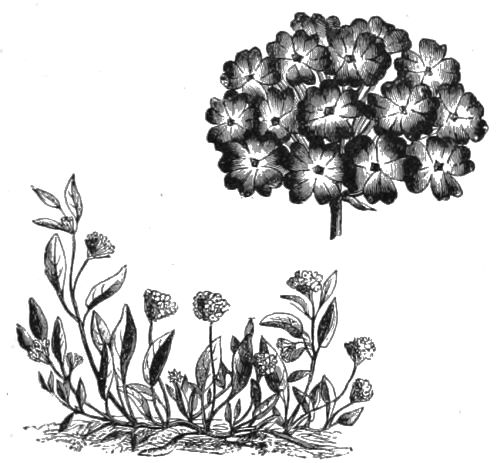
FIG. 1. ABRONIA UMBELLATA, showing Flower and Habit.
A. arenaria (sand-loving).* fl. lemon-yellow, about ½in. long, in
dense clusters, with a honey-like fragrance. July. l. broadly
ovate, or reniform, on short, thick petioles. h. 9in. to 18in. 1865.
Half-hardy perennial. SYN. A. latifolia.
A. fragrans (fragrant).* fl. pure white, in terminal and axillary
clusters, very delicately perfumed, expanding in the evening.
May. 1865. A perennial, more or less erect in growth, forming
large branching tufts from 1ft. to 2ft. high. Imported seeds
only of this species will grow.
A. latifolia (broad-leaved). A synonym of A. arenaria.
A. pulchella (pretty). fl. pink. July. h. 6in. 1848.
A. rosea (rose-coloured). fl. rose-coloured. June. h. 6in. 1847.
An unimportant species.
A. umbellata (umbel-flowered).* fl. rosy pink, in dense terminal
clusters, slightly scented. April. l. oval or oblong. h. 6in. to
24in. 1823. An elegant prostrate half-hardy annual; but under
greenhouse culture it is a perennial. SYN. Tricratus admirabilis.
See Fig 1.
ABRUPT. Suddenly terminating, as abruptly pinnate;
when pinnate leaves are without a terminal or odd leaflet.
ABRUS (from abros, soft, in reference to the extreme
softness of the leaves). ORD. Leguminosæ. A very ornamental
and delicate much branched deciduous stove climber,
whose roots have the virtues of the common liquorice.
Leaves abruptly pinnate, bearing many pairs of leaflets.
Requires a strong heat to keep it in a growing, healthy
condition, and to flower it well; and thrives best in sandy
loam. Increased by cuttings under a hand glass, in sand,
or seeds raised in heat.
A. precatorius (prayer). fl. pale purple, butterfly-shaped,
disposed in axillary clusters. Seeds bright scarlet, with
a black spot at the base, used by the Buddhists for
making rosaries, whence the specific name. March to May.
l. leaflets ligulate, oblong. h. 12ft. East Indies, 1680.
Varieties are now and then met with having rose coloured
or white flowers.
ABSORPTION. The action by which liquids and
gases become incorporated with various bodies, through
molecular or other invisible means, to which function all
parts of a growing plant contribute, the roots more
especially.
ABUTA (native name). ORD. Menispermaceæ. A
strong growing ornamental stove evergreen climber. Used
medicinally in Cayenne. Flowers diœcious, fascicled,
males racemosely panicled; females loose and simply
racemose. It grows freely in a mixture of loam and
peat. Cuttings will root readily if planted in a pot of
sand, with a hand glass placed over them, in heat.
About half-a-dozen species are known.
A. rufescens (rusty-coloured). fl. grey-velvety on the outside,
dark purple on the inside. March. l. ovate; under surface
brownish. h. 10ft. Cayenne, 1820.
ABUTILON (Arabic name for a plant analogous to
the Marsh Mallow). ORD. Malvaceæ. Very showy, decorative,
and free-growing shrubs, both for the greenhouse
and outside culture. Calyx naked, five-cleft, usually
angular; style multifid at apex. The many beautiful
hybrids (of which Fig. 2 represents a group) now
in cultivation, far supersede the true species. Cultivation:
Few plants are more easily grown and worthy
of liberal treatment than these. The best soil for them
is equal parts turfy loam, peat, and leaf mould, with
some gritty sand. They may either be grown in pots, or
planted out; but in all cases thorough drainage is indispensable,
as they require an abundance of water, and stagnancy
must be guarded against. At the end of May they
may be planted outside, when they will flower profusely
through the summer. In a free growing and flowering state
they enjoy weak manure water. From the latter part of
autumn till early spring they may be kept almost dry without
injury, though in a warm conservatory some of the later
struck plants will go on flowering throughout the greater
part of the winter; or plants may be specially prepared
for winter flowering. They are admirably adapted for
forming standards of various heights, from 2ft. to 6ft.
Some of the taller sorts are very useful for training under
roof rafters. As pillar plants, too, very loosely trained, so
as to allow the upper and side branches to droop to a considerable
distance from the pillar, they are very effective.
Propagation: They strike readily from cuttings made
of the young wood, at almost any season; the best time,
however, is early spring and September. Inserted in pots,
in a compost of equal parts peat, leaf mould, loam, and
sand, and placed in a temperature of from 65deg. to 70deg.,
they will then quickly root, and form good plants. Seeds
may be sown in pans filled with soil as recommended for
cuttings, and placed in a similar temperature. Those followed
by a dagger (†) are the best for training to pillars,
roofs, &c.
A. Bedfordianum (Bedford's). fl. yellow and red. November.
l. deeply-lobed. h. 15ft. Brazil, 1838.
A. Darwini (Darwin's).†* fl. bright
orange, with darker veinings, fine
cupped form. April. l. large, broad.
h. 4ft. Brazil, 1871. A handsome
species, of good habit, equally suitable
as a stove or greenhouse plant during
winter, and for outdoor culture during
summer months. There are a
great number of garden hybrids from
this.
A. globiflorum (globe-flowered). fl.
solitary, large, globose, cream-coloured.
November. l. on long stalks, cordate,
serrate. h. 4ft. to 5ft. Mauritius,
1825.
A. igneum (bright). Synonymous with
A. insigne.
A. insigne (handsome-flowered).* fl. large,
purplish crimson, with dark venation, in
axillary pendulous racemes; petals short,
broad, much reflexed. Winter. l. large,
cordate, thick, rugose. Stem deep green,
with short brown hairs. h. 6ft. New
Grenada, 1851. SYN. A. igneum. See Fig. 3.
A. megapotamicum (big river).†* fl. small,
bell-shaped, singularly beautiful, the sepals
being dark red, petals pale yellow, and
stamens dark brown. Autumn and winter.
l. small, pointed. h. 3ft. Rio Grande, 1864.
A free-flowering species, with a graceful
drooping habit; the shoots should be well
pressed in during spring. SYN. A. vexillarium.
A. pæoniflorum (pæony-flowered). fl. pink,
smaller than those of A. insigne, but very
distinct. January. l. large, ovate. h. 6ft.
Brazil, 1845.
A. pulchellum (pretty).†* fl. white, on few-flowered
axillary racemes. July. l. cordate,
unequally crenated, downy beneath. h. 8ft.
Habit very branching. New Holland, 1824.
A. striatum (striped).* fl. orange yellow, with
a thick veining of blood-red, on long curving
stalks. l. large, lobed, on long slender petioles.
Brazil, 1837. A free grower, and makes an
excellent greenhouse plant. In sheltered positions,
in the south-west of England, this
species proves to be almost hardy. It requires
to be freely pinched. A very continuous
bloomer.
A. Thompsoni (Thompson's). fl. striated
yellow, large. Summer. l. small, vine-like,
richly mottled with yellow and dark green.
h. 3ft. or 4ft. Habit very neat and erect.
A. venosum (veined).†* fl. orange, with red
veins, very large, bell shaped, 3in. long;
pedicels nearly 12in. long. July. l. large,
deeply palmate. h. 10ft. This splendid species
is distinguished by its unusually large flowers.
A. vexillarium (standard). Synonymous with A. megapotamicum.
A. vitifolium (vine-leaved).* fl. porcelain blue, large, cupped.
May. l. cordate, five to seven lobed, assuming, towards the
autumn, a fine golden hue. h. 30ft. Chili, 1837. This fine shrub,
or tree, is hardy in Ireland and the south of England, but should
have a protection from frost. It is not a fast grower.
The following are some of the best varieties, which,
although they do not include all the newest sorts, yet afford
a good selection of first-rate kinds, which will give general
satisfaction. They are arranged according to their respective
colours. Those marked with a dagger (†) are best
for roofs and pillars.
Orange-flowered. AUREUM GLOBOSUM,* flowers deep orange,
heavily red shaded, of medium size, with good form and substance;
DARWINI MAJUS,* bright orange, deeply veined, extremely
free, and of good form and size; FLEUR D'OR,† light orange, veined
pale red, very free and dwarf; GRANDIFLORUM,* deep orange, red
shaded, deeply veined with red, a robust, large-flowered variety;
LEO, flowers pale below, deeper above, red-veined, of medium
size; PRINCE OF ORANGE,†* a strong grower, and very free.
Ornamental-foliaged. DARWINI TESSELATUM,†* foliage mottled
with yellow, invaluable for sub-tropical bedding; SELLOWIANUM
MARMORATUM,* very large maple-like foliage, heavily mottled with
bright yellow, a most effective variety; THOMPSONI, leaves very
freely blotched with yellow; VEXILLARIUM IGNEUM,†* very free,
of good habit, prettily blotched. All these ornamental-foliaged
varieties are invaluable for bedding purposes.
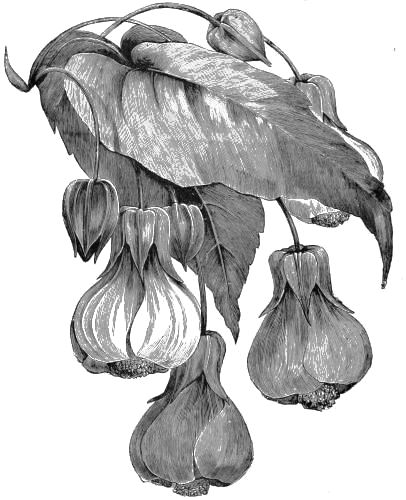
FIG. 2. GROUP OF ABUTILONS.
Purple-coloured. EMPEROR,* flowers large, rich purple magenta
shaded, habit vigorous; LOUIS VAN HOUTTE, very free, rosy
purple; PURPUREA,* deep purple shaded lake, very attractive;
SOUVENIR DE ST. MAURICE, flowers medium size, very profuse;
VIOLET QUEEN,* bright violet purple, very distinct and free.
Red and Crimson-flowered. BRILLIANT,* flowers of good form
and substance, brilliant red inside, rather paler outside, dwarf
and free; CRIMSON BANNER,* rich crimson, dwarf, very floriferous;
FIRE KING,* bright red, orange shaded, veined with crimson;
LUSTROUS,* brilliant red crimson, large, most profusely produced,
habit dwarf; NE PLUS ULTRA,* intense crimson, of excellent form;
SCARLET GEM,* flowers medium sized, brilliant scarlet, habit dwarf
and free.
Rose-coloured. ADMIRATION, light pink, shaded salmon, of good
form and shape; ANNA CROZY,* deep pink, lilac shade, veined
white, very showy; CLOCHETTE,* deep rosy pink, with crimson
veins, very dwarf and free; DELICATUM, pale salmon rose, with
deeper vein, flowers very large; KING OF THE ROSES,* rich deep
rose, of good size and substance, habit dwarf and very free; LADY
OF THE LAKE,* flowers medium sized, rich pink; LOUIS MARIGNAC,
pale pink, veined white, splendid habit, a charming variety;
PRINCESS MARIE,†* flowers rich rosy lake, very profuse, of
excellent form; ROSÆFLORUM,†* pale salmon rose, veined with
crimson.
White-flowered. BOULE DE NIEGE,†* very fine pure white flowers,
the best in its class; PURITY,* very free, of good habit, and pure
white; SERAPH,* dwarf, and very floriferous.
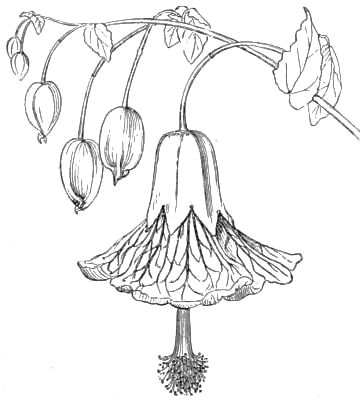
FIG. 3. FLOWER OF ABUTILON INSIGNE.
Yellow-flowered. CANARY BIRD,†* similar in habit to Boule de
Niege, bright primrose, very lovely; COURONNE D'OR,* bright
yellow, of the finest form and substance, very bold foliage;
GOLDEN GEM, rich canary yellow, extremely free, of dwarf habit;
LEMOINEI,† very fine, pale yellow, good size; QUEEN OF THE
YELLOWS,* very large, lemon yellow, good substance; YELLOW
PRINCE,* rich golden yellow, of medium size, very profuse.
ABYSSINIAN PRIMROSE. A common name
for Primula Boveana (which see).
ACACIA (from ac, a point, in Celtic; or from akazo,
to sharpen; many of the species are furnished with
spines). See also Albizzia. ORD. Leguminosæ. Shrubs or
trees, very variable in habit and leaves. Flowers yellow,
white, rarely red, disposed in globular heads or spikes,
decandrous or polyandrous. Spines stipular, scattered, or
wanting. This is a very polymorphous genus, and the
majority of species described are known in this country
only from herbarium specimens. It is very doubtful
whether the entire genus is represented in our gardens
by more than about fifty species, many of which are only
to be found in botanic gardens; but this number is,
without doubt, sufficiently characteristic. The number
of species is close upon 400, and the genus one
of the largest known. In our enumeration, we have
strictly confined ourselves to describing such as are unquestionably
in cultivation, and to this end we have adopted
the only accurate method of deciding which are and which
are not grown, viz., by consulting the trade lists of nurserymen,
both in this country and on the Continent. Such
lists, however, are not always correct, from a scientific
point of view, in the matter of nomenclature. The
species best deserving of cultivation are all natives of
Australia, New South Wales, or other temperate regions,
and are among the hardiest and most easily cultivated of
all greenhouse plants. They are very floriferous. The
greenhouse species are sufficiently hardy to withstand the
winter in a temperature very little higher than freezing
point. Cultivation: Some have a tendency to make long
straight shoots; these should be selected for training upon
rafters or pillars, on which they thrive well and form
splendid ornaments in spring; whilst the more shrubby
kinds will be equally at home in pots in the form of bushes.
Roots and tops grow with great rapidity, and an abundance
of water is required at all times. Immediately after flowering
(usually about May) is the best time to prune Acacias;
they may then be placed in the open air, and fully exposed
to the sun, until October. They make a far healthier,
cleaner growth, and ripen their wood much better outside
than under glass; all they require is copious waterings,
never allowing them to become dry, and keeping clear of
weeds. In the first week in October house the plants, and
winter in a temperature of 40deg. to 50deg. They delight
in a light rich compost of equal parts turfy loam and leaf
mould, freely intermixed with sand, or peat may be used
instead of the leaf mould. Propagation: Cuttings of the
half-ripened wood, put in with a heel, root readily during
the summer. They do not bear heat well, nor do they
require it. The soil should be equal parts peat and sand,
covered with pure sand, thoroughly consolidated. Insert
the cuttings as soon as made; water home, and leave them
in the shade till dry. Then place the bell glasses over
them, shade and water so as to prevent flagging. Pot off
as soon as rooted, and keep in a close pit or house until
the plants are thoroughly established. Seeds should be
sown as soon as ripe, in sandy peat; about ¼in. deep, or
a little more, for large seeds. A temperature of 55deg.
to 60deg. suits them well. Pot off when large enough
to handle, and place in a cool close pit or house until quite
established. The culture and propagation of the stove
species are the same as for the greenhouse sorts, but the
former require, of course, greater heat. Their flowers, however,
are much less frequently produced than their more
temperate congeners, consequently they are not so much
grown.
A. affinis.* fl. yellow. May. h. 5ft. New Holland, 1822. Greenhouse
species.
A. albicans (whitish).* fl. white; heads, two to five, aggregate,
rising in racemes from the axils to the leaves. l. with eight to
nine pairs of pinnæ, each pinna bearing nineteen to twenty-two
pairs of oblong linear-leaflets. h. 5ft. Swan River.
A. amœna (pleasing). This closely resembles A. heterophylla.
A. angustifolia (narrow-leaved). fl. yellow, in heads two to
four together, pedunculate. April. l. with fifteen to twenty
pairs of pinnæ, each pinna bearing thirty to forty pairs of linear-acute,
ciliated leaflets. h. 4ft. New South Wales, 1816. One of
the numerous varieties of A. longifolia.
A. arabica (Arabian).* Gum Arabic. fl. white; heads pedunculate,
axillary, usually in threes. l. with four to six pairs of pinnæ,
each pinna bearing ten to twenty pairs of oblong-linear leaflets.
h. 20ft. Arabia, East Indies, &c., 1820. Greenhouse species.
See Fig. 4.
A. argyrophylla (silver-leaved). A synonym of A. brachybotrya.
A. armata (armed, simple leaved).* fl. yellow, in solitary globular
heads. April. l. phyllodia obliquely ovate-oblong, quite entire,
one-nerved. h. 6ft. to 10ft. Australia, 1803.
A. Benthami (Bentham's). A synonym of A. cochlearis.
A. brachybotrya (short-bunched).* fl. yellow, in axillary stalked
globular heads. April. l. phyllodia silvery silky, obliquely
obovate, or oblong. h. 8ft. Swan River. SYN. A. argyrophylla.
A. Catechu (catechu). fl. yellow; spikes cylindrical, solitary,
twin, or tern, axillary. March. l. with ten pairs of pinnæ, each
of which bears forty to fifty pairs of linear pubescent leaflets.
h. 20ft. to 40ft. East Indies, 1790.
A. cavenia (Cavenia).* fl. yellow, disposed in globose heads,
peduncles, axillary, aggregate. l. with usually about five pairs
of pinnæ, each of which bears nine to ten pairs of linear-oblong
leaflets, clothed with scabrous pubescence. h. 20ft. Chili. Greenhouse
species.
A. cochlearis (spoon-leaved). fl. yellow, in solitary globular
heads. April. l. phyllodia linear lanceolate, many-nerved at the
base, quite entire, mucronate. h. 4ft. West Australia, 1818.
SYN. A. Benthami.
A. cultriformis (knife-formed).* fl. yellow, in crowded heads,
disposed in either axillary or terminal racemes. April. l. phyllodia
eight to ten lines long, four lines broad, cultriform, ending
in an acute hooked point, which bears to one side. h. 4ft. New
South Wales, 1820.
A. cuneata (wedge-shaped).* fl. yellow. April. Swan River, 1837.
Greenhouse species.
A. cyanophylla (blue-leaved). fl. yellow; racemes axillary;
heads globose. March. l. phyllodia lanceolate, often 1ft. long,
glaucous green, almost blue; branches drooping. h. 18ft. Swan
River, 1838. Arboreous.
A. dealbata (whitened).* The Silver Wattle. fl. yellow, in pedicellate
heads, disposed in racemes along the axillary branches.
July. l. from ten to twenty pairs of pinnæ, each of which bears
thirty to thirty-five pairs of linear, much crowded pubescent
leaflets. h. 10ft. to 20ft. Australia and Tasmania, 1820.
A. diffusa (spreading). fl. yellow, in globular heads, which are
usually twin. May. l. phyllodia linear, one-nerved, ending in
an oblique acumen; branches diffusely procumbent, angular.
h. 2ft. Victoria and Tasmania, 1814.
A. Drummondi (Drummond's).* fl. pale lemon; spikes axillary,
drooping, cylindrical, simple. April. l. with two pairs of pinnæ,
each pinna bearing two to three pairs of linear obtuse leaflets.
Plant unarmed, silky. h. 10ft. Swan River. Very handsome and
one of the best grown, forming a somewhat dwarf shrub.
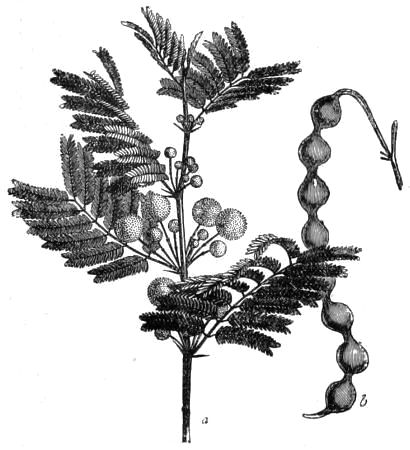
FIG. 4. ACACIA ARABICA (a) Flowering Branch, (b) Seed-pod.
A. Farnesiana (Farnesian). fl. yellow, sweet-scented, disposed in
axillary, usually twin, unequally pedunculate heads. July.
l. with five to eight pairs of pinnæ, each pinna bearing from
fifteen to twenty pairs of linear glabrous leaflets. h. 6ft. to 10ft.
St. Domingo, 1656. Greenhouse species.
A. glauca (milky white).* fl. white; spikes globose, stalked,
axillary, usually twin. July. l. with four to six pairs of pinnæ,
each pinna bearing about twelve to fifteen pairs of linear, distant,
acute leaflets, which are glaucous beneath. h. 5ft. to 10ft. South
America, 1690.
A. glaucescens (greyish). fl. yellow; spikes twin, but solitary
on the peduncles, axillary. June. l. phyllodia linear-lanceolate,
attenuated at both ends, falcate, three-nerved. h. 6ft. to 8ft.
Queensland, 1822. SYN. A. homomalla.
A. grandis (great).* fl. yellow; heads globular; peduncles solitary
or twin, axillary, one-headed. February to May. l. with one pair
of pinnæ, each pinna bearing eight to ten pairs of linear-lanceolate
leaflets; branches hairy. h. 6ft. West Australia, 1850. A
variety of A. pulchella.
A. heterophylla (variable-leaved).* fl. yellow, in heads, disposed
in a kind of raceme. May. l. phyllodia linear, attenuated at
both ends, many-nerved. h. 5ft. Isle of Bourbon, 1824. A.
amœna is very like this.
A. hispidissima (hairiest). A variety of A. pulchella.
A. holosericea (all silky). fl. yellow, in axillary spikes, usually
twin. May. l. 6in. long, oblong-lanceolate, ending in a soft point
at the apex, three-nerved. h. 10ft. to 20ft. Australia, 1818. The
whole aspect of this tree is silky. SYN. A. leucophylla.
A. homomalla (equal-woolled). A synonym of A. glaucescens.
A. Hugelii (Baron Hugel's). fl. pale yellow. February. West
Australia, 1846. Greenhouse species.
A. ixiophylla (Ixia-leaved). fl. yellow; heads about twenty-flowered;
peduncles downy, shortly racemose or solitary. March.
l. narrow, oblong-lanceolate, sub-falcate, obtuse, obliquely mucronate,
much branched. h. 2ft. New South Wales, 1844.
A. juniperina (juniper-leaved). fl. yellow, in solitary heads.
May. l. linear-subulate, ending in a pungent point; branches terete,
pubescent. h. 6ft. Australia and Tasmania, 1790. Greenhouse.
A. Lebbek (Lebbek).* fl. yellow, sweet-scented; heads many-flowered,
pedunculate, three or four together, from the crowded
upper nodes. May. l. with two to four pairs of pinnæ, each pinna
bearing about six to eight pairs of oval, somewhat dimidiate
leaflets, which are obtuse at both ends. h. 20ft. East and West
Indies, 1823. Stove species.
A. leprosa (leprous). fl. yellow, mostly five-parted, numerous in
a globular head; peduncles mostly in pairs or clusters, ¼in. long.
May. l. narrow, linear-lanceolate, acute or obtuse with a small
callous point, narrowed at base, 1½in. to 3in. long, those of the
barren shoots broader. Branchlets pendulous, more or less
glutinous. Australia, 1817. (B. R. 1441.)
A. leucophylla (white-leaved). A synonym of A. holosericea.
A. lineata (lined). fl. yellow, mostly five-parted, ten to fifteen or
rarely more in a small, globular head; peduncles slender, rarely
exceeding the leaves. April. l. linear, with a small hooked
point, about ½in., rarely ¾in., long, one-nerved. Branches nearly
terete, usually pubescent or villous. h. 6ft. Australia, 1824.
(B. M. 3346.)
A. l. longissima (longest). Synonymous with A. longissima.
A. longifolia (long-leaved).* fl. yellow; spikes loose, axillary,
cylindrical. March. l. phyllodia linear-lanceolate, narrowed at
each end, three-nerved, striated. h. 10ft. Australia, 1792. A
fine erect-growing greenhouse species.
A. longissima (longest-leaved). fl. yellow; spikes several,
axillary, generally branched. May. l. phyllodia very long, filiform,
one-nerved, spreading. h. 4ft. New South Wales, 1819.
Stove species. SYN. A. linearis longissima.
A. lunata (half-moon).* fl. yellow; heads disposed in racemes,
which are longer than the phyllodia. April. l. phyllodia
obliquely oblong, rather falcate, narrowed at the base, terminating
in an oblique callous mucrone. h. 2ft. to 4ft. Australia, 1810.
Greenhouse species. SYN. A. oleæfolia.
A. melanoxylon (black wooded). fl. yellow; heads few, disposed
in a kind of raceme. April. l. phyllodia lanceolate-oblong, rather
falcate, obtuse, quite entire, many-nerved. h. 6ft. to 10ft.
Australia, 1818. Greenhouse species.
A. mollissima (softest-leaved).* fl. yellow; heads pedicellate,
disposed in racemes along the axillary peduncles. July. l. with
eight to eighteen pairs of pinnæ, each pinna bearing thirty to
forty pairs of linear, much crowded, pubescent leaflets, which are
clothed with yellowish velvety down when young; branches and
petioles angular. h. 10ft. to 20ft. Van Diemens Land, 1810.
A. oleæfolia (olive-leaved). A synonym of A. lunata.
A. oxycedrus (sharp-cedrus).* fl. yellow; spikes axillary, solitary,
elongated. April. l. phyllodia scattered, or somewhat verticillate,
lanceolate-linear, ending in a pungent point, three-nerved.
h. 6ft. to 10ft. New South Wales, 1823. Greenhouse species.
A. paradoxa (paradoxical). fl. yellow, disposed in solitary
heads. March. l. phyllodia obliquely oblong-lanceolate, entire,
wavy, one-nerved; branches clammy, glabrous. h. 6ft. New
Holland. Greenhouse species.
A. penninervis (feather-nerved). fl. yellow; heads about the
size of a pea, racemose. April. l. phyllodia oblong, acuminated
at both ends, straight, 2in. to 3in. long, ½in. broad, feather veined.
h. 4ft. to 6ft. New Holland, 1824.
A. platyptera (broad-winged).* fl. yellow; heads solitary, on
short peduncles. March. l. phyllodia short, bifarious, decurrent,
obliquely truncate, mucronate; branches broadly winged. h. 3ft.,
Swan River, 1840. Greenhouse species.
A. pubescens (downy).* fl. yellow; heads small, globose pedicellate,
disposed in racemes along the axillary peduncles. March.
l. with three to ten pairs of pinnæ, each pinna bearing six to
eighteen pairs of linear glabrous leaflets. h. 6ft. to 10ft.
Branches terete, hairy. New Holland, 1790.
A. pulchella (pretty).* fl. yellow; heads solitary. April. l.,
pinnæ bearing five to seven pairs of oblong-ovate, obtuse leaflets.
h. 2ft. to 3ft. New Holland, 1803. Greenhouse species. The
variety hispidissima has white flowers.
A. Riceana (Rice's).* fl. pale yellow, in long, solitary, axillary
spikes. May. l. linear, in clusters, dark green, scattered or
whorled. h. 20ft. Tasmania. Habit graceful, like a weeping
willow. Very handsome and distinct. SYN. A. setigera. See Fig. 5.
A. rotundifolia (round-leaved). fl. yellow; heads globose, solitary,
on long peduncles. March. l. phyllodia on short petioles,
obliquely rounded, obtuse or retuse, mucronate. Branches angular,
puberulous. h. 6ft. New Holland, 1842.
A. saligna (willow-like). fl. yellow; heads solitary, on short
peduncles. March. l. phyllodia linear, attenuated at both ends,
quite entire, almost nerveless. h. 6ft. to 10ft. New Holland,
1818. Greenhouse species.
A. Senegal (Senegal). Gum Senegal. fl. white, small, glabrous,
distant; spikes axillary, solitary, slender. l. with five to eight
pairs of pinnæ, each pinna bearing fifteen to eighteen pairs of
oblong-linear, obtuse, glabrous leaflets; branches white; prickles
sometimes wanting. h. 20ft. Arabia, 1823. Stove species.
A. setigera (bristly). Synonymous with A. Riceana.
A. sophoræ (sophora-podded). fl. yellow; spikes usually twin,
axillary. May. l. phyllodia obovate, oblong or lanceolate, quite
entire, many nerved; sometimes there are bipinnate leaves at the
tops of the branches. h. 20ft. New Holland, 1805.
A. sphærocephala (round-headed).* fl. yellow; racemes axillary,
usually twin, ovate-roundish. l. with numerous close-set linear
falcate pinnules, which are usually tipped by a glandular yellow
"food body;" spines twin, hollow. Mexico. A very remarkable
stove species, inhabited by ants during certain seasons in its
native country.
A. uncinifolia (hook-leaved). fl. yellow; spikes usually twin,
dense, on short peduncles, cylindrical. March. l. phyllodia long,
linear-subulate, flat, recurved, mucronate, three-nerved; branches
angular. h. 6ft. Swan River, 1846.
A. vera (true). Egyptian Thorn; Gum Arabic. fl. white, usually
in twin heads, pedunculate, axillary. July. l. with two
pairs of pinnæ, each pinna bearing eight to ten pairs of
oblong linear leaflets; branches and spines red. h. 20ft. Egypt,
1596.
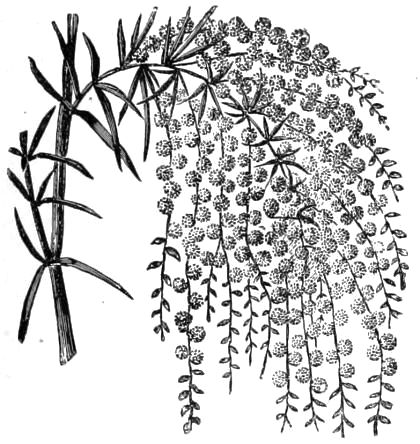
FIG. 5. A FLOWERING BRANCH OF ACACIA RICEANA.
A. verticillata (whorl-leaved).* fl. yellow; spikes axillary, solitary,
oblong. March. l. phyllodia linear, ending in a pungent
mucrone, disposed somewhat verticillately. h. 6ft. to 10ft. A
spreading, prickly, greenhouse species, of variable habit. New
Holland, 1780.
A. vestita (clothed).* fl. yellow, in loosely racemose heads, along
the peduncles; upper ones solitary. June. l. phyllodia obliquely
elliptic-lanceolate, one-nerved, ending in an awnlike mucrone,
hispid. h. 4ft. New Holland, 1820.
A. viscidula (clammy).* fl. yellow; heads globular, on short
stalks, axillary, solitary or twin. February. l. linear, clammy;
branches slender, clammy. h. 6ft., erect. New South Wales,
1844.
ACÆNA (from akaina, a thorn; in allusion to the
slender spines on the calyx or fruit). ORD. Rosaceæ. A
genus of dwarf sub-shrubby plants. Flowers capitate, or
interruptedly spicate, uninteresting; petals absent. Leaves
alternate, impari-pinnate. Excepting for rockwork, or as
edgings to flower beds, they are not of much value; their
habit is, however, very compact and neat. They require
similar treatment to other hardy herbaceous plants, in
ordinary soil. Increased by cuttings, creeping rootlets,
divisions, and by seeds.
A. microphylla (small-leaved).* fl. green, small, in close heads,
furnished with showy, long crimson spines. Summer. l. small,
pinnate. h. 1in. to 2in. New Zealand. A neat evergreen with a
compact and cushion-like growth; it is a very effective subject for
the rock garden, and grows freely in most situations. The
crimson globular heads of spine-formed calyces form a conspicuous
and ornamental feature of the plant. SYN. A. Novæ Zealandiæ.
See Fig. 6.
A. millefolia (myriad-leaved).* fl. inconspicuous. A very distinct
species with finely-cut pale green leaves. The fruiting spikes of
this are not collected in globular heads, as in the others, and
their presence detract from its value as an ornamental plant.
Otherwise, it is very graceful.
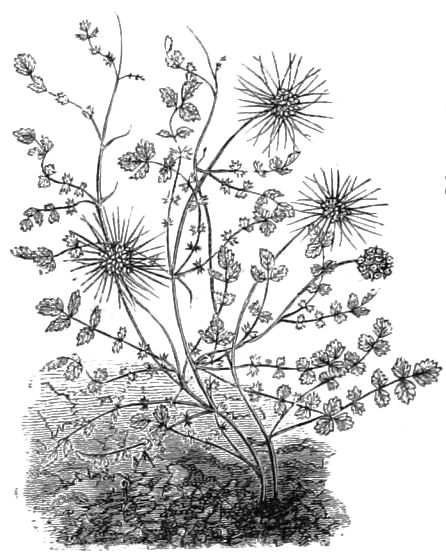
FIG. 6. ACÆNA MICROPHYLLA.
A. myriophylla (many-leaved).* fl. green, small, in rounded
spikes. June. l. pinnate; leaflets deeply cut. h. 6in. to 1ft.
Chili, 1828. Small, fern-like.
A. Novæ Zealandiæ (New Zealand). A synonym of A. microphylla.
A. ovalifolia (oval-leaved). fl. green. Summer. h. 9in. Chili,
1868. Good for rock gardens.
A. pulchella (pretty).* fl. inconspicuous. A pretty bronzy-leaved
species, admirably suited for rockwork crevices, where
space is no object. It grows very rapidly, and forms handsome
tufts.
ACALYPHA (the name given by Hippocrates to the
Nettle). ORD. Euphorbiaceæ. Stove ornamental and
variegated nettle-like leaved shrubs. Flowers greenish or
reddish, inconspicuous, in erect or drooping bracted axillary
or terminal spikes; those of the upper portion sterile, of
the lower, fertile. The undermentioned only are those most
worthy of cultivation. They are very easily grown, with
ordinary stove treatment, and in a peat and loam compost.
When well cultivated, the leaves of the hybridised varieties
are highly coloured, but rather coarse than otherwise. Increased
by cuttings under a glass in sandy soil, in stove
heat, during April.
A. Macafeeana (Macafee's). l. red, blotched with bronzy crimson.
1877.
A. macrophylla (large-leaved).* l. cordate ovate, russet brown,
blotched with paler spots. The best and handsomest stove
species.
A. marginata (margined). l. large, very hairy, ovate-acuminate,
centre brown, with a distinct margin of rosy carmine, about ¼in.
wide. Fiji Islands, 1875.
A. musaica (mosaic).* l. bronzy green, variegated with orange
and dull red. Polynesia, 1877.
A. torta (twisted). l. dark olive, tinted green; margin cut
into blunt, oblong segments. Samoan Islands. Remarkable
for its curiously contorted foliage. It has erect stems, which
are terete, and covered by the leaves in a very singular
way.
A. tricolor (three-coloured). A synonym of A. Wilkesiana.
A. Wilkesiana (Wilkes').* l. ovate-acuminate, curiously blotched,
mottled, and splashed with red and crimson; ground colour
coppery green. h. 6ft. to 10ft. New Hebrides, 1866. SYN. A.
tricolor.
A. W. marginata (Wilkes's margined).* l. large, olive brown,
margined with rosy carmine. Fiji Islands, 1875.
ACANTHACEÆ. A large order of soft-wooded,
herbaceous plants, usually having gamopetalous axillary
flowers; calyx composed of deeply imbricated scales; bracts
large, leafy.
ACANTHEPHIPPIUM (the derivation of this word
is not apparent). ORD. Orchideæ. A peculiar class of
terrestrial stove orchids. Flowers rather large, racemose, few;
sepals combined in a broad oblique pitcher, including the
petals, which are adnate to the base of the column; column
short, produced into a long foot. Pseudo-bulbs oblong.
Leaves few, large, longer than the scapes. The best
species are the two first-mentioned. They will thrive well
in sandy peat, with a quantity of small stones, broken pots,
or gravel. A great deal of heat and moisture are absolutely
essential during the growing period. Propagated, as soon
as growth commences, by dividing the pseudo-bulbs.
A. bicolor (two-coloured).* fl. purple and yellow, about 2in. long,
campanulate, produced in clusters of three or four together;
petals oblong-lanceolate, acutish; lateral lobes of lip rounded.
June. h. 9in. Ceylon, 1833.
A. Curtisii (Curtis's).* fl. same shape as above (except the lip),
with numerous purple spots, light rose, and flush; column
white, nail of lip yellow, keels yellowish, laciniæ white with
purple. Malay Archipelago, 1881. The five keels between the
side laciniæ distinguish it from the foregoing species and A.
sylhetense.
A. javanicum (Javanese).* fl. yellow and red, with distinct
longitudinal stripes; petals triangular; lip three-lobed; lateral
lobes truncate; intermediate lobe constricted in middle, ovate,
and tuberculate at the apex, fleshy on both sides at base,
with truncate emarginate inflexed teeth. September. h. 1½ft.
Java, 1843.
A. sylhetense (Sylhet). fl. white, with many irregular spots and
blotches towards the extremities of the outer portions. June.
h. 9in. Sylhet, 1837.
ACANTHOLIMON (from akanthos, a spine, and limon,
sea lavender). ORD. Plantagineæ. Dwarf hardy tufted
evergreen plants, distinguished from allied genera in having
sharp-pointed rigid leaves. They are of rather slow growth,
thriving best in a sandy soil, and sunny position, on rockwork
more particularly. The flowers are similar to Statice
and Armeria. Increased by seeds (which germinate slowly),
sown carefully on a warm but rather shaded border, and
transplanted when large enough to handle; or by cuttings
and very carefully made divisions. The cuttings should be
made in late summer, and placed in a frame, to remain
there during the winter.
A. glumaceum (prickly).* fl. rose, spicate, about ½in. across,
six to eight in a spikelet. Summer. l. densely packed and
sharply pointed with spines. h. 6in. Armenia, 1851. Very compact
and distinct. SYN. Statice Ararati.
A. Kotschyi (Kotschy's). fl. white. A good species, but very
rarely seen in British gardens.
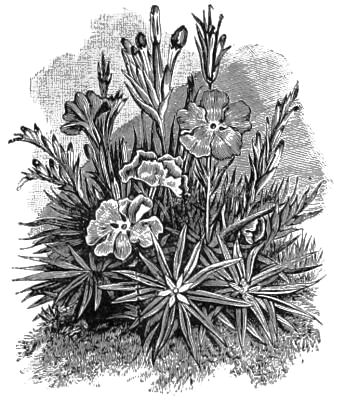
FIG. 7. ACANTHOLIMON VENUSTUM.
A. venustum (charming).* fl. rose, spicate, from twelve to twenty
in each spike. Summer. l. broader than in the last, and glaucous.
h. 6in. or 8in. Cilicia, 1873. A rare and handsome alpine.
Larger than the preceding. See Fig. 7.
ACANTHOPHOENIX (from akantha, a spine, and
phoinix, the Date Palm). ORD. Palmæ. A very elegant
stove palm, differing from Areca principally in habit, and
requiring a light sandy soil and a summer temperature
of 65deg. to 80deg., winter 55deg. to 65deg. Increased
by seeds only; these germinate best in a moist bottom
heat, and a well decomposed compost of one part loam,
one of peat, one of leaf mould, and the remainder of sand.
They may remain in this soil for two or three years.
A. crinita (hairy).* fl. spirally arranged, in threes, the central one
being female. l. the fronds are arched, broadly ovate in outline,
pectinately pinnate in division, with long linear acuminate segments,
paler beneath. The stem is densely armed with black,
needle-shaped spines, and much swollen towards the base. Seychelles,
1868.
ACANTHORHIZA (from akantha, a spine, and rhiza,
a root). ORD. Palmæ. A small genus of stove palms,
differing from Trithrinax by the aërial roots of the trunk
hardening into spines (which are horizontal or pointed
upwards), and by the blade of the leaf being divided
down to the petiole. They delight in a rich loamy
soil, and are propagated by seeds, in a moist, sweet
hotbed, in spring.
A. aculeata (spiny).* l. orbicular, palmately slit into numerous
linear-lanceolate, glabrous segments, deep-green above, silvery
beneath; petioles slender; the trunk is covered with a network
of branching spines. Mexico, 1879. SYN. Chamærops stauracantha.
A. Wallisii (Wallis's).* A recent introduction from tropical
America, and not yet much cultivated; it is a tall palm with
orbicular palmate leaves.
A. Warzcewiczii (Warzcewicz's).* This differs from the preceding
species by its more irregularly divided leaf blade, which
is white below. Tropical America.
ACANTHOSTACHYUM (from akanthos, a spine, and
stachys, a spike). ORD. Bromeliaceæ. A monotypic genus of
stove evergreen herbaceous plants; of easy culture in a compost
of equal parts sand, decayed wood, and rotten leaves.
Propagated by suckers, which strike readily in bottom
heat.
A. strobilacea (cone-fruited). fl. red and yellow; scape simple,
long, scurfy; bracts coloured. June. l. radical, very long, incurved,
narrow, thick, pungent, channelled, spiny-toothed, covered
with white scurf. h. 4ft. Brazil, 1840.
ACANTHUS (from akanthos, a spine; several species
being spiny or prickly). Bear's Breech. ORD. Acanthaceæ.
A group of stately, ornamental perennial plants, mostly
hardy, remarkable for their vigorous growth and beautiful
foliage. Flowers sessile, crowded, spicate; corolla tubular,
one-lipped; lip three lobed. To attain perfection they
require a deep soil, and a situation fully exposed to the
sun. They will, however, thrive moderately well in
common soil and partial shade. The habit being generally
a bold one, they are most suited for isolated tufts,
backgrounds of mixed borders, and the wild garden.
Propagated by seeds, sown in gentle heat, or by division
of the roots, in autumn or early spring.
A. carduifolius (thistle-leaved). fl. blue. August. h. 3ft.
Cape of Good Hope, 1816. Greenhouse species.
A. hispanicus (Spanish). fl. white. August. l. large, shining,
and deeply cut. h. 2ft. Spain, 1700.
A. longifolius (long-leaved).* fl. purple, rose, in the axils of the
bracts, which are oval, acuminate, spiny, of a reddish hue,
forming a spike nearly 1ft. long. June. l. radical, 2ft. to 3ft.
long; numerous. h. 3ft. to 4½ft. Dalmatia, 1869.
A. lusitanicus (Portugal). Synonymous with A. mollis latifolius.
A. mollis (soft).* fl. white or rose, sessile in the axils of the deeply-toothed
bracts; spikes about 1½ft. Summer. l. sinuated, unarmed,
heart-shaped in outline, 2ft. long by 1ft. broad. h. 3ft. to 4ft.
Italy, 1548.
A. m. latifolius (broad-leaved).* A variety of A. mollis, but
larger and more robust in every part. This very handsome form
is probably the best grown; it is one of the most suitable for sub-tropical
gardening. A warm sunny spot is needful. SYN. A. lusitanicus.
See Fig. 8.
A. montanus (mountain).* fl. rose. August. h. 3ft. West
Africa, 1865. A shrubby species.
A. niger (black). fl. purplish white. July to September. l.
sinuated, unarmed, glabrous, shining green. h. 3ft. Portugal,
1759.
A. spinosissimus (most spiny).* fl. rosy, sessile, on a very
handsome spike, with acute, recurved spines. Autumn. l.
laciniate, pinnatifid, blistered, spiny; spines white. h. 3½ft. South
Europe, 1629.
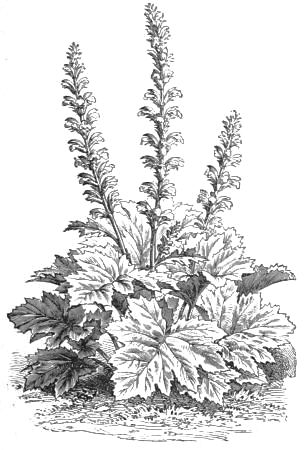
FIG. 8. ACANTHUS MOLLIS LATIFOLIUS.
A. spinosus (spiny).* fl. purplish, spicate; sepals spiny. Summer.
l. deeply and regularly cut, each division terminated by a short
spine. h. 3ft. to 4ft. South Europe. See Fig. 9.
ACAULESCENT. With apparently no stem.
ACCESSORY. Something additional, not usually
present.
ACCRETE. Fastened with another body, and growing
with it.
ACCUMBENT. Lying against anything, in distinction
to incumbent, or lying upon.
ACER, (from acer, hard or sharp; wood is extremely
hard, and was formerly much used for making pikes and
lances). Maple. ORD. Sapindaceæ. A genus comprised,
for the most part, of handsome hardy deciduous
shrubs, or trees, adapted for forming shrubberies,
plantations, &c. Flowers greenish, except where mentioned.
A. Pseudo-platanus is one of our most useful
forest trees. Several of the species produce very useful
timber; sugar is one of the constituent parts of the sap of
all of them, and is obtained in large quantities from A.
saccharinum, in North America. They all prefer a somewhat
sheltered position. The most satisfactory soil is
one free, deep, loamy, and well drained; the latter is
especially desirable with some of the Japanese varieties.
The varieties of A. japonicum, and palmatum are well
worth growing in pots for conservatory decoration. Propagation:
By seeds, sown either in autumn or spring,
covering them not more than a ¼in. deep; the common
varieties may be sown outside, while the rarer ones should
be sown in a frame. By layers, and by grafting; the
latter method is adopted with many of the rarer species
and varieties, especially the variegated kinds; they are
also readily increased by budding in summer.
A. austriacum (Austrian). Synonymous with A. campestre
austriacum.
A. campestre (field).* Common Maple. fl. on erect racemes.
May. fr. wings of fruit much divaricated. l. small, cordate,
with five-toothed lobes. h. 20ft. Britain. A small tree with
rough bark, full of deep fissures; wood often beautifully veined,
when it is highly valued.
A. c. austriacum (Austrian).* fl. much larger than those of
the species. fr. smooth. Lobes of leaves somewhat acuminated.
SYN. A. austriacum.
A. c. collinum (hill-loving).* fl. smaller. fr. smooth. Lobes of
leaves obtuse. France.
A. c. hebecarpum (downy-fruited).* fr. clothed with velvety
pubescence.
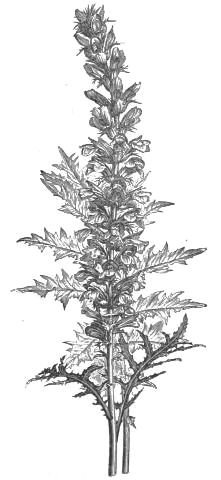
FIG. 9. LEAF AND FLOWER SPIKE OF ACANTHUS SPINOSUS.
A. c. lævigatum (smooth-leaved). l. very smooth and shining.
A. c. nanum (dwarf). Dwarf habit.
A. c. tauricum (Taurian).* l. larger and less divided than in the
species.
A. c. variegatum (variegated).* l. beautifully variegated with
blotches and stripes of white or whitish yellow; very distinct.
A. circinatum (circinate).* fl. deep red, umbellate. April. l.
seven to nine-lobed, serrulated. h. 5ft. to 6ft. North West
America, 1827. A very beautiful species, having pendulous
branches clothed with leaves, which change into a bright scarlet
colour in the autumn.
A. creticum (Cretan). fl. on few-flowered erect corymbs. May.
fr. smooth, with the wings hardly diverging. l. cuneated at the
base, acutely three-lobed at the top. h. 4ft. Levant, 1752.
Nearly evergreen.
A. dasycarpum (thick-fruited).* fl. conglomerate, on short
pedicels, apetalous. April. l. truncate at the base, palmately
five-lobed, with blunt recesses, and unequally and deeply-toothed
lobes. h. 40ft. North America, 1725. SYNS. A. eriocarpon,
A. tomentosum, A. glaucum, and A. virginianum.
A. Douglasii (Douglas). Synonymous with A. glabrum.
A. eriocarpon (hairy-fruited). Synonymous with A. dasycarpum.
A. Ginnala (Ginnalian).* fl. on compound, crowded, erect racemes.
Amur River. This is generally classed as a variety of
A. tartaricum, but its habit is much more graceful, and in this
form the leaves are prettily cut and lobed, whilst the leafstalks
and midrib are more deeply coloured.
A. glabrum (smooth).* fl. corymbose, on short two-leaved
branchlets, greenish-yellow. June. l. roundish-cordate, deeply
three to five-lobed, or partite; the lobes biserrate, of a light
green. h. 15ft. to 30ft. North West America. SYNS. A. Douglasii,
A. tripartitum.
A. glaucum (glaucous). Synonymous with A. dasycarpum.
A. heterophyllum (various-leaved).* fl. corymbose. May. l.
small, ovate, entire, and three-lobed, slightly serrated, smooth.
h. 4ft. Levant, 1759. An evergreen. SYN. A. sempervirens.
A. ibericum (Iberian). fl. corymbose. May. l. bluntly three-lobed;
lobes with one or two teeth, lateral ones marked with the
middle nerve to the insertion of the petiole. h. 20ft. Iberia,
1826.
A. japonicum (Japanese).* fl. deep purplish-red, large. April.
l. many-lobed, in early spring very light green. h. 20ft. Japan,
1863. The varieties of this species, although not well fixed in many
cases, rank amongst the most handsome of the deciduous small
shrubs grown, but often change in character as they attain any
considerable size. Plants from 1½ft. to 3ft. high are very useful in
cool conservatories, and in the highly kept grounds surrounding
the house.
A. laurifolium (laurel-leaved). Synonymous with A. oblongum.
A. Lobelii (Lobel's). l. very slightly heart-shaped, irregularly
toothed, five-lobed; lobes more or less abruptly pointed.
A. macrophyllum (large-leaved).* fl. on erect, compound, racemes.
May. l. digitately five-palmate, with roundish recesses;
lobes somewhat three-lobed. h. 60ft. Northern California,
1812.
A. monspessulanum (Montpelier).* fl. on few-flowered corymbs,
erect. May. l. cordate, three-lobed; lobes almost or quite
entire, equal. h. 10ft. to 20ft. South Europe, 1739.
A. montanum (mountain). fl. on compound, erect racemes.
May. l. cordate, three or slightly five-lobed, unequally and
coarsely serrated. h. 18ft. Canada, 1750. SYN. A. spicatum.
A. Negundo. See Negundo fraxinifolium.
A. oblongum (oblong). fl. on compound racemes, pale yellow.
February. l. oblong-lanceolate, acuminated, quite entire. h.
20ft. Nepaul, 1824. SYN. A. laurifolium.
A. obtusifolium (obtuse-leaved). fl. drooping, corymbose. May.
l. rounded, bluntly three-lobed, crenately serrulate, about the
length of the petioles. h. 15ft. Crete.
A. Opalus (Opalus). A synonym of A. opulifolium.
A. opulifolium (Guelder-rose-leaved).* fl. on nearly sessile
corymbs. May. Ovaries and fruit smooth. l. cordate, five-lobed;
lobes obtuse, bluntly and coarsely toothed. h. 8ft.
France, 1823. SYN. A. Opalus.
A. o. obtusatum (bluntish).* A larger, strong growing, round-headed
tree, with dark green leaves, which are covered with
a whitish or rusty tomentum on the under surface.
A. palmatum (palmate-leaved).* fl. on five to seven-flowered
umbels. May. l. palmately divided into five to seven lobes
beyond the middle; lobes oblong, acuminated, serrated. h. 20ft.
Japan, 1820.
A. p. atropurpureum (dark purple).* A vigorous handsome
plant, with bold dark purple foliage. Japan.
A. p. crispum (crispy or waved).* l. green, with red stalked, convoluted
edges. Japan, 1871. Very distinct, and like a miniature
Lombardy poplar in habit of growth.
A. p. dissectum (finely-divided).* fl. red, on terminal-stalked racemes,
five to six-flowered. May. l. nine to ten parted;
lobes oblong, acuminated, deeply serrated. h. 30ft. Japan,
1845.
A. p. ornatum (beautiful).* Very ornamental, having finely cut
deep red leaves, with lighter midribs. Japan, 1871. This variety
is also known as dissectum.
A. p. palmatifidum (palmatifid).* l. very finely palmately
divided, the lobes cut down quite to the midrib, of a beautiful
light green colour. 1875.
A. p. reticulatum (netted).* l. palmately seven-lobed; lobes
unequal, sharply serrate, emerald green, with dark green
veins. Japan, 1875. A very elegant variety, with slender
branches.
A. p. roseo-marginatum (rose-margined).* l. freely divided,
the lobes deeply cut, light green, margined with rose. Japan,
1874. A very distinct and charming variety.
A. p. sanguineum (blood-red).* l. deeply five-lobed, the lobes
serrated, of a deep reddish-crimson colour, much brighter than
the variety atropurpureum. 1874. This presents a very striking
contrast to the last.
A. p. septemlobum (seven-lobed).* fl. purplish, on numerous
flowered umbels. Spring. l. varying much, from palmately five-lobed,
with toothed undivided lobes, to deeply seven to nine-lobed,
with more or less finely cut divisions. Japan, 1864. There are
numerous beautiful forms of this variety.
There are many varieties of this much varying species, but
we have only mentioned those best known; many are only
known by their native names, and there is some doubt as
to their distinctive characteristics. They are all extremely handsome.
A. pennsylvanicum (Pennsylvanian).* fl. in long drooping,
simple racemes. May. l. cordate, three-lobed, acuminated,
finely and acutely serrated. h. 20ft. Trunk elegantly striped
with white lines. North America, 1755. SYN. A. striatum.
A. pictum (painted).* fl. corymbose, stalked. l. five to seven-lobed;
lobes triangular or oblong, entire, acuminated. h. 15ft. to
20ft. Temperate Asia, 1840. A. p. connivens (converging), A. p.
marmoratum (spotted), A. p. rubrum (red), and A. p. variegatum
(variegated), are varieties differing principally in the colouring of
the leaves. All are very desirable.
A. platanoides (plane-like).* The Norway Maple. fl. on nearly
erect stalked corymbs. May, June. l. cordate, smooth, five-lobed;
lobes acuminated, with a few coarse acute teeth. h.
50ft. Europe, 1683. A very ornamental hardy tree, growing
with great rapidity when young. It prefers a deep, well-drained
soil.
A. p. aureo variegatum (golden-variegated).* l. variegated with
yellow. Europe, 1383. This, to retain the variegation, requires
to be propagated by budding or grafting. The same remarks are
equally applicable to the other varieties.
A. p. laciniatum (cut-leaved).* l. deeply and variously cut, green
and yellow.
A. p. Schwedleri (Schwedler's).* l. very large, deep bronzy-red.
A vigorous grower, and most effective.
A. p. variegatum (variegated).* l. variegated with white.
There are several other varieties, but of less importance than
the foregoing.
A. Pseudo-platanus (Mock-plane tree).* Sycamore. fl. on
rather compound pendulous racemes. May. l. cordate, with
five acuminated unequally-toothed lobes. h. 30ft. to 60ft.
Europe. There are few deciduous trees so well adapted for
standing singly in rough exposed situations. A deep, soft, dry
soil is most suitable for it, but it will grow in soils of very
opposite qualities.
A. P. albo variegata (white-variegated).* A very beautiful form,
in spring especially. l. white and green.
A. P. flavo variegata (yellow-variegated). l. variegated with
yellow.
A. P. longifolia (long-leaved).* l. more deeply cut, and the
petioles much longer than in the species.
A. P. purpureum (purple).* l. purple underneath. The tree,
when slightly ruffled by the wind, alternately appearing clothed
in purple and pale green. Numerous other varieties of more or
less excellence are grown.
A. rubrum (red).* Scarlet Maple. fl. scarlet, handsome, conglomerate,
corymbose. l. cordate at the base, deeply and unequally
toothed, palmately five-lobed, with acute recesses. Branches and
fruit also scarlet. h. 20ft. Canada, 1656. A variety with leaves
splashed with yellow is rare. An excellent species, thriving
well in damp, swampy situations, and is commonly increased by
layers.
A. rufinerve (red-nerved).* "The leaves vary both in size and
outline, from 2½in. to 4in. each way; three to five-lobed, with
irregularly toothed margins, glabrous above, but with reddish
hairs along the nerves beneath. The young branches are conspicuous
on account of the bluish-grey glaucescence with which
they are covered."
A. r. albo-limbatum (white-margined).* differs only from the
species in having a very distinct white margin—not always
constant. Japan, 1869.
A. saccharinum (Sugar Maple).* fl. yellow, on drooping corymbs,
on short peduncles; pedicels pilose. April. l. cordate, smooth,
palmately five-lobed; lobes accuminated, sinuately toothed.
h. 40ft. N. America, 1735.
A. s. nigrum (blackish).* fl. on sessile corymbs, nodding. April,
May. l. cordate, with the recess closed; palmately five-lobed.
h. 40ft. North America, 1812.
A. Semenovi (Semenov's).* A slender and graceful species, with
leaves closely resembling those of A. Ginnala, but smaller.
Turkestan, 1879.
A. sempervirens (evergreen). Synonymous with A. heterophyllum.
A. spicatum (spiked). Synonymous with A. montanum.
A. striatum (striated). Synonymous with A. pennsylvanicum.
A. tartaricum (Tartarian).* fl. white, on crowded, erect, compound
racemes. May. l. more or less cordate, acuminated,
serrated, with obsolete lobes. h. 20ft. 1759. This species is
one of the first to expand its leaves in spring.
A. tomentosum (tomentose). Synonymous with A. dasycarpum.
A. tripartitum (three-parted). Synonymous with A. glabrum.
A. Van Volxemii (Van Volxem's). fl. not known in England.
l. palmately three to five-lobed, very large, light green above,
silvery and quite glabrous beneath. Caucasus, 1877. Distinct
and fine.
A. villosum (hairy). fl. fragrant, on lateral racemes. April.
Buds, fruit, and young leaves, silky, villous. l. cordate, five-lobed,
villous beneath as well as the petioles; lobes ovate acute. h. 50ft.
Himalaya, at high elevations. Not hardy.
A. virginianum (Virginian). Synonymous with A. dasycarpum.
ACERACEÆ. An order of very ornamental hardy
trees, of which the sycamore and maple are well-known
representatives.
ACERAS (from a, without, and keras, a horn; the lip
having no spur). ORD. Orchidaceæ. An interesting genus
of terrestrial orchids. Calyx of three ovate, equal, converging
sepals; petals two, narrow, oblong; lip spurless,
much longer than the calyx, narrow, oblong, with four linear
lobes. The most interesting species is the native one.
Indigenous to dry, chalky pastures in the south-east of
England, and it will only thrive in similar soils when grown
in gardens. Propagated by careful divisions of tubers
only.

FIG. 10. FLOWER OF ACERAS ANTHROPOPHORA.
A. anthropophora (The Green Man Orchis). fl. greenish,
on a long spike, lip longer than the ovary; lip and petals
often margined with red. June. l. lanceolate. h. 1ft. See
Fig. 10.
ACERATIUM (from a, not, and keras, a horn; the
stamens being destitute of the terminal bristles so conspicuous
in its near ally, Elæocarpus). ORD. Tiliaceæ. An
interesting stove evergreen tree, very closely allied to Tilia.
It thrives well in a mixture of loam and peat, and is increased
by ripe cuttings, which root readily if placed in
sand, under a hand glass, in heat.
A. oppositifolium (opposite-leaved).* fl. white, on terminal
three-flowered peduncles. June. l. opposite, elliptic-oblong,
furnished with a few mucronated teeth. h. 20ft. Amboyna,
1818.
ACEROSE, ACEROSUS. Needle-pointed, fine, and
slender, with a sharp point.
ACETARIOUS. An adjective applied to plants used
in salads.
ACEUS. A termination expressing a resemblance to
the thing whose name it terminates—foliaceus, leaf-like,
of the texture of a leaf or folium.
ACHANIA. See Malvaviscus.
ACHENE. A hard, dry, one-seeded, superior seed-vessel.
ACHERONTIA ATROPOS. See Sphinx Atropos.
ACHILLEA (named after Achilles, who is said to have
first discovered the medicinal qualities of this plant). Including
Ptarmica. Milfoil. ORD. Compositæ. A large
genus (about fifty species), containing numerous hardy,
border and alpine plants. Flower-heads small, corymbose;
involucral scales oblong, often with a shrivelled appearance;
receptacle with membranous scales, resembling
chaff; ray florets few, sometimes rather large and showy;
pappus none. Leaves ternate, simple or compound. All
the species are easily cultivated in ordinary garden soil.
A. Eupatorium and other large-growing kinds are well
suited for borders or groups, whilst the alpine section
should be planted on the rockery. A great number of
species, although excellent for naturalising in rough
shrubberies, are totally unfitted for garden culture. Propagated,
during spring, by root divisions, cuttings, and seeds.
A. ægyptiaca (Egyptian).* fl.-heads rich bright yellow, in closely
packed terminal corymbs, which are from 2in. to 4in. across.
Summer. l. pinnate; leaflets obtusely lanceolate, serrate, silvery
white, 6in. to 8in. long. h. 1½ft. to 2½ft. Levant, 1640. Handsome
perennial, thriving best in a warm position.
A. Ageratum (ageratum-leaved).* fl.-heads pure white, large,
borne singly on stalks about 6in. or 8in. high. Summer. l. narrow,
arranged in a dense silvery rosette, the margins prettily crimped.
Greece. A pretty alpine, of compact habit.
A. asplenifolia (asplenium-leaved).* fl.-heads rose-coloured, small,
in a compound corymb. June to September. l. lower ones stalked,
pinnatifid, lobes pinnate; upper ones pinnate. h. 18in. North
America, 1803.
A. atrata (black-cupped).* fl.-heads white. August. l. in a rosette,
pinnatifid, deep shining green. Austria, 1596. A pretty alpine.
A. aurea (golden-flowered).* fl.-heads golden yellow, borne singly
on stems 18in. high. Summer and autumn. l. larger than in A.
ageratifolia, with which species it is sometimes confused. Levant,
1739. Habit tufted. Requires a warm position.
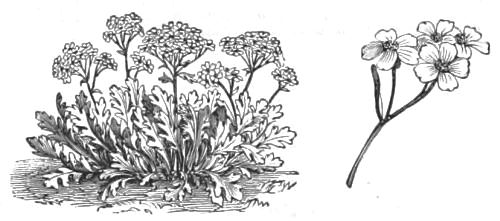
FIG. 11. ACHILLEA CLAVENNæ, showing Habit and detached
Flower-heads.
A. Clavennæ (Clavenna's).* fl.-heads white, in neat and compact
heads. Spring and summer. l. bipinnatifid; segments linear,
obtuse, slightly denticulated at the apex. h. 10in. Austria, 1656.
A very neat and pretty species, having dwarf tufted habit and a
hoary appearance. See Fig. 11.
A. decolorans (staining). fl.-heads whitish yellow. July. l. undivided.
h. 1ft. Native country unknown. 1798.
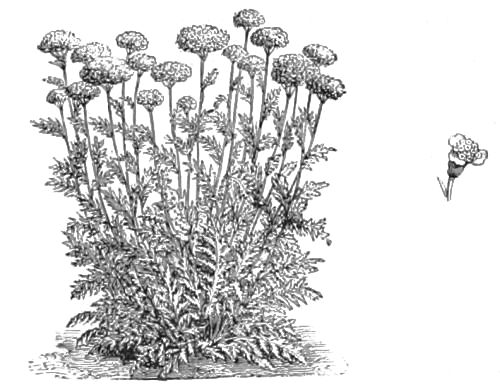
FIG. 12. ACHILLEA EUPATORIUM, showing Habit and detached
Flower-head.
A. Eupatorium (fern-leaved).* fl.-heads brilliant yellow, in dense
convex, compound corymbs, which are often 5in. across, lasting
two months in full beauty. June to September. l. numerous,
linear, pinnate, lobed and serrated, hairy, rough. h. 4ft. to 5ft.
Caucasus, 1803. This noble plant should be grown at the back of
the border, and kept neatly staked. SYN. A. filipendula. See
Fig. 12.
A. filipendula (dropwort-leaved). Synonymous with A. Eupatorium.
A. Herba-rota (Herba-rota).* fl.-heads white, in lax corymbs, on
slender stems. May. l. lanceolate, serrated. h. 6in. France, 1640.
When touched, this pretty little plant gives off an agreeable
aromatic perfume. To attain full beauty it requires sandy loam
and a sunny position.
A. macrophylla (large-leaved). fl.-heads white. July. l. long
and broad pinnate; leaflets horizontal. h. 3ft. Italy, 1810.
A. Millefolium roseum (rosy).* fl.-heads rose-coloured, in small
ovoid heads, which are produced continuously for several months.
l. strap-shaped; segments very narrow. h. 1ft. to 3ft. England.
It is well worth growing, both as a border plant, and for cutting
purposes.
A. mongolica (Mongolian). fl.-heads white. July. l. undivided.
h. 1½ft. Siberia, 1818.
A. moschata (musky).* fl.-heads white, in lax corymbs. June.
h. 6in. l. bright green, about 2in. long, pinnatifid. Italy, 1775.
A pretty tufted alpine.
A. nana (dwarf). fl.-heads white. June to August. l. pinnate;
leaflets horizontal. h. 6in. Italy, 1759. A rockery species.
A. odorata (sweet-scented). fl.-heads white, fragrant. June to
August. l. bipinnate. h. 6in. Spain, 1729.
A. pectinata (comb-leaved).* fl.-heads white. June. l. bright
green, about 2in. long, pinnatifid. Italy, 1775. A pretty tufted
alpine.
A. Ptarmica flore-pleno (double sneezewort).* fl.-heads pure
white, freely produced in terminal corymbs. All through the
summer and autumn. l. lanceolate, serrulate. h. 1ft. to 2ft.
England. This is one of the most useful white border perennials
grown, increasing very readily. When out of flower the stems
should be cut down to the surface.
A. santolinoides (lavender-cotton-like). fl.-heads white. July.
l. pinnate; leaflets transverse. h. 1ft. Spain.
A. serrata (serrated).* fl.-heads clear white, large, in small
corymbose clusters, forming a somewhat spreading panicle.
Summer. l. white, with adpressed hairs, sessile, lanceolate,
deeply serrated. h. 15in. Switzerland, 1686.
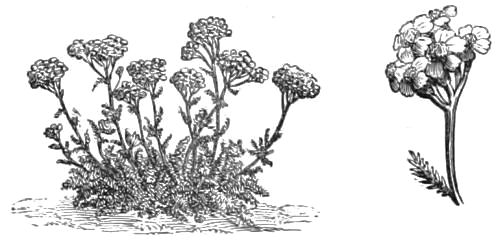
FIG. 13. ACHILLEA TOMENTOSA, showing Habit and detached
Portion of Inflorescence.
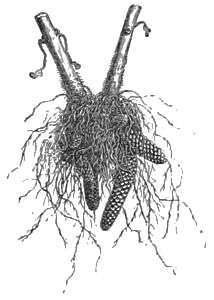
FIG. 14. ROOT OF THE ACHIMENE,
showing Tubercles.
A. tomentosa (downy).* fl.-heads bright yellow, in repeatedly
compound corymbs. Summer. l. woolly, bipinnatifid; segments
linear, acute. h. 8in. to 12in. Europe. One of the best yellow-flowered
species for the rock garden, having a dense habit. See
Fig. 13.
A. umbellata (umbel-flowered).* fl.-heads white, six to eight in a
simple umbel. June. l. regularly lobed; lobes obovate, entire;
clothed with a dense, silvery pubescence, on which account the
plant is chiefly cultivated. h. 4in. to 5in. Greece. A very pretty,
dwarf rock plant.
A. vallesiaca (Vallesian). fl.-heads white. June to August. l.
pinnate; leaflets horizontal. h. 1ft. Switzerland, 1819.
ACHIMENES (from cheimaino, to suffer from cold;
alluding to the general tenderness of the species). Including
Scheeria. ORD. Gesneraceæ. A large genus of handsome,
stove or warm greenhouse, branched, generally hairy,
herbaceous perennials, with scaly, catkin-like stolons
underground (see Fig. 14), and sometimes from the axils
of the leaves. Corolla funnel-shaped; tube rather oblique,
gibbous behind at the base; pedicels one-flowered, axillary,
solitary or fasciculated, bracteated. Leaves opposite,
or three in a whorl, serrated.
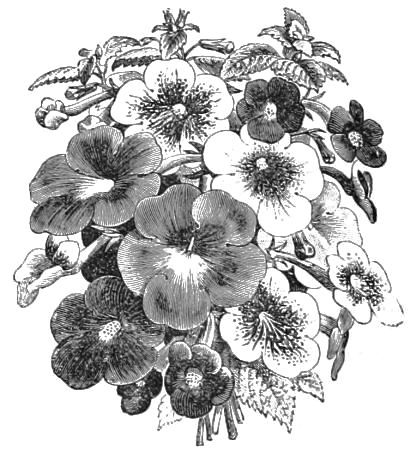
FIG. 15. BOUQUET OF VARIOUS ACHIMENES.
To be successfully cultivated, they must be started and
grown in stove heat till they commence flowering, when
they may be removed to the conservatory or greenhouse,
there to remain till after flowering. Batches of tubercles
should be started in heat from February till the end of
April, so as to give a succession of blossom. Shake each
variety out of the old compost and insert separately in
light, sandy soil; water sparingly at first, but when active
they may receive more frequent supplies. When the shoots
are about 2in. high, the tubercles may be transplanted
to the pots, pans, or baskets in which it is intended to grow
them, using as potting compost fibrous peat and leaf-soil
in equal proportions, with about a sixth part of sheep's
or rotten cow manure, and sufficient silver sand to make
the whole porous and of a whitish appearance. Thorough
drainage is indispensable, and a layer of the rougher soil,
or sphagnum, should be placed over the potsherds, to prevent
the loose soil stopping the drainage. Place the pans
as near the glass as possible, and shade from bright sunshine.
Give liberal supplies of water, with occasional
doses of liquid manure; and, as the shoots lengthen, they
may be pinched, to induce sturdy growth and a larger
number of flowering branches. Place neat stakes to each
stem, and keep well tied, arranging the stakes as symmetrically
as possible, so as to ensure an even outline, but
do not allow them to be seen. Light syringing with clear
water, morning and evening, is beneficial. After the plants
have done flowering, they should gradually have less water
as the foliage and stems decay; a light airy situation
is needed to mature and ripen the tubers. When the
tops are quite dead, they may be removed, and the
pots stored on the sides in any warm dry corner where
the temperature will not fall below 50deg., keeping the
plants quite dry until the time of starting again. Achimenes
are liable to attacks of thrips, red-spider, and green-fly,
especially if the atmosphere is kept dry; these are easily
destroyed by fumigation with tobacco. This must only be
done when the foliage is quite dry, otherwise the plants will
suffer. Achimenes are especially beautiful when well
arranged, especially if two or three varieties are mixed
together, as white, red, and purple (Fig. 15). There are
several methods of increasing these:—(1) By cuttings;
these need not be cut off at a joint, as they will root from
any portion of the stem. Insert them thickly in well-drained
pots of sandy soil—say a mixture of equal parts of
peat and sand—and place in bottom heat. (2) By leaves,
which should be severed from the stems, and pricked in
pots of similar soil to the cuttings, placing all the petiole
below the surface; stand the pots in bottom heat. (3) By
scales from the corms, which should be carefully rubbed off
and sown, like seeds, in pots or pans of the same compost,
barely covered with sand, and placed in bottom heat.
(4) By seeds, which are very small, and, consequently,
require to be carefully sown. The pans must be thoroughly
drained and filled nearly to the rim, levelled, and well
watered with a fine rose, after which the seed should be
thinly scattered, covered very lightly with sand, and placed
in a shady position. Keep nicely moist, and apply water
very lightly, or the tiny germs will be disturbed. Place a
sheet of glass over the seed-pans. When the seedlings are
large enough to handle, they may be pricked off and afterwards
treated like rooted cuttings. The best time for all
modes of propagating is early spring.
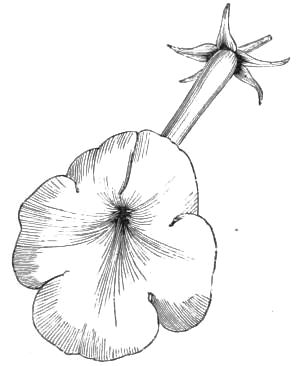
FIG. 16. FLOWER OF ACHIMENES LONGIFLORA.
A. atrosanguinea (dark-crimson).* fl. crimson; tube of corolla
1½.in. long, cylindrical, saccate at base, pilose; limb small, spreading;
peduncle one-flowered. July, August. l. pilose, oblong,
sub-cordate, serrated, unequal. h. 1½ft. Guatemala, 1848.
A. candida (white).* fl. white; tube of corolla gibbous at base;
limb oblique, the front segment largest; peduncles axillary,
pilose, three-flowered. June. l. unequal, oblique at base,
serrated, pilose. h. 1½ft. Guatemala, 1848.
A. coccinea (scarlet).* fl. scarlet; peduncles solitary, axillary.
August. l. three in a whorl, ovate, acuminated, serrated, with
minute leaves in the axils. h. 1½ft. Jamaica, 1778.
A. cupreata (coppery). fl. scarlet; calyx spotted inside, with a
fringed mouth; petals ciliately toothed; peduncles one-flowered.
April. l. elliptic, serrated, wrinkled, coloured. h. 6in. Mexico,
1845. Plant creeping, downy.
A. gloxiniæflora (gloxinia-flowered).* fl. whitish, large, axillary;
tube of corolla 2in. long; limb broad, spreading; lobes finely serrated,
dotted with purple inside. June. l. serrated from middle to top.
Stem slender, flexuous. h. 1ft. Mexico, 1845.
A. grandiflora (large-flowered).* fl. violet purple, very large,
solitary, axillary; limbs of corolla spreading. June. l. equal,
ovate, oblique at base, sparingly serrated. h. 1½ft. Mexico,
1842.
A. heterophylla (various-leaved). fl. solitary or twin; corolla
scarlet; lobes ciliated. July. l. opposite, one smaller than the
other, cordate ovate, acuminated, coarsely serrated. h. 1ft.
Mexico. Plant rather hairy.
A. hirsuta (hairy). fl. reddish, with yellow eye; limb of corolla
flat, with rounded serrulate segments; peduncles one-flowered.
July. l. cordate, serrated. h. 2½ft. Stem bulbiferous. Guatemala,
1842. Plant hairy.
A. Kleei (Klee's).* fl. lilac; corolla dark near the mouth, with a
dash of yellow in the throat; calyx downy; peduncles one-flowered.
August. l. ovate, acuminate, serrated. h. 6in. Guatemala,
1848. Plant hairy.
A. longiflora (long-flowered).* fl. violet; segments of calyx lanceolate,
erect; corolla with a long tube, and an ample spreading
limb; pedicels one-flowered. July and August. l. three to four
in a whorl, ovate or oblong, coarsely serrated. h. 1ft. Guatemala,
1841. Plant hairy. See Fig. 16.
A. multiflora (many-flowered).* fl. pale lilac; sepals linear;
corolla funnel-shape; tube curved; lobes roundish, lower one
fringed; peduncles axillary, three to five-flowered. August. l.
opposite, or three in a whorl, ovate, deeply and doubly serrated.
h. 1ft. Brazil, 1843. Plant hairy.
A. ocellata (eye-spotted).* fl. reddish yellow, with dark spots,
solitary, drooping; petals nearly equally spotted. Autumn. l. on
longish petioles, ovate, acuminate, serrated, wrinkled, coloured
beneath. h. 1½ft. 1845. Plant hairy.
A. patens (spreading). fl. violet, blue; calyx downy; tube of
corolla shorter than limb, which is spreading. June. l. ovate,
acuminate, hispid above, serrate. h. 1ft. Mexico, 1845.
A. pedunculata (long-stalked).* fl. scarlet, with yellow eye;
corolla drooping, gibbous at base; peduncles in the axils of the
upper leaves. July. l. rather unequal, obliquely cordate, ovate,
serrated. h. 2ft. Stem simple, downy. Guatemala, 1840.
A. picta (painted).* fl. scarlet, with yellow eye; tube of calyx
turbinate; lobes of corolla roundish, three lower ones smallest;
peduncles solitary or two-flowered, axillary one-flowered. July. l.
opposite, or three in a whorl, cordate-ovate, coarsely serrated,
velvety, and elegantly painted. h. 1½ft. Mexico, 1843.
A. rosea (rosy). fl. rose, pilose; limb of corolla equal to tube;
peduncles filiform, many-flowered. June. l. sometimes three
in a whorl, pilose. h. 1½ft. Guatemala, 1848.
The foregoing are the most important species known.
Hybrid varieties are innumerable, and even surpass the
species in beauty, the best of which are enumerated below
in their respective colours.
Blue and Purple Flowered. ADVANCE,* flowers reddish-purple,
lighter at the eye, dwarf, and free habit; ARGUS,* rich
plum, with deep orange eye, large and free; DR. BUENZOD,*
flowers rich crimson purple, spotted with orange in the centre,
very free; EXCELSIOR, rich violet-purple, very large and free,
with compact habit; GEM,* flowers small, of good form, rich
carmine-purple; GIBSONI,* flowers very large, clear mauve, with
the tube white outside; GRANDIS, rich violet purple, with large
orange eye, carmine shaded, a charming variety; LADY SCARSDALE,*
flowers of fair size, very free, rich plum purple, shaded
carmine; LONGIFLORA MAJOR,* a stronger grower than the type,
freely producing large rich blue flowers, one of the finest varieties
grown; MADAME GEORGE, deep purple shaded crimson; MAUVE
QUEEN,* flowers very large, of a distinct mauve, with a brownish
eye-shade, very profuse, with a grand habit, one of the best;
PURPUREA ELEGANS,* deep claret purple, orange throat with dark
spots, a very attractive variety; ROLLISONII,* flowers large, deep
lavender-blue, yellow throat, spotted with deep crimson, very
effective; VIVICANS,* dark carmine-purple, with crimson eye,
a few blue rays streaking from the eye, habit good, and very
free.
Crimson and Scarlet Flowered. AURORA,* rich rosy-scarlet,
with yellow throat, very large, fully 2in. across; CARL WOOLFORTH,*
deep crimson, shaded lighter at the eye, very free;
DAZZLE, flowers small, brilliant scarlet, pale yellow eye, very
pretty and free; DIADEM,* crimson lake, shaded carmine, with
deep yellow eye; ECLIPSE,* rich orange-scarlet, spotted with
carmine, extremely floriferous, with a good habit; FIREFLY,* deep
carmine red, golden eye, spotted with crimson, one of the best;
HARRY WILLIAMS,* bright cerise red, yellow, maroon spotted, the
edge prettily fringed, a very charming variety; LOVELINESS, rich
magenta crimson, golden eye, spotted with maroon; METEOR,
flowers rather large, bright crimson-scarlet, yellow eye, spotted
carmine, very dwarf and free; SCARLET PERFECTION,* rich carmine-scarlet,
deep orange eye, very beautiful; SIR TREHERN
THOMAS,* deep crimson-lake, very profuse, with a good habit;
STELLA, deep magenta, with orange eye, the margins fringed, very
large and free, 2in. or more across; WILLIAMSII,* flowers large,
stout, brilliant scarlet, orange throat, habit dwarf and free-branching,
one of the finest varieties grown.
Orange-Flowered. GEORGIANA DISCOLOR, flowers large, bright
orange, with a distinct yellow centre; HENDERSONI,* rich orange-salmon,
with yellow eye; MAGNET,* deep orange, spotted with
crimson, with a distinct carmine zone, a very free-flowering and
beautiful variety; PARSONSI* is a decided improvement upon the
last.
Rose-Flowered. ADMIRATION, deep rose, white throat, spotted
with carmine; CARMINIATA SPLENDENS,* bright rose yellow,
spotted in the centre, a charming variety; LEOPARD, bright
magenta rose, freely spotted at the throat; LONGIFLORA ROSA,* rich
lilac rose, deeper in centre, of medium size, very free and dwarf;
MASTERPIECE,* deep rose, violet shaded, with a distinct white
throat; Pink Perfection,* rich rose, the eye rich carmine and
violet rayed, one of the best; ROSEA MAGNIFICA,* bright rose, with
a yellow eye, very finely spotted, a very lovely variety; ROSE
QUEEN,* flowers very large, rich rosy-lake, shaded deep purple,
with a well defined orange throat; UNIQUE,* rosy-pink, deep
yellow eye, spotted crimson, a very charming variety.
White-Flowered. AMBROSE VERSCHAFFELT,* flowers of good
size, pure white, with a dark rayed centre; LONGIFLORA ALBA,*
similar in form and habit to Longiflora, but with large white
flowers, slightly marked in the centre; MADAME A. VERSCHAFFELT,*
flowers large, pure white ground, heavily veined with
purple, a very attractive variety; MARGARETTA,* flowers of medium
size, pure white, and destitute of any markings whatever.
ACHLAMYDEOUS. Without floral envelope.
ACHRAS. See Sapota.
ACHYRANTHES. See Chamissoa and Iresine.
ACHYRONIA. Included under Priestleya (which
see).
ACHYROPAPPUS. Included under Schkuhria
(which see).
ACICULAR. Needle-shaped.
ACINETA (from akineta, immovable; the lip being
jointless). ORD. Orchideæ. A small genus of cool house,
robust, sub-terrestrial orchids allied to Peristeria. Flowers
sub-globose, fleshy, arranged on stout, pendulous racemes.
Leaves lanceolate, membranous, ribbed. Pseudo-bulbs
angular, about as large as hens' eggs. The compost should
consist of equal parts of fibrous peat and living sphagnum.
In planting, first place a somewhat thick layer of the moss
all round the inside of the basket, and press the soil firmly
round the plant. During the growing season, the baskets
should be taken down twice or three times a week and
dipped into a tub of water, so that the whole may become
saturated. In addition, the plants should be sprinkled
with the syringe morning and evening, for they delight in
an abundant supply of water and plenty of shade. When
the growth is finished, they must be kept very dry, an
occasional syringing, to keep the leaves from shrivelling,
being all that is necessary.
A. Arcei (Arce's). fl. yellow. Central America, 1866.
A. Barkeri (Barker's).* fl. yellow and dark crimson, on stout
scapes, produced from the base of the bulbs, and bearing fifteen
to thirty fragrant flowers. Midsummer. l. broadly lanceolate,
2ft. long. Pseudo-bulbs 5in. to 7in. long. Mexico, 1837. SYN.
Peristeria Barkeri.
A. chrysantha (yellow-flowered).* fl. yellow, white, and crimson,
fragrant; lower part of the lip having a blunt, papillose horn;
racemes erect. May. h. 2ft. Mexico, 1850.
A. densa (dense-flowered).* fl. sub-globose, and of a waxy consistence,
lemon-yellow, dotted brown, sweet-scented; racemes rather
short. Costa Rica, 1849. A robust-growing species, very like
A. Barkeri. SYN. A. Warczewiczii.
A. Humboldtii (Humboldt's).* fl. straw-colour, dotted with
brown; scapes 2ft. long. May. l. broadly lanceolate, generally
four. Columbia, 1872. A handsome species, but the flowers speedily
fade. SYNS. Anguloa superba, Peristeria Humboldtii fulva.
A. sulcata (grooved). fl. bright yellow. Columbia, 1879.
Very like the last species, from which it differs in mere
botanical detail.
A. Warczewiczii (Warczewicz's). A synonym of A. densa.
ACINOS. See Calamintha.
ACIOTIS (from akis, a point, and ous, an ear; in allusion
to the shape of the petals). ORD. Melastomaceæ. A small
genus of pretty, stove, evergreen plants. Flowers small;
panicles slender, loose, terminal; petals four, obliquely
awned at the apex. Leaves thin, membranous. For
culture, see Melastoma..
A. aquatica (water-loving). fl. white, small, on loose, terminal,
filiform panicles. June. l. cordate, ovate-oblong. h. 6in. to 12in.
South America, 1793. The pots in which this species is grown
should be kept in pans of water.
A. discolor (various-coloured).* fl. small, red, in spicate racemes.
l. petiolate, elliptic-oblong, purple beneath, deep shining green
above. h. 1ft. Trinidad, 1816.
ACIPHYLLA (from ake, a point, and phyllon, a leaf,
referring to the sharply pointed segments of the leaf).
ORD. Umbelliferæ. A genus of curious and remarkable erect
hardy perennials, with densely fascicled, spicate, or panicled
umbels of flowers; and pinnate or bi-tripinnate leaves.
They are most suited for the rockwork, in a light sandy
soil. Propagated by seeds or divisions in spring.
A. Colensoi (Colenso's).* fl. white. This extraordinary evergreen
forms a circular bush, 5ft. or 6ft. in. diameter, of bayonet-like
spines, having flowering stems 6ft. to 9ft. high, covered
with spreading spinous leaflets. New Zealand, 1875.
A. squarrosa (rough-headed).* fl. white. h. 6ft. to 9ft. New
Zealand. More frequently met with than the preceding, of very
dense growth. Commonly known as the Bayonet Plant.
ACIS (named after Acis, shepherd of Sicily, son of
Faunus and the nymph Simæthis). ORD. Amaryllidaceæ.
A genus of very pretty dwarf bulbous plants, suitable for
the rockery, in sunny sheltered situations. This genus
was formerly included with Leucojum, from which it is
distinguished by its dwarf slender habit, filiform style,
and membranous capsule. All are delicate little plants,
with narrow linear leaves and bell-shaped flowers. They
require a free, open, rich soil, and should remain and bloom
undisturbed for years; divide the clumps every three or
four years, and renew the soil.
A. autumnalis (autumn-blooming).* fl., perianth white, delicate
pink at the base, preceding the leaves; two to three on a stem.
Autumn. l. few in number, very slender, sheathing the stems at
the base. h. 4in. to 6in. Portugal, 1629. A charming species,
and the only one at all common.
A. grandiflorus (large-flowered).* fl., perianth white, larger than
those of the last. August. h. 6in. Numidia, 1820. Somewhat
rare in cultivation.
A. roseus (rose-coloured).* fl., perianth rose red, not more than
¼in. long; scape one to three-flowered. August. l. narrow,
blunt, linear. h. 3in. Corsica, 1820. Very rare.
A. tingitanum (Tangiers). Of recent introduction; has a many-flowered
umbel, and very long leaves.
A. trichophyllus (hair-leaved).* fl., perianth white, about ½in.
long; segments loosely nerved, with a faint flush of red at the
base. January. h. 6 in. Spain, 1820.
ACISANTHERA (from akis, a point, and anthera, an
anther; anthers jointed). ORD. Melastomaceæ. A monotypic
stove genus allied to Rhexia, of semi-shrubby habit.
It grows well in a mixture of loam, sand, and peat; and
cuttings root freely in the same soil in stove temperature.
A. quadrata (square-branched). fl. purple, ventricose, alternate,
axillary, solitary. July. l. three-nerved, ovate, crenated; branches
square. Habit erect, branched at the apex. h. 1ft. to 1½ft.
Jamaica, 1804. More curious than ornamental.
ACMADENIA (from akme, a point, and aden, a gland;
in allusion to the anthers being terminated by pointed
glands). ORD. Rutaceæ. A small genus of beautiful
greenhouse shrubs. Flowers terminal, solitary, or few,
furnished with imbricate sepal-like bracts; petals five,
with long claws, which are bearded on the inside. Leaves
imbricate, linear-oblong, or roundish. They thrive best in
a mixture of peat and sand, with a little turfy loam;
thorough drainage is also necessary. Young cuttings
pricked in a pot of very sandy soil, covered with a bell
glass, and shaded, will root freely in a cool house.
A. tetragona (four-angled).* fl. white, large, sessile, solitary.
June. l. roundish-rhomboidal, with scabrous margins. h. 1ft. to
2ft. Cape of Good Hope, 1798.
ACMENA (from Acmenæ, nymphs of Venus, who had
an altar at Olympia). ORD. Myrtaceæ. A small genus of
greenhouse evergreen shrubs. Flowers in dense trichotomous
cymes, with five small distant petals, and very
conspicuous and pretty berries. They grow well in an
equal mixture of peat, loam, and sand. Propagated
readily by placing half-ripened cuttings in sand, under a
glass, without heat.
A. floribunda (many-flowered).* fl. white, in threes, disposed in
a terminal panicled thyrse. May to September. l. full of pellucid
dots, oval-lanceolate, acuminated at both ends. Berries
globose, bright purple. h. 4ft. New Holland, 1790.
A. ovata (ovate-leaved).* A new species, having, according to Mr.
W. Bull, ovate leaves, which, along with the stems and petioles,
are dark purple, giving the plants, when making new growth, a
striking appearance. It has a neat habit.
ACOKANTHERA. See Toxicophlœa.
ACONIOPTERIS. See Acrostichum.
ACONITE. See Aconitum.
ACONITE, WINTER. See Eranthis.
ACONITUM (from Aconæ, or Acone, a harbour of
Heraclea, in Bithynia, near where it is said to abound).
Aconite; Monk's Hood; Wolf's Bane. ORD. Ranunculaceæ.
An extensive genus of very ornamental hardy perennials.
Flowers in terminal racemes; sepals five, the upper one
helmet shaped, the two sides broader than the two back
ones; petals five, small, the two upper with long claws
hooded at the tip; the three inferior smaller or undeveloped.
Leaves palmate. They thrive well in any ordinary garden
soil. If left undisturbed for several years, they will attain
a goodly size, and produce fine panicles of handsome flowers.
They are invaluable for growing beneath the shade of trees,
where they succeed better than almost any other class of
plants. All are very easily propagated by divisions of the
roots and seeds; the latter should be sown as soon as ripe
in a cold frame. Care should be taken not to leave pieces
of the roots about, for, with but one exception, those of all
the species are very poisonous. Although very unlike
horse-radish, they have frequently been mistaken for it, with
fatal results; and none of the species should be cultivated
in or near the kitchen garden.
A. acuminatum (taper-pointed). fl. bluish purple; spur capitate;
helmet closed, conical, beaked. July. l. with cuneate, bipinnate
lobes. h. 2ft. to 4ft. Switzerland, 1819.
A. album (white-flowered).* fl. pure white, large, with erect helmet,
very freely produced. l. dark green, with oblong-cuneate divisions.
August. h. 4ft. to 5ft. Levant, 1752. This is a rare and very
handsome species.
A. alpinum (alpine). Synonymous with A. rostratum.
A. ampliflorum (large-flowered). fl. bluish-purple, large; spur
obtuse, straight. June. l. with blunt segments. h. 2ft. to 3ft.
Austria, 1823.
A. angustifolium (narrow-leaved).* fl. deep blue, in spiked
panicles; spur capitate; helmet closed, hemispherical; lip bifid.
June. l. palmately cut into linear lobes. h. 2ft. to 3ft. Siberia,
1824.
A. biflorum (twin-flowered).* fl. pale blue, usually twin, sessile,
the middle rather obscure and with yellowish edges, covered
on the back with spreading down; spur truncate; helmet depressed;
beak drawn out. June. l. lower ones on long stalks,
with linear segments. h. 6in. Siberia, 1817. A very rare alpine
species.
A. Cammarum (Cammarum). fl. rich deep purple, on rather
loose spikes; spur capitate; helmet closed, hemispherical. July
to September. l. with short, bluntish lobes. h. 3ft. to 4ft. Austria,
1752.
A. cernuum (drooping). fl. violet, large, on nodding, loose, hairy
racemes; spur capitate, or a little hooked; helmet large, arched,
beaked. July and August. l. with trapeziform, pinnate lobes.
Branches axillary, spreading. h. 3ft. to 4ft. Europe, 1800.
A. delphinifolium (Delphinium-leaved).* fl. pale bluish purple,
large, on loose racemes; spur a little hooked; helmet hemispherical.
June. l. smooth, deeply cut into five parts. Stems
slender. h. 6in. to 2ft. North America, 1820. A rare alpine species.
A. elatum (tall). fl. blue, very large, in loose panicled spikes;
peduncles pubescent; spur capitate, inclining. June. l. with
linear acute segments. h. 3ft. to 4ft. Europe, 1822.
A. eminens (eminent).* fl. blue, on erectly spreading pubescent
peduncles; spur capitate; helmet closed; lip very long, refracted.
June. l. with cuneate bipinnate lobes. h. 2ft. to 4ft. Europe,
1800.
A. eriostemon (woolly-stamened). fl. bluish-purple, disposed in
long, beautiful, erect-spreading spikes; spur capitate; helmet
closed, arched. June. l. with cuneate, bipinnate lobes. h. 4ft.
Switzerland, 1821.
A. exaltatum (exalted). fl. blue, on loose panicles, with ascending
stiff branches; spur thick, somewhat hooked; helmet conical;
beak elongated. July. l. with trapeziform, pinnate lobes. h. 6ft.
Pyrenees, 1819. SYN. A. hamatum.
A. flaccidum (flaccid). fl. pale violet, large, on erect spreading
peduncles; racemes branched; spur hooked at the apex; helmet
high, arched, inclining forwards, gaping. July and August.
l. multifid, ciliated (as well as the petioles), when young. h. 6ft.
Siberia, 1822.
A. gibbosum (swollen). Synonymous with A. nasutum.
A. Gmelini (Gmelin's). fl. cream-coloured, middle-sized, on very
long loose racemes; spur straight, obtuse; bottom of the helmet
rounded, cylindrical. July. l. on long stalks, villous beneath and
shining above; lobes divided into narrow segments. h. 2ft.
Siberia, 1817. SYN. A. nitidum.
A. gracile (slender).* fl. pale blue or violet, large, on loose
racemes; spur erect, clavated-hooked; helmet with a middle sized
beak. June. l. smooth, with trapeziform, pinnate lobes. Stems
slender. h. 2ft. Italy, &c.
A. Halleri (Haller's).* fl. opaque violet, on elongated, loose
racemes, with a few lateral ascending ones; spur capitate; helmet
convex-hemispherical, gaping. June. l. lobes linear, dilated, very
long. Stem straight, long, branched. h. 4ft. to 6ft. Switzerland,
1821.
A. H. bicolor (two-coloured).* fl. white, variegated with blue,
disposed in spikes or panicles. June.
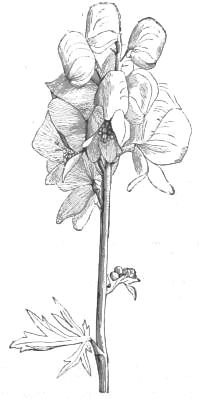
FIG. 17. FLOWER OF ACONITUM NAPELLUS, nearly Full Size.
A. hamatum (hooked). Synonymous with A. exaltatum.
A. hebegynum (blunt-styled). Synonymous with A. paniculatum.
A. heterophyllum (various-leaved). fl. pale yellow, and deep
blue in front, large, numerous, dense. August. l. petiolate
below, sessile above, broadly cordate, coarsely toothed at the
edge, and deep green. h. 2ft. Himalayas, 1874. A new introduction,
said to be non-poisonous, and used as a tonic in India.
A. illinitum (anointed). fl. pale or deep violet, on very loose and
much branched panicles, large; spur thick, long, abruptly pointed;
beak blunt; helmet sub-conical. July. l. with broad cuneiform
lobes, and obtuse lobules. h. 4ft. 1821.
A. intermedium (intermediate). fl. blue, on a loose panicle,
with ascending stiff branches; spur supine, somewhat hooked;
helmet arched. June. l. with trapeziform, pinnate lobes. h. 3ft.
to 4ft. Alps of Europe, 1820.
A. japonicum (Japanese).* fl. flesh-coloured, on loose panicles,
with ascending branches; helmet exactly conical, abruptly
mucronate; beak acute, straight. July to September. l. stalked,
trifid; lateral lobes bifid, middle lobe trifid, all blunt and deeply
toothed. Stem round, smooth. h. 6ft. Japan, 1790. One of
the best species grown.
A. j. cœruleum (blue). fl. blue. Japan.
A. laciniosum (jagged). fl. pale blue, or with a white base,
large, on somewhat contracted racemes; spur clavated-hooked;
helmet arched, conical. June. l. with jagged, trapeziform
pinnate lobes. h. 3ft. Switzerland, 1820.
A. lycoctonum (true Wolf's-bane).* fl. livid-violet, rather large;
racemes more or less pubescent, branched at the base; bottom of
helmet cylindrical; beak elongated. July. l. large, seven-parted.
Stem slender, simple, upright. h. 4ft. to 6ft. Europe, 1596.
A. maximum (largest). fl. pale blue; panicle loose, furnished
with a few long distant, few-flowered, pubescent branches; spur
short, incurved; helmet hemispherico-conical, obtuse. July.
l. multifid, large, smooth. h. 6ft. Kamtschatka, 1823.
A. meloctonum (Badger's-bane). fl. cream-coloured, loose,
pubescent; panicle large, with diverging branches; spur arched;
bottom of helmet conico-cylindrical. July. l. five to seven-parted,
deep green. h. 2ft. to 4ft. Piedmont, 1821.
A. Meyeri (Meyer's). fl. bluish purple, on pubescent peduncles;
spur capitate, inclining. June. l. with cuneate bipinnate lobes.
h. 2ft. to 4ft. Bavaria, 1823.
A. molle (soft). fl. violet, large, puberulous; racemes panicled,
pubescent; helmet irregularly conical, obtuse; front erect; spur
capitate, or a little hooked. June. l. smooth, with trapeziform,
pinnate lobes. h. 2ft. to 6ft. 1820.
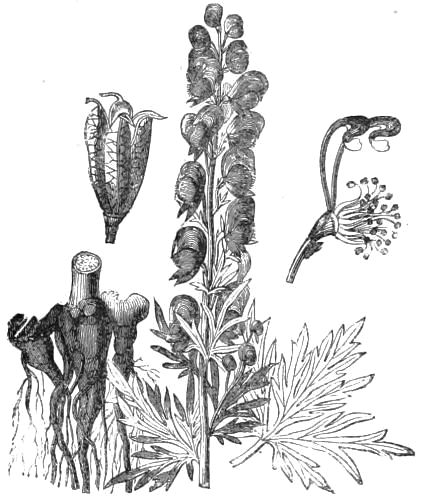
FIG. 18. ACONITUM NAPELLUS, showing Root, Seed-pod, Flower-spike,
Leaf, and Flower with Sepals removed.
A. Napellus (little turnip).* Common Monk's Hood. fl. blue,
large, on a large terminal raceme; peduncles erect, pubescent;
spur capitate; helmet convex-hemispherical, gaping, smoothish;
lip revolute. Summer. l. pedately five-lobed. h. 3ft. to 4ft.
There are a great number of varieties of this species cultivated
and introduced. The following are some of the names representing
slightly varying forms which have, however, been
regarded as species by Reichenbach and other authors: acutum,
amœnum, Bernhardianum, Braunii, callibotryon, Clusianum, commutatum,
firmum, formosum, Funkianum, hians, Hoppeanum,
Kœhleri, lætum, laxiflorum, laxum, Mielichhoferi, napelloides,
neomontanum, neubergense, oligocarpus, rigidum, strictum, tenuifolium,
venustum, virgatum. One of the most virulent of
poisonous plants, both to cattle as well as human beings; and,
notwithstanding its eminently handsome appearance, it should
only be planted in places where no danger is likely to arise from
its presence. See Figs. 17 and 18.
A. nasutum (great-nosed). fl. violet; panicle contracted, quite
smooth; spur elongated, arched; helmet conical, bending forward;
beak short. June. l. with broad, trapeziform, pinnate lobes.
h. 3ft. Caucasus, &c., 1818. SYN. A. gibbosum.
A. nitidum (shining). Synonymous with A. Gmelini.
A. Ottonianum (Otto's).* fl. blue, variegated with white; young
peduncles nodding; spur supine, somewhat hooked; helmet
arched. July, August. l. with trapeziform, pinnate lobes.
h. 2ft. to 4ft. Carpathian Mountains, 1824.
A. paniculatum (paniculate).* fl. large, violet; panicle terminal,
much branched, loose or contracted, more or less pubescent;
helmet conical, beaked; front sinuate. June to September.
l. smooth, with trapeziform, pinnate lobes. h. 2ft. to 3ft. France
and Switzerland, 1815. SYN. A. hebegynum.
A. plicatum (folded). Synonymous with A. tauricum.
A. productum (long-lipped). fl. violet, downy, on few-flowered,
loose, pubescent racemes; helmet straight, irregularly convex-conical,
with a drawn-out beak; spur capitate. June. l. on long
stalks with three-parted lobes. h. 1ft. Siberia.
A. rostratum (beaked).* fl. violet; panicle rather loose; spur
thick, depressed, globose; helmet conical, elongated, abruptly
pointed in front; beak stretched out. June. l. with trapeziform,
pinnate lobes. h. 1ft. to 2ft. Switzerland, 1752. SYN. A.
alpinum.
A. Schleicheri (Schleicher's). fl. blue or violet, middle sized, on
short racemes; spur capitate; helmet convex-hemispherical,
gaping, smoothish. Summer. l. with finely jagged lobes.
Stem straight (or infracted), simple, slender. h. 2ft. to 3ft.
Europe. SYN. A. vulgare.
A. semigaleatum (half-helmeted). fl. pale blue, pubescent
when young, on very loose racemes; peduncles elongated; spur
hooked; helmet convex, navicular. June. l. multifid, few, membranous,
smooth; root about the size and form of a pea. h. 6in.
to 2ft. Kamtschatka, 1818.
A. Sprengelii (Sprengel's). fl. bluish purple; spur obtuse, straight.
June. l. with blunt, bipinnate lobes. h. 3ft. to 4ft. Europe,
1820.
A. tauricum (Taurian).* fl. deep blue, disposed in dense racemes;
peduncles erect, smooth; lateral sepals smooth inside; spur blunt;
helmet closed, hemispherical. June. l. segments almost
pedately disposed and divided into linear acuminate lobes. h.
3ft. to 4ft. Germany, 1752. SYN. A. plicatum.
A. tortuosum (twisting). fl. pale or deep violet, large; panicle
loose, few flowered; spur thick, long, abruptly pointed (neither
arched, nor convolute). July. l. smooth, with narrow wedge-shaped
lobes, and acute lobules. h. 6ft. to 8ft. North America,
1812.
A. toxicum (very poisonous). fl. violet, large, pubescent, on loose,
also pubescent, racemes; spur hooked; helmet large, arched,
with a blunt beak. June. l. smooth, with trapeziform pinnate
lobes. Stem flexuous, almost simple. h. 2ft. America,
1825.
A. uncinatum (hooked).* fl. generally lilac, large, smooth; racemes
loose, rather umbellate at the apex, very rarely panicled; spur
somewhat spiral, inclined; helmet regularly conical, compressed.
July. l. with trapeziform pinnate lobes. Stem with branches
rising from the axils of the leaves. h. 4ft. to 8ft. North America,
1768.
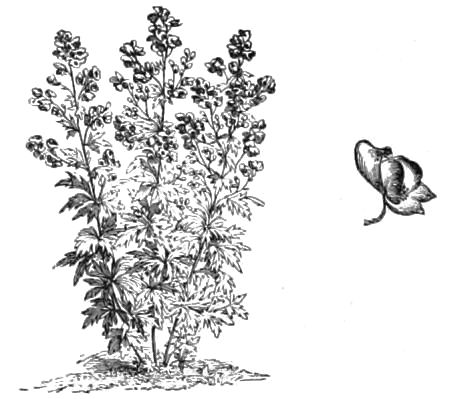
FIG. 19. ACONITUM VARIEGATUM, showing Habit and Flower.
A. variegatum (variegated).* fl. blue, large, smooth; racemes
panicled, loose; spur erect, clavated-hooked; helmet bent forward,
inflated; beak ascending. July. l. lower, on long stalks;
upper, sessile, smooth, thickish. h. 1ft. to 6ft. Europe, 1597. See
Fig. 19.
A. v. albiflorum (white-flowered).* fl. white, small; helmet
straight.
A. v. bicolor (two-coloured).* fl. white, edged with blue or lilac;
helmet straight.
A. vulgare (common). A synonym of A. Schleicheri.
A. Willdenovii (Willdenow's).* fl. bluish-purple; peduncles
pubescent; spur obtuse, straight. June. l. with blunt segments.
h. 2ft. to 3ft. Carniola, 1823.
A. Anthora (Anthora).* fl. pale yellow; panicles generally pubescent;
spur refracted; lip obcordate; helmet arched. July. l.
palmately cut into linear lobes. h. 1ft. to 2ft. Pyrenees, 1596.
The following varieties of A. Anthora are erroneously classed as
species by some authors:
A. a. Decandollii (Decandolle's). fl. yellow; panicle and flowers
pubescent; helmet rather conical, bent, with a short, abrupt, and
acuminated beak. l. with rather large dark green lobes. Alps of
Jura, 1873.
A. a. eulophum (well-crested). fl. yellow; panicles and flowers
puberulous; helmet conical. Caucasus, 1821.
A. a. grandiflorum (large-flowered). fl. yellow, large; panicle,
flowers, and fruit pubescent; helmet rather conical. Alps of
Jura, 1821.
A. a. Jacquinii (Jacquin's). fl. yellow, smooth; helmet somewhat
conical, drawn out into an elongated beak.
A. a. nemorosum (grove-loving).* fl. yellow; panicle and flowers
pubescent; helmet somewhat conical, bent; beak short. l. with
broad lobes.
A. autumnale (autumn-flowering).* fl. bluish-purple, in loose
panicles; peduncles rigidly spreading; spur capitate; helmet
closed; lip very long, refracted. July. l. with cuneate, bipinnate
lobes. h. 3ft. to 4ft. Europe.
A. barbatum (bearded).* fl. cream coloured, middle sized;
racemes dense, puberulous; spur straightish, obtuse; bottom of
helmet conical; middle sepals densely bearded. July. l. opaque,
with the lobes divided into many linear segments, on long stalks,
which are villous as well as the nerves. h. 2ft. to 6ft. Siberia,
1807. SYN. A. squarrosum.
A. chinense (Chinese).* fl. intense and very bright blue, in large
compound racemes; pedicels slightly hairy above. Summer.
l. lower ones large, deeply cut into three wedge-shaped segments,
tapering at the base; upper ones sessile, gradually becoming
more entire. h. 4ft. to 6ft. China, 1833.
A. Lamarckii (Lamarck's). fl. cream-coloured, pubescent; racemes
long, cylindrical, crowded, branched at the base; spur spiral;
helmet constricted, clavate. July. l. large, seven to nine-parted,
with the lobes unequally cleft. h. 2ft. to 3ft. Pyrenees, 1800.
A. lupicidum (Wolf's-bane). Synonymous with A. Vulparia.
A. macrophyllum (large-leaved). fl. yellow, numerous, panicled;
spur arched; helmet large, somewhat ventricose at the apex.
July. l. large, more or less dissected. h. 4ft. to 8ft. Germany.
A. Nuttallii (Nuttall's). Synonymous with A. ochroleucum.
A. ochroleucum (yellowish-white).* fl. cream coloured, large;
spur arched; bottom of helmet conico-cylindrical; middle sepals
covered with short hairs; racemes puberulous, rather loose.
July. l. five to seven-parted, deep green, the first ones are puberulous
above. h. 2ft. to 4ft. Russia, 1794. SYNS. A. Nuttallii,
A. pallidum.
A. Pallasii (Pallas'). Probably a mere variety, with a continuous
spur, of A. anthora.
A. pallidum (pale). Synonymous with A. ochroleucum.
A. pyrenaicum (Pyrenean).* fl. yellow, rather large; spur
hooked; bottom of helmet cylindrical, rounded; racemes elongated,
dense, puberulous. June. l. parted almost to the base,
with pinnatifid lobes, rather hispid beneath, but smooth above, on
long stalks. h. 2ft. Pyrenees, &c., 1739.
A. squarrosum (rough). Synonymous with A. barbatum.
A. vulparia (Fox-bane).* fl. pale yellow, smooth; spur spiral;
helmet cylindrical, large; beak stretched out, acute; racemes
crowded. July. l. three or five-lobed, ciliated. h. 1ft. to 3ft.
Europe, 1821. SYN. A. lupicidum. The principal varieties of
this species are:—
A. v. carpaticum (Carpathian). fl. panicled, of a lurid colour,
sometimes variegated with yellow; helmet conico-cylindrical,
compressed; peduncles smooth. l. profoundly cut. Stems smooth.
h. 2ft. to 3ft. Carpathian Mountains, 1810.
A. v. Cynoctonum (tall Dog's-bane). fl. (and stem) yellow,
smoothish, numerous, panicled. h. 3ft. to 4ft. France, 1820.
A. v. moldavicum (Moldavian). fl. violet, panicled; helmet
cylindrical, compressed. h. 3ft. to 4ft. Moldavia.
A. v. rubicundum (reddish). fl. livid violet, panicled, villous,
variegated with yellow; helmet conico-cylindrical, compressed.
h. 2ft. to 3ft. Siberia, 1819.
A. v. septentrionale (northern).* fl. blue, panicled, villous;
helmet conico-cylindrical, compressed. h. 4ft. North Europe,
1800.
ACONTIAS. See Xanthosoma.
ACORN. The seed or fruit of the oak. See Quercus.
ACORUS (from a, without, and kore, the pupil of the
eye; in allusion to its reputed medicinal qualities). ORD.
Aroideæ. A small genus of hardy herbaceous plants.
Flowers on a sessile spadix; perianth six-cleft, inferior, persistent.
They thrive best in a moist soil, and are very
suitable for the banks of water, or even as aquatics in
shallow water. Propagated easily by divisions during
spring.
A. Calamus (sweet-flag).* fl. yellowish, small, borne on a cylindrical
spadix 4in. to 6in. long. Summer. l. sword-shaped,
erect, striated 3ft. long. The root is cylindrical, channelled, and
very fragrant. Europe. The variety with gold-striped leaves is more
useful as a decorative plant. See Fig. 20.
A. gramineus (grass-leaved). China, 1796. This is much smaller
in all its parts than the above, but very pretty.
A. g. variegatus.* A pretty variety with white striped leaves,
forming handsome little tufts.
ACOTYLEDONS. Plants having no cotyledons, or
seed leaves, as in Cuscuta, but usually applied to cryptogamic
or flowerless plants, such as ferns, mosses, &c.
ACRADENIA (from akra, top, and aden, a gland;
referring to the five glands on the top of the ovary). ORD.
Rutaceæ. An excellent neat and compact evergreen bush,
suitable for the cool conservatory. It requires a rich loam
and leaf mould. Propagated by seeds and cuttings under
a bell glass.
A. Frankliniæ (Lady Franklin's).* fl. white, produced in great
profusion, in terminal clusters. August. l. fragrant, opposite,
trifoliate, gland-dotted. h. 8ft. Tasmania, 1845.
ACRE (from agros, an open field). The English Statute
acre consists of 160 square rods (perches, poles, roods,
or lugs); or 4840 square yards; or 43,560 square feet.
The following list shows the differentiation in the number
of square yards per acre in the various districts of Great
Britain and Ireland: Cheshire, 10,240; Cornish, 5760;
Cunningham, 6250; Derby (W.), 9000; Devonshire, 4000;
Herefordshire, 3226⅔; Irish, 7840; Leicestershire, 2308¾;
Scotch, 6150; Wales, North (customary), 3240; ditto
(erw), 4320; Westmoreland, 6760; Wiltshire, 3630.
ACRIDOCARPUS (from akris, a locust; and karpos,
fruit; meaning not obvious). ORD. Malpighiaceæ. A
handsome sub-tropical or warm greenhouse climber, requiring
plenty of water, and a very free drainage. Increased
by imported seeds, and by cuttings in bottom
heat.
A. natalitius (Natal).* fl. pale yellow; petals five, rounded, wedge-shaped,
crenately-toothed at the edge; racemes simple, elongated,
terminal. July. l. oblong or obovate, obtuse, leathery. Natal,
1867.
ACRIOPSIS (from akros, top, and opsis, eye). ORD.
Orchidaceæ. A small genus of pretty stove epiphytal orchids,
almost unknown to cultivation. Flowers small, arranged
in loose panicles; lip adnate to the very curious column,
from which it projects at right angles.
A. densiflora (crowded-flowered).* fl. green and pink. May. l.
linear-lanceolate. h. 6in. Borneo, 1845.
A. javanica (Javanese). fl. yellow, green. May. l. linear-lanceolate.
h. 3in. Java, 1840.
A. picta (painted).* fl. white, green, and purple. May. l. solitary,
linear. h. 6in. Bantam, 1843.
ACROCLINIUM (from akros, top, and kline, a bed;
referring to the open flowers). ORD. Compositæ. A small
genus of elegant half hardy annuals with "everlasting"
flower heads, which are solitary, terminal, and consist of
tubular florets; involucrum many-leaved, imbricated.
Leaves numerous, linear, smooth, acuminated. Stems
numerous, erect. They thrive best in a loamy soil, and
constitute very neat summer flowering annuals if sown
out of doors in patches in June; they are also useful as
winter decorative greenhouse plants if seed is sown in
August in pots placed in a cold frame. The flower-heads
should be gathered when young, if it is desired to preserve
them.
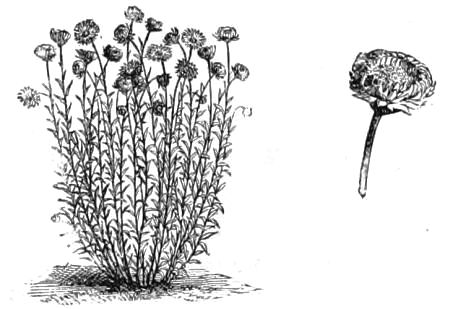
FIG. 21. ACROCLINIUM ROSEUM, showing Habit and Flower-head.
A. roseum (rosy).* fl.-heads pretty rose, solitary, terminal, on erect,
slender, and gracefully disposed branches. l. linear, acute. h. 1ft.
to 2ft. S. W. Australia, 1854. See Fig. 21.
A. r. album (rosy white).* A very pretty white form of the
preceding.
A. r. grandiflorum (large-flowered).* fl.-heads rose, larger than in
the type.
ACROCOMIA (from akros, top, and kome, tuft; referring
to the position of the leaves). ORD. Palmeæ. A
genus of South American palms, containing about eleven
species, which are not easily distinguished, but having the
following general characteristics: Trunk from 20ft. to 50ft.
high, and clad with long prickles. The flowers, which appear
in the axils of the lower leaves, are greenish or yellow,
and their drupes are much the same colour. Leaves
pinnate, with seventy to eighty leaflets on each side of the
pinnæ. They require a warm greenhouse and rich sandy
loam. Increased by suckers. Two species only are in
general cultivation.
A. aculeata (prickly). h. 40ft. West Indies, 1791.
A. fusiformis (spindle-shaped). h. 40ft. Trinidad, 1731.
A. globosa (globular). h. 20ft. St. Vincent, 1824.
A. horrida (horrid). h. 30ft. Trinidad, 1820.
A. lasiospatha (hairy spathed). l. drooping. Trunk about 40ft.
high, smooth and ringed. Para, 1846.
A. sclerocarpa (hard-fruited).* A very elegant species bearing a
head of spreading pinnate leaves, with the rachises and petioles
aculeate, and the leaflets linear, taper-pointed, glaucous underneath,
about 1ft. long. h. 40ft. West Indies, 1731. SYN. Cocos
fusiformis.
A. tenuifolia (fine-leaved). h. 30ft. Brazil, 1824.
ACROGENS. Plants increasing at the summit, as
Ferns, &c.
ACRONYCHIA (from akron, tuft, and onux, a
claw; referring to the curved points of the petals). ORD.
Rutaceæ. An ornamental rue-like greenhouse evergreen
shrub. Petals and sepals four; stamens eight, inserted on a
disk; fruit berry-like. It requires ordinary greenhouse
treatment. Increased by cuttings in July in sand, under a
bell glass.
A. Cunninghami (Cunningham's).* fl. white, in clusters, resembling
those of an orange, with an exquisite fragrance. July. h. 7ft.
Moreton Bay, 1838.
ACROPERA. See Gongora.
ACROPHORUS. See Davallia.
ACROPHYLLUM (from akros, top, and phyllon, a
leaf; referring to the way in which the leaves are produced
at the summit of the branches, above the flowers). ORD.
Cunoniaceæ. Handsome greenhouse small, erect-growing,
evergreen shrubs, flowering profusely during the spring
months. They require a mixture of fibrous peat, a little
loam, and sharp sand; thorough drainage, an airy situation,
and as little artificial heat as possible, are important to its
well-being. Re-pot in February. Propagated by cuttings
of the half ripened shoots, which strike freely in a soil of
sand and peat, if covered with a hand glass, and placed in
a cool house. The roots should not be allowed to get dry,
and light syringing during late spring and summer will be
found beneficial in assisting to keep down thrips.
A. verticillatum (whorled). A synonym of A. venosum.
A. venosum (veined).* fl. pinkish white, in dense axillary
spikes, which are borne on the upper part of the stems and
branches. May and June. l. nearly sessile, oblong, cordate,
acute, serrate, in whorls of threes. h. 6ft. New South Wales.
SYN. A. verticillatum.
ACROPTERIS. See Asplenium.
ACROSTICHUM (from akros, top, and stichos, order;
meaning very obscure). ORD. Filices. This genus includes
Aconiopteris, Chrysodium, Egenolfia, Elaphoglossum, Gymnopteris,
Olfersia, Photinopteris, Pœcilipteris, Polybotrya,
Rhipidopteris, Soromanes, Stenochlæna, Stenosemia. A
large and almost entirely tropical genus; it includes
groups with a wide range in venation and cutting. Sori
spread over the whole surface of the frond or upper pinnæ,
or occasionally over both surfaces. The species having
long fronds, are admirably suited for growing in suspended
baskets, and the dwarfer sorts do well in Wardian cases.
A compost of peat, chopped sphagnum, and sand, is most
suitable. For general culture, see Ferns.
A. acuminatum (taper-pointed).* rhiz. thick, climbing. sti. 4in.
to 6in. long, firm, erect, scaly throughout. barren fronds 1ft. to
2ft. long, 1ft. or more broad, deltoid, bipinnate; upper pinnæ
oblong-lanceolate, slightly lobed, truncate on the lower side at
the base, 2in. to 3in. long, ¾in. to 1in. broad; lower pinnæ, 6in. to
8in. long, 4in. to 5in. broad, with several small pinnules on each
side; light green, with a firm texture. fertile fronds 1ft. long,
deltoid, tripinnate. Brazil. Stove species. SYN. Polybotrya
acuminatum.
A. alienum (foreign). rhiz. woody. sti. 6in. to 18in. long, scaly
downwards. barren fronds 1ft. to 2ft. long, often 1ft. broad, the
upper part deeply pinnatifid, with lanceolate lobes, the lower
part pinnate, with entire or deeply pinnatifid lower pinnæ. fertile
fronds much smaller, with distant narrow linear or pinnatifid leafy
pinnæ. Tropical America. Stove species. SYN. Gymnopteris aliena.
A. apiifolium (parsley-leaved).* cau. stout, woody, erect. sti. of
barren fronds 2in. to 3in. long, erect, densely clothed with tomentum.
barren fronds 4in. to 6in. each way, deltoid, tripinnate;
pinnæ close, only the lowest pair with pinnatifid pinnules, ultimate
divisions oblong-rhomboidal, ¼in. to ⅓in. long, the base
cuneate, the outer edge slightly toothed. fertile fronds on a
slender naked stem 6in. to 8in. long, the fronds panicled with a
few distant, slender, simple, or compound branches. Philippine
Islands, 1862. Stove species. SYN. Polybotrya apiifolia.
A. apodum (stemless).* cau. thick, woody, the scales dense,
linear, brown, crisped. sti. tufted, very short, or obsolete. barren
fronds 1ft. or more long, 1½in. to 2in. broad, the apex acuminate,
the lower part narrowed very gradually, the edge and midrib
densely fringed with soft, short, brown hairs. fertile fronds much
smaller than the barren ones. West Indies to Peru, 1824. Stove
species. SYN. Elaphoglossum apodum.
A. appendiculatum (appendaged).* rhiz. firm, woody. barren
fronds 6in. to 18in. long, 4in. to 8in. broad, simply pinnate. sti. 3in.
to 6in. long, erect, naked, or slightly scaly; pinnæ 2in. to 4in.
long, ⅜in. to ¾in. broad, the edge varying from sub-entire to cut
half-way down to the midrib of the blunt lobes, the upper side
often auricled, the lower one obliquely truncate, dark green.
fertile fronds narrower, on a longer spike, the pinnæ roundish or
oblong, often distinctly stalked. India, &c., 1824. Stove species.
SYN. Egenolfia appendiculata.
A. aureum (golden).* cau. erect. sti. erect, 1ft. to 2ft. long, strong.
fronds 2ft. to 6ft. long, 1ft. to 2ft. broad, the upper pinnæ fertile,
rather smaller than the barren ones, which are usually stalked,
ligulate oblong, 3in. to 1ft. long, ½in. to 3in. broad, acute or blunt,
sometimes retuse with a mucro; edge quite entire, base sub-cuneate.
Widely distributed in the tropics of both hemispheres, 1815. An
evergreen aquatic stove species, requiring abundance of heat and
moisture. SYN. Chrysodium aureum.
A. auritum (eared).* cau. erect, woody. barren fronds with a
stipe 6in. to 9in. long, deltoid, 8in. to 12in. each way, ternate,
the central segments deeply pinnatifid, with lanceolate entire
lobes; the lateral ones unequal sided, with lanceolate oblong-lobed
lower pinnules. fertile fronds with a stem 12in. to 18in.
long, deltoid, with distant linear pinnæ half line broad; upper
simple, lower pinnatifid. Philippine Islands. Stove species. SYN.
Stenosemia aurita.
A. axillare (axillary). rhiz. slender, wide scandent. barren
fronds 6in. to 18in. long, about 1in. broad, simple, the point
bluntish, the edge entire, the lower half tapering very gradually
to the base or short stem. fertile fronds 6in. to 12in. long, one to
three lines broad, flexuose, on a stem 1in. to 6in. long. Himalayas.
Greenhouse species. SYN. Chrysodium axillare.
A. barbatum (bearded). Synonymous with A. scolopendrifolium.
A. bifurcatum (twice-forked). sti. densely tufted, 2in. to 4in.
long, slender, stramineous, naked. fronds 3in. to 4in. long, about
½in. broad, pinnate; lower pinnæ of fertile fronds two or three cleft,
with linear divisions; those of the barren pinnæ broader, and not
so deep. St. Helena. Greenhouse species. SYN. Polybotrya
bifurcata.
A. Blumeanum (Blume's).* rhiz. woody, wide climbing. sti. of
barren fronds 6in. long, scaly. barren fronds 1ft. to 3ft. long, 1ft.
or more broad, with numerous sessile pinnæ on each side, which are
4in. to 6in. long, 1in. broad; apex acuminate, the edge slightly
toothed; base rounded. fertile fronds with distant pinnæ 4in.
to 8in. long, ⅛in. to ¼in. broad. Assam. Greenhouse species. SYN.
Chrysodium Blumeanum.
A. callæfolium (calla-leaved). A form of A. latifolium.
A. canaliculatum (channelled).* rhiz. woody, wide climbing,
spinulose and scaly. sti. 1ft. or more long, scaly throughout. fertile
fronds 2ft. to 3ft. long, 12in. to 18in. broad, tripinnate; lower
barren pinnæ, 6in. to 9in. long, 4in. to 5in. broad; pinnules lanceolate,
stalked, with oblong segments, both surfaces naked;
fertile pinnules close, the segments ¼in. long, bearing three to four
sessile balls of sori. Venezuela. Stove or greenhouse species.
SYN. Polybotrya canaliculata.
A. caudatum (tailed). A synonym of A. petiolosum.
A. cervinum (stag-horned).* rhiz. woody, creeping, scaly. sti. 1ft.
or more long, scaly. barren fronds 2ft. to 4ft. long, pinnate;
pinnæ 4in. to 9in. long, 1in. to 2in. broad, entire or nearly so,
unequal at the base; fertile pinnæ distant, linear, lanceolate,
bipinnate, with short spreading sub-cylindrical pinnules. Brazil,
1840. Stove species. SYN. Olfersia cervina.
A. conforme (conformed). rhiz. wide creeping, scaly. sti. 1in. to
12in. long, firm, erect, stramineous, naked or slightly scaly.
fronds 2in. to 9in. long, ½in. to 2in. broad, acute or bluntish, the
base cuneate or spathulate, the edge entire. barren fronds
narrower than the fertile one. A. laurifolium, A. obtusilobum,
and several others, are identical with the foregoing. Tropical
America, also in the Old World. Stove species. SYN. Elaphoglossum
conforme.
A. crinitum (hairy).* cau. woody, erect. sti. of barren fronds
4in. to 8in. long, densely clothed with long scales. barren fronds
9in. to 18in. long, 4in. to 9in. wide, broadly oblong; apex blunt,
base rounded, edge entire and ciliated, texture subcoriaceous,
both sides scattered over with scales like those of the stipes. fertile
fronds like the others, but much smaller, the stipes longer. West
Indies, &c., 1793. Stove species. SYNS. Chrysodium and Hymenodium
crinitum.
A. cylindricum (cylindrical). Synonymous with A. osmundaceum.
A. Dombeyanum (Dombey's). A form of A. lepidotum.
A. flagelliferum (rod-shaped). rhiz. woody, creeping. sti. of
barren fronds 6in. to 12in. long, nearly naked. barren fronds
simple or with one to three pairs of pinnæ, the terminal one ovate
lanceolate, entire or repand, often elongated and rooting at the
point, the lateral ones 3in. to 6in. long, 1in. to 2in. broad;
fertile pinnæ 2in. to 3in. long, about ½in. broad. India, &c., 1828.
Stove species. SYN. Gymnopteris flagellifera.
A. fœniculaceum (fennel-leaved).* rhiz. slender, creeping. sti.
distant, slender, 2in. to 8in. long, scaly. barren fronds 1in. to 2in.
broad, usually dichotomously forked, with filiform divisions.
fertile fronds ⅜in. broad, two-lobed. Andes of Ecuador. Stove
species. (For culture, see A. peltatum). SYN. Rhipidopteris
fœniculaceum.
A. Herminieri (Herminier's).* rhiz. stout, creeping. sti. very
short, or none. barren fronds 1½ft. to 3ft. long, 1in. to 1½in. broad,
simple, acuminate, the lower part narrowed very gradually. fertile
fronds short-stalked, 3in. to 4in. long, 1in. to 1½in. broad.
Tropical America, 1871. Stove species. SYN. Elaphoglossum
Herminieri.
A. heteromorphum (various-formed). rhiz. slender, wide
creeping, scaly. sti. 1in. to 3in. long, slender, slightly scaly.
barren fronds 1½in. to 2in. long, ¾in. to 1in. broad, simple, bluntish,
the base rounded, both surfaces scattered over with linear dark
castaneous scales. fertile fronds much smaller, and the stipes
much longer. Columbia and Ecuador. Stove species. SYN.
Elaphoglossum heteromorphum.
A. Langsdorffii (Langsdorff's). Synonymous with A. muscosum.
A. latifolium (broad-leaved).* rhiz. thick, woody, creeping,
scaly. sti. 6in. to 12in. long, firm, erect, naked, or scaly. barren
fronds 9in. to 18in. long, 2in. to 4in. broad, simple, acute, gradually
narrowed below, entire; texture leathery. fertile fronds considerably
narrower than the barren ones. A. longifolium, A. callæfolium,
&c., are only varieties of this species. Mexico, Brazil, &c.
Stove species. SYN. Elaphoglossum latifolium.
A. lepidotum (scaly).* rhiz. thick, woody, very scaly. sti. 1in. to
3in. long, firm, scaly throughout. barren fronds 3in. to 6in. long,
about ½in. broad, simple, usually blunt, the base cuneate or rather
rounded, both surfaces and midrib very scaly. A. Dombeyanum,
of garden origin, is a varietal form of this, of which there are
several others. Tropical America. Stove species. SYN. Elaphoglossum
lepidotum.
A. longifolium (long-leaved). A form of A. latifolium.
A. Meyerianum (Meyer's). Synonymous with A. tenuifolium.
A. muscosum (mossy).* rhiz. woody, densely scaly. sti. 4in. to
6in. long, firm, clothed with large pale brown scales. barren
fronds 6in. to 12in. long, 1in. to 1½in. broad, simple, narrowed at
both ends; upper surface slightly scaly; lower quite hidden by
imbricated brownish scales. barren fronds much smaller than the
others, the stipes longer. Madeira. Greenhouse species. SYN.
A. Langsdorffii.
A. Neitnerii. Synonymous with A. quercifolium.
A. nicotianæfolium (tobacco-leaved).* rhiz. woody, wide
creeping, scaly. sti. 1½ft. to 2ft., scaly below. barren fronds
1ft. to 3ft. long, 1ft. or more broad, with a large terminal pinna,
and one to three lateral pairs, which are 6in. to 9in. long, 1in. to
3in. broad, acuminate, entire, or nearly so, the base slightly
rounded, fertile pinnæ distant, 3in. to 4in. long, ¾in. broad. Cuba,
&c. Stove species. SYN. Gymnopteris nicotianæfolium.
A. osmundaceum (osmunda-like).* rhiz. woody, wide scandent,
scaly. sti. 12in. to 18in. long, firm, erect, scaly at the base.
barren fronds ample, bi- or tripinnate; the lower pinnæ 1ft. to 2ft.
long, 4in. to 8in. broad; pinnules stalked, lanceolate, with closely
set sub-entire segments, of a light green colour; both surfaces
naked. fertile fronds nearly or quite as large as the barren ones;
segments linear cylindrical, ¼in. to ½in. long. Tropical America.
Stove species. SYNS. A. cylindricum, and Polybotrya osmundaceum.
A. paleaceum (chaffy). Synonymous with A. squamosum.
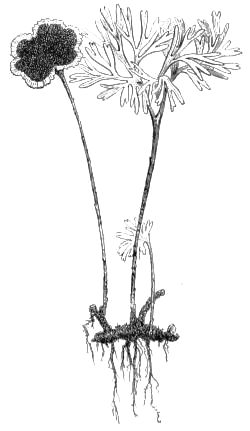
FIG. 22. ACROSTICHUM PELTATUM.
A. peltatum (peltate-leaved).* rhiz. slender, wide creeping. sti.
distant, slender, 1in. to 4in. long, scaly throughout. barren fronds
1in. to 2in. each way, repeatedly dichotomously forked, with
narrow linear ultimate divisions, quarter to half line broad. fertile
fronds ½in. broad, often two-lobed. West Indies. Stove or greenhouse
species. This elegant little fern requires a liberal supply of
water all the year round, and is best grown in a well drained pan
of good fibrous peat, leaf soil, and sand, with some nodules of sandstone
raised above the rim of the pan; do not disturb it more
than is necessary. SYN. Rhipidopteris peltata. See Fig. 22.
A. petiolosum (petioled). rhiz. woody, wide scandent. sti. woody,
erect, scaly at the base. fronds bipinnate, or tripinnatifid, 2ft. to
4ft. long, 1ft. to 3ft. broad, deltoid; the upper barren pinnæ
lanceolate, pinnatifid, the longest sometimes 18in. long, and 6in. to
10in. broad; pinnules with long falcate lobes reaching half-way
down to the midrib, both surfaces naked; fertile pinnules very
narrow, and dangling, continuous or beaded. West Indies, Mexico,
&c. Stove species. SYNS. Polybotrya and A. caudatum.
A. piloselloides (mouse ear-leaved). Synonymous with A. spathulatum.
A. platyrhynchos (broad-beaked). sti. tufted, scarcely any.
fronds 12in. to 16in. long, 1in. broad, simple. sori in a patch
at the apex, 1in. to 2in. long, ⅜in. broad, which does not reach
to the entire edge; the lower part narrowed gradually, with
naked surfaces, and a coriaceous texture. Philippines. Stove
species. SYN. Hymenolepis platyrhynchos.
A. quercifolium (oak-leaved).* rhiz. stout, wide creeping. sti. of
barren fronds 1in. to 2in. long, clothed with brownish hairs.
barren fronds 3in. to 4in. long, 1½in. to 2in. broad, the terminal
pinnæ with blunt rounded lobes. fertile fronds with a terminal
pinna, 1in. to 2in. long, one line broad, and a pair of smaller
lateral ones, with slender stipes 6in. to 9in. long, hairy at the
base. Ceylon. Stove species. SYNS. A. Neitnerii (of gardens),
Gymnopteris quercifolia.
A. scandens (climbing).* rhiz. woody, wide climbing. sti. 3in. to
4in. long, firm, erect, naked. fronds 1ft. to 3ft. long, 1ft. or more
broad, simply pinnate; barren pinnæ, 4in. to 8in. long, ¾in. to 1½in.
broad, acuminate, the edge thickened and serrulate, the base
cuneate, sessile, or slightly stalked, articulated; fertile pinnæ,
6in. to 12in. long, one and a half to two lines broad, the lower ones
distant. Himalayas, &c., 1841. Stove or greenhouse species. SYN.
Stenochlæna scandens.
A. scolopendrifolium (scolopendrium-leaved).* rhiz. woody,
creeping, scaly. sti. 4in. to 12in. long, firm, erect, densely clothed
with blackish scales. barren fronds often 1ft. long, 1½in. to 3in.
broad, simple, acute, the base narrowed gradually; edge and midrib
scaly. fertile fronds much smaller than the barren ones.
Guatemala, &c. Stove species. SYN. A. barbatum.
A. serratifolium (serrate-leaved). rhiz. woody, short creeping.
sti. of barren fronds 12in. to 18in. long, slightly scaly. barren
fronds 2ft. long, 6in. to 12in. broad, with numerous sessile
pinnæ on each side, 3in. to 6in. long, ¾in. to 1½in. broad, inciso-crenate,
the base cuneate; fertile pinnæ distant, 2in. to 3in. long,
¼in. to ½in. broad, blunt, entire. Venezuela, &c. Stove species.
SYN. Chrysodium serratifolium.
A. simplex (simple-leaved). rhiz. woody, creeping, scaly. sti.
1in. to 4in. long, firm, erect, naked. barren fronds 4in. to 12in.
long, about 1½in. broad, very acute, the lower part narrowed very
gradually. fertile fronds narrower than the barren ones, with
longer stipes. Cuba to Brazil, 1798. Stove species. SYN. Elaphoglossum
simplex.
A. sorbifolium (service-leaved).* rhiz. thick, woody, often 30ft. to
40ft. long, clasping trees like a cable, sometimes prickly. fronds
12in. to 18in. long, 6in. to 12in. broad, simply pinnate; barren
pinnæ 4in. to 6in. long, about ½in. broad, three to twenty on each
side, articulated at the base, entire or toothed; fertile pinnæ
1in. to 2in. apart, 2in. to 4in. long, about ¼in. broad. West Indies,
1793. There are several varieties of this species, chiefly differing
in the number of pinnæ. Stove species. SYN. Stenochlæna sorbifolia.
A. s. cuspidatum (cuspidate).* This is only a variety of the above
species with long-stalked, ligulate-cuspidate pinnæ; but it is
usually regarded as a distinct species in gardens.
A. spathulatum (spoon-shaped). sti. tufted, 1in. to 2in. long, firm,
erect, scaly. barren fronds ½in. to 4in. long, ¼in. to ½in. broad,
obovate-spathulate, blunt, tapering narrowly or gradually at the
base, with a coriaceous texture; both surfaces and the margins
copiously scaly. fertile fronds smaller than the barren, with
longer stipes. Tropical America, South Africa, &c. Stove species.
SYN. A. piloselloides.
A. spicatum (spiked). rhiz. woody, short creeping. sti. 1in. to
2in. long, firm. fronds 6in. to 18in. long, ½in. to 1in. broad, the
upper part contracted and fertile, entire, the lower part narrowed
very gradually. Himalayas, &c. Greenhouse species. SYN.
Hymenolepis brachystachys.
A. squamosum (scaly).* rhiz. woody, densely scaly. sti. 2in. to
4in. long, densely clothed with pale or dark-coloured scales.
barren fronds 6in. to 12in. long, about 1in. broad, simple, acute,
the base narrowed gradually; both sides matted, and the edge
densely ciliated with reddish scales. fertile fronds as long as the
barren ones, but much narrower, the stipes much longer. Widely
distributed in both hemispheres. Stove or greenhouse species.
SYN. A. paleaceum.
A. subdiaphanum (semi-transparent).* cau. woody, erect. sti.
tufted, 2in. to 6in. long, firm, erect, scaly. barren fronds 4in. to
8in. long, 1in. to 1½in. broad, simple, both ends narrowed, the edge
entire. fertile fronds much narrower, on longer stipes. St.
Helena. Greenhouse species. SYN. Aconiopteris subdiaphana.
A. subrepandum (slighty-waved).* rhiz. woody, wide-creeping.
sti. of barren fronds stout, erect, nearly naked. barren fronds
from 1ft. to 2ft. long, 2in. to 12in. broad, copiously pinnate, with
linear-oblong entire or subrepand pinnæ on each side, which are
sometimes 6in. to 8in. long, and 2in. broad. fertile fronds like the
others, but smaller. Isle of Luzon, &c. Stove species. SYN.
Gymnopteris subrepanda.
A. taccæfolium (yew-leaved).* cau. woody, densely scaly. sti. of
barren fronds 1in. to 4in. long, scaly. barren fronds from 1ft. to
2ft. long, 3in. to 12in. broad, simple, oblong-lanceolate, entire,
copiously pinnate, with oblong-lanceolate pinnæ, 1in. to 6in. long,
½in. to 1½in. broad, the upper ones narrowly decurrent, the lower
ones forked at the base on the under side. fertile fronds simple,
6in. to 12in. long, ⅛in. broad, or pinnate, with forked linear pinnæ.
The three-lobed form of this species is sometimes known as A.
trilobum. Philippines. Stove species. SYN. Gymnopteris taccæfolia.
A. tenuifolium (narrow-leaved).* rhiz. wide scandent, woody,
slightly scaly. barren fronds simply pinnate, the stipes 4in. to 6in.
long, naked, firm, erect, the fronds 3ft. to 5ft. long, 12in. to 18in.
broad; pinnæ 6in. to 9in. long, ¾in. to 1½in. broad, acuminate, the
edge thickened and serrulate, short-stalked. fertile fronds bipinnate,
with longer stipes; pinnæ long-stalked, with numerous
distant pinnules. South Africa. Stove or greenhouse species.
SYNS. A. Meyerianum and Stenochlæna tenuifolia.
A. trilobum (three-lobed). A form of A. taccæfolium.
A. villosum (hairy).* rhiz. woody, densely scaly. sti. 2in. to 4in.
long, slender, densely clothed with scales. barren fronds 6in. to
9in. long, 1in. to 1½in. broad, acute, the lower part narrowed
gradually; both surfaces scaly, and the edge more or less ciliated.
fertile fronds much smaller than the others. Mexico, &c. Stove
species.
A. viscosum (clammy).* rhiz. woody, creeping, densely scaly.
sti. 3in. to 6in. long, firm, erect, scaly, often viscous. barren
fronds 6in. to 12in. long, ½in. to 1in. broad, simple, acute, the
lower part narrowed gradually; both surfaces more or less viscid,
and minutely scaly. fertile fronds smaller, with longer stipes.
Tropical America and the tropics of the Old World, 1826. Very
variable in form. Stove species.
ACROTRICHE (from akros, top, i.e., outermost—and
thrix, a hair; the tips of the petals are bearded).
ORD. Epacridaceæ. A genus of eight or nine species of
dwarf, much branched, ornamental greenhouse evergreen
shrubs. Flowers white or red; spikes axillary, short;
corolla funnel-shaped; petals with deflexed hairs at apex.
Cultivated in an equal mixture of sandy loam and peat,
and propagated by cuttings made of the young shoots,
pricked in sand, covered with a bell glass, and placed
in a cool house; afterwards treated like Epacris.
A. cordata (heart-leaved).* fl. white, small, axillary, twin, or
solitary. April. l. cordate, flat, striated below. h. 1ft. New
Holland, 1823.
A. divaricata (straggling).* fl. white, small, in axillary spikes.
May. l. lanceolate, mucronate, divaricate, flat, both surfaces
green. h. 6in. to 1ft. New South Wales, 1824.
A. ovalifolia (oval-leaved). fl. white, small, in axillary spikes.
March. l. ovate and oval, obtuse, flat, with smooth margins.
h. 6in. to 1ft. New Holland, 1824.
ACTÆA (from aktaia, an Elder; in allusion to the resemblance
of the foliage to that of the Elder). Baneberry.
ORD. Ranunculaceæ. A small genus of perennial herbaceous
plants, with bi- or triternate leaves, and long,
erect racemes of whitish flowers, which are succeeded
by poisonous berries. They are excellent subjects for
shady places, beneath trees, or in the wild garden.
Easily increased by division of the roots, and seed during
spring.
A. alba (white).* fl. white; racemes simple. May, June. l. ovate-lanceolate,
serrate or cut. Berries white, ovate-oblong, h. 1ft.
to 1½ft. N. America.
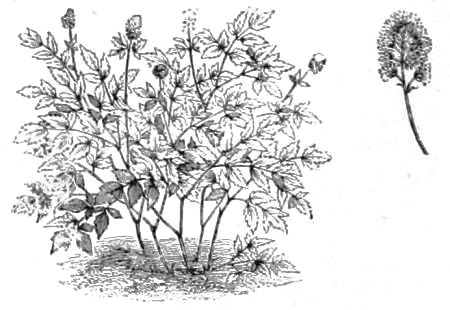
FIG. 23. ACTÆA SPICATA, showing Habit and Raceme of Flowers.
A. spicata (spiked).* fl. white, or bluish; racemes ovate. Summer.
l. bi- or triternate, serrated. Berries oblong, black, poisonous.
h. 1ft. England. See Fig. 23.
A. s. rubra (red).* This differs from the type in having bright
red berries, which are disposed in dense clusters on spikes
overtopping the foliage. North America. A very handsome
hardy perennial.
ACTINELLA (from aktin, a ray; small rayed). SYN.
Picradenia. ORD. Compositæ. A small genus of hardy
herbaceous plants, having radiate capitules. The only
species worth cultivating is A. grandiflora. It thrives in
an open border with a light soil. Increased by divisions
of the root in spring.
A. grandiflora (large-flowered).* fl.-heads yellow, large, and
handsome, 3in. in diameter. Summer. h. 6in. to 9in. Colorado.
A very pretty branched perennial, suitable for the alpine garden.
A. lanata (woolly). See Eriophyllum cæspitosum.
ACTINIDIA (from aktin, a ray; the styles radiate
like the spokes of a wheel). ORD. Ternstrœmiaceæ. A
genus of ornamental hardy deciduous climbing shrubs,
with axillary corymbs of flowers; sepals and petals
imbricate. Leaves entire. Excellent for trellis-work or
walls, and thriving best in a light rich soil. Increased
by seeds, layers, or cuttings; the latter should be put in
under a hand light in autumn, in sandy soil.
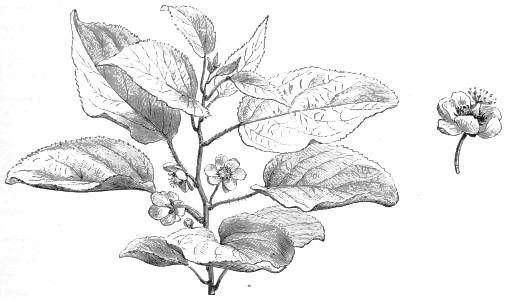
FIG. 24. ACTINIDIA VOLUBILIS.
A. Kolomikta (Kolomikta).* fl. white, solitary, axillary, or
cymose, ½in. in diameter; peduncles about ½in. long. Summer.
l. ovate-oblong, petiolate, rounded or sub-cordate at the base, and
tapering into a long point, serrate; the autumnal tints are very
handsome, changing to white and red. N. E. Asia, 1880. Rarely
met with.
A. polygama (polygamous). fl. white, fragrant. Summer. l. cordate,
serrate, petiolate. Japan, 1870. The berries of this species
are edible.
A. volubilis (twining).* fl. white, small. June. l. oval on
flowering branches, elliptic on climbing stems. Japan, 1874. A
very free growing species. See Fig. 24.
ACTINIOPTERIS (from aktin, a ray, and pteris, a
fern; the fronds are radiately cut into narrow segments).
ORD. Filices. Sori linear-elongated, sub-marginal; involucres
(= indusia) the same shape as the sorus, folded over
it, placed one on each side of the narrow segments of the
frond, opening towards the midrib. A small genus of
beautiful and distinct stove ferns. They thrive in a compost
of equal parts crocks and charcoal, about the size of
peas, which must be mixed with silver sand and a very
small portion of loam and peat. About half the pot should
be filled with crocks, perfect drainage being necessary. A
moist atmosphere is also essential, and the plants may be
syringed two or three times a day. A mean summer
temperature of 78deg. to 80deg., with a night one of not
less than 65deg., is desirable. In winter, a mean temperature
of about 73deg., and a night one of not less
than 60deg., should be maintained.
A. radiata (rayed).* sti. densely tufted, 2in. to 6in. long. fronds
fan shaped, 1in. to 1½in. each way, composed of numerous dichotomous
segments, half line broad, those of the fertile frond longer
than those of the barren one. India, &c. (very widely distributed),
1869. In form this elegant little species is a perfect
miniature of the Fan Palm, Latania borbonica.
A. r. australis (southern).* fronds, segments fewer, larger,
and subulate at the point. Plant much larger and more vigorous.
ACTINOCARPUS (from aktin, a ray, and karpos,
fruit; referring to the curiously radiated fruit, resembling
a star fish). ORD. Alismaceæ. Pretty little aquatic perennials,
with habit and inflorescence of Alisma. Carpels
six to eight, connate at base, spreading horizontally. Excellent
for naturalising in bogs and pools. Increased by
seeds and divisions during spring.
A. Damasonium (Damasonium). Ray Pod. fl. white, very
delicate; each petal has a yellow spot at the base; scapes with
a terminal umbel. June. l. radical, on long petioles, sometimes
floating, elliptical, five-nerved. A native aquatic. The
proper name of this plant is Damasonium stellatum.
A. minor (smaller).* This greenhouse species, also with white
flowers, from New South Wales, is smaller.
ACTINOMERIS (from aktin, a ray, and meris, a
part; referring to the radiated aspect of the plants).
SYN. Pterophyton. ORD. Compositæ. A small genus of
herbaceous perennials allied to Helianthus, but with compressed
and winged achenes. Flower-heads corymbose,
Coreopsis-like. Leaves ovate or lanceolate, serrate. They
are hardy, ornamental plants, and of easy cultivation, in
a loamy soil. Increased in spring, by seeds and division
of the roots, on a warm border, with or without hand
lights, or in cold frames. With the exception of A. helianthoides,
they are but little known in this country.
A. alata (wing-stalked). fl.-heads yellow. July. h. 3ft. America.
1803.
A. helianthoides (sunflower-like).* fl.-heads yellow, 2in. across,
July to September. h. 3ft. S. America, 1825.
A. procera (tall).* fl.-heads yellow. September. h. 8ft. N.
America, 1766.
A. squarrosa (rough-headed).* fl.-heads yellow, in loose terminal
panicles. July and August. l. decurrent, broadly lanceolate,
coarsely toothed. Stem square, winged. h. 3ft. North America,
1640. SYN. Verbesina Coreopsis.
ACTINOPHYLLUM. See Sciadophyllum.
ACTINOSTACHYS. Included under Schizæa
(which see).
ACTINOTUS (from actinotos, furnished with rays; referring
to the involucre). ORD. Umbelliferæ. An Australian
genus of greenhouse herbaceous perennials. Flowers
shortly pedicellate, numerously disposed in simple umbels;
petals none. Leaves alternate, petiolate. They thrive best
in loam and peat, and are increased by root division and
seeds. The latter should be sown on a hotbed, in spring, and
in May the seedlings may be transplanted out in the open
border in a warm situation, where they will flower and
seed freely.
A. helianthus (sunflower).* fl. white, in many-flowered capitate
umbels; involucre many leaved, radiating, longer than the
flowers. June. l. alternate, bipinnatifid; lobules bluntish.
h. 2ft. 1821. SYN. Eriocalia major.
A. leucocephalus (white-headed). fl. white. June. h. 2ft. 1837.
ACULEATUS. Armed with prickles.
ACULEOLATUS. Armed with small prickles.
ACULEUS. A prickle; a conical elevation of the skin
of a plant, becoming hard and sharp-pointed.
ACUMEN. An acute terminal angle.
ACUMINATE. Extended into an acute terminal
angle; this word is confined to considerable extension.
ACUNNA OBLONGA. See Bejaria æstuans.
ACUTE. Sharp-pointed.
ACYNTHA. A synonym of Sanseviera (which see).
ADA (a complimentary name). ORD. Orchideæ. An
evergreen orchid, very closely allied to Brassia, from
which it differs chiefly in having the lip parallel with,
and solidly united to, the base of the column. Some
authorities now refer the plant to the genus Mesospinidium.
It requires to be potted in peat and sphagnum,
in equal parts. The drainage must be perfect, and, during
summer, the water supply profuse. Although in winter
far less will suffice, the plant should not be allowed to
become dry. Propagated by divisions as soon as the
plant commences growth.
A. aurantiaca (orange).* fl. orange-scarlet, in long terminal
nodding racemes, each bearing from six to ten blossoms; petals
elongated, streaked with black inside. Winter and spring. l. two
or three to each plant, linear, dark green, about 6in. in length.
Habit erect, with somewhat cylindrical pseudo-bulbs, which
taper upwards. See Fig. 25.
ADAMIA (named after John Adam, some time Governor-General
of India, and a promoter of natural history). ORD.
Saxifrageæ. A small genus of Hydrangea-like greenhouse
evergreen shrubs, having many flowered terminal corymbs of
flowers, and opposite, petiolate, oblong-lanceolate, serrated
leaves. They thrive well in a mixture of loam, peat, and
sand; and cuttings will root readily in a similar compost,
under a hand glass.
A. cyanea (blue-berried). fl. whitish, or pink. June. h. 6ft.
Nepaul, in rocky places, 1829.
A. sylvatica (wood). fl. blue; cymes nearly undivided, on short
peduncles, disposed in a close panicle. June. h. 6ft. Java, 1846.
A. versicolor (many-coloured). fl. blue. August. China, 1844.
ADAM'S APPLE. See Citrus Limetta and Musa
paradisiaca.
ADAMSIA. See Geum, Puschkinia, Sieversia.
ADAM'S NEEDLE. See Yucca.
ADANSONIA (named after Michael Adanson, an
eminent French botanist). Baobab Tree. ORD. Sterculiaceæ.
This is reputed to be one of the largest trees
in the world, as far as the girth of the trunk is concerned;
but it is seldom seen in cultivation in this country.
A. digitata (finger-leaved). fl. white, about 6in. across, with
purplish anthers, on long, axillary, solitary pedicels. l. palmate,
with three leaflets in the young plants, and five to seven in
adult ones. h. 40ft. Africa.
ADDER'S FERN. See Polypodium vulgare.
ADDER-SPIT. See Pteris aquilina.
ADDER'S TONGUE. See Ophioglossum.
ADELOBOTRYS (from adelos, obscure, and botrys,
a cluster). ORD. Melastomaceæ. Stove climbing shrubs
with terete branches. Flowers white, crowded in cymose
heads at the tops of the branches. Leaves clothed with
rufous hairs on both surfaces when young, but in the
adult state glabrous, except the nerves, petiolate, ovate,
cordate, acuminated, ciliately serrated, five-nerved. For
general culture, see Pleroma.
A. Lindeni (Linden's).* fl. white, changing to purple. Brazil, 1866.
A. scandens (climbing).* This, the original species, possibly not
now in cultivation, is a native of French Guiana.
ADENANDRA (from aden, a gland, and aner, a
male; the anthers terminate in a globose gland). ORD.
Rutaceæ. Very beautiful little greenhouse shrubs from
the Cape of Good Hope. Flowers large, usually solitary
at the tops of the branches; stamens ten, the five opposite
the petals sterile, five fertile ones similar in form, but
shorter. Leaves usually alternate, flat, glandularly dotted.
They thrive in a mixture of sand and peat, with a little
turfy loam. The young tops, before they begin to throw
out their buds, made into cuttings, and planted in a pot
of sand, with a bell glass placed over them, will root
without bottom heat.
A. acuminata (acuminate). Synonymous with A. amœna.
A. amœna (pleasing).* fl. large, whitish above, and reddish
beneath, solitary, sessile, terminal. June. l. scattered, oblong
or oval, bluntish, smooth, dotted beneath. h. 1ft. to 2ft. 1798.
SYN. A. acuminata.
A. coriacea (leathery-leaved). fl. large, pink, usually solitary on
the tops of the branches. June. l. scattered, oblong, obtuse,
revolute, quite smooth. h. 1ft. to 2ft. 1720.
A. fragrans (fragrant).* fl. rose colour, on long peduncles, fragrant;
pedicels clammy, aggregate, umbellate. May. l. scattered,
smooth, spreading very much, ovate-oblong, glandular, a little
crenulated. h. 1ft. to 2ft. 1812.
A. linearis (linear-leaved). fl. white, terminal, on long, usually
solitary, pedicels. June. l. opposite, linear, obtuse, spreading;
branches and pedicels smooth. h. 1ft. 1800.
A. marginata (margined).* fl. pale flesh-colour, on long peduncles;
umbels terminal. June. l. scattered, smooth, transparent,
cordate, lower ones ovate, upper ones lanceolate. h. 1ft.
to 2ft. 1806.
A. umbellata (umbel-flowered).* fl. pink, almost sessile, terminal,
umbellate, petals fringed. June. l. oblong or obovate, dotted
beneath, fringed on the edges. h. 1ft. to 2ft. 1790.
A. u. speciosa (showy).* fl. large, pink, nearly sessile, terminal,
umbellate. June. l. scattered, oblong or obovate, revolute,
dotted beneath, smooth, but a little fringed on the edges. h. 1ft.
to 2ft. 1790.
A. uniflora (one-flowered).* fl. large, whitish inside, and pinkish
outside, nearly sessile, solitary, terminal. June. l. scattered,
oblong-lanceolate, somewhat pointed, revolute, smooth, dotted
beneath. h. 1ft. to 2ft. 1775.
A. villosa (shaggy).* fl. pink, nearly sessile, terminal, umbellate;
sepals, petals, and stamens fringed. June. l. crowded, ovate-oblong,
fringed, pubescent and glandular beneath. h. 1ft. to 2ft.
1786.
ADENANTHERA (from aden, a gland, and anthera,
an anther; in reference to the anthers, which are each terminated
by a deciduous, pedicellate gland). ORD. Leguminosæ.
A small genus of stove evergreen trees, with racemose
spikes of small flowers and bipinnate or decompound leaves.
They thrive well in a mixture of peat and loam. Increased
by cuttings, which should be taken off at a joint and
planted in heat in a pot of sand, placing a bell glass
over them.
A. chrysostachys (golden-spiked). fl. golden. h. 15ft. Mauritius,
1824.
A. falcata (sickle-shaped). fl. yellowish. h. 6ft. India, 1812.
A. pavonina (peacock-like).* Peacock Flower Fence. fl. white
and yellow mixed. May. l. leaflets oval, obtuse, glabrous on
both surfaces. h. 5ft. India, 1759.
ADENANTHOS (from aden, a gland, and anthos, a
flower; referring to the glands on the flowers). ORD.
Proteaceæ. Ornamental greenhouse evergreen pilose shrubs,
thriving in sandy peat. Propagated in spring by cuttings,
which should be placed in sandy soil under a bell glass,
with a gentle bottom heat.
A. barbigera (bearded).* fl. red, axillary, solitary, pedunculate;
perianth pilose, bearded at top; involucre spreading, villous.
June. l. oblong-lanceolate, obtuse, triple-nerved. h. 7ft. Swan
River, 1845.
A. cuneata (wedge-leaved). fl. red. July. h. 5ft. New Holland,
1824.
A. obovata (obovate-leaved).* fl. red. July. h. 5ft. New
Holland, 1826.
ADENIUM (from Aden, where it is found). ORD.
Apocynaceæ. Greenhouse evergreen succulent shrubs. The
species mentioned below is remarkable in having a globose
thick caudex or stem; branches dichotomous; corolla
salver-shaped. They require a well-drained compost of
sand and loam. Half-ripened cuttings strike root readily
in sand, under a hand glass. But little water is required
when the plants are not in a growing state.
A. obesum (fat). fl. pinky-crimson, downy; corymbs terminal,
many-flowered; pedicels short. June. l. close together at the
tops of the branches, 3in. long, oblong, narrowed at the base,
abruptly terminated by a hard, short point. h. 3ft. or 4ft. Aden,
1845.
ADENOCALYMNA (from aden, a gland, and calymna,
a covering; referring to the conspicuous glands on the
leaves and floral coverings). ORD. Bignoniaceæ. An
elegant genus of stove evergreen climbers. Flowers racemose,
trumpet-shaped, bracteate. Leaves ternate or binate.
Stems slender. They require a hot and moist
temperature to grow them successfully, and thrive best in
a compost of loam and peat. Cuttings will root in sand, if
placed under a bell glass, with bottom heat.
A. comosum (hairy).* fl. yellow; racemes spicate, axillary, and
terminal; bracts comose. September. l. trifoliate and conjugate,
tendrilled; leaflets ovate, leathery, glandular. h. 10ft.
Brazil, 1841.
A. longeracemosum (long-racemed). fl. yellow. October. Brazil.
A. nitidum (shining).* fl. yellow; racemes axillary, nearly terminal,
velvety; corolla velvety; bracts narrow, glandular. February.
l. trifoliate or conjugate, tendrilled; leaflets elliptic, oblong.
h. 10ft. Brazil, 1848.
ADENOCARPUS (from aden, a gland, and karpos, a
fruit; in reference to the legumes being beset with pedicellate
glands). ORD. Leguminosæ. Shrubs, with numerous
racemes of yellow flowers; divaricate branches, trifoliate
usually aggregate leaves, having petiolar stipulas, and
complicated leaflets. All the species are elegant when
in flower, and well suited for ornamenting the fronts
of shrubberies. Except where otherwise mentioned, all
are hardy. They thrive best in a mixture of loam, peat,
and sand; and may be readily increased by seeds or layers,
or by grafting the rarer on the commoner kinds. Young
cuttings will root freely in sand, covered by a hand glass,
which should be taken off and wiped occasionally. Seeds
may be sown in March, the hardy species out of doors, and
the others in a cold house.
A. foliolosus (slightly-leaved).* fl. yellow; racemes terminal; calyx
covered with glandless hairs, with the lower lip elongated and
trifid at the apex; the segments equal. May. l. (and branches)
much crowded, hairy, trifoliate. h. 4ft. to 6ft. Canary Islands,
1629. A half-hardy evergreen species.
A. frankenioides (frankenia-like).* fl. yellow, crowded; racemes
terminal; calyx beset with glandular pubescence, with the lower
lip having the middle segment longer than the lateral ones, and
exceeding the lower lip. April. l. trifoliate, much crowded,
hairy; branches velvety. h. 1ft. to 3ft. Teneriffe, 1815. Requires
protection in winter; an evergreen.
A. hispanicus (Spanish).* fl. yellow, crowded; racemes terminal;
calyx beset with glands and hairs; lower lip of calyx with three
equal segments, hardly longer than the upper lip. June. l. trifoliate,
grouped; branchlets hairy. h. 2ft. to 4ft. Spain, 1816.
Deciduous.
A. intermedius (intermediate).* fl. yellow, not crowded; racemes
terminal; calyx beset with glandular pubescence, with the lower
lip trifid, the lateral segments shorter than the middle ones,
and much exceeding the upper lip. May. l. trifoliate, grouped;
branches rather shaggy. h. 3ft. to 4ft. Sicily and Naples, on
mountains, 1816. Deciduous.
A. parvifolius (small-leaved).* fl. yellow, not crowded; racemes
terminal; calyx clothed with glandular pubescence, with the
middle segment of the lower lip longer than the lateral ones,
much exceeding the upper lip. May. l. trifoliate, grouped, small;
branches glabrous. h. 3ft. to 4ft. France, on exposed heaths,
1800. Deciduous.
A. telonensis (Toulon).* fl. yellow, not crowded; racemes terminal;
calyx clothed with glandless pubescence, the segments of the
lower lip about equal in length, a little longer than the upper
lip. June. l. trifoliate, grouped; branchlets smoothish. h. 2ft.
to 4ft. South France, 1800. Deciduous.
ADENOPHORA (from aden, a gland, and phoreo, to
bear; in reference to the cylindrical nectary which girds the
base of the style). ORD. Campanulaceæ. A genus of elegant
hardy border perennials, very similar in habit, shape of
flower, &c., to Campanula, from which genus Adenophora
differs in having the style surrounded by a cylindrical
gland. Flowers stalked, drooping, spicate. Leaves broad,
stalked, somewhat whorled. They grow best in light rich
garden soil, with a warm sunny position, and should be
increased by seeds, as dividing the roots is the sure way
to lose them. They are easily raised from seeds, which
may be sown as soon as ripe, or in spring, in pots placed in
a cold frame.
A. coronopifolia (buckhorn-leaved).* fl. blue, large, three to
ten, racemose, at the top of the stem, on short pedicels. July.
l. radical ones petiolate, ovate-roundish, cordate, crenately
toothed; upper ones sessile, linear-lanceolate, nearly entire, quite
glabrous. h. 1ft. to 2ft. Dahuria, 1822.
A. denticulata (toothed-leaved).* fl. blue, small, numerous, on
short pedicels, disposed in a more or less loose elongated raceme.
July. l. serrated, smoothish; radical ones petiolate, rounded;
upper ones sessile, ovate-lanceolate. h. 1½ft. Dahuria, 1817.
SYN. A. tricuspidata.
A. Fischeri (Fischer's).* fl. blue, or whitish blue, numerous,
sweet-scented, disposed in a more or less compound, elongated,
and loose pyramidal panicle. August. l. radical ones petiolate,
ovate-roundish, cordate, crenately toothed; upper ones sessile,
ovate-lanceolate, coarsely serrated. h. 1½ft. Siberia, 1784. SYN.
A. liliiflora.
A. Gmelini (Gmelin's). fl. blue, secund, three to ten, on the top
of each stem, rising from the axils of the upper leaves, disposed in
a long raceme. July. l. upper ones erect, linear, very narrow,
entire, glabrous. h. 1ft. to 2ft. Dahuria, in dry stony places,
1820.
A. intermedia (intermediate). fl. pale blue, small, racemose.
May. l. radical ones petiolate, cordate, toothed; upper ones
lanceolate, tapering to a point at the base, serrated, crowded.
h. 3ft. Siberia, 1820.
A. Lamarckii (Lamarck's).* fl. blue; corolla funnel-shaped, disposed
in an elongated, many-flowered, raceme, which is compound
at the base. June. l. ovate-lanceolate, acutely serrated,
ciliated, glabrous, except on the margins. h. 1ft. to 2ft. Eastern
Europe, 1824.
A. latifolia (broad-leaved). Synonymous with A. pereskiæfolia.
A. liliiflora (lily-flowered).* fl. numerous, sweet-scented, in a
loose pyramidal panicle. Central and Eastern Europe.
A. pereskiæfolia (pereskia-leaved).* fl. blue, rather numerous,
scattered over the upper part of the stems, rarely subverticillate;
peduncles one to two, or three-flowered. July. l. three to five in
a whorl, ovate-oblong, acuminated, coarsely serrated, roughly
ciliated. h. 1½ft. Dahuria, 1821. SYN. A. latifolia.
A. periplocæfolia (periploca-leaved). fl. pale blue, at the top
of the stem, sometimes only one. June. l. petiolate, ovate,
acute, somewhat cordate, crenately serrated. Stem ascending.
h. 3in. Siberia, 1824. Rockery species.
A. stylosa (long-styled).* fl. pale blue, small, few, disposed in a
loose, naked, raceme. May. l. petiolate; lower ones obovate,
sinuate; upper ones ovate, acuminated, glabrous. Stem ascending.
h. 1ft. to 1½ft. Eastern Europe, 1820.
A. tricuspidata (three-cusped). Synonymous with A. denticulata.
A. verticillata (whorl-leaved).* fl. pale blue, small, irregularly
disposed at the tops of the stems; lower whorls many flowered,
distant; peduncles one to three-flowered. June. l. in whorls,
serrately toothed; radical ones petiolate, roundish; upper ones
ovate-lanceolate; stems simple. h. 2ft. to 3ft. Dahuria, 1783.
ADENOSTOMA (from aden, a gland, and stoma, a
mouth). ORD. Rosaceæ. Hardy shrubs, having small racemose,
five-petalled flowers. They grow freely in rich loam and
peat in equal proportions. Propagated in spring or
autumn, by cuttings made of the young shoots, placed in
sand, under glass.
A. fasciculata (fascicled).* fl. white, small, produced in terminal
panicles. h. 2ft. California, 1848. A hardy, heath-like evergreen
bushy plant, allied to Alchemilla.
ADESMIA (from a, without, desmos, a bond; in reference
to the stamens being free). ORD. Leguminosæ.
Chiefly greenhouse evergreen shrubs, or trailers, from South
America, with lanceolate stipulas, abruptly pinnate leaves,
ending in a bristle; axillary one-flowered pedicels, or the
flowers racemosely disposed at the tops of the branches,
in consequence of the upper leaves being abortive. They
will grow well in a mixture of loam, peat, and sand. Propagated
by cuttings placed in sand, covered by a hand glass,
in a gentle heat; or by seeds, which are generally more
satisfactory. The annual species—A. muricata, A. papposa,
and A. pendula—are not worth growing. The following
are fairly representative of the most ornamental
species.
A. glutinosa (sticky).* fl. yellow; racemes elongated, terminal,
simple, spinescent, and are (as well as the linear bracteas) clothed
with white hairs. May. l. with about three pairs of elliptic,
hairy leaflets; branches spreading, beset with glandular, glutinous
hairs. Stem shrubby; legumes three-jointed, very long.
h. 1ft. to 2ft. 1831.
A. Loudonii (Loudon's). fl. yellow. May, h. 2ft. Valparaiso,
1830.
A. microphylla (small-leaved).* fl. yellow; racemes somewhat
capitate, terminal, simple, spinescent. June. l. with six pairs
of small orbicular leaflets, on short petioles, pubescent; branches
spinose. Stem shrubby. h. 1ft. to 2ft. 1830.
A. Uspallatensis (Uspallatan). fl. yellow. July. h. 1ft. China,
1832.
A. viscosa (clammy). fl. yellow. August. h. 12ft. Chili, 1831.
ADHATODA (its native name). ORD. Acanthaceæ.
Allied to Justicia. Very ornamental stove shrubs, requiring
a good fibrous peat and loam, with a moderate addition of
silver sand. To grow them well, they require liberal treatment
and plenty of heat, when the flowers will be produced
in great profusion. Increased by young cuttings in spring,
placed in sandy soil, in bottom heat. See Justicia.
A. cydoniæfolia (quince-leaved).* fl. produced in rather dense
clusters at the point of every branch; tube of corolla white, the
upper lip white tipped with purple; the lower lip large, rich deep
purple, with a white stripe down the centre. October. l. opposite,
ovate, dark green, and are, as well as the branches, slightly
downy. Brazil, 1855. This species is an excellent subject for
training up pillars or rafters; and, when in bloom, makes a pretty
basket plant. It has a somewhat straggling habit, but a little
care only is needed in pruning and training to grow it into an
elegant shape.
A. vasica (Vasica). fl. purple. July. h. 10ft. India, 1699.
ADHERENT. Strictly signifies sticking to anything,
but is more commonly employed in the sense of adnate.
ADHESION. The union of parts usually distinct.
ADIANTOPSIS. See Cheilanthes.
ADIANTUM (from adiantos, dry, as if plunged in
water it yet remains dry). Maidenhair. ORD. Filices. A
large genus of handsome tropical and temperate ferns.
Sori marginal, varying in shape from globose to linear,
usually numerous and distinct, sometimes confluent and
continuous. Involucre the same shape as the sorus, formed
of the reflexed margin of the fronds, bearing the capsules
on its upper side. None of the Adiantums are truly hardy
except the American A. pedatum; even our own native
species requires protection. The chief requirements of
this handsome genus of ferns are good drainage, and a
compost of fibrous peat, loam and sand. In most cases,
plenty of pot room is essential, and a larger quantity of
loam will be needed for strong-growing sorts. For general
culture, see Ferns.
A. æmulum (rival).* sti. slender, about 6in. long. fronds slender,
pyramidate, tri-subquadripinnate; pinnæ distinct, obliquely pyramidate,
unequally-sided; pinnules rhomboid or oblong, tapering to
the base, the terminal one distinctly cuneate, all sparingly lobate.
sori, 2in. to 4in., circular, or nearly so. Brazil, 1877. Stove or
greenhouse species.
A. æthiopicum (Æthiopian).* sti. 6in. to 9in. long, rather slender,
erect. fronds 12in. to 18in. long, 6in. to 9in. broad, deltoid, tri- or
quadripinnate; lower pinnæ 3in. to 4in. long, 2in. to 3in. broad,
deltoid; ultimate segments ¼in. to ½in. across, ¼in. deep, suborbicular,
the upper part broadly lobed; rachis and surfaces
naked. sori in several roundish patches. A. Chilense (Chilian), A.
scabrum (scurfy), A. sulphureum (sulphured) are mere forms of
this species. Spain, and almost cosmopolitan. A very pretty
greenhouse fern. SYNS. A. assimile, A. emarginatum.
A. affine (related).* sti. 6in. to 9in. long, erect. fronds with a
terminal central pinna 4in. to 6in. long, 1in. to 1½in. broad, and
several smaller erecto-patent lateral ones, the lowest of which are
again branched; pinnules, ½in. to ¾in. long, ¼in. deep, dimidiate,
the lower edge straight, the upper nearly parallel with it, crenate,
like the oblique or bluntly rounded outer edge. sori numerous,
roundish. New Zealand. Greenhouse species. SYN. A. Cunninghami.
A. amabile (lovely). Synonymous with A. glaucophyllum. Also
a garden name for A. Moorei.
A. amœnum (pleasing). Synonymous with A. flabellulatum.
A. andicolum. A synonym of A. glaucophyllum.
A. aneitense (Aneiteum).* sti. and rachises castaneous, the latter
glabrous beneath, ferrugino-pilose above; fronds deltoid, three to
four pinnate, 1½ft. to 2ft. long, and broad; segments, about ½in.
long, rhomboidal, ascending, nearly sessile, inner side close to
rachis, lower erecto-patent, shallowly lobed. sori round, reniform,
in centre of lobes, four to six to a segment. Aneiteum Isles, 1880.
Stove or greenhouse species.
A. assimile (assimilated). An Australian form of the widely-distributed
A. æthiopicum.
A. Bausei (Bause's).* fronds 1½ft. to 2½ft. long, spreading, triangular,
tri-quadripinnate; pinnæ stalked, the lower ones obliquely
triangular; pinnules broad, laterally deflexed, the basal ones
obliquely ovate with a truncate base, the intermediate somewhat
trapeziform, the terminal cuneate—all shallowly lobed and pedicellate.
sori oblong reniform, set across the apices of the lobes,
1879. A beautiful stove or greenhouse hybrid, between A. trapeziforme
and A. decorum.
A. bellum (handsome).* fronds tufted, 3in. to 6in. high, bipinnate.
ovate-lanceolate; pinnæ of three to six pinnules, ½in.
to 1½in. long, stalked; pinnules cuneate or irregular transverse-oblong,
the somewhat larger terminal ones cuneate, lobed, the
margin erose, all shortly stalked. sori two to three on the smaller
pinnules, roundish, or sublunate. Bermuda, 1879. Greenhouse
or Wardian case species.
A. Capillus-Veneris (Venus's hair).* Common Maidenhair. sti.
sub-erect, rather slender, 4in. to 9in. long. fronds very variable
in size, with short terminal and numerous erecto-patent lateral
branches on each side, the lowest slightly branched again; segments
½in. to 1in. broad, deeply lobed, and the lobes again bluntly
crenated. sori placed in roundish sinuses of the crenation. Great
Britain, and world-wide in its distribution. Greenhouse, case, or
frame species.
A. C.-V. cornubiense (Cornish).* fronds very numerous, and
dwarf, more or less oblong in general outline, with large, broad
pinnules of a deep green, with finely-waved margins, and an
almost pellucid, but firm texture. One of the best forms, but
somewhat delicate in constitution.
A. C.-V. crispulum (crisped).* fronds, with the stipes, from
6in. to 12in. long, more attenuated than those of the type, and
narrower at the base; pinnules less numerous, but broad and thin,
crisp, of a light green colour, more or less cut at the broadest part.
A handsome variety, of vigorous growth.
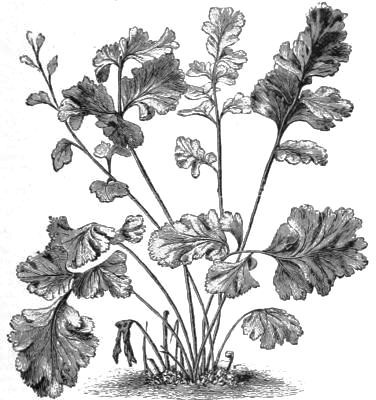
FIG. 26. ADIANTUM CAPILLUS-VENERIS DAPHNITES.
A. C.-V. daphnites (glistening).* sti. and rachises dark brown,
reaching a height of from 9in. to 14in. pinnæ and ultimate
pinnules more or less confluent, the latter being broad, and of a
dull green colour, usually forming a tufted crest at the extremities
of the fronds. A charming subject for the Wardian case. Very
distinct. See Fig. 26.
A. C.-V. fissum (divided). Very dwarf in habit, with pinnules
rather broader than those of the type, which are deeply and
variously cut, so as to give the plant a distinctive appearance from
most of the forms.
A. C.-V. Footi (Foot's). Closely allied to the variety fissum,
having fronds a foot or more long, with very ample pinnules
deeply incised, light green. Vigorous.
A. C.-V. incisum (deeply cut). Very closely allied to A. C.-V.
fissum, but rather more vigorous in growth; pinnules broad, and
deeply slit into segments near the base.
A. C.-V. magnificum (magnificent).* fronds from 9in. to 16in. long,
more or less elongated in outline, 3in. to 4in. across; pinnules
ample, rich green, with the margins finely cut and imbricated.
The arching character gives this form a most distinct appearance.
A very fine variety.
A. C.-V. rotundum (rounded). Pinnules usually round, without
the cuneiform base of the normal form; neither are the fronds
so broad. Isle of Man. Variable in its habit.
A. C.-V. undulatum (wavy).* fronds dense, compact, having
broad, roundish dark green pinnules, which are undulated at the
edges. An elegant dwarf-growing form.
A. cardiochlæna (heart-form indusium). A synonym of A. polyphyllum.
A. caudatum (tailed).* sti. 2in. to 4in. long, tufted, wiry. fronds
6in. to 12in. long, simply pinnate, often elongated, and rooting at
the extremity; pinnæ about ½in. long, ¼in. deep, dimidiate, nearly
sessile, the lower line straight and horizontal, the upper rounded,
more or less cut, the point usually blunt, the lower ones slightly
stalked. sori roundish or transversely oblong on the edge of the
lobes; rachis and both sides of the frond villose. A. ciliatum
(of gardens) is probably a mere form, if not a synonym, of this
species. Throughout the Tropics everywhere. Greenhouse or
stove species; very fine for hanging baskets.
A. colpodes (deep hollow).* sti. 4in. to 6in. long, slender, slightly
fibrillose. fronds 9in. to 18in. long, 4in. to 8in. broad, deltoid,
tripinnate, light green; lower pinnæ spreading at right angles
from the rachis, 2in. to 4in. long, 1½in. broad, slightly branched
below; ultimate segments about ½in. long, ¼in. broad, the lower
line often straight, the upper rounded, lobed, and toothed, all
nearly or quite sessile. sori placed in distinct teeth of the outer
edge. Ecuador and Peru, 1875. Greenhouse species.
A. concinnum (neat).* sti. 4in. to 8in. long. fronds 12in. to 18in.
long, 6in. to 9in. broad, ovate-deltoid, tripinnate; pinnæ numerous,
spreading, flexuous, the lowest 4in. to 6in. long, 2in. to 3in. broad;
segments ¼in. to ⅜in. across, broadly cuneate at the base, the
upper edge irregularly rounded, deeply lobed, the lobes crenate,
the lowest segment of each pinna and pinnule large, sessile. sori
numerous, ob-reniform. Tropical America. A most elegant
species for baskets and the rockery.
A. c. Flemingi (Fleming's). This variety, of garden origin, is
also very handsome.
A. c. latum (broad).* Differs from the type in being more erect
and robust in habit, and broader in all its parts. It constitutes an
excellent stove plant.
A. crenatum (crenated).* sti. 6in. to 9in. long. fronds with a terminal
central pinna 6in. to 9in. long and several large erecto-patent
lateral ones on each side, the lowest of which are branched
again; segments about ½in. long, ¼in. deep, dimidiate, the
lower line upcurved, the upper nearly straight, slightly crenate.
sori numerous, round, placed on the upper and sometimes outer
edge. This is closely allied to A. tetraphyllum. Mexico. Stove
species. SYN. A. Wilesianum.
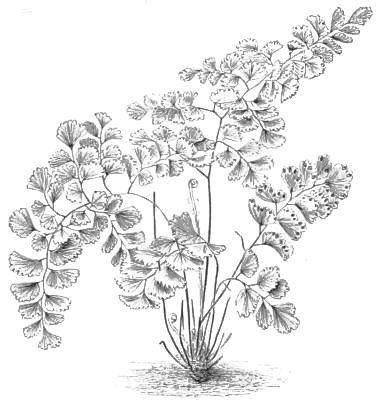
FIG. 27. ADIANTUM DECORUM.
A. cristatum (crested). sti. 6in. to 12in. long, strong, erect,
tomentose. fronds 1½ft. to 3ft. long, 9in. to 12in. broad, with a
terminal central pinna 6in. to 9in. long, 1in. to 1½in. broad, and
numerous rather distant lateral ones on each side, the lowest of
which are sometimes again branched; segments ½in. to ¾in. long,
¼in. to ⅜in. broad, dimidiate, the lower line nearly straight, the
upper nearly parallel or rounded, the point blunt. sori in several
oblong or linear patches. West Indies and Venezuela, 1844.
Stove species. SYN. A. Kunzeanum.
A. cubense (Cuba).* sti. 4in. to 8in. long, nearly black, erect.
fronds 6in. to 12in. long, 2in. to 4in. broad, simply pinnate, or
with a single pair of short branches; pinnæ 1in. to 2in.
long, and about ¾in. to 1in. broad, unilateral, the lower line
slightly recurved, the upper rounded and broadly lobed, of a
deep green colour, with a soft herbaceous texture. sori in
hollows of the lobes. Cuba and Jamaica. A very distinct stove
species.
A. cuneatum (wedge-shaped).* sti. 6in. to 9in. long, slender,
erect. fronds 9in. to 18in. long, 6in. to 9in. broad, deltoid, tri- or
quadripinnate; lower pinnæ 4in. to 6in. long, 2in. to 3in. broad;
segments numerous, ¼in. to ⅜in. broad, cuneate at the base, the
upper edge deeply lobed. sori four to six, obversely reniform.
Brazil, 1820. This fine greenhouse species is more generally
grown than any other; and a number of garden forms have received
distinctive names.
A. c. dissectum (dissected).* A pretty variety, with the pinnules
more deeply lobed than in the type.
A. c. Lawsonianum (Lawson's). This is a very abnormal form,
curiously and finely cut, with the ultimate segments narrowly
cuneate at the base, stalked, and distant. Of garden origin.
Greenhouse variety.
A. c. mundulum (neat).* sti. 3in. to 4in. high. fronds dwarf,
tufted, erect, hardly 3in. broad, deltoid, tripinnate; pinnæ and
pinnules crowded; pinnules narrowly cuneate, rarely three-parted,
with narrow wedge-shaped lobes; apex slightly crenate, and bears
a roundish sorus set in a notch of the lobe or crenature. Of
garden origin, 1879. Greenhouse variety.
A. Cunninghami (Cunningham's). Synonymous with A. affine.
A. curvatum (curved).* sti. 6in. to 12in. long. fronds dichotomous,
with main divisions again once or twice forked; pinnæ 8in.
to 12in. long, 2in. to 3in. broad; pinnules 1¼in. to 1½in. long, about
½in. deep, not truly dimidiate, but only the lower two-thirds of
the under half cut away, the upper margin rounded and broadly
lobed, with the lobes finely toothed and point often lengthened
out. sori linear, or transversely oblong. Tropical America,
1841. Stove species.
A. decorum (decorous).* sti. 4in. to 6in. long. fronds sub-deltoid,
9in. to 15in. long, three to four pinnate; lower pinnæ and pinnules
stalked, deltoid; side segments rhomboid, ¼in. to ⅜in. long; outer
edge distinctly lobed; lower segments equilateral, imbricated
over main rachis. sori round, in final lobes, four to six to a segment.
This greenhouse species ranks midway between A. concinnum
and A. cuneatum. Peru. SYN. A. Wagneri. See Fig. 27.
A. deltoideum (deltoid).* sti. densely tufted, 3in. to 4in. long,
wiry, erect. fronds 4in. to 6in. long, ¾in. broad, with a terminal
lobe and numerous sub-opposite pinnæ, the lower ones distant,
distinctly stalked, ½in. long, ¼in. to ⅜in. broad, hastate-deltoid,
cordate or cuneate at the base. sori in interrupted lines along
the sides of the pinnæ. West Indian Islands. Stove species.
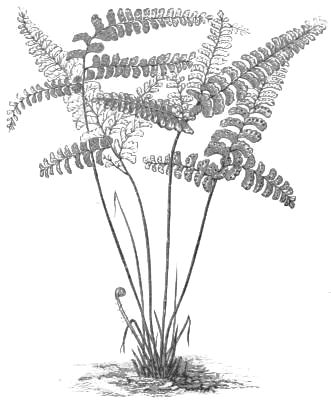
FIG. 28. ADIANTUM DIAPHANUM.
A. diaphanum (transparent).* sti. 4in. to 8in. long, slender, erect.
fronds 6in. to 7in. long, simply pinnate, or with one to three
branches at the base; pinnules ½in. long, ¼in. broad, the lower
line rather decurved, the upper nearly parallel with it, crenate
like the blunt outer edge. sori obversely reniform, numerous.
S.E. China, New Zealand, &c. Greenhouse species. SYN. A.
setulosum. See Fig. 28.
A. digitatum (finger-leaved).* sti. 12in. to 18in. long, erect.
fronds 1ft. to 3ft. long, 6in. to 1ft. 6in. broad, furnished with
numerous distant spreading or erecto-patent branches, gradually
shortened upwards, the lowest of which are branched again;
lower pinnæ 6in. to 9in. long, 3in. to 4in. broad; segments
¾in. to 1in. each way, varying from deflexed to cuneate at the
base, the upper edge rounded, deeply cut, and the lobes
again less deeply cut, the lower ones distinctly stalked. sori
in lines along the edge of the lobes. Peru. It is generally
cultivated under the name of A. speciosum. Stove or greenhouse
species.
A. dolabriforme (axe-shaped). Synonymous with A. lunulatum.
A. dolosum (deceiving). Synonymous with A. Wilsoni.
A. Edgworthii (Edgeworth's).* This differs from caudatum by
having more membranous texture, glabrous surfaces, and sub-entire
pinnæ. Himalaya and China.
A. emarginatum (notched at the end). Synonymous with A.
æthiopicum.
A. excisum (bluntly cut).* sti. 2in. to 3in. long, wiry, densely
tufted. fronds 6in. to 18in. long, 3in. to 6in. broad, with numerous
flexuose short pinnæ on each side, the lowest of which are
slightly branched again; segments two to three lines broad,
cuneate at the base, the upper edge rounded and bluntly lobed.
sori two to four, large, obversely reniform, placed in distinct
hollows on the lobes. Chili.
A. e. Leyi (Ley's).* This is a very dwarf, copiously crested form, of
garden origin, most suitable for case culture. Greenhouse variety.
A. e. multifidum (much-cut).* A handsome garden variety; the
apex of every frond is frequently divided into several branches,
which oftentimes are again divided and crested, thus forming a
beautiful tassel 2in. to 3in. long. Greenhouse species.
A. Feei (Fee's).* sti. 12in. to 18in. long, strong, scandent. fronds
1ft. to 2ft. long, 1ft. or more broad, tripinnate, the main and
secondary rachises zigzag, all the branches firm and spreading
at a right angle; lower pinnæ 6in. to 9in. long, 3in. to 4in. broad;
pinnules 1in. to 2in. long, ½in. broad, consisting of a terminal
segment and several distant suborbicular-cuneate lateral ones.
sori marginal, roundish, more than half line deep. Tropical
America. Stove species. SYN. A. flexuosum.
A. flabellulatum (small fan-leaved).* sti. erect, strong. fronds
dichotomously branched, and the divisions once or twice branched
again; central pinnæ 4in. to 8in. long, ¾in. broad; pinnules about
¼in. broad and deep, dimidiate, the lower edge nearly straight,
the upper rounded, the outer blunt, both entire or slightly toothed.
sori in several transversely oblong notches. Tropical Asia.
Stove species. SYN. A. amœnum.
A. flexuosum (zigzagly-bent). Synonymous with A. Feei.
A. formosum (beautiful).* sti. 12in. to 18in. long, strong, erect.
fronds 18in. to 24in. long, 12in. to 18in. broad, bi-, tri-, or quadripinnate;
lower pinnæ 12in. to 15in. long, 6in. to 9in. broad, deltoid;
pinnules deltoid; ultimate segments ¼in. to ⅜in. broad, one and a
half to two lines deep, dimidiate, the lower edge straight, the
upper and outer rather rounded and deeply lobed, the lower ones
distinctly stalked. sori numerous, between obreniform and transversely
oblong. Australia, 1820. Greenhouse species.
A. fovearum. Synonymous with A. intermedium.
A. fulvum (tawny).* sti. 6in. to 9in. long, strong, erect. fronds 9in.
to 12in. long, 6in. to 8in. broad, deltoid in general outline, with a
terminal pinna 4in. to 6in. long, about 1½in. broad, and several
erecto-patent branches, the lower of which are branched again;
pinnules about ¾in. long, ¼in. deep, dimidiate, the lower edge
nearly straight, the upper almost parallel, sharply toothed like
the oblique outer edge. sori large, numerous. New Zealand.
Greenhouse species.
A. Ghiesbreghti (Ghiesbreght's).* fronds 18in. to 30in. long,
ovate, deltoid, tripinnate; pinnules large, slightly crenate on the
margins. A very fine stove fern, with the habit of A. tenerum
Farleyense, but less dense. It is undoubtedly a variety of
tenerum, having originated in Mr. Williams's nursery some years
since. SYN. A. scutum.
A. glaucophyllum (grey-leaved).* sti. 6in. to 9in. long, erect.
fronds 12in. to 24in. long, 9in. to 15in. broad, deltoid, quadripinnate;
lower pinnæ 6in. to 9in. long, 3in. to 6in. broad, deltoid,
erecto-patent; segments ¼in. broad, cuneate at the base, the upper
edge irregularly rounded, more or less lobed. sori four to six,
obversely reniform, placed in distinct hollows in the apex of the
lobes of the upper edge, deep green above, glaucous beneath.
Closely allied to A. cuneatum. Mexico. Greenhouse. SYNS. A.
amabile, A. andicolum, A. mexicanum.
A. gracillimum (most graceful).* fronds deltoidly ovate, 9in. to
24in. long, and 6in. to 10in. across, decompound, rich green;
ultimate pinnules distant, minute, distinctly stalked, obovate,
emarginate, or two to three lobed, the sterile lobes blunt. sori
solitary on the entire pinnules, two to three on the larger lobed
ones. One of the most graceful and beautiful of greenhouse
ferns; the very numerous minute segments and the ramifications
of the rachis impart to a well grown plant a very charming
appearance. Of garden origin. A form of A. cuneatum.
A. Henslovianum (Henslow's).* sti. 6in. to 12in. long, erect.
fronds 12in. to 18in. long, 6in. to 9in. broad, ovate, tripinnate, furnished
with numerous distant pinnæ on each side, the upper of
which are simple, but the lowest slightly branched; segments
½in. to ¾in. broad, ¼in. to ⅜in. deep, dimidiate, the lower line nearly
straight, the upper rather rounded and lobed, the point bluntly
rounded. sori obversely reniform, placed in the hollows of the
lobes. Columbia, Peru, &c., 1833. A most distinct and beautiful
stove species. SYNS. A. lætum, A. Reichenbachii, A. sessilifolium.
A. Hewardia (Heward's). sti. 6in. to 9in. long, erect. fronds
simply pinnate or bipinnate, with a terminal pinna and two to four
lateral ones on each side, the lowest pair of which sometimes with
two to four pinnules each; pinnules 3in. to 4in. long, about 1in.
broad, nearly equal sided, ovate lanceolate, nearly entire. sori
in continuous lines along both edges. Jamaica, &c., occurring
over a wide area. Stove species. SYN. Hewardia adiantoides.
A. hispidulum (hairyish).* sti. 6in. to 15in. long, strong,
erect. fronds dichotomous, with the main divisions flabellately
branched; central pinnæ 6in. to 9in. long, ½in. to 1in. broad; pinnules
⅜in. to ¾in. long, two to four lines broad, dimidiate, subrhomboidal,
the outer edge bluntly rounded, upper and outer
margin finely toothed, slightly stalked. sori roundish, numerous,
contiguous. Tropics of Old World, 1822. Greenhouse. SYN. A.
pubescens.
A. intermedium (intermediate). sti. 6in. to 12in. long, erect,
strong. fronds with a terminal pinna 6in. to 9in. long, 2in. to 3in.
broad, and one to three small spreading lateral ones on each side;
pinnules 1in. to 1½in. long; ¼in. to ½in. broad, unequal sided, but
not dimidiate, the point bluntish or acute, the inner edge nearly
parallel with the stem, the upper nearly straight, scarcely toothed.
sori in interrupted marginal patches, one to two lines across, placed
round the upper and lower edges. Stove. Tropical America,
from the Antilles southwards to Peru and Rio Janeiro, 1824.
SYNS. A. fovearum, A. triangulatum.
A. Kunzeanum (Kunze's). Synonymous with A. cristatum.
A. lætum (joyful). Synonymous with A. Henslovianum.
A. Lathomi (Lathom's).* A garden variety, said to be a sport from
A. Ghiesbreghti, which it closely resembles, being between it and
A. Farleyense. It is a magnificent plant, producing fronds from
18in. to 24in. long, with imbricated deeply-cut pinnules. Stove
variety.
A. Legrandi (Legrand's). Very closely allied to, if not identical
with, A. Pecottei. Greenhouse variety, of garden origin.
A. Lindeni (Linden's).* sti. black, naked. fronds erect, large,
pentagonal, tripinnate; rachises pubescent above, naked beneath;
segments sub-distant, 1½in. long, oblong-rhomboidal, falcate,
acuminate, outer margins closely but bluntly lobed, of a deep
green colour, the lobes toothed. sori oblong or reniform. Amazons,
1866. A magnificent stove species.
A. lucidum (shiny).* sti. 6in. to 9in. long, strong, erect. fronds 9in.
to 15in. long, 4in. to 8in. broad, simply pinnate, with a large
terminal pinna and six to ten lateral ones on each side, or the
lowest very slightly branched, 3in. to 4in. long, ½in. to 1in. broad,
nearly equal sided, lanceolate acuminate, slightly serrated towards
the point. sori in a continuous row along each side. West Indian
Islands and Tropical America. Stove species.
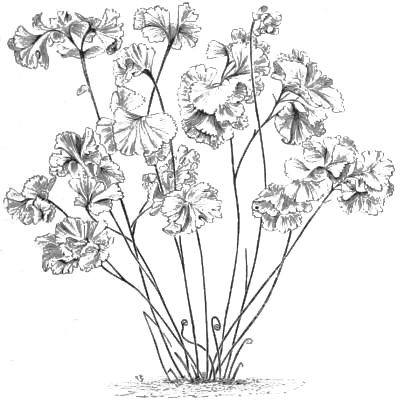
FIG. 29. ADIANTUM LUDDEMANNIANUM.
A. Luddemannianum (Luddemann's).* A very striking variety
of the common Maidenhair, A. Capillus-Veneris, of garden origin,
with smooth, dark, almost black stipes, branching about a third
of the way up, while the pinnules are crested, usually clustered,
at the extremities of the branches, of a deep green, sub-glaucous
character. It is a very elegant little greenhouse variety. See
Fig. 29.
A. lunulatum (crescent-leaved).* sti. 4in. to 6in. long, tufted,
wiry. fronds 6in. to 12in. long, 1in. to 2in. broad, simply pinnate;
pinnæ ¾in. to 1in. broad, ½in. to 1in. deep, sub-dimidiate, the lower
edge nearly in a line with the petiole, the upper edge rounded
and, like the sides, usually more or less lobed. sori in continuous
lines along the edge. Hongkong, &c., widely distributed
in both hemispheres. Stove species. SYN. A. dolabriforme.
A. macrocladum (long-branched). Synonymous with A. polyphyllum.
A. macrophyllum (long-leaved).* sti. 6in. to 12in. long, strong,
erect, nearly black. fronds 9in. to 15in. long, 4in. to 8in. broad,
simply pinnate; the lower pinnæ of the barren frond 3in. to 4in.
long, 2in. broad, ovate, so broad at the base that the opposite
ones frequently overlap, the margin rather deeply lobed; fertile
ones narrower. sori in long continuous, or slightly interrupted,
marginal lines. Tropical America, 1793. One of the finest stove
species in cultivation.
A. macropterum (long-winged). Synonymous with A. Wilsoni.
A. mexicanum (Mexican). Synonymous with A. glaucophyllum.
A. microphyllum (short-leaved). A synonym of A. venustum.
A. monochlamys (one-covered).* sti. 6in. to 9in. long, wiry,
erect, dark, chestnut brown; fronds 6in. to 12in. long, 4in. to
6in. broad, ovate-deltoid, tripinnate, the pinnæ rather distantly
placed; segments ¼in. broad, cuneate at the base, the upper edge
rounded, slightly toothed, of a light green colour, with a firm
texture. sori single, or very rarely two, in a hollow of the upper
edge. Japan. A very distinct and pretty greenhouse species.
A. monosorum (uni-soriate). A pretty species, from Solomon
Islands, not yet in cultivation.
A. Moorei (Moore's).* sti. 6in. to 8in. long. fronds deltoid, 6in. to
15in. long, two to three pinnate; side segments about ½in. long,
rhomboid, lower edge deflexed from tip of pedicel, outer lobed
half way down. sori round, placed in tip of lobes. Andes of
Peru. Stove or greenhouse species. SYN. A. amabile, under
which name it is frequently grown.
A. Moritzianum (Moritz's). This appears to be a stronger, more
robust grower (fronds from 12in. to 18in. high), with thicker stipes
and larger pinnules than the typical A. Capillus-Veneris. South
America. Greenhouse species.
A. neoguineense (New Guinea).* sti. 6in. to 8in. long, chestnut
brown, erect. fronds spreading, deltoid, tri-quadripinnate, dark
olive green with a glaucous tinge on both surfaces; pinnæ
ovate; terminal pinnules cuneate, lateral ones trapezoid, about
½in. long, crenately lobed, the lobes rather large, entire. sori
small, 6in. to 8in., orbicular, entirely sunk in closed sinuses of
the marginal lobes. New Guinea, 1877. A very charming stove
species.
A. obliquum (oblique). sti. 3in. to 6in. long, erect, wiry, pubescent.
fronds 6in. to 12in. long, 2in. to 4in. broad, with a terminal
lobe and three to twelve pairs of alternate pinnæ, the lowest 1in.
to 2in. long, ½in. to ¾in. broad, costate nearly to the apex, the
upper half the largest, rounded at the base, the lower half obliquely
truncate at the base, those of the barren frond slightly toothed.
sori in numerous interrupted marginal patches, one to two lines
broad. West Indies, &c., 1826. Stove species.
A. palmatum (palmate).* fronds with elongated zigzag rachises,
elongate-oblong, narrowed to the apex, tripinnate, often reaching
3½ft. long, 10in. broad; pinnules distinct; ultimate segments large,
smooth, distant, distinctly stipitate, varying from obovate wedge-shaped
to semi-orbicular in outline, but all deeply, palmately cut,
1in. to 1¾in. broad. sori oblong, variable in length, situate at the
tips of the segments, usually one to each. This is a very beautiful
and graceful stove or greenhouse species. Peru, 1877.
A. patens (spreading). sti. 6in. to 9in. long, erect. fronds dichotomously
divided and the branches once or twice divided
again; central pinnæ 6in. to 9in. long, 1½in. broad; pinnules
½in. to ¾in. long, ¼in. deep, dimidiate, the two sides nearly parallel,
the upper and outer ones broadly and bluntly lobed. sori placed
round the upper and outer edge, obversely reniform. Brazil, &c.,
1824. Stove species.
A. Pecottei (Pecot's).* This is a charming little variety, of
garden origin, with short decompound fronds, imbricated segments,
comparatively large, of a deep green colour, and likely to prove
one of the most useful maidenhair ferns grown.
A. pedatum (pedate).* sti. 9in. to 24in. long, erect, polished.
fronds dichotomous, with the main divisions flabellately branched;
central pinnæ 6in. to 12in. long, 1in. to 1½in. broad; pinnules
½in. to ¾in. long, ¼in. deep, dimidiate, broadest on the side
nearest the stem, the upper and outer margin lobed, shortly
stalked. sori roundish, one to two lines broad. North Hindostan,
the United States, &c. Hardy species. See Fig. 30.
A. peruvianum (Peruvian).* sti. 9in. to 18in. long, strong, erect.
fronds simply pinnate, or with one to three branches at the base,
some of the latter sometimes again slightly divided; pinnules
2in. or more broad, 1½in. deep, unequally ovate, cuneate at base,
finely toothed and lobed round the upper and outer edge. sori in
interrupted patches round the sides of the pinnules. Peru. This
is one of the finest of the large growing, evergreen stove kinds.
A. polyphyllum (many-leaved).* sti. 12in. to 18in. long, strong,
erect. fronds 2ft. to 3ft. long, 12in. to 18in. broad, the upper
part simply pinnate; lower pinnæ sometimes 1ft. long; 6in. broad,
with a long terminal and numerous lateral pinnules; segments
¾in. to 1in. long, ¼in. deep, dimidiate, with nearly parallel edges,
the point obtuse, the upper edge sharply toothed. sori in
numerous sub-orbicular patches, placed in hollows in lobes along
the upper edge. Columbia. A magnificent stove species. SYNS.
A. cardiochlæna and A. macrocladum.
A. populifolium (poplar-leaved). A synonym of A. Seemanni.
A. princeps (princely).* sti. 9in. to 12in. long, stout, nearly erect.
fronds large, 12in. to 24in. long, 9in. to 18in. across the base,
deltoid, pendent, quadripinnate, pale greyish; lower pinnæ obliquely
elongate, triangular, the posterior side tripinnate, the
anterior bipinnate; upper ones pinnate, with a large cuneately
flabellate terminal pinnule, apex of fronds pinnate; pinnules 1in.
long, ¾in. broad, roundish rhomboidal or shortly trapeziform,
shortly stalked; basal margin entire, slightly concave, the anterior
margins and apex lobate, the lobes serrulate in the sterile parts,
and, where fertile, bearing each a concave sorus, so that the lobes
appear two-horned. New Grenada, 1875. A magnificent stove
species.
A. prionophyllum (saw-leaved). Synonymous with A. tetraphyllum.
A. pubescens (downy). Synonymous with A. hispidulum.
A. pulverulentum (covered with powder).* sti. 6in. to 12in. long,
strong, erect; fronds with a terminal pinna and several spreading
lateral ones on each side, which are 4in. to 8in. long, 1in. broad;
pinnules ½in. long, one and a half to two lines deep, dimidiate,
the lower line nearly straight, the upper one nearly parallel,
both it and the outer edge finely toothed. sori in a continuous
line along the lower and upper edges. West Indies, &c. Stove
species.
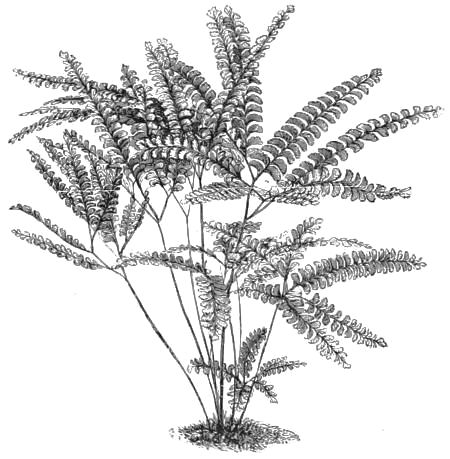
FIG. 30. ADIANTUM PEDATUM.
A. Reichenbachii (Reichenbach's). Synonymous with A. Henslovianum.
A. reniforme (kidney-shaped).* sti. tufted, 4in. to 9in. long. fronds
simple, orbicular, reniform, of a deep green colour, 1½in. to 2½in.
across, with usually a broad, open sinus. sori all around the
edge, one and a half to three lines broad. Madeira, &c., 1699.
Greenhouse species.
A. r. asarifolium (asarum-leaved). A rather larger growing
variety of above species.
A. rhomboideum (rhomboid). S. America, 1820. Probably
identical with A. villosum.
A. rubellum (reddish).* sti. 4in. to 6in. long. fronds 4in. to 6in.
long, deltoid, bipinnate; uppermost side of the pinnules cuneate,
flabellate, nearly sessile, entire; lower rhomboid ½in. long, with
lower border in a line with petiole, or rather decurved, inner produced
over rachis, outer deeply lobed and finely toothed; end and
lowest pinnules deltoid, ½in. broad. sori round, placed in the tips
of the lobes. This pretty species is purplish crimson when in a
young state, changing to light green with age, but even then
tinged with pink. Allied to A. tinctum and A. decorum. Bolivia,
1868. Greenhouse species.
A. scutum (shield). Synonymous with A. Ghiesbreghti.
A. Seemanni (Seemann's).* sti. 6in. to 12in. long, erect. fronds 9in.
to 20in. long, simply pinnate or the lower pinnæ compound; pinnæ
3in. to 4in. long, 1½in. to 2in. broad, ovate, acuminate; but rather
unequally sided, the barren ones finely serrated, one side usually
cordate at the base, the other obliquely truncate, petioles of the
lowest, nearly an inch long. sori in long continuous marginal
lines. This is a very fine and distinct stove species. Central
America, 1868. SYNS. A. populifolium, A. Zahnii (of gardens).
A. sessilifolium (sessile-leaved). Synonymous with A. Henslovianum.
A. setulosum (bristly). Synonymous with A. diaphanum.
A. speciosum (showy). Synonymous with A. digitatum.
A. subvolubile (somewhat twining). fronds subscandent, 2ft. to
4ft. long, oblong, tripinnate, 6in. to 8in. broad, with naked glossy
castaneous stipes and zigzag rachises; central pinnæ lanceolate,
with a few short spreading pinnules; side pinnules rhomboidal,
about ¼in. long, lower edge in a line with petiole, or deflexed,
inner end touching or wrapped over rachis, outer shallowly lobed;
lowest pinnules equilateral, much wrapped over rachis. sori
minute, round, six to twelve to a segment. E. Peru. Stove species.
A. tenerum (tender).* sti. 1ft. or more high, erect. fronds 1ft. to
3ft. long, 9in. to 18in. broad, deltoid, tri- or quadripinnate; segments
½in. to ¾in. broad, cuneate or tending towards rhomboidal,
dimidiate in shape, the upper edge rounder or somewhat angular,
broadly and deeply lobed, all stalked. sori placed in numerous
roundish patches in the lobes of the upper half.
Mexico, &c., widely distributed. Stove species.
A. t. Farleyense (Farley's).* A subfertile, subcristate
variety of the foregoing; but, is, nevertheless, one of
the most magnificent of Adiantums. It is nearly always
known under the name of A. Farleyense. Barbados,
1865. Stove variety.
A. tetraphyllum (four-leaved).* sti. 6in. to 12in. long,
strong, erect. fronds nearly as broad as long, with a
terminal pinna 6in. to 9in. long, 1in. to 1½in. broad,
and numerous spreading lateral ones; segments ½in.
to ¾in. broad, ¼in. deep, subdimidiate, the lower line
straight or somewhat decurved, the upper nearly
parallel, finely toothed, the outer oblique. sori interrupted,
marginal. Tropical America. Stove species.
SYN. A. prionophyllum.
A. t. Hendersoni (Henderson's). A stove variety with
small blunt pinnules.
A. tinctum (tinted).* sti. 6in. to 9in. long. fronds 6in. to
12in. long, deltoid, bipinnate; side pinnules rhomboid,
three to four lines long, lower edge straight, inner
parallel with rachis, or just wrapped over it, outer
shallowly, bluntly lobed; lower pinnules equilateral,
imbricated over main rachis; surfaces glabrous, when
young of a delicate rose red colour, changing to a
bright green. sori round, placed in final lobes. Tropical
America. Stove or greenhouse species.
A. trapeziforme (rhomb-leaved).* sti. 6in. to 12in.
long, firm, erect. fronds 12in. to 24in. long, with a
central pinna 4in. to 8in. long, 2in. to 3in. broad, and
two to four large spreading ones on each side, the
lowest of which are often branched again; segments
1½in. to 2in. long, ½in. to ¾in. broad, dimidiate, the
sides nearly parallel, the outer edge oblique, both
it and the upper one bluntly lobed, the lowest on
stalks ¼in. to ½in. long. sori numerous, contiguous,
placed round the upper and outer edge. West Indies,
1793. Stove species.
A. t. cultratum (sharpened).* Outer edge of the segment
bluntly rounded.
A. t. pentadactylon (five-fingered). Lower margin
of the segments somewhat decurved obliquely from
the petiole.
A. t. Sanctæ Catherinæ (of gardens).* This is a deeply cut,
rather copiously divided variety of A. trapeziforme.
A. t. S. C. Funcki (Funck's).* A deeply lobed, drooping variety, of
garden origin.
A. triangulatum (triangle-leaved). Synonymous with A. intermedium.
A. varium (various). Probably identical with A. villosum.
A. Veitchianum (Veitch's).* sti. 6in. to 9in. long. fronds 9in. to
18in. long, deltoid, bipinnate in lower half, reddish when young;
side pinnules rhomboid, about ½in. long, lower border straight,
more or less deflexed from tip of pedicel, inner distant from rachis,
upper and outer shallowly lobed; end segments ½in. to ¾in. broad,
equilateral, rounded in upper, deltoid in lower half. sori eight to
ten to a segment, round, minute. Peruvian Andes, 1868. A very
elegant and distinct stove species.
A. velutinum (velvety).* sti. as long as fronds, slightly velvety.
fronds deltoid, 1½ft. to 2ft. long, three to four pinnate; rachises
densely pubescent on both sides; pinnæ 6in. to 9in. long; segments
twenty to thirty-jugate, sub-sessile, sub-rhomboidal, 1in. long, ½in.
broad, lower border decurved, outer blunt or sub-acute, upper
straight, shallowly, bluntly lobed. sori straight, one to one and a
half lines long at tips of lobes of upper edge, four to six to a segment.
Columbia, 1866. A magnificent stove species.
A. venustum (charming).* sti. 6in. to 9in. long, wiry, erect,
glossy. fronds 6in. to 12in. long, 4in. to 8in. broad, deltoid,
tri-quadripinnate; ultimate segments about ¼in. across, cuneate at
the base, the upper edge rounded, and usually finely toothed, of
a light green colour, with a firm texture. sori one to three,
roundish; in hollows of the upper edge. Himalayas, up to 8000ft.
Greenhouse or frame, nearly hardy in sheltered places. SYN.
A. microphyllum.
A. villosum (hairy stalked).* sti. 9in. to 12in. long, strong, erect.
fronds with a terminal central and several spreading pinnæ on
each side, 6in. to 12in. long, 1½in. to 2in. broad; pinnules dimidiate,
about 1in. long, ½in. broad, the lower line nearly straight,
the upper edge nearly parallel with it, but considerably larger,
slightly toothed, and the outer edge auriculed at the base. sori
in a continuous line round the upper and outer edge. West Indies,
&c., 1775. Stove species.
A. Wagneri (Wagner's). Synonymous with A. decorum.
A. Wilesianum (Wiles's). Synonymous with A. crenatum.
A. Williamsii (Williams's).* sti. 6in. to 8in. long. fronds 9in. to
18in. long, tripinnate, triangular; pinnæ ovate, distant, pinnules
sub-rotund, slightly trapeziform, the basal line rather concave, the
margin entire or slightly undulated, or divided into three to four
lobes, crenately notched between the sori, the sterile portions with
an erose diaphanous margin. sori eight to ten, elongate reniform
or lunate, occupying the whole of the semicircular outer edge.
Mountains of Peru, 1877. In a young state, the stipes and fronds
are dusted with a yellow powder. This is one of the most beautiful
of the Maidenhair ferns. Greenhouse species.
A. Wilsoni (Wilson's).* sti. 6in. to 12in. long, erect. fronds 9in.
to 12in. long, 6in. to 12in. broad, simply pinnate, with a large
terminal pinna and two to six sub-sessile lateral ones on each
side, which are 4in. to 6in. long, 1in. to 2in. broad, ovate or ovate-lanceolate,
acuminate, nearly entire. sori in continuous lines along
both edges. Jamaica. Stove species. SYNS. A. dolosum, A.
macropterum.
A. Zahnii (Zahn's). Synonymous with A. Seemanni.
ADIKE. A synonym of Pilea (which see).
ADINA (from adinos, crowded; in reference to the
flowers being disposed in heads). ORD. Rubiaceæ. A very
pretty evergreen cool stove shrub, with opposite terete
branches, and solitary, axillary peduncles. It thrives in
a mixture of loam, sand, and peat. Propagated by cuttings,
inserted in a rich, loamy soil, under a hand glass, in heat.
A. globifera (globe-bearing).* fl. yellowish, sessile, crowded,
collected into globose heads; corolla funnel-shaped; peduncles
axillary, rarely terminal, solitary. July. l. lanceolate, glabrous,
longer than the peduncles. h. 3ft. to 4ft. China, 1804.
ADLUMIA (from adlumino, to fringe with purple;
flowers bordered with purple). ORD. Fumariaceæ. An
interesting, delicate, and nearly hardy climber from North
America. Flowers with four spongy, cohering petals. A
warm, good soil is most suitable; sow seeds about May in
a shady spot. It is a biennial, but in favourable spots is
self-sowing, and thus may be treated as a perennial. If
placed either against a wall or in the open it is a pretty
subject for trailing over a shrub or twiggy branch. From
its fragile character, it can only be seen to the best advantage
under glass.
A. cirrhosa (tendrilled).* fl. pale rose-coloured, about ½in. long;
peduncles axillary, generally four-flowered. June. l. triply pinnate,
pale green. h. 15ft. 1788. The Maidenhair fern-like leaves
are borne in profusion on the slender twining stems. SYN. Corydalis
fungosa.
ADNATE. Grown to anything by the whole surface;
anthers are said to be Adnate when they are attached to
the filaments by their whole length.
ADONIS (name of classical derivation). ORD. Ranunculaceæ.
Handsome hardy herbaceous plants. Flowers
solitary, terminal; petals five to fifteen. Leaves divided
into numerous linear segments. Some of the annuals are
much inferior to the perennial species. The latter section
constitute very ornamental subjects for rockwork, borders,
margins of shrubberies, &c. All the species will grow
freely in common soil, and are propagated by seeds. The
perennials may be divided at the root.
A. æstivalis (summer).* Pheasant's Eye. fl. deep crimson;
petals flat, oblong, obtuse, one-half longer than the calyx. June.
Stem almost simple, elongated. h. 1ft. South Europe, 1629.
Annual. See Figs. 31 and 32.
A. autumnalis (autumnal).* Pheasant's Eye; Red Morocco.
fl. of an intense blood-red, with a black centre, rarely pale,
globose from the six to eight concave conniving petals, which
are scarcely larger than the calyx. May. Stems branched.
h. 1ft. Britain. Annual.
A. pyrenaica (Pyrenean).* fl. almost sessile, yellow; petals eight
to ten, smaller and more obtuse than in A. vernalis. July.
l., lower ones on long stalks, with trifid petioles and many-parted
segments; upper ones sessile, multifid, with linear very entire
lobules. Stem 1ft. or more high, and usually much branched.
Pyrenees, 1817. Perennial.
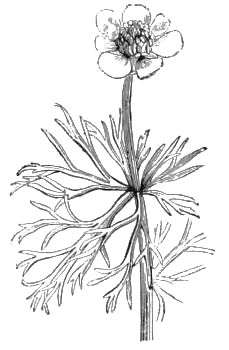
FIG. 31. FLOWER OF ADONIS æSTIVALIS.
A. vernalis (spring).* fl. yellow, large; petals, ten to twelve, oblong,
rather denticulated. March. l. lower ones abortive, or reduced
to somewhat sheathing scales, the middle and upper ones sessile
and multifid, with very entire lobes. h. 9in. to 1ft. Europe,
1629. Charming rock plant. This handsome species requires a
rich moist sandy loam, and should not be disturbed for years.
Perennial.
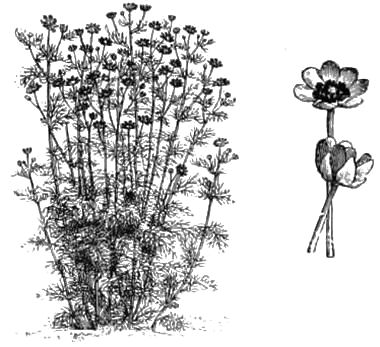
FIG. 32. ADONIS æSTIVALIS, showing Habit and Flowers.
A. v. sibirica (Siberian) differs only in having larger flowers.
A. volgensis (Volga). An intermediate species between A. vernalis
and A. pyrenaica, differing from the first in the stems being
branched, leaves more distant; from the last by the lower leaves
being abortive, and formed like scales; and from both in the
sepals being pubescent on the outside, not smooth. fl. yellow.
h. 1ft. Russia, 1818.
ADPRESSED. Brought into close contact with anything
without adhering.
ADULT. The full grown of anything. Full grown
leaves are termed adult.
ADVENTITIOUS. Developed in an unusual position.
Applied to buds, roots, &c.
ADVENTURE BAY PINE. See Phyllocladus
rhomboidalis.
ADVERSE. Opposite.
ÆCHMEA (from aichme, a point; in reference to the
rigid points on the calyces, or flower-envelopes). Including
Pironneaua. ORD. Bromeliaceæ. Very handsome stove
plants. Flowers scapose, panicled; perianth six-cleft, three
outer segments sepaloid, longer than the three inner or
petaloid ones. Leaves ligulate or sword-shaped, sometimes
with marginal spines. The species thrive best in a well-drained
compost of rich fibrous loam and leaf mould.
They like plenty of light, which may be afforded by
standing them on inverted pots, so as to raise their
heads well up above the surrounding plants. Propagation:
When the flower-spikes, which are sent up from the heart
or crown of the plant, die away, suckers or offsets are
produced near the base, and from these other flowers
appear the year after. If large plants are desired, these
suckers should be left to grow and spread around; but to
produce single plants, the suckers must be taken off and
potted singly, in sharp soil, and then stood where they can
get a moist heat till rooted. To enable them to do this it
is necessary to strip off a few of the lower leaves, and trim
the bottom with a sharp knife, in order that it may heal
over and callus more readily than it otherwise would.
When rooted, the plants may be shifted into larger-sized
pots; but for single crowns 32-sized pots are large
enough, as the plants, being epiphytal in their nature,
do not require much soil or any great supply of water,
except when growing freely or sending up their flower-spikes.
In winter, they should be kept rather on the dry
side, to induce partial rest; and an important point is to
see that water is not allowed to lie for any length of time
in the crown of the plant, as when that is the case it is
likely to cause them to rot.
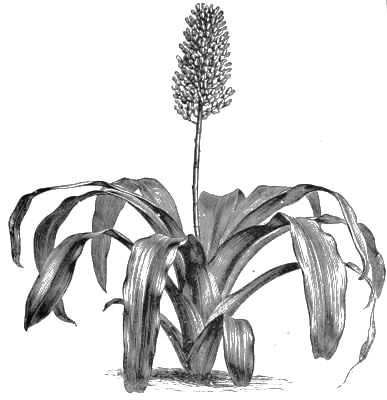
Æ. calyculata (calycled).* fl. bright yellow, tubular, with red
bracts, borne in close roundish heads at the top of an erect scape.
l. strap-shaped, with the ends having the appearance of being
cut off, but armed with a sharp spine. h. 9in. Brazil, 1862.
SYN. Hoplophytum calyculatum.
Æ. cœlestis (heavenly blue).* fl. sky-blue, in close pyramidal
panicles, on erect snipes. Winter. l. ligulate, concave, spiny-edged,
scaly beneath. Brazil, 1874. SYN. Hoplophytum cœleste.
Æ. cœrulescens (bluish). fl. bluish. h. 1ft. South America,
1870. This pretty species is very attractive on account of the large
dense head of deep blue and pure white berries which are produced
in October. SYN. Lamprococcus cœrulescens.
Æ. discolor (two-coloured-leaved).* fl. scarlet, borne on a loose,
branched panicle. June. l. broad, minutely toothed on the
margin, deep green above, and rather purplish beneath. h. 2ft.
Brazil, 1844.
Æ. distichantha (two-ranked-flowered).* fl. sepals rose-coloured;
petals bright purple; spikes densely clothed with bright red
bracts. l. long, glaucous, linear-oblong, tapering to a sharp point,
and distinctly armed with reddish brown spines. h. 1ft. South
Brazil, 1852. SYN. Billbergia polystachya.
Æ. exudans (exuding). fl. orange-coloured (exuding a white
greasy substance, whence the specific name) interspersed with
green bracts; scape erect, with scattered crimson lanceolate bracts,
terminating in a dense head. l. oblong, spine-margined, grey-coated.
h. 2ft. West Indies, 1824. SYN. Hohenbergia capitata.
Æ. fasciata (banded).* fl. scape upright, clothed with leafy bracts
of a rosy-pink colour; each of the pink blossoms in the dense
conical head is subtended by a narrow, spiny-edged, similarly-coloured
bract, longer than its own. l. broad, recurved, banded
with white. Rio Janeiro, 1826. SYN. Billbergia fasciata. Lasts
in perfection for a considerable length of time.
Æ. fulgens (glowing).* fl. deep rich red, with a bluish tip, fifty
or more in a large branching panicle; scape stout, erect, scarlet.
August, September. l. somewhat sword-shaped, terminating
rather abruptly. Cayenne, 1842. See Fig. 33.
Æ. Furstenbergi (Furstenberg's). fl. rose; flower spike dense,
with overlapping showy pink bracts. l. tufted, linear, spinous at
the edge, recurved. h. 1ft. Bahia, 1879.
Æ. glomerata (glomerate).* fl. violet; scape erect, stout, 8in. to
10in. high, with glomerate branches of crowded blood-red bracts.
l. oblong-ligulate, cuspidate, about 18in. long, dull green; margin
with short wide-set spines. Bahia, 1868. SYN. Hohenbergia erythrostachys.
Æ. hystrix (bristly).* fl. in very dense, oblong spikes; floral
leaves and bracts scarlet. February. l. densely crowded, ascending,
linear lanceolate, saw-toothed. h. 2½ft. Cayenne, 1880.
Æ. Legrelliana (Legrell's). A synonym of Portea Legrelliana.
Æ. Lindeni (Linden's). fl. yellow, in dense terminal heads, with
lanceolate red bracts, shorter than the flowers. l. linear-oblong,
rounded, apiculate; margins saw-toothed; habit tufted. h. 1ft.
South Brazil, 1864.
Æ. Mariæ Reginæ (Queen Maria's).* fl. tipped with blue, changing
to salmon colour with age, arranged compactly upon the
upper portion of the spike; scape erect, about 2ft. high; half the
length is clothed with large boat-shaped bracts, some 4in. long,
intensely rich rose-pink. June, July. l. 18in. long, with a tufted
habit. Costa Rica, 1873. This is perhaps the best species.
Æ. Melinoni (Melinon's). fl. bright scarlet, tipped with pink,
cylindric; panicle dense, terminal. l. oblong, leathery, about
18in. in length, dark green; margin spiny. South America.
Æ. Ortgiesii (Ortgies'). fl. red, on short spikes. l. numerous,
channelled, recurved, spongy, broad at the base, and tapering to
a point; stem short, gouty. Tropical America, 1860. SYN.
Ortgiesia tillandsioides.
Æ. paniculigera (panicled). fl. rose-coloured; petals projecting
beyond the sepals, deep bright purple; panicle large, compound,
1ft. to 2ft. long; scape reddish, downy; rachides and bracts rose-coloured.
l. ligulate, shortly acuminate. West Indies, 1881.
Æ. spectabilis (showy).* fl. rosy; calyx fleshy, ovate; corolla
1in. long, rosy crimson. l. spreading, channelled, ligulate, 2½ft.
long, 3in. to 4in. broad. Guatemala, 1875.
Æ. Veitchii (Veitch's).* fl. scarlet; spike densely clothed with
scarlet toothed bracts, closely investing flowers. l. tufted,
leathery in texture, broadly strap-shaped, spotted, and minutely
serrulate. h. 1ft. Columbia, 1877. SYN. Chevalliera Veitchii.
ÆGICERAS (from aix, a goat, and keras, a horn;
alluding to the shape of its fruit). ORD. Myrsineæ. Small
trees, with obovate entire leaves. Flowers white, fragrant,
in terminal or axillary umbels. For culture, see
Jacquinia.
Æ. fragrans (fragrant). fl. white, fragrant; umbels pedunculate,
axillary, terminal. April. l. obovate, margin undulated, and
unequally dilated, veiny; upper surface covered with saline excrescence.
h. 6ft. New Holland, 1824.
ÆGILOPS. See Quercus Ægilops.
ÆGIPHILA (from aix, a goat, and philos, dear; a
favourite with goats). ORD. Verbenaceæ. Stove ornamental
evergreen shrubs, generally with ovate-lanceolate,
acuminate, smooth leaves; and flowers in axillary and
terminal panicles. They require a rich sandy loam. Propagated
from cuttings, which will root in sand, under a
glass, with bottom heat.
Æ. grandiflora (large-flowered).* fl. yellow, terminal, corymbose;
corolla downy. November. Berry compressed, blue. l. verticillate
oblong, entire, sub-cordate at base. h. 3ft. Havannah,
1843. The other species are probably not now in cultivation, and
this one is not generally so.
ÆGLE (from Ægle, one of the Hesperides). Bengal
Quince. ORD. Rutaceæ. A stove evergreen tree, producing
very large fruit, which much resembles an orange in general
appearance, very delicious to the taste, and exquisitely
fragrant. This genus differs principally from Citrus by its
numerous disunited stamens. The pulp of the fruit is an
aperient, and a valuable remedy in dysentery, the thick
rind and the dried unripe fruit are astringent. It thrives
best in a rich loamy soil. Propagated by ripe cuttings,
which, if not deprived of any of their leaves, will root in
sand under a hand glass, in heat.
Æ. Marmelos (Marmelos). fl. white, very fragrant; panicles
axillary, terminal. April. fr. fifteen-celled. l. trifoliate; leaflets
toothletted. h. 10ft. India, 1759.
ÆOLANTHUS (from aiollo, to vary, and anthos, a
flower; referring to the variableness of the flowers). ORD.
Labiatæ. A genus of few herbs, with thickish leaves.
Flowers loosely panicled. They thrive in sandy loam, and
increase freely from seeds sown in a similar compost.
Æ. Livingstonii (Livingstone's). fl. brown. East Africa, 1859.
Æ. suaveolens (sweet-scented). fl. lilac, secund; cymes axillary
and terminal, erect, usually trifid, with floral leaves under the
divisions. July. l. nearly sessile, obovate, obsoletely denticulated,
thickish, pale green. h. 1ft. Brazil, 1859. A pretty stove
annual, with a sweet odour.
AERANTHUS (from aer, air, and anthos, a flower;
referring to the habit). ORD. Orchideæ. A genus of a
couple of species of remarkable stove orchids, requiring
treatment similar to Anguloa, to which they are allied.
Æ. arachnitis (spider-like). fl. green. l. linear. h. 4in. Madagascar,
1850.
Æ. grandiflora (large-flowered).* fl. yellowish-green, large,
solitary, terminal. h. 8in. Madagascar, 1823.
AERATION. The exposure of the soil to the free
action of the air, as essential to the growth of plants.
AERIDES (from aer, the air; in reference to the
power the species have of deriving their sustenance from
the atmosphere). ORD. Orchideæ. An extensive genus of
epiphytal orchids, confined to the tropics of the Old World,
including many large and showy-flowered species. The
majority of them are extremely handsome. The thick fleshy
leaves are noteworthy for their characteristically distichous
arrangement—that is to say, they are arranged in two
opposite rows. They are usually truncate at the apex, and
for the most part deeply channelled down the centre, but in
some species terete or nearly cylindrical. All of them throw
out large fleshy roots from various parts of their stems, by
which they absorb the moisture from the atmosphere; and,
in order to grow them successfully, they must be fixed upon
blocks of wood. But this method should be adopted only
whilst the plants are young, as it is almost an impossibility
for the cultivator to maintain a sufficient amount of atmospheric
moisture to meet their requirements; and, unless
this is managed, the leaves will shrivel and fall off, leaving
only a few at the extremity. Therefore, as soon as the
plants are established upon the blocks of wood, let them
be removed and potted. Fill the pot three parts full of
broken potsherds and lumps of charcoal, and then use
nothing, but clean, living sphagnum, placing a few roots in
the moss and leaving the others free. By this means a
greater amount of moisture can be supplied to them, and
thus beautiful and symmetrical specimens obtained. The
Aerides are easily grown into handsome plants, which
usually bloom profusely, and thus recommend themselves
to all who cultivate orchids. From early spring until
the end of September they should be treated liberally with
water, at the same time taking care never to wet the
flowers. After the above-named time, a gradual diminution
in the water supply to the roots should take place; and
the atmosphere, too, should be less densely charged with
moisture. But drought should never be carried far enough
to cause the leaves to shrivel, for, if this is done, the uniformity
of the specimen is marred; and, although we are
quite willing to admit the possibility of the plants producing
a greater quantity of flower spikes after a thorough
shrivelling, we prefer to advocate the system that gives a
fair amount of flower coupled with good leafage. As before
remarked, the Aerides are peculiarly eastern, and therefore
are usually classed amongst the orchids which require the
hottest houses. This is, in one sense, correct; yet they do
not require the great amount of heat which many imagine,
and which has, until recently, been given them. They
must not, therefore, be excluded from the amateur's collection
of orchids. During the winter season many of the
species may be kept in a temperature of 58deg. to 60deg.;
whilst during the growing season the temperature may run
up by sun heat without limit, so long as a free circulation
of air and a sufficiency of moisture are secured. The
following status of temperature may be observed: In spring,
from 65deg. in the night, to 70deg. or 80deg. by day; in
summer, from 70deg. in the night, to 80deg. or 85deg.
through the day; in winter, about 60deg. night, and 65deg.
day.
A. affine (related).* fl. delicate rose, produced, in great profusion,
on branching spikes, which are sometimes 2ft. in length, and
continue in bloom two or three weeks; the sepals and petals
equal, rounded at the apex; the lip is sharply rhomboid and
three-lobed, with a short spur. l. light green, about 1ft. long.
h. 3ft. A very handsome species from India, forming an
excellent exhibition plant.
A. a. superbum (superb).* An improved variety, with larger
and richer coloured flowers, and more compact habit.
A. Brookii (Sir A. Brooke's).* fl. purple and white; labellum
bright purple; sepals and petals white, very fragrant. l. very
ornamental, of a glaucous (milky green) hue. Bombay. This
species, although one of the handsomest, is very rare.
A. crassifolium (thick-leaved).* This is a dwarf, densely-habited
plant, with broad, thick, purple-dotted obliquely-bilobed leaves.
The flowers, which are borne on long and drooping spikes, are
bare—larger than those of A. falcatum, which they resemble in
form, and have the segments tipped with rich purple or amethyst,
the centre or throat of the flower being ivory-white. Compared
with A. falcatum, the spur is here bent under at an angle, while
in that plant it is straight; the side laciniæ of the lip are much
broader and shorter in the present plant, and the two keels on the
lip here stand close together at the base, and become divergent,
whilst in falcatum they are distant at the base, and become convergent
near the middle of the lip. This species is described as
being the best in the genus. It may be grown near the glass,
suspended in a basket. Burmah, 1877.
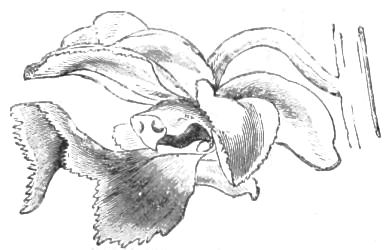
FIG. 34. FLOWER OF AERIDES CRISPUM.
A. crispum (curled).* fl. white, suffused with purplish rose, nearly
2in. in diameter; sepals and petals ovate, acute; lip three-lobed,
the middle lobe being very large, toothed at the base, and fringed
at the margin; the horn-like spur is slightly incurved; racemes
ascending, more than double the length of the leaves, many-flowered.
l. deep green, flat and broad, blunt at the ends, and
two-lobed, about 4in. or 5in. long. Bombay, 1840. Lasts a long
time in beauty. See Fig. 34.
A. c. Lindleyanum (Lindley's). A robust-growing variety,
producing a large, much-branched panicle of flowers; sepals and
petals white; lip large, bright rich rose-coloured.
A. c. Warneri (Warner's).* The leaves are smaller, and more
slender than in the species; the sepals and petals are white, with
a soft, rich, rose-coloured lip.
A. cylindricum (cylindric).* fl. white and pink, as large as those
of A. crispum; sepals and petals crispy. l. elongate, subulate,
terete, 4in. to 6in. long. East Indies. A very rare and distinct
species. SYN. A. vandarum.
A. dasycarpum (thick-fruited). fl. brownish, rosy. India, 1865.
A. dasypogon. See Sarcanthus erinaceus.
A. difforme (deformed). fl. green and brown. India, 1865.
A. Dominiana (Dominy's).* This is a garden hybrid between
A. Fieldingii and A. affine, with the colour of the former, but
markings and shape of the latter. Very rare.
A. falcatum (sickle-leaved).* fl. sepals and petals white, dotted
with reddish crimson, and tipped with soft rose; lip white at the
sides, with a rosy-crimson centre; spur short, parallel with the
lip; racemes pendulous, many flowered. l. closely set upon the
stem, peculiar blue-green, coriaceous, obtuse and mucronate.
This species is very closely allied to A. crassifolium. SYN. A.
Larpentæ.
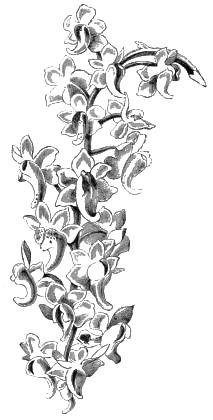
FIG. 35. AERIDES ODORATUM.
A. Fieldingii (Fielding's).* The Fox-brush Ærides. fl. white,
numerous, large, beautifully mottled with bright rose colour; the
much branched racemes are 2ft. to 3ft. long, and continue blooming
three or four weeks. l. 8in. to 10in. long, in some plants
light green, and in others dark green; long, broad, thick, and
fleshy, obliquely two-lobed at the apex. h. 3ft. to 4ft. Assam.
A. Houlletianum (Houllet's).* fl. sepals and petals buff, shading
off into cream white at the base, with a purplish eye-spot at their
tips; lip white; front part dark purplish, with some lines of the
same colour on the sides; on densely crowded spikes. l. and
growth similar to A. virens. Cochin China. SYN. A. Mendelii.
A. japonicum (Japanese).* fl. white, with the lateral sepals
slightly barred with brown purple; several on the pendent
racemes; lip purple, spotted, marked with a dark violet central
ridge. l. short, linear-oblong, obtusely bilobed. Stems short,
about 4in. high. A pretty cool house species from Japan, 1862.
A. Larpentæ (Lady Larpent's). Synonymous with A. falcatum.
A. Lobbii (Lobb's).* fl. white in the centre, slightly tinted with
blush-rose towards the outside, somewhat spotted with violet; lip
marked with a whitish central bar, and stained with a deep violet on
either side; on long, dense, cylindrical, pendent spikes. l. ligulate,
obliquely two-lobed at the apex, thick and fleshy in texture, about
18in. long, and of a light green hue. Moulmein, 1868. This
elegant plant, of which many distinct varieties are in cultivation,
is one of the most delicate of the genus.
A. maculosum (spotted). fl. large, with obtuse pale rose-coloured
sepals and petals, which are spotted with purple; lip flat and
undivided, bluntly ovate, and of a deep rosy-purple; racemes
pendulous, proceeding from among the upper leaves, somewhat
lax and branching. l. ligulate, thick, and fleshy, obtuse at the
apex, 8in. or 9in. long, dark green. A somewhat slow growing
species, with a rather stiff, dwarf habit. Bombay, 1840.
A. m. Schrœderi (Schrœder's).* fl. very delicate white, tinged
with lilac and spotted with rose; labellum beautiful rose coloured.
l. dark green, 10in. long. h. 18in. East Indies. A very free
growing and handsome variety, superior to the species, but rare
in cultivation.
A. Mendelii (Mendel's). Synonymous with A. Houlletianum.
A. mitratum (mitred).* fl. waxy-white; lip violet coloured, on
numerous dense erect racemes. April. l. cylindrical, attenuated,
about 2ft. long, dark green. Moulmein, 1864. A rare but elegant
species.
A. nobile (noble).* fl. sepals and petals white tipped, and spotted
with bright rose; lip three-lobed, the side lobes creamy yellow,
and the middle lobe slightly bifid at the apex, white, dotted with
rose-purple, very fragrant; racemes 2ft. to 3ft. long, pendulous,
much branched, many flowered. l. strap-shaped, obliquely emarginate
at the apex, light green, slightly spotted with brown. Not
unlike A. suavissimum, but with larger and better coloured
flowers, and more robust growth. East Indies.
A. odontochilum (tooth-lipped). h. 2ft. Sylhet, 1837.
A. odoratum (fragrant).* fl. sepals and petals creamy and white,
tipped with pink; lip cucullate, with even side lobes, the middle
lobe being ovate and inflexed, the spur conical and incurved, of
the same colour as the sepals, very fragrant; racemes longer than
the leaves, many-flowered, pendulous. l. oblique, obtuse, mucronate
at the apex, and dark green. East Indies, 1800. See Fig. 35.
A. o. cornutum (horned). fl. pink and white. Distinct.
A. o. majus (greater).* Like A. odoratum in growth, but with
larger and longer spike of flowers.
A. o. purpurascens (purplish).* A very robust variety, with
broad dark green leaves and massive spike of large flowers, which
are white, tipped with bright pink.
A. pachyphyllum (thick-leaved). fl. light crimson lake; spur
and column white, the small laciniæ of the blade of the lip on
front part of spur painted with more or less warm purple (these
laciniæ are just as insignificant as the spur is preponderant);
raceme short, few-flowered. l. fleshy, short; apex obtuse, and unequally
two-lobed. Burmah, 1880.
A. quinquevulnerum (five-wounded).* fl. fragrant; sepals and
petals obtuse, white, marked with five reddish crimson blotches,
and tipped with purple; lip cucullate and funnel-shaped, the side
lobes being erect and the centre lobe oblong, incurved and
serrated, of the same colour as the sepals; spur conical, green,
large; racemes longer than the leaves, pendulous, and many-flowered.
Late summer and early autumn. l. ligulate, about
12in. long, tightly clasping the stem at the base, obliquely mucronate
at the apex, bright shining green. Philippines, 1838.
A. q. Farmeri (Farmer's).* A very rare variety of the above,
with similar habit, but the flowers are pure white throughout,
and fragrant.
A. Reichenbachii (Reichenbach's).* fl., sepals neatly striped
(not blotched); lip deep orange colour; racemes densely crowded.
Borneo, 1858. A very rare species.
A. roseum (rose-coloured).* fl., sepals and petals narrow, acute,
pale rose colour, with darker spots; lip flat, entire, and acute, of
a bright rose, freckled—like the sepals and petals—with spots of a
darker hue; raceme pendulous, dense, and many-flowered, upwards
of 1ft. in length. l. coriaceous, recurved, and channelled above
with a blunt two-lobed apex. Moulmein, 1840. As this does not
root freely, it requires less moisture than any other species.
A. r. superbum (superb).* A fine variety, with stronger growth
and larger and richer-coloured flowers. The spikes of this, as well
as the typical species, are apt to die off if much water is given.
A. rubrum (red). A synonym of Sarcanthus erinaceus.
A. suavissimum (sweetest). fl. sepals and petals obtusely ovate,
white, tipped or tinged throughout with deep lilac; lip three-lobed,
pressed to the column, the side lobes being oblong and
denticulate, the middle lobe linear and bifid, the whole lip being
of a pale lemon colour, and the spur rosy-eyed; the numerous
racemes are half pendulous and branched, bearing a profusion of
deliciously fragrant flowers. l. flaccid, about 10in. long, light
green, profusely freckled with brown dots. Malacca, 1848. There
are one or two varieties.
A. tesselatum (chequered). fl. lined and streaked with green,
white, and purple. East Indies, 1838. A scarce species.
A. testaceum (testaceous). A synonym of Vanda testacea.
A. Thibautianum (Thibaut's). A synonym of Saccolabium Huttoni.
A. vandarum (Vanda). A synonym of A. cylindricum.
A. virens (vigorous). fl. deliciously fragrant; sepals and petals
ovate, obtuse, soft white, tipped with rosy-purple; lip large; side
lobes toothed at the apex, white, dotted with crimson; middle
lobe bearing a red inflated tongue; racemes long, drooping,
many-flowered, commencing to bloom early in April, and lasting
until July. l. broad, oblique, rounded at the apex, with
a depression in the centre, and very bright green, about 8in.
long.
A. v. Ellisii (Ellis's).* fl. sepals and petals large, white, suffused
with rose, and tipped with amethyst; the lower sepals very round
and broad; lip large; side lobes white, beautifully freckled towards
the base, with short lines of amethyst; middle lobe broad, and
deep rich amethyst in colour; spur stout, curved upwards, and
tipped with brown; racemes about 18in. long, bearing generally
from thirty to forty, or more, large flowers. l. pale green. A
splendid variety.
A. Wightianum. See Vanda testacea.
A. Williamsii (Williams's).* fl. delicate pinkish white, produced
in great abundance; spikes 2ft. to 3ft. long, and branched,
l. broad, dark green, drooping. A very scarce and pretty
species.
AEROBION. See Angræcum.
AEROPHYTES. Plants that are grown entirely in
the air.
ÆSCHYNANTHUS (from aischuno, to be ashamed,
and anthos, a flower). ORD. Gesneraceæ. A genus of very
beautiful twining, radicant or parasitical
stove shrubs, with opposite,
simple, entire leaves, and axillary,
terminal, few flowered, umbellate peduncles.
They possess all the qualifications
worthy of extensive cultivation—handsome
flowers, fine deep
green leaves, an agreeable fragrance,
and are easily grown on blocks, which
must be covered with green moss,
fastened on with small copper wire.
Preparatory to fastening them on,
the roots should be covered with moss,
and the plants secured to the block
also by wire. After this, but little attention
is requisite, except duly syringing
and occasionally dipping in tepid
water. As pot plants they are very
beautiful, and in this method perfection
is only obtained by growing them on
fast and strong by generous treatment,
which consists in frequently repotting
in light rich compost till they are
large enough to be trained up a trellis, formed of slender
rods of willow or hazel. Propagated by seeds and cuttings.
The former are very unsatisfactory; the latter root readily
during spring in a well-drained pot, filled with a light compost,
and having a surface of pure white sand, about 1in.
deep. The best are obtained from half-ripened wood, cut
into 2in. or 3in. lengths, and all leaves, with the exception
of one or two at the top, removed. The cuttings should then
be covered over with a bell glass, and placed in moderate
bottom heat. So soon as rooted, transfer them singly to
small pots, and again place under hand glasses, until they
are thoroughly established, then gradually harden off.
When about twelve months old, place the plants in their
permanent quarters. Baskets are commonly and very
effectively employed. Line these with moss, and fill with
a light rich compost; place the plant as near the centre
as possible, and, to promote a uniform growth, fasten down
the branches with small neat pegs, at equal distances.
During the summer, give copious supplies of water, to
produce a liberal growth, which is of the utmost importance
the first season, when they should not be permitted to
flower. The following winter they should be kept cool
and rather dry, thus giving them a rest. The year
following, if properly managed, they will bloom profusely.
Æ. atrosanguinea (dark-red).* fl. dark red; corolla 1½in.
long, cylindrical, saccate at base, pilose; peduncle one-flowered.
July. l. pilose, oblong, sub-cordate, serrated, unequal. h. 1½ft.
Guatemala, 1848.
Æ. Aucklandi. (Lord Auckland's). Synonymous with Æ. speciosus.
Æ. Boschianus (Bosch's).* fl. scarlet, axillary, clustered; corolla
tubular, with wide throat; calyx tubular, smooth, purplish-brown.
July. l. ovate, obtuse, entire. h. 1ft. Java, 1844.
See Fig. 36.
Æ. cordifolius (heart-leaved).* fl. deep red, striped with black,
inside of the tube orange, axillary, clustered. Summer. l. cordate,
quite smooth, dark green on the upper side, paler below.
h. 1ft. Borneo, 1858.
Æ. fulgens (shining).* fl. bright crimson, very long; throat
and the under side of the tube orange; lobes striped with
black, disposed in terminal umbels. October. l. large, oblong-lanceolate,
acuminate, thick and fleshy, bright dark green. h. 1ft.
East Indies, 1855.
Æ. grandiflorus (large-flowered).* fl. deep crimson and orange,
large; corolla clavate; segments obtuse, with a dark mark at
top, equal; umbels many-flowered. August. l. oblong-lanceolate,
acuminated, serrated, obscurely-nerved, fleshy, dark green,
h. 5ft. East Indies, 1838.
Æ. javanicus (Java). fl. bright red, stained with yellow in the
throat; corolla downy, tubular; corymbs terminal, bracteate.
June. l. small, ovate, slightly toothed, with sunk veins. Java,
1848. Plant scandent.
Æ. Lobbianus (Lobb's).* fl. rich scarlet; calyx large, campanulate;
corolla downy; corymbs terminal, bracteate. June.
l. elliptic, entire or slightly serrated, glaucous. Java, 1845.
Plant subscandent.
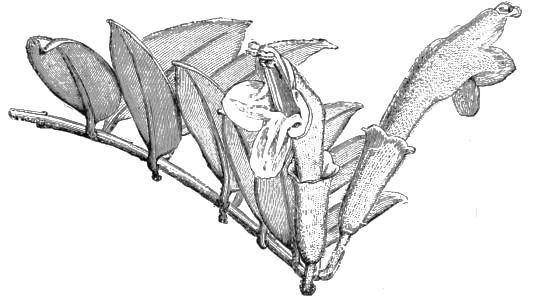
FIG. 36. ÆSCHYNANTHUS BOSCHIANUS.
Æ. longiflorus (long-flowered).* fl. scarlet, erect, fascicled; corolla
with a long clavate curved tube, and oblique constructed bilobed
mouth; upper lobe bifid. Summer. l. broad-lanceolate, acuminate,
entire. Java, 1845. Plant pendulous.
Æ. miniatus (vermilion).* fl. rich vermilion; corolla tomentose;
upper lip bilobed, lower one tripartite; peduncles axillary, three-flowered.
June. l. oval acute, entire. h. 1½ft. Java, 1845.
SYN. Æ. radicans.
Æ. pulcher (fair).* fl. bright scarlet; corolla three times
larger than the calyx; corymbs terminal, bracteate. June. l.
ovate, obscurely toothed. Java, 1845. Scandent.
Æ. radicans (stem-fibred). Synonymous with Æ. miniatus.
Æ. speciosus (showy).* fl. rich orange-coloured; corolla with
long clavate curved tube, and obliquely four-lobed limb; upper
lobe bifid, terminal, numerous, downy. Summer. l. upper ones
always verticillate, ovate-lanceolate, acuminate, slightly serrate.
h. 2ft. Java, 1845. SYN. Æ. Aucklandi.
Æ. splendidus (splendid).* fl. bright scarlet, spotted with black
on the margins; corolla clavate, 3in. long, in terminal fascicles.
Summer, lasting in perfection for a considerable time. l. elliptic
lanceolate, acuminated, entire, rather undulated. h. 1ft. Hybrid.
Æ. tricolor (three-coloured).* fl. deep blood red, usually twin;
throat and base of the lobes bright orange, the three upper lobes
being striped with black. July. l. cordate, dark green above,
paler on the under side; edges, under surface, and stem, slightly
hairy. h. 1ft. Borneo, 1857.
Æ. zebrinus (zebra-marked). fl. green, brown. Autumn. Java,
1846.
ÆSCHYNOMENE (from aischuno, to be ashamed;
in reference to the leaves of some of the species falling on
the slightest touch, like those of the Sensitive plant).
ORD. Leguminosæ. Stove herbs and shrubs, with impari-pinnate
leaves, having many pairs of leaflets, and axillary
racemes of usually yellow flowers. They thrive well
in a good rich loam. Propagated by cuttings, placed in sand
under a bell glass, in a brisk heat. Seeds of the herbaceous
species require a good heat to start them into growth. The
annuals are not worth growing. There are about forty other
species known besides those mentioned, some of which may
prove worthy of cultivation when introduced.
Æ. aristata (awned). A synonym of Pictatia aristata.
Æ. aspera (rough-stemmed). fl. yellow; racemes compound;
peduncles, bracteas, calyces, and corollas, hispid. June. l. with
thirty to forty pairs of linear leaflets, which (as well as the
legumes) are smooth. Stem herbaceous, erect. h. 6ft. to 8ft.
East Indies, 1759. Perennial.
Æ. sensitiva (sensitive).* fl. white; legumes and racemes
glabrous; peduncles branched, few-flowered. June. l. with
sixteen to twenty pairs of linear leaflets. Stem smooth. h. 3ft.
to 6ft. Jamaica, 1733. This shrub requires a sandy soil.
ÆSCULUS (a name given by Pliny to a kind of oak
having an edible fruit; derived from esca, nourishment).
The Horse Chestnut. ORD. Sapindaceæ. A genus
of hardy showy trees, well adapted for lawns or parks,
having a beautiful appearance when in flower. They will
do well in any soil, but the more loamy the better. Increased
by layers, put down in the spring, or by grafting or
budding on the common horse chestnut. Seeds, where procurable,
should be sown singly in rows in spring, where they
may remain until they are of sufficient size to be permanently
planted out. This genus is distinguished from Pavia,
in having its capsules echinated, i.e., covered with prickles,
like a hedgehog; but this character is not always consistent.
Æ. carnea (flesh-coloured). Synonymous with Æ. rubicunda.
Æ. glabra (smooth-leaved).* fl. greenish yellow; corolla of four
spreading petals, with their claws about the length of the calyx;
stamens longer than the corolla. June. l. with five leaflets,
very smooth; foliage larger than the common species. h. 20ft.
North America, 1821. SYNS. A. ohioensis, A. pallida.
Æ. Hippocastanum (Common Horse-Chestnut). fl. white, tinged
with red, on very handsome terminal racemes, which are produced
in great profusion; petals five. April and May. l. with
seven obovately-cuneated, acute, toothed leaflets. Asia, 1629.
This, the common horse chestnut, is well known by the beautiful
parabolic form in which it grows, and during the period of its
flowering no tree possesses greater beauty. It has two or three
unimportant varieties, differing in the variation of their leaves,
and one also with double flowers. These are increased by grafting
only.
Æ. ohioensis (Ohio). A synonym of A. glabra.
Æ. pallida (pale-flowered). A synonym of A. glabra.
Æ. rubicunda (red-flowered).* fl. scarlet, in very fine terminal
racemes; petals four, having the claws shorter than the calyx;
stamens eight. June. l. with five to seven obovately-cuneated,
acute, unequally serrated leaflets. h. 20ft. North America,
1820. This is a very distinct and beautiful tree when in flower,
and does not attain so large a size as Æ. Hippocastanum. SYN.
Æ. carnea.
ÆSTIVATION. The manner of the folding of the
calyx and corolla in the flower bud.
ÆTHIONEMA (from aitho, to scorch, and nema, a
filament; apparently in allusion to some tawny or burnt
appearance in the stamens). ORD. Cruciferæ. A genus
of elegant little plants, distinguished from allied genera in
having the four larger stamens winged, and with a tooth.
Herbs or sub-shrubs, perennial or annual, branched from
the base, diffuse or erect. Flowers in crowded terminal
racemes. Leaves fleshy, sessile. They are well worth cultivating
in sunny situations, where they form a freer flowering
habit than when growing in a wild state. Some of the
more hardy species may be planted on rock work, which, by
their dwarf growth, they are well adapted for. The annual
and biennial species may either be sown on rockwork or in
the front of the flower-border. A light dry soil suits them
best. The shrubby kinds of this genus should be kept in
pots, which should be well drained with potsherds, and
treated like other alpine plants. Propagated by seeds, sown
in May; or by cuttings, planted in summer.
Æ. Buxbaumii (Bauxbaum's). fl. pale red; racemes crowded,
aggregate. June. l. oblong-spathulate, glaucous. h. 6in. Thrace,
1823. A pretty annual, with erect branched stems. SYN. Thlaspi
arabicum.
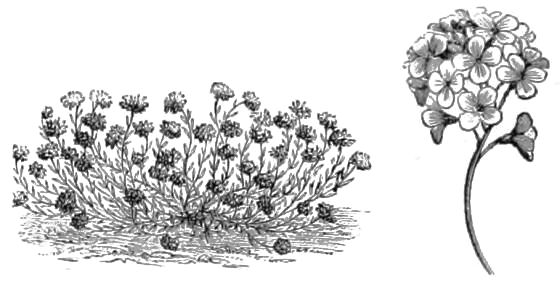
FIG. 37. ÆTHIONEMA CORIDIFOLIUM, showing Habit and Flowers.
Æ. coridifolium (Coris-leaved).* fl. rosy lilac, small, in terminal
dense rounded racemes. June. l. linear, glaucous, crowded.
Asia Minor, 1871. A pretty perennial, shrubby below, with erect
stems 6in. to 8in. high. See Fig. 37.
Æ. gracile (slender). fl. purplish; racemes crowded, terminal;
when in fruit, loose. June. l. lanceolate, pointed. h. 8in.
Branches and branchlets slender, elongated. Sandy hills in Carniola,
1820. Shrubby perennial.
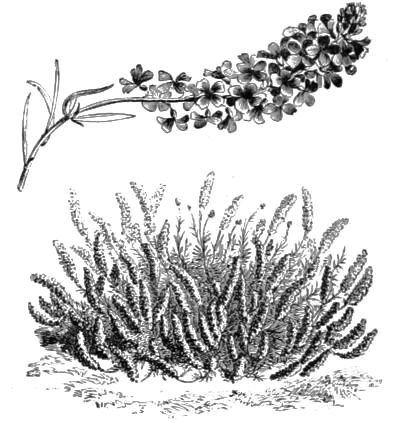
FIG. 38. ÆTHIONEMA GRANDIFLORUM, showing Habit and Flowers.
Æ. grandiflorum (large-flowered).* fl. of a warm shaded rose;
racemes crowded, terminal, numerous. May to August. l. ovate-oblong,
glaucous. Mount Lebanon, 1879. This perennial species
forms a spreading bush about 1½ft. high, and is perhaps the
handsomest of the genus. It succeeds well in the ordinary
border, but is far better suited for the rockery. See Fig. 38.
Æ. membranaceum (membranous-podded). fl. purplish, in
terminal racemes. June. l. linear, distant, somewhat fleshy,
strictly appressed. h. 3in. to 6in. Persia, 1828. A small shrub,
with filiform branches.
Æ. monospermum (one-seeded). fl. purple, largish, in terminal
racemes. July. l. oval or obovate, blunt, coriaceous;
pods one-celled, one-seeded. h. 3in. to 6in. Spain, 1778. A
pretty little biennial, with hardish branches.
Æ. pulchellum (pretty).* This is said to be a new species, but it
much resembles Æ. coridifolium. It is scarcely in full cultivation
yet, but it proves one of the hardiest as well as one of the
most handsome kinds.
Æ. saxatilis (rock).* fl. purplish; racemes loose, terminal.
May and June. l. lanceolate, acutish. h. 8in. Spain, 1820. A
pretty annual.
AFRICAN ALMOND. See Brabejum.
AFRICAN BLADDER NUT. See Royena lucida.
AFRICAN FLEABANE. See Tarchonanthus.
AFRICAN HAREBELL. See Roella ciliata.
AFRICAN LILY. See Agapanthus.
AFRICAN LOTUS. See Zizyphus.
AFRICAN MARIGOLD. See Tagetes erecta.
AFRICAN OAK OR TEAK. See Vitex Doniana.
AFRICAN SATIN-BUSH. See Podalyria sericea.
AFZELIA (named after Adam Afzelius, M.D., Professor
of Botany in the University of Upsal, and for many
years resident at Sierra Leone). ORD. Leguminosæ. A
pretty stove evergreen tree. For culture, see Ægiphila.
A. africana (African).* fl. crimson, disposed in racemes; petals
four (furnished with claws), upper one largest. June. Legume
ligneus, many-celled; seeds black, with scarlet aril. l. abruptly
pinnate. h. 30ft. Sierra Leone, 1821.
AGALMYLA (from agalma, an ornament; and hule,
a wood; the species are great ornaments to the woods in
which they grow wild). ORD. Gesneraceæ. A small but
very handsome genus of climbing or radicant herbs, with
simple alternate leaves and axillary fascicles of flowers,
something like the blooms of a Gesnera. Corolla limb
oblique, five-lobed, scarcely two-lipped. A. staminea, the
most generally cultivated species, is best grown in a basket,
planted in a compost of rough peat, a little leaf soil, fresh
sphagnum moss, and nodules of charcoal. Give an abundance
of moisture when growing, which should be lessened
after flowering, and allow the plant to rest during winter.
It may be planted out on rockwork in the stove. Half-ripened
cuttings will root freely in heat under a glass. The
temperature in summer should not be less than 75deg. by
day, and 65deg. by night.
A. longistyla (long-styled). fl. crimson. Java, 1873.
A. staminea (long-stamened).* fl. scarlet, disposed in axillary
fascicles; corolla tubular, incurved, with a dilated throat. Summer.
l. alternate, oblong, acuminated, denticulated, nearly equal at the
base, downy beneath, and on the edges. Stem and petioles hairy.
h. 2ft. Java, 1846. Stove species.
AGANISIA (from aganos, desirable; in reference to
the beauty of these neat little plants). ORD. Orchidaceæ.
A small genus of epiphytal orchids, requiring to be grown
upon a block of wood suspended from the rafters of the stove.
A damp atmosphere, syringing the roots and leaves freely
when in a growing state, and shade during very bright
sunshine, are primary points to be observed in their cultivation.
Increased by dividing the pseudo-bulbs just previous
to starting into new growth.
A. cœrulea (dark blue).* fl. peduncles axillary, few flowered.
"The colour is the well known one of Vanda cœrulea. There are,
however, darker blue blotches quasi-tesselated over the flower.
The lip is veiled, and has two very small basilar teeth, and then a
veiled middle lacinia, that is sacciform, bordered with most
remarkable long bristles, and with a deep violet blotch on its
middle part beneath. The white column has two cartilaginous
quadrate arms close to the stigmatic hollow." l. cuneate, oblong,
acuminate. Pseudo-bulbs distichous, depresso-ovoid. Brazil,
1876.
A. fimbriata (fringed).* fl. white; lip blue. Demerara, 1874.
This species has also a sacciform, fimbriate lip, but, when compared
with the foregoing, its flowers, leaves, and bulbs are much
smaller, and the lip is not slit up to the apex, but the sac is
round.
A. graminea (grass-leaved). A weedy looking species, of no garden
value. Guiana, 1836.
A. ionoptera (violet-winged). The flowers, not very much larger
than those of the lily of the valley, are white, with violet petals,
and violet tips and streaks on the sepals. Peru, 1871.
A. pulchella (pretty).* fl. white, with a blotch of yellow in the
centre of the lip; the spike is produced from the bottom of the
bulb. h. 8in. Demerara, 1838. It blossoms at different times of
the year, and lasts two or three weeks in perfection. This species
is very rare and pretty, and is best grown in a pot, with peat, and
good drainage; requires a liberal supply of water at the roots, and
the hottest house.
AGANOSMA (from aganos, mild, and osme, a smell;
scent of flowers). ORD. Apocynaceæ. A genus of showy
stove or warm greenhouse shrubs, with opposite leaves
and terminal corymbs of large funnel-shaped flowers, the
coronet of which is cup-shaped or cylindrical, "having its
parts so united that they appear only as lobes around the
mouth of the cup." All the species mentioned are well
worth cultivating. They thrive best in a mixture of loam,
sand, and peat, in equal proportions. Propagated by cuttings
in sand, under glass, and with bottom heat.
A. acuminata (pointed-leaved).* fl. large, white, fragrant;
petals linear, falcate, curled; panicles axillary, longer than the
leaves, scattered. l. from oblong to broad-lanceolate, acuminated,
glabrous. Sylhet. Shrubby climber.
A. caryophyllata (clove scented).* fl. pale yellow, tinged with
red, deliciously clove scented; corymbs terminal. October. l. oval,
acutish at both ends, tomentose beneath as well as the branches.
India, 1812. Shrubby twiner.
A. cymosa (cymose-flowered).* fl. small, whitish, fragrant; calyx
and corolla hoary outside; cymes terminal, shorter than the
leaves. l. elliptic, acuminated. Sylhet. Shrub.
A. elegans (elegant).* fl. small, purple; corolla downy outside, as
well as the calyces, bracteas, and pedicels; sepals longer than the
tube of the corolla; corymbs terminal, crowded. l. elliptic, short-acuminated,
glabrous. India. Shrubby twiner.
A. marginata (bordered).* fl. numerous, large, white, fragrant;
petals linear, falcate; panicles terminal, loose, corymbose, glabrous.
l. lanceolate, smooth. Sylhet. Shrubby climber.
A. Roxburghii (Roxburgh's).* fl. pure white, large, fragrant;
calyx and corolla hoary outside; petals triangular; corymbs
terminal. October. l. ovate-cordate, acuminated; petioles and
veins red, glabrous, pale beneath, and shining above. India, 1812.
Shrubby twiner.
A. Wallichii (Wallich's).* fl. white, fragrant; calyx and corolla
downy outside; corymbs terminal. l. elliptic-acuminated, shining
above and pale beneath, glabrous. India. This species differs
from the last in the veins of the leaves being parallel, not longitudinal,
from the base to the apex. Shrubby twiner.
AGAPANTHUS (from agape, love, and anthos, a
flower). ORD. Liliaceæ. African Lily. A genus, with
numerous varieties, of very handsome greenhouse or conservatory
herbaceous plants. Flowers large, scapose;
perianth tubular, tube short; stamens six, having the
filaments somewhat declinate. Leaves linear or lorate,
arching, radical. They are of easy culture, and thrive
best in strong turfy loam, leaf mould, decomposed manure,
and river sand. They may be grown in large pots or tubs
outside, to be removed in autumn, and placed under the
stage in the greenhouse, or where they will be protected
from frost, and kept moderately dry. If planted and left
outside, the crowns should be well covered with cocoa-nut
fibre in winter. During the summer, and especially in dry
weather, the plants can hardly be over watered. They
thrive admirably on the margins of lakes or running
streams, and few plants, alike in flower and foliage, are
more effective. Clear manure water may be given previous
to or when the plants are in flower, and, after
flowering, gradually lessen the quantity of water, until
they are stowed away for the winter. They increase very
rapidly, by offsets, and, if necessary, the old plants may be
divided in early spring, to any extent required. In the
more southern parts of this country they are quite hardy.
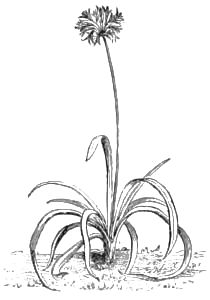
FIG. 39. AGAPANTHUS UMBELLATUS.
A. umbellatus (umbelled).* fl. bright blue; perianth funnel-shaped,
regular, deeply six-parted; tube short; scape tall, naked,
bearing a many-flowered umbel. Summer and autumn. l.
numerous, radical, linear, somewhat fleshy. h. 2ft. to 3ft. Cape
of Good Hope, 1692. See Fig. 39.
A. u. albidus (whitish).* fl. pure white, on large full-sized
umbels, smaller than those of the species, but very showy.
Cape of Good Hope. This requires carefully drying off during
the winter.
A. u. aureus (golden). A variety in which the leaves are marked
longitudinally with yellow. 1882.
A. u. flore-pleno (double-flowered).* Identical in all respects
with the species, except that it has double flowers, which are
therefore, much more lasting than the single ones. A very
handsome variety.
A. u. Leichtlinii (Leichtlin's).* fl., perianth deep bright hyacinthine
blue, 1¼in. long; scape about 1½ft. long, with a more compact
umbel than any other known form. June. l. similar in size
to the species. Cape of Good Hope, 1878.
A. u. maximus (larger).* fl. bright blue, in immense umbels.
This is larger in all its parts than the type, and when well grown
is truly a noble plant. There is also a white-flowered form of this
variety, which is most desirable, being equally as large.
A. u. minor (smaller).* This is smaller in all its parts, with
narrow leaves, and slender scapes of deep blue flowers. A very
elegant variety.
A. u. Mooreanus (Moore's).* fl. dark blue. h. 1½ft. 1879. A
new variety, with shorter, narrower, and more upright leaves than
the species; it has a dwarf habit. Perfectly hardy.
A. u. variegatus (variegated).* Where variegated-leaved plants
are desired, few could be more useful than this; its leaves are
almost entirely white, with a few green bands, but they are
neither so broad nor so long as in the type. It is an excellent
subject for the domestic garden.
AGAPETES (from agapetos, beloved; in reference to
the showy character of the plants). ORD. Vacciniaceæ. A
genus containing about eighteen species of warm greenhouse
or stove evergreen shrubs. Flowers corymbose and
racemose; corolla tubular. Leaves alternate, coriaceous.
They are all worthy of cultivation, but only two or three
species are grown in England. Peat, turfy loam, and sand,
in equal parts, is the best compost for them; and young
hardened cuttings will strike in sandy soil, under a hand
glass, in stove temperature.
A. buxifolia (box-leaved).* fl. bright red, about 1in. long, tubular,
wax-like, disposed in corymbs. April. l. small, oval oblong,
bright green, leathery; branches spreading, twiggy. h. 5ft.
Bootan.
A. setigera (bristly). fl. red, about 1in. long, tubular, numerous,
in lateral and corymbose racemes, furnished with bristly hairs.
l. scattered, lanceolate, acuminated, on very short robust petioles.
Pundua Mountains, 1837.
A. variegata (variegated). fl. scarlet, about 1in. long, tubular,
lateral, corymbose. l. on short petioles, lanceolate, acuminated,
denticulated, attenuated at the base, veiny. Khasia, 1837.
AGARICUS (derived from Agaria, the name of a town
in Sarmentosa). Mushroom. ORD. Fungi. The most
extensive genus known. It, however, contains but one or
two species of cultural value. The most important ones
are the common field mushroom, A. campestris (Fig. 44),
the Fairy Ring mushroom, A. pratensis, and A. vaginatus.
Familiar species are the Parasol mushroom, A. procerus
(Fig. 43); St. George's mushroom, A. gambosus (Fig. 42);
and the deadly Fly Agaric, A. muscarius (Fig. 41). For
practical purposes the majority of this genus are poisonous,
and many virulently so. Great care must be exercised in
experimenting with unknown species, even by experienced
fungologists. See Mushroom.
AGASTACHYS (from agastos, admirable, and stachys,
a spike). ORD. Proteaceæ. A greenhouse evergreen shrub,
with four sepalled apetalous flowers, which are disposed
in numerous spikes. It thrives in a compost of equal parts
loam, sand, and peat. Cuttings of ripened wood will strike
in sandy soil under a glass, in a cool house.
A. odorata (fragrant).* fl. pale yellow, sweet scented, crowded;
spikes 4in. to 5in. long. April. l. bluntly lanceolate, sub-sessile,
thickish, about 2in. long. h. about 3ft. New Holland, 1826.
AGATHÆA (from agathos, excellent; in reference to
the beauty of the flowers). ORD. Compositæ. Allied to
Cineraria, and requiring the same greenhouse treatment.
It makes a very pretty object for summer decoration in
the flower garden. Young cuttings root freely, in a gentle
heat, at all times; and the plant may be had in bloom
all the year round.
A. cœlestis (sky-blue).* fl.-heads blue; peduncle one-headed.
June. l. opposite, ovate, naked. h. 1½ft. Cape of Good Hope,
1753. Herbaceous perennial. See Fig. 40.
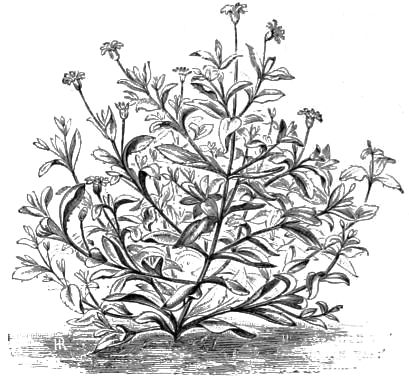
FIG. 40. AGATHÆA CŒLESTIS.
AGATHA ROSE. See Rosa gallica Agatha.
AGATHIS. See Dammara.
AGATHOPHYLLUM (from agathos, pleasant, and
phyllon, a leaf; referring to the pleasant clove-like smell
of the leaf). Madagascar Nutmeg. ORD. Lauraceæ.
A stove evergreen tree, of economic value only, having the
fruit enclosed by the persistent calyx; thriving in peat
and light rich loam. Of easy propagation by cuttings in
sand, with a moderate bottom heat.
A. aromaticum (aromatic). fl. white. l. stalked, alternate,
obovate, obtuse, leathery, entire, smooth. h. 30ft. Madagascar,
1823.
AGATHOSMA (from agathos, pleasant, and osme, smell;
the plants contained in this genus have a pleasant smell).
SYNS. Bucco, Dichosma. ORD. Rutaceæ. Beautiful small
heath-like greenhouse shrubs, from the Cape of Good Hope.
Flowers in terminal heads, or umbels; petals five, divided,
with long claws, and scattered, short, narrow leaves, usually
with revolute edges. They are of easy culture, thriving best
in a mixture of sand and peat, with the addition of a
little turfy loam. Young cuttings will strike root freely
in a pot of sand, under a bell glass, in a cool house.
They require to be shaded somewhat in the summer.
Winter temperature, 40deg. to 45deg. About forty-six
species are known.
A. acuminata (taper-pointed leaved).* fl. violet; calyces smooth,
glandular, on terminal subcapitate heads. April. l. ovate, somewhat
cordate, long acuminated, fringed, at length spreading. h.
1ft. to 2ft. 1812.
A. bruniades (Brunia-like).* fl. lilac or white, on terminal sub-umbellate
heads; peduncles fastigiate, elongated. April. l. scattered,
linear-trigonal, awl-shaped, dotted, and a little fringed;
branches hairy. h. 1ft. to 2ft. 1820.
A. cerefolia (chervil-leaved). fl. white, small; pedicels and
calyces beset with glandular hairs; heads terminal sub-umbellate.
April. l. crowded, lanceolate, acute, spreading, keeled,
fringed. h. 1ft. to 2ft. 1794.
A. ciliata (ciliated).* fl. white; pedicels smoothish; heads terminal
sub-umbellate. April. l. scattered, lanceolate, acute,
with toothletted-fringed, revolute edges, dotted beneath, and
bearing hairs on the middle nerve, becoming at length reflexed.
h. 1ft. to 2ft. 1774.
A. erecta (upright).* fl. pale violet, terminal, sub-umbellate;
peduncles short, villous. April. l. imbricate, trigonal, blunt,
dotted beneath, a little fringed. h. 1ft. to 2ft. 1818.
A. hirta (hairy). fl. purple, densely capitate; petals bearded at
the claws. April. l. somewhat imbricate, linear, awl-shaped,
channelled, hairy on the back, decurrent. h. 1ft. to 2ft. 1794.
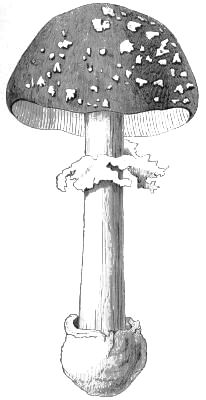
FIG. 41. AGARICUS MUSCARIUS (FLY AGARIC).
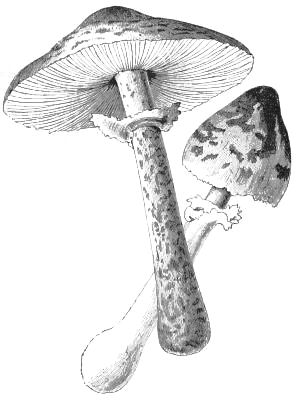
FIG. 43. AGARICUS PROCERUS (PARASOL MUSHROOM).
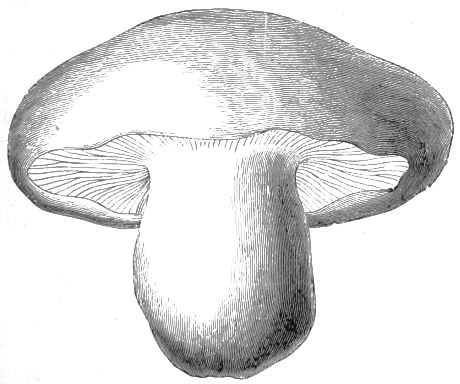
FIG. 42. AGARICUS GAMBOSUS (ST. GEORGE'S MUSHROOM).
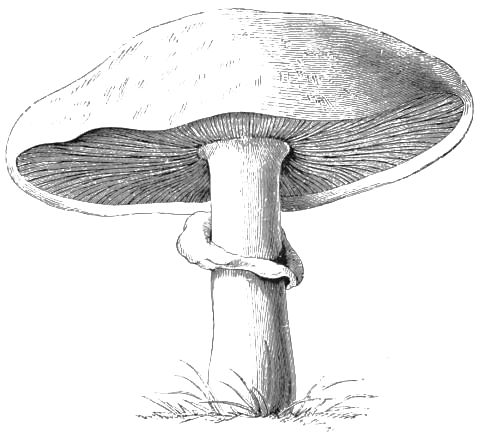
FIG. 44. AGARICUS CAMPESTRIS (COMMON MUSHROOM).
A. hispida (rough-haired). fl. violet, on terminal sub-umbellate
heads; pedicels and sepals pubescent; petals quite smooth. May.
l. crowded, linear, trigonal, blunt, spreading, hispid, keeled, and
two-furrowed beneath. h. 1ft. to 2ft. 1786.
A. imbricata (imbricated). fl. pale purple, in terminal sub-capitate
heads; petals with a roundish limb; sepals smoothish;
pedicels pubescent. April. l. imbricate, crowded, ovate, acuminated,
dotted, fringed. h. 1ft. to 2ft. 1774.
A. orbicularis (round-leaved). fl. white, on terminal sub-umbellate
heads; stamens twice as long as the corolla; pedicels pubescent.
April. l. scattered, spreading, orbicular, ovate, or reniform,
smooth, reflexed, small, thickish, without any dots
beneath; branches villous. h. 1ft. to 2ft. 1790.
A. prolifera (proliferous). fl. white, on terminal sub-umbellate
heads; sepals smooth; pedicels somewhat fastigiate, pubescent.
April. l. spreading, lanceolate, cuspidate; keel and edges
fringed, dotted; branches whorled, proliferous. h. 1ft. to 3ft.
1790.
A. pubescens (downy). fl. white; umbels terminal; peduncles
and sepals villous. April. l. lanceolate, trigonal, pointless, with
margins and rib ciliated. h. 1ft. to 2ft. 1798.
A. rugosa (coarsely-wrinkled). fl. white, on terminal sub-umbellate
heads; sepals pubescent; pedicels capillary, clothed with
glandular hairs. April. l. spreading, oblong or ovate, blunt,
keeled, wrinkled, villous beneath, reflexed. h. 1ft. to 2ft. 1790.
A. vestita (clothed). fl. lilac, on terminal sub-capitate heads;
pedicels quite smooth. May. l. closely imbricated, ovate, acuminated,
keeled, fringed. h. 1ft. to 2ft. 1824.
AGATHYRSUS. See Mulgedium.
AGATI (its Sanscrit name). ORD. Leguminosæ. Ornamental
stove trees from India, with lanceolate stipulas,
abruptly-pinnate leaves, having many pairs of leaflets.
Flowers large, few, racemose. Legumes 1½ft. long. A
mixture of loam, peat, and sand is most suitable. Young
cuttings will root in a pot of sand, with a hand glass over
them, placed in heat.
A. coccinea (scarlet).* fl. red, rather smaller than the next
species. Legumes rather terete. l. leaflets powdery. July. h. 20ft.
to 30ft. 1768.
A. grandiflora (large-flowered). fl. rosy red. July. Legumes
evidently compressed. l. leaflets glabrous. h. 14ft. to 26ft. 1768.
A. g. flore-albo (white flowered). fl. white, double. N. Australia,
1869.
AGAVE (from agauos, admirable; referring to the
stately form in which some of them flower). ORD. Amaryllidaceæ.
Flower-scape tall, proceeding from the centre of the
rosette of leaves; perianth funnel-shaped, six-parted. Leaves
large, fleshy, tufted. Mr. B. S. Williams describes them as
follows: "They are noble, massive-growing plants, and form
magnificent ornaments in the greenhouse or conservatory;
whilst, from their slow growth, they do not rapidly get too
large, even for a small greenhouse. Indeed, some of the
real gems of this genus are neat, compact-growing plants,
seldom exceeding 2ft. in height. Besides being fine ornamental
plants for indoor decoration, the larger growing
kinds are unquestionably the finest objects for the embellishment
of terrace-walks, or surmounting flights of steps
in the open air during the summer season, and also for
plunging in rockwork, or about any rustic nooks in the
pleasure-grounds, as, in such situations, they are quite in
keeping, and thrive admirably. As is well known, they
attain maturity very slowly; but when this condition is
reached, the plant sends up a flower spike, and, after
perfecting this, dies." A. Sartorii, and a few others are,
however, exceptional, and go on flowering year after year.
It is certainly fallacious to suppose it takes them a hundred
years to flower. Agaves succeed well potted in good
loam and river sand, to which may be added a little peat and
leaf mould for some of the smaller-growing kinds. The
drainage should be good, as they enjoy a liberal supply
of water during the summer season, but during winter
considerably less will be required. They can be increased
by suckers when these are to be obtained, and also by
seeds, to secure the production of which, in the species
that do not yield suckers, the flowers should be carefully
impregnated. In the following descriptive list
of species, only those of horticultural value are mentioned,
some of which are still rare; and in describing
them we have availed ourselves of Mr. J. G. Baker's
excellent monograph, which appeared in the columns
of the Gardener's Chronicle. Many are omitted, not
from any deficiency in horticultural beauty, but because,
in several instances, only one plant of a species is known to
exist in cultivation, and such cannot, therefore, hope to
become in general cultivation for many years hence.
A. albicans (whitened). Probably a variety of A. micrantha.
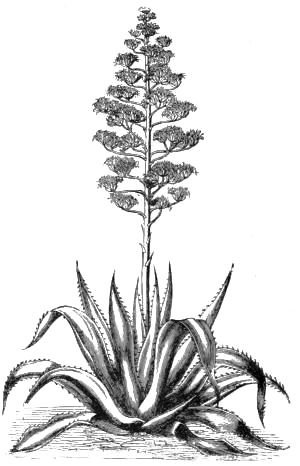
FIG. 45. AGAVE AMERICANA.
A. americana (American).* fl. yellowish green, 2in. to 3½in. long;
in very dense globose clusters, on pedicels ¼in. to ½in. long;
scape, including the thyrsoid panicle, 24ft. to 36ft. August. l.
usually thirty to forty, sometimes more, in a rosette, oblanceolate-spathulate,
3ft. to 6ft. long, 6in. to 9in. broad above the
middle, glaucous green, more or less concave all down the face,
the outer leaves recurved, the dark brown pungent point 1in. to
2in. long; prickles brown tipped, 1/6in. to ¼in. long. S. America,
1640. See Fig. 45.
A. a. mexicana (Mexican). A variety much shorter in the leaves
than the species, of which it may be regarded as one of the many
small forms.
A. a. picta (painted).* l. 2ft. to 3ft. long, about 4in. wide, lower
ones recurved, upper ones erect, moderately thick, rich golden
yellow on both sides, bordered with dark green. A very splendid
variety. SYN. A. ornata.
A. a. variegata (variegated). l. 6ft. or more in length, 6in. or
8in. wide, dark green in the centre, broadly margined with rich
yellow. A very desirable variety.
A. amœna (pleasing). Referred to A. Scolymus.
A. amurensis (Amur River). Synonymous with A. xylacantha.
A. applanata (plano-convex-leaved). fl. unknown. l. twenty to
forty in a dense sessile rosette, reaching a couple of feet in
diameter, oblong-spathulate, 8in. to 12in. long, 2in. to 3½in.
broad, the lower half of the face flat, the upper half concave,
suddenly terminating in a pungent brown spine above 1in. long,
blue-green bordered with brown; prickles ¼in. to ⅓in. long, bright
brown. Mexico, 1869.
A. atrovirens (dark-green). Synonymous with A. Salmiana.
A. attenuata (attenuated).* fl. greenish-yellow, 2in. long; pedicels
about ¼in. long, on a dense spike, 6ft. to 8ft. long, and 6in. in
diameter; bracts overtopping the perianth. l. ten to twenty,
in a dense rosette at the top of the stem, oblong-spathulate,
2ft. to 2½ft. long, 8in. to 9in. broad two-thirds of the way up,
narrowed to 2½in. to 3in. above the base, persistently glaucous,
one of the most fleshy of all in texture; face rather concave when
young; tip not pungent, edge quite entire. Stem 4ft. to 7ft. high,
3in. to 4in. thick. Mexico, 1834. A most distinct species.
A. Beaucarnei (Beaucarne's). Synonymous with A. Kerchovei.
A. Botterii (Botteri's).* fl. greenish-yellow, about 1in. long, on a
dense spike, longer than the leaves; primary bracts lanceolate,
with a long point, the lower ones as long as the flowers; scape
covered with adpressed lanceolate bracts. l. about fifty in a
rosette, oblong-spathulate, about 2ft. long, 6in. broad above the
middle, narrowed to 4½in. above the base; pale green, concave in
the centre; spine hard, pungent, about ½in. long; marginal teeth
crowded, ⅛in., upcurved at the tip. Stemless. Mexico, about 1865.
A. bulbifera (bulb-bearing). Synonymous with A. vivipara.
A. cæspitosa (tufted). Synonymous with A. Sartorii.
A. cantula. Synonymous with A. vivipara.
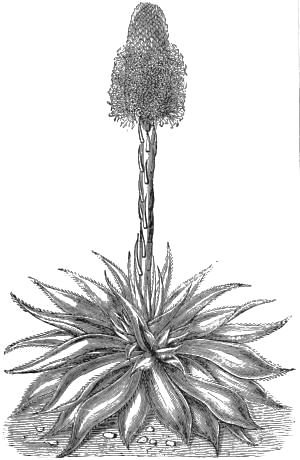
A. Celsiana (Cels's).* fl. tinged purplish-brown, 2in. long, in a
dense spike, 1ft. or more long, and 6in. to 8in. in diameter when
expanded; scape 4ft. long, the lower bract leaves lanceolate, the
upper ones subulate. l. twenty to thirty in a rosette, oblong-spathulate,
1½ft. to 2ft. long, 4in. to 5in. broad at the middle,
narrowed to 2½in. to 3in. above the base, persistently glaucous,
the point hardly at all pungent; spines very unequal in size and
shape, green, largest brown and horny at the top. Mexico, 1839.
This is a beautiful species, the stem of which scarcely rises off
the surface of the ground. See Fig. 46.
A. coccinea (scarlet). fl. unknown. l. twenty to thirty in a
dense rosette, oblanceolate-spathulate, 1½ft. to 2ft. long, 4in. to
6in. broad two-thirds of the way up, narrowed to 3in. above the
dilated base, where it is 1in. to 1¼in. thick, deep heavy green;
terminal spine 1½in. or more in length, red; side prickles
irregular, deltoid, unequal, nearly straight, 1/6in. to ¼in. long, red.
Mexico, 1859.
A. cochlearis (cochleate). fl. yellowish green, above 4in. long,
in dense clusters. l. forming a sessile rosette 10ft. broad, oblong-spathulate,
5ft. to 6ft. long, above 1ft. broad, 5in. thick at the
base, opaque green, with a deeply excavated face; terminal
spine very stout, pungent; side prickles curved variously, middle
sized, deltoid. Stems 26ft. high. Mexico, previous to 1867.
A. Consideranti (Considerant's). Synonymous with A. Victoriæ
Regina.
A. Corderoyi (Corderoy's).* fl. unknown. l. forty to fifty in a
dense rosette, rigidly erecto-patent, ensiform, 1½ft. long, ¾in. to
1in. broad, bright green; terminal spine hard, brown, 1in. long;
side prickles moderately close, erecto-patent, dark brown, 1/6in.
long. Mexico, 1868. A very distinct and pretty species.
A. crenata (crenated). Referred to A. Scolymus.
A. cucullata (hooded). Referred to A. Scolymus.
A. dasylirioides (Dasylirion-like).* fl. yellow, about 1½in. long;
spike as long as the scape, often decurved; lower bracts much
longer than the flowers; pedicels obsolete; scape 6ft. long,
densely clothed with spreading subulate bract leaves, the lower
ones 1ft. long. l. eighty to a hundred in a dense rosette, linear-ensiform,
1½ft. to 3ft. long, about 1in. broad, narrowing gradually
from the middle to a short brown pungent point, pale glaucous
green, rigidly leathery; edge minutely denticulate. Mexico, 1846.
A. d. dealbata (whitened). A variety of preceding, but with more
glaucous foliage.
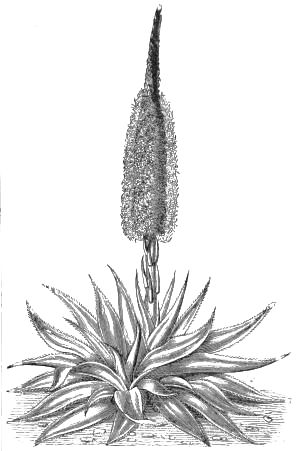
FIG. 47. AGAVE DENSIFLORA.
A. densiflora (close-flowered).* fl. yellowish-red, 1½in. to 2in.
long, on a dense spike, 2ft. long; pedicels very short; scape,
including the spike, 6ft. long, the lower bracts ascending, the
upper ones spreading. l. thirty to forty in a stemless rosette,
oblanceolate-spathulate, 2ft. to 3ft. long, and 2½in. to 5in. broad,
bright green when mature; terminal spine ½in. long, thick, pungent,
slightly decurrent; side spines crowded, short, bright
chestnut brown. Mexico (previous to) 1857. See Fig. 47.
A. Deserti (Desert's).* fl. yellow, under 2in. long, on a thyrsoid
panicle, the branches very short, the lower horizontal, the upper
ascending; pedicels short; scape 4ft. to 10ft. high, 1in. to 2in.
thick at the base, furnished with distant lanceolate acuminate
toothed bracts. l. few, in a rosette, oblanceolate, 6in. to 12in.
long, 1½in. to 2in. broad above the middle, thick, fleshy, very
glaucous; face deeply concave; terminal spine 1in. to 2in. long,
slender; prickles crowded, strong, hooked, horny, nearly ¼in. long.
California, 1877.
A. Desmetiana (De Smet's). Probably synonymous with A.
miradorensis.
A. Elemeetiana (Elemeet's).* fl. yellowish-green, 1in. to 1½in.
long, in a dense spike 8ft. to 9ft. long, 7in. to 8in. in diameter
when expanded; pedicels ¼in. long; scape, including the spike,
12ft. to 13ft. high, stiffly erect, lower 3ft. to 4ft., barren, with
squarrose lanceolate bracts. l. twenty to twenty-five in a rosette,
lanceolate-oblong, 1½ft. to 2ft. long, 3in. to 6in. wide, slightly
glaucous; face flat above the middle terminal spine, not pungent,
the margin pale and quite entire. Stemless. A very distinct
species. Mexico, 1864.
A. Fenzliana (Fenzl's). Synonymous with A. Hookeri.
A. ferox (fierce). fl. unknown. l. about twenty in a rosette,
oblong-spathulate, 4in. to 8in. broad; face nearly flat, except at
the top, slightly glaucous green; terminal spine above 1in. long,
hard, pungent; margin slightly wavy between the large dark
brown teeth, which are about ¼in. long, and curved at the
top. Mexico, 1861.
A. filifera (thread-bearing).* fl. greenish, about 2in. long; pedicels
very short and stout, in a dense spike 2ft. to 3ft. long; scape 3ft.
to 4ft. long, its bract-leaves subulate, the lower ones ascending,
the upper squarrose. l. sixty to a hundred in a dense rosette,
stiff, straight, ensiform, 6in. to 9in. long, 1in. broad at the middle,
gradually narrowing to a grey pungent tip; face flat, the continuous
grey edge splitting off copiously into irregular spreading
grey wiry threads; outer leaves of the rosette not all recurved,
but spreading stiffly. Mexico.
A. f. filamentosa (thready).* A form with larger leaves and
scape; including the spike, 10ft. to 12ft. high. A well-known,
handsome variety.
A. Galeotti (Galeotti's). fl. unknown. l. thirty to forty in a
dense rosette, 2ft. to 3ft. broad, oblong-spathulate, 1ft. to 1½ft. long,
2in. to 6in. broad; face rather flat or convex, green; terminal
spine hard, pungent; prickles close, straight, or slightly hooked,
purplish-black. Mexico, 1877.
A. Ghiesbreghtii (Ghiesbreght's). fl. unknown. l. thirty to
forty in a dense rosette, rigid, lanceolate, 9in. to 12in. long, 2in.
to 3in. broad, bright glossy green; terminal spine ½in. long,
pungent; border narrow, red-brown till a late stage; side prickles
numerous, irregular, two to three lines long. Mexico, 1862. Very
handsome dwarf species. A. Rohanii and A. Leguayana are mere
varieties.
A. heteracantha (various-spined).* fl. greenish, 1½in. long, on a
dense spike 3ft. long; scape 3ft. to 4ft. long. l. fifty to eighty
in a rosette, rigid, ensiform, 1½ft. to 2ft. long, 2in. to 2½in. broad
in the middle, dull green, with numerous darker green lines on
the back; terminal point 1in. long; side spines numerous,
strongly hooked, lanceolate. Stemless. Mexico.
A. Hookeri (Hooker's).* fl. large, yellow, very numerous, in
stalked panicled cymes. l. thirty to forty in a sessile rosette, 8ft.
or 9ft. in diameter, oblanceolate-spathulate, bright green on the
face, rather glaucous on the back, 4ft. to 5ft. long, 5in. to 9in.
broad, 2in. to 3in. thick; terminal spine 2in. long, and decurrent for
nearly half a foot; face flattish or slightly concave; side prickles
irregular, brown and horny, about ¼in. long, and curved in
different directions. Mexico. SYN. A. Fenzliana. A rare and
noble species, very massive.
A. horrida (horrid).* fl. unknown. l. thirty to forty in a dense
rosette, rigid, lanceolate-spathulate, 8in. to 12in. long, 1in. to 2in.
broad, bright green; terminal spine pungent, nearly 1in. long;
margin furnished with a continuous broad grey border, with
copious prickles ⅜in. to ½in. long.
A. h. Gilbeyi (Gilbey's).* l. about thirty, 3in. to 4in. long, 2in.
broad, dark green with a pale stripe down the middle, three to
four large spines on each side. Mexico, 1873.
A. h. lævior (smoother). l. somewhat narrower, longer, with
marginal spines less strongly developed, and of a paler colour.
Mexico, 1870.
A. h. macrodonta (long-toothed). l. fifty to sixty, 2½in. broad;
spines larger than in the typical form. Mexico, 1876.
A. h. micrantha (small-toothed). Border of leaf narrower, and
spines smaller, than in the typical form.
A. Jacobiana (Jacob's). Synonymous with A. Salmiana.
A. Kerchovei (Kerchove's).* fl. unknown. l. thirty to forty in
a stemless rosette, stiff, rigid, typically ensiform, 6in. to 12in.
long, 1½in. to 2in. broad, narrowing gradually to a pungent spine
1in. long, dull green, with a distinct pale central band, rounded
on the back, without any stripes of dark green, the margin
with a continuous moderately broad grey border; side prickles
irregular, grey, lanceolate, curved, ⅙in. to ¼in. long. SYN. A.
Beaucarnei.
There are several varieties of A. Kerchovei, of which the following
are the most important:—
A. K. diplacantha (double-spined).* With very few distant,
small teeth, often collected or united in pairs.
A. K. inermis (unarmed). Dwarf, with spines entirely obsolete.
A. K. macrodonta (long-toothed). l. 1½ft. long, without any
distinct central band, and with copious irregular grey lanceolate
prickles, about ⅓in. long.
A. K. pectinata (comb-like). l. 1ft. long, 2¼in. broad, without
any central band.
A. lophantha (crest-flowered).* fl. greenish, arranged in a dense
spike 4ft. to 5ft. long; scape 7ft. to 8ft. long, its leaves brown, the
lower ones 6in. long. l. thirty to forty in a rosette, rigid, ensiform,
2ft. to 3ft. long, 1½in. broad at the middle, rather concave
down the face, rounded on the back, not marked with any lines,
dull green; terminal spine 1in. long; margins bordered by a very
narrow continuous grey hoary line, furnished with distant linear
falcate teeth, about ¹/₁₂in. long, sessile. Mexico.
A. l. cœrulescens (bluish).* l. with a decided glaucous bloom.
A. l. longifolia (long-leaved). A mere variety of above species.
A. macracantha (long-spined).* fl. greenish, 2in. long, ten to
twelve in a loose raceme 6in. long, all solitary on ascending
pedicels ¼in. to ½in. long; scape 2ft. to 3ft. long; bracts erect.
l. thirty to fifty in a stiff rosette 1ft. to 2ft. broad, oblanceolate,
6in. to 12in. long, 1in. to 1½in. broad, very stiff and rigid, very
glaucous; face rather thicker in the lower half; terminal spine
nearly black, very pungent, ½in. long; side prickles purplish-black,
sub-distant, ⅛in. long, with a large point straight or slightly hooked.
With a short stem, or stemless. Mexico, 1830. It has many
varieties, among which are A. Bessereriana and A. flavescens.
A. Maximiliana (Maximilian's).* fl. unknown. l. about twenty
in a sessile rosette, oblanceolate-spathulate, 1½ft. to 2ft. long, 1¾in.
to 3in. broad; face slightly glaucous green; terminal spine pungent,
brown, 1in. broad; side prickles bright chestnut brown, larger and
more irregular than in A. americana, more hooked, and furnished
with longer and sharper points, reaching ¼in. long. Mexico. A
very distinct species.
A. micracantha (small-spined). fl. yellowish, 1½in. long, in a
dense spike 3ft. to 4ft. long, 6in. to 7in. broad when expanded. l.
twenty to thirty in a shortly stalked rosette, oblanceolate oblong,
15in. to 18in. long, 3in. to 5in. broad above the middle, narrowed
to 2in. to 3in. above the base, bright green; face flattish above the
centre; terminal spine red brown, moderately firm; the copious
close reddish-brown horny teeth about ¹/₁₂in. long, the upper ones
ascending, the lower deflexed. Mexico, 1860.
A. miradorensis (Mirador).* fl. unknown. l. about thirty in a
sessile rosette, oblanceolate-spathulate, 1½ft. to 2ft. long, 2in. to
2½in. broad above the middle, thin but firm in texture, very
glaucous, with a firm red-brown terminal spine 1in. long; side
prickles very minute, crowded, colourless, five or six to an inch
in the centre of the leaf. Mexico, 1869. SYN. (probably) A.
Desmetiana.
A. Noackii (Noack's). A synonym of A. Sartorii.
A. ornata (adorned). A synonym of A. americana picta.
A. Ortgiesiana (Ortgies'). A dwarf form of A. schidigera with a
pale central band to the leaf. Mexico, 1861. A widely-distributed
and desirable species.
A. pendula (pendulous). Synonymous with A. Sartorii.
A. polyacantha (many-spined).* fl. greenish-yellow, 1½in. to
2in. long; flowering-stem 8ft. to 12ft. high, including the dense
spike, which is 3ft. to 4ft. long. l. about thirty in a sessile
rosette, oblanceolate-spathulate, rigid, 1ft. to 2ft. long, 2½in. to
5in. broad above the middle, bright green, slightly glaucous
when young; terminal spine dark brown, pungent, ½in. to ¾in.
long; side prickles crowded, deltoid, dark chestnut brown, irregular,
¹/₁₂in. or ⅛in. long, all sub-patent. Mexico, 1800. SYNS.
A. uncinata, A. xalapensis.
A. Poselgerii (Poselger's). fl. purplish, rather more than 1in.
long; scape, including the spike, 6ft. to 10ft. l. twenty to thirty
in a dense rosette, rigid, ensiform, 1ft. to 1½ft. long; 1½in. to 2in.
broad at the middle, dull green, with a broad pale band down to
the face, rounded and marked with numerous distinct green lines
down the back; margin furnished with a continuous straight,
moderately broad edge; terminal spine 1in. long, brown, pungent;
side prickles moderately close, lanceolate, hooked, 1/6in. long.
Trunk, 4in. to 6in. long. Texas.
A. potatorum (drinkers'). fl. greenish yellow, 3in. long; scape
12ft. high, including the thyrsoid panicle, which is 4ft. to 5ft.
long. l. about twenty in a dense sessile rosette, 4ft. to 5ft. broad,
oblong-spathulate, 2ft. to 2½ft. long, 7in. to 9in. broad above the
middle, a dull glaucous green; face slightly concave; terminal
spines hard, pungent, 1½in. to 2in. long; side prickles deltoid-cuspidate,
about ¼in. long, with the edge slightly wavy between
them. Mexico, 1830.
A. pruinosa (frosty).* fl. unknown. l. ten to twenty in a dense
rosette, spreading, oblanceolate-oblong, 1½ft. to 2ft. long, 4in. to
5in. broad above the middle, soft and fleshy in texture, pale
glaucous green; terminal spine very weak; edge furnished with
minute irregular spreading deltoid serrations, not more than
quarter line long. Mexico, 1863. A very distinct species.
A. Roezliana (Roezl's). fl. unknown. l. twenty to thirty in a sessile
rosette, stiff, ensiform, 6in. to 7in. long, 1in. to 1½in. broad at
the middle, bright glossy green, with a distinct pale band down the
centre, broadly rounded on the back, without any darker green
lines, margined with a continuous moderately broad border, red
brown at first, fading into grey when old; terminal spines bright
reddish brown, pungent, ½in. to ¾in. long; side prickles copious,
spreading, lanceolate, curved, ¼in. long. Mexico, 1869.
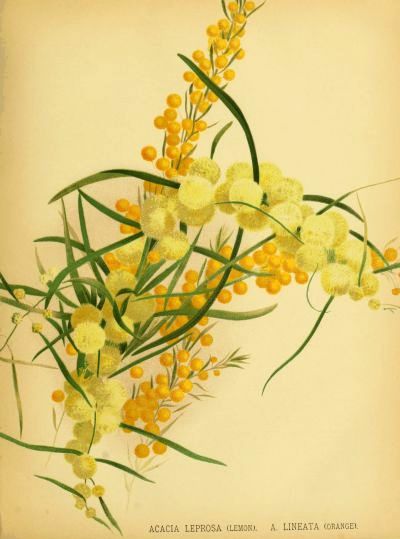
ACACIA LEPROSA (LEMON). A. LINEATA (ORANGE).
A. Salmiana (Prince Salm-Dyck's).* fl. greenish yellow, 4in.
long; panicle thyrsoid, 6ft. to 8ft. long, with erecto-patent
branches and flowers in dense clusters; scape, exclusive of the
panicle, 20ft. high. l. twelve to thirty in a dense rosette, which is
often 5ft. to 6ft. broad, oblanceolate-spathulate, 2ft. to 4ft. long,
4in. to 6in. broad above the middle, a dull, slightly glaucous
green; face more or less concave; terminal spine 1½in. to 2in. long,
hard and pungent; side prickles ¼in. long, chestnut brown, hooked
up or down. Mexico, 1860. SYNS. A. atrovirens, A. Jacobiana,
A. tehuacensis.
A. S. latissima (very broad). l. 2ft. to 3ft. long, by 8in. to 9in.
broad above the middle.
A. Sartorii (Sartor's). fl. greenish, 1½in. long; pedicels very short,
in a dense spike about 3ft. long, 5in. to 6in. broad when expanded;
scape 3ft. to 4ft. long, the green linear ascending bracts 2in. to 4in.
long. l. thirty to forty spaced out in a loose rosette, ensiform,
1½ft. to 2ft. long, 3in. broad at the middle, bright green, with a
pale band down the middle; face flat; terminal spine small, not
pungent; side prickles minute, crowded, spreading, tipped with
red-brown. Caudex 1ft. to 2ft. long, sometimes forked. SYNS. A.
cæspitosa, A. Noackii, A. pendula.
A. schidigera (spine-bearing).* fl. almost identical with A.
filifera. l. fifty to eighty in a dense sessile rosette, stiff,
ensiform, 12in. to 15in. long, ¾in. to 1in. broad at the middle,
similar in colour and texture to those of A. filifera, but the
grey marginal border, and splitting off into flat shavings, not
mere threads.
A. Schnittspahni (Schnittspahn's). Referred to A. Scolymus.
A. Scolymus (Scolymus). fl. greenish yellow, 2½in. to 3in. long;
branches few, with the flowers at the end in very dense clusters;
scape 14ft. to 16ft. high, including the thyrsoid panicle, which is
4ft. long and 2ft. broad, furnished with green bracts. l. twenty to
thirty in a dense rosette 1½ft. to 3ft. broad, oblong-spathulate,
9in. to 18in. long, 3in. to 6in. broad above the middle, very
glaucous, abruptly terminating in a pungent spine, 1in. or more
long; side prickles chestnut brown, about ¼in. long; edge wavy
between them; those on the lower half smaller and directed
downwards. Mexico, 1830. Other so-called species referred to
this are A. amœna, A. crenata, A. cucullata, A. Schnittspahni,
and A. Verschaffeltii.
A. S. Saundersii (Saunders'). fl. about 1ft. long; teeth very
large.
A. Seemanni (Seemann's).* fl. unknown. l. twenty in a sessile
rosette, 1ft. to 1½ft. broad, oblong-spathulate, 6in. to 9in. long,
3in. to 3½in. broad at the middle, narrowed to 2in. above the
dilated base, slightly glaucous; face flat, except close to the top;
terminal spine pungent, dark brown, ½in. long; side prickles
large, moderately close, slightly curved upwards or downwards.
Guatemala, 1868. There are two or three garden forms of this
species.
A. Shawii (Shaw's).* fl. greenish yellow, 3in. to 3½in. long;
panicle thyrsoid, about 2ft. long and broad; clusters dense, composed
of thirty to forty flowers, surrounded by large foliaceous
fleshy bracts. l. fifty to sixty, or more, forming a dense globose
sessile rosette 2ft. in diameter, oblong-spathulate, 8in. to 10in.
long, 3½in. to 4½in. broad at the middle, deep green; terminal
spine brown, 1in. long, the upper third or quarter entire, the rest
furnished with crowded upcurved lanceolate prickles, ¼in. to ½in.
long. California, 1877. This species is very rare at present, but
is a most distinct and handsome plant.
A. sobolifera (soboliferous). fl. greenish yellow, 2in. to 2½in.
long, in a deltoid panicle, of which the lower panicles are 9in. to
12in. long, and bear a hundred flowers each; pedicels ¼in. to 1in.
long; scape 8ft. to 10ft. high, 2½in. thick at the base. l. twenty to
forty in a shortly caulescent rosette, oblanceolate-oblong-spathulate,
2ft. to 3ft. long, 3in. to 5in. broad at the middle, very bright
green; face deeply channelled, the border much raised and tip
often recurved; terminal spine sub-pungent, chestnut brown, ½in.
long; side prickles distant, brown, hooked, ¹/₁₂in. to ⅛in. long.
West Indies, 1678.
A. striata (striated-leaved).* fl. brownish green outside, yellow
inside, 1in. to 1½in. long; pedicels very short; spike dense, 2ft. to
3ft. long; bracts linear, shorter than the flowers; scape 6ft.
to 8ft. high, including the spike, furnished with numerous
spreading subulate bracts, which are 2in. to 3in. long. l. 150 to
200 in a dense rosette, linear-ensiform, 2ft. to 2½ft. long, ¼in. to ⅜in.
broad above the deltoid dilated base, where they are ¼in. thick and
1in. broad, narrowed gradually from the top of the base to the
point, rigid in texture, glaucous green; face rather keeled, and
the back more so; point brown, pungent, ½in. long; edges
minutely serrulate. Mexico, 1856.
A. s. echinoides (Echinus-like). l. about 6in. long, ⅓in. broad at
the middle; face flat. Mexico, 1869. Dwarfer and stiffer in habit
than the variety stricta.
A. s. recurva (recurved-leaved). l. longer than in the type, 3ft.
to 4ft., more or less falcate, narrower, and decidedly convex on
both surfaces.
A. s. stricta (upright). l. about 1ft. long, very stiff, ¼in. broad at
the middle, both faces convex. A. Richardsii comes near to this
variety.
A. tehuacensis (Tehuan). Synonymous with A. Salmiana.
A. uncinata (hooked). Synonymous with A. polyacantha.
A. univittata (one-striped).* fl. green, 1½in. long (or less); spike
10ft. to 12ft. long, 6in. to 7in. thick; pedicels ¼in. long; scape 4ft.
long, exclusive of the spike, its bracts dense and squarrose.
l. fifty to eighty in a stemless rosette, rigid, ensiform, 2ft. to 2½ft.
long, 2in. to 3in. broad at the middle, narrowed slightly downwards,
and very gradually upwards, dull green, with a broad pale
band down the face, faintly lineate on the back; margin bordered
by a narrow, continuous grey horny line, furnished with hooked
lanceolate prickles, ⅛in. long, from ½in. to 1in. apart; terminal
spine brown, pungent, 1in. long. Mexico, 1830.
A. utahensis (Utahan).* fl. yellowish, about 1in. long; peduncles
ultimately ¼in. long; scapes, 5ft. to 7ft. high, including the 1ft. to
2ft. spike. l. stemless, ensiform, 6in. to 12in. long, 1in. to nearly
2in. broad, thick, glaucous; terminal spine channelled, pungent,
about 1in. long; marginal prickles, ⅛in. to ½in. long, white, with a
darker base. Southern Utah, 1881. This is a true alpine species,
perfectly hardy, and of very easy culture.
A. Vanderdonckii (Vanderdonck's). Synonymous with A.
xylacantha.
A. variegata (variegated).* fl. greenish, about 1½in. long; spike
about 1ft. long, fifteen to twenty flowered; bracts minute, deltoid;
scape 2ft. long, exclusive of the spike, bearing about twelve
lanceolate bract leaves. l. fifteen to eighteen in a sessile rosette,
spreading, ligulate-lanceolate, finally 12in. to 15in. long, 1in. to
2in. broad below the middle, narrowed slightly downwards, and
gradually to the point, deeply channelled down the face, and
copiously spotted with brown on a green ground; edge hard and
tough, very obscurely serrulate. Texas, 1865. This very desirable
variegated species is extremely rare in cultivation.
A. Verschaffeltii (Verschaffelt's). Referred to A. Scolymus.
A. Victoriæ Regina (Queen Victoria).* l. forty to fifty in a
sessile rosette, stiff, rigid, lanceolate, 6in. long, 1½in. to nearly 2in.
broad above the dilated base, narrowed gradually to a rather
obtuse point, dead green, margined with a continuous white
border, like that of A. filifera, not splitting up into threads,
but leaving distinct white vertical bands where it is pressed
against the neighbouring leaves; terminal spine ½in. long, black,
pungent, with usually one or two small spines on each side of it.
Mexico, 1875. This is also much too rare a plant. SYN. A. Consideranti.
A. virginica (Virginian).* fl. greenish yellow, 1in. to 1¼in. long;
spike very loose, 1ft. to 1½ft. long; lower flowers with very short
pedicels and lanceolate bracts, about ¼in. long; scape 2ft. to 3ft.
high, exclusive of the spike, with only a few distant small bract
leaves. l. ten to fifteen in a sessile rosette, spreading, lanceolate,
6in. to 12in. long, 1in. to 1½in. broad below the middle,
narrowed gradually to the point and a little downwards; face
channelled, undulated, pale green, or mottled with brown spots,
the narrow hard and tough margin very obscurely serrulate.
North America, 1765. A. conduplicata is said to be allied to this
species.
A. vivipara (viviparous).* fl. greenish yellow, 1½in. to 2in. long,
often changed into bulbillæ, which bear lanceolate leaves 6in. long
before they fall and take root; inflorescence reaching a height of
20ft. or more, the deltoid panicle about a quarter of the length of
the scape; corymbs on stout peduncles, pedicels short. l. twenty
to fifty in a dense, shortly caulescent rosette, ensiform, 2ft. to 3ft.
long, 1½in. to 2in. broad at the middle, whence it gradually
narrows to the point, dull green when mature, thin but firm in
texture, flat or channelled down the face; terminal spine firm,
brown, ½in. long; side teeth brown, hooked, ¹/₁₂in. or less long.
A very widely spread species throughout tropics of the Old
World, 1731. SYNS. A. cantula, A. bulbifera.
A. Warelliana (Warell's).* l. about thirty in a rosette, oblong-spathulate,
9in. to. 10in. long, 3in. broad above the middle,
narrowed to 2in. above the dilated base; face nearly flat, green,
scarcely at all glaucous, tipped with a strong brown channelled
spine 1in. long; border margined with close, very short teeth,
dark purple when mature. Mexico. A rare but very handsome
species.
A. Wislizeni (Wislizenius's). fl. 2½in. long; panicle thyrsoid, its
branches 3in. to 6in. long; pedicels very short; scape 12ft. high.
l. about thirty in a dense, rigid, sessile rosette, which is under 2ft.
broad, oblong-spathulate, 3in. to 3½in. broad above the middle,
very glaucous, concave in the upper part; terminal spine hard,
pungent, dark brown, 1in. long, and decurrent down the border a
little; side prickles ⅛in. long, dark purple, moderately close, those
below the middle of the leaf smaller and curved downward.
Mexico, 1847.
A. xalapensis. Synonymous with A. polyacantha.
A. xylacantha (woody-spined).* fl. green, 1½in. long; spike dense,
rather shorter than the scape, its bracts linear-subulate; scape
5ft. to 6ft. long, its bracts subulate, all ascending, the lower ones
6in. to 8in. long. l. not more than twenty in a stemless rosette,
ensiform, diverging irregularly and often curving, 1½ft. to 3ft. long,
2in. to 3in. (rarely 4in.) broad at the middle, narrowed gradually
upwards, a slightly glaucous dead green, marked with a few
darker green lines on the back, furnished with a broad continuous
horny border and a few very large irregular hooked teeth, often
united or collected in pairs, ½in. to ¾in. long, and ⅜in. to ½in. broad;
terminal spine brown, pungent, 1in. long. Mexico. A long-known,
widely-spread, and distinct species. SYNS. A. amurensis
and A. Vanderdonckii.
A. x. hybrida is a striking dwarf variety with vittate leaves,
and smaller, more crowded deltoid-cuspidate prickles than in
the type. It is also commonly known as A. x. vittata and A.
perbella.
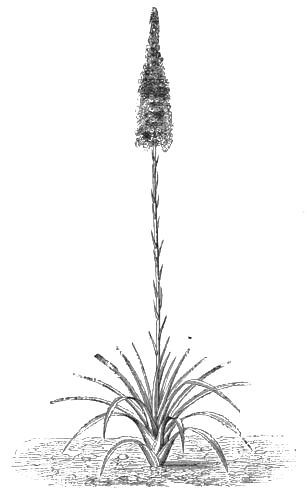
FIG. 48. AGAVE YUCCÆFOLIA.
A. yuccæfolia (Yucca-leaved).* fl. greenish yellow, 1¼in. to 1½in.
long, in a dense spike 6in. to 15in. long, about 14in. in diameter,
sessile, solitary, or in pairs; scape 12ft. to 20ft. high. l. twenty
to forty in a dense, shortly-stemmed rosette, linear, much recurved,
1½ft. to 2½ft. long, ¾in. to 1in. broad at the middle; face
deeply channelled, dull, rather glaucous green, with a pale band
down the centre, the tip not at all pungent, the back broadly
rounded, edge entire, or obscurely serrulate. Mexico, 1816. A
most distinct species. See Fig. 48.
AGERATUM (from a, not, and geras, old; in reference
to the flowers being always clear). SYN. Cœlestina. ORD.
Compositæ. This genus includes several American species,
for the most part half-hardy annuals and biennials; or, if
the seed is not allowed to ripen, they become perennials.
Involucre cup-shaped, of many imbricated linear bracts; receptacle
naked. Leaves opposite. A light rich soil is most
suitable. Very easily increased by cuttings or seeds; if
required true, the former is the only sure method of propagation.
To grow large plants for greenhouse decoration,
sow the seeds in January, in heat, in sandy soil,
barely covering them. As soon as the young plants are
large enough, prick them off into thumb pots, and keep
in heat till they grow freely, then place them into a
cooler house. Transfer into larger pots as soon as the
others are full of roots, until they are finally shifted into
10in. or 12in. pots. When these are full of roots, the
plants should be watered with liquid manure twice a week,
and they soon flower well, making fine specimens. During
hot weather especially, they should be well syringed
with clear water daily, to keep down red spider. The
plants required for bedding (for which purpose the dwarf
garden varieties are mostly used) should be raised about
the same time, kept in small pots, gradually hardened off,
and planted out in the middle or end of June. Cuttings
of all the varieties strike readily in heat, treated like most
soft-wooded plants, and, when rooted, may be managed as
recommended for the seedlings.
A. Lasseauxii (Lasseaux's). fl.-heads rose-coloured, small, disposed
in corymbose heads. Summer. l. lanceolate-elliptic. h. 1½ft.
to 2ft. Monte Video, 1870. A much-branched plant, requiring
greenhouse protection in winter, and suitable for planting out
in summer.
A. latifolium (broad-leaved). A synonym of Piqueria latifolia.
A. mexicanum (Mexican).* The commonest and most useful
species, with a profusion of lilac-blue flowers. h. 2ft. Mexico,
1822. When used for bedding purposes it may be pegged down like
the Verbena, or be allowed to grow its full height. Several very
dwarf varieties of it have originated under cultivation, which
supersede the species for bedding, the best of which are:—CUPID,*
rich blue, very dwarf and floriferous; IMPERIAL DWARF,
about 9in. high, with porcelain blue flowers; LADY JANE, of the
same colour, very free; QUEEN,* silvery grey, about 9in. high;
SNOWFLAKE,* white, very free and showy; SWANLEY BLUE,* very
deep blue, 6in. to 8in. high. There is also a white-flowered
variety of Mexicanum, which is very showy; and a variegated
form, sometimes grown for the sake of its pretty foliage.
AGGLOMERATE, AGGLOMERATED. Collected
into a heap or head.
AGGLUTINATED. Glued together.
AGGREGATE, AGGREGATED. Gathered together;
usually applied to the inflorescence.
AGLAIA. (mythological: from Aglaia, the name of one of
the Graces, and given to this genus on account of its beauty
and the sweet scent of the flowers). ORD. Meliaceæ. Stove
evergreen trees or shrubs having very small flowers, disposed
in branched axillary panicles. Leaves alternate, trifoliate,
or impari-pinnate. There are several species, but
the undermentioned is the only one worth growing yet
introduced. It thrives well in a mixture of turfy loam
and peat. Young cuttings ripened at the base, and taken
off at a joint, will root in sand under a hand glass, in
heat.
A. odorata (sweet-scented). fl. yellow, small, in axillary racemes,
very sweet-scented, said to be used by the Chinese to scent their
teas. February to May. l. pinnate, with five or seven glossy
leaflets. h. 8ft. to 10ft. China, 1810.
AGLAOMORPHA. See Polypodium.
AGLAONEMA (from aglaos, bright, and nema, a
thread; supposed to refer to the shining stamens). ORD.
Aroideæ. Stove perennials, allied to Arum, and requiring
similar treatment to the stove species of that genus.
A. commutatum (changed).* fl. white. l. greyish-blotched.
h. 1ft. Philippines, 1863. SYN. A. marantæfolium maculatum.
A. Mannii (Mann's).* fl., spathe 2in. long, whitish, with a spadix
one-third shorter, bearing white anthers and scarlet ovaries.
l. elliptic-oblong, dark green. Stems thickish, erect. h. 1½ft.
Victoria Mountains, 1868.
A. marantæfolium maculatum (Maranta-leaved, spotted).
A synonym of A. commutatum.
A. pictum (painted).* fl., spathe pale creamy yellow, folded round
so as to appear globular-oblong, opening at top; spadix projecting,
white. August. l. elliptic-acuminate, light green, blotched irregularly
with broadish angulate patches of grey. Stems slender,
erect. h. 1ft. to 2ft. Borneo.
AGNOSTUS. See Stenocarpus.
AGRAPHIS. Included under Scilla (which see).
AGRIMONIA (from argos, white; the cataract of the eye
being white. Once reputed to contain medicinal qualities).
Agrimony. ORD. Rosaceæ. A genus of hardy herbaceous
perennials, with interruptedly pinnate leaves, each accompanied
by a pair of stipules united to the petioles. Flowers
small, numerous, spiked; calyx turbinate, involucrated by
bristles; petals five. They are all of the easiest culture,
growing in ordinary soil. Readily increased by root-division.
The most showy species in cultivation are
described below.
A. Eupatoria (Eupatoria). fl. yellow, on an elongated spike.
l. with elliptic-oblong, coarsely serrated leaflets, odd one stalked.
h. 1ft. to 2ft. Britain.
A. nepalensis (Nepaul). fl. yellow, on erect, slender racemes.
l. with ovate, serrated leaflets, odd one stalked, villous. h. 1ft. to
2ft. Nepaul, 1820.
A. odorata (sweet-scented).* fl. yellow; spikes several. l. with
oblong lanceolate, deeply crenate-toothed leaflets, hairy. h. 2ft.
to 3ft. Italy, 1640.
AGRIMONY. See Agrimonia.
AGRIOTES. See Wireworm.
AGROSTEMMA (from agros, a field, and stemma, a
crown; alluding to the beauty of the flowers, which were
formerly made into crowns or garlands). Rose Campion.
ORD. Caryophyllaceæ. Hardy evergreen perennials and
annuals, with broadish leaves, and one-flowered peduncles.
Of easy culture, and well adapted for borders. They will
all grow freely in common garden soil. Increased by
division of the roots, and seed. A. cœli-rosa, and A.
flos-Jovis are, perhaps, species of Lychnis, but the generic
name which we have adopted is the most common one.
All the species of this genus are exceedingly pretty free-flowering
plants, and both annuals and perennials are well
worth growing.
A. cœli-rosa (rose of Heaven).* fl. delicate rose, white, or bright
purple, solitary, terminal. Summer. Levant, &c., 1713. An annual
species about 1ft. high, not tomentose; should be grown in
patches. Sow the seed in April.
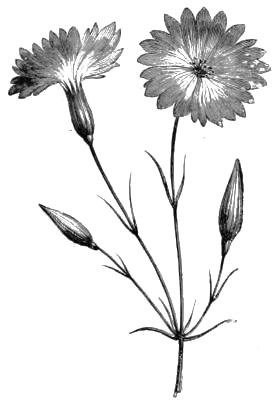
FIG. 49. AGROSTEMMA CŒLI-ROSA FIMBRIATA.
A. c.-r. fimbriata (fimbriate). A form having fimbriated petals.
Known also as nana. h. 9in. See Fig. 49.
A. c.-r. purpurea (purple).* A very pretty form, having dark
purple flowers, and compact habit. See Fig. 50.
A. coronaria (crowned).* fl. white, with the middle red; petals
emarginate, crowned, serrated; peduncles elongated, one-flowered.
July. l. lanceolate, very broad, leathery; plant woolly throughout.
h. 1ft. to 2ft. South Europe, 1596. This species is admirably
adapted for naturalising on dry hill sides, and in the wild
garden. There are several varieties seen in gardens with a great
diversity of colour, including dark crimson, white, and sometimes
double flowers. See Fig. 51.
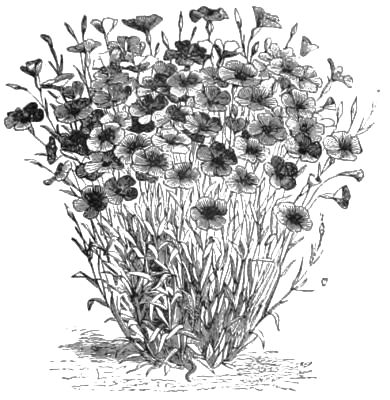
FIG. 50. AGROSTEMMA CŒLI-ROSA PURPUREA.
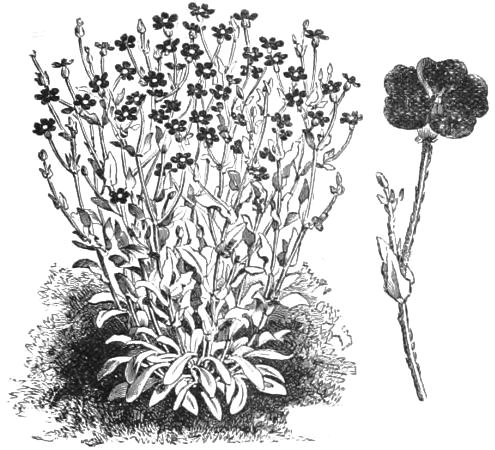
FIG. 51. AGROSTEMMA CORONARIA, showing Habit and Flower.
A. flos-Jovis.* Flower of Jove. fl. purple or scarlet, in umbellate
heads; peduncles short, rather branched. July. l. lanceolate,
stem-clasping, silky, tomentose. h. 1½ft. Switzerland, 1726.
Plant white from tomentum. See Fig. 52.
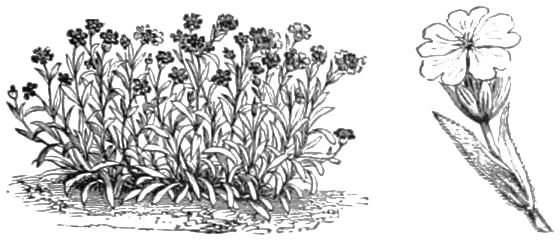
FIG. 52. AGROSTEMMA FLOS-JOVIS, showing Habit and Flower.
AGROSTIS (from agros, a field; the Greek name for a
kind of grass). Bent Grass. ORD. Gramineæ. Annual or
perennial grasses. Panicle loose; spikelets compressed.
Several of the species are very effective, and well worth
growing; and the spikes are pretty objects, when dried, for
window vases, &c. They are of easy culture, in ordinary
garden soil. Sow seeds during spring in the open border,
in tufts, among ferns, &c., or in pots for decorative purposes.
A. elegans (elegant). h. 1ft. Russia, 1834.
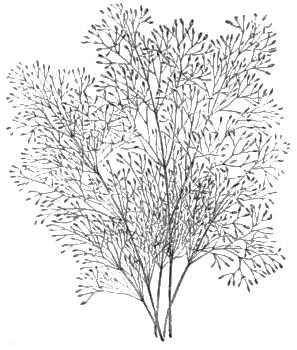
FIG. 53. AGROSTIS NEBULOSA.
A. nebulosa (cloud).* Cloud Grass. fl. panicles resemble, when
developed, a cloud resting over the ground. h. 1½ft. Very light
and elegant. Annual. See Fig. 53.
A. pulchella (pretty).* Dwarfer, and with a more rigid habit than
A. nebulosa. It is, nevertheless, a most graceful plant, and
valuable for bouquet making, and for winter decorative purposes.
h. 6in. to 12in. Russia. Annual.
A. spica-venti (windward-spiked). fl. panicle large, silky looking,
loosely spreading. England. Annual.
AGROTIS. See Pot-herb Moths and Turnip Moth.
AILANTUS (from ailanto, referring to its lofty
growth). Tree of Heaven. ORD. Xanthoxylaceæ. Tall
deciduous trees. The stove species will grow freely in a
mixture of loam and peat; and the best way to increase
these is by pieces of the roots, planted in a pot with their
points above the ground, and placed in a hotbed, where
they will soon make fine plants.
A. excelsa (tall). fl. whitish green, disposed similar to the
following. l. abruptly pinnate, 3ft. long, with ten to fourteen pairs
of leaflets coarsely toothed at the base, without glands. h. 66ft.
India, 1800. A stove tree.
A. glandulosa (glandulous).* fl. whitish green, disposed in large
branched, terminal, fascicled panicles, exhaling a disagreeable
smell. August. l. impari-pinnate; leaflets coarsely toothed at
the base with glands. (The leaves on vigorous young trees are
sometimes 6ft. in length.) h. 60ft. China, 1751. This tree grows
with great rapidity for the first ten or twelve years, in favourable
situations, afterwards its growth is much slower. It is quite
hardy, and thrives in almost any soil, though one that is light and
somewhat humid, and a sheltered situation, suits it best. It is a
very desirable tree for plantations, or to stand singly on lawns,
and is easily increased by slips of the roots.
AINSLÆA (in honour of Dr. Whitelaw Ainslie,
author of a work on Indian drugs). ORD. Compositæ.
Herbaceous perennials, of recent introduction. Although,
no doubt, both species will prove tolerably hardy, they
should have slight protection during winter. They thrive
in light rich soil. Propagated by divisions of the root.
A. aptera (wingless). fl.-head purple, disposed in an elongated
spike-like panicle. l. deeply cordate, sinuately toothed; petioles
wingless, whence the name. Sikkim Himalayas, 1882.
A. Walkeræ (Mrs. Walker's).* fl.-heads slender, distant, shortly
stalked, borne in erect or somewhat nodding racemes; the
white corolla-lobes and the red purple anthers make a pretty
contrast. h. about 1ft. Hong Kong, 1875. A very rare and
graceful species.
AIR. Pure atmospheric air is composed of nitrogen,
oxygen, and a very small quantity of carbonic acid gas, all
of which are essential to the growth of plants. Air-giving
is a term used by gardeners to lessen the temperature of
a greenhouse, or to equalise it with that outside. See
Ventilation.
AIRA (from aira, applied by the Greeks to Lolium
temulentum). Hair Grass. ORD. Gramineæ. Chiefly
hardy grasses, of agricultural value. Panicle loose; spikelet
compressed, with two perfect flowers, and sometimes a
neuter. Of easy culture, in ordinary garden soil. Sow
seeds in spring.
A. flexuosa (waved).* The Waved Hair Grass. fl. shining brown;
panicle erect, spreading, with waved angular branches and flower-stalks.
l. short. Stem upwards of 1ft. high, erect, smooth.
England. A very pretty and graceful perennial.
A. pulchella (pretty).* fl. panicles loose, very delicate and graceful.
l. very short. h. 6in. to 8in. South Europe. An elegant plant,
with tufted filiform stems. One of the best of dwarf-growing
ornamental grasses. See Fig. 54.
AIR-PLANT. See Aerides, also Epiphytes.
AITONIA (in honour of W. Aiton, once Head Gardener
at Kew). ORD. Meliaceæ. A small and rather interesting
greenhouse evergreen shrub from the Cape of Good
Hope, and thriving well in an equal mixture of sandy loam
and peat. Young cuttings will root in sand, under a bell
glass, with bottom heat. The cuttings must not be put in
very close together, and the glass should be wiped frequently,
as they are apt to damp off.
A. capensis (Cape). fl. pink; petals four, shorter than the projecting
stamens. July. h. 2ft. 1777.
AIZOON (from aei, always, and zoos, alive; tenacious
of life). ORD. Portulacaceæ. Greenhouse annuals, biennials,
or evergreen shrubs. Flowers apetalous; calyx five-cleft,
coloured on the inner surface. The undermentioned
species is the only one worth growing. It requires no shade,
a dry atmosphere, and light sandy soil. Propagated by
seeds and cuttings.
A. sarmentosum (sarmentose). fl. greenish, sessile. Summer.
l. opposite, linear-filiform, rather connate, glabrous; branches
rather villous, three-flowered at the apex, the two lateral flowers
are bracteated, and spring from the sides of the middle one.
Sub-shrub, erect, diffuse, glabrous, branched. South Africa,
1862.
AJAVA SEED. See Ptychotis.
AJAX MAXIMUS. See Narcissus.
AJOWAN. See Ptychotis.
AJUGA (from a, not, and zugon, a yoke; in reference
to the calyx being equal, not bilabiate). Bugle. ORD.
Labiatæ. Hardy annual or perennial herbaceous plants,
usually procumbent or ascending, sometimes stoloniferous.
Whorls two or many flowered, dense, sometimes
all axillary, when the floral leaves conform to those of
the stem; sometimes the superior whorls are approximate
into spikes, then the floral leaves are small, and
of a different form from the stem ones. All the species
are of easy cultivation in ordinary garden soil. Perennials
increased by divisions, or by seeds sown in the open border,
during spring or autumn. The seeds of annual kinds may
be sown in the open border in spring, where they are intended
to remain.
A. alpina (alpine). Synonymous with A. genevensis.
A. australis (southern). fl. blue; whorls six or more flowered;
lower whorls remote, upper ones sub-spicate, floral leaves similar
to the stem ones, exceeding the flowers. May to July. l. narrow-oblong,
narrowed at the base, quite entire or sinuated, thickish,
rather villous. Stem ascending, or erect. h. 6in. New Holland,
1822. Perennial.
A. Chamæpitys (ground-pine). fl. yellow, dotted with red,
pubescent outside; whorls two-flowered; floral leaves similar to
the others, exceeding the flowers. April. l. deeply trifid, with
linear, quite entire, or trifid lobes. Stem procumbent at the base,
much branched, beset with long hairs, like the leaves. h. about
6in. England (rare). Annual.
A. genevensis (Geneva).* fl. varying from blue to rose colour and
white; upper whorls spicate, lower ones distant, six or more
flowered. May. l. stem ones oblong-elliptic or obovate, narrowed
at the base; lower ones petiolate; floral ones ovate or cuneated;
superior ones scarcely equalling the flowers or shorter, all usually
coarsely toothed, membranaceous, green on both surfaces, and
beset with scattered hairs. Stem erect, pilose. h. 6in. to 1ft.
Europe. A very variable species, admirably adapted as an alpine
plant, and succeeds best in bog soil, where its roots will have
plenty of room; it increases rapidly. Perennial. SYNS. A. alpina,
A. rugosa.
A. orientalis (oriental).* fl. blue; whorls six or more flowered,
distant, or the upper ones are approximate. May. l. lower ones
large, petiolate; ovate, coarsely and sinuately toothed, narrowed
at the base; floral ones sessile, broad ovate, deeply lobed or
toothed, exceeding the flowers. Stem ascending, pilosely woolly.
h. 1ft. to 1½ft. Eastern Europe, 1732. This species should be
grown in a dry, sunny spot.
A. pyramidalis (pyramidal).* fl. blue or purple; whorls many-flowered,
upper ones or all spicate. May and June. l. stem ones
approximate, scarcely petiolate, obovate; floral ones broad-ovate,
clasping the flowers, tetragonally pyramidate; the upper ones
often coloured, all quite entire or obscurely sinuated. Stem erect.
h. 6in. Scotland. Perennial. Of this there are several handsome
garden varieties.
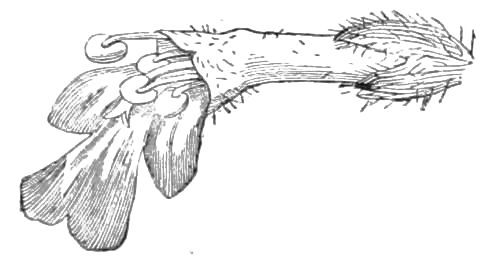
FIG. 55. FLOWER OF AJUGA REPTANS.
A. reptans (creeping).* fl. varying from blue to rose-colour; lower
whorls remote; upper ones spicate, six to twenty flowered. May.
l. ovate or obovate, quite entire or sinuated, and are, as well as
the stem, nearly glabrous; radical one petiolate, stem ones nearly
sessile. Stem creeping. The variegated and darkest leaved
forms of this are superior to the type for horticultural purposes.
Britain. Perennial. See Fig. 55.
A. rugosa (wrinkled). Synonymous with A. genevensis.
AKEBIA (its Japanese name). SYN. Rajania. ORD.
Lardizabalaceæ. A pretty twining shrub, succeeding well
in the south-western counties of England, or in Scotland,
trained to a trellis, or rambling over other shrubs in the
open; but, when so grown, it requires the protection of a
mat in winter. It makes an excellent twiner for the cool
greenhouse. Sandy loam, leaf soil, and peat are most
suitable for its culture. Increased by root divisions and
cuttings.
A. quinata (five-leafletted).* fl. purplish brown, small, in axillary
racemes, very fragrant. March. l. on very slender petioles, and
palmately divided into usually five distinct petiolulate oval or
oblong emarginate leaflets, the bottom pair smallest. h. 10ft.
Chusan, 1845.
AKEE-TREE. See Blighia sapida.
ALA. A lateral petal of a papilionaceous flower.
ALANGIACEÆ. A very small order of trees or
shrubs, usually with inconspicuous flowers, in axillary
fascicles. Fruit succulent, eatable. The two genera best
known in this country are Alangium and Nyssa.
ALANGIUM (from Alangi, the Malabar name of the
first species). ORD. Alangiaceæ. Very showy stove evergreen
trees, with alternate, exstipulate, entire leaves.
Flowers few, sessile, in axillary fascicles; calyx campanulate;
petals linear, spreadingly reflexed. They thrive well
in a mixture of loam and peat, or any light rich soil. Cuttings
root readily if planted in a pot of sand, with a hand
glass placed over them, in heat.
A. decapetalum (ten-petaled).* fl. pale purple, with a grateful
scent, solitary, or two to three together in the axils of the
leaves; petals ten or twelve. June. l. alternate, oblong-lanceolate,
quite entire; branches glabrous, spinescent. h. 30ft. Malabar,
1779.
A. hexapetalum (six-petaled). fl. purple, six-petaled. l. ovate-lanceolate,
acuminated, velvety beneath. h. 30ft. Malabar,
1823.
ALATUS. Furnished with a membranous or thin wing
or expansion.
ALBESCENT. Growing white.
ALBICANT. Growing whitish.
ALBINISM. A pale condition due to the absence of
chlorophyl.
ALBIZZIA (named after an Italian). ORD. Leguminosæ.
Ornamental greenhouse or hardy trees or shrubs.
For culture, see Acacia, to which they are often referred.
A. Julibrissin (Julibrissin). fl. white; heads pedunculate,
forming a terminal somewhat corymbose panicle. August. l.
with eight to twelve pairs of pinnæ, each pinna bearing
about thirty pairs of dimidiate-oblong, acute, rather ciliated
leaflets. h. 30ft. to 40ft. Hardy. Levant, 1745. SYN. A.
Nemu.
A. lophantha (crest-flowered).* fl. yellow; racemes ovate-oblong,
axillary, twin. May. l. with eight to ten pairs of
pinnæ, each pinna bearing twenty-five to thirty pairs of linear,
bluntish leaflets; petioles and calyces clothed with velvety down.
h. 6ft. to 10ft. New Holland, 1803. A very distinct unarmed
greenhouse species, and one of the best for window gardening.
A. Nemu. A synonym of A. Julibrissin.
ALBUCA (from albicans, or albus, white; the colour of
the earlier species). ORD. Liliaceæ. A rather extensive
genus of Cape of Good Hope bulbs, requiring ordinary
greenhouse culture. Closely allied to Ornithogalum.
Perianth six-cleft, three outer segments spreading; three
inner ones closed over the stamens. They, however, succeed
admirably when grown in a warm sunny position
out of doors, if covered with a hand glass, or litter, during
winter. A light loamy soil, with leaf mould and sand,
suits them well. Propagated by offsets from the old
bulb, or seeds. There are but few species worthy of
cultivation.
A. angolensis (Angolan). fl. yellowish, large, in cylindrical
racemes 1ft. to 1½ft. long. l. linear-lorate, sub-erect, fleshy, pale
green, 1½ft. to 2ft. long. h. 3ft. Angola.
A. aurea (yellow).* fl. pale yellow, upright; peduncle very
long, erect, spreading. June. l. linear-lanceolate, flat. h. 2ft.
1818.
A. fastigiata (peaked).* fl. white; peduncle very long, spreading.
May. l. linear, flattish, longer than the scape. h. 1½ft.
1774.
A. flaccida (weak). fl. pale yellow, with a green keel, drooping,
six to eight in a loose raceme; peduncles spreading at right
angles. July. l. lanceolate-linear, obliquely bent. h. 2ft.
1791.
A. Nelsoni (Nelson's).* fl., perianth, 1½in. long, ascending, white,
with a dull red stripe down the back of each segment; scape
stout, 4ft. to 5ft. high. Summer. l. bright green, very concave
at the basal part, nearly flat in the upper part, 3ft. to 3½ft. long,
l¼in. to 2¼in. broad, at about one-third the way up, whence they
are gradually narrowed to an acute point. Natal, 1880. This very
handsome species is the best of the genus.
ALBUMEN. The substance under the inner coat of
the testa of seeds, surrounding the embryo. It is sometimes
absent.
ALBUMINOUS. Furnished with albumen.
ALBURNUM. The white wood of a tree; the
younger wood, not choked up by sedimentary deposit, and
therefore permeable to fluids.
ALCHEMILLA (from Alkemelyeh, the Arabic name
of one of the species). Lady's Mantle. ORD. Rosaceæ.
Hardy herbaceous perennials, with corymbose, apetalous
flowers; calyx tubular, with the tube rather contracted at
the apex. Leaves palmate or lobed. Of very easy culture,
in common, but well drained soil. They are well adapted
for rockwork and planting near the front of borders. Easily
increased by divisions of the roots, and seeds. All here
described are hardy, except A. sibbaldiæfolia.
A. alpina (alpine).* fl. greenish, small; corymbose. June.
l. digitate; leaflets five to seven, lanceolate-cuneated, obtuse,
serrated, clothed with white satiny down beneath. h. 6in.
Britain.
A. pubescens (pubescent). fl. greenish; corymbs terminal,
crowded, clothed with a coating of long weak hairs. June.
l. roundish-reniform, seven-lobed, toothed, silky beneath. h. 6in.
to 8in. Caucasus (Higher), 1813.
A. sericea (silky).* fl. greenish, corymbose. June. l. digitate;
leaflets seven, lanceolate-obovate, obtuse, connected at the base,
serrated at the apex, clothed with satiny down beneath. h. about
6in. Caucasus, 1813. Much larger in every part than A. alpina,
to which it is closely allied.
A. Sibbaldiæfolia (Sibbaldia-leaved). fl. white, conglomerate;
stem corymbosely many-flowered at the apex. July. l. deeply
three-parted, clothed with adpressed pubescence beneath; segments
deeply serrated, lateral ones bifid. h. 6in. Mexico, 1823.
A greenhouse species, which should be grown in small well-drained
pots, with a mixture of leaf soil and sandy loam.
ALDEA. A synonym of Phacelia (which see).
ALDER. See Alnus.
ALETRIS (from aletron, meal; referring to the
powdery appearance of the whole plant). The American
Star Grass. SYN. Tritonia. ORD. Hæmodoraceæ. Interesting
hardy herbaceous perennials, closely allied to the
Amaryllids. Perianth half-inferior, tubular; limb spreading
or funnel-shaped; stamens inserted at base of perianth segments,
filaments flat. They delight in a sunny but damp
situation, with peat, leaf mould, and sand, and are slowly
increased by division of the roots.
A. aurea (golden).* fl. yellow, bell-shaped. h. 1ft. to 2ft. North
America, 1811. Similar in habit to A. farinosa.
A. capensis (Cape). See Veltheimia viridifolia.
A. farinosa (mealy).* fl. white, bell-shaped, in a terminal spiked
raceme, upon stems 1½ft. to 2ft. high. l. lanceolate, ribbed.
North America, 1768. A pretty species, forming a spreading tuft,
and possessing intensely bitter properties.
ALEURITES (from the Greek word signifying floury;
all the parts of the plant seeming to be dusted with a
farinaceous substance). ORD. Euphorbiaceæ. A handsome
stove evergreen tree, with small, white, clustered flowers.
Leaves alternate, stalked, exstipulate. Of easy culture
in a loamy soil. Ripe cuttings, with their leaves untouched,
root readily in sand, under a hand-glass.
A. triloba (three-lobed).* Candleberry Tree. l. three-lobed,
4in. to 8in. long. h. 30ft. to 40ft. Moluccas and South Pacific
Islands, 1793.
ALEXANDERS. See Smyrnium.
ALEXANDRIAN LAUREL. See Ruscus racemosus.
ALGAROBA BEAN, or CAROB. See Ceratonia.
ALGAROBIA. Included under Prosopis (which see).
ALHAGI (its Arabian name). ORD. Leguminosæ.
Manna Tree. Greenhouse shrubs or sub-shrubs, with
simple leaves, and minute stipulas. Flowers few, in clusters.
They thrive in pots filled with a mixture of sand, loam, and
peat. Young cuttings will root in sand, with a bell glass
placed over them, in heat; but by seeds, if they can be
procured, sown in a hotbed, is a preferable mode of increasing
the plants. They may be placed out of doors
during the summer months.
A. camelorum (camels). fl. red, few, disposed in racemes
along the peduncles. July. l. lanceolate, obtuse, simple;
stipulas minute. Stem herbaceous. h. 1ft. to 2ft. Caucasus,
1816.
A. maurorum (Moors'). fl. purple in the middle, and reddish
about the edges, disposed in racemes along the axillary, spinose
peduncles. July. l. obovate-oblong, simple; spines strong,
and longer than those of the above species. h. 2ft. to 3ft.
Egypt, &c. The Manna is a natural exudation from the branches
and leaves of this shrub, which takes place only in very hot
weather.
ALIBERTIA (in honour of M. Alibert, a celebrated
French chemist, author of "Traite des Fievres Attaxiques,"
wherein he mentions the effects of Peruvian bark). ORD.
Cinchonaceæ. A small stove evergreen tree, very ornamental
when in flower. Flowers solitary or fascicled,
diœcious; corolla leathery, tubular. A mixture of loam
and peat is the best soil. Cuttings strike root freely,
in a similar kind of soil, under a hand glass, in a moist
heat.
A. edulis (edible). fl. cream-coloured, solitary or in fascicles,
terminating the branches, almost sessile. June. fr. edible.
l. opposite, leathery, oblong, acuminated, shining above, and
bearded in the axils of the veins beneath. h. 12ft. Guiana,
1823.
ALICANT SODA. See Salsola.
ALISMA. (from alis, the Celtic word for water). Water
Plantain. SYN. Actinocarpus. ORD. Alismaceæ. A genus
entirely composed of hardy aquatic species. Flowers three-petalled.
Leaves parallel-veined. Increased by division or
seeds. The latter should be sown in a pot immersed in
water, filled with loam, peat, and sand, and the former root
freely in a moist loamy soil. The British species are most
easily grown.
A. natans (floating).* fl. white; peduncles simple. July. l. elliptical-obtuse;
stem ones floating, on long stalks, scarcely nerved;
those at the base of the plant are long, linear-lanceolate, membranous
scales, or abortive root leaves. North Wales and Cumberland,
but very rare; abundant in other parts of Europe. See
Fig. 56.
A. Plantago (plantain).* fl. delicate pale rose coloured; scape
branched upwards. July. l. ovate, acute, all radical, on long
stalks; branches all whorled, bracteated, compound. h. 2ft. to
3ft. Britain. A very handsome aquatic for naturalising. See
Fig. 57.
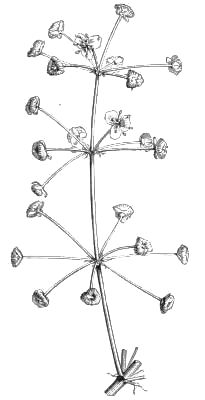
FIG. 57. PORTION OF
INFLORESCENCE
OF ALISMA PLANTAGO.
A. P. lanceolata (lance-shaped leaves). fl. pure white. July.
l. lanceolate. Britain.
A. ranunculoides (ranunculus-like). In general appearance very
like the last named species, but smaller. Britain.
ALISMACEÆ. A small order of aquatic or marsh
plants, with three-petaled flowers, on leafless scapes, and
simple radical leaves. The genera best known are Alisma
and Sagittaria.
ALKANET. See Anchusa tinctoria.
ALLAMANDA (named in memory of Dr. Allamand,
of Leyden, who first communicated seeds of this genus to
Linnæus). ORD. Apocynaceæ. Elegant climbing evergreen
stove plants. Peduncles terminal and many-flowered;
corolla funnel-shaped, with a narrow tube, gamopetalous,
large, inflated, five-cleft at the apex. Leaves verticillate.
This genus differs from all others of the same order, in the
figure of the corolla. Of comparatively easy culture. To
obtain their beauty of foliage and flowers, the shoots
should be tied to wires placed within 8in. or 9in. of the
glass that forms the roof of the structure in which the
plants are growing. Trained in this way, and the shoots
allowed to ramble in a somewhat natural manner, the effect,
when the plants are in flower, is grander and more pleasing
in every respect than when the shoots are tied to a formal
trellis, of whatever shape. When thoroughly established,
they succeed admirably in a compost of three parts good
fibry loam, and one part wood charcoal or coarse river
sand, with some rotten cow manure added. When potting
the plants, make the fresh compost firm round the old
balls of soil, and do not fill the pots too full; leave
room for plenty of water, as, when in active growth, they
require a liberal daily supply. They must be pruned
annually in January or February, cutting the previous
year's shoots back to within a joint or two of the old wood.
Allamandas should be exposed to the light as much as possible
at all seasons of the year. In winter months they
require but little water, but the drainage must always be
perfect. They are remarkably free from insect attacks of
any kind. It may be also observed that the temperature
should never fall below 55deg. This genus is easily propagated
by cuttings, which will root at any time of the
year in a bottom heat of from 70deg. to 80deg. The usual
time is, however, in spring, when the old plants are pruned
back. Choose the tops of the shoots, retaining two or
three joints to each cutting; place these in a compost
of sand and peat or leaf mould in equal proportions,
singly, in small pots. Press the soil firmly around
each cutting, and, when all are inserted, give a good
watering, and plunge the pots in the propagating bed.
Attend to shading and watering, and in about three
weeks' time they will have emitted roots, and started to
grow at the tops. The pots should now be raised out of
the plunging material, and placed upon the surface thereof,
and there allowed to remain two or three weeks longer;
when the young roots will have, by this time, filled the
little pots, and a shift into the larger ones will be necessary.
Return the plants to the propagating bed, but do not
plunge them therein. As soon as it is certain that the roots
have commenced growth in the fresh soil, pinch the point
of each plant that is intended to be grown on a trellis. This
will cause the remaining buds to push out fresh shoots;
and these, as soon as they have made two joints or
whorls of leaves each, should have their points pinched out
also. By repotting the plants as often as they fill their
pots with roots during the first season of their growth, and
pinching the points out of the shoots twice or thrice in the
same time, a good foundation will be formed, from which
the future specimens will spring. In the case of plants
intended to be trained up rafters or pillars, they should
not have their points pinched out until they attain to the
height where it is desirable they should have more than
one shoot, and be repotted as recommended above, for
the first year; but, after that, they will require to be
repotted only once a year, and this should be done soon
after the buds have started to grow afresh in the
spring.
A. Aubletii (Aublet's).* fl. yellow, large. June. l. four to five
in a whorl, broad-oblong, acuminated, rather hairy beneath.
Guiana, 1848.
A. cathartica (purging).* fl. yellow, large. June. l. four in a
whorl, obovate, obtuse, acutish, with sub-undulated edges, glabrous.
Guiana, 1785. SYN. A. Linnæi.
A. chelsoni (Chelsea).* fl. yellow, large. Summer. This splendid
plant is least suited of any for trellis training, from its wood
being stiffer and harder, and is therefore best for the roof
of a house; it is one of the best kinds for cutting. Garden
hybrid.
A. grandiflora (large-flowered).* fl. distinct pale yellow, rather
large, very free bloomer. June. Brazil, 1844.
A. Linnæi (Linnæus's). Synonymous with A. cathartica.
A. neriifolia (oleander-leaved).* fl. deep golden yellow, elegantly
streaked with orange, between funnel and bell shaped, the tube
being wide, 1in. long; panicle many-flowered. June. l. oblong,
on short petioles, acuminate. h. 3ft. South America, 1847. Shrub
erect, glabrous.
A. nobilis (noble).* fl. bright yellow, rather deeper tinted in the
throat, large, full circular form, but without streaks or any other
markings. July. l. in whorls of four or of three, tapered to the
base, sessile, oblong, abruptly acuminate, membranaceous, hairy
on both surfaces, especially beneath and on the midrib. Brazil,
1867. One of the best species.
A. Schottii (Schott's).* fl. yellow, large, throat beautifully striped
with rich brown. September. l. oblong, acuminated, four in a
whorl, quite glabrous, on both surfaces. h. 10ft. Brazil, 1847.
This species is a very strong grower, and suits the roof system
best; it is also a very free bloomer.
A. verticillata (whorl-leaved). fl. yellow, large. June. l. usually
six in a whorl, ovate-oblong, obtuse, quite glabrous. South
America, 1812.
A. violacea (violet). fl. purple. Brazil, 1859.
ALLANTODIA (from allantos, a sausage; in reference
to the cylindrical form of the indusium). ORD. Filices.
A greenhouse monotypic genus, differing from Asplenium
in the dehiscence of the involucre, and it may receive
similar treatment to the Spleenworts. Sori dorsal, linear-oblong,
attached to the primary veins. Involucre the
same shape as the sorus and quite inclosing it, bursting in
an irregular line down to the centre.
A. Brunoniana (Brown's).* fronds often 1ft. to 2ft. long, ½ft. to
1ft. broad; pinnæ 3in. to 6in. long, 1in. broad, entire. sori confined
to the anterior vein of the first fork. Himalayas, up to
6000ft., &c. SYN. Asplenium javanicum.
ALLARDTIA. See Tillandsia.
ALLEYS. Small walks of various widths, but
generally 1½ft. or 2ft. wide, and formed in right lines,
parallel to the main walks, or borders, sometimes covered
with a thin coat of sand, gravel, or shells, or paved with
flints, pebbles, &c. Spaces left between beds of seedling
plants are generally meant when alleys are referred to.
ALL-HEAL. See Prunella vulgaris.
ALLIACEOUS. Pertaining to the Garlic family.
ALLIARIA. See Sisymbrium.
ALLIGATOR APPLE. See Anona palustris.
ALLIGATOR PEAR. See Persea gratissima.
ALLIUM (from all, meaning hot or burning; in allusion
to the well-known properties of the Onion tribe). Including
Porrum, Schœnoprasum. ORD. Liliaceæ. Hardy
bulbous plants, with flat or terete radical leaves, and capitate
or umbellate flowers, enclosed in a membranous spathe
at the summit of a slender, naked, or leafy scape; perianth
spreading or campanulate. They are of very easy culture,
increasing rapidly by offsets. The little bulbs, which are
produced in clusters, may be separated and replanted, in
autumn or early spring, about 4in. deep. Seeds are also
easily obtainable. These may be sown thinly in light soil,
in February or March, where they should remain until the
autumn or following spring, when they may be transplanted
to their flowering situations. During the growing season,
all the attention required will be to keep the plants free of
weeds, and place stakes to the tall-growing kinds.
A. acuminatum (taper-pointed).* fl. deep rose, ½in. to 1in.
across, in many-flowered umbels. July and August. l. rather
shorter than the stems, very narrow, only about a line wide.
h. 6in. to 10in. North-West America, 1840.
A. a. rubrum (red). fl. deep red-purple; in other respects like
the type. California.
A. ascalonicum (Eschallot). fl. purple; umbels globose; scape
rounded. Summer. l. subulate. h. 9in. Palestine, 1546. For
culture, see Eschallot.
A. azureum (sky-blue).* fl. deep sky-blue, with a dark line
through the middle of each division; umbels dense, globular,
longer than the spathes which envelop them before expanding.
Summer. l. triangular, from 6in. to 12in. long. h. 1ft. to 2ft.
Siberia, 1830. One of the handsomest species grown.
A. Bidwelliæ (Mrs. Bidwell's).* fl. bright rose, about ½in. across,
in few-flowered umbels. July. l. narrow, rather longer than the
stem. h. 2in. to 3in. Sierra Nevada, 1880. A very charming
little species for the rockery.
A. Breweri (Brewer's).* fl. deep rose, nearly or quite 1in. across,
in few-flowered umbels. July. l. much longer than the flower-stem,
¼in. or more broad. h. 1in. to 3in. California, 1882.
A. Cepa (common Onion). fl. white; scape ventricose, longer than
the leaves. June, July. l. fistular, rounded. h. 3ft. For culture,
see Onion.
A. C. aggregatum. Aggregated, Tree, or Potato Onion. See
Onion.
A. cœruleum (blue-flowered).* fl. blue, in large compact globular
heads. June. h. 8in. Russia, 1840. Very distinct.
A. Douglasii (Douglas'). Synonymous with A. unifolium.
A. Erdelii (Erdel's). fl. white, keeled with green, in compact
umbels. h. 6in. Palestine, 1879. A rare but pretty species, and
should be planted in a warm position on the rockery.
A. falcifolium (sickle-leaved).* fl. pale rose, ½in. to ¾in. across,
in few-flowered umbels. August. l. two in number, thick,
broadly linear, falcate. h. 2in. to 3in. North-West America, 1880.
A. falciforme (sickle-formed). Probably a variety of A. unifolium,
with pure white flowers, in several-flowered umbels.
h. 6in. California, 1882.
A. flavum (golden). fl. yellow, bell-shaped, and somewhat drooping,
in pretty umbels; scape leafy at the base. l. round, not
hollow, flattish above the base. h. about 1ft. Italy, 1759. A
slender species.
A. fragrans. See Nothoscordum.
A. karataviense (Karatavian). fl. white, in dense globose
heads. May. l. very broad, flat, glaucous, sometimes variegated.
h. 6in. Turkestan, 1878.
A. Macnabianum (MacNab's).* fl. deep magenta, a colour quite
unique in this family, in large umbels. l. nearly as long as the
stem, channelled, about ¼in. broad. h. 1ft. North America.
A. magicum (enchanting). Synonymous with A. nigrum.
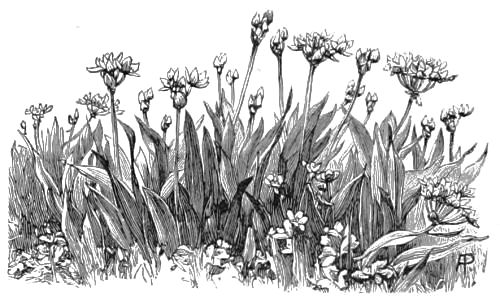
A. Moly (Moly).* fl. bright yellow, numerous, in compact umbels.
Spring. l. few, broadly lanceolate. Stem sub-cylindrical. h. 10in.
to 15in. South Europe, 1604. A very old favourite; bright-flowered
and very fine in masses. See Fig. 58.
A. Murrayanum (Murray's).* fl. rosy purple, in large heads.
l. narrow, longer than the stem. h. 1ft. North America. A
good variety of A. acuminatum.
A. mutabile (changeable). fl. white, changing to rose, in many-flowered
umbels. July. l. shorter than the stem, narrow, channelled.
h. 12in. to 24in. North America, 1824.
A. neapolitanum (Neapolitan).* fl. white, with green stamens,
numerous, in a loose umbel, on stems exceeding the leaves in
length; pedicels much longer than the flowers. Early summer.
l. two or three, sheathing the flower stem, strap-shaped, about
1in. across. h. 15in. to 18in. South Europe, 1823. Probably the
most ornamental white-flowered species.
A. nevadense (Sierra Nevada). fl. white, or pale rose, about ½in.
across, in several-flowered umbels. July. l. flat, rather longer
than the stem, about ¼in. wide. h. 3in. to 6in. Sierra Nevada
and Utah, 1882.
A. nigrum (blackish).* fl. dull violet, or whitish, with a green
vein, very numerous, in a large umbel. Summer. l. thick,
broadly lanceolate, acute, ciliated, toothed at the edges, at first
erect and glaucescent, afterwards green and spreading, much
shorter than the stem. h. 2½ft. to 3¼ft. South of Europe. Very
vigorous and free flowering. SYN. A. magicum.
A. paradoxum (wonderful). fl. white, gracefully pendulous,
borne on long footstalks springing from little nests of yellow
bulbils. Spring. l. one or two, as long as the scape, linear-lanceolate,
acute, keeled, striated, smooth, ¼in. broad, drooping
and recurved. h. 9in. to 14in. Siberia, 1823.
A. pedemontanum (Piedmont).* fl. rosy-purple, large, bell-shaped,
in large, graceful drooping clusters. July. l. lanceolate,
shorter than the stem. Piedmont, 1817. A neat little plant for
rockwork, or warm border. One of the handsomest species
grown.
A. reticulatum (netted). fl. varying from pink to white. Summer.
l. narrow, or almost filiform, shorter than the stem. h. 9in. to
15in. North-West America, 1882. A rare species.
A. r. attenuifolium (attenuate-leaved).* This may be regarded as
an extremely handsome white-flowered variety. North-West
America.
A. roseum (rose-coloured).* fl. pale lilac-rose, large, in umbels of
ten or twelve; stems round, rather longer than the leaves.
Summer. l. strap-shaped, channelled, rolled inwards at the top,
not hairy. h. 12in. to 16in. South Europe, 1752.
A. sativum (cultivated). Garlic. fl. white; umbel bulbiferous.
Summer. l. flat. h. 1½ft. Sicily, 1548. For culture, see Garlic.
A. schœnoprasum (rush-leaved onion). Chives. fl. purple;
umbel many-flowered, globose, without bulbils. June and July.
l. cylindrical, somewhat tapering towards the point; stem with one
leaf, or naked. h. 1ft. England. For cultivation, see Chives.
A. Scorodoprasum. Rocambole; Sand Leek. fl., perianth ⅓in.
long, the segments red-purple, with white margins; head loose-flowered,
with purple bulbils; scape slender. May to August.
l. 6in. to 8in. long, flat, keeled, the edges scabrid. h. 3ft. Europe
(Britain), 1596. See also Rocambole.
A. sphærocephalum (globe-headed).* fl. densely packed in a
subspherical head; in a bud state the upper ones are reddish-purple,
the lower green. June. l. narrow, shorter than the long
terete stems. h. 1½ft. to 2½ft. South Europe, 1759.
A. stramineum (straw-coloured). fl. yellow, in dense globular
umbels. July. l. narrow, shorter than the stems. h. 1½ft. to 2ft.
Siberia.
A. striatum (striated). See Nothoscordum.
A. triquetrum (three-cornered). fl. white, somewhat bell-shaped,
with a narrow streak of pure green down each petal, in a loose,
slightly drooping umbel, on erect triangular stems shorter than
the leaves. Summer. l. green, broadly strap-shaped, keeled in a
triangular manner, sometimes very long. h. 12in. to 18in. South
Europe, 1789.
A. unifolium (one-leaved). fl. bright rose. July. h. 1ft. to 2ft.
California, 1873. A handsome species, from California, resembling
A. roseum, but differing from all known species by the circumstance
that its bulbs are developed at a distance from each other,
and are connected by a thread-like rhizome, ½in. to 1in. long.
SYN. A. Douglasii.
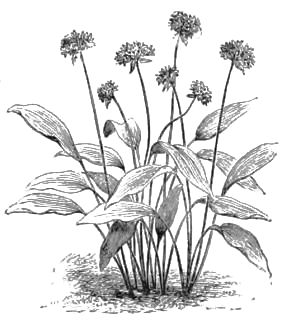
A. ursinum (bear). Broad-leaved
Garlic; Ramsons.
fl. pure white, with acute
perianth segments; umbel
level at top; scape triangular.
Summer. l. one
or two, radical, ovate-lanceolate,
stalked, large,
bright green. h. 1ft.
Britain. See Fig. 59.
A. validum (strong). fl.
pure white or rose-coloured,
in large, rather
drooping umbels. Summer.
l. ¼in. to ½in. broad,
nearly as long as the stem.
h. 12in. to 30in. Oregon
and California, 1881. A
pretty species.
A. Victorialis (Victoria's).
fl. greenish-white,
in many-flowered,
spicate umbels. May.
l. broadly ovate-oblong,
channelled, shorter than the stem. h. 1½ft. to 2ft. Southern and
Eastern Europe, 1739. Conspicuous from its broad leaves. Rare.
ALLOBROGIA. A synonym of Paradisia (which see).
ALLOCHLAMYS. A synonym of Pleuropetalum
(which see).
ALLOPHYLLUS. A synonym of Schmidelia (which
see).
ALLOPLECTUS (from allos, diverse, and pleco, to
plait; the calyx appears as if it was plaited in diverse directions).
ORD. Gesneraceæ. Very handsome stove evergreen
shrubs. Corolla tubular or club-shaped, straightish; calyx
coloured. Leaves opposite, one in each pair smaller than
the other, petiolate, fleshy, scattered or decumbent, or erect,
the under surface generally reddish; branches opposite.
For cultivation, see Gesnera.
A. bicolor (two-coloured). fl. yellow, purple; corolla pilose;
pedicels axillary, one-flowered. June. l. ovate, oblong, acuminate,
denticulate, pilose above, downy beneath; branches
tetragonal. h. 1ft. New Grenada, 1840. Plant erect, rather
woody.
A. capitatus (headed). fl. capitate; sepals red, leafy; corolla
silky, ventricose above the middle; peduncles axillary. March.
l. large, ovate, serrated, downy, reddish beneath. Stem bluntly
tetragonal, red. h. 2ft. South America, 1847.
A. dichrous (two-coloured). fl. purple, yellow, axillary, crowded,
nearly sessile. l. ovate-lanceolate, quite entire, pubescent. Brazil,
1845. A climber.
A. peltatus (peltate-leaved).* fl. whitish, about 2in. long, in
axillary tufts. August. l. opposite, one is 1in. to 2in. long, and
the other 6in. to 9in. long, and 2in. wide, oblong, shortly acuminate,
rounded, peltate at the base, and raised on stout footstalks,
1in. to 2in. long. h. 1ft. Costa Rica, 1877.
A. repens (creeping). fl. yellow; corolla with curved tube,
four lobed; sepals ovate, spotted; peduncles axillary, solitary.
February. l. ovate, rather fleshy, serrate, on short petioles. St.
Martha, 1845. Plant downy; an evergreen trailer.
A. vittatus (striped). fl., calyx crimson; corolla pale yellow;
terminal and fasciculate, surrounded by vivid red foliaceous bracts.
l. large, shortly-stalked, broadly-ovate, of a deep velvety green,
having a broad greyish-green band down the centre, branching off
along the course of the principal veins. Stems erect, fleshy.
Peru, 1870.
A. zamorensis (Zamora).* fl. yellow; sepals orange-red. h. 1ft.
Columbia, 1875.
ALLOSORUS. See Cryptogramme and Pellæa.
ALLOTMENT GARDENS. A system of assigning
small portions of land to be cultivated by labourers after
their ordinary day's work.
The following are the most important rules to be carried
out; but, should occasion arise, other rules must be made
to meet particular cases:—
1. Each Allotment should consist of a rood of land
(=¼ acre) to be let yearly at a rent of not more than 10s.
2. The Allotment to be let for one year only, to be re-let
to the same occupier, provided his character has been satisfactory
during the preceding year.
3. The rent shall be considered due at Michaelmas. If it
remains unpaid for one month after that date, the Allotment
shall be forfeited.
4. The Allotment to be cultivated solely by spade husbandry,
and the same crop shall not be planted on the
same part two years in succession.
5. Separate Allotments shall be divided by a space not
less than 18in.
6. Any occupier trespassing on his neighbour's Allotment,
or in any way interfering or damaging the same, shall not be
allowed to hold his Allotment after the expiration of the year.
ALLSPICE. See Calycanthus.
ALLSPICE TREE. See Pimenta.
ALMEIDEA (in honour of J. R. P. de Almeida, a
Brazilian, who was of great assistance to St. Hilaire while
travelling in Brazil). ORD. Rutaceæ. Stove trees or shrubs
with alternate, simple, entire, stalked leaves. Racemes
terminal, divided at the apex into compound thyrse-like
panicles. The undermentioned species will grow freely
in a mixture of loam, sand, and peat. Partly ripened
cuttings will root in sand under a hand glass, in heat.
A. rubra (red). fl. pink; petals very blunt; racemes compound.
September. l. lanceolate, acute at base. h. 12ft. Brazil, 1849.
Evergreen shrub.
ALMOND. See Amygdalus.
ALMOND-LEAVED WILLOW. See Salix triandra.
ALNUS (from al, near, and lan, the bank of a river;
general habitat of the genus). The Alder Tree. ORD.
Betulaceæ. A genus of deciduous trees and shrubs.
Flowers monœcious; barren ones in long drooping autumnal
catkins, lasting through the winter; fertile
ones, produced in spring, in oval catkins, resembling
a fir-cone in shape, the fleshy scales of which become
indurated and ligneous as they approach maturity.
Leaves stalked, roundish, blunt. Propagated usually by
seeds, which are gathered towards the end of October; they
require to be well dried, in order that the cones do not
become mouldy. The seeds are sprinkled lightly on the
ground with the slightest possible covering. Towards the
end of the year, the seedlings will be about 10in. high.
They are then planted in rows 1½ft. apart, and 6in. from
each other, where they may remain for two years, after
which they can be placed out in the situations where they
are intended to stand. Planting is best done in November
or March; and, if it is designed to make a plantation of
Alder, the young trees should be put in holes, made with
an ordinary garden spade, about 9in. deep, and about 4ft.
apart. They are also increased, but rarely, by cuttings, by
suckers, and by grafting.
A. cordifolia (heart-shaped-leaved).* fl. greenish-brown. March
and April, before the development of the leaves. l. heart-shaped,
acuminate, dark green, and shining. h. 15ft. to 50ft. Calabria
and Naples, 1820. A large, very distinct, and handsome round-headed
tree. It grows rapidly in dry soil, and is one of the most
interesting of ornamental trees.
A. firma (firm).* l. oval lanceolate, acuminate, sharply serrated,
many-nerved. Japan. One of the most distinct of all the Alders.
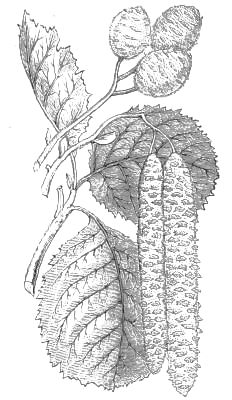
FIG. 60. ALNUS GLUTINOSA, showing Catkins and Fruit.
A. glutinosa (sticky).* barren catkins long, large, and cylindrical,
pendent, their footstalks branched. fertile catkins small, ovate,
with deep red scales. Spring. l. roundish-cuneiform, obtuse lobed
at the margin, and serrated, somewhat glutinous, downy in the
axils of the nerves beneath. h. 50ft. to 60ft. Britain. The Alder
affects moist and damp situations, and, as it grows quickly, it is a
useful tree to plant in bare situations. It is valuable as a nurse to
other trees by the sea-side. See Fig. 60.
A. g. aurea (golden).* Foliage golden colour.
A. g. incisa (incised).* Compact form, with leaves quite like those
of common hawthorn. SYN. A. g. oxyacanthifolia.
A. g. laciniata (cut).* l. oblong and pinnatifid, with the lobes
acute. This has elegant drooping branches and fern-like leaves,
and is one of the best.
A. g. oxyacanthifolia (sharp-prickled). Synonymous with A. g.
incisa.
A. g. quercifolia (oak-leaved).* l. with a sinuate outline, like
that of the common oak. A very distinct form. The variety
imperialis (=asplenifolia) slightly differs in its more or less lobed
or cut foliage; A. g. variegata is a variegated form.
A. incana (hoary).* l. broadly oval or ovate, rounded at the base,
sharply serrate, whitened, and mostly downy beneath. h. 8ft. to
20ft. North Temperate regions. This affects drier situations than
our native A. glutinosa.
A. viridis (green). fertile catkins slender stalked, clustered, ovoid.
l. round oval or slightly heart-shaped, glutinous and smooth or
softly downy beneath, serrate, with very sharp and closely set
teeth. Mountainous regions of northern hemisphere.
ALOCASIA (from a, without, and Colocasia). Allied
to Colocasia. ORD. Aroideæ. Stove plants of great beauty,
often with large and handsomely variegated, usually peltate,
leaves, and shortly petiolate glaucous spathes. They
are not difficult to grow, with a strong moist heat, and
an abundant supply of water to the roots. The soil should
consist of fibrous peat, with a little light fibry loam, in
large lumps; to this add a good proportion of sphagnum
and lumps of charcoal, with plenty of silver sand. Keep
the bulbs and soil raised well above the rim of the pots,
and finish off with a surfacing of either sphagnum or
cocoa-nut fibre. The latter will soon encourage new rootlets.
Crock the pot quite two-thirds up with clean, broken
potsherds. Water freely when in good growth, and give
liquid manure once or twice a week through the growing
season. Shade during bright sunshine in the spring and
summer months. Increased by seeds and division of the stems
or rhizome. Winter temperature, 60deg. to 65deg.; summer,
75deg. to 85deg. See also Caladium and Colocasia.
A. alba (white). fl. white. h. 1½ft. Java, 1854.
A. amabilis (lovely). Synonymous with A. longiloba.
A. chelsonii (Chelsea).* An interesting hybrid between A. cuprea
and A. longiloba. l. large, upper surface deep green, glossy and
metallic, under side purplish, as in A. cuprea.
A. cucullata (hood-leaved). fl. green, whitish. Spring. h. 2ft.
India, 1826.
A. cuprea (coppery).* fl., spathe purplish-red, with short lamina.
l. cordate-ovate, peltate, deflexed, 12in. to 18in. long, rich bronze
colour, purple beneath. h. 2ft. Borneo, 1860. SYNS. A.
metallica, Xanthosoma plumbea.
A. gigantea (gigantic). Synonymous with A. longiloba.
A. guttata (spotted). fl., spathe white, spotted with purple.
l. leafstalk also spotted. h. 2½ft. Borneo, 1879.
A. hybrida (hybrid).* A cross between A. Lowii and A. cuprea.
l. elliptic in outline, with a very short acuminate point, and very
slightly parted at the base, deep olive-tinted green on the upper
surface, having stout, well-defined ribs, and the margin of an ivory
white; dull purple at the back.
A. illustris (bright). l. ovate-sagittate, rich green, with olive-black
patches, deflexed, 1½ft. long. India, 1873.
A. Jenningsii (Jennings's).* l. peltate, cordate-ovate, acuminate,
with their blades deflexed from the top of the erect mottled
stalks, ground colour green, surface marked with large wedge-shaped
blotches of dark brown; veins bright green, 6in. to 8in.
long. India, 1867. A very distinct and free growing species.
A. Johnstoni (Johnston's).* l. semi-erect, arrow-shaped, peltate,
the front lobe being about 12in. long, and the two back lobes
14in. long and divergent, olive-green, prettily variegated and
strikingly veined with bright rosy red. The leafstalks are furnished
at intervals with irregular whorls of stiff spines, the points
of which are turned upwards. Stem darkly mottled with flesh-coloured
bands just above the spines. Solomon Isles, 1875. This
plant has quite a unique appearance.
A. Liervalii (Lierval's). l. bright green. Philippines, 1869.
A. longiloba (long-lobed). l. large, sagittate, with the upper part
spreading out, green, with silvery veins. h. 4ft. Java, 1864. SYNS.
A. amabilis, A. gigantea.
A. Lowii (Low's). fl., spathe white. l. cordate-sagittate, 14in.
to 16in. long, peltate, deflexed, olive-green, with thick white
ribs, deep purple beneath. Borneo, 1862.
A. macrorhiza (long-rooted). fl. green, whitish. h. 5ft. Polynesia.
A. m. variegata (variegated). l. large, somewhat cordate, with
slightly waved margins, bright green, blotched and marbled with
white, sometimes nearly quite white; footstalks broadly streaked
with pure white. Ceylon. A very striking and effective large
growing plant.
A. Marshallii (Marshall's). l. green, with dark blotches, and
broad central silvery band. India, 1811.
A. metallica (metallic). Synonymous with A. cuprea.
A. navicularis (boat-shaped spathe). fl., spathe boat-shaped,
whitish. h. 1ft. India, 1855.
A. Roezlii. See Caladium marmoratum.
A. scabriuscula (roughish).* fl., spathe entirely white; limb
3in. long, oblong, cuspidate. l. spreading, not deflexed, sagittate,
not in the least peltate, deep shining green above, pale green
beneath, extreme length 22in. to 31in. h. 4ft. to 4½ft. North-West
Borneo, 1878. Although this is not such an ornamental
species as A. Lowii, A. Thibautiana, or A. cuprea, it has the merit
of being a much larger and bolder plant than either of these, and
is one of the largest species in the genus.
A. Sedeni (Seden's).* A hybrid between A. Lowii and A. cuprea.
l. oval, cordate, sagittate, deflexed, bronzy green, purple beneath,
veins distinct ivory white.
A. Thibautiana (Thibaut's).* l. ovate-acute, deeply cordate; basal
lobes rounded and not sharply pointed, deep olive greyish-green,
traversed by numerous grey veinlets branching from the midrib,
which is greyish-white, purple beneath. Borneo, 1878. This is
said to be by far the finest of the genus.
A. variegata (variegated). fl. whitish. l. leafstalk mottled with
violet. India, 1854.
A. zebrina (zebra).* l. erect, broadly sagittate, rich dark green
borne upon stout footstalks, which are pale green, mottled and
striped with zigzag bands of dark green. h. 4ft. or more. Philippine
Isles, 1862.
ALOE (from Alloeh, its Arabic name). Allied genera:
Apicra, Haworthia, Pachidendron, Phylloma. Including
Rhipodendron. ORD. Liliaceæ. This hitherto much confused
genus, and its allies, have been completely revised by Mr.
J. G. Baker (vide "Journal of the Linnean Society,"
vol. xxviii. pp. 152-182), to whose account we are indebted
for many of the following particulars:—Plant with
or without stems; shrubs or (rarely) trees; leaves thick,
fleshy, frequently in a rosette; peduncles simple or racemed,
endowed with few or many empty bracts. Flowers racemed;
pedicels bracteated at base, solitary; perianth-tube straight
or slightly recurved; segments elongated; stamens hypogynous,
as long as the perianth, or longer. Mr. Baker
describes over eighty species, many of which, for various
and important reasons, have no claim upon our space.
Natives of the Cape of Good Hope, except where otherwise
stated. These very interesting and curious plants thrive
well in a mixture of open loam and peat, together with a
small quantity of well decomposed manure. If old brick
rubbish, or any other similar material is mixed with the
soil to ensure perfect and rapid drainage, so much the
better. Water, especially during winter, must be carefully
administered. They thrive in an ordinary greenhouse, and
cannot have too much light at any time.
A. abyssinica (Abyssinian).* fl., perianth twelve to fifteen lines
long; raceme dense-oblong, 3in. to 4in. long, and 2in. to 3in.
broad; lower pedicels nine to twelve lines long; peduncle
branched, 1½ft. to 2ft. l. about twenty in a rosette, ensiform, 1½ft.
to 2½ft. long, acuminate, green, sometimes spotted, five to six
lines thick in middle; back rounded; marginal prickles distant,
deltoid, one to two lines long. Stem simple, 1ft. to 2ft. long,
2in. to 3in. in diameter. Abyssinia, 1777. SYN. A. maculata.
A. a. Peacockii (Peacock's). This is a rare variety.
A. africana (African). fl., perianth yellow, fifteen to eighteen
lines long; racemes dense, 1ft. in length, 3in. in diameter; peduncle
very strong, branched. l. in a dense rosette, ensiform, 1½ft. to 2ft.
long, 2½in. to 3in. broad, slowly narrowing from base to the apex,
channelled above the middle, where it is four to five lines thick;
marginal prickles close, one and a half to two lines long. Stem
simple, when fully grown, 20ft.
A. albispina (white-spined).* fl., perianth red, 1½in. long; raceme
dense, nearly 1ft. long, 4in. broad; lower pedicels fifteen to eighteen
lines long; peduncles simple, 1½ft. l. loosely disposed, lanceolate,
ascending, 6in. to 8in. long, 2in. broad, green, without spots or
lines; face concave upwards; middle three to four lines thick; back
sparingly tubercled; marginal prickles white, horny, two lines
long. Stem simple, short, 1in. to 1½in. in diameter. 1796.
A. albocincta (white-banded).* fl., perianth brilliant red, ten to
twelve lines long; racemes twenty or more, shortly capitate, 2in.
to 2½in. in diameter when expanded; pedicels ascending, six to
nine lines long; scape stout, branched, 1½ft. to 2ft. l. twelve
to twenty in a dense rosette, outer ones recurved, lanceolate,
1½ft. to 2ft. long, 4in. to 6in. broad, glaucous, obscurely lined and
spotted; middle three to four lines thick; margin red or white
tinted. Stems in old specimens, 1ft. to 2ft. long, 3in. to 4in. in
diameter. SYNS. A. Hanburyana, A. paniculata, and A. striata.
A. arborescens (tree-like).* fl., perianth red, fifteen to eighteen
lines long; raceme dense, about 1ft.; pedicels ascending, twelve
to fifteen lines long; peduncles strong, 1½ft., simple or branched.
l. (rosette 3ft. to 4ft. in diameter) dense, aggregate, ensiform,
1½ft. to 2ft.; base 2in. broad, thence to apex attenuated, acuminated,
green, rather glaucous, without spots or lines; middle
three to four lines long; base five to six lines thick; upper surface
beyond the base channelled; marginal prickles close, one and
a half to two lines long, horny. Stem simple, finally 10ft. to 12ft.
long, 2in. to 3in. in diameter. 1700.
A. a. frutescens (shrubby). Dwarfer. l. often loose, and shorter,
intensely glaucous; peduncle simple. Stem slender, sometimes
racemosed.
A. aristata (awned). fl., perianth red, fourteen to sixteen lines
long; raceme simple, loose, 4in. to 6in. long, and about 4in.
broad; pedicels sub-patent, thirteen to eighteen lines long; scape
simple, 1ft. l. about fifty in a dense rosette, ascending, lanceolate,
3in. to 4in. long, six to eight lines broad, without spots or lines; face
flat, sparingly tubercled; middle one and a half lines thick; back
copiously tubercled; apex bearded with a pellucid awn; marginal
teeth diffuse, white, half line long. 1824.
A. Bainesii (Baines').* fl., perianth fifteen to sixteen lines long,
yellowish red; raceme simple, dense, oblong, 3½in. to 4in. in
diameter when expanded; pedicels thick, two to three lines long;
peduncles upright, strong, eight to nine lines in diameter. l. closely
packed at the top of the branch, ensiform, 1ft. to 1½ft. long, 2in. to
3in. in diameter, green, spotted, deeply channelled, recurved;
middle two to three lines thick; marginal prickles pale, rather
distant, one to one and a half lines long. Arborescent, branched.
h. 40ft. to 60ft.; trunk 4ft. to 5ft. in diameter. SYNS. A. Barberæ,
A. Zeyheri.
A. barbadensis (Barbadoes). Synonymous with A. vera.
A. Barberæ (Barber's). Synonymous with A. Bainesii.
A. brevifolia (short-leaved).* fl., perianth red, fifteen to eighteen
lines long; raceme dense, 6in. long, 2½in. to 3in. in diameter;
pedicels upright, six to twelve lines long; peduncles simple, hardly
1ft. long. l. thirty to forty in a dense rosette, lanceolate, 3in. to
4in. long, and 1in. broad at the base, glaucous, without spots or
lines; face unarmed, below swollen or flat; middle three to four
lines thick; back convex, sparingly tubercled; marginal teeth
whitish, one to one and a half lines long. Stem short, simple.
SYN. A. prolifera.
A. b. depressa (depressed). fl. somewhat larger; peduncles 1½ft.
to 2ft. long. l. 6in. long; bottom 1½in. to 2in. broad; face sometimes
sparingly tubercled.
A. cæsia (bluish-grey).* fl., perianth red, fifteen to sixteen lines long;
racemes dense, nearly 1ft. long, 2in. to 3in. in diameter; pedicels
twelve to fifteen lines long; scape simple, 6in. l. rather dense,
lanceolate acuminate, 1ft. to 1½ft.; bottom 2in. to 3in. broad,
intensely glaucous, without spot or lines, slightly channelled
upwards; middle 3in. to 4in. thick; marginal prickles red, one to
one and a half lines long. Stem simple, finally, in old specimens,
12ft. to 14ft. 1815.
A. Candollei (De Candolle's). A mere form of A. humilis.
A. chinensis (Chinese). fl., perianth yellow, 1in. long; raceme
loose, simple, 6in. to 8in. long, and 2in. broad; pedicels one and
a half to two lines long; peduncle simple, 6in. to 12in. l. fifteen
to twenty in a dense rosette, ensiform, 9in. to 12in. long, 1½in.
broad at the bottom, pale green, not lined; base nearly flat;
middle three to four lines thick; upper surface channelled;
marginal prickles distant, pale, one to one and a half lines long.
Stem short, simple. China, 1817.
A. ciliata (ciliated).* fl., perianth brilliant red, twelve to fifteen
lines long; raceme simple, loose, 2in. to 4in. long; pedicels three to
four lines long; peduncles slender, simple. l. linear, widely
spreading, amplexicaul, green, 4in. to 6in. long; base six to nine
lines broad, slowly narrowing towards the apex, without spots or
lines; middle one line thick; marginal teeth minute, white. Stems
long, sarmentose; branches three to four lines in diameter; internodes
six to twelve lines long, obscurely striated with green. 1826.
A. Commelyni (Commelin's). A mere form of A. mitræformis.
A. consobrina (related). fl., perianth yellowish red, twelve to
fifteen lines long; raceme rather loose, oblong, cylindrical,
3in. to 4in. long, and 2in. in diameter; pedicels three to four
lines long; scape 1½ft., slender, branched. l. loosely disposed,
ensiform, 6in. to 8in. long, and 1in. broad, green, spotted white;
face channelled; middle three lines thick; marginal prickles
minute, brownish; rosette 10in. to 12in. (sometimes 2ft.) in diameter;
upper leaves ascending; central ones spreading half open;
lower ones deflexed. Stem 2ft., simple, 1in. in diameter. South
Africa, 1845.
A. Cooperi (Cooper's).* fl., perianth fifteen to eighteen lines
long; raceme close, 3in. to 6in. long, and 3in. to 4in. in
diameter; lower pedicels 1in. to 2in. long; scape simple, 1½ft. to
2ft. l. when mature, 8in. to 10in. long, distichous, falcate,
lined; outer ones 1½ft. to 2ft., above the base six to eight lines
broad, greenish, deeply channelled, sparingly spotted; middle
one and a half to two lines thick; marginal teeth minute, close,
white. Plant stemless. Natal, 1862. SYN. A. Schmidtiana.
A. dichotoma (two-branched).* Quiver-tree. fl., perianth oblong,
ten to twelve lines long; raceme loose, 2in. to 4in. long, and 2in.
in diameter; pedicels three to four lines long; peduncles stout,
branched. l. closely packed, at the top of the branch, lanceolate,
8in. to 12in. long; bottom twelve to fifteen lines broad, glaucous,
without spots or lines, slightly channelled above the base; middle
three to four lines thick, narrow-margined with white; marginal
prickles minute, pale. Trunk short, sometimes 3ft. to 4ft. in diameter.
h. 20ft. to 30ft. 1781. Arborescent, branched.
A. distans (distant).* fl., perianth pale red, fifteen to eighteen
lines long; raceme densely capitate, 3in. to 4in. in diameter;
lower pedicels twelve to fifteen lines long; peduncles 1½ft.,
usually simple. l. ascending, loosely disposed, ovate-lanceolate,
3in. to 5in. long, and 1½in. to 2in. broad, green, slightly glaucous,
without spots and lines; face concave; middle three to four
lines thick; back sparingly tubercled; marginal prickles close,
white, horny, one to one and a half lines long. Stem short,
simple, 1in. in diameter; internodes pale, striated green. 1732.
A. glauca (milky-green).* fl., perianth pale red, fifteen to sixteen
lines long; peduncles simple, 1ft. to 1½ft. long, 3½in. to 4in.
in diameter; pedicels 1in. to 1½in. long. l. thirty to forty
in a dense rosette, lanceolate, 6in. to 8in. long; at the base
1½in. to 2in. broad, slowly narrowing towards the apex, intensely
glaucous, spotless, obscurely lined; middle three to
four lines thick; face above the base slightly concave; back
tubercled at apex; marginal teeth spreading, brownish, one to
one and a half lines long. Stem simple, at length, about 1ft.,
1½in. to 2in. in diameter. 1731.
A. gracilis (graceful). fl., perianth yellow, straight, fourteen to
sixteen lines long; raceme densely packed, simple, 2in. to 3in.;
pedicels three to four lines long; peduncle simple, 6in. to 9in.
long, two-edged at the base. l. loosely disposed, spreading, 6in. to
10in. long; base ten to twelve lines broad, ensiform, acuminated,
glaucous, spotless and without lines; face slightly channelled;
back rounded; marginal prickles close, minute. Stem
leafy, simple. 1822.
A. Greenii (Green's).* fl., perianth pale red, fourteen to fifteen
lines long; raceme oblong, 4in. to 8in. long, and 3in. in diameter;
lower pedicels five to six lines long; scape 2ft. long. l. in a dense
rosette, lanceolate, 15in. to 18in. long; bottom 2½in. to 3in.
broad, slowly narrowing from middle to the apex; middle three
to four lines thick; face flat, shining green, obscurely lined and
spotted white; marginal prickles spreading, one and a half to
two lines long, horny. Stem short, simple, 1½in. in diameter.
South Africa, 1875.
A. Hanburyana (Hanbury's). Synonymous with A. albocincta.
A. humilis (humble).* fl., perianth brilliant red, eighteen lines
long; raceme loose, simple, 6in. long, and 2in. to 2½in. in
diameter; pedicels nine to twelve lines long; peduncles about 1ft.
l. thirty to forty in a dense rosette, ascending, lanceolate, acuminate,
3in. to 4in. long, six to eight lines broad, glaucous green,
obscurely lined; face slightly concave above, sparingly tubercled;
middle three lines thick; back convex; marginal prickles pale,
one line long. Plant stemless. 1731.
A. h. acuminata (taper-pointed). l. ovate-lanceolate, 4in. to 5in.
long, fifteen to eighteen lines broad; marginal prickles pale, two
to two and a half lines long. A. incurva, A. suberecta, and
A. subtuberculata, of Haworth; A. Candollei, and A. macilenta, of
Baker, are mere forms of the foregoing species.
A. incurva (incurved). A mere form of A. humilis.
A. latifolia (broad-leaved).* fl., perianth brilliant golden scarlet,
fifteen to eighteen lines long; raceme dense, corymbose, terminal,
4in. to 5in. long and wide; lower pedicels 1½in. to 2in. long;
peduncle robust, 2ft., often branched. l. twelve to twenty in a
dense rosette, ovate-lanceolate, 6in. long, 2½in. to 3½in. broad at
bottom, slowly narrowing from below the middle upwards, green,
not lined, but copiously spotted white; middle three to four lines
thick; marginal prickles one and a half to two lines long, horny,
brownish. Stem at length, 1ft. to 2ft., 1½in. to 2in. in diameter,
simple. 1795.
A. lineata (line-marked).* fl., perianth red, fifteen to eighteen
lines long; raceme dense, 6in.; pedicels hardly perpendicular,
fifteen to eighteen lines long; scape simple, 1ft. l. in a dense
rosette, lanceolate, 6in. long, 2in. broad at base, narrowing slowly
from thence to the apex, pale green, spotless, lined; middle
three lines thick, channelled upwards on both sides, unarmed;
marginal teeth numerous, red, one and a half to two lines long.
Stem finally 6in. to 1ft., simple, 2in. in diameter. 1789.
A. macilenta (thin). A mere form of A. humilis.
A. macracantha (long-spined). fl. unknown. l. fifteen to twenty
in a dense rosette, lanceolate, 15in. to 20in. long, and 3in. to 4in.
broad at the bottom, slightly narrowed from middle to apex;
middle four lines thick; face flat, green, obscurely lined, spotted;
marginal prickles horny, three to four lines long. Stem simple,
2ft. to 3ft., 1½in. to 2in. in diameter. South Africa, 1862.
A. macrocarpa (large-fruited).* fl., perianth club-shaped, brilliant
red, fifteen to sixteen lines long; raceme loose, terminal,
6in. long, and 2½in. to 3in. in diameter; lower pedicels ½in. long;
peduncles 2ft. l. twelve to twenty in a dense rosette, ovate-lanceolate,
less than 1ft. long; bottom 3in. to 4in. broad; top
channelled; middle three to four lines thick, green, copiously
spotted; marginal prickles spreading, half line long. Stem
short, simple. Abyssinia, 1870.
A. maculata (spotted). Synonymous with A. abyssinica.
A. margaritifera (pearl-bearing). See Haworthia margaritifera.
A. mitræformis (mitre-shaped).* fl., perianth brilliant red,
eighteen to twenty-one lines long; raceme dense, corymbose,
4in. to 6in. long, and nearly as much in diameter; pedicels
ascending; lower ones fifteen to eighteen lines long; peduncles
strong, 1½ft., sometimes branched. l. rather loosely disposed,
ascending, lanceolate, about 1ft. long, 2in. to 3in. broad; green,
slightly glaucous, without spots or lines; face concave; middle
three to four lines thick; back convex, sparingly tubercled; apex
horny, pungent; marginal prickles rather close, pale, one to one
and a half lines long. Stem finally 3ft. to 4ft., simple, 1in. to 2in.
in diameter.
A. m. flavispina (yellow-spined). Differs from the type in
having narrower and more lanceolate leaves, and yellow spines.
A. Commelyni, A. spinulosa, A. pachyphylla, and A. xanthacantha,
are also forms of this species.
A. myriacantha (many-spined). fl., perianth pale red, eight
to nine lines long; racemes densely capitate, 2in. in diameter;
pedicels four to six lines long; peduncles slender, simple, 1ft.
l. ten to twelve, falcate, linear, 5in. to 6in. long, four to five
lines broad, green, glaucous; face deeply channelled; back
convex, spotted white; marginal teeth numerous, white. Plant
stemless. 1823.
A. nobilis (noble).* fl., perianth red, fifteen to eighteen lines long;
raceme dense, 6 or more inches long, 4in. broad; lower pedicels
1½in. to 2in. long; peduncles simple, 1½ft. l. rather loosely disposed,
lanceolate, 9in. to 12in. long, 2¼in. to 4in. broad; face
green, without spots or lines, concave above the base; middle
three to four lines thick; apex rather pungent; back prickly
upwards; marginal prickles rather close, one and a half to two
lines long, horny. Stem simple, at length 3ft. to 4ft. high, 1½in. to
2in. in diameter. 1800.
A. pachyphylla (thick-leaved). A mere form of A. mitræformis.
A. paniculata (panicled). Synonymous with A. albocincta.
A. Perryi (Perry's).* fl., perianth greenish, nine to ten lines long;
raceme dense, 3in. to 4in. long; pedicels three to four lines long;
inflorescence 1½ft. long, commonly two-headed. l. in a rosette,
lanceolate, 7in. to 8in. long, and 2½in. broad, from below the
middle to the apex narrowed, pale glaucous green, spotless, obscurely
lined, channelled above the base; middle three to four
lines thick; marginal teeth close, horny, one line long. Stem
simple, 1in. in diameter. Socotra, 1879.
A. prolifera (proliferous). Synonymous with A. brevifolia.
A. purpurascens (purplish). fl., perianth reddish, twelve
to fifteen lines long; raceme dense, 6in. to 9in. long, and about
3in. in diameter; pedicels nine to twelve lines long; scape strong,
simple, 1½ft. to 2ft. l. forty to fifty in a dense rosette, 1ft. to
1½ft. long, ensiform, 2in. broad at the base, slowly narrowed
towards the apex, green; base flat; middle three lines thick,
slightly channelled upwards, sometimes spotted; marginal prickles
small, white. Stem 2ft. to 3ft., sometimes forked. 1789.
A. rhodocincta (red-margined), of gardens, is probably a form of
A. albocincta.
A. saponaria (soapy).* fl., perianth brilliant red, eighteen to
twenty-one lines long; raceme dense, corymbose, 3in. to 4in. long
and wide; lower pedicels 1½in. to 2in. long; scape 1ft. to 2ft., simple,
or sparingly branched. l. twelve to twenty in a dense rosette,
lanceolate, 9in. to 12in. long, eighteen to twenty-four lines broad,
narrowed from below the middle upwards; middle three to four
lines broad; face flat at bottom; back swollen, green, copiously
spotted, distinctly lined; marginal prickles adjoining, horny, one
and a half to two lines long. Stem short, simple, 1½in. to 2in. in
diameter. 1727.
A. Schimperi (Schimper's).* fl., perianth bright red, eighteen to
twenty-one lines long; racemes densely corymbose, 4in. in diameter;
pedicels twelve to fifteen lines long; scape strong, 3ft. long,
strongly branched above. l. twenty in a dense rosette, oblong-lanceolate,
about 1ft. long, 4in. broad, glaucous green, lined, sometimes
spotted, three to four lines thick at middle, above which
they are channelled; teeth minute, spreading. Stem short,
simple. Abyssinia, 1876.
A. Schmidtiana (Schmidt's). Synonymous with A. Cooperi.
A. serra (saw). fl., perianth brilliant red, eighteen lines long;
raceme simple, dense, 6in. long or more, 3in. to 4in. in diameter;
pedicels six to twelve lines long; scape simple, 1½ft. to 2ft.
l. thirty to forty in a dense rosette, lanceolate, 3in. to 5in. long,
twelve to eighteen lines broad below, without spots and lines;
base swollen, concave towards the apex; middle three to four
lines thick, sparingly tubercled; marginal prickles close, one to
one and a half lines long. Plant shortly stemmed. 1818.
A. serratula (finely-toothed).* fl., perianth red, fifteen to eighteen
lines long; raceme rather dense, 6in. long; pedicels six to nine
lines long; peduncles simple, about 1ft. l. twelve to twenty in a
dense rosette, lanceolate, 6in. to 9in. long; bottom 1½in. to
2¼in. broad, pale green; face below the top flat or slightly concave,
obscurely lined, spotted; margin minutely denticulated. Stem
simple, finally 1ft. to 2ft. high, 1½in. to 2in. in diameter. 1789.
A. spinulosa (spiny). A mere form of A. mitræformis.
A. striata (striated). Synonymous with A. albocincta.
A. striatula (slightly striped).* fl., perianth yellow, twelve
to fifteen lines long; raceme oblong, rather dense, simple, 3in. to
6in. long, and 2in. in diameter; pedicels short; peduncles simple,
nearly 1ft. l. linear, spreading, green, 6in. to 9in. long; base
not dilated, six to eight lines broad, above the base upwards
narrowed, slightly channelled; middle one line thick; marginal
prickles deltoid. Stem long, sarmentose; floral branches three to
six lines in diameter; internodes 6in. to 12in. long. 1823.
A. suberecta (slightly erect). A mere form of A. humilis.
A. subtuberculata (slightly knobbed). A mere form of A.
humilis.
A. succotrina (Socotrine).* fl., perianth reddish, fifteen lines
long; raceme dense, about 1ft. long, 2½in. to 3in. in diameter; lower
pedicels nine to twelve lines long; peduncles simple, 1½ft. l. thirty
to forty in a dense rosette, ensiform, acuminate, falcate, 1½ft.
to 2ft. long; base 2in.; middle 1in. broad, green, slightly glaucous,
sometimes spotted, slightly channelled upwards; marginal
prickles pale, one line long. Stem 3ft. to 5ft., often forked. Isle
of Socotra. 1731.
A. tenuior (thinned). fl., perianth pale yellow, five to six
lines long; racemes rather loose, simple, oblong, nearly 1ft. 2in.
in diameter; pedicels three to four lines long; peduncles slender,
simple, 4in. to 8in. l. loose, linear, 5in. to 8in. long, slowly
narrowing from middle towards apex, green, spotless, slightly
channelled; middle one line thick; marginal prickles minute,
pale. Stem long, sarmentose. 1821.
A. tricolor (three-coloured).* fl., perianth coral red, fleshy;
raceme loose, oblong, 3in. to 4in. long, and 2in. broad; pedicels ascending,
three to four lines long; scape 1½ft. long, glaucous purple;
panicle deltoid. l. twelve to sixteen in a close rosette, lanceolate,
5in. to 6in. long, 1½in. to 2in. broad at bottom, slowly narrowing
from below the middle to apex; middle five to six lines
thick; back rounded; face slightly swollen, copiously spotted, not
lined; marginal prickles close, spreading, about one line long.
Stem short, simple. South Africa, 1875.
A. variegata (variegated).* fl., perianth reddish, fifteen to
sixteen lines long; raceme simple, loose, 3in. to 4in. long and
about 3in. in diameter; pedicels three to four lines long; scape
simple, tapering, 6in. to 8in. l. close, erecto-patent, lanceolate,
4in. to 5in. long, 1in. broad; face concave; back keeled, bright
green, copiously spotted grey on both sides; margin whitish,
denticulated. 1790. This is the variegated Aloe so frequently
seen in cottage windows.
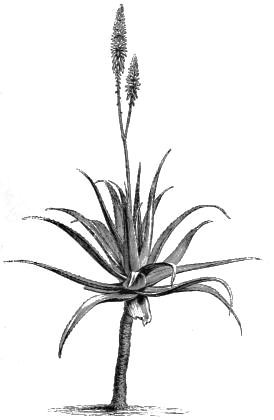
A. vera (true).* fl., perianth yellow, cylindrical, ¾in. to 1in. long;
raceme dense, 6in. to 12in. long; scape strong, 2ft. to 3ft. long, simple
or branched. l. ensiform, dense, aggregate, 2in. to 4in. broad,
narrowing from the base to apex, pale green; middle about ½in.
thick; face channelled above the base; marginal prickles subdistant,
deltoid, horny. Stem rarely more than 1ft. or 2ft. 1596.
SYNS. A. barbadensis, A. vulgaris. See Fig. 61.
A. vulgaris (common). Synonymous with A. vera.
A. xanthacantha (yellow-spined). A mere form of A. mitræformis.
A. Zeyheri (Zeyher's). A garden synonym of A. Bainesii.
ALOMIA (from a, not, and loma, a fringe). ORD.
Compositæ. Allied to Eupatoria. An ornamental half-hardy
evergreen plant. Grows freely in sandy loam, and
may be propagated by cuttings.
A. ageratoides (ageratum-like). fl.-heads white, many flowered;
involucrum campanulate, imbricate; scales narrow, acute; receptacle
naked, convex. July. l. opposite, or upper ones alternate,
petiolate, denticulated. h. 1½ft. New Spain, 1824.
ALONA (primitive name, Nolana—letters transposed;
from nola, a little bell, in allusion to the shape of the
flowers). ORD. Nolanaceæ. A genus of pretty evergreen
shrubs closely allied to Nolana, but differing principally in
having several ovaries from one to six-celled, whereas
Nolana has five four-celled ovaries. Leaves fasciculate;
stems woody. They require ordinary greenhouse treatment,
in a peat and loam compost. Cuttings root freely in sandy
loam, with a very gentle bottom heat, in about a fortnight.
A. cœlestis (sky-blue).* fl. pale blue, very large, axillary, solitary;
peduncle elongated. July. l. terete, fascicled; plant nearly
glabrous. h. 2ft. Chili, 1843. This pretty species is an excellent
one for growing out-of-doors during summer months.
ALONSOA (in honour of Z. Alonso, formerly Spanish
secretary for Santa Fe de Bogota). ORD. Scrophularineæ.
A genus of very pretty little half-hardy shrubs, herbaceous
perennials, or annuals, with axillary, sub-racemose flowers,
which are resupinate, with a sub-rotate five-cleft limb.
Leaves opposite, or ternately whorled. They will grow freely
in light rich soil; and are readily increased by cuttings in
August or March, which should be placed in sandy soil in
gentle heat, or by seeds sown in March. The herbaceous
species may be treated as outdoor summer annuals, and
should be raised in a little heat, and planted out early in May.
A. albiflora (white-flowered).* fl. pure white, with yellow eye,
in long terminal spikes. h. 1½ft. to 2ft. Mexico, 1877. This
is recommended for pot culture, as in the conservatory it will provide
a succession of flowers throughout the autumn and winter.
A. caulialata (wing-stemmed). fl. scarlet, racemose. June.
l. ovate, acute, serrated. Stems and branches quadrangular,
winged. h. 1ft. Peru, 1823. Half-hardy, herbaceous.
A. incisifolia (cut-leaved).* fl. scarlet; peduncles long, alternate,
disposed in terminal racemes. May to October. l. opposite, ovate,
acute, deeply toothed, or serrate. h. 1ft. to 2ft. Chili, 1795.
Glabrous greenhouse shrub. SYN. Hemimeris urticifolia.
A. linearis (linear-leaved). fl. scarlet, with a dark bottom, like
most of the species. May to October. l. opposite, or three in a
whorl, linear, entire or remotely denticulated; young leaves
fascicled in the axils of the old ones. h. 1ft. to 2ft. Peru, 1790.
Greenhouse shrub. SYN. Hemimeris coccinea.
A. linifolia (flax-leaved).* fl. scarlet. h. 1ft. to 1½ft. New Holland.
This is an elegant little annual, forming symmetrical,
graceful, and very free flowering plants, either for pot or outdoor
culture.
A. Matthewsii (Matthew's). fl. scarlet, in loose, terminal racemes.
July. l. lanceolate, toothed, about 1in. long. Stem slender,
quadrangular. h. 1ft. Peru, 1871. Greenhouse shrub.
A. myrtifolia (myrtle-leaved). fl. scarlet, very large. New and
pretty species.
A. Warscewiczii (Warscewicz's).* fl. rosy scarlet. h. 1½ft.
Chili, 1858. This is probably a herbaceous variety of A. incisifolia,
and one of the best annuals.
ALOYSIA (in honour of Maria Louisa, mother of
Ferdinand VII., King of Spain). Sweet-scented Verbena.
ORD. Verbenaceæ. This genus is nearly allied to Verbena,
which see for generic characters. A greenhouse deciduous
shrub, with a very fine perfume and graceful habit. The
most satisfactory plan of culture is to obtain well-grown
thrifty young plants in spring, and grow them on for the
season. As the wood ripens, give less water until they are
at rest, when it must be nearly withheld. About the end of
January, bring into the light and warmth, and water
thoroughly. As soon as the plants break, cut back to three
or four eyes; and when the young shoots are about an inch
long, transfer into rich sandy soil, using pots a size or two
smaller than those they were in before. When the pots are
full of roots, transfer to those that are to hold the plants for
the season. By this mode of culture, good plants are to be
maintained for any length of time. Aloysias form excellent
pillar subjects for either a cold greenhouse, or out-of-doors,
in which latter situation they thrive remarkably
well, but require thorough protection, with straw bands
or mats, from November until March, and afterwards at
night, until danger from severe frosts has passed. They
require no summer training, their young growth being continually
cut off for the many purposes of decoration to
which they are applied, and to which they are so well
adapted. They are easily increased by young cuttings in
spring, which should be placed in sandy soil and gentle
heat, when they will root in about three weeks.
A. citriodora (lemon-scented).* fl. whitish or lilac, very small,
in terminal panicles. August. l. pale green, lanceolate, agreeably
scented, arranged in whorls of threes; branches slender.
Chili, 1781. SYNS. Lippia citriodora, Verbena triphylla.
ALPINE GARDEN. A very interesting style of
gardening, which succeeds best by imitating Nature as closely
as possible. The situation may be an open or a sheltered
one. In building a Rock or Alpine Garden, it should be so
arranged that all aspects are secured—shady and sunny—fully
or in degree only. Pockets and crevices of various
sizes may be made, and filled with soil suitable for the subjects
to be planted therein, each one having a direct connection
with the bulk of the soil; and the constructing material
should be arranged with a gentle fall, so that moisture
drains towards rather than from the roots. Alpine plants,
as a rule, flourish better on a properly constructed rockery
than if placed in any other position, because thorough
drainage is effected, and the long and fine roots can
run down in the crevices, where the soil is cool and
moist. Although most alpine plants are naturally exposed
to the full action of sun and wind, they should be placed out
in early autumn, or early spring, so as to become thoroughly
established before the approach of scorching summer
weather. Failing materials necessary for the construction
of a rockery, many alpines are easily grown in the
ordinary border, in a naturally or artificially well drained
situation. Excavate to the depth of 18in., put in a layer
of stones, broken bricks, &c., 6in. deep; fill up with rich
fibrous loam and leaf mould, adding sufficient sand to keep
the soil porous. When the desired subjects are firmly
planted, cover the surface with small gravel or stone
chippings, which, while allowing the rain to penetrate the
soil, effectually checks evaporation, and keeps it moist and
cool, as well as giving the appearance of rocky débris. The
effect will be better if the surface is slightly undulated.
ALPINE ROSE. See Rhododendron ferrugineum.
ALPINIA (in honour of Prosper Alpinus, an Italian
botanist). ORD. Zingiberaceæ. A rather large genus of
stove herbaceous perennials, with considerable grace and
beauty. Flowers disposed in terminal spikes. Leaves
lanceolate, smooth, even, entire, sheathed at the base, and
having transverse veins. Roots fleshy, branched, having
much of the smell and taste of ginger. The soil can
hardly be too rich for the successful culture of these
plants. A mixture of equal parts loam, peat, leaf mould, or
thoroughly rotted hotbed manure, freely mixed with sharp
sand or fine charcoal dust, forms an excellent compost.
During the growing season, a top dressing of rotten dung,
and a frequent application of weak manure water, prove
excellent stimulants. They grow rapidly and consume a
great deal of food in the production of so much stem and
so many leaves. Unless the former is vigorous and of
considerable thickness, it will fail to be crowned with spikes
of flower. Alpinias require a high temperature, a rich, light
soil, abundance of water, and not a little space, to grow
them well. Soon after flowering, the plants will assume
the yellow leaf, when water may be gradually withheld;
but no attempt should be made to dry them off too severely,
even after the stems die down. Nor must they be stored
when at rest in a low temperature; in fact, they require
as much heat to preserve them in health when resting as at
any other time. The best time to divide the plants is after
the young shoots have made an inch of growth in spring.
A. albo-lineata (white-lined).* l. elliptic lanceolate, pale green,
marked with oblique broad bands of white. h. 3ft. to 4ft. New
Guinea, 1880.
A. mutica (beardless). fl. in pairs on a spike-like raceme; calyx
white; corolla duplex, consisting of three outer oblong white
segments; upper lobe concave and projecting, broad; lip large,
bright yellow, veined with crimson; mouth finely crispulate at
the edge. Borneo, 1882. A very handsome species.
A. nutans (nodding).* fl. pink, sweetly-scented; racemes drooping.
May. l. lanceolate, smooth, even, entire. h. 13ft. India, 1792.
This species looks best in considerable masses, even larger than
those shown in the illustration, grown in large pots or tubs, or
planted out in borders of tropical houses. It should on no
account be severely divided. See Fig. 62.
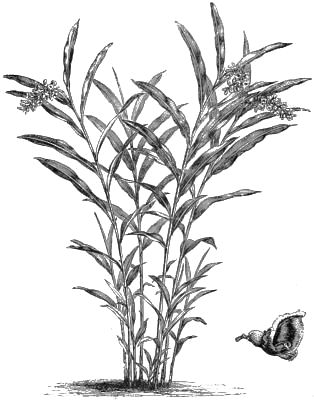
FIG. 62. ALPINIA NUTANS, showing Form of Individual Flower.
A. vittata (striped).* l. 6in. to 8in. long, elliptic lanceolate, tapering
to a long fine point, and also narrowed gradually towards the
sheathing base, pale green, marked by broad stripes of dark green
and creamy white, running off from the midrib in divergent
lines, corresponding to the venation. South Sea Islands. See
Fig. 63, for which we are indebted to Mr. Bull.
ALSIKE. See Trifolium hybridum.
ALSODEIA (from alsodes, leafy; plants thickly beset
with leaves). ORD. Violarieæ. Ornamental evergreen stove
shrubs. Flowers small, whitish, racemose; petals equal;
racemes axillary and terminal; pedicels bracteate jointed.
Leaves usually alternate, feather-nerved; stipules small,
deciduous. They thrive best in a mixture of loam and sand,
and young cuttings root readily under a bell glass if planted
in sand, in heat.
A. latifolia (broad-leaved).* fl. on dense, glabrous racemes.
l. ovate, obtusely acuminated. h. 6ft. Madagascar, 1823.
A. pauciflora (few-flowered). fl. few, somewhat corymbose;
pedicels reflexed. l. wedge-shaped, on short footstalks. h. 4ft.
Madagascar, 1824.
ALSOPHILA (from alsos, a grove, and phileo, to love;
in reference to the situation which they affect in Nature).
ORD. Filices. A magnificent genus of tropical and temperate
tree ferns. Sori globose, dorsal, on a vein or in the
forking of a vein; receptacle mostly elevated, frequently
villous; involucre none. The species of this genus require
an abundant supply of water, particularly in summer, and
the young fronds must be carefully shaded from solar heat.
They thrive well in a peat and loam compost. For general
culture, see Ferns.
A. aculeata (prickly).* fronds ample, tripinnate. rachises brown-stramineous;
pinnæ ovate-lanceolate, 1ft. to 1½ft. long; pinnules
sessile, ligulate, 3in. to 4in. long, ½in. to ¾in. broad; segments
close, ligulate, blunt, denticulate, often less than one line broad;
both sides bright green, slightly hairy on the ribs, not scaly. sori
minute, medial; texture herbaceous. Tropical America; very
common. A very effective stove species. SYN. A. ferox, &c.
See Fig. 64.
A. armata (armed).* fronds ample, tripinnatifid or tripinnate.
rachises stramineous, densely pilose; pinnæ oblong-lanceolate, 1½ft.
to 2ft. long; pinnules ligulate-lanceolate, sessile, 3in. to 5in. long,
¾in. to 1in. broad; segments falcate, blunt, one to one and a half
lines broad, sub-entire or toothed; both sides densely pilose on the
ribs, not scaly. sori subcostular. Tropical America; extremely
abundant. Stove species.
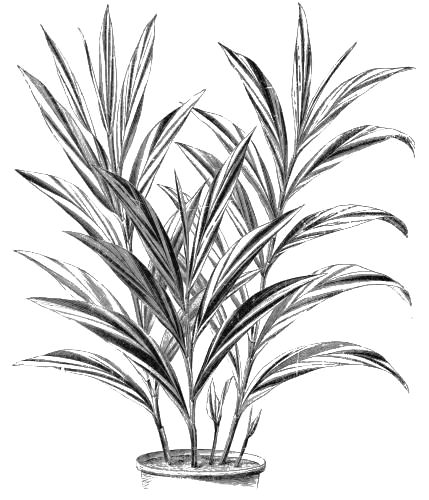
FIG. 63. ALPINIA VITTATA.
A. aspera (rough).* cau. slender, 10ft. to 30ft. high. sti. and
rachises strongly aculeated; main and partial rachis above strigillose,
slightly scaly beneath and on the costa, the rest glabrous,
often glossy. fronds bipinnate; pinnules shortly petiolate, oblong;
apex acuminated, pinnatifid half or two-thirds of the way
down to the costa; lobes oblong-ovate, often acutely serrulate;
costa bearing small, deciduous, bullate scales beneath. sori very
deciduous. West Indies, &c. Stove species.
A. australis (southern).* sti. with very long, firm, subulate
scales, 1½ft. long, and as well as the main rachises, muricato-asperous,
stramineous. fronds ample, subglaucous beneath, more
or less villous on the costæ and costule above, and very minutely
bullato-paleaceous beneath, often quite naked, from 6ft. to 30ft.
long; primary pinnæ 1½ft. long, 6in. to 10in. wide; pinnules 3in. to
4in. long, ½in. to ¾in. wide, oblong, acuminate, deeply pinnatifid,
or towards the base even pinnate; ultimate pinnules or lobes
oblong, acute, serrated, subfalcate. sori copious, rather small.
New Holland, &c., 1833. A very handsome greenhouse species.
A. comosa (hairy). Synonymous with A. Scottiana.
A. contaminans (contaminating).* cau. slender, growing from 20ft.
to 50ft. high. sti. and rachises purplish brown, glossy, aculeate.
fronds 6ft. to 10ft. long, ample, glabrous, deep green above, glaucous
beneath; primary pinnæ 2ft. or more in length, oblong-ovate,
acuminate; pinnules sessile, 4in. to 5in. long, ½in. to 1in. wide,
deeply pinnatifid, linear-oblong, sub-falcate, entire. sori nearer
the costule than the margin. Java and Malaya. Stove species.
SYN. A. glauca.
A. Cooperi (Cooper's).* fronds ample, tripinnate. rachises stramineous,
muricated, glabrous beneath; basal scales large, linear,
pale, spreading; pinnæ oblong-lanceolate, 1½ft. to 2ft. long; pinnules
ligulate, 4in. to 5in. long, ¾in. to 1in. broad, lowest long-stalked;
segments ligulate, blunt, toothed, one and a half to two
and a half lines broad. sori small. Queensland, &c. Greenhouse.
A. excelsa (tall).* trunk about 30ft. high. sti. and main rachises
muricated. fronds ample, dark green above, paler beneath;
primary pinnæ 1½ft. to 2ft. long, 6in. to 10in. wide; pinnules
numerous, oblong-lanceolate, acuminated, deeply pinnatifid, often
quite pinnate; ultimate divisions ¼in. to ¾in. long, oblong, acute
or obtuse, falcate, the margins sub-recurved, serrated. sori
copious near the costules. Norfolk Island. This rapid-growing
and splendid species proves nearly hardy in the
neighbourhood of Cornwall; and is a most effective plant for
sub-tropical gardening purposes generally. Greenhouse species.
A. ferox (fierce). Synonymous with A. aculeata.
A. Gardneri (Gardner's). Synonymous with
A. paleolata.
A. gigantea (gigantic). cau. growing from 20ft.
to 40ft. high. sti. asperous; fronds, primary
pinnæ 1½ft. to 2ft. and more long, deeply
pinnatifid at the apex; pinnules, upper ones
sessile, lower ones petiolate, oblong-acuminate,
3in. to 6in. long, five to nine lines wide,
deeply pinnatifid; lobes triangular or rounded,
serrated. sori copious. India, &c. Stove
species. SYN. A. glabra.
A. glabra (glabrous). Synonymous with A.
gigantea.
A. glauca (grey). Synonymous with A. contaminans.
A. infesta (troublesome). fronds ample,
tripinnatifid; pinnæ oblong-lanceolate, 1ft. to
1½ft. long; pinnules ligulate, 3in. long, ½in.
to 1in. broad, cut down to a narrow wing;
segments ⅛in. broad, ligulate, blunt, nearly
entire; texture sub-coriaceous; colour deep
green on both sides. Tropical America;
widely distributed. Stove species.
A. Leichardtiana (Leichardt's).* cau. 10ft.
to 20ft. high. sti. jointed upon the caudex;
main and secondary rachises purple, deciduously
powdery, spiny. fronds 6ft. to 10ft.
long, firm, dark green above, sub-glaucous
beneath, naked and glaucous (or nearly so),
tripinnate; primary pinnæ 1½ft. to 2ft. long,
8in. wide, oblong-lanceolate, acuminate; pinnules
oblong-acuminate, sessile, pinnatifid
only at the apex; ultimate divisions linear-oblong,
acute, spinulose-serrate. sori copious,
close to the costa. Australia, 1867. Greenhouse
species. SYNS. A. Macarthurii, A.
Moorei.
A. lunulata (moon-shaped pinnuled). fronds
ample, tripinnate. rachises stramineous,
glabrous below, densely muricated; pinnæ
oblong-lanceolate, 1½ft. to 2ft. long; pinnules close, ligulate, sessile,
4in. to 5in. long, ¾in. to 1in. broad; segments close, ligulate,
falcate, blunt, one line broad, obscurely crenulate. sori minute.
h. 25ft. Polynesia. Greenhouse species.
A. Macarthurii (MacArthur's). Synonymous with A. Leichardtiana.
A. Moorei (Moore's). Synonymous with A. Leichardtiana.
A. paleolata (scaly).* cau. slender, 10ft. to 20ft. high. fronds
ample, tripinnatifid. rachises stramineous, smooth, pubescent
below; pinnæ oblong-lanceolate, 1½ft. to 2ft. long; pinnules ligulate,
sessile or shortly stalked, 3in. to 4in. long, ½in. to ¾in. broad,
deeply cut, the segments blunt and nearly entire; texture sub-coriaceous;
colour deep green, both surfaces deeply pilose, the lower
scaly on the ribs. sori large, medial. Columbia, &c. Stove
species. SYN. A. Gardneri.
A. procera (tall). sti. aculeated and paleaceous below, with large
glossy, dark brown scales. fronds bipinnate, glabrous, pinnatifid
at the apex; primary pinnæ 1ft. or more long, the rachis winged
above; pinnules 2in. to 3in. long, oblong-acuminate or obtuse,
pinnatifid half way down to the costa; lobes short, sub-rotundate,
often acute, mostly entire. sori small on all the lobes, between
the costule and the margin. Tropical America. Stove species.
A. pruinata (as if hoar-frosted).* sti. densely woolly at the base.
fronds glaucous, bi-tripinnate; primary pinnæ petiolate, 12in. to
18in. long, ovate-lanceolate; pinnules 3in. to 4in. long, 1in. wide,
petiolulate, from a broad base, oblong-acuminate, deeply pinnatifid,
or again pinnate; ultimate divisions ½in. long, lanceolate,
very acute, deeply and sharply serrated. sori solitary. Tropical
America, extending to Chili. Stove or greenhouse species.
A. radens (rasping). cau. 3ft. high, 3in. diameter. sti. 2ft. to
3ft. long, clothed with ovate, pale brown scales. fronds 6ft. to
8ft. long, lanceolate-ovate, bipinnatisect; primary segments 1½ft.
long, elongato-oblong, acuminate; secondary ones 2in. to 3in. long,
petiolulate, linear-lanceolate, pinnati-partite; segments oblong,
denticulate. sori between the costule and the margin. Brazil.
Stove species.
A. Rebeccæ (Rebecca's).* cau. slender, 8ft. high. fronds
ample, bipinnate; pinnules twenty to thirty on each side, the
lower ones stalked, linear, 2in. to 3in. long, more or less inciso-crenate,
apex acuminate. sori principally in two rows between
the midrib and edge. Queensland. Greenhouse species. See
Fig. 65, for which we are indebted to Mr. Bull.
A. sagittifolia (arrow-leaved).* fronds oblong-deltoid, 4ft. to
6ft. long, bipinnate. rachises stramineous, muricated; pinnæ
lanceolate, ¾ft. to 1ft. long, the lower shorter, deflexed; pinnules
sessile, ligulate, crenulate, cordate on both sides at the base, 1in.
to 1½in. long, nearly ¼in. broad. sori large. Trinidad, 1872. Very
handsome and distinct stove species.
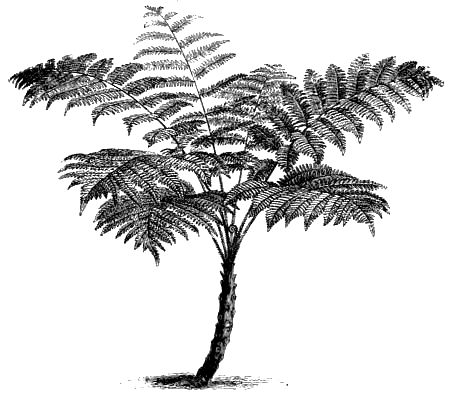
FIG. 64. ALSOPHILA ACULEATA.
A. Scottiana (Scott's).* fronds ample, tripinnatifid. rachises
castaneous, naked and smooth beneath; pinnæ oblong-lanceolate,
1½ft. to 2ft. long; pinnules sessile, 3in. to 4in. long, about ½in.
broad, ligulate, cut down to a narrow wing on the rachis; segments
ligulate, blunt, dentate, sub-falcate, not ⅛in. broad. sori
sub-costular. Sikkim, 1872. Greenhouse species. SYN. A.
comosa.
A. Tænitis (Tænitis-like).* fronds 3ft. to 6ft. long, bipinnate;
pinnules distant, 3in. to 5in. long, lanceolate, acuminate, glabrous,
sub-entire, petioled; petiole articulated on the rachis. sori in a
single series, equidistant between the costa and the margin,
mixed with long, copious hairs. Brazil. An elegant stove
species.
A. villosa (villous).* cau. 6ft. to 12ft. high. sti. 1ft. or more long,
tubercular, densely clothed at the base with ferruginous scales.
fronds from 6ft. to 8ft. long, bi- or sub-tripinnate, broadly lanceolate
in outline; pinnules 1in. to 3in. long, oblong-lanceolate,
obtusely acuminate, deeply pinnatifid; lobes oblong, obtuse, entire
or coarsely serrated. sori copious. Tropical America. A very
beautiful stove species.
ALSTONIA (in honour of Dr. Alston, once Professor
of Botany at Edinburgh). ORD. Apocynaceæ. Usually tall,
lactescent, or milk-bearing stove evergreen shrubs or trees,
with small white flowers, which are disposed in terminal
cymes. Leaves entire, opposite or often whorled. Of easy
culture, thriving best in a mixture of peat, loam, and sand.
Cuttings root readily in sand, in heat. Besides the one
mentioned, there are eleven other species.
A. scholaris (school). fl., corolla salver-shaped, white; cymes
on short peduncles. March to May. l. five to seven in a whorl,
obovate-oblong, obtuse, ribbed; upper surface glossy, under white,
and having the veins approximating the margin. h. 8ft. India,
1803. SYN. Echites scholaris.
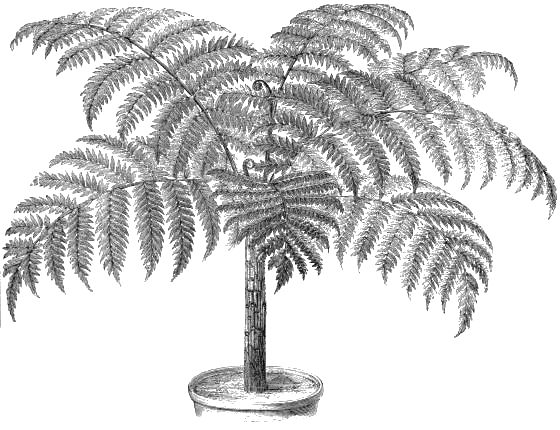
FIG. 65. ALSOPHILA REBECCæ.
ALSTRÖMERIA (in honour of Baron Alströmer, a
Swedish botanist and friend of Linnæus). ORD. Amaryllidaceæ.
Tall handsome hardy or half-hardy tuberous rooted
plants, with leafy stems and terminal umbels of richly-coloured
flowers; perianth regular, six-parted, subcampanulate;
inner segments narrower, two of which are
somewhat tubulose at the base; stamens included within,
and inserted with perianth; stigma trifid. Leaves linear,
lanceolate, or ovate, and resupinate, or inverted in position
by the twisting of the petiole. Cultivation: Few plants
need less attention to grow them successfully, either in pots
or planted out. The best position for those kinds which
succeed outside is a deep and dry, sloping, sheltered border,
in a compost of two-parts peat and leaf soil, and one loam
with some sharp sand. Water freely if severe drought
sets in; a surface covering of common moss, or cut fern
in winter, will prove an advantage. They are very effective
in masses. Propagation: They may be increased by
seed or root division. Sow the former when ripe, or in
early spring, thinly in pans, pots, or boxes, and place in a cool
house or frame, so that they will receive some fostering in
their early stages. The seedlings should be pricked out
singly, when large enough to handle, and grown on till well
established under glass. A mixture of peat, leaf mould,
and sandy loam, is the best compost in which to sow the
seeds and grow the young plants. When sufficiently established,
they may be placed in a warm sheltered spot
outside, and about 1ft. apart. The fasciculated masses of
fleshy roots are readily separated into as many pieces as
there are crowns; this operation may be performed during
September or October, or February and March; but it
must be done carefully. Except for the sake of increase,
the less they are disturbed the better. They are excellent
subjects for pot culture (some can only be managed thus,
unless planted out in a house), and may be potted as early
in the autumn as possible, in 8in., 10in., or 12in. pots.
Thorough drainage is essential; arrange the crocks carefully,
and place a layer of thin turfy loam over them. A
compost of equal parts turfy loam, leaf mold, and fibrous
peat, with an abundance of sand, will suit them admirably.
Water sparingly at first, but when root-action is fully
resumed, they must never be allowed to get dry. Support
the stems by staking when they require it, and just
previous to flowering, top-dress with some rotten manure
and leaf soil. Occasional syringings will be necessary
to keep down red spider, especially if the atmosphere is
very dry. As the plants finish flowering, and the leaves
fade, gradually diminish the supply of water until the
stems are quite down, when they may be placed somewhere
out of the way, free from frost, for the winter, but not kept
dry enough to make them shrivel. In repotting, as much of
the old soil as is practicable should be removed, without
seriously disturbing the roots, and the plants shifted into
larger or the same sized pots, according to their condition.
Alströmerias were at one time much more largely grown
than they are at present, and the genus was represented
in nearly every garden.
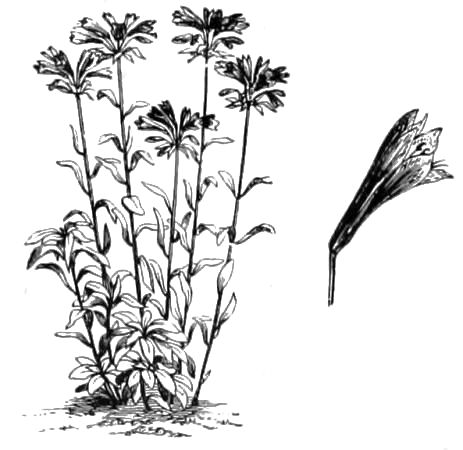
FIG. 66. ALSTRöMERIA AURANTIACA, showing Habit and Flower.
A. aurantiaca (golden).* fl. orange; two upper perianth segments
lanceolate, streaked with red; arranged in a five to six
stalked umbel, bearing ten to fifteen blooms. Summer and autumn.
l. numerous, linear-elliptical, obtuse, glaucous, twisted and
turned back at the base, about 4½in. long. h. 3ft. to 4ft. Chili,
1831. A variable but very showy species, quite hardy. See Fig. 66.
A. caryophyllæa (clove-like scent).* fl. scarlet; very fragrant,
perianth two-lipped; peduncles longer than the involucre.
February and March. l. spathulate-oblong. Stem erect. h. 8in.
to 12in. Brazil, 1776. This stove species requires perfect rest in
winter. SYN. A. Ligtu.
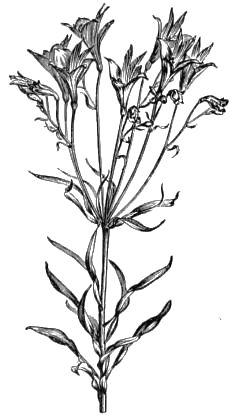
FIG. 67. FLOWER OF ALSTRöMERIA PELEGRINA.
A. chilensis (Chilian).* fl. blood-red or pink, large, the two
upper interior petals longer and narrower, variegated with yellow
lines; in pairs on a five to six stalked umbel. Summer and
autumn. l. scattered, obovate, spathulate; upper ones lanceolate,
twisted at the base, minutely fringed on the edges, glaucescent.
h. 2ft. to 3ft. Chili, 1849. Hardy. There are many varieties
of this species, varying in colour from a rosy white to a deep
orange or red.
A. densiflora (thickly-flowered).* fl., perianth scarlet, dotted
with black spots inside towards the base; umbels many-flowered,
dense; pedicels pubescent, rarely bracteated. l. alternate, ovate,
shortly acuminate, pubescent underneath. Stem climbing, glabrous.
Peru, 1865. Tender species.
A. Flos Martini (St. Martin's flower). Synonymous with
A. pulchra.
A. Hookeri (Hooker's). Synonymous with A. Simsii.
A. Ligtu (Ligtu). Synonymous with A. caryophyllæa.
A. Pelegrina (the native name).* fl. white, or pale yellow, striped
with rose, and yellow spot on each segment; pedicels one-flowered,
on a six or more stalked umbel. Summer. l. lanceolate, twisted at
the base. h. 1ft. Chili, 1754. Rather tender. See Fig. 67.
A. p. alba (white).* Lily of the Incas. fl. white. Perhaps this
is the most chaste of all the Alströmerias, and more tender than
many others; it should have a specially warm spot, or the protection
of glass. 1877.
A. peruviana (Peruvian). Synonymous with A. versicolor.
A. psittacina (parrot-like).* fl. bright crimson at the base,
greenish upwards, spotted with purple; upper perianth segments
slightly hooded, hence the specific name; umbels many-flowered;
peduncles angular. September. l. oblong-lanceolate, acute,
twisted at the base. Stem erect, spotted. h. 6ft. Mexico, 1829.
Hardy.
A. p. Erembaulti (Erembault's). fl. white, spotted with
purple. August. h. 2ft. 1833. A beautiful but rather tender
hybrid.
A. pulchella (pretty). Synonymous with A. Simsii.
A. pulchra (fair).* St. Martin's Flower. fl. in umbels of from
four to eight in each; the lower perianth segments purplish
outside, and edges of a sulphur-white; the upper part of the
upper segments of a fine yellow, dotted with deep red spots, the
lower part of a flesh colour; pedicels twisted. l. linear lanceolate.
Stem erect. h. 1ft. Chili, 1822. A beautiful species, but
one requiring protection. SYNS. A. Flos Martini, A. tricolor.
A. rosea (rosy). A synonym of A. Simsii.
A. Simsii (Sims's).* fl. brilliant yellow, with red streaks, very
showy; umbels many-flowered; peduncles two-flowered. June.
l. spathulate, ciliated. Stem weak. h. 3ft. Chili, 1822. Tender
species. SYNS. A. Hookeri, A. pulchella, A. rosea.
A. tricolor (three-coloured). A synonym of A. pulchra.
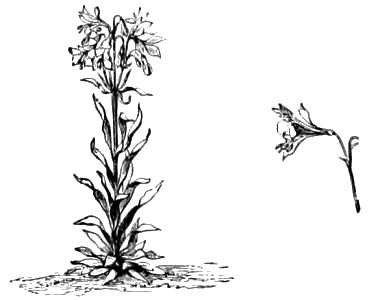
FIG. 68. ALSTRöMERIA VERSICOLOR, showing Habit and Flower.
A. versicolor (various coloured).* fl. yellow, with purple marks;
lowest segment the broadest; umbel of usually three shortly-stalked
blooms, very floriferous. Late summer. l. linear-lanceolate,
sessile, scattered. h. 2ft. to 4ft. Peru, 1831. This is a very robust
species, with several beautiful varieties, which are both easily
obtained and very cheap. SYN. A. peruviana. See Fig. 68.
A. v. niveo-marginata (snowy-margined).* fl. rose, crimson
and white, with green tips and black spots. l. lanceolate, stalked,
white-edged. 1875. A charming but scarce variety.
ALTERNANTHERA (in allusion to the anthers
being alternately barren). ORD. Amaranthaceæ. Well
known ornamental-leaved half-hardy plants, with inconspicuous
flowers in axillary heads. Some of the undermentioned
species and varieties belong, technically
speaking, to Telanthera, in which genus the five stamens
are inseparate below, and alternate with as many sterile
filaments. They are so universally known in gardening
under the present generic name, that we have here included
them for convenience' sake. Where Alternantheras
are used in large quantities (and if they are to be used
effectively, a considerable number must be provided), their
economical propagation becomes a matter of importance.
A good colour can only be secured by growing them in
some house or pit in the full light and warmth of the sun;
for, unless so grown, green or badly coloured plants will be
the result. The best and quickest way of producing this
class of plants in large quantities, is to make up a special
hotbed for them about the end of March or beginning of
April. If a pit be used, it should be filled up within
6in. of the glass with leaves and manure, or any other
material that will produce a steady bottom heat of 80deg.
or 85deg., and will last for three weeks or so at that
point; which, at this season, will be an easy matter.
When the heat has become regular and steady, about 4in.
or 5in. of light, rich, sandy soil should be placed all over
the surface, adding, at the same time, a sprinkling of silver
sand on the top, and pressing it moderately firm with a
flat board. The cuttings may now be prepared and dibbled
in, 1in. apart each way. If kept close, moist, and shaded
from bright sunshine, in a few days they will be forming
roots, and so soon as that takes place the shading should
be discontinued, and the ventilation gradually increased
until they are finally hardened off and planted out. If
carefully lifted, and placed in trays or baskets, with a
rhubarb leaf over them, they may be taken any distance,
and planted without flagging; with this advantage—that
the plants being in good colour, the beds are effective
at once. April is early enough to commence striking them,
and these will be fit to plant out by the middle of June.
The several species quoted in various dictionaries hitherto
are unknown in English gardens.
A. amabilis (lovely).* l. elliptic, acuminate, greenish in some
stages, with the principal ribs stained with red, but under free
growth becoming almost entirely suffused with rose colour, mixed
with orange, the midribs continuing to be of a deep red hue.
Brazil, 1868.
A. a. amœna (charming).* l. small, spathulate, orange red and
purple in colour, which is shaded with deep green and bronze.
Brazil, 1865. A most elegant little plant, with a spreading habit.
A. a. tricolor (three-coloured).* l. broadly ovate, glabrous, dark
green at the edge, and have a centre of vivid rose, traversed by
purple veins, an irregular band of orange yellow intervening
between the centre and margin. Brazil, 1862.
A. Bettzichiana (Bettzich's). l. olive and red. Brazil, 1862.
A. B. spathulata (spathulate-leaved). l. spathulate, but more
elongated than the others; the principal colours are reddish pink
and light brown; these are shaded with bronze and green.
Brazil, 1865. A rather tall species.
A. ficoidea (fig-like).* l. variegated with green, rose, and red.
India, 1865.
A. paronychioides (Paronychia-like).* l. narrow, spathulate,
ground colour deep orange red, beautifully shaded with olive
green. Dense and compact grower, forming a little clump
about 4in. high.
A. p. magnifica (magnificent).* A very fine variety, with a much
higher colour than the type.
A. p. major (greater).* l. bronze, with rich orange tips; very
effective.
A. p. m. aurea (greater-golden).* l. bright golden yellow,
which colour they retain all through the season.
A. versicolor (various-colour).* l. medium sized, ovate, bright
rosy pink and crimson, shaded with bronzy green, branching
freely, and making a compact and handsome plant. Brazil, 1865.
ALTERNATE. Placed on opposite sides of an axis
on a different line, as in alternate leaves.
ALTHÆA (from altheo, to cure; in reference to the
medicinal qualities of some of the species). Marsh Mallow.
ORD. Malvaceæ. Hardy biennials or perennials,
closely allied to Malva. Outer calyx six to nine-cleft, inner
one five-cleft. Most species belonging to this genus are
worthy of cultivation, particularly in woods, coppices, and
shrubberies; they will thrive in almost any kind of soil.
They may be either increased by dividing the plants at the
roots, or by seeds; the biennial species must be raised from
seed every year, which may be sown in spring where they are
intended to remain, or in pans placed in a cold frame, from
which the young plants may be removed when large enough.
A. cannabina (Hemp-leaved).* fl. rose-coloured; peduncles axillary,
many-flowered, loose, longer than the leaves. June. l. pubescent,
lower ones palmately-parted, upper ones three-parted;
lobes narrow, and grossly toothed. h. 5ft. to 6ft. South France,
1597. Perennial.
A. caribæa (Caribean).* fl. rose coloured, with a yellow base,
solitary, almost sessile. March. l. cordate, roundish, lobed,
crenate-serrated. Stem straight, hispid. h. 3ft. Caribbee Islands,
1816. Biennial.
A. ficifolia (fig-leaved). Antwerp Hollyhock. fl. generally yellow
or orange coloured, in terminal spikes, large, single or double.
June. l. divided beyond the middle into seven lobes; lobes
oblong, obtuse, irregularly toothed. h. 6ft. Siberia, 1597. Biennial.
A. flexuosa (zigzag).* fl. scarlet, axillary, solitary, stalked; petals
obcordate. June. l. cordate, somewhat seven-lobed, obtuse, on
long footstalks. h. 2ft. to 3ft. North India, 1803. Perennial.
A. frutex (shrubby). Synonymous with Hibiscus syriacus.
A. narbonensis (Narbonne).* fl. pale red; peduncles many-flowered,
loose, longer than the leaves. August. l. pubescent,
lower ones five or seven-lobed, upper ones three-lobed. h. 3ft. to
6ft. France, 1780. Perennial.
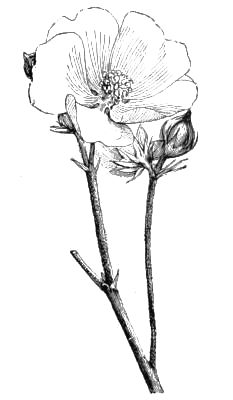
FIG. 69. FLOWER AND BUDS OF ALTHÆA OFFICINALIS.
A. officinalis (officinal). Common Marsh Mallow. fl. of a delicate,
uniform blush colour; peduncles axillary, many-flowered, much
shorter than the leaves. July. l. clothed with soft, white tomentum
on both surfaces, cordate or ovate, toothed, undivided, or
somewhat five-lobed. h. 3ft. to 4ft. Marshes, Britain. Perennial.
See Fig. 69.
A. rosea (rose).* Hollyhock. fl. rose-coloured, large, axillary,
sessile, somewhat spiked at the top. July. l. cordate, with five
or seven angles, crenated, rough. Stem straight, hairy. h. 8ft.
China, 1573. For special culture and varieties, see Hollyhock.
A. striata (streaked). fl. white, 2½in. in diameter, solitary, on
short pedicels; calyx striped. July. l. cordate, bluntly three-lobed,
crenated. Stem puberulous, and somewhat scabrous. h.
5ft. Biennial.
ALUMINOUS. Pertaining to, or containing alum,
or alumina; as Aluminous soils.
ALUM-ROOT. See Heuchera.
ALYSSUM (from a, not, and lyssa, rage; in reference
to a fable that the plant allayed anger). Madwort. Including
Psilonema, Ptilotrichum, Schivereckia. ORD.
Cruciferæ. Annuals or dwarf, branching, shrubby perennials,
often clothed with hoary, stellate hairs. Flowers
small, cruciform, white or yellow. Leaves distant, or the
radical ones tufted, usually entire. Several of the species
are very much alike. They are excellent plants for the
rockery, or for the front of borders, growing freely in
common but well-drained garden soil. They may be increased
by cuttings, by division of the roots, or by seed.
The cuttings should be made from young shoots, 2in. to 3in.
in length, inserted in sandy loam, early in the season, in a
shady place. Seed may be raised outside, or in a frame
in pans in sandy soil, most of them germinating in two or
three weeks.
A. alpestre (alpine).* fl. yellow; raceme simple. June. l. obovate,
hoary. Stem rather shrubby at the base, diffuse, greyish. h. 3in.
South Europe, 1777. Perennial. A very neat little tufted species.
A. argenteum (silvery), A. Bertolonii (Bertoloni's), and A. murale
(wall), are larger growing species allied to the above, but of less
cultural merit.
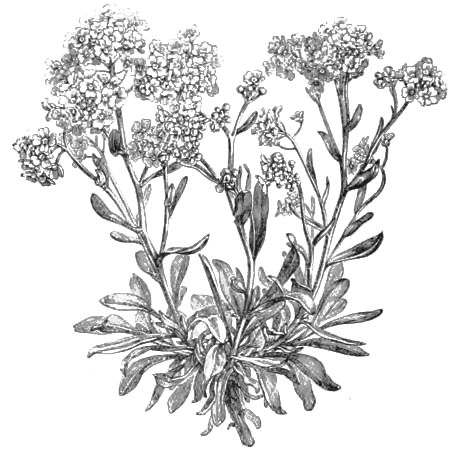
FIG. 70. ALYSSUM SAXATILE.
A. a. obtusifolium (obtuse-leaved). fl. yellow, corymbose. June.
l. obovate-spathulate, blunt, silvery on the under surface. h. 3in.
Tauria, 1828. A rare alpine.
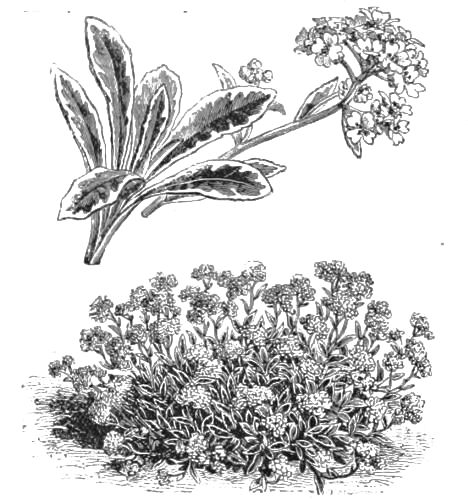
FIG. 71. ALYSSUM SAXATILE VARIEGATUM, showing Flower and Habit.
A. atlanticum (Atlantic). fl. yellow; raceme simple. June.
l. lanceolate, hoary, and pilose. Stems shrubby at the base, erect.
h. 6in. to 1ft. S. Europe, 1820. A. Marschallianum is intermediate
between A. alpestre and A. a. obtusifolium; but is seldom
met with under cultivation.
A. gemonense (German).* fl. yellow, in close corymbs. April to
June. l. lanceolate, entire, greyish-velvety from stellate down.
Stem shrubby at the base. h. 1ft. Italy, 1710. Closely allied to
A. saxatile, but not so hardy; it is very desirable for rockeries.
A. macrocarpum (large-fruited). fl. white, racemose. June. l.
oblong, blunt, silvery. Stem shrubby, branched, somewhat spiny.
h. 8in. South of France, 1828. A. spinosa (thorny), and A.
halimifolia (purslane-leaved), are very like this species. A. dasycarpum
(thick-fruited) is an annual with yellow flowers.
A. maritimum. See Kœniga.
A. montanum (mountain). fl. yellow, sweet-scented; raceme
simple. May to July. l. somewhat hoary; lower ones obovate;
upper ones oblong. Stems rather herbaceous, diffuse, pubescent.
h. 2in. or 3in. Europe, 1713. A distinct and charming species for
the rockery, forming compact tufts of slightly glaucous green. A.
cuneifolium (wedge-leaved), A. diffusum (diffuse), and A. Wulfenianum
(Wulfenius') come close to this species, the latter being the
most desirable.
A. olympicum (Olympian). fl. deep yellow, small, in roundish
corymbose heads. Summer. l. spathulate, sessile, very small,
greyish. h. 2in. to 3in. Northern Greece.
A. orientale (Oriental).* fl. yellow, corymbose. May. l. lanceolate,
repandly-toothed, waved, downy. Stems suffruticose at the
base. h. 1ft. Crete, 1820. There is a variety with variegated
leaves.
A. saxatile (rock).* fl. yellow, in close corymbose heads. April.
l. lanceolate, entire, clothed with hoary tomentum. Stems shrubby
at the base. h. 1ft. Eastern Europe, 1710. A very common and
showy spring plant. See Fig. 70.
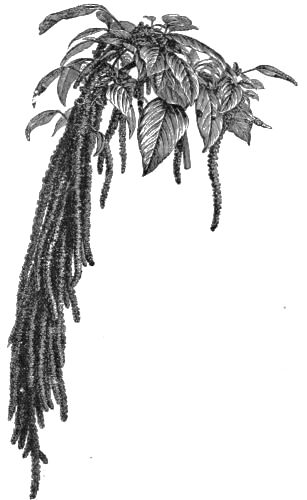
FIG. 72. FLOWER SPIKE OF AMARANTHUS CAUDATUS.
A. s. variegatum (variegated).* A constant and prettily variegated
form, which is even more handsome than the type. On the
rockery it does well, as it requires a sunny, well drained, position.
See Fig. 71.
A. serpyllifolium (Thyme-leaved).* fl. pale yellow, in simple
racemes. April to June. l. very small, ¼in. to ½in. long, ovate,
scabrous, hoary. h. 3in. to 4in. Branches spreading, sub-woody
at the base. South Europe, 1822.
A. tortuosum (twisted). fl. yellow; raceme corymbose. June.
l. hoary, somewhat lanceolate. Stem shrubby at the base, twisted,
diffuse. h. 6in. Hungary, 1804.
A. Wiersbeckii (Wiersbeck's).* fl. deep yellow, in close corymbose
heads, about 1½in. across. Summer. l. 2in. long, oval-oblong-pointed,
sessile, attenuated at the base, roughish and hairy.
Stems erect, scabrous, simple, rigid. h. 1½ft. Asia Minor.
AMARANTHACEÆ. An extensive order of herbs or
(rarely) shrubs, with opposite or alternate leaves, and inconspicuous
apetalous flowers, which are spicately or capitately
disposed. The majority of this order are weeds;
well-known exceptions being many species of Amaranthus.
AMARANTH, GLOBE. See Gomphrena.
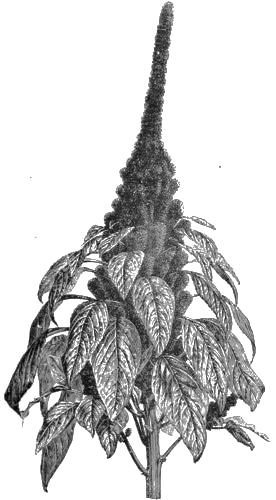
FIG. 73. FLOWER SPIKE OF AMARANTHUS HYPOCHONDRIACUS.
AMARANTHUS (from a, not, and maraino, to
wither; in reference to the length of time some of the
flowers retain their colour). ORD. Amaranthaceæ. Hardy
or half-hardy annuals, with alternate entire leaves and
small green or red flowers in large bracteate clustered
spikes. Flowers polygamous, furnished with three bracts
at the base of a three or five-lobed glabrous perianth.
Stamens four or five. Of very easy culture; they thrive
best in rich loamy soil, and are largely employed for
sub-tropical and other bedding, for vases and conservatory
decorations, being very ornamental. The seed should
be sown in April in a hotbed, and the plants thinned
out in the same situation when about ½in. high. About the
end of May, they can be transplanted out of doors in
their permanent situations. They are also very handsome
when grown in pots. The young plants should be potted
off early, and freely encouraged, allowing plenty of pot-room
and moisture, and be kept near the glass, to bring out
their brightest colouring. To develop their full beauty,
plenty of room is required. There are about twelve species
(indigenous to warm and tropical countries).
A. bicolor (two-coloured). l. green, variously streaked with light
yellow. h. 2ft. India, 1802. This species is rather delicate, and
must have a warm sunny situation.
A. b. ruber (red).* l. brilliant glistening scarlet, merging into a
dark violet red, mixed with green. Hardier than the type.
A. caudatus (caudate).* Love Lies Bleeding. fl. dark purplish,
collected in numerous whorls, which are disposed in handsome
drooping spikes. August. h. 2ft. to 3ft. India, 1596. A
very common and vigorous growing hardy annual. There is a
yellowish-flowered variety, which, though less ornamental, is an
effective contrast. See Fig. 72.
A. cruentus (dark bloody). Synonymous with A. hypochondriacus.
A. Henderi (Hender's). l. lanceolate, undulated, intense rosy
carmine, varying with orange buff, golden yellow, and olive green.
h. 3ft. A garden hybrid, closely allied to A. salicifolius. Pyramidal
habit.
A. hypochondriacus (hypochondriac).* Prince's Feather.
fl. deep crimson, on densely packed, erect spikes. July. l. purplish
beneath. h. 4ft. to 5ft. Asiatic, 1684. SYN. A. cruentus.
See Fig. 73.
A. h. atropurpureus (dark purple).* An improved variety of
above.
A. melancholicus ruber (melancholy-red).* h. about 1ft.
Japan. A compact growing variety, with large shaded crimson
leaves. Largely used for bedding purposes.
A. salicifolius (willow-leaved).* l. 7in. to 15in. long, willow-shaped,
linear, and wavy, which, by their drooping outline, present
a very elegant and effective appearance. When fully grown,
the leaves are brilliantly banded and tipped with orange, carmine,
and bronze. h. 3ft. Philippine Isles, 1871.
A. s. Princess of Wales.* l. carmine, orange green, and
bright yellow, beautifully blended. h. 3ft. A garden hybrid.
A. sanguineus (bloody). fl. purple, disposed partly in small
heads in the axils of the upper leaves, and partly in slender,
flexible spikes, which form a more or less branching panicle. July.
l. blood red. h. 3ft. Bahama, 1775.
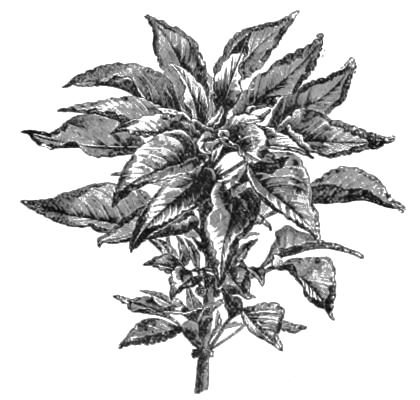
FIG. 74. AMARANTHUS TRICOLOR.
A. speciosus (showy).* fl. dark crimson purple, disposed in large
erect spikes, forming a fine plumy panicle. July. l. suffused with
a reddish tinge, which disappears at the time of flowering. h. 3ft.
to 5ft. Nepaul, 1819.
A. s. aureus (golden). fl. of a fine brownish-golden hue. Very
effective when grown in masses.
A. tricolor (three-coloured).* l. of a fine, transparent, purplish-red
or dark carmine from the base to the middle; a large spot of
bright yellow occupies the greater part of the upper end of the
leaf; point generally green; leafstalks yellow. h. 1½ft. East
Indies, 1548. See Fig. 74. There are several garden varieties
of this species, requiring a somewhat warmer situation.
AMARYLLIDEÆ. A large and important order of
usually bulbous plants, sometimes with a stem. Flowers
solitary, umbellate, or paniculate; perianth superior, six-lobed,
often with a corona at the top of the tube. Leaves
ensiform or linear. This order contains many very beautiful
genera, including Agave, Amaryllis, Crinum, Hæmanthus,
Hippeastrum, Narcissus, Pancratium, and several
others.
AMARYLLIS (from Amaryllis, the name of a country-woman
mentioned by Theocritus and Virgil). ORD.
Amaryllideæ. Half-hardy or hardy, deciduous, bulbous
plants. Flowers large, sweet-scented, pedicelled; spathe
two-leaved; umbels few-flowered; perianth with a very
short tube, funnel-shaped, six-parted, sub-regular or irregular;
segments many-nerved, broad, undulate, spreading
somewhat at the apices; stamens at the summit of the
tube, unequal, declined; anthers fixed by the middle, incumbent,
curved into a circular arch after bursting; style
declined; stigma thickened, sub-three-lobed; scape tall,
solid, compressed. Capsule obovate; seeds globose, fleshy.
Leaves appearing at a different season from the scapes,
numerous, strap-shaped. The following genera are sometimes
arranged hereunder, but in this work are treated
separately: Brunsvigia, Crinum, Hippeastrum, Nerine,
Sprekelia, Sternbergia, Vallota, Zephyranthes. Warm,
dry, and well-drained positions in front of hothouses,
or at the base of south or south-west
walls, are the most suitable
sites for A. Belladonna and
its varieties. The soil should
be composed of good, fibrous
loam, leaf mould, and sand, in
equal parts. Insert the bulbs
6in. to 8in. deep, and surround
with sand, after which they
may be covered with the compost,
which should be pressed
firmly about them; they should
not be again disturbed for years,
when they will ultimately establish
themselves, and produce
grand masses of blossom. The
best time to plant a fresh stock
is June or July, when they
commence root-action, before
the flower-stems are sent up.
In their growing season, and
in dry weather, an occasional
soaking of clear water, or liquid manure, will be
greatly beneficial. The extremely ornamental plants now
largely grown, and frequently classed as Amaryllis in
nurserymen's catalogues, belong to the genus Hippeastrum.
For pot-culture of the Belladonna Lily, see Hippeastrum.
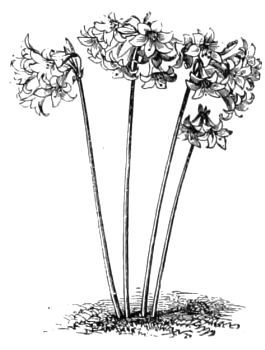
FIG. 75. AMARYLLIS BELLADONNA,
showing Habit at
Flowering Season.
A. Belladonna.* Belladonna Lily. This splendid species is
very variable, both in the size and colour of the flowers, frequently
producing variously-shaded flowers, from almost white to
a reddish or purplish hue. Autumn. West Indies, 1712. See
Fig. 75. The leaves and flowers are not produced together. In
Fig. 76 they are both shown in the same illustration for economy
of space.
A. B. pallida (pale).* A pale-coloured variety. h. 2ft.
AMASONIA (named in honour of Thomas Amason,
one of the earlier American travellers). SYN. Taligalea.
ORD. Verbenaceæ. A genus comprising six species (which
may be reduced to four) of stove sub-shrubs, natives of
tropical America. Flowers yellow or sulphur-coloured,
racemose or panicled; calyx five-cleft; corolla five-cleft,
sub-bilabiate. Leaves alternate, toothed or rarely entire.
For culture of the only species introduced, see Clerodendron.
A. punicea (reddish-brown). fl. yellow, with pretty, brownish
bracts; peduncles once or twice trifid, cymose or one-flowered.
May and June. l. slender, 3in. to 2in. long, oblong- or elliptic-lanceolate,
shortly acuminate, unequally toothed. Stem erect,
simple or slightly branched. h. 2ft. to 3ft. Brazil, 1884.
AMATEUR. This term is usually meant to refer
to one who has a taste for a particular pursuit, and who is,
in a pecuniary point of view, independent of it. An
Amateur gardener is one who rears and grows his plants,
and cultivates his garden, for his own amusement—for
mere love of horticulture.
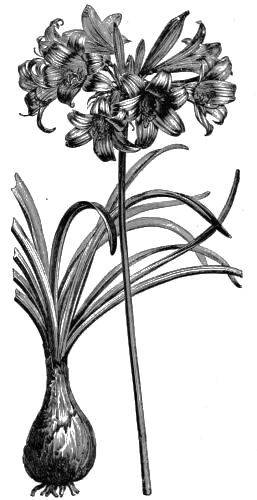
FIG. 76. AMARYLLIS BELLADONNA, showing Bulb and Flower Spike.
AMBER, SWEET. See Hypericum Androsæmum.
AMBER-TREE. See Anthospermum.
AMBROSINIA (commemorative of Professor Giacinti
Ambrosini, of Bologna). ORD. Aroideæ (Araceæ).
A curious, half-hardy, tuberous perennial, thriving in any
light soil, with protection in winter. Increased by seeds,
and by divisions. The former should be sown, as soon
as ripe, in a cool house; and the latter should be made
just previous to new growth in spring.
A. Bassii (Bass's).* fl., spathes prolonged into a long tail, and a
tongue-shaped spadix, with the male flowers on one side, and so
placed as to preclude the access of pollen to the stigma on the
other side of the spathe, save by insect agency. l. oblong,
stalked. h. 4in. Corsica, Sardinia, 1879.
AMBURY, or ANBURY. The name given to galls
of small Weevils (Ceuthorhynchus sulcicollis) which
appear on the roots of Cabbages and Turnips, as well
as of the Wild Mustard, and of other weeds belonging
to the genus Brassica. The galls form swellings individually
about the size of split peas, but often two or
more are joined to form considerable masses. In each is
a space inclosing a white grub. Anbury is usually not
very hurtful. It is quite distinct from Clubbing. The
galled roots should be collected, before the grubs emerge,
and burned.
AMELANCHIER (Savoy name of the Medlar, to
which this genus is closely allied). TRIBE Pomaceæ
of ORD. Rosaceæ. Hardy, deciduous shrubs or small
trees, with racemes of white flowers, and simple, serrated
leaves; bracteas linear-lanceolate. Pome, when mature,
three to five-celled. They are of easy cultivation, in
a somewhat rich, loamy soil, and are propagated by
layers or cuttings, in autumn, in sheltered situations; by
seeds, and by grafting, in early spring, on the Hawthorn or
the Quince, or the weaker on the stronger-growing species.
A. canadensis (Canadian).* Grape Pear. fl. white. April. Pome
purple. l. oblong-elliptic, cuspidate, when young rather villous,
but at length glabrous. h. 6ft. to 8ft. Canada, 1746. A very
ornamental tree, having a profusion of flowers in early spring,
and rich autumnal foliage. SYN. Pyrus Botryapium.
A. c. florida (flowery).* fl. white, numerous, in upright racemes.
May. Pome purple. l. oblong, obtuse at both ends, coarsely serrate
in the terminal portion, glabrous in every state. h. 10ft. to 20ft.
North America, 1826.
A. c. ovalis (oval-leaved). fl. white; racemes pressed together.
April. l. roundish-elliptic, acute when rather young, velvety
beneath, glabrous when mature. h. 6ft. to 8ft. North America,
1800.
A. c. parvifolia (small-leaved). This has a dwarfer habit, and
shorter leaves, than the type.
A. sanguinea, (bloody). fl. white; racemes capitate. April.
Pome blackish-purple. l. oblong, rounded at both ends, sharply
serrated, always naked. h. 4ft. to 8ft. North America, 1800.
This form differs principally from A. canadensis in the fewer
flowers, much shorter raceme, and shorter, broader, and more
ovate petals.
A. vulgaris (common).* fl. white. April. Pome darkish-purple.
l. roundish-oval, bluntish, pubescent beneath, at length glabrous.
h. 3ft. to 9ft. Europe, 1596. A desirable shrub, producing an
abundance of flowers. SYN. Mespilus Amelanchier.
AMELLUS (a name employed by Virgil for a blue,
Aster-looking plant growing on the banks of the river
Mella). ORD. Compositæ. Pretty, branched, ascending
or diffuse, perennial herbs. Flowers in solitary heads.
Leaves hairy, lower ones opposite, upper alternate. Of
very easy culture, in ordinary garden soil. Increased by
divisions, or cuttings, inserted under glass, in spring.
A. Lychnitis (Lychnitis). fl.-heads violet, solitary, terminal, and
lateral. June. l. linear, lanceolate, entire, hoary. h. 6in. Cape
of Good Hope. Evergreen, greenhouse trailer.
AMENTUM. A catkin. A deciduous spike of unisexual,
apetalous flowers.
AMERICAN ALMOND. See Brabejum.
AMERICAN ALOE. See Agave americana.
AMERICAN BLIGHT, or WOOLLY APHIS
(Schizoneura lanuginosa). The white, cottony-looking matter
which is found upon the bark of the Apple and other
trees of a similar nature, belongs to a species of Aphis,
which has short legs: the females are wingless, while
the males are winged; the latter appear in July and
August. The insects belong to a group of Aphides unprovided
with honey tubes on the hinder part of the body,
and in which the third vein of the front wing shows
only one fork The woolly coating also distinguishes them
from true Aphides. The Blight is said to have been imported
from America in 1787, but this is uncertain.
As these insects get into the cracks and under the bark
of trees, they are hard to dislodge. The injury inflicted is
not apparent for some time; but, in process of time, large,
cankerous wounds are produced, which gradually (with the
aid of the insects) destroy the branches, and render the
tree useless. If young trees are attacked, they are rendered
valueless in a very short time. The insects hide
in crevices of the bark of the trees each autumn, and
remain dormant during the winter, ascending to their old
quarters as the weather becomes warm. Trees which are
covered with moss and lichens probably serve as places
for hybernation; hence, it is desirable to remove such
hiding-places, as well as all pieces of dead bark. To their
being left may be frequently attributed the severe attacks
of Blight experienced where they exist on trees. So soon
as the cottony substance makes its appearance, one of the
following remedies should be applied, and, if persisted in
for a few seasons, the trees will be quite cleared.
Brushing and Scraping. In winter, the trees should
be thoroughly cleaned; and, so long as there is a chance
of the insects being in the bark, all loose pieces, moss,
&c., should be brushed off, and the parts affected should
be thoroughly saturated with a strong solution of soft soap
or of soft soap and lime-water, applied with a stiff brush,
so as to enter all the crevices.
Gas Liquor. This is the ammoniacal liquor from gas
works. It must be diluted with from eight to twelve
times its bulk of water, or it is dangerous to the trees;
in fact, after dilution, it is advisable to test it, previous
to using to any great extent. As the woolly covering
of the insects resists water, it is desirable that the liquor
be applied with a brush, and forced amongst the Blight.
Infusion of Tobacco Leaves (½lb. to 1 gallon) kills the
insects on shoots dipped into it.
Paraffin or Petroleum. This is a simple and useful
remedy. Obtain a painter's half-worn sash-tool, free
from paint, and just moisten it in the oil. Then brush
out each infested place as often as the Blight appears,
and in one season the trees will be cleared.
Spent Tan. Collect spent tan into a heap a month or
two before it is to be used, and if it has heated well and
rotted, so much the better. In winter, clear away all
leaves, rubbish, grass, &c., and spread the tan at the rate
of about thirty loads to the acre, taking care that it
surrounds the base of each tree infested with Blight.
Practical proof of its utility has been given.
Turpentine and other Spirits. The mode of applying
these is the same as for paraffin, but they frequently injure
the bark, and sometimes kill young trees.
To kill insects on the roots, it is well to clear away
the soil as far as possible from them, and to saturate
the place with soapsuds or ammoniacal solutions; soot,
quicklime, or other applications to the soil would also
prove useful.
Other remedies that have been suggested are the drainings
of stables, and grafting-clay plastered over the bark.
AMERICAN CENTAURY. See Sabbatia.
AMERICAN CHINA ROOT. See Smilax.
AMERICAN COWSLIP. See Dodecatheon.
AMERICAN CRANBERRY. See Oxycoccus
macrocarpus.
AMERICAN CRESS. See Barbarea.
AMERICAN DEWBERRY. see Rubus canadensis.
AMERICAN GOOSEBERRY. See Pereskia
aculeata.
AMERICAN GREAT LAUREL. See Rhododendron
maximum.
AMERICAN HIGH BLACKBERRY. A common
name for Rubus villosus (which see).
AMERICAN MANDRAKE. See Podophyllum
peltatum.
AMERICAN MOUNTAIN ASH. See Pyrus
americana.
AMERICAN PLANTS. This term includes Rhododendron,
Azalea, and several others of similar habit and
constitution; indeed, any hardy, flowering shrubs requiring
a moist peat border.
AMERICAN SPANISH OAK. See Quercus
falcata.
AMERICAN SWAMP LILY. See Saururus
cernuus.
AMERICAN WHITE OAK. See Quercus alba.
AMERICAN WILD BLACK CURRANT. See
Ribes floridum.
AMERICAN WILD RED RASPBERRY. See
Rubus strigosus.
AMERIMNON (from a, privative, and merinna, care;
in allusion to the little attention the plant requires; name
originally applied to the House-leek). SYN. Amerimnum.
ORD. Leguminosæ. Ornamental, evergreen, stove shrubs,
with alternate, stalked, ovate, somewhat cordate, simple
leaves. For culture, see Anona.
A. Brownei (Browne's).* fl. white, sweet-scented; peduncles
axillary, ten-flowered, glabrous or puberulous. May. l. ovate,
somewhat cordate, acute, glabrous. h. 6ft. to 10ft. Jamaica,
1793. Requires a trellis or other support.
A. strigulosum (strigulose). fl. white; racemes axillary, solitary,
three times longer than the petioles. May. l. ovate, rather
cordate, obtuse, clothed with adpressed hairs on both surfaces;
branches and petioles clothed with light brown, dense, short
hairs. h. 6ft. to 10ft. Trinidad, 1817.
AMERIMNUM. A synonym of Amerimnon
(which see).
AMHERSTIA (commemorative of Countess Amherst,
a zealous promoter of natural history, particularly
botany). ORD. Leguminosæ. A stove, evergreen tree of
almost unsurpassed magnificence and brilliancy, requiring
a very high and moist temperature. It delights in a rich,
strong loam, and may be propagated by cuttings of the
half-ripened wood, inserted in sand, under a glass in
bottom heat of about 80deg.; also by seeds.
A. nobilis (noble).* fl. of a fine vermilion colour, diversified with
yellow spots, large; racemes long, pendulous, axillary. May.
l. large, impari-pinnate, bearing six to eight pairs of leaflets.
h. 30ft. to 40ft. India, 1837. The flowers are, unfortunately,
somewhat ephemeral, lasting but a few days in perfection, during
which period, however, no object in the whole range of the vegetable
kingdom presents a more striking aspect than this tree.
AMICIA (commemorative of J. B. Amici, a celebrated
French physician). ORD. Leguminosæ. A pretty, greenhouse
or half-hardy perennial, succeeding in any warm,
sheltered spot. Young cuttings will root in sand, under a
hand glass, in heat.
A. Zygomeris (two-jointed-podded).* fl. yellow, splashed with
purple on the keel; peduncles axillary, five or six-flowered.
Autumn. Legumes with two joints. l. abruptly pinnate, with
two pairs of cuneate-obcordate, mucronate leaflets, which are
full of pellucid dots; branches and petioles pubescent. h. 8ft.
Mexico, 1826.
AMMOBIUM (from ammos, sand, and bio, to live; in
reference to the sandy soil in which it is found). ORD.
Compositæ. This well-known everlasting is closely allied
to Gnaphalium, from which it differs principally in habit.
Receptacle with oblong, pointed, toothed, chaffy scales;
involucre of imbricated leaflets. It may be treated as
a half-hardy annual, or as a biennial, if seeds are sown
in September and kept in a cool greenhouse during the
winter, and this is the best way to grow it. Any moderately
good soil suits it.
A. alatum (winged). fl.-heads about 1in. across, of a silvery
whiteness, with the exception of the yellow disk florets, very
numerous, in loose, corymbose panicles. May to September.
l. oblong-lanceolate; radical ones in a tufted rosette. Stems
winged—hence the specific name. h. 1½ft. to 2ft. New Holland,
1822. See Fig. 77.
A. a. grandiflorum (large-flowered).* fl.-heads purer white,
nearly twice the size of those in the type. This variety, which
comes true from seed, is a great acquisition.
AMMOCHARIS. See Brunsvigia.
AMMODENDRON (from ammos, sand, and dendron,
a tree; in reference to its natural habitat). SYN. Sophora.
ORD. Leguminosæ. A small, neat, hardy evergreen, silky
shrub, having the petioles hardening into spines; an excellent
subject for shrubberies. It thrives in an ordinary
soil, with good drainage, and is propagated by layers
and seeds.
A. Sieversii (Sievers').* fl. purple, disposed in racemes. June.
l. bifoliolate; leaflets lanceolate, silky-white on both surfaces.
h. 2ft. to 4ft. Siberia, 1837.
AMMYRSINE. See Leiophyllum.
AMOMOPHYLLUM. See Spathiphyllum.
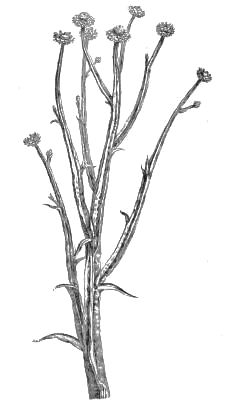
FIG. 77. INFLORESCENCE OF AMMOBIUM ALATUM.
AMOMUM (from a, not, and momos, impurity; in
reference to the quality of counteracting poison). ORD.
Zingiberaceæ. Stove, deciduous, herbaceous perennials,
chiefly aromatic, formerly used in embalming. Flowers
produced close to the ground, in spikes or clusters, bracteate.
Leaves distichous, sheathing at the base, lanceolate,
entire. For culture, see Alpinia.
A. angustifolium (narrow-leaved).* fl. sometimes of a uniform
chrome-yellow, sometimes crimson, with the labellum of a yellow
colour, more or less pale, and sometimes entirely crimson; scape
naked, from 3in. to 8in. in length; spike capitate. July. l. linear-lanceolate.
h. 8ft. Madagascar.
A. Cardamomum (Cardamom).* fl. brownish; lip three-lobed,
spurred; scape compound, flexuous, procumbent. August. h. 8ft.
East Indies, 1823.
A. Danielli (Daniel's). fl. 4in. across; outer sepals fine red; the
spreading labellum whitish, tinged with rose and yellow; scape
short, arising from the bottom of the stem. l. oblong-lanceolate,
9in. long. h. 2½ft. Western Africa.
A. grandiflorum (large-flowered). fl. white, numerous, close;
spike short. June. l. elliptic-lanceolate, pointed. h. 3ft. Sierra
Leone, 1795.
A. Granum Paradisi.* Grains of Paradise. fl. white, tinged
with yellow and rose. l. elliptic-lanceolate, long-pointed. Stems
very red at base, and dull purplish-red above from the long,
sheathing leafstalks. h. 3ft. West Africa.
A. Melegueta (Melegueta).* Grains of Paradise. fl. pale pink,
solitary, with an orbicular, irregularly toothed lip. May. l.
narrow, linear-elliptic, distichous, sessile. h. 1ft. to 2ft. Sierra
Leone, 1869. Habit creeping.
A. sceptrum (sceptre). fl. bright rose purple, large, sub-erect;
the most conspicuous portion is the lip, which is 2½in. in diameter;
flower-scapes 6in. high. January. l. narrow, oblong-lanceolate.
h. 5ft. to 6ft. Old Calabar, 1863.
A. vitellinum (yolk-of-egg-coloured). fl. yellow; lip oblong,
obtuse, toothed; spike oblong, sessile, rather loose. April.
l. oval. h. 2ft. East Indies, 1846. Plant stemless, glabrous.
AMORPHA (from a, not, and morphe, form; incomplete
formation of the flowers). Bastard Indigo. ORD.
Leguminosæ. A handsome genus of hardy deciduous shrubs
with very graceful impari-pinnate leaves, and many pairs of
leaflets, which are full of pellucid dots. Racemes spicate,
elongated, usually in fascicles at the tops of the branches;
corolla without wings and keel; vexillum or standard
ovate, concave. They are well adapted for small shrubberies,
requiring a sheltered situation, and thrive well
in common garden soil. Increased by layers, or cuttings,
taken off at a joint, and planted in a sheltered situation
early in autumn; these should be allowed to remain
undisturbed till the following autumn. Amorphas produce
an abundance of suckers, from which they may be readily
propagated.
A. canescens (hoary).* The Lead Plant. fl. dark blue. July.
l., leaflets ovate-elliptic, mucronate. h. 3ft. Missouri, 1812.
Whole plant clothed with hoary hairs.
A. fruticosa (shrubby).* The False Indigo. fl. very dark
bluish purple. June. l., leaflets elliptic-oblong; lower ones distant
from the stem. h. 6ft. Carolina, 1724. Shrub glabrous, or
a little villous. There are several varieties, having mucronate,
emarginate, or narrower leaflets, but all with purple flowers. A
host of names, representing the merest forms of A. fruticosa, are
to be found in nurserymen's catalogues. Amongst them are:
caroliniana, crocea, crocea-lanata, dealbata, fragrans, glabra, herbacea,
nana, pubescens, &c. These differ so slightly from the type
and from each other, that it is impossible to distinguish them.
AMORPHOPHALLUS (from amorphos, deformed,
and phallos, a mace; alluding to the inflorescence). SYN. Pythion.
Including Proteinophallus. ORD. Aroideæ (Araceæ).
A very remarkable genus, closely allied to Arum, but distinguished
therefrom by "their spreading, not convolute,
spathes; by their anthers opening by pores, not by longitudinal
slits; by the numerous cells to the ovary; and by the
solitary, erect ovules, those of Arum being horizontal."
A soil consisting of two-thirds good rich loam, with the
additional third of sweet manure, thoroughly rotted, suits
them well. Other essentials are plenty of pot room, a
genial atmosphere, and a temperature ranging from 55deg.
to 65deg., or even 70deg. They require to be kept dry,
and warm in winter, as nothing is more fatal to them than
cold or damp. Beneath a shelf or stage in the stove is an
excellent spot for them, or they may be stored in sand,
and kept free from frost. They are difficult to increase;
the corms of most of them are of great size, and rarely
make offsets. Efforts should consequently be made to
induce the plants to seed whenever practicable. All the
species are strikingly effective in sub-tropical bedding.
For fertilising and growth of seedlings, see Arum.
A. campanulatus (bell-shaped).* Similar to A. Rivieri, but the
flowers are brown, red, and black, and the scape is neither so
stout nor so tall. h. 2ft. India, 1817. SYN. Arum campanulatum.
A. grandis (large). fl., spathe green, white inside; spadix
purplish. h. 3ft. Java, 1865. Stove species.
A. Lacourii (Lacour's).* l. pedatisect, the ultimate segments
lanceolate, yellow-spotted; petioles transversely mottled with
yellow markings. Cochin China, 1879. Greenhouse. The correct
name of this species is Pseudodracontium Lacourii.
A. nivosus. See Dracontium asperum.
A. Rivieri (Rivier's).* fl., spadix, spathe, and scape, reaching
3ft. or more in height, appearing before the leaves; scape stout
and strong, of a deep green colour, speckled or dotted with rose;
spadix projecting, deep red; spathe of a rosy-green colour.
March to May. l. solitary, decompound, 40in. to 50in. across, on
tall marbled petioles. Cochin China. Perhaps the most useful
species. SYN. Proteinophallus Rivieri. See Fig. 78.
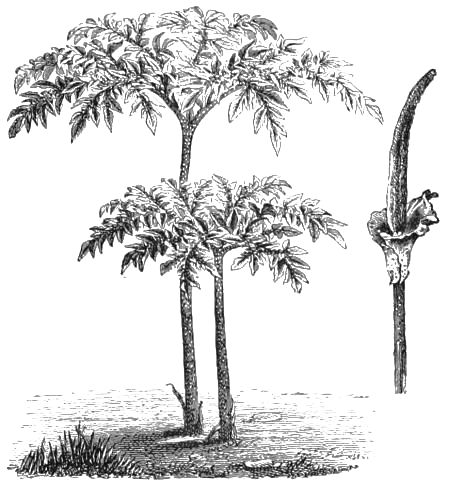
FIG. 78. AMORPHOPHALLUS RIVIERI, Foliage and Inflorescence.
A. Titanum (Titan's).* fl., spadix 5ft. high, black purple; spathe
nearly 3ft. in diameter, campanulate in shape, with patent and
deeply toothed edges. The deeper portion of the interior is pale
greenish, but the limb is of a bright black purple hue; the outside
is pale green, smooth in the lower portion, but thickly corrugated
and crisp above; scape about 1½ft. long, green, marked with
small whitish orbicular spots. l. the divided blade covers an area
of 45ft. in circumference. West Sumatra, 1878. As will be seen
from the above, this extraordinary plant is of gigantic proportions,
and, in size of the flowers, eclipsing nearly all others in the
vegetable kingdom. SYN. Conophallus Titanum.
AMORPHOUS. Without definite form.
AMPELOPSIS (from ampelos, a vine, and opsis,
resemblance; resembling the Grape Vine in habit, and to
which it is closely allied). SYN. Quinaria. ORD. Ampelideæ.
A genus nearly allied to Vitis. Calyx slightly five
toothed; petals concave, thick, expanding before they fall;
disk none. Fast growing and ornamental climbing, hardy
deciduous shrubs, of very easy culture in common garden
soil. Cuttings, having a good eye, may be taken in September,
and pricked either under handlights in sandy soil
on the open border, or in pots stood on the stage or shelf in
a greenhouse; they root readily, and will be fit for transplanting
early in the spring. Or cuttings made from the
young soft wood, expressly grown for the purpose, in spring,
root freely in gentle heat. This applies especially to
A. tricuspidata. They are also easily increased by layers.
Most of the species will thrive with equal vigour in almost
any position, however exposed.
A. aconitifolia (Aconite-leaved).* l. palmisect, with pinnatifid
segments. China, 1868. A slender and very elegant free-growing
species, with long reddish branches. There are two or more
varieties. SYNS. A. lucida, A. triloba, A. tripartita, and Vitis
dissecta. See Fig. 79.
A. bipinnata (bipinnate). fl. green, small; raceme stalked, twice
bifid. Berries globose. June. l. bipinnate, smooth; leaflets deeply
lobed. h. 10ft. Virginia, 1700.
A. hederacea (Ivy-leaved). Synonymous with A. quinquefolia.
A. japonica (Japanese). Synonymous with A. tricuspidata.
A. lucida (shining). Synonymous with A. aconitifolia.
A. napiformis (turnip-like).* Greenish. China, 1870. See Fig. 80.
A. quinquefolia (five-leaved).* Virginian Creeper. fl. greenish-purple;
raceme corymbose. June. l. palmate, with three and five
leaflets, smooth on both surfaces; leaflets stalked, oblong-acuminated,
mucronately toothed; autumnal tint red. North America,
1629. SYN. A. hederacea.
A. q. hirsuta (hairy). l. downy on both surfaces.
A. serjaniæfolia (Serjania-leaved).* l. green, palmately five-parted,
or the upper ones three-parted, the intermediate division
being often ternate or pinnate; leaflets obovate acute, and incisely
toothed or sublobate; the rachis is articulately winged. Japan,
1867. SYNS. A. tuberosa, Cissus viticifolia. Roots tuberous; see
Fig. 81.
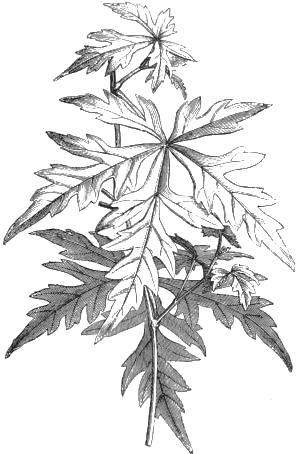
FIG. 79. STEM AND LEAVES OF AMPELOPSIS ACONITIFOLIA.
A. tricuspidata (three-pointed).* l. very variable in shape;
younger ones almost entire; older ones larger, roundish-cordate,
divided to the middle into three deltoid lobes, which run into
little tails, and are coarsely toothed at the margin. Japan, 1868.
SYNS. A. Veitchii, Vitis japonica (of gardens).
A. triloba (three-lobed). A synonym of A. aconitifolia.
A. tripartita (three-parted). A synonym of A. aconitifolia.
A. tuberosa (tuberous). A synonym of A. serjaniæfolia.
A. Veitchii (Veitch's). A synonym of A. tricuspidata.
AMPHIBLEMMA CYMOSUM. See Melastoma
corymbosum.
AMPHIBLESTRA. Included under Pteris (which
see).
AMPHICARPÆA (from amphi, both, and karpos, a
fruit; in allusion to the two kinds of pods—those of the
upper flowers being scimitar-shaped, three or four-seeded;
those of the lower, pear-shaped, fleshy, usually ripening but
one seed; these lower pods bury themselves in the ground
after fertilisation). ORD. Leguminosæ. A genus of ornamental
annuals, with herbaceous, twining stems, and sometimes
apetalous flowers, allied to Wistaria. The species
are of easy culture. Seeds should be sown in the open
border, in spring, in a sunny situation.
A. monoica (monœcious). Hog Pea-nut. fl. with a pale violet
vexillum, and white keel and wings; racemes axillary, pendulous.
June to August. l. pinnately-trifoliate; leaflets ovate, glabrous.
North America. 1781.
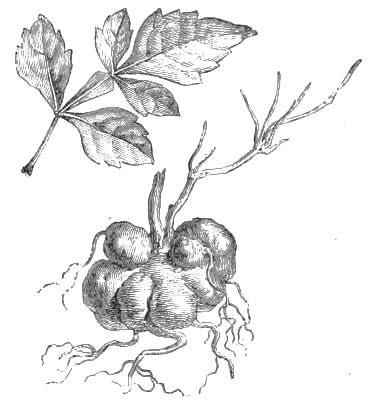
FIG. 80. TUBERS AND LEAF OF AMPELOPSIS NAPIFORMIS.
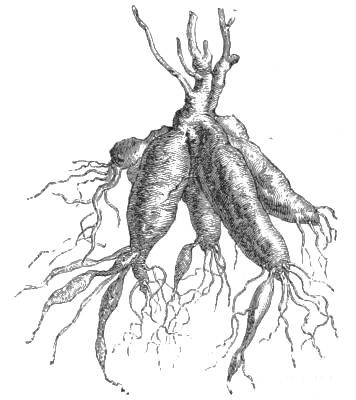
FIG. 81. ROOTS OF AMPELOPSIS SERJANIÆFOLIA.
AMPHICOME (from amphi, on both sides, and
kome, a head of hair; in reference to the seeds being furnished
with a tuft of hairs at both ends). ORD. Bignoniaceæ.
Flowers axillary or terminal. Leaves alternate, unequally
pinnate. Very ornamental greenhouse or half-hardy rock
herbaceous plants. If planted outside, they must be protected
during the winter from wet and severe frosts. A
mixture of loam, sand, and leaf soil suits them well. Increased
by striking the young shoots in spring in sandy
soil in gentle heat; or by seed, which should be sown in
early spring, in pots of sandy soil placed in a greenhouse.
A. arguta (finely-cut).* fl. red, drooping; racemes axillary, terminal;
corolla tubular near the base, ventricose above. August.
l. alternate, impari-pinnate; leaflets opposite, on short petioles,
three to four pairs, lanceolate, acuminated, deeply serrated. h. 3ft.
Himalaya, 1837.
A. Emodi (Emodian).* fl. rose and orange, erect; racemes axillary;
corolla 1½in. to 2in. long, bell-shaped, slightly tubular below.
August to October. l. impari-pinnate, with numerous leaflets.
h. 1ft. to 1½ft. India, at high altitudes, 1852. A very beautiful
plant.
AMPHILOPHIUM (from amphilophos, crested on all
sides; limb of corolla much curled). SYN. Amphilobium.
ORD. Bignoniaceæ. A handsome stove evergreen climber.
Corolla somewhat coriaceous, with a short tube, and a
large ventricose throat. Loam and peat, well mixed, suits
it best; cuttings from young shoots root readily in sand,
under a hand glass, with bottom heat, during the spring
months.
A. paniculatum (panicled).* fl. rose-coloured; panicle terminal,
composed of three-flowered peduncles. June. l. joined by pairs,
opposite; leaflets ovate-roundish, acuminated, sub-cordate. West
Indies, 1738.
AMPLEXICAULIS. Embracing the stem; usually
applied to leaves.
AMPULLACEOUS. Resembling a bladder or flask.
AMSONIA (in honour of Charles Amson, a scientific
traveller in America). ORD. Apocynaceæ. Very pretty
hardy, herbaceous perennials, with alternate leaves, and
terminal panicles of pale blue flowers; corolla with linear
lobes, and a narrow funnel-shaped tube. They thrive in
half shady positions in borders, or the edges of shrubberies,
where they will not need to be frequently transplanted.
Propagated by cuttings during the summer months, or by
divisions of the roots in spring.
A. latifolia (broad-leaved). Synonymous with A. Tabernæmontana.
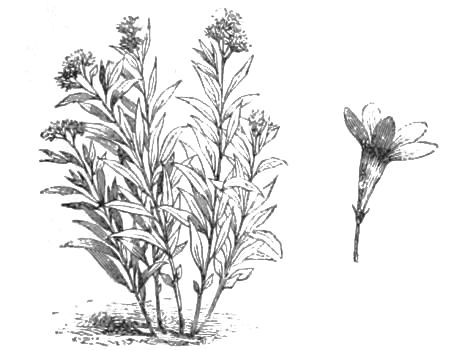
FIG. 82. AMSONIA SALICIFOLIA, showing Habit and Flower.
A. salicifolia (willow-leaved).* fl. light blue, in terminal corymbose
cymes; corolla small, funnel-shaped, with a rounded tube;
throat whitish, bearded. Summer. l. lanceolate, smooth, acute.
h. 1½ft. to 2½ft. North America, 1812. Habit less erect than the
following species. See Fig. 82.
A. Tabernæmontana (Tabernæmontanus).* fl. pale blue, in
cymes; petals lanceolate, acute, slightly hairy on the outside;
sepals also lanceolate, acute. Summer. l. ovate-lanceolate,
acute, shortly stalked. h. 1½ft. to 2½ft. North America, 1759.
SYNS. A. latifolia, Tabernæmontana Amsonia.
AMYGDALUS (from amysso, to lacerate; fissured
channels in the stone of the fruit). Almond. ORD.
Rosaceæ. TRIBE Drupaceæ. Well known, ornamental,
deciduous spring flowering shrubs. Drupe clothed with
velvety pubescence, with a fibrous dry rind, separating
irregularly, having the stone of the fruit pitted or smooth.
The larger-growing species are very excellent for shrubberies,
or as specimen trees; being in blossom before
most other trees, they make a fine appearance in early
spring. The dwarfer kinds are also well fitted for small
shrubberies or the fronts of large ones. For greenhouse
culture they should be obtained in a small pyramidal
shape; they are not, however, suited to a small house,
as the plants, to bloom well and be effective, ought to
be at least 2ft. or 3ft. high, and proportionately wide.
Plenty of root room is essential. After potting, water
thoroughly, and place the trees in an orchard house for a
few weeks, when they may be removed to their permanent
station. A temperature of about 50deg. or 55deg. is
sufficient to hasten the flowering; a higher temperature is
apt to frustrate the object in view. After flowering,
gradually harden off the plants until about the end of
May, when they may be plunged out of doors for the
season. Repotting should be done as soon as the leaves
fall. Increased by budding upon seedling plum-stocks
in summer. The Almond is grown on the Continent for its
fruit. See also Prunus.
A. argentea (silvery). A synonym of A. orientalis.
A. Besseriana (Besser's). A synonym of A. nana.
A. cochinchinensis (Cochin China). fl. white; racemes small,
sub-terminal. fr. ovate, ventricose, acute at the apex. March.
l. oval, quite entire. h. 30ft. to 40ft. Cochin China, 1825.
Greenhouse.
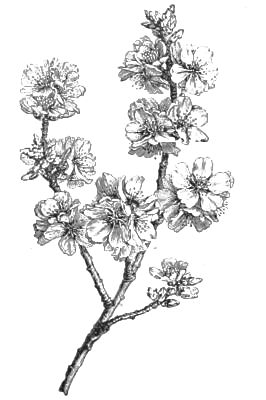
FIG. 83. FLOWERING BRANCH OF AMYGDALUS COMMUNIS.
A. communis (common).* Common Almond. fl. white or rose
coloured, solitary. March. fr. compressed, egg-shaped, tomentose.
l. oblong lanceolate, serrulated. h. 10ft. to 30ft. Barbary,
1548. See Fig. 83.
A. c. amara (bitter).* Bitter Almond. fl. larger, white, but rose
coloured at the base. April. Seeds bitter.
A. c. dulcis (sweet). Sweet Almond. fl. red, earlier; fruit ovate,
compressed, acuminated. Seeds sweet. l. of a greyish green
colour.
A. c. flore-pleno (double-blossomed).* fl. flesh colour, full
double, rosy in the bud. l. oval-elliptic, acuminate.
A. c. fragilis (brittle). fl. pale rose coloured, rising with the
leaves; petals broader, deeply emarginate. l. shorter than those
of the type.
A. c. macrocarpa (large-fruited).* fl. whitish rose colour, large,
rising before the leaves, with broadly obcordate undulated petals.
fr. larger than that of the type, umbilicate at the base, but acuminated
at the apex. l. broader than the type, acuminated. There
are also numerous other varieties.
A. incana (hoary).* fl. red, solitary. April. Drupe compressed,
pubescent. l. obovate, serrated, clothed with white tomentum
beneath. h. 2ft. A handsome dwarf shrub. Caucasus, 1815.
A. nana (dwarf).* fl. rose coloured, solitary. March. fr. of the
same form as that of A. communis, but much smaller. l. oblong-linear,
attenuated at the base, serrated, quite glabrous. h. 2ft.
to 3ft. Tartary, 1683. SYN. A. Besseriana.
A. orientalis (Oriental). fl. rose coloured. March. fr. mucronate.
l. lanceolate, quite entire, almost permanent, clothed with
silvery tomentum, as well as the branches. h. 2ft. to 4ft.
Levant, 1756. SYN. A. argentea.
AMYLACEOUS. Starch-like.
AMYRIDACEÆ. See Burseraceæ.
AMYRIS (from a, intensive, and myron, balm; the
whole of the trees in this genus smell strongly of balm or
myrrh). ORD. Burseraceæ. Ornamental stove evergreen
trees, abounding in a resinous fluid. Flowers white, disposed
in panicles. Leaves unequally pinnate. They thrive
well in a mixture of loam and peat; and cuttings root freely
in sand, under a hand glass with bottom heat, during the
spring months.
A. balsamifera (balsam-bearing). Synonymous with A. toxifera.
A. braziliensis (Brazilian).* fl. white; panicles axillary, shorter
than the leaves. August. l. with one to three pairs of opposite
leaflets; leaflets lanceolate, tapering to the base, rounded at
the apex, mucronate, quite entire, veiny, shining above, discoloured
beneath. h. 20ft. Brazil, 1823.
A. heptaphylla (seven-leaved). fl. whitish yellow; panicles
branched, axillary, and terminal. l. with three to four pairs of
alternate, simple leaflets, which are stalked, obliquely-lanceolate,
acuminated, entire. h. 16ft. India, 1823.
A. Plumieri (Plumier's).* Gum Elemi Tree. fl. white; panicles
branched, terminal. The fruit of this species is the shape and
size of an olive, but red, having an odoriferous pulp within it.
l. leaflets three to five, all stalked, somewhat serrated, ovate,
acuminate, villous beneath. h. 20ft. West Indies, 1820.
A. toxifera (poison-bearing).* fl. white; racemes simple, about
the length of the petioles. fr. the shape of a pear, and of a
purple colour, hanging in bunches. l., leaflets five to seven,
stalked, ovate, somewhat cordate, acuminated. h. 50ft. West
Indies, 1818. The wood, known as Rhodes Wood, bears a fine
polish, and has a pleasant smell. SYN. A. balsamifera.
ANACAMPSEROS (from anakampto, to cause return,
and eros, love). SYN. Rulingia. ORD. Portulacaceæ.
Very dwarf greenhouse succulent herbs or sub-shrubs,
natives of the Cape of Good Hope. Flowers
large, expanding only in the heat of the sun; petals five,
very fugacious; sepals five, opposite, oblong, rather concrete
at the base; pedicels one-flowered, short or elongated,
disposed in racemes. Leaves ovate, fleshy. They grow
freely in sandy loam, mixed with some lime rubbish; but
little water is needed. Cuttings root freely if laid to dry
a few days before planting. Leaves taken off close to the
plants, and also left to dry for a short time before being
planted, will take root. Seed, when obtainable, should be
sown in the spring.
A. arachnoides (cobwebbed).* fl. white; petals lanceolate; racemes
simple. July. l. ovate, acuminated, difformed, green,
shining, cobwebbed. h. 6in. to 9in. 1790.
A. filamentosa (thready). fl. reddish, or deep rose coloured;
petals oblong. August. l. ovate-globose, gibbous on both sides,
and cobwebbed, rather rugged above. h. 6in. to 1ft. 1795.
A. intermedia (intermediate). Very like A. filamentosa, but has
broader and more numerous leaves.
A. rubens (reddish).* fl. red; racemes simple. July. l. ovate,
difformed, shining, dark green, somewhat reflexed at the apex.
h. 6in. to 9in. 1796.
A. rufescens (rusty-coloured). fl. reddish, similarly disposed to
A. varians. July. l. crowded, expanded and recurved, ovate,
acute, thick, green, usually dark purple beneath. h. 6in. 1818.
A. Telephiastrum (Telephium-like). Synonymous with A.
varians.
A. varians (varying).* fl. reddish; racemes few-flowered, sub-panicled.
July. l. ovate, difformed, glabrous. h. 3in. 1813.
SYN. A. Telephiastrum.
ANACAMPTIS. See Orchis.
ANACARDIACEÆ. A rather large order of trees or
shrubs, with a resinous, milky juice. Flowers inconspicuous.
Leaves generally dotless. Ovary containing a single
ovule. This order contains, among other genera, Anacardium,
Mangifera, and Rhus.
ANACARDIUM (origin doubtful; probably from
ana, like, and kardia, the heart; in reference to the form
of the nut). ORD. Anacardiaceæ. An ornamental stove
evergreen tree with entire, feather-nerved leaves and terminal
panicles of flowers; nut reniform, umbilicated,
seated laterally on a fleshy, wide, pear-shaped peduncle.
It requires a light loamy soil. Ripened cuttings, with their
leaves left on, root freely in sand under a hand glass, in heat.
A. occidentale (Western). Cashew Nut. fl. reddish, small, very
sweet scented, succeeded by an edible pome-like fruit of a yellow
or red colour. l. oval, cuneated, very blunt, somewhat emarginate,
obovate-oblong, entire, smooth. h. 16ft. West Indies, 1699.
ANADENIA. See Grevillea.
ANAGALLIS (from anagelas, to laugh; removing despondency:
meaning doubtful). Pimpernel. ORD. Primulaceæ.
Annual or perennial trailers with angular stems,
opposite or verticillate leaves, and solitary pedunculate
flowers; corolla rotate or funnel-shaped, deeply five-cleft.
All are very pretty and free flowering plants, of easy culture.
The annuals are raised from seed sown in a sunny
spot in spring; the perennials are increased by striking
cuttings of the young shoots, or division, at any time, either
under a hand glass or in a close frame. Keep in the shade
until well established, and gradually harden off. Plant
outside in light rich soil for summer flowering, and each
year secure a stock in frames during the winter. They
require, if left out of doors, a protection during the winter,
except A. tenella.
A. fruticosa (shrubby).* fl. axillary, large, vermilion, with a dark
throat. May to August. l. verticillate, four in each whorl. h. 2ft.
Morocco, 1803. A biennial.
A. grandiflora (large-flowered).* fl. very variable, but intense
blue and deep vermilion red are predominant. May to autumn.
h. 4in. Habit very compact and neat, and very floriferous.
There are several varieties. Annual.
A. indica (Indian). fl. deep blue, small. July. h. 1ft. Nepaul,
1824. Annual; trailing.
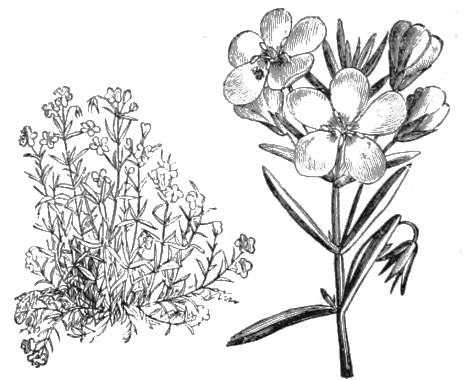
FIG. 84. ANAGALLIS LINIFOLIA, showing Habit and Flowers.
A. linifolia (flax-leaved).* fl. brilliant blue, large, about ½in. in
diameter. July. l. opposite. h. 9in. to 12in. Portugal, 1796.
Perennial. There are many varieties, the best of which are the
following. SYN. A. Monelli. See Fig. 84.
A. l. Brewerii (Brewer's).* fl. red. June. h. 9in. Known also
as Phillipsii.
A. l. Eugenie (Eugenie's).* fl. blue, margined with white.
A. l. lilacina (lilac-flowered). fl. lilac. May. h. 1ft.
A. l. Napoleon III. (Napoleon's).* fl. crimson maroon, distinct
and pretty.
A. l. Parksii (Parks'). fl. red, large.
A. l. phœnicea (Phœnician).* fl. scarlet. May. Morocco, 1803.
A. l. sanguinea (bloody). fl. bright ruby colour.
A. l. Wilmoreana (Wilmore's).* fl. bright blue purple, with
yellow eye. h. 6in.
A. Monelli (Monell's). A synonym of A. linifolia.
A. tenella (delicate).* fl. delicate pink, with deeper veins; corolla
bell-shaped. Summer. l. roundish, very small, opposite. A
beautiful little native bog trailer, and one of the prettiest in the
whole genus. Requires a boggy and wet soil.
A. Webbiana (Webb's). fl. blue; petals with their tops slightly
denticulated. June to August. l. several, verticillate. h. 4in.
Portugal, 1828.
ANAGYRIS (from ana, backwards, and gyros, a circle;
the pods are curved backwards at their extremities). ORD.
Leguminosæ. An ornamental greenhouse or half-hardy
shrub, having the two stipules placed opposite the leaves.
It thrives in a mixture of loam, sand, and peat in equal
proportions. Young cuttings should be planted in July in
a pot of sand, and placed under a hand glass.
A. fœtida (fœtid). fl. yellow, hairy, like those of the Laburnum;
racemes short. May. l. trifoliate; leaflets lanceolate, acute,
entire. h. 6ft. to 8ft. South Europe, 1750. This shrub is fœtid
in every part when bruised.
ANALOGY. Resembling a thing in form but not in
function; or vice versâ. Corresponding with a thing in
many points, but differing in more, or in points of more
importance.
ANANAS (from nanas, the South American name
for the Pine Apple). SYN. Ananassa. Pine Apple. ORD.
Bromeliaceæ. Stove herbaceous perennials, having the
berries collected with the bracts into a compound fruit.
Leaves rigid; edges spiny. The variegated form is a
useful plant for decorative purposes, and may be employed
without the usual harmful consequences attending stove
plants generally, but it must not be subjected to cold
draughts. The soil should consist of two parts fibrous
loam, one of peat, one of dung and leaf mould, and another
of sand. Those propagated from suckers, which should
be laid by a day or two and then inserted in a strong heat,
have, as a rule, longer and lighter-coloured leaves. Offsets
are often produced at the base of the fruit, and make stout
plants, with high-coloured foliage. When the plants are
potted in spring, plunge them in bottom heat, to hasten
their growth; but this is not absolutely necessary. Should
it be desired to fruit the variegated form, the plants may
be submitted to the same process of culture as detailed
under Pine Apple (which see).
A. bracamorensis (Bracamora). Brazil, 1879.
A. bracteata (bracted). fl. crimson. April. h. 3ft. Brazil,
1820.
A. lucida (shining). fl. pink. April. h. 3ft. South America,
1820.
A. macrodonta (large-toothed).* fl. reddish, tinted buff; spike
elongate-ovoid, with imbricating dentate bracts. fr. conical,
about 8in. long and 4in. wide, with conspicuous bracts, and highly
perfumed. l. with conspicuous teeth. 1878. SYN. Bromelia
undulata.
A. Mordilona (Mordilona; native name). fr. large, with a fine
aroma. l. distinguished in being without spines. Columbia,
1869.
A. Porteana (Porter's).* l. armed on the margins with sharp
spines, deep olive green, with a broad band of pale yellow running
down the centre from base to apex. This species has a somewhat
erect habit of growth. Philippines, 1866.
A. sativa (cultivated). Pine Apple. For culture, see Pine Apple.
A. s. variegata (variegated).* l. rosulate, finely arched, 2ft. or
3ft. long, serrated on the edges; centre bright green, sometimes
with a few lines of white, broadly margined with rich creamy-yellow,
tinged with red towards the margins. A very elegant
variegated plant for vases, &c.
ANANASSA. See Ananas.
ANANTHERIX (from a, without, and antherix, an
awn; there are no horn-formed processes from the base of
the leaflets of the corona, as in Asclepias, to which it is
closely allied). ORD. Asclepiadeæ. A small genus of
pretty, hardy herbs. A. viridis is of easy culture in an
open situation, and light soil. Increased by division of
the root; or by seeds, which ripen in abundance.
A. viridis (green). fl. purplish-green, large; corolla sub-campanulate,
five-cleft; umbels proceeding from the stem, sub-panicled,
few-flowered. August. l. opposite, sessile, obovate-oblong,
pointed, smoothish. h. 1ft. North America, 1812.
ANAPELTIS. Included under Polypodium.
ANARRHINUM (from a, without, and rhin, a
snout; the corolla being without a spur, or furnished with
a very short one). ORD. Scrophularineæ. Elegant little
half-hardy biennials or perennials allied to Antirrhinum.
Flowers small, drooping, in long spike-formed, twiggy, and
interrupted racemes. Radical leaves usually in a rosette;
stem and branch leaves palmate-parted, or toothed at the
apex; superior ones quite entire. They are of easy culture
in ordinary garden soil; seed may be sown outside in
spring, or they can be increased by growing cuttings, but
they require protection during severe weather.
A. bellidifolium (Daisy-leaved).* fl. white, or pale blue; racemes
slender, elongated. June. l. radical ones spathulate or obovate-lanceolate,
deeply toothed; branch leaves deeply three to seven-parted.
h. 2ft. South Europe, 1629.
A. Duriminium (Douro). A synonym of A. hirsutum.
A. fruticosum (shrubby). fl. white, without a spur. July. l.
lower ones mostly tridentate at the apex; superior ones oblong,
quite entire. h. 2ft. to 3ft. South Europe, 1826. Shrubby.
A. hirsutum (hairy). fl. whitish, a little larger than those of
A. bellidifolium, of which it is, perhaps, only a downy variety.
h. 1ft. to 2ft. Portugal, 1818. SYN. A. Duriminium.
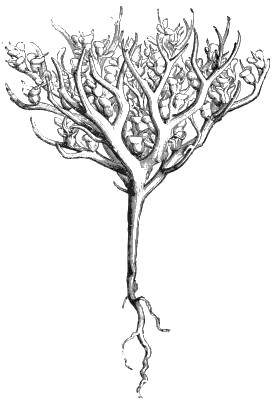
FIG. 85. DRY FRUITING PLANT OF ANASTATICA
HIEROCHUNTINA.
ANASTATICA (from anastasis, resurrection; plant
recovering its original form, however dry it may be, on
immersion in water). ORD. Cruciferæ. A very curious
and interesting little annual, the leaves of which fall off
from the plant after flowering, the branches and branchlets
then become dry, hard, and ligneous, and rise upwards and
bend inwards at their points. This plant has the remarkable
property of resuming vitality on being placed in water,
after being kept in a dry state for many years. Seeds should
be sown in heat, in the spring, and the plants afterwards
potted off and plunged again in heat to hasten their growth,
which cannot otherwise be fully developed with our precarious
and sunless summers.
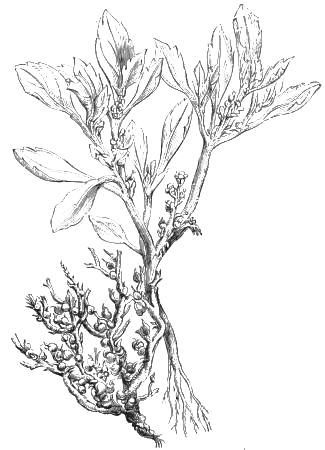
FIG. 86. ANASTATICA HIEROCHUNTINA.
A. Hierochuntina. Rose of Jericho. fl. small, white, sessile,
disposed in spikes along the branches; petals obovate. July.
fr., or silicle, ventricose, with the valves bearing each an appendage
on the outer side at the end. l. obovate, with stellate hairs;
lower ones entire, upper ones slightly toothed. Branches crowded
lattice-wise into a globular form. h. 6in. Syria, &c., 1597. Supposed
by some commentators to be the "rolling thing before the
whirlwind" mentioned by Isaiah. See Figs. 85 and 86.
ANASTOMOSE. Branching of one vein into another.
ANBURY. See Ambury.
ANCEPS. Two-edged; as the stem of an Iris.
ANCHIETEA (named in honour of P. Anchietea, a
celebrated Brazilian writer on plants). SYNS. Lucinæa,
Noisettia. ORD. Violarieæ. An ornamental, stove, evergreen
climber. Petals five, very unequal, two upper ones
smallest, two intermediate ones longer, lowest one
largest, with a spur at the base. The species thrives
in a mixture of loam, sand, and peat. Young cuttings
root freely under a bell glass if planted in sand,
and placed in a moderate heat.
A. pyrifolia (pear-leaved). fl. whitish,
veined with red at the base, in axillary
fascicles; lower petal obovate. July. l.
alternate, stalked, stipulate, ovate, acute,
crenated. Brazil, 1826.
ANCHOMANES (name of doubtful
origin). ORD. Aroideæ. A remarkable
and beautiful stove tuberous-rooted
perennial aroid, allied to Amorphophallus,
and requiring somewhat
similar treatment. As soon as the
leaves die down, the plants should be
repotted in rich sandy loam and leaf
mould, with ample drainage. They
will need scarce any water or attention
until growth commences the following
spring, when they must have an abundance
of water, and a moist atmosphere.
Summer temperature, 60deg. to 85deg.; winter,
55deg. to 60deg. Propagated by seeds and offsets.
A. Hookeri (Hooker's).* fl., spathe pale purple, appearing before
the leaf, much expanded; spadix whitish; scape prickly, shorter
than the petiole. June. l., petiole slender, prickly, bearing on its
summit the horizontal blade, about 3ft. in diameter; this is
divided into three primary divisions, which are again cut up into
several leaflets, the largest of these being toothed. h. 3ft. Fernando
Po, 1832. There is a variety with a paler coloured spathe. SYN.
Caladium petiolatum.
ANCHOVY PEAR. See Grias cauliflora.
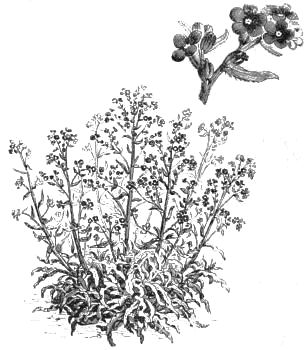
FIG. 87. ANCHUSA CAPENSIS, showing Flower and Habit.
ANCHUSA (from anchousa, paint for the skin; use of
some species). ORD. Boraginaceæ. Very pretty hardy
annuals, biennials, or perennials. Flowers in scorpoid
racemes; corolla funnel-shaped; throat closed by erect,
obtuse processes; nuts four, one-celled, inversely conical,
with a contraction towards the point, fixed to the bottom
of the calyx, perforated and concave at the base. Of easy
culture, in ordinary soils, and preferring a sunny situation.
Propagated by seeds, which should be sown in early spring
in pots of sandy soil, when most of them will germinate
in three or four weeks, some less. The honey-bee is very
partial to this genus.
A. Agardhii (Agardh's). fl. purple, on short pedicels, distant,
disposed in terminal racemes, which are generally conjugate.
July. l. linear-lanceolate, tubercled, strigose. h. 1ft. Siberia,
1820. Perennial. Rare.
A. azurea (blue). Synonymous with A. italica.
A. Barrelieri (Barrelier's). fl. blue, with a white tube and
yellow throat; racemes conjugate, panicled, bracteate. May.
l. oblong-lanceolate, denticulated, hispid. h. 1ft. to 2ft. South
Europe, 1820. Perennial. SYNS. Buglossum Barrelieri, Myosotis
obtusum.
A. capensis (Cape).* fl. blue; racemes terminal, panicled. July.
l. linear lanceolate, hispid. Stem simple, hairy. h. 1½ft. Cape of
Good Hope, 1800. Requires greenhouse protection in winter.
Biennial. See Fig. 87.
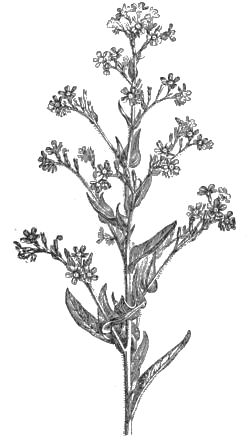
FIG. 88. INFLORESCENCE OF ANCHUSA ITALICA.
A. italica (Italian). fl. bright blue or purple, in panicled racemes.
Summer. l. lanceolate, entire, shining; radical ones sometimes
2ft. long. h. 3ft. to 4ft. Caucasus, &c., 1810. One of the best. SYNS.
A. azurea, A. paniculata. See Fig. 88.
A. latifolia (broad-leaved). Synonymous with Nonnea rosea.
A. myosotidiflora (Myosotideum-flowered). fl. fine blue; throat
yellow; raceme terminal, panicled, bractless. July. l. large,
radical ones on long petioles, reniformly cordate; those of the
stem sessile, ovate, hairy. h. 1ft. Siberia, 1825. A pretty plant.
SYN. Myosotis macrophylla.
A. officinalis (officinal). fl. blue or purple, sessile, imbricate;
spikes joined by pairs, terminal. June to October. l. lanceolate,
hispid; radical ones tufted. h. 1ft. to 2ft. Britain, naturalised
here and there.
A. o. incarnata is a variety with flesh coloured flowers.
A. paniculata (panicled). Synonymous with A. italica.
A. sempervirens (evergreen). fl. rich blue, in short axillary
spikes, generally leafy at the base. May. l. broadly ovate, lower
ones upon long stalks. Stem erect. h. 1½ft. to 2ft. Perennial;
here and there naturalised in Britain. See Fig. 89.
A. tinctoria (dyers'). Alkanet. fl. deep blue; tube blood-colour;
racemes usually twin, terminal, many-flowered. June. l. oblong,
hispid. h. 6in. South Europe, 1596. A diffuse perennial.
ANCYCLOGYNE. A synonym of Sanchezia (which
see).
ANDERSONIA (in honour of Messrs. Anderson, surgeons,
great promoters of botany). ORD. Epacridaceæ.
Elegant and delicate little greenhouse shrubs. Flowers
terminal, solitary, or spicate; corolla sub-campanulate,
hypocrateriform, five-lobed. The undermentioned, which is
the only species yet introduced, grows freely in a sandy peat
with perfect drainage, which latter is most essential. Cuttings
from the tips of young shoots may be made in
autumn, winter, or spring, and planted in sand in a gentle
heat, with a bell glass placed over them.
A. sprengelioides (Sprengelia-like).* fl. pink, furnished with two
small bracteas, spicate. March. l. spreading, bases curved inwards,
so as to resemble a hood, ending in a flat point. h. 1ft. to
3ft. New Holland, 1803. Evergreen squarrose shrub. SYN.
Sprengelia Andersoni.
ANDIRA (its Brazilian name). ORD. Leguminosæ.
Large ornamental stove evergreen trees, nearly allied to
Geoffroya (which see for cultivation). Flowers in axillary
or terminal panicles. Pod drupaceous. Leaves alternate,
unequally pinnate.
A. inermis (unarmed). fl. purple, on short pedicels; panicles terminal.
l. impari-pinnate; leaflets thirteen to fifteen, ovate-lanceolate,
acute, glabrous on both surfaces. h. 20ft. to 30ft. Jamaica,
1773. Known as the Cabbage Tree.
A. racemosa (branchy). fl. purple, in panicled racemes. l. impari-pinnate;
leaflets thirteen, ovate-oblong, acuminated, glabrous
on both surfaces. h. 20ft. to 60ft. Brazil, 1818.
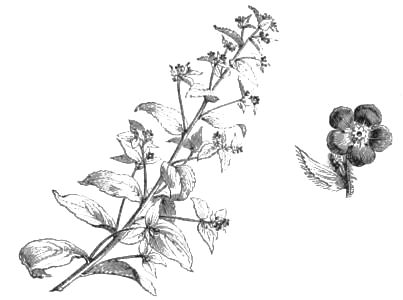
FIG. 89. ANCHUSA SEMPERVIRENS.
ANDROCYMBIUM (from aner, a man, and cymbos,
a cavity; the stamens are enclosed in a hollow formed by
the folding of the limb of the petals). ORD. Liliaceæ.
A peculiar greenhouse bulbous plant, requiring a light
sandy soil, dry atmosphere, no shade, and a season of rest;
during the latter period, scarcely any water is required.
Propagated by seeds and offsets.
A. punctatum (dotted). fl. whitish, few, in a dense sessile
umbel, surrounded by about four spreading lanceolate, acuminate
leaves, which are 5in. to 6in. long, ½in. to ¾in. broad above the
base, channelled down the centre from base to tip. South Africa,
1874.
ANDRŒCIUM. The male organ of the flower.
ANDROGYNOUS. Producing male and female
flowers on the same spike.
ANDROLEPIS (from aner, a man, and lepis, a scale;
referring to the scaly stamens). ORD. Bromeliaceæ. Stove
evergreen epiphyte. For culture, see Æchmea.
A. Skinneri (Skinner's). fl. white. h. 1½ft. Guatemala, 1850.
SYN. Billbergia Skinneri.
ANDROMEDA (named after the daughter of Cepheus,
who was rescued from the sea monster by Perseus).
ORD. Ericaceæ. A dwarf, hardy shrub, found in peaty
bogs in the temperate and Arctic regions of the northern
hemisphere. Sow seeds as soon as ripe in pots or pans,
very thinly, in sandy peat soil, and place in a cool frame,
giving plenty of air. Place the young plants out in spring.
Layers, pegged carefully down during September, will generally
take twelve months to make sufficient roots to allow
of their being separated, and thus become independent
plants. For other species often included under this genus
in catalogues, see Cassandra, Cassiope, Leucothoë,
Lyonia, Oxydendrum, Pieris, and Zenobia.
A. polifolia (Polium-leaved). Wild Rosemary. fl. pinky white,
drooping, sometimes tipped with red; corolla ovate, furnished
with ovate, rather leafy imbricated bracteas, terminal, umbellate.
June. l. linear-lanceolate, mucronulate, with the margins more
or less revolute, quite entire, glaucous beneath, with an elevated
rib, and reticulated veins. h. 1ft. The numerous varieties of this
very beautiful native shrub principally differ in the colouring of
the flowers.
ANDROPOGON (from aner, a man, and pogon, a
beard; tufts of hair on flowers). ORD. Gramineæ. A
large genus of grasses with polygamous flowers. The
majority of species are of no horticultural value; several,
however, are very ornamental subjects, and thrive well in a
rich, deep soil. Easily propagated by seeds or by division
of the roots. The South European kinds succeed in the
open air if planted in a warm dry border.
A. citratum (Citrus-leaved). Synonymous with A. Schœnanthus.
A. Schœnanthus. Lemon Grass. fl. in threes; spikes imbricate,
conjugate, panicled. A handsome species, the leaves of which
emit a very fragrant odour when bruised. h. 2ft. India, 1786.
Stove species. SYN. A. citratum.
Other species worth growing are furcatus, halepensis, muricatus,
pubescens, scoparius, squarrosus, and strictus.
ANDROSACE (from aner, a man, and sakos, buckler;
in reference to the resemblance of the anther to an ancient
buckler). Including Aretia. ORD. Primulaceæ. Dwarf
annuals or perennials, entirely alpine, agreeing in most
characters with Primula, but having the tube of the corolla
narrowed at the mouth. An airy, well-drained, and partially
sunny position is essential in their culture. They
thrive well between fissures of rocks or stones with a rich
sandy peat soil. Drought and a sour soil are alike fatal,
and both will be greatly obviated if small pieces of sandstone
are mixed with the soil. The woolly species are best
arranged beneath a jutting ledge of the rockery, which
will afford them protection from the hottest sunshine, and
from excessive wet in winter; additional comfort will be
provided from the latter ill if a piece of glass is placed
over them during the autumn and winter months. They
can also be well grown, and make charming little specimens,
in pots, with rich sandy soil and thorough drainage.
Sprinkle sand among the small rosettes of leaves. They
are increased by divisions, cuttings, or seed; the latter
should be sown as early as possible, and raised in a frame.
A. alpina (alpine). fl. purplish rose; throat and tube yellow, solitary;
peduncles about ½in. long. June. l. crowded, small,
tongue-shaped, in small rosettes. h. 2in. to 3in. Switzerland,
1775. This species requires a rather shady aspect, and to be
planted almost perpendicularly in a soil composed of leaf mould,
peat, fibrous loam, and sharp sand. SYN. A. glacialis.
A. Aretia (Aretius'). Synonymous with A. helvetica.
A. aretioides (Aretia-like). Synonymous with A. obtusifolia.
A. argentea (silvery).* fl. white, sessile, very numerous. June.
l. densely imbricated, lanceolate, oblong, covered with short
hairs, forming very pretty silvery-grey rosettes. h. about 2in.
Switzerland, 1826. This requires a well drained, sunny fissure.
SYN. A. imbricata.
A. carnea (flesh-coloured).* fl. pink or rose, with a yellow eye,
three to seven, on hairy stalked umbels. July. l. awl-shaped,
smooth, acuminated, not forming rosettes. Stem somewhat
elongated. h. 3in. or 4in. Switzerland, 1768. This forms charming
little cushions if allowed to remain undisturbed; it is easily
increased. SYNS. A. Lachenalii, A. puberula.
A. c. eximia (select).* Larger and more robust than the typical
species, and a more rapid grower. Forms compact tufts of dense
rosettes, bearing heads of rosy-crimson yellow-eyed flowers, on
stems 2in. or 3in. high. Auvergne Alps, 1871. It requires moist
sunny ledges and fissures of rockwork in peat, loam, and sand.
A. Chamæjasme (rock jasmine).* fl. blush, ultimately deep pink,
with a yellow eye, umbellate. June. l. lanceolate, tapering to a
point towards the base, in comparatively large, not dense, rosettes.
h. about 2in. to 4in. Austria, &c., 1768. A very free flowering
species, growing freely when established, ultimately forming large
tufts. It thrives best in a deep, well drained and rich loam soil.
A. ciliata (ciliated). fl. deep carmine red, on stems double as
long as the leaves. June. l. lanceolate-oblong, smooth on both
surfaces, with ciliated margins, imbricated. h. 2in. to 3in.,
forming dense cushions. Pyrenees.
A. coronopifolia (buckhorn-leaved).* fl. pure white, on slender
pedicels, umbellate on peduncles, about 6in. high. April to June.
l. lanceolate, distantly serrated, smooth, in flattish rosettes.
Russia, 1755. This is a charming little biennial, well worthy of a
place on the rockery. A colony of it is extremely pretty; it seeds
freely, and a batch of young plants almost invariably takes the
place of the old ones. SYN. A. septentrionalis.
A. glacialis (glacial). Synonymous with A. alpina.
A. helvetica (Swiss).* fl. white, nearly sessile, with a yellow
eye, larger than the little rosettes of leaves on the stalk from
which they spring. May. l. lanceolate, obtuse, closely imbricated,
small, ciliated. h. 1in., forming dense cushions. Switzerland, 1775.
A rare little gem, requiring a partially shaded position, and very
sandy soil. SYN. A. Aretia.
A. imbricata (imbricated). Synonymous with A. argentea.
A. Lachenalii (Lachenal's). Synonymous with A. carnea.
A. lactea (milk-white).* fl. pure white, with yellow throat, large,
on long graceful stalks, umbellate. June. l. linear, or nearly so,
in rosettes, sometimes scattered on the elongated branches.
h. about 4in. Austria, 1752. Very floriferous and strong growing.
Should have an eastern or western aspect, and be propagated
from seeds. SYN. A. pauciflora.
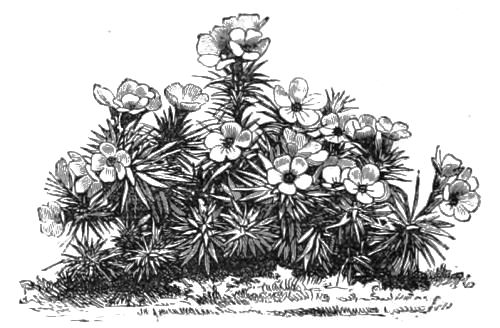
FIG. 90. ANDROSACE LAGGERI.
A. Laggeri (Lagger's).* fl. pink, sessile; when approaching maturity
the stem becomes elongated, and bears a tuft of stalked
flowers. March. l. awl-shaped, sharply pointed, in tiny rosettes.
h. 3in. Pyrenees, &c., 1879. Very like A. carnea, but more delicate,
earlier, and more abundant flowering, with deeper green
foliage. It suffers from exposure to the sun, and therefore requires
a partially shady position. Should be propagated from
seeds or cuttings, which latter strike freely. See Fig. 90.
A. lanuginosa (woolly-leaved).* fl. delicate rose, with a small
yellow eye, umbellate. June to October. l. nearly 1in. long,
clothed with shiny silken hairs. h. 6in. to 9in. Himalaya, 1842.
A very beautiful species, with spreading or trailing shoots, easily
multiplied by cuttings or layers. It requires a warm sunny spot
on the rockery, with a sandy peat soil. When planted so that its
shoots drape the face of a rocky ledge, it is one of the most charming
plants possible to grow.
A. obtusifolia (blunt-leaved). fl. white or rose, with yellow eye;
umbels five or six-flowered. Spring. l. lanceolate or rather
spathulate, in rather large rosettes. Stems downy. h. 2in. to 6in.
European Alps. A very pretty form, closely allied to A. Chamæjasme,
and differing principally in its somewhat larger rosette of
leaves and stronger growth. SYN. A. aretioides.
A. pauciflora (few-flowered). Synonymous with A. lactea.
A. penicillata (finely hairy). Synonymous with A. villosa.
A. puberula (puberulous). Synonymous with A. carnea.
A. pubescens (downy). fl. white, with a faint yellow eye, solitary,
at the ends of the branchlets, very numerous. June. l. oblong-ovate,
ciliated, in a crowded rosette. Stem with a small swelling
close to the flower. h. 2in. Alps, 1869. Treat like A. Chamæjasme.
A. pyrenaica (Pyrenean). fl. white, with yellowish eyes, on a
scape about ¼in high. Summer. l. narrow-oblong, ciliated, recurved,
keeled at the back. h. 1in. Pyrenees. An exceedingly
pretty and diminutive little alpine plant, grown, according to Mr.
Robinson, "to great perfection in fissures between large rocks,
with, however, deep rifts of sandy peat and loam in them. It
will also grow on a level exposed spot, but in such a position
should be surrounded by half-buried stones."
A. sarmentosa (trailing).* fl. bright rose, with a white eye, in
umbels of ten to twenty, on an erect scape. May and June. l. very
silvery, forming dense rosettes, whence spring a number of runners,
bearing at their extremities other tufts, which should be pegged
down and covered with soil, when they will root freely. Himalayas,
1876. It requires rich sandy loam, a sunny position, and to
be wedged between pieces of sandstone. Cover the rosettes
during winter with a sheet of glass. See Fig. 91.
A. septentrionalis (northern). Synonymous with A. coronopifolia.
A. villosa (hairy).* fl. rose or blush, with a deeper coloured eye,
and a honey-like perfume, umbellate. May. l. narrow, oblong,
covered with soft white down, chiefly on the under surface, in
compact tufts. h. 2in. to 4in. Pyrenees, &c., 1790. When well
grown, the flowers are produced in great abundance, almost
covering the green cushions. Plant in a sunny fissure of the
rockery, in sandy loam and leaf soil. SYN. A. penicillata.
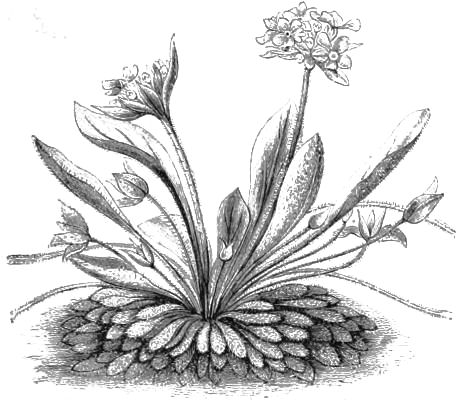
FIG. 91. ANDROSACE SARMENTOSA, showing Habit, and the two
kinds of Leaves, &c.
A. Vitaliana (Vital's).* fl. rich yellow, comparatively large;
tube inflated at the middle, almost nestling among the leaves.
May to July. l. linear, acute, greyish. Stems numerous. h. 1in.
to 2in. Pyrenees, &c., 1787. When well grown, it produces flowers
in abundance, and is the only species in cultivation having yellow
flowers. A well-drained, sunny pocket is desirable, with a calcareous
soil, covering the surface with nodules of sandstone. SYN.
Gregoria Vitaliana.
A. Wulfeniana (Wulfen's).* fl. rosy or crimson, large. Summer.
l. oval, acuminated, in dense rosettes. h. 2in. Styria. A very
rare species in cultivation in this country.
ANDROSÆMUM. See Hypericum.
ANDROSTEPHIUM (from aner, a man, and stephos,
a crown; some of the stamens are barren and petaloid,
forming a corona). ORD. Liliaceæ. A very pretty little
hardy bulb, of dwarf habit, allied to Brodiæa. It requires
a rich sandy loam, in a sunny position, and may
be propagated by offsets and seeds; the latter should be
sown as soon as ripe in a cold frame. Plant 6in. deep, when
it will require no protection in winter.
A. violaceum (violet). fl. violet blue, about 1in. long, three to
six in an umbel, on pedicels about their own length; tube infundibuliform,
about as long as the spreading segments; corona
half as long. Spring. l. four to six, very narrow. h. 6in.
Texas, 1874.
ANDRYALA (the meaning of this is unknown).
ORD. Compositæ. These are pretty half-hardy evergreen
herbaceous perennials, easily grown in ordinary well-drained
garden soil. Increased by seeds and divisions
in spring. Two species only are in cultivation.
A. lanata (woolly).* fl.-heads yellow, Hieracium-like. May. l.
white, woolly, thick, oblong-ovate; radical ones stalked; upper
ones sessile. Stems with a leaf at each joint. h. about 1ft.
South Europe, 1732.
A. mogadorensis (Mogador). fl.-heads bright yellow, as large as
a half-crown; disk bright orange. April. Morocco, 1871. This
species is rare in cultivation.
ANEILEMA (from a, not, and eilema, involucre;
in reference to the absence of the involucre). ORD.
Commelynaceæ. Greenhouse and stove evergreen perennials,
with generally a trailing habit. A genus resembling
Commelyna, from which it is distinguished by the inflorescence
being sub-paniculate, and the peduncles entirely
exserted from the bracts at the branching of the panicle.
Flowers without any involucre. They thrive in a compost
of loam, peat, leaf mould, and sand, well mixed. Increased
by seeds and root divisions. There are a large number of
species known to botanists.
A. biflora (two-flowered).* fl. blue; floral stalks two-flowered.
July. l. lanceolate. Stem creeping; plant smooth. New Holland,
1820. Greenhouse species.
A. sinicum (Chinese). fl. pale blue; racemes about seven-flowered,
alternate, placed in a panicle form. May. l. ligulate,
acuminate. Stems branched, diffuse. h. 1ft. China, 1820. Greenhouse
species.
ANEMIA (from aneimon, naked; in reference to the
naked panicles of sporangia). Including Anemidictyon.
ORD. Filices. A well-marked genus of stove and greenhouse
ferns, chiefly confined to Tropical America. Capsules
small, very abundant, forming a copiously-branched panicle,
quite distinct from the leafy part of the frond. This
genus of handsome dwarf-growing ferns is of easy culture,
in a compost of fibrous peat, leaf soil, and sand. Several
species are exceedingly pretty for fern cases. For general
culture, see Ferns.
A. adiantifolia (maidenhair-leaved).* sti. 12in. to 18in. long,
firm, naked. fronds, barren portion shortly-stalked, 6in. to 9in. long,
4in. to 6in. broad, deltoid, bi-tripinnate; pinnæ close, lanceolate, the
lowest the largest; ultimate divisions oblong or linear-cuneate,
the outer toothed, with a firm texture; panicle 3in. to 4in. long,
the peduncle 1in. to 3in. long. West Indies, 1793. A very handsome
stove fern.
A. ciliata (ciliated). Synonymous with A. hirsuta.
A. collina (hill). sti. 8in. to 12in. long, firm, erect, densely clothed
with fine ferruginous hairs. fronds, barren portion sessile, 6in.
to 12in. long, 2in. to 3in. broad, with about twelve sessile pinnæ on
each side, which are 1in. to 1½in. long, and about ½in. broad, unequal-sided,
obliquely-truncate below, blunt, sub-entire, with a
sub-coriaceous texture; panicle 2in. to 3in. long, close, the peduncle
4in. to 6in. long. Brazil, 1829. Very rare stove species.
SYN. A. hirta.
A. deltoidea (deltoid-like). Synonymous with A. tomentosa.
A. Dregeana (Drege's).* sti. 8in. to 12in. long, firm, slightly villose.
fronds, barren portion sub-sessile, 8in. to 12in. long, 2in. to 3in.
broad, about equal in width in the lower half, with eight to twelve
pinnæ on each side, which are 1in. to 1½in. long, ½in. to ¾in. broad,
ovate-deltoid, unequal at the base, the upper side sub-cordate,
the edge inciso-crenate; panicle 3in. to 4in. long, the lower
branches elongated; peduncle same length. Natal. Stove
species.
A. flexuosa (wavy). Synonymous with A. tomentosa.
A. hirsuta (hairy). sti. 6in. to 12in. long, slender, naked. fronds,
barren portion 2in. to 6in. long, 1in. to 3in. broad, sessile, oblong-deltoid,
bipinnatifid; pinnæ in six to eight opposite pairs, 1in. to
1½in. long, ¼in. to ¾in. broad, varying from oblong, obtuse, sub-entire,
truncate at the base on the lower side, to deeply pinnatifid
with narrow divisions; panicle 1in. to 2in. long, close; peduncle
2in. to 6in. long, slender. Jamaica, 1704. Very handsome stove
species. SYNS. A. repens and A. ciliata.
A. hirta (hairy). Synonymous with A. collina.
A. mandioccana (Mandioccan).* sti. 6in. to 12in. long, deciduously
villose. fronds, barren portion 1ft. or more long, 2in. to 4in. broad,
oblong-lanceolate, the lower half about equal in width; pinnæ in
twenty or more close pairs, the point narrowed, but scarcely
acute; edge finely serrulate, the upper base parallel with the
stem, the lower obliquely truncate; rachis and surfaces finely
pilose; texture sub-coriaceous; panicle very compound, 3in. to
4in. long: peduncle longer. Brazil. A very beautiful and distinct
stove species.
A. Phyllitidis (Phyllitis-like).* sti. 6in. to 18in. long, stramineous,
naked, or fibrillose. fronds, barren portion sessile, 4in. to 12in.
long, 2in. to 8in. broad, ovate-oblong, simply pinnate; pinnæ in
four to twelve sessile pairs, the lowest the largest, ovate, 1in. to
6in. long, ½in. to 2in. broad, the apex acute, the edge crenulate,
the base rounded or cuneate, or unequal, with a firm texture;
panicle dense, 3in. to 9in. long, the branches short; peduncles
the same length. Cuba, Mexico, &c. SYN. Anemidictyon Phyllitidis.
Greenhouse species.
A. P. lineata (lined). fronds with a yellowish-green central
stripe down the pinnæ. South America, 1868.
A. P. plumbea (leaden). Synonymous with A. P. tessellata.
A. P. tessellata (tessellated). Pinnæ dark green, with bright
green centre and leaden-grey border. Brazil, 1875. The forms
of this species are numerous: fraxinifolia and macrophylla are
names often met with, but only show slight deviations. They all
have a more hardy constitution than the other species, and grow
well in the greenhouse. SYN. A. P. plumbea.
A. repens (creeping). Synonymous with A. hirsuta.
A. tomentosa (tomentose).* sti. 6in. to 12in. long, strong, erect,
clothed with ferruginous hairs. fronds, barren portion 6in. to 12in.
long, half as broad, ovate-deltoid, bipinnatifid or bipinnate; lowest
pinnæ the largest, the blunt lobes ½in. to ¾in. long, ¼in. broad,
nearly entire; rachis and surfaces densely pilose, with a firm
texture; panicle 4in. to 9in. long, loose; peduncle 1in. to 2in. long.
Tropical America. Greenhouse species. SYNS. A. deltoidea, A.
flexuosa, A. villosa.
A. villosa (hairy). Synonymous with A. tomentosa.
ANEMIDICTYON. See Anemia.
ANEMONE (from anemos, wind; the greater part of
the species grow in elevated places, much exposed to the
wind). Wind Flower. ORD. Ranunculaceæ. An extensive
genus of very ornamental hardy perennials. The generic
characters of Anemone proper are: Involucre of three cut
leaflets, distant from the flower; calyx of five to twenty
petal-like sepals; petals absent. Of sub-genus Hepatica:
Involucre of three entire leaflets, just under the flowers;
calyx of six to nine petal-like sepals; petals absent. For
botanical purposes, they are both now included under the
one generic name of Anemone; but in gardens the Hepaticas
are frequently regarded as a distinct genus. They
delight in a rich sandy loam, but most will thrive in
ordinary garden soil. Some are suitable for borders,
while others thrive best on the rockery, most of them
preferring a damp and partially shady position. For the
numerous varieties of A. coronaria, both double and single
flowered, the soil can hardly be too rich, and the position,
though open, should be a sheltered one, and well drained.
The tubers may be planted early in October, about 6in.
apart, and 3in. deep, various colours being intermixed, when
a splendid effect is produced in the following spring. After
flowering, the tubers should be taken up—say in June—and
spread out thinly, in a shady, airy situation, until they
are dry, when they should be thoroughly cleaned, and, if
necessary, divided, and finally stored away in a cool place,
in pots or boxes of dry sand until the planting season.
Anemones make admirable pot plants if placed in a compost
of two parts turfy loam, and one of leaf mould or rotten
hotbed or cow manure, with about a sixth part of sharp
gritty sand; but, if so grown, they should be protected
through severe weather, and brought into warmth as required.
The herbaceous species are propagated by root
divisions or root cuttings, or by seeds, in autumn or early
spring; the seeds are better sown as soon as ripe in pans
in a cold frame. Some, such as A. japonica, are freely
increased by division; while others, such as A. narcissiflora,
are very slow; and the tuberous rooted ones, by root division
and seeds. The best and most rapid means of propagating
the invaluable varieties of A. coronaria, and also of
obtaining new ones, is by seed. A careful selection of flowers,
and skilful hybridising, will produce results commensurate
with the trouble incurred. So soon as the seed ripen, they
should be gathered and sown at once in a warm sheltered
situation outside, or in pans under glass, covering lightly
with sandy soil, and keeping moist. They are somewhat
difficult to sow on account of a mass of cotton-like down
which adheres closely to them; they should be thoroughly
separated therefrom by rubbing them in dry sand. Of
course, if the seed are sown at different times, plants will
be produced which will flower at different periods, and a
succession of bloom may be had from April to November—indeed,
nearly all the year.
A. alba (white). fl. white; pedicel solitary; sepals five, obovate,
very blunt. June. l. ternate or quinate; segments deeply
toothed at top; those of the involucre stalked. h. 6in. Siberia,
1820.
A. alpina (alpine).* fl. variously coloured, sometimes white, white
with the back purple, cream, yellowish or yellow with their backs
paler; sepals six, spreading, elliptical, rarely ovate. May. l.
sometimes smooth, sometimes clothed with long crowded silky
hairs, biternate; segments pinnate and deeply serrated; involucre
of the same form. h. 6in. Middle Europe, 1658. Very
handsome alpine. Plant on the rockery in rich deep soil, with a
damp situation. SYN. Pulsatilla alpina.
A. a. sulphurea (sulphur).* fl. beautiful soft yellow, 2in. to 2½in.
across when expanded, but they are usually cup-shaped; sepals
six, covered with a silky down outside; anthers of a rich golden
colour. May and June. l. radical, stalked, drooping, more than
1ft. long; leaflets pinnatifid, deeply toothed. A very beautiful
form, thriving in ordinary garden soil, and a rather moist
situation. See Fig. 92.
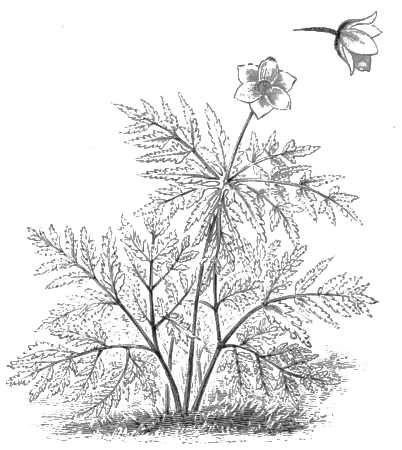
FIG. 92. ANEMONE ALPINA SULPHUREA, showing Habit and Flower.
A. americana (American). A synonym of A. Hepatica.
A. angulosa (angled).* fl. fine sky blue, over 2in. across, with
numerous black anthers surrounding a tuft of yellow styles; sepals
eight to nine, elliptical, spreading. February. l. palmately five-lobed;
lobes serrated. h. 8in. to 12in. East Europe. A very fine
species, twice the size of A. Hepatica in all its parts; it is well
suited for the border or rockery, enjoying a deep rich soil. SYN.
Hepatica angulosa.
A. apennina (Apennine).* fl. blue, 1½in. across; sepals ten to
fourteen, oblong, obtuse, erect; pedicel one-flowered. March.
l. binately pinnate; segments lanceolate, deeply-toothed, acute.
h. 6in. England (naturalised here and there), and Southern
Europe. An exceedingly pretty plant, with soft-looking feathery
foliage. It thrives best under the partial shade of trees, where
the flowers retain their colour longer. Tuberous rooted.
A. baldensis (Mount Baldo).* fl. white, clothed with adpressed
hairs on the outside, and reddish tinged with blue; sepals eight
to ten, oblong-oval; pedicels one-flowered. May. l. biternate;
segments many-parted; lobes linear; involucral leaves multifid.
h. 6in. Switzerland, 1792. A. cœrulea is probably identical with
this species. Shady parts of the rockery. Rare. Tuberous rooted.
A. blanda (fair).* fl. deep blue, nearly 2in. across; sepals nine to
fourteen, narrow. Winter or early spring. l. triternate; segments
deeply cut and acute; involucral leaves stalked, trifid, deeply cut.
h. 6in. Eastern Europe. A very handsome early flowering plant.
It requires a rich, light, and well drained sandy loam, and a
warm, sheltered position. It closely resembles A. apennina,
of which it is merely a form, with deeper blue flowers. Tuberous
rooted.
A. caroliniana (Carolina). fl. purple or whitish, pubescent on
the outside, on a long one-flowered pedicel; sepals ten to twenty,
oblong-linear. May. l. ternate, with three-parted, or cut acutely-toothed
lobes; involucral leaves trifid, with cut lobes. h. 9in.
Carolina, 1824. A very slender and delicate plant. Shady parts
of the rockery. Tuberous rooted.
A. cernua (drooping). fl. somewhat drooping, dark purple; sepals
six, spreading, elliptical-oblong. May. l. pinnate, villous underneath;
segments pinnatifid; lobes cut, oblong; scapes, petioles,
and peduncles clothed with downy hairs. h. 6in. Japan, 1806.
Rare.
A. coronaria (garland).* Poppy Anemone. fl. very various in
colouring, solitary; sepals six, oval, approximate. April to May.
l. ternate; segments multifid; lobules linear, mucronated;
involucral leaves sessile, multifid. South Europe, 1596. This is
one of the species from which the majority of "florists' varieties"
have originated, which can be purchased at such a cheap rate,
either in named varieties, or in mixture, and are invaluable for
spring flowering. It thrives best in a good loamy soil, and should
be somewhat shaded from the mid-day sun. Tuberous rooted.
See Fig. 93.
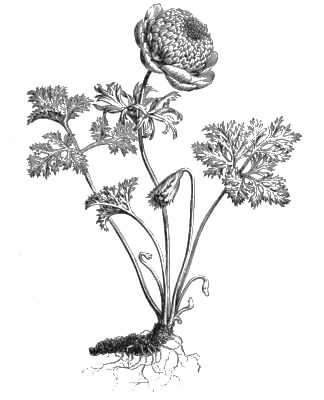
FIG. 93. ANEMONE CORONARIA FLORE-PLENO.
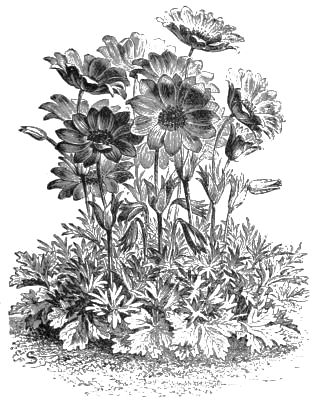
FIG. 94. ANEMONE FULGENS.
A. decapetala (ten-petaled).* fl. cream white or pale sulphur,
about 1in. to 2in. across, erect; sepals eight to twelve, oblong,
spreading. May to June. l. tripartite, and freely divided into
numerous linear-acute segments, of a deep green colour. h. 12in.
to 18in. North-West America, &c. A pretty free-flowering species,
suitable for naturalising in woods, &c. It is less ornamental
than many others, but is very distinct.
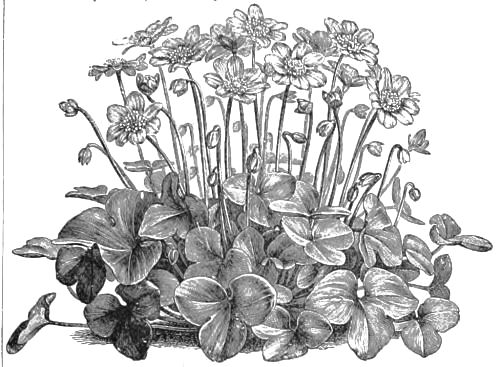
FIG. 95. ANEMONE HEPATICA.
A. dichotoma (forked).* fl. white, with a tinge of red on the
under side; sepals five, elliptical; pedicels many, usually bifid.
May. l. three parted; lobes oblong, deeply-toothed at top; those
of the involucrum sessile. h. 1½ft. Siberia, North America,
&c., 1768. Border, or for naturalising in woods. SYN. A.
pennsylvanica.
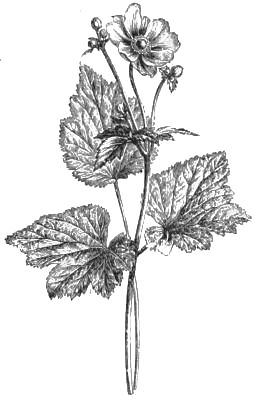
FIG. 96. FLOWER AND LEAF OF ANEMONE JAPONICA.
A. fulgens (shining).* fl. of a dazzling vermilion or scarlet,
with a black central patch of stamens, about 2in. across; sepals
obovate. May. Greece, South Europe, &c., 1865. A very
beautiful variety, much more showy than A. hortensis (of which
it is generally regarded as a variety), and a universal
favourite. In "Hardy Perennials," Mr. Wood says of this
splendid species: "It may be grown in pots for conservatory or
indoor decoration. It needs no forcing for such purposes; a cold
frame will prove sufficient to bring the flowers out in winter.
Borders or the moist parts of rockwork are suitable for it; but
perhaps it is seen to greatest advantage in irregular masses in
the half shade of trees in front of a shrubbery; and, after all, it
is impossible to plant this flower wrong as regards effect. To
grow it well, however, it must have a moist situation and good
loam." See Fig. 94.
A. Halleri (Haller's).* fl. purplish inside, large, erect; sepals six,
oval-lanceolate. April. l. pinnate, very villous; segments three
parted; lobes with lanceolate-linear, acuminated divisions. h. 6in.
Switzerland, 1816. A sunny border or the rockery. SYN. Pulsatilla
Halleri.
A. Hepatica (supposed remedy for liver diseases). Common Hepatica.
fl. usually blue; sepals six to nine. February. l. cordate,
three-lobed; lobes quite entire, ovate, acutish; petioles
and scapes rather hairy. h. 4in. to 6in. There are numerous
varieties of this species. England, &c. SYN. Hepatica triloba.
Varieties: alba has large pure white flowers; cœrulea (blue),
the double form of cœrulea is scarce and very showy; rubra
produces reddish-pink flowers, and of which there is also a double
variety, very bright and lasting; Barlowi has large sky-blue flowers.
Besides these there are many others. They are all charming early
spring-flowering plants, preferring rich light soil, and to remain
undisturbed for years, when they form grand clumps, often producing
seedlings where they stand. SYN. A. americana. See
Fig. 95.
A. Honorine Jobert (Honorine Jobert). Synonymous with A.
japonica alba.
A. hortensis (garden). Nearly approaches A. coronaria, the
parent of a large number of garden forms. A. fulgens and A.
stellata are by competent authorities placed as varieties.
A. Hudsoniana (Hudson's). Synonymous with A. multifida.
A. japonica (Japanese).* fl. rosy carmine, from 2in. to 2½in.
across, on footstalks which spring from a whorl of three or four
leaves; anthers golden yellow. Autumn. l. ternate, with unequally
lobed, toothed segments. h. 2ft. to 3ft. Japan, 1844.
See Fig. 96.
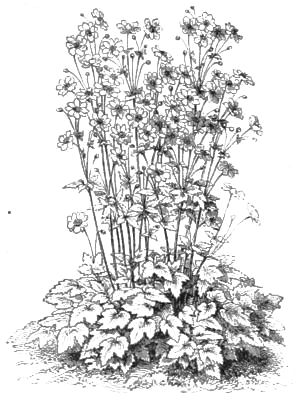
FIG. 97. ANEMONE JAPONICA ALBA.
A. j. alba (white).* This is a splendid variety, with a profusion of
large pure white flowers, which are produced from August to
November. This white form is one of the handsomest of border
flowers. The blooms are 2in. to 3in. across, with a centre of dense
lemon coloured stamens. For cutting purposes the flowers are
invaluable. It thrives best in deep soil. SYN. A. Honorine
Jobert. See Fig. 97.
A. j. elegans (elegant).* Very like A. japonica, with broader
leaves, and pale rose-coloured flowers, which are more than 3in.
across. This is also called rosea and hybrida. Japan.
A. lancifolia (lance-leaved). fl. white; sepals five, ovate-acute;
scapes one-flowered. May. l. all stalked, ternate; segments
lanceolate, crenate-toothed. h. 3in. Pennsylvania, 1823. Very
rare. Rockery. Tuberous rooted.
A. multifida (many-cleft).* fl. red, whitish yellow, or citron
colour, small; sepals five to ten, elliptical, obtuse; peduncles three,
one-flowered, one of which is naked and earlier, the other two
longer, and bearing two-leaved multifid involucels on their middle.
June. l. radical ones ternate; segments cuneated, three parted,
multifid, with linear lobes; those of the involucrum multifid, on
short petioles. h. 6in. to 12in. North America. Border or
rockery. SYN. A. Hudsoniana.
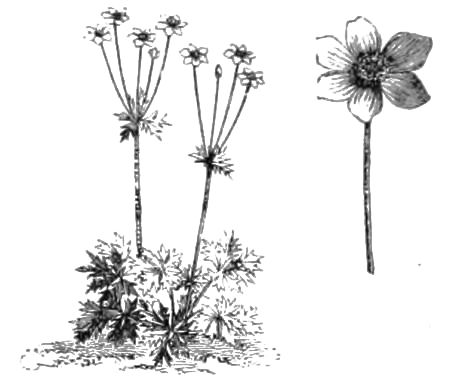
FIG. 98. ANEMONE NARCISSIFLORA, showing Habit and Flower.
A. narcissiflora (Narcissus-flowered).* fl. usually cream coloured,
sometimes purplish on the outside; umbels generally many-flowered;
pedicels in some instances twice or three times longer
than the involucrum, and in others very short; sepals five or six,
ovate or oval, blunt or acute. May. l. radical ones palmately
three to five parted; lobes deeply toothed; lobules linear, acute;
those of the involucrum three to five cleft. h. about 1ft. Europe,
North America, 1773. An extremely variable and beautiful species.
Rockery. See Fig. 98.
A. nemorosa (grove).* Wood Anemone. fl. generally white; sepals
six, elliptical; scapes one-flowered. March. l. ternate; segments
trifid, deeply toothed, lanceolate, acute; involucral leaves
stalked. h. 6in. This species varies greatly in the colour of its
flowers. It is a most beautiful little plant, frequent in our native
woods, and suitable for planting in shaded shrubberies, &c.
Tuberous rooted.
A. n. cœrulea, (blue),* from the North-west States of America,
is very near, if not identical with, the variety Robinsoniana, of our
native woods.
A. n. flore-pleno (double-flowered).* fl. pure white, over 1in.
across, solitary, double. This is an exceedingly pretty plant, and
remains in beauty considerably longer than the type. It should
be grown in large clumps, and in rich loam.
A. n. Robinsoniana (Robinson's).* fl. bright azure blue, large,
over 1½in. in diameter. A charming variety for the rockery or
border, and one of the prettiest in the whole genus.
A. n. rosea (rosy).* A very pretty form, with rose-coloured
flowers, of which there is a double flowered sub-variety; there is
also a double form of the type, named bracteata fl.-pl., white
flowers, surrounded with a large involucrum.
A. obtusiloba (blunt-lobed-leaved). fl. cream coloured; sepals
five, obovate; peduncles two to three, one-flowered, villous,
naked, or the lateral ones are bracteate. June. l. three lobed
cordate, and are, as well as petioles, very villous; segments
broadly cuneated, and deeply crenate; involucral leaves trifid.
Himalaya, 1843. This species requires a warm and sheltered
position.
A. palmata (palmate).* fl. golden yellow; sepals ten to twelve,
oblong, obtuse; scape one, rarely two, flowered. May. l. cordate,
sub-orbicular, bluntly three to five-lobed, toothed; involucral
leaves trifid. South-west Europe, 1597. A white flowered variety,
though scarce, is in cultivation, and is very pretty. True alpines,
which should be grown on the rockery, where the soil is both
rich and deep, with a somewhat damp situation. Tuberous
rooted.
A. patens (spreading).* fl. purplish, or rarely yellow, erect, spreading,
in the involucre almost sessile; sepals five to six. June.
l. pinnate, rising after the flowers; segments three parted;
lobes toothed at the top. Northern Europe, &c., 1752.
A. p. Nuttalliana (Nuttall's).* fl. purple, sometimes cream
coloured, erect, villous on the outside; sepals five or six, erect,
connivent. June. l. three parted; segments cuneate, trifid, cut;
lobes linear-lanceolate, elongated; those of the involucre with
linear lobes. h. 1ft. North America, 1826. A pretty border
plant.
A. pavonina (peacock). Synonymous with A. stellata.
A. pennsylvanica (Pennsylvanian). Synonymous with A. dichotoma.
A. pratensis (meadow).* fl. dark purple, pendulous; sepals six,
erect, reflexed at the top, acute. May. l. pinnate, many parted;
lobes linear. h. 6in. to 12in. Northern Europe, &c., 1731. Differs
chiefly from the following species in having smaller flowers,
sepals narrower and more acute, connivent at base, and reflexed at
apex. SYN. Pulsatilla pratensis.
A. Pulsatilla (common Pulsatilla).* Pasque Flower. fl. generally
violet, sub-erect; sepals six, spreading, externally silky, very
handsome. April. l. pinnate; segments many parted; lobes
linear. h. 6in. to 12in. England, &c. A singular and beautiful
species, thriving best in a dry situation and well-drained soil of
a calcareous nature. It is a very pretty plant for a border or
rockery; when well grown, it forms handsome tufts, and flowers
very freely. See Fig. 99. SYN. Pulsatilla vulgaris. There are
numerous varieties, the best of which are:
A. P. dahurica (Dahurian). fl. erect; sepals oblong, very villous.
Plant dwarf. Sunny border or rockery.
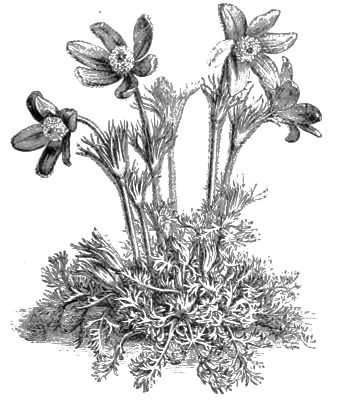
FIG. 99. ANEMONE PULSATILLA.
A. P. lilacina (lilac). fl. lilac.
A. P. rubra (red). fl. erect; sepals blunter. Plant dwarfer.
A. ranunculoides (Ranunculus-like).* fl. usually yellow (but in
the Pyrenean variety purple), generally solitary, single or double;
sepals five to six, elliptical. March. l. radical ones three to five
parted; segments subtrifid, deeply toothed; those of the involucrum
on short stalks three parted, deeply toothed. h. 3in.
Naturalised in English woods, but rarely. Tuberous rooted.
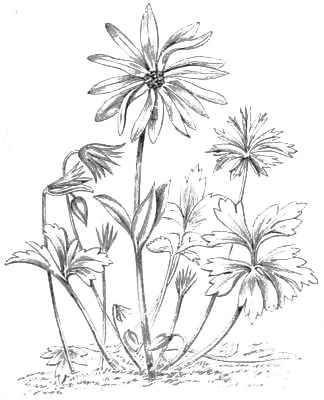
FIG. 100. ANEMONE STELLATA.
A. rivularis (river).* fl. white; anthers purple; sepals five, oval,
smooth; pedicels three, one of which is naked. April. l. villous,
as well as petioles, three parted; lobes cuneated, trifid; lobules
cut, acutely toothed. h. 1ft. to 2ft. North India, 1840. Should
be grown on the banks of running water, or in a damp situation in
the border.
A. sibirica (Siberian). fl. white; sepals six, orbicular; scapes
one-flowered. June. l. ternate; segments deeply toothed,
ciliated, those of the involucrum on short stalks, ternate; segments
lanceolate. h. 6in. Siberia, 1804. Rockery; very rare.
A. stellata (star-leaved).* fl. purple, or rose red, or whitish,
solitary; sepals ten to twelve, oblong, bluntish. April. l. three
parted; lobes cuneated, deeply-toothed; involucral leaves sessile,
oblong. h. 8in. to 10in. South Europe, 1599. A pretty and gay
spring flowering plant. Tuberous rooted. SYN. A. pavonina.
Double forms of this occur in cultivation. See Fig. 100.
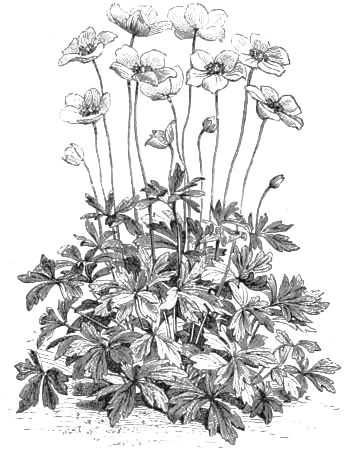
FIG. 101. ANEMONE SYLVESTRIS.
A. sylvestris (wood).* Snowdrop Windflower. fl. pure satin white,
slightly drooping, 1½in. across when fully open, fragrant; sepals six,
elliptical; pedicel solitary. April. l. ternate or quinate, hairy
beneath; segments deeply toothed at top, those of the involucrum
stalked. h. 6in. to 18in. Europe, 1596. This distinct and
showy species thrives best in a light vegetable soil in a rather
shady and moist situation. The roots are creeping, and should be
allowed plenty of room, so that they may ramble without check.
See Fig. 101.
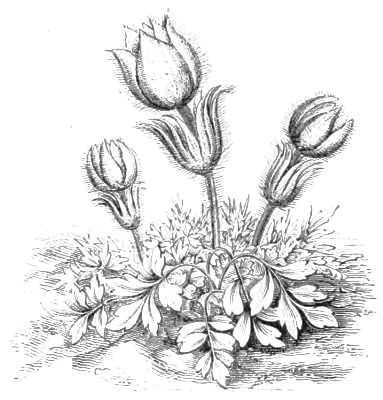
FIG. 102. ANEMONE VERNALIS.
A. trifolia (three-leaved). fl. white, erect; sepals five, elliptical,
obtuse. April. l. all stalked, ternate; segments ovate-lanceolate,
acute, toothed. h. 6in. France, 1597. This species comes
close to A. nemorosa.
A. vernalis (spring).* fl. whitish inside, violet and covered with
silky down outside, erect, sub-sessile or on pedicels; sepals six,
straight, elliptic-oblong. April. l. pinnate; segments cuneate-lanceolate,
trifid; involucrum very villous. h. 6in. Europe,
1816. A curious rather than a showy species; it makes a pretty
pot plant, but must not, under any consideration, be allowed to
want water. It can be plunged in sand or ashes in the open, and
just as the flowers commence to expand, transfer to a cool frame.
It thrives best in a peat and loam compost, to which small pieces
of charcoal may be added. SYN. Pulsatilla vernalis. See
Fig. 102.
A. virginiana (Virginian).* fl. purplish green or pale purple,
small; sepals five, elliptical, silky-pubescent on the outside;
pedicels often rising in pairs from the involucel. May. l. ternate;
segments trifid, acuminated, deeply toothed; those of the
involucre and involucels stalked; peduncles three to four, much
elongated, middle one naked, sometimes 1ft. high; lateral ones
bearing two-leaved involucels. h. 2ft. North America, 1722.
Border or woodlands, and damp places.
A. vitifolia (vine-leaved). fl. white, villous on the outside;
anthers copper colour; sepals eight, oval, oblong; pedicels one-flowered.
July. l. large, cordate, five-lobed, beneath as well as
the stems clothed with white wool; lobes broadly ovate, cut, and
crenate; those of the involucrum stalked, woolly underneath,
smooth above, bluntly cordate, five-lobed. h. 2ft. Upper Nepaul,
1829. This requires a warm sheltered position to stand the winter.
Very near A. japonica alba, and probably the progenitor of it.
ANEMONOPSIS (from anemone, and opsis, resemblance;
flowers like those of the Anemone). ORD. Ranunculaceæ.
A handsome and remarkable hardy herbaceous
perennial, not unlike Anemone japonica, but smaller. It
thrives in any light soil. Propagated by seeds and divisions
of the root-stock in spring.
A. macrophylla (large-leaved).* fl. in loose racemes; sepals about
nine, concave, the outer three purple, internally pale lilac; petals
twelve, in many rows, one-third the length of the sepals, linear-oblong.
July. l. large, biternate, coarsely toothed, glabrous.
h. 2ft. to 3ft. Japan, 1869.
ANEMOPÆGMA (from anemos, the wind, and
paigma, sport). ORD. Bignoniaceæ. A handsome stove
climbing shrub. For culture, see Bignonia.
A. racemosum (racemose).* fl. delicate buff coloured, in axillary
racemes, large. September. Brazil, 1879. This beautiful and
vigorous climber is, as yet, very rare in cultivation.
ANETHUM (from ano, upwards, and theo, to run; in
reference to its quick growth). ORD. Umbelliferæ. A
genus of erect glabrous annuals. Flowers yellow; involucre
and involucels wanting. Leaves decompound, with linear-setaceous
lobes. This genus is of no ornamental value, its
most important species being the garden Dill (A. graveolens),
which see for culture.
ANGELICA (in reference to the supposed angelic
medicinal virtues of some species). ORD. Umbelliferæ.
Perennial or biennial herbs. Flowers white; umbels
terminal; involucra wanting or of few leaves; involucels
of many leaves. Leaves bipinnate. The common Angelica
(A. Archangelica) is the only species that calls for mention.
It is a native biennial, and was at one time in much request
for confectionery, and as a herb of supposed great medicinal
value. Seed should be sown in September or March in
ordinary soil, and the young plants thinned out to about
18in. apart.
ANGELICA TREE. See Aralia spinosa.
ANGELONIA (from angelon, the local name of A.
salicariæfolia in South America). SYN. Schelveria. ORD.
Scrophulariaceæ. Very pretty stove herbaceous perennials.
Flowers axillary, racemose; corolla irregular, bilabiate;
lower lip saccate at the base, trifid; upper one
smaller, bifid. Leaves opposite. Stem and branches
quadrangular. A mixture of light turfy loam, peat, leaf
soil, and sand, is a good compost. Cuttings of young
shoots in spring strike readily under a hand glass, or
plunged in the propagating bed, giving plenty of air daily.
A. salicariæfolia (Willow-leaved).* fl. blue, hairy, axillary, solitary,
pedicellate, disposed in terminal racemes. August. l. sessile,
lanceolate, acute, serrated towards the apex, finely pubescent
on both surfaces. h. 1½ft. to 3ft. South America, 1818.
ANGIOPTERIS (from aggeion, a vessel, and pteris, a
wing). Including Psilodochea. ORD. Filices. A genus of
gigantic greenhouse ferns. Capsules eight to fifteen,
opening by a slit down the side, sessile, very close but
not concrete, arranged in linear-oblong or boat-shaped
sori near the edge of the frond. These ferns require a
very liberal supply of water, and plenty of room to fully
expand. The most suitable compost is a mixture of
strong loam and peat, with some sharp sand. Thorough
drainage must be afforded.
A. evecta (evectic). cau. erect, 2ft. to 6ft. high, 1½ft. to 2ft.
thick, very fleshy. sti. swollen and articulated at the base, furnished
with two large leathery persistent auricles. fronds 6ft. to
15ft. long, bi- or tripinnate; pinnæ 1ft. to 3ft. long, spreading, the
lowest the largest; rachis swollen at the base; pinnules 4in. to
12in. long, ½in. to 1½in. broad, linear-oblong, sessile or shortly
stalked, acuminate; edge entire or finely toothed. Tropics of Old
World. This is the only clearly defined species; the others
usually known as distinct species are but varieties of it, and its
culture should not be attempted if plenty of room cannot be
afforded it.
ANGOPHORA (from aggos, a vessel, and phero, to
bear; in reference to the shape of the fruit). ORD.
Myrtaceæ. Australian evergreen greenhouse ornamental
trees or shrubs. Flowers corymbose; calyx five or six-cleft.
Leaves large, opposite. A mixture of leaf soil, peat,
and sand suits them well. Ripened cuttings will root in
sandy soil under a hand glass in a cool house, in a few
weeks.
A. cordifolia (heart-leaved).* fl. yellowish, corymbose, large.
May. l. sessile, ovate, cordate at the base, glabrous. h. 7ft. to
10ft. New Holland, 1789.
A. lanceolata (lanceolate-leaved).* fl. white, corymbose. May.
l. petiolate, lanceolate, acuminate, glabrous. h. 4ft. to 6ft. New
Holland, 1816.
ANGRÆCUM (deduced from angurek, a Malayan
name for air plants). ORD. Orchidaceæ. TRIBE Vandeæ.
These are among the most beautiful of epiphytal orchids.
One characteristic, both remarkable and peculiar, is the
long, hollow, tail-like spur depending from the base of the
lip. The flowers are produced on spikes from the axils of
the leaves. The leaves are evergreen, and arranged in two
rows, the one opposite to the other, and, in many kinds,
being curved, give the plant a very graceful appearance.
The fact of these plants producing their blooms during
the winter—a period when flowers are generally scarce—considerably
enhances their value. They usually continue
six or eight weeks in perfection, or even more. The following
table of night temperatures should be almost universally
adhered to for all the species enumerated, except
A. falcatum, which thrives best in a cool house. From
November to February, 58deg. to 63deg.; March to May,
September and October, 65deg.; June to August, 70deg.
The day temperature should be 7deg. or 8deg. higher than
that of the night. A compost of crocks, charcoal, and
sphagnum is best. A layer of a few large crocks at the
bottom of the pot or pan will be required; over these
spread another layer of charcoal and smaller crocks, just
enough to allow the roots to support the plant; so
that the first pair of leaves will be, in large plants,
about 4in. above the rim of the pot, or proportionately
less in the case of small plants. When the plant is
carefully adjusted in its proper position, and held there
with one hand, the other hand should work in among the
roots more crocks and charcoal, ceasing so to do when
within 2in. of the rim; the remaining space must be
occupied with fresh sphagnum, pressed firm (this is most
essential) in a cone shape, which may be built up to within
½in. of the lower pair of leaves. Prior to potting, which
ought to be done between February and April, water should
be withheld for a short time; but give a good soaking
immediately after the operation. In the process of repotting,
clear the roots of the old moss, all rotten stems,
and particles of decayed roots. If plants are potted as
we have recommended, a thorough soaking once a week
only, or if grown on blocks of wood, or in suspended
baskets or pans, about twice weekly will be found sufficient.
Excessive fumigation, drought, whether atmospherical
or at the roots, will cause the leaves to drop, and prevent
any growth being made, in which case the plant ought to
be lowered. If the stems have emitted but few roots, a
ring of moss fastened round the stems, and kept constantly
wet, will induce the plant to throw out additional roots,
when the lowering may be proceeded with. To keep the
plants free from insect pests, frequently sponge the foliage.
Thrips generally prove very troublesome, and a moderate
fumigation is needful, dislodging the insects that may be
secreted low down in the centre of the plant, shortly before
the operation, by dropping a little weak tobacco water or
sulphur among them.
A. arcuatum (curved).* fl. white; racemes from the axils of the
two-year-old leaves, two or three being produced from a single
growth, about 6in. long, arching. l. about 4in. long, and ¾in.
broad. Natal. SYNS. Listrostachys arcuata. A. (Listrostachys)
Sedeni comes close to the above species, but is excessively rare in
cultivation.
A. bilobum (two-lobed).* fl. white, with a tinge of rose, about
1½in. in diameter; spur 2in. long, produced from the side of the
stem, just above the two-year-old leaves; racemes pendulous, 6in.
or more long, bearing about a dozen flowers, which possess a
slight fragrance. October to December. l. 4in. long by 2in.
broad, two-lobed at the apex, about eight on a plant. Stem
erect, about 6in. high. Cape Coast, 1841. Should be grown in a
basket.
A. caudatum (tailed). fl. greenish yellow, mixed with brown;
labellum pure white; spur thick, pale green, about 9in. long, two-lobed
at the lowest portion; racemes arching, 1ft. or more long,
produced from the base of the two-year-old leaves. Autumn.
l. pale green, drooping, about 10in. long by 1in. broad. h. 1½ft.
Stem erect, or nearly so. Sierra Leone, 1834.
A. cephalotes (capitate).* fl. white. Tropical Africa, 1873.
A. Chailluanum (Chaillu's).* fl. white; sepals and petals narrow,
acute; spur yellowish green, 4in. or more long; racemes pendulous,
8in. or 10in. long, about twelve medium sized flowers produced
from the side of the stem, just above the axils of two-year-old
leaves. l. 6in. long, 1½in. broad, slightly wavy, two-lobed at
the apex, arranged in an imbricate manner. West Africa, 1866.
A rare species.
A. Christyanum (Christy's). A curious species, with yellow or
greenish-white flowers, having a much developed three-lobed lip.
The plant has the aspect of A. arcuatum. 1880.
A. citratum (citron-like).* fl. creamy white, or pale yellow, nearly
1in. in diameter; spurs about 1½in. long; racemes three, on
strong plants, produced from the axils of two-year-old leaves,
arched, about 1ft. long, bearing sometimes twenty flowers. l. 4in.
to 6in. long and 2in. broad, six or eight on a plant, occupying
about 1½in. of stem. Madagascar, 1868. Habit compact; stem
nearly erect.
A. distichum (two-rowed-leaved). fl. whitish, ¼in. across, on one-flowered
pedicels, which are produced from the axils of the
leaves. l. very short, closely imbricated, deep bright green.
h. 6in. Sierra Leone, 1834. A very neat growing little species,
and quite distinct.
A. eburneum (ivory-lipped).* fl. sepals and petals greenish white;
lip uppermost, white, very large; racemes about 18in. long, from
the axils of two-year-old leaves; footstalks erect, but gradually
becoming pendulous from the commencement of the flowers.
l. 20in. long by 2in. broad, light green, stiff. Madagascar, 1826.
SYN. Ærobion eburneum. A. virens is an inferior variety, but
A. e. superbum surpasses the type in beauty; it is, however, at
present extremely rare.
A. Ellisii (Ellis's).* fl. pure white, fragrant, about 2in. across, with
narrow reflexed sepals and petals, the column standing very prominent;
spur pale brownish, 6in. to 8in.; racemes frequently 2ft.
long, on the side of the stem just above the axils of the two-year-old
leaves, bearing about twenty blossoms. l. dark green, 9in. or 10in.
long, and 2in. broad, divided at the apex into two unequal lobes.
Madagascar, 1879.
A. falcatum (sickle-shaped).* fl. pure white, very fragrant; spur
upcurved, 2in. long; racemes from the axils of the two-year-old
leaves, short, bearing from two to five blooms. l. 2in. to 4in. long,
very narrow and fleshy, dark green. 1815. An elegant little
cool house species, and one of the smallest belonging to this
genus. It should be grown in peat, in a basket or small pot suspended
about 2ft. from the glass, but rather shaded.
A. Kotschyi (Kotschy's).* fl. yellowish white, perfume similar to
the common white pink, 1in. to 1½in. across; spur reddish-tinted,
6in. or 7in. long, distinguished by the two spiral twistings; racemes
from the axils of the lower leaves, 18in. long, bearing about
twelve blossoms. l. 6in. long by 3in. broad, of which there
are generally six or more on a good plant. Zanzibar, 1880.
Should be grown in a basket, or on a cylindrical block of teak
wood.
A. modestum (modest).* fl. pure white, 1in. to 1½in. across.
l. distichous, 3in. to 6in. long, 1in. to 1½in. broad, elliptic or linear-oblong,
acute, tip entire, pale bright green, leathery, nerveless.
Stem short. Madagascar, about 1880.
A. pellucidum (transparent).* fl. white, of a delicate semi-transparent
texture, and with a finely fringed labellum; racemes from
the axils of the lowest leaves, hanging perpendicularly from the
stems, about 1ft. long, bearing thirty to forty blossoms. l. 12in. long
by 2in. or 3in. broad. Sierra Leone, 1842. Must be grown in a
suspended basket.
A. pertusum (broken).* fl. pure white; spur comparatively short,
with a well-marked yellow tinge; racemes from the axils of two-year-old
leaves, horizontal, or slightly nodding, 6in. to 7in. long,
with from forty to sixty densely packed, small blossoms. l. dark
green, arching, 10in. long by 1in. broad. h. 1ft. Sierra Leone,
1836. Very distinct and attractive.
A. Scottianum (Scott's).* fl. pure white, very delicate in texture,
the lip is uppermost, 1in. or more across; spur narrow, yellowish,
3in. to 4in. long; peduncle slender, a little longer than the spur,
usually but one-flowered. l. narrow, terete—thus differing from
most of its congeners—tapering or awl-shaped, about 4in. long, ⅛in.
to ¼in. in diameter, channelled in the upper surface and ridged
below. Comoro Islands, 1878.
A. Sedeni (Seden's). A rare form of A. arcuatum.
A. sesquipedale (foot-and-a-half).* fl. beautiful ivory white, on
stout, solitary, axillary peduncles, with sepals and petals spreading
out like rays, from 6in. to 8in. across; the whip-like spur or
nectary hangs down from the labellum, often from 10in. to 18in.
long. November, December, and January, and lasts about three
weeks in beauty. l. dark green, distichous, about 10in. long.
h. 1ft. Madagascar, 1823. It is one of the grandest of winter
flowering orchids.
A. virens (green). An inferior variety of A. eburneum.
ANGULAR. Having angles, or forming angles.
ANGULOA (commemorative of Angulo, a Spanish
naturalist). ORD. Orchidaceæ. A small genus containing
about six species. The flowers, which are large and
beautiful, are borne singly on scapes from 12in. to 16in.
high, several of which are produced from the ripened
pseudo-bulbs of the preceding year's growth. Pseudo-bulbs
from 5in. to 8in. high, as thick as a man's wrist,
bearing two to three erect, broad, lanceolate leaves, 2ft. to
4ft. long. Temperature, summer, day (maximum), 70deg.;
night (minimum), 60deg. Winter, day (maximum), 60deg.;
night (minimum), 45deg. These are bold growing cool-house
plants, best grown in rough fibrous peat, with good
drainage. They delight in an abundant supply of water
both to the roots and foliage when growing, and require
to be kept in a somewhat dark or heavily-shaded place.
During the season of rest, and until young shoots commence
growth, they should be kept rather dry. They are propagated
by dividing the pseudo-bulbs, just before they
commence to grow. The flowering season is summer.
A. Clowesii (Clowes's).* fl. fragrant; sepals and petals concave,
clear golden yellow; lip pure white; whole conformation globular,
or tulip-like. Columbia (at 5000ft. to 6000ft. elevation), 1842.
This is the largest growing species, of which there are one or two
rare varieties.
A. eburnea (ivory-flowered).* fl., sepals and petals of the purest
white; lip spotted with pink. New Grenada. In other respects
similar to above, but is very rare.
A. Ruckeri (Rucker's).* fl., sepals and petals yellow, with crimson
spots; lip deep crimson. Columbia, 1845. Not so large a grower
as either of the foregoing, but with same sized flowers.
A. R. sanguinea (bloody).* This variety has flowers of a deep
blood red colour, but is rare.
A. superba (superb).* Synonymous with Acineta Humboldtii.
A. uniflora (one-flowered).* fl. sub-globose, pure white, sometimes
freckled with brown, spotted profusely with pink inside.
Columbia, 1844. One of the best in cultivation.
ANGURIA (one of the Greek names for the cucumber).
ORD. Cucurbitaceæ. A stove genus of evergreen
climbers allied to Momordica. Flowers monœcious;
corolla joined to the calyx, ventricose, red, with a five-parted
spreading border. Fruit somewhat tetragonal.
Several species have been introduced from time to time,
but they are rarely seen in our gardens. Some of them are
handsome plants, and well worthy of cultivation.
ANHALONIUM. See Mammillaria.
ANIGOZANTHUS (from anoigo, to expand, and
anthos, a flower; in reference to the branching expansion
of the flower stalks). SYN. Schwægrichenia. ORD.
Hæmodoraceæ. Greenhouse or half-hardy perennial herbs.
Flowers large, racemose or corymbose; perianth tubular,
elongated, woolly. Leaves linear ensiform. The species
thrive in a turfy compost of peat and loam, three parts
of the former to one of the latter; the whole intermixed
with sand to make it porous. In the growing season
they must be kept well watered, and somewhat dry
during their period of rest in winter. They are very
easily propagated by dividing the roots in spring.
A. coccineus (scarlet).* fl. scarlet; perianth swelling towards the
summit, hairy, segments a little reflexed; disposed in dichotomously-forked
panicles; pedicels rather long. June. l. lanceolate,
deep green. Stem ciliated. h. 5ft. Swan River, 1837.
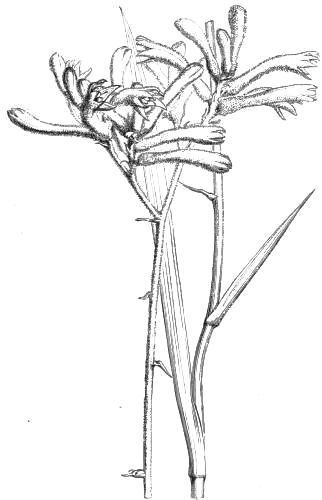
FIG. 103. INFLORESCENCE AND LEAF OF ANIGOZANTHUS FLAVIDUS.
A. flavidus (yellowish-green-flowered).* fl. yellowish green,
panicled; scapes long. May. l. lanceolate, smooth, as is also the
stem; down of branches deciduous. h. 3ft. New Holland, 1808.
There is a scarlet and green-flowered variety of this species. See
Fig. 103.
A. Manglesii (Mangle's). fl. green; stigma capitate, projecting
beyond the tube, in a short terminal spiked raceme. May. Stem
erect, clothed with short thick crimson persistent velvety down.
h. 3ft. Swan River, 1833.
A. pulcherrimus (beautiful).* fl. yellow; panicles much
branched, clothed with rufous bristles. May. l. equitant,
linear falcate, covered with stellate tomentum. h. 3ft. Swan
River, 1844.
A. tyrianthinus (purple).* fl. purple and white; panicle clothed
with purple tomentum. May. l. linear, stiff, straight, glabrous.
Stem tall, ternate, panicled, clothed with hoary tomentum
below. h. 3ft. Swan River, 1844.
ANIL. See Indigofera Anil.
ANIME RESIN. See Hymenæa Courbaril.
ANIMATED OAT. See Avena sterilis.
ANISANTHUS. See Antholyza.
ANISE (Pimpinella Anisum). A hardy annual, occasionally
used for garnishing or seasoning. Sow seed,
in ordinary garden soil, on a warm sunny border,
in May, where it is intended for the plants to
remain.
ANISEED TREE. See Illicium.
ANISOCHILUS (from anisos, unequal, and
cheilos, a lip; in reference to the inequality of
both lips of calyx and corolla). ORD. Labiatæ.
A very ornamental genus of stove perennials or
biennials. Whorls of flowers densely imbricate
into oblong cylindrical spikes; corolla with an
exserted, defracted tube, inflated throat, and bilabiate
limb. They thrive in any light rich soil.
Cuttings will root in a sandy soil under a bell
glass, in heat; seeds may be sown in February
in heat.
A. carnosum (fleshy). fl. lilac; whorls densely imbricate
into oblong cylindrical pedunculate spikes. June
to September. l. petiolate, ovate-roundish, obtuse,
crenated, cordate at the base, thick, fleshy, tomentose
on both surfaces. Stem erect. h. 2ft. East Indies,
1788.
ANISOMELES (from anisos, unequal, and
melos, a member; in reference to the anthers of
the longer stamens being halved). ORD. Labiatæ.
Ornamental greenhouse or evergreen stove
shrubs, herbaceous perennials, or annuals.
Whorls sometimes densely many-flowered, at
others few, and loose; corolla with upper lip
erect, oblong, entire; lower lip larger, spreading,
and lateral lobes ovate, obtuse. They are
of very easy culture in light rich soil; young
cuttings strike freely in spring, in heat, under
a bell glass. A. furcata requires little or no
artificial heat, but the protection of a bell glass
is beneficial. Seeds of A. ovata may be sown in
spring, in heat, and, after due hardening off, the
seedlings may be planted outside in May.
A. furcata (forked).* fl. small, elegantly variegated
with white, red, and purple, in loose many-flowered
racemose cymes. July. l. petiolate, ovate, acuminated,
crenated, cordate at the base, hispid on both
surfaces. h. 4ft. to 6ft. Nepaul, 1824.
A. malabarica (Malabar). fl. purplish; whorls distant,
many-flowered, dense. July. l. oblong-lanceolate,
2in. to 4in. in length, obtuse, serrately crenated
in the upper part, quite entire at the base. h. 2ft.
to 5ft. Tropical Asia, in humid places, 1817. Shrub.
A. ovata (ovate-leaved).* fl. purple; lower lip of a
deeper colour; whorls many-flowered, lower ones distant,
upper ones interruptedly spicate. August. l.
ovate, obtuse, broadly crenated. h. 2ft. to 3ft.
Nepaul, 1823. An annual. Habitat similar to last.
ANISOMEROUS. Unequally-parted; unsymmetrical.
ANISOPETALUM. See Bulbophyllum.
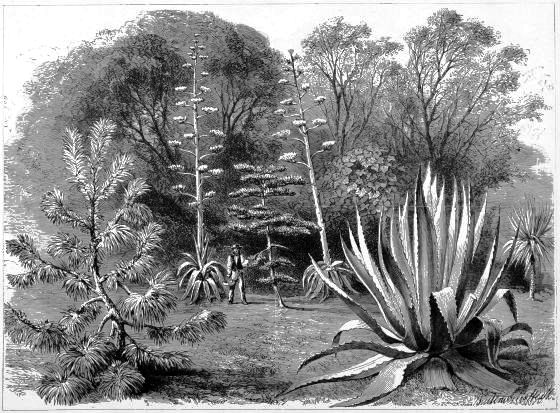
THREAD-LEAVED PINE, AGAVES, AND YUCCA, IN A GUERNSEY GARDEN.
ANNUALS. All plants which spring from the seed,
flower, and die within the course of a year. A number of
things, however, which are not strictly of annual duration,
but which are sown every year in preference to housing
the roots before they are killed by late autumn or winter
frosts, are generally classed, for the sake of convenience,
under the head of Annuals. Hardy Annuals are those
which require no artificial aid to enable them to develop,
but grow and flower freely in the open air. These are
best sown in the spots where they are intended to remain
during March and April, and care must subsequently be
taken to keep the ground clear of weeds, and also to thin
out the seedlings, allowing each sufficient room to develop
and exhibit its true character. If allowed to remain too
crowded, the plants, as a matter of course, suffer, and the
size and number of the flowers and the general effect are
considerably decreased. Successional sowings of a good
many of the showy species will be found to prolong their
flowering season. In well-kept establishments, where
Annuals are duly appreciated, several sowings are made
in pots at intervals of a few weeks. As the previously-sown
clumps begin to get shabby, they are removed, and
replaced by others which have still to flower. By this
means a continual sheet of blossom can be maintained for
a long time. It is much better to trust to plants grown
in pots in order to carry out the plan just sketched, as
these receive no check when placed in their new quarters;
whilst transplanted clumps frequently fail, and many
species do not transplant at all readily from an open border.
In order to secure, in early spring, a fine show of such
plants as several of the Silenes, Myosotis, Saponaria, and
a number of others, it is best to sow the seeds in an open,
sheltered border, about the end of July or beginning of
August, taking care to keep a small reserve stock in a cold
frame, in case very severe weather kills the unprotected
plants. Half-hardy Annuals are those for which our climate
is not sufficiently warm, or, rather, our summer is not, as a
rule, either hot enough or long enough, to allow them to
grow, flower well, and ripen seeds, if sown in the open air.
Many of these are amongst the showiest of garden plants,
so it is worth while to give them the shelter of a warm
frame during their earlier stages, and gradually harden
them off, planting out at the end of May or beginning of
June, when danger resulting from severe weather is passed.
After germination, the seedlings should have plenty of light
and air, or a weak, spindly growth, and, as a consequence,
poor flowers, will result. The most satisfactory method
of watering very tiny seeds is to place a piece of fine
muslin over the seed-pot, through which the water will be
easily conveyed to the seeds, and thus prevent disturbance.
Tender Annuals require the same treatment as the half-hardy
ones, except that they need throughout their existence
the protection of a glass structure. All, or nearly
all, garden Annuals delight in full sunlight and plenty of
air. In the open, these requirements, as a rule, obtain,
but sometimes mistakes are made under glass by keeping
the plants too close and over much shaded, as well as too
great a distance from the glass.
ANNULAR. Having a ring-like form.
ANNULATE. With the appearance of rings.
ANŒCTOCHILUS (from anoiktos, open, and cheilos,
a lip; in reference to the spreading apex of the lip).
SYNS. Anecochilus, Chrysobaphus. ORD. Orchideæ. Stove
terrestrial orchids, the radical leaves of which are the
chief attraction, being amongst the most beautiful and
delicate objects in the vegetable kingdom. The flowers,
which should be pinched off so soon as they appear, are, as
a rule, small and unattractive. Few of the species exceed
6in. in height, with leaves from 2in. to 6in. long, including
the fleshy petioles. They require a good deal of attention.
To one part of silver sand, thoroughly washed twice or
three times, add two of sphagnum, which should also
be well washed and picked over, when it should be
chopped into minute particles, in order that it may
freely amalgamate with the sand; mix a little loam and
peat with the whole. In the pots, when well drained by
first placing a large piece of potsherd over the bottom
and nearly half filling up with pieces broken small and
of uniform size, place a thin layer of crude sphagnum,
afterwards filling firmly with the mixture above mentioned,
and bringing it up more or less in the form of a cone above
the rim of the pot, into which the plants should be firmly
fixed. Plants which have been propagated by division
should be carefully transferred to 32-sized pots. About
five separate pieces might be placed evenly over the surface.
Make holes with a neat dibble, and into these drop the
roots their entire length, pressing the soil firmly with the
dibble. Fix them so that they may grow inwardly, and not
out over the rim of the pots, pegging each creeping root
needing such attention firmly down upon the surface of the
soil afterwards; after a good soaking, they may be replaced
in any warm, shady situation. For propagating, a strong
plant is necessary; it may be cut into pieces just below
the first joint, each piece having a root. The bottom piece
should have two eyes—one to root from, and the other to
push into a shoot. The "bottom," or plant which has been
cut, should be replaced in its pot, and then put under a
bell glass. It will soon throw up a young shoot; this
ought to be left on until well rooted, when it may be
separated and treated similarly to the portion first removed,
still leaving the old part in the pot. These plants
must be grown in glass cases, or under bell glasses, but
they should always have a little air, for, as Mr. Williams
says, when too much confined, they grow up spindly, and
damp off in the stem; the latter, being fleshy, requires more
substance and sturdiness. Air should be admitted through
a space of about 1in. or 2in. The following ranges of
temperature are advised: Winter, night, 55deg. to
60deg.; day, 65deg. to 70deg. during March, April, and
May; night, 60deg. to 70deg.; and, afterwards, a few
degrees higher, with a maximum day temperature of
80deg. Bottom heat should not be given, as it induces a
weak, fast growth. Great care will be needed to prevent
ravages of insects. The most suitable month for repotting
is March, just before growth commences, when the plants
will need plenty of water up to October, excepting when
it is desirous to utilise them as drawing-room ornaments,
in which case they should be kept rather dry for a short
time previous. See also Dossinia, Goodyera, Hæmeria,
Macodes, Physurus, and Zeuxine.
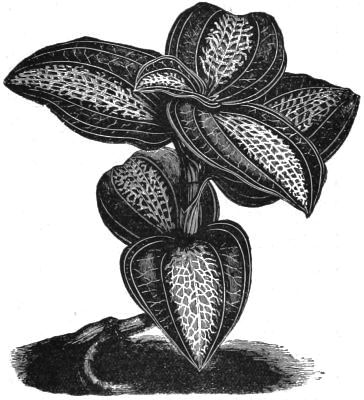
FIG. 104. ANŒCTOCHILUS FRIDERICI-AUGUSTI.
A. argenteus pictus (silvery-painted). A synonym of Physurus
pictus.
A. argyroneurus (silvery-veined).* l. light green, dark mottled;
veins forming a beautiful silvery network. Java.
A. Boylei (Boyle's).* l. ovate, acuminate, 2in. long and broad,
olive-green, netted and pencilled with gold. India.
A. Bullenii (Bullen's).* l. 2½ in. long, ground colour bronzy green,
with three broad distinct lines of coppery-red, or golden stripes
running the entire length. Borneo, 1861.
A. concinnus (neat). l. ovate, acuminate, rounded at base, dark
olive-green, netted and striped with shining coppery-red. Assam.
A. Dawsonianus (Dawson's).* l. ovate, of a dark velvety, rich
olive-green, traversed by about seven longitudinal copper-coloured
veins; the space on each side of the midrib being filled with fine
reticulations of the same colour. Malay Archipelago, 1868. The
proper name of this plant is Hæmeria discolor Dawsoniana.
A. Dayi (Day's). A synonym of Dossinia marmorata Dayi.
A. Dominii (Dominy's). l. dark olive-green, streaked down the
centre with pale coppery-yellow, the main ribs marked by pale
lines. Hybrid between Goodyera discolor and A. Friderici Augusti.
A. Eldorado (Eldorado). l. dark green, with small tracery of a
lighter colour, deciduous. Central America.
A. Friderici-Augusti (Frederick Augustus').* l. 2½in. long, and
1½in. broad, dark velvety green, with broad orange and green
stripes down the centre, covered with a beautiful golden network.
h. 5in. Very distinct. See Fig. 104. SYN. A. xanthophyllus.
A. Heriotii (Heriot's). l. 3½in. long, 2½in. broad, dark mahogany-colour,
golden-reticulated, and with shadowy network. India.
A. hieroglyphicus (hieroglyphic-marked). l. small, dark green,
with hieroglyphic-like, silvery-grey blotches. Assam.
A. intermedius (intermediate).* l. 2½in. long, and 1½in. broad,
with a silky surface, dark olive, striped and veined with gold.
h. 3in. Will succeed with a glass covering, in a stove, if shaded.
A. javanicus (Java). fl. pink, small, spicate; scape 9in. high.
l. 2in. long, 1½in. broad, dark olive-green, with lighter blotches
and faint golden reticulation, pinkish beneath. Java.
A. latimaculatus (broad-spotted).* l. dark green, with silvery
markings. Borneo. A distinct and free-growing kind.
A. Lowii (Low's).* l. 4in. to 5in. long, 3in. broad, dark velvety-green,
shading to orange-brown, lined from base to apex with deep
golden veins, crossed by lines of the same hue. h. 6in. Borneo.
The correct name of this plant is Dossinia marmorata.
A. L. virescens (greenish).* l. brighter green, with brighter
markings over the whole surface.
A. Ordianus (Ordi's).* l. shape and habit of A. Dawsonianus, but
the colour is a vivid green, and lined with golden veins. Java, 1869.
The proper name of this plant is Hæmeria discolor Ordiana.
A. pictus (painted). A synonym of Physurus pictus.
A. querceticola (forest-dwelling). A synonym of Physurus
querceticolus.
A. regalis (royal).* King Plant. l. 2in. long, 1½in. broad;
surface a beautiful velvety green, veined in regular lines, and
covered with a network of gold. h. 4in. Java, 1836. If examined
with a lens in sunshine, the beauty of the network will be plainly
seen. SYN. A. setaceus (of gardens). There are several varieties,
the best of which are:
A. r. cordatus (heart-shaped). l. rounder, and gold markings
broader. Very rare.
A. r. grandifolius (large-leaved).* l. light green, beautifully
laced and banded with a network of gold. Also rare.
A. r. inornatus (unadorned). l. dark rich velvety, with a few
slight markings, destitute of the golden reticulation. Java.
A. Reinwardtii (Reinwardt's).* l. rich, deep velvety-bronze,
intersected with bright golden lines. Java.
A. Roxburghii (Roxburgh's).* l. 2½in. long, 1½in. broad, dark
velvety-green, striated with well-defined lines of silver. h. 3in.
India. The true species is very rare; several are sold as such.
A. Ruckerii (Rucker's).* l. broadly ovate-bronzy-green, with six
rows of distinct spots running from base to apex. Borneo, 1861.
A. setaceus (bristly). A garden synonym of A. regalis.
A. striatus (striated). A synonym of Zeuxine regia.
A. Turneri (Turner's).* l. large, rich bronze, freely golden-reticulated.
One of the handsomest; a very free grower.
A. Veitchii (Veitch's). A synonym of Macodes Petola.
A. xanthophyllus (yellow-leaved). A synonym of A. Friderici-Augusti.
A. zebrinus (striped).* l. ovate-lanceolate, deep olive green,
with copper-coloured veins. India, 1863. Dwarf and elegant.
ANOMATHECA (from anomos, singular, and theca, a
capsule, or seed-pod). ORD. Irideæ. Very pretty little
bulbous perennials. Perianth hypocrateriform; tube
triquetrous, constricted at the throat. The species are
hardy when planted in warm sunny situations in the
open border. Their dwarf stature, brilliance, profusion
of flowers, and habit of blossoming continuously over a
long period, render them very popular subjects amongst
growers of hardy perennials. Although generally credited
with being hardy, when cultivated out of doors they should
be lifted and stored in frost-proof quarters before winter
commences, until the following March. They are excellent
as window garden plants, and also for pot culture. If
grown in pots, they should be shaken out, and repotted in
February or March. They multiply very rapidly, and may
be divided in patches, not by single bulbs, once yearly.
Light sandy loam, mixed with a little leaf mould, is the
best compost. Anomathecas are sometimes increased by
seed, which may be sown so soon as ripe, very thinly, in
seed pans. Thin out the seedlings if growing very close
together; the next season they may be put out four or
five in a pot. When they become crowded, shift into a
much larger pot, but do not disturb the ball. The young
seedlings will probably produce flowers the second season.
A. cruenta (bloody).* fl. rich carmine-crimson; perianth segments
elliptical, three lower ones broader than the others, with a dark
blotch at the base; tube long, whitish; scapes secund, bearing
about five or six flowers. Summer and autumn. l. two-ranked,
about ½in. broad, sword-shape, somewhat tapering. Bulb ovate,
rather large. h. 6in. to 12in. Cape of Good Hope, 1830.
A. juncea (rushy). fl. very bright pink, with a dark spot at the
base, produced in profusion. The leaves are narrower than those
of the foregoing. Cape of Good Hope, 1791. A rare species.
ANONA (Anona is the name applied to these plants
in St. Domingo). Custard Apple. ORD. Anonaceæ. Stove
evergreen shrubs, with fragrant leaves. Petals six, in two
rows. Carpels indefinite, joined into one fleshy, many-celled,
edible, roundish fruit, with a muricated, scaly, or
reticulated skin. Anonas thrive best in rich loamy soil,
mixed with a little peat. Ripened cuttings, with leaves
intact, will root if inserted in sand and placed under a
hand glass, in a moist heat. When seeds are procurable,
they should be sown in pots, and plunged into a hotbed.
A. Cherimolia (The Cherimoyer). fl. outer petals somewhat
concave, linear-oblong, brown on the outside, each marked with
a dark spot at the base; peduncles opposite the leaves, solitary.
July. fr. somewhat globose and scaly, dark purple; esteemed by
the Peruvians as one of their most delicate, and as being not inferior
to any fruit in the world. l. ovate-lanceolate, not dotted;
under surface silky tomentose, strong scented. h. 20ft. Peru, 1739.
A. glabra (smooth-fruited).* fl. outer petals ovate, obtuse,
brown; calyx leathery, large; peduncles opposite the leaves,
two-flowered. July. fr. greenish-yellow, conoid, blunt, smooth.
l. ovate-lanceolate, smooth. h. 10ft. West Indies, 1774.
A. longifolia (long-leaved). fl. purplish; outer petals concave,
thick, all acute, large, axillary, solitary, stalked. May. fr. ovate-globose,
dotted, and reticulated, flesh-coloured. l. oblong, acuminated,
mucronate, smooth. h. 20ft. Guiana, 1820.
A. muricata (muricated-fruited).* The Sour Sop. fl. outer petals
cordate, concave, thick, acuminated, green on the outside, yellow
inside, and spotted; peduncles solitary, one-flowered, sweet-scented.
fr. muricated, with fleshy points, green. l. ovate-lanceolate,
smooth, shining. h. 15ft. West Indies, 1656.
A. palustris (marsh). Alligator Apple; Cork-wood. fl. yellow;
petals all acute. fr. rather areolate, large, heart-shaped, sweet-scented.
l. ovate-oblong, leathery, quite smooth. h. 10ft. to 20ft.
South America, 1788.
A. reticulata (netted). The Custard Apple, or Bullock's Heart.
fl. outer petals oblong-lanceolate, acute, somewhat concave at the
base, brownish on the outside, whitish-yellow on the inside,
marked with dark purple spots. fr. ovate-globose, reticulate,
as large as a tennis ball, with yellowish soft flesh; it is much
esteemed by some people. l. oblong-lanceolate, acute, smooth,
somewhat dotted. h. 15ft. to 25ft. Brazil, 1690.
A. squamosa (scaly). Sweet Sop. fl., outer petals linear-oblong,
somewhat concave at the base, nearly closing, greenish-yellow.
fr. egg-shaped, scaly. l. oblong, bluntish, smooth, full of pellucid
dots, rather glaucous beneath. h. 20ft. South America, 1739.
ANONACEÆ. An order of trees or shrubs, mostly
tropical, with axillary peduncles, lateral or opposite the
leaves, and with alternate, simple, entire or hardly toothed
leaves, without stipules. Anona is the typical genus.
ANONYMO. A synonym of Saururus (which see).
ANONYMOS BRACTEATA. See Zornia tetraphylla.
ANOPLANTHUS (in part). A synonym of Phelipæa
(which see).
ANOPLOPHYTUM. See Schlumbergeria and
Tillandsia.
ANOPTERUS (from ano, upwards, and pteron, a
wing; in reference to the seeds, which are winged at the
apex). ORD. Saxifrageæ. A very handsome greenhouse
evergreen shrub, having a free branching habit, large dark
shining green leaves, and long panicles of salver-shaped
flowers. It would probably prove quite hardy in the south
and west of England, and parts of Scotland, provided it had
a slight winter protection. It grows well in sandy loam
and peat. When grown in pots, it requires plenty of
room and water. Half-ripened cuttings root freely under
a bell glass in a cool house or frame in summer.
A. glandulosa (glandular).* fl. white, rose tinted, large; racemes
erect, simple, terminal. April, May. l. alternate, rarely
nearly opposite, ovate-oblong, attenuated at both ends, nearly
sessile, leathery, toothed. h. 3ft. Van Diemen's Land, 1823.
ANSELLIA (named after Mr. Ansell, the botanical
collector who accompanied the ill-fated Niger Expedition).
ORD. Orchidaceæ. Strong growing, free flowering
stove epiphytal orchids. Best grown in large pots,
as they produce a quantity of roots. They require a
compost of turfy peat, with moderate drainage. An
ample supply of water during the growing season is needed;
but care must be taken not to let any remain in the heart
of the plants, as they are very likely to rot. During the
season of rest, little or no water, but a damp atmosphere,
are the chief requirements. Propagated by divisions of
the bulbs just after flowering.
A. africana (African).* fl., sepals and petals nearly 2in. long,
greenish yellow, spotted with brownish red; lip small, yellow;
spikes large, drooping, branched, each sometimes bearing nearly
a hundred blooms. Stems 3ft. to 4ft. high, with light evergreen
foliage. Fernando Po, 1844. Lasts two months in perfection.
A. a. gigantea (gigantic).* fl. on upright spikes from the top
of the pseudo-bulbs, but smaller, of a light yellow tint, with
very few narrow, transverse, brown bars, and a deep yellow lip,
without warts of any kind on its middle lobe, and with more or
less crenulated keels. Natal, 1847. The perfume is very peculiar.
Very rare.
A. a. lutea (yellow). Not so strong a grower; producing clusters
of light yellow flowers from the top of the pseudo-bulbs. Natal.
A. a. nilotica (Nile district).* As a garden plant this is much
superior to the type. The habit is dwarfer, the colours of the
flowers brighter and more distinctly defined. The sepals and
petals, too, are more spreading. Eastern Africa.
ANSERINA. See Potentilla anserina.
ANTENNÆ. Two movable, articulated organs attached
to the heads of insects and crustacea, commonly
called "horns" or "feelers." They are variable in form
and length. Antennæ seem to serve for touch, and,
perhaps, for smell and hearing.
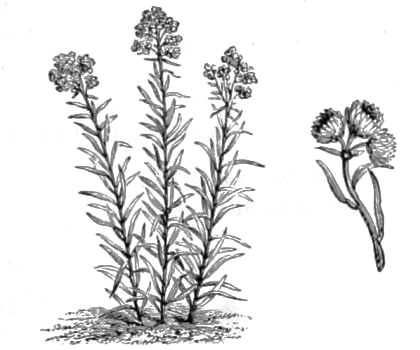
FIG. 105. ANTENNARIA MARGARITACEA, showing Habit and
Inflorescence.
ANTENNARIA (from antennæ; in reference to the
similarity which exists between the seed down of the plant
and the antennæ, or feelers, of an insect). ORD. Compositæ.
Hardy herbaceous perennials, distinguished by the dry,
coloured, chaffy scales encircling each head of flowers, of
which the stamens and pistils are on different plants.
These are charming little alpine plants, admirably adapted
for rockwork, pots, edgings, or borders, in any light soil.
Propagated by divisions of the roots in spring, and seeds;
the latter should be sown in spring in a cold frame. Grown
chiefly for their leaves.
A. dioica (diœcious).* fl.-heads pink, in crowded corymbs, 3in. to
4in. high. June. l. radical ones spathulate, woolly chiefly beneath;
upper ones lanceolate. Stems simple; shoots procumbent.
Britain. The two or three varieties of this pretty species exceed
the type in beauty. SYN. Gnaphalium dioicum.
A. d. hyperborea (northern). l. woolly on both surfaces.
A. d. minima (smallest).* A very small growing variety.
A. margaritacea (pearly).* fl.-heads white, corymbose. August.
l. linear-lanceolate, acute, alternate, cottony, especially beneath.
Stems branched above. h. 2ft. Naturalised in England and
on the Continent. Said to have been introduced from America
about the sixteenth century. The prettier but much rarer
A. triplinervis, from Nepaul, comes close to this species. See
Fig. 105.
A. tomentosa (downy).* fl.-heads corymbose. Summer. One of
the dwarfest and best of silvery-leaved plants, either as an edging
for small beds or for covering the higher portions of rockwork;
it is much used in carpet bedding. It scarcely grows more than
1in. high, and forms a dense carpet in a short space of time. It
should be grown separate from other plants. It is frequently
known under the name of A. candida.
ANTERIOR. Placed in front, or outwards.
ANTHEMIS (from anthemon, a flower; referring to
their general floriferous character). Camomile. ORD.
Compositæ. Receptacle convex, chaffy. Involucre hemispherical
or nearly flat; scales imbricated, membranaceous at
the margin. Pappus none; ray florets ligulate; disk tubular.
This is a large genus, principally of medicinal value, and
contains very few species worth the cultivator's trouble. Of
easy culture in any ordinary soil. Propagated by divisions.
A. Aizoon (Aizoon).* fl.-heads resembling a white Daisy; florets
of the ray fourteen to eighteen, trifid, twice as long as the breadth
of the disk. Summer. l. lanceolate, or broadly so, acutely and
deeply serrated, narrowed towards the base, covered with white
down; lower ones crowded; stem-leaves rather acute, gradually
lessening in size. h. 2in. to 4in. Northern Greece. Free
grower, dwarf, and compact.
A. Biebersteinii (Bieberstein's).* fl.-heads yellow. Summer. l.
pinnately divided into linear three-lobed segments, which are
covered with white silky pubescence. h. 1ft. to 2ft. Caucasus.
A. Chamomilla fl. pl. See Matricaria.
A. nobilis (noble). Common Chamomile. fl.-heads solitary; disk
yellow; ray white; scales of the receptacle membranaceous,
scarcely longer than the disk. l. bipinnate, segments linear-subulate,
a little downy. Stem procumbent, and much branched.
England. A very strong smelling plant, of great medicinal value.
For culture, see Chamomile.
A. tinctoria (dyer's). fl. bright yellow, in large heads. July and
August. l. bipinnatifid, serrate, downy beneath. Stem angular.
h. 1½ft. England. A very pretty plant.
ANTHER. The male part of a flower containing the
pollen.
ANTHERICUM (from anthos, a flower and kerkos, a
hedge; in reference to the tall flower stems). SYN. Phalangium.
ORD. Liliaceæ. A large genus, belonging to the
capsular group of the order, and inhabiting, for the most
part, the Cape of Good Hope. Flowers white, racemose or
panicled, scapose; perianth segments either spreading from
near the base or campanulately united; stamens short,
with naked or bearded filaments. Leaves radical, filiform
or linear. The hardy varieties are now extensively grown,
and are among the most ornamental of border plants. They
thrive best in rich light soil, and are excellent subjects
for pot culture; for which purpose use a compost of
fibrous loam, leaf mould, or well-decayed manure, and
coarse sand. The pots should be about 12in. across, well
drained, and the plants potted just previous to, or so
soon as, growth commences. During activity, plenty of
water is needed, until the plants have finished flowering,
when the quantity may be lessened; but never allow them
to get dry. Propagated by division of the roots or seeds,
sowing the latter, as early as possible after they are ripe,
in a cold frame.
A. graminifolium (grass-leaved). A garden name of A. ramosum.
A. Hookeri (Hooker's). See Chrysobactron Hookeri.
A. Liliago (Liliago).* St. Bernard's Lily. fl. pure white, 1in. to
1½in. across; perianth segments spreading; style curved. May
to August. l. tufted, narrow, channelled, 12in. to 18in. high.
South Europe, 1596. A very free flowering species, of which there
is a major variety in gardens. SYNS. Phalangium and Watsonia
Liliago.
A. Liliastrum (Liliaster).* St. Bruno's Lily. fl. much larger than
the last, 2in. long, and as much across, fragrant, of a transparent
whiteness, with a delicate green spot on the point of each
segment, campanulate, arranged in loose spikes. Early summer.
l. long, narrow, six or eight to each plant, about 1ft. to 2ft. long,
h. 1ft. to 2ft. South Europe, 1629. SYNS. Czackia Liliastrum and
Paradisia Liliastrum (this is the correct name). See Fig. 106.
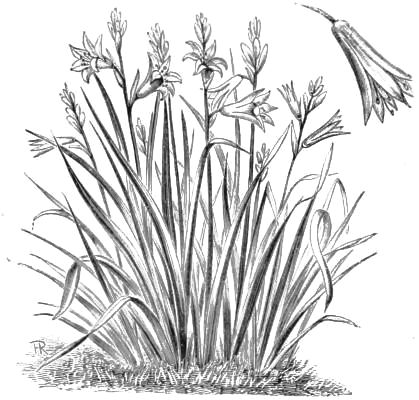
FIG. 106. ANTHERICUM LILIASTRUM, showing Habit and Flower.
A. L. major (greater). fl. about 1in. larger than the type. h. about
6ft. A very desirable border plant.
A. ramosum (branched).* fl. white, rather smaller than those
of A. Liliago; perianth segments narrow and spreading; style
straight; flower stems much branched. June. l. long, narrow,
channelled, grass-like. h. 2ft. South Europe, 1570. A rapid
grower. SYN. A. graminifolium (of gardens).
A. serotinum (late-flowering). See Lloydia.
A. variegatum (variegated). l. keeled, grass-like, striped and
margined with white. South Africa, 1875. Half hardy. The
proper name of this plant is Chlorophytum elatum variegatum.
SYNS. A. Williamsii and Phalangium argenteo-lineare.
A. Williamsii (Williams'). Synonymous with A. variegatum.
ANTHERIDIA. The reproductive organs in cryptogamic
plants, analogous to anthers in flowering plants.
ANTHERIFEROUS. Bearing anthers.
ANTHESIS. The opening period of flowers.
ANTHOCARPOUS. Bearing a fruit resulting from
many flowers.
ANTHOCERCIS (from anthos, a flower, and kerkis, a
ray; in reference to the radiated corolla). ORD. Solanaceæ.
Handsome greenhouse evergreen shrubs, with alternate
leaves, attenuated into the petioles or base, thick,
sometimes glandularly dotted. Flowers axillary, generally
solitary; corolla campanulate. Cuttings strike freely in
sand under a bell glass, with a mild bottom heat. So soon as
they have well rooted, pot off into very small pots in two-thirds
good loam and one of peat. After having made
a little headway, the leading shoots should be pinched off,
to induce a lateral growth; they may be transferred to
pots a size larger when the roots have filled the first pot.
Continue growing throughout the summer in frames or in
the greenhouse, near the glass, allowing plenty of air.
Vigorous growth should be checked; thus encouraging
bushy plants.
A. albicans (whitish-leaved).* fl. white, streaked with bluish-purple
inside the tube, fragrant; petals longer than the tube.
April. l. oblong, obtuse, densely tomentose on both surfaces, as
well as the branches. h. 1½ft. to 2ft. New South Wales, 1824.
A. floribunda (many-flowered). fl. white. h. 3ft. New South Wales.
A. ilicifolia (Holly-leaved). fl. yellowish green. June. h. 6ft.
Swan River, 1843.
A. littorea (shore). fl. white. June. h. 3ft. New Holland, 1803.
A. viscosa (clammy).* fl. large, white. May. l. obovate, glandularly
dotted with scabrous margins; young leaves and branches
clothed with fine down. h. 4ft. to 6ft. New Holland, 1822.
ANTHOLOMA (from anthos, a flower, and loma, a
fringe; in allusion to the fringed or crenulated limb of
the corolla). ORD. Tiliaceæ. A very fine greenhouse evergreen
tree; it thrives best in a light loamy soil, mixed
with a little peat. Cuttings of ripened wood will strike
root in sand, under a hand glass.
A. montana (mountain).* fl. white; corolla ovately cylindrical,
with a crenate, rather toothed margin; racemes axillary, somewhat
umbellate, reflexed. May. l. elliptical-oblong, leathery,
stalked, scattered at the top of the branchlets. h. 20ft. New
Caledonia, 1810.
ANTHOLYZA (from anthos, a flower, and lyssa, rage;
in reference to the opening of the flowers, which resemble
the mouth of an enraged animal). SYN. Petamenes. Including
Anisanthus. ORD. Irideæ. A very pretty genus
of bulbous plants from the Cape of Good Hope, having
narrow, erect, Iris-like leaves, and flower-spikes that over-top
the foliage, bearing numerous bright-coloured flowers.
Perianth tubular, six-cleft, unequal, the upper segments
longest; stamens three. The species may be grown in a
greenhouse, or planted out in a frame. They also thrive
excellently out of doors, and should be planted 8in. or
9in. deep for fear of frost, or have a winter protection of
several inches of cocoa-nut fibre refuse or litter. The safer
plan is to raise the roots, winter them in some dry part of
the greenhouse; but, previous to storing, divide the clumps,
clean them, and re-plant or pot in February, or early in
March. A mixture of equal parts peat, sandy loam, and leaf
soil is most suitable for their culture. Just previous to
flowering, if in pots, frequent doses of weak manure water
will be found beneficial. They may be propagated by offsets,
which are produced in abundance, at almost any time.
Seeds are sometimes procured, which should be sown so
soon as ripe, in light soil, in a cool house, where they will
germinate the following spring, and will be fit to plant
out in the summer of the same year. With the exception
of A. Cunonia, they all much resemble each other. Only
four or five species of this genus are worth cultivating.
A. æthiopica (Æthiopian).* fl. scarlet and green. June. h. 3ft.
1759. SYNS. A. floribunda, A. præalta.
A. æ. ringens (gaping). fl. red and yellow, rather smaller than
those of the type. SYN. A. vittigera.
A. bicolor (two-coloured). Synonymous with A. Cunonia.
A. caffra (Caffrarian).* fl. rich scarlet; spike distichous, many-flowered.
June. l. long, linear, or linear-ensiform. h. 2ft. 1828.
A very showy and pretty species, but rarely seen in our gardens.
SYN. Anisanthus splendens.
A. Cunonia (Cunon's).* fl. scarlet and black, a combination of
colours uncommon among bulbous plants; spikes secund. June.
h. 2ft. 1756. SYN. Anisanthus Cunonia.
A. floribunda (much-flowered). A synonym of A. æthiopica.
A. præalta (very tall). Synonymous with A. æthiopica.
A. vittigera (glandular). Synonymous with A. æ. ringens.
ANTHOMYIA. See Beet Fly, Cabbage Fly, and
Onion Fly.
ANTHONOMUS. See Grubs.
ANTHOSPERMUM (from anthos, a flower, and
sperma, a seed). Amber Tree. ORD. Rubiaceæ. An
ornamental greenhouse evergreen shrub from the Cape of
Good Hope. It thrives in peat, loam, and sand, with a
summer temperature of 50deg. to 65deg., and winter, 40deg.
to 45deg. Increased by cuttings, in sand, under a bell
glass. There are above twenty other species belonging to
this genus.
A. æthiopicum (Æthiopian).* fl. diœcious, male brownish, and
the female ones green, disposed in verticillate spikes. June. l.
linear-lanceolate, three in a whorl, shining above, glabrous beneath,
about ¼in. long. Stem much branched, downy above. h.
2ft. to 3ft. 1692.
ANTHOTAXIS. The arrangement of flowers on an
inflorescence.
ANTHOXANTHUM (from anthos, a flower, and
xanthus, yellow). Spring Grass. Calyx of two valves,
glumaceous, one-flowered; corolla double, each of two
valves: the exterior awned; the interior small, awnless;
stamens two, not three, as is usually the case with grasses.
ORD. Gramineæ. A pretty native hardy perennial, of
easy culture in common garden soil.
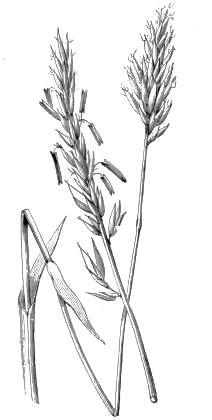
FIG. 107. ANTHOXANTHUM ODORATUM.
A. odoratum (sweet). fl. panicle spiked, oblong, dense, becoming
dullish yellow. l. short, pale green. h. 1ft. The pleasant
smell of new-made Hay is chiefly owing to this plant, which in
drying emits an odour similar to that of Asperula odorata. See
Fig. 107.
ANTHURIUM (from anthos, a flower, and oura, a
tail; referring to the inflorescence). ORD. Aroideæ. Flowers
densely disposed on a cylindrical spadix, at the base of which
is a large bract-like spathe, that ultimately bends backwards.
Leaves of various shapes. This very large genus of
handsome stove and greenhouse plants is remarkable both
for the peculiar inflorescence and often noble leaves, and is
distinguished in structure from all the European members
of the order in the flowers being hermaphrodite. Fibry
peat, loam, sphagnum, broken crocks, or charcoal, and
silver sand, form the most suitable compost. In preparing
the peat, it should be broken up into small lumps, and then
have most of the earthy matter knocked out of it by giving
it a few raps with a stick, or by shaking it about in a sieve.
To this, after so treated, add about one-fourth its bulk of
sphagnum, and about half its bulk of fibrous loam, and
just a sprinkling of fresh broken crocks, or small pieces of
charcoal and sharp silver sand. In placing them in
the pots—which must be well drained—carefully spread
out the roots and work the mixture among them, keeping
the plant well up, so that when finished it stands
clear above the rim of the pot at least 2in. or 3in., and
forms a kind of mound or hillock. They must then be
kept freely syringed or watered, and placed in a moist
atmosphere, where they can enjoy a temperature ranging
between 60deg. and 70deg., or a few degrees lower for
the less tender species. Raising plants from seed requires
patience. About a year elapses from the time the flowers
are fertilised—which should be done artificially—before the
seed ripens, and often another to get up plants. Sow as
soon as ripe in shallow, well-drained pans or pots, filled
with the potting mixture, and cover slightly, and place in a
close, moist propagating case, where a temperature of from
75deg. to 85deg. is maintained, or they may be covered
with bell glasses. The principal thing is to keep the
air about them constantly humid, and the material in
which they are sown in a uniformly moist condition;
if this is done, the young seedlings will make their appearance
in due course. When these are of sufficient
size to handle, they should be pricked off in the same
sort of compost, and be kept close and moist till they
get a start, after which gradually inure them to more air.
January is the best month of the year wherein to propagate
these plants by divisions. This is done by carefully turning
them out of their pots and shaking out what soil
they have amongst their roots, which must be tenderly
dealt with, so as not to bruise or injure them.
This done, they may then be pulled apart, and as many
plants made as there are separate crowns, or the mass may
be simply halved or quartered, according to the stock required.
Treat now as recommended above for potting.
They are all moisture-loving plants, and must have a
copious supply of water at all times, although, of course,
much less during the winter than spring and summer
months. There is no season of the year when they can
be handled for any purpose with less risk or check than
January. A moderate moist stove heat is advisable for
them generally. The species enumerated are selected from
nearly 150, and will be found to be a very representative
collection. See also Spathiphyllum.
A. acaule (stemless).* fl., spadix blue in a young state,
borne on long footstalks, sweetly scented. Spring. l. broad,
oblong, acuminate, 1ft. to 3ft. in length, erect, arranged in a
rosulate manner, dark shining green on the upper surface, somewhat
paler beneath. West Indies, 1853. A noble species.
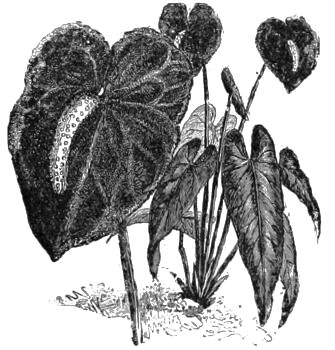
FIG. 108. ANTHURIUM ANDREANUM.
A. Andreanum (André's).* fl., spadix about 3in. long, yellowish,
with a broad central band of white; spathe open, cordate-ovate,
orange red, leathery, 3in. to 4in. across, and 6in. to 9in. long;
surface irregularly corrugated. l. ovate-lanceolate, deeply cordate,
green. Columbia, 1876. A very beautiful species. See
Fig. 108.
A. Bakeri (Baker's).* fl., spathe small, green, reflexed; the
spadix, wherein lies the plant's principal beauty, exhibits a lovely
combination of pink and bright scarlet; the fleshy rachis being
pink, and the pea-sized fruits bright scarlet. July. l. linear,
leathery, green, with stout midribs. Costa Rica, 1872.
A. cordifolium (cordate-leaved).* l. 3ft. long and 20in. broad,
heart-shaped, deep shining green on the upper surface, and paler
below. h. 4ft. New Grenada. One of the best, and may
be grown in a greenhouse or even in a sheltered spot of the
sub-tropical garden during July and August. A. Browni, although
quite distinct, comes close to this species.
A. coriaceum (leathery).* l. very thick, leathery, ovate, about
2ft. long; petioles stout, about the same length. Brazil. An
admirable sub-tropical species.
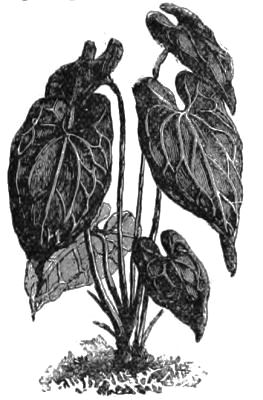
FIG. 109. ANTHURIUM CRYSTALLINUM.
A. crystallinum (crystalline).* l. large, ovate-cordate, acuminate,
bright rich velvety green, principal veins elegantly banded
with pure crystal white; when young, the leaves are violet colour;
petioles terete. h. 2ft. Columbia. See Fig. 109.
A. cuspidatum (cuspidate). fl., spathe crimson, reflexed, shorter
than the purplish spadix. l. ovate-oblong, acuminate, 10in. to
20in. long, green. h. 2ft. to 3ft. Columbia.
A. ferrierense (Ferrières).* fl., spathe cordate, about 5in. long,
and 4in. wide, bright red; spadix erect, about 4in. long, ivory
white. l. large, cordate. A handsome hybrid between A. ornatum
and A. Andreanum.
A. fissum (cut-leaved). fl., spathe green, erect, narrowly lanceolate-acuminate.
l. cut into four to seven elliptic oblong-acuminate
segments, green; petioles longish, terete. h. 2ft. Columbia,
1868.
A. Harrisii pulchrum (beautiful).* fl., spathe linear-lanceolate,
creamy white, deflexed, and pinkish at top; spadix erect, deep
crimson; scape about 1ft. long, pale green. l. lanceolate, rounded
at the base, pale green, with confluent white markings intermixed
with dark green. Stem short. Brazil, 1882. A beautiful variegated
plant. The typical A. Harrisii is extremely rare.
A. Hookeri (Hooker's). fl., spathe green; spadix green or violet.
l. obovate-spathulate, narrowed to a wedge-shaped base, and
shortly stalked, shining, about 30in. long and 8in. broad. h. 3ft.
Tropical America, 1840. SYNS. A. Huegelii, Pothos acaulis.
A. Huegelii (Huegel's). A synonym of A. Hookeri.
A. insigne (showy).* l. three-lobed, middle lobe lanceolate, the two
lateral ones are nearly ovate, and have from three to five longitudinal
ribs; when young, the leaves have a bronzy tinge;
petioles terete, slightly sheathing at the base. Columbia, 1881.
A very handsome species.
A. Kalbreyeri (Kalbreyer's).* l. palmate, about 2½ft. across;
leaflets nine, obovate-oblong, acuminate, sinuate, thick, glabrous,
rich deep green, those furthest from the stem are much
larger than those next the axis; petiole cylindrical, thickened
at the top. New Grenada, 1881. A very handsome climbing
species.
A. lanceolatum (lanceolate). fl., spathe lanceolate, deflexed,
yellowish green; spadix dark brown. l. lanceolate, stalked, green,
1ft. long, narrowed to the base. There appears to be much confusion
as regards this and many varieties of A. Harrisii; and the
specific designation is indiscriminately applied to lanceolate-leaved
forms generally. The true species was introduced to Kew from the
West Indies. SYN. A. Wildenowii.
A. leuconeurum (white-nerved). Green. Mexico, 1862.
A. Lindenianum (Linden's).* fl. fragrant, spathe very pretty,
white, not reflexed, but the pointed apex slightly arches over and
shelters the white or purplish spadix. October. l. deeply cordate,
of a roundish outline; petioles long. h. 3ft. Columbia,
1866. SYN. A. Lindigi (of gardens).
A. Lindigi (Lindig's). A garden synonym of A. Lindenianum.
A. macrolobum (large-lobed).* l. large, deflexed, cordate,
acuminate, with an open sinus at the base, and about three acute
marginal lobes, dark green, marked with about five pale green
ribs; petioles green, terete. Stem erect, short. A fine hybrid.
A. nymphæifolium (Nymphæa-leaved). fl., spathe white;
spadix purplish. Venezuela, 1854.
A. ornatum (adorned).* fl., spathe linear-oblong, white, 5in. to
6in. long, on terete green scapes, enclosing cylindrical purplish
spadices of about the same length as the spathes, and studded
with white points arranged spirally. Spring. l. ovate or oblong-cordate,
on slender terete petioles. h. 2½ft. Venezuela, 1869.
A. regale (royal).* l. large, cordate-acuminate, 1ft. to 3ft. long,
dull metallic green, with white veins; young leaves tinged with
rose, on long smooth footstalks. East Peru, 1866. An excellent
species for conservatory or window decoration during summer.
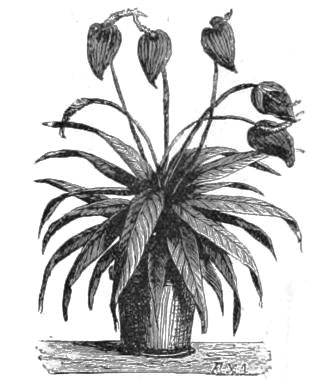
FIG. 110. ANTHURIUM SCHERZERIANUM.
A. Scherzerianum (Scherzer's).* fl. on bright red peduncles,
which spring from among the base of the leafstalks; spathe ovate-oblong,
3in. long and nearly 2in. broad, intense and brilliant
scarlet; spadix orange coloured. l. oblong-lanceolate, 12in. to
18in. long, and 2in. or more broad, deep rich green, leathery.
Costa Rica. A very compact dwarf-growing evergreen about 1ft.
high. It continues in beauty about four months. See Fig. 110.
A. S. album (white). A synonym of A. Scherzerianum Williamsii.
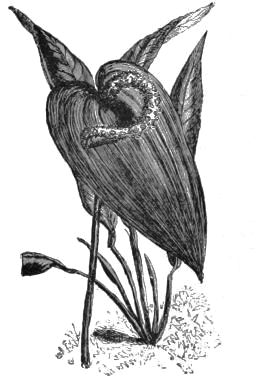
FIG. 111. ANTHURIUM SCHERZERIANUM MAXIMUM.
A. S. maximum (greater).* A very fine variety, with "gigantic
flower spathes, which measure about 9in. in length by 4in. in
breadth, and are of the most brilliant scarlet colour." See
Fig. 111.
A. S. pygmæum (small).* Altogether smaller than the type, with
narrow leaves, which are from 4in. to 6in. long, and about ½in.
broad. It is one of the best varieties, and produces flowers very
freely. 1880.
A. S. Rothschildianum (Rothschild's). fl., spathe creamy
white, spotted with crimson; spadix yellow. 1880. Exactly intermediate
between its parent plants—the typical species and the
following variety.
A. S. Wardii (Ward's).* fl., spathe 6in. long, 4in. broad, very
brilliant. l. broader and more robust than those of the typical
species. A splendid variety.
A. S. Williamsii (Williams's).* fl., spathe white; spadix
yellowish. May. l. lanceolate-acuminate. Costa Rica, 1874.
SYN. A. Scherzerianum album.
A. signatum (well-marked). l. apparently three-lobed; front lobe
about 1ft. long and 4in. wide; the two side ones 4in. long, and
about 6in. from the midrib to the extremity, dark green; petioles
about 1ft. long. Venezuela, 1858.
A. spathiphyllum (Spathiphyllum). fl., spathe about 1¾in. long,
and nearly as much broad, erect, boat-shaped, broadly ovate,
white; spadix nearly 1in. long, very obtuse, pale yellow. l. narrow
lanceolate, 16in. to 24in. long, and about 2in. wide, bright green
above, pale greyish green beneath; midrib prominent; petiole 3in.
to 6in. long, trigonous. h. 1½ft. Tropical America, 1875.
A. splendidum (splendid).* l. cordate, with an open sinus, the
lobes meeting behind; "the course of the nerves is marked by a
broadish band of deep lustrous velvety green, the intervening
spaces of about equal width being in striking contrast, of a pale
yellowish green; the leaf surface is scabrous, and the portions
between the ribs strongly bullate, as if raised in papillose blisters;
the veins on the under surface are angular, with tooth-like projections
at intervals, while the whole under surface is punctuated
with small pallid dots" (W. Bull). Stem short, thick. South
America, 1882. A very beautiful species, quite distinct from any
others of the genus. See Fig. 112.
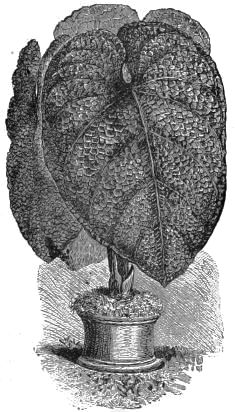
FIG. 112. ANTHURIUM SPLENDIDUM.
A. subsignatum (nearly allied to Signatum).* l. thick and fleshy,
hastate, with blunt points, 12in. to 18in. long, and as much in
breadth at the widest part; dark shining green above, paler
beneath; petioles about 1ft. long. h. 1½ft. Costa Rica, 1861. An
excellent species.
A. tetragonum (four-angled). l. erect, commences very narrow,
1ft. wide at its broadest part; margins undulate, deep shining
green on the upper surface, paler below; petioles short, quadrangular.
Tropical America, 1860. An excellent sub-tropical
species.
A. triumphans (superior). fl., spathe narrow, green; spadix
stout, greenish-white; peduncle quadrangular. l. alternate,
elongately cordate, bright green; ribs prominent, and of a paler
hue. Stem erect. Brazil, 1882. A handsome plant.
A. Veitchii (Veitch's).* l. ovate-oblong, greatly elongated, 2ft. to
3ft. long, with a breadth of less than one-third of these
dimensions, leathery, deep green, with a glossy metallic surface
when first expanded that becomes paler with age; the principal
nerves are arched and deeply sunk, imparting a curiously waved
appearance to the surface. h. 2½ft. Columbia, 1877. Rare but
very handsome.
A. Waluiewi (Walujew's).* l. broadly cordate, 12in. to 14in. long,
8in. to 10in. broad, olive metallic green, when young, bright
reddish crimson; petioles four to five-angled. h. 2ft. Venezuela,
1880. A very distinct and noble species.
A. Waroqueanum (Waroque's).* l. elongated, from 24in. to
sometimes 36in. long, and 8in. to 11in. broad, very rich deep green,
of a velvety lustre; midribs and veins light, forming a very
pleasing contrast. Columbia, 1878. A very free grower.
A. Wildenowii (Wildenow's). A synonym of A. lanceolatum.
It may be here remarked that by far the majority of species enumerated
in the Supplement of Johnson's Dictionary are chiefly of
botanical interest, and will, therefore, never become extensively
cultivated.
ANTHYLLIS (from anthos, a flower, and ioulos,
down; flowers usually downy). Kidney Vetch. ORD.
Leguminosæ. Herbaceous or sub-shrubby plants, of variable
habit. Flowers in spikes or heads; calyx tubular, five
toothed, permanent after flowering, more or less inflated.
Petals nearly equal. Although not extensively grown, all
the species are very beautiful when in flower, the hardy
sorts being admirably adapted for rockwork. The herbaceous
perennials may be easily propagated by seed or division.
The seeds of the annual kinds should be sown in a rather
dry, warm situation in the open ground. The shrubby
evergreens will need the protection of a frame or cool
greenhouse in cold northern climates, and are best grown
in a mixture of loam, sand, and peat. Young cuttings of
most species will root in a pot of sandy soil, with a bell glass
placed over them, in a cool house or frame.
A. Barba-Jovis (Jupiter's beard).* fl. pale yellow, numerous, in
globose, bracteate heads. March. l. pinnate, and are as well as
the branches, clothed with silky tomentum; leaflets nine to
thirteen, oblong-linear. h. 4ft. to 8ft. Spain, 1640. Shrub.
A. erinacea (prickly).* fl. bluish-purple; heads few flowered, on
short peduncles, bracteate. April. l. very few, oval, or oblong.
h. 6in. to 12in. Spain, 1759. A much branched, spiny, almost
leafless, and slow-growing species; hardy in a dry sunny position
on the rockery. SYN. Erinacea hispanica.
A. Hermanniæ (Hermann's). fl. yellow; heads few flowered,
nearly sessile in the axils of the upper leaves. April. l. almost
sessile, simple, or trifoliate; leaflets oblong-cuneated, glabrous or
clothed with adpressed pubescence. h. 2ft. to 4ft. Corsica, 1739.
Shrubby, much branched.
A. montana (mountain).* fl. pink or purplish, in dense heads,
on peduncles, with a leafy involucre. June. l. pinnate, and are
as well as the branches, silky and hoary; leaflets numerous, oval-oblong,
acute, small, entire. h. 3in. to 6in. Alps of Europe, 1769.
A very handsome little rock plant, with a dwarf and tufted
habit.
A. tetraphylla (four-leaved). fl. white; heads axillary, sessile,
few flowered. July. l. pinnate, the terminal leaflets ovate and
large, the other three small and acute. South Europe, 1640. A
procumbent annual.
A. Vulneraria (Common Woundwort).* fl. generally yellow, sometimes
white, red, or pinkish, in crowded twin heads. Summer.
l. pinnate, with five or more unequal leaflets; the lower ones
smallest. An elegant native herbaceous, perennial, admirably
adapted for rockwork. It is plentiful in most dry pastures. There
are several varieties, the best of which is alba.
ANTIARIS TOXICARIA. This is the famous
Upas tree of Java, from which is obtained poison of a
most deadly nature. It belongs to the NAT. ORD.
Urticaceæ.
ANTIGONON (from anti, against, or opposite, and
gonia, an angle). ORD. Polygonaceæ. Elegant stove climbers.
Flowers racemose, cirrhose at the apex of the rachides;
petals five, three outer ones broadly cordate, two inner
oblong. Leaves alternate, cordate. Although extremely
handsome plants, they are difficult to flower. They seem
to succeed best when planted out in a very thoroughly
drained border over hot-water pipes or flues, the long
climbing stems being trained near the glass in full light.
A. amabile (lovely).* fl. bright rose, profusely borne in axillary
and terminal racemes. l. 3in. to 5in. long, ovate-cordate, and
deeply lobed at the base. It is of free slender growth, the young
shoots are pubescent, and having a slight reddish tinge. An
exceedingly attractive and effective species.
A. guatemalensis (Guatemala). Probably the same as A.
insigne.
A. insigne (remarkable).* fl. very numerous, borne in tufts along
the sides of long racemes or panicles, which terminate in branched
tendrils; the calyx, which is the showy part of the flower, has five
membranous sepals, the three outer are of a beautiful rosy pink
colour, about 1in. in length by rather less in breadth, cordate at
the base, oblong, rounded towards the apex; the two inner sepals
about the same length as the outer ones, but much narrower,
falcate, lanceolate; pedicels ¾in. long. l. broadly ovate oblong,
deeply cordate at the base, with two rounded lobes; 4in. by 3in.,
the upper ones smaller, supported on short terete downy stalks.
Stems slender, angular, pubescent. Columbia, 1876.
A. leptopus (slender-stemmed). fl. numerous; the outer three
sepals of a beautiful rose colour, the centre of a much deeper tint;
racemes secund, bearing several coloured bracts as well as flowers,
and end in a branched tendril. l. alternate, cordate, petiolate.
Stem slender, sub-pubescent. Mexico, 1868.
ANTIGRAMME. See Scolopendrium.
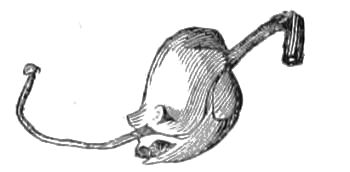
FIG. 113. ANTIRRHINUM CAPSULE, with Persistent Style.
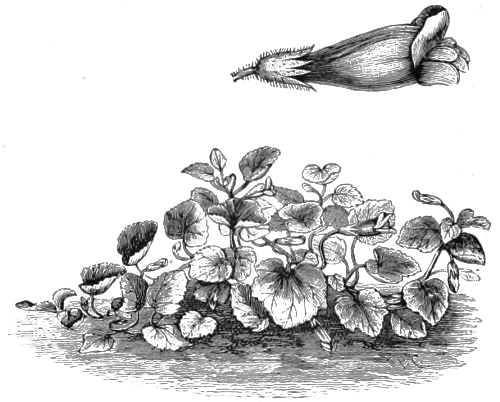
FIG. 114. ANTIRRHINUM ASARINA, showing Habit and Flower.
ANTIRRHINUM (from anti, like, and rhin, a nose or
snout; alluding to the shape of the corolla). Snapdragon.
ORD. Scrophulariaceæ. Hardy herbaceous plants. Flowers
in terminal racemes, or solitary and axillary; corolla personate;
tube ample, saccate at the base; lobes of the
upper lip erect; lower lip spreading, having the middle
lobes smaller than the lateral ones, with an ample bearded
palate, which closes the throat. Seed pod or capsule two-celled,
upper cell bursting by one pore, lower by two many-toothed
pores. See Fig. 113. Leaves entire, rarely lobed.
The genus contains several very handsome species, suitable
for borders and the rockery, while innumerable varieties
have originated from A. majus, which are very popular,
and extremely useful for bedding purposes; these may be
increased by cuttings or seeds; if it is desired to increase
certain colours or varieties, the former is the only sure
method to adopt. They should be taken in September,
when they will readily root in a cold frame, or under a
hand glass, or they may be rapidly propagated in gentle
heat in spring. Seeds should be sown in July or August,
when they will produce good plants by the following season;
or if sown in March in warmth, the plants will bloom late
in the same year. The "Tom Thumb" strain is especially
desirable for bedding, being very dwarf and free. All the
other species may be increased by cuttings and seeds treated
in the same way. Light soil, well enriched with manure, is
most suitable for all of them, especially for the varieties of
A. majus.
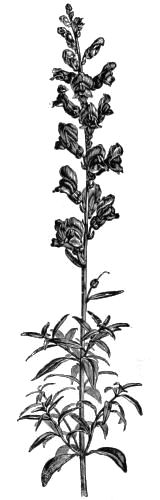
FIG. 115. FLOWER-SPIKE OF ANTIRRHINUM MAJUS.
A. angustifolium (narrow-leaved). Synonymous with A. siculum.
A. Asarina (Asarina).* fl. axillary, solitary; corolla 1½in. long,
white, sometimes tinged with red; palate yellow; tube glabrous,
compressed on the back, marked by purple spots, and bearded by
yellow hairs inside. June. l. opposite, on long petioles, five-nerved,
five-lobed, cordate, and crenated. South France, &c.,
1699. A greyish clammy procumbent plant, requiring a warm
position on the rockery. See Fig. 114.
A. hispanicum (Spanish). fl. in loose spikes; corolla hardly an
inch long, purple, with a golden yellow palate; tube villous.
Summer. l. oblong-lanceolate, contracted at the base, bluntish;
lower ones opposite; superior ones alternate, narrower. h. 1ft.
Spain, 1878. SYN. A. latifolium.
A. latifolium (broad-leaved). Synonymous with A. hispanicum.
A. majus (large).* Greater, or Common Snapdragon. fl. racemose,
approximate; corolla 1in. to 2in. long, shades infinite; palate
yellow at top, very prominent; tube downy outside. Spring,
summer, and autumn. l. oblong-lanceolate, 1in. to 3in. long;
upper ones narrower, attenuated at both ends, glabrous. Branches
erect, usually branched again. h. 2ft. Europe (naturalised in
Britain). The named varieties are numerous, but it is unnecessary
to enumerate any, as an equal amount of variation can be obtained
from seed. See Fig. 115.
A. molle (soft).* fl. few, at the tops of the branchlets; corolla
1in. long, whitish, with a yellow palate; upper lip striped with
purple. July. l. opposite, petiolate, clothed with glandular and
clammy hairs, about ½in. long, and little more than ¼in. broad;
branches procumbent, slender, clothed
with woolly hairs. Pyrenees, 1752.
A very pretty plant, which should
have a warm position on the rockery.
A. sempervirens comes close to this
species.
A. Orontium (Orontium). fl. axillary,
distant; corolla rose-coloured
or white, striped with purple; tube
furnished with a few glandular hairs;
palate veined with purple; sepals
linear-lanceolate, large. June. l. oblong-lanceolate,
acutish, attenuated
at both ends, glabrous, 2in. long.
h. 6in. to 12in. Europe (British
cornfields). Annual. See Fig. 116.
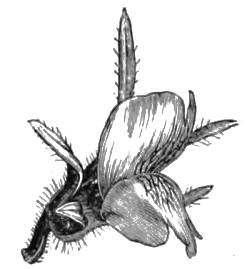
FIG. 116. ANTIRRHINUM ORONTIUM.
A. O. grandiflorum (large-flowered).
A variety with larger, paler, and more approximate flowers,
and with broader leaves, than the type. Europe (British cornfields).
A. siculum (Sicilian). fl. in loose racemes; corolla hardly 1in.
long, white or yellowish, rarely purple; tube rather hairy; lobes
of the upper lip and the middle lobe of the lower lip emarginate.
July. l. 1in. to 1½in. long, linear-lanceolate, opposite, alternate
or three in a whorl, narrowed into petioles at the base.
Branches erect. h. 1ft. to 2ft. Sicily, 1804. SYN. A. angustifolium.
A. tortuosum (twisted).* fl. disposed in spiked racemes, approximating
by threes and fours; corolla (the largest of the
genus) purple; tube short; upper lip large. June. l. linear,
acute, opposite or three in a whorl, 2in. long, attenuated at both
ends; upper ones very narrow. Branches erect. h. 1ft. to 1½ft.
Italy.
ANTONIA. A synonym of Rhynchoglossum
(which see).
ANTROPHYUM (from antron, a cavern, and phuo,
to grow; referring to its place of growth). Including
Polytænium. ORD. Filices. A small genus of stove ferns,
very rarely seen in cultivation, all with simple fronds, of
firm but fleshy texture, and copious, uniform, hexagonal
areolæ. Sori carried along the veins, imperfectly reticulated.
For culture, &c., see Ferns.
A. cayennense (Cayenne). sti. 1in. to 4in. long. fronds 6in. to
9in. long, 1in. to 1½in. broad, lanceolate-oblong, narrowed at both
ends; edge thickened, entire; areolæ half as broad as long. sori
sub-superficial, often forked. Guiana, &c.
A. coriaceum (leathery). fronds 6in. to 8in. long, about ½in.
broad, narrowed very gradually from the centre to the base, very
acute at the apex, very thick; areolæ very long and narrow,
distinctly raised on the upper surface. sori quite immersed,
sometimes confluent. Himalayas, &c.
A. lanceolatum (lance-leaved).* fronds 1ft. or more long, ¼in. to
½in. broad, point acute, edge entire, the lower half narrowed very
gradually to the base; areolæ two or three times as long as broad,
about three rows between the midrib and the edge. sori slender,
superficial, often joining. West Indies, southwards to New
Grenada, 1793.
ANTS (Formicidæ). Well-known pests, easily distinguished
from all other insects. There are a great number
of species, differing more or less in habits; but, as a
rule, they dwell underground in communities, and construct
extensive ant-cities, which are occupied by three
classes—the neuters or workers (by far the most
numerous), the males, and the females. There are often,
in addition to these, larger and stronger neuters, known
as the "soldiers," or defenders of the community. Ants
have a long, slender body, supported on long and slender
legs. The head bears a pair of elbowed horns or antennæ,
constantly waving about and touching everything
the insect comes across. They have powerful mandibles
for cutting, sawing, and biting, and it is with these instruments
that Ants do mischief in gardens. The winged
males and females become mature in summer, and on a
warm day they ascend in a body into the air; after a
short time, they fall to the ground, the females at once
free themselves from the henceforth useless wings, and
begin to form new colonies. Vast numbers of eggs are
laid, from which issue larvæ, and these soon become
pupæ, and then perfect Ants. Some kinds are injurious
from their habit (in some species) of collecting aphides
together, and farming them for the sake of the honey
secreted by the aphides, and that passes out from their
honey-tubes (thus helping to perpetuate the stock of
these most injurious insects); and also from the mechanical
damage they do in pots, and other receptacles for
plants. They likewise cause unsightly hills on lawns
and paths, and the large black species that live in decayed
wood often injure the framing of greenhouses, &c., when
the woodwork has become somewhat decayed. Where
fruit, such as peaches or wall pears, are grown, Ants will
at times inflict damage, and, therefore, they should be
kept away; but this is a comparatively easy matter, as
the placing of an obnoxious substance along the base of
the walls and around the stems of the trees will deter
them. For the extirpation of Ants from indoors, the
Arsenical solution described below is most efficacious,
but it is extremely dangerous.
Lime. Air-slaked lime plentifully dusted, in warm, dry,
weather, over and around the hills and other places infested,
will cause the Ants to vacate them in a short time. A
thick chalk line drawn round a smooth tree, or across an
upright board or post, will render it impassable.
Arsenic. This must be used with the utmost caution, as
it is a poison most fatal to animal life. Recipe: 1oz. of
ordinary arsenic is placed in an old iron pot with a quart of
water, and then boiled until reduced to a pint or a little
more of liquid, to which is added ½lb. of coarse sugar.
This mixture can either be dropped about the runs and
around the nests, or placed in saucers in the Ants' haunts.
Ferrocyanide of Potassium. This is also very dangerous:
Ferrocyanide of potassium, 1dr.; raspings of quassia, 1dr.;
and enough sugar to form a syrup. Use in the same way as
the preceding.
Calomel and Sugar. Mix together one part of calomel
and ten parts of finely-powdered loaf sugar, and lay it
in little heaps about their nests and runs; the Ants will
eat it and die. Spring is the best season for this method.
Guano, when fresh, if sprinkled on and around their
quarters, is said to be efficacious in driving them away.
Camphor. If a piece of camphor, about the size of a
filbert, be placed in two quarts of hot water, and this,
when cool enough, applied to pot or other plants infested
with Ants, the insects will be driven off without injury
to the plants.
Bones. Lay a quantity of partially-picked boiled bones
in the haunts, and they will be quickly covered with
insects. As soon as this occurs, throw the bones into hot
water. Before laying them down again, let all superfluous
moisture drain off. This is a cheap remedy, and,
if persisted in, is very effectual.
Carbolic Acid. This, if of good strength, diluted with
about ten or twelve times its bulk of water, and well
sprinkled over paths or other places where there is no
vegetation, will keep the Ants away. It has, however,
an objectionable smell.
Paraffin Oil. Paraffin, mixed with six times its bulk of
water, and sprinkled over the nests every few days, will
kill and drive away Ants; but the smell is disagreeable.
Quassia. 4oz. of quassia chips, boiled in a gallon of
water for about ten minutes, and 4oz. of soap added to
the liquor as it cools, if used like the preceding, is fairly
effectual; but this, like the other remedies, must be
persisted in for some time.
Fly pans or saucers, nearly filled with thin honey or
sweet oil, attract Ants, and they are drowned in them.
Ants are very hard to clear effectually out of a place,
and therefore it is very desirable, in all attempts to be
rid of them, to persist in the above remedies. When not
living close to the roots or stems of plants, the best and
surest remedy of all is to flood them out or scald them
in with boiling water. The specifics are endless, but the
best are mentioned above.
ANTWERP HOLLYHOCK. See Althæa ficifolia.
AOTUS (from a, without, and ous, an ear; in allusion to
the absence of appendages in the calyx, which distinguishes
it from its allied genus, Pultenæa). ORD. Leguminosæ.
Elegant little greenhouse evergreen shrubs, with yellow
flowers, and simple, linear-subulate leaves, revolute at the
margins, alternate or nearly opposite, or three in a whorl.
They should be grown in a compost of equal parts loam,
sand, and peat, with a little charcoal, and the pots should
be well drained. Cuttings of half-ripened wood, made in
April, root freely in sand, under a bell glass.
A. gracillima (most slender).* fl. yellow and crimson, small, on
long, dense, graceful spikes, which are often over a foot long;
pedicels short. May. h. 3ft. New Holland, 1844. A very pretty
slender growing shrub.
A. villosa (soft-haired). fl. axillary, disposed in racemose spikes
along the branches; calyx silky. April. l. smoothish on the
upper surface. h. 1ft. to 2ft. New Holland, 1790.
APEIBA (the native name in Guiana.) ORD.
Tiliaceæ. Very handsome stove evergreen trees or shrubs,
clothed with starry down. Flowers large, golden yellow,
pedunculate, bracteate. Capsule spherical, depressed,
rough from rigid bristles. Leaves broad, alternate, entire
or serrate. They thrive in a mixture of loam and peat.
The best way to induce them to flower in this country is
by cutting a ring round the bark of a large branch; by this
means the growth is stopped. Well ripened cuttings should
be planted in sand in heat, under a bell glass, which should
be tilted occasionally, so as to give a little air to the cuttings,
otherwise they are apt to damp off.
A. aspera (rough).* fl. golden yellow; peduncles opposite the
leaves, branched, many flowered. May. l. ovate-oblong, somewhat
cordate, quite entire, smooth. h. 30ft. to 40ft. Guiana,
1792.
A. Petoumo (Petoumo). fl. yellow, similarly disposed to A. aspera.
August. fr. densely clothed with bristles. l. ovate-oblong, somewhat
cordate at the base, entire, hoary beneath. h. 40ft. Guiana,
1817.
A. Tibourbou (Tibourbou).* fl. dark yellow. August. fr.
densely clothed with bristles. l. cordate, ovate-oblong, serrated,
hairy beneath. h. 10ft. Guiana, 1756.
APETALOUS. Without petals.
APEX. The summit or point of anything.
APHELANDRA (from apheles, simple, and aner, a
male; the anthers being one-celled). ORD. Acanthaceæ.
Very handsome stove evergreen shrubs, mostly of an erect
habit of growth, and having handsome shining leaves,
which in some instances are variegated. Flowers produced
in terminal four-sided spikes—the preponderating
colours being brilliant shades of orange or scarlet—conspicuously
situated above the foliage; they are exceedingly
attractive; corolla ringent, two-lipped, upper
lip three-lobed; central lobe large. They bloom generally
during the autumn months, and if the plants are
removed to a warm dry atmosphere so soon as the flowers
begin to open, they will continue much longer in perfection
than if left in the moisture-laden atmosphere of the stove.
From the time the flower spikes are at first seen till they
bloom, the plants will derive much benefit from frequent
applications of clear manure water. When the plants have
finished flowering, they should be allowed to rest, by reducing
the supply of water, but never allow them to shrivel.
During this time they may be kept in a house or pit, where
the atmosphere is rather dry, with a night temperature of
50deg. to 55deg. Here they may remain till March, when
they should be pruned. This operation is commenced by
thinning out the weakest shoots altogether, and cutting the
others back to one or two of the strongest joints or buds
above the old wood in order to keep the plants dwarf and
bushy. When pruned, the plants should be placed in the
stove, giving moderate supplies of water at the roots, and
occasionally sprinkling the stems overhead till growth commences.
When the young shoots have attained an inch or so
in length, the plants should be turned out of the pots, removing
the crocks and as much of the old soil as can be got away
easily, at the same time shortening-in any of the straggling
roots. They should then be placed into smaller-sized pots,
keeping them rather close, and watering them carefully for
a time till growth has commenced. When fairly started,
they may be transferred into larger-sized pots, in which
they are to flower. During the summer, these plants
require a moist atmosphere, with a temperature of 65deg.
by night, allowing it to rise 15deg. or 20deg. by day, and
whilst active growth is taking place they should be frequently
supplied with moisture at the roots, keeping them
well exposed on all sides to the light. After growth has
commenced, it is not advisable to stop the shoots, for
the stouter and stronger they grow up the finer will be
the flower spikes when they appear. The compost should
consist of equal parts fibry loam, leaf soil, and peat, with a
good proportion of sand added. In preparing it, it should be
rather lumpy, and, before using, should be warmed to about
the temperature of the house in which the plants are
grown. Clean pots and perfect drainage are most essential.
Cuttings are best prepared from half ripened wood,
or taken off when young with a heel. The base of each
cutting should invariably be cut clean across. These
may be inserted an inch apart, in pots of sandy soil, and
plunged in a brisk bottom heat. To obtain young shoots
for cuttings, if the old plants break freely after pruning,
and very large specimens are not required, when the shoots
are 2in. long they should be thinned out, leaving the
requisite number of the strongest to form the plant. If
the surplus pieces are removed with a slight heel of the
older wood, they make good cuttings, and should be treated
the same as the others. These cuttings strike root quickest,
and when rooted, if potted into 5in. or 6in. pots, and allowed
to grow up without stopping or pinching out the tops, they
will flower the first season. Although Aphelandras can be
grown into large sized specimens, it will be found to be
more generally satisfactory to have specimens of neat and
moderate dimensions. The mealy bug and scale insects
are very troublesome, and must be kept down, otherwise
they will prove most prejudicial to the plants.
A. acutifolia (acute-leaved). fl. large, deep vermilion red; the
upper lip of corolla concave, and projected forward, the lower
one consists of three oblong-obtuse spreading lobes. October.
l. broad, oblong-ovate, acuminate. Columbia, 1868.
A. aurantiaca (orange-coloured).* fl. deep orange scarlet; upper
lip of corolla erect, bidentate, concave; lower one spreading
horizontally, three lobed. December. l. broad, ovate, opposite,
dark green, somewhat wavy at the edge. h. 3ft. Mexico,
1844.
A. a. Roezlii (Roezl's).* Differs chiefly from the type in the curiously
twisted leaves, which are dark green, shaded with a silvery hue
between the primary veins; in the brighter scarlet of the flowers;
and a few other, but purely technical, points. It is one of the
best. Mexico, 1867. SYN. A. Roezlii.
A. cristata (crested).* fl. brilliant orange scarlet, 2in. or 3in.
long, in large terminal branching spikes. August to November.
l. large, broadly ovate, and tapering to a point. h. 3ft. West
Indies, 1733. A handsome and continuous bloomer. SYN. Justicia
pulcherrima.
A. fascinator (fascinating).* fl. bright vermilion, in very large
spikes. Autumn. l. ovate acuminate, olive green, beautifully
banded with silvery white, whilst the under side is of a uniform
purplish violet. h. 1½ft. New Grenada, 1874.
A. Leopoldi (Leopold's).* fl. citron-yellow. l. opposite, ovate-oblong,
acuminate; ground colour on the upper surface dark
green, the midrib and primary veins pure white; under surface
uniformly pale green. Brazil, 1854.
A. medio-aurata (golden-centred). fl. unknown. l. ovate-lanceolate,
sinuate, bright green, with yellow central brand. Brazil,
1871. SYN. Graptophyllum medio-auratum.
A. nitens (shining).* fl. glowing vermilion-scarlet, very large, in
erect, simple, terminal spikes, which, after the flowers have fallen,
are clothed with the imbricating, lanceolate, appressed bracts.
l. ovate, sub-acute, leathery, brilliant glossy on the upper surface,
dark vinous purple underneath. h. 2ft. to 3ft. Columbia, 1867.
A. Porteana (Porte's).* fl. in fine terminal heads; corolla and
bracts bright orange. l. rich green, with metallic silvery-white
veins. h. 2ft. Brazil, 1854.
A. pumila (dwarfish).* fl. orange-coloured; upper lip erect, concave,
entire; bracts large, purplish. l. large, cordate, ovate-oblong,
acute. h. 8in. Brazil, 1878. Very distinct from all
others.
A. punctata (dotted).* fl. bright yellow, in large and rather dense
spikes; the spiny-edged long pointed bracts are also yellow, with
the exception of the tip, which is green, and forms a pleasing
contrast. November. l. opposite, elliptic, acuminate; the green
midrib is conspicuous in the middle of a white central band, which
also extends beside the green veins, this silvery band breaking up
on its margin into numerous small white dots, producing a
pretty and distinct form of variegation. South America, 1881.
A. Roezlii. A synonym of A. aurantiaca Roezlii.
A. variegata (variegated). fl. yellow; spike, 6in. long, with
bright orange-red bracts. l. ovate-lanceolate, acuminate, dark
green with white veins. h. 1½ft. Brazil.
APHELEXIS (from apheles, simple, and exis, habit).
ORD. Compositæ. A genus of elegant dwarf evergreen
greenhouse shrubs. Flower-heads large, solitary, or small
and two or more together. Leaves small. These plants
are valuable for exhibition purposes, on account of their
bright colours, and the length of time they last in perfection;
they are included among what are familiarly
known as "everlastings." The most suitable soil is a compost
of two parts of good fibrous peat and one of leaf
mould, with a liberal supply of silver sand, and a few
pieces of charcoal added to it. Repot the plants firmly
in February, and allow thorough drainage. Cuttings can
be made in spring or summer; small half-ripened side
shoots are best; and these will root in sandy soil, under
a bell glass, in a cool greenhouse.
A. ericoides (heath-like).* fl.-heads white. April. l. very small,
three-cornered, imbricated, appressed; branches numerous, very
fine, filiform. h. 1ft. Cape of Good Hope, 1796.
A. fasciculata (fascicled). fl.-heads purplish, solitary, terminal;
peduncles scaly. March. l. acerose linear, roundish, downy above;
lower spreading; upper appressed. h. 2ft. Cape of Good Hope,
1779. There are two or three forms of this species, varying in the
colour of the flowers.
A. humilis (humble, or dwarf).* fl.-heads pink, solitary, terminal,
opening only in sunshine; peduncles scaly. April. l. subulate,
erect, imbricate. Branches numerous, slender, covered with
white tomentum. h. 2ft. Cape of Good Hope, 1810. A handsome
greenhouse plant, with much-branched stems, terminated
by the flower-head. SYNS. A. macrantha and Helipterum humile.
A. h. grandiflora (large-flowered).* fl.-heads rosy-purple, produced
in great abundance. Habit rather dwarf, and free branching.
Very highly esteemed.
A. h. purpurea (purple).* fl. dark purple, very abundant. l.
silvery white and shining. A vigorous grower, and perhaps the
best for exhibition purposes. It is known in gardens as A.
macrantha purpurea; also under the name of A. spectabilis.
A. h. rosea (rose-coloured).* fl.-heads delicate rose, very profuse.
Habit very compact and free-branching. A very showy and desirable
variety, known in gardens as A. macrantha rosea.
A. macrantha (large-flowered). Synonymous with A. humilis.
A. sesamoides (Sesamum-like). fl.-heads purple and white,
sessile, solitary, terminal. April. l. acerose linear, keeled, smooth,
appressed. h. 2ft. Cape of Good Hope, 1739.
APHIDES, or PLANT LICE. These belong to
the order Homoptera, meaning "same winged," and the
name has reference to the fact that the fore wings
are uniform in their structure from base to apex, not
divided into a leathery base and a membranous tip.
Aphides are all minute in size, soft bodied, and generally
long legged; the mouth is furnished with a curiously-constructed
beak, or rostrum, for sucking the juice of
plants; the antennæ, or feelers, are long and slender;
the legs have usually two joints in the tarsi, one of
which is generally very ill-developed; and near the tip
of the abdomen, on the back of a ring, in many kinds,
stand two prominent tubes, called honey-tubes, from
which a sweet secretion, much sought after by ants,
is emitted. They are very destructive, and nearly every
plant has its own peculiar Aphis; but among the worst
are the cherry fly and bean fly. All these insects
are very destructive to the young shoots and foliage of
plants, on which they cluster in large numbers, sometimes
completely hiding the stems, increasing with marvellous
rapidity. They produce eggs in autumn, which lie dormant
through the winter, and upon the approach of
warm weather in spring, hatch and produce individuals
which, during the summer, are viviparous, budding off
young insects at a surprising rate, which quickly in turn
become possessed of the same marvellous power; hence
the enormous number which are produced in so surprisingly
short a time. It has been computed that in a few
weeks many millions of young might be produced directly
or descended from a single female. See also Black Fly
and Bean Fly.
The following remedies may be successfully employed:
Tobacco. This is applied, as a rule, in three forms, each
of which is useful for particular purposes. Tobacco powder
is useful as a dry application to plants where, from any
cause, the other modes of employing it are not desirable.
It causes no smell, and is useful in conservatories, &c., for
that reason. The mode of applying it is to dredge or dust
it over the foliage of the plants affected, and to syringe off
in from three to thirty hours, according to the nature of
the plants. Fumigation with tobacco, if done in a proper
way, is very effective, but it leaves an unpleasant smell.
The foliage of the plants should be quite dry, and a still
day must be chosen for the work; the house should be
filled with smoke, but no flame must arise in the burning.
The plants should be well syringed the next morning, and
full ventilation allowed; if the fumigation is repeated
twice or thrice, it will prove very effectual. Tobacco water
is made by soaking a pound of coarse shag in 6gals. of hot
water, to which ½lb. of size or soft soap has been added.
The plants should be dipped into or syringed with this
mixture, and well syringed with clean tepid water about
twelve hours after. It should not be employed for plants
having woolly or hairy foliage. Tobacco paper and cloth
are used for fumigating in the same manner as tobacco;
but as they vary in strength, more care is necessary, as
they sometimes cause the leaves to become spotted. Judiciously
employed, they are cheaper than Tobacco.
Quassia. Boil 1lb. quassia chips in 4gals. of soft water,
for about ten minutes, and after straining off the chips, add
1lb. of soft soap. Apply in the same way as Tobacco water,
and syringe the plants with clean water after ten minutes
or a quarter of an hour.
Soft Soap. This, in proportion of 8lb. to 12gals. of rain
water, and 1gal. of tobacco water added after it is cold,
is a cheap and good remedy out of doors, and requires the
same mode of application as tobacco water.
Soap Suds. Where bleaching powder, or much soda,
is not mixed with these, they make a good insect killer
for hard-foliaged plants, but should be washed off with
clean water in twelve hours. No mixture containing
chloride of lime should be used.
Various. Fir-tree Oil, Gishurst's Compound, and Fowler's
Insecticide, are all serviceable, if used as directed on the
labels. Hardeman's Beetle Powder, applied with the little
French powder-bellows which is sold with it, is very efficacious.
For outdoor work, nothing surpasses clean cold
water, applied often and forcibly with a syringe.
The best mode of clearing Aphis off Beaus, Currants,
&c., is to remove the tops of the infested shoots, and
to wash the plants with soapy water, or a solution of
Gishurst's Compound. In some cases, a good dusting with
soot and wood ashes, while the plants are wet, will keep
them in check. The "Golden Eyes" or "Lacewing" fly,
and also ladybirds, are to be encouraged, as the larvæ
of each of these wage incessant war against Aphides,
especially the green varieties, and thin them out considerably.
APHROPHORA. See Frog Hopper.
APHYLLANTHES (from aphyllos, leafless, and
anthos, a flower; the flowers are on rush-like branches).
ORD. Liliaceæ. A very pretty rush-like hardy perennial,
forming dense, erect tufts. It thrives best in sandy peat,
requires a warm sunny situation, and slight protection
in winter. Increased by division of the roots, and seeds;
the latter should be sown in pots in a cool greenhouse as
soon as ripe.
A. monspeliensis (Montpelier).* fl., perianth six-cleft, spreading
at the apex, deep blue, nearly an inch across, disposed in a small
head, on slender scapes. June. l. absent; the very slender
scapes are leaflike, with membranous sheaths at the base. South
of France, 1791.
APHYLLOUS. Without leaves.
APICRA (from apicros, not bitter). ORD. Liliaceæ. A
group of succulents allied to Aloe, and having the following
among other characters:—Flowers small, loosely sub-spicate;
perianth regular, cylindrical, with short spreading
segments; peduncles simple or forked. Plants small;
rosette leaves always elongated. Leaves thick, diffuse,
never spinosely dentated. They require treatment similar
to Aloes, under which genus they are included by some
authors.
A. aspera (rough).* fl., perianth ½in. long; raceme loose, 3in. to
4in.; pedicels three to four lines long; peduncle slender, simple,
nearly 1ft. l. dense, in many rows, spreading, rounded, deltoid,
six to seven lines long and broad; face rather flat; middle three
to four lines thick; back convex hemispherical, wrinkled. Cape
of Good Hope, 1795.
A. bicarinata (double-keeled).* fl. unknown. l. dense, in many
rows, ascending, deltoid-lanceolate, nine to twelve lines long,
six lines broad, dirty green; face flat; middle two lines thick;
margin scabrous; back copiously tubercled. Cape of Good Hope,
1824.
A. congesta (congested). fl., perianth six to seven lines, whitish;
raceme loose, sub-spicate, about 1ft.; pedicels short; peduncles
6in. long, simple. l. dense, spreading, in many rows, deltoid-lanceolate,
eighteen to twenty-one lines long, three to four lines thick;
back convex; top unevenly keeled towards the margins. 1843.
A. deltoidea (deltoid). fl., perianth greenish, five to six lines
long; raceme about 1ft. long, sub-spicate; pedicels short; peduncles
6in., simple or branched. l. in five regular rows,
spreading, nine to twelve lines long, deltoid, shining green; when
mature, upper surface rather flat, apex pungent; middle two to
three lines thick; back distinctly keeled upwards; margins and
keels minutely serrated. South Africa, 1873.
A. foliolosa (small-leafy).* fl., perianth greenish, five to six lines
long; raceme loose, sub-spicate, about 1ft.; pedicels two to three
lines long; peduncle 6in., simple. l. dense, spreading, in many
rows, rounded deltoid, cuspidate, six to eight lines long and
broad, without spots or tubercles; face rather flat; middle one
and a half to two lines thick; back obliquely keeled upwards towards
the margins. Cape of Good Hope, 1795.
A. imbricata (imbricated). Synonymous with A. spiralis.
A. pentagona (five-angled).* fl., perianth whitish, ½in. long;
raceme about 1ft., loose; lower pedicels two to three lines long;
peduncles 1ft., often branched. l. dense, regular, lower ones
spreading, upper ones ascending, lanceolate-deltoid, fifteen to
eighteen lines long; bottom six to eight lines broad, shining
green; face flat; middle three to four lines thick; apex pungent;
margin scabrous; back irregularly one to two keeled at top. Cape
of Good Hope, 1731.
A. p. bullulata (little-blistered). l. irregularly spiral, five rowed;
back with spreading close wrinkled tubercles.
A. p. spirella (small spiral). l. smaller and more deltoid, 1in.
long, six to eight lines broad at the bottom, irregularly five
rowed, or as if in many rows.
A. spiralis (spiral).* fl., perianth reddish-white, ½in. long; raceme
loose, nearly 1ft.; pedicels ascending, two to three lines long;
peduncles 6in., simple or branched. l. dense, in many rows, strong,
ascending, lanceolate-deltoid, twelve to fifteen lines long, six to
eight lines broad; face almost flat, without tubercles; apex
pungent; back swollen, scarcely keeled; margins obscurely
crenulated. Cape of Good Hope, 1790. SYN. A. imbricata.
APICULATE, APICULATED. Terminated in a
little point.
APIOS (from apion, a pear; in reference to the form
of the tubers of the root). ORD. Leguminosæ. An elegant
little hardy twining perennial, easily trained into almost
any shape. It must have a well-exposed, sunny position,
and the soil should be of a warm or light sandy nature.
Propagated by division of the tubers.
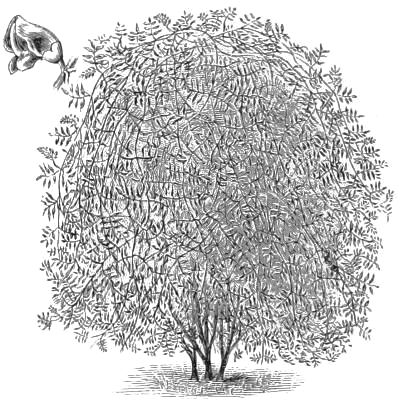
FIG. 117. APIOS TUBEROSA, showing Habit and Flower.
A. tuberosa (tuberous).* Ground Nut. fl. brownish-purple, sweet-scented,
in axillary racemes. Summer and early autumn. l. pinnate.
Tubers edible, farinaceous. Habit very light and graceful.
Pennsylvania, 1640. SYN. Glycine Apios. See Fig. 117.
APIOSPERMUM. A synonym of Pistia (which
see).
APIUM (from apon, Celtic for water; in reference
to the habitat). ORD. Umbelliferæ. This genus contains
no species worth growing for ornament, and nearly all are
more or less acrid and poisonous. A. graveolens is the
Celery of gardens, for culture of which, see Celery.
APLECTRUM (from a, without, and plectron, a spur;
flower spurless). ORD. Orchideæ. A monotypic genus
from North America. A curious, hardy, terrestrial orchid,
requiring a shady spot in light loam and leaf mould,
moderately damp. Very difficult to cultivate.
A. hyemale (wintry).* fl. greenish-brown, large, racemose, borne
on a naked scape after the leaves have died down; labellum as
long as the sepals; column sessile, rather long, wingless. April.
Stem pseudo-bulbous, with one large, broad, ribbed leaf. h. 1ft.
1827.
APLOTAXIS. Included under Saussurea (which
see).
APOCARPOUS. Having the carpels or fruit separate,
or disunited.
APOCYNACEÆ. A large order of trees, shrubs, or
rarely herbs, usually with a poisonous, milky sap. Flowers
regular, solitary or corymbose; corolla salver-shaped or
campanulate. Leaves simple, opposite, sometimes alternate
or whorled. Well known genera belonging to this
order are: Allamanda, Nerium, Tabernæmontana and Vinca.
APOCYNUM (from apo, away, and kyon, a dog;
adopted by Dioscorides, because the plant was supposed to
be poisonous to dogs). ORD. Apocynaceæ. Dog's Bane.
Perennial erect herbs, with cymose flowers and membranous,
opposite leaves. There are several species belonging
to this genus, but only the one described below is
worthy of being cultivated. They are of extremely easy
culture, thriving in any ordinary soil; and may be propagated
by suckers, divisions, or seeds. The best time to
divide is just as they are starting into fresh growth in
spring.
A. androsæmifolium (Tutsan-leaved).* fl. pale red, with
darker stripes; corolla campanulate; cymes terminal and lateral.
July. l. ovate, glabrous, petiolate, pale beneath. h. 1ft. to 2ft.
Virginia, and Canada, 1683. A very old garden favourite, thriving
best in peaty soil, with Azaleas, &c. See Fig. 118.
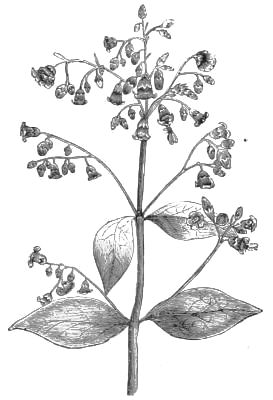
FIG. 118. INFLORESCENCE OF APOCYNUM ANDROSÆMIFOLIUM.
APONOGETON (from apon, Celtic for water, and
geiton, neighbour; alluding to the habitat of these plants).
ORD. Naiadaceæ. Very ornamental aquatic perennials.
There are several species, but A. distachyon is superior to
the others. This species may be cultivated in small tanks
or aquaria; it delights in an abundance of light and air,
and is perfectly hardy, having become naturalised in many
parts of the country. Pot the plants in rich sandy loam
and rotten cow manure, using, of course, small pots, if the
vessel in which it is to be grown is restricted. When
introducing it to large tanks or lakes, commence with
strong, previously well-established plants, in large pots,
breaking the latter when the plants are immersed.
Place them in positions where the water is about 1ft. 6in.
to 2ft. deep; they will then rapidly increase by offsets and
seeds, and, when established, will flower nearly all the
year round. The other kinds will thrive with the same
treatment; but they are neither so hardy nor so vigorous,
and should only be grown in small tanks or aquaria.
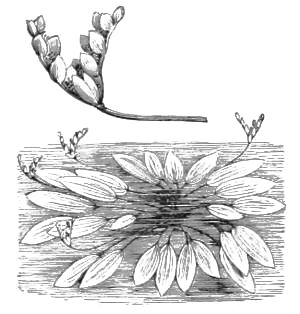
FIG. 119. APONOGETON DISTACHYON, showing Habit and
Flower-spikes.
A. angustifolium (narrow-leaved). fl. white. July. Cape of
Good Hope, 1788. Half hardy.
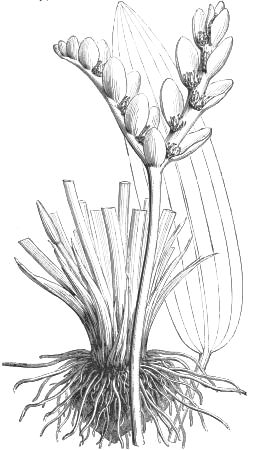
FIG. 120. APONOGETON DISTACHYON, showing Flower-spikes, Leaf,
and Root.
A. distachyon (two-spiked).* Cape Pond Weed; Winter Hawthorn.
fl. with a delicious Hawthorn-like perfume; petals none;
bracts, or showy portion oval, entire, white; anthers purple-brown;
scape two-spiked, each spike being from 2in. to 4in. long.
l. oblong-lanceolate, entire, bright green, on long stalks, floating.
Cape of Good Hope, 1788. See Figs. 119 and 120.
A. monostachyon (simple-spiked). fl. pink. September. h. 1ft.
East Indies, 1803. Stove species. Rare.
A. spathaceum junceum (rush-like).* A very pretty, but
rare, half-hardy aquatic plant, with the forked inflorescence
having both bracts and flowers suffused with a delicate blush
colour. l. rush-like, standing clear up out of the water. South
Africa, 1879.
APORETICA. A synonym of Schmidelia (which
see).
APPENDICULATE, APPENDICULATED.
Having appendages.
APPLANATE. Flattened out.
APPLE (Pyrus Malus). The Apple is one of the most
useful, and probably most largely cultivated, of our hardy
fruits. It is known as the Crab in its wild state, and is
indigenous to Britain and to all the temperate and warmer
parts of Europe. It is supposed that the progenitors of the
varieties now grown were introduced to this country
at various times from the Continent, and not obtained here
as direct improvements on the native Crab. Those now
cultivated are extremely numerous, and include good
varieties that can be made to prolong the season all the
year round. Apart from its great value as a fruit, the
apple is a strikingly handsome tree when in flower (see
Fig. 121). A fruiting branch is shown at Fig. 122.
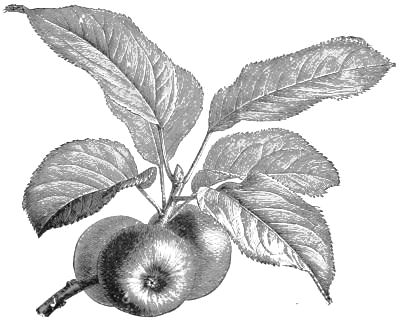
FIG. 122. FRUITING BRANCH OF APPLE.
Propagation. Seeds are sown extensively, chiefly for
raising stocks to graft approved sorts on; also with a view
to raising new varieties. The seeds do not retain their
germinative properties very long, consequently they must
be sown soon after being taken from the fruit. As grown
in this country, they are generally sown in the autumn,
transplanted the following year, and so on until they are
of sufficient size for Grafting purposes. The standard of
excellence being at present so high, improved forms raised
from seed are comparatively scarce.
Grafting. This method of propagation is the one
generally adopted for most purposes, the stocks being previously
prepared for size or height of tree required. Cordon
and other dwarf-trained trees should be worked near but
not below the ground, while standards are best worked on
stocks of the desired height. The practice of working
standard trees low, and growing the scion to form the stem
of the future tree, is not recommended, as many of the
tenderer sorts will not grow straight or strong enough for
the purpose. Whip-grafting is the most preferable mode
adopted. The scions should be selected from healthy trees
not later than January, and laid in singly in the ground
until the stocks have slightly advanced in growth, which is
generally about the middle of April. Several other methods
of Grafting may be adopted with success, but the one above
recommended is considered the best.
Budding. Apples may be successfully propagated by
Budding, and this method is practised much more now than
formerly. It has many advantages, as it requires to be
performed at a season when there is not so much work in
hand. It should be done in damp, dull weather, if possible,
as the weather if dry soon destroys the buds. July and
August is the proper time for the purpose. The stocks
and woods from which the buds are taken should be as
much as possible in the same condition.
Propagation by Cuttings, Layers, &c. This system may
be made use of in the case of new varieties or where it is
desired to increase any one variety with a limited number
of scions, but the results are uncertain—at least in the
case of cuttings; consequently, it is much better to resort
to the safer method of Grafting.
Pruning. See Pruning.
Training. See Training.
Planting. The best time to plant is as soon as most of
the leaves have fallen, which is generally about the end of
October. The roots being then in an active state, and the
ground still retaining a certain amount of heat, they will
form new roots before winter, which is a material advantage.
Where it is impossible to plant at this time, it may
be done in suitable weather any time during the winter,
but it is best not deferred till spring. It is important in
planting that the soil should be moderately dry and free
from frost; this condition cannot always be obtained during
winter. The effects of soil and situation have a very important
bearing on the Apple, specimens of the same sort
from different places being often hardly recognisable.
Although not over fastidious in the matter of soil as far as
growing is concerned, the best results are obtained where
it is of a rich loamy character and well drained. Dry,
sandy soils invariably produce canker, while the trees are
often overgrown with lichens in undrained land. The
addition of heavier loam, or sometimes trenching and
mixing the sub-soil with that at the top, will convert light
soils into those suitable for Apple culture; while, on the
other hand, heavy soils may be improved by drainage, the
addition of lime, vegetable refuse, burnt earth, and other
matters. Rank manure should on no account be used anywhere
near the roots, but a little well-decayed manure,
mixed with the soil or used as a mulching, is beneficial.
The site best suited is an open, though not exposed one,
with a south, south-east, or south-west aspect. Shelter
from north-east winds in spring, which destroys the bloom,
and from west and south-west winds in autumn, which
blow down the fruit, should be the aim of cultivators.
Planting in a valley should be avoided on account of spring
frosts. In Planting, care must be taken to make the
bottom of the hole tolerably firm, and slightly raised under
the base or bole of the tree. The roots should then be
carefully spread out all round, and if any have been
ruptured in transplanting, cut them clean off on the
upper side, thus inducing new roots to be formed near
the surface. The soil should be trodden firmly after a
quantity has been filled in, if it is in a dry, suitable
condition, as previously recommended. Secure with stakes
in proportion to the size of tree, or injury will be caused
by the wind. The distance at which Apple trees are
planted varies considerably. Standards in orchards may
be planted in good soil, from 20ft. to 40ft. apart,
especially if they are strong-growing culinary sorts.
Pyramids may be planted from 5ft. to 15ft., according to
size; and similar distances will suit Bush trees. The oblique
Cordon system of training admits of a large number
of varieties being cultivated in a small space, as they
may be planted as close as 18in. or 2ft. apart. Horizontal
Cordons should be planted about 5ft. asunder,
and one branch trained each way. Watering will be
necessary after planting in most cases, especially should
the winter and following season be at all dry. Thinning
the fruit is sometimes advisable for obtaining good specimens,
but it is not generally necessary, at least with many
of the shy-setting sorts. If, however, the crop should be
exceptionally heavy, it is best to thin the fruit, or the
tree may be unable to make and ripen its wood for the
crop of the succeeding year.
Gathering. The three following tests are sure indications
of the gathering period: (1) The apples will begin to fall
of their own accord; (2) their seeds will be plump and
brown in colour; and (3) the fruit will separate with a mere
touch from the trees; the second test may be said to be
infallible. All Apples should be gathered before the end of
October, for none will bear frost with impunity. They
must be gathered in dry weather, and handled with the
greatest care, laid gently in baskets and trays, in single file
only, and conveyed to the store room.
Storing. The simplest and best method is in choosing
or forming some room or place free from extremes of heat
and cold, dryness or damp, where a temperature of about
45deg. is maintained. A current of air is not necessary.
The shelves should be made of poplar, sycamore, lime, or
other white wood. Deal, oak, ash, elm, and almost all other
woods, give a bad taste to the fruit. One sheet of paper—and
paper only—should be placed under the fruit. They
ripen best, and are of the highest flavour when left fully
exposed to the free atmosphere of the fruit room, and in
order to preserve a more even temperature the light should
be shut out. Early and late ripening varieties must be
stored in separate places, as well as all inferior or injured
fruit. The plan of isolating each fruit by packing in
tissue paper, sand, burnt earth, or other substances, often
destroys the flavour of the fruit, and possesses no material
benefit otherwise.
Diseases. Apple Mussel Scale, Apple or Codlin Grub,
Canker, Mildew, American Blight, Scale, and Insect Pests,
such as Caterpillars, Maggots, and Weevils, see under
their separate headings.
The following are some of the best varieties in cultivation:—
Adams' Pearmain. Dessert. Fruit medium, very handsome;
flavour juicy and sugary. December to March.
Alexander. Kitchen. Very large, showy, and good. September
to December.
Alfriston. Kitchen. Very fine, large, white flesh. November to
April.
Ashmead's Kernel, or Cockle Pippin. Dessert. Fruit below
medium; flavour very rich and sugary. This variety is, according
to Mr. Rivers, much esteemed in Gloucestershire. November to
January.
Bedfordshire Foundling. Kitchen. Fruit large. One of the
finest and most useful sorts, a great bearer. February to May.
Bess Pool. Kitchen. Fruit large. Good late cooking apple.
December to May.
Betty Geeson. Kitchen. Fruit large, produced in great
abundance. February to May. A valuable sort.
Blenheim Pippin. One of the best kitchen sorts. November
to February.
Boston Russet. Dessert. Fruit medium; flavour very sugary
and rich, similar to the Ribston Pippin. An excellent American
variety. January to May.
Brabant Bellefleur. Kitchen. Fruit large, round, pale yellow,
red-streaked. A most useful cooking variety, also useful for
dessert. November to April.
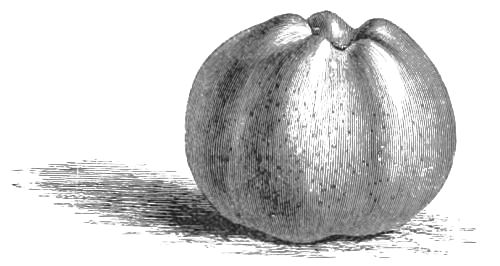
FIG. 123. APPLE, CALVILLE BLANCHE.
Calville Blanche. Dessert. Fruit large; flavour first-class.
October to December. See Fig. 123.
Cellini. Kitchen. Fruit perfect in form, size, colour, and quality.
October to January.
Claygate Pearmain. Dessert. Fruit medium; flavour rich,
aromatic, excellent, same as Ribston Pippin. January to May.
Coe's Golden Drop. Dessert. Fruit small, with a crisp and
juicy flavour. November to January. A delicious variety.
Cornish Aromatic. Dessert. Fruit medium; flavour rich, juicy,
and aromatic. October to December.
Cornish Gillyflower. Dessert. Fruit medium; flavour very
rich, quite aromatic. October, November to January. An excellent
variety, thriving best in a warm situation.
Court of Wick. Dessert. Fruit medium, very handsome;
flavour somewhat similar to Golden Pippin. December to March.
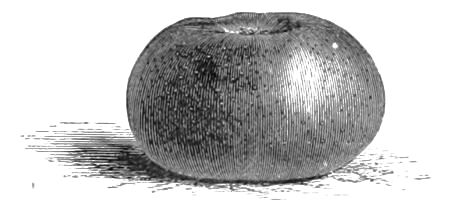
FIG. 124. APPLE, COURT PENDU PLAT.
Court Pendu Plat. Dessert or kitchen. Fruit medium, rich
russet brown, of first-rate quality, and the tree is a good cropper.
November to April. See Fig. 124.
Cox's Orange Pippin. Dessert. Fruit medium, very handsome;
flavour rich aromatic. October to December. One of the
best apples grown.
Cox's Pomona. Kitchen. Fruit very large, of superior quality.
October.
Devonshire Quarrenden. Dessert. Fruit medium, excellent
quality, and handsome. July to September. A very prolific
sort.
D. T. Fish. Kitchen. Fruit large, roundish, of a clear straw-colour,
with small specks of russet, slightly flushed with crimson
on the side where the sun strikes it; flavour sub-acid. November
to January. A fine and handsome variety.
Duchess of Oldenburgh. Kitchen. Fruit large, red-striped.
August to October. A very desirable and handsome Russian
variety.
Duke of Devonshire. Dessert. Fruit medium; flavour crisp,
juicy, rich and sugary. December to March.
Dumelow's Seedling, or Wellington, or Normanton
Wonder. Kitchen. Fruit firm, large, and somewhat acid.
November to March.
Early Harvest. Dessert. Fruit medium; flavour juicy, excellent,
with a pleasant sharpness. July to September. According
to Mr. Rivers this variety is equally good for cooking or dessert,
and is a very fertile tree on the Paradise stock.
French Crab. Kitchen. Fruit large, pale green, firm, acid.
An excellent sort, and the longest keeper.
Golden Pippin. Dessert. Fruit small, very excellent flavour.
November to January. A well-known and highly-esteemed sort.
Golden Reinette. Dessert. Fruit rather small, yellowish red,
streaked with red; flavour excellent, sweet and rich. One of the
best and most useful of dessert apples. October to December.
Gravenstein. Kitchen. Fruit large, handsome, sweet and
crisp. November to January. A very prolific sort.
Greenup's Pippin. Kitchen. Fruit very large. February to
May. A vigorous grower and abundant bearer.
Irish Peach. Dessert. Fruit medium, yellowish-green, very
early; flavour juicy, excellent. July and August. A very good
variety, often known as Early Crofton.
Jolly Beggar. Kitchen. Fruit large, pale yellow, tender and
juicy. November to January. A very desirable sort and an
extraordinary cropper.
Keddlestone Pippin. Dessert. Fruit small, yellow or golden
colour, specked with russet; flavour delicious, highly aromatic.
December to March. An excellent variety.
Kerry Pippin. Dessert. Fruit medium, firm, yellow, and red;
flavour sugary and rich. September to October.
Keswick Codlin. Kitchen. Fruit large and early. August to
October. An admirable sort for market purposes.
King of the Pippins. Dessert. Fruit medium, yellow and red;
flavour juicy and rich. October to January.
Lady Henniker. Kitchen. Fruit yellow, with crimson streaks
near the sun, highly flavoured, and with a pleasant perfume.
February to May. An excellent sort, suitable for dessert or
kitchen.
Lodgemore Nonpareil. Dessert. Fruit small; flavour rich,
sugary, and aromatic. January to May. An excellent sort.
Lord Suffield. Kitchen. Fruit very large, white, soft, excellent
for sauce and tarts. August to September.
Manx's Codlin. Kitchen. Fruit large. September and October.
One of the finest and most useful of kitchen sorts.
Mère de Ménage. Kitchen. Large and good. October to
March.
Mr. Gladstone. Dessert. Fruit large and handsome, very
early, scarlet cheek, striped and shaded; of excellent quality.
July and August. New.
New or Winter Hawthornden. Kitchen. Fruit very large,
excellent. November to January. An extraordinary bearer, one
of the best for sauce and cooking.
Nonsuch. Kitchen. Fruit large, juicy. August to October. An
admirable sort, unequalled for sauce and cooking.
Norfolk Beefing. Kitchen. Large and good flavour, excellent
keeper, most useful for baking whole and preserving. November
to July.
Norfolk Greening. Kitchen. Fruit medium; rather acid. Keeps
till April or May.
Northern Spy. Dessert. Fruit large, tender; flavour highly
aromatic. December to May.
Old Nonpareil. Dessert. Fruit medium, tender, and juicy.
November to January. A prolific variety.
Pitmaston Pineapple. Dessert. Fruit small; flavour very
rich. July to September. According to Mr. Rivers this variety
is a very abundant bearer on the Paradise stock; it is not a
vigorous grower.
Red Astrachan. Dessert. Fruit good size, bright; flavour
delicate and rich. August to September.
Red Ingestrie. Dessert. Fruit very pretty bright red next the
sun, on a yellow ground, flesh pale yellow; flavour brisk and
sparkling, like the Golden Pippin in quality. August and September.
An excellent sort.
Red Juneating, or Margaret. Dessert. Fruit medium,
early, very good quality. July and August. A well-known
sort, with numerous synonyms.
Red Quarrenden. Dessert. Fruit under medium, bright
scarlet; flavour crisp and sweet. August. One of the best
summer sorts.
Reinette du Canada. Dessert. Fruit greenish-yellow and
brown, large; flavour juicy, brisk, sub-acid. November to May.
See Fig 125.
Reinette Grise. Dessert. Flesh yellowish-white, sugary,
pleasant; flavour sub-acid. November to April. It does best
on the Paradise stock, and is an abundant cropper. See
Fig. 126.
Ribston Pippin. Dessert. Fruit greenish-yellow and red, medium;
flavour rich, aromatic, excellent. October to December.
Sam Young. Dessert. Fruit small, yellowish with russet spots;
flavour delicious, tender, and juicy. October to December.
An excellent Irish sort.
Scarlet Crofton. Dessert. Fruit medium, yellow and red;
flavour crisp, juicy, and sweet. October to December.
Scarlet Nonpareil. Dessert. Fruit well coloured, large; flavour
crisp and juicy. January to March.
Small's Admirable. Kitchen. Fruit large, green, crisp,
sweet, and juicy. November to January. A prolific cropper.
Stamford Pippin. Dessert. Fruit large, with a brisk flavour
and an agreeable aroma. November to January. A very
desirable sort.
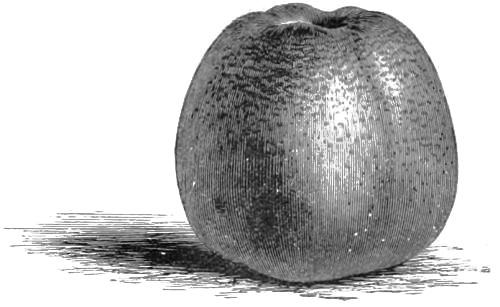
FIG. 125. APPLE, REINETTE DU CANADA.
Sturmer Pippin. Dessert. Fruit medium; flavour brisk and
rich. February to June.
Syke House Russet. Dessert. Fruit small; flavour very rich.
January to May. An excellent sort.
Tower of Glammis. Kitchen. Fruit yellow, very large,
square-shaped, crisp, and excellent. February to May. A very
excellent sort.
Van Mons Reinette. Dessert. Fruit small, with a rich,
aromatic, and excellent flavour. November to January.
Waltham Abbey Seedling. Kitchen. Fruit large. November
and December. An admirable sort.
Warner's King. Kitchen. Fruit large, handsome, and good.
November to March.
Worcestershire Pearmain. Kitchen. Fruit large, conical,
of a very brilliant colour; flavour crisp and juicy. August to
October. A splendid variety, said to be as prolific as Lord
Suffield.
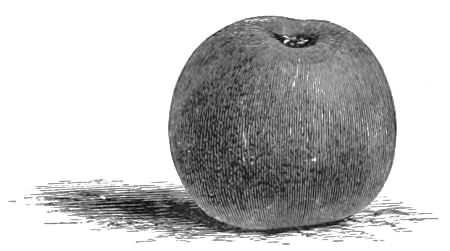
FIG. 126. APPLE, REINETTE GRISE.
White Juneating. Dessert. Fruit small, very early, and good
quality, but a bad keeper. July and August. A prolific sort.
White Nonpareil. Dessert. Fruit medium, very delicious.
March to June. A very desirable sort.
Winter Quoining, or Queening. Dessert. Fruit very bright,
almost red; flavour excellent. November to May. An excellent
sort, useful for dessert or culinary purposes.
Winter Strawberry. Dessert. Fruit yellow, medium, striped
with red; flavour brisk aromatic. November to March. A very
useful sort.
Wormsley Pippin. Kitchen or dessert. Fruit of an excellent
quality, large, pale green; excellent for kitchen or dessert.
September to October.
Yorkshire Greening. Kitchen. Fruit large, juicy, tender.
November to January.
For Cordons the following are the best:—BETTY GEESON, COE'S
GOLDEN DROP, COX'S ORANGE PIPPIN, DUKE OF DEVONSHIRE,
KING OF THE PIPPINS, LODGEMORE NONPAREIL, NORTHERN
SPY, REINETTE DU CANADA, RIBSTON PIPPIN, SCARLET NONPAREIL.
For Pyramidal, Bush, and Espalier Trees, the best are:—ADAMS'
PEARMAIN, ASHMEAD'S KERNEL, BOSTON RUSSET,
CLAYGATE PEARMAIN, CORNISH GILLYFLOWER, COURT OF WICK,
COURT PENDU PLAT, COX'S ORANGE PIPPIN, EARLY HARVEST,
GOLDEN PIPPIN, GOLDEN REINETTE, IRISH PEACH, KEDDLESTONE
PIPPIN, KERRY PIPPIN, RED INGESTRIE, RED QUARRENDEN,
REINETTE DU CANADA, RIBSTON PIPPIN, SAM YOUNG,
SCARLET CROFTON, SCARLET NONPAREIL, STURMER PIPPIN,
SYKE HOUSE RUSSET, WORMSLEY PIPPIN. The following Kitchen
sorts are well adapted to this method:—ALFRISTON, BED-FORDSHIRE
FOUNDLING, BRABANT BELLEFLEUR, CALVILLE
BLANCHE, CELLINI, COX'S POMONA, D. T. FISH, DUCHESS OF
OLDENBURGH, DUMELOW'S SEEDLING, JOLLY BEGGAR, KESWICK
CODLIN, LORD SUFFIELD, MANX'S CODLIN, NEW HAWTHORNDEN,
NONSUCH, WALTHAM ABBEY SEEDLING, WARNER'S KING.
For Cold and Exposed Situations, the following are the best:—BESS
POOL, CLAYGATE PEARMAIN, FRENCH CRAB, GREENUP'S
PIPPIN, KESWICK CODLIN, NONSUCH, STURMER PIPPIN,
TOWER OF GLAMMIS, WINTER STRAWBERRY, WORMSLEY PIPPIN.
For Cottage Gardens: ALEXANDER, BEDFORDSHIRE FOUNDLING,
BLENHEIM PIPPIN, KING OF THE PIPPINS, MANX'S CODLIN,
NEW HAWTHORNDEN, REINETTE DU CANADA, RIBSTON
PIPPIN, STURMER PIPPIN, WALTHAM ABBEY SEEDLING, WARNER'S
KING, WORMSLEY PIPPIN.
APPLE BERRY. See Billardiera.
APPLE-BLOSSOM WEEVIL (Anthonomus pomorum).
This is a small beetle of a reddish-brown colour,
with three inconspicuous stripes of a paler colour behind
the head; the wing cases show a large pitchy-coloured
blotch, with oblique striæ and yellowish spots thereon.
The female busily engages herself in piercing the flower
buds; while the male may be usually seen flying about the
trees during the breeding season, which, of course, varies
according to the earlier or later expansion of the buds.
The female, by means of strong jaws at the end of the long
proboscis, bores a hole in the bud, in which she lays a
single egg, finally closing the opening, then passing on
to other buds. The laying season lasts for two or three
weeks, or, indeed, as long as the buds remain unexpanded;
eggs are never laid in open blossoms. In warm weather,
the eggs are hatched in six or seven days, usually about
the end of April, into small, white, legless maggots, which
feed upon the stamens and pistil; hence, although the
petals are normally coloured, and expand, the flowers
ultimately wither, and in some seasons very serious consequences
have arisen from these injurious little pests.
The maggot is fleshy, whitish, with a few hairs and a
black, hard head; in a few days, it turns into a brown
chrysalis or pupa, which, in turn, is changed into the
Weevil, only about a month having elapsed from the
deposition of the egg till the Weevil is developed. It
feeds upon the foliage during summer, and hybernates in
crannies of the bark, or under the soil at the base of
the trees, during winter, waking up in the following spring
to go through the same performances as its parents.
Remedies. Some of the methods advised for the extirpation
of the American Blight will prove very useful for
the destruction of this pest. Clear away all useless portions
of the bark and rubbish round about the tree during
the winter, and many will be destroyed. Place bandages
of tarred cloth around the stem in spring; this will
prevent the females crawling up, as they seldom fly. If
a white cloth is placed beneath the tree affected when
in bud, and the tree is severely shaken, a large number
will be caught, as the Weevil falls to the ground when
alarmed. Timely thinning of the trees, allowing the free
admission of light and air, is also a very effectual preventive,
as it has been proved that the greatest ravages
are committed where neglect of this has been the rule;
and that, on the other hand, in proportion to its being
done, the pest has been lessened in numbers.
APPLE MUSSEL SCALE (Aspidiotus conchiformis).
This insect attacks the bark of Apple and Pear-trees.
It is in outward appearance like the half of a
mussel shell. Under the scale is the insect. It is
closely allied to the true scale insects, and has similar
habits. The scales are about ⅛in. long, brown, and wider
at one end than at the other. The female is like a fat,
green, fleshy maggot, without jointed limbs. The eggs
of this curious insect are not laid, but simply remain
in the body of the mother until she dies, thus leaving
a protecting shield or case from which the hatched
larvæ emerge. To get rid of this insect, therefore, the
females containing eggs should be destroyed. It differs
from most other species in the absence of the long tail
filaments. If numerous, this Scale causes the trees to
become sickly and unfruitful. It is difficult to extirpate.
Soft-soap Lather. When the leaves fall, in autumn,
the trees should be treated with a stiff sash-tool, and all
the Scale rubbed off, keeping the brush just moist, and
not rubbing the buds. Applied for two seasons, this
should clear the trees. All loose bark should be removed.
Seal Oil is sometimes recommended as a good remedy:
but oils are rather unsafe applications to the bark of
trees, especially of the young branches.
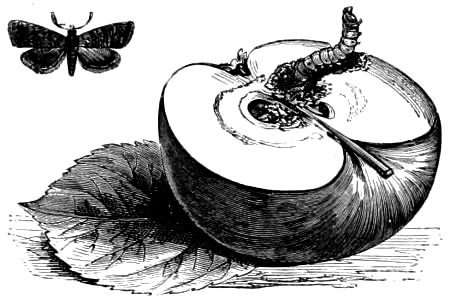
FIG. 127. CODLIN MOTH AND GRUB (CARPOCAPSA POMONANA).
APPLE OR CODLIN GRUB (Carpocapsa pomonana).
During the month of May, the well-known Codlin
Moth (see Fig. 127) lays its eggs in the calyces, usually
one in each, of the young, quickly-growing apple. The
moth itself is a small insect; the fore-wings are grey,
prettily speckled with delicate, darker streaks, and with
a curved golden mark on the hinder part, inclosing one
of a reddish-brown colour. The hind wings are usually
dark, as is also the body. The caterpillar, when
hatched, is white, with black head and neck, and with
four rows of black marks along the whole body. The
colours soon, however, become less decided, taking an
indistinct brownish or grey hue. After being hatched, the
caterpillar gnaws its way down the fruit, keeping clear of
the core, and gradually forces its gallery towards the rind
of the fruit, which it finally pierces, the opening serving as
the outlet for the dirt. When nearly full grown, it pierces
the core and feeds upon the pips, which injury speedily
causes the fruit to drop. The insect then emerges therefrom,
and finds a suitable shelter in a cranny of the bark,
where it spins a cocoon; and, according to British authorities,
it remains in the larval state for some weeks, finally
assuming the chrysalis form, and thus passing the winter;
the moth emerges the following season. Shortly after
development, the moths pair, the female depositing eggs
in the fruit in June or July, according to the season.
Practically, there is no preventive; but the following
hints will serve to greatly reduce the numbers. All
apples that fall ere they are ripe should be picked up
as promptly as possible, and be given to the pigs; or
pigs should be turned into the orchard to clear off the
fallen fruit. The following is the only serviceable remedy:
Hayband Trap. This is simply a loosely made hayband
twisted around the stems of the trees, about 1ft. from
the ground. The grubs, in searching for a suitable place
in which to make a cocoon, will generally choose the bands.
At the end of the season, all the haybands should be collected
and burnt, and the stems of the trees from which
they were removed should be cleared of any cocoons which
may adhere to them. All loose bark and other rubbish
should be removed from the tree trunks, and also from
the ground below.
APPLE OR CODLIN GRUB TRAP. An exceedingly
ingenious and effective method of alluring that
obnoxious pest, the Apple Grub. The trap (Fig. 128) consists
of two, three, or more thin pieces of board, 12in. to
20in. in length, and 2in. to 4in. wide, with a screw (a)
through their centre. The screw must be long enough to
be firmly driven into the trunk of the tree, so as to hold the
boards in position. Small slips of wood (b) are inserted
between the boards, to keep them sufficiently open to allow
of the entry of the grubs, as shown at d. The boards are
cut on each side of the screw, as at c, to facilitate their
separation when fastened together by the silken threads of
the grubs, and to better expose the latter when the trap is
opened. This handy trap, which is of American origin, is
very cheap. A great number of them may be collected
with little trouble, submitted to a killing heat, and replaced
again; and they can be used either on the ground or
on the trees. As regards killing the grubs when caught,
Mr Weir, the inventor, says: "The quickest and best
way is to have a large tin pan, bent in on one side, so
as to fit closely to the trunk of the tree. When you reach
the tree, drop upon your knees, place the depression in the
pan against the trunk of the tree, hold it there by pressing
your body against it, and you have both hands free to open
the trap. When opening it, many of the pupæ or chrysalids
will fall into the pan. The trap must be turned clear
around, as many will be found between it and the bark. A
person will open and kill the worms in from four hundred
to eight hundred traps in a day."
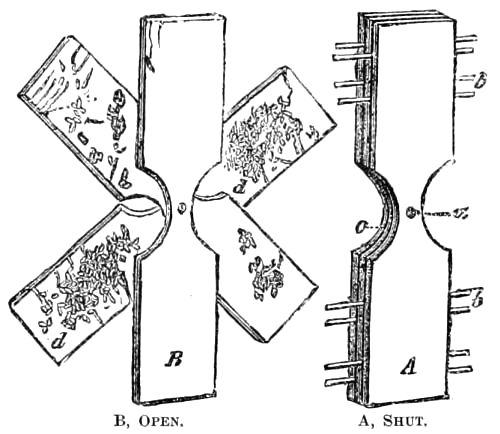
FIG. 128. APPLE OR CODLIN GRUB TRAP.
APPOSITE. Placed side by side.
APPROXIMATE, APPROXIMATED, APPROXIMATING.
Near together.
APRICOT (Armeniaca vulgaris). The Apricot, or, as
it was formerly written, "Abricock," is a much esteemed
and luscious fruit. It is said to have been introduced into
this country during the reign of Henry VIII. The Apricot
is one of the earliest flowering of fruit-trees (see Fig. 129),
and is generally in bloom during February. This fact is a
great drawback, as it is a difficult matter to save the flowers
from destruction by the spring winds and frosts. The fruit
(see Fig. 130) contains less acid than most stone fruits, and
in appearance it is perhaps the handsomest of all. Success
with its culture in many gardens is by no means certain,
but with careful preparation of borders and protection of
the flowers in spring, satisfactory results are often obtained.
Large quantities of fruit are annually imported to this
country from France; but their quality and flavour cannot
be compared with that of good home-grown produce.
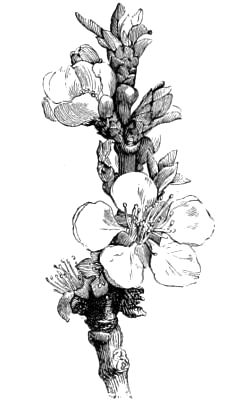
FIG. 129. BLOSSOM OF APRICOT.
Propagation is effected by seeds or budding. The stones,
selected from the best varieties, may be sown as soon as the
fruit is ripe, in August or September, in light rich soil, and
covered with about 2in. of earth, over which a little litter
should be spread during winter. After one season's growth,
the plants should be lifted, and the tap roots slightly cut
back if the trees are intended for walls. They should then
be planted in nursery lines, allowing about a yard between
the rows, and 2ft. from plant to plant.
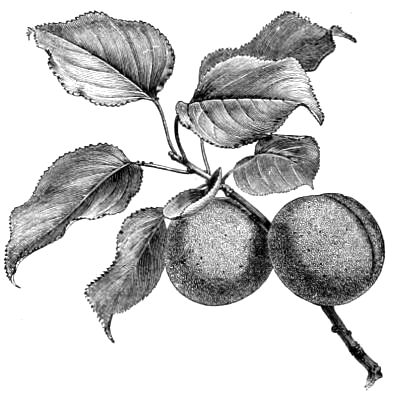
FIG. 130. FRUITING BRANCH OF APRICOT.
Budding is the most general mode of propagating Apricots.
They are frequently budded from the beginning to
the middle of June on seedling, and also on plum stocks,
of which latter the Mussell, Saint Julien, Brussels, and
Black Damson are the best. For dwarf trees, the stock
should be budded about 1ft. from the ground. There are
many disadvantages in having a great length of stem.
"Rider" trees require a stem from 3½ft. to 6ft.; half-riders,
2½ft. to 3ft. Grafting by the Whip method is sometimes employed,
but, for many reasons, it is much inferior to Budding.
Planting, &c. South-west and western aspects suit the
Apricot best, but the fruit has been ripened in warm
localities on walls facing several points north. Large areas
of garden wall (see Figs. 131 and 132), the walls of stables,
barns, outbuildings, and two sides of at least hundreds of
cottages, might thus be utilised for the cultivation of this
tree. If well drained, almost any garden soil will bring
these fruits to perfection; light, fibrous, rather sandy loam
will, however, prove most satisfactory. There should be
a considerable depth of soil; a yard is not too much,
provided it be on a dry base, which is most important.
Heavy soils may be improved for Apricot culture by the
addition of an equal portion of light loam, mortar rubbish,
or charred refuse. In furnishing walls, the distance apart
may vary from 2ft. between Cordons, to 12ft., 15ft., or
even 20ft. between Fan-shaped trees. The roots should be
carefully arranged, interlayered at all points with fine soil,
and the whole covered to a depth of 3in. or 4in. Not only
should the roots have a good covering of suitable earth, but
a secondary one of litter, or other light material, should
be added, to render them frost proof in winter, and drought
and heat proof in summer. Newly planted trees should, on
no account, be allowed to get dry at the root. A thorough
soaking of soft rain, or manure water, will often save a
crop, and restore the trees, when all other surface remedies
or appliances fail. Surface sprinklings overhead with
the garden engine, in the afternoons of bright days, are
beneficial, and help to keep the foliage clean and healthy.
So soon as the trees are cleared of their fruit, attention
should be directed to the maturation of the wood. All
superfluous shoots should be removed, any excess of growth
left on the shoots cut back, and every effort made to
perfect the wood already made, rather than force the tree
to make more. Unless the weather be very dry, water
should not be applied after this stage.
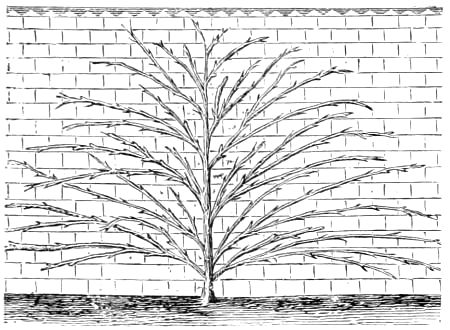
FIG. 131. APRICOT TREE, showing method of Wall Training.
Protection. It is almost hopeless to expect a crop unless
the blossoms are protected, by mats or other means, from
spring frosts. Temporary wooden copings, from 1ft. to 2ft.
wide, laid on iron brackets, are indispensable for warding off
storms, and keeping other coverings away from the flowers.
These should not be put up till the trees are just bursting
into bloom, and may safely be removed about the end of
May. A few fish or other nets, spread over the trees, afford
considerable resistance to the radiation of heat. This is
assuredly one of the easiest, if not one of the most efficient,
modes of protection. Frigi-domo and other thick shadings
are sometimes used, but they require to be removed from
the trees in the day time. The thinner nets mentioned are
generally not in use for other purposes at this time of
year, and may remain over the trees altogether. Glass
copings are the best, but, being rather expensive, they
cannot be used by the majority of cultivators. They
have, however, been applied with good results to trees that
had previously failed.
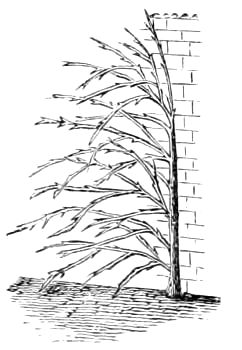
FIG. 132. APRICOT TREE, showing method of Training suitable for
Gable Ends of Cottages.
Cropping, &c. Thinning of the fruit needs early and
careful attention. The average of 3in. apart may be chosen
for a maximum yield. As the fruit approach maturity,
overhanging leaves, or branches of young wood, must be
removed, to admit sun and light to properly ripen and
colour them. Apricots for preserving should be gathered
quite dry, and with the sun upon them. For dessert, they
should be plucked in the morning, and placed in a cool
room till wanted.
Under Glass. The Apricot will hardly bear forcing. It
is more sensitive to heat than almost any other of our
semi-hardy fruits. Practically, it is found that a confined
atmosphere, or the slightest excess of heat, brings its blooms
off in showers, and this, of course, mars all prospect of
fruit. But in cold climates and northern latitudes under
glass is the best and only means of growing them. Should
red-spider appear, it is proof that the roots or the atmosphere,
probably both, have been too dry; more moisture,
and syringing over the leaves, are the surest remedies. The
borders need to be about 2ft. or 2ft. 6in. deep, of any light
rich soil. Fresh planted trees should be frequently syringed
overhead before and after the flowering period. After they
have become fully established, less overhead sprinkling is
needed. During all the earlier stages of growth, and until
the fruit are stoned, an artificial temperature of 45deg.
should not be exceeded. After that stage, the fruit will
bear a heat of 50deg. or 55deg. It is hardly safe or
desirable to exceed the latter under glass, and unless
abundance of air is given, 55deg. may bring off the fruit,
even at an advanced stage. A thorough soaking, at
intervals of fourteen days during the height of the growing
season, may be applied; and, should the trees be heavily
cropped, manure water may be given at every alternate
watering. It is also a good practice to mulch the surface
of heavily cropped trees with 3in. or 4in. of good dung.
The fruit should, however, be freely thinned to distances
of from 4in. to 6in. apart at the most. There are three
general methods of growing them under glass: The trees
may be trained on trellises or walls; grown as natural
standards, tall or dwarf; and as bushes, either planted
out or in pots.
Varieties. The varieties of Apricot, unlike most other
fruit, are not numerous; and the following will be found in
every way representative and satisfactory:
Blanche, or White Masculine. A small and delicate fruited
sort. Fruit pale whitish-yellow, tinged with brownish-red next the
sun, covered with a fine white down; rich, delicate, and sugary.
Blenheim, or Shipley's.* Very early and prolific. Colour
deep yellow; flesh medium, rich, and juicy. Ripe in July.
Breda.* A small sort, of excellent quality. Colour deep orange;
flesh firm, juicy, and rich. Hardiest sort grown.
Kaisha.* Fruit round, much smaller than Moorpark. Colour pale
citron; flesh tender, rich, juicy; flavour delicate and delicious;
kernel very sweet.
Large Red. The deepest coloured of all. Fruit very large;
colour deep reddish-orange; flesh rich and juicy; kernel bitter.
Moorpark.* The sort most generally grown; large, handsome,
and of excellent quality. Colour brownish-orange; flesh rich,
juicy, and sweet. It is one of the best and most useful sorts in
cultivation.
Peach, or Grosse Peche. Distinct and very desirable. Fruit
very large; flesh rich, firm, and juicy. One of the very best.
Royal.* Not unlike Moorpark, but with a more robust constitution,
and less given to limb dying. Fruit large, dull, yellow, rich,
and juicy.
Turkey.* A good variety. Colour pale yellow; flavour rich and
juicy; flesh firm.
For modes of Training and Budding, Diseases, Insect
Pests, &c., full information will be found under each individual
title.
APTERANTHES. See Boucerosia.
APTEROUS. Without wings.
AQUATIC PLANTS. The culture of Aquatic Plants,
both indoors and in the open air, has been greatly neglected
of late years; they are, therefore, rarely seen to perfection
in places other than where their culture is made a speciality.
Generally speaking, they are most easily grown. The
following stove and greenhouse genera are well worth attention:
Aponogeton, Cyperus, Damasonium, Herpestis,
Limnocharis, Nelumbium, Nymphœa, Ouvirandra, Pistia,
Pontederia, Salvinia, Thalia, Trianea, Victoria. Many
species belonging to some of the foregoing genera are
hardy, as are also the following: Alisma, Butomus, Calla,
Hottonia, Menyanthes, Nuphar, Polygonum, Sagittaria,
Trapa, Typha, Villarsia.
AQUATICUS. Living in water.
AQUATILIS. Living under water.
AQUIFOLIACEÆ. See Ilicineæ.
AQUILEGIA (from aquila, an eagle; in reference to
the form of the petals). Columbine. ORD. Ranunculaceæ.
Erect hardy perennial herbs with fibrous roots. Flowers solitary
or panicled, drooping; sepals five, petaloid, deciduous;
petals five, concave, spurred; spurs very large, produced
downwards into hollow tubes, and frequently curved at
the extremity; carpels five, sessile, free. Radical leaves
on long stalks, twice or thrice ternate, with trifid-toothed,
usually blunt segments. Too much praise can scarcely be
lavished upon this elegant genus of plants. They prefer
a moist and sheltered situation, with exposure to the
sun. The more robust species will thrive in ordinary
garden soil, but the rarer and more delicate kinds
require a good friable sandy loam and leaf soil, with good
drainage. Seed is produced in abundance, and must be
sown very thinly, as soon as practicable after being ripe,
in a shady place or in pans in a cold frame. When up,
and strong enough to remove, the seedlings may be
planted out where they are to bloom, allowing every
plant at least 9in. each way. The strong-growing kinds
may be placed in the border, the dwarf ones on the
rockery. When in bloom, the inferior sorts should be
weeded out, retaining only the best varieties. To obtain
seed true of any species, it is absolutely necessary to plant
the separate kinds far apart, and cover them with fine
muslin, to prevent the access of insects to the flowers, as
none are more easily cross-fertilised. Division of the root
is the only way to perpetuate any particular variety with
certainty, unless seed is saved in the way mentioned, or
imported from the native habitats of particular species.
There are many beautiful hybrids, as well as species, in
cultivation.
A. alpina (alpine).* fl. from 2in. to 3in. in diameter when expanded,
deep blue or blue and white, on leafy, two to three-flowered
stems; spurs straight, but somewhat incurved at the
apex, one-half shorter than the petal limb. May. l. with segments
deeply divided into linear lobes. h. 1ft. Alps of Switzerland,
in shady humid places, 1731. Plant this on the rockery.
A. arctica (Arctic). A form of A. formosa.
A. atropurpurea (dark purple). fl. dark purple or bluish violet,
about 1in. or 1½in. in diameter when expanded, two or three in
a head; spurs straight, equal in length with the petals' limb;
sepals about as long as the petals. May. l. petioled, biternate.
h. 2ft. to 3ft. Siberia. Border plant.
A. aurea (golden).* A synonym of A. chrysantha flavescens.
A. Bertoloni (Bertoloni's).* fl. about 1in. across, blue-violet
throughout; sepals about ¾in. long, rounded; petals about the
same length; spurs very short, knobbed; stems two to four
flowered. June and July. l. small, dark green, and glaucous. A
very pretty little alpine, growing about 1ft. high. SYN. A. Reuteri.
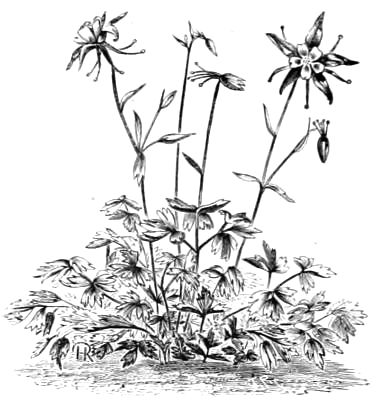
FIG. 133. AQUILEGIA CÆRULEA.
A. cærulea (sky-blue).* fl. several on a stem, blue and white,
sometimes more or less tinted with lilac or claret, rarely pure
white, when expanded 2½in. to 3in. in diameter; spur very
slender, nearly straight, green tipped, about 2in. long. April to
July. l. large, biternate. h. 9in. to 15in. Rocky Mountains,
1864. A very lovely species for the border or base of the rockery.
SYNS. A. leptoceras, A. macrantha. See Fig. 133.
A. c. alba (white).* fl. the same size and form as the type, white
throughout. Rocky Mountains. A very rare and lovely variety;
sometimes met with under the name of A. grandiflora.
A. c. hybrida (hybrid).* fl. blue and white, not so wide across as
the type, but more numerous, and the plant has a much more
vigorous habit. Of garden origin.
A. californica (Californian).* A form of A. formosa.
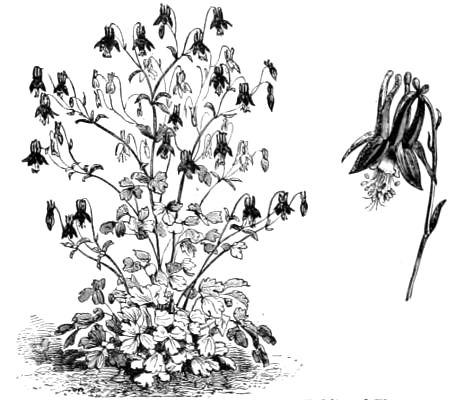
FIG. 134. AQUILEGIA CANADENSIS, showing Habit and Flower.
A. canadensis (Canadian).* fl. scarlet, mixed with yellow, less
than 1in. in diameter; spur straight, longer than the limb; styles
and stamens protruding; sepals acutish, a little longer than the
petals' limb. April to June. l., segments three-parted, bluntish,
and deeply toothed at the apex. h. 1ft. to 2ft. North America,
1640. Border or rockery; very pretty. See Fig. 134.
A. chrysantha (yellow-flowered).* fl., sepals primrose yellow,
spreading horizontally in full expansion, nearly or quite 1in. long,
tinted claret at the tip; limb of petals deeper yellow, not quite
so long; spur straight, very slender, divergent, 1½in. to 2in. long;
stems many-flowered. May to August. l. biternate. h. 3ft. to
4ft. California, 1873. One of the finest of all hardy perennials for
the border.
A. c. flavescens (yellow). fl. of a uniform bright canary yellow,
tinged with red; spur somewhat shorter than in A. canadensis,
and slightly incurved. California, 1872. SYN. A. aurea.
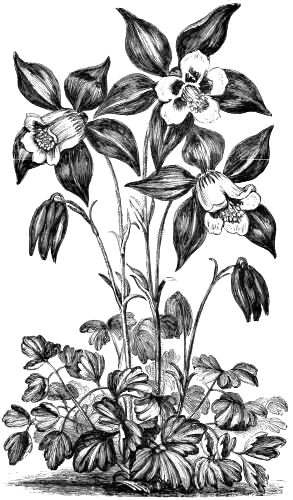
FIG. 135. AQUILEGIA GLANDULOSA.
A. eximia (choice). Synonymous with A. formosa.
A. formosa (handsome).* fl., sepals bright red, usually less than
1in. long, with an obtuse green tip; limb of petals yellow, about
half as long as the sepals; spurs ½in. to ¾in. long, slender in the
lower half, nearly straight, distinctly knobbed at the tip; stems
many-flowered. May to September. l. biternate. h. 2ft. to 4ft.
North America. Border. The following are synonyms and
varieties: A. arctica, A. californica, A. eximia, and A. f.
truncata, revealing only trivial differences. There is a very
beautiful hybrid known in gardens as A. californica hybrida, with
the sepals and petals yellowish, or tinged with orange, while
the long slender spurs are orange red; it is one of the handsomest
of all. All the forms are very showy, and well worth
growing.
A. fragrans (fragrant).* fl. white or pale claret purple, finely
pubescent, very fragrant; sepals about 1½in. long, not reflexing,
twice longer than the broad petals' limb; spur slender, slightly
curved, knobbed at the top, same length as
the petals; stems few-flowered. May to July.
l. biternate. h. 1½ft. to 2ft. Himalayas, 1839.
This requires a warm position.
A. glandulosa (glandular).* fl., sepals bright
lilac blue, about 1½in. long, more than twice the
length of the petals' limb; petals white; spur
¼in. long, or but little more, stout, much incurved;
stems one to three-flowered. Spring.
l. biternate. h. 8in. to 12in. Siberia, 1822.
Extremely pretty. See Fig. 135.
A. g. jucunda (pleasant). fl. rather smaller.
Very handsome little plants, freely hybridised,
and it is necessary to keep raising fresh batches,
as they are scarcely more than biennial.
A. glauca (glaucous). fl. white, tinted claret,
fragrant; sepals 1in. long, not reflexing; limb of
petals ¾in. long; spur straight, or a little curved,
about ⅓in. long; stem three to four-flowered.
June. l. biternate. h. 1ft. to 1½ft. Himalayas,
1839. Rather tender; plant in a warm dry position.
A. leptoceras (slender-horned). A synonym of
A. cærulea.
A. macrantha (large-flowered). A synonym of
A. cærulea.
A. olympica (Olympic).* fl. large, delicate
mauve blue; petals white, rather shorter than
the sepals; spur stout, short, obtuse. l. bi- or
triternate, glaucous. h. 1½ft. 1880. Mount
Olympus. See Fig. 136.
A. pyrenaica (Pyrenean).* fl., sepals bright
lilac blue, about 1in. long, but not quite as much
broad; limb of petals about ½in. long, and half
as broad; spur slender, nearly straight, or rather
incurved, nearly or quite ¾in. long, scarcely
knobbed at the end; stem one to three-flowered,
with small and little compound deep green
leaves. Summer. h. 9in. to 12in. Pyrenees,
1818. Plant on the rockery.
A. Reuteri (Reuter's). Synonymous with A.
Bertoloni.
A. sibirica (Siberian).* fl. bright lilac; sepals
very blunt, 1in. or a little more in length, spreading
or slightly reflexing when fully expanded;
limb of petals sometimes white, about ½in. long;
spur stout, much incurved, ½in. to ¾in. long;
stems many-flowered, glabrous. Summer. l.
biternate. h. 1ft. Siberia, 1806. Rockery species.
Here are referred, by Mr. Baker, A. bicolor, A.
Garnieriana, and A. speciosa. See Fig. 137.
A. thalictrifolia (Thalictrum-leaved). fl.,
sepals oblong, acute, lilac blue, about ½in. long;
limb of petals about as long, and rounded at
the top; spurs slender, not quite as long as the
sepals; stems about three-flowered. Summer.
l. with three-stalked segments cut into deep
oblong lobes. h. 2ft. Tyrol, 1879. Entire plant
clothed with fine pubescence.
A. viridiflora (green-flowered). fl., sepals oval-oblong,
shorter than the petals; spurs straight
and longer than the petals; stems two to three-flowered.
h. 1ft. to 1½ft. Siberia, 1780. Border.
Rather a pleasing and sweet-scented green-flowered
species, but not very ornamental.
A. vulgaris (common). Common Columbine.
fl. variously coloured; sepals ovate acute, about
1in. long, and half as broad; limb of the petal
rarely exceeding ¾in. long, and half as much
broad, rounded at the apex; spur much incurved,
stout, knobbed at the end, as long as the petals;
stems many-flowered. Spring and early summer.
l. biternate. England, &c. There are numerous
varieties of this very handsome species, both
double and single-flowered.
A. v. alba (white). fl. pure white.
A. v. a. fl.-pl. Double white flowers.
A. v. cærulea nana fl.-pl. Very dwarf, with double deep blue
flowers.
A. v. hybrida (hybrid). fl., sepals lilac purple, oblong-lanceolate,
less than 1in. long; limb of the petals white, about ½in. long; spur
scarcely incurved.
A. v. Vervæneana. This variety has pretty yellow mottled foliage.
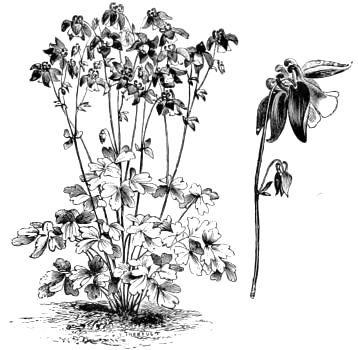
FIG. 136. AQUILEGIA OLYMPICA, showing Habit and Flower.
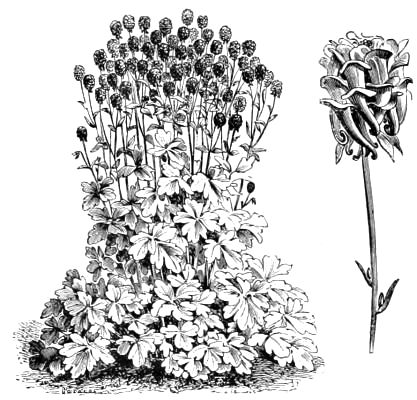
FIG. 137. AQUILEGIA SIBIRICA FLORE-PLENO, showing
Habit and Flower.
A. v. Wittmanniana (Wittmann's). fl. large, bright lilac purple;
sepals ovate-acute, 1in. to 1¼in. long, more than half as much
broad; limb of petals white, about half the length of sepals; spur
curved. A very fine variety.
The following names are also met with in gardens, some of which
represent specific forms, but none are effective as garden ornaments:
advena, Burgeriana, Haylodgensis (hybrid), grata, longissima,
nevadensis, oxysepala, &c.
AQUOSUS. Watery.
ARABIS (origin of the word not clear). Wall Cress;
Rock Cress. ORD. Cruciferæ. Hardy perennial trailers,
except where otherwise stated. Flowers mostly white;
racemes terminal; pedicels bractless. Radical leaves usually
stalked; cauline ones sessile or stem-clasping, entire or
toothed, rarely lobed. Most members of this genus are
peculiarly well adapted for rockwork and the alpine garden,
both from their natural hardihood as well as their early and
profuse flowering habits. They are of the easiest possible
culture in any dry soil. The perennial species may either
be increased by divisions of the root, by cuttings, placed
in a shady border during the summer, or by seed. The
latter may be sown outside, or in pans, in spring, when
most of them will germinate in two or three weeks. The
annuals and biennials are for the most part devoid of any
cultural beauty.
A. albida (whitish).* fl. white; racemes terminal; pedicels longer
than the calyx. January to May. l. few-toothed, hoary, or
downy with branched hairs; radical ones obovate-oblong; cauline
ones cordately sagittate, clasping the stem. h. 6in. to 9in.
Tauria and Caucasus, 1798. SYN. A. caucasica.
A. a. variegata (variegated).* A very pretty variegated form for
edgings.
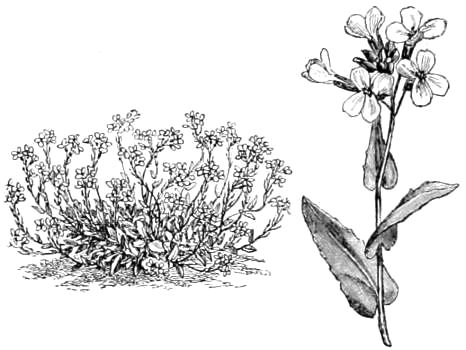
FIG. 138. ARABIS ALPINA, showing Habit and Flowers.
A. alpina (alpine).* fl. white, smaller than those of A. albida;
racemes terminal; pedicels longer than the calyx, which is
smoothish. March to May. l. many-toothed, lanceolate, acute,
villous with branched hairs; radical ones somewhat stalked; cauline
ones cordate, clasping the stem. h. 6in. European rocks, in
sunny places, 1596. There are one or two varieties, including a
variegated-leaved form, in cultivation. See Fig. 138.
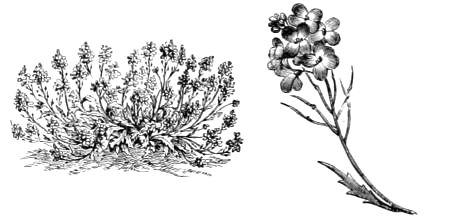
FIG. 139. ARABIS ARENOSA, showing Habit and Flowers.
A. arenosa (sand-loving).* fl. rose coloured, very rarely white or
bluish; petals obovate; pedicels spreading. April to July. l.
villous, with forked hairs; radical ones pinnatifid, with the upper
lobes much larger than the lower; cauline ones deeply toothed.
Stem branched, hispid, with simple hairs. h. 6in. Middle
Europe, 1798. See Fig. 139.
A. blepharophylla (fringed-leaved).* fl. rosy purple; petals
roundish, narrowing to the base, with slender claws. Spring. l.
naked, except the margins, which are fringed with very stiff
hairs; radical ones spathulate; cauline ones oblong, sessile.
h. 3in. to 4in. California, 1874. This succeeds best in a cool
frame, where it will flower in January.
A. caucasica (Caucasus). A synonym of A. albida.
A. lucida (shining).* fl. white; petals entire, narrowed at the
base, twice as long as the calyx. Summer. l. obovate, thickish,
shining, clasping the stem. h. 4in. to 6in. Hungary, 1790. A
very pretty species, with a dwarf habit; it is especially adapted
for edgings, borders, or rockwork.
A. l. variegata (variegated).* A great improvement upon the
type, being broadly edged with yellow, and the green somewhat
lighter. When grown in tufts or as edging, it is very effective, and
should be prevented from flowering. This exceedingly desirable
variety is a gem for the rockwork, and when seen in crevices, or
in bold tufts, it is very striking. It must be increased by slips or
rootlets, which should be taken in early summer.
A. mollis (soft). fl. white, in terminal racemes. May to July.
l. grossly toothed, somewhat pubescent, with small stellate hairs;
lower ones on long petioles, cordate-roundish; cauline ones ovate-cordate,
clasping the stem. h. 2ft. Caucasus, 1823.
A. petræa (rock).* fl. white; petals ovate, with stalks. June. l.
smooth, ciliated or scabrous, with simple or bifid radical ones
on longish stalks, entire, toothed; cauline ones oblong-linear,
entire, or toothed. h. 3in. or 4in. Britain.
A. præcox (early). fl. white; petals obovately cuneated, double
the length of the calyx. April to June. l. oblong, acute, sessile,
quite entire, smooth. Stem covered with close pressed rigid hairs.
h. 6in. to 9in. Hungary.
A. procurrens (procurrent). fl. white; petals obovate, double
the length of the calyx. May and June. l. ovate, quite entire,
smooth, ciliated with two-parted hairs; radical ones narrowed
into a petiole; cauline ones sessile, pointed. Stolons creeping.
h. 9in. Servia, 1819. There is a brilliantly variegated form of
this pretty species well worth growing.
A. rosea (rosy).* fl. rosy purple; petals oblong, somewhat wedge-shaped,
double the length of the calyx; pedicels longer than the
calyx. May to July. l., cauline ones oblong, somewhat cordate, and
rather stem-clasping, scabrous with branched hairs. h. 1ft.
Calabria, 1832.
A. verna (spring). fl. small, purple, with a white claw; pedicels
shorter than the calyx. May to June. l., cauline ones cordate,
clasping the stem, toothed, scabrous with three-parted hairs.
h. 3in. to 6in. South Europe, 1710. The best annual species.
ARACEÆ or AROIDEÆ. An extensive order of herbaceous
plants, with tuberous rhizomes. Flowers on a spadix,
unisexual or hermaphrodite, protected by a spathe. Leaves
large, radical. Well known genera belonging to this order
are: Alocasia, Arum, Caladium, Colocasia, and Dieffenbachia.
ARACHIS (from a, without, and rachis, a branch;
plant branchless). Ground or Earth Nut. ORD. Leguminosæ.
A stove annual, of economical value. Corolla resupinate;
calyx a long tube, with a bilabiate limb; ovary
stipitate, inclosed in the tube of the calyx; the stipe
at first short, but afterwards becoming elongated. Sandy
loam is the soil most suitable for their cultivation. Seeds
should be sown in heat; and, when the plants have grown
to a sufficient size, they should be potted off singly, and
placed among other stove annuals. After the plant has
finished flowering, and the pods begin to lengthen, the pedicels
force them into the earth, where they ripen their seeds.
A. hypogæa (underground). Monkey Nut. fl. yellow, five to seven
together in the axils of the leaves. May. l. abruptly-pinnate,
bearing two pairs of leaflets, without any tendril; stipulas elongated,
adnate to the petioles. h. 1ft., or procumbent. South
America, 1812. See Fig. 140.
ARACHNIMORPHA. A synonym of Rondeletia
(which see).
ARACHNOID. Resembling a cobweb in appearance;
seeming to be covered with cobweb, in consequence of the
entanglement of long, white hairs.
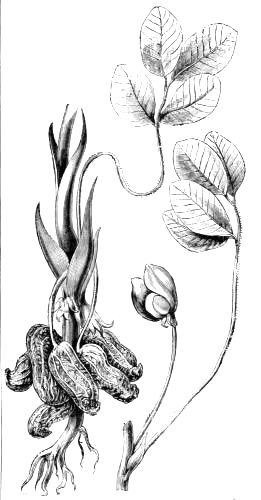
FIG. 140. ARACHIS HYPOGÆA, showing Leaf, Flower, &c., and
Cluster of short wrinkled Pods.
ARALIA (meaning unknown). ORD. Araliaceæ. This
widely-grown genus includes stove, greenhouse, and hardy,
herbaceous and shrubby plants. Flowers inconspicuous,
umbellate, the umbels usually disposed in panicles; petals
five, inserted on the margin of the disk; stamens five
(see Fig. 142). Leaves usually compound. These plants are
of moderately free growth, and the majority are easy to
manage. Those requiring indoor treatment thrive well
under the ordinary routine of management. One most important
requirement, however, is that they must be kept
well supplied with water at the roots. The finer, or stove
varieties, should be potted in a mixture of sandy loam and
peat, with the addition of a little fibrous leaf soil, and
sufficient sand to keep the whole porous. The stronger
growing kinds thrive in a richer compost. Propagation
by cuttings of the roots is a common and very successful
method. To obtain the roots, one of the strongest plants
should be turned out of the pot, and the roots should
be cleared of soil by shaking or washing it out; the
requisite number of pieces should then be selected.
As each piece is removed, it should have the end nearest
the stem cut horizontally, to distinguish it from the other
or furthermost end. In planting cuttings of the roots,
it is best to place the end nearest the stem uppermost.
The pieces may be left about 2in. long, and should be
inserted in pots, well drained, and filled with sandy soil,
leaving the tops of the cuttings about level with the surface
of the soil. A square of glass must be placed over the top
of each pot, plunging them in moderate bottom heat. The
stems of the plants from which the roots have been taken
may be cut into pieces 1in. or 1½in. long, leaving an eye or
bud near the top; a slice of half the shoot may be taken off
opposite the bud. When prepared, these pieces should be
pressed into pots of sand or sandy soil, and plunged into
bottom heat. The stems may be cut down without disturbing
the roots; in that case, if the pots are plunged in
bottom heat, and kept moderately supplied with water,
they will probably throw up several suckers or shoots from
the roots. These, if taken off with a portion of root to
each, and placed in small sized pots, will, with a little
care, soon make useful plants. All the hardy species and
most of the greenhouse ones are propagated readily by
cuttings or pieces of roots. Some of the stove species,
however, are very difficult to increase, except by grafting.
Among these are A. leptophylla, A. Veitchii, &c. These
should be worked on stocks of A. Guilfoylei or A. reticulata,
the latter being the better of the two. Cuttings of either of
these strike readily, and stocks fit for grafting are easily
procured. In sheltered and warm positions, the greenhouse
species are admirably suited for sub-tropical gardening,
either planted singly or in groups. See also Dimorphanthus,
Fatsia, Hedera, Heptapleurum, Monopanax,
Oreopanax, and Panax.
A. canescens (greyish). A garden synonym of A. chinensis.
A. Chabrierii (Chabrier's).* l. alternate, pinnate, about a foot
long; pinnæ opposite, 6in. to 9in. long, linear-lanceolate, deep
green, with a heavy crimson midrib. 1882. Suitable for table
decoration. A charming stove species.
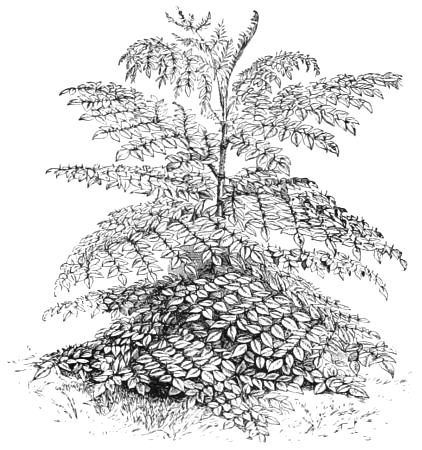
FIG. 141. ARALIA CHINENSIS.
A. chinensis (Chinese).* fl. white; panicles terminal; peduncles
umbelliferous. l. petiolate, coriaceous, woolly on both surfaces
when young (only); pinnæ seven, ovate, serrated at the apex,
erect and distinct. h. 5ft. to 6ft. 1838. This species, if planted
in a soil with a dry porous bottom, will prove to be hardy.
SYN. A. canescens, of gardens. See Fig. 141.
A. concinna (neat). l. unequally pinnate; pinnæ lobed and serrate.
Stem spotted. New Caledonia, 1879. A handsome stove
species, but very rare. SYNS. A. spectabilis, Delarbrea spectabilis.
A. crassifolia (thick-leaved). A synonym of Pseudopanax crassifolium.
A. edulis (edible).* fl. numerous, white; umbels globose, axillary
and terminal, united into simple or compound racemes. Summer.
l., lower ones pinnate, with five leaflets, or three pinnate, with
divisions of three to five leaflets; upper ones generally simple,
with stalked leaflets, having a cordate base, ovate, acute, finely
toothed, downy. h. 4ft. to 6ft. Japan, 1843. Hardy, herbaceous,
perennial, hairy, and spineless.
A. elegantissima (most elegant).* l. digitate, on long dark green
footstalks, which are mottled with white; leaflets seven to ten,
filiform, and, being pendulous, impart a very graceful character to
the plant. Stem straight, erect. South Sea Islands, 1873. Stove
species, excellent for table decoration.
A. filicifolia (fern-leaved).* l., leafstalks sheathing at the base,
and terete in the upper part, expanding into a broad leafy limb
which is impari-pinnately divided; pinnæ opposite, deeply
pinnatifid, bright green, with a purplish midrib. Stem and leafstalks
purplish, thickly marked with oblong white spots. Polynesia,
1876.
A. gracillima (most graceful). Synonymous with A. Veitchii gracillima.
A. Guilfoylei (Guilfoyle's).* l. pinnate, on long smooth terete
petioles; leaflets oblong-elliptic, bluntish, from three to seven,
they are sometimes obscurely lobed, and irregularly spinose,
serrate, varying in size from 2in. to 3in. long, neatly and evenly
margined with creamy white, the surface being in addition occasionally
splashed with grey. Stem erect, copiously dotted
with lenticular markings. South Sea Islands, 1876. Stove
species.
A. heteromorpha (many-formed).* l. sometimes ovate-lanceolate
and serrated, and at others bifid or even trifid at the apex,
about 6in. to 8in. or 9in. long, bright shining green. A very
desirable species, of robust and compact habit.
A. japonica (Japanese). Another name for Fatsia japonica.
A. Kerchoveana (Count Kerchove's). l. digitate, almost
circular in outline; leaflets nine to eleven, spreading, elliptic-lanceolate,
conspicuously serrated or undulated margins, of a
deep glossy green relieved by a pale midrib. 1883. A very elegant
slender-stemmed plant from the South Sea Islands, and likely
to prove valuable for decorative purposes. Stove species.
A. leptophylla (slender-leaved).* l. compound, bearing often
seven or more petiolate leaflets of a somewhat pendent character,
and dark green in colour. 1862. An elegant stove or greenhouse
slender growing species.
A. longipes (long-stalked). l. digitate, long stalked, and rather
distant; leaflets oblanceolate acuminate, slightly undulated at the
edge; petioles elongated. Stems simple. North Australia, 1882.
A very distinct erect-growing evergreen stove species.
A. maculata (spotted). l. of a light green colour; leaflets oblong-acuminate,
in about four pairs. Stem erect, which, as well as the
stalks of the leaves, is of a blackish-purple hue, thickly spotted
with green dots. This peculiar colouring is very distinct and conspicuous.
South Pacific Islands. Stove species.
A. Maximowiczii (Maximowicz's).* l. on long stalks, palmately
five to seven-lobed; lobes lanceolate, 3½in. long, serrate. Japan,
1874. An elegant and distinct hardy shrub, with erect spiny
stem. SYN. Acanthopanax ricinifolium.
A. monstrosa (monstrous).* l. pendent, pinnate; leaflets three
to seven, oblong elliptic, deeply and irregularly serrated (this
serration sometimes takes most fantastic forms), broadly margined
with creamy white, the surface blotched with grey. South Sea
Islands, 1880. Stove species.
A. nudicaulis (naked-stemmed).* fl. greenish; scape trifid at the
apex, shorter than the leaf, each division bearing a many-flowered
umbel. June. l. radical, the divisions pinnately five foliate;
leaflets oblong-oval, with a long tapering point, serrate. Root
horizontal, very long. h. 3ft. to 4ft. North America, 1731. Quite
hardy, herbaceous perennial.
A. Osyana (Osyan).* Resembling A. leptophylla, but with leaflets
deeply bifid at the ends; surface colour bright green; primary veins
and tips of the leaflets chocolate brown. South Sea Islands, 1870.
Very elegant stove species.
A. pentaphylla (five-leaved).* l. digitate, or sometimes only three
leaflets are produced, each varying from 6in. to 10in. in length, and
from 1in. to 2in. in breadth, deeply lobed or pinnatifid, bright
shining green. Stem arboreous, prickly. h. 20ft. Japan. SYN.
Panax spinosa.
A. p. variegata (variegated). l. broadly edged with creamy
white. Japan, 1874.
A. quercifolia (oak-leaved).* l. opposite, trifoliate; leaflets deeply
sinuate; lower petioles about 3in. long, light shining green. New
Britain, 1880. Very pretty stove species.
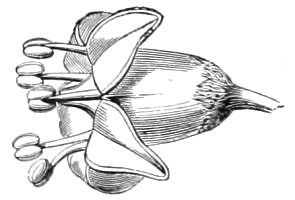
FIG. 142. FLOWER OF ARALIA RACEMOSA, enlarged.
A. racemosa (raceme-flowering).* fl. greenish-white, petals
spreading; peduncles axillary, disposed in a terminal raceme,
umbelliferous. June. l. petioles tripartite, the partitions bearing
each three to five ovate or cordate, acuminated, serrated, smoothish
leaflets. h. 3ft. to 4ft. North America, 1658. Hardy herbaceous
species, highly ornamental. See Fig. 142.
A. reticulata (netted). l. alternate, strap-shaped when young,
becoming larger with age, dark green, reticulated with a lighter
shade of the same colour. A very handsome species, requiring
stove heat during winter. In spring and summer it is admirably
suited for conservatory or indoor decoration, having a light and
graceful aspect.
A. rotunda (round). l. sometimes of a single leaflet only, which
is spreading, orbicular, cordate at the base, margined with
distinct white tipped teeth; at other times, especially when
approaching maturity, the leaves are trifoliate, the leaflets being
rounded and toothed, and the terminal one being about double
the size of the lateral ones. Stems erect, brownish-green, spotted
when young with pale elongate blotches. Polynesia, 1882.
A. Scheffleri (Scheffler's). l. on long petioles, digitate; leaflets
five, petiolulate, lanceolate, attenuated at the base, serrulated,
glabrous on both surfaces. Stem shrubby, smooth. New Zealand.
Greenhouse species.
A. spectabilis (showy). A synonym of A. concinna.
A. spinosa (thorny).* Angelica Tree. l. doubly and triply pinnate;
leaflets ovate, acuminated, deeply serrated. Stem simple, prickly
(as are also the petioles), forming into an umbrella-like head,
deciduous. h. 8ft. to 12ft. North America, 1688. A very fine
hardy species for sheltered spots.
A. spinulosa (small-spined). l. alternate, pinnate; pinnæ ovate
acuminate, dark green, margined with little reddish-crimson
spines or prickles. Stems and petioles spotted and suffused with
crimson. 1880. A bold and robust stove plant.
A. ternata (three-leafleted).* l. opposite, ternate; leaflets oblong-lanceolate;
margins in some cases deeply serrate, in others sinuate,
light green. New Britain, 1879. A slender growing species.
A. trifolia (three-leaved). A synonym of Pseudopanax Lessonii.
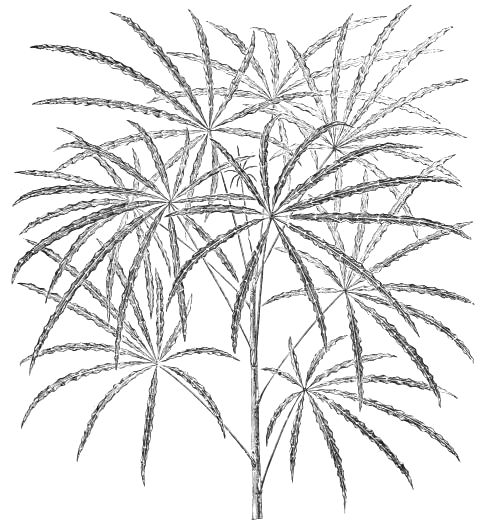
FIG. 143. ARALIA VEITCHII.
A. Veitchii (Veitch's).* l. digitate, with about eleven filiform
undulated leaflets, glossy green above, dark red beneath; petioles
long and slender. New Caledonia, 1867. A very handsome (said
to be the best) species, with slender, erect growing stem. See
Fig. 143, for which we are indebted to Messrs. Veitch and Sons.
A. V. gracillima (most graceful).* l. alternate, spreading; leaflets
nearly linear, but slightly narrowed at both ends, having a prominent
ivory-white central rib. South Sea Islands, 1876. An
erect growing species, with an elegantly graceful habit. It is
allied to A. reticulata, but is more handsome. This charming
variety is undoubtedly the finest for table decoration, and is
frequently grafted upon stocks of the typical form. It enjoys
plenty of heat. SYN. A. gracillima.
ARALIACEÆ. An order of trees, shrubs, or (rarely)
herbaceous plants, often pubescent, and sometimes spiny.
Flowers variously disposed, hermaphrodite or unisexual,
regular; petals usually five, and valvate. Leaves alternate,
or (rarely) opposite. This order is closely allied to Umbelliferæ;
and the best known genera are Aralia and Hedera.
ARAR-TREE. A common name for Callitris
quadrivalvis (which see).
ARAUCARIA (from Araucanos, its name in Chili).
SYN. Eutacta. ORD. Coniferæ. A noble genus of
diœcious or sub-diœcious evergreen trees, with usually
imbricated persistent flat sessile scale-like leaves. Male
cones large, cylindrical, terminal; female ones very large,
globular, terminal, with dense ligneous deciduous scales,
each bearing a solitary seed. The majority of the species
are not, unfortunately, sufficiently hardy to withstand our
winters out of doors. Few trees can compete with them in
symmetry and elegant proportion for conservatory decoration,
where they may be grown in large tubs, or planted
out. Small plants grown in pots are most serviceable for
table and other decorative purposes. They thrive in a
good fibrous loam, mixed with leaf soil and sand. Propagation
by means of seed is the surest and most satisfactory
method; the seed should be sown in pans or boxes, or if in
large quantities, in a bed, with but gentle heat; they
usually take some time to germinate. Cuttings are procured
by taking off the leading shoots, and fixing them firmly in a
pot of sand; they first require a cool place, but may afterwards
be subjected to slight warmth. When rooted, they
should be potted off into the soil above mentioned. The
young growths which afterwards shoot from the plant,
whence the cutting, may be taken off and treated in much
the same manner. These are the only methods of propagation
worth pursuing.
A. Balansæ (Balansa's). male cones cylindrical-conical, 2in.
female cones elliptic globose, 4in.; scales obovate, cuneate. l.
arcuately-uncinate, ovate triangular, imbricated round the distichous,
simple branchlets. h. 130ft. to 160ft. New Caledonia,
1875. A fine greenhouse plumosely branched tree.
A. Bidwillii (Bidwill's).* Bunya-Bunya Pine; Moreton Bay
Pine. cones sub-globose, longest diameter 10in. to 12in., shortest
9in. to 10in. l. ovate-lanceolate, in two nearly horizontal rows,
acuminated, slightly convex above, concave beneath, leathery,
deep shining green. h. 150ft. Moreton Bay. Habit very
regular and symmetrical. Greenhouse species.
A. brasiliensis (Brazilian). l. oblong-lanceolate, much attenuated
at the point, loosely imbricated, deep green; lower part of the
trunk usually free from branches, terminating in a rounded head.
h. 70ft. to 100ft. Brazil, 1819. A. b. gracilis, and A. b. Ridolfiana
are two forms of this species.
A. columnaris (columnar). A synonym of A. Cookii.
A. Cookii (Cook's).* l. awl-shaped, short, densely imbricated
around the frondose branches. Described by Mr. Abbay as having
"a somewhat curious habit, even when growing alone, of shedding
their branches for five-sixths or more of their height, and then
replacing them by a smaller and more bushy growth, so that the
tree at a distance presents a very columnar appearance, the
resemblance being increased by the summit being crowned with a
mass of foliage somewhat like a capital." h. 200ft. New Caledonia,
1851. SYN. A. columnaris.
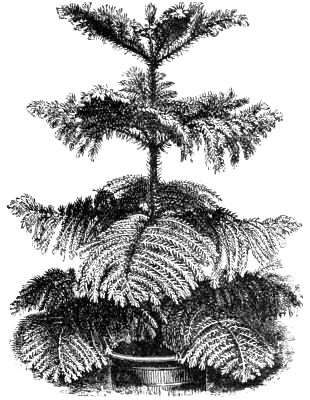
FIG. 144. ARAUCARIA EXCELSA.
A. Cunninghami (Cunningham's).* l. on the sterile branches
needle-shaped, obscurely quadrangular, rigid, acute; on the fertile
branches shorter, stouter, closely appressed, bright green; upper
branches ascending, lower ones horizontal. h. 100ft. Moreton
Bay. This fine species we have found to be quite hardy on the
south-west coast of England.
A. C. glauca (milky-green). A very handsome variety, with silvery
glaucous leaves.
A. excelsa (lofty).* The Norfolk Island Pine. l. awl-shaped,
curved, sharply acuminated, bright green, densely packed on the
frondose, deltoid, horizontal, or pendulous branches. When well
grown, this is a beautifully symmetrical greenhouse or conservatory
species, attaining to a height of 150ft., and a circumference of
20ft. or more. Norfolk Island. This is especially desirable in a
small state. There are several varieties known, the best being:
A. e. glauca, having lighter green, and very glaucous foliage;
and A. e. robusta, which is larger in all its parts. See Fig. 144.
A. Goldieana (Goldie's).* Allied to A. Rulei. l. produced in
whorls, pendulous, dark green, varying in size. New Caledonia.
Most distinct and elegant for conservatory decoration.
A. imbricata (imbricated).* The Monkey Puzzle. fl., male and
female catkins on separate trees; the males are six or seven in a
cluster, pedunculate, yellow, and oval with numerous scales, imbricated,
long, and recurved at the points; the female catkins are
oval, with numerous wedge-shaped scales, with narrow oblong
brittle points; they are produced at the ends of the branches.
cones, when fully ripe globular, from 3in. to 4in. in diameter,
dark brown. The branches are horizontal, inflexed, and ascending
at the extremities, and are produced in whorls. l. ovate-lanceolate,
sessile, thickened at the base, stiff, leathery, straight,
somewhat keeled-shaped below, and strongly mucronate at the
apex; verticillate, with seven or eight in a whorl, imbricate, and
closely encircling the branches, concave, glabrous, shining,
marked with longitudinal lines, dotted on both sides. h. 50ft.
to 100ft. Chili, 1796. A well known hardy tree, of striking
aspect, and indispensable to Arboreta and shrubberies. See
Fig. 145.
A. Rulei (Rule's).* male cones oblong obtuse; female cones oval.
l. oblong-lanceolate, with a prominent dorsal nerve, more closely
appressed, and less sharply pointed than in the foregoing species;
imbricated in four rows. Branches horizontal; branchlets often
quite pendulous. h. 50ft. Papuan Archipelago.
A. R. elegans (elegant).* l. smaller; whorls of branches closer
together; branchlets more slender. An elegant form; and, from
its comparative dwarf and graceful habit, should be very generally
grown.
ARBOR. A tree. A perennial plant, having a distinct
bole or trunk, from which the main branches grow.
ARBORESCENT. Having a tendency to become a
tree.
ARBORETUM. A collection of hardy trees formed
for pleasure or instruction, and which, when well managed,
is a source of much interesting study. They afford shelter,
improve the local climate, renovate bad soils, &c., and also,
by concealing or hiding disagreeable objects, heighten the
effect of agreeable ones, create beauty, and add value. A
properly arranged Arboretum should be constructed with a
view to picturesque beauty, and not systematically, as is
usually the case in Botanic Gardens, although scientific
purposes are best served by a systematic arrangement.
ARBOR-VITÆ. See Thuja.
ARBOUR. A seat surrounded by lattice work, covered
by Vines, Wistarias, or other climbing plants.
ARBUTUS (from arboise, Celtic for austere bush; in
allusion to the austere quality of the fruit). Strawberry Tree.
ORD. Ericaceæ. Trees and shrubs, with evergreen alternate
laurel-like leaves. Corolla globose, or ovately campanulate;
petals five, reflexed. Very ornamental subjects for lawns and
shrubberies, thriving well in a light sandy or peaty soil.
They may be propagated by seeds, which should be sown in
sand during March; by budding, and by inarching; the first
mentioned method is the one most generally employed, with
good results. The various sorts may be grafted, budded,
or inarched upon A. Unedo. The greenhouse species are
rare in cultivation, but their management does not materially
differ from other plants requiring a similar temperature.
A. Andrachne (Andrachne).* fl. greenish-white; panicles terminal,
erect, clothed with viscid down. March and April. l.
oblong, bluntish, entire in some, a little serrated in others,
glabrous. h. 10ft. to 14ft. Greece, 1724. A fine ornamental
tree.
A. A. serratifolia (saw-edge-leaved). fl. yellowish, disposed in
rather large terminal clusters. l. serrated, and narrower than
those of the species. SYN. A. serratifolia.
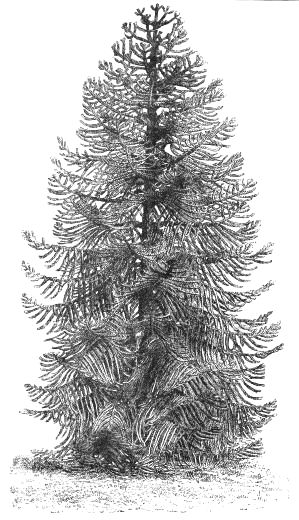
FIG. 145. ARAUCARIA IMBRICATA.
A. andrachnoides (Andrachne-like). A synonym of A. hybrida.
A. canariensis (Canary). fl. greenish-white; panicles erect,
hispid. May. l. oblong-lanceolate, serrated, glaucous beneath.
h. 8ft. to 10ft. Canary Islands, 1796. Greenhouse.
A. densiflora (thickly-flowered).* fl. white; corolla oval; pedicels
furnished with three bracteas at the base; panicle terminal, composed
of closely packed racemes. l. 4in. to 5in. long, on long petioles,
oblong, acute, sharply toothed, coriaceous, glabrous above and
shining, but downy beneath, the middle nerve with rusty villi;
branches angular, hairy. h. 20ft. Mexico, 1826. Greenhouse.
A. hybrida (hybrid).* fl. white; panicle terminal, pendulous,
downy. September to December. l. oblong, acute, serrated,
glabrous; branches pilose. h. 10ft. to 0ft. A half-hardy garden
hybrid; it originated about 1800. SYN. A. andrachnoides.
A. Menziesi (Menzies').* fl. white; racemes axillary and terminal,
panicled, dense-flowered. September. l. broad-oval,
quite entire, glabrous, on long petioles. h. 6ft. to 10ft. North-west
America, 1827. A noble hardy tree. A. laurifolia comes
close to this species. SYN. A. procera.
A. mollis (soft). fl. rosy, drooping; panicle terminal, crowded,
racemose. June. l. oblong-acute, sharply toothed, coriaceous,
clothed with soft pubescence above, and white tomentum beneath.
h. 6ft. Mexico. Greenhouse shrub.
A. mucronata (mucronate). A synonym of Pernettya mucronata.
A. pilosa (pilose). A synonym of Pernettya pilosa.
A. procera (tall).* A synonym of A. Menziesi.
A. serratifolia (saw-edge-leaved). A synonym of A. Andrachne
serratifolia.
A. Unedo (Unedo).* The Strawberry Tree. fl. white, deep red
in some of the varieties, nodding, in terminal racemose, bracteate
panicles. September. fr. large, scarlet, nearly globose, granular,
edible. l. oblong-lanceolate, glabrous, serrulated; branchlets
clothed with glandular hairs. h. 8ft. to 10ft. West of Ireland,
and South Europe. There are several varieties of this plant in
cultivation. It is one of the greatest ornaments in the months of
October and November—the season when it is in flower, and
when, also, the fruit of the former year is ripe.
A. Xalapensis (Xalapan). fl. reddish white; corolla ovate;
panicle terminal, composed of many racemes. April. l. petiolate,
oblong, acute, quite entire, about 2in. long, glabrous above, but
clothed with brownish tomentum beneath; epidermis separating,
brownish purple. Young branches glabrous, but beset with
ramentæ. h. 6ft. to 9ft. Mexico. Greenhouse species.
ARCHEGONIUM. The female organ in ferns, &c.,
analogous with the ovary in flowering plants.
ARCTOSTAPHYLOS (from arktos, a bear, and
staphyle, a grape; bears eat the fruit of some species).
ORD. Ericaceæ. Handsome hardy or half-hardy shrubs or
sub-shrubs, agreeing in generic characters with Arbutus,
except that the fruit is five-celled and the cells one-seeded,
and not granular on the outside. For culture, &c., see
Arbutus.
A. alpina (alpine).* Black Bearberry. fl. white or flesh-coloured,
in terminal, reflexed racemes; pedicels rather hairy. April. l.
obovate, acute, wrinkled, serrated, deciduous. Stems procumbent,
trailing. Scotland (but rare), &c. SYN. Arbutus alpina.
A. nitida (shining).* fl. white; racemes terminal. May. l. oblong-lanceolate,
acute, smooth on both sides and shining above. h.
4ft. Mexico, 1839. An erect half-hardy evergreen.
A. pungens (stinging).* fl. white; pedicels close; racemes short,
at first terminal, but at length lateral. February. l. ovate-oblong,
acute, mucronate, rather pungent, quite entire, coriaceous,
clothed with fine down on both surfaces; branchlets angular,
downy. h. 1ft. Mexico, 1839. A dwarf, much branched, half-hardy
evergreen shrub.
A. tomentosa (tomentose).* fl. pure white, campanulately urceolate,
bracteate; peduncles axillary, shorter than the leaves, somewhat
capitately racemose. December. l. oval, acute, sub-cordate at
the base, clothed with white tomentum beneath, on short petioles;
branches hispid. h. 4ft. North-west America, 1826. Shrubby
species; hardy.
A. Uva-ursi.* Bearberry. fl. flesh-coloured, with a red mouth,
growing in small clusters at the extremities of the branches.
April. l. obovate, quite entire, coriaceous, shining. Highlands
of Scotland and Wales. A hardy evergreen procumbent trailer.
SYN. Arbutus Uva-ursi.
ARCTOTHECA (from arktos, a bear, and theke, a
capsule; so named from the roughness of the fruit). ORD.
Compositæ. Greenhouse herbaceous perennial, allied to
Arctotis. Heads radiate; involucral scales imbricate in
many rows, the outer linear, herbaceous, inner larger,
scariose, very obtuse; receptacle honeycombed, bearing
many little fringes; achenes ovate, somewhat four-sided,
without wings or pappus. It thrives in a compost of peat,
leaf soil, and loam. Propagated by divisions of the plant,
or cuttings, in spring. Several species formerly classed
in this genus are now included under Arctotis.
A. repens (creeping). fl.-heads yellow. July. l. petioled, lyrate-pinnatifid,
green and mostly smooth above, white-woolly beneath.
Cape of Good Hope, 1793. A stemless, creeping or decumbent
herb.
ARCTOTIS (from arktos, a bear, and ous, an ear;
in reference to the shaggy fruit). ORD. Compositæ.
Mostly half-hardy herbaceous perennials. Involucral bracts
numerous, imbricated, scariose on the margin; receptacle
pitted, studded with bristles between the florets; achenes
grooved, crowned with a pappus of membranous scales.
The species of this genus are of easy culture in a compost
of loam and leaf soil. Propagated by cuttings at any
time of the year; these should be pricked in pots of very
sandy soil, and placed in gentle warmth; they must be
kept uncovered and moderately dry, or they will rot. The
Arctotis are very handsome plants in sunny, dry positions
outside during the summer months, but they must be protected
during winter.
A. acaulis (stemless).* fl.-heads yellow and red. Summer. l.
hoary on each side, ternate, lyrate. Stem very short, decumbent.
h. 4in. Cape of Good Hope, 1759. Very rarely met with.
A. arborescens (tree-like).* fl.-heads, ray-florets white above,
pink beneath; disk-florets yellow; disposed in large circular Daisy-like
heads. Summer. l. linear-oblong, pinnate; upper ones
amplexicaul; lower ones stalked. h. 2ft. Cape of Good Hope,
1815.
A. argentea (silvery). fl.-heads orange. August. l. lanceolate-linear,
entire, downy. h. 1ft. Cape of Good Hope, 1774.
A. aureola (golden). Synonymous with A. grandiflora.
A. breviscapa (short-stalked). Synonymous with A. speciosa.
A. grandiflora (large-flowered).* fl.-heads orange; outer scales of
involucre reflexed, cuneate, oblong, with a broad short point,
somewhat cobwebbed. July. l. pinnatifid, serrulate, three-nerved.
h. 1½ft. Cape of Good Hope, 1710. SYNS. A. aureola
and A. undulata.
A. reptans (creeping). fl.-heads white, orange. July. l. hairy
beneath; lower lyrate toothed; upper lanceolate toothed. Stem
ascending. h. 8in. Cape of Good Hope, 1795.
A. rosea (rosy). fl.-heads pink. Autumn. l. spathulate-lanceolate,
repand-toothed, hoary. Stem procumbent. Cape of Good
Hope, 1793.
A. speciosa (showy).* fl.-heads yellow; outer scales of involucre
linear recurved. July. l. lyrate, pinnatifid, hoary beneath, three-nerved.
Plant stemless. h. 1½ft. Cape of Good Hope, 1812.
Closely allied to A. acaulis. SYN. A. breviscapa.
A. undulata (wavy). Synonymous with A. grandiflora.
ARCUATE, ARCUATED. Curved or bent like a
bow; forming an arch.
ARDISIA. (from ardis, a point; in reference to the
acute, spear-pointed anthers). SYN. Pyrgus. ORD.
Myrsineæ. An extensive genus of greenhouse or stove,
mostly ornamental, evergreen trees and shrubs. Flowers
white or rose-coloured, more or less panicled; panicles
sometimes many-flowered at the extremities of the
branches, and longer than the leaves, sometimes few-flowered
and in the axils of the leaves. Leaves alternate,
rarely almost opposite, or three in a whorl, dotted. Propagated
by cuttings of the half-ripened wood taken from the
side shoots of the plant any time from March to September;
but, as the points of these side shoots bear the blossoms
and fruit, they are not well adapted for making good plants.
To obtain the best plants, the largest, ripest, and best-coloured
berries should be sown early in spring, as soon as
gathered, in a wide-mouthed pot or seed pan, well drained
and filled with loam and peat in equal parts, with the
addition of some sand, and plunged in bottom heat, the
soil being kept moderately moist. The seeds will germinate
in a few weeks after sowing, and when about 2in. high,
the strongest seedlings should be selected and placed in
3in. pots, the same mixture of soil being used, with the addition
of a fourth part well decomposed manure. After
potting, the plants must be moistened overhead twice a
day with a fine rose or syringe, and be kept in a close
atmosphere until the roots have taken to the fresh soil.
When the plants begin to grow again, they should be
removed to a light situation in the house; and when the
pots are well filled with roots, a shift into 6in. pots may
be effected, water being given judiciously until well established,
and here they may remain to fruit. Until the
berries are coloured, clear manure water, given once or
twice a week, will be found beneficial. The plants arrive
at their best when about 18in. or 2ft. high; after that,
they begin to get naked at the bottom. It will then be
wise to cut the worst plants down to within 2in. of the
pots, in early spring, allowing them to become dry at
the roots before this operation is performed. By giving
moisture to the roots when the cut has become dry, the
plants will soon break into growth again, when some of
the worst placed shoots should be rubbed off, leaving only
one or two of the strongest and best placed, calculated to
develop into a well formed plant. When the shoots have
grown 2in. or 3in., the plants should be turned out of their
pots, the soil shaken out from the roots, and the long
ends of the roots trimmed in a little with a knife; they
must then be placed in a pot sufficiently large to hold the
roots without squeezing. The plants should now occupy
the warmest end of the house in which they are grown, care
being taken in watering until new roots are formed, when
they may have more air and somewhat liberal supplies
of water. As soon as they are sufficiently advanced in
growth, they should be transferred to a larger-sized pot.
With proper treatment, they will flower and fruit the same
season as they are cut down, and form handsome plants.
Although most species of this genus are classed as stove
plants, they will succeed very well in a temperature that does
not fall below 45deg. in winter; and, when so grown,
they are not so liable to become infested with large brown
scale and other insect pests. This is particularly the case
with A. crenulata, and cool treatment is also favourable to
the ripe berries hanging on the plants for a much longer
time than when grown in a stove. Moreover, they do not
suffer so much when removed for decorative purposes.
A. acuminata (taper-pointed). fl. nearly white; petals small,
acute, dotted; panicles terminal and axillary, many-flowered.
July. l. entire, glabrous, oblong, acuminated, attenuated at the
base. h. 6ft. to 8ft. Guiana, 1803.
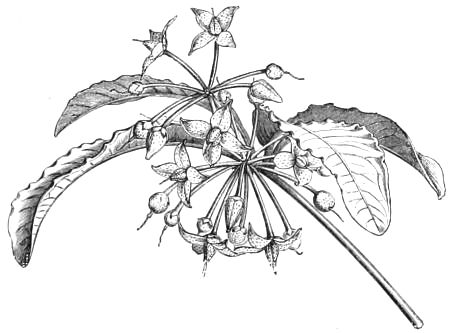
FIG. 146. FLOWERING BRANCH OF ARDISIA CRENULATA.
A. crenulata (round-notched-leaved).* fl. reddish violet; panicles
terminal; pedicels umbellate. June. Berries numerous, bright
coral-like. l. lanceolate-ovate, tapering at both ends, repandly
crenulated, pilose. h. 3ft. to 6ft. Mexico, 1809. When grown in
a cool atmosphere, as previously alluded to, it is quite common
for one crop of berries to hang on the plants until another crop is
ripe. This is a splendid plant, superior even to the red-berried
Solanums for decorative purposes, for which it is largely grown.
See Fig. 146.
A. crispa (curled). fl. small, drooping, red; cymes terminal,
usually solitary, often compound; pedicels smooth, finely veined,
umbellate, drooping. July. Berries red, size of peas. l. bluntish,
oblong-lanceolate, attenuated at both ends, with repandly crenulated
glandular edges, glabrous. h. 4ft. India, 1809.
A. humilis (humble). fl. rose-coloured; peduncles solitary, bearing
each a simple racemose umbel of many pretty, large, drooping
flowers; petals lanceolate, first recurved, afterwards revolute.
June. Berries size of peas, shining, black, juicy. l. oblong-lanceolate,
acuminated at both ends, glabrous, veined, shining. h. 4ft.
India, 1820.
A. japonica (Japanese).* fl. white; pedicels red, sub-umbellate,
secund, drooping; racemes simple, axillary. June. l. nearly
opposite, or three to five in a whorl, on short petioles, cuneate-oblong,
acute, glabrous, serrated; 4in. long. h. 1ft. Japan.
Perhaps the hardiest of all the species.
A. macrocarpa (large-fruited).* fl. flesh-coloured, dotted; petals
ovate, obtuse; racemes terminal, corymbose, almost sessile,
slightly hairy. Berries vermilion coloured, as large as gooseberries.
l. oblong, acute, tapering downwards, glandularly
crenated, dotted, close together, leathery, 6in. to 8in. long, paler
beneath, veinless. h. 5ft. to 6ft. Nepaul, 1824. A beautiful
shrub.
A. Oliveri (Oliver's).* fl. rose pink, white eye: corolla rotate, ½in.
across; lobes obtuse; heads terminal, consisting of a number of
stalked, many-flowered corymbs; pedicels about twice as long as
the flower. July. l. nearly sessile, entire, glabrous, 6in. to 8in.
long, by 2in. in the broadest portion; oblanceolate, acuminate,
tapering towards the base. Costa Rica, 1876.
A. paniculata (panicled).* fl. rose-coloured; panicles terminal,
composed of many alternate compound branches, large and elegant;
petals and sepals ovate. July. Berries red, smooth, size of
a pea, juicy. l. glabrous, cuneate-oblong, almost sessile, reflexed,
6in. to 20in. long, and from 3in. to 5in. broad, crowded at the
ends of the branches. h. 8ft. to 10ft. India, 1818.
A. punctata (dotted). fl. greyish white, sub-campanulate, secund,
beset with dark dots, and the pedicels with dark lines; peduncles
umbellate, terminal, and axillary; umbels involucrated by
deciduous bracts. June. l. glabrous, lanceolate, leathery, repandly
crenated, tapering to the base. h. 6ft. to 10ft. China,
1822.
A. serrulata (finely serrated).* fl. deep red; petals ciliated;
calyces and pedicels coloured; panicles terminal; pedicels umbellate.
July. l. glabrous, lanceolate, acuminated, wrinkled, serrulated,
beset with rusty dots beneath; branches downy. h. 2ft.
to 3ft. China, 1820.
A. villosa (hairy). fl. whitish, umbels axillary and terminal, very
villous. October. Berries villous. l. lanceolate, acuminated,
villous beneath, crenulated, 5in. to 7in. long, tapering to the
base, copiously dotted. China. All the upper parts of the plant
are densely beset with hairs.
A. v. mollis (soft).* This variety has very fine red berries, and is
superior to the type.
A. Wallichii (Wallich's). fl. red, in loose racemes;
peduncles axillary, one-half shorter than the leaves, and
are, as well as the pedicels, pilose. July. l. obovate,
acute, or obtuse, narrowed into the marginate petioles,
repandly crenulated, 4in. to 5in. long, and 2in. broad,
thickish. h. 2ft. India.
ARDUINA (in honour of P. Arduini, curator
of the Economical Garden of Padua, in the time
of Linnæus). ORD. Apocynaceæ. A singular and
pretty greenhouse evergreen shrub, of easy culture
in carefully drained pots of peat and loam, mixed
in equal proportions. Propagated by cuttings
in sand, under a glass. The winter temperature
should not be allowed to fall below 40deg.
A. bispinosa (two-spined). fl. small, white, sweet-scented,
terminal, corymbose. March to August. Berry
red. l. cordate-ovate, mucronate, nearly sessile, dark
green, larger than those of Box. Spines twin, simple,
but usually bifid; in this last case, one of the clefts
points downwards, and the other upwards. h. 3ft. to
5ft. Cape of Good Hope, 1760. SYN. Carissa Arduina.
ARECA (Areec is its name in Malabar, when an
old tree). The Cabbage Palm. ORD. Palmeæ.
This genus is now broken up into several, and
many species formerly here arranged are now found
under Acanthophœnix, Euterpe, Hyophorbe, Kentia,
Oncosperma, Phænicophorum. Very ornamental
and graceful stove palms, with a branching spadix, and
double spathe, which incloses the flowers. Flowers
unisexual, borne upon the same spike; female flowers
having six rudimentary stamens, and male flowers a six-cleft
perianth. Fruit one-seeded. They thrive in a compost
of loam, peat, and leaf soil, in equal parts, with a
liberal addition of sand; but when they are fully grown,
loam should preponderate to the extent of about two-thirds,
and some rotten cow-manure may be added. Propagated
from seeds, which should be sown in a compost
similar to above, and placed in a moist gentle heat. They
are employed, when young, with much success for the
decoration of drawing rooms and dinner tables.
A. Aliciæ (Princess Alice's). l. pinnatisect; segments sessile.
North Australia. A very handsome species, with a comparatively
dwarf habit; it is a valuable decorative plant.
A. Catechu (Catechu). l. pinnate, from 3ft. to 6ft. long; leaflets
12in. to 24in. in length, and about 2in. broad, light green; petioles
broadly sheathed at the base. h. 30ft. India, 1690. One of
the best and oldest species in cultivation, very effective, in a
young state, for dinner table decoration. It produces the Betel
nut, of which enormous quantities are used in India.
A. concinna (neat). l. pinnatisect, sub-glabrous; segments
sickle-shaped, much acuminated. Stem green, 8ft. to 12ft. high,
1in. to 2in. in diameter. Ceylon. The Cingalese chew the albumen
of the seeds with their Betel.
A. gigantea (gigantic). A synonym of Pinanga ternatensis.
A. glandiformis (gland-formed). l. pinnatisect, 9ft. to 12ft. long
when fully grown. h. 30ft. Moluccas. A handsome stove palm, of
bold aspect, and very suitable, when young, for decorative purposes.
A. Normanbyi (Normanby's). A synonym of Ptychosperma
Normanbyi.
A. triandra (three-stamened). l. pinnate, like those of A. Catechu
in size, &c. h. 20ft. India, introduced to Britain about 1810.
ARENARIA (from arena, sand; in which most of the
species are found). Sandwort. ORD. Caryophyllaceæ. TRIBE
Alsineæ. A very large genus of hardy herbaceous plants,
consisting of about 150 species. It is distinguished by
having generally three styles. The perennials only are
worth growing; these are extremely pretty little alpine
plants, and will thrive in any ordinary soil in exposed
places; the rarer species may be grown in small pots, well
drained, in a mixture of sand, loam, and leaf soil, or in well-drained
crannies of the rockery. They may be increased
by either division, seeds, or cuttings; the latter, placed
under a hand-glass, will root freely. The best time to
divide the plants is early spring, or July and August.
Seeds should be sown in spring in a cold frame.
A. balearica (Balearic).* fl. white, sepals erect; peduncles
elongated, one-flowered. March to August. l. very small, ovate,
shining, rather fleshy, ciliated. h. 3in. Corsica, 1787. A pretty
little creeper, one of the best plants for covering damp borders of
the rockwork.
A. cæspitosa (tufted). Synonymous with A. verna cæspitosa.
A. ciliata (ciliated). fl. white, usually solitary; sepals ovate,
acute, five to seven ribbed; petals obovate, twice as long as the
sepals. July. l. ovate, or obovate, roughish, with a few hairs,
one-nerved, and ciliated. Ireland. h. 6in. A thick, tufted,
spreading, procumbent plant.
A. graminifolia (grass-leaved).* fl. white; panicle three-forked,
hairy, loose; sepals very blunt, much shorter than the obovate
petals. June. l. long, awl-shaped, filiform, scabrous on the
margins from serratures. Stem erect, simple. h. 6in. to 9in.
Caucasus, 1817.
A. grandiflora (large-flowered).* fl. white, usually solitary;
peduncles very long, pubescent; sepals ovate, awned, three-nerved,
smaller than the petals. June. l. awl-shaped, broadish, flat,
three-nerved, ciliated, radical ones crowded. h. 3in. to 6in.
France, 1783. A. g. biflora is a two-flowered, and A. g. triflora
a three-flowered, variety.
A. laricifolia (Larch-leaved).* fl. white; sepals bluntish, triple
nerved, hairy; petals twice as long as the sepals; stems ascending,
one, three, or six flowered, somewhat scabrous; calyx cylindrical.
June. l. awl-shaped, denticulately ciliated. h. 6in.
Switzerland, 1816.
A. longifolia (long-leaved). fl. white; sepals ovate, obtuse, not
half the length of the obovate petals; panicle three-forked,
glabrous, crowded. June. l. awl-shaped, filiform, serrulated.
Stem erect, simple. h. 6in. to 9in. Siberia, 1823.
A. montana (mountain). fl. large, white; peduncles terminal,
very long, one-flowered; sepals lanceolate, acuminated, much
shorter than the corolla. April. l. lanceolate-linear; sterile
stems very long, procumbent. h. 3in. France and Spain, 1800.
A. peploides (Peplis-like). fl. white; sepals ovate, shorter than
the oblong petals. May to July. l. ovate, light green, rather
fleshy; branches procumbent, fleshy, deciduous. h. 3in. to 4in.
Sea shores of Britain. SYN. Honckenya peploides.
A. purpurascens (purplish).* fl. purplish; pedicels tomentose,
scarcely exceeding the leaves; sepals lanceolate, smooth, with
shrivelled margins, longer than the corolla; branches two to three-flowered.
May. l. ovate-lanceolate, acuminated, glabrous. Plant
tufted, decumbent. h. 6in. Higher Pyrenees.
A. rotundifolia (round-leaved).* fl. white, solitary; petals
roundish-ovate, longer than the sepals. July and August. l.
about ¼in. across, roundish, ciliated, on spreading tufted branches.
h. 4in. to 6in. Siberia.
A. tetraquetra (four-angled). fl. white, somewhat capitate;
sepals stiff, acute, keeled, ciliated, almost equal in length to the
corolla. August. l. ovate, keeled, recurved, edged, imbricated in
four rows. Stem straight, pubescent. h. 3in. to 6in. France,
1731.
A. verna (spring-flowering). fl. small, white; sepals ovate, lanceolate,
acuminated, with three remote equal ribs, longer than the
obovate petals. May. l. awl-shaped, bluntish. Stems panicled,
elongated. h. about 3in.
A. v. cæspitosa (turfy). A variety having very leafy stems.
Calyces and peduncles smoothish. Europe. SYN. A. cæspitosa.
ARENGA (name of doubtful origin). SYN. Saguerus.
ORD. Palmæ. An extremely useful and interesting palm.
The medulla of the trunk is used as sago, and the saccharine
juice forms excellent sugar. It requires a strong
heat and rich mould. Propagated by seeds only.
A. saccharifera (sugar-bearing). fl. striped. June. h. 40ft.
Moluccas, 1829.
AREOLATE. Divided into distinct angular spaces,
or areolæ.
ARETHUSA (mythological: named after a nymph of
Diana's, who was changed into a fountain; in allusion to
the habit of the plants). ORD. Orchideæ. A small genus
of very pretty, but rare, terrestrial orchids. They require
a moist shady spot with a northern aspect, and thrive best
in a compost of well-rotted manure and sphagnum. A
mulching in winter, by way of protection, is needed.
A. bulbosa (bulbous).* fl. large, bright rose purple, solitary,
sweet-scented, terminal; lip dilated, recurved, spreading towards
the summit, bearded-crested down the face; scape one-leaved.
May. l. linear, nerved. h. 8in. Carolina.
ARETIA. See Androsace.
ARGANIA (from argam, its aboriginal name). ORD.
Sapotaceæ. A very fine greenhouse evergreen tree, said by
Don to flourish against a south wall, out of doors, with the
protection of a mat in severe weather. It will thrive in
ordinary garden soil. Increased by layers and cuttings
in autumn and spring, the latter requiring a bell glass
covering; both operations must be performed in a
moderately heated greenhouse.
A. Sideroxylon (Iron-wood). fl., corolla greenish yellow, cup-shaped,
five-parted, with ovate-lanceolate, sub-emarginate segments;
lateral and axillary, scattered, crowded, sessile. fr. dotted
with white, size of a plum, full of white, milky juice. July. l.
lanceolate, entire, bluntish, glabrous, paler beneath; branches
terminated by strong spines. h. 15ft. to 20ft. Morocco, 1711. As
the specific name implies, the wood is excessively close and hard,
so much so that it sinks in water. SYNS. Elæodendron Argan,
Sideroxylon spinosum.
ARGEMONE (from argema, cataract of the eye; in
allusion to some real or fancied medicinal properties).
ORD. Papaveraceæ. Very handsome annuals and perennials,
abounding with yellow juice, and covered with stiff
prickles. Sepals two to three, concave, mucronate; petals
four to eight; peduncles axillary, always erect. Leaves
sessile, repand-sinuated, usually spotted with white; recesses
spiny-toothed. The species will thrive in almost any
garden soil in the open border. Seed may be sown out
of doors about the end of March; those of the rarer
species on a hotbed, and planted out about the end of
June.
A. albiflora (white-flowered).* fl. white; petals usually three.
July and August. l. sessile, feather-nerved. h. 1ft. Georgia,
1820. Hardy annual.
A. grandiflora (great-flowered).* fl. large, panicled, white with
yellow anthers. July. l. sinuated, smooth, glaucous, spiny-toothed;
nerves unarmed. h. 2ft. to 3ft. Mexico, 1827. This
species, when raised from seed, does not flower until October;
but when the roots have existed through the winter, the plants
produce flowers early in the summer. Hardy perennial. See
Fig. 147.
A. hirsuta (hairy).* fl. pure white, 3in. to 5in. in diameter. September.
l. pinnatifid, bristly. h. 2ft. California, 1879. A very
beautiful hardy annual.
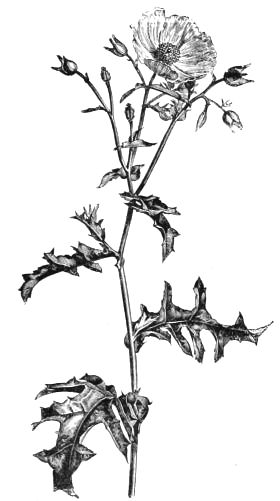
FIG. 147. INFLORESCENCE OF ARGEMONE GRANDIFLORA.
A. mexicana (Mexican). Devil's Fig. fl. solitary, yellow; petals
four to six. June. l. profoundly repand-sinuated, spiny, blotched
with white. h. 2ft. Mexico, 1592. Hardy annual.
A. ochroleuca (yellowish-white).* fl. pale yellow, solitary; petals
six. August. l. profoundly sinuated or pinnatifid, glaucescent
nerves with prickly bristles, blotched with white. Stem prickly.
Mexico, 1827. Hardy annual.
ARGENTEUS. Silvery. A pale colour resembling
silver.
ARGOLASIA. See Lanaria.
ARGIYREIA (from argyreios, silvery; in reference to
the silvery undersides of the leaves). Silver-weed. ORD.
Convolvulaceæ. An elegant genus of greenhouse and
stove climbers. Sepals five; corolla campanulate. Shrubs
for the most part silvery, but sometimes silky and tomentose.
The greater number of the species are robust, extensive
twiners or climbers, usually requiring plenty of room to
run, before they will flower. A. cuneata, and one or two
others, are of dwarf habit, and produce their splendid
blossoms in abundance. All the species grow well in
light rich soil, or a mixture of peat, loam, and sand.
Cuttings root readily if planted in sand, with a hand glass
placed over them, in a little bottom heat.
A. capitata (headed). fl., corolla 1in. to 2in. long, rose coloured
or purple, hairy outside; peduncles exceeding the petioles. July.
l. cordate-ovate, acuminated, 2in. to 5in, long, and 1in. to 3in.
broad, hairy on both surfaces; hairs glandular at the base.
Plant clothed with strigose hairs. Silhet, 1823.
A. cuneata (wedge-leaved).* fl., corolla large, of a beautiful deep
bright purple; peduncles downy, shorter than the leaves, three to
six-flowered. July. l. obovate-cuneate, emarginate, glabrous
above, but beset with short, crowded hairs beneath, hardly petiolate.
Stem clothed with powdery down at top. h. 2ft. to 5ft.
India, 1822.
A. cymosa (cyme-flowered).* fl., corolla pale pink, tubularly
funnel-shaped, villous outside; peduncles as long or longer than
the leaves, leafy at top, and cymosely many-flowered. l. roundish-cordate,
or reniformly-cordate, obtuse, terminated by a very short
prickle, glabrous on both surfaces, or clothed with pruinose
down. Malabar (mountains), 1823.
A. malabarica (Malabar). fl. rather small; bottom of the bell
deep purple; throat pink, with the edges paler, almost white,
and slightly ten-lobed; peduncles as long or longer than the
leaves, many-flowered at the apex. June. l. roundish-cordate,
acute, glabrous, or furnished with a few scattered hairs on both
surfaces. Coromandel, 1823.
A. pomacea (Apple-fruited). fl. large, rose coloured; peduncles
villous, exceeding the petioles a little, cymose, many-flowered.
Berry size of a cherry, yellow. l. ovate-elliptic, obtuse, clothed
with cinerous, velvety down on both surfaces, but especially
beneath, sometimes sub-emarginate at apex. Mysore, 1818.
A. speciosa (showy).* fl., corolla nearly 2in. long, of a deep rose
colour; peduncles about equal in length to the petioles, umbellately
capitate. July. l. 3in. to 12in. long, and 2in. to 4in.
broad, cordate, acute, glabrous above, or rarely villous, thickly
nerved beneath, and clothed with silky, silvery down. India, 1818.
A. splendens (splendid).* fl., corolla tubularly campanulate, 1½in.
long, rather villous outside, pale red; peduncles exceeding the
(hoary) petioles, corymbosely many-flowered. November. l.
ovate-oblong or ovate-elliptic, entire or pandurately sinuated,
sometimes somewhat three-lobed, smooth above, but clothed with
silvery, silky down beneath, 6in. long, acuminated. India, 1820.
ARGYROCHÆTA. A synonym of Parthenium
(which see).
ARGYROXYPHIUM (from argyros, silver, and
xyphion, a corn-flag; in allusion to the leaves). ORD.
Compositæ. An ornamental greenhouse perennial herb.
Involucre campanulate; receptacle conical; heads pedunculate,
racemose, or in thyrsoid panicles. Leaves alternate;
lower ones close, elongated, thick, on both sides silver-lined.
Stems simple or slightly branched. It thrives well in rich
sandy loam and leaf mould. Propagated by seed-heads.
C. sandwicense (Sandwich Islands). fl.-heads purplish. l. linear
lanceolate, imbricate, clothed, like the stems, with silvery hairs.
h. 3ft. Sandwich islands, 1872. SYN. Argyrophyton Douglasii.
ARIA. See Pyrus Aria.
ARISÆMA (from aron, Arum, and sana, a standard;
in reference to the close alliance to Arum). ORD. Aroideæ.
Small tuberous rooted greenhouse (except where stated
otherwise) herbaceous plants. Spathe rolled round the
spadix at the base; spadix bearing unisexual flowers below.
and rudimentary flowers in the upper part. Leaves peltate,
pedate, palmate, or simple. For culture, &c., see Arum.
A. concinna (neat).* fl., spathe convolute, tubular at the base;
upper portion bent over at the mouth, and gradually narrowed
into a tail-like appendage about 3in. long; spathe of the female
plant longitudinally barred with white and green, the latter
colour being replaced with blue-purple in the male. June. l.
solitary, sheathing at the base, and made up of ten or twelve
lanceolate, entire, light green leaflets, which radiate from the top
of the petiole, the latter being 1ft. to 2ft. high. Sikkim, 1871.
A. curvatum (curved).* fl. crowning a scape which overtops the
foliage; tube of spathe cylindrical, green, obscurely striped with
white; the elliptic blade arches forward, green on the inner surface,
and brownish-red on the outer; spadix produced into a
purplish-red tail, about 1ft. long. April. l. pedate. The large
bracts, which sheath the base of the stem, are beautifully
marbled with dark olive green, red, and light green. h. 4ft.
Himalayas, 1871. SYN. A. helleborifolium.
A. galeata (helmeted).* fl., spathe about 4in long; tube and
cylindrical side of spathe green, tinted purplish at base, with
many longitudinal white lines; inside of the tube purple. July.
l. solitary, trifoliate; middle leaflet 6in. long by 3¾in. broad;
lateral ones 7in. long and nearly 4in. broad. h. 1ft. Himalayas,
Sikkim, 1879.
A. Griffithi (Griffith's).* fl., spathe large, hood-like, brown-violet,
with green veins; spadix brown-violet, and the barren end at the
base above the flowers has a disk-like projection, while its free
extremity is prolonged into a long thread-like appendage. Spring.
l. with bold roundish leaflets. h. 1ft. to 1½ft. Sikkim, 1879.
Hardy; very handsome. SYN. A. Hookerianum.
A. helleborifolium (Hellebore-leaved). A synonym of A. curvatum.
A. Hookerianum (Hooker's). A synonym of A. Griffithi.
A. nepenthoides (Nepenthes-like).* fl., spathe above the tubular
portion extended into two decided auricles, which serve to distinguish
it from other species, ochre, brown, green; spadix yellowish
Spring. l. pedate, of five lanceolate or oblanceolate
leaflets; central one 6in. long, the others shorter. h. 2ft. Himalayas,
1879.
A. præcox (early). A synonym of A. ringens.
A. ringens (gaping).* fl., spathe striped green and white, erect
and cylindrical below, then arching suddenly over, and again contracting
into a rather small deep purple orifice, with broad,
reflexed margins; spadix erect, pale yellow-green. Spring. l.,
leaflets three, ovate-oblong, acuminate, and produced into a filiform
point; peduncle short. Japan. Hardy. SYNS. A. præcox
and A. Sieboldi.
A. Sieboldi (Siebold's). A. synonym of A. ringens.
A. speciosa (showy).* fl., spadix deep glossy purple, greenish
and white, with a long flexuous prolongation, sometimes nearly
20in. in length; spathe also terminating with a filiform elongation.
March. l. solitary, trifoliate; leaflets petioled, dark green, conspicuously
edged with blood red; petioles long, mottled with
white. h. 2ft. Temperate Himalayas, 1872.
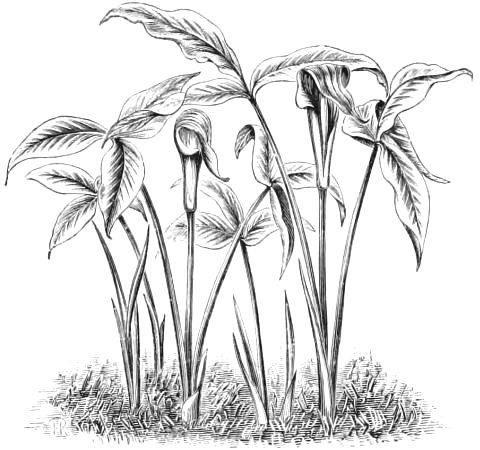
FIG. 148. ARISÆMA TRIPHYLLA.
A. triphylla (three-leaved).* fl., spathe 4in. to 6in. long, striped
with broad lines of purplish-brown, with about 1in. of green in the
middle; spadix 3in. long, spotted with brown. June to July.
l. on long stout petioles, trifoliate; leaflets entire, equal, acuminated.
h. 9in. to 1ft. North America, 1664. This is quite hardy.
SYNS. A. zebrina and Arum triphyllum. See Fig. 148.
A. zebrina (zebra). A synonym of A. triphylla.
ARISARUM (name of Greek origin). ORD. Aroideæ.
A small genus of half-hardy herbaceous plants, possessing
but little horticultural interest, and allied to Arisæma.
Flowers unisexual, spadix having no rudimentary flowers.
Leaves on long stalks, heart-shaped or spear-shaped. The
only species in cultivation thrives in a sand, loam, and peat
compost. Propagated by seeds or divisions of the root in
spring.
A. vulgate (common). fl., spathe livid purple. May. h. 1ft.
South Europe, 1596.
ARISTATE. Having a beard or awn, as the glumes
of barley.
ARISTEA (from arista, a point or beard; in reference
to the rigid points of the leaves). ORD. Iridaceæ. A
genus of greenhouse herbaceous perennials from the Cape
of Good Hope. Flowers blue; perianth rotate, six-parted,
twisted after flowering; scape two-edged, rigid, often
branched. Leaves narrow, sword-shaped. The species are
more interesting than ornamental, and may be grown in a
compost of three parts turfy peat, and one of loam. Easily
propagated by divisions and seeds. They vary in height
from 3in. to 3ft., and flower generally in summer.
A. capitata (headed). fl. blue. July. h. 3ft. Cape of Good
Hope, 1790.
A. cyanea (bright blue). fl. blue. June. h. 6in. Cape of Good
Hope, 1759.
ARISTOLOCHIA (from aristos, best, and locheia,
parturition; in reference to its supposed medicinal character).
Birthwort. ORD. Aristolochiaceæ. A very large
genus of stove, greenhouse, or hardy, evergreen or deciduous,
climbing or erect shrubs. Flowers axillary, clustered,
or solitary, pendulous, of most extraordinary forms;
perianth tubular, curved, or straight, with an oblique,
cordate limb; stamens six, rarely four, or numerous, adhering
to the stigma; capsule six-valved. Leaves cordate
entire or lobed. Good loam, with a small proportion of
decayed manure and a slight addition of sharp sand to
secure efficient drainage, is a good compost for the whole.
They will thrive when planted out in the conservatory
more satisfactorily than elsewhere; for as they usually
grow a considerable height before flowering, they require
very long trellises in pots, and have to be trained up and
down; or, better still, round a pillar of uniform circumference,
a pyramid form being useless. The best way
is to train them round, close down to the pot, and keep
on about 2in. from one turn to the next. Some of the
larger sorts will require more room. Cuttings root freely
in sand under a bell glass with bottom heat.
A. anguicida (snake-killing). fl. white, spotted brown; tube of
perianth inflated at base, dilated and oblique at the mouth;
peduncles axillary, solitary, one-flowered. December. l. on short
petioles, cordate acuminate; stipules cordate-roundish. h. 10ft.
New Grenada, 1845. An evergreen stove twiner.
A. barbata (bearded). fl. purple, axillary, 2½in. long; perianth
straight; limb spreading; lip spathulate, bearded at the end.
July. l. cordate, oblong. h. 10ft. Caraccas, 1796. Stove evergreen.
A. caudata (tailed).* fl. lurid; perianth cylindrical ventricose,
and six-spurred at the base; lip cordate, cuspidate; the cusp
twisted, filiform. June. l., lower ones reniform, lobed; upper
ones three partite. h. 5ft. Brazil, 1828. Deciduous stove twiner.
A. ciliosa (fringed).* fl. purple-yellow; tube of perianth obliquely
ventricose at base, stretched out, from the middle to the apex
cylindrical, fringed; peduncles one-flowered. September. l. cordate
reniform. Plant glabrous. h. 6ft. Brazil, 1829.
A. Clematitis (Clematis-like). fl. pale yellow, upright; lip oblong,
shortly acuminate. July. l. cordate. Stem erect. h. 2ft. A
hardy herbaceous perennial, naturalised here and there in Britain.
A. clypeata (shielded). fl. axillary; tube yellowish, cylindrical;
limb elliptic, white, blotched with purple, long and large, funnel-shaped.
l. subcordate-ovate, acuminate. Columbia, 1871.
A. cordiflora (cordate-flowered). fl. axillary, very large, with
broad cordiform limb, creamy yellow, with blotchy purple veining.
May. l. cordate acuminate. h. 30ft. Mexico, 1860.
A. deltoidea variegata (deltoid variegated variety). l. variegated
with white. h. 6ft. Columbia, 1870.
A. Duchartrei (Duchartre's).* fl. racemose; tube brown; limb
cream colour, with purple blotches. January. l. reniform-cordate,
acuminate. Upper Amazons, 1868. h. 5ft. This stove species
flowers from the old wood. SYN. A. Ruiziana.
A. floribunda (free-flowering).* fl. numerous; limb purplish-red,
with yellow veins, centre yellow. July. l. cordate ovate, acuminate.
h. 10ft. Brazil, 1868. Stove species.
A. galeata (helmeted). fl. creamy, with reticulated veins. August.
l. cordate, with broad open sinus. h. 20ft. New Grenada, 1873.
A. gigas (giant). fl. purple; perianth large, cordate ribbed outside,
reticulated, downy; tube inflated, contracted in the middle;
limb large, cordate ovate, with a long tail. June. l. downy, cordate,
acuminate; peduncles solitary, bracteate. h. 10ft. Guatemala,
1841.
A. Goldieana (Goldie's).* fl. greenish outside, deep yellow with
chocolate veins inside, bent into two unequal portions, the lower
portion surmounting the ovary about 8in. in length, somewhat
cylindrical, terminating in a club-shaped curved knob; the upper
portion, commencing from this knob, is about a foot long, funnel-shaped,
ribbed, dilated above into a somewhat three-lobed limb.
Stamens twenty-four—a very unusual number in the whole family.
The enormous flowers are 26in. long by 11in. in diameter. July. l.
ovate, or triangular-cordate, acuminated. Old Calabar River, 1867.
This noble climber should be repotted in fresh soil in February or
March. But little water will be necessary until the young shoots
have made about 6in. of growth; the quantity should then be
increased with moderation until early in September, when the
old stem dies down within a few inches of the surface of the
pot—at this period, and during winter, water must be entirely
withheld. This species blooms freely in a temperature of 65deg.
to 70deg.
A. indica (Indian). fl. purple; perianth erect; peduncle many-flowered.
July. l. elliptical, blunt, somewhat emarginate,
slightly cordate. h. 10ft. India, 1780. Stove evergreen.
A. labiosa (great-lipped).* fl. greenish; perianth incurved at base,
saccate, two-lipped in the middle. July. l. reniform, roundish
cordate, amplexicaul. h. 20ft. Brazil, 1821. Stove evergreen.
A. leuconeura (white-veined). fl. purple brown. September.
l. cordate, acuminate. h. 12ft. Magdalena, 1858. Stove species.
A. odoratissima (sweetest-scented).* fl. purple, sweet-scented;
peduncles one-flowered, longer than the leaf; lip cordate lanceolate,
longer than the perianth. July. l. cordate, ovate, evergreen.
Stem twining. h. 10ft. Jamaica, 1737. Stove evergreen.
A. ornithocephala (bird's-head).* fl. purple, very large, and
extremely singular. To render any description at all lucid, this
species may be said to have the head of a hawk and the beak of a
heron, with the wattles of a Spanish fowl, which, however, are
grey, netted with brown; head of the same colour, veined; and
the beak grey. l. between cordate and reniform, obtuse. October.
h. 20ft. Brazil, 1838. Stove species.
A. ringens (gaping).* fl. extremely grotesque, 7in. to 10in. long,
pale green, marbled and reticulated with black purple. The
perianth has an obovoid ventricose sac, or cup, 2½in. long, which
is woolly inside; tube ascending obliquely from the sac, terete,
dividing into two very long lips, the upper of which (lower as the
flower hangs) is oblong-lanceolate, recurved, and hairy inside
below the middle, while the lower one is shorter, with recurved
margins, and expanding into an orbicular or almost reniform limb.
Unlike many other species, the flowers are produced on the young
shoots. July. l. bright green, glabrous, roundish-reniform.
h. 20ft. Brazil, 1820. Stove evergreen.
A. Ruiziana (Ruiz's). A synonym of A. Duchartrei.
A. saccata (pouch-flowered). fl. purplish-red, forming a large
pouch; throat circular, vertical. September. l. 12in. to 15in.
long, and 4in. broad, scattered, ovate-cordate, narrowed at apex,
slightly waved and sinuated, entire, more silky beneath than
above. h. 20ft. Sylhet, 1829. Stove evergreen.
A. sempervirens (evergreen). fl. purple; perianth incurved.
May. l. cordate, oblong, acuminate. Stem prostrate, flexuous,
somewhat climbing. h. 4ft. Candia, 1727. Greenhouse species.
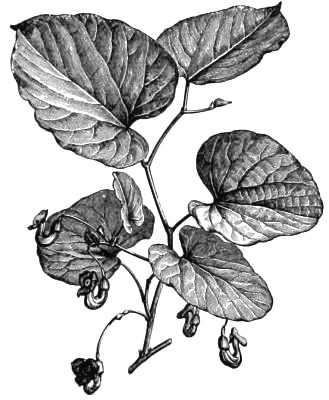
FIG. 149. FLOWERING BRANCH OF ARISTOLOCHIA SIPHO.
A. Sipho (tube-bearing).* fl. yellowish-brown; corolla ascending;
limb in three equal portions, not expanding, flat, brown; bracts
of the peduncle large, ovate. May and June. l. cordate, acute.
Stem twining. h. 15ft. to 30ft. North America, 1763. This hardy,
climbing, deciduous shrub grows freely in a deep, free, rather
dry soil. See Fig. 149.
A. Thwaitesii (Thwaites'). fl. yellow. March. h. 3ft. Old
Calabar, 1854. Stove species.
A. tomentosa (tomentose).* fl. purple; perianth with its tube
twisted back, and much more deeply divided than in A. Sipho,
expanding, flat, and yellow, with the mouth of the tube of a deep
purple; peduncle solitary, without a bract. July. l. cordate,
downy beneath. h. 20ft. North America, 1799. Hardy.
A. tricandata (three-tailed).* fl. dark purple-brown, solitary,
split into three subulate tails. August. l. oblong acuminate,
rugose, 5in. to 8in. long. Mexico, 1866. A curious, but pretty,
stove shrub.
A. trilobata (three-lobed). fl. purple; perianth cylindrical, broken
saccate at base; lip cordate cuspidate. June. l. three-lobed.
Stem twining. h. 8ft. South America, 1775. Stove evergreen.
A. ungulifolia (claw-leaved). fl. racemose; perianth brownish-purple,
stipitate at base, above which it is swollen out in a globose
or oblong form, with two thickened projections near the end;
upper end of tube contracted, somewhat curved, terminating in a
two-lipped limb, one lip large, ovate, the other minute. June.
l. 6in. to 7in. long, cordate, and pedately five-nerved at the base,
three-lobed below the middle, with broad sinuses, the two lateral
lobes arcuate, and blunt at the apex. Labuan, 1880. Stove species.
ARISTOLOCHIACEÆ. An order of very curious
plants, with singularly inflated flowers, consisting of a
calyx only, of a dull, dingy colour. It is popularly known
as the Birthwort family, and has an English representative
in Aristolochia clematitis.
ARISTOTELIA (said to be named in honour of
Aristotle, the Greek philosopher). ORD. Tiliaceæ. A
hardy evergreen shrub. Calyx campanulate; petals five,
inserted in the base of the calyx, and alternating with its
lobes. Easily grown, in ordinary garden soil, in the shrubbery.
Propagated by ripened cuttings, which root freely if
placed under a hand glass; or by layers.
A. Macqui (Macqui's).* fl. small, greenish, axillary. May.
l. nearly opposite, stalked, oblong, acute, smooth, shining, dentate,
permanent. h. 6ft. Chili, 1733. A shrub esteemed for its handsome
foliage. The berries are about the size of a pea, very dark
purple, at length becoming black. The variegated form is not so
hardy as the type, but much more ornamental.
ARMENIACA (from Armenia, the native country of
the Apricot). Apricot. ORD. Rosaceæ. TRIBE Drupaceæ.
Small, hardy, deciduous trees. Flowers appearing before the
leaves from scaly buds, solitary, or few together, almost
sessile. Leaves, when young, convolute. Drupe ovate-globose,
fleshy, covered with velvety skin, containing a nut,
or stone, which is acute at one end and blunt at the other,
with a furrow on both sides; the rest smooth, not wrinkled.
For culture, &c., see Apricot and Prunus.
A. brigantiaca (Brigancon).* fl. white or pink, glomerate, almost
sessile. March. l. somewhat cordate, acuminated, sharply toothed;
the teeth numerous, and lapping over each other. h. 6ft. to 8ft.
South Europe, 1819.
A. dasycarpa (thick-fruited).* fl. white, pedicellate; pedicels
filiform. March. l. ovate, acuminate, serrated; petioles glandular.
h. 10ft. to 15ft. China, 1800.
A. sibirica (Siberian). fl. rose-coloured. April. l. ovate, acuminate;
petioles glandless. h. 8ft. to 20ft. Dahuria, 1788.
A. vulgaris (common).* Common Apricot. fl. pinkish-white,
sessile. February. l. ovate, or cordate, glabrous, glandularly
serrated. h. 15ft. Levant, 1548. Of this species numerous
varieties, differing in the foliar outline, &c., are sometimes met
with. See Apricot.
ARMERIA. (from Flos Armeriæ, Latin name for the
flowers of a species of Pink). Thrift; Sea Pink. ORD.
Plumbagineæ. A very interesting and pretty group of
hardy alpine tufted perennials. Flowers pedicellate, collected
in dense solitary heads; involucre scarious, sheathing
the scape and turned downwards; petals cohering at
the base, persistent; flower scapes leafless. Leaves linear,
radical. As the majority of the species differ in mere
technical details, we have given a representative group
only. They are easily cultivated in a sandy loam and leaf
soil, and are increased by seeds and division, separate
pieces being planted as cuttings under hand glasses; or
the rarer kinds should be potted and placed in a frame.
The seed should be sown in spring, in pots of sandy soil,
and placed in a cold frame. Although best grown as rock
plants, most of them do well in pots and borders. A. vulgaris
makes one of the best of edging plants.
A. cephalotes (round-headed).* fl. deep rose or crimson, in a
large roundish head on erect stalk. Autumn. l. broadly lanceolate,
glabrous, acute; petioles channelled, sheathing at the base.
h. 12in. to 18in. South Europe, 1800. This is perhaps the finest
species, and is best raised from an annual sowing of seed, as it is
somewhat difficult to increase by divisions. SYNS. A. formosa, A.
latifolia, A. mauritanica, and A. pseudo-armeria.
A. dianthoides (Pink-like).* fl. light pink, in close heads about
6in. high. May and June. l. spreading, flattened, nerved,
slightly downy. South Europe, 1810.
A. formosa (handsome). Synonymous with A. cephalotes.
A. juncea (rush-like).* fl. rose pink, in small heads about 3in.
high. June. l. small, erect, roundish, pointed, deep green.
South Europe. A very pretty little alpine species.
A. juniperifolia (Juniper-leaved).* fl. deep rose, in small densely
packed heads. May and June. l. short, stiff, erect, Juniper-like.
h. 6in., with a dense tufted habit. Spain, 1818. Plant in a warm
well-drained portion of the rockery in very sandy soil, with some
nodules of sandstone intermixed.
A. latifolia (broad-leaved). Synonymous with A. cephalotes.
A. leucantha (white-flowered). A white-flowered variety of A.
plantaginea.
A. maritima (sea). Synonymous with A. vulgaris.
A. mauritanica (Mediterranean). Synonymous with A. cephalotes.
A. plantaginea (Plantain-leaved).* fl. bright rose; scapes taller
than in A. vulgaris. l. broader, three to five-nerved, and with a
stouter growing habit than the common species. h. 1ft. South
Europe, 1818. A very pretty species. SYNS. A. leucantha, which
is frequently called A. p. alba, and A. scorzoneræfolia.
A. pseudo-armeria (false-Armeria). Synonymous with A. cephalotes.
A. scorzoneræfolia (Scorzonera-leaved). Synonymous with A.
plantaginea.
A. setacea (bristly).* fl. light rose, in small heads about 2in.
high, very freely produced from the axils of the leaves. April to
June. l. in dense rosettes, erect, or nearly so, narrow, acute, the
tufts having a bristly appearance. h. 3in. South Europe. Plant
in a semi-perpendicular cranny of the rockery, with a sunny
position.
A. vulgaris (common).* Common Thrift; Sea Pink. fl. pink, rosy
red, lilac, or white (the latter known as A. v. alba), collected into
a rounded head on the top of the simple scape. June to August.
l. all radical, numerous, linear, usually one-nerved, more or less
pubescent. h. 6in. to 12in. Britain, on the sea coasts. A. v. alpina
is a dwarf alpine form of this species. The white-flowered variety
is very handsome. A. v. Laucheana is also a pretty form, with
deep pink flowers in dense heads about 6in. high, and a very
tufted habit. Crimson Gem, of garden origin, is stronger growing,
with stems about 9in. high, carrying heads of bright crimson
pink flowers, also of tufted habit. SYNS. A. maritima, Statice
Armeria.
ARNEBIA (its Arabian name). ORD. Boraginaceæ.
Handsome hardy herbaceous perennials or annuals, allied
to Lithospermum. Cuttings should be removed with a
heel in autumn, dibbled in sandy soil in small pots, and
placed in a cool house, where they will ultimately, though
slowly, root; they should then be gradually hardened off,
and finally planted out. A. echioides is also easily increased
by making cuttings of the strong roots, which
should be dibbled in pots of sandy soil, and placed in gentle
heat; it is also raised from seed.
A. echioides (Echium-like).* fl. bright primrose yellow, with a
purplish spot in the sinuses between the lobes of the corolla,
which gradually disappears in a few days; spikes terminal, large,
solitary, secund. May. l. sessile, alternate; margins—as well as
the stems—ciliated. h. 9in. to 12in. Armenia. One of the
showiest of hardy perennials for the border or rockery.
A. Griffithii (Griffith's). This differs from above in having
narrower leaves, rather smaller flowers, which are of a more decided
yellow, a differently shaped calyx, and a longer corolla.
h. 9in. North-west India. Equally desirable, were it a perennial;
but, being an annual, it must be constantly raised from seed.
ARNICA (from arnakis, lambskin; in reference to the
texture of the leaves). ORD. Compositæ. Hardy, dwarf,
herbaceous perennials, allied to Senecio. They thrive best
in loam, peat, and sand; the plants are best divided in
spring. Seeds should be procured when possible, and
sown in a cold frame, in spring. The only species worth
growing are described below.
A. Aronicum. Synonymous of A. scorpioides.
A. Chamissonis (Chamisso's).* fl.-heads yellow, 1½in. to 2in.
across, arranged in a corymb. July to September. l. oblong-lanceolate,
acuminate or acute, tomentose, tapering to the base.
h. 1ft. to 2ft. North America. A rather scarce, showy species.
A. Clusii (Clusius's). fl.-heads yellow, solitary, terminal; stalks
long, thickened towards the top, and covered with long hairs.
Summer. l. soft, radical ones entire, or nearly so, oblong, obtuse,
attenuated into the petiole; cauline ones sessile, half stem-clasping,
lanceolate, toothed in the lower part. h. 1ft. Switzerland,
1819. SYN. Doronicum Clusii.
A. foliosa (leafy).* fl.-heads pale yellow, about 1in. across, from
three to seven in a corymb. August. l. lanceolate, stalked,
acute, denticulate, smooth. h. 1ft. to 2ft. Stems springing from
slender rhizome-like shoots. United States. Closely allied to
A. montana. It requires a damp situation.
A. montana (mountain).* Mountain Tobacco. fl.-heads yellow,
three or four together, about 2in. in diameter; ray florets numerous.
July. l. radical, except a few on the scape, oblong-lanceo-late,
entire, smooth. Habit tufted. h. 1ft. Europe. 1731. A
very handsome but rare plant; excellent for a rockery. It is
slowly increased. See Fig. 150.
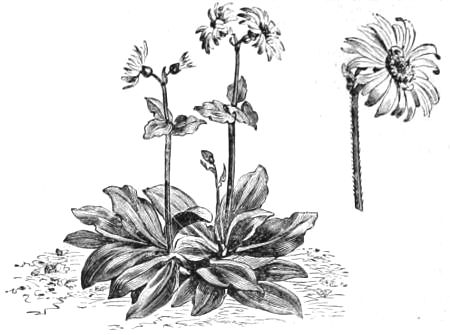
FIG. 150. ARNICA MONTANA, showing Habit and Flower-head.
A. scorpioides (scorpion-like).* fl.-heads yellow, large, solitary;
scape one to three-flowered. Summer. l. pale green, denticulated;
radical ones on long petioles, broadly ovate; the lower
stem leaves shortly stalked, amplexicaul; the upper ones sessile.
h. 6in. to 12in. South Europe, 1710. Border. SYNS. A. Aronicum,
Aronicum scorpioides.
ARNOPOGON. See Urospermum.
AROIDEÆ. See Araceæ.
ARONIA. See Cratægus Aronia and Pyrus.
ARONICUM. See Arnica scorpioides and Doronicum.
ARPOPHYLLUM (from arpe, a scimitar, and
phyllon, a leaf; the leaf is sword-shaped). ORD. Orchideæ.
Distinct evergreen epiphytes. There are about
six species known, and the genus belongs to the Epidendreæ
division of orchidaceous plants; their general characters
are: Flowers small, numerous, in closely packed cylindrical
spikes; anther-bed broad, shorter than the broad extension
of the upper edge of the stigma; pollinia eight. Stems
rather long, with white sheaths. They thrive well in
fibrous peat, one-third turfy loam, freely interspersed with
lumps of fresh charcoal and an abundance of crocks. When
growing, a liberal supply of water at the roots is essential,
as is also a situation near the light, where they will blossom
much more profusely than if in any way shaded. The
flowers last in perfection about four weeks.
A. cardinale (cardinal). fl., sepals and petals light rose; lip deep
red, on upright spikes about 1ft. high. Summer. New Grenada.
A. giganteum (gigantic).* fl. dark purple and rose, densely and
symmetrically arranged on the cylindrical spikes, which are from
12in. to 14in. long. April and May. l. dark green, about 2ft. long,
borne on slender pseudo-bulbs. Mexico.
A. spicatum (spike-flowered).* fl. dark red, on an upright spike
about 1ft. long. During winter. Guatemala, 1839.
ARRACACHA (its Spanish name in South America).
ORD. Umbelliferæ. A half-hardy tuberous perennial, highly
esteemed as an esculent in South America, where it yields
a food, which is prepared in the same manner as potatoes,
and is said to be grateful to the palate and extremely easy
of digestion. It thrives best in rich loam, and is increased
by divisions of the roots.
A. esculenta (edible). fl. white; umbels opposite the leaves or
terminal; involucre wanting. July. l. pinnate; leaflets broadly
ovate, acuminated, deeply pinnatifid, profoundly serrated; the
two lower leaflets petiolate, sub-ternate. h. 1ft. to 2ft. Mountainous
districts of Northern South America, 1823. SYN. Conium
Arracacha.
ARRHOSTOXYLUM. Included under Ruellia
(which see).
ARROW ARUM. See Peltandra virginica.
ARROWGRASS. See Triglochin.
ARROW-HEAD. See Sagittaria.
ARROWROOT. See Maranta.
ARTABOTRYS (from artao, to suspend or support,
and botrys, grapes; in reference to the way the fruit is supported
by the curious tendril). ORD. Anonaceæ. A handsome
stove evergreen shrub, thriving in a good sandy loam
and peat, to which a little rotten dung may be added.
Propagated by cuttings made of ripened wood, insert
in sand under a bell glass, with bottom heat, in early
spring. Seed, when procurable, should be sown as soon
after receipt as possible.
A. odoratissimus (sweetest-scented).* fl. reddish brown, extremely
fragrant; peduncles opposite the leaves, hooked beneath
the middle. June and July. l. oblong-lanceolate, acuminated,
smooth, shining. h. 6ft. Malayan Islands, 1758. In Java, the
leaves are held to be invaluable as a preventive of cholera.
ARTANEMA (from artao, to support, and nema, a
filament; in reference to a tooth-like process growing on
the longer filaments). ORD. Scrophularineæ. An interesting
and handsome greenhouse evergreen shrub, allied
to Torenia. Flowers disposed in terminal racemes, and
on short pedicels. Leaves opposite, sub-serrated. It may
be treated as hardy during summer, for which purpose
seeds should be sown in spring; but it requires the protection
of a greenhouse during winter. Artanema grows
freely in light rich soil, and is readily increased by cuttings
and seeds.
A. fimbriatum (fringed). fl., corolla blue, large, tubularly funnel-shaped,
clothed with minute glandular pubescence outside;
lobes unequally serrated; racemes terminal, four to sixteen-flowered.
June, November. l. lanceolate, acute, serrated, rough
to the touch from numerous elevated dots. Stem smooth, glossy.
h. 2ft. to 3ft. New Holland (on the banks of the Brisbane River
at Moreton Bay), 1830.
ARTANTHE. See Piper.
ARTEMISIA (from Artemis, one of the names of
Diana). Mugwort; Southernwood; Wormwood. ORD.
Compositæ. A very large genus of mostly hardy herbaceous
perennials, few of which, comparatively speaking,
are worth growing. Flower-heads disposed in spikes, or
racemes, and these are usually arranged in panicles; pappus
none; involucre few-flowered, ovate or rounded, imbricated;
florets of the disk all tubular; of the ray, if
any, slender, awl-shaped. Leaves alternate, variously
lobed. All the species are of the easiest possible culture
in any dry soil. The shrubby kinds are best propagated
by cuttings; the herbaceous ones, by dividing at the root;
and the annuals, by seeds.
A. Abrotanum (aromatic herb).* Southernwood. fl.-heads yellowish.
August to October. l., lower ones bipinnate; upper ones
pinnate, with the segments hair-like. Stem straight. h. 2ft. to
4ft. Europe, 1548. A deciduous shrub; well known for its fragrance.
A. A. humile (low). A low spreading variety. h. 1½ft.
A. A. tobolskianum (Tobolskian). A much more vigorous
growing variety than the last, and larger in all its parts than the
type.
A. alpina (alpine).* fl.-heads yellow, solitary, on long slender
stalks; scales of involucre lanceolate. Summer. l. pinnate, covered
with whitish silky hairs; lobes linear, entire. h. 6in. to 10in.
Caucasus, 1804. Dwarf, with a very tufted habit.
A. anethifolia (Anethum-leaved). fl.-heads yellowish-green, small;
panicle very large, densely packed, nearly 2ft. long. Autumn.
l. chiefly cauline, much divided into thread-like segments, greyish-green.
Stem shrubby at the base, nearly glabrous, branching at
the top. h. 3ft. to 4ft. Siberia, 1816.
A. argentea (silvery).* fl.-heads pale yellow, roundish, closely
packed. July. l. ovate-oblong, very freely divided, densely
clothed with soft silvery hairs. h. 1½ft. Madeira, 1777. A very
pretty species, requiring a warm sunny position on the rockery.
A. cana (hoary).* fl.-heads yellow, small, uninteresting, ovate, in a
close spiky panicle. August. l. silky, hoary; lower ones wedge-shaped,
sharply three-cleft; cauline ones linear-lanceolate, three-nerved.
Stem ascending; branches erect. h. 2ft. to 3ft. North
America, 1800. This is a very distinct species, and its silvery
leaves and stems render it well worthy of cultivation.
A. cœrulescens (bluish).* fl.-heads bluish, erect, cylindrical.
August. l. hoary, most of them lanceolate, entire, tapering at the
base; lower ones variously divided. h. 2ft. South Europe.
An ornamental evergreen shrub.
A. Dracunculus.* Tarragon. fl.-heads whitish green; racemes
panicled; heads sub-globose. July. l., radical ones three-fid;
cauline ones sessile, linear or linear-oblong, acute, entire, toothed.
h. 2ft. South Europe, 1548. See Tarragon.
A. frigida (frigid). fl.-heads yellow, uninteresting, small, roundish,
racemosely panicled. August. l. pinnate; segments narrow,
silvery. h. 1ft. Siberia, 1826. A pretty creeping, herbaceous
plant.
A. maritima (maritime). fl.-heads brown; racemes oblong, erect
or drooping. August and September. l. downy, bipinnatifid,
oblong; segments linear. Britain. A much branched, erect, or
decumbent plant, excellent for rough rockwork or very dry
banks, etc.
A. Mutellina (Mutellina).* fl.-heads yellowish-green; lower ones
stalked, upper ones sessile. July. l. all palmate, multifid, white.
Stem quite simple. h. 6in. European Alps, 1815.
A. pontica (Pontine). fl.-heads yellow, roundish, stalked, nodding.
September. l. downy beneath; cauline ones bipinnate; leaflets
linear. h. 3ft. Austria, 1570.
A. rupestris (rock). fl.-heads brown, globose, stalked, nodding.
August. l. sub-pubescent; cauline ones pinnatifid; leaflets
linear, acute. h. 6in. Norway, &c., 1748.
A. scoparia (twiggy-branched). fl.-heads small, whitish; panicle
broad, densely packed, about 1½ft. long. Autumn. l. much
divided; segments hair-like; lower branches very slender. h. 3ft.
to 5ft. East Europe.
A. spicata (spicate). fl.-heads brown, spicate. June and July.
l. hoary; radical ones palmate multifid; cauline ones pinnatifid;
upper linear, entire, blunt. Stem quite simple. h. 1ft. Switzerland,
1790.
A. Stelleriana (Steller's).* fl.-heads yellow, uninteresting,
round, somewhat erect. Summer. l., lower ones spathulate-incised;
upper ones obtusely lobed; end lobes often confluent,
about 2in. long, silvery white. h. 1ft. to 2ft. Siberia.
A. tanacetifolia (Tanacetum-leaved). fl.-heads brownish; racemes
simple, terminal. Summer. l. bipinnate; lobes linear sub-lanceolate,
entire, acuminated, rather downy. Stem sometimes branching
at the base, herbaceous. h. 1½ft. Siberia, 1768.
A. vulgaris (common).* Mugwort. fl.-heads yellow, somewhat
racemed, ovate. August. l. pinnatifid; segments white, and downy
beneath. Stems 3ft. to 4ft. high, furrowed. Britain. The variegated
form of this species exhibits a very pleasing contrast.
There is also a pretty variety with golden leaves.
ARTHROPHYLLUM MADAGASCARIENSE.
See Phyllarthron Bojeriana.
ARTHROPODIUM (from arthron, a joint, and pous,
a foot; the footstalks of the flowers being jointed). ORD.
Liliaceæ. Very pretty greenhouse herbaceous perennials,
allied to Anthericum. Flowers purplish or white, in loose
racemes. Leaves grass-like, radical. They thrive well in
a compost of sandy loam and peat, and may be increased
freely by divisions or seeds.
A. cirratum (curled). fl. white; racemes divided; bracteas
leafy. May. l. lanceolate, ensiform, spreading, 1ft. long. h. 3ft.
New Zealand, 1821.
A. fimbriatum (fringed). fl. white. July. h. 1½ft. New Holland,
1822.
A. neo-caledonicum (New Caledonian).* fl. small, white, on a
much-branched, many-flowered panicle. May. l. tufted, linear-lanceolate,
barred with black linear markings near the base. h.
1½ft. New Caledonia, 1877.
A. paniculatum (panicled).* fl. white; racemes divided; pedicels
clustered; inner sepals crenulate. May. l. narrowly lanceolate.
h. 3ft. New South Wales, 1800. A. minus is a small form of
this species.
A. pendulum (pendulous).* fl. white, clustered in threes, pendulous.
June to August. l. linear, keeled, shorter than the
branched scape. h. 1½ft. New Holland, 1822.
ARTHROPTERIS. See Nephrodium and Nephrolepis.
ARTHROSTEMMA (from arthron, a joint, and
stemon, a stamen; in reference to the stamens or connectives
being jointed). ORD. Melastomaceæ. Beautiful stove
or greenhouse evergreen shrubs. Tube of calyx turbinate
or campanulate, usually clothed with bristles, pili, or
scales; lobes four, lanceolate, permanent, without any
appendages between them; petals four. A mixture of loam,
peat, and sand, suits them best; and cuttings of small firm
side shoots will root, in April or August, under a hand
glass in sandy soil. Only three or four out of the half-dozen
species belonging to this genus have been as yet introduced.
A. fragile (brittle). fl. rosy; cymes loose, terminal, few-flowered;
calyx glandular. July. l. ovate-cordate, acute, five-nerved,
serrated; branches tetragonal, beset with glandular hairs. h. 3ft.
Mexico, 1846. Stove species.
A. nitida (glossy-leaved). fl. lilac; peduncles axillary towards the
top of the branches, three-flowered, longer than the petioles.
June. l. ovate, acute, serrulated, glabrous on both surfaces,
shining above, but glandularly hispid on the nerves beneath.
Stems shrubby, erect, and are, as well as the branches, tetragonally
winged, beset with coloured hairs. h. 2ft. to 3ft. Buenos Ayres,
1829 greenhouse species.
A. versicolor (changeable-flowered). fl., petals obovate, ciliated,
at first white, but at length becoming reddish, terminal, solitary.
September. l. petiolate, ovate, serrulated, five-nerved, discoloured
beneath. Plant shrubby; hairy. h. 1ft. Brazil (on the sea shore),
1825. Stove species.
ARTHROTAXIS. See Athrotaxis.
ARTICHOKE, GLOBE. (Cynara Scolymus, a
cultivated form of C. Cardunculus). As a vegetable, the
Globe Artichoke is cultivated for the use of the immature
flower-heads, and is highly esteemed. A good
open position, free from overhanging trees, is best suited
for its culture generally, but, by planting successional
suckers in different aspects, the season may be considerably
prolonged. The soil must be of good depth, rich,
and not too heavy. It may be greatly improved for
Artichoke culture by the addition of sea-weeds or salt
applied as manure.
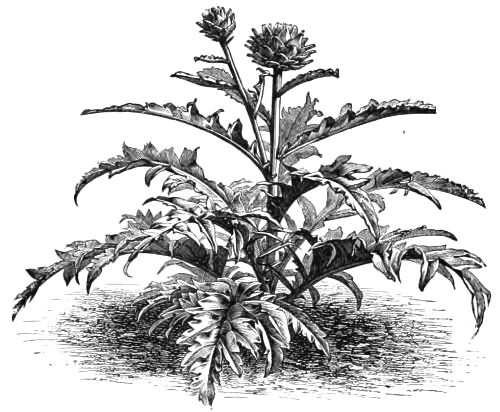
FIG. 151. GLOBE ARTICHOKE.
Preparation of Soil. Trench the ground two spits deep
if possible, mixing a liberal dressing of well-rotted manure
in autumn, and ridge up for the winter, to sweeten. Crude
manure full of straw, leaves, and sticks, often induce fungoid
growths, and are most injurious to the crowns of the plants.
Clay or stiff loam is about the worst soil on which to attempt
the culture of this vegetable; this drawback may, however,
to some extent be alleviated by the addition and thorough
amalgamation of a light free soil or liberal dressings of
sandy road drifts, or similar materials. An ill-drained soil
is also fatal to good results. During hot, dry weather, the
plants are greatly benefited by copious applications of clear
water and dilute liquid manure; and this must be especially
attended to on such soils as are liable to burn or dry up in
summer.
Cultivation. When the beds have been properly prepared,
the plants should be put in them in April or May.
Place three together in rows between 3ft. and 4ft. apart,
and about 3ft. from plant to plant. Water-in carefully
to settle the soil around the roots, and apply a mulching
of half-decayed manure, to prevent an undue evaporation
of moisture. During hot, dry weather, give
liberal supplies of water, and the plants will become established
as fine stools the first season. A few heads will
probably be produced the first year; but there will not be
much of a crop until the second season, when five or six
good heads will be got from each plant, and for three or four
years the produce will be large if the beds are properly
attended to; after which time it will become desirable to
make up new plantations. In October or November, it will
be necessary to apply a good mulching of straw or fern to
the beds, to protect the plants from frost. In April, all
this litter should be cleaned off, a dressing of rotten manure
applied, and the beds forked over and kept clean for the
rest of the season, treating as before described. Great
care must be taken to remove the heads as soon as they
are in a fit state; and, when the whole of them are removed
from the stems, cut the latter out as low as possible.
Globe Artichokes will keep for some considerable time if
laid in a cool place, although they will deteriorate in
quality. These plants may be used in the background of
flower borders in the kitchen garden, their handsome foliage
being peculiarly well adapted for such purposes, whilst their
economical value is also secured. See Fig. 151. Where
there is plenty of room in light, warm sheds, orchard houses,
or other places where frost can be kept out, some stools can
be taken up with the root intact in the early part of November,
placed in boxes of soil, and well watered-in. When
drained, the boxes may be put in any of those positions
for their winter quarters, and, if kept moist,
will develop much earlier than the outdoor crops,
provided they are planted out early in April on a
warm border, and protected with mats when the
weather is cold. Propagation may be effected by
seeds, or by suckers from the old stools, the latter
being the better plan. In the former case, sow the
seeds in March, on a gentle hotbed, and prick the
seedlings off singly, when large enough, into small
pots. Harden off by the last week in May, and
plant out in threes as previously recommended,
protecting the plants from late frosts. During the
growing season, give an abundance of water and liquid
manure mulching, to prevent undue evaporation.
In November, well cover with dry litter which will
not heat; and, in hard frosts, or heavy snow, throw
a few mats over the beds, uncovering at the same
time as recommended above for the older plants.
To propagate by rooted offsets or suckers, take up
and divide the stools, when they have made a fair
amount of growth in April or early in May, separating
the suckers with as many roots and as much soil
adhering to them as possible. The old woody portions
are of little use, but they may be replanted to
give off a fresh supply of suckers for the next year, if
required. Propagation by suckers, if they are to be obtained,
has many advantages; but care must be taken, in
removing them from old plants, that some roots are attached,
or growth will be uncertain. Seeds generally produce a
large percentage of plants that are useless, and this is not
found out until the flower-heads appear. On the other
hand, suckers reproduce the parent plant, and if these are
previously selected, the superior stock is thereby perpetuated.
Sorts. The Green and Purple are the best for ordinary
purposes; and of these preference should be given to the
former. See also Cynara.
ARTICHOKE, JERUSALEM (Helianthus tuberosus).
A hardy tuberous-rooted herbaceous perennial,
native of Brazil. The roots are used as a vegetable principally
during the winter, sometimes as a dish, but more
generally for flavouring purposes. Plants will grow in
almost any position, but the best results and largest tubers
are obtained where they receive plenty of room and liberal
treatment. Their culture has been recommended as a
substitute for the potato, but they are not likely to take the
place of this vegetable, the flavour being disliked by many
persons. A few are, however, generally acceptable.
Cultivation. To ensure the most successful results,
trench over a piece of ground in autumn, and give a
light dressing of manure. Fork over in March; at the
same time plant good-shaped tubers (see Fig. 152) in rows
about 3ft. apart, and allow from 18in. to 2ft. between the
tubers in the rows. Keep clear of weeds; and, as soon as the
foliage is yellow, in the latter part of the autumn, the roots
will be fit for use. The best plan with this crop is to leave
it in the ground till wanted, or till the end of February,
and then to take up every tuber, replanting those which
are wanted for stock, and storing the others away in a cold
dry place. When they commence
growth, they turn black, and are of
little use for cooking, save for flavouring
soups. This vegetable has
of late years grown into favour as a
marketable crop, and the demand
seems to be increasing. Considering
its very easy culture, it is fairly remunerative.
See also Helianthus.
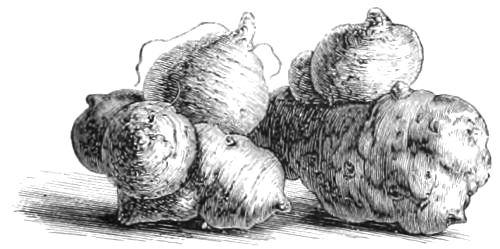
FIG. 152. TUBERS OF JERUSALEM ARTICHOKE.
ARTICULATE, ARTICULATED.
Jointed; having joints.
ARTILLERY PLANT. See
Pilea microphylla.
ARTOCARPEÆ. A tribe of
the large order Urticaceæ.
ARTOCARPUS (from artos,
bread, and carpos, fruit; the fruit,
when baked, resembling bread).
Bread Fruit. SYNS. Polyphema, Rademachia,
Rima. ORD. Urticaceæ.
TRIBE Artocarpeæ. Included in this
most remarkable tribe, in addition to
the Bread Fruit Tree, is the virulent
poisonous Antiaris toxicaria, and the
economic Cow Tree (Brosimum
Galactodendron), of Caraccas. A genus of stove evergreen
trees, requiring a high and very moist atmosphere, a
copious supply of water, perfect drainage, and a compost
of two parts rich loam and one of leaf mould, with the
addition of a little silver sand. Under all conditions,
this genus is difficult to propagate; the young and slender
lateral growths are adapted for cuttings; and suckers
may be utilised when procurable, which is very rare.
A. Cannoni (Cannon's).* l. alternate, petiolate; petiole and midrib
bright red; upper surface glossy, of a rich, full bronzy crimson
hue, beautifully tinted with purple; under surface bright vinous
red. The leaves vary much in form; some are simple and cordate
at the base, with the apex irregularly lobate; some have the apex
regularly three-lobed, with short, entire lobes; and others, again,
are deep three-lobed, being divided nearly to the base, the segments,
of which the centre one is largest, being slightly sinuate-lobed.
h. 7ft. Society Islands, 1877. This is a most distinct and
handsome ornamental-leaved plant.
A. incisa (incised).* True Bread Fruit. l. from 2ft. to 3ft. long,
deeply lobed or incised, deep green on the upper side, paler below.
h. 50ft. South Sea Islands, 1793. This is a noble tree when full
grown, and forms a most distinct and beautiful stove plant. The
extraordinary fruit is produced from the axils of the leaves in large
globular heads, and is highly valued as an article of food in its
native country.
A. integrifolia (entire-leaved). l. oblong, undivided, sinuated,
scabrous, downy beneath. h. 30ft. India, 1778.
A. laciniata metallica (laciniate, metallic). l. bronzy above,
reddish purple beneath. Polynesia.
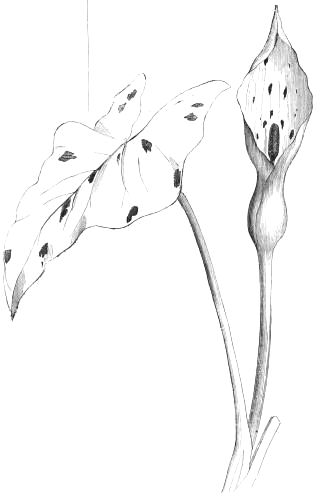
FIG. 153. ARUM MACULATUM.
ARUM (formerly aron, and probably of Egyptian extraction).
ORD. Aroideæ. A large genus of ornamental
or curious, hardy, greenhouse or stove perennials, with
thick rhizomes and pedate or hastate leaves. Spathe
large, convolute; spadix naked and club-shaped at the
top. They are all of easy culture, and the indoor species
will thrive with such treatment as is given to Alocasias,
Caladiums, &c. Rich soil is one of the first conditions
of success. Like most plants grown for the beauty of
their foliage, rapid and free growth is necessary. A compost
of good rich loam, with a third of sweet manure,
thoroughly rotted, or leaf mould, with some sharp sand,
is very suitable. Plenty of moisture is necessary during
the growing season, after which the tender kinds should be kept moderately
dry, warm, and at rest during the winter. The hardy kinds may be left in
the ground. Propagated by seeds or division of the roots—usually
the latter. The best time to divide them is just as they commence their
new growth, securing as many roots as possible to each division. Any
rootless pieces should be placed in heat shortly after removal; this
hastens the formation of roots and excites top growth. Arums are useful
in sub-tropical gardening, and are otherwise interesting plants both for
indoors and outside cultivation; and the hardy kinds are very suitable
for naturalising in woodlands, &c. There are many other species
besides those here described, but the following list comprises the best.
Sub-sections of the genus will be found treated separately, such as
Amorphophallus (which see), &c.
FIG. 154. ARUM DRACUNCULUS.
A. bulbosum (bulbous). Synonymous with A. ternatum.
A. Dracontium (Green Dragon). fl., spadix subulate, longer
than the oblong convolute green spathe. June. l. pedate, entire.
h. 2ft. North America, 1759. Hardy.
A. Dracunculus (Common Dragon).* fl., spadix lanceolate,
shorter than the ovate, flat, smooth, brown spathe. July. l.
pedate, entire. h. 3ft. South Europe, 1548. Hardy. SYN.
Dracunculus vulgaris. See Fig. 154.
A. indicum (Indian). See Colocasia indica.
A. italicum (Italian).* fl., spathe ventricose below, opening nearly
flat and very broad above; apex often falling over very shortly
after expansion, sometimes greenish yellow, at others nearly
white; spadix yellowish or creamy white, club-shaped, about one-third
as long as the spathe. Spring. l. appearing before winter,
radical, triangular-hastate. h. 9in. to 2ft. Channel Islands and
Cornwall, &c. Hardy.
A. i. marmorata (marbled).* l. marbled with yellow. A very
pretty and effective hardy border plant.
A. maculatum (spotted). Lords and Ladies; Cuckoo Pint. fl.,
spathe ventricose below and above, constricted in the middle,
with inflexed edges when open, spotted with dull purple; spadix
usually purple, shorter than the spathe. Spring. l. vernal radical,
hastate-sagittate, with deflexed lobes. h. 9in. Britain, &c. This
species is admirably adapted for a corner in the wild garden.
See Fig. 153.
A. Malyi (Maly's). fl. whitish. Montenegro, 1860.
A. Nickelli (Nickel's). Levant, 1859. A form of A. italicum.
A. orientale (eastern). fl. resembling those of A. maculatum.
June. l. brownish, simple, ovate, slightly sagittate. h. 1ft.
Tauria, 1820. Hardy.
A. palæstinum (Palestine).* fl., spathe 7in. to 11in. long, purplish
blotched or spotted outside, rich velvety black inside and yellowish
white at the base of the tube; spadix much shorter than the
spathe; petiole usually rising 8in. or 9in. above the leaves. May.
l. four or five, triangular-hastate, acute, from 6in. to 14in. long,
and from 3½in. to 7½in. broad; petioles 12in. to 18in. long. Jerusalem,
1864. Tender.
A. pictum (painted). h. 2ft. Corsica, 1801. Hardy.
A. proboscideum (proboscis-like).* fl., spathe greenish purple,
navicular, horizontal, terminated by a straight tail; scapes arising
from among the petioles. May. l. radical, about four, cordate-elliptic,
entire. h. 6in. South Europe, 1823. Hardy.
A. spectabile (showy). fl., spathe ovate-oblong, acuminate, dark
purplish inside, longer than the purplish spadix. l. broadly hastate-sagittate.
h. 1ft. Asia Minor. Half-hardy.
A. spirale (spiral). fl., spadix lanceolate, shorter than the oblong-lanceolate
spirally twisted brown spathe. May. l. linear-lanceolate.
Plant stemless. h. 1ft. China, 1816. Tender.
A. tenuifolium (narrow-leaved).* fl., spadix subulate, longer than
the white lanceolate spathe. April. l. linear-lanceolate. Plant
stemless. h. 1ft. South Europe, 1570. Hardy.
A. ternatum (three-leafleted). A synonym of Pinellia tuberifera.
A. variolatum (variegated). Dalmatia, 1859. Hardy.
A. venosum (veined). A synonym of Sauromatum guttatum.
A. Zelebori (Zelebor's). A form of A. maculatum.
ARUM LILY. See Richardia æthiopica.
ARUNDINARIA (altered from arundo, a reed).
ORD. Gramineæ. A small genus of
hardy or nearly hardy shrubby grasses, having strong jointed stems, and
frequently included under Bambusa. For sub-tropical gardening
purposes more particularly it is exceedingly ornamental as an isolated
tuft. It thrives best in a deep, rich soil, and requires plenty of water
when in a growing state. Increased by division of the roots.
FIG. 155. ARUNDINARIA FALCATA.
A. falcata (sickle-shaped).*
l. linear-lanceolate, very
acute, shortly stalked,
very light green. Stems
freely branched, deep
green, and very slender.
h. 3ft. to 6ft. India. An
extremely handsome species
for greenhouse decoration; also for outdoor work, particularly
in the South of England, &c. SYN. Bambusa gracilis, of
gardens.
A. Maximowiczii (Maximowicz's). This Japanese species is
believed to be allied to, if not identical with, Bambusa Simonii.
Quite hardy.
A. Metake (Metake). l. lanceolate, with very sharp points,
dark green, persistent, narrowed into a short leafstalk, 6in. to
12in. long; sheath ample. h. 4ft. to 6ft. Japan. A handsome,
hardy, dwarf, much-branched species, forming grand
specimens, and producing flowers very freely. SYN. Bambusa
japonica.
ARUNDO (origin of word doubtful; stated by some
authorities to be from arundo, a reed; and others as from
the Celtic arn, signifying water). Reed. ORD. Gramineæ.
A very ornamental group of half or quite hardy plants, of
very easy culture in ordinary garden soil, preferring damp
situations. Panicle loose; calyx two-valved, unequal,
many-flowered; corolla of two very unequal valves; all,
except the lower and imperfect one, surrounded by a tuft
of hairs. Fruit free, covered by the corolla. Arundos are
very valuable either for conservatory decoration, sub*-tropical
gardening, or cultivation in clumps on the turf of
the flower-garden or pleasure ground, and the margins of
lakes. Although well worth growing, all are inferior to
their ally, the Pampas Grass. Propagated by seeds or
divisions, the spring being the best time to adopt either
method of increase.
A. conspicua (conspicuous).* fl. silky-white, on large drooping
racemes, and lasting in beauty for several months. h. 3ft. to 8ft.,
but in a good deep and sandy loam it sometimes attains the height
of 12ft. New Zealand, 1843. This fine species grows in dense
tufts, from which arise numerous leathery, narrow, smooth (or
slightly rough), long curving leaves, and erect, slender culms.
The plant is not sufficiently hardy to withstand a severe winter,
and should, therefore, be protected with mats, or be grown in
tubs, so that it can be removed under shelter before the approach
of winter. These precautions are unnecessary in the more
southern counties of England.
A. Donax (Donax).* Great Reed. fl. reddish, ultimately whitish,
in numerous spikelets, forming a large compact panicle 12in. to
16in. long. Autumn. l. alternate, lanceolate-acute, large, and
ornamental, glaucous green, arching. h. about 12ft. South
Europe, 1648. This also requires protection during winter in the
colder counties. See Fig. 156.
A. D. versicolor (various-coloured).* h. 3ft. South Europe.
Although much smaller, this variety is far superior to the type
for gardening purposes, and has its leaves ribboned with white.
It requires a deep, well drained, sandy loam to thrive well, and
a thorough winter protection of cocoa-fibre refuse or coal
ashes. For isolated tufts or groups, few plants can equal it.
It is propagated by placing a stem in water, which induces
little rooted plants to start from the joints; these should be
separated, potted off, and kept in frames until thoroughly
established.
A. mauritanica (Mediterranean Reed). This is a rare greenhouse
species, closely allied to A. Donax, but inferior to it.
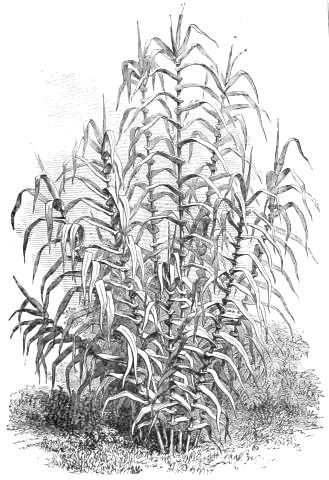
ARYTERA. A synonym of Ratonia (which see).
ASAFŒTIDA. See Narthex Asafœtida.
ASARABACCA. See Asarum europæum.
ASARUM (from a, not, and saron, feminine; derivation
doubtful). ORD. Aristolochiaceæ. Curious hardy herbaceous
perennials, with bell-shaped, three-cleft perianths.
They should be planted at the foot of the rockery, or in
borders or woodlands, as they are not very showy, but
are, nevertheless, worth growing, and easily propagated
by divisions, in spring.
A. canadense (Canadian).* fl. brown, campanulate, on a short
peduncle, sometimes nearly buried. May and June. l. in pairs,
broadly reniform. h. 1ft. Canada, &c., 1713.
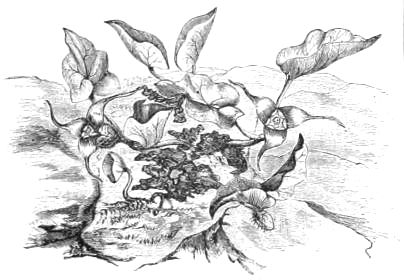
FIG. 157. ASARUM CAUDATUM.
A. caudatum (tailed).* fl. brownish-red, with attenuated or caudate
calyx lobes. July. l. cordate-reniform, hooded, sub-acute,
or bluntish, slightly pubescent. California, 1880. A rare and
pretty species. See Fig. 157.
A. europæum (European). A sarabacca. fl. dull brown, solitary,
rather large, drooping; segments of perianth incurved. May.
l. two on each stem, roundish-reniform, stalked, slightly waved.
h. 1ft. England.
ASCENDING. Directed upwards; as the stem,
which is the ascending axis.
ASCLEPIADEÆ. A large order of, for the most
part, lactescent, climbing shrubs. Flowers sub-umbellate,
fascicled or racemose, interpetiolar; pollen collected in the
form of waxy masses, coalescing to the cells of the anthers;
follicles two, one of which is abortive. Leaves entire,
usually opposite.
ASCLEPIAS (the Greek name of Æsculapius of the
Latins). Swallow-wort. ORD. Asclepiadeæ. Erect, hardy,
herbaceous or sub-shrubby perennials, except where otherwise
specified. Corolla five-parted, reflexed; umbels interpetiolar;
corona seated on the upper part of the tube
of the filaments, five-leaved. Leaves opposite, verticillate,
sometimes alternate. Most of the hardy species
are very handsome border plants, thriving in peaty,
or light rich soil, and are increased by dividing the
roots in spring, and sometimes also by seeds. The doubtfully
hardy or rarer species should always be grown in
a peat soil, and have a little protection during severe frost,
by mulching the roots. The most important of the greenhouse
and stove species is A. curassavica. In order to
obtain good bushy specimens of this, it will be necessary to
cut the plants back annually, after keeping them slightly
dry, and resting for a month or two in midwinter. When
growth has sufficiently advanced, they should be shaken out
and repotted. At this stage, a close, moist atmosphere will
be needful to produce the usually very free growth. The
points of the shoots must be nipped out, in order to promote
a bushy habit. When the pots have become filled
with roots, liquid manure may be applied; but it must be
quite clear and not over strong. All the indoor species
grow best in good fibry loam and leaf mould, and require to
be potted firmly. Cuttings should be secured in spring,
struck in gentle heat, under a bell glass, and as soon as
they are well rooted, potted into 60-size pots. A shift
must be given as often as the pots become filled with
roots, up to the time when the plant commences flowering.
Seeds may be sown in pots in spring, pricked out
singly when large enough, and then treated similarly to
cuttings.
A. acuminata (taper-pointed).* fl. red and white; umbels lateral,
solitary, erect. July. l. ovate, sub-cordate, acuminated, on short
petioles; superior ones sessile, glabrous, but rough on the edges.
Stems erect, glabrous, simple. h. 2ft. New Jersey, 1826. Hardy,
herbaceous.
A. amœna (pleasing).* fl. beautiful purple; umbels terminal,
erect; appendages of corona exserted, red. July. l. opposite,
almost sessile, oblong-oval, downy beneath, with a large purple
middle nerve. Stem simple, with two rows of down. h. 2ft. to
3ft. New England, 1732. Hardy, herbaceous.
A. Cornuti (Cornuti's).* Synonymous with A. syriaca.
A. curassavica (Curassavian). Redhead. fl. reddish orange-scarlet;
umbels erect, solitary, lateral. July to September.
l. opposite, oblong-lanceolate, tapering at both ends. Stem
rather downy, simple, seldom a little branched. h. 1ft. to 3ft.
Tropical America, 1692. The white-flowered variety is a very
pretty contrast. Stove herbaceous.
A. Douglasii (Douglas's).* fl. large, waxy, purplish-lilac, sweet-scented,
in many-flowered umbels. Summer. l. opposite, ovate-cordate,
acuminated, 6½in. long by 5in. or more wide, glabrous
above, downy beneath. Stem thick, woolly, simple. h. 2ft. to
3ft. West America, 1846.
A. hybrida (hybrid). A synonym of A. purpurascens.
A. incarnata (flesh-coloured).* fl. red or purplish; umbels
numerous, usually twin. July. l. opposite, lanceolate, rather
woolly on both surfaces. Stem erect, branched and tomentose at
the top. h. 2ft. Canada (on the banks of rivers), 1710. Hardy,
herbaceous.
A. mexicana (Mexican). fl. white; umbels many-flowered.
July. l. verticillate, linear-lanceolate, with revolute edges;
lower ones four to six in a whorl; upper ones three in a whorl,
or opposite. h. 2ft. to 3ft. Mexico, 1821. Greenhouse evergreen.
A. phytolaccoides (Phytolacca-like). fl. purple; corona white,
with truncate leaflets; umbels lateral and terminal, solitary, on
long peduncles, drooping. July. l. broad, ovate-oblong, acute,
glabrous, paler beneath. Stem erect, simple, spotted with
purple. h. 3ft. to 4ft. Virginia and Carolina (on the mountains),
1812.
A. purpurascens (purplish). fl. purple; umbels erect. July.
l. opposite, large, ovate, with a purplish middle nerve, villous
beneath. Stem simple, rather hairy at top, brownish green at
bottom. h. 2ft. to 3ft. Virginia (in shady swamps), 1732.
Hardy. SYN. A. hybrida.
A. quadrifolia (four-leaved).* fl. white, small, sweet-scented,
with red nectaries; umbels twin, terminal, loose-flowered;
pedicels filiform. July. l. ovate, acuminated, petiolate; those
in the middle of the stem larger, and four in a whorl; the rest
opposite. Stems erect, simple, glabrous. h. 1ft. New York,
1820. Hardy species.
A. rubra (red), fl. red; umbels compound, July, August. l. alternate,
ovate, acuminated. Stem erect, simple. h. 1ft. to 2ft.
Virginia, 1825.
A. Sullivanti (Sullivant's). Similar to A. syriaca, but having
larger and deeper coloured flowers.
A. syriaca (Syrian).* fl. pale purple, sweet scented, in large,
loose, drooping umbels. July. l. opposite, lanceolate-oblong, or
oval, gradually acute, tomentose beneath. Stems simple. h. 3ft.
to 5ft. North America, 1629. SYN. A. Cornuti.
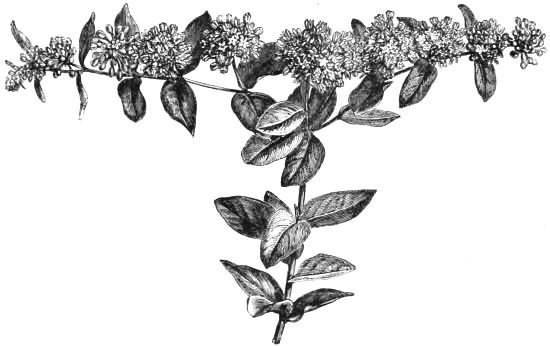
FIG. 158. FLOWERING BRANCH OF ASCLEPIAS TUBEROSA.
A. tuberosa (tuberous).* fl. bright orange, very showy; umbels
disposed in a terminal sub-corymb. July to September. l. scattered,
oblong-lanceolate, hairy. Stems erectish, divaricately
branched at top, very hairy. h. 1ft. to 2ft. North America (in
stony, sandy fields and woods), 1690. A desirable hardy herbaceous
border plant. See Fig. 158.
A. variegata (variegated). fl., petals and foliola of corona white,
fructification red, in dense umbels, very handsome; umbels
almost sessile; pedicels hairy. July. l. opposite, ovate, petiolate,
wrinkled, naked. Stems simple. erect, variegated with purple.
h. 3ft. to 4ft. New York to Carolina (on dry, sandy hills), 1597.
A. verticillata (whorled). fl., corolla with yellowish green petals
and white nectaries; umbels many-flowered. July and August.
l. very narrow, linear, thick, quite glabrous, usually verticillate,
but sometimes scattered. Stems erect, often branched, having
a downy line on one side. h. 1ft. to 2ft. New Jersey, 1759.
ASCYRON. See Hypericum Ascyron.
ASCYRUM (from a, without, and skyros, hard; that is
to say, a plant which is soft to the touch). ORD. Hypericinæ.
A genus of elegant little herbs and sub-shrubs, with
sessile, entire leaves, destitute of pellucid dots, but usually
furnished with black dots beneath. Flowers resembling
Hypericum. They require to be protected during winter
by a frame; for this purpose they should be grown in pots,
as they never exist long in the open border. A compost of
peat, pure leaf soil, and sand, in equal portions, suits them
well; young cuttings of the shrubby kinds will root in
sand under a hand bell glass. Propagated by careful
divisions of the roots in spring. All may be raised from
seeds.
A. amplexicaule (stem-clasping). fl. yellow, few, axillary, and
terminal; corymbs naked. July. l. stem-clasping, ovate, cordate,
sinuately-curled. Stem dichotomously panicled. h. 2ft. North
America, 1823. The flowers and leaves are longer in this than
in any other of the species.
A. Crux Andreæ.* St. Andrew's Cross. fl., petals narrow-pale,
yellow, nearly sessile, in terminal corymbs. July. l. ovate-linear,
obtuse, usually in bundles in the axils. Stem shrubby,
round. h. 1ft. North America (in sandy fields), 1759. This proves
to be quite hardy in many situations.
A. hypericoides (Hypericum-like). fl. yellow. August. l. linear-oblong,
obtuse. h. 2ft. North America, 1759.
A. stans (standing). St. Peter's Wort. fl. yellow. August. l.
oval or oblong, somewhat clasping. h. 2ft. North America, 1816.
ASHES. The earthy or mineral particles of combustible
substances, remaining after combustion. Ashes
are amongst the most economical manures.
Vegetable Ashes are generally the best application for
manuring boggy, cold, and, consequently, sour and unprofitable
land, in quantities of about forty bushels per acre,
thinly and evenly distributed. The annual exhaustion of
salts from large crops of grain, roots, and grass, is from
180lb. to more than 250lb. per acre; and the aggregate of
a few years will so far impoverish the soil in one or more
of the principles necessary to sustain a luxuriant vegetation,
that it will cease to yield remunerating returns. The ashes
of vegetables consist of such elements as are always required
for their perfect maturity, and it is evident they
must furnish one of the best saline manures which can be
supplied for their growth; they contain, in fact, every
element, and generally in the right proportions, for insuring
a full and rapid growth. Both gardener and farmer will
therefore perceive the great value of Ashes to their crops.
Coal Ashes. The bituminous and anthracite coals afford
Ashes, and, although inferior in quality to those made from
wood and vegetables, are, like them, a valuable manure, and
they should be applied to the land in a similar manner. If
they contain many cinders, from not having been thoroughly
burned, they are more suited to heavy than to light soils.
Coal Ashes, if very fine, may be sprinkled half an inch deep
on the surface, over peas and beans, &c., to preserve them
from mice; they may also be used for garden and greenhouse
walks, where bricks or tiles are absent, being tidy
in appearance, and an excellent substitute for other and
more expensive material.
Peat Ashes. Peat approaching to purity, when thrown
out of its bed and thoroughly dried, may be burned to an
imperfect Ash, and when it does not reach this point, it will
become thoroughly charred, and reduced to cinders. The
process of burning should be as slow as possible. In either
form, it is a valuable dressing for the soil.
ASH-TREE. See Fraxinus.
ASIATIC POISON BULB. See Crinum asiaticum.
ASIMINA (meaning unknown). ORD. Anonaceæ.
Hardy shrubs, with oblong, cuneated, usually deciduous
leaves. Flowers sometimes rising before the leaves,
usually solitary and axillary. They thrive freely in a
mixture of sand and peat. Propagated by layers put
down in the autumn, or by seed, procured from their
native country. Seedlings should be raised in pots, and
sheltered in winter, until they have acquired a considerable
size.
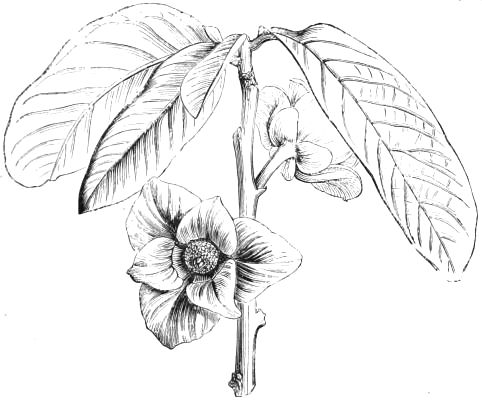
FIG. 159. FLOWERING BRANCH OF ASIMINA TRILOBA.
A. triloba (three-lobed).* fl. campanulate, the three outer petals
pale purplish, and the three inner ones smaller, purplish on the
outside as well as the inside at the base and apex, with the
middle yellow, about 2in. diameter, produced between the upper
leaves. May. l. oblong-cuneated, often acuminated, and, as
well as the branches, smoothish. h. 10ft. Pennsylvania, 1736.
A small tree or shrub. See Fig. 159.
ASKALLON (the Eschallot). See Allium ascalonicum.
ASPALATHUS (from a, not, and spao, to extract;
in reference to the difficulty of extracting its thorns from
a wound). Including Sarcophyllus. ORD. Leguminosæ.
Shrubs or sub-shrubs, natives, with one exception, of the
Cape of Good Hope. Flowers usually yellow, furnished
with three bracteoles, or a leaf comprised of three leaflets.
Leaves of three to five leaflets, disposed palmately,
rarely pinnately, having scarcely any or very short petioles.
All the species are pretty when in flower, and thrive in a
mixture of loam, peat, and sand. Young cuttings of
half-ripened wood will strike in April, in sand, under
bell glasses, which must be wiped dry occasionally. But
little water is needed. Over a hundred species are
known; those introduced are very rarely seen in cultivation.
ASPARAGUS (from a, intensive, and sparasso, to
tear; in reference to the strong prickles of some species).
ORD. Liliaceæ. Erect or climbing herbs or shrubs, with
very small scale-like leaves, and a profusion of numerous
slender fascicled-needle, rather spiny branchlets. Flowers
axillary, inconspicuous. Fruit baccate. The indoor species
will all thrive well in a warm greenhouse temperature,
provided they have partial shade, a good supply of moisture
at the roots, and are not kept too close, in a moderately
rich sandy compost. The hardy species are propagated
chiefly by seeds and divisions of the roots. Rich sandy
loam is necessary, and otherwise they may be treated as
ordinary perennials. Some of the species belonging to this
genus are among the most elegant of foliage plants for
cutting purposes. A. decumbens and A. scandens make
excellent plants for Wardian cases, and may be cut in freely
if they exceed their limits.
ASPARAGUS (A. officinalis) AS A VEGETABLE. The value
and importance of this plant as a
vegetable cannot be over-estimated;
it is extensively grown, and, when
properly managed, produces a fairly
lucrative crop.
Soil and Bed. The first thing to be
done in the preparation of an Asparagus
bed to stand for any length of time, is
to secure an efficient drainage; and on
wet soils this is best effected by placing
a layer of brick rubbish over the whole
of the bottom, and connecting this with
a drain. On gravelly or other soils
which are drained naturally, of course,
this is not needed; but if really good
crops are a desideratum, water should
not stand within 3ft. of the surface.
In all cases, the ground must be dug to
a depth of 18in., and, if stiff, a goodly
amount of road sweepings, or other gritty
materials, should be well mixed with
the staple soil. Asparagus requires a
good soil, neither too heavy nor too light.
Manuring. After the soil has been
well trenched, and has lain long enough
to settle down, a good dressing of
manure—thoroughly rotted, and not
too rank, at the rate of from twenty
to thirty tons to the acre, dug into
the surface of the beds—will be found
very beneficial. If possible, this should
be introduced in January; and then, if
the weather permits, the beds should be forked two or three
times by the end of March, so as to render the soil as
friable as possible. A very good manure, and one that is
easily obtained, is common garden salt. This may be given
annually to established beds. A moderate dressing should
be applied just before growth commences in spring, but
a little will do no harm at other times during the
summer. It is best scattered on with the hand, and a
showery day should be selected, as it will then soon disappear.
Salt, besides acting as a manure, has also the
properties of keeping the beds cool and moist in hot
weather, and of preventing the growth of weeds.
Planting. Asparagus can be planted during March and
April, the latter month being the best time for the
work. The soil having been thoroughly prepared, the
next point is to decide on the size of the beds; this
depends on the size of garden, and the class of "grass"
desired. When very large and fine stocks are the object in
view, the best results will accrue if the plants are fully a
yard apart each way; but this means a comparatively small
crop. A good plan is to make the beds 3ft. wide, planting
two rows, at a distance of 1ft. from each other, and allowing
18in. between each plant, placing them in alternate order.
An 18in. alley should be allowed between the beds. The
roots used for making the beds should be one year old, and
fresh from the ground. In planting, pull out a wide drill
with a hoe, or other tool, to the depth of about 3in. or 4in.,
and spread out the roots all round. Carefully shake the
soil in amongst the roots, and, if dry, apply some water
through a coarse-rosed watering pot, to settle the earth
around them. At intervals, as necessary, give other waterings
till September, when they should be discontinued.
At all times, keep the beds free from weeds, removing
them by the hand to prevent injury to the crowns of
the plants. If the ground is good, no liquid manure will
be needed the first year. As soon as the foliage turns
yellow, cut it off, cleanly rake over the beds, and leave till
about January, when a top-dressing of from 1in. to 3in. of
thoroughly rotted manure may be applied with advantage.
At the end of February, rake off the bed all loose straw or
other debris, and throw on them a little of the soil from
the alleys, raking down, and finishing off the edges squarely
and neatly. During this and succeeding years, apply
liquid manure and clear water, from time to time, as
required; and, provided the manure is not of too great
strength, there is scarcely any limit to its application; but,
in many instances, beds which have only received an annual
dressing have given a good return. Each year they must
be cut over and dressed as before described, but care must
be taken to keep them flat on the surface, otherwise the
plants will die out for want of moisture. When the produce
appears, the beds should be kept cut over until the
20th of June, after which, cutting should cease, or they will
be rendered comparatively unproductive. Cutting can
commence the second or third year, or as soon as there is
any "grass" worth taking. Several methods of growing
these plants could be cited, but that which we have recommended
will be found most satisfactory.
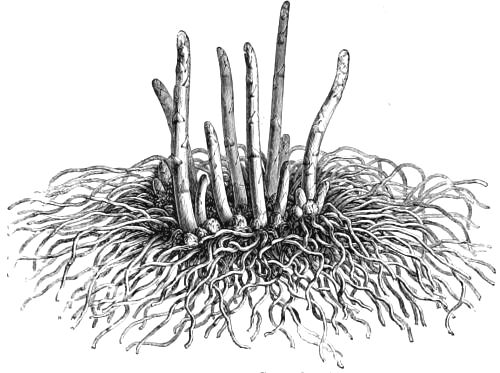
FIG. 160. ASPARAGUS, Crown for Lifting.
Seeds. Plants are raised by sowing seeds in rows across
the kitchen garden, or selected quarter, about the month of
April. The seedlings make a growth, and form good plants
during the first season. In March or April of the following
year, or the year after, they may be removed, and planted
out permanently, as already alluded to. Many cultivators
prefer growing their own plants from seed; because during
the transit of the roots from any distance to where they are
to be grown, a frequent and injurious exhaustion takes
place, and particularly so when they are carelessly packed.
Forcing. Asparagus can, if properly treated, be obtained
from December onwards; and at Christmas time the
produce is very valuable; but, in order to obtain it
at this season, it will be necessary to resort to forcing.
Prepare some beds to secure a lasting heat, and on these
place about 3in. of ordinary garden soil, not very stiff. Then
take the roots, and place them crown upwards, and moderately
close together, shaking the soil well amongst the
roots, and covering about a couple of inches deep. Water
well, to settle the whole, and put on the lights, allowing a
little ventilation, to let out any steam which may arise.
Unless the weather be very cold indeed, give a little air at
all times, and only cover the lights in actual frost. From
time to time, apply fresh linings of hot manure, and in cold
rains, or wind, cover the outsides of the frames with old sacks,
or other things which will keep in the heat. A regular and
steady temperature of 60deg. will force this plant with
better results than a higher one. Houses that are fitted with
hot-water pipes to give bottom heat can be used equally as
well as manure beds, and so long as the soil is
kept moist, the heat thus obtained is as good
as any for the purpose, and much less trouble
than fermenting materials. To keep up a
regular supply, a succession of beds will be
necessary. Asparagus can be forced, or rather
forwarded, in pots or boxes, in a warm greenhouse
or vinery, and, of course, when the plants
are done with, they can be cast away. We
give an illustration (Fig. 160) of a bearing
crown fit for gentle forcing; but, of course, it
must not be left so bare of earth as appears
here, which is done for the purpose of clearness.
Varieties. Connover's Colossal, and Giant,
are the most esteemed. Strains are frequently
largely advertised as improvements on the
sorts above-mentioned, and the charges are
higher accordingly. The difference may be
generally attributed to the culture the plants
receive more than to an improved variety.
When saving seed for home sowing, they
should be taken from the strongest growths,
or deterioration will ensue.
A. æthiopicus ternifolius (ternate). fl. white, in
shortly-stalked racemes, very profuse. August. l.,
false ones in threes, flattened, narrow, linear; prickles solitary,
reversed; branches angular. h. 30ft. South Africa, 1872.
A greenhouse evergreen.
A. Broussoneti (Broussonet's).* fl. very small, succeeded by
small red berries. May. l., lower ones solitary, the others ternate,
1in. long, needle-shaped, persistent, distant, glaucescent;
stipules with reflected spines at the base. Summer. Stem
tapering, streaked, shrubby. h. 10ft. Canary Islands, 1822. A
very pretty hardy climber.
A. Cooperi (Cooper's). fl. axillary, one to three, from the same
nodes as the false leaves; perianth cream-coloured, one line long.
April and May. l. minute, deltoid, scariose, reddish-brown; false
leaves six to fifteen to a node, subulate, moderately firm, ¼in.
to ⅜in. long, spreading or ascending. h. 10ft. to 12ft. Africa, 1862.
A greenhouse climber, with a shrubby terete main stem, 1½in. to
2in. thick at the base, sending out crowds of spreading branches,
which bear abundant slender, firm, alternate branchlets; nodes of
branches and branchlets, furnished with distinct red-brown, subulate
prickles, those of the main stems ¼in. long, deflexed, but not
curved.
A. decumbens (decumbent).* Stem unarmed, decumbent, much
branched; branches wavy; leaves setaceous, in threes. Cape of
Good Hope, 1792. A greenhouse evergreen herbaceous perennial.
A. falcatus (hooked-leaved). l. fascicled, linear, falcate; branches
round; prickles solitary, recurved; peduncles one-flowered,
clustered. h. 3ft. India, 1792. A greenhouse evergreen perennial.
A. officinalis (officinal). Common Asparagus. fl. greenish-white,
drooping. August. l. setaceous, fasciculate, flexible,
unarmed. Stem herbaceous, mostly erect, rounded, very much
branched. h. 1ft. Said to grow on "Asparagus Island,"
Kynance Cove, Lizard, but we have never found it there, and it
has probably long since been exterminated.
A. plumosus (plumed).* fl. white, small, produced from the tips
of the branchlets. Spring. l., true ones in the form of minute
deltoid scales, with an acute ultimately reflexed point; the false
ones are grouped in tufts, each being ⅛in. to ¼in. long, bristle-shaped,
and finely pointed. South Africa, 1876. An elegant
evergreen climber, with smooth stems and numerous spreading
branches. It forms an excellent plant when trained in pots, and
is invaluable for cutting.
A. p. nanus (dwarf).* A very elegant dwarf variety of above.
Stems tufted, slender, and gracefully arching. South Africa, 1880.
For bouquets, the cut sprays of both type and variety have the
advantage of much greater persistency than any fern, retaining
their freshness in water from three to four weeks. See Fig. 161,
for which we are indebted to Messrs. Veitch and Sons.
A. racemosus (racemose). fl. greenish-white, in many-flowered
axillary racemes. May. l. bundled, linear-subulate, falcate;
branches striated; prickles solitary. h. 3ft. India, 1808. Greenhouse
evergreen shrub.
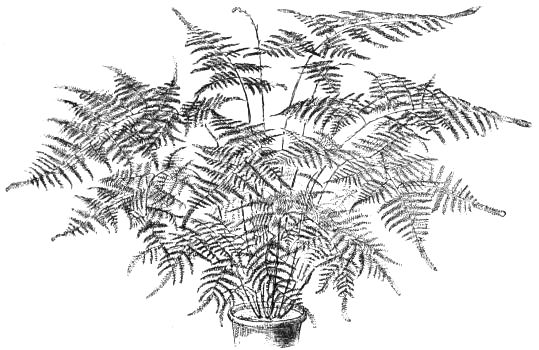
FIG. 161. ASPARAGUS PLUMOSUS NANUS.
A. ramosissimus (very branching). fl. solitary, at the tips of the
branchlets; pedicels hardly perpendicular, one and a-half to two
lines long; cream coloured. June. l. obscurely spurred at the base;
false leaves three to eight-nate, flattened; linear-falcate acute,
¼in. to ⅜in. long, spreading. South Africa, 1862. A wide climbing,
copiously branched, slender greenhouse shrub, with very numerous
spreading or ascending branches and branchlets.
A. scandens (climbing).* fl. whitish, axillary on the ultimate
branchlets, succeeded by round orange-coloured berries. The
annual, much-branched, unarmed stems bear, usually in threes,
numerous small linear-pointed leaves, which on the ultimate
branches spread nearly in one plane. Cape of Good Hope, 1795.
An elegant climbing greenhouse perennial.
A. virgatus (twiggy).* A remarkably elegant feathery looking
plant, of shrubby habit. The stems, which issue from the crown
of the stout fleshy roots, are of a dark green colour, and bear at
the upper end a corymbose head of erect branches, of which the
lowest is the youngest or most recently developed. These branches
are again twice branched, the ultimate branchlets being furnished
with needle-shaped false leaves, ½in. long, which usually grow in
threes. South Africa, 1862.
ASPARAGUS BEETLE (Crioceris asparagi), or
"Cross-bearer." This beautiful little insect is blue-black
or greenish; the thorax is red with two black
spots, and the wing-cases are yellow, with a black cross
on them; the legs and antennæ are black. The short grey
larva is flat underneath, arched on the back, and covered
with hairs. The sides are of an olive hue, and the little
legs and head are black. It ejects a drop of blackish
fluid from the mouth when touched. When full grown,
which takes about a fortnight, the larva measures about
two lines in length; the average length of the perfect
Beetle is about three lines. Although this insect does
not actually destroy the plants, it inflicts much damage
on the foliage, and checks the growth of the stems after
they have attained some size, in consequence of which
the foliage becomes much less in the next season. The
eggs are fixed to the shoots, and are small, dark, pointed
bodies. The larvæ do the harm, as they feed on the
bark and tender portions of the plants. The mature
Beetles should be picked off by hand, and, by commencing
early enough in the season, their numbers will be greatly
reduced. Syringing the plants with water, heated to a
temperature that will not injure the plants, is found a
useful method for removing the grubs.
White Hellebore. Freshly-ground White Hellebore,
sprinkled over the foliage while it is damp, and repeating
the operation at intervals of about eight days for
a season, will generally effect a riddance; but the following
will usually be found better in such cases. Neither
must be applied until after cutting ceases, as they are
very poisonous.
Paris Green. This, mixed and used as for Cherry Fly
(see Black Fly), will generally got rid of the Beetle, if
applied about thrice each season for two years. It should,
however, only be used in severe cases.
Soot, applied in the same manner as White Hellebore,
and in liberal quantities, will, in a season or two, clear
the beds. If a bushel of salt be mixed with each twenty
bushels of soot, it will enhance the effect.
ASPARAGUS KNIFE. The Asparagus Knife consists
of a strong blade fixed in a handle. There are, or were,
three kinds employed: In one form, the blade was blunt on
both sides, straight, with a sharp tip, and not unlike a
small chisel. Another had its blade slightly hooked, and
serrated at one end. But the best is that now almost
universally employed, and which is illustrated by Fig. 162.

FIG. 162. ASPARAGUS KNIFE.
ASPASIA (from aspazomai, I embrace; the column
embraced by the labellum). ORD. Orchidaceæ. A genus
of elegant stove Epidendrum-like epiphytal orchids, with
the lip united to the column, and broad, thin pseudo-bulbs.
The name Aspasia is now and then met with attached to a
totally different genus. Salisbury gave it to a liliaceous
plant which is now referred to Ornithogalum. For culture
and propagation, see Stanhopea.
A. epidendroides (Epidendrum-like).* fl. whitish yellow;
sepals linear oblong, acute; petals obtuse, concave, lateral lobes
of lip roundish, entire, middle lobe crenated emarginate. February.
Pseudo-bulbs oblong, two-edged. h. 1ft. Panama, 1833.
A. lunata (crescent-marked).* fl. green, white, and brown, solitary;
sepals and petals linear obtuse, spreading; lip three-lobed, lateral
lobes short, middle one flat, nearly square, wavy. February.
Pseudo-bulbs oblong, two-edged. h. 1ft. Rio Janeiro, 1843.
A. papilionacea (butterfly-like).* fl., sepals and petals yellowish,
mottled with brown lines on their internal inferior halves; lip
fiddle-shape, its back very great, elliptic, apiculate; an orange-coloured
area stands at its base, a wide violet disc before and
around it. h. 9in. Costa Rica, 1876. Distinguished from A.
lunata in having thirteen keels at the base of the lip, which is
higher inserted, and in the echinulate anther. It is a beautiful
but rare novelty.
A. psittacina (parrot-like).* fl., sepals and petals light green, with
brown transverse bars, which sometimes consist of separate stripes,
at other times of confluent ones; the fiddle-shaped lip shows two
keels and a few purplish dots over its top; the column is brown at
its top, then violet, and white at the base. Ecuador, 1878. It has
a raceme of several flowers, usually one-sided, bent over.
A. variegata (variegated).* fl. green, spotted with yellowish red;
sepals linear oblong; petals somewhat rhomboid, acute; lateral
lobes of lip recurved, middle one fleshy, serrated. February. h.
9in. Panama, 1836. Deliciously sweet-scented in the morning.
ASPEN. See Populus tremula.
ASPERA. Rough, with hairs or points.
ASPERULA (from asper, rough; in allusion to the
leaves). Woodruff. ORD. Rubiaceæ. Hardy herbs, rarely
small shrubs. Flowers terminal and axillary, in fascicles.
Leaves opposite, with one, two, or three stipulas
on each side; they are therefore called four to eight in a
whorl, but between the uppermost leaves there are no
stipulas. Stems and branches usually tetragonal. Most
of the species are very pretty when in flower, and are,
therefore, well adapted for borders, rockwork, and shady
places, in almost any garden soil. Propagated by divisions
of the roots during spring and early summer. Herbaceous
perennials, except where otherwise stated.
A. azurea-setosa (blue-bristly). A synonym of A. orientalis.
A. calabrica (Calabrian). A synonym of Putoria calabrica.
A. cynanchica (Cynanche-like). fl. on erect branches, forming a
fastigiate corymb, white or bluish-coloured, elegantly marked
with red lines, or sometimes pure white. Summer. l. four in a
whorl; floral ones lanceolate-linear, acuminately awned; lower
ones small, oblong, upper ones opposite. Plant glabrous, erectish.
h. 9in. to 12in. England.
A. hirta (hairy). fl. white at first, changing to pink, with oblong
divisions. July and August. l. usually six in a whorl, four
towards the upper part, linear, hairy, deep green. h. 3in.
Pyrenees, 1817. A charming but rare little alpine, thriving best
in a rather damp position on the rockery.
A. longiflora (long-flowered).* fl. whitish, yellowish inside, and
reddish outside; tube of corolla elongated; fascicles terminal,
pedunculate; bracteas small, subulate. Summer. l. four in a
whorl, linear; lower ones small, obovate; upper ones opposite.
Stems weak, numerous, from the same neck, erectish, glabrous.
h. 6in. Hungary, 1821.
A. montana (mountain).* fl., corollas pink, four-cleft, scabrous
externally; in fascicles. June, July. l. linear; lower ones six
in a whorl; middle ones four; upper ones opposite; floral leaves
linear. Stem weak, glabrous. h. 6in. to 8in. Hungary, 1801.
A. odorata (sweet-scented).* Sweet Woodruff. fl. snowy white;
corymbs terminal, pedunculate, usually trifid, each division bearing
about four flowers. May, June. l. eight in a whorl, lanceolate,
smooth, with serrulately scabrous edges. Stems tetragonal,
simple, erect, or ascending. h. 6in. to 12in. Britain. This very
pretty little plant is scentless when fresh, but, when dried, it
diffuses an odour like that of spring grass; and when kept among
clothes, it not only imparts an agreeable perfume to them, but
preserves them from insects.
A. orientalis (Oriental).* fl. sky blue, in terminal heads; bracts
of involucre shorter than the flowers. Summer. l. lanceolate,
bristly, about eight in a whorl. h. 1ft. Caucasus, 1867. A
charming little, profuse blooming, hardy annual, bearing clusters
of fragrant flowers, admirably adapted for bouquet making. SYN.
A. azurea-setosa. See Fig. 163.
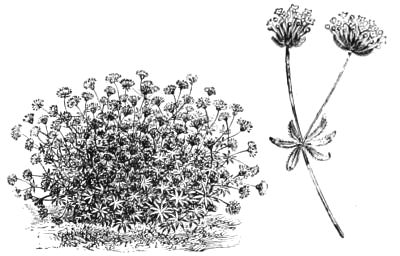
FIG. 163. ASPERULA ORIENTALIS, showing Habit and Portion
of Inflorescence.
A. taurina (bull). fl., corollas white, elongated; corymbs pedunculate,
axillary, fasciculately umbellate, involucrated; bracteas
ciliated. April to June. l. four in a whorl, ovate-lanceolate, three-nerved,
with finely ciliated margins. Plant smoothish, erect.
h. 1ft. South Europe, 1739.
A. tinctoria (Dyers'). fl. white, reddish on the outside; usually
trifid. June. l. linear; lower ones six in a whorl; middle ones
four; and the uppermost ones opposite; floral leaves ovate. Plant
procumbent, unless supported. Stem 1ft. to 2ft. long, purplish.
Europe, 1764.
ASPHALT. Artificial Asphalt is now generally used
in England for footpaths, &c. The recipes are various, one
of the best being the following: Lime rubbish two parts, coal
ashes one part (both must be very dry), sifted very fine;
mix them, and leave a hole in the middle of the heap,
wherein pour boiling hot coal tar; mix well together.
When as stiff as mortar, lay it down, 3in. thick, on a dry
and previously well-levelled surface. A boy should follow
with dry, finely-sifted sand, distributing just enough to
prevent his boots sticking to the tar. Two men should be
employed for the tarring, whilst another should attend to
the boiling operation. Only just enough tar to last ten
minutes must be taken from the furnace at one time,
as, if it be not boiling, the walks will become soft under
the action of very hot sun. This may be repeated every
three years. It is imperative that the surface, lime, coal
ashes and sand be perfectly dry, and that the days selected
for the operation be very fine, the hotter the better.
Another excellent plan is that of using gas lime and
coal ashes. There must be a firm foundation and smooth
surface. Spread the gas lime to about 1½in. deep, and level
with the back of a spade. Over this place a thin layer of
coal dust, and well roll. The work is then complete.
ASPHODEL. See Asphodelus.
ASPHODELINE. ORD. Liliaceæ. A genus of plants
allied to Asphodelus, but distinguished from it by having
erect leafy stems. They thrive in any ordinary garden soil.
Propagated by division.
A. brevicaulis (short-stemmed). fl. in lax, often panicled
racemes, yellow, veined with green. l. subulate, ascending, lower
ones 4in. to 6in. long. Stem slender, often flexuose. Orient.
A. damascena (Damascene). fl. white, in dense generally simple
racemes, 6in. to 12in. long. l. in dense rosette, 6in. to 9in. long,
subulate. Stem simple, erect. h. 1½ft. to 2ft. Asia Minor.
A. liburnica (Liburnian). fl. yellow, striped with green, in
generally simple lax racemes, 6in. to 9in. long. Stem simple,
erect, strict, 1ft. to 2ft. high, upper half naked. South Europe.
A. lutea (yellow). fl. yellow, fragrant, in a dense, very long,
straight, simple raceme, in the axils of buff-coloured bracts,
which are nearly as long as the flowers. Summer. l. numerous,
awl-shaped, triangular, furrowed, smooth, dark green, marked
with lines of a paler tint; root leaves tufted. Stem 3ft. or 4ft.
high. Sicily, 1596. The best known and handsomest species.
SYN. Asphodelus luteus.
A. l. fl.-pl. This resembles the species, but the flowers are
double, and last much longer than those of the typical form; it is
a very pretty plant.
A. taurica (Taurian). fl. white, striped with green, in
generally simple dense racemes, 6in. to 12in. long, 1in. to
2in. wide. Stem simple, erect, 1ft. to 2ft. high, densely
leafy at base of raceme. Asia Minor, &c. SYN. Asphodelus
tauricus.
A. tenuior (slenderer). fl. yellow, in simple lax-flowered
racemes, 3in. to 4in. long, 2in. wide. Stem simple lower
half leaf, upper naked, 1ft. Orient. SYN. Asphodelus
tenuior.
ASPHODELUS (from a, not, and sphallo,
to supplant; in allusion to the beauty of the
flowers). Asphodel. ORD. Liliaceæ. Very pretty
hardy herbaceous perennials, with fleshy fasciculated
roots. Perianth white or yellow, of six equal
spreading segments; stamens six, hypogynous,
alternately long and short. Leaves usually radical,
tufted, narrow, or triquetrous. All the species
enumerated thrive in good deep sandy loam, and
are very suitable for borders and shrubberies.
Propagated by division of the root, which is best
done in early spring.
A. æstivus (summer). fl. white. Summer. h. 2ft. Spain, 1820.
A. albus (white).* fl. white; peduncles clustered the
length of the bracts. May. l. linear, keeled, smooth.
Stem naked, simple. h. 2ft. South Europe, 1596.
A. creticus (Cretan).* fl. yellow. July. l. filiform,
striated, toothed, ciliated. Stem leafy, naked above,
branched. h. 2ft. Crete, 1821.
A. fistulosus (pipe-stalked). fl. white. July, August. l. upright,
striated, subulate, fistular. Stem naked. h. 18in. South Europe, 1596.
A. luteus (yellow). A synonym of Asphodeline lutea.
A. ramosus (branchy). fl. large, white, with a reddish-brown
line in the middle of each segment, springing from the axils of
ovate-lanceolate bracts, and in very long dense racemes. Summer.
l. sword-shaped, stiff, sharply keeled below, channelled above.
Stem much branched. h. 4ft. to 5ft. South Europe, 1829.
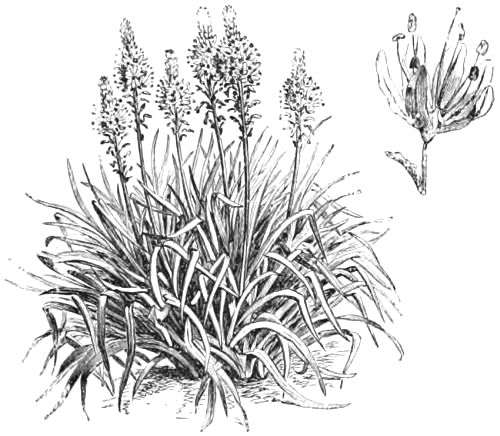
FIG. 164. ASPHODELUS VILLARSII, showing Habit and Flower.
A. Villarsii (Villars'). fl. white; raceme dense, elongated; bracts
dark brown. Stem simple or rarely branched. h. 1ft. to 2ft.
Eastern France. See Fig. 164.
ASPIDISTRA (from aspidiseon, a little round shield;
in reference to the form of the flower). SYN. Porpax (of
Salisbury). Including Plectogyne. ORD. Liliaceæ. Hardy,
or nearly hardy, evergreen, foliage plants. Flowers insignificant,
produced close to the ground, remarkable for the
curious mushroom-like stigma, by which this genus is
characterised. They thrive in almost any ordinary garden
soil, but are best grown in rich loam, leaf soil, and sand;
plenty of moisture being allowed. Propagated by suckers.
A. elatior (taller).* l. oblong, large, on long petioles, leathery;
plant stemless. h. 1½ft. to 2ft. Japan, 1835. This very easily
cultivated and quite hardy foliage plant is much grown for window
gardening and other decorative purposes, for which it is well suited.
A. e. variegata (variegated).* A fine variety with alternately-striped
green and white leaves.
FIG. 165. ASPIDISTRA LURIDA.
A. lurida (lurid). fl. purple. July. l. oblong-lanceolate, on
long petioles. h. 1ft. to 1½ft. China, 1822. A very graceful
species, with long evergreen leaves. It is an effective plant for
the outdoor garden during summer, and is nearly, if not quite,
hardy. See Fig. 165.
A. punctata (dotted). l. lanceolate, on long stalks. h. 1ft.
China. This is very closely allied to A. elatior, but of inferior
value.
ASPIDIUM (from aspidion, a little buckler; in
allusion to the form of the involucre). Shield Fern. ORD.
Filices. Including Cyclodium, Cyclopeltis, Cyrtomium,
Phanerophlebia, and Polystichum. Stove, greenhouse, or
hardy ferns. Sori sub-globose, dorsal or terminal on the
veinlets; involucre orbicular, fixed by the centre. They
thrive in a compost of sandy peat with a little loam.
Several species are admirably adapted for the indoor
fernery. The hardy species are best grown in the shade;
a little sandstone should be incorporated with the soil.
For general culture, see Ferns.
FIG. 166. ASPIDIUM ACULEATUM.
A. acrostichoides (Acrostichum-like).* sti. 6in. to 8in. long,
densely scaly below. fronds 1ft. to 2ft. long, 2in. to 6in. broad;
pinnæ of the lower half barren, 2in. to 3in. long, ¼in. broad,
spinoso-serrated throughout, auricled at the base above; the
pinnæ of the upper half fertile, much smaller. sori occupying the
whole under side. North America. SYN. Polystichum acrostichoides.
Hardy.
A. a. grandiceps (large-crested).* A very handsome fern, having
the apices of the fronds and pinnæ heavily crested; equally desirable
for the hardy or temperate fernery. Of garden origin.
A. a. incisum (incised).* A variety with the pinnules deeply
cut and acutely pointed.
A. aculeatum (sharp-pointed).* The Hard Shield Fern. sti.
tufted, 6in. to 12in. long, more or less scaly. fronds 1ft. to 3ft.
long, 6in. to 12in. broad, ovate-lanceolate; lower pinnæ close,
lanceolate, 4in. to 6in. long, ½in. to ¾in. broad; pinnules ovate-rhomboidal,
unequal sided, auricled on the upper base; teeth
aristate. sori nearer the midrib than the edge. A variable and
hardy species, common throughout the world. SYN. Polystichum
aculeatum. A. a. proliferum is a proliferous Australian form.
A. a. vestitum has the rachis densely clothed to the point, both
with reddish-brown fibrillose and large lanceolate dark brown
scales. See Fig. 166.
A. amabile (lovely). sti. scattered, 6in. to 12in. long, slightly
scaly below. fronds 1ft. or more long, 6in. to 12in. broad, with a
lanceolate terminal pinna, and three to six lateral ones on each
side, which are 3in. to 6in. long, 1in. to 1½in. broad, the lowest
sometimes divided at the base; segments sub-rhomboidal, with
at least half the lower side cut away, the upper side and part of
the lower lobed and sharply spinuloso-serrated. sori sub-marginal.
Ceylon. Stove species. SYN. Polystichum amabile.
A. angulare (angular). The Soft Shield Fern. Botanically this
is only a variety of A. aculeatum; but, to the cultivator, it is
abundantly distinct. The fronds are not so tapered at the base,
the pinnules are more equal in size, and the lower ones distinctly
stalked, while the texture is much less rigid than in A. aculeatum,
the caudex has a tendency to elongate. Almost cosmopolitan in
its distribution. SYN. Polystichum angulare. There are an
enormous number of varieties, many of which are not under cultivation.
Amongst the best found in gardens are alatum, Bayliæ, concinnum,
corymbiferum, cristatum, curtum, dissimile, grandiceps,
imbricatum, Kitsoniæ, lineare, parvissimum, plumosum, polydactylon,
proliferum, rotundatum, Wakeleyanum, Woollastoni.
FIG. 167. ASPIDIUM ANGULARE GRANDICEPS.
A. a. grandiceps (large-crested). This is a narrow fronded
variety, having the apices of the fronds branched and crested, ultimately
producing a broad tasselled head. A very handsome
fern. See Fig. 167.
A. anomalum (anomalous). sti. tufted, 1ft. to 2ft. long, densely
scaly below. fronds 2ft. to 3ft. long, 1ft. or more broad; lower
pinnæ 6in. to 9in. long, 2in. to 3in. broad; pinnules lanceolate,
cut down in the lower part into oblong segments; teeth blunt or
slightly mucronate. sori placed near the sinuses of the pinnules.
Ceylon. Stove species. SYN. Polystichum anomalum.
A. aristatum (awned).* rhiz. creeping. sti. scattered, 9in. to
18in. long, very scaly below. fronds 1ft. to 2ft. long, 9in. to 12in.
broad, ovate-deltoid, tri- or quadripinnatifid; lower pinnæ largest,
4in. to 6in. long, 2in. to 3in. broad; lowest pinnules much the
largest, lanceolate-deltoid; teeth copious aristate. sori small,
principally in two rows near the midrib. Japan, Himalayas,
New South Wales, &c. Greenhouse species. SYN. Polystichum
aristatum.
A. a. coniifolium (Conium-leaved).* fronds more finely divided;
segments copiously toothed, with lower lobes distinct.
A. a. variegatum (variegated).* A handsome variety, with a
broad band of green running through the bases of the pinnules
along the course of the rachis.
A. auriculatum (eared).* sti. tufted, 4in. to 6in. long, scaly below
or throughout. fronds 12in. to 18in. long, 2in. to 4in. broad;
pinnæ numerous, sub-sessile, usually close, 1in. to 2in. long, about
½in. broad, ovate-rhomboidal, falcate, acute, spinoso-serrated,
the upper base auricled, the lower one truncate. sori in two rows.
India, widely distributed. Stove species. SYNS. A. ocellatum,
Polystichum auriculatum.
A. a. lentum (pliant). Pinnæ cut into oblong mucronate lobes
about half-way down to the rachis, the auricle sometimes quite
free.
A. a. marginatum (margined).* A variety with more coriaceous
texture; upper edge of the pinnæ slightly lobed.
A. capense (Cape).* sti. scattered, 1ft. to 2ft. long, densely scaly
below. fronds 1ft. to 3ft. long, 12in. to 18in. broad, sub-deltoid;
lowest pinnæ the largest, 6in. to 9in. long, 3in. to 4in. broad;
pinnules and segments lanceolate, the latter bluntly lobed. sori
very large and copious. South America, New Zealand, Cape
Colony, Natal, &c. Greenhouse species. SYNS. A. coriaceum,
Polystichum capense.
A. confertum (compressed). Synonymous with A. meniscioides.
A. coriaceum (leathery). Synonymous with A. capense.
A. falcatum (hooked).* sti. tufted, 6in. to 12in. long, densely scaly
below. fronds 1ft. to 2ft. long, 6in. to 9in. broad, simply pinnate;
pinnæ numerous, the lower stalked, ovate-acuminate, falcate, 3in.
to 5in. long, 1in. to 2in. broad; edge entire or slightly undulated,
the upper side narrowed suddenly, sometimes auricled, the lower
rounded or obliquely truncate at the base. sori small, copious,
scattered. Japan, China, Himalayas, &c. SYN. Cyrtomium falcatum.
A. f. caryotideum (Caryota-like) has pinnæ sometimes larger,
sharply toothed, slightly lobed, sometimes auricled on both sides.
SYN. Cyrtomium caryotideum.
A. f. Fortunei (Fortune's).* This differs from the type in having
pinnæ narrower and more opaque. All are most useful house
ferns, and quite hardy in many parts of the country. SYN. Cyrtomium
Fortunei.
A. falcinellum (finely-hooked).* sti. tufted, 4in. to 8in. long,
densely scaly. fronds 9in. to 18in. long, 3in. to 6in. broad; central
pinnæ 2in. to 3in. long, ¼in. broad; point acute; edge finely
serrated; the upper side bluntly auricled, the lower obliquely
truncate at the base. sori in two long rows. Madeira. Greenhouse
species. SYN. Polystichum falcinellum.
A. flexum (bending). rhiz. stout, wide-creeping. sti. scattered,
1ft. long, scaly. fronds 2ft. to 3ft. long, 9in. to 12in. broad; lower
pinnæ lanceolate-deltoid, 4in. to 6in. long, 2in. to 4in. broad; pinnules
lanceolate-deltoid, cut down to the rachis below into oblong
bluntly-lobed segments. sori large, in two rows, copious. Juan
Fernandez. Stove species. SYN. Polystichum flexum.
A. fœniculaceum (Fennel-leaved).* rhiz. creeping. sti. scattered,
6in. to 12in. long, densely scaly below. fronds 1ft. to 2ft. long,
and 9in. to 12in. broad, lanceolate-deltoid, four to five pinnatifid;
lower pinnæ 6in. to 8in. long, 3in. to 4in. broad; ultimate divisions
linear, awned, with a firm texture. sori solitary. Greenhouse
species. Sikkim, 7,000ft. to 10,000ft. SYN. Polystichum fœniculaceum.
A. frondosum (leafy). sti. scattered, 1ft. to 2ft. long, densely
scaly below. fronds 18in. to 24in. long, 1ft. or more broad,
sub-deltoid; lower pinnæ much the largest, long stalked; pinnules
lanceolate; segments very unequal sided, pinnatifid, with
rounded mucronate lobes, obliquely truncate at the base below.
sori large, copious. Madeira. Greenhouse species. SYN. Polystichum
frondosum.
A. Hookeri (Hooker's). sti. 1ft. or more long, naked. fronds
2ft. to 3ft. long; pinnæ 6in. to 8in. long, 1in. broad, cut down to
a broadly-winged rachis into nearly close, spreading, entire,
linear-oblong lobes ⅛in. broad. sori nearer the edge than the midrib.
Malay Archipelago. Stove species. SYNS. A. nephrodioides
and Cyclodium Hookeri.
A. laserpitiifolium (Laserpitium-leaved).* sti. 4in. to 6in. long,
stramineous, scaly at base. fronds 12in. to 18in. long, 6in. to 9in.
broad, ovate-deltoid, tripinnate; lower pinnæ the largest, with
pinnules on the lower side prolonged, lanceolate, imbricated with
small, distinct, bluntly-lobed segments. sori in two rows, very
copious. Japan. A very desirable greenhouse species. SYNS.
Lastrea Standishii (of gardens) and Polystichum laserpitiifolium.
A. lepidocaulon (scaly-stemmed). sti. tufted, 6in. to 9in. long,
densely clothed with large cordate scales. fronds 1ft. or more
long, 4in. to 6in. broad, sometimes elongated and rooting at the
point: pinnæ 2in. to 3in. long, ½in. to ¾in. broad, lanceolate-falcate,
the two sides unequal, the upper one auricled at the base.
sori principally in two rows, near the midrib. Japan. Greenhouse
species. SYN. Polystichum lepidocaulon.
A. Lonchitis (spar-like).* The Holly Fern. sti. densely tufted,
1in. to 4in. long, scaly at base. fronds 1ft. to 2ft. long, 1in. to
3in. broad, pinnate throughout; pinnæ ½in. to 1½in. long, ¼in. to
½in. broad, ovate-rhomboidal, sub-falcate, the two sides unequal,
point mucronate, edge spinuloso-serrated, the upper side sharply
auricled at the base, the lower obliquely truncate. Britain, &c.
A very widely-spread hardy species. SYN. Polystichum Lonchitis.
A. meniscioides (Meniscium-like). sti. 1ft. to 2ft. long, scaly
below. fronds 2ft. to 3ft. long, 1ft. or more broad, pinnate;
barren pinnæ sessile, 6in. to 9in. long, 1½in. to 2in. broad, oblong-acuminate,
nearly entire; fertile pinnæ much smaller. sori in two
close rows between the primary veins. West Indies, &c. Stove
species. SYNS. A. confertum and Cyclodium meniscioides.
A. mohrioides (Mohria-like). sti. tufted, 2in. to 6in. long, more
or less densely scaly. fronds 6in. to 12in. long, 2in. to 3in. broad,
bipinnate; pinnæ numerous, frequently imbricated, lanceolate,
cut down below into slightly toothed, oblong-rhomboidal pinnules.
sori copious. Patagonia and the Cordilleras of Chili.
Greenhouse species. SYN. Polystichum mohrioides.
A. mucronatum (mucronated).* sti. tufted, 2in. to 4in. long,
densely scaly. fronds 12in. to 18in. long, 1½in. to 2in. broad, pinnate
throughout; pinnæ very numerous, often imbricated, ¾in. to
1in. long, ¼in. to broad, sub-rhomboidal, unequal-sided,
mucronate, sub-entire, distinctly auricled at the upper base. sori
in a long row on each side the midrib. West Indies. Stove or
greenhouse species. SYN. Polystichum mucronatum.
A. munitum (armed).* sti. tufted, 4in. to 9in. long, densely
scaly. fronds 1ft. to 2ft. long, 4in. to 8in. broad; pinnæ close, 2in.
to 4in. long, about ½in. broad, acuminate, finely spinulose and
serrated throughout, the upper side auricled, and the lower
obliquely truncate at the base. sori in two rows near the edge.
California, &c. Hardy; very fine. SYN. Polystichum munitum.
A. nephrodioides (Nephrodium-like). Synonymous with A.
Hookeri.
A. ocellatum (spotted). Synonymous with A. auriculatum.
A. pungens (stinging). rhiz. stout. sti. scattered, 1ft. long, scaly
below only. fronds 2ft. to 3ft. long, 9in. to 12in. broad; lower
pinnæ 4in. to 6in. long, 2in. to 3in. broad; pinnules ovate-rhomboidal,
unequal-sided, often deeply pinnatifid. sori principally in
two rows near the midrib. Cape Colony. Greenhouse species.
SYN. Polystichum pungens.
A. repandum (wavy-leaved). sti. 1ft. to 2ft. long, naked. fronds
2ft. or more long, 12in. to 18in. broad, apex deeply pinnatifid,
with linear-oblong, slightly sinuated lobes; lower pinnæ four to
eight on each side, 6in. to 8in. long, 1¼in. to 1½in. broad, acuminate;
edge bluntly sinuated, the lowest stalked and forked. sori in
two distinct rows near the main vein. Philippines. Stove species.
A. rhizophyllum (frond-rooting). sti. tufted, 1in. to 2in. long,
slender. fronds 2in. to 6in. long, ¾in. broad, with the long,
narrow upper half of the frond lengthened out and rooting, the
lower half cut down to a flattened fibrillose rachis into oblong-rhomboidal
sub-entire lobes about ½in. broad, ¼in. deep. sori
scattered. Jamaica, 1820. Stove or cool house species. SYN.
Polystichum rhizophyllum.
A. semicordatum (half-cordate). sti. scattered, 6in. to 12in. long.
fronds 2ft. to 3ft. long, 8in. to 12in. broad, simply pinnate; pinnæ
spreading, 4in. to 6in. long, ½in. to ¾in. broad, nearly entire, acuminate,
cordate or truncate at the base. sori in one to three
rows on each side, the inner one close to the midrib. Tropical
America, &c. SYN. Polystichum semicordatum.
A. trapezioides (Trapezium-like). Synonymous with A. viviparum.
A. triangulum (triangular).* sti. tufted, 2in. to 6in. long, base
scaly. fronds 1ft. or more long, 1½in. to 2in. broad; pinnæ numerous,
sessile, lower ones distant, central ones ¾in. to 1in. long,
about ⅝in. broad, sub-deltoid, lower side obliquely truncate; apex
mucronate, edge sub-entire or slightly lobed, with blunt or spinose
teeth, one or both sides auricled at the base. sori principally in
two rows near the edge. West Indies. Stove or greenhouse
species. SYN. Polystichum triangulum.
A. trifoliatum (three-leaved). sti. tufted, 1ft. or more long, base
only scaly. fronds 12in. to 18in. long, 6in. to 12in. broad, with a
large ovate-acuminate terminal pinna, narrowed or forked at the
base, and one or two lateral ones on each side, the lowest mostly
forked. sori in rows near the main veins. Tropical America.
Stove species.
A. t. heracleifolium (Heracleum-leaved). A form with pinnæ
pinnatifid on both sides at the base.
A. tripteron (three-winged). sti. 6in. to 9in. long, densely scaly
at base. fronds 12in. to 18in. long, with a large terminal and two
small spreading lateral pinnæ at the base of it, the former 2½ in.
to 3in. broad, with very numerous spreading pinnules on each
side, 1½in. long, about ½in. broad, unequal sided, acute, deeply
inciso-pinnatifid, the lower lobes again toothed; lateral pinnæ 3in.
to 5in. long, 1½in. to 2in. broad. sori principally in two rows midway
between midrib and edge. Japan. Greenhouse species. SYN.
Polystichum tripteron.
A. varium (variable).* rhiz. sub-creeping. sti. 6in. to 12in.
long, densely fibrillose below. fronds 12in. to 18in. long, 9in. to
12in. broad, lanceolate-deltoid; lower pinnæ much the largest,
sub-deltoid, unequal sided, 4in. to 6in. long, 3in. to 4in. broad;
pinnules lanceolate, imbricated, with oblong, blunt, slightly
toothed segments. sori principally in two rows near the midrib.
Japan. Greenhouse species. SYNS. Lastrea varia and Polystichum
varium. It is frequently met with in gardens under the
former name.
A. viviparum (bud-producing). sti. tufted, 4in. to 6in. long, scaly
at the base. fronds 12in. to 18in. long, 4in. to 6in. broad; pinnæ
numerous, nearly lanceolate, the central ones 2in. to 3in. long,
about ½in. broad, mucronate, sometimes bud-bearing, the edge
more or less deeply lobed, in the lower part sometimes quite down
to the rachis, the upper side auricled. sori in two or four rows.
West Indies. Stove or greenhouse species. SYNS. A. trapezioides
and Polystichum viviparum.
ASPLENIUM (from a, not, and splen, spleen; referring
to the medicinal properties formerly attributed
to the genus). Spleenwort. ORD. Filices. Including
Anisogonium, Athyrium, Ceterach, Cænopteris, Darea,
Diplazium, Hemidictyum, Neottopteris. A very large and
widely-spread genus, including species suitable for the
stove, temperate, and hardy ferneries. Sori dorsal or submarginal,
linear or oblong. Involucre similar in shape,
straight or occasionally curved, single or double, plane or
tumid, bursting along the outer edge. The tropical species
should be grown in a compost of peat, loam, and sand; the
hardy sorts in a mixture of fibrous peat and sand. Good
drainage is at all times required. For general culture, see
Ferns.
FIG. 163. ASPLENIUM ADIANTUM-NIGRUM, showing Rootstock and
back of Fertile Fronds.
A. abscissum (clipped). sti. tufted, 4in. to 8in. long. fronds
6in. to 12in. long, 3in. to 4in. broad, sometimes proliferous at the
apex, with twelve to twenty horizontal pinnæ on each side, which
are 1½in. to 2in. long, about ½in. broad, bluntish; edge inciso-crenate,
the upper one narrowed suddenly at the base, the lower
one obliquely truncate. sori short, in two regular rows, falling
short of both midrib and edge. Tropical America. Stove species.
SYN. A. firmum.
A. acuminatum (taper-pointed).* sti. 6in. to 9in. long. fronds
1ft. to 2ft. long, 9in. to 12in. broad, with very numerous close-placed
lanceolate-oblong pinnæ on both sides, which are 4in. to
6in. long, 1½in. to 2in. broad; pinnules numerous, unequal-sided,
lanceolate, acuminate; edges sharply toothed, the lower base obliquely
truncate. sori in two rows in the upper part, of the
pinnules, often diplazioid. Sandwich Islands. Greenhouse species.
SYN. A. polyphyllum.
A. Adiantum-nigrum (Black Spleenwort). sti. tufted, 6in. to
9in. long. fronds 6in. to 12in. long, 4in. to 6in. broad sub-deltoid;
lower pinnæ deltoid, 2in. to 3in. long, 1½in. to 2in. broad; all the
pinnæ pinnate. sori copious, at last often occupying the whole
under surface of the segments. Great Britain. World-wide in
its distribution. Hardy. A. solidum, from Cape Colony, is
supposed to be a mere form of this species. There are several
varieties the best of which are described below. See Fig. 168.
A. A.-n. acutum (acute). fronds 9in. to 15in. long, deltoid, tripinnate;
ultimate segments linear, and very acute. Ireland. A
copiously divided and very elegant variety. Habit more graceful
than the type.
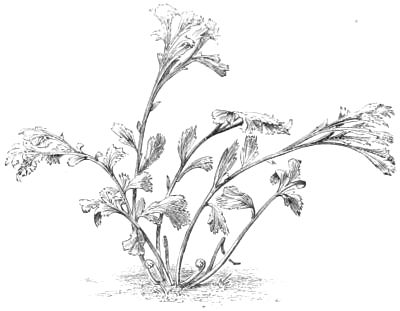
FIG. 169. ASPLENIUM ADIANTUM-NIGRUM GRANDICEPS.
A. A.-n. grandiceps (large-crested). fronds 6in. to 12in. long;
pinnæ comparatively short, and slightly crested; apex freely
divided, and expanded into a broad crest, which gives the
frond a very graceful contour. Frame or greenhouse variety.
See Fig. 169.
A. A-n. oxyphyllum (sharp-leaved). fronds 4in. to 6in. long,
ovate-lanceolate; ultimate segments narrow and very acute. A
very pretty little variety.
A. affine (related). sti. 6in. to 12in. long. fronds 12in to 18in.
long, 6in. to 12in. broad, bipinnate, with numerous pinnæ on each
side, the lower ones lanceolate-rhomboidal; pinnules rhomboidal,
inciso-serrate. sori copious, linear. Mascaren Islands, &c. Stove
or warm greenhouse species. SYN. A. spathulinum.
A. alatum (winged).* sti. 4in. to 6in, long, slender, the upper
part and the rachis, winged. fronds 1ft. to 1½ft. long, 3in. to 4in.
broad, with twelve to twenty horizontal sessile pinnæ on each
side, which are 1in. to 1½in. long, and about ½in. broad, bluntish;
edge uniformly inciso-crenate, the base nearly equal on both sides.
sori distant, not reaching either the midrib or edge. West
Indies, &c. A very elegant stove species.
A. alismæfolium (Alisma-leaved). sti. 2in. to 6in. long. fronds
varying in shape, from simple oblong-lanceolate, 6in. to 9in. long,
2in. to 3in. broad; apex acuminate; edges entire, to ternate or
pinnate, with a large terminal and three pairs of lateral pinnæ,
each like the entire frond of the simple state; texture coriaceous.
Isle of Luzon. Stove species. SYN. Anisogonium alismæfolium.
A. alternans (alternated). sti. tufted, 1in. to 2in. long. fronds
6in. to 8in. long, 1in. to 1½in. broad, lanceolate-oblong, cut down
into numerous bluntly-rounded lobes on each side, which reach
very nearly down to the rachis, the lower gradually reduced. sori
copious. N. W. Himalayas. Greenhouse species. SYN. A. Dalhousiæ.
A. alternifolium (alternate-leaved). Synonymous with A. germanicum.
A. angustifolium (narrow-leaved).* sti. tufted, about 1ft. long.
fronds 18in. to 24in. long, 4in. to 6in. broad, simply pinnate, lanceolate-oblong,
flaccid, with twenty to thirty sub-sessile pinnæ on
each side, sterile ones largest, 2in. to 3in. long, ½in. broad, acuminate;
edge obscurely-crenate, base rounded and equal on both
sides; fertile pinnæ narrower and more distant. sori very close
and regular, extending from the midrib nearly to the edge.
Canada, &c. Greenhouse species.
A. anisophyllum (unequal-leaved). sti. tufted, 6in. to 12in.
long. fronds 1ft. to 2ft. long, 6in. to 9in. broad, oblong-lanceolate,
simple pinnate, with ten to sixteen sub-sessile pinnæ on each side
which are 3in. to 5in. long, about 1in. broad, acuminated, crenate,
the two sides unequal, the upper one narrowed suddenly, the
lower one obliquely truncate at the base. sori distant, elliptical,
reaching half-way from the edge to the margin. Cape Colony, &c.
Greenhouse species.
A. apicidens (apex-toothed). A variety of A. Vieillardii.
A. arborescens (tree-like). cau. oblique. sti. 1ft. to 2ft. long.
fronds 3ft. to 4ft. long, 2ft. to 3ft. broad, deltoid, tripinnatifid, with
numerous pinnæ, the lower ones 12in. to 18in. long, 4in. to 6in.
broad; pinnules 3in. long, about ½in. wide, acuminate, edge cut
two-thirds of the way down to the rachis into nearly entire lobes,
¼in. deep, ⅛in. broad. Lower sori ⅛in. long. Mauritius, &c., 1826.
Stove species. SYN. Diplazium arborescens.
A. Arnottii (Arnott's). sti. smooth, angular. fronds ample, tripinnatifid;
lower pinnæ 9in. to 12in. long, 4in. to 6in. broad;
pinnules 3in. to 4in. long, 1in. or more broad, cut down below to a
distinctly winged rachis into deeply crenate, blunt, oblong lobes,
½in. deep, ¼in. broad. sori copious, nearly all diplazioid, and filling
up when mature nearly the whole surface of the lobes. Sandwich
Islands, 1877. Greenhouse species. SYNS. A. diplazioides
and Diplazium Arnottii.
A. aspidioides (Aspidium-like). sti. tufted, 6in. to 12in. long.
fronds 1ft. to 2ft. long, 8in. to 12in. broad, ovate-deltoid, tripinnatifid;
lower pinnæ 6in. to 8in. long, lanceolate-deltoid; pinnules
lanceolate, cut down below nearly to the rachis into inciso-pinnatifid
ovate segments, two lines broad. sori copious, oblong, the
lower ones curved. Tropical America, &c. Greenhouse species.
SYN. A. multisectum.
A. attenuatum (attenuated). sti. tufted, 3in. to 4in. long. fronds
simple, linear-lanceolate, about 1ft. long, about ½in. broad, narrowed
upwards very gradually, sometimes proliferous at the point,
the margin toothed; the lower third also lobed; the lowest
roundish, lobes reaching down nearly or quite to the rachis. sori
reaching nearly to the edge. Queensland, &c. Greenhouse
species.
A. aureum (golden). A variety of A. Ceterach.
A. auriculatum (auriculated).* sti. tufted, 4in. to 8in. long.
fronds 12in. to 18in. long, 4in. to 6in. broad, simply pinnate, lanceolate-oblong,
with ten to twenty-stalked horizontal pinnæ on each
side, which are 2in. to 4in. long, ¾in. to 1in. broad, lanceolate,
often sub-falcate; edge deeply crenate, the two sides unequal, the
upper one with a cordate auricle, the lower one obliquely truncate.
sori distant, not reaching either the midrib or edge. Tropical
America, 1820. Stove species.
A. auritum (eared). sti. tufted, 4in. to 8in. long. fronds 6in. to
12in. long, 2in. to 4in. broad, simply pinnate, with ten to fifteen
stalked horizontal pinnæ on each side, which are 2in. to 3in. long,
and about ½in. broad, acute or bluntish; edge sharply toothed or
often lobed, especially on the upper side towards the base. sori
in two broad rather oblique rows. Tropical America. Stove
species.
A. australasicum (Australian). A variety of A. Nidus.
A. Baptistii (Baptist's).* sti. 6in. to 8in. long. fronds 1ft. long,
bipinnate, broadly ovate; pinnæ stipitate, the lower about
5in. long, with four narrow stipitate linear-toothed pinnules,
2in. long, and a terminal lobe, 3½in. long, ¼in. broad, furnished
with distinct linear marginal teeth, pointing forwards, and terminating
in a long attenuated point, which is toothed nearly
to the end. sori linear-oblong, straight, parallel with, and close
to, the midrib. South Sea Islands, 1879. A very handsome stove
species.
A. Belangeri (Belanger's).* sti. tufted, 4in. to 8in. long. fronds
12in. to 18in. long, 2in. to 3in. broad, bipinnate; pinnæ numerous,
1in. to 1½in. long, ½in. broad, rounded at the point, truncate at the
base on the lower side; pinnules linear, erecto-patent, half line
broad; one vein and sorus to each segment, the latter marginal.
Malayan Peninsula. Stove species. SYNS. A. Veitchianum,
Darea, Belangeri, &c.
A. bipartitum (twice-partite). sti. tufted, 3in. to 6in. long. fronds
6in. to 8in. long, 2in. to 3in. broad, bipinnate, with about ten to
fifteen stalked pinnæ on each side, which are 1in. to 1½in. long,
½in. to ¾in. broad, bluntish, cut down at the base on the upper
side into one distinctly-stalked cuneate pinnule, sometimes into
two or three, the outer edge inciso-crenate, the base on the lower
side obliquely truncate. sori in two regular rows, reaching
nearly to the edge. Mascaren Isles. Stove species.
A. bisectum (bisected).* sti. tufted, 4in. to 6in. long. fronds
12in. to 18in. long, 4in. to 6in. broad, bipinnatifid, with twenty to
thirty horizontal pinnæ on each side, which are 2in. to 3in. long,
¼in. broad, with a very long, narrow, deeply inciso-pinnatifid
upper portion, the base on the upper side narrowed suddenly, on
the lower obliquely truncate. sori almost all in two parallel rows
close to the midrib. West Indies, &c. Stove species.
A. brachypteron (broadly-winged). sti. tufted, 2in. to 4in. long.
fronds 4in. to 6in. long, 1in. to 1½in. broad, bipinnate, with twelve
to twenty-four horizontal pinnæ on each side, of which from half
to nearly the whole of the lower side is cut away, the largest ½in.
to ⅝in. long, cut down to the rachis into simple or forked linear
pinnules, 1in. to 1½in. long. sori solitary, often quite marginal.
Madagascar, &c. Stove species. SYN. Darea brachypteron.
A. brevisorum (shortly-soriate). sti. 12in. to 18in. long. fronds
2ft. to 3ft. long, 9in. to 18in. broad, tripinnate; lower pinnæ 1ft.
or more long; pinnules lanceolate, distant, 2in. to 3in. long, and
1½in. broad; segments lanceolate, ¾in. long, two lines broad,
deeply and sharply toothed. sori small, six to twelve to a segment,
in two rows near the midrib, the lower ones curved, often
double. Jamaica, &c. Stove species. SYN. Athyrium brevisorum.
A. bulbiferum (bulb-bearing). sti. tufted, 6in. to 12in. long.
fronds 1ft. to 2ft. long, 8in. to 12in. broad, oblong-deltoid, with
numerous horizontal pinnæ on each side, which are often proliferous
from the upper surface, the largest 4in. to 8in. long, 1½in.
to 2in. broad; pinnules lanceolate-deltoid, slightly toothed. sori
oblong, when mature often filling the whole breadth of the segments.
New Zealand, &c., very widely distributed. Greenhouse
species.
A. b. Fabianum (Fabia's). Lower segments deeply pinnatifid,
with narrow divisions and sub-marginal sori. SYN. A. Fabianum.
A. b. laxum (loose). Habit more slender; segments narrow,
so that the sori are often as if marginal.
A. caudatum (tailed). Probably a form of A. falcatum, but
having the sori more confined to the centre of the pinnæ, being
often restricted to two parallel rows close to the rachis. Polynesia,
&c. Greenhouse species.
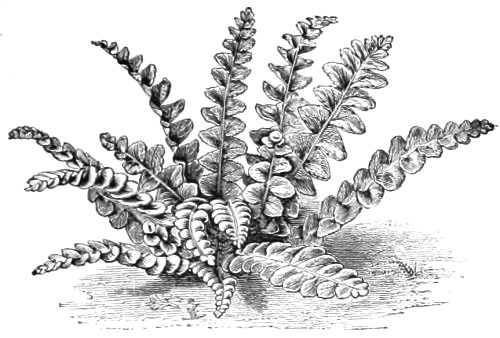
FIG. 170. ASPLENIUM CETERACH.
A. Ceterach.* Scale or Scaly Fern. sti. densely tufted, 1in. to
3in. long, scaly. fronds 4in. to 6in. long, ½in to 1in. broad, cut
down nearly or quite to the rachis into alternate, blunt, sub-entire,
broadly-oblong or roundish pinnæ, with a rounded sinus
between them; upper surface naked, lower densely clothed with
deep brown membranous scales. sori linear oblique. Britain,
throughout Europe, Northern Asia, &c. This is a variable species,
but the forms do not remain constant under cultivation. It should
be firmly planted in a vertical chink of the rockery in loam, lime
rubbish, rock chippings, and sand, and be watered freely during
the summer. SYN. Ceterach officinarum. See Fig. 170.
A. C. aureum (golden).* A large variety, producing fronds from
9in. to 15in. long, 1½in. to 3in. broad, and pinnæ more oblong
than the type; scales toothed. Canaries and Madeira. This is a
charming fern, requiring greenhouse treatment. SYN. Ceterach
aureum.
A. cicutarium (Cicuta-leaved).* sti. tufted, 4in. to 8in. long.
fronds 6in. to 15in. long, 4in. to 6in. broad, tripinnate, with ten
to fifteen horizontal pinnæ on each side, the lower ones 2in. to
3in. long, 1in. broad, cut down to the rachis into numerous ovate-rhomboidal
pinnules, which are ⅜in. to ½in. long, ¼in. broad,
obliquely-truncate on the lower side; segments once or twice
cleft at the apex. sori principally in two rows along the pinnules.
Tropical America, &c. Stove species.
A. Colensoi (Colenso's). sti. tufted, 3in. to 4in. long. fronds 6in.
to 9in. long, 2in. to 4in. broad, tripinnatifid, with numerous rather
rigid erecto-patent pinnæ, the lower on stalks ¼in. to ½in. long;
lower pinnules spreading, deeply inciso-pinnatifid, with linear
segments. sori oblong, solitary. New Zealand. A beautiful
greenhouse species. SYN. A. Hookerianum.
A. compressum (compressed). sti. tufted, 6in. to 8in. long.
fronds 2ft. to 3ft. long, 8in. to 12in. broad, simply pinnate, lanceolate-oblong,
with ten to twenty sessile pinnæ on each side, which
are 4in. to 6in. long, about 1in. broad, acute or bluntish at the
point, edge slightly dentate, the upper ones decurrent at the
base upon the stout fleshy compressed rachis, the upper side
narrowed suddenly at about a right angle, the lower one obliquely
truncate. sori broad, distant, not reaching either the midrib or
edge. St. Helena. Stove or greenhouse species.
A. contiguum (contiguous). sti. tufted, 6in. to 9in. long. fronds
12in. to 18in. long, 4in. to 6in. broad, with twenty to thirty horizontal
sub-falcate pinnæ on each side, which are acuminated at
the apex; edge more or less serrated, the base narrowed suddenly,
and sometimes auricled on the upper, obliquely truncate in a
curve on the lower side. sori close, copious, falling considerably
short of the margin. Sandwich Isles. Greenhouse species.
A. crenatum (crenated).* sti. 6in. to 12in. long, scattered. fronds
9in. to 15in. each way, deltoid, tri- or quadripinnate, with nine to
twelve pinnæ on each side, the lowest much the largest, 6in. to
9in. long, 1½in. to 2in. broad; pinnules lanceolate, cut down to the
rachis except towards the point on each side into four to six
blunt oblong segments, two lines long, one line broad, which are
bluntly toothed. sori two to six to a segment, oblong, usually
nearly straight, often double. Scandinavia, &c. Hardy species.
A. cultrifolium (hook-leaved).* sti. 4in. to 6in. long. fronds 6in.
to 12in. long, 4in. to 6in. broad, bipinnate, deltoid-ovate, with a
lobed terminal point and six to ten pinnæ on each side, which are
3in. to 4in. long, ½in. to ¾in. broad, acute; edge broadly toothed,
sometimes lobed below nearly or quite to the rachis, the base
nearly at a right angle on the upper, but obliquely truncate
on the lower side. sori falling short both of the edge and
midrib. West Indies, 1820. Stove species. SYN. Diplazium
cultrifolium.
A. cuneatum (wedge-shaped). sti. tufted, 6in. to 9in. long.
fronds 6in. to 15in. long, 6in. to 9in. broad, tripinnatifid, narrow-deltoid,
with numerous spreading pinnæ on each side, the lower
3in. to 4in. long, 1in. to 1½in. broad, lanceolate-deltoid, cut down
to the rachis into several distinct ovate-cuneate pinnules, which
are dentate and cut down in the lower part nearly or quite to the
rachis. sori linear, sub-flabellate. West Indies, and widely distributed
in both hemispheres, 1832. A very handsome stove
species.
A. Dalhousiæ (Dalhouse's). Synonymous with A. alternans.
A. decussatum (decussate). sti. 1ft. to 2ft. long. fronds 2ft. to
4ft. long, simply pinnate, with numerous pinnæ on each side,
which are 6in. to 12in. long, 1in. to 2in. broad, often proliferous
in the axils; edge nearly entire. sori reaching nearly to the edge,
and copiously double. Polynesian and Malayan Islands, &c.
Stove species. SYN. Anisogonium decussatum.
A. dentatum (dentated).* sti. tufted, 2in. to 6in. long. fertile
fronds 2in. to 3in. long, 1in. broad, with six to eight pairs of
stalked, sub-opposite pinnæ, which are ½in. broad, ⅜in. deep,
oblong-rhomboidal, the lower side at the base truncate in a curve,
the outer edge irregularly crenate. sterile fronds smaller, on
shorter stalks. sori copious, in two parallel rows. West Indies,
&c., 1820. A pretty little greenhouse species.
A. dimidiatum (unequal-sided).* sti. tufted, 6in. to 12in. long.
fronds 6in. to 15in. long, 4in. to 6in. broad, deltoid, simply
pinnate, with six to nine opposite pairs of pinnæ, which are 2in.
to 3in. long, ¾in. to 1in. broad, acuminated, sharply serrated. sori
radiant, narrow, long linear. Tropical America. Stove species.
A. dimorphum (two-formed).* sti. tufted, 6in. to 12in. long.
fronds 2ft. to 3ft. long, 12in. to 15in. broad, ovate-deltoid, sterile
and fertile ones different or combined; lower pinnæ ovate-deltoid,
6in. to 8in. long, 2in. broad, bluntly toothed, and the base on
the lower side obliquely truncate; fertile pinnæ the same size, but
with very narrow simple or forked pinnules. sori linear, solitary,
marginal. Norfolk Island. One of the handsomest warm greenhouse
species. SYNS. A. diversifolium (of gardens), and Darea
dimorpha.
A. diplazioides (Diplazium-like). A synonym of A. Arnottii.
A. diversifolium (diverse-leaved). A garden synonym of A.
dimorphum.
A. diversifolium (diverse-leaved). Synonymous with A. maximum.
A. ebeneum (ebony-stalked).* sti. tufted, 3in. to 6in. long. fronds
12in. to 18in. long, 2in. to 3in. broad, linear-lanceolate, with twenty
to forty sessile pinnæ on each side, which are about 1in. long,
⅛in. broad; point acute or bluntish; edge faintly serrate; base
hastately auricled, often cordate. sori ten to twelve on each
side, oblong, short. Canada, &c., widely distributed, 1779. Greenhouse
species. A. ebenoides is very like this, but the pinnæ are
not cut down to the rachis, and the frond has an elongated
point, which is only sinuated with a single row of sori on
each side.
A. erectum (erect). Synonymous with A. lunulatum.
A. erosum (bitten). sti. tufted, 6in. to 9in. long. fronds 6in. to
12in. long, 4in. to 8in. broad, deltoid, with nine to fifteen pinnæ
on each side, which are 3in. to 4in. long, ½in. to ¾in. broad, the
edge slightly lobed and crenato-dentate, the point acuminate,
the two sides unequal. sori falling short of the edge. West
Indies. Stove species.
A. esculentum (edible).* cau. sub-arborescent. sti. 1ft. to 2ft.
long. fronds 4ft. to 6ft. long, pinnate or bipinnate; lower pinnæ
12in. to 18in. long, 6in. to 8in. broad; pinnules 3in. to 6in. long,
about 1in. broad, acuminate; edge more or less deeply lobed; base
narrowed suddenly, often auricled; lines of sori often on all the
lateral veinlets. India, &c., 1822. Stove species. SYN. Anisogonium
esculentum.
A. extensum (extended). sti. tufted, 4in. to 6in. long. fronds
12in. to 24in. long, about 1in. broad, with twenty to forty sessile
pinnæ on each side, which are ½in. long, ¼in. to ⅜in. deep, blunt
and entire, the upper side rather the broadest and often cordate,
the lower merely rounded at the base. sori linear-oblong, two
or three on each side of the midrib. Andes of Columbia and
Peru. A very rare greenhouse species, allied to our native A.
Trichomanes.
A. Fabianum (Fabia's). Synonymous with A. bulbiferum
Fabianum.
A. falcatum (hooked).* sti. tufted, 6in. to 9in. long. fronds 6in.
to 18in. long, 4in. to 6in. broad, lanceolate, with six to twenty
stalked, nearly horizontal pinnæ on each side, which are 2in. to
3in. long, ½in. to 1in. broad, acuminated, the edges lobed often
one-third of the way down, and the lobes sharply toothed, the
two sides unequal, and the lower one at the base obliquely
truncate. sori in long irregular lines reaching nearly to the edge.
Polynesian Islands, &c., widely distributed. A very elegant greenhouse
species.
A. fejeense (Fijian).* rhiz. wide-climbing. sti. 6in. long, scaly
below. fronds 18in. to 24in. long, 1in. to 1½in. broad, lanceolate,
caudate, or acuminate at the apex, and often proliferous, narrowed
below to a truncate base, the margin nearly entire. sori reaching
from the midrib nearly to the edges. Fiji, Samoa. &c. Stove
species.
A. Fernandesianum (Juan Fernandez). A variety of A. lunulatum.
A. Filix-fœmina (Lady Fern).* sti. tufted, 6in. to 12in. long.
fronds 1ft. to 3ft. long, 6in. to 12in. broad, oblong-lanceolate,
with numerous pinnate pinnæ, the lower ones spreading, lanceolate,
3in. to 6in. long, 1in. to 1½in. broad; pinnules deeply inciso-pinnatifid.
sori linear-oblong, the lower ones often curved.
Britain, and world-wide in its distribution. SYN. Athyrium
Filix-fœmina. This handsome deciduous species has a great
number of varieties, the most important of which are described
below:
A. F.-f. acrocladon (summit-branched).* fronds 9in. to 15in. long,
slender, bi- or tripinnate, the lower part very narrow, with the
apices of the pinnæ sometimes crested; upper portion of the
frond freely branched, divisions narrow and crested, the whole
forming a broad head.
A. F.-f. acuminatum (taper-pointed).* fronds 9in. to 12in. long,
lanceolate-acuminate in outline, with closely set pinnæ, which
are similarly characterised, and particularly tapering at the
apices.
A. F.-f. apiculatum (apiculate).* fronds 6in. to 15in. long, 2in.
to 4in. broad, lanceolate-acuminate in outline, with variously
furcate apices; pinnæ closely set with distinctly acuminated
apices, and small roundish obtuse serrated pinnules.
A. F.-f. Applebyanum (Appleby's).* fronds narrow, 12in. to 24in.
long, with short blunt pinnæ, while the extremities are dilated
into a broad furcated crest, which is very striking upon such a
narrow frond.
A. F.-f. Barnesii (Barnes's).* fronds 9in. to 15in. long, 3in. to 4in.
wide, lanceolate in outline, abrupt at the top, bipinnate; pinnæ
alternate, closely set, lanceolate, acutely pointed, with densely
set, narrow, acutely serrate pinnules, with a very membranous
texture.
A. F.-f. calothrix (beautiful-hair).* fronds 9in. to 15in. long,
copiously divided into exquisitely fine segments, so that the fronds
present a very light and delicate appearance.
A. F.-f. contortum (contorted).* fronds very diversified, the
various pinnæ occasionally combining the characters of the
varieties Applebyanum and Victoriæ.
A. F.-f. coronatum (coronate).* fronds 6in. to 12in. long, 2in.
wide; pinnæ distinctly forked, sometimes slightly crested at the
apices; the upper extremity of the frond copiously forked, and by
the ramification of the divisions a broad crest is formed, about
3in. to 4in. across.
A. F.-f. corymbiferum (corymbose).* fronds 12in. to 18in. long,
4in. to 7in. broad, lanceolate-acuminate in general outline; pinnæ
closely set, usually forked and crested at the apices, while the
extremities of the fronds are dilated into broad crests, nearly or
quite as wide at the broadest portion of the frond.
A. F.-f. crispum (crispy or curled).* fronds 6in. long, densely
set with very finely divided pinnæ, which are thickly curled, presenting
a crispy appearance.
A. F.-f. dissectum (dissected).* fronds 6in. to 12in. long, ovate or
broadly lanceolate in form, with irregular and unequal pinnæ;
the pinnules also differ very much, and are deeply cut, nearly
down to the rachises.
A. F.-f. Elworthii (Elworth's).* fronds 12in. to 20in. long, lanceolate,
tripinnate, terminated with a very dense crest, from
4in. to 6in. across; pinnæ and frequently the pinnules also more
or less forked and crested.
A. F.-f. Fieldiæ (Field's).* fronds 12in. to 20in. long, narrow,
with regular or variously-forked divided pinnæ, sometimes arranged
crosswise, with a very graceful disposition.
A. F.-f. Friselliæ (Frisell's).* fronds pendent, sometimes 2ft.
long, rarely exceeding 1in. wide, bi- or tripinnate; pinnæ alternate,
imbricated, flabellate, with the margins of the pinnules or ultimate
divisions dentated.
A. F.-f. grandiceps (large-crested).* fronds 9in. to 15in. long,
lanceolate in outline, copiously forked both at the extremities
of the pinnæ and frond. The latter is furnished with a very
large globose crest, which causes the frond to present a beautifully
arched appearance.
A. F-f. Grantæ (Grant's).* fronds 9in. to 12in. long, lanceolate,
or broadly so, very thickly set with pinnæ, copiously divided, with
the apices of the latter turned up, so that the plant has a crisp
or bristly appearance.
A. F.-f. Jonesii (Jones's).* fronds 12in. to 18in. long, oblong-lanceolate
in outline, slightly acuminate, bipinnate, furnished at
the extremities with a small crest; pinnæ alternate, copiously
forked and crested at the apices, even having larger crests than
the one at the upper extremity of the frond; pinnules narrow,
dentate, slightly crested.
A. F.-f. minimum (smallest).* fronds 4in. to 6in. long, 1in. wide,
lanceolate, bipinnate; pinnules densely set, imbricated, and
crispy.
A. F.-f. Moorei (Moore's).* fronds 4in. to 8in. long, linear, terminated
with a broad tasselled crest, 3in. or more in diameter;
pinnæ small, scattered, variously forked, crested, and slender.
A. F.-f. multifidum (many-fid).* A very vigorous growing
variety, producing fronds as large as those of the type, terminated
with large tasselled crests; pinnæ and pinnules narrow, the former
furnished with small crested apices. A variety known as nanum
much resembles the foregoing, but the crests are more dense, and
the fronds are usually not more than half the length.
A. F.-f. pannosum (pannose).* fronds 10in. to 20in. long, lanceolate
in outline, from 4in. to 6in. in the broadest part, bi- or (rarely)
tripinnate; pinnæ thickly set, closely alternated, lanceolate-acuminate
in form, with deep cut pinnules, and distinctly but
irregularly lobed; the whole frond is frequently tinged with
reddish-purple.
A. F.-f. plumosum (feathery).* fronds 12in. to 30in. long, 4in. to
10in. broad, broadly lanceolate in outline, tripinnate, beautifully
arched; pinnæ of the same form as the frond, copiously divided;
pinnules again divided into very fine segments. There are several
forms of this charming variety.
A. F.-f. Pritchardii (Pritchard's).* fronds 12in. to 30in. long,
very narrow, tapering especially towards the apices; pinnæ
decussate, imbricate, rather irregular, with the margins of the
pinnules dentate. There is also a variety named cristatum, which
is finely crested at the apices of the pinnæ, and is particularly
striking.
A. F.-f. ramosa (branched).* fronds 9in. to 12in. long, the lower
portion sparsely set with short irregular pinnæ, sharply cut
into finely dentate pinnules; the upper part is divided into
two main branches, which are again variously forked, and furnished
with short pinnæ, the ultimate divisions furcate and
slightly crested.
A. F.-f. scopæ (heavily-crested).* fronds 6in. to 16in. long, with a
few scattered irregular pinnæ along the main rachis; some of the
pinnæ are almost obsolete, while others are an inch long with
oblong-dentate pinnules and a heavy terminal crest; the upper
portion has several ramifications, each of which is copiously forked
and heavily crested, the whole forming a corymbose head 3in. or
4in. in diameter, which gives the plant a pendent habit.
A. F.-f. sub-lunatum (half-crescent-shaped).* fronds 9in. to 20in.
long, less than 1in. wide, with curious alternated, nearly crescent-shaped,
much contracted pinnæ, sparingly divided, arching.
A. F.-f. Victoriæ (Victoria's).* fronds long, lanceolate in outline,
with the apices crested, as well as those of the pinnæ; the latter
are forked at the base, the divisions being divergent, and crossing
those of the neighbouring pinnæ. A form named gracilis has
narrower fronds, is more compact, and cresting rather thicker.
There is also another form named lineare, having very small
heavily crested fronds, and an extremely elegant appearance.
The foregoing are the most important varieties, but a very comparative
few of the total number. Although forms of an essentially
hardy species, the greater number—and particularly the
rarer sorts—should have a winter protection; or, what is far more
preferable and satisfactory, they should be grown in the frame or
temperate fernery.
A. firmum (firm-textured). Synonymous with A. abscissum.
A. fissum (cut).* sti. tufted, 2in. to 6in. long. fronds 2in. to 5in.
long, 1in. to 2in. broad, oblong-deltoid, tripinnatifid, with a few
distant pinnæ on each side; pinnules flabellato-cuneate, deeply
pinnatifid; ultimate segments under half a line broad. sori
linear-oblong, when mature occupying the whole breadth of the
segments. South Europe. A pretty little frame or greenhouse
species.
A. flabellifolium (fan-leaved).* sti. tufted, 3in. to 6in. long.
fronds procumbent, wide straggling, elongated, and rooting at the
apex, 6in. to 12in. long, ¾in. to 1in. broad, with ten to fifteen
sessile flabellate pinnæ on each side, which are ¼in. to ½in. each
way, broadly lobed; lobes sharply toothed, the base cut away in a
curve on the lower side. sori oblique, irregular, copious. Temperate
Australia, &c. Greenhouse species.
A. f. majus (greater). This is a larger form, with longer fronds
and broader pinnæ.
A. flaccidum (relaxed). sti. tufted, 4in. to 8in. long. fronds 1ft.
to 3ft. long, 4in. to 8in. broad, often pendent, with numerous
lanceolate pinnæ, which are 4in. to 8in. long, and about ½in. broad,
sometimes rather rigid and recurved, sometimes quite flaccid and
drooping, like the main rachis, sometimes deeply pinnatifid, but
more often cut down to the thick rachis in oblique or sub-falcate
linear lobes. sori in the divided form quite marginal. New Zealand,
&c. SYNS. A. odontites and Darea flaccida.
A. fœniculaceum (Fennel-like). A variety of A. fragrans.
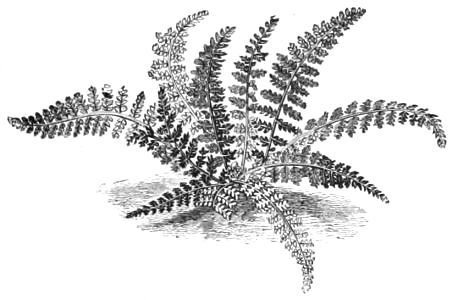
FIG. 171. ASPLENIUM FONTANUM.
A. fontanum (rock).* sti. tufted, 2in. to 4in. long. fronds 3in. to
6in. long, 1in. to 1½in. broad, oblong-lanceolate; lower pinnæ
short, reflexed; central ones horizontal, about ½in. long; pinnules
stalked, lower ones oblong, deeply inciso-pinnatifid. sori copious,
covering nearly the whole under surface of the pinnule. England,
&c. Hardy. This requires to be planted in a well-drained chink
of the rockery, in rich gritty soil. SYN. A. Halleri. A. refractum
is a well-marked variety. See Fig. 171.
A. formosum (beautiful). sti. tufted, very short. fronds 12in. to
18in. long, 1in. broad, with twenty to thirty sessile horizontal
pinnæ on each side, which are ½in. long, one and a-half to two
lines deep; upper edge deeply cut, point rather obtuse, lower
edge truncate in a straight line. sori linear-oblong, short,
oblique, placed one to four on each side of the midrib. Tropical
America, &c., 1822. A very elegant stove species.
A. fragrans (fragrant).* sti. tufted, 4in. to 8in. long, fronds 6in.
to 9in. long, 3in. to 6in. broad, sub-deltoid, tripinnate, with
numerous close placed deltoid pinnæ on each side, the lowest 3in.
long, 1in. to 1½in. broad; pinnules lanceolate-deltoid; segments
sub-spathulate, one line broad, dentate round the outer edge.
sori copious. Tropical America, 1793. A. fœniculaceum is a
variety with narrowly linear ultimate segments. Both are very
handsome stove plants, the latter being especially beautiful.
A. Franconis (Franconis).* sti. tufted, 1ft. long. fronds 1ft. to
2ft. long, 9in. to 15in. broad, deltoid, with numerous pinnæ on
each side, the lower ones 6in. to 8in. long, much acuminated, cut
down in the lower half into distinct pinnules, 1½in. to 2in. long,
½in. broad, lanceolate, unequal sided, the edge cut half-way down
below into oblong sharply-toothed lobes; the lower side obliquely
truncate. sori in parallel rows, not reaching the edge. Mexico,
&c. Stove species. SYN. Diplazium Franconis.
A. furcatum (forked).* sti. tufted, 4in. to 8in. long, fronds 6in.
to 18in. long, 4in. to 6in. broad, with twelve to twenty pinnæ on
each side, which are lanceolate-deltoid, 2in. to 3in. long, ¾in. to
1in. broad, nearly or quite pinnate; pinnules linear-cuneate,
sharply serrated on the outer edge. sori linear, distant. Very
widely distributed in the tropical and sub-tropical regions of
both hemispheres. A most elegant greenhouse species. SYN.
A. præmorsum.
A. germanicum (German).* sti. densely tufted, 2in. to 4in. long.
fronds 2in. to 3in. long, ½in. to 1in. broad, lanceolate, cut down to
the rachis into a few narrow flabellato-cuneate pinnæ on each side,
the lowest of which are again deeply cleft. sori linear, when
mature covering the whole breadth, but falling short of the point
of the pinnæ. Scotland and Norway to Hungary and Dalmatia.
Hardy or frame species. SYN. A. alternifolium.
A. giganteum (gigantic). A synonym of A. radicans.
A. Goringianum pictum (painted).* A very pretty form of
A. macrocarpum; the fronds are from 6in. to 18in. long, pendulous,
somewhat lanceolate in form; rachis reddish, with the
pinnæ next it on each side variegated, forming a central grey
band throughout its entire length. Japan. Greenhouse species,
or hardy in sheltered positions.
A. grandifolium (large-leaved). sti. 1ft. or more long. fronds
2ft. to 3ft. long, 9in. to 12in. broad, deltoid-lanceolate, the point
pinnatifid, with twelve to twenty pinnæ on each side; the lower
ones 2in. or more apart, distinctly stalked, 4in. to 6in. long, 1in. to
1½in. broad, acuminate; edge slightly toothed, and sometimes
broadly lobed below, the base equally rounded on both sides.
sori irregular, falling slightly short of both midrib and edge.
Tropical America, 1793. Stove species. SYN. Diplazium grandifolium.
A. Grevillei (Greville's). fronds undivided, 12in. to 18in. long,
2in. to 3in. broad, lanceolate-spathulate, narrowed to an acute
apex, and suddenly below to a broadly winged stipe, which grows
very gradually narrower downwards; the margin entire. sori
usually extending within a short distance of the edge. India.
Stove species.
A. Halleri (Haller's). Synonymous with A. fontanum.
A. Hemionitis (Hemionitis).* sti. tufted, 4in. to 8in. long. fronds
4in. to 6in. each way, hastate, with a triangular, acute terminal
lobe, and two large, cordate, acute lateral ones, again bluntly or
acutely lobed at the base; the basal sinus rounded, 1in. or more
deep, and the lobes on each side imbricated over one another and
the petiole. sori narrow upon the simple veins. South Europe,
&c. A pretty greenhouse species. SYN. A. palmatum.
A. H. cristatum (crested).* Similar in frond form and size to the
species, but the apices are crested and tasselled. Where variety
is sought, this should certainly be grown.
A. H. multifidum (much-divided).* fronds quite as broad as
long; the main divisions again freely divided or deeply cut, so as
to give them a fringed outline. Azores.
A. heterocarpum (various-fruited).* sti. scattered, 4in. to 9in.
long. fronds 6in. to 15in. long, 1½in. to 2in. broad, narrow-lanceolate,
with very numerous close-placed dimidiate pinnæ on each
side, which are ¾in. to 1in. broad, ¼in. deep; the lower edge quite
entire, the upper broadest towards the base, where it is narrowed
suddenly, deeply incised throughout. sori one, or rarely
two, together in the teeth. Himalayas, and widely distributed
in south-eastern Asia. A very lovely stove or greenhouse
species.
A. heterodon (variously-toothed). Synonymous with A. vulcanicum.
A. Hookerianum (Hooker's). Synonymous with A. Colensoi.
A. incisum (incised). sti. tufted, 1in. to 3in. long. fronds 6in. to
12in. long, 1½in. to 2in. broad, lanceolate, with numerous pinnæ on
each side; lower distant and blunt, central ones 1in. long, ½in.
broad, lanceolate-deltoid; pinnules ovate-rhomboidal, pinnate,
much truncated at the base on the lower side and deeply inciso-pinnatifid.
sori linear-oblong, one to each vein. Japan, &c.
Greenhouse species.
A. javanicum (Javanese). See Allantodia Brunoniana.
A. lanceolatum (lanceolate).* sti. tufted, 3in. to 4in. long. fronds
6in. to 9in. long, 2in. to 4in. broad; lower pinnæ distant, 1in. to
1½in. long, ¼in. to ⅜in. broad; pinnules oblong-rhomboidal, sharply
toothed, and often broadly lobed below. sori copious, when
mature covering nearly the whole under surface. South-west
Europe, including southern England, &c. Hardy species.
A. l. crispatum (curled).* fronds 4in. to 8in. long, broadly-lanceolate,
bipinnate, with the margins of the pinnules involute
and sharply toothed, giving them a curled appearance.
A. l. microdon (small-toothed).* fronds 4in. to 6in. long, simply
pinnate, with deeply lobed pinnæ, the margins of the lobes very
finely dentated and toothed. A pretty little gem, well adapted for
case culture.
A. lanceum (lance-shaped). sti. scattered, 4in. to 6in. long.
fronds 6in. to 9in. long, ¾in. to 1in. broad, attenuated gradually
upwards and downwards, the edge entire or slightly undulated.
sori linear, irregular, reaching nearly to the edge, but not to the
midrib. Himalayas, &c. Greenhouse species. SYN. A. subsinuatum
and Diplazium lanceum.
A. laserpitiifolium (Laserpitium-leaved).* sti. tufted, 6in. to
12in. long, naked. fronds 1ft. to 4ft. long, 4in. to 18in. broad,
deltoid-lanceolate, with numerous pinnæ on each side, 2in. to 9in.
long, and from 2in. to 6in. broad, cut down to the rachis into
numerous distinct pinnules, the lowest with rhomboidal-cuneate
segments. sori short, irregular. Polynesian Islands, North Australia,
&c. A very handsome greenhouse species.
A. laxum (loose). A variety of A. bulbiferum.
A. lineatum (streaked). sti. tufted, 6in. to 9in. long. fronds 1ft.
to 2ft. long, 4in. to 8in. broad, oblong-lanceolate, with twenty to
thirty pinnæ on each side, which are 3in. to 4in. long, about ½in.
broad, acuminate, dentate, nearly or quite sessile, the base
cuneate. sori very regular, reaching from the midrib nearly to
the edge. Mauritius, &c. There are several forms of this species:
those with small narrow cuneate pinnules, inequale; those with
deeply bifid or pinnatifid pinnules, bifida. Stove species.
A. longissimum (longest).* sti. tufted, 3in. to 12in. long. fronds
2ft. to 8ft. long, 4in. to 8in. broad, lanceolate-elongate, pendulous,
proliferous, and rooting at the apex, with very numerous pinnæ
on each side, which are 2in. to 4in. long, ¼in. broad, acuminated,
the two sides nearly equal, with a distinct central midrib; edge
slightly toothed, the base on both sides often auricled. sori
numerous, in two regular rows on each side the midrib, and
reaching nearly to the edge. Malacca, &c., 1840. A very distinct
stove fern for baskets.
A. lucidum (clear). A synonym of A. obtusatum lucidum.
A. lunulatum (crescent-shaped).* sti. tufted, 2in. to 4in. long.
fronds 6in. to 18in. long, 1½in. to 2in. broad, simply pinnate,
narrowly lanceolate-oblong, with twelve to twenty pinnæ on each
side, which are 1in. to 1½in. long, ¼in. to ½in. broad, bluntish or
acute, more or less deeply inciso-crenate throughout, the two sides
unequal; the upper one on the base narrowed suddenly, the lower
one obliquely truncate; lower pinnæ often deflexed. sori falling
short of both edge and midrib. Tropics. SYN. A. erectum.
A. l. Fernandesianum (Fernandez).* A form with a more
rigid rachis and sub-coriaceous, rather narrower pinnæ. Juan
Fernandez.
A. macrocarpum (large-fruited). sti. 6in. to 9in. long. fronds
12in. to 24in. long, 6in. to 12in. broad, ovate-lanceolate, with
numerous pinnæ on each side, the lowest 3in. to 6in. long, 1in. to
1½in. broad, lanceolate; pinnules oblong-rhomboidal, inciso-crenate
or pinnatifid. sori copious, large. Himalayas. Greenhouse
species. SYN. Athyrium macrocarpum.
A. macrophyllum (long-leaved). Synonymous with A. nitens.
A. marginatum (margined). sti. 2ft. to 3ft. long, strong, erect
woody, about ½in. thick at the base. fronds simply pinnate, 4ft.
to 6ft. long; pinnæ in several opposite pairs, the lowest 1ft. to
2ft. long, 3in. to 4in. broad, the edge entire, the base often cordate.
sori long, linear, confined to the free veins. Tropical
America. Stove species. SYN. Hemidictyum marginatum.
A. marinum (sea).* Sea Spleenwort. sti. tufted, 3in. to 6in. long.
fronds 6in. to 18in. long, 2in. to 4in. broad, oblong-lanceolate, apex
pinnatifid; pinnæ of the lower half quite deltoid, the point acute
or obtuse, margin crenato-dentate. sori broad, falling short of
the edge. Europe, including Britain. Although perfectly hardy,
this requires to be grown in a frame or cool house.
A. m. coronans (crowned).* fronds 4in. to 6in. long, simply pinnate;
pinnæ for two-thirds of the way up variable in form, and
irregularly lobed and cut; the upper third freely branched with
numerous imbricated, curled, and slightly crested divisions, forming
a dense head 2in. or more across. A dwarf and pretty
form.
A. m. crenatum (crenated). fronds 4in. to 8in. long, broadly-lanceolate;
pinnæ nearly trapeziform, obtuse, with deeply crenated
margins. A very pretty form.
A. m. mirabile (wonderful).* sti. 2in. to 4in. long. fronds about
the same length, the rachis divided about half way down from the
top into two nearly equal divisions, which are again freely forked,
with the pinnules and segments obtusely lobed; the whole expanded,
but not crested, into a breadth equal to the length of the
frond; the lower pinnæ are more or less abnormal and bluntly
lobed.
A. m. plumosum (feathery).* sti. 3in. to 4in. long. fronds 6in. to
15in. long, bi- or tripinnatifid, broadly-lanceolate; pinnæ very
variable, closely set, and imbricated, cut nearly to the rachis
into ovate or oblong divisions, which are again more or less
deeply cut and lobed, the entire frond having a very elegant
appearance.
A. m. ramo-plumosum (branched and feathery).* fronds divided
nearly to the top of the stipes into two main branches, which are
distinctly pinnate; pinnæ distant below, imbricated upwards, cut
nearly to the rachis into ovate or oblong lobes, the margins of
which are slightly dentated. It is a very handsome form, the
width of the frond being greater than its length.
A. m. ramosum (branched). fronds from 4in. to 8in. long,
branched at the apices; pinnæ oblong, with the margins obtusely-dentate,
and slightly undulated.
A. m. sub-bipinnatum (half-bipinnate). fronds 6in. to 12in. long,
lanceolate; pinnæ distant, deeply lobed, or cut nearly to the midribs.
A very rare and pretty variety.
A. m. Thompsonii (Thompson's).* sti. 3in. to 4in. long, smooth.
fronds 6in. to 10in. long, ovate-lanceolate, bipinnatifid; pinnæ
closely set, sub-deltoid, unequal-sided, deeply cut into oblong,
slightly undulated lobes below, gradually less divided upwards.
A very rare and handsome variety. All the forms of A. marinum
require a very moist atmosphere, consequently they will not thrive
in the open air, unless along the sea-coast.
A. maximum (largest). cau. erect. sti. 2ft. or more long. fronds
several feet long, 2ft. to 3ft. broad, deltoid-lanceolate, with numerous
pinnæ on each side, the lowest 9in. to 18in. long, 4in. to 8in.
broad; pinnules sub-sessile, 2in. to 4in. long, ¾in. broad; edge more
or less lobed. sori medial, the lowest two lines long. North
India. Stove species. SYNS. A. diversifolium and Diplazium
decurrens.
A. melanocaulon (black-stiped).* sti. 1ft. to 2ft. long. fronds
2ft. to 3ft. long, 9in. to 18in. broad; lower pinnæ 4in. to 9in. long,
4in. to 6in. broad; pinnules lanceolate, 2in. to 3in. long, ¾in.
broad, cut down two-thirds of the way to the rachis into linear-oblong,
falcate, inciso-crenate lobes. sori short, oblong, not
touching either midrib or edge. Fiji. Stove species. SYN.
Diplazium melanocaulon.
A. Michauxii (Michaux's).* cau. stout. sti. 4in. to 8in. long.
fronds 9in. to 24in. long, 3in. to 9in. broad, ovate-deltoid, bi- or
tripinnate; pinnules oblong, deeply serrate, or cut quite to the
rachis. United States. A very handsome hardy species, closely
related to the Lady Fern, of which it may be only a variety.
A. monanthemum (one-flowered).* sti. densely tufted, 3in. to
6in. long. fronds 12in. to 18in. long, about 1in. broad, with
twenty to forty horizontal, sessile, sub-dimidiate pinnæ on each
side, which are about ½in. long and ¼in. deep, the upper side crenate,
suddenly narrowed at the base, the lower more or less distinctly
cut away in a straight, or, in the lower pinnæ, decurved
line. sori linear-oblong, usually one or two, parallel with the
lower edge of the pinnæ. Temperate regions of both hemispheres.
Greenhouse species.
A. montanum (mountain).* sti. tufted, 2in. to 3in. long. fronds
2in. to 3in. long, 1in. broad, lanceolate-deltoid; lowest pinnæ distinctly
stalked, deltoid, sharply serrated round the outer edge.
sori short, copious. United States, 1812. Frame or greenhouse
species.
A. multisectum (much-cut). Synonymous with A. aspidioides.
A. musæfolium (Musa-leaved). A variety of A. Nidus.
A. myriophyllum (myriad-leaved). A variety of A. rhizophyllum.
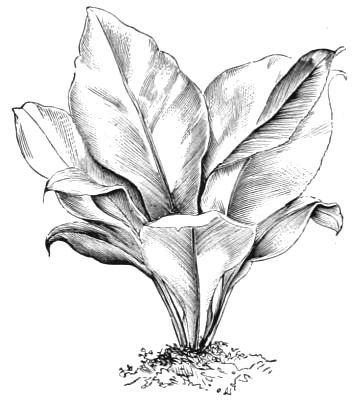
FIG. 172. ASPLENIUM NIDUS.
A. Nidus (nest).* Bird's-nest Fern. fronds undivided, 2ft. to 4ft.
long, 3in. to 8in. broad, lanceolate, acute or acuminate at the apex,
tapering gradually below into a short stem; the edge entire, the
midrib rounded on the back; veins fine and parallel, about ½in.
apart. sori reaching about half way towards the margin. India,
&c., 1820. SYN. A. australasicum. See Fig. 172.
A. N. australasicum (Australian). Midrib keeled on the
back, often black. Australia, &c. The two former are best
treated in the stove; the latter thrives well in the greenhouse.
SYN. Thamnopteris australasicum.
A. N. musæfolium (Musa-leaved).* fronds larger, sometimes
6ft. long, 1ft. broad. sori extending nearly to the edge.
A. nitens (shining). sti. scattered, 6in. to 9in. long. fronds 1½in.
to 2in. long, 6in. to 9in. broad, with twelve to twenty ascending
or sub-falcate pinnæ on each side, which are 4in. to 6in. long, ½in.
to 1in. broad, much acuminated; edge finely toothed, base broadly
rounded on the upper, truncate in a curve on the lower side. sori
in close regular rows, not extending more than half way from the
midrib to the edge. Mauritius. Stove species. SYN. A. macrophyllum,
of gardens only.
A. nitidum (shining).* sti. 1ft. long, naked. fronds 2ft. to 3ft.
long, 6in. to 12in. broad, with many lanceolate-deltoid pinnæ
on each side, which are cut down to the rachis into numerous
stalked deltoid pinnules, these are again cut into broad fan-shaped
cuneate segments, sharply serrated round the outer edge.
sori short. North India, Ceylon, &c. Greenhouse species.
A. novæ-caledoniæ (New Caledonian).* sti. tufted, 6in. to 12in.
long. fronds 9in. to 12in. long, 6in. to 9in. broad, sub-deltoid,
tripinnate; lower pinnæ and pinnules deltoid; segments rigid,
scarcely flattened, ½in. or more long, distant, and erecto-patent.
sori long, linear, marginal. New Caledonia. A rare greenhouse
species. SYN. Darea novæ-caledoniæ.
A. obtusatum (obtuse). sti. tufted, 3in. to 6in. long. fronds 6in.
to 12in. long, 3in. to 4in. broad, oblong or ovate-deltoid, with a
terminal pinna not much longer than the others, and two to six
pairs on each side, which are 1in. to 2in. long and about ½in.
broad, obtuse, edge crenate, the base truncato-cuneate, shortly
stalked. sori copious, broad, linear-oblong, falling short of the
edge. Peru. A. difforme is a variety with an ovate-deltoid frond,
and the pinnæ cut quite down to a narrow-winged rachis in the
lower part into distinctly separated roundish or oblong-sinuated
pinnules. New Zealand, Australia, &c. Greenhouse kinds.
A. o. lucidum (clear).* fronds often 2ft. long, with fifteen to
twenty pairs of pinnæ on each side, which are more herbaceous in
texture, darker green in colour, the lowest 6in. long, 1in. to 1½in.
broad, narrowed gradually to a long acuminated point, edge more
deeply toothed. Greenhouse variety. SYN. A. lucidum.
A. obtusifolium (obtuse-leaved).* sti. almost tufted, 6in. to 9in.
long. fronds 12in. to 18in. long, 4in. to 6in. broad, ovate-lanceo-late,
with twelve to twenty stalked horizontal pinnæ on each side,
which are 2in. to 3in. long, ½in. to ¾in. broad, acute; edges slightly
undulato-crenate, the upper side with a distinct auricle at the
base, and then narrowed suddenly, the lower side obliquely truncate.
sori distant, in two regular rows, falling short of the edge.
West Indies, &c., 1838. Stove species.
A. obtusilobum (obtuse-lobed).* sti. tufted, 2in. to 4in. long.
fronds 4in. to 6in. long, 1½in. to 2in. broad, with
nine to twelve sub-deltoid pinnæ on each side, of
which only the inner third on the lower side is
cut away, the largest nearly 1in. long, ¾in. broad;
lowest pinnules ⅜in. deep, flabellately cut into
three to five linear blunt lobes. sori sub-marginal.
New Hebrides, 1861. A very pretty little
stove species. SYN. Darea obtusiloba.
A. odontites (much-toothed). Synonymous with
A. flaccidum.
A. oxyphyllum (sharp-leaved).* sti. firm, 6in.
to 12in. long. fronds 1ft. to 2ft. long, 6in. to
12in. broad, lanceolate, with several pinnæ on
each side, which are 3in. to 6in. long, 1in. to 2in.
broad; pinnules lanceolate, in the larger forms
again pinnatifid; teeth mucronate. sori in two
rows on the pinnæ or pinnules midway between
the midrib and edge. Himalayas. A very variable
greenhouse species. SYNS. Athyrium oxyphylla
and Lastrea eburnea.
A. paleaceum (scaly).* sti. densely tufted, 1in.
to 3in. long, spreading, densely scaly. fronds 6in.
to 9in. long, 1½in. to 2in. broad, sometimes proliferous
and rooting at the apex, with twelve to
twenty sub-sessile pinnæ on each side, which are
1in. long, about ½in. broad, bluntish; edge inciso-dentate,
the upper base auricled and narrowed
suddenly, the lower obliquely-truncate; the lower
ones stalked, and nearly as broad as long. sori
linear, extending nearly to the edge. Tropical
Australia. Stove or warm greenhouse species.
A. palmatum (palmate). Synonymous with A.
Hemionitis.
A. parvulum (small). Synonymous with A. trilobum.
A. persicifolium (Peach-leaved). sti. and rachis
grey, with a few scattered minute grey scales.
fronds oblong-lanceolate, 2ft. to 3ft. long, often
gemmiferous at the apex; pinnæ ascending, fifteen to thirty-jugate,
sub-petiolate, 4in. to 5in. long, linear-ligulate-acuminate,
½in. to ¾in. broad, distinctly crenate throughout. sori
regular, reaching nearly to midrib and edge. Philippine and
Sandwich Isles. Stove species.
A. Petrarchæ (Petrarch's).* sti. densely tufted, 1in. to 2in.
long. fronds 2in. to 3in. long, ½in. broad, linear-lanceolate, with
six to ten horizontal sessile pinnæ on each side, which are ¼in. long
and nearly as much broad, cordate-ovate, blunt; edge sinuated;
the base unequal, slightly truncate on the lower side. sori
oblong, very short, four to six on each side of the midrib. South
Europe, 1819. A very rare little gem, best treated in a cool
house.
A. pinnatifidum (pinnatifid). sti. tufted, 2in. to 4in. long.
fronds 3in. to 6in. long, 1in. or more broad at the base, lanceolate-deltoid,
with a long, gradually narrowing point, which is sinuated
only; the lobes below this ¼in. to ½in. deep; the lowest ovate-oblong,
½in. deep by nearly as broad, sinuated and reaching down
nearly to the rachis. sori copious. Pennsylvania. Greenhouse
or sheltered places outside.
A. planicaule (flat-stiped).* sti. tufted, 3in. to 6in. long, naked.
fronds 6in. to 12in. long, 2in. to 3in. broad, with twelve to twenty
stalked horizontal pinnæ on each side, which are 1in. to 1½in. long,
¼in. to ⅜in. broad, acute; edge lobed about half-way down, and
deeply serrated. sori copious, reaching nearly to the edge.
Himalayas, up to 6000ft., &c., 1841. Greenhouse species.
A. plantagineum (Plantain-like). sti. tufted, 6in. to 9in. long.
fronds 6in. to 9in. long, 2in. to 3in. broad, simple, acuminate,
base rounded; edge slightly undulato-dentate upwards, sometimes
lobed towards the base. sori slender, linear, sometimes nearly
touching both edge and midrib. West Indies, &c., 1819. Stove
species. SYN. Diplazium plantagineum.
A. polyphyllum (many-leaved). Synonymous with A. acuminatum.
A. præmorsum (bitten). Synonymous with A. furcatum.
A. prolongatum (prolonged). Synonymous with A. rutæfolium.
A. pulchellum (pretty).* sti. tufted. 1in. to 2in. long. fronds
3in. to 6in. long, 1in. to 1½in. broad, with twelve to eighteen pinnæ
on each side, which are ½in. to ¾in. long, two lines to three lines
broad, bluntish, almost dimidiate; the upper edge crenate, and
narrowed suddenly at the base. sori linear, oblique, falling short
of the edge. Tropical America. Stove species.
A. pumilum (small). sti. tufted, 3in. to 4in. long. fronds 4in.
to 6in. each way, deltoid, the upper part sinuated only, the lower
cut down to the rachis into distinct pinnæ, of which the lowest
pair are much the largest; the pinnules on the lower side sometimes
2in. long, reaching down to a slightly winged rachis, acuminate
and deeply lobed. sori very oblique, the lower ones sometimes
1in. long. West Indies, &c., 1823. A very rare and pretty stove
species.
A. rachirhizon (rachis-rooting). A variety of A. rhizophorum.
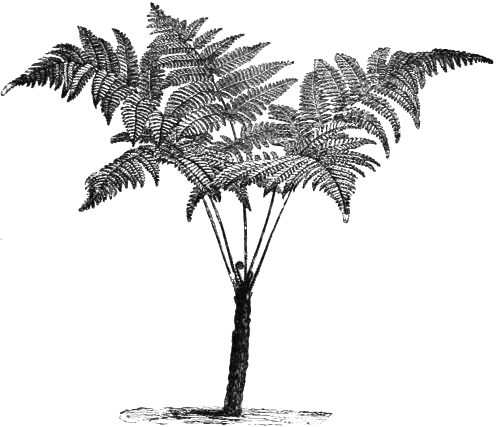
FIG. 173. ASPLENIUM RADICANS.
A. radicans (rooting). cau. erect, sub-arborescent. sti. 1ft. to
2ft. long, tufted. fronds 3ft. to 5ft. long, 2ft. to 3ft. broad,
deltoid; lower pinnæ 12in. to 18in. long, 6in. to 8in. broad;
pinnules lanceolate, sessile, the upper ones entire, lower ones 3in.
to 4in. long, ¾in. to 1in. broad, with blunt lobes, ¼in. broad, reaching
about half way down to the rachis. Lower sori sometimes
¼in. long. Tropical America. A very variable species. SYNS.
A. giganteum, Diplazium radicans, D. umbrosum, &c. See Fig. 173.
A. refractum (refracted). A variety of A. fontanum.
A. resectum (cut or pared).* sti. scattered, 4in. to 8in. long.
fronds 6in. to 15in. long, 2in. to 4in. broad, lanceolate-oblong,
with ten to thirty sub-sessile horizontal pinnæ on each side, which
are 1in. to 3in. long, ¼in. to ½in. broad, almost dimidiate, the point
bluntish, all except the truncate part crenate, the upper half at
the base narrowed nearly at a right angle. sori not reaching
either the midrib or edge. India, &c., widely distributed, 1820.
Greenhouse species.
A. rhizophorum (root-bearing).* sti. tufted, 4in. to 8in. long.
fronds 1ft. to 2ft. long, 4in. to 6in. broad, elongated, and rooting
at the apex; pinnæ twelve to thirty on each side, sub-sessile, 1½in.
to 2in. long, about ½in. broad, inciso-dentate throughout; the two
sides unequal, the upper one auricled and narrowed, the lower
one obliquely cuneate. sori not reaching either to the edge or
midrib. Tropical America. A very variable stove species.
A. r. rachirhizon, has distinctly separated oblong-rhomboidal
pinnules, again deeply cut into narrow segments.
A. rhizophyllum (leaf-rooting). sti. tufted, 2in. to 6in. long.
fronds 6in. to 12in. long, 1½in. to 2in. broad, cut down into
numerous close-placed horizontal pinnæ on each side; central
ones 1in. long, ¼in. to ⅜in. broad, cut down throughout nearly to
the centre into simple or forked erecto-patent pinnules, the
lowest on the under side suppressed. sori solitary, sub-marginal.
A. r. myriophyllum is a variety with broader fronds; central pinnæ
1½in. long, with lower pinnules cut down into several simple or
forked linear segments. North America, &c., 1680. Both handsome
greenhouse kinds.
A. rutæfolium (Rue-leaved).* sti. tufted, 4in. to 9in. long.
fronds 6in. to 15in. long, 2in. to 4in. broad, ovate deltoid, with
twelve to twenty pinnæ on each side, the lowest sub-deltoid,
2in. or more long, cut down to the rachis into numerous erecto-patent
distant pinnules on each side, the lowest on the upper
side again cut down into erecto-patent linear segments. sori
small, marginal. Cape Colony. A beautiful greenhouse species.
SYNS. A. prolongatum and Darea rutæfolia.
A. Ruta-muraria (Wall-rue).* sti. tufted, 2in. to 4in. long.
fronds 1in. to 2in. long, about 1in. broad, deltoid, cut down to the
rachis into a few pinnæ on each side, the lower ones again cut
down into spathulato-cuneate pinnules, which are serrated round
the outer edge. sori copious. Great Britain, and almost worldwide
in its distribution. Hardy species. This requires a well-drained
position, and a soil composed mainly of old mortar
rubbish.
A. salicifolium (Willow-leaved). sti. tufted, 6in. to 12in. long.
fronds 12in. to 18in. long, 6in. to 9in. broad, oblong, with a
terminal pinna and four to ten distinctly stalked ones on each
side, which are 4in. to 6in. long, ¾in. to 1in. broad, acuminate;
edge usually entire, the base equally truncato-cuneate on both
sides. sori falling short both of the edge and midrib. West
Indies, &c. Stove species.
A. Sandersoni (Sanderson's).* sti. tufted, 1in. to 2in. long. fronds
6in. to 9in. long, ½in. to ¾in. broad, linear, often gemmiferous at
the apex, with twelve to twenty horizontal dimidiate pinnæ on
each side, which are deeply crenate on the upper edge, and at the
base narrowed suddenly into a winged petiole, the lower one
nearly straight and quite entire. sori oblong. Natal, &c. A
very rare greenhouse species.
A. schizodon (cut-toothed). Synonymous with A. Vieillardii.
A. Schkuhrii (Schkuhr's). cau. erect. sti. 1ft. to 1½ft. long.
fronds deltoid, 1½ft. to 2ft. long, tripinnatifid; lower pinnæ
distant, oblong-lanceolate, 6in. to 8in. long, 1½in. to 2in. broad,
rachis winged to base; pinnules ligulate-oblong, ⅜in. broad,
sessile, cut into shallow, close, oblong blunt lobes. sori ⅛in.,
medial in a single row in the pinnules. Ceylon. Stove species.
SYN. Diplazium Schkuhrii.
A. Selosii (Selose's).* sti. densely tufted, 1in. to 2in. long, wiry.
fronds ½in. to ¾in. long, palmately cleft, usually into three nearly
equal forks, which are about one line broad, the edge slightly
inciso-serrate. sori copious, ultimately occupying the whole
surface. Tyrol and Carinthia. A very rare and curious little
species, requiring the protection of the frame or cool house; it
should be firmly potted between pieces of sandstone in loam,
leaf-soil, rock chippings and sand, with good drainage.
A. septentrionale (northern).* sti. densely tufted, 3in. to 4in.
long. fronds simple, or cleft from the apex into two or three
cuneate divisions, 1in. to 1½in. long, one line broad, with a few
sharp lateral and terminal teeth. sori elongated, copious, often
at last hiding the whole under surface. Great Britain, and
widely distributed in both hemispheres. This rare little species
requires to be securely planted in a well-drained elevated chink
of the fernery outside, in loamy, gritty soil.
A. Shepherdi (Shepherd's).* sti. tufted, 1ft. long. fronds 12in. to
18in. long, 6in. to 9in. broad; lower pinnæ stalked, 4in. to 6in.
long, 1in. to 1½in. broad, point acuminate, edge lobed above, ¼in.
broad, somewhat toothed. sori linear, not reaching the edge.
South America. Stove species. SYN. Diplazium Shepherdi.
A. S. inæquilaterum (unequal-sided). fronds, texture firm, colour
duller than that of the type; pinnæ much acuminated; the lobes
deeper, more uniform, and falcate, the two sides unequal, the
lower one unequally truncate at the base.
A. spathulinum (spathulate). A synonym of A. affine.
A. spinulosum (very spiny).* sti. 6in. to 12in. long, scattered.
fronds 9in. to 12in. each way, deltoid, tri- or quadripinnatifid, with
nine to twelve pinnæ on each side, the lowest much the largest, 6in.
to 9in. long, 2½in. to 3in. broad, ovate-lanceolate; pinnules lanceolate,
cut down to the rachis on each side into six to nine oblong-rhomboidal
mucronate segments, two lines long, one line broad,
which are sharply toothed. sori two to ten to a segment, usually
round, but occasionally oblong. Amur-land, &c. Greenhouse
species. SYN. Athyrium spinulosum and Cystopteris spinulosa.
A. splendens (splendid). rhiz. creeping, scaly. sti. 6in. to 9in.
fronds deltoid, 6in. to 1ft. long, two to three-pinnate; lower
pinnæ stalked, deltoid, 1in. to 2in. broad, pinnate or bipinnate;
segments cuneate-flabellate, ¼in. to ½in. broad, slightly lobed,
sharply toothed round outer edge. sori copious, slender, irregular,
reaching from base nearly to tip of segments. Cape Colony. A
very rare greenhouse species.
A. subsinuatum (half-waved). Synonymous with A. lanceum.
A. sundense (Sundanese). Synonymous with A. vittæforme.
A. sylvaticum (woods). cau. decumbent. sti. 1ft. long. fronds
1ft. to 2ft. long, 4in. to 8in. broad, ovate-lanceolate, with numerous
spreading pinnæ, the largest 3in. to 4in. long, ½in. to ¾in. broad,
acuminated; edge broadly and briefly lobed; base narrowed
suddenly on both sides. sori in long slender lines, reaching
nearly to the edge. India, &c. Stove species.
A. thelypteroides (Thelypteris-like). sti. 1ft. long. fronds 1ft. to
2ft. long, 6in. to 12in. broad, lanceolate, with numerous spreading
pinnæ, the lower ones 4in. to 6in. long, 1in. broad, cut down to a
broadly-winged rachis into numerous nearly entire elliptical
spreading pinnules. sori in close regular rows, reaching nearly
from the midrib to the edge, slightly curved, the lower ones often
double. North America, &c., 1823. Hardy or cool house species.
SYN. Athyrium thelypteroides.
A. Thwaitesii (Thwaites's).* rhiz. wide-creeping, stout. sti. 6in.
long, slender, densely clothed with strong white woolly hairs.
fronds 1ft. or more long, 4in. to 6in. broad, with eight to ten
distinct pinnæ beneath the pinnatifid apex, the largest 3in. long,
⅝in. broad, cut down two-thirds of the way to the rachis in oblong
crenulated lobes, ¼in. deep, two lines across. sori reaching half-way
to the edge, the lowest about one line long. Ceylon. Very
fine stove species. SYN. Diplazium Thwaitesii.
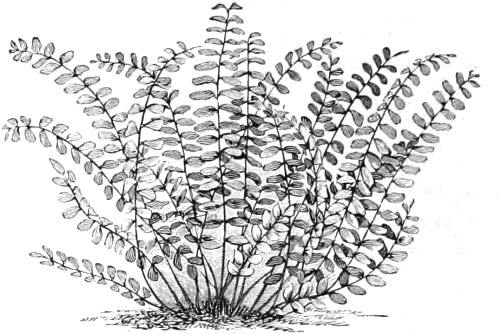
FIG. 174. ASPLENIUM TRICHOMANES.
A. Trichomanes (maiden-hair).* Maidenhair Spleenwort. sti.
densely tufted, 1in. to 4in. long. fronds 6in. to 12in. long, about
½in. broad, with fifteen to thirty opposite pairs of sessile horizontal
pinnæ, which are ¼in. to ⅜in. broad, one and a-half to two lines
deep, edge slightly crenate, the two sides unequal, the upper
one the broadest, and narrowed suddenly at the base. sori linear-oblong,
three to six on each side of the midrib. Great Britain,
and almost cosmopolitan. Hardy species. See Fig. 174. There
are several varieties in cultivation, of which the following are the
most important:
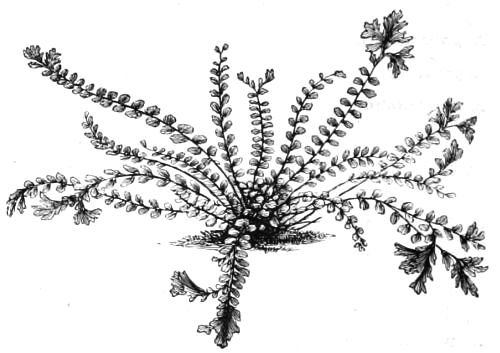
FIG. 175. ASPLENIUM TRICHOMANES CRISTATUM.
A. T. cristatum (crested).* fronds 4in. to 6in. long, simply pinnate,
with roundish pinnæ, and broad crests at their extremities, sometimes
divided, each fork crested. A very pretty little variety,
requiring frame or greenhouse treatment. See Fig. 175.
A. T. incisum (deeply-cut).* fronds 3in. to 6in. long; pinnæ deeply
pinnatifid, the lobes again deeply cut or serrated. A very rare
and pretty form.
A. T. multifidum (much-divided).* fronds 3in. to 6in. long, once,
twice, thrice, or, rarely, quadri-furcate, each division terminated
with a little crest. A free-growing kind.
A. T. ramosum (branched).* fronds 5in. to 8in. long, freely
branched, each division being again forked; pinnæ deeply cut or
crenated, or serrate. More hardy than any of the other forms.
A. trilobum (three-lobed).* sti. tufted, 2in. to 3in. long. fronds
1in. to 1½in. long, 1in. broad, rhomboidal, apex acute, base
cuneate, entire, the margin undulato-crenate, or the lower part
deeply lobed, with broad inciso-crenate divisions. sori broad and
short. Chili and South Brazil. A very rare little stove species.
SYN. A. parvulum.
A. umbrosum (shady). sti. 1ft. or more long, scaly at the base.
fronds 2ft. to 5ft. long, 12in. to 18in. broad, ovate-deltoid; pinnæ
ovate-lanceolate, 6in. to 9in. long, 3in. to 6in. broad, with lanceolate
pinnules, which are again cut down to the midribs into unequal-sided
rhomboidal lobes, with the margins sharply crenated.
sori copious, oblong, with large tumid membranous involucres.
Madeira, Canaries, Himalayas, &c. Very widely distributed.
A very handsome greenhouse species. SYNS. Allantodia australe,
Athyrium umbrosum.
A. varians (variable). sti. tufted, 1in. to 3in. long. fronds 4in.
to 6in. long, 1in. broad, oblong-lanceolate, with eight to twelve
pairs of pinnæ on each side, lower ones sub-deltoid, ½in. to ¾in.
long, ¼in. broad, cut down to the rachis into a few cuneato-flabellate
pinnules, the lowest two lines across, sharply toothed
on the outer edge. sori copious, when mature, covering nearly
the whole under surface of the pinnules. Himalayas, and widely
distributed. Greenhouse species.
A. Veitchianum (Veitch's). Synonymous with A. Belangeri.
A. Vieillardii (Vieillard's).* sti. tufted, 4in. to 6in. long. fronds
6in. to 9in. long, 6in. to 8in. broad, with large linear-lanceolate
terminal pinna, lengthened out at the point, and deeply serrated,
and three to four pairs of erecto-patent similar lateral ones, which
are 3in. to 4in. long, upwards of ½in. broad, equally truncato-cuneate,
and the lower ones slightly stalked at the base. sori
distant, falling short of both edge and margin. New Caledonia.
A very graceful greenhouse species. SYN. A. schizodon. A.
apicidens is but a variety of this, with shortened sori and more
obtuse venation.
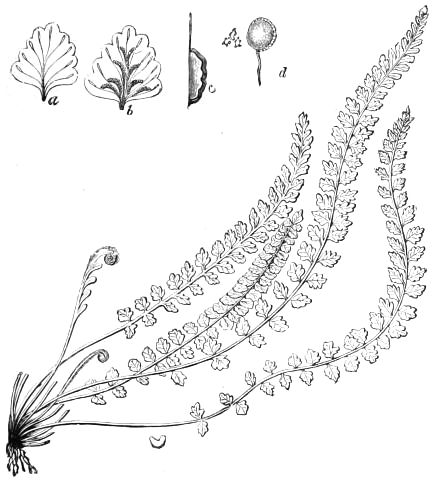
FIG. 176. ASPLENIUM VIRIDE, showing Barren and Fertile Pinnæ (a and b), Sorus (c), and
Sporangium (d).
A. viride (green). Green Spleenwort.* sti. densely tufted, 2in. to
4in. long. fronds 4in. to 6in. long, ½in. broad, with twelve to
twenty sub-sessile pinnæ on each side, ovate-rhomboid; upper
edge narrowed suddenly at the base, the lower one obliquely
truncate, outer part deeply crenated. sori copious, linear-oblong,
oblique. Great Britain, &c., widely distributed in both hemispheres.
It requires to be planted in a well-drained but moist
situation. Hardy species. See Fig. 176.
A. vittæforme (narrow-fronded).* rhiz. creeping. sti. short,
erect. fronds entire, lanceolate, 12in. to 18in. long, 1½in. to 3in.
broad, narrowed to an acute point, and very gradually into the
stem below; margin obscurely toothed. sori copious, often
reaching from the midrib nearly to the edge. Java, &c. Stove
species. SYN. A. sundense.
A. viviparum (plant-bearing).* sti. tufted. 6in. to 9in. long.
fronds 1ft. to 2ft. long, 6in. to 8in. broad, ovate-lanceolate, with
numerous close-placed erecto-patent pinnæ on each side, which
are 3in. to 4in. long, 1½. to 2in. broad, cut down to a compressed
rachis into numerous pinnatifid pinnules, the lower segments of
which are again forked; ultimate segments ¼in. to ⅜in. long,
quarter-line broad. sori solitary, marginal. Mauritius, &c., 1820.
A very handsome stove species.
A. vulcanicum (volcanic). sti. 6in. to 9in. long. fronds 1ft.
to 2ft. long, 4in. to 8in. broad, oblong-lanceolate, with a linear-terminal
pinna, or gemmiferous at the apex, and six to twelve
lateral ones on each side; lower ones stalked, 2in. to 4in. long,
¾in. to 1in. broad, acuminated; edge slightly dentate; the base
truncate. sori very regular and parallel, falling short of the edge.
Malay Islands. Stove species. SYN. A. heterodon.
A. zeylanicum (Ceylonese).* sti. scattered, 4in. to 8in. long.
fronds 6in. to 12in. long, 1in. to 2in. broad, the point acuminated,
apex slightly lobed, the lower two-thirds more deeply so, and the
base quite down to the rachis; lobes blunt, ¼in. to ½in. across.
sori linear, two to three lines long. Ceylon. Stove species. SYN.
Diplazium zeylanicum.
ASSONIA (commemorative of
Ignatius de Asso, a distinguished
Spanish botanist, who wrote on the
plants of Arragon). ORD. Sterculiaceæ.
This genus is now included by
best authorities under Dombeya. Ornamental
stove evergreen trees, with
undivided leaves, and axillary, bifid,
sub-corymbose peduncles. They are
of easy culture; thriving freely in any
light rich soil, or a mixture of loam
and peat. Young cuttings will root
freely in sand, with a brisk bottom
heat, if covered by a bell glass.
A. populnea (Poplar-leaved). fl. white,
disposed in a terminal, bifid corymb;
peduncles scarcely longer than the petioles.
June. l. cordate, acuminated,
smooth, a little serrated. h. 10ft. to 20ft.
Bourbon, 1820.
A. viburnoides (Viburnum-like). fl.
white; peduncles three times longer than
the petioles. l. cordate, somewhat acuminate,
crenated, tomentose beneath, as
well as younger leaves. h. 10ft. to 20ft.
Bourbon, 1822.
ASTARTEA (a mythological
name: Astarte, the Syrian Venus).
ORD. Myrtaceæ. An ornamental greenhouse
evergreen shrub, requiring a
mixture of loam, peat, leaf soil, and
sand. Young cuttings root readily in
sand under a bell glass in gentle heat.
A. fascicularis (bundle-flowered). fl.
white, pedicellate, solitary, axillary.
May. l. opposite, linear, fleshy; when
young, disposed in axillary fascicles. h.
6ft. to 9ft. West Australia, 1830.
ASTELMA (from a, not, and
stelma, a crown; in reference to the
construction of the fruit). ORD. Compositæ.
Greenhouse evergreen shrubs
from the Cape of Good Hope. Some
species of this genus, which is now
generally referred to Helipterum, are
very handsome, and thrive well in a
mixture of fibrous peat, leaf soil, and
sand, with thorough drainage. Fill
the pots one-third full of crocks; water carefully, and
only when absolutely necessary; and place in a situation
near the glass, allowing a free admission of air. Seeds
should be sown in pots of light, open soil, and placed in a
gentle heat; half-ripened cuttings will strike readily in
sandy soil with a hand glass placed over them. They are
now but rarely seen under cultivation.
A. canescens (hoary). fl.-heads purple; scales of involucre ovate;
branches one-flowered. May to June. l. oblong, blunt, imbricated.
h. 1½ft. 1794.
A. eximium (fine).* fl.-heads crimson; corymbs sessile. July.
l. sessile, ovate, close, erect, white with thick woolly pubescence.
Stem stout. h. 3ft. 1793. This is a very beautiful species.
A. speciosissimum (showiest). fl.-heads white, large, solitary,
terminal. July. l. sessile, lanceolate-obovate, acute, three-nerved,
woolly. h. 8ft. 1691.
ASTEPHANUS (from a, without, and stephanos, a
corona; corona absent). ORD. Asclepiadeæ. A genus of
pretty evergreen greenhouse twiners. Flowers few, small,
disposed in interpetiolar umbels; corolla campanulate.
Leaves small, opposite. They thrive in a compost of turfy
peat, leaf soil, and loam, in equal parts. Very little water
is required when the plants are at rest. Cuttings root
readily in sandy soil in a moderate heat. Propagation may
also be effected by division.
A. linearis (linear). fl. white; umbels dividing in threes, lateral
and terminal. July. l. 1in. long, opposite, linear-lanceolate.
Stem glabrous. Cape of Good Hope, 1816.
A. triflorus (three-flowered).* fl. white; umbels generally three-flowered.
July. l. opposite, lanceolate, villous beneath. Stems
hairy. Cape of Good Hope, 1816.
ASTER (from aster, a star; general shape of flower-heads).
Michaelmas Daisy; Star-wort. SYN. Pinardia
(of Necker). ORD. Compositæ. Hardy herbaceous perennials,
except where otherwise stated. Heads solitary,
corymbose, or panicled, heterogamous, rayed; ray florets
pistiliferous, one or two-seriate, fertile or neuter; ligule
elongated, white, blue, or purple; disk florets hermaphrodite,
fertile, tubular, yellow, five-cleft; involucre campanulate
or hemispheric; bracts few or many-seriate,
outer smaller or larger; receptacle flat or convex; pappus
hairs few or copious, scabrid, outer sometimes shorter,
rigid, and paleaceous. Leaves alternate. This large genus
contains many handsome border and alpine deciduous perennials
(rarely biennials) of easy culture in ordinary soil.
They may be propagated by divisions in autumn or spring,
or by seeds in spring. The greenhouse species are mostly
evergreen shrubs, requiring a compost of peat, leaf soil, and
loam. Cuttings root readily in a sandy soil, under a hand
glass, with very little heat.
A. acris (acrid). fl.-heads blue; involucre imbricated,
twice as short as the disk. August. l. linear-lanceolate,
not dotted, three-nerved. h. 2ft. South Europe,
1731.
A. acuminatus (taper-pointed).* fl.-heads white;
panicle corymbose. September. l. broad-lanceolate,
narrowed at base, entire, with a very long point.
Stem simple, flexuous, angular. h. 2ft. North
America, 1806.
A. adulterinus (false). fl.-heads violet; involucre
squarrose, shorter than the disk. September. l.
amplexicaul, lanceolate; lower ones sub-serrate,
smooth; those of the branches linear squarrose. h.
3ft. North America.
A. æstivus (summer-flowering).* fl.-heads blue. July.
l. lanceolate, somewhat amplexicaul, narrowed at the
end, scabrous at edge. Stem erect, hispid; branchlets
pilose. h. 2ft. North America, 1776.
A. albescens (whitish). fl.-heads purple or whitish,
nearly 1in. across; corymbosely panicled; scales of
involucre ovate-linear, apiculate; ray twenty-flowered.
August. l. lanceolate on short petioles, denticulate,
downy. Plant beset with rusty down. h. 3ft. Nepal,
1842.
A. alpinus (alpine).* fl.-heads bright purple, 1in. to
2in. across; scales of involucre nearly equal, lanceolate,
bluntish. July. l., radical ones lanceolate-spathulate;
those of the stem lanceolate. Stem one-flowered.
h. 6in. to 9in. Europe, 1658. A very
attractive species, having a dwarf, stout habit; it
forms a useful and handsome subject for edging, and
its flowers are valuable for cutting purposes. See
Fig. 177.
A. a. albus (white).* fl.-heads white, in other respects
resembling the type; but it is much less desirable,
and has not nearly so vigorous a habit. Europe,
1827.
A. altaicus (Altaian).* fl.-heads blue-purple, about
2in. across; stem simple, corymbose, downy. June,
July. l. linear-lanceolate, entire, blunt mucronate,
three-nerved at base, veiny. h. 1ft. Siberia, 1804.
This, which is frequently considered a variety of A.
alpinus, is one of the handsomest.
A. alwartensis (Alwart). fl.-heads red; ray very fine;
involucre loosely squarrose. May. l. ovate, narrowed
at base, entire, about five-nerved. h. 1ft. Caucasus,
1807.
A. Amellus (Amellus).* fl.-heads purple, solitary, numerous;
involucre imbricated squarrose; leaves blunt; inner membranous,
coloured at edge. August. l. oblong-lanceolate, scabrous. h. 2ft.
Italy, 1596. One of the best border kinds.
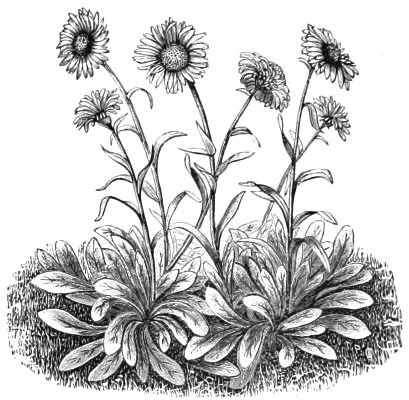
A. A. bessarabicus (Bessarabian).* A most desirable variety,
frequently seen in gardens; it is rather taller than the type, with
larger flower-heads, of a deep purple colour. One of the showiest
of all the Asters. See Fig. 178.
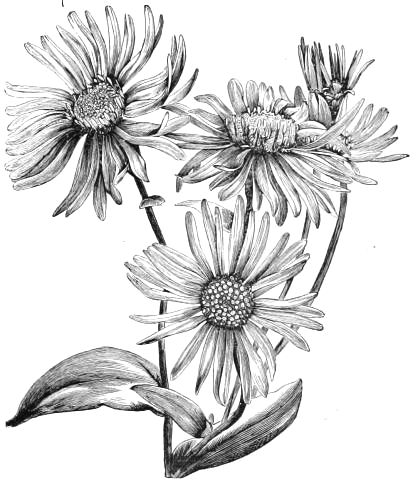
FIG. 178. ASTER AMELLUS BESSARABICUS.
A. amplexicaulis (stem-clasping). fl.-heads violet. July. l. ovate-oblong,
acute, amplexicaul, cordate, serrated, smooth. Stem
panicled, smooth; branches one to two-headed. h. 3ft. North
America.
A. amygdalinus (Almond-leaved). fl.-heads white; involucre
closely imbricated. August. l. lanceolate, narrowed at base,
acuminated, scabrous at edge. Stem simple, corymbose at end.
h. 2ft. North America, 1759.
A. argenteus (silvery).* fl.-heads purple. August. l. oblong-lanceolate,
silky, sessile. Stem slender, decumbent, loosely
branched; branches and branchlets one-headed. h. 1ft. North
America, 1801.
A. bellidiflorus (Daisy-flowered). fl.-heads pale red; involucre
with spreading scales. September. l. amplexicaul, narrow-lanceolate,
scabrous above, lower sub-serrated. Stem much
branched. h. 3ft. North America.
A. Bigelovii (Bigelow's).* fl.-heads corymbose, 2½in. diameter,
ray-florets lilac, disk yellow. Summer. l. scabrous pubescent,
oblong-spathulate; cauline ones amplexicaul, ovate-oblong, crenate,
obscurely-toothed. h. 2½ft. Colorado, 1878. A very handsome
biennial species. SYN. A. Townshendi.
A. blandus (charming). fl.-heads pale purple; racemes scarcely
longer than the leaves. October. l. sub-amplexicaul, oblong-lanceolate,
acuminate, sessile, smooth. Stem pyramidal. h. 2ft.
North America, 1800.
A. canescens (hoary). fl.-heads pale purple; involucre imbricated,
very acute, longer than disk. September. l. linear.
Panicle corymbose, much branched, leafy. h. 2ft. North America,
1812. Biennial or perennial.
A. cassiarabicus (Arabian Cassia). fl.-heads pink; panicles
corymbose. September. l. ovate, acute, serrated, tapering at the
petioles. Plant erect, pilose. h. 2ft. Russia, 1834.
A. caucasicus (Caucasian).* fl.-heads purple, solitary; scales of
involucre nearly equal, linear. July. l. ovate, sessile, scabrous.
h. 1ft. Caucasus, 1804.
A. ciliatus (ciliated). fl.-heads white. September. l. ciliated;
cauline ones linear-lanceolate, nerved; those of the branches very
short lanceolate, three-nerved. Stem branched, downy; branches
downy. h. 3ft. North America.
A. concinnus (neat).* fl.-heads purple; involucre closely imbricated.
October. l. sub-amplexicaul, lanceolate; lower ones sub-serrate,
smooth. Stem simple, panicled at end. h. 2ft. North
America, 1800.
A. concolor (one-coloured). fl.-heads purple; raceme terminal.
October. l. oblong-lanceolate, hoary on each side. Stem simple,
erect, downy. h. 1ft. North America, 1759.
A. conyzioides (Conyza-like). Synonymous with Seriocarpus
conyzioides.
A. cordifolius (heart-leaved). fl.-heads blue, small, disposed in
crowded racemes, which are slightly drooping. July. l. cordate,
pilose beneath, finely serrated, stalked. Stem smoothish,
panicled; panicle spreading. h. 2ft. North America, 1759.
A. coridifolius (Coris-leaved). fl.-heads pale blue. October.
l. very numerous, linear, blunt, reflexed, hispid at edge. Stem
branched, diffuse, smooth; branches one-headed. h. 1ft. North
America.
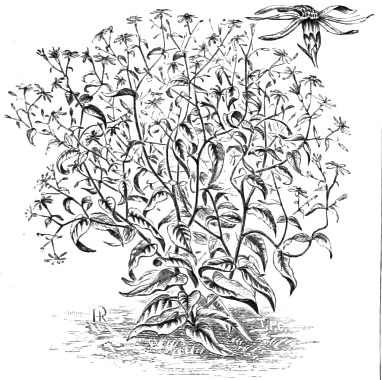
FIG. 179. ASTER CORYMBOSUS, showing Habit and Flower-head.
A. corymbosus (corymbose). fl.-heads corymbose, about 1in.
in diameter; ray-florets few, narrow, white; disk-florets pale
yellow. Autumn. l. 3in. long, cordate acute, lobed at the
base, coarsely toothed. Stems brittle, blackish purple. h. 2ft.
to 3ft. SYN. Biotia corymbosa. See Fig. 179.
A. diffusus (diffuse). fl.-heads white; involucres imbricated.
October. l. elliptic-lanceolate, equal, serrated, smooth. Branches
spreading. Stem pubescent. h. 2ft. North America, 1777.
A. Douglasii (Douglas's).* fl.-heads purple; involucral scales linear
or spathulate-linear, loosely imbricated. August. l. lanceolate,
acute, entire, or rarely serrate, mostly tapering at the base. Stem
smooth, slender, paniculately branched, leafy. h. 3ft. to 4ft.
California, &c.
A. dracunculoides (Tarragon-like).* fl.-heads white, about 1in.
across, disposed in dense cymose clusters; involucre imbricated.
September, October. l. linear, acuminated, entire; lower ones
linear-lanceolate, sub-serrate. Branches corymbose. h. 3ft.
North America, 1811. A very handsome species.
A. dumosus (bushy).* fl.-heads white, about ½in. across, disposed
in broad clusters; involucre cylindrical, closely imbricated.
October. l. linear, glabrous; those of the branches very short.
Branches panicled. h. 2ft. North America, 1734.
A. d. albus (white).* fl.-heads quite white, and rather smaller
than those of the species. North America.
A. d. violaceus (violet). fl.-heads violet-purple. North America.
A. elegans (elegant). fl.-heads blue, small; corymb contracted,
drooping; scales of involucre oblong-cuneate, blunt, squarrose.
September. l. scabrous; cauline ones oblong-lanceolate, acute;
radical ones oblong, stalked. h. 2ft. North America, 1790. A
very elegant species, having a graceful habit.
A. eminens (eminent). fl.-heads light blue. October. l. linear-lanceolate,
acuminate, scabrous at edge; lower ones sub-serrated.
Stem panicled; branches one-headed. h. 2ft. North America.
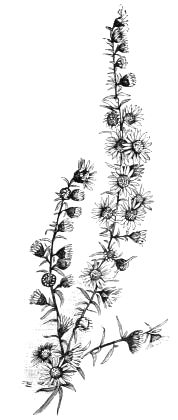
FIG. 180. ASTER ERICOIDES.
A. ericoides (Heath-like).* fl.-heads white; involucre squarrose,
leaflets acute. September. l. linear, glabrous; those of the
branches subulate, close together; and those of the stem long.
h. 3ft. North America, 1758. A very pretty species. See Fig. 180.
A. floribundus (many-flowered).* fl.-heads light purple. September.
l. sub-amplexicaul, lanceolate; lower ones serrated. Stem
smooth; branches corymbose. h. 4ft. North America.
A. foliosus (leafy). fl.-heads pale blue; involucre imbricate.
September. l. linear-lanceolate, acuminate, narrowed at each end.
Stem downy, panicled, erect; branches few-headed. h. 3ft. North
America, 1732.
A. fragilis (fragile). fl.-heads flesh-coloured, small; involucre imbricated.
September. l. linear, acuminate, entire; radical ones
oblong, serrate. Branches in corymbose panicles. h. 2ft. North
America, 1800.
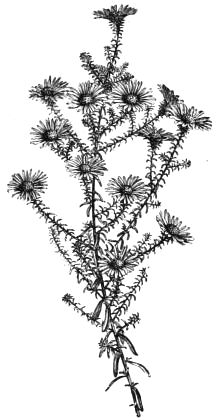
FIG. 181. ASTER GRANDIFLORUS.
A. grandiflorus (large-flowered).* fl.-heads purple, large, terminal;
scales of involucre squarrose. November. l. linear,
rigid, acute, sub-amplexicaul; those of the branches reflexed,
hispid at edge. h. 2ft. North America, 1720. See Fig. 181.
A. hyssopifolius (Hyssop-leaved).* fl.-heads white, or purple
shaded; scales of the involucre about half as long as the disk.
August to October. l. linear-lanceolate, acute, with the margins
scabrous. Branches fastigiate and corymbose, smooth. h. 1½ft. to
2ft. North America.
A. lævigatus (smooth-stemmed). fl.-heads flesh-coloured, about
1in. across, disposed in large panicles. September. l. sub-amplexicaul,
broad-lanceolate, sub-serrate, smooth. Stem glabrous.
Branches many-headed. h. 3ft. North America, 1794.
A. lævis (smooth).* fl.-heads blue; involucre imbricated with
cuneiform leaflets. September. l. sub-amplexicaul, remotely
oblong, entire, lucid; radical ones sub-serrated. h. 2ft. North
America, 1758. One of the best border species.
A. laxus (loose-flowered). fl.-heads white, about 1in. across;
clusters loose. October. l. linear-lanceolate, scabrous at edge;
lower ones sub-serrated; stem ones reflexed. Stem loosely
panicled. h. 2ft. North America.
A. linarifolius (Toad-flax-leaved). fl.-heads pale blue. September.
l. numerous, linear, mucronated, nerveless, not dotted, keeled,
scabrous, rigid. Branches fastigiate, one-headed. h. 1ft. North
America, 1699.
A. linifolius (Flax-leaved). fl.-heads white; involucre imbricated,
short. July. l. linear, nerveless, dotted, scabrous, reflexed,
spreading. Branches corymbose, fastigiate, leafy. h. 2ft. North
America, 1739.
A. longifolius (long-leaved).* fl.-heads white, 1in. across,
in dense corymbose panicles; involucre squarrose. October.
l. linear-lanceolate, rarely toothed, very long, smooth. h. 3ft.
North America, 1798. There are several varieties of this handsome
species.
A. l. formosus (charming).* fl.-heads pink, produced in dense
corymbs. h. 1½ft. to 2ft.
A. macrophyllus (large-leaved). fl.-heads white. August. l.
large, ovate, stalked, serrated, scabrous; upper ones cordate,
sessile. Stem branched, diffuse. h. 2ft. North America, 1739.
A. multiflorus (many-flowered).* fl.-heads white, small; corymb
large, elongated; involucre imbricated; scales oblong, squarrose,
acute. September. l. linear, glabrous. Stem much branched,
diffuse, downy; branchlets one-sided. h. 3ft. North America,
1732.
A. myrtifolius (Myrtle-leaved). fl.-heads white; involucre imbricated;
scales length of disk. August. l., stem ones, amplexicaul,
scabrous; those of the branches small. h. 2ft. 1812.
A. novæ-angliæ (New England).* fl.-heads purple, in terminal
clusters. September. l. linear-lanceolate, pilose, amplexicaul,
auricled at base. Stem simple, pilose, straight. h. 6ft. North
America, 1710. One of the best; having a tall and robust habit.
A. n.-a. rubra (red).* fl.-heads deep red pink, in other respects
like the type. North America, 1812.
A. novæ-belgii (New York).* fl.-heads pale blue. September.
l. sub-amplexicaul, lanceolate, glabrous, scabrous at edge; lower
ones sub-serrated. Branches divided. h. 4ft. North America,
1710. There is a variety known in gardens which belongs to this
species, under the name of amethystinus, the flowers of which are
much larger and very showy.
A. obliquus (oblique). fl.-heads numerous; ray white; disk
purplish. Autumn. l. alternate; lower ones linear-lanceolate,
oblique; upper stem ones smaller. h. 5ft. North America. A
very fine species, forming large tufts.
A. paniculatus (panicled).* fl.-heads light blue; involucre loose.
September. l. ovate-lanceolate, sub-serrated, stalked, smooth;
petioles naked. Stem much branched, smooth. h. 4ft. North
America, 1640.
A. pannonicus (Pannonian). fl.-heads violet; scales of involucre
lanceolate, blunt, equal. July. l. linear-lanceolate, hispid at
edge. Stem simple, corymbose. h. 2ft. Hungary, 1815.
A. patens (spreading). fl.-heads light purple, about 1in. across.
October. l. oblong-lanceolate, ciliate, cordate, amplexicaul,
scabrous on each side, hairy. Stem branched, hairy. h. 2ft.
North America, 1773.
A. pendulus (drooping).* fl.-heads pure white at first, ultimately
rosy pink, small. September. l. elliptic-lanceolate, serrate,
smooth, those of the branches distant. Branches much spreading,
pendulous. h. 2ft. North America, 1758. A very pretty species.
A. peregrinus (foreign).* fl.-heads bluish purple, 2in. across.
July, August. l. lanceolate, sub-acute, entire, smooth, those of
the stem rather narrower than the radical ones. Stem smooth, or
nearly so, two or three-flowered. h. 1ft. North America. A
very pretty little species for the rockery or border.
A. pilosus (pilose). fl.-heads pale blue; involucre oblong, loose,
imbricated. September. l. linear-lanceolate, hoary. Stem
branched, villous; branchlets somewhat one-sided, one-headed.
h. 2ft. North America, 1812.
A. præcox (early). fl.-heads violet; involucre imbricated; scales
nearly equal; outer scales somewhat spreading. July. l. oblong-lanceolate,
narrowed at the base. Stem hairy. h. 2ft. North
America, 1800.
A. pulchellus (beautiful).* fl.-heads purple, solitary; scales of involucre
nearly equal, linear, acuminate. June. l., radical ones
spathulate; cauline ones linear-lanceolate. h. 1ft. Armenia.
A. puniceus (red-stalked). fl.-heads blue, about 1in. across;
panicle large, pyramidal; involucre loose, longer than the disk.
September. l. amplexicaul, lanceolate, serrate, roughish.
Branches panicled. h. 6ft. North America, 1710.
A. pyrenæus (Pyrenean).* fl.-heads lilac-blue (disk yellow), large,
three to five in a short corymb. July. l. scabrous on both sides;
cauline ones oblong-lanceolate, acute, sessile, sharply serrated on
the upper part. h. 1ft. to 1½ft. Pyrenees.
A. Reevesi (Reeves's). fl.-heads white, with yellow centre, small;
panicle dense, pyramidal. Autumn. l. linear, acute. Branches
slender. h. 9in. to 12in. North America. A very desirable
species, suitable for rockwork.
A. reticulatus (netted). fl.-heads white. July. l. lanceolate-oblong,
acute at each end, sessile, revolute at end, netted, and
three-nerved beneath. Plant hoary all over. h. 3ft. North
America, 1812.
A. rubricaule (red-stemmed). Synonymous with A. spurius.
A. salicifolius (Willow-leaved). fl.-heads flesh-coloured; involucre
lanceolate, imbricate; scales acute, spreading at end.
September. l. linear-lanceolate, nearly entire, smooth. Stem
smooth, panicled at end. h. 6ft. North America, 1760.
A. salsuginosus (salt-plains).* fl.-heads violet-purple; involucral
scales linear, loose, glandular. July. l. entire, the lower spathulate,
obovate, tapering into a margined petiole; the upper ones
lanceolate, acute, with broad base, usually sub-amplexicaul.
Stem minutely pubescent, leafy nearly to the top, few-flowered.
h. 9in. to 18in. North America, 1827. A very handsome species.
A. s. elatior (tallest). This variety grows 2ft. or more high,
and has rather larger flowers than the type. North America.
A. sericeus (silky). fl.-heads deep blue; terminal, about 1½in.
across. Summer and autumn. l. oblong-lanceolate, sessile, entire,
three-nerved, silky with down. h. 3ft. Missouri, 1802. This is a
half-hardy evergreen shrub, and requires a warm, well-drained
soil.
A. serotinus (late-flowering). fl.-heads blue. September. l. oblong-lanceolate,
acuminate, sessile, smooth, scabrous at edge; lower
ones serrated; branches corymbose, smooth. h. 3ft. North
America.
A. Shortii (Short's). fl.-heads purplish blue, about 1in. across;
panicles long, racemose. Autumn. l. lanceolate, elongated,
acuminated, cordate at the base. h. 2ft. to 4ft. Stem slender,
spreading. North America.
A. sibiricus (Siberian). fl.-heads blue; involucre loose; leaflets
lanceolate, acuminate, hispid. August. l. lanceolate, sub-amplexicaul,
serrate, pilose, scabrous. h. 2ft. Siberia, 1768.
A. sikkimensis (Sikkimese).* fl.-heads purple; leaflets of involucre
linear, acuminate, sub-squarrose. October. l. lanceolate,
acuminate, spinosely denticulate; radical ones on longer
petioles; cauline ones sessile; corymbs large, of many heads,
leafy, erect, glabrous, branched. h. 3ft. Sikkim, 1850.
A. spectabilis (showy).* fl.-heads blue; scales of involucre loose,
leafy. August. l. lanceolate, roughish, somewhat amplexicaul;
lower ones serrate in the middle. h. 2ft. North America, 1777.
A very pretty species.
A. spurius (spurious). fl.-heads purple, large, few; inner scales
of involucre coloured. September. l. linear-lanceolate, amplexicaul,
polished. Stem virgate, panicled. Branches racemose. h. 4ft.
North America, 1789. SYN. A. rubricaule.
A. tardiflorus (late-flowering). fl.-heads blue, numerous. Autumn.
l. sessile, serrated, smooth, spathulate-lanceolate, narrowed
at base, and bent down towards each side. h. 2ft. North
America, 1775.
A. Townshendi (Townshend's). Synonymous with A. Bigelovii.
A. Tradescanti (Tradescant's).* fl.-heads white; involucre imbricated.
August. l. lanceolate-sessile, serrated, smooth; branches
virgate. Stem round, smooth. h. 3ft. North America, 1633. A.
multiflorus is very much like this species, and, perhaps, a mere
form thereof, with somewhat smaller flowers and more obovate-oblong
leaves.
A. tripolium (Tripoli). Michaelmas Daisy. fl.-heads blue; disk
yellow; scales of involucre lanceolate, membranous, obtuse,
imbricated. August. l. linear-lanceolate, fleshy, obscurely three-nerved.
Stem glabrous, corymbose. h. 2ft. Britain.
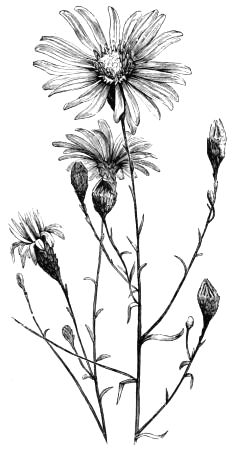
FIG. 182. ASTER TURBINELLUS.
A. turbinellus (turbinate). fl.-heads delicate mauve, disposed in
panicles; involucre top-shaped, scales imbricate. Summer and
autumn. l. lanceolate, smooth, entire, with fringed margins,
somewhat stem-clasping; those of the branchlets awl-shaped.
h. 2ft. to 3ft. North America. A very desirable species. See
Fig. 182.
A. undulatus (undulated). fl.-heads pale blue. August. l.
oblong-cordate, amplexicaul, entire; petioles winged. Stem
panicled, hispid. Branchlets one-sided. h. 3ft. North America,
1699.
A. versicolor (various-coloured).* fl.-heads white, changing to
purple; scales of involucre shorter than disk. August. l. sub-amplexicaul,
broad-lanceolate, sub-serrate, smooth. Stem glabrous.
h. 3ft. North America, 1790.
The annuals (Callistemma hortensis), usually known as
French, German, or China Asters, are very extensively
grown, both for beds and pots, and their diversity and
generally compact growth render them almost universal
favourites. They require a rich loamy soil, and as the
roots are produced near the surface, a mulching of rotten
dung will be found most beneficial. Seeds may be raised
in a cold frame in March or April, and, when the
seedlings are large enough, they must be transplanted
into beds from 9in. to 12in. apart each way. If it
is desired to have them in pots, they may be removed
thence with a good ball of earth adhering just before they
commence flowering, liberally watered, and kept lightly
shaded from the sun, until root action is resumed. Those
kinds required for exhibition purposes should have several
of the side shoots removed, so that the whole growing
energy of the plant may be centralised into from five to
seven flower-heads, by which means fine blooms may be
obtained. The dwarf kinds are most valuable for bedding
and pots, as the taller kinds frequently require stakes for
support. The following are the most important sections:
Betteridge's Prize. Very beautifully formed and brilliantly
coloured varieties, unsurpassed for exhibition purposes. As this
class has rather a straggling habit of growth, it is less suitable for
bedding and borders than many of the others.
Boltze's Miniature Bouquet Pyramidal. Dwarf and elegant,
in compact bouquets of six or eight; the truss of flower-heads
springs directly from the ground, having only a few leaves
at base. Colours very varied. h. 6in. to 8in.
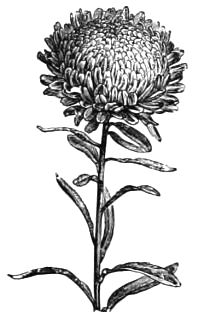
FIG. 183. TRUFFAUT'S PEONY-FLOWERED
ASTER.
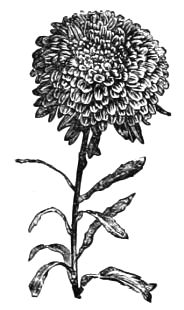
FIG. 184. TRUFFAUT'S PERFECTION
ASTER.
Crown.* Distinct. The central portion, or disk, of the head of
flowers is pure white, surrounded by a broad margin of coloured
ray florets, such as purple, violet, crimson, rose, &c. Flower-heads
large, flat, freely produced. h. 1ft. to 1½ft.
Dwarf Chrysanthemum-flowered.* In size of flower-heads
and habit of growth, this surpasses all other dwarf varieties. The
flowers are full, Chrysanthemum-shaped, produced in clusters, or
bouquets, from ten to twenty in a truss, very delicate and beautiful
in colour. h. 1ft.
Dwarf Pyramidal or Dwarf Bouquet. A pretty little class,
and extremely floriferous, each plant producing from twenty to
fifty heads of bloom. Some of the colours are: Exquisite carmine
with white points, white with blue or carmine points, white with
salmon centre, &c. h. 1ft.
Improved Imbricate. The best strain of pyramidal Asters with
recurved florets; fine regular form of flowers, double to the centre,
producing but few seeds. Colours very brilliant. h. 2ft.
Improved Rose. A handsome class, producing a branched head,
displaying no less than fifty large double flower-heads, the outer
florets finely imbricated, and filled up to the centre when quite
open. The colours are of great brilliancy, and of many shades.
h. 2ft.
Pompone Goliath.* Flower-heads globular, and florets very
closely set. Valuable for bouquets, as the flowers remain intact
for a considerable time.
Pyramidal Hedgehog. Singular and unique. Stems upright,
and branched; each branch terminated by a single flower-head,
which is filled up with quill-like florets. Colours various.
h. 1½ft.
Truffaut's Pæony Perfection.* Vigorous upright growers,
having large, hemispherical-formed heads of flowers with incurved
florets, 4in. across. The colours also are very varied. h. about
2ft. See Figs. 183 and 184.
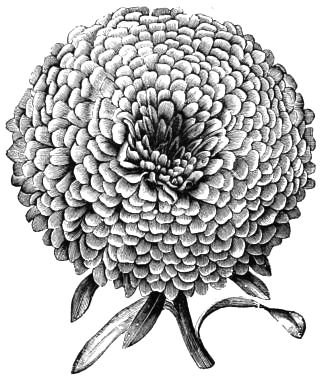
FIG. 185. VICTORIA ASTER.
Victoria.* One of the most popular classes of Asters grown; flower-heads
very double, imbricate, globular, 4in. in diameter, from
ten to twenty on a plant, of various shades. h. 1ft., with a
pyramidal habit. See Fig. 185.
ASTERACANTHA (from aster, a star, and acantha,
a spine; referring to the disposition of the spines). ORD.
Acanthaceæ. A handsome greenhouse herbaceous perennial,
of easy culture in sandy loam. It should be grown in a
sunny position, and be kept moderately dry, otherwise little
but foliaceous growth will be produced; but, if thus treated,
it flowers freely. Propagated by divisions in spring; or
by seeds, sown in August.
A. longifolia (long-leaved). fl. yellow, in dense axillary fascicles.
July. l. lanceolate, tapering to the base, narrow, sessile, serrately
ciliated. Stem quadrangular. Plant rather hairy. h. 2ft. India,
1781.
ASTERACEÆ. See Compositæ.
ASTEROCEPHALUS. See Scabiosa.
ASTILBE (from a, without, and stilbe, brilliancy; in allusion
to the inconspicuous flowers of some of the species).
ORD. Saxifragaceæ. Tall branching herbs, with triternate
or biternate leaves, allied to Spiræa, from which they differ
in having not more than three carpels, eight or ten stamens,
and numerous albuminous seeds. They are all more or less
graceful, and some indispensable, either when grown in
isolated clumps, or intermingled with other herbaceous
plants. They thrive well in almost any rich garden soil,
preferring damp positions, and are easily propagated by
division, which is best done in early spring. A. japonica
is grown very extensively for decorative purposes, its elegant
spikes of pure white flowers rendering it especially
valuable. The majority of the plants cultivated are imported,
but they may be grown fairly well in this country
in heavily manured soil. They should be potted as early
as possible in the autumn, and plunged in ashes or fibre
outside, when they will soon commence to root, after which
they may be placed in heat, and forced as required, always
giving an abundance of water. Indeed, the pots may be
stood in pans of water, especially when the plants are well
furnished with growth.
A. barbata (bearded). A synonym of A. japonica.
A. decandra (ten-stamened). fl. white, in spicate racemose
panicles. May. l. biternate; leaflets cordate, deeply lobed and serrated,
glandular beneath, and on the petioles. h. 2ft. to 3ft. North
America, 1812.
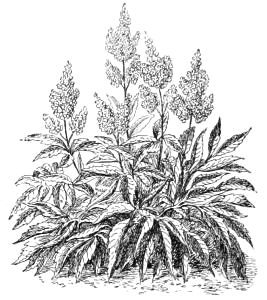
FIG. 186. ASTILBE JAPONICA.
A. japonica (Japanese).* fl. small, pure white, in large branching
racemose panicles. May. l. triternate or pinnate, serrated.
h. 1ft. to 2ft. Japan. This is best grown in pots, as early frosts
generally cut it down in the open air. SYNS. Spiræa barbata and
japonica, also Hoteia and A. barbata. See Fig 186.
A. j. variegata (variegated).* l. prettily variegated with yellow;
panicles much more dense than the type; indeed, it is far superior
in that respect.
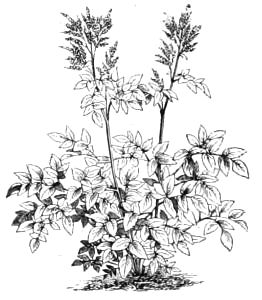
FIG. 187. ASTILBE RIVULARIS.
A. rivularis (brook).* fl. yellowish-white, or reddish, in large
panicled spikes. Late summer. l. biternate; leaflets ovate, doubly
serrated, villous beneath and on the petioles. h. 3ft. Nepaul.
A grand plant for the margins of lakes or damp woodlands. See
Fig. 187.
A. rubra (red).* fl. rose, very numerous, in dense panicles. Late
summer and autumn. l. biternate; leaflets oblique, cordate,
1in. to 2in. long, with elongated, serrated points. h. 4ft. to 6ft.
India, 1851. A very pretty, but rare species; excellent for sub-tropical
gardening.
A. Thunbergi (Thunberg's).* fl. small, white, very numerous, in
erect, much branched, pyramidal panicles, with reddish and
slightly downy stalks. May. l. unequally pinnate or bipinnate;
leaflets broad, yellowish green, sharply toothed. h. 1½ft. Japan,
1878. This pretty little sub-shrub is extensively propagated on
the Continent for forcing purposes.
ASTRAGALUS (a name applied to a shrub by Greek
writers). Milk Vetch. ORD. Leguminosæ. A very large
genus of hardy herbs or sub-shrubs. Flowers in axillary
clusters; standard larger than the wings. Leaves unequally
pinnate. About one hundred species have from time to
time been introduced in English gardens; many of these
are lost to cultivation; the comparative few here described
are still generally grown, and are good representative species.
They are all of easy culture. The shrubby kinds grow well
in any light dry soil, and are slowly increased by cuttings
placed in a cold frame, or by seeds. The herbaceous
perennials prefer a dry light soil, and may be increased by
divisions or seeds; the latter mode is preferable, as many
species are very liable to die if transplanted or divided,
which is at best but a slow method. Seed should be sown
in pots of sandy soil placed in a cold frame as soon as ripe,
or very early in the spring, as they may lie a long time
before germinating. The dwarfer species constitute admirable
rockwork plants, and can be grown in pots containing
a mixture of loam, peat, and sand. Seeds of the
two annual species, A. Cicer and A. Glaux, merely require
to be sown in the open border early in spring.
A. adsurgens (adsurgent).* fl. bluish purple; spikes oblong,
pedunculate, longer than the leaves, densely packed. June. l.
with eleven to twelve pairs of ovate-lanceolate acute leaflets;
stipules acuminated, length of leaves. Plant ascending, smoothish.
Siberia, 1818. A very handsome and rare perennial species.
A. aduncus (hooked). fl. rose purple, in oblong spikes; peduncles
rather shorter than the leaves. June and July. l. with numerous
pairs of roundish-ovate, smooth leaflets, sometimes downy.
h. 6in. to 9in. Caucasus, 1819. Perennial.
A. alopecuroides (foxtail-like).* fl. yellow, disposed in thick
dense ovate-oblong spikes, on short axillary peduncles. June. l.
with numerous ovate-lanceolate, pubescent leaflets; stipules
ovate-lanceolate, acuminated. Plant erect. h. 2ft. to 5ft. Siberia,
1737. One of the finest perennial species grown.
A. alpinus (alpine). fl. bluish-purple, sometimes whitish, drooping,
disposed in racemes of about ½in. long. Summer. l. impari-pinnate,
with eight to twelve pairs of ovate or oblong leaflets.
Britain. A very desirable, hairy, prostrate perennial.
A. arenarius (sand-loving).* fl. blue; peduncles few-flowered,
rather shorter than the leaves. June. l. with linear-obtuse
leaflets; stipules connate, opposite the leaves. Plant diffuse,
tomentose from white adpressed down. h. 6in. Denmark,
1800. Perennial.
A. austriacus (Austrian).* fl. few; upper petal, or vexillum, blue,
the rest purple; racemes pedunculate, longer than the leaves.
May. l., leaflets glabrous, linear, truncately emarginate.
Plant diffusely procumbent. South Europe, 1640. Perennial.
A. canadensis (Canadian). fl. yellow, disposed in spikes;
peduncles about as long as the leaves. July. l. with ten to
twelve pairs of elliptic-oblong, bluntish leaflets. Plant nearly
erect, rather hairy. h. 2ft. to 3ft. North America, 1732.
Perennial.
A. Cicer (Vetch-like). fl. pale yellow, disposed in spike-like
heads; peduncles longer than the leaves. July. l. with ten to
thirteen pairs of elliptic-oblong mucronate leaflets. Plant
diffusely procumbent. Europe, 1570. Annual.
A. dahuricus (Dahurian). fl. purple, in dense racemes, which
are longer than the leaves. July. l., leaflets, seven to nine pairs,
oblong, mucronate. Plant erect, pilose. h. 1ft. to 2ft. Dahuria
to China, 1822. Perennial.
A. dasyglottis (thick-tongued).* fl. purple, blue, and white
mixed, in capitate spikes; peduncles a little longer than the
leaves. June. l., leaflets elliptic-oblong, somewhat emarginate;
stipules connate, opposite the leaves. h. 3in. to 4in. Plant
diffuse. Siberia, 1818. A charming little alpine perennial.
A. falcatus (hooked). fl. greenish yellow, in spikes; peduncles
rather longer than the leaves. June. l. with sixteen to twenty
pairs of elliptic-oblong, acute leaflets. Plant erect, rather hairy.
h. 1ft. to 2ft. Siberia (in wet, grassy places). Perennial. SYN.
A. virescens.
A. galegiformis (Galega-like).* fl. pale yellow, pendulous, racemose;
peduncles longer than the leaves. June. l. with twelve
to thirteen pairs of elliptic-oblong leaflets. Plant erect, glabrous.
h. 3ft. to 5ft. Siberia, 1729. A showy perennial species.
A. Glaux (Milkwort). fl. purplish, in dense heads; peduncles
longer than the leaves. June. l. with eight to thirteen pairs of
small, oblong, acutish leaflets. Spain, 1596. Procumbent annual,
clothed with whitish hair.
A. glycyphyllos (sweet-leaved).* fl. sulphur coloured, in ovate-oblong
spikes; peduncles shorter than the leaves. June. l. with
four, five, to seven pairs of oval, bluntish, smooth leaflets;
stipules ovate-lanceolate, entire. h. 2ft. to 3ft. Britain. A
perennial prostrate trailer.
A. hypoglottis (under-tongued).* fl. variegated with purplish,
blue and white, disposed in roundish heads; peduncles longer
than the leaves, ascending. June. l. with numerous little
ovate, obtuse, dark green leaflets, somewhat emarginate; stipules
connate, ovate. Stems prostrate, rather hairy. h. 3in. Britain,
&c. Perennial trailer.
A. h. alba (white-flowered).* This resembles the type, except
in the colour of the flowers.
A. leucophyllus (hoary-leaved).* fl. pale yellow, about ½in. long,
in dense racemes; peduncles much longer than the leaves. July
and August. l., leaflets in numerous pairs, broadly-linear,
covered with soft, silky pubescence. h. 2ft. to 3ft. North
America. Perennial.
A. maximus (largest).* fl. yellow; spike sessile, cylindrical,
nearly terminal. June. l. with ovate-lanceolate, pubescent
leaflets; stipules oblong-lanceolate. h. 2ft. to 3ft. Armenia. A
very handsome, erect, perennial species.
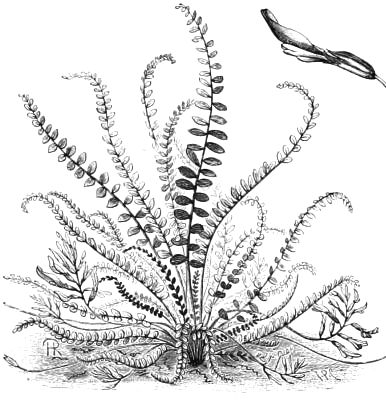
FIG. 188. ASTRAGALUS MONSPESSULANUS, showing Habit and
Flower.
A. monspessulanus (Montpelier).* fl. usually purplish, spicate;
peduncles longer than the leaves. June. l., leaflets twenty-one to
forty-one, ovate or lanceolate, outer ones rather the smallest.
Leaves hoary, and plant almost stemless when growing in dry
exposed situations; but in rich earth or moist places the leaves
are almost glabrous, and the stem becomes elongated. South
Europe, 1710. This species is much appreciated, and well deserves
a place in all collections. Evergreen trailer. See Fig. 188.
A. narbonensis (Narbonne). fl. yellow, disposed in somewhat
globose spikes, on short axillary peduncles. June. l. with oblong-linear
leaflets; stipules lanceolate. h. 2ft. to 3ft. Narbonne and
Madrid, 1789. An erect hairy perennial.
A. odoratus (sweet-scented). fl. pale yellow, sweet-scented,
disposed in spikes; peduncles same length as leaves. June.
l. with eleven to fourteen pairs of oblong acute leaflets; stipules
connate. Plant erect, rather ascending. h. 6in. Levant, 1820.
Perennial.
A. onobrychioides (Onobrychis-like).* fl. beautiful purple, in
capitate spikes on long peduncles. July. l. with eight to ten
pairs of elliptic leaflets; stipules connate, opposite the leaves.
Plant rather diffuse, shrubby at the base, clothed with adpressed
hairs. h. 9in. to 12in. Iberia, Persia, &c., 1819. A very handsome
perennial species.
A. Onobrychis (Onobrychis). fl. purple; spikes oblong-ovate,
pedunculate, longer than the leaves. June. l. with seven to sixteen
pairs of oblong leaflets. h. 1½ft., or procumbent. Mountains
Southern Europe, 1640. This is an elegant perennial, and ranks
among the very best. The varieties, all white flowered, are:
alpinus, major, microphyllus and moldavicus, but only the first-named
is now in cultivation.
A. pannosus (woolly).* fl. rose-coloured, in compact globose
heads, with peduncles shorter than the leaves. July. l. with
four, five, to nine pairs of ovate-lanceolate leaflets, thickly coated
with long white woolly hairs. h. 6in. to 9in. Siberia. Perennial.
A. ponticus (Pontic). fl. yellow; spikes sessile, almost globose.
July. l. oblong, smoothish; stipules lanceolate. Stem rather
hairy. h. 2ft. Tauria, 1820. A very showy, erect, border perennial.
A. purpureus (purple). fl. purplish blue, disposed in capitate
spikes; peduncles longer than the leaves. June. l., leaflets obovate,
bidentate at the apex; stipules connate, opposite the
leaves. Plant diffuse, procumbent, rather hairy. h. 3in. to 6in.
Provence, 1820. Perennial.
A. sulcatus (furrowed).* fl. pale violet, but with a white keel,
tipped with brown; racemes pedunculate, longer than the leaves.
July. l. with linear-lanceolate leaflets. Plant erect, glabrous;
stem furrowed. h. 2ft. to 3ft. Siberia, 1783. Perennial.
A. Tragacantha (great goat's thorn).* Gum Tragacanth. fl.
pale violet, two to five together, axillary, sessile. June. l. with
eight to nine pairs of linear hispid leaflets; young stipules connate,
clothed with silky hairs; adult ones glabrous; petioles permanent,
at length becoming hardened spines. h. 1½ft. to 3ft. Levant,
1640. Evergreen shrub. Tragacanth, a partially soluble gum,
was formerly supposed to be furnished by this plant. It is, however,
now known that A. Tragacantha yields none. Several species
from mountainous regions in Asia Minor, &c., furnish the gum.
A. vaginatus (sheathed-stipuled). fl. rosy-purple, with white-tipped
wings; calyx rather inflated, covered with soft white and
black hairs; spikes dense. Summer. l. impari-pinnate, with
seven or eight pairs of elongated-oblong leaflets, both surfaces
covered with short silvery hairs. h. 1ft. Siberia. Perennial.
A. vesicarius (bladdery). fl., upper petal purple, the wings
yellow, and the keel white, tipped with yellow; calyx clothed
with black adpressed down and long white spreading hairs;
peduncles longer than the leaves. July. l. with five to seven
pairs of elliptic leaflets. Plant diffusely procumbent, hoary from
adpressed silky down. h. 6in. to 9in. France, 1737. Perennial
trailer.
A viminens (twiggy). fl., upper petal purplish rose, much longer
than the pure white wings; calyx clothed with black hairs; spikes
somewhat capitate, pedunculate, longer than the leaves. June.
l. with four to six pairs of lanceolate acute leaflets, beset with
adpressed hairs. h. 6in. to 1ft. Siberia, 1816. A handsome
perennial.
A. virescens (greenish). Synonymous with A. falcata.
A. vulpinus (fox).* fl. pale yellow; spikes nearly globose, on very
short peduncles. June. l. with obovate, obtuse, emarginate,
rather velvety leaflets. Plant erect; stem glabrous. h. 2ft. to 3ft.
Caucasus, 1815. A handsome border perennial.
ASTRANTIA (from astron, a star, and anti, in composition
signifying comparison; in reference to the appearance
of the umbels of flowers). ORD. Umbelliferæ. Ornamental,
hardy, herbaceous perennials, natives of Europe and
Caucasus. Universal umbels irregular, of few rays, surrounded
by variable involucre; partial umbels regular, and
containing many flowers, surrounded by many-leaved involucels.
Radical leaves petiolate, palmately lobed; cauline
ones few, sessile. Roots blackish. These are suited for
borders, banks, and woodlands, growing well in any ordinary
garden soil, but preferring a damp position. Easily
increased by root divisions in autumn or spring.
A. carniolica (Carniolan).* fl. white. May. l. of involucre
twelve to thirteen, quite entire, white, with a green line running
along the middle of each, tinged with red; radical ones palmate;
lobes five to seven, oblong, acuminated, unequally serrated. h.
6in. to 12in. Carniola, 1812. A pretty species.
A. helleborifolia (Hellebore-leaved).* fl. (and involucre) pink,
pedicellate. June. l. of involucre twelve to thirteen, ovate-lanceolate,
exceeding the umbel a little, bristly; radical ones
palmate; lobes three, ovate-lanceolate, unequally serrated. h. 1ft.
to 2ft. Eastern Caucasus, 1804. SYN. A. maxima.
A. major (greater).* fl. pinkish, pedicellate. May. l. of involucre
fifteen to twenty, linear-lanceolate, quite entire, hardly
longer than the umbel; radical ones palmate; lobes five, ovate-lanceolate,
acute, rather trifid, toothed. h. 1ft to 2ft. Europe,
1596. Very distinct and ornamental.
A. maxima (greatest). Synonymous with A. helleborifolia.
ASTRAPÆA (from astrape, lightning; alluding to the
brightness of the flowers). ORD. Sterculiaceæ. Elegant
stove evergreen trees. Peduncles axillary, long, bearing on
their apex an umbel of large sessile flowers, enclosed in a
leafy involucre. Leaves alternate, stalked, cordate, three
to five-lobed. They thrive well in a mixture of loam and
peat, and require a plentiful supply of water; but the best
results accrue if the bottom of the pot can be stood in a
saucer or tub of water. Propagated by cuttings of young
wood, made in April, placed in a compost of loam and
peat, or sand, under a bell glass, in heat.
A. tiliæflora (Lime-tree leaved). fl. pink. h. 20ft. Isle of
Bourbon, 1824.
A. viscosa (clammy). fl. pink. h. 20ft. Madagascar, 1823.
A. Wallichii (Wallich's).* fl. scarlet; umbels drooping. July.
l. large, cordate, angularly lobed; stipulas leafy, ovate-acuminated;
peduncles long, hairy. h. 30ft. Madagascar, 1820. This
splendid species has often been described as being one of the
finest plants ever introduced into this country; and, when in full
flower, nothing can exceed it in beauty and grandeur.
ASTROCARYUM (from astron, a star, and karyon, a
nut; referring to the disposition of the fruit). SYN. Phœnico-phorum.
ORD. Palmaceæ. Very ornamental stove palms,
allied to Cocos, having the trunk (when present), foliage,
fruit-stalks, spathes, and sometimes the fruit, covered with
spines. The flowers develop from the axils of the old decayed
leaves. Drupes oval, one-seeded, orange or yellow, in some
species fragrant. Leaves pinnate, with linear segments,
dark green above, and often of a silvery white below. The
species thrive in a compost of two-thirds rich loam and
one-third vegetable mould; water may be given copiously.
Propagation may be effected by seeds, which should be
sown in spring in a hotbed; or by suckers, if they are to be
obtained.
A. acaule (stemless). l. pinnate, 3ft. to 10ft. long, slender and
spreading; pinnæ narrow, arranged in clusters, pendent. Spines
very numerous, long, flat, black. h. 10ft. Brazil, 1820.
A. aculeatum (prickly). h. 40ft. Guiana, 1824.
A. argenteum (silvery).* l. arching, wedge-shaped, pinnate,
distinctly plicate, bright green on the upper surface, the under
surface, as well as the stalks, covered with a fine white scurf,
which gives them a silvered appearance. Columbia, 1875. One of
the best of silver palms.
A. filare (thready).* l. erect, narrowly cuneate, with two divergent
lobes; petioles covered with white scurf, both on the upper and
under surfaces. Distinct and elegant, with a comparatively small
and slender growth. Columbia, 1875.
A. granatense (New Grenadan). l. pinnate, with oblong-acuminate
segments; the rachis is spiny, like the petiole, both on the
upper and lower surfaces; leafstalks brownish, armed with numerous
scattered needle-shaped dark-coloured spines. Columbia,
1876.
A. mexicanum (Mexican). Mexico, 1864.
A. Muru-Muru (Murumuru). l. pinnate, 10ft. to 12ft. long;
leaflets lanceolate, sub-falcate, dark green above, silvery white
below. Stem 12ft. to 15ft. high, densely clothed with strong
reflexed black spines, over 6in. long. h. 40ft. Brazil, 1825.
A. rostratum (beak-sheathed). l. irregularly pinnate, 3ft. to 8ft.
long; pinnæ 12in. to 18in. long; terminal lobe much larger and
bifid, dark green above, silvery white below; petioles broadly
sheathing at the base, densely armed with black spines, sometimes
2in. long. Stem slender, densely clothed with long black
spines. A slow grower, ultimately becoming 30ft. high. Brazil,
1854.
A. vulgare (common). h. 30ft. Brazil, 1825.
ASTROLOBIUM. See Ornithopus.
ASTROLOMA (from astron, a star, and loma, a fringe;
in reference to the bearded limb of the corolla). ORD.
Epacridaceæ. Very handsome, little, diffuse, greenhouse,
evergreen shrubs. Flowers solitary, axillary; corolla
tubular, distended above the middle, and with five bundles
of hairs in the inside, near its base. Leaves crowded,
alternate, linear, or obovate-lanceolate and mucronate.
They thrive best in an equal mixture of sand, loam, and
peat, with thorough drainage. Propagated by young cuttings,
which root readily in sandy soil, under a bell glass,
in a cool house.
A. denticulatum (finely-toothed). fl. axillary, erect; corolla
pale red, with a ventricose tube. May to July. l. scattered,
lanceolate, ciliated, usually procumbent, but sometimes slightly
erect. h. 1ft. New Holland, 1824.
A. humifusum (trailing). fl. scarlet, similar to the foregoing.
May and June. l. lanceolate-linear, rather convex above, with
ciliated edges. Shrub prostrate, much branched. h. 1ft. New
Holland, 1807.
ASTROPHYTUM MYRIOSTIGMA. See Echinocactus
myriostigma.
ASYSTASIA (meaning not clear). ORD. Acanthaceæ.
Stove evergreen shrubs. Flowers disposed in axillary or
terminal clusters; corolla somewhat funnel-shaped, five-lobed;
calyx five-lobed, regular. Branches slender. They
require a compost of peat and loam, with a little sand,
and, to induce a vigorous growth, a little dry cow-dung
may be applied. Propagated by cuttings of young shoots,
placed in sandy soil, under a bell glass, in April, with a
brisk bottom heat.
A. chelonioides (Chelonia-like).* fl. in terminal racemes, reddish
purple, the border white. l. opposite, ovate-acute. h. 34ft. India,
1871. A pretty dwarf sub-shrub.
A. coromandeliana (Coromandel). fl. deep lilac; racemes
axillary, elongated, secund, strict. July. l. opposite, cordate-ovate;
branches diffuse. h. 4ft. India, 1845. SYN. Justicia gangetica.
A. macrophylla (large-leaved).* fl. bilabiate, bell-shaped, rosy
purple outside, and almost pure white within; spikes terminal,
erect, 1ft. long. June. l. very large, obovate-lanceolate. h.
8ft. to 20ft. Fernando Po, 1867.
A. scandens (climbing).* fl. cream-coloured; tube of corolla
widened and recurved above, lobes of limb crenately curved;
racemes terminal, compact, thyrse-formed. July. l. obovate or
ovate acute, glabrous. h. 6ft. Sierra Leone, 1845. This handsome
stove climber requires a high, moist temperature after
shifting. SYN. Henfreya scandens.
A. violacea (violet).* fl. violet purple, striped with white, in
terminal racemes. l. shortly-stalked, ovate-acuminate, deep
green, minutely hairy on both surfaces. h. 1ft. to 2ft. India,
1870. A pretty dwarf plant.
ATACCIA CRISTATA. See Tacca integrifolia.
ATALANTIA (mythological: Atalanta, the daughter
of Schœneus). ORD. Rutaceæ. A genus of ornamental
stove evergreen shrubs, having the eight stamens united
below into a tube, and with undivided leaves. It comprises
about ten species. They thrive well in a mixture of loam
and peat. Propagated by means of ripened cuttings, which
will root readily if planted in sand under a hand glass, in
heat.
A. monophylla (one-leaved). fl. small, white, in axillary racemes.
fr. golden yellow, about the size of a nutmeg. June. l.
simple, ovate-oblong, emarginate at the apex. Spines small,
simple. h. 8ft. India, 1777. A thorny shrub.
ATAMASCO LILY. See Zephyranthes Atamasco.
ATHAMANTA (named from Mount Athamas, in
Sicily, where some species are found). ORD. Umbelliferæ.
A genus of greenhouse or hardy herbaceous plants, usually
velvety from villi on the stem, leaves, and fruit. Flowers
white; involucra of one or few leaves; involucel of many
leaves. The undermentioned is the only species in cultivation,
and is a very graceful perennial, with Fennel-like
foliage. It thrives well in any ordinary soil. Increased
by divisions, or by seeds sown in spring.
A. Matthioli (Matthioli's). fl. white, twelve to twenty-five to an
umbel. Summer. l. three or four ternate; leaflets linear-filiform,
elongated, divaricate. h. 1ft. to 2ft. Alps of Carinthia,
1802.
ATHANASIA (from a, not, and thanatos, death;
alluding to the length of time which the flowers last).
ORD. Compositæ. Rather ornamental greenhouse evergreen
shrubs with yellow flowers, from the Cape of Good
Hope. They grow well in a soil consisting of three parts
loam and one part peat. Propagation is effected by
cuttings, taken from half-ripened wood in spring, and
placed in sand, under a hand glass.
A. capitata (headed).* fl.-heads yellow. March. l. pinnati-partite;
younger hoary, older smooth. h. 1½ft. Cape of Good
Hope, 1774.
A. pubescens (downy). fl.-heads yellow. July. l. oblong, entire
(or tridentate), softly hairy on both sides; when old, sub-glabrous.
h. 6ft. Cape of Good Hope, 1768.
ATHEROSPERMA (from ather, an awn, and sperma,
seed; seeds awned). ORD. Monimiaceæ. A beautiful
greenhouse evergreen tree, with the aspect of a stately
conifer. Flowers panicled, diœcious; perianth five to
eight-fid. Leaves opposite, aromatic. A compost of loam
and peat, in about equal proportions, is necessary. It can
be readily propagated by cuttings.
A. moschata (Musk-scented). Plume Nutmeg. fl. white. June.
h. 40ft. New Holland, 1824.
ATHEROSPERMEÆ. See Monimiaceæ.
ATHRIXIA (from a, not, and thrix, a hair; the receptacle
being destitute of hairs). ORD. Compositæ. A
greenhouse evergreen shrub. It succeeds best in turfy
loam, peat, and sand, and requires to be potted firmly.
Propagated by cuttings of young wood, placed under a bell
glass in sandy soil, and treated like Ericas (which see).
A. capensis (Cape).* fl.-heads bright crimson, solitary, terminal.
April. l. narrow, lanceolate, alternate, entire. h. 3ft. Cape
of Good Hope, 1821.
ATHROTAXIS (from athros, crowded together, and
taxis, arrangement; in reference to the disposition of the
scales of the cones). ORD. Coniferæ. A small genus of
Tasmanian evergreen diœcious trees or shrubs, with small
scale-like leaves, and small globular cones of many imbricated
scales, with from three to six carpels under each
scale. In very sheltered situations they will probably
prove hardy; but, otherwise, they are only suitable for
botanical collections. Increased by cuttings. This genus
is almost universally misspelt Arthrotaxis.
A. cupressoides (Cypress-like). l. small, thick, leathery, spirally
arranged, closely imbricated, deep glossy green. h. 30ft. A small,
erect, and very slow growing tree, with numerous slender
branchlets.
A. Doniana (Don's). A synonym of A. laxifolia.
A. imbricata (imbricated). A garden synonym of A. selaginoides.
A. laxifolia (loose-leaved). Differing from A. cupressoides in
having longer, more pointed, open, and spreading leaves, which
stand out from the stem in a Juniper-like fashion. Its lateral
growths are rather pendulous. h. 20ft. to 25ft. SYN. A. Doniana.
A. selaginoides (Selago-like). l. glossy green, scale-like, spirally
disposed, closely appressed to the shoots, branches and their
ramifications very numerous. h. variable, up to 40ft. Very interesting,
and quite distinct. SYN. A. imbricata (of gardens).
ATHYRIUM. See Asplenium.
ATRAGENE (a name originally given to Clematis
Vitalba by Theophrastus). ORD. Ranunculaceæ. A genus
of ornamental, hardy, climbing, deciduous shrubs, closely
allied to Clematis, from which they differ in having
numerous petals. They are increased by cuttings, which
should be pricked in light sandy soil and placed under a
hand glass; also by layering in the autumn. Both methods
are slow; the layers should not be separated for about a
year, when they will be vigorous plants. Seeds must be sown
in early spring, in gentle heat; when the seedlings are
large enough to handle, they should be pricked off and
grown on in pots till they are strong plants.
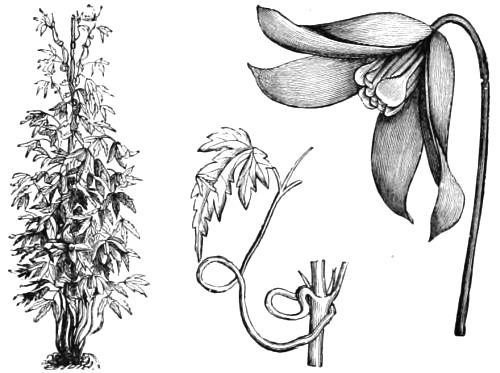
FIG. 189. ATRAGENE ALPINA, showing Habit, Twining Leafstalk, and
Flower.
A. alpina (alpine).* fl. blue, varying to white; petals ten to
twelve, linear at the base, but dilated at the apex; peduncles one-flowered,
longer than the leaves. May. l. biternate; leaflets
ovate-lanceolate, acuminated, serrate. Mountainous parts of
Europe, 1792. The white-flowered variety, named alba, is in cultivation.
SYNS. A. austriaca and A. sibirica. See Fig. 189.
A. americana (American).* fl. large, purplish-blue; petals
acute; peduncles one-flowered. May. l. whorled, in fours,
leaflets stalked, cordate, lanceolate, acuminated, entire or somewhat
lobed, or serrated. North America, 1797. SYN. Clematis
verticillaris.
A. austriaca (Austrian). Synonymous with A. alpina.
A. macropetala (large-petaled).* fl. blue. Manchuria, 1870.
A. sibirica (Siberian). Synonymous with A. alpina.
ATRIPLEX (from a, not, and traphein, to nourish).
Orach. ORD. Chenopodiaceæ. A genus of, for the most
part, uninteresting weeds, of very variable form and habit,
and having the calyx, which encloses the fruit, enlarging
after flowering. For culture, see Orach.
A. hortensis (garden). An annual species from Tartary, of no
value as an ornamental plant, but considered a very desirable
substitute for spinach. The leaves must be gathered for use when
young. The variety A. h. atro-sanguinea is a very pretty
form, having handsome crimson leaves, and growing to a height
of about 4ft. It is well worth growing with such plants as
Amaranthus, &c.
ATROPA (name of mythological origin). Belladonna;
Dwale. ORD. Solanaceæ. A small genus, having a campanulate
regular corolla, and a leafy persistent calyx. The
berries of this native herbaceous perennial are exceedingly
poisonous. The plant is of no horticultural value.
FIG. 190. FLOWER OF ATROPA BELLADONNA.
A. Belladonna. fl. green and purple, solitary, pedunculate,
drooping. Summer. Berries about the size of a small cherry.
l. ovate, acuminate, 4in. to 8in. long h. 2ft. to 4ft. Britain.
See Fig. 190.
ATTALEA (from attalus, magnificent; referring to the
beauty of the genus). ORD. Palmaceæ. A genus of handsome
stove palm trees, distinguished from other genera in
having the pinnæ arranged vertically, and not horizontally.
The leaves spring up almost perpendicularly at the base,
but in the upper part arch over. The pinnæ stand at right
angles to the rachis—which is very narrow in proportion to
its thickness—and while those of the lower side of the arch
hang straight down, those of the upper side point straight
up. They thrive well in a mixture of peat and loam in
equal quantities, and enjoy a copious supply of water.
Summer temperature, 65deg. to 80deg.; winter, 55deg. to
60deg. All the species are robust trees; but, although
several have been introduced, few appear to be generally
grown.
A. amygdalina (Almond-fruited).* l. pinnate, 3ft. to 6ft. long;
pinnæ 12in. to 18in. long, and about 1in. broad; terminal lobe
broad and bifid, rich dark green. Stem slender. New Grenada.
One of the best. SYN. A. nucifera.
A. Cohune (Cohune).* l. erect, ultimately spreading, pinnate,
furnished with from three to four dozen dark green pinnæ, sometimes
18in. in length; petioles rounded, and dark brown below,
flat and green upon the upper side. Plant unarmed. h. 50ft. or
more in its native habitat. Honduras.
A. compta (decked). h. 22ft. Brazil, 1820.
A. excelsa (tall).* h. 70ft. Brazil, 1826.
A. funifera (rope-bearing). The Piassaba Palm. l. vivid deep
green, very ornamental, and of economic value in Brazil. 1824.
The sheathing bases of the leafstalks separate into a coarse black
fringe, which is collected and exported to Europe, being used in
the manufacture of brooms, brushes, &c.
A. nucifera (nut-bearing). A synonym of A. amygdalina.
A. speciosa (showy).* h. 70ft. Brazil, 1825.
A. spectabilis (remarkable). h. 70ft. Brazil, 1824.
ATTENUATED. Tapering gradually to a point.
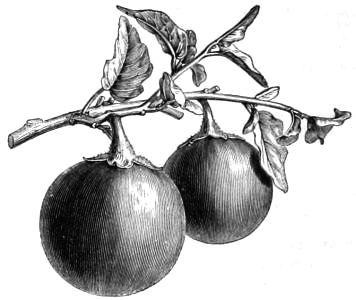
FIG. 191. FRUITING BRANCH OF ROUND AUBERGINE.
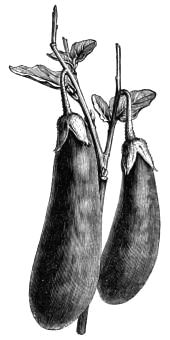
FIG. 192. FRUITING BRANCH
OF LONG AUBERGINE.
AUBERGINE, or EGG PLANT (Solanum melongena,
variety ovigerum). These plants, besides being useful
for culinary purposes, are very ornamental, and present
an attractive appearance on walls or trellises, or in the
flower garden; and, as they do well in any ordinary rich
garden soil, if the position is warm, they give a good
variation to the general run of plants used for decorative
effects. The Black-fruited kind is particularly suited for
this purpose. Sow the seeds in a gentle heat, in the
middle of April. As soon as the seedlings are large enough
to handle, prick off into 4in. pots, replacing in heat till they
root out freely. Gradually harden off by June, and then
transfer to the positions where they are to grow. Let
the plants be at least 2ft. apart, and place a strong stick to
each one to support the fruit when it comes. For trellises,
select the more moderate-sized varieties. In hot, dry
weather, the application of liberal supplies of liquid manure
tends to increase the size of the fruit, and also to make the
foliage more vigorous and handsome. Where very large
fruit are needed for show or other purposes, it is well to
remove all but the best one on the plant, and, by careful
feeding with liquid manure, specimens of from 10lb. to 12lb.
weight can be had. The foliage should not be pinched, as
this would prevent the free swelling of the fruit. Aubergines
are not so much grown in England for culinary
purposes as in France and Italy, where they are largely
used in stews and soups. The following are the most
desirable varieties: New York Purple, the largest kind
grown, and although not as ornamental as the next, is quite
as useful; Black-fruited, large black fruit, with blackish
violet leaves; and White-fruited, the sort most generally
cultivated. See Figs. 191 and 192.
AUBRIETIA (named after M. Aubriet, a famous
French botanical draughtsman). ORD. Cruciferæ. A small
genus of hardy evergreen trailers. Racemes opposite the
leaves, and terminal, lax, few-flowered. Leaves ovate or
oblong, entire or angularly toothed, hairy. They make
excellent rock plants, and will thrive in a deep rich
loam anywhere, excepting under the shelter of trees.
Cuttings struck, or seeds sown, during April or May
generally make fine, dense, cushion-like growths, if transplanted
on to a somewhat cool or shaded border, and carefully
lifted in the autumn; the cuttings are best "drawn,"
or grown until they are soft, in a frame before they are
removed. Where a stock of old plants exist, layer the long
slender branches any time after flowering, and cover with
a mixture of sand and leaf soil; they will then root freely
and establish themselves in time for spring blooming, for
which purpose, when grown en masse, they are most useful.
After flowering, they may be divided and transplanted.
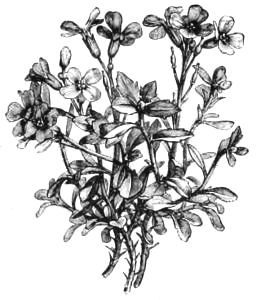
FIG. 193. AUBRIETIA DELTOIDEA.
A. deltoidea (deltoid).* fl. purple; petals twice the length of the
calyx; pedicels short, filiform; racemes opposite the leaves and
terminal, lax, few-flowered. Early spring. l. with one or two
large teeth on each side (therefore they are rhomboidal, not truly
deltoid), scabrous, with short branchy stellate hairs. h. 2in. to
4in. Naples, &c., 1710. There are several garden varieties, the
best of which are described below; most of them are regarded as
distinct species. See Fig. 193. (S. F. G. 628.)
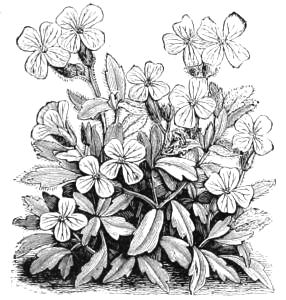
FIG. 194. AUBRIETIA PURPUREA.
A. d. Bouganvillei (Bouganville's).* fl. light violet purple, with
very even imbricated petals. Habit very dwarf and compact, with
short peduncles. A pretty form.
A. d. Campbelli (Campbell's).* Larger deep violet blue flowers,
and of far more vigorous constitution than the typical form.
Grandiflora comes very near this. SYN. A. Hendersonii.
A. d. Eyrei (Eyre's).* A very fine variety, with a free branching
habit, and large flowers of a rich violet-purple colour, rather
longer than broad. A. olympica is very near, if not identical
with this.
A. d. græca (Grecian).* fl. light purple. h. 4in. Greece, 1872.
One of the best and largest flowered forms; very vigorous
grower, with neat compact habit. A variety of this, named
superba, has rather deeper-coloured flowers, produced over a very
extended period. (R. G. 697.)
A. d. purpurea (purple).* Larger flowers and more erect habit
than the type. l. broader, with two to five teeth. Stems more
leafy. There is a variegated form, which is very pleasing and
effective, useful for carpeting or edging small beds. See
Fig. 194.
A. d. violacea (violet).* This is a hybrid form, even finer than
Campbelli, with large deep violet-purple flowers, fading to reddish-violet,
and is more effective than any of the others.
A. Hendersonii (Henderson's). A synonym of A. d. Campbelli.
AUCUBA (the Japanese name of the shrub). ORD.
Cornaceæ. A genus of hardy evergreen shrubs, thriving
better than any other in the smoky atmosphere of dense
cities. They grow in ordinary well-drained garden soil, and
require no special culture. If grown in pots, they should be
planted firmly in rather sandy yellow loam, with plenty of
drainage. They should not be allowed too large pots, or
an unfruitful growth is likely to result. During the growing
season, an abundance of water is needed, which must be
lessened when the plants are fully developed. If cultivated
in the greenhouse or conservatory, they should be plunged
out of doors during summer. To insure a good supply of
the very ornamental berries, which are produced on the
female plant, careful fertilising is necessary. The time
for applying the pollen is when the pistil exudes a slightly
gummy substance, and otherwise shows signs of maturity.
When it happens, as is sometimes the case, that the male
blooms are open and the pollen mature before the female
blooms are ready, the pollen should be collected on a dry
camel-hair pencil, transferred to a piece of glass, and
covered over by another piece, both of which must also be
dry. It may be applied afterwards when wanted, as it
retains its power for some weeks. Propagated by cuttings,
inserted in any light sandy soil, with or without a
covering, in spring or autumn; or readily increased from
seeds, sown as soon as ripe.
A. himalaica (Himalayan).* l. lanceolate, or lanceolate acuminate;
branches of the panicle very pilose. Berries spherical, not
oblong. Himalaya. (F. d. S. 12, 1271.)
A. japonica (Japanese).* l. opposite, petiolate, broad, ovate-lanceolate,
acuminated, toothed, leathery, glabrous, shining, pale
green, beautifully spotted with yellow, having the midrib rather
prominent, the rest of the leaf reticulately veined. h. 6ft. to 10ft.
Japan, 1783. The numerous varieties, both of the male and
female forms, among which will be found many of great beauty,
all differ, more or less, in the variegation of their leaves. They
are in very general cultivation, and nearly every nurseryman
has an assortment. Among the best of them are the following:
albo-variegata, aurea, bicolor, latimaculata, limbata, longifolia,
macrophylla, ovata, pygmæa, and pygmæa sulphurea.
AUDOUINIA (in honour of V. Audouin, a profound
entomologist). ORD. Bruniaceæ. An ornamental greenhouse
evergreen shrub, thriving in a mixture of peat and
sandy loam. Propagated by cuttings of half-ripened
wood, inserted in sand, under a bell glass, in gentle heat.
A. capitata (headed). fl. purple, crowded into oblong, spike-like,
terminal heads. May. l. spirally inserted, a little keeled.
Branches erect. h. 1ft. to 2ft. Cape of Good Hope, 1790.
AULACOSPERMUM. A synonym of Pleurospermum
(which see).
AULAX (from aulax, a furrow; the under surface of
the leaves of the original species being furrowed). ORD.
Proteaceæ. Greenhouse evergreen shrubs, from the Cape of
Good Hope, thriving best in a compost of fibrous loam, leaf
soil, and sharp sand, with thorough drainage. Ripened
cuttings, taken off at a joint, and inserted in pots of sandy
soil, will root readily under a hand glass, in a cool house.
A. pinifolia (Pine-leaved). fl. yellow, racemose. July. l. filiform,
channelled. h. 2ft. 1780.
A. umbellata (umbelled). fl. yellow. June. l. flat, spathulate*-linear.
h. 2ft. 1774. (B. R. 12, 1015.)
AURANTIACEÆ. An order of trees or shrubs, including
the Orange and Lemon trees. Flowers fragrant.
Fruit fleshy, edible. Leaves alternate, articulated above
the stem, filled with transparent oil cysts, giving them a
dotted appearance. Well-known genera are Citrus and
Limonia.
AURICULA (Primula Auricula). This favourite spring
flower (see Fig. 195) was, at one time, almost universally
cultivated, but has of late years fallen into much neglect;
it is now, however, happily regaining enthusiastic admirers.
Although its culture is not nearly so difficult as is generally
understood, a few special items of treatment are nevertheless
necessary to grow it successfully.
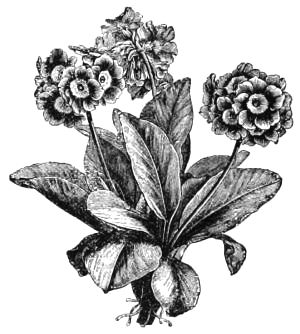
FIG. 195. A VARIETY OF PRIMULA AURICULA.
Frames for the reception of Auriculas should be prepared,
with a good bottom drainage, and an inside staging, similar
to the back stage of a lean-to greenhouse, arranged as
near the glass as possible. If the frames are about 4ft.
wide, they will be very convenient; 1ft. deep in the
front, and about 3ft. at the back. This will allow for a
good stage arrangement. Of course, it is not necessary
to construct an expensive staging, as common boards can
be laid upon pots of various heights, the same results
being practically secured. These frames should face north
from May to October, and south in winter, during which
latter time it will be necessary to well cover the sides
with straw or brake. When frosty, the lights must also be
mated; but, unless there is absolute fear of frost, the glass
should not be covered, as the more light the plants receive
the better. On all suitable occasions, both during summer
and winter, air must be freely admitted, and a good look-out
kept during showery weather; hence it may be necessary
to tilt the lights with blocks rather than remove them
entirely. The latter plan should be adopted whenever
practicable, especially during early spring, and after they
are well established in their fresh pots in summer. This
will greatly assist to ripen the crown, and produce hard,
stout foliage, which will endure the winter much better
than if grown with less air. Many cultivators prefer small
span or lean-to houses to frames; and it must be admitted
that these are better, more convenient, and in every way
more beneficial. Simple, inexpensive structures, no higher
than is absolutely necessary for convenience, with top and
side ventilation, will meet all requirements; and if a 2in.
hot-water pipe is arranged next the eaves inside, it will be
a decided advantage during very severe weather.
Soil. The best compost that can be prepared for Auriculas
is as follows: Four parts good fibrous loam, one part well-rotted
cow manure, one part good leaf soil, and one part
coarse river or silver sand, with a little charcoal or pounded
oyster-shells added. Carefully mix the whole together
before using. The loam should be stored about twelve
months previous to being used, and it should be selected
from districts with a fine atmosphere; the turf should be
cut about 3in. thick. Cow manure that has lain for a year
or so, and been subjected to sharp frosts, is most suitable,
as insect life, which it very probably contains, is thereby
destroyed, and the whole materially sweetened.
Potting. This operation requires to be carefully done as
soon after flowering as possible, unless it is desired to save
seed, when it must be deferred until the seed is ripened.
May and June are the best months for general potting, and
whatever the size of the pots used, they should be carefully
and thoroughly drained. After a good layer of potsherds,
place some charcoal, leaf mould, or spent hops.
Many good growers use the last very advantageously. For
good flowering plants, 48-sized pots are used, many cultivators
preferring glazed pots to the unglazed; but such
are not absolutely necessary to ensure success. Before
repotting, remove most of the old soil, and with a sharp
knife cut off any bruised or cankered portion of roots;
the stout tap-root may also be cut away if devoid of
fresh rootlets. Do not pot very firmly. Remove the plants
to their summer quarters, withholding water for a few
days, and keep the frames close. About a week after
potting, water may be advantageously given, the plants will
then soon resume root-action, and air may be admitted
afterwards on all suitable occasions. The collar or neck of
the plant must be left well above the surface of the soil.
Watering is a point that requires careful attention, as
neglect in this matter will result in failure. During the
growing season, Auriculas require an abundance of water;
in fact, they must never be allowed to get dry. In the
winter, they must only be watered when they are really
dry, especially during a severe season. Care must be taken
to avoid watering the leaves, particularly in early spring,
as this tends to spoil the effect of the charming farinose
foliage. Above all, water must not be allowed to stand in
the heart of the plant, as such will inevitably cause incipient
decay. Hence it is necessary to keep a sharp lookout
for drippings from the glass, and to maintain tightly-glazed
frames. On all occasions, decaying leaves must be
removed, and especially during winter.
Top-dressing. About the middle or end of February, when
the plants commence new growth, the surface soil should
be removed about an inch or so deep, and the pots re-filled
with a rich compost made up of the following: Two parts of
turfy loam, one of rotten cow or hen manure, and one of
leaf soil; if a little Standen's Manure is added, the compost
will be improved. After this top-dressing, the plants may
be watered freely.
Propagation by Offsets. When top-dressing, any offsets
with roots should be removed, and as soon after as possible
the remaining ones should be taken off, as it is much more
desirable to do so early than later on, when repotting;
for, when making the first growth, they are the more
likely to root better, and stand a greater chance of
making good plants before the season is over. Fill well-drained
3in. pots with sandy soil, and arrange about four
offsets round the sides; place under a bell glass, or in a
close handlight, watering very sparingly so as to prevent
them damping off. They will soon establish themselves,
after which air may be admitted, and the plants may ultimately
be potted off singly. To induce choice varieties to
make offsets, the top of the old plant should be removed
and treated like the others, when, as a rule, several shoots
will be produced, which in due time may be removed. By
this means, a nice stock of the rarer kinds may be obtained;
whereas, if such a course were not adopted, the rate of
increase would be extremely slow.
Flowering. During the flowering period, watering, as
already stated, must be carefully attended to, for if the
plants are allowed to get dry, the flowers will quickly
shrivel. They must also be kept well shaded from sunshine,
which quickly destroys the delicate blossoms. As the
trusses are developing, particular attention must be given
to night protection. It is, perhaps, better to cover every
night than to run the risk of exposing the unexpanded
flowers to frost, as the effect is very prejudicial; in fact,
if subject to frost, smooth even flowers may not be expected.
Seed Saving and Sowing. The only way to obtain new
varieties is by seed; hence the value of careful seed-saving
will be apparent. Severe discrimination must be
exercised in the selection of parents, and the flowers must
be very carefully crossed. The anthers should be removed
from the pistillate parent, if possible, before expansion, so
as to prevent any possibility of self-fertilisation; and, when
the stigma is ready, the pollen must be conveyed by means
of a small camel's-hair brush, care being taken not to mistake
the brushes used in different classes. It has been observed
in Auriculas that the issue from crossbred seed favours
the pollen more than the pistillate parent; hence the necessity
of selecting good pollen parents. It is best to confine
hybridisation to separate classes—i.e., cross a Self with a
Self, and a Green-edged variety with another of the same
class. The importance of selecting the best in each class
scarcely needs suggestion, having regard to constitution as
well as the quality of the flowers. The seed should be sown
as soon as ripe, or early in March, in well-drained pots, filled
with sandy soil, which must be well watered previous to
sowing. When this operation is completed, the seed must
be lightly covered with coarse sand, a sheet of glass placed
over the pot, and the latter stood in the hand glass, where
the offsets are rooted. Some of the seedlings will appear
in a month, but the bulk from that sown when ripe will not
be seen until the following spring; while others will germinate
even during the ensuing summer. The late comers
should be particularly cared for, as they frequently produce
the best varieties. When the seedlings are large
enough, they must be pricked off in pots of sandy soil; and,
when well established, potted off singly into small thumb
pots, and afterwards encouraged as judgment suggests.
Some growers allow the seedlings to remain in the store
pots till they flower, when the best are kept, and those not
required disposed of.
Insect Pests. Green fly are often very troublesome, and
should be exterminated as speedily as possible, by tobacco
fumigation, or by dipping the plants in a solution of
Gishurst's Compound, or carefully prepared Fir-tree Oil,
all of which are effectual. Many authorities denounce
fumigation, while others advocate it. The roots are also
attacked by a mealy louse, named Trama auriculæ, which
clusters about the roots and collar of the plants, sucking
nutriment therefrom; and although, provided they do
not attack the collar, they have no greatly prejudicial
effect on the plant, yet it is desirable to exterminate
them. The only effectual way of accomplishing this is
to remove all soil, and thoroughly cleanse the roots
and collar in a solution of soft soap, with a little Fir-tree
Oil added. Of course, this is most easily managed when
repotting; and, unless the plants are very badly infested, it
would not be advisable to run the risk of root washing
later in the year.
Classes. Auriculas are now arranged in five classes, four
of which constitute what are known as "show or stage
Auriculas," while the other is known by the name of
"Alpines." Each class is characterised by special points
of distinction, which, in the opinion of the strict "florists"
school, it is of the utmost importance to observe; and as
there is room for systematists in this, as well as in any
other branch of floriculture, we will follow the arrangement
usually adopted, and describe the distinguishing features
of, and enumerate some of the best varieties in, each class,
with their raisers' names attached:
Green-edged. Outer edge green, or but sparingly dusted with
powder; next, a zone of colour known as the body colour, which
varies, the darkest being most esteemed; both edges of this zone
should be even, especially the inner one, but there are few
flowers perfect in this respect. Next to the body-colour is the
paste, which occupies the space between the inner circle of the
latter and the throat, this should be pure and dense, with a distinctly
circular outline at the throat; the throat and tube should
be bright yellow. Of course, this ideal standard has not yet been
reached, as there are supposed defects in all or some sections
of the flowers at present known. Leading Varieties: ADMIRAL
NAPIER (Campbell), ALDERMAN WISBEY (Headley), APOLLO
(Beeston), CHAMPION (Page), COLONEL TAYLOR (Leigh), DUKE
OF WELLINGTON (Dickson), FREEDOM (Booth), GENERAL NEILL
(Traill), HIGHLAND BOY (Pollitt), IMPERATOR (Litton), LADY ANN
WILBRAHAM (Oliver), LORD PALMERSTON (Campbell), LOVELY
ANN (Oliver), LYCURGUS (Smith), PRINCE OF GREENS (Traill),
PRINCE OF WALES (Ashton).
Grey-edged. Edge heavily dusted with powder, so as almost
to hide the normal green colour; other points same as the Green-edged
varieties. Leading varieties: ALEXANDER MEIKLEJOHN
(Kay), CHAS. E. BROWN (Headley), COMPLETE (Sykes), CONQUEROR
OF EUROPE (Waterhouse), DR. HORNER (Read), F. D. HORNER
(Simonite), GENERAL BOLIVAR (Smith), GEORGE LEVICK
(Walker), GEORGE LIGHTBODY (Headley), JOHN WATERSTON
(Cunningham), LANCASHIRE HERO (Lancashire), RICHARD
HEADLEY (Lightbody), ROBERT TRAILL (Lightbody).
White-edged. Edge so heavily dusted with farina as to completely
hide the green and give it a white appearance; the
powder frequently as dense as on the paste portion; other points
like the first. Leading varieties: ACME (Read), ANNE SMITH
(Smith), ARABELLA (Headley), BEAUTY (Traill), BRIGHT VENUS
(Lee), CATHERINA (Summerscales), CONSERVATIVE (Douglas),
COUNTESS OF WILTON (Cheetham), EARL GROSVENOR (Lee),
FAVORITE (Taylor), FRANK SIMONITE (Simonite), GLORY (Taylor),
JOHN SIMONITE (Walker), NE PLUS ULTRA (Smith), REGULAR
(Ashworth), SMILING BEAUTY (Heap), SYLVIA (Douglas), TRUE
BRITON (Hepworth).
Selfs. Tube bright yellow, and circular at the top; paste dense,
pure, with an even edge; all the rest of the flower of one colour,
without shades or edging; any colour holds good. Leading
varieties: APOLLO (Hay), BLACKBIRD (Spalding), C. J. PERRY
(Turner), DUKE OF ARGYLE (Campbell), FORMOSA (Smith), GARIBALDI
(Pohlman), HELEN LANCASTER (Pohlman), LORD OF LORNE
(Campbell), MAZINNA (Pohlman), METEOR FLAG (Lightbody),
METROPOLITAN (Spalding), MRS. DOUGLAS (Simonite), MRS.
STURROCK (Martin), OTHELLO (Netherwood), PIZARRO (Campbell),
TOPSY (Kaye).
Alpines. Centre golden yellow, or white, and destitute of powder;
body colour various; edge one-coloured, shading off paler towards
the margin. These are much hardier than any of the other
classes, and will do well outside in most places. Leading
varieties: A. F. BARRON (Turner), BEATRICE (Turner), BLACK
PRINCE (Turner), BRONZE QUEEN (Turner), COLONEL SCOTT
(Turner), DIADEM (Gorton), DUCHESS OF CONNAUGHT (Turner),
EVENING STAR (Turner), GEORGE LIGHTBODY (Turner), JOHN
LEECH (Turner), MRS. BALL (Turner), MRS. DODWELL (Turner),
MRS. LLEWELLYN (Turner), MRS. MEIKLEJOHN (Meiklejohn),
MRS. THOMSON (Turner), QUEEN VICTORIA (Turner), RUBENS
(Turner), SAILOR PRINCE (Turner), SELINA (Turner), SPANGLE
(Turner), SYDNEY (Turner), TRIUMPHANT (Turner).
AURICULATE. Having ear-like appendages.
AUSTRIAN ROSE. See Rosa lutea.
AVENA (derivation obscure). The Oat. ORD. Gramineæ.
A genus of grasses with loose panicles and compressed
spikelets. Of agricultural importance only, with
the following exception, which is an annual of easy culture
in ordinary garden soil. Propagated by seeds, sown in
spring or autumn.
A. sterilis (barren). The Animated Oat. fl. in drooping panicles of
large spikelets. h. 1½ft. to 2ft. Barbary, 1640. An elegant plant.
AVENS. See Geum.
AVENUES. In forming an Avenue, the plan must
neither be tortuous nor of a "tedious sameness," but a
gradually winding line should, above all, be obtained, which
must in no way interfere with the view from the house.
About 12ft. is the width usually allowed for the road, but
this depends upon individual taste or idea—this remark
applies to planting in double rows, the trees forming a
series of triangles, or in single rows. The distance across
the road from one row of trees to those opposite should be
at least 24ft. The Lime is extensively used for Avenues
on account of its regular growth and the shade it affords.
The Cedar of Lebanon is one of the best and most suitable
evergreens. The Dutch Elm is used because of its rapid
growth, and forms one of the best deciduous trees for this
purpose. The well-known Horse Chestnut, in sheltered
spots, is very ornamental, as is also the Spanish Chestnut;
the latter spreads rapidly. Where immediate effect is
required, nothing gives more satisfaction than the White
Poplar; it grows in a wet soil better than anything else.
Deodars, Araucarias, Douglas Pine, the Mexican, Chinese,
and Japanese Cypresses, and many others, are eminently
suited for Avenue planting. Shrubs and herbaceous plants
should be introduced between the trees, and so remove any
bareness that may occur. Diervilla rosea, and its variegated
form, Aucubas, Rhododendrons, Hypericums, and
many others, could be mentioned to serve this purpose.
A moderately good soil will be found to answer generally.
AVERRHOA (in honour of Averrhoes, of Cordova,
a celebrated Arabian physician, who resided in Spain
during the domination of the Moors, about the middle of
the twelfth century; he translated Aristotle into Arabic).
ORD. Geraniaceæ. Ornamental stove trees, thriving in
loam and peat. Half-ripened cuttings will strike in sand,
under a hand glass, about April, with bottom heat. The
leaves of the first-named species are irritable to the touch.
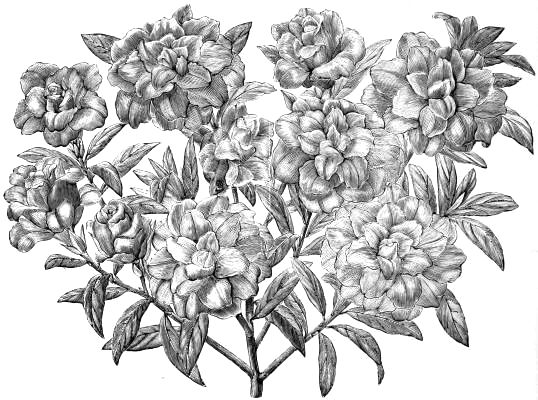
FIG. 196 AZALEA BALSAMINÆFLORA.
A. Bilimbi (Bilimbi-tree). fl. reddish purple, disposed in racemes,
rising from the trunk. May. fr. oblong, somewhat resembling a
small cucumber, with a thin, smooth, green rind, filled with a
grateful acid juice, and the substance and seeds not unlike that
of a cucumber. l. alternate, with from five to ten pairs of ovate-lanceolate,
entire, smooth leaflets on short stalks. h. 8ft. to 15ft.
Native country unknown, 1791. (B. F. S. 117.)
A. Carambola. Carambola-tree. fl. red, scattered, disposed in
short racemes, usually rising from the smaller branches, but
sometimes from the larger ones, and even the trunk. fr. the size
of a hen's egg, acutely five-cornered, with a thin, yellow rind, and
a clear watery pulp. l. alternate, with about four to five pairs of
ovate, acuminated, entire, stalked leaflets, the outer ones largest.
h. 14ft. to 20ft. 1793. This, as well as the first-named species, is
cultivated throughout the hotter parts of India, but where it
occurs truly wild is not known.
AVOCADO PEAR. See Persea gratissima.
AWL-SHAPED. Narrow-pointed, resembling an awl.
AWLWORT. See Subularia.
AXIL. Literally the armpit; in plants applied to the
angle formed by union of the leaf and stem.
AXILLARIA. See Polygonatum.
AXILLARY. Growing in the axil of anything.
AYRSHIRE ROSE. See Rosa repens capreolata.
AZALEA (from azaleos, dry, arid; in allusion to the
habitat of the plant). ORD. Ericaceæ. A genus of very
popular and beautiful hardy or greenhouse plants. The
species enumerated were included under Rhododendron by
Don, Loudon, and others, contrary to the classification of
Linnæus, but the distinctive characters are not consistent.
In this genus, the stamens are usually five, but in Rhododendron
ten is the typical number.
Ghent or American Azaleas. These are extremely
popular hardy deciduous shrubs. When plants are grown
in the open, artificial crossing will be unnecessary; but this
method must be employed upon those grown in the cool
greenhouse, if well fertilised seeds are required. The seed
should be gathered and sown when ripe in a large shallow
frame containing from 2in. to 3in. of peat, over which more
peat must be laid very level by means of a fine sieve;
or they may be kept until early the following spring. No
covering will be necessary, but a thorough watering with
a fine-rosed water-pot must be given. The lights should
be darkened, and the frames kept close until the young
seedlings begin to appear, when they must have air (carefully
admitted), shade, and a daily sprinkling of water. By
the autumn, they will be large enough to transplant in
small clumps into boxes of peat and coarse sand, and to
place in other frames, or in the open. In each case, they
will need watering, shading, and to be kept close until
growth commences. The hardier the plants are before
winter commences, the better; but a protection of mats or
similar material will prevent the probability of their being
killed by severe frosts. During the following season, they
will only require water during dry weather, and no protection
need be afforded this winter. The next spring, they
should be planted out singly in beds, sufficiently wide apart
to allow the development of two years growth. If an
upright growth is being made, the leading shoot must be
shortened, in order to secure dwarf, well-branched plants.
The same methods should be employed on a smaller scale
where but a few are wanted. Grafting is largely practised
to increase the stock of named varieties or choice
seedlings, the stock employed being A. pontica. This
process, of course, ensures the quicker production of flowering
plants. Layering in March, encasing the part buried
with moss, is also some times practised; but the layer
must be left two years before separating. Cuttings of the
last year's wood, 2in. or 3in. long, taken with a heel,
root readily in sand; about the end of August is the best
time for so doing. If they are pricked off in pots or
pans of sandy soil, and kept in a cool frame until they
are calloused, and afterwards introduced into a slight
bottom heat, they root quicker, but this is not absolutely
essential. When placed outside, they should be covered
with a handlight for about two months, and, at the end
of this time, air should be gradually given and increased.
Ghent Azaleas are now forced extensively for the market
as well as in private gardens; and, by judicious culture,
they can be had in full blossom by Christmas. With this
end in view, they should be grown in pots, and have the
growth prematurely completed soon after flowering with
the aid of a little artificial heat; after which they may
be placed outside. During very hot and dry weather, the
north side of a wall is necessary, to prevent their flowering
in the autumn. The same plants must only be forced
every alternate year. Commence to place the plants in
heat in October, and keep up a succession until the
following March. The best plants for forcing purposes
are obtained from the Continent, where they are grown
in enormous quantities. When grown permanently out
of doors, the most suitable soil is peat and rough sand
mixed. Failing this, leaf mould, maiden loam, and sand,
will be found satisfactory. In many cases, we have known
them to flourish in ordinary garden soil.
The following varieties of Ghent Azaleas are distinct, and all
worth growing; ADMIRAL DE RUYTER, deep red-scarlet, very fine;
ALTACLERENSIS, bright yellow; AMŒNA, light pink; CARNEA
ELEGANS, pale pink, shaded sulphur; COCCINEA MAJOR, dark
scarlet, very fine; CUPREA SPLENDENS, rich pink, shaded yellow;
DECORATA, lovely pink; DIRECTEUR CHARLES BAUMANN, rich
vermilion, spotted yellow; ELECTOR, rich orange-scarlet; GEANT
DES BATAILLES, deep crimson, very fine; MADAME JOSEPH
BAUMANN, bright pink, very free and good; MARIA VERSCHAFFELT,
shaded pink and yellow; MIRABILIS, very lovely pink;
MORTERI, rich yellow, shaded rosy-red; PONTICA MACRANTHA,
rich deep sulphur, very large and fine; PRINCESSE D'ORANGE,
salmon-pink, very fine; SANGUINEA, deep crimson; VISCOSA
FLORIBUNDA, pure white, very fragrant.
A. arborescens (tree-like).* fl. large, reddish, not clammy,
leafy; tube of corolla longer than the segments; calyx leafy,
with the segments oblong and acute. May. l., of the flower
buds large, yellowish-brown, surrounded with a fringed white
border, obovate, rather obtuse, smooth on both surfaces, glaucous
beneath, ciliated on the margins, and having the midrib
almost smooth. h. 10ft. to 20ft. Pennsylvania, 1818. Deciduous
species.
A. balsaminæflora (Balsam-flowered).* fl. bright salmony red,
finely double and rosette-like, the segments regularly imbricated,
much resembling in general appearance the blooms of a
Camellia-flowered Balsam. Japan. It is a distinct species, and
remains in bloom for a considerable period; the flowers are invaluable
for bouquets. See Fig. 196, for which we are indebted
to Mr. Bull.
A. calendulacea (Marigold-like).* fl. yellow, red, orange, and
copper coloured, large, not clammy, rather naked; tube of corolla
hairy, shorter than the segments. May. l. oblong, pubescent on
both surfaces, at length hairy. h. 2ft. to 6ft. Pennsylvania to
Carolina, 1806. This is said to be the handsomest shrub in North
America. There are several varieties of it in cultivation. Hardy;
deciduous. (B. M. 1721, 2143.)
A. hispida (bristly). fl. white, with a red border and a tinge
of red on the tube, which is wide and scarcely longer than
the segments, very clammy, leafy; stamens ten. July. l. long-lanceolate,
hispid above, and smooth beneath, glaucous on
both surfaces, ciliated on the margins, and having the nerve
bristly beneath. Branches straight, and very hispid. h. 10ft.
to 15ft. New York, &c., 1734. A hardy deciduous species.
(W. D. B. 1, 6.)
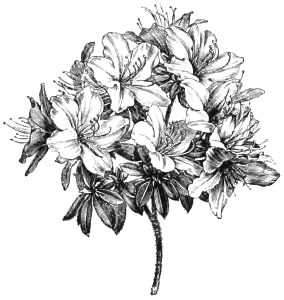
FIG. 197. FLOWER OF AZALEA LEDIFOLIA.
A. ledifolia (Ledum-leaved).* fl. pure white, showy; corolla
campanulate; in threes at the extremities of the branches;
calyx erect, glandular, and viscid. March. l. elliptic-lanceolate.
h. 2ft. to 6ft. China, 1819. The whole shrub is very
hairy. Hardy; evergreen. SYN. A. liliiflora. See Fig. 197.
(B. M. 2901.)
A. liliiflora (lily-flowered). Synonymous with A. ledifolia.
A. nudiflora (naked-flowered).* fl. in terminal clustered racemes,
appearing before the leaves, rather naked, not clammy; tube of
corolla longer than the segments; teeth of calyx short, rather
rounded; stamens much exserted. June. l. lanceolate-oblong,
nearly smooth and green on both surfaces, ciliated on the margins,
having the midrib bristly beneath, and woolly above. h. 3ft. to
4ft. North America, 1734. This species hybridises very freely
with A. calendulacea, A. pontica, A. viscosa, &c., and descriptive
lists of a host of hybrids of almost every conceivable shade,
both double and single, are to be found in continental and
home catalogues, to which the reader is referred. Hardy.
(W. F. A., t. 36.)
A. pontica (Pontic).* fl. leafy, clammy; corolla funnel-shaped;
stamens very long. May. l. shining, ovate, oblong, pilose,
ciliated. h. 4ft. to 6ft. Levant, Caucasus, &c., 1793. The
varieties of this species are also numerous, differing principally
in the colour of the flowers and the hue of the leaves.
The flowers are of all shades, and frequently striped. The
name generally adopted, as above, must not be confounded
with Rhododendron ponticum. If the genus Azalea is merged
into Rhododendron, as is done by most systematists, this
plant must be called by Don's name, Rhododendron flavum.
(I. H. 1864, 415.)
A. procumbens (procumbent). See Loiseleria procumbens.
A. speciosa (showy).* fl. scarlet and orange coloured; corolla
silky, with obtuse, ciliated, lanceolate, undulated segments;
calyx pubescent. May. l. lanceolate, ciliated, acute at both
ends. Branches hairy. h. 3ft. to 4ft. North America. The
varieties of above are several, varying in the shape of the leaves
and the colour of the flowers. (L. B. C. 1255)
A. viscosa (clammy).* fl. white, sweet-scented, in terminal
clusters, downy, clammy, leafy; tube of corolla as long as the segments.
July. l. oblong-ovate, acute, smooth, and green on both
surfaces, ciliated on the margins, having the midrib bristly. h. 2ft.
to 4ft. North America, 1734. Like nearly all species belonging
to this genus, the varieties are many, varying in the colour of the
flowers and otherwise. (T. S. M. 438.)
A. v. nitida (shining).* fl. white, tinged with red, clammy, leafy;
tube of corolla a little longer than the segments. April. l. oblanceolate,
rather mucronate, leathery, smooth on both surfaces,
shining above, having the nerve bristly beneath, with revolute,
ciliated margins. h. 2ft. to 4ft. New York, 1812. Hardy; deciduous.
(B. R. 5, 414.)
Indian or Chinese Azaleas. This is a section of greenhouse
evergreen varieties obtained from A. indica (which
see), blooming continuously from November to June, or
even later, and of the greatest value for all purposes,
whether for decoration, cutting, or exhibition. Cultivation:
Thorough drainage is essential, and a compost of
half peat, the other half made up of fibrous loam, leaf
soil, and sand, in equal quantities. They cannot have
too much light and air, and may be grown to almost
any size by shifting from one pot to a size larger. In
repotting, the whole of the crocks should be taken away
from the base of the ball of soil and roots, and the top
should also be removed till the fine roots are reached.
The plant should then be put in the new pot, and the
additional soil rammed firm, in order to prevent the water
running through it, and thus depriving the plant of any
benefit therefrom. In all cases, the roots near the stem
must be above the soil, so that the water may not sink in
next the stem, or death will most certainly ensue. After
potting, for a few days the plants should be kept close and
freely syringed, and as the growth is completed, they
may be well hardened off. The best time for potting
is after flowering, before the new growth has been made.
From October to June the plants should be in the greenhouse,
and during the other months in a cold frame, or
plunged in pots in the open; or, what is preferable in
favoured localities, planted out in prepared beds; they will
thus be kept cleaner, and the growth will be much
superior. In autumn they may be lifted and repotted,
placing in a shady position for a few days. Water in
abundance must be given throughout the blooming and
growing season; and the plants must, on no account, be
allowed to become dry. At the same time, a proper amount
of care is most essential, as an excessive amount of
moisture is equally as fatal as drought. Cuttings should
be placed in sand under a bell glass with moderate bottom
heat; half-ripened ones are preferable. They must be
cut up to a joint—the base of a leaf—the lower leaves
for an inch stripped off, and the stem stuck into the
sand, which should lay, about an inch thick, on the top of
sandy peat soil; the bottom of the cuttings should reach,
but not go quite into, the soil. The whole should be
covered with a bell glass, which must be wiped dry
every morning. Soon after the cuttings have commenced
growing, place them in small pots. They are also very
largely and easily increased by grafting; indeed, this is the
only satisfactory method of securing standards. Seeds
may be sown similar to the last section, but in the
greenhouse, and, when well up, pricked out into little
pots 1in. apart. Azaleas are liable to the attacks of
thrips and red spider, the latter being especially troublesome
if the plants are in a dry position; frequent
syringing will materially help to eradicate both pests.
If insufficient, syringe with a solution of Gishurst's Compound.
A. amœna (pleasing). fl. almost campanulate, rich crimson,
about 1½in. across, hose-in-hose conformation, produced in great
profusion. April. l. small, size of the common Box, hairy. h. 1ft.
China. This is an elegant little neat and compact growing shrub,
which has proved to be quite hardy in England. (B. M. 4728.)
A very beautiful series of hybrids have been obtained by crossing
this species with A. indica, which are most serviceable and
free. The following are most desirable: LADY MUSGRAVE, light
carmine; MISS BUIST, pure white; MRS. CARMICHAEL, rich
magenta, shaded crimson; PRIME MINISTER, soft pink, deep
shaded, very free; PRINCESS BEATRICE, light mauve, very distinct
and free; PRINCESS MAUDE, rich magenta, rose shaded.
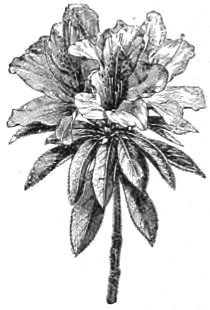
FIG. 198. FLOWER OF AZALEA INDICA.
A. indica (Indian).* fl. campanulate, terminal, solitary or twin;
calycine teeth long-lanceolate, obtuse, ciliated, spreading. l.
cuneate-lanceolate, finely crenelated, covered with sharp, close-pressed
rigid hairs, attenuated at both ends. Branches also
covered with sharp, close-pressed, rigid hairs. h. 3ft. to 6ft.
China, 1808. See Fig. 198. There are a great number of garden
seedlings of the Indian Azalea, including every shade and
colour. A selection to any extent may be made from the
nurserymen's catalogues, but, for the guidance of the amateur,
we have made a rigid selection of the best double and single
varieties.
Double-Flowered: A. BORSIG, pure white; ALICE, rich deep
rose, blotched with vermilion, very fine; BERNARD ANDRé, dark
violet-purple, large, semi-double; CHARLES LEIRENS, dark salmon,
good form and substance; COMTESSE EUGENIE DE KERCHOVE,
white, flaked with red-carmine, semi-double; DOMINIQUE VERVAENE,
bright orange, very fine; DR. MOORE, deep rose, with
white and violet shading, very fine; EMPEREUR DE BRéSIL, rich
rose, banded white, the upper petals marked red; FRANCIS DEVOS,
deep crimson; IMBRICATA, pure white, sometimes flaked with
rose; MADAME IRIS LEFEBVRE, dark orange, shaded with bright
violet, and blotched with chocolate; PRESIDENT GHELLINCK DE
WALLE, intense rose, upper petals blotched with lake, and crimson-rayed;
SOUVENIR DE PRINCE ALBERT, rich rose peach, broadly
margined with pure white, very free and beautiful.
Single-Flowered: CHARMER, rich amaranth, very large; COMTESSE
DE BEAUFORT, rich rose, the upper petals blotched with crimson;
CRITERION, rich salmon pink, white-margined; DUC DE NASSAU,
rich rosy-purple, very free and large; ECLATANTE, deep crimson,
rose shaded; FANNY IVERY, deep salmon-scarlet, blotched
magenta, very fine; FLAMBEAU, rich glowing crimson, extremely
showy; JOHN GOULD VEITCH, lilac-rose, netted and bordered
white, and blotched with saffron, very showy; LA SUPERBE, rich
lake, bordered orange, and black spotted, a very fine variety; LA
VICTOIRE, centre reddish, white towards the edge, the upper
petals spotted with maroon-crimson; LOUIS VON BADEN, pure
white, a grand variety; MADAME CHARLES VAN ECKHAUTE, pure
white, with beautifully crisped edges, of excellent form and substance;
MADAME VAN HOUTTE, richly flaked with carmine
and rose, very large and free; MARQUIS OF LORNE, brilliant
scarlet, of the finest form and substance; MRS. TURNER, bright
pink, white-margined, and spotted with crimson; PRESIDENT
VAN DEN HECKE, white, striped and speckled with crimson, with
a yellow centre; PRINCESS ALICE, pure white, one of the best;
REINE DES PAYS-BAS, rich violet-pink, margined with white;
ROI D'HOLLANDE, dark blood-red, spotted with black; SIGISMUND
RUCKER, rich rose, white bordered, with crimson blotches;
WILSON SAUNDERS, pure white, striped and blotched with vivid
red, very fine.
A. mollis (soft). Synonymous with A. sinensis.
A. sinensis (Chinese). fl. campanulate, downy, flame coloured;
stamens equal in length to the petals. May. l. slowly deciduous,
elliptic, acutish, pilosely pubescent, feather-nerved, with ciliated
margins, greyish beneath. h. 3ft. to 4ft. China and Japan. A
large number of seedlings and hybrids from this species are in
cultivation, known under the name of Japanese Azaleas, and all
are valuable for the decoration of the cool conservatory, or for
outdoor work. SYN. A. mollis. (L. B. C. 885.)
AZARA (in honour of J. N. Azara, a Spanish promoter
of science, but of botany in particular). ORD. Bixineæ.
Showy evergreen, hardy and half-hardy shrubs, with alternate,
simple, stalked stipulate leaves, and fragrant flowers.
They thrive well in a compost of loam, leaf soil, and sand.
Ripened cuttings root readily if placed in sand, under glass,
in slight heat. It is believed that all the species enumerated
will prove hardy if a slight winter protection in
midland and northern counties be afforded. This precaution
will be unnecessary in more southern parts.
A. dentata (toothed). fl. yellow; corymbs sessile, few-flowered.
June. l. ovate, serrated, scabrous, tomentose beneath; stipules
leafy, unequal in size. h. 12ft. Chili, 1830. (B. R. 1728.)
A. Gillesii (Gilles').* fl. bright yellow; panicles axillary, densely
packed. Spring. l. large, Holly-like, ovate, coarsely toothed,
smooth. h. 15ft. Chili, 1859. (B. M. 5178.)
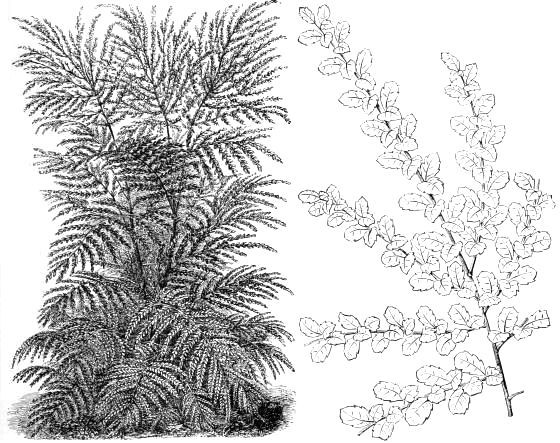
FIG. 199. AZARA MICROPHYLLA, showing Habit, and Foliage (half natural size).
A. integrifolia (entire-leaved).* fl. yellow, on numerous short
axillary spikes, of an aromatic fragrance. Autumn. l. obovate or
oblong, entire, smooth; stipules equal, permanent. h. 18ft. Chili
(about Conception), 1832. The variegated-leaved form, although
rare, is very ornamental. The variegation consists of greenish-yellow,
with a blotch of dark green, and in a young state edged
with deep pink.
A. microphylla (small-leaved).* fl. greenish, corymbose, succeeded
by numerous small orange-coloured berries. Autumn.
l. small, distichous, obovate, obtuse, dark-shining green. h. 12ft.
Chiloe and Valdavia, 1873. This shrub is very ornamental as a
standard, and also excellent for covering walls. Quite hardy.
See Fig. 199, for which we are indebted to Messrs. Veitch and
Sons.
BABIANA (from babianer, the Dutch for baboon; in
reference to the bulbs being eaten by baboons). ORD.
Iridaceæ. A genus of very ornamental bulbous plants
confined to the Cape of Good Hope, with the exception of a
single species, which is found in Socotra. Flowers occasionally
fragrant, and generally characterised by their rich
self-colours, or the striking contrast of very distinct hues in
the same flower; perianth regular and symmetrical, with six
ovate divisions (tube varying in length). Stems from 6in.
to 9in. high, arising from a small bulb-like corm, and bearing
tapering plaited leaves, which are usually more or less
densely covered with long hairs; the scapes are racemose,
each bearing about six or more simultaneously expanding
flowers. They may be successfully grown in pots. By this
plan there is, perhaps, less danger of loss, and their flowering
season can be prolonged considerably. A light sandy
compost, with a small proportion of well-decayed manure,
is required, and thorough drainage is also most essential.
Use 48 or 60-sized pots, placing four or five corms in the
former, and two or three in the latter, and keep moderately
dry until they commence to form roots. October is the
best time to pot. As soon as the plants appear above
ground, water may be carefully given, and the supply proportionately
increased as the plants develop. Very weak
liquid manure, applied twice a week, just as the spikes are
pushing up, will be beneficial. When the flowers fade,
and the stems show signs of decay, the supply of water
must be gradually decreased, thus inducing the thorough
maturation of the corms, upon which the next season's display
depends. When quite down, store the pots in a dry
place till the time for repotting arrives, when the corms
should be carefully cleaned, and all offsets separated, the
latter being potted up in the same way as the parent
corms in order to produce flowering specimens; or they may
be kept in a pot of sand and planted in a warm border outside
in March. Outdoor culture: A sheltered, sunny, and
well-drained situation is most essential to success. Although
not absolutely necessary, it is preferable to replant
every year in early spring, placing the bulbs about 5in. or
6in. deep, with a little sand sprinkled about them. Planting
may, of course, be done in autumn, when it will be
necessary to cover with cocoa nut fibre refuse to the depth
of 5in. or 6in. In warm, sheltered situations, the corms
may remain undisturbed; but, as a rule, it is desirable to
remove them late in autumn, when the leaves are dead, and
store them in dry sand through the winter in a cool, airy
position, free of frost. Mixed Babianas may be purchased
from dealers at a cheap rate, and, for general purposes,
they are best to plant. Propagation may be effected by
offsets and seeds. The former is the best and quickest
method. The offsets should be grown in boxes or planted
out in light rich soil until large enough for flowering.
Seeds sown in pans, and placed in a gentle heat, will grow
at almost any time; the young plants will require to be
carefully transplanted each season until they develop into
blooming corms.
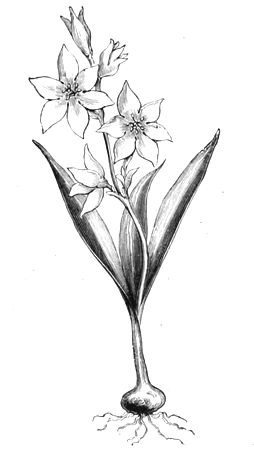
FIG. 200. BABIANA STRICTA RUBRO-CYANEA.
B. cœrulescens (bluish). Synonymous with B. plicata.
B. disticha (two-ranked).* fl. with a Hyacinth-like fragrance;
perianth pale blue; divisions narrow; margins undulated or
crisped. June, July. l. lanceolate, acute. h. 6in. 1774. (B. M. 626.)
B. plicata (folded).* fl. with a very fragrant clove carnation-like
perfume; perianth pale violet-blue; anthers blue, and stigmas
yellow. May, June. l. lanceolate, distinctly plicate. h. 6in.
1774. SYNS. B. cœrulescens, B. reflexa. (B. M. 576.)
B. reflexa (reflexed). Synonymous with B. plicata.
B. ringens (gaping).* fl. scarlet, irregular in form, gaping, very
handsome. May, June. l. narrow, acute, deep green. h. 6in.
to 9in. 1752. (L. B. C. 1006.)
B. sambucina (Elder-scented). fl. bluish-purple, with an Elder-like
fragrance; perianth divisions spreading. April, May. l.
lanceolate, slightly plicate. h. 6in. to 9in. 1799. SYN. Gladiolus
sambucinus. (B. M. 1019.)
B. stricta (strict).* fl., perianth segments narrow, acute, outer
three white, inner three lilac-blue, with a dark blotch near the
base of each. May. l. broadly lanceolate, obtuse, ciliated.
h. 1ft. 1795. (B. M. 621.)
B. s. angustifolia (narrow-leaved). fl. fragrant; perianth bright
blue, slightly pink in the tube. May and June. l. linear, acute,
light green. h. 1ft. 1757. (B. M. 637.)
B. s. rubro-cyanea (red-and-blue).* fl. 2in. or more in diameter;
upper half of the perianth very brilliant blue, and the lower part
rich crimson, forming a central zone, in striking contrast to the
blue portion. May, June. l. broad, acuminated, downy on the
under surface. h. 6in. to 8in. 1796. See Fig. 200. (B. M. 410.)
B. a. sulphurea (sulphur-coloured).* fl. cream-coloured or pale
yellow; anthers blue, and stigmas yellow; segments spreading.
April, May. l. narrow-obtuse. h. 9in. 1795. SYNS. Gladiolus
sulphureus, G. plicatus. (B. M. 1053.)
B. s. villosa (villous).* fl., perianth smaller than the last, with
the narrower segments rather more widely spreading than in B. s.
rubro-cyanea, brilliant crimson, with violet-blue anthers. August.
h. 6in. 1778. (B. M. 583.)
BABINGTONIA (named after C. C. Babington, Professor
of Botany at Cambridge, and a distinguished
botanical author). ORD. Myrtaceæ. A very pretty greenhouse
evergreen shrub, allied to Bæckea, from which it
differs in having the stamens collected in groups opposite
the sepals. Cuttings of the young unflowering shoots may
be planted in sand under a bell glass, and kept in a
moderate heat until rooted, when they should be placed
singly in small pots, in a compost of equal parts loam
and peat, with the addition of a little sand. As the
small pots fill with roots, the plants should be removed
into larger ones, and the compost have less sand in it;
but this should not be done until the next February. The
established plants must have a good shift about March
or April, and should be kept in a light, airy greenhouse;
the first shoots may be topped to moderate their vigour,
and to produce a greater profusion of less luxuriant ones.
In May, when most plants are removed from the greenhouse,
these should be set to grow under a frame which,
while shielding them from heavy rains, and supporting
some slight shading in the hottest parts of the sunny days,
will not prevent a free circulation of air. To this end, the
frame should be elevated from the rests or supports at its
corners; the lights should be left off at night in fine, mild
weather, and on dull, cloudy days, being only replaced
during heavy rains, and when shading is necessary. Towards
autumn, the plants must be returned to the greenhouse.
B. Camphorasmæ (camphor-smelling).* fl. pinkish-white, in
little cymes, disposed in long terminal racemes. Summer. l.
linear, opposite, nerved. h. 7ft. Australia, 1841. (B. R. 28, 10.)
BACCATE. Berried, fleshy; having a pulpy texture.
BACCHARIS (from Bacchus, wine; referring to the
spicy odour of the roots). Ploughman's Spikenard. ORD.
Compositæ. A genus of hardy, stove, or greenhouse herbs,
shrubs, or trees. Flower-heads many-flowered, diœcious,
terminal. Involucre sub-hemispherical or oblong, in many
series, imbricated. Leaves simple, alternate, exstipulate,
deciduous, oblong-lanceolate, notched, serrated, or entire.
Shrubs of short duration. These plants are neither beautiful
nor ornamental, but are of easy cultivation in ordinary soil.
Propagated by cuttings.
B. halimifolia (Halimus-leaved). Groundsel Tree. fl.-heads
white. July. l. oblong-cuneate, obovate, coarsely toothed;
branches angular. h. 6ft. to 12ft. Northern United States,
1683. Hardy.
BACHELORS' BUTTONS. The double-flowered
forms of Ranunculus acris, Lychnis diurna, &c.
BACKHOUSIA (commemorative of the late James
Backhouse, a botanical traveller in Australia and South
Africa). ORD. Myrtaceæ. A greenhouse evergreen shrub,
requiring a compost of fibry peat, loam, and a little white
sand. Propagated, in April, by half-ripened cuttings, inserted
in sand, under a bell glass, in a cool house.
B. myrtifolia (Myrtle-leaved).* fl. white, disposed in corymbs,
and often produced on cuttings soon after having struck root.
May. l. ovate, acuminate, smooth. Branches slender. h. 16ft.
New South Wales, 1844. (B. M. 4133.)
BACONIA. A synonym of Pavetta (which see).
BACTRIS (from baktron, a cane; the young stems being
used for walking sticks). ORD. Palmaceæ. Very ornamental,
slender growing, and prickly stove palms. Peduncle
of the spadix bursting through about the middle of
the leaf sheath. Drupes small, ovate, or nearly round, and
generally of a dark blue colour. Leaves pinnatisect; segments
generally linear and entire. Instead of being confined
to the apex of the trunk, the leaves are scattered over
nearly the whole surface, and the lower ones retain their
verdure long after the upper ones have fully developed.
Stems slender, varying from 2ft. to 10ft. in height. Some
of the species are of easy culture in a compost of loam,
peat, loaf mould, and sand, in equal parts; but most of
them are very difficult to manage. Propagation may be
effected by suckers, which are very freely produced. Many
species are ornamental only when in a young state.
B. baculifera (cane-bearing). l. pinnate, bifid at the apex, 2ft. to
6ft. long; pinnæ arranged in clusters about 1ft. long and 2in.
broad, dark green above, paler below; petioles sheathing and
densely clothed with sharp brown and black spines, 1½in long.
South America.
B. caryotæfolia (Caryota-leaved).* fl., spathe ovate, prickly;
branches of spadix simple, flexuous. l., pinnæ wedge-shaped,
three-lobed, and erose; rachis, petioles, and caudex, prickly.
h. 30ft. Brazil, 1825.
B. flavispina (yellow-spined). Synonymous with B. pallidispina.
B. major (greater). fl. greenish-yellow, with a broadly ovate
spathe. h. 25ft. Carthagena, 1800.
B. Maraja (Maraja). Maraja Palm. fl. yellow, with a prickly
spathe. h. 30ft. to 50ft. Bahia, 1868.
B. pallidispina (pale-spined).* l. pinnate, bifid at the apex;
pinnæ clustered, 6in. to 12in. long, 1in. wide, dark; petioles
sheathing at the base and furnished with a profusion of long,
yellow spines, which are tipped with black. Brazil. SYN.
B. flavispina.
BACULARIA (from baculum, a walking-stick). ORD.
Palmaceæ. A small genus containing a couple of stove
species, which are amongst the smallest palms of the Old
World. Both are confined to the east coast of tropical
Australia. B. monostachya—in allusion to its slender stem,
which rarely exceeds in thickness that of the thumb—is
known as the Walking-stick Palm.
B. minor (lesser). l. attaining 3½ft. Stems, several from same
rhizome, 2ft. to 5ft. high, ½in. thick. Queensland.
B. monostachya (one-spiked). l. pinnate, pendent, 6in. to 12in.
long, bifid at the apex; pinnæ about 4in. across, broad, irregular
in shape, with ragged and irregular ends; dark green. Stem
slender, petioles sheathing. h. 10ft. New South Wales, 1824.
SYN. Areca monostachya. (B. M. 6644.)
BADGER'S BANE. See Aconitum meloctonum.
BÆA (commemorative of Rev. Dr. Beau, of Toulon,
brother-in-law to Commerson, the discoverer of the genus).
SYN. Dorcoceras. ORD. Gesneraceæ. Curious and pretty
greenhouse herbaceous perennials, requiring a rich sandy
loam. They are easily propagated by seeds. Probably the
only species in cultivation is the following:
B. hygrometrica (hygrometric).* fl. pale blue-coloured, yellowish
at the throat; segments of the limb more or less reflexed;
corolla five-lobed, somewhat resembling that of the Violet;
scapes numerous, naked, few-flowered. Summer. l. in a rosette,
thinly covered with coarse white hairs, ovate acute at both ends,
crenate serrate. h. 6in. North China, 1868. (B. M. 6468.)
BÆCKEA (named after Abraham Bæck, a Swedish
physician, and an esteemed friend of Linnæus). ORD.
Myrtaceæ. Very pretty greenhouse evergreen shrubs.
Flowers white, pedicellate, small. Leaves opposite, glabrous,
dotted. They thrive in a compost of sandy peat,
leaf soil, and lumpy, fibrous loam. Cuttings, taken from
young wood, root readily, if pricked in a pot of sand, with
a bell glass placed over them, in a cool house.
B. diosmæfolia (Diosma-leaved).* fl. axillary, solitary, approximate,
sessile. August to October. l. oblong, rather cuneated,
keeled, acute, crowded, imbricate, and are, as well as the calyces,
ciliated. h. 1ft. to 2ft. New Holland, 1824.
B. frutescens (shrubby).* fl. solitary; pedicels axillary. November.
l. linear, awnless. h. 2ft. to 3ft. China, 1806. (B. M. 2802.)
B. parvula (little). fl., peduncles axillary, umbelliferous. l.
elliptic-oblong, obtuse, rather mucronate. h. 1ft. New Caledonia,
1877. This is very close to B. virgata. (R. G. 886, 2.)
B. virgata (twiggy).* fl., peduncles axillary, umbelliferous.
August to October. l. linear-lanceolate. h. 2ft. to 3ft. New
Caledonia, 1806. (B. M. 2127.)
BÆRIA (named in honour of Professor Baer, of the
University of Dorpat). ORD. Compositæ. A genus consisting
of about half a dozen species. Probably the only
one in cultivation is that mentioned below; it is a very
pretty plant, of easy culture in ordinary garden soil. Propagated
by seeds, sown in spring.
B. chrysostoma (golden-mouthed). fl.-heads bright yellow, solitary,
terminal, about 1in. across; involucre of about ten leaflets,
in two series. Early summer. l. linear, opposite, entire. Stems
erect, downy. h. 1ft. California, 1835. (S. B. F. G. ii. 395.)
BAGGED. Swelled like a sac or bag.
BAHIA (probably from Port of Bahia, or San Salvador,
in South America). SYN. Phialis. ORD. Compositæ. An
ornamental, hardy, herbaceous perennial, much branched
from the base of the stem, and having a greyish appearance.
It may be increased by seeds, or by divisions.
B. lanata (woolly). fl.-heads yellow, solitary, produced in great
numbers. Summer. l. alternate, or with the lower ones sometimes
opposite, deeply divided, and sometimes ligulate and entire.
h. 6in. to 15in. North America. This species thrives on borders
of light and well-drained sandy soil. (B. R. 1167.)
BALANIUS. See Nut Weevil.
BALANTIUM (of Kaulfuss). See Dicksonia.
BALANTIUM (of Desvaux). See Parinarium.
BALBISIA (commemorative of Giovanni Battista
Balbis, a Professor of Botany at Turin). SYN. Ledocarpum.
ORD. Geraniaceæ. A very ornamental half-hardy evergreen
shrub, requiring a cool, dry atmosphere. As it is
very liable to rot off, water must be applied with great
care. Propagated by cuttings of half-ripened wood, inserted
in sand, under a hand glass; or by seeds.
B. verticillata (whorled). fl. yellow, large, with a whorl of
narrow bracts beneath. Autumn. l. opposite, three-parted;
segments linear-oblong. Branches slender, glaucous. h. 3ft. to
6ft. Chili, 1846. (B. M. 6170.)
BALCONY. A projection from the external wall of a
house, usually resting on brackets, and having the sides
encompassed by a balustrade. It should at all times be
prettily decorated with plants, which in the summer is a
comparatively easy matter. During winter, evergreens of
various kinds are most serviceable, the best being Arbutus,
Aucubas, Boxes, Euonymuses, Hollies, Irish and Goldon
Yew, Portugal Laurel, Retinosporas, Vincas, &c. These
may be grown in pots, and when replaced by the summer
occupants, should be plunged in some reserve quarter,
where they should receive plenty of water; by this means,
they will increase in size, and keep in a healthy condition.
Very little water will be required during the winter.
Climbing plants, such as Ivy, Passion Flower, Virginian
Creeper, Climbing Roses, &c., are indispensable for covering
the trellises, and draping the pillars and arches.
BALDINGERA. A synonym of Premna.
BALL. This term is used in reference to the roots and
mass of earth as they are moulded into form and pressed
into hardness by the pot. The masses of roots and earth
which, in the case of fibrous-rooted subjects (such as
Rhododendrons), must be taken intact when removing the
plants, are also termed Balls.
BALM (Melissa officinalis). A perennial herb, often
used in the manufacture of a drink for sick persons,
and sometimes employed for culinary purposes. It may
be grown in ordinary garden soil, and is propagated by
divisions, in spring. A pretty variegated form is sometimes
met with, having the additional advantage of being
equal to the normal species for medicinal purposes.
BALM OF GILIAD. See Cedronella triphylla
and Populus balsamifera.
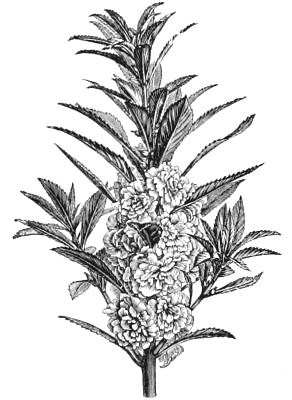
FIG. 201. CAMELLIA-FLOWERED BALSAM.
BALSAM (Impatiens Balsamina). A well-known
ornamental and tender annual, native of India. It is
one of the showiest of summer and autumn flowers, and
well deserves a place in every garden. Although of comparatively
easy cultivation, good blooms and well-grown
plants are far too rarely seen. A good Balsam bloom should
be quite as double as a perfect Camellia, and to show to the
greatest advantage should appear like one in the arrangement
of the petals. To secure this, seeds should only be
saved from the finest and most perfect flowers, although
the quantity must, of necessity, be small. They should be
sown, about the third week in March, in properly prepared
pans of rich sandy soil, and placed in a gentle bottom heat
of about 65deg. As soon as the first rough leaf appears,
the plants should be potted off into 3in. pots, care being
taken to let the cotyledon, or seed leaves, be close to the
soil. When the roots touch the sides of the pots, the plants
should be moved into larger ones, and this should be repeated
until they are in 8in. or 10in. pots. Some growers
place one or two seeds in small pots, so as to avoid the
first shift, and a good plan it is. During the time the
plants are under glass, they should be kept as near the
light as possible, and be frequently turned around, so that
they do not draw to one side; and careful training must
be given to those that are required in fine form. Disbudding
is also necessary to such as are wanted at their
best, removing all bloom from the main stem and base of
branches until the plants are of sufficient size, and then
the buds at the tops will bloom almost simultaneously.
The buds that will be formed afterwards will cause a continuance
of blossom for a long time, in fact, for some
months, if the plants are liberally supplied with liquid
manure. If it is desired for them to flower out of doors,
the plants should be transferred, about May, to a frame
where the heat is not above 50deg., and be kept in a steady
growing state, air being admitted on all suitable occasions,
cold winds and heavy rains avoided, and water supplied
when needed; never allow them to get dry. They require
training and disbudding the same as those grown in the
greenhouse. About June, the plants should be fully exposed
during the day; and, when danger of frost is over,
the lights may be kept off altogether. These should bloom
at the end of July. In all cases, plenty of drainage must be
allowed, as the amount of water required is very great.
Insects must be sharply looked after, as well as slugs
and snails. There are several sections, such as Camellia-flowered
(see Fig. 201), Rose-flowered, &c., each containing
variously striped, spotted, and entire coloured blooms, and
it is best to pay an extra figure to secure a good strain.
BALSAM APPLE. See Momordica Balsaminea.
BALSAMINA. See Impatiens.
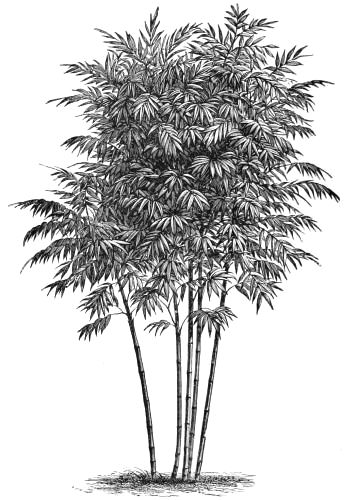
FIG. 202. BAMBUSA ARUNDINACEA.
BALSAMINEÆ. A tribe of plants belonging to the
order Geraniaceæ. Sepals and petals all coloured, consisting
of six segments, "two outer ones small, flat, and oblique;
the next large, hood-shaped, ending below in a conical spur;
the fourth opposite to it, small, very broad, concave; the
two innermost very oblique, and more or less divided into
two unequal lobes." The best known genus is Impatiens.
BALSAMODENDRON (from balsamon—an old
Greek word used by Theophrastus—balm or balsam, and
dendron, a tree). ORD. Burseraceæ. Greenhouse or stove
balsamiferous trees. Flowers small, green, axillary, often
unisexual; calyx four-toothed, permanent; petals four,
linear-oblong, induplicately valvate in æstivation; stamens
eight, inserted under the annular disk, having
elevated warts between them. Berry, or drupe, ovate,
acute, one to two-celled, marked with four sutures.
Leaves with three to five sessile, dotless leaflets. They
thrive in a compost of thoroughly drained sandy
loam. Propagated by cuttings of ripe young
wood, taken in April, and placed under a hand
glass, in bottom heat. The species named below
doubtfully belongs to this genus, as the characteristics
above enumerated will show.
B. zeylanicum (Ceylon).* fl. white, three-petaled,
glomerated, involucrated; racemes interrupted, downy.
l. impari-pinnate, with five to seven-stalked, ovate,
acute leaflets. h. 30ft. Ceylon.
BALSAM OF CAPEVI. See Copaifera.
BALSAM-TREE. See Clusia.
BAMBOO CANE. See Bambusa.
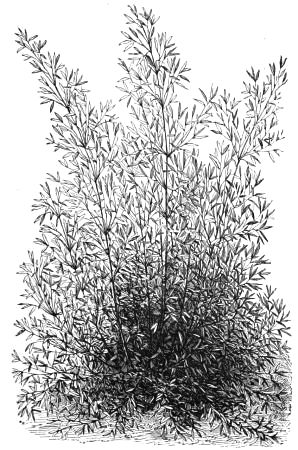
BAMBUSA (from bambu, the Malay name).
Bamboo Cane. ORD. Gramineæ. A genus of ornamental,
shrubby, greenhouse, half-hardy or hardy
shrubs, each culm flowering but once. Flowers
usually hexandrous. Leaves, as a rule, relatively shorter
than the stems, lanceolate, and narrowed at the base.
Stems jointed, flexuose, branching, usually hollow, and,
when mature, of a hard, woody nature. In well drained,
sheltered situations, in the open, with rich, loamy soil,
some of the species make extremely graceful objects, particularly
so in the more southern counties of England,
and in parts of Scotland. Unless a very severe winter
is experienced, they may be left without protection.
Plants of all the species, however, should have the shelter
of a cold greenhouse till about the end of April; when they
should be gradually hardened off, and transferred to a
warm, sheltered spot, such as in woodlands, by the margins
of lakes, &c., as they like plenty of moisture during
the summer. A good watering must be given after planting,
to settle the soil. Propagation is effected by careful
division of well-developed plants, which should be done in
early spring, just as new growth is commencing; and it
is advisable to establish the divisions in pots. See also
Arundinaria.
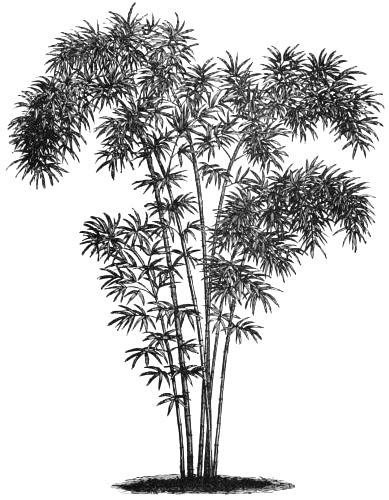
B. arundinacea (reed-like).* Stem very stout, rising like a
beautiful column to some 50ft. or 60ft. in height; the laterals
producing a profusion of light green leaves, the whole presenting
the appearance of a huge plume of feathers. India, 1730. This
species is best treated as a stove plant, but it may be placed out
of doors in summer. See Fig. 202. (B. F. S. 321.)
B. aurea (golden).* l. lanceolate, acute, light green, distinguished
from B. nana by having their under surface less glaucescent, and
the sheath always devoid of the long silky hairs. China. This
very handsome species forms elegant tufts, with its slender much-branched
stems, which attain a height of from 6ft. to 10ft., and
are of a light green colour in a young state, ultimately changing
into a yellowish hue. Hardy in most parts of the country. See
Fig. 203.
B. Fortunei (Fortune's).* l. linear-lanceolate, abruptly pointed,
somewhat rounded at the base, on very short hairy stalks, serrated
and often fringed with long hairs on the margin, downy on both
sides, and distinctly variegated, the transverse veins often of a
bottle-green colour. h. 1ft. to 2ft. Japan. A dwarf tufted species,
with very slender stem. Quite hardy. There are only variegated
varieties of this in cultivation, viz., variegata and argenteovittata.
(F. d. S. 1863, t. 1535.)
B. glauca (milky-green). A synonym of B. nana.
B. japonica (Japanese). Synonymous with Arundinaria Metake.
B. Maximowiczii (Maximowicz's). Synonymous with Arundinaria
Maximowiczii.
B. Metake (Metake). Synonymous with Arundinaria Metake.
B. mitis (small). l. deep green, lanceolate, acute, striated, clasping
the stem; panicle simple, erect, close; spikes long, imbricated.
Stem tapering. h. 40ft. Cochin China and Japan. This
vigorous-growing species can be cultivated out of doors during
summer, and, in most localities, it may be left out all the year.
B. nana (dwarf).* l. lanceolate, acute, glaucous, stoutish, with the
footstalks slightly downy. h. 6ft. to 8ft. India, 1826. A rather
tender species, requiring to be grown in the stove or greenhouse.
SYNS. B. glauca and B. viridi-glaucescens. See Fig. 204.
B. nigra (black). See Phyllostachys nigra.
B. Ragamowski (Ragamowsk's).* l. 9in. to 18in. long, and about
1in. to 3in. broad. China and Japan. This species "can readily
be recognised by the tomentose line on one side of the midrib,
running nearly the whole length of the leaf on the underside, this
line being always on the longer side of the leaf." Hardy. SYN.
B. tessellata.
B. Simonii (Simon's).* l. narrow, nearly 6in. to 10in. long, occasionally
striped with white. Stems growing with great rapidity,
mealy-glaucous at the joints; branchlets numerous, rather closely
crowded. h. 10ft. China and Japan, 1866.
B. striata (striated).* l. linear-oblong; culms striped yellow and
green. h. 6ft. to 20ft. China, 1874. A very slender and graceful,
rather tender, species. May be grown in the open air during
summer, and in very favoured spots it is probably hardy, especially
if covered with a mat in winter. It makes an excellent
pot plant. SYN. B. viridi-striata. (B. M. 6079.)
B. tessellata (tessellated).* A synonym of B. Ragamowski.
B. violescens (nearly-violet).* l. green above, bluish-grey beneath,
with an elongated ligule, surrounded by a bundle of black hairs.
Stems much branched, blackish-violet. China, 1869. This handsome
and vigorous species is intermediate between Phyllostachys
nigra and B. nana. It requires protection during winter.
B. viridi-glaucescens (glaucous-green). A synonym of B. nana.
B. viridi-striata (green-striped). A synonym of B. striata.
BANANA, or PLANTAIN. See Musa.
BANEBERRY. See Actæa.
BANISTERIA (named after John Baptist Banister, a
traveller in Virginia in the seventeenth century, author of
a catalogue of Virginian plants, inserted in Ray's "Historia
Plantarum"). ORD. Malpighiaceæ. Stove trees or shrubs,
frequently climbing. Flowers yellow; calyx five-parted;
petals furnished with long stalks; stamens ten. Leaves
simple, stalked. They are for the most part very ornamental,
but are not often seen in flower in this country.
They will grow in a mixture of loam, leaf soil, and peat,
with some sharp sand added. Cuttings, made from ripened
wood, will root freely in sandy soil, under a hand glass, in
stove heat, taking about three or four weeks to do so.
B. chrysophylla (golden-leaved).* fl. deep orange, axillary,
corymbose. l. ovate, oblong, acutish, somewhat sinuated towards
the top, clothed beneath with golden shining down. Brazil, 1793.
Climber.
B. ciliata (ciliated).* fl. large, orange-coloured, umbellate. June.
l. cordate, orbicular, smooth, ciliated. Brazil, 1796. Twiner.
B. ferruginea (rust-coloured). fl. yellow; racemes panicled.
June. l. 2in. long, ovate, acuminated, smooth above, and shining,
rusty beneath, and are, as well as the petioles, clothed with
close pressed hairs. Brazil, 1820. Climber.
B. fulgens (glowing).* fl. yellow, in umbellate corymbs. l. ovate,
acuminated, smooth above, and clothed with silky pubescence
beneath, as well as the petioles. Branches dichotomous. West
Indies, 1759. Climber.
B. Humboldtiana (Humboldt's).* fl. yellow; umbels lateral and
terminal, sessile. l. roundish-ovate, cordate, rather acuminated,
mucronate, membranaceous, smoothish above, clothed beneath
with soft hoary down as well as the branchlets. South America,
1824. Climber.
B. sericea (silky). fl. yellow, racemose. July. l. ovate, obtuse,
with a mucrone; younger ones downy on both surfaces, adult ones
only on the under surface; down of a golden shining colour. Brazil,
1810. Climber.
B. splendens (splendid).* fl. yellow; racemes axillary, dichotomous,
umbellate. Floral leaves orbicular, and nearly sessile.
l. cordate, kidney-shaped, orbicular, clothed with silky down
beneath. South America, 1812. Climber.
BANKS. These are usually formed with a view to
increasing the amount of surface ground, and for the
acceleration or retarding of vegetable crops, such as strawberries,
&c. They should be from 6ft. to 12ft. apart, according
to the depth of soil, and run from east to west.
In constructing Banks of a uniform size, great care, and
a constant use of the garden line, will be found necessary.
For the warmest side of the Banks, Dwarf French Beans,
Peas, Vegetable Marrows, Cucumbers, New Zealand Spinach,
Capsicums, &c., may be grown. On the opposite side, and
when a prolonged supply is desired, Cauliflower, Broccoli,
Lettuce, Turnip, Spinach, &c., may be sown thinly in drills,
to be thinned out, and remain. It needs but little discretion
to produce valuable crops by this method.
BANKSIA (named in honour of Sir Joseph Banks,
once President of the Royal Society, and a distinguished
patron of science, particularly of Natural History). ORD.
Proteaceæ. Greenhouse evergreen shrubs, natives of Australia,
principally grown for the beauty of their foliage.
Leaves variable in form, usually dark green, clothed with
white or rufous down beneath; margins deeply serrated or
spinous, rarely entire. The following is the mode of culture
recommended many years ago by Sweet. The pots
should be well drained, by placing a potsherd about half
way over the hole at the bottom of the pot, then laying
another piece against it that it may be hollow, afterwards
putting some smaller pieces all around them, and on the
top of these some others broken very small. All the
plants belonging to the order Proteaceæ should be drained
in a similar manner, as the roots are very fond of running
amongst the broken potsherds, and consequently there is
less danger of their being overwatered. Care must also be
taken not to allow them to flag, as they seldom recover if
once allowed to get very dry. The plants should be placed
in an airy part of the house when indoors. Cuttings are
generally supposed to be difficult to root, but this is not
the case if properly managed. Let them be well ripened
before they are taken off; then cut them at a joint, and
place them in pots of sand, without shortening any of the
leaves, except on the part that is planted in the sand, where
they should be taken off quite close. The less depth they
are planted in the pots the better, so long as they stand
firm when the sand is well closed round them. Place them
under hand glasses in the propagating house, but do not
plunge them in heat. Take the glasses off frequently to
give them air, and dry them, or they will probably damp
off. When rooted, transfer to small pots; after which,
place them in a close, unheated frame, and harden by
degrees. Seeds are a very unsatisfactory means of multiplying
the stock.
B. æmula (rivalling).* l. 6in. to 10in. long, 1in. broad, linear-oblong,
tapering slightly at the base; edges deeply toothed, deep
green on both sides; midrib of under surface clothed with rich
brown hairs. h. 20ft. 1824. SYN. B. elatior. (B. M. 2671.)
B. australis (southern). A synonym of B. marginata.
B. Caleyi (Caley's). l. 6in. to 12in. long, linear, deeply and
regularly toothed from base to apex, dark green above, paler
below. h. 5ft. to 6ft. 1830. Said to be an elegant species.
B. collina (hill-loving).* l. 2in. to 3in. long, ½in. broad, linear;
apex præmorse, as if bitten straight off; upper surface dark green,
silvery below. h. 6ft. to 8ft. 1822. This forms a dense and
handsome shrub, especially with its large head of yellow flowers.
SYNS. B. Cunninghami, B. ledifolia, and B. littoralis. (B. M. 3060.)
B. Cunninghami (Cunningham's). A synonym of B. collina.
B. dryandroides (Dryandra-like).* l. 6in. to 10in. long, ¼in.
broad, pinnatifid, divided almost to the midrib; lobes triangular,
deep green above, and reddish-brown below. Stem clothed with
reddish-brown hairs. h. 6ft. 1824. This plant is extremely
graceful and elegant as a table decoration.
B. elatior (taller). Synonymous with B. æmula.
B. integrifolia (whole-leaved). l. cuneate-oblong, 6in. long,
nearly 1in. wide at the broadest part; edges entire; upper side
dark green, silvery white beneath. h. 10ft. to 12ft. 1788. SYNS.
B. macrophylla, B. oleifolia. (B. M. 2770.)
B. i. compar (well-matched). l. very densely set upon the
branches, oblong, tapering at the base, blunt at the apex; edges
serrulate; upper side dark olive green, silvery white beneath.
h. 6ft., finely branching. 1824.
B. latifolia (broad-leaved). l. 6in. to 10in. long, 3in. broad,
obovate-oblong; edges serrated; upper surface deep green,
beneath clothed with woolly greyish hairs, those on the midrib
bright brown. h. 20ft. 1802. (B. M. 2406.)
B. ledifolia (Ledum-leaved). Synonymous with B. collina.
B. littoralis (shore). Synonymous with B. collina.
B. macrophylla (large-leaved). Synonymous with B. integrifolia.
B. marginata (margined). l. 1in. to 2in. long, ½in. broad, blunt
at the apex, armed with several short spines, and tapering at the
base, deep green on the upper surface, snowy white beneath.
h. 5ft. to 6ft. 1822. SYN. B. australis. (B. M. 1947.)
B. occidentalis (western).* fl. yellow, rather handsome, in spikes
about 4in. long. April to August. l. 5in. to 6in. long, ¼in. broad.
h. 5ft. 1803. West coast of New Holland. A beautiful species.
(B. M. 3535.)
B. oleifolia (olive-leaved). Synonymous with B. integrifolia.
B. Solanderi (Solander's).* l. 4in. to 6in. long, and over 2in. wide,
deeply pinnatifid, with three to six pairs of lobes on each leaf;
apex as if bitten off; upper side dark green, under silvery white.
h. 6ft. 1830.
B. speciosa (showy).* l. 8in. to 14in. long, about ½in. wide,
pinnatifid, but divided almost to the midrib; lobes semicircular,
with a spine on the end of each; upper side deep green, beneath
silvery white, with the midrib clothed with ferruginous woolly
hairs. h. 6ft. 1805. Both this and the preceding species are very
handsome, and highly deserving of the most extensive culture.
B. quercifolia (Oak-leaved). l. cuneate-oblong, deeply incised
at the margins, and having a short spine upon each lobe. h. 5ft.
1805. (B. R. 1430.)
BANKSIA (of Forster). A synonym of Pimelea.
BAOBAB-TREE. See Adansonia.
BAPHIA (from baphe, a dye; the tree produces the
camwood of commerce). Camwood or Barwood. ORD.
Leguminosæ. A stove tree, requiring a loam and peat soil.
Cuttings, not deprived of any of their leaves, will root in a
pot of sand, under a hand glass, in heat.
B. nitida (shining). fl. white; corolla with a roundish spreading
vexillum, linear wings, which are about the length of the vexillum,
and an acute carina; pedicels two to three together, one-flowered,
axillary. June. l. entire, oval-oblong, acuminated,
shining. h. 30ft. Sierra Leone, 1793. (L. B. C. 367.)
BAPTISIA. (from bapto, to dye; so named from the
economical use of some of the species). ORD. Leguminosæ.
North American hardy herbaceous plants, with trifoliate,
rarely simple leaves, and racemes of yellowish or blue
flowers. They are somewhat shy bloomers, but grow freely
in a loamy soil. Propagated by divisions, or, more easily,
by seed, which latter may be sown in sand and leaf mould
in the open, or in pots placed in a cold frame.
B. alba (white).* fl. white; racemes terminal. June. l. stalked,
glabrous; leaflets elliptic-oblong, obtuse; stipules deciduous,
subulate, shorter than the petioles. Branches divaricate. h. 2ft.
1724. (B. M. 1177.)
B. australis (southern).* fl. blue; racemes few-flowered, elongated,
shorter than the branches. June. l. stalked, smooth;
leaflets oblong-cuneated, obtuse, four times longer than the
petiole; stipules lanceolate, acute, twice the length of the petiole.
Stem branched, diffuse. h. 4ft. to 5ft. 1758. (Flora, 1856, 2;
B. M. 509.)
B. confusa (confused). fl. dark blue, alternate, bracteate;
racemes elongated. June. l. stalked, smooth; leaflets oblong-cuneated
or obovate; stipules linear-lanceolate, twice the length
of the petioles. Stem branched. h. 1ft. to 2ft. 1758.
B. exaltata (exalted).* fl. deep blue; racemes many-flowered,
elongated, twice the length of the branches. June. l. ternate,
stalked; leaflets lanceolate-obovate, five times longer than the
petioles; stipules lanceolate, acuminated, three times longer than
the petioles. Stem erect, branched. h. 3ft. to 4ft. 1812. (S. B.
F. G. 97.)
B. leucophæa (dusky-white). fl. cream-coloured; racemes many-flowered,
lateral, with the flowers leaning to one side. July.
l. sessile, somewhat villous; leaflets rhomboid-obovate; stipules
and bracts ovate, acute, broad, leafy. h. 1ft. 1870. (B. M. 5900.)
B. minor (less). fl. blue; racemes axillary, bracteate. June.
l., leaflets rhomboid-lanceolate; stipules lanceolate, longer than
the petioles. Stem erect, solid. h. 1ft. to 2ft. 1829.
B. perfoliata (perfoliate-leaved).* fl. yellow, small, axillary,
solitary. August. l. perfoliate, roundish, quite entire, rather
glaucous. h. 3ft. 1793. (B. M. 3121.)
B. tinctoria (dyers').* fl. yellow, with wings each furnished with
a callosity, or lateral tooth; racemes terminal. l. stalked, upper
ones nearly sessile; leaflets roundish-obovate; stipules setaceous,
almost obsolete. h. 2ft. to 3ft. 1759. (L. B. C. 588.)
BARBACENIA. (named after M. Barbacena, a Governor
of Minas Geraes). Formerly placed in ORD. Hæmodoraceæ,
but now referred by Bentham and Hooker to
Amaryllidaceæ. Very singular and pretty stove evergreen
herbaceous perennials, allied to Vellozia. Flowers
purple, large, showy; perianth funnel-shaped, resinosely
hairy on the outside; limb spreading; scapes one-flowered,
usually clothed with glandular hairs. Leaves firm, spiral,
spreading, acutely keeled. Lindley says that they are
capable of existing in a dry, hot air without contact with
the earth, on which account they are favourites in South
American gardens, where, with Orchids and Bromeliads,
they are suspended in the dwelling houses, or hung to
the balustrades of the balconies, in which situation they
flower abundantly, filling the air with their fragrance.
They are rarely seen in our gardens. They may be grown
in baskets of fibrous loam and peat, with some nodules of
charcoal added.
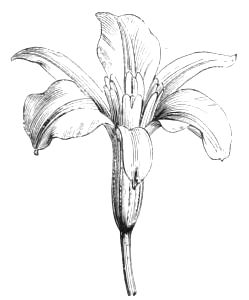
FIG. 205. FLOWER OF BARBACENIA PURPUREA.
B. purpurea (purple).* fl. funnel-shaped, six-cleft, terminal, solitary;
ovarium elongated, tuberculated. July. l. linear, keeled,
with spiny serratures. h. 1½ft. Brazil, 1825. See Fig. 205.
(B. M. 2777.)
B. Rogieri (Rogers').* fl. purple; scape and ovaria tubercled;
filaments broad, bifid. July. l. linear, acuminated, imbricate,
with broad stem-clasping bases, finely spinely serrated on the margin,
and keel recurved; caudex short. h. 1½ft. Brazil, 1850.
(L. J. F. 82.)
BARBADOS CHERRY. See Malpighia.
BARBADOS GOOSEBERRY. See Pereskia
aculeata.
BARBADOS LILY. See Hippeastrum equestre.
BARBAREA (anciently called Herb of St. Barbara).
Winter Cress; American Cress. ORD. Cruciferæ. Hardy
glabrous perennial herbs. Flowers yellow; racemes erect,
terminal. Stems erect. They are of easy culture, but
scarcely worth growing in the pleasure garden. Propagated
by cuttings, suckers, divisions, or seeds.
B. præcox (early). l., lower ones lyrate; terminal lobe ovate;
upper ones pinnate-parted; lobes linear-oblong, quite entire. h.
1ft. to 1½ft. Commonly known as American, or Black American
Cress. Here and there on roadsides, and in dry gravelly places
in Great Britain. An escape from cultivation. (Sy. En. B. 124.)
B. vulgaris (common). l., lower ones lyrate; terminal lobe
roundish; upper ones obovate, toothed, or pinnatifid. h. 1¼ft.
The double flowering form of this native species is the only one
of this genus worth growing for beauty; it is generally known
as Double Yellow Rocket. The variegated form is also rather
pretty, and comes true from seed. (Sy. En. B. 120.)
BARBATUS. Having long weak hairs, in one or
more tufts; bearded.
BARBERRY. See Berberis.
BARBIERIA (in honour of J. B. G. Barbier, M.D.,
a French physician and naturalist, author of "Principes
Generaux de Pharmacologie ou de Matière Medicale,"
Paris, 1806). ORD. Leguminosæ. An ornamental stove
evergreen, requiring a mixture of peat, loam, and sand.
Propagated by cuttings of half-ripened wood, which should
be placed in sand, under a glass, in stove heat.
B. polyphylla (many-leaved).* fl. scarlet, 2in. long; racemes
axillary, few-flowered, shorter than the leaves. l. impari-pinnate,
with nine to eleven pairs of elliptic-oblong, mucronate leaflets,
pubescent in an adult state. Porto Rico, 1818. SYNS. Clitorea
polyphylla and Galactia pinnata.
BARBS. Hooked hairs.
BARK. The outer integuments of a plant beyond the
wood, and formed of tissue parallel with it.
BARK-BOUND. This condition is generally the result
of very rich soil, or insufficient drainage. In most
fruit trees a gummy exudation takes place. If caused
by stagnancy, thorough drainage should immediately be
effected. Scrubbing the stem is also recommended. Slitting
the bark with a knife is likely to do more harm than
good, particularly so in the hands of the inexperienced.
BARKERIA (name commemorative of the late G.
Barker, of Birmingham, an ardent cultivator of orchids).
ORD. Orchidaceæ. From a scientific point of view, this
genus should be included in Epidendrum. Very handsome,
deciduous, epiphytal, cool-house orchids, having slender
pseudo-bulbs, from 6in. to 12in. high, from the top of which
the numerous flower-stems are produced. In a cool, airy
temperature, these plants grow vigorously, suspended in
pans or small baskets close beneath the glass, and slightly
shaded with tiffany. They succeed well also on flat blocks
of wood, on the top of which they should be tied, without
any moss, as their freely-produced, thick, fleshy roots soon
cling to the blocks. During the season of growth, a good
supply of water is needed, and in hot weather it may be
applied three or four times daily; the blocks and plants
are best immersed in water; but when at rest, a slight
watering twice or three times a week will suffice. Propagated
by divisions, just previous to the commencement of
new growth.
B. elegans (elegant).* fl. in loose racemes, four or five in each;
each blossom about 2in. across; sepals and petals dark rose; lip
reddish crimson, spotted and edged with a lighter colour. Winter.
h. 2ft. Mexico, 1836. Of this beautiful slender-growing species,
there are two or three varieties in cultivation. (B. M. 4784.)
B. Lindleyana (Lindley's).* fl., raceme 2ft. long, very slender,
bearing from five to seven blossoms near its apex; sepals and
petals rosy purple; lip white, with a deep purple blotch at its
apex. September, remaining in beauty for a considerable time.
h. 2ft. Costa Rica, 1842. (B. M. 6098.)
B. L. Centeræ (Center's).* fl. rosy lilac; lip oblong; margins
crenulated or crisped; apex blotched deep purple. Costa Rica, 1873.
B. melanocaulon (dark-stemmed).* fl. on an erect spike; sepals
and petals rosy lilac; lip broader at the base than at the top,
reddish-purple, having a blotch of green in the centre. August.
h. 1ft. Costa Rica, 1848. Very rare.
B. Skinneri (Skinner's).* fl. deep rose-coloured; spikes 6in. to 9in.
long, from the apices of the ripened growth, often branched, forming
a dense mass of deep purple blossoms, which, if kept dry, lasts
from eight to ten weeks. h. 1½ft. Guatemala. (P. M. B. 15, 1.)
B. S. superbum (superb).* fl. dark rose; lip somewhat deeper
tinted, and marked towards the base with yellow streaks. Guatemala.
This far surpasses the type in size and number of flowers,
as well as in brilliancy of colour. (W. S. O. 38.)
B. spectabilis (showy).* fl. quite 2in. across, produced eight or
ten together, on a spike issuing from the top of the pseudo-bulb;
sepals and petals oblong, acuminate, rosy lilac; lip white, margined
with deep lilac or rosy purple, and dotted or spotted with
crimson. This very distinct and desirable species lasts from eight
to ten weeks in beauty, and forms a very handsome object when
placed in the drawing-room and covered over with a large glass
shade. Guatemala, 1843. (B. M. 4094.)
BARKING-IRONS. Instruments used in taking off
the bark of trees.
BARKLYA (named after Sir H. Barkly, formerly
Governor of South Australia). ORD. Leguminosæ. A large
greenhouse tree, thriving in a compost of loam and leaf
mould. Propagated by seeds and cuttings; the latter
should be half ripened, and placed in sandy soil, under a
bell glass, in a cool house.
B. syringifolia (Syringa-leaved). fl. golden yellow, numerous,
disposed in axillary or terminal racemes. l. alternate, simple,
coriaceous. h. 30ft. Moreton Bay, 1858.
BARK STOVE. A hothouse adapted for moisture-loving
exotics, and having a pit from 2ft. to 4ft. deep, containing
fermenting matter, chiefly tanners' bark, by which
means a steady heat is maintained for a considerable time.
The Bark Stove is now almost obsolete. Bark is, however,
still largely used in pine pits, and in some propagating
beds; but such beds are generally superseded by hot-water
or hot-air tanks.
BARLERIA (named after J. Barrelier, a French
botanist of the seventeenth century). ORD. Acanthaceæ.
A genus of interesting and ornamental stove evergreen
shrubs. Flowers axillary or terminal; calyx four-sepaled,
the two outer larger than the others. They thrive best
if grown in loam and peat, with a little rotten dung added.
Propagated by cuttings made of the young wood, and
placed in a similar compost, under a bell glass, in stove
temperature, with bottom heat.
B. flava (yellow).* fl. yellow, aggregate, terminal, tubular; bracts
very narrow, setose. Summer. l. lanceolate, hairy, entire. Plant
unarmed. h. 3ft. India, 1816. SYN. B. mitis. (B. M. 4113.)
B. Gibsoni (Gibson's). fl. pale purple, rather large, sub-terminal.
Winter. l. ovate or oblong-lanceolate. India, 1867. A glabrous
stove shrub, of branched habit. (B. M. 5628.)
B. Leichtensteiniana (Leichtenstein's).* fl. very curious;
spikes axillary, 2in. to 3in. long, ovoid or oblong, consisting of a
large number of closely packed overlapping bracts, all turned to
the fore or lower part of the spike; bracts ovate-acuminate,
mucronate, spine-toothed, one-ribbed, with prominent and curved
veins, and 1in. to 1½. long. l. opposite, 1in. to 2in. long, linear-lanceolate,
entire, mucronate, tapering at the base into a very
short stalk. Branches slender, virgate, sub-angular. South Africa,
1870. This plant is covered over its whole surface with close,
white, hoary down. (G. C. 1870, p. 73.)
B. longifolia (long-leaved). fl. white; spines of whorls six.
Summer. l. ensiform, very long, rough. h. 2ft. India, 1781.
This is a biennial.
B. lupulina (Hop-headed). fl. yellowish; spikes ovate; bracts
ovate, concave, imbricated. August. l. lanceolate, quite entire;
spines simple, spreading. h. 2ft. Mauritius, 1824.
B. Mackenii (MacKen's).* fl. purple, large, in a terminal raceme.
Spring. l. recurved, narrow-ovate, or elliptic-lanceolate, sub-acute,
petioled. Natal, 1870. (B. M. 5866.)
B. mitis (small). Synonymous with B. flava.
B. prionitis (Prionitis-like). fl. orange; spines axillary, pedate,
in fours. Summer. l. quite entire, lanceolate-ovate. h. 3ft.
India, 1759.
BARLEY. See Hordeum vulgare.
BARNADESIA (named after Michael Barnadez, a
Spanish botanist). ORD. Compositæ. Pretty greenhouse
deciduous shrubs, requiring a dry atmosphere. They should
be grown in peat, loam, and sand, in equal proportions.
Propagated either by seeds, sown in hotbeds in March, or
by cuttings, made of half-ripened wood in April, and placed
in sand under a bell glass.
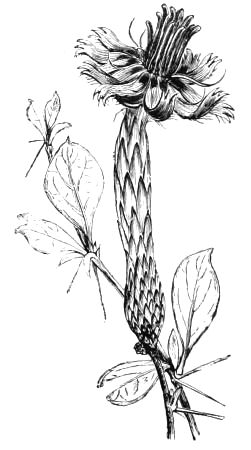
FIG. 206. BARNADESIA ROSEA.
B. rosea (rosy).* fl.-heads rose-coloured, solitary, ovate-cylindrical,
downy, sessile; florets bilabiate, one lip oblong-emarginate,
villous, the other filiform; hairs on receptacle twisted;
pappus stiff, plumose. May. l. alternate, ovate, acute at both
ends. h. 1½ft. South America, 1840. See Fig. 206. (B. M. 4232.)
BARNARDIA. Included under Scilla (which see).
BAROMETER. An instrument for measuring the
density of the atmosphere, and hence determining the
probable changes of weather, or the height of any ascent.
To the gardener the Barometer is indispensable as a
warning to take due precaution.
BAROSMA (from barys, heavy, and osme, smell;
referring to the powerful scent of the leaves). Name
often incorrectly spelt Baryosma. SYN. Parapetalifera.
ORD. Rutaceæ. Very pretty small, Heath-like, greenhouse
evergreen shrubs, from the Cape of Good Hope. Calyx
equally five-parted; petals five, oblong; stamens ten.
Leaves opposite or scattered, coriaceous, flat, dotted, with
their margins sometimes glandularly serrulated, sometimes
almost entire or revolute. They thrive in a mixture
of sand, peat, and a little turfy loam, with good
drainage and firm potting. Cuttings, taken from ripened
wood, inserted in a pot of sand, and placed in a shady
position in a cool house, with a bell glass over them,
will root readily in a few weeks.
B. betulina (Birch-leaved). fl. white, axillary, solitary. February
to September. l. opposite, obovate, serrulate, sessile, spreading.
h. 1ft. to 3ft. 1790. (B. M. Pl. 45.)
B. dioica (diœcious).* fl. purplish; peduncles axillary, usually
in threes, shorter than the leaves. April. l. scattered; upper
ones ternate, lanceolate, tapering to both ends, full of glandular
dots, spreading. h. 1ft. to 2ft. 1816. (B. R. 502.)
B. latifolia (broad-leaved). fl. white, usually solitary, lateral.
July. l. opposite, ovate-oblong, sessile, serrulated, smoothish,
without glandular dots; branches villous. h. 1ft. 1789.
B. pulchella (pretty).* fl. pale red or purple; peduncles axillary,
usually solitary, exceeding the leaves. February. l. crowded,
ovate, quite smooth, with thickened, crenate-glandular margins.
h. 1ft. to 3ft. 1787.
B. serratifolia (saw-edged-leaved).* fl. white; peduncles axillary,
sub-divided. March to June. l. nearly opposite, lanceolate,
stalked, glandularly serrulated, smooth. h. 1ft. to 3ft. 1789.
(B. M. 456, and B. Z. 1853, 12.)
BARRED. Marked in spaces with a paler colour,
resembling bars.
BARREN FLOWERS. The male or staminate
flowers of many plants, such as the Cucumber, Melon, &c.,
are popularly known as Barren Flowers, i.e., they produce
no fruit. This condition is, in some respects, similar
to "blind" Strawberries or "blind" Cabbages, so far as
fruition is concerned, but structurally and functionally it
is widely different. The Barren Flowers of the Cucumber,
Melon, &c., are produced by what are known as monœcious
plants, i.e., having male and female organs in different
flowers, but on the same plant. In the Strawberry, &c.,
Barren Flowers are generally the result of unfavourable
surroundings, or unskilful cultivation. A good example of
Barren Flowers is seen in the ray-florets of many
Composite plants, which are frequently really
neuter, having neither male nor female organs.
BARREN SOILS. A term signifying such
soils as are normally unprofitable. The term can
only be correctly applied in very few cases; as
almost any soil may be rendered capable of affording
a basis for some kind of vegetable life, arboreal
or other. The question of planting up the
enormous quantity of what is now waste land, might well
engage the most practical consideration. Of course, the
natural state of any land will, to a great extent, determine
what would be its ultimate condition, after all that could
be effected by mechanical agency has been accomplished.
Drainage, irrigation, enrichment, pulverisation, are all
matters which can only be considered upon a particular
basis; but we doubt not that the thousands of acres of
land now practically almost useless, might, by the adoption
of proper means, be rendered fairly remunerative.
BARREN-WORT. See Epimedium.
BARRINGTONIA (named after the Hon. Daines
Barrington, F.R.S.). ORD. Myrtaceæ. A genus of stove
evergreen trees and shrubs, very difficult to cultivate.
Flowers large, racemose. Leaves opposite or whorled,
generally obovate; margins toothed or entire. Fruit one-seeded,
fleshy. They require a compost of two parts loam,
one peat, and one sand. Water should be given in abundance,
and a moist atmosphere at all times maintained, the
temperature ranging from 65deg. to 95deg. Propagated
by cuttings obtained from the lateral shoots; these, taken
off at a joint when the wood is ripe, planted in sand, with
a hand glass over them, root readily. The cuttings should
not be stripped of any of their leaves.
B. racemosa (raceme-flowered). fl. red; racemes pendulous, very
long. l. cuneate-oblong, acuminated, serrulated. h. 30ft. Malabar,
1822. (B. M. 3831.)
B. speciosa (showy).* fl. purple and white, large and handsome,
disposed in an erect thyrse. l. shining, cuneate-oblong, obtuse,
quite entire. h. 20in. to 30in. in England. This beautiful species
seldom attains a height of more than 6ft. or 8ft. (G. C. 1845, p. 56.)
BARROW. Garden Barrows are very numerous, both
with and without wheels. The Flower-pot Barrow has a
wheel and a flat surface, on which plants, pots, or leaves are
placed, either directly, or, when small, in shallow baskets.
The Haum Barrow is an open box or case, of wicker or
other work, placed on, or suspended from, a pair of handles,
with or without a wheel, and is useful for carrying litter,
leaves, &c. The Water Barrow, instead of a box, contains
a barrel, tub, or cistern, in which fluid manure, or ordinary
water, is conveyed to different parts of the garden. The
Hand-barrow is a frame of wood, carried by two levers,
which form four handles; for removing large pots or tubs
of trees or shrubs it is very useful.
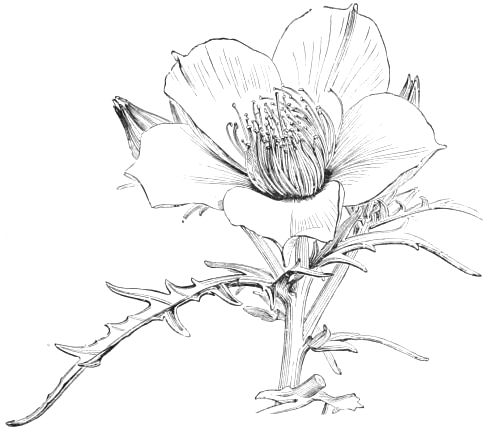
FIG. 207. FLOWER OF BARTONIA AUREA.
BARTLINGIA. A synonym of Plocama (which see).
BARTONIA (in honour of Benjamin S. Barton, M.D.,
formerly Professor of Botany at Philadelphia). ORD. Loasaceæ.
Hardy annuals or biennials, downy, with stiff and
bearded hairs. This genus is now placed under Mentzelia
in most standard botanical works. Flowers white or yellow,
large, terminal, expanding in the evening, when they are very
fragrant, and becoming reddish as they fade. Leaves alternate,
interruptedly pinnatifid. The species are very showy,
and well worth growing. Any ordinary garden soil suits
them. Seeds should be raised in a gentle heat in spring;
and, when the seedlings are sufficiently large, they should
be potted singly into small, well-drained pots. In winter,
they should be placed on a dry shelf in a greenhouse or
frame. B. aurea is one of the brightest of hardy annuals,
and may be sown either in a frame, or in the open border
in April.
B. albescens (whitish).* fl., petals ten, pale yellow, disposed in
a leafy panicle. July. l. sinuately toothed. Stem with a white
shining epidermis. h. 1ft. to 4ft. Chili, 1831. Annual or biennial.
(S. B. F. G. ii., 182.)
B. aurea (golden).* fl. two or three together, terminal, bright
golden yellow, as large as a half-crown; petals five. June.
h. 1ft. California, 1834. Annual. See Fig. 207. (B. M. 3649.)
B. nuda (naked) and B. ornata (adorned) are two very pretty
white-flowered biennial species. h. 2ft. Missouri, 1811.
BARYOSMA. See Barosma.
BASAL, or BASILAR. Situated at the base of anything;
as the embryo, when situated at the bottom of the
seed.
BASELLA (its Malabar name). Malabar Nightshade.
ORD. Basellaceæ. Annual or biennial stove trailers, with
white or pinkish flowers, of no great horticultural value.
In India, and elsewhere throughout the tropics, some of
the species are cultivated as pot herbs, and are used as a
substitute for Spinach.
B. alba (white).* fl. white. August. l. heart-shaped, pointed.
h. 8in. India, 1688. This plant, either when allowed to fall
in festoons from the roof of a warm house, or treated as a
basket plant, forms an elegant object when in flower.
BASELLACEÆ. A series of usually herbaceous
climbers, and considered a tribe of Chenopodiaceæ.
BASIL, SWEET (Ocymum basilicum). This is a
tender annual from India, and must be raised in gentle
heat. The foliage is somewhat largely used for flavouring
purposes. Seeds should be sown in April, the seedlings
pricked out into boxes to strengthen, and finally planted
out about 8in. asunder, in beds of light rich soil, in June,
being well watered until fully established. As soon as they
bloom, they should be cut down to within a few inches of
the ground, and the portions cut off should be tied up in
small bunches and dried in the shade for winter use.
Some of the plants can be lifted in September, potted up,
and placed in a warm greenhouse for the winter, when
the fresh green leaves will be found very useful. Bush
Basil (Ocymum minimum) is a dwarfer plant, but may be
treated in the same way. Wild Basil is botanically known
as Calamintha Clinopodium.
BASIL-THYME. See Calamintha Acinos.
BASI-NERVED. When the nerves of a leaf spring
from the base.
BASING-UP. The raising of a small bank of earth
entirely round a plant, so as to retain water immediately
about the root. The term is sometimes used to signify
Earthing or Moulding, which see.
BASKETS. Few objects contribute more to the adornment
of a window, or the decoration of the diningroom,
drawing-room, or glass-house, than Hanging Baskets, tastefully
filled with handsome foliaged and flowering plants.
Baskets are made in different forms and of various materials,
such as wire, terra-cotta, wood, and cork. The Wire Baskets
have a very light and elegant appearance, and are generally
used. In filling Baskets, the inside should be lined with a
thick layer of moss, or Selaginella Kraussiana, next to
which a layer of coarse sacking must be placed, to prevent
the soil from working through. Terra-cotta Baskets are
very pretty, and are extensively employed in domestic
rooms, but they should always have one or more holes at
the bottom, to facilitate drainage. Rustic Baskets, of cork
or wood, are also very suitable for floral arrangements;
those composed of teak-wood are very generally used for
orchids. The compost should be prepared according to the
requirements of the plant or plants intended to be grown,
which can be easily ascertained on reference to such plants
in this work. The soil should not be allowed to get dry;
in the event of this happening, however, a thorough soaking
by immersion must be given. As a rule, attention should
be given in the matter of watering every other day, and
light syringing every morning and evening during the
spring and summer months will be most beneficial. The
Baskets should be examined every week, all dead or decaying
leaves being removed, and any insects, which are so
likely to get a foothold, destroyed. In arranging the subjects,
the centre plant should be the tallest, the next outer
ones shorter, and the marginal ones of a trailing or drooping
habit, so that the whole may present a symmetrical, and at
the same time a natural, appearance. Wickerwork Baskets
are used for carrying or transferring plants, and are generally
made 18in. wide by 20in. deep; they are extremely useful,
and should be in every garden. Split wood and withes are
largely employed in making Baskets. The Planter's Basket,
described by Loudon as a flat, rectangular utensil of wickerwork
or boards, partitioned into three or more parts, for the
purpose of carrying with the gardener when about to plant
or remove plants, is now, unfortunately, almost obsolete.
One division is for the plants, another for those taken up,
and a third for the tools to be made use of, and for any
decayed parts of plants, stones, weeds, or other refuse which
may be collected. By using this Basket, order, accuracy,
and neatness are secured. The Sussex "Truck" Baskets,
made of willow-wood, are very useful, being both light and
durable. See also Measures.
BASSIA (named after Ferdinando Bassi, Curator of the
Botanic Garden at Bologna). ORD. Sapotaceæ. Handsome
lofty-growing lactescent stove trees, with axillary, solitary,
or aggregate flowers, and quite entire, smooth, coriaceous
leaves. They require stove heat, and a compost of peat and
loam. Cuttings, taken from ripened wood, strike readily in
sand, under a hand glass, in a strong moist heat.
B. butyracea (buttery). The Indian Butter Tree. fl., pedicels
aggregate, and are, as well as the calyces, woolly. l. obovate, 8in.
to 9in. long, and 4in. to 5in. broad, tomentose beneath. h. 30ft.
to 70ft. Nepaul, 1823. (B. F. F. 35.)
B. latifolia (broad-leaved). The Mahwah Tree of Bengal. fl.,
corolla thick and fleshy; pedicels drooping, terminal. l. oblong
or elliptic, smooth above, whitish beneath, 4in. to 8in. long, and
2in. to 4in. broad. h. 50ft. India, 1799. (B. F. S. 41.)
B. longifolia (long-leaved). fl., pedicels axillary, drooping, crowded
round the ends of the branchlets. l. ovate-lanceolate, approximate
at the tops of the branches, 6in. long, deciduous. h. 50ft.
Malabar, 1811. (B. F. S. 42.)
BASS or BAST MATS. These are prepared, chiefly
in Russia, from the inner bark of various Limes (Tilia), and
are very largely used in this country by nurserymen for
packing purposes. They are also extensively employed as
coverings, being excellent preventatives of the effects of
frost. They are beneficial as a covering for beds of early
vegetables, to prevent radiation during the night. For
tying purposes they are now greatly superseded by Raffia
Grass. Archangel Mats are larger, and of better quality
than the St. Petersburgh. Dunnage Mats are heavy, and
generally used for covering, as they are much cheaper.
BASTARD ACACIA. See Robinia Pseudo-acacia.
BASTARD BALM. See Melittis.
BASTARD BOX. See Polygala chamæbuxus.
BASTARD CABBAGE-TREE. See Geoffroya.
BASTARD CHERRY. See Cerasus Pseudo-cerasus.
BASTARD CINNAMON. See Cinnamomum
Cassia.
BASTARD CORK TREE. See Quercus pseudo-suber.
BASTARD INDIGO. See Amorpha.
BASTARD LUPINE. See Trifolium Lupinaster.
BASTARD QUINCE. See Pyrus Chamæmespilus.
BASTARD VERVAIN. See Stachytarpheta.
BASTARD VETCH. See Phaca.
BASTARD WIND-FLOWER. See Gentiana
Pseudo-pneumonanthe.
BASTARD WOOD-SAGE. See Teucrium Pseudo-scorodonia.
BAST MATS. See Bass Mats.
BATATAS (its aboriginal name). ORD. Convolvulaceæ.
This genus is now referred to Ipomæa. Strong, free-growing,
greenhouse or stove deciduous twiners. Calyx of five
sepals; corolla campanulate; stamens inclosed. They are
of easy culture, only requiring plenty of room to spread,
and are well adapted for trellis work, or to run up pillars.
They are all tuberous rooted, and therefore require to be
kept dry when in a dormant state. A rich, open, loamy
soil is most suitable. Young cuttings strike readily under
a hand glass, in heat.
B. bignonioides (Bignonia-like).* fl., corolla dark purple, funnel-shaped,
with a curled limb; peduncles many-flowered, nutant,
shorter than the petioles. July. l. three-lobed; hind lobes
rounded, imbricate. Cayenne, 1824. (B. M. 2645.)
B. Cavanillesii (Cavanilles').* fl. pale whitish-red; lobes of
corolla obtuse, crenulated; peduncles one to three-flowered.
August. l. quinate; leaflets ovate, entire, unequal. Native
country unknown, 1815.
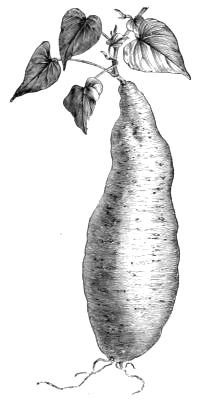
FIG. 208. BATATAS EDULIS, showing Tuber.
B. edulis (edible).* Sweet Potato. fl., corolla 1in. long, white
outside and purple inside; peduncles equal in length to the
petioles, or exceeding them, three to four-flowered. l. variable,
usually angular, also lobed. Stem creeping, rarely climbing.
East Indies, 1797. See Fig. 208.
B. glaucifolia (milky-green-leaved). fl., corolla small, purplish,
with an inflated tube, and ovate, acute segments; peduncles two-flowered,
length of leaves. May. l. sagittate, truncate behind,
on long petioles. Mexico, 1732.
B. heterophylla (various-leaved). fl. blue; peduncles solitary,
axillary, bearing each three sessile flowers. July. l. quinately
palmate; lobes or leaflets ovate-spathulate, acute. Plant very
villous. Cuba, 1817.
B. paniculata (panicled).* fl. large, purple; peduncles much
exceeding the petioles, many-flowered, dichotomously and corymbosely
panicled. June l. palmate, five to seven-cleft; lobes
ovate-lanceolate or elliptic, bluntish, rarely sub-acuminated.
India, 1799. (G. C. n. s., x., 341.)
B. senegalensis (Senegalese). fl. white or purplish, large;
peduncles three-flowered. June. l. quinately palmate; lobes
ovate, obtuse, middle one the largest. Stem white, tubercular.
Guinea, 1823.
B. venosa (veiny). fl. purple; peduncles umbellate, with an
ovate-cordate, solitary leaf at the base of each pedicel. July.
l. digitately quinate; leaflets petiolate, acuminated, quite entire.
France, 1820.
BATEMANNIA (named after Mr. J. Bateman, a
collector and cultivator of orchids, and author of a
"Monograph of Odontoglossum," and other works on orchidaceous
plants). ORD. Orchidaceæ. A small and easily-grown
genus of dwarf, compact-growing epiphytes, closely
allied to Maxillaria, but differing from that genus in having
the anther-bed with a membranous border. They may be
grown in pots, in a compost of peat and moss, or on blocks
of wood with moss. They require an intermediate house
and plenty of water in the growing season. Propagated by
divisions and offsets. They have generally a free-flowering
habit; but some of the species are not so ornamental
as many other orchids.
B. armillata (braceleted). fl. green, white. 1875. (R. X. O. 316.)
B. Burtii (Burt's). fl. red-brown, yellow base, 3in. across; lip
white, tipped chocolate. Autumn. l. elliptic-oblong, or ligulate,
sub-distichous. Plant bulbless. Costa Rica, 1872. (B. M. 6003.)
B. Colleyi (Colley's). fl. on a pendulous raceme, rising from the
base of the pseudo-bulbs; sepals and petals brownish-purple
within, green without; lip white. Autumn. h. 6in. Demerara,
1834. (B. R. 1714.)
B. grandiflora (large-flowered).* fl., flower-spike coming up with
the young growth, bearing three or four flowers, of curious structure;
sepals and petals olive-green, striped with reddish-brown;
lip white, with reddish-purple streaks, orange or yellow towards
the base. Pseudo-bulbs ovate, 3in. or 4in. long, and bearing two
large, broad, leathery leaves. New Grenada, 1866. (B. M. 5567.)
B. Wallisii (Wallis').* fl., sepals light greenish-yellow outside,
olive-green to chestnut-brown inside, with some yellow at the
base; petals with scarlet stripes at the very base, but otherwise
coloured like the sepals; lip blade greenish, with a brownish
hue at the anterior part; peduncles slender, corymbose. h. 1ft.
Columbia, 1876.
BATSCHIA. See Lithospermum.
BAUERA (named after Francis and Ferdinand Bauer,
German botanical draughtsmen). ORD. Saxifragaceæ. Small
shrubs, natives of Australia, New Zealand, &c. Flowers
axillary, solitary, pedunculate. Leaves six in a whorl, approximating
by threes, and therefore, as it were, opposite
and ternate, exstipulate. Easily cultivated in a compost of
sandy loam and peat. Propagated by cuttings, placed in
sandy soil, under a glass. These very pretty little greenhouse
evergreens flower nearly the whole year through.
B. humilis (low). fl., corolla red, one-half smaller than B.
rubioides, and the plant is altogether much smaller. July to
December. l. oblong, crenated. h. 1ft. New South Wales,
1804. (L. B. C. 1197.)
B. rubiæfolia (madder-leaved). Synonymous with B. rubioides.
B. rubioides (madder-like).* fl. pale red, or pink. l. lanceolate,
crenated. h. 1ft. to 2ft. New South Wales, 1793. SYN. B.
rubiæfolia. (A. B. R. 198.)
BAUHINIA (in honour of John and Caspar Bauhin,
two famous botanists of the sixteenth century). Mountain
Ebony. ORD. Leguminosæ. Very showy stove evergreen
shrubs. Flowers racemose; petals five, spreading,
oblong, rather unequal, upper one usually distant from the
rest. Leaves two-lobed, constantly composed of two jointed
leaflets at the top of the petiole, sometimes nearly free, but
usually joined together, more or less, and with an awn in
the recess. They succeed well in a mixture of sand, loam,
and peat, requiring good drainage and moderately firm
potting. Propagated by cuttings, which should be taken
when the wood is neither very ripe nor very young; the
leaves must be dressed off, and the cuttings planted in
sand, under a glass, in moist heat. Although glorious
objects in the tropics, few of the species flower under
our comparatively sunless skies; those which hitherto have
succeeded well in Britain are marked with an asterisk.
B. acuminata (taper-pointed-leaved). fl. pure white; petals
broadly ovate, hardly stipitate. June. l. rather cordate at the
base, smoothish; leaflets connected beyond the middle, ovate,
acuminated, parallel, four-nerved. h. 5ft. to 6ft. Malabar,
1808.
B. aurita (eared). fl. white; petals ovate, on short stipes. August.
l. glabrous, cordate at the base; leaflets connected the fourth
part of their length, oblong-lanceolate, nearly parallel, six to
eight-nerved. h. 4ft. to 6ft. Jamaica, 1756.
B. corymbosa (corymbose).* fl. in loose racemes; petals pinkish,
regular, crenulated at the edge. Summer. l., leaflets semi-oval,
obtuse, parallel, connected nearly to the middle, three-nerved,
cordate at the base, the nerves on the under surface, as well as
the petioles, branches, and calyces, clothed with rufous villi.
Shrubby climber. India, 1818. (G. C. 1881, xvi., p. 204.)
B. inermis (unarmed). fl. white; petals linear; racemes terminal,
leafless, simple. l. ovate at the base, ferruginous beneath; leaflets
oblong, acute, four-nerved, parallel, connected a little beyond
the middle. h. 6ft. to 8ft. Mexico, 1810.
B. multinerva (many-nerved). fl. snow-white; petals linear.
Legume 8in. to 12in. long. l. elliptic, rounded at the base, membranous,
shining above, rather pilose beneath; nerves ferruginous;
leaflets semi-ovate, obtuse, approximate, five-nerved; free. h.
20ft. Caracas, 1817.
B. natalensis (Natal).* fl. white, 1½in. across, opposite the leaves.
September. l. small, alternate, of two obliquely-oblong rounded
leaflets. Natal, 1870. (B. M. 6086.)
B. petiolata (long-petioled). fl. white, 3in. long, in terminal
clusters. Autumn. l. stalked, ovate-acuminate, five-nerved,
glabrous. Columbia, 1852. SYN. Casparia speciosa. (B. M. 6277.)
B. pubescens (downy). fl. white, large, much crowded; petals
obovate; peduncles three to four-flowered. l. rather cordate at
the base, pubescent beneath and on the petioles; leaflets connected
beyond the middle, oval, obtuse, four-nerved, nearly
parallel. h. 4ft. to 6ft. Jamaica, 1823.
B. purpurea (purple). fl., petals red, one of them streaked with
white on the claw, lanceolate, acute. Legume linear, 1ft. long.
l. cordate at the base, coriaceous, ultimately glabrous; leaflets
connected much above the middle, broadly ovate, obtuse, four-nerved;
free. h. 6ft. India, 1778.
B. racemosa (racemose). fl. white; petals obovate, obtuse;
raceme somewhat corymbose. l. cordate at the base, clothed with
silky villi beneath, as well as on the peduncles, petioles, branches,
calyces, and petals; leaflets broadly ovate, obtuse, connected to
the middle, five-nerved. India, 1790. Shrubby climber. (B. F. S.
182.)
B. tomentosa (tomentose). fl., petals pale yellow, with a red spot
at the claw, obovate, obtuse; peduncles one to three-flowered.
l. ovate or roundish at the base; under surface villous, as well as
the petioles, branches, stipules, peduncles, bracts, and calyces;
leaflets connected beyond the middle, oval, obtuse, three to four-nerved.
h. 6ft. to 12ft. Ceylon, 1808.
B. variegata (variegated).* fl. red, marked with white, and
yellow at the base, in loose terminal racemes; petals ovate, nearly
sessile. June. l. cordate at the base, glabrous; leaflets broadly-ovate,
obtuse, five-nerved, connected beyond the middle; free.
h. 20ft. Malabar, 1690.
B. v. chinensis (Chinese). fl., petals lilac, with one purple spot
at the base of each, acute. l. rounded at the base. China.
BAWD-MONEY. See Meum.
BAY-TREE. See Laurus nobilis.
BEAK. Anything resembling the beak of a bird, as in
Aconitum; the point which ends the helmet or upper sepal;
hard, sharp points.
BEAM TREE. See Pyrus Aria.
BEAN BEETLE (Bruchus granarius). This insect,
by depositing its eggs in the seeds of Beans and Peas,
causes a great amount of injury. It is about an eighth of
an inch long, black, with brown hairs and white spots; tip
of the tail prolonged, downy; front pair of legs reddish.
The most effectual means of prevention is to destroy,
when sowing, all seeds infested by it; and this may be
detected by the skin of the seed being unusually transparent
above the tunnel for exit. Imported seeds of
Broad Beans are often much infested. "Dipping the
Beans or Peas in boiling water for one minute is stated
to kill the grub inside; but, as dipping for four minutes
generally destroys the germinating power, the experiment
is much too hazardous for general use", (Ormerod).
BEAN CAPER. See Zygophyllum.
BEAN FLY. See Aphides and Black Fly.
BEANS. There are three sections of these in cultivation
for garden purposes, viz.: The Dwarf or French
Bean; the Climbing, or Scarlet Runner; and the ordinary
Broad Bean. See also Faba and Phaseolus.
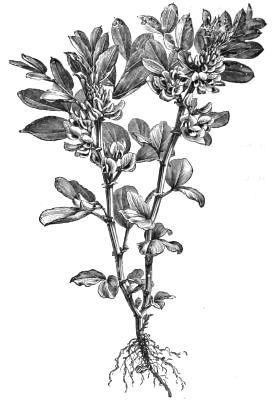
FIG. 209. BROAD BEAN PLANT IN FLOWER (FABA VULGARIS).
Soil. All Beans like a somewhat loamy soil, which,
to secure good crops, must be deeply worked and heavily
manured. The Kidney Beans, dwarf and tall, however, do
not care for so heavy a soil as the Broad and Long-podded
kinds; and this fact should be borne in mind when selecting
their respective situations. The term Kidney is generally
applied to both the Dwarf or French and the Climbing
or Scarlet Runner.
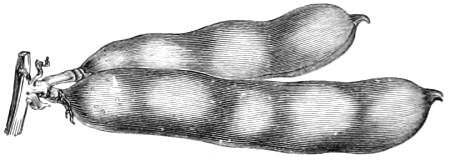
FIG. 210. PODS OF BROAD BEAN.
FIG. 211. BROAD BEAN SEED.
BROAD AND LONG-PODDED (Faba vulgaris). Cultivation:
As early as possible in the autumn, deeply trench
a piece of ground, and work in a heavy dressing of manure,
leaving the surface of the soil in ridges, to become well
aërated by winter frosts. Where desired, a piece of
ground on a warm, protected border, can also be deeply
dug in November, and a few rows of Mazagans sown to
stand the winter. When up, draw a ridge of soil on
either side the rows, and in frosty weather strew a few
handfuls of bracken, or other light, dry litter, over them.
Not much is, however, gained by this winter sowing.
Early in January, level the ridges with a fork, working
the whole of the surface soil over, and towards the
end of the month, make the first sowing, choosing
Mazagan and other early varieties. Mark out two rows,
9in. asunder, leave a space of 30in., then another two
rows, and so on throughout the piece sown. If preferred,
they may be sown in single rows at intervals of 1½ft.
The drills should be about 3in. deep, and the seed from
7in. to 9in. apart in the rows. Where the double-row
system is adopted, arrange the seed for the plants to come
alternately. In March, get in the main sowing of the
Broad and later Long-podded kinds, in the manner already
described; another sowing for late use may be made in
April. When the plants are about 6in. high, earth up as
recommended for those sown in the autumn. As soon as
a good crop is set, pinch out the tops of the plants, to assist
the maturation of the Beans, and prevent the attacks of the
fly. Figs. 209, 210, and 211 are excellent representations
of the flowering plant, pods, and seed of the Broad Bean.
Sorts. For early use: Early Mazagan, Long-pod, Marshall's
Early Prolific, and Seville Long-pod. For late use:
Carter's Mammoth Long-pod, and Broad Windsor (white
variety). These are all distinct and good varieties.
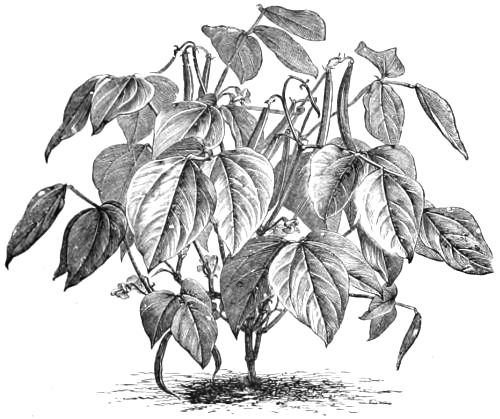
FIG. 212. FRUITING PLANT OF DWARF OR FRENCH BEAN
(PHASEOLUS VULGARIS).
DWARF OR FRENCH KIDNEY BEANS (Phaseolus vulgaris).
Cultivation: This class (see Fig. 212) also requires a rich
and deeply trenched rather light soil. A very important
point is to get the ground into a good condition, by frequently
forking it over; and, as the seeds are not sown
till the beginning of May, there is plenty of time for the
work. The finer the soil is, and the more it is aërated,
the better will it suit the crop. From the beginning of
May till the end of June, at intervals, draw out drills
about 2ft. apart, and 3in. deep, and in these place the
Beans tolerably thick, as generally they are not all certain
to grow. As soon as up, carefully thin them, and slightly
earth up to prevent the wind blowing them about. They
should not, however, be earthed higher than the seed leaves,
or they will probably rot off in wet weather. Keep free
from weeds, and maintain a sharp look out for slugs. In
dry weather, water occasionally, giving good drenchings,
and not mere sprinklings, which do more harm than good.
A good mulching of half-rotted manure is very beneficial,
as it prevents evaporation to a great extent, besides affording
some amount of nourishment to the plants. Great care
must be taken to pick off the Beans as soon as large enough
for use, or they will exhaust the plants. Where seeds are
needed, a number of plants should be left for the purpose,
and these should be some of the best, to prevent deterioration,
or loss of the true variety.
Forcing. French Beans require more heat than can be
obtained in either a frame or an ordinary greenhouse; and,
although easy enough to grow in a structure suited to their
requirements, yet, if such does not exist, they are almost
sure to fail. A good heat, from 60deg. to 70deg., with
abundance of moisture, is necessary for successful results.
Plenty of light is also most essential. A position such as
that of a cucumber house is generally a suitable one; but
the plants must not be placed under the cucumbers. Successional
sowings in pots or boxes must be made, from the
end of August till March, to keep up a supply. For soil,
use good maiden loam, with a little well-rotted manure
added. Use 8in. pots, sowing five or six beans in each.
The first sowing should be placed in a frame and kept
well watered, bringing into heat in October; but the subsequent
sowings should be placed directly in the house.
Keep the soil moist, and the plants free from aphides
and other insect pests, and give air at every favourable
opportunity. The plants should be as near the light as
possible, and kept from falling about by tying or placing
small pieces of Birch wood round them. In dull weather,
it will be found that the blooms will not set so freely as
when the sun shines brightly; therefore, every care should
be taken to secure both heat and ventilation when sunshine
prevails. When the pots get full of roots, and the
plants are bearing fruit freely, a little liquid manure is of
great assistance; at no time must the plants get dry
enough to flag. Allow plenty of room for the full development
of foliage, and maintain a minimum temperature
of 60deg., with plenty of moisture.
Sorts. These are very numerous, among the best being
Black Negro, Canadian Wonder, Canterbury, Fulmer's
Forcing, Golden Dun, Newington Wonder, Osborn's Early
Forcing, Sion House, and Sir Joseph Paxton.
RUNNERS OR CLIMBING KIDNEY BEANS (Phaseolus
multiflorus). Cultivation: Being tall growers, these need
a greater space than the Dwarf French varieties, and
they also require support. Rich soil is indispensable for
them, and liberal supplies of water on light soils and
in dry weather. A good overhead syringing from time
to time is also advantageous. Trench and heavily manure
a piece of ground in autumn, leaving it in ridges for
the winter. In March, level the ridges down, and well
work the ground, to render it friable and in good condition.
The plants being extremely tender, it is not safe
to sow before the end of April or the first week in May.
It is preferable to sow in rows, which should be from
6ft. to 12ft. apart, and crop the ground between with
other vegetables. Earth up and stake them as soon as
ready, to prevent injury from rough wind. A good plan,
which may be adopted to obtain early produce, is to
raise the seeds in boxes in a cold frame, getting them
ready for planting out in the middle of May. Plant at
the same distances, and treat afterwards as recommended
for those sown out of doors.
If preferred, they can be grown on the ground without
stakes. Under this treatment, they must have their tops
pinched off when about 18in. high, continuing this pinching
from time to time as necessary. If this plan is
adopted, the rows need only be 3ft. apart, the ground
not being otherwise cropped. In dry seasons and on
light soils, there is an advantage attached to this method,
namely, that those on sticks are liable to injury from
drought, while the foliage of those pinched back keeps
the soil moist underneath.
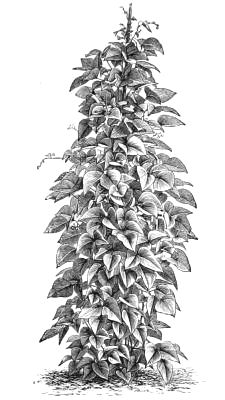
FIG. 213. RUNNER OR CLIMBING KIDNEY BEAN
(PHASEOLUS MULTIFLORUS).
Runner Beans may also be planted to cover arches or
fences, and in various places of a like description. See
Fig. 213.
Sorts. Common Scarlet Runner, Champion, Painted
Lady, and Giant White. The first two are those generally
grown.
BEAN-TREE. See Ceratonia Siliqua.
BEARBERRY, and BEAR'S GRAPE. See
Arctostaphylos Uva-ursi.
BEARD-TONGUE. See Pentstemon.
BEARS BREECH. See Acanthus.
BEAR'S FOOT. See Helleborus fœtidus.
BEATONIA. See Tigridia.
BEAUCARNEA (a commemorative name). ORD.
Liliaceæ. A small genus of curious greenhouse plants,
natives of Mexico. Leaves narrow, gracefully depending.
Stems slender, and woody, with a peculiar swollen, somewhat
napiform base. Mr. B. S. Williams recommends
that these plants be potted in rich fibrous loam and sand,
with ample drainage, and, during the growing season,
liberally supplied with water. Propagated by cuttings,
when obtainable; but chiefly by seeds, which have to be
imported from their native country. Beaucarneas are
principally grown for the beauty of their foliage, and are
grotesque, graceful, and extremely curious in habit and
form.
B. glauca (grey).* l. pendent, glaucous, 2ft. to 3ft. long. Stem
slender, the swollen base becoming woody with age.
B. g. latifolia (broad-leaved) differs from the type only in its
stouter and more robust stem and broader leaves.
B. longifolia (long-leaved).* l. 6ft. to 10ft. long, narrow, pendent,
dark green, forming a beautiful vase-like centre. h. 10ft.
Mexico, 1868. Very distinct. (G. C. 1877, vii., 493.)
B. recurvata (recurved-leaved).* l. very long, linear, gracefully
pendulous, bright green. Mexico, about 1845. This is an excellent
subject for open-air culture during the summer, as well as for the
conservatory. SYN. Pincenictitia tuberculata. (G. C. 1870, 1445.)
B. r. rubra (red). l. red at base.
B. stricta (upright). l. 3ft. or more long, less than 1in. broad,
very glaucous. Stem stout. Mexico, 1870.
BEAUFORTIA (commemorative of Mary, Duchess of
Beaufort, a botanical patroness). Including Schizopleura.
ORD. Myrtaceæ. Elegant free-flowering greenhouse Australian
shrubs. Flowers scarlet; calyx with a turbinate
tube; stamens in bundles opposite the petals. Leaves
sessile, opposite or scattered. Beaufortias require a compost
of peat, leaf soil, and loam, lightened, if necessary,
by the addition of sand. Cuttings of half-ripened shoots
root freely in sandy soil, under a glass, with very little heat.
B. decussata (decussate). fl. scarlet; bundles of stamens on
very long claws; filaments radiating. May. l. opposite, decussate,
ovate, or oval, many-nerved. h. 3ft. to 10ft. New Holland,
1803. (B. M. 1733.)
B. purpurea (purple).* fl. purplish-red, in dense globular heads.
l. three to five-nerved, erect or spreading, ovate-lanceolate to lanceolate-linear.
New Holland.
B. sparsa (few-leaved). fl. bright scarlet. l. many-nerved,
scattered, ovate-elliptical, obtuse. West Australia. SYN. B.
splendens. (P. F. G. xiii., 145.)
B. splendens (splendid). Synonymous with B. sparsa.
BEAUMONTIA (in honour of Mrs. Beaumont, formerly
of Bretton Hall, Yorkshire). ORD. Apocynaceæ. A
very ornamental stove twiner, remarkable for its handsome
flowers. It succeeds best when planted out in the borders
of a temperate house, in rich lumpy loam and peat. Propagated
by cuttings, placed in sand, with bottom heat.
B. grandiflora (large-flowered).* fl., corolla large, white, greenish
outside near the base, and dark throat, with a short tube, and a
large campanulate five-lobed limb; corymbs axillary and terminal,
many-flowered. June. l. opposite, broad, oblong-ovate, with a
little point, tapering towards the base, smooth and shining above,
but rather downy beneath; young leaves and branches rusty.
Chittagong and Sylhet, 1820. (B. M. 3213.)
BED. A term usually applied to pieces of ground laid
out in gardens for sowing small seeds, or for the isolation
and better protection of small collections of plants in the
reserve ground. The oblong is the best shape for this purpose,
about 4ft. or 5ft. wide, somewhat raised, and having a
narrow path on each side, so that the workman may attend
to the plants or seeds without having to tread on the bed.
Any one part of a flower-garden design, cut out in grass, or
otherwise formed, is also generally termed a Bed. When
required to be planted for effect, as in this case, the Bed
should be proportionate in size to the plants that are to be
put in it, always planting the highest in the centre and
gradually sloping, with other sizes, to the edges, which
should be the lowest. Circular Beds are best with one
centre plant; and oblong or other shapes should have the
height of the centre plants carried nearly the whole length,
not, however, placing them in too formal a manner.
BEDDING-IN. A method of seed-sowing, now almost
obsolete, and chiefly employed in nurseries. "In this
method, the ground being dug and formed by alleys into
Beds, 4ft. or 5ft. wide, each alley being a spade's width
or more between Bed and Bed, and the earth being drawn
off the top of the Bed with a rake or spade, ½in. or 1in.
deep into the alleys, the seed is then sown all over the
surface of the Bed; which being done, the earth in the
alleys is immediately cast over the Bed, again covering the
seeds the same depth, and the surface is raked smooth"
(Johnson). In the case of small seeds, a very light covering
is needed, and that only of very fine soil.
BEDDING-OUT. The temporary placing out of doors
of greenhouse and other tender plants during the summer
months. It is considered by some to be the showiest,
most expensive, and most unnatural of any style. The
geometrical arrangement of gaudy colours is not at all
times satisfactory, and under the most favourable conditions
the design is rarely retained more than two or
three months, say, from July to September. The method
is, however, so extensively adopted as to demand due notice
in this work. Bedding usually commences in May. An important
consideration is the proper preparation of the soil for
the reception of the plants. It will be found to materially
assist the growth if the soil is well dug over a fortnight
before the plants are put in. By this means, it will acquire
a certain amount of solidity, a point of great importance
with fibrous-rooted plants that are subject to injury from
the fine roots not taking a firm hold of the soil. Having
decided upon the arrangement of the plants, proceed to
work with the planting. With round, oval, or, indeed, almost
any shaped bed, begin in the centre and work towards the
edge; in borders, commence at the back and finish with
the front row. Plant with a trowel, disturbing the balls as
little as possible, and when in the holes press the soil
moderately firm. After the Bed is finished, give a good
soaking of water to settle the soil at the roots. Manure
for Flower-beds should always be perfectly rotten, such as
that from a spent hotbed. When the plants are thoroughly
established, water must only be given if they show signs
of distress; and then a good soaking should be applied.
A careful hoeing of the surface after planting will be most
beneficial, leaving it smooth and tidy. A Dutch hoe will
be the best to use. Injudicious use of manure and water
will only cause a foliaceous growth. The proper treatment
of the various Bedding Plants will be found under their
respective headings. For spring decoration, the Beds may
be filled with Dutch bulbs, and spring-flowering annuals
and perennials ad infinitum; or, after the plants are
removed in autumn, the Beds may be filled with evergreens
plunged in pots, such as Aucuba, Arbor vitæ, Euonymus,
and various little Conifers, which have a bright appearance
through the winter, and can be removed at any time.
With the relative value, or advisability of adoption, of
either or any system of gardening, it scarcely comes within
the province of this work to deal. No hard-and-fast rules
can be laid down as regards "style," and each individual
may follow his own taste and inclination.

FIG. 214. DESIGN FOR CARPET BEDDING.
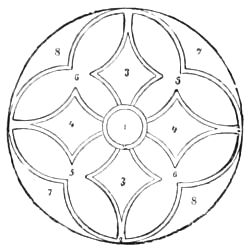
FIG. 215. DESIGN FOR CARPET BEDDING.
Carpet Bedding. This mode of gardening, although not
so generally employed as it was some few years ago, has
many admirers, and small plots, geometrically arranged
in multi-coloured beds on lawns, are frequently seen. In
our large public parks, the system is largely adopted, and
evidently proves very gratifying to the multitudes who
visit these places; but probably no system is more unnatural
or expensive, as such a large number of plants
are necessary in order to produce a desirable effect. The
illustrations (Figs. 214 and 215) represent two designs
for Carpet Beds. The numbers placed in the various compartments
indicate the way the different colours should
be arranged, repeats being marked by the same cypher. A
very varied and large selection of plants can be used for
Carpet Bedding, some of which are quite hardy, such as
Herniaria glabra and Veronica repens, two of the best
dwarf green plants; Sempervivum californicum, Sedum
lydium, S. glaucum, Antennaria tomentosa, &c. These may
be planted early in the season, with Golden Feather, and
are especially valuable, as they are generally employed to
a great extent. Other plants, not quite so hardy, are
Mentha Pulegium gibraltarica and Echeveria secunda
glauca, both of which are extensively used; while the
tenderest subjects are Alternantheras of various kinds,
Coleus Verschaffeltii and Mesembryanthemum cordifolium
variegatum. These latter should not be planted till the
first or second week in June. As the plants are usually
small, and require to be planted thickly, the work is best
accomplished with the fingers, pressing the soil moderately
firm. First of all, work out the design, and plant the
leading lines; afterwards fill in the "panels."
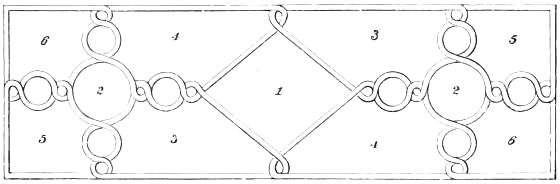
FIG. 216. DESIGN FOR BEDDING.
Sub-Tropical Bedding. This term is applied to the
arrangement of tropical plants in Beds or groups outside
for the summer months, and if discriminately adopted a
very attractive and unique display may be made, depending
greatly upon position, and mainly upon the material at
command. If a sheltered and partially shady situation is
enjoyed, a grand effect may be produced by the grouping
of tree and other large ferns with palms, Cannas, Aralias,
Dracænas, &c., avoiding, of course, formal arrangement, and
yet, when finished, a symmetrical appearance should be
produced. In more open positions, palms, Castor Oil Plants,
Cannas, Humea elegans, Aralias, Phormiums, Wigandias,
Nicotianas, &c., may be employed, the result being, if
properly arranged, most gratifying. Sub-Tropical Bedding
should not be done till the middle or end of June, and the
Beds should be well dug and freely manured for those that
are to be planted out.
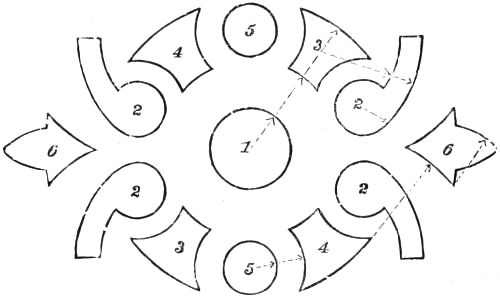
FIG 217. DESIGN FOR BEDDING.
Fig. 216 represents a Border or long piece of ground,
which may be either marked out permanently with Box
edging, dwarf-growing silver or golden leaved plants, tiles,
stones, or pebbles, and filled in with silver sand or bright-coloured
stones or gravel; or the lines may be widened out
into walks. The whole of the small circles not numbered
are intended for specimen foliage and other plants, such
as Fuchsias, Yuccas, Aloes, Cannas, Solanums, variegated
or plain Reeds, Grasses, Maize (Zea), &c. No. 1, tall plants
of Echeveria metallica, edged with E. glauca; 2, 2, yellow
or orange Calceolaria; 3, 3, Mrs. Leavers Pelargonium;
4, 4, Triomphe de Stella ditto; 5, 5, purple or blue Verbena;
6, 6, white ditto. The narrow border round the
side may then be filled in with Golden-feather
Pyrethrum, blue Lobelia, or Alternanthera amabilis.
This same plan may also be treated in
quite a different manner, according to the taste
of those adopting it, or the stock of plants at
command.
FIG. 218. DESIGN FOR BEDDING OR CARPET BEDDING.
Fig. 217 illustrates a design admirably adapted
for a rosery or small flower garden. Its only
fault is the number of sharp angles at the
corners of some of the Beds; but this can be
counteracted by the predominance of curved
lines. It is easily formed, and the effect is good
if furnished in the following manner: The circle
in the centre, 1, Centaurea ragusina compacta,
edged with a double line of Coleus Verschaffeltii;
the four figures 2, 2, 2, 2, scarlet Pelargoniums,
such as Vesuvius, Bonfire, Triomphe de Stella,
or others; 3, 3, Mrs. Pollock, golden-zoned Pelargoniums,
edged with Alternanthera amœna; 4, 4,
Lady Cullum, ditto, ditto, edged with ditto;
5, 5, Lobelia speciosa, Imperial Dwarf Ageratum, or
Purple King Verbena; 6, 6, white Verbena or white Ivy-leaved
Pelargonium.
FIG. 219. ARRANGEMENT OF NURSERY FOR ROSE TREES AND
SHRUBS.
FIG. 220. ARRANGEMENT OF NURSERY FOR ROSE TREES AND
SHRUBS.
The group of Beds illustrated in Fig. 218 is effective
on grass or gravel. If on the latter, the lines should be
defined with Box, Golden Thyme, Cerastium, or Santolinas.
The design is pretty on level, but is still more effective
on sloping ground; in the latter case, it should rise
from the straight walk (dotted line). Thus each Bed may
be seen to the best advantage, and the group may be
extended to any length. The circular Beds should be
planted with two distinct colours, such as good pink and
scarlet Pelargoniums of similar habits of growth, placing
the colours in alternate Beds. The Beds, a, a, a, Flower
of Spring, or another silver-leaved Pelargonium; b, b, b,
Purple King Verbena, or Imperial Dwarf Ageratum; c, c,
White Perfection Verbena, and silver-leaved or white-flowered
Ivy-leaved Pelargonium; d, d, Alternanthera
magnifica; e, e, Blue Lobelia. The long border, Alternanthera
paronychioides, edged with Antennaria tomentosa;
or Iresine Lindenii, edged with Pyrethrum, Golden
Fleece or Crystal Palace Gem Pelargonium. The two
sides may also be planted alike. The colours are reversed
above to produce a greater variety and a more
striking effect. This design is also well adapted for
Carpet Bedding.
FIG. 221. BEDDING-OUT DESIGNS.
Nursery Bed. This is merely a reserve ground or
nursery for a large stock of plants of various sorts, such as
Roses, &c. One of the first requirements is an easy access
to the individual plants, and with the least possible waste
of space. This may be obtained by arranging the Beds in
regular geometric figures, as shown in Figs. 219 and 220,
and, by exercising a little care and taste, the whole can be
so contrived as to present an ornamental appearance.
We are indebted to Messrs. Cannell and Sons for the
diagrams of Bedding-out designs shown at Fig. 221, which
may be made very effective:
Bed A. This Bed may be planted with the following:
Summer-flowering: 1, Gain's Yellow Calceolaria or Ageratum
Lady Jane; 2, Geranium Vesuvius or another scarlet;
3 and 4, Viola Blue-bell or Purple King Verbena; 5, edged
with Gnaphalium lanatum, or Antennaria tomentosa, white
foliaged plants. Summer Foliage: 1, Coleus Verschaffeltii;
2, Centaurea ragusina compacta; 3 and 4, Mrs. Pollock
Geranium; 5, band of any of the Echeverias, or Kleinia
repens.
Bed B. Plants mentioned for A will do for this.
Bed C. This is really intended for a Carpet Bed. 1,
Alternanthera amabilis, with a narrow line of amœna for
the edge; 2, Mentha, or Herniaria glabra; 3, band of
Mesembryanthemum cordifolium variegatum. Flowering:
1, Any kind of Scarlet Geranium; 2, Golden-leaved ditto;
3, Blue Lobelia (edge). Spring: 1, White Arabis; 2,
Myosotis dissitiflora; 3, Golden Feather.
Bed D. Summer: 1, Pink Geranium; 2, Iresine Lindenii;
3, Golden Feather. Carpet: 1, Alternanthera versicolor
grandis; 2, Mesembryanthemum cordifolium variegatum;
3, Alternanthera magnifica, edged with Sempervivum montanum.
Bed E. 1, Scarlet Geranium; 2, Pink ditto; 3, Lobelia
speciosa; or, 1, Alternanthera amœna; 2, Mesembryanthemum
cordifolium variegatum; 3, Echeveria secunda
glauca.
Bed F. 1, Dracæna, Chamæpeuce, or any other graceful
foliage plant for the centre; 2 and 4, Alternanthera
amabilis, the divided lines, 6, being filled with Mentha or
Echeverias; 3 and 5, Alternanthera amœna; and the
outer edge, 7, with Sempervivum californicum. This bed
would look well if planted with any of the above-mentioned
spring flowers. Spring: Bed might be raised to
a mound, and lined out with hardy Sedums, or Sempervivums,
placing a larger growing one in the centre; and
2, 3, 4, and 5 divisions may be filled with any spring-flowering
dwarf-growing plants.
Bed G. 1, Small plant of Yucca; 2, Coleus Verschaffeltii;
3, Alyssum variegatum; 4, Lobelia pumila magnifica.
Bed H. 1, Golden Feather; Mesembryanthemum; 3,
Mentha; 4, Alternanthera amabilis; or 1, Coleus Verschaffeltii;
2, Centaurea ragusina; 3, Calceolaria Golden Gem;
4, Ageratum Lady Jane.
BEDDING PLANTS. This term applies to many
half-hardy subjects which are planted out in beds for
summer display, such as Ageratums, Calceolarias, Geraniums,
Heliotropes, Lobelias, Verbenas, &c., all of which
will be treated under their respective headings. They are
mostly soft-wooded plants and are easily cultivated with
proper means, in spring and autumn.
BEDFORDIA (named in honour of a former Duke of
Bedford). ORD. Compositæ. Greenhouse evergreen shrubs,
allied to Cacalia. They thrive in a mixture of sand, peat,
loam, and brick rubbish, in equal proportions. Propagated
by cuttings, which should be dried a little before inserting
them in rough, sandy soil.
B. salicina (willow-like). fl.-heads yellow, axillary and solitary,
or few together. April. l. alternate, lanceolate, linear, glossy
above, covered with white tomentum underneath. h. 3ft. Victoria
and Tasmania, 1820. SYN. Cacalia salicina. (B. R. 923.)
BEDSTRAW. See Galium.
BEECH. See Fagus.
BEES. See Honey Bees, Humble Bees, and Wasps.
BEET (Beta, which see). The present varieties of
Beetroot are the offspring of Beta vulgaris, a plant of
biennial duration, and a native of the sea coasts of
Southern Europe. It was cultivated in this country about
1656, but was probably long previously introduced by the
ancient Romans. Beetroot is largely used as salad, more
extensively on the Continent than with us, also pickled;
medium sized, deeply coloured roots being the chief desideratum.
Some varieties are largely grown for their
highly-coloured foliage, being planted in bedding-out designs,
and generally proving extremely effective.
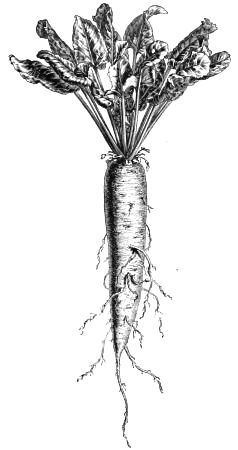
FIG. 222. LONG YELLOW BEETROOT.
Cultivation: For obtaining the best results, an open
situation should be chosen, free from the shade of trees.
The ground should be light and sandy, and, if possible, that
which has been previously manured for some other crop,
French beans, for instance. Trench the soil to a depth of
2ft. in the autumn, and ridge it up for the winter. As soon
as dry enough to allow of working in spring, dig over the
whole bed with a steel digging fork, and break the soil
tolerably fine. Sow any time from the last week in April
to the end of May. Prepare the drills about a foot or 15in.
apart, and from 1in. to 2in. deep. The seeds grow quicker
if steeped in water previous to sowing, afterwards allowing
them to get dry enough to separate from each
other. Sow thinly, and fill in the drills with a rake. As
soon as the plants are up, hoe between the rows, and keep
free from weeds. In a fortnight or three weeks after this
hoeing, if the weather has been favourable, the plants will
be large enough for thinning. Thin out to about 9in. apart,
and carefully fill up, in dull weather, any blanks that may
occur. Transplanting is, however, not generally a very
satisfactory method. Carefully lift the roots in autumn,
before frost comes, and wring off the leaves about an inch
from the crowns. Place the roots in a cool shed or house,
and allow the soil on them to get quite dry, when they may
be stored for winter use in dry sand, or soil, in a shed free
from frost. It is preferable to keep the crowns free from
soil, to prevent decay from the ends of the leaves left on
them. If this be carefully done, the roots will keep till the
next season's early crop is ready. In all processes connected
with the growing, storing, or cooking of this vegetable,
the greatest care must be taken to avoid bruising or
otherwise injuring the roots, as deficiency of colour would
be the result, especially in the case of the red-fleshed kinds,
in some cases rendering them valueless for table use.
Seed Saving: When lifting the crop in autumn, select
as many of the best formed and coloured roots as required,
and store them separately from the rest. In April, plant
them in a spot by themselves, where there is no danger of
impregnation from other varieties, and in due time good
seed will ripen. If good foliaged varieties are required,
the best should be selected when growing in the summer,
and either be marked by some means, or have the inferior
ones removed from them.
Sorts. These are somewhat numerous—almost every
seedsman having a so-called "improved strain." Nutting's
Dwarf Red, Chelsea, Pine Apple, Dell's Crimson and Red
Castelnaudary, are the best of the crimson or red-fleshed
kinds. The Egyptian Turnip-rooted is a distinct variety,
with flesh of a good colour, and fine flavour; excellent for
summer salads. Betterave de Bretagne is a Continental
variety; the roots grow to a good size, with a distinct outer
skin of a dark colour; flesh rich purple. The best of the
yellow-fleshed kinds are Small Yellow and Long Yellow
(see Fig. 222); but these are not grown nearly so
much as the deep-coloured section; in fact, they are
almost useless for garden purposes.
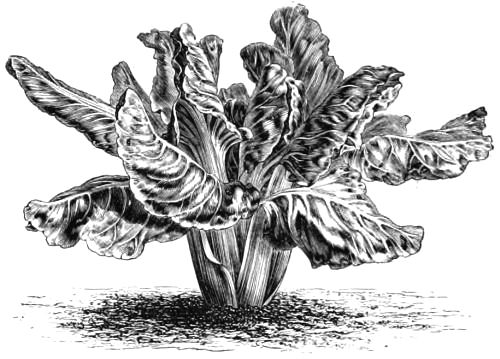
FIG. 223. WHITE LEAF BEETROOT.
Beetroot for Bedding Purposes: In this case, where the
foliage is the main object, the seed may be sown in a reserve
bed, and the plants transferred to their positions in
the flower garden. If, however, a line is required in a
ribbon or other border, the best plan is to sow there, and
thin out the plants to equal distances. Dell's Crimson is
one of the best varieties for this purpose, being very compact
and of a good dark colour.
Varieties of the Leaf Beet (Beta Cicla), and Sea or
Perennial Beet (Beta maritima), are sometimes, but very
seldom, cultivated for the use of the leafstalks and
leaves, the roots being hard and unfit for cooking purposes.
They are at the best but substitutes for other
vegetables—namely, the midrib for Sea-kale and the leaves
for Spinach. If desired, seeds may be sown in the way
described for Beetroot, in April for using in autumn and
winter, and in August for spring use, plants of the latter
sowing being protected in severe weather. The best sorts
are Red-stalked, Yellow-stalked, and White (see Fig. 223)
or Silver Leaf.
BEET CARRION BEETLE (Silpha opaca). This
destructive insect is frequently found in dead animals,
but often its grub almost destroys the leaves of Beet and
Mangold Wurzel crops. The grubs, which are black and
shining, when full grown are from ⅓in. to ½in. long; the
three segments next the head are rounded at the sides, but
the other segments are sharp, and the tail segment has a
sharp spine on each side. "When full-fed, the grubs bury
themselves, and form cells at the depth of 3in. or 4in.
below the surface of the earth, in which they turn to pupæ,
and from these the Beetle has been seen to come up in
about the space of a fortnight or three weeks" (Ormerod).
The Beetles are flattish, and about five lines long, brown-black,
with a tawny down; eyes large and oval; horns
club-shaped; body somewhat oval; wing-cases very flat,
turned up at the outer edge, each case having three sharp
ridges running along it; tip of abdomen dull red. Any
manures or methods of cultivation that would stimulate
growth in the plants, so as to permit renovation of injuries,
would be found useful. If farmyard manure were applied
to the soil intended for Beet in the autumn instead of in
spring, it would lessen the risk of attack to the Beets.
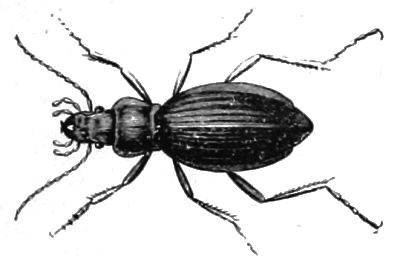
FIG. 224. COMMON GARDEN BEETLE.
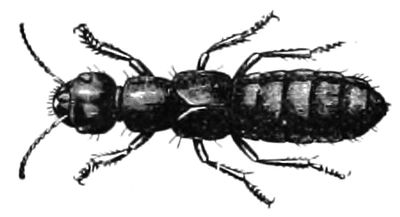
FIG. 225. DEVIL'S COACH HORSE.
BEETLES (Coleoptera). Beetles form one of the most
extensive orders of insects, there being upwards of 3000
known British species. They vary much in appearance,
but a Beetle is readily recognised by its front wings, or
elytra; these form a tough horny sheath or case, which
lies over the real wings, and protects them when the insect
is not flying. Sometimes, the elytra are very short (see
Fig. 225); the mouth is fitted with jaws for cutting.
The metamorphosis is complete, i.e., the larva or grub
is very unlike either the quiescent pupa or the perfect
insect. The period that elapses before Beetles arrive at
their perfect state varies from a few weeks to two or
three years, but is usually rather longer than in Butterflies
or Bees. Various Beetles attack growing plants and roots.
Thus, Otiorhynchus sulcatus and O. picipes attack Vines,
Roses, and other plants, gnawing off the bark. Some
species of Beetles attack Mushrooms, while others bore
into the wood of old trees, or eat leaves (e.g. Turnip Fly),
or burrow in the leaves, or form galls on roots (Cabbage-gall
Weevil). Of some kinds, the beetles are hurtful; of
others, the larvæ. Many kinds, however, are beneficial,
such, for instance, as the common Ground Beetle
(Carabus, Fig. 224), and the Devil's Coach Horse (Ocypus
olens, Fig. 225). These live upon other insects and
snails. One kind of Beetle—the Ladybird (see Figs. 226
and 227)—is very beneficial in a garden, as it preys upon
the aphides, or plant lice. For instructions in dealing
with the noxious kinds, see Asparagus Beetle, Bean
Beetle, Beet Carrion Beetle, Click Beetle, Cockchafer,
Lily Beetle, Rosechafer, and Turnip Fly.
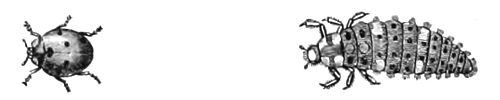
FIG. 226. SEVEN-SPOTTED
LADYBIRD. FIG. 227. GRUB OF LADYBIRD.
(Enlarged).
BEET or MANGOLD FLY (Anthomyia betæ).
The maggots of this fly do considerable damage by feeding
on the pulp of the Beet or Mangold leaves. The eggs are
small, white, and oval, and are laid in small patches beneath
the leaves; the maggots are about ⅓in. long, legless, cylindrical,
and yellowish-white. As it is of such recent appearance
in this country, specifics for its eradication are by no
means numerous; but, according to Miss Ormerod, "the
best treatment appears to be to nip it in the bud, where
such treatment is possible, by destroying the infested plants,
but generally by all means of good cultivation, or by special
applications of artificial manure, to ensure a hearty growth,
which may run the plants on past the power of average
attacks to weaken the leafage to a serious extent."
BEFARIA (named in honour of Bejar, a Spanish
botanist). ORD. Ericareæ. SYN. Bejaria. An elegant
genus of greenhouse evergreen shrubs, closely allied to
Rhododendron. Flowers bracteate; corolla very deeply
seven-cleft, spreading. Leaves racemose or corymbose,
crowded, quite entire, coriaceous. They thrive in a compost
of peat and loam. Propagated by cuttings, made of
the young wood, and placed in sandy soil, in gentle heat.
B. æstuans (glowing).* fl. purple; corymbs terminal, simple;
peduncles, pedicels, rachi, calyces, and branchlets clothed with
clammy glandular hairs. l. elliptic, rather glabrous above, but
downy and glaucous beneath, while young clothed with rusty
tomentum. Plant much branched; branchlets sub-verticillate.
h. 10ft. to 15ft. Peru, 1846. SYN. Acunna oblonga. (G. C. 1848, 119.)
B. cinnamomea (cinnamon-coloured). fl. purple; panicles close,
terminal; peduncles woolly, hispid. l. slightly downy above,
rusty tomentose beneath. Branches downy, hispid. h. 4ft. Peru,
1847.
B. coarctata (close-headed). fl. purple; corymbs terminal,
simple; peduncles, pedicels, rachi, and calyces clothed with rusty
tomentum. l. oblong, glabrous, glaucous beneath. Shrub much
branched. h. 4ft. to 5ft. Peru, 1847. (G. C. 1848, 175.)
B. glauca (glaucous).* fl. flesh-coloured; racemes terminal and
axillary; pedicels somewhat fastigiate. June. l. oblong, obtuse,
glaucous beneath. Shrub much branched; branchlets angular.
h. 3ft. to 6ft. South America, 1826.
B. ledifolia (Ledum-leaved).* fl. purple; racemes terminal;
peduncles, pedicels, rachi, branchlets, and calyces clothed with
clammy glandular hairs. l. oblong, somewhat mucronate, with
revolute edges, glaucous beneath, glandular. Shrub much
branched; branches purplish. h. 3ft. to 4ft. South America,
1847. (F. d. S. 3, 195.)
B. racemosa (racemed). fl. purple, disposed in racemose terminal
panicles. July. l. ovate-lanceolate, glabrous; branchlets
smooth or hispid. h. 3ft. to 5ft. Georgia, 1810.
BEGONIA (named after M. Begon, a French patron
of botany). ORD. Begoniaceæ. A large genus of succulent
herbs or undershrubs (a few climbers), in many of
which the stem is reduced to a tuberous rhizome, whilst
some are distinctly tuberous. Flowers usually showy and
large, white, rose, scarlet, or yellow, unisexual; perianth
segments petaloid, four to five divisions, rarely two. Stamens
numerous, filaments free or united at the base.
Ovary inferior, styles two to four, free, sometimes connate,
stigmas brandied or twisted. Fruit capsular, rarely
succulent, often winged. Seeds numerous, minute. Leaves
alternate, more or less unequal-sided, entire, or lobed, or
toothed. Flower-stalks axillary, cymose. Distribution:
Species about 350, in all tropical moist countries, especially
South America and India; not known in Australia. Cultivated
species (exclusive of garden hybrids and varieties)
about 150. A large number of genera, or what were considered
as such are now merged in Begonia—viz., Barya,
Baryandra, Casparya, Pritzelia, &c. The rich colours and
beautiful form of the flowers of Begonias, their prettily-marked
foliage, and free-growing, free-blooming nature,
have long marked them out as favourite garden plants.
Within the last twenty years a new race, characterised
by a tuberous root-stock, annual herbaceous stem, and
large handsome flowers, has been introduced from the
Andes of South America, from which, by means of careful
cross-fertilisation and selection, a large number of beautiful
and almost hardy kinds have been raised. The size,
substance, and rich colours of the flowers of the majority
of the plants of this race of Begonias are witness to
what may be done by skilful cultivation and careful cross-breeding
among plants. In the same way the large-leaved,
stemless section, of which B. Rex may be taken as the
type and principal progenitor, have been improved both
in the size and the coloration of their foliage, and countless
forms are now in cultivation, both as garden plants
and for the decoration of rooms, &c. The propagation
of Begonias may be accomplished by means of seeds, which
are freely produced by almost all the cultivated kinds,
by cuttings, by division of the rhizomes, and—in the case
of the large-leaved kinds—by leaf-cuttings. For the first
of these methods it is necessary that the seeds should be
well ripened before they are gathered, and kept dry until
sown. Where it is desired to increase any particular
kind of garden origin, seeds are useless, none of the
hybrid or seedling forms perpetuating themselves through
their seeds, although equally beautiful sorts may be raised
from them. The characters of all true species are, however,
reproduced in their seedlings. For the successful
raising of Begonia seeds it is necessary to sow them on
pans or pots of well-drained, light, sandy soil, which should
be well watered before the seeds are sown. The seeds
should not be covered with soil, or they will fail to germinate.
Over the pans a pane of glass should be placed, and
they should then be stood in warm house or a frame where
a temperature of about 65deg. can be maintained, and
shaded from sunshine. As soon as the plantlets are large
enough to be safely manipulated, they should be pricked
off into pans of light leaf-mould soil, in which they may
remain until large enough to be placed singly in pots.
Cuttings: These strike freely if planted in small pots,
in sand and leaf mould, and placed on a bottom heat of
70deg. Where large quantities are required, a bed of
cocoa nut-fibre in a stove or propagating frame may be
used, and in this the cuttings may be planted and remain
until well rooted. Leaf cuttings succeed best when laid
on sand or cocoa-nut fibre, and shaded from bright sunlight.
In preparing the leaves, old, well-matured ones
should be selected, and incisions made with a sharp knife
across the principal nerves on the underside. They should
then be placed on the sand or fibre and held down by
means of a few pieces of crock. Under this treatment,
bulbils will form on the lower ends of the nerves of each
section of the leaf, and these, when large enough, may be
removed from the bed and potted. With the exception of
B. Evansiana (discolor), an almost hardy species from North
China, all the shrubby species require a warm or intermediate
house for their cultivation, although during the
summer months a frame or sheltered bed answers for most
of them, provided they are removed into their warm winter
quarters on the approach of cold weather. Some of the
species, such as B. Dregei, B. semperflorens, B. nitida, B.
fuchsioides, B. Lindleyana, B. Richardsiana, along with
the hybrids Ascotensis, Knowsleyana, Weltoniensis, and
Ingramii, are grown in pots out of doors all the summer,
and under liberal treatment they form large handsome
specimens, which are of great value as flowering plants
for the conservatory in winter. The tuberous-rooted herbaceous
kinds should be started in heat in February,
and, when vigorous growth has commenced, be gradually
hardened off, for use either as bedding plants or as pot
specimens for flowering in the greenhouse. A mixture of
loam and leaf mould with a little sand and rotten cow-dung
is suitable for the cultivation of these plants in pots.
Liberal supplies of water should be given during the growing
season. As the growth decays, water should be withheld
until finally the tubers may be shaken out of the soil
and placed in dry sand or cocoa-nut fibre, in a house or
shed where a temperature above freezing can be maintained.
B. gracilis and its varieties, diversifolia and
Martiana, are beautiful greenhouse plants, which thrive
well if treated as advised for the other tuberous-rooted
kinds, with the addition of a few more degrees of heat.
The Rex section requires a light rich soil, plenty of
moisture, and a shaded position in a warm greenhouse.
These kinds are often employed with good effect for
clothing peat-covered walls in ferneries, or as an undergrowth
in large tropical houses. Large specimens have
been grown under the stage in a warm house, the shade
and moisture of such a position being exactly what they
best delight in.
B. socotrana, an interesting species from the island of
Socotra, is somewhat singular in its requirements. The
stem is herbaceous and annual, and about its base a cluster
of bulbils are formed, from every one of which a plant
will be developed the following year. The growing season
for this species is from September to March, after which
it goes to rest for the whole summer. A tropical temperature
and all the light possible, are essential to the
well-doing of this plant.
It is interesting to note the apparent impossibility to
cross any of the shrubby Begonias with the distinctly
tuberous-rooted species; and even the species of the
shrubby section, whose stems are semi-tuberous, have
hitherto refused to commingle with the South American
tuberous kinds, of which B. Veitchii, B. rosæflora, and
B. boliviensis may be said to be typical. The infusion
of the blood of these large, handsome-flowered kinds
into the tall, shrubby species, would almost certainly
result in the production of a race of splendid winter-flowering
greenhouse plants, and it is therefore in every
way desirable that no pains should be spared to break
through the obstacle to the union of the two races.
Explanation of contractions: T, tuberous-rooted; S,
shrubby.
B. acerifolia (Acer-leaved). S. A tall-growing, thick, succulent-stemmed
species, with green, lobed, serrated foliage, and large
branching cymes of small white flowers; sepals of male flowers
hairy; styles three, two-horned. Capsule triangular, with one of
the angles prolonged into an obtuse wing. Spring. Quito, 1829.
B. acuminata (taper-pointed-leaved). S. A low shrubby species,
having semi-cordate, oblong, pointed leaves, with toothed margins,
and the nerves on the under side and the petiole pilose. fl.
white, in cymes, nearly 1in. across. Capsule wings, two short,
the third ½in. long. Spring. Jamaica, 1798. (B. M. 4025.)
B. acutifolia (acute-leaved). S. A smooth-stemmed, semi-erect
species, 3ft. to 4ft. high, with cordate-oblong leaves, both sides
and petiole glabrous, the margins denticulate. fl. in cymes, white
and red, about 1in. in diameter. Capsule winged, one wing twice
as long as the others. Spring. Jamaica, 1816. SYN. B. purpurea.
B. acutiloba (acute-lobed).* A species with thick fleshy rhizomes,
and palmate cordate leaves which are divided into five to
seven lobes, with toothed margins and pointed apices, under side
thinly covered with brown hairs. Flower-stalk tall, hairy, surmounted
by a branching head of rather large white flowers.
Summer. Mexico.
B. albo-coccinea (white and red).* Stemless, with a thick root-stock.
l. broadly ovate, peltate, entire, 3in. to 4in. long; petiole
3in. to 6in., pubescent. Flower-scape 6in. to 9in. long. fl. in dense
cluster, bright rose on the outside, white within. Capsule regularly
triangular, with short wings. Summer. India, 1844. SYN.
B. Grahamiana. (B. M. 4172.)
B. alchemilloides (Alchemilla-like). Stem fleshy, creeping. l.
rotundate, with toothed, undulate, ciliated margins and short
stalks. Flower-stem slender, few-flowered. fl. small, rose-coloured.
Summer. Brazil.
B. amabilis (lovely).* Stem creeping, fleshy, short. l. ovate,
crenulate, acuminate, about 6in. long, tomentose, dark green,
blotched with white, under side purple-red. Flower-stalk 9in.
long. fl. rose or white, in clustering cymes. Capsule irregular.
Summer. Assam, 1859. The foliage sometimes comes wholly
green, but, under good treatment, it is handsomely variegated.
B. amœna (pleasing).* Rhizome tuberous. Stem none, or very
short. l. 3in. by 2in.; leafstalk 3in. Flower-stem 6in. long, few-flowered.
fl. medium sized, pale rose. Capsule wings small,
nearly equal. Summer. North India, 1878. SYN. B. erosa.
B. ampla (large). S. Stem 1ft. to 2ft. high, very stout, woody.
l. long-stalked, 8in. to 10in. in diameter, broadly ovate, cordate,
pointed, when young densely covered with rusty stellate down.
fl. on short petioles, rose-coloured, 2in. wide. Fruit a succulent
berry, small. Summer. Guinea.
B. aptera (wingless). Stem herbaceous. l. heart-shaped, pointed,
shining green. fl. in short axillary cymes, white, small. Capsule
four-angled. Spring. Celebes, 1878.
B. arborescens (tree-like). S. A large growing species, sometimes
forming a bush 8ft. to 10ft. in height. l. pale green, ear-shaped,
6in. long. fl. in large cymose clusters, white, small. Summer.
Brazil.
B. argyrostigma (silvery-spotted). Synonymous with B. maculata.
B. Arnottiana (Arnott's). Synonymous with B. cordifolia.
B. asplenifolia (Asplenium-leaved). S. A slender-stemmed, beautifully
cut-leaved species, the foliage of which is pinnatisect,
giving the plant the appearance of a Thalictrum rather than a
Begonia. fl. very small, white. Guinea.
B. assamica (Assam). Stem short, fleshy. fl. pinkish flesh-colour.
l. oblique ovate, olive-green, marbled with silvery blotches
above, and of a pale purplish-pink beneath; petioles pale green,
softly hairy. Assam, 1883.
B. attenuata (attenuated). Synonymous with B. herbacea.
B. aucubæfolia (Aucuba-leaved). Synonymous with B. incarnata.
B. auriformis (ear-formed). Synonymous with B. incana.
B. barbata (bearded). S. Stem short, hairy. l. toothed, oval-shaped,
pointed, hispid beneath, 4in. long. fl. medium-sized,
white or pink; flower-stalk hairy. Capsule equal-winged. Summer.
India.
B. Berkeleyi (Berkeley's).* T. A garden hybrid, with thick,
fleshy stems, and long ear-shaped foliage. fl. in erect panicles,
rose-coloured. A useful winter-flowering kind.
B. bipetala (two-petaled). Synonymous with B. dipetala.
B. biserrata (doubly-serrated). S. Stem erect, branched, 2ft. to
3ft. high. l. 6in. long, 2in. to 3in. wide, deeply lobed, toothed,
pale green. fl. in loose cymes, drooping, rose-coloured, 1½in. wide,
serrated edges. Capsule pilose, two short and one long wings.
Summer. Guatemala, 1847. (B. M. 4746.)
B. boliviensis (Bolivian).* T. Stem herbaceous, succulent, 2ft.
high, branching. l. lanceolate, pointed, serrate, 3in. to 5in. long.
fl. in drooping panicles, large, scarlet, males twice as large as
females. Capsule three-winged. Summer. Bolivia, 1857. (B. M.
5657.)
B. Bowringiana (Bowring's). Synonymous with B. laciniata.
(B. M. 5657.)
B. braziliana (Brazilian). S. Stem erect, tall, succulent. l.
oblique, ovate, toothed, slightly pubescent; principal nerves
brownish; stalk hairy. fl. white or rose, small, in short, few-flowered
cymes. Capsule wing ½in. long. Summer. Brazil.
B. Bruantii (Bruant's).* B. A garden hybrid between B. Schmidti
and B. semperflorens. l. green, with a brownish tint. fl. white
or rose, in erect panicles. Summer, 1883. Used as a bedding
plant in summer.
B. bulbifera (bulb-bearing). Most likely a form of B. gracilis.
B. caffra (Kaffrarian). A variety of B. Dregei.
B. carolineæfolia (Carolinea-leaved). S. Stem erect, thick,
fleshy. l. palmate, curiously divided into six to eight long ovate
segments, each 6in. long. fl. in a dichotomous cyme, on long
stalk, rose-coloured, small. Capsule small, wings one longer than
others. Winter. Mexico, 1876. A singular-leaved species. (R. G.
1-25.)
B. Cathcartii (Cathcart's). S. Caulescent. l. heart-shaped,
acute, glabrous; stalks of flowers and leaves hairy; flowers and
fruit as in B. barbata. Summer. India. SYN. B. nemophila.
(C. H. P. 13.)
B. Chelsoni (Chelsea).* T. A garden hybrid between B. Sedeni
and B. boliviensis. Stem fleshy, 2ft. high. l. oblique, lance-shaped,
irregularly lobed. fl. large, orange-red, drooping. Summer,
1874.
B. cinnabarina (vermilion).* S. Stem erect, short, herbaceous.
l. 2in. to 4in. long, oblique, toothed; peduncles 6in. long, few-flowered.
fl. (male), medium, red; female flowers very small.
Summer. Capsule irregularly-winged. Bolivia, 1848. (B. M. 4483.)
B. cinnabarina (vermilion). A variety of B. fuchsioides.
B. Clarkii (Clarke's).* T. Stem purplish, fleshy, stout. l. oblique-cordate,
serrate. fl. in pendulous racemes, abundant, large,
bright red, very handsome, nearly related to B. Veitchii. Summer.
Peru and Bolivia, 1867. (B. M. 5675.)
B. coccinea (red).* S. Habit suffruticose. Stem sub-erect, 1ft. to
2ft. high, thick at the base. l. ovate-oblong, pointed; margins
undulate and toothed. fl. in pendulous racemes, medium-sized;
flowers and peduncles red. Capsule nearly regular; wings short.
Summer. Brazil, 1842. (B. M. 3990.)
B. conchæfolia (shell-leaved). Stem creeping, rhizomatous,
thick. l. peltate, ovate, 3in. to 5in. long, edges almost entire;
under side, along with leaf and flower-stalks, covered with ferruginous
hairs; scape 9in. long, erect, surmounted by corymb of
small whitish fragrant flowers. Capsule wings, one long, two
short. Autumn and winter. South America, 1852. SYNS. B.
scutellata, B. Warscewiczii. (R. B. 246.)
B. corallina (coral-flowered). S. Stem woody, branching, sub-erect,
brownish when matured. l. ovate-oblong, pointed, undulate,
smooth, dull green, under side purple. fl. in long pendent racemes,
numerous, medium-sized, bright coral-red. Summer.
Brazil (?), 1875. A rare species, and one of the handsomest of the
shrubby kinds, most likely closely related to B. maculata.
B. cordifolia (heart-shaped). T. Stemless; root-stock fleshy. l.
cordate, orbicular, toothed, 3in. wide, pilose above, pubescent
below; flower-scape 6in. long, dichotomous. fl. numerous,
medium-sized. Capsule with three narrow wings. Winter.
Ceylon and India. SYN. B. Arnottiana.
B. coriacea (leathery).* T. Stem 6in. high, herbaceous. l. reniform,
5in. wide by 3in. long, smooth above, pilose below. fl. rose-coloured,
large, in twos or threes on the end of an erect scape,
8in. to 10in. long. Wings of capsule short, red. Summer. Bolivia.
B. coriacea (leathery). Synonymous with B. peltata.
B. crassicaulis (thick-stemmed). Stem short, thick, articulated,
succulent. l. palmate; segments acuminate, toothed, under side
clothed with rusty down. fl. in many-flowered cymes, dipetalous,
white or rose-coloured, medium-sized. Capsule wings unequal.
Near to B. heracleifolia. Spring. Guatemala, 1841. (B. R. 28, 44.)
B. crinita (hairy).* S. Stem 1ft. high, fleshy, bright red, more or
less hairy. l. ovate-cordate; margins toothed, dark green; petiole
red and hairy, like the stems. fl. in lax, branching cymes,
rose-coloured, 1½in. in diameter. Fruit three-winged, one long
and acute, two short and rounded. Spring. Bolivia, 1870. (B. M.
5897.)
B. cucullata (hooded). A variety of B. semperflorens.
B. dædalea (adorned).* Stem short, thick, succulent. l. large,
green, thickly covered with a close network of russet-brown,
scarlet when young; edges pilose. fl. white and rose, in loose
panicles. Mexico, 1860. A handsome foliaged plant. (I. H. 1861,
269.)
B. Daveauana. See Pellionia Daveauana.
B. Davisii (Davis's).* T. stemless, l. springing directly from
root-stock, ovate-cordate, shining green, slightly hairy, underside
red; petiole short, fleshy. Flower-scapes, pedicels, and
flowers bright red; scape 4in. high, bearing half a dozen flowers
in umbel. Capsule three-winged, one long, two very short.
Summer. Peru, 1876. A handsome tuberous-rooted species,
dwarf. See Fig. 228, for which we are indebted to Messrs. Veitch
and Sons. (B. M. 6252.)
B. dichotoma (branching). S. Stem tall, stout, fleshy. l. 5in.
long by 4in. wide, lobed, dull green. fl. white, on long axillary
scapes, numerous. Winter. 1860.
B. Digswelliana (Digswell's). Stem short, semi-decumbent,
large, green; margins red. fl. on long, erect scapes, pale pink,
small, numerous. Useful for winter flowering purposes. A
garden hybrid. (F. M. 236.)
B. dipetala (two-petaled). Stems springing from a fleshy root-stock,
erect, 18in. high, brown. l. half heart-shaped; margins
toothed, upper surface thickly spotted with white, under side
red. fl. in loose axillary cymes, two-petaled, large, pink. Capsule
equal-winged. Spring. India, 1828. A handsome species.
(B. M. 2849.) SYN. B. bipetala.
B. discolor (two-coloured). Synonymous with B. Evansiana.
B. diversifolia (diverse-leaved). A variety of B. gracilis.
B. Dregii (Drege's).* Rootstock fleshy. Stems succulent;
annual, 1ft. high. l. oblique, thin, green, slightly spotted with
grey, reddish on the under side. fl. white, about 1in. across, in
axillary cymes. Capsule three-winged, one much longer than
the other two, and acute-pointed. Summer. Cape, 1840. SYNS.
B. caffra, B. reniformis.
B. echinosepala (spiny-sepaled).* Stem green, succulent, 18in.
high. l. small, obliquely-oblong, serrulate. fl. on axillary peduncles,
white, with curiously papillose sepals. Summer. Brazil,
1872. (R. G. 707.)
B. elliptica (elliptic). Synonymous with B. scandens.
B. erecta multiflora (erect, many-flowered). fl. bright reddish-pink,
produced for several months, but especially during
the winter. l. oblique, deep bronze coloured, very conspicuous.
A decidedly handsome and very useful garden variety.
B. erosa (bitten). Synonymous with B. amœna.
B. Evansiana (Evans's).* T. Stem herbaceous, branching,
smooth, 2ft. high. l. oblique, ovate-acute, sub-cordate, lobed;
margins denticulate, green above, under side and petioles deep
red; flower-stalks branching, axillary. fl. numerous, flesh-coloured,
large. Capsule wings blunt-pointed, one longer than
the others. Summer. Java, China, Japan, 1812. A handsome
species, and almost hardy. SYNS. B. discolor, B. grandis. (B. M.
1473.)
B. eximia (excellent).* A hybrid, raised from B. rubro-venia
and B. Thwaitesii. Stem short, succulent. l. bronzy-purple, tinged
with red. A handsome foliage plant. (I. H. 1860, 233.)
B. falcifolia (sickle-leaved).* S. Stem 1ft. to 2ft. high, erect,
branching. l. 6in. long, 1½in. wide, curved, tapering to a narrow
point; margins toothed, upper surface green, more or less spotted
with white, under side deep red. fl. on short axillary peduncles,
drooping, dipetalous, bright red. Wings of capsule equal,
½in. wide. Summer. Peru, 1868. A pretty flowering plant.
(B. M. 5707.)
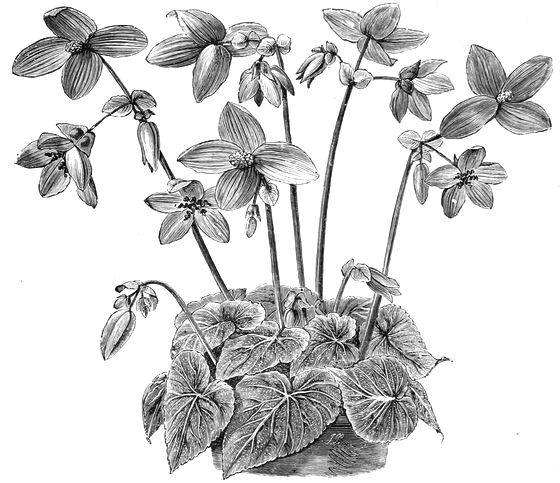
FIG. 228. BEGONIA DAVISII.
B. ferruginea (rust-coloured). S. Stem woody, erect, smooth
branching, covered with ferruginous hairs. l. oblique, ovate-acute,
acuminate, lobed; margins toothed. fl. in branching cymes,
large red. Capsule unequal-winged. Summer. Bogota. SYN.
B. magnifica.
B. Fischeri (Fischer's). Similar to B. falcifolia, except that the
foliage is unspotted, and the flowers are white and small. Brazil,
1835. (B. M. 3532.)
B. foliosa (leafy).* S. Stem slender, branching, fleshy. l. small,
ovate-oblong, dark green, numerous, distichous on stems. fl.
small, numerous, white, tinged with pink. Summer. New Grenada,
1868. Useful for growing hanging baskets. SYN. B.
microphylla. (Ref. B. 222.)
B. frigida (frigid). S. Stem 1ft. high, smooth, green, succulent.
l. cordate, acuminate, lobed, serrated, slightly pilose; upper
side coppery-green, beneath deep rose-red, especially upon the
veins. fl. small, white, in erect branching cymes. Capsule wings
two long, one short. Summer. Country unknown, 1860. (B. M.
5160.)
B. Frœbeli (Frœbel's).* T. Stemless. l. numerous, cordate,
acuminate, green, covered with purplish-velvety hairs. fl. in
tall, lax, drooping, branching cymes, brilliant scarlet, large.
Winter. Ecuador, 1872. A beautiful flowering plant, useful for
conservatory work in winter. (Garden, pl. 96.)
B. fuchsioides (Fuchsia-like).* S. Stem tall, drooping, herbaceous,
smooth, green, tinged with red. l. copious, distichous,
1½in. long, oblong-ovate, slightly falcate, serrated, smooth;
margins tinged with red. fl. in branching pendulous panicles,
numerous, rich, deep scarlet. Capsule wings two very short and
one long. Summer. New Grenada, 1846. A handsome greenhouse
plant, useful for covering pillars, &c. SYN. B. miniata.
(B. M. 4281.)
B. f. miniata (vermilion). l. smaller than in type. fl. cinnabar
red. (F. d. S. 8, 787.)
B. gemmipara (bud-bearing). S. Stem 1ft. high, from a tuberous
root-stock, succulent, l. ovate-acuminate, cordate, lobed,
smooth above, pilose below. fl. medium-sized, white, or with
rose stripes, on pendulous, axillary peduncles; sometimes the
peduncles bear, instead of flowers, quadrangular cups, which
are closely packed with oblong viviparous bulbils. Summer.
Himalaya. (C. H. P. 14.)
B. geranifolia (Geranium-leaved).* Rootstock tuberous. Stem
1ft. high, erect, angular, succulent, green, with a purplish tinge,
branched dichotomously. l. cordate, cut into unequal serrated
lobes, green; margins red, whole plant perfectly smooth;
peduncles terminal, bearing two to three flowers, which are
inclined, drooping while in bud; outer petals orbicular, red, the
two inner obovate, waved white. Summer. Lima, 1833. (B. M.
3387.)
B. geranioides (Geranium-like).* T. Rootstock fleshy. Stemless.
l. radical, somewhat reniform, lobed, serrated; surface
scabrid, deep green; leafstalks red, hairy. fl. white, in lax,
drooping panicle. Summer. Natal, 1866. A pretty, though
delicate, species. (B. M. 5583.)
B. glandulosa (glandular-leaved).* Stem a stout rhizome, scaly.
Leafstalks thick, terete, erect, hairy, 9in. high. l. 6in. broad,
fleshy, cordate, lobed, green; veins dark. fl. on tall, dark, erect
scapes, numerous, greenish-white. Capsule wings, one very large,
blunt. Costa Rica, 1854. SYNS. B. hernandiæfolia, B. nigro-venia.
(B. M. 5256.)
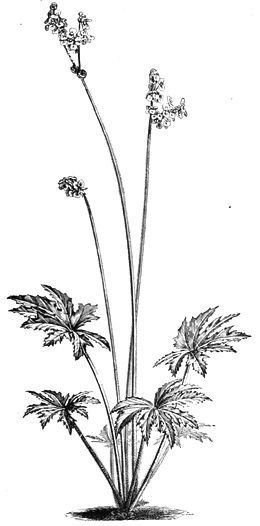
FIG. 229. BEGONIA HERACLEIFOLIA.
B. gogoensis (Gogoan).* l. peltate, ovate-orbicular, oblique,
acute when young, with a bronzy metallic hue, ultimately changing
to a deep velvety-green, intersected by the paler midribs and
veins; the under surface deep red. fl. pale rose, in a lax panicle.
Gogo, in Sumatra, 1881. A very handsome, ornamental-foliaged
species.
B. gracilis (slender).* T. Stem erect, unbranched, very succulent,
l. thinly scattered along stems, half heart-shaped, slightly hairy,
lobed, denticulate-ciliate. fl. on short axillary peduncles; umbel
of few male and female flowers, two larger petals serrate,
colour pink. Capsule winged, green. Mexico, 1829. In axils of
leaves between stipules a cluster of bulbils are borne; these may
be gathered and sown as seeds. This and its varieties, annulata,
diversifolia, Martiana, &c., are beautiful summer flowering greenhouse
Begonias, requiring a sandy peat soil and shade. When
well grown, they are exceedingly ornamental. (B. M. 2966.)
B. Grahamiana (Graham's). Synonymous with B. albo-coccinea.
B. grandiflora (large-flowered). Synonymous with B. octopetala.
B. grandis (great). A variety of B. Rex.
B. grandis (great). Synonymous with B. Evansiana.
B. grandis (great). Synonymous with B. vitifolia.
B. Griffithii (Griffith's). Stemless; rhizome subterraneous. l.
large, obliquely-cordate; margin crenate, hairy; surface granulated,
colour a dark green; margin purple, zoned with grey,
under side green, centre and margin deep purple. fl. on cymes,
large, white internally, outside tinged with blush, slightly pilose.
Capsule tubercled, one wing large, projecting. Winter. India,
1856. (B. M. 4984.)
B. Hasskarlii (Hasskarl's). Synonymous with B. peltata.
B. heracleifolia (cow-parsnip leaved). Rootstock thick, fleshy.
l. radical, on long pilose stalks, palmate, large, bronzy green;
margins toothed, hairy. Flower-stalks long, stout, erect, hairy,
many-flowered. fl. rose-coloured. Capsule wings nearly equal.
Spring. Mexico, 1831. This and the following varieties are
handsome both in foliage and flowers. SYNS. B. jatrophæfolia,
B. punctata, B. radiata. See Fig. 229. (B. M. 3444.)
B. h. longipila (long-haired). l. greyish in middle; outer portions
dark bronzy, blotched with green. Whole plant covered with long,
stiff, fleshy hairs. fl. as in the type.
B. h. nigricans (dark). This differs from the type in having
foliage of a blackish tint all round the margins of the lobes,
and the petals of the flowers nearly white. (B. M. 4983.)
B. h. punctata (dotted). l. green, reddish near margin. fl. rose-colour,
with deep red spots on the outside.
B. herbacea (herbaceous).* Rhizome creeping. l. oblong-acute,
lanceolate, toothed, ciliated. Flower-stalks shorter than leaves;
male flowers in a cymose head, white, small; female flowers solitary,
on very short stalks. Spring. Brazil, 1873. A small species,
very succulent, with the appearance of a primrose when not in
flower. SYN. B. attenuata. (G. C. 1873, 679.)
B. hernandiæfolia (Hernandia-leaved). Synonymous with
B. glandulosa. (Seemann.)
B. hernandiæfolia (Hernandia-leaved). Synonymous with
B. nelumbiifolia. (Gardens.)
B. hernandiæfolia (Hernandia-leaved). Synonymous with
B. peltata. (B. M. 4676.)
B. hirsuta (hairy). Synonymous with B. humilis.
B. Hookeri (Hooker's). A variety of B. semperflorens.
B. Hookeriana (Hooker's). S. Stem woody, 5ft. to 6ft. high,
branching, covered with minute rusty tomentum. l. ovate, unequal
sided, blunt, 8in. long, tomentose, like the stem. fl. in
axillary cymes, small, white. Spring. Brazil, 1850.
B. humilis (dwarf).* Stem erect, fleshy, hairy. l. semicordate-oblong,
acuminate, ciliate-serrate, hairy above, smooth beneath.
fl. few, in cymes, small, white. Capsule unequal winged. Summer.
Trinidad, 1788. Annual. SYN. B. hirsuta.
B. humilis (dwarf). Synonymous with B. suaveolens. (B. R. 294.)
B. hybrida floribunda (many-flowered).* A very beautiful
summer blooming hybrid between B. fuchsioides and B. multiflora.
fl. bright rose, medium sized, produced in abundance.
Summer. One of the best.
B. hydrocotylifolia (Penny-wort-leaved).* Stem succulent,
short, creeping. l. rotundate cordate, almost equal-sided; petiole
short. Whole plant hairy. Flower-stalks 1ft. high, pilose. fl. in
cymose head, medium-sized, dipetalous, rose-coloured, as also are
pedicels and stalk. Capsule wings equal-sized, large. Summer.
Mexico, 1841. (B. M. 3968.)
B. h. asarifolia (Asarum-leaved). Leaves and flowers smaller
than in the type, the latter white. Mexico.
B. imperialis (imperial).* Stem rhizomatous, short, thick. l.
large, broad, ovate-acute, cordate, rugose, hairy, dark olive-green;
nerves banded with greyish-green colour. fl. in cymes, white,
medium-sized. fr. unequal winged. Mexico, 1861. A handsome
foliage species. (I. H. 1860, 262.)
B. i. smaragdina (emerald-like). l. shining emerald green.
B. incana (hoary). Stem erect, fleshy, tomentose. l. leathery,
peltate, oblong-acute, sub-angular, whitish beneath. Flower-stalks
long. fl. in small downy panicles, white. Winter. Mexico,
1840. SYN. B. auriformis.
B. i. auriformis (ear-like). l. divided at the base, not peltate.
fl. glabrous.
B. incarnata (fleshy).* S. Stem erect, fleshy, 2ft. high, smooth;
nodes swollen, reddish, spotted. l. on short, smooth petioles,
unequally cordate, acuminate, sinuately-serrate, green. fl. large,
rose-coloured, handsome; peduncles terminal, nodding. Capsule
with unequal wings, the largest acute. Winter. Mexico, 1822.
SYNS. B. aucubæfolia, B. insignis, B. Lindleyana. (B. M. 2900.)
B. i. maculosa (spotted). l. spotted with white.
B. i. metallica (metallic-leaved). l. with a bronzy-purple
metallic lustre.
B. i. papillosa (papillose). Foliage margined with bright rose;
upper surface covered with little papillæ. (B. M. 2846.)
B. i. purpurea (purple-leaved). Foliage deep bronzy-purple.
B. Ingramii (Ingram's).* A garden hybrid, raised at Frogmore in
1849, from B. fuchsioides and B. nitida. It combines the characters
of the two parents. A useful winter-flowering plant; may
be grown out of doors in summer. (G. M. B., p. 153.)
B. insignis (remarkable). Synonymous with B. incarnata.
B. involucrata (involucrate). S. Stem erect, tall, angular,
covered with a reddish tomentum. l. oblique, ovate-acuminate,
cordate; margins toothed and ciliate. fl. enclosed in a wrapper,
or involucre, when young; peduncles graceful, bearing umbel of
white, largish flowers. Capsule wings unequal, the largest falcate.
Winter. Central America.
B. jatrophæfolia (Jatropha-leaved). Synonymous with B. heracleifolia.
B. Josephi (Joseph's). Stemless. l. radical, on petioles 6in. to
10in. long, ovate-acuminate, three-lobed, or orbicular, with numerous
acute lobes, slightly pubescent; scape 1ft., branched.
fl. small, rose-coloured. Capsule wings unequal; upper margins
horizontal. Summer. Himalaya.
B. Kunthiana (Kunth's).* S. Stem erect, smooth, slender,
purple-brown. l. on short petioles, lance-shaped, acuminate,
regularly serrated, smooth, dark green above, bright crimson
below. fl. axillary, on short nodding peduncles, white, large,
handsome. Summer. Venezuela, 1862. A pretty species. (B. M.
5284.)
B. laciniata (cut-leaved).* Rhizome thick, fleshy. Stem short,
thick, jointed, reddish, woolly. l. large, 6in. to 10in. long, 4in. to
6in. broad, unequally cordate; margins irregularly cut, serrated;
upper side green, under dull, rufous. fl. on short axillary peduncles,
large, white, tinted with rose. Capsule wings, one very
long, others short. Spring. Nepaul to Birma, South China,
1858. SYN. B. Bowringiana. (B. M. 5182.)
B. Leopoldi (Leopold's). A hybrid from B. Griffithii and B. splendida,
with large variegated foliage. 1858.
B. Lindleyana (Lindley's).* S. Stem erect, fleshy, covered with
ferruginous hairs. l. on long petioles, peltate, ovate, acute, 5in.
to 6in. long, 3in. to 4in. wide, irregularly lobed, toothed, green
above, tomentose below. fl. on branching peduncles, medium
sized, white. Winter. Guatemala.
B. Lindleyana (Lindley's). A garden synonym of B. incarnata.
(Gardens.)
B. longipes (long-stalked). S. Stem 3ft. or more high, stout,
succulent, furrowed, covered with glands. l. large, rotundate-cordate;
margin irregular, serrated, both sides green, pubescent
when young. fl. numerous, small, white; peduncle 1ft. long,
branched. Winter. Colombia, 1829. (B. M. 3001.)
B. longipila (long-haired). A variety of B. heracleifolia.
B. lucida (shining). Synonymous with B. scandens.
B. Lynchiana (Lynch's). S. Stem erect, tall, succulent, smooth.
l. fleshy, 10in. long, oblique, ovate-cordate, crenulate, green,
smooth. fl. axillary, in drooping cymes, numerous, large, deep
reddish-crimson. Winter. Mexico, 1880. One of the finest of
the tall-growing winter-flowering species. When well managed,
the flower-heads are almost a foot in diameter. SYN. B. Roezlii,
of gardens. (B. M. 6758.)
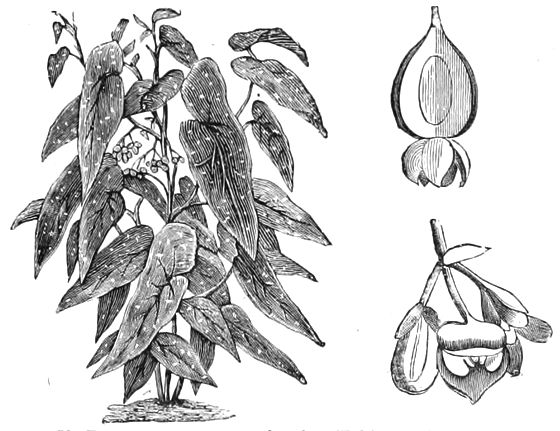
FIG. 230. BEGONIA MACULATA, showing Habit, Section of Capsule,
and Flower.
B. maculata (spotted).* S. A woody shrub. Stems branching,
smooth. l. oblique, ovate-oblong, leathery, slightly undulate;
margins entire, under side bright crimson, above green, with numerous
large round blotches of silvery white. fl. in drooping
panicles, coral-like, handsome. Capsule with one long, narrow
wing. Summer. Brazil, 1821. (B. R. 666.) There are numerous
varieties of this species, some with leaves almost green, others
with the markings more striking than in the type; in the flowers
they differ also, ranging from white to coral-red. The beautiful
B. corallina is probably a variety of this. SYN. B. argyrostigma.
See Fig. 230.
B. magnifica (magnificent).* S. Stem erect, fleshy, smooth. l.
ovate, unequal sided, toothed. fl. in terminal, cymose panicles,
rosy-carmine, 1½in. long. New Grenada, 1870. (R. H. 1870, 271.)
B. magnifica (magnificent). Synonymous with B. ferruginea.
B. malabarica (Malabar).* Stem thick, succulent, 2ft. high,
branching. l. numerous, cordate, acute, unequal-sided, crenate
or serrate, hairy above and sometimes below, or altogether glabrous,
spotted white. fl. rose-coloured; peduncles axillary, short,
few-flowered. Capsule wings equal, joined above and below.
Summer. Malabar and Ceylon, 1828. B. dipetala is made a
variety of this, by Sir Joseph Hooker, in "Flora of British India."
(L. B. C. 1730.)
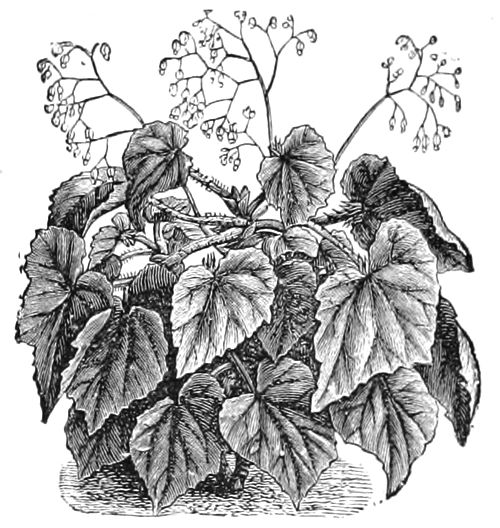
FIG. 231. BEGONIA MANICATA.
B. manicata (tunicated).* Stem fleshy, twisted, short. l. oblique,
ovate-acute, cordate, dentate-ciliate, smooth on both sides, shining
green nerves on under side, with fleshy, scale-like hairs. fl. pink,
dipetalous, in branching cymes; upper portion of stalk scaly.
Capsule wings nearly equal. Winter. Mexico, 1842. See Fig. 231.
B. Manni (Mann's). S. Stem succulent, 2ft. to 3ft. high, branched,
green; branchlets, young parts, petioles, and leaf-nerves clothed
with rusty, furfuraceous pubescence. l. petioled, 5in. long, 2in.
wide, lanceolate, cordate, acuminate, toothed. fl. numerous, rose-red,
in axillary cymes; peduncle 1in. long. Capsule linear, densely
tomentose. Winter. Fernando Po, 1862. (B. M. 5434.)
B. marmorea (spotted). A variety of B. xanthina.
B. Martiana (Martin's). A variety of B. gracilis.
B. maxima (large).* Rhizome thick, hairy, creeping. l. large,
oblique, orbicular-ovate, cordate, shortly acuminate; margins
denticulate ciliate; petiole long, pilose. fl. in branching cymes;
sepals orbicular, pilose on the outside, white. Summer. Mexico,
1853.
B. megaphylla (large-leaved).* Stem short, thick, fleshy. l.
large, palmate, cordate; lobes numerous, pointed; margins hairy,
under side slightly pilose; nerves with scaly hairs. fl. in diffuse
cymes, small, white; peduncles pilose. Capsule wings wide.
Winter. Mexico.
B. metallica (metallic). A variety of B. incarnata.
B. Meyeri (Meyer's). S. Stem erect, stout, woody when mature.
l. large, broadly and obliquely ovate, fleshy, pale green; margin
sinuate, under side tinged with rose; both petiole and blade
covered with short hairs. fl. on long axillary peduncles, in large
paniculate heads, white. Capsule wings equal. Summer. Brazil,
1844. (B. M. 4100.)
B. microphylla (small-leaved). Synonymous with B. foliosa.
B. microptera (small-winged). Stem 1ft. high, terete, green,
pubescent, as in the rest of the plant. Branches few. l. sub-distichous,
4in. to 6in. long, ovate-lanceolate, acuminate, serrated,
dark green; petiole short; stipules as long as petiole. fl. in terminal
panicles, medium-sized, white, tinted rose. Capsule long,
triangular, two angles wingless, the other with a narrow wing.
Winter. Borneo, 1856. (B. M. 4974.)
B. miniata (vermilion). A variety of B. fuchsioides.
B. monoptera (single-winged).* Stem erect, 1ft. to 2ft. high,
rounded, swollen at the joints, dull red, papillose and downy.
Radical leaves on long red stalks, large, reniform, truncate at
the base; caulescent leaves smaller, on short petioles, angled,
crenate, dark green above, red below, and minutely papillose.
fl. on an elongated terminal raceme, white. Capsule three-angled,
two wingless, the other with a long pointed wing. Summer.
Brazil, 1826. A distinct and pretty species. (B. M. 3564.)
B. Moritziana (Moritz's). Synonymous with
B. scandens.
B. natalensis (Natal).* T. Rootstock thick,
fleshy. Stem 1½ft. high, succulent, thick at
the base, articulate, branched, smooth. l.
unequal, semicordate, acuminate, lobed,
toothed, spotted with white. fl. on axillary
cymose peduncles, pale rose. fr. three-winged,
two large, one small. Winter. Natal, 1855.
(B. M. 4841.)
B. nelumbiifolia (Nelumbium-leaved).*
Rhizome thick, fleshy, creeping. l. on long
hairy petioles; blade 12in. to 18in. long, 8in.
to 12in. wide, peltate, hairy on under side;
scape 1ft. to 2ft. high. fl. in cymose head,
numerous, small, white or rose coloured.
Winter. Mexico. A noble-foliaged plant.
SYN. B. hernandiæfolia.
B. nemophila. Synonymous with B. Cathcartii.
B. nigro-venia (black-veined). Synonymous
with B. glandulosa.
B. nitida (shining).* S. Stem 4ft. to 5ft.
high, erect, branched, woody when aged,
smooth, shining. l. large, glossy, green on
both sides, obliquely ovate, acute, crenated
at margin. fl. in terminal and axillary panicles,
numerous, large, deep rose, handsome.
Capsule three-winged, one much larger than
others. Jamaica, 1777. One of the best winter,
and almost a perpetual, flowering species.
SYNS. B. obliqua, B. pulchra, B. purpurea.
(B. M. 4046.)
B. obliqua (oblique). Synonymous with B.
nitida.
B. octopetala (eight-petaled).* T. Stemless.
l. on long succulent downy petioles,
1½ft. or more in length, cordate, 6in. long,
deeply lobed and serrated at the margin,
bright green; scape as long as petioles,
rounded, downy. fl. in corymbs, greenish-white,
males with eight petals, females generally
fewer. Capsule three-angled, two wings
almost suppressed, the other 1in. long; apex
blunt, toothed. Autumn. Peru, 1835. SYN.
B. grandiflora. (B. M. 3559.)
B. odorata (sweet-scented). Synonymous
with B. suaveolens.
B. opuliflora (Guelder-rose-flowered).* S.
Stem 1ft. high, branching, smooth. l. ovate
oblong-acuminate, toothed, smooth above,
hairy below. fl. white, in compact umbels,
on erect scapes. Spring. New Grenada,
1854.
B. Ottoniana (Otton's). A hybrid from B.
conchæfolia and B. coriacea. (R. G. 1859,
p. 15.)
B. papillosa (papillose). A variety of B. incarnata.
B. Pearcei (Pearce's).* T. Stem 1ft. high, succulent, branching.
l. lance-shaped, cordate, pointed, toothed, glabrous above, tomentose
beneath, and pale red. fl. in loose axillary panicles,
large, bright yellow. Summer. Bolivia, 1865. Interesting
because of its being one of the progenitors of the handsome race
of garden tuberous Begonias.
B. peltata (shield-like). Stem short, tomentose; leaves 6in. by
4in., peltate, ovate, densely pilose. fl. in branching cyme, small,
white; peduncle 6in. to 9in., pilose. Brazil, 1815. Interesting
because of its distinctly peltate foliage and silvery appearance of
whole plant. SYNS. B. coriacea, B. Hasskarlii, B. hernandiæfolia,
B. peltifolia.
B. peltifolia (peltate-leaved). Synonymous with B. peltata.
B. phyllomaniaca (proliferous-stemmed). S. Stem thick, fleshy,
rather twisted, green, hairy, clothed, when old, with small viviparous
buds bearing small leaves, by which means the plant may
be multiplied. l. ovate, acuminate, cordate, sinuately lobed,
ciliate, smooth above and below. fl. in axillary cymes, drooping,
pale rose. Capsule with one large wing. Winter. Guatemala,
1861. (B. M. 5254.)
B. picta (ornamented).* T. Stem generally smooth, succulent,
6in. to 12in. high. l. ovate acuminate, nearly equally cordate,
serrated, hairy above and on the nerves below, sometimes variegated.
fl. pale rose, large, handsome; peduncle hairy, erect,
short, few-flowered. Autumn. Himalaya, 1870. (S. E. B.
101.)
B. platanifolia (plane-leaved).* S. Stem 5ft. to 6ft. high,
erect, robust, smooth, green; joints annulated. l. 8in. to 10in. in
diameter, reniform, lobed, hispid on both sides, dark green; lobes
acute, toothed, ciliated. fl. in axillary, dichotomous cymes, large,
white, tinted rose, handsome. Summer. Brazil, 1834. (B. M.
3591.)
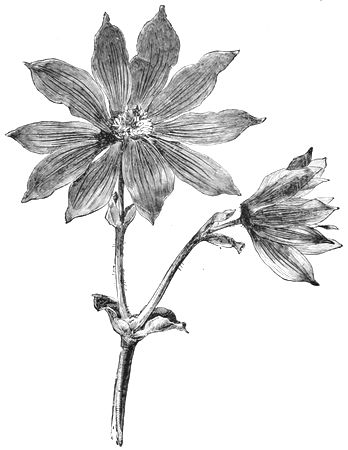
FIG. 232. BEGONIA POLYPETALA.
B. polypetala (many-petaled). Stem about 1ft. high, covered
with a soft whitish tomentum. l. ovate-acute, toothed, pubescent
above, and densely tomentose below. fl., petals nine or ten,
of a fine red colour, smooth, external ones ovate-oblong, pointed;
internal ones somewhat shorter and narrower; sepals two, ovate-elliptic.
Capsule tomentose, three-winged, with one wing larger,
ascendent. Winter. Andes of Peru, 1878. See Fig. 232. (Garden,
Dec. 14, 1878.)
B. prestoniensis (Preston).* A garden hybrid between B.
cinnabarina and B. nitida. l. green, lobed, glabrous. fl. brilliant
orange-red, in drooping axillary cymes, very fragrant. Autumn
and winter. 1867. (G. M. B. 3, 149.)
B. prismatocarpa (prism-fruited).* Stems small, creeping,
hairy; branchlets ascending. l. long, petioled, also hairy, obliquely
cordate, ovate, three to five-lobed; lobes pointed, serrated; peduncles
axillary, longer than foliage, bearing a small umbel of two
to four dipetalous orange and yellow flowers, one female in each
umbel. Capsule four-angled, scarcely winged. Summer. Tropical
West Africa, 1861. The smallest of cultivated Begonias, and especially
interesting because of its four-angled fruit. It forms a
pretty cushion of bright shining green foliage, thickly studded
with its brightly coloured flowers. Requires a stove temperature
and a stony soil. (B. M. 5307.)
B. pruinata (frosted).* Stem short, thick, fleshy, smooth. l.
large, peltate, ovate, angular-sinuate, minutely-toothed; surface
smooth, glaucous; margins pilose, on stout, fleshy petioles. fl. in
large dense dichotomous, or small cymes, white. Winter. Central
America, 1870. (R. B. 247.)
B. pulchra (fair). Synonymous with B. nitida.
B. punctata (dotted). A variety of B. heracleifolia.
B. purpurea (purple). Synonymous with B. acutifolia.
B. purpurea (purple). Synonymous with B. nitida.
B. Putzeysiana (Putzeys'). S. Stem erect, branching, smooth.
l. oblong-lanceolate, acute, toothed, glabrous, under side spotted
with white. fl. in copious small corymbs, white and rose, small.
Capsule small, with rather large obtuse wings. Winter. Venezuela,
1871.
B. radiata (rayed). Synonymous with B. heracleifolia.
B. ramentacea (scaly).* S. Stem erect, branching, brown,
scaly, as also are the leafstalks and peduncles. l. ovate, reniform,
oblique; margins slightly angulate, recurved, under side
red, scaly; peduncles branching. fl. drooping, pink and white,
pretty. Capsule, when ripe, a bright scarlet; wings large. Spring.
Brazil, 1839. (P. M. B. 12-73).
B. reniformis (kidney-formed). Synonymous with B. Dregei.
(Gardens.)
B. reniformis (kidney-formed). Synonymous with B. vitifolia.
(Hook.)
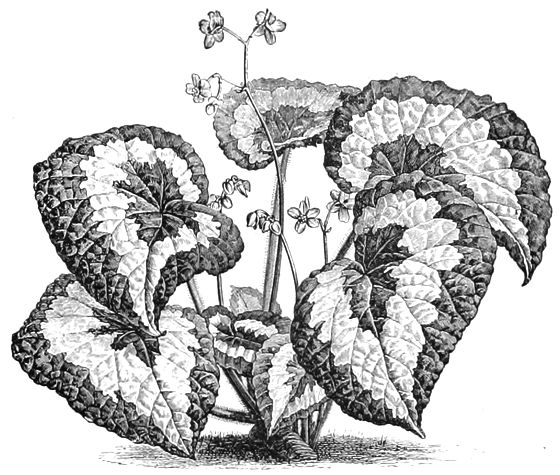
B. Rex (Royal).* Stemless; rhizome fleshy, creeping, subterraneous.
Leafstalk round, red, setose. l. 8in. to 12in. long, 6in.
to 8in. broad, ovate, oblique, sides unequal, cordate, villose; margins
toothed, surface bullate, dark olive-green, with a metallic
lustre, a broad silvery zone running all round, about 1in. from the
margin. fl. in erect branching cyme, large, pale rose. Capsule
wings, two short, one long and rounded. Assam, 1858. See
Fig. 233. (B. M. 5101.) This magnificent species is the principal
progenitor of the numerous ornamental-foliaged Begonias, a selection
of which are given below. Most of them are well worth
growing, but those named have been selected from a large number:
MADAME WAGNER,* l. large, profound green, banded by a broad
silvery zone, especially fine; MARSHALLI, l. very large, the margins
and very centre dark green, while the greater portion of
the surface is covered with a silvery-grey; REGINA,* l. rich olive-green,
banded with a broad zone of bronze-red and silvery-grey,
rendering it very attractive; ROI LEOPOLD,* l. on long stout
petioles, very large, deep bronze-red in the centre, with a broad
border of a rather lighter shade, very effective; ROLLISONI,*
l. large, on long stalks, rich velvety-green, banded with silvery-grey;
SPLENDIDA ARGENTEA,* l. large, of a greyish hue, veined
with white, and tinged with bronze-red, very beautiful. The following
varieties are also very good: ADRIEN ROBINE,* BERTHE
PROUTIERE, CHARLES HOVEY, DISTINCTION,* JULIA SEROT,*
LOUISE CHRETIEN,* MADAME J. MENOREAU,* NARGA,* NAVALA,*
TALISMAN, W. E. GUMBLETON.
B. Richardsiana (Richards').* T. Stem 1ft. high, erect, fleshy,
with slender branches. l. palmately lobed, the lobes sinuate or
toothed. fl. white, males bipetalous, females with five petals.
Cymes axillary near ends of branches, few-flowered. Capsule
three-winged, wings equal. Summer. Natal, 1871. (G. C., 1871,
p. 1065.)
B. R. diadema (of gardens).* This is referred to here because of
its close resemblance to the above. It is most likely a hybrid
between B. Richardsiana and B. dipetala. l. palmately lobed,
rather large, spotted with white. fl. large, rose-coloured.
Summer. 1881.
B. ricinifolia (Ricinus-leaved).* A garden hybrid between B.
heracleifolia and B. peponifolia. l. large, bronzy green, in shape
like those of the Castor-oil plant. fl. numerous, on an erect scape.
Winter. 1847.
B. Roezlii (Roezl's). Synonymous with B. Lynchiana.
B. rosacea (rosy). Stem succulent, short. l. ovate obtuse,
slightly pubescent, toothed; petioles long, pilose. fl. in few-flowered
cymes, medium-sized, rose-coloured. New Grenada,
1860. (Garden, pl. 152.)
B. rosæflora (rose-flowered).* T. Stemless. Petioles, scapes,
bracts, and stipules bright red. l. green, 2in. to 4in. wide, on
stout hairy petioles, 2in. to 6in. long, orbicular-reniform, concave;
margins lobed, red, toothed. Scapes stout, villous, three-flowered.
fl. 2in. across, bright rose-red. Summer. Peru, 1867. One of the
parents of the popular race of tuberous-rooted large-flowered
Begonias. (B. M. 5680.)
B. rubricaulis (red-stalked).* Stemless. Leafstalks, peduncles,
pedicels, and ovaries, a deep red colour. l. obliquely ovate, 4in. to
6in. long, slightly hairy, bright green, wrinkled; margins toothed
and ciliated. Scape 1ft. high, erect, stout, branching at the top,
forming a head of about a dozen flowers, which are large,
white inside, rose-tinted outside. Capsule with one large
wing, the others almost suppressed. Summer. Peru, 1834.
(B. M. 4131.)
B. rubro-venia (red-veined).* Rootstock thick. Stems
12in. to 18in. high, red, pubescent. l. 4in. to 6in. long,
elliptic or lanceolate acuminate, entire or slightly angular,
toothed, green spotted with white above, purplish-brown
below. Scapes axillary, red. fl. in cymose head; outer
segments white with rose-red veins, inner segments pure
white. Summer. Sikkim, &c., 1853. (B. M. 4689.)
B. sanguinea (blood-red). S. Stems woody when old, tall,
stout, red, with scattered paler spots. l. 4in. to 6in. long,
unequally cordate, acuminate, thick and somewhat fleshy
in texture, minutely crenate, green above, deep red below;
peduncles axillary, long, erect, red. fl. in a branching cyme,
rather small, white. Capsule wings sub-equal. Spring.
Brazil, 1836. (B. M. 3520.)
B. scabrida (rough). Stem stout, erect, somewhat succulent,
covered with small tubercles. l. 6in. long, oblique,
ovate-acute, cordate, toothed, slightly hairy. fl. white,
small; cyme many-flowered. Capsule wings equal, large.
Venezuela, 1857.
B. scandens (climbing).* Stem flexuose, fleshy, creeping
or climbing, smooth. l. 4in. long, ovate acuminate, sub-cordate;
margins irregularly toothed, pale shining green.
fl. in axillary branching cymes, white, small. South
America, 1874. Useful either as a basket plant or for
training against moist walls. SYNS. B. elliptica, B. lucida,
B. Moritziana. (R. G. 758.)
B. sceptrum (princely). S. l. obliquely ovate in outline,
deeply lobed on one side; lobes oblong; obtuse, veins sunk,
and the raised spaces between marked with large silvery
blotches, and numerous smaller dots of silver grey. Brazil,
1883.
B. Schmidtiana (Schmidt's).* Stems 1ft. high, branching, herbaceous.
l. obliquely cordate, ovate-acute, small, dark metallic
green above, tinged with red below. fl. in loose drooping axillary
panicles, white, small, numerous. Winter. Brazil, 1879. (R. G.
990.)
B. scutellata (salver-like). Synonymous with B. conchæfolia.
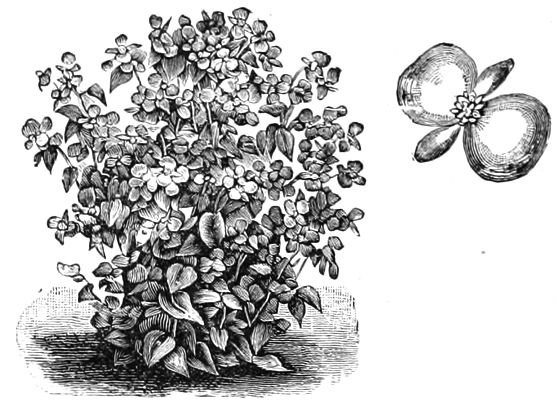
FIG. 234. BEGONIA SEMPERFLORENS FRAU MARIA BRANDT,
showing Habit and Flower.
B. Sedeni (Seden's). T. A garden hybrid between B. boliviensis
and B. Veitchii. Summer. 1869. A handsome plant, but much
inferior to many of the more recent hybrids. (R. H. 1872, 90.)
B. semperflorens (always-flowering).* Stem fleshy, erect,
smooth, reddish-green. l. ovate-rotundate, hardly cordate;
margins serrated, ciliated, surface smooth, shining green. fl. on
axillary stalks, near apex of stems, white or rose, rather large.
Capsule wings two short, one long, rounded. Autumn. Brazil,
1829. A useful summer and autumn flowering species, of which
there are several named varieties more or less distinct from the
type, either in colour or size of flowers, or in habit of plant.
The varieties carminea, gigantea, and rosea are perhaps the best.
SYN. B. spathulata. (B. M. 2920.)
B. s. Frau Maria Brandt. A dwarf compact variety, with
rose-tinted flowers. See Fig. 234.
B. socotrana (Socotra).* Stem annual, stout and succulent,
forming at base a cluster of bulbils, each of which produces a
plant the following year; sparsely hairy. l. dark green, orbicular,
peltate, 4in. to 7in. across, centre depressed; margin recurved,
crenate. fl. in terminal, few-flowered cymes, 1½in. to
2in. wide, bright rose. Capsule three-angled, one-winged. Winter.
Socotra, 1880. Should be rested through the summer, and started
in heat in September. A distinct and beautiful species. (B. M. 6555.)
B. spathulata (spathulate). Synonymous with B. semperflorens.
B. stigmosa (branded).* Rhizome creeping, fleshy. l. 6in. to
8in. long, oblique, cordate-acute, irregularly toothed, smooth
above, hairy beneath, green, with brownish-purple blotches;
stalks scaly, as in B. manicata. fl. in cymose panicles, white,
medium-sized, numerous. Brazil, 1845.
B. strigillosa (strigillose).* Rhizome short, fleshy, creeping,
l. 4in. to 6in. long, oblique, ovate-acute, cordate-toothed; margins
ciliate, red; stalk and blade covered with fleshy scales; blade
smooth, blotched with brown. fl. in branching cymes, dipetalous,
small, rose-coloured. Summer. Central America, 1851.
B. suaveolens (sweet-scented). S. Stem branching, 2ft. high,
smooth. l. 3in. to 4in. long, oblique-ovate, cordate-acute, crenulate,
glabrous. fl. in axillary panicles, large, white. Winter.
Central America, 1816. Resembles B. nitida, but may be distinguished
by its distinctly crenulate leaves and smaller flowers,
which are white, and not pale rose, as in B. nitida. SYN. B.
odorata. (L. B. C. 69.)
B. Sutherlandi (Sutherland's).* T. Stems annual, 1ft. to 2ft.
high, slender, graceful, red-purple. l. on slender red petioles,
2in. to 3in. long; blade 4in. to 6in. long, ovate-lanceolate, deeply
lobed at base; margins serrate, bright green;
nerves bright red. fl. in axillary and terminal
cymes, numerous, orange-red, shaded with dark
vinous-red. Capsule wings equal. Summer.
Natal, 1867. (B. M. 5689.)
B. Teuscheri (Teuscher's). S. A strong, erect-growing,
large-leaved plant, from the Dutch
Indies, not yet flowered. l. cordate-ovate, acute,
olive-green above, with greyish blotches; under
side rich claret-coloured. Hort. Linden. (I. II.
1879, 358.)
B. Thwaitesii (Thwaites's).* Stemless. l. 2in.
to 4in. in diameter, obtuse or sub-acute, cordate
at base, minutely toothed, slightly pubescent,
very shaggy when young, rich coppery-green,
red-purple and blotched with white;
under side blood red. fl. in an umbel, medium-sized;
scape short, white. Capsule shaped like
a Beech nut; wings short. Ceylon, 1852. One
of the most beautiful of coloured-leaved Begonias,
requiring a close, moist atmosphere
in a stove. (B. M. 4692.)
B. ulmifolia (Elm-leaved). S. Stem 2ft. to
4ft. high, branching. l. 3in. to 4in. long, ovate-oblong,
unequal-sided, toothed, rugose, hairy.
fl. on hairy peduncles, numerous, small, white.
Capsule wings two small, one large, ovate.
Winter. Venezuela, 1854. (L. C. 638.)
B. undulata (wavy-leaved). S. Stem 2ft. to
3ft. high, erect, branching freely, turgid below,
green, succulent until old. l. distichous, oblong-lanceolate,
undulated, smooth, shining
green. fl. in nodding axillary cymes, white,
small. Winter. Brazil, 1826. (B. M. 2723.)
B. urophylla (caudate-leaved). Stemless.
Leafstalks terete, succulent, clothed with scattered
bristly hairs. l. large, 12in. long, broad,
cordate; margin irregularly cut, toothed; apex
long-pointed, green, smooth above, hairy beneath;
peduncle stout, paniculate. fl. crowded,
large, dipetalous, white. Spring. Brazil.
(B. M. 4855.)
B. Veitchii (Veitch's).* T. Stem very short,
thick, fleshy, green. l. orbiculate, cordate,
lobed and incised; margins ciliated, green,
principal nerves radiating from bright carmine
spot near centre; under side pale green;
petiole thick, terete, with a few hairs on the
upper portion; scape 10in. to 12in. high, thick,
terete, pilose, two-flowered. fl. 2¼in. in diameter, cinnabar red.
Capsule smooth, two short, one long wings. Summer. Peru, 1867.
One of the species from which the popular garden tuberous-rooted
Begonias have been obtained. (B. M. 5663.)
B. Verschaffeltiana (Verschaffelt's).* A hybrid between
B. carolinæfolia and B. manicata, with large ovate acutely-lobed
leaves and flowers in large cymes, rose-coloured and pendent.
Winter. (R. G. 1855, p. 248.)
B. vitifolia (Vine-leaved). S. Stem 3ft. to 4ft. high, thick,
smooth, and fleshy. l. large as vine foliage, and similar in
shape; peduncles axillary, erect, branching into a cymose
head of small white flowers. Capsules three-angled, one-winged.
Winter. Brazil, 1833. SYNS. B. grandis, B. reniformis. (B. M.
3225.)
B. Wagneriana (Wagner's). S. Stem 2ft. to 3ft. high, erect,
glabrous, green, succulent, branched. l. cordate-ovate, acuminate;
margins obscurely lobed, slightly serrate, quite glabrous;
peduncles axillary and terminal, cymose. fl. numerous, white.
Capsules, which are ripened in abundance, three-angled, one
wing long, two short. Winter. Venezuela, 1856. (B. M. 4988.)
B. Warscewiczii (Warscewicz's). Synonymous with B. conchæfolia.
B. Weltoniensis (Welton). A garden hybrid; one of the oldest
of cultivated winter-flowering kinds, with light pink flowers, very
free.
B. xanthina (yellow-flowered).* Stem short, thick, fleshy, horizontal,
along with petioles thickly-clothed with brown scaly
hairs; petioles 6in. to 12in. long, stout, terete, fleshy, reddish-brown;
blade 8in. to 12in. long, cordate-ovate, acuminate,
sinuate-ciliated, dark green above, purplish beneath. Flower-stalks
erect, 1ft. high, bearing a cymose head of large golden
flowers. Capsule with one large wing. Summer. Boutan, 1850.
(B. M. 4683.)
B. x. Lazuli (Lapis-lazuli).* Foliage metallic purple, with a
bluish tinge.
B. x. pictifolia (ornamented-leaved).* l. with large silvery spots,
and pale yellow flowers.
The following list comprises a selection of some of the
best and most distinct of the innumerable varieties now
existing in gardens, and which have been obtained by
crossing and re-crossing the several tuberous-rooted species
found in the temperate regions of South America.
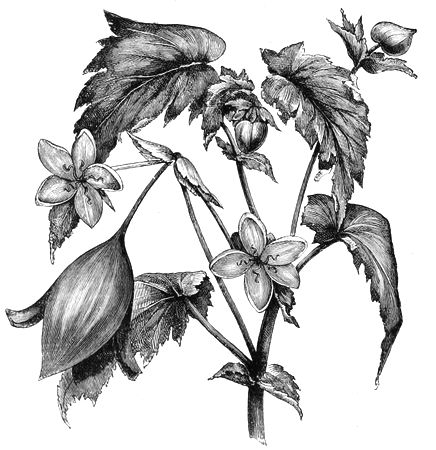
FIG. 235. FLOWERING BRANCH OF BEGONIA ADMIRATION.
Single-Flowered Varieties. Crimson and Scarlet Shaded:
ADMIRATION, flowers vivid orange-scarlet, of dwarf, compact
habit, and free flowering (see Fig. 235); ARTHUR G. SOAMES,*
brilliant crimson scarlet, of excellent form, and very free; BALL
OF FIRE,* glowing fiery-scarlet, flowers large and compact, very
free; BLACK DOUGLAS,* dark carmine crimson, flowers large,
of the finest form, one of the best; BRILLIANT, deep orange-scarlet,
very free; CHARLES BALTET, rich velvety vermilion;
COMMODORE FOOT,* brilliant velvety crimson, very free and
showy; DAVISII, flowers small, dazzling scarlet, habit dwarf
and free; DR. MASTERS,* flowers large, with immense spikes,
deep red-crimson, very attractive; DR. SEWELL,* glowing crimson,
grand form; EXONIENSIS, brilliant orange-scarlet, immense
flowers; F. E. LAING, deep velvety crimson, full and free; HON.
MRS. BRASSEY,* deep glowing crimson, very rich and floriferous;
J. H. LAING,* brilliant scarlet, one of the freest; J. W. FERRAND,*
rich vermilion, dwarf and free, one of the finest for bedding;
LOTHAIR,* dark scarlet-carmine, crimson shaded, of grand form
and size; MARQUIS OF BUTE, brilliant carmine-crimson, of the
finest form, and immense flowers; SCARLET GEM,* very dark
scarlet, flowers medium-sized, dwarf and very floriferous; SEDENI,
rich rosy-crimson, dwarf, a good bedder; VESUVIUS,* bright
orange-scarlet, compact and free, one of the finest bedders.
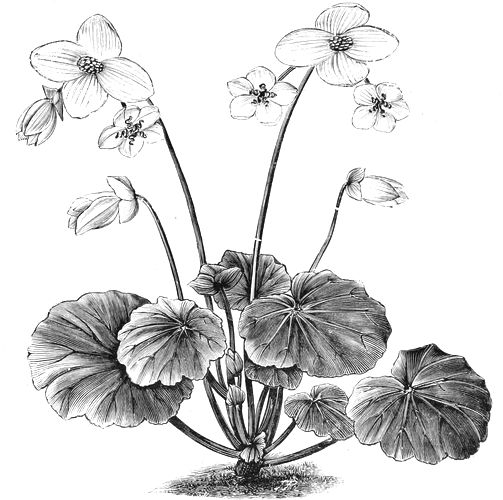
FIG. 236. BEGONIA QUEEN OF WHITES.
Rose-Coloured: ALBERT CROUSSé,* bright salmon-rose, very free;
ANNIE LAING,* large and free, rich pink; CAPT. THOMPSON, rich
salmon-rose, very free and compact; DELICATUM, pale flesh-rose;
EXQUISITE,* rich deep rose, very free and showy; J. AUBREY
CLARK, flowers very large, rich, deep; JESSIE,* soft rosy-pink, with
the tips of the petals shaded carmine, a very fine, perfect variety;
LADY BROOKE,* dark rose, shaded magenta, very perfect in form,
and large; LADY HUME CAMPBELL,* pale pink, of good form
and size, an exquisite variety; MADAME STELLA,* flowers perfect
in form, large, bright rosy-pink, one of the best; MARCHIONESS
OF BUTE, light rosy-pink, with an immense bloom and handsome
foliage; PENELOPE,* rich salmon-rose, very free and good; PRINCESS
OF WALES, very delicate pink, and free; ROSE D'AMOUR, rich
rose, delicately shaded.
White-Flowered: ALBA FLORIBUNDA, flowers medium-sized, very
free; MOONLIGHT, very free, with good flowers and handsome
foliage; MRS. LAING,* flowers exquisite in form and shape, pure
white, one of the best; NYMPH,* large and round, white, tinted
with rose at the base; PRINCESS BEATRICE,* flowers large, of excellent
form, and pure in colour; PURITY, flowers round, good size
and colour; QUEEN OF WHITES,* flowers pure white, large,
most freely produced (see Fig. 236, for which we are indebted to
Messrs. Veitch and Sons); REINE BLANCHE,* one of the best,
very pure; SNOWFLAKE,* flowers large, in full spikes, pure
white, habit compact, and very free.
Yellow and Orange-Flowered: CHROMATELLA,* habit dwarf and
compact, pure yellow; EMPRESS OF INDIA, deep yellow, very
showy; GEM OF YELLOWS,* rich deep yellow, of grand form and
size, one of the best; GOLDEN GEM,* rich golden yellow, of excellent
form and size, habit free, with prettily mottled foliage; J. L.
MACFARLANE, rich orange, freest form, and large; LADY TREVOR
LAWRENCE,* orange-yellow, of good form, with handsome foliage;
MAUDE CHURCHILL,* pale yellow, deeper shaded, with elegant
foliage; MRS. PONTIFEX,* rich orange yellow, very large flowers,
copiously produced; POLLIE, pale yellow, fine round flower;
SULPHUR QUEEN,* pale sulphur-yellow, of good form and size.
Double-Flowered Varieties. Crimson and Scarlet Shaded:
ACHILLES, rich dark crimson, very large and free; DAVISII
HYBRIDA FL.-PL.,* rich coral-red, very full and free; DAVISII FL.-PL.
SUPERBA,* brilliant crimson-scarlet, of good size, and extremely
free; DR. DUKE,* brilliant scarlet, very large and double, one of
the best; FRANCIS BUCHNER,* rich cerise-red, very double, perfect
in form, and very large; FULGURANT, rich crimson, full, with
dark foliage; GLOIRE DE NANCY,* rich vermilion, very free;
HERCULES,* bright orange-scarlet, very large and extremely free,
habit compact and vigorous; LEMOINEI, deep orange-vermilion,
very floriferous; MONSIEUR BAUER, deep red, tinged with violet;
NIMROD,* rich red-scarlet, very large and full, with a free and
very vigorous habit; PRESIDENT BURELLE,* glowing red, tinted
with scarlet, very free; QUEEN OF DOUBLES,* rich rosy-crimson,
very double and floriferous, one of the best varieties; ROBERT
BURNS,* brilliant orange-scarlet, tinted vermilion, very double
and free; SIR GARNET, deep orange-scarlet, very vigorous; WM.
BEALBY,* deep velvety scarlet, immense size and perfect form,
very free.
Rose-Coloured: ADA,* bright rosy-salmon, fringed at the edge,
very full and free; COMTESSE H. DE CHOISEUL, pale rose, at first
nearly white, very handsome; ESTHER,* rich rosy pink, with a
distinct crimson margin; FORMOSA,* rich rosy carmine, with a
white centre and crimson margin, very distinct and showy;
GLORY OF STANSTEAD,* deep rose, with a well-defined white
centre, very distinct and handsome; JOHN T. POE,* bright rose,
tinted with cerise, of excellent form and vigorous habit; MADAME
COMESSE,* rich satiny salmon-rose, immense, and most profuse;
MADAME LEON SIMON, soft pale rose, very full and free; MARIE
LEMOINE, light salmon with a rose centre; MRS. BRISSENDEN,*
salmon-rose, with a cream-white centre, of excellent form and
very free; PæONIFLORA, flowers enormous, rich salmon-rose, very
full; QUEEN OF SCOTS,* satiny-pink, salmon-shaded, of a perfect
form and very large, habit compact and very free; ROSINA,* deep
rose, violet shaded, of exquisite form, very vigorous and free.
White-Flowered: ANTOINETTE QUERIN,* pure white, cream,
shaded centre, very large and full, a magnificent variety;
BLANCHE JEANPIERRE, pure white, cream tinted, of excellent
form and very free; LITTLE GEM,* pure white, of the best form
and good size, habit dwarf and extremely floriferous; MRS.
LUDLAM,* white, tinted with pink, a very handsome variety;
PRINCESS OF WALES,* flowers very full and profuse, almost pure
in colour, and immense.
Yellow-flowered: CANARY BIRD,* flowers large, of the finest
form, deep yellow, habit dwarf and very free; GABRIEL LEGROS,*
pale sulphur, changing to yellow, very full and imbricated, extremely
showy.
BEGONIACEÆ. An order comprising a large number
of useful garden plants. The only genera are Begonia
and Begoniella (which is not yet in cultivation). Flowers
apetalous; perianth single; pistillate flowers having the
perianth two to eight-cleft, staminate ones two to four-cleft;
stamens numerous, collected into a head. Leaves
alternate, stipulate. See Begonia.
BEJARIA. See Befaria.
BELLADONNA. See Atropa.
BELLADONNA LILY. See Amaryllis Belladonna.
BELLEVALIA (named in honour of P. R. Belleval,
a French botanist). ORD. Liliaceæ. This genus is now
usually placed under Hyacinthus. Hardy, bulbous-rooted
plants, admirably adapted for spring bedding or forcing,
and invaluable as cut flowers. Flowers small, whitish, or
violet, tinged with green. Leaves few, radical, broadly
linear. They are of extremely easy culture in ordinary
garden soil. Propagated by offsets; also by seeds, which
should be sown as soon as ripe.
B. operculata (lid-covered). Synonymous with B. romana.
B. romana (Roman).* Roman Hyacinth. fl. white, racemose;
perianth campanulate; pedicels longer than the flowers. April.
l. from 4in. to 5in. long. h. 6in. Italy, 1596. A most desirable
plant, and the best of the genus for forcing purposes. SYNS.
B. operculata and Hyacinthus romanus. (B. M. 939, under the
name of Scilla romana.) See Hyacinthus.
B. syriaca (Syrian).* fl. white; peduncles spreading, racemose.
May. l. glaucous, 1ft. long, channelled, rather scarious on the
margins. h. 1ft. Syria, 1840.
BELL-FLOWER. See Campanula.
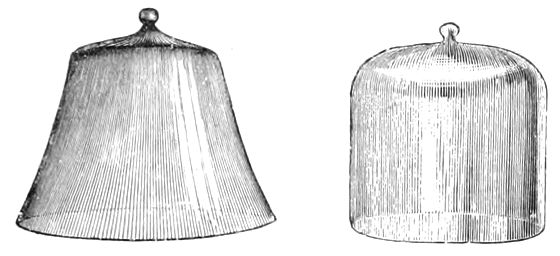
FIG. 237. FRENCH BELL GLASS,
OR CLOCHE. FIg. 238. ENGLISH BELL
GLASS.
BELL GLASSES, or CLOCHES. These are used
for the purpose of protecting or accelerating the growth of
a plant or plants. The French Cloche (see Fig. 237) is
largely employed for this purpose. Ordinary Bell Glasses
(see Fig. 238) are exceedingly useful for propagating purposes,
especially for hard-wooded plants; or for placing over
subjects which require a very moist atmosphere, such as
Filmy ferns, Cephalotus, &c.; or for covering half-hardy
plants or rare alpines, and thus protecting them from excessive
moisture. Large Bell Glasses, inverted, serve as
miniature aquaria, and many small aquatics are easily
grown in them.
BELLIDIASTRUM (from bellis, a daisy, and astrum,
a star; flower-heads being star-like). ORD. Compositæ. A
pretty dwarf, hardy, herbaceous perennial, allied to Aster.
It thrives in a compost of loam, leaf soil, and peat. Increased
by divisions in early spring, or directly after
blooming.
B. Michelii (Michel's).* fl.-heads white; scape one-headed, naked;
involucre with equal leaves; pappus simple. June. l. in a rosette,
shortly stalked, obovate, repand. h. 1ft. Austria, 1570.
BELLIS (from bellus, pretty, in reference to the
flowers). Daisy. ORD. Compositæ. A genus of hardy herbaceous
perennials, distinguished from allied genera in
having conical receptacles and an absence of pappus.
They grow well in all loamy soils. The garden varieties
are increased by division after flowering, each crown
making a separate plant. The soil must be pressed about
them moderately firm. Seeds may also be sown in March, but
the plants thus obtained are seldom of sufficient floricultural
merit to perpetuate.
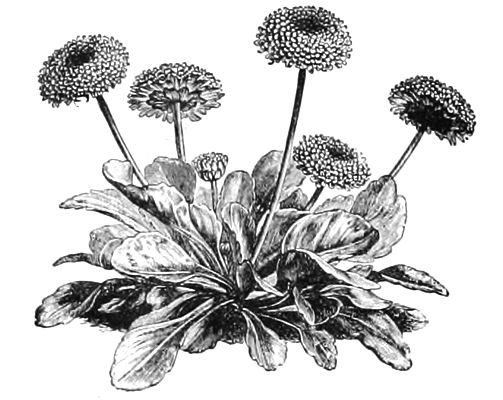
FIG. 239. BELLIS PERENNIS FLORE-PLENO.
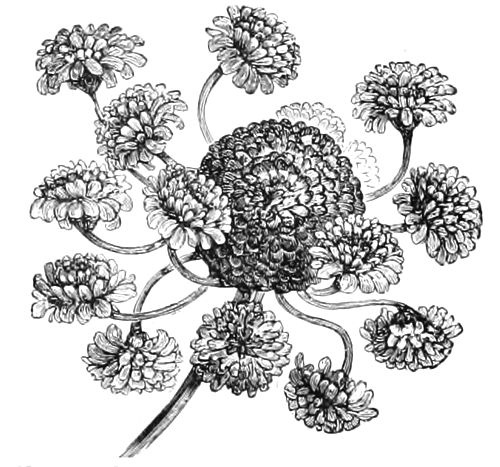
FIG. 240. HEN AND CHICKENS DAISY (BELLIS PERENNIS PROLIFERA).
B. perennis (perennial).* Common Daisy. fl.-heads white. June.
l. numerous, lying flat on the ground, obovate, crenate, slightly
hairy, tapering at the base. h. 3in. England. The varieties
are very numerous, the double ones being particularly fine. See
Fig. 239. The handsome variegated form, aucubæfolia, has its
leaves richly stained and veined with yellow. There are both
red and white-flowered forms of this variety. The Hen and
Chickens Daisy is a proliferous form, rather more quaint than
pretty. See Fig. 240. Good garden kinds are B. p. conspicua, red;
CROWN, pink; ELIZA, purple; RUBENS, red; SNOWFLAKE, white.
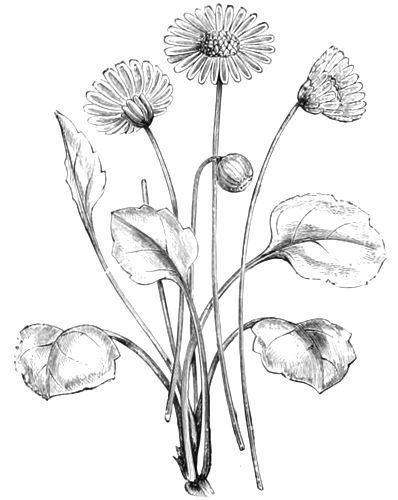
FIG. 241. BELLIS ROTUNDIFOLIA CŒRULESCENS.
B. rotundifolia cœrulescens (round-leaved, bluish).* fl.-heads
from ¾in. to 1¼in. in diameter, resembling those of the common
Daisy, but with fewer, often broader, ray-flowers, which vary
from white to pale blue. l. more or less hairy, with slender stalks,
1in. to 3in. long; blade ovate or sub-cordate, sinuate toothed,
three-nerved. Morocco, 1872. A very beautiful perennial, requiring
the shelter of a cold frame during severe winters. See
Fig. 241. (B. M. 6015.)
BELLIUM (from bellis, a Daisy; the flowers resembling
those of that plant). ORD. Compositæ. A genus
of pretty little, free-flowering plants, differing from the
common Daisy only in having a pappus of six to eight
broad scales, torn at the apex, alternating with a like
number of long scabrous bristles. They thrive best in a
mixture of sandy loam and peat. Propagation is readily
effected by means of seeds or divisions; the latter should
be made in spring.
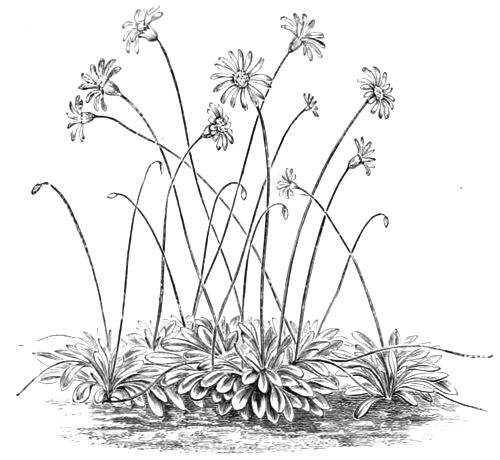
FIG. 242. BELLIUM BELLIDIOIDES.
B. bellidioides (Daisy-like).* fl.-heads white, solitary. June to
September. l. spathulate, radical. Stolons creeping. h. 4in.
Italy, 1796. Annual. See Fig. 242.
B. crassifolium (thick-leaved). fl.-heads whitish-yellow; scapes
much exceeding the leaves, downy. June. l. sub-radical, thick,
obovate, entire, attenuate at base, rather downy. Stems many,
ascending. h. 6in. Sardinia, 1831. Hardy perennial. (S. B.
F. G. 2, 278.)
B. minutum (very small).* fl.-heads white and yellow, ½in. across,
on slender stalks, longer than the foliage. June to September.
l. narrow spathulate, attenuated at the base, slightly hairy.
h. 3in. Levant, 1772. A rare little species, requiring a warm,
well-drained position on the rockery.
BELLOWS. These were formerly employed for fumigating,
but are now entirely superseded by the ordinary
fumigators. The Sulphur Bellows is a very useful instrument
for the uniform distribution of flowers of sulphur on
vines and other subjects infested with mildew. In form it
is very like those in common domestic use, but has a rose of
small holes at the end of its nozzle, through which the
sulphur is ejected.
BELL-PEPPER. See Capsicum grossum.
BELOPERONE (from belos, an arrow, and peronne,
a band; in reference to the arrow-shaped connectivum).
SYN. Dianthera. ORD. Acanthaceæ. Very pretty stove
evergreen shrubs, allied to Justicia. Flowers blue or
purple, borne in secund, axillary, or terminal spikes, frequently
subtended with coloured bracts; corolla gaping,
the upper lip concave, the lower trifid. They are easily
cultivated in a compost of loam, leaf soil, peat, and sand.
Propagated by young cuttings, taken in spring. Beloperones
may also be treated like Justicias (which see), and
will succeed admirably. There are a large number of
species, but few of which have been introduced.
B. oblongata (oblong). fl. rosy-purple; spikes axillary; anthers
calcarate at base; bracts bracteolate. Summer. l. oblong-lanceolate,
opposite. h. 3ft. Brazil, 1832. (B. H. 9, 9.)
B. violacea (violet-coloured).* fl. violet. l. lanceolate, acuminate,
entire. h. 3ft. New Grenada, 1859. (B. M. 5244.)
BENDING-DOWN the branches of fruit trees, by
means of weights or string attached to pegs driven into the
ground, is sometimes resorted to for the purpose of acquiring
a particular shape, or fruitfulness; but authorities
differ as to the usefulness of the plan for the latter purpose.
Young trees that are inclined to grow strong in the
middle may be more evenly balanced by adopting the plan
of Bending the strong branches, and so diverting the sap to
the weaker ones.
BENGAL QUINCE. See Ægle Marmelos.
BENJAMIN-TREE. See Ficus Benjamina.
BENT GRASS. See Agrostis.
BENTHAMIA (in honour of George Bentham, a distinguished
English botanist). ORD. Cornaceæ. Hardy
evergreen shrubs or low trees, now referred to the
genus Cornus. The first-named species is rather tender
in the neighbourhood of London, and can only be grown
successfully against a wall, for which purpose it is very suitable.
In Cornwall and other mild places, it attains a height
of 20ft. in the open. Loudon thinks it might be rendered
hardier by grafting it on Cornus sanguinea. Flowers disposed
in heads, each head attended by an involucre, which
consists of four petal-like parts, and resembles a corolla;
calyx with a minute four-toothed limb; petals four, fleshy,
wedge-shaped; stamens four; style one. Leaves opposite,
exstipulate, sub-evergreen, entire. Fruit constituted of
many pomes grown together. They thrive in rather moist,
loamy soil, in a sheltered spot. Propagated by seeds, sown
when ripe, in a cool-house; or by layering, in autumn.
B. fragifera (Strawberry-flowered).* fl. large, white, sessile,
densely aggregate, forming a round head. June to October. fr.
large, about the size of that of the common Arbutus, reddish.
l. lanceolate, acuminated at both ends, on short petioles, rather
rough, with small, adpressed down. Branches spreading, smooth.
h. 10ft. to 15ft. Nepaul, 1825. (G. C. xiv., 728.)
B. japonica (Japanese). fl. yellowish-red. Spring. h. 8ft.
Japan, 1847. (S. Z. F. J. 16.)
BERARDIA (named after M. Berard, a Professor
of Chemistry at Montpelier). ORD. Compositæ. A genus
containing a single species, confined to the high mountains
of Western Europe. It makes a pretty rock plant, and
grows best in thoroughly well-drained spots amongst rocky
débris. Propagated by seeds, sown in spring.
B. subacaulis (almost stemless). fl.-heads whitish, solitary, very
large. l. rounded oval, nearly heart-shaped at base, cottony.
h. 3in. or 4in. (A. F. P. 3, 38.)
BERBERIDACEÆ. An order of shrubs or herbaceous
perennials. Flowers terminal or axillary, usually
racemose; sepals three, four, or six in a double row; petals
as many or double in number; stamens four to eight,
opposite the petals. Fruit, a berry or capsule. Leaves
alternate, compound. The order contributes a great number
of handsome plants to our gardens. Well-known genera
are Berberis, Epimedium, and Nandina.
BERBERIDOPSIS (from Berberis, the Barberry,
and opsis, like; resembling the Barberry). ORD. Berberidaceæ.
A handsome evergreen shrub, with climbing habit.
Sepals and petals nine to fifteen; outer small, spreading;
intermediate orbicular, concave; inner obovate-cuneate,
erect, inserted upon the fleshy torus. Stamens eight to
nine, free. With a slight winter protection, or planted at
the foot of a south wall, it will prove quite hardy, being of
easy culture in ordinary garden soil. It is an excellent
plant for the cool greenhouse. Increased by seeds, which
should be sown in spring; by layering, in autumn; or by
young cuttings, in spring.
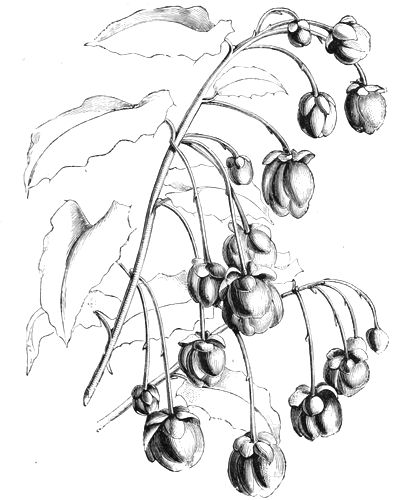
FIG. 243. FLOWERING BRANCHES OF BERBERIDOPSIS CORALLINA.
B. corallina (coral-red).* fl. crimson, in terminal, drooping
racemes, leafy at the base. l. about 3in. long, alternate, simple,
petiolate, oblong-cordate, obtuse or acute, spiny-toothed. Chili,
1862. See Fig. 243. (B. M. 5343.)
BERBERIS (Berberys is the Arabic name of the fruit,
signifying a shell; many authors believe this to be the
original derivation of the word, because the leaves are
hollow, like a shell). Barberry. ORD. Berberidaceæ. Including
Mahonia. A genus of hardy erect or trailing shrubs.
Flowers yellow or orange, racemose or fascicled; sepals and
petals similar, in two series. Leaves simple or compound,
alternate or fascicled from the non-development of the
branches, often spinose, or reduced to spines. The common
sorts thrive well in any ordinary garden soil, but the rarer
kinds require a compost of loam, peat, and a little sand.
Propagation may be effected by suckers or layers, put down
in the autumn; by ripened cuttings, taken at the same
time, and planted in sandy soil, in a cold frame; or by
seeds, sown in the spring, or, preferably, in the autumn,
when, if fresh from the pulp or berry, they will germinate
in the open in the following spring. The last-named is
the method generally adopted.
B. Aquifolium (Holly-leaved).* fl. yellow; racemes nearly erect,
much crowded. Spring. l., leaflets two to three pairs, with an
odd one, the lower part distant from the petiole; ovate, approximate,
cordate at the base, one-nerved, spiny-toothed. h. 3ft. to
6ft. North America, 1823. This is extensively planted in woodlands
as an excellent covert plant. SYN. Mahonia aquifolia.
(S. E. B. 49.)
B. aristata (bearded). fl. yellow; racemes nodding, many-flowered,
longer than the leaves; pedicels trifid, three-flowered.
Spring. l. obovate-oblong or lanceolate, mucronate, membranous,
smooth, serrated with four or five spinulose teeth;
lower spines three-parted, upper ones simple, and hardly
bidentate at the base. h. 6ft. Nepaul, 1820. (B. R.
729, under name of B. Chitria.)
B. asiatica (Asiatic). fl., racemes short, many-flowered,
corymbose, shorter than the leaves; pedicels elongated,
one-flowered. l. oval, cuneated, or elliptical, mucronate,
smooth; under surface glaucous, entire, or spinulosely-toothed;
spines trifid, or simple. h. 4ft. to 8ft. 1820.
Half-hardy.
B. buxifolia (Box-leaved).* fl. solitary, on slender
peduncles. Spring. l. nearly sessile, oval or oblong,
about ½in. long, entire. h. 8ft. Straits of Magellan,
1830. Nana is a charming little variety, not exceeding
18in. in height. SYN. B. dulcis. (B. M. 6505.)
B. canadensis (Canadian).* fl., racemes many-flowered,
nodding. Spring. l. obovate-oblong, remotely serrated;
upper ones nearly entire; spines three-parted. h. 4ft.
Canada, 1759.
B. cratægina (Hawthorn-like). fl., racemes many-flowered,
crowded, spreading, scarcely longer than the
leaves. Spring. l. oblong, reticulated, hardly serrated;
spines simple. h. 4ft. to 8ft. Asia Minor, 1829.
B. cretica (Cretan). fl., racemes three to eight-flowered,
rather shorter than the leaves. Spring. l.
oblong-oval, entire, or somewhat serrated; spines three
to five-parted. h. 4ft. to 5ft. Crete and Cyprus, 1759.
The variety serratifolia has leaves ciliately-serrated.
(S. F. G. 342.)
B. Darwinii (Darwin's).* fl. orange, racemose, very
numerous. May, and sometimes again in autumn.
l. oval or oblong, about 1in. long, with usually five
spiny teeth. h. 2ft. South Chili, 1849. This very fine
species is, perhaps, the best; it forms a densely-branched,
spreading, evergreen bush, thus making an
excellent covert plant. (B. M. 4590.)
B. dulcis (sweet). Synonymous with B. buxifolia.
B. emarginata (emarginate). fl., racemes scarcely
pendulous, shorter than the leaves. Spring. l. lanceolate-obovate,
ciliately serrated; spines three-parted.
h. 6ft. Siberia, 1790.
B. empetrifolia (Empetrum-leaved).* fl. few, terminal,
sub-umbellate, on slender pedicels. May. l. in
fascicles of about seven, linear, closely revolute,
sharply mucronate. h. 1½ft. to 2ft. Straits of Magellan,
1827. (B. R. 26, 27.)
B. fascicularis (fascicled). fl., racemes erect, much
crowded. Spring. l., leaflets three to six pairs, with
an odd one, the lower pair distant from the base of the
petiole; ovate-lanceolate, rather distant, one-nerved,
spiny toothed, with four to five teeth on each side.
h. 6ft. to 8ft. New Spain, 1820. Half-hardy. SYN.
Mahonia fascicularis. (B. M. 2396.)
B. floribunda (many-flowered).* fl., racemes many-flowered,
loose, solitary, pendulous. June. l. obovate-lanceolate,
or obovate-oblong, tapering much towards the base, ending in a
mucrone at the apex, paler beneath, spiny-ciliated; spines three-parted,
unequal. h. 10ft. Nepaul. A variety of aristata.
B. Fortunei (Fortune's).* fl. small, in terminal clustered racemes.
l., leaflets about seven, linear-lanceolate, distant, with numerous
small spiny teeth, lower pair remote from the base of the petiole.
China.
B. glumacea (glumaceous). A synonym of B. nervosa.
B. iberica (Iberian). fl., racemes many-flowered, pendulous.
Spring. l. obovate-oblong, quite entire; spines simple and three-parted.
h. 8ft. to 10ft. Iberia, 1818.
B. ilicifolia (Holly-leaved). fl., peduncles short, four-flowered;
pedicels elongated, somewhat corymbose. July. l. ovate, tapering
at the base, coarsely and spinulosely toothed; spines three-parted.
h. 2ft. to 3ft. Tierra del Fuego, 1791. (B. M. 4308.)
B. japonica (Japanese).* fl., racemes in terminal clusters. Spring.
l., leaflets usually nine, about 3in. long, quite sessile, broadly
cordate, or rotundate at the base, oblique, with about five long
spiny teeth, and a terminal one, the lowest pairs close to the base
of the petiole. China and Japan. Very distinct, with unbranched
stems and leaves about 1ft. long. B. Beali and B. intermedia
are mere forms of this species, the latter differing from it in
having narrower leaves and longer, slender racemes. (B. M. 4852.)
B. loxensis (Loxanese). fl. unusually small, erect, in panicled
racemes on a long peduncle quite clear of the leaves. l. very
shining, blunt, obovate; sides often with several teeth; spines
small, palmated. h. 3ft. to 4ft. Peru. Evergreen, not hardy.
(P. F. G. 1, p. 13.)
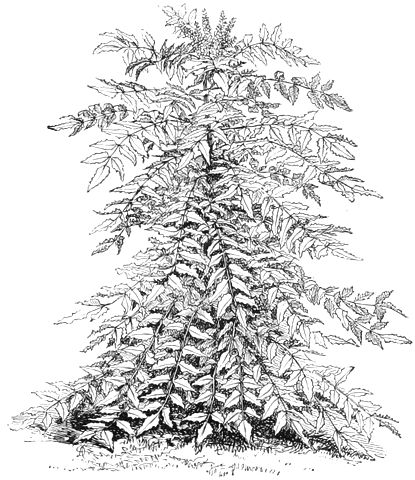
FIG. 244. BERBERIS NEPALENSIS.
B. nepalensis (Nepaulese).* fl. yellow; racemes few, elongated,
slender. l. 1ft. to 2ft. long; leaflets five to nine pairs, obovate-oblong,
cuspidate, rounded at the base, repand-toothed, with five
to ten spiny teeth on each side, tricuspidate at the apex. h. 4ft.
to 6ft. Nepaul. A very handsome species, thriving best in the
southern parts of England. SYN. Mahonia nepalensis. See
Fig. 244.
B. nervosa (large-nerved). fl., racemes elongated. October.
l., leaflets five to six pairs, with an odd one, the lower pair
distant from the petiole; ovate, acuminated, remotely spiny
toothed, somewhat three to five-nerved, with twelve to fourteen
teeth on each side. h. 1ft. to 3ft. North America, 1826. SYNS.
B. glumacea, Mahonia nervosa. (B. M. 3949.)
B. repens (creeping).* fl., racemes terminal, numerous, fascicled,
diffuse, rising from the scaly buds. Spring. l., leaflets, two to
three pairs, with an odd one, roundish-ovate, opaque, spiny
toothed. h. 1ft. to 2ft. North America, 1822. SYN. Mahonia
repens. (B. R. 1176.)
B. ruscifolia (Ruscus-leaved). fl. a little larger than those of
B. vulgaris; peduncles short, bearing four to five flowers at the
apex. l. oblong, tapering at the base, mucronate, entire, or
grossly and spiny toothed. h. 4ft. to 8ft. South America, 1823.
Half-hardy.
B. sinensis (Chinese).* fl., racemes many-flowered, nodding. May.
l. oblong, obtuse, entire, or the lower ones are a little toothed;
spines three-parted. h. 3ft. to 6ft. China, 1815. (B. M. 6573.)
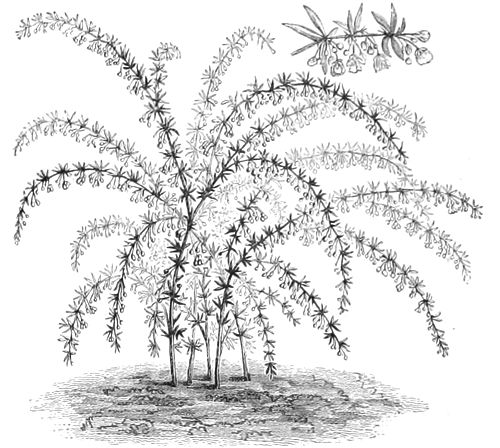
FIG. 245. BERBERIS STENOPHYLLA, showing Habit and
Flowering Twig.
B. stenophylla (naked-leaved),* with narrow mucronate leaves,
is said to be a hybrid between B. empetrifolia and B. Darwinii.
See Fig. 245.
B. trifoliata (three-leafleted). fl., racemes small, axillary,
sessile, three to five-flowered. Spring. l., leaflets three, sessile
at the ends of the petioles, deeply scalloped, bluish-green, variegated,
glaucous beneath. h. 5ft. Mexico, 1839. Evergreen, not
quite hardy. (P. F. G. 2, 168.)
B. trifurcata (three-forked). fl., racemes compound, erect.
Spring. l. pinnate; leaflets broad, three-forked. h. 6ft. China,
1850. Evergreen. (P. F. G. 3, 258.)
B. umbellata (umbellate). fl., peduncles solitary, erect, bearing
at the top several umbellate pedicels. l. obovate-oblong, mucronate,
entire, glaucous beneath; spines three-parted, long,
equal. h. 6ft. Nepaul, 1842. (P. F. G. 2, 181.)
B. vulgaris (common).* Common Barberry. fl., racemes many-flowered,
pendulous. Spring. l. somewhat obovate, ciliately-serrated;
spines three-parted. h. 8ft. to 20ft. Britain, &c. There
are yellow, violet, purple, black, and white fruited, and purple-leaved
forms. (Sy. En. B. 51.)
B. Wallichiana (Wallich's).* fl. on drooping, aggregated peduncles,
six to eight or more in a cluster. Spring. l. in alternate
fascicles, 2in. to 3in. long, spreading or recurved, lanceolate,
sinuato-serrate; spines deeply three-parted, slender but rigid.
h. 6ft. to 10ft. Nepaul, 1820. See Fig. 246. (B. M. 4656.)
BERCHEMIA (in honour of M. Berchem, a French
botanist). ORD. Rhamnaceæ. A genus of erect, or twining,
deciduous, mostly greenhouse shrubs. Flowers sub-umbellate,
in the axils of the upper leaves, or disposed in
terminal panicles. Leaves alternate, many-nerved, entire.
The species mentioned below is probably the only one yet
in cultivation. It is quite hardy, will grow in any common
soil, and is well adapted for bowers or trellis-work. Propagated
by ripened cuttings, and slips of the root, planted
under a hand glass; or by layering the young shoots.
B. volubilis (twining).* fl. greenish-white; panicles small, axillary
and terminal. Drupe oblong, violaceous. June. l. oval,
mucronate, a little wavy. Branches smooth. Carolina, 1714. A
deciduous twiner. (G. G. 165.)
BERGAMOT. See Mentha odorata.
BERGERA (named after C. J. Berger, a distinguished
Danish botanist). ORD. Rutaceæ. Interesting stove evergreen
trees, now usually referred to Murraya. Leaves
impari-pinnate; leaflets alternate, acuminated, pubescent.
They thrive in a mixture of turfy loam and peat. Propagated
by ripened cuttings, taken off at a joint, and placed
in sand, under a hand glass, in bottom heat; or by layers.
B. Kœnigi (Konig's). fl. whitish-yellow, small; racemes many,
forming a corymb at the top of the branches. June. l., leaflets
serrated. h. 40ft. India, 1820. (L. B. C. 1019.)
BERKHEYA (named after M. J. L. de Berkhey, a
Dutch botanist), ORD. Compositæ. A genus of ornamental
greenhouse or hardy thistle-like herbs or shrubs. Flower-heads
surrounded by a spiny involucre, the scales of
which are united at the base only; pappus of many flat,
obtuse, or pointed, scales. They are of easy cultivation in
a sandy loam soil. The perennials are increased by cuttings
placed under a glass; the herbaceous perennials usually
by divisions of the plant in spring. The species most
frequently seen in English gardens is B. purpurea.
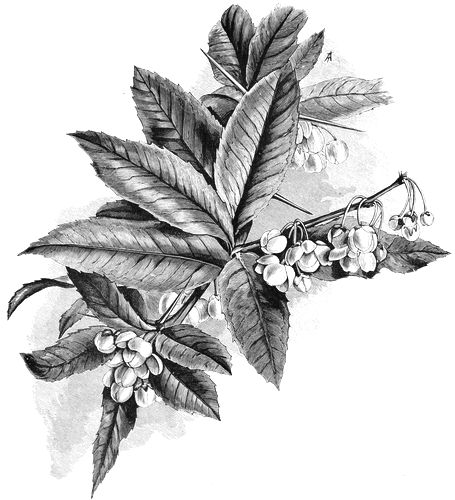
FIG. 246. BERBERIS WALLICHIANA.
B. grandiflora (large-flowered).* fl.-heads yellow; scales of involucre
spiny toothed. July. l. opposite, lanceolate, three-nerved,
spiny toothed, downy beneath. h. 2ft. Cape of Good
Hope, 1812. Greenhouse evergreen. (B. M. 1844.)
B. pinnata (pinnate). fl.-heads yellow; involucral scales spine-pointed,
entire or toothed. Autumn. l. oblong, woolly beneath,
deeply cut into lance-shaped segments. SYN. Stobæa pinnata.
(B. M. 1788.)
B. purpurea (purplish).* fl.-heads numerous, pedunculate, corymbose,
circular, 3in. across, surrounded by an involucre of spreading
or reflexed linear oblong bracts. l., lower ones 15in. to 18in.
long, 2in. to 2½in. wide, dark green, viscid above, paler and
cottony beneath. h. 3ft. South Africa. A very handsome,
hardy, herbaceous perennial. (G. C. 1872, p. 1261.) SYN. Stobæa
purpurea.
B. uniflora (one-flowered). fl.-heads yellow; scales of involucre
spiny toothed. June. l. alternate, lanceolate, three-nerved,
spiny toothed, downy beneath. h. 3ft. Cape of Good Hope, 1815.
Greenhouse evergreen. (B. M. 2094.)
BERMUDA CEDAR. See Juniperus bermudiana.
BERRY. A fleshy fruit, containing seeds.
BERTHOLLETIA (in honour of Louis Claude Berthollet,
a celebrated French chemist). Brazil Nut Tree.
TRIBE Lecythideæ of ORD. Myrtaceæ. B. excelsa is a tall
tree, having the young branches leafy at the apex. Leaves
alternate, oblong, quite entire, rather coriaceous. From
this Brazilian species are obtained the well-known Brazil
or Para Nuts of commerce. The tree is of no value for
decorative purposes.
BERTOLONIA (named after A. Bertoloni, an Italian
botanist, author of "Rariorum Italiæ Plantarum Decades,"
&c.). ORD. Melastomaceæ. Elegant little creeping or
dwarf-growing stove plants, chiefly cultivated for their
exquisitely marked leaves. Flowers white or purple.
Leaves stalked, ovate-cordate, five to eleven-nerved,
crenulated; cymes corymbose, terminal. They thrive in a
compost of equal parts peat, leaf mould, and sand, in a
warm, close, and moist atmosphere, but are most successfully
cultivated under a bell glass in the stove; in
fact, the latter is the only plan of growing them where a
constantly humid atmosphere cannot be otherwise obtained
without such means. They are easily propagated by
cuttings or seeds.
B. ænea (coppery). fl. purple. h. 6in. Brazil.
B. guttata (spotted). See Gravesia.
B. maculata (spotted).* fl. violet-purple; peduncles axillary,
bearing at the apex a short raceme of six to seven flowers. l. on
long petioles, cordate, ovate, quite entire, pilose on both surfaces
and on the margins, five-nerved. Branches, petioles, peduncles,
and calyces hispid from long bristles. Stem rooting at the base.
Brazil, 1850. (B. M. 4551.)
B. marmorata (marbled).* l. 5in. to 8in. long, ovate-oblong,
hairy, five-nerved; upper side vivid bright green, beautifully
marked with irregular streaks of pure white; under surface of
a uniform rich purple. Stem fleshy. h. 6in. Brazil, 1858.
B. pubescens (downy).* l. ovate-acuminate, 3in. to 4in. long, and
2in. to 3in. broad; bright light green, with a broad chocolate-coloured
band down the centre; upper surface clothed with long
white hairs. Ecuador.
BERZELIA (named in honour of Berzelius, a celebrated
Swedish chemist). ORD. Bruniaceæ. Very pretty
little greenhouse evergreen shrubs. Heads of flowers
naked, with three bracts at the base of each; usually
crowded at the tops of the branches. Leaves short, somewhat
trigonal, imbricate or spreading. They require a
mixture of peat, loam, and sand, with thorough drainage
and moderately firm potting. Young cuttings root freely
in sand, under a bell glass, in gentle heat.
B. abrotanoides (Abrotanum-like). fl.-heads white, the size of
a filbert, terminal, crowded, sub-corymbose; bracts clavate,
green, smooth, ustulate at the apex. May to July. l. ovate,
ustulate at the apex, smooth, spreading, on short petioles.
h. 1½ft. Cape of Good Hope, 1787. (L. B. C. 355.)
B. lanuginosa (woolly).* fl.-heads white, about the size of a pea,
at the tops of lateral branches, disposed in a fastigiate panicle;
bracts spathulate, callose at the apex. June to August. l.
triquetrous, spreading, callose at the apex, rather hairy. Branches
erect, villous when young. h. 1ft. to 2ft. Cape of Good Hope,
1774. (L. B. C. 572.)
BESCHORNERIA (in honour of H. Beschorner, a
German botanist). ORD. Amaryllidaceæ. Greenhouse
evergreen succulents, allied to Littæa and Fourcroya.
Perianth deeply six-parted; segments linear spathulate,
tubulose-connivent, often spreading at the point; stamens
six, about as long as the perianth. For culture, &c., see
Agave and Aloe.
B. bracteata (bracteate). fl. at first green, turning yellowish-red
when mature; panicle 2ft. to 3ft. long; branches many-flowered
and corymbose, subtended by large scariose reddish bracts. l. in
a dense rosette, 12in. to 18in. long, thin, glaucous green with
scabrous margin. h. 5ft. to 6ft. Mexico. See Fig. 247. (B. M.
6641.)
B. Decosteriana (Decoster's). fl. green, tinged with red, pendulous,
bracteate; panicle 2ft. to 3ft. long, inclined, with numerous
bracts. l. numerous, spreading, 18in. to 24in. long, by 1in.
to 1½in. broad; edges minutely serrulate. h. 8ft. Mexico, about
1880.
B. Tonelii (Tonel's).* fl. tubular, 2½in. long, drooping, pedicellate,
dark blood-red below and down the centre, the rest very bright
verdigris green; panicle 2ft. long, slender, inclined; bracts
several to each fascicle of flowers; scape 4ft. high, red-purple.
l. few, spreading, 15in. to 20in. long, by 2½in. broad, acuminate
and keeled beneath towards the top, minutely serrulate. Mexico,
1872. (B. M. 6091.)
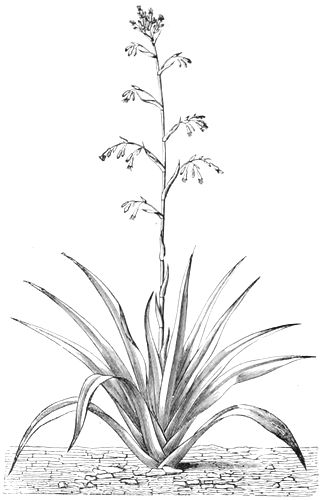
FIG. 247. BESCHORNERIA BRACTEATA.
B. tubiflora (tube-flowered). fl. greenish-purple, nutant, fascicled,
bracteate; fascicles remote, secund; scapes erect, long, simple.
May. l. radical, linear, channelled, recurved, spinosely denticulate.
h. 6ft. Mexico, 1845. (B. M. 4642.)
B. yuccoides (Yucca-like). fl. bright green, pendent, racemose,
with rich rosy-red bracts; scapes slender, coral-red, simple. May
and June. l. radical, thickish, lanceolate, acute, 1ft. to 1½ft. long.
h. 4ft. Mexico.
BESLERIA (named in honour of Basil Besler, an
apothecary at Nuremberg). SYN. Eriphia. ORD. Gesneraceæ.
Very pretty stove sub-shrubs, usually erect,
branched. Peduncles axillary, few-flowered. Leaves opposite,
petiolate, thickish; nerves and veins very prominent
beneath. Stems sub-tetragonal. A light rich earth, or a
mixture of sand, loam, and peat, and a moist atmosphere,
are necessary for successful cultivation. Beslerias may
be increased by cuttings, which root readily in heat.
B. coccinea (scarlet-berried).* fl. yellow; peduncles axillary
bearing three to six flowers in an umbel at top; bracts two, at
the division of the common peduncle, orbicularly cordate, toothed,
scarlet. l. ovate, glabrous, stiff, a little toothed. Guiana, 1819.
Climbing shrub. (A. G. 255.)
B. cristata (crested). fl., corolla yellowish, hairy outside;
peduncles axillary, solitary, one-flowered; bracts cordate,
toothed, sessile, scarlet. June. l. ovate, serrated. Guiana, 1739.
Climbing shrub.
B. grandiflora (large-flowered).* fl. large, campanulate, spotted
with red; peduncles axillary, elongated, many-flowered. l. ovate-oblong,
acuminated, crenated, densely pilose above, villous beneath,
as well as on the branches. h. 3ft. Brazil.
B. Imrayi (Imray's). fl. rather small, yellow, in axillary whorls.
l. large, lanceolate, serrate, glabrous. Stems quadrangular.
Dominica, 1862. Herbaceous perennial. (B. M. 6341.)
B. incarnata (flesh-coloured-berried).* fl., corollas purplish; tube
very long, ventricose; lobes of limb reflexed, roundish, unequal,
fringed; peduncles axillary, solitary, one-flowered. l. oblong,
crenated, tomentose on both surfaces. h. 2ft. Guiana, 1820.
Herbaceous perennial.
B. violacea (purple-berried). fl. purple, small; corolla with a
curved tube and spreading limb; peduncles racemosely panicled,
terminal. Berry purple, edible. l. ovate, acute, quite entire,
stiff. Guiana, 1824. Climbing shrub. (A. G. 254.)
BESOM, or BROOM. Birch-brooms are best for
garden purposes, and are generally used. The most suitable
for paved yards are those made of the common Ling
(Calluna vulgaris). Those made of bass fibres are frequently
used on paths, for which they are very suitable,
but their expensiveness prevents them being generally
employed. Whatever material is used in its composition,
a Besom will last much longer if soaked in water for some
time before using.
BESSERA (in honour of Dr. Besser, Professor of
Botany at Brody). ORD. Liliaceæ. An elegant little half-hardy,
Squill-like, bulbous plant, from Mexico. Perianth
bell-shaped, six-parted. Leaves narrow, linear. It requires
a compost of loam, leaf soil, peat, and sand, with
good drainage. If cultivated in pots, a plentiful supply of
water must be given from the commencement of growth
until ripening off. When at rest, however, it should be
kept dry and cool, but secure from the effects of frost.
If planted out, a well-drained sunny position must be
chosen, such as close to the wall of a greenhouse with a
southern aspect. Propagation may be effected by offsets.
B. elegans (elegant).* fl. scarlet, or scarlet and white. July to
September. l. 1ft. to 2ft. long, narrow, furrowed on the upper
side. h. 2ft. Mexico, 1850. This is the only species. The colour
of the flowers varies considerably, on which account other names
have originated. (B. R. 25, 34.)
BETA (from bett, the Celtic word for red; in reference
to the colour of the Beet). Beetroot. ORD. Chenopodiaceæ.
Perianth single, half-inferior, five-cleft, persistent. Seed
one, reniform, imbedded in the fleshy base of the calyx.
B. Cicla is largely used as a decorative plant in sub-tropical
and other styles of gardening. They require the same culture
as the ordinary Beet. The other sorts, with dark
blood-red leaves, are largely employed in flower gardens,
and the roots utilised for culinary purposes. See also Beet.
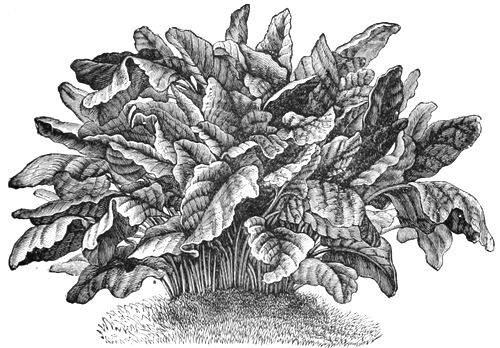
FIG. 248. BETA HORTENSIS METALLICA, or VICTORIA BEET.
B. Cicla (Sicilian). fl. greenish, disposed in threes. August. l.
with very thick ribs. Roots scarcely any. h. 6ft. Portugal, 1570.
The variety, B. c. variegata, usually known as the Chilian Beet, is
a very handsome plant, having its leaves often more than a yard
in length and over 1ft. in diameter, with a remarkably handsome
variegation. The midribs are usually dark orange or scarlet. It
is a most desirable and effective plant for sub-tropical gardening.
B. hortensis metallica (metallic). Victoria Beet. An ornamental
variety with glistening deep blood-red leaves. Useful for
decorative purposes in summer, either as a single specimen or in a
mass. Roots may also be used for cooking. See Fig. 248.
B. maritima (sea). fl. greenish, disposed in hairs. August. l.,
lower ones rhomboid-ovoid, acute; upper ones lanceolate. Stem
diffuse. Root scarcely any. h. 1ft. Britain.
B. vulgaris (common). The Common Beetroot. fl. greenish,
clustered. August. l., lower ones ovate. Root fleshy. h. 4ft.
South Europe, 1548.
BETCKEA. See Plectritis.
BETEL, or BETLE. See Piper Betle.
BETONICA. This genus now forms a sub-division of
Stachys (which see). Betony (Stachys Betonica) is a
native herb formerly much used in medicine, but now
almost entirely discarded.
BETONY. See Stachys Betonica.
BETULA. (according to some authorities, from Betu,
its Celtic name; others give the derivation of the word as
from batuo, to beat, the fasces of the Roman lictors, which
were made of Birch rods, being used to drive back the
people). Birch. ORD. Cupuliferæ. TRIBE Betuleæ. Ornamental,
hardy (except where otherwise specified), deciduous
trees or shrubs, allied to Alnus, having round, slender,
often drooping branches, and the bark in most species in
thin membranous layers. The flowers appear at the same
time as the leaves. Male catkins cylindrical, lax, imbricated
all round with ternate concave scales, the middle
one largest, ovate; corolla none; filaments ten to twelve,
shorter than the middle scale, to which they are attached.
Female catkins similar, but more dense; scales horizontal,
peltate, dilated outwards, three-lobed, three-flowered;
corolla none. Nut oblong, deciduous, winged at each side.
The Betulas are easily cultivated in any ordinary soil;
but a light sandy loam suits them best. Most of the
species are best increased by seeds, which ripen in September,
and need to be dried, in order to prevent fermentation.
They should be sown in March, in a sandy
soil, the surface of which has been previously made perfectly
level. They must be
spread on the surface, and not
covered with soil, but pressed
down with the feet. When
grown in quantities, beds 4ft.
in width are preferred, with
an alley of 1ft. between
them. In early summer, if the
weather be warm and dry, the
beds should be shaded with
branches. The young seedlings
must be transplanted when a
year old. The dwarfer kinds
may be propagated by layering
in the autumn. The numerous
beautiful varieties are best increased
by grafting or budding
upon seedling stocks of the
common kinds, the former being
done in spring, and the latter
in summer when the buds are
ready. Those most useful as
forest trees and for protection
are quick-growing and very ornamental.
The time of maturity
of the Birch depends very
much upon the soil and situation,
but it seldom increases in
size after it is thirty years old.
The common species (B. alba)
is one of the hardiest and most useful trees in cultivation,
growing quickly, and withstanding exposure better than
many others; consequently it is invaluable for skirting and
nursing more tender subjects, and is especially desirable for
clothing mountainous and exposed districts. It is also very
beautiful and picturesque. It is the commonest tree
throughout Russia, from the Baltic to the Eastern Sea, frequently
monopolising gigantic forests. In Italy, it forms
excellent forests up to 6000ft. altitude, and in our own
Highlands of Scotland it occurs up to a height of 2500ft.
In Greenland, although much reduced in size, it holds its
own as the only arboreal vegetation.
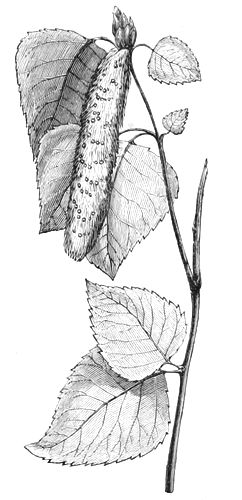
FIG. 249. LEAVES AND CATKIN OF BETULA ALBA.
B. alba (white).* Silver, White, or Common Birch. fl. whitish.
February and March. fr. brown, ripe in September and October.
l. ovate, acute, somewhat deltoid, unequally serrated; autumnal
tints rich yellow, scarlet, or red. A diminutive shrub in the
extreme north, but a tree from 50ft. to 60ft. high in the middle
regions. Britain. A most beautiful and invaluable forest tree,
with a large number of varieties. See Fig. 249.
B. a. alba-purpurea (white and purple).* l. rich purple above,
with a lustrous metallic hue, pale beneath. Branches with a
sub-pendulous disposition. A very effective variety.
B. a. dalecarlica (Dalecarlian).* l. deeply pinnatifid, with the
lobes toothed.
B. a. foliis-variegatis (variegated-leaved).* l. blotched with
yellowish white.
B. a. laciniata pendula (pendulous and laciniate).* l. rather
larger than the typical form, deeply laciniated, deep green, and
decidedly pendulous. It appears there are two forms of this, but
that known as Young's variety is the best.
B. a. macrocarpa (large-fruited).* Female catkins twice as long
as those of the type.
B. a. pendula (pendulous).* A well-known tree, distinct from
the species in having the shoots more slender, smoother, and
pendulous.
B. a. pontica (pontic). l. somewhat larger than in the species,
and the plant of more robust growth. (W. D. B. 2, 94.)
B. a. pubescens (downy). l. covered with hairs.
B. a. urticifolia (nettle-leaved).* l. deeply laciniated, serrated,
and hairy. Several others, reputed as distinct, are mere forms
of the typical B. alba.
B. Bhojpattra (Bhojpattra).* fl., female catkins erect, cylindrical,
oblong; bracts smooth, woody, two-parted, blunt, much
longer than the fruit, which has narrow wings. May. l. oblong-acute,
with nearly simple serratures, somewhat cordate at the
base; their stalks, veins, and twigs hairy; the bark is of a pale
cinnamon colour. h. 50ft. Himalayas, 1840. This requires a
sheltered position.
B. carpinifolia (Hornbeam-leaved). Synonymous with B. lenta.
B. daurica (Daurian).* fl., catkins whitish-brown, larger than
those of the common Birch. February and March. l. ovate, narrow
at the base, quite entire, unequally dentate, glabrous; scales of
the strobiles ciliated on their margins; side lobes roundish. h.
30ft. to 40ft. Siberia, 1786. The variety parvifolia has smaller
leaves than the type.
B. excelsa (tall). Synonymous with B. lutea.
B. fruticosa (shrubby).* fl. whitish-brown; female catkins oblong.
February and March. l. roundish-ovate, nearly equally serrated,
glabrous. h. 5ft. to 6ft. in moist situations, but much higher on
mountains. Eastern Siberia, 1818. (W. D. B. 2, 154.)
B. glandulosa (glandular).* fl. whitish; female catkins oblong.
May. l. obovate, serrate, quite entire at the base, glabrous,
almost sessile; branches beset with glandular dots, glabrous.
h. 2ft. Canada, 1816. A handsome little shrub. (F. D. 2583.)
B. lenta (pliant). fl. greenish-white. May to June. l. cordate,
ovate, acutely serrated, acuminate; petioles and nerves hairy
beneath; scales of the strobiles smooth, having the side lobes
obtuse, equal, with prominent veins. h. 60ft. to 70ft. Canada to
Georgia, 1759. SYN. B. carpinifolia. (W. D. B. 2, 144.)
B. lutea (yellow).* fl. greenish-white. May. l. 3½in. long, and
2½in. broad, ovate, acute, serrated; petioles pubescent, shorter
than the peduncles; young shoots and leaves, at their unfolding,
downy, but ultimately quite glabrous, except the petiole, which
remains covered with fine short hairs; scales of the strobiles
having the side lobes roundish. h. 70ft. to 80ft. Nova Scotia,
1767. SYN. B. excelsa.
B. nana (dwarf).* fl. whitish-green; catkins erect, stalked, cylindrical,
obtuse; the barren ones lateral, and the fertile ones terminal;
scales of the latter three-lobed, three-flowered, permanent.
April and May. l. orbicular, crenate, reticulated with veins beneath.
h. 1ft. to 3ft. Scotland, Lapland, Sweden, Russia, &c. A
shrub with numerous branches, slightly downy when young, and
beset with numerous little, round, firm, smooth, sharply crenated
leaves, beautifully reticulated with veins, especially beneath; and
furnished with short footstalks, having a pair of brown lanceolate
stipules at their base. There is also a pretty variety named
pendula, with drooping branches.
B. nigra (black).* The Black Birch. fl. greenish-white; female
catkins straight, and nearly cylindrical, about 2in. long. May.
l. rhomboid-ovate, doubly serrated, acute, pubescent beneath,
entire at the base; scales of the strobiles villose; segments
linear, equal. h. 60ft. to 70ft. New Jersey to Carolina, 1736.
SYN. B. rubra. (W. D. B. 2, 153.)
B. papyracea (papery).* fl. greenish-white; female catkins on
long footstalks, drooping; scales having the side lobes short,
somewhat orbiculate. May to June. l. ovate, acuminate, doubly
serrate; veins hairy beneath; petiole glabrous; the branches are
much less flexible than those of the common Birch, and are more
ascending. h. 60ft. to 70ft. North America, 1750. (W. D. B. 2,
152.)
B. p. fusca (brown). l. smaller than those of the type, and less
downy.
B. p. platyphylla (broad-leaved).* l. very broad.
B. p. trichoclada (hairy-branched).* l. cordate. Branches extremely
hairy, and twigs in threes.
B. populifolia (Poplar-leaved).* fl. greenish-white. April, May.
l. deltoid, much acuminated, unequally serrated, quite smooth;
scales of the strobiles having roundish side lobes; petioles glabrous.
h. 30ft. Canada, 1750. This species, although very
closely resembling B. alba, grows with less vigour, and does not
attain so large a size. (W. D. B. 2, 151.)
B. p. laciniata (laciniated).* l. large, shining, and deeply cut.
B. p. pendula (pendulous).* Spray drooping, like that of B.
alba pendula.
B. pumila (dwarf).* fl. whitish; female catkins cylindrical. May
and June. l. roundish ovate, on long footstalks, densely clothed
with hairs on the under surface. Branches pubescent, dotless.
h. 2ft. to 3ft. Canada, 1762. A very beautiful kind, suitable for
furnishing large rockeries, or planting on hill sides, or rocky
ground. (W. D. B. 2, 97.)
B. rubra (red).* Synonymous with B. nigra.
BETULEÆ. A tribe of deciduous shrubs or trees.
Perianth none, or bract-like; flowers monœcious, in catkins,
in twos or threes. Fruit, a dry, compressed, lenticular,
often winged, indehiscent nut. Leaves alternate, simple,
stipulated. The genera are Alnus and Betula.
BI. In compound words, this signifies twice.
BIANCEA SCANDENS. See Cæsalpinia sepiaria.
BIARUM (an ancient name of a plant). ORD. Aroideæ.
A genus of small, hardy, tuberous-rooted perennials, much
more curious than pretty, allied to Sauromatum. This
genus, according to Dr. Masters, differs from Arum in its
spathe being tubular at the base, with the limb spreading.
The female flowers have a distinct style, and the fruit contains
only one ovule. They will thrive in any light, rich,
well-drained soil, and may otherwise be treated similar to
the hardy Arums. There are several other species besides
those named, but they are not yet in general cultivation.
B. constrictum (constricted). A synonym of B. tenuifolium.
B. gramineum (grassy). A synonym of B. tenuifolium.
B. tenuifolium (slender-leaved).* fl., spathe dark brown-purple,
reflexed in the upper part; spadix very long, subuliform. June.
l. linear-lanceolate. h. 6in. South Europe, 1570. SYNS. B. gramineum
and B. constrictum. (B. R. 512, under name of Arum
tenuifolium.)
BIAURICULATE. Having two auricles.
BIBRACTEATE. Furnished with two bracts.
BIBRACTEOLATE. Furnished with two secondary
bracts.
BICARINATE. Two-keeled.
BICOLOR. Two-coloured.
BICONJUGATE. Having two secondary petioles,
each with a pair of leaflets.
BICORNUTE. With two horn-like processes.
BIDENS (from bis, twice, and dens a tooth; in
reference to the seed). Bur Marigold. ORD. Compositæ.
A rather large genus of mostly hardy annual and perennial
herbs, distinguished by the pericarp having from two to
four rigid awns, which are rough with minute deflexed
points. Involucre erect, of several oblong, nearly equal,
parallel scales. Most of the species of this genus are of
no merit as garden plants. Two are natives of Britain,
viz., B. cernua and B. tripartita. They thrive in any
ordinary garden soil. Propagated by divisions of the
plant; or by seeds.
B. atro-sanguinea (dark-bloody). fl.-heads black-crimson, very
freely produced. Late summer and autumn. Leaves pinnate.
Root tuberous. h. 3ft. Mexico. (B. M. 5227.)
B. ferulæfolia (Ferula-leaved). fl.-heads yellow. Autumn.
l. bipinnatifid. h. 2ft. Mexico, 1799. SYN. Coreopsis ferulæfolia.
(B. M. 2059.)
B. procera (tall). fl.-heads yellow, large. l. finely divided, deep
green. A handsome perennial. h. 6ft. to 8ft. Mexico, 1820.
(B. R. 684.)
B. striata (striped). fl.-heads rather large, in a panicled leafy
corymb; ray florets white; disk yellow. l. ternately pinnated,
glabrous. h. 2ft. to 3ft. Autumn. Mexico. (B. M. 3155.)
BIDENTATE. With two teeth.
BIEBERSTEINIA (named after Frederic Marschall
Bieberstein, a Russian naturalist, author of "Flora Taurico-Caucasica,"
and other works). ORD. Rutaceæ. A genus
of half-hardy herbaceous perennials. They thrive in a
compost of loam, peat, and sand. Propagated by cuttings,
placed under a hand glass in early summer; or by seeds,
sown in a slight hotbed in March or April.
B. odora (sweet). fl. yellow; racemes terminal, simple; petals
entire. May. l. impari-pinnate; leaflets roundish, deeply toothed.
Plant beset with glandular hairs. h. 1ft. Altaia, 1837.
BIENNIAL. A term applied to plants occupying two
years in the development from seed to the maturation of
seed: growing one year, flowering, fruiting, and dying the
next. Seeds of Hardy Biennials are, as a rule, sown from
June to August, to flower the succeeding season. Tender
varieties are sown in a frame or cool house, and kept there
all winter, being transferred from the frames or houses
to the open border, in June. Wallflowers, Foxgloves,
Canterbury Bells, and Sweet Williams, may be taken as
fair types of Biennials, although they often assume more
than a Biennial character on light sandy soils.
BIFARIOUS. Two-ranked; arranged in two opposite
rows.
BIFID. Divided about half-way down into two parts;
two-cleft.
BIFOLIATE. Compound leaves with two leaflets.
BIFRENARIA (from bis, twice, and frænum, a strap;
in reference to a double strap or band, by means of which
the pollen masses are connected with their gland). ORD.
Orchideæ. A genus of pretty stove orchids, allied to
Maxillaria, and distinguished from it by having two fræna
or caudicles to their pollen masses. For culture, see
Maxillaria.
B. aurantiaca (orange-coloured).* fl. orange; lateral lobes of lip
semi-cordate, middle one transverse, sub-undulated, callous at
the base; raceme erect. October. l. oblong, plicate. Pseudo-bulb
roundish, compressed, two-leaved. h. 9in. Demerara,
1834. (B. R. 1875.)
B. aureo-fulva (orange-tawny). fl. orange, on long pedicels; lip
unguiculate, three-lobed; scape radical, many-flowered. October.
l. oblong-lanceolate. Pseudo-bulb roundish-ovate, wrinkled, one-leaved.
h. 1ft. Brazil, 1840.
B. Hadwenii (Hadwen's). fl. each nearly 4in. across; petals
and sepals ½in. broad, yellow green, beautifully blotched or
mottled with a rich brown; lip large, above 1in. broad, white,
with striped spots of rose. June. l. long, ¼in. broad. h. 1½in.
Brazil, 1851. SYN. Scuticaria Hadwenii. (B. M. 4629.)
B. H. bella (charming).* A new variety with sepals and petals
whitish yellow outside, brilliant shining cinnamon inside,
with a few spots, bars, and blotches of whitish sulphur colour;
lip wide, white, with one light brown spot behind, and a larger
one in front of the callus; radiating light brown lines on lateral
lobes, and mauve ones on anterior lobe.
B. H. pardalina (leopard-marked).* A very beautiful variety,
having sepals and petals with brown circles or polygonal figures
on a light yellow ground; lip light ochre-coloured at its basilar
part, white in front, with radiating mauve-purple streaks. This
variety is extremely rare.
B. vitellina (yolk-coloured).* fl. yellowish purple; lip cuneate,
three-lobed; lateral lobes acute, crenulated; racemes drooping.
July. l. lanceolate. Pseudo-bulb ovate, bluntly angular, one-leaved.
h. 1ft. Brazil, 1838.
BIFURCATE. Twice-forked.
BIGELOVIA (named after Dr. Jacob Bigelow, author
of "Florula Bostoniensis," &c.). ORD. Compositæ. A
genus of hardy shrubs, sub-shrubs, or herbaceous plants,
as now understood, comprising several subjects formerly
referred to Chrysothamnus, Linosyris, &c. Flower-heads
disposed in corymbs; involucre imbricated, oblong, or
campanulate; receptacle flat. Leaves alternate, linear
or lanceolate. They thrive in any ordinary garden soil.
Propagated by cuttings.
B. Howardii (Howard's). fl.-heads yellow; involucre narrow. A
low shrub. SYN. Linosyris Howardii.
B. nudata (naked). fl.-heads yellow. September. l. scattered,
oblanceolate or linear. h. 1ft. to 2ft. New Jersey. Perennial.
B. paniculata (panicled). fl.-heads yellow, barely ½in. long,
loosely panicled, five-flowered. California. Shrubby.
BIGEMINATE. Doubly paired.
BIGLANDULARIA. See Sinningia.
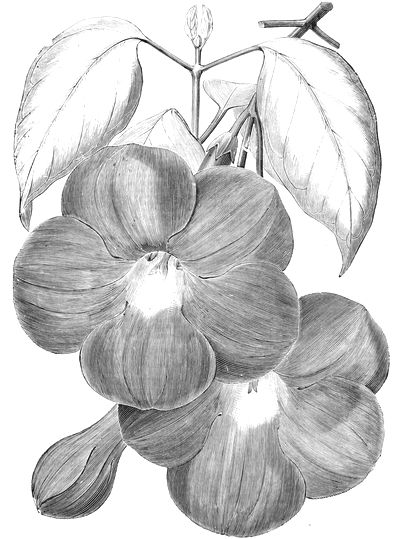
FIG. 250. BRANCH AND FLOWERS OF BIGNONIA MAGNIFICA.
BIGNONIA (so named by Tournefort, in compliment
to the Abbé Bignon, librarian to Louis IV.). ORD.
Bignoniaceæ. A large genus of usually scandent shrubs,
furnished with tendrils; rarely erect trees or shrubs.
Flowers axillary and terminal, usually panicled; corolla
with a short tube, a campanulate throat, and a five-lobed,
bilabiate limb. Leaves opposite, simple, conjugate,
ternate, digitate or pinnatifid. These handsome plants
are particularly suited for large houses, where, if well
grown, they give great satisfaction. The primary point
in their culture is to obtain free and, at the same time,
sturdy growth, giving due attention to training, pruning,
&c., or the plants soon exceed all limits. Like all free-growing
plants, Bignonias thrive best planted out in the
borders of the stove or greenhouse, or out of doors, as the
case may be; but the space allowed should be limited, in
order to restrict root production. They may either be
trained to cover the back wall, or be planted in a border
in front, and trained up the rafters, or on wires, arranged
where most desirable. In summer, allow all the strongest
shoots to grow, training them so as to have as much
sunlight as possible—which is absolutely necessary to well
ripen the wood, and make it capable of producing flowers—without
entirely shutting it out from the plants below.
Soil: A compost of two part fibrous loam, one part peat,
one of leaf mould, and a due proportion of sand, will be
found most satisfactory. The loam and peat should be
used in a rough state, unsifted, as this will keep the border
open for some years, and thorough drainage should be
effected. Propagation: Seed being rarely procurable, the
most satisfactory method of propagation is by cuttings,
made of good strong shoots, in early spring. Three joints
are sufficient to make a cutting, if short-jointed; if
long-jointed, two are sufficient. Place them in a well-drained
pot of sandy soil, under a bell glass, in bottom
heat. As these cuttings are young and fleshy, they are
liable to damp off; hence it is necessary, for the first
two or three weeks, to wipe the moisture from the glasses
every morning, and water sparingly. If well managed,
they will root in about two months, and should then have
the glasses left off every night for a week; they should
then be transferred to small pots in the compost above
described, passing it through a coarse sieve, to extract the
stones and rough pieces of soil. After potting, the plants
should be kept close for a short time, till they are able to
bear full exposure to the light. In a year's time, they
will be large enough to plant out in their permanent
quarters. Bignonias may also be increased by layering.
B. æquinoxialis (equinoxial). fl. yellow; peduncles two-flowered,
terminal ones racemose. June to October. l. glabrous, conjugate;
leaflets oblong-lanceolate. Tendrils simple, axillary.
Cayenne, 1768.
B. æ. Chamberlaynii (Chamberlayn's).* fl., corolla yellow, funnel-shaped;
segments obtuse; racemes axillary, six to eight-flowered.
April to October, l., leaflets ovate, acuminated, glabrous, shining
above. Tendrils strong, simple. Brazil, 1820. (B. R. 741.)
B. æsculifolia (Chestnut-leaved). A synonym of Tabebiua
æsculifolia.
B. apurensis (Apuran). fl. pedicellate, 2in. long; corolla yellow,
funnel-shaped, with roundish, spreading, nearly equal lobes;
spikes terminal, sessile. l. ternate; leaflets elliptic-oblong, short-acuminated,
acutish at the base. Shady banks of the river
Apures, near El Diamante, 1824.
B. argyreo-violascens (silvery-violet). l. white-veined, in a
young state violet. South America, 1865. (F. M. 1865, 26.)
B. aurantiaca (orange). fl. orange-coloured. South America, 1874.
B. capreolata (tendrilled).* fl., corolla orange; peduncles
axillary, one-flowered, crowded. April to August. l. conjugate;
leaflets cordate oblong; lower ones simple. Tendrils small, trifid.
North America, 1710. Hardy in south of England. (B. M. 864.)
B. c. atro-sanguinea (dark blood-red). fl. red-purple. Summer.
United States. (B. M. 6501.)
B. Cherere (Chirere).* fl., corollas orange, 2in. long; cymes
axillary. June to November. l., lower ones ternate, upper ones
conjugate, cirrhose; leaflets ovate, acuminated, sometimes sub-cordate,
glabrous. Guiana (in woods and on the banks of rivers),
1824. (B. R. 1301.)
B. Chica (Chica). fl., corolla funnel-shaped, violaceous; limb with
nearly equal, rounded segments; panicles axillary, pendulous.
l. 8in. to 10in. long, abruptly bipinnate; leaflets conjugate, elliptic-ovate,
acuminated, deeply cordate, glabrous. Tendrils simple.
Banks of the Orinoco, 1819.
B. chrysantha (yellow-flowered). fl. terminal, crowded; corolla
yellow, 2in. long. May. l., leaflets five, ovate, acuminated,
tomentose, on pedicels 5in. long. h. 12ft. to 26ft. Caraccas,
1823. Tree.
B. chrysoleuca (yellowish-white). fl., corolla yellow, with a
white limb, glabrous, 1½in. long; peduncles three to five-flowered.
June, July. l. conjugate; leaflets 5in. to 6in. long, 2in. broad,
oblong acuminated, glabrous, rounded at the base, shining.
Tendrils undivided. Banks of the River Magdalena, 1824.
B. Clematis (Clematis-like).* fl., corolla white, yellowish inside;
lobes nearly equal, roundish, red; panicles axillary, downy.
l. 7in. to 8in. long, conjugately pinnate, with an odd one; leaflets
2in. long, 1in. broad, ovate, narrowed at top, acute, cordate at
the base, glabrous. Branches quadrangular, glabrous. Caraccas,
1820.
B. diversifolia (diverse-leaved). fl., corolla yellow, campanulately
funnel-shaped; panicles terminal. l. conjugate and simple;
leaflets roundish-ovate, acuminated, sub-cordate, glabrous, shining.
Tendrils undivided. Branches quadrangular, striated.
Mexico, 1825.
B. floribunda (many-flowered).* fl., corolla purplish, funnel-shaped,
eight lines long; panicles axillary, powdery, with opposite
branches and dichotomous branchlets. l. conjugate; leaflets
2½in. long, oblong-elliptic, acuminated, acute at the base, glabrous,
shining. Tendrils undivided. Branches beset with white warts
and fine powder. Mexico, 1824.
B. lactiflora (milk-flowered). fl., corolla milk white, 1½in. long,
villously tomentose on the outside; racemes twin, with a petiolate
bract at the base of each pedicel. April and July. l. conjugate;
leaflets 2in. long, cordate, ovate, glabrous. Branches
striated. Tendrils trifid. Santa Cruz, 1823.
B. leucoxyla (white-wooded). A synonym of Tabebiua leucoxyla.
B. litoralis (shore). fl., corolla funnel-shaped, red, downy outside;
panicles axillary, dichotomously branched. May to July.
l. ternate; leaflets roundish-ovate, acuminated, clothed with soft
hair on both surfaces. Branches terete, glabrous; branchlets
hairy. Mexico, 1824.
B. magnifica (magnificent).* fl. varying from delicate mauve to
rich purplish-crimson; throat light primrose colour, very large,
3½in. across; panicles large, branching. Summer. l. opposite,
on rather long petioles, broadly ovate. Columbia, 1879. A very
handsome species. See Fig. 250, for which we are indebted to
Mr. Bull.
B. mollis (soft). fl. small, downy; panicle terminal, many-flowered.
l. trifoliate; leaflets 5in. long, ovate, sub-cordate, downy on both
surfaces. Cayenne, 1818.
B. molissima (very soft). fl., corollas somewhat funnel-shaped,
downy inside; panicles axillary, dichotomously branched, downy.
l. conjugate and simple; leaflets 2½in. long, 1½in. broad, ovate,
acute, cordate, clothed with soft hairs above. Caraccas, 1820.
B. pallida (pale).* fl. axillary, usually solitary; corolla 2in. long,
funnel-shaped, with a yellow tube, and a pale lilac limb; lobes
crenately ciliated. July. l. simple, opposite, oblong, obtuse,
rather cordate at the base. Branches terete. St. Vincent, 1823.
(B. R. 965.)
B. picta (painted). A synonym of B. speciosa.
B. radicans (rooting). See Tecoma radicans.
B. reticulata (netted). Columbia, 1873.
B. Roezlii (Roezl's). Columbia, 1870.
B. SALICIFOLIA (Willow-leaved). fl., corolla funnel-shaped, 1½in.
long, copper-coloured, with a white limb; peduncles axillary,
three to six-flowered, downy. Summer. l. conjugate; leaflets
lanceolate, 3in. long, acute at both ends, quite glabrous, shining.
Branches terete, sulcate. Trinidad, 1824.
B. speciosa (beautiful).* fl. pink, stained with purple; calyx spathaceous,
split on one side; panicles terminal. May. l. pinnate,
ternate and verticillate; leaflets oblong-lanceolate, acuminate,
shining, serrate. h. 4ft. Uruguay, 1840. A glabrous evergreen
shrub. SYN. B. picta. (B. M. 3888.)
B. spectabilis (showy). fl., corolla 3in. long, rather coriaceous,
glabrous, purple; racemes terminal, short, having the two lower
pedicels three-flowered, and the rest one-flowered. l. conjugate;
leaflets ovate-oblong, acuminated, obtuse. Santa Cruz, &c., 1820.
B. Tweediana (Tweedie's). fl. yellow; corolla glabrous, limb
deeply five-parted, ciliated; segments emarginate; peduncles one-flowered.
Summer. l. conjugate; leaflets lanceolate, acuminate;
petioles downy. Buenos Ayres, 1838. (B. R. 26, 45.)
B. variabilis (variable).* fl., corolla 3in. long, with a greenish-yellow
tube; limb ultimately white; racemes simple, short, many-flowered,
terminal. June to August. l., lower ones biternate;
superior ones conjugate; divisions ternate. Branches tetragonal.
Tendrils trifid. Caraccas, 1819.
B. venusta (lovely). fl., corolla crimson, clavately funnel-shaped,
with a spreading border, villous inside; corymbs terminal,
many-flowered. August to December. l., lower ones ternate;
superior ones conjugate; leaflets oblong-ovate, acuminated
oblique at the base. Brazil, 1816. (B. R. 249.)
BIGNONIACEÆ. A large order of trees, or twining
or climbing shrubby plants. Flowers usually trumpet-shaped;
corolla usually irregular, four or five-lobed, and
with a swollen portion below its mouth; stamens five,
unequal. Fruit, a two-valved, often pod-like capsule. Leaves
usually opposite, compound. The best-known genera are
Bignonia, Catalpa, Eccremocarpus, Jacaranda, and Tecoma.
BIJUGATE. A compound leaf, with two pairs of
leaflets.
BILABIATE. Having two lips.
BILBERRY. See Vaccinium Myrtillus.
BILIMBI TREE. See Averrhoa Bilimbi.
BILL. A cutting instrument, curved forward, or hook-shaped
toward the point, and fitted with a handle, like a
hatchet. It is used for pruning, &c. When short, it is
called a Hand-bill; when long, a Hedge-bill, or Hedge-hook.
BILLARDIERA (in honour of Jacques Julien Labillardiere,
a celebrated French botanist and traveller).
Apple Berry. ORD. Pittosporaceæ. Very desirable greenhouse
evergreen climbers. Peduncles solitary from the
apex of the branches, one-flowered, pendulous; calyx of
five subulate sepals; petals five, combined into a tube
below, generally yellow; stamens five. Fruit edible.
Leaves alternate. They thrive either in pots or planted
out in a compost of fibrous loam, leaf soil, and peat, in
equal proportions, with thorough drainage. Cuttings,
dibbled in a pot of sandy soil, placed under a bell glass,
in gentle heat, root readily. They may also be raised
from seed, which several of the species produce in abundance.
B. angustifolia (narrow-leaved). A synonym of B. scandens.
B. longiflora (long-flowered).* fl. greenish-yellow, often changing
to purple, solitary; pedicels glabrous. Berries blue. May to
August. l. lanceolate, entire. Van Diemen's Land, 1810. A very
free-growing and profuse-flowering species. SYN. B. ovalis. See
Fig. 251. (B. M. 1507.)
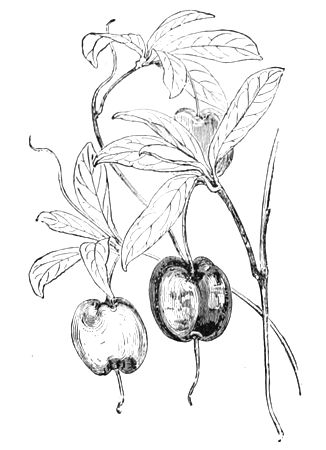
FIG. 251. FRUITING PORTION OF BILLARDIERA LONGIFLORA.
B. mutabilis (changeable). A synonym of B. scandens.
B. ovalis (oval-leaved). A synonym of B. longiflora.
B. scandens (climbing).* fl. cream-coloured, at length purplish,
solitary; pedicels same length as the flower. June to September.
l. lanceolate-linear, entire. Branches, when young, villous. New
Holland, 1795. SYNS. B. mutabilis, B. angustifolia. (B. M. 1313.)
BILLBERGIA (named after J. G. Billberg, a Swedish
botanist). ORD. Bromeliaceæ. A genus of handsome stove
plants. Flowers borne on light panicles; calyx three-parted;
corolla of three convolute petals, scaly at the base;
stamens inserted into the base of the perianth. Leaves
harsh, rigid. These require much the same treatment as
recommended for Æchmea. The most suitable soil is a
mixture of peat, leaf soil, and loam in about equal parts,
to which is added some sharp sand, to keep it open and
porous. Free and perfect drainage is absolutely necessary
for the successful culture of this class of plants, and
a layer of moss should be placed over the crocks previous
to filling the pots with soil. Although fond of heat,
Billbergias will, when in flower, bear removal to a cooler
house than a stove; and, if they are kept a little dry at
the same time, the change will greatly prolong their
blooming period. The stronger growing kinds thrive well
in rich, well-drained loam and leaf mould. Propagation
is effected by carefully taking off the suckers which
form at the base, after the plants have done flowering;
but, before doing this, they should be allowed to attain
a good size. The suckers grow quickly when attached to
the parent stem, from which they derive their strength,
and feel the check less when severed; besides which, they
become more mature, and are in better condition for rooting.
The best method to adopt is as follows: Take the
sucker in the hand and gently twist it off the stem; next
trim the base by the removal of a few of the lower
leaves, and then insert each sucker separately in a small
pot, in sharp soil. A bottom heat of about 80deg.
will greatly facilitate new root-growth; failing this,
they will root freely in the temperature of a stove if
placed in a shaded position for two or three weeks,
after which they will bear increased light and sunshine
during the later part of the day. See also Æchmea and
Androlepis.
B. amœna (pleasing). fl. greenish-white, tipped with blue,
loosely panicled; bracts rose-coloured. July to winter. l. ligulate,
abruptly acuminate, slightly spiny. h. 2ft. Brazil, 1817.
(B. R. 344.)
B. Baraquiniana (Baraquin's).* fl. green; spikes long, the
upper portion pendulous, bearing four or five large, oblong-lanceolate,
bright scarlet bracts at the base of the flowers; the stem
above the bracts is hoary white. Early spring. l. ligulate, tapering
to a point, where, as well as at the edges, they are armed with
sharp reddish spines, arched, transversely variegated with white
scurfy bars. h. 1½ft. Brazil, 1865. (I. H. 1864, 421.)
B. chlorosticta (green-spotted). Synonymous with B. Saundersii.
B. iridifolia (Iris-leaved).* fl. red and yellow, tipped with blue,
in drooping spikes; rachis and bracts crimson. March. l. lanceolate,
ensiform, 1½ft., grey beneath. h. 1ft. Rio de Janeiro, 1825.
(B. R. 1068.)
B. Liboniana (Libon's).* fl., outer perianth segments beautiful
coral red, about half as long as the inner ones, which are whitish
at the base, and a splendid purple upwards. Winter. l. in a
dense rosette. h. 1ft. Brazil, 1858. (B. M. 5090.)
B. Lietzei (Lietz's).* fl. in loose terminal racemes, each subtended
by lanceolate pink bracts; sepals rosy pink, half as long
as the greenish corolla. l. tufted, ligulate, acute; margin spiny.
Brazil, 1881. A double-flowered variety, with petaloid stamens,
is mentioned by M. Morren, which is interesting in being the
first double-flowered Bromeliad yet recorded. (B. H. 1881, 97.)
B. marmorata (marbled).* fl. deep blue; calyces green, tipped
with blue; bracts very large, leafy, oblong, bright scarlet; panicles
erect, branched, much longer than the leaves. l. broadly ligulate,
sheathing at the base, truncate-mucronate at the apex; edges
very regularly toothed, deep green, freely blotched and barred
with dull reddish-brown. (I. H. 2, 48.)
B. Moreli (Morel's).* fl., sepals red, densely woolly, less than
half as long as the purplish-violet petals; spike dense, drooping;
bracts large, deep rosy red, much longer than the solitary sessile
flowers. February. l. arching, lanceolate, shining green on both
surfaces; marginal spines few and weak, h. 1ft. Brazil, 1848.
An excellent basket plant. SYN. B. Moreliana. (B. H. 1873, 1, 2.)
B. Moreliana (Morel's). Synonymous with B. Moreli.
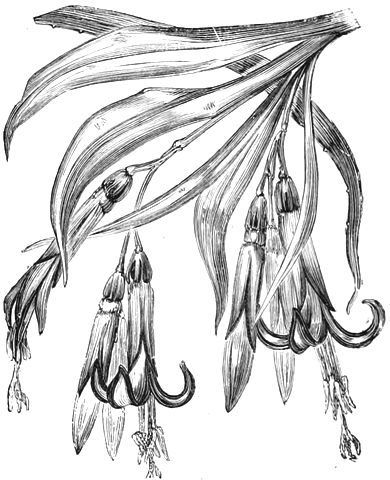
FIG. 252. FLOWERS OF BILLBERGIA NUTANS.
B. nutans (nodding). fl., sepals reddish; petals yellowish-green,
both with a blue margin; scapes slender, nodding, with a few
large rosy bracts, terminating in a short drooping spike. Winter.
l. numerous, long, narrow, ensiform, remotely spiny. h. 1½ft.
Brazil, 1868. See Fig. 252. (B. M. 6423.)
B. pallescens (pallid). fl. greenish-white; ovary deeply grooved;
spike pendulous; bracts lanceolate, of a beautiful rose-pink.
Winter. l. dark green, and spotted on the upper surface, paler
beneath, with transverse bars. h. 1½ft. Brazil, 1856. SYNS. B.
pallida and B. Wioti.
B. pallida (pale). Synonymous with B. pallescens.
B. pyramidalis (pyramidal). fl. red, with purple margin, in
erect spikes; bracts lanceolate, rosy. February. l. curved, ligulate-lanceolate,
with white bands beneath. h. 1ft. Peru, 1822.
(B. H. 1873, 16.)
B. Quesneliana (Quesnel's).* fl. deep purple; bracts flesh-coloured;
upper ones variegated with white. h. 6ft. Guiana,
1874. An erect growing species, possessing the same habit as B.
rosea-marginata, but having the leaves more acuminate, and deep
green in colour. SYN. Quesnelia rufa. (F. d. S. 10, 1026.)
B. rosea-marginata (rose-margined).* fl., inflorescence a dense
oblong spike of light blue, subtended by large, broad, deep, rose-coloured
bracts, with scarious margins. January. l. sheathing
at the base, about 2ft. long, channelled, spiny on the margin, and
marked with transverse mealy bands. h. 1½ft. Tropical America,
1880. SYNS. B. rubro-marginata and Quesnelia roseo-marginata.
B. rubro-marginata (red-margined). Synonymous with B.
rosea-marginata.
B. Saundersii (Saunders').* fl. about 2in. long, disposed in a
loose pendulous inflorescence; sepals crimson, half the length of
the petals, which are yellow outside and blue within. l. tufted,
ligulate, rounded at the apex, terminated by a short mucro, saw-toothed,
green above, purple beneath, and spotted white on both
surfaces. Brazil, 1868. SYN. (according to Morren) B. chlorosticta.
(F. M. n. s. 106.)
B. thyrsoidea (thyrsoid). fl. dense, in thyrsoid spikes, almost
without bracts. June. l. green, ligulate, shortly acuminate, the
margin toothed. h. 1ft. Brazil, 1850. (B. M. 4756.)
B. vittata (striped). fl. indigo blue, with crimson calyces and
bracts; racemes nodding. l. banded, ligulate, elongate, shining.
h. 1½ft. Brazil, 1843. (B. H. 1871, 14, 15.)
B. Wioti (Wiot's). Synonymous with B. pallescens
B. zebrina (zebra-streaked).* fl. greenish; scape clothed with
large, pale, salmon-coloured bracts; inflorescence gracefully
curved downwards. Early spring. l. sheathing for about half
their length, forming thus a sort of tube, deep green, with
zones of grey, the whole deepening with age. h. 1½ft. South
America, 1826. SYN. Helicodea zebrina. (L. B. C. 1912.)
BILOBATE. Two-lobed.
BINATE. In pairs.
BINDING. The process of securing a graft or bud
in its place by means of Raffia or Bast. The same term
is applied to hard clay or other soil impervious to water,
in summer.
BINDWEED. See Convolvulus.
BIOPHYTUM (from bios, life, and phyton, a plant;
the leaves of one species being sensitive to the touch).
TRIBE Oxalideæ of order Geraniaceæ. A genus of pretty
and interesting perennials, differing from Oxalis, in which
genus it has been included, in the valves of the capsule
being patent and separate to the base. They will thrive in
a mixture of loam and peat. Propagated by seeds, which
should be sown in spring, on a hotbed. Probably the only
species in cultivation is the following:
B. sensitivum (sensitive). fl. yellow, small. July. l., leaflets
oblong, obtuse, mucronate. h. 6in. India and China, 1823. The
leaves of this plant contract on the slightest touch. SYN. Oxalis
sensitiva. (B. R. 31, 68.)
BIOTA. See Thuja.
BIOTIA. See Aster corymbosus.
BIPARTITE. Divided into two nearly to the base.
BIPINNATE. Twice pinnate.
BIPINNATIFID, or BIPINNATIPARTED.
Having both primary and secondary segments of a leaf
divided, but not to the base.
BIPLICATE. Having two folds or plaits.
BIRCH. See Betula.
BIRD-CHERRY. See Cerasus Padus.
BIRDLIME. A preparation made from Mistletoe
berries and Holly bark. It is used for catching birds.
BIRD-PEPPER. See Capsicum baccatum.
BIRDS. As a class, Birds are very much more useful
than hurtful in gardens. Owls are of great use in catching
mice, and Night-jars in catching night-flying insects.
Rooks are very useful in lessening the numbers of wire-worms,
and of hurtful insects in general; but, if very
numerous, they may be driven to eat potatoes and other
vegetable food, and may then do harm. The same may
be said of Starlings. Blackbirds and Thrushes feed
much on snails and worms, but they also feed on the
ripe fruits in gardens. As a rule, slender-billed birds
feed almost wholly on insects or other animals, and are
to be encouraged in gardens at all seasons. Among
these may be enumerated the Tree-creeper, Wryneck,
Warblers, and Wrens of various kinds, Chats, Hedge-sparrow,
Larks, Redstart, Robin, Titmice, and Wagtails.
Swifts, Swallows, and Martins, are also great destroyers
of insects. The Finches feed, in part, on insects, but
also eat large quantities of seeds, and often do considerable
damage among plants grown for seed, e.g., Cabbages,
and in the seed-beds. Sparrows are about the most
troublesome, though they are often assisted by Buntings,
Chaffinches, Linnets, and others. When seed-beds or
fruits have to be protected, this may be done by nets;
or, more simply, by threads tied to sticks a few inches
above the surface of the ground, or in front of the trees.
BIRD'S-EYE PRIMROSE. See Primula farinosa.
BIRD'S-FOOT. See Ornithopus.
BIRD'S-FOOT FERN. See Pellæa ornithopus.
BIRD'S-NEST FERN. See Asplenium Nidus.
BIRTHWORT. See Aristolochia.
BISCUTELLA (from bis, double, and scutella, a saucer;
in allusion to the form of the silicles). Buckler Mustard.
ORD. Cruciferæ. Perennial or annual herbaceous plants,
usually hispid, but sometimes downy or smoothish. Flowers
yellow, scentless; pedicels filiform, bractless. Leaves oblong,
entire, toothed or pinnatifid, somewhat radical or
cauline. Stems round, erect, usually corymbosely branched
at the top by racemes, which, when in flower, are short,
but elongated at the time of fruiting. All the species produce
seeds freely. The annuals should be sown in the
open borders. Some of the perennial kinds are well adapted
for ornamenting rockwork, in a dry, sunny situation. Of the
annuals, columnæ, lyrata, maritima, and obovata, are best.
Of the perennials, coronopifolia, lævigata, and sempervirens
are the most desirable, but none are worth cultivation outside
botanical collections.
BISERIAL, or BISERIATE. Arranged in two
parallel rows.
BISERRATE. Toothed in a saw-like manner, but
with the primary teeth again serrated.
BISULCATE. Doubly furrowed.
BITERNATE. Twice ternate.
BITTER ALMOND. See Amygdalus communis
amara.
BITTER APPLE. See Cucumis Colocynthis.
BITTER-SWEET. See Solanum Dulcamara.
BITTER VETCH. See Orobus.
BITUMINOUS. Clammy, adhesive.
BIVONÆA (named after Antonio Bivona-Bernardi,
a Sicilian botanist, author of "Sicularum Plantarum Centuria
I. et II.," Palermo, 1806). ORD. Cruciferæ. A pretty
little monotypic genus, well adapted for ornamenting
rockwork or the front of flower borders. A dry sandy
soil is most suitable for its culture. Propagated by seeds,
sown in spring where the plants are intended to remain,
thinning-out being necessary to ensure full growth.
B. lutea (yellow).* fl. yellow, small; racemes terminal, elongated
as they grow; pedicels filiform, bractless. April. l. alternate,
lower ones stalked, the rest sessile, cordate, stem-clasping at the
base, ovate, toothed, bluntish. Stem filiform, sparingly branched.
h. 3in. to 6in. Sicily, 1823. An annual.
BIXA (its South American name). Arnatto. ORD.
Bixineæ. Stove evergreen trees, with dichotomous panicles
of large reddish flowers, broad cordate leaves, and prickly
capsules. A compost of loam and peat is well adapted to
their culture. Propagated by seed, sown when ripe in bottom
heat; or by cuttings, which root freely in sand, under a
hand glass, in heat; the latter is the better method. If
grown from seed, the trees attain a large size before they
flower; whereas cuttings, taken from a flowering plant and
struck, may be brought to flower when small plants.
B. Orellana (Orellana). fl. pale peach-coloured; corymbs terminal,
panicled; peduncles two, three, and four-flowered. May
to August. l. cordate, ovate, acuminated, entire or angular,
smooth on both surfaces. The drug called Arnatto is prepared
from the red pulp which covers the seed of this species. It is
used in the preparation of chocolate, and by farmers for colouring
cheese, and also as an orange or yellow dye for silks. h. 30ft.
West Indian Islands, 1690. See Fig. 253. (B. M. 1456.)
BIXINEÆ. An order of smoothish tropical trees or
shrubs, not remarkable for any particular beauty. Flowers
with or without petals, when present five and sepal-like;
stamens indefinite in number, inserted in the receptacle
or at the bottom of the calyx; peduncle axillary or terminal,
bracteate, one or many-flowered, usually forming
terminal panicles. Fruit fleshy or dry. Leaves alternate,
simple, entire, or slightly lobed, generally full of pellucid dots.
The genera best known are Azara, Bixa, and Flacourtia.
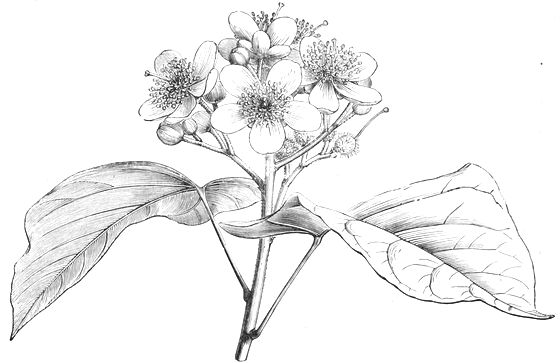
FIG. 253. FLOWERING BRANCH OF BIXA ORELLANA.
BLACK BEARBERRY. See Arctostaphylos
alpina.
BLACK BEETLES. See Cockroaches.
BLACK BRYONY. See Tamus communis.
BLACK BULLACE. See Prunus insititia.
BLACKBURNIA. See Xanthoxylum.
BLACK FLY or BEAN FLY (Aphis rumicis),
also called Collier and Black Dolphin. This Fly (see
Fig. 254) is found on many herbaceous plants. It is
very injurious to Beans; hence, immediate means of destruction
must be employed directly the insect appears.
Its extermination is an extremely difficult matter; but
the following remedies are very effectual:
Tobacco Water. This, made and applied as recommended
for Aphides (which see) is a good remedy; but it is rendered
more certain by the employment of soapsuds, instead
of clear water, in its manufacture.
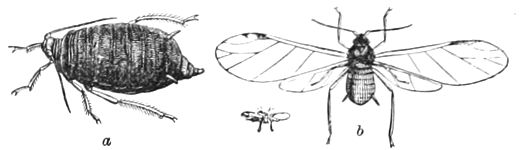
FIG. 254. THE BEAN FLY.
a, Female, magnified; b, Male, natural size, and magnified.
Paris Green (Arseniate of Copper). Owing to its poisonous
nature, this should not be used where there is fruit on
the trees or vegetables under them; but there is no better
destroyer of hard-dying insects. Its application is very
simple. Mix 1lb. of the green with 30gals. of water,
and well wet the infested parts of the trees, using a fine-rosed
watercan or garden engine for the purpose. The
operator's hands should be free from sores and scratches,
or dangerous ulcerations may ensue.
Gas Liquor. If this can be obtained from a gas-house, it
should be diluted with twice its bulk of water, and applied
in the same manner as Paris Green, being washed off with
clean water in a few hours. If the process be repeated on
two or three consecutive nights, it will be found certain in
its effects; moreover, it is not very poisonous. The finger
or thumb, or the Aphis brush, applied early, will often
exterminate these obnoxious insects at once. The first
of the methods above described is perhaps the most accessible
and the safest to use. Poisonous insecticides are
more or less dangerous, especially in the hands of the inexperienced.
Black Fly is, however, one of the most
difficult insects to eradicate, especially if allowed to
multiply. A syringing of clean water should follow either
of the above applications. See also Aphides.
BLACK JACK OAK. See Quercus nigra.
BLACK MAIDENHAIR SPLEENWORT. See
Asplenium Adiantum-nigrum.
BLACK PINE. See Pinus austriaca.
BLACKTHORN. See Prunus spinosa.
BLACK VARNISH TREE. See Melanorrhœa.
BLACK WATTLE. See Callicoma serratifolia.
BLADDER CATCHFLY. See Silene inflata.
BLADDER KETMIA. See Hibiscus Trionum.
BLADDER NUT. See Staphylea.
BLADDER SENNA. See Colutea.
BLADDER WORT. See Utricularia.
BLADE. The lamina or expanded part of a leaf.
BLÆRIA (named after Patrick Blair, M.D., F.R.S.,
who practised medicine at Boston, in Lincolnshire, and was
author of "Miscellaneous Observations," 1718; "Botanic
Essays," 1820, &c.). ORD. Ericaceæ. Pretty little greenhouse
evergreen shrubs, natives of Southern and Tropical
Africa. Flowers terminal, glomerate; corolla short-tubular,
with a four-cleft limb, very freely branched. Leaves
verticillate, with revolute margins. For culture, see Erica.
B. articulata (jointed).* fl. reddish; heads drooping. May.
l. four in a whorl, ovate or linear, glabrous, and shining; bracts
solitary. h. 1ft. 1795.
B. ericoides (Heath-like). fl. purplish-red. August. l. four in a
whorl, oblong, obtuse, ringed; bracts three, length of the calyx.
h. 2ft. 1774. SYN. Erica orbicularis. (L. B. C. 153.)
B. purpurea (purple). fl. purple; heads drooping. June. l. four
in a whorl, ovate, sub-ciliated. Stem flexuous, erect. h. 2ft. 1791.
BLAKEA (named after Martin Blake, of Antigua, a
great promoter of useful knowledge). ORD. Melastomaceæ.
Handsome stove evergreen shrubs or trees. Flowers red,
large, showy; peduncles axillary, terete, one-flowered, naked,
opposite or solitary, shorter than the leaves, usually with
brown tomentum. Leaves petiolate, three to five-nerved,
coriaceous, glabrous above and shining, but usually densely
clothed with rusty tomentum beneath. They thrive well
in peat, or a mixture of loam and peat, and require to be
liberally supplied with water, particularly in spring and
summer. Cuttings root freely if taken from shoots that
are quite ripe (otherwise they are apt to rot), planted in a
pot of sand, and plunged in a moist heat, under a hand
glass.
B. quinquenervia (five-nerved). fl. flesh-coloured, large, with
white disks; peduncles twin, shorter than the petioles. June.
l. elliptic, acuminated, naked, and shining on both surfaces, five-nerved.
h. 10ft. to 16ft. Guiana, 1820. (A. G. 210.)
B. trinervia (three-nerved). fl. rose colour, large; peduncles
solitary, longer than the petioles. June. l. oval-oblong, three-nerved,
glabrous and shining on both surfaces in the adult state,
and when young serrulated; petioles and branchlets clothed with
rusty tomentum. Roots issuing from the branches and stems.
h. 4ft. to 8ft. Jamaica, 1789. (B. M. 451.)
BLANCHING. This process is effected for the purpose
of obtaining crispness, and for converting what would,
under ordinary circumstances, be a dangerous plant—in
the case of Celery especially so—into a highly popular
delicacy. Blanching can only be accomplished by entirely
excluding the light from the plants, thus depriving the
colouring matters of their power to decompose water
and carbonic acid gas. It is also termed Etiolation.
BLANDFORDIA (named after George, Marquis of
Blandford). ORD. Liliaceæ. A very beautiful genus of
greenhouse bulbous plants, natives of Australia. Flowers
solitary, on recurved pedicels; perianth funnel-shaped, six-cleft;
stamens six. Leaves linear, elongate, striate; radical
ones dilated, and somewhat sheathing at the base; others
shorter and more distant, appearing on the flower-stem. The
best soil in which to grow them is loam and peat in equal
proportions, with a little rough silver sand added. They
should be repotted moderately firm in the autumn, allowing
good drainage, and should then be placed under the
greenhouse stage, or in any other position where they will
be free from water drippings. Water must only be given
when dry, until they commence to grow, when it may be
gradually increased, and they may be introduced into a
higher temperature, if necessary, there to remain till after
flowering. When the foliage is ripened off, they may be
stored away until the time for repotting. Propagated
by seeds and offsets, or by division of the old plants,
which must be done when repotting.
B. aurea (golden).* fl. 1½in. to 2in. long; scape bearing an umbellate
cluster of three to five pure golden-yellow drooping bell-shaped
flowers. Summer. l. narrow, linear, keeled or channelled, from
the base of which the flower-scape arises. h. 1ft. to 2ft. New
South Wales, 1870. (B. M. 5809.)
B. Cunninghamii (Cunningham's).* fl. rich coppery red, the
upper part yellow; about 2in. long, bell-shaped, pendulous; from
twelve to twenty, terminating in a stout scape 3ft. high. June.
l. linear, slightly keeled at the back, about ⅓in. broad. New South
Wales. This magnificent species should have a little charcoal
mixed with the soil already mentioned. (B. M. 5734.)
B. C. hybrida (hybrid). fl. red, margined with clear yellow,
bell-shaped, in a dense drooping umbel.
B. flammea (fiery).* fl. dullish yellow, in dense umbel-like
clusters; bracts ovate-lanceolate, stiff; perianth inversely conical.
June. l. linear, bluntly keeled. h. 2ft. Australia, 1849.
B. f. elegans (elegant).* fl. crimson, tipped with yellow, large,
funnel-shaped. Summer. l. long, linear-ensiform. This very
handsome form is often taken for the type.
B. f. princeps (magnificent).* fl. rich orange-red externally,
and bright yellow within, about 3in. long, tubular, borne on a
scape about 1ft. high, slightly pendulous, and arranged near the
summit. Summer. l. stiff, sub-erect, long, bright green, disposed
in a distichous manner. This is a very splendid greenhouse
plant, and should be in every collection. Australia, 1873. SYN.
B. princeps. See Fig. 255. (B. M. 6209.)
B. grandiflora (large-flowered).* fl. crimson, very large; bracts as
long as the pedicels, the inner much the shortest. July. h. 2ft.
New South Wales, 1812. (B. R. 924.)
B. intermedia (intermediate). fl. yellow, pendulous, funnel-shaped,
in sixteen to twenty-flowered racemes; bracts leaf-formed.
September. l. channelled, acutely keeled, scabrous on
the margins. h. 1½ft. Australia.
B. marginata (margined). fl. orange-red, conical, in long pendulous
racemes; bracts narrow, foliaceous, about equalling in
length the pedicels. July. l. stiff, sub-erect, with scabrous
margins. h. 2ft. Tasmania, 1842. (B. R. 31, 18.)
B. nobilis (noble).* fl. orange with yellow margins, on long
pedicels, drooping, disposed in a terminal raceme; bracts twice
as short as the pedicels. July. l. very narrow. h. 2ft. New
South Wales, 1803. (B. M. 2003.)
B. princeps (magnificent). Synonymous with B. flammea princeps.
BLATTA. See Cockroaches.
BLEABERRY. See Vaccinium Myrtillus.
BLEACHING POWDER. See Chloride of Lime.
BLECHNUM (from Blechnon, the Greek name of a
fern). ORD. Filices. A very attractive genus of stove
and greenhouse ferns, thriving in a compost of peat, leaf
soil, and loam. Sori linear, continuous, or nearly so, parallel
with, and usually contiguous to, the midrib. Involucre
distinct from the edge of the frond. Fronds uniform,
generally pinnate or pinnatifid. Veins usually free. For
general culture, see Ferns.
B. australe (southern).* cau. stout, creeping, scaly; sti. erect,
4in. to 6in. long. fronds 9in. to 18in. long, and from 2in. to 3in.
broad, lanceolate, narrowed towards both ends; pinnæ numerous,
the barren ones 1in. to 1½in. long, ¼in. to ⅜in. broad, linear,
hastate-cordate, or auricled at the base, especially on the upper
side, with a very coriaceous texture; fertile pinnæ narrower. sori
in a continuous or slightly broken line, close, but not contiguous,
to the midrib. South Africa, &c., 1691. Greenhouse species.
B. boreale. See Lomaria Spicant.
B. braziliense (Brazilian).* cau. erect, stout, sub-arborescent,
1ft. or more long, densely clothed at the crown with dark brown
scales. sti. short, stout, densely scaly. fronds oblong-lanceolate,
2ft. to 4ft. long, 6in. to 16in. broad, narrowing downwards very
gradually; pinnæ close, linear, 4in. to 8in. long, ½in. to ¾in. broad,
narrowed gradually towards the point, finely toothed or undulated,
connected at the base. Brazil and Peru, 1820. See
Fig. 256. (H. S. F. 3, 157.) There is a very pretty variety met
with in gardens under the name of Corcovadense crispum, which
is not quite so strong-growing as the type, with wavy, crispy
edges. They will all thrive in the cool of a stove fernery.
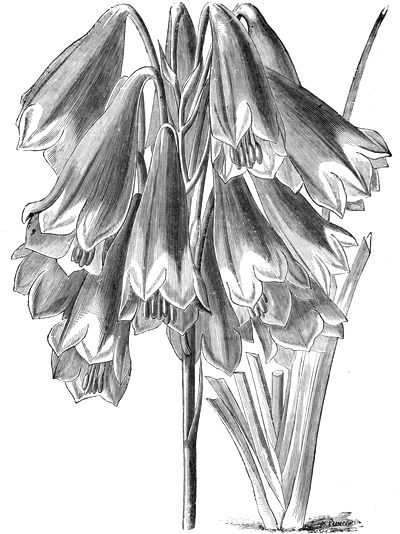
FIG. 255. BLANDFORDIA FLAMMEA PRINCEPS.
B. cartilagineum (cartilaginous). cau. oblique, densely scaly
at top. sti. strong, erect, 4in. to 6in. long, scaly, muricated in the
lower part. fronds ovate-oblong, 2ft. to 3ft. long, 6in. to 12in. broad;
pinnæ numerous, linear, 4in. to 6in. long, about ½in. broad,
narrowed gradually towards the point, margin finely toothed,
dilated, and connected at the base. sori in a broad line close to
the midrib. Temperate Australia, 1820. Greenhouse species.
B. hastatum (halbert-shaped).* rhiz. short, stout, scaly. sti. 4in.
to 6in. long, nearly naked. fronds from 9in. to 18in. long, and 2in.
to 4in. broad, lanceolate, with twenty to forty pinnæ on each side;
the barren ones 1in. to 1½in. long, lanceolate, falcate, narrowed
gradually to a point, the lower side slightly truncate, and slightly
lobed, the upper cordate, with a large hastate auricle; fertile
pinnæ narrower. sori midway between the midrib and margin;
rachis and surfaces naked or slightly pubescent; texture coriaceous.
Temperate South America, 1841. Greenhouse species.
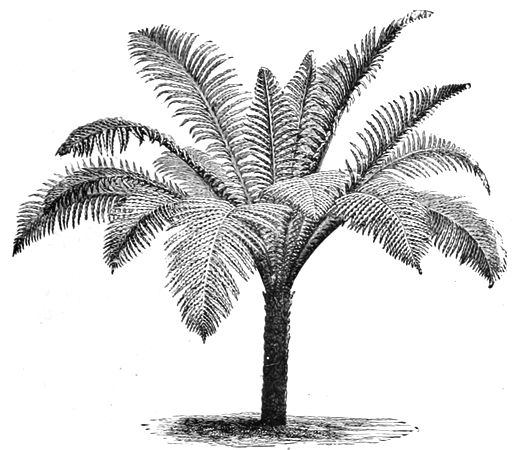
FIG. 256. BLECHNUM BRAZILIENSE.
B. Lanceola (lance-leaved). rhiz. slender, creeping, stoloniferous.
sti. slender, erect, 2in. to 4in. long. fronds lanceolate, undivided,
4in. to 6in. long, ½in. broad, or less, narrowed gradually from the
centre towards each end. Tropical America, 1820. Stove species.
B. L. trifoliatum (three-leaved). fronds furnished with one or
two pairs of small oblong-obtuse lateral pinnæ at the base of the
large terminal one. Stove variety. (H. S. F. 3, 94.)
B. longifolium (long-leaved).* rhiz. slender, creeping. sti. firm,
erect, nearly naked, 6in. to 12in. long. fronds 6in. to 9in. long,
with a terminal pinna, and three to six lateral ones on each side,
which are 3in. to 5in. long, and ½in. broad, narrowed gradually
towards the point. sori in broad lines close to the midrib; texture
coriaceous. Tropical America, 1820. B. l. fraxineum is a variety
found in gardens under the name of B. fraxiniifolium, with a
habit more close than the type; pinnæ six to eight on a side,
sometimes 1in. broad. B. intermedium (Link.) and B. gracile
(Kaulf.), often seen in gardens, are slender-growing varieties of
this rather variable stove species.
B. nitidum (shining).* sti. stout, erect, naked, 3in. to 4in. long.
fronds oblong-lanceolate, 1ft. or more long, 4in. to 6in. broad;
pinnæ numerous, sub-falcate, linear, 3in. to 4in. long, ¼in. to ½in.
broad, narrowed gradually towards the point, dilated and connected
at the base; edge undulate-dentate; texture coriaceous;
both surfaces smooth. Stove species. The variety contractum,
often seen in gardens, has its pinnæ contracted, and the edge
much undulated. Brazil. (H. S. F. 3, 55.)
B. occidentale (western).* cau. stout, erect, scaly at the top.
sti. 6in. to 12in. long, erect, scaly below. fronds ovate-acuminate,
9in. to 18in. long, 4in. to 8in. broad, with twelve to twenty-four
linear pinnæ on each side, which are 2in. to 4in. long, and about
¾in. broad, narrowed gradually to a point, truncate or cordate;
texture coriaceous. West Indies, southwards to Chili and South
Brazil, 1823. A very handsome stove or greenhouse fern.
B. o. multifidum (much-cut).* A pretty variety, said to have been
introduced from Dominica; the apices of the pinnæ are copiously
crested and tasselled, rendering it very desirable. Stove variety.
B. orientale (oriental).* cau. stout, erect, clothed at the crown
with dark brown scales. sti. 4in. to 8in. long, strong, erect, scaly
below. fronds 1ft. to 3ft. long, 6in. to 12in. broad, ovate, with
very numerous nearly contiguous pinnæ on each side, which are
4in. to 8in. long, and about ¾in. broad, narrowed to a long point.
Australia, northwards to South China and the Himalayas.
Greenhouse.
B. polypodioides (Polypodium-like). A synonym of B. unilaterale.
B. serrulatum (saw-edged).* cau. elongated, stout, ascending.
sti. 6in. to 12in. long, strong, erect, smooth, nearly naked. fronds
oblong-acuminate, 1ft. to 2ft. long, 6in. to 9in. broad, with twelve
to twenty-four pairs of quite distinct articulated linear oblong
pinnæ on each side, which are about 4in. to 5in. long, ½in. broad,
narrowed gradually towards the point, and downwards to a narrow
base, the margins finely incised. Florida, &c.,
1819. Stove or greenhouse. SYN. B. striatum.
(H. S. F. 3, 159.)
B. striatum (striped). A synonym of B. serrulatum.
B. unilaterale (one-sided).* cau. elongated,
densely scaly at the crown. sti. slender, erect,
1in. to 4in. long, slightly scaly below. fronds
lanceolate, 6in. to 12in. long, 1½in. to 2in. broad;
pinnæ numerous, spreading horizontally, linear,
¾in. to 1in. long, central ones ¼in. to ⅜in. broad,
point usually mucronate; edge entire, or nearly
so, the lower part dilated to a broad base. sori
in a line close to the midrib. Tropical America,
1829. Widely distributed. Stove or greenhouse
species. SYN. B. polypodioides, under which name
it is usually found in gardens.
BLECHUM (a Greek name for an unknown
plant, supposed to resemble Marjoram).
ORD. Acanthaceæ. Stove herbaceous perennials.
For culture, &c., see Justicia.
B. Brownei (Browne's). fl. white, in a dense
bracteated spike, which is four-cornered; bracts
ovate, downy. Summer. l. ovate elliptical, somewhat
toothed. h. 2ft. West Indies, 1780. The
other species introduced are: angustifolium, blue;
braziliense, blue; and laxiflorum, white.
BLEPHARIS (from blepharis, the eyelash;
in reference to the fringed bracts of
the calyx). ORD. Acanthaceæ. Dwarf shrubs
or herbs, often spiny and woody, allied to
Acanthus. Flowers in bracteate spikes; calyx
cruciately four-parted, bracteate; upper segment
entire, three-nerved; lower, two-nerved;
corolla-tube very short; lip five-lobed, three
lobes often much larger than the others; stamens four,
sub-didynamous. For culture, &c., see Acanthus.
B. boerhaaviæfolia (Boerhaavia-leaved). fl. blue. July. l.
usually four in a whorl, elliptic, toothed. h. 1ft. India, 1829.
Stove annual.
B. capensis (Cape Colony).* fl. blue. July. l. narrow, lanceolate,
spinose. h. 1ft. Cape of Good Hope, 1816. Greenhouse biennial.
B. furcata (forked-spined). fl. blue. July. l. lanceolate, entire
or spiny; bracts large, strongly spinose. h. 2ft. Cape of Good
Hope, 1846. Greenhouse evergreen shrub.
B. linearifolia (narrow-leaved). fl. blue. July. l. long, entire,
linear, glabrous or hairy, not spiny. h. 2ft. Guinea, 1823.
Stove annual.
B. procumbens (trailing).* fl. blue. July. l. linear lanceolate,
spiny. h. 1ft. Cape of Good Hope, 1825. Greenhouse evergreen
trailer.
BLEPHILIA (from blepharis, the eyelash; in allusion
to the ciliated bracts). ORD. Labiatæ. Ornamental hardy
perennials, closely allied to Monarda, but differing from it
in the calyx tube having thirteen instead of fifteen nerves,
and being naked in the throat, while the corollas are much
smaller and more dilated. They are of easy culture in
ordinary soil. Increased readily by dividing the roots in
early spring.
B. ciliata (ciliated). fl. blue; whorls all distinct; bracts
ciliated, reddish at top. July. l. almost sessile, ovate-oblong,
narrowed at the base, canescent beneath. h. 1ft. to 2ft. North
America, 1798.
B. hirsuta (hairy). fl. purple or blue; whorls more numerous
than in the preceding; upper ones approximate. July. l. petiolate,
ovate, roundly cordate at the base, hairy on both surfaces.
h. 1ft. to 2ft. Virginia, 1798. Habit more branched and loose
than in B. ciliata.
BLESSED THISTLE. See Cnicus benedictus,
properly Carbenia benedicta.
BLETIA (in honour of Don Louis Blet, a Spanish
botanist). ORD. Orchideæ. A large genus of, for the
most part, stove terrestrial orchids. Flowers purple or
whitish, in terminal racemes. Leaves narrow, grass-like.
Pseudo-bulbs round, flattened. The flowers are freely
produced when the plants are thoroughly established, and
are valuable for bouquets, as well for their pleasing colour
as for the time they last in perfection. Bletias thrive
best in a compost of loam and leaf mould. About 2in.
of crocks, covered with a layer of moss, should be placed
in the bottom of the pot, which should be filled to within
1in. of the top with soil. The bulbs should then be inserted,
and just covered. A good supply of water during
the growing season is necessary, and only a moderate
amount of heat. After growth has ceased, a period of
rest is required, during which time very little water
should be given. Propagation is effected by divisions,
which should be made after the plants have finished
flowering, or previous to their starting into growth.
B. campanulata (bell-shaped). fl. deep purple, with a white
centre, lasting a considerable time in perfection. Mexico.
B. florida (florid).* fl. pale rose-coloured; lip not spurred. July
and August. h. 2ft. West Indies, 1786. A very pretty species.
(B. R. 1401.)
B. gracilis (slender). fl. pale greenish-white; sepals and petals
nearly equal, lanceolate, acuminate; lip red and yellow; scape
simple. l. oblong, lanceolate, plicate. h. 1½in. Mexico, 1830.
(B. R. 1681.)
B. hyacinthina (Hyacinth-like).* fl. purple, racemose; lip not
spurred, beardless; scape about as long as the leaves. March to
June. l. lanceolate. h. 1ft. China, 1802. This pretty species
has proved to be quite hardy. (Garden, Nov., 1879.)
B. patula (spreading-flowered). fl. purple, spreading; scape tall,
branched. March. l. lanceolate. h. 2ft. Hayti, 1830. (B. M.,
3518.)
B. Shepherdii (Shepherd's).* fl. on branching spikes, purple,
marked down the centre of the lip with yellow. Winter. l. long,
lanceolate, dark green. Jamaica, 1825. (B. M. 3319.)
B. Sherrattiana (Sherratt's).* fl. about a dozen on a spike, rich
rosy purple; petals very broad, twice the breadth of the sepals;
lip deep purple in front, marked with white and yellow down the
centre. l. three to four-plicate. Pseudo-bulbs depressed. New
Grenada, 1867. (B. M. 5646.)
B. verecunda (modest). fl. purple; lip not spurred. January.
h. 3ft. West Indies, Mexico, &c., 1733. (B. M. 930.)
BLIGHIA SAPIDA. The Akee Tree. This is now
included under the genus Cupania (which see).
BLIGHT, or BLAST. Applied to various diseases
of plants which are caused or accelerated either by the
presence of parasitic fungi or insects, or by atmospheric
influence. Blight generally proves fatal to the whole or
part of the subject attacked.
BLIND. A term applied to plants which fail to produce
central buds. The defect is frequently noticeable in
the Cabbage, and other plants of the Brassica tribe; and
is, perhaps, mainly due to the attacks of insects in a very
early stage. Great care should therefore be exercised in
keeping the seed beds clear of insect pests, by the application
of ashes, lime, and soot, or spent hops.
BLOOD FLOWER. See Hæmanthus.
BLOODROOT. See Sanguinaria canadensis.
BLOOM. A fine powder-like substance found on
Grapes, Cucumbers, Plums, &c., and varying in colour in
the different subjects. It should be carefully protected,
as it improves the appearance of the fruit. The term is
also generally used—although incorrectly—as the plural of
blossom.
BLOSSOM. The flower of a plant, or the essential
organs of reproduction, with their appendages.
BLUE-BELLS. See Campanula rotundifolia and
Scilla nutans.
BLUE-BOTTLE. See Centaurea Cyanus.
BLUE GUM TREE. See Eucalyptus globulus.
BLUETS. The French name for Centaurea Cyanus.
See also Houstonia cœrulea and Vaccinium angustifolium.
BLUMENBACHIA (in honour of John Frederick
Blumenbach, M.D., Professor of Medicine at Göttingen,
and distinguished as a comparative anatomist). ORD.
Loasaceæ. Elegant branched, climbing or trailing, annual,
biennial, or perennial herbs, generally covered with stinging
hairs, which are very objectionable. Flowers axillary,
solitary, bracteate, very pretty and interesting. Leaves
opposite, lobed. They are of easy culture in ordinary
garden soil. Propagated by seeds, which should be sown
in pots, in spring, and placed in a gentle heat, where they
will germinate in about a fortnight. When the seedlings
are large enough, and after having been previously hardened
off, they may be planted out in their blooming quarters, or
potted on and trained to a trellis.
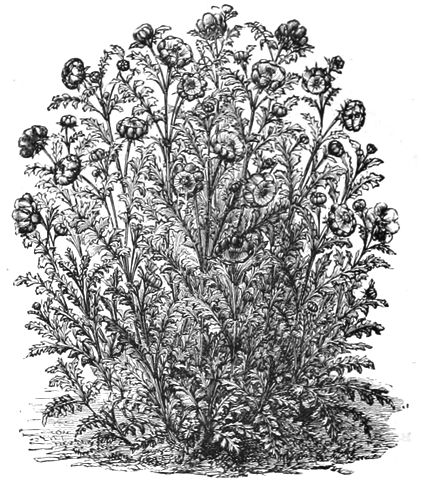
FIG. 257. BLUMENBACHIA CHUQUITENSIS.
B. chuquitensis (Chuquitan).* fl. solitary, axillary, with five to
ten boat-shaped red petals, which are yellow within. September.
l. oblong-lanceolate, pinnate; segments pinnatifidly lobed. Peru,
1863. Half-hardy climbing perennial. See Fig. 257. (B. M. 6143.)
B. contorta (twisted).* fl. orange-red, with cup-shaped green
scales within. July. l. oblong-ovate, pinnatifid; lobes incisely
toothed. Peru. Greenhouse climber, but may be grown against
a wall, out of doors, during the summer. (B. M. 6134.)
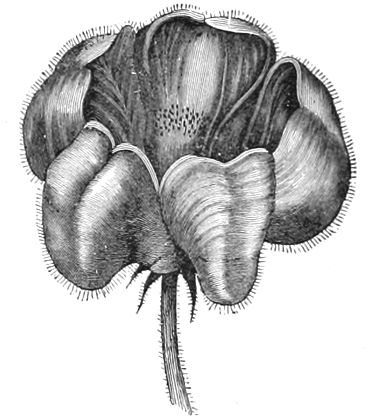
FIG. 258. FLOWER OF BLUMENBACHIA CORONATA.
B. coronata (crowned).* fl. of pure glossy whiteness, quadrangular,
crown-shaped, 2in. in diameter each way. June. l.
narrow, bipinnatifid, cut into small segments. h. 1½ft. Chili,
1872. This is an elegant dwarf, tufted, erect biennial, with the
pure white blooms imbedded in the metallic lustrous foliage. SYN.
Caiophora coronata. See Fig. 258.
B. insignis (remarkable).* fl. with whitish petals and reddish-yellow
scales, axillary, on long peduncles, about 1in. in diameter.
July. l., lower ones five to seven-lobed; upper ones deeply
bipinnatifid. h. 1ft. Chili, 1826. Hardy annual trailer.
SYN. Loasa palmata. (B. M. 2865.)
BOBARTIA (named after Jacob Bobart, Professor of
Botany at Oxford in the seventeenth century). ORD.
Irideæ. A small genus of greenhouse or hardy bulbous
plants, closely allied to Sisyrinchium. The species in
cultivation are very pretty hardy plants, but require
protection from severe frosts and excessive rains. They
thrive best in a warm, light soil, and make pretty plants
for rockwork. Propagated by separating the offsets
during autumn. This genus has been much misunderstood.
Among the plants which have been referred to it
are some which now find places in the genera Aristea,
Sisyrinchium, Homeria, Marica, Moræa, &c., &c.
B. aurantiaca. See Homeria aurantiaca.
B. gladiata (sword-shaped). fl. yellow, thinly sprinkled with
purple dots near the centre, handsome, nearly 2in. across.
l. linear, ensiform, narrow, slightly glaucous, 1ft. or more in
length. 1817. SYN. Marica gladiata. (B. R. 229.)
B. spathacea (rush-like). l. rush-like, several feet in length;
flower-stem as long as leaves, bearing near extremity a cluster of
pale yellow flowers, with narrow segments. Each flower lasts but
one day; as a good many, however, are developed in each spathe,
there is a succession which lasts some time. 1832. SYN. Xyris
altissima. (L. B. C. 1900.)
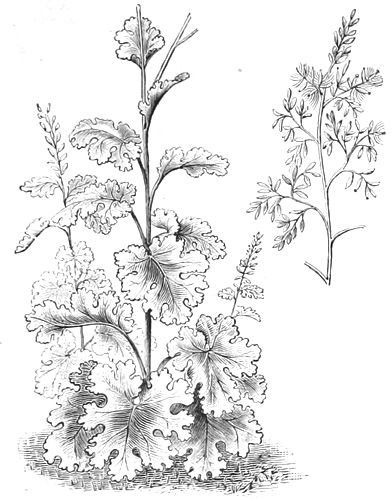
FIG. 259. BOCCONIA CORDATA, showing Habit and Flower.
BOCCONIA (named after Paolo Bocconi, M.D., a
Sicilian botanist, author of the "Museum des Plantes,"
and "Histoire Naturelle de l'Ile de Corse," &c.). ORD.
Papaveraceæ. Two of the species are greenhouse or half-hardy
shrubs. Flowers inconspicuous, in terminal panicles,
with the branches and branchlets each furnished with one
bract. Leaves stalked, glaucous, large, lobed. This genus
does not well agree with the rest of Papaveraceæ, from its
having one-seeded capsules and apetalous flowers. B. cordata
is a handsome, hardy, herbaceous plant, with a stately
habit and finely-cut foliage, and, where bold subjects are
desired, few will be found superior to it. As an isolated
specimen on the lawn, or by frequented walks, where it
will not be too closely surrounded by tall plants, it may be
grown with marked effect. It also forms a good subject
for pot culture, and is largely used for sub-tropical bedding.
The soil most suitable for its culture is a good fat loam, of
considerable depth. Propagated by cuttings, taken from
the axils of the larger leaves, during early summer; or
by young suckers, taken from established plants, during
summer, as they will then flower the following season. If
the former method is employed, the cuttings should be
pushed on, so that there are plenty of roots before the
winter sets in. The other two species require greenhouse
culture; but both are eminently suited for sub-tropical
gardening, in any light rich soil, or well-drained and airy
situation. They are best propagated by seeds, sown in a
hotbed in spring, the seedlings being placed out from June
to September.
B. cordata (cordate).* fl. buff-coloured, very numerous, borne in
very large terminal panicles; individually they are not showy, but
the fully grown inflorescence has a very distinct and pleasing
appearance. Summer. l. large, reflexed, deeply-veined, roundish-cordate;
margins lobed or sinuated. Stems growing rather close
together, thickly set with leaves. h. 5ft. to 8ft. China, 1795, and
1866. Mr. Robinson recommends its being grown in the angle of
two walls which shelter it from the north and east. It runs
quickly at the roots, and the suckers may be cut off to the benefit
of the parent plant; each sucker will form a strong plant in a
year's time. SYNS. B. japonica and Macleaya yedoënsis. See
Fig. 259. (B. M. 1905.)
B. frutescens (shrubby).* fl. greenish. October. l. large, sea-green,
oval-oblong, cuneated at the base, pinnatifid. h. 3ft. to 6ft.
Mexico, 1739. (L. B. C. 83.)
B. integrifolia (entire-leaved). fl. greenish; panicle crowded.
l. flat, oblong, tapering towards each end, entire, or scarcely
crenated. h. 9ft. Peru, 1822.
B. japonica (Japanese). Synonymous with B. cordata.
BŒBERA (named after Bœber, a Russian botanist).
ORD. Compositæ. A genus of evergreen greenhouse shrubs,
now generally referred to Dysodia. They are of easy culture,
thriving in ordinary garden soil. Propagated by cuttings,
made of young, rather firm, shoots, and placed in
sand, under a glass. There are several other species besides
the one given below, but they are not of much horticultural
value.
B. incana (hoary).* fl.-heads golden; peduncles one-headed. November.
l. pinnate, rather hairy; leaflets linear acute, channelled,
some entire, and some trifid. Stem hairy. h. 1½ft. Mexico,
1828. (B. R. 1602.)
BŒHMERIA (named after George Rudolph Bœhmer,
a German botanist). ORD. Urticaceæ. A genus of shrubs
or herbaceous plants, allied to Urtica, from which it is
distinguished in not having stinging hairs. B. nivea is
the only species having any horticultural value. This
thrives best in a warm, sandy soil; and is increased by
divisions.
B. nivea (snowy). fl. greenish, disposed in spikes. l. broadly
cordate, about 6in. long by 4in. broad, terminating in a long
slender point; edges serrate, covered on the under side with a
dense coating of white down. h. 3ft. to 4ft. China. A shrub-like
perennial, rather more curious than beautiful.
BOG BEAN. See Menyanthes trifoliata.
BOG-EARTH. See Peat.
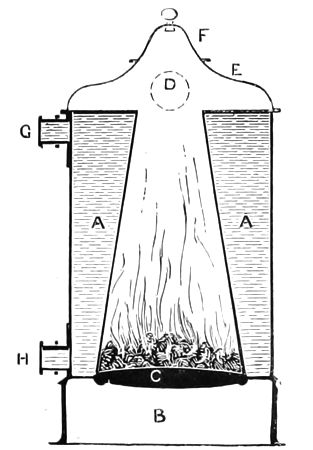
FIG. 260. VERTICAL SECTION OF CYLINDER BOILER.
A A, Wrought-iron Boiler, the shaded space showing the Waterway;
B, Ashpit inside the cast base of Boiler; C, Fire-bars; D,
Flue; E, Domed Top; F, Feeding Lid; G, Flow, and H, Return
Pipe Sockets.
BOILERS. These are very important articles in all
gardens where there are glass houses, and the best should
always be selected. They are made in cast and wrought
iron, both of which have their special advantages and disadvantages.
The former are less liable to burn through
when encrusted with any deposit from the water, but will
crack with sudden changes of temperature, by reason of
the granular form of the metal not allowing gradual contraction;
the latter may burn through where there is
any deposit of mud or other matter, but they will not
crack, and will stand a greater pressure than those made
of cast metal. It is, however, the better plan to use
Boilers of wrought iron, as, with careful usage, they
are less liable to break down in hard frosts than are
the others. As the value of the plants, as well as that
of the Boiler, has to be considered, should such a contingency
occur, it is certainly advisable to reduce all risks
to a minimum; and as the average life of a Boiler is from
ten to fifteen years, a slightly larger first cost is not of
very serious moment. The forms of Boilers are very
diverse, and, in some of the patented forms, complicated.
But, whatever the shape, the following points are essential:
A clear and unrestricted waterway of not less than 2in. in
thickness; the greatest exposure of surface to the direct
action of the fire; a sufficient fire space; and a fire-bar
area calculated to supply enough fresh air to the fire to
support thorough combustion. The forms generally used
for horticultural work are the following, or some modifications
of them; and, however grand the name, their
chief value consists in the attested heating capacity
at a given cost: The Saddle Boiler, which is made of
various sizes, with or without check ends, cross tubes,
and other devices for increasing the heating surface, and
also of a tubular form; the Upright Cylinder (a vertical
section of which is shown in Fig. 260); the Upright
Tubular Cylinder; the Horizontal Tubular; and the Cornish
or Horizontal Cylinder. Combinations of the various forms,
and complicated patterns of different kinds, are made for
particular purposes; but in no case should large Boilers be
used, unless they are recommended, by one competent to
judge, as suitable for the purpose they are needed to
fulfil. In every case, it is necessary that the Boiler should
be fixed in a proper manner. It is also good policy to have
Boilers about 30, or even 50 per cent., more powerful than
is actually required, when they are new, as, from various
causes, their heating power falls off in a year or two
in many places; and, under ordinary work, it is not
desirable to stimulate the action in order to command
sufficient heat. There is no doubt that, for general purposes,
some modification of the Saddle or Cylinder Boiler
is by far the best, all things duly considered; but it is
impossible to give any practical advice without a thorough
knowledge of the requirements of any particular place.
Gas Boilers are also useful for small places. These are
made in many forms, and are, as a rule, in the shape of a
cylinder, with a coned inside, against which the flames
play. Some Gas Boilers have also a superheater attached;
this exhausts the heat from the air which has passed
through the Boiler. Another good form is made of horizontal
tubes, which contain the water, the flames playing
over and amongst them. An atmospheric burner of
approved construction should be used where gas is the
heating power. A sufficient supply of gas should be
assured by using supply pipes of a good size. Care should
be taken to keep these pipes free from water, and protected
from frost by silicate cotton lagging, or some other
good non-conductor. Except for very small places, however,
gas apparatus is almost useless, and will never supersede
fuel Boilers. For other particulars regarding Boilers,
see Heating and Stoking.
BOIS-PERDRIX. See Heisteria.
BOLBOPHYLLUM. See Bulbophyllum.
BOLETUS (from bolos, a mass; in reference to its
massy or globular form). ORD. Fungi. The only species
of this rather large genus demanding mention is B. edulis
(see Fig. 261), which is considered an excellent article of
food. It is easily distinguished, and is often of large size
and somewhat unshapely; the pileus is usually of a dusky
yellow or brownish hue, but sometimes brighter and more
of a chestnut colour; the flesh is white, and does not change
to a blue colour when cut (this is a very important characteristic,
and should always be noticed). It is a species
common in most districts, usually growing in woods, and
appearing chiefly in the autumn.
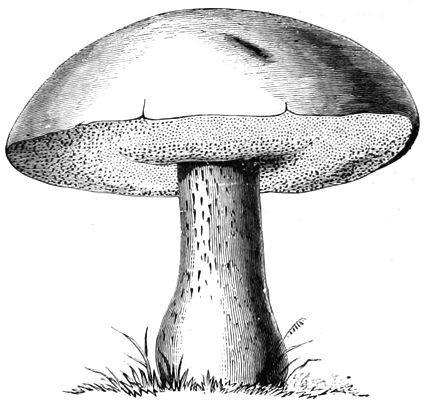
FIG. 261. COMMON BOLETUS (BOLETUS EDULIS).
BOLEUM (from bolos, a ball; in reference to the shape
of the seed-pods). ORD. Cruciferæ. An ornamental, hardy,
evergreen shrub, well adapted for rockwork, in ordinary
soil. It requires slight protection in winter if planted in
very exposed situations. Propagated by seed, sown in a
pot, in spring, and placed in a frame, or in the open border
during summer.
B. asperum (rough).* fl. cream-coloured; racemes erect, elongated;
pedicels very short, the lower ones bracteate. April.
l. alternate, oblong, linear; lower ones somewhat divided.
A suffruticose, erect, branched plant, hispid from stiff hairs.
h. 6in. to 1ft. France. 1818.
BOLLEA. See Zygopetalum.
BOLTED. A term used in reference to plants that
have prematurely run to seed.
BOLTONIA (named after J. B. Bolton, an English
professor of botany). ORD. Compositæ. A genus of rather
pretty hardy herbaceous perennials. Flower-heads with
white or purplish rays. Leaves pale green, lanceolate,
sessile. They thrive in common garden soil. Propagated
by divisions of the roots, in March.
B. asteroides (Aster-like).* fl.-heads flesh-coloured, stellate, disposed
in a rather large terminal panicle. August. l. all entire,
somewhat broadly lanceolate, narrowed at both ends. h. 2ft.
North America, 1758. (B. M. 2554.)
B. glastifolia (woad-leaved).* fl.-heads pink. September. l., lower
ones serrated. h. 1½ft. North America, 1758. (B. M. 2381.)
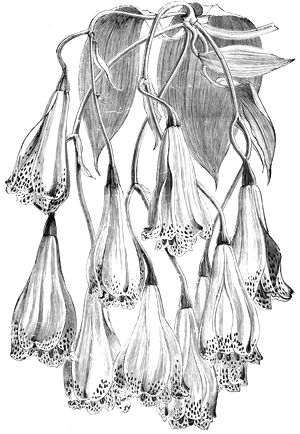
FIG. 262. FLOWERS OF BOMAREA CARDERI.
BOMAREA (derivation of name doubtful). ORD.
Amaryllidaceæ. A genus of handsome half-hardy twiners,
closely allied to Alströmeria, from which it is chiefly distinguished
by its twining habit and some difference in
the capsule. They are of comparatively easy culture,
thriving in a compost of peat, leaf mould, loam, and sand,
with good drainage. Manure water should be given during
the season of growth. Although they make fine pot
plants, their full beauty is only developed when planted
out in the conservatory or greenhouse border. Propagated
by seeds, or by careful divisions of the underground stem.
In making a division, it is necessary to observe that the
part taken has some roots by which to live till new ones
are formed. It should be potted at first, and may, when
established, be planted out or shifted on. Seeds may be
raised in a warm house without difficulty. They germinate
in a few weeks; and when the young plants are 2in.
or 3in. high, they should be placed separately in small
pots, shifting them on as necessary, or planting them out.
In favoured southern localities, several species have proved
hardy, but they are much the best when grown in a greenhouse.
B. acutifolia Ehrenbergiana (Ehrenberg's acute-leaved). fl.
undulate, outer segments deep orange, the inner ones paler
and spotted. Spring. l. lanceolate acute, smooth. Mexico, 1878.
(B. M. 6444).
B. Caldasiana (Caldas's).* fl. orange yellow, spotted crimson.
l. ovate-lanceolate, acute. Peruvian Andes, 1863.
B. Carderi (Carder's).* fl. 2½in. long by 1⅛in. in breadth at the
widest part, regularly bell-shaped, with six segments, the three
outer rose-coloured, the three inner nearly equal in length, crenulate,
and spotted with purplish-brown; inflorescence pendulous,
and consisting of a large terminal umbellate cyme, surrounded
at the base by a series of crowded leaves. l. oblong lanceolate,
acuminate, about 7in. by 2¾in. Columbia, 1876. See Fig. 262, for
which we are indebted to Mr. Bull.
B. chontalensis (Chontalese). fl. 1½in. long, sub-campanulate,
obtusely trigonous; outer segments thick, fleshy, wavy, rose-red,
with a few brown spots round the margin at the tip, very convex;
inner segments a little shorter, pale yellow blotched with brown;
umbels surrounded by a whorl of leaves, and composed of several
peduncles, each bearing four to six nodding flowers. August.
l. lanceolate or ovate oblong, acuminate. Nicaragua, 1871.
(B. M. 5927).
B. conferta (dense-flowered).* A synonym of B. patococensis.
B. edulis (edible). fl., outer segments rose, green tipped; inner
spotted with rose. St. Domingo, &c. One of the oldest species
in cultivation. The tubers are said by Tussac to be eaten in St.
Domingo, like those of the Jerusalem Artichoke. See Fig. 263.
B. frondea (leafy). fl. 2in. long, tubulate-campanulate; outer
segments narrow, oblong, yellow; inner segments ½in. longer than
the outer ones, canary yellow, spotted with red; cymes umbellate,
many-flowered, about 8in. across, base leafy. l. lanceolate,
acuminate. Bogota, 1881. (G. C. n. s. 17, p. 669.)
B. oligantha (few-flowered).* fl. regularly funnel-shaped,
about 1in. long; outer segments slightly shorter than the
inner, oblanceolate, under ¼in. abroad, obtuse, unspotted,
reddish on the outside, yellow within; one or two to an
umbel, on simple, flexuous, glabrous pedicels, about 1in.
long. l. long, acute, about 2in. long, bright green on the
upper surface, ciliated on the ribs beneath. Peru, 1877. See
Fig. 264.
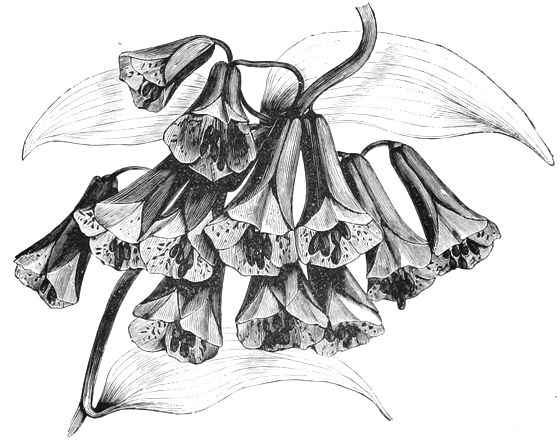
FIG. 263. FLOWERING BRANCH OF BOMAREA EDULIS.
B. patococensis (Patococha). fl. 2in. to 2½in. long, elongate-funnel-shaped;
the three outer segments ovate lanceolate, about
one-fourth shorter than the inner segments, both of a rich crimson
colour; numerously borne in drooping, contracted tufts at the
ends of the shoots; peduncles about 2in. to 2½in. long, intermixed
at the base with broadly ovate-acute, leafy bracts. August and
September. l. scattered, shortly stalked, broadly lanceolate, tail
pointed. Bogota, 1881. (G. C. n. s. 17, p. 187.)
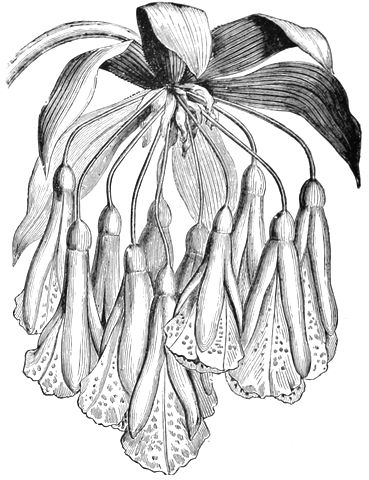
FIG. 264. FLOWERING BRANCH OF BOMAREA OLIGANTHA.
B. salsilla (Salsilla). fl. purple, about ½in. long, the two inner
segments having a darker spot at the base, and all of them tinged
with green towards the points; collected
into a terminal umbel. June. l. few,
lanceolate. South America, 1806. This
has proved quite hardy under various
conditions.
B. Shuttleworthii (Shuttleworth's).*
fl., perianth about 2in. long, funnel-shaped
or elongate bell-shaped; segments
nearly equal, oblong acute, outer
ones orange vermilion, slightly tinged
with green and dotted with small dark
spots at the tips; inner ones more
acutely pointed, canary yellow, with a
red midrib, and green with dark spots
at the tips; cymes umbellate, pendulous.
l. ovate lanceolate, 5in. to 6in. by
2in., glabrous. Bogota, 1881. (G. C.
n. s. 17, p. 77.)
B. Williamsii (Williams's).* fl. rose-coloured,
about 2in. long, elongate funnel
shape; disposed in a compound
umbellate cyme. l. lanceolate, very
acute, and tapering to a very short
twisted petiole. New Grenada, 1882.
BOMBACEÆ. A division of
Sterculiaceæ.
BOMBAX (from bombax, one of
the Greek names for cotton; the
pods are filled with a fine silky substance
like cotton, but which it is
impossible to spin into thread, in
consequence of the edges being perfectly
smooth). Silk Cotton Tree.
ORD. Malvaceæ. A genus of large
soft-wooded stove trees. Flowers
scarlet or white, large, usually rising laterally from the
trunk or branches, either singly or in clusters. They grow
best in a rich loamy soil. Cuttings, not too ripe, taken off
at a joint, placed in sand under a bell glass, in moist heat,
will root readily; but plants raised from seeds brought
from their natural habitats make finer trees.
B. Ceiba (Ceiba). fl. pale red, large. l. palmate, with five leaflets.
fr. turbinate, concave at the apex. h. 100ft. South America, 1692.
BOMBYX NEUSTRIA. See Lackey Moth.
BONA-NOX. See Ipomæa Bona-Nox.
BONAPARTEA. See Tillandsia.
BONAPARTEA JUNCEA. A synonym of Agave
geminiflora.
BONATEA. (in honour of M. Bonato, a distinguished
Italian botanist, and a Professor of Botany at Padua).
ORD. Orchideæ. A handsome terrestrial stove orchid,
allied to Habenaria, and requiring similar culture.
B. speciosa (showy).* fl. white, galeate; petals bipartite;
raceme many-flowered, compact; bracts cucullate, acuminate.
August. l. oblong, sub-undulate. Stem leafy. h. 2ft. Cape of
Good Hope, 1820. (B. M. 2926; L. B. C. 284.)
BONGARDIA. (named after Heinrich Gustav Bongard,
a German botanist). ORD. Berberideæ. A very pretty
hardy tuberous-rooted perennial, requiring a sandy soil,
and good drainage, with protection at all seasons from
excessive wet, otherwise it will rot. It should be carefully
planted in a compost of loam, peat, leaf soil, and
sand, in equal proportions, and covered with a handlight.
B. Rauwolfii (Rauwolf's). fl. golden yellow, on pyramidal
branched panicles; stamens and petals nearly equal in length.
May. l. radical, pinnate; leaflets sessile, oval-oblong, three to
five-cleft at the apex, glaucous, each with a dark purple blotch at
the base. h. 6in. Syria, Persia, 1740. SYN. Leontice Chrysogonum.
(B. M. 6244.)
BONNAYA (named after Bonnay, a German botanist).
ORD. Scrophulariaceæ. A small genus of usually glabrous,
rarely pilose, slender, creeping or erect, annual, biennial, or
perennial stove plants, almost unknown in cultivation.
Flowers axillary, opposite, or alternate from abortion,
usually pedicellate, the upper ones sometimes racemose,
pinkish, or blue. Leaves opposite, quite entire, or toothed.
They thrive in a rich sandy loam. The annual species are
propagated by seeds, the others by divisions and cuttings.
BONNETIA (commemorative of Charles Bonnet, a
French naturalist, who wrote some botanical papers in 1754).
ORD. Ternstrœmiaceæ. A genus of elegant middle-sized
stove trees or shrubs. Flowers large, terminal; peduncles
one or many-flowered. Leaves scattered, exstipulate,
coriaceous, entire, one-nerved, marked with transverse
veins, sub-sessile, narrowed to the base. They thrive well
in a mixture of loam and peat. Cuttings of firm young
shoots will root if placed in sand under a hand glass, in a
moderate heat.
B. sessilis (stalkless). fl. purplish, terminal. l. oblong, coriaceous,
entire. h. 15ft. Guiana, 1819.
BORAGE. See Borago officinalis.
BORAGINACEÆ. A large order of herbs or shrubs,
having spirally-coiled inflorescence; corolla usually regular
and five-lobed, with an imbricated æstivation; throat generally
hairy; stamens five, inserted in the corolla. Leaves
alternate, rough. Among other genera belonging to this
order may be named Anchusa, Borago, Cynoglossum,
Echium, Lithospermum, and Myosotis.
BORAGO (derivation very uncertain; probably a corruption
of some eastern name). Borage. ORD. Boraginaceæ.
A genus of hardy herbaceous perennials or annuals, excellently
adapted for naturalising in dry stony places. Flowers
blue, panicled, drooping; corolla rotate; throat furnished
with emarginate vaulted processes; anthers distinct, oblong
or lanceolate, awned, fixed by the inner side, conniving
into a cone. Nuts four, one-celled, turbinate, fixed to the
bottom of the calyx. Leaves oblong or lanceolate. All
the species are easily cultivated, thriving in any common
soil. Propagated by divisions, in spring, or by striking
the young cuttings in a cold frame. They may also be
raised from seed, which should be sown from March to
May, in any good garden soil, and the plants, when large
enough, thinned out to 1ft. or more apart. In hot
weather, Borage is generally in demand for claret cup and
other drinks.
B. laxiflora (loose-flowered).* fl. on long pedicels, racemose,
drooping; corolla pale blue; segments ovate, bluntish, erectly
spreading. May to August. l. oblong, and rough from strigæ;
radical ones rosulate; cauline ones half stem-clasping. Stem
decumbent, many from the same root, hispid from retrograde
bristles. Corsica, 1813. (B. M. 1789.)
B. longifolia (long-leaved).* fl. disposed in a terminal bracteate
panicle; corolla blue; segments ovate, acute, spreading. July and
August. l. linear-lanceolate, scabrous and downy beneath;
cauline ones half stem-clasping. h. 1ft. Numidia, 1825.
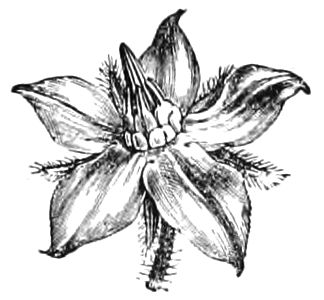
FIG. 265. FLOWER OF BORAGO OFFICINALIS.
B. officinalis (officinal).* Common Borage. fl. blue, purple, or
white; segments of the corolla limb ovate, acute, spreading.
June to September. l., lower ones obovate, attenuated at the
base; cauline ones oblong, sessile, sub-cordate at the base. h. 1ft.
to 2ft. Britain. This is the kind most cultivated in gardens for
flavouring. See Fig. 265. (Sy. En. B. 36.)
BORASSUS (a name applied by Linnæus to the
spathe of the Date Palm). ORD. Palmaceæ. A very small
genus of stove trees, containing two noble species, which
are distinguished by unisexual flowers, produced upon distinct
plants, the males being borne in dense branching
catkins, and the females on simple, or, more rarely, slightly
branched spikes. Fruit very large, brown, three-seeded.
Leaves fan-shaped, with spiny petioles. Trunks unarmed,
often 70ft. high. They may be grown in good fibrous loam,
leaf mould, and sand, mainly the former. Increased by
seeds only, which require to be sown in strong bottom
heat. Rarely seen in cultivation.
B. æthiopicum (African). l. nearly circular, and plaited, supported
upon stout petioles, 6ft. to 7ft. long. Western Tropical
Africa. This handsome, but rare, species is remarkable for the
bulging out or swelling in its stem, near the middle, or about
two-thirds of its height from the ground.
B. flabelliformis (fan-shaped).* l. nearly circular, and plaited
like a partially-open fan, with about seventy ribs, which radiate
from a common centre. h. 30ft. India, 1771.
BORBONIA (named after Gaston de Bourbon, Duke
of Orleans, son of Henry IV. of France, a great lover
and patron of botany). ORD. Leguminosæ. A genus
of very ornamental greenhouse evergreen shrubs, natives
of the Cape of Good Hope. Flowers yellow, disposed
in terminal heads, axillary. Leaves simple, amplexicaul,
alternate, exstipulate, pungent. They thrive well in a
mixture of peat, loam, and sand, with good drainage.
Cuttings, half-ripened, obtained in April, will root freely
in sandy soil if placed under a bell glass, in a cool house.
B. barbata (bearded).* fl. sessile, villous on the outside. July.
l. narrow, lanceolate, many-nerved, complicated, ciliately-bearded,
and very much acuminated; branches diverging. h. 3ft. to 4ft.
1823.
B. cordata (heart-shaped). fl., corolla densely villous, with the
vexillum obcordate. July. l. cordate, many-nerved, quite
entire, glabrous. Branches villous. h. 3ft. to 6ft. 1759.
B. crenata (crenated).* fl. less villous than in the rest of the
species. July. l. cordate, roundish, acute, denticulated, many
nerved and reticulated between the nerves, and are, as well as
the branches, glabrous. h. 3ft. to 6ft. 1774. (B. M. 274.)
B. lanceolata (lance-shaped). fl. densely villous. July. l. ovate-lanceolate,
pungent, many nerved, quite entire, sessile, glabrous,
as well as the stem. h. 2ft. to 3ft. 1752. (L. B. C. 81.)
B. ruscifolia (Ruscus-leaved). fl. sparingly villous. July. l. cordate,
many-nerved, minutely ciliated, but are otherwise glabrous
as well as the branches. h. 2ft. to 4ft. 1790. (B. M. 2128.)
BORDERS, FLOWER. Small beds, or a continuous
bed, of greater length than width, skirting a wall or
shrubbery, and containing plants of a heterogeneous
character. They should be slightly raised above the surrounding
level, and thoroughly drained. In the first preparation
of the Border, it is most essential to deeply dig
or trench the ground, thoroughly incorporating a large
amount of well-bodied manure; and if the soil is very stiff,
wood ashes or coarse sand should be well worked in with
the manure. The best time to plant such Borders is in
early autumn or in March.
Where, as is frequently the case, the Borders are only
2ft. or 3ft. wide, not more than two rows of plants, either
in groups or singly, will be allowable. The tall plants or
shrubs should constitute the background, with dwarfer subjects
in front; but formal arrangements must be avoided.
The object should be to secure a continuous succession of
flowers. This would entail some little trouble at first,
which, however, would be amply repaid by results.
No hard-and-fast rules can be laid down as to the arrangement
of the plants, which depends on individual taste and
means; but the best results are obtained when the border
is mainly made up of hardy herbaceous perennials, as permanent
occupants, assisted by liberal quantities of summer
bedding plants, such as Dahlias, Fuchsias, Geraniums,
Heliotrope, Tropæolums, &c., as well as many hardy annuals
and biennials. By this means, a very varied and beautiful
display may be maintained, especially if bulbs are used for
early spring effect, such as Narcissi, Scillas, Snowdrops,
Tulips, &c. Of course, the herbaceous perennials should
be selected with much care, all weedy subjects being
avoided, and variety in colour and time of flowering secured.
Anything like a full list of these would occupy too much
space for repetition here, but the following will be found
very showy and useful: Achilleas, Aconitums, Anemones,
Aquilegias, Armerias, Asters, Campanulas, Carnations and
Picotees, Delphiniums, Dodecatheons, Doronicums, Fritillarias,
Funkias, Gaillardias, Geraniums, Geums, Hollyhocks,
Iberises, Irises, Liliums, Pæonies, Papavers, Pyrethrums,
double and single, Ranunculus, Trolliuses, &c.
BORDERS, FRUIT. These should be well drained,
and if not naturally so, the soil should be excavated from
3ft. to 5ft. deep, in order to form a bottom of stones, pieces
of brick, clinkers, &c. Where it is convenient, draining
pipes should be added, if an outfall in the vicinity can
be secured. The base of the Border should be sloped to
the front, where the pipes should be laid, and the bottom
covered with draining material, thereby effectually preventing
the fruit trees rooting deep, which is detrimental
to healthy growth. Gross-feeding vegetables or flowers
should not be grown on the surface, but shallow-rooting
crops will generally do no harm. Many advocate the
surface being kept free from crops of any sort, simply
letting it be freely exposed; whilst others equally as
strenuously condemn this plan. Where necessary, chalk
or some other mineral constituent of good soil which is
naturally absent, may be added; but much animal manure
is rarely required. The depth and width of Border may
vary for different fruit trees, but efficient drainage is in
all cases important.
BORECOLE (Brassica oleracea fimbriata). An important
division of the Brassica tribe, often cultivated in
gardens under the name of Kale. It comes in very useful
when hard weather has rendered cabbages, &c., unfit for
use, as it endures cold better than most other green
vegetables. Some are also grown as ornamental foliaged
plants. Like all other plants of a similar description, they
require rich soil, and they should be put out in June or
early in July, as it is almost useless to plant this kind of
vegetable after the middle of the latter month. To
obtain the best results, the ground should be deeply dug
and well manured; but it must not be full of crude
manure at planting time, or it will make the plants too
tender and succulent in wet seasons, with the result
that the first sharp frost would cause them to rot.
Good hard-stemmed plants are the kinds most needed,
especially for crops required in spring, when green vegetables
are scarce. Cultivation: Early in April, and again
a month later for succession, the seeds should be sown
thinly in nursery beds, not covering them too deeply. The
soil should be in a friable condition, and it is an advantage
if the first beds be made under a south wall. As soon as
the seedlings appear, if they are too thick, they should be
thinned, as those which are drawn up weak and spindly
are useless. When large enough, they should be carefully
planted out, choosing showery weather, if possible, for the
operation. If it is necessary to plant them in dry weather,
they must be well watered-in. The rows should be from
2ft. to 3ft. apart, according to the variety, and the plants
2ft. apart in the rows; or, if potatoes are planted wide
apart, the Borecole may be arranged between them. Dead
leaves must be cleared away from time to time, but no
green ones should be broken off. When the tops are cut
for use, the stems should not be denuded of foliage, as
they will soon break again and form successional crops.
The plants must be kept free from weeds. After April,
the Kales are of little use; the stems may therefore be
pulled up, and the ground planted with some other crop.
They all require the same treatment, and at their various
seasons come in equally useful.
Sorts. The distinct forms are somewhat limited, but
being largely cultivated on the Continent as well as all parts
of Britain on account of its hardy nature, the varieties of
Borecole receive a large number of names that are either
synonymous with, or indistinct from, a few well-known
types. Dwarf Green Curled or Scotch is probably the best
and most grown; other good hardy sorts are Asparagus
Kale (this name is applied to several different kinds, the
best one being in use very late in spring), Buda, Cottagers',
Dwarf Purple, Imperial Hearting, Ragged Jack, and Tall
Green Curled. Melville's Variegated and Variegated Borecole,
amongst others, have fine ornamental foliage.
BORONIA (named after Francis Boroni, an Italian
servant of Dr. Sibthorp, who perished from an accident
at Athens; he collected specimens of many of those plants
which are figured in the "Flora Græca"). ORD. Rutaceæ.
Very elegant and useful shrubs, requiring similar treatment
to ordinary greenhouse hard-wooded subjects, and much
aided with a little extra heat in spring, when breaking into
growth. Flowers pretty, pink-purplish, or white; peduncles
terminal, but usually axillary on the extreme branches,
one to many-flowered; pedicels furnished at the base and
middle with two opposite, short bracts, jointed, commonly
dilated under the calyx. Leaves opposite, simple, or impari-pinnate,
entire, or a little serrulated, full of pellucid
dots. They should be placed out of doors from July to
the middle of September; the most convenient place for
them is in pits, as there are then greater facilities for protecting
them from heavy rains and thunderstorms. When
first put out, Boronias should not be fully exposed, but in
the course of a week they may remain open to the full
influence of both sun and air. Potting should be performed
once a year, as soon as the top growth ceases, as
the roots then extend themselves in preparation for their
next year's functions. The best compost for them is one
of peat and maiden loam in equal parts, and about one-sixth
sharp silver sand. Many cultivators, however, prefer
a compost consisting of good fibry peat and silver sand,
together with some pieces of charcoal, smaller or larger,
according to the size of the pots used. The soil should
be rammed firmly in the pots, which must be well drained.
The leading shoots should be pinched, to ensure good
bushy specimens. Propagation may be effected by young
cuttings, or those made from the half-ripened wood; these
should be put into a thoroughly drained pot of sandy soil,
with 1in. of sand on the surface, and covered with a bell
glass, which must be frequently taken off and wiped dry.
When in the cutting state, water must be very carefully
given around the rim of the pot, without taking off the
glass. If placed in a temperature of about 50deg., and
shaded from bright noonday sun, they soon root, when
they may be potted off singly into small pots, and plunged
in sawdust, or cocoa-nut fibre refuse, in which situation
but little water is needed. Pinching repeatedly, when
young, is the only means to secure good ultimate growth.
Air must be given on all possible opportunities.
B. alata (winged). fl. pale rose-colour, small; peduncles dichotomous,
usually three-flowered; bracts fringed. May. l., leaflets
three to five pairs, or more, crenate, revolute, pilose on the
nerves beneath, as well as the rachis. h. 2ft. to 6ft. New Holland,
1823. (L. B. C. 1833.)
B. anemonifolia (Anemone-leaved). fl. pink; peduncles axillary,
solitary, one-flowered. May. l. stalked, trifid; segments narrow,
wedge-shaped, furnished with two or three teeth at the apex, or
quite entire. h. 1ft. to 3ft. New Holland, 1824. (P. M. B. 9, 123.)
B. crenulata (crenulate).* fl. red, small, with a fringed calyx;
pedicels axillary and terminal, one-flowered. July. l. obovate,
mucronulate, crenulated. h. 1ft. to 4ft. King George's Sound.
(B. M. 3915.)
B. denticulata (finely-toothed). fl. rose-coloured; bracts deciduous;
peduncles corymbose. March to August. l. linear,
retuse, toothleted, terminated by a small point. h. 2ft. to 6ft.
King George's Sound, 1823. (B. R. 1000.)
B. Drummondi (Drummond's).* fl. pretty rosy pink, freely produced
during spring and summer. l. pinnatifid. h. 2ft. New
Holland. A very pretty species, with a slender but compact habit
of growth. There is a white-flowered variety of this species
(F. d. S. 9, 881.)
B. elatior (tallest).* fl. pendulous, rosy carmine, very fragrant,
disposed in long dense clusters along the ends of the branches.
May. l. very prettily pinnately cut into linear segments. h. 4ft.
Western Australia, 1874. (B. M. 6285.)
B. ledifolia (Ledum-leaved). fl. red; peduncles axillary, one-flowered,
each bearing two bracts in the middle. March.
l. linear-lanceolate, quite entire, downy beneath. h. 1ft. to 2ft.
New Holland, 1814. (P. M. B. 8, 123.)
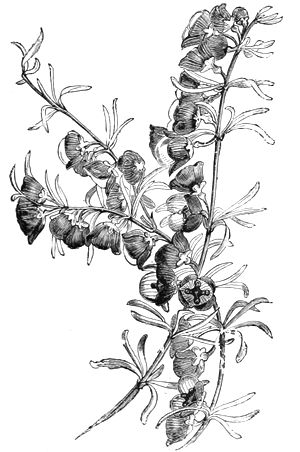
FIG. 266. FLOWERING BRANCHES OF BORONIA MEGASTIGMA.
B. megastigma (large-stigma).* fl. numerous, axillary, fragrant,
drooping, ½in. in diameter, sub-globose, campanulate; petals
nearly orbicular, concave, maroon purple outside, and yellow
within. l. sessile, pinnate, with three to five narrow linear rigid
leaflets. h. 1ft. Of slender habit, with twiggy branches. South-western
Australia, 1873. See Fig. 266.
B. pinnata (pinnate).* fl. pink, with a scent like that of Hawthorn;
peduncles dichotomous. February to May. l., leaflets
two, three or four pairs, linear, acute, quite smooth. h. 1ft. to 3ft.
New Holland, 1794. (B. M. 1763.)
B. polygalæfolia (Polygala-leaved). fl. red; peduncles axillary,
solitary, one-flowered. March to July. l. linear-lanceolate,
quite entire, opposite, alternate, and three in a whorl. h. 1ft. to
3ft. Port Jackson, 1824.
B. serrulata (serrulate).* fl. of a deep rose colour, very fragrant;
peduncles aggregate, terminal. July. l. trapeziform, acute,
serrulated in front, smooth, full of glandular dots. h. 1ft. to 6ft.
Port Jackson, 1816. (B. R. 842.)
B. tetrandra (four-stamened). fl. pale purple; pedicels short,
one-flowered. May. l. impari-pinnate; leaflets four to five pairs,
linear, obtuse, smooth; branches pilose. h. 1ft. to 4ft. New
Holland, 1824. (P. M. B. 16, 227.)
BORRERIA (named after William Borrer, F.L.S., a
profound botanist and cryptogamist). ORD. Rubiaceæ. A
large genus of stove herbs or sub-shrubs, now referred to
Spermacoce. Flowers small, white, rarely blue, disposed
in verticillate heads, in the axils of the leaves, or on the
tops of the branches, rarely cymose or corymbose. Leaves
opposite, or the young ones disposed in fascicles in the
axils of the old ones, and therefore appearing verticillate;
stipules joining with the petioles, more or less sheathing,
fringed by many bristles. Stems and branches usually
tetragonal. The species are of easy culture, thriving in
a light soil. Cuttings of the perennial kinds strike root
readily in the same kind of soil, in heat. The annual
kinds require a similar treatment to other tender annuals.
B. stricta (straight). A dwarf shrub, but closely allied to the
next species. Porto Rico.
B. verticillata (whorled-flowered). fl. white. July. l. linear
lanceolate, acuminated, opposite, but appearing verticillate from
the fascicles of young leaves in the axils. h. 2ft. West Indies,
1732.
BOSCIA (named after Louis Bosc, a French professor
of agriculture). SYN. Podoria. ORD. Capparidaceæ. A
small genus of stove plants, requiring a soil of lumpy, fibry
loam and peat. Propagated by cuttings of firm wood,
placed in sand, under a glass, in heat.
B. senegalensis (Senegal). fl. white, small, apetalous, corymbose.
h. 3ft. Senegal, 1824. An unarmed evergreen shrub.
(L. E. M. 395.)
BOSSIÆA (named after M. Bossier Lamartinière, a
French botanist, who accompanied the unfortunate La
Peyrouse round the world). ORD. Leguminosæ. A genus
of elegant Australian greenhouse shrubs. Flowers yellow,
axillary and solitary, the base of the vexillum or the keel
generally blotched or veined with purple. Leaves simple,
of various forms. A mixture of turfy loam, leaf mould,
peat, and sand, with very free drainage, suits these plants
best. Half-ripened cuttings will root freely if placed in a
pot of sand with a bell glass over them, in a cool house.
Seeds should be sown, in March, on a slight hotbed.
B. cinerea (ashy-grey). fl. yellow, the vexillum furnished with
a purple circle at the base, and the keel dark purple. May.
l. nearly sessile, cordate acute, ending in a spiny mucrone,
scabrous above, but pilose on the nerves beneath, with recurved
margins. Branches terete, crowded with leaves, vinous. h. 1ft.
to 3ft. 1824. SYNS. B. cordifolia, B. tenuicaulis. (B. M. 3895.)
B. cordifolia (heart-leaved). A synonym of B. cinerea.
B. disticha (two-ranked).* fl. yellowish-red; peduncles solitary,
axillary, one-flowered, longer than the leaves. March to May.
l. distichous, ovate, obtuse. Young branches terete. h. 1½ft.
Swan River, 1840. (B. R. 1841, 55.)
B. ensata (sword-shaped). fl. yellowish, with the back and base
of the vexillum of a brownish orange-purple colour; keel brownish-purple.
April. Branches flat, linear, leafless, toothed, the teeth
bearing the flowers; upper bracts distant from the lower ones,
shorter than the pedicel. h. 1ft. to 2ft. 1825. (S. F. A. 51.)
B. foliosa (leafy). fl. yellow and orange. May to June. l. alternate,
small, orbicular, retuse, scabrous, with revolute margins, silky
beneath; stipules permanent, hooked, longer than the petioles.
Branches straight, terete, villous. h. 1ft. to 3ft. 1824.
B. lenticularis (lentil-leaved). A synonym of B. rhombifolia.
B. linnæoides (Linnæa-like).* fl. yellow; keel dark brown;
corolla about twice the length of the calyx; pedicels solitary
one-flowered, elongated. May. l. elliptic, mucronate. Branches
terete, prostrate, puberulous. 1824. A procumbent shrub.
B. linophylla (Flax-leaved).* fl. orange and purple. July to
August. l. linear, with recurved margins. Branches compressed,
leafy. h. 1ft. to 4ft. 1803. (B. M. 2491.)
B. microphylla (small-leaved). l. cuneiformly obcordate, glabrous.
Branches terete, leafy, spinescent; young branches
rather compressed and pubescent. h. 1ft. to 2ft. 1803. (L. B. C.
656.)
B. rhombifolia (diamond-leaved).* fl. yellow, the vexillum having
a dark red zonate mark at the base; wings red at the base; keel
brownish-purple. April. l. rhomboidal-orbicular, somewhat
emarginate and mucronate. Branches terete; branchlets compressed,
leafy. h. 1ft. to 3ft. 1820. SYN. B. lenticularis. (L. B. C.
1238.)
B. rotundifolia (round-leaved). l. roundish, or broadly obovate,
somewhat mucronate, flat, four to five lines long and five to six
broad. Branches and branchlets leafy, compressed. h. 1ft. to
2ft. 1824.
B. scolopendrium (plank-plant). fl. yellow, with the back of
the vexillum and keel brownish-red. May. l. (when present)
ovate and smooth. Branches flat, linear, leafless, toothed, with
the teeth bearing the flowers; keel naked; superior bracts
permanent, imbricate, equal in length to the peduncles. h. 3ft.
to 10ft. 1792. (B. M. 1235.)
B. tenuicaulis (slender-stemmed). Synonymous with B. cinerea.
BOSWELLIA (named after Dr. Boswell, formerly of
Edinburgh). Olibanum Tree. ORD. Burseraceæ. Ornamental
and economic evergreen stove trees. Flowers hermaphrodite;
calyx five-toothed, permanent; petals five,
obovate-oblong, spreading, with the margins incumbent in
æstivation; disk cup-shaped, crenate; stamens ten; capsule
trigonal. They are of easy culture, thriving well in
loam and peat soil. Cuttings root readily if placed in sand
under a glass.
B. glabra (glabrous). fl. white, small, with a red nectary and
yellow anthers; racemes aggregate, simple, terminal, shorter than
the leaves. l. impari-pinnate; leaflets broad, lanceolate, blunt,
serrated, smooth. h. 30ft. Coromandel, 1823. (B. F. S. 124.)
B. serrata (saw-edged-leaved).* fl. whitish-yellow; racemes axillary,
simple. l. impari-pinnate; leaflets ovate-oblong, taper-pointed,
serrated, pubescent. h. 20ft. India, 1820. (T. L. S. xv., 4.)
BOTANY BAY GUM. See Xanthorrhæa
arborea.
BOTANY BAY TEA (and TREE). See Smilax
glycyphylla.
BOTHY. A residence for under-gardeners, usually
built behind the hothouses, or some high wall, in what is
called a back shed. The place is too frequently a cramped,
ill-ventilated hovel. A Bothy proper should be an independent
structure, and fitted with modern conveniences; for, of
all people, gardeners are the most susceptible to colds, &c.
A library of standard horticultural and botanical works, as
well as a few on other scientific subjects, and a moderate
number of high-class books of fiction, one or more weekly
gardening and other papers, should be supplied by the employer.
During the winter months, for mutual improvement,
lectures should be delivered, or papers read, by each
gardener, on various subjects, after which a free discussion
should take place upon the paper or lecture, by which means
a great amount of good would be accomplished.
BOTRYCHIUM (from botrys, a bunch; in reference
to the bunch-like disposition of the indusia). Moonwort.
ORD. Filices. A genus of very interesting and pretty little
hardy ferns. Capsules sessile, arranged in two rows on
the face of spikes which form a compound panicle. They
require a compost of sandy loam; perfect drainage is most
essential. For general culture, see Ferns.
B. australe (southern). A variety of B. ternatum.
B. daucifolium (Daucus-leaved). sti. stout, 6in. to 12in. long;
petiole of sterile segments 1in. to 6in. long, the latter 6in. to 12in.
each way, deltoid, tripinnatifid or tripinnate, the lower pinnæ
largest; segments lanceolate-oblong, ¼in. to ⅜in. broad, finely
toothed. fertile peduncle equalling the sterile segments when
mature; panicle 2in. to 4in. long; tripinnate, not very close.
Himalayas, &c. Greenhouse species. SYN. B. subcarnosum.
B. Lunaria. Common Moonwort.* sti. 1in. to 4in. long. sterile
segments sessile, or nearly so, 1in. to 3in. long, ½in. to 1in. broad,
base much broader than the middle, cut down to a flattened
rachis into several distinct, close, entire, or notched cuneate-flabellate
pinnæ on both sides. fertile peduncle equalling or
exceeding the sterile portion; panicle close, 1in. to 2in. long.
England, &c. Hardy. See Fig. 267.
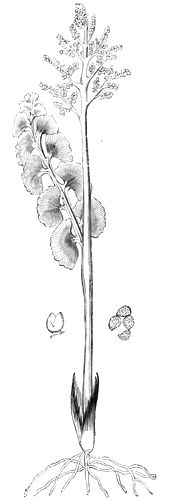
FIG. 267. BOTRYCHIUM
LUNARIA, showing Habit,
Capsule, and
Spores.
B. lunarioides (Lunaria-like). A variety of B. ternatum.
B. obliquum (oblique). A variety of B. ternatum.
B. subcarnosum (sub-fleshy). A synonym of B. daucifolium.
B. ternatum (ternate).* sti. 1in. to 2in. long. petiole of the
sterile segments 2in. to 4in. long, the latter 3in. to 6in. each way,
deltoid, tri- or quadripinnatifid; lower pinnæ much the largest.
fertile peduncle 6in. to 9in. long; panicle 1in. to 6in. long; deltoid,
very compound. Nootka and Hudson's Bay territory. Several
so-called species come very close to this, including
australe, lunarioides, and obliquum, which are only
geographical varieties. Greenhouse species.
B. virginianum (Virginian).* sti. 3in. to 18in. long.
sterile segments sessile, 4in. to 12in. each way, deltoid,
quadripinnatifid; lower pinnæ much the largest; pinnules
oval-oblong, close, cut down to the rachis into
finely cut linear-oblong segments. fertile peduncle equalling
or exceeding the sterile part of the plant when
mature; panicle 1in. to 4in. long, loose, oblong. Oregon,
and North United States, 1790. A hardy species in sheltered
places. (H. G. F. 29.)
BOTTLE-GOURD. See Lagenaria.
BOTTLE-TREE. See Sterculia rupestris.
BOTTOM HEAT. This is usually secured by
passing hot-water pipes through an air chamber, or
a water tank, beneath a bed of plunging material.
The covering of the tank or chamber is best made
of slate. The heat must be regulated according to
the requirements of the subjects grown; this is
easily accomplished by using the valve. A thermometer
should be placed in the tank or bed.
Bottom-heat is indispensable for propagating plants
from seeds and cuttings, especially in spring. See
Heating and Hotbeds.
BOUCEROSIA (from boukeros, furnished with
buffaloes' horns; in reference to the curved lobes
of the corona) ORD. Asclepiadaceæ.
A genus of
greenhouse succulent perennials,
allied to Stapelia,
and requiring the same culture.
Flowers numerous,
terminal, umbellate; corolla
sub-campanulate, five-cleft;
segments broadly triangular, with
acute recesses; stramineous corona
fifteen-lobed; lobes disposed
in a double series; the five inner
ones opposite the stamens and
lying upon the anthers; the rest
exterior, erect, or a little incurved
at apex, adhering to the back of
the inner ones. Branches and
stems tetragonal, with toothed
angles.
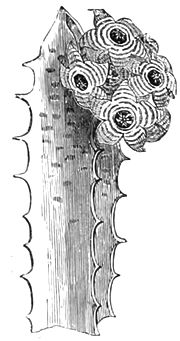
FIG. 268 BOUCEROSIA
EUROPÆA.
B. europæa (European). fl. purple-brown,
yellow. Summer. h. 4in.
Sicily, 1833. SYNS. Apteranthes and
Stapelia Gussoniana. See Fig. 268.
(B. R. 1731.)
B. maroccana (Morocco).* fl. dark
red purple, with yellow concentric
lines. Summer. l. minute, trowel-shaped, deflexed at tip of
stem angles. h. 4in. Morocco, 1875. (B. M. 6137.)
BOUCHEA (named after C. and P. Bouche, German
naturalists). ORD. Verbenaceæ. A small genus of stove or
greenhouse evergreen herbs or sub-shrubs. Flowers sub-sessile,
in spicate racemes, which are either terminal or in
the forking of two branches; corolla funnel-shaped. Leaves
opposite, toothed. They thrive in a well-drained compost
of loam and sandy peat. Propagated by cuttings, placed
in sand, under a glass, and in a gentle heat, during spring.
B. cuneifolia (wedge-shaped-leaved). fl. white. April. h. 4ft.
Cape of Good Hope, 1821. A greenhouse evergreen shrub.
SYN. Chascanum cuneifolium.
B. pseudogervao (false-gervaô). fl. purplish, with white throat;
spike terminal, 6in. to 10in. long, slender. September. l. opposite,
ovate, or elliptic-ovate, acuminate, serrated. Stems tetragonous.
h. 2ft. to 5ft. Brazil, 1874. A stove perennial. (B. M. 6221).
BOUGAINVILLEA (named after De Bougainville, a
French navigator). ORD. Nyctagineæ. Gorgeous warm
greenhouse or conservatory plants, comprising some of the
most showy climbers in cultivation. Their beauty lies in
the bracts, which envelop the small greenish flowers.
B. glabra may be grown in pots, or planted out in the
greenhouse borders; the others are best planted out, as
they root very freely, and plenty of space would be occupied
if allowed, but it is best to limit it, as they bloom
much better. Strict training and pinching are not desirable,
being prejudicial to the free production of bloom;
indeed, the best plan is to allow the plants to ramble freely
over the roof of a moderately high house, or along the upper
portion of a back wall; they will then bloom profusely for
several months in the year, provided proper attention be
paid to watering, and that the plants are in a well-drained
situation. In preparing a border for their reception, the
first point to be considered is the drainage, which must be
perfect. This is best effected by placing a layer of brick
rubbish, 6in. to 9in. in thickness, communicating with the
drain, by which means all sourness and stagnancy of the
soil will be obviated. The bed should be excavated to a
depth of 18in. or 2ft. Three parts turfy loam, and one
part leaf soil, with the admixture of a liberal quantity
of sharp gritty sand, will form a suitable compost for the
culture of Bougainvilleas. The amount of sand incorporated
must depend upon the quality of the other components,
heavy loam requiring more than that which is more
friable. The occasional incorporation of manure in the
compost is not to be recommended; but a liberal application
of liquid manure will be of material advantage, especially
if the root space is limited. When the plants cease
blooming each year—about November or December—they
should be dried off and rested; and in February
they should be closely spurred in, the same as with vines,
and all weak leaders removed, so that strong wood only is
left. When grown in pots, they must be started in brisk
heat. They are easily increased by cuttings prepared
from the half-ripened wood; these should be placed in
sandy soil, in a brisk bottom heat, when they will soon
root. Scale, red spider, and mealy bug are the only insects
likely to infest the plants, and recipes for their destruction
will be found under each individual name.
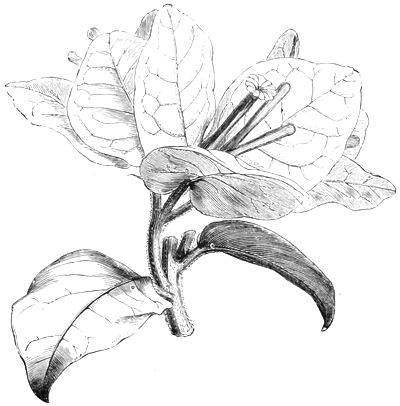
FIG. 269. FLOWERING BRANCH OF BOUGAINVILLEA SPECTABILIS.
B. glabra (smooth).* fl., inflorescence panicled, smaller than that
of B. speciosa, each branchlet producing cordate-ovate acute rosy
bracts, in threes. Summer. l. bright green, smooth. Brazil,
1861. This is by far the best species for pot culture, and forms
a very showy plant when well grown.
B. speciosa (beautiful).* fl., bracts large, cordate, delicate lilac
rose, produced in immense panicles, which, in well grown specimens,
are so freely produced as to entirely shroud the whole plant.
March to June. l. ovate, very dark green, covered on the upper
surface with small hairs. Stems branched, abundantly furnished
with large recurved spines. Brazil, 1861. (F. M. i., 62.)
B. spectabilis (showy). fl., bracts of a dull brick-red, shaded with
scarlet. South America, 1829. It is very difficult to obtain bloom
on this plant; and when flowers are produced, they are extremely
ephemeral. The species is, for all practical purposes, much
inferior to either of the foregoing. SYN. Josepha augusta. See
Fig. 269.
BOURBON PALM. See Latania.
BOUSSINGAULTIA (named after Boussingault, a
celebrated chemist). ORD. Chenopodiaceæ. Very pretty
half-hardy, tuberous-rooted plants, requiring a rich vegetable
sandy soil, and a well-drained sunny aspect, under
which conditions the first-mentioned species develops into
a very luxuriant trailing plant, attaining a length of 20in.
or more. Propagated freely by means of the tubercles of
the stem; these are, however, extremely brittle.
B. baselloides (Basella-like).* fl. white, ultimately becoming
black, fragrant, small, disposed in clusters, 2in. to 4in. long,
which are axillary at the ends of the branches. Late autumn.
l. alternate, cordate, smooth, shining, fleshy, slightly wavy.
Stems very twining, tinged red, very quick-growing, producing
tubercles. South America, 1835. (B. M. 3620.)
B. Lachaumei (Lachaume's). fl. rose, constantly in perfection.
Cuba, 1872. A stove species.
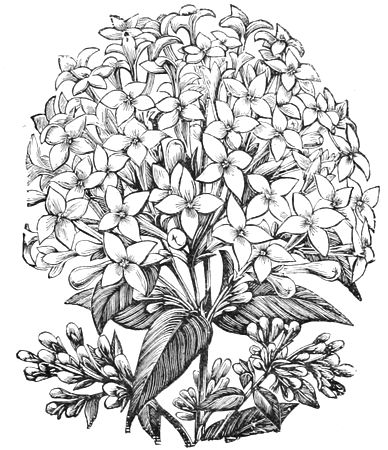
FIG. 270. FLOWERING BRANCH OF BOUVARDIA.
BOUVARDIA (named after Dr. Charles Bouvard,
formerly superintendent of the Jardin du Roi, at Paris).
ORD. Rubiaceæ. Handsome greenhouse evergreen shrubs.
Peduncles terminal, three-flowered, or trichotomous and
corymbose; corolla funnel-shaped, tubular, elongated, beset
with velvety papillæ outside, and a four-parted, spreading,
short limb. Leaves opposite, or in whorls; stipules narrow,
acute, adnate to the petioles on both sides. These
extensively cultivated plants are among the most useful
for conservatory or greenhouse decoration (see Fig. 270.
for which we are indebted to Messrs. Cannell and Sons),
and the flowers are largely employed in a cut state.
Perhaps only two are fragrant, viz., jasminiflora and
Humboldtii. Cultivation: Presuming the grower to be
commencing with young rooted cuttings, these should be
potted off into a mixture of good fibrous loam, leaf soil,
and sand, in equal proportions, to which may be added
a small quantity of peat; they should then be placed in
a temperature of from 70deg. to 80deg. until fully established
in the small pots. It is necessary at this stage
to stop the young plants back to the first joint, and as
they continue to make fresh breaks, to keep on pinching
them back during the whole period of cultivation, or until
sufficiently bushy plants are produced. Many growers
neglect stopping far too much, the result being ill-shaped
and almost flowerless plants. The pinching, of course, can
be regulated by the time the plants are required to flower;
and it is unwise, in most cases, to stop them after the
end of August. When the small pots are well filled
with roots, the plants should be shifted into the flowering
pots, viz., large 48-sized, which are quite commodious
enough to grow very fine plants, a similar compost as in
the first potting, with a little Standen's manure added,
being used, and good drainage provided. A cool greenhouse,
with a damp bottom for the pots to rest upon,
and with a moist atmosphere, is the most suitable place in
which to grow them during late spring and early summer,
the moist air being very desirable as an effectual check
to red spider, a pest very fond of the foliage, which it
permanently disfigures. A cold pit or close frame is
better during the summer months, as a moist atmosphere
and cool bottom are then certain. Ventilation may be
effected during the greater part of the day by tilting the
lights below, and on fine nights they may be removed
altogether. During bright sunshine, shading will be beneficial.
All through the period of active growth, it is
absolutely necessary that the plants should receive plenty
of water, or they will surely suffer; and when the pots are
filled with roots, occasional doses of manure water will be
beneficial. Many cultivators plant them out about the end
of June, in favoured situations, or in spent hotbeds, when
they make very vigorous growth; and, if carefully pinched
and watered, fine specimens are obtained. These are lifted
in early autumn, with a good ball, potted, and kept shaded
for a few days until the roots are again active, when
they are taken to the house in which they are intended
to bloom, and an enormous supply of flowers is secured.
We have also seen Bouvardias planted out permanently
in beds, in prepared pits, in which the winter temperature
was not less than 55deg., with very satisfactory
results; the quantity of bloom being very great.
Of course, with the last-named treatment, it is essential
to give the plants a rest and hardening-off after flowering,
and when they are started into fresh growth to
keep them well pinched and watered. Bouvardias are
liable to the attacks of red spider and green fly. The
former stands little chance of existence if the plants
are kept well supplied with moisture; the latter may
be destroyed by fumigating with tobacco. Mealy bug
are also troublesome, and should be sponged off with
a solution of Gishurst's Compound. Propagation: After
flowering, and a slight rest and hardening-off, the old
plants should be cut back, placed in heat, in a stove
or cucumber pit, and freely syringed, which will cause
them to break freely, and produce a good supply of
cuttings. When the young shoots are from 1½in. to
2in. long., they are in the best condition for striking.
It is not necessary that they should be cut off at a
joint, as they will root from any surface of the stem;
and, working economically, it is wiser to cut them off just
above the first joint, as other shoots will speedily break
out, which may, in their turn, be taken. Pots about 5in.
across should have previously been prepared for the cuttings,
by being well drained and filled with a mixture of
good fibrous loam, leaf soil, and coarse sand, in equal parts,
with a copious supply of sand upon the surface, into which
the cuttings should be dibbled pretty thickly. A good
watering must be given without wetting, and thereby
injuring, the foliage. The pots should be plunged in the
cutting case, or in any bottom heat of about 70deg. or
80deg., and covered with a bell glass. All that is then
necessary is to keep them moist and shady during sunshine,
until they are rooted, which, as a rule, is effected in three
weeks' time. When well established, they may be removed
from the case, gradually hardened off, and finally potted
singly into small thumb pots.
B. angustifolia (narrow-leaved).* fl. pale red; corymbs somewhat
trichotomous. September. l. three in a whorl, lanceolate,
with revolute edges, glabrous above, but beset with fine hairs
beneath. Branches terete, smoothish. h. 2ft. Mexico, 1838.
(P. M. B. 7, 99.)
B. Cavanillesii (Cavanilles's). fl. red; peduncles terminal, trifid,
three-flowered. May. l. opposite, ovate-lanceolate, acuminated,
rather villous beneath. h. 1½ft. Mexico, 1846. SYN. B. multiflora.
(J. H. S. 3, 246.)
B. flava (yellow).* fl. yellow, drooping; racemes three to five-flowered;
pedicels downy, slender. March. l. opposite, ovate-lanceolate,
ciliated; stipules setaceous. h. 1½ft. Mexico, 1845.
(B. R. 32, 32.)
B. hirtella (hairy). fl. pale red or flesh-coloured, corymbose.
l. whorled, lanceolate, with revoluted edges, hairy on both surfaces.
Branches terete. Mexico.
B. Humboldtii corymbiflora (Humboldt's corymb-flowered).*
fl. white, large, fragrant, disposed in terminal racemes; tubes long.
Autumn and winter. l. ovate, oblong-acuminate, dark green.
1874. One of the finest kinds in cultivation. (G. C. 1873, 717.)
B. Jacquini (Jacquin's). A synonym of B. triphylla.
B. jasminiflora (Jasmine-flowered).* fl. white, fragrant, in compound
cymes; very floriferous. Winter. l. opposite, elliptic-acuminate.
South America, 1869. A very charming and largely
grown species. (G. C. 1872, 215.)
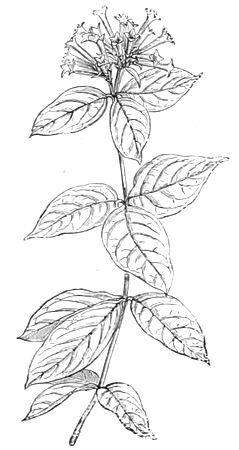
FIG. 271. BOUVARDIA LEIANTHA.
B. leiantha (smooth-flowered).* fl. scarlet; corymbs sub-trichotomous.
July to November. l. ternate, ovate-acuminate, slightly
hairy above, downy-villous beneath. h. 2ft. Mexico, 1850.
See Fig. 271. (B. H. 2, 6.)
B. longiflora (long-flowered).* fl. white, terminal, solitary, sessile,
with the tube 2in. or 3in. long. l. opposite, oblong, acute, cuneated
at the base, glabrous. Branches compressedly tetragonal, glabrous.
h. 2ft. to 3ft. Mexico, 1827. (B. M. 4223.)
B. multiflora (many-flowered). A synonym of B. Cavanillesii.
B. triphylla (three-leaved).* fl. scarlet, nearly 1in. long; corymbs
somewhat trichotomous. July. l. smoothish above, hairy
beneath, three in a whorl, oblong. Branchlets trigonal, hairy.
h. 2ft. to 3ft. Mexico, 1794. There are numerous varieties of this
species. SYN. B. Jacquini. (B. M. 1854.)
B. versicolor (various-coloured). fl., corolla with a scarlet tube,
which is ¾in. long, but having the limb yellowish inside; corymbs
three-flowered, trichotomous, drooping. July to September. l.
opposite, lanceolate, ciliated. Branches terete, glabrous, velvety
while young. h. 2ft. to 3ft. South America, 1814. (B. R. 245.)
The garden hybrids are very handsome. A selection is
given below:
ALFRED NEUNER, flowers double, white, or slightly tinged with
rose (see Fig. 272); BRILLIANT, flowers bright crimson, numerous,
freely branching habit, and strong constitution; DAZZLER,* habit
very bushy and compact, extremely floriferous, flowers rich
scarlet, in dense clusters; HOGARTH, brilliant scarlet, very fine;
LONGIFLORA FLAMMEA,* flowers long-tubed, blush-rose; MAIDEN'S
BLUSH,* very free and floriferous, blush-rose; PRESIDENT GARFIELD,
rich double, red-pink, very fine; QUEEN OF ROSES, rosy-pink,
the tubes tinted with crimson, habit dwarf and very free;
VREELANDI (=DAVIDSONI), flowers pure white, produced in great
abundance; one of the most useful of them all, and grown very
extensively.
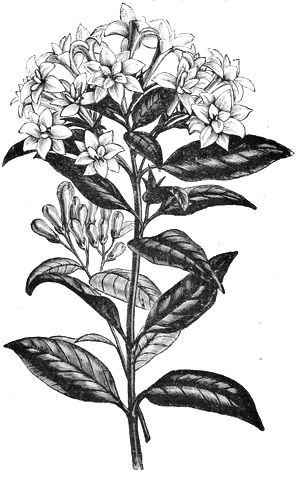
FIG. 272. BOUVARDIA ALFRED NEUNER.
BOWENIA (commemorative of Sir G. Bowen, Governor
of Queensland). ORD. Cycadaceæ. A remarkable
and handsome greenhouse fern-like plant, closely allied to
Zamia, from which it is distinguished by having the leaflets
decurrent to the petiole, instead of articulated, as in that
genus. For culture, see Cycas.
B. spectabilis (showy).* fl., male cones small, ovoid, ½in. to ¾in.
long; female oblong-globose, 3¾in. long. l. bipinnatisect, on tall,
slender petioles; leaflets falcate-lanceolate, decurrent; stem
short, thick, cylindrical. Queensland, Australia, 1863. (B. M.
5398 and 6008.)
B. s. serrulata (finely-toothed).* This differs from the type in
having the margins distinctly toothed or serrated. Rockingham
Bay, 1863.
BOWIEA (named after J. Bowie, a botanical collector
for the Royal Gardens, Kew). ORD. Liliaceæ. A very
interesting greenhouse or half-hardy twining bulbous
perennial, thriving in a sunny border, under the wall of
a greenhouse, where it will require protection during
winter. It does well in any light well drained soil, and
may be propagated by seeds or offsets.
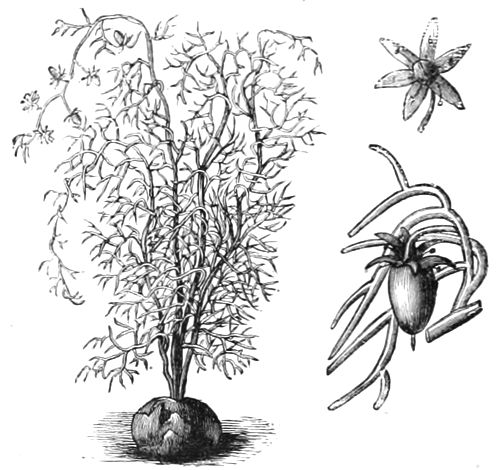
FIG. 273. BOWIEA VOLUBILIS, showing Habit, Flower, and Fruit.
B. volubilis (twining). fl. few, remote, pedicellate; perianth
six-partite, persistent; segments equal, green, lanceolate, ¼in.
long, at length reflexed. October. True leaves are frequently
not developed for years; but the green, fleshy, mostly abortive
inflorescence performs their functions. South Africa, 1866.
See Fig. 273.
BOX. See Buxus.
BOX ELDER. See Negundo.
BOX THORN. See Lycium.
BRABEIUM (from brabeion, a sceptre; in reference
to the racemosed flowers). African Almond. ORD. Proteaceæ.
An ornamental greenhouse evergreen tree. For
culture, &c., see Banksia.
B. stellatifolium (star-leaved). fl. white, sweet-scented, disposed
in elegant, axillary, spiked racemes. August. l. whorled,
simple, serrate. h. 15ft. Cape of Good Hope, 1731.
BRACHYCHITON (from brachys, short, and chiton,
a coat of mail; plants covered with imbricated hairs and
scales). ORD. Sterculiaceæ. A genus of tropical or sub-tropical
Australian trees or shrubs, allied to Sterculia,
from which it differs in very minor points. They are of
easy culture in a loamy soil. Propagated by young cuttings,
planted in sandy soil, in gentle heat.
B. acerifolium (Acer-leaved). fl. bright red. l. long-stalked,
deeply five to seven-lobed. h. from 60ft. to 120ft.
B. Bidwillii (Bidwill's).* fl. bright red, arranged in axillary
bunches. l. stalked, heart-shaped, entire, or three-lobed, and
covered with a soft pubescence. 1851. (B. M. 5133.)
B. diversifolium (various-leaved). l. coriaceous, obtuse, lanceolate,
entire, or three-lobed, glabrous; lobes acuminate. h. 20ft.
to 60ft. 1824.
BRACHYCOME (from brachys, short, and kome, hair).
Swan River Daisy. ORD. Compositæ. A genus of beautiful
little half-hardy perennials or annuals, closely resembling
Bellis in structure. Involucral bracts membranous
at the margin; receptacle pitted, naked. Fruit compressed,
surmounted by a very short bristly pappus.
B. iberidifolia is one of the prettiest of summer annuals,
and in the open border it flowers profusely, if in a dry,
sunny spot. Towards the autumn, it may be removed
to the greenhouse, where it will still continue flowering
for several weeks. Seeds may be sown in a gentle hotbed,
early in the spring, and, when large enough, planted
out in borders or beds, 6in. apart; or they may be
sown thinly out of doors, late in April, and thinned out,
when they will flower a month later than those sown in
the hotbed.
B. iberidifolia (Iberis-leaved).* fl.-heads blue or white, with
a dark centre, about 1in. in diameter. Summer and autumn.
l. pinnate; segments linear. Plant erect, glabrous. h. 1ft.
Swan River, 1843. See Fig. 274.
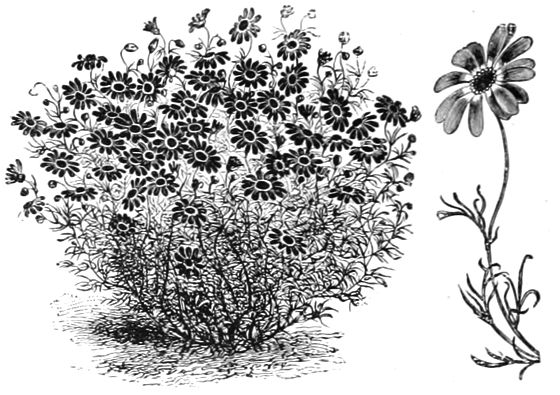
FIG. 274. BRACHYCOME IBERIDIFOLIA, showing Habit and
Flowering Branch.
BRACHYLÆNA (from brachys, short, and læna, a
cloak or covering; referring to the shortness of the involucre).
ORD. Compositæ. A genus of South African evergreen
greenhouse shrubs, nearly allied to Baccharis. They
thrive in a compost of peat and loam. Propagated by
cuttings, made of half-ripened shoots, placed in a well-drained
pot of sandy soil, under a bell glass.
B. dentata (toothed). fl.-heads yellow. l. lanceolate, acute, entire,
rusty beneath when young, when adult quite glabrous.
B. nerifolia (Nerium-leaved).* fl.-heads yellow, in branching racemes
or panicles. August to November. l. lanceolate, serrated
with one or two teeth forward. h. 2ft. Cape of Good Hope,
1752.
BRACHYOTUM (from brachys, short, and otos, the
ear; in reference to the short appendages at the base of
the anthers). ORD. Melastomaceæ. A handsome greenhouse
evergreen shrub, with a bushy habit. Allied, and
requiring similar culture, to Pleroma (which see).
B. confertum (crowded).* fl. purple, terminal, nodding, with
cream-coloured bracts. November. l. oblong or ovate, small,
three-nerved, with adpressed hairs. Andes, Peru, 1873. (B. M.
6018.)
BRACHYSEMA (from brachys, short, and sema, a
standard; the standard of the flower is very short). ORD.
Leguminosæ. Elegant procumbent or climbing greenhouse,
evergreen shrubs. Racemes axillary and terminal, few-flowered.
Leaves alternate, oval or ovate, entire, mucronate,
silky on the under surface. They thrive in a compost
of peat, leaf soil, and loam, in equal proportions, made
porous, if necessary, by the addition of sand. Increased
by cuttings, made of half-ripened shoots in summer, placed
in sandy soil, under a bell glass, in a gentle bottom heat;
or by layers. Seeds may be sown in March, in heat.
Brachysemas require thorough drainage, whether grown
in pots or planted out. B. latifolium does best under
the latter treatment, when it forms a magnificent climber
for pillars or the roof.
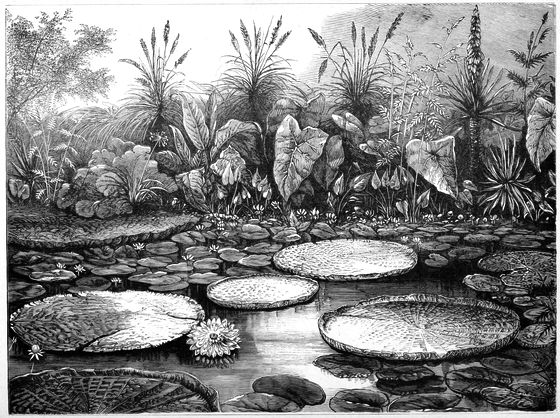
THE GIANT WATER LILY (VICTORIA REGIA).
B. lanceolatum (lanceolate-leaved). fl. rich scarlet, with the
margin of the vexillum white, red at the disk, with a large yellow
spot in the centre, each about 1in. long, disposed in axillary,
sub-compound racemes. l. opposite, rarely alternate, ovate or
ovate-lanceolate, entire, silky white beneath. h. 3ft. Swan River,
1848. (B. M. 4652.)
B. latifolium (broad-leaved).* fl. crimson-scarlet, large; vexillum
oblong-ovate. April. l. ovate, flat, silky beneath. New Holland,
1803. A handsome climber. (B. R. 118.)
B. melanopetalum (black-petaled). Synonymous with B. undulatum.
B. undulatum (undulated).* fl. deep violet-maroon, solitary or
twin; vexillum oblong, cordate, convolute, and bluntish above.
March. l. oblong-ovate, mucronate, undulated. New South
Wales, 1820. A tall subscandent plant. SYN. B. melanopetalum.
(B. R. 642.)
BRACHYSPATHA (from brachys, short, and spatha,
a spathe; the spathe is much shorter than the spadix).
ORD. Aroideæ. Stove tuberous perennial, allied to, and
requiring the same cultivation as, Amorphophallus (which
see).
B. variabilis (variable).* fl. exhaling an abominable fœtor,
which is, however, of very short duration; spathe much shorter
than the spadix, greenish-purple, sharply acuminate, and many-nerved;
spadix whitish, with female flower at the base, and
above contiguous to them are the males without any intermediate
neutral flowers; anthers orange red; the naked apex of
the spadix is very long, wrinkled, and pitted on the surface.
l. solitary, 18in. across; the spotted petiole divides at the top
into three main divisions, each of which is again forked and
deeply pinnately cut; the segments alternate, sessile, or decurrent,
very unequal in size, ovate or oval-lanceolate, acuminate,
glabrous, shining. h. 3ft. India, 1876. (G. C. 1876, 129.)
BRACHYSTELMA (from brachys, short, and stelma,
a crown; in reference to the short coronal processes of
the flowers). ORD. Asclepiadaceæ. Extremely curious
little suffruticose, tuberous, twining, greenhouse perennials.
Corolla campanulate, having angular sinuses; corona
simple, five-cleft, lobes opposite the anthers, simple on
the back. Leaves opposite, membranous. They thrive
best in fibry loam. Propagated by cuttings, which will
root in sandy soil, in heat; also by divisions of the root.
B. Arnotti (Arnott's). fl. brown, green. l. in opposite pairs,
nearly sessile, crisped, ovate, dull green above, densely grey,
pubescent beneath. h. 4in. South Africa, 1868. (Ref. B. i., 9.)
B. Barberæ (Mrs. Barber's). fl. dingy purple, speckled with
yellow. August. l. large, linear-oblong, acute. h. 6in. South
Africa, 1866. (B. M. 5607.)
B. ovata (ovate-leaved). fl. yellowish-green. l. ovate, shortly-stalked,
pubescent. h. 1ft. South Africa, 1872. (Ref. B. 226.)
B. spathulatum (spathulate-leaved). fl. green. June. l. spathulate,
oblong, hairy. h. 1ft. Cape of Good Hope, 1826. (B. R.
1113.)
B. tuborosum (tuberous). fl. purple. June. l. linear-lanceolate,
ciliate. h. 1½ft. Cape of Good Hope, 1821. (B. M. 2343.)
BRACKEN, or BRAKE FERN. See Pteris
aquilina.
BRACTEATE. Having bracts.
BRACTEOLATE. Having secondary bracts between
the true bracts and the flowers.
BRACTS. Modified leaves placed near the calyx on
the peduncle or pedicel.
BRAHEA (named after Tycho Brahe, the celebrated
astronomer). ORD. Palmeæ. A small genus of dwarf
palms, with fan-shaped leaves, and hermaphrodite, greenish
flowers. They require rich light loam and fibrous peat,
in equal parts, to which may be added a good portion of
washed sand; thorough drainage and liberal supplies of
water are also absolutely necessary. Propagated by seeds.
During summer, they may be removed to the greenhouse,
and can be employed with much success for sub-tropical
gardening.
B. dulcis (sweet).* l. nearly circular, bright shining green;
petioles clothed with woolly tomentum, armed at the edges with
small close-set spines, and enveloped at the base in a network of
brown fibre. Stem stout. Mexico, 1865. A rare and slow developing
species.
B. filamentosa (filamentose). A synonym of Washingtonia filifera.
BRAINEA (commemorative of C. J. Braine, Esq., of
Hong Kong, China). ORD. Filices. Sori continuous along
transverse veins, near the midrib, and also produced along
the veins in the direction of the edge of the frond.
B. insignis (remarkable), which is the only species, has a trunk
3in. to 4in. thick; scales linear, nearly 1in. long. sti. firm, 3in.
to 4in. long, scaly only at the base. fronds 2ft to 3ft. long, 8in.
to 12in. broad, simply pinnate; pinnæ close, numerous, linear,
finely serrated. Hong Kong, 1856. A very handsome and
interesting greenhouse tree fern, requiring a soil of loam and
peat, in equal parts, with the addition of some sharp sand, and
thorough drainage.
BRAMBLE. See Rubus.
BRASSAVOLA (named in honour of A. M. Brassavola,
a Venetian botanist). ORD. Orchideæ. A genus
of epiphytal orchids, requiring the heat of an intermediate
house. Flowers large, usually with narrow acuminate
greenish petals and sepals, and a white lip, which is sometimes
broad; column having a pair of great falcate ears on
each side of the front, and eight pollen masses. Leaves
solitary, succulent. They are of easy culture on blocks of
wood, with a little moss, suspended from the roof. Water
should be plentifully given during the growing season;
at other times, a very small quantity will suffice. About
seventeen or eighteen species have been introduced, of
which the following only are worth growing:
B. acaulis (stemless). fl. large; sepals and petals long, narrow,
greenish and creamy-white; lip large, heart-shaped, and pure
white; base of tube spotted with dull rose. September. l. very
narrow, rush-like. h. 4in. Central America, 1852. (P. F. G. ii.,
152.)
B. Digbyana (Digby's).* fl. solitary, 4in. across, produced from
the top of the bulb; sepals and petals creamy-white; lip same
colour, streaked with purple down the centre, and beautifully
fringed. Winter. h. 9in. Honduras, 1844. A compact-growing
evergreen. (B. M. 4474.)
B. Gibbsiana (Gibbs's).* fl. white, spotted with chocolate,
large, three on each spike. l. rather broad and very thick.
This rare, erect-growing species must be potted in peat and
sphagnum.
B. glauca (glaucous).* fl. solitary, produced from a sheath at the
top of the bulb; sepals and petals yellow; lip orange, with a
white throat. Early spring. l. of a milky-green. h. 1ft. Vera
Cruz, 1837. A very handsome fragrant species, somewhat difficult
to flower, but this obstacle may be overcome by liberally growing
during the proper season, and giving it a severe dry rest. (B. M.
4033.)
B. lineata (lined).* fl. large, very fragrant; sepals and petals
creamy-white; lip large, pure white. l. long, terete, channelled
above, tapering to a point, very deep green. South America,
1850. (B. M. 4734.)
B. venosa (veined).* fl. small and compact; sepals and petals
cream-coloured; lip white, strongly veined. A pretty free flowering
species. Honduras, 1839. (B. R. 26, 39.)
BRASSIA (named after Mr. William Brass, who was
sent by Sir Joseph Banks to Cape Coast and the neighbouring
districts as a botanical collector, at the end of
the last century). ORD. Orchideæ. A genus of tropical
American orchids, very nearly allied to Oncidium, with
which, indeed, Reichenbach unites it. From this genus,
however, Brassia may be distinguished by its simple inflorescence,
elongated tail-like sepals, and short column,
which is quite destitute of the side lobes or ears that form
a marked feature in the species of Oncidium. There are
about seventeen species, of which many are not sufficiently
attractive to deserve the cultivator's attention. They will
succeed either in pots or in baskets, the drainage of which
must be perfect. They require to be potted in good
fibrous peat, broken in pieces not less in size than a
walnut, placed in the warm end of a Cattleya or Brazilian
house, and supplied liberally with water during summer.
In winter, they must still be kept in a tolerably warm
place, and given sufficient water to keep the pseudo-bulbs
from shrivelling. It is useless to dry off until shrivelling
takes place, for experience assures us that when a plant
shrivels it is generally safe to assume that it has been
tried beyond its powers of endurance, and that its constitution
has given way. Propagated by dividing the
plants, when growth has commenced.
B. antherotes (brilliant).* fl. 7in. in diameter from tip to tip
of the sepals; sepals and petals yellow, brownish-black at the
base, narrow, ⅛in. broad, tapering; petals 1½in. long; lip triangular,
yellow, barred with brown; spike strong, about 2ft. in
length. Tropical America, 1879.
B. caudata (tailed).* fl., sepals and petals yellow, barred with
brown, from 4in. to 6in. long; lip broad and yellow, spotted
with greenish-brown. When the plant is large and healthy, it
produces numerous drooping spikes, 18in. long, and many-flowered.
h. 1ft. West Indies, 1823 (B. R. 832.)
B. Gireoudiana (Gireoud's). fl., sepals and petals bright
yellow, spotted and blotched with deep red, produced in many-flowered
scapes of singular and beautiful flowers during spring
and early summer. This species much resembles B. Lanceana,
but has larger flowers. Costa Rica. (R. X. O. 1, 32.)
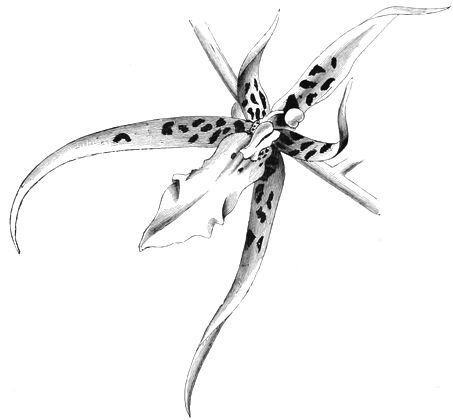
FIG. 275. SINGLE FLOWER OF BRASSIA LANCEANA.
B. Lanceana (Lance's).* fl., sepals and petals lanceolate and
tapering, bright yellow, blotched with brown, or sometimes with
deep red; lip wholly yellow, slightly spotted at the base, and
much waved, deliciously fragrant; scapes radical, many-flowered.
In the typical species, the lip is rather more than half as long
as the sepals. l. rich dark green. h. 9in. Surinam, 1843. See
Fig. 275. (B. R. 1754.)
B. L. macrostachya (large-spiked).* fl., sepals and petals bright
rich yellow, sparingly spotted with brown, as in the type; sepals
lengthened out into tail-like appendages, which are sometimes
nearly 5in. in length; lip wholly of a clear pale yellow. Demerara.
B. L. pumila (dwarf). fl., sepals pale yellow, without spots or
markings; petals of the same colour, tinged with purple near the
base; lip about half the length of the sepals, slightly contracted
in the middle, yellow, with a brownish-yellow base. Caracas.
B. Lawrenceana (Lawrence's).* fl. large, sweet-scented; sepals
and petals bright yellow, spotted with cinnamon and green; lip
yellow, tinged with green. June to August. h. 1ft. Brazil,
1839. (B. R. 27, 18.)
B. L. longissima (long-sepaled).* fl., sepals deep orange-yellow,
blotched and spotted, especially towards the base, with reddish-purple,
and lengthened out into tail-like appendages, which, in
well-grown examples, measure 7in. in length; petals about 2½in.
long and ¼in. broad at the base, marked in the same manner as
the sepals; lip about 3in. long, pale yellow, dotted and spotted
towards the base with purple. August and September. Costa
Rica, 1868. A magnificent variety.
B. maculata (spotted).* fl. large; sepals and petals pale yellow,
irregularly spotted with brown; the former being short compared
with those of the other species; lip white, spotted about and
below the centre with brown and purple. Spring and early
summer. Jamaica, 1806. See Fig. 276. (B. M. 1691.)
B. m. guttata (spotted).* fl. on spikes 2ft. or 3ft. long; sepals
and petals yellowish-green, blotched with brown; lip broad, yellow,
spotted with brown. May to August. Guatemala, 1842. SYN.
B. Wrayæ. (B. M. 4003.)
B. verrucosa (warty-lipped).* fl. large; sepals and petals greenish,
blotched with blackish-purple; lip white, ornamented with
numerous little green protuberances or warts, hence the specific
name; scape many-flowered. May and June. Guatemala.
B. v. grandiflora (large-flowered).* fl. twice the size of, and a
lighter colour than, the type. This variety is very rare, and is
said to be the best of the genus.
B. Wrayæ (Wray's).* A synonym of B. maculata guttata.
BRASSICA (old Latin name used by Pliny; from
Bresic, the Celtic name for Cabbage).
Cabbage. ORD. Cruciferæ. Herbaceous,
usually biennial, rarely annual
or perennial, or suffrutescent plants,
usually with a short caudex. Flowers
yellow, rarely white, but never purple
nor veined. Radical leaves usually
stalked, lyrate, or pinnatifid; cauline
ones sessile or stem-clasping, entire;
racemes elongated; pedicels bractless,
filiform. Full cultural details will be
found under the popular garden name
of each variety.
B. oleracea (herb-like). fl. pale yellow,
large. May and June. l. glaucous, waved,
lobed, smooth. Root-stem cylindrical,
fleshy. h. 1ft. to 3ft. England. Biennial.
B. o. acephala (headless). Borecole or
Kale. Stem round, elongated. l. expanded,
racemes panicled.
B. o. botrytis asparagoides (Asparagus-like). The Broccoli.
fl. abortive. Stem taller than that of the Cauliflower. l.
greyish-glaucous, elongated. Branchlets fleshy, bearing small
flower-buds at the top.
B. o. b. cauliflora (Cauliflower). Heads of flower-buds
thick, terminal. Stem short. l. oblong, of a greyish-glaucous
colour.
B. o. bullata gemmifera (bud-bearing). Brussels Sprouts.
Heads small, numerous, rising from the axils of the leaves along
an elongated stem.
B. o. b. major (larger). Savoy Cabbage. Heads of leaves loose,
thick, terminal, roundish. l. blistered.
B. o. capitata (headed). The Cabbage. Stem round, short. l.
concave, not blistered, crowded into a head before flowering;
racemes panicled.
B. o. Caulo-rapa (Kohl-Rabi). Stem tumid and somewhat globose
at the origin of the leaves.
B. Rapa (Rape). The Turnip. Radical leaves lyrate, destitute
of glaucous bloom, green, covered with bristly hairs; middle
cauline ones cut; upper ones quite entire, smooth.
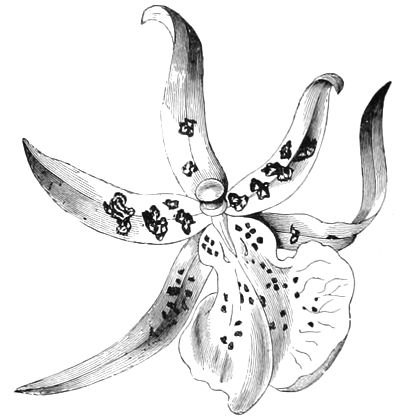
FIG. 276. SINGLE FLOWER OF BRASSIA MACULATA.
BRASSICACEÆ. See Cruciferæ.
BRAVOA (named after Bravo, a Mexican botanist).
ORD. Amaryllidaceæ. A pretty little graceful bulbous
plant, hardy in very sheltered positions, but in exposed
situations requiring a slight protection in winter. It is
an admirable plant for cool-house culture, and delights
in a compost of light rich loam, leaf mould, and sand.
Propagated by offsets, which are obtainable in autumn;
or by seeds, which should be sown as soon as ripe.
B. geminiflora (twin-flowered).* Twin Flower. fl. rich orange-red,
tubular, drooping, disposed in the upper part of the flower-stems,
which are sometimes 2ft. long. July. l. linear, ensiform,
pale green. Mexico, 1841. (B. M. 4741.)
BRAZILIAN TEA. See Ilex paraguariensis and
Stachytarpheta jamaicensis.
BRAZIL NUT. See Bertholletia.
BRAZIL WOOD. See Cæsalpinia brasiliensis.
BREAD FRUIT. See Artocarpus.
BREAD NUT. See Brosimum.
BREDIA (named in honour of Professor J. G. S. van
Bred). ORD. Melastomaceæ. An ornamental greenhouse
shrub, thriving in rich light loam, leaf soil, and peat. Propagated
by cuttings of the ripened shoots, inserted in sandy
loam, under a hand glass, in heat; or by seeds.
B. hirsuta (hairy).* fl. rose-pink, about ½in. across, disposed in
loose, terminal, many-flowered cymes. Autumn. l. ovate acuminate,
hairy. Japan, 1870. (B. M. 6647.)
BREEZE. The small particles or refuse of gas coke.
It constitutes a very cheap fuel, but, unless mixed with
good coke, is only suitable for boilers of the saddle type,
having a good draught. Breeze must not, however, be confounded
with coke-dust.
BREVOORTIA COCCINEA. See Brodiæa coccinea.
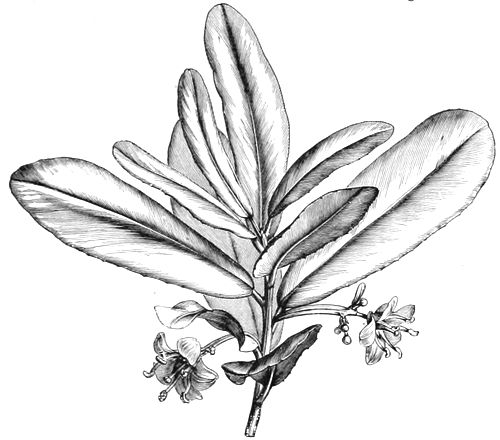
FIG. 277. FLOWERING BRANCH OF BREXIA MADAGASCARIENSIS.
BREXIA (from brexis, rain; the large leaves afford
protection against rain). ORD. Saxifrageæ. Excellent stove
trees. Flowers green, in axillary umbels, surrounded by
bracts on the outside. Leaves alternate, simple, dotless,
and furnished with minute stipules. Stems nearly simple.
They require a compost of two parts loam and one of peat,
with the addition of a little sand, to keep the whole open.
A liberal supply of water must be given at all seasons.
Cuttings, with their leaves not shortened, strike readily in
sand under a hand glass, in heat; or a leaf taken off with a
bud attached will grow. Leaves as in accompanying
illustration (Fig. 277), and long, narrow, spiny-toothed
ones, are often produced on the same plant. Probably the
two species enumerated below are simply forms of one.
Well hardened off, strong growing plants of B. madagascariensis
are very suitable for sub-tropical gardening.
B. madagascariensis (Madagascar).* l. obovate or oblong,
entire, while young minutely gland-toothed. h. 20ft. Madagascar,
1812. See Fig. 277.
B. spinosa (spiny). l. lanceolate, 20in. long, 2in. broad, spiny-toothed.
h. 20ft. Madagascar, 1820.
BREXIACEÆ. A section of Saxifrageæ.
BRIAR. See Rosa.
BRICKS. In England, the standard thickness of
brick walls is a Brick and a-half, that is, the length of
one brick and the breadth of another. Thirty-two paving
bricks, laid flat, will form one square yard of flooring; if
set on edge, eighty-four will be required for the same space.
The best Bricks for walls are those termed Stocks, which
are well burnt. Grizzells and Place Bricks, being only
partially burnt, are soft and not durable. In various parts
of the kingdom, different clays and methods of manufacture
cause a disparity in the weight and appearance of the
finished article. Several forms are made to suit various
purposes, but the standard size is 9in. long by 4½in. wide,
by 2½in. thick, although, since the remission of the duty,
some slight variations occur, owing to shrinkage and other
causes. Fire Bricks are made of a particular kind of clay,
which will stand intense heat when once burnt, and are
used in furnaces and other places where durability under
great heat is a desideratum. Fire-clay should always be
used in place of mortar in building with
these.
BRILLANTAISIA (named after M.
Brillant). ORD. Acanthaceæ. A very small
genus of erect, branching, stove evergreen
shrubs. Flowers large, in terminal panicles;
corolla ringent; upper lip falcate and
overarching, with a trifid apex, the lower
one large, spreading, shortly trifid. Leaves
ovate-cordate, on long petioles. For culture,
see Barleria.
B. owariensis (Owarian).* fl. violet-blue;
cymes sub-sessile, loose; panicles terminal.
March. l. large, opposite, petiolate. h. 3ft.
Western Africa, 1853. This plant, in its habit
of growth, resembles some of the largest species
of Salvia. (B. M. 4717.)
BRISTLES. Stiff hairs.
BRISTLY. Covered with stiff hairs.
BRISTLY-TOOTHED. Furnished
with teeth like bristles, or with the teeth
ending each in a bristle.
BRIZA (from briza, to nod). Quaking
Grass. ORD. Gramineæ. A genus of
ornamental hardy grasses. Panicle loose;
calyx two-valved; corolla two-valved, awnless;
exterior one ventricose, interior small
and flat. Fruit adnate with the corolla.
These extremely graceful plants delight in
a soil composed of loam, leaf soil, and peat.
Seeds may be sown in spring or autumn.
For decorative purposes, the branches should
be gathered as soon as full grown, and loosely placed in
flower-stands, to dry. Tufts of these plants look extremely
pretty on the rockery, or amongst hardy ferns.
B. gracilis (graceful). Synonymous with B. minor.
B. maxima (greatest).* fl., spikelets oblong-cordate, thirteen to
seventeen-flowered; panicle nodding at the end. June and July.
l. long, linear-acuminate. h. 1½ft. South Europe, 1633. See
Fig. 278.
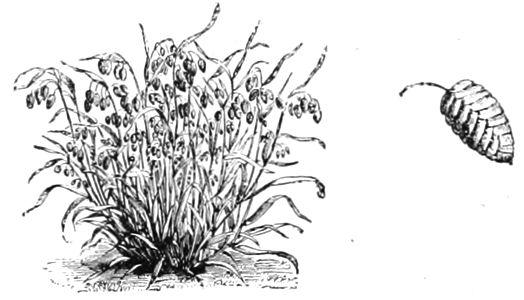
FIG. 278. BRIZA MAXIMA, showing Habit and single Flower.
B. media (middle).* Common Quaking Grass. fl., spikelets
broadly ovate, of about seven florets (calyx shorter than the
florets), tremulous with the slightest breeze, very smooth, shining
purple. Branches of the panicle thread-shaped, divaricating,
purple. June. l. short, linear acuminate. h. 1ft. Britain.
(S. E. B. 1774.)
B. minima (least). Synonymous with B. minor.
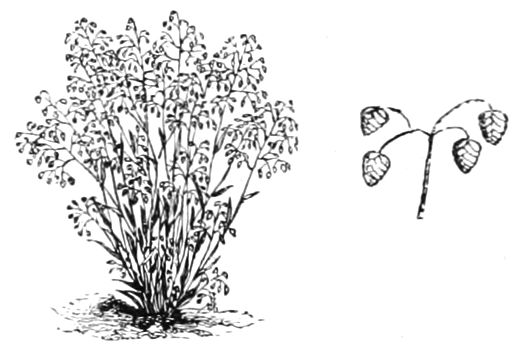
FIG. 279. BRIZA MINOR, showing Habit and small Panicle of
Flowers.
B. minor (small).* Little Quaking Grass. fl., spikelets triangular,
seven-flowered; glumes longer than the flowers; panicle with
hair-like branches. June and July. l. pale green, short, narrow.
h. 8in. England (but very rare). An exceedingly pretty little
annual or perennial grass. SYNS. B. gracilis and B. minima. See
FIG. 279. (S. E. B. 1775.)
B. spicata (spiked). A recent introduction from Brazil, described
as being very graceful and quite distinct, having erect spikes about
8in. in height.
BROADCAST. A method of sowing seeds by means
of the hand, scattering them over the surface of the ground
as equally as possible. It is now superseded, for the
majority of garden and field crops, by drilling, which not
only economises the quantity of seed used, but greatly
facilitates subsequent weeding and thinning out.
BROCCOLI (Brassica oleracea botrytis asparagoides).
A cultivated variety of the Cabbage, having the young
inflorescence condensed into a fleshy, edible head (see Fig.
280). To grow this popular vegetable successfully, it is
necessary to have rich soil of a good depth, in an open
situation, where the plants can have plenty of sun and
air to keep them sturdy. They succeed the autumn Cauliflower,
and are in season from November till May.
Soil. In preparing ground for Broccoli, trench, in the
autumn, to the depth of from 1½ft. to 2ft., and during the
process work in a liberal dressing of rotten farmyard manure.
Ground which has carried a crop of Celery is very suitable
for the strong-growing kinds, as, by planting where the
Celery rows have been, the necessity of trenching is, to a
great extent, obviated. Smaller kinds, however, need to be
planted closer in order to obtain a profitable crop.
Cultivation. At the beginning of May, prepare seed beds
on a south border, and sow the earlier and sprouting kinds.
The later varieties would, perhaps, be best sown in April,
but they must not be put in early and allowed to remain
too long in the seed bed. Sow thinly, to get the plants as
sturdy as possible; and, to prevent clubbing, work in a little
soot or wood ashes on the surface of the beds. Care must
also be taken to pick off the club excrescences at planting
time, should there be any, and to destroy the grub inside.
Clubbing is not so frequent in ground which has been well
trenched, and where the plants are not allowed to suffer
from drought. Showery weather should be selected for
transferring them to their permanent quarters. If it is
desired that they should succeed potatoes, they may be
planted between every two alternate rows, and the latter
crop can be removed when ready. Broccoli succeed best
where the ground is firm, and not recently dug or manured.
Planting with a crowbar is preferable to digging the
ground afresh. If grown by themselves, a distance of
from 2ft. to 3ft. should be allowed between the rows, and
an equal distance from plant to plant. Some of the early
varieties will, in favourable seasons, follow the later Cauliflowers,
while the latest will not be fit for use until the
following spring. The heads should be cut as soon as they
are large enough; they will keep good for a week in a
cold place, while a day or two might open them too much
if allowed to remain on the plants. Broccoli which have to
stand the winter are liable to injury from severe frosts, and
some method of protection is necessary. Two plans are
recommended for both large and small gardens, and either
or both may be adopted, as found convenient. The first
is to apply a covering of fern or other dry protective
material, not using too much, but giving sufficient to break
the rays of the sun, which, perhaps, do as much harm
as the actual frost. The other plan is to take up the
plants as soon as the flowers can be seen, and lay them
in under a hedge or wall until required for use. In sheltered
positions, or where there are trees to break the
force of the wind, the covering with dry litter during
severe weather will generally be found sufficient; still, a
little precaution in lifting will frequently save a valuable
crop. Broccoli should never follow a crop of any other
kind of cruciferous plants, particularly Cabbage.
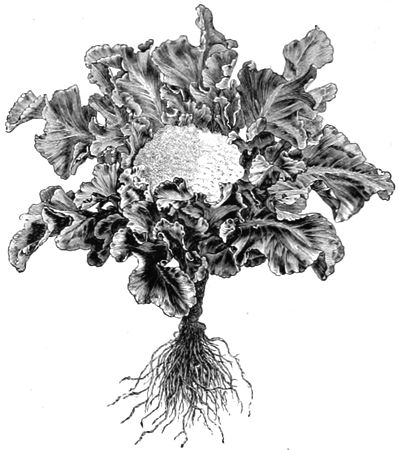
Sorts. Veitch's Self-protecting Autumn, Purple and White
Cape, Grange's Early White, and Snow's Winter White.
These are the best for autumn and mid-winter supplies.
A good selection for spring and late purposes is Mitchinson's
Penzance, Knight's Protecting, Cooling's Matchless,
Purple Sprouting, Model, Willcove, Leamington, and Cattell's
Eclipse.
BRODIÆA (named after J. J. Brodie, a Scotch cryptogamist).
SYN. Hookera. ORD. Liliaceæ. Pretty, slender,
hardy, or in some positions only half-hardy, bulbs. The
flowers are usually borne in large clusters or umbels; the
prevailing colour is blue; coccinea is, however, an exception,
the flowers being scarlet. The scape is usually straight and
slender, but strong. Leaves from two to four in number,
enveloping the part of the scape beneath the surface, and
procumbent thereon. Most of them are of easy culture in
rich sandy loam; if grown in pots, a mixture of loam, leaf
soil, and sand, suits them well. Increased freely by offsets,
which should be left undisturbed with the parent bulbs till
they reach a flowering state, when they may be divided and
replanted in autumn.
B. capitata (headed).* fl. deep violet-blue, funnel-shaped, disposed
in a compact, many-flowered umbel; valves of the spathe
also deep violet. May. l. narrow, linear. h. 1ft. to 2ft. California,
1871.
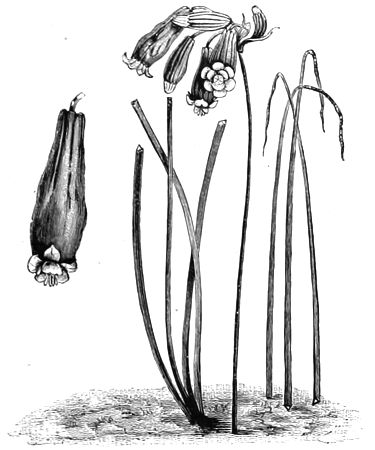
FIG. 281. BRODIÆA COCCINEA, showing Flower and Habit.
B. coccinea (scarlet).* fl. 1½in. long, tubular, rich blood-red below,
the apex of the tube and the segments yellowish-green; umbels
composed of five to fifteen drooping flowers. June. l. linear,
loose, shorter than the scape. h. 1½ft. California, 1870. Very
handsome, distinct from all other species, requiring a warm, well-drained,
and sunny position, and to remain undisturbed. SYN.
Brevoortia coccinea. See Fig. 281. (B. M. 5857.)
B. congesta (close-headed).* fl. blue, with the crown paler; segments
cleft at the top; umbel bearing six to eight blooms. The
stamens in this species are metamorphosed into fleshy scales,
which adhere to the mouth of the perianth. Summer. l. few,
long, slender, channelled on the inside. Bulb small, roundish,
and much wrinkled. h. 1ft. Georgia, &c., 1806. A very free-growing
and rapidly increasing species.
B. c. alba (white).* fl. white; in other respects like the type, but
not so vigorous.
B. gracilis (graceful).* fl. deep yellow, with brown nerves, ½in. or
rather more long, in few-flowered umbels. July. l. solitary,
about ¼in. broad, longer than the scape. h. 3in. to 4in. California,
1876. A scarce and rather tender little species, but very pretty.
B. grandiflora (large-flowered).* fl. bluish-purple, with entire
pointed segments; umbels bearing two to seven somewhat
scattered blooms. Summer. l. two to three or more, linear,
pointed, slender, grooved on the inside, furnished with a few
membranous scales. Bulb small, roundish, dry and wrinkled.
h. 1½ft. North America, 1806. SYN. Hookera coronaria. (B. R.
1183.)
B. Howellii (Howell's).* fl. purplish-blue, about ¾in. across, sub-bell-shaped,
in many-flowered umbels. July and August. l.
narrow acute, grooved, shorter than the scape. h. 18in. to 24in.
California, 1880.
B. ixioides (Ixia-like). See Calliprora lutea.
B. lactea (milky-white).* fl. white, usually with green midribs,
½in. to ¾in. across, saucer-shaped, in many-flowered umbels. June
and July. l. linear, acute, nearly as long as the scape. h. 1ft.
to 2ft. California, 1833. SYNS. Hesperoscordum lacteum, Milla
hyacinthina.
B. multiflora (many-flowered).* fl. blue-purple, very numerous,
in sub-globose heads. May. l. linear, elongate, 1ft. to 2ft. long,
rather fleshy. h. 1ft. to 1½ft. California, 1872. (B. M. 5989.)
B. volubilis (twining). fl. rose-coloured, in dense umbels, each
containing fifteen to thirty blooms; scape twining, sometimes
12ft. long. July. l. narrow, linear-lanceolate, 1ft. long, synanthous.
California, 1874. Half-hardy bulb. (B. M. 6123.)
BROMELIA (named after Bromel, a Swedish botanist).
ORD. Bromeliaceæ. A genus of stove herbaceous perennials,
allied to the Pineapple. Flowers, corolla three-petaled,
convolute, erect, or spreading at the top. Leaves densely
packed, rigid, lanceolate, with spiny margins. Stems short.
These plants require much the same treatment as Billbergia.
Allied genera are Æchmea, Ananassa, Billbergia,
Disteganthus, Greigia, Karatas, Ruckia (which see).
B. antiacantha (opposite-spined). fl. purple, scarlet. Brazil,
1864. SYN. B. sceptrum.
B. bicolor (two-coloured).* fl. scarlet, in a close central sessile
head. March. l. numerous, narrow, ensiform, outer green, central
crimson; elegantly radiate. Chili, 1872. SYNS. B. Joinvillei, B. pitcairniæfolia.
(B. H. 14.)
B. bracteata (red-bracted).* fl. pink; scape elongated; raceme
compound; bracts red, ovate-lanceolate. September. l. serrate,
spiny. h. 2ft. Jamaica, 1785.
B. Fernandæ (Fernanda's).* fl. yellowish, in ovoid heads; bracts
orange-red. July. l. linear-ligulate, 24in. to 30in. long, recurved,
spiny-edged. Para, 1872.
B. Joinvillei (Joinville's). A synonym of B. bicolor.
B. Karatas. See Karatas Plumieri.
B. pitcairniæfolia (Pitcairnia-leaved). A synonym of B. bicolor.
B. sceptrum (sceptre-like). A synonym of B. antiacantha and
Karatas Plumieri.
BROMELIACEÆ. An extensive order of stemless or
short-stemmed plants, having rigid, channelled, and usually
spiny leaves. Flowers very showy; outer perianth three-cleft,
persistent, inner one of three withering segments;
stamens six, inserted in the tube of the perianth. To this
order belongs the Pineapple. The genera best known in
gardens are Ananassa, Æchmea, Billbergia, Bromelia, and
Tillandsia.
BROMHEADIA (in honour of Sir Edward Finch
Bromhead). ORD. Orchideæ. A small genus of stove
orchids, comprising a couple of species, with erect stems,
large flowers, and cucullate lip, which is parallel with the
column. For culture, see Ansellia.
B. palustris (marsh).* fl., sepals and calyx white; lip white externally,
within streaked with purple, and having a yellow blotch
in centre; spike terminal, distichous, flexuous, many-flowered, on
a long peduncle; bracts short, stiff, tooth-like. June. l. distichous,
oblong-linear, emarginate. h. 2ft. Singapore, 1840.
(B. R. 30, 18.)
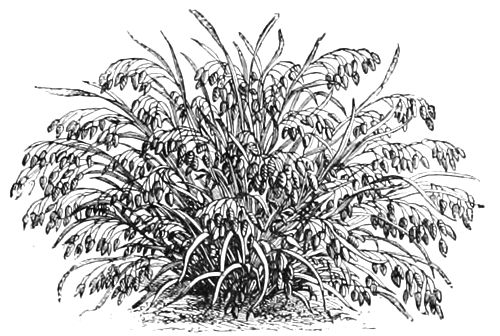
FIG. 282. BROMUS BRIZÆFORMIS.
BROMUS (from bromos, the Greek name for a wild
oat). Ord. Gramineæ. B. brizæformis (see Fig. 282) is an
elegant biennial grass, with drooping panicles of spikelets,
about as large as those of Briza maxima. It grows about
2ft. high, and is of very easy culture in common garden soil.
Sow seeds outside in patches, in July, thinning out the
plants when necessary. There are numerous other species
belonging to this genus, but the above-mentioned is the only
one worth growing in gardens. It forms a beautiful object
in the mixed border, or among ferns.
BRONGNIARTIA (in honour of Adolphe Brongniart,
a distinguished botanist, and one of the editors of
"Annales des Sciences Naturelles"). ORD. Leguminosæ.
Handsome greenhouse evergreen sub-shrubs, clothed with
silky villi. Flowers large, purple; pedicels twin, axillary,
one-flowered. Leaves impari-pinnate, with many pairs of
leaflets, the terminal one not remote from the rest. They
require a compost of sandy loam, leaf soil, and fibry peat,
with perfect drainage. Cuttings of the young shoots, if
firm at the base, will root if dibbled in sand, under a bell
glass, in a cool house.
B. podalyrioides (Podalyria-like).* fl. purple, large. September.
l. with two to five pairs of leaflets; leaflets elliptic-oblong,
rounded, and mucronate at the apex, clothed with adpressed
hairs on both surfaces, but silky when young. h. 1ft. New Spain,
1827.
B. sericea (silky).* fl. purple. September. h. 1ft. l., leaflets
ovate-oblong, acute, very silky on both surfaces. Mexico, 1843.
BROOK-LIME. See Veronica Beccabunga.
BROOM. See Besom.
BROOM. See Cytisus scoparius.
BROOM RAPE. See Orobanche.
BROOM, SPANISH. See Spartium junceum.
BROSIMUM (from brosimos, edible; fruit edible).
Bread Nut. ORD. Urticaceæ. A genus of stove evergreen
shrubs or trees, principally of economic value in their native
countries. Male and female flowers generally in a globular
head, but sometimes borne on separate trees; calyx and
corolla wanting. Leaves entire. They generally thrive
in a rich fibry loam. Cuttings of ripe wood, with their
leaves on, root if placed in sand, in moist heat.
B. Alicastrum. fl., catkins globose, stalked, twin, axillary. fr.
coated. l. ovate-lanceolate. h. 6ft. Jamaica, 1776.
BROUGHTONIA (named after Mr. Arthur Broughton,
an English botanist). ORD. Orchideæ. A very compact-growing
stove evergreen, allied to Lælia, succeeding
best if suspended from the roof on a block of wood, with a
little moss; it requires a free supply of heat and water
when in a growing state. Propagated by dividing the
plant. The colour of the flowers is very distinct.
B. sanguinea (blood-coloured).* fl. blood-coloured, rather large,
disposed in a terminal panicle; scape divided; column distinct, or
at the very base united with the unguiculate lip, which is
lengthened at the base into a tube, connate with the ovarium.
Summer. l. twin, oblong, seated on a pseudo-bulb. h. 1½ft.
Jamaica, 1793. (B. M. 3076.)
BROUSSONETIA (named after P. N. V. Broussonet,
a French naturalist, who wrote numerous works on Natural
History). ORD. Urticaceæ. Ornamental fast-growing, deciduous,
Mulberry-like trees. They require rather good
open garden soil, and prove hardy in situations which are
not very exposed. Propagated by suckers and cuttings of
ripened wood, inserted in autumn, in a cool house; and by
seeds, sown when ripe, or kept till the following April.
B. papyrifera (paper-bearing).* The Paper Mulberry. fl. greenish,
diœcious; males in pendulous, cylindrical catkins, each flower
in the axil of a bract; females in peduncled, axillary, upright
globular heads. May. l. simple, alternate, exstipulate, variously
lobed or entire, hairy, large. h. 10ft. to 20ft. China, 1751. There
are several varieties, differing in the shape and character of the
leaves. (B. M. 2358).
BROWALLIA (named in honour of John Browall,
Bishop of Abo, who defended the sexual system of Linnæus
against Siegesbeck, in a book entitled "Examen
epicriseos," &c., 1739). ORD. Scrophularineæ. A genus
of handsome shrubs or herbs. Flowers blue or white, axillary
and terminal; corolla salver-shaped, resupinate from
the contortion of the peduncle; tube fifteen-nerved, ventricose
at top. Leaves alternate, stalked, ovate in outline.
They thrive best in a rich, open, sandy soil. To have strong
plants in bloom by Christmas and after, seeds should be
sown in July, in pans or pots of light rich sandy soil, and
kept in a close frame, or hand light, where they can be
shaded till germination takes place. When large enough to
handle, the seedlings may either be pricked out, three in a
pot, or potted singly, according to the size of the specimens
required. In the former way, they form fine masses for
conservatory or greenhouse decoration, or to cut from; and
in the latter, they are very suitable for window recesses,
&c. After potting, they should be stood in a pit or frame,
and syringed every morning and evening, to ward off attacks
of insect pests. An abundance of well-diluted liquid
manure is required as soon as the flower-buds appear.
To keep the plants dwarf and bushy, it will be needful
to stop them about three times during the remainder of
the summer and autumn, keeping as near the glass as
possible; they should be housed by the end of September.
These elegant little greenhouse annuals are unrivalled for
affording choice, neat sprays for bouquets during the winter
and early spring months, or for growing as pot plants,
to furnish warm greenhouses or sitting-room windows.
Many of the species and varieties are largely employed for
summer decoration of the flower garden, with highly satisfactory
results; for this purpose, seeds should be sown
in gentle heat early in spring, and the plants transferred
to the flower borders late in June, or early in July, having
been previously encouraged in pots, and well hardened off.
B. abbreviata (shortened). fl. light red; pedicels shorter than
the calyx; calyx campanulate, with teeth as long as the tube.
l. oval, hairy when young, quite glabrous when mature. 1852.
(R. G. 94.)
B. demissa (low).* fl. of a bright but pale blue colour, sometimes
red or purple; peduncles axillary, one-flowered, downy. June.
l. ovate-oblong, acuminated, oblique at the base. h. 6in. to 1ft.
Panama, 1735. (B. M. 1136.)
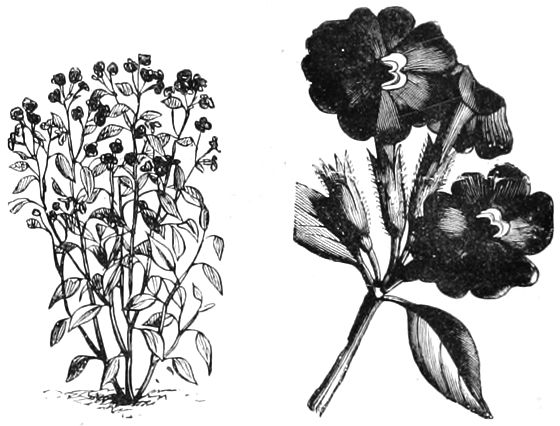
FIG. 283. BROWALLIA ELATA, showing Habit and Flower.
B. elata (tall).* fl. deep blue; calyx beset with glandular hairs;
peduncles axillary, one or many-flowered. July. l. oval, acuminated.
h. 1½ft. Peru, 1768. Of this extensively-grown species
there are two varieties, one with white flowers, and the other,
grandiflora, with pale blue, both of which are well worth growing.
See Fig. 283. (B. M. 34.)
B. grandiflora (large-flowered).* fl., corolla with a greenish-yellow
tube, which is clothed with glandular villi, and a white or
very pale lilac limb; peduncles one-flowered, axillary, racemose at
the tops of the branches. July. l. ovate, acute, attenuated into
the petioles at the base. h. 1ft. to 3ft. Peru, 1829. (B. M. 3069.)
B. Jamesoni (Jameson's).* fl. bright orange, with lighter-coloured
throat, tubular. June. h. 4ft. New Grenada, 1850.
This species has been recently re-introduced, after having been
lost to cultivation for over thirty years. (B. M. 4605.)
B. Roezli (Roezl's). fl. large, either of a delicate azure blue, or
white, with a yellow tube. Spring to autumn. l. shining green.
An exceedingly pretty species, having flowers double the size of
any other, and forming a dense compact bush, 1½ft. to 2ft. in
height. Rocky Mountains.
BROWNEA (named after Patrick Browne, M.D.,
author of a History of Jamaica). ORD. Leguminosæ.
Very handsome stove evergreen trees or shrubs, allied to
Amherstia. Flowers of a rose-scarlet colour, rising in
fascicled heads from the axillary buds. Leaves abruptly-pinnate,
when young flaccid, and with the leaflets revolute
at the edges; leaf-bud long and stipulaceous. All the
species are well worthy of the most extensive cultivation.
A mixture of loam, peat, and sand, is a soil well adapted
for them, and great care should be taken not to over-water
the plants in winter, as too great a supply will be sure to
kill them. Propagated by cuttings, taken from ripened
wood, planted in a pot of sand, and placed under a hand
glass, in a moist heat.
B. Ariza (Ariza).* fl. richest scarlet, produced in a large, globular,
drooping head of immense size. Summer. l. pinnate, usually
with six or eight pairs of pinnæ, which are oblong-lanceolate, and
sharply tapered to a point. h. 20ft. to 40ft. Columbia, 1843.
This noble tree requires a large house to fully perfect its beauty.
SYN. B. princeps. (B. M. 6459.)
B. Birschellii (Birschell's). fl. rose-coloured, in drooping racemes.
April to July. l. pinnate; leaflets oblanceolate, 6in. long. h. 10ft.
to 20ft. La Guayra, 1872. (B. M. 5998.)
B. coccinea (scarlet).* fl. scarlet, fascicled. July to August.
l. with two to three pairs of oval-oblong, acuminated leaflets.
h. 6ft. to 10ft. Venezuela, 1793. (B. M. 3964.)
B. grandiceps (large-headed).* fl. red, in dense capitate spikes.
July. l. with usually twelve pairs of oblong-lanceolate glandless
leaflets, ending in a long cuspidate acumen; branches and petioles
pubescent. h. (in its native home) 60ft. Caraccas, 1829.
(B. M. 4859.)
B. latifolia (broad-leaved). fl. red, in dense fascicles; involucre
tomentose. l. with one to three pairs of ovate or obovate-cuspidate
leaflets. h. 6ft. to 8ft. Caraccas, 1824.
B. macrophylla (large-leaved).* fl. orange-scarlet, in dense
heads, often measuring nearly 3ft. in circumference. Central
America, 1879. (G. C. 1873, p. 779.)
B. princeps (chief). A synonym of B. Ariza.
B. racemosa (clustered).* fl. rose-coloured, racemose; involucre
and calyx clothed with fine tomentum. l. with four pairs
of unequal-sided, oblong, or oblong-lanceolate, cuspidately-acuminated
leaflets, which are glanduliferous at the base. h. 4ft.
Caraccas, 1826.
B. Rosa del Monte. fl. scarlet, in dense heads; leaflets
of the involucre roundish, imbricated, and, when in a young
state, rather velvety. June. l. with two to three pairs of oval-oblong
acuminated leaflets; branches and petioles glabrous.
h. 8ft. South America, 1820. (B. R. 1472.)
BROWNLOWIA (named in honour of Lady Brownlow,
daughter of Sir Abraham Hume, and a great patroness
of botany). ORD. Tiliaceæ. Very handsome greenhouse
evergreen trees, thriving well in a mixture of loam and
peat. Cuttings of ripe shoots will root if placed in sand,
under a hand glass, in heat.
B. elata (tall).* fl. yellow; panicle terminal, conical, spreading.
May. l. large, cordate, acute, seven-nerved, smooth. h. 60ft.
India, 1823. (B. R. 1472.)
BRUCEA (commemorative of James Bruce, the celebrated
African traveller). ORD. Simarubeæ. Ornamental
stove evergreen shrubs. Flowers small, purplish inside,
disposed in interrupted glomerate spikes, or racemes.
Leaves impari-pinnate, with six pairs of opposite, entire
or serrated leaflets, without dots. Branches, peduncles,
petioles, and nerves of leaves, clothed with rufescent down.
They thrive in a loamy soil; and cuttings from ripened
wood strike freely, in a pot of sand, under a hand glass,
in a moderate heat.
B. antidysenterica (antidysenteric). fl., racemes simple, spike-like.
May. l., leaflets quite entire, clothed with rusty villi on
the nerves beneath. h. 8ft. Abyssinia, 1775.
B. sumatrana (Sumatra).* fl. dark purple; racemes usually
compound. May. l., leaflets serrated, villous beneath. h. 20ft.
Sumatra, 1822.
BRUCHUS GRANARIUS. See Bean Beetle.
BRUCHUS PISI. See Pea Weevil.
BRUGMANSIA. See Datura.
BRUNFELSIA (named after Otto Brunfels, of Mentz,
first a Carthusian monk, and afterwards a physician; he
published the first good figures of plants in 1530). SYN.
Franciscea. ORD. Scrophularineæ. Elegant free-flowering
stove evergreens. Flowers sweet-scented; corolla large,
funnel or salver-shaped, with a long tube, and a flat, five-lobed,
obtuse, nearly equal limb. A light rich soil, or a
compost of loam, leaf soil, and peat, is necessary to grow
these plants successfully. Propagated by cuttings, planted
in sand, and placed under bell glasses, in a moderate heat.
When rooted, they should be placed in small pots, in a compost
somewhat more sandy than that already mentioned.
While growing, they require to be kept in a moist stove
temperature, and should be hardened by placing them in
a drier, and somewhat cooler, temperature after each
growth is completed; the pots should be changed as often
as the roots become thick around the ball of earth. The
larger plants flower freely, and should be slightly pruned
in annually, before commencing their new growth, thus
securing neat and compact specimens. Repotting should
be effected directly they have done flowering. The plants
should then be placed in a temperature ranging from
60deg. to 68deg., and both the roots and foliage liberally
supplied with water. When flowers appear—about October
or November—the syringing must be less frequently performed.
At this period, if it be desirable to prolong the
flowering season, the plants should be removed to a temperature
of about 48deg. A few administrations of weak
liquid manure during the growing season are of great value.
B. acuminata (taper-pointed-leaved).* fl. bluish-violet, few, sub-cymose,
terminal. April. l. oblong, acuminated, attenuated a
little at the base, glabrous; bracts lanceolate, acuminated,
glabrous. h. 1ft. to 2ft. Rio Janeiro, 1840. (B. M. 4189.)
B. americana (American).* fl. first yellow, then white, very sweet-scented;
axillary flowers solitary, terminal ones numerous. June.
l. obovate, elliptic, acuminated, longer than the petioles. h. 4ft.
to 6ft. West Indies, 1735. There are narrow and broad-leaved
varieties of this species. (B. M. 393.)
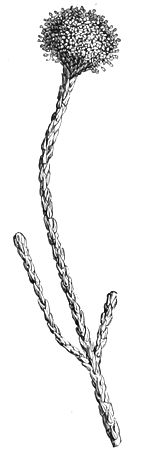
FIG. 284. FLOWER OF
BRUNIA NODIFLORA.
B. calycina (cup-shaped).* fl. purple, disposed in large trusses,
which are produced in succession throughout the whole year.
l. large, lanceolate, shining light green. h. 2ft. Brazil, 1850. One
of the largest-flowered species grown. (B. M. 4583.)
B. confertiflora (dense-flowered). fl. soft blue, cymosely crowded,
terminal. January to June. l. nearly sessile, oblong-acute, attenuated
at the base, rather pilose, ciliated, yellowish-green
above; bracteoles oblong, attenuated at the base, and are, as well
as the calyces, clothed with rusty hairs. h. 1ft. to 2ft. Brazil.
B. eximia (choice).* fl. produced from the points of the shoots,
upwards of 2in. in diameter, deep purple. January to July. l.
oblong-lanceolate, dark green, but not glossy. h. 2½ft. Brazil,
1847. (B. M. 4790.)
B. grandiflora (large-flowered). fl. greenish; limb of corolla
2in. in diameter, corymbose, terminal. June. l. elliptic-oblong,
acuminated. Branches twiggy. h. 3ft. Peru.
B. hydrangeæformis (Hydrangea-like).* fl. beautiful bluish-violet;
cymes terminal, hemispherical, large. April. l. oblong,
acute, cuneiform at base, quite glabrous, 1ft. long; bracts lanceolate,
aggregate. h. 1ft. to 3ft. Brazil, 1840. This is one of
the most elegant species of the genus. (B. M. 4209.)
B. latifolia (broad-leaved). fl. at first lavender-colour, with a
distinct white eye, eventually becoming almost white; deliciously
fragrant, sub-cymose, terminal. Winter to early spring. l. broad-elliptic,
acutish, greyish-white, 6in. to 7in. long, and 2in. to 2¾in.
broad. h. 2ft. to 3ft. Brazil, 1840. (B. M. 3907.)
B. Lindeniana (Linden's).* fl. rich purple, with a light eye. l.
ovate-acuminate, dark green. Brazil, 1865. (B. H. 1865, 226.)
B. uniflora (one-flowered). fl. solitary; corolla with a whitish
tube, and a bluish-violet or purple limb. Winter. l. elliptic,
acute; branches greenish, hoary, diffuse, spreading. h. 1ft. to 3ft.
Brazil, 1826. (L. B. C. 1332.)
BRUNIA (named after Corneille de Bruin, better known
under the name of Le Brun, a Dutchman, a traveller in
the Levant). ORD. Bruniaceæ. Elegant little greenhouse
evergreen Heath-like shrubs, more or less branched, with
the branches in whorls, erect or spreading. Flowers
capitate, furnished with three bracts each, or sometimes
deficient of the two lateral ones. Leaves small, closely
imbricate. They require a compost of peat and sand, with
a little leaf soil added, firm potting and good drainage.
Cuttings of young shoots root freely in sand, under a hand
light, in summer.
B. nodiflora (knot-flowered).* fl. white; heads globose, size of a
cherry, on the tops of the branches. July. l. lanceolate, awl-shaped,
trigonal, acute, smooth, closely imbricate, not ustulate at
the apex. h. 1ft. to 3ft. Cape of Good Hope, 1786. See Fig. 284.
BRUNIACEÆ. An order of much-branched Heath-like
shrubs, usually having small leaves, which are crowded
and entire. Flowers in terminal heads; petals five, alternating
with the lobes of the calyx. The typical genus
is Brunia.
BRUNONIA (named after Robert Brown, the most
eminent botanist of his time). ORD. Goodenoviæ. A stemless
greenhouse perennial herb, with the habit of Scabiosa,
downy from glandless simple hairs. Flowers distinct, with
a whorl of five membranous bracts; corolla blue, marcescent.
Radical leaves quite entire, spathulate; scapes undivided,
each bearing one head; head hemispherical, lobate; lobes
involucrated by foliaceous bracts. It thrives in a compost
of decayed manure, or leaf soil and peat, with a little
loam added; thorough drainage is necessary. Propagated
by divisions, in early spring, previous to repotting.
B. australis (southern)* is the only species known to be in
cultivation. h. 1ft. New Holland, 1834. (B. R. 1833.)
BRUNSVIGIA (named after the noble House of
Brunswick). ORD. Amaryllideæ. Very showy greenhouse
bulbous plants, from the Cape of Good Hope. Flowers
red, on very long pedicels. Bulbs large. Leaves broad,
horizontal; perianth with an evident longer or shorter
tube, curving upwards, funnel-shaped, deeply six-parted,
deciduous; segments sub-equal, many-nerved, flat, and recurved
at the apex; stamens on the tube much curved
upwards; scape appearing in summer without the leaves;
umbels many-flowered. Propagation is effected by offsets,
of which the large bulbs produce but few. These, when
secured, may be removed after reaching some considerable
size, carefully potted in a mixture of sandy loam
and peat, with good drainage, and kept tolerably warm
and close until established; water must be given but
sparingly until root-action has commenced. The best place
for growing the offsets into a flowering size is on a shelf
near the glass, in a temperature of from 50deg. to 55deg.
With an abundance of water while growing, and kept dry
while semi-dormant, thus allowing them a rest, the bulbs
will speedily increase in size; but it may be years before
flowers are produced. Culture: This may be divided into
two periods—one of growth, and one of rest. After the
latter period, they should be allowed to start into fresh
growth, without stimulation, and, as soon as started,
liberal supplies of water should be given, and a genial
temperature of from 60deg. to 65deg. maintained, to make
them grow vigorously. Good-sized pots are also necessary,
with a mixture of loam, peat, and sand, in equal parts. They
are usually confined to the greenhouse, or warm conservatory,
but are sometimes successfully grown in a south
border at the base of a wall, planted out in a pit, upon
which the lights may be placed in winter, and matted if
necessary, as they cannot endure frost. A good depth of
soil, consisting of fibrous loam, peat, and sand, in equal
proportions, with good drainage, should be prepared. In all
cases, the bulbs should be planted somewhat deeply. One
of the most satisfactory methods of ensuring the flowering
of these plants consists in subjecting the bulbs, when at
rest, to a hot dry heat of 70deg. or more, which thoroughly
ripens them; but, after this treatment, it will be necessary
to encourage the after-growth to the fullest possible extent.
B. ciliaris (hair-fringed). fl. dull purple. l. strongly fringed
with white hairs. h. 1ft. 1752. (B. R. 1153.)
B. Cooperi (Cooper's).* fl. sulphur-coloured, edged with red;
umbels twelve to sixteen-flowered. l. ligulate-obtuse, bifarious,
fleshy. h. 1½ft. 1872. (Ref. B. 330.)
B. falcata (sickle-leaved).* fl. red. May. l. sickle-shaped, with
a muricated, discoloured, cartilaginous edge. h. 9in. 1774. (B. M.
1443.) SYN. Ammocharis falcata.
B. Josephineæ (Josephine's).* fl. scarlet; scape twice as long as
the rays of the many-flowered umbel. l. strap-shaped, erect,
spreading, glaucous. h. 1½ft. This handsome species is much
grown. 1814. (B. M. 2578.) Minor and striata are varieties.
B. multiflora (many-flowered).* fl. red, loosely umbellate. June.
l. linguiform, smooth, lying on the ground. h. 1ft. 1752. (B. M.
1619.)
B. toxicaria (poison-bulb).* fl. pink; umbel hemispherical, many-flowered.
September to October. l. many, erect, oblique, glaucous.
h. 1ft. 1774. (B. R. 567.) B. coranica is a variety of this.
1815. (B. R. 139.)
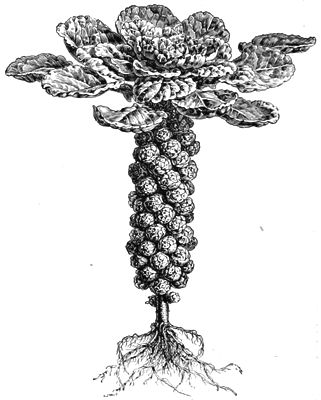
FIG. 285. BRUSSELS SPROUTS.
BRUSSELS SPROUTS (Brassica oleracea bullata
gemmifera). A cultivated variety of the Cabbage (Fig.
285). Leaves blistered. Stems covered with small, close
heads. To secure this vegetable in its best form, it must
be grown on deeply-worked and rich ground. In addition,
the seeds should be obtained from a good source, as there
are many spurious stocks in cultivation. Plenty of room
must be allowed the plants to develop, and the tops and
leaves should not be removed till after the sprouts are
gathered; dead leaves, of course, excepted. It is a bad
plan to plant Brussels Sprouts amongst potatoes or other
crops, as they become unduly weakened, and never give
such good returns as when grown by themselves.
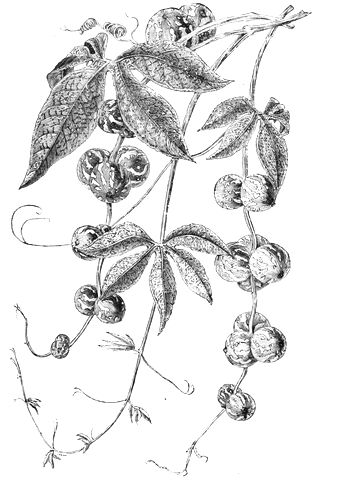
FIG. 286. BRYONIA LACINIOSA.
Soil and Cultivation. In February, and early in March,
sow thinly in a cold frame, or carefully prepare seed beds
on a warm south border. As soon as the plants are large
enough, prick them off into prepared soil, to grow on; about
the end of April, transplant into a piece of rich ground,
which has been previously prepared for them, setting in
rows from 2ft. to 3ft. asunder, and 2ft. apart in the rows.
The earlier the plants are put out, the better; and they
should be watered-in when planted, so that they receive
as little a check as possible. They must be kept clear of
weeds, and earthed up as soon an they get a good size.
During severe frost, some light dry litter may with
advantage be thrown over them for protection; and the
less they are interfered with when frozen, the better.
Sorts. The Imported is the best strain for general use;
other good sorts are: Sutton's Matchless, The Aigburth,
and Scrymger's Giant.
BRYA (from bryo, to sprout; the seeds germinate
before falling from the tree). ORD. Leguminosæ. A small
genus of stove shrubs or small trees, furnished with
stipular spines, and solitary, or clustered, or pinnate
leaves. The undermentioned species thrives in a rich
fibry loam. Propagated by seeds, or by cuttings, placed in
a hotbed.
B. Ebenus (ebony). Jamaica Ebony. fl. bright yellow; peduncles
two to three together, axillary, one to two-flowered, shorter than
the leaves. July and August. l., leaflets aggregate, obovate.
h. 12ft. to 14ft. West Indies, 1713. (B. M. 4670.)
BRYANTHUS (from bryon, a moss, and anthos, a
flower). ORD. Ericaceæ. A genus of small trailing shrubs,
allied to Loiseleuria. Flowers terminal, somewhat racemose;
calyx five-leaved, imbricate; corolla deeply five-parted,
spreading. Leaves crowded, spreading, flattish.
For culture, see Menziesia.
B. empetriformis (Crowberry-leaved). fl. reddish-purple, clustered
near the extremities of the branches. l. crowded, linear,
on short adpressed petioles. h. 6in. North-west America, 1829.
SYN. Menziesia empetrifolia. (B. M. 3176.)
B. erectus (erect). fl. red, pentamerous, broadly campanulate.
l. linear, obtuse, obscurely serrated. h. about 1ft. Siberia.
Trailer. (L. & P. F. G. 1, 19.)
B. Gmelini (Gmelin's). fl. red; peduncles glandular, many-flowered.
l. with denticulated margins. h. 2in. or 3in. Kamtschatka
and Behring's Island.
BRYONIA (from bryo, to sprout; in allusion to the
annual growth from the tuber). Bryony. ORD. Cucurbitaceæ.
Tuberous-rooted perennial herbaceous plants, producing
annual climbing stems. The native species is well worth
growing over unsightly hedges, fences, &c., and in the wild
garden; it is a rapid grower, and of extremely easy culture.
The stove perennial species should be grown in pots, and
the stems trained up the rafters. Rich loam is the soil most
suitable for their cultivation. Propagated by seeds, or by
divisions of the tuber.
B. dioica (diœcious). fl. greenish-white, racemose, diœcious. fr.
globose, red. May to September. l. cordate, palmately five-lobed,
toothed, scabrous, from callous points. England. (Sy. En.
B. 517.)
B. laciniosa (cut-leaved). fl. yellow, solitary; corollas hairy inside,
smooth outside. fr. size of a cherry, striated with white.
July. l. palmately five-parted, cordate, rough, and blistered,
with oblong-lanceolate, acuminated, serrated segments; petioles
muricated. Ceylon, 1710. Stove species. SYN. Bryonopsis laciniosa.
See Fig. 286.
BRYONY. See Bryonia.
BRYOPHYLLUM (from bryo, to sprout, and phyllon,
a leaf; plants spring from the notches on the edges of the
leaves when taken off the plant, and placed in a moist
situation). ORD. Crassulaceæ. This very curious stove succulent
thrives in pots of rich loamy soil; perfect drainage
is essential, and but little water is at any time needed.
B. calycinum (large-cupped). fl. yellowish-red; cymes panicled,
terminal. April. l. opposite, thick, petiolate; some impari-pinnate,
with one or two pairs of segments, the terminal one large;
others solitary; all ovate and crenated. h. 2ft. to 3ft. India,
1806. A fleshy, erect, branched evergreen shrub, grown chiefly
for curiosity.
BUCCO. See Agathosma.
BUCIDA. See Terminalia.
BUCKBEAN. See Menyanthes.
BUCKLANDIA (named after Dr. Buckland, a former
Dean of Westminster, and Professor of Geology at Oxford).
ORD. Hamamelideæ. A handsome greenhouse tree, allied
to Liquidambar. It thrives in rich sandy loam, peat, and
leaf mould; or peat may be left out if the leaf soil is good;
perfect drainage is also essential. Cuttings of ripened
shoots will strike in sandy loam, under a hand glass, with
moderate heat. They must be watered carefully, or they
are liable to rot off.
B. populnea (Poplar-like). l. pale green, large, leathery, cordate,
ovate-acute, on long stalks, pinkish when young; stipules very
curious, large red, consisting of two leafy oblong plates, placed
face to face in an erect position between the leafstalk and the
stem. h. 100ft. Himalayas, 1875. (B. M. 6507.)
BUCKLER MUSTARD. See Biscutella.
BUCKTHORN. See Rhamnus.
BUCKWHEAT. See Fagopyrum esculentum.
BUCKWHEAT-TREE. See Mylocaryum.
BUDDING. This process consists of taking an eye
or bud attached to a portion of the bark, and transferring
it to another and different plant; it is an operation almost
confined to woody plants, but has been practised with more
or less success upon herbaceous perennials. The stock
should not be budded unless the sap is in circulation, which
is assured if the bark will detach itself easily, when gently
lifted, from the wood.
There are many ways of performing the different
systems, in preparing and inserting the Buds, &c., and all
may prove more or less successful if undertaken when the
Buds and stock are both in a suitable condition. The
principal methods are Shield or T-budding, including the
Circular, Square, and Inverted forms; Flute or Tube-budding,
and Annular or Ring-budding.
The first-named method, which is fully described below,
is very extensively practised for propagating Roses and
stone fruits. It is also coming more in use for the propagation
of many other fruit trees, including Apples and
Pears, especially new or scarce varieties, as the great advantage
of making use of many more of the eyes, to form
separate trees, is thereby attained. In large nurseries,
where skilful propagators are employed, thousands of trees
are annually budded, the majority of them with very successful
results. It is, in most cases, preferable to purchase
established fruit trees, as cultivators require the produce
much quicker than they could get it by propagating trees
themselves. The same system of Budding is, however,
applicable for increasing Roses; and this may be adopted
with every chance of success by even a cottager, if he
takes the necessary care in performing the work.
Rare varieties of ornamental deciduous trees are largely
propagated in this way; for instance, many of the Acers,
Elms, Horse Chestnuts, &c. Evergreen shrubs, such as
Rhododendrons and Hollies, are also rapidly increased in
some establishments by this means.
In the case of fruit-frees, plump wood Buds must be
selected, from medium-sized branches. On some sorts
these are scarce, the majority being Flower-buds, and it is
rather difficult to distinguish between them at the Budding
season. The best time for the operation is from June to
the end of August; but surrounding influences, condition of
Buds, stocks, &c., must be taken into account. Clean cuts,
with gentle and skilful handling, are even more important
in the Budding of stone fruits than of Roses or other
plants, and the ties should be lightly but firmly made. In
all cases, the operation must be performed as quickly as
possible, as both Bud and bark are injured if exposed
to the air for any length of time.
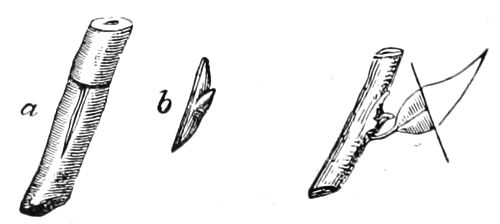
To proceed with the ordinary system of Shield-budding,
the stock (see Fig. 287 a) should first have a longitudinal and
a transverse incision made in the bark, the former about 1in.
long. Next, the Bud should be prepared, removing half the
leaf (see Fig. 288). Hold the branch with the left hand, and
pass the knife from about ½in. below, gradually upwards
and inwards under the Bud, bringing it out in a similar way
at a somewhat shorter distance above. A portion of wood
will also be taken out, and this is generally removed the
opposite way to that in which the Bud has been cut. By
skilful Budders, it is removed by a sort of twitch from
either end. Great care must be taken not to pull out the
base or root of the Bud at the same time, as this would
render it useless. Should the whole come out together,
leaving a hollow place under the eye of the Bud, it must be
thrown away, and another prepared. The Bud being ready,
loosen the bark at the point where the incisions meet, with
the ivory knife handle, and insert it by means of the piece
of leaf attached. It must then be tied in with soft
matting or bast, to exclude air, but not tight enough to
injure the bark. Shading from bright sun is advisable for
a few days afterwards, and, as soon as the union takes
place, the ties must be frequently examined, and loosened
if necessary. Some prefer Budding late in the season, in
order that the Bud may remain dormant during the winter,
and breaking stronger the following spring. Occasionally,
they are inserted in spring, just at the commencement of
growth. The stocks of the Summer-budded trees should
only be allowed a moderate amount of foliage during the
autumn, and should be cut back to the established Bud
before growth commences in spring.
Square and Circular Shield-budding consists in cutting
out a piece of bark of either shape from the stock, and
inserting another piece of exactly the same size, containing
a Bud, and covering with a bandage, or piece of sticking
plaster, all except the eye. This mode is seldom made use
of. Inverted T or Shield-budding is preferred in the south
of France for propagating Orange-trees, but is not otherwise
much used. The only difference is that the transverse
incision is made below, instead of above, the other, and the
Bud inserted upwards, making it fit with the bark at the
point where the stock is cut across.
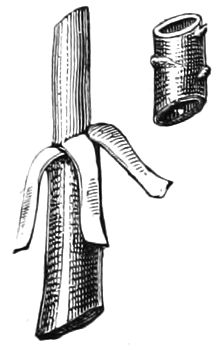
Flute-budding is sometimes used, and answers well for
some trees (see Fig. 289). A cylinder of bark is removed
from the stock, and one of a similar size from the scion.
containing Buds, is fitted in its place, being carefully made
air-tight by means of a bandage or grafting wax. Some
prefer splitting the hark, as shown in the illustration.
and laying it over the tube or cylinder; but the parts
cannot be fitted so well as when it is removed.
Ring Budding. By this mode, it is not necessary to cut
off the top of the stock. A ring of bark may be removed
from any convenient part (see Fig. 290 b) and replaced with
one containing eyes (see Fig. 290 a). The latter should be
taken from a little larger branch than the stock, as the bark
could then be made to fit better. As in Flute-budding, air
must be excluded by means of adhesive paper and bandages
or grafting wax.
Budding operations may be performed at any time
during the season; but dull cloudy weather, and morning
or evening, are most suitable. If the branch, containing
Buds, cannot be obtained as required for use, the ends may
be placed in water, to keep them fresh; but unnecessary
delay should be avoided.
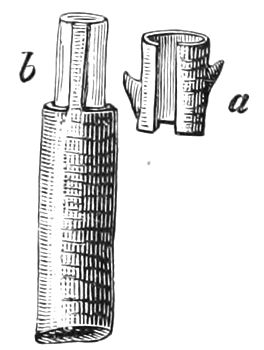
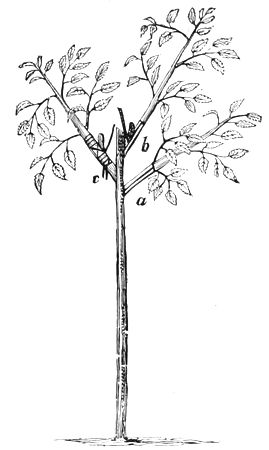
Stocks for Budding upon. For the Cherry, the Wild
Gean, and seedlings from the Morello. make capital stocks
for tall trees and those of moderate growth; and the
Mahaleb, or Perfumed Cherry, for small trees for pots,
bushes, pyramids, or cordons. For the Plum, the Mussel,
Mirabelle, Magnum Bonum, St. Julian, &c., are mostly
used for stocks, the Mirabelle being best for small trees.
Peaches and Nectarines are generally budded on the
Mussel, St. Julian, or Mirabelle Plums; the last are best
for dwarfs. The Apricot is budded on the Mussel or
Mirabelle Plums, for small plants; and the St. Julian Plum
for standards. In France, the Damas Noir, or Black
Damask, and the Cerisette, are also used. They should all
be raised from seeds, and not from suckers. Seeds for
raising plants for stocks may be sown as soon as ripe; but
where quantities are used, the stones are thrown into
heaps, so as to slightly ferment during winter. In the
spring, they are sown in drills or beds, and transplanted
the next year in rows 2ft. or 3ft. apart. and 10in. or 12in.
from plant to plant. The dwarfs are generally budded
the second year, and the standards the third or fourth.
Dwarf trees are budded from within a few inches of the
ground to 1ft. above; standards and riders from 3ft. to 9ft.;
cordons, pyramids, &c., can hardly be budded too low.
Rose Budding. Propagation of Roses by Budding is
very extensively practised both with standard trees and
dwarf plants. It is perhaps easier and more certain to
succeed with these than with fruit trees; but the mode
adopted is precisely the same—that of the shield-shaped
Bud with the core, or root, and the bark attached. For
standards, the common briar of the Dog Rose is the best.
The earlier these are obtained and planted in November, the
better, as roots are then formed at once. For dwarf plants,
the Manetti stock is mostly used, being easily
obtained and had in proper condition almost at
any time when Buds are ready. Plants on this
stock do not succeed in all soils, and suckers
are also very liable to be produced. Budding on
the seedling briar is attended with good results,
and is practised more than hitherto. The De la
Grifferaie stock is also used, more for Tea Roses
than others, and is considered by some to produce
better plants than the Manetti. The shoots
on standard briars should be reduced to about
three of the strongest, selected as close together
as possible, and near the top, the briars having
been previously cut back the desired height at
planting time. Two Buds are sufficient for a
good head; but, for certainty, three may be inserted.
Fig. 291 represents a tall briar with three
shoots; a shows the shoot slit for the Bud; b,
the Bud inserted; c, the Bud tied in. Fig. 292
is a branch showing Buds, the lowest ones of
which are most suitable, being in firmer wood.
Those at the top are often useless. Fig. 293
represents a Bud taken from Fig. 292, a, b, and
Fig. 294 gives an idea of how the wood is removed. As
previously remarked when describing the system, experienced
Budders remove the wood from either end.
Fig. 294 shows its removal from the lower end.
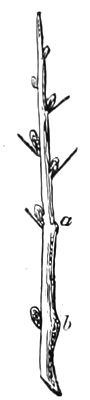
Budding as close as possible to the main stem is most
desirable. Raffia grass is superior in every way for tying,
which should be performed as soon after the Bud is inserted
as possible. It requires much care, and, of course, the
Bud itself must be entirely free. As soon as the Buds
swell, the tying material should be loosened, and the
top of the stock cut back to the level of the budded
shoot. By Budding late, the Buds lie dormant till the next
spring, and the necessity of tying the young shoots is
dispensed with for that season. The shoots of the briar in
advance of the Rose Buds must be cut back, as shown in
Fig. 295, so soon as the Buds are safely established. The
Manetti and other dwarf stocks are budded on the main
shoot nearly close to, or underneath the ground, and if low
enough to cover part of the rose stem when grown, the
latter often roots as well and assists the stock. Being
small, they may be grown in pots and removed to the
required position at any time.
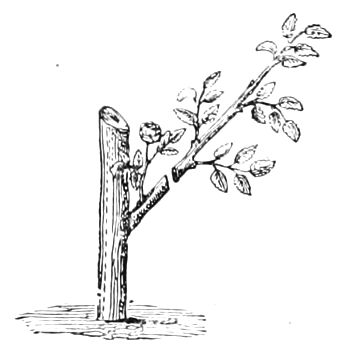
Dog Roses, used for standards, are usually collected from
hedgerows, and sold at about 8s. per hundred. Manetti
stocks are increased by cuttings, which, after making one
season's good growth, will be fit for use. Briars are raised
from seed, which may be collected from hedges, and sown
in the autumn, in drills. The seedlings should be transplanted
the first year after sowing, and the following season
they will be ready for working.
BUDDING KNIVES. The best Budding Knives
are those manufactured by Messrs. Saynor and Co., and
Messrs. G. Hall and Son. They are made with handles of
ivory, shaped in different ways at the end, for the purpose
of opening the bark, in order to insert the Bud. Some
of the blades are made with the edge rounded at the point,
so as to cut the bark without the knife entering the wood
underneath (see Figs. 296 and 297). Others, which may be
used for Budding, and are much better for ordinary use for
cutting flowers, &c., are made with the edge of the blade
carried to a point, as in ordinary knives (see Figs. 298
and 299). Another form has the handle made of some
other material, and a piece of ivory inserted for opening
the bark; this is represented in Fig. 300. The first-named
is the best, if required for Budding only; the second is the
most useful for ordinary purposes, and answers admirably
for Budding as well. None of the other shapes have any
material advantages over these.
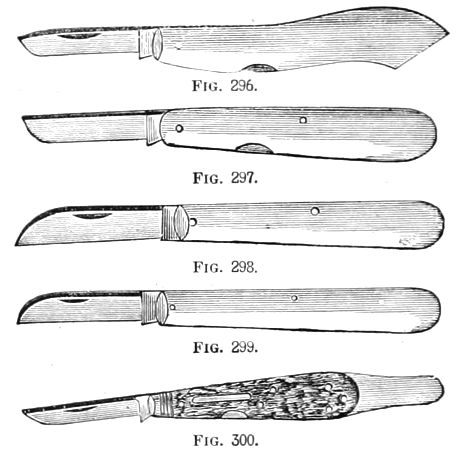
BUDDLEIA (named after Adam Buddle, who is so
often mentioned in Ray's "Synopsis"; his collection of dried
British plants is preserved in the British Museum). ORD.
Loganiaceæ. A large genus of stove, greenhouse, or half-hardy
shrubs. Flowers small, often tomentose, axillary,
spicate, capitate, or thyrsoid; calyx equally four-toothed;
corolla tubular-campanulate, regular; limb spreading, four-toothed.
Leaves opposite, reticulately veined. Branches
quadrangular.
The species most extensively grown is B. globosa, which,
among all our other shrubs, is quite unique; but it is only
in the southern or favoured counties of England where it
can be fairly termed hardy. It is readily propagated by
cuttings or by seeds. The latter should be sown in a gentle
heat the spring following the ripening, when they will vegetate
pretty freely. With careful treatment and nurturing
in pots for the first winter, in a frost-proof pit or house, they
may soon be grown into elegant plants. Cuttings of the
ripened wood, put in under bell glasses or hand lights, in a
cool but frost-proof pit, will root slowly during the winter.
They will root all the surer and quicker if each cutting has
a heel of older wood attached to that of the current year's
growth. They are best inserted in fine sand or in very
sandy soil, and require but little water until rooted. As
soon as fairly calloused over or rooted, their further progress
may be much advanced by potting them off, and
plunging them in a bottom-heat of 60deg. or 65deg. This
is by no means an essential to secure success, but it hastens
it, and promotes growth in an extraordinary manner. The
surface temperature should range about the same as the
bottom-heat. Under such treatment, the plants will be
quite fit to place out about the middle of July. A warm,
sheltered situation should be chosen, and a light, rich soil
prepared for them; and if dry weather ensues, they only
require water. South or west walls are, without doubt, the
best situations for them. In all cool or unfavourable
localities, much may be done to ensure success by planting
on a dry bottom, and on poorish soil. A loose, free-and-easy
style of training suits the plants best. This enables
them to yield a great number of their peculiarly formed,
distinct, and beautiful flowers; whereas, anything like a
close, trim course of pruning or of training reduces the
flowers to the lowest number.
Throughout the southern parts of England, and, indeed,
in many places in the north, B. globosa makes an excellent
bush for the shrubbery. It is only during severe winters
that it gets badly cut.
For the other presumably hardy species much the same
plan as the foregoing may be adopted. The greenhouse and
stove kinds may have the same routine of culture usually
employed with plants requiring similar temperatures.
Stove species, except where specified otherwise.
B. americana (American). fl. yellow; spikes disposed in a
terminal panicle, nearly 1ft. long; glomerules nearly globose,
size of a sloe, on short peduncles. August. l. ovate, acuminated,
narrowed at the base, serrately crenated. h. 8ft. to 12ft. Peru,
1826.
B. asiatica (Asiatic).* fl. white, small, disposed in long, dense
racemes. l. lanceolate, finely serrated. h. 3ft. India, 1874.
A graceful and sweet-scented shrub. SYN. B. Neemda. (B. M. 6323.)
B. crispa (curled). fl. lilac, with a white eye; numerously produced
in long terminal branching spikes, forming a pyramidal
head about 5in. long. March. l. ovate-lanceolate, crenately
curled; lower ones cordate at the base; superior ones rounded,
all thick and wrinkled, clothed with soft tomentum on both
surfaces. h. 13ft. Western Himalayas. Half-hardy. (B. M. 4793.)
B. globosa (globose).* fl. orange, or honey-colour; heads large,
terminal, globose, pedunculate. May. l. lanceolate, acuminated,
petiolate, crenated, 6in. long. Branches sub-tetragonal, clothed
with hoary tomentum, as well as the under side of the leaves.
h. 15ft. to 20ft. Chili, 1774. Hardy in most places. (B. M. 174.)
B. Lindleyana (Lindley's). fl. purplish-red, hairy; disposed in
terminal racemose spikes. September. l. ovate, shortly petiolate,
serrate. Branches angular, glabrous. h. 6ft. China, 1844. Half-hardy.
(B. R. 32, 4.)
B. Neemda (Neemda). A synonym of B. asiatica.
BUDS, FLOWER. These are developed like Leaf-buds,
from which they differ chiefly in containing one or
more incipient flowers within the leaves—the flowers
being wrapped up in their own floral-leaves, within the
ordinary leaves, which have their outer covering of scales.
If a Bud be gathered from a Lilac or Horse-chestnut very
early in spring, all the rudiments of the future flowers and
leaves will be found within it, though the Bud itself may
not be more than half-an-inch long, and the flowers not
larger than the points of the smallest pins.
BUDS, LEAF. These consist of rudimentary leaves,
surrounding a growing vital point, and appear like a
collection of scales arranged symmetrically one above the
other. Leaf-buds universally originate in the horizontal
or cellular system, and are formed under the bark at the
extremity of the medullary rays, and at the margin or on
the surface of leaves, whether perfect or rudimentary.
Deciduous trees lose their leaves, but in the axil of
each a little Bud previously forms, from which fresh
leaves expand the following spring. In some cases, as
in the Horse-chestnut, the Buds are covered with a gummy
exudation. In Privet-trees, Leaf-buds are generally smaller
and more elongated than Flower-buds.
BUETTNERIA (named after David Sigismund Augustus
Byttner, once a Professor of Botany in the University
of Göttingen). ORD. Sterculiaceæ. Erect or scandent
stove or greenhouse shrubs. Flowers small, usually
dark purple; calyx and corolla valvate; umbels simple,
disposed in something like racemes or panicles, rarely in
corymbs. Leaves simple. All are of easy culture in a
compost of loam and peat. B. dasyphylla, hermanniæ-folia,
microphylla, and scabra, are occasionally met with,
but they are hardly worth growing.
BUETTNERIEÆ. A section of Sterculiaceæ.
BUFF-TIP MOTH (Pygæra bucephala). This large
and beautiful Moth is very common in many districts; it
is easily recognised by the buff-coloured tips of the fore-wings—whence
its common name; the head, and body
between the wings and abdomen, are ochreous. According
to Newman's "British Moths," "the caterpillars, when full
grown, are about an inch and three-quarters long, and
sprinkled with silky hairs; the general colour yellow, with
black head, black lines running from the head to the tail,
interrupted by a transverse orange band on each ring, and
a black horny plate above the tail segment." They feed
on the leaves of the Lime, Elm, and Oak, among other
trees, and apparently the only remedy is that generally
adopted in exterminating caterpillars, viz., to shake the
branches which are infested, when the pest will be quickly
dislodged, and fall to the ground. Miss Ormerod is of
opinion that "as the caterpillars come down the tree to
the ground for their change to chrysalids, it might be
worth while to throw a few spadefuls of gas-lime, or of
anything they would not cross, in a circle at about a yard
from the tree; or a rough band of any material soaked in
tar, or tar and oil, which would keep wet longer, would
stop them from straying off ... and they might be
cleared in sufficient numbers so as to considerably lessen
future attack." This plan of prevention deserves a trial
in any place where the destructive caterpillars of these
Moths abound. It is almost a hopeless task to destroy
them altogether when once established on the trees, such
specimens as large Oaks being often almost or wholly denuded
of foliage.
BUGLE. See Ajuga.
BUGLOSSUM BARRELIERI. See Anchusa
Barrelieri.
BUGWORT. See Cimicifuga.
BULBIFEROUS. Bearing bulbs.
BULBINE (from bolbos, a bulb). ORD. Liliaceæ. A
genus of rather pretty hardy, or nearly hardy, herbaceous
or bulbous plants, allied to Anthericum. Flowers showy,
fragrant; perianth with spreading segments. Leaves
somewhat fleshy, narrow. Stems short. They are all of
easy culture in a compost of sandy loam. The bulbous-rooted
species are increased by offsets, and the herbaceous
sorts by suckers and divisions. The only species
which can be grown satisfactorily in the open air is
B. annua. All the others should be grown in the greenhouse,
but may be placed in the open during the summer
months.
B. alooides (Aloe-like).* fl. yellow, disposed in a terminal panicle.
April. l. fleshy, tongue-shaped, lanceolate, flat on both sides.
h. 1ft. Cape of Good Hope, 1732. SYN. Anthericum alooides.
(B. M. 1317.)
B. annua (annual). fl. yellow; scape racemose. May, June. l.
fleshy, subulate, rounded. h. 9in. Cape of Good Hope, 1731.
An annual species, the seeds of which should be sown in a gentle
heat during spring, and the seedlings may be transplanted to the
open when large enough to handle. SYN. Anthericum annuum.
(B. M. 1451.)
B. caulescens (caulescent).* fl. yellow. March. l. fleshy, rounded.
Stem shrubby, erect, branched. h. 2ft. Cape of Good Hope. 1702.
A shrubby species, which should be propagated by cuttings, placed
under a hand glass. SYN. B. frutescens. (B. M. 816.)
B. frutescens (shrubby). Synonymous with B. caulescens.
BULBOCODIUM (from bolbos, a bulb, and kodion,
wool; referring to the woolly covering of the bulbs). ORD.
Liliaceæ. TRIBE Colchiceæ. A very pretty little bulbous
plant, much resembling the Crocus, from which it differs principally
in having a superior ovary and six stamens. It is
amongst the earliest of spring-flowering plants, the flowers
preceding the foliage; and, like the majority of bulbs,
delights in rich sandy loam. In such positions, they multiply
rapidly from offsets. It is a good plan to take up the bulbs,
divide, and replant them every second year, selecting in
autumn, and renewing the soil or planting in new positions.
Few plants prove more welcome in the garden, in February,
than B. vernum, either in beds, patches, or masses.
B. Aitchisoni (Aitchison's). A synonym of Merendera Aitchisoni.
B. Eichleri (Eichler's). A synonym of Merendera caucasica.
B. trigynum. A synonym of Merendera caucasica.
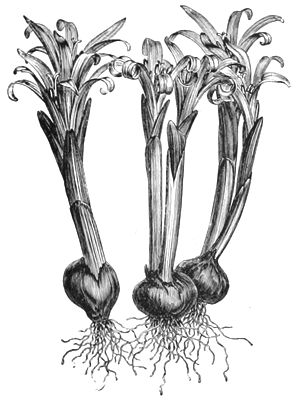
FIG. 301. BULBOCODIUM VERNUM.
B. vernum (spring).* fl. violet-purple, with a white spot on the
claw; long, tubular, funnel-shaped, two to three from each bulb;
preceding the appearance of the leaves. Very early spring.
l. usually three in number, broadly strap-shaped, concave, and
surrounded at the base by well-developed sheaths. Bulb black,
oblong. h. 4in. to 6in. Spain, 1649. See Fig. 301. There is a
variety with the leaves striped white, which is also desirable.
BULBOPHYLLUM (from bulbos, a bulb, and phyllon,
a leaf; referring to the leaves issuing from the apex of the
pseudo-bulbs). SYNS. Anisopetalum, Bolbophyllum, Tri-brachium.
ORD. Orchideæ. Of this rather large genus of
orchids but few are worth cultivating except as curiosities.
Racemes long or spike-like, very rarely one-flowered or
sub-umbellate; sepals usually nearly equal and free; lip
jointed to the foot of the column. They are of easy culture
when grown on small blocks of wood with a little
moss, and suspended in a warm part of the house; the roots
require a good supply of water. Propagated by dividing
the pseudo-bulbs.
The following comparative few of the aggregate number
of species already introduced are really all that are worth
the cultivator's attention; what the botanist often regards
as being very pretty, &c., does not always appear such in
the eyes of the grower.
B. barbigerum (bearded).* fl., sepals and petals greenish-brown;
lip covered with dark-coloured hair, and so loosely attached at
the base as to be moved with the slightest breath. Sierra Leone,
1835. A curious dwarf-growing plant, with dark green leaves and
pseudo-bulbs. (B. R. 1942.)
B. Beccarii (Beccari's). fl. light brownish and painted with
violet; lip brown, with a violet hue, proceeding from a rhizome
at the base of the leaf (just below the small pseudo-bulb), and at
once turning downwards; racemes dense, cylindrical, nodding.
l. three, 25in. long, 18in, across, very thick. Rhizome 20in. long.
Brazil, 1879. A remarkable and gigantic climbing species; the
odour of this plant is intolerably fœtid and the leaves are larger
than those of any other known orchid. This species requires
plenty of heat. (B. M. 6517.)
B. Lobbi (Lobb's).* fl. large; sepals and petals yellow, the upper
part spotted with purple; solitary, on radical scapes. Summer.
Java, 1845. (B. M. 4532.)
B. maculatum (spotted). fl. prettily spotted, l. long, obtuse,
bright green. India.
B. reticulatum (netted-leaved).* fl. in pairs, white, striped
inside with purple; lip spotted with the same colour. l. somewhat
heart-shaped, with the nerves of a deeper green than the
rest of the leaf, giving it a beautifully reticulated appearance.
Brazil, 1866. Perhaps the handsomest of the genus. (B. M. 5605.)
B. saltatorum (dancing). fl. greenish-brown, lasting some time
in perfection. Winter. h. 6in. Sierra Leone, 1835. (B. R. 1970.)
B. siamense (Siamese).* fl. pale yellow, striped with purple; lip
yellow, streaked with purplish lines. A very pretty species,
closely allied to B. Lobbi, but with longer and stouter leaves.
Pseudo-bulbs ovate. Siam, 1867. Should be grown in a pot of
peat and sphagnum.
BULBOSTYLES (from bolbos, a bulb, and stylos, the
style). ORD. Compositæ. A. small genus of stove evergreen
plants, now referred to Eupatorium.
BULBS. A Bulb is formed upon or beneath the
ground, and is a swollen stock, consisting, in the first place,
of a more or less fleshy disk, which below gives rise to the
roots; secondly, of more or less fleshy coats, or scales,
borne on the disk; thirdly, of a more or less central shoot,
equally borne by the disk, protected by the coats or scales
already mentioned, and formed of rudimentary leaves and
flowers. In some instances, small Bulbs, called Cloves, are
formed at the base of the scales of the original Bulb; these
are destined to reproduce the plant. Shallot and Garlic are
good examples. Bulbs are, in fact, storehouses, husbanding
the strength and energy acquired by the plant during one
season, for the exigencies of the next. They are classified
under two sections—Scaly and Tunicated. In the former,
the scales of the Bulb are imbricated, as in the Lily; in
the latter, they form continuous coatings, one within the
other, as in the Hyacinth, &c. In several Lilies, young
Bulbs are found growing in the axils of the leaves, when
they are known as Bulbils. Bulbs is also a popular term
given to Dutch Flower Roots, mostly arriving here in the
autumn for spring flowering. Crocus, Colchicum, Cyclamen,
Gladiolus, and several others, are not Bulbs, but Corms.
The flowering season varies according to the different sorts
of Bulbs. The majority may be lifted and kept tolerably
dry during the resting period; but they wither and become
exhausted if not replanted at the proper time, thereby
causing many failures. Dutch Bulbs generally arrive in
September, and the best results are obtained from those
potted or planted at once, although some for succession
may be kept in reserve up till the beginning of November.
The failure in cultivating imported Liliums and other
Bulbs may be often caused by their long-continued confinement
in a dry atmosphere, whereby their vitality
is often almost lost. The roots of some Bulbs are nearly
always, more or less, in action, and these, especially, should
not be kept out of the ground for any length of time.
BULLACE. See Prunus insititia.
BULLACE, or MUSCADINE. See Vitis vulpina.
BULLATE. Blistered or puckered.
BULRUSH, or CLUB-RUSH. See Typha.
BUNCHOSIA (from bunchos, the Arabic name for
Coffee; in allusion to the similarity between the seeds of
this genus and those of Coffee). ORD. Malpighiaceæ.
Ornamental greenhouse evergreen shrubs, nearly allied to
Malpighia, but having the racemes of flowers axillary.
Fruit fleshy, indehiscent, externally smooth, and containing
two or three seeds. They thrive best in a compost of loam,
peat, leaf soil, and sand, in about equal proportions.
Cuttings of ripened shoots will root in sand under a bell
glass, in moist bottom heat, taking several weeks to do so.
Good drainage is essential, both in striking cuttings and in
the cultivation of the plants.
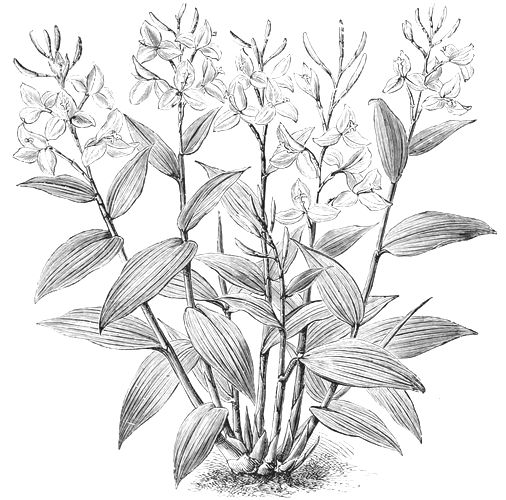
FIG. 302. BURBIDGEA NITIDA.
B. argentea (silvery).* fl. yellow; racemes opposite, simple,
pubescent. July. l. lanceolate, silvery beneath. Branches
puberulous. h. 10ft. Caraccas, 1810.
B. glandulifera (gland-bearing). fl. yellow; racemes simple,
axillary. March to May. l. elliptical-ovate, on short petioles,
wavy, pubescent on both surfaces, furnished with four glands
beneath at the base. h. 10ft. Caraccas, 1806.
B. nitida (shining). fl. yellow; racemes elongated, almost the
length of the leaves. July. fr. large, red; it is much eaten by
turkeys and other large fowl. l. 4in. long, oblong, acuminated,
smooth, glandless. h. 4ft. Jamaica, 1800.
B. odorata (fragrant).* fl. yellow, sweet-scented; racemes opposite.
May. l. ovate, emarginate, downy on both surfaces.
h. 7ft. Carthagena, 1806.
BUPHTHALMUM (from bous, an ox, and ophthalmos,
the eye; the disk of the flower being ox-eye-like).
Oxeye. ORD. Compositæ. Very showy and ornamental hardy
perennial plants, thriving freely in common garden soil.
They are propagated by divisions, made in autumn or
spring.
B. grandiflorum (large-flowered).* fl.-heads yellow, large; involucre
naked. June to October. l. alternate-lanceolate, somewhat
toothleted, smooth. h. 1½ft. Austria, 1722. Hardy
herbaceous perennial.
B. salicifolium (Willow-leaved).* fl.-heads yellow, solitary, rather
large, terminal; involucre naked. June. l. alternate, oblong-lanceolate,
sub-serrated, three-nerved, villous. h. 1½ft. Austria,
1759. Hardy herbaceous perennial.
B. speciosissimum (showiest).* fl.-heads yellow. July. h. 2ft.
South Europe, 1826. Hardy herbaceous perennial. SYN. Telekia
speciosissima.
BUPLEURUM (derivation not satisfactorily explained).
Hare's-Ear. ORD. Umbelliferæ. A somewhat extensive
genus of quite glabrous shrubs or herbaceous plants.
Flowers yellowish; umbels compound. Leaves mostly
quite entire. But few of this genus are worth growing,
and all are of the easiest culture in common garden soil.
Seeds of the annuals may be sown out of doors in March
or April; divisions of the herbaceous perennials made in
autumn or spring; and cutting or divisions of the greenhouse
species, in March or April.
B. fruticescens (shrubby).* fl., umbels small, three to five-rayed;
involucre of three to five, very short, subulate leaves. August.
l. linear-subulate, stiff, striated, five to seven-nerved. Branches
slender, elongated, erect. h. 1ft. Spain, 1752. Hardy and
evergreen.
B. fruticosum (shrubby).* Leaves of involucre oblong. July.
l. of a sea-green colour; oblong, attenuated at the base, coriaceous,
one-nerved, quite entire, sessile. Bark of branches
purplish. h. 3ft. to 6ft. Spain, 1596. Hardy. This is nearly the
only species grown. (W. D. B. 1, 14.)
B. gibraltarica (Gibraltar). fl. yellow. June. l. lanceolate,
one-nerved, coriaceous. h. 3ft. Gibraltar, 1784. Evergreen,
half-hardy.
B. graminifolium (Grass-leaved).* fl. green-yellow. June. l.
linear, grass-like. h. 6in. Switzerland, 1768. Hardy
perennial.
B. longifolium (long-leaved). fl. green-yellow. June.
l. ovate-oblong; radical ones stalked; cauline ones
amplexicaul. h. 3ft. Switzerland, 1713. Hardy
perennial.
BUR. See Centotheca lappacea.
BURBIDGEA (named after F. W. Burbidge,
the discoverer of the genus, a traveller
in Borneo, and author of several horticultural
works). ORD. Scitamineæ. A very large, brilliant-flowered
stove herbaceous perennial, allied
to Hedychium. For culture, see Alpinia.
B. nitida (shining).* fl., perianth-tube 1in. to 1½in.
long, slender; outer segments 1½in. to 2in. in diameter,
bright orange-scarlet; panicle terminal, 4in.
to 6in. long, many-flowered. Summer. l. 4in. to 6in.
long, elliptic-lanceolate, cordate-acuminate, rather
fleshy, bright green above. Stems tufted, 2ft. to 4ft.
high, slender, terete, leafy. N. W. Borneo, 1879. See
Fig. 302, for which we are indebted to Messrs. Veitch
and Sons. (B. M. 6403.)
BURCHARDIA (named after H. Burchard,
M.D., a botanical author). ORD. Liliaceæ. An
ornamental greenhouse herbaceous perennial,
allied to Androcymbium. It thrives best in
sandy peat, or peat mixed with a little loam.
Propagated by offsets or divisions, made just
previous to potting, in spring. It is best to repot
annually. Good drainage should be allowed,
and the plant must not be potted too firmly.
B. umbellata (umbelled). fl. white, green. August.
h. 2ft. New Holland, 1820.
BURCHCHELLIA (named after W. Burchell,
a botanical traveller in the Cape of Good Hope,
and in Brazil). ORD. Rubiaceæ. A stove evergreen
shrub from the Cape of Good Hope. Flowers
scarlet, disposed in heads at the tops of the
branches, sessile upon a villous receptacle, intermixed
with small distinct bracteoles; and each
head is propped up by the ultimate pair of leaves;
corolla of a clavate-funnel-shape. Leaves ovate,
acute, a little cordate at the base, petiolate;
stipules interpetiolar, broad, cuspidate at the
apex, deciduous. It grows well in a rich light
soil, or a mixture of turfy loam, turfy peat, and
sand. Cuttings, not too ripe, root readily if
planted in sand, and placed under a hand glass,
in a gentle heat.
B. bubalina (buffalo). A synonym of B. capensis.
B. capensis (Cape).* fl. deep scarlet, nearly 1in. long. March.
l. ovate, acute, clothed with hispid pubescence; stipules very
broad, and very short. h. 3ft. to 5ft.; 12ft. to 14ft. in a wild
state. SYN. B. bubalina. (B. M. 2339.)
BURLINGTONIA (named after the "amiable and
accomplished" Countess of Burlington). ORD. Orchideæ.
A small genus of epiphytal orchids, all of which are
beautiful and eminently well worth growing. They may be
grown upon small blocks of wood, or in rustic baskets,
suspended from the roof of the plant stove, where, if
liberally treated with water, and a genial moisture in the
air during the growing season, very little else will be
required to ensure health and vigour. In the dull days of
winter, they should be watered less frequently, but the
plants must not be allowed to exhibit the slightest signs of
distress from drought, or the consequences may be fatal to
their health. When fastening these plants to blocks of
wood, a little sphagnum should be used, for experience
proves that they thrive best when their thin white roots
can escape and hang exposed to the air. If growing them
in baskets, it is preferable first to fasten them securely
upon small pieces of bare cork, then to fill the basket,
and finally to cover the whole thinly with a layer of
sphagnum.
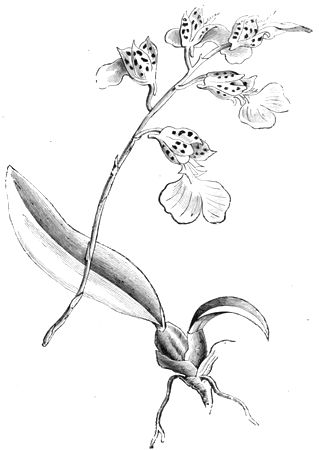
FIG. 303. FLOWER-SPIKE, PSEUDO-BULB, AND LEAF OF BURLINGTONIA DECORA.
Generally speaking, this genus is not a difficult one to
cultivate; its great enemy is a small white scale, which
secretes itself in the sheathing bases of the leaves. Here
it rapidly multiplies, to the great detriment of the plants;
the leaves soon turn yellow at the base, and drop off; the
whole plant looks sickly, and soon dies, or else requires a
very long time and much trouble to achieve its recovery
to health. To prevent this, the bases of the leaves must
be carefully looked into every time the plants are taken
down to be dipped in water; and, should the slightest
sign of this pest appear, a thorough washing with soft
soap and tepid water must be given, repeating the operation
every day until all traces of the insect are removed.
Red thrip are also apt to work much mischief
with these plants. They take up their abode in the same
way as the white scale, and if not speedily removed or
destroyed, soon make sad havoc. To put a stop to the
ravages of this pest, a wash should be given, as before
recommended, and after the soap has been rinsed out of
the base of the leaf, a little tobacco powder should be
sprinkled into the hollows, and allowed to remain for a day
or two before brushing it off. This process will, however,
cause a somewhat dirty appearance, but it will ensure
ultimate health and vigour. Propagated by dividing the
plants.
B. Batemanni (Bateman's).* fl. white, deliciously-scented; lip
beautiful mauve. A very pretty South American species, resembling
B. candida.
B. candida (white).* fl. snowy-white, with a slight stain of
yellow on the upper part of the lip, in substance and appearance
like white satin, trimmed with gold; large, sweet-scented, in
gracefully drooping three to four-blossomed racemes, produced
from the axils of the leaves. April and May, lasting about three
weeks in perfection, and sometimes having a second flowering
season. l. one or two in number, dark green, and firm in texture.
h. 1ft. Demerara, 1834. A very compact species, well suited for
basket culture; it should never be allowed to get dry. It may
be distinguished from other species by having a single row of
tubercles, forming a ridge upon each side of the slightly hastate
lip. (B. R. 1927.)
B. decora (comely).* fl. white or rose-coloured, spotted with red;
lip pure white; scapes erect, five to ten-flowered. Winter.
Brazil, 1852. This species differs entirely from B. candida, inasmuch
as it possesses a long slender-rooting stem, from different
parts of which arise small oval pseudo-bulbs, each bearing a
leaf; a lesser leaf appears at the base of a bulb, and from the
axil of this the scape springs. It is a rather straggling but nevertheless
beautiful species, and is best grown fastened upon long
strips of cork, a little sphagnum being used in the operation;
whilst, to prevent the plant getting too much "away from home,"
the young growths should be twisted back as they advance, and
the practice continued until the pseudo-bulb is ultimately left
near the centre, or in any spot which may appear bare. It likes
strong heat and a very moist atmosphere, when growing; but
during the period of rest, it should be kept cool and dry. See
Fig. 303. (B. M. 4834.)
B. d. picta (painted).* A beautiful variety, differing from the
type in having shorter and more acute leaves; flowers produced
in greater profusion, rose-coloured, beautifully mottled and
blotched with dark purple. October. Brazil. (B. M. 5419.)
B. fragrans (fragrant).* fl. very gratefully fragrant, disposed
in erect racemes. April, remaining in perfection about three
weeks. l. long, rigid, dark green. Habit compact. Brazil, 1850.
B. pubescens (downy). fl., sepals and petals snow-white; distinguished
by the somewhat hastate lip, which has three yellow
ridges on each side, and also by the downy column. November.
h. 6in. Brazil, 1850.
B. rigida (rigid).* fl. purplish-white, spotted with pink on the
lip; produced in heads. h. 1ft. Brazil, 1838. A handsome
plant, but difficult to flower. (L. S. O. 36.)
B. venusta (charming).* fl. white, slightly tinted with pink;
produced in heavy pendulous clusters at various seasons of the
year; lip stained with yellow. l. rigid, dark green. Brazil, 1840.
It forms a compact mass, and requires less heat than the kinds
previously described. It is often confounded with B. pubescens,
from which it may be distinguished by its larger and more loosely
arranged flowers, by its smooth column, by the lip not being
hastate in shape, and by the numerous shallow ridges borne near
the base upon each side. (L. S. O. 2.)
BUR MARIGOLD. See Bidens.
BURNET (Poterium Sanguisorba; from poterion, a
cup; being used in cooling drinks). ORD. Rosaceæ. A
native perennial. The leaves are sometimes used in soups,
and with Borage in cooling drinks; they are also put in
salads. The foliage only being useful, keep the flower-spikes
removed, as this tends to increase the luxuriance
of the plants. It thrives in any light soil. Propagated by
division.
BURNET SAXIFRAGE. See Pimpinella.
BURNING BUSH. See Euonymus atropurpureus
and E. americanus.
BURN ONION. See Potato Onion.
BUR REED. See Sparganium.
BURSARIA (from bursa, a pouch; the capsules
very much resemble those of the Shepherd's Purse). ORD.
Pittosporaceæ. A handsome, much-branched, greenhouse
evergreen shrub, forming a very pretty object when covered
all over with its elegant white blossoms. It thrives well
in a compost of sandy loam and peat, in equal proportions.
Young cuttings will root freely in sand, under a bell glass,
with a little bottom heat.
B. spinosa (thorny).* fl. white, small, disposed either in lateral
or terminal panicles. July to December. l. small, oblong-cuneated,
entire. h. 10ft. New Holland, 1793. (B. M. 1767.)
BURSERA (named after Joachim Burser, a disciple
of Caspar Bauhin). ORD. Burseraceæ. Stove balsam-bearing
trees. Flowers polygamous, or hermaphrodite;
calyx small, four to six-toothed; petals four to six, spreading,
generally valvate in æstivation; stamens eight to
twelve; disk annular, with usually six to ten teeth; drupe
oblong, covered by a three-valved succulent rind, containing
three to five nuts. They thrive in a compost of loam
and peat. Propagated by cuttings, placed under a glass,
with bottom heat.
B. gummifera (gum-bearing). fl. whitish, hexandrous; racemes
terminal and axillary. l. deciduous, usually impari-pinnate; leaflets
ovate, acute, membranous. h. 60ft. West Indies, 1690.
B. serrata (serrate).* fl. whitish, decandrous; panicles axillary,
shorter than the leaves. l. impari-pinnate, with three to five
pairs of broad-lanceolate, bluntly-acuminated, serrulated leaflets;
petioles and pedicels pubescent. h. 25ft. India, 1818.
BURSERACEÆ. An order of shrubs or trees, abounding
in resinous juice; with opposite compound leaves, full
of pellucid dots, and axillary and terminal fascicles of
flowers. Fruit indehiscent, somewhat drupaceous. The
genera best known are Amyris, Balsamodendron, Boswellia,
Bursera, and Canarium.
BURTONIA (named after D. Burton, a plant collector
for Kew Gardens). ORD. Leguminosæ. A genus of handsome
greenhouse dwarf Heath-like shrubs, natives of West
Australia. Flowers axillary, often thickly gathered at the
ends of the branches; corollas rich purple; keel generally
of a deeper colour, and the standard having sometimes
a yellow blotch at its base. Leaves simple or trifoliolate,
sessile, usually awl-shaped. They thrive well in a mixture
of loam, peat, leaf soil, and sand, in equal proportions, with
thorough drainage; but care must be taken not to give
them too much water, as they require to be kept moderately
dry, and are difficult to preserve in a living state. Young
cuttings root freely in a pot of sandy soil, in a cool house,
with a bell glass placed over them; but some of the species
produce seed in abundance, which are the best means of increasing
them.
B. conferta (cluster-flowered).* fl. violet. July. l. simple,
very much crowded, six to eight lines long, linear-subulate, with
revolute margins, and are, as well as the branches, smooth.
h. 2ft. 1830. (B. R. 1600.)
B. minor (smaller). A synonym of Gompholobium minus.
B. pulchella (beautiful). A synonym of B. scabra.
B. scabra (rough).* fl. purple; peduncles axillary, bi-bracteate.
April. l., leaflets glabrous, linear-mucronate. Branches puberulous.
h. 2ft. 1846. SYN. B. pulchella. (B. M. 5000.)
B. villosa (villose). fl. purple, large; peduncles axillary, bi-bracteate.
May. l., leaflets linear-subulate, bluntish, scabrid.
h. 2ft. 1846. (B. M. 4410.)
BUSHEL. See Measures.
BUTCHER'S BROOM. See Ruscus aculeatus.
BUTEA (commemorative of John, Earl of Bute, once
a munificent patron of botany). ORD. Leguminosæ. A
genus of very ornamental stove evergreen unarmed trees.
Racemes many-flowered; flowers three together, on short
pedicels, and furnished with two bracteoles each, under
the calyx; corolla deep scarlet; down on the calyces
usually black and velvety. Leaves pinnately-trifoliate;
leaflets large, ovate, roundish, stipellate. For culture,
&c., see Erythrina.
B. frondosa (leafy). fl. 2in. long. l., leaflets roundish, obtuse, or
emarginate, rather velvety beneath. Branches pubescent. h. 40ft.
India, 1796. (B. F. S. 176.)
B. superba (superb).* l., leaflets roundish, obtuse, velvety
beneath. Branches glabrous. Coromandel, 1798. This approaches
the preceding species, from which it differs mainly by its scandent
habit, and not by any botanical characters. (B. F. F. 143.)
BUTOMACEÆ. An order of aquatic plants, now
usually included under Alismaceæ.
BUTOMUS (from bous, an ox, and temno, to cut; in
reference to the sharp leaves, which injure the mouths of
cattle that browze upon them). Flowering Rush. ORD.
Alismaceæ. A very handsome hardy perennial aquatic, of
extremely easy culture on the margins of ponds or muddy
banks. Propagated by divisions of the roots, in spring.
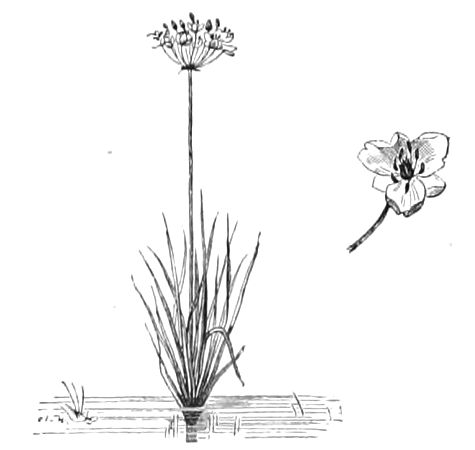
FIG. 304. BUTOMUS UMBELLATUS, showing Habit and single Flower.
B. umbellatus (umbelled).* fl. rose-coloured, umbellate; pedicels
with scariose sheathing bracts at the base; scape naked, terete,
longer than the leaves. Summer. l. all radical, 2ft. to 3ft. long,
linear, acuminate, triquetrous. Ditches and ponds; frequent in
England, and rare in Ireland. See Fig. 304.
BUTTER AND EGGS. The double-flowered variety
of Narcissus aurantius (which see).
BUTTER AND TALLOW TREE. See Pentadesma.
BUTTER-BUR. See Petasites vulgaris.
BUTTERCUPS. See Ranunculus.
BUTTERFLY ORCHIS. See Habenaria bifolia
and H. chlorantha.
BUTTERFLY PLANT. See Oncidium Papilio.
BUTTER NUT. See Caryocar and Juglans
cinerea.
BUTTERWORT. See Pinguicula.
BUTTON FLOWER. See Gomphia.
BUTTON-TREE. See Conocarpus.
BUTTON-WOOD. See Cephalanthus.
BUXUS (from pyknos, dense; referring to the hardness
of the wood). Box Tree. ORD. Euphorbiaceæ. A genus of
hardy evergreen shrubs or small trees. Flowers unisexual,
monœcious; male flowers, calyx of four minute segments,
stamens four, inserted under the rudiment of a pistil;
female flowers singly, at the tips of groups of male ones.
Fruit, a regma, leathery, beaked with the styles. Leaves
simple, opposite, exstipulate, evergreen. These well-known
plants thrive in any light, well-drained soil. Seeds should
be sown in similar situations as soon as ripe. Cuttings,
made of the young shoots, from 4in. to 6in. in length,
inserted in a shady place, in August or September, root
readily. Layers of either young or old wood, made in
autumn or early spring, will make good plants. They can
also be increased by suckers and division.
B. balearica (Balearic).* l. yellowish-green, oblong-elliptical,
emarginate, coriaceous, about 2in. long, with a cartilaginous
margin. h. 15ft. to 20ft. South Europe, 1780. This is a handsome
species. The cuttings will require a shelter in winter,
and in exposed situations it will be better to afford the plants
protection.
B. sempervirens (evergreen).* Common Box. l. oval-oblong,
retuse, convex, coriaceous, shining; stalks slightly hairy. h.
various. England. There are numerous forms of this popular
shrub: argentea, silver-variegated; aurea has its leaves variegated
with a golden colour; marginata has leaves with a golden
margin; myrtifolia has small, oblong, narrowish leaves; obcordate-variegata
is a variegated variety, with obcordate leaves, from
Japan; suffruticosa is the form usually cultivated for edgings,
its leaves are small, obovate, this is readily increased by divisions,
and requires to be planted firmly, in order to keep it
dwarf.
BYRSONIMA (from byrsa, a hide, and nimius, much
used; because the bark of some of the species is used in
tanning, in Brazil). ORD. Malpighiaceæ. Ornamental stove
evergreen trees or shrubs. Flowers racemose, terminal,
simple or branched. All the species thrive very well in
any light soil, or a mixture of loam and peat. Cuttings
made of half-ripened shoots will root freely in sand, under
a hand glass, in a moist bottom heat.
B. altissima (tallest).* fl. white; racemes clothed with rufous
hairs. July. l. ovate-oblong, covered with rufous down beneath,
but beset with bristles above, which are fixed by the centre.
h. 60ft. Guiana, 1820.
B. chrysophylla (golden-leaved).* fl. yellow; racemes simple.
August. l. oblong, short, acuminated, acute at the base, rather
wavy on the margin, and revolute, smooth above, clothed beneath
with silky down, which is of a rusty golden colour. h. 14ft.
South America, 1823.
B. coriacea (leathery-leaved). fl. yellow, sweet-scented; racemes
densely spiked, pubescent, erect. May. l. ovate, acute, quite
entire and smooth. h. 30ft. Jamaica, 1814.
B. crassifolia (thick-leaved). fl. yellow; racemes erect, elongated,
brownish-velvety. July. l. ovate, acute at both ends, at
length smooth above, but clothed with brownish down beneath.
h. 6ft. Guiana, 1793.
B. lucida (shining).* fl. pink; petals hastately kidney-shaped;
pedicels hispid; racemes spiked, erect, short, smooth. May. l.
obovate, cuneiform, obtuse, or mucronate, smooth, veinless,
shining. h. 8ft. Caribbee Islands, 1759. Described as "a
beautiful shrub."
B. verbascifolia (Verbascum-leaved). fl. yellow; racemes terminal.
July. l. lanceolate-obovate, quite entire, downy on both
surfaces. h. 6ft. Guiana, 1810.
BYSTROPOGON (from byo, to close, and pogon, a
beard; in reference to the throat of the flower being closed
up with hairs). ORD. Labiatæ. Greenhouse evergreen
sub-shrubs, nearly allied to Mentha. Flowers small, in
dichotomous, sub-corymbose, or panicled cymes; or else
disposed in dense spicate whorls. Bracts lanceolate or
subulate. This genus contains easily cultivated species,
which are, however, of no value for garden purposes.
CAA-CUYS. See Ilex paraguariensis.
CAA-MINI. See Ilex paraguariensis.
CAAPEBA. See Cissampelos Pareira.
CAAPIM DE ANGOLA. See Panicum spectabile.
CAA-QUAZU. See Ilex paraguariensis.
CABARET. The French name of Asarum europæum.
CABBAGE. The common name for Brassica; but
especially applied to the plain-leaved hearting garden
varieties of Brassica oleracea. To obtain good tender
Cabbages in early spring and throughout the summer, it
is necessary that they should be planted on rich, deeply-trenched
ground, in a position free from the shade of fruit
or other trees. Stable dung or good farmyard manure is
best for this crop, and should be applied when trenching
is being done, burying the manure a spit below the surface.
Cabbages should not be planted successionally on the same
ground, nor should they follow any of the other species
of Brassica, if it can be avoided. A warmer position, not
too much sheltered to make the plants tender, will be
found beneficial for the earliest spring crop. This should
not be planted too soon in autumn, as the plants are more
subject to run to seed, especially if the winter be mild.
The several forms of Cabbage are well known, being so
much cultivated by cottagers as well as gardeners. None
of those forming close hearts will bear severe frost, but
the Savoys are improved by a little in the early autumn.
The Coleworts are very useful in winter, being perhaps the
hardiest of all; and, as the hearts do not get so close and
hard as the Savoy and other Cabbages, the frost, unless it
is very severe, does not injure them so much.
Cultivation. The crop obtained in April and May is
usually the most important one, young Cabbages being
then much appreciated by everyone. The time for seed-sowing
varies in different localities, from the third week in
July to the middle of August. The first date would probably
prove suitable for the northern parts of the country;
and the latter would be early enough for the south. The
seed should be sown thinly in beds of rather light, well
pulverised soil, afterwards covering these with netting,
to protect the seed from birds. The plants will be ready,
in most cases, for placing out during September, or as soon
as the ground can be cleared of other crops and prepared
for their reception. The Early Battersea, or one of its
many allied sorts, is best for sowing at this season; and,
when planting out, an allowance of 2ft. apart each way will
be sufficient. Seed should again be sown on a mild hotbed
in February, and occasionally afterwards, for succession;
and a second crop may be obtained from the plants put out
in autumn if they are allowed to remain. Drumhead and
other strong-growing sorts, sown in spring, will require
from 6in. to 1ft. more space when planted out. These are
not, however, of such good quality as the smaller-growing
varieties.
Savoys. The seed of these should be sown in March or
April, according to the locality, in the same way as
described above, in seed beds; and the after treatment is
also very similar. The young plants must not be allowed
to starve in the seed bed, but should be kept watered, and
planted out in June and July, choosing dull weather for
the operation. The ground should occasionally be hoed
between the plants, to keep the surface open and destroy
weeds. Distances of from 15in. to 30in. between the plants,
according to the variety, must be allowed. See Fig. 305.
Coleworts. Seed of these should be sown about the end
of June, and planted out 1ft. apart on a sheltered border,
when large enough. Rosette is one of the best varieties;
but the early Cabbages are often grown and used as Coleworts
before they have had time to form close hearts.
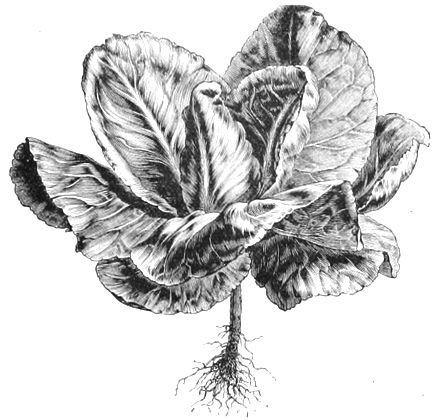
FIG. 306. EARLY YORK CABBAGE.
Pickling Cabbage. The Red Dutch is the variety
generally grown for pickling, and is probably the best to
keep its colour when so treated. Seed should be sown in
August, to stand the winter, and again in February for a
succession; only a few plants will, in the majority of cases,
be required, as, if liberally treated, they grow to a good size.
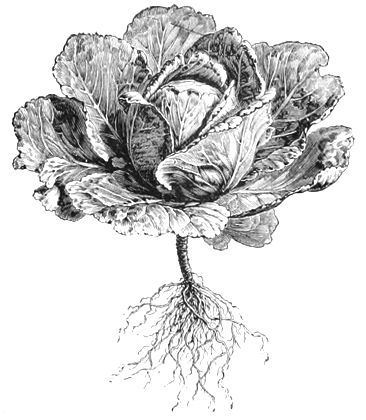
FIG. 307. OXHEART CABBAGE.
Sorts of White Cabbage. These are extremely numerous,
and selections or improved forms are of annual appearance.
Some of the old types are, however, still much cultivated.
The following are a selection of the best sorts for general
purposes: Atkins' Matchless, Carter's Heartwell, Early
Battersea, Early York (see Fig. 306), Ellam's Early Dwarf,
Enfield Market, Little Pixie, Oxheart (see Fig. 307), St.
John's Day (see Fig. 308), Sugarloaf, Wheeler's Imperial,
and Portugal or Couve Tronchuda. The last-named variety
was introduced from Portugal some years ago, where it is
much grown. It has a large midrib, and does not form
very close hearts. It is very tender when cooked, and is
only suitable for culture in summer. Under the name of
Gilbert's Cabbage Broccoli, or Chou de Burghley, a variety
of Cabbage was recently distributed which produces, if
left long enough, hearts resembling Broccoli. Although
there are different opinions as to its merits, it is said to
be very tender when cooked, and is considered a decided
acquisition.
Of Savoys, the best are: Drumhead, Dwarf Green Curled,
Early Ulm, Large Late Green, and Tom Thumb.
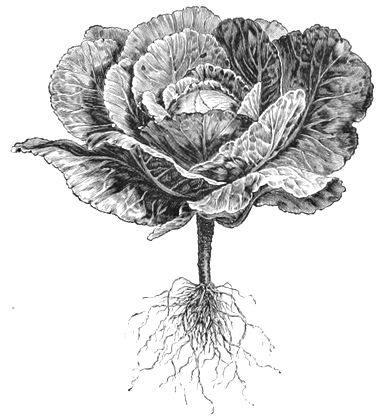
FIG. 308. ST. JOHN'S DAY CABBAGE.
Insects, &c. The majority of the Cabbage tribe is
attacked by a very large number of different caterpillars
and other pests, both above and below ground. The plants
in their young stages are always a prey for snails and slugs,
and often require a dusting of soot and lime as a protection.
When planting out, many of the plants are often found
with a protuberance at the root, caused by an insect, and
termed "clubbing." Those so injured should be thrown
away if they can possibly be spared, and the others dipped
in a thick solution of soot water. This is the worst kind
of disease the Cabbage tribe is subject to. The caterpillars
of several moths and butterflies are very destructive in
summer, often eating through the hearts of Cabbages and
Cauliflowers, and so rendering them totally unfit for use.
Hand-picking, or dusting with lime, is apparently the only
means of diminishing the numbers of these pests.
CABBAGE CATERPILLARS. Large Cabbage
White (Pieris brassicæ). From May to July, and again in
September and October, this, the most common of our
butterflies, may be seen in great numbers, frequenting
gardens, lanes, and fields, being especially numerous where
Cabbages are growing. Their beautiful yellow eggs are
laid singly on the under surface of the leaves, and
securely fastened by a natural glue; from these, in due
time, issue the small, but destructive, "green caterpillars."
Shortly after birth, they become quite green in front and
yellow behind. They then get hairy and dotted over with
black; they have eight pairs of feet, of which the three
front ones only are "true" legs, or those which ultimately
develop into the legs of the butterfly. They change their
skin several times, and at each moult become larger in
size. When full grown, they are about 1½in. long, of a
light green or bluish hue above, and yellow beneath; along
the back of the adult caterpillar is a conspicuous yellow
line, edged on each side with black dots.
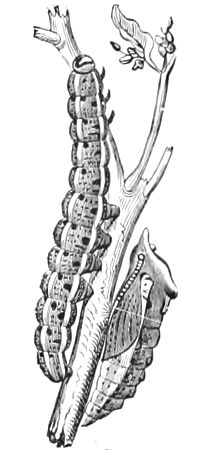
FIG. 309. CATERPILLAR AND CHRYSALIS OF LARGE CABBAGE
BUTTERFLY.
The chrysalis, or pupa, is commonly found on window-ledges,
palings, walls, and similar places; but is sometimes
attached to the plant (see Fig. 309). It is a rather curious
object, of the colour of stone, and prettily chiselled. It is
fastened to the plant by the tail and by a belt of silk round
the middle.
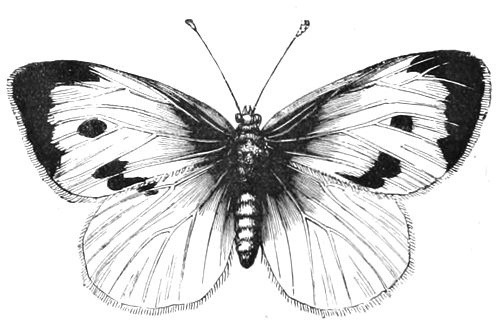
FIG. 310. LARGE WHITE CABBAGE BUTTERFLY.
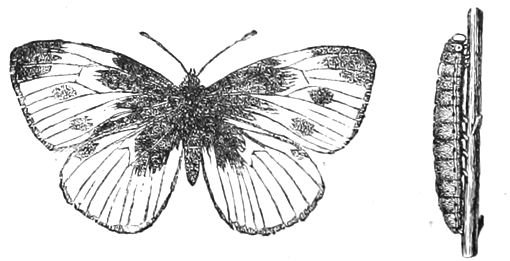
FIG. 311. SMALL WHITE CABBAGE BUTTERFLY AND CATERPILLAR.
The perfect male insect has the body black and wings
white on the upper side, except the tips of the fore-wings,
which are black and crescent-shaped; and on the upper
edge of the hinder wings there is a black spot. On the
under side, the fore wings are white with yellow tips,
and two black patches on each; the hind wings are
yellow, with small black markings. The antennæ are
alternately black and yellow, with the club black above
and yellow beneath. The female (see Fig. 310) differs
from the male in having two large black spots on each of
the fore or upper wings, and a spot on the inner margin.
The Small White (Pieris rapæ, see Fig. 311) has two
broods in the year, the first batch about April, and the
second in July. The eggs are always placed on the upper
side of the leaf, and are hatched in from ten to thirteen
days, the caterpillars becoming full grown in about three
weeks after emerging. The colour of the caterpillar is
dark green, with a fine line of yellow, and a row of yellow
spots down the sides. The chrysalis is attached by the
tail and a band of silk to the place selected by the caterpillar,
and varies greatly in colour, although generally it is
of a whitish-brown.
Cabbage Moth (Mamestra brassicæ). Newman, in his
"British Moths," thus describes the Cabbage Moth: "The
antennæ are rather long and slender, and scarcely ciliated
in either sex; the fore-wings are dark, smoky, grey brown,
mottled and marbled with confused markings, both darker
and paler; the orbicular spot is inconspicuous, but decidedly
to be traced; the reniform stigma is delicately outlined with
white or whitish-grey, and has a pale anterior disc, in which
the same pale grey colour predominates; the hind wings
are dark, smoky brown with rather pale base, and rather
darker crescentic discoidal spot and wing-rays; the head,
thorax, and body have the same colour as the fore and hind
wings." The eggs are laid on Cabbages, or similar plants,
and are hatched in a few days. The caterpillars are very
voracious, feeding by day and night, and, what is worse,
they spoil with their excrement, in the case of Cabbages,
more than they eat. They are of a dark colour, with a
kind of marbling, more or less distinct, on the back, the
effect being produced by a triangular mark containing two
white dots on each of their segments. On being disturbed,
they roll themselves into a tight ring, and so remain until
they suppose that danger is over. They descend into the
earth for change to smooth red-brown chrysalids, and
remain there till the following spring. If the chrysalids
were collected and destroyed during the autumn and winter
digging, much injury would be obviated through the succeeding
spring and summer.
The destruction of these pests is a very troublesome
matter, as the grubs of the last-named kind bore into the
heart of the cabbage. Hand-picking is the only sure
method. Anything emitting a distasteful odour will also
keep them at bay. Miss Ormerod recommends throwing
gas-lime over the plants, but it must be previously weakened
by a few months' exposure. The following remedy
may also be recommended:
Paraffin, or Coal Oil. Mix one ounce of oil with a
gallon of soapsuds, and water the plants with the mixture
before the caterpillars appear. If any have appeared, an
application at the rate of two ounces to the gallon will
generally clear them off. Of course, this operation must
not be performed less than a month previous to cutting the
cabbages, on account of the smell. Soapsuds alone will
also clear caterpillars from most smooth-leaved subjects if
frequently applied.
CABBAGE FLY (Anthomyia brassicæ). Among the
injurious insects which infest Cabbages, none commit
greater havoc to both stem and root, than the maggots of
the Cabbage Fly. "They are whitish, cylindrical, and
legless, tapering to the head, and blunt at the tail, which
has short teeth on the lower margin, and two brown
tubercles in the middle. When full grown, they are about
⅓in. long. They then leave the plants, and turn, in the
earth, to pupæ, with a few black spots at the head, and
short teeth at the tail, inside which the flies form, and
emerge in about a fortnight or three weeks. The fly is
of an ashen-grey colour, and smaller than the Onion Fly,
which it much resembles. The male is of a darker grey,
and has a short black stripe along the back between the
wings, with a curved one on each side of it, and one black
stripe along the abdomen" (Ormerod). The presence of
these maggots may be easily detected by the flagging and
change of colour of the leaves. The infested plants should
be immediately removed and destroyed. The following
remedy will be found beneficial:
Lime. Hot lime should be soaked in water for about
twenty-four hours. When clear, the infested Cabbages
should be well washed with the liquid. Superphosphate
of lime may also be applied with advantage.
CABBAGE GALL WEEVIL (Ceutorrhynchus sulcicollis).
This is a pretty little beetle, about three-quarters
of a line or one line in length. Its colour is dark, but the
insect is really of a coppery hue; on the thorax and head
are rather large depressions; the wing-cases vary in colour
from green to greenish-blue, or even black, and along the
entire length of the elytra are parallel lines or holes, as
may be seen with the aid of an ordinary lens. This insect,
which causes much damage to plants of the Brassica family,
is, in some places, very difficult to eradicate. It is also
very destructive to other crops, and, therefore, any
effectual remedy is valuable. The following methods may
be recommended:
Carbolic Acid. Mix 1oz. Calvert's No. 5 carbolic acid
with two gallons of soapsuds, and add sufficient loam or
clay to make a thin paste. Dip the roots of the whole of
the plants into this before they are set out. Well stir
the mixture, and put the plants out in a damp soil, so
that watering will not be necessary.
Paraffin, or Coal Oil. This, applied in the same manner
as recommended for Carbolic Acid, is also very good.
Guano, Superphosphate of Lime, and Nitrate of Soda.
A good dressing of either of these, given after the ground
is dug, and in wet weather, about a month before the
plants are put out, has been found very beneficial; but,
although preventatives, they do not totally clear the crop
from insects for the season.
Soot and Lime. Take equal parts of air-slaked lime
and soot, and mix together. Set the plants with a trowel,
and, having placed some soil over the roots, throw in a
little of the mixture, filling up the hole with soil.
CABBAGE MOTH. See Cabbage Caterpillars.
CABBAGE PALM. See Euterpe oleracea.
CABBAGE POWDERED-WING (Aleyrodes brassicæ).
A small four-winged powdery fly, closely allied to
the Aphides. As implied by its name, this pest infests the
various sorts of Cabbages. It is more particularly prevalent
in autumn. Its presence may be readily detected by
the partial discoloration of the leaves attacked. The head
and body between the wings are black, with yellow variegation;
abdomen yellow or rosy; wings white and mealy
(whence its common name), the upper pair each having
a darker spot, near the centre. Its destructive power
resides in the rostrum, or sucking-tube, with which its head
is furnished.
Remedies. The only effectual means of exterminating
this pest is to destroy the leaves, preferably by burning.
If its presence is detected early, an application of tobacco
water, or diluted soft soap, may prove beneficial.
CABBAGE ROOT-EATING FLY. See Root-eating
Fly.
CABBAGE-TREE. See Euterpe oleracea.
CABBAGE WEEVIL. See Cabbage Gall Weevil.
CABOMBA (the native name in Guiana). ORD.
Nymphæaceæ. SUB. ORD. Cabombeæ. Small and very
interesting aquatics. They thrive well in a cistern 1ft.
deep, with 2in. of loam in the bottom, for the plants to
root in, then filled up with water, and placed in a warm
part of the greenhouse during summer, being allowed a
rest in a cool part of the stove in winter. Propagation
may be effected by root division.
C. aquatica (water-loving). fl. yellow, small; peduncles long,
axillary, solitary, one-flowered. July. Submerged leaves opposite,
stalked, cut into five divisions even to the petiole; segments
multifid; floating leaves alternate, on long petioles, peltate,
orbicular, entire. Guiana, 1823. SYN. Nectris aquatica.
C. caroliniana (Carolina) is somewhat similar to C. aquatica.
It is a native of the Southern United States.
CACALIA (from kakalia, a name used by Dioscorides).
ORD. Compositæ. A genus of hardy herbaceous perennials,
here treated as distinct from Senecio, of which genus,
from a botanical point of view, it is but a section. Heads
five to many-flowered; florets all tubular and perfect;
scales of the involucre in a single row; receptacle naked;
pappus of numerous capillary bristles. For culture, see
Senecio.
C. atriplicifolia (Atriplex-leaved). fl.-heads white. August.
l., lower ones triangular-kidney shaped, or slightly cordate; the
upper rhomboid, toothed. Stem terete. h. 3ft. to 6ft. United
States of America.
C. hastata (hastate). fl.-heads white, nodding, racemose. Autumn.
l. stalked, three-lobed, hastate, serrate. h. 1ft. Siberia, 1780.
C. reniformis (reniform). fl.-heads white, disposed in large
corymbs. August. l. dilated, fan-shaped, 1ft. to 2ft. broad,
repandly-toothed and angled, petiolate. Stem grooved and
angled. h. 4ft. to 9ft. New Jersey, 1801.
C. suaveolens (sweet-scented).* fl.-heads white. Autumn. l.
triangular-lanceolate, halbert-shaped, pointed, serrate; those of
the stem on winged petioles. Stem grooved. h. 3ft. to 5ft.
North America, 1752.
C. tuberosa (tuberous).* fl.-heads whitish. June. l. thick;
lower ones lanceolate or oval, nearly entire, tapering into long
petioles; upper ones on short margined petioles, sometimes
toothed at the apex. Stem angled and grooved. h. 2ft. to 6ft.
North America.
CACOUCIA (its name in Guiana). ORD. Combretaceæ.
A small genus of stove twining or climbing shrubs. Flowers
large, showy, racemose. Leaves opposite, oblong or ovate-elliptical.
For culture, see Combretum.
C. coccinea (scarlet).* fl. scarlet, alternate, bracteate at the base,
disposed in long terminal racemes. May. l. ovate, acuminated,
shortly petiolate. Guiana. (A. G. i., 179.). A handsome stove
climber.
CACTEÆ. A large order of succulent plants, with
remarkable spines clustered on the cylindrical, angular,
two-edged, or leafy stems. Flowers very variable, showy
or minute, usually solitary, sessile, rarely in fascicles, ephemeral;
petals disposed in two or more series, hardly
distinguishable from the inner sepals, and sometimes united
with them; sepals numerous, united and adnate a great
length to the ovarium. Fruit fleshy, one-celled, many-seeded.
Well-known genera are Cereus, Melocactus,
Mammillaria, Opuntia, Pereskia, and Rhipsalis.
CACTUS (from kaktos, a name used by Theophrastus
to describe a spiny plant). This generic term is popularly
applied to all members of the extensive family Cacteæ,
which order may be distinguished by the following
characteristics: Calyx composed of many sepals, usually
indefinite in number, the inner series not readily distinguishable
from the petals, united and adnate a great
length to the ovary; with the tube smooth in the genera
Mammillaria, Melocactus, and Rhipsalis; or with the lobes
of the sepals crowning the fruit, and having the tube scaly,
as in the genera Cereus, Opuntia, and Pereskia. Petals
disposed in two or more series, hardly distinguishable from
the inner sepals, and somewhat united to them; sometimes
irregular, and disposed in a long tube at the base, but
distinct at the apex, as in the genera Mammillaria, Melocactus,
and Cereus; sometimes equal and distinct to the
very base, forming a rotate corolla, as in the genera
Opuntia, Pereskia, and Rhipsalis. Stamens indefinite,
disposed in many series, more or less cohering with the
petals or inner sepals; filaments slender, filiform; anthers
ovate, versatile, two-celled. Ovarium obovate, fleshy, one-celled.
Fruit fleshy, one-celled, many seeded, either smooth
and crowned by the calyx, or covered with scales, scars, or
tubercles, and umbilicate at the apex. This order contains
fleshy or succulent shrubs, very variable in habit and size.
Flowers very variable, showy, or minute, usually solitary,
sessile, rarely in fascicles, ephemeral, expanding by night
or day. Leaves usually wanting, but, when present, small,
caducous, and terete, rarely flat and expanded, sometimes
alternate and disposed in a spiral order, always glabrous
and fleshy. Prickles or bristles disposed in fascicles, rising
from the axils of the leaves. In the leafless genera, the
fascicles of spines are disposed on the angles of the stem,
rising from tubercles. Stems usually angular, winged, or
regularly beset with tubercles, rarely terete, usually jointed;
joints compressed. A group of Cacti is shown at Fig. 312,
for which we are indebted to Herr Fr. Ad. Haage, jun., of
Erfurt, Germany. See Cereus, Disocactus, Echinocactus,
Epiphyllum, Leuchtenbergia, Mammillaria,
Melocactus, Nopalea, Opuntia, Pelecyphora,
Pereskia, Phyllocactus, and Rhipsalis.
Cultivation. Perhaps no class of plants more easily
accommodate themselves to a general system of treatment,
than do these; although certain genera would undoubtedly
thrive better than when subjected to the lower temperature,
suited to the requirements of those coming from cooler
regions. Notwithstanding that nearly all the species are
natives of the western hemisphere, they occur in various
geographical and altitudinal areas, in which the temperature
is proportionately lessened or increased, as the case
may be; yet, presuming a special house is set apart for
their culture, the majority of the species may be happily
suited therein. The warmest end of the structure should
be selected for the tropical kinds; while those found in
cooler regions may be grown in the other portions of
the house; even those which are hardy in our climate
are really best wintered in a house or frame. Granted
that several species will endure our winter outside, it is
yet necessary to give them the shelter of a friendly ledge of
the rockery, or frame, or to cover them in their permanent
position with a hand light, or sheet of glass, in order to
prevent the ill-effects of excessive moisture. Generally, a
winter temperature of from 50deg. to 55deg., and a summer
one of from 70deg. to 80deg. during shade, or in sunshine
up to 90deg., will be found advantageous. When thus
treated, it will be necessary to keep the tropical species,
on the whole, very dry during the winter. As regards
soil, potting, and general treatment, all may be treated
alike, except Epiphyllum, Disocactus, and Pereskia (which
see). Some growers give them the protection of a house
in winter, and stand them outside during the summer,
which is not, however, a very commendable plan, as, in
consequence of the very variable character of our climate
being especially prejudicial to several of the tender and
more delicate species, the often excessive amount of
moisture they would receive, will produce a weakly state
of health in many, while others will be lost. It is far
better if their culture is attempted at all, to give them the
proper treatment. The numerous species and varieties
found on the Rocky Mountains are a most interesting
series, and may be well managed in a cold frame facing
south, arranging them on shelves as close to the glass as
possible, and keeping them very dry through the winter.
If the weather is very severe, the lights should be matted.
One of the best collections of these in the country, is in
the possession of E. G. Loder, Esq., Floore House, Weedon,
Northampton, where a great number are admirably grown
in frames, and under a large ledge of the rockery outside.
Amateurs may grow quantities of handsome Cacti either
in dwelling rooms near the window, or in small frames
or greenhouses. As they are slow growing, not much
space will be occupied; at the same time, a great deal
of interest will be centred in their culture. As regards
watering and insect pests, they are but little trouble.
Miniature Cacti, of numerous kinds, are now often sold in
small pots, and most attractive little subjects they prove.
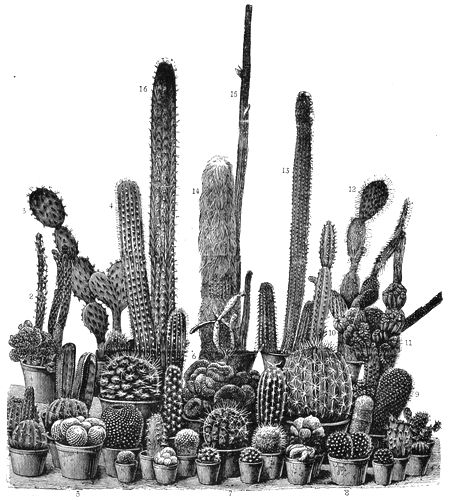
1. Opuntia.
2. Cereus.
3. Opuntia streptacantha.
4. Cereus candicans.
5. Mammillaria.
6. Cereus peruvianus monstrosus.
7. Echinocereus electracanthus.
8. Mammillaria.
9. Echinopsis formosa.
10 Echinocactus Visnaga.
11. Cereus peruvianus var.
12. Opuntia candelabriformis.
13. Cereus strictus.
14. Pilocereus senilis.
15. Cereus Tweedii.
16. Cereus chilensis.
FIG. 312. GROUP OF CACTI.
Soil, Drainage, and Potting. Good ordinary fibrous loam
should form about one-half of the compost, the other half
should be made up of sand, broken bricks, and lime rubbish
in equal quantities; the whole to be carefully mixed together,
and not used until it is moderately dry. It is
absolutely necessary to ensure perfect drainage; a good
"stopper" should, therefore, be placed over the hole at the
bottom of the pot, and about one-third of its depth filled
with draining material. The best time for potting is during
February and March. Turn out the plants, and remove
nearly all the old soil from the roots, taking away any dead
or decaying roots which may be observable. Place some of
the roughest soil next the crocks, and gradually fill the pots
with the finer material, well working the same amongst the
roots; finally press the soil moderately firm. Do not water
for a few days after potting, but syringe every evening,
especially if the weather be fine; a little extra heat may
be given after potting, to excite new, healthy growth. It
will not be necessary every year to repot specimens in large
vessels. A good top-dressing, with an occasional dose of
weak liquid manure, is all they will require for several
seasons.
Watering. This must be discriminately managed, especially
during the winter; for, whatever their treatment
as regards temperature during that season, they must be
studiously watered, and anything like a saturated condition
of the soil should be avoided. If the temperature is
brisk, a little water may be given once a week, or perhaps
not quite so often. If the plants are subjected to very
cool treatment, water must be sparingly administered
during November, December, and January; after which,
they should be examined weekly, and very carefully attended
to. During the summer months, when in active
growth, they will not suffer if watered twice a week;
and, on bright afternoons, light syringings may be advantageously
given.
Propagation. Three methods are adopted, viz., by cuttings
or offsets, grafting, and seeds; the former is the plan
generally adopted. The cuttings or offsets should be
removed with a sharp cut, and laid upon a sunny shelf
until the wound is healed and roots are emitted, when they
should be potted in sandy soil, and placed with the others.
They will thrive freely if kept syringed. Grafting is resorted
to with delicate kinds, which, from some reason or
another, will not grow freely except upon the stock of a
stronger species; and, by this means also, such delicate
kinds can be kept from the damp soil, which frequently
causes incipient decay. The stocks usually employed are
those of Cereus tortuosus, C. peruvianus, &c., according to
the species intended for working; they readily unite with
each other. If the scion and stock are both slender, wedge-grafting
should be adopted; if both are broad, it is best
to make horizontal sections, placing them together and
securing in proper position by tying with matting, but not
too tightly, or the surface may be injured. Propagation by
seeds is not often adopted, as it is a very slow method;
they should be sown in very sandy soil, and placed in a
semi-shady position until germination commences, when
they may be exposed, and very carefully watered.
CACTUS DAHLIA. See Dahlia Juarezii.
CADUCOUS. Falling off soon; deciduous.
CÆNOPTERIS. See Asplenium.
CÆSALPINIA. (in honour of Andreas Cæsalpinus,
a celebrated Italian botanist, 1519-1603). Brasiletto.
ORD. Leguminosæ. An ornamental genus of stove evergreen
trees or shrubs, not much grown, on account of the
space required and the time the species take to flower.
Flowers yellow or red, produced in racemes, having a
top-shaped calyx, divided at the end into five parts, the
lowest larger than the others; petals five, unequal-stalked,
upper one shortest; stamens ten. A mixture of loam
and leaf mould suits them best. Cuttings are somewhat
difficult to root, but sometimes will succeed if taken off
from the mother plant in a growing state and planted in
sand, with a hand glass placed over them, in heat.
C. alternifolia (alternate-leaved). fl. orange, clustered. l. alternate,
very elegant, compound. Central America, 1868.
C. brasiliensis (Brazilian). Brazil Wood. fl. orange; racemes
rather panicled. l. with seven to nine pairs of pinnæ, each pinna
bearing about fifteen or sixteen pairs of oval-oblong, obtuse,
glabrous leaflets. Brazil, 1739. Plant unarmed.
C. Sappan (Sappan). fl. yellow, panicled. l. with ten to twelve
pairs of plane, each pinna bearing ten to twelve pairs of unequal-sided,
obliquely oval-oblong leaflets, which are emarginate at the
apex. h. 40ft. Tropical Asia, 1773. This tree furnishes the
Sappan-wood of commerce.
C. sepiaria (hedge). fl. yellow. April. l. compound; pinnæ with
about ten pairs of pinnules. h. 60ft. India, 1857. SYN. Biancea
scandens.
CÆSIOUS. Lavender-colour, bluish-grey.
CÆSPITOSE. Growing in tufts.
CAFFER BREAD. See Encephalartos Caffra.
CAFFER TEA. See Helichrysum nudifolium.
CAFTA. See Catha edulis.
CAHOUN NUTS. A name applied to the fruits of
Attalea Cohune, which yield a valuable oil.
CAIOPHORA. See Blumenbachia and Loasa.
CAJAN. See Cajanus.
CAJANUS (Catjang is the Amboyna name). Cajan.
ORD. Leguminosæ. A genus of erect stove evergreen
shrubs, clothed with velvety pubescence. Flowers yellow,
distinctly peduncled, corymbose, racemose; standard sometimes
beautifully veined with red. Leaves pinnately
trifoliate. A light rich soil suits these plants well. Young
cuttings will root in sand, with a hand glass placed over
them, in heat; but plants are usually raised from seeds,
obtained from the West Indian Islands and India.
C. indicus (Indian).* Pigeon Pea. fl. yellow, or purple-spotted,
in axillary racemes. July. l. pinnately trifoliate; leaflets
lanceolate. h. 6ft. to 10ft. India. (B. M. 6440.)
C. i. bicolor (two-coloured). fl. yellow. July. h. 4ft. India,
1800. (B. R. 31, 31.)
C. i. flavus (yellow). fl. yellow. July. h. 4ft. India, 1687.
CAJUPUT OIL and CAJUPUT-TREE. See
Melaleuca leucadendron minor.
CAKILE (derived from the Arabic). Sea Rocket.
ORD. Cruciferæ. A pretty hardy annual, frequently found
on sea-shores. It is of easy culture in most sandy soils.
Propagated by seed, sown in spring.
C. maritima (sea). fl. lilac, large, densely corymbose. Summer
and autumn. fr. a succulent pod, divided, when mature, by a
horizontal partition into two cells, the upper containing a single
erect seed, the lower a pendulous one. l. oblong, deeply lobed,
fleshy. Stem much branched. h. 1ft. Sea-shores of Europe and
North America.
CALABASH NUTMEG. See Monodora Myristica.
CALABASH, SWEET. See Passiflora maliformis.
CALABASH-TREE. See Crescentia Cujete.
CALABA-TREE. See Calophyllum Calaba.
CALADENIA (from kalos, beautiful, and aden, a
gland; in reference to the disk of the labellum being finely
beset with glands). ORD. Orchideæ. A genus of pretty
greenhouse terrestrial orchids from New Zealand and
Australia. They should be kept in a cool frame or greenhouse,
and carefully watered, when not in a growing state.
A compost of peat, loam, and sand, in equal parts, suits
them well. Over thirty species are enumerated, but probably
none are seen out of botanic gardens.
CALADIUM (derivation of name doubtful; probably
of Indian origin). ORD. Aroideæ. Stove perennials, chiefly
grown for the great beauty and varied hue of their leaves.
Spathe hood-like, rolled round at the base; spadix, upper
portion entirely covered with stamens, but ultimately
becoming bare at the extreme top, provided with blunt
glands or sterile stamens in the middle, and ovaries
beneath; anthers shield-shaped and one-celled; ovaries
numerous, two-celled, with from two to four ascending
ovules in each cell. Leaves upon long petioles, more or
less sagittate, ovate, and usually very richly coloured.
Fruit a one or two-celled berry, with few seeds. They
are all of easy culture, and grow freely in a humid
atmosphere. In March, when the tubers have been kept
dry or rested for some time, they may be started into
growth again, in small pots, placed in a stove or pit,
where a night temperature of from 60deg. to 65deg. is
maintained, and syringed daily once or twice at least.
As soon as indications of activity are presented, they
may be shifted into 4in., 5in., or 6in. pots, or larger ones
may be used if good sized specimens are required. If
the tubers should be in large pots, it is best to turn
them out, dividing if necessary, and placing all the crowns
in small pots, from which they can be removed when root
action and growth are resumed, and they require more
room. Large tubers, if sound, may be divided, and the
pieces placed in pots of such sizes as it is desired to grow
them in.
Soil. Turfy loam, leaf mould, turfy peat, and a little well
decomposed manure, in equal parts (not broken up too fine),
with a good sprinkling of sharp sand, form an excellent
compost, the whole being well incorporated together.
Thorough drainage must be insured, as these plants require
an abundance of water. After potting, they should be
placed in a stove temperature, and kept well moistened
by syringing two or three times daily. If accommodated
with mild bottom heat at this time, they will make much
freer and more vigorous growth than if otherwise treated.
Water sparingly at first, but as soon as the leaves expand,
increase the supply; and, when the pots are well filled with
roots, apply clear liquid manure at every other time of
watering. As the season advances, the temperature and
humidity of the house should be increased. During bright
sunshine, Caladiums should be slightly shaded for a few
hours in the middle of the day, with some thin material,
just to break the fierceness of the sun's rays; but the more
they are exposed to the light at other times during growth,
the brighter, richer, and more beautiful will the foliage
be. As soon as the plants have attained a good size,
some of them should be placed in the coolest part of the
house, and partially hardened off; they may then be taken
to the conservatory, allowing them a situation free from
currents of cold air, and giving water only when really
necessary. They may remain here for some time, but
care must be taken to return them to the stove before
they suffer from cold.
Small neatly grown specimens make beautiful ornaments
for table decoration, and their suitability for exhibition
purposes is well known, and largely taken advantage
of. Towards autumn, and as the foliage begins to fade, the
supply of water should be gradually lessened, until all the
leaves die down; the pots should then be placed under the
stage in the stove, where they can be looked to now and
then, and a little water given if required. By no means
allow the tubers to get dried up, as is often done; for, if
so, they will frequently rot away inside; whereas, kept in
a semi-moist condition, even the most delicate can be preserved.
In this state, they may remain until the following
season. Caladiums will not endure a very low temperature;
from 55deg. to 60deg. is as low as they can be
safely kept. Very few of those known as "true species"
are grown, being superseded, for general decorative purposes,
by the numerous hybrids which have been raised of
late, principally from C. bicolor.
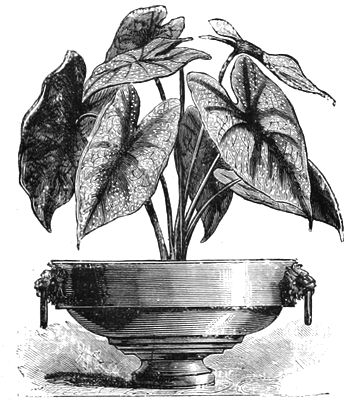
FIG. 313. CALADIUM CHANTINII.
C. argyrites (silvery).* l. small, sagittate, round colour light
green; centre and margins white, with many irregular white
blotches scattered over the remaining portion. Para, 1858. One
of the smallest and most elegant of the genus, and much esteemed
for table decoration. (I. H. 1858, 185.)
C. Baraquinii (Baraquin's). l. from 20in. to 30in. long; centre
deep red; margin dark green. Para, 1858. (I. H. 1850, 257.)
C. bicolor (two-coloured).* fl., spadix shorter than the hooded
spathe, which is contracted in the middle. June. l. peltate-cordate,
sagittate, coloured in the disk. h. 1ft. Brazil, 1773.
(B. M. 820.)
C. Cannartii (Cannart's). l. green, with pale blotches; veins
deep red. Para, 1863.
C. Chantinii (Chantin's).* l. chiefly brilliant crimson, irregularly
blotched with white, and margined with dark green. Para, 1858.
See Fig. 313.
C. Devosianum (Devosie's).* l. angular, blotched white and
pink. Para, 1862.
C. esculentum (edible). Synonymous with Colocasia esculenta.
C. Hardii (Hardy's). l. red-tinged, slightly spotted with white.
Para, 1862.
C. Kochii (Koch's).* l. spotted with white. Para, 1862.
C. Lemaireanum (Lemaire's). l. green, with whitish venation.
Brazil, 1861. (I. H. 1862, 311.)
C. Leopoldi (Prince Leopold's).* l. green, marbled with red, and
blotched with pink. Para, 1864.
C. macrophyllum (large-leaved).* l. large, palish green, blotched
with greenish-white. Para, 1862.
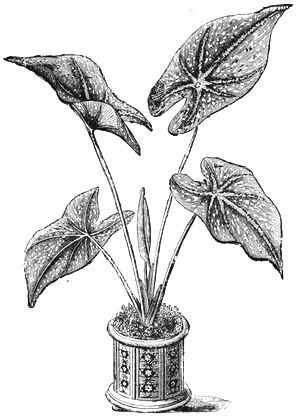
FIG. 314. CALADIUM MACULATUM.
C. maculatum (spotted).* l. oblong, acuminate, cuspidate,
cordate at base, finely spotted with clear white. Plant erect,
caulescent. South America, 1820. See Fig. 314.
C. marmoratum (marbled).* l. broad, peltate, upwards of 1ft.
long, sagittate-ovate, acute or shortly acuminate, the two basal
lobes being slightly divergent, dark bottle-green, variegated with
greyish or silvery angular spots and blotches; petioles terete,
greenish, mottled with purple. Guayaquil. SYN. Alocasia Roezlii.
The variety costata differs from the type in having the midrib
(or costa) marked out by a tapering band of silver grey.
C. Rougieri (Rougier's). l. green, with white spots; the centre
pale green, with red veins. Para, 1864.
C. rubronervium (red-nerved). A synonym of C. rubrovenium.
C. rubrovenium (red-veined).* l. greyish-green in the centre, with
red veins. Para, 1862. SYN. C. rubronervium.
C. sanguinolentum (blood-red blotched).* l. with a white midrib,
blotched with red. Amazons, 1872.
C. Schoelleri (Schoeller's). A synonym of C. Schomburgkii.
C. Schomburgkii (Schomburgk's).* l. green, with white veins.
Brazil, 1861. SYNS. C. Schoelleri and Alocasia argyroneura.
C. S. Schmitzii (Schmitz's). l., centre whitish, with green network;
midrib and veins red. 1861. SYN. Alocasia erythræa.
C. sub-rotundum (half-round). l. roundish, spotted with red and
white. Brazil. 1858.
C. Verschaffeltii (Verschaffelt's).* l. somewhat heart-shaped;
ground colour brilliant green, entire surface irregularly spotted
with bright red. Para.
C. Wallisii (Wallis's). l. dark olive green, with large irregular
shaped spots and blotches of the purest white, and the veins all
yellowish-white. Para, 1864.
The following descriptive list of hybrid varieties is, for
the most part, a selection from Mr. Bull's catalogue, and
contains all of importance:
ADOLPHE ADAMS, green leaf-ground, densely speckled with white,
and rose-coloured midribs; ADOLPHE AUDRIEN,* a very attractive
variety, with fine large richly-coloured foliage; AGRIPPINE
DIMITRY, leaves large, with white ground, narrow green margin
and veins, and pink centre; ALCIBIADE,* crimson-rayed centre,
surrounded with pale green, and blotched with pure white, green
margin; ALFRED BLEU, leaves rich green, with pure white spots,
and flesh-coloured centre; ALFRED MAME,* carmine-red, bordered
with white, and profusely spotted with rose; ALPHAND,
green, spotted with red, crimson centre; ALPHONSE KARR,
rosy-carmine centre and red spots; ARISTIDE, light green, with
crimson centre; AUGUSTE LEMONIER,* fine large leaves, with
soft green centre, and rosy-crimson ribs and veins; AUGUSTE
RIVIERE, white centre and rays upon a light green ground, with
crimson spots; BARILLET,* bright rosy-crimson centre, and ribs on
green ground, with broad margin of rich green; BARON DE
ROTHSCHILD, rich blood-red centre, and spots, on mottled green
leaf-ground; BARONNE JAMES DE ROTHSCHILD,* young leaves of
a bright rose colour, the more matured foliage soft rose, with
red veins; BARRAL, bright green, with a fine red centre, and
large spots of rose; BEETHOVEN,* ground colour white, intersected
and veined with green, centre rib delicate rose; BELLEYMEI,*
fine white variegated leaves; BELLINI, mottled pale
green ground, with rosy centre and spots; BLANQUÆRTI, dark
green, with grey veins and white spots; BUREL, dark bluish-green,
veined bright rose, marked with rosy-violet, and spotted
orange-red; CHANTINII FULGENS,* rich dark metallic-green,
with attractive crimson centre and white spots; CHELSONI,*
bright glossy green, suffused with brilliant red, and blotched
with crimson; CLIO, ground colour deep rose, shaded white,
green ribs and narrow green margin; DE CANDOLLE,* rich
green, with beautiful rose-coloured spots and creamy white centre
rays; DE HUMBOLDT, a fine variety, having glossy green leaves,
spotted with scarlet; DEVINCK, leaves heart-shaped, delicate pink
centre ribs, interspersed with white spots; DR. BOISDUVAL,
centre rayed crimson, snow-white blotches on a green ground;
DR. LINDLEY,* crimson centre, the green ground marked with
rose blotches; DUC DE CLEVELAND, deep red centre, surrounded
with pea-green, largely spotted with red; DUC DE MORNY,* deep
green leaf borders, with large crimson-rayed centre; DUC DE
NASSAU,* brilliant red centre and ribs, white spot on emerald
green leaf borders; DUC DE RATIBOR, green ground, with red
midribs marked with white spots; DUCHARTRE, leaf-ground
white, flushed rose, green veins and red spots; EDOUARD ANDRE,
crimson centre, and rose blotches; EDOUARD MOREAUX, mottled
green ground, with lake centre; EDOUARD RODRIGUES,* deep
carmine, margined with light green, and spotted with rose;
E. G. HENDERSON,* green, with transparent rose spots and mottled
crimson rays and centre; ELVINA, bright green, blotched with
red, grey centre and veins; EMILIE VERDIER,* leaves of a light
transparent rose colour, spotted with red; ETOILE D'ARGENT,*
bright green, midribs and veins creamy-white, shaded with grey;
EUCHARIS, rose centre, with violet reflections, margined with
bright green, very fresh and bright looking; FELICIEN DAVID,*
centre of leaf dark carmine, surrounded with white and beautifully
veined with red on a light green ground; GOLDEN QUEEN, leaves
large, pale golden yellow, uniform in colour; GRETRY, carmine
centre, with white spots on a dark green ground; HELEVY, white
midribs and marked with crimson blotches, on a green ground;
HEROLD,* dark carmine veins, surrounded by light green, blotched
with pure white, and margined dark green; IBIS ROSE,* a magnificent
variety, with beautiful rich rose-coloured foliage, extremely
attractive; ISADORA LEROY, rich metallic green, with crimson-red
centre rays; JULES DUPLESSIS, bright rose centre, shaded with
rich red and bordered with green; JULES PUTZEYS, rich green,
with crimson midrib and veins, centre mottled grey, and the whole
surface blotched with red; LAINGII,* reddish-carmine centre,
surrounded with yellowish-green, the whole of the leaf sprinkled
with white; LAMARTINE, deep crimson centre, with white and
red spots; LA PERLE DU BRéSIL,* exceedingly attractive, large
leaves, white, delicately tinted with rose, midrib and veins dark
green; LEPLAY, leaves attractively marked with white, and
beautifully veined with rosy-violet; LOUISE DUPLESSIS, red rays
and veins on a white ground, green margin; LUDDEMANNII,* deep
crimson ribs, the leaf blotched with magenta and white, border
pea green; MADAME ALFRED BLEU, deep green, with large white
blotches, and broad crimson-scarlet veins; MADAME ALFRED
MAME, light green, covered with large white spots, rosy-carmine
centre; MADAME DE LA DEVANSAYE, leaves white, shaded rose,
and veined with red and green; MADAME DOMBRAIN,* centre and
ribs pale yellowish-green, shaded rose, surface covered with large
white and rose spots; MADAME FRITZ KœCHLIN,* white ground,
with violet-rose ribs and green veins, a beautiful dwarf-growing
variety; MADAME HEINE,* silvery white, stained and edged with
pale green, distinct; MADAME HUNNEBELLE, leaves veined with
light garnet colour on a white ground, and margined with green
veins; MADAME JULES MéNOREAU, fine large leaves, with white
centre tinted rose, veined rich bright rose, and margined green;
MADAME LAFORGE, centre and ribs reddish-crimson, with green
margin; MADAME MARJOLIN SCHEFFER,* a beautiful variety, with
white foliage, charmingly veined and netted with pure rosy-lake;
MADAME WILLAUME, a charming variety, with transparent leaves,
of a delicate salmon-rose colour; MARQUIS DE CAUX, red centre
and veins, with rose blotches on margins; MARTERSTYGINUM,
crimson centre and white spots; MERCADANTE, pale copper-coloured
centre and veins, bordered with green; MEYERBEER,*
white leaf-ground, green veins, and red midribs; MINERVE,*
silvery white midrib and rays, surrounded with greyish white,
green margin, with snowy white spots; MITHRIDATE, ground
colour crimson-lake, with darker ribs, and dark bronze-green
margin; MONSIEUR A. HARDY, rich reddish-carmine veins on
white ground, tinted with rose and spotted with green; MONSIEUR
J. LINDEN,* a fine large whitish leaf, with metallic reflections,
coral-rose veins, and reticulated green border; MRS.
LAING,* white ground, deep rose centre and veins, green
margin; MURILLO,* centre and veins metallic-red, with large
crimson blotches, broad margin of lustrous bronzy-green;
NAPOLEON III.,* flamed crimson centre, with forked rays, and carmine
spots on green ground; ONSLOW, deep rosy-crimson centre,
with broad green margin, spotted with rose; PAILLET, crimson
centre, broad green margin, splashed with crimson, and dotted with
white; PAUL VERONESSE, large leaves, with pinkish-white centre,
deep scarlet ribs, and broad green margin; PHILIPPE HERBERT,
deep mottled crimson rays, and clear white margin, spotted
with crimson; PICTUM, green blotched, and spotted with white;
PRINCE ALBERT,* dark emerald green, rich crimson midrib,
radiating from centre to margins, the intervening spaces spotted
with white; PRINCE OF WALES,* a very handsome variety, with
large golden-yellow leaves; PRINCESS ALEXANDRA,* rosy-salmon
leaf, green centre rib, bordered with magenta-crimson, green
margin, with light pink chain; PRINCESS OF TECK,* ground
colour bright orange-yellow, the veins suffused with deep red;
PRINCESS ROYAL, leaves of a golden ground, with crimson centre;
PYRRHUS, centre and ribs deep crimson, pea-green margins;
QUADRICOLOR, centre of leaf pale yellowish-green, ribs white,
edged rosy-crimson, and margined green; RAMSAU, centre and
ribs deep reddish-crimson, surface covered with white blotches,
shaded red; RAULINII, rich red centre and veins, finely spotted
with white; REGALE, silvery grey centre, rosy-red ribs, spotted
with vermilion-red; REINE MARIE DE PORTUGAL,* violet-rose
centre, with red veins, dark maroon zone, and green border, very
handsome; REINE VICTORIA,* green veins and margins, spotted or
marbled with white and rich crimson; ROSSINI, large leaf, with
pale centre, pink midribs, and red blotches; ROUILLARD, glossy
green margin, pale green centre, midrib and rays rich violet-plum,
the whole leaf spotted crimson; SANCHONIANTHON, crimson
centre, deep glossy crimson ribs, and pea-green margin; SIEBOLDII,
rich green, with fiery-red crimson-rayed centre, green spaces,
spotted with claret red; SOUVENIR DE MADAME E. ANDRE,* large
deep green leaves, marbled with pure white, veins fine rosy
crimson; SPONTINI, pea-green, with white spots, and rosy-pink
ribs and veins; THIBAUTII, fine large leaf, with rich crimson veins
on a red ground; TRICOLOR, edges of leaves grey-green, intersected
with dark green, centre red-lake, carmine midribs;
TRIOMPHE DE L'EXPOSITION,* crimson centre, with red ribs, and
green border; VERDI, crimson-lake centre with small green zone
and apple-green margin; VESTA, greenish-white veins, surrounded
with crimson, the whole of the leaf spotted bright rose; VICOMTESSE
de la ROQUE-ORDAN, red midrib, and rays bordered
with white, the margin beautiful emerald green; VILLE DE
MULHOUSE, a beautiful variety, with greenish-white leaves, shaded
rose, and rich green centre; VIRGINALE,* clear shining white,
veined with dark bluish-green, a handsome variety.
CALAIS. See Microseris.
CALAMAGROSTIS (from calamos, a reed, and agrostis,
grass). ORD. Gramineæ. An extensive genus of grasses,
for the most part hardy. Panicle more or less spreading;
spikelets compressed, one-flowered; empty glumes two, sub-equal,
lanceolate, pointed, keeled, awnless. They thrive in
any ordinary garden soil. Seeds may be sown during
autumn.
C. lanceolata (lanceolate). fl. purple, spreading in all directions;
panicle erect, loose, much branched. July. Culms about 3ft.
high, smooth, slender. Britain (moist woods and hedges). (Sy.
En. B. 1724.)
C. stricta (upright). fl. brown, spreading in all directions; panicle
erect, close. June. Culm about 2ft. high, very slender, smooth.
England, &c. (bogs and marshes), but very rare. (Sy. En. B. 1725.)
CALAMANDER WOOD. See Diospyros quœsita.
CALAMINT. See Calamintha.
CALAMINTHA (from kalos, beautiful, and mintha,
mint). Calamint. ORD. Labiatæ. A genus of hardy
herbaceous plants, having the following essential characters:
Calyx two-lipped; stamens diverging; upper lip
of corolla nearly flat; tube straight. Rather pretty plants,
with Thyme-like flowers, well suited for furnishing rock
gardens. They grow in almost any garden soil. Increased
by seeds, cuttings, or divisions of the roots, in spring.
C. Acinos (Acinos). Basil Thyme. fl. bluish-purple, variegated
with white and dark purple, disposed in whorls, one on each
flower-stalk. July and August. l. acute, serrate. Stems
branched, ascending, leafy. h. 6in. England. Annual. SYNS.
Acinos vulgaris and Thymus Acinos. (Sy. En. B. 1048.)
C. alpina (alpine). fl. purplish, almost sessile, four to six in a
whorl, June to September. l. petiolate, roundish or ovate, slightly
serrated. h. 6in. S. Europe, 1731. A freely branched, tufted
plant.
C. grandiflora (large-flowered).* fl. purplish, 1½in. long, in loose
racemes; throat much inflated. June. l. petiolate, ovate,
acute, coarsely toothed, rounded at the base, 2in. to 3in. long.
Herbaceous stems branched at the base, and decumbent. h. 1ft.
1596.
C. patavina (Paduan). fl. pale or purplish-red, rather large.
June. l. petiolate, ovate, acute, pubescent. h. 6in. to 9in. S.
Europe, 1776.
CALAMPELIS. See Eccremocarpus.
CALAMUS (from kalamos, a reed; old Greek name
used by Theophrastus). ORD. Palmeæ. An elegant genus of
stove palms. Flowers small, usually of a rose or greenish
colour, clustered upon branching spikes, each branch
having a separate spathe, which is not large enough to
enclose it. Fruit one-seeded, and covered with smooth,
shining scales. Leaves pinnate. Stems reed-like, 1in. to
2in. in thickness. When in a young state, these palms
are most effective as drawing or diningroom decorations;
and, when in a more mature condition, they are excellent
as stove ornaments and for exhibition purposes. They
are all of slender growth, and of easy culture in a compost
of equal parts loam and vegetable mould; a copious supply
of water being needed to keep them in a flourishing state.
Propagated by seeds. C. Rotang, C. viminalis, and several
other species furnish the canes usually employed in this
country for the bottoms of chairs, couches, &c.
C. accedens (yielding). l. long, arching, dark green, pinnate;
pinnæ long, narrow, closely set; petioles with slender black
spines. India. A rare, but elegant, slender-growing, miniature
tree.
C. adspersus (scattered). l. pinnate; pinnæ 6in. to 8in. long,
narrow, deep green; petioles about 6in. in length, sheathing at
the base, clothed with long, slender, black spines. Stem not
much stouter than a large wheat straw. h. 20ft. Java, 1866.
C. asperrimus (very rough).* l. pinnate, 3ft. to 12ft. long; pinnæ
1ft. to 2ft. in length, 1in. in breadth, pendent, light green, upper
side with two rows of hair-like spines; petioles broadly sheathing
at the base, densely armed with long, stout, black spines. Java,
1877. A beautiful species, which attains a considerable size.
(I. H. 275.)
C. ciliaris (fringed).* l. pinnate, clothed with a quantity of soft
hair-like bristles; petioles sheathing at the base. Stem erect and
slender. India, 1869. From the plume-like habit of the leaves,
it makes a splendid plant for table decoration, as well as being
a beautiful specimen for exhibition.
C. draco (dragon). l. 4ft. to 6ft. in length, beautifully arched,
pinnate; pinnæ 12in. to 18in. long, narrow, slightly pendent,
dark green; petioles sheathing at base, armed with long, flat,
black spines. h. 20ft. to 30ft. India, 1819. A very handsome
species, with a robust constitution.
C. fissus (cleft). l. ovate in outline, pinnate, when young bright
cinnamon; leaflets pendent, dark green, bearing on the upper side
a few black hair-like bristles; petioles armed with dark, stout
spines. Borneo. A very ornamental species.
C. flagellum (whip-like). l. 6ft. to 8ft. in length when fully grown,
pinnate; pinnæ pendent, about 1ft. in length and 1in. in breadth,
dark green, furnished on the upper side with two rows of long,
white, hair-like spines; petioles sheathing, copiously armed with
stout white spines, much swollen at the base, and tipped with
black. Stem slender.
C. Hystrix (bristly). l. pinnate; petioles spiny. A compact-growing
and very graceful species.
C. Jenkinsianus (Jenkins's). l. pinnate, gracefully arched, 2ft. to
6ft. long; pinnæ 6in. to 12in. long, 1in. broad, rich dark green;
petioles slightly sheathing at the base, armed with long flat spines.
Sikkim.
C. leptospadix (slender-spadix).* l. pinnate; pinnules about ⅓in.
wide, and from 6in. to 12in. long, subulately acuminate; upper
surface with three bristle-bearing ribs; a few smaller bristles
are disposed along the midrib underneath; margins finely and
regularly toothed with small ascending bristles; petiole channelled,
tomentose towards the base, bearing three or four solitary
needle-like spines, about 1in. long. India. A rare species, and
described as one of the most graceful.
C. Lewisianus (Lewis's).* l. ultimately spreading, 2ft. to 6ft. long,
pinnate: pinnæ equidistant, ½in. broad, and front 13in. to 15in.
long: veins on the upper surface bristled, under surface smooth;
margins rough, with appressed bristles; petioles white, with a
broad, sheathing, blackish-brown base, densely armed with long,
flat, black spines. India. A fine, but somewhat rare, species.
C. Rotang (Rotang). l. pinnate, from 3ft. to 4ft. in length.
very gracefully arched; pinnæ 6in. to 12in. long, less than 1in.
broad; upper side dark green, with two rows of hair-like spines;
petioles and stems armed sparingly with stout, slightly reversed
spines. Stems slender. India. When young, especially, this plant
is very handsome.
C. Royleanus (Royle's).* l. pinnate, arching; pinnæ very numerous,
narrow, pendent, deep green; petioles with few spines, dark
green. North-west Himalayas.
C. spectabilis (showy).* l. pinnate, with a few pairs of smooth
linear-lanceolate, three-ribbed leaflets, measuring 6in. to 8in. long;
petioles green, furnished with numerous short conical white
spines, tipped with brown. Malacca. A slender-growing species.
C. verticillaris (whorled). l. pinnate, with a very ornamental
plume-like appearance; pinnæ long, broad, drooping; petioles
with the spines arranged verticillately. Malacca. This beautiful
species is extremely rare.
C. viminalis (twiggy).* l. 1ft. to 2ft. long, pinnate; pinnæ about
6in. long, narrow, light green; petioles sheathing, densely armed
with long flat white spines. When only 3ft. or 4ft. in height, its
spiny whip-like spikes of flowers are often produced. Stem
slender. h. 50ft. Java, 1847.
The following are other, but less-known, species: australis, elegans,
micranthus, niger, oblongus, and tenuis.
CALAMUS AROMATICUS. An old name of
Acorus Calamus (which see).
CALAMUS ODORATUS. An old name of Andropogon
Schœnanthus (which see).
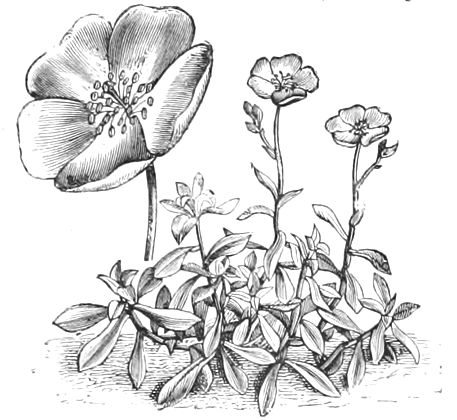
FIG. 315. CALANDRINIA MENZIESII,
showing Flower and Habit.
CALANDRINIA (in honour of L. Calandrini, an
Italian botanist, who lived in the beginning of the
eighteenth century). ORD. Portulaceæ. A rather large
genus of fleshy, glabrous, annual or perennial, herbaceous
plants, some fourteen or fifteen species growing in Australia,
the rest occurring in the New World. Flowers usually
rose or purple, solitary, or in terminal umbels or racemes.
Leaves quite entire, radical or alternate. Only four or five
species are cultivated in this country; these are treated
as half-hardy annuals—with the exception of C. umbellata,
which is best treated as a biennial—and as such they are
extensively grown in small gardens, with most satisfactory
results. They should be sown in the spots where they are
intended to flower, as transplantation, unless performed
with more than ordinary care, will considerably check their
growth or result in loss. Their flowers only expand
during bright sunshine, and, consequently, they are less
grown than they otherwise would be. The plants thrive in
a light sandy soil. C. umbellata may be sown in a pan,
placed in a cold frame, in May or June; and when the
plants are large enough to handle, they should be potted
off, or placed out in colonies where they are to bloom.
C. discolor (two-coloured). fl. bright rose, with a yellow tuft
of stamens in the centre, 1½in. across; raceme long. July,
August. l. fleshy, obovate, attenuated at the base, pale green
above, purple beneath. h. 1ft. to 1½ft. Chili, 1834. (B. M. 3357.)
C. grandiflora (large.flowered).* fl. rosy, about 2in. across;
calyx spotted; raceme simple, loose. Summer. l. fleshy, rhomboid,
acute, petiolate. Stem suffruticose. h. 1ft. Chili, 1826.
(B. R. 1194.)
C. Menziesii (Menzies').* FL. deep purple-crimson, from ½in. to
1in. across, terminal and axillary, solitary. June to September.
l. elongated, spathulate, much attenuated at the base. Stems
much branched, prostrate. California, 1831. SYN. C. speciosa.
See Fig. 315. (B. R. 1598.)
C. nitida (shining). fl. rose-coloured, about 2in. across; raceme
leafy, many-flowered. Summer. l. oblong-spathulate, sub-acute,
glabrous, attenuated at the base, 1in. to 2in. in length. h. 6in.
Chili, 1837. A very pretty hardy annual, forming a tuft from 4in.
to 6in. across.
C. speciosa (showy). A synonym of C. Menziesii.
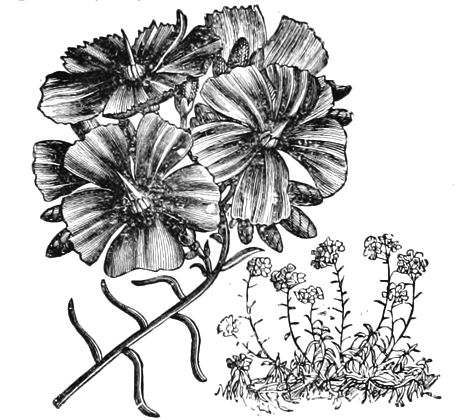
FIG. 316. CALANDRINIA UMBELLATA, showing Flower and Habit.
C. umbellata (umbellate).* fl. of a dazzling magenta-crimson,
about as large as a sixpence; corymb cymose, terminal, many-flowered.
Summer. l. radical, linear, acute, pilose. h. 6in.
Peru, 1826. A very charming half-hardy biennial. See Fig. 316.
(P. M. B. 12, 271.)
Other species occasionally met with are: compressa, micrantha,
and procumbens; they are, however, inferior to those described
above.
CALANTHE (from kalos, beautiful, and anthos, a
flower). ORD. Orchideæ. SEC. Vandæ. A very handsome
genus of stove terrestrial orchids. They may be characterised
as robust-growing plants, producing large,
broad, many-ribbed, or plaited leaves, which are, with one
or two exceptions, evergreen, and long spikes, bearing
many flowers, distinguished by their calcarate lip, which is
attached to the column, and by the eight thick, waxy pollen
masses adhering to a separate gland. Calanthes should
be special favourites with amateurs, as, in the first place,
they produce an abundance of showy flowers, which last a
long time in perfection; and, secondly, because they are
so easily managed. In potting these plants, it will be
necessary to depart from the usual style of potting orchids,
and, instead of elevating them above the rim of the pot
upon a cone of peat and sphagnum, they must be kept
below the rim, as in potting ordinary plants. In place
of the usual soil and moss, these plants should have a
mixture of loam, leaf mould, and peat, broken up rough,
to which may be added some silver sand and dried cow
manure. During the growing season, they require abundant
supply of water, and in winter even this element must be
administered freely to the evergreen kinds; whilst the
deciduous ones, on the contrary, enjoy a thorough rest after
blooming. Good drainage is essential to all. Little more
need be said upon the cultivation of Calanthes during
the summer months. When growing, they enjoy strong
heat and plenty of moisture; but, when growth is complete,
a cooler situation is most beneficial. They are subject to
the attacks of various insects, which must be continually
searched for, and, when found, destroyed; for, if neglected
in this particular, the bold and handsome leaves will be
much disfigured, and rendered far from ornamental. Propagated
by suckers and divisions. About forty species are
known, of which the following are a selection:
C. curculigoides (Curculigo-like). fl. beautiful orange-yellow,
disposed in an erect spike. Summer and autumn. l. large, evergreen,
plaited. h. 2ft. Malacca, 1844. (B. R. 33, 8.)
C. Dominyi (Dominy's).* fl., sepals and petals lilac; lip deep
purple. This fine hybrid is a cross between C. Masuca and C.
veratrifolia. (B. M. 5042.)
C. furcata (forked). fl. creamy white, very freely produced;
spikes erect, 3ft. long. June to August. Luzon Isles, 1836. An
excellent exhibition plant.
C. Masuca (Masuca).* fl., sepals and petals deep violet colour,
with an intense violet-purple lip; numerously produced on spikes
2ft. long. June to August. India, 1838. (B. M. 4541). The variety
grandiflora differs from the type in its greater size both of spike
and individual flower; the gigantic spikes are from 3ft. to 4ft.
high, and continue blooming for three months.
C. Petri (Peter Veitch's).* fl. whitish-yellow. Said to be very
like C. veratrifolia, but bearing leaves a little narrower, and a
system of five curious sulcate yellowish calli on the base of the lip,
without the single lamella and teeth which are proper to that
species. Polynesia, 1880.
C. pleiochroma (many-coloured). fl. whitish, purplish, ochre,
orange. Japan, 1871.
C. Regnieri (Regnier's). fl., sepals and petals white; lip rosy-pink;
middle lobe short, wedge-shaped, and emarginate. Pseudo-bulbs
jointed, Cochin China. fausta is a fine variety, with the
base of the tip and column a warm crimson.
C. Sieboldii (Siebold's).* fl. yellow, large; spikes erect. l. broad,
dark green, plaited. h. 1ft. Japan, 1837. An elegant evergreen
dwarf-growing species. (R. H. 1855, 20.)
C. Textori (Textor's). fl. cream-white, washed with violet on
the petals and column, as well as on the base of lip, where the
calli are brick-red, changing later on to ochre-colour, excepting
the white-lilac base of sepals and petals and the column; lip very
narrow. Japan, 1877.
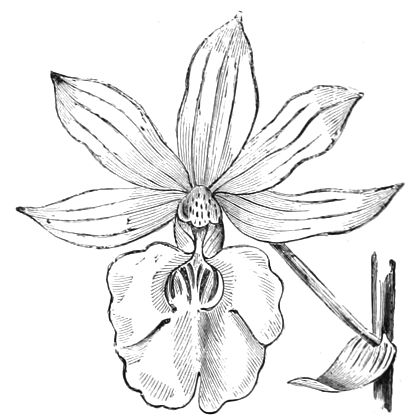
FIG. 317. SINGLE FLOWER OF CALANTHE VEITCHII.
C. Veitchii (Veitch's).* fl. rich bright rose, with a white throat;
spikes often attaining a height of 3ft., and bearing an immense
quantity of flowers. Winter. l. large, plaited, light green,
deciduous. Pseudo-bulbs flask-shaped. This very beautiful
hybrid is the result of a cross between C. vestita and C. rosea
(SYN. Limatodes rosea). See Fig. 317. (B. M. 5375.)
C. veratrifolia (Veratrum-leaved).* fl. pure white, except the
green tips of the sepals and the golden papillæ on the disk of the
labellum; spikes 2ft. to 3ft. high, freely produced on well-grown
plants. May to July. l. 2ft. or more long, dark green, broad,
many-ribbed, with wavy margins. India, 1819. See Fig. 318.
(B. M. 2615.)
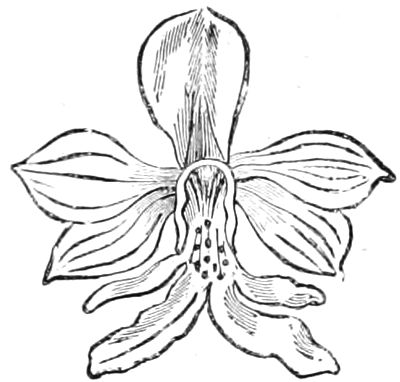
FIG. 318. SINGLE FLOWER OF CALANTHE VERATRIFOLIA.
C. vestita (clothed).* fl., sepals and petals pure white, numerously
produced in a many-flowered, nodding spike. l. deciduous.
Pseudo-bulbs large, whitish, h. 2½ft. Burmah. (B. M. 4671.)
The varieties of this species are very numerous.
C. v. igneo-oculata (fire-eyed).* fl., base of the column purplish,
over which is a dazzling fire-colour, the blotch in the base of the
lip of the same colour. Borneo, 1876.
C. v. nivalis (snowy).* fl. pure white, entirely destitute of any
colour on the lip. Java, 1868.
C. v. rubro-oculata (red-eyed).* fl. delicate white, with a blotch
of rich crimson in the centre; upwards of 2in. across; spikes long,
drooping, having a white downy covering, and rising from the base
of the silvery-green pseudo-bulbs, when the latter are without
leaves. October to February.
C. v. Turneri (Turner's).* fl. pure white, with rose-coloured eye,
larger, and produced on longer flower-spikes than the other kinds;
form of flowers more compact. Java. This is considered by
some authorities, to be a distinct species.
CALATHEA (from kalathos, a basket; in reference
to the basket-shaped stigma, or to the leaves being worked
into baskets in South America). ORD. Scitamineæ. This
genus of very ornamental-leaved stove plants is distinguished
from Maranta by mere botanical characters;
and the two genera are often confounded. Flowers in terminal
spikes, bracteate; perianth six-cleft, outer segments
lanceolate, inner ones blunt and irregular; stamens three,
petal-like. Leaves large, springing from the contracted
stem, near the root. They delight in a rich, loose, open
soil, consisting of peat, loam, and leaf soil, in about
equal proportions, with the addition of a good sprinkling
of sand, to keep it open and porous. The mixture should
be used in a rough, lumpy state, so that the roots,
which are of large size, may be able to travel with freedom.
Nearly all the species admit of easy increase by
division. July is a favourable time to set about it, or it
may be carried out any time between that and the spring
months. In order to make the necessary separation without
damaging the roots, the plants should be shaken out
from the soil, when they may be divided into as many
pieces as there are separate crowns. Whether an increased
stock be desired or not, Calatheas require fresh soil
annually; and, if not reduced by division, they become
much too thickly foliaged to properly develop, unless
they are shifted into larger-sized pots, which can always
be done if large specimens are required. When making
divisions, see that each crown is well furnished with roots,
so that they may at once commence sending up fresh
young foliage. Although Calatheas require an abundant
supply of water while growing, a stagnant moisture is most
injurious; good drainage is, therefore, essential. To have
the leaves in fine, healthy condition, plenty of atmospheric
moisture must be maintained during their growth; and, if
syringing is resorted to for the purpose of securing this,
clear soft water should be used, or an unsightly deposit will
be the result, by which the beauty of the plants, unless they
are frequently sponged, will be spoiled. These plants require,
in addition to plenty of moisture, moderate shade
during the summer, as they dislike strong sunshine, and
may, therefore, be grown among ferns, under creepers, in
situations that would be of little use for other purposes.
Calatheas are not subject to insects if properly supplied
with water while growing, and a sufficiently moist atmosphere
is at all times maintained; but, if either of these
are lacking, red spider soon put in an appearance, and
quickly disfigure the leaves.
C. applicata (inclined). fl. white. Brazil, 1875. SYN. Maranta
pinnato-picta. (B. H. 1875, 18.)
C. arrecta (erect).* l. rich satin-green on the upper side, and
heavy ruby colour on the under side. Ecuador, 1872. A fine
species, with a very elegant growth. (I. H. 1871, 77.)
C. Bachemiana (Bachem's). l. silvery, with green lines and
blotches. Brazil, 1875.
C. Baraquinii (Baraquin's).* l. ovate-lanceolate; ground colour
bright green, relieved by beautiful bands of silvery white.
Amazons, 1868.
C. bella (handsome).* l. greyish-green, with the margins and two
series of central patches deep green. Brazil, 1875. SYN. Maranta
tessellata Kegeljani.
C. crocata (saffron-coloured). fl. orange. Brazil, 1875.
C. eximia (choice). 1857. SYN. Phrynium eximium. (R. G.
686.)
C. fasciata (banded).* l. 8in. to 12in. long, 6in. to 8in. wide,
broadly cordate; ground colour bright green, with broad bands
of white running across from midrib to the margin; the under
side pale green, tinged with purple. h. 1ft. Brazil, 1859.
(R. G. 255.)
C. hieroglyphica (hieroglyphic). l. broadly obovate, obtuse;
ground colour rich dark velvety green, which, towards the midrib,
shades off into light emerald green; primary veins oblique, and
the spaces between them ornamented with irregular streaks
and bars of silvery white; under surface of a uniform dark vinous
purple. Columbia, 1873. Dwarf and distinct. (I. H. 1873, 122.)
C. illustris (bright).* l. somewhat obovate; upper surface of a
bright pea-green, streaked with transverse bands of a deeper
green; midrib pink, with two irregular blotches of white traversing
the leaves from base to point, midway between the margin
and costa; under surface deep purple. Ecuador, 1866.
C. Kerchoviana (Kerchove's).* l. cordate, oblong, obtuse, shortly
and abruptly acuminate, greyish-green, with a row of purplish
blotches on each side of the midrib. h. 6in. Brazil, 1879.
SYN. Maranta leuconeura Kerchoviana.
C. Legrelliana (Le Grell's). l. very dark green, relieved by a
feathery band of white, extending the whole length between the
midrib and margin. Ecuador, 1867.
C. Leitzei (Leitze's). l. oblong-lanceolate, deep metallic green,
and shining on the upper surface, with feather-like markings of
deeper colour, purplish-violet beneath. Brazil, 1875. (R. G. 935.)
C. leopardina (leopard).* l. oblong, pale or yellowish-green,
marked on each side of the costa with several oblong acuminate
blotches of deep green. h. 2ft. Brazil, 1875. (R. G. 893.)
C. leuconeura (white-nerved). A synonym of Maranta leuconeura.
C. leucostachys (white-spiked). h. 1ft. A fine species, allied to
C. Warscewiczii. Costa Rica, 1874. (B. M. 6205.)
C. Lindeni (Linden's).* l. oblong, 6in. to 12in. long, deep green,
with blotches of yellowish-green on each side of the midrib;
under surface purplish-rose, through which the markings of the
upper side are visible. Peru, 1866. Very handsome and free-growing.
(I. H. 1871, 82.)
C. Luciani (Lucian's). l. shining green, the midrib festooned
with silvery white. Tropical America, 1872.
C. Makoyana (Makoy's).* l. oblong, somewhat unequal-sided,
6in. to 8in. long, upwards of 4in. broad; outer margin deep green,
the central portion semi-transparent, beautifully blotched with
creamy-yellow and white; the central part is also ornamented
between the transverse veins with oblong blotches of deep green;
petioles slender, purplish-red. Tropical America, 1872. SYN.
C. olivaris. (G. C. 1872, p. 1589.)
C. Massangeana (Massange's).* l. beautifully covered with rich
marking, presenting a somewhat similar appearance to the wings
of certain butterflies. The outer portion is olive-green; the
middle, on both sides of the costa, of a delicate silvery-grey colour,
from which the whitish side veins run out in a well-defined
and regular manner; the portion of the leaf surrounding the
silvery centre is ornamented with large blotches of dark velvety
purplish-maroon, occasionally shaded with brownish-crimson;
the whole of the leaf being marked with silky and sparkling
reflections. Brazil, 1875. It is of neat habit, growing in close
tufts, its ample foliage covering the ground.
C. medio-picta (middle painted). l. oblong-acute, tapering to the
base, dark green, with a feathered white central stripe. Brazil,
1878.
C. micans (glittering).* l. oblong-acuminate, 2in. to 3in. long, a
little over 1in. in breadth, dark shining green, with a white
feathery stripe down the centre. Tropical America. The
smallest species of the genus with a spreading habit, and
quickly forming dense and beautiful tufts. There is a variety
of this named amabilis. Brazil.
C. nitens (shining).* l. oblong, green, with a bright glossy surface,
marked on each side of the midrib with a series of oblong acute
bars, alternating with numerous lines of a dark green on a pale
bright green ground. Brazil, 1880. An elegant and small-growing
plant.
C. olivaris (olive-green). Synonymous with C. Makoyana.
C. ornata (ornamented).* l. oblong acuminate, 6in. to 9in. long,
3in. or more broad, yellowish-green, relieved by broad transverse
bands of dark olive-green; under side tinged with purple. h. 1ft.
to 2ft. Columbia, 1849.
C. o. albo-lineata (white-lined). Columbia, 1848. SYN. Maranta
albo-lineata.
C. o. majestica (majestic). Rio Purus, 1866. SYN. Maranta
majestica.
C. o. regalis (royal). Peru, 1856. SYNS. Maranta regalis and
M. coriifolia.
C. o. roseo-lineata (rosy-lined).* h. 1ft. 1848. SYN. Maranta
roseo-lineata.
C. pacifica (Pacific). l. oblong ovate, of a fine dark green on the
upper surface, olive-brown beneath. Eastern Peru, 1871.
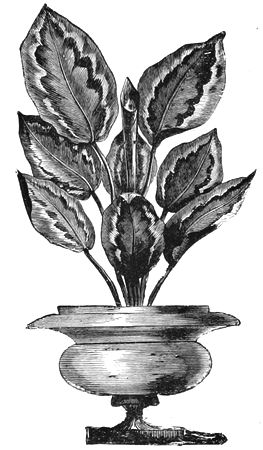
FIG. 319. CALATHEA VEITCHII.
C. pardina (leopard).* fl. yellow, large, handsome, produced in
great abundance. l. 10in. to 18in. long, 5in. to 6in. wide, ovate,
pale green, with dark brown blotches on each side the midrib, and
which occur at regular intervals the whole length of the leaf.
New Grenada. (F. d. S. ii., 1101.)
C. prasina (leek-green). l. with a yellow-green central band.
Brazil, 1875.
C. princeps (magnificent).* l. 12in. to 18in. long; centre rich dark
green, broadly margined with yellowish-green, purple beneath.
h. 2ft. to 3ft. Peru, 1869. A superb large-growing species.
C. pulchella (pretty). l. bright green, with two series of deep
green blotches, alternately large and small. Brazil, 1859. This
much resembles C. zebrina in general appearance, but is not so
strong a grower, and the leaves are not so dark.
C. rosea-picta (rose-coloured). l. somewhat orbicular, of a rich
glossy green; midrib of a lovely rose-colour, between the margin
and midrib are two irregular bands of the same colour, traversing
the entire length of the leaf. Upper Amazon, 1866. (R. G. 610.)
C. Seemanni (Seemann's). l. about 1ft. long, 6in. broad, satiny
emerald-green; midrib whitish. Nicaragua, 1872.
C. splendida (splendid). l. large, oblong-lanceolate, deflexed,
10in. to 18in. long, rich dark olive-green, with distinct blotches of
greenish-yellow. Brazil, 1864.
C. tubispatha (tube-spathed).* l. somewhat obovate, obtuse,
6in. to 12in. long, pale greenish-yellow, beautifully relieved by a
row of rich brown oblong blotches, set in pairs on each side of
the midrib, throughout the entire length of the leaf. West
Tropical America, 1865. An elegant species. (B. M. 5542.)
C. Vanden Heckei (Van den Heck's).* l. rich dark glossy green,
shaded with transverse bands of a lighter green; midrib broadly
margined with silvery-white, two bands of the same colour traverse
the leaf from base to apex, midway between midrib and
margin; under side of a uniform purplish-crimson. Brazil, 1865.
Very distinct and handsome.
C. Veitchii (Veitch's).* l. large, ovate elliptic, over 1ft. long, very
rich glossy green, marked along each side the midrib with crescent-shaped
blotches of yellow, softened by shades of green and
white; under surface light purple. h. 3ft. W. Tropical America,
1865. Probably the handsomest of the genus. See Fig. 319.
C. virginalis (virginal). l. large, broadly ovate, light green;
midrib white, also with a white band on each side; the under side
of a greyish-green. Amazons, 1857. Habit dwarf and compact.
C vittata (striped). l. ovate-acuminate, 9in. long, very light
green, with narrow transverse bars of white on each side of the
midrib. Brazil, 1857.
C. Wallisii (Wallis's).* l. rather large, of a rich and pleasing light
green, beautifully relieved with a ray of rich dark green. South
America, 1867. A handsome and distinct sort, but somewhat
rare.
C. W. discolor (two-coloured). l. bright velvety green, with the
centre and margins grey. South America, 1871.
C. Warscewiczii (Warscewicz's).* l. 2ft. long, about 8in. wide,
deep velvety green in colour, relieved by a feathery stripe of yellowish-green
on either side the midrib, and extending from the
base to the apex. h. 3ft. Tropical America, 1879. A fine sort.
(R. G. 515.)
C. Wioti (Wiot's). l. bright green, with two series of olive-green
blotches. Brazil, 1875.
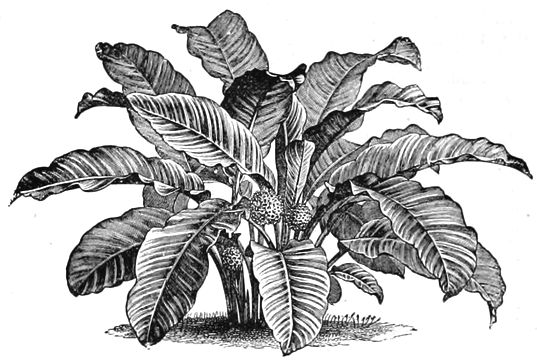
FIG. 320. CALATHEA ZEBRINA.
C. zebrina (zebra).* l. 2ft. to 3ft. long, 6in. to 8in. wide, beautiful
velvety light green on the upper side, barred with greenish-purple;
under side of a dull greenish-purple. h. 2ft. Brazil, 1815. This
is a very old inhabitant of our stoves, and, for general usefulness
is not much surpassed. See Fig. 320. (B. R. 385.)
CALATHIAN VIOLET. See Gentiana Pneumonanthe.
CALCARATE. Spurred, or having a spur.
CALCEOLARIA (from calceolus, a little slipper, in
allusion to the form of the corolla; the form calceolarius,
shoemaker, probably chosen to include a reference to F.
Calceolari, an Italian botanist of the sixteenth century).
Slipperwort. ORD. Scrophularineæ. A genus of hardy or
half-hardy shrubs, sub-shrubs or herbs. Peduncles one
or many-flowered, axillary or terminal, corymbose; corolla
with a very short tube; limb bilabiate; upper lip short,
truncately rounded, entire; lower lip large, concave, slipper-shaped.
Leaves opposite, sometimes three in a whorl,
rarely alternate.
SHRUBBY SECTION. In addition to the widely-known
utility of this class for bedding purposes, they are fine
decorative plants when well grown, and useful alike in
conservatory or dwelling house. It will be found more
convenient to grow these in a pit or frame, as in such
places they are less liable to the attacks of fly, and make
sturdier growth. If large plants are required, cuttings
should be taken in August, placed in a cold frame facing
the north, in sandy soil, and, when rooted, potted off
into 3in. pots. They should then be placed in a light
sunny frame, where they may remain until the middle of
February. The points should then be pinched out. When
the plants break, they must be shifted into 48-sized pots.
If there are from four to six breaks to each plant, it
will be sufficient; but, should such not be the case, the
plants must be stopped again, when the requisite number
will probably be obtained. Directly the roots touch the
pots, the plants should be transferred to 7in. or 8in. pots,
in which they will flower, and the shoots must be tied
out so as to develop fully. Every effort should be exerted
to keep the foliage green to the base of the plants, and
they should be fumigated on the first appearance of green
fly. As the flower-spikes are thrown up, weak liquid
manure, applied two or three times a week, will prove
beneficial. For potting, the following compost is most
suitable: One-half good fibrous loam, one-eighth thoroughly
rotted manure, and the remainder leaf soil, with enough
sharp sand to keep the whole open. During frosty weather,
of course, it will be necessary to protect the frames with
mats, and to water judiciously, to avoid damping. Those
plants intended for bedding will not require to be repotted,
but should be inserted, about 3in. apart, in sandy soil, in
a cold frame. The tops must be taken off early in March;
and from the middle of April to the middle of May, they
may be planted out where they are to remain. Should
frosty weather, accompanied by drying winds, ensue, the
plants will require the protection of inverted flower-pots,
with pieces of slate or crock placed over the holes. A good
soil, abundantly enriched with rotten manure, is most
desirable for them.
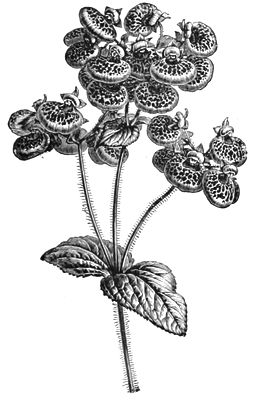
FIG. 321. HERBACEOUS CALCEOLARIA.
Varieties. These are very numerous. The best of them
are the following: BIJOU, dark red, very free; GAINE'S
YELLOW, rich deep yellow, extremely free; GENERAL
HAVELOCK, crimson-scarlet, very fine; GOLDEN GEM,
bright yellow, perhaps the best; SPARKLER, crimson-gold,
dwarf; VICTORIA, dark maroon, very attractive.
HERBACEOUS SECTION. These, like the preceding, are
very useful, both for house and conservatory decoration
(see Fig. 321). A packet of seed from a first-class firm will,
if properly managed, produce a good percentage of excellent
flowers. The seed may be sown from June to
August, when large batches are required (when only one
sowing is made, July will be the best month), on pans
of light, sandy soil, which should be soaked with water
before sowing. Care must be taken to make the surface
of the soil level, and also to sow the seed as evenly as
possible. It is better not to cover with soil, but a sheet
of glass should be laid over the pan, which must be
placed in a shady part of the greenhouse or cold frame
until the young plants show the first leaf. The glass
can then be gradually removed. When large enough to
handle, the seedlings must be pricked out, about 2in.
asunder, in pans or boxes, and placed in a close, shaded
situation. As soon as of sufficient size, they must be
placed singly in 3in. pots, returned to the frame, kept close
for a few days, and as near the glass as possible, to make
them sturdy. When necessary, they should be shifted into
5in. pots, in which they may be kept through the winter;
or the later batches may be placed in small pots. By the
end of October or early in November, the plants will be
strong and fit for wintering; at this stage, the best place
for them is in a dry, frost-proof pit, or on an airy shelf of
the greenhouse, giving them sufficient water to prevent
flagging. All dead leaves must be removed. On the first
appearance of green fly, the plants should be fumigated
with tobacco. From the end of January onwards, in order
to encourage growth, the plants should be removed into
7in. or 8in. pots, giving plenty of drainage, and a compost
consisting of one-half good light fibrous loam, one-fourth
thoroughly decayed sheep manure, and one-fourth
leaf soil, to which must be added sufficient coarse sand to
keep the whole open. After potting, the plants must be
again placed in the same position, and, as they require it,
plenty of room given. Careful attention to watering is
necessary, as they must not be allowed to get dry. Air
must be given on all suitable occasions. The flower-stems,
as they require it, should be supported with small neat
sticks. About May, the plants will commence to bloom,
and continue to do so for a couple of months. The best
flowers should be selected, and cross-fertilised with a
camel-hair pencil, in order to produce a good strain of
seed for future sowing. The attention of horticulturists
appears to be almost wholly confined to the innumerable
hybrids raised from amplexicaulis, arachnoidea, corymbosa,
integrifolia, purpurea, thyrsiflora, and a few others. Very
few pure species are seen in cultivation, although most of
them are well worth growing.
C. alba (white). fl. white; peduncles elongated, racemose,
dichotomous. June. l. linear, remotely serrated. Plant suffruticose,
clammy, and resinous. h. 1ft. Chili, 1844. Shrubby.
(B. M. 4157.)
C. amplexicaulis (stem-clasping).* fl. yellow, umbellately
fascicled; corymbs terminal; pedicels pilose. l. stem-clasping,
ovate-oblong, acuminated, cordate, crenately-serrated, pilose.
h. 1½ft. Peru, 1845. Half-hardy, herbaceous. (B. M. 4300.)
C. arachnoidea (cobwebby).* fl. purple; peduncles terminal,
twin, elongated, dichotomous. June to September. l. lingulately-oblong,
a little toothed, narrowing downwards into long winged
petioles, which are connate at the base; about 5in. long, wrinkled.
Stem herbaceous, branched, spreading, clothed with white cobwebbed
wool, as well as the leaves and other parts, except the
corolla. h. 1ft. Chili, 1827. (B. M. 2874.)
C. bicolor (two-coloured).* fl. in large terminal cymes; upper lip
yellow, small; lower lip large, gaping, conchiform, the front clear
yellow, the back white. July to November. l. broadly-ovate,
sub-acute, coarsely crenated, wrinkled. h. 2ft. to 3ft. Stem much
branched, woody at the base. Peru, 1829. SYN. C. diffusa.
(B. R. 1374.)
C. Burbidgei (Burbidge's).* fl. rich yellow, with large lower lip.
Autumn and winter. l. ovate, distinctly obtusely biserrate, sub-acute,
with a narrow wing running down the petiole; both surfaces
downy. h. 2ft. to 4ft. This is a handsome hybrid between
C. Pavonii and C. fuchsiæfolia, raised by F. W. Burbidge, Esq.,
Trinity College Botanic Gardens, Dublin, 1882.
C. chelidonioides (Chelidonium-like). fl. yellow. June. h. 1ft.
Peru, 1852. Annual.
C. corymbosa (corymbose). fl. yellow, marked with purple dots
and lines, corymbose. May to October. l., radical ones ovate
and cordate, petiolate, doubly crenated, white beneath; cauline
ones few, cordate, half amplexicaul. Stems herbaceous, leafless
at bottom, but dichotomous and leafy at top. Plant hairy. h.
1ft. to 1½ft. Chili, 1822. (B. R. 723.)
C. deflexa (bending). Synonymous with C. fuchsiæfolia.
C. diffusa (spreading). A synonym of C. bicolor.
C. flexuosa (flexuose). fl., corolla yellow; lower lip large,
ventricose; peduncles axillary and terminal, many-flowered;
pedicels umbellate. l. cordate, unequally and bluntly crenated,
petiolate, remote. Plant shrubby, rough, beset with glandular
hairs. h. 3ft. Peru, 1847. (B. M. 5154.)
C Fothergillii (Fothergill's).* fl., upper lip of corolla yellowish;
lower lip sulphur colour, having the margins spotted with red,
four times the size of the upper one; peduncles scape-formed,
one-flowered. May to August. l. spathulate, quite entire, pilose
above, about 1in. long. Stem herbaceous, a little divided near
the root. h. 3in. to 6in. Falkland Islands, 1777. (B. M. 348.)
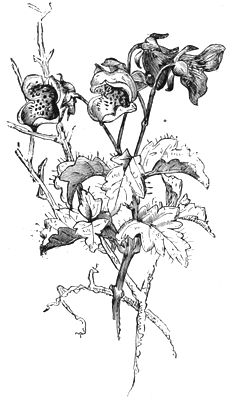
FIG. 322. CALCEOLARIA VIOLACEA.
C. fuchsiæfolia (Fuchsia-leaved).* fl. yellow, disposed in terminal
panicles; upper lip nearly as large as the lower one. Spring.
l. lanceolate, glandless. h. 1ft. to 2ft. Peru, 1878. This is a
very handsome winter-flowering shrubby species, but it is difficult
to keep the foliage in anything like good condition. SYN. C.
deflexa. (Garden, March, 1879.)
C. Henrici (Anderson-Henry's). fl. yellow, disposed in terminal
corymbose cymes; both lips of corolla much inflated, so as
to entirely close the mouth. l. rather large, elongate-lanceolate,
downy beneath. h. 2ft. Andes of Cuenca, 1865. Shrubby evergreen.
(B. M. 5772.)
C. hyssopifolia (Hyssop-leaved).* fl. in terminal cymes; upper lip
clear yellow, about half the width of the lower, and meeting closely
to it; lower lip clear canary-yellow above, nearly white beneath.
May to August. l. sessile, linear-lanceolate, sub-acute, entire.
h. 1ft. to 2ft. Chili. Shrubby. (B. M. 5548.)
C. integrifolia (entire-leaved). Synonymous with C. rugosa.
C. lobata (lobed). fl. yellow, disposed in erect, loosely-branched
cymes; lip curiously folded on itself, and spotted on the inner
surface. l. palmately lobed. h. 9in. Peru, 1877. Herbaceous
species. (B. M. 6330.)
C. Pavonii (Pavon's).* fl. rich yellow and brown, in large terminal
clusters; upper lip small; lower lip large, widely gaping. l.
perfoliate, the petioles connected by a broad wing, running all
their length; blade broadly ovate, coarsely serrate-dentate; both
sides covered with soft down. h. 2ft. to 4ft. Herbaceous. (B. M.
4525.)
C. pinnata (pinnate). fl. sulphur-coloured; peduncles twin or
tern, panicled. July to September. l. pinnate; leaflets or segments
toothed, lower ones pinnatifidly toothed. h. 2ft. to 3ft.
Peru, 1773. Annual, clothed with clammy hairs. (B. M. 41.)
C. pisacomensis (Pisacomanese). fl. rich orange-red, large;
lower lip of corolla so bent upwards as to close the mouth;
cymes produced from all the upper axils, forming long leafy
panicles. l. ovate, obtuse, coarsely crenate. h. 3ft. Peru, 1868.
A sub-shrubby perennial, of strong, erect habit.
C. plantaginea (Plantain-like).* fl. yellow; lower lip of corolla
large, hemispherical; upper one small, bifid; scapes generally
two to three-flowered, pilose. August. l. radical, ovate, rhomboid,
rosulate, serrated. Plant herbaceous, stemless, pubescent.
h. 1ft. Chili, 1826. (B. M. 2805.)
C. purpurea (purple). fl., corolla of an uniform reddish-violet,
rather small; corymbs terminal, many-flowered. July to September.
l. wrinkled, hispid; radical ones cuneate-spathulate,
serrated, quite entire behind, petiolate, acutish; cauline ones
cordate, decussate, with a few long scattered hairs on their
surfaces. Stems herbaceous, many from the same root. h. 1ft.
Chili, 1826. There are several hybrids between this and other
species. (B. M. 2775.)
C. rugosa (wrinkled). fl. yellow; panicles terminal, corymbose,
pedunculate. August. l. ovate-lanceolate, or lanceolate, denticulated,
wrinkled, opaque, rusty beneath; petioles winged,
connate. h. 1ft. to 1½ft. Chili, 1822. Shrubby species. SYN.
C. integrifolia. (B. R. 744.) Two varieties of this are angustifolia,
and viscosissima.
C. scabiosæfolia (Scabious-leaved).* fl., corolla pale yellow;
lower lip large, ventricose; peduncles terminal, corymbose.
May to October. l., lower ones pinnate; superior ones pinnatifid,
three-lobed, or simple, the terminal segment always the largest.
Plant rather hairy. Peru, 1822. Evergreen trailer. (B. M. 2405.)
C. tenella (small). fl. golden yellow, with orange-red spots
within the lower lip; corymbs few-flowered. l. opposite, ovate,
acuminated. h. 6in. Chili, 1873. Hardy, herbaceous. (B. M.
6231.)
C. thyrsiflora (thyrse-flowered). fl. yellow, downy inside;
thyrse terminal, crowded; peduncles compound, umbellate.
June. l. linear, attenuated at both ends, serrate-toothed, sessile,
2in. long, and two lines broad. h. 1ft. to 2ft. Chili, 1827. Shrubby,
clammy. (B. M. 2915.)
C. violacea (violet).* fl., corolla pale violet, spotted with deeper
violet beneath; lip spreading in a campanulate manner;
peduncles terminal by threes, corymbose; pedicels one to two-flowered.
June. l. petiolate, ovate-lanceolate, coarsely serrated,
white beneath. h. 2ft. Chili, 1853. Shrubby. (B. M. 4929.) See
Fig. 322.
CALCEOLATE. Shaped like a slipper or round-toed
shoe.
CALDASIA. See Galipea heterophylla.
CALDCLUVIA (named after Alexander Caldcleugh,
F.R.S. and F.L.S., who collected and sent to this country
many plants from Chili). ORD. Saxifrageæ. A greenhouse
evergreen tree. Flowers panicled, terminal. Leaves
opposite, simple, serrate, glabrous; pedicels jointless;
stipules twin, sub-falcate, toothed, caducous. It thrives
well in a compost of peat and loam, and may be propagated
by cuttings of the half-ripened shoots, planted
in sand, under a hand glass, and placed in a very gentle
bottom heat.
C. paniculata (panicled). fl. white. June. Chili, 1831.
CALEA (from kalos, beautiful; referring to the flowers).
ORD. Compositæ. A genus of stove evergreen herbs or
small shrubs. Pappus hairy; receptacle paleaceous; involucre
imbricated. They thrive in a compost of peat and
loam. Side shoots root readily, if placed in sand, under
glass, and with bottom heat; seeds may be sown in March.
Warmer parts of New World.
CALEANA (named after G. Caley, Superintendent of
the Botanical Garden, St. Vincent). ORD. Orchideæ. A
genus of greenhouse terrestrial orchids, natives of Australia.
Flowers few, greenish-brown; column broad, thin, concave;
sepals and petals narrow, reflexed; lip posticous, peltate,
unguiculate, highly irritable. In fine weather, or if left
undisturbed, this lip bends back, leaving the column uncovered;
but in wet weather, or if the plant is shaken, the
lip falls over the column, securely fastening it. Leaves
solitary, radical. They are of easy culture, in a compost of
fibry peat, lumpy loam, and a little charcoal.
B. major (greater). fl. green-brown. June. 1810.
C. minor (less). fl. green-brown. June. 1822.
C. nigrita (blackish-flowered). fl. dark.
CALECTASIA (from kalos, beautiful, and ektasis, extension;
in allusion to the star-like perianth segments).
ORD. Juncaceæ. An elegant greenhouse suffruticose
perennial, with dry, permanent, starry flowers. It thrives
best in a compost of peat and loam. Propagated by
divisions.
C. cyanea (blue). fl. bright blue, solitary, on short terminal
branches. June. l. needle-shaped, sheathing at the base.
Australia, 1840. (B. M. 3834.)
CALENDULA (from calendæ, the first day of the
month; in allusion to the almost perpetual flowering).
Marigold. ORD. Compositæ. A genus of showy greenhouse
and hardy annuals, and some few greenhouse shrubby
species. Pappus none; receptacle naked; involucre of one
or two series of sub-equal, acuminate, generally scarious-edged
bracts. The shrubby species are propagated by
cuttings, and thrive best in a compost of loam and peat..
For culture of the annuals, see Marigold.
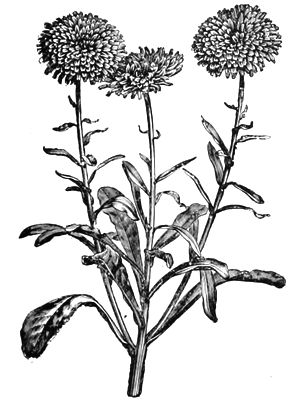
FIG. 323. FLOWERS OF CALENDULA OFFICINALIS.
C. arvensis (field). fl.-heads yellow. Pericarps urceolate, obovate,
smooth; outer lanceolate-subulate,
muricated at back.
h. 2ft. Europe, 1597. Hardy
annual.
C. maderensis (Madeira).*
fl.-heads orange. Pericarps
cymbiform, incurved, muricated;
outer five ovate-lanceolate,
membranous,
toothed at edge. h. 2ft.
Madeira, 1795. Hardy. SYN.
C. stellata.
C. officinalis (officinal).*
Common Marigold. fl.-heads
orange. June to September.
Pericarps cymbiform, all incurved,
muricated. h. 3ft.
South Europe, 1573. Hardy
annual. See Fig. 323.
C. o. prolifera (proliferous).
A garden form, analogous
to the Hen and Chickens
Daisy. See Fig. 324.
C. stellata (stellate). A
synonym of C. maderensis.
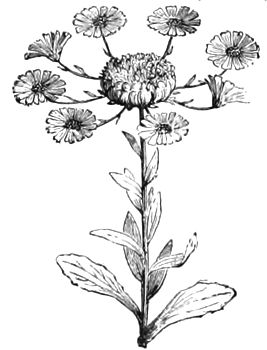
FIG. 324. FLOWER OF CALENDULA
OFFICINALIS PROLIFERA.
CALICO BUSH. See Kalmia latifolia.
CALIFORNIAN EVERGREEN REDWOOD.
See Sequoia sempervirens.
CALIFORNIAN MAYBUSH. See Photinia
arbutifolia.
CALIFORNIAN PEPPER-TREE. See Schinus
Molle.
CALIFORNIAN POPPY. See Platystemon
californicus.
CALIPHRURIA (from kalos, beautiful, and phroura,
prison; from the handsome spathe inclosing the flowers).
ORD. Amaryllideæ. Pretty half-hardy greenhouse bulbs.
Tube of perianth narrow, funnel-shaped, nearly straight;
limb regular, stellate; stamens furnished with a bristle
on each side. They thrive best in a compost of sandy loam,
a little peat, leaf soil, and sand. Propagated by offsets.
After flowering, the plants should have a slight heat; and,
when starting into new growth, should be repotted.
C. Hartwegiana (Hartweg's).* fl. greenish-white; umbels seven-flowered;
scape nearly terete, glaucous. May. l. petiolate, depressed,
ovate, sub-plicate, green. h. 1ft. New Grenada, 1843.
(B. M. 6259.)
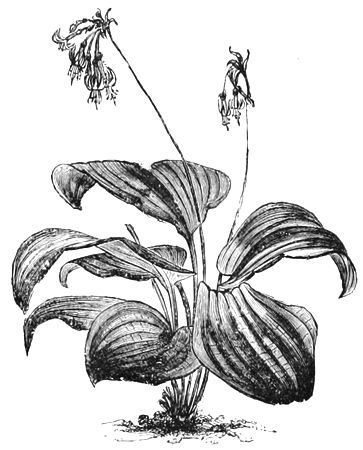
FIG. 325. CALIPHRURIA SUBEDENTATA.
C. subedentata (rarely-toothed).* fl. white, funnel-shaped, disposed
in a truss, on a long scape. Winter. l. stalked, ovate-oblong.
h. 1½ft. Columbia, 1876. See Fig. 325. (B. M. 6289.)
CALISAYA BARK. See Cinchona Calisaya.
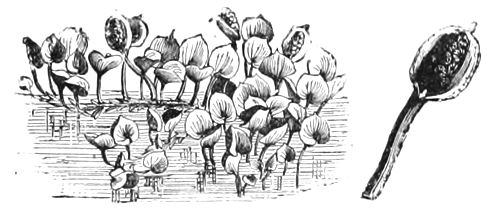
FIG. 326. CALLA PALUSTRIS, showing Habit and detached
Inflorescence.
CALLA (from kallos, beauty). SYN. Provenzalia.
ORD. Aroideæ (Araceæ). A monotypic genus. The species
is a native of Central and Northern Europe and North
America, has creeping or floating stems, and cordate entire
leaves. C. palustris is sometimes grown in collections
of aquatics or bog plants; and, although, perhaps, hardly
worth cultivating as a pot plant, is well worth a place in
open ornamental waters. Richardia æthiopica is frequently
erroneously called Calla æthiopica.
C. palustris (marsh). fl., spadix protected by a flat white
spathe, upper ones female, lower hermaphrodite, with numerous
thread-like stamens. l. stalked, emerging from a sheath. h. 6in.
Hardy aquatic, naturalised here and there in Britain. See
Fig. 326.
CALLI. Small callosities, or little protuberances.
CALLIANDRA (from kallos, beauty, and andros, a
stamen; referring to the elegant long, silky, purple or white
stamens). ORD. Leguminosæ. A genus of beautiful stove
evergreen shrubs. Flowers usually borne on stalked globose
heads; corollas small, hidden by the numerous filaments
of the stamens. Leaves bipinnate; leaflets varying
in size and number. They thrive in a compost of peat
and loam. Propagated by cuttings of rather firm young
wood, inserted in sand, under a hand glass, in heat.
C. Harrisii (Harris's). fl. pink; peduncles axillary, fascicled,
glandularly downy. February. l. bipinnate; leaflets obovate,
falcate, downy; stipules small, falcate. Branches puberulous.
h. 10ft. Mexico, 1838. (B. M. 4238.)
C. Tweediei (Tweedie's).* fl. red; peduncles longer than the
petioles; bracts linear. March and April. l. with three or
four pairs of pinnæ; leaflets numerous, oblong-linear, acutish,
ciliated, pilose beneath; stipules ovate, acuminate. Branches
and petioles pilose. h. 6ft. Brazil, 1840. (B. M. 4188.)
CALLICARPA (from kallos, beauty, and karpos,
fruit; referring to the beautiful berries). SYN. Porphyra.
ORD. Verbenaceæ. A genus of stove, greenhouse, or
nearly hardy evergreen shrubs, closely allied to Petræa.
Flowers inconspicuous, disposed in axillary cymes; corolla-tube
short, with the limb four-lobed. Fruit a very
ornamental small juicy berry or drupe. The following
mode of culture has been recommended: "After the old
plants have been cut back in the spring, and started into
growth, the young shoots will strike as readily as a Fuchsia,
and with exactly the same treatment. In order to make
good plants, short-jointed cuttings should be selected; and,
as soon as these are struck, they should be potted into 2½in.
pots, using a compost of equal parts loam and peat, with a
little charcoal and river sand. When they commence to
grow, after being potted, remove to a pit or house with a
temperature ranging from 60deg. to 75deg. Pinch out the
tops of the plants as soon as they have three pairs of leaves,
and whenever each of the laterals has made two pairs of
leaves, pinch out their points, and continue this operation
with all the rest of the shoots till the beginning of August,
at the same time keeping off all the flower-buds. The next
shift will be into 4in. or 5in. pots. They should always
have plenty of light and air, but more especially after they
come into flower."
C. americana (American). fl. red, small, in axillary cymes.
Berries violet-coloured. l. ovate-oblong, toothed, silvery beneath,
with a scurf of tomentum. h. 6ft. South America, 1724. Greenhouse.
C. japonica (Japanese). fl. pink. August. l. stalked, ovate,
oblong, acuminate, serrate. h. 3ft. Japan, 1850. Stove.
(L. & P. F. G. ii., p. 165.)
C. lanata (woolly). fl. purplish. June. Berries purple. l. sessile,
ovate, acuminate, serrate, hairy beneath. h. 3ft. India, 1788.
Stove. (S. F. d. J. 1861, p. 96.)
C. purpurea (purple). fl. insignificant, borne in cymose clusters,
upon axillary footstalks. Berries very numerous, bright glossy
deep violet coloured. l. opposite, ovate, acuminate; edges serrated;
profusely clothed, as well as the stem, with hairs. h. 3ft. India,
1822. Stove. (Garden, June, 1833.)
C. rubella (reddish). fl. red. May. l. sessile, obovate, acuminate,
cordate at the base, hairy on both surfaces. h. 2ft. China,
1822. Half-hardy. (B. R. 883.)
CALLICHROA (from kallos, beauty, and chroa,
colour; referring to the bright yellow colour of the flowers).
ORD. Compositæ. This genus is now usually included
under Layia. Hardy annual, of easy culture in common
garden soil. Seeds may be sown in March, on a slight
hotbed, and transplanted to the open border early in May;
or if sown out of doors in April, it will flower in the
autumn.
C. platyglossa (broad-tongued). fl.-heads yellow, solitary,
pedunculate; ray florets large, cuneate. Autumn. l. alternate,
sessile, ciliated. h. 1ft. California, 1836. SYN. Layia platyglossa.
(B. M. 3719.)
CALLICOMA (from kallos, beauty, and kome, hair; in
reference to the tufted heads of flowers). ORD. Saxifrageæ.
A greenhouse evergreen shrub. Flowers capitate; heads
terminating the tops of the branchlets, pedunculate, globose.
Leaves simple, coarsely serrated, stalked. Stipules membranous,
bidentate, caducous. It thrives well in a sandy
peat soil. Half ripened cuttings will root if placed in the
same sort of soil, under a hand glass.
C. serratifolia (saw-leaved). Black Wattle. fl. yellow. May to
August. l. lanceolate, acuminate, hoary beneath, attenuated at
the base. h. 4ft. New South Wales, 1793. (B. M. 1811.)
CALLIGONUM (from kallos, beauty, and gonu, a knee-joint;
in reference to its leafless joint). ORD. Polygonaceæ.
SYNS. Pallasia, Pterococcus. A genus containing about a
score species of very curious, erect, evergreen, hardy
shrubs, found growing in dry, arid, sandy spots in Northern
Africa and Western Asia. They will thrive in any well-drained
sandy loam. Cuttings will root in spring or
autumn if placed under a hand glass.
C. Pallasia (Pallas's). fl. whitish, in groups. May. fr. winged;
wings membranous, curled and toothed, succulent, acid, edible.
l. simple, alternate, exstipulate, deciduous, caducous, minute.
Shoots rush-like, smooth, green. h. 3ft. to 4ft. Caspian Sea,
1780.
CALLIOPSIS. See Coreopsis.
CALLIPRORA (from kallos, beauty, and prora, a
front; referring to the front view of the flower). ORD.
Liliaceæ. A very pretty little bulbous plant, now often
referred to Brodiæa. It thrives in a well-drained spot
on the lower flanks of rockwork, in dry, rich, sandy soil.
Propagated by offsets, which should remain on the parent
bulbs until they are a good size.
C. lutea (yellow).* Pretty Face. fl., segments purplish-brown
in the middle on the outside. Summer. l. linear-lanceolate,
acuminated, channelled, longer than the flower-stem; bracts
sheathing, scarious, much shorter than the pedicels. h. 9in.
North California, 1831. SYNS. Brodiæa ixioides, Milla ixioides.
(B. M. 3588.)
CALLIPSYCHE (from kallos, beauty, and psyche, a
butterfly; alluding to the handsome flowers). ORD.
Amaryllidaceæ. Ornamental greenhouse bulbs; requiring
shade, and a compost of rich sandy loam and leaf mould,
with good drainage. Propagated by seeds and offsets.
They should have plenty of water when growing, and,
during the winter, be kept moderately dry, but not dried
off, so as to cause them to shrivel. As the leaves wither,
water should be gradually withheld.
C. aurantiaca (orange).* fl. deep golden-yellow, several in
an umbel, spreading, much flattened sideways; stamens green,
twice the length of the perianth; scape erect, nearly 2ft. high.
l. few, oblong-acute, bright green, conspicuously veined, stalked,
6in. long. Andes of Ecuador, 1868. (Ref. B. 167.)
C. eucrosiodes (Eucrosia-like).* fl. scarlet and green; stamens
very long, incurved; scape about ten-flowered, glaucous. March.
l. few, green, tessellated, pitted, 4in. wide. h. 2ft. Mexico, 1843.
(B. R. 1845, 45.)
C. mirabilis (wonderful)*, fl. greenish-yellow, small, with stamens
three times as long as the perianth, and spreading out on all
sides; disposed in an umbellate head of about thirty blooms;
scape 3ft. high. l. about two, oblong-spathulate, green, 1ft. long.
Peru, 1868. An extremely curious plant. (Ref. B. 168.)
CALLIPTERIS (from kallos, beauty, and pteris, a
fern). ORD. Filices. A genus of stove ferns, founded
upon the sub-genus Diplazium, which is now included
under Asplenium.
CALLIRHOE (of mythological origin, from Callirhoe,
a daughter of the river-god Achelous). Poppy-Mallow.
Allied to Malva. Species belonging to this genus have
been erroneously referred to Malva and Nuttallia. ORD.
Malvaceæ. A genus of elegant annual or perennial herbs,
natives of North America. They are of extremely easy
cultivation, thriving in a compost of light, rich, sandy loam.
Propagation of the perennial species may be effected by
means of both seeds and cuttings; of the annuals, by
seeds only. Seeds should be sown in spring, either outside,
or in pans in a cold frame. Young cuttings should be
taken and dibbled in sandy soil in a frame.
C. digitata (fingered).* fl. reddish-purple; peduncles long, axillary,
one-flowered. Summer. l. sub-peltate, six to seven-parted, with
linear-entire or two-parted segments; upper ones more simple.
h. 2ft. to 3ft. 1824. Perennial. (S. B. F. G. 129, under the name
of Nuttallia digitata.)
C. involucrata (involucrate).* fl. crimson, nearly 2in. across,
loosely panicled. Summer. l. divided nearly to the base, three
to five-parted; segments narrow, lanceolate, three to five-toothed,
hairy on both surfaces. Habit procumbent; stems hairy. h. 6in.
Perennial. (G. W. P. A. 26.) SYN. Malva involucrata (B. M. 4681).
C. Papaver (Poppy-like).* fl. violet-red; sepals ovate-acute,
ciliated. Summer. l., root leaves lobed or pedate; lower stem
leaves palmato-pedate, upper digitate or simple. h. 3ft. Louisiana,
1833. Perennial. SYN. Nuttallia Papaver. (B. M. 3287.)
C. pedata (pedate-leaved). fl. cherry-red, panicled. August.
l. laciniately-pedate; upper ones trifid. h. 2ft. to 3ft. 1824.
Annual. (R. H. 1857, 148.)
C. triangulata (triangular-leaved). fl. pale purple. August. 1836.
Perennial. SYN. Nuttallia cordata (under which name it is figured
in B. R. 1938).
CALLISTACHYS. See Oxylobium.
CALLISTEMMA. See Callistephus.
CALLISTEMON (from kallos, beauty, and stemon,
a stamen; in most of the species, the stamens are of a
beautiful scarlet colour). ORD.
Myrtaceæ. Handsome greenhouse
evergreen shrubs or trees, having
the inflorescence rising from the
old branches in crowded spikes, as
in the species of Melaleuca, but
with the stamens free, as in Metrosideros.
Leaves elongated, stiff,
alternate, usually lanceolate. All
the species of this genus are very
ornamental and neat in habit.
They are well adapted for a conservatory.
The soil best suited
for them is a mixture of loam,
peat, and sand. Ripened cuttings
strike root in sand, under a hand
glass; seeds are frequently produced
on large plants, and these
may also be used to increase the
stock, but they do not produce
flowering plants for a considerable
time; whereas plants raised from
cuttings, taken from flowering
plants, come into flower when
small.
C. linearis (linear-leaved).* fl. scarlet;
calyces clothed with velvety pubescence.
June. l. linear, stiff, acute,
keeled beneath, channelled above, villous
when young. h. 4ft. to 6ft. New
South Wales, 1788.
C. lophanthus (crest-flowered). Synonymous
with C. salignus.
C. salignus (willow). fl. straw-coloured,
distinct, spicate, nearly terminal;
petals rather pubescent, ciliated;
calyx pilose. June to August.
l. lanceolate, attenuated at both
ends, mucronate, one-nerved, villous
when young, as well as the branches.
h. 4ft. to 6ft. Australia, 1806. SYN. C.
lophanthus. (L. B. C. 1302.)
C. speciosus (showy).* fl. scarlet;
calyx villous. March to July. l. lanceolate,
mucronate, flat, middle nerve rather prominent; when
young, rather silky from adpressed villi, and reddish. h. 5ft. to
10ft. West Australia, 1823. SYN. Metrosideros speciosa. See
Fig. 327. (B. M. 1761.)
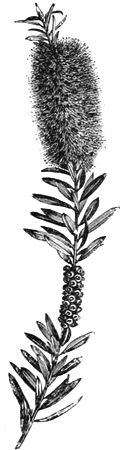
FIG. 327. CALLISTEMON
SPECIOSUS.
CALLISTEPHUS (from kallistos, most beautiful, and
stephos, a crown; in allusion to the appendages on the
ripe fruit). China Aster. SYN. Callistemma. ORD. Compositæ.
A hardy annual, requiring an open situation and
a rich loamy soil. Involucre of many fringed bracts;
receptacle naked, pitted; pappus double. Propagated
by seed, sown in a hotbed in March, the seedlings being
hardened off and transplanted in May. For culture of
these much grown plants and their varieties, see Aster.
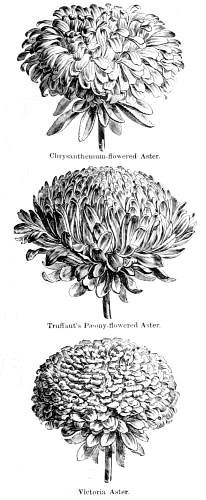
Chrysanthemum-flowered Aster.
Truffaut's Pæony-flowered Aster.
Victoria Aster.
FIG. 328. FLOWER-HEADS OF CALLISTEPHUS CHINENSIS VARS.
C. chinensis (Chinese).* fl-heads dark purple. July. l. ovate,
coarsely toothed, stalked; stem ones sessile, cuneate at the
base. Stem hispid. Branches with single heads. h. 2ft. China,
1731. See Fig. 328.
CALLITRIS (probably altered from kallistos, most
beautiful; referring to the whole plant). ORD. Coniferæ.
SYN. Frenela. Half-hardy evergreen shrubs or small trees,
with long, very slender-jointed branches, and often very
minute, scale-like, persistent leaves. Flowers monœcious.
Fruit globular, composed of four to six—rarely eight—unequal,
woody, valvate scales, with one or two seeds at
the base of each. All the species are somewhat tender,
in England, except in the more southern districts. They
require a sandy loam compost. Propagated by cuttings,
inserted under a handlight in autumn, and protected by a
cold pit; or by seeds.
C. quadrivalvis (four valved). Arar-tree; Sandarach Gum-tree.
fl., female catkin tetragonal, with four oval valves, each furnished
with a point, and two of which bear seeds. February to
May. l. flattened, articulate. h. 15ft. to 20ft. Barbary, 1815.
CALLIXENE. See Luzuriaga.
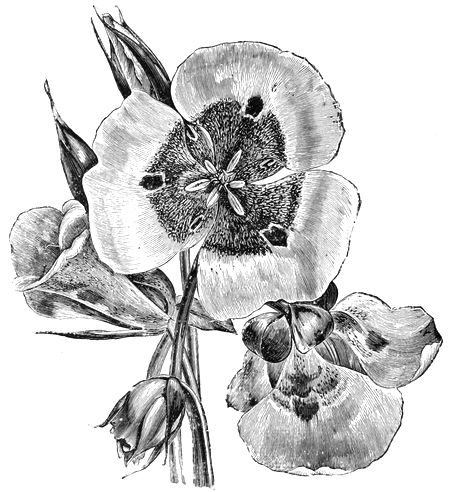
FIG. 329. FLOWERS AND LEAVES OF CALOCHORTUS VENUSTUS.
CALLOSE. Callous, hardened.
CALLOUSLY-GLANDULAR. Having hardened
glands.
CALLOUSLY-SERRATED. Having hardened serratures.
CALLUNA (from kalluno, to sweep, from the use of the
plant in brooms). Common Ling; Heather. ORD. Ericaceæ.
A small hardy spreading shrub, very common throughout
Northern and Central Europe. Corolla campanulate, four-lobed,
shorter than the calyx. For culture, see Erica.
C. vulgaris (common).* fl. disposed in long, terminal, spicate
racemes. July to September. l. trigonal, obtuse, very short,
imbricating in four rows, having the margins revolute and the
base sagittate. h. 1ft. to 3ft. Britain. There are numerous very
ornamental varieties of this species, which are admirably adapted
for planting in borders and clumps. The white-flowered (alba,
Serlii, and Hammondi), flesh-coloured (carnea), and double-flowered
varieties (fl.-pl.) are all well worth growing in shrubberies;
aurea and argentea, with gold and silver coloured shoots,
are also very ornamental. The value of the common form can
scarcely be over-estimated for planting on barren hill sides or
spaces; it affords excellent shelter for game, and food for bees.
CALLUS. The new formation at the end of a cutting
before it puts forth roots; when the Callus is formed, it
shows that the cutting is in a healthy state.
CALOCHILUS (from kalos, beautiful, and cheilos, a
lip; referring to the beauty of the labellum or lip). ORD.
Orchideæ. Interesting greenhouse terrestrial tuberous-rooted
orchids, allied to Epipactis. Sepals yellowish-green;
lip purple, covered with rich brown hairs. For culture,
see Bletia.
C. campestris (field). fl. greenish and brown. April to June.
l. narrow, oblong, pointed. Stem leafy, slender, terete. h. 9in.
Australia, 1824. (B. M. 3187.)
C. paludosus (marsh).* fl. very similar in colour to those of
C. campestris, but rather larger. May and June. l. rather
broader. h. 9in. Australia, 1823. (F. A. O., part 4.)
CALOCHORTUS (from kalos, beautiful, and chortos,
grass; referring to the leaves). Mariposa Lily. ORD.
Liliaceæ. Handsome bulbous plants. Flowers showy,
on erect scapes; perianth deciduous; three outer segments
sepaloid, three inner ones much larger and broader,
and bearded on the inside. Leaves ensiform. Bulbs
tunicated. These have not, hitherto, been generally
grown in the open air with much success; but in warm
localities and sheltered positions, they may be flowered
outside. A frame, in a sunny situation, is the best possible
place for their cultivation. Here they may be
fully exposed to the sun and air, during mild weather,
through the winter; and, when expedient, they may be
protected from excessive moisture, as that is the primary
cause of failure, rather than cold, for they are perfectly
hardy, and capable of enduring all the frost we are likely
to get. From May onwards, the lights might be wholly
removed. From the end of June to August, the bulbs will
be in bloom, when, if necessary, the flowers should be
fertilised to secure seed; and when the capsules are
forming, material assistance would be given by placing the
lights on again, allowing plenty of air. Assuming that
fresh bulbs are being planted, they should be in the soil
early in the autumn, as nothing is more prejudicial
than keeping them dry through the winter. A good depth
of soil should be provided, composed of fibrous loam, leaf
soil, and sand, in equal proportions, in a well-drained
position. The bulbs must be planted 3in. deep, and some
sand placed about them; they may be left undisturbed
for years. Of course, where no frame can be provided,
they may be planted in a well-drained, sunny position in
the same soil. They are also easily managed in pots, but
it is necessary to pot in the autumn, and keep in a frame.
Through the winter, they must never be allowed to get dry,
until the leaves are withering in the autumn, when water
may be withheld.
Propagation. This may be effected by seeds or offsets,
and by the tiny bulbs frequently produced on the upper
portion of the stem. Sow seeds in pans, in a cool house or
frame, as soon as ripe, or in the early part of the year, and
keep the plants close to the glass during their early
stages, as they are very liable to damp off. Sow thinly,
so as to enable the young plants to pass a second season in
the seed pots or pans. Early in the third season, pot off
and plant out singly, encouraging them to grow freely.
Propagation by offsets is the most usual method. With
liberal treatment, most of the species increase pretty
freely. The offsets are best removed when the plants are
in a dormant state. They may be either grown in pots or
pans, or planted out in pits or frames, until they reach
flowering size. During the season of rest, it is the safest
plan, with those in pots, to keep them in the earth in
which they were grown.
C. albus (white).* fl. snow-white, with a rich blotch, bearded and
ciliated, large, globose, pendent; umbels many-flowered, on stems
from 1ft. to 1½ft. high. California, 1832. This handsome species
is rare. SYN. Cyclobothra alba. (B. R. 1661.)
C. Benthami (Bentham's).* fl. rich yellow; petals obtuse,
densely covered with yellow hairs; stem three to six-flowered.
July, August. l. linear, much elongated. h. 4in. to 8in. Sierra
Nevada. SYN. C. elègans lutea.
C. cœruleus (bluish).* fl. lilac, more or less lined and dotted
with dark blue, the petals covered and fringed with slender hairs;
stem two to five-flowered. July. l. solitary, linear. h. 3in. to 6in.
Sierra Nevada.
C. elegans (elegant).* fl. greenish-white, purplish at base; stems
three-flowered; petals not ciliate on the margin, or sparingly so.
June. h. 8in. California, 1826. This is a rare species.
C. e. lutea (yellow). A synonym of C. Benthami.
C. Gunnisoni (Gunnison's).* fl. light lilac, yellowish-green below
the middle, with a purple band encircling the base of the
perianth; large, 2in. to 3in. in diameter. Rocky Mountains.
C. Leichtlinii (Leichtlin's). A synonym of C. Nuttallii.
C. lilacinus (lilac).* fl. pale pink, hairy below the middle, 1½in.
across, with three segments narrow and three broad; scape
slender, leafy, bearing one to five flowers. l. solitary, narrow
lanceolate, radical. h. 6in. to 8in. California, 1868. SYN. C.
umbellatus. (B. M. 5804, under the name of C. uniflorus.)
C. luteus (yellow).* fl. terminal, two or three together; exterior
segments of the perianth greenish; the inner yellow, bordered
with purple hairs. September. h. 1ft. California, 1831. (B. R.
1567.)
C. l. oculatus (eyed). fl. very charming bright yellow, with
a bold eye on the inside of each petal.
C. macrocarpus (large-capsuled). fl. very large, lavender-coloured,
on stems 1ft. high. August. California, 1826. (B. R.
1152.)
C. Maweanus (Mawe's). fl., sepals purplish, broadly obovate
acute; petals white or bluish-purple, longer than the sepals, the
surfaces more or less covered with long purplish hairs. June,
July. l. glaucous, linear. Stem three to six-flowered. h. 6in. to
10in. San Francisco, &c. (B. M. 5976, figured under the name of
C. elegans.)
C. Nuttallii (Nuttall's).* fl. large, 2½in. across; the three smaller
segments of the perianth of a greenish colour streaked with red;
the three larger segments pure white, with a purple spot at the
base on the inner surface; two or three flowers on a stalk. June.
l. linear, glaucous. h. 6in. California, 1869. SYN. C. Leichtlinii.
(B. M. 5862.)
C. pulchellus (beautiful).* fl. bright yellow, globular, drooping;
umbels three to five-flowered, on stems from 10in. to 12in. high.
Summer. California, 1832. A lovely species. (B. R. 1662.) SYN.
Cyclobothra pulchella.
C. purpureus (purple).* fl., outer segments of the perianth green
and purple outside and yellow within; inner segments purple
outside and yellow within. August. h. 3ft. Mexico, 1827.
(S. B. F. G. ser. ii., 20.)
C. splendens (splendid).* fl. clear lilac, large. August. h. 1½ft.
California, 1832. (B. R. 1676.)
C. umbellatus (umbelled). A synonym of C. lilacinus.
C. venustus (charming).* fl. large, white, nearly 3in. in diameter,
yellow at the base, deeply stained with crimson, and blotched on
each segment with crimson. h. 1½ft. California, 1836. See Fig. 329.
(B. R. 1669.) There are three varieties of this species, viz., brachysepalus
(short-sepaled), lilacinus (lilac), and purpureus (purple-flowered).
CALODENDRON (from kalos, beautiful, and dendron,
a tree). ORD. Rutaceæ. A very handsome greenhouse
evergreen tree. Flowers in terminal panicles. Leaves
large, opposite, simple, crenated. It will grow freely in
a mixture of loam and peat. Cuttings of half-ripened
wood root in sand if placed under a bell glass, in gentle
bottom heat.
C. capensis (Cape). fl. flesh-coloured; pedicels compressed,
dilated under the flower; panicle trichotomously divided.
Branches opposite, or three in a whorl. h. 40ft. Cape of Good
Hope, 1789. This is supposed to be one of the finest trees at the
Cape of Good Hope. (G. C., 1883, xix., 217.) See Fig 330, for
which we are indebted to Mr. Bull.
CALODRACON. See Cordyline.
CALONYCTION. See Ipomœa.
CALOPHACA (from kalos, beautiful, and phake, a
lentil; in allusion to the beauty of the plant, and to its
being one of the leguminous kind). ORD. Leguminosæ.
A hardy deciduous shrub, with axillary pedunculate racemes
of yellow flowers, and impari-pinnate leaves. This
is well adapted for the front of shrubberies. It is somewhat
difficult to propagate, except by seeds, which, however,
in fine seasons, are produced in abundance. Grafted
high on the common Laburnum, it forms an object at once
singular, picturesque, and beautiful, whether covered with
blossoms, or with its fine reddish pods.
C. wolgarica (Volga).* fl. yellow. May, June. l., leaflets six or
seven pairs, orbicular, velvety beneath, as well as the calyces.
h. 2ft. to 3ft. Siberia, 1786. (W. D. B. 83.)
CALOPHANES (from kalos, beautiful, and phaino, to
appear; alluding to the flowers). ORD. Acanthaceæ. A
genus of about thirty species, widely distributed, principally
in the tropical regions of both hemispheres. The
best garden plant is that mentioned below; it is an interesting
hardy herbaceous perennial, excellent for growing
in borders, in loam and peat, or sandy loam soil; and may
be propagated by dividing the roots, in March.
C. oblongifolia (oblong-leaved).* fl. blue; corolla funnel-shaped,
throat ventricose, limb bilobed, nearly equal; tube of corolla one-half
longer than the calyx; pedicels axillary. August. l. opposite,
oblong-spathulate, entire, acuminated. h. 1ft. Florida,
&c., 1832. (S. B. F. G., ser. ii., 181.)
CALOPHYLLUM (from kalos, beautiful, and phyllon,
a leaf; the leaves are large, of a beautiful green, and elegantly
veined). ORD. Guttiferæ. Fine stove evergreen
trees. Flowers disposed in axillary racemes. Leaves
furnished with numerous transverse, parallel nerves. They
thrive in a compost of loam, sand, and peat. Cuttings
of half-ripened shoots will root in sand, if placed under a
glass, in bottom heat.
C. Calaba. Calaba-tree. fl. white, sweet-scented, loosely racemose;
racemes lateral, very short. fr. green. l. obovate or
oblong, obtuse or emarginate. h. 30ft. West Indies, &c., 1780.
C. inophyllum (fibrous-leaved). fl. snow-white, sweet-scented,
loosely racemose; racemes axillary; peduncles one-flowered,
usually opposite. fr. reddish, the size of a walnut. l. oblong
or obovate, obtuse, but usually emarginate. Branches round.
Tropics of the Old World, 1793. A medium-sized tree.
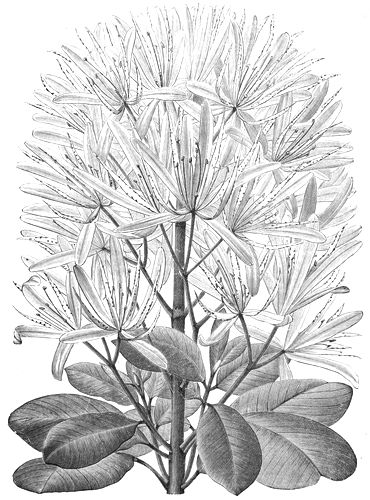
FIG. 330. CALODENDRON CAPENSIS.
CALOPOGON (from kalos, beautiful, and pogon, a
beard; in reference to the fringe on the lip). ORD.
Orchideæ. Very pretty, hardy, tuberous-rooted orchids,
admirably suited for a good shady position at the foot of
the rockwork, or for an open situation in a hardy fernery.
Propagated by offsets, taken from the tuberous roots; but
this method of increase is very uncertain. Perhaps the
only species in cultivation is the following:
C. pulchellus (beautiful).* fl. purple, with a very pretty pale
yellow beard or tuft of hairs growing from the lip; two or three to
a plant. Late summer. l. few, radical, grass-like. h. 1½ft. North
America. 1791. SYN. Limodorum tuberosum. (S. B. F. G. 115.)
CALOSANTHES INDICA. A synonym of Oroxylum
indicum.
CALOSCORDUM (from kalos, beautiful, and skorodon,
garlic). ORD. Liliaceæ. A genus of half-hardy bulbs,
allied to Allium, but now referred to Nothoscordum. For
culture, see Calochortus.
C. nerinæflorum (Nerine-flowered).* fl. rose; umbels about
twelve-flowered; spathe one-valved. June and July. l. narrow,
semi-terete, channelled above. h. 6in. Chusan, 1843. (B. R.
1847, 5.)
CALOSTEMMA (from kalos, beautiful, and stemma,
a crown). ORD. Amaryllidaceæ. Handsome greenhouse
bulbous plants, natives of New Holland. Flowers funnel-shaped,
irregular; perianth with the orifice surmounted by
a corona; stamens erect, united by their dilated bases;
ovary three-celled, many-seeded. Leaves linear-lorate.
C. album (white). fl. white. May. l. ovate, acute, 3in. to 5in.
long, 2in. to 3in. broad. h. 1ft. 1824.
C. luteum (yellow). fl. yellow. November. l. strap-shaped,
narrow. h. 1ft. 1819. (B. M. 2101.)
C. purpureum (purple). fl. purple. November. l. like those of
C. luteum. h. 1ft. 1819. (B. M. 2100.)
CALOTHAMNUS (from kalos, beautiful, and thamnos,
a shrub; in reference to the elegance of the shrubs,
from their scarlet flowers and terete leaves). ORD. Myrtaceæ.
Greenhouse evergreen shrubs. Flowers scarlet,
axillary and solitary, sessile. Leaves scattered, crowded,
terete. They require much the same culture as Callistemon.
Cuttings of young wood, firm at the base, will
root in sand, if covered by a hand glass, which requires
to be occasionally taken off and wiped, to prevent damp.
C. quadrifidus (four-cleft). fl. scarlet, somewhat secund;
bundles of stamens four, distinct, equal. July. l. glabrous (as
well as the flowers). h. 2ft. to 4ft. West Australia, 1803. (B. M.
1506.)
C. villosa (villous). fl. scarlet, quinquefid; bundles of stamens
equal, distinct. July to September. l. villous (as well as the
fruit). h. 2ft. to 4ft. West Australia, 1823. (B. R. 1099.)
CALOTIS (from kalos, beautiful, and ous, otos, an ear;
in reference to the chaffy scales of the pappus, or seed-head).
Allied to Bellium. ORD. Compositæ. Greenhouse
or half-hardy herbaceous perennials, rarely annuals, all
natives of Australia. Receptacle naked; involucre nearly
equal, many-leaved, in a single or double row. They may
be grown successfully in any ordinary garden soil. Propagated
by divisions of the root.
C. cuneifolia (wedge-leaved).* fl.-heads blue, solitary, terminal.
July and August. l. cuneate, cut, toothed at end. h. 1ft. 1819.
Greenhouse herbaceous perennial. (B. R. 504.)
CALOTROPIS (from kalos, beautiful, and tropis, a
keel; literally "beautifully twisted," apparently in reference
to the corolla of C. gigantea). ORD. Asclepiadeæ.
A genus of stove evergreen shrubs, or small trees. The
three species bear large handsome flowers, in interpetiolar
umbels. They thrive best in a mixture of loam, sand, and
peat. Young cuttings, thinly dibbled in a pot of sand,
strike root freely under a hand glass, in heat. Care must
be taken that they do not receive an excess of moisture, or
they will rot.
C. gigantea (gigantic).* fl. very handsome, a mixture of rose
and purple; corona shorter than the gynostegium, obtuse, circinately
recurved at the base; umbels sometimes, though rarely,
compound, surrounded by several involucral scales. July. l. decussate,
broad, wedge-shaped, bearded on the upper side at the
base, woolly-downy on the under side, 4in. to 6in. long, 2in. to
3in. broad. h. 6ft. to 15ft. India, &c., 1690. (B. R. i. 58.)
C. procera (tall). fl. white; petals spreading, marked at the top
by a purple spot. July. l. obovate-oblong, on short petioles,
whitish from wool. h. 6ft. Persia, 1714. (B. R. 1792.)
CALPICARPUM. See Kopsia.
CALPIDIA. A synonym of Pisonia (which see).
CALTHA (a syncope of kalathos, a goblet; in allusion
to the form of the perianth, which may be likened to
a golden cup). Marsh Marigold. ORD. Ranunculaceæ.
Hardy herbaceous perennials, of easy culture on the margin
of a piece of water, or in a marshy bog, or in the ordinary
border, where their showy blossoms look very brilliant.
Propagation is readily effected by dividing the roots, in
early spring, or in summer after flowering.
C. leptosepala (slender-sepaled).* fl. pure white, one to two upon
erect, scape-like peduncles. May, June. l. radical, cordate, the
margins nearly entire, or sometimes crenate. h. 1ft. Northwestern
America, 1827. (H. F. B. A. 1, 10.)
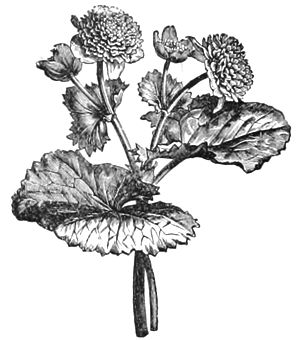
FIG. 331. CALTHA PALUSTRIS MONSTROSA PLENA.
C. palustris (marsh).* fl. golden-coloured, large; peduncles furrowed.
Spring. l. cordate, somewhat orbicular, roundly-crenate,
with rounded auricles. Stems dichotomous, erect. h. 1ft. Great
Britain. (Sy. En. B. 40.) The double forms of this species, under
the names of nana plena and monstrosa plena (see Fig. 331)
are excellent plants, and, though growing best in the immediate
vicinity of water, and most appropriate for rough scenery, they,
like the type, do very well in ordinary well-enriched soil. A
variety named purpurascens, from Southern Europe, is also
showy, more erect, and branching; the shoots and pedicels
purplish.
C. p. biflora (two-flowered). A twin-flowered variety of C. palustris.
North America, 1827. This is not quite so tall as the type,
and the flowers are rather larger.
C. p. parnassifolia (Parnassia-leaved). fl. yellow, on few-flowered
peduncles. April, May. l. cordate-ovate, crenated.
h. 3in. to 4in. North America, 1815.
C. radicans (rooting).* fl. bright yellow, several in small cyme.
April, May. l. reniform-cordate, sharply crenate-serrate, spreading.
h. 6in. Scotland. (Sy. En. B. 41.)
CALTROPS. See Tribulus.
CALTROPS, WATER. See Trapa natans.
CALUMBA, FALSE. See Coscinium fenestratum.
CALUMBA ROOT. See Jateorrhiza Calumba.
CALUMBA WOOD. See Coscinium fenestratum.
CALYCANTHACEÆ. A natural order of shrubs,
with square stems, having four woody axes surrounding the
central one. Flowers solitary, lurid; calyx of numerous
coloured sepals compounded with the petals. Leaves opposite,
entire, exstipulate. The two genera known are Calycanthus
and Chimonanthus.
CALYCANTHUS (from kalyx, kalykos, a calyx, and
anthos, a flower; in reference to the calyx being coloured,
and appearing like a corolla). Allspice. ORD. Calycanthaceæ.
A genus of hardy, deciduous, North American
shrubs. Flowers lurid purple, axillary, and terminal,
stalked, sweet-scented; stamens numerous. Leaves opposite,
oval or ovate-lanceolate, entire, generally rough on
the surface; sweet-scented. All are handsome and well
worth growing. They thrive best in a peaty compost, but
grow freely in almost any soil. Increased by layers, put
down in the summer; or by seed, sown as soon as ripe, or
in spring, in a cold frame.
C. floridus (Floridan).* Carolina Allspice. fl. with a sweet
apple scent. May. l. ovate, downy beneath, as well as the
branchlets. Branches spreading. Wood and roots smelling
strongly of camphor. h. 4ft. to 6ft. Carolina, 1726. See Fig. 332.
(B. M. 503.) There are several varieties of this species.
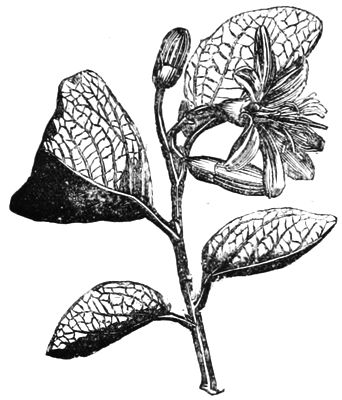
FIG. 332. FLOWERING BRANCH OF CALYCANTHUS FLORIDUS.
C. glaucus (glaucous).* fl. lurid purple, not strongly scented.
May. l. ovate-lanceolate, acuminated, glaucous and pubescent
beneath. h. 4ft. to 6ft. Carolina, 1726. SYN. C. fertilis. (B. R.
404.) C. oblongifolius is a variety with ovate-lanceolate elongated
leaves.
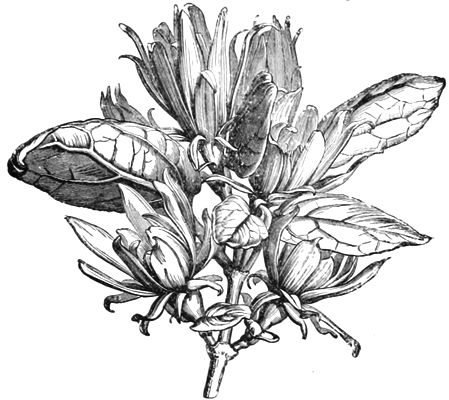
FIG. 333. FLOWERING BRANCH OF CALYCANTHUS LÆVIGATUS.
C. lævigatus (smooth-leaved).* fl. lurid purple. May. l. oblong,
thin, either blunt or taper-pointed, bright green, and glabrous,
or nearly so, on both sides, or rather pale beneath. Branches
strictly erect. h. 3ft. to 6ft. Mountains of Pennsylvania, &c.,
1806. See Fig. 333. (B. R. 481.)
C. macrophyllus (large-leaved). A garden synonym of C. occidentalis.
C. occidentalis (Western).* fl. brick-red, sweet-scented, 3in. to
4in. across, each petal about 2in. long and ½in. broad. June to
October. l. oblong or ovate-cordate, acuminate, slightly pubescent
on the veins only beneath. h. 6ft. to 12ft. California, 1831.
In California, this is called the Sweet-scented Shrub. SYN.
C. macrophyllus, of gardens. (B. M. 4808.)
CALYCIFLORÆ. A sub-division of dicotyledonous
plants, having the stamens inserted on the calyx or disk.
CALYCIFORM. Formed like a calyx.
CALYCINE. Of, or belonging to, the calyx.
CALYCOPHYLLUM (from kalyx, a calyx, and
phyllon, a leaf; in allusion to one of the teeth of the calyx
being expanded into a large petiolate coloured leaf). ORD.
Rubiaceæ. Stove evergreen shrubs, requiring a compost of
loam, peat, and a little sand and charcoal. Cuttings of
half ripe shoots will root in sand if placed under a bell
glass, in bottom heat.
C. candidissimum (whitest).* fl., corolla white, campanulate,
with a bearded throat, three together, the middle one bearing a
petiolate leaf, but the two lateral ones naked; corymbs terminal.
l. ovate, bluntly acuminated, 2in. to 3in. long. h. 30ft. Cuba,
1830.
CALYCOTOME (from kalyx, kalykos, calyx, and tome,
a section; lips of calyx fall off). ORD. Leguminosæ. A
small genus of hardy, divaricately-branched, spiny shrubs,
formerly included as a section of Cytisus. Flowers yellow,
disposed in short branched leafy fasicles. For culture,
see Cytisus.
C. spinosa (spiny). fl. yellow. June and July. l., leaflets obovate-oblong.
Branches angular, spiny. h. 5ft. to 6ft. Genoa, Corsica,
&c., 1846. (B. R. 55.)
CALYCULATE. Having bracts so placed as to
resemble an external or additional calyx.
CALYMMODON. See Polypodium.
CALYPSO (from the beautiful nymph, Calypso, or
from Greek kalypto, to conceal; in reference to its place
of growth). ORD. Orchideæ. An elegant terrestrial
monotypic genus. It thrives well in half-shady spots on
the margins of a rock garden or artificial bog, in a light,
moist, vegetable soil, composed of peat, leaf soil, and
sand, mulched with cocoa-nut fibre refuse in
winter. Propagated by offsets.
C. borealis (Northern).* fl. solitary, delicate rose and
brown, with a yellow crest on the lip; labellum longer
than the sepals, the lateral lobes cohering in their
upper part over the saccate central one, which is
usually bifid at the tip, resembling those of a Cypripedium.
Summer. l. solitary, thin, many-nerved,
ovate or cordate. Stems usually thickening into pseudo-bulbs.
h. 1ft. High latitudes of Northern hemisphere,
1820. (B. M. 2763.)
CALYPTRA. Literally an extinguisher; applied
to the hood which covers the theca in mosses.
CALYPTRANTHES (from kalyptra, a
covering, and anthos, a flower; in allusion to the
operculum of the flower). ORD. Myrtaceæ. Strong-growing
stove evergreen shrubs or small trees.
Peduncles axillary, many-flowered. Leaves feather-veined.
They are of easy culture, in a compost
of loam and peat, and may be propagated by
layers, or by cuttings, placed in heat.
C. Chytraculia (Chytraculia). fl. white, small, glomerate;
peduncles axillary and terminal, trichotomous,
panicled, and are, as well as the flowers, clothed with
rufous velvety down. March. l. ovate, attenuated at
the apex, stiffish, glabrous. h. 10ft. Jamaica, 1778.
(N. S. 1, 26.)
C. Syzygium (Syzygium). fl. white, on short pedicels;
peduncles axillary, trichotomous, many-flowered. May
to July. l. ovate, obtuse, stiff. h. 10ft. to 12ft. Jamaica,
1779.
CALYPTRARIA. See Centronia.
CALYPTRATE. Resembling an extinguisher.
CALYPTRIFORM. Shaped like an extinguisher.
CALYPTRION. See Corynostylis.
CALYPTROCALYX (from kalyptra, an extinguisher,
and kalyx, a calyx, in allusion to the form of the outer
perianth segments). ORD. Palmeæ. A monotypic genus
of stove palms. For culture, see Calamus.
C. spicatus (spiked). fl., spadices elongated, spicate, leafy at
base; spathe opening longitudinally. l. terminal, pinnatisect;
segments reduplicate, linear, acuminate, bifid at the apex;
petiole fibrous at the base. Caudex finally smooth. h. 12ft.
Moluccas. SYNS. Areca and Pinanga globosa.
CALYPTROGYNE (from kalyptra, an extinguisher,
and gyne, a woman—pistil—in allusion to the form of the
pistil). Including Calyptronoma. ORD. Palmeæ. A small
genus comprising five species of handsome stove palms,
allied to Geonoma (which see for cultivation).
C. Ghiesbreghtiana (Ghiesbreght's). fl., peduncles erect, overtopping
the leaves, bearing a single cylindrical, undivided spadix,
9in. to 12in. in length. l. pinnate, 2ft. to 5ft. long; pinnæ opposite
or alternate, sessile, of unequal breadth, the narrower ones one to
two-nerved, the broader ones six to ten-nerved, usually from six to
twelve on each side of the rachis; the intervals between the pinnæ
vary from 1in. to 2in.; petiole broadly sheathing at the base, from
a few inches to 1½ft. long. Stem short or absent. Mexico. A very
elegant dwarf-growing species. SYNS. Geonoma Ghiesbreghtiana,
G. magnifica and G. Verschaffeltii. (B. M. 5782.)
C. spicigera (ear-bearing). l. irregularly pinnate, 2ft. to 3ft.
long, 1ft. broad, deeply bifid at apex, rich bright green; petioles
short, sheathing at the base, flat on the upper side, rounded
below. Stems stout. h. 5ft. Guatemala. A very elegant
species.
C. Swartzii (Swartz's). l. equally pinnatisect; pinnæ deeply
reduplicate at the base, bifid at the top. Trunk smooth. h. 50ft.
to 60ft. Jamaica, 1878. A handsome plant when young, and
useful for general decorative purposes. SYN. Calyptronoma
Swartzii.
CALYPTRONOMA SWARTZII. See Calyptrogyne
Swartzii.
CALYSTEGIA (from kalyx, a calyx, and stege, a
covering; in reference to the two large persistent bracts
enclosing the calyx). Bearbind. ORD. Convolvulaceæ.
Hardy, glabrous, twining or prostrate herbs. Peduncles
solitary, one-flowered; corolla campanulate, five-plicate.
All the species are of easy cultivation in common garden
soil. Propagation may be effected by dividing the plants;
or by seeds, sown in spring.
C. dahurica (Dahurian).* fl., corolla of a rosy-purple; sepals
lanceolate, acute, the two outer ones broadest; peduncles tetragonal,
tomentose; bracts broad-ovate, acute, longer than the
calyx. July. l. glabrous or hairy, oblong-cordate, having the
margins and nerves on the under side tomentose. Dahuria, 1826.
(B. M. 2609.)
C. inflata (inflated). Synonymous with C. sepium incarnata.
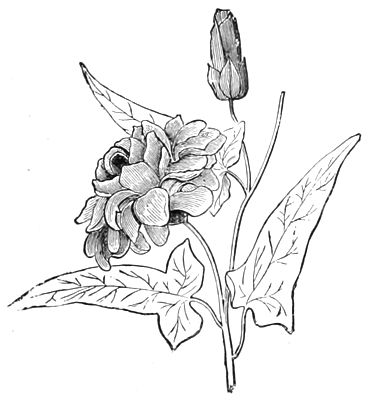
FIG. 334. FLOWERING BRANCH OF CALYSTEGIA PUBESCENS
FLORE-PLENO.
C. pubescens flore-pleno (downy, double-flowered).* fl. 2in.
to 3in. across; petals long, narrow, wavy, and reflexed, flesh-colour,
but ultimately bright rose; pedicels 2½in. to 3½in. long.
Summer and autumn. l. alternate, hastate, downy. China, 1844.
See Fig. 334.
C. sepium (hedge). Common Bindweed. fl. white, sometimes
tinged with red; peduncles tetragonal, exceeding the petioles;
bracts cordate, keeled, acute, longer than the calyx, but one-half
shorter than the corolla. Summer. l. sagittate or cordate, very
acute; hind lobes obtuse, or truncate, entire. Britain. A very
troublesome weed. (Sy. En. B. 924.) There is a variety named
incarnata, with rose-coloured flowers. North America. SYN.
C. inflata. (B. M. 732.)
C. Soldanella (Soldanella-like).* Sea Bells. fl. pale red, with five
longitudinal, yellowish plaits, large; peduncles angular, angles
winged; bracts large, ovate, blunt, mucronate, generally shorter
than the calyx. June. l. rather fleshy, reniform, entire or a little
angular. Sea-shores, Britain. This pretty species can only be
grown with success in a very sandy soil. (Sy. En. B. 925.)
CALYTHRIX (from kalyx, a calyx, and thrix, a hair;
in reference to the lobes of the calyx, which each end in a
long hair). ORD. Myrtaceæ. A genus of very pretty and
interesting greenhouse Heath-like shrubs, natives of Australia.
Flowers small; bracteoles two under each flower;
they are either free or joined together at the base, sometimes
in the form of an operculum. Leaves scattered,
crowded, opposite, full of dots, axillary, solitary, almost
sessile. They grow well in a mixture of loam, peat, and
sand, with good drainage and firm potting. Cuttings,
made from young shoots, will root in April or May, if
placed in sand, under a bell glass, in a cool house.
C. ericoides (Heath-like). A synonym of C. tetragona.
C. glabra (glabrous). A synonym of C. tetragona.
C. tetragona (tetragonal).* fl. white; bracts one-half shorter
than the tube of the calyx. l. scattered, petiolate, glabrous;
stipules deciduous. h. 2ft. 1825. SYNS. C. ericoides, C. glabra.
(B. R. 409.)
C. angulata, aurea, and breviseta are other species which have
been introduced, but are not worth house room when that described
above is grown.
CALYX. The external whorl of floral leaves.
CAMARIDIUM (from kamara, an arched roof; in
reference to the arched tip of the stigma). ORD. Orchideæ.
A pretty stove orchid, allied to Cymbidium. It thrives
best if grown in a shallow basket, or raised above the
surface of the pots with sphagnum and broken pots.
C. ochroleucum (yellowish-white).* fl. yellowish-white.
July. l. ligulate. Pseudo-bulbs oblong, compressed, smooth.
h. 1ft. Trinidad, 1823. SYN. Cymbidium ochroleucum. (B. M.
4141.)
CAMAROTIS. See Sarcochilus.
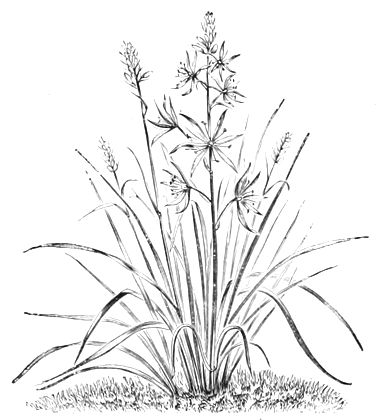
FIG. 335. CAMASSIA ESCULENTA.
CAMASSIA (from Quamash, so called by the North
American Indians, who eat the bulbs). SYN. Sitocodium.
ORD. Liliaceæ. A small genus (two species) of handsome
bulbous plants. Perianth of six segments, slightly connected
at base, and spreading out horizontally, but not equally.
Leaves narrow, about 1ft. long, grooved down the inside.
They thrive best in a sheltered, partially-shaded situation,
but will do fairly well in almost any ordinary good garden
soil. A compost of loam and leaf mould, with a liberal
mixture of sharp sand, suits them best. They need not
be disturbed for several years; but a top-dressing of rich
soil or well-rotted manure may be given yearly. Propagated
by offsets and seeds. The plants are so hardy that
they ripen seeds in warm situations. These may be sown
as soon as ripe, or the following spring, either in a warm
situation out of doors, or in pots or boxes, under glass. The
young plants make rapid progress, and should remain for
at least two years in the seed beds. The best time for
final transplanting is in February. Offsets are produced
very freely, and should be removed either when in a dormant
condition, or just previously to starting into fresh
growth, and arranged in clumps or lines, placing a little
sand about them.
C. esculenta (edible).* Camash or Quamash. fl. blue, about
2in. across; racemes loose, ten to twenty-flowered, borne on stout
scapes; perianth six-cleft, the five upper segments close together,
the sixth standing by itself. Summer. l. linear, about 1ft. high.
Columbia, &c., 1837. The colour of the flowers varies from a deep
blue to nearly white. See Fig. 335. (B. R. 1486.) The white-flowered
form is figured in B. M. 2774, under the name of Scilla
esculenta flore albo.
C. e. Leichtlini (Leichtlin's).* fl. creamy-white, larger than
those of the type, with more numerous nerves in the keel of
the segments of the perianth; racemes longer, and sometimes
compound. Spring. h. 2ft. Columbia, 1853. This also differs
from the type in its more robust habit and broader leaves.
SYN. Chlorogalum Leichtlini. (B. M. 6287.)
C. Fraseri (Fraser's).* fl. pale blue, smaller than those of
C. esculenta; pedicels and scape much more slender. l. narrow,
acute; capsule more acutely angled. h. 1ft. Eastern States of
North America. A smaller and more slender plant. (B. M. 1574,
as Scilla esculenta.)
CAMBESSEDESIA (named after James Cambessedes,
coadjutor of Auguste St. Hilaire, in his "Flora Brasiliæ
Meridionalis," and author of several botanical memoirs).
ORD. Melastomaceæ. A genus of elegant, erect, or ascending,
dichotomously branched stove shrubs or herbaceous
plants. Flowers terminal and axillary, in paniculate
cymes; petals five, obovate; calyx bell-shaped. Leaves
sessile, opposite or verticillate, obovate, oblong or linear.
They thrive best in a compost of peat and sand. Propagated
by half-ripened cuttings, which root freely in a
similar mixture, if placed in heat and under a hand
glass. There are about eight species known to science,
but probably that mentioned below is the only one in
cultivation.
C. paraguayensis (Paraguay). fl. rose-red, ⅔in. in diameter, in
terminal corymbose, glandular, hairy panicles. July. l. nearly
1in. long, sessile, ovate, acute, three-nerved, pale green, with
entire ciliate margins. Stem annual, herbaceous, leafy. h. 10in.
to 18in. 1880. (B. M. 6604.)
CAMBIUM. The formative fluid found between the
bark and wood of Exogens, in spring.
CAMBUY FRUIT. See Eugenia.
CAMELLIA (named in honour of George Joseph
Camellus or Kamel, a Moravian Jesuit and traveller in
Asia, who wrote a history of the plants of the Isle of Luzon,
which is inserted in the third vol. of John Ray's "Historia
Plantarum"). Japanese Rose. Including Thea. ORD.
Ternstrœmiaceæ. A genus of elegant hardy or nearly
hardy evergreen shrubs or trees. Flowers large; sepals
five or six, gradually passing from bracts into petals,
the latter slightly cohering at the base; stamens numerous.
Leaves coriaceous. By close attention to a few particulars
in the management of these beautiful plants, much
disappointment may be avoided, and a succession of flowers
obtained from October till the following July. The fact of
the buds frequently dropping off, deters many would-be
growers from attempting the culture of the Camellia. Dryness
of the atmosphere, and want of water at the roots, are
generally the primary causes of failure; the remedy for
these evils rests with the cultivator. The roots are apt to
get matted together, compressing the earth around them
into a hard ball, impervious to water; hence attention is
necessary to see that the water poured into the pot
thoroughly moistens all the soil. In order to form handsome
plants, they should be trained with single stems to
rods, and pruned, so as to make them throw out side
branches from every part of the stem; they must not be
placed too close to each other on the stage, or when planted
out. A liberal supply of water is always necessary, but
especially so during the flowering period. Plants that are
required to flower early may remain in the warm house till
they commence to blossom, when they should be removed
to a cold place, such as the back of a greenhouse, giving
them plenty of light. Those kept in a hothouse or vinery
during summer, will flower in the beginning or middle of
October; and a large plant, having from fifty to one
hundred buds, will continue in flower till the month of
January. Those that are removed early, will blossom in
January, and so succeed the others. The plants that have
finished flowering should be brought back to the hothouse,
where they will begin to make new wood, and be ready to
come in succession next season. By thus shifting the
plants from a warm to a cold situation, a regular succession
will be secured from October to July. The soil
should be kept constantly moist, and in the summer
months the leaves occasionally syringed. Camellias
flower best when kept in small pots or tubs. In order to
raise and exhibit these handsome plants to the best advantage,
they should be grown in a separate house, of
ample height, as they never look so well as when 6ft. or
8ft. high, trained in a conical form, with branches from
the root upwards; and the plants should be raised near to
the glass on a movable stage, which should be lowered as
they grow. In summer, they may either be placed in the
open air in a sheltered spot, or the glass roof of the house
can be taken off. The hardier sorts, such as the Double-red,
Blush, and Pæony-flowered, succeed in the bed or
border of a conservatory, if the roof can be taken off in
summer, so as to admit air. If this cannot be managed,
they are better grown in portable pots or boxes. The most
suitable time for shifting Camellias is directly after flowering;
they should then be put into a vinery or hothouse,
where there is a little heat; or the warmest part of a greenhouse.
They will soon begin to make new wood, where
they should be allowed to remain, amply supplied with
water, till they form their flower buds, at the extremity and
sides of the young growth. A few should then be removed
to a cold place, and shaded during strong sunshine. In a
few weeks afterwards, others may also be transferred, so
as to have a regular succession of flowering plants.
Propagation. The red Camellias are generally propagated
by layers, but cuttings will also succeed; the single
red Camellia being raised by either cuttings, layers, or
seeds. This latter forms suitable stocks on which to inarch
or graft the rarer kinds. The ripened shoots of the preceding
summer should be taken off in August, cutting them
smoothly at a joint or bud. Two or three of the lower
leaves should be taken off, and the cuttings planted firmly
in the soil with a dibble. Some growers use peat earth and
sand to strike in, while others prefer a loam mixed with
sand and peat. The pans containing the cuttings should be
kept in a plant or cold frame, without being covered with
glasses, but shaded during powerful sunshine. In the
following spring, such as have struck will begin to push,
when they need to be placed in a gentle heat. The following
September or October, the rooted plants will be fit
to pot off, and in the second or third spring they may be
used as stocks. Inarching or grafting is done in early
spring, as soon as growth commences. When this process
is completed, care must be taken to fix the pot containing
the stock so that it may not be disturbed during the connection
of the scion with the parent plant. The grafting
being clayed over, is then covered with moss, to prevent its
cracking. When independent grafting is resorted to, the
mode called "side grafting" is generally employed, as in
the case of Orange-trees; but the operation of tongueing is
generally omitted, as tending to weaken the stock. Liquid
or other manure is not required; nor is it desirable to apply
it, as it often, sooner or later, causes the destruction of
the plants. As a rule, insects do not trouble this class of
plants; but scale will sometimes appear, and can easily be
removed by hand. Thrips occasionally put in an appearance,
but a little smoke will quickly get rid of them.
C. euryoides (Eurya-like). fl. white; peduncles lateral, one-flowered,
scaly. May to July. l. ovate-lanceolate, acuminate,
serrated, silky beneath. Branches hairy. h. 4ft. China, 1822.
(B. R. 983.)
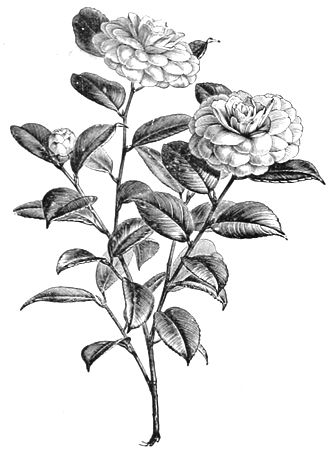
FIG. 336. FLOWERING BRANCH OF CAMELLIA JAPONICA.
C. japonica (Japanese).* Common Camellia. fl. variously
coloured, axillary, sessile. l. ovate, acuminate, acutely serrated.
h. 20ft. Japan and China, 1739. The innumerable hybrids are
chiefly the offspring of this species. See Fig. 336.
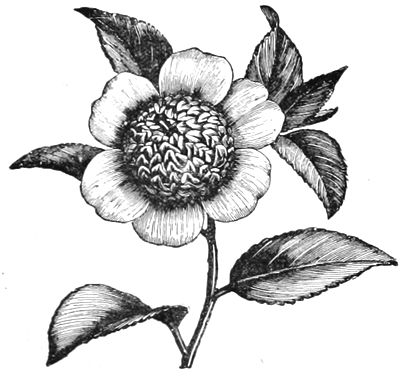
FIG. 337. FLOWER OF CAMELLIA JAPONICA ANEMONÆFLORA.
C. j. anemonæflora (Anemone-flowered). All, or nearly all, the
stamens, &c., in this variety are transformed into small petaloid
bodies, and the flower has the general aspect of a double
Anemone. See Fig. 337. (B. M. 1654.)
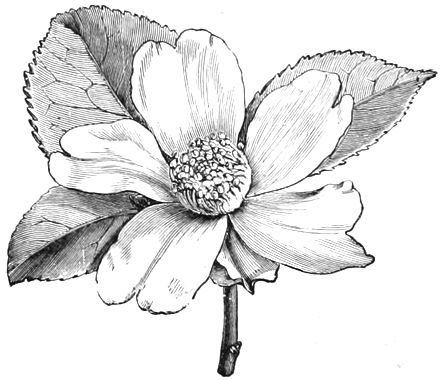
FIG. 338. FLOWER OF CAMELLIA OLEIFERA.
C. oleifera (oil-yielding).* fl. white, very numerous, fragrant,
solitary. November. l. elliptic-oblong, acute, serrated, coriaceous,
shining. h. 6ft. to 8ft. China, 1820. See Fig. 338. (B. R. 942.)
C. reticulata (netted-leaved). fl. bright rose, large, semi-double.
l. oblong, acuminated, serrated, flat, reticulated. h. 10ft. China,
1824. There is a form of this species with full double flowers.
C. theifera (Tea-bearing). fl. white, spreading, of five sepals
and five petals, axillary. November to spring. l. elliptical-oblong,
obtuse, serrated, more than twice as long as broad, dark
green. h. 2ft. to 6ft. China, Japan, and India, 1780. This
species varies very considerably. In different countries, it has
become modified by cultivation. The Green and Black Teas,
formerly supposed to be produced by different species, are obtained
from the same bushes, but subjected to different processes.
Less-known species are: drupifera, lanceolata, rosæflora,
and Sasanqua.
The true species are rarely seen in cultivation. The
following is a selection of the best forms of C. japonica;
the list is a limited one, and is capable of great extension:
ALBA PLENA,* double white; ARCHIDUCHESSE AUGUSTA, petals
deep red, veined with blue, a white band; ARCHIDUCHESSE
MARIE,* flowers bright red, banded with white, imbricated;
AUGUSTE DELFOSSE, bright reddish-orange, stripes down the
centre of petals; AUGUSTINA SUPERBA,* flowers clear rose, free
bloomer; BEALII ROSEA, one of the best and latest deep crimson
varieties known; BICOLOR DE LA REINE, white and rose; BONOMIANA,*
ground colour white, banded with intense deep red;
CARYOPHYLLOIDES,* white, marbled with rosy-carmine, flowers
very large; CHANDLERII ELEGANS,* flowers large, light rose;
COMTE DE GOMER,* petals soft rose, striped with crimson, beautifully
imbricated; COMTE DE PARIS, rich pink, large and full;
CONTESSA LAVINIA MAGGI, pure white, broadly flamed with
rosy-cerise; CONTESSA LAVINIA MAGGI ROSEA, flowers rich
rosy-red, fine form, a superb variety; CORRADINO, rose, veined
with salmon, centre delicate blush pink; COUNTESS OF DERBY,*
beautifully imbricated, white, striped with rose; COUNTESS OF
ELLESMERE,* colour varying from pure white to flesh, streaked
with carnation; COUNTESS OF ORKNEY, pure white, striped with
carmine, sometimes pink, shaded with deep rose; CUP OF
BEAUTY,* pure white and rose, a beautifully imbricated flower;
DAVID BOSCHI, clear pink, shaded with deep rose; DE LA
REINE, petals white, striped with carmine; DONCKELAARII,* large
flowers, semi-double, rich crimson, marbled white; DUCHESSE DE
NASSAU,* flowers light pink, very large, and of superb form;
DUCHESS OF BERRY, pure white, and cupped, beautifully imbricated,
one of the most beautiful of all the double whites;
EMPEROR OF RUSSIA, large crimson; FANNY BOLIS, white,
striped and splashed with deep crimson; FIMBRIATA ALBA,*
similar to Alba plena, outer petals notched at the edges;
GENERAL CIALDINI, beautifully imbricated, bright carmine, flaked
with red; HENRI FAVRE, flowers rosy-salmon, finely imbricated;
HOVEY, C. H.,* bright crimson, well imbricated; HOVEY, C. M.,*
deep velvety crimson, darkly shaded, very distinct; HOVEY, MRS.,*
delicate pink, very smooth in outline, medium size; IL CYGNO,
flowers pure white, petals Ranunculi-formed and imbricated;
IL 22 MARZO, clear rose, the petals sometimes banded with
white; IMBRICATA, deep carmine, occasionally variegated; JARDIN
D'HIVER, a fine variety, flowers beautifully imbricated, colour
bright rose; JEFFERSONII, fine crimson; JENNY LIND,* flowers
imbricated to the extreme centre, broad, and of good substance,
white, striped and marbled with rose; JUBILEE,* flowers very
large, with broad, round, imbricated petals, white, marbled
with rose, centre pure white; LADY HUME'S BLUSH,* flowers
flesh-colour, and of excellent form; LA MAESTOSA, rose, mottled
with white; LEEANA SUPERBA, flowers salmon-red, very fine;
LEON LEGUAY, rich crimson; MADAME AMBROISE VERSCHAFFELT,*
white, shaded with blush, and dotted with red; MADAME
LEBOIS, bright rose, finely imbricated, and of good form; MATHOTIANA,*
flowers brilliant red, and beautifully imbricated, extra
fine; MATHOTIANA ALBA, flowers large, finely imbricated to the
centre, pure white; MONTIRONI,* a fine pure white flower; MRS.
ABBEY WILDER, ivory-white, striped with rose, well imbricated;
MRS. COPE,* white, delicately shaded with pink, and striped
with rose; MRS. DOMBRAIN,* shape and substance excellent,
colour beautiful soft pink; NAPOLEON III., flowers rose, beautifully
veined with deep rose, and edged with pure white; PRINCE
ALBERT, white, beautifully flaked with carmine; PRINCESS
BACCIOCCHI,* rich velvety carmine; PRINCESS FREDERICK
WILLIAM,* flowers white, tipped with bright carmine; QUEEN OF
ROSES, flowers delicate rose; REINE DES BEAUTéS,* very delicate
clear rose, fine form, extra fine variety; REINE DES FLEURS,*
finely imbricated, petals of good substance and perfect symmetry,
colour vermilion-red, flaked occasionally with white; RUBENS,
deep rose-white stripes; SACCOIANA,* a finely imbricated flower,
colour very variable, occasionally clear rose, at other times spotted
with pure white; SARAH FROST, flowers bright red; STORYI,
outer petals bright rose, centre almost white; TARGIONI, flowers
beautifully imbricated, pure white, striped with cerise; TEUTONIA,
flowers sometimes red, at other times white, but occasionally half
red and half white; THOMAS MOORE,* flowers 4½in. across, perfectly
round, and well imbricated, petals also round, and well
filled up in the centre, colour rich carmine, shaded with crimson;
TRICOLOR DE MATHOT, flowers red, marbled with white, semidouble;
TRICOLOR IMBRICATA PLENA, blush white, flaked with
carmine and rose; VALTEVAREDA, colour bright rose, often
spotted with snowy white; WILDERII,* soft rose, of excellent
form.
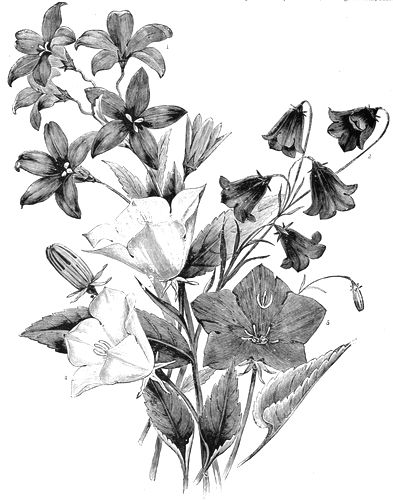
1. C. lactiflora. 2. C. rotundifolia Hostii. 3. C. carpathica turbinata. 4. C. carpathica alba.
FIG. 339. GROUP OF CAMPANULAS.
CAMOENSIA (named in honour of Luis Camoens, a
celebrated Portuguese poet). ORD. Leguminosæ. A genus
containing a couple of handsome species. C. maxima is
the largest-flowered leguminous plant known. It thrives
well in rich loam and leaf mould. Cuttings root in sandy
loam, in bottom heat, if placed under a bell glass. It has
not yet flowered in this country. The other species has
not been introduced.
C. maxima (greatest).* fl. cream-colour, yellow, 1ft. long, in short
axillary racemes. Angola, 1878. (T. L. S. 25, 36.)
CAMOMILE. See Chamomile.
CAMPANEA (from campana, a bell; alluding to the
shape of the flowers). ORD. Gesneraceæ. Stove herbaceous
climbing perennials, the only one at present introduced
being C. grandiflora. For cultivation, see Gesnera.
C. grandiflora (large-flowered).* fl. in axillary tufts, at ends of
long, axillary, and terminal peduncles; corolla white, lined and
dotted with crimson. June. l. opposite, oval, acuminated,
oblique, soft, crenated, stalked. Plant hairy. h. 2ft. Santa Fé,
1848. (R. H. 1849, 241.)
CAMPANULA (diminutive of campana, a bell; in reference
to the shape of the flowers). Bell-flower; Slipperwort.
ORD. Campanulaceæ. A genus of mostly perennial—rarely
annual or biennial—herbs. Flowers blue or white, for the
most part pedunculate, usually racemose, rarely spicate or
glomerate. Radical leaves usually different in form from
the cauline ones, especially in size. All the species of this
genus are elegant when in flower (see Fig. 339), and are
very largely grown. The dwarf varieties make excellent
subjects for pot culture, rockeries, or the fronts of borders.
A rather rich sandy loam, with plenty of drainage, suits
these plants. The forms of C. pyramidalis may be kept
in cold frames during the winter, and firmly repotted in
summer, the crown of the plant being kept just a trifle
raised above the soil, or they are at times liable to damp
off, through the water lodging around the necks. During
hot weather, the pots should be plunged in a bed of ashes.
Campanulas are easily raised from seeds, which should
be sown in spring.
General Culture. As a rule, few plants are so easily
cultivated as these. The strong-growing kinds may be
grown with the greatest success in ordinary garden soil,
well enriched with manure, while the alpine kinds are
easily managed on the rockery. Sow seeds of the annuals
in April, and of the biennials in June, in the open, or in a
cold frame. The perennials are chiefly propagated by
dividing the roots, or by young cuttings, in spring—the
latter is by far the best method of propagation with many
of the species—or by seeds. Those kinds requiring special
treatment are particularised, and those suitable to the
rockery are so designated. Perennials, except where otherwise
mentioned.
C. Adami (Adam's). fl. bluish, nearly erect, one on the top of
each stem; corolla funnel-shaped. July. l. slightly ciliated;
radical ones on long petioles, cuneate-spathulate, coarsely toothed
at the apex; cauline ones sessile, obovate or linear. h. 6in.
Caucasus, 1821. Alpine.
C. Allionii (Allioni's).* fl. usually blue, rarely white, subnutant,
large, solitary. July to September. l., radical ones linear-lanceolate,
nearly entire, ciliated; lower ones rosulate, bluntish.
Stem rather pilose. Root creeping. h. 3in. to 4in. Piedmontese
Alps, &c., 1820. A little gem, requiring a well-drained position,
in rich sandy loam, with plenty of grit in it, and an abundance of
moisture when growing. SYNS. C. alpestris and C. nana. (B. M.
6588.)
C. alpestris (rocky). A synonym of C. Allionii.
C. alpina (alpine).* fl. deep blue, few or numerous, scattered in a
pyramidal manner along the whole stem. July. l. linear-lanceolate,
repandly-crenate, woolly; radical ones crowded, narrowed at
the base. Stem glabrous or woolly. h. 3in. to 9in. Europe, 1779.
Rockery. (B. M. 957.)
C. americana (American). fl. erect, one to three from the axil of
each bract; corollas blue, a little longer than the calycine lobes.
July. l., radical ones rosulate, ovate, acute, a little cordate,
petiolate, serrated; cauline ones ovate-lanceolate, acuminated at
both ends, serrulated. h. 3ft. to 6ft. North America, 1763.
Borders.
C. barbata (bearded).* fl. nutant, disposed in a loose, often secund
raceme; pedicels one-flowered, rising from the axils of the superior
leaves; corolla pale blue or white (in the variety alba), glabrous
outside, but woolly in the mouth. June. l. villous, nearly entire;
radical ones crowded, lanceolate; cauline ones few, ligulate.
h. 6in. to 18in. European Alps, 1752. This is best grown on the
rockery. The white variety is very handsome. (B. M. 1258.)
C. Barrelierii (Barrelier's). A synonym of C. fragilis.
C. betonicæfolia (Betony-leaved).* fl. terminal and axillary,
the branchlets usually bearing three; corollas purplish-blue, with
a pale yellow base, tubular. May. l. elliptic-oblong or ovate,
acute, crenate-toothed; radical ones shortly petiolate. Stems
much branched. Plant pilose. h. 1½ft. Mount Olympus in
Bithynia, 1820. Borders. (S. F. G. 210.)
C. bononiensis (Bononian).* fl. bluish-violet, rather small,
numerous, disposed in long racemes. July. l. serrulated, ovate,
acuminate, dark green above, pale beneath; radical ones cordate,
petiolate; upper ones stem-clasping. h. 2ft. to 3ft. Europe, 1773.
Borders. There is also a very showy white-flowered variety.
C. cæspitosa (tufted).* fl. drooping, terminal, solitary, and
sometimes three to four at the top of each stem; corollas deep
blue or pure white (in the variety alba). May to August. l., radical
ones crowded, on short petioles, ovate, glandularly toothed,
shining. Stems numerous, tufted. Root fibrous, creeping. h.
4in. to 6in. Temperate parts of Europe, 1813. Rockery, delighting
in rich fibrous loam and leaf mould.
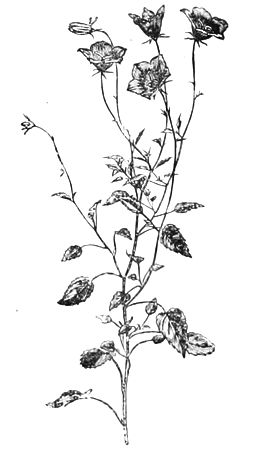
FIG. 340. FLOWERING STEM OF CAMPANULA CARPATHICA.
C. carpathica (Carpathian).* fl. blue, broadly campanulate, disposed
in loose panicles, on long peduncles, which are elongated,
naked, and terminated by an erect flower. June to August.
l., lower ones on long petioles, ovate-roundish, cordate, toothed;
upper ones on short petioles, ovate, acute. Stems leafy, branched.
h. 9in. Transylvania, 1774. Borders or rockery. See Fig. 340.
(B. M. 117.)
C. c. alba (white).* fl. quite white, otherwise like the type. See
Fig. 339.
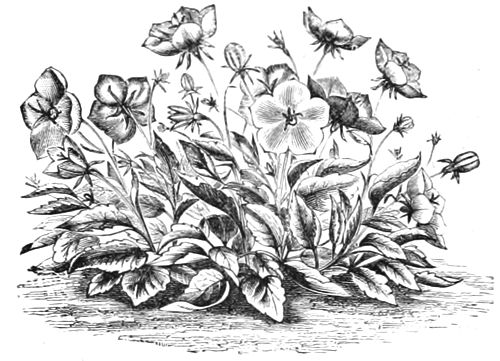
FIG. 341. CAMPANULA CARPATHICA PELVIFORMIS.
C. c. pelviformis (pelvis-formed).* fl. lilac, nearly 2in. across,
numerously produced in lax panicles on much-branched stems,
9in. to 18in. high; fragrant. August. l. ovate, cordate, toothed.
A distinct seedling from C. c. turbinata. See Fig. 341.
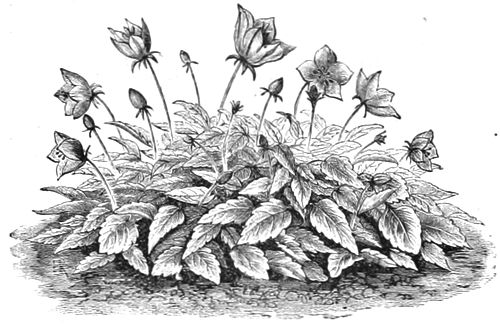
FIG. 342. CAMPANULA CARPATHICA TURBINATA.
C. C. turbinata (top-shaped).* fl. nearly 2in. across, erect;
corolla deep purple, campanulate. Summer. l. ovate, rigid,
greyish-green, toothed, and pointed, with cordate bases, in stiff
tufts. Stems short, erect. h. 6in. to 12in. Transylvania, 1868.
Borders or rockery. See Figs. 339 and 342. There is also a desirable
variety named pallida, with very pale purple flowers.
C. c. t. Hendersoni (Henderson's). fl. rich mauve, in large pyramidal
racemes, rather open. July to September. l., lower ones cordate,
or ovate cordate, slightly crenulated, on long stalks; upper
ones oblong, sessile. h. 1ft. Very handsome hybrid for borders.
C. caucasica (Caucasian). fl. few, terminal and axillary, drooping;
corollas glabrous outside, but bearded inside, of a violaceous-blue
colour. July. l. crenulated; lower ones obovate, obtuse, petiolate;
upper ones lanceolate, sessile. Stems erect, branched,
terete, scabrous, pilose. h. 6in. to 9in. Caucasus, 1804. Rockery;
very pretty.
C. celtidifolia (Nettle-tree-leaved).* A synonym of C. lactiflora.
C. cenisia (Mont Cenis).* fl. deep blue, solitary, terminal, erect.
June. l. entire; radical ones rosulate, obovate, obtuse; cauline
ones ovate-oblong. Stems numerous, glabrous, or slightly pilose.
h. 3in. Italy, &c., 1775. A rare little rockery gem, requiring a
deep gritty loam and leaf soil, between stones. (A. F. P. 3, 6.)
C. Cervicaria. Throatwort. fl. blue, pilose outside; heads
terminal, round, bracteate. July. l. crenately serrated; radical
ones linear-lanceolate, bluntish, on short petioles; cauline ones
linear-acuminated. Stem simple. h. 1ft. to 2ft. Mountains
of Europe, 1768. Biennial. Borders. (L. B. C. 452.)
C. collina (hill).* fl. deep blue, funnel-shaped, few, secund, disposed
in a long raceme. July. l., lower ones on long petioles,
ovate-oblong, crenulated; middle ones lanceolate; upper ones
linear-acuminated. Stems simple, rather pilose. h. 1ft. Caucasus,
1803. Borders. (B. M. 927.)
C. colorata (coloured). fl. purple; corolla tubular, velvety;
peduncles elongated, terminal and axillary. September. l.
scattered, lanceolate, acute, repandly denticulated. Stem
branched, downy. Sikkim Himalayas, 1849. This requires frame
protection during winter. (B. M. 4555.)
C. dichotoma (forked). fl. bluish-purple, with a paler tube,
drooping, terminal, solitary in the forks of the branches and
stem. July. l., cauline ones ovate, acute, a little crenated. Stem
erect, with dichotomous branches. Plant clothed with stiff hairs.
h. 6in. South-western Europe, 1820. Annual. Borders. (S. F. G.
211.)
C. drabifolia (Draba-leaved). fl. pedicellate, opposite the
leaves; corolla inflated, with a white tube and a violaceous-blue
limb. July. l. elliptic-oblong, toothed. Stem many times forked,
slightly erect. Plant hispid. h. 3in. Island of Samos, 1823.
Annual. Rockery. (S. F. G. 215.)
C. Elatines (Elatine).* fl. scattered over the upper part of the
plant, sometimes racemose, and sometimes panicled; corollas
bluish-purple. June to August. l. cordate, coarsely and acutely
toothed, ovate-acute; lower ones roundish. Stem branched.
Plant downy. h. 3in. to 6in. Piedmont, 1823. Rockery. (A. F. P. 3, 7.)
C. Erinus (Erinus).* fl. terminal and axillary, situated in the
angles of the forks of the branches; corollas of a pale bluish-rose-colour,
or white, pilose at the base, tubular. May to August.
l. obovate or ovate, toothed. Stem much branched. Plant hispid.
h. 3in. to 9in. Europe, 1768. Annual. Rockery. (S. F. G. 214.)
C. excisa (excised). fl. drooping; stem one-flowered; corollas blue,
funnel-shaped. June. l. entire, or remotely-denticulated, linear-acuminated.
Stems numerous, erect, slender, simple, naked at
top. h. 3in. to 6in. Switzerland and Transylvania, 1820. Rockery.
A rare species, requiring to be treated like cenisia. (L. B. C. 561.)
C. floribunda (many-flowered). A synonym of C. isophylla.
C. fragilis (fragile).* fl. clear
lilac-purple, white in the centre,
solitary or in pairs, axillary,
erect, or nearly so, on spreading
branches. July and August. l.,
radical ones reniform, or roundish-cordate,
rather deeply lobed; cauline
ones broadly-ovate, slightly
cordate, all stalked. h. 4in. to
6in. South Italy. SYN. C. Barrelierii.
(B. M. 6504.)
C. garganica (Gargano).* fl.
axillary, in fascicles; corollas
blue, rotate, deeply five-lobed.
May to September. l., radical
ones reniform, on long petioles;
cauline ones cordate, all crenately
toothed, downy. h. 3in. to 6in.
Italy, 1832. An extremely variable
species. Rockery, in rich
sandy loam. (B. R. 1768.)
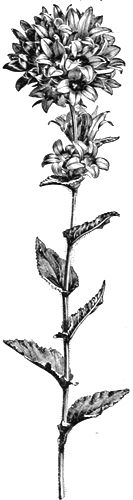
FIG. 343. FLOWER-SPIKE OF
CAMPANULA GLOMERATA.
C. glomerata (clustered).* fl.
sessile, disposed in terminal heads
on the branches and stems; corollas
bluish-violet or white,
glabrous, except the nerves outside,
funnel-shaped. May to
September. l. serrulated; radical
ones ovate, acute; bracts ovate,
acuminated. Stems simple, or
branched. h. 1ft. to 2ft. Britain,
&c. Borders. See Fig. 343.
(Sy. En. B. 866.) A double-flowered
variety, and also a
white-flowered form, are very desirable.
There are numerous
varieties of this species which
are frequently described as distinct
species. The following are
among the number:
C. g. cervicaroides (Cervicaria-like).
fl. bluish-violet, terminal
and axillary. Lower leaves on
long petioles. Stem flexuous,
hairy.
C. g. elliptica (elliptical). fl.
blue, large, capitate. l. on long
petioles, elliptic; bracts large,
often longer than the flowers.
C. g. nicæensis (Nice). fl. bluish-violet,
disposed in short, dense
spikes. l. approximate, ovate,
acute, sessile.
C. g. pusilla (diminutive).* fl.
few, capitate. l. round, cordate.
h. 1in. to 2in. In addition to
these, there are aggregata and
speciosa (= dahurica). The latter is an excellent variety, with
large heads of deep-coloured flowers.
C. grandiflora (large-flowered). See Platycodon grandiflorum.
C. grandis (large).* fl. pale violet-blue, broadly bell-shaped, with
large pointed divisions, axillary and alternate, on the upper part
of the stem. June. l. sessile, lanceolate, serrated. Stem simple,
furrowed. h. 1ft. to 2ft. Siberia, 1842. Borders. There is also
a very showy white-flowered variety named alba.
C. haylodgensis (Hay Lodge). fl. light blue, rather open, bell-shaped,
few, at the ends of the stems. August. l., radical ones
tufted, roundish-cordate, with the margins slightly indented;
cauline ones ovate-cordate, conspicuously toothed, light green.
h. 6in. to 9in. Rockery. This is a hybrid, raised by Mr. Anderson-Henry,
Hay Lodge, Edinburgh, probably between C. carpathica
and C. pusilla.
C. hederacea (Ivy-like). See Wahlenbergia hederacea.
C. Hostii (Host's).* A synonym of C. rotundifolia Hostii.
C. isophylla (equal-leaved).* fl. numerous, erect, disposed in a
corymb; corolla lilac-blue, with a grey centre, large, salver-shaped,
deeply five-lobed. August. l. broadly ovate, cordate,
and toothed. Stems firm. North Italy, 1868. Borders and
rockery. SYN. C. floribunda. (B. M. 5745.)
C. i. alba (white).* fl. pure white; in other respects like the
species. It is a charming rockery plant, flowering very freely.
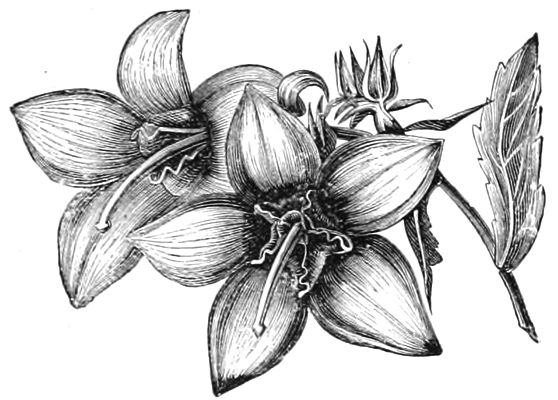
FIG. 344. FLOWERS OF CAMPANULA LACINIATA.
C. laciniata (cut-leaved). fl. long-stalked, in lax panicles. Stem
erect, branchy, somewhat hairy. h. 1ft. Islands in Grecian
Archipelago, 1790. This biennial species is impatient of much
moisture during winter, and is therefore best kept in a cold
frame. See Fig. 344.
C. lactiflora (milk-coloured-flowered).* fl. in loose panicles;
peduncles erect, short, usually three-flowered; corollas erect,
milk-coloured, tinged with blue, or quite blue, as in the variety
named cœrulea. July to September. l. sessile. ovate-lanceolate,
acutely serrated. Stems branched. h. 2ft. to 6ft. Caucasus,
1814. Borders. SYN. C. celtidifolia. See Fig. 339. (B. R. 241.)
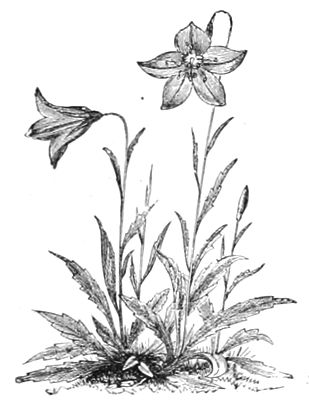
FIG. 345. CAMPANULA LANGSDORFFIANA.
C. Langsdorffiana (Langsdorff's). fl. blue, either solitary or
in few-flowered panicles, not unlike those of C. rotundifolia.
l. either entire or toothed. h. 3in. to 9in. Mountains of Northern
Asia and America. Perennial. See Fig. 345.
C. latifolia (broad-leaved). fl. disposed in spicate racemes;
peduncles erect, one-flowered; corolla blue, but sometimes white
(in the variety alba) campanulately funnel-shaped, large. July.
l. large, doubly serrated; radical ones petiolate, cordate, ovate-oblong;
cauline ones sessile, ovate-acuminated. Stems simple,
smooth. h. 1ft. to 2ft. Britain. (Sy. En. B. 868.)
C. l. eriocarpa (woolly-fruited). fl., tube of calyx very hispid.
l. less acuminated. Stem and leaves pilose and pale. Caucasus,
1823. Borders.
C. l. macrantha (large-flowered).* fl., corollas purplish-blue,
larger than those of the type. Stem and leaves rather pilose;
teeth of leaves more distinct. A hybrid. Borders.
C. Loefflingii (Lœffling's). fl. solitary, terminating the naked
branchlets, loosely panicled, drooping; corolla blue or violaceous,
with a deeper-coloured zone beneath the middle, white at the
base, both inside and out, funnel-shaped. July. l. crenulated;
lower ones ovate-reniform; superior ones ovate, stem-clasping.
Stem much branched. Annual. h. 6in. to 18in. South-west
Europe, 1818. (B. R. 29, 19.)
C. Loreyi (Lorey's). A synonym of C. ramosissima.
C. lyrata (lyrate). fl. disposed in a long, many-flowered, loose
raceme; corolla blue, tubular, with rather pilose nerves. June.
l., lower ones petiolate, cordate, ovate, acute, crenated; superior
ones sessile, ovate-lanceolate, serrate-toothed. Stem branched.
Eastern Europe, Levant, &c., 1823. Borders.
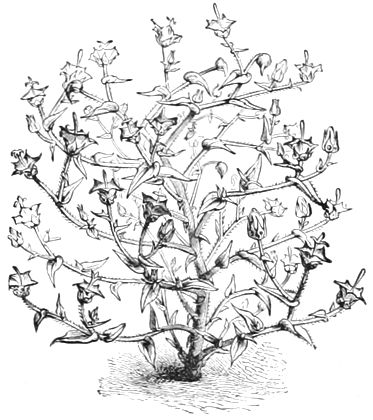
FIG. 346. CAMPANULA MACROSTYLA.
C. macrostyla (large-styled). fl. dull purple, reticulated with
violet, solitary, on stout stalks; hairy towards the base. July.
l., lower ones ovate-oblong, acute; upper ones ovate-lanceolate,
recurved, small for the size of the plant, hispid on both surfaces,
and ciliated with bristles. h. 1ft. to 2ft. Taurus Mountains.
Annual. Borders. The rigid habit, bristly, almost prickly, stem
and leaves, curious calyx appendages, short gaping corolla, and
wonderful stigma, mark this as the most singular Campanula
hitherto introduced. See Fig. 346.
C. Medium (middle-sized).* Canterbury Bells. fl. numerous,
large, disposed in racemes; corolla blue, purple, and white, campanulate,
inflated, single and double. July. l. sessile, ovate-lanceolate,
crenately toothed. Stem erect, branched. h. 1ft.
to 4ft. South Europe, 1597. See Fig. 347. A well-known and
very handsome biennial, of which there are numerous varieties.
Borders.
C. muralis (wall).* A synonym of C. Portenschlagiana.
C. nana (dwarf). A synonym of C. Allionii.
C. nitida (shining).* fl. blue or white, disposed in spicate racemes;
corolla campanulately rotate. Summer. l. in rosettes, leathery,
very dark and shining green, oblong, crenated; cauline ones
linear-lanceolate, almost entire. Stem simple. h. 3in. to 9in.
North America, 1731. Borders. There are also double blue and
white flowered forms of this species. SYN. C. planiflora.
C. nobilis (noble).* fl. drooping, crowded towards the ends of the
branchlets; corollas reddish-violet, or white, or cream-coloured,
spotted, 3in. or more long. July. l. hairy; lower ones petiolate,
ovate, toothed; upper ones lanceolate, nearly or quite sessile.
h. 2ft. China, 1844. Borders. (B. R. 32, 65.) There is also a
white-flowered variety.
C. patula (spreading). fl. panicled, terminal, and axillary, on
long pedicels, large, erect; corollas blue or white, funnel-shaped.
July. l., radical ones crowded, obovate, crenated; cauline ones
linear-lanceolate, sessile, nearly entire. Stems branched.
Branches diverging. Europe. Borders. (Sy. En. B. 873.)
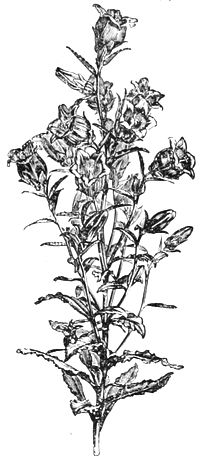
FIG. 347. FLOWERING BRANCH OF CAMPANULA MEDIUM.
C. peregrina (foreign).* fl. disposed in a dense spicate raceme,
sessile; corollas of a dark violet colour at the base, not so deep in
the middle, and paler towards the margins, funnel-shaped. July.
l. crenated; lower ones obovate; superior ones ovate, acute.
Stem simple, angular. h. 2ft. Mount Lebanon, 1794. Borders.
(B. M. 1257.)
C. persicæfolia (Peach-leaved).* fl. terminal and axillary, pedunculate,
solitary, inclined, racemose; corollas blue and all the
intermediate shades to white, large, broadly campanulate. July.
l. glabrous, stiff, crenulated; radical ones lanceolate-obovate;
cauline ones linear-lanceolate. Stems nearly simple. h. 1ft. to 3ft.
Britain. (Sy. En. B. 871.) The forms of C. persicæfolia are very
numerous in gardens. The following are well worth growing:
alba, pure white, single-flowered; alba coronata, pure white,
semi-double; alba fl.-pl., flowers very double and Camellia-like,
constituting one of the best hardy flowers for cutting; cærulea
coronata, blue, in form like the white; cærulea fl.-pl., flowers
semi-double.
C. phrygia (Phrygian). fl., corolla bluish-violet, spreading,
having the nerves more intensely coloured. July. l. ovate-lanceolate,
crenated; lower ones obtuse, upper acute. Stem
branched. Branches very naked, divaricate, each terminating in
a single flower. h. 3in. to 6in. Mount Olympus, 1820. Rockery
annual.
C. planiflora (flat-flowered). A synonym of C. nitida.
C. Portenschlagiana (Portenschlag's).* fl. light blue-purple,
erect, or nearly so, bell-shaped, with spreading segments, several
at the ends of the shoots, and one or two in the upper axils.
June, July. l., radical ones broadly reniform, conspicuously but
irregularly toothed, on long slender petioles; cauline ones passing
from reniform to ovate. h. 6in. to 9in. South Europe. Rockery.
SYN. C. muralis. (B. R. 1995.)
C. primulæfolia (Primula-leaved). fl. disposed in a spicate
raceme; corolla blue or purple, with a whitish downy bottom,
campanulately rotate, nearly glabrous. July. l. unequally and
doubly crenated; radical ones lanceolate, bluntish; cauline ones
ovate-oblong, acute. Stem hispid, simple. h. 1ft. to 3ft. Portugal.
Borders. (B. M. 4879.)
C. pulla (russet).* fl. terminal, large for the size of the plant;
corollas violaceous-blue, campanulate. June. l. glabrous, crenulately
toothed; lower ones on short petioles, ovate-roundish;
superior ones sessile, ovate, acute. Stems rarely pilose at the
base. h. 3in. to 6in. Eastern Europe, 1779. Rockery, in rich
sandy peat and leaf soil. (L. B. C. 554.)
C. pumila (dwarf). A synonym of C. pusilla.
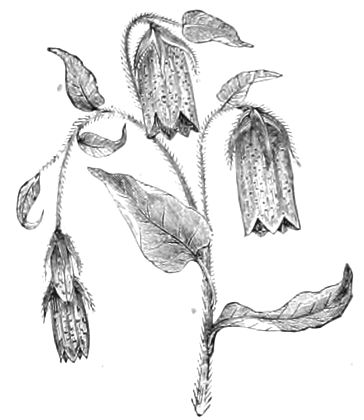
FIG. 348. UPPER PORTION OF FLOWERING STEM OF
CAMPANULA PUNCTATA.
C. punctata (dotted). fl. whitish, spotted with red on the inner
surface; large, pendulous. l. ovate-acute, somewhat crenate.
Stem simple, erect, few-flowered. h. 1½ft. Siberia, Japan, &c.
Border perennial. See Fig. 348.
C. pusilla (small).* fl. axillary and terminal at the upper part of
the slender stems, pendulous, bell-shaped, passing from deep blue
to white. July, August. l., radical ones tufted, broadly ovate
or roundish, slightly cordate, obtusely serrated, on petioles longer
than the laminæ; cauline ones linear-lanceolate, distinctly
toothed, sessile. h. 4in. to 6in. Southern Europe. SYN.
C. pumila. (B. M. 512.) There is a pale-coloured variety named
pallida, and a pure white variety named alba, both of which, as
well as the species, are most desirable for the embellishment of
rockeries, or for planting in sandy soil as a front line for a
border.
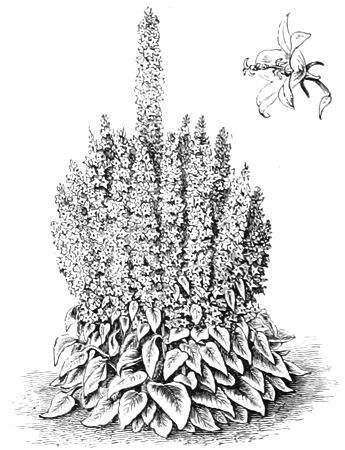
FIG. 349. CAMPANULA PYRAMIDALIS, showing Habit and Flower.
C. pyramidalis (pyramidal).* Chimney Bell-flower. fl. very
numerous, pedicellate, usually three together from the same
bract, the whole disposed in a large pyramidal raceme, which
is loose at the base; corollas pale blue or white, with a dark base.
July. l. glandularly toothed; lower ones petiolate, ovate-oblong,
somewhat cordate; cauline ones sessile, ovate-lanceolate. Stem
nearly simple, but furnished with floriferous branchlets. h. 4ft.
to 5ft. Europe, 1596. See Figs. 349 and 350. There are several
excellent varieties, but the light and dark blue and white are
the best. Borders, and for pot culture.
C. Raineri (Rainer's).* fl. blue, erect; corolla turbinate. June.
l. almost sessile, ovate, tomentose, remotely serrated; lower ones
the smallest, obovate. Stems erect, firm, branched. Branches
one-flowered, leafy. h. 2in. to 3in. Switzerland, Italy, &c., 1826.
A beautiful little alpine, requiring a warm position in rich gritty
soil; it must be religiously protected against slugs. (F. d. S. 1908.)
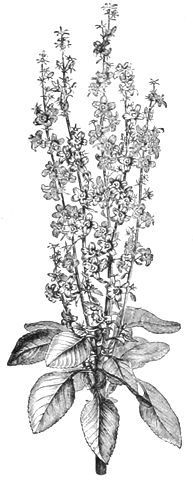
FIG. 350. FLOWERING BRANCH OF CAMPANULA PYRAMIDALIS.
C. ramosissima (much-branched). fl., corolla with a white base;
middle part or base of the lobes pale blue, and the lobes bluish-violet;
peduncles long, naked, glabrous, bearing each an erect
flower at the apex. June. l. sessile, glaucous; lower ones
obovate, crenated; middle ones ovate-lanceolate; superior ones
linear, entire. Stem branched. h. 6in. to 12in. South Europe,
1824. Annual. SYN. C. Loreyi. (B. M. 2581.)
C. r. flore-albo (white-flowered) only differs from the type in
having white flowers.
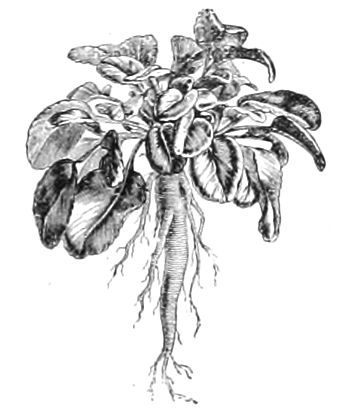
FIG. 351. CAMPANULA RAPUNCULUS.
C. rapunculoides (Rapunculus-like).* fl. drooping, solitary,
disposed in spike-formed racemes, secund, but usually hanging on
all sides in strong garden specimens; corollas bluish-violet, funnel-shaped,
and bearded a little inside. June. l. scabrous, ovate,
acuminated; radical ones petiolate, cordate, crenulated; cauline
ones serrulated. Stems glabrous or scabrous, usually branched
in gardens, but simple in the wild state. h. 2ft. to 4ft. Europe.
Borders. (Sy. En. B. 869.)
C. r. trachelioides (Trachelium-like). Stem and leaves, but
particularly the calyx, beset with stiff white hairs.
C. Rapunculus (little turnip).* Rampion. fl. nearly sessile, or
pedicellate, erect, forming a long raceme, which is branched at the
base; corolla blue or white, funnel-shaped. July. l., lower ones
obovate, on short petioles, nearly entire; cauline ones sessile,
linear-lanceolate, entire. Stem simple, but sometimes furnished
with a few branches towards the top. h. 2ft. to 3ft. Europe.
Borders. See Fig. 351. (Sy. En. B. 872.)
C. rhomboidalis (rhomboidal). fl. usually drooping, few, disposed
in loose racemes, pedunculate; corolla blue, campanulate.
July. l. sessile, ovate, acute, serrate. Stem glabrous, or a little
pilose, furnished with flower-bearing branches at top. h. 1ft. to
2ft. Europe, 1775. Border. SYN. C. rhomboidea. (L. B. C. 603.)
C. rhomboidea (diamond-leaved). A synonym of C. rhomboidalis.
C. rotundifolia (round-leaved).* Blue-bell; Hare-bell. fl. drooping,
solitary, pedunculate, few on each stem; corolla deep blue,
campanulate. June to August. l., radical ones petiolate, cordate
roundish, crenately toothed; cauline ones linear or lanceolate.
Stems numerous. h. 6in. to 12in. Britain. (Sy. En. B. 870.)
C. r. alba (white).* fl. white, the same size as those of the type.
Stems much more leafy.
C. r. Hostii (Host's).* fl. rich blue, much larger than those of
the type, produced on stouter profusely branched stems. July,
August. l., radical ones roundish only in a very early state; cauline
ones linear, acuminate, sometimes 3in. to 4in. long. SYN. C.
Hostii. See Fig. 339. There is a white-flowered form of this,
not quite so vigorous as the blue-flowered form, but the flowers
are equal in size.
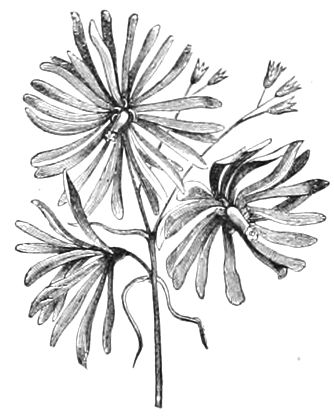
FIG. 352. FLOWERS OF CAMPANULA ROTUNDIFOLIA
SOLDANELLÆFLORA.
C. r. soldanellæflora (Soldanella-flowered).* fl., corolla blue,
semi-double, turbinate, with shallow marginal divisions, very
acutely pointed. June. l. long, linear, acute, sessile. Stem
simple, slender. h. 1ft. 1870. (R. G. 473.) All the forms of
rotundifolia are pretty, and suitable for the front of borders, or
the rockery; rising from the crevices of the latter, with their
slender stems laden with flowers, they are especially beautiful.
See Fig. 352.
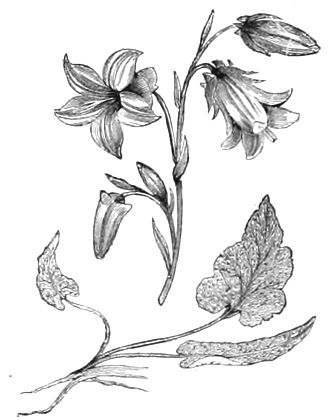
FIG. 353. FLOWERS AND LEAVES OF CAMPANULA SARMATICA.
C. sarmatica (Sarmatian).* fl. nutant, usually secund, terminal
and axillary, forming a long, loose, scattered raceme; corolla pale
blue, velvety outside. July. l. tomentose; lower ones petiolate,
cordate, rather hastate, crenately toothed; superior ones sessile,
ovate-lanceolate, serrate-toothed. Stems simple, straight, downy.
h. 1ft. to 2ft. Caucasus, 1803. Borders. (B. R. 237.) See
Fig. 353.
C. saxatilis (rock). fl. three to five, disposed in a loose raceme;
corolla blue, tubular, nutant. May. l. crenated; radical ones
rosulate, somewhat spathulate; cauline ones ovate, acute. Stem
erect. h. 6in. Crete, 1768. Rockery. Very rare.
C. Scheuchzeri (Scheuchzer's).* fl. dark blue, pendent, on slender
stems, broadly bell-shaped. July, August. l., lower ones similar
to those of C. pusilla; upper ones linear. h. 3in. to 6in. South
European Alps, 1813. (L. B. C. 485.)
C. Scouleri (Scouler's). fl. pale blue, paniculate, bell-shaped.
July, August. l., lower ones ovate, on long petioles, coarsely
serrated; cauline ones ovate-lanceolate. h. 1ft. North-west
America, 1876. Rockery.
C. sibirica (Siberian). fl. panicled, numerous, drooping; corollas
bluish-violet, large. July. l. crenulated; radical ones crowded,
petiolate, obovate, obtuse; cauline ones sessile, oblong-lanceolate,
undulated, acuminated. Plant beset with bristle-like hairs.
Stem branched. h. 1ft. to 1½ft. East Europe, 1783. Biennial.
Borders. (B. M. 659.)
C. s. divergens (divergent).* fl. violaceous, rather large, at first
erect, but drooping in the expanded state; peduncles many-flowered,
and, like the stem, usually trichotomous. June.
l., radical ones sub-spathulate, crenulated, narrowed at the base;
cauline ones sessile, lanceolate, acuminated. Plant pilose,
panicled. h. 1½ft. Siberia, 1814. Biennial. SYN. C. spathulata.
(S. B. F. G. ii., 256.)
C. spathulata (spathulate). A synonym of C. sibirica divergens.
C. speciosa (beautiful).* fl. pedicellate, disposed in a pyramidal
raceme; corolla blue, purple or white, 1in. long, smooth outside,
but often villous inside. June, July. l. sessile, repandly
crenated; radical ones rosulate, linear-lanceolate; cauline ones
linear. Stem simple. h. 12in. to 18in. South-west Europe, 1820.
Borders. (B. M. 2649.)
C. spicata (spicate). fl. sessile, one to three from each bract;
spike long, interrupted at the base; corolla blue, funnel-shaped.
July. l. sessile, nearly entire; radical ones crowded, linear-lanceolate;
cauline ones linear, acuminated. Stem simple. h. 1ft.
to 2ft. Europe, 1786. Biennial. Borders. (A. F. P. 3, 46.)
C. stricta (strict). fl. almost sessile, few, solitary, spicate; corolla
blue, tubular. July. l. ovate-lanceolate, acute, serrated, pilose.
Stem branched, pilose. h. 1ft. to 2ft. Armenia, 1819. Biennial.
Borders.
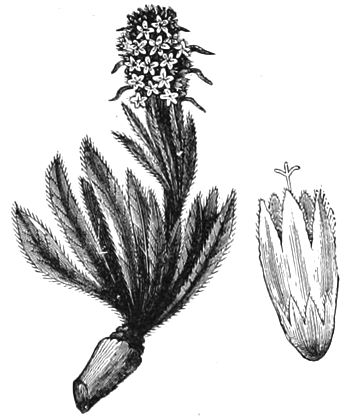
FIG. 354. CAMPANULA THYRSOIDEA, showing Entire Plant and
Single Flower.
C. thyrsoidea (thyrsoid).* fl. disposed in a dense pyramidal spike,
sessile; corolla sulphur-coloured, oblong. July. l. entire, pilose;
lower ones lanceolate, obtuse; cauline ones linear-lanceolate,
acute. Stem simple, covered with leaves and flowers. Plant
pilose. h. 1ft. to 1½ft. Alps of Europe, 1785. Biennial. Rockery.
(B. M. 1290.) See Fig. 354.
C. Tommasiniana (Tommasini's).* fl. pale blue, tubular, slightly
angled, in closely set, several-flowered, axillary cymes. July,
August. l. nearly or quite sessile, linear-lanceolate, acuminate,
distinctly serrated, there being no difference between the lower
and upper ones. Stems at first erect, ultimately drooping through
the weight of the flowers. h. 9in. to 12in. Italy. A very handsome
alpine species. (B. M. 6590.)
C. Trachelium (Throat-wort).* fl. drooping a little, one to four
together, terminating the branchlets; corolla variously coloured,
campanulate, bearded inside. July. l. scabrous, acuminated,
coarsely and crenately toothed; radical ones petiolate, cordate.
Stem angular, simple or branched. h. 2ft. to 3ft. Europe.
Borders. (Sy. En. B. 867.) There are double blue, double white,
and variously shaded single forms of this species.
C. trichocalycina (hairy-calyxed). fl. disposed in an almost
simple terminal raceme, approximate at the top, one to three
rising from each axil, at the time of flowering erect, but afterwards
drooping; corolla profoundly five-cleft, funnel-shaped.
July. l. on short petioles, ovate, acute, coarsely serrated. Stem
simple. h. 1ft. to 3ft. Europe, 1823. Borders.
C. Van Houttei (Van Houtte's).* fl. dark blue, bell-shaped, pendulous,
2in. long, axillary and terminal. July, August. l., lower
ones roundish-cordate, crenate on long stalks; cauline ones
oblong-lanceolate, sessile, serrated. h. 2ft. This is a very fine
hybrid. Differing from it only in colour and other unimportant
details is C. Burghalti, a handsome hybrid, found in gardens;
the flowers are of a pale purple colour, very large, pendent.
These are two of the best border Bell-flowers in cultivation.
C. versicolor (various-coloured). fl. disposed in long spicate
racemes; corolla of a deep violaceous colour at bottom, pale in
the middle, and the lobes pale violet, companulately rotate.
July to September. l. serrated; radical ones petiolate, ovate,
acute, rather cordate; cauline ones on short petioles, ovate-lanceolate,
acuminated. Stems erect. h. 3ft. to 4ft. Greece,
1788. Borders. (S. F. G. 207.)
C. Vidalii (Vidal's). fl. large, racemose; corolla white, wax-like,
between urceolate and campanulate, pendulous; disk singularly
broad, surrounded by a thick bright orange-coloured annulus.
July and August. l. thick and fleshy, oblong spathulate, viscid,
coarsely serrated. h. 1ft. to 2ft. Azores, 1851. Perennial. Cool
greenhouse or (during summer) herbaceous border. (B. M. 4748.)
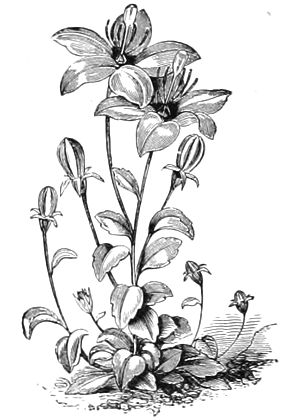
FIG. 355. CAMPANULA WALDSTEINIANA.
C. Waldsteiniana (Waldstein's).* fl. three to four at the top of
each stem, one of which is terminal, and the others from the
axils of the superior leaves, always looking upwards; corollas
violaceous-blue, campanulate. June. l. greyish, sessile, lanceolate,
serrated; lower ones obtuse; superior ones long-acuminated.
Stems erect, flexuous, stiff, simple, numerous from the same root.
h. 4in. to 6in. Hungary, 1824. See Fig. 355.
C. Wanneri (Wanner's). A synonym of Symphyandra Wanneri.
C. Zoysii (Zoys's).* fl. pedicellate, drooping; corolla pale blue,
with five deeper-coloured lines, cylindrical, elongated. June.
l. entire; radical ones crowded, petiolate, ovately obovate, obtuse;
cauline ones obovate-lanceolate, and linear. Plant small, tufted.
h. 3in. Carniola, 1813. A scarce little alpine gem, thriving in a
sunny chink in rich gritty soil.
CAMPANULACEÆ. A large order of herbs or
sub-shrubs. Flowers blue or white; corolla regular, bell-shaped,
usually five-lobed. Leaves alternate, exstipulate.
The genus best known is Campanula; other genera are
Adenophora, Jasione, and Phyteuma.
CAMPANULATE. Bell-shaped.
CAMPANUMÆA (altered from Campanula). ORD.
Campanulaceæ. A genus of greenhouse herbaceous, tuberous-rooted,
twining perennials. Flowers involucrated,
solitary, on axillary and terminal peduncles. Leaves opposite,
petiolate, glaucescent beneath. Stems and branches
terete. They thrive best in a rich sandy loam, with a little
peat. Propagated by seeds and divisions.
C. gracilis (graceful). fl. pale blue; corolla membranous, with
a tubular base, dilated throat, and slightly expanded, truncated
limb. l. on long petioles, ovate, blunt. Himalayas. SYN. Codonopsis
gracilis. (C. H. P. t. xvi. A.)
C. inflata (inflated). fl. yellowish, with brownish veins; corolla
herbaceous, ventricose; peduncles opposite the leaves, one-flowered.
l. alternate, ovate-cordate, acute. Himalayas. (C. H. P.
t. xvi. C.)
C. javanica (Javan). fl. yellowish, with brownish veins; corolla
herbaceous, very broadly campanulate, with five spreading lobes.
l. variable, opposite and alternate, ovate-cordate, crenate. Himalayas.
(C. H. P. t. xvi. B.)
CAMPEACHY WOOD, or LOGWOOD. See
Hæmatoxylon campechianum.
CAMPHORA (Camphor, commercial name of its chief
product). Camphor-tree. ORD. Laurineæ. Cool stove
evergreen trees, now referred to Cinnamomum. The true
Camphor of commerce is a product of the oil procured
from the wood, branches, and leaves of this tree, by means
of dry distillation. The species thrives in a compost of
peat and loam, and may be propagated by cuttings.
C. officinalis (officinal). fl. greenish-white. March to June.
l. triple-nerved, lanceolate, ovate. h. 20ft. Japan, 1727. SYN.
Cinnamomum Camphora.
CAMPHOR-TREE. See Camphora.
CAMPION. See Silene.
CAMPION, MOSS. See Silene acaulis.
CAMPION, ROSE. See Lychnis.
CAMPSIDIUM (from kampsis, a curving). ORD.
Bignoniaceæ. A small genus, the best-known (perhaps the
only) species being a handsome greenhouse climber. For
culture, see Bignonia.
C. chilense (Chilian). Pipil Boqui. fl. rich orange colour; corolla
tubular, almost regular; anthers parallel. l. pinnate, dark shining
green. h. 30ft. to 40ft. Chili. (G. C. 1870, 1182.)
CAMPTERIA. Included under Pteris (which see).
CAMPTODIUM. See Nephrodium.
CAMPTOPUS (from kamptos, curved, and pous, a foot;
the flower-stalk is curved downwardly). ORD. Rubiaceæ.
A curious shrub, now referred to Cephaelis. It requires
a most stove temperature. Cuttings will root in sandy
loam, under a hand glass, in bottom heat.
C. Mannii (Mann's). fl. white, numerously produced in subglobose,
compound heads; peduncles stout, scarlet, drooping,
from 12in. to 18in. long. Summer. l. large, opposite, obovate or
obovate-lanceolate, glabrous, coriaceous; midrib thick, red beneath.
h. 15ft. Fernando Po, 1863. (B. M. 5755.)
CAMPTOSORUS. See Scolopendrium.
CAMPYLANTHERA. A synonym of Pronaya.
CAMPYLIA. Included under Pelargonium.
CAMPYLOBOTRYS. See Hoffmannia.
CAMPYLONEURON. See Polypodium.
CAMWOOD. See Baphia.
CANADA BALSAM. See Abies balsamea.
CANADA RICE. See Zizania aquatica.
CANADA TEA. See Gaultheria procumbens.
CANALICULATE. Channelled, or furrowed.
CANARINA (so named from its habitat). SYN.
Pernettya (of Scopoli). ORD. Campanulaceæ. A beautiful,
glaucescent, greenhouse, herbaceous perennial. It thrives
in a compost of loam, leaf mould, thoroughly decomposed
manure, and sand, in equal parts; ample root space and
perfect drainage are essential, and when new growth
commences, a little extra heat will considerably accelerate
the development of the flowers. Water should be liberally
supplied during the growing season. The plant may be
propagated by divisions when repotting, in January; or by
young cuttings, inserted in sandy soil, in a gentle warmth.
C. Campanula (bell-shaped).* fl. of a yellowish purple or orange
colour, with red nerves, drooping, solitary, terminating axillary
branchlets; corolla six-lobed at the apex, large, campanulate.
January to March. l. opposite, hastately sub-cordate, irregularly
toothed. h. 3ft. to 4ft. Canary Islands, 1696. (B. M. 444.)
CANARIUM (from Canari, its vernacular name in
the Malay language). ORD. Burseraceæ. A rather large
genus of stove trees. Flowers small, in axillary panicles;
petals usually three, valvate, or slightly imbricate in the
bud. Drupe ovoid or ellipsoid, often three-angled. Leaves
large, impari-pinnate. For culture, see Boswellia.
C. commune (common). fl. white, glomerate, nearly sessile,
bracteate; panicle terminal. l., leaflets seven to nine, on long
stalks, ovate-oblong, bluntly acuminated, entire. India. The
fruit has a thin olive skin, and when the nuts are mature, they
contain a sweet kernel, which does not become rancid, and
resembles a Sweet Chestnut; they are also used for various
economic purposes. (B. M. Pl. 61.)
CANARY-BIRD FLOWER. See Tropæolum
peregrinum.
CANAVALIA (from Canavali, the name of one of
the species in Malabar). ORD. Leguminosæ. A genus
of elegant twining or climbing stove herbs or subshrubs.
Flowers in racemes, produced from the axils
of the leaves; calyx bell-shaped, two-lipped; corolla
papilionaceous. Leaves trifoliate. They are well adapted
for training up the rafters in a stove or warm greenhouse.
For culture, see Dolichos.
C. bonariensis (Buenos Ayrean). fl. purple; racemes drooping,
longer than the leaves. July and August. l., leaflets ovate, obtuse,
coriaceous, glabrous. Buenos Ayres, 1824. (B. R. 1199.)
C. ensiformis (ensiform).* fl. white, red, pendulous; racemes
longer than the leaves. June. l., leaflets ovate, acute. India,
1790. SYN. C. gladiata. (B. M. 4027.)
C. gladiata (sword-podded). Synonymous with C. ensiformis.
C. obtusifolia (obtuse-leaved). fl. purple. July, August. l., leaflets
ovate obtuse. Malabar, 1820.
CANBIA (named in honour of W. M. Canby, of Wilmington,
Delaware). ORD. Papaveraceæ. A monotypic
genus, remarkable for its persistent (not caducous) corolla.
Sepals three, caducous; petals six, barely 1/6in. in length;
stamens six to nine.
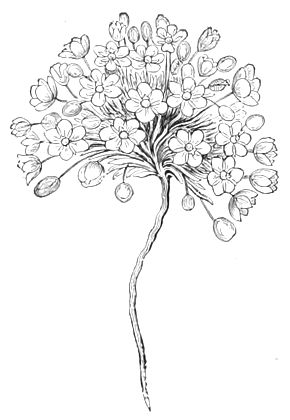
FIG. 356. CANBIA CANDIDA.
B. candida (glossy white). fl. white, solitary, on little scapes.
l. alternate, linear, entire. h. about 1in. Discovered in sandy
soil in South-east California, in 1876. See Fig. 356.
CANCELLATE. Latticed; resembling lattice-work.
CANDELABRUM or CHANDELIER TREE.
See Pandanus candelabrum.
CANDLEBERRY MYRTLE. See Myrica cereifera.
CANDLEBERRY-TREE. See Aleurites triloba.
CANDLE-TREE. See Parmentiera cerifera.
CANDOLLEA (named after Augustus Pyramus De
Candolle, formerly Professor of Botany, at Geneva, and
author of numerous botanical works). ORD. Dilleniaceæ.
A genus of very ornamental greenhouse evergreen shrubs,
natives of Australia. Flowers yellow, sub-solitary, at the
tips of the branches; sepals five, oval, mucronate; petals
obovate or obcordate. They thrive in a compost of equal
parts loam and peat, with which sufficient sand may be
mixed to render the whole porous. Cuttings will root, if
placed in a similar compost, under a hand glass; seeds
are also sometimes obtainable.
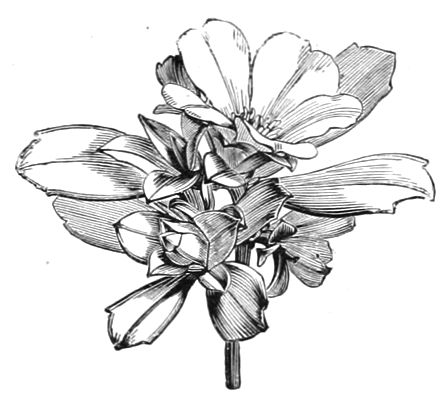
FIG. 357. FLOWERS AND BUDS OF CANDOLLEA
CUNEIFORMIS.
C. cuneiformis (wedge-shaped).* fl. yellow. July. l. smooth,
obovately cuneated, blunt at the top, entire. Branches cinerous.
h. 7ft. 1824. See Fig. 357. (B. M. 2711.)
C. Huegelii (Huegel's). fl. at tops of the branches, among the
leaves, on short pedicels; sepals acuminate, hoary outside,
longer than the petals. May. l. linear, quite entire, villous
when young. h. 6ft. 1837.
C. tetrandra (four-stamened). fl. yellow, solitary; petals
emarginate. June. l. oblong, cuneate, toothed. h. 7ft. 1842.
(B. R. 1843, 50.)
CANDYTUFT. See Iberis.
CANE-BRAKE. A common name for different species
of Arundinaria.
CANELLA (a diminutive of canna, a reed; in allusion
to the rolled bark, like cinnamon). ORD. Canellaceæ. The
best-known species of this genus is a very ornamental and
economically valuable stove evergreen tree, which thrives
in a mixture of loam and sand. Well-ripened cuttings,
taken off at a joint, will root in sand, under a hand glass,
with bottom heat, in April or May; but care should be
taken not to deprive them of any of their leaves. Sweet
says that large old cuttings are best.
C. alba (white).* fl. violet-colour, small, growing at the tops of
branches in cluster, but upon divided peduncles. l. alternate,
obovate, cuneated at the base, white, or glaucous beneath, somewhat
coriaceous, sometimes full of pellucid dots. h. 15ft. The
whole tree is very aromatic, and, when in blossom, perfumes the
neighbourhood. The flowers dried, and softened again in warm
water, have a fragrant odour, nearly approaching to that of Musk.
The leaves have a strong smell of Laurel. West Indies, &c., 1735.
(T. L. S. i., 8.)
CANELLACEÆ. A small order of tropical American
aromatic shrubs, allied to Bixineæ, from which it differs
only in having the albumen firmer, and with a smaller
embryo. The genera are Canella and Cinnamodendron.
CANESCENT. Hoary, approaching to white.
CANICIDIA. A synonym of Rourea (which see).
CANISTRUM (from canistrum, a basket; in allusion
to the inflorescence resembling a basket of flowers). ORD.
Bromeliaceæ. Stove epiphytes, with showy inflorescence,
and requiring similar culture to Billbergia (which see).
C. aurantiacum (orange).* fl. orange-yellow, in a cup-shaped
involucre of orange-red bracts; scapes erect. June to September.
l. ligulate-lorate denticulate, deflexed. Brazil, 1873. See Fig. 358.
(B. H. 1873, 15.)
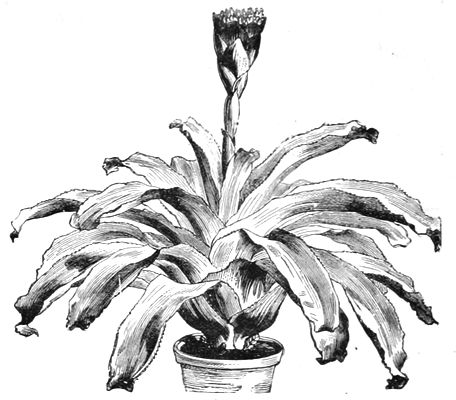
FIG. 358. CANISTRUM AURANTIACUM.
C. eburneum (ivory).* fl. white, green, disposed in a depressed
head, the white ovaries of which give an appearance as of eggs in a
basket. May. l. tufted, mottled, the central ones cream-coloured,
surrounding the flower-heads. h. 2ft. SYNS. Guzmannia fragrans
and Nidularium Lindeni. Brazil, 1876. (B. H. 1879, 13, 14.)
C. roseum (rose-coloured). fl. white, green; bracts rosy. 1879.
C. viride (green). fl. green. l. green, canaliculate, acuminate,
irregularly toothed. Brazil, 1875. SYN. Nidularium latifolium.
(B. H. 1874, 16.)
CANKER. This is a disease presenting very serious
difficulties, principally in the cultivation of Apples and
Pears. Both the trees and fruits, especially of some
varieties, are, in many localities, so far injured as not to
be worth cultivating. What causes the disease is not at
all times known; indeed, it is, in most cases, but imperfectly
understood. Were the causes better known, the
remedy might generally be much easier found. Some of
the primary causes are cold and undrained soil, severe
and careless pruning, extreme variations of temperature,
and excessive growth, made late in the season, when it
has not sufficient time to get well ripened. Trees that
are badly Cankered may often be improved by lifting, and
replanting in improved or better-drained soil. Immediately
the disease is detected in young trees, by the cracking of
the bark or the skin of the fruits, measures should be
taken to find the cause, if possible, and avert its progress.
Some Pear-trees, in various localities, will not produce
fruit without Canker in the open garden, but they will do
so when planted against a wall; and as such may be the
very best varieties, trees should be placed in the latter
position. The removal of large branches, late in spring,
will sometimes produce Canker, at the point where mutilation
has taken place; and it may be caused by severe
late pruning, which induces the growth of soft shoots that
are almost certain to be injured by severe frosts. The difference
in the seasons, as regards the amount of moisture,
is one that can scarcely be provided against. One spring
may be favourable to rapid growth, and the following may
be most unfavourable, thereby arresting the natural flow
of the sap until the latter part of the summer, when
excessive growth will probably take place. Such checks
invariably produce Canker. At times, the disease seems
caused by the punctures of insects, in an early stage,
on the stems or branches. In such instances, a thorough
cleansing, and a smearing of quicklime, made into a wash,
often proves successful. Strong tobacco water will destroy
insects, and a weak solution of sulphuric acid is also fatal
to lichens and mosses, which should never be allowed to
obtain a footing. The chief preventatives, therefore, are:
Planting in well-drained soil; avoiding the use of any
rank manure, to cause excessive growth; changing the
old, or adding new, soil to injured trees; careful pruning,
and the encouragement of early growth in spring, and
subsequent well ripening in autumn.
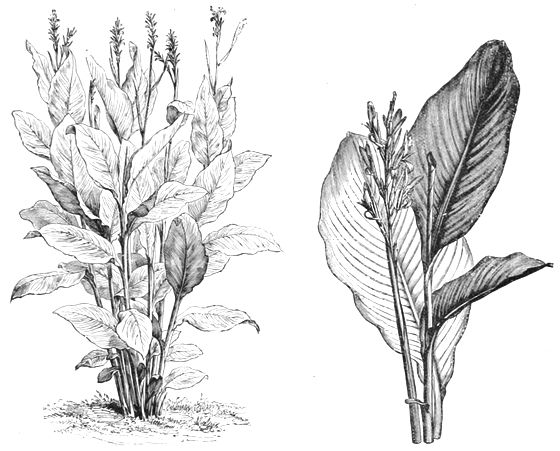
FIG. 359. CANNA INDICA, showing Habit, Flowers, and Leaves.
CANNA (derivation uncertain; according to some, from
cana, the Celtic name for cane, or reed). Indian Shot.
ORD. Scitamineæ. A large genus of stove herbaceous perennials,
very extensively employed in sub-tropical and other
methods of summer gardening. Flowers spathaceous;
anther attached to the edge of the petal-like filament.
Leaves very ornamental. Few plants are more easily
grown, or more quickly propagated. Seeds of many of
the finer sorts may be bought cheaply from respectable
seedsmen. These should be sown in heat, in February or
March. A warm house or cucumber pit is the best place
for sowing the seeds, which are very hard. If soaked in
tepid water for twenty-four hours, germination will be
materially stimulated. A mixture of sand and leaf mould
is best for them, and a covering of 1½in. or 2in. of
earth is not excessive. They should be sown thinly, in
pans. As Cannas are gross, and have somewhat brittle
roots in a young state, it is a good plan to sow the seed
singly in small pots. This method preserves all the roots
intact, and prevents any check in potting off or dividing
the plants out of seed pans or boxes. When this is not
done, the plants must be potted off singly, as soon as they
have formed two leaves, 3in. pots being used for the first
shift. The soil can hardly be too rich and porous. Equal
parts rotted dung, loam, and sand, with a little peat, form
a capital mixture for them. The plants must be kept in
a growing temperature of 60deg. or so, during their earlier
stages, and shifted as required into larger pots. Under
proper management, the roots will fill 6in. pots by the
middle or end of May. They ought not to be planted
out till the end of May or the first week in June. Should
fairly rich soil and a sheltered place be selected for them,
they will not only grow, but flower freely during the late
summer and autumn months. Cannas are also very effective
indoors, either for greenhouse or room decoration.
For these purposes they may be grown on in 8in., 10in., or
even 12in., pots, with rich soil, and placed either in a stove,
intermediate house, warm or cool conservatory, window, or
room. Liberal supplies of manure water will be of very
great benefit. Propagation is also effected by means of
divisions; they form a root-stock very like some of the
commoner and more free-growing Irises, each portion of
which, with bud and roots attached, may be converted
into an independent plant. The best mode of procedure
is to divide the root-stock in early spring, when the pieces
may be placed in 4in. pots at once; and, if plunged in a
bottom heat of 60deg. or so, they will quickly resume root
action and grow rapidly. They may also be propagated
by division without bottom heat. Those who grow large
quantities seldom put their plants in pots at all. Stored
in pots or boxes for the winter, they are divided and
placed singly in similar positions in the spring, and transferred
from such vessels into the open air. The best open
site for Cannas is in a sheltered spot, with a good depth
of rich soil, and plenty of moisture. In such a position,
their noble leaves are not so much injured by rough
winds. After flowering, or at the end of the season, they
may be lifted and stored away in boxes, or in pots of
earth, in dry, frost-proof sheds, or under greenhouse stages
during winter. In warm, sheltered situations, with dry
bottoms, they winter safely in the open, provided their
crowns are covered with 1ft. of litter or cocoa fibre refuse.
But where the soil is wet and cold, or the situation bleak
and unprotected, they should be lifted and stored away,
as already described.
C. Achiras variegata (variegated Achiras).* fl. dark red.
August. l. bright green, striped with white and yellow. Better
adapted for indoor culture than out.
C. Annæi (M. Année's).* fl. salmon-colour, large, well formed.
June. l. large, green, glaucescent, ovate-acute, 2ft. long by 10in.
wide. Stems vigorous, stiff, sea-green. h. 6ft. (R. H. 1861,
470.) Of this there are many forms, the best of which are:
C. A. discolor (two-coloured).* fl. rosy-yellow, few, small. Late
summer. l. lanceolate, erect, light red, 2½ft. long, 10in. wide.
Stems dark red. h. 3ft. to 5ft.
C. A. fulgida (red).* fl. orange-red, large, well-opened. l. 20in.
long, 6in. wide, deep purple, erect. Stems small, dark red.
h. 3ft. to 5ft.
C. A. rosea (rose).* fl. carmine-rose colour, small, few. Late
summer. l. 2ft. long, very narrow, pointed, erect. Stems dark
green, with a reddish base, numerous. h. 5ft.
C. Auguste Ferrier (A. Ferrier's).* fl. orange-red, medium-sized.
l. very large, oval, erect, pointed, deep green, with narrow
stripes and margins of dark purplish-red. Stem green, very
thick, downy. h. 10ft.
C. aurantiaca (orange). fl., segments of perianth rose-coloured
outside, reddish inside; upper lip orange, lower one yellow,
dotted with orange. l. large, broadly lanceolate, pale green;
margins slightly undulated. h. 6½ft. Brazil, 1824.
C. Bihorelli (Bihorell's).* fl. deep crimson, produced upon branching
spikes in great abundance. l. red when young, changing to
deep bronze with age. h. 6ft. to 7ft. One of the best.
C. Daniel Hooibrenk. fl. bright orange, large, freely produced.
l. large, glaucous-green, acuminate, with bronzy margin. Stalks
strong, green. h. 6ft.
C. Depute Henon.* fl. pure canary-colour, with a yellowish
base, large; spikes numerous, rising gracefully above the foliage
to a height of 1½ft. l. ovate-acute, erect. h. 4ft.
C. discolor (two-coloured).* fl. red. l. very large, broad, ovate-oblong;
lower ones tinged with a blood-red hue; upper ones
streaked with purple. Stems stout, reddish. h. 6ft. South
America, 1872. (B. R. 1231.)
C. edulis (edible). fl. large, with purple outer segments, inner
ones yellowish. l. broadly ovate-lanceolate, green, tinged with
maroon. Stems deep purple tinged. h. 6ft. to 7ft. Peru, 1820.
(B. R. 775.)
C. expansa-rubra (red-expanded).* fl. large, with rounded bright
purple segments. l. very large, sometimes over 4ft. long, and
nearly 2ft. broad, ovate, obtuse, spreading horizontally, dark
red. Stems numerous, very thick. h. 4ft. to 6ft.
C. flaccida (flaccid). fl. yellow, very large, not very unlike those
of the native Iris pseudo-acorus. l. ovate-lanceolate, erect.
h. 2½ft. South America, 1788. (L. B. C. 562.)
C. gigantea (gigantic).* fl. large, very ornamental, with orange-red
outer, and deep purple red inner segments. Summer.
l. about 2ft. long; petioles covered with a velvety down. h. 6ft.
South America, 1788. (B. R. 206.)
C. indica (Indian).* Indian Reed. fl. rather large, irregular;
spikes erect, with light yellow and carmine-red divisions. Summer.
l. large, alternate, ovate-lanceolate. h. 3ft. to 6ft. West
Indies, 1570. See Fig. 359. (B. M. 454.)
C. insignis (magnificent). fl. orange-red, few, small. l. ovate,
spreading horizontally, green, rayed and margined with purplish-red.
Stems violet, downy. h. 3ft. to 5ft.
C. iridiflora (Iris-flowered). fl. rose, with a yellow spot on the
lip; spikes slightly drooping, several emanating from the same
spathe. Summer. l. broadly ovate-acuminate. h. 6ft. to 8ft.
Peru, 1816. (B. R. 609.)
C. i. hybrida (hybrid). fl. blood-red, very large, only properly
developed when grown in a greenhouse. l. green, very large.
Stem green, downy, somewhat reddish. h. 6ft. to 8ft.
C. limbata (bordered).* fl. yellowish-red, disposed in long loose
spikes; spathes glaucous. l. oblong-lanceolate, acute. h. 3ft.
Native country uncertain, 1818. (B. R. 771.)
C. l. major (larger-bordered). fl. orange-red, large. l. large,
lanceolate, 2½ft. long, 8in. wide, spreading, deep green. Stems
downy. h. 5ft. to 6½ft.
C. nigricans (blackish).* l. coppery-red, lanceolate, acuminate,
erect, 2½ft. long, 10in. to 12in. broad. Stems purplish-red. h. 4½ft.
to 8ft. One of the finest kinds. C. atro-nigricans has leaves of a
purplish shade, passing into dark red, of a deeper hue than those
of C. nigricans.
C. Premices de Nice. fl. bright yellow, very large. Stems and
leaves like those of C. Annæi.
C. Rendatleri (Rendatler's).* fl. salmon-red, numerous, large.
l. much pointed, deep green, tinged with dark red. Stems
purplish-red. h. 6ft. to 8ft.
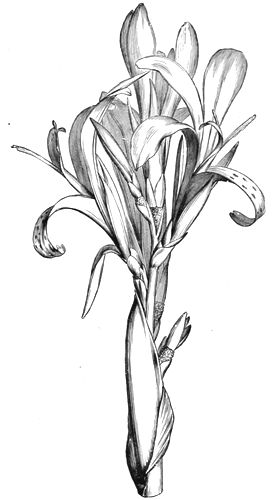
FIG. 360. FLOWERING SPIKE OF CANNA SPECIOSA.
C. speciosa (showy).* fl. sessile, in pairs; petals two, erect, bifid;
lip spotted, revolute. August. l. lanceolate. h. 3ft. Nepaul,
1820. See Fig. 360. (B. M. 2317.)
C. Van-Houttei (Van Houtte's).* fl. bright scarlet, large, very
abundantly produced. l. lanceolate, 2ft. to 2½ft. long, acuminated,
green, rayed and margined with dark purplish-red.
C. Warscewiczii (Warscewicz's).* fl. with brilliant scarlet inner,
and purplish outer segments. l. ovate-elliptic, narrowed at both
ends, deeply tinged with dark purple. h. 3ft. Costa Rica, 1849.
(B. H. 2, 48.) There are several varieties of this species, the best
two are: Chatei, with very large dark red leaves, and nobilis, with
deep green leaves, rayed and margined with dark red.
C. zebrina (zebra-striped).* fl. orange, small. l. very large, ovate,
erect, deep green, passing into dark red, rayed with violet-purple.
Stems dark violet-red. h. 6ft. to 8ft.
CANNABINACEÆ. This order, of which the genus
Cannabis (Hemp) is the type, is now merged into Urticaceæ.
CANNABIS (from the Greek word kannabis, used by
Dioscorides, and that from Sanskrit canam). Hemp. ORD.
Urticaceæ. A small genus, of but little ornamental value.
Flowers racemose, diœcious. Nut two-valved, within the
closed calyx. The undermentioned species is a hardy
annual, of easy culture in ordinary garden soil. Propagated
by seeds, sown in spring.
C. sativa (cultivated). fl. greenish. June. l. on long stalks;
leaflets from five to seven, long, lanceolate, acuminated; margins
serrated. h. 4ft. to 10ft., or even 20ft. India, &c. This plant is
cultivated very extensively for the sake of its valuable fibre.
Well-grown plants have rather an ornamental appearance during
the summer months. See Fig. 361.
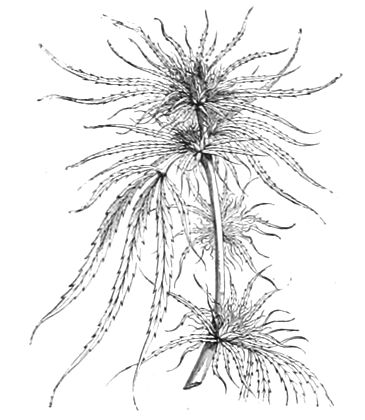
FIG. 361. HEAD OF CANNABIS SATIVA.
CANNON-BALL TREE. A common name for
Couroupita guianensis (which see).
CANSCORA (from Kansgan-Cora, the Malabar name
of C. perfoliata, as yet unintroduced). SYN. Pladera. Including
Phyllocyclus. ORD. Gentianeæ. Small, erect,
simple or branched, stove or greenhouse annuals. Flowers
stalked or sub-sessile. Leaves opposite, sessile or amplexicaul.
Corolla funnel-shaped, with a four-cleft, unequal
limb; the two outer segments equal, two lower ones combined
a greater distance. Stems tetragonal. C. Parishii
requires similar treatment to Balsam, and grows best in
a soil to which chalk or limestone débris is added.
C. Parishii (Parish's). fl. white. l. opposite, perfectly connate,
so that the united two apparently form an exactly orbicular leaf.
h. 2ft. Moulmein, 1864. Greenhouse. (B. M. 5429.)
CANTERBURY BELLS. See Campanula Medium.
CANTHARELLUS CIBARIUS. See Chantarelle.
CANTHIUM. A synonym of Plectronia.
CANTUA (from Cantu, the Peruvian name of one of
the species). SYN. Periphragmos. ORD. Polemoniaceæ.
Very pretty erect, branched greenhouse evergreen shrubs.
Flowers in corymbs, at the termination of the branches,
rarely solitary and axillary. Leaves entire or almost pinnatifid,
alternate, petiolate, elliptic, acuminated, or cuneate-oblong,
glabrous, or downy on both surfaces when young.
They are of easy culture in a compost of turfy loam, leaf-mould,
and sand, if good drainage is allowed. Propagated
by cuttings, placed in sand, under a hand glass. In the
western parts of England, these plants—particularly C.
buxifolia—thrive remarkably well in sheltered situations.
C. bicolor (two-coloured). fl. solitary; corolla with a short yellow
tube and scarlet limb. May. h. 4ft. Peru, 1846. (B. M. 4729.)
C. buxifolia (Box-leaved).* fl., corolla pale red, straight, funnel-shaped,
with a very long tube; corymbs few-flowered; peduncles
tomentose. April. l. cuneate-oblong, mucronulate, quite entire.
h. 4ft. Peruvian Andes, 1849. An elegant plant, having the tops
of branches, calyces, and young leaves, downy. SYN. C. dependens.
See Fig. 362. (B. M. 4582.)
C. dependens (hanging). Synonymous with C. buxifolia.
C. pyrifolia (Pyrus-leaved).* fl., corolla yellowish-white, curved;
stamens twice as long as the corolla; corymbs terminal, dense-flowered.
March. l. elliptic or obovate acute, entire or sinuate-dentate.
h. 3ft. Peru, 1846. (B. M. 4386.)
CAOUTCHOUC. The elastic gummy substance known
as indiarubber, which is the inspissated juice of various
plants growing in tropical climates in different parts of
the world; such as Castilloa, Ficus elastica, Hevea, various
species of Landolphia, Manihot, &c., &c.
CAPE EVERLASTING. See Helichrysum.
CAPE GOOSEBERRY. See Physalis peruviana.
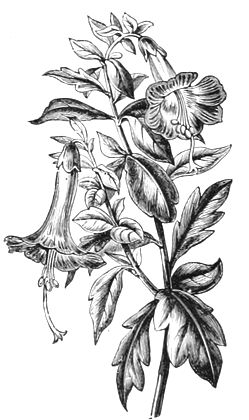
FIG. 362. FLOWERING BRANCH OF CANTUA BUXIFOLIA.
CAPE GUM. The gum of Acacia Karroo or A.
capensis.
CAPE JESSAMINE. See Gardenia florida.
CAPER-TREE. See Capparis.
CAPILLARY. Very slender; resembling a hair.
CAPITATE. Growing in a head.
CAPITULATE. Growing in small heads.
CAPITULUM. A close head of flowers; the inflorescence
of Composites.
CAPPARIDEÆ. An order of herbs or shrubs, rarely
trees. Flowers clustered, or solitary; sepals four to
eight, imbricate or valvate; petals four, arranged crosswise,
sometimes, but rarely, five, or eight, rarely absent. Leaves
alternate, very rarely opposite, stipulate or exstipulate.
The order is distributed throughout the tropical and warm
temperate regions of both hemispheres, the frutescent
species being largely represented in America. There are
about twenty-three genera—the best-known being Capparis,
Cleome, and Cratæva—and about 300 species.
CAPPARIS (kapparis, old Greek name used by Dioscorides,
from Persian kabar, Capers). Caper-tree. ORD.
Capparideæ. Greenhouse or stove evergreen shrubs, of
considerable beauty. Calyx four-parted; petals four;
stamens numerous; succeeded by a berry. They thrive
best in a compost of well-drained sandy loam. Cuttings
of ripe shoots will root in sand, under a hand glass, in
moist heat. This genus contains about 120 species, but
it is very doubtful if more than six are to be found under
cultivation in this country.
C. amygdalina (Almond-like).* fl. white; peduncles axillary,
compressed, corymbiferous. l. elliptical-oblong, narrowed towards
both ends, with a callous point; upper surface smooth; under surface,
as well as the branches, covered with silvery scaly dots.
h. 6ft. West Indies, 1818. Stove.
C. cynophallophora (Dog-phallus bearing). fl. white, large,
fragrant; peduncles few-flowered, shorter than the leaves. l.
smooth, leathery, oblong, on short petiole. h. 8ft. to 25ft. West
Indies, 1752. Stove. (R. G. 1862, 351.)
C. odoratissima (sweetest-scented).* fl. violet, sweet-scented,
about the size of Myrtle, with yellow anthers; peduncles racemiferous
at the top. l. oblong, acuminate, on long footstalks; upper
surface smooth; under surface covered with little hard scales.
h. 6ft. Caraccas, 1814. Stove.
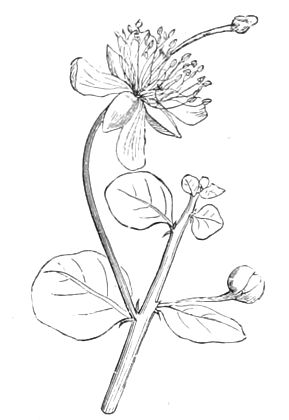
FIG. 363. FLOWER AND BUD OF CAPPARIS SPINOSA.
C. spinosa (spiny).* Common Caper. fl. white, tinged with red
on the outside; pedicels solitary, one-flowered. June. l. ovate,
roundish, deciduous. h. 3ft. South Europe, 1596. This is an
excellent greenhouse shrub, and one which we have found perfectly
hardy in the southern counties of England. See Fig. 363.
(B. M. 291.)
CAPRIFOLIACEÆ. A rather large order of shrubs
or herbs, often twining. Flowers terminal, corymbose, or
axillary; corolla superior, regular or irregular. Leaves
opposite, exstipulate. Well-known genera are: Linnæa,
Lonicera, Sambucus, and Viburnum.
CAPRIFOLIUM. See Lonicera.
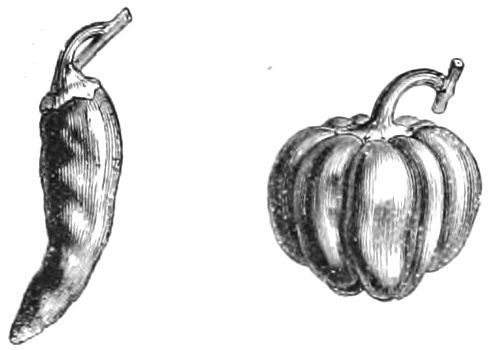
FIG. 364. FRUIT OF LONG AND ROUND CAPSICUMS.
CAPSICUM (from kapto, to bite; on account of the
biting heat of the seeds and pericarp). ORD. Solanaceæ.
Shrubs or sub-shrubs, rarely herbs. Peduncles extra-axillary,
one-flowered. Leaves scattered, solitary, or twin,
and quite entire. Many of the species, although possessing
considerable beauty, are but rarely grown, either for
decoration or for the use of their fruit; consequently, we
confine our specific enumeration to the Common Capsicum,
the Bird Pepper or Chili, and the Bell Pepper. The
first two of these have long been in cultivation, for use
either in a green state for pickles and for making Chili
vinegar, or ripened and ground as Cayenne Pepper. Some
sorts are exceedingly ornamental for greenhouse decoration
in winter, if plants are well grown in rather small pots,
and the fruit ripened under glass. The varieties producing
small pods are the hottest, and consequently best suited
for making Cayenne Pepper. These are generally called
Chilies. All other varieties of Capsicum have a more or
less pungent flavour, and those bearing larger pods are
more profitable for use in a green state. The fruits of
all are either red or yellow when ripe, and are of various
sizes and shapes. Some are produced and stand erect on
the upper side of the branches; others hang underneath.
Fig. 364 represents hanging fruits of Long and Round
Capsicums, the shapes of which are produced by both
red and yellow varieties.
Cultivation. Being natives of tropical countries, Capsicums
cannot always be depended upon to thoroughly ripen
in the open air; but a good crop of green fruits may
generally be obtained by preparing the plants early in the
season, and planting out in a warm situation.
Sow the seeds in February or early in March, in pots or
pans, placing them in heat; and so soon as the plants are
large enough, pot off singly into 3in. pots, still keeping
them in heat until well rooted. Place them into 6in. or 7in.
pots before they become starved; and gradually harden off
and plant out about 2ft. asunder, in June. The fruits ripen
better if the plants are placed against a south wall and
tacked on to it. The safest plan to obtain a crop of ripe
fruits is to cultivate under glass. Pots of 7in. diameter are
large enough. Rich soil must be used, and any spare frames
are suitable in summer. Plenty of water and frequent
syringings should be applied, as the plants are very liable
to injury from red spider and other insects if this is in any
way neglected. The fruits will keep some time after being
ripe, but are never better than when fresh gathered; they
may, however, be kept on the plants for a considerable
period.
Sorts. Chili, Long Red, Long Yellow, Small Red Cayenne,
Round Red, and Round Yellow. Good ornamental varieties
are: Little Gem, a very dwarf variety, of comparatively
recent introduction, covered with small, erect, red pods;
and Prince of Wales, free fruiting, with hanging bright
yellow pods.
C. annuum (annual). Common Capsicum. fl. white, solitary.
June. Petioles glabrous. fr. oblong, pendulous, and erect, red
or yellow, variable in shape. h. 1ft. to 2ft. South America, 1548.
C. baccatum. Bird Pepper or Chili. fl. greenish; peduncles twin.
June. fr. small, erect, almost globose. l. oblong, glabrous, as
well as the petiole. Branches angular, striated. h. 2ft. to 4ft.
Tropical America, 1731. Greenhouse shrub.
C. grossum (large). Bell Pepper. fl. white. July. India, 1759.
CAPSULAR. Like a capsule.
CAPSULE. A dry dehiscent seed vessel or fruit.
CARAGANA (Caragan is the name of C. arborescens
among the Monguls). Siberian Pea-tree. ORD.
Leguminosæ. Very ornamental hardy deciduous trees or
shrubs. Flowers usually yellow, axillary, either solitary
or crowded, but always single on thin stalks. Leaves
abruptly pinnate, the midrib ending in a bristle or spine;
leaflets mucronate. They are well adapted for shrubberies,
and are of the easiest culture in sandy soil. Propagated
by cuttings, made of the roots, or by seeds; the
low-growing shrubs by seeds and layers. Caraganas are
generally increased by grafting on C. arborescens, which
is easily raised from seed, sown when ripe or in spring.
C. Altagana (Altagana). fl. yellow; pedicels solitary. April to
July. l. with six to eight pairs of glabrous, obovate-roundish,
retuse leaflets; petiole unarmed. h. 2ft. to 3ft. Dahuria, 1789.
Shrub.
C. arborescens (tree-like).* fl. pale or bright yellow; pedicels in
fascicles. April, May. l. with four to six pairs of oval-oblong
villous leaflets; petiole unarmed. Stipules spinescent. h. 15ft.
to 20ft. Siberia, 1752. Tree. (B. M. 1886.)
C. Chamlagu (Chamlagu). fl. yellow, at length becoming reddish,
large, pendulous; pedicels solitary. May. l. with two pairs
of distant, oval, or obovate glabrous leaflets; stipules spreading,
and, as well as the petioles, spinose. h. 2ft. to 4ft. China, 1773.
Shrub.
C. frutescens (woody).* fl. yellow, resupinate; pedicels solitary.
April. l. with two pairs of leaflets, approximating the top of the
petiole, obovate-cuneated; stipules membranous; petiole furnished
with a short spine at the apex. h. 2ft. to 3ft. Siberia,
1752. Shrub. (S. B. F. G. 3, 227.) There are one or two varieties
of this species.
C. jubata (bearded).* fl. white, suffused with red, few; pedicels
solitary, very short. April. l. with four or five pairs of oblong-lanceolate,
lanuginously-ciliated leaflets; stipules setaceous;
petioles somewhat spinose. h. 1ft. to 2ft. Siberia, 1796. Shrub.
SYN. Robinia jubata. (L. B. C. 522.)
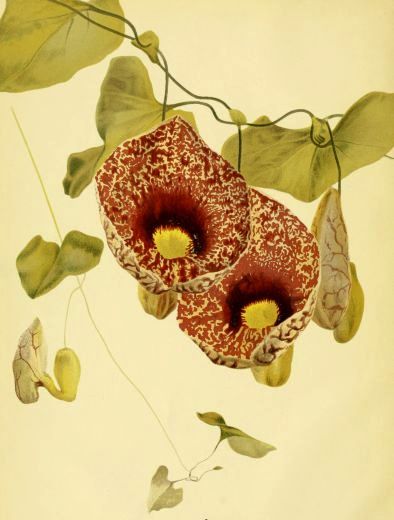
 of
 Horticulture


 HE ILLUSTRATED DICTIONARY OF GARDENING aims at being the
best and most complete Work on Gardening and Garden Plants hitherto
published. The aim is, indeed, a high one; but the Publisher, whose taste
for Flowers has rendered the production a labour of love, has, on his part,
spared no expense that the Typography and Illustrations should be of a
very high class. It is to be hoped that earnest efforts to attain accuracy, by
consulting the best Authorities, combined with no small amount of original research,
have contributed to render the matter of the Work not unworthy of the form in
which it is presented to the reader. The large number of Illustrations is an
important feature; and it is believed that the figures quoted, and the references
given to various works—in which more detailed information is contained than is
desirable, or, indeed, possible, in these pages, on account of space—will greatly add
to the interest and value of the work. Considerable trouble has been taken in
revising the tangled synonymy of many genera, and clearing up, as much as
possible, the confusion that exists in garden literature in connection with so many
plants, popular and otherwise. In the matter of generic names, Bentham and
Hooker's recently-completed "Genera Plantarum" has, with few exceptions, been
followed; that work being the one which will, for a long time to come, undoubtedly
remain the standard authority on all that relates to generic limitation. With regard
to the nomenclature of species, I have endeavoured to consult the latest and most
trustworthy Monographs and Floras, and to adopt the names in accordance with them.
Now and then, certain plants are described under their common garden names; but
they will, in such cases, be also found mentioned under the genus to which they really
belong. A case in point may be cited: Anœctochilus Lowii is given under Anœctochilus,
but the name it must now bear is Dossinia, and a reference to that genus
will explain matters pretty fully, as far as the present state of knowledge goes.