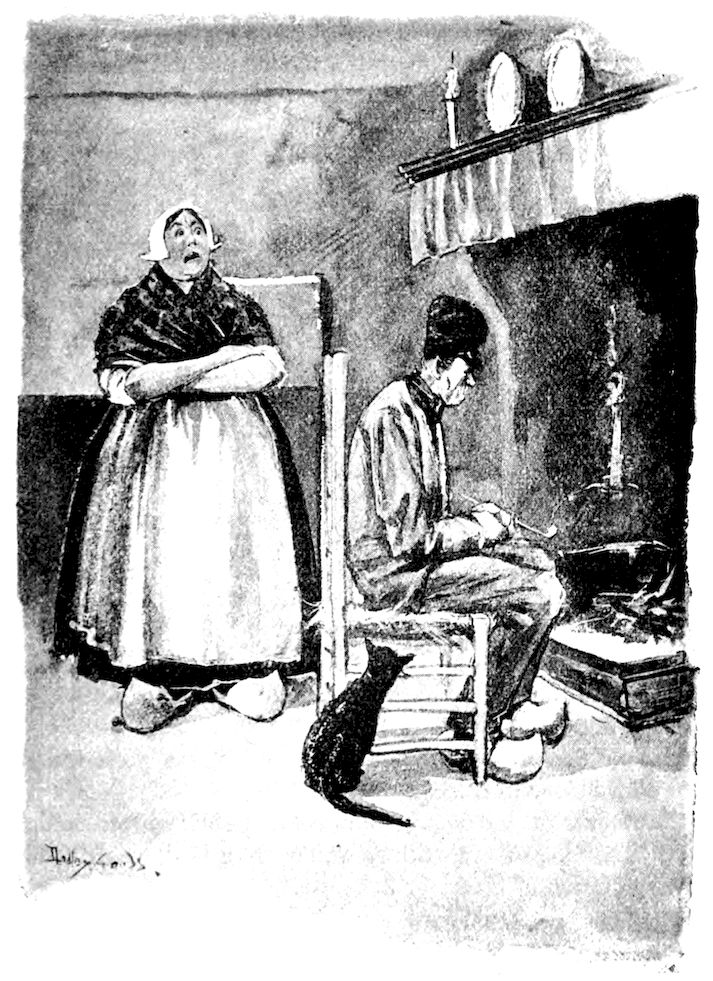
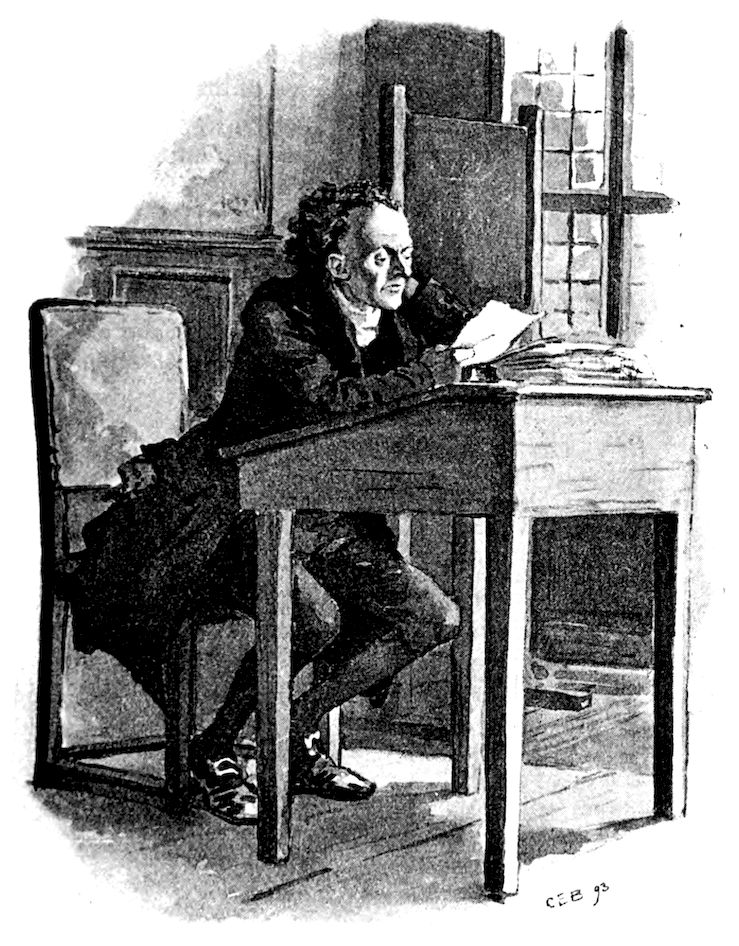
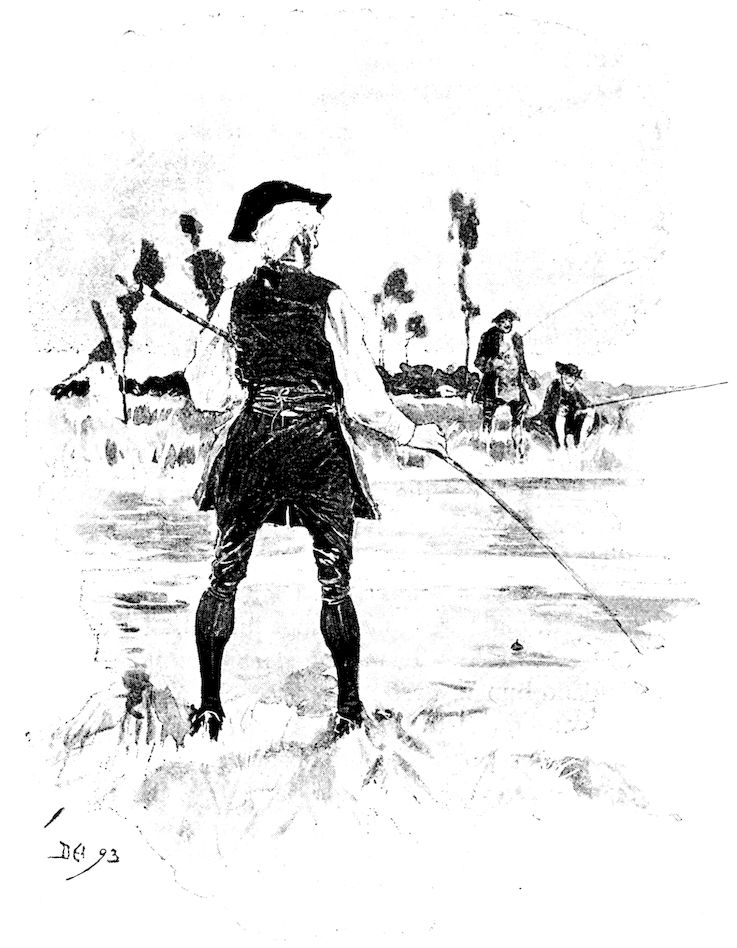
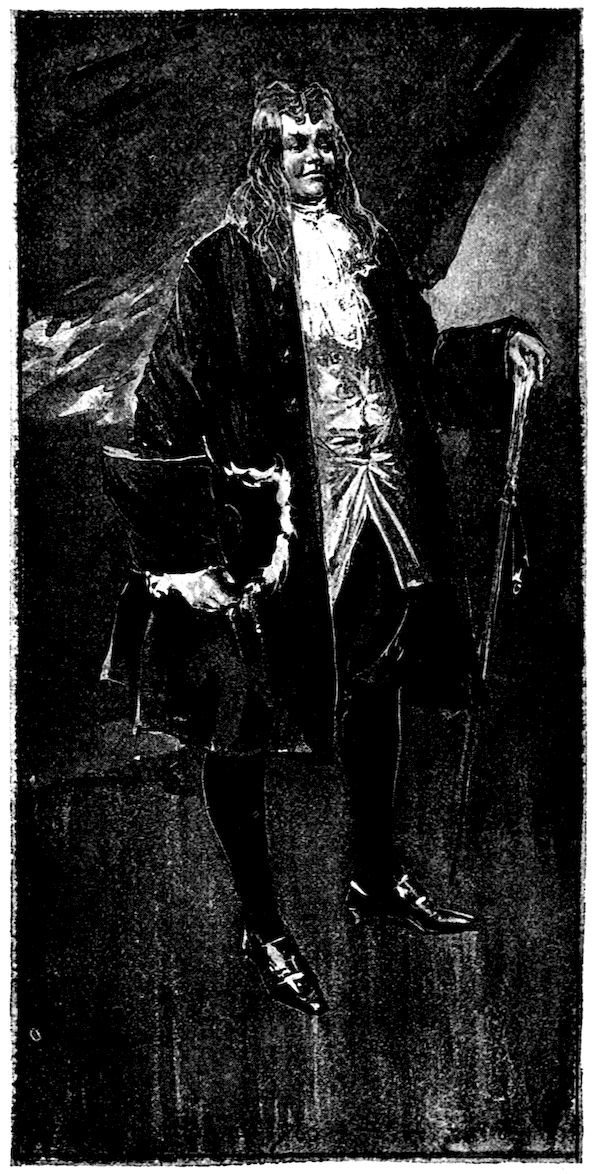
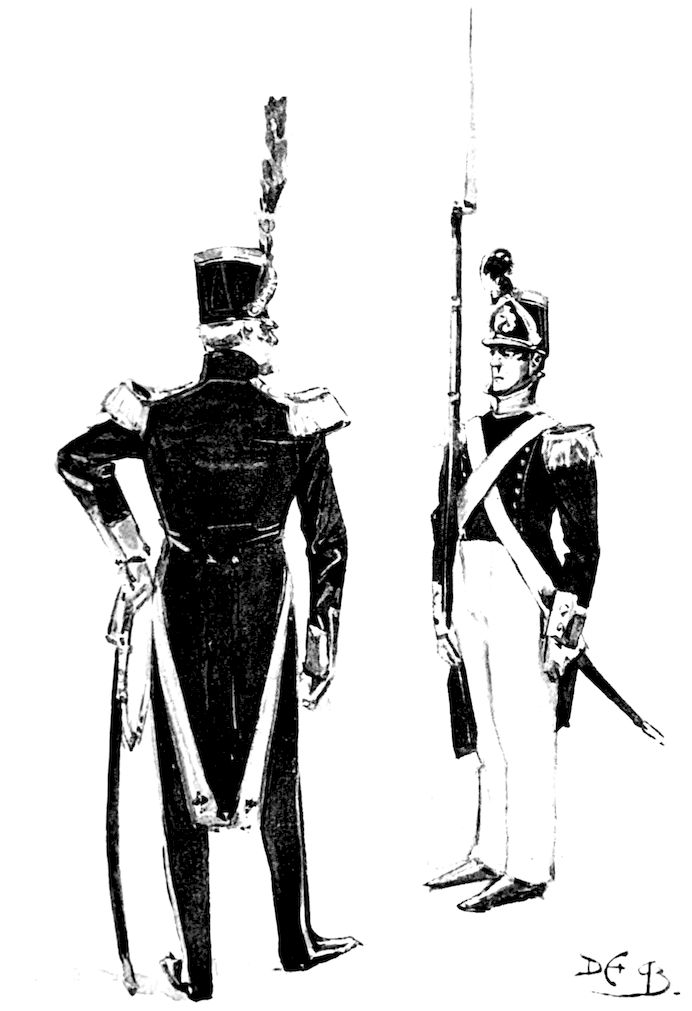
THE VILLAGE ON THE FRONTIER. [26] — CHARACTERS. — Act I.
261
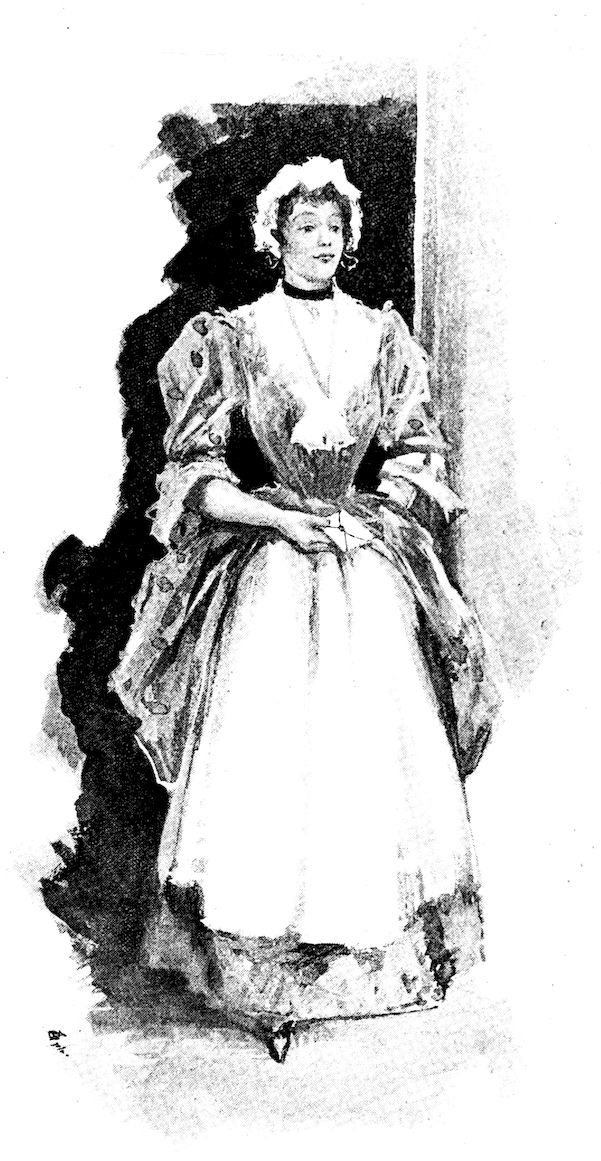
Maria (Maid).
Michiel (Man-servant).
Nicolaas (Landlord and Burgomaster).
Lieutenant Edeling.
Van Werve, } (Refugees).
Clara (his daughter) }
Captain D’Eglantiers.
Lieutenant Taelinck.
Sergeant Pluckx.
Corporal Nesteirs.
Private Pessereau.
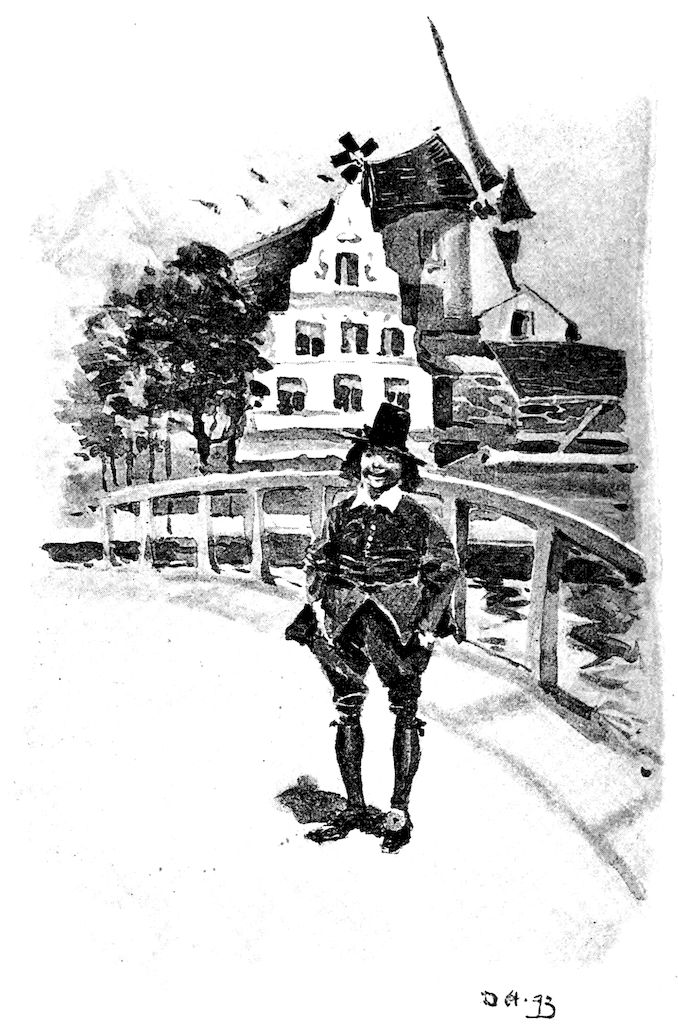
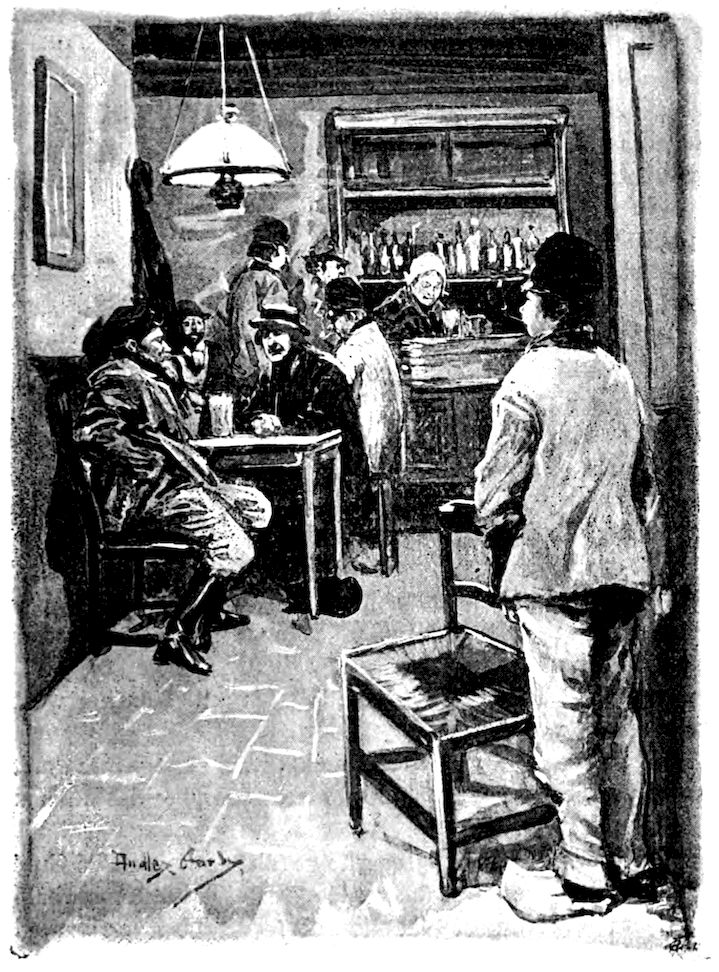
A Village Inn. Evening. Michiel asleep in a chair.
Maria (the maid—behind the scenes). Michiel, where are
you? [Entering.] He is lazy enough for a member of the
Brussels Committee. Michiel, get up!
Michiel (awaking). Well, what’s up now?
Maria. Wake up, at any rate! Isn’t it perfectly scandalous
to lie there, at seven o’clock in the evening, snoring like an ox?
Michiel. Does that hurt any one?
Maria. Is there no work to do then?
Michiel. That won’t amount to much. Travellers won’t
give us any trouble, it’s not worth their while to cross the
frontier just now; and the farmers have their money under
lock and key, and not a cent about them to take a dram
with.
Maria. Is there nothing else for you to do? Couldn’t you
take your rifle, in your spare time, and drill a little? Everybody
is drilling just now; there isn’t a child but can load at
twelve different rates. And you, of all others, ought to be
ready to give an account of yourself when the rebels come
262to pay us a visit. People on the frontier, if no others, ought
to be always in readiness.
(Sings) “Only with vigilance, powder, and ball,
In time of need, one can live at all
Upon the Belgian border.”
Michiel. Well! you’ve got hold of that sentiment by the
wrong end. Let me tell you the right way of it.
“He who would live in a border place
Must always exhibit a double face.
Let the Dutch army come—we’ll fly
Old Holland’s colours right merrily;
Let the Brabanters march this way,
And the Belgian flag goes up to-day,
And so in varying order.
Not by courage or powder and ball,
By cunning alone we can live at all
Upon the Belgian border!”
Maria. Do you know that you deserve to be hanged, with
such infamous principles as that?
Michiel. Why, it’s just to escape hanging that I want to put
them into practice, as our schoolmaster says.
Maria. Our schoolmaster used to say you were an
ignorant ass; but I see that at any rate you have remembered
something.
Michiel. He shall be sorry, one of these days, for having
spoken of me in that way. But, never mind that, I have a
good idea.
Maria. A fine one, I expect!
Michiel. Just listen. We cannot help it if one party or the
other wants to annex us; so we must try and keep friends
with both, and make each of them believe we are on their
side. Now, I’ve asked the house-painter for a couple of pots
of paint: there they are. You say I never carry anything
out; now you shall just see.
263Maria. Well—and then?
Michiel. Why, you see, the Orange flag is still on the
church tower?
Maria. Yes; and if you dare to touch it, I’ll scratch your
eyes out!
Michiel. My idea was to paint it with the Brabant colours
on the side towards Brabant. If the Dutch come from
the north—very good! they see the Orange flag. If the
Brabanters come from the south—very good too! they’ll
see their own colours.
Maria. Well, that’s a nice invention!
Michiel. Isn’t it? I think they ought to give me a prize
out of the village treasury; for in this way I am saving every
one from embarrassment.
Maria. But you’ve forgotten one thing!
Michiel. Forgotten! What’s that?
Maria. When the wind changes, the Brabanters will see
Orange, and the Dutch the Brabant colours; and then,
perhaps, both of them will bombard the village, and you in
it—which would not be the worst loss of all.
Michiel. That’s true; I never thought of that. But, after
all, is there no contrivance to prevent that? With a rope,
for instance?
Maria. You’re a nice politician! It doesn’t do to forget
that the wind may change. So leave politics alone for the
future, or I’ll tell the master what sort of fellow you are.
Michiel. Would you go and tell tales, just because I have
a little more sense than the master? He will get us all into
trouble before he’s done, because he can’t give and take.
Maria. Then both of you taken together ought to make a
man after your own heart. If you ask any of the poor people
hereabouts, they will tell you whether or not he knows how
to give; and if you were in his place, you would certainly do
nothing but take.
Michiel. Yes; having is having, but getting’s the trick!
264Much good has the master done himself, with all his giving
away. Then you have the King; what numbers of people
he has helped out of his own pocket-money! And what has
he gained by it? Nothing! They are breaking his window-panes
with his own three-guilder pieces!
Maria. Would you follow the example of such ungrateful
wretches?
Michiel. Just now the question is, What pays best? And if
we are ever to be man and wife, it will surely be necessary
to scrape a little money together first, if we want to live like
decent people.
Maria. We man and wife! You may make your mind
easy on that point!
Michiel. It’s not to be? Very good—you’ll change your
mind some day, and come asking me on your bare knees
to make you my wife,—some day when I’m a great lord,
just like the man with the whale,[27] who is now a general
among the Brabanters.
Maria. If being a fool and a scoundrel is enough to give
a man high rank among the rebels, you will have plenty of
chances; but I won’t talk to you any more.
Michiel. Have you anything more to say? Because, if
not, I’ll go to sleep again.
Maria. Nothing but this, that for the present, not being a
general as yet, you might go to Peter Kluisken’s and fetch the
pig that the master has bought.
Michiel. A nice little job! To tramp all that way at this
time of night, and in the direction of the Belgian sentinels,
too. Well, just you look out; if I meet them, I bring them
here—upon my word I will.
[Exit.
Maria (alone). The scoundrel! He is quite capable of
doing it. And he expects to marry me? Not if I know it.
265Enter Nicolaas, the landlord, with a newspaper in his hand.
Maria. Well, sir, what’s the news?
Nicolaas. Good news, my girl. A division of our brave
North Netherlanders is marching this way; perhaps they
may even pass through this village.
Maria. That would be a pleasure. I wish some of them
would stay here, then the brigands, who yesterday were only
a few miles from this place, would never dare to show themselves.
Nicolaas. I think they will keep pretty quiet for the future.
Maria. Are there any more news in the paper, sir?
Nicolaas. H’m! h’m! not so fast, child. [Glances over the
paper.] They do not seem to have made up their minds
yet at Brussels whom they are going to have at the head of
the Government.
Maria. I can quite believe that; and I don’t think there
are many men very eager to undertake the management
of such a confused state of affairs.
Nicolaas. They may seek long enough, the ungrateful
hounds, before they find another ruler under whom they
will be as happy as they were under our good old King.
Maria. Any news besides, sir?
Nicolaas. Do let me read in peace.... H’m! yes; they
are complaining of scarcity in all the Belgian towns.
Maria. Of course they are. They may hate the Dutch,
but they’ll find they can’t get on without Dutch money.
What other news is there?
Nicolaas. The Powers have resolved to keep to the non-intervention
system.
Maria. Non-intervention! what’s that? It must be a fine
thing whatever it is; every one is talking about it.
Nicolaas. Well, how can I best explain it? It means ...
not to meddle with other people’s affairs. For instance, if
your neighbour comes and asks you to help him because
266his house is on fire, and you tell him to put it out himself, for
it’s no affair of yours,—that’s non-intervention. But listen ... I hear the sound of horses’ hoofs. Who can it be?
A voice outside. Does the burgomaster live here?
Nicolaas. Coming!
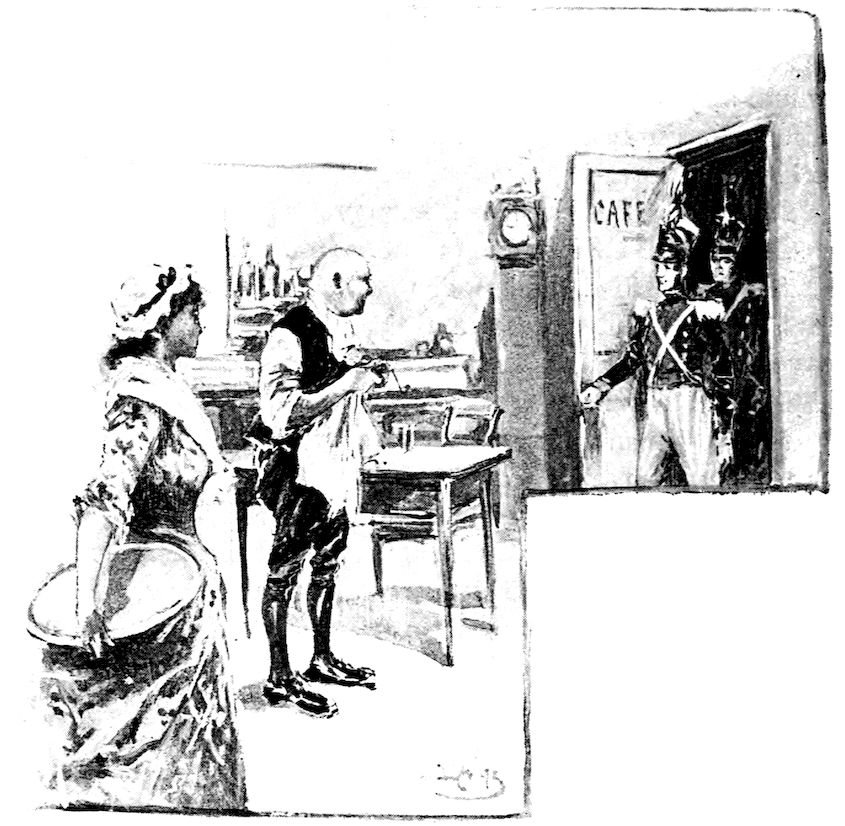
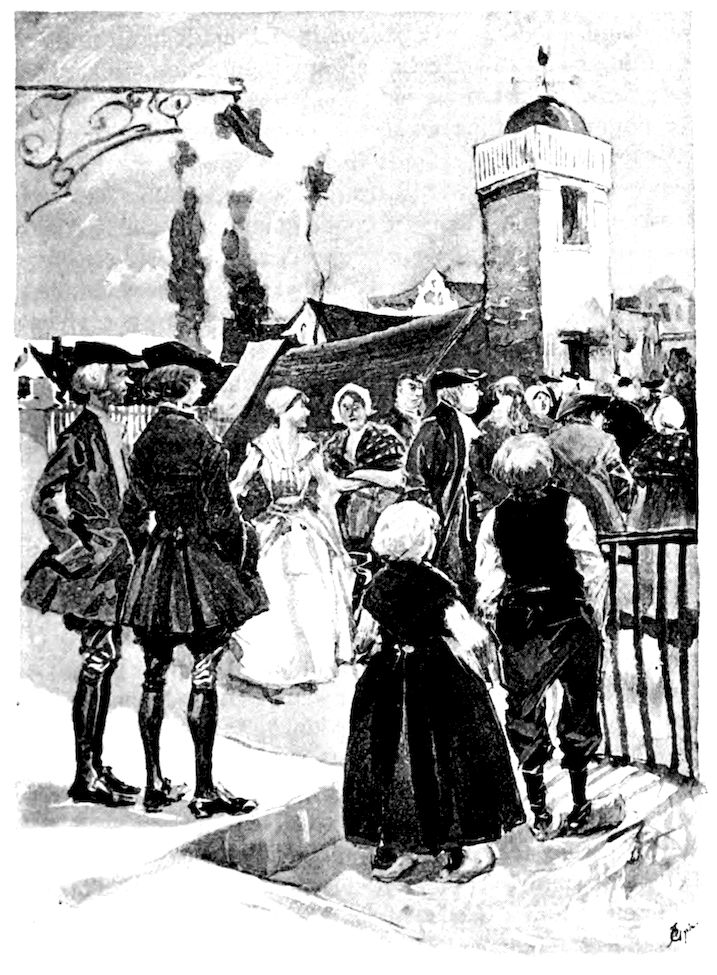
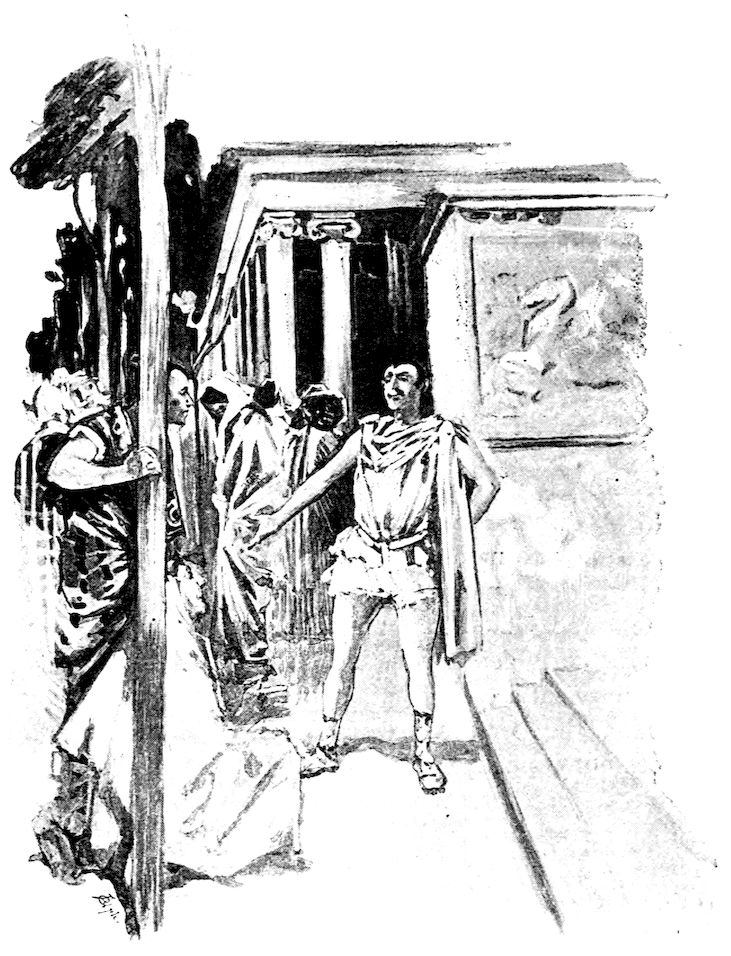
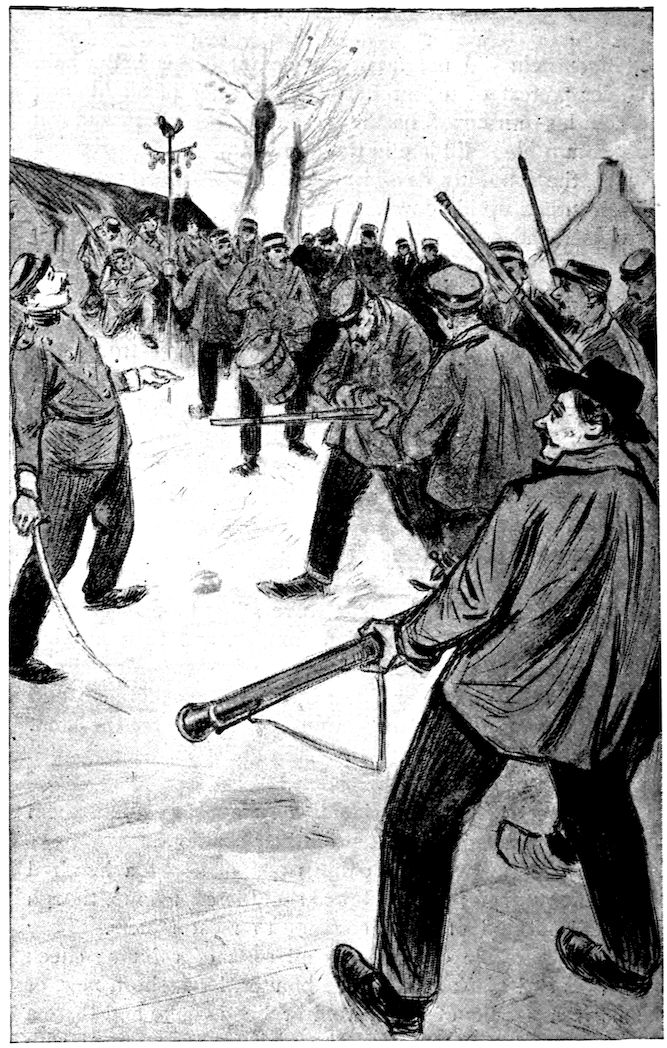
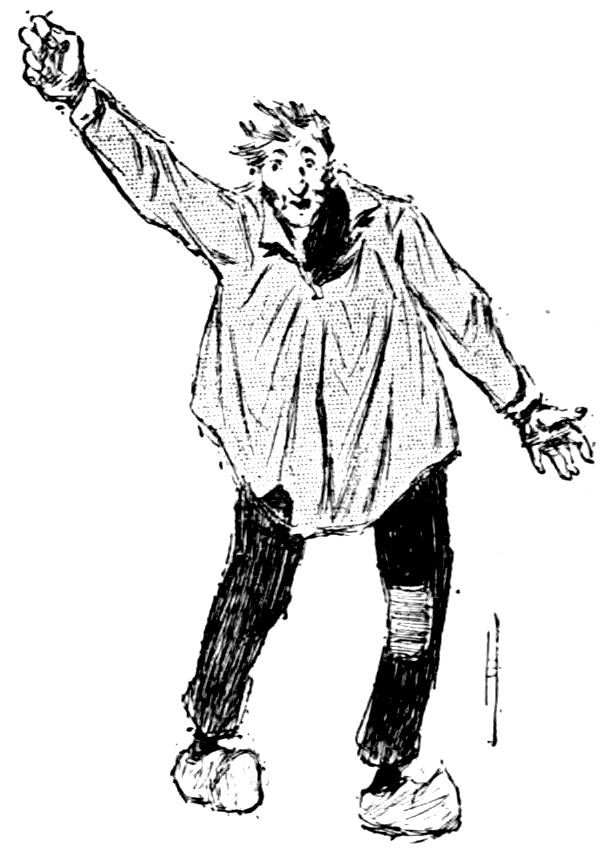
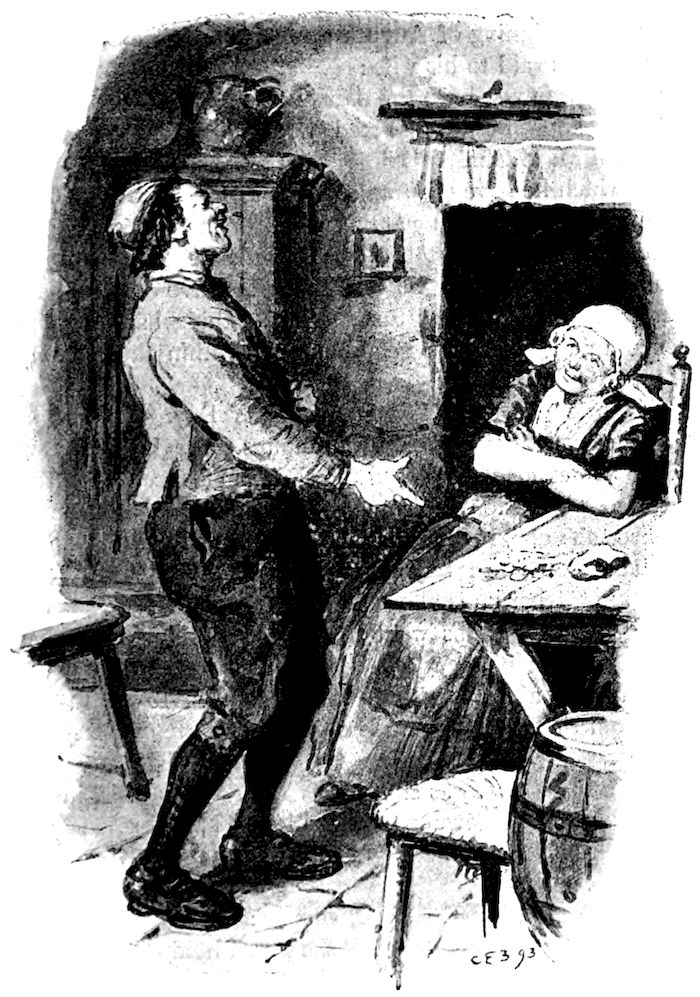
“JUST COME IN, LIEUTENANT.”
Maria (looking out). Lancers! lancers!
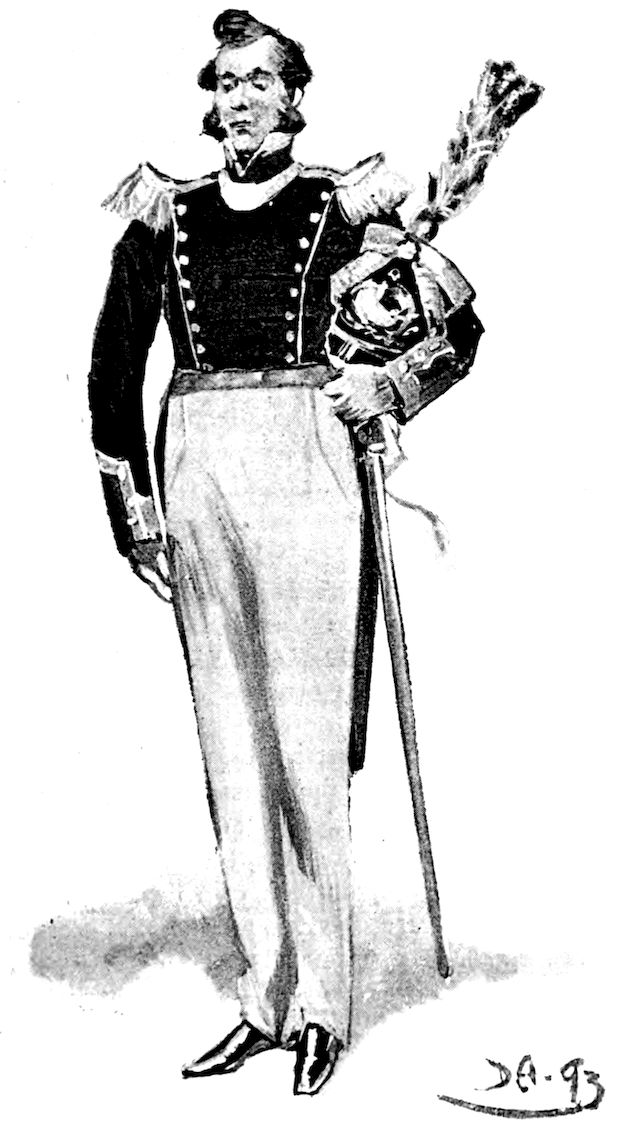
Enter Edeling, with two lancers.
Edeling. I want to speak to the burgomaster. Does he
live here?
Nicolaas. Just come in, Lieutenant. Come in, gentlemen,
I am very glad to see you. What will your honour take?
Maria, run to the cellar, there’s a good girl, and bring up a
bottle of the best.
[Exit Maria.
267Edeling. Not for me, thanks; I don’t want anything. My
time is short, and so are my orders.
Nicolaas. I won’t listen to a word before the gentlemen
have had some refreshment.
Enter Maria with wine; Nicolaas opens bottle.
Edeling. I do not care for useless compliments. I am
commissioned to buy some cattle here, and bring them at
once to headquarters. How many head can you let me
have, and at what price, to be paid in cash at once?
Nicolaas. We will see. (To Maria.) Is Michiel back yet?
Maria. He is only just gone out.
Nicolaas. Then you will have to do the errand. Run at
once to Peter Slof and Cornelis de Ruyter, and ask them to
come here at once. I want to see them about a cattle
contract. Well, what are you dawdling for?
Maria. Because—because——[Looks at the lancers.]
I’m so glad! [Runs out.]
Nicolaas (offering wine). Come, just one glass!
Edeling. If you insist. (Suspiciously.) Are you not going
to drink too, Burgomaster? (Drinks.) What’s to pay?
Nicolaas. Who’s talking about payment? Haven’t I even
a glass of wine to spare for our brave defenders?
Edeling. Well, but you’re an innkeeper. Take these two
guilders and put them in your pocket, for it’s against orders
for us to get anything on credit.
Nicolaas. And I say I won’t have the money. I can be
obstinate enough, too, when I once begin. Take it, and
give it to the Government as a voluntary subscription on my
part. You don’t trust me, Lieutenant, and that grieves me
to the heart. I see I shall have to put on my Sunday coat;
perhaps that will give you more confidence. [Fetches a coat,
with a medal on it, and puts it on. The lancers salute.] Now,
do I look like a man who would betray you? I won that
at Waterloo.
Edeling. Forgive me for suspecting you; but so many of
268your class, especially on the frontier, have turned out traitors,
that suspicion has become a disagreeable duty. What is the
general feeling in this village?
Nicolaas. Not what it ought to be. I fear that, if the rebels
were to arrive, there are those, here and there, who would
join them. It seems as though people were struck with
blindness; they want change at any price. They have let
themselves be persuaded that they will have no taxes to pay
under the Brabant Government. That’s the worst of the
people here; they are stupid, they don’t reason.
Edeling. They don’t know any better, I suppose. Do you
think your friends will be here soon?
Nicolaas. Presently, I hope. Your honour seems to be in
a hurry. Is it far to headquarters?
Edeling. A couple of hours. We are to march again at
daybreak to-morrow. I am sorry we are not going farther,
for I fear we shall not meet any of the enemy. I would
willingly have paid them a visit.
Nicolaas. You are very eager for fighting.
Edeling. Particularly so; for, besides my wish to do my
duty by my king and country, I have a private account to
settle with the gentlemen from the south. They are keeping
my bride a prisoner.
Nicolaas. Your bride! I thought women, at least, would
have been respected.
Edeling. Her father is a well-known soldier; when the
first disturbances broke out in the place where he was in
command, he gave orders to fire on the rebels. They never
forgave him, and when he had the misfortune to fall into
their hands they kept him in prison—his daughter refusing
to leave him.
Maria. Here come Peter Slof and Cornelis de Ruyter.
Nicolaas. Very good! Shall we go to meet them, and
look at their beasts together?
269Edeling. Willingly. Thank you for doing the errand (to
Maria.), and here is something to remember the Lieutenant
by. [Gives her money, and exit with Nicolaas.]
Maria (alone). A guilder! Well, I’ll keep that as a remembrance.
A nice man that lieutenant! One can see he
comes from Holland. But who are these strangers coming
in so timidly?
Enter Van Werve and Clara.
Van Werve. Can we get a night’s lodging here?
Maria. Please don’t take it ill of me, I must ask first
where your honour comes from? We can’t take any one in
for the night without first knowing who it is we are sheltering.
Van Werve. I will answer your question to the Burgomaster.
Where does he live? and can I speak to him?
Maria. He lives here. The Burgomaster and the landlord
are the same person. The master will be home directly.
Clara. Will you please tell us what province we are in?
Maria. In North Brabant, Mejuffrouw.
Clara. Thank Heaven! then you are safe, father!
Maria. Safe! Then you are refugees?
Van Werve. Clara!
Clara. I was imprudent, father—forgive me. But I could
not control my joy at finding myself once more in our own
country, after all that we have gone through.
Van Werve. I am not yet sure that we are safe here.
Clara. If we had anything to fear here, I feel sure, from
this girl’s honest face, that she would not betray us.
Maria. I betray you! I’d sooner die a thousand times
over. But come and sit down—you seem tired.
Clara. It is true, we have been walking for a long time,
and I begin to feel it.
Van Werve. My dear child, what a difficult and anxious
journey you have exposed yourself to, to save your father.
(To Maria.) Yes, my good girl, I have been in prison,—my
270daughter has succeeded in saving me, and it is to her
courage and devotion I owe it that we have been able to
pass the enemy’s outposts and reach this village.
Maria. It’s lucky you just happened to come to-day. A
few Dutch soldiers arrived not long ago, who will be quite
ready to escort you to a safe place, if you prefer not to stay
here any longer.
Van Werve. My comrades! Oh, where are they? Take
me to them.
Maria. I will call them,—or—wait—I think I hear them
coming.
Maria. What, alone, Lieutenant? Where are the rest?
Edeling. They have gone on with the oxen. I found I had
left my cloak here. But whom do I see?
Van Werve. The voice seems familiar.
Clara (hastens to him). Edeling!
Edeling. Clara!—Mijnheer van Werve!...
Van Werve. So you’ve enlisted, Edeling? Well done, my
boy! That is what I should have expected of a true-born
Dutchman like yourself!
Edeling. Your words remind me that I am no longer my
own master. I am expected every minute at the camp.
Clara. Cannot we go with you?
Edeling. I have only my horse; but perhaps there is a
conveyance of some sort to be had in the village.
Maria. Oh! three if you like. I will go at once to order
one.
Van Werve. Stop a moment, girl. I—alas!—I have no
money to pay for a conveyance.
Edeling. Here is my purse—but I really must go.
Van Werve (putting back the purse). I must not accept it.
I can never return it. I possess nothing now.
Edeling. Nothing?
Van Werve. Not a cent. The little ready money we had
271with us we have been obliged to spend on the road; and this
morning I had the misfortune, to leave behind——
Edeling. Well?
Van Werve. My portmanteau, with my whole fortune in
it, at the village where we stopped for the night.
Maria. Well, portmanteau or no portmanteau, you will
have to drive, and I’m going to fetch the carriage.
[Exit.
Van Werve. It was no carelessness on our part; the
pursuers were at our heels—we had no time to save anything
but ourselves.
Edeling. And isn’t it enough for me to see you safe, sir,
you and my Clara? Is not everything I have yours? Take
my purse. As soon as you can get a vehicle, follow me as
quickly as you can, for I must not delay one moment longer.
Maria. Save yourselves, for Heaven’s sake! save yourselves!
they’re coming!
Omnes. Who? What? [A noise outside.]
Maria. The brigands! Don’t you hear them? They’re
shouting, “Vive de liberteyt!”
Edeling (draws his pistols). The first who dares——
Maria (seizes him by the arm). Are you mad? What is the
good of your pistols against a whole band? Quick! out
at the back door. (To Van Werve and Clara.) And you—into
this room! I’ll come back to you in a minute.
Edeling. But if——
Maria (pushes him out at a side door). No buts! make haste!
[Exit Edeling.
Van Werve. Can’t we follow him?
Maria. Certainly not. He is a young fellow, and can take
care of himself. Three of you would arouse suspicion, and
perhaps lead to mischief if he tried to defend you. Just
come in here. [Opens the door of a room on one side.]
Clara. We leave our fate in your hands.
[Exeunt Van Werve and Clara.
272Enter Michiel, bringing with him a number of Belgian
volunteers, among whom Captain D’Eglantiers,
Lieutenant Taelinck, Sergeant Pluckx, Corporal
Nestiers, and Private Passereau. They speak the
broad Flemish or South Netherlands dialect, largely
interspersed with French words. On entering, all
of them, including Michiel, sing, to the air of
“La Dame Blanche”—
Victory! Victory!
The enemy’s away!
Who conquers through sheer bravery
But Old Brabant and liberty?
Victory! Victory!
Glory and loot to-day!
Maria. Well, they do look like lunatics; and there’s that
villain of a Michiel with them.
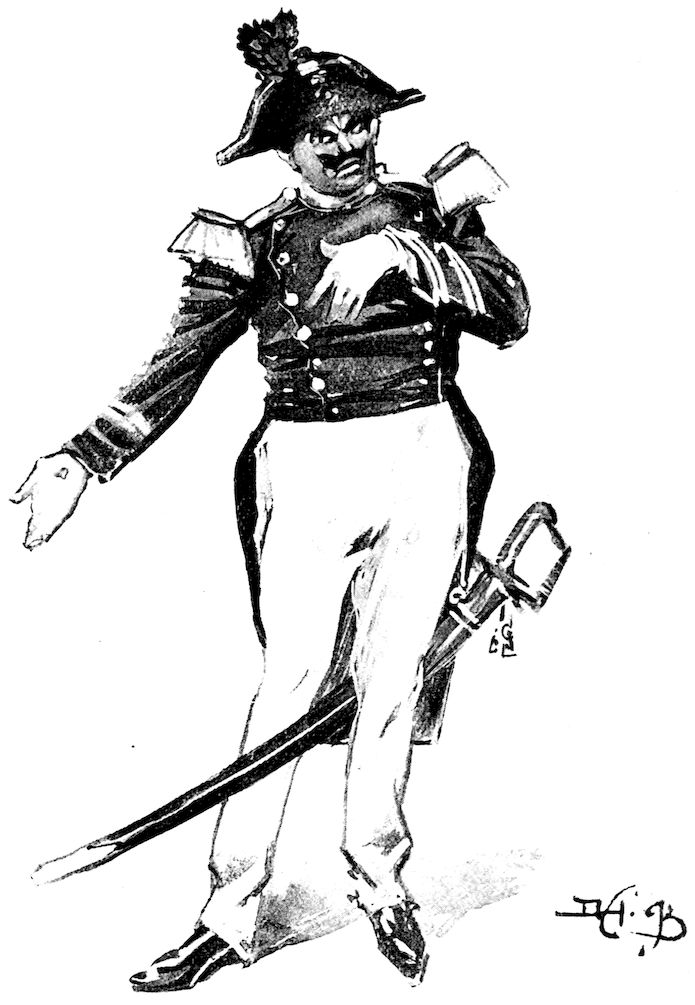
D’Eglantiers (wiping his sword). The victory is ours,
comrades! Our courage has repulsed the enemy, and
maintained the glory of our name. Lieutenant Taelinck,
see that none of the Hollanders escape who are hidden away
here, do you hear?
Taelinck. I have seen to that, Captain. All the exits are
well guarded.
Maria (aside). The poor quarter-master! how will he
escape?
Michiel. What will the gentlemen please to take? Everything
in the house is at your service.
Maria. Just listen to the contemptible rascal?
D’Eglantiers (to Michiel). You’re a fine fellow! Just let
the lass fetch a litre of wine from the cellar.
Michiel. Do you hear? Fetch wine for the gentlemen.
Maria (treading on his toes as she goes out). You villainous
traitor!
D’Eglantiers (to Michiel). Do you live in the house?
273Michiel. I live here, Captain. (Aside.) I need not tell him
in what capacity.
D’Eglantiers. You are a brave citoyen! Without you, we
should never have found the way to this village so soon. I
think I might make you Burgomaster.
Michiel. Indeed you couldn’t do better, Captain. I will
at once give orders to have the Brabant flag hoisted.
[He is about to leave the room.]
D’Eglantiers. There’s no need of that. It’s obscur out of
doors, and one can’t very well distinguish the colours. But
I’ll tell you what to do. Go at once and fetch the notables
of the village, and tell them to come here to-morrow with
the first lumière to hold a meeting of the council. Corporal
Nestiers, go along with the Burgomaster, and whoever does
not come with you at once, de bonne volonté, you must bring
him by force; for liberty must triumph.
Michiel (aside). Michiel, Burgomaster!
D’Eglantiers (sits down). I shall make my headquarters
here provisionally. Let’s see—what has to be done now?...
Enter Maria, bringing wine. All sit down and drink.
D’Eglantiers. Ahem!—reports ... but who is to write
them? Lieutenant Taelinck, can you write?
Taelinck. No, Captain.
D’Eglantiers. Why are you a lieutenant then?
Taelinck. But you can’t do it either, Captain—or read, for
that matter.
D’Eglantiers. Silence! I’m a captain to give orders, not
to write. Sergeant Pluckx, can you write?
Pluckx. Not I—but there’s Private Passereau, he knows
how.
Passereau. Plaît-il?
D’Eglantiers. I’m asking if you can write.
Passereau. Verdikke![28] eh?
274D’Eglantiers. If you can write—don’t you understand?
Passereau. Je n’entends pas—verdikke!
Pluckx. Verdikke is the only word of Flemish that
Passereau knows.
D’Eglantiers. So he can’t write Flemish. (To Maria.)
Can you write, my girl?
Maria. At your service, Captain.
D’Eglantiers. That’s curious! Sit down here, then, and
write as I dictate.
Maria (sits down at the table—aside). What an idea!...
Yes, I think it will do!
D’Eglantiers. Write: Report....
Enter Nicolaas, Nestiers, and two others.
Nestiers. Captain, here is a fellow who has been rebelling
against us.
D’Eglantiers. Well—what has he been doing?
Nestiers. He forcibly resisted our entrance into an écurie
in which there was a lancer’s horse standing.
D’Eglantiers. And where was the lancer who sat on the
horse?
Nestiers. He is nowhere to be found.
D’Eglantiers. Well—just look through the whole village
till you find him.
[Exeunt Nestiers and others.
D’Eglantiers (to Nicolaas). Who are you?
Nicolaas. I am the Burgomaster.
D’Eglantiers. The ex-burgomaster! I have put another
burgomaster in your place—do you understand? But if
you will make your soumission to the Committee, then,
perhaps....
Nicolaas. Never!
D’Eglantiers. What!—do you know that I can have you
fusillé?
Nicolaas. So you may, if you like!
D’Eglantiers. What do you say? Stop where you are—I
275shall have a word to speak with you presently—do you
understand? (To Maria.) Write!
Nicolaas. What! Maria, are you giving this scoundrel any
help?
Maria. Why not? The gentleman was in such trouble
because he could not find any one able to write.
D’Eglantiers. Where did I leave off dictating?
(Sings) Write with care—or you’ll regret!
Maria. Captain, not a word I’ve written—
You have told me nothing yet!
D’Eglantiers. Write: Our army, fear-compelling,
Took six hamlets in a day.
Nicolaas. Since they saw no en’my—surely
No great wonder anyway.
D’Eglantiers. Of the foe full seven hundred
Fell before our conquering force!
Nicolaas. Numbers which, if rightly sifted,
Come to just one lancer’s horse!
D’Eglantiers. Out of all my valiant heroes
Only one has fall’n—the which—
Nicolaas. As I’ve just had information,
Fell dead drunk into a ditch.
D’Eglantiers. Good!—you now may cease your labours!
So!—a neat despatch you see,
Accurate and interesting,
As they always ought to be.
Nicolaas. Such as all despatches be!
D’Eglantiers. Well—now let us just look at it. H’m
that’s written very cleverly. Now for the proclamation.
Another sheet of paper! Write: Proclamation! Have you
written that sentence?
Maria. Yes—what next?
D’Eglantiers. We, Captain d’Eglantiers and Lieutenant
Taelinck,—to all who are about to read these presents—salutation!
276Maria (writing). To all who are able to read these
presents....
D’Eglantiers. About to read, I said! Fellow-citizens! we
are bringing you la liberté. We have risked our life-blood
to procure it for you: we also hope that you will show yourselves
reconnaissants.... Hey! now what do you say to
such a sentence as that? That’s what I call eloquence!
Maria. Undoubtedly! That is very neatly said, Captain.
D’Eglantiers. I see you’re a girl of taste and intelligence.
Go on—and that you are to give us ... give us ...
everything that is necessary. Well, that’s short and to the
point, isn’t it?
Maria. A very fine style, and any one can understand
what is meant at the very first reading.
D’Eglantiers (gratified). Can’t they just?
Maria. Now you’re going to sign both papers, aren’t you,
Captain?
D’Eglantiers. Yes; I’ll put a little cross to them—that’s
my mark. Lieutenant Taelinck, are you going to sign them
too?
Taelinck (half asleep). Yes, yes. [They sign.]
D’Eglantiers. Now the report must be enclosed in an
envelope, and sent to the General, and the proclamation will
be posted up to-morrow.
[Maria hastily hides the signed paper in her dress, and
folds another, which she hands to D’Eglantiers.]
Maria. Here you are, Captain. (Aside.) I have it all
right.
D’Eglantiers (hands the paper to Private Passereau). Get
on your horse at once, and take this paper to the General.
Passereau. Verdikke! Dans la nuit——
D’Eglantiers. Go at once! [Exit Passereau.] Well, that’s
finished. Now I’ll go and get an hour or two’s sleep. You’ll
call me, my good girl, when the council is assembled, won’t
you?
277Maria. Yes; and in the meantime I will go and post up
the proclamation.
D’Eglantiers (takes it hastily from her, and puts it into his
pocket). No; I must first read it out, or have it read, to the
council. Now, where is my bedroom?
[He is about to go into Van Werve’s room.]
Maria (quickly). No, not there. The left-hand door, sir.
[Points to a door on the opposite side.]
Nicolaas (aside). I don’t understand it. Why does she
want to put that fellow into my bedroom? (Aloud.) Maria,
are you mad! the other room is——
Maria (interrupting him quickly). Just suited to a prisoner.
D’Eglantiers (pointing to Nicolaas). Then he must be put
in there.
Nicolaas. But——
Maria (quickly, aside to Nicolaas). Leave it to me!
D’Eglantiers. Good-night! (Turning to the Volunteers.) If
Nestiers comes with the portmanteau, tell him to bring it
into my room. Do you hear?
[Nicolaas goes into the room in which Van Werve and
Clara are hidden, while Maria takes a candle and
shows D’Eglantiers into the left-hand bedroom.]
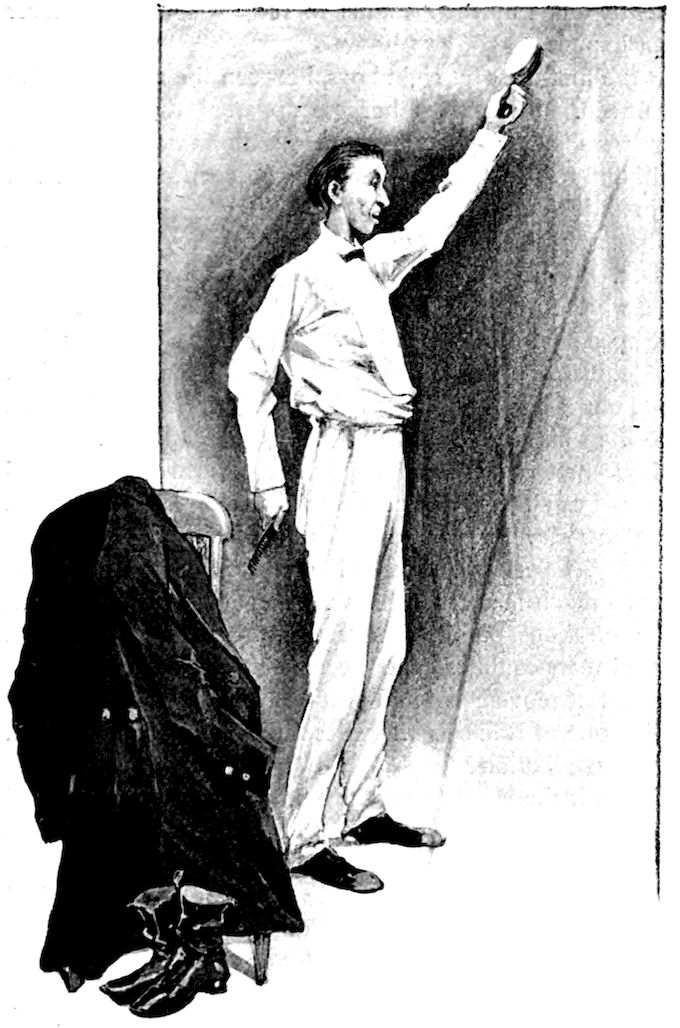
Taelinck (crouching over the fire). B-rrr! it’s famously cold!
Pluckx. I believe you! The Government really ought to
provide us with better clothing.
Taelinck. That’s just the beauty of liberty, that every one
has to look out for himself.
Pluckx. And that’s just what I mean to do, so soon as that
girl comes back.
Edeling (appears in the doorway and looks in). These fellows
are everywhere! I am caught in a trap.
Pluckx. But just tell us now, Lieutenant, who is supposed
to be governing us at the present moment? for every day I
hear of a fresh sovereign, who has been recommended to us.
Taelinck. Who is governing us? Why, Liberty!
278Pluckx. I shan’t be sorry to see some change, then; for I
haven’t yet seen the colour of Liberty’s money. I think the
lass must be very hard up.
Maria (aside). Is this rabble going to stay here all right?
Pluckx. I say, my girl, look here. Have you got a
blanket or rug you could let me have?
Maria. What for?
Pluckx. You’ll soon see that—comprenez?
Maria. I have; if you will be sure to give it back.
Pluckx. Oh! you shall have it back soon.
Maria (takes a blanket out of a chest). Here is one; but
you shall not have it, unless you give me your tunic as a
pledge that you will return it.
Pluckx. Come, none of that chatter!
Maria. Gently, gently! You have seen that the Captain
lets me write his proclamations for him. Nothing would be
easier than for me to put in a word against you, if you don’t
behave yourselves.
Taelinck. The girl is right, Pluckx.
Pluckx. Well, here’s my sarrau, then! It’s not a bad
exchange. [He gives his tunic to Maria, and cuts three slits
in the blanket.]
Maria. What’s that for?
Pluckx. A new-fashioned overcoat for the winter. [Puts
his head and arms through the slits. All laugh except Maria.]
Maria. Well, as you’ve spoilt my blanket for me, you shall
not have your tunic back either.
Nestiers. Come, men, here are your billets; and here
(laying it on the floor) is the Captain’s portmanteau.
Pluckx. You mean the portmanteau that the Captain
looted this morning.
279Maria and Edeling (aside). Is it possible?
Taelinck. Well, be quick and give out your billets. I’m
going to stay here. I suppose there’s a second bed in the
Captain’s room?
Maria. Surely.
Taelinck. Allons donc! Right-about march! Place a
sentry outside the front door, and see that no one goes in
or out without permission from the Captain or me.
[Goes into D’Eglantiers’ room with the portmanteau.
The others retire. Enter Edeling, to whom Maria
hands Passereau’s tunic, in which he escapes.]
Act II.
Middle of night. D’Eglantiers alone with the portmanteau
under his arm and a candlestick in his hand.
D’Eglantiers. I see they’ve brought me the portmanteau.
Let’s seize the golden moment, while old Taelinck lies snoring
like an ox, to inspect the contents a bit. [Breaks the lock, and
rummages through the portmanteau, taking out a necktie or
some similar article, which he puts on.] What do I see?
This seems to be a handsome capture! And I’ll be hanged
if these are not Government bonds! Ma foi! Now I’m a
rich man, and can let the service slide with an easy mind!
I shall lose nothing by resigning—no one ever got his pay
out of a Provisional Government! However, we must keep
a sharp look-out, and not let any of my comrades find out
what has been in here! All honest fellows, no doubt, but
suffering from the same complaint as myself! Where shall I
hide the packets? The portmanteau won’t lock now; and,
besides, several of them have seen it already.
280[Remains standings with the bonds in his hands. Enter
Maria.]
Maria. Up already, Captain?
D’Eglantiers (starts, and tries to hide the papers). What,—what
is it?
Maria (aside). That’s the portmanteau in question. (Aloud.)
Nothing, Captain; I came to see if you wanted anything.
D’Eglantiers. Nothing! or,—wait! (Looking at her
attentively. Aside.) The girl seems trustworthy ... otherwise ... yes, I suppose that will be best!
Maria (aside). What is he considering with himself?
D’Eglantiers. My good girl, I have here some of the army
reports; could you tell me of a safe place, where no one comes
poking and prying round, and where I can cacher them in
safety till my departure?
Maria (aside). He’s running into the trap of his own
accord. (To D’Eglantiers, pointing to the cupboard.) Shall
I hide them in here, under the house linen? But in that case
you must give your men orders not to go about plundering
my cupboards.
D’Eglantiers. I’ll promise you that, but just open it.
[Maria opens the cupboard; D’Eglantiers hides the
bonds inside it.]
Maria. I think, Captain, that packet must contain something
more than reports and general orders!
D’Eglantiers. No, it really does not, by——
Maria. Well, I’ll believe you; so you need not swear about
it. But it looked to me rather like bonds. [Locks the cupboard,
and is about to put the key in her pocket, but
D’Eglantiers prevents her.]
D’Eglantiers. Stop! I keep that key, do you hear?
Maria. Do you, sir? they’re bonds! Otherwise you would
not be so much afraid of losing them!
D’Eglantiers. Yes, if that were true——
Maria. Then you wouldn’t be captain of a volunteer
company, would you?
281D’Eglantiers. No, certainly not!
Maria. No, if you were only rich, you’d already be a
Member of Congress,—perhaps even of the Provisional
Government....
D’Eglantiers. Yes; I do really think, if I were richer——
Maria. Not a doubt about it! A man of your talents and
your eloquence would certainly have reached a high rank
at Brussels, but for the want of means.
D’Eglantiers. You’re flattering me; but, after all, think
of the numbers of conceited fools that have been elected
to Congress! They do nothing but talk and mismanage
matters.
Maria. I really think that you ought to be there, sir. It’s
quite a mistake your not going! Brussels is the only place
fit for you.
D’Eglantiers. I tell you once more, you’re a flatterer; but
I promise you one thing,—as soon as I’ve hoisted the Brabant
flag on the church tower of this village, I’ll go to Brussels
and ask for my discharge.
Maria (aside). A pleasant journey to you,—so long as the
bonds remain here!
Taelinck. You’re up early, Captain?
D’Eglantiers. Yes, yes, good-morning! (Looking sideways
at the portmanteau.) May the devil——
Taelinck. It seems to me you’ve been looking out for yourself
already. Was the portmanteau quite empty like that?
D’Eglantiers (somewhat embarrassed). Well, there wasn’t
much in it.
Taelinck. You’re not a man of your word, Captain! You
promised that we should share and share alike, whatever
was in it.
D’Eglantiers. When there is nothing, there’s nothing to
share; do you hear?
282Taelinck. You might at least have waited to open it till
I was there.
D’Eglantiers. Lieutenant, you’re becoming insolent; you’re
forgetting discipline!
Taelinck. I shall let the General know that you keep all
the loot to yourself.
D’Eglantiers. There stands the girl,—ask; let her témoigner
whether there was anything in it but——
Maria. But eight linen shirts, which the Captain gave me
to put away in the cupboard. Shall I get them out,
Captain?
D’Eglantiers. Yes, yes,—here’s the key! (Aside.) That’s
a little jewel of a girl!
[Maria opens the cupboard, and takes out a pile of shirts,
which she drops on the floor. While the two officers
are busy picking them up, she hides the bonds under
her apron.]
Maria. There they are,—eight of them!
Taelinck. That’s five for me,—but was there nothing
more?
Maria. Nothing. [She locks the cupboard, and returns the
key to D’Eglantiers.]
D’Eglantiers (aside to Maria). If I ever get into the
Government, I’ll see that you have a pension.
Maria. I should like to ask you something, sir. First,
about the landlord,—my master, you know,—the man you
took prisoner yesterday, and who is in that room; will you
set him free again?
D’Eglantiers. H’m! h’m! a rebel like that? but, since
you ask it ... well, go and fetch him!
Maria. And in the second place, will you let my sister and
my uncle, who are sleeping here, go back to their own village
undisturbed?
D’Eglantiers. Where do they live?
Maria. Why ... not very far off.
283D’Eglantiers. Well, if they lived at the other end of
nowhere, I should let them go, since it is you that ask it!
Maria. Very good; I’ll go at once and tell them.
[Exit.
D’Eglantiers (aside). That’s the right sort of girl! she’s
saved me from all my anxiety.
Taelinck (aside). I don’t feel anything like easy about that
affair of the cupboard!
Nicolaas. Captain, the maid tells me you have given orders
for my release.
D’Eglantiers. Yes; because that girl asked me, I’ve let
you go, but mind what you’re about next time. The council
is going to assemble here, and you may vote with the rest,
because I want liberty to flourish.
Pluckx. Captain! here’s the council; are you ready for
them?
D’Eglantiers. Yes, yes, let them come; but,—I tell you
what,—let ten or a dozen of our men come in too, so as to
maintain full liberty during the discussions; do you hear?
Pluckx. Very good, Captain.
[Pluckx goes out, and returns with the principal men of
the village, headed by Michiel, as Burgomaster, and
some Volunteers.]
Nicolaas (to Michiel). What in the devil’s name are you
doing here? Look alive, and get to the stables!
Michiel. Why, master, are you there? That’s lucky. I’ll
have you for my man-of-all-work, master!
Nicolaas. Why, man, are you gone wrong in your head?
or——
Michiel. Not at all! The Captain here has made me
Burgomaster of the village;—so you see, sir, that things look
very bad for you.
D’Eglantiers. Silence! The council is going to be
opened, and every one is to sit down.
284[The “Notables,” with Michiel in their midst, sit down
in a circle, while D’Eglantiers takes his place at a
table, with Taelinck by his side.]
D’Eglantiers. The séance must be public, as is the proper
thing for all liberal governments.
Nicolaas. Of course—so that every one can hear the
nonsense that is talked.
D’Eglantiers. Therefore, Pluckx, open the door; but
don’t let every one in, or the room will be overcrowded, you
understand?
Nicolaas. A very wise precaution!
[The front door and shutters are opened. It is daylight.]
D’Eglantiers. Citizens! in the name of the Government,
I offer you la liberté, les lumières, et l’ordre légal. Do you
understand that?
The Schoolmaster. It seems to mean the same thing as
freedom, enlightenment, and law and order.
Nicolaas (standing up). Surely, sir, it is scarcely necessary
to give us what we have possessed for a long time already!
D’Eglantiers. Silence! I bring you liberty in all things,—no
more coercion,—no more monopoly! Education and
trade are free. Is there a school here?
The Schoolmaster. Certainly, sir, the Society for National
Education—
D’Eglantiers. Done away with! Abolished! The parents
are free from henceforth, and, as a natural consequence, the
children also. No more schools; at any rate, none of the
National Education Society’s!
Nicolaas. That I am quite willing to believe.
D’Eglantiers. Silence! Is there any factory in this
commune?
Nicolaas. There are six, in which hundreds of people earn
their living.
D’Eglantiers. Monopoly must be abolished. Every one
ought to be allowed freely to make what he likes. Therefore
all the factories must be sacked.
285Nicolaas. The factories sacked? Is that the freedom you
are bringing us? (Turning to the Notables.) And you are
going to allow this? (Confusion in the meeting.)
D’Eglantiers. Silence! Volontaires! the first man that
contradicts, you are to shoot through the head. Otherwise
free discussion becomes an impossibility.
[The Volunteers take aim.]
Michiel (quaking with terror). Of course—the Cap—Captain
is right. The—(in confusion)—the factories must take his
word for it. What a kind amiable man the Captain is!
Long live the Captain!
D’Eglantiers. All the ready money in the village must at
once be placed in my hands, in order to clothe my valiant
troops.
Nicolaas. They can take care of themselves in that respect
(Points at Pluckx.)
D’Eglantiers. All the wine and provisions in the place
must be presented to my troops as a voluntary gift.
Nicolaas. Anything else?
D’Eglantiers. All swords, guns, knives, spades, axes,
pickaxes, ploughshares—in short, all iron tools must be
handed over to me.
Nicolaas. He’s not hard to please, he isn’t.
D’Eglantiers. And the council is to deliberate whether
it would not be well to send in an address declaring their
submission to the Government.
Michiel. A very good idea.
Nicolaas. I should like to say a word.
D’Eglantiers. Speak up!
Taelinck. He can’t speak. He is only the ex-Burgomaster;
he is not entitled to a share in the proceedings.
D’Eglantiers. Never mind—let him speak as one not
entitled.
Nicolaas. If I may speak without danger, I should like to ask
what is the Government that we are to submit to? I have
286already heard some half-dozen sovereigns mentioned; and
really I should not be surprised if you had offered the crown
to a Chinese mandarin.
D’Eglantiers. Tut! tut! all you’ve got to do is to submit—it
doesn’t matter to whom. That’s not your business.
Nicolaas. Then I vote against such an absurdity.
The Schoolmaster and others. So do I! so do I!
D’Eglantiers. I shall put you under arrest if you don’t
vote as I tell you.
Nicolaas. Is that what you understand by liberty?
D’Eglantiers. You are at liberty to talk as much as you
like, but you must vote as I wish.
Nicolaas. I thought you were more liberal than that,
Captain!
D’Eglantiers. I can’t waste time arguing with you. [Takes
the proclamation out of his pocket.] Here’s my manifesto.
Let the Burgomaster read it out loud.
Michiel. Silence! Let every one listen! (Reads.) “Proclamation,—We, Captain D’Eglantiers——”
D’Eglantiers. That’s me, standing here.
Michiel (reads). “And Lieutenant Taelinck——”
Taelinck. Here’s the man you’re reading about, compère!
Michiel. “To all that shall read these presents, salutation!
salutation!” (Bows.)
D’Eglantiers and Taelinck. Salutation!
Michiel (reads). “Citizens! a Dutch army, ten thousand
strong, is marching on this village!” What’s this?
D’Eglantiers. That’s not on the paper, you scoundrel!
[General consternation.]
Michiel. It is there—read for yourself!
D’Eglantiers. Then it’s a forged document—parbleu!
Pluckx (examines the paper). It’s signed by you and the
Lieutenant, sir.
All. Go on! go on!
Michiel (reads). “As I am not in a position, with the forces
287at my disposal, to withstand so powerful an enemy, I hope
you will not take it ill of me if I beat a retreat——”
All. Well, now!
Michiel (reads). “Within a quarter of an hour!”
Nicolaas. A pleasant journey to you!
D’Eglantiers. What sort of an infernal thing is this?
[Snatches the paper out of Michiel’s hand. Aside to Taelinck.]
Yes, indeed, there’s my mark!
Taelinck. And mine, too!
D’Eglantiers. Then the girl has cheated us!
Pluckx. If ten thousand men are marching on us, the best
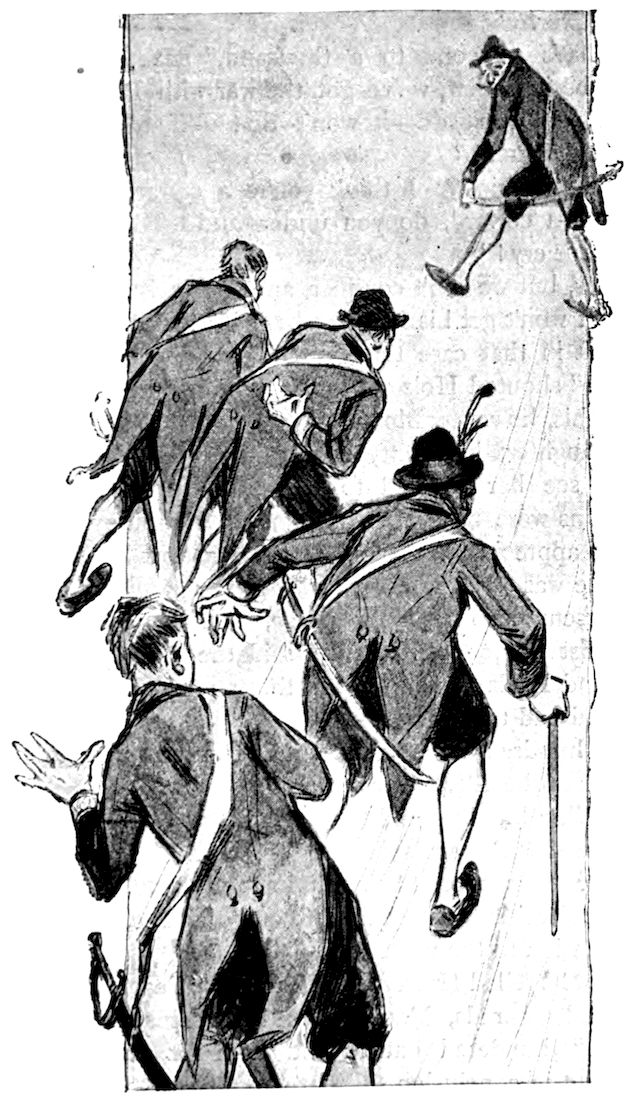
thing we can do is to march off in the other direction.
Nicolaas. And we will go to meet them.
Michiel. Yes, we’ll escort them in in triumph!
[All the Notables, and the majority of the Volunteers,
leave the house.]
D’Eglantiers. What the——! What are you doing! Stay
here! It’s all a swindle!
Enter Maria, with Van Werve and Clara, disguised as peasants.
Maria. Captain, here are my sister and my uncle, who——
D’Eglantiers. Here! you child of Satan! I’ll sister and
uncle you! What sort of a paper is this that you’ve written?
Come, now!
Maria (aside). The fat’s in the fire now, and no mistake!
D’Eglantiers. Answer me! what sort of a paper is it?
Maria. Why, sir, haven’t you read it?
D’Eglantiers. I’ve heard it read, and——
Maria. Did you let it go out of your own hands?
D’Eglantiers. Insolent, too? Who’s asking questions,
you or I?
Maria. A word in confidence, Captain? [Draws him
aside.] Don’t you understand?—that was a trick of mine
to——
288D’Eglantiers. A trick?—a fine trick! I’ll——
Maria. Hush! hush! do! I knew that the Dutch troops
were coming, and in order to let you know it privately I
wrote it down on that paper. I hoped you would read it by
yourself, and then act as circumstances might demand.
D’Eglantiers. Well—in that case! But it is strange,
though——
Pluckx. Captain, it’s time for you to show yourself. Half of
our men want to leave, and the villagers are beginning to arm!
D’Eglantiers. What the——[Breaks off, and looks towards
the cupboard.] I must get hold of my bonds first. Lieutenant
Taelinck, go on. I’ll follow immediately.
Taelinck (also looking at the cupboard). Aren’t you coming
with us, Captain?
D’Eglantiers. Presently, presently.
[Taelinck goes out slowly, followed by Pluckx. D’Eglantiers
runs to the cupboard, opens it, and searches in
vain for the packet.]
Maria (aside). What shall I do now? Wait!—I have it.
[Hastens out and comes back with Taelinck.]
Maria (to Taelinck). It is just as I told you—the Captain
has been hiding gold and jewels in that cupboard.
Taelinck (comes forward, and taps D’Eglantiers on the
shoulder). Well, Captain, what have you got there, say?
D’Eglantiers (surprised). Eh! what?
[Turns round, and seeing Taelinck, hurriedly closes the
cupboard.]
Taelinck. You’ve hidden our booty there,—that’s quite
clear. Open that door again, and look sharp about it.
D’Eglantiers. What’s the good?—there’s no money in it.
Taelinck. I’ll report you!
D’Eglantiers. I won’t give you the chance! [Draws his
sword.]
Taelinck (defends himself). You miserable thief.
289[They fight. Van Werve and Clara are about to take
the opportunity of escaping, when Pluckx enters
with his men.]
Pluckx. What! fighting here? Why, the Hollanders are
coming!
D’Eglantiers. What! Where? When?
[Shouts of “Oranje boven!”[29] outside. Van Werve
rushes at Taelinck and disarms him.]
Van Werve. Yes!—“Oranje boven!”
Pluckx. Here they come! Sauve qui peut!
[Tries to escape by the front door.]
D’Eglantiers. Where’s the back door?
Maria (calls after him). Don’t forget your bonds, whatever
you do!
[As D’Eglantiers attempts to leave by the back door,
Michiel enters, accompanied by several Soldiers,
and knocks him down with a pitchfork, while
Taelinck is being held by Van Werve. Edeling,
Nicolaas, Soldiers, and Armed Villagers enter by
the front door, and disarm Pluckx and the rest
of the Belgians.]
Michiel. Halt! Captain! you were mistaken after all!
“Oranje boven!”
D’Eglantiers. Traitor of a Burgomaster!
Edeling. My Clara!
Michiel. See there! I knew we should catch them.
Nicolaas (to the Dutch leader, pointing at Michiel). Captain,
you had better secure this rascal! it was he who brought the
rebels here.
Michiel (as he is seized by the Dutch). How! what?—why,
I showed you the way myself!
Maria. The pitcher to the well—Michiel!
[The insurgents and Michiel are led away.]
290Edeling (seeing Maria). Good-morning, my lass—didn’t I
come back to see you, as I said I would? (To the others.)
This is the girl who helped me to escape.
Van Werve. She has served us all.
A DUTCH PODSNAP.
293
“A glass of wine, mamma?”
“No, thank you, papa.”
“You, Caroline?”
“No, thank you, papa.”
“Frederica?”
“No, thank you, papa.”
Ditto, ditto, for Marie, Antoinette, and Hortense.
“Hendriek doesn’t take any wine?”
“Oh! no, papa.”
“And my Lijsje?”
“Oh! it would be dreadful, papa!”
Mijnheer Van Arlen, having gone through this ceremony,
half-filled his glass, filled it up with water, and then carefully
corked the bottle, to be put away for to-morrow. In
this way it would be made to last ten days, and as a rule it
did so; for the above invitation to his wife and seven
daughters was renewed every day, and every day regularly
declined. However, there were some exceptions to this rule:
in the first place, when papa was on a journey. Every year
papa had to take a journey for the Minister; it was a mission
of mysterious importance, whose destination no one was to
know. It always came off quite unexpectedly, immediately
after the receipt of his second quarter’s salary. On these
occasions the bottle, if it still contained any wine, was
emptied by the family, and papa’s own particular tumbler—a
most precious one, of ruby glass, with a flower-pattern, and
the initials H. M. engraved on it—put away in the china-cupboard
for the space of ten days. For this unexpected,
mysterious, and important journey always lasted exactly ten
days, during which time the daughters enjoyed the mild joke
of calling their mother “Madame Veuve,” and were solemnly
294requested by her not to do it, for, as she said, it was a sort
of joke that always sent a cold shudder through her. She
preferred being called “little bride,” which took place once
a year, on her wedding-day, an occasion which formed the
second of the exceptions referred to above. On this occasion
papa always provided mamma with the surprise of a
glass of port at dinner, and all the seven daughters had some
too, though in their hearts they would have preferred not
taking it, for they detested it—and it always gave one such
a colour in the evening!
The third exception—which was only half a one—occurred
when papa had a relation or a friend from out of town on a
visit, when mamma would take a glass; and then the bottle
had to be finished, for wine only turns flat if it is left
standing.
To-day, however, was merely an ordinary day. Papa had
received no instructions as to his journey, and the wedding
anniversary was some time off; though the friend from out
of town was expected, and might arrive any week. He was
something more than a friend—he was a late brother-in-law;
for Mevrouw Van Arlen—Hortense Muggenhout, as denoted
by the initials on the tumbler—had had a younger sister,
who had married Heer Van Noost Prigson, a most respectable
man, as appears from his double-barrelled name, which was
never forgotten, either by himself or the Van Arlen family.
Mijnheer Van Noost Prigson had lost his wife not long after
the birth of his only son.
Uncle Van Noost Prigson had written to-day he would
come; but he was a man of business,—of much business,—and
he wrote so quickly that three-fourths of each of his letters
were illegible. Fortunately, papa was also a man of business,
and in his responsible position was brought into contact
with so many matters—cipher, among others—that he
was able to read the writing of Uncle Van Noost Prigson,
at least the greater part of it. This time, however, the most
295important part of uncle’s letter was in figures, and he always
made his figures very indistinctly. He said he might possibly
come on the 3rd (it might also have been the 8th),
unless it were the 10th—or (for the figures might equally
well have stood for that) the 21st—while at the end of the
letter he added, with equal distinctness, that it was to be
between the 14th and 16th, for which again one might have
read the 24th and 26th. Equally uncertain was the duration
of his visit; its purpose, indeed, was explained, and this
papa thought fit to keep to himself. It must surely be a
matter of importance, thought the eight ladies, for the
thought that he—with his vast experience of all sorts of
business—should have failed to decipher this part of the
letter never entered their heads for a moment.
Papa filled a most important office,—it was in the year
1846,—and in consequence of one thing or another, perhaps
in connection with the mysterious journeys, he had, one 6th
of December, received a token that the State appreciated his
services. Since that day, the said token had been inseparable
from the black coat, without which no one ever saw Mijnheer
Van Arlen. It was quite in harmony with the impressive
wrinkle on his forehead, which looked as though Van Arlen
had for years been staring upward in a bent position,—in
harmony, too, with the compressed lips, which seemed in
continual fear of letting a State secret escape; while his hair
had become quite white, probably from the anxiety occasioned
by the weighty matters which occupied his head.
The daughters found in papa the type of a handsome man,
and at the same time of a thoroughly respectable one; mamma
adored him with the enthusiasm which every good housewife
is bound to feel for her husband, and never spoke of him
except as “Mijnheer Van Arlen.” Conversely, he always
referred to his wife as “Mevrouw mijne echtgenoote;”[36] and
296he preferred to allude to his daughters in numerical order,
unwilling to admit the outer world to so great a degree of
familiarity as to speak to it of his daughters by their
Christian names.
Either the bottle had stood too long on this particular
day, or some other cause had spoilt Van Arlen’s taste for it;
anyhow, he did not finish his glass, and, when dinner was
over, fixed a penetrating gaze on the door, and remained
silent.
“Are you not well, papa?” asked Caroline.
“Quite well, my child!”
“Difficult business?” asked Mevrouw, sympathetically.
“Oh! all business is difficult, mamma,” said Van Arlen,
weightily, and stared into nothing more perseveringly than
ever.
Mamma sighed, and the daughters looked sadly at papa.
Could Uncle Van Noost Prigson’s letter be the cause of the
trouble?
“Will you have any dessert, papa?”
The dessert was standing ready, as usual, on the small
side-table. A box of flat biscuits, a butter-dish, a corner of
cheese under a glass cover, and a little dish of fruit, or, if
there was none to be had, of preserved ginger. But papa
did not care for dessert, and never took any, except when
the above-mentioned relation or intimate friend from the
country was present; for “a dinner is not complete without
dessert.”
“No, thank you, my dear? Will you?”
“Oh! you know I never do. Shall we say grace?”
Grace was said, reverent and short, as is befitting in a
house where a good tone prevails, and papa folded up his
napkin neatly, and laid it beside his plate; whereupon Leida
fetched the matches, and gave papa a light, which he
accepted with a gracious nod, just as he had done yesterday,
and the day before, and all the year round, with the
297exceptions aforesaid. Then eighteen-year-old Leida gave
her papa a light kiss on his forehead, just above the broad
wrinkle.
“Why, papa! you must not be so gloomy; just let me
kiss the trouble away,” said she.
“What tricks next?” asked papa, sportively; and mamma
called her a monkey, and all the six sisters thought it such
a good thing that Leida was in such spirits, and had such a
knack of getting papa into a cheerful humour.
Van Arlen lit his cigar, and went slowly and thoughtfully
to his own room, whither he was called by his weighty
official cares, and where a mysterious locked portfolio lay
ready for him. He turned the key in the lock, sat down in
his easy-chair, and went to sleep. He was quite right to
lock himself in,—a State secret might so easily have escaped
him in his sleep,—nay more, the secret of his after-dinner
nap, which was entirely unknown to his household and the
outer world, might have leaked out. About half-past seven
there was a modest knock at the door; the person knocking
waited patiently till all the State secrets should be
covered up; and when the door was opened, the table
before Van Arlen was strewn with papers. The inkstand,
however, remained on the mantelpiece.
But she who entered the room suspected no deception,
and was not on the look-out for traces of it. Year after
year it had been Mevrouw Van Arlen’s habit to bring her
husband his “first cup” at this hour, and the ten minutes
which he was accustomed to give her served for the discussion
of domestic matters. Papa listened attentively to what
mamma had spent on milk and on bread, on peas and
beans and matches,—nothing is too small for a great man,—and
then handed out the exact amount from the secret
drawer of his writing-table.
“And then, papa, Caroline and Frederica and Marie
ought to have new hats.”
298“And the three others?”
“They can have the old hats of the three eldest done up
with new trimmings.”
“And what becomes of their old ones?”
“They can use them for every day.”
Van Arlen tried to form in his own mind a visible picture
of the change; but his habit of considering affairs of State
somewhat dimmed and confused his sight in matters of
everyday life.
“I do not rightly understand you, my dear. It seems to
me that the three eldest might just as well have the hats of
the next three, as the next three have the hats of the elder
ones passed on to them.”
“Caroline, Frederica, and Marie are the eldest.”
“Is that a reason, mamma? Let us take, as our fundamental
principle, impartiality. Let us act without respect of
persons—it is a wise rule, a guarantee for the stability both
of a government and a household. Let us give no occasion
for jealousy by measuring with two different measures.”
“But, papa——”
“Believe me, my dear, parents who show partiality are
sowing the seeds of unfriendly feeling, discord, hatred. Let
us be wise, and not bow to any antiquated principle of
primogeniture. What human experience has found to be
fatal in society, must not be introduced into our smaller circle
by us, the individual units of society.”
“But in that case they might as well all keep their own
hats, and trim them up afresh.”
“Let it be so.”
How mamma was to settle matters with her daughters was
her business; the head of the family was concerned solely
with the legislative, not with the executive department.
“And Leida must keep her old hat because she has
been so untidy; but she will have to have a new ribbon
on it.”
299Van Arlen nodded assent.
They must have been great men who first preached impartiality,
and abolished the right of primogeniture. Here,
in this individual instance, was a saving of three new hats,—what
economy would be effected by the application of the
system to a whole State!
“And you yourself, mamma?”
“I have been thinking of keeping on the mourning
for another year. My black dresses are all quite good
still.”
“And we were so fond of poor Cornelia! When the
mourning is worn out the dead are forgotten, people say.
We must show that it is not the case with us.”
“Or that we have been careful of our clothes,” Van Arlen
might have added; but though this inference did not enter
his head, another did.
“So we shall not go out this year?”
“I’m sorry, for the girls’ sakes; but it really is a duty.
But, all the same, we must not keep them quite shut up
either.”
“No, of course not.”
Mijnheer and Mevrouw Van Arlen were silent for a
little.
“We must not keep them shut up,” repeated the mother,
thoughtfully. “Do you think it possible you might some
time be transferred, Van Arlen?”
“Oh, Hortense! don’t ask such questions.”
“It is not out of curiosity, but in the interest of our
family. You are in such favourable relations with people in
high positions.”
“What do you think is the cause of this, mamma?”
“Well, your knowledge, your ability, your great——”
“Do you think that a man possessing such qualities—mind
I don’t say I possess them—has much chance of being
sent away to a distance?”
300“No, but—it is hard.”
“It may be hard,—but when a man is indispensable—I
don’t say that I am indispensable—he has to put up with it.
The feeling that he is doing his duty conscientiously to the
State, ought to have most weight with him,—and it certainly
makes things easier.”
Van Arlen finished his tea, and handed the empty cup to
his wife—the usual sign that the audience was over.
“Another cup?”
“Yes, please—but no sugar.”
This condition was as stereotyped as the dessert; papa
only took one cup with sugar; the ladies did not care for
sugar, except at evening parties, when they took it to prevent
mistakes and confusion.
Van Arlen then went to work,—read, signed documents,
made a note here, and drew his pen through a sentence
there,—and became so absorbed in his work that he never
heard Marie come in on tiptoe, to set down the humble
domestic cup of tea on the table covered with State documents.
At the stroke of half-past nine Van Arlen rose, and
once more made his appearance in the family sitting-room,
where an old-fashioned card-table had been set out. After
working all day, he found that his mind needed some
relaxation. His wife and two of the daughters,—who took
turns in this, as in other things, were already seated; the
cards were dealt, and he had only to begin. They were
playing whist for recreation, and not for money—therefore
no reckoning was necessary; but the marking was done with
laudable accuracy, and every mistake was severely reproved—for
the furthering of every one’s enjoyment; for enjoyment
without seriousness does not deserve the name.
Papa never spoke a word except what was required by the
game, and did not like any talking to go on in the room;
so that the five daughters who were not playing, sat silent
round the big table, each with her needlework, thinking
301about the hats they were not to have, the mourning that
their mother was to go on wearing, the ball to which they
were not invited, the opera they never went to, the new
fashions other people were going to wear, the novel they
were in the middle of, but which must not be read aloud
now papa was in the room, the riches they missed, the
enjoyment they did not know, the past that was so poor,
and the future that did not promise to be richer.
There was a ring at the bell.
All the ladies looked up; even papa laid down the cards
he was just about to deal.
“Brother Van Noost Prigson!” said Mevrouw, in a tone
of some anxiety,—as well she might, for there was no meat
in the larder—in fact, nothing in the house but a small
angle of cheese, and a few ounces of ginger from the uneaten
dessert.
Van Arlen said nothing: he was never precipitate, and in
all circumstances of life preserved his presence of mind.
“What a quiet little ring!” said Frederica.
“Could it be a message from the Minister, papa?”
“Leen has not heard the bell—shall I ring?”
Mevrouw Van Arlen assented, and the sitting-room bell
was heard—a quicker and more excited ring than the heavy,
respectable front-door bell.
“The bell rang, Leen.”
“Yes, ma’am, I’m here.”
“No—the front-door bell.”
“No, indeed it didn’t, ma’am.”
“We all heard it.”
“Impossible,” muttered the maid to herself, as she went to
see; “or else it must be some one who pulled the bell and
ran away—and you can’t be always on the look-out for that.”
All listened in strained expectation. The front door was
opened, but no sound of voices came from it; it was closed
again, and Leentje was heard shuffling off to the kitchen.
302“She might come back and say who it was,” mamma
assented.
Leentje was again sent for.
“Who rang the bell, Leentje?”
“Just as I thought, ma’am,—it was some boy that ran
away.”
Mijnheer Van Arlen was inwardly very indignant that his
family—among whom so good a tone prevailed—should
make such an exhibition of themselves in the presence of a
servant. Mamma blamed the girls’ curiosity, but could not
unconditionally accept the theory of the boy,—Leentje had
been too long at the front door for that. If it turned out that
she had been speaking to a “fellow” there, she would have to
leave next day. That sort of thing would not do in a
respectable house. The girls likewise declined to believe in
the boy—the bell had been rung too quietly. They wanted
to go out and look whether anything had been pushed under
the door. Then it struck Antoinette that the mysterious
ring might be connected with burglary, and this opinion
gave rise to some eager whispering, which caused papa to
turn a frowning brow, not once, but twice, in the direction of
the large table. In an unguarded moment Leida slipped
out into the passage, to institute an investigation in loco, but
neither on nor under the door-mat was there any trace of a
paper. All conjectures remained fruitless.
If the little street-boy, with the newly mended kettle on his
back, who, merrily whistling his favourite tune, had crossed
the quiet street, and pulled the bell, to give his aunt’s sister-in-law
a run from the kitchen for nothing,—if that small evil-doer
had known what a change and excitement he had caused
in a respectable family, insomuch that Van Arlen himself,
who filled such an important post, had laid aside for a
moment the business which occupied him, he would probably
have repeated the experiment on the following evening—if
only out of pity for the monotonous life of the
303seven ladies, to whom even the pulling of the bell was an
event.
The night has passed;—the little, sputtering, flickering
night-light, which burns in Van Arlen’s bedroom—for Van
Arlen does not believe in having no light in the house, one
never knows what may happen—has consumed all its oil
and gone out. The insolent sun, which has no pity for
faded carpets and curtains, has penetrated everywhere; and
if one could walk through the Van Arlens’ house at this hour,
when their high tone is still asleep, one would lose much of
the reverence inspired by the important position, the refined
manners, and the ceremonious intercourse with each other
of its inhabitants.
But at this hour in the morning no one walks through
Van Arlen’s house except the maid, who, by the terms of her
engagement, is bound to “do” two rooms before breakfast.
This involves rising before five, though she does not go to
bed any earlier for that; she is also supposed to answer the
door, go out once in four weeks, “if it suits,”—and have
neither right nor claim to any extras beyond her wages, which
are moderate, and her perquisites, which are nil.
To be weighed against all this is the great advantage of
living with respectable people, and that is a great deal
in these days, Mevrouw says. Besides this, Leentje is
a “whole” orphan, and therefore ought to appreciate the
privilege of finding a home with such a family—though it is
true that Mevrouw Van Arlen will never engage a servant
with any parent or relative living, to save trouble with their
families.
But the Van Arlens are far too respectable to let us waste
any more time over their servant,—more especially as by
this time they are all assembled at breakfast, with the exception
of the head of the house, for persons who do much
brain-work need more rest than those who only tire their
bodies—so Mijnheer says. Mevrouw is seated before the
304tea-tray—the daughters take cold water. Nothing is wholesomer
than cold water. Moreover, butter—at least, much
butter—is bad for the health. Bread in large quantities is
also unhealthy, and the ladies prove, by the extent of their
breakfast, that they quite subscribe to this opinion. The
“whole orphan,” also, is educated in the same doctrine, but
she is allowed to poison herself every morning with coffee—so
long as she does not exceed her two ounces a week.
“I don’t know how it is, mamma, but that ringing the
bell last night does worry me,” said Frederica, by way of
morning reflection; and the other girls reflected also, and
talked it over, and objected, or supported each other, as if
there were really an interesting question at stake,—till papa’s
arrival restored silence. He cast one glance over the paper,
which no one was allowed to inspect before him, for fear
the news might evaporate, and then put it into his pocket,—for
girls have no business with newspapers, and his wife did
not care to see it. During the meal he spoke little—he was
oppressed by the prospect of all the important affairs awaiting
him; and he ate his bread and butter, and drank his
tea, with a solemnity which made it difficult to realise that
they were only ordinary bread and tea.
Presently he rose. “Oh! papa! you scarcely give yourself
time for breakfast!” said his wife, and he did not dispute
the proposition. He kissed her and his daughters on
the forehead in silence, put on his hat, and went to his
office, thoughtful and abstracted, as if bowed down by the
weight of his position. He did not even see people who
bowed to him; as for miscellaneous human beings, they
were not worth his attention.
Suddenly some one stopped him.
“This is lucky! I was just on my way to your house!”
cried this person in a loud voice,—so loud that all the bystanders
could hear Van Arlen being addressed like an
ordinary human being. “Have you been out to a funeral
this morning?”
305A well-regulated smile hovered for a moment about the
official’s mouth,—“No, brother.”
“You look just like it. How are they all at home?—your
youngsters growing up—eh? Nothing particular going
on?”
Thus talking, Brother Van Noost Prigson walked along
beside Van Arlen, and entered with him—no, actually preceded
him—into the door of the building where he exercised
his important functions. Preceded him! Van Arlen went
down five per cent. in the estimation of his subordinates
that day; and when his own messenger, with a low bow,
threw open the door of his private office, Van Noost Prigson
was again the first to tread the magnificent carpet, on which
inferior officials scarcely dared to set foot when expressly
summoned by their chief.
“Not much to do—eh?”
“On the contrary, I am very busy to-day.”
“Well, well—reading and signing documents, and all that
sort of thing—I could do that too.”
“I shall have to sign about three hundred and forty
separate papers.”
“Well—I’d do that in half-an-hour; but if you really are
busy, I won’t keep you. I’ll come and dine with you to-day.”
“Very good—and in that case, I’ll see——”
“Don’t give yourself any trouble. I’ll call in and see
Hortense myself. You know you needn’t make any difference
in your ways for me, and I daresay you couldn’t very well
afford it either.”
Van Arlen looked at his brother-in-law as if to ask, “Do
you mean to insult me,” but his expression changed as he
met the glance of the cheery but penetrating eyes. “Living
is dear at the Hague,” he said.
“The more fool you, then, to stay here—and with seven
daughters, too! Just listen, Van Arlen,—I have a plan,
but I can’t carry it out without your help.”
306“Let me hear it before I promise.”
“My plan is—to make Van Arlen rich.... Where did
you get that ridiculous thing?” he suddenly broke off.
“Which?” asked the official—following Prigson’s eye,
which was directed to his breast.
“Why—that bit of ribbon. I never heard of your getting
it. From Santa Claus, I suppose?”
“I don’t understand you, Prigson; if you mean my
Order, I make it a point of honour to wear it, and I don’t
like its being made a joke of.”
“A joke, my dear fellow? I have the most fervent
respect for all orders of knighthood—especially if they are
sent home on St Nicholas’ Eve.... Come in! Beg
pardon—I forgot this was your place. Can I stay?”
Van Arlen glanced at the door,—it was only a clerk with
documents, and Prigson was suffered to remain while the
clerk waited and the official signed.
“This is the sort of thing that goes on all day long.”
“Well—it seems to me you earn your money pretty easily.
But say, Van ... I suppose no one can hear us talking
here?”
“No one.”
“Well,—it doesn’t matter to me, but I shouldn’t like it
on your account,—I want some money.”
Van Arlen drew the palm of his hand across his forehead,
and stared at his brother-in-law without answering.
“I’m so fearfully in debt that I don’t want to give the
alarm. I should be much obliged if you could let me have
those thousand florins I lent you. In a month or two you
can have them again, if you want; but I’ve got to live till
then, and I have nothing left.”
“It comes at a very inconvenient time, Prigson.”
“My dear fellow, I would like nothing better than to give
you a receipt for the whole sum in full; for you’re a good
fellow, and have to struggle so hard, one ought not to make
307it harder for you. But, just say now, when would it be
convenient?”
Van Arlen thought for some minutes.
“At the beginning of next year,” he said slowly.
“I wish I could wait so long. I wish I could; but I have
an expensive undertaking on hand, which will perhaps by
next year put me in a position to accommodate you. But,
for the moment, I must have money; and I dare not try to
raise it myself for fear of ruining my credit, which I can’t
do without just now.”
“Come in!” said Van Arlen, in answer to a knock at the
door.
“His Excellency would like to speak to you,” said the
clerk.
“So those fellows let themselves be called Excellency, do
they? I thought that was bad form now-a-days,” said Prigson,
loud enough to be heard by the clerk. But Van Arlen did
not reply, he was too thankful for the chance of escape from
his brother-in-law.
“I suppose you’ll be gone some time? An Excellency
like that has plenty of time for talking; he doesn’t work
himself to death,” said Prigson.
“It may be a couple of hours before I can get away.”
“In that case I’ll say good-bye. By-the-by, is there any
place where I can see the papers? Are you a member of the
Besogne Club?”
“At the White Club you’ll find all the daily papers.”
“And will one of your cards be enough to admit me?”
“I haven’t a card here, but——” Van Arlen looked
round, and his eye fell on the card of one of his subordinates.
“This will do just as well.”
“Merci!” said Prigson, with a just perceptible smile, and
left him.
When Van Arlen returned from the Minister’s private
room, he sent to ask the functionary whose card he had given
308to Prigson to come to him, and, while waiting, wrote a note
to his wife, informing her of that gentleman’s arrival.
Before the note had reached its destination, however, the
person in question had already appeared on the scene. He
had been shown into the salon, where, after sending up his
name, he paced up and down for about half-an-hour, vainly
seeking for diversion in the four framed engravings representing
the divisions of the day, typified by English ladies in the
large bonnets and short waists of a fashion forty years old.
The alabaster clock, with gilt ornaments, was not going—it
had not gone for twenty years,—and the vases were as
clumsy in form as monstrous in colouring.
“Everything dates from the year twenty,” muttered Prigson,
after a hasty glance at one article and another, “and these
things never break! The whole house and furniture is of
the year twenty—the girls too. Is none of them going to
appear? Hortense surely doesn’t require to make such a
toilette.”
He pulled the bell. It had given no sound for the last
ten years;—but, as it happened, the maid was just passing
the door.
“Look here, my girl—you seem smart enough—just run
upstairs and tell your mistress I have only ten minutes to
spare, and I have to go out of town again directly.”
“Thank Heaven!” thought Mevrouw, when the maid came
up with the message, “then he won’t stay to dinner!” and
in another moment she was downstairs, endeavouring, by
extra cordiality, to remove the impression which the long
waiting must have produced on Prigson.
“I’m sorry, brother, you can’t stay to dine with us in a
quiet way,” she said after a time.
“If you really make a point of it, Hortense, I can alter
my plans to suit,” answered Prigson; “but you must not let
me put you out in any way.”
“Oh! not in the least; certainly not. You are always
309welcome, and our table is large enough. And what are you
doing just now?”
“At this moment I am living on my means, for the last
enterprise came to nothing. But now I really have my eye
on something good. You must try and persuade Van Arlen
to take it up; it is certain to make him rich——”
He was interrupted by “Good-morning, uncle!” in three
different voices; and the three eldest Van Arlens proceeded
to welcome Prigson, who, in entire disregard of the tone of
the house, embraced them one after the other.
“Always the same,” said their mother, smiling, and shaking
her finger at him, and the three girls blushed and sat down.
Then appeared the two next, to be welcomed in the same
way; and presently the two youngest turned up, to be likewise
honoured by their uncle. All seven were as neat as if
they had come out of bandboxes, and each had some fancy-work
in her hand.
When the subordinate official whose card Van Arlen had
given to Prigson appeared in the former’s room as desired,
he was received with—
“Oh, Mijnheer Talm, I have just taken the liberty of
using your name.”
“You do me a great honour, sir.”
“One of my relations, Herr Van Noost Prigson, from
London, wished to be introduced to the White Club, and
you know I can’t go there!”
Mijnheer Van Arlen meant that his position was too
important to allow of his doing so. The official bowed—he
quite understood that.
“I happened to have your card lying here, and I thought
you would be willing to do me that service.”
“Certainly, very much flattered. Can I be of any further
service to your relative? Take him about anywhere? But
I don’t speak English.”
310“Oh, he speaks Dutch quite fluently,” replied Van Arlen;
“if one did not know it already, one would never guess that
he came from London. So it might be as well not to
mention it.”
“Very good, sir.”
Mijnheer Talm was about to withdraw, with a low bow.
“By-the-by, Mijnheer Talm, is Department Y in order?”
“I thought there was no hurry about it.”
“The Minister has been asking me about it to-day, so I
should be glad to have it as soon as possible.”
“I can promise to have it ready to-morrow.”
There was work enough in Department Y to occupy Talm
all day and all the evening, perhaps half the night as well;
his meeting Uncle Prigson was scarcely possible under the
circumstances.
In any case, there was not much chance of this happening;
for when Prigson had left the Van Arlens’ house, with a
promise to return at dinner-time, he went straight to the
White Club, and got himself introduced by a Secretary of
Legation; and when Leida went to the confectioner’s to
double the stock of dessert-ginger, she saw Uncle Van Noost
Prigson sitting at the club window! Her heart beat high
with so much grandeur.
And Talm’s conversation for the next six weeks consisted
principally of the English millionaire whom he had introduced
at the White Club at his chief’s request. He thought
it would do him no harm at the next chance of promotion.
We left Van Arlen alone in his private room at the Government
office. There are moments in life when one prefers
not to be alone, yet has not the courage to break away
from solitude; moments when a seemingly impossible
resolution must be taken, when one would be thankful if—instead
of thinking and acting for one’s self—one could
blindly follow the dictates of another. All the weight of his
311important position had never oppressed Van Arlen so much
as the idea suggested to him by his short interview with
Prigson.
Imagine a man who, without knowing a note of music, is
handed the score of a symphony and told to read it. That
was about his state of mind with regard to the question Van
Noost Prigson had asked him. He had not a thousand
guilders in the world—not even a hundred.
He walked up and down his room, staring at one thing
and another, but unable to forget that thousand guilders, and
the smallness of his salary. If he had a thousand—no, not
one, but ten, twenty, a hundred thousand—would he not be
a happy man? Then he would really live, as he now only
had the appearance of doing;—distinguished society, pretty
dresses for his wife and daughters, all pleasant things vainly
desired, would be his! Imagination has peculiar force in
such cases, and Van Arlen’s painted this ideal life for him
with rough but forcible touches, till he was once more
recalled to reality and the starting-point of his reverie—the
thousand guilders!
Where was he to get them? He must have them. Sell
his possessions? The furniture was worth nothing. The
pictures?—who knew if the English engravings might not be
rare and valuable? He did not understand such things.
He had indeed pretended to some knowledge of art, but he
had none. If he had only the smallest grain! What would
a collector give him for them? Two hundred and fifty
guilders each? Surely they might be worth that. Perhaps
more—perhaps——
Then arrived documents for signature, and Van Arlen
signed his name—signed again, and yet again, and imagined
that he was endorsing bank-notes. Why was his name not
of equal efficacy when written on a cheque? He could
always pay the amount later on; it was only for the time he
wanted it.
312Suddenly Van Arlen stood still. “Temporary—only
temporary—and if I pay it back, no one will ever ask after
it.” He opened a locked cash-box; it contained more than
enough to help him; it did not belong to him; it had only
been left in his care, to give account of when the sum was
complete. He stood up, and wiped his forehead, and once
more paced up and down.
Who was going to inquire after it? The Minister? He
had other things to think of. His colleagues? The affair
did not concern them; they did not even know of its existence.
His inferiors? They would certainly mind their own
business; and if they did not,—after all, he was their chief,
and could give them what answer he thought fit. There it
lay. He opened the little parcel. Surely no one knew the
numbers!
There was a knock at the door. Van Arlen started as if
he had committed a crime, yet kept looking at the money
that had been entrusted to him. It was in an unsteady
voice that he said, “Come in.”
“Mijnheer Van Teuten would like to speak to you.”
“Van Teuten?—I’m busy—well, one minute, then. Tell
him to come in.”
The man ushered into the private room wrote a magnificent
hand. For the moment that was nothing to the point—yet,
after all, it was something, for Van Teuten owed his career
to it—“the best hand in the department.” He did not
write quickly—that was beneath his dignity—but for really
beautiful writing no one could come near him.
Van Teuten was visibly disturbed, as he stood facing Van
Arlen, who sat leaning over his desk. The cash-box was
shut.
“Well, Mr Van Teuten?”
“Mr Van Arlen—I’m come—I hope you’ll excuse it.
I’ve come to make a request, on which my future depends.”
Van Arlen looked up from his paper, and coughed importantly,
313fixing his dark eyes on the chief clerk, as though
he suspected him of high treason.
“You know perhaps that—that I have absolutely no
means of my own, and, with the title of assistant secretary
(which I owe to my handwriting)”—here Van Teuten raised
his head with a certain pride—“in spite of my handwriting,
still only draw the salary of chief clerk.”
“Do you want to be promoted, Mr Van Teuten?”
“Promoted—that is to say, sir—not exactly; but, Mr
Van Arlen, I can’t live! I’m poor, sir, and—if I write a
good hand—Heaven forbid, sir, that I should boast of it;
but, well, it is hard that one should have one’s merits, and
be forced to suffer from poverty.”
Van Arlen gazed fixedly at the owner of the fine handwriting,
and asked him for a definite statement of what he
wanted—his time was valuable.
“Do excuse me, sir; but I’m nervous—I’m agitated. I
shall have to pay my rent on Saturday—three-quarters’ rent,
sir,—and I’ve nothing—nothing—not so much as that!”
“Very sad for you, Mr Van Teuten, but you know that I
can be of no use to you in this matter.”
“Nay, Mr Van Arlen, you can. I only want two hundred
guilders—nothing more, and then I am saved—saved! And,
you see, if I stood alone, sir, I shouldn’t care—I should find
some way out of it,—but I have a wife and five children. Oh,
God! Mr Van Arlen, it’s my last hope. Don’t let me go
like this!”
Van Teuten pulled out a red pocket-handkerchief, and
dried a few tears with it. Van Arlen stared at him, still lost
in thought, and forgot the man’s request in the comparison
he was drawing in his own mind, between this case and his
own. At last he asked slowly, “What do you want me to
do?”
“Lend me two hundred guilders, sir,—that’s all that I
hope, I entreat, I beg of you——”
314“Just listen to me, my good Van Teuten, and don’t get
excited,—tears are not becoming in a man of your age.
We’ve all got to work for our families, and some men in
this world happen to be better off than others—but that’s no
reason for giving way to passionate grief. As to your
request, it’s out of my power to grant it. Next time there is
any question of increase in salaries, I will do my best to
improve your position, but for the moment I cannot help
you. If I did, I should have all your colleagues asking me
for the same thing to-morrow, and my position will not allow
of my coming to the assistance of officials in this way.”
Van Teuten was searching his mind for a word—a sentence.
To-morrow, when he did not want them, he might think of
hundreds; now, he could find none that would add force to
his entreaty. He soon gave up the effort, and tried another
tack:
“The Minister is rich, sir,—don’t you think he might give
or lend me two hundred guilders?”
Van Arlen looked straight at him. True, the Minister
was rich, and what he refused Van Teuten he might yet be
induced to grant to Van Arlen.
“If you would only speak for me, Mr Van Arlen,—I don’t
want to exalt myself—and yet, I believe—don’t take it ill of
me if I say so—I think my services are worth something—and
if His Excellency would be willing to give me the
money, I should be saved.”
“Probably His Excellency would have the same reasons
for declining as myself; but I cannot conceive, Mr Van
Teuten, that there is not one of your colleagues who would
be willing to help you out of a temporary inconvenience.”
Would Van Arlen himself have found one so quickly?
“Oh! plenty!—but they want security—they want a
guarantee; and ... do you think His Excellency would
become security for me?—or you, sir—your name will do
anything you like.”
315“My good friend, you understand that I, in my position,
cannot afford to get mixed up with any such affair, nor can
the Minister either. Try and come to some arrangement
with your landlord, but don’t expect anything from these
quarters, under such circumstances. We can’t have anything
to do with such matters.”
Van Teuten bowed his head—he had exhausted his
arguments, and all to no purpose; he had completely forgotten
the eloquent address, thought out last night; the
courage with which he had armed himself had oozed away—he
went out silently. But suddenly he turned back.
“If it were outside the official circle, sir, could you help
me then? I could get money at an interest of one per cent.
per month—only I must have the security of one of the
superior officials.”
“I have told you, Mr Van Teuten, that I, in my position,
cannot occupy myself with any matters of the kind. I am
sorry for you, but I can do nothing.”
The man with the fine hand went away, slowly and
dejectedly, and Van Arlen was once more alone with—or
rather without—his thousand guilders.
It is a mistake to suppose that, for the preparation of
jugged hare, a hare is necessary. Mrs Van Arlen understood
very well how to give a dinner, which, to the uninitiate,
seemed the finest kind of “company” dinner, and yet
consisted of the most commonplace everyday dishes. But
there is an infinite difference between rice in a dish and rice
in a mould—more especially when the latter is served with
lemon sauce. The ham was prepared à la mayonnaise—Van
Arlen was so fond of that dish,—he always partook of
it when on those mysterious journeys of his; and then—you
need not have a whole ham for it, a few slices are quite
enough. Moreover, there stood, on the side-table, besides
the never-failing ginger and cheese, a silver dish with ten
316little halfpenny tarts on it. It was quite a splendid dinner;
papa and uncle had each a bottle to himself, and besides
the ordinary wine glasses there were others of smaller size
for the better wine.
But, with all this magnificence, a certain gloom prevailed
among the Van Arlens. This is the way with the great ones
of the earth; they enjoy wealth and ease without appreciating
them.
Prigson, on the other hand, was, as usual, in excellent
spirits. He felt in nowise overawed by the splendour of the
feast, or the eight silk skirts which rustled round about him.
“You see, it’s just our ordinary family dinner,” said
madame, with a pleasant little laugh. Prigson gave the
obligatory answer, and paid no attention whatever to the
material part of the dinner.
“Which of you girls are going out with me this evening?”
he asked. “I can’t take all seven—three is the maximum—or
else your father will have to come too.”
“You know, Prigson, my position is such that I cannot
devote a single hour to mere enjoyment.”
Madame sighed, and said, in a compassionate tone, that
brother could form no idea of the life Van Arlen led.
“No doubt,” said Prigson; “but I admit that it is far
from appearing to most people what it really is.” Prigson
made the remark entirely without sarcastic intention, and
went on, with a smile, “I would bet something that you
haven’t even read the paper yet, Van Arlen.”
Van Arlen usually read his daily paper from title to
imprint while taking his breakfast; but to-day he had
entirely forgotten it.
“I haven’t once looked into it; and here’s the proof,” he
said, taking it still unopened from his pocket.
“So you haven’t seen my advertisement?”
“Your advertisement?—no—did you insert one?”
“Do you remember our talk at your office?”
317Van Arlen had not forgotten it for one moment, and if
Prigson had paid more attention to him, and less to Caroline
and Leida (who, in fact, were very pretty girls), he would
have noticed that Van Arlen’s looks continually took the
vague direction which indicated that his mind was elsewhere.
His wife, who noticed it, ascribed it to the responsibilities
of his office; his daughters were thinking, this
evening, more of their uncle than of him. Certainly papa
was the very type of a handsome man, but uncle had something
very distinguished about him—especially since Leida
had told them about seeing him in the club.
“What advertisement is that, brother?” asked Mrs Van
Arlen.
“Oh, my dear Hortense, it belongs to those matters
which ladies can’t understand; but if it comes to anything,
and Van Arlen is willing to take a hand in it, he has only
to say the word. You can make your fortune over it, Van
Arlen.”
The word “fortune” awakened in the Van Arlens a feeling
which used to come over them day by day, and had as
regularly to be suppressed. Now, however, they were able to
give way to it for a moment, and Van Arlen himself—still
under the influence of what he had endured that afternoon—looked
at Van Noost Prigson with interest.
“How could that be done?” asked Mrs Van Arlen almost
indifferently; while all the girls, holding their breath,
looked at Prigson in order to form their own conclusions as
to whether his project were practicable.
“In the first place, you would have to give up your
situation; in the next, to leave the place; and in the third,
to work rather harder than you do at present; but, on the
other hand, you would earn six times as much money.”
“You evidently don’t know what the life of a Government
official is,” said Van Arlen, with a contemptuous smile at the
mention of harder work than his.
318“Oh, dear, no!” said his wife; and the daughters looked
in consternation at the man who had dared to cast the
slightest doubt on the extent and importance of papa’s duties.
“Well, what now, Van Arlen?” said Prigson, seeing that
his brother-in-law seemed once more lost in a brown study,
“are you off to that office of yours again? You had better
come to the opera with us this evening; that is to say, if
these ladies are inclined to come.”
A cold shudder—but it was one of delight—completely
overpowered the self-control of Frederica and Marie. They
scarcely knew the opera, except by name,—papa never went
there,—and it was very long since they had been invited by
any one else.
“The opera?” said Van Arlen, “I don’t care about that;
it’s a sin against common sense.”
“I beg your pardon?” asked Prigson, perplexed.
“Why, all the people there die singing—I can’t get over
that.”
“Eh?” said Prigson, evidently much taken aback; “well,
I never thought about that. But now I do think about it,
I should say that the opera is the most natural picture of
life. There are so many people that weep and wail all their
lives; is that so very much more unnatural than that they
should sing when they die? But, granting that it is as you
say, let’s go to an opera in which nobody dies. Isn’t Don
Pasquale on to-night, young ladies?”
“I think so, uncle,” answered Frederica, blushing, for
none of the girls even thought of looking at the theatrical
announcements. What was the good?
“Yes, yes—Don Pasquale. Come, Van Arlen—that’s a
comic opera—just the thing for you!”
Van Arlen shrugged his shoulders. “I don’t mind a
comic opera—not if it’s really comic,” he said.
“Come along, then—you’re sure to like Don Pasquale.”
“No, I can’t—another time, perhaps—I’ve too much to
319do to-night,” said Van Arlen, absently looking at the
alabaster clock that did not go, but nevertheless seemed able
to tell him that it was now his time.
“Yes,” said his wife, “and if we’re to go to the opera we
shall have to dress.”
“Hortense! Hortense!” said Prigson, with a mischievous
glance.
“What do you mean, Prigson? Of course I can’t let the
girls go to the opera with a strange gentleman. I’ve always
done my best, brother, to give my daughters a good bringing-up.”
Prigson was too polite to answer; Van Arlen had folded
his hands,—his wife did the same, and soliloquised in silence.
“Six of the ten tarts left over ... perhaps the confectioner
would take them back ... at any rate, one might
try. Leentje might go and see.... The opera ... that
has not happened in the last ten years—what are we to do
about dresses?—we shall have to be quick about it....
Amen.”
Her reflections were brought to an abrupt conclusion, for
Van Arlen had opened his eyes with a sigh, and once more
saw Prigson before him. Oh! what would he not have given
not to see him—to have opened his eyes in the consciousness
that he had been sleeping! Sleeping, from the moment of
meeting his brother-in-law in the street; sleeping, when the
latter reminded him of the debt, when he had been alone
after Prigson’s departure, when Van Teuten stood over him;
sleeping, too, that last quarter of an hour, when he stood
before his desk after Van Teuten had left him.... But he
had not slept—all, all was real ... and then to go to a comic
opera on the top of that!
“Excuse me, Prigson, but I must go back to work
immediately, there are some documents wanted in a hurry.”
“Oh! so things are sometimes wanted in a hurry at a
Government office?” asked Prigson. “No, thank you—take
320one of my cigars—real Havannah, fifteen cents—delicious—just
try one.”
“Oh, uncle, it’s positively sinful!” said Leida, who had
nearly forgotten etiquette so far as to hand him a light,
which at a ceremonial dinner would have been highly
unfitting.
“Sinful is it?... How old are you now, Leida?”
“Eighteen next birthday, uncle.”
“Good-bye, then—till later—no, don’t apologise. But
don’t go to sleep, Van Arlen,” Prigson shouted jocularly after
his host, and then added, turning to Leida, “A happy time
of life, Leida, I wish it were mine still;—but when I was
that age, I didn’t think fifteen cents too much to pay for
anything I liked.”
“How do you mean, uncle?”
“Just what I say, my dear girl. What is life, after all?
isn’t it always seeking for what you like, whether you understand
by that the smoking of a good Havannah, or the consciousness
of having done a good action? Enjoyment
means just what people like—and the older they are, the
more they want of it. It’s unjust of old people to say that
it’s the young ones that always want to enjoy themselves—the
old ones are just as set on it, but they get their enjoyment
out of other things. Well, any man who can get
himself one enjoyment for fifteen cents is certainly not
cheated out of his money.”
“But, uncle, must one always have money to enjoy one’s
self?” asked Leida, naïvely, but very much à contre cœur—for
her whole life was in evidence to prove that, as a rule,
one must.
“Certainly not, my very charming Leida,” said Prigson,
rising, and added, as he embraced his niece, “That’s a treat
for nothing, do you see?”
“Not for me, uncle,” said Leida, laughing mischievously,
as she ran out of the room.
321“It’s really a pity that Van Arlen’s such a harlequin!”
muttered Van Noost Prigson to himself, and then went to
join his elder nieces at the window.
Van Arlen was once more in his room, and had locked
the door—but he didn’t go to sleep. He had his hand in
his breast-pocket, and his fingers were clutching a little packet
that seemed to burn them.
Borrowed? No—not borrowed; it was stolen—it was
not his. And yet he was not a thief—he had already as
good as put it back,—only the execution was awanting to complete
his intention. He strained his ears listening for Prigson
and the others to go out at the front door. As soon as they
were gone, he would hurry to the office and put back the
money! Why were they dawdling like that? If anything
happened to prevent his going—if he were to find the lock
out of order. Why did they not start? If there were a fire
in a street he had to pass—if he were to meet with an
accident.... Do be quick, Prigson! the money is burning
me—if I start now, we shall be in the street at the same time—then
I shall have to go with him, and he will have to walk
slowly on account of the ladies. Which way shall I go?
My hat—where did I put my hat? If Prigson were to take
my hat by mistake—happily it has a mourning band on it.
Why don’t you go, Prigson? Have you given up the plan?
There was a knock at the door, and his wife entered.
“Are you going out, Van Arlen?”
“No, my dear, no.”
“I thought you looked as if you were going to start.”
“Certainly not, certainly not! Go now, make haste, or
you’ll be late.”
“Perhaps you’re going to give us a surprise.”
“No, no—I’ve too much to do—and I don’t care about
operas, where people die singing. Good-bye, Hortense,
good-bye! Don’t let the girls come up, I’m too busy.”
At last, at last, he heard the door close! and when Caroline,
322as the eldest available daughter, came to bring papa
his cup of tea, his room was empty.
“Papa has surely gone too,” she said, as she went down
again.
“I don’t think it’s very nice of him if he has. Why, he
said that if he went we should go too.”
“Papa doesn’t care for operas.”
“Oh! I think he likes them well enough, really—only——”
She stopped herself just in time, keeping back the word,
the great word, which might be thought, but never spoken,
in the Van Arlen household.
When the family came home that night Van Arlen was
even more silent than he had been at dinner, but his silence
was a dull apathetic calm. The ladies had enjoyed themselves
“awfully”; their flushed cheeks and dancing eyes
spoke volumes for the effect of this unwonted gaiety.
“Oh, papa, you must go some time!”
“Was it comic opera?” asked papa.
“Oh, yes! indeed it was—awfully!”
“Yes—but really comic, good comedy?”
“Oh, yes, very good,” said mamma.
Van Arlen’s position was too important for him to let himself
be guided by any chance person who chose to label an
opera as comic. A thing must really be what it is given out
for.
“I suppose you care nothing at all for tragedy, then?”
remarked Prigson.
“Well, not altogether that, but a tragedy must be really
tragic.”
The conversation, of which some fragments are thus
reported, will scarcely make the reader long to hear the rest.
The Van Arlens consistently kept up their depreciation of
sour grapes, to the great delight of Prigson, who amused
himself by defending all sorts of paradoxes. But though the
hands of the alabaster clock unchangeably pointed to half-past
323one, it was getting late. Uncle Van Noost Prigson prepared
to take his leave, and Van Arlen made no great effort
to detain him. He thought his brother-in law a good
fellow, and, under certain circumstances, an indispensable
person; to-day, however, Prigson reminded him of so much
that he would willingly have forgotten, that his presence
became well-nigh intolerable. He breathed more freely
when Prigson got up to go; and it was with a certain cheerfulness
that he remarked, as he looked out at the front door
at the stars, “I see you’ve a fine night.”
“We’ll hope so,” said Prigson; “but now, business for a
moment. I asked you for something this morning—not for
the sake of embarrassing you, but of getting myself out of a
hole. When can I have that money?”
“Will to-morrow evening do?” asked Van Arlen, with a
sigh of thankfulness that it was no longer in his pocket.
“Don’t let it be later than that—you know you’ve always
told me I could have it when I liked, otherwise I shouldn’t
have asked at such a moment.”
“Oh, it’s no trouble to me!” said Van Arlen, though he
was wondering all the time where the money was to come
from.
“Now for my plan. I will guarantee that you get the
money back three days after the King has signed this concession—but
then you will have to work the Minister!”
“I?”
“No one is in a better position to do it; the business is
honest enough, but, like all business, it has a shady side to
it: and the authorities have a nasty way of seeing the black
before the white. There is some black about it, I won’t
deny; but if you can manage to show up the white, we shall
be that thousand guilders to the good.”
“But I don’t see——”
“No need you should, for the moment. Take the papers
to your room, read them, think over them, and, once more,
324three days after the granting of the concession, your debt is
no longer in existence.”
“Prigson!”
“Van Arlen!”
“What you ask—can it be reconciled with an honest
man’s conscience?”
“What do you take me for, Van Arlen?”
Van Arlen was silent for a moment, and then said slowly,
“For a man who wants to be rich.”
“Quite right, my dear fellow, and you should do the
same. With this concession your fortune is made. You
will have a situation with a salary of ten thousand guilders.”
And with a cheerful “Good-night,” Prigson departed, while
Van Arlen went up to his room.
It was many hours before he rose from his chair. The
sun was shining in at the window, but he had no inclination
to sleep; he had been absorbed in the documents. He
read from beginning to end, thought for a while, folded them
up, and muttered—
“Heaven preserve me from it!”
Thoughtfully he went to his office that morning. He
could find no solution to the Prigson question, and there
was nothing to help him.
He was summoned to the Minister’s presence, and found
him extraordinarily amiable—a bad sign.
“Sit down, Mr Van Arlen, sit down,” said His Excellency.
Van Arlen obeyed.
“Mr Van Arlen—it is possible I may be mistaken—but
it seems to me as if, just lately, you had shown—passez-moi
le mot—less zeal for business than I formerly thought was
the case with you.”
“Your Excellency, I was not aware that I had felt less
zeal for my duties than at any other time.”
“Is there anything worrying you? Your health?”
“It is excellent, thank you.”
325“Domestic trouble?—it might be indiscreet to inquire—but
I take an interest in all my subordinates. Is there perhaps
any financial trouble? Just tell me freely. Our
salaries are not high, I know, but, if I am rightly informed,
you have some private means.”
“At your Excellency’s service,” assented Van Arlen.
“I thought so, otherwise we might have thought of offering
you some assistance in this respect. But as it is, I
suppose the extent of your work is such that it presses too
heavily on one man; and so I have been considering the
feasibility of appointing one more official to my department,
subject to His Majesty’s approval of my nomination.”
Van Arlen turned deathly pale; now he understood the
Minister’s friendliness, and the fate that lay before him;
he understood also that the first offer was by way of gilding
the pill. He had refused the gilding from pride, but had to
swallow the pill all the same.
“I assure your Excellency that I do not know what work
could be entrusted to such an official.”
“That is quite a minor detail,” said His Excellency,
naïvely. “However, I wished to consult you first about
the matter, and perhaps you will be so kind as to have the
proposal drawn up. Baron Regenstein is the person
meant.”
“The son of your colleague?”
“I believe so; but he is a man of great acquirements,
whose help will be extremely useful to you. I shall want
the paper before two o’clock.”
Van Arlen bowed and rose.
“Oh, as to salary, we shall give him eighteen hundred
guilders.”
“Your Excellency will allow me to remark, that in that
case you will have exceeded the estimate for the department.”
“Then we must see how we can manage with the
326smaller salaries. Didn’t some one die a month or two
back?”
“Yes, an assistant secretary.”
“Very good; and I just heard this morning that we’ve
probably lost another. Van Teuten left town quietly last
night.”
“Van Teuten!” exclaimed Van Arlen, in consternation.
“Yes. Do you know anything in particular about
him?”
“He came and asked me for two hundred guilders
yesterday.”
“Well, why couldn’t you let him have an advance? or
you might have sent him to me; if necessary, we could have
helped him by getting up a collection. But you’re too busy
to attend to such things; it’s a good thing we’re going to have
some extra help. Good-morning, Mr Van Arlen.”
“That, too!” said Van Arlen, when he was back in his
own room, and then called out to the messenger that he
could see no one.
“A gentleman has been here; he said he would come
back.”
“Can’t see any one to-day.”
“Mr Van Arlen!” said a voice, just as the door was
closing.
“Impossible, sir, the Minister is in a hurry.”
The door was shut, and the voice—and all persons with
whom it subsequently came in contact—were aware that
there was “something up,” perhaps a reorganisation of the
whole department.... So much only was certain, that
no one knew what it was but the Minister and Van Arlen,
which still further increased the latter’s importance.
But the drawing up of a proposal for the appointment of
a supernumerary official was no joke. It was long since
Van Arlen had such a ticklish document in hand, and the only
reason it seemed to him that he could give was,—“Whereas
327it is our pleasure ... to supersede Van Arlen.” At last,
however, he found the way to do it. By noon the document
was ready, and one of the copying clerks, in whose
discretion he placed unlimited confidence, was sent for to
prepare the mysterious paper for its high destiny, in Van
Arlen’s own room. At a quarter to two it was fairly written
out, and Van Arlen presented himself before the Minister,
who took the document, thanked him courteously, and
glanced through it.
“You have forgotten the date when the new appointment
is to begin,—the 1st of the following month,” said
His Excellency, in a tone which clearly conveyed: “Really,
Mr Van Arlen, your work is too much for you.”
Van Arlen returned to his room with the paper in his
hand, and found Prigson at the door.
“Good-morning, Van Arlen.”
“Excuse me, Prigson; I haven’t a moment to spare.”
“What is it now? Country in danger? What’s that
document?”
“Ministerial business.... Where is Mr Zuigman?”
This to the messenger.
“Gone away, sir.”
“Tell him to come here immediately.”
But after his highly important activity in his superior’s
private room, the copying clerk Zuigman had understood
that he was in need of some slight recreation, and, alleging
a commission in town, he had gone off for a stroll round
the square. His immediate superior had given him leave
at once. One doesn’t refuse modest requests like that to a
man perceptibly high in Van Arlen’s favour.
“What now?” said Van Arlen. “My head is going round.
Zuigman must come to my room the very first thing to-morrow
morning.”
“Can I help you, Van Arlen? What is it has to be
done?”
328“Writing, man, writing!—a proposal addressed to the
King that will have to come before the Cabinet Council....
I don’t know what to do.”
“Can’t you do it yourself?”
“I!” said Van Arlen, in consternation.
“Well, a good writing is not your strong point,” laughed
Prigson, “otherwise you never would have risen so high.
The man with the worst hand gets on best, because they
can’t keep him on as a copying clerk. Just give me a pen.”
“But, Prigson, it’s a great document! strictly secret—no
one is to know anything about it!”
“I’ll promise not to tell; let’s have a look.” And before
Van Arlen could prevent it, his brother-in-law had already
glanced over the paper.
“Heaven be good to us! a magnificent bargain!”
“A bargain?”
“Why, of course! Now-a-days it’s not their own sons
that ministers help forward; they do it for each other’s.
Regenstein is to get this, and your man’s son has just been
put into a good thing by his father’s colleague. Splendid
exchange! Did you draw up the proposal?”
“I have no time now, Prigson. Do be kind enough to
let me alone.”
Van Arlen rang the bell, and sent for one of the clerks.
Van Teuten entered.
“Mr Van Teuten!”
“Sir, I have—”
“We’ll see to that presently. Sit down, Mr Van Teuten,
and write—here—recopy this page; but mind you put in the
insertion! The first time a document of mine has been disfigured
by an insertion! My head’s going!”
Van Teuten wrote as he was told, and in a quarter of an
hour the work was finished. He perceived, with visible
complacency, how much better his writing was than that of
his colleague.
329“Two different kinds of writing! Never yet happened
with a document of mine; and it’s got to go to the King
and the Cabinet Council!”
With these words Van Arlen rushed out of the room,
leaving Prigson alone with Van Teuten.
“Can you copy decently?” asked Prigson.
“I venture to say, sir, that there isn’t another hand like
mine in this department.”
“What do you earn at this work, now?”
“Six hundred guilders, sir. Mr Van Arlen has perhaps
told you that I am financially in circumstances of great
difficulty.”
“Well, it is indeed too little for a man who writes a hand
like that; but surely you’re out of all your troubles now?”
“I?—I just wish I were!”
“Why, a man who knows all about a secret document
like this need not be poor any longer than he likes.”
“Secret, sir?”
“Most particularly so,” said Prigson, turning away, while
Van Teuten considered with himself whether it could
really be the case, and whether, if so, he could profit by it.
Van Arlen came back, thanked the copying clerk, and
recommended him to keep the matter secret.
Prigson stole a glance at Van Teuten, who was now
convinced of the truth of his words.
“Do you want anything, Mr Van Teuten?” asked Van
Arlen, for the man remained standing.
“May I venture to remind you of my request yesterday,
sir? Perhaps you know that ... that I ... yesterday....”
“Yes, I know—nothing takes place in this department
without my knowledge; but the Minister and I have agreed
to take no notice of such ill-considered action on the part
of a member of this department—provided, of course, it is
never repeated.”
330“No, sir, I give you my word it shall not. Oh, if you
had only known what I felt this morning, when I thought of
my wife and children searching for me! I couldn’t stand it
any longer, sir, and I came back.”
“The wisest thing you could have done.”
“But that does not save me! I have obtained two days’
respite; but after that—I am hopelessly lost, if no help
comes. If you will allow me, sir, I will go before the court
to-morrow.”
“I’ll do better for you than that,—I’ll send a subscription
list round the office, and let you have the amount. His
Excellency is sure to put his name down too.”
“And if there is any deficiency, I’ll make it up,” said
Prigson.
“Certainly a State secret,” thought Van Teuten, amazed
and confused at the turn matters had taken,—which he
ascribed entirely to the secret. He too was involved in it,—but,
alas! he had read nothing, that was not his habit.
A good copying clerk never reads—he only writes. “To
begin on Aug. 1st,”—that was all he could remember. But
it must be a secret of the highest importance,—and the
stranger who seemed to have the principal share in the
business was—yes, what could he be? Then he remembered
that Talm had spoken of an English millionaire, introduced
by him at the White Club, and somehow connected with
Van Arlen;—but the millionaire, according to Talm, knew
not a word of Dutch—it was for that very reason that Van
Arlen had entrusted him to Talm’s guidance; and now the
secret document, and the unexpected help, and the change
in his fortunes—had Van Arlen, perhaps, been raised to the
ministry?...
Van Arlen and Prigson were left alone.
“Did you look over my papers?”
“Yes.”
“And——?”
331“I don’t want to be in it; your business is not—not
honest.”
“What do you call honest, Van Arlen?”
“Perhaps I expressed myself rather harshly—it is not
what it seems to be.”
“You say that?” sneered Prigson. “Come, Van Arlen,
that can be no reason for you to dislike a thing. But we’ll
grant that it is more profitable for the contractor than for the
State—that’s a matter of course. Do you think we’re going
to make the State presents, while the Ministers put their sons
into all the fat Government places? Just tell me, on your
conscience, Van Arlen, is that an honest business, that
appointment? I bet something you had a heap of trouble
to give the thing a decent appearance?”
Van Arlen nodded.
“Well, now, there’s a present of eighteen hundred
guilders being made to Regenstein. I suppose your Minister’s
son is getting double that? And am I to be fool enough
not to get my share out of the ‘Widow Woman’ too? Let’s
be wise, and follow the good example set us.”
Van Arlen was silent.
“Shall I tell you something? The functionary now being
smuggled in—for whose coming you have been obliged to
find the reasons—is really appointed in order to oust you.
He is to do your work, and you are to become supernumerary,
and then who knows how soon you’ll be pensioned off?”
“Then I shall fall honourably.”
“Cold comfort that; it’s surely no dishonour to prevent
the blow. Once more, I’ll give you a receipt for that debt;
I offer you a well-paid position, and if the concern comes to
smash—for that might happen—I will guarantee that you
shall lose nothing.”
“So you admit that the thing is not honest?”
“My good Van Arlen, you’re the very type of infantile
innocence. If it were quite safe and certain to be profitable,
332I could do without your help. One word more,—if you still
refuse, Regenstein is a good friend of mine; he gets his
appointment on the first, and within a month from that
date I shall get what I want without applying to you. Just
think over that.”
“Prigson, you are a tempter.”
“Van Arlen, you are a fool.”
“If it should come out that I have been playing a double
game?”
“If this Minister is still in office, just remind him of that
appointment; if there is another, you can lay the blame on
his predecessor, and the disorder occasioned by the unnecessary
nomination of new officials.”
“But—I took an oath——”
“And didn’t the Minister do so too? Come, shut up
shop for to-day, and come and dine with me.”
“With you?”
“Why not? Yesterday I was your guest, to-day you are
mine. I am staying at the Bellevue; but if there are too
many princes there for your taste, we’ll go and dine at the
Badhuis restaurant.”
“Impossible; I can’t leave the office till four. If you’ll
believe me, Prigson, I envy the clerks, who can take their
hats and go whenever they like.”
“The burdens of greatness.... So you’re free at four,
are you? Well, I’ll drive round and fetch you.”
Accordingly, at four, Prigson arrived in a cab, and conveyed
not only Van Arlen, but his wife and Leida, to the
garden restaurant at Scheveningen known as the Badhuis.
They dined sumptuously, and did not even refuse champagne.
This was an unheard-of event in their lives—but they were
not paying the bill.
After dinner, as they were sitting on the terrace, they
perceived Mr Talm. Mr Talm had on flesh-coloured kid
gloves, and an eye-glass prominently fixed in his left eye,
333the cord waving in the wind like the web of a gigantic
spider. Talm was quite presentable, and, being now of
opinion that the Van Arlens were presentable also, he
accosted them, and was honoured with an invitation to join
their party.
Madame thought it would be nice to walk up and down
the terrace, and Leida also showed herself pleased with the
idea. Talm offered his escort, and Prigson was once more
alone with his brother-in-law.
“The business is clinched now, isn’t it?”
“No,” said Van Arlen, “I have been thinking it over,
and I must abide by my first answer.”
“That’s a pity,” said Prigson—“a pity for you—for, as I
said, the matter will have to be got into shape without you;
but I should have liked to have you in it, because I’m heartily
sorry for you. Just excuse me a minute,” he went on, rising
and signalling to a stranger, who was casting sinister glances
at the teacups—“it is my friend Valtoucourt, one of the
associate concessionaires.... I’m sorry, for I could have
introduced you to each other—in fact, I shall have to do it
after all,”—and Prigson, continuing in French, presented
Baron de Valtoucourt to his brother-in-law, for whom he
invented a high-sounding title on the spur of the moment.
Van Arlen had never thought that his name would sound so
well in French. But French was not his forte, and now his
silence made him seem more solemn than ever; and he was
convinced in his soul that Baron Valtoucourt thought him
the pivot of all the home and foreign politics of Holland.
Prigson did his best to strengthen this hypothetical opinion.
“You see, my dear fellow,” he said to the stranger, “if Van
Arlen is willing, he can do anything, but he is fond of raising
objections—ce cher Van Arlen.”
The stranger muttered, with amazing rapidity, a long
French sentence, of which Van Arlen could not seize a
word. He therefore confined himself to ejaculating now
334and then “oui” or “peut-être,” and at the close wrapped
himself in a diplomatic silence. His wife and Leida
returned with their cavalier; the stranger greeted them with
a bow, as deep and solemn as though he were announcing
her death-sentence to the Queen of Spain; he then bowed
no less deeply to Talm, who, on his part, was not to be outdone,
and, deeply impressed by the high solemnity of the
occasion, made another low bow before Van Arlen. The
latter, having witnessed the performance three times, involuntarily
saluted his assistant secretary in a similar manner.
It was, in fact, most impressively solemn.
The stranger was a man who knew life, and could understand
that a man might fill a highly important position
without being an accomplished French scholar. He therefore
slackened the flow of his words, and assured them that
he should consider it a great honour to have Van Arlen as
a director.
“But,” said Van Arlen, “I never said that!”
“Si, si,” said the stranger, “we understand one another
perfectly;” and then he pressed his hand and gave utterance
to a friendly wish, whereat Van Arlen (unwilling to acknowledge
even to himself that he did not understand) replied,
“Nous verrons.”
Next morning he sent for his wife and Leida to his own
room, and completely bewildered them, first by swearing them
to secrecy with regard to a conversation they had neither heard
nor understood, and next by completely losing his temper,
when Leida innocently asked: “Why, papa, you frighten me—one
would think it was high treason!” He was so violent
that Leida went off into hysterics, the girls came up to see
what was the matter, and Van Arlen left for the office in a
very bad temper.
He found that Prigson had been there, and was coming
back at three o’clock.
The Minister not only refused to have anything to do
335with the subscription list for Van Teuten, but hinted disapprobation
of those who had got it up; and let fall
expressions which tortured Van Arlen all the morning,
making him wonder whether His Excellency had penetrated
his secret. At last Van Teuten came, and he was forced to
acknowledge his failure. The poor man, nearly in despair,
was about to make a last effort, and ask the Minister to
become security for him, when Van Arlen had a luminous
idea.
“I will——” he said. Van Teuten was overwhelming
him with thanks and blessings, when he interrupted him:
“On these conditions I will become security. First, the
money must be here by two; secondly, you must borrow,
not two hundred, but twelve hundred; thirdly, the whole
matter must be kept secret.”
Van Teuten was ready to promise anything,—he would
willingly have made him a present of his soul into the bargain.
Not long afterwards a former Government clerk, who was
now “in business on his own account,” was admitted to
Van Arlen’s private room. The money-lender was inclined
to make objections—twelve hundred guilders was a large
sum for a clerk whose income only amounted to the half of
that sum.
“If I don’t raise that difficulty,” said Van Arlen indifferently,
“I see no reason why you should.”
“Yes, you see—but you are mortal like the rest of us;
you might have to retire, or be put on half-pay—excuse my
suggesting such things, but they’re all possible.”
“You’re not lending money to me, but to Mr Van
Teuten; if anything of the sort were to happen, he would
find you a new security.”
At last the matter was settled, at an interest of seven
and a half per cent. The money-lender produced the twelve
hundred guilders, and carried off the bill, duly stamped, and
signed by Van Arlen and Van Teuten.
336When the man with the handwriting was once more alone
with his chief, the latter said, “Two hundred guilders are
all you want for the present; I’ll keep the rest for you, in case
you should get into difficulties again. Never mind about the
interest—I’ll pay that.”
Van Teuten was fairly dazzled by such liberality. There
must be something behind it—probably the State secret.
The news went like wildfire through the department how
that unlucky devil of a Van Teuten had been set on his legs
again by Van Arlen! Zuigman knew what to think of it—he
had seen documents; but he never spoke, and that his
colleagues knew right well.
Talm, too, had his say on the subject,—Talm, who had
introduced the millionaire, and had, yesterday evening,
walked on the terrace at Scheveningen arm in arm with his
chief’s wife. Further and further spread the fire, and every
one made his conjectures. Van Teuten’s rescue remained
the great event of the day.
It struck three, when Prigson was announced. Van Arlen
was deep in his work.
“What zeal! But of course you want to leave the books
in good order when you go!”
“I’m not thinking of going, Prigson.”
“What do you say? And our agreement?”
“I have made no definite agreement; but, in so far as I
have made any promise to join you, I withdraw it.”
“What the deuce! Van Arlen, aren’t you right in your
head?”
“On the contrary, I have come to my senses. When one
has been an honest man for thirty years, Prigson, one is
thoroughly in love with honesty.”
“Especially the way it is appreciated! The reward of all
your honesty will be, that you fall from the tree, like an
over-ripe fruit, and lie there till somebody treads you flat.”
“Better so than trample on one’s self.”
337“That is a gymnastic feat I would rather leave to a Münchausen.
But you’re mad, Van Arlen—the matter is getting
into shape after all.”
“Do you think so?” Van Arlen stood up, and looked his
brother-in-law straight in the face. “Do you think I would
ever allow it?”
“My good friend, you won’t be asked. Regenstein is
going to negotiate the business.”
“Then I’ll inform the Minister. The supernumerary will
be on his guard.”
“Like the dying gladiator—moriturus salutat—it’s heroic,
but comic too. I’d be more sensible, if I were you, Van
Arlen.”
“Prigson, when I came here this morning, with the feeling
that I had broken my oath and betrayed my country....
Oh! I couldn’t stay here a day—I couldn’t live—I should
lay hands on myself.”
“Treason—perjury—you do choose such fine words! and
the real point is, whether you’re going to depart from an old
habit or not. Believe me, you’re the slave of habit.”
“I prefer to remain so.”
Prigson looked at him, and saw that his mind was made
up. But he had one resource left, “Well, I suppose you’re
your own master, and can do as you like.... But I’m
sorry—I shall have to remind you of what I asked you for
the other day.”
Van Arlen put his hand in his breast-pocket, and laid a
small parcel on the table before Prigson, “Will you kindly
see if that’s all right?” he said.
Prigson was disappointed. He did not need the money—in
fact, Van Arlen’s utter inability to pay would have been
worth another thousand guilders to him.
“I suppose it’s all right,” he said, glancing over the notes.
“There, Van Arlen,” he said, with a sudden change of tone,
and a quaver in his voice, “give me your hand, old fellow!
338you’re better than most men. Good-bye! Stay as you
are!”
He left the room, and Van Arlen, finding himself alone,
felt like a man saved from shipwreck.
It is some weeks after the first of August. The new
official has long been installed, and the Minister does nothing
without consulting him. Everything passes through Mr
Regenstein’s hands.
It is Sunday afternoon. On Sunday afternoons, as a rule,
it is too hot for a walk; or, if not too hot, it is too cold. If
neither too hot nor too cold, it most likely threatens rain;
and if none of these three atmospheric conditions prevails,—well,
formerly Van Arlen always had urgent work to do.
This Sunday, however, he is quite at leisure, and the weather
is perfect, but—it is the anniversary of Aunt Cornelia’s
death.
Van Arlen looks over the blinds at the passers-by, most
of whom are on their way to the Bosch. Here and there a
quietly dressed lady, with a Bible in her hand, threads her
way through the throng.
“I think I’ll go to afternoon church,” says Caroline.
“Will you come, Frederica?”
“Oh, yes, Caroline,” answers Frederica, with a little sigh,
and they go.
Leida and Hendrika made a slight grimace.
“Papa really might go out for a walk with us.”
“Oh, fie! girls!” said their mother, “that would not be
at all proper on a day like this.”
“Couldn’t we keep the day just as well to-morrow,
mamma?” asked Leida simply. “I don’t see why we
should have to keep it up for twenty years; I’m quite sure
that Uncle Van Noost Prigson himself doesn’t remember it
now.”
The name made Van Arlen look up.
“Oh, papa—have you heard anything more about the
339situation uncle was talking about at dinner that day?” asked
Marie.
“That’s all come to nothing, dear child; I have been
talking it over, but they say they can’t do without me at the
office.”
“But, papa,” asked Hortense, “if they can’t do without
you, how does it happen that you have less to do than you
had?”
“Does the importance of a position lie in the mere
amount of work?” asked Van Arlen, with dignity.
“Papa has this secret business now, you see,” said his
wife, anxious to help him out—she was looking straight
before her. “This business is, by itself, of tremendous
importance.”
“Is that since Uncle Prigson was here?” asked Leida,
going up to her father, and laying her arm over his shoulder.
“You’re not angry with me any more, are you, papa?—you
know—since that morning?”
Van Arlen bent down to his daughter and kissed her on
the forehead. “No, little girl,—I can’t be angry with you.”
“But you never travel now, papa. Has that part of your
work been taken away? That’s stupid!”
“The travelling has come to an end,” said Van Arlen
thoughtfully,—“come to an end for good and all.”
The item “Travelling expenses,” in the Van Arlen budget,
was now replaced by another, which was, “Instalments and
interest on debt.”
“That’s a pity,” said Caroline, “because now you can never
take two of us with you, as you promised to do long ago.”
“That plan has come to nothing too, child. Besides,
I’m getting old.”
“Oh, papa!—you old! that’s the first we’ve heard of it.
It must be since you gave up your glass of wine at dinner.”
“Papa has to keep his head clear, you see,” said Mrs Van
Arlen. “That’s the penalty of greatness, girls!”
340She was silent, and they all followed suit. No one had
anything more to say. If only a caller would come!—but
since papa had entered on his important position as supernumerary
in the office, callers had been scarce. So the dull
Sunday wore away. The two eldest girls came home from
church; the dinner hour drew near, and, still in silence, the
Van Arlens took their places round the big table, on which
a soup tureen was the only dish visible. It does not take
long to eat soup, and the dessert, as usual, remained untouched.
Already Leentje had stuck her shining Sunday
face, and her hat with the flowers in it, through a crack of
the door, to give notice of her departure—for it was her
day out, and “it suited.” The family were still seated
round the table. Why should they rise?—the evening was
long enough. Suddenly, however, they were startled out of
their inertia by the front door bell. Leida went to answer
it, and immediately returned with Van Noost Prigson. Van
Arlen felt himself turn pale—was he to be tempted again?
His wife, too, was seized with panic—supposing Prigson
had not dined! Fortunately, he set her mind at ease forthwith.
“I left the dinner-table before dessert, fearing that otherwise
I should not find you at home. I suppose you’re going
to Scheveningen?”
“No; it’s rather too crowded for me at the Badhuis on
Sundays,” said Van Arlen, feeling that it would not quite do
to allege to the widower the anniversary of his wife’s death
as their reason for remaining at home.
“Crowded! The father of seven daughters ought simply
to revel in crowds. What do you say, nieces?”
The nieces had no opinion to offer on that point.
“Really, Van Arlen,” Prigson went on, throwing himself
back in his chair, and surveying the seven girls, one by one,
with a well-pleased expression,—“really, my dear fellow, you
ought not to stay at home on Sunday evenings! At any
rate you should send your daughters to church.”
341The younger ones looked mischievously at Caroline and
Frederica.
“It has always struck me as strange, Van Arlen, that there
are so many old maids at the Hague. What in the world
is the cause of that?”
“Because the girls are rather hard to please, uncle,” said
Leida.
“Oh, that’s the reason, is it?” said Prigson, with an air
of simple faith. “I’m sorry to hear it—I’ve just come to
look for a wife at the Hague.”
“For Cousin Cornelius, uncle?” asked Leida. “I
suppose he’s about twenty now, isn’t he?”
“Good for nothing, girl! And have you heard, Van
Arlen?” he continued, turning to his brother-in-law.
“What?” asked the latter.
“Oh! you know well enough,—you’re only pretending,
because you want to make out it’s a State secret.”
“On my word, as an honest man——”
“That’s worth something, as we know. So you haven’t
heard? Next week your Minister’s going to resign.”
“Prigson!”
“The day before yesterday, it was brought before the
Cabinet Council, and His Majesty made as little difficulty
over the matter as I should have done. He’ll get the Grand
Cross now, and perhaps be Minister of State—but you’ll be
rid of him!”
Van Arlen sat looking at his brother-in-law, without
moving a muscle of his face, and the girls felt convinced
that papa knew just as much about the business as
Prigson.
“And the best of it all is, that your friend Regenstein has
been doing his level best to pull His Excellency down!
Well—reap as you’ve sown!”
“Prigson, we’re not alone here.”
“I see no earthly reason why your wife and daughters
342may not know it. I hate these mysteries. They may shout
the whole thing from the housetops, for all I care.”
“But think of my position!”
“It will be greatly improved, Van Arlen. Regenstein
has made his own terms, like a sensible man; but I’ll tell
you about that later. As soon as I heard that His Excellency
was going to close his portfolio, I came to the Hague
at once; last night I had a talk with him, and now my
business is done. The Minister wasn’t of the same mind
as a certain fellow I know, when he found himself set aside.”
“But, Prigson!”
“All men are not equally conscientious, my dear man.
His Excellency had too much common sense to make
difficulties,—but that’s not to the point. Enough that the
matter’s settled! By Jove, but I’m sick of it! To Amsterdam
yesterday—to Rotterdam this morning—but now I’m
going to get some rest!”
Van Arlen shook his head doubtfully over such lack of
principle.
“And are you remaining in town some days?” asked
Madame, with distinction.
“That depends, Hortense. I’ve told you what I came for.”
“Uncle is sorry for the Hague ladies,” said Leida. “But
remember, uncle, they’re very hard to please.”
“I think I shall have to run off with one. What would
you do, Van Arlen, if a fellow ran off with one of your
daughters?”
“Prigson, my daughters are far too well brought up, ever
to be exposed to the danger of such a thing.”
“But supposing a man comes and proposes in due form?”
“I think it’s going to rain,” said Marie.
“Dear me! isn’t that picture hanging all on one side,”
exclaimed Hendriek, at the same moment.
“Mamma, have you noticed that the edge of the tablecloth
is all ravelled out here?” asked Hortense.
343Frederica rose to pick up her napkin, which she had
dropped.
“Shall we have tea in the front or back room, mamma?”
asked Antoinette, whose turn it was to see to the housekeeping
this week; and they rose, followed by Caroline, who
went over to mamma, to whisper a very confidential communication
with regard to a ribbon in the latter’s cap.
Leida was lighting a spill for papa. “You might as well
ask, uncle, what is the amount of the dowry papa is going
to give us,” she said, handing Uncle Prigson a light at the
same time.
“Pretty girls need no dowry,” answered Prigson.
“Thanks for the compliment to your nieces,” said Leida,
with a roguish curtsey, as she left the room.
Prigson and Van Arlen were once more alone.
“Prigson,” said the official, “I must repeat to you candidly
what I have already told you—you’re not playing a
fair game.”
“Do you think I want to turn your daughters’ heads?”
“I didn’t mean that—your enterprise, which now seems
about to succeed——”
“Say, which is going to succeed; but let that matter rest
just now.”
“Surely you have a conscience, Prigson?”
“An amazingly big one, Van Arlen; and, between ourselves,
I think it’s made of some elastic substance, most
likely of the same material as your Minister’s and your friend
Regenstein’s.”
“Prigson! Prigson! a time will come——”
“Dear me! Van Arlen, what a platitude!”
“You’re scoffing, Prigson; but listen, you set store by the
respect of your fellow-creatures—mine, for instance; you
told me once that I was better than many men.”
“Well remembered; but have I forfeited that respect?”
“Not quite, yet—but still——”
344“The greater part? Good. Now the proof of the sum;
Van Arlen, I want to ask you for the hand of your daughter.”[37]
“Prigson, do remember that we are discussing serious
matters.”
“But, Van Arlen, I’m speaking as seriously as I ever did
in my life. Your Leida is a nice, pleasant, merry girl, with
a good heart, and—excuse my having seen a little deeper
into your domestic economy than perhaps you like—Leida
knows how to keep house.”
“Your age!”
“Do you reckon by the heart or the head?”
“You might be her father!”
“If I had six more daughters, like you, I wouldn’t envy
their position. I don’t understand, Van Arlen, why you
should make any difficulty about it; a father of seven girls
ought surely to be glad enough to get rid of one of them.”
“You forget that a daughter’s marriage involves expenses
too heavy for a household like mine.”
“I will bear the cost of everything.”
Van Arlen was silent, and reflected. He had just been
calling Prigson a dishonest man,—was he going to give
him his daughter? Could he answer for such a step to his
own conscience?... But it was a good match after all ...
and then ... seven daughters! And the outfit! But
perhaps that was only a nominal present after all ...; perhaps
Prigson only meant to reckon it as cancelling the
money still due to him.
“Our debt—” he began.
“Cancelled on the wedding-day.”
The prospect was, in truth, a seductive one; but how
could he give his daughter to a man without a conscience?
Suddenly there occurred to him a way of escape, which
united in itself all possible advantages.
345“Prigson, with me everything must give way to my
children’s happiness; I have never forced any of them into
a marriage” (in fact, the opportunity had never offered),
“and I would not attempt to prevent a union which——”
Van Arlen paused—Prigson waited.
“Which may, perhaps, lead to your happiness—even your
higher happiness, Prigson. The influence over you may
have the power to inspire you with better feelings, with—let
me speak plainly—more moral principles.”
It was an inspiration of the moment,—but Van Arlen, by
this time, was quite convinced that it was his principal
motive in consenting.
“Will you let us hope so, Van Arlen?”
“But——”
“Well?”
“Would not Caroline, who is nearer your own age——”
“I am convinced that Leida’s influence will act on me
more powerfully,” said Prigson, humbly. “What do you
think of taking a drive out to the baths now? I shall have
a better chance of getting a few words with Leida than here,
where there are always six more of them sitting sorrowing
that the offer was not for them.”
“I do not think my daughters would take that view of
each other’s happiness.”
“Come! we’re getting on!—you call it happiness, do you?
Will you have a fly ordered?”
“The nearest driver is a Roman Catholic.”
“No, of course he must not drive us; that would begin to
play the mischief with the moral principles at once. I’ll go
and find a Calvinist cabman.”
That same evening Leida called her uncle by his first
name; and in two months’ time the Van Arlens were giving
a ball in honour of the engagement,—a thing they had never
done before,—with Prigson’s money. Talm appeared at this
festivity; and the man with the handwriting, who was
346accustomed to amuse his leisure hours with the clarionet
(purely for the love of art, of course), also assisted—at a
distance. He told his friends next morning that he had
been one of the invited guests, and that Mr Talm would
probably get a good piece of promotion before long, for he
had been dancing all the evening with one and the same
Miss Van Arlen—who, moreover, gave him her bouquet
when he left!
The ball had important consequences, moreover, for five
more of the Van Arlen girls; and the old man now lives on
his pension, with his wife and eldest daughter. He often
calls to mind his important position,—especially the time
when he was entrusted with such very, very confidential
business, of which no one knew anything at the time, and no
one knows anything to this day.