THE HISTORY OF THE EIGHTH BATTALION THE QUEEN’S OWN ROYAL WEST KENT REGIMENT 1914–1919
Transcriber’s Note:
New original cover art included with this eBook is granted to the public domain.
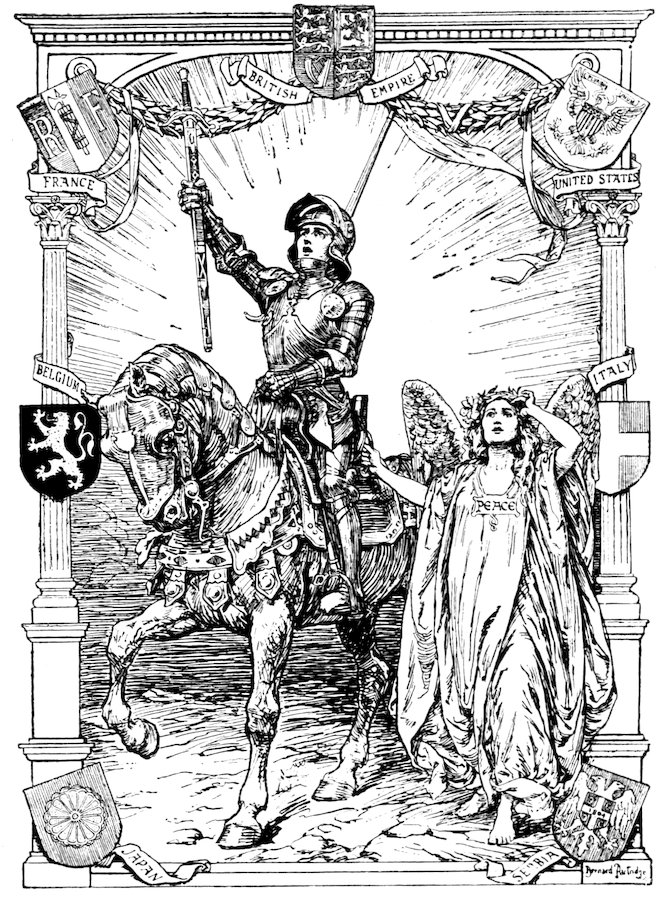
VICTORY!
By permission of] [The Proprietors of “Punch.”
PUNCH’S VICTORY CARTOON USED FOR THE BATTALION CHRISTMAS CARD, 1918.
PRINTED PRIVATELY FOR THE BATTALION BY
HAZELL, WATSON & VINEY, LD.
LONDON AND AYLESBURY
1921
v
TO ALL THOSE COMRADES, BRAVE MEN
AND TRUE, WHO FOUGHT AND DIED,
THIS BOOK IS REVERENTLY DEDICATED.
In Flanders fields the poppies blow
Between the crosses, row on row,
That mark our place; and in the sky
The larks, still bravely singing, fly
Scarce heard amid the guns below.
We are the Dead. Short days ago
We lived, felt dawn, saw sunset glow,
Loved and were loved, and now we lie
In Flanders fields.
Take up our quarrel with the foe:
To you from failing hands we throw
The torch; be yours to hold it high.
If ye break faith with us who die
We shall not sleep, though poppies grow
In Flanders fields.
By permission of the Proprietors of “Punch.”
INTRODUCTION
vii
On the pages of this book an attempt has been
made to set down the plain unvarnished story
of the life of a Service Battalion during the
European War of 1914–1919.
The book originated with a desire, strongly
expressed by all ranks of the Battalion in December
1918, that a history should be written.
Accordingly a Battalion History Fund was
formed, and the work was commenced.
Many difficulties have been encountered since
then which have delayed publication considerably.
The narrative, based on the official War Diary
of the Battalion, kindly lent by the Officer-in-Charge
of Regimental Records, is strictly correct
in all main facts. A mass of other detail
obtained from note-books and recollections of
many who served with the Battalion has had
to be sifted and analysed, and if there are
criticisms of minor points, we can only assure
readers that we have done our best to get accurate
information. We regret that from the details
available it has not been possible to prepare an
accurate list of the total casualties, and we are
therefore not attempting to give figures, which
viiiwould be incomplete. In many cases, however,
we have been able to give the number of casualties
for definite actions or over certain periods.
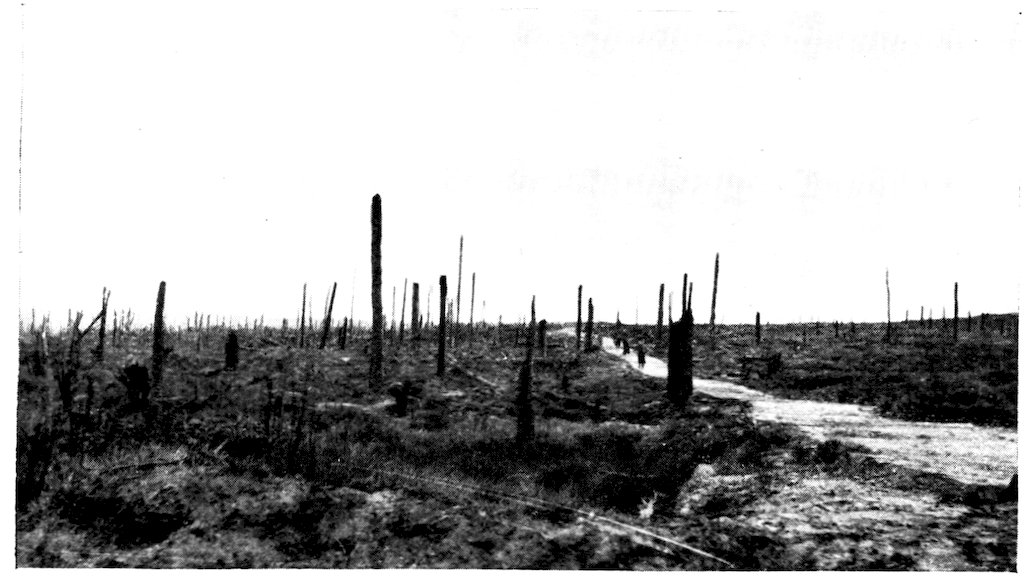
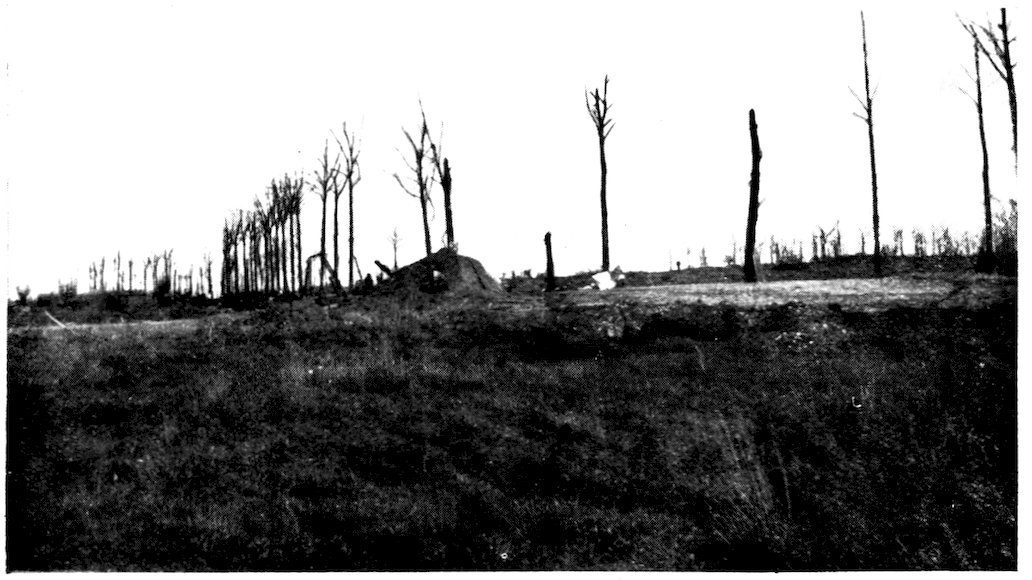
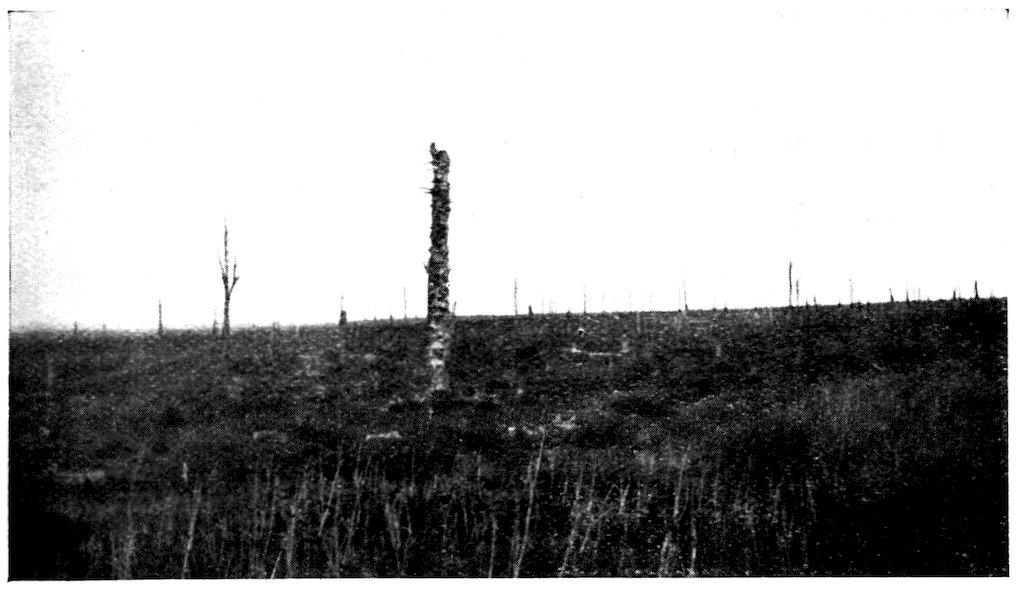
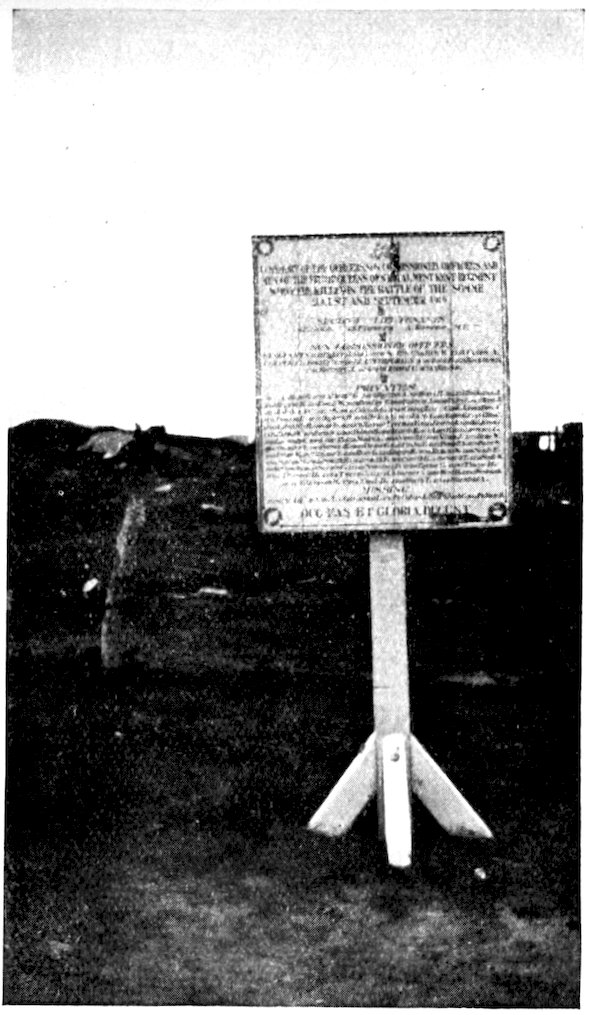
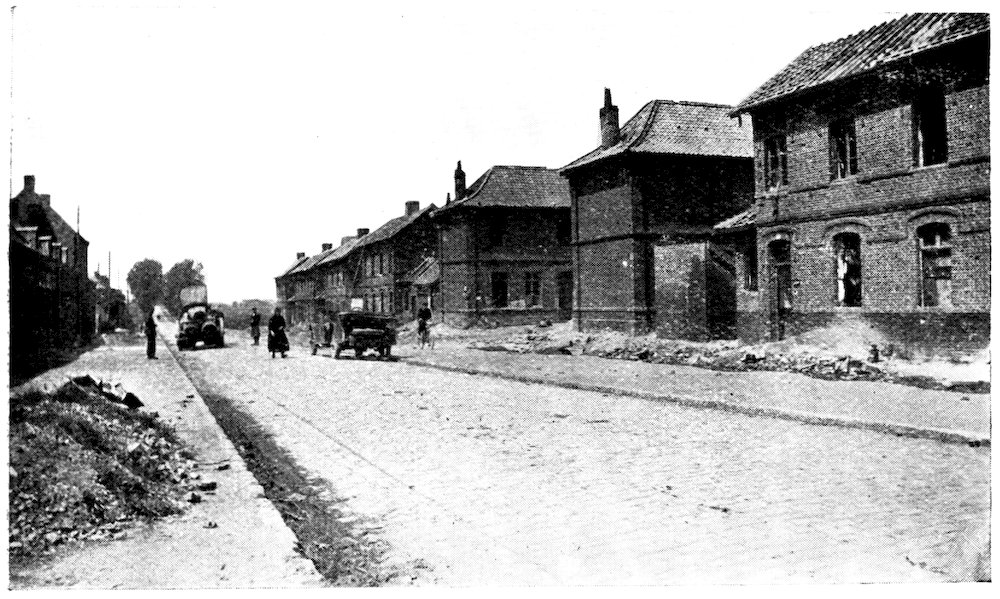
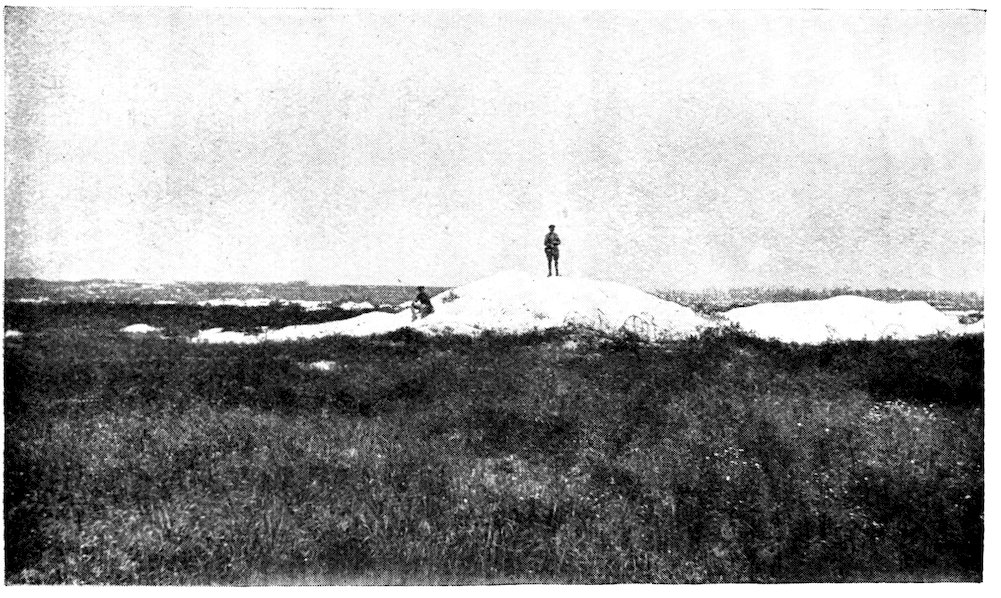
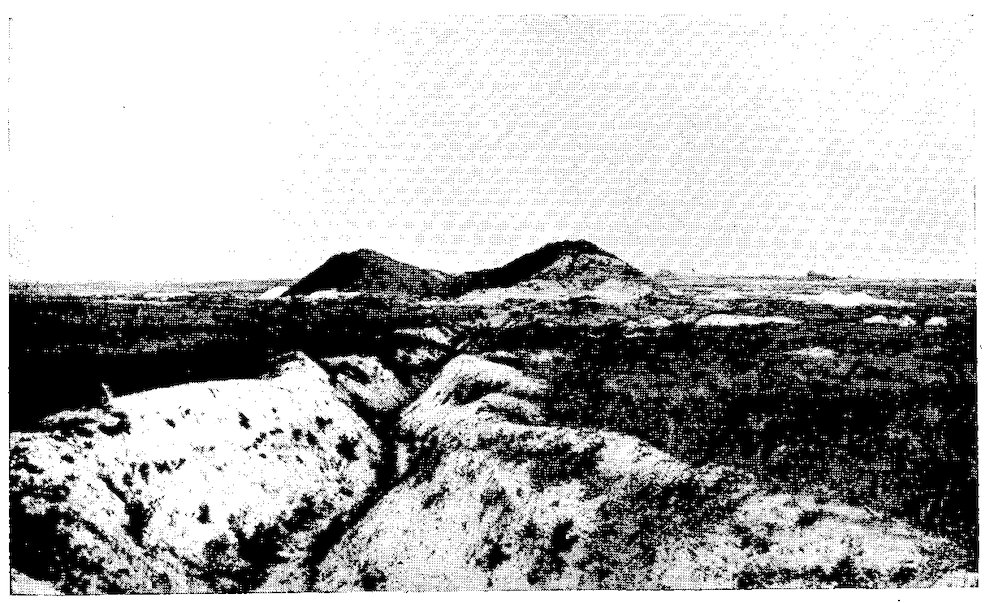
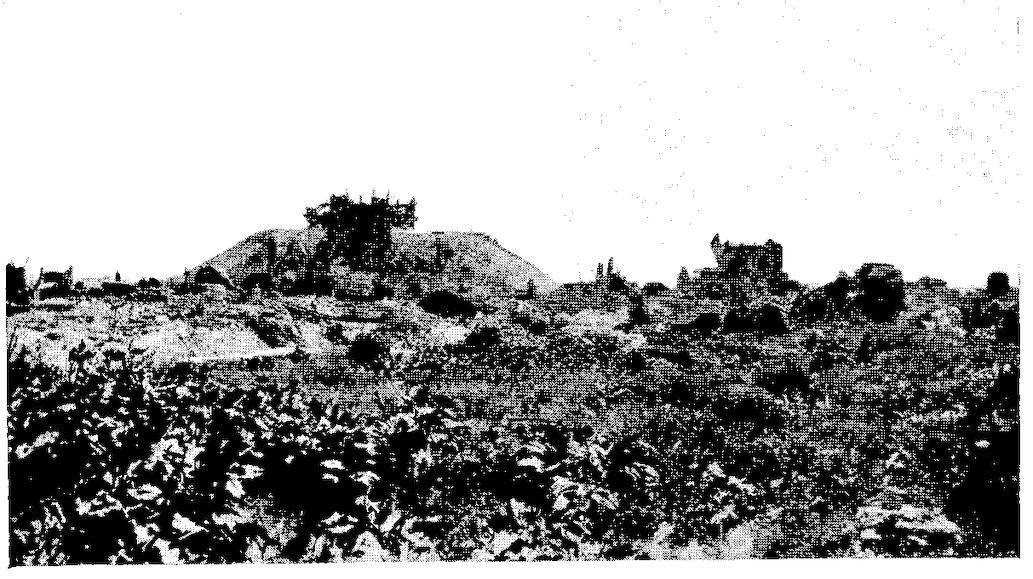
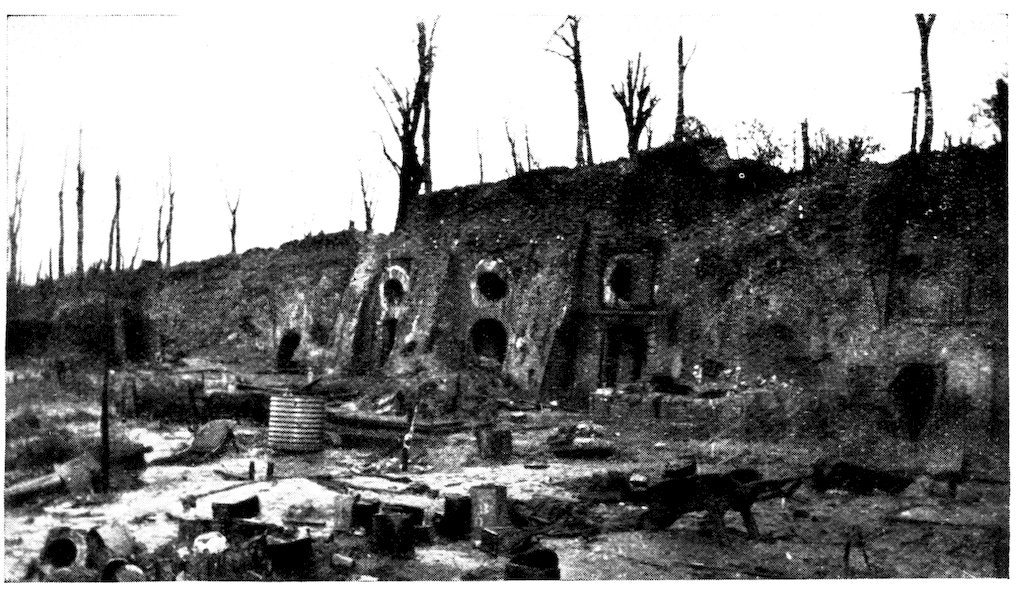
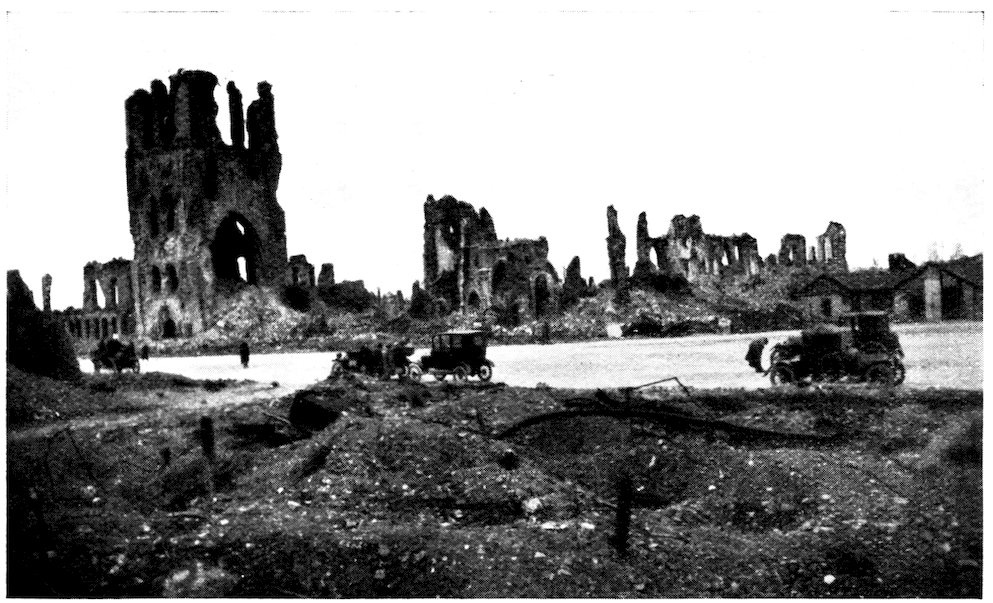
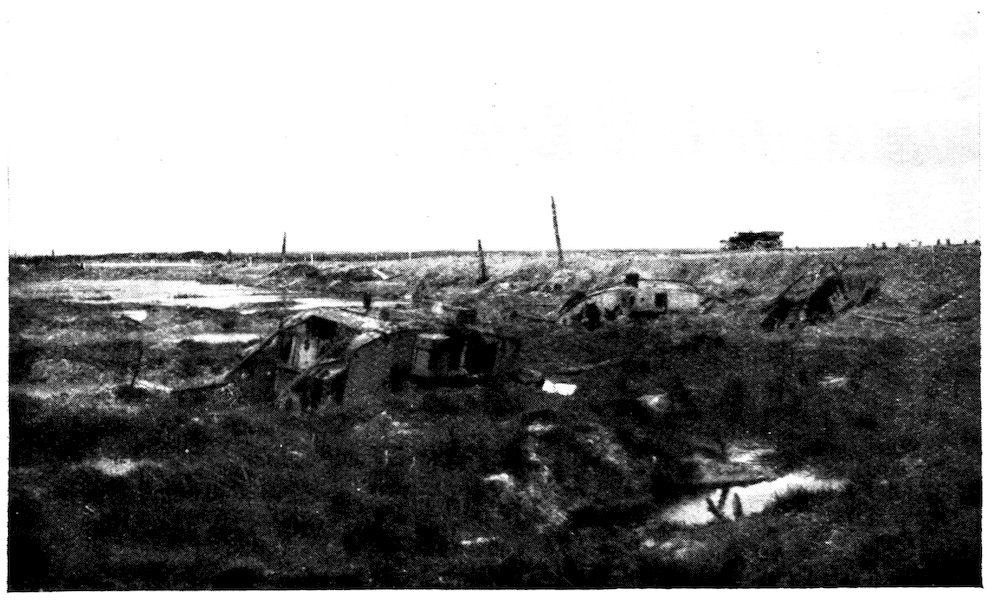
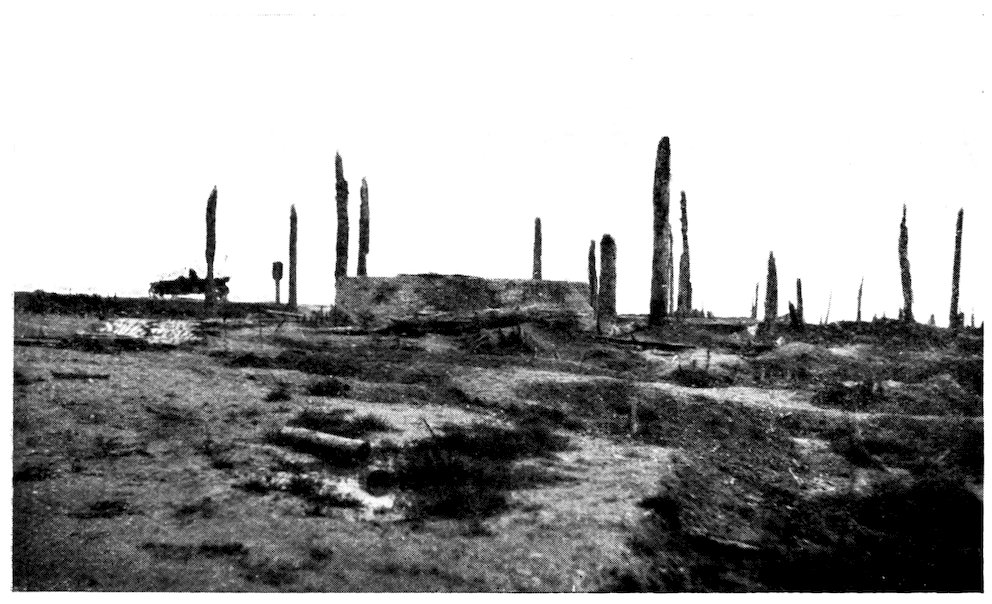
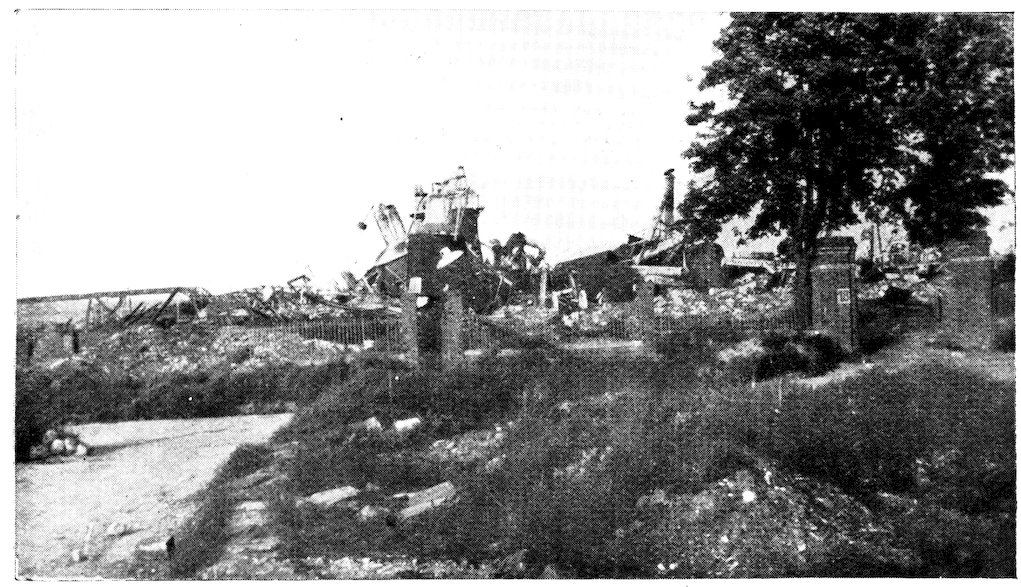
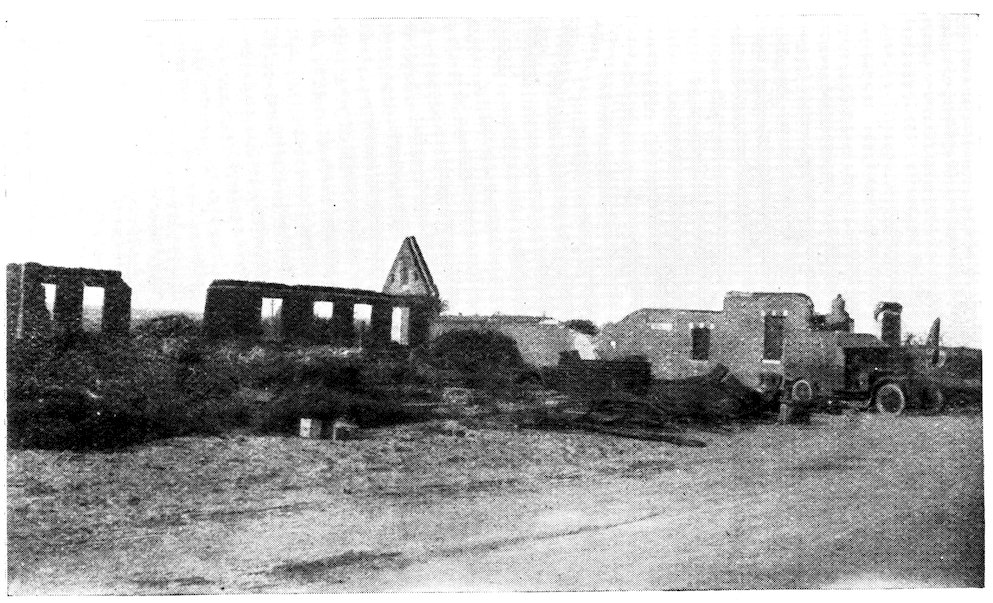
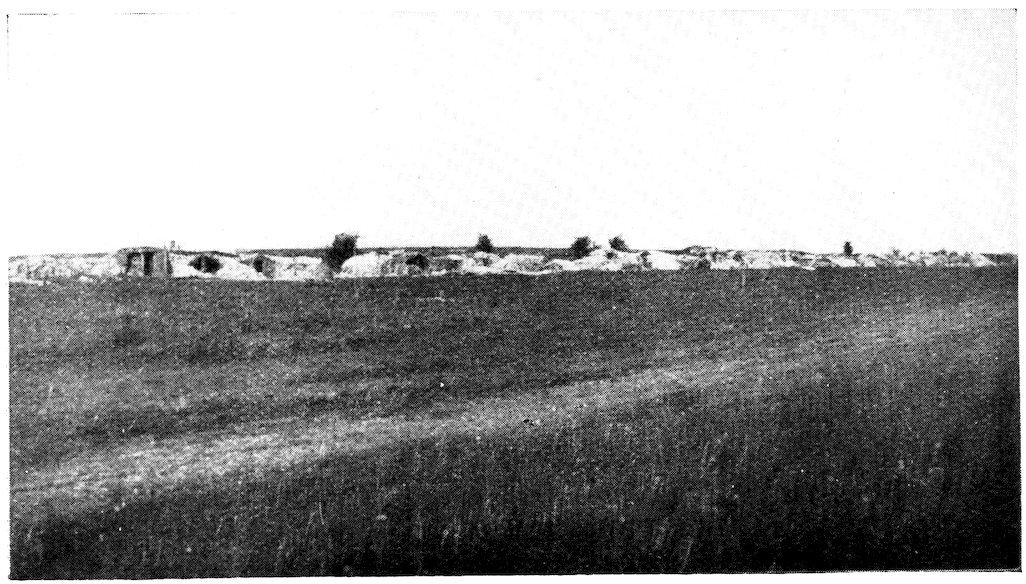
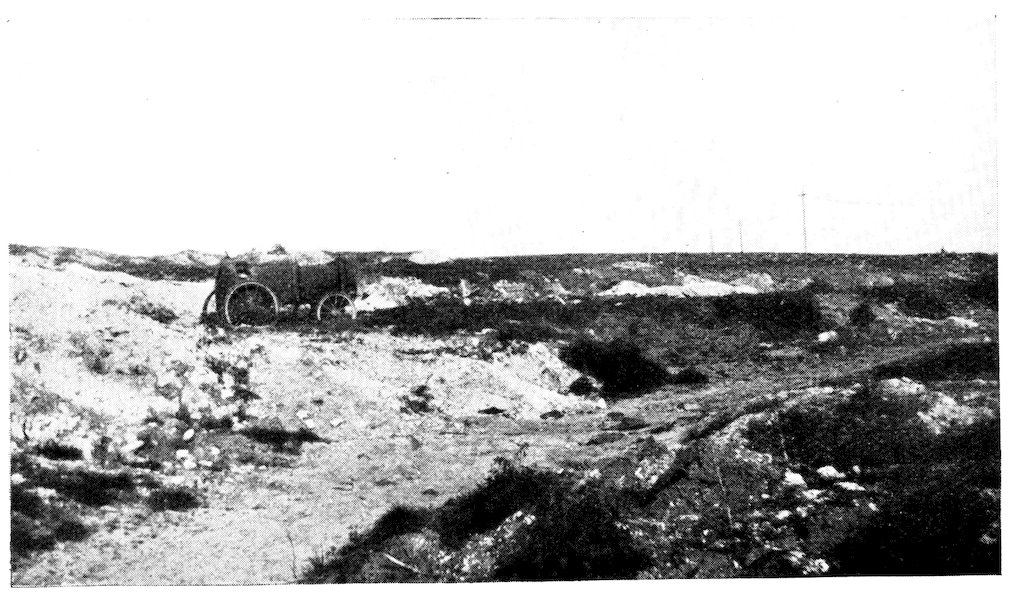
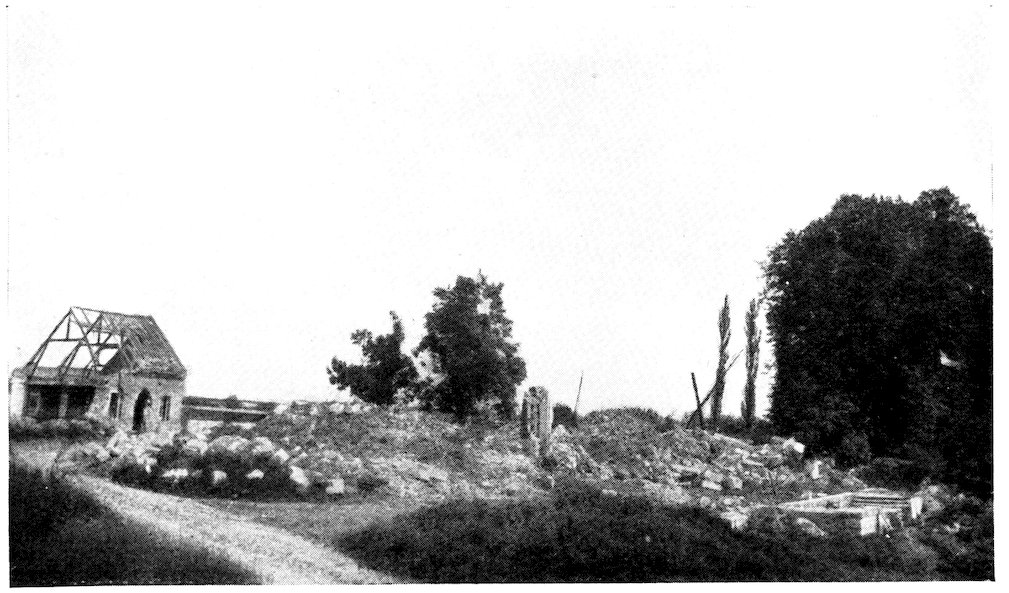
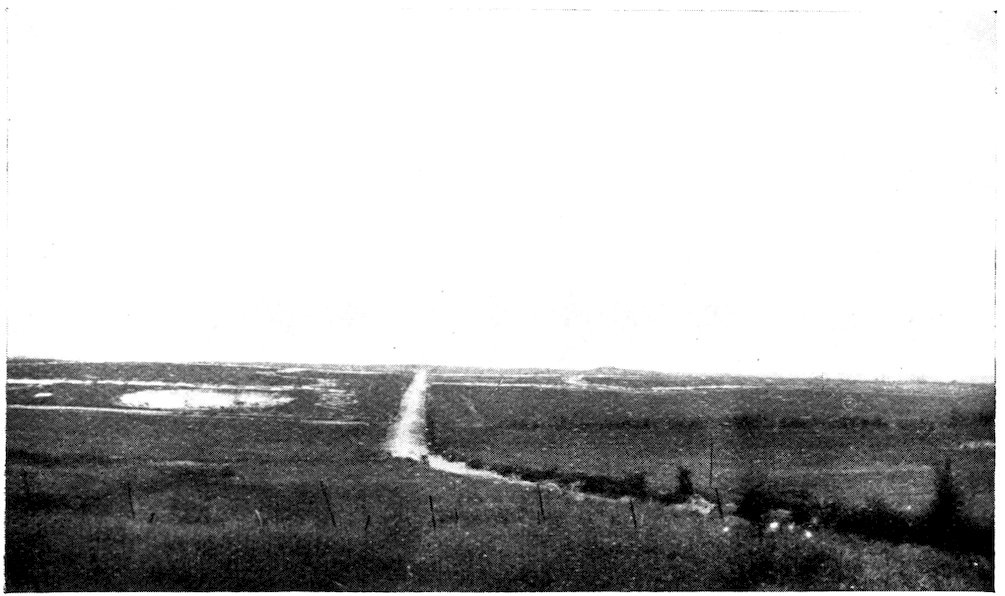
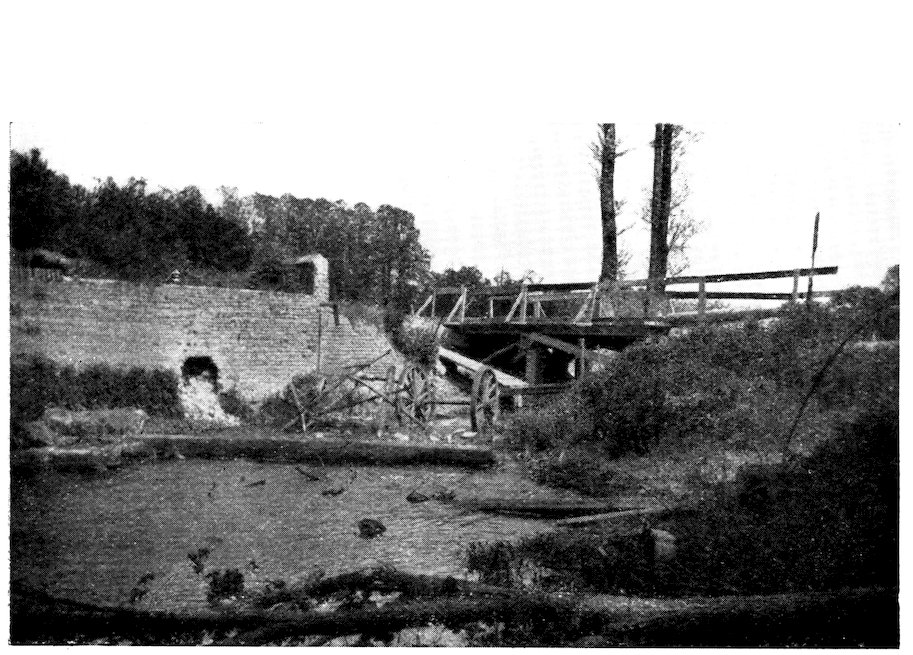
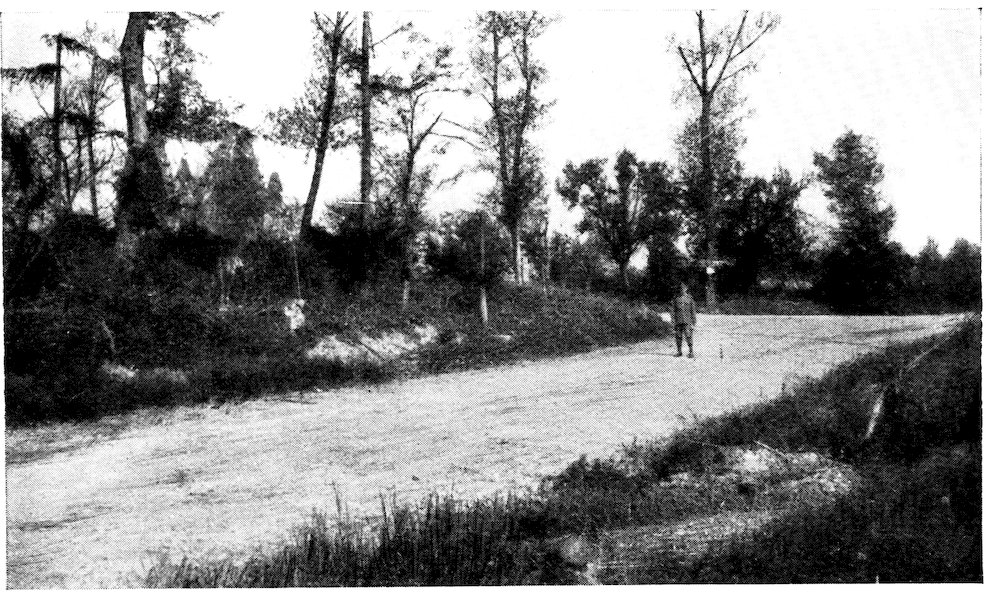
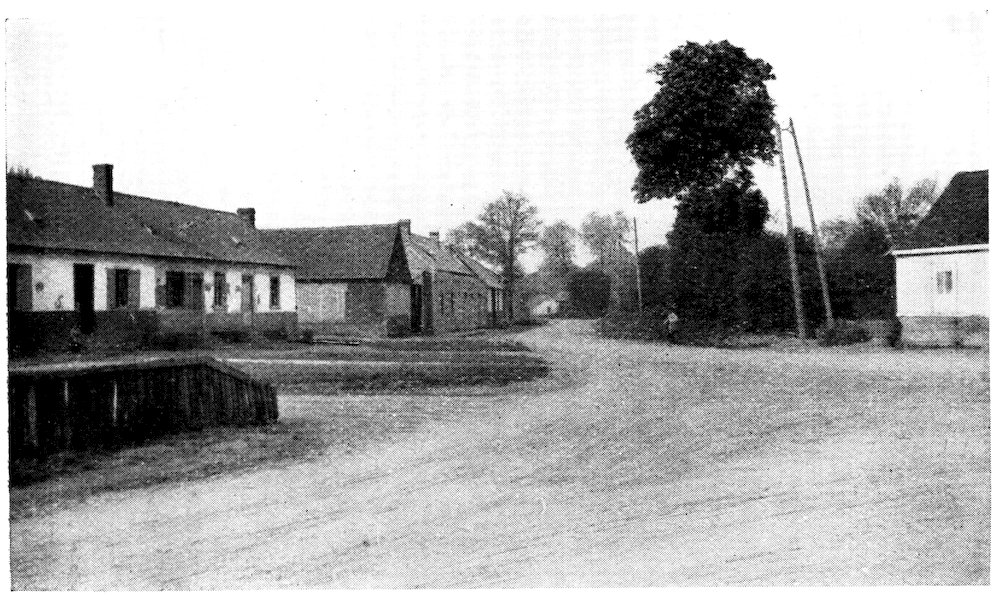
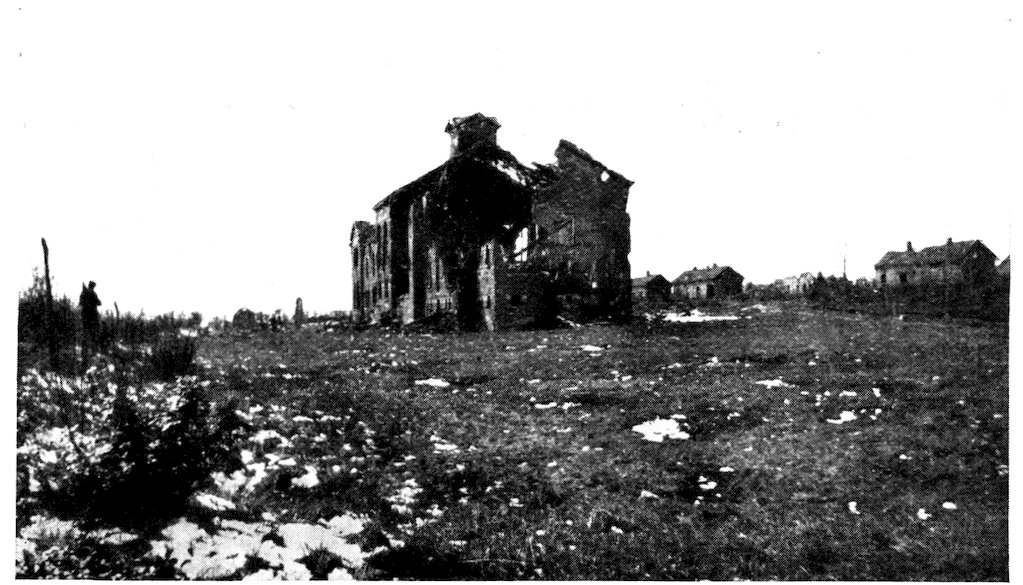
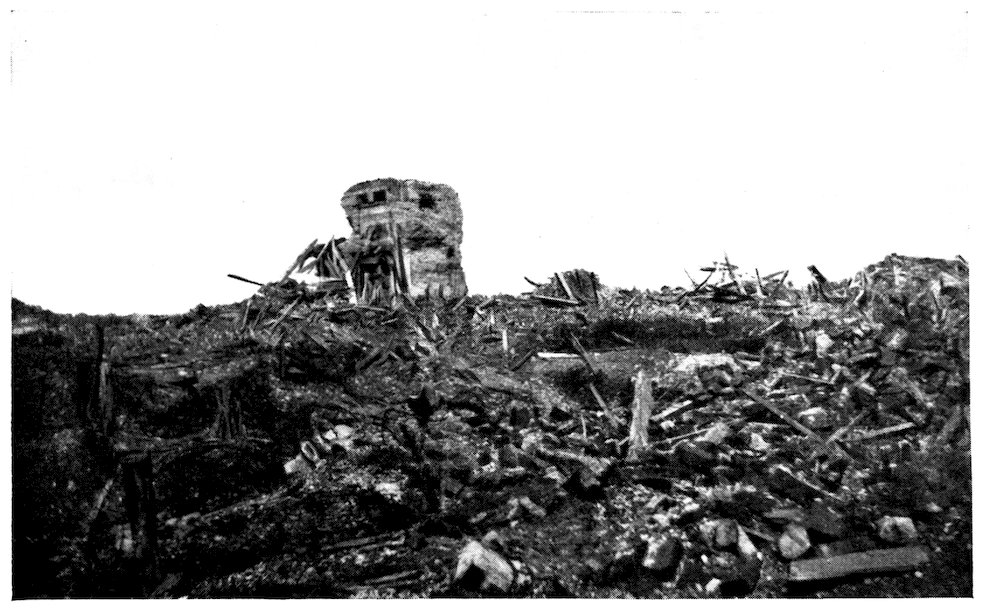
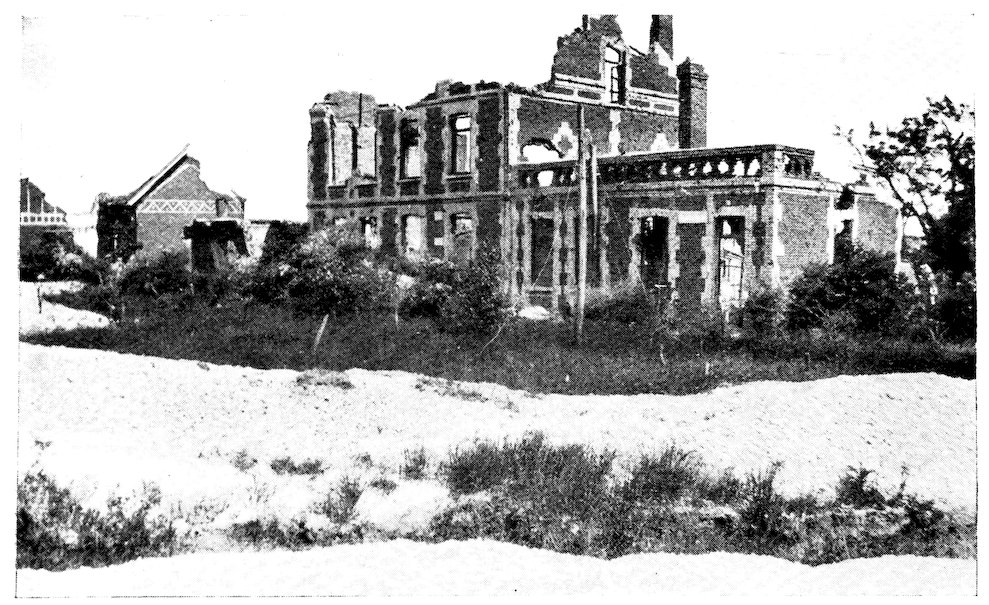
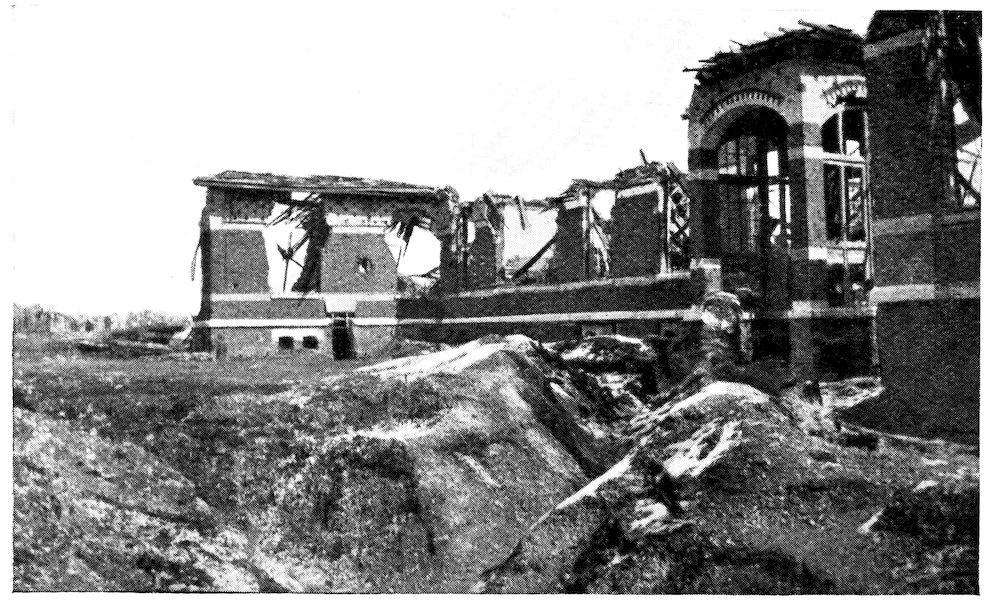
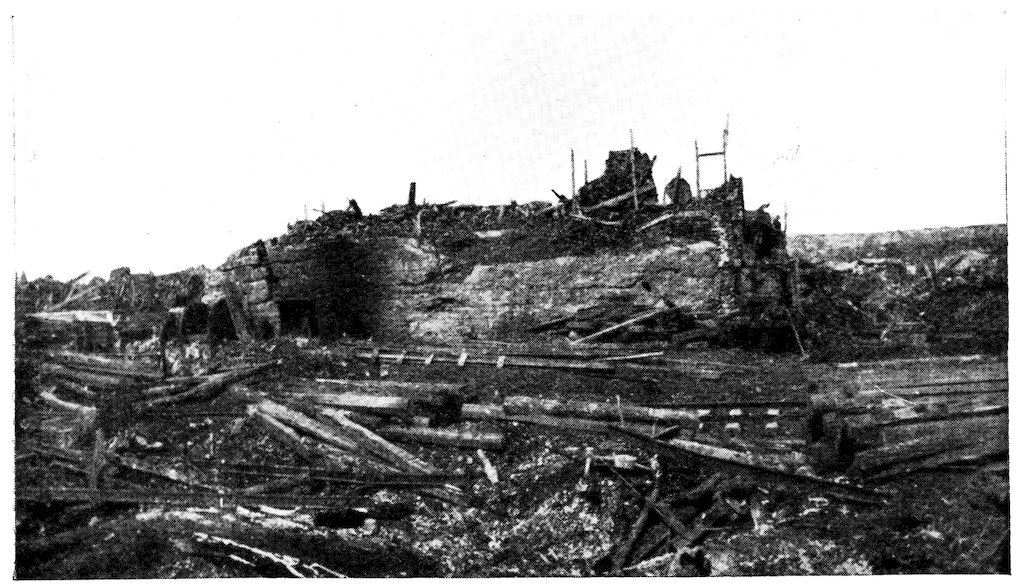
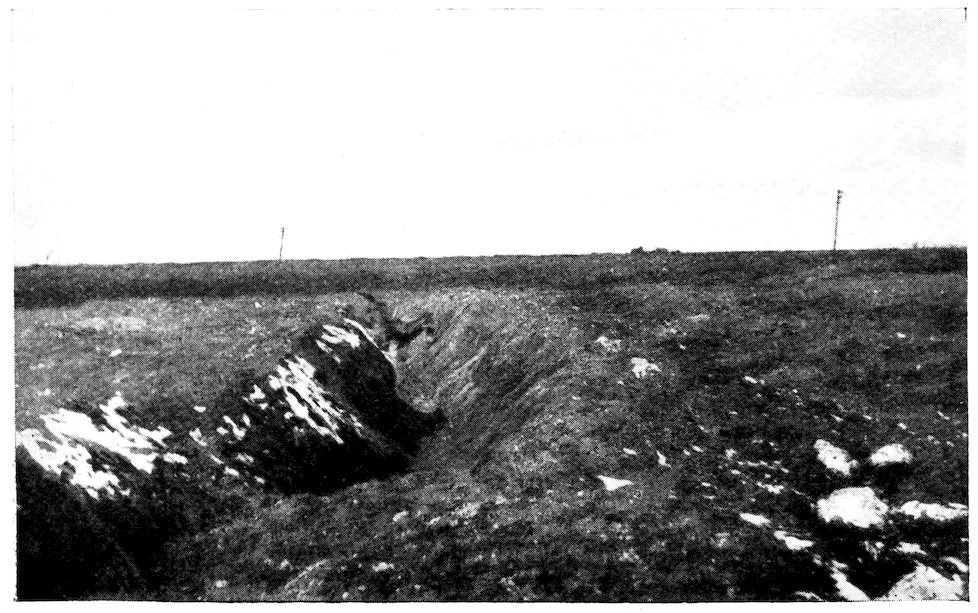
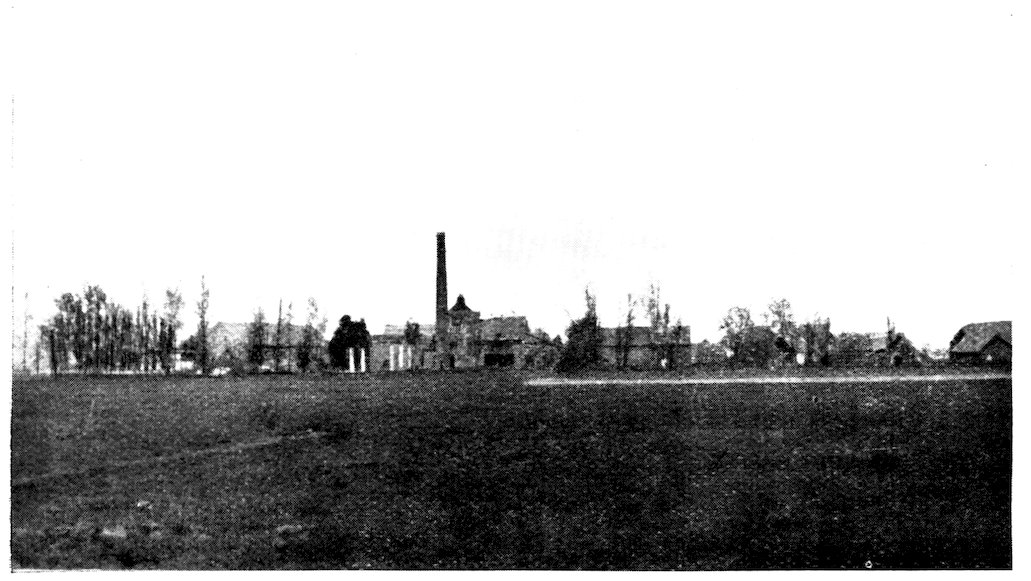
The photographs were taken after the Armistice,
and consequently show places in their condition
at the close of the war.
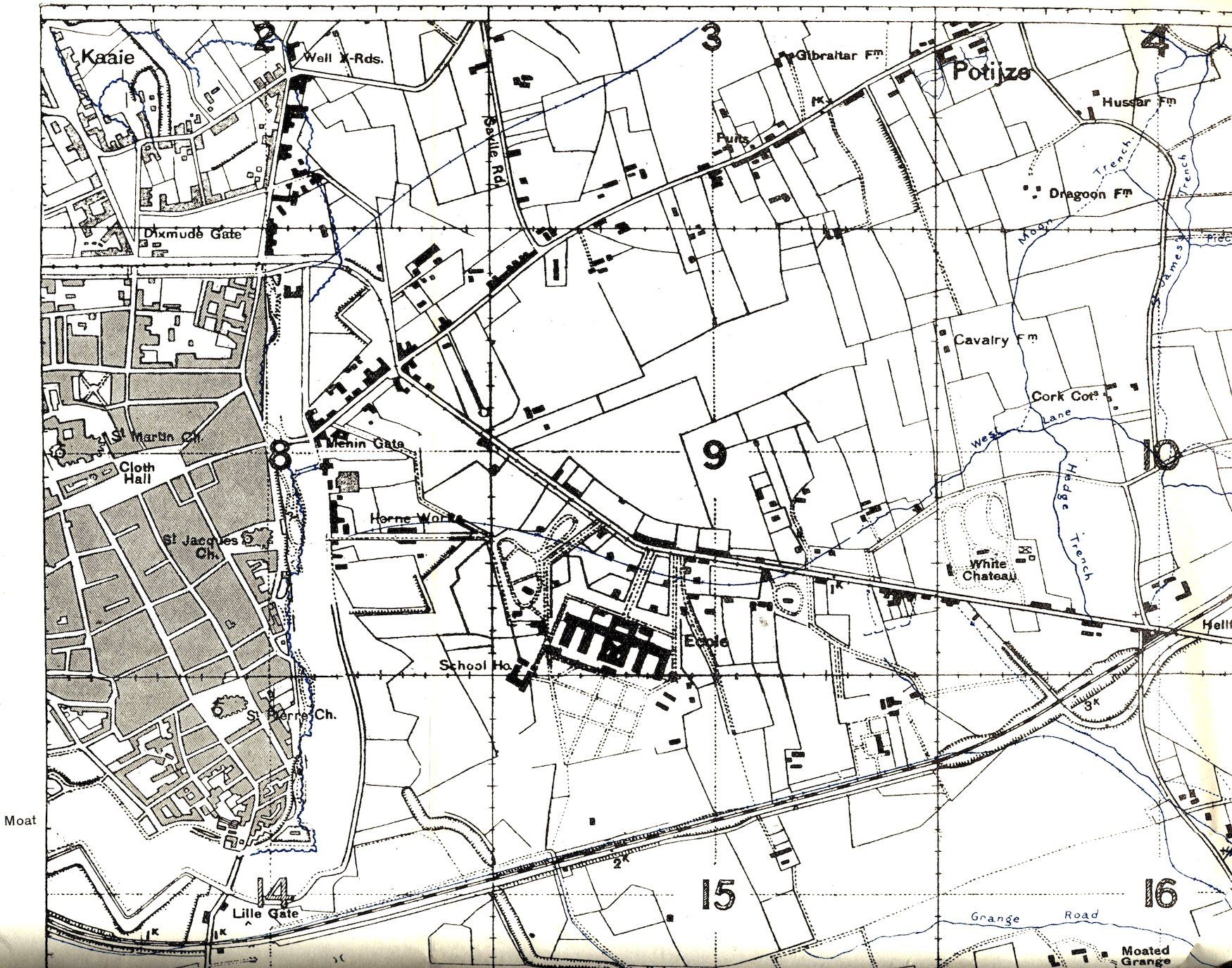
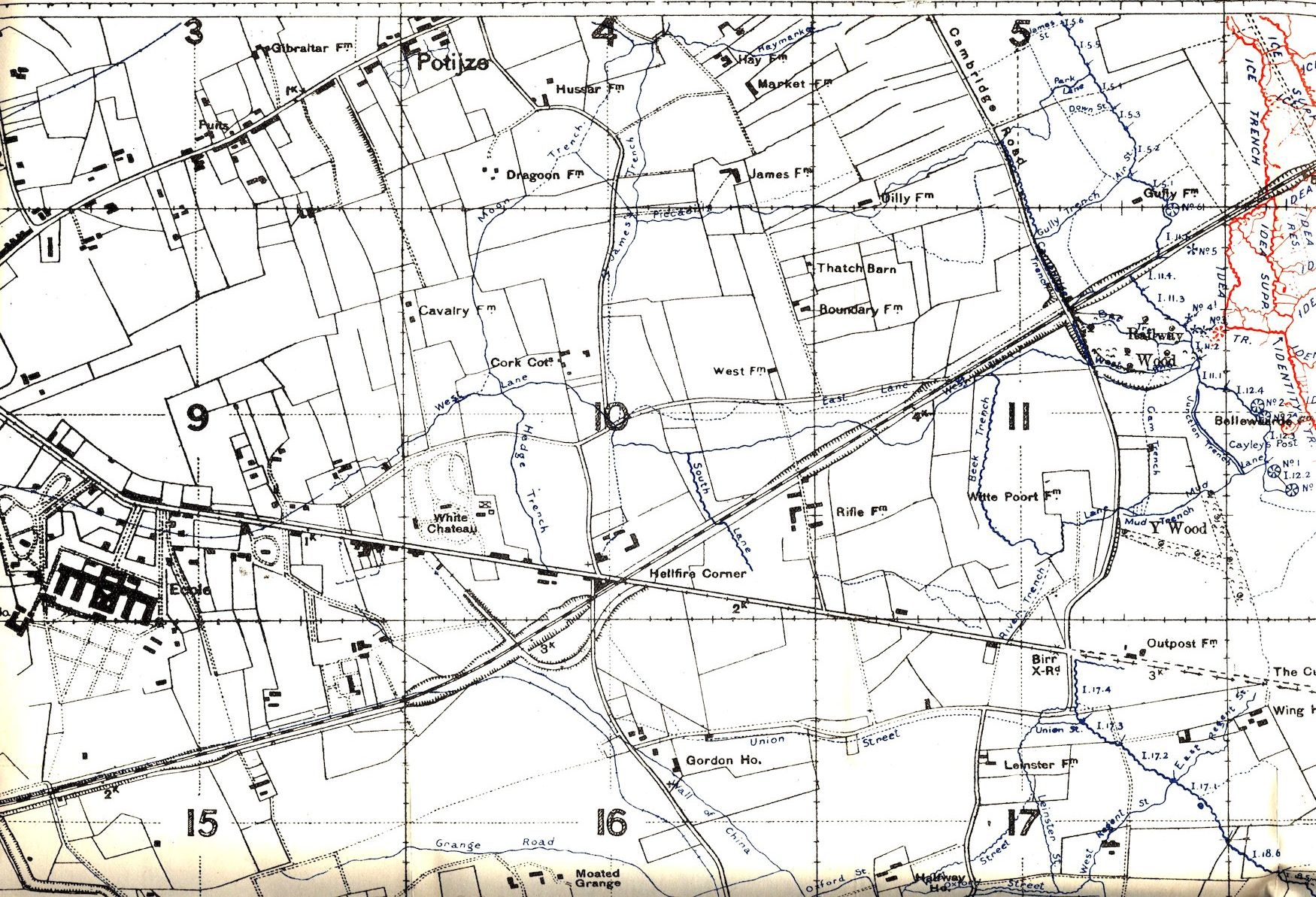
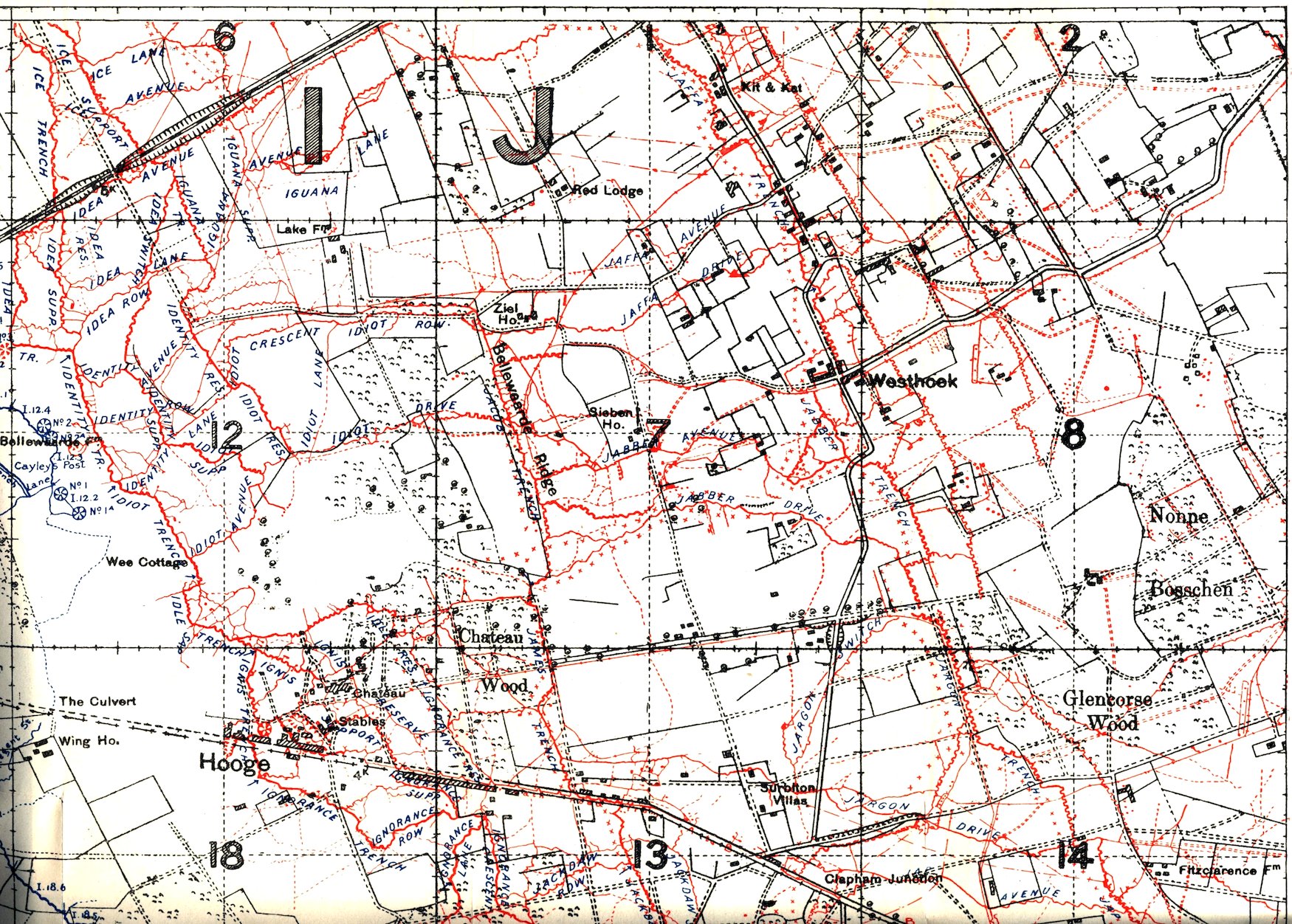
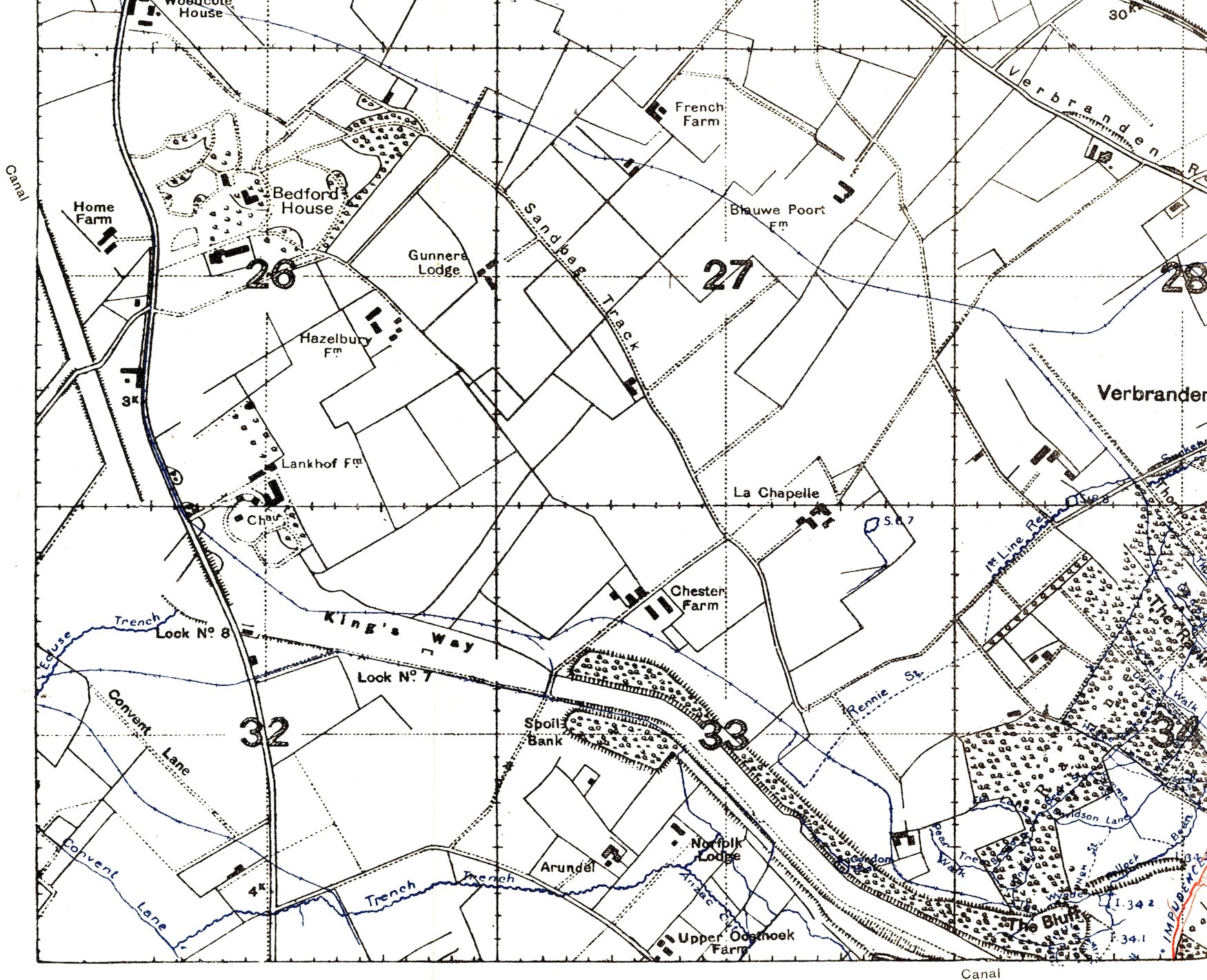
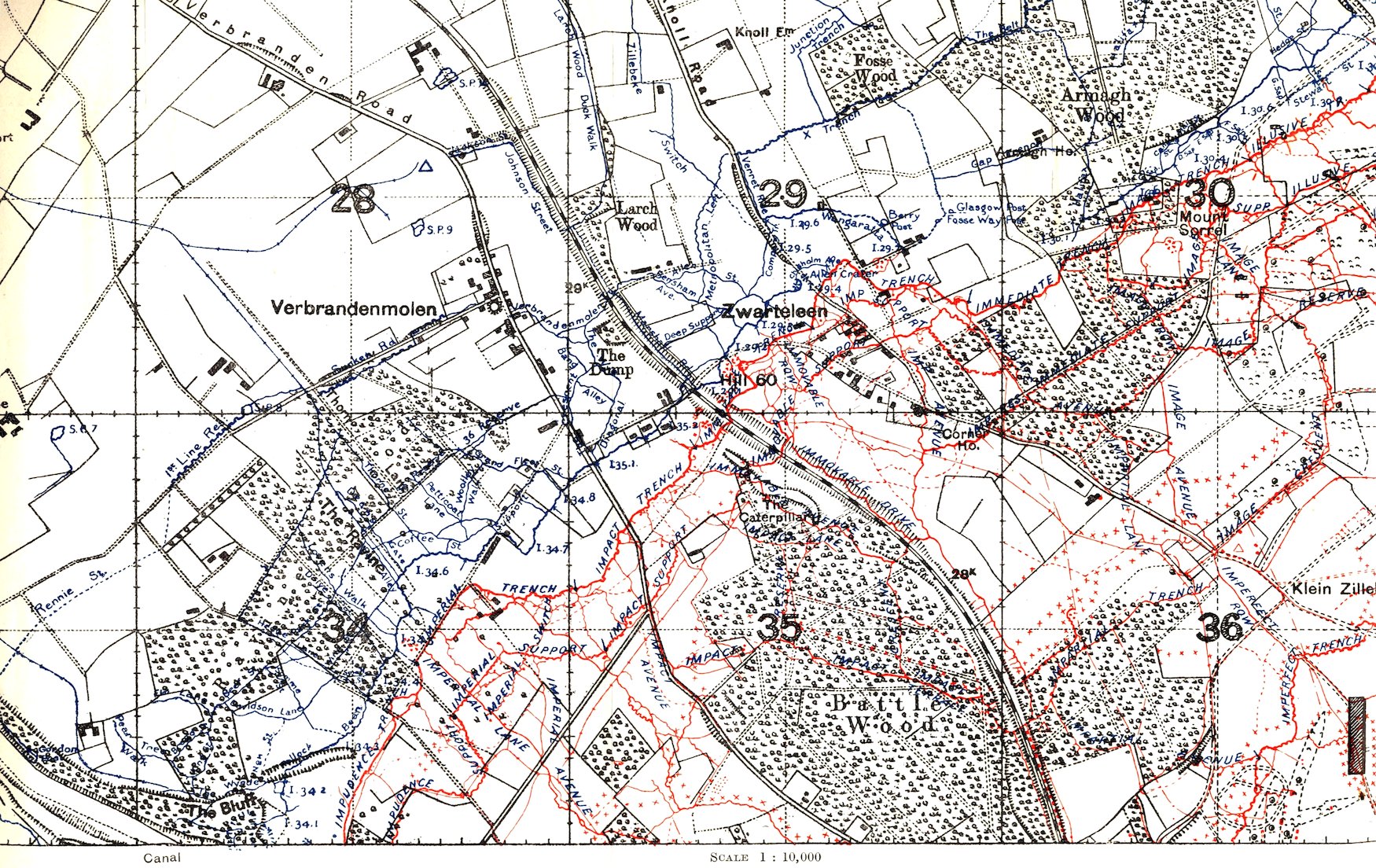
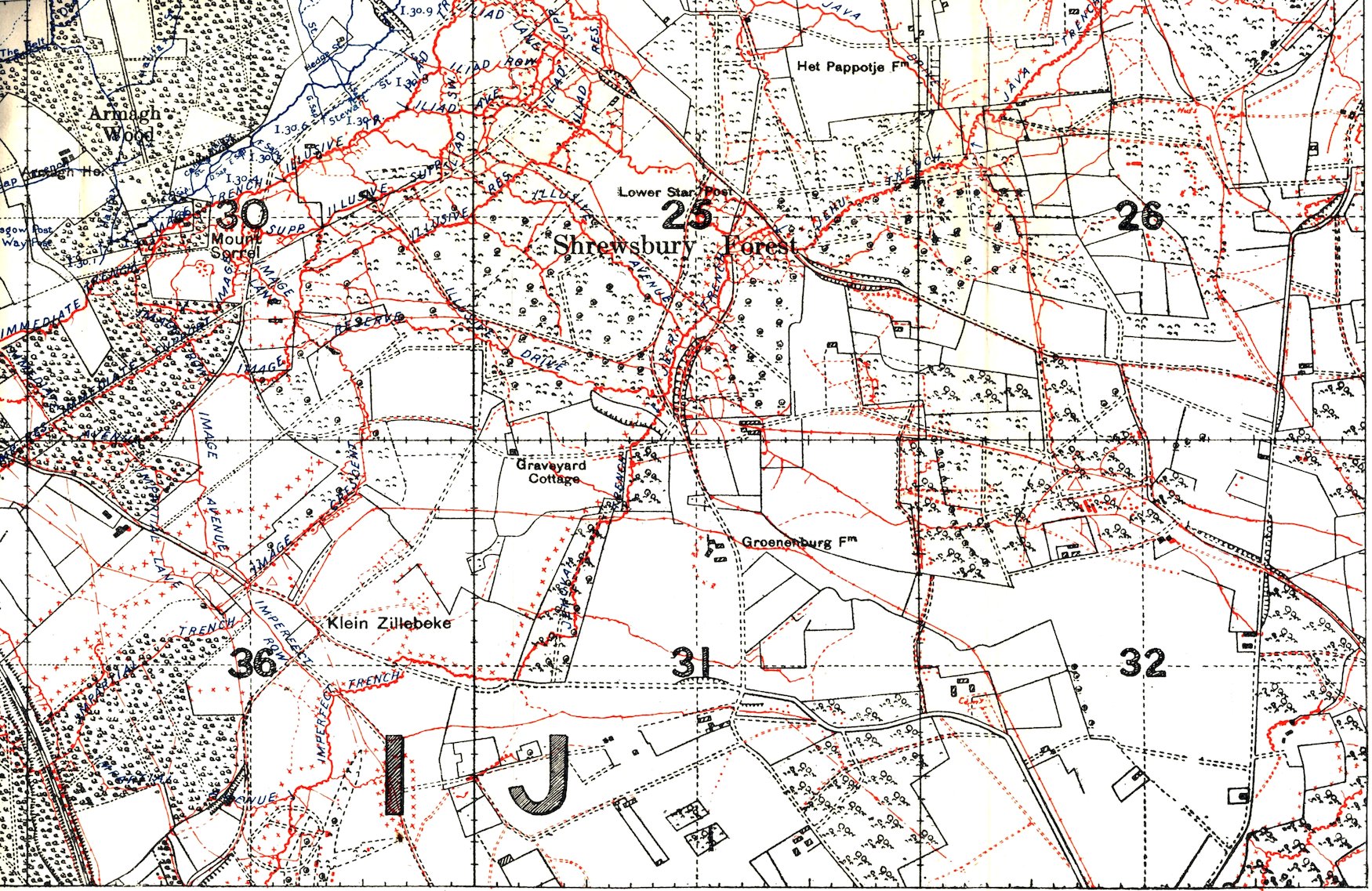
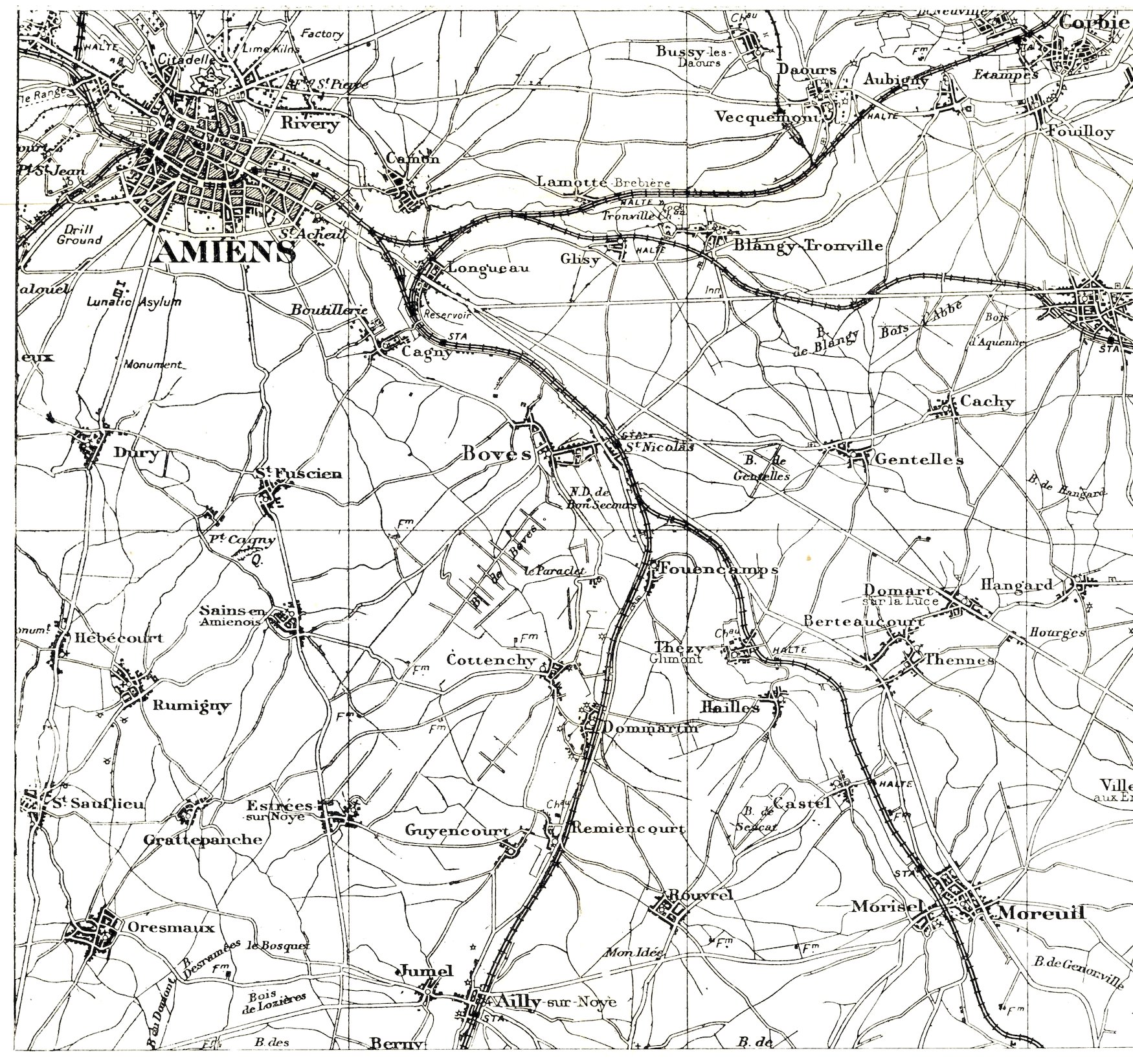
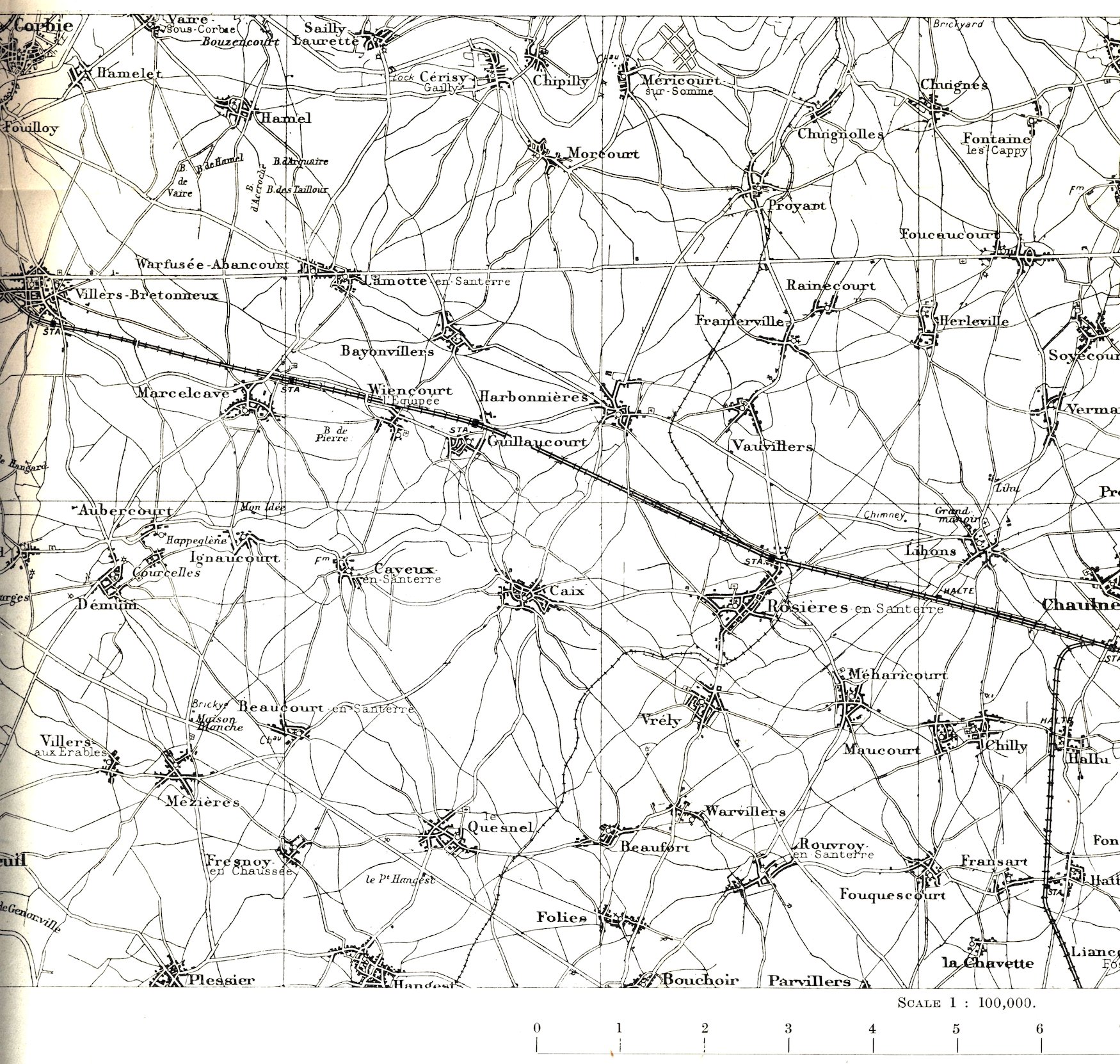
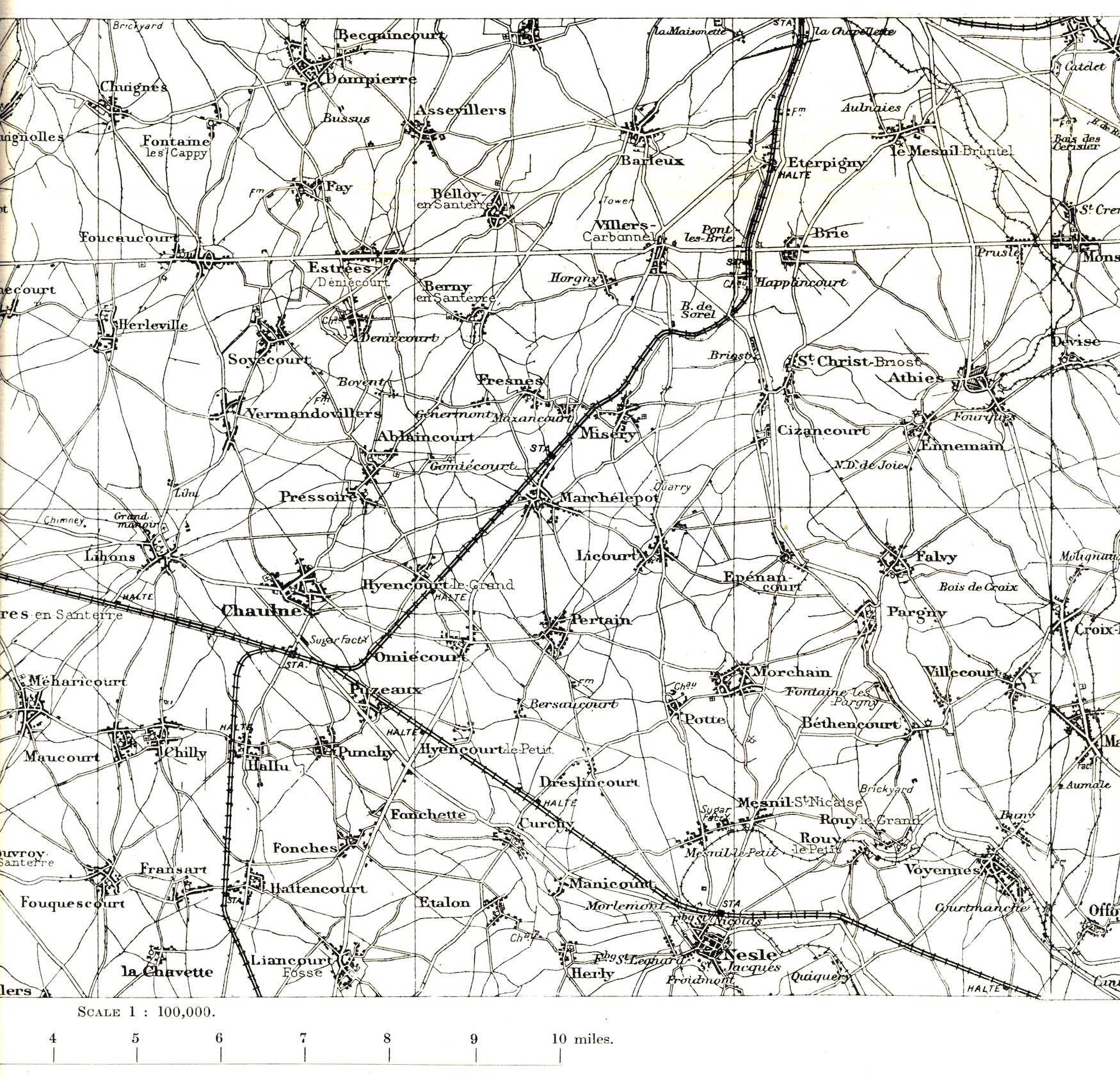
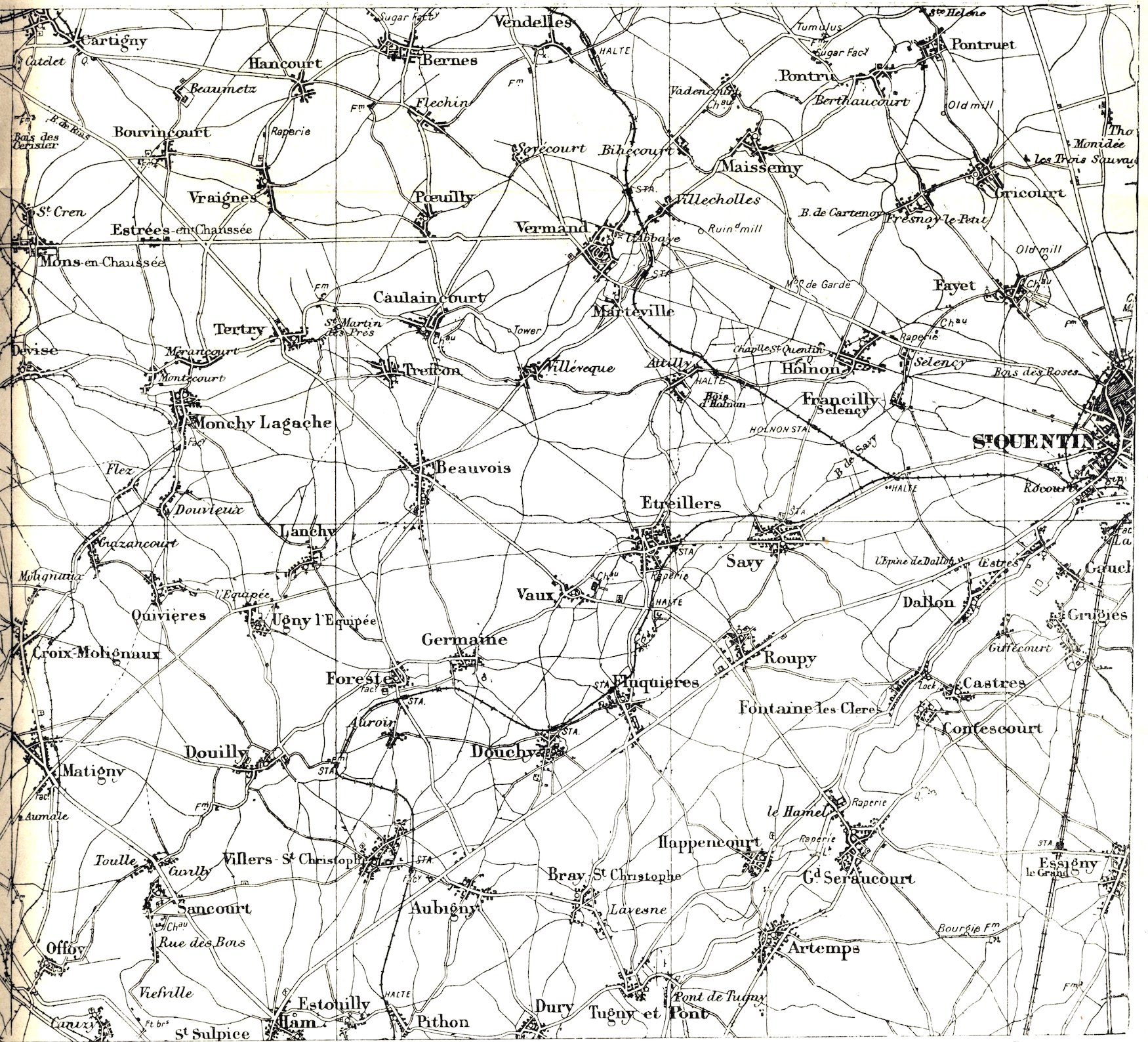
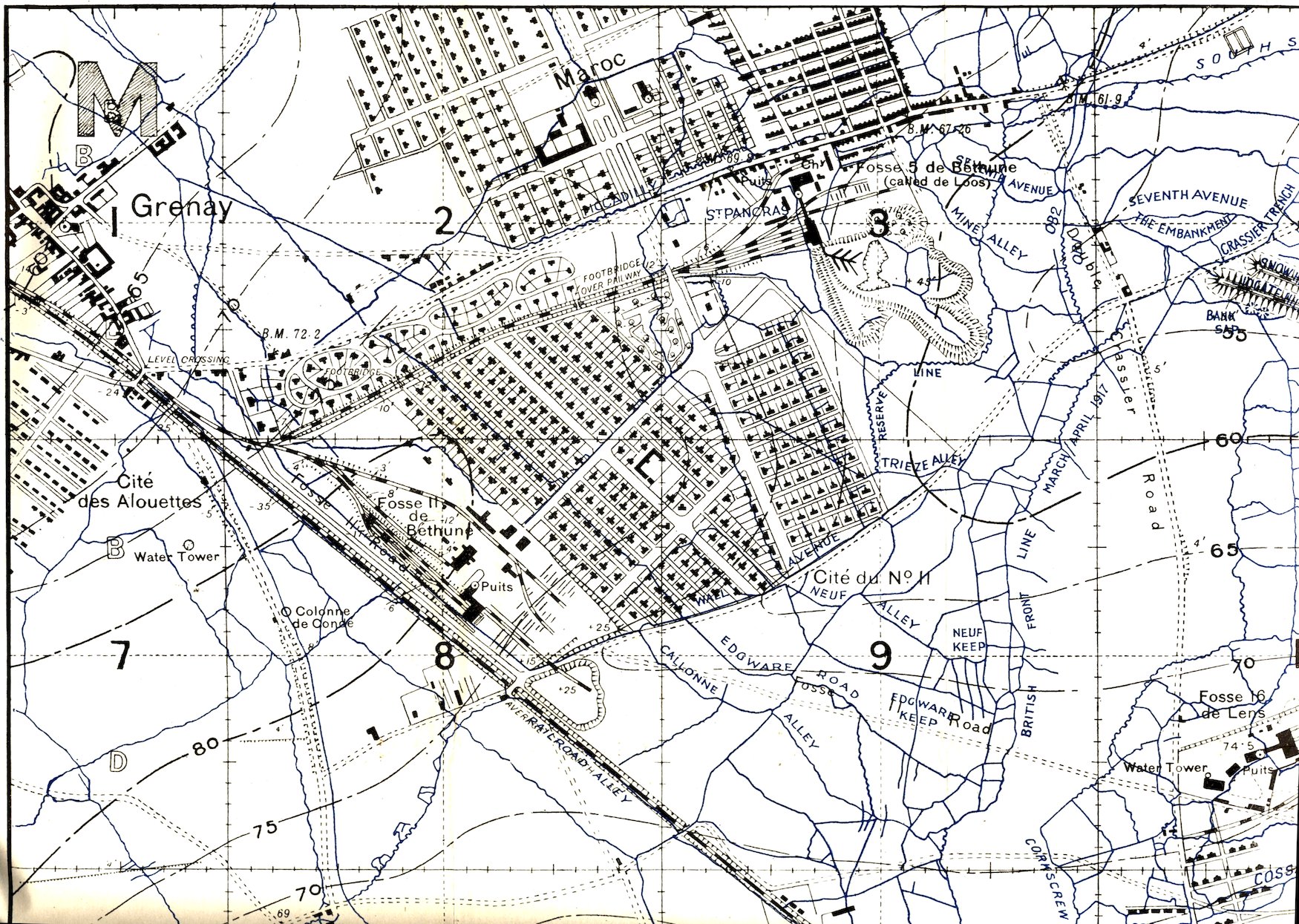
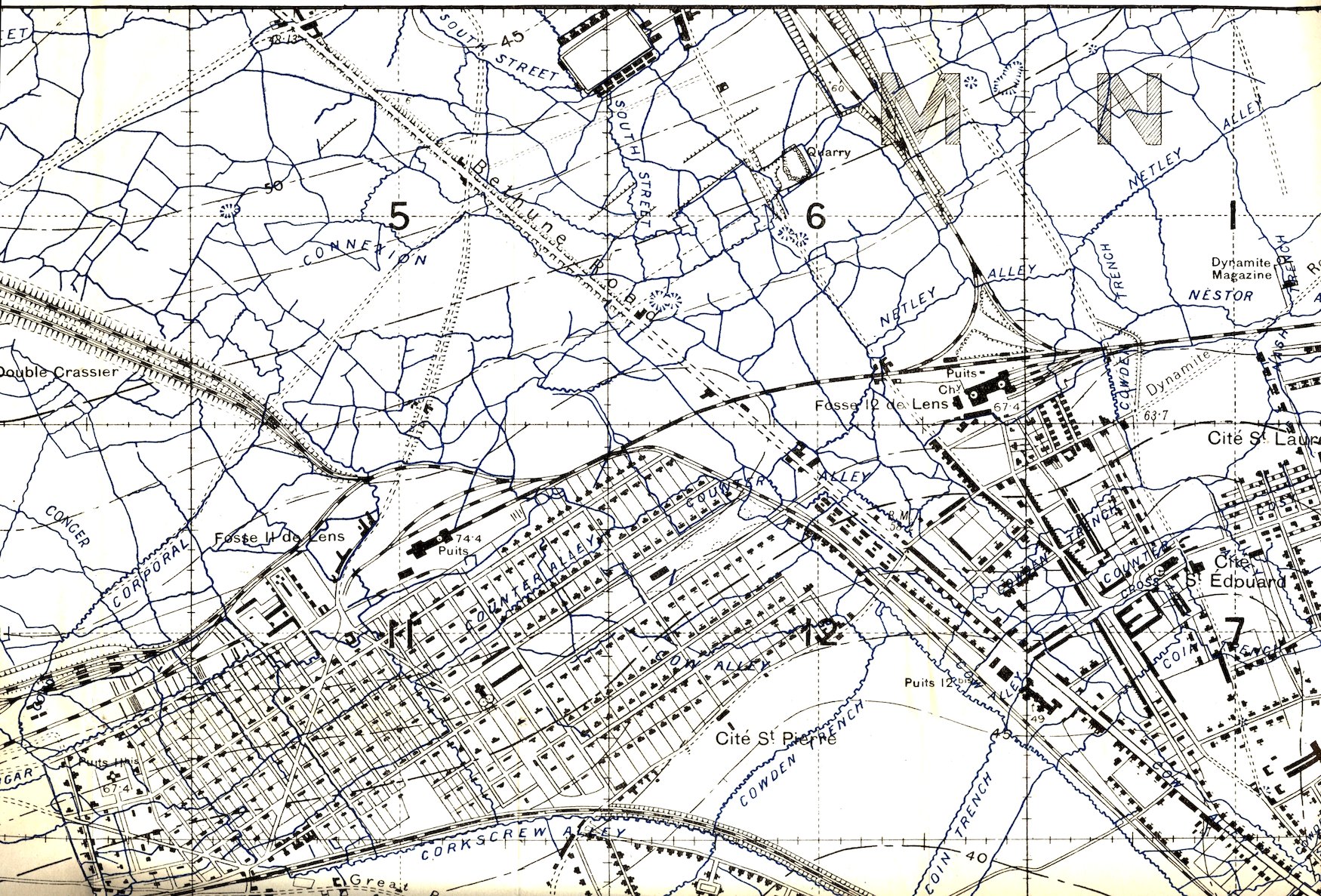
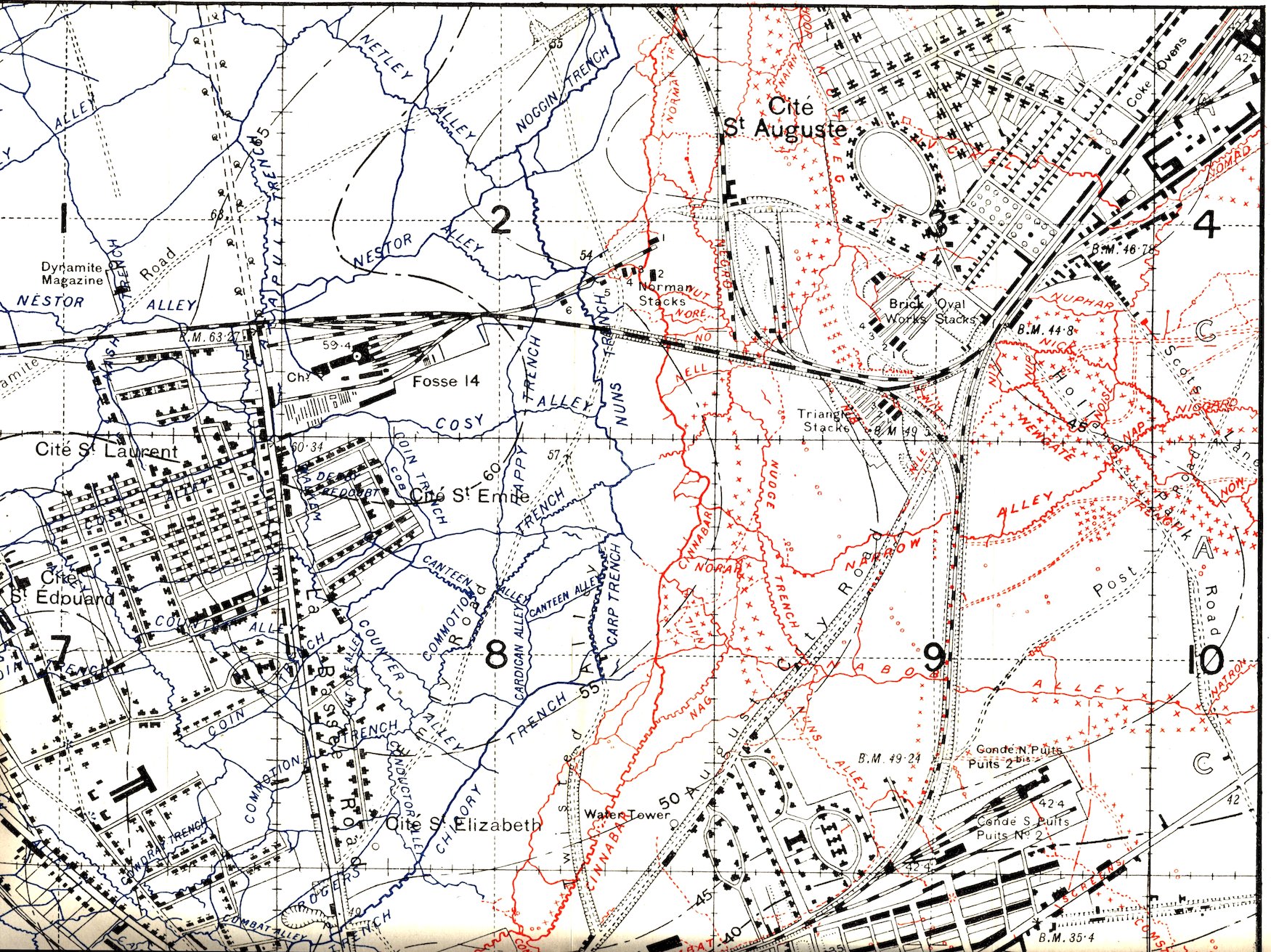
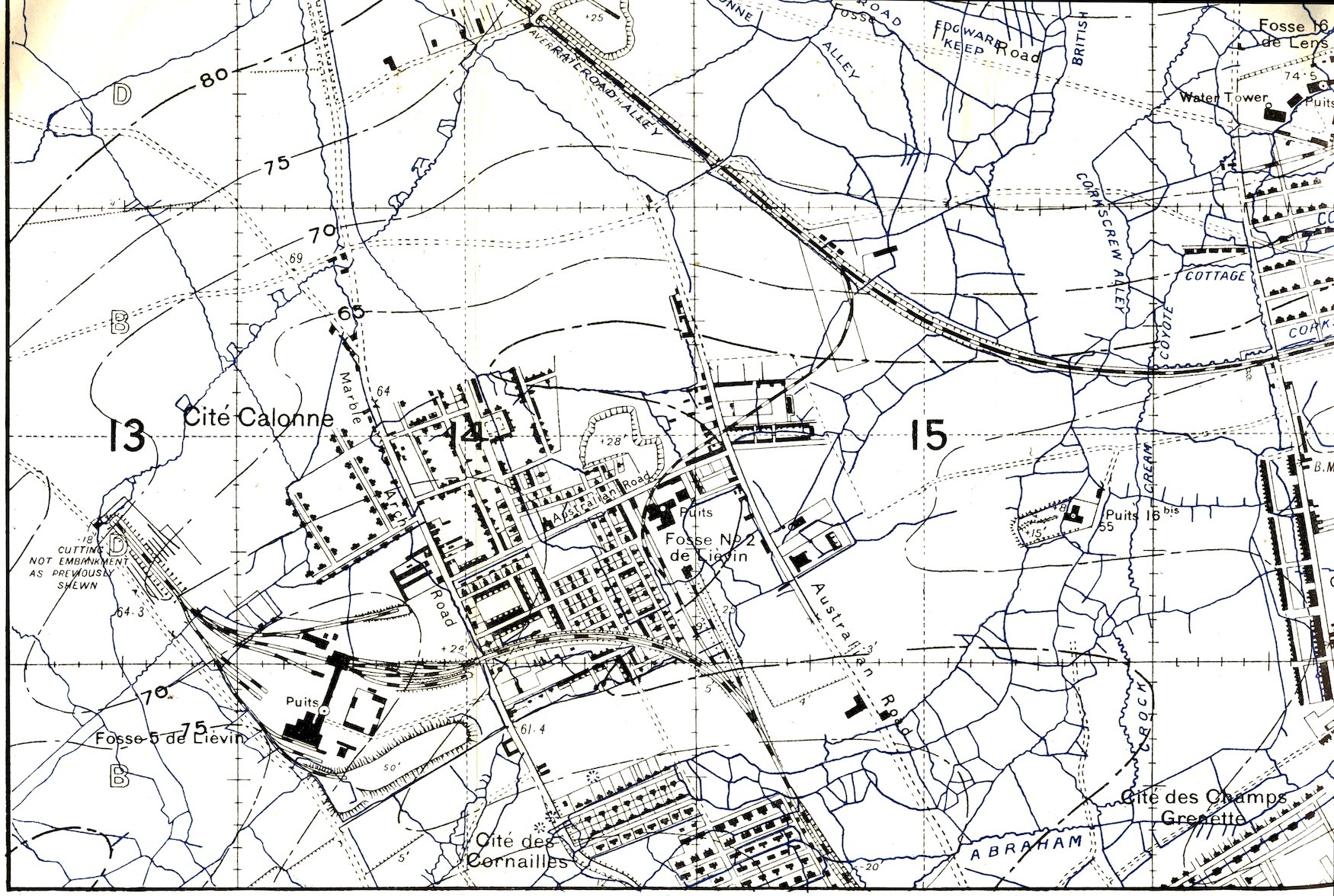
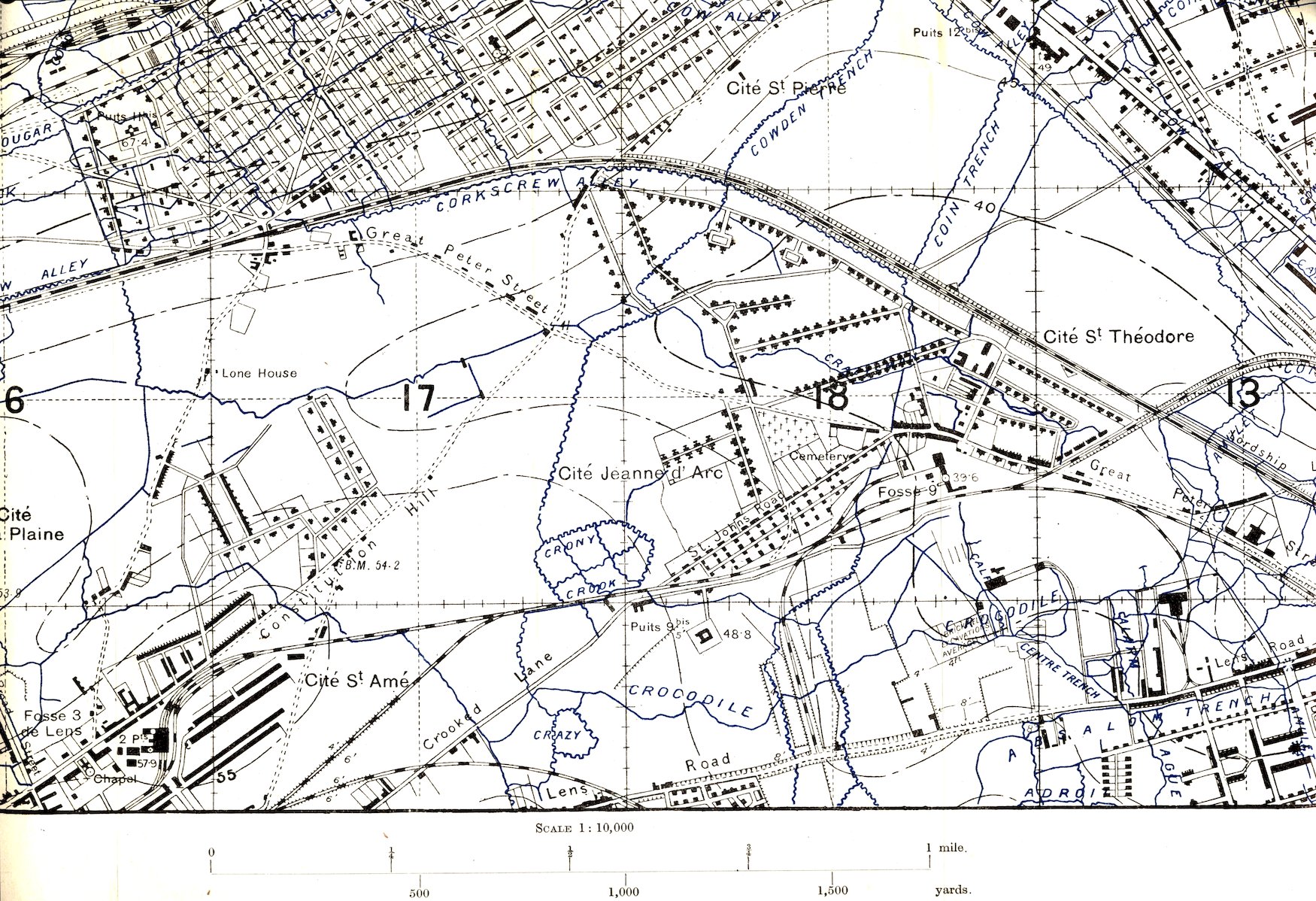
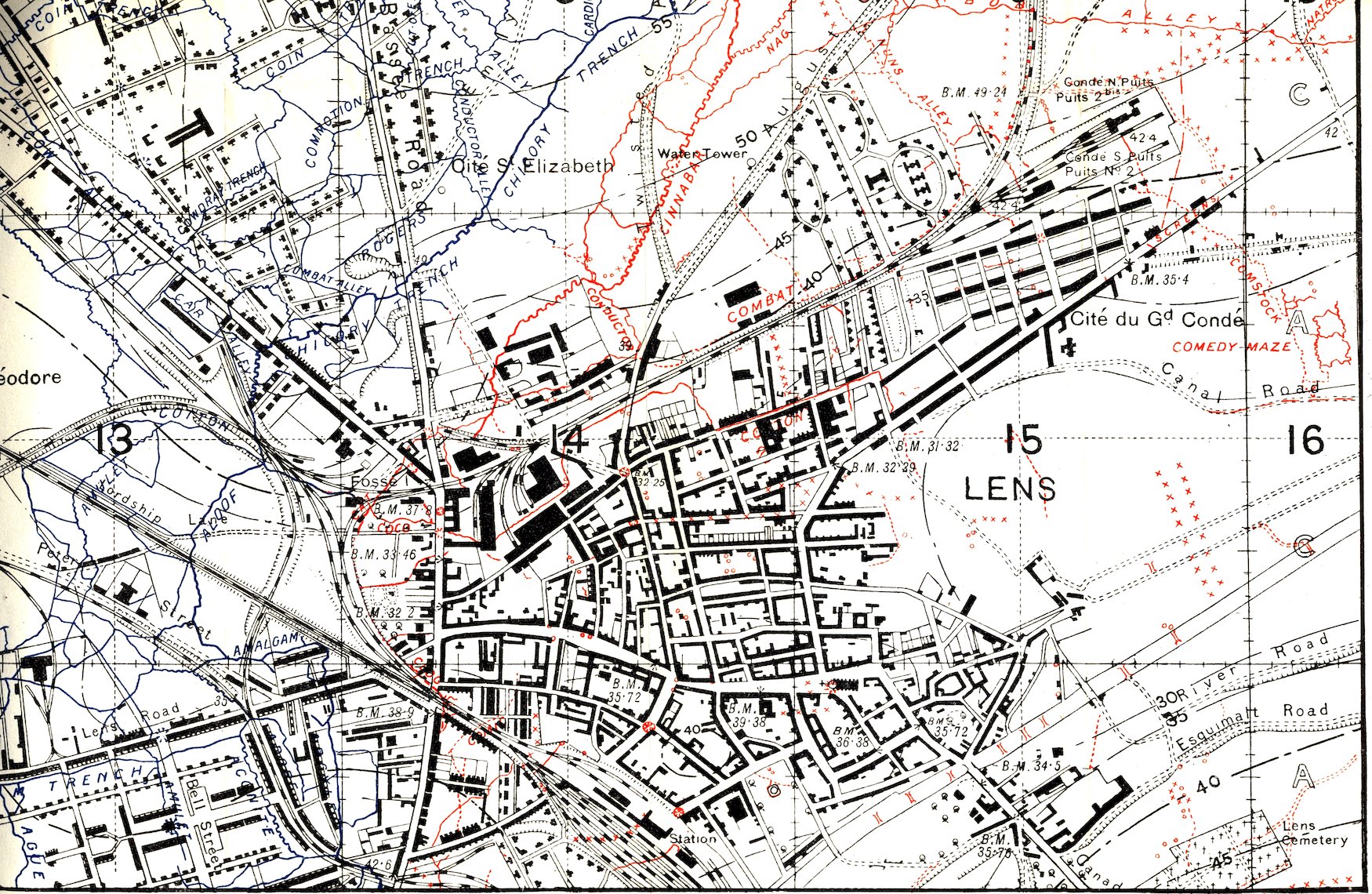
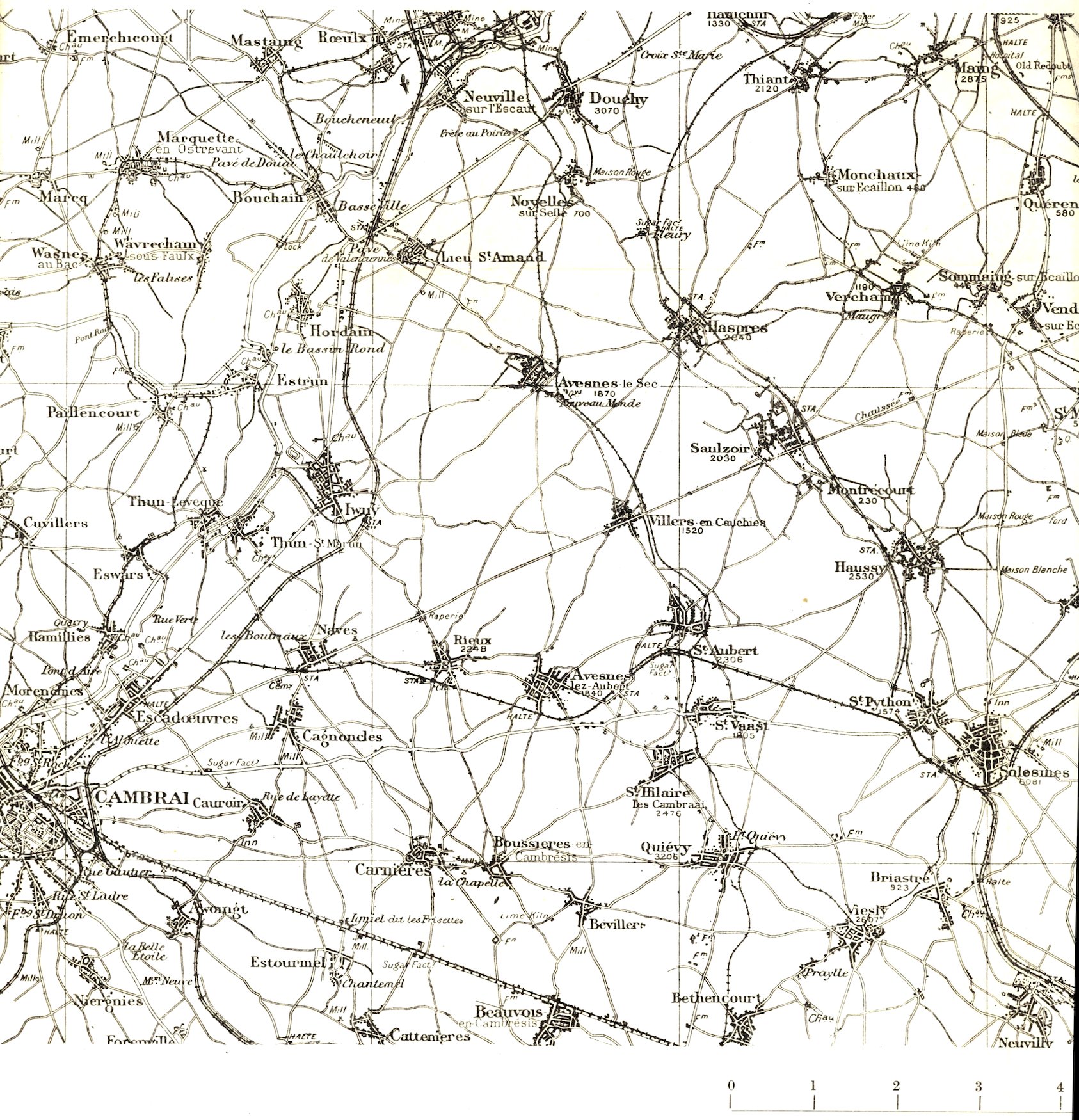
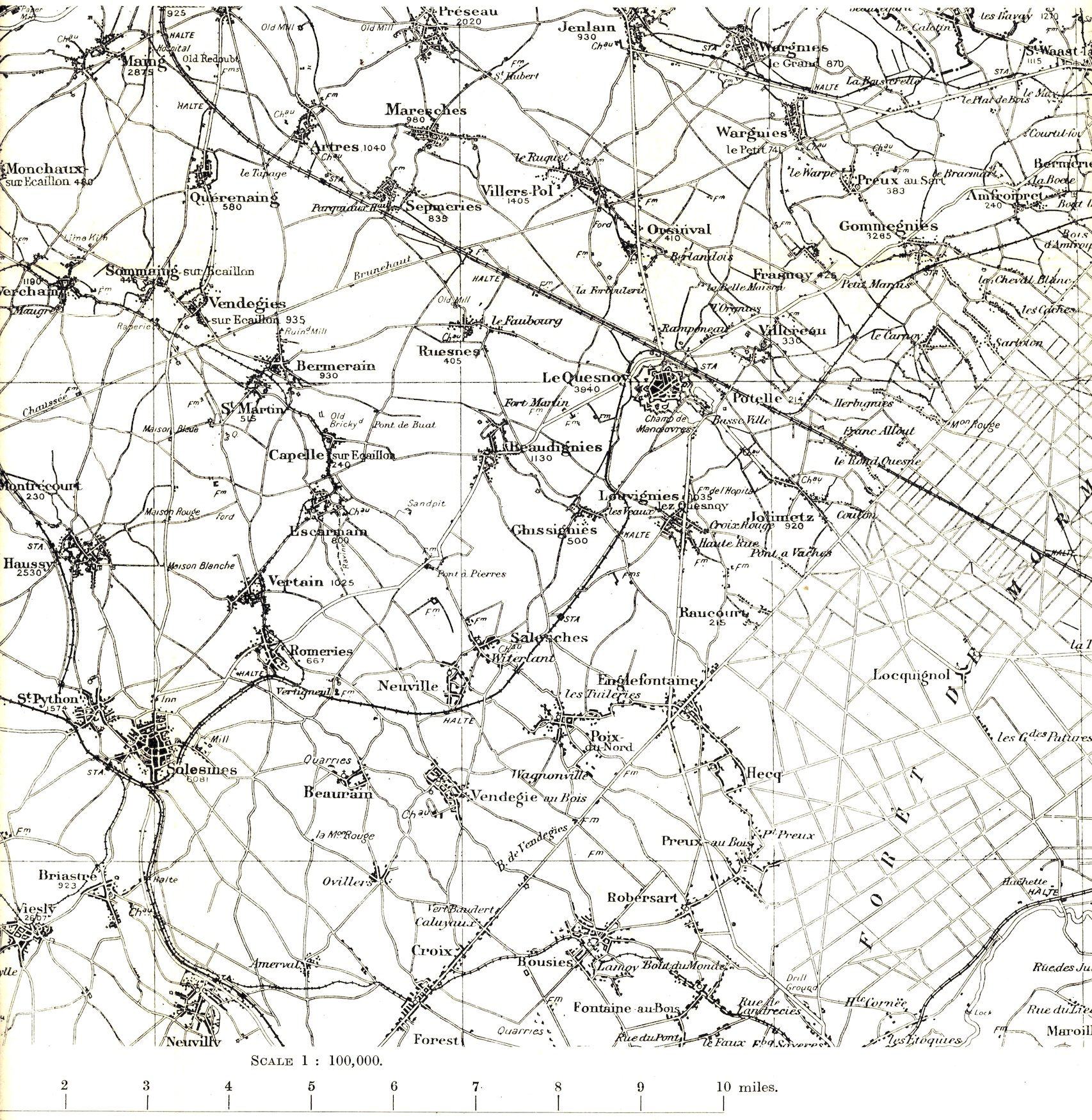
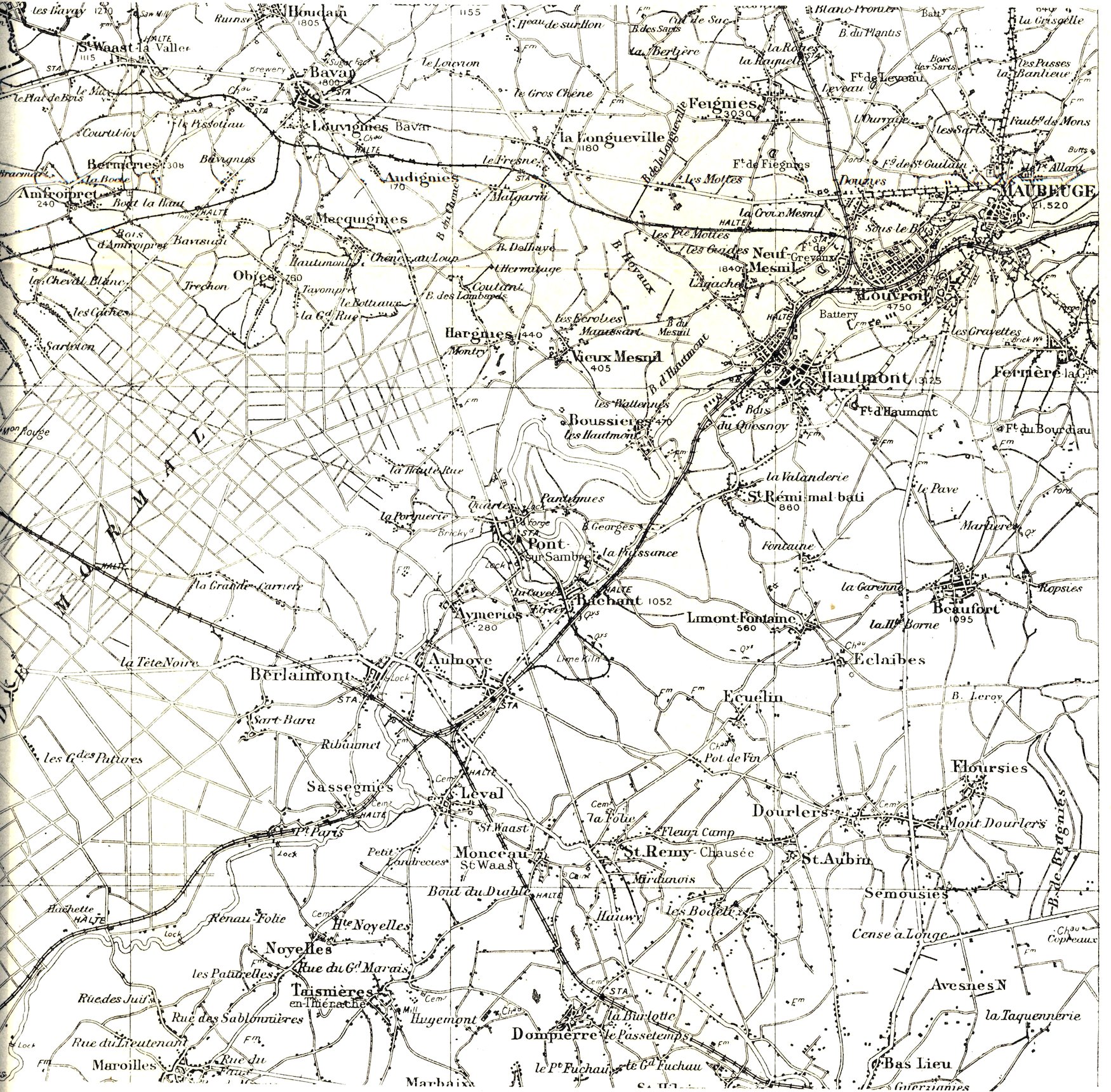
The maps are included by permission of the
Geographical Section, General Staff, who gave
us every assistance to reproduce them at a
reasonable cost.
The portraits are reproduced by the kind
permission of the respective photographers.
We would like to acknowledge here the
assistance and the considerate treatment received
from the printers, Messrs. Hazell, Watson &
Viney, Ld.
It is hoped that it will now be possible to
distribute the history to those who served in the
Battalion and who can still be traced, and to
the relatives of our comrades who gave their
lives.
We trust that all into whose hands the book
may come will read and cherish it, with all its
defects, as a memento of the days when they or
those dear to them fought for England in the
trenches of France and Flanders.
H. J. W.
H. S. B.
March 1921.
ix
CONTENTS
PHASE I
PAGE
The Formation of the Battalion—Training in
England—Overseas to France—The Battle of Loos (September 1914–September 1915)1
PHASE II
Trench Warfare in the Ypres Salient and at
Messines (September 1915–July 1916)26
The formation of the 8th Battalion, The Queen’s
Own, Royal West Kent Regiment may be said to
have commenced early in September 1914. The
men who enlisted at the various recruiting offices
of the Royal West Kent Regiment at that
time were sent down to the regimental depot
at Maidstone. The depot was not built to
accommodate half the number of recruits which
came pouring in, and the new-comers got a very
bad impression of what the Army would be like.
The feeding arrangements were bad, and they
found that a man was lucky if he got someone
else’s dirty plate, and still luckier if he got some
food to put on it. After 5 p.m. all were allowed
out into the town, and it was there that the
majority got their only real meal of the day.
The sleeping accommodation was quite inadequate.
There were about a dozen tents, and
2the gymnasium, dining-hall, and all available
spaces were crowded. But even then many men
had to sleep out of doors. A few slept in the
town, as, although no one was allowed out of
barracks, the military police on duty let it be
known that it was possible to get through the
railings without being seen.
The average stay at Maidstone was about three
days, and on Saturday, September 12, some
600 or 700 men were collected and taken by
train to Shoreham-by-Sea, under the command
of Major Venables, who returned at once to
Maidstone. The reception at Shoreham was even
less encouraging than at Maidstone. After considerable
difficulty the men were got into some
sort of order and marched in simply pouring rain
to a field opposite the infirmary, where there was
no accommodation at all, and they were told to
stay under the trees to keep dry. By this time
every man was wet through, and as there was
apparently nobody present with much authority
and no likelihood of an improvement, it is small
wonder that many men took train for home,
returning on Monday, when things were rather
better. For those that remained bell tents were
eventually pitched, the men being told off ten
to a tent. Later some wet blankets and equally
wet loaves of bread were distributed. No feeding
utensils were issued for some days, and a piece of
wood or newspaper had to serve as plate, and
the fingers as knife, fork, and spoon. The tea
invariably had half an inch of grease on the top,
while the food was almost uneatable.
3On Monday, September 14, the majority of
those who had gone away on the Saturday
returned, and a further detachment of some three
hundred arrived, bringing the number up to
nearly one thousand. Up to this time there
seems to have been no officer present at all, and
the Battalion had been under the command of
Sergt.-Maj. Evans, but on the 14th Col. E.
Vansittart, Commanding Officer, and Lieut. and
Quartermaster Guess arrived, and things began
to improve. Capt. Middleton arrived on the
17th, and took up the duties of Adjutant.
The difficulties of maintaining discipline will
be understood when it is said that there were
now in camp at Shoreham the infantry of a whole
division, all in mufti, and all, with the exception
of a very few officers and a few N.C.O.s,
absolutely untrained. The only man in the
Battalion in uniform was Sergt.-Maj. Evans.
The other N.C.O.s were recognised by a red
arm-band for sergeants and a white arm-band
for corporals, while an officer was only distinguishable
by the carrying of a walking-stick.
The number of experienced N.C.O.s was quite
inadequate, and the necessary establishment had
to be made up by picking out the men who
seemed most intelligent and likely to act as
leaders.
The Battalion was brigaded with the 8th
Battalion, The Queen’s, Royal West Surrey
Regiment, the 8th Battalion, The Buffs, East
Kent Regiment, the 9th Battalion East Surrey
Regiment, and for the first few weeks the 13th
4Battalion Royal Fusiliers, which made up the
72nd Infantry Brigade, under the command of
Brig.-Gen. B. R. Mitford, C.B., D.S.O. This
Brigade, with the 71st and 73rd Brigades, formed
the infantry of the 24th Division, under Maj.-Gen.
Sir John Ramsay, K.C.B.
By the end of the month the camp was moved
to the Oxenfield, or Recreation Ground, and the
commands in the Battalion were then as follows:
Commanding Officer, Col. E. Vansittart.
2nd-in-Command, Maj. L. Brock-Hollinshead.
Adjutant, Capt. C. de C. Middleton.
Quartermaster, Lieut. C. Guess.
Sergt.-Maj. H. Evans.
Quartermaster-Sergt. W. Dadd.
Officer Commanding A Company, Maj. F. M. Walters.
Colour-Sergt. Skinner.
Officer Commanding B Company, Maj. E. V. O. Hewett.
Colour-Sergt. Lee.
Officer Commanding C Company, Maj. O. J. Daniel.
Colour-Sergt. Fisher.
Officer Commanding D Company, Maj. J. C. Chillingworth.
Colour-Sergt. Burn.
And about four subalterns per company.
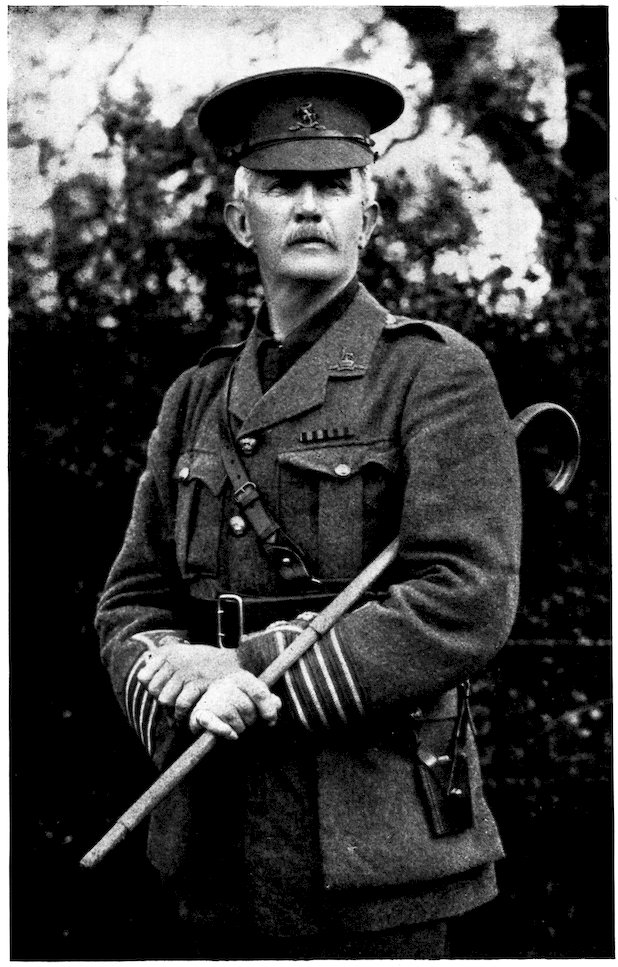
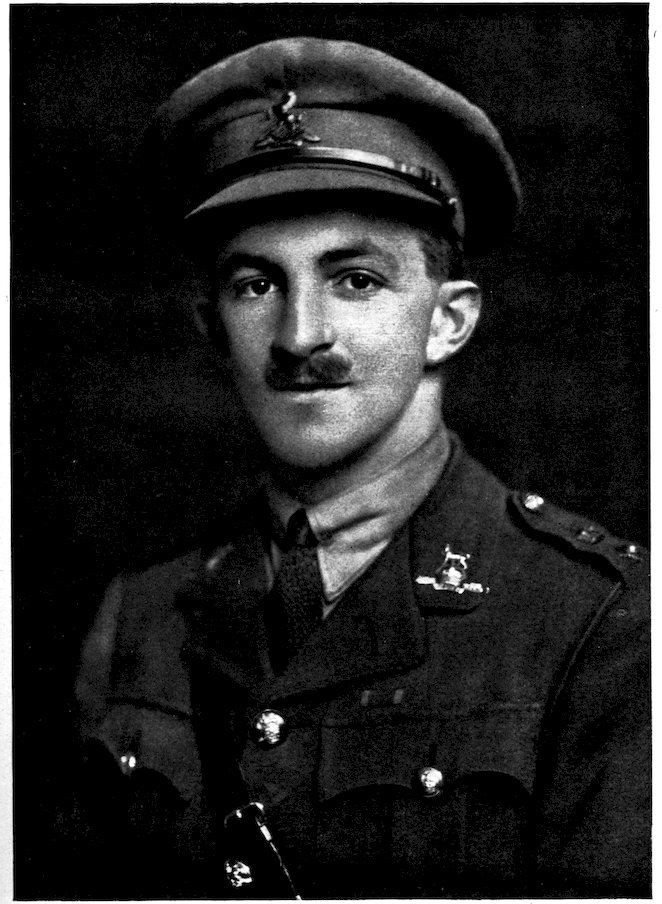
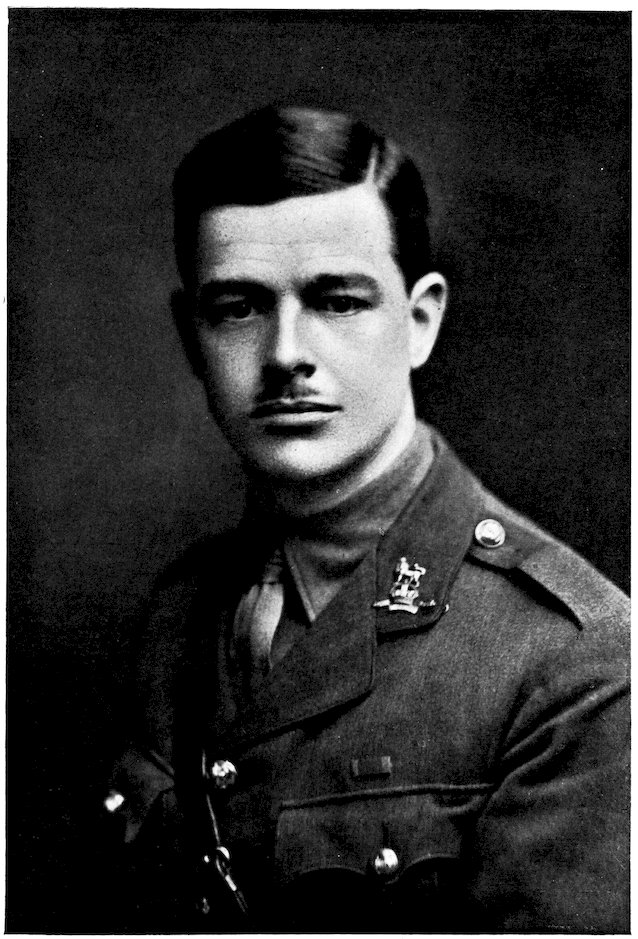
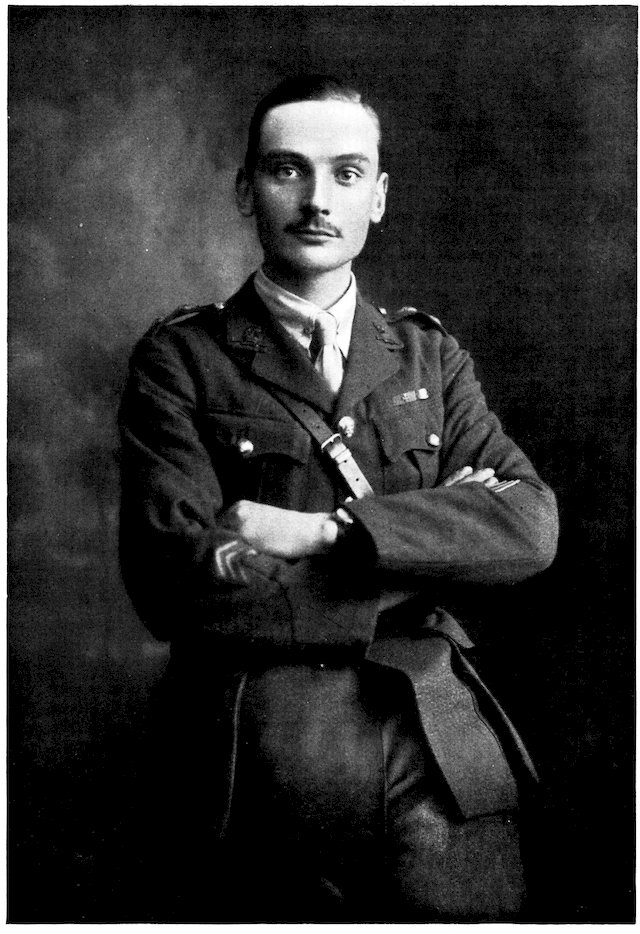
Photo by] [Elliott & Fry, London.
COLONEL E. VANSITTART, D.S.O.
Commanding the Battalion September 1914–September 1915.
Training was, of course, very quickly in full
swing. It consisted for the first few weeks of
squad drill and marching and nothing else.
5Squad drill from 6.30 a.m. until 8 a.m., squad
drill and a little marching from 9 a.m. to 1 p.m.,
and squad drill from 2 to 5 p.m. It became
rather monotonous, but was, of course, very
necessary. After a while a little physical drill
was added as a slight variation, and just occasionally
an afternoon was employed in marching
down to the sea for bathing. On Saturdays
work stopped at 4 p.m. instead of 5 p.m., while
even on Sundays the 6.30 to 8 a.m. parade was
held in addition to church parade, so that it can
be seen that we were starting in no half-hearted
fashion. So seriously indeed were we setting
out on our training, that officers did not dare to
ask for permission to go to Brighton after hours,
unless it was to get their hair cut, and it must be
admitted that hair seemed to grow rather quickly
in those days.
By this time the interior economy of the
Battalion was more or less on an organised basis,
and considerable progress began to be seen in all
directions. In physique and keenness a very
large majority of the men were splendid, and
there was no doubt that we had the nucleus of
a very fine battalion. On the other hand, there
were some men who were obviously medically
unfitted for an army life, and who ought not to
have been passed in at all. Fortunately it was
quite easy in these early days to discharge such
men, and by the end of October those “unlikely
to make efficient soldiers” had been pretty well
weeded out. No one could have wished for a
finer set of men than the 1,026 who were retained.
6It was about this time that the blue uniforms
were issued. They were blue serge, and though
not beautiful and not particularly military, they
gave the Battalion an appearance of uniformity,
and were an enormous improvement on the very
varied collection of mufti previously in use. In
addition to appearance, the change was very
beneficial to discipline, as it had been formerly
impossible to tell whether a man was a soldier
or not.
The month of October was brilliantly fine, and
very great progress was made with the training,
but November was not so kind, and the weather
got worse and worse, until by the end of the
month the camp was no better than a mud patch
about six inches deep, and, as always happens in
a muddy camp, had become very unhealthy, and
was condemned by the sanitary authorities.
The Division then went into billets at Brighton,
Shoreham, and Worthing. The 72nd Brigade
went by train on November 30 to Worthing,
where the Battalion was billeted at the western
end of the town, and had very good billets indeed.
The people of Worthing were most kind to us,
and no one will forget the very pleasant four
months’ stay there. Right up to the end of the
war we continued to get regular parcels of
comforts sent out by the townspeople, and we
cannot be too grateful to the town of Worthing
for their kindness both during our stay and
afterwards.
The training facilities were perhaps not quite
so good at Worthing, but the Downs could still
7be reached by a short march, and the Recreation
Ground was excellent for close-order drill
parades.
One of the difficulties at Shoreham had been
the absence of rifles. At first only a few imitation
rifles made of solid wood were available; then
a little later six D.P.s (i.e. for drill purposes only,
unsafe for firing) were issued per company, and
were used for training the officers and N.C.O.s
in musketry. Shortly after reaching Worthing,
D.P.s were issued to the whole Battalion, and
arms drill became for a time one of the principal
items on the programme of work.
The extreme, and in fact excessive ardour with
which we had entered into our training had been
wisely tempered down, and parades now lasted
about seven hours a day, instead of eight and
a half; we also had a proper half-holiday on
Saturdays, and the early morning parade on
Sundays had been knocked off. Christmas leave
of four clear days was given to the whole Battalion
in batches between the third week in December
and the second week in January. When this
was over, company training was started, and this
was the order of the day for the rest of the stay
at Worthing.
We now had supplies of full-dress scarlet
tunics, which were obtained from the depot,
and which were worn for church parades and
when proceeding on leave. There were not
enough to go round the whole Battalion, only
460 coats and trousers and 420 caps, so the men
who appeared on parade in the ordinary blue
8were either excused or marched to church as
a separate party.
About the beginning of March the Battalion
was issued with its first khaki service dress, and
this was a most cherished possession, and was
only worn for battalion drill parades, which took
place each Saturday, and for church parades on
Sunday, the scarlet being then returned to
Maidstone. We had previously, however, about
the beginning of January, been issued with khaki
greatcoats, which had been taken into general use.
Five miniature rifle ranges were erected at
Worthing, and much morris-tube firing was done,
and the musketry made great progress all round.
At the end of March the Battalion moved by
train from Worthing, which was left with many
regrets, to Redhill, where we were again in good
billets. The only work or training done during
the three weeks’ stay there was digging trenches
for the London defences at Merstham. This
meant parading at about 7.30 a.m. and marching
four and a half miles, working until 3 p.m., with
half an hour’s break for eating haversack rations,
and then marching home, a somewhat exhausting
job and very tedious when repeated day after
day.
In the third week of April the Battalion
returned by train to Shoreham-by-Sea, and
went into a new hutment camp which had been
erected on the southern slopes of the Downs,
just north of the village. The accommodation
was quite up to the normal, except that we had
by this time amassed something like seventy
9officers (every platoon had at least three, and
most platoons four), and as a consequence the
officers’ accommodation, which was only meant
for a normal establishment, was rather overcrowded.
From the point of view of training it was much
more satisfactory to be back in camp again.
Most of this stay at Shoreham was devoted to
battalion training, and no more suitable piece
of country could have been found. The only
difficulty was that the whole division was now at
Shoreham, and that in order to save congestion
the ground was divided into areas and allotted
weekly to units, which meant very often a long
march before the actual training could be started.
Usually the Battalion had covered some twenty
miles as well as carrying out a tactical exercise
by the time that it returned to camp in the afternoon.
Night work by companies was carried
out frequently.
Some of the transport wagons and animals were
issued here, and cookers occasionally accompanied
the Battalion. Many of the mules were untrained,
and were taken in hand by Lieut. S. R.
Paul and Sergt. Wood, up to that time Sergt.
Master-Cook, who became transport officer and
transport sergeant respectively. The majority
of the transport, however, was not issued until
we reached Aldershot.
The weather was, on the whole, very fine and
hot, and although these long days in such weather
were very tiring, there is no doubt that they got
us into the very pink of condition.
10The second suit of khaki was issued on arrival
at Shoreham, and from that time was taken into
general use, and we felt that we really were
soldiers at last.
It was at Shoreham also that our band was
formed from men who already had a knowledge
of, and were able to provide, their own instruments.
These were later supplemented by gifts
from various officers. The band was taken in
hand by Sergt. Baker, and was the pet hobby
of Capt. Middleton, the adjutant. We had
possessed our own drums for a long time.
At the end of June we moved by road to
Blackdown Camp, near Aldershot. The march
occupied three days, halts being made at Horsham
and Guildford, where billets for the night were
provided. Blackdown, though of course a
satisfactory place from a purely military point
of view, was by no means so pleasant in other
respects as our former stations. It had a dirty
appearance and the country was anything but
beautiful. It also had the disadvantage of being
a long way from a station or town, being almost
equidistant from Aldershot, Farnborough, and
Camberley.
The men were in huts and the officers either
in the old married quarters of the barracks or
else under canvas.
Soon after arrival at Blackdown service rifles
were issued, and the bulk of the training was
devoted to brushing up musketry prior to firing
the general musketry course. Most of July and
the early part of August were devoted to firing,
11and little else was done all through this period,
as companies not actually firing were nearly
always on duty in the butts. The results were
rather disappointing, due very largely to the
abominable weather. After the lovely days of
the early part of the summer it was very unfortunate
that we should have such bad luck for
the musketry course. It became very much
colder, the light was often most indifferent, and
we were also bothered by frequent high winds and
a lot of rain. On many of the days on which
we fired, shooting would have been cancelled
under peace conditions; but time was short, and
we were forced to get on with the work if the
targets could be seen at all. However, the
course gave the men confidence in their new
rifles, and a very large majority attained at least
the standard of second-class shot in spite of the
weather. Bombing instruction, under 2nd Lieut.
Hough, and scouting, under 2nd Lieuts. Harris
and Eccles, was also carried out, and the Lewis
guns were issued and used for training.
On August 12 the Division was inspected by
Field-Marshal Earl Kitchener, the Secretary of
State for War. The whole Division was drawn
up in one line of battalions in mass, and Earl
Kitchener rode down the line from the right, and
was received with the general salute. The whole
proceedings, as far as each battalion was concerned,
lasted about two minutes, but no one
with experience of these functions will be surprised
to hear that we were on parade waiting for over
one and half hours before anything happened.
12The rest of the month of August was devoted
to training in trench warfare, final preparations
for proceeding overseas, and embarkation leave.
The trench-warfare scheme was carried out by
the whole division. The two opposing forces
marched under war conditions until they met
on Chobham Common after dark, when each
side commenced to dig in with entrenching tools
until the large tools were brought up. Work
was continued under war conditions until 7
o’clock the next morning, when peace conditions
were resumed in order to enable the work of
completing the trenches to be pushed on more
quickly. It was intended that the troops should
occupy the trenches for some days and that
reliefs should be practised, and finally a trench-to-trench
attack and consolidation carried out.
It happened, however, that the weather was
very bad, and the scheme was abandoned on the
second day.
On that day the King and Queen visited the
Division and walked along the trenches, speaking
to many of the officers and men, and we
felt that this foreshadowed a fairly imminent
departure for other trenches. Immediately the
trench-warfare scheme was abandoned, embarkation
leave commenced, each man getting four
clear days.
On about Wednesday, August 25, instructions
were received to be ready to proceed overseas
on the following Sunday. All leave was cancelled
from Friday, and the last three days were
spent in one long rush of packing up, kit inspection,
13exchange and issue of new kit, and all the
necessary preliminaries for proceeding on active
service.
On Sunday, August 29, the Battalion actually
left Blackdown for Southampton. The organisation
of the Battalion as it proceeded overseas
was as follows:
Commanding Officer, Col. E. Vansittart.
2nd-in-Command, Maj. L. Brock-Hollinshead.
Adjutant, Capt. C. de C. Middleton.
Machine-Gun Officer, Lieut. W. K. Tillie.
Transport Officer, Lieut. S. R. Paul.
Quartermaster, Lieut. H. Evans.
Regt.-Sergt.-Maj. A. Lee.
Regt.-Quartermaster-Sergt. W. Dadd.
A Company:
Commander, Maj. A. H. Pullman.
2nd-in-Command, Lieut. R. M. Old.
Coy.-Sergt.-Maj. Campion.
No. 1 Platoon, Lieut. L. Gibbs.
No. 2 Platoon, Lieut. R. M. Old.
No. 3 Platoon, Lieut. H. S. Brown.
No. 4 Platoon, 2nd Lieut. C. D. N. Lawson.
B Company:
Commander, Capt. R. W. Grant.
2nd-in-Command, Lieut. P. T. Smith.
Coy.-Sergt.-Maj. Ackhurst.
No. 5 Platoon, 2nd Lieut. E. A. Bigsby (Billeting Officer).
No. 6 Platoon, Lieut. N. B. Green.
No. 7 Platoon, 2nd Lieut. V. G. Don.
14No. 8 Platoon, Lieut. O. Jones (Engineering Officer).
C Company:
Commander, Capt. A. C. Edwards.
2nd-in-Command, Capt. C. A. Hutchinson.
Coy.-Sergt.-Maj. Mills.
No. 9 Platoon, 2nd Lieut. D. H. Watts.
No. 10 Platoon, 2nd Lieut. M. S. Ell.
No. 11 Platoon, Lieut. H. L. Lewis.
No. 12 Platoon, 2nd Lieut. A. N. Harris (Scout Officer).
D Company:
Commander, Major J. C. Chillingworth.
2nd-in-Command, Capt. P. M. Robertson-Ross.
Coy.-Sergt.-Maj. Acland.
No. 13 Platoon, 2nd Lieut. R. F. T. Burrell.
No. 14 Platoon, 2nd Lieut. H. O. Beer.
No. 15 Platoon, 2nd Lieut. G. de L. Hough (Bombing Officer).
No. 16 Platoon, 2nd Lieut. D. W. Plant (Signalling Officer).
We journeyed to Southampton in two trains,
half of the transport going with each half
battalion, and on arrival in the afternoon the
Battalion was marched to the docks and there
detained in a large shed, on account of submarines.
The next day was spent in the shed,
and the Battalion embarked late in the afternoon,
and left the docks in time to reach the open
sea, where the convoy was met by a patrol of
destroyers, as it was getting dark. The sea,
15without being particularly rough, was sufficiently
uncomfortable to make many people wish for dry
land again. We anchored outside Havre in the
early hours of the morning, and went into the
harbour soon after daylight. There we disembarked,
and marched up to camp on the high
ground about Honkville. The troops were
delighted with the new experience of being in a
foreign country, and were in most excellent
spirits. We remained in this camp until the
next morning, when we marched down to the
Gare des Marchandises and entrained at about
11 o’clock. This being the Battalion’s first
experience of travelling in cattle trucks (40
hommes and 8 chevaux), considerable disgust
was expressed. But this mode of travelling
became quite a normal thing for those who had
an extended career in France. After a very
slow journey of seventeen hours, via Rouen and
Abbeville, we detrained at Montreuil at about
4 a.m. and marched to Hucqueliers, a halt being
made on the way for breakfast.
The billets at Hucqueliers were very good, and
the population was most kind to us. Training
was continued by companies, considerable time
being devoted to field firing, which was carried
on in any likely spot, and seven ranges were
constructed for target firing. Later some big
divisional field days were included in the programme,
the most memorable being an alarm
in the night, followed by a field exercise lasting
until 6 p.m. the next evening.
After a stay of nearly three weeks the Battalion
16marched out of Hucqueliers at 6 p.m. on September
21, and proceeded to Dennebroeucq, which
was reached in the middle of the night. There
were no billets or camp available, and the men
bivouacked in a field with no covering except their
own waterproof sheets. There was a barn available
for the officers, but it was so plentifully
supplied with fleas that many wished they had
remained in the field.
The next night the march was continued to
Isbergues, the Battalion being billeted in the
brewery, and a much more comfortable day
was spent than the last. The next night a short
move of about three miles was made and quite
satisfactory barns and billets occupied; while
on the night of the 24th the march was continued
through Choques, which was full of guns, ambulances,
and other very warlike appliances, to
Bethune, where the Battalion was billeted in the
tobacco factory, with the officers in an empty
house on the opposite side of the road.
The four nights’ marching had been rather
exhausting, not so much on account of their
length as on account of the congestion of traffic
on the roads, which, combined with the darkness,
made progress very slow.
The officers had already been told that they
were going into the biggest battle the world had
ever known, and were also told that their rôle
would be to march through to Douai and hold it,
a task which was considerably modified before
we actually reached the battle.
On the morning of September 25 the 72nd
17Brigade moved to Beuvry, and from there
marched to a point behind Vermelles, where the
battalions rested on the road-side. The Battle
of Loos was now in full swing, and many prisoners
and wounded were coming down from the line,
but no very definite information could be got
from them. The task now allotted to the
Division was that it should pass through the
village of Hulluch, which was believed to be in
our hands, and then capture and organise the
Pont-a-Vendin bridgehead some three and a half
miles further east. As a matter of fact, the 73rd
Brigade and two battalions of the 71st were
detached to other parts of the line, leaving only
the 72nd Brigade to carry out the attack.
When night fell the Brigade moved up from
Vermelles, and opened out into artillery formation,
as the exits to the village were being shelled,
advancing first on Le Rutoire Farm and then
on a compass bearing to the Lone Tree, where
the Battalion halted and got into touch with
the other battalions of the Brigade. Later the
advance was resumed, with the Battalion leading
the Brigade, and the final position reached during
the night was a line of old German trenches
parallel to and some 1,000 yards west of the
Lens-La Bassee road. It is interesting to note
that although this part of the line was supposed
to be occupied, no troops were passed on the
way up, and there were none in the trenches to
be relieved.
Although the shelling had been fairly heavy,
the casualties were not very serious, but included
18Lieut. P. T. Smith, slightly wounded in the foot.
He refused, however, to be sent down to hospital.
Col. Vansittart was also slightly wounded in the
hand during the night.
Our instructions were that we should attack
at dawn, the objective for the Brigade being the
main German position some 2,000 yards away,
which stretched from Hulluch village on the left
to the Bois Hugo and on to Hill 70 on the right,
our frontage being from Hulluch to the Bois
Hugo.
Considerable sniping and random shell-fire
was kept up by the enemy during the night, but
did very little damage. The Battalion scouts,
under 2nd Lieut. Harris, were sent forward
during the night, 25/26th, and came back with
the report that Hulluch was in the hands of the
enemy and strongly organised, and that they
were also holding the line of the Lens-La Bassee
road. The whole Battalion could not be accommodated
in the main firing trench, and an
attempt was made by C and D Companies to
dig a parallel trench in front, but, owing to the
approach of daylight, and the increasing attentions
of the enemy’s whizz-bangs and machine-gun fire,
this was abandoned, and the surplus was withdrawn
into a communication trench, where the
men hollowed out scoops for themselves as
additional protection from the shelling which
was enfilading them.
No orders for the attack at dawn came to us,
and we had to wait. As the light grew stronger,
the enemy’s artillery fire increased and casualties
19became more numerous, while our guns did
heavy counter-battery work. At about 10.20
a.m. Col. Vansittart was sent for by the Brigadier
and got orders to attack at 11 a.m.; he reached
the Battalion again at 10.53, and only had time
to give orders for the whole Battalion to move
up into the fire trench, and to tell off companies
as firing line and supports. We were told that
there were plenty more fellows in reserve to go
through us, and that the troops on either flank
would attack simultaneously with ourselves. We
were to leave Hulluch village on our left, and it
would be dealt with by the troops on our flank.
Punctually at 11 o’clock the first wave, with
B and D Companies in the front line, left our
trenches, followed at short intervals by the subsequent
waves. The 9th East Surreys were on
our right, and the 8th Buffs (right) and the 8th
Queen’s (left) were in support. Instead of a
whole division attacking on our left, a handful
of some fifty to seventy-five men, belonging to
a Welsh regiment, alone left our trenches, the
orders apparently having arrived too late, while
the right flank of the East Surreys also appears
to have been in the air.
The ground to be covered sloped gradually
down to the Lens-La Bassee road, and from there
rose to the main German positions, about 1,100
yards beyond, near the crest of the ridge running
north from Hill 70. The attack was carried out
at a marching pace in order to save the men’s
breath for the final charge and bayonet work,
and the advance was so steady and the formations
20so regular that it looked more like a field day at
Aldershot than part of a great battle. The
enemy brought a very heavy rifle, machine-gun,
and artillery fire to bear on the attacking lines,
and shortened his range to keep pace with the
advance with wonderful precision; but the
casualties up to this point, though severe, were
not inordinately heavy.
When the first wave was still some hundred
yards short of the main road, the enemy withdrew,
some retiring in very open order up the hill,
and many of these were shot down by our men,
while stronger parties made off to either flank,
those on our left gaining the village of Hulluch,
and those on the right reaching a sunken road
on the near side of the Bois Hugo. A very
severe machine-gun fire from either flank swept
the road, and very heavy casualties were sustained
in crossing it. About 400 yards east of the
road the Battalion passed a forward German
trench full of enemy dead.
As the advance swept up the long slope towards
the main German trenches the machine-gun
fire increased in intensity, being very severe
from both flanks. Shelling directed from behind
Hill 70 and from the south-eastern part of
Hulluch was also very heavy, and two field guns
were brought up to a position from which they
took the attack first from the flank and later from
the left rear, firing practically over open sights.
In spite of the very heavy casualties which were
being sustained, the Battalion continued its
advance up the slope with the utmost gallantry,
21but it was found on reaching the enemy’s main
position that the barbed wire protecting it was
absolutely intact. What more hopeless situation
could possibly have arisen? When the orders
for the attack were issued, it had been assumed
that all the enemy’s wire had been cut by our
bombardment, but here, after a most gallant
advance of about 2,100 yards in face of a murderous
fire, not only from the front, but also
from both flanks, the Battalion, and in fact the
whole Brigade were faced with a thick belt of
uncut wire, swept by artillery, rifle, and machine-gun
fire from three different directions. With
assistance on our flanks to keep the enemy
occupied and to draw a due proportion of his
fire, it would perhaps still have been possible to
force a way through the wire and capture the
trench. We wish to make it quite clear that
we are not blaming our comrades on either flank
for their failure to help us. The facts appear
to be that at the time fixed for our attack the
enemy himself launched a counter-attack against
the troops on our right, who were consequently
pinned to their ground, while the orders did not
reach those on our left in time, with the consequence
that the 72nd Brigade had both its flanks
exposed, and the enemy was able to concentrate
on the one brigade the fire of the artillery and
small arms which would normally have been
used on the front of three divisions. Many men
made gallant attempts to get through the wire,
2nd Lieut. Don being killed when half-way
through. The remainder dropped to the ground
22where they were and returned the heavy fire from
the enemy’s trench. The situation, however,
was hopeless. In front was an impenetrable
belt of wire, and the line, such as was left of it,
raked with rifle and machine-gun fire from the
front and both flanks, and enfiladed by an
equally deadly artillery fire. What were the
men to do? Turn to their officers for orders?
Out of the twenty-five officers who had left
our trench little more than an hour before, only
one was now unhit. To stay where they were,
outflanked on both sides, was impossible, and the
poor remnant of that gallant Battalion was
forced to make its way back to the line of German
trenches from which it had started. There they
remained for the rest of the day, subjected to
heavy shell-fire. Lieut. W. K. Tillie, the
Battalion M.G.O., the only officer who was not
a casualty, brought the Battalion out of the line
the same night, when it was relieved and moved
back to bivouac in a field near Noeux-les-Mines.
Had the Battalion had more experience of
modern warfare, it is probable that a nucleus of
officers, N.C.O.s, and specialists would have been
left behind at the transport lines before entering
a big battle; but, as it was, every available officer
and man went into the line, and with casualties
to every combatant officer except one, and over
550 other ranks out of about 900, the organisation
of the Battalion was temporarily ruined, and
what remained of one of the finest and most
gallant battalions that ever left England required
months of careful rebuilding before it was a
23semblance of its old self. To those who had
seen the Battalion grow from its infancy and who
lived to look back on that day, there remained,
and will remain, an everlasting regret that it
should have been frittered away in two short
hours on a hopeless task; but at least we know
and are proud that the task was undertaken with
a determination and bravery which could not
have been excelled, and the fact that it was
impossible is the only reason why it was not
accomplished.
Of the twenty-four officer casualties, thirteen
were killed. Major Brock-Hollinshead, the 2nd-in-Command,
Lieuts. Gibbs and Lawson of A
Company, Lieuts. Smith, Bigsby, and Don of
B Company, Capt. Edwards and Lieuts. Watts
and Harris of C Company, and Capt. Robertson-Ross
and Lieuts. Burrell, Beer, and Plant of D
Company; Col. Vansittart and Major Chillingworth,
Capts. Middleton and Hutchinson, Lieuts.
Old and Ell were badly wounded, and were
picked up by the enemy after lying exposed in
No Man’s Land for many hours; and the only
five to reach England were Major Pullman, Capt.
Grant, and Lieuts. Green, Lewis, and Hough.
For gallantry in this battle Major Pullman
was awarded the D.S.O., Lieut. Tillie the Military
Cross, and Col. Vansittart and 2nd Lieut.
Don were mentioned in dispatches. After the
Armistice a further award of the Distinguished
Service Order to Col. Vansittart was announced,
and was a most fitting tribute to his gallant
personal leading and a great compliment to the
24Battalion which he had brought to such a high
state of efficiency during the period of training.
When he was back in England in 1917, Col.
Vansittart closed his report to the War Office
with the following paragraph: “Might I add
that the 8th Royal West Kents actually got from
half to three-quarters of a mile east of Hulluch—that
although the fire was very heavy and from
every direction, officers and men alike showed
not the least semblance of any check or stop.
They advanced as if on parade and under perfect
discipline till they reached the enemy’s undamaged
barbed-wire entanglement, beyond
which they were unable to go; and here our
losses were very heavy.”
Writing to Mrs. Vansittart after the battle,
Gen. Mitford said: “Nothing too much can be
said for the 8th Royal West Kent Regiment;
notwithstanding the shell and machine-gun fire
under which they advanced over open slopes destitute
of cover, they never wavered an instant, but
moved on towards their objective as if on parade.”
The other three battalions of the Brigade were
nearly as badly hit, and the total casualties
were approximately 78 officers, and 2,000 other
ranks, out of about 3,600.
The following address by Brig.-Gen. B. R. Mitford,
C.B., D.S.O., was read to the 72nd Infantry
Brigade at the Parade Services on October 3, 1915:
“72nd Infantry Brigade,
“Last Sunday the Brigade went into
action for the first time, only a year after they
came forward at their Country’s call.
25“The way the Brigade advanced under very
heavy machine-gun and artillery fire from flanks
and rear has evoked the approbation of the
Divisional and Corps Commanders. You were
an example in steadiness and determination to
carry out your task, not only to the new Armies,
but also to seasoned troops, who could not have
done better than you have.
“As I say, you carried out your task, but you
had to retire. Yet do not think it was a failure,
for it was not, as you caused 16 battalions of the
enemy reserves to be brought up into your area
and taken away from the French just South of us,
thereby enabling the French to make an appreciable
advance.
“I should like all of you who know the relatives
of those who are no longer with us to tell them
how gallantly they fought and how nobly they
served their Country, in whose service they fell,
and what prestige they brought on the names of
the Regiments to which they belonged.
“Men of the Queen’s, Buffs, East Surreys,
Royal West Kents, you have added glory to the
ancient Regiments of which you are the children.
You have made for the 72nd Infantry Brigade
a name which none of you can be anything but
proud of, and which I know, in the future, you
will never allow to diminish.
“I feel it a great honour to have had the chance
of commanding such troops on service, and I
shall never forget the ground about Hulluch
village.”
PHASE II TRENCH WARFARE IN THE YPRES SALIENT AND AT MESSINES September 1915–July 1916
26
After Loos the work of rebuilding the Battalion
was commenced at once.
From the plains of Hulluch the remnant of the
Battalion was withdrawn to Mollinghem, thence
to Houtkerque, and finally to the muddy camps
at Reninghelst.
Here, on Oct. 6, Maj. J. C. Parker came to take
over command of the Battalion. Large drafts
of officers and other ranks had been arriving
from the 3rd and 9th Battalions, but it was not
possible to give many days to the important
work of reconstruction, and on October 15
Major Parker took the Battalion into the
trenches at Spoil Bank, on the Ypres-Commines
canal. Six-day trench tours with four-day intervals
spent in the Reninghelst mud were the
order of the day.
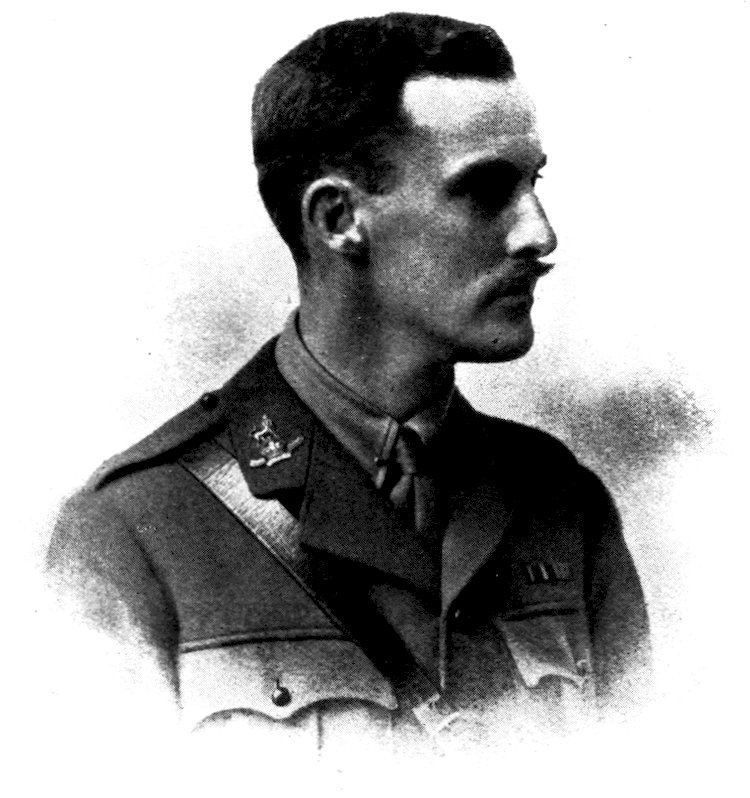
Photo by] [J. Weston & Son, Folkestone.
LIEUT.-COL. J. C. PARKER.
Commanding the Battalion October 1915–August 1916 and January-October 1917.
During the tour on the Bluff, November 3 to
7, the Germans blew a crater in front of our lines.
This was distinctly an “experience” for the
Battalion in the trenches for almost the first
time. This trench work was a very trying time
indeed. The state of our positions at St. Eloi,
27where we held the trenches from November 12
to 19, was almost indescribable. Our trenches
were towards the bottom of the slope east of
St. Eloi village, and all water drained into the
bottom of the valley. Rain was continuous,
there were practically no shelters whatever in
the front line, and the trenches were nearly waist
deep in water. The enemy whizz-banged our
tottering parapets at all hours, and the sniping
from the trenches on the high ground was wonderfully
accurate. The removal of wounded was
a matter of extraordinary difficulty and danger.
The rests at Reninghelst between trench tours
were rests only in name. Large working parties
had to go up every day to St. Eloi, the Bluff, or
Spoil Bank. Parades were usually at 5.30 a.m.,
and the parties were conveyed to Café Belge in
G.S. wagons. From there a march of two hours,
often in a deluge of rain, brought the party to
its work. About 5 p.m. the return journey
from Café Belge would commence, and the tired
party—usually depleted by a few casualties—would
be swallowed into the mud of the camp
again between 6 and 7. Training was almost
impossible. It was with great relief that the
Battalion heard during that terrible tour in the
St. Eloi trenches that it was to be the last for
the time being. On November 19 the Battalion
came out of the trenches at St. Eloi, and marched,
via Eecke, Ochtezeele, and Houles, to Bonningues,
a small village some ten miles from St. Omer.
Towards the end of this march Capt. N. I.
Whitty, 2nd Battalion, joined as 2nd-in-Command.
28The Battalion arrived at Bonningues on November
25, 1915, and stayed there till January 4,
1916. Few who were with the Battalion during
those five weeks will ever forget the stay there.
The villagers were very kind to us, and the rest
and peace after the terrible shock of the Battle
of Loos, and the very trying trench life which
had followed, were just what were required to
knit together the Battalion and set it firmly
on its feet again. New officers got to know their
men, and the men got to know their platoon
commanders. Training and refitting occupied
most of each day, but on half-holidays and on
Sundays one could roam on to the hills and gloat
over the really beautiful scenery. The weather
was fine on most days. During the month a
good deal of football was played. In the Inter-company
Competition B Company won, while
in the Officers v. Sergeants’ match the Sergeants
lost by 14 goals to nil! B Company also reached
the semi-final in the Divisional Inter-company
Competition. An inter-company cross-country
run was arranged, forty runners per company,
and was won by A Company.
The whole Battalion spent a very happy
Christmas at Bonningues.
Before we watch the Battalion marching into
the line again, we might recall the names of
some of the officers and N.C.O.s of the Battalion
at this time. Lieut.-Col. J. C. Parker was
commanding the Battalion, with Capt. N. I.
Whitty as 2nd-in-Command. Capt. W. K. Tillie,
M.C., was adjutant. The company commanders
29were: A Company, Capt. W. Wood (one of the
family of Wood which has been so long associated
with the Royal West Kent Regiment); B Company
was commanded by Capt. W. V. Ross (who
had till recently been an N.C.O. in the Argyll
and Sutherland Highlanders); C Company,
Capt. T. P. P. Walker (from the 9th Battalion);
and D Company, Capt. C. F. Penton (who
had been with the 8th Battalion in England).
Lieut. Evans was Quartermaster. The Warrant
Officers were: Regt.-Sergt.-Maj. Lee, Regt.-Quartermaster-Sergt.
Dadd; A Company, Coy.-Sergt.-Maj.
Elson; B Company, Coy.-Sergt.-Maj.
Ackhurst; C Company, Coy.-Sergt.-Maj. Verrall;
D Company, Coy.-Sergt.-Maj. Acland; Cpl.
W. C. Carr was chief clerk in the orderly room,
and Sergt. Wood was Transport Sergeant.
During the rest at Bonningues two very
successful Sergeants’ suppers and concerts were
organised under Regt.-Sergt.-Maj. Lee.
A few days before leaving the rest area the
whole of the 72nd Brigade, still under the command
of Brig.-Gen. B. R. Mitford, C.B., D.S.O.,
were reviewed by Gen. Plumer, whose army in
the Ypres Salient the 24th Division was about
to join.
The usual reconnoitring party set off early
on the morning of December 28, by motor bus,
to reconnoitre the Boesinghe Area with a view
to taking over those trenches. On arrival it
was found that a gas attack had been launched
by the Boche a few days previously, and he
had attempted to come over, but had been
30driven back by the 47th Division, whom he had
then shelled mercilessly and with little reply for
thirty-six hours. The 47th Division had suffered
many casualties and were very weak in numbers,
one company being down to twenty-three men.
The reconnoitring party was hailed with joy by
the men in the line. The trenches were in a bad
state and reeking of asphyxiating and lachrymatory
gas.
Having spent thirty-six hours in the trenches
and thoroughly reconnoitred the area and the
Canal Bank Dug-outs, the party returned, not
very favourably impressed with what it imagined
to be its next trench area.
The next few days were spent by the Battalion
in rigorous gas training, a special expert being
sent down by General Headquarters to lecture
on the subject. On January 2 orders were
received that the Battalion would entrain on
the 4th and 5th, and proceed to Poperinghe,
preparatory to taking over the Hooge Sector.
Although not very sweet on the Boesinghe
Area, the name of Hooge struck an almost more
unpleasant chord with some of us.
On January 5 the Battalion, now quite up
to strength again, entrained at Audrieq for
Poperinghe.
On January 6 the Battalion moved up and
took over from the 12th Manchester Regiment
the right sector of the Hooge Trenches B1-C3,
being disposed as follows: B Company on the
right, A Company on the left, D Company in
support, C Company in reserve.
31A quiet five days were passed, B Company
being slightly shelled from the direction of Hill
60, and suffering a few casualties.
On the night of January 11 the Battalion
moved back to Belgian Château, and remained
there in support till the evening of January 14,
whence it moved back to Ouderdon, forming
part of the 24th Divisional Reserve.
Here from January 15 to 26 training was
continued.
On January 27 the Battalion took over the
left of the left sector of the Hooge trenches from
the 8th Queens, where it remained till January
31. A very quiet few days were spent in the
trenches, only two casualties being recorded.
On the night of January 31, B Company and
half C Company moved back to camp at Ouderdon,
and A Company, D Company, and half C
Company moved across to the left in support
to the Railway Wood Trenches, A Company and
half C Company being in the Ramparts, and D
Company in direct support.
Working parties were the order every night
while in this position, assisting the Mining Company
in making deep dug-outs in Hill 20 and
Leicester Alley.
On the night of February 5, A and D Companies
moved up and took over trenches A1,
A2, and Hill 19 and 20 from the 8th Queens,
D Company taking over A1 and A2. A1 was
a trench entirely unconnected with the remainder
of the system, there being no access to it except
a duckboard walk “over the top”.
32As this was about the date of the Kaiser’s
birthday, the Boche became very bombastic,
and prophesied large attacks, but nothing of any
importance took place.
On the night of February 8 the Battalion was
relieved in this sector by the 2nd Leinsters, and
moved back to rest in Camp C, where it remained
for a week, training being continued, chiefly in
bombing.
On the 16th the Battalion moved up and took
over the Belgian Château Dug-outs from the 8th
Buffs.
The Boche was now getting considerably more
aggressive all round the Salient, and it was
thought that he might attack during the coming
spring.
On the afternoon of the 19th a disaster occurred
which shook the Battalion very considerably,
and carried off some of its best officers. The
Battalion was due to move into the Sanctuary
Wood Trenches about 5 p.m., and all orders had
been issued to that effect. At about 3 p.m. a
long-range naval shell fell in the neighbourhood
of B Company’s Headquarters Dug-out, followed
by another at a short interval which obtained a
direct hit on the dug-out. Capt. Ross and Lieut.
Atkinson, who were in the dug-out, were badly
wounded. Capt. Ross subsequently died, and
Lieut. Atkinson lost a leg. As D Company’s
Headquarters’ Dug-out was close by, the Officer
Commanding D Company at once left his dug-out
and tried to summon aid and render what
assistance he could. He had only got about six
33yards from the entrance of D Company’s Dug-out
when another shell followed, which burst
right in the dug-out entrance, severely wounding
its three occupants, all of whom subsequently
died of their wounds. Thus perished Lieut. W. L.
Wigan, a regular officer, who had served with
the 1st Battalion, and who was universally loved
by all ranks. His loss to D Company could
not be adequately expressed. Also 2nd Lieut.
Cadell of D Company, a bright, cheery boy, and
2nd Lieut. G. M. Stanton, who had only been
with the Company about a week.
The commotion caused by this unhappy event
seems to have been observed somehow by the
Boche, who shelled the whole length of the dug-outs
for the next hour or so, though without
inflicting much further damage.
D Company was thus left to take over its
portion of the Sanctuary Wood Trenches, B1
and B2, with only Capt. Penton of commissioned
rank. Lieut. S. B. Smith was therefore ordered
to report to D Company for this tour in the
trenches. About 5.30 p.m. the Battalion moved
up and relieved the 8th Queens in the right
of the Right Sector of the Sanctuary Wood
Trenches.
During this tour, February 19–23, considerable
apprehension of attack would appear to have
existed in high quarters. On the 21st the
following messages were received in the front
line in the space of three hours:
(1) “Gas reported by troops in Boesinghe
Area, coming from the north-east.”
(3) “Prisoner taken at St. Eloi this morning
states that an attack on Sanctuary
Wood is imminent.”
About two hours later another message came
through:
“Cancel statement of prisoner taken this
morning at St. Eloi; prisoner misunderstood.”
Nothing, however, came of all the reported
Boche preparations, and the Battalion moved
back to Belgian Château Dug-outs on the 23rd
after a quiet tour, during which a considerable
amount of good wire had been put up to cover
the front-line system.
SANCTUARY WOOD.
About this date the Boche was becoming
rather troublesome in and about the Salient,
exploding a mine at Hooge and attempting to
take the crater. Though causing a number of
casualties in the 9th Sussex, he was completely
stopped, and vented his anger in considerable
shelling, destroying a number of the communication
trenches behind the front-line system.
He also persistently shelled the Belgian
Château Dug-outs, though whether this was
directed at the large number of batteries stationed
about that spot or at the dug-outs is open to
doubt. During the period February 24–27
spent in these Dug-outs he caused a number
of casualties in the Battalion by shelling, D
Company being particularly unlucky, as he
managed one night to drop a shell into the dug-out
occupied by No. 13 Platoon, which killed
four and wounded fourteen.
CAFÉ BELGE.
On the Ypres-Dickebusch Road.
35About this date also the Germans attacked
and captured The Bluff from the division which
occupied the trenches on the right of the 24th
Division.
This success of the Germans caused considerable
uneasiness at 2nd Army Headquarters, and it
was thought probable that the 24th Division
would be ordered to retake the Bluff; this operation
was, however, carried out by the 3rd Division,
who had just moved into rest as Corps Reserve.
The taking of the Bluff by the Germans caused
“a certain liveliness,” however, in the 24th
Division, and the system of reliefs had to be
altered, owing to a whole brigade being kept in
Divisional Reserve complete, instead of one
battalion of each brigade.
On the night of February 27 the Battalion
moved up again, and took over the Sanctuary
Wood Trenches from the 8th Queens, the sector
taken over being the right of the Right Sector
and Maple Copse.
On February 29 orders were received to move
back to Belgian Château, and the 8th Queens
took over the Sanctuary Wood Trenches.
It was thought at first that the Battalion was
going to take part in retaking the Bluff, but
nothing transpired, and the Battalion remained
at Belgian Château Dug-outs till March 3, when
they moved up and took over the sector occupied
by the 8th Queens. Coy.-Sergt.-Maj. Acland was
wounded during the stay at Belgian Château.
36This proved a quiet tour from March 3–7,
though a considerable amount of work was put
in building up the trenches, orders having been
received that everything possible was to be done
to strengthen the system, as it was believed that
the Germans meditated an attack in the spring.
During this period the Battalion lost a valued
officer in 2nd Lieut. Hamilton of C Company,
an original officer of the Battalion from its inception.
He was sniped while going down a
communication trench to Company Headquarters.
A few casualties occurred during this tour,
chiefly from rifle grenades, which the Boche had
now begun to use extensively.
On March 8 the Battalion moved back into
rest and took over A Camp at Ouderdon from
the 13th Battalion Middlesex Regiment.
Here the Battalion was strengthened by the
arrival of a fresh batch of officers, among whom
was Sir Henry Hawley, an original member of
the Battalion and afterwards Officer Commanding
C Company.
During the period spent at A Camp, March
9–15, the Battalion had to find working parties,
two companies strong, every night for work in
the Salient, building machine-gun emplacements,
and wiring and repairing trenches. These parties
proceeded by train to Ypres, and then marched
to their rendezvous. A number of casualties by
shell-fire were caused on these working parties,
the Germans showing the most uncanny knowledge
of the whereabouts of the sites of proposed
machine-gun emplacements.
37On the night of March 15 the Battalion moved
forward and took over the dug-outs at Belgian
Château. Rumours of relief by the 3rd Canadian
Division were now rife.
Working parties on the support defences south
of the Lille Gate continued unceasingly; much of
this work was observed by the Germans daily,
by the aid of their Fokker aeroplane, which at
this time was superior to any British machine
in use, and it was no rare sight to see two or
more of our machines crashed daily by Fokkers.
The night March 20/21 saw the relief of the
Battalion by the 4th Canadian Mounted Rifles,
and the Battalion moved back to Camp F. It
may safely be said that all ranks were glad to
leave the Ypres Salient after nearly three months
of monotonous trench warfare. Moreover, the
Boche was undoubtedly meditating mischief,
which culminated in his lightning attack on the
Canadian Corps, an attack which the Canadians
heroically withstood, though it cost them enormous
casualties.
On March 22 the Battalion moved to Berthen,
near Bailleul. Excellent billets were found for
all, and the contrast of unshelled fields, spring
weather, and peaceful nights soon put all ranks
on good terms with themselves.
Training was carried out for three days, the
usual reconnoitring party proceeding to the
Wulverghem Sector on the 24th to reconnoitre
the new area to be taken over from the Canadians.
The new sector was found to be extraordinarily
quiet, and the lack of shelling amazing, whole
38houses and farms being untouched by shell-fire
within 1,400 yards of the front line.
On the 26th the Battalion moved to Dranoutre
and took over the rest area for the night, the
men being well pleased with the hutments and
the look of Dranoutre, which at this time was
absolutely untouched and full of its original
inhabitants, plying a thriving trade with
“Tommy.”
On the 27th the Battalion moved up to Wulverghem
and took over trenches C3 and C4, B1
and B2, facing Messines, from the 1st Canadians,
moving in by sections in daylight about 4 p.m.,
the relief being accomplished without loss.
Headquarters took over St. Quentin Cabaret,
a small inn within 1,000 yards of the front line,
absolutely intact and undoubtedly the best
headquarters in the whole of the British front
at that time. The support company lived even
nearer to the line in Souvenir Farm, also intact.
During the months previous to our taking over
there had been something like an understanding
between our artillery and the enemy’s: “If you
don’t shell, we won’t.” So estaminets and small
shops were open in and around Wulverghem, less
than three-quarters of a mile from the front line,
and farmers were working in the fields just as
close.
There was only one line of trenches on our front,
and, as was the custom in those days, every firebay
had a section of men in it. About 400 yards
behind the line were absurd Strong Points built
overground of sandbags. Each was held by
39a platoon. The two on our front were known as
S.P.4 and S.P.5. The chief incident during
our first five-day tour in the front line was the
destruction of S.P.5 by enemy artillery fire. He
shelled it very accurately for over an hour with
5·9s. The garrison stuck it out under Sergt.
“Miffy” Mills, who, though badly shaken,
was merry and bright when it was over. Cpl.
Hogg was wounded.
After five days we moved into support, not
very far back, all living in farm buildings.
Battalion Headquarters and A Company went
to Tea Farm, B and C Companies to Aircraft
Farm, and D Company to Kandahar Farm.
Trouble began during this tour in support.
Our artillery had given up the policy of peace,
and had been steadily strafing the Hun during
the previous days. So he started. First of all on
Tea Farm. At 5.30 a.m., on April 6, he put a
5·9 shell into the loft of one of the barns where
the Battalion bombers were sleeping. It was
real bad luck that he hit the place first shot,
because we had trenches a short way off to go
to; and before the next shell came over a few
minutes after, everyone not actually employed
on attending to casualties was safely away.
That first shell accounted for thirteen casualties,
eight killed and five wounded. He shelled the
farm then for two hours, and off and on all day
for three days, until it was a wreck. Cpl. Bates
greatly distinguished himself evacuating the
wounded under heavy fire. Battalion Headquarters
moved up to Kandahar Farm with D
40Company, and we had peace for the rest of the
five days out.
Our next tour in the trenches was uneventful.
We had a few casualties, including 2nd Lieut.
Eldridge, who was wounded in the knee. On
April 10 we were relieved by the 8th Queens,
and moved back into reserve at Dranoutre, where
everyone was fairly comfortable.
So things went on for a time—five days in
the line, five days in support; five days in the
line, five days in reserve.
At the end of April the enemy released gas
against us. The 8th Queens and 1st North
Staffordshire Regiment were in the line. We
were in support and the 9th East Surreys were
in reserve. We had to take up our battle positions,
and assist in the work of getting up new
gas-masks and rations after the attack was over.
We escaped lightly, but the battalions in the
line had fairly heavy casualties. Shortly after
this it was decided to organise a big raid in
retaliation for the gas attack, and our Battalion
was ordered to carry it out. Maj. N. I. Whitty
organised the raid, Capt. W. Wood was in
command, and other officers were Lieut. N. B.
Green, 2nd Lieuts. S. E. Dove, S. B. Smith,
and T. Bowling. During the greater part of
May the party were out of the line, training at
Dranoutre. The sector had become decidedly
“lively” by this time, and the Boche had “set
about” most of the open farms in the district.
The civilians had given it best and left.
On May 6, Capt. W. K. Tillie left to command
41the 72nd M.G.C., and Lieut. S. J. F. Mills became
adjutant.
On May 31 occurred one of the tragedies in the
history of the Battalion. Capt. W. Wood was
killed by a German sniper when out in No
Man’s Land patrolling with some of his raiding
party.
It is impossible to exaggerate the worth of
Capt. Wood’s work while he was with the
Battalion, or the sense of personal loss felt by
all ranks when the news of his death reached us.
Brave as a lion himself, he was a strict disciplinarian.
His work and influence as Officer
Commanding A Company had been marvellous,
and the effect of his example upon the whole
Battalion was seen at every turn. Perhaps one
can sum up his record with the Battalion by
saying that at first most of us were afraid of
him, then we came to respect him, and last we
came to love him. He was buried at Dranoutre
on June 1. Gen. Mitford and his staff were
present, and practically all the Battalion. Gen.
Capper, the Divisional Commander, in a letter to
Col. Parker, spoke of the personal loss he had
sustained by Wood’s death, and alluded to him
as the finest company commander in the Division.
“Quo fas et gloria ducunt.”
On the night of June 4/5 the raid was
attempted. 2nd Lieut. S. B. Smith behaved
with great gallantry in trying to cut the enemy’s
wire, but it was found impossible to get through.
We had a number of casualties, and 2nd Lieut.
Bowling was killed. 2nd Lieut. Smith, although
42he had been working hard nearly all night and
was dead beat, went out just after dawn and got
in Bowling’s body.
June 1916 will be remembered long by all who
were with the Battalion. We were out of the
line, in support again, for the enemy’s second
gas attack on June 17. The Queens and the
North Staffords had the misfortune to be again
in the line. This time the enemy used phosgene
for the first time, and the Brigade suffered
severely. Most of our Battalion were in the
front line or in the communication trenches as
working parties, and they behaved magnificently.
All night and long into the next day they helped
with casualties. Gas discipline among our men
was then, as it always has been, very good, and
we had comparatively few casualties. Apart
from these few days in support, which were far
from a rest, we were in the front line the whole
month, and after the enemy gas attack it was
no picnic.
It was arranged that we should release gas
in retaliation, and all labour was devoted to
installing the cylinders in our trenches. Work
was carried on at feverish speed, and at the
same time the enemy had brought up his well-known
“travelling circus” of trench mortars
opposite us, and he made a practice of blowing
us up every evening. The trenches came to be
known humorously as the “Wulverghem Empire”—Two
Houses Nightly.
On the 28th we released our gas, and the
Queens followed it up and raided the enemy’s
43trenches. The wire had been previously cut by
artillery, the raiding party got in successfully
and captured about six prisoners. In this raid
one of our officers, 2nd Lieut. Reynolds, who had
been transferred to the Queens, did splendidly.
This night’s work annoyed the Hun no end, and
he made our positions a positive inferno. The
next evening he set about us with trench mortars
of the heaviest type, and fairly wrecked the
trenches. All ranks behaved with the greatest
gallantry, and were ready to repel an enemy
attack at any moment. We had forty casualties,
and 2nd Lieut. E. F. Vinicombe, of D Company,
was killed.
On the next day, June 30, we were relieved by
the 7th Australian Battalion, and moved out to
Kortipyp Huts, very tired but greatly exhilarated
by the experiences of the past weeks. We knew
very little about the coming Somme offensive,
but we had rumours, and we assumed, correctly,
that we were “for it” there sooner or later. It
was with surprise, therefore, that we received
orders after a few days out at Meteren to go into
the line again at Ploegsteert. Here some of us
were served out with Australian hats, which we
were to wear, and show ourselves in order to give
the enemy the idea that the Australians were
still in the line. Our stay in these trenches
only lasted two days, when we were relieved by
a battalion of the 20th Division, and moved out
to Berthen. Here we remained for a few days
until orders were received to move by train to
Amiens, behind the Somme Battle. Then we knew.
44The end of June 1916 saw the Battalion in
good spirits, united and keen. We had had
real hard trench experience, and the Battalion
had proved itself worthy of the trusts which
had been put upon it. All ranks looked forward
with confidence, even with eagerness, to the
Somme, and all the possibilities of getting at
the Hun in the open and really finishing the war
which it promised. How things actually turned
out on the Somme are well known, and the next
phase of the Battalion’s history will give details
of our part in that great struggle.
PHASE III THE BATTLE OF THE SOMME August–September 1916
45
After a few days at Berthen the Battalion
entrained at Bailleul and detrained at Longeau,
near Amiens.
By this time we had all formed a pretty clear
idea of what was happening in the Somme
Battle. News of the terrific fighting had been
digested. We had read with pride of the work
of our 7th Battalion in Trones Wood, where
we were ourselves very soon destined to be, and
we knew we were in for serious business.
During July 25 we marched seventeen miles
to the village of Saisseval. It was intensely
hot and very dusty, but we arrived at Saisseval
about noon. This village was without exception
the dirtiest and nastiest the Battalion had ever
been quartered in. However, there was some
excellent country round the village, and for a
week we trained strenuously in the new methods
of following a barrage and attacking in waves.
On July 31 and August 1 we moved to the
Sandpits, near Meaulte, just outside Albert. We
were here for ten days continuing the training.
On August 8 A and B Companies were suddenly
ordered up into Montauban. An enemy counter-attack
46was expected at Delville Wood, and it
was apparently not certain whether the troops
detailed for the Montauban defences would be
able to get there. The two companies got into
position in the afternoon, took over the dispositions,
and arranged to continue work on the
trenches at dawn the next day. However,
during the evening the troops for Montauban
arrived, and our companies marched back again
to the Sandpits.
On August 9 orders were received to take over
the front-line positions between Trones Wood
and Guillemont the next day.
Early in the morning of August 10 our advance
parties went up and thoroughly reconnoitred
the positions. The rest of the Battalion followed
in the afternoon. We were treated to quite a
healthy bombardment on the way in, but the
Battalion was finally settled in position before
dusk. In front D Company were on the right,
A Company on the left, in Edward Trench, B
Company were in support just outside Trones
Wood, and C Company and Battalion Headquarters
in positions round the Sunken Road
at the south-east corner of Trones Wood.
Such trenches as there were had only just been
scratched out, and were mostly not more than a
foot deep. From dusk till dawn work by the
front companies was continuous. It was a case
of digging for our lives, and at stand to in the
morning every man had trench room nearly six
feet deep. The positions were heavily shelled
by the enemy in the morning, and our casualties
47would have been very heavy had it not been for
the strenuous digging of the night before. As it
was, very few were hit, and the experience was a
very healthy object-lesson to all of us.
The unfortunate village of Guillemont in front
of us was practically gone. Our shelling was continuous.
During the day the place was usually
obscured from view by clouds of red brick-dust
from bursting shells, and at night the crashing
of shells was continuous. The Hun did no
persistent shelling, but he gave us hurricane
bombardments at intervals, which were most
unpleasant.
During the afternoon of August 12 a partial
attack by the French on our right took place.
We had a good view of the creeping barrage, and
a very considerable amount of retaliation by the
enemy on our trenches. Capt. Penton, Officer
Commanding D Company, was wounded during
the afternoon. In the evening things quietened
somewhat, and we were relieved by the 1st
North Staffordshire Regiment. We were out for
forty-eight hours, just in front of the Briqueterie,
during which time the whole Battalion was up
at night digging a new trench, Nott Trench, some
400 yards in advance of our front line. On the 15th
we went up again, D Company into Nott Trench,
C Company into Edward Trench, B Company into
the Trones Wood position, and A Company to
Carnoy Craters. The enemy set about our new
trench that night, and we had a bad time. 2nd
Lieut. S. E. Dove, who was commanding D
Company, was killed. There was no enemy
48attack, however. After two days we were relieved
again, and the Battalion concentrated at
Carnoy Craters.
It had been a stiff week. We had casualties
to six officers and 146 other ranks. While in
the line the Reserve Company had been working
continuously in salving. As a consequence, huge
dumps were made at Battalion Headquarters,
which were used as forward dumps in future for
all troops coming into the area.
An outstanding feature of this week’s fighting
was the magnificent work of Capt. McLarty, the
Medical Officer. He was working almost continuously
in the open in the Sunken Road by
Battalion Headquarters, and he must have
dressed hundreds of cases during the week. An
abortive attack on Guillemont had taken place
just before we took over, and wounded were
coming down and being brought in by our
stretcher-bearers continuously. Practically every
shell-hole in front of us had a corpse or a
wounded man in it. All night cries for “water”
were heard. We had large parties out every
night, and every soldier in front of us who was
not past human assistance was got back.
On August 18 the 24th Division attacked
Guillemont.
The 72nd Brigade was in support, concentrated
at Carnoy Craters. The whole attack was on a
frontage of fourteen miles. On our Division’s
front Guillemont Station and a post in the
village near the famous Quarries were captured.
In the evening we moved up, and as a first step
49we occupied our old positions in Nott and Edward
Trenches. Battalion Headquarters were
now in a dug-out in Edward Trench. A Company
held Nott Trench, C and D Company
Edward Trench, and B Company the Trones
Wood positions.
On August 19 A Company was ordered up
into the village to take over the post captured
there and held by elements of the 73rd Brigade.
From Nott Trench the Company marched in three
sections into the village on a compass bearing after
dark. The relief was completed before midnight,
B Company having taken over Nott Trench.
The Company in Guillemont was in a peculiar
position. Our new line ran from the post in the
village northwards to the Station. There were
trenches of sorts here, and touch was established
with the 3rd Rifle Brigade, who were holding the
Station. But southwards and eastwards our
post in the village was in touch with the enemy
only, and that at very close quarters. The post
itself consisted of shell-holes in a very early stage
of consolidation. The quarries which faced our
positions from the south at about 40 yards’
distance were strongly held by the enemy, and he
made the work of consolidation exceedingly
difficult for our men by constantly harassing
them with machine-gun and rifle-grenade fire.
By daylight on the 20th we had succeeded in
getting a continuous trench facing south to the
quarry, and two enormous shell-holes were consolidated
as a defensive position facing east.
The enemy seemed to have no settled position in
50the village, and he was evidently occupying shell-holes
in a very irregular fashion. During the
day he showed himself a great deal, and we did
a lot of very successful shooting. In view of the
enemy’s unsettled position in the village, it was
decided to make an attempt to continue our
trench which faced south in an easterly direction,
to form a jumping-off position for another
attack on the village.
A large party of the 12th Sherwood Foresters
(Pioneers) was to come up at night to do the
digging, and the area where they were to work
was to be previously cleared of and held from
the enemy. At dusk, therefore, 2nd Lieut. A.
Roscoe took out a big fighting patrol of a platoon
in strength. He first worked eastwards from
our shell-hole position to the eastern extremities
of the village, then southwards towards the low
ground in the centre of the village. It was a
very difficult operation indeed, but his work was
splendidly successful. The patrol had several
encounters with isolated posts in shell-holes.
One of these fights developed into a wrestling
match in which one Hun was killed and one
wounded. We had a few casualties, but succeeded
in establishing two positions south of the
site of the new trench. The garrisons of these
posts remained out all night, frustrated all
attempts by the Boche to filter northwards again,
and covered the party digging the new trench.
In the small hours of the morning of August 21
A Company was relieved by two companies of
the 8th Queens, and moved back to Dublin
51Trench, near the Briqueterie. It had been a
highly exciting thirty hours up in the village,
and the memory of it will live long in the minds of
all who were there. The relieving feature had
been the absence of shelling; our positions in the
village were too near the enemy’s, and the
Boche positions east of ours were too indefinite
for the enemy to shell us with safety to his own
men. The other companies had been holding
the old trenches, and had been subjected to the
same old hurricane bombardments several times
a day. We moved back to Citadel Camp, near
Fricourt, on August 22, and on the 25th to camps
near Ville-sur-Ancre.
On the 27th the Battalion was inspected by
Maj.-Gen. J. E. Capper, C.B., the Divisional
Commander, who in a short speech thanked us
for what had been done, and gave us his well-known
doctrine of hatred of the Hun, as displayed
by blood on the bayonet. He also spoke of our
forthcoming work in Delville Wood. On this
day company commanders had paid their first
visit to Delville Wood, and Inner Trench, which
had just been taken from the enemy in his final
ejection from the wood, was reconnoitred. As
a result of the reconnaissance it was clear to all of
us that the enemy would never allow us to hold
the trench without desperate efforts to retake it.
The Battalion went into billets at Ribemont on
the evening of the 27th, and stayed there till the
morning of the 30th, when we marched to Fricourt.
In the evening we went up to Delville
Wood. Will anyone who was with the Battalion
52ever forget that night? At Bernafay Wood we
were to be met by guides, and from there to
Inner Trench the distance was about a mile “as
the crow flies.” The men were excessively
heavily laden. Each company carried three
days’ rations, 25 petrol tins of water, 25 boxes of
bombs, 12 boxes of flares, 12 boxes of Very lights,
and some boxes of S.A.A. It had rained hard
all day, and showed no signs of abating at night.
The guides were picked up successfully at 9.30
p.m., and the crawl across Caterpillar Valley and
through the wood began. Nominally there was
a communication trench leading all the way, but
there was little or nothing of it left, and the
guides could scarcely be expected to keep direction.
Delville Wood was notorious for changing
its shape and appearance every hour. Details of
that terrible night’s march are innumerable, and
cannot be dwelt on here. Most of them can be
recalled by those who were there, and they can
be imagined when it is stated that the rain was
continuous, the shelling of the wood heavy and
incessant, and the mud knee-deep at least.
Added to this it should be remembered that the
Battalion had already marched ten miles during
the day, and the men were loaded up like desert
camels. The leading company began to get
into its position at 5 a.m. on August 31, but it
was nearly 8 o’clock before the trenches were
really taken over—eleven hours after we had
picked up our guides a mile away!
DELVILLE WOOD.
THE MEMORIAL BOARD TO THOSE WHO FELL ON THE SOMME, 1916, PLACED IN GUILLEMONT CEMETERY.
A Company occupied Inner Trench and a new
trench forward of the wood facing north-east.
53B Company occupied Edge Trench in touch
with the left flank of A Company. C Company
were in support in the wood, and D Company
in reserve behind the wood. Battalion Headquarters
were in a dug-out at Longueval Church.
Col. Parker had gone down sick with malaria
and trench fever, and Maj. N. I. Whitty took
over command of the Battalion. The Company
Commanders were: A Company, Capt. H. J.
Wenyon; B Company, 2nd Lieut. H. Flowers;
C Company, Capt. Sir Henry Hawley, Bt.; D
Company, 2nd Lieut. W. G. Lock.
We were allowed very little respite after the
position had been taken over. If the night’s
march had been deadly, the day which followed
was far worse. It was the day of the enemy’s
last and biggest attempt to retake the high
ground from High Wood to Guillemont. We
just had time to have our breakfast of sodden
biscuits and cold bacon, when the shelling began,
shortly after 8 a.m. It is not intended to paint
lurid details of this shelling. Suffice it to say
that Delville Wood went up in fire and smoke for
five and a half hours. In Inner Trench was one
deep dug-out. In this we kept five machine guns
and crews of the 72nd M.G.C., also some of our
Lewis guns and teams. The shelling round the
dug-out was particularly heavy, but by the
grace of God the enemy failed to demolish it.
In Edge Trench cover was scanty and the shelling
terrific. Most of the forward platoons of A
Company were casualties before 10 a.m., and B
Company on the left suffered very severely too.
54The garrison of the two front companies became
very thin, and two platoons of D Company from
reserve were sent up to hold the centre.
At 1.30 p.m. the shelling suddenly and very
obviously lifted on to the south edge of the wood.
Shelters and dug-outs were immediately cleared,
machine guns and Lewis guns were got into
position, and our depleted garrison disposed to
meet an attack.
Scouts crawled out in front to beyond the edge
of the wood to watch a piece of dead ground
there. On the right we were in fair order for
meeting an attack. We had our machine guns
and most of our Lewis guns intact, and quite
a fair supply of ammunition. The enemy was
some 600 yards away, and was bound to show
himself clearly at 500 yards’ range. On the
left our position was more difficult, the enemy
was much closer, and there was a covered way
of approach opposite the front of the Battalion
on our left. The men were tremendously eager.
After terrific shelling which numbs the senses
while it lasts, the reaction often took this form.
As the first of the attacking troops began
to trickle into view it was difficult to hold
our rifle fire down. We kept perfectly silent,
however, and, encouraged by this, the enemy
came forward in considerable numbers till he
arrived at an intermediate jumping-off trench
some 500 yards away. Here he collected for
half an hour, and word was passed down our
line that as soon as he debouched from these
positions in force, every rifle, machine gun, and
55Lewis gun was to open fire. At about 2.30 p.m.
the enemy came forward all along the front, at
a slow trot. Immediately all along our line
machine guns, Lewis guns, and rifles let fly at
him. He was stopped dead within 50 yards of
his trenches, while his men fell right and left.
For a moment his line wavered, and the next his
troops were running back in a mad rush to their
original positions, followed all the way by our fire.
Baulked of his desire, the enemy shelled us
again for an hour and an half, and then in the
early evening he repeated his attempt. This
time we knew exactly what to do, and we carried
out the same programme as before with the same
result. Inner Trench and Edge Trench were still
entirely held by us at the end of the day. On the
left of Edge Trench, however, the enemy had
gained a footing in Orchard Trench, held by the
battalion on our left, and B Company had a very
nasty time in the evening. The Company Commander,
2nd Lieut. Flowers, was killed, and 2nd
Lieut. E. G. Brown took over command. He and
his Sergeant-Major, Coy.-Sergt.-Maj. R. Rankin,
did splendid work, and organised their exposed
flank for defence. Away on our right, too, the
enemy gained a footing in the trenches of a
battalion of the 7th Division, but he was ejected.
A counter-attack the next day expelled the
enemy from Orchard Trench and re-established
the position all along the front. The enemy’s
great bid for the high ground had failed, and the
night of August 31/September 1 was comparatively
quiet.
56Everyone was absolutely dead beat. In turns
most of us managed to snatch some sleep that
night, and the next morning we heard we were
to be relieved during the day. The Queens
relieved us in the afternoon, and we moved
back into Check Trench in Caterpillar Valley,
between Bernafay Wood and Delville Wood.
The valley was stiff with our guns, and Check
Trench was about thirty yards in front of their
muzzles. At about 9 p.m., just when we were
all hoping to get a bit of sleep, the enemy
commenced a concentrated counter-battery
bombardment with gas shell of the guns in
Caterpillar Valley. We got the full benefit of
this. Everyone was ordered to put on gas
helmets (the old P.H.) at once. We spent a
most uncomfortable night: the bombardment
was kept up for five hours, and many of us had
our first experience of sleeping in a gas helmet—quite
possible, but most unpleasant. We had
practically no casualties from that night’s gas
shelling.
We remained in Caterpillar Valley till September
5. The batteries were constantly shelled,
and we usually got the benefit of it. On the first
afternoon we had ten signallers buried in one
firebay by an 8-inch shell. 2nd Lieut. Roscoe
organised a digging party at once, and after
two hours he succeeded in clearing the whole firebay;
only one man was killed. A similar fate
overtook another bay shortly after, and again all
except one man were dug out alive. On the
next day 2nd Lieut. Roscoe took up a party at
57daybreak to get rations up to the Queens, who
were now in a new trench in front of Inner
Trench. The party ran into very heavy shelling
in Inner Trench, and had several casualties,
including 2nd Lieut. Roscoe, who was severely
wounded in the leg. He died of wounds at
Corbie the next day. Throughout the fortnight
at Guillemont and Delville Wood he had done
magnificently. His cheerfulness was wonderful,
and he was ready at all times for any job there
was going. After 2nd Lieut. Roscoe was hit in
Inner Trench, Sergt. Greenaway took the remains
of the party on, though it was now broad daylight.
They crawled across the open to the new
trench, and delivered the rations and water
successfully to the officers in command there.
On September 3 a big attack on Ginchy and
Guillemont on our right took place, and on the
evening of the 5th the 24th Division was relieved,
and moved back to a camp near Fricourt. On
September 7 the Battalion arrived at Vauchelles-les-Quesnoy,
a delightful little village close to
Abbeville, where we were very comfortable. A
large draft of new officers joined us on our way,
and the Battalion settled down to refit and train
for what was to follow. As things turned out,
we had finished with the Somme, and we were
soon hurried off north to the 1st Army.
Our sojourn in the historic battlefields of the
Somme had been crammed with incident. It
coincided with the period in which the enemy
was making his most strenuous efforts to drive
us from the high ground, which gave the British
58their first sight of Bapaume. We had learnt
what shelling meant at Ypres and Messines, and
during the terrific bombardments at Guillemont
and Delville Wood the Battalion was always
steady. Apart from the holding and exploiting
of the forward positions, the Battalion did a
tremendous amount of work in their brief spells
out of the front posts. As examples, one may
mention Nott Trench, 800 yards long, dug in two
nights right in front of our front line and under
constant fire from the enemy, and the work of
salvage done by the Reserve Companies in the
Trones Wood area.
Of fighting the enemy we had had it at close
quarters in Guillemont Village, and we had had
it after a shattering bombardment in Delville
Wood, where the enemy was not allowed to get
within 400 yards of us. In both cases he had
been beaten.
It is difficult to pick out any isolated cases of
brave deeds among the countless acts of heroism
of those weeks. 2nd Lieut. Roscoe’s work has
already been mentioned. 2nd Lieut. E. G.
Brown and Coy.-Sergt.-Maj. R. Rankin in Edge
Trench did wonderful work in an awful position
in keeping the enemy at bay. The Battalion
stretcher-bearers one and all did magnificently
all through. They worked seemingly without
sleep or food, and without ceasing, as also did
Capt. McLarty, the Medical Officer. An act of
two private soldiers may be mentioned as indicating
very truly the spirit of the Battalion
during the day of the enemy’s counter-attack at
59Delville Wood. Towards the end of the bombardment,
when one front company had lost
over a third of its men, the Company Commander
considered it imperative to send back a report to
Battalion Headquarters. He hesitated to do so
for a time, because it seemed certain death to the
men taking the message. Finally volunteers
were called for, and two wounded men, Pte.
Skerry and Pte. Tyrrell, came forward. The
message was given to them, and they were told
to deliver it at Battalion Headquarters, and then
to go down to the field ambulance. The wood
was a perfect inferno at the time, but they
started off with the greatest bravery, although
one of them could scarcely walk. Something
more than an hour later the Company Commander
was astounded to see them back in
Inner Trench, and assumed they had not been
able to get through the barrage. The fact was,
however, that they had not only got back to
Battalion Headquarters with the message, but
they had insisted on bringing an answer back to
their Company Commander rather than go
straight back to the safety of the field ambulance.
As the result of this message the reinforcements
from D Company already mentioned came up
to fill the gaps in the two front companies.
One other case may be mentioned. At the
end of a long night’s work in front of Guillemont,
dawn broke with a slight mist. Cries for
“water” could still be heard in front, so under
cover of the mist a large party went out and
brought back many wounded men. While they
60were out, a cry was heard from a long way in
front. An officer who was with the party went
forward as far as possible and discovered that the
wounded man was in the enemy wire. The
stretcher-bearer party was following up, but the
officer ordered them not to go forward, as it
seemed obviously hopeless to get the man back.
The whole party therefore returned to Edward
Trench. It was then discovered that one man,
Pte. Allchin, was missing. A few men went out
again to find him, and after about an hour he
was seen coming back from the enemy wire
carrying the wounded man on his back. That
he had got there and back was nothing short of
a miracle, because the enemy was exceedingly
vigilant at this time, and he was sniping incessantly.
The fighting on the Somme had taken a heavy
toll of the Battalion. The Battalion memorial
erected in Guillemont Cemetery gives the names
of 3 officers and 91 N.C.O.s and men who were
killed or who died of wounds. Our total
casualties were 13 officers and about 300 N.C.O.s
and men.
The impression left in the minds of most
people who fought on the Somme was that the
enemy was being taught there once for all that
the British Army was going to beat the Germans
at all cost.
The 8th Battalion of the Royal West Kent
Regiment can justly claim to have done much
to drive home that lesson to the enemy at
Guillemont and Delville Wood.
PHASE IV TRENCH WARFARE AT VIMY RIDGE, HULLUCH, AND MAROC—THE ADVANCE ON LENS September 1916–April 1917
61
Our stay at Vauchelles was pleasant, but short.
The billets were all quite good, and Battalion
Headquarters occupied sumptuous quarters at
the château of the Baron de Rocquigny. Reorganisation
was taken in hand.
The commands were as follows:
Commanding Officer, Maj. N. I. Whitty;
A/Adjutant, Lieut. H. S. Brown, vice Lieut.
and Adjutant S. J. F. Mills, who broke his
ankle as the result of a fall from his horse.
Company Commanders: A Company, Capt. H. J.
Wenyon; B Company, 2nd Lieut. E. G. Brown;
C Company, Lieut. Sir H. C. W. Hawley; D
Company, 2nd Lieut. W. G. Lock.
On September 19 we entrained at Abbeville
under orders to move to the 1st Army Area.
After a four days’ halt at Sains-les-Pernes, where
training and reorganisation were continued
strenuously, a further move was made to
Haillicourt, near Bruay, for a couple of days
before the Battalion arrived in the new area
behind the Vimy Ridge and went into Divisional
Reserve at Gouy-Servins on the 26th. The
62civilians were inclined to be hostile here, and
we were not very comfortable. The Battalion
was billeted in the château, which was in a very
dilapidated condition. On October 2 we moved
up to the front line in the right subsection
(Berthonval Section), and spent an uneventful
spell of eight days there. The Hun did a
certain amount of trench mortaring, but after
the Somme these trenches were really a peaceful
home from home. The communication trenches
were in very fair condition, but the front line was
not so good. A, C, and D Companies were in the
front line, with B in support.
On October 10 the Battalion went back
into support in Zouave Valley, Coliseum, and
Alhambra Trenches and Cabaret Rouge. Here
the chief sports were working parties of all
sorts, and rat-hunting. On the 18th we moved
to Gouy-Servins again, and while there the officers
gave the sergeants a good trouncing at football,
and later played a very even game with the whole
of the rest of the Battalion.
Orders were soon received for us to move up to
the Hulluch Sector. On the 24th the Battalion
marched to Mazingarbe, and on the 25th moved
into the line opposite Hulluch, relieving the 14th
Highland Light Infantry, a bantam battalion
of the 40th Division.
Many tragic memories were here revived, for
we were holding the very trenches over which
the attack on Hulluch had been launched on
September 26, 1915.
Photo by] [Swaine, London.
LIEUT.-COL. N. I. WHITTY, D.S.O.
Commanding the Battalion August 1916–January 1917 and October—December 1917.
The 72nd Brigade was on a two-battalion
63front, holding the left sector of the 24th Divisional
front. We shared the right subsector with the
1st North Staffordshire Regiment. The trench
system consisted of a front line running along
the Lens-La Bassee road, a close support 40 yards
in rear, a support line “Reserve Trench” 600
yards behind, and a reserve line “Tenth Avenue”
for the Battalion in support about 1,000 yards
behind “Reserve Trench.” The Battalion in
Divisional Reserve was in billets at Philosophe.
The forward trenches were fairly good except
on the left, but they had been recently knocked
about considerably, and one portion of the front
line on the centre company front, which jutted
out rather prominently into No Man’s Land,
was practically extinct. A trench called New
Cut was dug across later on to replace this.
There was another very bad place 200 or 300
yards in length between the centre and left
companies which was unoccupied. The communication
trenches on our front, Posen Alley,
Broadway, and Vendin Alley, were very poor.
We found the Hun was very out of hand on
this front. On our right company front No
Man’s Land was about 100 yards wide, and it
increased to about 300 yards on the left company
front. The enemy had a different treatment
for each company. On the right, where the
enemy held Posen Crater, a big chalk mound
where a mine had been blown some time before,
he had developed his light trench mortars,
“Grenatenwerfer,” or “Pineapples,” to an
extraordinary extent. On the centre company,
64where our trenches were bad, he used medium
trench mortars, “Rum Jars,” very extensively,
particularly on the roof of Company Headquarters.
The left company used to be shelled
a good deal, and medium trench mortars dropped
there quite frequently as well. We went into
the line in the early morning of October 25, A
Company on the right, B Company in the centre,
D Company on the left, and C Company in support
in Reserve Trench. Battalion Headquarters
were in dug-outs in Curzon Street, 500 yards
behind Reserve Trench. During the day all
was quiet, but as soon as it got dusk in the evening
the fun began. On the right the Hun fairly
let fly with his “Pineapples,” in the centre he
began to drop “Rum Jars” with startling
accuracy on the roof of Company Headquarters,
and on the left he served up all kinds of stuff.
We had very little means of retaliation, and
something had to be done. By the second night
we had arranged one or two artillery concentrations,
which could be switched on to various
parts of his trenches, and on the right we had
got one or two rifle-grenade batteries in position
for retaliation for his “Pineapples.” On this
night 2nd Lieut. F. G. Yeo, who had just joined
A Company, was killed by a “Pineapple,” and
his platoon sergeant, Sergt. Champion, was badly
wounded and died a few days after. For a
fortnight a desperate duel for supremacy in these
trenches went on. At first we could only manage
to give him about two rifle grenades for each
“Pineapple” he sent over, with a mild artillery
65strafe if things got very bad. But by the end of
the fortnight he must have been getting twelve
rifle grenades for every “Pineapple.” Also, our
artillery liaison had been greatly improved.
Officers who were with the Battalion at that
time will remember the code words, “Air,”
“Love,” “Hate,” “Fortnum,” and “Mason,”
among those used to bring down fire and brimstone
on the head of the Hun. The Stokes
mortars were really being used as a mobile
weapon. We made temporary emplacements all
along the trench during the daytime with a few
sandbags, and during the night 2nd Lieut. H. J.
Dunn, with a party of men, used to carry a
mortar along from emplacement to emplacement,
firing off a couple of rounds as required here or
there. The rifle-grenade batteries were manned
all the time, but no firing took place until the
friendly Boche saw fit to commence.
It was a most amusing fortnight. It would
be difficult to say how many hundreds of rifle
grenades and Stokes shells fell into the Hun
trenches. One morning, when all was quiet, a
company commander was looking at some old
boxes of Mills bombs in the front line. In order
to test them, he threw one over the parapet. It
exploded all right—but the parties with the rifle-grenade
batteries in the support line thought it
was a “Pineapple” going off, and before you
could say “knife” a hail of rifle grenades dropped
into the unfortunate Posen Crater. By the
end of the first week in November the Hun had
given it best, and he was kept well in his place
66during the rest of our stay in this sector. We got
on steadily with improving the trenches, and a lot
of new wire was put up, and constant patrolling
gave us the complete mastery of No Man’s
Land. Normal tours up here were six days in
the line, six days in support in Tenth Avenue—with
rat hunts and working parties galore to
keep us busy; six days in the line again, and
then six days in reserve at Philosophe. We
remained in the sector for nearly four months,
and it was on the whole a very happy winter.
PHILOSOPHE VILLAGE.
The billets of the Battalion in reserve.
During the greater part of this time A, B, and
D Companies retained the right, centre, and left
positions respectively, each one being relieved
in turn by C Company when it was due for a
tour in support. For the last two tours A and B
Companies changed round in order to give B
Company a rest from the centre sector, which
had the reputation of being the most trench
mortared. From the neighbourhood of Battalion
Headquarters we had a very fine view of the
whole of the enemy’s trench system and the
country behind his line, and sniping with artillery
became one of the principal amusements. It
was great fun chasing groups or single Huns about
behind their lines with whizz-bangs or sniping
with a 60-pounder at the intrepid cyclist who
rode into Hulluch regularly every afternoon,
and the effort to knock down Wingles Tower
was another constant sport for the heavier
artillery. We got to know the gunners very well
in these days. In addition to having the liaison
officer actually with the Battalion, most of their
observation posts were in the neighbourhood
of our headquarters, and the F.O.O. usually
dropped in to see us on his way up to ask if
anyone wanted to do a shoot.
POSEN CRATER.
In the enemy front line near Hulluch.
67We used to have good times at Philosophe for
six days in twenty-four. It was just a one-street
miners’ village, with the outer shells of most of
the houses intact, but lacking such comforts as
window-panes and furniture. Our first tour the
billets were far from comfortable, but we and
the other battalions in the Brigade made improvements
every time we were there, and when
we left the sector it was a very satisfactory rest
area. There were still some very dirty civilians
about, mostly those connected with the mines,
and some of them did quite a good trade selling
odds and ends to the troops at a very large profit.
Bethune was only a few miles away, and was very
popular. Shops and estaminets were open there
almost as in normal times, and divisional cinemas
or concert parties often gave their shows in the
town. We sometimes got motor buses or lorries
to take a proportion of the Battalion into Bethune
or to an entertainment elsewhere, and several
very successful Battalion concerts were held at
Philosophe during the winter.
Just before Christmas a draft of 200 arrived
to make up our losses on the Somme. Christmas
Day was not very exciting. We moved into the
line from Philosophe on the morning of December
24, but we had all the excitement we wanted
that day, as the Boches elected to give us one of
the worst strafes we ever had in this sector.
68Christmas was kept up during our next visit to
Philosophe. Each company had one day set
apart for it, on which the concert hall was at its
disposal. The programme consisted of some
form of sports or football in the morning, a
colossal midday meal washed down with a
plentiful supply of beer, and the afternoon divided
up between the Divisional Band, a company
concert, and a big tea. Everyone thoroughly
enjoyed the Christmas of 1916, although it was
celebrated in 1917.
From the beginning of January until a day or
two before we left this sector, on February 12, the
weather was very cold. There was some snow
at the beginning of this long period, and the frost
held so consistently that it was lying on the
ground for over five weeks. All this time it was
perfectly dry, and the trenches were in a far
better state than at any other time during the
winter. When we left the sector the thaw was
just making itself felt, and we fear that our
successors must have had a lot of trouble repairing
the trenches, which were bound to collapse
as the frost came out of them. During the latter
days of January we were preparing a raid to be
carried out by a party of C Company, under
Lieut. H. L. Lewis and 2nd Lieut. K. Pfeuffar,
but we were relieved before it could take place.
On January 20 Lieut.-Col. J. C. Parker returned
after an absence of over four months, and
resumed command of the Battalion.
Our last days at Hulluch were marked by raids
and counter-raids, and a considerable increase
69in strafing all round. The 9th East Surreys
captured a prisoner in a daylight raid on the left
battalion front, and inflicted several other casualties
on the enemy, but the 1st North Staffords
had a bad time in attempting to enter the enemy
trenches at night. The Hun was apparently
sitting up waiting for them. The enemy made
one or two attempts to raid our trenches in
return without success, one of them being repulsed
by the North Staffords, who captured
half a dozen prisoners in addition to killing a
number of the party.
On February 12 we were relieved by the 13th
K.R.R.C. of the 37th Division, and moved out
to rest at Busnettes, near Lillers, spending one
night at Noeux-les-Mines on the way.
We were really sorry to leave Hulluch. We
had been in the area so long that we knew its
advantages and disadvantages, and were able
to make full use of the former and avoid the latter
to a great extent. Also we had done a lot of
work to improve the accommodation, both in
the line and the rest billets, and it always seemed
to be our fate to leave to others an area which we
had made comfortable, and move to a new front
which had been neglected by our predecessors.
It had been a strenuous winter of trench warfare,
but, knowing how unpleasant war can be at
its worst, we must admit that it was a comparatively
pleasant period and we had very few
casualties.
The Battalion was very scattered at Busnettes,
billets were not too good, and there was practically
70no ground at all available for training, which had
to be carried out on the roads. However, it was
a good rest, and we were more or less out of
sound of the guns for a time. Lillers was quite
close, and most of the Battalion paid one or two
visits there. Battalion Headquarters was provided
with a piano, and the officers will remember
the wonderful playing of Lieut. H. J. Dunn,
which helped to pass many pleasant hours.
At the beginning of March orders for a move
were received, and at 9.30 a.m. on March 3
the Battalion left Busnettes and marched via
Choques to Fouquereuil, where it was billeted
for the night. The next morning the march
was resumed via Drovin, Noeux-les-Mines, and
Petit Sains to Bully-Grenay, where dinners were
taken on arrival at 1 p.m., and where a few hours’
rest were obtained in billets before moving up
into the line at dusk. The part of the line being
taken over by the Division was from immediately
north of the Vimy Ridge, about Souchez to the
Double Crassier, south of Loos. The 72nd
Brigade was on the left of the Division in the
Calonne Sector, with the right battalion holding
the line east of Calonne, known as Calonne I,
and the left battalion holding the trenches east
of South Maroc, known as Calonne II. The
support Battalion Headquarters and three
companies were in cellars in Calonne ready to
man the Calonne defences, and the 4th Company
was in support to the left battalion in cellars in
South Maroc. The reserve battalion was in
billets in Bully-Grenay.
71On the evening of the 4th we took over Calonne
II from the 14th Canadian Battalion, A Company
being on the right, with B Company in support
in the southern portion of Maroc, near Fosse 11
de Bethune, and C Company on the left, with D
Company in support. The trenches were in a
very bad condition, particularly the main communication
trenches, Edgware Road, Neuf Alley,
and Treize Alley—so bad were they, indeed, that
most people preferred to walk “over the top,”
even in broad daylight, to plodding painfully
along the trench up to the knees in a particularly
thick and clinging specimen of mud. The state
of the trenches was not due to the fact that they
were not revetted, but to neglect, as duck-boards
and A frames were discovered after removing a
couple of feet of mud, which had been gradually
allowed to cover them. Needless to say, the
Battalion set to work to improve this state of
affairs, but it was some time before any great
improvement was noticeable. We were indebted
to the pioneer battalion, the 12th Sherwood
Foresters, for one of the finest specimens of
communication trench we ever had the pleasure
to use. In a remarkably short space of time,
considering the state when they started, they
turned Edgware Road into a model, which for
width, slope, and draining might have come
straight out of a text-book.
Each of the two companies in the line held its
trenches by means of three defended localities,
with gaps of 200 to 300 yards between them
filled with wire. Patrols used to move about
72between these localities at frequent intervals
along the support line. There were a few deep
dug-outs here and there in the support line, but
the majority of the garrison had no cover either
from the elements or the attentions of the Boche.
On the right No Man’s Land was only about 100
yards wide, and locality A got a considerable
amount of light trench mortaring, but in the
centre it widened to nearly 600 yards, and consequently
the line there was not favoured with
the attentions of the “Pineapple.”
THE DOUBLE CRASSIER.
In the front line at Maroc.
The most prominent feature on the Battalion
front was the Double Crassier, situated on the
extreme left, which consisted of two long parallel
embankments of slag running out from Fosse 11
de Lens in the Boche lines. About 50 yards at
the western end of each crassier, which was there
about 50 feet high, was occupied by the British,
C Company holding the southern crassier, and
the northern being in the possession of the 6th
Division, who were on our left. The situation
on the crassier was somewhat peculiar. The
enemy post was within easy bombing distance
of our own, and consequently neither side cared
about stirring up strife, as it was apt to become
unpleasant for the instigator. Shelling was impossible,
as the posts were too close together, but
the garrison found these advantages were somewhat
discounted by a feeling of insecurity and of
being in the air, in two senses. Sniping on both
sides was very deadly, and although it was most
interesting to look from this point of vantage
right back into the enemy trenches to the south,
it was a pleasure which could only be taken with
the assistance of a periscope.
LOOS VILLAGE AND PUITS 15, KNOWN AS TOWER BRIDGE.
73Battalion Headquarters and the two support
companies were in fairly comfortable cellars in
Maroc, and were not often shelled, but machine-gun
bullets used to whistle up the roads at
intervals all night.
D Company supplied a platoon nightly to
assist C in the defence of the crassier, and the
rest of the two support companies were fully
employed at work and carrying parties. The
first tour passed without special incident, and
on the night of March 8/9 the Battalion was
relieved by the 1st Battalion North Staffordshire
Regiment, Headquarters, A, B, and C Companies
moving to Calonne, and D remaining in support
to the North Staffords in Maroc. The cellars
which served the Battalion as billets were fairly
good, and many of them were provided with
stoves, fuel being plentiful in the shape of beams
from ruined houses. Baths were also obtainable,
but these advantages were, of course, mingled
with plenty of working parties. Considering its
proximity to the line, shelling was very rare in
Calonne, but, as at Maroc, machine-gun bullets
were plentiful at night.
One of the principal forms of recreation, both
in Maroc and Calonne, was rat-hunting. To
assist in this excellent sport A Company Headquarters
collected a pack consisting of Charles,
who might, with a stretch of the imagination, be
described as a fox terrier, and who had a perfect
genius for catching rats, and John Willie, a large
74dog of no particular extraction, but perhaps
with a touch of great dane about him. The rest
of the party consisted of one person armed with
a crowbar, usually 2nd Lieut. B. Wade, probably
someone with a pick and a shovel, and various
persons with revolvers and sticks. Wade would
lead the pack to the scene of operations, and
would mention the word “rat” to Charles, who
would immediately take two sniffs, and then say
in no uncertain fashion whether rats were present
or not. Crowbar, spade, and shovel would then
be employed until the victims were forced to
break cover, when Charles and John Willie
would do the rest. The sticks and revolvers
were very seldom called into use. Thirty-seven
was a record bag for a hunt, twenty-five being
taken in one hour. At dusk great execution
could be done with sticks or revolvers without
the assistance of the pack.
Another diversion was the “Flying Pig.” For
the benefit of the uninitiated it should be said
that the “Flying Pig” is the shell of a 9·45-inch
trench mortar, is some two feet long, and has a
tail with fins of about the same length. When
it lands in moderately soft ground and explodes,
it makes a crater some ten feet deep by twenty
feet across, and is considered an unpleasant thing
to have within fifty yards of one. The interesting
part of a “Flying Pig” shoot consisted in counting
the number of shells which fell in the Boche
lines compared with the number which fell in
our own. If the ratio was as much as four to one,
it was considered a good shoot. Quite good
75sport could also be obtained by laying odds as
to whether each shot would or would not be a
dud. In the comparatively short time it was
in action on our front it got two wonderful direct
hits (which were not duds!) on our own front
line trench.
On the night of the 14th/15th the Battalion
relieved the North Staffords on its old front,
Calonne II, B Company being on the right and
D on the left. There had been a good deal of
rain, and the trenches were, if anything, worse
than on the previous tour. The next evening
the enemy shelled the left company front for a
short time, but did very little damage; the
majority of the shells exploded very high in the
air, and it is probable that they were a form of
star shell, being used to range the guns for the
raid which was attempted a few days later.
On the 18th, at 8 p.m., a shoot of old S.O.S.
rockets was arranged to test their efficiency and
give practice in their use. The Boche, though
he used fireworks considerably himself, was
always suspicious of other people playing with
fire, and proceeded to shell our lines heavily.
He even went so far as to put up his own S.O.S.,
and our artillery had to reply before he quietened
down.
At about 4 o’clock the next morning, under
cover of a heavy barrage, the enemy attempted
to raid the Double Crassier, our part of which
was then held by 2nd Lieut. F. Proctor and
No. 13 Platoon of D Company. It is very
largely due to the coolness and initiative of
76L.-Cpl. Dent that the raid was repulsed without
any casualties to us. At least four Boches,
including an officer, were known to be killed on
the Southern Crassier by us, and two or three
more were killed on the Northern Crassier, where
the Yorks and Lancs of the 6th Division had one
officer and one other rank killed. Two heavy
mobile charges were discovered with two dead
Boches at the foot of the crassier, and it was
evidently their intention to blow in the entrance
to the tunnel in the Southern Crassier from which
extensive underground workings started. The
dead Boches gave us a very useful identification.
L.-Cpl. Dent and Pte. Gale, who were with the
support section, did very good work in repulsing
the raiders with bombs when they had already
worked their way round the forward section
along the sides of the crassier. L.-Cpl. Dent
was awarded a well-deserved Military Medal.
On the night of the 20th/21st, after some
considerable enemy activity early in the evening,
which was checked by our retaliation, we were
relieved by the 1st North Staffords, and moved
back to reserve in Bully-Grenay. The billets
were moderately comfortable and shelling was
rare. One afternoon, however, the enemy
appeared to resent the presence of an Archie gun
in the eastern part of the village, and dropped
some 4·2’s about the spot. Little damage was
done, except for one shell which burst in the
road not far from Brigade Headquarters and
cut a water-pipe.
Very soon after our arrival in this area we
77lost our old friend, Brig.-Gen. B. R. Mitford,
C.B., D.S.O., who had commanded the Brigade
since its formation in September 1914. Gen.
Mitford left to command the 42nd Division, and
was succeeded by Brig.-Gen. W. F. Sweny, D.S.O.,
Royal Fusiliers.
Even in reserve we found many working and
carrying parties in store for us, the principal
one being a company each night for wiring the
reserve or “Village Line.”
On the evening of the 26th the Battalion
relieved the North Staffords in the line. This
tour we took over in addition to our old front,
the Northern Crassier, from the 6th Division.
A Company were in their old front on the right,
with B in support, while D Company, in the
centre, and C Company, holding the crassiers,
each found their own supporting platoons.
During this tour there was a considerable increase
in the enemy’s trench-mortar and artillery
activity. The whizz-banging of various portions
of the line was fairly frequent and quite alarmingly
accurate. The weather during the tour
was very bad.
On the evening of April 1 we were again
relieved by the North Staffords and proceeded
to support, Headquarters and three companies
in Calonne and one company in Maroc. As
during the last tour in the line, there was a
considerable increase in enemy artillery activity
during our stay in Calonne. This was doubtless
caused by the fact that preparations for the
British attack on the Vimy Ridge and east of
78Arras had been in progress since about the
middle of March, and that the enemy was not
quite sure how far north our attack would
extend, and that some of the heavy guns employed
in the preliminary bombardment were
operating from our front.
On the night of the 7th/8th we returned to the
line, B Company taking over the right, with
A Company in support, and D and C Companies
in the centre and on the left as before.
Throughout our stay at Maroc the patrolling
of No Man’s Land had been carried out regularly.
The Boche was very seldom seen, and we had
practically taken possession of the ground
between the two trenches. During this tour
patrolling became very active, two patrols going
out nightly from each company in the line with
orders to penetrate if possible into the enemy
trenches and secure an identification. As was
expected, however, it was found that the Boche
wire was very thick, the whole line being protected
by two and in places three good deep belts.
At dawn on April 9 the Battle of Arras opened
with a terrific bombardment, but nothing could
be seen of it, as there was a very heavy snowstorm
at the time. Later in the day the weather
cleared, and from the Battalion observation
post in the school building the British barrage
could be seen rolling across the more northern
slopes of the Vimy Ridge. The weather continued
bad for the next few days, alternate
snow, hail, and rain making the trenches very
unpleasant.
79On the morning of the 12th the right brigade
of the 24th Division, in conjunction with a
Canadian attack further south, captured the
Bois-en-Hache, and this apparently finally
decided the enemy that the salient now formed
west of Lens was an unhealthy place to stay in.
That afternoon the enemy commenced to shell
our trenches, and more particularly Maroc, in
a way which we had never before experienced
there. Eight-inch and 5·9-inch shells dropped
into the south-eastern corner of the village with
alarming frequency, and the company in support
had to be brought back to cellars nearer Fosse 11
de Bethune. All through the night of the
12th/13th the shelling continued, mostly with
4·2’s, which fell in all parts of the village, and
there was very little sleep for anyone in Maroc
that night.
Lieut. H. J. Dunn had a most wonderful
escape. It sounds very like a fairy tale, but is
nevertheless quite true. A shell penetrated the
outside wall of the house and exploded on the
ceiling of the cellar in which Dunn was sleeping.
Absolutely the whole ceiling collapsed into the
cellar, filling it to two feet deep with debris, with
the single exception of a portion of about eight
feet by four feet in the corner directly over Dunn’s
bed. Those who saw the scene next morning
will never forget the sight of that bed, absolutely
untouched in one corner of the cellar, which
everywhere else was covered with ruins. Dunn
seemed little the worse for the experience except
for the absence of collar and tie, which, with
80sundry other articles of kit, were buried under
the wreckage.
The next day there was considerable speculation
as to the meaning of this sudden artillery activity,
and the possibility of an enemy withdrawal on
our front was considered quite likely in view of
the salient which had been created between Vimy
Ridge and Loos by the Battle of Arras. Throughout
the day the enemy continued to shoot at
our aeroplanes with rifles and machine guns, and
did a certain amount of shelling. In the afternoon
news was received that it was considered
probable that the Boche had retired. Patrols
from the front-line companies were immediately
sent out to investigate, and these found the
enemy trenches unoccupied except for small
parties evidently left behind to shoot at aeroplanes
and generally give the impression that
the line was still held. The B Company patrol,
under 2nd Lieut. G. S. L. Hayward, captured
two prisoners of the 35th Fusilier Regiment,
and the D Company patrol, under 2nd Lieut.
D. F. W. Tanner, was engaged with and drove
off an enemy rearguard. Orders were at once
given for the front-line companies to move
forward and occupy the front and support lines,
which was accomplished by dusk. Capt. T. P. P.
Walker and 2nd Lieut. K. Pfeuffar, both of C
Company, leading their company over were
wounded by a Boche sniper. When the enemy
knew we had occupied his front-line trenches, he
strafed pretty heavily for about an hour. Patrols
were pushed forward and encountered no
81opposition, but orders had been received that
no further advance was to take place for the
present. Battalion Headquarters and A Company
from Maroc moved up to our old front line
in the course of the evening, while during the
night the three front companies occupied the
enemy’s third line of trenches, known as Corsair,
Cord, and Corporal. The night was very dark,
which made moving about in unknown country
difficult, particularly on the right and in the
centre among the ruined buildings of Fosse 16
and the adjacent cottages. The occupation of
this line represented a maximum advance of
about 1,100 yards on the left and about 800
yards on the right.
Patrols continued active, and penetrated very
much further into the enemy lines, but we had
orders not to advance from the positions we had
reached. The enemy kept up spasmodic shelling
all night, but apparently did not know where
we were, and a lot fell short of our lines altogether.
The next morning the 8th Queen’s passed
through us and continued the advance in Cité
St. Pierre, meeting with only a little more resistance
than we had had before. A Company
moved into line with the other three companies,
going into Corsair trench between B and D
Companies, and Battalion Headquarters moved
up into Fosse 16. The Battalion found working
parties during the day consolidating a line of
resistance which ran near the church in St.
Pierre. Mindful of the experiences of others
in the Boche retirement to the Hindenburg line
82earlier in the year, we were very chary about
entering inviting-looking dug-outs, and treated
new duck-boards and all movable objects and
souvenirs with great suspicion. As it happened,
however, the enemy had had very little time to
prepare such surprises as booby-traps for us.
Only one serious case occurred, in which a deep
dug-out in the old enemy front line blew up and
killed two men and wounded one. The Boche
had made very extensive use of concrete throughout
St. Pierre, and there were numbers of cellars
so strongly protected that from our side they
must have been nearly indestructible, but, of
course, when we got them, the weaker sides and
the entrances were facing the enemy.
Hostile shelling increased during the afternoon,
and remained fairly active all night. In the
early morning of the 15th, Battalion Headquarters
moved up to a cellar just off Corsair trench.
B and D Companies then went forward and
sent patrols to try to make good the trenches
between the two railway embankments east of
the Cité. Cowden Trench and part of College
Trench were occupied, but the enemy was found
to be holding a strong point at the railway junction
at the far end of College Trench. Late in
the afternoon the 6th Division twice attempted
to get forward on the left, and on each occasion
the Boche gave us a very hot time, barraging
Corkscrew Alley, the communication trench
running along the railway, and strafing the village
very severely. At dusk A and C Companies
moved up to take over from B and D respectively.
83Throughout the night the enemy shelled heavily,
and as it was also very dark, the relief was not
complete until daylight the next morning. Shells
fell all over the village, but the enemy seemed to
make a special target of the neighbourhood of
the church, where A and B Company Headquarters
and a support platoon of B Company were
situated.
News was received at Company Headquarters
about 5 a.m. that the relief of the forward platoons
was complete. The dispositions were now A
and C Companies in Cowden and College Trenches,
C Company Headquarters being in a tunnel under
the northern railway embankment, and A Company
Headquarters in a tunnel under the southern
embankment; B Company in support were in
the trench near the church, which had been so
badly shelled during the night; and D Company
were in reserve near Battalion Headquarters.
It was soon after the completion of the relief
that a very sad event occurred. The enemy were
shelling with 5·9’s the northern railway embankment
and neighbouring trench, which was
our most advanced position, and the tunnel
which served C Company as headquarters was
blown in. The tunnel appeared fairly safe, but
although there were a good ten feet of embankment
above it, it was only made of slag, and it
turned out to be a regular death-trap. 2nd
Lieut. R. C. Vaughan, commanding C Company,
and 2nd Lieut. N. T. Johnson, of A Company,
Coy.-Sergt.-Maj. Verrall, of C Company, and
three men of the Company Headquarters were
84killed, and 2nd Lieuts. Lanaway, Holmes, and
Woolley were dug out wounded. The last-named
died of his wounds the next day. It had
taken the whole day and the assistance of skilled
miners to extricate him, and throughout that
time he was perfectly cheerful and hopeful. He
set a wonderful example of courage to everyone,
and it was not until he was practically safe that
the reaction set in and he seemed to collapse.
We could ill afford to lose such officers as Vaughan,
Johnson, and Woolley, and Coy.-Sergt.-Maj.
Verrall was one of the best and most popular of
warrant officers, and had been with the Battalion
since its formation. The padre, the Rev. G. D.
Barlow-Poole, came up in the afternoon and
read the burial service, and a memorial tablet
was subsequently erected.
All the officers of C Company were now casualties,
and 2nd Lieut. Wade, of A Company, took
temporary command of C.
At about 8.30 a.m. orders were received by
the front companies to push forward patrols at
9 o’clock and try to make good more ground,
and Maj. Whitty came up to establish advanced
Battalion Headquarters with A Company and
superintend the operations. The patrols found
that the enemy was still holding strongly his
position at the railway junction, and the houses
to the north of the railway embankment contained
snipers and machine guns. It was quite evident
that the enemy had carried his voluntary retirement
as far as he intended for the present, and
that no further advance could be made without
85an organised attack, which was contrary to our
instructions. A bombardment of the positions
known to be held by the enemy was therefore
arranged in the hope that he would evacuate
them, but though patrols were able subsequently
to penetrate to the north of the railway embankment
and examine Puits 12 bis and the neighbouring
buildings, the strong point remained
held, and with the sniping continuing from the
houses, it was found impossible to make good
any more ground. The trench west of the railway
strong point had been filled in, and Cpl.
Kirby twice led patrols over this exposed part;
but the enemy was watching it very carefully,
and they were driven back by rifle and rifle-grenade
fire. The shelling of St. Pierre continued
spasmodically throughout the day. 2nd Lieut.
E. B. A. Harvey, of B Company, was killed by
a shell near the church, and Capt. Lock, Officer
Commanding B Company, was wounded slightly
for the second time in three days, but remained
at duty.
The A and B Companies’ Headquarters of the
night before in the cellar near the church, which
B Company had retained throughout the day,
was blown in completely late in the afternoon,
but fortunately it had been vacated only a few
minutes before, as things were becoming altogether
too hot there. Throughout the day fires
and explosions were going on in Lens, which
showed that if he did not definitely intend to
retire further, the Boche was at least preparing
for that possibility.
86At 9 p.m. relief was commenced by the 9th
East Surreys, and, owing to the somewhat complicated
situation of the companies and the
darkness of the night, combined with a considerable
amount of shelling, it took all night, as
before. The Battalion returned to support in
the positions it occupied on the first night of the
advance in Corsair and Corporal Trenches, and
had fairly good and very welcome cellars and
dug-outs. The next day was spent in consolidating
the positions we were occupying as a second
line of defence and carrying up ammunition and
bombs to make forward dumps. Shelling was
again fairly heavy, but not quite so bad as
on the previous day. The 18th was also spent
on consolidation, interrupted by considerable
shelling, and in the evening a rather unexpected
but very welcome relief turned up, the 4th
Battalion Leicester Regiment of the 46th Division
taking over from us. We were by no means
sorry for the relief. We had been in the line,
either at Maroc, Calonne, or in the advance,
since March 26, that is twenty-three days, and
if the last five days had been child’s play to the
Battle of the Somme, or to what we were to
experience in the summer campaign, it had
nevertheless been a rude awakening from the
comparative quiet of the winter. The shelling
was severe nearly the whole time. The five
days cost us four officers and fifteen men killed
or died of wounds, and five officers and forty-three
men wounded; while the casualties for
the whole of the six weeks at Maroc preceding the
87advance were only four other ranks killed and
twenty-six wounded. We were strongly of the
opinion that had we been allowed to push on
further on the first and second days of the
advance, that we could certainly have gained
more ground and probably have taken Lens.
As it was, after that time the enemy had strengthened
his positions and was able to withstand
anything short of an organised attack. The
policy of caution, however, was doubtless due
to the fact that the Division had all three brigades
in the line occupying an extended frontage of
about six miles, and with very little artillery
supporting it on account of the demands of the
Battle of Arras.
On relief we marched via Maroc and Bully-Grenay
to rather crowded billets for the remainder
of the night at Petit Sains (Fosse 10),
which was reached about 3 a.m., and where the
enemy greeted us by shelling the fosse.
PHASE V THE SUMMER CAMPAIGN IN THE YPRES SALIENT April—September 1917
88
At 1.30 p.m. on the day after our relief in the
Cité St. Pierre we marched off to Lozinghem via
Hersin, Barlin, Haillicourt, and Marles-les-Mines,
a distance of about eleven miles. Lozinghem
was quite a pleasant little village and the billets
were good, but we only spent one night there,
and the march was continued at 9 a.m. next
morning to Ligny-les-Aires, which was also a
good billeting area, and where we had five days
in which to clean up.
At 9 a.m. on April 25 we marched to Delette,
which was to be our training area. The billets
were not too good for a rest area, but the ground
available for training was suitable and extensive,
and the country was charmingly fresh and open
after the many months we had spent amongst
the closely grouped mining villages and the ugly
mine buildings of the Lens area.
In the morning the training was almost entirely
devoted to open fighting with half an hour’s
close-order drill thrown in, while the afternoons
were devoted to physical training, bayonet
fighting, and training in Lewis gun, bomb, and
rifle bomb.
89Maj. C. P. Kingsland, from the 4th Territorial
Reserve Battalion, who joined the Battalion
when it came out of the Cité St. Pierre, was now
commanding D Company, and Capt. H. L. Lewis,
after his short stay with D Company, had returned
to command C Company. Capt. H. S. Brown
and Capt. W. G. Lock were commanding A and
B Companies as before.
A good deal of football was played in the
evenings. In the first round of the company
competition, D Company beat A, and C Company
beat B, both fairly easily. The final was played
on May 5, and a most exciting game ended in a
goalless draw. It was not possible to replay
the match until the following September, when
the two teams were very much altered by the
ravages of the summer campaign, and C Company
won by six goals to one.
On May 2 the Corps Commander, Lieut.-Gen.
Sir Claude Jacobs, inspected the companies at
training in the attack, and in the afternoon all
officers of the Division went over to Corps Headquarters,
where the Corps Commander shook
hands with each one, and made a short speech,
which gave us some inkling that we were in for a
pretty warm summer.
On the same evening a battalion boxing competition
was held. Excellent progress had been
made by the competitors under the expert
tuition of Pte. Bill Ladbury, of D Company, a
former champion of England and holder of the
Lonsdale belt. Ladbury himself gave a very
clever sparring exhibition.
90On May 7 the first blankets and winter clothing
were withdrawn from the men, and officers had
orders to reduce their kit to the regulation 35 lbs.,
and were also issued with privates’ uniforms,
so we had very little doubt left that there was
going to be a war somewhere, and that we were
going to be mixed up in it.
The last few days in this area were spent in
practising trench-to-trench attacks, following a
creeping barrage.
The weather was brilliantly fine during our
rest, and on the whole it was very enjoyable.
There can be no doubt that everyone left Delette
feeling thoroughly fit and quite ready to face
whatever the gods and the higher command, not
to mention the Hun, had in store for us.
At 9 a.m. on May 10 we left Delette, and
marched via Therouanne and Rebecq to Wittes,
arriving there at 4.10 p.m. It was very hot, and
a two and a half hours’ halt for dinners was made
in the middle of the day. Next day we remained
at Wittes, and the Divisional Commander, Maj.-Gen.
J. E. Capper, C.B., inspected the Battalion,
and made a speech, complimenting us on what
we had done in the past, and saying that even
greater things would be required of us in the
future, finishing up with blood and hatred in
his very best style. This was the last time that
Gen. Capper inspected the Battalion, as within
a few days he left the Division, which he loved
so much, to take charge of the Tank Corps, and
we lost a fine soldier and a great friend.
The next day we had a long and exhausting
91march in very hot weather via Steenbecque,
Hazebrouck, and Steenvoorde to Beauvoorde in
the Boeschepe area. We marched off at 5.30
a.m. and arrived in at about 7 p.m., after covering
twenty-two miles. There was again a long
midday halt for dinners.
At 10 a.m. on the 13th the march was continued
via Poperinghe to Brandhoek. It was
again very hot, and after arriving at 4.30 p.m.,
and getting into Dominion Camp, which had
been taken over by the advanced party, we had
to pack up again and move into Eerie Camp at
9.30 p.m. On that day, which was a Sunday,
an advanced party of commanding officer, officers
commanding companies, and others went by
lorry from Beauvoorde to Ypres to reconnoitre
the infantry barracks and ramparts which were
to be taken over the next day. The party had
a most appropriate welcome to the celebrated
city; the barracks were heavily shelled with
5·9’s from very soon after their arrival for nearly
two hours. At the end of that time the structure
and appearance of the building had undergone
considerable modifications, and the advanced
party viewed without enthusiasm the prospect
of spending a week there.
The next evening at 9.45 the Battalion marched
out of camp and entrained at Brandhoek,
proceeding by train to the asylum just short of
Ypres and then going on, the companies to infantry
barracks and Battalion Headquarters
to the ramparts. Here we were in brigade reserve,
relieving the 8th Battalion of the Yorks and
92Lancs Regiment. Maj. Whitty, with thirteen
officers and 230 other ranks, remained behind
in the transport lines, and moved on the 15th
into Toronto Camp.
The Battalion spent six fairly peaceful days in
Ypres. The city was frequently shelled, but
little of it fell in the barracks. These were
built almost square, with an open courtyard in
the middle. The outside wall on the eastern
and the inside wall on the western side were very
badly damaged, but the northern and southern
wings were in fairly good repair, and were the
most occupied.
BATTALION HEADQUARTERS IN THE RAMPARTS AT YPRES.
On the evening of the 20th the Battalion
marched out of the Lille Gate and proceeded
to relieve the 8th Queen’s in the right subsection
Hooge 1, the most easterly point in the Salient,
three-quarters of a mile south of the village of
Hooge. A, B, and C Companies were in the
front line in that order from right to left, with
D Company in support. The trenches lay in
Sanctuary Wood, with right and centre companies
on the southern slopes of Observatory
Ridge, almost the only piece of high ground held
by us in the Salient, and of further importance
on account of the sap-heads of the extensive
Canadian tunnelling system in Crab Crawl and
Winnipeg Trenches. A Company and the right
of B Company were holding Cross Trench, but
further to the left it was too water-logged for
occupation, and the rest of B Company and C
Company held Vancouver Trench as the front
line. C Company was in very low damp ground,
but was a long way from the enemy, and escaped
almost all the strafing which occurred on the
right. D Company were on the reverse side of
the ridge, with Fort Street as their battle position.
The relief was a quiet one, and was complete by
midnight.
YPRES.
The Square showing the Cloth Hall.
93On the 21st 2nd Lieut. Orchardson of D Company
was wounded in the shoulder by a shell
splinter, and both that day and the next there
was a good deal of “minnying” on the two right
companies. Throughout the morning of the
23rd the enemy carried out a Minnenwerfer
strafe mainly on the right of D Company, and
did considerable damage both in casualties and
to the trenches. The right half of Vancouver
Trench was obliterated, and Cross Trench was
blown in badly near the junction with Crab Crawl,
cutting off communication between the two.
The B Company stretcher-bearers showed great
gallantry in getting back the wounded from
isolated portions of Cross and Vancouver
Trenches across the open under heavy fire.
In the evening the Brigadier came up and
ordered the repair of the trenches as quickly as
possible; but even before he had left the trenches
at 7 p.m. an exceptionally heavy bombardment
was opened, affecting the right centre and support
companies. The majority of A Company were
able to get shelter in the Crab Crawl tunnel
and B Company, with D, again came in for
the worst of it. Crab Crawl, Winnipeg Trench,
Vigo Street and Hill Street were immediately
blocked, but Fort Street and the left of
94Winnipeg remained open, and D Company
there filled the gap which was left in the front
line. The B.G.C., who only escaped the bombardment
by a few minutes, is reported to have
said that there would not be a man left alive in
the trenches. The high-explosive bombardment
lasted for an hour, and was then followed by
shrapnel, and all the companies stood to in
expectation of an attack. Our artillery, however,
was putting down a beautiful counter-barrage,
which must have seriously disorganised
any intended attack, and certainly in the gathering
darkness and heavy smoke no assaulting
troops were seen by our men. Next day some
new stick bombs were found near the evacuated
portion of Vancouver Trench, from which it
would appear that a small portion of the enemy
did succeed in trickling through that far.
The bombardment stopped at 8.55 p.m., but
was renewed at 9.30, mostly on the support and
communication trenches, until 11 p.m. One
company of the support battalion, The Queens,
was sent up in close support, and one company
to the Zillebeke Dug-outs. Our casualties were
seven killed and thirty-one wounded.
Our trenches were in a terrible state, and one
hundred men of The Queens were sent up at
once to assist us in digging them out.
The next evening D Company relieved B in
the centre. Cross Trench was again occupied
and communication with Crab Crawl restored.
Vancouver was also occupied, except on the
extreme right. To dig out this, a party of one
95hundred East Surreys were sent up, but they
had considerable difficulty in retracing the line
of the old trench. We were also hard at work all
night, and a strong patrol from A Company,
under 2nd Lieut. Griffith, was sent out to cover
our working parties. The enemy, however,
made no attempt to molest us, and had evidently
suffered considerably himself, as he could be
heard working all night.
On the night of the 26th/27th we were relieved
by The Queens and returned, excepting A Company,
who remained in close support in Wellington
Crescent and Ritz Street, to the infantry
barracks at Ypres without further casualties.
On the night of the 28th/29th we were relieved
by the 2nd Bedfords, and proceeded by train
from the siding near the asylum to Hopoutre,
and from there we marched to camp near
Wippenhoek. The area round the station and
asylum was heavily shelled while we were entraining,
and we had a most unpleasant finale
to the tour. Lieut.-Col. Parker was slightly
wounded, but remained at duty.
The Battalion arrived in camp in the early
hours of the morning of May 29. The officers
were quartered in some old and rather dilapidated
huts and the men were under canvas which had
been erected by the details at Transport Lines
the day before.
That day was spent in cleaning up, kit inspection,
and the posting to companies of a new draft
of about seventy-five other ranks, which had
joined the details a few days previously.
96For the next few days training was carried out
as far as was possible. Time was also spent in
preparing the equipment for “Fighting Order,”
and collecting and practising with the various
forms of ammunition, bombs, rifle grenades, flares,
Lewis-gun drums, and other appurtenances of war
which have to be hung on the person of a soldier
about to enter into offensive operations.
All this time the guns were roaring away at
their work of demolishing those celebrated
defences, thought at one time to be almost
impregnable, which protected the famous
Messines-Wytschaete Ridge.
At about this time we lost two of our company
commanders. Capt. Sir Henry Hawley, Bart.,
had served with the Battalion before it came
overseas, and rejoined early in 1916. He succeeded
Capt. T. P. P. Walker in command of C
Company, and held this appointment with great
success for some months. Capt. W. G. Lock
joined D Company as a 2nd lieutenant, after the
Battle of Loos, and succeeded Capt. C. F. Penton
in command of the Company when the latter
was wounded on the Somme. He was subsequently
transferred to command B Company,
and remained with them for eight months until
he went down for a rest as a temporary instructor
at a Musketry School; there he seems to have
made himself indispensable, and he never came
back. We were very sorry to lose them.
On the night 5th/6th the Battalion moved
from the Wippenhoek Camp to N Camp, near
Scottish lines at Busseboom, arriving in at 2.15
97a.m. on the 6th. There were great numbers of
troops and transport on the road and progress
was very slow. The next day was spent in
camp, and the Battalion again moved forward
at 11 p.m., and went into billets in the ruined
houses and cellars at Dickebusch, which was
reached at 2 a.m. This day, June 7, was the
day of the great 2nd Army offensive, known as
the Battle of Messines. The 24th Division was
in Corps Reserve to the 10th Corps, which was
the left of the three corps engaged in the attack.
The 72nd Brigade had no definite rôle allotted
to it for the battle, but was ready to move off
at a moment’s notice if required to fulfil any of
the duties which may be demanded of the
reserve. The 17th and 73rd Brigades had
objectives allotted to them, which they would be
required to take in the event of the original
attack proving a complete success. As it turned
out, the attack was a success, and these two
brigades moved up at about 3 o’clock in the
afternoon, passed through the troops who had
attacked in the morning, and successfully
captured the final objectives with remarkably
few casualties.
At about the time we reached Dickebusch
the guns, which had been roaring so incessantly
for many days past, seemed to grow strangely
silent, and from half-past two onwards there
was a hush which even the Boche must have felt
boded him no good. This silence was broken as
far as we were concerned just before 3 o’clock
by the enemy himself, who began to shell the
98village with gas shells. Rumour had it that
zero hour would be 3 o’clock, and when that
hour came and nothing happened, many of those
who had stayed out to see the mines go up and
the opening of the barrage, went in to get a little
rest. As a matter of fact, it was ten minutes later
that great sheets of flame suddenly leaped from
the earth, showing the positions of the nineteen
great mines, the firing of which marked the
opening of the second big offensive of 1917.
Simultaneously thousands of guns opened along
the whole of the nine miles’ frontage of the
attack. It was a most impressive sight, and it
is small wonder that the enemy’s front lines
offered very little resistance to our attack. It
is no exaggeration to say that not a blade of
grass was showing anywhere over which that
barrage had passed.
Our own part in this great battle was destined
to be a passive one. So successful was the
attack, following almost to the minute the exact
time-table prepared for it, that the reserve was
not called upon. Throughout the day prisoners
and walking wounded came streaming down the
track, which passed close to the village, the
former looking very dejected and the latter
equally elated. From these we learnt that
everything was going well, and that our casualties
were not very great, and those mainly slightly
wounded.
At 1 p.m. we left our billets and marched up
to trenches known as G.H.Q. 2nd line, just east
of Café Belge, on the Voormezeele-Vlamertinghe
99road. Headquarters, A, B, and C Companies
were in the neighbourhood of a large dug-out
which was well supplied with sleeping accommodation,
but which was so damp as to floor,
walls, and ceiling, and smelt so foully, that the
majority preferred sleeping under the open
heavens close by. The disadvantage to this
was a battery of particularly noisy 60-pounders
firing directly over our heads from a distance of
about 200 yards away. Those who have tried
it will know that 60-pounders, even at a distance
of half a mile, are not conducive to sleep. D
Company found themselves some disused gun-pits
on the other side of the road, and occupied
them. Late in the evening and on the next day
there was some shelling of the area round Café
Belge, but though several shells fell in the actual
field in which we were, they did not cause us any
casualties.
At 9 p.m. on the 9th we marched up to the
Brigade Reserve positions of the Mount Sorrel
Section, relieving the 9th K.O.Y.L.I. and the
10th N.F.’s of the 23rd Division. A and B
Companies were in Railway Dug-outs, and further
forward Headquarters were in Rudkin House,
and C and D Companies in Maple and Stafford
Trenches, between those two noted spots, Maple
Copse and Armagh Wood. The night was fairly
quiet, but just after midday on the 10th the
enemy shelled Stafford Trench heavily from the
north-east, getting it in enfilade and giving the
garrison a most unpleasant time. There were
several casualties, including 2nd Lieut. R. N.
100Killick, D.C.M., of C Company, who was badly
wounded in the chest, and about six men of D
Company, who were buried and were suffering
badly with shell-shock when dug out. That
night the Battalion relieved the 11th Sherwood
Foresters in the left subsection of the Mount
Sorrel section. The journey up was a most
unpleasant one. Either the Boche was attacking
or thought that we were, as our front line and all
communication trenches and approaches were
plastered heavily for some time just as the
Battalion was half-way up for the relief. The
companies were absolutely caught, and for some
time could neither move forward nor find any
cover where they were. However, things quietened
down, and the relief was eventually over by
2.30 a.m. This sector was the extreme left of
the front of the attack on the 7th. D Company
on the right in the “Triangle” and C Company
in the centre were in the old Boche trenches,
while A Company on the left was holding G Sap,
which ran across what had been No Man’s Land,
and our own front line at Hedge Street. B
Company were in support in Canada Street
Tunnels. Headquarters were in Hedge Street
Tunnel, a fairly extensive underground system,
in which was also quartered a company of the
9th East Surreys in close support.
The trenches were, of course, in a very bad
state indeed, particularly on the front over
which the barrage had passed. The trenches
there were almost obliterated, and, except in a
few places, offered practically no cover.
101At about the zero hour of our big attack on
the morning of the 7th the enemy had made a
determined raid on the left of our front, supported
by heavy artillery and trench-mortar fire, which
had caused considerable damage to these trenches.
It also accounted for a very large number of
dead Huns lying about the neighbourhood, and
as they were now four days old and the weather
was hot, they were not the most attractive
feature of the locality. All these bodies had,
of course, to be buried, an unpleasant job, and
one which took a lot of labour which might very
profitably have been spent on improving the
trenches. G Sap, which connected C and A
Companies, was only fully dug for half of its
length on the A Company side, and this had to
be continued, a task which was shared by A
Company and the company of East Surreys in
close support. Considerable improvement was
made in all the company areas during our stay,
but it would be idle to pretend that they were
anything approaching good even when we left.
Work was not easy on account of the frequency
of the shelling on our whole front, which not
only interfered with the work in progress, but
also was continually causing further damage to
the trenches.
One of the worst features of this sector was
the difficulty of communication with the back
areas. The communication trenches were very
badly knocked about, and offered little cover
either for safety or from view, and both they and
overland ways of approach were frequently
102shelled, especially throughout the hours of darkness.
This made the evacuation of wounded a
very difficult matter; even when the party was
not being shelled, its progress was very slow on
account of the state of the ground. The ration
parties also had very nasty journeys to and
from Valley Cottages, where the rations were
dumped. Valley Cottages itself was no paradise,
and the journey also included such notoriously
evil spots as Armagh Wood, Stafford Trench, and
Rudkin House. The transport had no enviable
task in bringing up the rations, the back areas
coming in for a lot of attention by the Hun.
Most of the shelling on this front came from
the north-east, and got our trenches absolutely
in enfilade. During the day it was spasmodic;
at times it would be quite quiet, and then a sudden
burst of artillery fire would create a small hell
for some minutes. But it was in the evening
and early part of the night that the shelling rose
to a crescendo. The enemy was extraordinarily
jumpy; he seemed to expect us to continue our
offensive, and was in the habit of putting up his
S.O.S. at the least provocation, with the result
that our guns, seeing his barrage and suspecting
a counter-attack, would join in the disturbance,
which would probably last about half an hour
before both sides eased off gradually.
L.-Cpl. J. C. Bolton and Pte. J. H. Wheeler
greatly distinguished themselves during this
tour in maintaining communications under heavy
fire, and both were awarded the Military Medal,
and Coy.-Sergt.-Maj. F. Greenaway and L.-Cpl.
103S. Browne of A Company also did very gallant
work, and won the D.C.M. and the M.M. respectively.
On the night of the 13th/14th we were relieved
by the 8th Queen’s, and took over the support
positions from the 9th East Surreys. There
was some shelling during the relief, but on the
whole the early part of the night was rather
quieter than usual. The positions occupied were
Headquarters in Hedge Street Tunnel, C Company
in Canada Street Tunnel in close support
to the 9th East Surreys, who were in the line on
the right, and the other companies in the Fosse
Wood and Stafford and Observatory Trench
areas.
The four days spent in support were certainly
no rest. The shelling of Rudkin House, Stafford
Trench, and Fosse Wood was very severe. On
the second day A Company evacuated Rudkin
House as, although it appeared fairly deep and
had considerable accommodation, it was really
by no means safe, and the place had become a
regular shell-trap. The next occupants, the
North Staffords, lost several men buried by shell-fire
in similar tunnels on the other side of the
trench.
On the evening of the 17th we returned to
the left subsection, Mount Sorrel Section,
relieving the 8th Queen’s, and were if anything
rather glad of the change. The companies were
disposed exactly as in the previous tour. Although
we were only in the line two days this
tour, it was quite sufficient. Soon after the
104completion of the relief at about 2 a.m. the
enemy strafed very severely, mostly on the right
company’s front. D Company had a very bad
time, and lost eight men, killed, including Pte.
Bill Ladbury, the champion boxer, and three
wounded. The rest of that day, the 18th, was
very similar to the previous tour in the line, with
intermittent shelling during the day, becoming
heavier towards evening.
One of the features of both this and the former
tour in the Hedge Street trenches was the activity
of the enemy with low-flying aeroplanes over our
lines. Our own aircraft had been very much in
evidence actually at the time of the battle, and
it was very seldom that a Hun plane was seen,
but later he had things very much more his own
way. He always appeared twice a day, at dawn
and just before dusk, and flew so low that we
used to say that he came in the morning to count
the men in our trenches and again in the evening
to see that no one had left.
The next day was fairly quiet during the
morning, but in the afternoon the two left
companies got badly shelled, and 2nd Lieut.
G. H. Griffith, of A Company, and 2nd Lieut.
S. A. French, of C Company, were wounded, in
addition to other casualties. Things calmed
down again in the evening, and we had hopes of
a quiet relief, but our hopes were not to be
fulfilled. Though in the forward areas it
remained fairly quiet in the early part of the
night, the ominous sound of crumping could be
heard further in rear, and we realised that the
105relieving battalion, the 1st Royal Fusiliers, were
having a nasty journey up. The relief was
expected quite by 11 p.m., but midnight and 1
o’clock arrived without its appearance, and we
began to wonder if we should get out at all that
night, as it would be dawn at a very early hour,
and a relief in daylight in this sector would have
been most unwise. However, just as we were
beginning to reckon up what supply of water
and rations we had for an extra day in the line,
the relief turned up, and we were able to get out
just in time. Probably no one will forget that
journey out of the line. There seemed to be
shells everywhere. The mention of the names of
the two main routes will probably bring back
tender memories to many. The more northerly
way was from Hedge Street down Davidson
Street, past Sanctuary Dump and Stafford Trench,
along the southern and western edges of Maple
Copse, down Zillebeke Street to Hell-blast
Corner, in Zillebeke along the Promenade on
the southern bank of the Zillebeke Lake to
Transport Farm and the railway dug-outs, and
then down the side of the railway to Shrapnel
Corner. The other route was from Davidson
Street down Observatory Trench to Fosse Wood
and Junction Trench, and along Fosse Way past
Battersea Farm and Manor Farm to Transport
Farm, and then as before. It did not matter
which way you chose; the advocates of each
were loud in their claims that their route was
the worse. It was only too evident that some
of the units going up for the relief had suffered
106very heavily. One very gallant company-sergeant-major,
to whom apparently the particular sensation
was new, was heard murmuring on the way
out: “My God, what an awful thing it is to
have the wind up.”
Mic Mac Camp, for which we were bound, was
a camp partly of huts and partly of canvas,
situated between Ouderdom and Dickebusch,
and some seven miles or more from the line, and
when the Battalion dragged itself in there
between 5 and 7 o’clock the next morning it was
pretty well fagged out. The whole Brigade was
here out of the line in Divisional Reserve. Four
fairly restful days were spent in camp, during
which the new Divisional Commander, Maj.-Gen.
L. J. Bols, C.B., D.S.O., who was subsequently
Chief of Staff to Sir E. Allenby in Palestine,
inspected the Battalion.
The neighbourhood of the camp was sometimes
shelled by a long-distance 9·5-inch gun.
The shell made an unpleasant roar on arrival,
likely to create alarm and despondency to those
within some hundreds of yards, but never did
us any real damage. Night bombing by enemy
aircraft was incessant. The droning of enemy
aeroplanes more or less directly over one’s head
throughout the hours of darkness on every night
in which flying was possible—and at this time of
the year that was nearly every night—was most
unsettling, and robbed us of rest which was
badly needed.
After four days at Mic Mac, on June 23, we
moved up to Dickebusch, where we were in reserve
107to the rest of the Brigade, which had taken over
the right subsection from the 73rd Brigade.
The camp, which was of tents, situated to the
east of the village near the brewery at Vyjverhoek,
was known as the Brewery Camp. We spent
three days in this camp, and except for the first
night were not seriously molested, although the
usual night bombing continued.
The camp was on the side of the Dickebusch-Café
Belge road, along which there was a fairly
deep dry ditch, and in this ditch the companies
had been ordered to take cover in the event of
shelling, and we had, during the first night,
plenty of practice in moving from the camp to
the ditch. Every hour from 11 p.m. until 3
a.m. the Hun dropped shells from a smallish
high-velocity gun with considerable rapidity
into the camp for about five minutes, just
long enough in fact to get everyone thoroughly
disturbed and all but the most bold into the
ditch.
On the evening of the 26th we went up to
relieve the 8th Queen’s in the left subsection of
the Battle Wood Section. It was a very wet
day, but otherwise the relief was not particularly
bad. The three companies in the line from the
right were B, C, and A, with D Company in
support. The line, which ran just on the eastern
outskirts of Battle Wood, was held by means of
short isolated lengths of trench garrisoned by
either one platoon or two sections. Some of these
trenches were freshly dug in the open, while others
were parts of old Boche trenches repaired and
108fire-stepped for our own use. By day there was
no communication between the forward posts,
which were in the open clear of the wood, but
as the enemy posts were fairly close to them,
they escaped most of the shelling. The support
platoons of the front line companies and the
support company came in for far more shelling.
The supports of A and C Companies on the left
were in a ravine, along which the Boche had built
some concrete pill-boxes. The two Company
Headquarters shared one of these, named by the
Boche Haus Barbara. The name conjured up
visions of a charming little villa built in a wood,
with beautiful green foliage and the birds singing
in the trees, and perhaps a stream flowing lazily
by. In fact, the villa was chiefly remarkable
for a choice collection of fleas. The wood was
in a very dilapidated state, and few of the trees
stood more than ten feet high. The stream
consisted of rainwater trickling from one shell-hole
to another. “Ah,” you ask, “but were the
birds there, and did they sing?” We are afraid
that we cannot answer that question from
memory, but we have it on the authority of one
of our most eminent “Special Correspondents at
the Front,” that during one of the big battles
the birds not only continued to sing, but chose
the neighbourhood of the front line as a suitable
place in which to do so; and in view of this
incontestable (and doubtless first-hand) information,
we are prepared to admit that it is possible
that the birds did sing. Being truthful, however,
we are compelled to admit that the only singing
109that impressed itself on our memory was that of
the shells.
Haus Barbara had a direct hit with a 5·9 on
the afternoon of the second day in, and stood
the test well; a bit of concrete was chipped out
of the face, and the occupants were mostly
shaken on to the floor, while the inside was
filled with dust and black smoke, but no one was
hurt.
There were no communication trenches left
in existence, and the tracks used, which in some
places were in full view of the enemy, got badly
strafed, while Battalion Headquarters in a pill-box
in the wood also came in for a lot of attention,
and Cpl. Littleproud, claimed to be the best
officers’ mess cook in the Division, was badly
wounded in the leg. The Signallers also had a
bad time, the telephone lines forward to the
companies were continually being cut, and the
linesmen had to spend a great deal of time on
their dangerous job in most exposed positions.
Among others, L.-Cpl. Bolton, an invaluable
linesman with many months’ fine service to his
credit, was killed.
On the night 28th/29th the A Company post,
held by 2nd Lieut. B. Wade and No. 2 Platoon,
was raided by the enemy, who bombed it rather
severely, but failed to enter the post, and were
driven off by bombs and rifle fire with only one
casualty to us. He, strange to say, was hit full
pitch by a bomb which luckily did not explode.
Lieut. Wade handled the situation with his
unfailing resource and cheerfulness.
110On June 27 part of the transport was sent off
by road to the Lumbres rest area, while another
portion followed by train on the 29th, and only
such horses and vehicles as were necessary for
the relief were kept back.
On the night 29th/30th we were relieved by
the 8th Yorkshire Regiment, and we returned
direct to Mic Mac Camp. The relief was complete
at about 1 a.m., and although the prospect of our
walk back had filled us with some thought, it
turned out to be a comparatively peaceful night,
and was probably the most quiet relief we ever
had up in the Ypres area.
The casualties for the month were 23 other
ranks killed and 3 officers and 53 other ranks
wounded, and when one considers the number
of shells and other forms of death which abounded,
it is wonderful that the number was not much
greater.
We got to Mic Mac Camp at 5 or 6 o’clock in
the morning, and had a few hours to get a little
rest and to get cleaned up. At 11.45 we marched
in pouring rain to Reninghelst to entrain for
Lumbres, whence we marched to Senningham,
arriving in our billets at about 8 p.m.
Senningham was a pleasant little village,
situated just south of the main St. Omer-Boulogne
road and about three miles from Lumbres.
The billets were not particularly good, but were
considerably improved when we were able to
procure some fresh straw for the floors. The
first day or two were spent in cleaning up and kit
inspections, and then training was started, chief
111attention being given to the prospect of future
offensive operations. The ground in this neighbourhood
was mostly covered with standing
crops, and was not very suitable for training.
Quite a good short rifle-range was made against
the steep hill which sloped up to the main road,
and rifles and Lewis guns could be heard cracking
away there all day long.
Saturday, July 7, was a half holiday, and the
Divisional Horse Show was held. The Battalion
distinguished itself by taking the 1st Prize for
travelling kitchens, C Company’s cooker being
the selected representative, while Diana, the C
Company’s charger, took 1st Prize for Infantry
Officers’ chargers.
The following Friday was observed as a whole
holiday and Battalion Sports were held, organised
by Maj. Whitty. One of the features was the
officers’ race of 100 yards, with handicap of 1 yard
for each year of age over 21. Col. Parker and
Lieut. Wood, the Quartermaster, who were on
the forward marks, carried off the honours to the
delight of everyone present. The tug-of-war
was secured by C Company, and the most prominent
in other events were Ptes. French, Lloyd,
and Wells. The Transport supplied two most
amusing events in the mule race and wrestling
on mules.
The latter portion of the stay at Senningham
was devoted to preparation for the next offensive,
including the studying of a large model made by
the Royal Engineers of the area in which the
Division was to operate. The frontage of the
11272nd Brigade was between the Mount Sorrel
and Battle Wood Sectors, which we had just left.
At a very early hour on July 17, our stay at
Senningham terminated, the Battalion marching
away at 3.45 a.m. via Lumbres and Arques to
Renescure, a distance of about fifteen miles.
Packs were carried by motor lorry, and as the
hottest part of the day was avoided by the early
start, the march was not very exhausting. The
billets at Renescure were excellent, and we could
have done with a longer stay there.
The next day we left Renescure at 4.35 a.m.,
and marched via Staple and Hondeghem to Le
Briarde, a shortish march of about eight miles.
The next day we again had a short march to the
area about Eecke and Steenvoorde, and an
advanced party was sent on to prepare a camp
near Reninghelst. At 5.5 a.m. on the 20th the
march was continued, via Godewaersvelde and
Boeschepe, to the Reninghelst area, where the
camp consisted of a not too plentiful supply of
bivouacs. On the 21st a further move was made
at 7.30 a.m., via Ouderdom, to our old friend Mic
Mac Camp.
On the evening of the next day we moved up
and relieved the 10th West Riding Regiment of
the 23rd Division in Brigade Reserve. Battalion
Headquarters were in Larch Wood Tunnels, A
Company in Battersea Farm, B Company in “the
Dump,” and C and D Companies in shelters at
Scottish Wood.
On the 24th we relieved the 9th East Surreys
on the 72nd Brigade battle front in Image
113Crescent, with A and B Companies in the front
line, C with Battalion Headquarters in Immovable
Support, and D Company in reserve in Metropolitan
Left. There was some gas shelling on the
way up and during the next day. Mustard gas,
which was at this time a fairly new form of frightfulness,
was used plentifully in this area, but,
thanks to good gas discipline, we were very free
from casualties. One distinguished officer in the
Brigade had the misfortune to sit down on
ground contaminated with the stuff, with disastrous
results.
The front line, which was, of course, an old
Boche trench captured at the Battle of Messines,
was still in very bad condition and was in places
only three feet deep. There were a few old Boche
concrete pill-boxes along it, but otherwise not
much cover. It was in a small wood at the top
of the eastern slope of the ridge, and afforded
very good observation over the enemy country
to the immediate front.
Our artillery preparation for the coming
attack was steadily going on, and the enemy’s
guns were by no means silent, so that it was not
very pleasant in or near the line. Knowing as
he did that we were shortly going to attack, the
enemy put down a protective barrage every
morning from about half an hour before dawn
until just after daylight, increasing it in intensity
day by day as he grew more and more apprehensive.
The quietest part of the day was from
the cessation of the dawn hate until about 10
a.m., and then for the rest of the day the
114majority of the shelling would be searching for
battery positions in rear, and the forward areas
would be comparatively quiet until nightfall.
Time was mostly spent in digging out and improving
the assembly trenches, and in carrying
up barrage rations and ammunition and bombs
for forward dumps.
At 5.30 p.m. on the 26th a practice barrage
was carried out by our artillery, and under cover
of this 2nd Lieut. E. G. Brown, M.C., with eight
men of B Company, carried out a raid on Job’s
Post, a strong point in a concrete pill-box between
our line and the enemy’s. The raid was a
complete success, twelve men being captured, and
2nd Lieut. Brown was most deservedly awarded
a bar to his Military Cross. An additional
four Boches gave themselves up to B Company
during the night. Cpl. G. Simmonds and Pte.
R. T. Roper distinguished themselves in this
raid, and won the Military Medal.
We had the misfortune on this day to lose 2nd
Lieut. Wade, of A Company, with shell-shock.
He was a very valuable officer under all conditions,
and more especially so when things were
most unpleasant, and the loss of his unfailing
cheeriness was a great blow to his company.
On the night 27th/28th C Company relieved
A Company in the front line, and the following
night D Company relieved B. On the 28th we
lost Maj. G. W. F. Powell, C Company, attached
from 2nd/1st Kent Cyclist Battalion, who was
killed by shell-fire after being with the Battalion
only two months.
115On July 28, during the enemy retaliation, a
shell exploded at the entrance to a dug-out
occupied by A Company, blowing a box of ignited
hand grenades into the dug-out and wounding
eleven of the twenty occupants. One bomb
with the fuse burning fell amongst a group of
men, and Pte. G. Neal, a young soldier (himself
wounded), with the greatest courage and presence
of mind picked up the bomb, carried it to
the entrance of the dug-out, and threw it over the
parapet, where it immediately exploded. Pte.
Neal, whose gallant conduct undoubtedly saved
the lives of many of his comrades, was awarded
the Distinguished Conduct Medal, and was the
first private soldier in the Battalion to earn that
distinction.
At 4.20 a.m. on the 29th the enemy, seemingly
looking upon it as a danger after his recent
experience, blew up Job’s Post. 2nd Lieut.
Tanner took out a patrol in broad daylight, and
in a very exposed position, to investigate what
had happened, and showed great gallantry in
getting back, under heavy fire, a man who was
wounded in the open some way from our trench,
and he was subsequently awarded a bar to his
Military Cross. Sergt. E. Turner rendered great
assistance, and was awarded the Military Medal.
That night the attacking battalions moved
up to their assembly positions, C Company being
relieved in the front line by the 1st North Staffords
and D Company by the 8th Queens. The
shelling was very severe all night, and relief was
not complete until after daylight. All four
116companies were now concentrated in the Brigade
support assembly positions north of the railway
cutting, near Hill 60, in Immovable Trench and
Immovable Support, the old enemy front and
support trenches.
A Warning Order had been received that if
the attack was a great success, the Battalion
would be required to carry on the attack on the
Brigade frontage, and capture the enemy positions
to a depth of about 1,500 yards, and hold a line
just east of Kent Farm.
On the 30th movement by day was restricted
as much as possible, and work was concentrated
on improving the existing dug-outs in our area.
2nd Lieuts. Proctor and Tanner, with the D
Company carrying party, which was to accompany
the attack, carried up the Stokes mortar
ammunition to the assembly trench, where, as
it happened, some of it was destroyed by enemy
shell-fire during the night. In the early hours of
the next morning, which was the day of the
attack, the D and C Companies carrying parties
moved up to their assembly positions, being all
in at 3.10 a.m. The C Company party, under
2nd Lieut. L. P. Y. Smith, got badly strafed on
the way up, but had no casualties. Heavy rain
set in, and the going became very difficult and
considerably interfered with the attack. Zero
hour was at 3.50 a.m., and at that time the guide
from the Stokes mortars, who was to take the
carrying party, had not put in an appearance,
and after waiting some time 2nd Lieut. Tanner
went up, located the trench-mortar positions,
117and returned to take the carrying party up to
the guns. 2nd Lieut. Smith was wounded, and
there were casualties to about five other ranks.
The attacking battalions had very severe
casualties, and a large party of D Company, under
Coy.-Sergt.-Maj. Mitchell, who was awarded the
Distinguished Conduct Medal, did fine work in
helping to evacuate the wounded under heavy
shell-fire. This work was carried on in most
exposed ground on the forward slope of the ridge
between Image Crescent and Jehovah Trench,
the new front line. The wounded had been
lying out there in pouring rain for many hours,
and this rain, combined with the terribly
ploughed up state of the ground, made the
carrying of stretchers very difficult. Col. Parker
afterwards received from the Commanding Officer
of the Queens a letter containing his thanks for
our great assistance in evacuating his wounded
and for the unfailing regularity with which we
had delivered his battalion’s rations throughout
the tour under circumstances which demanded
the very greatest determination and devotion to
duty. The doctor and his orderlies, assisted by
Cpl. Andrews of A Company, also did very fine
work.
On August 1 B Company moved out from
Immovable Support into Metropolitan Trench
to make room for the reserve company of the
East Surreys, who relieved the Queens and the
North Staffs in the front line. On the 3rd our
Brigade frontage was extended to take over a
large portion from the 73rd Brigade, and A
118Company relieved the 13th Middlesex in Jeer
Trench in Shrewsbury Forest. The front line
here was fairly comfortable, and was well supplied
with concrete dug-outs, but the journey up to
or down from it through Shrewsbury Forest was
absolute hell. Battalion Headquarters and D
Company were in Canada Street Tunnels, which
were in a state of appalling filth and horribly hot
and overcrowded. C Company were in the old
enemy front and support lines on Mount Sorrel,
and B Company still in Metropolitan Trench.
The weather continued bad until the 5th, then
there was a slight improvement. On that day,
after a heavy strafe, the enemy raided the East
Surreys on our right, and came under heavy
rifle and Lewis-gun fire from A Company. We
were very sorry to hear that Col. de la Fontaine,
the gallant Commanding Officer of the East
Surreys, was killed in this affair.
During this tour Cpl. C. Andrews collected,
dressed, and evacuated six wounded men of
other units, who had been lying unattended in
front of the line for three days.
The same night at 11 o’clock, just as D Company
were starting out to relieve A, the enemy
commenced a very heavy bombardment of the
area, and caught D Company in the open. They
had a very nasty time getting up to the front
line, and had several casualties.
The 6th and 7th were fairly quiet days to what
had gone before, and on the night 7th/8th we
were relieved by the 17th Brigade, the 8th Buffs
taking over the front line. The relief was none
119too pleasant, as the enemy shelled heavily, but
eventually the whole Battalion was relieved by
4.30 a.m., and made its way out to Kruisstraathoek,
where motor-buses were available for
completing the journey to Mic Mac Camp. The
tour had lasted seventeen days, and included a
battle, with its attendant heavy shelling and
exhausting demands for work and carrying, as
well as some of the worst weather that has ever
been experienced in mid-summer, and it is little
wonder that the Battalion arrived in camp in a
thoroughly exhausted condition.
We spent four days at Mic Mac cleaning up
and resting. These were, on the whole, quite
uneventful, except for enemy aerial activity at
night. The continual droning of enemy aircraft
all night and every night, mixed with three
short blasts on the whistle at frequent intervals
by the sentry and shouts of “Put that —— light
out,” and the sound of bursting bombs at varying
distances, was our unkind fate. Drafts of 170
other ranks, which had arrived during the tour,
were posted to companies.
On the 10th Maj. Whitty went into hospital
with trench fever, and a few days later Capt. H. J.
Wenyon, who had been attached to the staff
since February, returned from Division to take
over the duties of 2nd-in-Command.
The Division had now only one brigade in the
line, one brigade in support at Dickebusch, and
the third in reserve at Mic Mac Camp, tours being
of four days’ duration. On the 11th we moved
up to support in H Camp at Dickebusch, where
120the accommodation in tents was rather crowded.
Life there was very similar to that at Mic Mac,
not a great deal of work was done, and night
bombing was the rule rather than the exception.
An additional diversion was offered when the
enemy carried out shoots on the captive balloons
in the neighbourhood, during which our camp
was in quite as much danger as the balloons.
Just about 200 yards behind the camp there
was a 9·2 naval gun on a railway mounting, which
used to shoot at the enemy railhead at Roulers
and at his billets in the back areas. Its rate of
fire was usually only four or five rounds an hour,
so that quite a small shoot kept the neighbourhood
awake for an unpleasantly long time.
On the afternoon of the 15th the enemy
carried out a most alarming daylight air-raid
with six bombing machines on the siding between
the camp and Café Belge. There were extensive
horse lines all round, and the casualties to men
and horses were severe. The place was a horrible
sight just afterwards.
That evening we went back into the line,
taking over from the 7th Northants the right
subsection, Shrewsbury Forest, which was the
original 72nd Brigade battle front. B Company
went into the front line in Jehovah Trench, or
rather in isolated posts in shell holes about fifty
yards forward of where the trench had been, as
in many places it was barely distinguishable.
The weather was still very bad, and the whole
area, which was absolutely churned up by shell-fire,
was no better than a collection of little lakes,
121and shell-hole life was by no means a pleasure.
However, the enemy was some way away, and
did not trouble us with trench mortars and only
very little with machine guns, and all the shelling
was directed further back. C Company were in
support in Image Crescent and Image Reserve.
Battalion Headquarters was in a pill-box in the
wood just north of the Zwarteleen-Klein Zillebeke
road, and A and D Companies were in
Immovable Support and Immovable Trench
respectively. All these areas came in for a fair
amount of shelling at different times, but the
worst places were really further back in the
battery positions, and such places as Larch
Wood and Jackson’s Dump; really in the line
things were very much quieter this tour than they
had been since our arrival up north in May.
On the 16th there was an attack by the 5th
Army just north of us. The artillery on our
front was all engaged in the barrage, but we did
not come in for any of the counter-strafe.
On the next night C Company relieved B,
two days being quite sufficient in the front line
posts in this appalling weather.
On the evening of the 19th we were relieved
by the 3rd Rifle Brigade and returned to Mic Mac.
The early portion of the journey out was fairly
quiet, but there was some nasty shelling by 8-inch
howitzers in the neighbourhood of Lock 8 and
for some little way further back.
The four days spent at Mic Mac were very
similar to our previous visits, and on the 23rd
we again went up to Camp H at Dickebusch. A
122large draft of officers arrived at about this time,
bringing the numbers up to seven a company.
There was in close proximity to our own
somewhat crowded camp of tents a most beautiful
little camp made of very attractive huts,
absolutely new and clean. This camp was
labelled “Reserved for Corps Cavalry only.” Now,
it seemed a pity that the Corps Cavalry, who had
not for months seen a vestige of a battle, and had
been living in places of much greater comfort
than the P.B.I., should have such a beautiful
place reserved for them, when they were not
even there to use it, and two Company Headquarters
consequently decided to appropriate
one of these huts for a joint mess. Shortly
after dinner a senior officer entered and asked,
somewhat peremptorily, “What are these lights
doing here?” The answer came back pat
from a most distinguished subaltern in the far
corner of the hut, in the one word, “Burning.”
At 5 p.m. on the next day we were suddenly
moved from our camp to Château Segard in
support of the 14th Division, who were reported
to be in difficulties in Inverness Copse. It was
said to be quite likely that we should be sent up
to counter-attack, as the situation was “obscure.”
There was absolutely no accommodation available
at all, and we had to make such bivouacs
as we could with waterproof sheets and any
R.E. material which was lying about. The
next morning we returned to H Camp, as the
situation had been cleared up without our assistance.
That afternoon there was another big
123air-raid on the siding near the Brewery, and we
know of at least one officer having a bath there
at the time who very nearly left the building
hurriedly in most unconventional attire.
On the 27th we returned to the old trenches,
A Company being in the front line for the first
two days, and D Company for the second. There
was some heavy shelling on the way up in
response to an S.O.S. on our left, but we were
lucky in escaping casualties. The tour was very
similar to the previous one, except that on the
second day the weather at last really cleared
after being at its worst for exactly a month, and
that on the night 29th/30th 2nd Lieut. Carville,
of D Company, collected a couple of Boches out
of a shell-hole in front of our line of posts.
From Jehovah Trench it was by no means a
pleasant journey back to Battalion Headquarters,
as the way led up a steep slope for about 660
yards to Image Crescent, without a communication
trench, in full view of the enemy, and with
the ground so pitted with water-logged shell-holes
that progress was bound to be very slow.
One afternoon, after a perfectly quiet and uneventful
day, in which there was absolutely
nothing to put in the intelligence report, which
was then due, the Company Commander in the
front line decided, in order to save a runner the
journey back with the report, to send it over
the telephone by B.A.B. Code. This consisted
of groups of figures representing sentences in
general use. For instance, the sentence, “Our
rum has not yet arrived,” might be represented
124by the figures 528, and “Please expedite” by
172. The only difficulty was that there was
sometimes a difference of opinion as to how to
make the correction. In this particular case
the message selected by the Company Commander
was “Situation normal,” which was
duly dispatched to Battalion Headquarters. A
few minutes later the Company Commander
was rung up on the telephone by the Battalion
Intelligence Officer. He gathered that his
message had caused considerable alarm and
despondency at Battalion Headquarters. He
was able to reassure them until the report could
be sent down by hand, and he then discovered
that the message as deciphered at Battalion
Headquarters read: “Tanks are approaching,”
which had not unnaturally caused a considerable
stir, and the Commanding Officer was already
on his way up to Image Crescent, armed with
field glasses, to investigate.
On the 31st we were relieved by the 8th Buffs,
and returned to Mic Mac.
On the 30th Maj. Whitty returned from
hospital, and a couple of days later Col. Parker
went down, after being in very indifferent health
for some time. Maj. Whitty took over command
of the Battalion, and Capt. Wenyon remained
as 2nd-in-Command.
Four days were spent at Mic Mac, and four at
Dickebusch as before. The weather was very
much better, and night bombing very active.
On the 5th Lieut. G. Bullen, who was commanding
B Company, left to join the R.F.C., and Lieut.
125E. G. Brown, M.C., took over command of the
Company.
While at Dickebusch company commanders
and others went up to reconnoitre what was to
be our new front for the next tour, to wit, Inverness
Copse. We had heard quite enough about
Inverness Copse for some time past to make the
prospect by no means alluring, in fact that
celebrated spot, together with Glencorse Wood,
figured almost daily in the communiqués as
either attacked or counter-attacked, and more
often than not the situation there was described
as “obscure.”
The way up passed a succession of places
whose names will never be forgotten. First
Ypres and the Main Square, then out through
the famous Menin Gate and along the Menin
road, past the Ecole on the right and the White
Château on the left, the way led to Hellfire
Corner and Birr cross-roads, Outpost Farm,
the Culvert, and finally through what had been
Hooge village. A journey up that long stretch
of the Menin road was not undertaken without
considerable fear and trembling, but we know
of one company commander who went to reconnoitre
the line held by the 2nd Leinsters, and
who, after visiting each of the four company
headquarters and battalion headquarters, and
receiving typical Irish hospitality in the shape of
a four by two (i.e. four inches of whisky and two
inches of water) at each, came down the Menin
road quite pleased with himself.
The relief took place on the morning of the
1267th in broad daylight, and we have probably got
the fact that it was rather misty to thank for
the forbearance of the enemy in letting the whole
Battalion march up the Menin road by platoons
at intervals of 200 yards, almost without a shell.
The Menin road was so heavily and persistently
shelled by night, that to relieve by daylight and
risk being seen was considered preferable to
using it at night.
B, C, and D Companies took over the front line
in that order from the right, B and C being south
of the Menin road and D north of it. South of
the road the main line of defence was New Cut—an
incomplete trench which ran across Jasper
Avenue and Jasper Lane to the Menin road,
where work was in hand to connect it with the
trenches north of the road. Forward of this
there was a line of posts just inside the near
edge of the copse, along the line of the old trench
which connected Jasper Lane and Jasper Avenue.
In the centre, C Company’s posts were in communication
along this trench, but the B Company’s
posts were isolated, the trench in the
copse and that end of Jasper Avenue being both
impassable. On the left D Company had a
fairly normal trench system.
Battalion Headquarters were in a dug-out
near Clapham Junction, and A Company in
support were quartered in the long tunnel which
ran under the Menin road. For the first two
days things were fairly quiet, except for periodical
shelling of the Stirling Castle neighbourhood,
which was sufficiently near to B Company’s
127Headquarters and supports to be uncomfortable,
and also of the entrances to the Menin Tunnel,
which was apt to prove disconcerting to A
Company.
At 4 a.m., about dawn, on the 9th, the enemy
opened a very heavy barrage on our lines to a
depth of several hundred yards, including
Battalion Headquarters and the entrances to
the Menin Road Tunnel. Under cover of this
they attacked our advanced posts in the Copse
with great determination, using specially picked
and trained “Sturmtruppen” with Flammenwerfer.
The barrage behind this line of posts
and on the support line totally isolated them,
and even at the tunnel of the support company
the barrage was so severe that it was impossible
to get a man out with a chance of reaching his
destination.
On the right the attack was completely repulsed
with Lewis-gun and rifle fire, assisted by
our artillery barrage, with very heavy casualties
to the enemy. This was largely due on the B
Company front to the magnificent example and
coolness of 2nd Lieut. A. B. Richardson, who was
there in command, and the excellent behaviour
of the men under him, and the right post of C
Company, under Lieut. H. R. James, also put up
a splendid performance. The repulse of the
attack after a bombardment which might easily
have proved demoralising to any but the stoutest
troops, and under Flammenwerfer with which
we had had no previous experience, and to face
which is known to require a very high degree of
128courage, was a performance of which the B and
C Company troops concerned had every reason
to be proud.
The only post entered was that on the left of
C Company, which consisted of a large concrete
pill-box and the trench in its vicinity held by
2nd Lieut. H. W. Beattie and his platoon. The
enemy were able to approach very close to this
post under cover of the undergrowth and fallen
trees, and although the platoon put up a stout
resistance, the enemy got in and succeeded in
capturing fifteen men, many of whom had been
wounded in the preliminary bombardment. 2nd
Lieut. Beattie succeeded in escaping, shooting
two of the enemy with his revolver.
THE MENIN ROAD AT HOOGE.
Immediately the news of the loss of the post
reached Battalion Headquarters, Maj. Whitty
gave instructions to Capt. Wenyon to go up and
restore the situation. No. 2 Platoon of A Company
was sent up to assist, and bombs and rifle
grenades were rushed forward. Capt. Wenyon
very quickly grasped the situation, and his preparations
for counter-attack were rapidly made.
The plan was of the simplest, and was consequently
brilliantly successful. The attack was
carried out by C Company, with two parties under
2nd Lieuts. Pfeuffar and Beattie, working from
different directions, the covering fire being
supplied by bombs, rifle grenades, and Lewis-gun
fire at very close range. L.-Cpl. Cook, with the
Lewis-gun section of No. 2 Platoon, worked his
way to a very exposed position, within twenty-five
yards of the pill-box, at considerable risk,
and was able to pour in a murderous fire which
greatly assisted the attack. The fire of this Lewis
gun, added to the very accurate rifle-grenade
barrage, kept the heads of the enemy very much
down, and enabled 2nd Lieut. Pfeuffar to lead his
party right across the front of the dug-out and
to launch his attack from the unexpected flank.
INVERNESS COPSE.
Showing the concrete Pill Box recaptured on September 9, and the Menin Road
129The attack, with 2nd Lieut. Pfeuffar and
Sergt. Purfield very much to the fore throughout,
was a great success, and resulted in the complete
re-establishment of the line and the capture of
fifteen prisoners, one machine gun, and one light
trench mortar, while in addition the enemy
casualties both in the attack and counter-attack
were known to be heavy, and several of their
dead were left in and around the post. The
Lewis guns of D Company on the north side of
the road did great execution and were very
valuable. After the attack L.-Cpl. Cook worked
his way with his Lewis-gun team along the
embanked Menin road, 100 yards in front of our
positions, and covered the work of consolidation.
The success of the counter-attack clearly
demonstrated the value of immediate action
being taken by the troops on the spot, based on
a bold but simple plan, and supported solely
by the infantry weapons, thereby saving the
time required in making elaborate arrangements
for artillery support, which the enemy would
gain for consolidating and organising his defences.
Capt. Wenyon was to be heartily congratulated
on the result.
The following decorations were awarded for
130this action: Capt. H. J. Wenyon, acting 2nd-in-Command,
D.S.O.; 2nd Lieuts. K. Pfeuffar and
H. W. Beattie, C Company, M.C.; and Sergt.
Purfield, C Company, and L.-Cpl. Cook, A Company,
the D.C.M.
2nd Lieut. H. C. Walton, of D Company, was
killed in the bombardment, and Lieut. W. R. C.
Hodge, also of D Company, was severely wounded.
The casualties to other ranks during the day
included twelve men killed.
While we were there the enemy made no further
attempt to clear us from our footing in Inverness
Copse, and the rest of that day and the next were
as quiet as could be expected in such a very
volcanic neighbourhood. On September 11 we
were relieved in daylight by the 1st Battalion
Royal Fusiliers, and we returned to Mic Mac
without undue molestation by the Hun.
It turned out that we were about to shake
the mud of Flanders from our feet for the last
time, and it was with mixed feelings that we
learnt of our impending departure for pastures
new. It may surprise many of those who read
the foregoing account of our stay up north to
hear that there could be anything but joy at the
prospect of departure. They read of shells and
mud, of battles, gas, and air-raids, with particular
emphasis on shells and mud, and it must be
admitted that the dominant sensation on getting
our orders for the move was one of joy—and yet
somehow the life up there was not all bad. In
spite of night bombing and long-range shelling
there was something quite restful about Mic
131Mac Camp and those camps at Dickebusch, and
the good fellowship throughout the Battalion
seemed to increase in the mud of those Ypres
trenches. If the tours in the forward area were
bad, the arrangement of reliefs was such that, at
least for the two final months, we got more time
out of the line than ever before or since, and so
we were leaving evils which we knew for evils which
we knew not, and there was at least a possibility
that the last state might be worse than the first.
In the early morning of September 14 we got
into motor-buses and lorries which took us to
Merris, a very nice farming village six miles
south-west of Bailleul. The billets, which were
scattered about the various farms, covered an
extended area. It was good to be out again in
fresh country unspoiled by shell-holes, and the
place had an air of rest and peace which was
very pleasant. It is sad to think now of the
state to which this area was reduced by the
fighting of 1918.
First we set to work cleaning up, and then
training was started, but not too strenuously.
Some football was played, and a very good match
between the officers of the Battalion and Brigade
Headquarters ended in a draw, one of the
features of the match being the goalkeeping of
Gen. Sweny. A great rugby match was also
played, the only one we remember in France in
our Brigade, in which The Queen’s Own and
Brigade Headquarters beat The Queens, East
Surreys, and North Staffords by one goal and one
try (eight points) to nil.
132On the 18th Maj. Whitty went on leave, and
Capt. Wenyon took over temporary command.
The Battalion was inspected on that day by
Maj.-Gen. A. C. Daly, the new Divisional Commander,
who succeeded Maj.-Gen. L. J. Bols,
C.B., D.S.O., when the latter left to join Gen.
Allenby in Palestine as Chief of the General Staff.
Gen. Daly remained in command of the Division
until it was disbanded in 1919. Capt. T. P. P.
Walker here rejoined the Battalion, and resumed
the command of C Company.
We finally left the area on September 21,
when we marched out of Merris at 5.30 a.m. and
entrained at Caestre, which we left about midday.
B Company had gone to Caestre the day previous,
and had been engaged in entraining the transport
for the whole Brigade.
And so we left the Salient for the last time.
There were few square inches of mud there from
the Menin road southwards with which the
Battalion had not been closely associated, either
in the autumn and winter of 1915–16 or in the
summer of 1917, and our experience had always
been of fighting and shelling and mud, never of
the more peaceful periods which were known in
its history; and as our train moved out of the
station at Caestre, we thought of the many good
comrades who remained behind sleeping beneath
the wooden crosses in Flanders’ fields, which
marked the places where the Battalion so dear
to us all had fought and won; and we were
proud that it was ours to hold high the torch
which their hands had thrown to us.
THE YPRES SALIENT
[Click on map for high resolution image.]
To illustrate Phases II and V.
[Reproduced by permission of the Geographical Section, General Staff.
PHASE VI TRENCH WARFARE IN THE DEVASTATED AREA AT HARGICOURT September 1917–March 1918
133
For a troop train journey, the one from Caestre
was quite good, and we arrived at the desolate
and demolished station of Miraumont in Picardy
about 11 p.m., and marched to camps at Beaulencourt,
just outside Bapaume. By no means
all the roads in this neighbourhood were as yet
repaired, and we had to make a long detour,
marching in all eleven miles when the actual
distance was only seven. We stayed here a few
days, and many of the Battalion took the opportunity
of visiting the old scenes at Guillemont
and Delville Wood. We heard indefinite reports
of the front at Hargicourt, which we were soon
to take over. There had just been a battle there
to straighten our line by taking the Cologne
Ridge. The attack had been successful, and the
front was said to be still noisy and unpleasant.
On September 25 we moved to camp at Haut
Allaines, near Péronne. From here, on the 26th,
parties went up to reconnoitre the positions at
Hargicourt. On the 27th we moved by motor-bus
to Roisel for the night, and on the night of
28th/29th the Battalion relieved the 9th Northumberland
134Fusiliers (34th Division) as support
battalion.
Our Battalion Headquarters were at Cote
Wood, and the Battalion was disposed in trenches
running up hill and down dale in the region of
Cote Wood and Fervaque Farm. The weather
was beautiful, all was quiet, and we had an
opportunity of reconnoitring the front line
thoroughly. The whole Division was in the line
here, the 17th Brigade on the right, 72nd Brigade
in the centre, and the 73rd Brigade on the left.
We were to share the left subsection of the
centre section with the 9th East Surrey Regiment.
The 8th Queen’s Regiment and the 1st North
Staffordshire Regiment worked the right subsection.
Our front section consisted of a front
line—tumbling to pieces—called Railway Trench
on the right, and Pond Trench and Bait Trench
on the left, a support line just being dug about
200 yards behind, and reserve positions with
Battalion Headquarters in a chalk quarry, known
as The Egg, just outside the ruined villages of
Hargicourt and Villeret. There were good communication
trenches, Club Trench and Onion Lane.
From the front line at Bait Trench we had a
splendid view of the Hindenburg line and the
village of Bellicourt. The ground sloped down
steeply from this part of our positions, and we
could see almost the whole of the valley called
Buckshot Ravine, across which the Hindenburg
front line and switches in front of Bellicourt
had been dug. The country behind our lines
was undulating and splendidly open. All villages
135had been totally destroyed by the enemy on his
retirement in the spring.
The position of the support battalion at Cote
Wood was quite comfortable. Protected from
view, the trenches were well dug on the reverse
slope of a ridge.
Our transport lines and Quartermaster Stores
were established some four miles back in an
orchard and paddock close to an old destroyed
sugar factory, known as Montigny Farm. There
was a rest camp here for the battalion out of the
line in Divisional Reserve. From time to time
our quarters when in Divisional Reserve were
changed. We started at Montigny, later we
used the ruined village of Hancourt, and last
we were very comfortably quartered at Vendelles.
Great improvements were made in the accommodation
by the 24th Division during its long
stay in this region.
The weather was fine when we arrived at Cote
Wood, and we immediately took advantage of
this to set our house in order for the winter. We
were up working at full strength on the communication
trenches to start with. By strenuous
efforts, before the weather broke, we succeeded
in getting our front and support lines and communication
trenches into a state which would
hold up in the winter. In the support line we
started making deep dug-outs on our own, and
Capt. Proctor and 2nd Lieut. Holliday did great
work in this direction. Everywhere was a scene
of strenuous activity. Fortunately the Boche
interfered very little with us during this period,
136and later on, when things livened up considerably,
we reaped the benefit in the shape of dry trenches
and comparative safety. Half-way through the
winter we side-slipped to the left a bit, taking
over a piece of trench from some other people
who had not seen fit to take advantage of the dry
spell in October. This piece of trench—Fish
Lane locality—caused us more trouble than the
whole of the rest of our line together. Down at
Montigny Farm there was a lot of work for the
transport and Quartermaster’s Stores personnel.
When they got there they found just a few huts
and no covered standings for horses at all.
Material for building was very difficult to obtain
by indenting on the R.E.’s, and there was nothing
for it but to “find” the stuff for building if we
were going to make men and horses comfortable
for the winter. Capt. Arnaud moved in a
mysterious way his wonders to perform at
Montigny. G.S. wagons and limbers used to
creep out of the camp during the evening. No
one knew where they were going or when they
returned. But a growing dump of corrugated
iron, timber, and bricks and some feverish activity
in the building world might have given some clue
to any one good at putting two and two together.
By the importunity of our asking we finally got
half an Adrian hut supplied, and made out of it
a really splendid Quartermaster’s Stores.
MONTIGNY FARM.
The Sugar Refinery.
The N.C.O.s and men built their own shacks.
Some of them were comical enough to look at,
but they were pretty sound inside. Capt.
Arnaud’s transport lines were a triumph. He
made really splendid covered standings for all
the animals, brick walls, wooden stalls, brick
floor, corrugated iron roof—all without an inch
of material supplied by the R.E.’s. Montigny
was visited by some of the Battalion in April
1919, and most of these splendid covered standings
were still there.
VENDELLES.
Occupied by the Reserve Battalion.
137In the line we had six-day tours and daylight
reliefs. There was no very great excitement
while we were getting to know the line. The
enemy was, on the whole, very quiet, and seemed
quite reconciled to the loss of his bit of high
ground at Cologne Farm. On October 17 we
side-slipped northwards, and took over the extra
bit of line previously referred to. At the same
time we had to give up our Battalion Headquarters
at The Egg, where we had just constructed
a new mess, a deep dug-out, and many
shelters, and where we were getting comfortably
settled. Was it not ever thus? We only moved
about 500 yards to the railway embankment,
where there were a few shelters known as the
Leicester Lounge. By the railway there was the
remains of an old engine, popularly known as
the “Leave Train.” We started building hard
again here, and made good quarters, which we
were fortunate enough to retain for the remainder
of the winter. On the 22nd we moved back to
Vendelles for six days, our first tour in Divisional
Reserve.
The Battalion was housed in big Adrian huts,
in rather a dilapidated condition. The village,
of course, was totally destroyed.
138There was very little in the way of amusement
for anyone in this devastated country. Cinema
shows, canteens, and concert huts were an urgent
necessity, and the building of these was being
taken up by the Division most energetically.
November 1917 was a month of changing
fortunes, alarms, rumours, orders, and counterorders.
THE COTE WOOD POSITIONS.
Occupied by the Battalion in support.
On November 3 Lieut.-Col. J. C. Parker proceeded
to England for a six months’ tour of
duty, and, as events turned out, this concluded
his appointment, held for over two years, as our
Battalion Commander. Col. Parker joined us
from the 6th Battalion at the time of chaos just
after Loos. His work in the muddy trenches
at The Bluff, Canal Bank, and St. Eloi in
October and November 1915 will never be
forgotten. During the months at Ypres in 1916
the Colonel was really very ill, but he stuck
it out then and right through the summer,
until he was carried away at Fricourt with a
very severe attack of malaria and trench fever.
During the Ypres fighting of 1917 he was again
very ill and very weak, but he refused to admit
that anything was wrong. In the autumn of
1917 he had to go down for an operation, and
when he returned in November he still looked so
ill that the Brigade Commander insisted on his
having a rest. And so in a quiet manner he left
the Battalion which he had worked for with
infinite bravery, and which he had loved so well
for two long and arduous years. Col. Parker had
led the Battalion successfully through very many
of its most difficult experiences. All those who
were intimately associated with him in his work
knew and will always remember the great things
he did for the 8th Battalion Royal West Kent
Regiment.
“LEICESTER LOUNGE.”
Front line Battalion Headquarters, showing the “Leave Train.”
139In the absence of Maj. Whitty, Maj. Wenyon
took over command temporarily, when Col.
Parker left us.
During the winter we concentrated on work
on and in front of the front line. Organised
wiring on an extensive scale was taken up,
and we started digging a new trench in front
of Pond Trench in order to cut off the awkward
and water-logged Fish Lane positions recently
taken over. On November 20 the 9th East
Surreys did a raid in the early morning. Demonstrations
and raids were taking place all
along the front that morning in conjunction
with the great surprise attack on Cambrai. In
the afternoon we relieved the East Surreys in
the front line, and every night we kept the closest
possible touch with the enemy by continuous
patrolling on a large scale, in order to find out
if he was showing any signs of retiring opposite
us as a result of Cambrai.
In the early hours of November 26, Lieut. H. J.
Dunn, the Battalion Intelligence Officer, was
shot dead when he was out with a party digging
our new advanced trench. It was really too
bright a moonlight night to go out in such an
exposed position, but, knowing how urgent the
work was, Dunn went out with two men to see if
he could possibly get the party out to their work
140in safety. He was shot through the head almost
immediately. Dunn was a splendid fellow. He
took the most devoted interest in his work, first
as Platoon Commander at Hulluch, and later
until his death as Battalion Intelligence Officer.
In this capacity he was to be seen at all hours
of the day and night wandering round in the
front line with compasses, field glasses, map
cases, sniping rifles, and every modern device for
accurately surveying and killing unwary Huns.
He was a very talented musician, and withal he
was such a cheery, lovable man. When he went,
everyone in the Battalion felt he had lost a great
personal friend. He was buried at Hargicourt
cemetery in the afternoon. Major Whitty rejoined
the Battalion, and took over command
that day, and his first duty was to attend Dunn’s
funeral.
The position of Battalion Intelligence Officer
was taken over by Lieut. G. S. Bowen, of A
Company. To take over and carry on Dunn’s
work was no easy job, but Bowen tackled the job
well, and he was still I.O. when the Armistice
was signed.
The Division was to have been relieved at the
end of November, but on the 30th the counter-attack
at Cambrai took place, the relief was
cancelled, and it looked as though we might be
in action with the Hun at any minute. One
battalion of our Brigade was hurriedly sent out
to Ronssoy to protect our flank in the direction
of Epèhy, and for a few hours the situation was
decidedly obscure. Things blew over later, and
141on December 1 we relieved the East Surreys
again in the front line, resuming normal trench
life. Things were beginning to wake up a bit,
however, and the discussion of detailed defence
schemes—which was later in other sectors to
become the mania of the higher command—started
to take prominence.
During December the newly dug support line
was strongly wired. Gas projector attacks by
the Special Company R.E. took place on a
biggish scale. On December 8 2nd Lieut. Carville
and 2nd Lieut. Holliday made a great effort
to get through the enemy wire with a small party.
They blew up the wire to a depth of fifteen feet
with a Bangalore torpedo, but there was another
fifteen feet to blow. Holliday was nearly blown
up himself in setting off the torpedo. They
struggled hard to get through, but the Hun had
been very good with his wiring here, and after
getting their clothes very badly torn, the party
had to come back. After a spell at Vendelles
again, when most of the Battalion were out daily
on road making at Jeancourt, we were back in
the line again on the 14th. 2nd Lieut. Holliday
was wounded on the 16th when out with a
wiring party.
A spell of very cold weather set in, thick snow
alternated with hard frost for nearly a month.
About this time the Division held the line with
two brigades, and one brigade was out.
On December 21 we were relieved by the 8th
Buffs, 17th Brigade, and moved out to Hancourt.
Here Christmas Day was spent. The accommodation
142at Hancourt was not the best in the
world, but each company had its Christmas
dinner, and the whole Battalion had a happy but
quiet Christmas. On the 26th Lieut.-Col. N. I.
Whitty, D.S.O., was suddenly ordered to proceed
to England to take over command of one of the
newly formed Divisional Machine-gun Battalions.
When he returned to France a few weeks
later he was posted to our Division, and we often
saw him, and frequently did stunts together in
which he assisted us with his guns.
He had been with us for two years. He was
2nd-in-Command under Col. Parker, and he
commanded the Battalion for about seven months
when Col. Parker was away. His energy while
he was in command of the Battalion was tremendous.
At all times of the day and night
he was up inspecting the work in the trenches,
planning and building dug-outs, organising
artillery shoots and raids, salving material,
opening canteens in the trenches, and a hundred-and-one
other things. He was a great worker
for the 8th Battalion. His direct forceful way
of speaking and acting appealed very strongly
to everyone. The Battalion owes a very great
deal to the work of Col. Whitty.
He was awarded the D.S.O. in 1917, in recognition
of his splendid work on the Somme, and in
the command of the Battalion at Hulluch during
the winter of 1916–17.
About this time our medical officer, Captain
G. A. McLarty, left us. He is one who will
always be remembered in the life of our Battalion.
143Joining us at Wulverghem in March 1916, almost
his first experience was the bombardment of
Tea Farm. On this occasion he worked magnificently
amongst the shells until the last wounded
man was got away. Under fire he was always
splendid. His great work on the Somme in 1916
and in the Ypres fighting of 1917 has been
described elsewhere. Long afterwards he was
awarded the D.S.O. for his consistently gallant
and thorough work, but particularly for his
superhuman efforts at Guillemont and Delville
Wood. There was no more popular visitor at
any of the company messes. He knew every
officer, N.C.O., and man in the Battalion individually,
and he was the friend of them all.
Major H. J. Wenyon took over command of
the Battalion on the departure of Col. Whitty,
and Capt. R. P. Baker, the adjutant, acted as
2nd-in-Command temporarily, 2nd Lieut. J. B.
Cryer taking over the duties of adjutant.
In December, Brig.-Gen. W. F. Sweny, D.S.O.,
the popular commander of the 72nd Brigade,
left for six months’ duty in England, much to
the regret of everyone in the Brigade. Brig.-Gen.
R. W. Morgan, D.S.O., South Staffordshire
Regiment, took over command, and remained
with the Brigade until the end of the war. The
early months of 1918 were marked by increased
activity in the trenches, hard training, and digging
of trenches in reserve battle zones, and a largely
increased leave allotment. The last of these was
popular, but there is some doubt about the others.
On January 1 the Battalion was inspected by
144Gen. Morgan at Hancourt, and on the 2nd we
moved to Vendelles. The system of holding
the forward positions in depth was beginning to
be adopted, and when we took over the line
on January 5 from the 2nd Leinsters, we had one
company only (B) in the front line, two in support,
and one in reserve at “L.10 A.” This was the
map reference of the ration dump where the
forward light railway started. Our transport
used to come up to this spot each day.
The frost held until the 10th, and was so hard
that no digging was possible, so instead we concentrated
on carrying up enormous quantities
of R.E. material to cope with the inevitable
collapse of the trenches when the thaw should
come.
In the war-diary for January 11 there appears
a note: “Our trench mortars conducted a shoot
on Ruby Wood.” A word might be said about
this wonderful wood. It was in the enemy front
line a little on our left, and consisted of a number
of straggling tall trees. Some said there were
six—some seven. Some ingenious people used
to report that the number changed from day
to day. The Divisional Pioneer Battalion sent
us up a serious message one day that they had
distinctly seen one tree added to the number.
Knowing the habits of the pioneer mess, we could
only conclude they were gifted once more with
second or double sight. Every tree in the wood
was at one time or another accused of being
artificial, made of tempered steel, and containing
a battalion of Boche snipers and observers. The
universal opinion of those in front was that
it was just an ordinary battered old copse, and
the Hun hated it as much as we were supposed
to do. It was visited in 1919 with a view of
photographing it and finally settling how many
trees there were, but the wood had completely
disappeared.
Photo by] [Thomas Fall, London.
LIEUT.-COL. H. J. WENYON, D.S.O.
Commanding the Battalion December 1917–June 1919.
145The thaw set in on the 11th, and the trenches
began to tumble in a bit. Till the 13th we
worked in every way with pumps and mud scoops
to get things better, and certainly improved the
trenches a lot. They were at least passable,
and you could not get drowned in them when we
handed over again to the Buffs on the 13th. We
moved to camp at Montigny Farm.
Just before we came out it was decided that
we would try a raid on a section of the Hun
trench known by us as “Herbert’s Post” next
time up. Herbert was our name for the sentry
they used to post there, or rather for the successive
sentries, because we shot several of him. They
never found out that we could see him from the
chest upwards from a forward post of ours a
little to the right, and with a telescopic rifle
at 300 you could not miss.
D Company were to carry out the raid, and
2nd Lieuts. Carville, Crighton, and Janaway were
to take part. While we were out of the line
until the end of the month every man in the
Battalion was out on working parties day or
night. D Company were digging practice
trenches for their raid, and later practising it.
Other work was concentrated on the forward
146area, digging and wiring the intermediate (or
Brown) line, various switch lines and defensive
works and digging in the Bolsover Tunnel, a
recent discovery of old underground works near
Templeux. There were very few men available
for work round the camp, but the few there were
tarred and reroofed the huts, put in some
stoves, and carried out many minor improvements.
On the 20th we had a practice stand-to in
Hargicourt Trench. We were, of course, in the
5th Army at this time, and the activity on all
sides was part of the strenuous efforts to form
some sort of defensive positions in the enormous
and threatened front held by Gen. Gough.
About this time the reorganisation of infantry
brigades took place, and the 8th Battalion, The
Queen’s Regiment, left the 72nd Infantry Brigade
and joined the 17th.
On the 28th there was a bombing raid on
Montigny Camp. One bomb hit the new Theatre,
“Daly’s Theatre,” where the Divisional Party
had been giving a highly successful pantomime,
“Aladdin,” for some weeks. Several of the performers
were hit, and three of our men were
wounded.
On the 30th we moved up to the line again in
relief of the 2nd Leinsters. The enemy was
getting more alert in the front, and was beginning
to snipe and to use his light trench mortars quite
a lot. On the night of February 3rd/4th, D
Company raided the enemy trenches. It was
a silent raid, and gaps in the enemy wire had been
cut previously by the 6-inch Newtons. The
147following is the official account of the raid, sent
in at the time by Lieut.-Col. Wenyon:
“The raid on the enemy position at Herbert’s
Post was carried out last night.
“The assembling of the parties in No Man’s
Land was carried out in good order as arranged,
and the circumstances seeming to be favourable,
the Commander of each party took all his men
to forward assembly positions on the enemy
wire within a few yards of the Gaps. This was
completed by the Right Party at 9.55 p.m., and
by the Left Party at about 10.5 p.m.
“The Control Post had proceeded to its
position, and Advanced Battalion Headquarters
was in touch with 2nd Lieut. Janaway by telephone
from 9 p.m. until about 11.10 p.m.
“At 9.55 p.m. 2nd Lieut. Carville led his party
into the enemy trench. The wire had been
perfectly cut, and the entry was made without
difficulty. The party then proceeded along the
trench northwards and reached a point where an
enemy post is normally held. This was found
to be unoccupied, and the party proceeded again
towards a suspected dug-out. At this moment
loud shouting was heard, and a large party of
the enemy appeared on the high bank which
forms the parados of the trench at this point.
Our men were very heavily bombed from this
bank, and further reinforcements in large numbers
came up. One of the enemy, either officer or
warrant officer, dropped into the front line and
made off north. 2nd Lieut. Carville at once
pursued him and fired four revolver shots into
148him at close range. 2nd Lieut. Carville did not
consider it possible to search this man, as by
this time the enemy party had been considerably
reinforced, his party was hopelessly outnumbered
and in great danger of being cut off.
“It was impossible to scale the parados, and
the order was given for our party to throw all
remaining bombs and return to their assembly
positions in No Man’s Land. One of the enemy
stood up to throw a bomb, and was shot by 2nd
Lieut. Carville.
“By this time 2nd Lieut. Carville had been
twice wounded, but he succeeded in getting his
party back to shell-holes outside the enemy
wire. From here he ordered the party to return
to our trenches in small parties, and finally returned
himself at 10.45 p.m. The casualties in
this party were several, but not serious. Unfortunately
a trench mortar fell among a party
of six entering our trenches in Curtain Lane and
killed or wounded them all.
“The Left Party entered the enemy trenches
at about 10.10 p.m., and the two blocking parties
proceeded to their posts. Two of the enemy
retreated down the communication trench, and
were fired at by the blocking party.
“2nd Lieut. Crighton led his party to the
‘T’ head. This was found to be unoccupied,
but very fully stocked with bombs. The alarm
was given by two men running northwards
behind the trench shouting ‘English.’ From
the ‘T’ head our party made for the enemy
trench, and just as they were entering it, 2nd
149Lieut. Crighton was shot. Men appeared to
come out of about four dug-out entrances behind
the trench, as four patches of light could be
seen, and there was a good deal of shouting. A
word like ‘Mull’ was passed down from mouth
to mouth, and our party was heavily bombed
from the parados.
“Sergt. Vanner had taken command of the
party, and all available bombs were thrown.
The blocking parties co-operated. Sergt. Vanner
then went to the blocking parties and gave the
order to return through the enemy wire. He
and Sergt. Allen stayed behind and attempted
to get 2nd Lieut Crighton’s body away. They
succeeded in dragging him some fifteen yards
towards the ‘T’ head, but they were seen and
fired at by several rifles from about fifteen yards
away. Another effort was made to move the
body, but Sergt. Vanner was then heavily bombed
as well as fired at. They could not get the body
any further. Sergt. Allen was hit slightly.
“Outside the enemy wire two of our party
were wounded. Sergt. Vanner and Sergt. Allen
succeeded in getting them back to Bait Trench.
They were all reported in at 11 p.m.
“2nd Lieut. Janaway was still at the Control
Post. He succeeded in gaining touch with the
Left Party, and kept me fully informed by telephone
of their movements. He made four
attempts to gain touch with the Right Party,
but was prevented by heavy volleys of bombs
and darts which were put down by the enemy
in front of his own wire. The enemy was continually
150bombing his wire just in front of the
Control Post, but 2nd Lieut. Janaway and the
sapper detailed for the work succeeded in exploding
one Bangalore Torpedo in the wire.
“After this the enemy trench mortared the
Control Post, very severely wounded one of the
stretcher-bearers in 2nd Lieut. Janaway’s party,
and buried 2nd Lieut. Janaway. I then ordered
2nd Lieut. Janaway to return. With the help
of Cpl. Andrews the wounded man got in with
very great difficulty. 2nd Lieut. Janaway
finally returned to our line at 12 midnight,
having been at his post in very difficult circumstances,
constantly being bombed and later
trench mortared for three hours. His work in
keeping touch with the Left Party and keeping
me informed of what was happening was of the
greatest value.
“It was quite impossible for either attacking
party to get in touch with the enemy, and in
both cases our party was considerably outnumbered.
As far as possible, in the case of each
of these parties, as well as at the Control Post,
the plans made were carried out.
“The return to our trenches was carried out
in orderly fashion. The total casualties in the
raiding party and the trench garrison were:
“One officer and five other ranks killed.
“One officer and twelve other ranks wounded.
“Also two of the sappers attached were
wounded. A large proportion of these casualties
were caused through enemy trench mortars
falling in one of the posts in our trenches and
151among the party of six men previously mentioned.
“Communication back and forward worked
most excellently throughout. The wire out to
2nd Lieut. Janaway fortunately held until after
the return of the Left Party.”
It turned out that 2nd Lieut. Crighton was not
killed, as he was subsequently reported wounded
and prisoner of war.
The following decorations were awarded for
this raid: 2nd Lieut. Carville and 2nd Lieut.
Janaway, the M.C.; Cpl. Andrews, Bar to the
D.C.M.; Sergt. Vanner, D.C.M.; and Sergt.
Allen, M.M.
On the 5th we extended our Battalion front
southwards. After a tour out at Hancourt,
where the whole Battalion was working all the
time on digging the Green Line (some five miles
behind the front positions), and a tour up at
Cote Wood, where we relieved Indian troops (the
Sialkot Dismounted Cavalry Brigade), who had
recently come up into the sector, we took over
the Right Subsector from the 1st North Staffordshire
Regiment. This was new ground.
Most of the front—which was a wide one—was
held by isolated posts; there were no continuous
trenches. We had an uneventful tour
here. Battalion Headquarters were back again
at our old friend The Egg—still very comfortable.
On the 22nd we were relieved and moved to
Vendelles. A battalion mess had been built on
quite luxurious lines there. Mess room, anteroom,
officers’ cubicles and bathroom were all
152complete. The whole place was made in a large
Adrian hut, and had been very generously
furnished out of the Divisional funds. News
reached us here that we had finished our long
spell in the Hargicourt Trenches, and we were
going out for a rest. A draft of sixty-seven
joined us at Vendelles during this tour there.
On the 27th we were relieved at Vendelles by
the 2nd/7th Manchester Regiment (66th Division),
and we had a most cordial handing and taking
over. We marched away at 10 a.m., with the
drums at our head blazing away at the tune of
“Good-bye-ee, Good-bye-ee.” We little knew
how soon we were to be back in the district.
The Battalion entrained at Roisel at noon,
detrained at Villers Bretonneux, and marched
to La Neuville near Corbie, where we were
greeted by a deluge of rain. A large draft of
108 joined us on Roisel Station that morning.
We all had very pleasant memories of the
Hargicourt Sector. Five months in the same
district was a long time, and there was probably
no place among our travels up and down the line
which we had taken possession of and made our
home quite so much as this one.
When we had settled down, we had some good
times behind the line. Trips to Amiens were
arranged fairly frequently, and the Division
really assisted greatly in organising concerts and
shows. The inauguration of the 72nd Brigade
Concert Party, “The P.B.I.,” came about at
Vendelles in November, and started most successfully.
Among the enormous working parties
153when we were out of the line there was little
time for organised sport, but we had a few good
football matches.
Even as we marched away from Vendelles that
morning there was a feeling in the air that something
was going to happen. We were indeed
on the eve of tremendous events.
PHASE VII WITH THE FIFTH ARMY AGAINST THE GREAT GERMAN OFFENSIVE March-April, 1918
154
We detrained at Villers Brettoneux at about
6 o’clock in the evening of February 27, and
marched through the rain to Corbie. There
was some difficulty in getting into billets, and
the position was not eased by the rain, which had
now become a positive deluge. However, we
were back in civilisation, and we were looking
forward to a few weeks of it.
So much for our vain hopes. Soon after midday
on the first day of our rest, rumour—which
ever travelled faster than orders—indicated that
everything was not right on the 5th Army front.
During the afternoon we received orders that our
long-expected rest was cancelled, and we were
to entrain in the early hours of the next morning
to take up a position in reserve behind Vermand.
The disappointment of this turn of events may
be imagined, and the situation is put before the
reader here because it is one of those cruel turns
of fortune which, apart from fighting and the
trials of the trenches, made the lot of the infantry
soldier a very hard one. The next morning
back we all went into camp near Devise, a little
village near Péronne.
155We trained strenuously at Devise for a few
days. We were now in the 19th Corps, commanded
by Lieut.-Gen. Sir Herbert Watts, and
were in reserve to the Dismounted Cavalry
Division, who held the line in front of Vermand.
On Sunday, March 10, the 72nd Infantry
Brigade were inspected by our new Corps Commander.
Afterwards the whole Brigade marched
past the General by platoons. One of our
platoons (No. 4 of A Company) was placed as
the smartest platoon on parade.
From time to time during our stay at Devise
we reconnoitred the line we were shortly to take
over. Finally, on March 11, we moved up to
relieve troops of the 2nd Dismounted Cavalry
Division at Vadencourt, and took the position
of left forward battalion of the 72nd Brigade.
Vadencourt was a beautiful place—once it must
have been a superb château. All buildings were
of course demolished, but the grounds remained
practically untouched.
In view of the importance which later attached
to the position at Vadencourt, it is necessary to
give a brief description of the lie of the land and
the method of holding the line.
The 72nd Brigade were on the right of the
24th Divisional front, and held a front of about
3,000 yards, with two battalions forward and
one in reserve. The country was “rolling”
from east to west. Vadencourt Château was
in a commanding position on a ridge which
practically formed our main line of resistance.
A road ran due south from our Headquarters to
156Maissemy, about a mile and a half from us,
where was the headquarters of the Right Battalion.
About 600 yards east of us was another
ridge, on which and in the plain in front was the
outpost zone to a depth of about 800 yards, and
on a front of 1,500 yards. The Omignon River
formed the right flank of our Battalion front, and
ran at right angles to our position from Vermand,
some 2,000 yards behind Vadencourt, into the
enemy territory in front of us. The forward
positions were held by isolated posts. There
were no continuous trenches. There was a
double line of trenches in the ridge in front of
Battalion Headquarters already referred to, and
Vadencourt itself was a large organised and well-sited
redoubt, with trenches with good field of
fire and machine-gun positions. The main road,
known as Watling Street, from Vermand to
Estrees, was our left flank. Almost in the centre
of our outpost zone was a huge mound known as
The Tumulus, standing some fifty feet high.
Such registration as the German gunners did
was usually carried out on this mound.
THE TUMULUS.
Most of our positions were moderately well
wired, and had a good field of fire. There was a
very wide No Man’s Land—about 1,000 yards.
At Vadencourt itself, in addition to the flank
defence formed by the Omignon, there was
strong and well-sited wire, and on our right
front an arm of the river formed a swamp at the
bottom of the valley about 300 yards from our
fire positions. From the point of view of stationary
warfare, this seemed to be an ideal sector of
the line. There was little shelling, and it was
a case of lying dogo simply during daylight, and
thoroughly beating up No Man’s Land during
the night. Large patrols were out each night
from dusk till dawn, about eighty men and four
officers being employed.
VADENCOURT CHÂTEAU.
Battalion Headquarters was near the two trees on the right.
157On the whole all the positions except one or
two of the foremost were comfortable, the
weather was fine; and when we first had a good
look at the delightful countryside, it was almost
impossible to think of anything but a peaceful
life there. Very soon, however, it was to become
an inferno of every kind of beastliness in the
way of shot and shell. We knew we were
brought back into the line for a reason, and work
on the improvement of defences at all possible
times, the constant instructions of all ranks as
to the exact importance of the various positions,
and constant intelligence reports of activity
extraordinary behind the enemy lines made us
feel in our bones that the charm of our present
outlook might not last for ever. We started then
on this evening of March 11 for a long tour in
this position. Two companies were in the outpost
zone in front; two companies and Battalion
Headquarters in the Vadencourt defences.
Inter-company reliefs were carried out every
four days, and we began to settle down to routine
work.
In spite of the seeming uncertainty of things,
leave was never better in the whole war. When
the great enemy offensive commenced on
March 21, about 200 officers and other ranks of
158the Battalion were on leave to England. On
March 19 B Company were holding the outpost
zone on the right, D Company on the left. A
and C Companies were at Vadencourt Château
with Battalion Headquarters. On our right the
1st North Staffordshire Regiment were in the
front line with Headquarters at Maissemy.
On our left were the 3rd Rifle Brigade (17th
Brigade).
On March 20, which was very quiet, the
adjutant, Capt. Baker, went on leave. In the
evening report was received at Battalion Headquarters
that according to information given
by a German prisoner, an enemy attack might
take place on March 20 or 21. The usual
patrolling was carried out on the night of the
20th/21st, and no abnormal enemy activity was
reported. The night was clear and fine, but just
before dawn a thick mist began to develop
which shortly became so dense that it was impossible
to see more than fifteen yards. It was
in this famous mist that the Germans commenced
their grand offensive against the British 3rd and
5th Armies, which was designed to cut between
the British and French Forces and win the war
in a few weeks.
At 4.30 a.m. on March 21 a general bombardment
by the enemy commenced, and we were
in the thick of it.
Vadencourt Château was very heavily shelled
for six hours, largely with gas shells. The
outpost zone and trenches on the ridge were
being knocked to pieces.
159A very gallant young officer of C Company,
2nd Lieut. C. C. Baring, unfortunately got badly
gassed by almost the first gas shell thrown over,
and later died of the effects. Apart from this
there was no known case of a gas casualty in the
Battalion. About 7 o’clock Lieut. G. S. Bowen,
the Intelligence Officer, set out to visit the forward
companies. He got safely through a
perilous journey, and returned to Battalion
Headquarters about 9 o’clock. The trenches in
which were the Company Headquarters on the
ridge in front had been badly knocked in in parts,
but no attack had developed in this area.
The enemy gunnery had certainly been marvellous.
In the previous weeks there had been
practically no registration by their artillery,
and almost all shooting on March 21 must have
been by map or by sound ranging. Yet there
was scarcely a battery behind our front which
did not lose half its guns, and trenches and
redoubts were shot up with wonderful precision.
Just behind Vadencourt were two 4·5-inch
howitzers, which had been in position two days,
and fired a few rounds only.
Both these guns were knocked out by direct
hits very early.
About 10.30 a.m. the order was given for gas
masks to be removed, and a few minutes later
the first report of the enemy advance came in.
It was still too misty to see more than a few
yards, and scouts had therefore been sent out
on the flanks. One of these from the road to
Maissemy reported that the enemy had attacked
160the North Staffordshire Regiment from the right
flank and rear, and had overwhelmed them and
was now advancing on us straight up the
Maissemy road. How much of this was true
it was impossible to say, but it was soon obvious
that something serious was wrong, for machine-gun
and rifle bullets began to whistle among us
from the direction of Maissemy on our right, and
slightly from the rear. The bridge over the
Omignon was demolished at once, and just in
time, by Lieut. Christison, R.E., of the 103rd
Field Company, in the face of the enemy. This
bridge was the only crossing of the river anywhere
near our position, and we now had a fair
protection on our right flank against direct
assault, but not against enfilade fire, which was
very troublesome all day long.
About 11.30 a.m. the fog began to clear and
the sun came out.
At this point it may be well to mention the
officers and warrant officers who held the commands
within the Battalion:
Commanding Officer, Lieut.-Col. H. J. Wenyon.
Adjutant, 2nd Lieut. J. B. Cryer.
Intelligence Officer, Lieut. G. S. Bowen.
Medical Officer, Capt. W. A. Kellogg (U.S. Army).
Company Officers:
B Company (Right Forward Company), Capt. C. R. H. Allworth.
D Company (Left Forward Company), Capt. F. C. Needham.
A Company (at Vadencourt), Capt. W. J. Ewen.
C Company (at Vadencourt), Capt. S. G. Thompson.
Regimental-Sergeant-Major, Regt.-Sergt.-Maj. R. Rankin.
Transport Officer, Capt. J. N. Arnaud. A/Quartermaster, Lieut. H. E. Outram. Regimental-Quartermaster Sergeant, Regt.-Quartermaster-Sergt. R. Ifould.
WATLING STREET, COOKER QUARRY, THE SUPPORT POSITIONS, AND IN THE DISTANCE THE TUMULUS.
THE BRIDGE OVER THE OMIGNON RIVER.
161A number of officers, including the Adjutant,
Capt. Baker, the Quartermaster, Capt. J. R.
Wood, and the Officer Commanding D Company,
Capt. F. Proctor, were on leave.
As visibility became better at 11.30 a.m., it
was possible to discover at last something of
what had happened.
The enemy were seen to be occupying Mareval
and Pontru Trenches on the ridge in front of
Vadencourt. Capt. Needham, Officer Commanding
D Company, got back wounded to Battalion
Headquarters. He reported that after very
heavy shelling, his company had been attacked
from the right flank and from the rear, and very
few could have escaped. Shortly after this
two prisoners were brought back by one of B
Company’s runners, and a few men of B Company
(mostly wounded) came to the dressing station.
The following account of the fate of B Company
is given by Capt. C. R. H. Allworth:
“At 4.30 a.m. on March 21 the enemy opened
a very heavy bombardment on our positions,
chiefly on the village of Pontru and on the forward
162outpost positions; a great number of gas
shells were used, together with the high explosive.
By 5 o’clock the telephone wires between Company
Headquarters and the forward platoons
and Battalion Headquarters had been cut
by shell-fire. During the bombardment the
Battalion Intelligence Officer and a runner
visited me; they stayed for about ten minutes,
and then returned. I then decided to go up to
visit the forward platoons; my runner accompanied
me. We had left the trench, and had
proceeded about 200 yards, when two Germans
appeared out of the mist, one was a wounded
man and the other a medical orderly or a
stretcher-bearer; the latter escaped in the mist,
but we captured the man and brought him back
to Company Headquarters. He could speak
neither French nor English, and since I could not
speak German, he was not of much use to us.
This was our first indication that the enemy had
attacked.
“The enemy had occupied Pontru village and
all the foremost positions. About 8.30 a.m.
they attacked our line (Pontru Trench and
Mareval Trench). The wire in front of the trench
had been untouched by the bombardment, and
owing to our Lewis-gun and rifle fire they failed
to get through it. The enemy then brought up
a machine gun on the flank bridge across the
Omignon River on the right of our sector; this
was put out of action at once by our right Lewis
gun. They then brought up another gun, and,
owing to a jam in our Lewis gun, put our team
163out of action. A number of the enemy came
down the banks of the stream and rushed the
post and occupied the right of Pontru Trench.
We attempted to bomb them out, but they got
round in the rear of the trench, and we had a
rather exciting retreat down the trench to Company
Headquarters, where we established a
block.
“By this time the enemy had broken through
on the left, and were coming down the Bellenglise-Vermand
road. I ordered a few men to hold the
“block,” and the remainder I sent up the trench
to convenient positions to fire at the enemy on
the road. The Germans suffered very heavy
casualties on the road; a machine gun from Cooker
Quarry did some splendid shooting. After about
three-quarters of an hour of this, which under
different conditions would have been very good
sport, we ran out of ammunition. The enemy
had been rifle grenading us and sniping us very
heavily, and only very few men remained. We
could see the Germans digging our support line,
and there were great numbers attacking our rear
positions. We then, with fixed bayonet, got
out of the trench and attempted to get back to
the Battalion’s main positions, but we ran into
large numbers of Germans and were overpowered.
“The men of my company behaved splendidly.
Though several of them were wounded, they
carried on firing, and the enemy suffered very
heavily.”
Had we not known it from the weight and
length of the bombardment, it was obvious, as
164soon as we could see, that this was no ordinary
attack. The effrontery of the enemy was
astounding. He was marking out the line of his
advance with white flags, and far in the rear the
forward movement of battalions with full transport
could be seen in all directions. Message
after message was sent down asking for artillery
fire to be brought to bear on these wonderful
targets, but our guns were practically all silenced,
and not till late in the day did any begin to
speak at all, and these were shooting very short
into our own positions. The general advance of
the enemy in large numbers towards Vadencourt
and Cooker Quarry (held by the Rifle Brigade
on our left) began about 12 noon. Vadencourt
was subjected to very heavy machine-gun fire
from three directions. Finding the obstacle of
the river and swamp on our right front too difficult,
the enemy attempted to advance across our
front towards Cooker Quarry. He was in close
formation about a battalion strong. Our
Vickers guns, Lewis guns, and rifles did tremendous
execution, and very few of the enemy got
back. This success braced us up considerably,
and we felt there was yet a chance of holding on
to our position if only our flanks could hold. No
information came through to us as to the general
position, even on our own divisional front.
In the afternoon the Rifle Brigade were still
holding a line level with ours, but on the right the
enemy was established in Maissemy and had
advanced about a mile beyond it, and was trying
to get machine-gun posts on the river bank.
165The scene on our front during the afternoon
was most exasperating. Several frontal attacks
by the enemy were frustrated by our rifle fire,
but the steady movement of enemy forces from
the rear could not be checked. All we could do
was to engage them with Vickers guns at 2,000
yards’ range. Enemy aeroplanes swarmed overhead
and bombed us at intervals. An observation
post had been established on The Tumulus,
and a group of mounted men remained there all
the afternoon.
In the early evening the enemy commenced to
shell Vadencourt and its surroundings heavily
again; trench mortars had been brought up, and
things began to get very unpleasant. In spite
of the precarious nature of our line, it appeared
that we could hold on if the troops on our left
in Cooker Quarry held. We had plenty of
ammunition, and although we were reduced in
numbers and several machine guns had been
knocked out, we could still bring a very withering
fire to bear on anything like a frontal attack.
At 7.15 p.m. the enemy commenced to advance
towards Cooker Quarry, and unfortunately both
quarry and trench were captured, the garrison,
some 200 strong, retiring in the direction of
Vermand. The enemy immediately commenced
to advance in large numbers up Watling Street,
and towards the high ground on our left flank.
This left us with both flanks hopelessly in the air.
We engaged the enemy with every available
rifle, Lewis gun, and machine gun, and considerably
delayed his advance. About this time we
166received the only written message of the day
from Brigade Headquarters, sent off about five
hours before. This informed us that a counter-attack
to retake Maissemy under an artillery
barrage would take place at 7.30. In view of
this we decided to hold on. This message, as
we learned afterwards, was cancelled by another
one which we never received, and the counter-attack
did not take place. We were now truly
in “Queer Street.” Every minute we were
expecting the bombardment and attack on
Maissemy to commence, every minute also we
were expecting an overwhelming attack from
our left flank. The outposts of A Company on
this flank did splendidly during these tense
minutes. They harassed the enemy furiously,
and undoubtedly deceived him as to our actual
strength at this particular spot. It was barely
a platoon, but it might well have been half a
battalion. However, it was obvious this could
not go on for long. We were badly placed to
meet an attack from this flank, and as soon as
the enemy discovered the real position he could
overwhelm us by probably twenty to one. Still
there was the hope of the Maissemy attack, and
we held on.
The next move by the enemy was a bombardment
by howitzers and trench mortars, added to
a rattling and continuous machine-gun fire on
this unfortunate left flank of ours. Tyler and
Malby, two young officers of A Company, were
in charge up there, and they and their men
stuck it splendidly. But they were losing men
167steadily, and something had to be done at
once.
At 8.30 p.m. it was decided that we would make
an attempt to withdraw under cover of darkness
to the Brown Line at Bihecourt some 600 yards
behind. This was no easy matter, and it was
essential that we got away unknown to the
enemy. A strong rearguard was organised, and
took up positions on the threatened flank.
Lieut. Goulden, 2nd Lieut. Pfeuffar, and 2nd
Lieut. Tiley, with a number of men with four
Lewis guns formed the guard, and they set up a
powerful demonstration of fire for nearly an
hour. There was no panic in the Battalion
whatever. A definite order of march was laid
down, and a section at a time the whole garrison
withdrew to Bihecourt.
The rearguard got back about 10 p.m., and,
thanks to their work, we had achieved almost a
miracle in getting back without a single casualty.
Two companies of the 13th Middlesex reinforced
us in this line, and the whole force was properly
organised from the river northwards, and into
touch with the 17th Brigade by 12 midnight.
So ended March 21, 1918, one of the most
memorable days in the whole history of the
Battalion. The brief sketch of the main events
of the day gives a very feeble picture of the actual
fight. Countless acts of heroism could be recorded
if space allowed. The whole Battalion
fought splendidly. Vadencourt could well have
been described as hell during almost the whole of
that day, yet no one ever thought of wavering,
168and again and again the enemy was thrown back
with heavy losses. It was not till afterwards
that we learnt with pride that the holding of the
ridge north of the Omignon River had such an
important tactical bearing on the general situation,
and that the 24th Division was the first
division in the British Army to be mentioned by
the Commander-in-Chief in his first dispatch on
the great fight against the German offensive.
Congratulations were showered on the Commanding
Officer for the work of the Battalion.
A message had been sent to us ordering us to
withdraw to Bihecourt in the early afternoon.
The message had never arrived, but the Brigade
Staff, seeing that we did not come back, had
given us all up for lost. A council of war took
place in an old cellar in Vermand at midnight.
Everything was fairly quiet now, but it was
obvious that by the morning the enemy would
be ready for another great smash. So far he
had achieved very little success on our front, but
our numbers were sadly depleted, and we had
seen almost countless numbers of men, horses,
guns, and trench mortars being hurried into the
forward positions obviously for the next day’s
work. It was decided that a stand should be
made on the Brown Line, and the 72nd Brigade
was hastily reorganised.
Col. Le Fleming of the 9th East Surreys had
been killed in the afternoon; Col. Pope of the
1st North Staffordshire Regiment severely
wounded in the morning.
Col. Anderson, who came up to reinforce with
169dismounted cavalry, joined the East Surreys,
and took command of the force south of the
Omignon. Col. Wenyon was given command
north of the river.
A certain amount of fitful sleep came to most
of us during the night, and food was taken very
early in the morning. There was another very
dense fog at dawn, and the enemy did not begin
his advance so early. About 9 o’clock he commenced
a hurricane bombardment of Vermand
and the Brown Line area, and immediately
launched his attack on Bihecourt. Possibly the
cases of excellent port wine which we had been
compelled to leave behind at Vadencourt had
made him reckless, and in spite of casualties
the enemy advanced almost right up to our
trenches. Fortunately there was some wire in
front of this line, and most of the attacking force
that had got so far died a few yards only in
front of the muzzles of our rifles. Here and
there over the 300 yards of open country in front
of us small pockets of the enemy established
themselves in shell-holes and old trenches. A
supply of rifle grenades which were found in the
Brown Line were used with great effect by C
Company in driving away these enemy posts.
The enemy’s trench mortaring was again very
unpleasant. The manner in which he had
moved up these great engines was almost uncanny.
Constantly during the morning the attacks
were renewed, but he met the same steady front
he had tasted the day before. The two companies
170of the 13th Middlesex took up the fight
splendidly, and we can really be said to have
taken tea with the Hun on this morning. Several
times he reached our wire in small numbers, but
he never got into our trenches. From the noise
on our left we were under the strong impression,
however, that all was not well there. It was
pretty clear that the enemy had fairly penetrated,
but it was not until much later in the day that
we knew that during the morning he was fighting
through Bernes, some five miles behind us.
About 1 p.m. the enemy succeeded in driving
in our troops at Villecholles, south of the river,
and reached the outskirts of Vermand. So
suddenly did this happen, that it seemed that the
only way back for our men was going to be closed
before we could move. An immediate order to
withdraw was given, but it was not until 2 p.m.
that we actually left the Brown Line. By all the
rules of warfare, none of us should have got back
alive. Our only way back was along a dead
straight road (our own wire made it impossible
to go across country). This road was being shot
along and across by a murderous fire from well-placed
machine guns. We certainly had many
casualties on the Vermand road, but the miracle
was that so many did get safely back.
We got on to the road from Vermand to
Monchy Lagache, and it was a case of a straight
march in small parties. The enemy was through
a long way on our left, and too close to our flank
to be pleasant. He was through even further
on our right, but beyond the river, and not so
171close. We were peppered with machine guns
along the road, but we got through, and we were
ready for a rest and some food when the Brigade
concentrated in some old trenches at Monchy
at 8 o’clock in the evening. After these two
days of battle we realised the tactics, now so
well known, which the enemy was using for
his great offensive. The battling all along the
line was calculated by him to discover some
weak spots in our resistance. Immediately he
had penetrated anywhere, he sent reserve mobile
troops with motor machine-gun sections if
possible through the gap, and very often succeeded
in cutting off troops which had resisted. This is
what happened to part of our front companies
on the first day. The enemy had penetrated
right through on their right, and, crossing the
river between Vadencourt and their trenches
under cover of fog, he had attacked them simultaneously
from the flank and the rear. So it
was all the way back on this sustained rearguard
fight. Every day we were fighting the Hun
very hard, and at close quarters; at the end of
the day we found our positions intact, and were
ready to take up the fight with him again at
dawn. Then, just as we were hoping to snatch
an hour’s rest, we were ordered back to conform
with a new line for the next day’s battle, the
enemy having succeeded in getting through some
miles on one of our flanks.
We passed through the Green Line, held on
this front by the 50th Division, who had been
hurried up from rest in motor-buses. The
172position did not inspire us with much confidence
as we passed through it. On most of the front
the trenches were only a few inches deep, and
the front held by the 50th Division must have
been a wide one, for the troops were very scattered.
However, the trenches were well sited and the
wire was quite good. One party of our men,
under the Regimental-Sergeant-Major, stayed and
held a post in the Green Line until nightfall,
when they joined us at Monchy Lagache.
We found the transport under Capt. Arnaud
at Monchy, and heard the first news of their
experiences. The transport lines had been fairly
blown up at Vermand on the 21st. Cpl. Verrall
and one or two men, directly the bombardment
started, got the animals out and stampeded them
on the road behind Vermand. Here they were
all collected, and it was a miracle that we did not
lose a single horse. Had they remained in their
lines for half an hour, most of them must have
been killed. The Brigade Transport Officer had
taken the transport right back to Monchy
straight away, and in consequence there were
no vehicles available forward to remove our
Quartermasters’ stores from Vermand, most of
which had to be abandoned. The cookers were
going strong at Monchy, and we had a very
welcome hot meal before getting our first rest
for forty-eight hours.
All night the hangars at the great aerodrome at
Monchy were burning, and lit up the country
for miles. The enemy shelled the village in a
random way, and the night was bitterly cold.
173At dawn breakfast and as fine a tot of rum as
was ever drunk was issued. The Commanding
Officer was called to a council of war at Brigade
Headquarters in the village.
Col. Wyatt, who was commanding the Brigade
in the absence of Gen. Morgan, set out the plan
for the day. The Green Line had apparently
been fairly easily forced by the enemy, and our
Division was ordered to withdraw across the
Somme at Falvy. The 24th Divisional Reinforcement
Camp had been formed into a battalion,
and were attached to the 72nd Brigade for the
day. Our brigade was detailed to form the
rearguard on the eastern bank of the Somme for
the rest of the Division to pass through. The
other brigades were in the trenches on our right,
and we were to stop at Monchy till they had all
moved off. It was the third foggy morning,
and this seemed all to the good for our particular
job. However, it seemed the orders had not
reached the other brigades so soon, and we had
to wait for them to move. All orders were issued
and the order and manner of march laid down,
but it was after 10 o’clock before we started.
Then, just as we were leaving Monchy to take
the track across the three miles of plain to Falvy,
our Commanding Officer, who was in command
of the rearguard, found the Rifle Brigade digging
themselves in behind the village. Gen. Stone,
commanding 17th Infantry Brigade, was in
attendance, and he was of opinion that one
battalion ought to be left there for a time to
prevent the enemy if he took the village from
174debouching on to the plain. The fog was just
beginning to disappear, and it appeared that this
plan was unwise in the circumstances. However,
Gen. Stone wished the Rifle Brigade to fight this
position, and he asked for one company of the
East Surreys to scout through the wood as a
flank guard on his left. The company was
accordingly detached, and worked its way through
the wood. Later in the day this company got
to the Somme, when it was a perfect inferno,
and at a place where there was no bridge. Many
of the men were lost, and the remnants had to
swim the river.
The remainder of the Brigade got to a position
on the east bank of the Somme, as ordered, and
by this time the whole of the Division could have
been safely over the river. About 11 o’clock the
sun came out, and every blade of grass on this
wide plain was visible. The whole Division,
including attached troops, were there. When the
Rifle Brigade began to come back at about 11.30
they were shelled unmercifully, so were the
Reinforcement Camp Battalion just behind them,
and so were the rest of the Division on the bank
of or crossing the river.
Our cheery little friend, the Brigade Signalling
Officer, Lieut. G. F. Hopkinson, did marvellous
work during the terrible time that followed.
Again and again he went up on his motor-bicycle
across the plain and brought back wounded
men to the dressing station across the river.
After every other unit of the Division had
crossed the river the 72nd Brigade crossed at
175about 3.30. It had been a horrible day, and we
are firmly convinced that had the whole division
marched away from Monchy in the fog, the retirement
would have been completed without a
casualty.
Just before we crossed the Somme a squadron
of cavalry rode over the bridge eastwards. They
could do very little at this stage, but they seemed
to be spoiling for a fight, and were acting under
orders given several hours earlier. With the
greatest gallantry they attempted to round up
the machine-gun nests which the Germans had
now pushed forward, but they suffered very
heavy casualties both to horses and men, and
had to return. A battalion of the 8th Division
passed us as we crossed the river. They were to
act as an outpost to the main line on the west side
of the river. The division had been sent up
from a rest area to hold the line of the Somme,
and the men were in splendid fettle as they
swung across the bridge.
So with wishes of good luck on both sides we
passed through the 8th Division to the village of
Licourt, some four miles off. We could not have
gone to a more unfortunate place. It was
peaceful enough, and our Battalion was got
together and camped under the sky in a big field.
But in the village was the headquarters of an
Infantry Brigade of the 8th Division.
The Brigadier-General commanding this brigade
was in doubt about his positions on the
river. He found Col. Wyatt, who was commanding
our Brigade, and our Commanding Officer
176was summoned to the Brigade Headquarters.
The General stated that he had not received
information of the arrival of one of his battalions.
Our Commanding Officer pointed out
that this battalion had passed through in the
direction of the river in buses some time before.
This would not do for the General. He ordered
us to go.
Our men had been at it fighting or footing it
for twelve hours, after two days of hell. They
were very nearly dead beat, and now they were
ordered back to the crossing of the river they had
just passed, almost certainly on a wild goose
chase. The Colonel decided to go down to the
place himself first, and orders were left with the
Adjutant that the Battalion should move off
half an hour later.
Arrived at the river, he left his horse and
groom at an old church and went on. He found,
as expected, the Battalion was in position, and
had been on the spot for some hours. It was
now getting dusk and he could not find the
horses, so he came back on foot, but unfortunately
by a road parallel to the one down which the
Battalion was marching. The Battalion had to
proceed right to the river, and were then sent back.
They arrived back at Licourt about midnight, and
shortly afterwards Capt. Arnaud brought up the
cookers and a wonderful hot meal. The night
was again very cold indeed, and it was a case of
lying down in the open. This meal was the finest
thing we had seen for a long time. In spite of
the cold and soreness of limb, we slept like logs.
177On the next day, Sunday, March 24, the 72nd
Brigade was ordered back early in the morning
to Chaulnes, some six miles back. There were
welcome signs of our own artillery on this march
back. Big guns were in position, and speaking
to some purpose on all sides, and more were
lumbering up as we marched. At this time we
were supposed to be marching out to be relieved
by French troops, but we did not really believe
it. We had heard that there had been some
hitch about demolishing some of the Somme
bridges, and the river positions did not seem to
be altogether secure.
We arrived at Chaulnes about 9 a.m., and
as we were now some miles at any rate from the
enemy, we had a few hours’ relaxation. The
feet of every man in the Battalion were attended
to first, and much-needed water and soap were
brought into use. Kellogg, the Medical Officer,
had a busy morning.
At noon a council of war was summoned
hastily at Brigade Headquarters. The enemy
was reported to have forced a crossing of the
Somme at Béthencourt, and a gap had been
formed between the 8th and 20th Divisions.
The 72nd Brigade was ordered to march to
Fonches to take up a position there. The
American officer in command of a big dump,
which had been set on fire, met us just before
we left Chaulnes with the comforting news that
the enemy was in sight and that we would never
reach Fonches. As we marched across the railway,
some excited French Engineers were trying
178to blow up the permanent way, and were doing
their best to bring it off as we were crossing. In
view of the news we marched to Fonches by
companies, with strong flank guards and advanced
guards thrown well out. We arrived there without
incident at 3 p.m., and found Fonches was
a place of perfect peace. The Brigade was
disposed in trenches defending the Hattencourt-Fonches-Fonchette
road, the 9th East Surrey
Regiment on the right, the 8th Royal West Kent
Regiment on the left. The 73rd Brigade were on
our left in front of Punchy, and the 17th Brigade
on their left in front of Omiécourt. The Battalion’s
dispositions were quickly made, and close
liaison established with the battalions on our
right and left. Battalion Headquarters were
established at Fonches Church. Very soon it
was clear that the enemy was not within miles
of us yet, and the cookers, which had been kept
a little behind, were ordered up. Fonches was
a pretty little village, with an old village green;
the weather was delightful, and we wonder if
anyone who was there will ever forget the wonderful
picnic on the green which we had on the
arrival of the cookers.
We felt much fitter after this, and every man
was given a task in strengthening our trench
positions. The work went on right through
the night, while joint patrols of our men and
the 7th Battalion Northamptonshire Regiment
were out under 2nd Lieut. Pfeuffar, through
the dense wood and along the valley east of
Fonches as far as Curchy. By daybreak we
179had greatly strengthened our positions along the
road.
About 7 a.m. it was reported that the 8th
Division were to make an attack in the direction
of Morchain and Béthencourt, in conjunction
with French troops. The 24th Division was
ordered to move up in support of the attack, and
the 17th and 73rd Brigades took up a position on
the line Dreslincourt to Pertain. The 72nd
Brigade took up a position in support, astride
the railway west of Hyencourt-le-Petit. This
meant a march of about two miles north from
Fonches. The Royal West Kent Regiment
deployed north of the railway in three lines,
D and C Companies and the North Staffordshire
Regiment (the remnants of whom were now
attached to us) in front, A and B Companies in
support, Headquarters in reserve. The enemy
shelling became very unpleasant—the 17th and
73rd Brigades were driven in, and at about 1
p.m. the 72nd Brigade was ordered to return
to Fonches and hold the line Hattencourt-Fonchette
to the main cross-roads 800 yards
north-east of Fonchette. After some difficulty—the
main road being now the mark for enemy
guns—we took up the new positions, and the
Commanding Officer inspected the left flank of
our position. It was found that the 73rd Brigade
front was at right angles to ours, and running
back towards Hallu. We had a telephone line
to Brigade from Fonches Church, and the position
was immediately explained to General Morgan, who
had just got back from leave full of martial ardour.
180Our Colonel was ordered to do all he could to
re-establish this flank. In any case we were to
hold out at Fonches to the last. The 9th East
Surreys were in position on our right, and, leaving
Maj. Clark in charge, Col. Wenyon went with
his servant (Pte. Smith) to see what could be
done on the left. The enemy had advanced
considerably opposite the 73rd Brigade front,
and appeared to be occupying Hyencourt-le-Petit,
and positions south of that village. Heavy
machine-gun fire was being directed on the area
north and west of the cross-roads which formed
our left flank. After about two hours, two
battalions of the 73rd Brigade were got forward
to the belt of wire running north and south just
west of the Fonchette-Omiécourt road. Our
position being now secure, Col. Wenyon returned
to Fonches.
The Battalion had been having a bad time.
The Fonches cross-roads was, and had been for
some time, the mark for most things the enemy
could throw over. The spot was under particularly
heavy machine-gun fire, and we had
our first experience of being shot up by field
guns at point-blank range. Capt. Ewen, commanding
A Company, had been killed, the
Adjutant, 2nd Lieut. J. B. Cryer, had been
wounded, and we had had many other casualties.
Kellogg and the medical officer of the East
Surreys had their dressing station in the village
road by the green, where we had picnicked so
peacefully the day before, and they were attending
181to wounded without ceasing all the afternoon.
The enemy was desperately close to this horrible
cross-roads, and once again we could see hordes
of men coming up from the rear, ready to reinforce
his forward battalions. Still our garrison was
well disposed to meet attack, thanks largely to
the hard work of the night before, and the
officers and men were ready to fight the position
to the last. We had an exciting evening, and
thrust back attack after attack. All the afternoon
the enemy had been collecting in large
numbers in the wood just south of this valley.
After many messages had been sent down, at last
some real heavies of ours got on to this wood
and did excellent work for some hours.
Shortly after 8 p.m. determined efforts were
made by the enemy to break through our lines.
A party succeeded in getting into a disused
trench about twenty yards in front of A Company.
A cutting-out movement was at once organised,
and after a stiff fight, in which 2nd Lieut. Stevens
was wounded, the enemy retired, leaving behind
a store of bombs and ammunition. We then
put a post in this disused trench and established
a block there.
The night was clear and moonlight, and, apart
from isolated sallies by the enemy, which were
met by our fire and dispersed, nothing of note
occurred. In one of these sallies we secured a
hefty Prussian prisoner.
The action of our Padre, Rev. G. D. Barlow-Poole,
might be mentioned here. Having heard
at Brigade Headquarters the orders that we
182were to fight Fonches to the last, he deliberately
came up and spent the whole time with us.
Knowing what our orders were, 2nd Lieut.
Cryer, though shot through the arm and in considerable
pain, had refused to go to the Field
Ambulance, and behaved with the greatest
gallantry.
Numberless acts of splendid heroism could be
mentioned, but space does not permit. To
mention one would be to mention every man.
Throughout the companies the word had passed,
“When it comes to it, three Huns for each of us,”
and every man was determined to carry this out.
Men were not recklessly throwing away their
lives, but wherever the fight became hottest, or
when any point was gravely threatened, there was
a spontaneity about the measures to put things
right which made our attacks irresistible. In
the midst of all this noise and fury Capt. Arnaud
succeeded in getting a cooker up near enough
after dark for us to carry hot soup and stew, if
you please, to every man in the Battalion.
The cross-roads at Fonches will surely always
live in the minds of the little garrison who
hung on by the teeth there through that awful
day.
FONCHES.
The Cross Roads.
The end of it was that at midnight we had
orders from Brigade to withdraw to positions at
Hallu. We could hardly believe it, but the orders
were clear enough. The enemy was very close,
and the withdrawal had to be done with great
care. It took a long time creeping, section by
section, along the grass border of the village road,
183out beyond the village, until it was safe to march
in column of route on the road itself. The
withdrawal was made in perfect order, without
casualties, and we took up positions at Hallu
by 3.30 a.m. About 5 a.m. it was possible to
inspect the new line, and a gap was found between
ourselves and the 9th East Surreys on our right.
A Company, now commanded by Capt. J. H.
Selfe, moved up from support to fill the gap.
WARVILLERS.
Some of the billets occupied by the Battalion.
We had had practically no rest, and the mental
strain of the day before, added to the cold and
physical weariness, left us particularly limp at
dawn on March 26. We got a hurried breakfast,
which improved matters considerably, and it
was clear that we were soon to be at it again.
At 6 a.m. the empty village of Fonches was
being shelled to extinction, and the positions
we were in at Hallu did not inspire us with a
great deal of hope.
Col. Wenyon was ordered to take up Headquarters
at Hallu in a dug-out with a direct
telephone to Divisional Headquarters. We
managed by this means to get some artillery
fire to bear on the advancing Hun, but the
shooting was wild, and many shells fell in our
trenches. At 8 a.m. we received information
from Brigade that the enemy had broken through
the entrenching battalion on the right of the 9th
East Surreys, and we were to withdraw fighting
in echelon from the right. Capt. Thompson,
who was commanding in our forward trenches,
was accordingly ordered to conform with other
units. Shortly after this the left broke also, and
184the 73rd Brigade withdrew. This left the
remnants of the 72nd Brigade with both flanks
in the air once more. The advanced enemy were
within 200 yards of our trenches, and were advancing
in vast numbers. Capt. Thompson
informed the East Surreys that he proposed to
withdraw by platoons from the left. The enemy
was now very near our trenches, but was being
well held by our fire. An orderly retirement
commenced. Maj. Clark, with part of the East
Surrey Regiment, still hung on to his position,
and their battalion headquarters and a considerable
proportion of their men were overwhelmed
and captured.
We can well imagine Clark, dogged old soldier
that he was, hanging on like grim death to that
bit of trench. It was not till long afterwards
that we heard he was wounded and a prisoner,
and we all missed him greatly in the Brigade for
the rest of the war. There can be no question
of the gallantry of himself and his officers and
men.
After the Battalion left Hallu, they were
harassed from all sides by machine-gun fire,
and some half a mile back they were stopped
by a senior officer, who attempted to form a line
in shell-holes. It seemed that he on this morning
had more or less lost his reason, and by his
action he placed a large body of men in great
danger of capture. Capt. Thompson finally
withdrew, and most of the men succeeded in
getting back.
The Division now concentrated for the defence
185of Rouvroy. Our men were utterly exhausted,
and were kept in reserve at Warvillers, where
they got a clean up and a night’s rest. Here the
Battalion was reorganised, and from now onwards
was composed of the remnants of the
whole brigade. A number of new Lewis guns
were issued to the Battalion on that day. The
72nd Brigade now consisted of the Composite
Battalion under Col. Wenyon, the 15th and 19th
Entrenching Battalions, and a battalion formed
from the officers and men of the 18th Corps
School.
After close observation by low-flying enemy
aeroplanes, the battle for Rouvroy and a Copse
known as “Eight Trees” commenced about 10 a.m.
on March 27, and continued throughout the day.
C Company were disposed in trenches north-east
of Rouvroy; A Company and the North
Staffordshires in the outskirts of Rouvroy. The
East Surrey remnant were with Battalion Headquarters
in Warvillers. After ding-dong fighting
all the morning, the enemy took Rouvroy from
the Entrenching Battalion at about 2 p.m., the
locality about “Eight Trees” having been forced
by the enemy some time earlier.
Dispositions were then made for the defence
of Warvillers after the North Staffordshires
had made an attempt to re-establish the position
in the south-west part of Rouvroy with the
bayonet. A strong line was selected defending
the villages of Beaufort, Warvillers, and Vrély.
In this line were the two Entrenching Battalions
and the 18th Corps School. After dark the
186Composite Battalion was withdrawn into reserve
in Warvillers.
Throughout the afternoon and evening parties
of the enemy frequently attempted to debouch
from the south-west of Rouvroy towards the
trenches held by A Company and the North
Staffordshires. Many casualties were inflicted
on the enemy by our fire, and any serious attempt
to advance was stopped. The new dispositions
were completed early in the morning of
March 28, the 72nd Brigade, reinforced by the
Machine-gun Battalion, being in the line defending
Warvillers, the 73rd Brigade being on our left,
and the 17th Brigade in front of Vrély on their
left. The enemy attacked at 8.30 a.m. in large
numbers. The line on our Brigade front held
firm, and great loss was inflicted on the enemy
by rifle and machine-gun fire. In front of Vrély,
however, our troops were beaten back, and on
the right south of Beaufort a break also occurred.
Warvillers had been shelled very heavily during
the infantry attack, but we held on to the last
possible moment. When the order was finally
given to withdraw, there were a number of the
enemy established in the village with us. We
had several men sniped at very close quarters,
a German post being in one corner of the
Château grounds before we left.
The company commander in the front line,
when he received the message to withdraw, did
so reluctantly after manning his parapet all
along the line, and giving the enemy ten rounds
rapid fire.
187Altogether the Hun had a pretty bad time
in this attack on Warvillers.
The Division moved from here to the line
between the villages of Caix and Le Quesnel,
which was manned by about 1 p.m. Masses of
artillery, including the first groups of French 75s
we had seen were congregated just behind this
line. The artillery horses had had a bad time
from aeroplane bombs shortly before we arrived.
The position was a good one, and we had a
splendid view of the country and a good field of
fire from some old trenches. But there were
ominous-looking woods some 600 yards in front,
and our flanks were very heavily wooded. It
took some time for the enemy to move from
Warvillers on to our front, but by about 2 o’clock
he had got machine-gun posts in the edge of the
wood in front, and one or two in some isolated
orchards nearer to us.
Our ammunition was, as may be imagined, very
limited, and we could not afford to do any continuous
shooting at long range. Not so the
enemy, who kept an almost continuous machine-gun
fire across our trenches all the afternoon.
Several times attempts were made to advance
against us, but these were all easily frustrated.
Our friend, Col. Spiller of the Divisional Artillery,
was doing great work with direct shooting of
his 18-pounder batteries on this afternoon. He
hit the enemy very hard in the orchards where
they were trying to collect, and no doubt in
the edge of the wood also.
The break which had occurred further on the
188right early in the morning was, however, the
danger point, and it became very evident during
the afternoon that the enemy was executing an
encircling movement some two miles on our right.
So little regard had the Hun at this stage for
hiding his positions, that he had adopted the
practice of making his forward troops fire Verey
lights as they advanced to show his own gunners
where they had reached. These lights at about
5 p.m. were going up well behind us on the
right; the enemy was evidently approaching Le
Quesnel from the south, and there was grave
danger of a very large force being cut off. A
hurried council of war was held, and the order
to withdraw from the right of the Division was
given. It seemed that it was none too soon.
The whole Division had to get back through a
bottle-neck, harassed all the way by machine-gun
and artillery fire. The withdrawal was
orderly, and by great good chance rain set in
and made observation difficult for the enemy.
Our own aeroplanes were also getting more in
evidence.
Through the rain on this day we had a long
and weary march to the Bois de Sencat, west of
Castel, where the Brigade was ordered to concentrate.
The last five miles of the march was
across heavy country. The fatigue on that
night after the strain of the day was almost the
worst of the whole retreat. Scores of men were
dead asleep as they stumbled along.
We arrived at the rendezvous at about 3 a.m.,
where we found our transport, had a hot meal,
189and lay down in the rain for the rest of the night.
In the morning our Colonel was visited by the
Divisional Commander, Maj. Gen. Daly, who
thanked the whole Battalion for the work of
the past eight days. This was the morning of
March 29, and as there was no sound of battle
very close to us, we felt we were in for a bit of a
rest.
It appeared later that the enemy had taken
Montdidier away south, and was thrusting on
in front of us at a great pace. The Division
was to go up in the evening to take up a position
in front of Thezy from Berteaucourt to the
Domart-Amiens road—the main road from Villers
Brettoneux to Amiens. The 73rd Brigade were
to be on the right, 72nd Brigade on the left,
17th Brigade in reserve. We moved up just
before dark. The Entrenching Battalion took
up positions in the line, which consisted of a
series of disconnected posts, just dug by army
engineers. We took up a position in the Copse
behind them, where we proceeded to dig in. By
10 a.m. we had formed a series of posts just in
front of the copse on a front of 1,200 yards, our
left resting on the Amiens road. The enemy was
reported to have advanced through Mezières,
and was proceeding towards Moreuil and Castel.
There were now a considerable number of
troops—French and British—between our positions
and the enemy, and as there was no immediate
threat to Thezy, the Battalion—less the
East Surreys, who remained in the Copse manning
a few of the posts—moved back to the village.
190We got good billets in Thezy, and we were able
to get a feed and some rest.
At dawn on March 31 we relieved the Entrenching
Battalions in the forward posts. In
the afternoon considerable activity commenced.
The enemy had got into very difficult country
now, and his lines of communication with his
rapid advance must have been stretched near to
bursting point, but he was making strenuous
efforts for Amiens, the spires and towers of which
he could now see in the distance.
The lines in front appeared to be wavering,
but a series of counter-attacks was carried out
between 4 and 7 p.m., and the position was more
than re-established. The night was quiet and
very cold, and we remained in position in the
posts. Our artillery pounded the enemy’s positions
very severely all night.
At dawn on April 1 we were relieved by two
companies of the Entrenching Battalion, and
moved back to Thezy. The men rested most of
the day and did all they could to clean up. There
were a few civilians in the village and plenty
of food. The day passed quietly and uneventfully.
On April 2 we were again at rest in Thezy.
We were beginning to feel much fitter, and the
past ten days felt like some horrible nightmare
that is past. The Commanding Officer inspected
all the companies during the morning. The day
was quiet—hardly a shell had fallen in Thezy.
Our own artillery cheerfully enough provided all
the fireworks, and continued to shoot incessantly.
191Clean underclothing and socks—a very welcome
event—were issued to the men during the day.
At dawn on April 3 the East Surreys and the
North Staffordshires relieved the two companies
of the Entrenching Battalions in the forward
posts. C Company were detailed for making
an advanced Brigade Headquarters, and our
indefatigable Staff-Captain and staunch friend,
Capt. Ward, who had just returned that day from
a course in England, organised baths, if you
please, at the Château. We were getting entirely
civilised.
The next morning, April 4, we did another
side-slip northwards, to take up a position in
support to the Australians behind Villers Brettoneux.
At 4.30 a.m. we left Thezy and marched
across the Amiens road through Gentelles to the
Bois l’Abbé, where the Brigade concentrated.
The Divisional Reinforcement Battalion, which
had been with the 17th Brigade, relieved our
forward posts in front of Thezy, and the concentration
of the Brigade in the new positions
was completed by 6.30 a.m.
The march through Gentelles was unpleasant.
The enemy was just beginning his first big attack
on Villers Brettoneux, and was shelling everything
within reach which might be a billet. Thezy
received a few just as we left, and as we marched
through Gentelles several shells were about.
One fell in the road as a platoon of A Company
was passing, and we had eight casualties.
The forward part of the Bois l’Abbé received
a lot of attention during the morning, and our
192old friend the gas shell was much in evidence.
Fairly heavy rain set in, however, and the gas
did little damage. The bombardment throughout
the day was directed mainly against our batteries
all along the front. The posts in front of Thezy—which
were fairly in the midst of guns—had a
bad time after we had left them.
In the course of the day it transpired that the
enemy had attacked opposite Villers Brettoneux
and Marcelcave and further south. He had
made some progress, but the ground was very
heavy, and in places he had been driven back.
In the afternoon the 72nd Brigade, which was in
support to the northern half of the 17th Brigade
(Gentelles to Bois l’Abbé), moved back about
3,000 yards to a copse a mile or so east of Boves,
where Brigade Headquarters was established.
The weather had now properly broken, and
the rain streamed down. C Company moved
up during the night to a position in the Bois
l’Abbé in touch with the 7th Londons, and the
rest of the Battalion dug in in front of the copse.
A number of cavalry officers and others dropped
in to Battalion Headquarters during the night.
There had evidently been some heavy fighting
at Villers Brettoneux, but the result was good,
and everyone seemed cheerful. They were all
surprised to find us still in the line. Numbers
of our visitors told us they had heard of the
24th Division on all sides, and had imagined that
we were all killed long ago.
The next morning, April 5, broke chilly, but
quiet. We were so soaked that it did not matter
193how much it rained. We had dug some very
fair positions, and the cookers gave us quite a
good breakfast.
During the morning we got the breath of a
rumour that we were to be relieved. We paid
not much attention to it, because we had heard
the same thing at least three times before, and
we were beginning to think we were in this
business for the rest of our lives.
But this time it was true. Orders were issued
from Brigade during the afternoon. We were
to move off after dusk, and motor-lorries were to
take us away back behind Amiens and then to
goodness knew where. A significant thing, however,
was that during the afternoon maps were
sent up to us with Dieppe and St. Valerie and
expanses of blue sea on them. Even then we
were doubtful, and longed for 8 o’clock to come
before the orders were cancelled. We wonder if
the reader can imagine what our feelings were.
On March 21 we were at the end of a long term—ten
days in the line. Since then we had been
fighting almost continuously—at most times in
desperately tight corners. We were reduced in
numbers to about 100 men and five officers.
Our boots were worn through, our clothes were
torn; mentally and physically we were as tired
as men could well be. Up and down the line
there were cases of men losing their reason during
these fiendish days—and small wonder. So it
was a very quiet, but yet a very triumphant
little band that finally reached an old town miles
west of Amiens in the small hours of April 6.
194It had not taken many lorries to convey our
Battalion home that night.
About midday we entrained and were taken
down to St. Valerie. From there we had a ten-mile
march—who minded that?—to billets in
the village of St. Blimont. The deathly stillness
of the place was almost uncanny. We were
splendidly received by the villagers. Although
it was 2 o’clock in the morning, they tumbled
out of bed to give us a welcome. Amiens had
been saved—the Royal West Kents had arrived!
Many messages of congratulation were received
by the 24th Division for their conduct during
the March Retreat, notably from Lieut.-Gen.
Sir H. E. Watts, commanding the Corps, from
Lieut.-Gen. Sir C. T. McM. Kavanagh, commanding
the Cavalry Corps, and from our two
late Divisional Commanders, Maj.-Gen. Sir J. E.
Capper and Maj.-Gen. Sir L. J. Bols.
The following honours were awarded to the
Battalion for service between March 21 and April
5, 1918:
Bar to the Distinguished Service Order
Lieut.-Col. H. J. Wenyon, D.S.O.
The Military Cross
Rev. G. D. Barlow-Poole, Lieut. G. S. Bowen, 2nd Lieut. J. B. Cryer, Lieut. E. O. Goulden, 2nd Lieut. B. Stephens, Capt. S. G. Thompson, 2nd Lieut. P. H. Tyler.
Bar to the Distinguished Conduct Medal
Regt.-Sergt.-Maj. R. Rankin.
ST. QUENTIN TO AMIENS
[Click on map for high resolution image.]
To illustrate Phase VII.
[Reproduced by permission of the Geographical Section, General Staff.
195Distinguished Conduct Medal
Cpl. E. H. Cherriman, M.M., Pte. A. E. Smith.
The Military Medal
L.-Cpl. G. Boylan, Pte. J. Bradley, Sergt. L. Green, L.-Cpl. F. Holford, Cpl. W. Jasper, Pte. W. Paine, Pte. J. Scripps, L.-Cpl. T. Shewry, Pte. R. Simmons, Sergt. C. A. Taylor, Pte. S. G. Wells, Sergt. C. Williams, Pte. J. Winder, Cpl. C. Woodrow.
The Meritorious Service Medal
Regt.-Quartermaster-Sergt. F. A. Ifould, Cpl. H. R. Verrall.
PHASE VIII TRENCH WARFARE AND “PEACEFUL PENETRATION” AT LENS—DEAN’S V.C. May-September 1918
196
On April 10 Brig.-Gen. R. W. Morgan, D.S.O.,
inspected the Battalion on parade. He afterwards
addressed the Battalion, and congratulated
very warmly all who had taken part in the
recent operations.
At St. Blimont we were reinforced by a draft
of 222 and the return of 160 who had been on
leave to England. The Battalion was finally
made up to a strength of 850 rifles.
The work of reorganisation of companies was
taken in hand immediately and completed by
April 12. The remainder of the month was
devoted to intensive training. The instruction
of new section commanders and the training of
a large number of new Lewis gunners was actively
carried out. During the month our Lewis guns
were increased to twenty-four, including four
for anti-aircraft work.
The Battalion was fortunate in its drafts.
About 40 per cent. were men who had had
previous experience in the field; the remainder
were men of the A4 class from England—about
nineteen years of age and very keen.
197On April 17 the Battalion moved to Ourton,
near Pernes, where the Division was in General
Headquarters reserve and ready to move at six
hours’ notice. Every third day the Canadian
School Training Ground at Pernes was at our
disposal, where there was an excellent 20-target
rifle range, bayonet fighting courses, and drill
grounds. At Ourton we made two rifle ranges,
and much valuable musketry training was done.
A large draft of officers joined us at Ourton,
including Capt. H. S. Brown from a six months’
tour of duty at home. Capt. Brown became
2nd-in-command, and the Battalion organisation
at this time was as follows:
Commanding Officer, Lieut.-Col. H. J. Wenyon, D.S.O.
2nd-in-Command, Capt. H. S. Brown.
Adjutant, Capt. R. P. Baker.
Transport Officer, Capt. J. N. Arnaud.
Quartermaster, Capt. J. R. Wood.
Company Commanders:
A Company, Capt. J. H. Selfe.
B Company, Capt. R. G. Rogers.
C Company, Capt. S. G. Thompson.
D Company, Capt. F. Proctor.
There was very little time for pure recreation
now, but we got a holiday one Saturday, and
Capt. Brown organised a very successful athletic
sports meeting held on April 27. There was
some very good running, one feature being the
winning of the 100 yards officers’ race by Gen.
Morgan. The meeting did a lot of good, as the
men were in danger of getting a little “stale”
198with the pressure of continuous training. The
events in which mules participated caused considerable
amusement.
A Brigade rifle meeting was held at Pernes on
April 29. On the total points scored for shooting
the Battalion was first, and on the points scored
for field work, particularly section commanders’
control, the Battalion was also very easily first.
This was a very satisfactory feature, and was a
direct result of very hard work by the officers
and N.C.O.s during the previous weeks. Of the
total prize money of about 550 francs, the Battalion
took 385 francs.
On this day we heard rumours of a move to the
line, the region of Lens being hinted at as our
probable destination. On April 30 representatives
were sent to reconnoitre the line in front of
Lens—the very front, as it happened, on which
the Battalion was fighting a year before when
the enemy withdrew after the battle for Vimy
Ridge.
On May 1 we found ourselves in old familiar
spots—Sains-en-Gohelle, where we stopped for
tea, Bully-Grenay, and Maroc, where we spent
the night in cellars. At dusk on the 2nd we
moved up the Fosse 11 road, along which the
Battalion had fought its way in April 1917, into
Cité St. Pierre, where we took over from the
Canadian Cameron Highlanders, and became
battalion in support. The 72nd Brigade took
over the St. Emilie Sector. This had been a
thickly populated mining district, and the
trenches wound about through the ruins of old
199houses and under roads. The whole district
was a mass of demolished houses, brick rubble,
and debris of every description.
The front line ran just short of the northwestern
outskirts of Lens. Two main roads,
the Lens-Bethune and the Lens-La Bassee roads
cut through our trenches and joined in the city
just behind the enemy’s line. All our trenches
here were old German lines captured a year
before. There was a lot of the enemy’s concrete
work everywhere, chiefly in the shape of reinforced
cellars and houses and forward observation
posts. One of these observation posts
formed the inter-battalion boundary in the front
line.
No Man’s Land on the right was a tangled mass
of ruins of every description: broken houses,
old demolished mine buildings, wire entanglements,
the whole churned up by shells in a
remarkable way. On the left there were not so
many buildings in front, and No Man’s Land
was old grass land, with here and there an isolated
ruined house. On the left within our lines was
the Canteen Tunnel, an elaborate underground
work with about fourteen entrances, stretching
from the support line, Douglas Trench, up to
the front line, Chicory Trench, where an exit
could be made into Mason’s House, an old ruin
just in front of our parapet. This tunnel was
always more trouble than it was worth. All the
entrances had to be guarded, and it became later
the favourite hunting-ground of Hun raiding
parties.
200The fact that this had been once a flourishing
and thickly populated district made it the most
desolate-looking sector we were ever in, and yet
one of the most interesting. It offered neverending
opportunities for exploration. Searching
for good places for Lewis gun or rifle posts,
cellars worth reinforcing as shelter for the men
against bombardments, salving and building—all
became sports which were developed to a high
degree. Small wonder was it that this was the
sector we shall always remember for its defence
schemes, changing nearly every tour and baffling
overwrought company commanders by their intricacies.
At the end of our stay here, any
company commander who could tell where every
one of his sections was, and where they would
be in case of attack, was established as a
Pelmanist of no mean order.
The 72nd Brigade front at the outset was held
by two battalions, with one battalion in support,
but this was changed almost at once to one
battalion in the line distributed in depth, one
battalion in support at Cité St. Pierre, and one
battalion in reserve at Bully-Grenay.
We started with three days at Cité St. Pierre.
Battalion Headquarters was in a dug-out under
a ruined house known as Hodson’s House, and
everyone in the Battalion had pretty good
billets in the cellars of the ruined houses. During
these three days we were reconnoitring the left
battalion front which we were to take over.
CITÉ ST. PIERRE—THE OPERA HOUSE.
On the 5th we moved up after dark and relieved
the 1st Battalion North Staffordshire
Regiment. B and D Companies were in the front
line, A Company in support, and C in reserve.
Battalion Headquarters was well forward in a
dug-out in Counter Alley, the main communication
trench. The enemy was quiet, and we
settled down at once to learn the new front. On
the 8th we got alarming news from a prisoner
captured on another front. Lens was to be the
next jumping-off place for a big enemy offensive.
He was to attack in force on the night of the
9th/10th on the front from Lens—Robecq. His
bombardment was to commence at 10.30 p.m.,
and his attack, with twenty-two divisions, was
to be launched at about 3 o’clock in the morning.
May 8 and 9, therefore, we spent in fortifying
our positions as much as possible. By the afternoon
of the 9th all possible preparations were
completed. Gen. Morgan came round our front
during the afternoon. Every man was in his
appointed place, and we settled down to a weary
wait for the Hun to start. There was no “wind
up” in the trenches. We felt we could do no
more than we had done.
OLD GERMAN CONCRETE OBSERVATION POST IN OUR FRONT LINE OPPOSITE LENS.
In foreground—“No man’s land.”
201The great offensive did not take place. Why,
we never found out, but we did learn that everything
was in fact ready for a big attack on our
front at this time. We waited patiently for
10.30 to come. After that we waited all night,
and for several more nights, but nothing extraordinary
happened at all.
On May 12 the Divisional front was rearranged,
and was henceforth held by three brigades in the
line.
202The 1st North Staffordshire Regiment took
over part of our line on the right and the 1st
Royal Fusiliers (17th Brigade) relieved the rest
of us.
On the night 13th/14th we moved out into
reserve at Bully-Grenay. A Company were at
Cité Calonne, about two kilometres away. The
billets at Bully and Calonne were by no means
clean or comfortable, and we commenced the
work of cleaning up, building, and repairing in
every direction.
On the 16th we moved up again to Cité St.
Pierre in support. Two companies had battle
positions in the red line, our main forward battle
position here, and two companies were in brigade
support to be used for counter-attack or reinforcement
where necessary on the Brigade front.
During this tour at St. Pierre, Maj. Brown
organised a raid on the enemy’s trenches opposite
Conductor Trench. The Lens front at this time
was famous for gas, and at Cité St. Pierre we
concentrated on gas-proofing the cellars and
making them more comfortable. The Hun used
mustard and sneezing gas on the forward and
battery areas, and we indulged in retaliation
in the way of projector attacks, gas-cloud attacks,
and a certain amount of gas shelling. On the
22nd we moved up to the front line. The
dispositions were now two companies forward
in the outpost zone, and two companies back in
the intermediate or Blue Line. On the night
of May 24/25 A Company carried out the raid
in conjunction with gas-projector attacks. This
203was the first occasion on which a raid had been
attempted in conjunction with a projector attack.
In view of the uncertainty as to the enemy’s
intentions here at this time, it was essential that
prisoners should be taken, and we were very
warmly congratulated on the capture of three
very useful Huns in this raid. The following
is the official account, sent in by Lieut.-Col.
Wenyon at the time:
“The raid on the enemy trenches east of
Conductor Sap took place last night.
“The whole party was assembled in the sap
and in correct order by 10.50 p.m., and the end
of the tape secured ready to move out.
“The party left the assembly position on
commencement of the barrage at 10.54, and
moved on a compass bearing of 153°. At 10.56
the gas-projector attack took place. A number
of the cylinders fell in No Man’s Land among the
raiders, and, although they probably contained
smoke only, they had a suffocating effect on the
men, and the whole party got badly disorganised.
2nd Lieut. Treacher reached the enemy’s wire
with one or two men only. He found that it
was possible to get through the enemy wire,
but, as he was practically alone, he decided to
come back.
“The party was back in our trenches at 11.13
p.m.
“I did not hear of the situation till 11.20,
as the telephone wires forward of advanced
Battalion Headquarters had been cut.
“At 11.25 Maj. Brown came to advanced
204Headquarters and reported that the raiders had
failed to enter the enemy trenches and were back
in our line. The artillery barrage had been
stopped.
“I decided that the raid should be done again
with half the party at 2 a.m., when another gas-projector
attack was due.
“A new barrage was arranged for 2 a.m., to
remain on the enemy front line for one minute,
then lift on to his support line. I saw the
officers of the raiding party, and the Officer
Commanding 6-inch Newton Battery. The men
of the raiding party had been sent back to their
posts in our trenches, and collecting them took
a long time.
“Major Brown, with a runner, went out at
about 1.40 from the assembly position and laid
the tape to a point within thirty yards of the
enemy wire. On his return he found 2nd Lieut.
Wallis and 2nd Lieut. Piggott with one section
ready in the assembly position.
“The projector attack which had been put
forward ten minutes, and took place at 1.50,
called forth some retaliation on our front line
and hampered the assembly considerably.
“The party proceeded at once down the tape,
and successfully got through the loose wire and
entered the enemy’s trenches. No opposition
was encountered in entering the trench, and only
one machine gun from the left was firing while
the party was crossing No Man’s Land—and
that very wildly and without effect. On entering
the trench, 2nd Lieut. Piggott worked to the left
205with four men, and 2nd Lieut. Wallis to the right
with the remainder of the party. Maj. Brown
and a runner took up a position at the point
of entry as Raid Headquarters. As 2nd Lieut.
Wallis started down the trench with his party,
two of the enemy appeared round a traverse.
They were at once fired on, and 2nd Lieut.
Wallis threw a bomb into the next fire bay.
The Huns gave a loud yell, and retired at the
double, followed by 2nd Lieut. Wallis and his
party. About forty yards down the trench 2nd
Lieut. Wallis came to a dug-out entrance. He
called down, but got no response; he then threw
a Mills bomb down, and, following shrieks from
the bottom of the steps, one man emerged. No
signs of anyone else being inside could be found,
so, after doing as much damage as possible to the
dug-out and throwing more bombs down, 2nd
Lieut. Wallis returned with the prisoner to the
point of entry.
“2nd Lieut. Piggott had meantime worked
down about fifty yards to the left, and was having
trouble at a dug-out with some fractious Boches.
Hearing the noise, Maj. Brown sent his runner
to investigate and assist. On arriving at the
dug-out entrance, 2nd Lieut. Piggott had shouted
down, and some guttural response had been given,
but no inclination to come up. He then fired
his revolver through the gas curtains, which
were down, and the gas curtains were then raised.
A Hun appeared on the steps, and was evidently
inquiring what was the matter. 2nd Lieut.
Piggott then threatened him with his revolver.
206The Hun emitted a piercing shriek, and came
forward with his hands up. Another Boche
came to the bottom of the steps, and was extracted
in a similar fashion. No more response could
be got from this dug-out, although Mills bombs
were thrown down. 2nd Lieut. Piggott then
returned with his prisoners to the point of
entry; 2nd Lieut. Wallis fired the green light—the
signal for withdrawal. The whole party then
returned to our line. They had been in the enemy
trenches twelve minutes. No trouble from enemy
machine guns or rifle fire was experienced while
the party was crossing No Man’s Land. Maj.
Brown and 2nd Lieut. Wallis got back most
of the tape from No Man’s Land when they
returned.
“The party which entered the enemy trench
consisted of the following: Maj. H. S. Brown,
2nd Lieut. G. A. E. Wallis, 2nd Lieut. D. T.
Piggott, L.-Cpl. Warford, Pte. Baker, Pte. Tilby,
Pte. Smyth, Pte. Bonney, Pte. Harcin, Pte.
Bowes.”
The following decorations were awarded for
the raid:
The Military Cross
Maj. H. S. Brown, 2nd Lieut. G. A. E. Wallis, 2nd Lieut. D. T. Piggott.
The Military Medal
L.-Cpl. H. G. Warford, Pte. J. Baker, Pte. E. Bowes.
207Battalion Headquarters was now in the old
Mine Offices near the Red Line, and just off the
Bethune road, known as Cameron Castle. On
the night 28th/29th we were relieved and returned
to Bully-Grenay. On May 29 a terrible tragedy
occurred. In the course of a football match the
Hun dropped two bombs among the players,
and we had terrible losses. Regt.-Sergt.-Maj.
Rankin, Sergt.-Drummer Goldsbury, and Pte.
Lloyd (Battalion runner) were men who in their
own spheres it would be difficult to equal.
Rankin had been in every fight. He had won
the D.C.M. on the Somme, and two days after
his death the news of the award of a bar to his
D.C.M. for his matchless bravery on the March
retreat was announced. It would be difficult to
say how much the Battalion owed to the energy
and devotion of its senior warrant officer. Sergt.
Goldsbury had worked our drums up to a wonderful
pitch of perfection. He was a ceaseless
worker—his energy and cheerfulness were a
byword in the Battalion. A splendid fellow in
every way. Young Lloyd had been a runner for
a long time. On the Somme, through the Ypres
fighting of 1917, at Hargicourt, and right through
the March retreat he had been one of the bravest
of the brave at all times. Nothing was too hard
or too dangerous for him to take on. He was
always so cheerful and absolutely reliable. Two
signallers were also killed. It was indeed a
cruel fate that these men after facing death a
thousand times should be killed at a football
match far away from the fight. There were
208very few dry eyes at the Bully cemetery when we
buried these brave men the next day.
June was on the whole a quiet month. Two
deserters gave themselves up to C Company, and
the enemy attempted two or three raids on our
trenches unsuccessfully.
The month of June 1918 is chiefly remembered
for the extraordinary epidemic of influenza which
swept through the British Army—and it is
believed in a worse form through the German
Army. We lost temporarily during the month
upwards of 300 officers and men through this
scourge. For about ten days the Battalion was
commanded by Maj. Esdaile of the Queens,
when the Commanding Officer was on leave and
2nd-in-Command down with ’flu.
On the night of June 12/13 a party of B Company,
under 2nd Lieut. Michie and 2nd Lieut.
Binney, got into the enemy’s trenches with the
assistance of a Bangalore torpedo. The following
is the report on the patrol:
“A fighting patrol of two officers and two
sections entered the enemy trenches last night.
HODSON’S HOUSE.
Support Battalion Headquarters.
“The tape-laying party (2nd Lieut. Michie and
two other ranks) left our trench at 11 p.m. Proceeding
beyond our wire by Conductor Sap, an
enemy patrol of about sixteen was seen advancing
on Mason’s House. Our trenches were being
trench mortared at the time. Our raiding party
was temporarily got into position to repel this
raid, and our two officers went forward again
into No Man’s Land to reconnoitre. On being
approached, the enemy dispersed and made his
way hurriedly to his own line. The enemy was
using gas in trench mortars. After this, 2nd
Lieut. Michie went out and laid the tape successfully,
from Conductor Sap to the enemy wire.
A covering party (with Lewis guns) was then
placed in position in No Man’s Land, and the
two sections and the Bangalore torpedo party
advanced to the end of the tape on the enemy’s
wire. The torpedo was exploded successfully
at 1.10 a.m., and 2nd Lieut. Binney led half the
party through the gap into the enemy’s trenches.
CAMERON CASTLE.
Front line Battalion Headquarters.
209“Immediately the Bangalore torpedo exploded
the enemy put up two green lights, and within
a few seconds he opened up with trench mortars
on No Man’s Land and his own wire. Several
trench mortars fell almost in the gap made by
the torpedo and divided our patrol into two
parts, inflicting two casualties on the rear section.
2nd Lieut. Binney, with the leading section,
remained in the enemy trenches for some minutes
and thoroughly investigated it.
“The trench still looks quite new, but is only
about three feet deep, and there are no dug-outs
in this vicinity. About 1.25 a.m. the order was
given to return to our lines. This was done
successfully without further casualties, although
trench mortars were bursting freely in No Man’s
Land. From the speed and accuracy with which
the enemy’s barrage was brought down it would
appear that the exact locality of the raid had
been discovered. Probably the tape-laying and
Bangalore parties had been spotted. 2nd Lieuts.
Michie and Binney both did good work.”
210By the end of June, profiting from the experience
in the recent German offensive, the
principle of depth in the holding of the line
was taken up thoroughly. This necessitated a
further change in the defence scheme. By this
time we were getting a little accustomed to the
constant changes. In general terms the line
was held now by one company only in the outpost
zone, and three companies back in the main
forward battle positions known as the Black
Line, about 1,500 yards behind the front line.
The object of this arrangement was that the
large majority of the garrison should be beyond
the range of the enemy’s trench-mortar fire,
which he had used in the opening stages of his
offensive on so many fronts during the spring
and early summer with annihilatory effect.
Battalion Headquarters was moved from
Cameron Castle to some new dug-outs on high
ground in Cité St. Pierre behind the Black Line.
On one memorable occasion, when we were in
the front line, a practice “stand to” was ordered
by Brigade. Gen. Morgan came up, and had
gone round the Left Black Line company’s front,
when the enemy elected to put down a thick gas
bombardment of the Black Line area. The
inspection was abandoned, and the General and
his party started to grope their way back in gas-masks.
Each communication trench which was
tried seemed to be a particular mark for the
enemy’s guns. Finally, by a very circuitous
route, the party arrived at St. Pierre Church.
Here all seemed quiet, but as soon as the General
211and the Brigade Major started to climb the hill
to Morgan Mansion, Brigade Headquarters, gas
shells began to follow them again, and continued
in their tracks all the way home, the final insult
being a perfectly good shell which landed at
the entrance to their dug-out just as they were
going to enter. In retrospect it looks to have
been a very amusing evening. At the time it
had its comic moments, but not many.
During July everyone was very busy. When
we were out of the line we were training hard.
Several days were spent at the training-ground
at Marqueffles Farm, where there was a good rifle
range, and where we had opportunities to practise
with tanks and contact aeroplanes. When in
support, large parties were out every day making
concrete Lewis-gun and rifle posts in the Blue
Line, where the support platoons of the outpost
company had their battle positions.
In the front line we were patrolling with
exceptional vigour, keeping touch with the
enemy in every way possible. Several times we
encountered the enemy in No Man’s Land and
drove him off, and he on his part made one
or two attempts to get into our lines without
success.
On July 20 the Corps Commander, Sir Aylmer
Hunter-Weston, visited us and went round the
Black Line. The enemy honoured the day with
a very heavy bombardment of the area round
Counter Alley from which our gas projectors
were usually released. The inspection of the
Black Line was a vigorous affair; few who took
212part in the race will ever forget it. The distinguished
general kept up his habitual pace of six
miles per hour without turning a hair, and by the
end of the afternoon his staff and following were
stretched over at least a mile of trench. Many
of them had succumbed into one or other of our
Company Headquarters for liquid refreshment
very early in the contest. Of twenty starters
in the Marathon, only four were in sight when the
favourite flashed past the post at Battalion Headquarters
at 5.30 p.m.
The reader will have taken for granted on
reading the name of our Corps Commander, that
in addition to the other strenuous work of these
days, activity with the whitewash brush and
other fly-proof devices was to be seen on all sides
at all times.
On July 21 the first performance of the new
Brigade Concert Party, “The Dragonflies,” took
place. It had been in the rehearsal stage for a
long time, but the results fully justified the care
which had been given to it. The Party continued
to entertain us until long after the Armistice.
The Divisional artillery had a forward section
of guns at the Opera House in St. Pierre at this
time, and the enemy carried out several protracted
shoots on the Opera House area. He
never succeeded in hitting the guns, but parts of
the village were very unpleasant at times. On
the night of August 4/5, Battalion Headquarters
was shelled heavily with high-explosive and
sneezing gas, direct hits being obtained on the
mess and Commanding Officer’s dug-out. On
213August 5 a particularly heavy shoot on the
Opera House made a nasty mess of that part of
the village. Lieut. Walker, an R.E. officer, who
had done a lot of work with the Battalion,
was killed. In the front line patrolling activity
was very great, and the enemy was given no
chance in No Man’s Land. Only on one or two
occasions was the enemy encountered, and he
invariably made off immediately he saw any of
our men.
On August 8 the officers beat the rest of the
Battalion at cricket by 120-odd to 60-odd, Col.
Wenyon being top scorer with some 60 runs to
his credit. This was by way of revenge, as on the
previous tour at Bully the other ranks had been
successful by 110–102. On the 13th we played
the Sherwood Foresters, and were rather badly
beaten.
On August 9 the Divisional Horse Show took
place. We took second prize in transport turn-out,
and “Diana,” the veteran C Company
mount, won second prize in the officers’ chargers
competition.
A few weeks later in the Corps Commanders’
Transport Cup Competition, when the entire
transport of all units were inspected for efficiency
and turn out, we were placed first in the Division.
Our Transport Section was justly proud of this
result, and it was a well-merited reward for the
splendid work of Capt. Arnaud, Sergt. Shepherd,
and all ranks of the Transport Section.
It has been difficult in these notes to mention
the work of our Transport from month to month,
214but this has not been because it did not deserve
mention. Everyone intimately acquainted with
the Battalion would agree that the work of the
Transport Section was always one of the great
features of our life. Capt. Arnaud joined the
Battalion on the Somme in 1916, and remained
Transport Officer till the end of the war. He
was associated first with Sergt. Wood, M.S.M.,
and later with Sergt. Shepherd, M.S.M. The
whole section pulled together magnificently, and
their loyalty to the Battalion was always most
marked. During the very difficult days in the
Salient in 1917, throughout the winter at Hargicourt
in 1917 and 1918, and at Lens during the
summer of 1918, the men in the line had ample
reason for thankfulness to Capt. Arnaud and his
splendid section. But the greatest work was
during the retreat in March and April 1918, and
during the final advance from Cambrai in October
and November 1918. During both these times of
trial everyone was fed and supplied every day;
and during the March retreat especially, the
fight the Battalion was able to put up day after
day was only made possible by the indefatigable
zeal of our Transport Section so gallantly led
by Capt. Arnaud. By hook or by crook he
succeeded every day in getting hot meals up
to the men who were fighting, and supplies of
ammunition were rushed up at a moment’s
notice wherever they were needed.
The Military Cross awarded to Capt. Arnaud
and the M.S.M.s awarded to Sergt. Shepherd and
Cpl. Verrall were among the very best earned
215rewards gained during the whole history of the
Battalion.
During August the Hun commenced to shell
Fosse 10, where up to that time the Transport
and Quartermaster Stores had spent a very
peaceful summer. It had previously been subject
to night bombing raids, and a few long-range
shells every now and then, but at the end of
August he was shelling there daily and making
things very unpleasant. On the 23rd he got a
direct hit on the Quartermaster’s Mess, and on
the 24th the Transport moved, followed on the
28th by the Quartermaster’s Stores, to Aix-Noulette.
Unfortunately the Hun then turned
his attention to Aix-Noulette, and it became
nearly as uncomfortable as Fosse 10.
Some time before this, during one of the bombing
raids on Fosse 10, we lost Regt.-Quartermaster-Sergt.
Ifould, who was most unluckily hit by
a splinter, which came through his window. He
had succeeded Regt.-Quartermaster-Sergt. Dadd
in the previous summer, after being Coy.-Quartermaster-Sergt.
of B Company for a long period.
He was very popular, and was a most valuable
warrant officer, and we were all very sorry to
hear of his departure to England. Coy.-Sergt.-Maj.
W. Dunk, D.C.M., was his successor.
Bully-Grenay was also getting quite uncomfortable,
and was frequently either bombed or
shelled, mostly at night.
On the 27th, when we were at Bully, we
suddenly had orders to go into the line to the
right of our Brigade front for one night. The
216front was being rearranged, and the 73rd Brigade
was moving round to take over from the left
brigade of the 20th Division in front of Lievin.
The enemy shelled Lievin heavily at night with
mustard gas, and the reserve company had a few
casualties. We returned to Bully the following
night.
On the 29th a special performance of the
Brigade Concert Party was held in aid of our
Regimental Prisoners of War Fund, the proceeds
of which, 903 francs, were duly sent to the Depot.
On the 30th a most successful Sergeants’ Mess
Concert was held, with Regt.-Sergt.-Maj. Greenaway
in the chair, to celebrate the close of the
Battalion’s 3rd year in France.
Towards the end of August there was a distinct
feeling that if anyone was going to do a push at
Lens, it would not be the Boche. On September
1 the system of “peaceful” penetration commenced.
2nd Lieut. R. N. Killick, with a
platoon of C Company, pushed forward at about
3 o’clock in the afternoon into the ruined streets
of Lens. This small party were the first British
troops to enter Lens, and once there they established
positions for D Company, who relieved C
Company at night, to take up and hold.
We had a busy time from now onwards. Although
our line had been advanced only a few
hundred yards, it was decided that working
parties could show themselves in hitherto forbidden
places by day. With a view to a possible
advance, all work was concentrated on the clearing
of the two main roads in Lens, the making of
217forward tracks, and the formation of large
forward dumps of ammunition and rations.
The enemy strangely enough left these huge
working parties almost unmolested, and in a very
few days we had the strange sight of almost
perfect pavé roads running practically into the
front line, and men employed in the open in all
directions in broad daylight.
In the front posts which we had taken, things
were not so quiet. The enemy would put down
heavy bombardments on to place after place each
day. On September 3 he attacked the East
Surrey posts at the junction of Claud and Canary
Trenches on our left, captured two days before,
and recaptured them. In rendering assistance
in this fight, one of our officers, 2nd Lieut. F.
Carville, M.C., was badly wounded. We remained
in the front line until September 12,
during which time inter-company reliefs took
place each forty-eight hours. A great deal of
work had been done, and we handed over a new
organised front line to the 9th East Surrey
Regiment.
Our six days in reserve at Bully were busy ones.
On the 15th the whole Battalion attended a
tank demonstration at Marqueffles. On the
16th we carried out a battalion tactical exercise
in the form of an advanced guard march to
Marqueffles and an attack in open country.
Field guns, machine guns, and Stokes mortars
co-operated.
On the 18th we moved into the line again in
relief of the 9th East Surrey Regiment. The
218map references of the forward posts taken over
did not agree with the actual posts held, and
after a few quiet days and some nights of active
patrolling it was decided to put this right. On
the night of the 23rd/24th, a party of C Company
retook the enemy’s post at the junction of
Canary and Claud Trenches, which post had
been disputed several times during the past
weeks. Up to now it had never been held for
more than a few hours, and it was now our
turn to have a shot at taking and keeping it.
The full account of the events of the night, and
the first attempt of the enemy to recapture the
post on the morning of the 24th, are as follows:
When the position at the junction of Canary
and Claud had been captured, consolidation was
carried on vigorously all night, and by 6.30 a.m.
considerable improvement had been made in the
positions. At about 6.40 a.m. the enemy started
to shell our old front line and communication
trenches heavily with 5·9s, and shortly afterwards
the officers in this area, 2nd Lieut. Davis
and 2nd Lieut. Beynes, who were at the time
engaged in establishing a fresh post to connect
up Mason’s House with our new position, heard
heavy bombing from the direction of the latter.
A party of the enemy, about forty strong, had
entered the post from the north-east, one lot
coming straight down Canary and another entering
Claud at its junction with Twisted Alley.
The post was occupied, and one N.C.O. and five
men were captured. 2nd Lieuts. Trenchard-Davis
and Beynes at once organised a counter-raid.
219A bombardment with rifle grenades was
commenced from a position in Canary, and the
two officers each led a party along either side
of the trench, ejected the enemy, and reoccupied
the post. The Huns retreated hurriedly up
Canary and over the open, and were followed
with Lewis-gun fire from the recaptured post
and Counter Sap. One German was killed just
beyond the post, and it seems probable that
several other casualties were inflicted on the
enemy in his disorderly retirement. L.-Cpl.
Binks and one of the men who had been captured
were left, with a wounded Hun, in the charge of
another Hun. When the attention of the latter
was attracted by the commencement of our
counter-raid, L.-Cpl. Binks relieved him of his
rifle and brought in his escort and the wounded
Hun as his prisoners.
The position was completely restored by 7.30
a.m. Our casualties were four men missing and
two slightly wounded, and the enemy is known
to have lost one killed and two prisoners and
probably lost many more.
2nd Lieut. Trenchard-Davis and 2nd Lieut.
Beynes acted with great resource and courage in
organising and carrying out the counter-raid,
and L.-Cpl. Binks showed great presence of mind
and determination in turning the tables on his
captors.
On the evening of September 24 a platoon of
D Company relieved the C Company garrison in
Canary Trench. The D Company platoon, No.
16, was under the command of Lieut. D. J.
220Dean. Most of the men in the platoon were
young soldiers, as yet almost untried in the real
rowdy-dow of a fight. As they took up their
posts in that battered trench, none of them
knew that in the next two days they were going
to write the most glorious page in the history of
their Battalion. They were heavily attacked
almost immediately they had taken over the
post, and for two days and two nights after this
they were constantly attacked by overwhelming
numbers, and with all the fury of shelling and
trench mortaring which a resolute and exasperated
enemy could summon to his command.
When No. 16 Platoon took over the post at
9 p.m. on September 24, it still required a great
deal of consolidation, and the trench was very
shallow. Within ten minutes of the arrival of
the new platoon, the enemy made his second
attempt that day to recapture the post. Covered
mainly by machine-gun fire, the enemy advanced
over the open from the north-east, but were
driven off by Lewis-gun and rifle fire from the
post. Lieut. Dean was in the most exposed
positions, and moved about in the heavy machine-gun
fire with absolute fearlessness. Immediately
this attack had been dealt with, feverish work was
put in to deepen the trench and improve the
blocks in Canary and Claud. The enemy kept
up a heavy machine-gun fire on the post, from
which the trench, in most places only two feet
deep, offered very little cover.
CONCRETE PILL BOX.
Our First Platoon Headquarters in Lens.
Just after midnight another attempt was
made by the enemy. Two men were wounded,
and the enemy got so close to the post that it
was in great danger. Lieut. Dean, however, led
his men forward, and the enemy, surprised by
this bold move, were driven off.
DEAN’S POST.
221Again it was a case of digging for their lives,
and by the time the dawn arrived both officer
and men were nearly exhausted, but they were
not to be allowed to rest. At 6 a.m. they were
subjected to a third and very resolute attack by
the enemy. A barrage of heavy shells was put
down behind the post to cut off all communication,
and the post itself was severely trench
mortared. Lieut. Dean at once got his men into
position, harassed the enemy approach down
Canary with rifle grenades, and brought withering
rifle fire to bear on them as they advanced over
the open. One of the enemy was killed as he
was entering the post down Canary Trench,
and several casualties were inflicted on them as
they retired in disorder. Regardless of danger,
Lieut. Dean followed the retreating enemy over
the open, but was driven back by rifle and
machine-gun fire before he could secure any
prisoners. For hours after this, enemy parties
could be seen moving about their trenches. At
first it was thought that they were coming up
for a fresh attack, but there appears little doubt
that actually they were engaged in removing
casualties.
Throughout the 25th and the night 25th/26th
Lieut. Dean and his men gave themselves no rest,
but pressed on with the work of consolidation in
face of great enemy opposition, and by dawn on
222the 26th the position had been very greatly
strengthened. The garrison of the post was then
relieved by two fresh sections of the same platoon,
and Lieut. Dean remained in command.
At 10.15 a.m. on the 26th the enemy commenced
to shell the post and its vicinity with 5·9-inch
howitzers, and also put a very heavy barrage
on all communications behind. Dean at once
got his men into their fire positions, and a fresh
attack by the enemy was beaten off with loss.
When this attack was over, Dean went to visit
his other posts, and during this time the enemy
recommenced shelling with the greatest intensity,
and obtained several direct hits on the post itself.
In view of the casualties, the sergeant in charge
decided to withdraw temporarily, and got the
men back to a position some fifty yards from the
actual post. The enemy immediately followed
up his barrage and occupied the post, showing
great resolution. Lieut. Dean grasped the situation
at once. He collected his two sections, and
led them with the utmost gallantry across the
open, and the whole thing was done with such
speed and determination that the enemy did not
wait for the bayonet, but evacuated the post in
the greatest disorder, suffering many casualties
from our fire. This counter-attack was greatly
assisted by the platoon on the right in Cinnabar
Trench. Immediately 2nd Lieut. Cambrook saw
Lieut. Dean preparing to counter-attack, he collected
two of his own sections and led them under
heavy fire over the open with a view to taking the
enemy in the flank and cutting off his retreat.
223He had reached a point on the flank of the enemy
post before he was severely wounded in the chest,
but his work was then done, as the enemy, seeing
himself attacked from two sides, had already
vacated the post. Lieut. Cambrook’s quick
decision and fearless leadership were of the
greatest value, and were rewarded with the
Military Cross, but unfortunately he died of his
wounds a few days later, and never heard of his
honour. His sergeant, Sergt. Alderman, remained
with him until the post was captured,
and then most gallantly carried him back over
the open, and was rewarded with the Military
Medal.
This was the last of the enemy’s six attempts
to retake the post in just over forty-eight hours,
and five of the attacks had been withstood by
Lieut. Dean and No. 16 Platoon of D Company.
During the next night two dead Boches were
brought in from the vicinity of the post, and
groanings during the day testified to other enemy
casualties. In addition, scattered round the
post sufficient rifles and equipment were found
to provide for a whole platoon, giving further
evidence of extensive enemy casualties and of the
completeness of his demoralisation. It should
be mentioned that during the first bombardment
on the morning of the 26th the enemy
hit and exploded two heavy mobile charges,
which had been brought up for the raid to be
carried out in the afternoon. This explosion
severely shook Lieut. Dean, who was very close
at the time, and his subsequent work in organising
224and carrying out the counter-attack is all the
more remarkable.
To sum up the work of Lieut. Dean, we give
the closing paragraphs of his official recommendation
for the Victoria Cross:
“During these two days Lieut. Dean worked
unceasingly and with utter contempt for danger
in an exceedingly difficult situation. His garrison
was suffering casualties continually, but he
himself bore a charmed life.
“Five times in this period he was attacked
(three times very heavily) by a resolute enemy,
and each time the attacks were thrown back.
“Throughout he inspired all his men with his
own contempt for danger, and in consequence
they all fought with the greatest bravery, though
most of them were very young soldiers with little
experience.
“He set an example of personal gallantry,
initiative, splendid leadership, and devotion to
duty of the very highest order.”
The battered remnants of No. 16 Platoon
came back on the night of September 26. Even
then they were reluctant to leave the post in
other hands.
Photo by] [Wykeham Studios Ltd., London.
LIEUTENANT D. J. DEAN, V.C.
The immortal defence of Dean’s Post was
talked of from one end of England to the other
when the announcement was made that the
King had awarded the Victoria Cross to Lieut.
Donald John Dean. The Battalion heard the
news of the award in December in a little Belgian
village, after all fighting was over. The news
was telephoned through to us when the whole
225Battalion was in the village school at a Battalion
concert. Such a scene of tumult and
enthusiasm as greeted the announcement is
impossible to describe. The events of those
September days were still fresh in our minds,
and a few of Dean’s platoon were still with us.
Every man in the Battalion during those frenzied
moments of cheering took Dean to his heart,
and felt that he was the man who would stand at
the head of the Battalion for all time. Dean
himself was, of course, not there. He was only
just past the critical stage following the severe
wounds he sustained during October.
The official recognition of the work of No. 16
Platoon was expressed by the awards of the
D.C.M. to Sergt. Skipper, and the M.M. to Cpl.
Eversfield, L.-Cpl. Goodwin, and Pte. Yates.
After the second day of Dean’s defence it
was obviously desirable to push the enemy away
from the posts which always threatened ours.
A daylight raid on the enemy post at the junction
of Cinnabar and Claud was, therefore, planned
for the afternoon of September 26.
The raid was led by 2nd Lieut. R. N. Killick,
D.C.M., and 2nd Lieut. C. Trenchard-Davis with
the utmost gallantry.
The following official account of the raid was
written at the time:
“The raid on the enemy trench at the junction
of Cinnabar and Claud took place this afternoon.
The right party entered the enemy trench at the
junction with Claud and the left party went over
the open towards Cuthbert. 2nd Lieut. Davis,
226leading the left party, saw one of the enemy
manipulating a machine gun just north of the
junction of Cinnabar and Cuthbert; he appeared
to be putting in a new belt. 2nd Lieut.
Killick, seeing the danger the left party were in,
rushed the post and shot the German dead
just as he was starting to fire. Immediately
afterwards 2nd Lieut. Killick was hit in the
head and leg by a light trench mortar or rifle
grenade.
“2nd Lieut. Davis led his party 50 to 60 yards
up Cuthbert. No enemy and no dug-outs were
seen. He then returned, and proceeded up
Cinnabar about 100 yards. At the point where
the machine gunner was killed he found a two-entrance
deep dug-out.
“Several steel helmets and overcoats were
hanging at the entrance. 2nd Lieut. Davis
shouted down, but there was no response. He
then threw in two Mills bombs, after which there
appeared to be a disturbance downstairs. He
shouted again to the men to come up, but there
was no response. The R.E.’s and carrying party
with the mobile charges were then called up and
the charges successfully exploded at the bottom
of the stairways. 2nd Lieut. Davis inspected
both entrances before leaving. The whole dug-out
appeared to have collapsed, and both entrances
were effectually sealed. There is no doubt that
there were inmates in the dug-out, and that they
were irretrievably buried there.
“As his task was finished, 2nd Lieut. Davis
ordered the party to return. They brought
227back the body (which was that of an officer)
and the machine gun (light) complete.
“Our casualties were 2nd Lieut. Killick and
one other rank wounded. Before the raid commenced,
two men of the trench garrison were
killed and three wounded by enemy trench
mortars.”
Both 2nd Lieut. Killick and 2nd Lieut. Davis
were awarded the Military Cross.
The following special Battalion Order was
issued:
8th Service Battalion Royal West Kent
Regiment
In-the-Field, September 27, 1918
SPECIAL BATTALION ORDER
During the past few days the Battalion has
passed through experiences which have tested the
soldier-like qualities of all ranks to the utmost
degree.
You have stood the test in the finest possible
way, and the fact that our line still remains
intact and stronger than ever, and that very
heavy casualties have been inflicted on a brave
and resolute enemy, redounds very greatly to
the credit of all concerned.
I wish to mention the magnificent defence put
up by D Company during two days of very great
stress and difficulty.
Five times a determined enemy, supported
228by all means at his disposal, has attempted to
drive in our post, and five times he has been
thrown back with heavy losses.
I also wish to mention the very excellent work
done by all ranks of C Company: first in capturing
the positions from the enemy which we now
hold; secondly, for re-establishing our post when
a strong attack by the enemy had temporarily
driven it in; and lastly, for the very gallant
manner in which the successful raid was carried
out by them in co-operation with D Company
on the afternoon of September 26.
All the companies have done a tremendous
amount of work in consolidating the new positions
and in daring patrol work.
A and B Companies on the right have been
subjected to the trial of heavy shelling in their
posts on several occasions. I know that the
Officers Commanding and all ranks of A and
B Companies will be the first to join me in
congratulating D and C Companies for their
magnificent work.
With the certain knowledge that soldier-like
qualities of the highest order exist throughout
all the companies, we can look forward confidently
to the future. Whatever tasks lie in front of
you will be carried out to the utmost of your
powers.
The fine work of the past few days is worthy
of the very best traditions of our magnificent
regiment, and the Queen’s Own will always be
proud of the officers, N.C.O.s, and men, many
of whom have laid down their lives, who have
229done such sterling work during this week of
stress.
H. J. Wenyon, Lieut.-Col.,
Commanding 8th Service Battalion
Royal West Kent Regiment.
Battalion Headquarters,
September 27, 1918.
On the right company front during these
days the enemy artillery fire had been very
heavy, particularly in the vicinity of a post
known as the Zeppelin. This was in the ruins
of some dilapidated factory, the twisted iron of
which stood up very much in the shape of the
framework of a large airship.
On the night of the 27th/28th, after shelling
this neighbourhood heavily for twenty minutes
with 5·9’s, the enemy attempted to raid the post
on the right of the Zeppelin. The post was
held by B Company, and when the shelling
started, about midnight, 2nd Lieut. C. P. H.
Manley, who was the platoon commander, got his
men into a dug-out for shelter. Immediately the
artillery fire lifted, 2nd Lieut. Manley got the men
into position, and seeing a party of the enemy at
very close quarters, he got the Lewis gun into
action himself, while the men used their rifles.
Immediately after this, bombs and rifle fire came
from the north, and 2nd Lieut. Manley saw another
party of the enemy approaching him from that
flank. He at once moved his post a few yards
further south to a point from which he could
command both raiding parties. From this point
230he brought rifle and Lewis-gun fire to bear on
the enemy, who, after throwing one sulphur
bomb into the now unoccupied dug-out, scattered
and withdrew in considerable disorder. Just at
this minute 2nd Lieut. Manley was badly wounded
in the neck, but the enemy, who were in much
greater strength than our post, had already been
defeated. On searching the ground afterwards,
one German rifle and five mobile charges were
discovered near the post, and it is believed
casualties were inflicted on the enemy, but the
night was very dark and nothing definite could
be seen. The men supported 2nd Lieut. Manley
splendidly, and the next post also joined in with
rifle fire during the enemy’s retirement.
2nd Lieut. Manley handled the position with
great resource, and by his quick grasp of the
situation and fearless leadership undoubtedly
frustrated a very dangerous attempt to capture
his post. He was awarded the Military Cross,
but never heard of his honour, as he died of
wounds six days after the raid. Very quiet in
his manner, he was a most excellent officer, and
was very popular. His death was a great loss
to his company, and to the Battalion.
It was at about this time that we lost the
services of our Adjutant, Capt. R. P. Baker,
M.C. He seems to have developed some form
of blood poisoning, and had to go into hospital.
We all expected him back in a week or two, but
it was more serious than we supposed, and he
never rejoined the Battalion. He came out as
a Platoon Commander after the Battle of the
231Somme, assumed the duties of adjutant in
November 1916, and held the appointment for
over eighteen months. A general officer once
called him “a b—— half-baked civilian,” because
their views on some point did not quite agree,
and Baker declined to alter his to suit the general’s
but it was in reality a very erroneous estimation
of his military qualities. He was a good disciplinarian
and a hard worker, and, unlike some
adjutants, did not confine his activities when
in the line to an office in a safe dug-out. His
chief hobby was salvage. He was awarded the
Military Cross in 1918 for consistently able and
gallant work over a long period. 2nd Lieut.
C. F. C. Mackaskie, who had been acting as
assistant-adjutant, took over the duties of
adjutant.
We had just previously said good-bye to our
Padre, who was promoted to be senior chaplain
to the Naval Division. Rev. G. D. Barlow-Poole
joined the Battalion at Blackdown Camp
just before we sailed for France, and he remained
with us for three years. He was not exclusively
our own property, as he was also padre to the
East Surreys, but he always took a very keen
interest in all phases of the life of our Battalion,
and his departure was keenly felt by all ranks.
He was indefatigable in his work for the comfort
and welfare of the troops, and was very popular,
which is perhaps the criterion by which a padre’s
work can be best judged. He was frequently to
be found wandering about the front line, and
performed most gallant service throughout the
232March Retreat, for which he was awarded the
Military Cross.
From the 27th onwards the enemy commenced
to blow up his dug-outs. He had finally given
up all idea of ejecting us from our advanced
positions, and he could see that we intended
to advance still further. Such a clear instance
of the enemy being defeated utterly in a straight
fight is difficult to imagine, and it was all done
by the matchless gallantry of a mere handful of
men. Our whole Division was on the point
of being relieved, but before we left Lens for the
last time at the end of September, it was obvious
that the enemy was preparing rapidly for a
retirement all along this front. His shelling
at close range ceased entirely, and the destruction
of his defences on all sides went on
continually.
On the night of September 29/30 we were
relieved by the 2/24th London Regiment, who
had just arrived from Palestine.
It was a dog-tired but triumphant Battalion
that marched down the old Fosse 11 road to
Bully-Grenay that night.
We expected, correctly, that we should soon
be in the fight again, assisting in the hunt of a
retreating enemy further south. All this would
be new to us, yet we looked forward with confidence
to anything that might come along. The
Battalion had been tried in the fire for a full
month, and in a perfect inferno for a week. It
had come out tempered and steeled.
THE LENS AREA
[Click on map for high resolution image.]
To illustrate Phase IV and VIII.
[Reproduced by permission of the Geographical Section, General Staff.
From Bully-Grenay we went in buses to
233Coupigny. The next morning we entrained at
Hersin, and arrived that night at Sus-St.-Leger,
a small village near Doullens, for a
few days’ rest and preparation for the final
phase of the war.
PHASE IX THE FINAL ADVANCE FROM CAMBRAI TO MAUBEUGE October—November 1918
234
After five days’ training at Sus-St.-Leger—chiefly
on the lines of open fighting in co-operation
with artillery and machine guns—we entrained
on Sunday, October 6, detraining at Ribecourt
from the first troop train to run into the station.
We marched to the ruins of Graincourt and
bivouacked in fields for the night, among constant
visits from enemy aeroplane bombs. On
the following day positions were reconnoitred
at Rumilly, and we moved up into trenches at
Cantaing for the night.
At this time the British positions near Cambrai
were, roughly, the same as those reached in the
advance of November 1917.
On Tuesday, October 8, a general attack on
the enemy’s Cambrai positions in conjunction
with other attacks on a wide front opened at
dawn. The 72nd Infantry Brigade was in close
support to the 63rd Division, and we were
assembled in trenches near Rumilly at 8 a.m.
The attack immediately in front of us on the
village of Niergnies was successful. In spite of
several counter-attacks during the day, the
235village was still in the hands of the 63rd Division
when the 72nd Brigade moved up to relieve
them at night. The 1st North Staffordshire
Regiment and the 9th East Surrey Regiment
took over the line, and we were in close support
behind the village. The enemy shelled the area
just behind the village very heavily with gas
shells all night.
About 9 p.m. we received orders that the
Battalion would attack the village of Awoingt
at dawn the following morning. The orders
were received over the telephone, and details
were very meagre. Battalion Headquarters had
been pushed forward to a new position, where
there was a telephone, close to the village. The
intense blackness of the night and the heavy gas
shelling made it most difficult to get in touch
with the companies, and the final arrangements
for the attack were not completed until nearly
4 a.m., when the written orders reached us.
The operation order was rather historic. It
opened as follows: “The 8th Royal West Kent
Regiment will capture the village of Awoingt
at 5.20 a.m. on October 9, 1918. The Guards’
Division will attack on their right, the Canadian
Corps from north of Cambrai on their left.”
The object of the attack was the final cutting
off of the town of Cambrai, which lay away on
our left burning all through the night and the
next day. The assembly for our attack was
successfully completed by 5 a.m. and our barrage
opened at 5.20. The barrage was very heavy,
and, apart from one or two isolated guns which
236were shooting short, very accurate. B Company
attacked on the right in touch with the Guards,
C Company on the left with D Company in support,
and A Company in reserve. The enemy
was not holding the village in great strength,
and all objectives were taken without difficulty
before 8 a.m. The captures by the Battalion
included thirty-five prisoners, two field guns,
three tanks, one limber with horses complete,
a number of machine guns, and several dumps
of ammunition. We had a few casualties from
our own shells falling short, and a number from
the enemy’s heavy shelling of the railway after
the objectives had been taken. A strong enemy
detachment with machine guns had been left
behind at the railway bridge just south of the
village, and they were making desperate efforts
to destroy it. A party from D Company, under
Lieut. Dean, captured the whole detachment
with machine guns, and so saved the bridge
intact.
AWOINGT.
The attack, though it did not involve heavy
fighting, was a splendid exercise for the Battalion
in following a hastily arranged barrage and in
keeping direction in open country. The leading
companies were on the heels of the barrage all
the way, touch was maintained with the Guards
throughout, and direction was never lost. It
was almost dark when we commenced to advance,
we could not see the village, and we went forward
on a compass bearing. Soon, however, the sun
came out and the morning mist cleared, and we
wish we could have had photographs of the
plain at about 7 o’clock that morning. The
whole Battalion was spread out in extended
order over our front of 1,000 yards. In front
of the leading companies was the steadily advancing
line of the creeping barrage, in front
again, round the near outskirts of the village,
smoke shells were bursting in profusion, while
our big crumps falling continually in the village
were sending up huge clouds of red dust from
the unfortunate houses. On our left flank the
town of Cambrai seemed to be one huge bonfire.
It was the most wonderful view of a battle we
ever saw during the war. Our casualties were
2nd Lieuts. Winch, H. A. Green, and nine other
ranks killed, and 2nd Lieut. Taylor and forty-eight
other ranks wounded. We remained on
the objectives at Awoingt.
HAUSSY.
The house at the corner was Battalion Headquarters. The ground attacked over was beyond the village.
237The village had been considerably knocked
about by the shelling, and the enemy continued
to add to the damage by his counter-shelling
during the rest of the day. The 73rd Brigade
passed through us in the afternoon and took over
the advanced guard work. On the following
morning the 17th Brigade followed the 73rd, and
we became brigade in Divisional Reserve. During
the day, October 10, we moved from Awoingt
to Cagnoncles, where we were very comfortably
billeted for the night.
The advance continued on the 11th, and we
moved forward in the early morning to positions
south of Rieux, where we dug in in artillery
formation and remained for the night. It was
during this digging in that Lieut. Dean was
238wounded. He was loudly cheered by the
Battalion, and particularly by No. 16 Platoon,
as he was carried away on a stretcher. This
ended Dean’s active service with the Battalion,
as after a critical time in hospital in England he
did not become convalescent until long after
hostilities had ceased, and he was not sent out
again. After the charmed existence he had had
during the past weeks, it was the irony of fate
which decided that he should be the only casualty
in the Battalion on the day when he was wounded.
On October 12 the enemy was reported to
have retired across the River Selle, and the 17th
Brigade were following. The enemy had, however,
left strong rearguards behind, and the
17th Brigade had very heavy casualties during
the advance on St. Aubert.
At night we moved forward into billets in
Avesnes.
In the early morning of the 13th we relieved
the Rifle Brigade on the Selle river in front of
Haussy. The 1st North Staffordshire Regiment
were holding similar positions on our left, and
the 9th East Surrey Regiment were in reserve
in St. Aubert. Our forward positions were on
high ground just short of the ravine through
which the Selle flowed. The enemy shelled us
persistently in these positions, and the North
Staffordshire Regiment had heavy casualties
from gas in Montrecourt Wood.
During the night of the 13th/14th our patrols
were very active along the line of the river. They
found all bridges had been demolished, and the
239enemy was holding the line of the railway beyond
with machine guns in considerable strength.
During the early morning of the 14th small
patrols from A Company succeeded in penetrating
into the village of Haussy. The village was
strongly held by the enemy, and the civilians
were still there. Our patrols were immediately
reinforced by two platoons, the men crawling
two at a time behind a low hedge into the village.
Capt. Selfe and a few men succeeded in crossing
the river at one of the broken bridges, and brought
back three prisoners as a result of some hand-to-hand
fighting in the streets. The civilians were
very much on our side. They gave us information
as to the whereabouts of the enemy, they
concealed our men in their houses, and fed them
on coffee and eggs.
In the afternoon the enemy realised what we
had done, and attacked our new positions in the
village, but we succeeded in holding on. Lieut.
Piggott and Sergt. Ashdown were killed.
At a brigade conference held later in the day,
plans for an attack on the river line were discussed.
The attack was to be carried out by
ourselves and the North Staffordshire Regiment,
and was to have as its objective the high ground
from the chapel in the northern outskirts of the
village northwards to the railway opposite
Montrecourt. The village itself was not to be
attacked. Our attack on the right was complicated
by several sunken roads and a sand pit,
and we decided to try a new experiment in the
nature of the artillery barrage to be used, in
240order to avoid a frontal attack on the sunken
roads. The attack was to take place in the early
morning of October 16.
We spent the 15th in the same positions. The
ground leading to the assembly positions was
thoroughly reconnoitred by officers and N.C.O.s,
and all arrangements for the attack were completed
by midnight. 2nd Lieut. Thomas, who
spoke French like a native, went into the village
at night, and 150 civilians were escorted back
behind our lines.
It was decided to make an effort to assemble
for the attack on the far side of the river. To
do this it was necessary to ensure that there
were no enemy outposts remaining between the
river and the railway. During the early part
of the night of the 15th/16th, therefore, harassing
fire by our artillery was brought down on the
railway and on the ground between the railway
and the river. From 3 a.m. on the 16th this
fire continued on the railway only, and a strong
patrol from C Company (under 2nd Lieut. Wallis)
advanced across the river and cleared the ground
as far as the railway, and took up a line as close
to it as the shelling would permit. There was
only one temporary bridge available, and all our
assembling troops had to cross at this point.
From about 3.30 a.m. the enemy commenced a
counter-preparation on a wide front. All roads
and approaches to the village and river were
shelled with gas. In spite of this, and largely on
account of the thoroughness with which the
reconnoitring had been done, and thanks also
241to the work of 2nd Lieut. Wallis and his covering
party, the two companies, D on the right and B
on the left, were successfully assembled across
the river by 5 a.m. Owing to the lack of bridges,
and the winding nature of the river, the assembly
positions were on the left flank of our attack, but
the special barrages which had been arranged
assisted us in launching the attack from these
positions.
The barrage opened at 5.10, and our men
advanced to the railway without difficulty. It
was then discovered that the battalion who were
to have attacked on our left had failed to assemble
on account of the enemy’s shelling, and the left
flank of our attack was therefore in the air. The
enemy had several machine guns mounted on
the railway north of us, and B Company suffered
heavy casualties in crossing the railway. A
large number of prisoners were captured in the
shelters behind the railway embankment and in
the sunken roads and the sand pit.
The enemy was obviously surprised by the
novelty of the barrage, combined with an attack
from the flank. In spite of the opposition from
the left flank the attack progressed, and by 7
a.m. all objectives had been taken, together with
over 200 prisoners, many machine guns, and a
few trench mortars.
Our successful penetration into the village
two days before, and our capture of one bridgehead,
had led the Corps to include the village
itself in the objectives of the attack, and the
9th East Surrey Regiment were detailed for this
242work. The greater part of the village was
successfully taken, and we were in touch with
their posts at the chapel.
We had a very long exposed northern flank,
and it was necessary to put the greater part of
our strength to protect it. A protective barrage
was arranged to assist in this, and by 10 a.m.
a defensive position had been made which seemed
satisfactory. Had we had the men, and had the
attack on our left been carried out, we could
have exploited our success across the open country
east of us, and could probably have got among
the enemy’s battery positions. As it was, with
greatly depleted numbers and with the necessity
of guarding our left flank, we had to adopt a
defensive attitude on our final objectives.
All the B Company officers had become
casualties, and the sergeant-majors of both B
and D Companies. Capt. J. C. Orchardson,
commanding D Company, took command of the
whole garrison, and he made the dispositions for
defence, which successfully held the positions
during the day.
As a result of their advance the East Surrey
Regiment had an exposed southern flank. A
company of the Guards were to come up to
protect this flank, but until they came this was
obviously a danger point, and there was no
certainty that the Guards would be able to get
through. From about 10 a.m. the enemy commenced
to shell the village. The fury of his
concentrated bombardment from then onwards
beat almost anything we could remember in the
243way of shelling, with the possible exception of
the attack on Delville Wood in 1916. Eight-inch
and 5·9-inch shells were falling in the village at
the rate of from six to ten a minute, and it
became impossible to move troops anywhere in
the streets. We had no troops ourselves in the
village, except Battalion Headquarters and the
Dressing Station, both of which had a most
unpleasant day. The Guards’ Company on their
way up shortly after 1 p.m. got caught in the
shelling, suffered very heavy casualties, and
were unable to get to their positions. There was
thus an unprotected flank on the right of the
East Surrey positions.
A lot of gas shell was mixed with the other
shelling, and this, in spite of the fact that there
were still several hundred civilians in the village—a
fact well known to the enemy. Months
afterwards we visited Haussy, and were told on
all sides of scores of civilians who had died from
the effects of the gas on October 16. In the
early afternoon, after the continuous shelling
for over four hours, the enemy counter-attacked.
He succeeded in penetrating the exposed flank
south of the village, and he advanced as far as
the river, some 300 yards south of the church.
From this point, under the cover of an intense
barrage, he worked through the village on the
eastern bank of the river, and large numbers of
the 9th East Surrey Regiment, holding positions
on the eastern outskirts of the village, were thus
cut off, and our situation north of the village
became critical. Capt. Orchardson was ordered
244to take up the line of the sunken road from the
chapel to the railway, and to form a strong post
at the chapel facing south, to deny the enemy
the northern exits from the village. All this
was done promptly, and just in time, and the
enemy made no further progress. In the midst
of all this inferno we were informed that two
companies of the 7th Northamptonshire Regiment
were on their way up to relieve us. It
was a precarious position to hand over to them.
We were the only troops left holding positions
on the east of the river, but it was still a fact
that we were able to hand over to them at the
close of the day the whole 600 yards of river and
bridge-heads captured by us in the early morning.
During the day also we had added one or two
improvised bridges, and the position we left was
a very valuable one.
THE MEMORIAL BOARD AT HAUSSY.
We feel that the Battalion can be justly proud
of its share in the Battle of Haussy. The very
daring and successful work of A Company, in
cutting out part of the village two days before
the attack and holding it, had a most important
bearing on the operations. On the day of the
attack the work of the attacking companies was
beyond praise. In spite of very heavy casualties
at the outset, all ranks displayed the greatest
determination. The fact that all objectives were
taken, together with a large number of prisoners
and a great deal of material, reflects the very
greatest credit on Capt. Orchardson and the
other officers, N.C.O.s, and men. Throughout
the very trying day which followed they held
their ground with the greatest tenacity, in spite
of repeated enemy attempts to dislodge them,
and the crossings of the river were handed over
intact at the close of the day.
THE RIVER SELLE AND THE MILL FROM WHICH MANY PRISONERS WERE TAKEN.
245At the chapel is a cross erected to the memory
of our men who were killed in the Battle of
Haussy. 2nd Lieuts. Laskey, Bain, Holman,
and twelve other ranks were killed, 2nd Lieut.
Wallis and Coy.-Sergt.-Maj. Gutteridge died of
wounds, and Capt. Porter, Coy.-Sergt.-Maj. Dyer,
and seventy-five other ranks were wounded.
The following decorations were awarded to
the Battalion for the Battle of Haussy and the
period preceding it:
The Military Cross
Capt. J. C. Orcharson, Capt. A. J. Porter, Capt. J. H. Selfe.
The Distinguished Conduct Medal
Coy.-Sergt.-Maj. J. Gutteridge, Cpl. H. Stoneham, Pte. A. Woodmore.
Bar to the Military Medal
Pte. E. Bowes.
The Military Medal
L.-Cpl. F. H. Apps, L.-Cpl. J. Bellamy, Pte. C. R. Brown, Sergt. H. H. Cater, Coy.-Sergt.-Maj. C. R. Dyer, Pte. A. French, Pte. H. Lang, Pte. A. Miller, Sergt. W. Mitchell, D.C.M., Pte. H. Pipler, L.-Sergt. R. Taylor.
The Meritorious Service Medal
Sergt. H. R. Swain.
246After relief on October 16 we moved back
to billets at Avesnes, and the next day we
marched to Cambrai, where we remained until
the 26th, cleaning, refitting, and training. Cambrai
was still in an uncertain state. Parts of it
were liable to be blown up by delay-action mines.
During our stay there the railway lines at and
near the station were constantly blowing up.
The houses, even if undamaged outside, were
wrecked inside. Furniture, pictures, books, and
crockery had been broken or mutilated very
thoroughly and wantonly in almost every house
by the enemy before he left. Our first work
was to try to get the houses we were to use as
billets into something like order.
A large part of the town—the part which had
been burnt—was barricaded off, and no one was
permitted to explore. After a day or two we had
got our billets into shape, and, having become
accustomed to the constant explosions in the
town, we had a comfortable time.
While we were at Cambrai the Quartermaster
went into hospital after struggling gamely with
very indifferent health throughout the whole
summer, and there can be no doubt that the loss
of Capt. Wood was more keenly felt by all in
the Battalion than would have been the case
with any other individual. In the opinion of
everyone who served with him, he was the finest
quartermaster who ever issued a rum ration.
He joined the Battalion early in 1916, and for
more than two and half years he worked untiringly
for the welfare of the men.
247Nearly every officer who passed through the
Battalion will remember the kindly hospitality
he received at one time or another at the Quartermaster’s
Mess, and Wood had the happy knack
of making all feel at home at once. One of his
great troubles was getting the stores loaded on
to the baggage wagons for a move. Almost
invariably, after eyeing the amount to be taken,
and with a particularly severe glance at the size
of the officers’ kits, he would say, “I can’t carry
it,” but, as he always did succeed in carrying it,
this became a standing joke. His work may be
summed up by saying that he was the friend of
everyone in the Battalion.
On October 26 we returned to Avesnes, where
we remained till November 2. On November
2 we moved up to Haussy, now some distance
behind our advanced guards, and perfectly
peaceful. We spent one night there. We met
again many of the civilians who had received us
so well and helped us during the fight. They
were greatly rejoiced at being free of the Boche,
but they were perturbed at the damage done to
their village, and very bitter about the enemy’s
use of gas shells on October 16. During the
night the enemy threw over three or four shells
from very long range.
On November 4 the 24th Division relieved the
61st Division. The 73rd Brigade formed the
advanced guard, the 17th Brigade were in support,
and the 72nd Brigade were in reserve. We
moved up to Sepmeries, where we were billeted
for the night.
248The nature of the fighting had changed considerably
since we were last in it. Up to the
Battle of Haussy the enemy had been putting
up a stubborn resistance, especially where he was
defended by a natural obstacle such as the River
Selle. Up to then, when there was a fight, it
was a very stiff affair, and counter-attacks in
great force, supported by annihilating artillery
fire, were always likely.
Now it was a case of taking up the hunt of a
really retreating enemy. We would still look
for fights and we would expect to be shelled at
intervals, but the fights were likely to be skirmishes
with rear guards of machine gunners
rather than with the main enemy force, and the
shelling was not likely to be concentrated and
continuous as it had been at Haussy. We were
to find the advance trying enough, however, for
the distances we were to be called on to cover
each day were very great, and often in unexpected
quarters a company or a platoon would
get involved in a pretty desperate local encounter.
However, we felt we were now really entering
into the open fighting we had hoped for all
through the long years of the war. Although we
were still in Divisional Reserve, we could realise
by the length of our marches each day what
sort of thing was going on in front of us.
On November 5 we marched again forward to
Wargnies-le-Grand, where we remained in billets
for two nights. Rain was almost continuous
while we were there, but the whole Battalion was
in excellent spirits. Our long stay at Wargnies
249was on account of a hold-up on another river line
at St. Waast-la-Vallée in front. The advanced
guard had not succeeded in taking this in its
stride, and an attack was therefore arranged
for November 7 at 6 a.m.
The 17th Brigade were to take St. Waast and
stop there, and the 72nd Brigade were to advance
through them and take up the advanced guard
work. At 4 a.m. on the 7th we left Wargnies,
and our Battalion remained the advanced guard
of the Brigade for the rest of the war.
So little news had penetrated through to us
that we had no idea as we marched off in the
pitch blackness of that November morning that
we were in the last days of the war. We had
begun to feel that we should advance on and
on to the Meuse, then to the Rhine, then
across the Rhine, and then anywhere—to Berlin
perhaps. The idea of an armistice had never
occurred to us. The village of St. Waast was
found to be evacuated by the enemy, and we
passed through the Rifle Brigade on to the high
ground running north-west from Bavai. The
Guards entered Bavai from the south at the
same time, and we continued our advance during
the day to positions some 2,000 yards east of
Bavai. Here we were met by very heavy
machine-gun fire, and any advance beyond this
line was found to be impossible, and we therefore
dug in for the night and pushed patrols forward.
Strenuous efforts were made by these patrols
during the night to cut out some of the enemy’s
machine-gun positions, but he maintained a very
250heavy fire throughout the night from positions
which had obviously been carefully chosen
beforehand, and dug by the unfortunate French
civilians of the district. Lieut. H. R. Smith and
2nd Lieut. Everson were killed at St. Waast at
the commencement of the advance.
At Bavai on this day and the next we attached
to ourselves various units, some officially sent
to us, some found by the wayside. In this way
our Battalion for the rest of the war became a
small field force, complete in almost every branch
of the service. The force consisted of:
8th Royal West Kent Regiment (ourselves),
6th Dragoon Guards (found at Bavai, and glad
to come along with us), one section of 18-pounder
guns (sent to us officially), one section of 4·5-inch
howitzers (found, and keen to remain with us),
two sections machine gunners (sent to us officially),
one section Stokes Mortar Battery (sent to us
officially), one section 6-inch Newtons, under
command of our old friend Lieut. Bennett of
Hargicourt days. He had brought up his
section complete, looking for work, and was
delighted to come with us. How all these units
were fed during these last days remains a
mystery, but we had a splendid time together,
and we certainly did not starve.
At 6 a.m. on Friday, November 8, we continued
the advance with the North Staffordshire Regiment
on our right. The 6th Dragoon Guards
did our scouting for us during the whole day, and
fairly cleared the ground of the enemy.
By 2 p.m. we had advanced 7,000 yards or
251more over difficult wooded country. It was
great fun, but very tiring. The work of the
junior N.C.O.s was particularly good. A lance-corporal
with his section of six men would
constantly find himself advancing entirely out
of sight of the sections on either side. As far as
possible we had provided every section commander
with a sketch map, and the way they
kept direction was really splendid.
On a line some 3,000 yards west of Feignies
Station and the village of La Rolies the enemy
was again found in very strong positions, and
very heavy machine-gun fire was again encountered.
We got up the 6-inch Newtons and the Stokes,
and these, with the assistance of the 18-pounders
and the 4·5-inch howitzers, shot up the likely
places for machine guns. We dislodged a number,
and the civilians at La Rolies next day told us
of casualties being carried through the village
during the night. We advanced a little further
before nightfall, and then found ourselves fairly
up against it. The enemy machine gunners
evidently had instructions to get rid of all their
ammunition, and they shot almost without
ceasing and made the work of our patrols very
difficult. It was bitterly cold, and every man in
the Battalion was absolutely beat. We had
received orders during the day that we were to
stop at night, and other troops would pass
through us to take up the chase next day. We
had therefore put absolutely every ounce we
knew into it that day.
252Then at 11 o’clock at night our Commanding
Officer was called to Brigade Headquarters
to a council of war, in which orders were read
to the effect that the 72nd Brigade would continue
the advance, and the 8th Royal West Kent
Regiment would again lead the advanced guard.
It is reported that our colonel, who was almost
asleep in his chair, on hearing the orders, uttered
two words, “Good God!” and fell asleep with his
head on his hands. This was Gen. Morgan’s
story, and it was vouched for staunchly by his
staff afterwards, but we can hardly believe it.
Still it gives some idea of the fatigue which had
almost overcome everyone of us on this night
of November 8. The pace had been very hot
indeed for nearly a week, and on this last day,
believing it to be our final go for a time, we
had put in that extra spurt which had left us
pretty limp.
So on November 9 we were to take Feignies
Station and the village of La Rolies, stop there,
and let the rest of the Brigade—and we hoped
the rest of the British Army—pass through us.
Col. Wenyon tells us that he was most distracted
when he got back from that Brigade
Conference. He did not know if the men could
march the two and half miles to Feignies Station,
and, if they could, they certainly could not be
expected to fight much, and there was a nasty
looking embanked railway to cross.
It was decided finally that the patrols which
were out already should be instructed to push
on immediately it was light and find out whether
253there was likely to be a fight. A message was
sent to our friends the Cavalry, who were only
too pleased to assist. So soon after dawn the
mounted men set off. Two platoons, one from D
Company, under Lieut. Gedge, one from B Company,
under Lieut. Michie, continued the advance
they had made during the night, followed by
our Commanding Officer and his groom. It was
a close finish. The Cavalry men just got there
first. Lieut. Gedge, unshaven and dirty, looking
like a backwoodsman, was just extricating himself
from his tenth embrace by the worthies of
the village of La Rolies, when Col. Wenyon
arrived. Flags began to flutter from the windows,
gallons of coffee were brought out in small cups
from every house in the village, and a rusty old
gramophone began to play the Marseillaise—the
first time for over four years. The enemy
had left on bicycles a few minutes before we got
there! Our cavalry friends were after them,
and got a few later on. Message was at once
sent back to the rest of the Battalion that all
was well, and they could come quietly up into
billets. During the next two hours they all
arrived, and were received with the greatest
jubilation on all sides. Coffee was poured down
throats, cauldrons of hot water were produced,
and sore feet and aching limbs were washed
and bathed in a most reverent manner by the
admiring civilians. Battalion Headquarters was
established in the Hôtel du Nord, opposite the
demolished station. The rusty gramophone
continued to play the Marseillaise all day, the
254village ladies donned such finery as they had left
to them, and strutted the village street, trumpets
were blown, more flags were produced, and
with laughter and tears the men and women of
that little village passed from war to peace.
These people had seen the first great onrush of
the German Army in 1914—for Maubeuge was
only a stone’s throw away—they had borne the
German tyranny over four years, the railway
station had been burnt to the ground during the
last week, and now, almost before the hated
enemy had beaten it out of the village, voila les
Anglais—et liberté.
So ended the fighting of our Battalion in the
Great War. That night we heard of the abdication
of the Kaiser and the offer of the Armistice.
We slept long and comfortably, almost every
man in a proper bed. We began to feel somehow
that this was the end. It was more than a
trifle disappointing to the soldier in the field of
course. We wanted to see the German Army, if
not annihilated, at least squarely beaten in a
fight. And it looked as though he was to get
away without his whipping.
If this was not the end, we were ready to take
up the chase again, and run after the Hun to the
end of the world; if it was the end, we had a
notion that in our small corner of this world-wide
four years’ struggle we had tried to do our job.
CAMBRAI TO MAUBEUGE.
[Click on map for high resolution image.]
To illustrate the Final Advance. Phase IX.
[Reproduced by permission of the Geographical Section, General Staff.
We must mention that at Feignies Station on
this last day we captured an enemy minenwerfer
factory complete. It was an enormous place,
with sufficient ammunition to blow up most of
255the German Army, and we think we are probably
safe in saying the most valuable single capture
made in a single day by any battalion in the war.
It was a pity it could not have been captured
years earlier.
During the whole of this final advance from
Niergnies to the Mons—Maubeuge road the
24th Division advanced during the six weeks a
distance of fifty miles. During the last three
days, from Wargnies-le-Grand to Feignies, our
Battalion led the advanced guard over seventeen
miles.
During the six weeks the Battalion captured
250 prisoners, two field guns, three tanks, one
enemy minenwerfer factory, and large numbers of
dumps of all kinds.
Our casualties were 9 officers and 48 other
ranks killed or died of wounds, and 5 officers and
113 other ranks wounded.
PHASE X FROM THE ARMISTICE TO THE DISBANDING OF THE CADRE November 1918–June 1919
256
The early morning of November 11 found the
Battalion still at La Rolies, under the command
of Maj. R. G. Rogers, the Commanding Officer
and 2nd-in-command both being on leave. At
5 a.m. on that date, what was to be the final
march back from the forward area was commenced,
and the Battalion passed through Bavai to
Pissotiau, a distance of some seven miles. On
the route the news of the signing of the Armistice
was read by a D.A.P.M. Passing Bavai Station
a group of A.S.C. men asked what the cheering
was about, and were told by one of our men
that the infantry in the line were tired out and
were being relieved by the A.S.C.
The billets at Pissotiau were very bad and
overcrowded, and it is small wonder that the
news of the cessation of hostilities, which arrived
about 1 p.m., evoked no great enthusiasm. To
make matters worse, there was no beer or other
suitable beverage with which to celebrate it.
There is a rumour that one officer found a
partially filled rum jar and had a small celebration
all to himself, but we take no responsibility
for the story, and give it for what it is worth.
257The following day the accommodation was
slightly improved. The inhabitants gave us a
warm welcome, and were in no way to blame for
our discomforts.
The ordinary routine of life out of the line was
carried on, including on the 13th a much-needed
visit to the baths and an issue of clean clothing.
On the 14th a thanksgiving service was held for
the cessation of hostilities.
On the 17th we left Pissotiau without regret,
and marched, hoping for better billets, about
eleven miles to Sepmeries, but found them very
nearly as bad as those we left. The weather
for some days had been extremely cold, and the
Battalion had little cause to enthuse over its
first few days of peace.
On the 18th the march was continued to
Lourches, where good billets were found and
much appreciated. As the crow flies, the distance
between Sepmeries and Lourches is about
eleven miles, but many roads were impassable on
account of destroyed bridges, and the distance
covered was very much greater. In addition
to other discomforts, the men’s boots were in
very bad condition, as there had been no fresh
issue since the heavy work of the final advance.
The next day a further move, this time quite
short, was made to Bruille.
Throughout the march the most noticeable
thing was the large number of French refugees
returning from the occupied territory.
All British and French lorries travelling in a
westerly direction were full of them, and they
258were making their own way in streams along
each of the main roads, getting a lift here or
there from a staff car, lorry, or transport wagon,
and then struggling bravely on on foot, many
bootless and still more hungry.
On November 20 Maj. Brown arrived back
from leave and took over command, and a
couple of days later Maj. Rogers went into hospital
with trench fever and did not rejoin us. He
commanded B Company for nearly nine months,
and was a most successful company commander,
very reliable and extremely thorough. Lieut.
H. G. Michie took over the company for a few
weeks, and then Capt. A. Drumgold, D.S.O., was
transferred from C Company to command
permanently. A few days previously, Capt. C. F.
Penton, who commanded D Company from
immediately after the Battle of Loos until he
was wounded on the Somme, returned and
resumed command of his old company.
On the 21st we moved a couple of miles to
Masny in order to get better accommodation,
and the march to winter quarters was continued
on the 25th to Landas, about ten miles, and
again the next day, when we had a short journey
to Nomain.
Nomain was a large village which accommodated
ourselves and the North Staffords. It
was very similar to any other French village
of the same size, and afforded fairly comfortable
billets without being in any way luxurious. It
had the advantage of containing quite a number
of passable football grounds, which were, as a
259rule, very scarce in this part of the world. Each
company had its own ground and made full use
of it. Boxing and running were also taken in
hand, but never attracted the same popularity
as football.
Originally we expected to stay at Nomain
for a few days only, and then to move on to
Tournai, but the troops already there, who were
to proceed to Brussels, were delayed from one
cause and another, and eventually we only got
into Tournai just in time to make arrangements
for Christmas.
While at Nomain we twice had lorries to take
some of the Battalion over to Lille for a joy ride.
Perhaps the outstanding event of the stay at
Nomain was the mock election which was carried
on with great enthusiasm for three days. It
was at the time of the General Election at home,
and, in order to place the issues before the
Battalion, the Colonel, who had returned from
leave on November 29th, selected five candidates,
each of whom had to undertake to stick to the
official programme of the party he was to represent.
The whole scheme was carried through
in the spirit in which it was started, and no
attempt was subsequently made to take advantage
of the relaxation of certain points of discipline
which was necessary during its progress. The
candidates were: Coalition, Cpl. Wray; Independent
Liberal, Pte. Daft; Labour, Capt.
Selfe; Independent (John Bull Party), Lieut.
Jackson, and Discharged Soldiers and Sailors,
Pte. Airs.
260The campaign was started by a general meeting,
at which each candidate had ten minutes
in which to lay his programme before the constituents,
and then ten minutes answering
questions, after which each one carried on his
campaign separately. The issue soon developed
into a fight between Coalition and Labour, and
eventually the Labour candidate just got home,
largely, we believe, though we may be prejudiced,
by frequent allusions to the working-man’s beer.
General Morgan attended one meeting and
spoke in favour of the Coalition candidate, who
also had the support of Lieut. Fitch, the educational
officer; the latter gave an impassioned
harangue of three-quarters of an hour in broad
Canadian dialect, which should have finally convinced
any waverers of the justice of his cause.
There can be no doubt that the great majority
of us knew a lot more about the issues before the
electors at home at the end of those three days
than we did at the beginning. The balloting
took place on December 12, and in the evening
a Battalion Concert was held in the school
building, at which the progress of the count
was announced. It was at this concert that the
news was received of the award to Lieut. D. J.
Dean of the Victoria Cross, won two and half
months before. The scene at this announcement
has been described in an earlier chapter.
On December 7 His Majesty the King visited
Tournai, and eighty-five officers and other ranks
were taken by lorry to represent the Battalion
on the route from Tournai to Lille.
261On December 3 the advanced party, which
had been at Tournai since our arrival at Nomain,
returned, the move being indefinitely postponed.
Only the billeting officer, 2nd Lieut. W. E. W.
Thomas, remained to look after our interests.
The barracks at which the troops were to be
quartered were definitely allotted to the Brigade,
but the areas for officers’ billets and messes were
not quite so clearly defined, and there was a
distinct tendency on the part of the unscrupulous
to snatch the best accommodation available.
2nd Lieut. Thomas succeeded quite well in
resisting the attempts of these marauders, but
even then some of the company messes and billets
were not as good as they should have been for
times of peace, and on the day of arrival at least
one mess had been annexed by a Divisional Office
for its junior clerk!
It was at about this time that we heard of the
award of the Croix de Guerre by the President
of the French Republic to 2nd Lieut. Thomas,
for assistance in the evacuation, under heavy
fire, of the civil population from Haussy in
October. His perfect knowledge of French was
frequently of great service to us.
Fresh advanced parties proceeded to Tournai
on the 17th, and the Battalion followed the next
day, arriving in time for dinners. The town had
been evacuated by the Germans without a fight.
The outskirts showed signs of some shelling, and
the bridges over the Scheldt had been destroyed
by the enemy, but the town itself had been very
little damaged except for the railway station and
262its neighbourhood, which showed every sign of
the effectiveness of our aerial bombing. The
cathedral and the main square seemed to be
quite untouched. The population was distinctly
friendly, as was usually the case in all districts
which had been in the hands of the enemy.
All the shops were open, and they had succeeded
in collecting very fair stocks.
The barracks consisted of five massive buildings
round an open space or barrack square.
Each battalion had one of the buildings and a
portion of a fourth for its quarters, while the fifth
was divided up for use as class-rooms under the
educational scheme and for canteens and recreation
rooms. We do not doubt that the Germans
left the barracks in a state of absolute filth, but
at the same time British troops had occupied
them for some weeks, and we do not think that
there is any excuse for the awful condition in
which they were when handed over to us.
It is difficult to see that any effort at all had
been made to clear away the rubbish or clean the
place generally, and it was in a very similar
condition to the billets at Cambrai, which we
had taken over direct from the Boches.
Needless to say, we very soon made enormous
improvements all round, and in a short time had
made the barracks as comfortable as the material
available would allow. In the barrack rooms
the stoves and windows were repaired, the rubbish
cleared, and the whole place scrubbed out;
broken bedsteads were repaired where possible,
and fresh straw obtained for the palliasses. A
263sergeants’ mess and company mess rooms were
fitted up, and proper storerooms made for the
Quartermasters’ stores. The recreation room
was taken in hand, furnished comfortably, and
a piano obtained; newspapers and periodicals
were provided as far as possible, and a lending
library started with such books as could be
collected or obtained from home. A ping-pong
table was put up, and proved a great attraction,
and a wet and dry canteen, including a coffee bar,
was run in the adjoining room. The star turn
was perhaps the barber’s shop, which was fitted
up with all modern conveniences, and where one
could get a hair cut and shampoo little inferior
to those obtainable in the West End of London.
The Divisional Commander, when he came round
to inspect the barracks, was particularly struck
by the barber’s shop, and remarked to the
Brigadier, “This is the Battalion to get things
done.”
The company officers’ messes and billets were
passable. Battalion Headquarters, on the other
hand, were most luxuriously housed. 21, Rue de
L’Esplanade, was a house containing a “diningroom,
two other reception rooms, conservatory
lounge, six bedrooms, bath (h. & c.), and usual
offices, company’s water, electric light and gas,”
and the whole furnished with a comfort which
would have done credit to an English home, and
which was most unusual for the continent.
At about 6 p.m. on December 21 the alarming
report was brought to Battalion Headquarters
that the barracks were on fire, but on investigation
264it proved to be a building in close proximity,
part of which was being used as a hospital,
and the remainder—the part which was on fire—as
billets for the 7th Northants, who had only
come into the town and taken up their quarters
there that afternoon. The corridor connecting
the hospital with the burning building was
quickly demolished by volunteers, mainly from
the 72nd Brigade, and the former was saved, but
the latter was absolutely gutted, in spite of the
efforts of the local native fire brigade. It was
a large building, and fanned by a good breeze the
fire raged fiercely for about three hours, and was
quite an impressive sight.
On arrival at Tournai, preparations for Christmas
were taken in hand. As far as the dinners
were concerned, we had been told that we could
rely entirely on the Divisional Canteen, but,
fortunately as it turned out, we decided to get
what we could on our own, and the only thing
which was left was the most important of all—the
beer. This we were most solemnly assured
would turn up without fail in time for Christmas,
but on the morning of the 24th there was still
no news of it, and on representations being made
to the Brigade, they realised that the matter was
serious, and obtained a lorry for each battalion to
fetch its own. Lieut. Outram, who went in
charge of our lorry, made straight for our old
haunts round Bully-Grenay, where he knew all
the breweries, and arrived back in the very nick
of time with a good supply. It afterwards
transpired that the truck containing the Christmas
265fare for our division got mislaid on the
railway. All our company dining-halls were
decorated, and the dinners of roast pork and beef,
with vegetables, plum pudding, fruit, cigars, and
at last the belated beer, were a great success, but
tragedy was only just averted. The beer actually
did not arrive until the dinners had been in progress
for half an hour, and only those who have
spent a Christmas on active service will realise
what the absence of beer would mean. As usual
the officers and sergeants waited at table.
The dinners were followed by equally substantial
teas, and a Battalion concert, at which the
star turn was a short sketch, written by the
Commanding Officer and performed by the
officers.
The sketch, entitled “How they spent it,” was
most amusing, but, without any aid from the
book, the mere sight of the performers in the
most ridiculous civil attire, borrowed from the
local inhabitants, was enough to send the house
into roars of laughter; Mr. Bowen, attired in tall
hat and tail coat, both much too small, over
khaki trousers, and with a very high collar, was
perhaps the funniest of the lot. The principal
characters were: an old gentleman, Mr. Fitch;
his solicitor, Mr. Thomas; his sisters, Capts.
Penton and Mackaskie; his brother-in-law, Mr.
Bowen; his niece, Mr. Binney; and his profligate
nephew “Archie,” Capt. Drumgold. The acting
of the two sisters was really quite clever, and the
sketch was received with shouts of merriment
which drowned a good deal of the dialogue.
266On Boxing Day, in vile foggy weather and in
a sea of mud, the rest of the Battalion beat the
officers at football by 3–1. It was a very poor
match on account of the weather conditions, but
was designed mainly to work off the effects of
Christmas, and was partially successful.
The great thing in these days was education.
Lieut. Fitch, who was appointed educational
officer, carried out his duties with the greatest
enthusiasm and energy, and made the scheme
a success in the face of many difficulties. It was
decided that the only practical way of running
the scheme was to make the platoon the unit, and
the platoon commander responsible for the education
of his command just as he was for its military
training. The educational officer is to be congratulated
on the results. The scheme of education
by platoons was originated in our Battalion,
and afterwards adopted throughout the Division.
In connection with the educational scheme, a
Dramatic Society was formed. This was quite
voluntary, and attracted many members, who
met in the evenings for the purpose of reading
Shakespearean or other plays. The members
were divided into groups, and each group chose
its own play. One of the groups intended producing
an abridged version of “Julius Cæsar,”
but the order for a large draft to proceed to the
Rhine cut short the project.
A special group was formed for the production
of Arnold Bennett’s Comedy, “The Title,” which
was having an excellent run at the Royalty
Theatre in London. Lieut. Fitch wrote to Mr.
267Arnold Bennett, who gave permission for the
production of the play, provided that any proceeds
went to charity, and who also sent us a
copy of the book.
The reading and rehearsing of the piece was
commenced on December 30, and lasted for
nearly five weeks, during which a great deal of
real hard work was put in. Col. Wenyon was
producer, and the play was originally cast as
follows:
Mr. Culver
Lieut.-Col. H. J. Wenyon.
Mrs. Culver
Lieut. B. Higgins.
Hildegarde Culver } their {
Lieut. R. C. C. J. Binney.
John Culver } children {
Lieut. F. C. M. Chauncy.
Tranto
Maj. H. S. Brown.
Miss Starkey
Lieut. J. E. Jordan.
Sampson Straight
Lieut. W. E. W. Thomas.
Parlour Maid
Lieut. H. R. James.
Two changes had subsequently to be made,
which caused a considerable set-back in the
progress of rehearsals. Maj. Brown left early
in January to attend a course at Aldershot, and
Lieut. Thomas was claimed by the Brigadier for
an important part in the revue being produced
by the Brigade Concert Party. Lieut. E. O.
Goulden took over the part of Tranto, and Capt.
J. H. Selfe succeeded Lieut. Thomas as Sampson
Straight.
The play was produced in the salons at Battalion
Headquarters, 21, Rue de L’Esplanade, on
the evenings of February 1, 3, and 4, 1919.
The production was a great success, and well
repaid the thoroughness of the work which was
268given to it. The whole of the cast did well, the
best performances being perhaps by Col. Wenyon
and Lieut. Chauncy.
On the first night most of the battalions and
other units in the Division were represented in
the audience; the second performance was
attended by the Divisional and Brigade Commanders
and their staffs, and the third performance,
which was followed by a dance, was
honoured with the presence of the nurses from
the British Hospital.
Another dramatic effort was the revue produced
at the Tournai Theatre, under the personal
direction of Gen. Morgan, by the Brigade Concert
Party, and called “Harem Scarem,” or “The
Sultry Sultana.” It was originally intended as
a Christmas entertainment, but did not appear
until much later. The delay was partly caused
by the funny man, a really excellent low comedian,
carrying his humour to the point of getting himself
demobilised without warning when at home
on special leave to procure properties for the
production. As he had one of the longest parts,
and rehearsals were at the time well advanced,
his behaviour caused a serious set-back, and 2nd
Lieut. W. E. W. Thomas was roped in by the
General to deputise. In the first act, which
represented Diogenes and the Tub, Gen. Morgan
himself appeared most successfully as Diogenes.
As was to be expected with a production under
Gen. Morgan, the revue was very well staged,
and had a successful two weeks’ run.
The Divisional Concert Party also appeared
269at the theatre, and there were cinema shows in
the town to help the troops pass their evenings.
Dancing became very popular with many of the
officers, C Company being pioneers in this respect.
In the earlier stages of the stay at Tournai,
training and other work continued very much as
usual, except for the substitution of education
for military training during a portion of the
time available, but as demobilisation advanced
and demands for working parties increased, the
number of men available for parade gradually
diminished, and after a time every man had to
be used on some form of employment or fatigue.
So much looting from supply trains had been
going on, that D Company was permanently
billeted in the vicinity of the station for the
purpose of picketing all trains that came in.
Football was, of course, the principal sport.
On arrival we had the usual difficulty in finding
a suitable ground, but we eventually secured one
on the outskirts of the town some little way
from the barracks, which, after sundry shell-holes
had been filled in and turfed, proved to be
extremely useful. An inter-platoon competition
was held in the Battalion, an inter-company
competition in the Brigade, and an inter-unit
competition within the Division. Our Battalion
team was a very useful one. Coy.-Quartermaster
Sergt. Judd in goal, Sergt. Scott at centre-forward,
and the Medical Officer, Capt. Frier, among the
half-backs being perhaps the most prominent.
In the divisional competition we were beaten
in the semi-final by the attached army brigade
270of artillery, who were a very hot lot, and who,
we believe we are right in saying, eventually
won the competition.
The Company Competition was never finished,
and the final of the Platoon Competition between
(we believe) Nos. 1 and 13 Platoons ended in a
draw and was never replayed.
Joy rides by motor-lorry became fairly frequent
in the later stages at Tournai. Sometimes
these meant a visit to Lille, and at others a trip
to some part of the old battlefields at which the
Battalion had fought, and they included visits
to the Salient, the Lens area, the Somme, and a
round trip via Cambrai, Awoingt, Haussy, and
Hargicourt to St. Quentin, and back along the
route of the March Retreat to Amiens.
Demobilisation commenced on Jan. 2, and went
on steadily until the end of February. In
January 113 other ranks were demobilised, and
in February four officers and 221 other ranks.
On February 6 a warning order was received for
ten officers and 200 other ranks to be prepared
to join the 10th Battalion in the Army of Occupation
on the Rhine, and on February 25 the
four-company system was abandoned and the
Battalion was reorganised into a draft company
under Capt. Penton, and a cadre company under
Capt. Thompson. By the end of February
demobilisation was temporarily complete.
On March 2 five riding horses were transferred
to the 9th East Surreys, who were joining the
Rhine Army, fifteen other animals went off
by train for demobilisation, and a further five
271left to be sold locally; the next day a further
fifteen were demobilised.
A spell of very cold weather was experienced
at Tournai, starting with a heavy snowfall on
January 26 and 27, and the snow did not finally
disappear until February 17.
On February 21 the ceremony of the presentation
of the King’s Colour took place, and to
enable the Battalion to practise the necessary
ceremonial all our duties were taken over
by the 3rd Rifle Brigade from the 16th to
the 22nd.
The ceremony took place on the Champs de
Manouvres, and the troops on parade were the
9th Battalion East Surrey Regiment, the 8th
Battalion The Queen’s Own (Royal West Kent
Regiment), under the command of Capt. C. F.
Penton (Lieut.-Col. H. J. Wenyon, D.S.O.,
being unfortunately unable to attend), and the
12th Battalion Sherwood Foresters, the parade
being under the command of Brig.-Gen. R. W.
Morgan, C.M.G., D.S.O. The presentation was
to be have been made by the Army Commander,
Gen. Sir Henry Horne, K.C.B., K.C.M.G., but
he was unfortunately indisposed, and deputed
Lieut.-Gen. Sir Arthur Holland, K.C.B., D.S.O.,
commanding 1st Corps, to take his place.
The Brigade was drawn up on three sides of
a square, with the Queen’s Own in the centre.
The weather, which had been very wet during
the night and early morning, was brilliantly fine
at 11 a.m. when Sir Arthur Holland arrived,
accompanied by Maj.-Gen. A. C. Daly, C.B.,
272Commanding 24th Division and the Corps and
Divisional Staffs.
The Corps Commander was received with the
General Salute, and the consecration service
then commenced. On its conclusion the Colours
were handed to the Presenting Officer by the
Seconds-in-Command, and were received from him
by the Senior Subalterns kneeling on the right
knee. Capt. F. Proctor was acting as our 2nd-in-command,
and the senior subaltern was Lieut.
E. O. Goulden, M.C. The Colours were then
marched to their battalions, and received with
the Royal Salute.
The Presenting Officer then addressed the
parade as follows:
“Brig.-Gen. Morgan, Officers, Warrant Officers,
Non-Commissioned Officers, and Men of the 72nd
Infantry Brigade. The first thing I have to do
is to apologise for the absence of the Army Commander.
He had fully intended to come, and
had been looking forward to the privilege of
presenting these colours, but I am sorry to say
he is unwell, and consequently has been unable
to come. I have, therefore, the privilege of
being here in his place, and the honour of presenting
the King’s Colour to the battalions now on
parade, an honour enhanced in this case by the
fact that the presentation takes place at the
moment of victory, and to battalions which have
fought in this the greatest war in the history of
the British Empire.
“The Colours which I have entrusted to your
keeping are the symbols of your allegiance to
273your King and to your Country, and as such they
will, I know full well, be honoured and guarded
by you on all occasions and at any price, and that
you by your deeds and by your conduct will
worthily uphold the glorious traditions of your
regiments, not only in war, but equally in peace.
I want you to remember that the trials which
will face you in peace are as great and more
insidious than the trials which you have so
heroically overcome during this war, but if, when
you return to civil life, you face these trials with
the same loyalty, steadfastness, and self-sacrifice
which have been the mainsprings of your actions
and the foundations of your success out here,
then I am convinced that no stain will be placed
on the fair fame of your regiments by any act of
yours.
“The 72nd Infantry Brigade has a magnificent
record throughout this war. It first fought at
Loos in 1915, after a long and trying march up
from the Coast. It was next engaged in the
attack on Guillemont and in the heroic defence
of Delville Wood. It was then transferred to
the 1st Corps, and performed fine service during
the Vimy Ridge operations, when just prior to
the attack it held the Canadian assault trenches,
and endured with the utmost steadiness the
brunt of the German artillery counter-preparation.
The Brigade then moved north, and took a distinguished
part in the Battle of Messines and
in the Third Battle of Ypres. In the Great
German Offensive of 1918, the 72nd Infantry
Brigade played a glorious part, holding up many
274overwhelming attacks, and by its courage and
fighting spirit saving the situation on many
occasions.
“To such gallant battalions I, with absolute
confidence, entrust these Colours in the name of
His Majesty the King, asking you to remember
that, as they represent all that is most glorious
in the past history of your regiments, so they
must be an inspiration enabling you to add to
your Country’s glory in the future.”
Brig.-Gen. Morgan, in a brief speech of thanks,
said:
“Sir,—In the name of the 72nd Infantry
Brigade, and on behalf of the battalions on parade
to-day, I beg to thank you for the honour done
to them in the presentation of Colours, and for
the reference to their services in your address.
These battalions are justly proud of their record
in the war, and, speaking for myself, I have
always found it a very great honour to have them
under my command.
“All may soon cease to exist as units, but the
Colours will remain as a lasting symbol of their
loyalty and devotion to His Majesty; and,
should it ever be found necessary to reform the
battalions, the flags which you have just presented
to them will form a rallying-point round
which will again be displayed that lofty sense
of duty, comradeship, and devotion which has
ever distinguished the 9th Battalion East Surrey
Regiment, the 8th Battalion Royal West Kent
Regiment, and the 12th Battalion Sherwood
Foresters.”
275Battalions then moved to the Saluting Base,
and marched past, after which the Brigade formed
up in line, advanced in Review Order, and gave
a General Salute.
Sir Arthur Holland congratulated all ranks on
their turn-out and steadiness in the ranks. The
parade was then dismissed.
On March 4 the 9th East Surrey Regiment,
which had been with the Brigade since its formation
in September 1914, left to join the Rhine
Army.
On March 5 orders were received for the
reduction of the establishment to Cadre A, and
on March 16 four officers and two other ranks
were demobilised, followed on the 30th by one
officer and nineteen other ranks.
The draft for the 10th Battalion left on March
17, and consisted of Capt. Drumgold, Lieuts.
James, Bowen, Binney, and Beynes, and 131
other ranks. Capt. Penton, Lieuts. Brunger,
Jackson, Gibbons, and Smith, with the balance
of the men, proceeded to the Rhine on their
return from leave. Lieuts. Gobell, Herd, and
Lane, with twenty-nine other ranks, also went
to the 10th Battalion on April 10, and a further
ten other ranks on the 22nd. Three officers
were demobilised on April 16, and twelve other
ranks on April 24, and this practically reduced
the Battalion to the revised establishment for
the permanent Cadre.
Before leaving Tournai a farewell ball was
given by the N.C.O.s of the 72nd Infantry
Brigade to the inhabitants of the town. It was
276a great success, and nearly all the officers and
N.C.O.s of the Brigade were present during the
evening, the Brigadier, with a fair Tournaisienne,
leading the grand march at the commencement
of the second half of the programme.
On March 21 the barracks were evacuated,
as Belgian troops were coming in, and the men
were billeted in the Chaussée de Lille, Battalion
Headquarters remaining at 21, Rue de L’Esplanade.
On March 26 the Cadre, less the transport
who followed on the 28th, left Tournai and took
up its quarters at Lamain, a village four miles
west of the town, just off the main road to Lille.
Lamain was a straggling and thoroughly rustic
village, and the men were quite comfortably
billeted by twos and threes about the farm-houses.
The stay at Tournai had been very pleasant,
and at first the troops did not much like the change
to a rural life, but they soon settled down.
Joy rides by motor-lorry continued, one of
these from Lamain being a three-day trip to
Ostende, Zeebrugge, Bruges, and Blenkenberg.
On the return journey the lorry broke down at
Pithem, a village with no accommodation and
some miles from anywhere. The station-master,
on being approached, said that he knew a hotel
proprietor in the next town who would be delighted
to put up the party, and wired to this
worthy to be prepared to receive them. On
arrival they found the place, including the hotel,
to be in ruins, but no British troops had previously
been seen there, and their arrival was looked
277upon as a great event. Mine host, with many
apologies for the circumstances which made it
impossible to provide each visitor with a separate
apartment, proceeded to do them very well
indeed, and parted from them next day with
many protestations of eternal friendship. The
railway officials insisted on giving the whole
party a free warrant home, and so the trip ended
very satisfactorily.
This practically concludes the history of the
Battalion overseas. The Cadre finally left
Lamain for home, entraining at Baisieux in two
parties on June 2 and 3. Lieut.-Col. Wenyon
went home on leave separately, and Capt.
Proctor was in command, the other officers being
Capt. Mackaskie, the adjutant, 2nd Lieut. George,
and Lieut, and Quartermaster Green, with Regt.-Quartermaster-Sergt.
Dunk and some thirty-five
other ranks. The party embarked at Antwerp on
the 6th, and reached Tilbury on the morning of
the 7th, after a fine crossing. They immediately
proceeded by train to Prees Heath, near Whitchurch,
in Shropshire, where Lieut.-Col. Wenyon
rejoined, and there the transport was handed
in and the whole Battalion finally demobilised.
A word here will not be out of place on the
services to the Battalion of Lieut.-Col. H. J.
Wenyon, D.S.O. He joined the Battalion as
a platoon commander immediately after the
Battle of Loos, and succeeded Capt. Wood in
command of A Company at the end of May 1916.
After six months attached to the staff he returned
as 2nd-in-command in August 1917, and assumed
278the command on the departure of Lieut.-Col.
N. I. Whitty, D.S.O., in December 1917, and
continued to hold it until the disbanding of the
Cadre in June 1919. His period of command
included, in addition to the trench warfare in
the devastated area in the early part of 1918 and
at Lens in the summer, the fifteen days’ continuous
fighting which started with the great enemy
attack on March 21, and also the final advance
from Cambrai in October and November. In
both these battles the success with which the
Battalion fought was largely due to the untiring
energy and splendid example of the Commanding
Officer. He earned the D.S.O. at Inverness
Copse in September 1917, and a bar to it for his
great work during the March Retreat, and was
subsequently awarded the Ordre de la Couronne
and the Croix de Guerre by the King of the
Belgians. Whatever he undertook, he carried
through with a determination and energy which
communicated itself to all ranks under him, and
because he expected nothing but the best from
everyone, he got the best.
It would be possible here to mention the names
and services of many officers, warrant officers,
N.C.O.s, and men which have not been specifically
mentioned in this narrative, but if the
list were once commenced, it would be difficult to
know where to stop, and the inclusion of some
names and exclusion of others might appear
invidious. We feel, however, that the mention
of two names will not be out of place.
Regt.-Sergt.-Maj. F. Greenaway, D.C.M., who
279came out with the Battalion as a L.-Sergeant,
continued (with one break of a few months during
which he was at home on the sick list) to serve
with it until after the Armistice. He did most
gallant work on the Somme, and was awarded
the D.C.M. for bravery during the Ypres fighting
of 1917. He was a most popular Company-Sergeant-Major
of A Company for over a year,
and took up the duties of Regimental-Sergeant-Major
when Regt.-Sergt.-Maj. Rankin was killed
in May 1918.
Sergt. William Carr, M.S.M., also came out
with the Battalion, and he never left it except
for periods of short leave until he was demobilised
in January 1919. He took over the duties of
Orderly Room clerk immediately after the Battle
of Loos, and was from then onwards a great
mainstay to many successive adjutants. He
knew the regimental number, name, initials, and
history of nearly every man who ever served
with the Battalion. On receiving a query from
the Record Office re one, say, Pte. Jones, the
Adjutant would inquire if Sergt. Carr remembered
him, and the reply would probably be, “Yes, sir,
No. 4286 Pte. Jones, P. He joined us at
Messines, and was transferred to the Labour
Corps when we were at Hulluch.” A lion for
work, he never spared himself under any circumstances,
and his services to the Battalion can
hardly be estimated. His Meritorious Service
Medal was a very well-earned decoration.
The last act before the final demobilisation of
the Cadre was the escorting of the King’s Colour
280to the Regimental Depot at Maidstone on June
14, 1919.
The journey of the escort party of Non-Commissioned
Officers, under the command of 2nd
Lieut. F. H. George, M.M., was made with very
little ceremony, and was unknown to all but
a very few of the thousands who had served with
the Battalion. Yet it was an important event,
for at the moment when the King’s Colour was
finally handed over at Maidstone, the 8th
Battalion The Queen’s Own (Royal West Kent
Regiment) was disbanded—as a military unit.
Officers and men who had served with and loved
the Battalion had marched out into their new
walks of life, and were scattered through the
length and breadth of the country and throughout
the Empire. Yet among these thousands
there is not one who does not feel that with its
disbanding the Battalion has completed only its
first great task, and that other duties lie ahead
which will still test its powers to the utmost.
In the war the real strength of a battalion could
be gauged from the conduct of its men when
detached from their unit. During the final
advance some of the greatest work of all was
that done by isolated parties of young soldiers
under the command of junior non-commissioned
officers, working often for many hours on difficult
patrol work, without any possibility either of
keeping touch with their comrades or of being
directed or observed by their superior officers.
Now in the difficult days of peace there are
isolated posts in all corners of the world being
281attacked, consolidated, and held by small parties
of our old Battalion. The qualities of endurance,
loyalty, steadfastness, and self-sacrifice which
enabled the Battalion to work together as one
man during the fighting in France, will still
weld together the detached units and maintain
the Battalion as a living force in the world for all
time. Should it ever be found necessary to reform
the Battalion as a military unit, the King’s
Colour will, in the words of Gen. Morgan, previously
quoted, “form a rallying-point round
which will again be displayed that lofty sense of
duty, comradeship, and devotion which has ever
distinguished the 8th Battalion The Queen’s Own
(Royal West Kent Regiment).”
282
APPENDIX — (A) OFFICERS — Victoria Cross — Bar to the Distinguished Service Order — The Distinguished Service Order — Bar to the Military Cross — The Military Cross — Mentioned in Despatches (3 times) — Mentioned in Despatches (twice) — Mentioned in Despatches — Awarded by the President of the French Republic : — Awarded by the King of the Belgians : — (B) OTHER RANKS — The Distinguished Conduct Medal — Bar to the Military Medal — The Military Medal — The Meritorious Service Medal — Mentioned in Despatches — Awarded by the President of the French Republic : — Medaille d’Honneur avec Glaives en Bronze — Awarded by the King of the Belgians : — Décoration Militaire
The following Honours and Awards were gained for
service with the Battalion:—
Lieut. D. J. Dean.
Lieut.-Col. H. J. Wenyon, D.S.O.
Capt. G. A. McLarty (R.A.M.C.).
Maj. A. H. Pullman.
Col. E. Vansittart.
Capt. H. J. Wenyon.
Maj. N. I. Whitty.
Lieut. E. G. Brown, M.C.
2nd Lieut. D. W. F. Tanner, M.C.
Capt. J. N. Arnaud.
Capt. R. P. Baker.
2nd Lieut. H. W. Beattie.
Lieut. G. S. Bowen.
2nd Lieut. E. G. Brown.
Maj. H. S. Brown.
2nd Lieut. H. Cambrook.
2nd Lieut. F. Carville.
2nd Lieut. J. B. Cryer.
2nd Lieut. C. Trenchard-Davis.
Lieut. E. O. Goulden.
Lieut. W. D. de P. Hall (att. T.M.B.).
2nd Lieut. F. J. Janaway.
Lieut. R. N. Killick, D.C.M.
2nd Lieut. C. P. H. Manley.
Capt. J. C. Orchardson.
2832nd Lieut. K. Pfeuffar.
2nd Lieut. D. T. Piggott.
Rev. G. D. Barlow-Poole, C.F.
Capt. A. J. Porter.
2nd Lieut. A. Roscoe.
Capt. J. H. Selfe.
2nd Lieut. B. Stephens.
2nd Lieut. D. W. F. Tanner.
2nd Lieut. P. H. Tyler.
Lieut. W. K. Tillie.
Capt. S. G. Thompson.
2nd Lieut. G. A. E. Wallis.
Lieut.-Col. H. J. Wenyon.
Lieut.-Col. N. I. Whitty.
Capt. J. N. Arnaud.
2nd. Lieut. V. G. Don.
Lieut. and Quartermaster H. Evans.
Lieut. W. D. de P. Hall (att. T.M.B.).
Capt. G. A. McLarty.
Lieut. H. G. Michie.
Capt. C. de C. Middleton.
Maj. A. H. Pullman.
Capt. W. K. Tillie.
Col. E. Vansittart.
Lieut. and Quartermaster J. R. Wood.
Croix de Guerre
2nd Lieut. W. E. W. Thomas.
Ordre de la Couronne and Croix de Guerre
Lieut.-Col. H. J. Wenyon.
Bar to the Distinguished Conduct Medal
Cpl. C. Andrews, D.C.M.
Regt.-Sergt.-Maj. R. Rankin, D.C.M.
284
L.-Cpl. C. Andrews.
Sergt. E. H. Cherriman.
L.-Cpl. A. Cook.
Coy.-Sergt.-Maj. W. Dunk.
Cpl. C. Gallagher (att. T.M.B.).
Coy.-Sergt.-Maj. F. Greenaway.
Coy.-Sergt.-Maj. F. Gutteridge.
Coy.-Sergt.-Maj. W. H. Mills.
Coy.-Sergt.-Maj. W. Mitchell.
Pte. G. Neal.
L.-Cpl. G. T. Ogilvie (att. T.M.B.).
Sergt. A. J. Purfield.
Coy.-Sergt.-Maj. R. Rankin.
Sergt. H. T. Skipper.
Pte. A. E. Smith.
L.-Cpl. H. Stoneham.
Sergt. H. W. Terry.
Sergt. E. C. Vanner.
L.-Cpl. A. L. Woolmore.
Pte. E. Bowes, M.M.
Cpl. E. H. Cherriman, M.M.
L.-Cpl. F. Laing, M.M.
Pte. A. Yates, M.M.
Sergt. R. Alderman.
Pte. J. H. Allchin.
Sergt. H. C. Allen.
Pte. H. G. Anderson.
L.-Cpl. F. A. Apps.
Pte. J. Baker.
Cpl. A. J. Bates.
Cpl. J. J. Bellamy.
L.-Cpl. H. Binks.
L.-Cpl. J. C. Bolton.
Pte. E. Bowes.
L.-Cpl. G. S. B. Boylan.
Pte. J. E. Bradley.
L.-Cpl. C. R. Brown.
L.-Cpl. S. Browne.
Sergt. G. Buck.
Pte. W. J. Bush.
Pte. J. W. Calow.
Pte. F. A. Cannon.
Sergt. H. A. Cater.
Pte. E. H. Cherriman.
Pte. D. J. Deacon.
L.-Cpl. A. Dent.
Coy.-Sergt.-Maj. C. R. Dyer.
Pte. A. J. Eagleton.
L.-Cpl. J. East.
Pte. A. J. Everist.
Cpl. J. Eversfield.
Pte. F. Fever.
285Cpl. A. French.
Pte. H. A. Frewer.
Sergt. L. Green.
Pte. W. G. Goodwin.
L.-Cpl. F. Holford.
Cpl. W. Jasper.
Pte. E. J. Judd.
Sergt. E. G. Kirby.
L.-Cpl. F. Laing.
Pte. H. H. Lang.
Sergt. G. Laskey.
Pte. E. G. Luckett.
Pte. A. W. Miller.
Sergt. W. Mitchell.
Pte. R. Morris.
Pte. W. W. Paine.
Cpl. T. Pannett (att. T.M.B.).
Pte. F. A. Pierce.
Pte. R. T. Roper.
Pte. H. Rumens.
Sergt. F. Sadler.
Pte. J. D. H. Scripps.
L.-Cpl. T. G. Shewry.
Cpl. G. W. Simmonds.
Pte. R. G. Simmons.
Pte. P. Skerry.
Sergt. C. A. Taylor.
L.-Sergt. R. Taylor.
Pte. H. Tipler.
Sergt. E. Turner.
Pte. A. H. Tyrrell.
Pte. R. Turk (att. T.M.B.).
Cpl. H. G. Warford.
Pte. A. W. Watson.
Pte. S. G. Wells.
Sergt. A. W. Westbury.
Pte. J. H. Wheeler.
Sergt. C. D. Williams.
Pte. J. Winder.
Cpl. C. W. Woodrow.
Cpl. G. Wookey.
Pte. A. Yates.
Sergt. C. Austin.
Sergt. E. Bailey.
Sergt. W. C. Carr.
Regt.-Quartermaster-Sergt. F. A. Ifould.
Sergt. G. G. Shepherd.
Sergt. H. R. Swain.
Cpl. H. R. Verrall.
Sergt. W. Wood.
Pte. J. W. Calow.
Pte. A. T. Canning.
Pte. F. Greenhalf.
Coy.-Sergt.-Maj. F. Greenaway.
Coy.-Sergt.-Maj. F. Gutteridge.
286Coy.-Sergt.-Maj. G. D. Jarrett.
Pte. P. C. Jeeps.
Cpl. G. Knell.
Pte. E. Knowles.
Pte. A. Scarratt.
Pte. A. W. Watson.
Pte. J. H. Wilks.
Croix de Guerre
Pte. F. A. Cannon.
Cpl. H. R. Verrall.
Croix de Guerre
L.-Cpl. C. Andrews.
Cpl. A. French.
Printed by Hazell Watson & Viney, Ld., London and Aylesbury.
TRANSCRIBER’S NOTES
Fixed typos; non-standard spelling and dialect retained.