A DISCOURSE OF FISH AND FISH-PONDS. — Of the Situation and Disposition of the principal Waters. — Of the Manner of the making and raising Pond-Heads. — The Dimensions of Pond-Heads. — Of securing your Banks. — Of Sluices. — Of the Manner of working to raise a Pond-Head. — Of Auxiliary Waters. — Of Stews. — Of Moats. — Of other auxiliary Waters. — The Course of laying the Great Waters Dry. — Of the Breeding of Fish. — The Manner of Stocking Waters. — Of the Manner of feeding Fish. — Of disposing your Increase of Fish. — Of fishing for Carriage. — Of Nurseries to Ponds and Fish. — Of Frosts, and the Ways to save the Fish in them. — Of the ordinary Benefits and Improvements by Fish. — Of Benefits, besides the main Design. — The Conclusion.

One great point in the conduct of fish, is, to have them at
command; another is, to have perpetual recruits, to supply
your stock as you draw it off. This is not to be done without
a certain order and method; and with it, nothing is more
practicable and easy.
Your method must be, to have some great waters, which
are the head-quarters of the fish, from whence you may take,
or wherein you may put, any ordinary quantity of fish. Then
to have stews, and other proper auxiliary waters, so as you
lead the fish from one to the other, whereby you never shall
want, and need not abound; and, which is more, lose no
time in the growth of the fish, but employ the water, as you
do your land, to the best advantage.
This will appear more distinctly in the sequel of this discourse,
which shall begin with the situation and disposition of
the principal waters, whereupon you must depend for the
raising and feeding the greatest part of the stock.
First, you must examine the grounds, and find some fall betwixt
two hills, as near a flat as may be, so as there be a sufficient
current for the water. If there be any difficulty in
judging of such, take an opportunity after some sudden rain, or
the breaking up of a great snow in winter, and you shall see
plainly which way the ground casts; for the water will take
the true fall, and run accordingly.
The condition of the place must determine the quantity of
ground to be covered with water. I should propose in all, fifteen
acres in three ponds, or eight acres in two, and not less.
And these ponds should be placed one above another, so as
the point of the lower may almost reach the head or bank of
the upper; which will be very beautiful, as well as profitable,
as will appear afterwards.
The head or bank, which, by stopping the water in its current,
is to raise the water, and so make a pond, must be built
with the clay and earth taken from the pan or hollow dug in
the lowest ground above the bank; and that pan should be
shaped as half an oval, whereof the flat comes to the bank, and
the longer diameter runs square from it.
But were there not need of earth for this purpose, it were
better to leave the natural soil for the fish to feed upon. I
shall give the reason afterwards, and consider the manner of
raising and fortifying the bank particularly.
It is obvious, that if you make a dam cross a valley or swamp,
where at any time after, the water runs, it will produce a pond;
and as the bank or dam is higher at the point or center, which
is against the lowest ground, so much is the pond deeper;
and if the hills on each side rise steep and quick, the water
stopped will cover less ground than if they rise slow.
Now first, for making the bank or head, you must be sure it
is tight, and that it do not sew or leak, as it will certainly do,
if it be composed of mere earth; therefore a bed or wall of
clay, the whole length of the bank, must be carried up with
good ramming, from a foot or two below the surface of the
ground, to such height as you propose the water shall stand.
If you do not give the bed of clay this foundation, the water
lying under a great weight from the depth of it, will work itself
underneath, so allow a spit or two at least for it. Then,
as you ram the clay, you must be sure that earth be brought to
carry the bank up with it, or else the sun will search and crack
it, which is of pernicious consequence; so when it is come to
its full height, close and cover it with earth immediately, lest
the inconvenience happens.
You must allow three feet to the breadth of this bed of
clay, and raise it to the height you intend the water shall stand,
and lay earth three feet higher; two feet would have served,
but that the allowance of one at least must be made for the
sinking of the bank; for it will do so notwithstanding the
pressing of tumbrels, horses, and men working upon it.
If you project many stews, or other ponds to be sunk right
down about the same time, you will have great advantage by
the clay you take out of them, which will be much more than
is necessary for the bed, and that may fortify the bed, by being
pressed down by the tumbrels on each side of it; and so the
bank will be very much confirmed, and it will also save breaking
of ground within the pond, which is a great advantage in
the feed of the fish.
The dimensions of these banks are governed by the manner
of the hills rising; for if it be quick, then, to cover a competent
quantity of ground, you must raise the bank higher, and
consequently it must be made stronger, than when the ground
riseth slow, so as a moderate height shall cast the water upon
ground enough. And of this there will be great difference;
for in some places, ten feet high shall cover as much as twenty
feet in others. And this will be easily discovered by the
water-level, used according to art, whereby you may stake the
water-line upon the ground to any height; and so you will
fix the determinate height of the bank.
I will suppose a medium, and that a bank, fourteen feet
high at the center, will cover the quantity of ground. Then
you must make your bank at the foot at least fifty feet wide,
and so straitening by equal degrees on either side, bring it to
sixteen at the top; and so you will have a sufficient slope,
and the bank will stand firm and durable, scarce to be destroyed
without as much pains and industry as made it.
By this proportion, pond heads of any dimension may be
projected; the matter is not so nicely circumstanced, that a
little more or less should signify. But it must be noted, that to
make them too slight, is the greatest error, and most to be
avoided; let them be rather made too strong, for then you have
not only a more secure bank, but a more beautiful walk, and
more room for wheel-carriage, besides a capacity of some wood;
all which compensate the charge of what is superfluous.
If the bank be well made, and in sufficient dimension, nothing
can hurt it, but great land-floods, or water-shots, which, if
suffered to run over the bank, will carry away the fish, which
in a warm flood will rise, and go with it to seek adventures,
but also gurry holes in the back of the bank, and weaken it so
much, that if the flood continues, it shall carry all away
together.
For preventing of this mischief, there are two ways; 1.
Grates at each end of the bank, planted upon the level that is
to be the highest of the water. 2. Channels of diversion,
which being taken so high in the current as may lead the
water upon the side of either hill above the bank, you have
the power to turn out all the water when you please, so that
none shall come upon the bank.
1. As to grates, the way of them is well known; however
observe, that if they be made of wood, the banks must be set
diagonally, like window-bars; for so rubbish stops least against
them, and the water passeth freely. And in regard you cannot
allow any great distance between them for keeping in the
fish, you must help out the room by extending the grate from
each side of the cut in the bank where the water is to vent,
some considerable space from the bank, and there to meet in
a point, forming a triangle upon the bank. Here are many
more slits for the water to vent at, than if the grate lay flat
upon the bank, covering the passage only. And if need be,
there may be doors to slide up and down, made in the grate,
to let the water pass more freely; but this endangereth losing
the fish. If you will afford iron for these grates, you need
only cover the passage of the bank; for the bars need not
be so thick, but there will be space enough for the water to
vent at.
2. The channels for diverting the water are very useful in
this and many other respects; for they give you a perfect
command of the water, and you may turn it which way you
please, so as to fill or keep dry any of the ponds, and in a wet
season are a perfect security. These should be made four feet
wide, and on each side of the ponds the loss of ground is not
considerable; for wood growing there will make amends for
it.
The string of ponds in Hyde-Park are admirably disposed
in this respect; for the current of the valley is carried along by
the side of all the ponds, and may be let into any of them,
or any may be emptied into it; than which, there is not a
greater command of water.
However carefully a bank is made, it is probable it will
sew a little at first; but this should be no discouragement; for
by the settling of the earth, it will continually grow higher,
and in a few years, if made with tolerable care, be as firm as a
rock.
These are very requisite to the good command of a water,
and though very ordinarily used, yet require an experienced
carpenter to make and fix them as should be, especially in great
waters; and such as have not experience, shall err most grossly
in this work. They must be framed so as to stand firm, that
the force of any thrust, or a boat’s running against them, may
do no prejudice to them: for if they are any thing strained,
they are apt to prove leaky; and in so great an height as is
needful for deep waters, a small matter will do it, unless they
are extraordinarily well abutted.
The timber-work must be heart of oak, especially the top,
and that all of one piece, how long soever it be; and the vent
hole must be guarded with large boxes perforated so as the
water, but no fish, may pass. And all this well framed, and
what is under ground extraordinarily rammed with clay, else
it will be apt to leak.
The use of these is very great: for if a great water must
be emptied, you must either apply engines, cut the bank,
or draw a sluice. As for engines, they are too chargeable,
and puzzling to fix; however, I may propose to them that
are lovers of art, some facile ways of lifting great quantities of
water. Then, if you cut the bank, the passage is interrupted
and made troublesome by the earth, and you shall scarce ram
it up so well again, but it will perpetually leak about the place
where the fissure was; but sluices vent the water certainly,
though slowly, without any labour, charge, or inconvenience.
Now, as for the manner of raising this bank, which I think
is the only chargeable work you have, I shall give some light
into the way of working, so as to abridge the expence as much
as may be. The advantage of trades, is, that by continual experience,
they find nearer ways of doing things, spending fewer
strokes, and less time, than others can. And in the conduct
of this work, there is much to be saved; every man’s reason
leads him to contrive compendiums of business, as I have done
in the disposition of my waters; which experience of mine
may save others the thought, as well as loss by making their
own experiments.
When you have projected your work, for which the latter
end of June, or the beginning of May, is the best time, take
the assistance of your neighbours, and provide yourself with
six tumbrels, four good horses, and two stout labourers, besides
the driver to each pair of tumbrels. I call them pairs, because
they work alternately with the same horses; so that one is
filling, while the other is moving, and your labourers, as well
as horses, are always at work.
The first work to be done, is, the taking up the first spit of
earth where the bank is to be, and from the pan of the pond,
and to lay it by for the uses I shall declare hereafter.
Then lay down your sluice, with trunks sufficient to convey
the water through the head or bank. This must be done at
the deepest part of the ground, which probably will fall in
the center of the bank. This will employ two pair of tumbrels
and four labourers, for digging and fetching of clay, besides
four labourers to ram it, which must be, as was said, very well
done. And the carpenter, who beforehand hath fitted his
work, must attend also one whole day to help in the laying it
down, and to see it well rammed.
The next day’s work may be the employment of two pair
of tumbrels in fetching of clay, and four or five good labourers
to ram the foundation of the bed of clay. And I suppose this
may rise a foot in one whole day’s work, more or less, as the
length of the head is. Clay riseth stiff, and for that, if it
riseth near, as in the pan of the pond, three labourers to a pair
of tumbrels, are requisite to dig and fill, otherwise the
horses will be idle, and want work as well as the rammers.
The day after employ four pair of tumbrels more, to fetch
earth out of the pan of the pond to lay along the bank on each
side of the bed of clay, the whole length of the head; and
to this work, two labourers for a pair of tumbrels are enough.
Here you must lay on six labourers at least, to ram the bed
of clay, and spread earth upon the bank, so that it may be
done as fast as the six tumbrels supply it; and by this means
the bank and bed of clay will rise together.
Thus you proceed till the bank is finished, which will rise
faster as you come nearer the top, and so will somewhat alter
the employment of the tumbrels and men, which you must
conform in proportion accordingly. And observing these
directions, you may make two ponds in one month (supposing
the weather propitious), which shall be three, four, or five
acres apiece, as the ground gives, and not expend in money
above eighty pounds, although you pay for every hour’s work
of man and horse.
But considering that a gentleman is supposed to intend this
business, not only as a care, but an entertainment, he will not
suffer his own servants and horses to be without a share of it;
and then I cannot imagine which way he can expend above
sixty pounds, supposing labourers work for twelve pence per day,
which I cannot say they will do in all countries.
The third pond may be a work of another year; and if the
ground lies fair for it, that is, much upon a level, I would not
be without it; for it will add much to the ornament of your
estate, because it will fill up a range or string of waters, which
two do not; and besides contribute vastly to the increase of fish,
as I shall shew; and I press this thing the rather, because without
it, in the method I propose, you will have the use of but
one pond as to water every year. Nay, were not œconomy,
and saving charge, one great branch of my design, I should recommend
more of these waters, if the place will receive them.
And to demonstrate the charge is not so very great, compared
with the other expences gentlemen are at for their diversion,
without any return of profit, as to deter any from undertaking
this particular work; I must remember, that once, at the
command of my Lord North, I did, as I have directed, proceed
to the making one great pond, and one stew, at Catledge,
which are still to be seen, but neglected; and besides, the
regard to profit by the fish they would maintain and supply,
the very ornament of them was worth the charge. I was limited
to ten pounds, besides the work of his lordship’s horses,
which I compute to be four pounds more; so the whole did
not cost fifteen pounds, and yet a full acre of ground lay under
water, and all was completed in twelve days. His lordship
would not allow the laying down a sluice, else that water was
a specimen of my proposition, as well for the conduct, as the
charge of the work.
As a great garrison must have many subservient forts and redoubts
dispersed about the place, for securing the country, and
collecting the contributions, which are to maintain the head-quarters;
so the great ponds, which are the head-quarters of
the fish, must be accommodated with many other subservient
waters, which I call auxiliary, because they serve to relieve
the greater when over stocked, to supply them when under
stocked, and to rear up and maintain fry and young stores, as
well as to render the fish easy to be taken; without which conveniences,
you will have but a sorry account of the fish.
There are stews, moats, and ordinary ponds dispersed about
in your estate and neighbourhood; the employment of which
being very considerable in the well ordering of fish, I will consider
each apart; and first, of stews.
The peculiar use of these, is, to maintain fish for the daily
use of your house and friends, whereby you may with little
trouble, and at any time, take out all or any fish they contain;
therefore it is good to place them in some inclosed
grounds near the chief mansion-house. Some recess in a garden
is very proper, because the fish are fenced from robbers,
and your journey to them is short and easy, and your
eye will be often upon them, which will conduce to
their being well kept, and they will be an ornament to the
walks.
If you have two great waters of three or four acres apiece,
I do advise, that you be not without four stews, of two rods
wide and three rods long apiece. The way of making these,
is, by cutting the sides down somewhat sloping, and carrying
the bottom in a perpetual decline from end to end, so as you
may have a convenient mouth, such as horse-ponds usually have,
for taking out your nets when you draw for fish.
If you have ground enough, it is better to make a mouth
at both ends, and the deepest part in the middle; for so you
may draw your nets backwards and forwards, losing less time,
and the fish will not have such shelter, as the depth under a
head will be. Besides this, you will find the fish will delight
themselves in coming upon the shoals, and it may be, thrive
better. But for this manner you must allow at least a rod of
ground in length more than for the other.
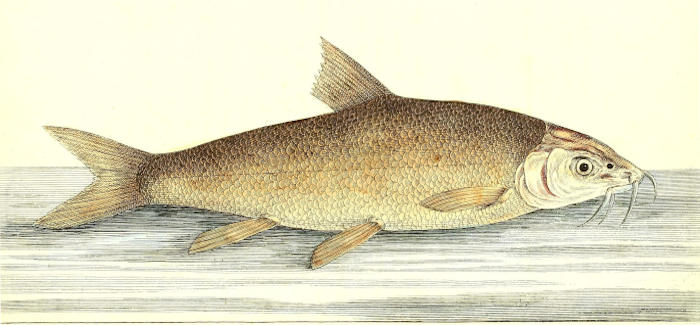
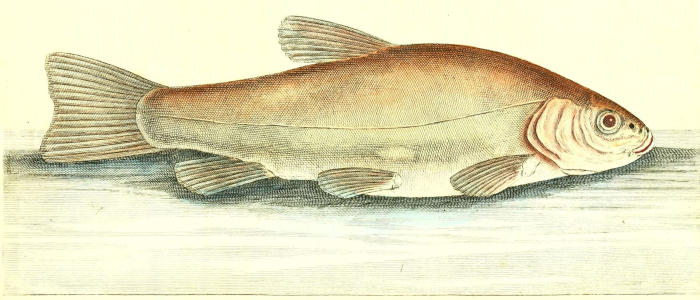
These I intend for carps chiefly, though not absolutely;
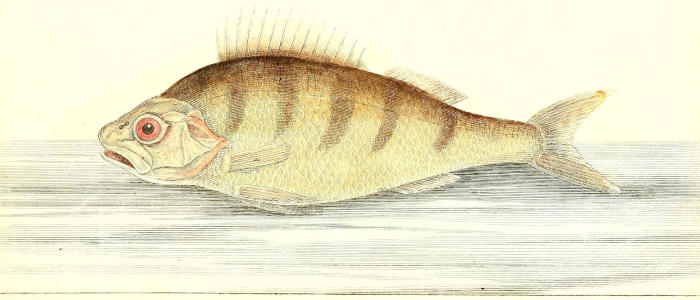
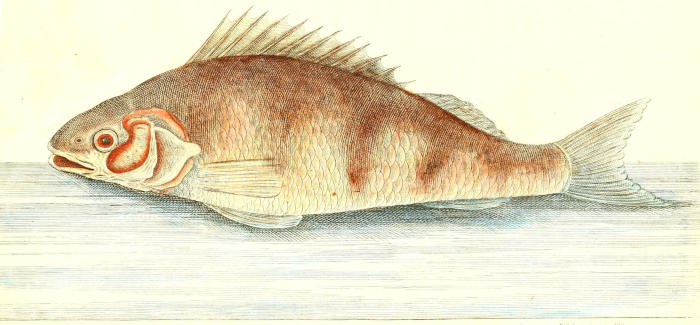
and if you find the tench and perch increase and prosper, you
may make other lesser stews to accommodate them apart, if
you please; and so you will have them at command, without
disturbing the other fish; only observe this by the way, that
perch will scarce live in stews and small waters, if the weather
be hot, but will pine, grow lean and thin, if not die; therefore
the stews are to be their winter-quarters; from whence
you take them for the use of your table, but in summer translate
them to the greater ponds.
These stews being designed at the same time you raise the
pond-heads, will be done almost under the same charge, as is
hinted elsewhere: and once made, you have the fish at a
minute’s warning ready for the kettle, or any other use; which
convenience is the great end of all the charge and pains, and
without it, you are not a master of fish.
These were made ordinarily for securing of dwelling
houses, rather than for fish; and since wars have been less
frequent, or rather, grown so much an art, that the ancient
way of fortifying is not useful, are almost disused. For being
laid so near the dwelling, as we observe commonly they are,
for want of sun, and air to purge them, the water grows putrid
and slimy, yielding no pleasant scent to the house; besides,
when laid dry, as is necessary sometimes, the stench and filth of
them are insupportable; and therefore many gentlemen have
either slighted them wholly, or presented the form only, as a walk
or low garden, planting the side-walls with fruit, but without
water: and so is the moat at Althrop in Northamptonshire,
a seat of the Earl of Sunderland’s, much of late beautified,
put in order, and from a defect, turned to a great perfection.
But I am an advocate for moats, ordered as they might be,
and do esteem them a very great accomplishment to a seat in
many respects. 1. Though they are not a fortification for
resistance in time of war, yet against pilferers and tumults,
they are sufficient and better than any walls you shall make.
2. They shall nourish a world of fish, which, though not so
well at command as in other waters, yet for angling, and the
sporting part of net-fishing, are better than the others are,
because nearer, and fished with smaller nets. 3. They are an
ornament and delight to a seat beyond imagination, as will
appear when I have shewed how I would have them made;
and of that next.
They should encompass not only the house, but all the out
houses, yards, orchards, and it may be a pightle or two, such
as are neat for ordinary convenience of horses, or a cow or two:
I say, all that is called the home-stall, should be environed by
the moat. It should be no less than forty yards, or one hundred
feet over, cut down with a slope on each side, as your
pond-heads were, without walls; which are too great charge
to keep in repair. And towards the pastures, you may make
a mouth; if it runs the whole length of one side of your moat,
it is the better, and fish will increase and thrive from it. Let
there be but two avenues with bridges: And to prevent the
charge of crossing so great a length with bridge-work, you
may leave the earth on each side broad enough for carriages,
but not to meet by ten or twelve feet, which may be covered
by a bridge, and underneath, the water to communicate; so
the pass shall be, as upon a causeway, with a draw-bridge; for
so it may be made, if you please.
I know all situations and soils will not admit of this; for
some are low and marshy, and so have naturally too much
water; others are upon hanging ground, which for want of a
level, cannot be moated in this manner; others are sandy, and
will not hold water: But the happiest of all, is, such a situation
as either hath springs, or will take a current, and discharge
it again by a sluice or gates, so that the moat shall be
perpetually fed with a fresh water, and may at any time be
laid dry; therefore in these affairs there must be a previous
judgment of the place, else undertakings will not succeed,
and that is a great disgrace.
Now, such a moat as this hath all the convenience I spoke
of, besides serves the house with water; which from the wind
and the sun’s free access to it in a great body, will certainly
preserve it sweet and wholesome. The sinks of the house will
not foul it, as it doth in lesser quantities, even to kill the fish,
as well as make the water unfit for use. The view of it is
a delicacy the greatest epicures in gardening court, and we
hear of it by the name of canal. Then the moving upon it in
boats, either in calm weather, or with some wind that stirs the
water, and gives a power of employing somewhat of sail, after a
romantick way; and thus circling an house, taking the variety
of walks and gardens here and there, visiting stables and offices,
seeing the horses air upon the banks, &c. are pleasures not
given to be understood by any but statesmen, laid aside for their
honesty, who by experience are taught the variety of greatness,
and have an understanding to distinguish the true felicities
of life.
I know the objection of charge, which must be very great
in such a work, as this; but I consider the great profusion of
money that is allowed to transitory vanities; such as habits,
treats, equipages, not to mention vices too well known; such
as are tellers of money and depauperate families, leaving
nothing but diseases to shew for them. If so much, or a much
less proportion being disposed to employ mankind, the poor
especially, in making holes, and filling them again, were much
more commendable. What is it then to produce advantage
to yourself and family, to improve your habitation and estate,
preserve health and reputation?
But even the charge might be alleviated, if not in great part
saved, by good management. For such gross works as this
may be put out to undertakers, and you may compute by the
solid foot or yard, what the charge will be; and the masters
will see the men work, which you cannot do if you are master,
and do all by the day. Then, every one delights to have raised
walks and terraces about an house and garden; so that the
earth being employed in such, and raising mounts in proper
places, will produce a real equivalent for the charge: but this
is a digression which here I conclude, and return to the affair
of fish.
Then considering moats, as commonly they are, it is not
expected that the fish should be much at command, because it
is difficult, and perhaps not convenient to lay them dry.
However, they should be kept full stocked, and will maintain
a great many. This will mend your angling, and the fishing
with nets will seldom be labour in vain, as certainly it will
prove if under stocked. These waters will receive a great
share of your fry and stores that are superfluous, and so preserve
them.
If a moat come to be laid dry, as will be necessary sometimes
to keep it from turning all to mud, after you have by
a sluice or cut, drained the water as low as you can, make
dams with boards and clay, and ram them to be water-tight;
so you may toss the water out of one division to another, and
take out the fish in good order; but if you dry all together,
you will not be able to secure all; besides, having one division
full of water, you can relieve the fry and eels by letting it
upon them; which else, for want of a fresh to let in upon
them, will be lost. So when one division is fished, that is relieved
by tossing the water out of the next. And this course
is not amiss, though you intend to throw out the mud; for
the saving the fish while you are taking them out, quits the
charge of making the stanks.
You must have other waters besides stews, to assist in the
disposition of the fish; for laying a pond in that great order
dry, as I propose, once in every year, there will be a great
quantity of fish to be disposed; so that you must have a sufficient
quantity of waters to receive when you abound, and to
recruit when you want. The stews will carry sixty, seventy,
or eighty carps apiece, supposing you spend continually out
of them; so other waters will receive their proportion, by
sending this way and that the stock of fish, you will preserve
all, and know where to find them again.
These bye-ponds will be dispersed about your estate, where
perhaps your predecessors thought fit to make them, for the
convenience of their pastures, or you may make them as you
can best, with respect to charge and other advantages, observing
always in a ground to take that part for your pond, to
which the waters are most apt to settle. In some places, but
very few, the waters stand best upon the hills, and the valleys,
when sandy, will not hold well. The nature of the ground
is to be regarded.
Some ponds of good depth, of about five or six rods square,
should be assigned to maintain pikes, which, when great, ought
to be kept by themselves; for in a few years they will devour
other fish, and greatly surprise you in the destruction they will
make. But I shall speak more of this when I come to the
stocking of waters.
I do much approve of cleansing and carting out the mud
of small standing waters once in seven or eight years, and so
letting them lie dry one summer, if you can spare the water;
which, from moats, and pasture-waters, can scarce be done,
without great inconvenience. These matters exercise the invention
of a good œconomist, who will endeavour to prevent
damage, as well as save time, and turn even his pleasures to
profit.
One thing I advertise here, which is, not to let carps continue
in a small standing water above two summers and one
winter; for so you run a much less hazard from frost, than
otherwise you will do; besides, the fish will grow much more
upon transplanting, than by continuing in the same water,
and more in the great, than in the small waters: but of these
things more afterwards.
Before I come to the business of fish, I will finish what
I had to say about ponds, and the conduct of them; and of
that only remains to speak of the course of laying them dry.
As for the smaller waters, I have touched what concerns
them already; as for the greater, or principal ponds, proceed
thus:
In October, or after, draw the sluice of the first made pond,
and lay it as dry as possible you can. It may be the sluice,
especially if the pond be many acres, will not vent the water
suddenly. That is of no great import, because, as the waters
fall, you will have opportunity of fishing with nets, and so
clear the fish by degrees; which left to the last, will be too
great a burden to clear, and will not be done without damage;
besides, the hurry will disorder every thing. If the sluice will
not vent all the water from the pan, a labourer or two will
soon throw it out with scuppets. Here you find the use of
the channels of diversion, spoke of before; for they will keep
off all land-waters, if the time should prove rainy, and so permit
the pond to empty, and continue dry, which you could
not answer for a day without them; and therefore they should
be made on both sides of the waters, on each hill one, which
will defend the shot of these hills, that otherwise would retard
the work.
When your pond is dry, and thus secured, keep it so all
summer, and you may make a profit of the soil sufficiently,
either by ploughing or feeding. And at Michaelmas next, or
a little sooner, let fall the sluice, and turn in all the water you
can, that the pond may fill, and at the being near full, it is
ready to receive the stock again.
At the same time lay another dry, proceeding as before;
which you may do alternately during your whole life: nay, if
you have but two great ponds, this is the best course, and will
turn most to the profit and feed of the fish, as I shall shew
when I speak of feeding.
If your stock be very great, you may let your ponds stand
full two or three years, but not longer, unless you delight to
see starved lean fish; for such they will certainly be, unless you
keep an under-stock by three-fourths continuing in the same
water four or five years. And it is a certain rule, that the
oftener waters are laid dry, the better the feed of the fish shall
be, and more shall be maintained. And a little experience
will demonstrate the advantage to be great, as to the size, fatness,
and sweetness of the fish.
When your pond is dry, concern not yourself to carry out
the mud for the first fourteen or fifteen years; and then let
it be only out of the pan whence you took the earth to raise
the bank, but never break the turf of the rest of the ground
flowed: but when it comes to be a yard thick in mere mud,
it is good to take it out; for though mud be good to improve
ground, yet, when it is taken from the pond, down to the
dead earth, your ground and soil are depauperated, and the
water by consequence, which cheats the fish, that is, yourself.
Having done with ponds, the manner of making, preserving,
and using them, I intend next to discourse of fish, and
how best to dispose them to maintain the waters in full stock:
but before I come to the stocking of waters, I must speak of
the course of breeding fish, whereby the stock is to be recruited
and supplied.
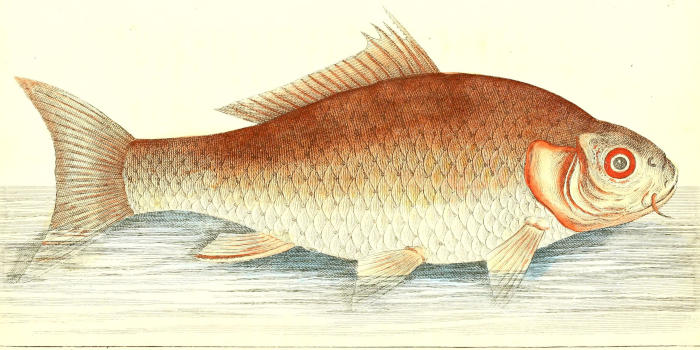
Some have thought, that great difference is to be found in
the sorts of carps, some whereof are more apt to grow up to
a great size, others to spread and look thick, and others for
the sweetness of the meat. I do not deny but there may be
some difference, but I cannot esteem it so considerable, as to
be worth the looking after. Varieties in nature are infinite,
and in the several breeds of fish, as of other creatures: yet I
have not observed so much of it in carps, that I could tell
how to distinguish them, where I could promise myself better
success with one sort than another. This is a nicety which
fishmongers, that make a trade of buying and selling, talk of,
intending it only as a topic of mystery, which all trades affect,
and to have something to say for valuing or undervaluing, as
they sell or buy, to justify in their talk the prices they propose
to take or give; therefore this nicety is left to them.
I do yet believe, that a sort of fish, bred in great numbers
in bad waters, over-stocked, and almost starved, may in process
of time degenerate, and both lose a good shape, and be
less apt to grow up to a due greatness, than others that have been
better descended of a cultivated stock: and on the other side,
it is no less possible, that by coming into good quarters, fish
may improve and mend; so that a gentleman is to expect the
goodness of his fish from the cleanness of his waters, and the
plenty of their feed, and not from any choice of his stock or
breed; and let him get them where he may, if well ordered,
he may assure himself they shall answer his expectations.
It is a common observation, that some waters will, and
others will not breed. It is my experience, that most waters,
the first year after having lain dry a summer, do breed, and
that numerously, especially carps, which I have known increase
to such an incredible fry, that I have been troubled how to
dispose them, so as to have them again after three or four
years, when they became good stock for great waters. Eels
and perch are of very good use to keep down the breed of
fish; for they prey much upon the spawn and fry of bred fish,
and will probably destroy the superfluity of them.
The quality of breeding is scarce to be found out by any
certain symptom; for some very promising ponds do not prove
useful that way. The best indication I know of a breeding
pond, is, when there is good store of rush and grazing about
it, and gravelly shoals, such as horse-ponds usually have.
When a water takes thus to breeding, with a few milters and
spawners, two or three of each, you may stock a country.
As for pike, perch, tench, roach, &c. they are observed to
breed in almost any waters, and very numerously; only eels
never breed in perfect standing waters, and without springs;
and in such are neither found, nor increase, but by putting
in; but where springs are, they are never wanting, though not
put in: and which is most strange of all, no person ever saw
in an eel the least token of propagation, either by milt or
spawn in them; so that whether they breed at all, and how
they are produced, are questions equally mysterious.
I have found a great analogy between the stocking waters
with fish, and pastures with cattle; and that the same conduct
and discretion belong to both. Waters may be over-stocked,
as pastures often are; so both may be under-stocked.
The latter is the less error; for if you over-stock, you lose the
whole summer’s seed; if you under-stock, you lose only the
rest of your profit; what you do seed, is much the better, and
turns to account by more ready sale. So also of beasts; some
of the same age and seeding will not thrive so well as others.
I have found the like in my fish. And waters themselves, like
pastures, have varieties of goodness; some will raise carps from
five to eighteen inches, in five years; others will not do it in
ten. This is most sensible between your great waters made
upon a fall, and the small standing waters, which have more
inconveniencies, and are liable to frosts, and other casualties,
more than the others are.
Therefore I propose, that the smaller waters should be used
as nurseries, and either to breed, or be stocked with the bred
fry of other waters, to raise them to a fitness for stores in your
principal feed; that is, to six or eight inches. And of these
bred fry, you may put one hundred into four rods square of
water, or near that proportion, and fail not to remove them in
two years time; and so you will have good recruits of stores
for your greater waters.
And thus the many thousands of bred fish that you will
have upon the draining your great waters, which many are apt
to slight, may be sent several ways to the waters about that
and your neighbour’s grounds, and there fed up like chickens,
and in time turn to great profit, as I shall shew; therefore
they ought not to be slighted, but carefully to be preserved;
the rather, because considering a pond (as I propose) will,
though but four acres, feed up one thousand six hundred carps
in two, and perhaps in one year, from ten to eighteen inches,
fit for your table-presents, or sale. How is it possible you
should restock your waters the winter after, without this providential
forecast, whereby you have magazines of fish in other
ponds, fit stores to supply your occasion?
Now, as for your great and principal waters, it is hard to
assign a certain proportion for the stock; but perusing the
methods I propose, you will soon come to the knowledge what
stock the waters will carry; for laying a pond dry every year,
you will see the fish well fed, or else thin and lean; and accordingly
you judge whether the stock was too little or too
much for the water. Thus, by the thickness or fatness of
cattle, you judge if your ground will carry more or not; and
both as to species and number of fish, experience must be your
guide in the stocking of waters.
However, to save loss of time, which you must sustain by
making your own experience, I will give the best directions I can,
for the first entry upon your business, and not leave the matter
wholly in the dark.
If the pond be supplied with a white fat water upon great
rains, you may put into it at first three hundred carps per acre,
in case there be three or four acres, else not so many. And
it will be expedient to put in forty or fifty tenches for a trial,
because this sort of water is most proper for carp; but being
laid dry, sometimes may prove well for tenches also, which,
when thriven, are a very good fish; but this proof by trial
must determine.
You may add perches to any number, and not hurt the
water: I propose six hundred; for though they are great
breeders, being also fishes of prey, they devour their own
species as much, if not more than any other; and by destroying
the fry of bred fish, they preserve the food for the maintenance
of their feeders, which the fry would intercept; so
do good rather than harm. I took once out of a perch’s
belly of ten inches, ten other perches. This is esteemed one
of the best sorts of fresh-water fish, and therefore deservedly
to be encouraged.
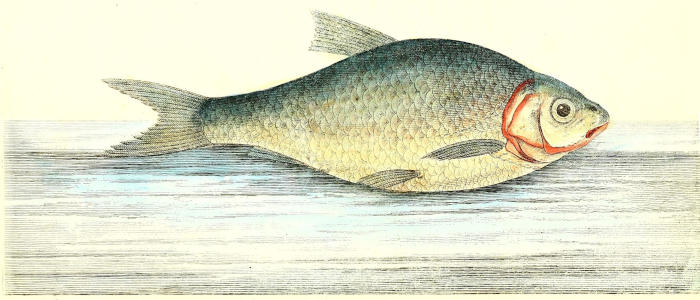
Have a great care of putting bream in this sort of waters;
for they will grow up very slowly, though at last they will be
great; but in the mean time they breed so infinitely, and such
a slimy nasty fry, as both robs and fouls the water, making it
unfit for the other fish. But when a water is ten or twelve
acres, and fed with some brook, winter and summer, they will
do very well; otherwise not to be made use of.
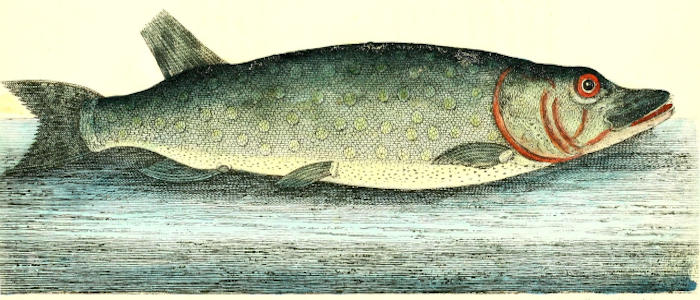
As for pike, which are inferior to no fresh-water fish, and
now more esteemed than ever, being less plentiful upon draining
the fens, and so harm more; they are dangerous guests in
the great waters; for if grown large, they will devour and
destroy the best fish, and depopulate the water. But thus far
you may trust them; if you can procure one hundred jacks
once in two years not exceeding nine inches, you may put
them with the carps into your great waters, so as your carps
are not under nine or ten inches; but take care that they stay
not above two years, and then send them to their peculiar
ponds, and feed them as I shall hereafter discourse, and so they
will grow to be very large and fine fish, which you would
not want.
I cannot advise the stocking great standing waters with eels,
for they grow slow, and being of an indifferent size, will be
lean and dry; but in moats, which have the sinks of an house
drain into it, is proper enough for them, and they will thrive in
it. It is a sort of fish, as I noted, that belongs to a springy
water.
These directions belong to the first stocking of new-made
ponds, which, as to feeding, lie under a disadvantage; the
reason I have touched, and is from the dead earth in the pan
from whence you raised the bank, and that at first, which is
about an acre, is almost unprofitable. But afterwards, when
that dead ground hath contracted a little new soil from the
settling of the water, especially after land-floods, and lain
dry a summer, whereby it will begin to graze, it will become
like the rest of the pond, and put forth as good feed for fish
as any other part. This may seem strange and new, but is a
great truth, known to me from indubitable experience.
Then after one, two, or three years (for longer the pond
must not stand full), when you come to restock, and so on in
all like occasions, you may put four hundred carp, or three
hundred carp, and eight hundred tench (if the water feeds
them) into an acre, besides perches. It is incredible to those
who have not seen it, as I have done, how carps thus ordered,
by transplanting them every year or two, will grow. I affirm,
that from six, they will grow to twelve and better the first, and
to fifteen or sixteen the next year; and then they are most fit
for a gentleman’s table ordinarily; for though greater are more
ostentatious, yet these are the most sweet and best meat, as
young flesh is commonly preferred to old.
It is to be noted, that if the fish wherewith you stock the
waters, were kept so close together, and come from over-stocked
waters, which renders them lean and poor, you must
double the stock at first; else the two sudden plenty of food at
first will surfeit them, and they will die of overmuch blood,
as I have found to my great loss.
In a stew you may keep up thirty or forty carps, from October
to March in winter, without feeding; and by fishing with
trammels or flews in March or April, you may take from your
great waters, to recruit the stews; but you must not fail to
feed all summer, from March to October again, as constantly as
your cooped chickens are fed, and to as good and certain account.
The reason you feed in summer, and not in winter,
is, because the fish will lie close in cold weather, and feed
little, not caring to stir, especially upon the shoals, where it
is proper to give them meat.
If you would bring more fish together into your stews, you
may preserve and improve them by feeding; but there are
bounds, because the water is but small, and will not admit
any great number: but if you have a great number of fish to
be kept for an opportunity, and you put them into a considerable
water, you may in that manner stock to any quantity,
taking care duly to feed them; and so not only maintain, but
improve one thousand per acre; but if thus over-stocked, and
you do not feed sufficiently, they will sink, and you be a great
loser.
Now, as for your stews, the care of feeding is best instructed
to a butler or gardener, who are or should be always at
home, because the constancy and regularity of serving the fish,
conduce very much to their well eating and thriving; for
they will expect their meat as duly as horses, and appetite in any
creature wastes by disappointment.
Any sort of grain boiled is good to feed with, especially
malt coarse ground. Pease boiled a turn or two are as good
as any other grain. The grains after a brewing, while they
are good and sweet, are very proper; but one bushel of malt
not brewed, will go as far as two of grains. The chippings of
bread, and orts of a table, steeped in tap-droppings of good
strong beer or ale, are very good food for carps. Of these the
quantity of two quarts to thirty table carps every day is sufficient;
and to feed morning and evening, is better than once a
day only.
The place to feed is towards the mouth, at about half yard
deep; for that keeps the deep clean and fit, as a parlour to
retire to, and rest in. The meat plainly thrown into the water,
without other device, will be picked up by them, and nothing
shall be lost. However, there are several ways to give
them meat, especially pease, which are useful, as a square board
let down, with the meat upon it, by the four corners, whence a
string comes, and made fast to a stick like a scale, is very manageable.
A gentleman had found out a very facile way to
feed carps, worth noting, because I have heard it was successful.
He let down the very kettle in which the pease were boiled,
into the water, and the fish would come and take out
every grain.
When you feed in the greater waters, where the numbers
are also great, it will be a charge as well as trouble; but when
you take out the fish, and see how they are thriven, you will
allow both well employed. Either malt boiled, or fresh grains,
is the best food in this case: and what is not supplied from
your own house and brewings, you may take of neighbouring
alehouses, who will be willing, for a small matter, to throw
into the water, at a place you shall assign, a certain quantity
every brewing. Thus carps may be fed and raised like capons.
And tenches will feed in stews, as well as carps; but perch, as
was said, are not for a stew in feeding time.
There is a sort of food for fish, which I may call accidental,
and is no less improving, than the best you can contrive; and
that is, when the waters happen to receive the wash of commons
where many sheep are fed, the water is enriched by the
earth, and shall feed many more carps, than otherwise it
would. This is the case at Antlingham in Norfolk, where
there are ponds in a common that raise carp wonderfully, although
the soil be sandy and poor, and the waters seldom let
out; and this earthy wash is the reason of it. When cattle
are fed upon the pastures by your great waters, if they have
access to them, in hot weather they will take delight to stand
in the water; the dung that falls from them, is also a very
great nourishment of fish.
It is believed, that about London the fishmongers have
ways of making carps fat by the offal of butchers shops and
slaughter-houses; which I do not at all recommend to others,
if that were to be done, because a sudden filthy feeding can
neither be wholesome nor sweet. But I have not observed,
that carps do in any sort delight in blood, nor indeed any
other fish, except breams; and those will feed much upon
new grains mixed with blood; so that if you will be at the
charge of feeding them in stews, like carps, you may have
large breams in six or seven years, which are a very slow
grower, unless it be in springy waters.
One way of feeding fish is worth remembering, though
not fit to be used in waters that you ever look upon. It is
laying a dead carrion upon stakes in the middle of the water,
and it will breed maggots, which falling into the water, feed
the fish very considerably; but I have not proved it.
As for pikes, the best food to raise them up to an extraordinary
fatness is eels; and without them it is not to be
done, but in a long time; otherwise small perches are the best
meat you can give them. And the common opinion, that
pikes will not eat perches, because of their armed backs,
is a great mistake, as I have found by certain experience.
Breams put into a pike-pond, will breed exceedingly, and
are good enough to maintain pikes, who will take care they
shall not increase overmuch. And the great fry of roaches
and rouds that come from the greater waters, removed into
the quarters of your pikes, will be good diet for them.
Pikes in all waters, and carps in hungry springy waters,
being fed at certain times, will come up and take their meat
almost from your hand; and it is diverting enough to see the
greediness and striving that will be amongst them for the good
bits, and the boldness, that by constant and regular feeding,
they will come to.
This care presseth when you employ your great waters;
and unless you have projected beforehand how you shall dispose
your fish, you will find yourself in great disorder.
As for carps for the service of your house, and also tenches
and perch for winter, they are to be disposed into your stews.
The rest of your fish, except the fry, you may put into the
great water, and in March or April after, with flews or
trammels, take out good quantities to recruit your winter’s expence
taken from your stews; the fry goes to your pikes,
except carps, tench, and perch, which may go to some of your
auxiliary waters to be raised, in order to become stores again
when you want. And if, after all, you find your stock too
high, you must feed as I have already discoursed.
But you may contrive to keep your stock within compass;
for you may enlarge the expence in your house, and gratify
your family and friends that visit you, with a dish as acceptable
as any you can purchase for money; or you may oblige your
friends and neighbours, by making presents of them, which,
from the countryman to the king, is well taken; for many
that have waters, not being in a method of husbanding them,
as well as others that have none, want and desire fish, and
look upon such a present, as of a rarity, valuing it not by your
plenty, but their own scarcity. And where fish is plenty, it
is a positive disgrace to appear covetous of them, rather more
than of venison, or any other thing; so that presents are not
only expedient, but necessary to be made by him that professeth
a mastery of fish.
Another way, more prudent, though in the account of
shallow people, less reputable, is that of selling. If there
were any colour for disreputation in that matter, I should
bestow some words upon it; but seeing it resides only among
vain women, or women-like men, I let the humour pass, and
should as soon preach against the opinion of fairies and Robin-Goodfellow,
as that. Only by the way, I presume to advise
the censorious sparks to do nothing unjust; let their dealing
be plain, though in selling of horses, spend what is their own,
provide for their families, and be true to their friend; and
after this, whether they sell corn, cattle, conies, sheep, deer,
horses, or fish, I will insure their honour for a farthing. It
is the truth and substance of things, and no person’s opinion,
that governs honour, which consists wholly in doing what is
truly just and good, and nothing otherwise.
This matter being dismissed, I proceed to direct the course
to be taken when you propose to sell. First contract with
the person you deal with for a quantity; which, if for sale
to eat, will be by the measure of so much per inch, for every
inch above a foot; if for stores, then so much per hundred,
or dozen, between certain lengths, as between nine and
twelve, and seven and ten inches, to be delivered alive where
it is agreed.
This trade will be easy, if you are planted within forty
miles of London, which will take off quantities for retailing,
else it will be hard to find contractors; but for stores, there
will be some always beginning in fish, with whom you may
deal; and so few will sedulously apply to the conduct of their
waters, as is necessary to a command of fish, you need not fear
the country will be over-stocked. If the humour of living in
the country once repossesseth the gentleman, there may be
much more occasion for stores than at present there is, because
their seats are let to tenants, and the waters uncultivated.
When you have contracted, you are at a certainty, and may
proceed; for it is a great inconvenience to take and carry fish,
and then be paid with a wrangle; therefore let your terms be
certain, and you can have no dispute, because all is to be declared
by measure.
You will find your stews and auxiliary waters of great use
to you upon such occasions; for you clap in what fish you
please for fourteen or fifteen days; for instance, five or six
hundred carps to a brace of stews, and they take no harm: if
they continue longer, it is but feeding them until they are
fetched or carried away.
As for the particular ways and methods of taking fish, such
as I have dealt in, is at present besides my design, though I
may not perhaps altogether pass it by, so much as concerns
the carriage of fish, which I look upon as a considerable item
in the managery as to profit, which I principally aim at, I
shall now observe.
When your fishing is in order to remove far, whether the
waters are great or small, it must be done in winter, between
the first of October, and the last of March; and the colder
the weather is, the better. One great caution is, not to handle,
or any way to batter or bruise them; for it is a great truth,
and common sense speaks it, that fish battered and bruised, will
not thrive upon transplanting, so well as others; therefore
when your pond is drawn, and you come to the fish, take
them out of the water with hoop-nets fixed upon staves about
ten feet long, and ten or twelve fish at a time in a net is sufficient,
though but a foot long; more, by their weight and struggling,
will damage each other insensibly, so as to hinder their
growth and thrift, and perhaps be the cause that many die.
Let the fish be as little out of the water as may be; for when
fouled, and almost choaked with mud, they will clean and recover
themselves with water, which freshen upon them often,
till you come to put them up for carriage.
If you fish with nets, and make a great draught, as probably
you will when the water is low, be not hasty to draw the fish
upon the ground, but secure them by taking the lead line upon
the ground, and holding up the cork line, and so let them stir
a little, they will be the cleaner; and then take them out with
hoop-nets, as before. And if there be occasion to keep them
any time out of the water, let it be upon the grass, when there
is no sun, or else in the shade, for heat is the greatest enemy
to the life of fish out of water that can be.
The best vessel for conveyance (if you carry above twenty
miles) is a great tun that holds five hogsheads; but if no
more than ten, fifteen, or twenty miles, ordinary hogsheads
will do well enough. I know by experience you may safely
carry three hundred carps, six and seven inches long, in one
hogshead; but from seven to a foot, not so many by a fourth
part. If they exceed a foot, then not above seventy or eighty
in a hogshead. Let every hogshead have ten or twelve pails
of fresh clean water (not well-water), every six or seven
miles, if it may be had. There is no need of any great
liberty for the fish, if their water be fresh, and often renewed;
for one great use of the water is to bury the fish, that with
mere weight they might not crush and destroy one another.
When you are arrived at the place of discharge, pour the
fish into an hoop-net a few at a time, and dispose them forthwith
where they are designed; and with this care you will
scarce lose a fish.
Some use to put up fish in baskets or hampers for carriage,
stowing them with grass between; but this is not so good as
water, for the grass cleaving to the slime of the fish, rubs
and cleans it from the scales; which done, a carp scarce ever
thrives after. And although perhaps the fish may live, they
will not grow or thrive, because their natural slime, scarce
recoverable, is rubbed off; and for the same reason, it is not
good to let carps lie at all in grass, but keep them always in
water, to preserve them from bruises, and losing their slime.
Generally speaking, the fresher air and cleaner soil
your water hath, the better fish thrive. Wood of any sort
near the water is bad, not only from its hindering the wind
and sun from purifying the water, but from the leaves falling
in, and rotten wood; both which are pernicious to fish. But
osiers and willows may be allowed of, without much
inconvenience. Oak boards, or timber laid in water, as
sometimes is done to season, will in all probability destroy
all your fish; and likewise hemp laid to rot; all which are
therefore to be avoided. Dung-hills, stables, or cow-houses,
permitted to drain into ponds, are very ill neighbours, and
most especially wash-houses, which certainly spoil a standing
water.
The great plague and bane of fish in moats, great and
small, and other little standing waters, are great and sharp
frosts. I have used all the tricks that I have heard of, which
are not a few, or could devise, to save my fish in such waters;
and yet in ten years time I have lost three or four thousand
carps. But yet I have found ways to save the life of many a fair
carp, when my neighbours have lost all; which I shall declare
as my own experience, and may be profitable upon like occasions
to any that will use them.
First, as to the sorts of fish that suffer most, I can only
say, that the tench, if any, is frost-proof, and will shift in
extremity; but if the frost be intense and long, the other
sorts, as carps, eels, pike, perch, and roach, will go near to
perish; and I have found not any great difference of hardness,
but when one fish complains, they are all in imminent
danger.
The waters most obnoxious to frosts are such as are standing,
shallow, or small. For if there be either a water-current,
or a fresh spring, no fish dies for frost. If an hard
winter succeeds a very dry summer, the fish suffers most. If
the ponds are large and deep, such as I have directed to be
made upon the channel of water, which may not run but
upon floods or rain, the fish will never die in frost there; but
such waters you must look upon as the asylum for the
securing the fish in extremity; and all that you can put in
there alive, though through a hole in the ice, will certainly live.
If the bank of a pond sews, it will preserve the fish in frost;
the reason, as I imagine, is, because where the water sews out,
the air will bubble in, which relieves the fish; or perhaps it
might put the water into some degree of motion. If so, the
stirring water with a board flat upon a pole put under the ice,
might do good; but this is conjecture.
The symptom of mortality to your fish in time of frost, is,
their shewing themselves; which if you perceive in the least,
conclude all are going; and without a thaw, that water will
not keep them alive. For it is the nature of fish in cold
weather to lie as close and deep as they can; so that nothing
but the pangs of death shall make them move. If no holes
are broke, they will rise and stick to the ice, and be frozen to
it; if there be holes, they will move about them, as if they
came up for fresh air.
When the frost hath continued long, and hard, that you
begin to suspect your fish, you may make a trial by cutting
holes in several places, some in the middle, and some by the
sides of the waters that are obnoxious; that is, after about
ten days freezing; and by the appearing of the fish, or not,
you shall discover the temper and condition they are in; therefore
watch them diligently. If they are not well, they will
appear; then prepare all hands to take out every fish, as near
as you can; for what you take out, you may preserve, and all
that are left behind, are probably lost.
Many use to break holes to relieve the fish, and, as they
think, give them fresh air; some have put dung bound up
together into the holes, as if the warmth of that keeping the
hole open would preserve the fish; but these ways, and all
others that I have heard of, except taking out the fish, are
mere vanities. I have cut many holes, and large ones, and
employed men to take out the ice, and keep them open, but
to no advantage. One thing appeared very oddly to me, when
I took that course. Many of the fish in a large moat had
gathered together in a corner obverted to the South, where
the ground rose under an high bank, to a shoal-water. These
fish, by their motion and heat, together with the sun’s heat,
that was strongest there, kept the water from freezing, and I
could plainly see every fish, great and small. There were
carp, pike, perch, eels, and fry in abundance, collected as if
it had been a general counsel of all the orders of fish, met to
consider what was to be done in that extremity, very diverting
to observe.
But to leave conceits, and come to the only expedient
which I have found effectual to save the fish in this case; and
that is, to set great tubs or fats full of water in some outhouse,
not far from a fire; and as fast as the fish appear, take them
out, and put them there; and from thence you may convey
them in a basket to your great waters, where you may make
an hole at about eight feet deep, and putting the fish in, preserve
them; or if you please, you may keep them there, freshening
the water every twelve hours, until the frost breaks, and
put them into their own houses again. You may plainly perceive
how the fish, though stunned and numb with the frost,
coming into the fat, will by degrees recover, and be perfectly
well again; and thus you may keep them five weeks, or
longer, if the frost continues.
I have gone farther: sometimes fish have been to all appearance
dead, others frozen and inveloped in ice, yet by this
method I have preserved them; for heating water, and putting
it into the fat, until I brought the water there to a Midsummer
heat, and then I have put such fish in, with their
shell of ice upon them, and in six or seven hours the ice was
gone, and the fish alive and well; and so I have delivered
them to my great waters, brisk as any.
This may seem strange, but it is most true, and to be attested,
if need were; therefore in frost use this and no other
means, for all else will prove but labour in vain.
In small waters, where is the greatest danger of frost, observe
never to put in stock, but the last week of February, or
beginning of March; for then they take less hurt in removing,
and they may be taken out in October after, and so all hazard
of frost prevented; and if you venture them there one winter,
be sure never let them run the hazard of another. So you
have two summers feed, which will raise a carp from store to
the table, and venture but one winter’s frost; and in winter
they neither feed nor grow any thing considerable.
These were touched when I spoke of disposing the increase
of fish; that is, furnishing your table, obliging your
friends, and raising money. I shall only add to the last, that
it is most reasonable, if it can be contrived, that pleasures pay
for the charge of them. Then what is more justifiable, than
to make ponds yield a profit to answer the great charge in
making them?
But we must go farther: ground shall be vastly improved by
fish, and shall be intrinsically worth, and yield more this
way, than by any other employment you can give it: for
suppose it meadow of two pounds per acre (which is an high
value for the best meadow far from London), I will justify,
that four acres in pond shall return you every year one
thousand carps fed up, from — to fourteen or fifteen inches,
besides pikes, perch, and tench, and other fry, useful on many
accounts, if the water suits them. The carps are saleable,
and will bring perhaps twelve pence, but in all likelihood not
less than nine pence; yet, let it be six pence apiece, there is
twenty-five pounds, which is six pounds five shillings per
acre; a little charge of carriage perhaps to be deducted. This
is improvement enough.
But lay aside profit, and consider how a gentleman should
entertain himself and his family, which I must suppose every
one hath, who lives upon an estate, and it may be numerous;
he must find some sort of diversion for them. Must it be
altogether going abroad to make, or at home receiving visits?
Or if the female part are so grave, to decline that course of
life, must they always be within? Or if they stir out, have
nothing but mere air to invite them? Perhaps the gentleman
himself may find diversion by hunting, &c. and meeting
company upon several diverting accounts; and shall all his
entertainments be exclusive of his family? No, certainly;
whoever aims at an easy and satisfactory course of life, must
seek that his family, as well as himself, be pleased: and if he
doth not order it so that they shall be entertained, it is ten to
one they will find such entertainments as shall not be very
grateful to him; therefore there is advantage enough in the
mastery of fish, from the diversion, not to speak of the employment
that it brings to a family. Young people love
angling extremely; then there is a boat, which gives pleasure
enough in summer, frequent fishing with nets, the very making
of nets, seeing the waters, much discourse of them, and the
fish, especially upon your great sweeps, and the strange surprizes
that will happen in numbers and bigness, with many
other incident entertainments, are the result of waters, and
direct the minds of a numerous family to terminate in something
not inconvenient, and, it may be, divert them from worse.
Parks, bowling-greens, and billiard-tables, are of the same
design; but it will be easily granted, this of fish is beyond
them all.
If it be said, that this is not a pleasure, it is all care and
pains, especially to him that is the master, who must be perpetually
vexed at the negligence and blockishness of servants,
that will never perform what he expects and orders: I answer,
that is a good reason for leaving the world. The plague of
servants is the same in all business, wherein you use and depend
upon them; therefore, to be rid of it, give away your
estate, retire, and be an hermit: and even then you shall
find the gnawing of your own mind a more perverse evil,
than all the business, servants, with the crosses and vexations
attending them. We were not made perfect, but must live
in perpetual disease; the only point is, which way to lessen
it; and that must be by employment, which diverts the sense
of our innate misery. What can be a greater torture, than
to live chained to a bed, though the best in the world, and
have no company nor business? Therefore court business, if
you would pass for an epicurean, and let it be such as brings
comfort to nature, and not pain and torment in the consequence;
that is to say, lawful, profitable, obliging, and temperate.
So you avoid offending the publick, increase your
store, win your friends and family, and preserve your health;
all which, I take it, are accomplished, in great measure, by
the mastery of fish.
Now, as to the vending of fish, observe that it is best to be
content with the market price, as you can find it, as most are
for other vendible commodities; and for carps between thirteen
or fourteen, or sixteen inches, measuring from nose-end
to tail-end, twelve pence is a good price; selling to the nobility
or gentry, may produce one penny more, and may measure
up to seventeen; but never promise above twenty turned of
sixteen in twelve score.
These are many, and not inconsiderable; as first, when
you make a great water, you take the first spit of the ground
upon which the bank is to stand, and from the pan of the
pond. In case you take earth there for the bank, and this
you carry to some place where it is most easily removed upon
your tillage-ground, and there let it lie to rot the sod, and
then there is not a better manure, and more than pays the
charge of digging and carrying it.
2. You gain the making of stews, and, it may be, other
ponds for the convenience of your cattle, all under one
charge: for if you must dig clay and earth for your bank, it
is as easily taken where it doth this, as otherwise.
3. If the soil about the waters be any thing moorish, it
may be planted with osiers, which yield a certain yearly
crop.
4. The feed of the pond when laid dry, or the corn, that
is, oats, which you may have upon the bottom, though mere
mud, is very considerable. This hath been touched before.
5. You will invite all manner of help to your fishing, by
the fry given among those who assist you; and though you
pay them, they will expect fish; and with expectations of
carrying home a dish of fresh fish, men will work in wet and
dirt, to a wonder, without other pay.
6. If you graze cattle near your great waters, they will
delight to come and stand in the water; and it conduceth
much to the thrift of your cattle, as well as the feed of your
fish, which is much supplied by the dunging of the cattle;
and therefore it is good to have ponds in cow-pastures and
grazing grounds.
As to the sowing of oats in the bottom of a pond, observe
to dry your great water once in three, or at most four years,
and that at the end of January, or beginning of March;
which, if not a very unreasonable year, will be time enough.
After Michaelmas following, you may put in a very great
stock; and thin them in following years, as the feed will
decline.
Thus I have given, as short and intelligibly as conveniently
I could, the best of my knowledge, contracted by twenty
years practice and experience, of fish and waters: and if I am
so happy thereby, to contribute in the least to the satisfaction
or diversion of my friends, it will extremely content, if not
encourage me to add somewhat farther concerning the nature
of the several sorts of fish I deal in, the ways of taking
them, of nets, angling, engines for clearing waters, and other
particularities that I have proved. In the mean time, they
may command these as myself, both being alike open, considerable,
and at their service.