Notorious individuals exiled—Murderous assaults on the Queen—Bank
frauds—Burgess and the Bank of England—Robbery of Rogers'
Bank—Fraud and embezzlement—Walter Watts—Robert F. Pries—Joseph
Windle Cole—Strahan, Paul and Bates—Aristocratic
bankers—Robson—Redpath—Enormous stealings—Great gold robbery on
the South-Eastern Railway—Agar, Pierce and Tester—Extensive
forgeries—Saward or "Jim the Penman"—Vicissitudes of a convict's
life—Journeys round the world.
So long as the law ordained that removal to a far-off land should be the
invariable fate of every offender who escaped "vertical punishment," as
hanging was sometimes styled, we must certainly find the most notable
criminals in the stream setting unceasingly southward. It will be
interesting and instructive to present here some of the most notable or
notorious individuals who thus left their country "for their country's
good" and still more for their own, as shown in many remarkable
instances on preceding pages. For a long time the great mass of passing
criminality hardly rises above the commonplace, for the simple reason
that the worst individuals, under the sanguinary British code of those
days, were peremptorily "finished" on the scaffold. But as death
penalties diminished, expatriation overtook many vicious criminals and
it is with some of these that I now propose to deal.
The assassination of or the murderous assault on crowned heads and chief
magistrates has been too sadly characteristic of modern crime. One tried
in England upon the person of the young Queen Victoria in 1842 created a
great sensation in London. The perpetrator was a certain John Francis
who, moved, as was supposed, by a thirst for notoriety, fired a shot at
the Queen as she was driving back to Buckingham Palace. The deed was
premeditated and would have been put into execution a day earlier had
not his courage failed him. A youth had seen him point a pistol at the
Queen's carriage, but drop it exclaiming, "I wish I had done it." The
boy weakly allowed Francis to go off without securing his apprehension,
but later gave full information. The Queen was apprised of the danger,
and was implored to remain within doors; but she declared she would not
remain a prisoner in her own palace, and next day drove out as usual in
an open barouche. Nothing happened until Her Majesty returned to
Buckingham Palace about six o'clock, when, on descending Constitution
Hill, with an equerry riding close on each side of her carriage, a man
who had been leaning against the palace garden wall suddenly advanced,
levelled a pistol at the Queen and fired. He was so close to the
carriage that the smoke of his pistol enveloped the face of Colonel
Wylde, one of the equerries. The Queen was untouched and at first, it is
said, hardly realised the danger she had escaped. Francis had already
been seized by a policeman named Trounce, who saw his movement with the
pistol too late to prevent its discharge. The prisoner was conveyed
without delay to the Home Office and there examined by the Privy
Council, which had been hastily summoned for the purpose. On searching
him the pistol was found in his pocket, the barrel still warm; also some
loose powder and a bullet. There was some doubt as to whether the pistol
when fired was actually loaded with ball, but the jury brought in a
verdict of guilty of the criminal intent to kill. Francis was sentenced
to be hanged, decapitated and quartered, the old traitor's doom, but was
spared, and subsequently transported for life. The enthusiasm of the
people at the Queen's escape was intense, and her drive next day was one
long triumphal progress. At the Italian Opera in the evening, the
audience on the Queen's appearance, greeted her with loud cheers and
called for the national anthem. This was in May, 1842.
Not long afterwards, a gentleman, for some occult reason of his own,
committed the atrocity of striking the young Queen in the face just as
she was leaving the palace. The weapon he used was a thin cane, but the
blow fell lightly, as the lady-in-waiting interposed. No explanation was
offered, except that the culprit was out of his mind. This was the
defence set up by his friends, and several curious facts were adduced
in proof of insanity. One on which great stress was laid, was that he
was in habit of chartering a hansom to Wimbledon Common daily, where he
amused himself by getting out and walking as fast as he could through
the furze. But this line of defence broke down, and the jury found the
prisoner guilty. When he came to Millbank he declared that he had been
actuated only by a desire to bring disgrace on his family and
belongings. In some way or other he had seriously disagreed with his
father, and he took this curious means to obtain revenge. The wantonness
of the outrage called for severe punishment, and the man was sentenced
to seven years' transportation; but the special punishment of whipping
was omitted, on the grounds of the prisoner's position in life. Whether
the mere passing of this sentence was considered sufficient, or the
Queen herself interposed, the prisoner at Millbank was treated with
exceptional leniency and consideration. By order of the Secretary of
State he was exempted from most of the restrictions to which other
prisoners were subjected. He was not lodged in a cell, but in two rooms
adjoining the infirmary, which he used as sitting and bedroom
respectively. He did not wear the prison dress, and he had, practically,
what food he liked. He seems to have awakened a sort of sympathy on the
part of the warders who attended him; probably because he was a fine,
tall fellow of handsome presence and engaging manners and because also
they thought his offence was one of hot-headed rashness rather than
premeditated wickedness. Eventually he went to Australia.
Frauds upon banks and large financial institutions became prevalent
about 1844. In that year the Bank of England suffered at the hands of
one of its clerks named Burgess who robbed it of £8,000 in conjunction
with an accomplice named Elder. Burgess fraudulently transferred consols
in the above amount to another party. Elder impersonated the owner and
attended at the bank to complete the transfer and sell the stock.
Burgess, who was purposely on leave from the bank, effected the sale,
which was paid for with a cheque for nearly the whole amount on
Lubbock's Bank. Burgess and Elder proceeded in company to cash this, but
as they wanted all gold, the cashier gave them eight Bank of England
notes for £1,000 each, saying that they could get so much specie nowhere
else. Thither Elder went alone, provided with a number of canvas bags
and one large carpet bag. When the latter was filled with gold it was
too heavy to lift and Elder had to be assisted by two bank porters, who
carried it for him to a carriage waiting near the Mansion House. Elder
was soon joined by Burgess and they drove together to Ben Caunt's, the
pugilist's public house in St. Martin's Lane, where the cash was
transferred from the carpet bag to a portmanteau. The same evening both
started for Liverpool and, embarking on board the mail steamer
Britannia, escaped to the United States.
Burgess' continued absence was soon noticed at the bank. Suspicions were
aroused when it was found that he had been employed in selling stock for
Mr. Oxenford, owner of the stolen consols, which developed as soon as
that gentleman was referred to. Mr. Oxenford having denied that he had
made any transfer of stock, the matter was at once put in the hands of
the police. A smart detective, Forrester, after a little inquiry,
established the fact that the man who had impersonated Mr. Oxenford was
a horse-dealer named Joseph Elder, an intimate acquaintance of
Burgess's. Forrester next traced the fugitives to Liverpool and thence
to Halifax, whither he followed them, accompanied by a confidential
clerk from the bank. At Halifax, Forrester learned that the men he
wanted had gone on to Boston, thence to Buffalo and Canada, and back to
Boston. He found them at length residing at the latter place, one as a
landed proprietor, the other as a publican. Elder, the former, was soon
apprehended at his house, but he evaded the law by hanging himself with
his pocket-handkerchief. The inn belonging to Burgess was surrounded,
but he escaped through a back door on to the river, and rowed off in a
boat to a hiding place in the woods. Next day a person betrayed him for
the reward and he was soon captured. The proceeds of the robbery were
lodged in a Boston bank, but four hundred sovereigns were found on
Elder, while two hundred more were found in Burgess's effects. Burgess
was eventually brought back to England, tried at the Central Criminal
Court and sentenced to transportation for life.
Within a month or two the bank of Messrs. Rogers and Co. in Clement's
Lane was broken into. Robberies as daring in conception as they were
boldly executed were common enough. One night a quantity of plate was
stolen from Windsor Castle; another time Buckingham Palace was robbed.
Of this class of burglaries was the ingenious yet peculiarly simple one
effected at the house of Lord Fitzgerald, in Belgrave Square. The butler
on the occasion of a death in the family, when the house was in some
confusion, arranged with a burglar to come in, and with another carry
off the plate-chest in broad daylight and as a matter of business. No
one interfered or asked any questions. The thief walked into the house
in Belgrave Square and openly carried off the plate-chest, deposited it
in a light cart at the door and drove away. Howse, the butler, accused
the other servants, but they retorted, declaring that he had been
visited by the thief the day previous, whom he had shown over the plate
closet. Howse and his accomplice were arrested; the former was found
guilty and sentenced to fifteen years, but the latter was acquitted.
In 1850 occurred the first of a series of gigantic frauds, which,
following each other at short intervals, had a strong family likeness
in that all of them meant to make money easily, without capital and at
railroad speed. Walter Watts was an inventor, a creator, who struck an
entirely new and original line of crime. Employed as a clerk in the
Globe Assurance office, he discovered and with unusual quickness of
apprehension promptly turned to account an inexcusably lax system of
management, which offered peculiar chances of profit to an ingenious and
unscrupulous man. It was the custom in this office to make the banker's
pass-book the basis of the entries in the company's ledgers. Thus, when
a payment was made by the company, the amount disbursed was carried to
account in the general books from its entry in the pass-book, and
without reference to or comparison with the documents in which the
payment was claimed. This pass-book, when not at the bank, was in the
exclusive custody of Watts. The checks drawn by the directors also
passed through his hands; to him, too, they came back to be verified and
put by, after they had been cashed by the bank. In this way Watts had
complete control over the whole of the monetary transactions of the
company. He could do what he liked with the pass-book, and by its
adoption, as described, as the basis of all entries, there was no
independent check upon him if he chose to tamper with it. This he did to
an enormous extent, continually altering, erasing, and adding figures to
correspond with and cover the abstractions he made of various checks as
they were drawn. It seems incredible that this pass-book, which when
produced in court was a mass of blots and erasures, should not have
created suspicion of foul play either at the bank or at the company's
board. Implicit confidence appears to have been placed in Watts, who was
the son of an old and trusted employee, and, moreover, a young man of
plausible address.
Watts led two lives. In the West End he was a man of fashion, with a
town house, a house at Brighton, and a cellar full of good wine at both.
He rode a priceless hack in Rotten Row, or drove down to Richmond in a
mail phaeton and pair. He played high, and spent his nights at the club,
or in joyous and dissolute company. When other pleasures palled he took
a theatre, and posed as a munificent patron of the dramatic art. Under
his auspices several "stars" appeared on the boards of the Marylebone
theatre, and later he became manager of the newly rebuilt Olympic at
Wych Street. No one cared to inquire too closely into the sources of his
wealth. Some said he was a fortunate speculator in stocks, others that
he had had extraordinary luck as a gold-digger. Had his West End and
little-informed associates followed him into the city, whither he was
taken every morning in a smart brougham, they would have seen him alight
from it in Cornhill, and walk forward on foot to enter as a humble and
unpretending employee the doors of the Globe Assurance office. His
situation, exactly described, was that of check clerk in the cashier's
department, and his salary was £200 a year. Nevertheless, in this
position, through the culpable carelessness which left him unfettered,
he managed between 1844 and 1850 to embezzle and apply to his own
purposes some £71,000. The detection of these frauds came while he was
still prominently before the world as the lessee of the Olympic. Rumours
were abroad that serious defalcations had been discovered in one of the
insurance offices, but it was long before the public realised that the
fraudulent clerk and the great theatrical manager were one and the same
person. Watts' crime was discovered by the secretary of the Globe
company, who came suddenly upon the extensive falsification of the
pass-book. An inquiry was at once set on foot, and the frauds were
traced to Watts. The latter, when first taxed with his offence,
protested his innocence boldly, and positively denied all knowledge of
the affair; and he had so cleverly destroyed all traces that it was not
easy to bring home the charge. But it was proved that Watts had
appropriated one check for £1,400, which he had paid to his own bankers,
and on this he was committed to Newgate for trial. There were two counts
in the indictment: one for stealing a check for £1,400, the second for
stealing a bit of paper valued at one penny. The jury found him guilty
of the latter only, with a point of law reserved. This was fully argued
before three judges, who decided that the act of stealing the bit of
paper involved a much more serious offence, and told him they should
punish him for what he had really done, and not for the slight offence
as it appeared on the record. The sentence of the court, one of ten
years' transportation, struck the prisoner with dismay. He had been led
to suppose that twelve months' imprisonment was the utmost the law could
inflict, and he broke down utterly under the unexpected blow. That same
evening he committed suicide in Newgate.
The details of the suicide were given at the inquest. Watts had been in
ill-health from the time of his first arrest. In Giltspur Street
Compter, where he was first lodged, he showed symptoms of delirium
tremens, and admitted that he had been addicted to the excessive use of
stimulants. His health improved, but was still indifferent when he was
brought up for sentence from the Newgate infirmary. He returned from
court in a state of gloomy dejection, and in the middle of the night one
of the fellow-prisoners who slept in the same ward noticed that he was
not in his bed. This man got up to look for him, and found him hanging
from the bars of a neighbouring room. He had made use of a piece of rope
cut out from the sacking of his bedstead, and had tied his feet together
with a silk pocket-handkerchief. The prison officers were called, but
Watts was quite cold and stiff when he was cut down.
In 1853 a second case of gigantic fraud alarmed and scandalised the
financial world. It outshone even the defalcations of Watts. Nothing to
equal the excitement caused by the forgeries of Robert Ferdinand Pries
had ever been known in the city of London. He was a corn merchant who
operated largely in grain. So enormous were his transactions, that they
often affected the markets, and caused great fluctuations in prices.
These had been attributed to political action; some thought that the
large purchases in foreign grains, effected at losing prices, were
intended by the protectionists to depress the wheat market, and secure
the support of the farmers at the forthcoming election; others, that
Napoleon III, but recently proclaimed Emperor of the French, wished to
gain the popularity necessary to secure the support of the people. Few
realised that these mysterious operations were the "convulsive attempt"
of a ruined and dishonest speculator to sustain his credit. Pries,
although enjoying a high reputation in the city, had long been in a bad
way. His extensive business had been carried on by fraud. His method was
to obtain advances twice over on the same bills of lading or corn
warrants. The duplicates were forged. In this way he obtained vast sums
from several firms, and one to which he was indebted upwards of £50,000
subsequently stopped payment. Pries at length was discovered through a
dishonoured check for £3,000, paid over as an instalment of £18,000
owing for an advance on warrants. Inquiries were instituted when the
check was protested, which led to the discovery of the forgeries. Pries
was lodged in Newgate, tried at the Old Bailey, and transported for
life.
Another set of frauds, which resembled those of Pries in principle,
although not in practice, was soon afterwards discovered. These were the
forgeries of Joseph Windle Cole. This clever but unscrupulous trader
proposed to gain the capital he needed for business purposes by raising
money on dock warrants for imported goods which had no real existence.
When such goods arrived they were frequently left at a wharf, paying
rent until it suited the importer to remove them. The dock warrant was
issued by the wharfinger as certificate that he held the goods. The
warrant thus represented money, and was often used as such, being
endorsed and passed from hand to hand as other negotiable bills. Cole's
plan was to have a wharf of his own, nominally occupied by a creature
trading as Maltby & Co. Goods would be landed at this wharf; Maltby &
Co. would issue warrants on them deliverable to the importer, and the
goods were then passed to be stored in neighbouring warehouses. The
owners of the latter would then issue a second set of warrants on these
goods, in total ignorance of the fact that they were already pledged.
Cole quickly raised money on both sets of warrants. He carried on this
game for some time with great success, and so developed his business
that in one year his transactions amounted to a couple of millions of
pounds. He had several narrow escapes. Once a warrant-holder sent down a
clerk to view certain goods, and the clerk found that these goods had
already a "stop" upon them, that is, they were pledged. Cole escaped by
throwing the blame on a careless partner, and at once removed the
"stop." Again, some of the duplicate and fictitious warrants were held
by a firm which suspended payment, and there was no knowing into whose
hands they might fall. Cole found out where they were, and redeemed them
at a heavy outlay, thus establishing business relations with the firm
that held them, much to the firm's subsequent anger and regret. Last of
all, the well-known bankers, Overend & Gurney, whose own affairs created
much excitement some years later, wishing to verify the value of
warrants they held, and sending to Maltby & Co.'s wharf, found out half
the truth. These bankers, wishing for more specific information, asked
Davidson & Gordon, a firm with which Cole was closely allied, whether
the warrants meant goods or nothing. They could not deny that the latter
was the truth, and were forthwith stigmatised by Overend & Gurney's
representative as rogues. But Overend & Gurney took no steps to make the
swindle public, and therefore, according to people of principle, became
a party to the fraud.
The course of the swindlers was by no means smooth, but it was not till
1854 that suspicion arose that anything was wrong. A firm which held a
lot of warrants suddenly demanded the delivery of the goods they
covered. The goods having no existence, Cole of course could not deliver
them. About this time Davidson & Gordon, the firm above-mentioned, who
had out fraudulent warrants of their own to the extent of £150,000,
suspended payment and absconded. This affected Cole's credit, and ugly
reports were in circulation charging him with the issue of simulated
warrants. These, indeed, were out to the value of £367,800. Cole's
difficulties increased more and more; warrant-holders came down upon him
demanding to realise their goods. Cole now suspended payment. Maltby,
who had bolted, was pursued and arrested, to end his life miserably by
committing suicide in a Newgate cell. Cole too was apprehended, and in
due course tried at the Central Criminal Court. He was found guilty, and
sentenced to the seemingly inadequate punishment of four years'
transportation. Davidson and Gordon were also sentenced to imprisonment.
A more distressing case stands next on the criminal records—the failure
and subsequent sentence of the bankers Messrs. Strahan, Paul & Bates,
for the fraudulent disposal of securities lodged in their hands. This
firm was one of the oldest banking establishments in the kingdom, and
dated back to the Commonwealth, when, under the title of Snow & Walton,
it carried on business as pawnbrokers. The Strahan of the firm which
came to grief was a Snow who changed his name for a fortune of £200,000;
he was a man esteemed and respected in society and the world of finance,
incapable, it was thought, of a dishonest deed. Sir John Dean Paul had
inherited a baronetcy from his father, together with an honoured name;
he was himself a prominent member of the Low Church, of austere piety,
active in all good works. Mr. Bates had been confidential managing
clerk, and was taken into the firm not alone as a reward for long and
faithful service, but that he might strengthen it by his long experience
and known business capacity. The bank enjoyed an excellent reputation,
it had a good connection, and was supposed to be perfectly sound.
Moreover, the partners were sober, steady men, who paid unremitting
attention to business. Yet, even as early as the death of the first Sir
John Paul, the bank was insolvent, and instead of starting on a fresh
life with a new name, it should then and there have closed its doors. In
December, 1851, the balance sheet showed a deficiency of upwards of
£70,000. The bank had been conducted on false principles; it had assumed
enormous responsibilities—on one side by the ownership of the Mostyn
collieries, a valueless property, and on the other by backing up an
impecunious and rotten firm of contractors with vast liabilities and
pledged to impossible works abroad. The engagements of the bank on these
two heads, amounting to nearly half a million of money, produced
immediate embarrassment and financial distress.
The bank was already insolvent, and the partners had to decide between
suspending payment or continuing to hold its head above water by
flagitious processes. They chose, unhappily for themselves, the latter
alternative. Money they must have, and money they raised to meet their
urgent necessities upon the balances and securities deposited with them
by their customers. This borrowing continued, and on such a scale that
their paper was soon at a discount, and the various discount houses
would not advance sufficient sums to relieve the necessities of the
bank. Then it was that instead of merely pledging securities, the bank
sold them outright, and thus passed the Rubicon of fraud. This went on
for some time, and might never have been discovered had some good stroke
of luck provided the partners with money enough to retrieve the position
of the bank. But that passed from bad to worse; the firm's paper went
down further and further; an application to the Committee of Bankers for
assistance was peremptorily refused; then came a run on the bank, and it
was compelled to stop payment. Its debts amounted to three-quarters of a
million, and the dividend it eventually paid was three and twopence in
the pound. But worse than the bankruptcy was the confession made by the
partners in the court. They admitted that they had made away with many
of the securities intrusted to their keeping. Following this, warrants
were issued for their arrest, the specific charge being the unlawful
negotiation of Danish bonds and other shares belonging to the Rev. Dr.
Griffiths, of Rochester, to the value of £20,000.
Bates was at once captured in Norfolk Street, Strand. Police officers
went down at night to Nutfield, near Reigate, and arrested Sir John
Paul, but allowed the prisoner to sleep there. Next morning they barely
managed to catch the train to town, and left Sir John behind on the
platform, but he subsequently surrendered himself. Mr. Strahan was
arrested at a friend's house in Bryanston Square. All three were tried
at the Central Criminal Court, and sentenced to fourteen years'
transportation, passing some time in Newgate en route. Bates, the
least guilty, was pardoned in 1858.
Two cases of extensive embezzlement which were discovered almost
simultaneously, those of Robson and Redpath, will long be remembered
both within and without the commercial world. They both reproduced many
of the features of the case of Watts, already described, but in neither
did the sums misappropriated reach quite the same high figure. But
neither Robson nor Redpath would have been able to pursue their
fraudulent designs with success had they not, like Watts, been afforded
peculiar facilities by the slackness of system and the want of
methodical administration in the concerns by which they were employed.
Robson was of humble origin, but he was well educated, and he had some
literary ability. His tastes were mainly theatrical, and he was the
author of several plays, one of which, at least, "Love and Loyalty,"
with Wallack in a leading part, achieved a certain success. He began
life as a law-writer, earning thereby some fifteen or eighteen shillings
a week; but the firm he served got him a situation as clerk in the
office of the Great Northern Railway, whence he passed to a better
position under the Crystal Palace Company. He now married, although his
salary was only a pound a week; but he soon got on. He had a pleasant
address, showed good business aptitude, and quickly acquired the
approval of his superiors. Within a year he was advanced to the post of
chief clerk in the transfer department, at a salary of £150 a year. His
immediate chief was a Mr. Fasson, upon whose confidence he gained so
rapidly, through his activity, industry, and engaging manners, that ere
long the whole management of the transfer department was intrusted to
him.
Some time elapsed before Robson succumbed to temptation. He was not the
first man of loose morality and expensive tastes who preferred the risk
of future reputation and liberty to the present discomfort of living
upon narrow means. The temptation was all the greater because the
chances of successful fraud lay ready to hand. Shares in the company
were represented by certificates, which often enough never left the
company's, or more exactly Robson's, hands. He conceived the idea of
transferring shares, bogus shares from a person who held none, to any
one who would buy them in the open market. He took it for granted that
the certificates representing these bogus shares, and which practically
did not exist, would never be called for. This ingenious method of
raising funds he adopted and carried on without detection, till the
defalcations from fraudulent transfers and fraudulent issues combined
amounted to £27,000. With the proceeds of these flagitious frauds Robson
feasted and made merry. He kept open house at Kilburn Priory;
entertained literary, artistic, and dramatic celebrities; had a smart
"turn out," attended all the race-meetings, and dressed in the latest
fashion. To his wife, poor soul, he made no pretence of fidelity, and
she enjoyed only so much of his company as was necessarily spent in
receiving guests at home, or could be spared from two rival
establishments in other parts of the town. To account for his revenues
he pretended to have been very lucky on the Stock Exchange, which was at
one time true to a limited extent, and to have succeeded in other
speculations. When his friends asked why he, a wealthy man of
independent means, continued to slave on as a clerk on a pittance, he
replied gaily that his regular work at the Crystal Palace office was
useful as a sort of discipline, and kept him steady.
All this time his position was one of extreme insecurity. He was
standing over a mine which at any moment might explode. The blow fell
suddenly, and when least expected. One morning Mr. Fasson asked casually
for certain certificates, whether representing real or fictitious shares
does not appear; but they were certificates connected in some way with
Robson's long-practised frauds, and he could not produce them. His chief
asked sternly where they were. Robson said they were at Kilburn Priory.
"Let us go to Kilburn for them together," said Mr. Fasson, growing
suspicious. They drove there, and Robson on arrival did the honours of
his house, rang for lunch to gain time, but at Mr. Fasson's pressing
demands went up-stairs to fetch the certificates. He came back to
explain that he had mislaid them. Mr. Fasson, more and more ill at ease,
would not accept this subterfuge, and declared they must be found.
Robson again left him, but only to gather together hastily all the money
and valuables on which he could lay his hands, with which he left the
house. Mr. Fasson waited and waited for his subordinate to reappear, and
at last discovered his flight. A reward was forthwith offered for
Robson's apprehension. Meanwhile the absconding clerk had coolly driven
to a favourite dining-place in the West End, where a fish curry and a
brace of partridges were set before him, and he discussed the latter
with appetite, but begged that they would never give him curry again, as
he did not like it. After dinner he went into hiding for a day or two.
Then, accompanied by a lady not Mrs. Robson, he took steamer and
started for Copenhagen. But the continental police had been warned to
look out for him, and two Danish inspectors got upon his track, followed
him over to Sweden, and arrested him at Helsingfors. Thence he was
transferred to Copenhagen and surrendered in due course to a London
police officer.
Little more remains to be said about Robson. He appears to have accepted
his position, and at once to have resigned himself to his fate. When
brought to trial he took matters very coolly, and at first pleaded "Not
Guilty," but subsequently withdrew the plea. Sergeant Ballantine, who
prosecuted, paid him the compliment of describing him as "a young man of
great intelligence, considerable powers of mind, and possessed of an
education very much beyond the rank of life to which he originally
belonged." Robson was found guilty, and sentenced to two terms of
transportation, one for twenty and one for fourteen years. Newgate
officers who remember Robson describe him as a fine young man, who
behaved well as a prisoner, but who had all the appearance of a
careless, thoughtless, happy-go-lucky fellow.
In many respects the embezzlement of which Leopold Redpath was guilty
closely resembled that of Robson, but it was based upon more extended
and audacious forgeries. Redpath's crime arose from his peculiar and
independent position as registrar of stock of the Great Northern Railway
Company. This offered him ample facilities for the creation of
artificial stock, its sale from a fictitious holder, and transfer to
himself. All the signatures in the transfer were forged. Not only did he
thus transfer and realise "bogus" stock, but he bought bonâ fide
amounts, increased their value by altering the figures, and in this way
a larger amount was duly carried to his credit on the register, and
entered upon the certificates of transfer. By these means Redpath
misappropriated vast sums during a period extending over ten years. The
total amount was never exactly made out, but the false stock created and
issued by him was estimated at £220,000. Even when the bubble burst
Redpath, who had lived at the rate of twenty thousand a year, had assets
in the shape of land, house, furniture, pictures, and objets d'art to
the value of £50,000.
He began in a very small way. First a lawyer's clerk, he then got an
appointment in the Peninsula and Oriental Company's office; afterwards
set up as an insurance broker on his own account, but presently failed.
His fault was generosity, an open-handed, unthinking charity which gave
freely to the poor and needy the money which belonged to his creditors.
After his bankruptcy he obtained a place as clerk in the Great Northern
Railway office, from which he rose to be assistant registrar, with the
special duties of transferring shares. He soon proved his ability, and
by unremitting attention mastered the whole work of the office. Later on
he became registrar, and in this more independent position developed to
a colossal extent the frauds he had already practised as a subordinate.
Now he launched out into great expenditure, took a house in Chester
Terrace, and became known as a Mæcenas and patron of the arts. He had a
nice taste in bric-à-brac, and was considered a good judge of
pictures. Leading social and artistic personages were to be met with at
his house, and his hospitality was far famed. The choicest wines, the
finest fruits, peas at ten shillings a quart, five-guinea pineapples,
and early asparagus were to be found on his table. But his chief
extravagance, his favourite folly, was the exercise of an ostentatious
benevolence. The philanthropy he had displayed in a small way when less
prosperous became now a passion. His name headed every subscription
list; his purse was always open. Not content with giving where
assistance was solicited, he himself sought out deserving cases and
personally afforded relief. When the crash came there were pensioners
and other recipients of his bounty who could not believe that so good a
man had really been for years a swindler and a rogue. Down at Weybridge,
where he had a country place, his name was long remembered with
gratitude by the poor. During the days of his prosperity he was a
governor of Christ's Hospital, of the St. Ann's Society, and one of the
supporters and managers of the Patriotic Fund. In his person he was neat
and fastidious; he patronised the best tailors, and had a fashionable
coiffeur from Hanover Square daily to curl his hair.
There was something dramatic in Redpath's detection. Just after
Robson's frauds had agitated the minds of all directors of companies,
Mr. Denison, chairman of the Great Northern, was standing at a railway
station talking to a certain well-known peer of the realm. Redpath
passed and lifted his hat to his chairman; the latter acknowledged the
salute. But the peer rushed forward and shook Redpath warmly by the
hand. "What do you know of our clerk?" asked Mr. Denison of his
lordship. "Only that he is a capital fellow, who gives the best dinners
and balls in town." Redpath had industriously circulated reports that he
had prospered greatly in speculation; but the chairman of the Great
Northern could not realise that a clerk of the company could honestly be
in the possession of unlimited wealth. It was at once decided at the
board to make a thorough examination of all his books. Redpath was
called in and informed of the intended investigation. He tried to stave
off the evil hour by declaring that everything was perfectly right; but
finding he could not escape, he said he would resign his post, and
leaving the board-room, disappeared.
The inquiry soon revealed the colossal character of the frauds. Warrants
were issued for Redpath's arrest, but he had flown to Paris. Thither
police officers followed, only to find that he had returned to London. A
further search discovered him at breakfast at a small house in the New
Road. He was arrested, examined before a police magistrate, and
committed to Newgate. Great excitement prevailed in the city and the
West End when Redpath's defalcations were made public. The stock market
was greatly affected, and society, more especially the evangelical
element of it which frequented Exeter Hall, was convulsed. The Central
Criminal Court, when the trial came on, was densely crowded, and many
curious eyes were turned upon the somewhat remarkable man who occupied
the dock. He is described by a contemporary account as a fresh-looking
man of forty years of age, slightly bald, inclined to embonpoint, and
thoroughly embodying the idea of English respectability. His manner was
generally self-possessed, but his face was marked with "uneasy
earnestness," and he looked about him with wayward, furtive glances.
When the jury found a verdict of guilty he remained unmoved. He listened
without emotion to the judge's well-merited censures, and received his
sentence of transportation for life without much surprise. Redpath
passed away into the outer darkness of a penal colony, where he lived
many years. But his name lingers still in England as that of the first
swindler of his time, and the prototype of a class not uncommon in our
later days—that of dishonest rogues who assume piety and philanthropy
as a cloak for their misdeeds.
In Newgate, Redpath was a difficult man to deal with. From the moment of
his reception he gave himself great airs, as a martyr and a man heavily
wronged. By and by, when escape seemed hopeless, and after sentence, he
suddenly degenerated into the lowest stamp of criminal, and behaved so
as to justify a belief that he had been a gaol-bird all his life.
It has been already remarked in these pages that with changed social
conditions came a great change in the character of crimes. Highway
robberies, for instance, had disappeared, if we except the spasmodic and
severely repressed outbreak of "garrotting," which at one time spread
terror throughout London. Thieves preferred now to use ingenuity rather
than brute force. It was no longer possible to stop a coach or carriage,
or rob the postman who carried the mail. The improved methods of
locomotion had put a stop to these depredations. People travelled in
company, as a rule; only when single and unprotected were they in any
danger of attack, and that but rarely. There were still big prizes,
however, to tempt the daring, and none appealed more to the thievish
instinct than the custom of transmitting gold by rail. The precious
metal was sent from place to place carefully locked up and guarded, no
doubt; but were the precautions too minute, the vigilance too close to
be eluded or overcome? This was the question which presented itself to
the fertile brain of one Pierce, who had been concerned in various
"jobs" of a dishonest character, and who for the moment was a clerk in a
betting office. He laid the suggestion before Agar, a professional
thief, who thought it contained elements of success. But the collusion
and active assistance of employees of the railway carriers were
indispensable, and together they sounded one Burgess, a guard on the
South-Eastern Railway, a line by which large quantities of bullion were
sent to the Continent. Burgess detailed the whole system of
transmission. The gold, packed in an iron-bound box, was securely lodged
in safes locked with patent Chubbs. Each safe had three sets of double
keys, all held by confidential servants of the company. One pair was
with the traffic superintendent in London, another with an official in
Folkestone, a third with the captain of the Folkestone and Boulogne
boat. At the other side of the Channel the French railway authorities
took charge.
The safes while on the line between London and Folkestone were in the
guard's van. This was an important step, and they might easily be robbed
some day when Burgess was the guard, provided only that they could be
opened. The next step was to get impressions and fabricate false keys. A
new accomplice was now needed within the company's establishment, and
Pierce searched long before he found the right person. At last he
decided to enlist one Tester, a clerk in the traffic department, whom he
thought would prove a likely tool. The four waited patiently for their
opportunity, which came when the safes were sent to Chubbs' to be
repaired; and Chubbs sent them back, but only with one key, in such a
way that Tester had possession of this key for a time. He lent it to
Agar for a brief space, who promptly took an impression on wax. But the
safes had a double lock; the difficulty was to get a copy of the second
key. This was at length effected by Agar and Pierce. After hanging about
the Folkestone office for some time, they saw at last that the key was
kept in a certain cupboard. Still watching and waiting for the first
chance, they seized it when the clerks left the office empty for a
moment. Pierce boldly stepped in, found the cupboard unlocked; he
removed the key, handed it to Agar outside, who quickly took the wax
impression, handed it back to Pierce; Pierce replaced it, left the
office, and the thing was done.
After this nothing remained but to wait for some occasion when the
amount transmitted would be sufficient to justify the risks of robbery.
It was Tester's business, who had access to the railway company's books,
to watch for this. Meanwhile the others completed their preparations
with the utmost care. A weight of shot was bought and stowed in carpet
bags ready to replace exactly the abstracted gold. Courier bags were
bought to carry the "stuff" slung over the shoulders; and last, but not
least, Agar frequently travelled up and down the line to test the false
keys he had manufactured with Pierce's assistance. Burgess admitted him
into the guard's van, where he fitted and filed the keys till they
worked easily and satisfactorily in the locks of the safe. One night
Tester whispered to Agar and Pierce, "All right," as they cautiously
lounged about London Bridge. The thieves took first-class tickets,
handed their bags full of shot to the porters, who placed them in the
guard's van. Just as the train was starting Agar slipped into the van
with Burgess, and Pierce got into a first-class carriage. Agar at once
got to work on the first safe, opened it, took out and broke into the
bullion box, removed the gold, substituted the shot from a carpet bag,
re-fastened and re-sealed the bullion box, and replaced it in the safe.
At Redhill, Tester met the train and relieved the thieves of a portion
of the stolen gold. At the same station Pierce joined Agar in the
guard's van, and there were now three to carry on the robbery. The two
remaining safes were attacked and nearly entirely despoiled in the same
way as the first, and the contents transferred to the courier bags. The
train was now approaching Folkestone, and Agar and Pierce hid themselves
in a dark part of the van. At that station the safes were given out,
heavy with shot, not gold; the thieves went on to Dover, and by and by,
with Ostend tickets previously procured, returned to London without
mishap, and by degrees disposed of much of the stolen gold.
The theft was discovered at Boulogne, when the boxes were found not to
weigh exactly what they ought. But no clue was obtained to the thieves,
and the theft might have remained a mystery but for the subsequent bad
faith of Pierce to his accomplice Agar. The latter was ere long arrested
on a charge of uttering forged checks, convicted, and sentenced to
transportation for life. When he knew that he could not escape his fate,
he handed over to Pierce a sum of £3,000, his own, whether rightly or
wrongly acquired never came out, together with the unrealised part of
the bullion, amounting in all to some £15,000, and begged his accomplice
to invest it as a settlement on a woman named Kay, by whom he had had a
child. Pierce made Kay only a few small payments, then appropriated the
rest of the money. Kay, who had been living with Agar at the time of the
bullion robbery, went to the police in great fury and distress, and
disclosed all she knew of the affair. Agar too, in Newgate, heard how
Pierce had treated him, and at once readily turned informer. As the
evidence he gave incriminated Pierce, Burgess, and Tester, all three
were arrested and committed to Newgate for trial. The whole strange
story, the long incubation and the elaborate accomplishment of the plot,
came out at the Old Bailey, and was acknowledged to be one of the most
extraordinary on record.
Scarcely had the conviction of these daring and astute thieves been
assured, than another gigantic fraud was brought to light. The series of
boldly conceived and cleverly executed forgeries in which James
Townshend Saward, commonly called "Jim the Penman," was the prime mover,
has probably no parallel in the annals of crime. Saward himself is a
striking and in some respects a unique figure in criminal history. A
man of birth and education, a member of the bar, and of acknowledged
legal attainments, his proclivities were all downward. Instead of
following an honourable profession, he preferred to turn his great
natural talents and ready wits to the most nefarious practices. He was
known to the whole criminal fraternity as a high-class receiver of
stolen goods, a negotiator more especially of stolen paper, checks and
bills, of which he made a particular use. He dealt too in the precious
metals, when they had been improperly acquired, and it was to him that
Agar, Pierce, and the rest applied when seeking to dispose of their
stolen bullion. But Saward's operations were mainly directed to the
fabrication and uttering of forged checks. His method was comprehensive
and deeply laid. Burglars brought him the checks they stole from houses,
thieves what they got in pocket-books. Checks blank and cancelled were
his stock in trade. The former he filled up by exact imitation of the
latter, signature and all. When he could get nothing but the blank
check, he set in motion all sorts of schemes for obtaining signatures,
such as commencing sham actions, and addressing formal applications,
merely for the reply. One stroke of luck which he turned to great
account was the return from transportation of an old "pal" and
confederate, who brought with him some bills of exchange.
Saward's method of negotiating the checks was equally well planned. Like
his great predecessor "Old Patch," he himself never went to a bank, nor
did any of his accomplices. The bearer of the check was always innocent
and ignorant of the fraudulent nature of the document he presented. In
order to obtain messengers of this sort, Saward answered advertisements
of persons seeking employment, and when these presented themselves,
intrusted them as a beginning with the duty of cashing checks. A
confederate followed the emissary closely, not only to insure fair play
and the surrender of the proceeds if the check was cashed, but to give
timely notice if it were not, so that Saward and the rest might make
themselves scarce. As each transaction was carried out from a different
address, and a different messenger always employed, the forgers always
escaped detection. But fate overtook two of the gang, partly through
their own carelessness, when transferring their operations to Yarmouth.
One named Hardwicke assumed the name of Ralph, and, to obtain commercial
credit in Yarmouth, paid £250 to a Yarmouth bank as coming from a Mr.
Whitney. He forgot to add that it was to be placed to Ralph's credit,
and when he called as Ralph, he was told it was only at Mr. Whitney's
disposal, and that it could be paid to no one else. Hardwicke, or
"Ralph," appealed to Saward in his difficulty, and that clever schemer
sent an elaborate letter of instructions how to ask for the money. But
while Hardwicke was in communication with Saward, the bank was in
communication with London, and the circumstances were deemed
sufficiently suspicious to warrant the arrest of the gentlemen at
Yarmouth on a charge of forgery and conspiracy.
Saward's letter to Hardwicke fell into the hands of the police and
compromised him. While Hardwicke and Atwell were in Newgate awaiting
trial, active search was made for Saward, who was at length taken in a
coffee-shop near Oxford Street, under the name of Hopkins. He resisted
at first, and denied his identity, but on being searched, two blank
checks of the London and Westminster Bank were found in his pocket. He
then confessed that he was the redoubtable Jim Saward, or Jim the
Penman, and was conveyed to a police court, and thence to Newgate. At
his trial Atwell and Hardwicke, two of his chief allies and accomplices,
turned informers, and the whole scheme of systematic forgery was laid
bare. The evidence was corroborated by that of many of the victims who
had acted as messengers, and others who swore to the meetings of the
conspirators and their movements. Saward was found guilty, and the
judge, in passing sentence of transportation for life, expressed deep
regret that "the ingenuity, skill, and talent, which had received so
perverted and mistaken direction, had not been guided by a sense of
virtue, and directed to more honourable and useful pursuits." The
proceeds of these forgeries amounted, it was said, to some thousands per
annum. Saward spent all his share at low gaming houses, and in all
manner of debaucheries. He was in person a short, square-built man of
gentlemanly address, sharp and shrewd in conversation and manner. He was
fifty-eight at the time of his conviction, and had therefore had a long
criminal career.
The vicissitudes of the felon transport who ventured to return before
his sentence of exile had expired, has been told by one of their number.
His statement bears date of 1852 and runs as follows:
"At the time of the offence for which I was convicted I was suffering
from the most acute pecuniary distress, with a wife and large family of
children. A series of misfortunes—the most heavy was the death of my
second wife, by which I lost an annuity of £150, with a great falling
off, notwithstanding all my exertions, in my occupation as reporter to
the public press—brought about mainly the distress in question.
Previous to the commission of the offence I had through life borne an
irreproachable character. In early life, from 1818 to 1822, I held some
most responsible appointments in Jamaica and other West India Islands;
from 1829 to 1834, I held the appointment of Magistrate's Clerk and
Postmaster at Bong Bong in New South Wales; afterwards was
superintendent of large farms in Bathurst, over the Blue Mountains, in
the same colony. At the later period I had a wife and family of young
children; the former, a most amiable partner, I had the misfortune to
lose in 1838, leaving me with seven young children. My connections are
most respectable. My late father was an officer of rank, and of very
meritorious services. My eldest brother is at present a major in the
Royal Marine Corps. I was convicted in October, 1846; was three months
in Millbank Penitentiary, at which period fears were entertained that my
intellect would become impaired in solitary confinement; subsequently I
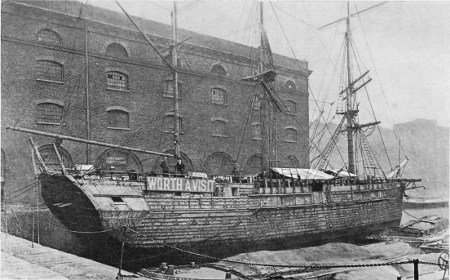
was three years and two months in the Warrior convict ship at
Woolwich, during which period I was employed on the government works in
the dockyard; and was sent abroad in March, 1850. At Millbank and the
hulks I had the best possible character, as also on my arrival at Hobart
Town, Van Diemen's Land, after a passage of four months. On my arrival I
received a ticket-of-leave, which I retained until I left the colony,
never having forfeited the same for a day by any kind of insubordinate
conduct. My motive in leaving Van Diemen's Land was to proceed to the
gold-diggings, in the hope that I might be successful and better the
condition of my family at home, who were in very impoverished
circumstances; but although my exertions were very great in California,
Victoria, and New South Wales, I was unsuccessful. It is true I made,
occasionally, some money; but I was robbed of it on the road by armed
bushrangers, and frequently ill-used and robbed at Melbourne and Geelong
by the worst of characters. I was shipwrecked twice, and once burnt out
at sea: the first time in Torres Straits, between New Holland and New
Guinea on a reef of coral rocks. Upon this occasion I lost between £70
and £80 in cash, and all my luggage. Eleven only of us got ashore, out
of a ship's company of twenty-seven, chiefly Lascars, Malays, and
Chinamen. After thirty days' great suffering and privation we were
picked up by an American whaler, and ultimately reached Sydney, New
South Wales.
"I was subsequently wrecked in a brigantine called the Triton, going
from Melbourne to Adelaide, and lost all I possessed in the world,
having another very narrow escape of my life. In returning from San
Francisco to Melbourne in a vessel called the White Squall, she caught
fire about three hundred and fifty miles from Tahiti (formerly called
Otaheite). We were obliged to abandon her and take to the boats; but a
great number of the crew and passengers perished by fire and water. The
survivors in the boats reached Tahiti in about eight days, in a state of
great exhaustion; many of them died from the effects of the same. I had
the misfortune to lose nearly all I possessed upon this occasion. On
reaching Melbourne I was very ill and went into the hospital. I left in
about five weeks, intending to go again to Mount Alexander diggings;
but, owing to ill-health, bad state of the roads from the floods, and
limited means, I abandoned such intention. I had a twelvemonth before
been to Ballarat, Mount Alexander, Forest Creek, Bendigo, and many other
diggings: but at this time there were no police or gold escort
troopers, consequently nearly all the unfortunate diggers were robbed of
what they got by hordes of bushrangers, well mounted, and armed with
revolvers and other weapons to the teeth. In returning to Melbourne from
Forest Creek the last time, I was beat, stripped, and robbed of all I
had, in the Black Forest, about halfway between Melbourne and Mount
Alexander.
"I left Melbourne in the brig Kestrel for Sydney, New South Wales, at
which place I was acquainted with many respectable parties, some of whom
I had known as far back as 1829, when I first went to Sydney with my
wife and children. The Kestrel put in at some of the settlements of
New Zealand, at one of which (Auckland) was lying a barque, bound for
England, in want of hands. The temptation was great to reach my dear
family, for which I had mourned ever since I met with my misfortune. I
shipped myself as ordinary seaman and assistant steward. We left the
settlement in July, with a miserably crippled ship's company, and made a
very severe passage round Cape Horn, in the winter season, which carried
away masts, sails, rigging, boats, bulwarks, stanchions, etc., etc. Some
of the crew were lost with the yards, and most of us were frost-bitten.
We put into Rio de Janeiro to refit and provision. We proceeded on our
passage, crossed the equator, touched at Funchal—one of the Azores—for
two days, and reached England in September, after a severe passage of
four months and twenty-six days from New Zealand.
"Under all the circumstances of my present unhappy condition, I humbly
hope the legislature will humanely consider the long, severe, and
various descriptions of punishment I have undergone since my conviction.
I would also most respectfully call the attention of the authorities to
the fact that the offence for which I have so severely suffered was the
first deviation from strict rectitude during my life; and that I have
never since, upon any occasion whatever, received a second sentence even
of the most minor description. It was only required of me by the then
regulation of the service, that I should serve five years upon the
public works at Woolwich. On my embarkation for Van Diemen's Land I had
done three years and four months: if I had completed the remaining
twenty months I should have been discharged from the dockyard a free
man. I also humbly beg to state, at the time I left Van Diemen's Land,
six years after my conviction, I was entitled by the regulations of the
service to a conditional pardon, which would have left me at liberty to
leave the colony without further restraint. I beg to state that during
the period of three years and four months I was at the hulks I worked in
all the gangs in the dockyard. Upon several occasions I received severe
injuries, some of which required me to be sent to the hospital ship. I
was ruptured by carrying heavy weights, the effect of which I have
frequently felt since, and do to the present day. During the two periods
when the cholera raged in the hulks, I attended upon the sick at the
hospital ships. I humbly implore the government will have compassion
upon me for the sake of my numerous and respectable family, for my great
mental and bodily sufferings since my conviction, and for my present
weakly, worn-out debilitated state of health, and award me a mild
sentence. During my captivity and absence my unfortunate wife has
suffered from great destitution, and has buried two of her children. She
is again bereaved of me in a distressed condition with her only
surviving child, a little girl of ten years of age."
This man was set at large without punishment.