Larger versions of most illustrations may be seen by right-clicking them
and selecting an option to view them separately, or by double-tapping and/or
stretching them.
THE CENTURY SCIENCE SERIES.
Edited by SIR HENRY E. ROSCOE, D.C.L., LL.D., F.R.S.
The Century Science Series.
EDITED BY SIR HENRY E. ROSCOE, D.C.L., F.R.S., M.P.
John Dalton and the Rise of Modern Chemistry.
By Sir Henry E. Roscoe, F.R.S.
Major Rennell, F.R.S., and the Rise of English Geography.
By Clements R. Markham, C.B., F.R.S., President
of the Royal Geographical Society.
The Herschels and Modern Astronomy.
By Miss Agnes M. Clerke, Author of “A Popular
History of Astronomy during the 19th Century,” &c.
In Preparation.
Justus von Liebig: his Life and Work.
By W. A. Shenstone, Science Master in Clifton College.
Michael Faraday: his Life and Work.
By Professor Silvanus P. Thompson, F.R.S.
Clerk Maxwell and Modern Physics.
By R. T. Glazebrook, F.R.S., Fellow of Trinity College,
Cambridge.
Charles Lyell: his Life and Work.
By Rev. Professor T. G. Bonney, F.R.S.
Humphry Davy.
By T. E. Thorpe, F.R.S., Principal Chemist of the
Government Laboratories.
Pasteur: his Life and Work.
By Armand Ruffer, Director of the British Institute of
Preventive Medicine.
Charles Darwin and the Origin of Species.
By Edward B. Poulton, M.A., F.R.S., Hope Professor
of Zoology in the University of Oxford.
Hermann von Helmholtz.
By A. W. Rücker, F.R.S., Professor of Physics in the
Royal College of Science, London.
CASSELL & COMPANY, Limited, London; Paris & Melbourne.
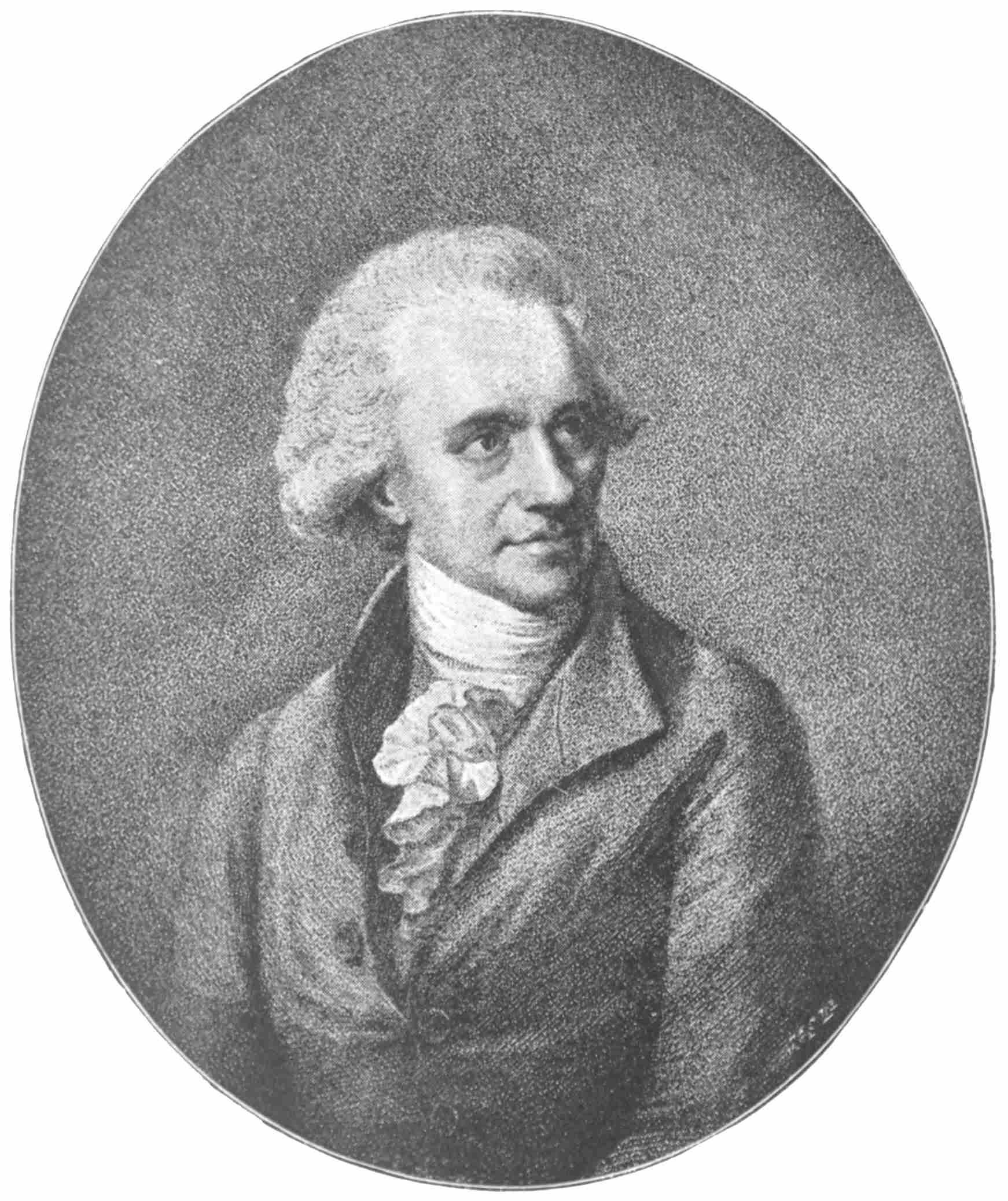
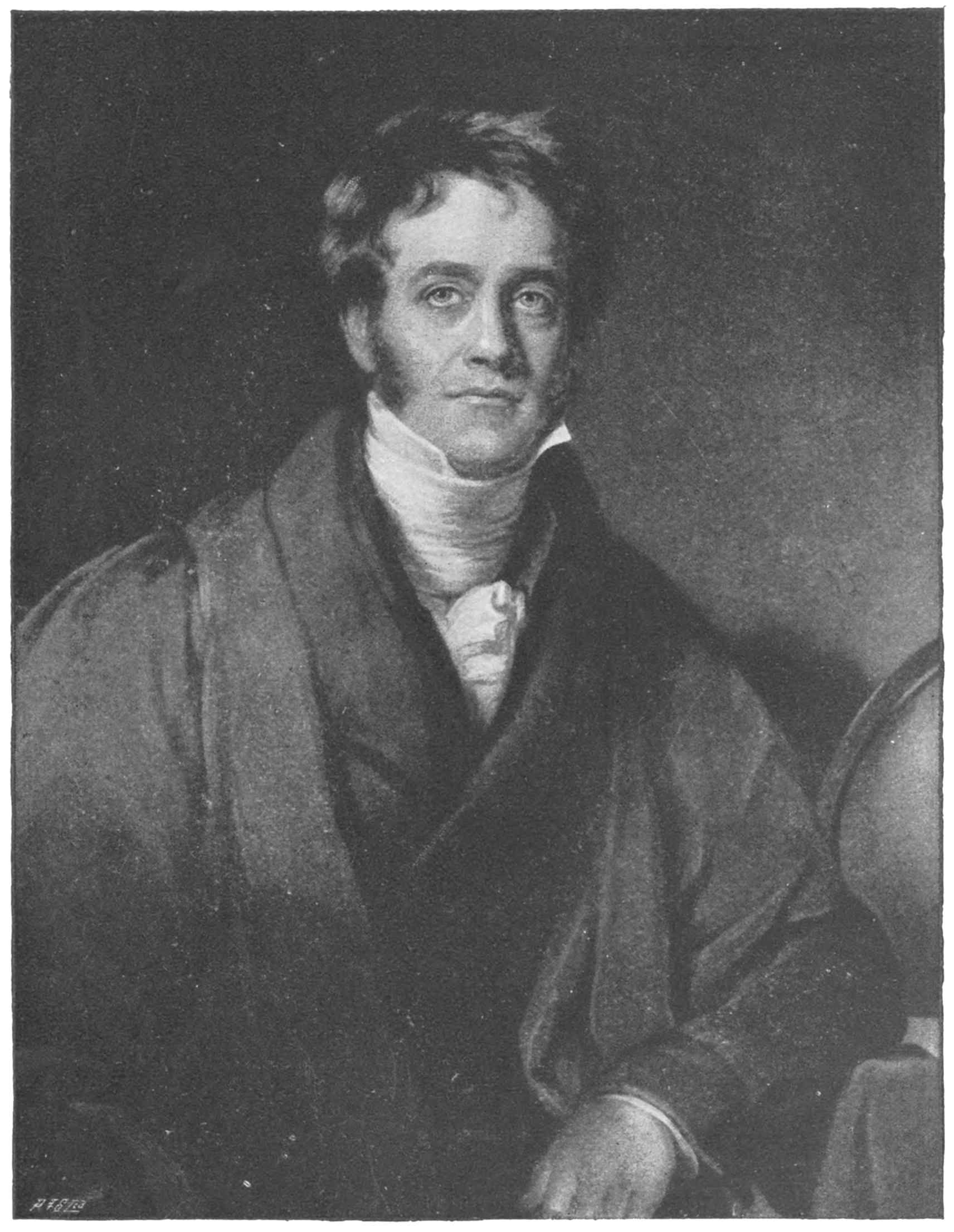
SIR WILLIAM HERSCHEL.
Ætat. 50.
(From Abbott’s painting in the National Portrait Gallery.)
THE CENTURY SCIENCE SERIES.
The Herschels AND MODERN ASTRONOMY
BY AGNES M. CLERKE
AUTHOR OF
“A POPULAR HISTORY OF ASTRONOMY DURING THE 19TH CENTURY,”
“THE SYSTEM OF THE STARS,” ETC.
CASSELL and COMPANY, Limited LONDON, PARIS & MELBOURNE
1895
ALL RIGHTS RESERVED
PREFACE.
The chief authority for the Life of Sir William
Herschel is Mrs. John Herschel’s “Memoir of Caroline
Herschel” (London, 1876). It embodies Caroline’s
Journals and Recollections, the accuracy of which
is above suspicion. William himself, indeed, referred
to her for dates connected with his early life. The
collateral sources of information are few and meagre;
they yield mere gleanings, yet gleanings worth collecting.
Professor E. S. Holden has had recourse to
many of them for his excellent little monograph
entitled “Herschel, his Life and Works” (London,
1881), which is usefully supplemented by “A Synopsis
of the Scientific Writings of Sir William Herschel,”
prepared by the same author with the aid of Professor
Hastings. It made part of the Smithsonian
Report for 1880, and was printed separately at Washington
in 1881. But the wonderful series of papers it
summarises have still to be sought, one by one, by
those desiring to study them effectually, in the various
volumes of the Philosophical Transactions in which
they originally appeared. Their collection and republication
is, nevertheless, a recognised desideratum,
and would fill a conspicuous gap in scientific literature.
Sir John Herschel’s life has yet to be written.
The published materials for it are scanty, although
they have been reinforced by the inclusion in the late
Mr. Graves’s “Life of Sir William Rowan Hamilton”
(Dublin, 1882–9) of his correspondence with that
remarkable man. The present writer has, however,
been favoured by the late Miss Herschel, and by
Sir William J. Herschel, with the perusal of a
considerable number of Sir John Herschel’s, as well
as of Sir William’s, manuscript letters. She also
gratefully acknowledges the kind help afforded to
her by Lady Gordon and Miss Herschel in connection
with the portraits reproduced in this volume. For
detailed bibliographical references, the articles on
Sir John, Sir William, and Caroline Herschel, in
the “Dictionary of National Biography,” may be
consulted.
William Herschel was descended from one of three
brothers, whose Lutheran opinions made it expedient
for them to quit Moravia early in the seventeenth
century. Hans Herschel thereupon settled as a
brewer at Pirna, in Saxony; his son Abraham rose to
some repute as a landscape-gardener in the royal service
at Dresden; and Abraham’s youngest son, Isaac,
brought into the world with him, in 1707, an irresistible
instinct and aptitude for music. Having
studied at Berlin, he made his way in 1731 to Hanover,
where he was immediately appointed oboist in
the band of the Hanoverian Guard. A year later he
married Anna Ilse Moritzen, by whom he had ten
children. The fourth of these, Frederick William,
known to fame as William Herschel, was born
November 15th, 1738.
His brilliant faculties quickly displayed themselves.
At the garrison-school he easily distanced his
brother Jacob, his senior by four years, and learned
besides, privately, whatever French and mathematics
the master could teach him. He showed also a pronounced
talent for music, and was already, at fourteen,
a proficient on the hautboy and violin. In this direction
lay his manifest destiny. His father was now bandmaster
of the Guard; he was poor, and had no other
provision to give his sons than to train them in his
own art; and thus William, driven by necessity to
become self-supporting while still a boy, entered the
band as oboist in 1753. They were a family of
musicians. Of the six who reached maturity, only
Mrs. Griesbach, the elder daughter, gave no sign of
personally owning a share in the common gift, which
descended, nevertheless, to her five sons, all noted
performers on sundry instruments.
William Herschel accompanied his regiment to
England in 1755, with his father and elder brother.
He returned a year later, bringing with him a copy of
Locke “On the Human Understanding,” upon which
he had spent the whole of his small savings. Two
of the three volumes thus acquired were recovered
by his sister after seventy years, and transmitted to
his son. The breaking-out of the Seven Years’ War
proved decisive as to his future life. Campaigning
hardships visibly told upon his health; his parents
resolved, at all hazards, to rescue him from them;
and accordingly, after the disaster at Hastenbeck,
July 26th, 1757, they surreptitiously shipped him off
to England. By this adventure, since he was in the
military service of the Elector of Hanover, George III.
of England, he incurred the penalties of desertion;
but they were never exacted, and were remitted by
the King himself in 1782.
William Herschel was in his nineteenth year
when he landed at Dover with a French crown-piece
in his pocket. Necessity or prudence kept him for
some time obscure; and we next hear of him as
having played a solo on the violin at one of Barbandt’s
concerts in London, February 15th, 1760. In the same
year he was engaged by the Earl of Darlington to train
the band of the Durham Militia, when his shining
qualities brought him to the front. The officers of the
regiment looked with astonishment on the phenomenal
young German who had dropped among them
from some cloudy region; who spoke English perfectly,
played like a virtuoso, and possessed a curious
stock of varied knowledge. Their account of him at
a mess-dinner excited the curiosity of Dr. Miller,
organist and historian of Doncaster, who, having
heard him perform a violin solo by Giardini, fell into
a rapture, and invited him on the spot to live with
him.
He left nothing undone for the advancement of
his protégé; procured for him tuitions and leading
concert engagements; and encouraged him, in 1765,
to compete for the post of organist at Halifax.
Herschel’s special qualifications were small; his chief
rival, Dr. Wainwright, was a skilled player, and at
the trial performance evoked much applause by his
brilliant execution. Only the builder of the organ,
an odd old German named Schnetzler, showed dissatisfaction,
exclaiming: “He run about the keys like
one cat; he gif my pipes no time for to shpeak.”
Then Herschel mounted the loft, and the church was
filled with a majestic volume of sound, under cover of
which a stately melody made itself heard. The “Old
Hundredth” followed, with equal effect. Schnetzler
was beside himself with delight. “I vil luf dis man,”
he cried, “because he git my pipes time for to
shpeak.” Herschel had virtually provided himself
with four hands. A pair of leaden weights brought
in his pocket served to keep down two keys an octave
apart, while he improvised a slow air to suit the continuous
bass thus mechanically supplied. The artifice
secured him the victory.
This anecdote is certainly authentic. It is related
by Dr. Miller from personal knowledge. Nor is it
inconsistent with a story told by Joah Bates, of
King’s College, Cambridge, a passionate lover of
music. Repairing to Halifax, his native place, to
conduct the “Messiah” at the opening of a new
organ, he was accosted in the church by a young
man, who asked for an opportunity of practising
on it. Although as yet, he said, unacquainted
with the instrument, he aspired to the place of
organist; and the absolute certitude of his manner so
impressed Bates that he not only granted his request,
but became his warm patron. The young man’s
name was William Herschel. We hear, further, on
Dr. Burney’s authority, that he played first violin in
Bates’s orchestra.
But the tide of his fortunes was flowing, and he
knew how to “take it at the flood.” Early in 1766
he removed to Bath as oboist in Linley’s celebrated
orchestra, which played daily in the Pump Room to
enliven the parade of blushing damsels and ruffling
gallants pictured to our fancy in Miss Austen’s novels.
Bath was then what Beau Nash had made it—the
very focus of polite society. Turbans nodded over
cards; gigs threaded their way along Union Passage;
Cheap Street was blocked with vehicles; the Lower
Rooms witnessed the nightly evolutions of the
country-dance; the Grove, as Doran reminds us, was
brilliant with beauty, coquelicot ribbons, smart pelisses,
laced coats, and ninepins. The feat of “tipping
all nine for a guinea” was frequently performed;
and further excitement might be had by merely
plucking some lampoons from the trees, which seemed
to bear them as their natural fruit. Music, too, was
in high vogue. The theatres were thronged; and
Miss Linley’s exquisite voice was still heard in the
concert-halls.
On the 4th of October, 1767, the new Octagon
Chapel was opened for service, with Herschel as
organist. How it was that he obtained this “agreeable
and lucrative situation” we are ignorant; but
he had that singular capacity for distinction which
explains everything. The Octagon Chapel became a
centre of fashionable attraction, and he soon found
himself lifted on the wave of public favour. Pupils
of high rank thronged to him, and his lessons
often mounted to thirty-five a week. He composed
anthems, psalm-tunes, even full services for
his assiduously-trained choir. His family were made
sharers in his success. He secured a post in Linley’s
orchestra for his younger brother Alexander, in 1771;
and he himself fetched his sister Caroline to Bath in
1772. Both were of very considerable help to him in
his musical and other enterprises, the latter of which
gradually gained ground over the former.
Music was never everything to William Herschel.
He cultivated it with ardour; composed with facility
in the prevalent graceful Italian style; possessed a
keen appreciation and perfect taste. But a musical
career, however brilliant, did not satisfy him. The
inner promptings of genius told him to look beyond.
The first thirty-five years of his life were thus spent
in diligently preparing to respond to an undeclared
vocation. Nothing diverted him from his purpose of
self-improvement. At first, he aimed chiefly at
mastering the knowledge connected with his profession.
With a view to the theory of music, “I
applied myself early,” he said, in a slight autobiographical
sketch sent to Lichtenberg at Göttingen,
“to all the branches of the mathematics, algebra,
conic sections, fluxions, etc. Contracting thereby an
insatiable desire for knowledge in general, I extended
my application to languages—French, Italian, Latin,
English—and determined to devote myself entirely to
the pursuit of knowledge, in which I resolved to place
all my future enjoyment and felicity. This resolution
I have never had occasion to change.” At Bath, in
the midst of engrossing musical occupations, his zeal
for study grew only the more intense. After fourteen
or sixteen hours of teaching, he would “unbend his
mind” by plunging into Maclaurin’s “Fluxions,” or
retire to rest with a basin of milk, Smith’s “Opticks,”
and Ferguson’s “Astronomy.” He had no sooner
fallen under the spell of this last science than he
“resolved to take nothing upon trust, but to see
with my own eyes all that other men had seen
before.”
He hired, to begin with, a small reflector; but
what it showed him merely whetted his curiosity.
And the price of a considerably larger instrument
proved to be more than he could afford to pay.
Whereupon he took the momentous resolution of
being, for the future, his own optician. This was in
1772. He at first tried fitting lenses into pasteboard
tubes, with the poor results that can be imagined.
Then he bought from a Quaker, who had dabbled in
that line, the discarded rubbish of his tools, patterns,
polishers, and abortive mirrors; and in June, 1773,
when fine folk had mostly deserted Bath for summer
resorts, work was begun in earnest. The house was
turned topsy-turvy; the two brothers attacked the
novel enterprise with boyish glee. Alexander, a born
mechanician, set up a huge lathe in one of the bedrooms;
a cabinet-maker was installed in the drawing-room;
Caroline, in spite of secret dismay at such
unruly proceedings, lent a hand, and kept meals
going; William directed, inspired, toiled, with the
ardour of a man who had staked his life on the issue.
Meanwhile, music could not be neglected. Practising
and choir-training went on; novelties for the ensuing
season were prepared; compositions written, and
parts copied. Then the winter brought the usual
round of tuitions and performances, while all the time
mirrors were being ground and polished, tried and
rejected, without intermission. At last, after two
hundred failures, a tolerable reflecting telescope was
produced, about five inches in aperture, and of five
and a half feet focal length. The outcome may seem
small for so great an expenditure of pains; but those
two hundred failures made the Octagon Chapel
organist an expert, unapproached and unapproachable,
in the construction of specula. With his new
instrument, on March 4th, 1774, he observed the
Nebula in Orion; and a record of this beginning of
his astronomical work is still preserved by the Royal
Society.
William Herschel was now, as to age, in mezzo
cammin. He had numbered just so many years as
had Dante when he began the “Divina Commedia.”
But he had not, like Dante, been thrown off the rails
of life. The rush of a successful professional career
was irresistibly carrying him along. Almost any
other man would have had all his faculties absorbed
in it. Herschel’s were only stimulated by the occupations
which it brought. Yet they were of a peculiarly
absorbing nature. Music is the most exclusive
of arts. In turning aside, after half a lifetime spent
in its cultivation, to seek his ideal elsewhere, Herschel
took an unparalleled course. And his choice was
final. Music was long his pursuit, astronomy his
pastime; a fortunate event enabled him to make
astronomy his pursuit, while keeping music for a
pastime.
Yet each demands a totally different kind of
training, not only of the intellect, but of the senses.
From his earliest childhood William Herschel’s nerves
and brain had been specially educated to discriminate
impressions of sound, and his muscles to the peculiar
agility needed for their regulated and delicate production;
while, up to the age of thirty-five, he had
used his eyes no more purposefully than other people.
The eye, nevertheless, requires cultivation as much as
the ear. “You must not expect to see at sight,” he
told Alexander Aubert, of Loam Pit Hill, in 1782.
And he wrote to Sir William Watson: “Seeing is in
some respects an art which must be learnt. Many a
night have I been practising to see, and it would be
strange if one did not acquire a certain dexterity by
such constant practice.” A critical observation, he
added, could no more be expected from a novice at
the telescope than a performance of one of Handel’s
organ-fugues from a beginner in music. In this difficult
art of vision he rapidly became an adept. Taking
into account the full extent of his powers, the opinion
has been expressed, and can scarcely be contradicted,
that he never had an equal.
At midsummer, 1774, Herschel removed from
No. 7, New King Street, to a house situated near
Walcot Turnpike, Bath. A grass-plot was attached
to the new residence, and it afforded convenient space
for workshops. For already he designed to “carry
improvements in telescopes to their utmost extent,”
and “to leave no spot of the heavens unvisited.” An
unprecedented ambition! No son of Adam had ever
before entertained the like. To search into the
recesses of space, to sound its depths, to dredge up
from them their shining contents, to classify these,
to investigate their nature, and trace their mutual
relations, was what he proposed to do, having first
provided the requisite optical means. All this in the
intervals of professional toils, with no resources except
those supplied by his genius and ardour, with no
experience beyond that painfully gained during the
progress of his gigantic task.
Since the time of Huygens, no systematic attempt
had been made to add to the power of the telescope.
For the study of the planetary surfaces, upon which
he and his contemporaries were mainly intent, such
addition was highly desirable. But Newton’s discovery
profoundly modified the aims of astronomers.
Their essential business then became that of perfecting
the theories of the heavenly bodies. Whether or not
they moved in perfect accordance with the law of gravitation
was the crucial question of the time. Newton’s
generalisation was on its trial. Now and again it
almost seemed as if about to fail. But difficulties
arose only to be overcome, and before the eighteenth
century closed the superb mechanism of the planetary
system was elucidated. Working flexibly under the
control of a single dominant force, it was shown to
possess a self-righting power which secured its indefinite
duration. Imperishable as the temple of
Poseidon, it might be swayed by disturbances, but
could not be overthrown.
The two fundamental conclusions—that the Newtonian
law is universally valid, and that the solar
system is a stable structure—were reached by immense
and sustained labours. Their establishment was due,
in the main, to the mathematical genius of Clairaut,
D’Alembert, Lagrange, and Laplace. But refined
analysis demands refined data; hence the need for increased
accuracy of observation grew continually more
urgent. Attention was accordingly concentrated upon
measuring, with the utmost exactitude, the places at
determinate epochs of the heavenly bodies. The one
thing needful was to learn the “when” and “where”
of each of them—that is, to obtain such information
as the transit-instrument is adapted to give. In
this way the deviations of the moon and planets
from their calculated courses became known; and
upon the basis of these “errors” improved theories
were built, then again compared with corrected
observations.
For these ends, large telescopes would have been
useless. They were not, however, those that Herschel
had in view. The nature of the orbs around us, not
their motions, formed the subject of his inquiries,
with which modern descriptive astronomy virtually
originated. He was, moreover, the founder of sidereal
astronomy. The stars had, until his career began,
received little primary attention. They were regarded
and observed simply as reference-points by which to
track the movements of planets, comets, and the
moon. Indispensable for fiducial purposes, they almost
escaped consideration for themselves. They were,
indeed, thought to lie beyond the reach of effective
investigation. Only the outbursts of temporary stars,
and the fluctuations of two or three periodical ones,
had roused special interest, and seemed deserving of
particular inquiry.
Of the dim objects called “nebulæ,” Halley had
counted up half a dozen in 1714; Lacaille compiled a
list of forty-two at the Cape, in 1752–55; and Messier
published at Paris, in 1771, a catalogue of forty-five,
enlarged to one hundred and three in 1781. He
tabulated, only to rid himself of embarrassments
from them. For he was by trade a comet-hunter,
and, until he hit upon this expedient, had been much
harassed in its exercise by mistakes of identity.
But Herschel did not merely “pick up;” he
explored. This was what no one before him had
thought of doing. A “review of the heavens” was a
complete novelty. The magnificence of the idea,
which was rooted in his mind from the start, places
him apart from, and above, all preceding observers.
To its effective execution telescopic development
was essential. The two projects of optical improvement
and of sidereal scrutiny went together. The
skies could be fathomed, if at all, only by means of
light-collecting engines of unexampled power. Rays
enfeebled by distance should be rendered effective by
concentration. Stratum after stratum of bodies—
“Clusters and beds of worlds, and bee-like swarms
Of suns and starry streams,”
previously unseen, and even unsuspected, might, by
the strong focussing of their feebly-surviving rays, be
brought to human cognisance. The contemplated
“reviews” would then be complete just in proportion
to the grasp of the instrument used in making them.
The first was scarcely more than a reconnaissance.
It was made in 1775, with a small reflector of the
Newtonian make.A Its upshot was to impress him
with the utter disproportion between his daring plans
and the means as yet at his disposal. Speculum-casting
accordingly recommenced with fresh vigour.
Seven- and ten-foot mirrors were succeeded by others
of twelve, and even of twenty feet focal length. The
finishing of them was very laborious. It was at that
time a manual process, during the course of which the
hands could not be removed from the metal without
injury to its figure. One stretch of such work lasted
sixteen hours, Miss Herschel meantime, “by way of
keeping him alive,” putting occasional morsels of food
into the diligent polisher’s mouth. His mode of procedure
was to cast and finish many mirrors of each
sort; then to select the best by trial, and repolish the
remainder. In this manner he made, before 1781,
“not less than 200 seven-foot, 150 ten-foot, and about
80 twenty-foot mirrors, not to mention those of the
Gregorian form.” Repolishing operations were, moreover,
accompanied by constant improvements, so that
each successive speculum tended to surpass its predecessors.
A In “Newtonian” telescopes the image formed by the large
speculum is obliquely reflected from a small plane mirror to the side
of the tube, where it is viewed with an ordinary eye-piece. With a
“Gregorian,” the observer looks straight forward, the image being
thrown back by a little concave mirror through a central perforation
in the speculum where the eye-piece is fitted.
These absorbing occupations were interrupted by
the unwelcome news that Dietrich, the youngest of
the Herschel family, had decamped from Hanover
“with a young idler” like himself. William instantly
started for Holland, where the fugitive was supposed
to be about to take ship for India, but missed his
track; and, after having extended his journey to
Hanover to comfort his anxious mother—his father
had died in 1767—returned sadly to Bath. There, to
his immense surprise, he found the scapegrace in
strict charge of his sister, “who kept him to a diet
of roasted apples and barley-water.” His ineffectual
escapade had terminated with an attack of illness at
Wapping, whither Alexander Herschel, on learning
how matters stood, had posted off to take him in
charge and watch his recovery. Musical occupation
was easily procured for him at Bath, since he was an
accomplished violinist—had, indeed, started on his
unprosperous career in the guise of an infant prodigy;
but he threw it up in 1779 and drifted back to
Hanover, married a Miss Reif, and settled down to
live out a fairly long term of shiftless, albeit harmless,
existence.
In 1776 William Herschel succeeded Thomas
Linley, Sheridan’s father-in-law, as Director of the
Public Concerts at Bath. His duties in this capacity,
while the season lasted, were most onerous. He had
to engage performers, to appease discontents, to
supply casual failures, to write glees and catches
expressly adapted to the voices of his executants,
frequently to come forward himself as a soloist on
the hautboy or the harpsichord. The services of his
brother Alexander, a renowned violoncellist, and of
his sister, by this time an excellent singer, were now
invaluable to him. Nor for musical purposes solely.
The vision of the skies was never lost sight of, and
the struggle to realise it in conjunction with his sympathetic
helpers absorbed every remnant of time. At
meals the only topics of conversation were mechanical
devices for improving success and averting failure.
William ate with a pencil in his hand, and a project
in his head. Between the acts at the theatre, he
might be seen running from the harpsichord to his
telescope. After a rehearsal or a morning performance,
he would dash off to the workshop in periwig
and lace ruffles, and leave it but too often with
those delicate adjuncts to his attire torn and pitch-bespattered.
Accidents, too, menacing life and limb,
were a consequence of that “uncommon precipitancy
which accompanied all his actions;” but he escaped
intact, save for the loss of a finger-nail.
His introduction to the learned world of Bath was
thus described by himself:—
“About the latter end of December, 1779, I happened to be
engaged in a series of observations on the lunar mountains;
and the moon being in front of my house, late in the evening
I brought my seven-feet reflector into the street, and directed
it to the object of my observations. Whilst I was looking into
the telescope, a gentleman, coming by the place where I was
stationed, stopped to look at the instrument. When I took
my eye off the telescope, he very politely asked if he might be
permitted to look in, and this being immediately conceded, he
expressed great satisfaction at the view.”
The inquisitive stranger called next morning, and
proved to be Dr. (later Sir William) Watson. He
formed on the spot an unalterable friendship for the
moon-struck musician, and introduced him to a
Philosophical Society which held its meetings at his
father’s house. Herschel’s earliest essays were read
before it, but they remained unpublished. His first
printed composition appeared in the “Ladies’ Diary”
for 1780. It was an answer to a prize question on
the vibration of strings.
The long series of his communications to the
Royal Society of London opened May 11th, 1780,
with a discussion of his observations, begun in October,
1777, of Mira, the variable star in the neck of the
Whale. As to the theory of its changes, he agreed
with Keill that they could best be explained by supposing
rotation on an axis to bring a lucid side and a
side obscured by spots alternately into view. A
second paper by him on the Mountains of the Moon
was read on the same day. He measured, in all,
about one hundred of these peaks and craters.
In January, 1781, there came an essay stamped
with the peculiar impress of his genius, entitled
“Astronomical Observations on the Rotation of the
Planets round their Axes, made with a view to determine
whether the earth’s diurnal motion is perfectly
equable.” It embodied an attempt to apply a definite
criterion to the time-keeping of our planet. But the
prospect is exceedingly remote of rating one planet-clock
by the other. Herschel’s methods of inquiry are,
however, aptly illustrated in this curiously original
paper. His speculations always invited the control of
facts. If facts were not at hand, he tried somehow to
collect them. The untrammelled play of fancy was
no more to his mind than it was to Newton’s. His
ardent scientific imagination was thus, by the sobriety
of his reason, effectively enlisted in the cause of
progress.
Herschel began in 1780 his second review of the
heavens, using a seven-foot Newtonian, of 6¼ inches
aperture, with a magnifying power of 227. “For
distinctness of vision,” he said, “this instrument is,
perhaps, equal to any that was ever made.” His
praise was amply justified. As he worked his way
with it through the constellation Gemini, on the night
of March 13th, 1781, an unprecedented event occurred.
“A new planet swam into his ken.” He did not
recognise it as such. He could only be certain that it
was not a fixed star. His keen eye, armed with a
perfect telescope, discerned at once that the object
had a disc; and the application of higher powers
showed the disc to be a substantial reality. The stellar
“patines of bright gold” will not stand this test.
Being of purely optical production, they gain nothing
by magnification.
At that epoch new planets had not yet begun to
be found by the dozen. Five, besides the earth, had
been known from the remotest antiquity. Five, and
no more, seemed to have a prescriptive right to exist.
The boundaries of the solar system were of immemorial
establishment. It was scarcely conceivable
that they should need to be enlarged. The notion
did not occur to Herschel. His discovery was modestly
imparted to the Royal Society as “An Account of a
Comet.” He had, indeed, noticed that the supposed
comet moved in planetary fashion from west to east,
and very near the ecliptic; and, after a few months,
its true nature was virtually proved by Lexell of St.
Petersburg. On November 28th, Herschel measured,
with his freshly-invented “lamp-micrometer,” the
diameter of this “singular star;” and it was not until
a year later, November 7th, 1782, that he felt sufficiently
sure of its planetary status to exercise his
right of giving it a name. Yet this, in the long run,
he failed to accomplish. The appellation “Georgium
Sidus,” bestowed in honour of his patron, George III.,
never crossed the Channel, and has long since gone
out of fashion amongst ourselves. Lalande tried
to get the new planet called “Herschel;” but the
title “Uranus,” proposed by Bode, of Berlin, was the
“fittest,” and survived.
This discovery made the turning-point of Herschel’s
career. It transformed him from a music-master into
an astronomer. Without it his vast abilities would
probably have been in great measure wasted. No
man could long have borne the strain of so arduous a
double life as he was then leading. Relief from it
came just in time. It is true that fame, being often
more of a hindrance than a help, brought embarrassments
in its train. In November, 1781, Herschel was
compelled to break the complex web of his engagements
at Bath by a journey to London for the purpose
of receiving in person the Copley Medal awarded
to him by the Royal Society, of which body he was,
some days later, elected a Fellow. At home, he was
persecuted by admirers; and they were invariably
received with an easy suavity of manner that gave no
hint of preoccupation. Everyone of scientific pretension
who visited Bath sought an interview with the
extraordinary man who, by way of interlude to pressing
duties, had built telescopes of unheard-of power,
and performed the startling feat of adding a primary
member to the solar system. Among the few of
these callers whose names have been preserved were
Sir Harry Englefield, Sir Charles Blagden, and
Dr. Maskelyne, then, and for thirty years afterwards,
Astronomer-Royal. “With the latter,” Miss Herschel
relates, “he (William) was engaged in a long conversation
which to me sounded like quarrelling, and the first
words my brother said after he was gone were, ‘That
is a devil of a fellow!’” The phrase was doubtless
meant as a sign of regard, for the acquaintance thus
begun ripened into cordial intimacy. And William
Herschel never lost or forgot a friend.
As regards music alone, the winter of 1781–82 was
an exceptionally busy one. He had arranged to
conduct, jointly with Rauzzini, a Roman singer and
composer, a series of oratorios; undertaking, besides,
pecuniary responsibilities which turned out little to
his advantage. The labour, vexation, and disappointment
involved in carrying out this unlucky plan can
readily be imagined. But neither the pressure of
business, nor the distractions of celebrity, checked the
ardour of his scientific advance. The review which
afforded him the discovery of Uranus, and the
materials for his first catalogue of 269 double stars,
was completed in 1781; and a third, made with the
same beautiful instrument, bearing the high magnifying
power of 460, was promptly begun. This had for
one of its special objects the ascertainment of possible
changes in the heavens since Flamsteed’s time; and
in the course of it many thousands of stars came
under scrutiny, directed to ascertain their magnitude
and colour, singleness or duplicity, hazy or defined
aspect.
The first of Herschel’s effective twenty-foot telescopes
was erected at 19, New King Street, in the
summer of 1781. Enclosing a mirror twelve inches
in diameter, it far surpassed any seeing-machine that
had ever existed in the world. Yet its maker regarded
it as only marking a step in his upward progress. A
speculum of thirty-feet focus was the next object of
his ambition. For its achievement no amount of
exertion was counted too great. Its composition was
regulated by fresh experiments on various alloys of
copper and tin. Its weight and shape were again and
again calculated, and the methods appropriate to its
production earnestly discussed. “I saw nothing else,”
Caroline Herschel tells us, “and heard nothing else
talked of but these things when my brothers were
together.”B
B In borrowing Miss Herschel’s lively narratives and comments,
some obvious slips in grammar and construction have been corrected.
Quotations, too, from the writings of Sir William and Sir John
Herschel are often slightly abridged.
“The mirror,” she continues, “was to be cast in a
mould of loam prepared from horse-dung, of which an
immense quantity was to be pounded in a mortar and
sifted through a fine sieve. It was an endless piece
of work, and served me for many an hour’s exercise;
and Alex frequently took his turn at it, for we were
all eager to do something towards the great undertaking.
Even Sir William Watson would sometimes
take the pestle from me when he found me in the
work-room.”
The matter was never out of the master’s thoughts.
“If a minute could but be spared in going from one
scholar to another, or giving one the slip, he called at
home to see how the men went on with the furnace,
which was built in a room below, even with the
garden.”
At last, the concert season being over, and everything
in readiness for the operation of casting, “the
metal,” we hear from the same deeply-interested eyewitness,
“was in the furnace; but, unfortunately, it
began to leak at the moment when ready for pouring,
and both my brothers, and the caster with his men,
were obliged to run out at opposite doors, for the
stone flooring, which ought to have been taken up,
flew about in all directions, as high as the ceiling.
My poor brother William fell, exhausted with heat
and exertion, on a heap of brickbats. Before the
second casting was attempted, everything which could
ensure success had been attended to, and a very
perfect metal was found in the mould, which had
cracked in the cooling.”
This second failure terminated the enterprise.
Not that it was abandoned as hopeless, but because of
a total change in the current of affairs. Herschel’s
fame had stirred the royal curiosity, and rumours had
now and again reached Bath that he was to be sent
for to court. In the spring of 1782 the actual mandate
arrived; and on May 8th, leaving his pupils and
his projects to shift for themselves, he set out for
London. He carried with him his favourite seven-foot
reflector, and all the apparatus necessary for
viewing double stars and other objects of interest.
On May 25th he wrote to his sister:—
“I have had an audience of His Majesty this
morning, and met with a very gracious reception. I
presented him with the drawing of the solar system,
and had the honour of explaining it to him and the
Queen. My telescope is in three weeks’ time to go
to Richmond, and meanwhile to be put up at
Greenwich.... Tell Alexander that everything
looks very like as if I were to stay here. The King
enquired after him, and after my great speculum.
He also gave me leave to come and hear the Griesbachs
(Herschel’s nephews) play at the private concert
which he has every evening.... All my
papers are printing, and are allowed to be very
valuable. You see, Lina, I tell you all these things.
You know vanity is not my foible, therefore I need
not fear your censure. Farewell.”
His next letter is dated June 3rd, 1782. “I pass
my time,” he informed “Lina,” “between Greenwich
and London agreeably enough, but am rather at a loss
for work that I like. Company is not always pleasing,
and I would much rather be polishing a speculum.
Last Friday I was at the King’s concert to hear
George play. The King spoke to me as soon as he
saw me, and kept me in conversation for half an hour.
He asked George to play a solo-concerto on purpose
that I might hear him.... I am introduced to
the best company. To-morrow I dine at Lord
Palmerston’s, next day with Sir Joseph Banks, etc.
Among opticians and astronomers nothing now is
talked of but what they call my great discoveries.
Alas! this shows how far they are behind, when such
trifles as I have seen and done are called great. Let
me but get at it again! I will make such telescopes
and see such things—that is, I will endeavour to do so.”
A comparison of his telescope with those at the
Royal Observatory showed its striking superiority,
although among them was one of Short’s famous
Gregorians, of 9½ inches aperture. It had thus a
reflecting surface above twice that of Herschel’s
seven-foot, the competition with which was nevertheless
so disastrous to its reputation that Dr. Maskelyne
fell quite out of conceit with it, and doubted whether
it deserved the new stand constructed for it on the
model of Herschel’s.
In the midst of these scientific particulars, we
hear incidentally that influenza was then so rife in
London that “hardly one single person” escaped an
attack.
On July 2nd he made his first appearance as
showman of the heavens to royalty. The scene of
the display was Buckingham House (now Buckingham
Palace). “It was a very fine evening,” he wrote to
his sister. “My instrument gave general satisfaction.
The King has very good eyes, and enjoys observations
with telescopes exceedingly.”
Next night, the King and Queen being absent at
Kew, the Princesses desired an exhibition. But, since
they objected to damp grass, the telescope, Herschel
says, “was moved into the Queen’s apartments, and
we waited some time in hopes of seeing Jupiter or
Saturn. Meanwhile I showed the Princesses and
several other ladies the speculum, the micrometers,
the movements of the telescope, and other things that
seemed to excite their curiosity. When the evening
appeared to be totally unpromising, I proposed an
artificial Saturn as an object, since we could not have
the real one. I had beforehand prepared this little
piece, as I guessed by the appearance of the weather
in the afternoon we should have no stars to look at.
This being accepted with great pleasure, I had the
lamps lighted up, which illuminated the picture of a
Saturn (cut out in pasteboard) at the bottom of the
garden wall. The effect was fine, and so natural that
the best astronomer might have been deceived.
Their royal highnesses seemed to be much pleased
with the artifice.” From a somewhat prolonged conversation,
he judged them to be “extremely well
instructed,” and “most amiable characters.”
Shortly afterwards Herschel received the appointment
of royal astronomer, with the modest salary of
£200 a year. “Never,” exclaimed Sir William Watson
on being made acquainted with its amount, “bought
monarch honour so cheap!” The provision was
assuredly not munificent; yet it sufficed to rescue a
great man from submergence under the hard necessities
of existence. The offer was critically timed. It
was made precisely when teaching and concert-giving
had come to appear an “intolerable waste of time” to
one fired with a visionary passion. “Stout Cortes”
staring at the Pacific, Ulysses starting from Ithaca to
“sail beyond the sunset,” were not more eager for
experience of the Unknown.
CHAPTER II. THE KING’S ASTRONOMER.
William Herschel was now an appendage to the
court of George III. He had to live near Windsor, and
a large dilapidated house on Datchet Common was
secured as likely to meet his unusual requirements.
The “flitting” took place August 1, 1782. William was
in the highest spirits. There were stables available
for workrooms and furnaces; a spacious laundry that
could be turned into a library; a fine lawn for the
accommodation of the great reflector. Crumbling
walls and holes in the roof gave him little or no
concern; and if butcher’s meat was appallingly dear
(as his sister lamented) the family could live on bacon
and eggs! In this sunny spirit he entered upon the
career of untold possibilities that lay before him.
Nevertheless the King’s astronomer did not find it
all plain sailing. His primary duty was to gratify the
royal taste for astronomy, and this involved no trifling
expenditure of time and toil. The transport of the
seven-foot to the Queen’s lodge could be managed in
the daylight, but its return-journey in the dark, after
the conclusion of the celestial raree-show, was an
expensive and a risky business; yet fetched back it
should be unless a clear night were to be wasted—a
thing not possible to contemplate. This kind of
attendance was, however, considerately dispensed with
when its troublesome nature came to be fully understood.
Herschel’s treatment by George III. has often
been condemned as selfish and niggardly; but with
scant justice. In some respects, no doubt, it might
advantageously have been modified. Still, the fact
remains that the astronomer of Slough was the gift
to science of the poor mad King. From no other
crowned head has it ever received so incomparable an
endowment.
Herschel’s salary was undeniably small. It gave
him the means of living, but not of observing, as he
proposed to observe. If the improvement of telescopes
were to be “carried to its utmost limit,” additional
funds must be raised. Without an ample supply of
the “sinews of war,” fresh campaigns of exploration
were out of the question. There was one obvious way
in which they could be provided. Herschel’s fame as
an optician was spread throughout Europe. His
telescopes were wanted everywhere, but could be had
from himself alone; for the methods by which he
wrought specula to a perfect figure are even now
undivulged. They constituted, therefore, a source of
profit upon which he could draw to almost any extent.
He applied himself, accordingly, to make telescopes
for sale. They brought in large sums. Six hundred
guineas a-piece were paid to him by the King for four
ten-foot reflectors; he received at a later date £3,150
for a twenty-five foot, sent to Spain; and in 1814
£2,310 from Lucien Bonaparte for two smaller instruments.
The regular scale of prices (later considerably
reduced) began with 200 guineas for a seven-foot, and
mounted to 2,500 for a twenty-foot; and the commissions
executed were innumerable.
But Herschel did not come into the world to drive
a lucrative trade. It was undertaken, not for itself,
but for what was to come of it; yet there was danger
lest the end should be indefinitely postponed in the
endeavour to secure the means.
“It seemed to be supposed,” Miss Herschel
remarked, “that enough had been done when my
brother was enabled to leave his profession that he
might have time to make and sell telescopes. But all
this was only retarding the work of a thirty or forty-foot
instrument, which it was his chief object to
obtain as soon as possible; for he was then on the
wrong side of forty-five, and felt how great an injustice
he would be doing to himself and the cause of
astronomy by giving up his time to making telescopes
for other observers.”
This he was, fortunately, not long obliged to do.
A royal grant of £2,000 for the construction of the
designed giant telescope, followed by another of equal
amount, together with an annual allowance of £200
for its repairs, removed the last obstacle to his success.
The wide distribution of first-class instruments might,
indeed, have been thought to promise more for
the advancement of astronomy than the labours of
a single individual. No mistake could be greater.
Not an observation worth mentioning was made with
any of the numerous instruments sent out from
Datchet or Slough, save only those acquired by
Schröter and Pond. The rest either rusted idly, or
were employed ineffectually, aptly illustrating the
saying that “the man at the eye-end” is the truly
essential part of a telescope.
No one knew this better than Herschel. Every
serene dark night was to him a precious opportunity
availed of to the last minute. The thermometer
might descend below zero, ink might freeze, mirrors
might crack; but, provided the stars shone, he and his
sister worked on from dusk to dawn. In this way, his
“third review,” begun at Bath, was finished in the
spring of 1783. The swiftness with which it was
conducted implied no want of thoroughness. “Many
a night,” he states, “in the course of eleven or twelve
hours of observation, I have carefully and singly
examined not less than 400 celestial objects, besides
taking measures, and sometimes viewing a particular
star for half an hour together, with all the various
powers.”
The assiduity appears well-nigh incredible with
which he gathered in an abundant harvest of nebulæ
and double stars; his elaborate papers, brimful of invention
and experience, being written by day, or during
nights unpropitious for star-gazing. On one occasion
he is said to have worked without intermission at
the telescope and the desk for seventy-two hours,
and then slept unbrokenly for twenty-six hours. His
instruments were never allowed to remain disabled.
They were kept, like himself, on the alert. Relays of
specula were provided, and one was in no case removed
from the tube for re-polishing, unless another was
ready to take its place. Even the meetings of the
Royal Society were attended only when moonlight
effaced the delicate objects of his particular search.
The summer of 1788 was spent in getting ready
the finest telescope Herschel had yet employed. It
was called the “large twenty-foot” because of the size
of its speculum, which was nearly nineteen inches in
diameter; and with its potent help he executed his
fourth and last celestial survey. His impatience to
begin led him into perilous situations.
“My brother,” says Miss Herschel, “began his
series of sweeps when the instrument was yet in a
very unfinished state; and my feelings were not very
comfortable when every moment I was alarmed by a
crack or fall, knowing him to be elevated fifteen feet
or more on a temporary cross-beam instead of a safe
gallery. The ladders had not even their braces at the
bottom; and one night, in a very high wind, he had
hardly touched the ground before the whole apparatus
came down. Some labouring men were called up to
help in extricating the mirror, which was fortunately
uninjured, but much work was cut out for carpenters
next day.”
In the following March, he himself wrote to Patrick
Wilson, of Glasgow, son of Dr. Alexander Wilson, the
well-known professor of astronomy:—“I have finished
a second speculum to my new twenty-foot, very much
superior to the first, and am now reviewing the heavens
with it. This will be a work of some years; but it is
to me so far from laborious that it is attended with
the utmost delight.” He, nevertheless, looked upon
telescopes as “yet in their infant state.”
The ruinous mansion at Datchet having become
uninhabitable, even by astronomers, their establishment
was shifted, in June, 1785, to Clay Hall, near
Old Windsor. Here the long-thought-of forty-foot was
begun, but was not destined to be finished. A litigious
landlady intervened. The next move, however, proved
to be the last. It was to a commodious residence at
Slough, now called “Observatory House”—“le lieu du
monde,” wrote Arago, “où il a été fait le plus de
découvertes.” Thither, without the loss of an hour, in
April, 1786, the machinery and apparatus collected at
Clay Hall were transported. Yet, “amidst all this
hurrying business,” Caroline remembered “that every
moment after daylight was allotted to observing. The
last night at Clay Hall was spent in sweeping till daylight,
and by the next evening the telescope stood
ready for observation at Slough.”
During the ensuing three months, thirty to forty
workmen were constantly employed, “some in felling
and rooting out trees, some in digging and preparing
the ground for the bricklayers who were laying the
foundation for the telescope.” “A whole troop of
labourers” were, besides, engaged in reducing “the
iron tools to a proper shape for the mirror to be
ground upon.” Thus, each morning, when dawn compelled
Herschel to desist from observation, he found
a bevy of people awaiting instructions of all sorts from
him. “If it had not been,” his sister says, “for the
intervention of a cloudy or moonlit night, I know not
when he, or I either, should have got any sleep.” The
wash-house was turned into a forge for the manufacture
of specially designed tools; heavy articles cast in
London were brought by water to Windsor; the
library was so encumbered with stores, models, and
implements, that “no room for a desk or an atlas
remained.”
On July 3rd, 1786, Herschel, accompanied by his
brother Alexander, started for Göttingen, commissioned
by the King to present to the University one of the
ten-foot reflectors purchased from him. He was
elected a Member of the Royal Society of Göttingen,
and spent three weeks at Hanover with his aged
mother, whom he never saw again. During his
absence, however, the forty-foot progressed in accordance
with the directions he had taken care to leave
behind. He trusted nothing to chance. “There is not
one screwbolt,” his sister asserted, “about the whole
apparatus but what was fixed under the immediate
eye of my brother. I have seen him lie stretched
many an hour in a burning sun, across the top beam,
whilst the iron-work for the various motions was
being fixed. At one time no less than twenty-four
men (twelve and twelve relieving each other) kept
polishing day and night; my brother, of course, never
leaving them all the while, taking his food without
allowing himself time to sit down to table.”
At this stage of the undertaking it became the
fashion with visitors to use the empty tube as a
promenade. Dr. and Miss Burney called, in July,
1786, “to see, and take a walk through the immense
new telescope.” “It held me quite upright,” the
authoress of “Evelina” related, “and without the
least inconvenience; so would it have done had I been
dressed in feathers and a bell-hoop.”
George III. and the Archbishop of Canterbury
followed the general example; and the prelate being
incommoded by the darkness and the uncertain
footing, the King, who was in front, turned back to
help him, saying: “Come, my lord bishop, I will
show you the way to heaven.” On another occasion
“God save the King” was sung and played within
the tube by a large body of musicians; and the
rumour went abroad that it had been turned into a
ball-room!
The University of Oxford conferred upon Herschel,
in 1786, an honorary degree of LL.D.; but he cared
little for such distinctions. Miss Burney characterised
him as a “man without a wish that has its
object in the terrestrial globe;” the King had “not
a happier subject.” The royal bounty, she went on
“enables him to put into execution all his wonderful
projects, from which his expectations of future
discoveries are so sanguine as to make his present
existence a state of almost perfect enjoyment.” Nor
was it possible to “admire his genius more than his
gentleness.” Again, after taking tea in his company
in the Queen’s lodge: “this very extraordinary man
has not more fame to awaken curiosity than sense and
modesty to gratify it. He is perfectly unassuming,
yet openly happy; and happy in the success of those
studies which would render a mind less excellently
formed presumptuous and arrogant.” Mrs. Papendick,
another court chronicler, says that “he was fascinating
in his manner, and possessed a natural politeness, and
the abilities of a superior nature.”
His great telescope took rank, before and after its
completion, as the chief scientific wonder of the age.
Slough was crowded with sightseers. All the ruck of
Grand Dukes and Serene Highnesses from abroad,
besides royal, noble, and gentle folk at home, flocked
to gaze at it and interrogate its maker with ignorant
or intelligent wonder. The Prince of Orange was a
particularly lively inquirer. On one of his calls at
Slough, about ten years after the erection of the forty-foot,
finding the house vacant, he left a memorandum
asking if it were true, as the newspapers reported, that
“Mr. Herschel had discovered a new star whose light
was not as that of the common stars, but with swallow-tails,
as stars in embroidery?”!
Pilgrim-astronomers came, too—Cassini, Lalande,
Méchain and Legendre from Paris, Oriani from Milan,
Piazzi from Palermo. Sniadecki, director of the
observatory of Cracow, “took lodgings,” Miss Herschel
relates, “in Slough, for the purpose of seeing and
hearing my brother whenever he could find him at
leisure. He was a very silent man.” One cannot
help fearing that he was also a very great bore. Von
Magellan, another eminent foreign astronomer, communicated
to Bode an interesting account of Herschel’s
methods of observation. The multitude of entries in
his books astonished him. In sweeping, he reported,
“he lets each star pass at least three times through
the field of his telescope, so that it is impossible that
anything can escape him.” The thermometer in the
garden stood that night, January 6th, 1785, at 13 deg.
Fahrenheit; but the royal astronomer, his visitor remarked,
“has an excellent constitution, and thinks
about nothing else in the world but the celestial bodies.”
In January, 1787, Herschel made trial with his
twenty-foot reflector of the “front-view” plan of construction,
suggested by Lemaire in 1732, but never
before practically tested. All that had to be done was
to remove the small mirror, and slightly tilt the large
one. The image was then formed close to the upper
margin of the tube, into which the observer, turning
his back to the heavens, looked down. The purpose
of the arrangement was to save the light lost in the
second reflection; and its advantage was at once illustrated
by the discovery of two Uranian moons—one
(Titania) circling round its primary in about 8¾ hours,
the other (Oberon) in 13½ hours. In order to assure
these conclusions, he made a sketch beforehand of
what ought to be seen on February 10th; and on that
night, to his intense satisfaction, “the heavens,” as he
informed the Royal Society, “displayed the original
of my drawing by showing, in the situation I had
delineated them, the Georgian planet attended by two
satellites. I confess that this scene appeared to me
with additional beauty, the little secondary planets
seeming to give a dignity to the primary one which
raises it into a more conspicuous situation among the
great bodies of our solar system.”
This brilliant result determined him to make a
“front-view” of the forty-foot. Its advance towards
completion was not without vicissitudes. The first
speculum, when put into the tube, February 19th
1787, was found too thin to maintain its shape. A
second, cast early in 1788, cracked in cooling. The
same metal having been recast February 16th, the
artist tried it upon Saturn in October; but the effect
disappointing his expectation, he wrought at it for ten
months longer. At last, after a few days’ polishing
with his new machine, he turned the great speculum
towards Windsor Castle; when its high quality became
at once manifest. And such was his impatience to
make with it a crucial experiment, that—as he told Sir
Joseph Banks—he directed it to the heavens (August
28th, 1789) before it had half come to its proper lustre.
The stars came out well, and no sooner had he got
hold of Saturn than a sixth satellite stood revealed to
view! Its “younger brother” was detected September
17th; and the two could be seen, on favourable opportunities,
threading their way, like beads of light, along
the lucid line of the almost vanished ring. Herschel
named them Enceladus and Mimas, and found, on
looking up his former observations of Saturn, that
Enceladus, the exterior and brighter object, had been
unmistakably seen with the twenty-foot, August 19th,
1787. Mimas is a very delicate test of instrumental
perfection.
The mirror by which it was first shown measured
nearly fifty inches across, and weighed 2,118 pounds.
It was slung in a ring, and the sheet-iron tube in which
it rested was thirty-nine and a-half feet long and four
feet ten inches wide. Ladders fifty feet in length gave
access to a movable stage, from which the observer communicated
through speaking tubes with his assistants.
The whole erection stood on a revolving platform; for
the modern equatorial form of mount, by which the
diurnal course of the heavens is automatically followed,
was not then practically available, and the necessary
movements had to be imparted by hand. This
involved the attendance of two workmen, but was
otherwise less inconvenient than might be supposed,
owing to the skill with which the required mechanism
was contrived.
Herschel estimated that, with a magnifying-power
of 1,000, this grand instrument could, in the climate of
England, be effectively used during no more than one
hundred hours of every year. A review with it of
the whole heavens would hence have occupied eight
centuries. In point of fact, he found the opportunities
for its employment scarce. The machine took some
time to get started, while the twenty-foot was ready in
ten minutes. The speculum, moreover, proved unpleasantly
liable to become dewed in moist weather, or
frozen up in cold; and, in spite of all imaginable care,
it preserved the delicacy of its polish no more than
two years. An economist of minutes, such as its
maker, could, then, do no otherwise than let the giant
telescope lie by unless its powers were expressly
needed. They were surprisingly effective. “With
the forty-foot instrument,” he reported to the Royal
Society in 1800, “the appearance of Sirius announced
itself at a great distance like the dawn of the morning,
till this brilliant star at last entered the field, with all
the splendour of the rising sun, and forced me to take
my eye from that beautiful sight.” Which, however,
left the vision impaired in delicacy for nigh upon
half-an-hour.
Thus the results gathered from the realisation of
Herschel’s crowning optical achievement fell vastly
short of what his imagination had pictured. The
promise of the telescope’s initial disclosures was not
realised in its subsequent career. Yet it was a superb
instrument. The discovery with it of Mimas gave
certain proof that the figure of the speculum was as
perfect as its dimensions were unusual. But its then
inimitable definition probably fell off later. Its “broad
bright eye” was, for the last time, turned towards the
heavens January 19th, 1811, when the Orion nebula
showed its silvery wings to considerable advantage.
But incurable dimness had already set in—incurable,
because the artist’s hand had no longer the strength
needed to cure the growing malady. The big machine
was, however, left standing, framework and all. It
figured as a landmark on the Ordnance Survey
Map of England; and, stamped in miniature on
the seal of the Royal Astronomical Society, aptly
serves to illustrate its motto, “Quicquid nitet
notandum.” At last, on New Years Eve, 1839,
the timbers of the scaffolding being dangerously
decayed, it was, with due ceremony, dismounted. A
“Requiem,” composed by Sir John Herschel, was sung
by his family, fourteen in number, assembled within
the tube, which was then riveted up and laid horizontally
on three stone piers in the garden at Slough.
“It looks very well in its new position,” Sir John
thought. Yet it has something of a memento mori
aspect. It seems to remind one that the loftiest human
aspirations are sprinkled “with the dust of death.”
The speculum adorns the hall of Observatory House.
Herschel married, May 8th, 1788, Mary, the only
child of Mr. James Baldwin, a merchant in the City
of London, and widow of Mr. John Pitt. She was
thirty-eight and he fifty. Her jointure relieved him
from pecuniary care, and her sweetness of disposition
secured his domestic happiness. They set up a
curious double establishment, taking a house at
Upton, while retaining that at Slough. Two
maidservants were kept in each, and a footman
maintained the communications. So at least runs
Mrs. Papendick’s gossip. Miss Burney records in her
Diary a tea at Mr. De Luc’s, where Dr. Herschel
accompanied a pair of vocalists “very sweetly on the
violin. His newly-married wife was with him, and
his sister. His wife seems good-natured; she was rich,
too! And astronomers are as able as other men to
discern that gold can glitter as well as stars.”
He was now at the height of prosperity and
renown. Diplomas innumerable were showered upon
him by Academies and learned societies. In a
letter to Benjamin Franklin, he returned thanks for
his election as a member of the American Philosophical
Society, and acquainted him with his recent
detection of a pair of attendants on the “Georgian
planet.” A similar acknowledgment was addressed to
the Princess Daschkoff, Directress of the Petersburg
Academy of Sciences. The King of Poland sent him
his portrait; the Empress Catherine II. opened
negotiations for the purchase of some of his specula,
Lucien Bonaparte repaired to Slough incognito;
Joseph Haydn snatched a day from the turmoil of
his London engagements to visit the musician-astronomer,
and gaze at his monster telescopes. By
universal agreement, Dr. Burney declared, Herschel
was “one of the most pleasing and well-bred natural
characters of the day, as well as the greatest
astronomer.” They had much in common, according
to Dr. Burney’s daughter. Both possessed an uncommon
“suavity of disposition”; both loved music;
and Dr. Burney had a “passionate inclination for
astronomy.” They became friends through the medium
of Dr. Burney’s versified history of that science. In
September, 1797, he called at Slough with the
manuscript in his valise. “The good soul was at
dinner,” he relates; and, to his surprise, since he was
ignorant of Herschel’s marriage, the company included
several ladies, besides “a little boy.” He was, nothing
loth, compelled to stay over-night; discussed with his
host the plan of his work, and read to him its eighth
chapter. Herschel listened with interest, and modestly
owned to having learnt much from what he had
heard; but presently dismayed the author by confessing
his “aversion to poetry,” which he had
generally regarded as “an arrangement of fine words
without any adherence to the truth.” He added,
however, that “when truth and science were united
to those fine words,” they no longer displeased him.
The readings continued at intervals, alternately at
Slough and Chelsea, to the immense gratification of
the copious versifier, who occasionally allowed his
pleasure to overflow in his correspondence.
“Well, but Herschel has been in town,” he wrote
from Chelsea College, December 10th, 1798, “for short
spurts and back again, two or three times, and I have
had him here two whole days. I read to him the first
five books without any one objection.” And again;
“He came, and his good wife accompanied him, and I
read four and a-half books; and on parting, still more
humble than before, or still more amiable, he thanked
me for the instruction and entertainment I had given
him. What say you to that? Can anything be
grander?”
In spite of his “aversion,” Herschel had once, and
once only, wooed the coy muse himself. The first
evening paper that appeared in England, May 3rd,
1788, contained some introductory quatrains by him.
An excuse for this unwonted outburst may be found
in the circumstance that the sheet in which they were
printed bore the name of The Star. They began
with the interrogation:
“What Star art thou, about to gleam
In Novelty’s bright hemisphere?”
and continued:
“A Planet wilt thou roll sublime,
Spreading like Mercury thy rays?
Or chronicle the lapse of Time,
Wrapped in a Comet’s threatening blaze?”
That they are of the schoolboy order need surprise
no one. Such a mere sip at the “Pierian spring”
could scarcely bring inspiration.
Herschel’s grand survey of the heavens closed with
his fourth review. His telescopic studies thereupon
became specialised. The sun, the planets and their
satellites, the lately discovered asteroids, certain double
stars, and an occasional comet, in turn received
attention. Laboratory experiments were also carried
on, and discussions of profound importance were laid
before the Royal Society. All this cost him but little
effort. The high tension of his earlier life was somewhat
relaxed; he allowed himself intervals of rest,
and indulged in social and musical recreations.
Concerts were now frequently given at his house; and
the face of beaming delight with which he presided
over them is still traditionally remembered. Visits to
Sir William Watson at Dawlish gave him opportunities,
otherwise rare, for talks on metaphysical
subjects; and he stayed with James Watt at Heathfield
in 1810. He had been a witness on his side in
an action for infringement of patent in 1793.
Herschel rented a house on Sion Hill, Bath, for
some months of the year 1799; and from time to time
stayed with friends in London, or sought change of
air at Tunbridge Wells, Brighton, or Ramsgate. In
July, 1801, he went to Paris with his wife and son,
made acquaintance with Laplace, and had an interview
with the First Consul. It was currently reported that
Bonaparte had astonished him by the extent of his
astronomical learning; but the contrary was the
truth. He had tried to be impressive, but failed.
Herschel gave an account of what passed to the poet
Campbell, whom he met at Brighton in 1813.
“The First Consul,” he said, “did surprise me by his
quickness and versatility on all subjects; but in science
he seemed to know little more than any well-educated
gentleman; and of astronomy much less, for instance,
than our own king. His general air was something
like affecting to know more than he did know.”
Herschel’s election in 1802 as one of the eight foreign
Associates of the French Institute was probably connected
with his Parisian experiences.
He inspired Campbell with the most lively enthusiasm.
“His simplicity,” he wrote, “his kindness,
his anecdotes, his readiness to explain—and make
perfectly conspicuous too—his own sublime conceptions
of the universe, are indescribably charming. He
is seventy-six, but fresh and stout; and there he sat,
nearest the door at his friend’s house, alternately
smiling at a joke, or contentedly sitting without share
or notice in the conversation. Any train of conversation
he follows implicitly; anything you ask, he
labours with a sort of boyish earnestness to explain.
Speaking of himself, he said, with a modesty of
manner which quite overcame me, when taken
together with the greatness of the assertion, ‘I have
looked further into space than ever human being did
before me; I have observed stars, of which the light,
it can be proved, must take two millions of years to
reach this earth.’ I really and unfeignedly felt at the
moment as if I had been conversing with a supernatural
intelligence. ‘Nay, more,’ said he, ‘if those
distant bodies had ceased to exist two millions of years
ago we should still see them, as the light would travel
after the body was gone.’ These were Herschel’s
words; and if you had heard him speak them, you
would not think he was apt to tell more than the
truth.”
The appearance of a bright comet, in October,
1806, drew much company to Slough. On the 4th,
Miss Herschel narrates, “Two parties from the Castle
came to see it, and during the whole month my
brother had not an evening to himself. As he was then
in the midst of polishing the forty-foot mirror, rest
became absolutely necessary after a day spent in that
most laborious work; and it has ever been my opinion
that on the 14th of October his nerves received a
shock from which he never got the better afterwards;
for on that day he had hardly dismissed his troop of
men when visitors assembled, and from the time it
was dark, till past midnight, he was on the grass-plot
surrounded by between fifty and sixty persons, without
having had time to put on proper clothing, or for the
least nourishment to pass his lips. Among the
company I remember were the Duke of Sussex,
Prince Galitzin, Lord Darnley, a number of officers,
Admiral Boston, and some ladies.”
A dangerous attack of illness in the spring of 1807
left Herschel’s strength permanently impaired. But
he travelled to Scotland in the summer of 1810, and
received the freedom of the City of Glasgow. Then,
in 1814, he made a final, but fruitless attempt, to
renovate the four-foot speculum. In the midst of
the confusion attending upon the process, word was
given to prepare for the reception of the Czar
Alexander, the Duchess of Oldenburg, and sundry
other grandees just then collected at Windsor for the
Ascot races. The setting to rights was no small job;
“but we might have saved ourselves the trouble,” his
sister remarks drily, “for they were sufficiently
harassed with public sights and festivities.”
On April 5th, 1816, Herschel was created a Knight
of the Royal Hanoverian Guelphic Order, and duly
attended one of the Prince Regent’s levées in May.
He went to town in 1819 to have his portrait painted
by Artaud. The resulting fine likeness is in the
possession of his grandson, Sir William James
Herschel. The Astronomical Society chose him as its
first President in 1821; and he contributed to the
first volume of its memoirs a supplementary list of
145 double stars. The wonderful series of his
communications to the Royal Society closed when he
was in his eightieth year, with the presentation, June
11th, 1818, of a paper on the Relative Distances of
Star-clusters. On June 1st, 1821, he inserted into the
tube with thin and trembling hands the mirror of
the twenty-foot telescope, and took his final look at
the heavens. All his old instincts were still alive,
only the bodily power to carry out their behests was
gone. An unparalleled career of achievement left
him unsatisfied with what he had done. Old age
brought him no Sabbath rest, but only an enforced
and wearisome cessation from activity. His inability
to re-polish the four-foot speculum was the doom of
his chef d’œuvre. He could not reconcile himself to
it. His sunny spirits gave way. The old happy and
buoyant temperament became overcast with despondency.
His strong nerves were at last shattered.
On August 15th, 1822, Miss Herschel relates:—“I
hastened to the spot where I was wont to find him
with the newspaper I was to read to him. But I was
informed my brother had been obliged to return to
his room, whither I flew immediately. Lady Herschel
and the housekeeper were with him, administering
everything which could be thought of for supporting
him. I found him much irritated at not being able to
grant Mr. Bulman’sC request for some token of remembrance
for his father. As soon as he saw me, I was
sent to the library to fetch one of his last papers and
a plate of the forty-foot telescope. But for the
universe I could not have looked twice at what I had
snatched from the shelf, and when he faintly asked if
the breaking-up of the Milky Way was in it, I said
‘Yes,’ and he looked content. I cannot help
remembering this circumstance; it was the last
time I was sent to the library on such an occasion.
That the anxious care for his papers and workrooms
never ended but with his life, was proved by
his whispered inquiries if they were locked, and the
key safe.”
C The grandson of one of Herschel’s earliest English friends.
He died ten days later, August 25th, 1822. Above
his grave, in the church of Saint Laurence at Upton,
the words are graven:—“Coelorum perrupit claustra”—He
broke through the barriers of the skies.
William Herschel was endowed by nature with an
almost faultless character. He had the fervour, without
the irritability of genius; he was generous, genial,
sincere; tolerant of ignorance; patient under the acute
distress, to which his situation rendered him peculiarly
liable, of unseasonable interruptions at critical
moments: he was warm-hearted and open-handed.
His change of country and condition, his absorption
in science, the homage paid to him, never led him to
forget the claims of kindred. Time and money were
alike lavished in the relief of family necessities. He
supported his brother Alexander after his retirement
from the concert-stage in 1816, until his death at
Hanover, March 15th, 1821. Dietrich’s recurring
misfortunes met his unfailing pity and help. He
bequeathed to him a sum of £2,000, and to his
devoted sister, Caroline, an annuity of £100.
His correspondents, abroad and at home, were
numerous; nor did he disdain to remove the perplexities
of amateurs. In a letter, dated January 6th,
1794, we find him explaining to Mr. J. Miller of
Lincoln’s Inn, “the circumstances which attend the
motion of a race-horse upon a circle of longitude.”
And he wrote shortly afterwards to Mr. Smith of
Tewkesbury:—“You find fault with the principles
of gravitation and projection because they will not
account for the rotation of the planets upon their
axes. You might certainly with as much reason find
fault with your shoes because they will not likewise
serve your hands as gloves. But, in my opinion, the
projectile motion once admitted, sufficiently explains
the rotatory motion; for it is hardly possible mechanically
to impress the one without giving the other at
the same time.”
On religious topics he was usually reticent; but a
hint of the reverent spirit in which his researches
were conducted may be gathered from a sentence in
the same letter. “It is certainly,” he said, “a very
laudable thing to receive instruction from the great
workmaster of nature, and for that reason all experimental
philosophy is instituted.”
To investigate was then, in his view, to “receive
instruction”; and one of the secrets of his wonderful
success lay in the docility with which he came to be
taught.
CHAPTER III. THE EXPLORER OF THE HEAVENS.
“A knowledge of the construction of the heavens,”
Herschel wrote in 1811, “has always been the ultimate
object of my observations.” The “Construction of
the Heavens”! A phrase of profound and novel
import, for the invention of which he was ridiculed
by Brougham in the Edinburgh Review; yet expressing,
as it had never been expressed before, the
essential idea of sidereal astronomy. Speculation
there had been as to the manner in which the stars
were grouped together; but the touchstone of reality
had yet to be applied to them. This unattempted,
and all but impossible enterprise Herschel deliberately
undertook. It presented itself spontaneously to his
mind as worth the expenditure of a life’s labour; and
he spared nothing in the disbursement. The hope
of its accomplishment inspired his early exertions,
carried him through innumerable difficulties, lent
him audacity, fortified him in perseverance. For this,
“He left behind the painted buoy
That tosses at the harbour’s mouth,”
and burst his way into an unnavigated ocean.
Herschel has had very few equals in his strength
of controlled imagination. He held the balance, even
to a nicety, between the real and the ideal. Meditation
served in him to prescribe and guide experience;
experience to ripen the fruit of meditation.
“We ought,” he wrote in 1785, “to avoid two
opposite extremes. If we indulge a fanciful imagination,
and build worlds of our own, we must not wonder
at our going wide from the path of truth and nature.
On the other hand, if we add observation to observation
without attempting to draw, not only certain
conclusions, but also conjectural views from them, we
offend against the very end for which only observations
ought to be made.”
This was consistently his method. If thought
outran sight, he laboured earnestly that it should be
overtaken by it: while sight, in turn, often took the
initiative, and suggested thought. He was much
more than a simple explorer. “Even at the telescope,”
Professor Holden says, “his object was not discovery
merely, but to know the inner constitution of the
heavens.” He divined, at the same time that he
observed.
The antique conception of the heavens as a hollow
sphere upon which the celestial bodies are seen
projected, survived then, and survives now, as a
convenient fiction for practical purposes. But in the
eighteenth century the fiction assumed to the great
majority a sort of quasi-reality. Herschel made
an exception in being vividly impressed with the
depth of space. How to sound that depth was the
first problem that he attacked. As a preliminary to
further operations, he sought to fix a unit of sidereal
measurement. The distances from the earth to the
stars were then altogether unknown. All that
had been ascertained was that they must be very
great. Instrumental refinements had not, in fact,
been carried far enough to make the inquiry
profitable. Herschel did not underrate its difficulty.
He recognised that, in pursuing it, one hundredth of
a second of arc “became a quantity to be considered.”
Justly arguing, however, that previous experiments on
stellar parallax had been unsatisfactory and indecisive,
he determined to try again.
He chose the “double star method,” invented by
Galileo, but never, so far, effectually put to trial. The
principle of it is perfectly simple, depending upon the
perspective shifting to a spectator in motion, of objects
at different distances from him. In order to apprehend
it, one need only walk up and down before a
lamp placed in the middle of a room, watching its
apparent change of position relative to another lamp
at the end of the same room. Just in the same way,
a star observed from opposite sides of the earth’s orbit
is sometimes found to alter its situation very slightly
by comparison with another star close to it in the sky,
but indefinitely remote from it in space. Half the
small oscillation thus executed is called that star’s
“annual parallax.” It represents the minute angle
under which the radius of the terrestrial orbit would
appear at the star’s actual distance. So vast, however,
is the scale of the universe, that this tell-tale
swing to and fro is, for the most part, imperceptible
even with modern appliances, and was entirely
inaccessible to Herschel’s observations. Yet they did
not remain barren of results.
“As soon as I was fully convinced,” he wrote in
1781, “that in the investigation of parallax the method
of double stars would have many advantages above any
other, it became necessary to look out for proper stars.
This introduced a new series of observations. I
resolved to examine every star in the heavens with
the utmost attention that I might fix my observations
upon those that would best answer my end. The
subject promises so rich a harvest that I cannot help
inviting every lover of astronomy to join with me in
observations that must inevitably lead to new discoveries.
I took some pains to find out what double
stars had been recorded by astronomers; but my
situation permitted me not to consult extensive
libraries, nor, indeed, was it very material; for as I
intended to view the heavens myself, Nature, that
great volume, appeared to me to contain the best
catalogue.”
On January 10th, 1782, he presented to the Royal
Society a catalogue of 269 double stars, of which 227
were of his own finding; and a second list of 434
followed in December, 1784. All were arranged in six
classes, according to the distance apart of their
components, ranging from one up to 120 seconds.
The close couples he regarded as especially adapted
for parallax-determinations; the wider ones might
serve for criteria of stellar proper movements, or even
of the sun’s transport through space. For the purpose
of measuring the directions in which their
members lay towards each other—technically called
“position-angles”—and the intervals separating them,
he invented two kinds of micrometers, and notes were
added as to their relative brightness and colours.
He was the first to observe the lovely contrasted
or harmonised tints displayed by some of these
objects.
Herschel’s double stars actually fulfilled none of
the functions assigned to them. He was thus left
without any definite unit of measurement for sidereal
space; and he never succeeded in supplying the want.
In 1814 he was “still engaged,” though vainly, “in
ascertaining a scale whereby the extent of the universe,
so far as it is possible for us to penetrate into space,
may be fathomed.” He knew only that the distances
of the stars nearest the earth could not be less, and
might be a great deal more, than light-waves,
propagated at the rate of 186,300 miles a second,
would traverse in three or four years. Only the
manner of stellar arrangement, then, remained open
to his zealous investigations.
The initial question presenting itself to an
intelligent spectator of the nocturnal sky is: What
relation does the dim galactic star-stream bear to
the constellations amidst which it flows? And this
question our interior position makes very difficult to
be answered. We see the starry universe, it has been
well said, “not in plan but in section.” The problem
is, from that section to determine the plan—to view
the whole mentally as it would show visually from the
outside. The general appearance to ourselves of the
Milky Way leaves it uncertain whether it represents
the projection upon the heavens of an immense
stratum of equally scattered stars, or a ring-like
accumulation, towards the middle of which our sun
is situated. Herschel gave his preference, to begin
with, to the former hypothesis, and then, with
astonishing boldness and ingenuity, attempted to put
it experimentally to the proof.
His method of “star-gauging” was described in
1784. It consisted in counting the stars visible in
successive fields of his twenty-foot telescope, and
computing the corresponding depths of space. Admitting
an average regularity of distribution, this was
easily done. If the stars did not really lie closer
together in one region than in another, then the more
of them there were to be seen along a given line
of vision, the further the system could be inferred
to extend in that particular direction. The ratio
of its extension would also be given. It would vary
with the cube-roots of the number of stars in each
count.
Guided by this principle, Herschel ventured to lay
down the boundaries of the stellar aggregation to
which our sun belongs. So far as he “had yet gone
round it,” in 1785, he perceived it to be “everywhere
terminated, and in most places very narrowly too.”
The differences, however, between his enumerations in
various portions of the sky were enormous. In the
Milky Way zone the stars presented themselves in
shoals. He met fields—of just one quarter the area
of the moon—containing nearly 600; so that, in
fifteen minutes, 116,000 were estimated to have
marched past his stationary telescope. Here, the
calculated “length of his sounding-line” was nearly
500 times the distance of Sirius, his standard star.
Towards the galactic poles, on the contrary, stars were
comparatively scarce; and the transparent blackness
of the sky showed that in those quarters the supply
of stars was completely exhausted. At right angles
to the Milky Way, then, the stellar system might be
termed shallow, while in its plane, it stretched out on
all sides to an inconceivable, though not to an
illimitable extent. Its shape appeared, accordingly,
to be that of a flat disc, of very irregular contour, and
with a deep cleft matching the bifid section of the
Milky Way between Cygnus and Scorpio.
Herschel regarded this conclusion only “as an
example to illustrate the method.” Yet it was derived
from the reckoning-up of 90,000 stars in 2,400 telescopic
fields! Its validity rested on the assumption
that stellar crowding indicated, not more stars in a
given space, but more space stocked in the same proportion
with stars. But his hope of thus getting a
true mean result collapsed under the weight of his
own observations. “It would not be difficult,” he
stated in 1785, “to point out two or three hundred
gathering clusters in our system.” The action of a
“clustering power” drawing its component stars “into
many separate allotments” grew continually clearer
to him, and he admitted unreservedly in 1802 that
the Milky Way “consists of stars very differently
scattered from those immediately about us.”
In 1811, he expressly abandoned his original
hypothesis. “I must freely confess,” he wrote, “that
by continuing my sweeps of the heavens my opinion
of the arrangement of the stars has undergone a
gradual change. An equal scattering of the stars may
be admitted in certain calculations; but when we
examine the Milky Way, or closely compressed
clusters, it must be given up.”
And in 1817: “Gauges, which on a supposition of
an equality of scattering, were looked upon as gauges
of distance, relate, in fact, more immediately to the
scattering of the stars, of which they give valuable
information.”
The “disc-theory” was then virtually withdrawn
not many years after it had been propounded. “The
subtlety of nature,” according to Bacon’s aphorism,
“transcends the subtlety both of the intellect and
of the senses.” Herschel very soon perceived the
inadequacy of his colossal experiment; and he tranquilly
acquiesced, not being among those who seek to
entrench theory against evidence. He found that he
had undervalued the complexity of the problem. Yet
it remained before his mind to the end. The supreme
object of his scientific life was to ascertain the laws of
stellar distribution in cubical space, and he devoted to
the subject the two concluding memoirs of the sixty-nine
contributed by him to the “Philosophical Transactions.”
He was in his eightieth year when he
opened, with youthful freshness, a new phase of
arduous investigation.
“The construction of the heavens,” he wrote in
June, 1817, “can only be known when we have the
situation of each body defined by its three dimensions.
Of these three, the ordinary catalogues give but two,
leaving the distance or profundity undetermined.”
This element of “profundity” he went on to determine
by the absolutely novel method of what may be called
“photometric enumeration.”
He began by asserting what is self-evident—that
faint stars are, “one with another,” more remote than
bright ones; and he argued thence, reasonably enough,
that the relative mean distances of the stars, taken
order by order, might be inferred from their relative
mean magnitudes. Next he pointed out that more
space would be available for their accommodation in
proportion to the cubes of their mean distances.
Here lies the value of the method. It sets up,
as Herschel said, “a standard of reference” with
regard to stellar distribution. It makes it possible
to compare actual stellar density, at a given mean
distance, with a “certain properly modified equality
of scattering.” By patiently calling over the roll of
successive magnitudes, information may be obtained
regarding over- and under-populated districts of space.
Herschel’s reasonings on the subject are perfectly
valid, but for practical purposes far in advance of the
time. Their application demanded a knowledge of
stellar light-gradations, which, even now, has been
only partially attained. His surprising anticipation
of this mode of inquiry came, therefore, to nothing.
His device of “limiting apertures” was a simultaneous
invention. It was designed as a measure of
relative star-distances. Pointing two similar telescopes
upon two unequal stars, he equalised them to the eye
by stopping down the aperture of the instrument
directed towards the brighter object. Assuming each
to emit the same quantity of light, their respective
distances would then be inversely as the diameters of
the reflecting surfaces by which they were brought to
the same level of apparent lustre. But the enormous
real diversities of stellar size and brightness render
this plan of action wholly illusory. Even for average
estimates, proper motion is apparently a safer
criterion of distance than magnitude.
Herschel employed the method of apertures with
better success to ascertain the comparative extent of
natural and telescopic vision. The boundary of the
former was placed at “the twelfth order of distance.”
Sirius, that is to say, removed to twelve times its
actual remoteness, would be a barely discernible object
to the naked eye. The same star carried seventy-five
times further away still, could be seen as a faint light-speck
with his twenty-foot telescope; and, transported
192 times beyond the visual limit, would make a
similar appearance in the field of the forty-foot. These
figures, multiplied by twelve, represented, in his
expressive phrase, the “space-penetrating power” of
his instruments. Their range extended respectively
to 900 and 2,300 times the distance of his “standard
star.” He estimated, moreover, that, through the
agency of the larger, light might become sensible to
the eye after a journey lasting nearly seven thousand
years! So that, as he said, his telescopes penetrated
both time and space.
His last observation of the Milky Way showed it
to be in parts “fathomless,” even with the forty-foot.
No sky-background could be seen, but only the dim
glow of “star-dust.” This effect he attributed to the
immeasurable extension, in those directions, of the
stellar system. The serried orbs composing it, as they
lay further and further from the eye, became at last
separately indistinguishable. Herschel, as has been
said, formulated no second theory of galactic structure
after that of 1784–5 had been given up. What he
thought on the subject, with ripened experience for
his guide, can only be gathered piecemeal from his
various writings. The general appearance of
That “broad and ample road, whose dust is gold,
And pavement stars,”
he described as “that of a zone surrounding our
situation in the solar system, in the shape of a
succession of differently condensed patches of brightness,
intermixed with others of a fainter tinge.” And
he evidently considered this seeming to be in fair
accord with reality. The “patches of brightness”
stood for genuine clusters, incipient, visibly forming,
or formed. They are made up of stars not less
lustrous, but much more closely collected than Sirius,
Arcturus, or Capella. The smallness of galactic stars
would thus be an effect of distance, while their crowding
is a physical fact. The whole of these clusters
are (on Herschel’s view) aggregated into an irregular,
branching ring, distinct from, although bound together
into one system with the brilliants of the constellations.
“Our sun,” he emphatically affirmed in 1817, “with
all the stars we can see with the eye, are deeply
immersed in the Milky Way, and form a component
part of it.”
He took leave of the subject which had engrossed
so many of his thoughts in a paper read before the
Royal Society, June 11th, 1818. In it he showed how
the “equalising” principle could be applied to determine
the relative distances of “globular and other
clusters,” provided only that their component stars
are of the rank of Sirius. It is improbable, however,
that this condition is fulfilled. In open groups, such
as the Pleiades, enormous suns are most likely connected
with minute self-luminous bodies; but the
stars compressed into “globular clusters” appear to
be more uniform, and may, perhaps, be intermediate
in magnitude. Yet here again, the only thing certain
is the prevalence of endless variety. Celestial systems
are not turned out by the dozen, like articles from a
factory. Each differs from the rest in scale, in
structure, in mechanism. Attempts to reduce all to
any common standard must then prove futile.
Disparities of distance are of course concerned in
producing their varieties of aspect, coarse-looking
“balls of stars” being, necessarily, on the whole, less
remote than those of smoother texture. Finer
graining, however, may also be due to a composition
out of smaller and closer masses. The two causes
concur, and the share of each in producing a certain
effect cannot, in any individual case, be apportioned.
Herschel was indeed far too philosophical to adopt
rigid lines of argument. His reasoning did not extend
“so far as to exclude a real difference, not only in the
size, but also in the number and arrangement of the
stars in different clusters.” Nevertheless, the discussion
founded upon it is no longer convincing. To
modern astronomers it appears to travel quite wide of
the mark. Its interest consists in the proof given by
it that the problem of sidereal distances, the original
incentive to Herschel’s reviews of the heavens,
attracted his attention to the very end of his thinking
life. Throughout his long career, the profundities of
the universe haunted him. He sought, per fas, per
nefas, trustworthy measures of the “third dimension”
of celestial space. The object of his search was out of
reach, and has not even now been fully attained; but
the path it led him by was strewn with discoveries.
The nets spread in his “sweeps” brought in,
besides double stars, plentiful takes of the filmy
objects called “nebulæ.” He recognised with amazement
their profusion in certain tracts of the sky;
increased telescopic light-grasp never failed to render
a further supply visible; the heavens teemed with
them. He presented a catalogue of 1,000 to the
Royal Society in 1786, a second equally comprehensive
in 1789, and a supplementary list of 500 in
1802. Their natural history fascinated him. What
they were, what they had been, and what they should
come to, formed the subject of many of those ardent
meditations which supplied motive power for his
researches. He not only laid the foundation of
nebular science, but carried the edifice to a considerable
height, distinguishing the varieties of its objects,
and classifying them according to their gradations
of brightness. Some presented a most fantastic
appearance.
“I have seen,” he wrote in 1784, “double and
treble nebulæ variously arranged; large ones with
small, seeming attendants; narrow, but much extended
lucid nebulæ or bright dashes; some of the shape of
a fan, resembling an electric brush, issuing from a
lucid point; others of the cometic shape, with a
seeming nucleus in the centre, or like cloudy stars
surrounded with a nebulous atmosphere; a different
sort, again, contained a nebulosity of the milky kind,
like that wonderful, inexplicable phenomenon about
Theta Orionis; while others shine with a fainter
mottled kind of light which denotes their being
resolvable into stars.”
He, “through the mystic dome,” discerned
“Regions of lucid matter taking form,
Brushes of fire, hazy gleams,
Clusters and beds of worlds, and bee-like swarms
Of suns and starry streams.”
Annular and planetary nebulæ were as such, first
described by him. “Among the curiosities of the
heavens,” he announced in 1785, “should be placed a
nebula that has a regular concentric dark spot in the
middle, and is probably a ring of stars.” This was
the famous annular nebula in Lyra, then a unique
specimen, now the type of a class.
The planetary kind, so-called from their planet-like
discs, were always more or less of an enigma to
him. The vividness and uniformity of their light
appeared to cut them off from true nebulæ; on
mature consideration, he felt driven to suppose them
“compressed star-groups.” “If it were not, perhaps,
too hazardous,” he went on, “to pursue a former surmise
of a renewal in what I figuratively called the
laboratories of the universe, the stars forming these
extraordinary nebulæ, by some decay or waste of
nature, being no longer fit for their former purposes,
and having their projectile forces, if any such they
had, retarded in each other’s atmospheres, rush at last
together, and either in succession, or by one general
tremendous shock, unite into a new body. Perhaps
the extraordinary and sudden blaze of a new star in
Cassiopeia’s Chair, in 1572, might possibly be of such
a nature.”
At that early stage of his inquiries, Herschel
regarded all nebulæ indiscriminately as composed of
genuine stars. It was almost inevitable that he should
do so. For each gain in telescopic power had the
effect of transferring no insignificant proportion of
them from the nebular to the stellar order. There
was no apparent reason for drawing a line anywhere.
The inference seemed irresistible, that resolvability
was simply a question of optical improvement. As
Messier’s nébuleuses sans étoiles had yielded to
Herschel’s telescopes, so—it might fairly be anticipated—the
“milky” streaks and patches seen by
Herschel would curdle into stars under the compulsion
of the still mightier instruments of the
future. He was led on—to use his own expressions in
1791—“by almost imperceptible degrees from evident
clusters, such as the Pleiades, to spots without a trace of
stellar formation, the gradations being so well connected
as to leave no doubt that all these phenomena were
equally stellar.” They were what Lambert and Kant
had supposed them to be—island-universes, vast
congeries of suns, independently organised, and of
galactic rank. They were, each and all, glorious
systems, barely escaping total submergence in the
illimitable ocean of space. Under the influence of
these grandiose ideas, Herschel told Miss Burney,
in 1786, that with his “large twenty-foot” he had
“discovered 1,500 universes!” Fifteen hundred “whole
sidereal systems, some of which might well outvie our
Milky Way in grandeur.”
His contemplations of the heavens showed him
everywhere traces of progress—of progress rising
towards perfection, then sinking into decay, though
with a sure prospect of renovation. He was thus led
to arrange the nebulæ in a presumed order of development.
The signs of interior condensation traceable
in nearly all, he attributed to the persistent action
of central forces. Condensation, then, gave evidence
of age. Aggregated stars drew closer and closer
together with time. So that scattered or branching
formations were to be regarded as at an early stage
of systemic existence; globular clusters, as representing
universes still in the prime of life; while
objects of the planetary kind were set down as
“very aged, and drawing on towards a period of
change, or dissolution.”
Our own nebula he characterised as “a very
extensive, branching congeries of many millions of
stars,” bearing upon it “fewer marks of profound
antiquity than the rest.” Yet, in certain regions, he
found “reason to believe that the stars are now
drawing towards various secondary centres, and will
in time separate into different clusters.” As an
example of the ravages of time upon the galactic
structure, he adverted to a black opening, four degrees
wide, in the Zodiacal Scorpion, bordered on the west
by an exceedingly compact cluster (Messier’s No. 80),
possibly formed, he thought, of stars drawn from the
adjacent vacancy. The chasm was to him one of the
most impressive of celestial phenomena. His sister
preserved an indelible recollection of hearing him,
in the course of his observations, after a long,
awful silence, exclaim, “Hier ist wahrhaftig ein
Loch im Himmel!” (Here, truly, is a hole in the
sky); and he recurred to its examination night after
night and year after year, without ever clearing up,
to his complete satisfaction, the mystery of its
origin. The cluster significantly located at its edge
was lit up in 1860 by the outburst of a temporary
star.
This was not the sole instance noted by Herschel
of the conjunction of a chasm with a cluster; and
chasms and clusters alike told the same story of
dilapidation. He foresaw, accordingly, as inevitable,
the eventual “breaking-up” of the Milky Way into
many small, but independent nebulæ. “The state
into which the incessant action of the clustering power
has brought it at present,” he wrote in 1814, “is a
kind of chronometer that may be used to measure
the time of its past and future existence; and although
we do not know the rate of going of this mysterious
chronometer, it is, nevertheless, certain that since
the breaking up of the Milky Way affords a proof
that it cannot last for ever, it equally bears witness
that its past duration cannot be admitted to be
infinite.”
Thus the idea of estimating the relative “ages”
of celestial objects—of arranging them according
to their progress in development, originated with
Herschel in 1789. “This method of viewing the
heavens,” he added, “seems to throw them into
a new kind of light. They are now seen to resemble
a luxuriant garden which contains the greatest variety
of productions in different flourishing beds; and
one advantage we may at least reap from it is
that we can, as it were, extend the range of our
experience to an immense duration. For, is it not
almost the same thing whether we live successively
to witness the germination, blooming, foliage, fecundity,
fading, withering, and corruption of a plant,
or whether a vast number of specimens, selected
from every stage through which the plant passes in
the course of its existence, be brought at once to
our view?”
But while he followed the line of continuity thus
vividly traced, another crossing, and more or less
interfering with it, opened out before him. The
discovery of a star in Taurus, “surrounded with a
faintly luminous atmosphere,” led him, in 1791, to
revise his previous opinions regarding the nature of
nebulæ. He was not at all ashamed of this fresh
start. No fear of “committing himself” deterred
him from imparting the thoughts that accompanied
his multudinous observations. He felt committed to
nothing but truth. He was advancing into an untrodden
country. At every step he came upon
unexpected points of view. The bugbear of inconsistency
could not prevent him from taking advantage
of each in turn to gain a wider prospect.
Until 1791 Herschel never doubted that gradations
of distance fully accounted for gradations of nebular
resolvability. He had been led on, he explained, by
almost imperceptible degrees from evident clusters to
spots without a trace of stellar formation, no break
anywhere suggesting the possibility of a radical
difference of constitution. “When I pursued these
researches,” he went on, “I was in the situation of a
natural philosopher who follows the various species of
animals and insects from the height of their perfection
down to the lowest ebb of life; when, arriving at the
vegetable kingdom, he can scarcely point out to us
the precise boundary where the animal ceases and the
plant begins; and may even go so far as to suspect
them not to be essentially different. But, recollecting
himself, he compares, for instance, one of the human
species to a tree, and all doubt upon the subject
vanishes. In the same manner we pass by gentle steps
from a coarse cluster to an object such as the nebula
in Orion, where we are still inclined to remain in the
once adopted idea of stars exceedingly remote and
inconceivably crowded, as being the occasion of that
remarkable appearance. It seems, therefore, to require
a more dissimilar object to set us right again. A
glance like that of the naturalist, who casts his eye
from the perfect animal to the perfect vegetable, is
wanting to remove the veil from the mind of the
astronomer. The object I have mentioned above is
the phenomenon that was wanting. View, for instance,
the nineteenth cluster of my sixth class, and afterwards
cast your eye on this cloudy star, and the
result will be no less decisive than that of the
naturalist. Our judgment, I venture to say, will
be that the nebulosity about the star is not of a
starry nature.”
In this manner he inferred the existence of real
nebulous matter—of a “shining fluid” of unknown and
unimaginable properties. Was it perhaps, he asked
himself, a display of electrical illumination, like the
aurora borealis, or did it rather resemble the “magnificent
cone of the zodiacal light?” A boundless field
of speculation was thrown open. “These nebulous
stars,” he added, “may serve as a clue to unravel
other mysterious phenomena.”
As their close allies, he now recognised planetary
nebulæ, the “milkiness, or soft tint of their light,”
agreeing much better with the supposition of a fluid,
than of a stellar condition. And he rightly placed in
the same category the Orion nebula, and certain
“diffused nebulosities” which he had observed just to
tarnish the sky over wide areas. These last might, he
considered, be quite near the earth, and the object in
Orion not more distant than perhaps an average
second magnitude star.
The relations of the sidereal to the nebular
“principle” exercised Herschel’s thoughts during
many years. He had no sooner reasoned out the
existence in interstellar space of a rarefied, self-luminous
substance, than he began to interrogate
himself as to its probable function. Nature was to
him the expression of Supreme Reason. He could
only conceive of her doings as directed towards an
intelligible end. Hence his confidence that rational
investigation must lead to truth.
Already in 1791 he hinted at the conclusion
which he foresaw. The envelope of a “cloudy star”
was, he declared, “more fit to produce a star by its
condensation than to depend upon the star for
its existence.” And the surmise was confirmed by
his detection, in a planetary nebula, of a sharp
nucleus, or “generating star,” possibly to be completed
in time by the further accumulation of
luminous matter.
His conjectures developed in 1811 into a formal
theory. The cosmical fluid was met with in all stages
of condensation. Nebulous tracts of almost evanescent
lustre were connected in an unbroken series with
slightly “burred” objects, wanting only a few last
touches to make them finished stars. The extremes,
as he said, had been, by his “critical examination of
the nebulous system,” “connected by such nearly
allied intermediate steps, as will make it highly
probable that every succeeding state of the nebulous
matter is the result of the action of gravitation upon
it while in a foregoing one.”
In 1814 he traced the progress towards maturity
of binary systems. Originating in double nebulæ
incompletely dissevered—Siamese-twin objects, of
which he had collected 139 examples—they next
appeared as nebulously-connected stars, finally as a
pair materially isolated, and linked together by the
sole tie of gravitation. Scattered clusters represented,
in his scheme of celestial progress, a state antecedent
to that of globular clusters. “The still remaining
irregularity of their arrangement,” he said, “additionally
proves that the action of the clustering power has not
been exerted long enough to produce a more artificial
construction.” He made, too, the important admission
that clusters apparently “in, or very near the Milky
Way,” were truly part and parcel of that complex
agglomeration.
But what of his “fifteen hundred universes,” which
had now logically ceased to exist? The stellar and
nebular “principles” had virtually coalesced; both
were included in the galactic system. The question
of “island universes” was accordingly left in abeyance;
although Herschel certainly believed in 1818 that
among the multitude of “ambiguous objects”—we
should call them irresolvable nebulæ—many exterior
firmaments were included. Yet what he had
ascertained about the distribution of nebulæ should
alone have sufficed to shatter this remnant of a
conviction.
The fact became clear to him during the progress
of his “sweeps” that nebulæ, to some extent, replace
stars. He found them to occur in “parcels,” more or
less embedded with stars, “beds” and “parcels”
together being surrounded by blank spaces. This
arrangement grew so familiar to him that he used to
notify his assistant, when stars thinned out in the
zone he was traversing, “to prepare for nebulæ.” A
wider relationship, brought within view by the large
scale of his labours, was defined by his fortunate habit
of charting, for convenience of identification, each
newly-discovered batch of nebulæ.
“A very remarkable circumstance,” he wrote in
1784, “attending the nebulæ and clusters of stars,
is that they are arranged into strata, which seem
to run on to a great length; and some of them I
have already been able to pursue, so as to guess
pretty well at their form and direction. It is probable
enough that they may surround the whole
apparent sphere of the heavens, not unlike the Milky
Way.”
In the following year he spoke no longer of a zone,
but of two vast groupings of nebulæ about the opposite
poles of the Milky Way. That is to say, where stars
are scarcest nebulæ are most abundant. The correspondence
did not escape him; but he did not recognise
its architectonic meaning. He had traced out
the main plan of the stellar world; he had discovered,
not merely thousands of nebulæ, but the nebular
system; he had shown that stars and nebulæ were
intimately associated; he had even made it clear that
nebular distribution was governed by the lines of
galactic structure. It only remained to draw the
obvious inference that these related parts made up
one whole—that no more than a single universe is
laid open to human contemplation. This was done by
Whewell thirty years after his death.
CHAPTER IV. HERSCHEL’S SPECIAL INVESTIGATIONS.
Double stars were, when Herschel began to pay attention
to them, regarded as mere chance productions.
No suspicion was entertained that a real, physical
bond united their components. Only the Jesuit
astronomer, Christian Mayer, maintained that bright
stars were often attended by faint ones; and since his
observations were not such as to inspire much confidence,
his assertions counted for very little. “In my
opinion,” Herschel wrote in 1782, “it is much too soon
to form any theories of small stars revolving round
large ones.” He, indeed, probably even then, suspected
that close equal stars formed genuine couples; but he
waited, if so, for evidence of the connection. The
chief subject of his experiments on parallax was
Epsilon Boötis, an exquisitely tinted, unequal pair.
But he soon became aware that either stellar parallax
was elusively small, or that he was on the wrong track
for detecting it. And, since his favourite stars have
proved to be a binary combination, it was, of course,
drawing water in a sieve to make one the test of
perspective shifting in the other.
The number of Herschel’s double stars alone
showed them to be integral parts of an express design.
Such a crop of casualties was out of all reasonable
question. And it was actually pointed out in 1784
by John Michell, a man of extraordinary sagacity,
that the odds in favour of their physical union were
truly “beyond arithmetic.”
Herschel meantime kept them under watch and
ward, and after the lapse of a score of years found
himself in a position to speak decisively. On July 1,
1802, he informed the Royal Society that “casual
situations will not account for the multiplied
phenomena of double stars,” adding, “I shall soon
communicate a series of observations proving that
many of them have already changed their situation
in a progressive course, denoting a periodical revolution
round each other.” A year later he amply
fulfilled this pledge. Discussing in detail the
displacements brought to light by his patient measurements,
he made it clear that they could be accounted
for only by supposing the six couples in question to be
“real binary combinations, intimately held together
by the bond of mutual attraction.” His conclusion
was, in each case, ratified by subsequent observation.
The stars instanced by him—Castor, Gamma Leonis,
Epsilon Boötis, Delta Serpentis, Gamma Virginis, and
Zeta Herculis—are all noted binaries. Not satisfied
with establishing the fact, Herschel assigned the
periods of their revolutions. But he could only do so
on the hypothesis of circular motion, while the real
orbits are highly elliptical. His estimates then went
necessarily wide of the mark. For one pair only, he
was able to use an observation anterior to his own.
Bradley had roughly fixed, in 1759, the relative
position of the components of Castor, the finest
double star in the northern heavens; and the preservation
of the record in Dr. Maskelyne’s note-book
extended by twenty years the basis of Herschel’s
conclusions regarding this system.
He continued, in 1803, his discussions of double
stars; announced a leisurely circulation of both the
pairs composing the typical “double-double star,”
Epsilon Lyræ; and conjectured the union of the two
into one grand whole—a forecast verified by the
evidence of common proper motion. The Annus
Magnus of the quadruple system cannot, according to
Flammarion, be less than a million of years.
The discovery of binary stars was, in Arago’s
phrase, “one with a future.” In itself an amazing
revelation, it marked the beginning of a series of
investigations of immense variety and importance.
By it, a science of sidereal mechanics was shown to be
possible; the sway of gravitation received an unlimited
extension; and the perception of order, which is the
precursor of knowledge, ranged at once over the whole
visible creation. Herschel, it is true, had not the
means of formally proving that stellar orbits are
described in obedience to the Newtonian law. His
affirmative assertion rested only on the analogy of the
solar system. But the rightness of his judgment has
never seriously been called in question.
His research into the transport of the solar system
through space proved, as Bessel said, that the activity
of his mind was independent of the stimulus supplied
by his own observations. It was one of his most
brilliant performances.
The detection of progressive star-movements was
due to Halley. It was announced in 1718. The bright
objects spangling the sky are then “fixed” only in
name. “But if the proper motion of the stars be
admitted,” asked Herschel, “who can deny that of our
sun?” The same idea had occurred to several earlier
astronomers, but only one, Tobias Mayer, of Göttingen,
had tried to test it practically; and he had failed.
“To discern the proper motion of the sun between so
many other motions of the stars,” Herschel might
well designate “an arduous task.” Yet it was not on
that account to be neglected. The conditions of the
problem were perfectly clear to him. If the sun alone
were in motion, the stars should unanimously appear
to drift backward from the “apex,” or point on the
sphere towards which his journey was directed. The
heavens would open out in front of his advance, and
close up behind. The effect was compared by Mayer
to the widening prospect and narrowing vista of trees
to a man walking through a forest. On this supposition,
the perspective displacements of any two stars sufficiently
far apart in the sky would suffice to determine
the solar apex. For it should coincide with the intersection
of the two great circles continuing the directions
of those displacements. But the question is far
from being of this elementary nature. The stars are
all flitting about on their own account, after—to our
apprehension—a haphazard fashion. The sole element
of general congruity traceable among them is that
“systematic, or higher, parallax,” by which each of
them is, according to a determinate proportion, inevitably
affected. If this can be elicited, the line of
the sun’s progress becomes at once known.
Herschel treated the subject in the simplest
possible manner. Striking a balance between the
proper motions of only seven stars, he deduced, in
1783, from simple geometrical considerations, an apex
for the sun’s way, marked by the star Lambda
Herculis. But while he seemed to proceed by rule,
he was really led by the unerring instinct of genius.
His mode of conducting an investigation, small in
compass, yet almost inconceivably grand in import,
distances praise. Its directness and apparent artlessness
strike us dumb with wonder. Eminently suited to
the materials at his command, it was summary, yet,
within fairly narrow limits, secure. And the result
has stood the test of time. It ranks, even now, as a
valuable approximation to the truth. He himself
regarded his essay as nothing more than an experimental
effort. In a letter to Dr. Wilson, of Glasgow,
he expressed his apprehensions lest his paper on the
sun’s motion “might be too much out of the way to
deserve the notice of astronomers.”
Provided with Maskelyne’s table of thirty-six
proper motions, he resumed the subject in 1805. He
now employed a graphical method, drawing great
circles to represent the observed stellar movements,
and planting his apex impartially in the midst of
their intersections. It was, however, less happily
located than that of 1783. The constellation Hercules
again just included it; but it lay certainly too far
west, and probably too far north. The memoir
conveying the upshot of the research is, none the
less, a masterpiece. Philosophy and common-sense
have rarely been so fortunately blended as in this
discussion. Without any mathematical apparatus,
the plan of attack upon a recondite problem is expounded
with the utmost generality and precision.
The reasoning is strong and sure; intelligible to the
ignorant, instructive to the learned.
In his earlier paper, Herschel, while venturing
only to “offer a few distant hints” as to the rate of
the sun’s travelling, expressed the opinion that it
could “certainly not be less than that which the earth
has in her annual orbit.” That is to say, his minimum
estimate was then nineteen miles per second. A
direct inquiry, on the other hand, convinced him, in
1806, that the solar motion, viewed at right angles
from the distance of Sirius, would cover yearly an
arc of 1″. 112. This he called “its quantity;” the
corresponding velocity remained undetermined. We
can, however, now, since the real distance of his
assumed station has been determined, translate this
angular value into a linear speed of about nine miles
a second. The mean of his two estimates, or fourteen
miles a second, probably differs little from the actual
rate at which the solar system is being borne to its
unimaginable destination.
His conclusions regarding the solar translation
obtained little notice, and less acceptance from his
contemporaries and immediate successors. His son
rejected them as untrustworthy; Bessel, the greatest
authority of his time in the science of “how the
heavens move,” declared in 1818 that the sun’s apex
might be situated in any other part of the sky with
as much probability as in the constellation Hercules.
Not until Argelander, by a strict treatment of multiplied
and improved data, arrived in 1837 at
practically the same result, did Herschel’s anticipatory
efforts obtain the recognition they deserved. Scarcely
in any department has there been put on record so
well-directed a leap into the dark of coming discovery.
The systematic light-measurement of the stars
began with the same untiring investigator. He
described in 1796 the method since named that of
“sequences,” and presented to the Royal Society the
first of six Photometric Catalogues embracing nearly
all the 2,935 stars in Flamsteed’s “British Catalogue.”
They gave comparative brightnesses estimated with
the naked eye; classification by magnitudes was
put aside as vague and misleading. The “sequences”
serving for their construction were lists of stars
arranged, by repeated trials, in order of lustre, and
rendered mutually comparable by the inclusion in each
of a few members of the preceding series. Their combination
into a catalogue was then easily effected.
“Simple as my method is in principle,” he remarked,
“it is very laborious in its progress.” On a restricted
scale it is still employed for following the gradations
of change in variable stars.
These researches lay, as Professor Holden expresses
it, “directly on the line of Herschel’s main work.”
The separation of the stars into light-ranks intimates
at once something as to their distribution in space;
but the intimations may prove deceptive unless the
divisions be accurately established. Hence, stellar
photometry is an indispensable adjunct to the study
of sidereal construction. Herschel prosecuted the
subject besides with a view to ascertaining the constancy
of stellar lustre. He had been struck with
singular discordances between magnitudes assigned at
different dates. Not to mention stars obviously
variable, there were others which seemed to be affected
by a slow, secular waxing or waning. In some of the
instances alleged by him, the alteration was no doubt
fictitious—a record of antique errors; but there
was a genuine residuum. Thus, the immemorially
observed constituents of the Plough preserve no fixed
order of relative brilliancy, now one, now another of
the septett having, at sundry epochs, assumed the
primacy; while a small star in the same group, Alcor,
the “rider” of the second “horse,” has, in the course
of a millennium, plainly thrown off some part of its
former obscurity. The Arabs in the desert regarded
it as a test of penetrating vision; and they were
accustomed to oppose “Suhel” to “Suha” (Canopus
to Alcor) as occupying respectively the highest and
lowest posts in the celestial hierarchy. So that Vidit
Alcor, at non lunam plenam, came to be a proverbial
description of one keenly alive to trifles, but dull of
apprehension for broad facts. Now, however, Alcor is
an easy naked-eye object. One needs not be a “tailor
of Breslau,” or a Siberian savage, to see it. The little
star is unmistakably more luminous than of old.
An inversion of brilliancy between Castor and
Pollux, and between the two leading stars in the
Whale, is further generally admitted to have taken
place during the eighteenth century. The prevalence
of such vicissitudes was deeply impressive to Herschel,
especially through their bearing upon the past and
future history of our own planet. “If,” he said, “the
similarity of stars with our sun be admitted, how
necessary will it be to take notice of the fate of our
neighbouring suns, in order to guess at that of our
own. The star which we have dignified by the name
of Sun may to-morrow begin to undergo a gradual
decay of brightness, like Alpha Ceti, Alpha Draconis,
Delta Ursæ Majoris, and many other diminishing
stars. It may suddenly increase like the wonderful
star in Cassiopeia, or gradually come on like Pollux,
Beta Ceti, etc. And, lastly, it may turn into a
periodical one of twenty-five days’ duration (the
solar period of rotation), as Algol is one of three days,
Delta Cephei of five days, etc.” He found it, accordingly,
“perhaps the easiest way of accounting for past
changes in climate to surmise that our sun has been
formerly sometimes more, sometimes less, bright than
it is at present.” Herschel attempted, in 1798, to
analyse star-colours by means of a prism applied to
the eye-glasses of his reflector. Nothing of moment
could at that time come of such experiments; but
they deserve to be remembered as a sort of premonition
of future methods of research into the physical
condition of the stars.
His attention to the sun might have been exclusive,
so diligent was his scrutiny of its shining
surface. Many of its peculiarities were first described
by him, and none escaped him, except the “deeper
deep,” or black nucleus of spots, detected by Dawes in
1852. The dusky “pores” and brilliant “nodules,”
the corrugations, indentations, and ridges; the manifold
aspects of spots, or “openings;” their “luminous
shelving sides,” known as penumbræ; were all noted
in detail, ranged in proper order, and studied in
their mutual relations. Spots presented themselves
to him as evident depressions in the luminous disc;
faculæ, “so far from resembling torches,” appeared “like
the shrivelled elevations upon a dried apple, extended
in length, and most of them joined together, making
waves, or waving lines.” Towards the north and
south, he went on, “I see no faculæ; there is all over
the sun a great unevenness, which has the appearance
of a mixture of small points of an unequal light;
but they are evidently a roughness of high and low
parts.”
His theory of the solar constitution was a development
of Wilson’s. It was clearly conceived, firmly
held, and boldly put forward. The definite picturesqueness,
moreover, of the language in which it was
clothed, at once laid hold of the public imagination,
and gave it a place in public favour from which it
was dislodged only by the irresistible assaults of
spectrum analysis.
The sun was regarded by Herschel as a cool dark
body surrounded by an extensive atmosphere made
up of various elastic fluids. Its upper stratum—Schröter
named it the “photosphere”—was of cloud-like
composition, and consisted of lucid matter precipitated
from the elastic medium by which it was
sustained. Its depth was estimated at two or three
thousand miles, and the nature of its emissions
suggested a comparison with the densest coruscations
of the aurora borealis. Below lay a region of
“planetary,” or protective clouds. Dense, opaque,
and highly reflective, “they must add,” he said, “a
most capital support to the splendour of the sun by
throwing back so great a share of the brightness
coming to them.” Their movements betrayed the
action of vehement winds; and indeed the continual
“luminous decompositions” producing the radiating
shell, with the consequent regeneration of atmospheric
gases beneath, “must unavoidably be attended with
great agitations, such as with us might even be called
hurricanes.” The formation and ascent of “empyreal
gas” would cause, when moderate in quantity, pores,
or small openings in the brilliant layers. But should
it happen to be generated in uncommon quantities,
“it will burst through the planetary regions of clouds,
and thus will produce great openings; then, spreading
itself above them, it will occasion large shallows, and,
mixing afterwards gradually with other superior gases,
it will promote the increase, and assist in the maintenance
of the general luminous phenomena.”
The solid globe thus girt round with cloud and fire
was depicted as a highly eligible place of residence.
An equable climate, romantic scenery, luxuriant
vegetation, smiling landscapes, were to be found there.
It might, accordingly, be admitted without hesitation
that “the sun was richly stored with inhabitants.”
For the lucid shell visible from the exterior possessed,
according to this theory, none of the all-consuming
ardour now attributed to it. Its blaze was a superficial
display; beneath, “the immense curtain of the
planetary clouds was everywhere closely drawn” round
a world perfectly accommodated to vital needs.
In order to reconcile this supposed state of things
with the observed order of nature, it was suggested
that traces of it subsist in the planets, “all of which,
we have pretty good reason to believe, emit light in
some degree.” The night-side illumination of Venus,
the sinister glare of the eclipsed moon, the auroral
glimmerings of the earth, were adduced as evidence to
this effect. The contrast between the central body
and its dependants was softened down to the utmost.
“The sun, viewed in this light,” Herschel wrote in
1794, “appears to be nothing else than a very eminent,
large, and lucid planet, evidently the first, or, in
strictness of speaking, the only primary one of our
system; all others being truly secondary to it. Its
similarity to the other globes of the solar system with
regard to its solidity, its atmosphere, and its diversified
surface; the rotation upon its axis, and the fall of
heavy bodies, lead us on to suppose that it is also most
probably inhabited, like the rest of the planets, by
beings whose organs are adapted to the peculiar
circumstances of that vast globe.”
To us, nearing the grey dawn of the twentieth
century, the idea seems extravagant; it was, in the
eighteenth, plausible and alluring. The philosophers
of that age regarded the multiplicity of inhabited
worlds as of axiomatic certainty. The widest possible
diffusion of life followed, they held, as a corollary from
the beneficence of the Creator; while their sense of
economy rendered them intolerant of wasted globes.
Herschel was then reluctant to attribute to the sun a
purely altruistic existence. Only from the point of
view of our small terrestrial egotism could so glorious
a body figure as solely an attractive centre, and a focus
of warmth and illumination to a group of planets.
Besides, looking abroad through the universe, we see
multitudes of stars which can exercise no ministerial
functions. Those united to form compressed clusters,
or simply joined in pairs, are unlikely, it was argued,
to carry a train of satellites with them in their
complex circlings. Unless, then, “we would make
them mere useless brilliant points,” they must “exist
for themselves,” and claim primary parts in the great
cosmical life-drama.
Herschel’s sun is to us moderns a wholly fabulous
body. Still, there is a fantastic magnificence about
the conception so strongly realised by his powerful
imagination. Moreover, its scientific value was by no
means inconsiderable. It represented the first serious
effort to co-ordinate solar phenomena; it implied
the spontaneous action of some sort of machinery for
the production of light and heat. Spots were associated
with a circulatory process; the photosphere was
portrayed under its true aspect. The persistence of
its hollows and heights, its pores and rugosities,
convinced Herschel that the lustrous substance composing
it was “neither a liquid nor an elastic fluid,”
which should at once subside into an unbroken level.
“It exists, therefore,” he inferred, “in the manner of
lucid clouds swimming in the transparent atmosphere
of the sun.”
“The influence of this eminent body on the globe
we inhabit,” he wrote, continuing the subject in 1801,
“is so great, and so widely diffused, that it becomes
almost a duty to study the operations which are
carried on upon the solar surface.” This duty he
fulfilled to perfection. His telescopic readings from the
changeful solar disc were of extraordinary precision and
comprehensiveness. They show his powers as an
observer perhaps at their best. And, since reasoning
was with him inseparable from seeing, the appearances
he noted took, as if of their own accord, their
proper places. The history of spots was completely
traced. He recorded their birth by the enlargement
of pores; their development and sub-division;
established their connexion with faculous matter,
piled up beside them like mountain-ranges round an
Alpine lake, or flung across their cavities like blazing
suspension-bridges; and watched finally their closing-up
and effacement, not even omitting the post-mortem
examination of the disturbances they left behind.
One of Herschel’s curiously original enterprises
was his attempt to ascertain a possible connexion
between solar and terrestrial physics. “I am now
much inclined to believe,” he stated in 1801, “that
openings with great shallows, ridges, nodules, and
corrugations, may lead us to expect a copious emission
of heat, and, therefore, mild seasons. And that, on
the contrary, pores, small indentations, and a poor
appearance of the luminous clouds, the absence of
ridges and nodules, and of large openings and shallows,
will denote a spare emission of heat, and may induce
us to expect severe seasons. A constant observation
of the sun with this view, and a proper information
respecting the general mildness or severity of the
seasons in all parts of the world, may bring this theory
to perfection, or refute it, if it be not well founded.”
But the available data regarding weather-changes
turning out to be exceedingly defective, he had
recourse to the celebrated expedient of comparing the
state of the sun in past years with the recorded prices
of corn. Fully admitting the inadequacy of the
criterion, he still thought that the sun being “the
ultimate fountain of fertility, the subject may deserve
a short investigation, especially as no other method is
left for our choice.” He obtained, as the upshot, partial
confirmation of the surmise that “some temporary
defect of vegetation” ensued upon the subsidence
of solar agitation. In plainer language, food-stuffs
tended to become dear when sun-spots were few and
small. No signs of cyclical change could, however, be
made out. The discovery of the “sun-spot period”
was left to Schwabe. This admirable preliminary
effort to elicit the earth’s response to solar vicissitudes
was denounced by Brougham as a “grand absurdity;”
and the readers of the second number of the
Edinburgh Review were assured that “since the
publication of ‘Gulliver’s Travels,’ nothing so
ridiculous had ever been offered to the world!”
Herschel did not neglect the planets. His observations
of Venus extended from 1777 to 1793. Their
principal object was to ascertain the circumstances of
the planet’s rotation; but they eluded him; which,
considering that they are still quite uncertain, is not
surprising. He would probably have communicated
nothing on the subject had he not been piqued into
premature publication by Schröter’s statement that
the mountains of Venus rose to “four, five, or even six
times the perpendicular elevation of Chimborazo.”
Herschel did not believe in them, and expressed his
incredulity in somewhat sarcastic terms. “As to the
mountains in Venus,” he wrote, “I may venture to say
that no eye which is not considerably better than
mine, or assisted by much better instruments, will
ever get a sight of them.” He rightly inferred, however,
the presence of an extensive atmosphere from
the bending of the sun’s rays so as to form much more
than a semicircular rim of light to the dark disc of
the planet when near inferior conjunction—that is,
when approximately in a right line between us and
the sun. He fully ascertained, too, the unreality of
the Cytherean phantom-satellite. The irritability
visible in this paper made a solitary exception to
Herschel’s customary geniality. It might have led to
a heated controversy but for the excellent temper of
Schröter’s reply.
Although we may not be prepared to gainsay
Herschel’s dictum that “the analogy between Mars
and the earth is perhaps by far the greatest in
the whole solar system,” we can hardly hold it to be
so probable as he did that “its inhabitants enjoy a
situation in many respects similar to ours.” Yet the
modern epoch in the physical study of Mars began
with his announcement in 1784 that its white polar
caps spread and shrank as winter and summer alternated
in their respective hemispheres. His conclusion
of their being produced by snowy depositions from
“a considerable, though moderate, atmosphere,” is not
likely to be overthrown. He established, besides, the
general permanence of the dark markings, notwithstanding
minor alterations due, he supposed, to the
variable distribution of clouds and vapours on the
planet’s surface.
This vigilant “watcher of the skies” laid before
the Royal Society, May 6th, 1802, his “Observations
of the two lately discovered Bodies.” These were
Ceres and Pallas, which, with Juno and Vesta, picked
up shortly afterwards, constituted the vanguard of the
planetoid army. Herschel foresaw its arrival. He
adopted unhesitatingly Olbers’s theory of their disruptive
origin, and calculated that Mercury, the least of
the true planets, might be broken up into 35,000 masses
no larger than Pallas. An indefinite number of such
fragments (about 420 are now known) were accordingly
inferred to circulate between the orbits of Mars
and Jupiter. He distinguished their peculiarities, and,
since they could with propriety be designated neither
planets nor comets, he proposed for them the name
of “asteroids.” But here again he incurred, to use his
own mild phrase, “the illiberal criticism of the
Edinburgh Review.” “Dr. Herschel’s passion for
coining words and idioms,” Brougham declared, “has
often struck us as a weakness wholly unworthy of
him. The invention of a name is but a poor achievement
in him who has discovered whole worlds.” The
reviewer forgot, however, that new things will not
always fit into the framework of old terminology. He
added the contemptible insinuation that Herschel had
devised the word “asteroid” for the express purpose
of keeping Piazzi’s and Olbers’s discoveries on a lower
level than his own of Uranus.
Herschel made no direct reply to the attack; only
pointing out, in December, 1804, how aptly the
detection of Juno had come to verify his forecasts.
“The specific differences,” he said, “between planets
and asteroids appear now, by the addition of a third
individual of the latter species, to be more fully
established; and that circumstance, in my opinion,
has added more to the ornament of our system than
the discovery of another planet could have done.”
His endeavours to determine the diameters of
these small bodies were ineffectual. Although he at
first estimated those of Ceres and Pallas at 162 and
147 miles, he admitted later his inability to decide
as to the reality of the minute discs shown by them;
and they were first genuinely measured by Professor
Barnard with the great Lick refractor in 1894.
The “trade-wind theory” of Jupiter’s belts
originated with Herschel; and he took note of the
irregular drifting movements of the spots on his
surface, and their consequent uselessness for determining
the period of his rotation. That of Saturn’s
he fixed quite accurately at ten hours sixteen
minutes, with a marginal uncertainty of two minutes,
the period now accepted being of ten hours fourteen
minutes. The possession by this planet of a profound
atmosphere was inferred from the changes in its
belts, as well as from some curious phenomena
attending the disappearance of its satellites. They
were commonly seen to “hang on the limb”—that is,
to pause during an appreciable interval on the brink
of occultation. Mimas, on one occasion, remained
thus poised during twenty minutes! For so long it
was geometrically concealed, although visible by the
effect of refraction. Saturn was an object of constant
solicitude at Slough; and it was only with the surpassing
instruments mounted there that much could
be learned about Galileo’s altissimo pianeta. Herschel
supposed, with Laplace, the rings to be solid structures;
and he added that the interval of 2,500 miles separating
them “must be of considerable service to
the planet in reducing the space that is eclipsed by
the shadow of the ring.” The “crape ring” was seen,
but not recognised. In one of his drawings it figures
as a dusky belt crossing the body of the planet.
His satellite discoveries proved exceedingly difficult
to verify. The Saturnian pair were lost, after he left
them, until his son once more drew them from
obscurity. Regarding the outermost member of the
system, Japetus, discovered by Cassini in 1671,
Herschel noticed, in 1792, a singular circumstance. It
was already known to vary in brightness; we receive
from it, in fact, four and a-half times more light at
certain epochs than at others. The novelty consisted
in showing that this variation depended upon the
satellite’s situation in its orbit in such a manner as to
leave no doubt that, like our moon, it keeps the same
face always directed inwards towards its primary. So
that Japetus was inferred to turn on its axis in the
period of its revolution round Saturn, that is, in seventy-nine
and one-third days.
“From its changes” he “concluded that by far the
largest part of its surface reflects much less light than
the rest; and that neither the darkest nor the
brightest side of the satellite is turned towards the
planet, but partly the one and partly the other.”
Guessing at once that our moon and Japetus did
not present the only examples of equality in the times
of rotation and revolution, he continued: “I cannot
help reflecting with some pleasure on the discovery of
an analogy which shows that a certain uniform plan
is carried on among the secondaries of our solar
system; and we may conjecture that probably most
of the satellites are governed by the same law,
especially if it be founded upon such a construction
of their figure as makes them more ponderous towards
their primary planet.” This very explanation was
long afterwards adopted by Hansen. The peculiarity
in question may without hesitation be set down as an
effect of primordial tides.
In 1797 Herschel brought forward detailed evidence
to shew that his generalisation applied to the
Jovian system; but recent observations at Lick and
Arequipa demand a suspension of judgment on the
point.
The Uranian train of attendants was left by
Herschel in an unsettled condition. Two of them, as
we have seen, he discovered in 1787; and he subsequently
caught glimpses of what he took to be four
others. But only Oberon and Titania have maintained
their status; the four companions assigned to them
are non-existent. An unmistakable interior pair—Ariel
and Umbriel—was, however, discovered by Mr.
Lassell, at Malta, in 1851; and they may possibly have
combined with deceptive star-points to produce
Herschel’s dubious quartette. He described in 1798
the exceptional arrangement of the Uranian system.
Its circulation is retrograde. The bodies composing
it move from east to west, but in orbits so tilted
as to deviate but slightly from perpendicularity to
the plane of the ecliptic.
No trifling sensation was created in 1783, and
again in 1787, by the news that Herschel had seen
three lunar volcanoes in violent eruption. “The
appearance of the actual fire” in one of them was
compared by him to “a small piece of burning
charcoal when it is covered with a very thin coating
of white ashes. All the adjacent parts of the volcanic
mountain seemed to be faintly illuminated by the
eruption, and were gradually more obscure as they lay
at a greater distance from the crater.” He eventually
became aware that his senses had imposed upon him;
but the illusion was very complete and has since
occasionally been repeated. What was really seen
was probably the vivid reflection of earth-shine from
some unusually white lunar summits.
He never knowingly discovered a comet, although
some few such bodies possibly ensconced themselves,
under false pretences, in his lists of nebulæ. But
he made valuable observations upon the chief of
those visible in his time, and introduced the useful
terms, corresponding to instructive distinctions,
“head,” “nucleus,” and “coma.” He inferred from
the partial phases of the comet of 1807, that it was
in a measure self-luminous; and from their total
absence in the great comet of 1811, that its light was
almost wholly original. The head of this object, which
shone with an even, planetary radiance, he determined
to be 127,000, the star-like nucleus within, 428 miles
across. The tail he described as “a hollow, inverted
cone,” one hundred millions of miles long, and fifteen
millions broad. This prodigious appurtenance was, in
grade of luminosity, an exact match for the Milky
Way. That comets wear out by the waste of their
substance at perihelion, he thought very probable;
the extent of their gleaming appendages thus serving
as a criterion of their antiquity. They might, indeed,
arrive in the solar system already shorn of much
of their splendour by passages round other suns than
ours; but their “age” could, in any case, be estimated
according to the progress made in their decline from
a purely nebulous to an almost “planetary” state. He
went so far as to throw out the conjecture that “comets
may become asteroids;” although the converse proposition
that “asteroids may become comets,” of which
something has been heard lately, would scarcely have
been entertained by him.
Enough has been said to show how greatly
knowledge of the solar system in all its parts was
furthered by Herschel’s observational resources,
fertility of invention, and indomitable energy. He
was, so to speak, ubiquitous. He had taken all the
heavens for his province. Nothing that they included,
from the faintest nebula to the sun, and from the sun
to a telescopic shooting-star, evaded his consideration.
A whole cycle of discoveries and successful investigations
began and ended with him.
His fame as an astronomer has cast into the shade
his merits as a physicist. He made pioneering
experiments on the infra-red heat-rays,D and anticipated,
by an admirable intuition, the fact ascertained
with the aid of Professor Langley’s “bolometer,” that
the invisible surpass in extent the visible portions of
the solar spectrum.E A search for darkening glasses
suitable to solar observations, led him to the inquiry.
Finding that some coloured media transmitted much
heat and little light, while others stopped heat and
let through most of the light, he surmised that a
different heating power might belong to each spectral
tint. His own maxim that “it is sometimes of great
use in natural philosophy to doubt of things
that are commonly taken for granted,” here came in
appropriately. With a free mind he set about
determining the luminous and thermal powers of
successive spectral regions. They seemed to vary
quite disconnectedly. A thermometer exposed to red
rays during a given interval, rose three and a half
times as much as when exposed to violet rays; and he
showed further, by tracing the heat- and light-curves
of the prismatic spectrum, that its heat-maximum
lay out of reach of the eye in the infra-red, while
luminous intensity culminated in the yellow. He even
threw out the sagacious conjecture that “the chemical
properties of the prismatic colours” might be “as
different as those which relate to light and heat;”
adding that “we cannot too minutely enter into an
analysis of light, which is the most subtle of all the
active principles that are concerned in the operations
of nature.”
The ardour with which he pursued the inquiry
betrays itself in the rapid succession of four masterly
essays communicated to the Royal Society in 1800.
They contained the first exposition worth mentioning
of the properties of radiant heat. They gave the
details of experiments demonstrating its obedience to
the same laws of reflection, refraction, and dispersion
as light; and showing the varieties in the absorptive
action upon it of different substances. In the third
memoir of the series, Professor Holden finds himself
at a loss “which to admire most—the marvellous skill
evinced in acquiring such accurate data with such
inadequate means, and in varying and testing such a
number of questions as were suggested in the course
of the investigation—or the intellectual power shown
in marshalling and reducing to a system such intricate,
and apparently self-contradictory phenomena.”
There is, indeed, scarcely one of Herschel’s researches
in which his initiative vigour and insight are more
brilliantly displayed than in this parergon—this task
executed, as it were, out of hours. It is only a pity
that he felt compelled, by the incompatibility of their
distribution in the spectrum, to abandon his original
opinion in favour of the essential identity of light and
radiant heat. The erroneous impression left on the
public mind by his recantation has hardly yet been
altogether effaced.
CHAPTER V. THE INFLUENCE OF HERSCHEL’S CAREER ON MODERN ASTRONOMY.
The powers of the telescope were so unexpectedly
increased, that they may almost be said to have been
discovered by William Herschel. No one before him
had considered the advantages of large apertures. No
one had seemed to remember that the primary
function of an instrument designed to aid vision is to
collect light. The elementary principle of space-penetration
had not been adverted to. It devolved
upon him to point out that the distances of similar
objects are exactly proportional to the size of the
telescopes barely sufficing to show them. The reason
is obvious. Compare, for instance, a one-inch telescope
with the naked eye. The telescope brings to a
focus twenty-five times as much light as can enter the
pupil, taken at one-fifth of an inch in diameter;
therefore it will render visible a star twenty-five times
fainter than the smallest seen without its help; or—what
comes to the same thing—an intrinsically equal
star at a five-fold distance. A one-inch glass hence
actually quintuples the diameter of the visible
universe, and gives access to seventy-five times the
volume of space ranged through by the unassisted eye.
This simple law Herschel made the foundation-stone
of his sidereal edifice. He was the first to
notice it, because he was the first practically to concern
himself with the star-depths. The possibility of
gauging the heavens rose with him above the horizon
of science. Because untiring in exploration, he was
insatiable of light; and being insatiable of light, he
built great telescopes.
His example was inevitably imitated and surpassed.
Not through a vulgar ambition to “beat the record,”
but because a realm had been thrown open which
astronomers could not but desire to visit and search
through for themselves. Lord Rosse’s six-foot
reflector was the immediate successor of Herschel’s
four-foot; Mr. Lassell’s beautiful specula followed;
and the series of large metallic reflectors virtually
closed with that of four-feet aperture erected at
Melbourne in 1870. The reflecting surface in modern
instruments is furnished by a thin film of silver
deposited on glass. It has the advantage of returning
about half as much again of the incident light as the
old specula, so that equal power is obtained with less
size. Dr. Common’s five-foot is the grand exemplar in
this kind; and it is fully equivalent to the Parsonstown
six-foot.
The improvement of refractors proceeded more
slowly. Difficulties in the manufacture of glass stood
in the way, and difficulties in the correction of colour.
The splendid success, however, of the Lick thirty-six
inch, and the fine promise of the Yerkes forty-inch,
have turned the strongest current of hope for the
future in the direction of this class of instrument.
But all modern efforts to widen telescopic capacity
primarily derive their impulse from Herschel’s
passionate desire to see further, and to see better, than
his predecessors.
His observations demonstrate the rare excellence
of his instruments. Experiments made on the asteroid
Juno, in 1805, for the purpose of establishing a valid
distinction between real and fictitious star-discs, prove,
in Professor Holden’s opinion, the reflector employed
to have been of almost ideal perfection; and his following
of Saturn’s inner satellites right up to the limb,
with the twenty-foot and the forty-foot, was a tour de
force in vision scarcely, if ever, surpassed.
In the ordinary telescopes of those days really
good definition was unknown; they showed the stars
with rays or tails, distorted into triangles, or bulged
into “cocked hats;” clean-cut, circular images were
out of the question. Sitting next Herschel one day
at dinner, Henry Cavendish, the great chemist, a
remarkably taciturn man, broke silence with the
abrupt question—“Is it true, Dr. Herschel, that you
see the stars round?” “Round as a button,” replied
the Doctor; and no more was said until Cavendish,
near the close of the repast, repeated interrogatively,
“Round as a button?” “Round as a button,”
Herschel briskly reiterated, and the conversation
closed.
It seems probable that Herschel’s caput artis lost
some of its fine qualities with time. Great specula
are peculiarly liable to deterioration. Their figure tends
to become impaired by the stress of their own weight;
their lustre is necessarily more or less evanescent.
Re-polishing, however, is a sort of re-making; and
the last felicitous touches, upon which everything
depends, can never be reckoned upon with certainty.
Hence, the original faultlessness of the great mirror
was, perhaps, never subsequently reproduced.
“Such telescopes as Herschel worked with,” Dr.
Kitchiner wrote in 1815, “could only be made by the
man who used them, and only be used by the man
who made them.” The saying is strictly true. His
skill in one branch promoted his success in the other.
He was as much at home with his telescopes as the
Bedouin are with their horses. Their peculiarities
made part of his most intimate experience. From
the graduated varieties of his specula he picked out
the one best suited to the purpose in hand. It was
his principle never to employ a larger instrument than
was necessary, agility of movement being taken into
account no less than capacity for collecting light.
The time-element, indeed, always entered into his
calculations; he worked like a man who has few
to-morrows.
His sense of sight was exceedingly refined, and he
took care to keep it so. In order to secure complete
“tranquility of the retina,” he used to remain twenty
minutes in the dark before attempting to observe
faint objects; and his eye became so sensitive
after some hours spent in “sweeping,” that the
approach of a third-magnitude star obliged him to
withdraw it from the telescope. A black hood thrown
over his head while observing served to heighten this
delicacy of vision. He despised no precaution. Details
are “of consequence,” he wrote to Alexander Aubert,
an amateur astronomer, “when we come to refinements,
and want to screw an instrument up to the
utmost pitch.”
This was said in reference to his application of
what seemed extravagantly high magnifying powers.
He laid great stress upon it in the earlier part of his
career. The method, he said, was “an untrodden
path,” in which “a variety of new phenomena may
be expected.” With his seven-foot Newtonian he
used magnifications up to nearly 6,000, proceeding,
however, “all along experimentally”—a plan far too
much neglected in “the art of seeing.” “We are told,”
he proceeded, “that we gain nothing by magnifying too
much. I grant it, but shall never believe I magnify
too much till by experience I find that I can see
better with a lower power.” The innovation was
received with a mixture of wonder, incredulity, and
admiration.
Herschel showed his customary judgment in this
branch of astronomical practice. He established the
distinctions still maintained, and laid down the lines
still followed. It is true he went far beyond the
point where modern observers find it advisable to
stop. The highest power brought into use with the
Lick refractor is 2,600; and Herschel’s instruments
bore 5,800 (nominally 6,500) without injury to
definition. But only at exceptional moments. His
habitual sweeping power was 460; he “screwed-up”
higher only for particular purposes, and under
favourable conditions. Although his strong eye-pieces
seem, for intelligible reasons, to have been laid
aside on the adoption of the “front-view” form of
construction, they had served him well in the division
of close pairs, as well as for bringing faint stars into
view—an effect correctly explained by him as due to
the augmented darkness, under high powers, of the
sky-ground. But the most important result of their
employment was the discovery that the stars have no
sensible dimensions. This became evident through
the failure of attempts to magnify them; the higher
the power applied, the smaller and more intense they
appeared. Herschel accordingly pronounced stellar
telescopic discs “spurious,” but made no attempt to
explain their origin through diffraction.
He never possessed an instrument mounted
equatoreally—that is, so as automatically to follow the
stars. In its absence, his work, had it not been
accomplished, would have seemed to modern ideas
impossible. No clockwork movement kept the objects
he was observing in the field of view. His hands
were continually engaged in supplying the deficiency.
How, under these circumstances, he contrived to
measure hundreds of double stars, and secure the
places of thousands of nebulæ, would be incomprehensible
but for the quasi-omnipotence of enthusiasm.
The angle made with the meridian by the line
joining two stars (their “position angle”) was never
thought of as a quantity useful to be ascertained until
Herschel, about 1779, invented his “revolving-wire
micrometer.” This differed in no important respect
from the modern “filar micrometer;” only spider-lines
have been substituted for the original silk fibres.
For measuring the distances of the wider classes of
double stars, he devised in 1782 a “lamp-micrometer;”
while those of the closest pairs were estimated in
terms of the discs of the components. In compiling
his second catalogue, however, he used the thread-micrometer
for both purposes. It is true that “even
in his matchless hands”—in Dr. Gill’s phrase—the
results obtained were “crude;” but the fact remains
that the whole system of micrometrical measurement
came into existence through Herschel’s double-star
determinations.
Their consequences have developed enormously
within the last few years. Mr. Burnham’s discoveries
of excessively close pairs have been so numerous as to
leave no reasonable doubt that their indefinite multiplication
is only a question of telescopic possibility.
Then in 1889, another power came into play; the
spectroscope took up the work of resolving stars. Or
rather, the spectroscope in alliance with the photographic
camera; for the spectral changes indicating
the direction and velocity of motion in the line of
sight can be systematically studied, as a rule, only when
registered on sensitive plates. The upshot has been
to bring within the cognisance of science the marvellous
systems known as “spectroscopic binaries.”
They are of great variety. Some consist of a bright,
others of a bright and dark, pair. Those that revolve
in a plane nearly coinciding with our line of vision
undergo mutual occultations. A further detachment
seem to escape eclipse, yet vary in light for some
unexplained reason, while they revolve. Others, like
Spica Virginis, revolve without varying. Their
orbital periods are counted by hours or days.
The study of the disturbances of these remarkable
combinations promises to open a new era in astronomical
theory. For they are most likely all multiple.
Irregularities indicating the presence of attractive,
although obscure bodies, have, in several cases, been
already noticed.
The revolutions of spectroscopic binary stars can
be studied to the greatest advantage when they
involve light-change; and photometric methods have
accordingly begun to play an important part in the
sidereal department of gravitational science. And
here again we meet with Herschel’s initiative. His
method of sequences has been already explained; and
he made the first attempt to lay down a definite scale
of star-magnitudes. He failed, and it was hardly
desirable that he should succeed. On his scale, the
ratio of change from one grade to the next constantly
diminished. In the modern system it remains always
the same. A star of the second magnitude is by
definition two and a-half (2·512) times less bright
than one of the first; a star of the third magnitude is
two and a-half times less bright than one of the second,
the series descending without modification until
beyond telescopic reach. This uniformity in the
proportionate value of a magnitude is indispensable
for securing a practicable standard of measurement.
Herschel, however, took the great step of introducing
a principle of order.
His estimates of stellar lustre were purely visual.
And although various instruments, devised for the
purpose, have since proved eminently useful, the
ultimate appeal in all is to the eye. But there are
many signs that, in the photometry of the future, not
the eye but the camera will be consulted. Their
appraisements differ markedly. Herschel’s incidental
remark on the disturbance of light-valuation by colour
touches a point of fundamental importance in photographic
photometry. The chemical method gives to
white stars a great advantage over yellow and red
ones. They come out proportionately much brighter
on the sensitive plate than they appear to the eye.
And to these varieties of hue correspond spectral
class-distinctions, the spectrum of an object being
nothing but its colour written at full length. This
systematic discrepancy between visual and photographic
impressions of brightness, while introducing
unwelcome complications in measures of magnitude,
may serve to bring out important truths. The
inference, for example, has been founded upon it
that the Milky Way is composed almost exclusively
of white, or “Sirian” stars; and there can be no
question but that the arrangement of stars in space
has some respect to their spectral types.
Herschel’s plan of inquiry into the laws of stellar
distribution by “photometric enumeration,” or
gauging by magnitudes, was a bequest to posterity
which has been turned to account with very
little acknowledgment of its source. Argelander’s
review of the northern heavens (lately completed
photographically by Dr. Gill to the southern pole)
afforded, from 1862, materials for its application on a
large scale; but the magnitudes assigned to his
324,000 stars do not possess the regularity needed to
make deductions based on them perfectly trustworthy.
Otherwise the distance from the earth of the actual
aggregations in the Milky Way could have been
ascertained in a rough way from the numerical
representation of the various photometric classes. As
it is, the presumption is strong that the galactic
clouds are wholly independent of stars brighter
than the ninth magnitude—that they only begin to
gather at a depth in space whence light takes at least
a thousand years to travel to our eyes. Confirmatory
evidence, published in 1894, has been supplied by M.
Easton’s research, based on the same principle, into
the detailed relations of stars of various magnitudes
to Milky Way structure. They are exhibited only by
those of the ninth magnitude, or fainter; for with them
sets in a significant crowding upon its condensed parts,
attended by a scarcity over its comparative vacuities.
Counts by magnitudes have, besides, made it clear
that the stars, in portions of the sky removed from
the Milky Way, thin out notably before the eleventh
magnitude is reached; so that, outside the galactic
zone, the stellar system is easily fathomed.
Also on the strength of photometric enumerations,
Dr. Gould, of Boston, came to the conclusion, in 1879,
that there is an extra thronging of stars about our
sun, which forms one of a special group consisting
of some four or five hundred members. The publication,
in 1890, of the “Draper Catalogue,” of 10,530
photographed stellar spectra, has thrown fresh light
on this interesting subject. Mr. Monck, of Dublin,
gave reasons for holding stars physically like the sun
to be generally nearer to us than stars of the Sirian
class; and Professor Kapteyn, of Gröningen, as the
result of a singularly able investigation, concluded
with much probability that the sun belongs to a
strongly condensed group of mostly “solar” stars,
nearly concentric with the galaxy. It might, in fact,
be said that we live in a globular cluster, since our
native star-collection should appear from a very great
distance under that distinctive form.
This modern quasi-discovery was anticipated by
Herschel. He was avowedly indebted, it is true, to
Michell’s “admirable idea” of the stars being divided
into separate groups; but Michell did not trouble
himself about the means of its possible verification,
and Herschel did. He always looked round to see
if there were not some touchstone of fact within
reach.
His discussion of the solar cluster, though brief
and incidental, is not without present interest. He
found the federative arrangement of the stars to be
“every day more confirmed by observation.” The
“flying synods of worlds” formed by them must
gravitate one towards another as if concentrated at
their several centres of gravity. Accordingly, “a star,
or sun, such as ours, may have a proper motion within
its own system of stars, while the whole may have
another proper motion totally different in quantity
and direction.” We may thus, he continued, “arrive
in process of time, at a knowledge of all the real,
complicated motions of the planet we inhabit; of the
solar system to which it belongs; and even of the
sidereal system of which the sun may possibly be a
member.” He proceeded to explain how stars, making
part of the solar cluster, might be discriminated from
those exterior to it; the former showing the perspective
influence only of the sun’s translation among
themselves, while the latter would be affected besides
by a “still remoter parallax”—a secular drift, compounded
of the proper motion of the sun within its
cluster, and of its cluster relatively to other clusters.
The possibility of applying Herschel’s test is now
fully recognised. Each fresh determination of the
solar apex is scrutinised for symptoms of the higher
“systematical parallax;” although as yet with dubious
or negative results. Associated stellar groups are,
nevertheless, met with in various parts of the sky.
Herschel not only anticipated their existence, but
suggested “a concurrence of proper motions” as the
fittest means for identifying them.
His anticipation has been realised by Mr. Proctor’s
detection of “star-drift.” Several stars in the Plough
thus form a squadron sailing the same course; and
similar combinations, on an apparently smaller scale,
have been pieced together in various constellations.
But the principle of their connection has yet to be
discovered. They are evidently not self-centred
systems; hence their companionship, however prolonged,
must finally terminate. The only pronounced
cluster with a common proper motion is the Pleiades;
and its drift seems to be merely of a perspective
nature—a reflection of the sun’s advance.
Bessel said of Herschel that “he aimed at
acquiring knowledge, not of the motions, but of the
constitution of the heavenly bodies, and of the structure
of the sidereal edifice.” This, however, is a
defective appreciation. He made, indeed, no meridian
observations, and computed no planetary or cometary
perturbations; yet if there ever was an astronomer
who instinctively “looked before and after,” it was he.
Could he have attained to a complete knowledge of
the architecture of the heavens, as they stood at a
given moment, it would not have satisfied him. To
interpret the past and future by the present was his
constant aim; from his “retired situation” on the
earth, he watched with awe the grand procession of
the sum of things defile through endless ages. He
could not observe what was without at the same time
seeking to divine what had been, and to forecast what
was to come.
His nebular theory is now accepted almost as a
matter of course. The spectroscope has lent it
powerful support by proving the de facto existence of
the “lucid medium,” postulated by him as a logical
necessity. This was done August 1st, 1864, when Dr.
Huggins derived from a planetary nebula in Draco a
spectrum characteristic of a gaseous body, because
consisting of bright lines. Their wave-lengths,
which turned out to be identical for all objects
of the kind, with one or two possible exceptions,
indicated a composition out of hydrogen mixed with
certain unfamiliar aeriform substances. Herschel’s
visual discrimination of gaseous nebulæ was highly
felicitous. Modern science agrees with him in
pronouncing the Orion nebula, as well as others of
the irregular class, planetaries, diffused nebulosities,
and the “atmospheres” of “cloudy stars,” to be
masses of “shining fluid.” As for his “ambiguous
objects,” they remain ambiguous still. “Clusters in
disguise” through enormous distance, give apparently
the same quality of light with irresolvable nebulæ.
His inference that stars and nebulæ form mixed
systems has, moreover, been amply confirmed. No
one now denies their significant affinity, and very few
their genetic relationship.
Herschel gave a list in 1811 of fifty-two dim,
indefinite nebulosities, covering in the aggregate 152
square degrees. “But this,” he added, “gives us by
no means the real limits” of the luminous appearance;
“while the depth corresponding to its superficial extent
may be far beyond the reach of our telescopes;”
so “that the abundance of nebulous matter diffused
through such an expansion of the heavens must
exceed all imagination.”
“The prophetic spirit of these remarks,” Professor
Barnard comments, “is being every day
made more evident through the revelations of photography.”
He is himself one of the very few who have
telescopically verified any part of these suggestive
observations.
“I am familiar,” he wrote in Knowledge, January,
1892, “with a number of regions in the heavens
where vast diffusions of nebulous matter are situated.
One of these, in a singularly blank region, lies some
five or six degrees north-west of Antares, and covers
many square degrees. Another lies north of the
Pleiades, between the cluster and the Milky Way;
a portion of this has recently been successfully photographed
by Dr. Archenhold. There is a large nebulous
spot in that region, easily visible to the naked eye,
which I have seen for many years. When sweeping
there with a low power, the whole region between the
Pleiades and the Milky Way is perceived to be
nebulous. These great areas of nebulosity make their
presence known by a singular dulling of the
ordinarily black sky, as if a thin veil of dust intervened.”
They “are specially suitable for the photographic
plate, and it is only by such means that they
can be at all satisfactorily located.”
Some of Herschel’s milky tracts have been thus
pictured; notably one in the Swan, shown on Dr.
Max Wolf’s plates to involve the bright star Gamma
Cygni; and another immense formation extending
over sixty square degrees about the belt and sword of
Orion, and joining on, Herschel was “pretty sure,” to
the great nebula. This, never unmistakably seen
except by him, portrayed itself emphatically in 1886
in Professor E. C. Pickering’s photographs. Herschel’s
persuasion of the subordinate character of the original
“Fish-mouth nebula” was well-grounded. On plates
exposed by Professors W. H. Pickering and Barnard,
it is disclosed as the mere nucleus of a tremendous
spiral, sweeping round from Bellatrix to Rigel.
Diffused nebulosities appear in photographs as far
from homogeneous. They are not simple volumes of
gas indefinitely expanding in all directions, after the
manner of simple aeriform fluids. They possess, on
the contrary, characteristic shapes. Structureless
nebulæ, like structureless protoplasm, seem to be
non-existent. In all, an organising principle is at
work.
Minute telescopic stars showed to Herschel as
prevalently red, owing, he conjectured, to the enfeeblement
of their blue rays during an uncommonly
long journey through space “not quite destitute of
some very subtle medium.” The argument is a
remarkable one. It would be valid if the ethereal
vehicle of light exercised absorption after the manner
of ordinary attenuated substances. There is, however,
reason to suppose that the symptomatic redness was
only a subjective impression, not an objective fact.
His colour-sense was not quite normal. The lower,
to his perception, somewhat overbalanced the higher
end of the spectrum, and his mirrors added to the
inequality by reflecting a diminished proportion of
blue light. Thus he recorded many stars as tinged
with red which are now colourless, yet lie under no
suspicion of change.
Herschel was, in the highest and widest sense, the
founder of sidereal astronomy. He organised the
science and set it going; he laid down the principles
of its future action; he accumulated materials for its
generalisations, and gave examples of how best to
employ them. His work was at once so stimulating
and so practical that its abandonment might be called
impossible. Others were sure to resume where he
had left off. His son was his first and fittest
successor; he was the only one who undertook in its
entirety the inherited task. Yet there are to be found
in every quarter of the world men imbued with
William Herschel’s sublime ambitions. Success swells
the ranks of an invading army; and the march of
astronomy has, within the last decade, assumed a
triumphal character. The victory can never be completely
won; the march can never reach its final goal;
but spoils are meanwhile gathered up by the wayside
which eager recruits are crowding in to share. The
heavens are, year by year, giving up secrets long and
patiently watched for, while holding in reserve many
others still more mysterious. There is no fear of
interest being exhausted by disclosure.
Herschel’s dim intuition that something might be
learned about the physical nature of the stars from the
diverse quality of their light, was verified after sixty-five
years, by the early researches of Secchi, Huggins,
and Miller; but he could not suspect that, through the
chemical properties, which he guessed to belong in
varying degrees to the different sections of their
spectra, pictures of the heavenly bodies would be
obtained more perfect than the telescopic views he
rapturously gazed at. Still less could he have
imagined that, owing to its faculty of accumulating
impressions too weak to affect the eye separately,
the chemical would, in great measure, supersede the
telescopic method in carrying out the designs he had
most at heart.
Those designs have now grown to be of international
importance. At eighteen northern and
southern observatories a photographic review of the
heavens is in progress. The combined results will
be the registration, in place and magnitude, of fifteen
to twenty millions of stars. The gauging of the skies
will then be complete down to the fourteenth
magnitude; and the “construction of the heavens”
can be studied with materials of the best quality, and
almost indefinite in quantity. By simply “counting
the gauges” on Herschel’s early plan, much may be
learnt; the amount of stellar condensation towards
the plane of the Milky Way, for instance, and the
extent of stellar denudation near its poles. A
marked contrast between the measures of distribution
in these opposite directions will most likely be
brought into view. The application of his later
method of enumeration by magnitudes ought to prove
even more instructive, but may be very difficult. The
obstacles, it is to be hoped, will not be insurmountable;
yet they look just now formidable enough.
The grand problem with which Herschel grappled
all his life involves more complicated relations than
he was aware of. It might be compared to a fortress,
the citadel of which can only be approached after
innumerable outworks have been stormed. That one
man, urged on by the exalted curiosity inspired by
the contemplation of the heavens, attempted to carry
it by a coup de main, and, having made no inconsiderable
breach in its fortifications, withdrew from the
assault, his “banner torn, but flying,” must always be
remembered with amazement.
CAROLINE LUCRETIA HERSCHEL.
(From a portrait taken by Tielemann in 1829.)
CHAPTER VI. CAROLINE HERSCHEL.
Caroline Lucretia Herschel was born at Hanover,
March 16th, 1750, and was thus more than eleven
years younger than the brother with whose name
hers is inseparably associated. She remembered the
panic caused by the earthquake of 1755, and her
experience barely fell short of the political earthquake
of 1848; but the fundamental impressions of her long
life were connected with “minding the heavens.”
She was of little account in her family, except as
a menial. Her father, indeed, a man of high character
and cultivated mind, thought much of her future, and
wished to improve her prospects by giving her some
accomplishments. So he taught her to play the violin
well enough to take part in concerted music. But her
instruction was practicable only when her mother was
out of the way, or in a particularly good humour.
Essentially a “Hausfrau,” Anna Ilse had no sympathy
with aspirations. She was hard-working and well-meaning,
but narrow and inflexible, and she kept her
second daughter strictly to household drudgery. Her
literary education, accordingly, got no farther than
reading and writing; even the third “R” was denied
to her. But she was carefully trained in plain sewing
and knitting, and supplied her four brothers with
stockings from so early an age that the first specimen
of her workmanship touched the ground while she
stood upright finishing the toe! Few signs of tenderness
were accorded to her. Her eldest brother, Jacob, a
brilliant musician, and somewhat high-and-mighty in
his ways, did not spare cuffs when she waited
awkwardly at table; and her sister, Mrs. Griesbach,
evidently took slight notice of her. William, however,
showed her invariable affection; and him and her
father she silently adored. In 1756, when they both
returned from England with the Hanoverian Guard,
she recalled how, on the day of their arrival,
“My mother being very busy preparing dinner, had
suffered me to go all alone to the parade to meet my
father, but I could not find him anywhere, nor anybody
whom I knew; so at last, when nearly frozen to
death, I came home and found them all at table. My
dear brother William threw down his knife and fork,
and ran to welcome, and crouched down to me, which
made me forget all my grievances. The rest were so
happy at seeing one another again that my absence
had never been perceived.”
How well one can realise the disconsolate little
expedition, the woe-begone entry of the six-year-old
maiden, her heart-chill on finding herself forgotten,
and the revulsion of joy at her soldier-brother’s cordial
greeting!
Isaac Herschel died March 22nd, 1767. He had
never recovered the campaign of Dettingen, yet
struggled, in spite of growing infirmities, to earn a
livelihood by giving lessons and copying music. His
daughter was thrown by his loss into a “state of
stupefaction,” from which she roused herself, after
some weeks, to consider the gloomy outlook of her
destiny. She was seventeen, and was qualified, as she
reflected with anguish, only to be a housemaid. She
was plain in face and small in stature, and her father had
often warned her that if she ever married it would be
comparatively late in life, when her fine character had
unfolded its attractions. Still, she did not lose hope
of making her way single-handed. Although over-burthened
with servile labours, she contrived, unknown
to her mother, to get some teaching in fancy-work
from a consumptive girl whose cough from across the
street gave the signal for a daybreak rendezvous;
trusting that, with this acquirement, and “a little
notion of music, she might obtain a place as governess
in some family where the want of a knowledge of
French would be no objection.” There was “no kind
of ornamental needlework, knotting, plaiting hair,
stringing beads and bugles, of which she did not make
samples by way of mastering the art.” She was then
permitted to take some lessons in dressmaking and
millinery. But the current of her thoughts was completely
changed by an invitation from her brother
William to join him at Bath. She was, if possible, to
be made into a concert-singer. Yet her voice had
never been tried, and its very existence was problematical.
It may, then, be suspected that William’s
primary motive was to come to the rescue of his poor
little Cinderella sister.
Months passed in “harassing uncertainty” as to
whether she was to go or stay; months, too, during
which her own mind was divided between the longing
to follow her rising star, and a certain compunctious
clinging to her duties at home. Time, however, did
not pass in idleness. Taking no notice of the superior
Jacob’s ridicule of her visionary transformation into
an artist, she quietly set about practising, with a gag
between her teeth, the solo parts of violin concertos,
“shake and all,” so that, as she says, “I had gained a
tolerable execution before I knew how to sing.” She
occupied herself besides in making a store of prospective
clothing for relatives, who, she could not but
fear, would miss her services. For her withdrawal her
mother, however, received from William money-compensation,
which enabled her to keep a servant in lieu
of her daughter. The parting, when he came to fetch
her, in August, 1772, was none the less a sorrowful
one; but Caroline had much to distract her mind
from dwelling on those she had left behind. She had,
besides, much discomfort to endure. Six days and
nights in an open stage-carriage were followed by a
tempestuous passage; the packet in which they
embarked at Helvoetsluys reached Yarmouth dismasted
and half-wrecked; and they were finally, not
duly landed, but “thrown like balls by two sailors,”
on the English coast. After a brief glimpse of
London, they started, August 28th, in the night coach
for Bath, where Caroline arrived “almost annihilated”
by fatigue and want of sleep.
Her training for an unfamiliar life began without
delay. She had to learn English, arithmetic, and
enough of account-keeping to qualify her for conducting
the household affairs; a routine of singing-lessons
and practising was entered upon; and she was sent out
alone to market, Alexander Herschel lurking behind
to see that she came safely out of the mêlée of buyers
and sellers, whence she brought home “whatever in
her fright she could pick up.” She suffered many
things, too, from her brother’s servant, “a hot-headed
old Welshwoman,” whose régime was one of rack and
ruin to domestic utensils; while heimweh made
formidable onslaughts on her naturally serene spirits.
A visit to London, as the guest of Mrs. Colebrook,
one of her brother’s pupils, gave her some experience
of town gaieties. But the expenses of dress and
chairmen shocked her frugal ideas; and she thought
the young ladies, whose companionship was offered to
her, “very little better than idiots.” As a vocalist,
Miss Herschel came easily to the front. After a few
months of study, her voice was in demand at evening
parties; when her foreign accentuation had been
corrected, she took the first soprano parts in “The
Messiah,” “Samson,” “Judas Maccabæus,” and other
oratorios; and sang as prima donna at the winter
concerts both at Bath and Bristol. In accordance
with her resolution to appear only where her brother
conducted, she declined an engagement for a musical
festival at Birmingham. A year’s training in deportment
was a preliminary to her début; a celebrated
dancing mistress being engaged—to use Caroline’s own
phrase—“in drilling me for a gentlewoman. Heaven
knows how she succeeded!” A gift of ten guineas from
William provided her with a dress which made her,
she was told, “an ornament to the stage;” and she
was complimented by the Marchioness of Lothian on
“pronouncing her words like an Englishwoman.” Her
success was decided, and promised to be enduring
enough to satisfy her modest ambition of supporting
herself independently.
It was, however, balked by an extraordinary turn
of affairs; a turn at first not at all to her liking.
After the lapse of half-a-century she still set it down
as the grievance of her life that “I have been throughout
annoyed and hindered in my endeavours at
perfecting myself in any branch of knowledge by
which I could hope to gain a creditable livelihood.”
William Herschel, when Caroline joined him at
Bath, was just feeling his way towards telescope-making.
The fancy did not please her. The
beginnings of great things are usually a disturbance
and an anxiety. They imply a draft upon the future
which may never be honoured, and they often play
sad havoc with the present. And Miss Herschel was
business-like and matter-of-fact. But her devotion
triumphed over her common-sense. Keeping her
misgivings to herself, she met unlooked-for demands
with the utmost zeal, intelligence, and discretion.
She was always at hand when wanted, yet never in
the way. Through her care, some degree of domestic
comfort was maintained amid the unwonted confusion
of optical manufacture. During the tedious process of
mirror-polishing, she sustained her brother physically
and mentally, putting food into his mouth, and
reading aloud “Don Quixote,” and the “Arabian
Nights.” She was ready with direct aid, too, and
“became in time as useful a member of the workshop
as a boy might be to his master in the first
year of his apprenticeship.” “Alex,” she continued,
“was always very alert, assisting when anything new
was going forward; but he wanted perseverance, and
never liked to confine himself at home for many
hours together. And so it happened that my brother
William was obliged to make trial of my abilities in
copying for him catalogues, tables, and sometimes whole
papers which were lent him for his perusal.” Musical
business, meantime, received due attention. Steady
preparation was made for concerts and oratorios;
choruses were instructed, rehearsals attended, parts
diligently written out from scores. But the discovery
of Uranus swept away the necessity for these
occupations; and with a final performance in St.
Margaret’s Chapel, on Whit-Sunday, 1782, the musical
career of William and Caroline Herschel came to a close.
Miss Herschel’s “thoughts were anything but
cheerful” on the occasion. She saw the terrestrial
ground cut from under her feet, and did not yet
appreciate the celestial situation held in reserve for
her. Music, in her opinion, was her true and only
vocation; the contemplation of herself in the guise
of an assistant-astronomer moved her to cynical self-scorn.
As usual, however, her personal wishes were
suppressed. Housewifely cares, too, weighed upon
her. The dilapidated gazebo at Datchet provided
no suitable shelter for a well-regulated establishment.
It was roofed more in appearance than in
reality; the plaster fell from the ceilings; the walls
dripped with damp; rheumatism and ague were its
rightful inmates. Then the prices of provisions
appalled her, especially in view of the scarcity of five-pound
notes since the opulence of Bath had been
exchanged for the penury of a court precinct.
Yet she set to work with a will to learn all that
was needful for her untried office. Not out of books.
“My dear brother William,” she wrote in 1831, “was
my only teacher, and we began generally where we
should have ended; he supposing I knew all that
went before.” The lessons were of the most desultory
kind. They consisted of answers to questions put by
her as occasions arose, during breakfast, or at odd
moments. The scraps of information thus snatched
were carefully recorded in her commonplace book,
where they constituted a miscellaneous jumble of elementary
formulæ, solutions of problems in trigonometry,
rules for the use of tables of logarithms, for
converting sidereal into solar time, and the like.
Nothing was entrusted to a memory compared by her
instructor to “sand, in which everything could be
inscribed with ease, but as easily effaced.” So that
even the multiplication table was carried about in her
pocket. She appears never to have spent a single
hour in the systematic study of astronomy. Her
method was that in vogue at Dotheboys Hall, to “go
and know it,” by practising, as it were, blindfold, what
she had been taught. Yet a computational error has
never, we believe, been imputed to her; and the
volume of her work was very great.
Its progress was diversified by more exciting pursuits.
She began, in 1782, to “sweep for comets,” and
discovered with a 27-inch reflector, in the autumn of
1783, two nebulæ of first-rate importance—one a
companion to the grand object in Andromeda, the
other a superb elliptical formation in Cetus. She
was by this time more than reconciled to her astronomical
lot; Von Magellan, indeed, reported in 1785,
that brother and sister were equally captivated with
the stars.
The original explorations, in which she was beginning
to delight, were interrupted by the commencement
of his with the “large twenty-foot.” Her aid
was indispensable, and from December, 1783, she
“became entirely attached to the writing-desk.” She
was no mere mechanical assistant. A wound-up
automaton would have ill served William Herschel’s
turn. He wanted “a being to execute his commands
with the quickness of lightning”; and his commands
were various. For he was making, not following
precedents, and fresh exigencies continually arose.
Under these novel circumstances, his sister displayed
incredible zeal, promptitude, and versatility. She
would throw down her pen to run to the clock, to
fetch and carry instruments, to measure the ground
between the lamp-micrometer and the observer’s eye;
discharging these, and many other successive tasks
with a rapidity that kept pace with his swift proceedings.
Fatigue, want of sleep, cold, were disregarded;
and although nature often exacted next day penalties
of weariness and depression for those nights of intense
activity, the faithful amanuensis never complained.
“I had the comfort,” she remarked simply, “to see that
my brother was satisfied with my endeavours to assist
him.” The service was not unaccompanied by danger.
One night poor Caroline, running in the dark over
ground a foot deep in melting snow, in order to make
some alteration in the movement of the telescope, fell
over a great hook, which entered her leg so deeply
that a couple of ounces of her flesh remained behind
when she was lifted off it. The wound was formidable
enough, in Dr. Lind’s opinion, to entitle a soldier to
six weeks’ hospital-nursing, but it was treated cursorily
at Datchet; the patient consoling herself for a few
nights’ disablement with the reflection that her
brother, owing to cloudy weather, “was no loser
through the accident.”
Busy days succeeded watchful nights. From the
materials collected at the telescope, she formed
properly arranged catalogues, calculating, in all, the
places of 2,500 nebulæ. She brought the whole of
Flamsteed’s British Catalogue—then the vade mecum
of astronomers—into zones of one degree wide,
for the purpose of William’s methodical examination;
copied out his papers for the Royal Society; kept the
observing-books straight, and documents in order.
Then, in the long summer months, when “there was
nothing but grinding and polishing to be seen,” she
took her share of that too, and “was indulged with the
last finishing of a very beautiful mirror for Sir William
Watson.”
On August 1st, 1786, her brother’s absence leaving
her free to observe on her own account, she discerned
a round, hazy object, suspiciously resembling a
comet. Its motion within the next twenty-four hours
certified it as such, and she immediately announced
the apparition to her learned friends, Dr. Blagden and
Mr. Aubert. The latter declared in reply, “You have
immortalised your name,” and saw in imagination
“your wonderfully clever and wonderfully amiable
brother shedding,” upon receipt of the intelligence,
“a tear of joy.” This was the first of a series
of eight similar discoveries, in five of which her
priority was unquestioned. They were comprised
within eleven years, and were made, after 1790,
with an excellent five-foot reflector mounted on
the roof of the house at Slough. Considering that
she swept the heavens only as an interlude to her
regular duties, never for an hour forsaking her place
beside the great telescopes in the garden, her aptitude
for that fascinating pursuit must be rated very high.
It was not until 1819 that Encke identified her seventh
comet—detected November 7th, 1795—with one previously
seen by Méchain in January, 1786. None
other revolves so quickly, its returns to perihelion
occurring at intervals of three and a quarter years. It
has earned notoriety, besides, by a still unexplained
acceleration of movement.
Caroline Herschel was the first woman to discover
a comet; and her remarkable success in what Miss
Burney called “her eccentric vocation,” procured for
her an European reputation. But the homage which
she received did not disturb her sense of subordination.
“Giving the sum of more to that which hath
too much,” she instinctively transferred her meed of
praise to her brother. She held her comets, notwithstanding,
very dear. All the documents relating to
them were found after her death neatly assorted in a
packet labelled “Bills and Receipts of my Comets”;
and the telescopes with which they had been observed
ranked among the chief treasures of her old age. She
presented the smaller one before her death to her
friend Mr. Hausmann; the five-foot to the Royal
Astronomical Society, where it is religiously preserved.
The “celebrated comet-searcher” was described by
Miss Burney in 1787 as “very little, very gentle, very
modest, and very ingenuous; and her manners are
those of a person unhackneyed and unawed by the
world, yet desirous to meet and return its smiles.” To
Dr. Burney, ten years later, she appeared “all shyness
and virgin modesty”; while Mrs. Papendick mentions
her as “by no means prepossessing, but an excellent,
kind-hearted creature.” She was, in 1787, officially
appointed her brother’s assistant, with a salary of fifty
pounds a year; “and in October,” she relates, “I
received twelve pounds ten, being the first quarterly
payment of my salary, and the first money I ever in
all my lifetime thought myself to be at liberty to
spend to my own liking.” The arrangement was
made in anticipation of her brother’s marriage, when—to
quote her one bitter phrase on the subject—“she
had to give up the place of his housekeeper.”
She did not readily accommodate herself to the
change; and a significant gap of ten years in her
journal suggests that she wrote much during that
time of struggle which her calmer judgment counselled
her to destroy. Her strong sense of right and habitual
abnegation, however, came to her aid; the family
relations remained harmonious; and she eventually
became deeply attached to her gentle sister-in-law. But
from 1788 onwards, she lived in lodgings, either at
Slough or Upton, whence she came regularly to the
observatory to do her daily or nightly work.
Miss Herschel began in 1796, and finished in about
twenty months, an Index to Flamsteed’s observations
of the stars in the “British Catalogue.” A list of
“errata” was added, together with a catalogue of 561
omitted stars. The work, one of eminent utility, was
published in 1798, at the expense of the Royal
Society. In August, 1799, she paid a visit to the
Astronomer Royal, with the object of transcribing
into his copy of Flamsteed’s Observations some memoranda
upon them made by her brother. “But the
succession of amusements,” we hear, “left me no
alternative between contenting myself with one or
two hours’ sleep per night during the six days I was
at Greenwich, and going home without having fulfilled
my purpose.” Needless to say that she chose the
former.
The Royal family paid her many attentions, partly,
no doubt, because of her intimacy with one of the
ladies-in-waiting to the Queen. This was Madame
Beckedorff, who although of “gentle” condition, had
attended the same dressmaking class with the bandmaster’s
daughter at Hanover, in 1768. The distant
acquaintanceship thus formed developed, at Windsor,
into a firm friendship, transmitted in its full cordiality
to a second generation. An entry in Caroline’s Diary
tells of a dinner at Madame Beckedorff’s, February
23, 1801, when the “whole party left the dining-room
on the Princesses Augusta and Amelia, and the
Duke of Cambridge coming in to see me.” In May,
1813, during a visit to London, she passed several
evenings at Buckingham House, “where I just
arrived,” she says, on May 12, “as the Queen and the
Princesses Elizabeth and Mary, and the Princess
Sophia Matilda of Gloucester, were ready to step
into their chairs, going to Carlton House, full dressed
for a fête, and meeting me in the hall, they stopped
for near ten minutes, making each in their turn
the kindest inquiries how I liked London, etc. On
entering Mrs. Beckedorff’s room, I found Madame
D’Arblay (Miss Burney), and we spent a very pleasant
evening.”
Such Royal condescensions were frequent, and on
occasions inconvenient. The Princesses Sophia and
Amelia, in especial, took a strong liking for Miss
Herschel’s conversation, and often required her attendance
for many hours together. She was graciously
singled out for notice at the Frogmore assemblages,
and became quite inured to the reception at Slough of
dignitaries and savants. Nothing deranged the simple
composure of her deportment. One would give much
to know what were her private impressions about the
notabilities who crossed her path; but her memoranda
are, in this respect, perfectly colourless. Names and
dates are jotted down with the same brevity as her
entries of “work done.” Even the personal troubles
of years are curtly disposed of. Her brother Dietrich’s
stay in England from 1809 to 1813, left her not a day’s
respite from accumulated trouble and anxiety. Yet
it occasioned only one little outburst, penned long
afterwards.
“He came,” she wrote, “ruined in health, spirit,
and fortune, and, according to the old Hanoverian
custom, I was the only one from whom all domestic
comforts were expected. I hope I acquitted myself to
everybody’s satisfaction, for I never neglected my eldest
brother’s business” (Jacob Herschel died in 1792), “and
the time I bestowed on Dietrich was taken entirely
from my sleep, or what is generally allowed for meals,
which were mostly taken running, or sometimes
forgotten entirely. But why think of it now?”
Her later journal is overshadowed with the fear of
coming bereavement. Recurrences to the state of
William’s health become ominously frequent. “He is
not only unwell, but low in spirits,” she notes in
February, 1817; and the following account of his
departure for Bath, April 2, 1818, betrays her deep
trouble:—
“The last moments before he stepped into the
carriage were spent in walking through his library and
workrooms, pointing with anxious looks to every shelf
and drawer, desiring me to examine all, and to make
memorandums of them as well as I could. He was
hardly able to support himself, and his spirits were so
low, that I found difficulty in commanding my voice
so far as to give him the assurance he should find on
his return that my time had not been misspent.”
“May 1st.—But he returned home much worse
than he went, and for several days hardly noticed my
handiworks.”
His last note to her, indited with an uncertain
hand on a discoloured slip of paper, July 4, 1819, she
put by with the inscription: “I keep this as a relic.
Every line now traced by the hand of my dear brother
becomes a treasure to me.”
“Lina,” it ran, “there is a great comet. I want
you to assist me. Come to dine and spend the day
here. If you can come soon after one o’clock we shall
have time to prepare maps and telescopes. I saw its
situation last night—it has a long tail.”
Through that long tail the earth had, eight days
previously—according to Olbers’s calculations—cut its
way; but the proposed observations at Slough, if
made, were never published.
In October, 1821, Caroline Herschel wrote this
melancholy “Finis” to what seemed to herself the
only part of her life worth living. “Here closed my
day-book; for one day passed like another, except that
I, from my daily calls, returned to my solitary and
cheerless home with increased anxiety for each following
day.”
Eighteen months after her loss of “the dearest and
best of brothers,” she at last gathered fortitude to put
on paper her recollections of the “heartrending
occurrences” witnessed by her during the closing
months of her fifty years’ sojourn in England. In
every line of what she then wrote, her absorbed
fidelity to him, growing more and more tenacious as the
end drew visibly nigher, comes out with unconscious
pathos. The anguish with which she watched each
symptom of decay seared her heart, but was refused
any outward expression. She played out her rôle
of self-suppression until the curtain fell. A last
gleam of hope visited her July 8th, 1822, when she
marked down in an almanac the cheering circumstance
that her invalid had “walked with a firmer
step than usual above three or four times the
distance from the dwelling-house to the library, in
order to gather and eat raspberries in his garden
with me. But,” she added sadly, “I never saw the
like again.”
In the impetuosity of her grief, she made an
irreparable mistake. Only a month earlier she had
surrendered to her impecunious brother Dietrich her
little funded property of £500; now, without reflecting
on the consequences, she “gave herself, with all she
was worth, to him and his family.” She was in her
seventy-third year; her only remaining business in
life, it seemed to her, was to quit it; the virtual close
of her career had come; the actual close could not
long be delayed. So she retired to her native place
to die promptly, if that might be, but, at any rate, to
mark the chasm that separated her from the past.
She soon recognised, however, that she had taken a
false step. “Why did I leave happy England?” was
the cry sometimes on her lips, always in her heart, for
a quarter of a century. She was taken aback by her
own vitality. She found out too late that her powers
of work, far from being exhausted, might have been
turned to account for her nephew as they had been
for her brother. And it was to him and his mother,
after all, that her strong affections clung. Her
relatives in Hanover, although they treated her with
consideration, were hopelessly uncongenial. “From
the moment I set foot on German ground,” she said,
“I found I was alone.” Fifty years is a huge gap in
a human life. Miss Herschel had been all that time
progressing from the starting point where they had
remained stationary. Their tastes were then necessarily
incongruous with hers; nor could her interests
be transplanted at will from the soil in which they
were rooted. She was unable to perceive that the
change was in herself. The “solitary and useless life”
she led resulted, she was convinced, from her “not
finding Hanover, or anyone in it, like what I left when
the best of brothers took me with him to England in
August, 1772!”
An exile in her old home, she felt pledged to
remain there. She would not “take back her promise.”
For a person of her frugal habits, she was well off.
Her pension of fifty pounds would have supplied her
small wants, and she was reluctantly compelled to
accept the annuity of £100, left to her by her brother.
And since she was most generous in the bestowal of
her spare cash, her presence was of some material
advantage to a poor household. It gave them credit,
too; and notwithstanding that they “never could
agree” in opinions, she faithfully nursed Dietrich
Herschel until his death in January, 1827.
“I am still unsettled,” she wrote to her nephew,
December 26th, 1822, “and cannot get my books and
papers in any order, for it is always noon before I am
well enough to do anything, and then visitors run
away with the rest of the day till the dinner-hour,
which is two o’clock. Two or three evenings in each
week are spoiled by company. And at the heavens
there is no getting, for the high roofs of the opposite
houses. But within my room I am determined nothing
shall be wanting that can please my eye. Exactly
facing me is a bookcase placed on a bureau, to which
I will have some glass doors made, so that I can see
my books. Opposite this, on a sofa, I am seated, with
a sofa-table and my new writing-desk before me; but
what good I shall do there the future must tell.”
Seated at that “new desk,” she completed her
most important work. This was the reduction into a
catalogue, and the arrangement into zones, of all Sir
William Herschel’s nebulæ and clusters. Despatched
to Sir John Herschel in April, 1825, it made his review
of those objects feasible. From it, he drew up his
“working-list” for each night’s observations; and from
it, in constructing his “General Catalogue” of 1864,
he took the places of such nebulæ as he had not been
able to examine personally. In the course of the
needful comparisons, “I learned,” he said, “fully to
appreciate the skill, diligence, and accuracy which that
indefatigable lady brought to bear on a task which
only the most boundless devotion could have induced
her to undertake, and enabled her to accomplish.”
For its execution, the Gold Medal of the Royal Astronomical
Society was awarded to her in 1828—an
honour by which she was “more shocked than gratified.”
Her “Zone-Catalogue” was styled by Sir David
Brewster “an extraordinary monument of the unextinguished
ardour of a lady of seventy-five in the
cause of abstract science.”
In 1835, she was created an honorary member of
the Royal Astronomical Society, Mrs. Somerville being
associated with her in a distinction never before or
since conferred upon a woman. Three years later,
she was surprised by the news that the Royal Irish
Academy had similarly enrolled her. “I cannot help,”
she wrote, “crying out aloud to myself, every now and
then, What is that for?” The arrival, on another
occasion, of presentation-copies of Mrs. Somerville’s
“Connexion of the Physical Sciences,” and of Baily’s
“Account of Flamsteed,” agitated her painfully. “Coming
to me with such things,” she exclaimed, “an old,
poor, sick creature in her dotage.” “I think it is
almost mocking me,” she added in 1840, “to look
upon me as a Member of an Academy; I that have
lived these eighteen years without finding as much as
a single comet.”
Her local celebrity, nevertheless, diverted her. It
struck her as a capital joke that she was “stared at
for a learned lady.” Down to 1840 she regularly
attended plays and concerts, and rarely left the
theatre without a “Wie geht’s?” from His Majesty.
And to find herself—“a little old woman”—conspicuous
in the crowd, produced a sense of exhilaration.
Her presence or absence was a matter of public
concern, and she very seldom appeared otherwise
than alert and cheerful. When close upon eighty
her “nimbleness in walking,” she remarked, “has
hitherto gained me the admiration of all who know
me; but the good folks are not aware of the arts I
make use of, which consist in never leaving my room
in the daytime except I am able to trip it along as if
nothing were the matter.” Music gave her unfailing
pleasure. She heard Catalani in 1828; shared in the
Paganini furore of 1831, and conversed with him
through an interpreter. With Ole Bull she was
“somewhat disappointed,” finding his performance
“more like conjuration than playing on a violin.”
But her “painful solitude” was most of all cheered
by the visits and communications of eminent men.
No one of distinction in science came to Hanover
without calling upon her. Humboldt, Gauss, Mädler,
Encke, Schumacher, paid her their respects, personally
or by letter, if not in both ways. “Next to
listening to the conversation of learned men,” she
told the younger Lady Herschel, “I like to hear about
them; but I find myself, unfortunately, among beings
who like nothing but smoking, big talk on politics,
wars, and such-like things.” Her situation remained, to
the end, displeasing to her. She made the best of it;
but the best was, to her thinking, bad. Having
wilfully flung herself out of the current of life, she
was nevertheless surprised at being stranded. She
recurred, with inextinguishable pain, to the crippling
effects of circumstances and old age.
“I lead a very idle life,” she wrote in 1826. “My
sole employment consists in keeping myself in good
humour, and not being disagreeable to others.” And
in 1839: “I get up as usual, every day, change my
clothing, eat, drink, and go to sleep again on the sofa,
except I am roused by visitors; then I talk till I can
talk no more—nineteen to the dozen!” While at
nights “the few, few stars I can get at out of my
window only cause me vexation, for to look for the
small ones on the globe my eyes will not serve me
any longer.”
She followed, however, with intense delight the
progress of her nephew’s career, in which she beheld
the continuation of his father’s. The intelligence of
his having opened a nebular campaign in 1825, was
like the sound of the trumpet to a disabled war-horse.
Nothing but the decline of her powers, she assured
him, would have prevented her “coming by the first
steamboat to offer you the same assistance as, by your
father’s instructions, I was enabled to afford him.”
And again, in 1831: “You have made me completely
happy with the account you sent me of the double
stars; but it vexes me more and more that in this
abominable city there is no one who is capable
of partaking in the joy I feel on this revival of
your father’s name. His observations on double
stars were, from first to last, the most interesting
subject; he never lost sight of it. And I cannot
help lamenting that he could not take to his grave
the satisfaction I feel at seeing his son doing him
such ample justice by endeavouring to perfect what
he could only begin.”
Sir John’s trip to the Cape roused her ardent
sympathy. “Ja!” she exclaimed, on hearing of the
project, “If I were thirty or forty years younger, and
could go too. In Gottes Namen!” But she was
eighty-two, and could only give vent to her feelings
by “jingling glasses with Betty” after dinner on his
birthday, while mistress and maid together cried,
“Es lebe Sir John! Hoch! Hurrah!” The reports of
his achievements in the southern hemisphere were,
she said, “like a drop of oil supplying my expiring
lamp.” “At first, on reading them,” she wrote to Lady
Herschel, “I could turn wild; but this is only a flash;
for soon I fall into a reverie on what my dear nephew’s
father would have felt if such letters could have been
directed to him, and cannot suppress my wish that
his life instead of mine had been spared until this
present moment.”
The joyful intelligence of her nephew’s safe return
to England was sent to Miss Herschel by the Duke of
Cambridge, whose attentions to her were unfailing;
and she lived to hold in her hands the volume of
“Cape Results,” by which her brother’s great survey
of the heavens was rounded off to completion. But
by that time the lassitude of approaching death was
upon her.
Three visits from her nephew broke the monotony
of separation. In October, 1824, he stopped at Hanover
on his way homeward from the Continent. Before
his arrival, her “arms were longing to receive him”;
after his departure, she “followed him in idea every
inch he moved farther” away from her. Six years
passed, and then he came again.
“I found my aunt,” he reported, June 19th, 1832,
“wonderfully well, and very nicely and comfortably
lodged, and we have since been on the full trot. She
runs about the town with me, and skips up her two
flights of stairs as light and fresh at least as some folks
I could name who are not a fourth part of her age.
In the morning till eleven or twelve she is dull and
weary; but as the day advances she gains life, and is
quite ‘fresh and funny’ at ten or eleven p.m., and
sings old rhymes, nay, even dances! to the great
delight of all who see her.”
Their final meeting was in 1838, when Sir John’s
Cape laurels were just gathered; and he brought with
him his eldest son, aged six. But the old lady was
terrified lest the child should come to harm; his food,
his sleep, his scramblings, his playthings, were all
subjects of the deepest anxiety. Then Sir John,
desiring to spare her “the sadness of farewell,” perpetrated
a moonlight flitting, which left her dismayed
and desolate at the abrupt termination of the visit,
and smarting with the intolerable consciousness of
opportunities lost for saying what could now never be
said. “All that passed,” she said, “was like Sheridan’s
Chapter of Accidents.” It was too much for her; she
did not desire the repetition of a pleasure rated at a
price higher than she could afford to pay. “I would
not wish on any account,” she told Lady Herschel in
1842, “to see either my nephew or you, my dear niece,
again in this world, for I could not endure the pain of
parting once more; but I trust I shall find and know
you in the next.”
She lived habitually in the past, and found the
present—as Mrs. Knipping, Dietrich’s daughter said—“not
only strange, but annoying.” Sometimes she
would rouse herself from a “melancholy lethargy” to
spend a few moments “in looking over my store of
astronomical and other memorandums of upwards of
fifty years’ collecting, and destroying all that might
produce nonsense when coming through the hands of
a Block-kopf into the Zeitungen.” Again she would
dip back into the career of the “forty-foot,” or recall
the choral performance to which the tube had
resounded not far from sixty years before, “when I was
one of the nimblest and foremost to get in and out of
it. But now—lack-a-day—I can hardly cross the
room without help. But what of that? Dorcas, in
the Beggars’ Opera, says:
“‘One cannot eat one’s cake and have it too!’”
That venerable instrument marked for her the ne plus
ultra of optical achievement. She would not admit the
sacrilegious thought of its being outdone. “I believe
I have water on my brains,” she informed her nephew
in August, 1842, “and all my bones ache so that I can
hardly crawl; and, besides, sometimes a whole week
passes without anybody coming near me, till they
stumble on a paragraph in the newspaper about
Gruithuisen’s discoveries, or Lord Queenstown’s great
telescope, which shall beat Sir William Herschel’s all
to nothing; and such a visit sometimes makes me
merry for a whole day.”
From time to time she wrote books of “Recollections,”
which she forwarded, with anxious care, to
England. They contain nearly all that is intimately
known of Sir William Herschel’s life. The entries in
her “Day-book” ceased finally only on September 3rd,
1845. In the hope of giving permanent form to the
memories that haunted her, she began, at ninety-two,
“a piece of work which I despair of finishing before my
eyesight and life leave me in the lurch. You will,
perhaps, wonder what such a thing can be as I may
pretend to do; but I cannot help it, and shall not rest
till I have wrote the history of the Herschels.” “You
remember,” she added, “you take the work in whatever
state I may leave it, and make the best of it at
your leisure.” It remained a piquant fragment. The
fervour of her start was soon quenched by physical
collapse, and she acknowledged her powerlessness “to
do anything beside keeping herself alive.” Her last
letter to Collingwood was finished with difficulty,
December 3rd, 1846. Monthly reports of her state,
however, continued to be sent thither by Miss
Beckedorff, who, with Mrs. Knipping, cared for her to
the last.
In honour of her ninety-sixth birthday, the King
of Prussia sent her, through Humboldt’s friendly
hands, the Gold Medal of Science; and on the following
anniversary, March 16th, 1847, she entertained
the Crown Prince and Princess for two hours. Not
only with conversation; she sang to them, too, a
composition of Sir William’s, “Suppose we sing a
Catch.” She had a new gown and smart cap for the
occasion; and seemed “more revived than exhausted”
by her efforts. Her last message to her nephew and
his family—sent March 31st—was to say, with her
“best love” “that she often wished to be with them,
often felt alone, did not quite like old age with its
weaknesses and infirmities, but that she, too, sometimes
laughed at the world, liked her meals, and was
satisfied with Betty’s services.”
On the 9th of January, 1848, she tranquilly
breathed her last, and “the unquiet heart was at rest.”
She was buried beside her parents in the churchyard
of the Gartengemeinde, at Hanover, with an epitaph
of her own composition.F It records that the eyes
closed in death had in life been turned towards the
“starry heavens,” as her discoveries of comets, and her
participation in her brother’s “immortal labours,”
bear witness to future ages. By her special request a
lock of “her revered brother’s” hair, and an old
almanac used by her father, were placed in her coffin,
which was escorted to the grave by royal carriages,
and covered with wreaths of laurel and cypress from
the royal gardens at Herrenhausen.
F “Der Blick der Verklärten war hienieden dem gestirnten
Himmel zugewandt; die eigenen Cometen-Entdeckungen, und die
Theilnahme an den unsterblichen Arbeiten ihres Bruders, Wilhelm
Herschel, zeugen davon bis in die späteste Nachwelt.”
Caroline Herschel was not a woman of genius. Her
mind was sound and vigorous, rather than brilliant.
No abstract enthusiasm inspired her; no line of inquiry
attracted her; she seems to have remained
ignorant even of the subsequent history of her own
comets. She prized them as trophies, but not unduly.
The assignment of property in comets reminded her,
she humorously remarked, when in her ninety-third
year, of the children’s game, “He who first cries
‘Kick!’ shall have the apple.” Yet her faculties were
of no common order, and they were rendered serviceable
by moral strength and absolute devotedness. Her
persistence was indomitable, her zeal was tempered by
good sense; her endurance, courage, docility, and self-forgetfulness
went to the limits of what is possible to
human nature. With her readiness of hand and eye,
her precision, her rapidity, her prompt obedience to a
word or glance, she realised the ideal of what an
assistant should be.
Herself and her performances she held in small
esteem. Compliments and honours had no inflating
effect upon her. Indeed, she deprecated them, lest
they should tend to diminish her brother’s glory.
“Saying too much of what I have done,” she wrote in
1826, “is saying too little of him, for he did all. I
was a mere tool which he had the trouble of sharpening
and adapting for the purpose he wanted it, for lack of
a better. A little praise is very comforting, and I feel
confident of having deserved it for my patience and
perseverance, but none for great abilities or knowledge.”
Again: “I did nothing for my brother but what a
well-trained puppy-dog would have done; that is to
say, I did what he commanded me.” And her entire
and touching humility appears concentrated in the
following sentence from a letter to her nephew:
“My only reason for saying so much of myself is
to show with what miserable assistance your father
made shift to obtain the means of exploring the
heavens.”
The aim in life of this admirable woman was not
to become learned or famous, but to make herself
useful. Her function was, in her own unvarying
opinion, a strictly secondary one. She had no ambition.
Distinctions came to her unsought and incidentally.
She was accordingly content with the slight
and fragmentary supply of knowledge sufficing for the
accurate performance of her daily tasks. No inner
craving tormented her into amplifying it. The
following of any such impulse would probably have
impaired, rather than improved, her efficiency. The
turn of her mind was, above all things, practical. She
used formulæ as other women use pins, needles and
scissors, for certain definite purposes, but with complete
indifference as to the mode of their manufacture.
What was required of her, however, she accomplished
superlatively well, and this was the summit of her
desires. She shines, and will continue to shine, by the
reflected light that she loved.
CHAPTER VII. SIR JOHN HERSCHEL AT CAMBRIDGE AND SLOUGH.
“The little boy is entertaining, comical, and promising,”
Dr. Burney wrote after his visit to Slough in
1797. John Frederick William Herschel was then
five years old, having been born “within the shadow
of the great telescope” March 7, 1792. He was an
industrious little fellow, especially in doing mischief.
“When one day I was sitting beside him,” his aunt
relates, “listening to his prattle, my attention was
drawn by his hammering to see what he might be
about, and I found that it was the continuation of
many days’ labour, and that the ground about the
corner of the house was undermined, the corner-stone
entirely away, and he was hard at work going on with
the next. I gave the alarm, and old John Wiltshire,
a favourite carpenter, came running, crying out, ‘God
bless the boy, if he is not going to pull the house
down!’” And she wrote to him at Feldhausen; “I
see you now in idea, running about in petticoats
among your father’s carpenters, working with little
tools of your own, and John Wiltshire crying out,
‘Dang the boy, if he can’t drive in a nail as well as
I can!’”
SIR JOHN FREDERICK WILLIAM HERSCHEL, BART.
(From a portrait painted by Pickersgill for St. John’s College, Cambridge.)
“John and I,” she told his wife, “were the most
affectionate friends, and many a half or whole holiday
spent with me was dedicated to making experiments
in chemistry, in which generally all boxes, tops of
tea-canisters, pepper-boxes, teacups, etc., served for
the necessary vessels, and the sand-tub furnished the
matter to be analysed. I only had to take care to
exclude water, which would have produced havoc on
my carpet.”
From a preparatory school kept by Dr. Gretton at
Hitcham, he was sent, a delicate, blue-eyed lad, to
Eton. His mother, however, happening to see him
maltreated by a stronger boy, brought him home
after a few months, and his education was continued
by a Scotch mathematician named Rogers, a man of
considerable ability. His pupil held him in high
respect; yet, though he learned Euclid accurately
from him, he told Dr. Pritchard afterwards that “he
knew no more of its real bearing and intention than
he knew of the man in the moon.” The results of
the home tuition were, none the less, exceedingly
brilliant.
Herschel entered St. John’s College, Cambridge, at
the age of seventeen, and his aunt noted in her Diary
that, from the time of his admittance to the University
until he quitted it, he gained all the first
prizes without exception. He graduated as Senior
Wrangler and First Smith’s Prizeman in 1813, a year
in which honours were not cheap. Peacock, subsequently
Dean of Ely, took second place, Fearon
Fallows, the first Royal Astronomer at the Cape of
Good Hope, came third, and Babbage withdrew from
the competition, judging himself unable to beat, and
not caring to be beaten by Herschel. Rivalry did not
disturb their friendship. Having entered, together
with Peacock, into a juvenile compact to do what in
them lay “to leave the world wiser than they found
it,” they, in 1812, set about fulfilling it by the establishment
of the “Analytical Society of Cambridge.”
Its object was to substitute in England for Newton’s
fluxional method the more flexible and powerful
calculus in use on the Continent; or, as Babbage
expressed it, punning on the required change of
notation, “to uphold the principles of pure D-ism in
opposition to the Dot-age of the University.” The
trio of innovators were full of enthusiasm, and they
carried through a reform vital to the progress of
British science. Herschel laboured zealously in the
cause. In combination with his two allies, he translated
Lacroix’s elementary treatise on the Differential
Calculus, which became a text-book at Cambridge;
and published, in 1820, an admirable volume of
“Examples.” “In a very few years,” to use Babbage’s
words, “the change from dots to d’s was accomplished;
and thus at last the English cultivators of mathematical
science, untrammelled by a limited and
imperfect system of signs, entered on equal terms
into competition with their Continental rivals.”
Herschel, writing in the Quarterly Review, playfully
described the process by which this was brought about.
“The brows of many a Cambridge moderator,” he said,
“were elevated, half in ire, half in admiration, at the
unusual answers which began to appear in examination-papers.
Even moderators are not made of impenetrable
stuff; their souls were touched, though fenced
with seven-fold Jacquier, and tough bull-hide of Vince
and Wood. They were carried away with the stream,
in short, or replaced by successors full of their newly
acquired powers. The modern analysis was adopted
in its largest extent.”
John Herschel was one of Babbage’s “chief and
choicest companions,” who breakfasted with him every
Sunday after chapel, and discussed, during three or
four delightful hours, “all knowable, and many unknowable
things.” His life-long friendship with
Whewell began after his election to a Fellowship of
his College. It lent charm to the occasional residences
at Cambridge, which terminated in 1816, on his
attaining the dignity of Master of Arts. He celebrated
his coming of age at home, and was with his father at
Brighton when Campbell characterised him as “a
prodigy in science, and fond of poetry, but very
unassuming.” His first publication was a paper on
“Cotes’s Theorem,” sent, in October, 1812, to the Royal
Society, of which body he was chosen a member,
May 27, 1813. This was followed by a series of
memoirs on various points of analysis, their signal
merit being recognised, in 1821, by the bestowal of
the Copley Medal. His investigations in pure
mathematics were carried no further; but he had
done enough to show his power and originality,
and materially to widen the scope of the new
methods.
He was in no hurry to choose a profession. Evenly
balanced inclinations demanded, circumstances indulged
delay; so he paused. His father wished him
to enter the Church; but he preferred the law, and
was enrolled a student at Lincoln’s Inn, January 24,
1814. The step was a simple formality. It committed
him to nothing. And, in fact, while nominally reading
for the Bar, his thoughts were running in a totally
different direction. Dr. Wollaston, whose acquaintance
he made in London, fascinated him, and his
influence served to steady the helm of his intentions.
Having decided finally for a scientific career, he
returned to Slough, and plunged into experiments in
chemistry and physical optics.
On September 10th, 1816, he informed a correspondent
that he was “going, under his father’s
direction, to take up star-gazing.” This brief sentence
gives the first tidings of an astronomical element in
his life. Its growth was slow. He had no instinctive
turn that way. It was through filial reverence that
he resolved to tread in his father’s footsteps. His self-denial
received a magnificent reward. He took a
place expressly reserved for him, as it might seem,
beside his father as an explorer of the skies on the
grandest scale. But for this moral purpose, he might
have squandered time in a multiplicity of partial
researches. So late as 1830 he told Sir William
Rowan Hamilton: “I find it impossible to dwell for
very long on one subject, and this renders my pursuit
of any branch of science necessarily very desultory.”
His nebulæ and double stars saved him from being
“everything by turns, and nothing long.” Their collection
and revisal, begun as a duty, grew to be
irresistibly attractive, and John Herschel pledged
himself definitively to astronomy.
His earliest undertaking was the re-examination of
his father’s double stars. Entered upon at Slough in
1816, it was continued from 1821 to 1823 at the
observatory in Blackman Street, Southwark, of Mr.,
afterwards Sir James South, where, with two excellent
refracting telescopes, of five and seven feet focal
length, the colleagues measured 380 of Sir William
Herschel’s original pairs. Double stars want a great
deal of looking after. Their discovery should be the
prelude to long processes of investigation. It is of
little interest unless diligently followed up. Each
represents a system, individual in its peculiarities,
and probably of most complex organisation. The
more such systems are studied, the more wonderful
they appear. Two associated stars have often proved,
on keener scrutiny, to be themselves very closely
double; and in other cases, disturbed motion has
revealed the existence of obscure masses—planets
on a colossal scale, possibly the spacious abodes of
unimaginable forms of life.
The “Astronomy of the Invisible,” however, was
still in the future when Herschel and South did their
work. Facts relating to binary revolutions were
scantily forthcoming, and the science to be founded on
them had been rather indicated than established.
Fresh observations were then needed to ascertain how
the circling stars had behaved since 1802. The results
proved highly satisfactory. In Francis Baily’s words,
“The remarkable phenomena first brought to light by
Sir William Herschel were abundantly confirmed, and
many new objects pointed out as worthy the attention
of future observers.” To take a couple of examples.
Eta Coronæ was found to have described, since 1781,
one entire round, and to be just starting on a second.
Again, Tau Ophiuchi had been perceived, by the elder
Herschel, at his first sight of it in April, 1783, to be
“elongated.” “One half of the small star,” he said, “if
not three-quarters, seems to be behind the large star.”
This effect was imperceptible to his son. It had
become entirely effaced in the course of forty years.
The star was, in 1823, perfectly round; it had, as it
were, absorbed its companion. By slow degrees, however,
the two came into separate view, and now form
an easy telescopic object. Their period of revolution
is not less than two centuries. Another point of
special interest was the detection of marked eccentricity
in a stellar orbit—that of Xi Ursæ Majoris.
These stars perform their circuits in just sixty years;
but in 1821 their apparent speed was so great that
changes in their relative positions could be determined
from month to month. For these observations,
published with notes and discussions in the Philosophical
Transactions for 1824, Herschel and South
received the Lalande Prize of the French Academy in
1825, and the Gold Medal of the Astronomical Society
in 1826. In the latter distinction, Wilhelm Struve
and Amici of Modena were associated with them.
These four were the only double star observers then
living.
Their exertions served to define more closely the
circumstances of stellar movement. The crucial
question could now be put, whether they are governed
by the force that binds the planets to the sun,
or by some other form of attractive influence. In
other words, is the law of gravitation universal? An
answer could only be obtained experimentally, by
computing, on gravitational principles, the paths of
the best-known pairs, and then trying the fit. If
the stars, as time went on, kept near their predicted
places, the unity of nature in this respect might be
safely inferred; although considerable discrepancies
might in any case be expected, owing to errors of
measurement minute in themselves, but large relatively
to curves reduced by distance to hair-breadth
dimensions.
This kind of inquiry was fairly started in 1827,
when Savary computed the orbit of Xi Ursæ.
His success made it almost certain that the pair
moved under the planetary regimen, conformed
to, there is no reason to doubt, by all binaries.
John Herschel, although not the first, was the most
effective early investigator of stellar orbits. His
method, described before the Royal Astronomical
Society January 13, 1832, and approved by the award
of its Gold Medal in 1833, went to the root of the
matter. The author declared it a mere waste of time
to attempt to deal, by any refined or intricate process
of calculation, with data so uncertain and irregular
as those at hand. “Uncertain and irregular,” it must
be repeated, because referred to a scale on which
tenths of a second assume large proportions. He
accordingly discarded, as mere pedantic trifling, such
analytical formulæ as those employed by Savary and
Encke, and had recourse to a graphical process, in
which “the aid of the eye and hand” was used to
“guide the judgment in a case where judgment only,
and not calculation, could be of any avail.” The
operation which he went on to explain was commended
by Sir George Airy for its “elegance and
practical utility.” Nothing more appropriate could
have been devised than this plan, at once simple,
ingenious, and accommodating, for drawing a curve
representative of the successive relative positions of
double stars. Its invention effectively promoted
acquaintance with their orbits; most of those at
present known having, indeed, been calculated with its
aid.
In 1821, Herschel travelled, in Babbage’s company,
through Switzerland and Italy. His only recorded
adventure was an ascent of Monte Rosa. In the
following year he visited Holland with James
Grahame, the learned author of a “History of
America”; and on the removal of South’s observatory
to Passy, he again went abroad, starting with
Babbage, but returning alone. This time he made a
number of scientific acquaintances. His father’s
name worked like a spell. “I find myself,” he said,
“for his sake, received by all men of science with
open arms.” His modesty forbade him to remember
that his own merits were already conspicuous. In
Paris, Arago and Fourier showed him all possible
attentions; he was welcomed at Turin “like a
brother” by Plana, “one of the most eminent mathematicians
of the age;” at Modena, Amici was, if
possible, still more cordial. “He is the only man,”
Herschel told his aunt, “who has, since my father,
bestowed great pains on the construction of specula.”
“Among other of your inquiring friends,” he continued,
“I should not omit the Abbé Piazzi, whom I found ill
in bed at Palermo, and who is a fine, respectable old
man, though, I am afraid, not much longer for this
world. He remembered you personally, having himself
visited Slough.”
On July 3 Herschel “made the ascent of Etna,
without particular difficulty, though with excessive
fatigue.” On the summit, reached before sunrise, by
“a desperate scramble up a cone of lava and ashes,
one thousand feet high,” he found himself “enveloped
in suffocating sulphurous vapours”; and “was glad
enough to get down,” after having made a reading
of the barometer in concert with the simultaneous
observations of the brothers Gemellaro at Catania
and Nicolosi. The same night he arrived at Catania
“almost dead” from the morning’s arduous climb,
“and the dreadful descent of nearly thirty miles,
where the mules could scarce keep their feet.”
In traversing Germany, he deviated to Erlangen,
where Pfaff was engaged in translating Sir William
Herschel’s writings; and visited Encke, Lindenau,
and Harding, at Seeberg, Gotha, and Göttingen.
With Göttingen he had a special tie through his
creation, in 1816, an honorary member of the University;
and at Göttingen, too, he hoped to meet
Gauss—a man of strange, and—to the lay mind—unintelligible
powers. “Gauss was a god,” one of his
fellow-mathematicians said of him; but the “god”
was on this occasion absent—feasting with the
“blameless Ethiopians,” perhaps, like the Homeric
deities when wanted. He was reported “inconsolable”
for the lost opportunity, which seems never to have
recurred.
From Munich Herschel wrote to his aunt, in view
of his approaching visit to Hanover:—“I hope you
haven’t forgotten your English, as I find myself not
quite so fluent in this language (German) as I expected.
In fact, since leaving Italy, I have so begarbled
my German with Italian that it is unintelligible
both to myself and to everyone that hears it:
and what is very perverse, though when in Italy I
could hardly talk Italian fit to be heard, I can now
talk nothing else, and whenever I want a German
word, pop comes the Italian one in its place. I
made the waiter to-day stare (he being a Frenchman)
by calling to him, ‘Wollen Sie avere la bontà den
acet zu apportaren!’ But this, I hope, will soon
wear off.”
His next foreign holiday was spent in France.
He had designed a new instrument for measuring the
intensity of the sun’s radiations, and was eager to
experiment with it alternately at high and low levels,
for the purpose of determining the proportion of solar
heat absorbed by the earth’s atmosphere. This
method was employed with fine effect by Professor
Langley on Mount Whitney in 1881. Herschel
carried his “actinometer” to the top of the Puy de
Dôme in September 1826, and waited at Montpellier
for “one day of intense sunshine,” in order to procure
his second term of comparison. The Puy de Dôme,
with its associated three hundred summits, strongly
allured him. “I have been rambling over the volcanoes
of Auvergne,” he wrote from Montpellier,
September 17, “and propose, before I quit this, to
visit an extinct crater which has given off two streams
of lava at Agde, a town about thirty miles south of
this place on the road to the Spanish frontier. Into
Spain, however, I do not mean to go—having no wish
to have my throat cut. I am told that a regular
diligence runs between this and Madrid, and is as
regularly stopped and robbed on the way.”
This exploratory turn alarmed Miss Herschel.
“I fear,” she replied, “you must often be exposed
to great dangers by creeping about in holes and
corners among craters of volcanoes.” He was,
nevertheless, only dissuaded by his mother’s anxious
remonstrances from pursuing their study in Madeira
and Teneriffe.
In the autumn of 1827, Babbage accompanied
him to Ireland. The young Astronomer Royal, Sir
W. R. Hamilton, was unluckily absent at the time of
their visit; but he sent Herschel, by way of compensation,
one of his brilliant optical essays, and a correspondence
sprang up from which a lasting friendship
developed.
Herschel’s scientific occupations at home were
meanwhile various and pressing. He co-operated in
the foundation of the Astronomical Society, and
became in 1821 its first foreign secretary. In 1824
he undertook the more onerous duties of secretary to
the Royal Society, and rented a house in Devonshire
Street for the three years of his term of office. Astronomy,
it might have been feared, should be at least
temporarily shelved; yet he informed his aunt, April
18, 1825, “A week ago I had the twenty-foot directed
on the nebulæ in Virgo, and determined the right
ascensions and polar distances of thirty-six of them.
These curious objects I shall now take into my especial
charge—nobody else can see them.”
His telescope, in fact, then held the championship.
It was constructed in 1820 by himself, under his
father’s directions, on the “front view” plan, the
speculum being eighteen inches in diameter, and of
twenty feet focal length. With it he executed, in
1824, a fine drawing of the Orion Nebula, with which
“inexplicable phenomenon” he was profoundly impressed.
It suggested to him no idea of a starry composition,
and he likened its aspect to that presented
by the “breaking up of a mackerel sky, when the
clouds of which it consists begin to assume a cirrous
appearance.”
In July, 1828, he succeeded in discerning the two
Uranian satellites, Oberon and Titania, authentically
discovered by his father. They had not been seen,
except incidentally at Slough, for thirty years. His
pursuit of them, continued at intervals until 1832, had
the result of confirming, while slightly correcting,
Sir William Herschel’s elements of their motions.
On September 23, 1832, he perceived Biela’s comet as
a round, hazy object without a tail. It closely simulated
a pretty large nebula. A small knot of very
faint stars lay directly in its path, and, having before
long overtaken them, it “presented, when on the
cluster, the appearance of a nebula partly resolved
into stars, the stars of the cluster being visible through
the comet.” They shone undimmed, he estimated,
from behind a veil of cometary matter 50,000 miles
thick. Yet, only a month later, the remote prospect
of a collision with this tenuous body threw Europe
into a panic.
After Sir William Herschel’s death, his son formed
the project of collecting into a memorial volume
all his published papers; but he decided before long
that he could add more to his fame by pursuing
and verifying his observations than by reprinting
them. The keynote of his life’s activity was struck
in these words. His review of the 2,500 Herschelian
nebulæ, more than half of which were invisible with
any instrument except his own, was begun in the
summer of 1825, and terminated in 1833. The
assiduity with which it was prosecuted appeared
by its completion in little more than half the time
judged necessary for the purpose by the original
discoverer. Yet he was not exempt from discouragement.
“Two stars last night,” he wrote, July 23,
1830, “and sat up till two waiting for them. Ditto
the night before. Sick of star-gazing—mean to
break the telescopes and melt the mirrors.” Very
few glimpses of this seamy side to the occupation
are afforded us by either of the Slough observers.
Modern astronomers, by comparison, would seem, like
the Scotchman’s barometer, to have “lost all control
over the weather.”
The efficacious promptitude with which John
Herschel swept the skies appears truly wonderful
when we remember that he was without a skilled
assistant. No ready pen was at hand to record what
he saw, and how he saw it; he was, by necessity, his
own amanuensis; and writing by lamplight unfits the
eye for receiving delicate impressions. Yet a multitude
of the objects for which quest was being made
were of the last degree of faintness. The results were
none the less admirable. Embodied in a catalogue of
2,307 nebulæ, of which 525 were new, they were
presented to the Royal Society July 1, 1833, and
printed in the Philosophical Transactions (vol.
cxxiii.). Annotations of great interest, and over one
hundred beautiful drawings, enhanced the value of
the memoir.
Herschel was struck, in the course of his review,
by the nebulous relations of double stars. A close,
faint pair at the exact centre of a small round nebula
in Leo; stellar foci in nebular ellipses; and a strange
little group consisting of a trio of equidistant stars
relieved against a nebulous shield, were specimen-instances
illustrating “a point of curious and high
physical interest.”
He also drew attention to “the frequent and close
proximity to planetary nebulæ of minute stars which
suggest the idea of accompanying satellites. Such
they may possibly be.” If so, their revolutions might
eventually be ascertained; and he urged the desirability
of exact and persistent determinations of the
positions of these satellite-stars. “I regret,” he concluded,
“not having sufficiently attended to this in
my observations, the few measures given being hurried,
imperfect, and discordant.” Up to the present, these
supposed systems have remained sensibly fixed; but
they have been a good deal neglected. Mr. Burnham’s
observations, however, with the Lick refractor in
1890–1, may supply a basis for the future detection
of their movements in periods probably to be reckoned
by millenniums.
The orbital circulation of compound nebulæ must
be at least equally slow. They are most diverse in
form and arrangement. “All the varieties of double
stars as to distance, position, and relative brightness,”
Herschel wrote, “have their counterparts in nebulæ;
besides which, the varieties of form and gradation of
light in the latter afford room for combinations peculiar
to this class of objects.” Such, for instance, as the
disparate union of an immensely long nebulous ray in
Canes Venatici with a dim round companion, a small
intermediate star occupying possibly the centre of
gravity of the system.
Herschel’s drawings of double nebulæ have gained
significance through their discussion, in 1892, by
Dr. T. J. J. See of Chicago. They are now perceived
to form a series aptly illustrative of the process,
theoretically investigated by Poincaré and Darwin, by
which a cooling and contracting body, under the stress
of its consequently accelerated rotation, divides into
two. If it be homogeneous in composition, its “fission”
gives rise to two equal masses, presumed to condense
eventually into a pair of equal stars. Disparity, on
the other hand, between the products of fission indicates
original heterogeneity; so that a large nebula
must be of denser consistence than a smaller one
physically connected with it. The chemical dissimilarity
of the stars developed from them might
explain the colour-contrasts often presented by unequal
stellar couples. This view as to the origin of
double nebulæ, and through them of double stars,
although doubtless representing only a fragment of
the truth, gives wonderful coherence to Herschel’s
faithful delineations of what his telescope showed
him.
No one before him had completely seen the
“Dumb-bell” nebula in Vulpecula. Sir William
Herschel had perceived the “double-headed shot”
part of this “most amazing object,” but had missed
the hazy sheath which his successor noticed as filling
in the elliptic outline. He perceived similarly (unaware
of Schröter’s observation) that the interior of the
Ring-nebula in Lyra is not entirely dark; and compared
the effect to that of fine gauze stretched over a
hoop. An exceedingly long, nebular ellipse in Andromeda,
with a narrow interior vacuity, left him “hardly
a doubt of its being a thin, flat ring of enormous
dimensions, seen very obliquely.” A photograph taken
by Dr. Roberts, in 1891, corresponds strikingly with
Herschel’s drawing. Some specimens of “rifted
nebulæ,” were also included in the collection of 1833.
They are double or even triple parallel rays, fragments,
apparently, of single primitive formations. Herschel
might well assert that “some of the most remarkable
peculiarities of nebulæ had escaped every former
observer.”
Both by the Royal, and by the Royal Astronomical
Societies, medals were, in 1836, adjudged to this fine
work. Its progress was accompanied by the discovery
of 3,347 double stars, as well as by the re-measurement
of a large number of pairs already known. The whole
were drawn up into eight catalogues, presented at
intervals to the Astronomical Society, and printed in
their Memoirs. A good many of them would, nevertheless,
be rejected by modern astronomers as “not
worth powder and shot,” the stars composing them
being too far apart to give more than an infinitesimal
chance of mutual connection. From May 1828
onwards, these measures were made with “South’s
ci-devant great equatorial,” purchased by Herschel.
The object-glass, by Tulley, was five inches in
diameter. With a twelve-inch refractor, its successor
in South’s observatory on Campden Hill, Herschel
detected, on its trial-night, February 13, 1830, the
sixth star in the “trapezium” of Orion. This minute
object was then about one-third as bright as the fifth
star in the same group, discovered by Robert Hooke
in 1664, but forgotten, and re-discovered by Struve
in 1826. A slow gain of light in Herschel’s star is
not improbable.
He refused, in 1826, to compete for the Lucasian
Professorship of Mathematics at Cambridge. It was
practically at his disposal, since all agreed that no
one could better than Herschel have filled the chair
once occupied by Newton. He was, however, disinclined
for an University career, and had undertaken
labours incompatible with it. In 1830 he stood as the
“scientific candidate” for the presidentship of the
Royal Society, against the Duke of Sussex. His
defeat was by “a ridiculously small majority.” “I
had no personal interest in the contest,” he wrote to
Sir William Hamilton. “Had my private wishes
and sense of individual advantage weighed with
me in opposition to what, under the circumstances,
was an imperative duty, I should have persisted in
my refusal to be brought forward; but there are
situations where one has no choice, and such was
mine.”
He made Hamilton’s personal acquaintance at a
dinner of notabilities, given by the Duke of Sussex,
in March, 1832. An invitation to Slough followed, and
Hamilton, arriving “in a beautiful star-time,” enjoyed
celestial sights that seemed the opening of a new
firmament.
Herschel married, March 3, 1829, Margaret Brodie,
second daughter of the Rev. Alexander Stewart, of
Dingwall, in Ross-shire. The event—not merely by
convention a “happy” one—gave great satisfaction to
his numerous friends. Miss Herschel was beside herself
with glad emotion. “I have spent four days,” she
informed him on his wedding-day, “in vain endeavours
to gain composure enough to give you an idea of the
joyful sensation caused by the news. But I can at
this moment find no words which would better express
my happiness than those of Simeon: “Lord, now
lettest thou thy servant depart in peace.” But there
was no finality in her desires for this brilliant scion of
her race. His domestic felicity did not long content
her; she craved worldly distinctions. When, after the
accession of William IV., a shower of honours was let
fall, she began to think plain “John Herschel, Esq.,”
an address very inadequate to his merits. “Dr.
Grosskopf,” the husband of one of her nieces, “has
been zum Ritter ernannt by his present Majesty,” she
wrote discontentedly. “So was Dr. Mükry last week.
If all is betitled in England and Germany, why is not
my nephew, J. H., a lord or a wycount (sic) at
least? General Komarzewsky used to say to your
father, ‘Why does not King George III. make you
Duke of Slough?’”
An instalment of her wishes was granted by his
creation, in 1831, a Knight of the Royal Hanoverian
Guelphic Order; and she lived to see him a baronet.
She had no inkling of his approaching journey to the
Cape when he came to see her in June, 1832, although
the visit was designed as a farewell. Hanover itself,
too, had for him an ancestral charm.
“It was only this evening,” he wrote home, “that,
escaping from a party at Mrs. Beckedorff’s, I was able
to indulge in what my soul has been yearning for ever
since I came here—a solitary ramble out of town,
among the meadows which border the Leine-strom,
from which the old, tall, sombre-looking Marktthurm,
and the three beautiful lanthorn steeples of Hanover
are seen as in the little picture I have often looked at
with a sort of mysterious wonder when a boy, as that
strange place in foreign parts that my father and
uncle used to talk so much about, and so familiarly.
The likeness is correct, and I soon found the point of
view.”
Almost from the beginning of his surveying operations,
Herschel cherished the hope of extending them
to the southern hemisphere. But during his mother’s
lifetime, he took no steps towards its realisation.
The separation would have been cruel. Her death,
however, on January 6th, 1832, at the age of eighty-one,
removed this obstacle, and the scheme rapidly
took shape. The station originally thought of was
Parramatta, in New South Wales; but Dunlop’s observations
there anticipated him, and he reflected with
disappointment that “the cream of the southern
hemisphere had been skimmed” before his turn came.
He learned afterwards that nothing important in the
“sweeping” line had been done at Parramatta; he had
virgin skies to explore. A trip to the Himalayas was
his next ambition; and one of the recommendations
of the Cape of Good Hope was its being “within
striking distance of India.” But to India he never
went. The Cape was beyond question the most
suitable locality for his purpose, and it would have
been waste of time to have left it, even temporarily,
for any other. He was offered a free passage thither
in a ship of war, but preferred to keep his enterprise
altogether on a private footing. So having embarked
with his wife, three children, and instrumental outfit,
on board the Mountstuart Elphinstone, he left the
shores of England, November 13, 1833.
CHAPTER VIII. EXPEDITION TO THE CAPE.
The voyage was prosperous, but long. Nine weeks
and two days passed before the welcome cry of “Land”
was heard; and it was in the dawn of January 15,
1835, that Table Mountain at last stood full in view,
“with all its attendant range down to the farthest
point of South Africa,” outlined, ghost-like, in clear
blue. The disembarkation of the instruments and
luggage took several days. They filled fifteen large
boats, and a single onslaught of the south-easterly
gale, by which at that time of the year Cape Town is
harried, might easily have marred the projected
campaign. All, however, went well.
The travellers were welcomed by Dr. Stewart, one
of Lady Herschel’s brothers, and enthusiastically
greeted by the Royal Astronomer, Sir Thomas Maclear.
They made no delay in fixing their headquarters.
“For the last two or three days,” Herschel wrote
to his aunt, January 21, “we have been looking for
houses, and have all but agreed for one, a most beautiful
place four or five miles out of town, called ‘The
Grove.’ In point of situation it is a perfect paradise
in rich and magnificent mountain scenery, and sheltered
from all winds, even the fierce south-easter, by thick
surrounding woods. I must reserve for my next all
description of the gorgeous display of flowers which
adorns this splendid country, as well as the astonishing
brilliancy of the constellations.”
“The Grove” resumed its old Dutch name of
“Feldhausen” during Herschel’s occupation of it;
and as “Feldhausen” it will always be memorable in
astronomical history as the scene of the first effective
exploration of the southern heavens. The place is
essentially unchanged. Only an avenue of fir-trees
has been planted by way of approach to the house, a
solid Dutch structure, with a disconsolate-looking
garden in front; while in an adjacent field, carpeted
with yellow lupins every spring, and redolent of their
perfume, an obelisk has been erected on the former
site of the great reflector. Above, to the west, towers
the gable-end of Table Mountain, and an exuberant
growth of oaks and pines softens the sternness of its
“mural precipices.”
The neighbourhood was, in those days, lonely in
the human sense, although otherwise over- and ill-populated.
Wolves and jackals abounded in the
forests; venomous snakes slid through the grass;
baboons had the run of the country; even the lion
and the hippopotamus were scarcely yet extinct in the
Cape Peninsula. Many a wild hyæna-shriek startled
the astronomer at his nightly toil; and Dr. Whewell
reported that he had “spent one night in tiger-hunting,
but seemed to think it poor sport compared with
the chasse aux étoiles doubles.” Tiger, it should be
explained, is a local name for a species of leopard:
no true tigers have ever been encountered in Africa.
His twenty-foot began its activity February 22nd,
and the refractor, which was equatorially mounted in
a revolving dome, was ready early in June. “But I
am sorry to say,” he told Miss Herschel, “that the
nights in which it can be used to advantage are rare.”
And he lamented to his brother-in-law and intimate
friend, Mr. James C. Stewart, that, during the hot
season, “the stars tremble, swell, and waver most
formidably.” The Cape heavens are indeed often
exasperating. On nights meteorologically quite fine,
the dismayed astronomer not uncommonly sees the
stars “walking about” in the field of view; and a
mere handful of cloud will, at other times, with incredible
swiftness, spread over the whole face of the
sky. Still, compensation is, sooner or later, sure to
come in a run of magnificent observing weather. This
was Herschel’s experience. He informed Francis
Baily, October 23rd, 1834, that “the definition was far
beyond anything experienced in England.” After
rain especially, superb opportunities were afforded,
when
might be unbroken, perhaps for a week together, by a
single adverse incident of climate.
Herschel took three specula with him to the Cape;
one made by his father, another by himself with his
father’s aid, and a third, of his own exclusive manufacture.
Their rapid tarnishing kept them in constant
circulation from the tube to the polisher. After half a
dozen nights they had lost all brilliancy; at the end
of three months, they were more than purblind. He
acquired, however, such facility and skill in the use of
his polishing machine, that he was able, in 1835, to
report his mirrors as “more perfect than at any
former time.”
He made astonishingly quick progress in observation.
On October 24th, 1835, Miss Herschel was
informed, “I have now very nearly gone over the
whole southern heavens, and over much of it often.
In short, I have, to use a homely phrase, broken the
neck of the work, and my main object now is to
secure and perfect what is done.”
His sweeps yielded a harvest of 1,202 double stars,
and 1,708 nebulæ and clusters, only 439 of which had
been previously registered. Among the novelties were
a faint, delicate miniature of the ring-nebula in Lyra,
and five planetaries. One of these he described as “of
a beautiful greenish-blue colour, a full and intense
tint.” This lovely object, situated in Centaur, is sometimes
distinguished as “the blue planetary”; although
its hue is shared by all the members of its class. The
nature of their spectrum, in fact, obliges them to be
more or less green.
Sir John Herschel applied the term “falcated” to
two curious nebulæ belonging, undoubtedly, to the
later recognised “spiral” class. He perceived besides
in oval nebulæ the annular lines of structure emphasised
in Dr. Roberts’s photographs. He remarked,
further, that “as the condensation increases toward
the middle, the ellipticity of the strata diminishes.”
His study of the Magellanic Clouds gave the first
idea of their composition. He showed them to be
aggregations on a vast scale of every variety of cosmical
product. “When examined through powerful
telescopes, the constitution of the Nubeculæ, and
especially of the Nubecula Major, is found to be of
astonishing complexity.” He drew up a preliminary
catalogue of 1,163 stars, nebulæ and clusters included
in them, the conjunction of which was really decisive as
to nebular status. For he showed, from the elementary
principles of trigonometry, that, taking the Greater
Cloud to be roughly spherical in shape, its nearest and
remotest parts could differ in distance from ourselves
by little more than one-tenth the distance of its centre.
The fact was thus demonstrated that seventh and
eighth-magnitude stars and irresolvable nebulæ co-exist
within those limits. He stopped short, however,
of the conclusion drawn by Whewell and Spencer,
that the stellar and nebular sub-kingdoms are not
only locally intermixed, but inseparably united.
The Magellanic Clouds are the most conspicuous
features of the barren south polar heavens. Round
the Lesser Cloud especially, the sky, Herschel said,
“is most oppressively desolate.” And again: “The
access to the Nubecula Minor on all sides is through a
desert.” One of the separate inmates of the Larger
Cloud is the “great looped nebula,” compared by
Herschel to “an assemblage of loops,” the complicated
windings of which make it “one of the most extraordinary
objects which the heavens present.” To
the eye of the present writer it resembled a shining
strip of cellular tissue hung up against the sky.
The “lace-work nebula” in Cygnus is of the same
type; but here the tracery of nebula is closely
followed by a tracery of stars. Truly, “A most
wonderful phenomenon!” as Herschel exclaimed in
contemplating it.
The first photographs of the Magellanic Clouds
were taken in 1890–91 by Mr. Russell of Sydney.
They contained an extraordinary revelation. Both
objects came out in them as gigantic spirals. Their
miscellaneous contents are then arranged according
to the dictates of a prevalent, though unexplained
cosmical law. The Nubecula Major is a double
vortex, and the extent of its outlying portions, invisible
except to the camera, is at least eight times
that of the central mass; but they conform to the
same helical lines.
Herschel catalogued 1,203 stars strewn over the
surface of the famous Argo nebula, and devoted
several months to its delineation. This he found
“a work of great labour and difficulty.” While at
the telescope he often half surrendered to despair
“of ever being able to transfer to paper, with even
tolerable correctness, its endless details.” “Language
cannot easily convey,” he said, “a full impression
of the beauty and sublimity of the spectacle this
nebula offers when viewed in a sweep, ushered in by
so glorious and innumerable a procession of stars, to
which it forms a sort of climax.” Only the Orion
nebula may be thought to surpass it in “magnitude,
complexity, and brightness.” Its most characteristic
feature is an abrupt vacuity, of a “lemniscate oval”
shape, from which it derives the name of the “Keyhole
Nebula.” The value of Herschel’s drawing of this
grand object has been accentuated by its photographic
portrayal. Their comparison betrays, in fact, the
occurrence in the interval of what appears to be a vast
change. Already, in 1871, Mr. Russell missed with surprise
a prominent feature in the Feldhausen picture;
and its failure to appear on photographic plates exposed
for eight hours, yet impressed with innumerable stars
previously unseen, raised something more than a
presumption that, as Mr. Russell said, “a well-defined
and brilliant portion of this nebula vanished between
1837 and 1871.” Its disappearance was independently
verified by Dr. Gill, Royal Astronomer at the Cape.
With a total exposure of more than twelve hours, in
March, 1892, he secured a magnificent representation
of this wonderful object, fundamentally agreeing with
Herschel’s, save only as regards the mass of bright
nebulosity vainly looked for by Mr. Russell. The
“swan-shaped” or “trident-like” structure was clean
gone! That is to say, the matter composing it had
ceased to be luminous. It should be added that Mr.
Ranyard, whose special experience lent weight to his
opinion, thought it unsafe to trust much to comparisons
of drawings of such baffling objects, either
among themselves or with photographs.
Before leaving the Cape, Herschel witnessed an
event testifying surprisingly to the vitality of this
nebula. In a condensed tract close to the dark “keyhole,”
he was accustomed to see the bright star Eta
Argûs. It gave no sign of being variable until, on
December 16, 1837, he perceived with amazement
that it had, all at once, nearly tripled in brightness.
After this sudden leap, it mounted gradually to the
level of Alpha Centauri, then slowly declined. It just
matched Aldebaran when Herschel lost sight of it in
March, 1838. A second, and even more vigorous
outburst was watched by Sir Thomas Maclear in 1843.
It then overtopped every star except Sirius, and for
seven subsequent years rivalled the splendour of
Canopus. No notice was at first taken of its colour;
but it was redder than Mars in 1850, and reddish it
still remains, in its low estate of invisibility to the
naked eye. But since bright lines of hydrogen show
in its photographed spectrum, we may suspect that—
“Even in its ashes live its former fires,”
and that, consequently, its vicissitudes are not yet
terminated. The instability of its character was virtually
discovered at Feldhausen. Except by Burchell,
the African traveller, no previous suspicion of it had
been entertained; the numerous facts denoting that
the star’s past behaviour had been abnormal were
collected by Sir John Herschel after it had been
caught in flagrante delicto. In his belief, it had
no physical connection with, but was merely projected
upon, the nebula. But since then the nebular
relations of blazing stars have been strongly
underlined. The mass of circumstantial evidence
now accumulated on the point fully warrants the
assertion that Eta Argûs makes an integral part of
the formation it once illuminated.
A cluster in the constellation of the Cross, unique
in the varied and brilliant tints of its principal components,
was compared by Herschel to “a gorgeous
piece of fancy jewellery.” Within the space of 1/48th
part of a square degree, he determined the places of
no less than 110 of them, referred to Kappa Crucis, a
rosy orb round which they are irregularly scattered.
The colour-effects in this beautiful ornament of the
sky need large apertures for their full display.
An object showing to the eye as a hazy star of the
fourth magnitude was entitled by Bayer in 1603
Omega Centauri. Herschel’s twenty-foot disclosed it
as “a noble globular cluster, beyond all comparison
the richest and largest in the heavens.” Dr. Gill obtained
an admirable photograph of it May 25, 1892.
The stars composing it are literally countless. On a
plate exposed for two hours at Arequipa, Mr. Solon I.
Bailey reckoned nearly 6,400; yet he made no allowance
for those “too faint and closely packed” to be
perceptible except as a “mottled grey background between
the distinct images.”
Somewhat inferior to Omega Centauri in size,
though not at all in beauty, is 47 Toucani. So
obvious is it to the naked eye that, for several nights
after his arrival in Peru, Humboldt took it for a comet.
Central condensation in this cluster appeared to
Herschel as if marked off into three distinct stages;
and to his delighted perception the whole interior
offered, by its roseate hue, an exquisite contrast to
the silvery radiance of the outer portions. No other
observer has, however, noticed this chromatic peculiarity.
The structure of 47 Toucani is almost perfectly
uniform. It is broken by none of the “dark
lanes,” rifts, or tunnels which so curiously diversify
many globular clusters. The usual hirsute aspect
lent by the spreading abroad of tentacles, or radiating
stellar streams, is likewise scarcely distinguishable
either in 47 Toucani or Omega Centauri. Indeed,
Mr. Bailey noticed that the photographic images of
both were all but perfectly circular. In a future age
this may be otherwise. Streams of stars will, perhaps,
set outward from these grand assemblages, leaving
vacancies behind. Thus, if it be permissible to judge
of the relative antiquity of clusters by their advance
towards disruption, 47 Toucani and Omega Centauri
may be reckoned among the youngest of the globular
kind existing in the heavens.
The mechanism of clusters has received little attention
from any astronomer beside Herschel. And a
solution of an ideal case of the problem it presented
was the utmost he could achieve.
“A quiescent spherical form,” he wrote in 1833,
“may subsist as the bounding outline of an immense
number of equal stars, uniformly distributed through
its extent. In such a state of things each star might
describe an ellipse in any plane, and in any direction
in that plane, about the common centre without the
possibility of collision. If the form be not spherical,
and the distribution of the stars not homogeneous, the
dynamical relations become too complicated to be distinctly
apprehended.”
But the more closely these aggregations are examined,
the less likely does it seem that they in any
sense represent “quiescent forms.” The arrangement
of the stars composing them rather suggests their
being outward bound into the ocean of surrounding
space, although the orders that they carry are to us
sealed.
Herschel subsequently altered his views regarding
the composition of clusters, and threw out in 1847
“the possibility of masses of luminous matter—of
whatever density or rarity, of whatever bulk or
minuteness—forming a connected system, and being
prevented from collapse or from mutual interference
by the resistance of a transparent and non-luminous
medium.” For a “dynamical” he, in short, substituted
a “statical equilibrium,” the interposed medium
lending unity to the mixed aggregate, and enabling it
to rotate, as a whole, upon an axis. But the rotation
is more than questionable. It seems to be precluded
by the ragged contours and indeterminate boundaries
of all starry collections. Photographic evidence, on
the other hand, favours Sir John Herschel’s surmise
as to the composite nature of clusters. Some at least
evidently unite within themselves the “two sidereal
principles.” The stellar points they mainly consist
of are immersed in, or linked together by, shining
nebulous stuff.
Herschel provided a southern sequel to his father’s
star-gauging work by counting 70,000 stars in 2,300
fields. Their distribution was in complete accordance
with the results of the earlier experiments. “Nothing
can be more striking,” Sir John wrote, “than the
gradual, but rapid increase of density on either side
of the Milky Way as we approach its course.” The
existence of an “ecliptic of the stars” (in Lambert’s
almost prophetic phrase) was demonstrated. Or, as
Herschel himself put it, the plane of the Galaxy “is
to sidereal, what the ecliptic is to planetary astronomy,
a plane of ultimate reference, the ground-plan of the
sidereal system.” He estimated, from the basis of his
gauge-reckonings, that his twenty-foot reflector was
capable of showing, in both hemispheres, about five
and a half million stars. The smallest of these would
be of 14·5 magnitude, on the strict photometric scale.
But, unless his valuation was greatly too small, there
must be a conspicuous falling off in stellar density
beyond the region of tenth or eleventh magnitude.
If this be so, scarcely one-quarter of the expected
stars will make their appearance on the plates of
the International Survey.
The grand feature of southern celestial scenery
is the splendour of the Milky Way. One of the
galactic condensations in Sagittarius actually seems
to start out from the sky in a definite globular
form; and the darkness of the great rift beginning
near the Cross is so intensified by contrast with
the strongly luminous branches it separates, as to
throw the blackness of the exterior heavens into
the shade. This part of the Milky Way may
even be seen in southern latitudes—as it was by
the present writer—reflected from a glassy ocean-surface.
The section passing from Centaur through
the Ship to Orion is, in some respects, still more
striking. Captain Jacob remarked at Madras that
“the general blaze from this portion of the sky is such
as to render a person immediately aware of its having
risen above the horizon, though he should not be at
the time looking at the heavens.” Herschel commented
on the singular interruptions of the shining
zone by obscure spaces in Scorpio, near Alpha
Centauri, and elsewhere; and admired the enhancement
afforded to its magnificence by “a marvellous
fringe of stars” attached pretty regularly to its southern
border. “It is impossible,” he wrote to Sir William
Hamilton in June, 1836, “to resist the conviction that
the Milky Way is not a stratum, but a ring.”
His telescopic analysis disclosed in it a variety and
complexity of structure for which he was wholly
unprepared. “Great cirrous masses and streaks” of
galactic light presented themselves in Sagittarius;
and, as the telescope moves, the appearance is that
of clouds passing in a scud.” “The Milky Way,” he
continued, “is like sand, not strewn evenly as with a
sieve, but as if flung down by handfuls, and both hands
at once, leaving dark intervals, and all consisting of
stars of the lowest magnitudes,” down to nebulosity,
in a most astonishing manner.” As he proceeded, the
stars became “inconceivably numerous and minute.
There must be millions on millions, and all most
unequally massed together; yet they nowhere run to
nuclei, or clusters much brighter in the middle.”
In some regions, the formation proved unfathomable;
all traces of stellar texture disappeared. In
others, it was plainly perceived to consist of portions
differing exceedingly in distance, but brought by
projection into nearly the same visual line. Near
the Trifid Nebula, “we see foreshortened,” he said,
“a vast and illimitable area scattered over with
discontinuous masses and aggregates of stars, in the
manner of the cumuli of a mackerel-sky, rather than
of a stratum of regular thickness and homogeneous
formation.”
These varied observations compelled him to reject
decisively Olbers’s hypothesis of light-extinction in
space. For, if the possible range of ethereal messages
be restricted in one direction, it must be equally restricted
in all. “We are not at liberty,” he reasoned,
“to argue that in one part of the circumference of the
galaxy our view is limited by this sort of cosmical
veil which extinguishes the smaller magnitudes, cuts
off the nebulous light of distant masses, and closes
our view in impenetrable darkness; while, at another,
we are compelled, by the clearest evidence telescopes
can afford, to believe that star-strewn spaces lie open,
exhausting their powers and stretching out beyond
their utmost reach.” These objections seem fatal to
what we may call the “agnostic” theory of the sidereal
world—the theory that investigations into its construction
are for ever barred by failure of the means
of communication—that we can never see more than a
necessarily meaningless part of a possibly infinite, and,
in any case, absolutely inscrutable whole.
The general telescopic exploration of the Milky
Way began and ended with the Herschels. Their
great reflectors have been superseded by the photographic
camera. This particular application of its
versatile powers encountered special difficulties; but
they were happily overcome by Professor Barnard in
July, 1889. A six-inch portrait lens afforded the two
chief requisites of a powerful light-grasp and an extensive
field; and plates exposed with it for some three
hours showed accordingly, for the first time, “in all
their delicacy and beauty” (to quote Professor Barnard’s
words), “the vast and wonderful cloud-forms, with
their remarkable structure of lanes, holes, and black
gaps, and sprays of stars, as no eye or telescope can
ever hope to see them.” The work has since been
continued by him and others, notably by Mr. Russell
at Sydney, and by Professor Max Wolf at Heidelberg,
so that the complete round of the “circling zone”
will, before long, have its varied aspects permanently
recorded. They frequently present strange and significant
forms. Branching, leaf-like, spiral, elliptical
structures abound; individual stars are disposed in
circlets, streams, parallel rows, curves of sundry kinds.
A “clustering power” of unknown nature is ubiquitously
active; orderly development is in progress. A
creative purpose can be felt, although it cannot be
distinctly followed by the mind.
Herschel’s “sweeps” in southern skies were continued
until January, 1838; but with frequent intermissions.
He was ready for every interesting object
that came in his way—comets among the rest.
“Encke’s—yours,” he informed his aunt, October 24,
1835, “escaped me owing to trees and the Table
Mountain, though I cut away a good gap in our
principal oak avenue to get at it.” Four days later
he caught sight of Halley’s comet at its second predicted
return. But for the stellar aspect of this body
his observations of it would have begun much earlier;
for, in the absence of an exact ephemeris, it was
impossible to pick it out from among the stars it long
precisely counterfeited. “I am sure,” he said, “that
I must often have swept with a night-glass over the
very spot where it stood in the mornings before
sunrise; and never was surprise greater than mine at
seeing it riding high in the sky, broadly visible to the
naked eye, when pointed out to me by a note from
Mr. Maclear, who saw it with no less amazement on
the 24th.”
“This comet,” he wrote to Miss Herschel, March
8, 1836, “has been a great interruption to my sweeps,
and I hope and fear it may yet be visible another
month.” It lingered on just two. He watched with
astonishment the changes it underwent. “Within
the well-defined head,” he wrote in his “Cape Observations,”
“and somewhat eccentrically placed, was seen
a vividly luminous nucleus, or rather, an object which
I know no better way to describe than by calling it a
miniature comet, having a nucleus, head, and tail of
its own, perfectly distinct, and considerably exceeding
in intensity of light the nebulous disc or envelope.”
This strangely organised body was a very Proteus
for instability of form. It alternately lost and recovered
its tail. It contracted into the likeness of a
star, then dilated into a nebulous globe, which at last
vanished as if through indefinite diffusion. The
whole mass “seemed touched, seemed turned to
finest air.” During one week at the end of January—it
had passed perihelion November 16—Sir John
estimated that the cometary Amœba had increased
its bulk no less than forty times!
The paraboloidal form characteristic of this comet
and many others, was to him “inconceivable,”
apart from the play of repulsive, in addition to attractive
forces; and he suggested that high electrical
excitement due to vaporisation, if of the same kind
with a permanent charge on the sun, would plausibly
account for the enigmatical appearances he had
witnessed. From their close study at Königsberg,
Bessel had already concluded “the emission of the
tail to be a purely electrical phenomenon.”
In March, 1836, Herschel attacked the subject of
southern stellar photometry. Carrying further the
“method of sequences,” he determined the relative
brightness of nearly five hundred stars, which he
disposed in order on a single descending scale, and
linked on by careful comparisons to the northern
stars, as they “lightened into view” on the homeward
voyage. By the device of an “artificial standard
star,” he was besides enabled to obtain numerical
values for the lustre of each star examined, in terms
of that of Alpha Centauri. Most important of all,
he rectified the current system of magnitudes, and
introduced a definite “light ratio,” which has since
been extended, and more strictly defined, but not
altered.
His “astrometer” gave Herschel the means of
balancing the lustre of Alpha Centauri against full
moonlight. The latter proved to be 27,500 times
more powerful. And Wollaston having determined
the ratio of moonlight to sunlight at 1/800000 (corrected
by Zöllner to 1/600000), it became feasible to compare
the brightness of any particular star, as we see it, with
the brightness of the sun. Alpha Centauri, for example,
sends us, according to Herschel, 1/22 thousand
millionth of the light we receive from our domestic
luminary. Moreover, when the distance of the star
came to be measured (it amounts to twenty-five billions
of miles), light received could at once be translated
into light emitted. And the result has been to show
that the components of this splendid binary are, taken
together, four times more luminous than the sun.
Through Sir John Herschel’s photometric researches,
then, the real light-power of stars at known distances
became an ascertainable quantity; and it is an element
of great importance to astrophysical inquiries.
On January 10, 1837, he wrote from Feldhausen
to his brother-in-law: “I am now at work on the
spots in the sun, and the general subject of solar
radiation.” The sun was just then at an exceptionally
high maximum of disturbance. Spots of enormous
size frequently obscured its disc. One was estimated
by Herschel, March 29, 1837, to cover, independently
of others, an area of 3,780 millions of square miles.
So that it considerably exceeded in dimensions the
great spot-group of February, 1892, the largest ever
photographed at Greenwich. The study of a series of
such phenomena led him to propound the “cyclone-theory”
of their origin. It marked a decided advance
in solar physics, if only because it rested upon the
fact—until then unaccountably overlooked—that spot-production
is intimately connected with the sun’s
rotation. He regarded it as a kind of disturbance
incidental to a system of fluid circulation analogous
to the terrestrial trade- and anti-trade winds. “The
spots,” he said, “in this view of the subject would
come to be assimilated to those regions on the earth’s
surface where, for the moment, hurricanes and tornadoes
prevail; the upper stratum being temporarily carried
downwards, displacing by its impetus the two strata
of luminous matter beneath, the upper of course to
a greater extent than the lower, and thus wholly or
partially denuding the opaque surface of the sun
below.”
But the fundamental cause of our atmosphere’s
flow and counter-flow is absent in the sun. The earth
is heated from the outside, and therefore unequally;
hence the air rushes along, turning westward as it
goes, from the chilly poles to the torrid zone of vertical
sunshine. No reason is, however, apparent why the
solar equator should be hotter than the solar poles.
That adduced by Herschel is certainly inadequate.
He supposed that, by a retention of heat at the
equator due to the accumulation there, consequent
upon his rotation, of the sun’s absorbing atmosphere,
a difference of temperature might be maintained
sufficient to keep the solar trade-winds blowing. But
the effect is too slight to be detected. And, in fact,
the main drift of the photospheric layers is along
parallels of latitude. Polar and equatorial currents
are insignificant and uncertain.
Herschel and Pouillet contemporaneously, although
at opposite sides of the globe, succeeded in 1837 in
measuring the intensity of solar radiation. They were
the first to apprehend the true bearings of the question,
which in principle are simple enough. All that is
required is to determine the heating effects, in a given
time, of direct sunshine. Its despoilment by our air
has, indeed, to be allowed for. Here the chief element
of uncertainty comes in. Herschel put the loss at
one-third the original thermal power of vertical rays;
Pouillet pronounced it nearly one-half; Langley, using
the most refined appliances, concludes it to be four-tenths.
Striking an average between his own and
the French results, Herschel calculated that, at the
sun’s surface, a shell of ice forty feet thick would
melt in one minute, the rate being reduced, at the
distance of the earth, to an inch in two hours and
twelve minutes. And it is now practically certain
that this estimate was too small by about half its
amount.
By way of illustrating the effects obtained with his
philosophical apparatus, he constructed a popular kind
of actinometer, in the shape of an “American dispatch,”
made of a few pieces of wood and two panes of
glass, in which eggs were roasted, and beef-steaks
broiled, by sun-heat alone. The viands thus cosmically
cooked were “eaten with no small relish by the entertained
bystanders.”
Mimas and Enceladus, Saturn’s innermost moons,
had persistently eluded Herschel’s search for them in
England; but, to his great delight, both favoured him
at the Cape. His observations of them in 1835–6 were
the first since his father’s time. The next detection
of Mimas was by Mr. Lassell in 1846.
The extent, variety, and completeness of the work
done at Feldhausen strike one with ever-fresh admiration.
It seems scarcely credible that so much
was accomplished in four years by a single unaided
individual. Herschel’s only assistant was an honest
mechanic named John Stone, faithful, serviceable, in
his way skilful, but not a “being” of the “quick as
lightning” sort, imagined and realised by Caroline
Herschel. It is related that during his observations of
Halley’s comet, Sir John on one occasion fell asleep,
and while he remained in this condition of peril (owing
to the elevation and insecurity of his perch), Stone kept
dutifully turning the telescope. At last the astronomer
awoke, rubbed his eyes, looked down the great tube,
saw nothing, rubbed his eyes again, and exclaimed,
“Why, John, where’s the comet?” The comet had
meantime set, and the telescope was duly directed
towards its place behind Table Mountain!
The splendid fulfilment of his astronomical tasks
did not represent the whole of Herschel’s activity at
the Cape. He collected a large store of tidal data for
Dr. Whewell; started scientific meteorology; established
a system of national education still working
beneficially, and presided over the South African
Literary and Scientific Institution, the members of
which presented him with a gold medal on his departure.
His visit made an epoch in the development of
the Colony.
To himself personally it was a time of intense enjoyment.
His labours, arduous though they were,
proceeded calmly, disembarrassed from jostling claims
and counter-claims. They were carried on with
absorbed enthusiasm, inspired in part by their sublime
nature, in part by the excitement of novelty. His
family throve and multiplied at Feldhausen. Sir
Thomas Maclear’s friendship supplied unfailing social
pleasure. An exhilarating climate, moreover, enchanting
scenery, translucent skies, blossoming glens
and hillsides worthy of Maeldune’s Isle of Flowers,
contributed to render his southern sojourn a radiant
episode. He wrote of it to Mr. Stewart as “the sunny
spot in my whole life, where my memory will always
love to bask.” But “the dream,” he added, “was too
sweet not to be dashed by the dread of awakening.”
The spell was broken when in the middle of March,
1838, he sailed in the Windsor Castle for England.
The interest created by his romantic expedition
spread to the other side of the Atlantic. A grotesque
narrative, published in the New York Sun for September,
1835, of lunar discoveries made at the Cape
with the combined aid of the twenty-foot reflector
and the Drummond limelight, was eagerly read and
believed by thousands, was reprinted, re-circulated,
and re-read. Nor were common gulls the only victims
to the hoax. The truth of the story was gravely
debated by the Paris Academy of Sciences.
Herschel’s home-coming was a triumph. He was
overwhelmed with applause and gratulation. His
fellow-countrymen offered him what compensation
they could for the disappearance from his horizon of
the Southern Cross. He was created a baronet at the
Queen’s Coronation, received an honorary degree of
D.C.L. at Oxford in 1839, and was offered, but declined,
reimbursement from the Treasury for the entire cost of
his trip. He peremptorily refused as well to represent
the University of Cambridge in Parliament, or to be
nominated for the Presidentship of the Royal Society.
His utmost desire was for a quiet and laborious life.
A banquet, however, given in honour of his return,
June 15, 1838, could not be shunned; the less so
that the celebration had a typical character. “In
honouring a man,” Sir William Hamilton said, in
proposing his health, “we honour science too.” For
“the cultivators and lovers of Science have chosen
Herschel for their chief—say, rather, have as such
received him by inheritance.”
CHAPTER IX. LIFE AT COLLINGWOOD.
Herschel’s career as an observing astronomer came
to a virtual end with his departure from the Cape.
He was then forty-six, two years younger than his
father when he began his course of prodigious activity
at Slough. Sir William’s craving to see and to know
was insatiable; Sir John’s was appeased by the
accomplishment of one grand enterprise. His was a
many-sided mind; dormant interests of sundry kinds
revived on the first opportunity; new ones sprang up;
and curiosity to interrogate the skies ceased to “prick
the sides of his intent.” So the instruments taken
down at Feldhausen in 1838 were not remounted in
England; and their owner is never again recorded to
have used a telescope. One cannot but regret that, in
the plenitude of his powers, and instructed by rare
experience, he should have put by his weapons of
discovery.H The immense stock of observations with
which they had furnished him remained, it is true, in
their primitive, rough-hewn state; and he may have
considered that wise husbandry required him to save
one harvest before planting another. This, at any
rate, was the course that he pursued.
H The three specula of the twenty-foot are in the possession of
Sir William J. Herschel; the tube remains in good preservation at
Collingwood.
But it was often and in many ways interrupted.
The demands on his time and thoughts were innumerable.
Having settled his family for the season in
London, he paid his third and last visit to his venerable
aunt, and, in returning, dined with Dr. Olbers,
the physician-astronomer of Bremen, then in his
eightieth year. A fortnight later he was on his way
to Newcastle, where the British Association met,
August 20th. He was received with acclamation, but
overwhelmed by scientific exactions. The proceedings
were to him “a dreadful wear and tear,” and they
left behind “mixed and crowded recollections.” No
wonder. Besides acting as President of the Mathematical
Section, he found himself involved in varied
responsibilities. He was placed on a Committee for
bringing down to date the places of Lacaille’s 10,000
southern stars; on another for revising stellar nomenclature.
The reduction of a body of meteorological
observations made on a plan of his devising was
entrusted to him; above all, he was charged with the
development of Humboldt’s international scheme for
securing systematic and world-wide observations on
terrestrial magnetism. He drew up a memorial to
the Government; compiled the Instructions for Sir
James Clark Ross’s Antarctic expedition; and elaborately
reported progress at several successive meetings
of the British Association. His heart was in the work.
He contributed an article dwelling on its importance
to the Quarterly Review for June, 1840; and in
1845 he expressed the opinion that “terrestrial physics
form a subject every way worthy to be associated with
astronomy as a matter of universal interest and public
support.”
The constellations gave him still more trouble
than the vagaries of poised needles. They were in a
riot of disorder. Celestial maps had become “a system
of derangement and confusion”—of confusion “worse
confounded.” New asterisms carved out of old existed
precariously, recognised by some, ignored by others;
waste places in the sky had been annexed by
encroaching astronomers as standing-ground for their
glorified telescopes, quadrants, sextants, clocks; a
chemical apparatus had been set up by the shore of
the river Eridanus, itself a meandering and uncomfortable
figure; while serpents and dragons trailed
their perplexing convolutions through hour after
hour of right ascension. There were constellations so
large that Greek, Roman, and Italic alphabets had
been used up in designating the included stars; there
were others separated by debatable districts, the stars
in which often duplicated those situated within the
authentic form of one of the neighbouring celestial
monsters. Identification was thus in numberless
cases difficult; in some, impossible.
In conjunction with Francis Baily, Herschel undertook
the almost hopeless task of rectifying this
intolerable disorder. After much preliminary labour,
he submitted to the Royal Astronomical Society, in
1841, a drastic scheme of constellational reform—a
stellar redistribution-bill, framed on radical principles.
Its alarming completeness, however, caused it to be
let drop; and he finally proposed, in his report of 1844
to the British Association, a less ambitious but more
practicable measure. Although not adopted in its entirety,
it paved the way for ameliorations. The boundaries
of the constellations have since been defined;
interlopers have been ejected; one—the Ship Argo—especially
obnoxious for its unwieldy dimensions,
has been advantageously trisected. Nevertheless,
individual star-nomenclature grows continually more
perplexed; partial systems have become intermingled
and entangled; double stars are designated in one
way, variables in another, quick-moving stars in a
third, red stars in a fourth, while any one of many
catalogue-numbers may be substituted at choice;
palpable blunders, unsettled discrepancies, anomalies
of all imaginable kinds, survive in an inextricable web
of arbitrary appellations, until it has come to pass that
a star has often as many aliases as an accomplished
swindler.
In the spring of 1840 Herschel removed from
Slough to Collingwood, a spacious country residence
situated near Hawkhurst, in Kent. Here he devoted
himself, in good earnest, to the preparation
of his Cape results for the press. It was no
light task. The transformation of simple registers
of sweeps into a methodical catalogue is a long and
irksome process; and Herschel was in possession of
the “sweepings” of nearly four hundred nights. He
executed it single-handed, being averse to the employment
of paid computers. This was unfortunate.
Monotonous drudgery was not at all in his line; as
well put Pegasus between shafts. He had always
found in himself “a great inaptitude” for numerical
calculations; and he now acknowledged to Baily that
attention to figures during two or three consecutive
hours distressed him painfully. Whewell lamented
in the Quarterly Review the lavish expenditure of his
time and energy upon “mere arithmetic”—computations
which a machine would have been more competent
to perform than a finely organised human brain.
At last, however, in November, 1842, the necessary
reductions were finished; and the letterpress to
accompany the catalogues of double stars and nebulæ
left his hands a couple of years later. The preparation
of the plates occasioned further vexatious delays; and
it was not until 1847 that the monumental work
entitled “Results of Astronomical Observations at the
Cape of Good Hope” issued from the press. The
expenses of its production were generously defrayed
by the Duke of Northumberland. In sending a
copy to his aunt, then in her ninety-eighth year,
he wrote: “You will have in your hands the completion
of my father’s work—‘The Survey of the
Nebulous Heavens.’” The publication was honoured
with the Copley Medal by the Royal Society, and
with a special testimonial by the Astronomical
Society.
Bessel, the eminent director of the Königsberg
observatory, made Herschel’s personal acquaintance
at the Manchester meeting of the British Association
in 1842, and paid him a visit at Collingwood. The
subject of a possible trans-Uranian planet was discussed
between them. The German astronomer
regarded its existence as certain, and disclosed the
plot he had already formed for waylaying it on its
remote path. The premonition stirred Herschel
deeply. “There ought to be a hue and cry raised!”
he exclaimed in a letter to Baily. And in resigning
the Chair of the British Association, September 10,
1846, he spoke with full assurance of the still undiscovered
body. “We see it,” he declared, “as
Columbus saw America from the shores of Spain.
Its movements have been felt, trembling along the
far-reaching line of our analysis, with a certainty
hardly inferior to that of ocular demonstration.”
Within a fortnight, Neptune, through Le Verrier’s
indications, was captured at Berlin.
“I hope you agreed with me,” he wrote, November
19, 1846, to Sir William Hamilton, “that it is perfectly
possible to do justice to Adams’s investigations
without calling in question M. Le Verrier’s property
in his discovery. The fact is, I apprehend, that the
Frenchmen are only just beginning to be aware what
a narrow escape Mr. Neptune had of being born an
Englishman. Poor Adams aimed at his bird, it
appears, first, and as well as Le Verrier, but his gun
hung fire, and the bird dropped on the other side of
the fence!”
It is well known that Le Verrier and Adams
personally ignored controversy as to their respective
claims to the planetary spolia opima. They were
together at Collingwood in July, 1847, with Struve as
their fellow-guest. During those few days King
Arthur (in the person of Sir John Herschel) “sat in
hall at old Caerleon.”
He was elected President of the Royal Astronomical
Society for the usual biennial term in 1828,
1840, and 1847; on the last occasion through the diplomatic
action of Professor De Morgan. The Society was
passing through a crisis; he apprehended its dissolution,
and judged that it could only be saved by
getting Herschel’s consent to become its nominal
head. “The President,” he wrote to Captain Smyth,
“must be a man of brass (practical astronomer)—a
micrometer-monger, a telescope-twiddler, a star-stringer,
a planet-poker, and a nebula-nabber. If we
give bail that we won’t let him do anything if he
would, we shall be able to have him, I hope. We
must all give what is most wanted, and his name is
even more wanted than his services. We can do
without his services, not without loss, but without
difficulty. I see we shall not, without great difficulty,
dispense with his name.”
And to Herschel himself: “We have been making
our arrangements for the Society for the ensuing
year; and one thing is that you are not to be asked
to do anything, or wished to do anything, or wanted
to do anything. But we want your name.” It
was lent; and its credit seems to have had the
desired effect.
Dr. Whewell vainly tried to inveigle him, in
November, 1838, into accepting the presidentship of
the Geological Society; but he had to submit, in
1842, to be elected Rector of Marischal College,
Aberdeen; and he consented to preside over the
meeting of the British Association at Cambridge in
June, 1845. His dignity on the occasion was not
allowed to interfere with his usefulness. He wrote
home June 22: “We have been on the Magnetic
Committee working hard all the morning, in a Babel
of languages and a Babylonian confusion of ideas,
which crystallised into something like distinctness at
last.” By that time the long-desired particulars
regarding terrestrial magnetism were rapidly accumulating.
Facts, as Herschel announced from the
Presidential Chair, were plentifully at hand. “What
we now want is thought, steadily directed to single
objects, with a determination to avoid the besetting
evil of our age—the temptation to squander
and dilute it upon a thousand different lines of
inquiry.”
Herschel observed the great comet of 1843 from
the roof of his house at Collingwood, on March 17,
the first evening of its visibility in England. All
that could be seen was “a perfectly straight narrow
band of considerably bright, white cloud, thirty
degrees in length, and about one and a half in
breadth.” It was not until the following night
that he recognised in this strange “luminous appearance”
“the tail of a magnificent comet, whose head
at the times of both observations was below the
horizon.”
In December, 1850, he was appointed Master of
the Mint—a position rendered especially appropriate
to him by Newton’s prior occupation of it. The duties
connected with it were just then peculiarly onerous.
Previously of a temporary and political character, the
office now became permanent, and simply administrative.
Many other changes accompanied this fundamental
one. “The whole concern,” he said, “is in
process of reorganisation.” This fresh start demanded
much “personal and anxious attendance.”
Notwithstanding his anxious regard for the interests
of subordinates, the reconstruction could not but be
attended by serious friction. No amount of oiling
will get rusty wheels to revolve smoothly all at once.
“Things progress rather grumpily,” he reported
privately, “owing to the extreme discontent of some
parties.” Further contentious business devolved
upon him as a member of the jury on scientific
instruments at the Great Exhibition. His time was
fully and not agreeably occupied. Rising at six, he
worked at home until half-past nine, then hurried
to the Mint, which he exchanged between three
and four o’clock for the Exhibition, and there,
until the closing of its doors, examined the claims,
and appeased the quarrels of rival candidates for
distinction. He also sat on the Royal Commission
appointed in 1850 to inquire into the University
system. Its recommendations, agreed to by him
in 1855, greatly disgusted Whewell; but their friendship
remained unaltered by this discordance of
opinion.
These accumulated responsibilities were too much
for Herschel’s sensitive nature; and the burthen
was made heavier by a partial separation from his
family. He was never alone in Harley Street, but the
joyous life of Collingwood could not be transported
thither; and the arid aspect of a vast metropolis,
suggesting business and pleasure in excess, but little
of enjoyment in either, oppressed him continually.
His health suffered, and in 1855 he withdrew definitively
into private life. His resignation of the Mint
was most reluctantly accepted.
“I find,” playfully remarked De Morgan, “that
Newton and Herschel added each one coin to the
list: Newton, the gold quarter-guinea, which was
in circulation until towards the end of the century;
Herschel, the gold quarter-sovereign, which was never
circulated.”
It was not the repose of inaction that Herschel
sought at Collingwood. “Every day of his long and
happy life,” Professor Tait said truly, “added its
share to his scientific services.” Thenceforward he
devoted himself chiefly to the formidable task of
collecting and revising his father’s results and his
own. His “General Catalogue of Nebulæ,” published
in the Philosophical Transactions for 1864, was in
itself a vast undertaking. It comprised 5,079 nebulæ
and clusters, to which it served as a universal index
of reference. It averted the mischief of duplicate discoveries,
settled the sidereal status of many a pseudo-comet,
and quickly became the authoritative guide
of both comet- and nebula-hunters. In the enlarged
form given to it by Dr. Dreyer in 1888, it is likely
long to hold its place. Herschel next, in 1867, amalgamated
into a regular catalogue of 812 entries his
father’s various classed lists of double stars (Memoirs,
Royal Astronomical Society, xxxv.). A far more comprehensive
work was then taken in hand. He desired
to do for double stars what he had done for nebulæ—to
compile an exhaustive register of them in the
shape of a catalogue, accompanied by a short descriptive
account of each pair. But he was not destined
to put this coping-stone to the noble monument
erected by his genius. Strength failed him to digest
and dispose the immense mass of materials he had
collected. Nor was it possible for another to gather
up the loose threads of his unfinished scheme. All
that could be done was to preserve the imposing
fragment as he left it. An ordered list of the 10,320
multiple stars he had proposed to treat was accordingly
published in the fortieth volume of the same
Society’s Memoirs under the care of Professor
Pritchard and Mr. Main. But it hardly possesses
more than a commemorative value.
Maria Edgeworth was an old friend of Sir John
Herschel’s. In March, 1831, she paid him a three
days’ visit at Slough, which, she told a friend in Ireland,
“has far surpassed my expectations, raised as they
were, and warm from the fresh enthusiasm kindled by
his last work” (the “Preliminary Discourse”). Mrs.
Herschel she described as “very pretty,” sensible, and
sympathetic, and possessed of the art of making
guests happy without effort. On Sunday, after service,
the philosopher showed off the dazzling colour-effects
of polarised light, and at night, with the twenty-foot,
“Saturn and his rings, and the moon and her
volcanoes.”
After twelve years, she came again, this time
to Collingwood. “I should have written before,”
Herschel assured Sir William Hamilton, December 1st,
1843, “but Miss Edgeworth has been here, and that,
among all people who know how to enjoy her, is
always considered an excellent reason for letting correspondence
and all other worldly things ‘gang their
ain gate.’ She is more truly admirable now, I think,
than at any former time, though in her seventy-fifth
year.”
Maria herself wrote from Collingwood in the following
spring: “Here are Lord and Lady Adare, Sir
Edward Ryan, and ‘Jones on Rent.’ Jones and
Herschel are very fond of one another, always differing,
but always agreeing to differ, like Malthus and
Ricardo.”
Sir William Hamilton spent a week under the same
hospitable roof in 1846. He was delighted, and, as
was his wont, compressed the expression of his pleasure
“within the Sonnet’s scanty plot of ground.” In the
first of a pair entitled “Recollections of Collingwood,”
he celebrated the “thoughtful walk” with his host,
and the “social hours” in a family circle,
I The lines are quoted in Graves’s “Life of Hamilton,” vol. ii.
p. 525.
The second dealt with “high Mathesis,” and
“dimly traced Pythagorean lore;
A westward-floating, mystic dream of FOUR.”
Although not, like his friend, an incorrigible and
impenitent sonnetteer, Herschel was “very guilty” of
at least one specimen of the art. They were staying
together, in June, 1845, at Ely, in the house of Dean
Peacock. Hamilton’s inevitable sonnet came duly
forth, and “next morning,” he related to De Morgan,
“as my bedroom adjoined Herschel’s, and thin partitions
did my madness from his great wit divide, I
easily heard what Burns might have called a
‘crooning,’ and was not much surprised (being
familiar with the symptoms of the attack)J when, before
we sat down to breakfast at the Deanery, Lady
Herschel handed me, in her husband’s name and her
own, a sonnet of his to me, which, unless the spirit of
egotism shall seize me with unexpected strength, I
have no notion of letting you see.”
The circulation of Herschel’s fervid eulogy would
assuredly have put his modesty to the blush. Headed
“On a Scene in Ely Cathedral,” it runs as follows:—
“The organ’s swell was hushed, but soft and low
An echo, more than music, rang; when he,
The doubly-gifted, poured forth whisperingly,
High-wrought and rich, his heart’s exuberant flow
Beneath that vast and vaulted canopy.
Plunging anon into the fathomless sea
Of thought, he dived where rarer treasures grow,
Gems of an unsunned warmth and deeper glow.
O born for either sphere! whose soul can thrill
With all that Poesy has soft or bright,
Or wield the sceptre of the sage at will
(That mighty mace which bursts its way to light),
Soar as thou wilt!—or plunge—thy ardent mind
Darts on—but cannot leave our love behind.”
Of Hamilton’s abstruse invention, the method of
“Quaternions” (here alluded to), Herschel was, from
the first, an enthusiastic admirer. He characterised
it in 1847 as “a perfect cornucopia, from which,
turn it on which side you will, something rich and
valuable is sure to drop out.” The “power and
pregnancy” of the new calculus were supremely delightful
to him, and he advised every mathematician
to gain mastery over it as a “working tool.” As
such it has not yet been brought into ordinary use,
yet it remains in the armoury of science, ready for
emergencies.
Miss Mitchell of Nantucket, the discoverer of a
comet, and a professor of astronomy, published in 1889
(in the Century magazine) her reminiscences of a
short stay at Collingwood in 1858. Her host “was at
that time sixty-six, but he looked much older, being
lame and much bent in his figure. His mind, nevertheless,
was full of vigour. He was engaged in re-writing
the ‘Outlines of Astronomy.’” “Sir John’s
forehead,” she says, “was bold but retreating; his
mouth was very good. He was quick in motion and
in speech. He was remarkably a gentleman; more
like a woman in the instinctive perception of the
wants and wishes of a guest.”
“In the evening,” she relates, “we played with
letters, putting out charades and riddles, and telling
anecdotes, Sir John joining the family party and
chatting away like the young people.” He propounded
the question: If one human pair, living in the time of
Cheops, had doubled, and their descendants likewise,
once every thirty years, could the resulting population
find room on the earth? The company thought not.
“But if they stood closely, and others stood on their
shoulders, man, woman, and child, how many layers
would there be?” “Perhaps three,” replied Miss
Mitchell. “How many feet of men?” he insisted.
“Possibly thirty.” “Enough to reach to the moon,”
said his daughter. “To the sun,” exclaimed another.
“More, more!” cried Sir John, exulting in the general
astonishment. “To Neptune,” was the next bid.
“Now you burn,” he allowed. “Take one hundred
times the distance of Neptune, and it is very near.”
“That,” he added, “is my way of whitewashing war,
pestilence, and famine.”
He further entertained his American guest with
accounts of the paradoxical notions communicated to
him by self-taught or would-be astronomers. One
had inferred the non-existence of the moon from
Herschel’s chapters on lunar physics and motions.
Another enclosed half-a-crown for a horoscope. A
third wrote, “Shall I marry, and have I seen her?”
In reference to the efforts then being made to introduce
decimal coinage into England, he remarked,
“We stick to old ways, but we are not cemented to
them.”
The portrait of Caroline Herschel, painted by
Tielemann in 1829, which she herself declared to
“look like life itself,” hung in the drawing-room. (It
is that reproduced in this volume.) “You would say
in looking at it,” Miss Mitchell wrote, ‘she must have
been handsome when she was young.’ Her ruffled
cap shades a mild face, whose blue eyes were even
then full of animation. But it was merely the beauty
of age.”
Herschel was no exception to the rule that
astronomers love music and flowers. He was never
tired of gardening, and—to quote James Nasmyth—“his
mechanical and manipulative faculty enabled
him to take a keen interest in all the technical arts
which so materially aid in the progress of science.”
The manufacture of specula naturally came home to
him, and he watched with genuine pleasure Nasmyth’s
grinding and polishing operations. He spent several
days with him at Hammerfield in 1864. “Of all
the scientific men I have had the happiness of
meeting,” Nasmyth wrote in his “Autobiography,”
“Sir John stands supremely at the head of the
list. He combined profound knowledge with perfect
humility. He was simple, earnest, and companionable.
He was entirely free from assumptions
of superiority, and, still learning, would listen attentively
to the humblest student. He was ready
to counsel and instruct, as well as to receive
information.”
Herschel’s correspondence with De Morgan extended
over nearly forty years, and became latterly of
an intimate character. “Looking back on our long
friendship,” he wrote to the widow shortly after De
Morgan’s death in the spring of 1871, “I do not find a
single point on which we failed to sympathise; and I
recall many occasions on which his sound judgment
and excellent feeling have sustained and encouraged
me. Many and very distinct indications tell me that
I shall not be long after him.”
It fell out as he had predicted. The obituary
memoirs of the two are printed close together in the
Astronomical Society’s “Monthly Notices.” After a
prolonged decline of strength, Sir John Herschel
died at Collingwood, in his seventy-ninth year, May
5th, 1871, his intellect remaining unclouded to
the last. He was buried in Westminster Abbey,
near the grave of Newton. The words engraven
above his resting-place, “Coelis exploratis, hic prope
Newtonum requiescit,” tell what he did, and what
he deserved.
His death created an universal sense of sorrow and
of loss. He left vacant a place which could never be
filled. His powers, his qualities, and his opportunities
made a combination impossible to be reproduced. His
genius showed curious diversities from his father’s.
He lacked his profound absorption, his penetrating
insight, his unaccountable intuitions. A tendency to
discursiveness, happily kept in check by strength of
will and devotion to an elevated purpose, replaced in
him his father’s enraptured concentration. On the
other hand, his appreciative instinct for the recondite
beauty of mathematical conceptions was wanting to
his father. William Herschel possessed fine mathematical
abilities; but he cultivated them no further
than was necessary for the execution of his designs;
and elementary geometry served his turn. But Sir
John might have taken primary rank as a pure
mathematician. Possibly his inventive faculty would
have developed in that line more strongly than in any
other. The grasp of his mind was indeed so wide
that many possibilities of greatness were open to him.
That he chose rightly the one to make effective, no
one can doubt. The neglect on his part of astronomy
would have been a scientific delinquency. His splendid
patrimony of telescopic results and facilities was
inalienable. It was a talent entrusted to him, which
he had not the right to bury in the ground. He
laboured with it instead to the last farthing. Not for
his own glory. He aspired only to fill up, for the
honour of his father’s name, the large measure of his
achievements. In doing so he performed an unparalleled
feat. He swept from pole to pole the entire surface of
the hollow sphere of the sky. It is unlikely to be
repeated. The days of celestial pioneering are past.
Nothing on the scale of a general survey will in future
be undertaken except with photographic help. The
use of the direct telescopic method tends to become
more and more restricted. This is a loss as well as a
gain. A hortus siccus is to a blooming garden very
much what a collection of photographs is to the
luminous flowers of the sky. They are depicted more
completely, more significantly, more conveniently for
purposes of investigation, than they can be seen; but
the splendour of them is gone. Their direct contemplation
has an elevating effect upon the mind,
which indirect study, however diligent and instructive,
is incapable of producing. The sublimity of the
visions drawn from the abyss of space cannot be
reasoned about. It strikes home to the spectator’s
inner consciousness without waiting for the approval
of his understanding. Thus to Herschel, no less expressly
than to the Psalmist three thousand years
earlier, “the heavens told the glory of God.” He
lived at his telescope a life apart, full of incommunicable
experiences.
“To Herschel,” as Mr. Proctor expressed it,
“astronomy was not a matter of right ascension and
declination; of poising, clamping, and reading-off; of
cataloguing and correcting.” “It was his peculiar
privilege,” Dean Stanley remarked in his funeral
sermon, “to combine with those more special studies
such a width of view and such a power of expression
as to make him an interpreter, a poet of science, even
beyond his immediate sphere.” Hence the popularity
of his books, and the favoured place he occupied in
public esteem.
His character was of a more delicate fibre than his
father’s. It was also, by necessary consequence, less
robust. Sir William Herschel surmounted adversity.
Sir John would have endured it, had his lot been so
appointed. But it never came his way. He was one
of those rarest of rare individuals—
“Whose even thread the Fates spin round and full,
Out of their choicest and their whitest wool.”
His life was a tissue of felicities. For him there
was no weary waiting, no heart-sickening disappointment,
no vicissitudes of fortune, no mental or
moral tempests. Success attended each one of his
efforts; he could look back without regret; he could
look forward with confident hope; his family relations
brought him unalloyed happiness. He suffered, indeed,
one bereavement in the untimely death of his
daughter, Mrs. Marshall, the wife of a nephew of Dr.
Whewell; but Christian resignation sweetened his
sorrow. His religion was unpretending and efficacious.
No duty was left by him unfulfilled; and he
wore, from youth to age, “the white flower of a
blameless life.” A discriminating onlooker said of
him, that his existence “was full of the serenity
of the sage and the docile innocence of a child.”
He was retiring almost to a fault, careless of applause,
candid in accepting criticism. Although habitually
indulgent, he was no flatterer, “Anyone,” Mr.
Proctor said, “who objected to be set right when
in error, might well be disposed to regard Sir John
Herschel as a merciless correspondent, notwithstanding
the calm courtesy of his remarks. He set truth in the
first place, and by comparison with her, neither his
own opinions, nor those of others, were permitted to
have any weight whatever.” Beginners invariably
met with his sympathy and encouragement. He felt
for difficulties which he himself had never experienced.
Being thus constituted, he could not but inspire
affection. The French physicist, Biot, when asked by
Dr. Pritchard, after the death of Laplace, who, in his
opinion, was his worthiest successor, replied, “If I did
not love him so much, I should unhesitatingly say,
John Herschel.” His own attachments were warm
and constant; and the few scientific controversies in
which he engaged, were carried on with his habitual
gentleness and urbanity.
Herschel left eight daughters and three sons, of
whom the eldest, Sir William James Herschel,
succeeded him in the baronetcy, while the second,
Professor Alexander Stewart Herschel, has earned
celebrity by his meteoric researches. The election of
the third, Colonel John Herschel, to a Fellowship of
the Royal Society, in recognition of his spectroscopic
examination of southern nebulæ, threw a gleam of
joy over his father’s deathbed. Lady Herschel
survived her husband upwards of thirteen years.
The learned societies of Europe vied with each
other in enrolling the name of Sir John Herschel;
and he was nominated, in 1855, on the death of
Gauss, one of the eight foreign members of the
French Academy of Science. As we have seen, he
received the Copley Medal from the Royal Society
twice, their Royal Medal thrice, and from the Royal
Astronomical Society, two Gold Medals and a testimonial.
Compliments and homage, however, left him
as they found him—quiet, intent, and unobtrusive.
Several portraits of him are in existence. One was
executed in oils by Pickersgill for St. John’s College,
Cambridge, at a comparatively early period of his life.
It is here (page 142) reproduced from an admirable
engraving. His later aspect is finely represented in a
painting by his eldest daughter, Lady Gordon. The
eyes in it are sunken, though brilliant; the shape of
the head is concealed by a mane of grey hair. There
is about it something of leonine grandeur, disjointed
from leonine fierceness. It perpetuates, indeed, the
countenance of a man replete with human tenderness.
CHAPTER X. WRITINGS AND EXPERIMENTAL INVESTIGATIONS.
Could the whole of Sir John Herschel’s astronomical
career be obliterated, and the whole of his contributions
to pure mathematics be forgotten, he would still
merit celebrity as a physicist. Experimental optics,
above all, engaged his attention. “Light,” he himself
said, “was his first love,” and he was never wholly
forgetful of it. In 1830 he described himself as
“forcibly drawn aside from his optical studies” by the
claims of nebulæ and double stars. How strong he
felt those claims to be, can best be understood by
considering the firmness with which he averted his
mind, out of regard to them, from the intricate and
bewitching subject of his early devotion.
“I understand from Peacock,” Dr. Whewell wrote
to him, June 19, 1818, “that you are untwisting light
like whipcord, examining every ray that passes within
half a mile, and putting the awful question, ‘Polarised,
or not polarised?’ to thousands that were never before
suspected of any intention but that of moving in a
straight line.” These interrogatories brought out a
remarkable diversity in the action upon light of
quartz, and other similar substances, corresponding
with the two different modes of crystallisation belonging
to each of them. Here, in Lord Kelvin’s phrase,
is “one of the most notable meeting-places between
natural history and natural philosophy.”
The nascent science of spectrum analysis was materially
promoted by Herschel. He noticed in 1819 the
distinctive light-absorbing qualities of coloured media,
studied the spectra of various flames, adverted to the
definiteness and individuality of the bright lines
composing them, and recommended their employment
for purposes of chemical identification.
A year later, he developed and modified Brewster’s
explanation of the colours of mother-of-pearl. They
do not, like the iridescence of a fly’s wing, result from
the interference of waves of light reflected from two
closely adjacent surfaces, but from interference brought
about by the finely striated texture of the shell’s surface,
and a cast of the rainbow-tinted surface in black
sealing-wax will display the same sheen of colour as
the original. Herschel detected, however, a second
more closely striated structure which cannot be impressed
upon plastic matter.
Up to this time he accepted unreservedly the
emission theory of light. But a candid study of
Young’s and Fresnel’s writings produced a fundamental
change in his opinions; and in an article on “Light,”
written for the “Encyclopædia Metropolitana” in 1827,
he expounded the undulatory theory with all the
ardour of a neophyte. He brought thereby one of the
grandest generalisations of science into universal
currency, and enforced its acceptance by the cogency
of his arguments, the logical order of his method, and
the lucidity of his style. The treatise was translated
into French by Quetelet; and no reader, Professor
Pritchard remarked, “could escape the charm of the
half-suppressed enthusiasm which carried him along.”
Whewell ranked him “among the very small
number of those who, in the singularly splendid and
striking researches of physical optics, had both added
important experimental laws to those previously
known, and weighed the relations of these discoveries
to the refined and recondite theory towards which they
seemed to point.” He contributed to the same Encyclopædia
scarcely less brilliant essays on Heat, Sound,
and Physical Astronomy.
“Do not observe too much in cold weather,” Miss
Herschel advised her nephew, in anticipation of the
winter of 1831–2; “write rather books to make folks
stare at your profound knowledge.”
He followed the positive part of her counsel.
Indeed, his “Preliminary Discourse on the Study of
Natural Philosophy” had made its appearance in the
previous year, as the introductory volume to Lardner’s
“Cabinet Cyclopædia.” It was greeted with a chorus
of approbation. Gauss reviewed it in the Gelehrte
Anzeigen, Whewell in the Quarterly Review. Translated
into French, German, and Italian, it delighted
“all sorts and conditions” of readers with the justice
and breadth of the views set forth in it agreeably,
easily, and without pretension to superiority. The
book included a survey of the actual state of scientific
knowledge, and a philosophy of its augmentation.
Students derived from it, Gauss remarked, both
information as to how accepted results had been
obtained, and guidance for their personal investigations.
Herschel was exceptionally qualified, Whewell
wrote, “to expound the rules and doctrines of
that method of research to which modern science
has owed its long-continued, steady advance, and
present flourishing condition.” He had the knowledge,
without the narrowness, of a specialist in
almost every department of experimental physics.
“With singular alacrity,” he came to the front
wherever there seemed a chance of pushing back the
barriers of ignorance. A disciple of Bacon, he had the
advantage over his master of being habitually conversant
with the practical working of inductive
methods. The treatise was styled by Whewell “an
admirable comment on the ‘Novum Organum.’”
One, however, possesses the indefinable quality of
greatness; it stands out from the centuries a solid
structure, clothed with visionary magnificence; the
other is elegant, attractive, wise, acute, even profound,
but not in any degree, or from any point of view, great.
It was followed, in 1833, by “A Treatise on Astronomy,”
published in the same series. An “Edinburgh
Reviewer” (doubtless Brougham once more) perused
it with regret. “The proper position of Sir John
Herschel” he considered to be “at the head of those
who are nobly, though it may be silently and without
notice, endeavouring to extend the present limits of
human knowledge,” rather than among “the ranks of
those whose office it is to herald the triumphs of
science, and point out its treasures and results to the
admiration of the vulgar.” This ostensibly flattering
estimate was made the basis for an imputation of
vanity. The inducements, according to the critic,
were strong “to descend from the airy summits of
abstract science to the level at which the great body
of the reading public can appreciate and applaud.
Philosophers, like other writers, naturally wish to be
read, and to have reputation; and reputation, as was
remarked by d’Alembert, depends more upon the
number than the merit of those who praise.” Sir
John Herschel would have been better employed in
pursuing the track of original discoveries, leaving new
truths to “find their way to the drawing-room as best
they might.” The whole tenour of his life refuted
these insinuations.
The “Treatise on Astronomy” was enlarged in
1849 into the deservedly famous “Outlines of Astronomy.”
Twelve editions of this book were published,
the last in 1873; it was translated into Chinese and
Arabic, as well as into most European languages,
including Russian; it made a profound and lasting
impression upon the public mind. No science has
perhaps ever received so masterly a general interpretation.
Methodical in plan, inspiriting in execution,
it demands readers willing to share some part of the
pains, for the sake of partaking in the high pleasures
of the writer. For it is popular in the sense of
eschewing mathematical formulæ, not in the sense of
evading difficulties.
The work fittest to be set by its side is the “Exposition
du Système du Monde.” But Laplace restricted
his view to the sun’s domain, while Herschel excluded
from his no part of the sidereal universe. Laplace
was, besides, a geometer in the first, an astronomer
only in the second place. The movements of the
heavenly bodies interested him because they afforded
opportunities for analytical triumphs. Their intricacy
notwithstanding, he was elated to find that
they could not baffle his ingenuity in constructing
formulæ to correspond. Their balance, their harmony,
their obedience to a single and simple law,
gratified the orderly instincts of his powerful yet
frigid mind. Where he could not explain, however,
he did not admire. Mystery had no attraction for
him. Knowledge, to be knowledge in his eyes, should
have definite, clear-cut outlines. His scheme of the
universe was like the map of the world laid down by
Hecatæus, neatly finished off with a circumfluent
ocean-stream; it included no intimations of a beyond.
Herschel’s, on the contrary, might be compared to the
map of Herodotus, in which some details were filled
in, while the external boundary had been abolished.
The most essential part of the progress made in the
interval consisted in leaving verge and scope for the
unknown. Next to nothing remained to be learned of
the heavens, as they presented themselves to the
author of the “Mécanique Céleste”; while Herschel
saw everywhere only beginnings, possibilities of discovery,
and dim prospects of “ultimate attainments,”
as to the realisation of which “it would be unwise to be
sanguine, and unphilosophical to despair” (Playfair).
At the head of very many of his chapters he might,
without presumption, have written: “Quorum pars
magna fui.” They gave largely the results of his
personal investigations, and were vivified by immediate
acquaintanceship with the objects described. Hence
the unsought picturesqueness of his descriptive
epithets, and the sublimity of trains of thought communicated
to him direct from the unveiled heavens.
Herschel invented in 1825, jointly with Babbage,
the “astatic,” or neutralised magnetic needle—a
little instrument which was no sooner available
than it was found to be indispensable. “Nihil tetigit
quod non ornavit.” And many and various were the
things touched by his versatile genius. He had a
narrow escape of becoming for life a chemist. At the
very outset of his career he applied for the vacant chair
of that science at Cambridge; but was left, as he himself
humorously expressed it, “in a glorious minority
of one.” The chemical inquiries, nevertheless, which
he carried on at Slough brought to his notice one set
of relations of no trifling importance. This was the
solvent effect upon salts of silver of the hyposulphites
of soda, potash, etc. The discovery was turned to
account by himself in 1840 for the “fixing” of photographic
images. It secured the future of the embryo
art. By the agency of hyposulphite of soda in washing
away the unaffected chloride of silver, while leaving
untouched the parts of the deposit decomposed and
darkened by exposure, permanent light-pictures,
capable of indefinite multiplication, were at length
secured.
On March 14th, 1839, unaware that he had been
anticipated by Fox Talbot, Herschel presented to the
Royal Society twenty-three prints made by the
sensitised paper process. A memoir communicated
in 1840 was full of suggestive novelties. In it
he described experiments on “the chemical analysis
of the solar spectrum,” pointing out that the
character and amount of the action exercised by the
various rays depend mainly upon the nature of the
substance acted upon. He made a start, too, with
spectral photography, and his detection of the
“lavender-grey” effect to the eye of the ultra-violet
section might be said to have added a new note to the
prismatic gamut. In the opposite, or infra-red end, by
simply letting the solar spectrum fall upon a strip of
paper moistened with alcohol, he detected, through
the different rates of drying where they fell, some of
the “cold bands,” by which the invisible heat-rays are
furrowed. The photo-spectroscopic apparatus devised
for the purpose of these researches formed part of the
Loan Collection of Scientific Instruments exhibited at
South Kensington in 1876.
Still more essential was the improvement of substituting
for paper, glass plates spread with a sensitive
film. A photograph of the old forty-foot telescope,
taken by this method in 1839, and preserved in the
South Kensington Museum, is of unrivalled antiquarian
value as regards the history of photography. The terms
“positive” and “negative” received in this remarkable
paper their now familiar photographic meaning. Its
merits were acknowledged in 1840 by the award of a
Royal Medal.
Sir John Herschel would, doubtless, at that time
have set aside as a chimera the notion that the art he
was engaged in promoting was destined, in large
measure, to supersede visual methods in astronomy;
that the great telescopes of the future would find
their most useful employment in concentrating the
rays of celestial objects upon sensitive plates. He
soon perceived, however, the importance of photography
as an adjunct to direct observation, and
recommended, in 1847, the automatic self-registration
of sun-spots. This hint—emphasised in 1848—was
acted upon in 1858, when the regular collection of
documentary evidence as to the sun’s condition was
begun at Kew with De la Rue’s “photoheliograph.”
In 1845 he published the first effective investigation
of “fluorescence,” called by him “epipolic,” or
superficial, “dispersion.” This curious phenomenon
consists in the illumination to the eye of certain substances,
such as sulphate of quinine and canary
glass, under the play of invisible light. Sir George
Stokes showed in 1852 that the impinging rays have
their undulations actually lengthened by the action
of such kinds of matter, so as to become degraded in the
spectrum, and thus brought within the range of vision.
The Herschelian theory of the sun was adopted,
and long retained by Sir John. He believed in a cool,
solid interior globe sheltered by a succession of aërial
envelopes, rent, locally and temporarily, by tornadoes
of fire. The presence of inhabitants on the globe so
circumstanced was credible to him, although he abstained
from dwelling upon the advantages of their
state. He carefully followed, however, the progress of
solar science, and in 1864 explained his altered views in
the Quarterly Journal of Science. He now regarded
the sun as a wholly gaseous mass—a conclusion in
which he was anticipated only by Father Secchi. He
added that it must be largely composed of matter
kept in an intermediate condition between liquid and
vaporous by “high temperature and enormous
pressure.” The spot-period, he suggested, might be
that of a revolving meteoric ring with condensations.
He was vividly interested in the “willow-leaf”
controversy, raised in 1862 by Nasmyth’s misinterpreted
observations. The objects seen were simply
Sir William Herschel’s “nodules”—the luminous
elements of the sun, held by Sir John in 1867 “to be
permanently solid matter, having that sort of fibrous
or filamentous structure which fits them, when juxtaposed
by drifting about, and jostling one against
another, to collect in flocks as flue does in a room.”
He concluded with the remarkable assertion that the
sun has no real surface, “the density diminishing from
that below the photosphere to nil in the higher
regions, where the pressure is nil.”
Herschel’s “Cape Observations” stands alone in
astronomical literature for the wide and permanent
interest of its contents. They are exceedingly various.
Chapters on Halley’s Comet, on Sun-spots, the
Satellites of Saturn, Astrometry, the Constitution of
the Southern Galaxy, are associated with discussions
on the nature and distribution of nebulæ, with monographs
of two, and incidental notes on many of these
enigmatical objects. The volume is illustrated with
over sixty beautiful steel engravings of nebulæ and
clusters, of sun-spots, and of the comet.
The speculations it includes regarding the nature
of nebulæ, deserve even now to be remembered. Sir
John was, at the outset, an unwavering adherent of
the theory developed by his father in 1811. They
were composed, he held in 1825, of a “self-luminous;
or phosphorescent material substance, in a highly
dilated or gaseous state, but gradually subsiding, by
the mutual gravitation of its molecules, into stars and
sidereal systems.” His personal experience, however,
ran counter to this view. In 1833 he had become
convinced that a nebula is, in general, “nothing more
than a cluster of discrete stars.”
The successful resolution into stars, with the great
Parsonstown specula, of many nebulæ until then called
irresolvable, carried him still further in the same
direction. To him, as to other thinkers, the presence
in space of a self-luminous cosmic fluid became more
than doubtful. In his Presidential Address to the
British Association in 1845, he dwelt with enthusiasm
on the completion of the Rosse reflector—“an achievement
of such magnitude, that I want words to express
my admiration of it.” He regarded “as one of the
grand fields open for discovery with such an instrument,
those marvellous and mysterious bodies, or systems
of bodies, the nebulæ.” Their frequent resolution,
actual or indicated, with increased optical
power, led him to attribute recalcitrance in this
respect to the smallness and closeness of the stars of
which they consist; he held them, in short, to be
“optically, and not physically, nebulous.”
A new consideration was thus introduced into
discussions on nebulæ. The whole burthen of accounting
for their varieties in telescopic aspect need
no longer be thrown upon differences of remoteness;
diversities in the size and closeness of nebular molecules
would answer the same purpose. So that pulverulent
agglomerations, it was thought, might pass
by insensible gradations into collections of truly sun-like
bodies. All distinction between nebulæ and
clusters was then abolished, the members of both
classes consisting, like the sun’s photosphere, of shining
granules, supported in an obscure medium, varying
in real magnitude from floccules to great globes, while
each vast compound body rotated en masse on an
axis. Whatever the merits of this scheme, it at least
harmonises with the now prevalent opinion that
nebulæ and clusters belong to one unbroken cosmical
series. “They are divided,” Mr. Cowper Ranyard
wrote in 1893, “by no hard and fast line. The larger
nebulæ may be described as groups of stars surrounded
by bright nebulosity, and star-clusters as groups of
stars surrounded by faint nebulosity.”
Herschel’s assimilation of nebulæ to clusters was
not meant to apply to “those extraordinary objects
resembling the wisps and curls of a cirrous cloud,”
which confront the astronomer in Orion, Argo, and
elsewhere. “The wildest imagination,” he said, “can
conceive nothing more capricious than their forms.
With their resolution,” he averred, “and that of
elliptic nebulæ, the idea of a nebulous matter, in the
nature of a shining fluid or condensible gas, would
cease to derive any support from observation.” He,
in fact, discarded it absolutely on the deceptive
analysis into stars at Parsonstown and Harvard College
of the Orion and Andromeda nebulæ. The discredited
hypothesis was nevertheless triumphantly reinstated
by Dr. Huggins’s spectroscopic observations in 1864.
One-third of the whole nebular contents of
the heavens Herschel found to be collected into a
broad, irregular patch, the central point of which in
Virgo coincides almost precisely with the northern
pole of the Milky Way. He compared it to a canopy
surmounting the galactic zone. In the other hemisphere
the arrangement, although less distinctly
characterised, is on the same general plan. Plainly,
then, nebular distribution has an opposite correspondence
with stellar distribution, and the two
partial systems are complementary one to another,
Herschel, however, contented himself with the somewhat
ambiguous statement that “the nebulous system
is distinct from the sidereal, though involving and, to
a certain extent, intermixed with it.”
His verdict as to the ground-plan of the sidereal
edifice might be summed up in the phrase, “Not a
stratum, but an annulus,” our own situation being in
a relatively vacant interior space. Hence, the sun
belongs, not to the Milky Way proper—as it should on
the stratum theory—but to the system of which the
Milky Way forms part. This conclusion was in itself
a distinct advance towards the solution of an exorbitantly
difficult problem. The grand question as to the
remoteness of the star-clouds in that gleaming sky-girdle
was definitely raised by it; and the question is
not, in the nature of things, unanswerable. Herschel’s
annulus was not a neat structure with a cylindrical
section, but “a flat ring, or some other re-entering
form of immense and irregular breadth and thickness.”
It is cloven over one-third of its circumference; it is
interrupted by huge chasms; it is bent, and shattered
and broken, and probably set with tentacular appendages,
giving rise, by their foreshortening, to very
complex visual effects. All of which modifying circumstances
Herschel implicitly recognised. He was the
first to gather any direct intimations of the existence
of that “solar cluster” which, guessed at by the elder
Herschel, has of late assumed a sort of elusive reality.
A zone of bright stars, including those of Orion, Canis
Major, the Ship, the Cross, and the Centaur, struck
him at once as a conspicuous feature in the scenery of
the southern heavens. Its aspect led him to “suspect
that our nearest neighbours in the sidereal system
form part of a subordinate sheet, or stratum,” inclined
at an angle of twenty degrees to the plane of the
Milky Way. To Dr. Gould at Cordoba, in 1879, “few
celestial phenomena” appeared “more palpable” than
this projected star-belt; and, since it traces out a great
circle on the sphere, the sun must be placed within it,
and pretty accurately in its plane; yet the difficulty
of associating it intimately with our particular star
seems all but insurmountable.
Herschel’s minor and occasional writings were
neither few nor unimportant. He contributed articles
on “Isoperimetrical Problems” and “Mathematics”
to Brewster’s Edinburgh Cyclopædia, and on “Meteorology,”
“Physical Geography,” and “The Telescope,”
to the eighth edition of the Encyclopædia Britannica.
These last were printed separately as well. He edited
in 1849 the Admiralty “Manual of Scientific Inquiry,”
and criticised in the Edinburgh and Quarterly
Reviews Mrs. Somerville’s “Mechanism of the Heavens,”
Whewell’s “History of the Inductive Sciences,” Humboldt’s
“Kosmos,” and Quetelet’s “Theory of Probabilities.”
His addresses as President of the Royal
Astronomical Society were models of their kind, and
the same might be said of his memoirs of Baily and
Bessel in the “Monthly Notices.” Most of them were
collected in 1857, with his review articles, into a
volume of “Essays;” and his attractive “Familiar
Lectures on Scientific Subjects,” published in 1867,
gave permanence to some popular discourses delivered
in the school-house of Hawkhurst, as well as to articles
from Good Words on Light and other subjects. No
less than 152 papers by him are included in scientific
repertories.
He had a considerable faculty for translating poetry,
and its exercise made one of his favourite recreations.
Having adopted the literal theory of the art, he kept
strictly to the original metres, and thus fettered, got
over the ground with more grace and ease than might
have been expected. His first attempt with English
hexameters was in a version of Schiller’s “Walk,”
privately printed in 1842. He had come to love the
poem through its association in his mind with a
favourite stroll up the side of Table Mountain; and a
translation of it in the Edinburgh Review leaving,
as he thought, something to be desired, he tried his
hand, and distributed the result “among his friends
as his Christmas sugar plum.” The various acknowledgments
made an amusing collection. One lady said
that she “found it difficult to get into the step of the
Walk.” Another correspondent declared that the
Walk had got into a Run through ceaseless borrowing.
A third qualified his encomium upon the ideas
by adding, “To the verse I am averse.” Joanna Baillie,
however, and her sister were delighted with both the
substance and form of the poem, and it was included
among Whewell’s “English Hexameter Translations”
in 1847.
His success encouraged him, after twenty years, to
undertake an indefinitely more difficult task. Pope’s
Iliad he described happily as “a magnificent adumbration”
of the original; but he aimed rather at producing
a “fac-simile,” in
“Hexameters no worse than daring Germany gave us.”
His version should come as near as he could bring it
to a photograph of a grand piece of architecture; and
as a measure of its fidelity, he printed in italics all
the words not in the text. Whewell remarked that it
was “curious to see how few he had managed to make
them,” and preferred his translation to any other with
which he was acquainted. But English hexameters
were a hobby of the Master of Trinity, who accordingly
viewed with partiality what Tennyson called the
“burlesque barbarous experiment” of thus lamely
rendering “the strong-wing’d music of Homer.”
De Morgan, too, was one of the “averse.” “Many
thanks for the hexameters,” he wrote, on receiving an
instalment of the Collingwood Iliad; “they are as
good as they can be, but all the logic in the world does
not make me feel them to be English metre, and they
give satisfaction only by reminding one of the Greek:
just as, mark you, a flute-player—which I have been
these forty-five years—only plays Haydn and Mozart
because he has the assistance of the orchestral accompaniment
which arises in his head with the melody.
The hexameter, it is clear, does not fix itself in the
popular mind. The popular mind knows neither
quantity nor accent, but that which is to last bites its
own way in, without any effort.”
Yet Herschel’s translation is not without merit.
It is disfigured neither by affectation nor by magniloquence,
and it catches here and there something of
the greatness of the unapproached original. Let us
take two specimens; this from the “Shield of
Achilles”:—
“There he depicted the earth, and the canopied sky, and the ocean;
There the unwearied sun, and the full-orb’d moon in their courses.
All the configured stars, which gem the circuit of heaven,
Pleiads and Hyads were there, and the giant force of Orion.
There the revolving Bear, which the Wain they call, was ensculptured,
Circling on high, and in all its course regarding Orion;
Sole of the starry train which refuses to bathe in the Ocean.”
The next likewise appeals to the astronomer. It
is the famous simile from the end of the Eighth
Book:—
“As when around the glowing moon resplendent in ether,
Shines forth the heavenly host, and the air reposes in stillness;
Gleams every pointed rock, stands forth each buttress in prospect;
Shimmers each woodland vale; and from realms of unspeakable glory
Op’ning, the stars are revealed; and the heart of the shepherd rejoices.
Such, and so many the fires, by the Trojans kindled, illumined
Eddying Xanthus’ stream, and the ships, and the walls of the city.”
Sir John Herschel corresponded with Mr. Proctor,
during the last two years of his life, on the subject
of sidereal construction; and his replies to the arguments
put before him show that his mind retained,
even then, its openness and flexibility. He had none
of the contempt for speculative excursions which
sometimes walls up the thinking-powers of observers.
“In the midst of so much darkness,” he held that
“we ought to open our eyes as wide as possible to any
glimpse of light, and utilise whatever twilight may be
accorded us, to make out, though but indistinctly, the
forms that surround us.” “Hypotheses fingo in this
style of our knowledge,” he went on, “is quite as good
a motto as Newton’s non fingo—provided always they
be not hypotheses as to modes of physical action for
which experience gives no warrant.” And again:
“We may—indeed, must—form theories as we go
along; and they serve as guides for inquiry, or
suggestions of things to inquire; but as yet we must
hold them rather loosely, and for many years to come
keep looking out for side-lights.”
These were his last words on the philosophy of
discovery: and they constituted his last advice to
scientific inquirers. But, good as were his precepts,
his example was better. There was no discrepancy
between his work and his thought. Both combined
to inculcate aloofness from prejudice, readiness of
conviction in unequivocal circumstances, suspension
of judgment in dubious ones, and in all, candour,
sobriety, and an earnest seeking for truth.
Printed by Cassell & Company, Limited, LA BELLE SAUVAGE PRINTING
Works, London, E.C.
Transcriber’s Notes
Punctuation, hyphenation, and spelling were made
consistent when a predominant preference was found
in the original book; otherwise they were not changed.
Simple typographical errors were corrected; unbalanced
quotation marks were remedied when the change was
obvious, and otherwise left unbalanced.
Illustrations in this eBook have been positioned
between paragraphs and outside quotations. In versions
of this eBook that support hyperlinks, the page
references in the List of Illustrations lead to the
corresponding illustrations.
The index was not checked for proper alphabetization
or correct page references.