The Duchess of Burgundy, not content with the love that her
     husband bore her, conceived so great an affection for a
     young gentleman that, when looks and glances were not
     sufficient to inform him of her passion, she declared it to
     him in words which led to an evil ending. (1)

     1  This story is borrowed from an old fabliau, known under
     the title of the Châtelaine de Vergy, which will be found
     in the Recueil de Barbazan (vol iv.) and in Legrand
     d’Aussy’s Fabliaux (vol iii.). Margaret calls the lady
     Madame du Vergier (literally the lady of the orchard) in her
     tale. Bandello imitated the same fabliau in his Novelle
     (1554; part iv. nov. v.), but gave it a different ending.
     Belleforest subsequently adapted it for his Histoires
     Tragiques. Margaret’s tale may also be compared with No.
     lxii. of the Cento Novelle antiche, p. 84 of the edition
     of Florence, 1825.—L. and M.
In the Duchy of Burgundy there was a Duke who was a very honourable and
handsome Prince. He had married a wife whose beauty pleased him so greatly
that it kept him from knowledge of her character, and he took thought only
how he might please her, whilst she made excellent show of returning his
affection. Now the Duke had in his household a gentleman filled with all
the perfection that could be sought for in a man. He was loved by all,
more especially by the Duke, who had reared him from childhood near his
own person; and, finding him possessed of such excellent qualities, the
Duke loved him exceedingly and trusted him with all such matters as one of
his years could understand.
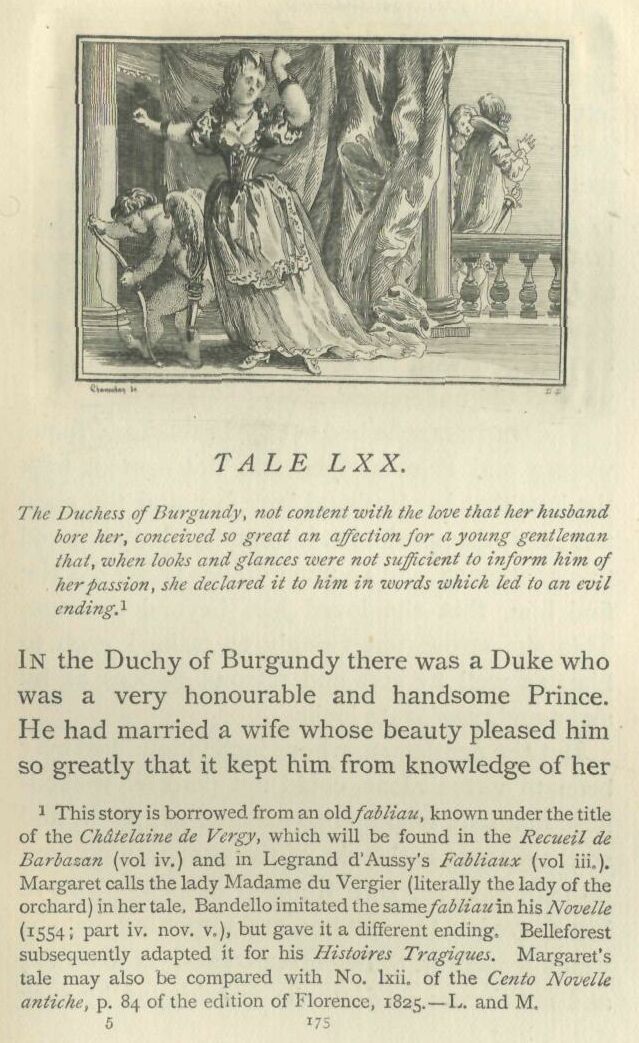
The Duchess, who had not the heart of a virtuous woman and Princess, and
was not content with the love that her husband bore her and the good
treatment that she had at his hands, often observed this gentleman, and so
much to her liking did she find him, that she loved him beyond measure.
This she strove unceasingly to make known to him, as well by soft and
piteous glances as by sighs and passionate looks.
But the gentleman, whose inclinations had ever been to virtue alone, could
not perceive wickedness in a lady who had so little excuse for it, and so
the glances and looks of the poor wanton bore no fruit save her own
frenzied despair. This at last drove her to extremes, and forgetting that
she was a woman fit to be entreated and yet to refuse, and a Princess made
to be worshipped by such lovers and yet to hold them in scorn, she acted
with the spirit of a man transported by passion, with a view to rid
herself of the fire which she could no longer endure.
Accordingly, one day when her husband was gone to the council, at which
the gentleman by reason of his youth was not present, she beckoned him to
come to her, which he did, thinking that she had some command to give him.
But leaning on his arm, like a woman wearied with repose, she brought him
to walk in a gallery, where she said to him—
“I marvel that you who are so handsome and young, and full of excellent
grace, have lived in this company, where are so many beautiful ladies, and
yet have been lover or true knight to none.” Then, looking at him as
graciously as she was able, she waited for his reply.
“Madam,” he said, “if I were worthy that your Highness should stoop to
think of me, you would have still greater reason to marvel at seeing a man
so little worthy of love as I am, offer his service where it would be
rejected or scorned.”
On hearing this discreet reply, the Duchess felt she loved him more than
before. She vowed to him that there was not a lady at her Court who would
not be only too happy to have such a knight, and that he might well make
an adventure of the sort, since there was no danger but he would come out
of it with honour. The gentleman kept his eyes downcast, not daring to
meet her looks, which were hot enough to melt ice; but, just as he was
trying to excuse himself, the Duke sent for the Duchess to come to the
council on some matter that concerned her, and thither with much regret
she went. The gentleman never afterwards made the slightest sign of having
understood a word of what she had said to him, at which she was
exceedingly distressed and vexed; and she knew not to what cause to impute
her failure, unless it were to the foolish fear of which she deemed the
gentleman to be possessed.
A few days afterwards, finding that he gave no sign of understanding what
she had said, she resolved on her part to set aside all fear or shame, and
to tell him of her love. She felt sure that beauty such as hers could not
be otherwise than well received, although she would fain have had the
honour of being wooed. However, she set her honour on one side for her
pleasure’s sake, and after she had several times attempted the same
fashion of discourse as at first, but without receiving any reply to her
liking, she one day plucked the gentleman by the sleeve, and told him that
she must speak to him on certain matters of weight. The gentleman went
with the humility and reverence that were her due to a deep window into
which she had withdrawn; and, on perceiving that no one in the room could
see her, she began in a trembling voice, that halted between desire and
fear, to continue her former discourse, rebuking him for not yet having
chosen some lady in the company, and promising him that, no matter who it
might be, she would help him to win kindly treatment.
The gentleman, who was no less vexed than astonished by her words, replied—
“Madam, my heart is so tender, that, were I once refused, I should never
again have joy in this world; and I know myself to be of such little worth
that no lady at this Court would deign to accept my suit.”
The Duchess blushed, and, imagining that at last he was indeed won, vowed
to him that she knew the most beautiful lady in the company would, if he
were willing, joyfully receive him, and afford him perfect happiness.
“Alas! madam,” he replied, “I do not think that there is any woman in this
company so unfortunate and so blind as to find me worthy of her love.”
The Duchess, finding that he would not understand her, drew the veil of
her passion somewhat aside, and, by reason of the fears which the
gentleman’s virtue caused her, spoke to him in the form of a question.
“If fortune,” she said, “had so far favoured you that it was myself who
bore you this goodwill, what would you say?”
The gentleman, who thought that he was dreaming when he heard her speak in
this wise, dropped on his knee, and replied—
“Madam, when God by His favour enables me to have both the favour of the
Duke, my master, and your own, I shall deem myself the happiest man alive;
for ‘tis the reward I crave for the loyal service of one who, more than
any other, is bound to give his life in the service of you both. And I am
sure, madam, that the love you bear my Lord aforesaid is attended with
such chastity and nobleness that, apart from myself, who am but a worm of
the earth, not even the greatest Prince and most perfect man to be found
could break the union that exists between you. For my own part, my Lord
has brought me up from childhood, and made me what I am, and to save my
life I could not entertain towards any wife, daughter, sister or mother of
his any thought contrary to what is due from a loyal and faithful
servant.”
The Duchess would not allow him to continue, but finding that she was in
danger of obtaining a dishonourable refusal, she suddenly interrupted him,
and said—
“Wicked and boastful fool, who seeks any such thing from you? Do you think
that your good looks win you the love of the very flies in the air? Nay,
if you were presumptuous enough to address yourself to me, I would show
you that I love, and seek to love, none but my husband. What I have said
to you was spoken only for my amusement, to try you and laugh at you, as I
do at all foolish lovers.”
“Madam,” said the gentleman, “I believed, and do still believe, that it is
as you say.”
Then, without listening further, she withdrew in haste to her own
apartment, and, finding that she was followed by her ladies, went into her
closet, where she sorrowed after a fashion that cannot be described. On
the one part, the love wherein she had failed caused her mortal sadness;
on the other, her anger, both against herself for having entered upon such
foolish talk and against the gentleman for his discreet reply, drove her
into such fury that at one moment she wished to make away with herself,
and at another, to live that she might avenge herself on one whom she now
regarded as her deadly enemy.
When she had wept for a long while, she made pretence of being ill, in
order that she might not be present at the Duke’s supper, at which the
gentleman was commonly in waiting. The Duke, who loved his wife better
than he did himself, came to see her; but the more effectually to work her
end, she told him that she believed herself to be with child, and that her
pregnancy had caused a rheum to come upon her eyes, which gave her much
pain. So passed two or three days, during which the Duchess kept her bed
in sadness and melancholy, until at last the Duke thought that something
further must be the matter. He therefore came at night to sleep with her;
but, finding that for all he could do he could in no sort check her sighs,
he said to her—
“You know, sweetheart, that I love you as dearly as my life, and that if
yours were lacking I could not endure my own. If therefore you would
preserve my health, I pray you tell me what causes you to sigh after this
manner; for I cannot believe that such unhappiness can come only because
you are with child.”
The Duchess, finding that her husband was disposed to her just as she
could have wished him to be, thought that the time was come to seek
vengeance for her affliction; and embracing the Duke, she began to weep,
and said—
“Alas, my lord, my greatest unhappiness is to see you deceived by those on
whom is so deep an obligation to guard your substance and your honour.”
The Duke, on hearing this, was very desirous of knowing why she spoke in
that manner, and earnestly begged her to make the truth known to him
without fear. After refusing several times, she said—
“I shall never wonder, my lord, that foreigners make war on Princes, when
those who are in duty most bound to them, wage upon them a war so cruel
that loss of territory were nothing in comparison. I say this, my lord, in
reference to a certain gentleman” (naming her enemy) “who, though reared
by your own hand and treated more like a son than a servant, has made a
cruel and base attempt to ruin the honour of your wife, in which is also
bound up the honour of your house and your children. Although for a long
time he showed me such looks as pointed to his wicked purpose, yet my
heart, which only cares for you, understood nothing of them; and so at
last he declared himself in words to which I returned a reply such as
beseemed my condition and my chastity. Nevertheless, I now so hate him
that I cannot endure to look at him, and for this cause I have continued
in my own apartment and lost the happiness of fellowship with you. I
entreat you, my lord, keep not this pestilence near your person; for,
after such a crime, he might fear lest I should tell you of it, and so
attempt worse. This, my lord, is the cause of my sorrow, and methinks it
were right and fitting that you should deal with it forthwith.”
The Duke, who on the one hand loved his wife and felt himself grievously
affronted, and on the other loved his servant, whose faithfulness he had
so fully tried that he could scarce believe this falsehood against him,
was in great distress and filled with anger. Repairing to his own room, he
sent word to the gentleman to come no more into his presence, but to
withdraw to his lodging for a time. The gentleman, being ignorant of the
cause of this, was grieved exceedingly, for he knew that he had deserved
the opposite of such unworthy treatment. Aware, then, of his own innocence
in heart and deed, he sent a comrade to speak to the Duke and take him a
letter, humbly entreating that if any evil report had caused his
banishment, his master would be pleased to suspend judgment until he had
heard from himself the truth of the matter, when it would be found that he
had been guilty of no offence.
When the Duke saw this letter, his anger was somewhat abated. He secretly
sent for the gentleman to his own room, and with wrathful countenance said—
“I could never have thought that the care I took to rear you as my own
child would be changed into regret at having so highly advanced you; but
you have attempted what was more hurtful to me than loss of life or
substance, and have sought to assail the honour of one who is half myself,
and so bring infamy on my house and name. You may be assured that this
outrage is so wounding to my heart that, were it not for my doubt whether
it be true or not, you would have already been at the bottom of the water,
and so have received in secret due punishment for the wrong that in secret
you intended against me.”
The gentleman was in no wise dismayed by this discourse, but, ignorant as
he was of the truth, spoke forth with confidence and entreated the Duke to
name his accuser, since such a charge should be justified rather with the
lance than with the tongue.
“Your accuser,” said the Duke, “carries no weapon but chastity. Know,
then, that none other but my wife has told me this, and she begged me to
take vengeance upon you.”
The poor gentleman, though he then perceived the lady’s great wickedness,
would not accuse her.
“My lord,” he replied, “my lady may say what she will. You know her better
than I do, and you are aware if ever I saw her when out of your sight,
save only on one occasion, when she spoke but little with me. You have,
moreover, as sound a judgment as any Prince alive; wherefore I pray you,
my lord, judge whether you have ever seen aught in me to cause any
suspicion; and remember love is a fire that cannot be hidden so as never
to be known of by those who have had a like distemper. So I pray you, my
lord, to believe two things of me: first, that my loyalty to you is such
that were my lady, your wife, the fairest being in the world, love would
never avail to make me stain my honour and fidelity; and secondly, that
even were she not your wife, I should be least in love with her of all the
women I have ever known, since there are many others to whom I would
sooner plight my troth.”
On hearing these words of truth, the Duke began to be softened, and said—
“I assure you, on my part, that I did not believe it. Do, therefore,
according to your wont, in the assurance that, if I find the truth to be
on your side, I will love you yet better than before. But if it be not so,
your life is in my hands.”
The gentleman thanked him and offered to submit to any pain or penalty if
he were found guilty.
The Duchess, on seeing the gentleman again in waiting as had formerly been
his wont, could not endure it in patience, but said to her husband—
“‘Twould be no more than you deserve, my lord, if you were poisoned, since
you put more trust in your deadly enemies than in your friends.”
“I pray you, sweetheart, do not torment yourself in this matter,” said the
Duke. “If I find that you have told me true, I promise you he shall not
live four and twenty hours. But he has sworn to the contrary, and I have
myself never perceived any such fault, and so I cannot believe it without
complete proof.”
“In good sooth, my lord,” she replied, “your goodness renders his
wickedness the greater. What more complete proof would you have than this,
that no love affair has ever been imputed to him? Believe me, my lord,
were it not for the lofty purpose that he took into his head of being my
lover, he would not have continued so long without a mistress; for never
did a young man live solitary as he does in such good company, unless he
had fixed his heart so high as to be content merely with his own vain
hope. Since, then, you think that he is not hiding the truth from you, put
him, I beg you, on oath as regards his love. If he loves another, I am
content that you should believe him, and if not, you will know that what I
say is true.”
The Duke thought his wife’s reasonings very good, and, taking the
gentleman into the country with him, said—
“My wife continues still of the same mind, and has set before me an
argument that causes me grave suspicion against you. It is deemed strange
that you who are so gallant and young have never been known to love, and
this makes me think that you have such affection for her as she says, and
that the hope it gives you renders you content to think of no other woman.
As a friend, therefore, I pray you, and as a master I command you to tell
me whether you are in love with any lady on earth.”
Although the gentleman would have fain concealed his passion yet as he
loved his life, he was obliged, on seeing his master’s jealousy, to swear
to him that he did indeed love one whose beauty was so great, that the
beauty of the Duchess or of any lady of the Court would be simply ugliness
beside it. But he entreated that he might never be compelled to name her,
since the agreement between himself and his sweetheart was of such a
nature that it could not be broken excepting by whichever of them should
be the first to make it known.
The Duke promised not to urge him, and being quite satisfied with him,
treated him with more kindness than ever before. The Duchess perceived
this, and set herself with her wonted craft to find out the reason. The
Duke did not hide it from her; whereupon strong jealousy sprang up beside
her desire for vengeance, and she begged her husband to command the
gentleman to name his sweetheart. She assured him that the story was a
lie, and that the course she urged was the best means of testing it. If
the gentleman, said she, did not name her whom he deemed so beautiful, and
his master believed him on his mere word, he would indeed be the most
foolish Prince alive.
The poor Duke, whose wife directed his thoughts at her pleasure, went to
walk alone with the gentleman, and told him that he was in even greater
trouble than before; for he was greatly minded to believe that he had been
given an excuse to keep him from suspecting the truth. This was a greater
torment to him than ever; and he therefore begged the gentleman, as
earnestly as he was able, to name her whom he loved so dearly. The poor
gentleman entreated that he might not be made to commit so great an
offence against his mistress as to break the promise he had given her and
had kept so long, and thus lose in a day all that he had preserved for
seven years. And he added that he would rather suffer death than in this
wise wrong one who had been true to him.
The Duke, finding that he would not tell him, became deeply jealous, and
with a wrathful countenance exclaimed—
“Well, choose one of two things: either tell me whom you love more than
any other, or else go into banishment from the territories over which I
rule, under pain of a cruel death if you be found within them after a week
is over.”
If ever heart of loyal servant was torn with anguish, it was so with that
of this poor gentleman, who might well have said, Angustiæ sunt mihi
undique, for on the one part he saw that by telling the truth he would
lose his mistress, if she learned that he had failed in his promise to
her; while, if he did not confess it, he would be banished from the land
in which she dwelt, and be no more able to see her. Hard pressed in this
manner on all sides, there came upon him a cold sweat, as on one whose
sorrow was bringing him near to death. The Duke, observing his looks,
concluded that he loved no other lady than the Duchess, and was enduring
this suffering because he was able to name none other. He therefore said
to him with considerable harshness—
“If what you say were true, you would not have so much trouble in telling
me; but methinks ‘tis your crime that is tormenting you.”
The gentleman, piqued by these words, and impelled by the love that he
bore his master, resolved to tell him the truth, believing that he was too
honourable a man ever, on any account, to reveal it. Accordingly, throwing
himself upon his knees, and clasping his hands, he said—
“My lord, the duty that I owe to you and the love that I bear you
constrain me more than the fear of any death. I can see that you imagine
and judge falsely concerning me, and, to take this trouble from you, I am
resolved to do that to which no torment had compelled me. But I pray you,
my lord, swear to me by the honour of God, and promise me by your own
faith as a Prince and a Christian, that you will never reveal the secret
which, since it so pleases you, I am obliged to tell.”
Upon this the Duke swore to him with all the oaths he could think of that
he would never reveal aught of it to any living being, whether by speech,
or writing, or feature. Then the young man, feeling confidence in so
virtuous a Prince as he knew his master to be, began the building up of
his misfortune, and said—
“It is now seven years, my lord, since knowing your niece, the Lady du
Vergier, to be a widow and without kindred, I set myself to win her
favour. But, since I was of too lowly a birth to wed her, I contented
myself with being received by her as her true knight, as indeed I have
been. And it has pleased God that the affair has hitherto been contrived
with much discretion, so that neither man nor woman knows of it save
ourselves alone, and now, my lord, you also. I place my life and honour in
your hands, entreating you to keep the matter secret and to esteem your
niece none the less; for I think that under heaven there is no more
perfect being.”
If ever man was rejoiced it was the Duke, for, knowing as he did the
exceeding beauty of his niece, he now had no doubt that she was more
pleasing than his wife. However, being unable to understand how so great a
mystery could have been contrived, he begged the gentleman to tell him how
it was that he was able to see her. The gentleman related to him then that
his lady’s chamber looked upon a garden, and that, on the days when he was
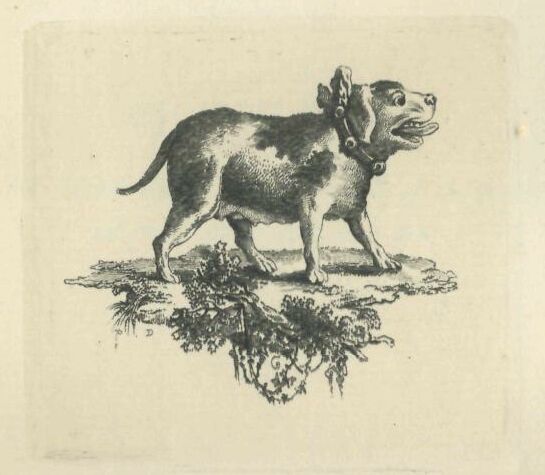
to visit her, a little gate was left open through which he went in on foot
until he heard the barking of a little dog which the lady used to loose in
the garden when all her women were withdrawn. Then he went and conversed
with her all night long, and, in parting from her, would appoint a day on
which he would return; and this appointment, unless for some weighty
reason, he never failed to keep. The Duke, who was the most inquisitive
man alive, and who had made love in no small degree in his day, wished
both to satisfy his suspicions and to fully understand so strange a
business; and he therefore begged the gentleman to take him, not as a
master but as a companion, the next time he went thither. To this the
gentleman, having gone so far already, consented, saying that he had an
appointment for that very day; at which the Duke was as glad as if he had
gained a kingdom. Making pretence of retiring to rest in his closet, he
caused two horses to be brought for himself and the gentleman, and they
travelled all night long from Argilly, where the Duke lived, to Le
Vergier. (2)
     2  At Argilly the Dukes of Burgundy had a castle, which was
     destroyed during the religious wars at the close of the
     sixteenth century. The place is now a small village in the
     arrondissement of Nuits, Côte d’Or. As the crow flies, it is
     some ten miles distant from the ruins of the castle of
     Vergy, which stands on a steep height, at an altitude of
     over 1600 ft., within five miles from Nuits. The castle,
     which can only be reached on one side of the hill, by a
     narrow, winding and precipitous pathway, is known to have
     been in existence already in the tenth century, when the
     Lords of Vergy were Counts of Chalons, Beaune, and Nuits.
     They appear to have engaged in a struggle for supremacy with
     the princes of the first Ducal house of Burgundy, but in
     1193 Alix de Vergy espoused Duke Eudes III., to whom she
     brought, as dower, the greater part of the paternal
     inheritance. The castle of Vergy was dismantled by Henry
     IV., and the existing ruins are of small extent. Some
     antiquaries believe the fortress to have been originally
     built by the Romans.—B.J. and L.
Then they left their horses without the wall, and the gentleman brought
the Duke into the garden through the little gate, begging him to remain
behind a walnut-tree, whence he might see whether he had been told the
truth or not.
They had been but a short time in the garden when the little dog began to
bark, and the gentleman walked towards the tower, where his lady failed
not to come and meet him. She kissed him, saying that it seemed a thousand
years since she had seen him, and then they went into the chamber and shut
the door behind them.
Having seen the whole of the mystery, the Duke felt more than satisfied.
Nor had he a great while to wait, for the gentleman told his mistress that
he must needs return sooner than was his wont, since the Duke was to go
hunting at four o’clock, and he durst not fail to attend him.
The lady, who set honour before delight, would not keep him from
fulfilling his duty; for what she prized most in their honourable
affection was that it was kept secret from all.
So the gentleman departed an hour after midnight, and his lady in cloak
and kerchief went with him, yet not so far as she wished, for, fearing
lest she should meet the Duke, he obliged her to return. Then he mounted
with the Duke and returned to the castle of Argilly, his master
unceasingly swearing to him on the way that he would die rather than ever
reveal his secret. Moreover, he then put so much trust in the gentleman,
and had so much love for him, that no one in his Court stood higher in his
favour. The Duchess grew furious at this, but the Duke forbade her ever to
speak to him about the gentleman again, saying that he now knew the truth
about him and was well pleased, since the lady in question was more worthy
of love than herself. These words deeply pierced the heart of the Duchess,
and she fell into a sickness that was worse than fever.
The Duke went to see her in order to comfort her, but there was no means
of doing this except by telling her the name of this beautiful and dearly
loved lady. She pressed him urgently to do this, until at last the Duke
went out of the room, saying—
“If you speak to me again after this fashion, we shall part one from the
other.”
These words increased the sickness of the Duchess, and she pretended that
she felt her infant stirring, at which the Duke was so rejoiced that he
came and lay beside her. But, just when she saw him most loving towards
her, she turned away, and said—
“I pray you, my lord, since you have no love for either wife or child,
leave us to die together.”
With these words she gave vent to many tears and lamentations, and the
Duke was in great fear lest she should lose her child. He therefore took
her in his arms and begged her to tell him what she would have, since he
possessed nothing that was not also hers.
“Ah, my lord,” she replied, weeping, “what hope can I have that you would
do a hard thing for me, when you will not do the easiest and most
reasonable in the world, which is to name to me the mistress of the
wickedest servant you ever had? I thought that you and I had but one
heart, one soul, and one flesh. But now I see that you look upon me as a
stranger, seeing that your secrets, which should be known to me, are
hidden from me as though I were a stranger. Alas! my lord, you have told
me many weighty and secret matters, of which you have never known me to
speak, you have proved my will to be like to your own, and you cannot
doubt but that I am less myself than you. And if you have sworn never to
tell the gentleman’s secret to another, you will not break your oath in
telling it to me, for I am not and cannot be other than yourself. I have
you in my heart, I hold you in my arms, I have in my womb a child in whom
you live, and yet I may not have your heart as you have mine. The more
faithful and true I am to you, the more cruel and stern are you to me, so
that a thousand times a day do I long by a sudden death to rid my child of
such a father and myself of such a husband. And I hope that this will be
ere long, since you set a faithless servant before a wife such as 1 am to
you, and before the life of the mother of your child, which will perish
because I cannot have of you that which I most desire to know.”
So saying, she embraced and kissed her husband, and watered his face with
her tears, uttering the while such lamentations and sighs that the good
Prince feared to lose wife and child together, and resolved to tell her
all the truth of the matter. Nevertheless, he first swore to her that if
ever she revealed it to a living being she should die by his own hand; and
she agreed to and accepted this punishment. Then the poor, deceived
husband told her all that he had seen from beginning to end, and she made
show of being well pleased. In her heart she was minded very differently,
but through fear of the Duke she concealed her passion as well as she was
able.
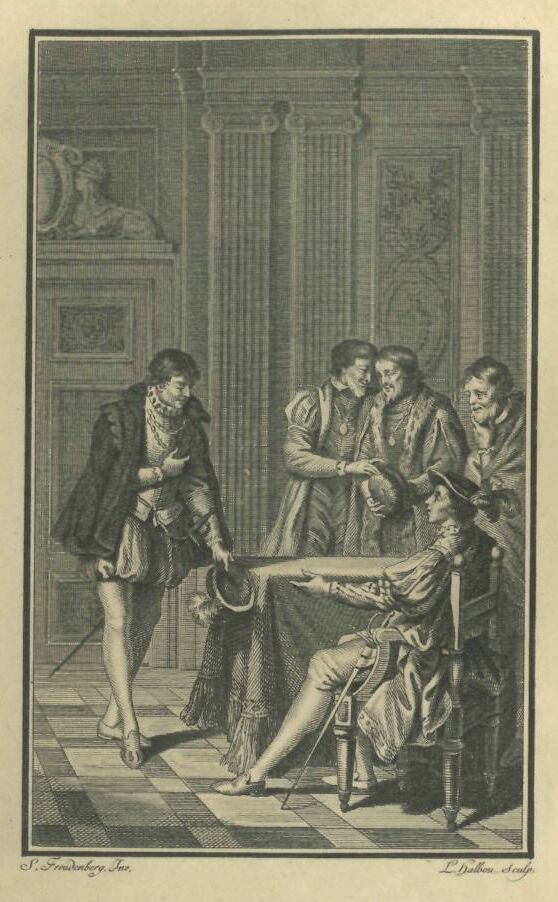
Now on a certain great feast-day the Duke held his Court, to which he had
bidden all the ladies of that country, and among the rest his niece. When
the dances began, all did their duty save the Duchess, who, tormented by
the sight of her niece’s beauty and grace, could neither make merry nor
prevent her spleen from being perceived. At last she called all the
ladies, and making them scat themselves around her, began to talk of love;
and seeing that the Lady du Vergier said nothing, she asked her, with a
heart which jealousy was rending—
“And you, fair niece, is it possible that your beauty has found no lover
or true knight?”
“Madam,” replied the Lady du Vergier, “my beauty has not yet made such a
conquest. Since my husband’s death I have sought to love none but his
children, with whom I deem myself happy.”
“Fair niece, fair niece,” replied the Duchess, with hateful spleen, “there
is no love so secret that it is not known, and no little dog so well
broken in and trained that it cannot be heard to bark.”
I leave you to imagine, ladies, what sorrow the poor Lady du Vergier felt
in her heart on finding a matter, so long concealed, thus made known to
her great dishonour. Her honour, which had been so carefully guarded and
was now wofully lost, tortured her, but still more so her suspicion that
her lover had failed in his promise to her. This she did not think he
could have done, unless it were that he loved some lady fairer than
herself, to whom his love had constrained him to make the whole matter
known. Yet so great was her discretion that she gave no sign, but replied
laughing to the Duchess that she did not understand the language of
animals. However, beneath this prudent concealment her heart was filled
with sadness, so that she rose up, and, passing out of the chamber,
entered a closet in sight of the Duke, who was walking up and down.
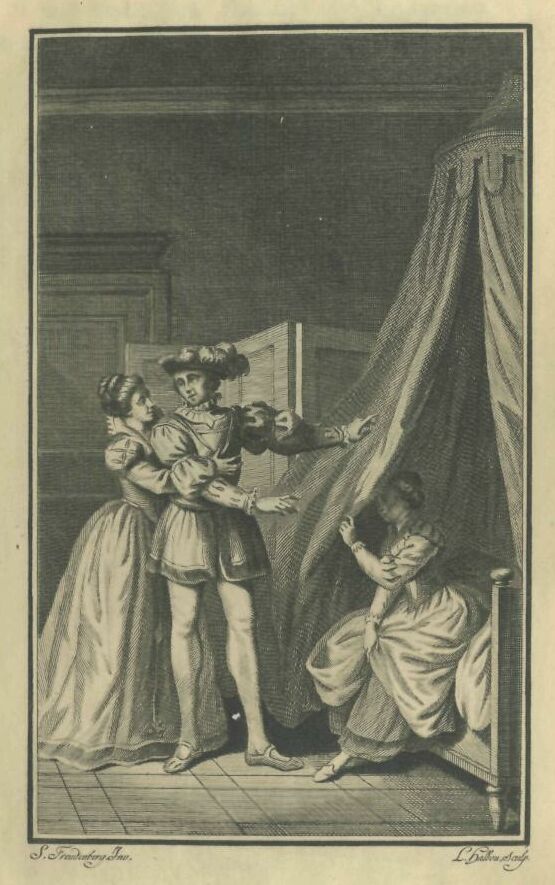
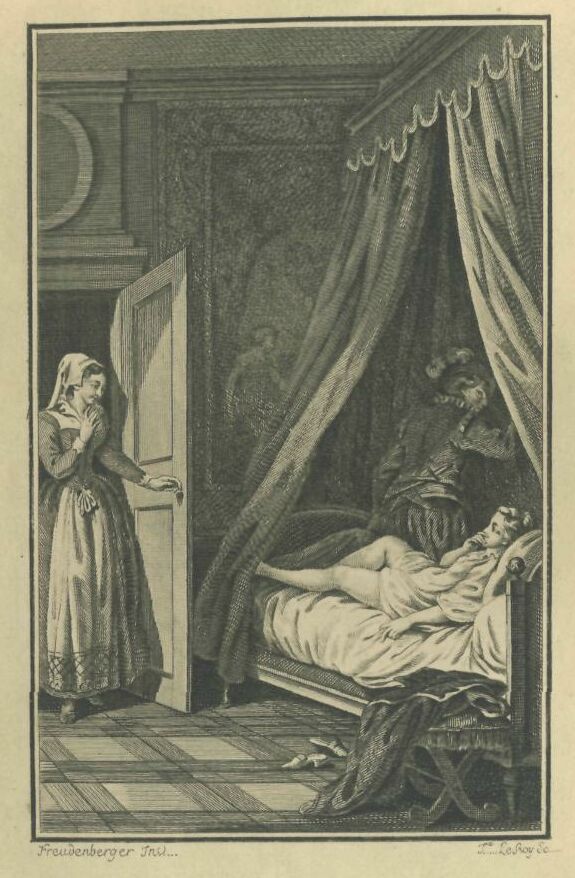
Having thus reached a place where she believed herself to be alone, the
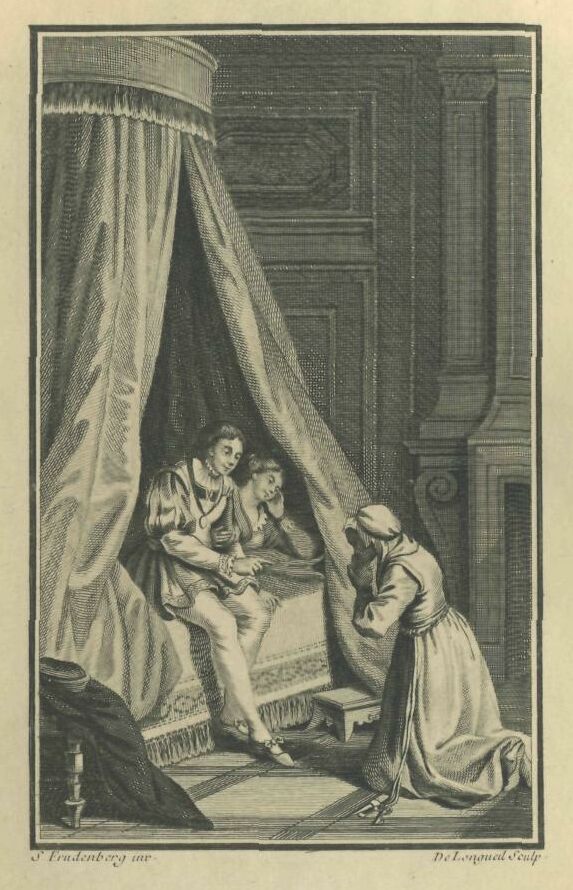
poor lady let herself fall helplessly upon a bed, whereat a damsel, who
had sat down beside it to sleep, rose up and drew back the curtains to see
who this might be. Finding that it was the Lady du Vergier, who believed
herself to be alone, she durst say nothing to her, but listened, making as
little noise as she was able. And in a stifled voice the poor Lady du
Vergier began to lament, saying—
“O unhappy one, what words have I heard? to what decree of death have I
hearkened? what final sentence have I received? O best beloved of men, is
this the reward of my chaste, honourable and virtuous love? O my heart,
hast thou made so parlous an election, and chosen for the most loyal the
most faithless, for the truest the most false, for the discreetest the
most slanderous? Alas! can it be that a thing hidden from every human eye
has been revealed to the Duchess? Alas, my little dog, so well taught and
the sole instrument of my love and virtuous affection, it was not you who
betrayed me, it was he whose voice is louder than a dog’s bark, and whose
heart is more thankless than any brute’s. Tis he who, contrary to his oath
and promise, has made known the happy life which, wronging none, we so
long have led together. O my beloved, the love of whom alone has entered
into my heart, and preserved my life, must you now be declared my deadly
foe, while mine honour is given to the winds, my body to the dust, and my
soul to its everlasting abode? Is the beauty of the Duchess so exceeding
great that, like the beauty of Circe, it has bewitched and transformed
you? Has she turned you from virtue to vice, from goodness to wickedness,
from being a man to be a beast of prey? O my beloved, though you have
failed in your promise to me, yet will I keep mine to you, and, now that
our love has been revealed, will never see you more. Nevertheless, I
cannot live without your presence, and so I gladly yield to my exceeding
sorrow, and will seek for it no cure either in reason or in medicine.
Death alone shall end it, and death will be sweeter to me than life on
earth without lover, honour or happiness. Neither war nor death has robbed
me of my lover; no sin or fault of mine has robbed me of my honour;
neither error nor demerit of mine has made me lose my joy. ‘Tis cruel fate
that has rendered the most favoured of men thankless, and has caused me to
receive the contrary of that which I deserved.
“Ah, my Lady Duchess, what delight it was to you to taunt me with my
little dog! Rejoice, then, in the happiness you owe to me alone; taunt her
who thought by careful concealment and virtuous love to be free from any
taunt. Ah! how those words have bruised my heart! how they have made me
blush for shame and pale for jealousy! Alas, my heart, I feel that thou
art indeed undone! The wicked love that has discovered me burns thee;
jealousy of thee and evil intent towards thee are to thee as ice and
death; while wrath and sorrow do not suffer me to comfort thee. Alas, poor
soul, that in adoring the creature didst forget the Creator, thou must
return into the hands of Him from whom vain love tore thee away. Have
trust, my soul, that thou wilt find in Him a Father kinder than was the
lover for whose sake thou hast so often forgotten Him. O my God, my
Creator, Thou who art the true and perfect love, by whose grace the love I
bore to my beloved has been stained by no blemish save that of too great
an affection, I implore Thee in mercy to receive the soul-and spirit of
one who repents that she has broken thy first and most just commandment.
And, through the merits of Him whose love passeth all understanding,
forgive the error into which excess of love has led me, for in Thee alone
do I put my perfect trust. And farewell, O my beloved, whose empty name
doth break my very heart.”
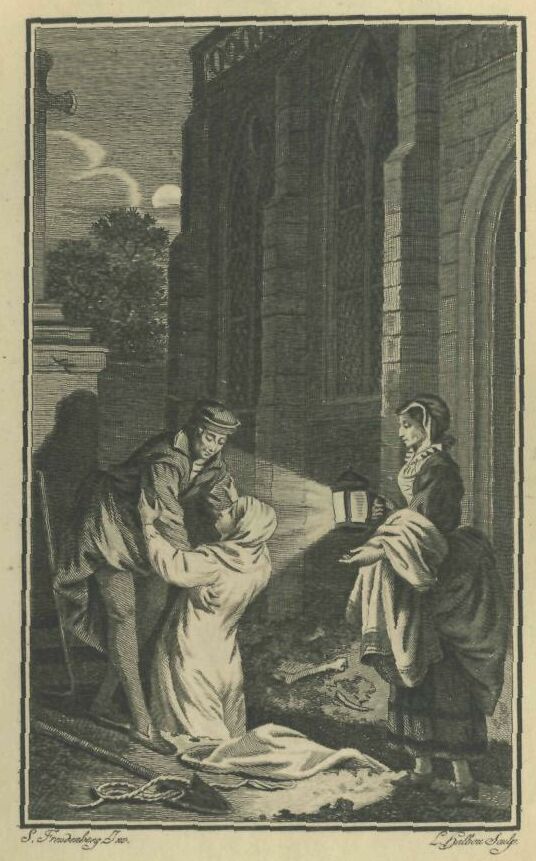
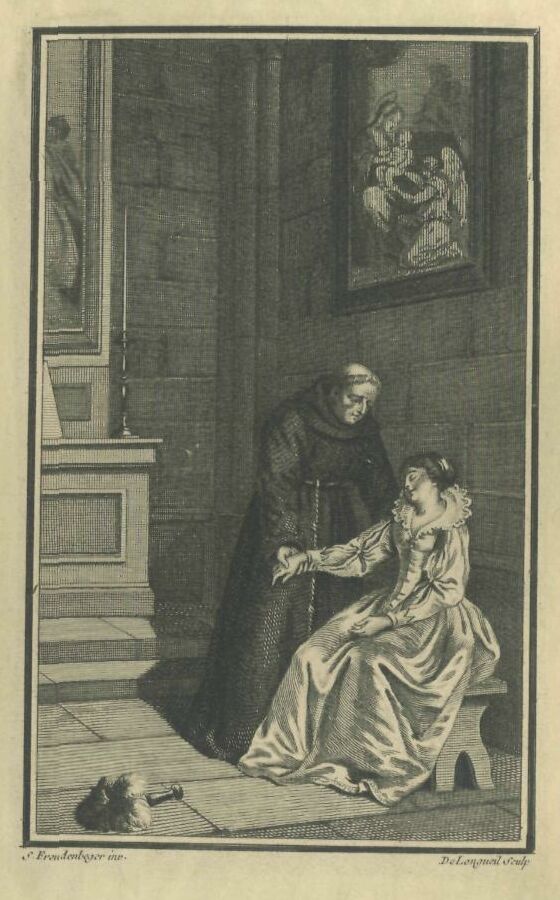
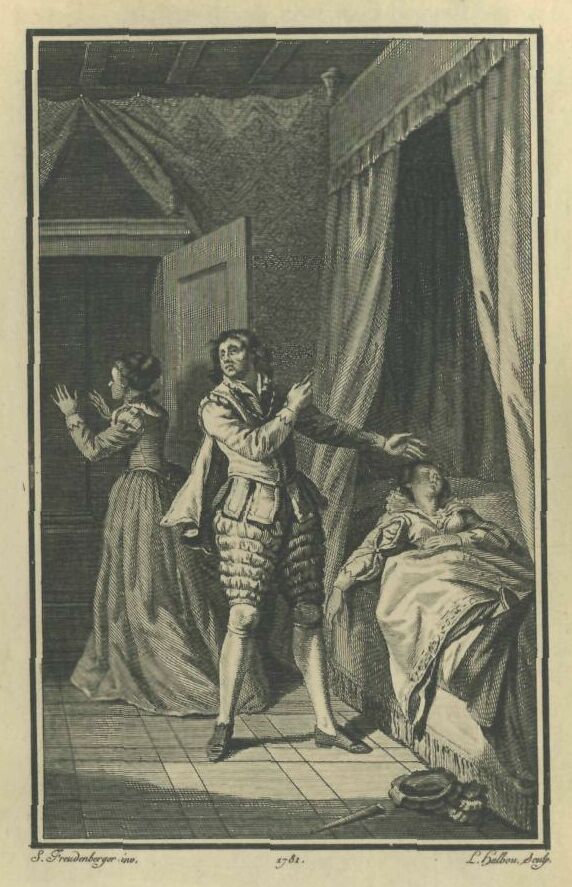
With these words she fell backward, and her face grew pallid, her lips
blue, and her extremities cold.
Just at this moment the gentleman she loved came into the hall, and,
seeing the Duchess dancing with the ladies, looked everywhere for his
sweetheart. Not finding her, he went into the chamber of the Duchess, and
there found the Duke, who was walking up and down, and who, guessing his
purpose, whispered in his ear—
“She went into that closet, and methought she was ill.”
The gentleman asked whether he would be pleased to let him go in, and the
Duke begged him to do so. When he entered the closet he found the Lady du
Vergier, come to the last stage of her mortal life; whereat, throwing his
arms about her, he said—
“What is this, sweetheart? Would you leave me?”
The poor lady, hearing the voice that she knew so well, recovered a little
strength and opened her eyes to look upon him who was the cause of her
death; but at this look her love and anguish waxed so great that, with a
piteous sigh, she yielded up her soul to God.
The gentleman, more dead than the dead woman herself, asked the damsel who
was there how this sickness had come upon his sweetheart, and she told him
all the words that she had heard. Then the gentleman knew that the Duke
had revealed the secret to his wife, and felt such frenzy that, whilst
embracing his sweetheart’s body, he for a long time watered it with his
tears, saying—
“O traitorous, wicked and unhappy lover that I am! why has not the
punishment of my treachery fallen upon me, and not upon her who is
innocent? Why was I not struck by a bolt from heaven on the day when my
tongue revealed the secret and virtuous love between us? Why did not the
earth open to swallow up this traitor to his troth? O tongue, mayest thou
be punished as was the tongue of the wicked rich man in hell!
“O heart, too fearful of death and banishment, mayest thou be torn
continually by eagles as was the heart of Ixion! (3)
3 Queen Margaret’s memory plainly failed her here.—Ed.
“Alas, sweetheart, the greatest of all the greatest woes has fallen upon
me! I thought to keep you, but I have lost you; I thought to see you for a
long time and to abide with you in sweet and honourable content, yet now I
embrace your dead body, and you passed away in sore displeasure with me,
with my heart and with my tongue. O most loyal and faithful of women, I do
confess myself the most disloyal, fickle and faithless of all men. Gladly
would I complain of the Duke in whose promise I trusted, hoping thus to
continue our happy life; but alas! I should have known that none could
keep our secret better than I kept it myself. The Duke had more reason in
telling his secret to his wife than I in telling mine to him. I accuse
none but myself of the greatest wickedness that was ever done between
lovers. I ought to have submitted to be cast into the moat as he
threatened to do with me; at least, sweetheart, you would then have lived
in widowhood and I have died a glorious death in observing the law that
true love enjoins. But through breaking it I am now in life, and you,
through perfectness of love, are dead; for your pure, clear heart could
not bear to know the wickedness of your lover.
“O my God! why didst Thou endow me with so light a love and so ignorant a
heart? Why didst thou not create me as the little dog that faithfully
served his mistress? Alas, my little friend, the joy your bark was wont to
give me is turned to deadly sorrow, now that another than we twain has
heard your voice. Yet, sweetheart, neither the love of the Duchess nor of
any living woman turned me aside, though indeed that wicked one did often
ask and entreat me. ‘Twas by my ignorance, which thought to secure our
love for ever, that I was overcome. Yet for that ignorance am I none the
less guilty; for I revealed my sweetheart’s secret and broke my promise to
her, and for this cause alone do I see her lying dead before my eyes.
Alas, sweetheart, death will to me be less cruel than to you, whose love
has ended your innocent life. Methinks it would not deign to touch my
faithless and miserable heart; for life with dishonour and the memory of
that which I have lost through guilt would be harder to bear than ten
thousand deaths. Alas, sweetheart, had any dared to slay you through
mischance or malice, I should quickly have clapped hand to sword to avenge
you; ‘tis therefore right that I should not pardon the murderer who has
caused your death by a more wicked act than any sword-thrust. Did I know a
viler executioner than myself, I would entreat him to put your traitorous
lover to death. O Love! I have offended thee from not having known how to
love, and therefore thou wilt not succour me as thou didst succour her who
kept all thy laws. ‘Tis not right that I should die after so honourable a
manner; but ‘tis well that I should die by mine own hand. I have washed
your face, sweet, with my tears, and with my tongue have craved your
forgiveness; and now it only remains for my hand to make my body like unto
yours, and send my soul whither yours will go, in the knowledge that a
virtuous and honourable love can never end, whether in this world or in
the next.”
Rising up from the body he then, like a frenzied man beside himself, drew
his dagger and with great violence stabbed himself to the heart. Then he
again took his sweetheart in his arms, kissing her with such passion that
it seemed as though he were seized rather with love than with death.
The damsel, seeing him deal himself the blow, ran to the door and called
for help. The Duke, on hearing the outcry, suspected misfortune to those
he loved, and was the first to enter the closet, where he beheld the
piteous pair. He sought to separate them, and, if it were possible, to
save the gentleman; but the latter clasped his sweetheart so fast that he
could not be taken from her until he was dead. Nevertheless he heard the
Duke speaking to him and saying—“Alas! what is the cause of this?”
To which, with a glance of fury, he replied—“My tongue, my lord, and
yours.” So saying, he died, with his face close pressed to that of his
mistress.
The Duke, wishing to know more of the matter, made the damsel tell him
what she had seen and heard; and this she did at full length, sparing
nothing. Then the Duke, finding that he was himself the cause of all this
woe, threw himself upon the two dead lovers, and, with great lamentation
and weeping, kissed both of them several times and asked their
forgiveness. And after that he rose up in fury, and drew the dagger from
the gentleman’s body; and, just as a wild boar, wounded with a spear,
rushes headlong against him that has dealt the blow, so did the Duke now
seek out her who had wounded him to the bottom of his soul. He found her
dancing in the hall, and more merry than was her wont at the thought of
the excellent vengeance she had wreaked on the Lady du Vergier.
The Duke came upon her in the midst of the dance, and said—
“You took the secret upon your life, and upon your life shall fall the
punishment.”
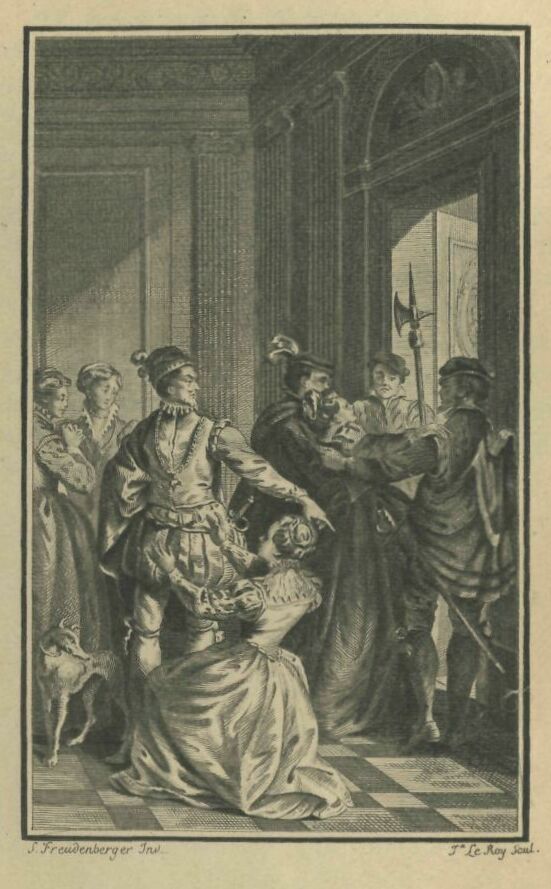
So saying, he seized her by the head-dress and stabbed her with the dagger
in the breast. All the company were astonished, and it was thought that
the Duke was out of his mind; but, having thus worked his will, he brought
all his retainers together in the hall and told them the virtuous and
pitiful story of his niece, and the evil that his wife had wrought her.
And those who were present wept whilst they listened.
Then the Duke ordered that his wife should be buried in an abbey which he
founded partly to atone for the sin that he had committed in killing her;
and he caused a beautiful tomb to be built, in which the bodies of his
niece and the gentleman were laid together, with an epitaph setting forth
their tragic story. And the Duke undertook an expedition against the
Turks, in which God so favoured him, that he brought back both honour and
profit. On his return, he found his eldest son now able to govern his
possessions, and so left all to him, and went and became a monk in the
abbey where his wife and the two lovers were buried. And there did he
spend his old age happily with God.
“Such, ladies, is the story which you begged me to relate, and which, as I
can see from your eyes, you have not heard without compassion. It seems to
me that you should take example by it, and beware of placing your
affections upon men; for, however honourable or virtuous these affections
may be, in the end they have always an aftertaste of evil. You see how St.
Paul would not that even married people should so deeply love each other;
(4) for the more our hearts are set upon earthly things, the more remote
are they from heavenly affection, and the harder is the tie to be broken.
I therefore pray you, ladies, ask God for His Holy Spirit, who will so
fire your hearts with the love of God, that when death comes, you will not
be pained at leaving that which you love too well in this world.”
4 I Corinthians vii. 32-5.—M.
“If their love,” said Geburon, “was as honourable as you describe, why was
it needful to keep it so secret?”
“Because,” said Parlamente, “the wickedness of men is so great, that they
can never believe deep love to be allied with honour, but judge men and
women to be wicked according to their own passions. Hence, if a woman has
a dear friend other than one of her nearest kinsfolk, she must speak with
him in secret if she would speak long with him; for a woman’s honour is
attacked, whether she love virtuously or viciously, since people judge
only from appearances.”
“But,” said Geburon, “when a secret of that kind is revealed, people think
far worse of it.”
“I grant you that,” said Longarine; “and so it is best not to love at
all.”
“We appeal from that sentence,” said Dagoucin, “for, did we believe the
ladies to be without love, we would fain be ourselves without life. I
speak of those who live but to win love: and, even if they secure it not,
yet the hope of it sustains them and prompts them to do a thousand
honourable deeds, until old age changes their fair sufferings to other
pains. But, did we think that ladies were without love, it were needful we
should turn traders instead of soldiers, and instead of winning fame,
think only of hea’ping up riches.”
“You would say, then,” said Hircan, “that, were there no women, we should
all be dastards, as though we had no courage save such as they put into
us. But I am of quite the opposite opinion, and hold that nothing weakens
a man’s courage so much as to consort with women or love them too much.
For this reason the Jews would not suffer a man to go to the war within a
year after his marriage, lest love for his wife should draw him back from
the dangers that he ought to seek.” (5)
     5  See Deuteronomy xx. 5, 6, 7; and the comments thereon
     of Rabelais (book iii. ch. vi.).—M.
“I consider that law,” said Saffredent, “to have been without reason, for
nothing will more readily make a man leave his home than marriage. The war
without is not harder of endurance than the war within; and I think that,
to make men desirous of going into foreign lands instead of lingering by
their hearths, it were only needful to marry them.”
“It is true,” said Ennasuite, “that marriage takes from them the care of
their houses; for they trust in their wives, and for their own part think
only of winning fame, feeling certain that their wives will give due heed
to the profit.”
“However that may be,” replied Saffredent, “I am glad that you are of my
opinion.”
“But,” said Parlamente, “you are not discussing what is chiefly to be
considered, and that is why the gentleman, who was the cause of all the
misfortune, did not as quickly die of grief as she who was innocent.”
Nomerfide replied—
“‘Twas because women love more truly than men.”
“Nay,” said Simontault, “‘twas because the jealousy and spitefulness of
women make them die without knowing the reason, whereas men are led by
their prudence to inquire into the truth of the matter. When this has been
learnt through their sound sense, they display their courage, as this
gentleman did; for, as soon as he understood the reason of his
sweetheart’s misfortune, he showed how truly he loved her and did not
spare his own life.”
“Yet,” said Ennasuite, “she died of true love, for her steadfast and loyal
heart could not endure to be so deceived.”
“It was her jealousy,” said Simontault, “which would not yield to reason,
so that she believed evil of her lover of which he was not guilty at all.
Moreover, her death was matter of necessity, for she could not prevent it,
whilst her lover’s death was voluntary, after he had recognised his own
wrongdoing.”
“Still,” said Nomerfide, “the love must needs be great that causes such
deep sorrow.”
“Have no fear of it,” said Hircan, “for you will never die of that kind of
fever.”
“Nor,” said Nomerfide, “will you ever kill yourself after recognising your
error.”
Here Parlamente, who suspected that the dispute was being carried on at
her own expense, said, laughing—
“‘Tis enough that two persons should have died of love, without two others
fighting for the same cause. And there is the last bell sounding for
vespers, which will have us gone whether you be willing or not.”
By her advice the whole company then rose and went to hear vespers, not
forgetting in their fervent prayers the souls of those true lovers, for
whom, also, the monks, of their charity, said a De profundis. As
long as supper lasted there was no talk save of the Lady du Vergier, and
then, when they had spent a little time together, they withdrew to their
several apartments, and so brought to an end the Seventh Day.