Guy Fawkes.
The forefathers of Guy Fawkes almost certainly sprang from Nidderdale, in
the West Riding of Yorkshire. See Foster’s “Yorkshire Families,” under
Hawkesworth, of Hawkesworth, and Fawkes, of Farnley.
Guy’s grandfather was William Fawkes, of York, who married a York lady,
Ellen Harrington.[A]
William Fawkes became Registrar of the Exchequer Court of the Archbishop
of York, and died between the years 1558-1565.
William Fawkes had two sons and two daughters — Thomas Fawkes, a
merchant-stapler, and Edward Fawkes, a Notary or Proctor of the
Ecclesiastical Court, and afterwards an Advocate of the Consistory Court
of the Archbishop of York. (Certainly it is a strange and bitter irony
that an ancestry like this should have brought forth such a moral monster
as poor Guy Fawkes afterwards became. But our guiding motto must be:
“Speak of me as I am; nothing extenuate, nor set down aught in malice.”)
Edward Fawkes married a lady whose Christian name was Edith, but her
surname is unknown. She was
the
mother of four children — two sons and two
daughters. Only one of her sons grew to man’s estate, and this was the
hapless Guy.
(Only four children are known of with certainty; but Guy possibly may
have had another brother, who was a student at the Inns of Court, in
November, 1605.)
Now, the exact house where Edith Fawkes gave birth to her ill-fated boy is
at present not known with certitude. There are four traditions respecting
the place. Two traditions say the house was on the south side of High
Petergate, York; one tradition that it was on the north side, adjoining
the alley called Minster Gates; the fourth tradition that it was at
Bishopthorpe. Personally, I am in favour of the Minster Gates’ tradition.
But the Bishopthorpe tradition is worthy of a respectful hearing.
My friend, Mr. William Camidge, F.R.H.S. (than whom no man now living in
York has a greater, if indeed as great, knowledge concerning the City’s
antiquarian lore) tells me in a letter, dated the 5th of November, 1901,
that in old Thomas Gent’s “Rippon” (1733) there is mention made of
Bishopthorpe as being Guy’s birthplace. Gent says, “The house opposite the
church[A] is said to be the birthplace of Guy Faux.”
Mr. Camidge continues: “I found, a few years ago, rooted in the minds of
the oldest inhabitants of Bishopthorpe, the positive assurance that Guy
Fawkes was born at Bishopthorpe, and the site of the house was indicated
by several persons. I found one of the descendants of the former owner of
the house, who assured me that her father always held that Guy Fawkes was
born in
the
house; that my informant’s great grandfather maintained the
same; and that for two or three generations they had shown the house as
the place of Guy Fawkes’ birth. The site of the house is now a
pleasure-garden; but a stone was put in the ground to mark the site.”
Now it is a remarkable fact that in almost all, if indeed not quite all,
of those places where there has been a strong local tradition to the
effect that the Gunpowder conspirators had some association with a
particular spot, subsequent investigation has found the tradition to be
well authenticated. (This was pointed out by David Jardine sixty years
ago.)
Yet the strongest argument against the Bishopthorpe tradition is that
Guy’s baptismal register is to-day found at the Church of St.
Michael-le-Belfrey, in the City of York.
Now, in the time of Elizabeth, as Dr. Elzé has pointed out in his “Life
of Shakespeare,” a child would be baptized on the third day after
birth. Hence, on the whole, I cannot personally accept the Bishopthorpe
tradition as to the birthplace of Guy Fawkes.
It is, however, more than possible that as a babe in arms Guy Fawkes may
have lived at Bishopthorpe. For the Act of Uniformity, whereby the York
Court of High Commission had been established, would bring much legal work
to his father, Edward Fawkes; and that the latter found it convenient to
have a house in close proximity to his Grace the Lord Archbishop of York,
a leading member of the High Commission, is one of the likeliest things in
the world.
In these circumstances, then, the present-day inhabitants of Bishopthorpe
may still lay the flattering unction to their souls (if they wish so to
do) that Guy Fawkes drank in his mother’s milk in their picturesque
Yorkshire village, on the banks of the noble Ouse.
Mr. J. W. Knowles, of Stonegate, York, another gentleman well versed in
York’s antiquities, informed me in August, 1901, that a Mr. John Robert
Watkinson, of Redeness Street, Layerthorpe, York, held a tradition that
Guy Fawkes’ birthplace was in the house adjoining the Minster Gates.
Accordingly, some little time afterwards, I wrote to Mr. Watkinson, who at
once kindly replied in a letter, dated 22nd October, 1901, as follows: —
“My reason for thinking that the house in High Petergate, at the
corner of the Minster Gates, ... is the house where Guy Fawkes
was born, is this:
“Some fifty years ago I was working at the same house when an
old Minster mason, named Townsend, told me it was the house
where Guy Fawkes was born. Job Knowles, an old bell-ringer and
watchman at the Minster at the time Jonathan Martin set the
Minster on fire, also told me it was the same house.
“It is an Elizabethan[A] house, but it has been re-fronted,
which you would see if you went inside and looked at the
wainscotting and the carved mantel-piece.”
Edward Fawkes died, aged forty-six, when his son, Guy, was not quite eight
years old. He was buried in the Minster on the 17th January, 1578-9. About
twenty-seven years afterwards this Yorkshire citizen’s thrice hapless
child — by nature a tall, athletic man, but
then,
by torture of the rack,
so crippled “that he was scarce able to go up the ladder” — met on the
shameful gallows-tree, and on the quartering block, in the Old Palace
Yard, Westminster, over against the Parliament House, the terrible death
of a condemned traitor. The whole world knows the reason why.
Mistress Edith Fawkes, Guy’s mother, was married a second time to a
gentleman named Dennis Bainbridge. He was connected with the John Pulleyn,
Esq., of Scotton, near Knaresbrough, and the probabilities are that Mr.
and Mrs. Dennis Bainbridge, and that lady’s children by her first husband,
namely Guy, Elizabeth and Ann Fawkes, all lived by the favour of the young
squire, John Pulleyn, in patriarchal fashion, at Scotton Hall. The
Pulleyns and the Bainbridges were Roman Catholics, and their names (along
with the names Walkingham, Knaresborough, and Bickerdyke) occur in
Peacock’s “List of Roman Catholics in Yorkshire in 1604,” under the
title “Parish of Farnham.” The name Percy, of Percy House, is not found in
Peacock’s “List.”
[If the Bainbridges did not live at Scotton Hall, they may have lived at
Percy House, hard-by the Hall. Percy House is now owned by Mr. Slater, of
Farnham Hall, the property of the relatives of the late Charles Shann,
Esquire, of Tadcaster.]
It is, therefore, easy to understand how it came to pass that the mind of
young Guy Fawkes became impregnated with Roman Catholicism. For man is a
creature of circumstances.
Yorkshire abounded in Roman Catholics in the time of Elizabeth (see the
“Hatfield MSS.” and numerous other contemporary records). Such was
especially the case with the district round about Knaresbrough and Ripon.
And recollecting that many Yorkshiremen
had
suffered a bloody death for
their conscientious adherence to their religion between the years 1582 and
Easter, 1604, when the Gunpowder Plot was hatched, one ceases to marvel at
such a psychological puzzle as even the mind of Guy Fawkes. — See
Challoner’s “Missionary Priests” and Pollen’s “Acts of the English
Martyrs,” already frequently referred to.
[“The Venerable” martyrs, Robert Bickerdyke, Peter Snow, Ralph Grimston,
Francis Ingleby, and John Robinson (some priests, others laymen) came from
Low Hall, Farnham; “at or near Ripon;” Nidd, near Scotton; Ferensby and
Ripley respectively. While the “Blessed” John Nelson came from Skelton,
York, and the “Blessed” Richard Kirkeman from Addingham, near Ilkley (both
priests). All these men suffered death for legal treason or felony based
upon their religion between the years 1578 and 1604. And, therefore,
according to the laws that govern human nature, such events were sure to
tell an impressive tale to a man like Guy Fawkes. Princes and statesmen
should avoid, as far as possible, inflicting punishments that impress the
imagination. Moreover, an inferior but potent objection against all
religious persecution is found in the wisdom enshrined in the exclamation
of Horace, “O imitators, a servile crowd!”]
The following testimony of Father Oswald Tesimond, one of Guy Fawkes’ old
school-fellows, along with John Wright and Christopher Wright, at Old St.
Peter’s School, in the Horse Fayre, Gillygate, York, where Union Terrace
now stands, will be of interest.
Fawkes was “a man of great piety, of exemplary temperance, of mild and
cheerful demeanour, an enemy of broils and disputes, a faithful friend,
and remarkable for his punctual attendance upon religious
observances.”
His society was “sought by all the most distinguished in the Archdukes’
camp for nobility and virtue.” — Quoted by Jardine in his “Narrative,” p.
38.
How sad to think that such a man should have so missed his way in the
journey of life as to become so demoralized as to join in the Gunpowder
Treason Plot; nay, in intention, to be the most deadly agent in that
Plot. What can have caused, in the final resort, such a missing of his
way, and have wrought such dire demoralization? Echo answers what?
Yet nothing more clearly shows that Guy Fawkes deserved all the punishment
he got than the fact that he returned to his post in the cellar, where the
thirty-six barrels of gunpowder were, after no less than three distinct
warnings that the Government had intelligence of the Plot. One warning was
given him on Monday, the 28th October, at White Webbs, by Thomas Winter; a
second, on Sunday night, the 3rd November, by Thomas Winter, after the
delivery of the Letter to the King; and the third, on Monday, the 4th
November, after the visit to the cellar of the Earl of Suffolk and Lord
Mounteagle, of which visit Fawkes informed Thomas Percy. — See Lingard’s
“History.”
Copies of the three following Deeds given in Davies’ “Fawkeses, of
York,” will be read with interest. One of the Deeds is an “Indenture of
Lease;” the second, an “Indenture of Conveyance;” and the third, a “Deed
Poll,” whereby Dennis and Edith Bainbridge release all right to Dower in
Guy Fawkes’ real estate that he “heíred” from his own father, Edward
Fawkes; all the property was outside Bootham Bar, in the suburbs of York.
In “The Connoisseur,” for November, 1901, is given a fac-simile of the
“Conveyance.” Thomas Shepherd Noble, Esq., of Precentor’s Court, York, one
of
York’s
most respected citizens, saw these Deeds sixty years ago in
York, he informed me on the 5th of November, 1901; and Mr. Noble then told
me he had no doubt that the fac-simile given in “The Connoisseur” of the
“Conveyance” is a fac-simile of one of the documents he saw more than
half a century ago.
The Pulleyns, Pulleines, Pulleins, or Pullens (for the family spelt their
name in all four ways) bore for their Arms one and four azure, on a bend
between six lozenges or, each charged with a scallop of the first, five
scallops sable: two and three azure, a fess between three martlets. — See
Flower’s “Visitation of Yorkshire,” Ed. by Norcliffe.
Flower gives the Pulleyns, of Scotton, first, and then the Pulleyns, of
Killinghall, near Harrogate.
Walter Pulleyn, the step-grandfather of Guy Fawkes, is given as a Pulleyn,
of Scotton. Walter Pulleyn married for his first wife Frances Slingsby, of
Scriven; for his second wife Frances Vavasour, of Weston, near Otley. One
branch of the Vavasours, of Weston, settled at Newton Hall, Ripley, which,
embosomed in trees, can be seen to-day by all those who drive from
Harrogate,[A] through Killinghall and Ripley, on towards Ripon. Their son
was William Pulleyn, who married Margaret Bellasis, of Henknoll; and
their son and heir was John Pulleyn, almost certainly the John Pulleyn,
Esquire, of Scotton, given under the Parish of Farnham, in Peacock’s
“List of Roman Catholics in Yorkshire in 1604.”
Flower’s “Pedigree” shows that the Pulleyns, of Scotton, had intermarried
with the Ruddes, of
Killinghall;
the Roos, of Ingmanthorpe, near
Wetherby; the Tankards, of Boroughbridge; the Swales, of Staveley; the
Walworths, of Raventoftes, Bishop Thornton; the Coghylls, of Knaresbrough;
and the Birnands, of Knaresbrough; one and all old Yorkshire Catholic
gentry.
Flower also shows in his “Pedigree” of the Pulleyns, of Killinghall, that
James Pulleyn, of Killinghall, married first Frances, daughter of Sir
William Ingleby, of Ripley; and secondly Frances Pulleyn, daughter of
Walter Pulleyn, of Scotton. They must have been cousins in some degree.
Among their numerous children were Joshua and William, both Roman
Catholic priests.
The “Douay Registers” (David Nutt) show that Joshua Pulleyn was ordained
priest in 1578. He returned to England on the 27th August of that year. He
was educated at Cardinal Allen’s[A] College in Douay. His brother, William
Pulleyn, was ordained in 1583, at the same time as the future martyr, “the
Venerable” Francis Ingleby, afterwards the friend of “the Venerable”
Margaret Clitherow, of York, and for harbouring whom, along with her
spiritual director, Father John Mush, belike of Knaresbrough, Margaret
Clitherow was indicted in the Guildhall, York, at the Lent Assizes of
1586.
In 1578 the College of Douay was transferred by Cardinal Allen to Rheims
(or Reims), where it remained for twenty-one years, when it was
transferred back to Douay. Fathers William Pulleyn and Francis Ingleby
were educated at the College at Rheims (or Reims). — See “Order of Queen
Elizabeth,” dated last day of December, 1582, in Appendix postea where
Reims is mentioned
in
connection with the popish missionary priests it
was then sending forth into the City of York.[A]
There is a tradition to this day at Cowthorpe (or Coulthorpe, as it is
pronounced by ancient inhabitants), near Wetherby, that Guy Fawkes was
wont to visit that old-world village (until recently so quaint from its
thatched farm-houses and cottars’ dwellings, and but little changed belike
since the days of “Good Queen Bess”).
This tradition is certainly probably authentic; for a Roman Catholic
family, named Walmsley, at that time lived at Cowthorpe Hall, a dignified
“moated grange” between the Nidd and the historic “Cowthorpe Old Oak.” Guy
Fawkes, possibly, many a time and oft, may have stabled his horse at the
old Hall when, after fording at Hunsingore the shallow Nidd, he traversed
the pleasant fields betwixt Cowthorpe and Ingmanthorpe, near Wetherby,
where dwelt the family of Roos, who were, as above stated, allied by
marriage to Guy’s friends, the Pulleyns, of Scotton.
Lastly; so intelligent a Yorkshire lad as was, beyond all doubt or cavil,
the son of Edward Fawkes and Edith his wife — the lad whose manly but
delicately-formed handwriting may be seen to-day by all who have the
privilege of obtaining a sight of the precious document fac-similed in a
well-known monthly periodical for November, 1901[A] — must
have visited, I
opine, Ribston Park, between Knaresbrough, Hunsingore, and Cowthorpe
(where had been in mediæval times a celebrated Preceptory of the Knights
Templars, the record of whose deeds against “the infidel Turk” may have
fired Guy’s imagination from his earliest years). Moreover, Richard
Goodricke, Esquire, of Ribston, had married Clara Norton, one of
chivalrous, old Richard Norton’s daughters, of Norton Conyers; and this,
to the popish youth, would be an additional attraction for going to view
Ribston Hall, its chapel, park, and pale.[B]
The Goodrickes derived the Ribston Estate (which included the Manor of
Hunsingore and the Lordship of Great Cattal) from Charles Brandon Duke of
Suffolk, William Parker fourth Lord Mounteagle’s great-great-grandfather.
The Goodrickes were akin to the Hawkesworths, who again were akin to the
Fawkeses, and likewise to the Wards (see ante). The Ribston branch of
the Goodrickes died out early in the nineteenth century — Sir Harry
Goodricke being the last baronet. The ancient Ribston, Hunsingore, and
Great Cattal demesne is now owned by Major Dent, of Ribston Hall, near
Knaresbrough.
From “The Fawkes Family of York.”
This Indenture made the fourtenth daye of October in the yere of
the reigne of our Sovereigne Ladye Elizabeth, by the Grace of
God Queen of England Fraunce and Ireland, Defender of the Faith,
&c. the xxxiijrd, Betwene Guye Fauxe of Scotton in the County of
Yorke
gentilman
of the one partye, and Christofer Lomleye of the cittie of Yorke
taylor, of the other partye, Witnessethe that the said Guy
Fauxe, for divers good cawses and consideracions him thereunto
speciallye moveinge, hath demysed graunted and to farme letten,
and by theis presentes doth demyse graunt and to farme lett,
unto the sayd Christofer Lomleye, one barne and one garth on the
backside of the said barn, with the appertenaunces, scytuate
lyeinge and beinge in Gilligaite in the suburbes of the said
cittie of Yorke, and three acres and half of one acre of arrable
lande, with the appertenaunces, in Clyfton in the said countie
of Yorke, whereof halfe of one acre called a pitt lande, and one
roode of lande lyinge at Newe-Close-gaite, are lyinge and beinge
in the common field of Clyfton aforesaid towards Roclyffe, one
half acre lyeth in the field called Mylnefeilde in Clyfton
afforesaid, one rood lyinge in the flatt or field called Layres,
one half acre called Layres in the Fosse-feild, one half acre
called Hungrine lande, one half acre beyond the newe wynde
mylne, and one half acre at the More-brottes, all whiche are
lyinge and beynge in the feildes of Clyfton afforesaid; and also
one acre of medowe lyinge and beynge in the ynges or medowe of
Clyfton afforesaid, with all and singuler the appertenaunces in
Clyfton aforesaid, nowe or laite in the tenure or occupacion of
the saide Christofer or his assignes; to have and to holde the
said barne, garth, three acres and half of one acre of arrable
lande, and the sayd acre of medowe, and all other the premisses,
with all and singuler the appertenaunces, in Gilligaite and
Clyfton afforesaid, unto the sayd Christofer Lomley his
executors and assignes, from the feast of St. Martyne the
Bishop, comonlye called Martinmas daye, nexte ensewynge the
daite hereof, for and dureinge the terme of twentye and one
yeres
from
thence nexte and ymediatlye ensewinge and followinge
fullye to be complett fynished and ended, yeldinge and payinge
therfore yerelye dureinge the said terme unto the said Guye
Fauxe his heires or assignes, fortie and two shillinges of
lawfull Ynglish monie at the feastes of St. Martyne the Bishop
in winter and Penteycost, or within ten dayes nexte after either
of the sayd feastes, yf it be lawfully demaunded, by even and
equall porcions. And the said Christofer Lomley, for him his
executors and assignes, doth by theis presentes covenaunte and
graunte to and with the said Guye Fauxe, that he the said
Christofer Lomley his executors and assignes, at his and their
proper costes and chardges shall well and sufficyentlye repaire
maintayne and uphould the said barne at all tymes dureinge the
said terme in all necessarie reparacions, greate tymber onely
excepted, whiche the said Guye Fauxe, for him his heires and
assignes, doth by theis presentes covenaunt and graunte to and
with the said Christofer Lomley his executors and assigns, to
delyver upon the ground at all tymes as often as neede shall
require dureinge the said terme. And the said Guye Fauxe, for
himself his heires executors and assignes, doth by theis
presentes covenant and grante to and with the sayd Christofer
Lomley, his executors and assignes, that he, the sayd Christofer
Lomley, his executors and assignes, shall or lawfully maye at
all tyme and tymes, and from tyme to tyme, dureynge the sayd
terme of twentye and one yeres, peacablye occupie and quyetlie
enjoye the said barne and all other the premisses and every
parte and parcell thereof, with all and everie their
appurtenaunces, without lett disturbance or interrupcion of any
person or persons whatsoever. And that the sayd barne, and all
other the premisses, with the appurtenaunces, at the daye of the
daite hereof are, and dureynge the
sayd
term of twenty and one
yeres shall and may continewe, clere and clerelie dischardged,
or well and sufficyently saved harmeles, by the sayd Guye Fauxe
his heires and assignes, of and from all former leases,
grauntes, charges, incumbraunces, and demaundes whatsoever, the
rentes by theis presentes reserved, and the covenauntes in theis
presentes expressed on the behalf of the said Cristofer Lomley,
to be observed and performed, onely excepted and foreprised. And
the said Guye Fauxe and his heires all and singuler the
premisses, with the appurtenances, before by theis presentes
demysed to the sayd Cristofer Lomley his executors and assignes,
dureigne the terme afforesayd, against all people rightfully
claimynge shall warrante and defende by theis presentes. In
witnes whereof, the partyes abovesaid to theis present
Indentures have interchangeablie set to their handes and seales
the daye and yere above written.
GUYE FAWKES. L.S.
Sealed and delivered, in the presence of us — DIONIS
BAYNEBRIGGE — JOHN JACKSON — CHRISTOPHER HODGSON’S marke ×
This Indenture maide the firste daie of Auguste in the xxxiiijth yere of
the reigne of our Soveraigne Ladie Elizabethe, by the grace of God Quewne
of England Fraunce and Ireland, Defendour of the Faithe, &c. Betwene Guye
Fawkes of the cittie of Yorke gentilman, of the one partye, and Anne
Skipseye of Cliftone in the countie of Yorke, spinster, of the other
partye Witnessithe that the said Guy Fawkes, for and in consideration of
the sum of xxixli xiijs iiijd of good and lawfull English moneye to
him, the said Guye Fawkes, well and
trewlie
contentid and paid by the
said Anne Skipseye, at and before the ensealinge of these presentes,
whereof and wherewith the said Guye knowlegith him self to be fulie
satisfied contentid and paid, and the said Anne Skipseye, hir heires
executors administratores and assigneis, thereof to be fullie acquited and
dischargdgid for ever by theis presentes, hath geven grauntid alliened
bargained and sollde, and by these presentes dothe clerelie and absolutlye
geve graunt allien bargaine and sell unto the said Anne Skipseye, hir
heires and assigneis, that his messuage tenement or farme-hollde, with the
appurtenaunces, and a garthe and a gardine belonginge to the same, lyeinge
and beinge in Cliftone in the countie of York, and towe acres and an half
of arrable lande liinge in severall feilldes in Clifton aforesaid, half an
acre of medowe grounde liinge in a closse callid Huntingtone buttes,
within the townshipp and territories of Cliftone aforesaid, one acre of
medowe lyinge in Lufton Car, thre inges endes, and towe croftes or lees of
medowe in a crofte adjoyninge on the garth endes in Cliftone aforesaid, of
the easte parte of the said messuage; all which premissis are nowe in the
tenure and occupation of the said Anne Skipsie; and also one acre of
arable land and medowe liinge in the towne-end felld of Clifton aforesaid,
nowe or late in the occupation of Richard Dickinsone; and all other his
landes and tenementes in Clifton aforesaid, with all comons of pasture,
more grownde, turffe graftes, and all and singuler the appurtenaunces to
the same belonging or apperteyninge, in whose tenures or occupations
soever they nowe be, excepte thre acres and an half of arable land with
the appurtenaunces in Cliftone aforesaid, whereof half an acre callid a
pitt land, and a roode of land liinge at Newe Close Gate, and being in the
comon felld
of
Clifton aforesaid towardes Roclif, one half acre lyenge in
the felld callid Milne felld, one rood lying in the flatt callid the
Laires, and half acre callid Laires in Fosse filde, one acre callid a
hungrie land, one half acre beyonde the newe windemill, one acre of land
at the More Brottes; all which are lyinge and beinge in the felldes of
Cliftone aforesaid; and also one acre of medow lyinge and beinge in the
medowe or inges of Clifton, with theire appurtenaunces to the same
perteyninge or belonginge, by the said Guye Fawkes heretofore demissid
grauntid and to ferme letten for diverse yeres yett to come and unexpirid
to one Cristofer Lumleye of the cittie of Yorke tailor, as shall appeare
by one Indenture maid thereof betwene the said Guye Fawkes of the one
partie, and the said Cristofer Lumleye of the other partie, bearinge date
the xiiijth daie of October in the xxxiijrd yere of the said our
Soveraigne Ladie the Quenes Majestie reigne more at lardge maie appeare;
together with all the deedes evidences writinges, and escriptes, towchinge
and concerninge the premissis with the appertenaunces, before by these
presentes bargaind and solde by the said Guye Fawkes to the said Anne
Skipsie, which the said Guye nowe hathe in custodie, or which any othere
persone or persones have in their custodies to his use or by his
deliverie, which the said Guye Fawkes maie lawfullie come by withowte
suite in lawe: To have and to holld the said messuage cotage or
farme-holld, and all and singuler the premissis, with the appurtenaunces,
by these presentes before bargaind and solld (except before exceptid),
with all and singuler the appurtenaunces to the same perteyninge and
belonginge, in Cliftone, and the felldes of Cliftone aforesaid, together
with all the said deedes, evidences, writinges, and escriptes, towchinge
and concerninge
the
same, as is said, to the said Anne Skipseye her
heires and assigneis, to the sole and proper use and behowfe of the said
Anne Skipseye hir heires and assigneis for ever. And the said Guye Fawkes,
for him his heires executores and administratores, doeth covenant and
graunt by these presentes to and with the said Anne Skipseye, hir heires
executores administratores and assigneis, that he the said Guye Fawkes,
the daie of the makinge hereof, ys the verie and trewe owner of the said
messuage tenement and farme-hold, with all and singuler the landes,
medowes, pastures, comon of pasture, turbaries, with the same pertenyinge
or belonginge in Cliftone, and within the felldes and territories of
Clifton aforesaid, with other the appurtenaunces whatsoever to the same
perteyninge or belonginge before bargaind and sold, and that he is
lawfullie seassid thereof in his demesne as of fee in fee simple, and hath
full power and lawfull authoritie to bargaine and sell the same unto the
said Anne Skipeseye hir heires and assignes for ever. And also that the
said messuage tenement or farme-holld, and other the premissis, with the
appurtenances, before bargaind and sold, the daie of the makinge hereoff,
and at all tymes hereafter, and from tyme to tyme, is and shall stand
clerely acquittid and dischardgid, or otherwise savid harmeles, by the
said Guye Fawkes, his heires, executores or assignes, of and from all
former bargaines, sailles, joyntores, doweres, thirde parties,
feoffamentes, statutes-marchant and of the staple, recognizances,
writinges of eligit, condempnations, judgmentes, executions, fines,
forfaiturs, intrusions for allienations, rentes-chardges, rentes-seke, and
all othere chardges and incumberances whatsoever theye be, the rentes and
services hereafter to be dewe to the cheife lord of the fee thereof onely
exceptid. And
also
the said Guye Fawkes, for him his heires executores
and assigneis, dothe further covenant and graunt to and with the said Anne
Skipseye hir heires and assigneis, that Edeth the late wife of Edward
Fawkes deceassid, mothere to the said Guye Fawkes, and now wife to Dionese
Baynebridge gentillman, nor any other persone or persones whatsoever,
which have, shall have, or shall clame any lawfull right or title in or to
the premissis or any parte thereof, shall at any tyme hereafter moleste,
interrupt, or trowble, the said Anne Skipseye hir heires or assigneis, of
for and concerninge the premissis or any parte thereof, but that the said
Anne Skipseye hir heires and assigneis shall and maie at all tyme
peacablie and quietlie possess and enjoye the same and everie parte
thereof, and that all and everie persone or persones whatsoever, which doe
stand seazid of the premissis or any parte thereof, shall at all tymes,
and from tyme to tyme, within five yeres next ensuinge the date hereof,
upon the reasonable requeste and desire of the said Anne Skipseye hir
heires administratores or assigneis, make, knowledge, sealle, and deliver,
unto the said Anne Skipseye hir heires executores and assigneis, all such
further assurance and assurances whatsoever as shall be devisid or advisid
by the learnid councell in the lawes of this realme, beinge of the
councell of the said Anne Skipseye, whether the same shalbe by dede or
dedes inrollid, with warrantie against all men, inrollment of these
present Indentures, fine with like warrantie, recoverie with vocher or
vochers single or doble, release with warrantie against all men, or
otherwise or by soo manye of them as shall be advisid or requirid by the
said learnid councell of the said Anne, the cost and chardges whereof in
lawe shalbe at thonelie cost and chardges of the said Anne Skipseye hir
heires
executores
or assigneis. In witness whereof, the parties abovesaid
unto these present Indentures interchangable have sett there handes and
seall the daie and yere abovesaid.
GUYE FAWKES. L.S.
Seallid and delyverid in the presence of — GEORGE HOBSON — WILLIAM
MASKEWE — LANCELOT BELT — THOMAS HESLEBECKE — CHRYSTOFER LUMLEYE — IHON LAMB
marke × — JOHN HARRISON — JOHN CALV’LEY.
Omnibus Christi fidelibus ad quos hoc presens scriptum pervenerit
Dionisius Baynbrige de Scotton in comitatu Ebor’ generosus et Edetha uxor
ejus salutem in Domino sempiternam. Noveritis nos prefatum Dionisium
Baynbrige et Edetham remississe, relaxasse ac omnino de et pro nobis et
heredibus nostris per presentes inperpetuum quietum clamasse Anne Skipseye
de Cliftone in dicto comitatu Ebor’ spynster in sua plena pacificaque
possessione et seisina die confectionis presentium existenti heredibus et
assignatis suis, totum jus, statum, titulum, clameum, usum, interesse et
demaunda nostra quecunque que vel quas unquam habuimus, habemus, seu
quovismodo infuturum habere poterimus seu deberimus de et in uno cotagio
sive tenemento cum una clausura vocata A Grisgarthe et duobus croftis vel
selionibus cum suis pertinentiis in Cliftone predicto in comitatu Ebor’
predicto ac de et in una roda terræ arrabilis jacentis in Favild-nooke in
campis de Cliftone, inter terram Johannis Bilbowe ex parte occidente et
terram Leonarid Weddell ex parte oriente, dimidia acra terræ jacente in
les Sokers inter terram nuper Roberti Wright ex parte australi et terram
Thome Hill ex parte boriali, una roda terræ jacente in Longwandilles inter
terram Thome Hill ex parte
boriali
et terram nuper Roberti Wright ex
parte australi et Thome Hill ex parte boriali, dimidia acra terræ jacente
inter regias vias ibidem inter terram nuper Roberti Wright ex parte
australi et Thome Hill ex parte boriali, dimidia acra terræ jacente in lez
shorte layeres inter terram Johannis Bilbowe ex parte boriali et terram
nuper Rogeri Browne ex parte australi, dimidia acra jacente in Huntington
buttes inter terram Johannis Bilbowe ex parte occidente et terram Roberti
Walker ex parte orientali, una acra terræ jacente in Lupstone Carre in le
Northfelld sive campo juxta Roclif inter terram nuper Roberti Wright ex
parte australi et le moore dike ex parte boriali, et tribus dimidiis acris
prati jacentibus in fine prati vocati ynge endes quarum una dimidia acra
jacet inter pratum Edwardi Turner ex parte boriali et Thome Burtone ex
parte australi, alia dimidia acra inde jacet ex parte australi Leonardi
Weddell, et tertia dimidia acra inde jacet inter Thomam Hill ex parte
boriali et Henricum Granger ex parte australi, cum omnibus et singulis
suis pertinentiis in Cliftone et in campis de Cliftone predicto modo in
tenura sive occupatione prefate Anne Skipseye, ac etiam de et in una acra
terræ et prati jacente in le Towne-end felld de Cliftone predicto modo vel
nuper in occupatione Ricardi Dickensone, necnon de et in omnibus aliis
terris et tenementis in Clifton predicto que nuper fuerunt Guidonis Fawkes
generosi (tribus acris et dimidia acra terræ cum pertinentiis in campis de
Cliftone predicto et una acra prati in prato vocato le ynges de Cliftone
modo in tenura Cristoferi Lumleye, tantum modo exceptis per presentes),
ita viz. quod nec nos prefati Dionisius Bainbrige et Edetha aut nostrum
uterlibet nec heredes nostri nec aliquis alius sive aliqui alii pro nobis
seu nominibus nostris aut nomine nostrum alterius aliquod jus, statum,
titulum, clameum,
usum,
interesse vel demandum de et in predicto cotagio
sive tenemento cum clausura predicta, et de predictis duobus croftis vel
selionibus, aut de et in predictis premissis cum pertinentiis in Clifton
et campis de Cliftone predicto ut prefertur, seu de et in aliqua inde
parte sive parcellis (exceptis prius exceptis) decetero exigere, petere,
clamare vel vendicare, poterimus nec debemus in futuro, sed ut ab omni
actione, jure, titulis, clameo, usu, interesse, vel demando aliquid inde
habendi sive petendi sumus penitus exclusi et quilibet nostrum sit inde
penitus exclusus in perpetuum per presentes. Et nos vero prefati Dionisius
Baynbrige et Edetha et haredes nostri predicta omnia premissa cum suis
pertinentiis universis ut prefertur (exceptis prius exceptis) prefate Anne
Skipseye heredibus et assignatis suis in forma predicta contra nos et
heredes nostros warrantizabimus et imperpetuum defendemus per presentes.
In cujus rei testimonium nos prefati Dionisius Baynbrige et Edetha huic
presenti scripto nostro sigilla nostra apposuimus. Datum xximo die
mensis Octobris, anno regni domine Elizabethe Dei gratia Anglie, Frauncie,
et Hibernie Regine, fidei defensoris &c. tricesimo quarto.
DIONIS BAYNEBRIGGE (L.S.) — E.B. (L.S.) Seallid and delyverid
in the presence of — GUYE FAWKES — WILLIAM GRANGE — JAMES
RYDING.
Hatfield MSS. — Part VI.
[Dr. Bilson] Bishop of Worcester to Sir Robert Cecil.
1596, July 17. I have viewed the state of Worcester diocese, and find it,
as may somewhat appear by the particulars here enclosed, for the quantity,
as dangerous as any place that I know. In that small circuit there are
nine score[A] recusants of note, besides retainers, wanderers, and secret
lurkers, dispersed in forty several parishes, and six score and ten
households, whereof about forty are families of gentlemen, that themselves
or their wives refrain the church, and many of them not only of good
wealth, but of great alliance, as the Windsors, Talbots, Throgmortens,
Abingtons, and others, and in either respect, if they may have their
forth, able to prevail much with the simpler sort.
Besides, Warwick[B] and the parts thereabout are freighted with a number
of men precisely conceited against her Majesty’s government
ecclesiastical, and they trouble the people as much with their curiosity
as the other with their obstinacy.
How weak ordinary authority is to do any good
on
either sort long
experience hath taught me, excommunication being the only bridle the law
yieldeth to a bishop, and either side utterly despising that course of
correction, as men that gladly, and of their own accord, refuse the
communion of the church, both in sacraments and prayers.
In respect therefore of the number and danger of those divers humours both
denying obedience to her Majesty’s proceedings, if it please her Highness
to trust me and others in that shire with the commission
ecclesiastical,[A] as in other places of like importance is used, I will
do my endeavour to serve God and her Majesty in that diocese to the
uttermost of my power.
First, by viewing their qualities, retinues, abilities, and dispositions;
next, by drawing them to private and often conference, lest ignorance make
them perversely devout; thirdly, by restraining them from receiving,
succouring, or maintaining any wanderers or servitors that feed their
humours; and, lastly, by certifying what effects or defects I find to be
the cause of so many revolting.
Her Majesty hath trusted me fifteen years since to be of the quorum on
the commission ecclesiastical in Hampshire, and therefore age and
experience growing, as also my care and charge increasing, I hope I shall
not need to produce any further motives to induce her Majesty’s favour
therein, but the profession of my duty and promise of my best service with
all diligence and discretion, which I hope shall turn to her content and
good of her people.
With which my most humble petition, if it please you to acquaint her
Majesty; I will render you all
due
thanks, and make what speed I may
towards the place where I long to be and wish to labour to the pleasure of
Almighty God and good liking of her Majesty.
London 17 July 1596.
Signed
Encloses: —
The names and qualities of the wealthier sort of
Recusants in Worcester diocese: —
- The Lady Windsor, with her retinue.
- Mr Talbot.
- Thomas Abington Esq. and Dorothy, his sister.
- Thomas Throgmorton, Esq.
- John Wheeler gent. and Elizabeth his wife.
- Thomas Bluntt gent. and Bridgett, his wife.
- John Smyth gent. Thomas Greene, gent.
- Hugh Ligon gent., and Barbara, his wife.
- Michael Folliatt, gent., and Margaret, his wife.
- William Coles gent., and Marie, his wife.
- Mr Bluntt, gent. of Hallow.
- Hugh Day gent. and Margaret, his wife.
- Lygon Barton, gent.
- John Taylor, gent., and Ann, his wife.
- John Midlemore, gent., Hugh Throgmorton gent.
- Humphrey Packington, gent.
- John Woolmer gent. of Inkbarrow.
- Rowse Woolmer, gent.
- John Woolmer gent. of Kingston.
- Mr Busshop gent. of Oldbarrow.
[Total] — 23.
The names of the gentlewomen that refuse the church, though their husbands
do not.
- Margaret, wife of Roger Pen gent.
- Jane wife of John
Midlemore.
- Alice wife of John Hornyhold gent.
- Margaret wife of William Rigby gent.
- Mary wife of Thomas Sheldon gent.
- Dorothy wife of Thomas Rauckford gent.
- Ann wife of William Fox gent.
- Joan, wife of Thomas Barber gent.
- Prudence wife of Thomas Oldnall gent.
- Frances wife of John Jeffreys gent.
- Elizabeth wife of Thomas Randall gent.
- Mary wife of William Woolmer gent.
- Elizabeth Ferreys widow.
- Jane Sheldon widow.
- Katherine Sparks of Hinlipp.
- Dorothy Woolmer.
- Jane Mary Eleanor daughters of Anthony Woolmer gent.
Of the meaner sort: —
Fourscore and ten several households where the man or wife or both are
recusants, besides children and servants.
Thomas Ward.
It is probable that diligent search among the Cecil and Walsingham papers
will shed more light on Thomas Ward (or Warde) than I have been able
hitherto to gain.
The probabilities are, as has been already indicated, that Thomas Ward was
a younger son of Marmaduke Ward, of Newby, and Susannay, his wife. That
Marmaduke Ward’s elder son was Marmaduke Ward (who married Ursula Wright,
and afterwards, in all likelihood, Elizabeth Sympson), the father of that
extraordinary woman, Mary Ward.
I opine that Thomas Ward attached himself to the Court party of Queen
Elizabeth, through the Council of the North, established by Henry VIII.
after the defeat of the first Pilgrimage of Grace (1536).
Thomas Ward was just the sort of man (me judice) that Queen Elizabeth
would affect. Moreover, I find that a Captain John Ward was on the side of
the Crown on the occasion of the second Pilgrimage of Grace, commonly
called the Rising of the North, or the Earls’ Rebellion (1569).
Therefore, through the influence of a man like Sir Ralph Sadler, who was a
distinguished Privy Councillor of the Queen in the northern parts, a
Yorkshire gentleman, such as a Ward, of Mulwith, Newby, and Givendale,
would have no difficulty in obtaining an entrée at Elizabeth’s Court,
who, as is well known, was, from a certain English conservative instinct
probably,
favourably
inclined to those Catholics whose leaning was
towards the easy side of things.[A]
Now, if Thomas Ward became a member of Elizabeth’s diplomatic service
under Sir Francis Walsingham, the inevitable question arises: Can Thomas
Ward (or Warde) have always maintained a conscience void of offence, or
did he sometimes stoop to compliances which were unworthy of his
principles and name?
At present I cannot say, yet I am constrained to allow that the following
two pieces of evidence afford curious reading and suggest many
possibilities: —
Hatfield MSS. — Part VI., p. 96.
Thomas Morgan to Mary Queen of Scots.
1585, Mar. 30./Ap. 9. Informs her of his apprehension at the request of
the Earl of Derby. Mr. Ward’s negotiation to procure his being delivered
up into England. Requires her support. Lord Paget’s money taken in his
(Morgan’s) lodging. Efforts of Charles Paget and Thomas Throgmorton in his
behalf.
[It is to be recollected that this said Thomas Morgan was a Catholic of a
sort, who had been in the service of Archbishop Young, of York. Hence, a
Ward, of Ripon and York, was the very man the subtle Walsingham
would
employ to negotiate a delicate matter requiring an accurate knowledge of
Morgan’s intellectual and moral characteristics; for Ward most likely had
known Morgan at York.]
Thirteen years later we find the name “Ward” again in the “Hatfield
MSS.”
Hatfield MSS. — Part VIII., p. 295.
1598 Aug. 4. Steven Rodwey to secretary Cecil for permission to go to
Italy to go over to accompany Mr Paget into Italy.
“The disgrace with your Honour I suspect to proceed, either of Lord
Cobham’s disfavour at another man’s suit, which I have not deserved; or by
the suggestion of Ward Mr Paget’s, solicitor, because I refused to
carry his[A] letters that was so lately “jested” with high treason, and
might father all the faults I am charged with.”
[Who or what Mr. Steven Rodwey was, one can only surmise. Possibly he was
a spy, who had been doing more business on his own account than on account
of his master. Hence, his disgrace with “his Honour.”
Charles Paget, a younger brother of Lord Paget, and his friend, Thomas
Morgan, figure in all histories of Mary Queen of Scots; also in “Cardinal
Allen’s Memorials,” Ed. by the late Dr. Knox (Nutt), there are some
interesting particulars about these two men, Charles Paget and Thomas
Morgan. They were hostile to Father Parsons and Parsons’ Spanish faction
among the English papists.]
But here, for the present, we must take our leave of Thomas Ward,
excepting to say that it is possible that he may be the same as the Thomas
Ward (or Warde) who is mentioned several times in the “Household Books of
Lord William Howard,” as his agent for the Howard-Dacre, Yorkshire,
Durham, and Westmoreland estates.[A] — See Note to p. 231 ante.
The Right Honourable Charles James Howard ninth Earl of Carlisle, in the
course of two most gracious replies to letters of mine, informs me that,
although he has caused search to be made at Naworth and Castle Howard, he
has not been able to find any particulars concerning Thomas Ward (or
Warde) beyond what are mentioned in the “Household Books of Lord William
Howard” (Surtees Soc.); and that probably, owing to the fire at
Hinderskelfe Castle, after the time of Thomas Ward, letters or papers
containing possible reference to him may have been destroyed.
Lastly; I beg to bring before my readers the following document from the
Record Office, which makes mention of the name Ward; but whether or not
that of Thomas Ward, of Mulwith, in the Parish of Ripon, I cannot
say: —
State Papers Domestic — Eliz., Vol. ccxxxviii., 126 I.
A. D. 1591.
Obiections against one Fletcher vicar of Clarkenwell for the
permission of these maters followinge
Fyrst at conveniente tymes of receivinge the holye communion at which time
he is to give warninge to all his parishioners for his privat comoditye he
excepteth sume particuler persones whose names are under written and of
them taketh money.
Mr Wardes[A] Two daughters.
Mr Gerrat his wiffe a watinge mayde called Mris Marye and a man called
Anthenie recevinge of him for theire absence divers somes of money and in
my knowledge at Easter was Twoo yeares the some of xxs in goulde.
Mr Saunders and his Two Sonnes certen unknowne money.
Besides Mris Gerrat being delivered of a doughter aboute Twoe yeares
since he did forbeare to cristen yt beinge bribed with a peece of money ye
Chillde being Cristned in the house, by a priest and she churched by th’
afforsaide preist being knowne to this Fletcher.
Norris and Watson persevantes have been divers times latly in ye closse
and
Norris hath receved in ye way of borrowinge of sume Vs of others
more. But Watson by vertue of a comission from my L. of Cant. hath latly
serched Gerates house and Mr Wardes where he found nothinge at all they
being partly privie before of his cominge. But in Mr Wardes house theire
did latly remayne hidden under ye higest place of ye stares within a
nayled boarde divers bookes [not specified] pictures and other folishe
serimonyes.
Orders amungst ye papistes for ye releyse aswell of prisoners
as of ye porer sorte at libertye.
Yt is an order amungst ye papistes for ye releyse of prisoners aswell
Jesuytes as Laymen that there be a generall colleccion which beginneth at
ye L. Mountegue and so by degree to ye meaner sorte for ye maytenance of
three prisones in London, viz. the Klinke, the Marshallseas and Newgate
which cesseth not tyll ye some of a hundred and ffyftye poundes be
gathered quarterly which somme is sente by some trustye messinger to
London where yt is comitted to dyvers mens handes apoynted by the cheyfe
and from them to ye foresayde prysones.
Yt is further ordered for ye porer sorte of them beinge at libertie to
have theire dyett at several houses kepinge certen dayes for theyre
repayre to evereye house with certen money allowed to everye one at ye
wekes end And yf any recusante dye a piece of money is bequeathed to ye
porest sorte to saye dirge for theire sowles for a xii moneth to be payde
weklye both to men and women tyll this money be spente And thus they lyve
untyll ye lyke comoditye fall agayne.
per me Robartum Weston.
(Endorsed) 20 April. Robert Weston.
[On p. 76 of Text, in Note 1 at foot of page, it is stated that the first
Lord Mounteagle’s mother was Lady Eleanor Neville, sister to Richard
Neville, the King-maker. But I find that, under “Stanley,” in Flower’s
“Visitation of Yorkshire,” Ed. by Norcliffe (Harleian Soc.), the great
grandfather of Edward Stanley first Lord Mounteagle, namely, Thomas Lord
Stanley, is said to have married Eleanor, daughter to Richard Nevell Earl
of Salisbury. Their son is given as George Lord Stanley; his son as
Thomas Stanley first Earl of Derby; and his son as Edward Stanley first
Lord Mounteagle, who married Elizabeth Lady Grey, daughter of Sir Thomas
Vaughan, and whose son was Thomas second Lord Mounteagle.
But the “National Dictionary of Biography” (under “Stanley Earl of
Derby”) says that Eleanor Countess of Derby (née Neville) was the
daughter of Warwick, the King-maker. So the “learned” must be left to
determine the truth upon the point.
Again; on p. 160 of Text, in Note at foot of page, I have stated that the
young Lord Vaux of Harrowden was a descendant of Sir Thomas More.
But I find that that strong-minded lady his mother, Elizabeth Dowager Lady
Vaux of Harrowden, was only distantly connected with Sir Thomas More.
For she was descended from Christopher Roper, a younger brother of
William Roper, who married Margaret More.
Hence, Christopher Roper is the ancestor of the Lords Teynham, of Kent,
who, I believe, conformed to the Established Church after “1715,” as did
many old English papist families.]
An Account of a Visit to Givendale, Newby, and Mulwith,
anciently in the Chapelry of Skelton, in the Parish of Ripon, in
the West Riding of the County of York.
On Sunday, the 22nd day of April, 1901, it fell out that the writer found
himself sojourning in the good City of Ripon; a city which a few years
ago, calling its friends and neighbours together, kept, amid high
festival, the one thousandth anniversary of its own foundation: at Ripon,
around the time-honoured towers of whose hallowed Minster abidingly cling
memories, strong and gracious, of canonized Saints and beloved
Apostles.[A]
“Hail, smiling morn!” I exclaimed, on seeing at an early hour the bright
sunshine stream through my chamber windows. On this day of rest and
gladness will I hie me to the sites of the ancient roof-trees of those
whose graves, parted by long distances of space and time, are known
to-day, for the most part, no longer to Man, but to Nature merely.
Not to you and to me, gentle reader, are those graves to-day known (save
with one exception), but to the verdant grass, the crimson-tipped daisy,
the golden celandine, who are pre-eminently faithful watchers by
the
dead. For steadfastly will they remain watching until the daybreak of
an endless day.[A]
Having duly paid my orisons to heaven in the ancient manner, and having
broken my fast with such fare as my place of sojourning bestowed, I set
out upon my quest.
I set forth alone, yet not alone; for mine was the companionship of lively
historical ideas. But as soon as I had journeyed about one mile to the
south-east of Ripon, I perforce came to a halt. For my footsteps, on a
sudden, had been arrested by the ear being struck with that most musical
of natural sounds — the sound of living, gurgling, murmuring waters.
I hearkened again, being infinitely pleasured by such natural music. And,
mending my pace somewhat, soon found myself at Bridge Hewick, looking down
from the parapet of the old grey bridge upon the rushing, boulder-broken,
glancing waters of the Ure, which, after gladdening fruitful Wensleydale,
flows through Ripon; and after skirting Givendale and Newby, and
laving
“the green fields of England,” in front of Mulwith, hurries on towards
Boroughbridge; thence to Myton, where, by the junction of the Ure and
Swale, the Ouse[A] is formed, that majestic flood, which, with broad
swelling tide, flows past the towers of York, the far-famed Imperial City,
whose only peer in the western world is Rome.
I say I set out upon my quest for Givendale, Newby, and Mulwith alone, yet
not alone; because I had the companionship of lively historical ideas.
Thus much is true. And more: for romantic fancy conjured up visions before
my mental gaze during that sunny Rest-Day morning,
“When all the secret of the spring
Moved in the chambers of the blood,”[B]
as I traversed those fair budding country-lanes, “made vocal by the song”
of a thousand warbling birds, and paradisaical
“With violets dim,
But sweeter than the lids of Juno’s eyes
Or Cytherea’s breath; pale primroses
That die unmarried, ere they can behold
Bright Phœbus in his strength.”[C]
Yea, before my mind’s eye I seemed to behold, ever and anon, riding
towards and passing me on horseback, to and fro, from east to west, and
from west to east, the shadowy yet tall stately forms of Elizabethan
gentlemen, in feathered hat, girded sword, and Ripon spurs; aye, and of
Elizabethan gentlewomen likewise, in hooded cloak, white ruff, and pleated
gown.
Sometimes the groups, methought, were accompanied by one showing a graver
mien and more reverend aspect than the gentlefolk among whom he rode,
although apparelled and equipped externally as they. The breviary,
crucifix, and large jet rosary-beads which, in my phantasy, lay concealed
within the last-named’s breast, would betoken that he was a priest of the
ancient faith of the English people, although at that period one of such a
vocation was, by law, counted a traitor to his sovereign.
But my day-dreams vanished: from a vivid realization of a near approach to
Givendale, which was announced by a new guide-post visible to the eye of
flesh. A few paces further of walking, under the boughs of noble
interlacing trees, brought me by the gate leading to the dwelling-house
to-day known as
Givendale — that
historic name. The old hall occupied a
site most probably a little to the north of the present Givendale, and was
surrounded by a moat. Leland, writing in the reign of Henry VIII.,
describes it as “a fair manor place of stone.” Lovely views does Givendale
command of the valley of the Ure,[A] looking westward towards the sister
valleys of the Nidd and Wharfe and Aire.
A kind wayfarer, whom I chanced to meet near Givendale, pointed out to me
the way to Skelton, Newby, and Mulwith.
I had to retrace from Givendale my steps for Skelton; but I soon found
from a second friendly guide-post that my good friend of a few moments
before had directed my eager steps aright.
The faithful following towards the south-east of the high road, running
parallel with the woods of Newby on my right, brought me in due course to
Skelton, a large limestone village, characteristic of that part of the
West Riding of Yorkshire.
I walked down the town street of Skelton and found that the Park-gates of
Newby entered from the village.
I passed, on my left, the little chapel of Skelton, standing in its
grave-yard, which, rebuilt in 1812, had taken the place of the chapel
where once or twice
a
year, “after long imprisonment,” it is probable
that Marmaduke Ward — though not Elizabeth, his wife, nor Mary, nor any of
his other children — “against his conscience” went to hear read the Book of
Common Prayer, in order to avoid the terrible penalty of having “to pay
the statute,” that is, to pay £20 per lunar month by way of fine for
“popish recusancy.”[A]
The Newby Hall of to-day, the seat of R. C. De Grey Vyner, Esquire, is a
grand structure, having been designed by Sir Christopher Wren about the
year 1705. In the Park is the beautiful Memorial Church, built by the late
Lady Mary Vyner, in memory of her son, Frederick George Vyner, who was
slain by Greek brigands in the year 1870.[B]
One mile from Newby is Mulwith.[A] It is reached by what evidently has
been an avenue in days of yore, connecting the two manor-houses.
The old hall of Mulwith was most probably a castellated mansion,
quadrangular in shape, with a Gothic chapel, gateway, drawbridge, and
moat, pretty much like Markenfield Hall, near Ripon, at the present day.
There was a fire at Mulwith in the year 1593, we know from the “Life of
Mary Ward.” And it may be, that the hall was then razed to the ground and
never afterwards rebuilt.[B]
To-day Mulwith is a pleasant farmstead, built of brick with slated roof.
It is a two-storied, six-windowed dwelling, with homestead, gardens, and
orchards all adjoining.[C]
In front of Mulwith still flows, as in the ancient days, the historic
waters of the Ure.[A] On almost every side the eye is gladdened with
woodland patches embroidering the horizon with that “sylvan scenery which
never palls.”[B]
Hence, at last I was come to my journey’s end. For I had reached Mulwith,
or Mulwaith, in the Parish of Ripon, whereof “Thomas Warde” is described,
who married M’gery Slater, in the Church of St. Michael-le-Belfrey, York,
on the 29th day of May, 1579.
Mrs. John Hardcastle and her son most kindly conducted me round the place
once more; for I had visited Mulwith about ten years previously, with my
sister, then approaching it from the east.
And on that Sunday evening (April 22nd, 1901), an evening calm and bright,
to the sound of sweet church bells, again I satisfied historic feeling by
the recollection of the Past; the sense whereof bore down upon me with a
force too strong for words, “too deep,” too high, “for tears.”
“Many waters cannot quench Love; neither can the floods drown it.”
An Account of a Visit to Great Plowland (anciently Plewland),
in the Parish of Welwick, Holderness, in the East Riding of
the County of York.
On Monday, the 6th day of May, 1901, the writer had the happiness of
accomplishing a purpose he had long had in mind, namely, that of paying a
visit to Great Plowland (anciently Plewland), in the Parish of Welwick,
Holderness, the birthplace of John and Christopher Wright, and also of
their sister, Martha Wright, who was married to Thomas Percy, of Beverley.
These three East Riding Yorkshiremen have indeed writ large their names in
the Book of Fate. For, as the preceding pages have shown, they were among
that woeful band of thirteen who were involved, to their just undoing, in
the rash and desperate enterprise, known as the Gunpowder Treason Plot, of
the year 1605, the second year of the reign of James I., King of England,
Wales, Scotland, and Ireland, and progenitor and predecessor of our own
Most Gracious King Edward VII. Long may he reign, a crowned and sceptred
Imperial Monarch: and in Justice may his house be established for ever![A]
The writer arrived at the town of Patrington (the post-town of Plowland)
somewhat late in the afternoon. He had not been before; but he well knew
that Patrington is famous, far and near, for its stately and
exquisitely-beautiful church, so aptly styled “the Queen of Holderness,”
the church of Hedon being “the King.”
After viewing the general features of the little town of Patrington,
which, maybe, is but slightly changed since its main street was trodden by
English men and English women of “the spacious days of Good Queen Bess,” I
(to have recourse to the first person singular, if the liberty may be
pardoned) went in search of some ancient hostelry such as wherein “Jack
Wright, Kit Wright, and Tom Percy,” then in the hey-day of their youthful
strength and vigour, quaffed the foaming tankard of the nut-brown ale, or
called for their pint of sack, when William Shakespeare[A] was the Sir
Henry Irving of his day, and was writing his immortal dramas for all
Nations and all Time.
Such a house of entertainment “for man and beast” I found in the inn
bearing the time-honoured and sportsmanlike sign of the “Dog and Duck”.
On entering the portals of this ancient hostelry the historic imagination
enabled me to conjure up the sight of some of the gentlemen who, three
hundred years ago, must have formed the company who assembled at the “Dog
and Duck;” to discuss, maybe, a threatened Spanish invasion of England’s
inviolate shores; “a progress” of the great Tudor Queen; or the action of
her Privy Counsellors, Lord Burleigh, Sir
Francis
Walsingham, the Earl of
Leicester, Sir Robert Cecil, Sir Walter Raleigh, and the ill-fated Robert
Devereux Earl of Essex; or, belike, to sound the praises of that model of
chivalry, Sir Philip Sidney, the General Gordon, Lord Bowen, and Matthew
Arnold of his day, and the darling of his countrymen for ever.
If I had to content myself with the historic imagination alone for the
sight of John Wright, one of the most expert swordsmen of his time; of
Christopher Wright, who was a taller man than his brother, of a closer and
more peaceable disposition; and of Thomas Percy, their brother-in-law, who
was agent for his cousin, the great head of the House of Percy; and also
for the vision of all those high-born, courageous, but self-willed,
wayward Yorkshire Elizabethan gentlemen, in their tall hat, graceful
cloak,[A] and short sword girded on their side, with their tinkling
falcons on their wrist, with their cross-bows and their dogs: if I had to
be content with imagination alone for all this, on that Monday, the 6th
day of May, 1901, I had the sight and vision in the solid reality of flesh
and blood of “mine host” of the “Dog and Duck,” who bade me welcome in
right cheery tones; and, in answer to my question, told me he well knew
Great Plowland, in the Parish of Welwick (being a native of those parts),
and ever since he was a boy he had heard tell that some of the Gunpowder
plotters had been at Plowland.[B]
Soon was the compact made that that very evening, ere darkness came on,
“mine host” should drive me to the site of where John Wright and
Christopher Wright first beheld the light of the sun. (In view of the fact
that the circumstantial evidence to-day available tends to prove that
Christopher Wright was the repentant conspirator who revealed the Plot and
so saved King James I., his Queen, and Parliament from destruction by
exploded gunpowder, it may be easily conceived that I felt great eagerness
to gaze on Plowland with as little delay as possible.)
A short drive brought my driver and myself within sight of the tall
“rooky” trees, the blossoming orchard, the ancient gabled buildings in the
background, and the handsome two-storied red-brick dwelling, all standing,
on slightly rising ground, within less than a quarter of a mile from the
king’s highway, which to-day are known as Great Plowland, in the Parish of
Welwick, Holderness, in the East Riding of the County of York.
This, then, was the fair English landscape whereon the eyes of Christopher
Wright had rested in those momentous years, from 1570 to 1580, when “the
child is father of the man!” I exclaimed in spirit.
As we were entering through the gates of Plowland I made enquiry as to the
name of the owner of this historic spot. I was informed that the gentleman
to whom the ancestral seat of the Wrights, of Plowland, belonged resided
on his own domain.
On reaching Plowland Hall (now Plowland House), Mr. George Burnham, of
Plowland House, came forward, and, with frank, pleasant courtesy, never to
be forgotten, assured me that I was at liberty to see the place where the
two Gunpowder conspirators, John and Christopher Wright, had lived when
boys.
I alighted from my vehicle, and being joined by Miss Burnham, sister to
Mr. Burnham, the owner of the estate, we all three examined the evident
traces of the moat, the remains of what must have been the old Gothic
chapel, and certain ancient buildings and doors in the rear, which were
left intact when old Plowland Hall was taken down, shortly after the
middle of the nineteenth century, to make way for the present Plowland
House. — See Frontispiece to this Book for picture of Plowland House.
[The Burnhams, of Plowland, are the grandchildren of the late Richard
Wright, Esq., of Knaith, near Gainsborough, Lincolnshire. One of that
gentleman’s descendants is Robert Wright Burnham, the eldest brother to
the present owner of Plowland and his sister. The name Richard Wright is
found in the Register of Christenings at Ripon Minster, under date 29th
March, 1599, as the son of one John Wright, of Skelton.]
After taking leave of my kind friends, the “guardians” of Great Plowland,
Mr. Robert Medforth, of the “Dog and Duck” hostelry, at Patrington, drove
me to Welwick. A short survey of this characteristically East Riding
Yorkshire village and its grey old Gothic church in its grave-yard, where
John and Christopher Wright were christened, no doubt, brought the
historical travels and explorations of Monday, May 6th, 1901, to a
delightful and profitable close.
“Farewell, Plowland,” I interiorly exclaimed, when I turned myself in my
conveyance, for the last time, to take the one last, lingering look,
“Farewell, Plowland, once the home not only of those who ‘knowing the
better chose the worse,’ and who, therefore, verified in themselves that
law of Retribution, that eternal law of Justice, ‘the Guilty suffer,’ but
also once the home of some of
the
supremely excellent of the earth.
Farewell, Plowland, where Mary Ward, that beautiful soul, resided with
Ursula Wright, her sainted grandmother, the wife of Robert Wright, the
mother of Christopher Wright: where Mary Ward resided, during the five
years, 1589 to 1594, before returning to her father’s house at Mulwith, in
the Parish of Ripon, on the banks of the sylvan Ure.”
The Estate of Plowland came into the Wright family in the reign of Henry
VIII., owing to John Wright, Esquire (a man of Kent), having married Alice
Ryther, one of the daughters and co-heiresses of Sir John Ryther, of
Ryther, on the banks of the “lordly Wharfe,” between York and Selby.
John Wright’s son, Robert, succeeded as the owner of Plowland (or
Plewland). Robert Wright married for his second wife Ursula Rudston, whose
family had been lords of Hayton, near Pocklington, from the days of King
John. Ursula Wright was akin to the Mallory (or Mallorie) family, of
Studley Royal, Ripon, and so a cousin in some degree to most of the grand
old Yorkshire gentry, such as the Ingleby family, of Ripley Castle and of
Harewell Hall, Dacre, near Brimham Rocks, in Nidderdale, and the
Markenfields, of Markenfield Hall, near Ripon, to mention none others
beside.[A][B][C][D] (This is shown by the Ripon Registers.)
Robert Wright (the second Wright who owned Plowland) had been married
before his marriage to Ursula Rudston. His first wife’s name was Anne
Grimstone. She was a daughter of Thomas Grimstone, Esquire, of Grimstone
Garth. Robert Wright and Anne Grimstone had one son who “heired” Plowland.
His name was William Wright. He married Ann Thornton, of East Newton, in
Rydale, a lady who was related to many old Rydale and Vale of Mowbray
families in the North Riding of Yorkshire. The names of William Wright and
Ann, his wife (born Thornton), are still recorded on a brass in the north
aisle of Welwick Church.[A]
William Wright was half-brother to Ursula Ward, the wife of Marmaduke
Ward, of Mulwith, Newby, and Givendale, near Ripon, the parents of the
great Mary Ward, the friend of popes, emperors, kings, nobles, statesmen,
warriors, and indeed of the most distinguished personages of Europe during
the reigns of James I.
and
Charles I. William Wright (or Wryght, as the
name is spelt on the brass in Welwick Church) was also half-brother to the
two Gunpowder conspirators, John and Christopher Wright, who were slain at
Holbeach House, Staffordshire, a few days after the capture of Guy Fawkes
by Sir Thomas Knevet, early in the morning of November 5th, 1605.
The late Rev. John Stephens, Rector of Holgate, York, and formerly Vicar
of Sunk Island, Holderness, told me, in September, 1900, that Guy Fawkes
is said to have slept at Plowland Hall, on Fawkes’ departure for London
for the last time, a tradition which is very likely to be authentic. For,
as will be remembered, the Wrights, Fawkes, and Tesimond were old
school-fellows at St. Peter’s School, in the Horse Fayre, Gillygate,
York,[A] which had been re-founded by Philip and Mary, who likewise
founded the present Grammar School at Ripon.
St. Mary’s Hall, Stonyhurst,
Blackburn, 5th October, 1901.
... You are quite correct in saying that the doctrine of Equivocation is
the justification of stratagems in war, and of a great many other
recognised modes of conduct.
But I despair of its ever finding acceptance in the minds of most
Englishmen: since they will not take the trouble of understanding it;
while, at the same time, they have not the slightest scruple in
misrepresenting it. It is, of course (like most principles, whether of
art, or of science, or of philosophy), not a truth immediately to be
grasped by the average intellect, and, therefore, liable to much
misapplication. Even the best-trained thinkers may frequently differ as to
its comprehension of this or that particular concrete case.
Given the tendency of human nature, English or foreign, to shield itself
from unpleasant consequences at the expense of truth, it is unsafe to
supply the public with a general principle, which, precisely on account of
its universality, might be made to cover with some show of reason, many an
unwarrantable jeu de mots. There are many exceedingly useful drugs which
it would be unwise to throw into the open market. Hence, I quite recognise
the partial validity of the objection to the doctrine in question. But
since the doctrine is so often thrust in the public face, it is as well it
should appear in its true colours.
This leads me to a point which I think ought to be insisted upon, namely,
that those features, which
are
most objectionable to Englishmen in the
scholastic doctrine were devised by their authors with the intention of
limiting the realm of Equivocation and of safeguarding the truth more
closely.
All rational men are agreed that there are circumstances in which words
must be used that are primâ facie contrary to truth — in war, in
diplomacy, in the custody of certain professional secrets. In such
instances the non-Catholic rule seems to be: Tell a lie, and have done
with it. The basis of such a principle is Utilitarian Morality, which
estimates Right and Wrong merely by the consequences of an action. The
peripatetic philosopher, on the other hand, who maintains the intrinsic
moral character of certain actions, and who holds mordicus to the love
of truth for its own sake, is not content to rest in a lie, however
excusable, but endeavours, for the honour of humanity, to demonstrate that
such apparent deviations from truth are not such in reality. For he
perceives in them two meanings — whence the name Equivocation — one of
which may be true, while the other is false. The speaker utters the words
in their true meaning, and that the hearer should construe them in the
other sense is the latter’s own affair.
“Not at home” may mean “out of the house” or “not inclined to receive
visitors.” It is the visitor’s own fault if he attaches the first meaning
to the phrase rather than the second, or vice versâ.
No sensible man would consider a prisoner to be “lying” in his plea of
“Not Guilty,” because a certain juryman, in his ignorant simplicity,
should carry off the impression of the prisoner’s absolute, and not
merely of his legal, innocence. Yet the plea may mean either both or
only the latter.
Similarly, an impertinent ferretter-out of an
important
secret needs
blame none but himself if he conceives the answer “No” to intimate
anything else than that he should mind his own business.
As to such facts there is, I should say, an overwhelming agreement of
opinion. That they differ from what we all recognise as a sheer “lie” is
pretty evident. It is, therefore, convenient and scientific to label them
with some other name, and the Scholastic hit upon the not inapt one of
Equivocation.
The malice of lying consists, according to Utilitarian Philosophy, in the
destruction of that mutual confidence which is so absolutely necessary for
the proper maintenance and development of civilized life. But the
Scholastic, while fully admitting this ground, looks for a still deeper
root, and finds it in the very fact of the discrepancy between the
speaker’s internal thought and its outward expression. The difference
between the two positions may be more clearly apprehended in the following
formula: — The first would define a lie as “speaking with intent to
deceive;” whereas the second defines it “speaking contrary to one’s
thought” (locutio contra mentem), even where there is no hope (and
therefore no intent) of actual deception. The latter is clearly the
stricter view, yet very closely allied with, and supplementing, the
former. For we may perhaps say with Cardinal de Lugo — and à la
Kant — that the malice of the discrepancy mentioned above lies in the
self-contradiction which results in the liar, between his inborn desire
for the trust of his fellow-men and his conviction that he has rendered
himself unworthy of it — that he has, in other words, degraded his nature.
Now, where there do not exist relations of mutual confidence, such malice
cannot exist. An enemy, a burglar, a lunatic, an impudent questioner,
etc., are,
in
their distinguishing character, beyond the pale of
mutual confidence — i.e., when acting professionally as enemies,
burglars, etc.
In regard to such outlaws from society, some moralists would accordingly
maintain that the duty of veracity is non-existent, and that here we may
“answer a fool according to his folly.” If a burglar asks where is your
plate, you may reply at random “In the Bank,” or “At Timbuctoo,” or
“I haven’t any.” If a lunatic declares himself Emperor of China, you may
humour him, and give him any information you may imagine about his
dominions, etc.
Such is the teaching of, v.gr., Professor Paulsen, of Berlin, in his
“System of Ethics,” in which he is at one with Scholasticism, though, I
daresay, we should not follow him in all his applications of the
principle. He prefers to call such instances “necessary lies,” whereas
we should say they were not lies at all, because they would not be rightly
considered to imply speaking strictly understood, that is, the
communication of one’s mind to another. There is no real speech where
there are no relations of mutual confidence. Practically, however, it is
so far a question of name rather than of reality, of theory rather than of
fact.
The doctrine of Mental Reservation seems to me to differ from that of
Equivocation only in this, that Equivocation implies the use of words
which have a two-fold meaning in themselves, apart from special
circumstances, and are therefore logical equivoques. Thus to the
question: “What do people think of me?” one might diplomatically reply:
“Oh! they think a great deal!” which leaves it undetermined whether the
thinking be of a favourable or unfavourable character.
But more commonly words, apart from special circumstances, have one
definite meaning, e.gr., “Yes”
or
“No.” When Sir Walter Scott
denied, as he himself tells us, the authorship of “Waverley” with a
plain simple “No,” he was guilty of no logical Equivocation: but the
circumstance that it was generally known that the author intended to
preserve anonymity gave his answer the signification, “Mind your own
business.” This is what I should call a moral equivoque. The
Scholastics call it broad mental reservation (restrictio late
mentalis). The origin of this terminology seems to me to lie in a bit of
purism. Some moralists were not content with merely moral equivoques:
they appear to insist on the junction with them of logical Equivocation;
and so they would have directed the equivocator to restrict (and so
double) the meaning of a word in his own mind. Thus to Sir Walter they
would have said: “Don’t say ‘No’ simply, but add in your own head, ‘as
far as the public is concerned,’” or something similar.
When this addition could not be conjectured by the hearer, it received the
name of pure mental reservation (restrictio pure [or stricte]
mentalis): as when one might say “John is not here” (meaning in his
mind “not on the exact spot where the speaker stood”), though John was a
yard off all the time. Such a position has not found favour in the body of
Catholic moralists. They regard it as not only a useless proceeding, but
as one which, although intended out of respect for truth, is liable, from
its purely subjective character, to easy abuse.
But when objective circumstances (as in the case of Sir Walter) enable the
hearer to guess at the double meaning and to suspend his judgment, then we
have a case of broad mental reservation: for it is writ large in social
convention that, where a momentous secret exists, a negative answer
carries with it the limitation (restriction, reservation), “secrets
apart.”
I trust I have made it sufficiently clear that the doctrine of
Equivocation, properly understood, has been devised in the interests of
Veracity. That we may find in some writers, whether St. Alphonsus de
Liguori or Professor Paulsen, particular applications in which we do not
concur, surely does not affect the validity of the principle.
I may add that all Catholic theologians with whom I am acquainted limit
its use by requiring many external conditions: v.gr., that the secret to
be preserved should be of importance; that the questioner should have no
right to its knowledge, etc. In one word, that the possible damage to
mutual confidence resulting from the hearer’s self-deception should be
less than that which would certainly accrue from the revelation of a
legitimate secret.
No one feels more keenly than we do that to have resort to Equivocation is
an evil rendered tolerable only in presence of a greater evil of the same
nature; and I venture to say, from an intimate knowledge of my brother
“religious,” that no one is less likely to recur to it, where only his own
skin is concerned, than a Jesuit.
Believe me, Yours very sincerely,
George Canning, S.J.
[A]
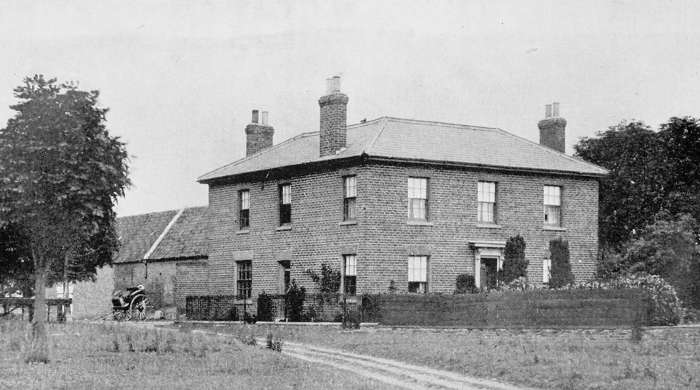 PLOWLAND HOUSE, HOLDERNESS, E.R.
YORKSHIRE.
PLOWLAND HOUSE, HOLDERNESS, E.R.
YORKSHIRE.