When Ralston and I opened New Montgomery street
we never doubted that its manifest importance would
compel an immediate and voluntary extension to the
natural terminus of the waterfront and prove the logical
outlet for congested trade. That this would have
been the case had the majority of property owners
been able to follow our example, I have no reasonable
doubt. But just as in the case of “Montgomery Street
Straight,” special interests and selfish considerations
stood in the way. Less than half a dozen property owners,
to their irreparable disadvantage, blocked “Montgomery
Straight”—a project that would have changed
the whole course of the city’s progress and development.
Just two property owners prevented the immediate
extension of New Montgomery street to the bay,
and again the failure was the city’s heavy loss.
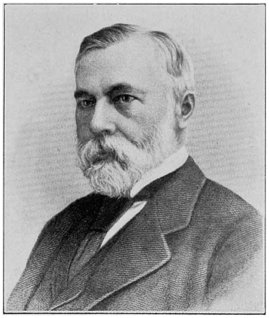
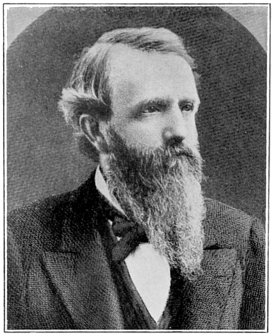
These two men were Milton S. Latham and John Parrott.
Latham owned a stately home and large grounds
on Folsom street, directly in the line of the new thoroughfare.
It was a matter of no small personal pride,
and doubtless he was attached to the locality. He asked
such a fabulous price for the right-of-way, which of
course would have destroyed the home value of the
property, that even Ralston and myself, who were accustomed
to brush any minor obstacles out of our way
without counting costs, stood aghast.
John Parrott, on the other hand, wouldn’t trade at
all. His business hours were then strictly limited from
9 to half-past 10, and every time we managed to secure
an interview, all the satisfaction we could get out of
him was a promise to fight us every inch of the way.
Outside of these two, we had a clear field. We secured
contracts on a great number of properties along
the line of the proposed thoroughfare. All the large
owners concerned favored it with enthusiasm. Still we
were absolutely blocked.
Under these conditions, nothing remained but an appeal
to the Legislature to appoint a commission, empowered
to open New Montgomery street for its full
length and assess benefits and damages as provided by
the general laws then in force.
And while about it, we did not stop there. We
worked out a grand, comprehensive scheme of improvement,
embracing the immense territory to the south.
Two years before, a bill had been lobbied through the
Legislature providing for what became famous later on
as the “Second Street Cut.” It was a rascally project,
a sordid bit of real estate roguery, carried through
without a moment’s thought of other people’s rights.
But it was an accomplished feat, and one of the results
was to ruin the finest haunt of good breeding San
Francisco ever had. Families were scattering from Rincon
Hill to various sections of the city. The old high-priced
residence property was going for a song. As
the “Hill” had ceased to be either beautiful or useful,
Ralston and I calmly proposed to cut it down.
We planned to have the city buy the property, which
could be purchased for $5,000,000 according to arrangement
with the owners, and grade it to the Market-street
level. Many million cubic yards of excavated material
were used to fill in a 150-acre tract of tide land,
offered to the city by the State at a nominal price, lying
between the Pacific Mail docks and Islais Creek; also
to reclaim China Basin, at least in part. The cost of
grading and reclamation work was estimated at $7,000,000;
in fact, contractors were willing to undertake it at
that price. In other words, the city was asked to issue
its bonds for $12,000,000 and receive in payment over
200 blocks of choice property, to say nothing of great
advantage to the appearance of the town and the facilities
for doing business.
Two separate bills were introduced in the Legislature.
One provided for the opening of New Montgomery
street to the bay, and created a commission to carry
out its purpose as above defined. This would probably
have slipped through without any serious opposition;
but coupled with it, in a way, was the great constructive
bill for acquiring Rincon Hill, for filling the tideland
acreage and China Basin and running all the streets
from First to Third, including an extension of Sansome
street, on a nearly level grade, southward to the
waterfront. For the extension of Sansome street Michael
Reese, Lloyd Tevis and myself had bought a solid block
from Market to Folsom street.
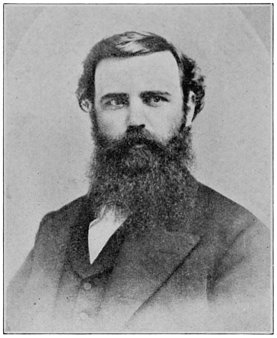
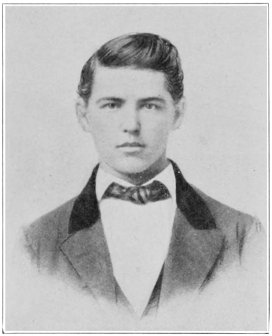
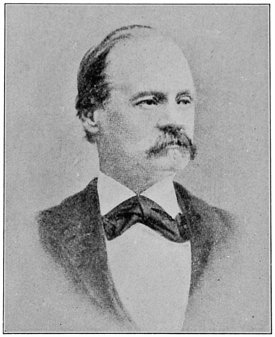
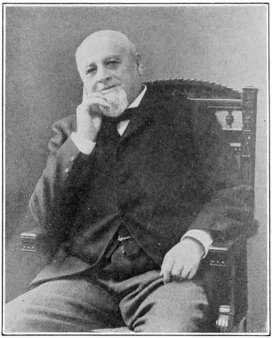
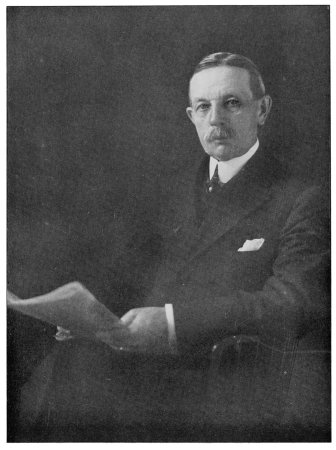
THE AUTHOR
Taken during his active career
in San Francisco
I was very much a novice in politics, but Mr. Ralston
insisted that I should have full charge of the program
and take up my residence in Sacramento pending the
session of the Legislature. So among other things I
gathered quite an exact idea of how wires used to
be manipulated underground.
In the first place, the necessity of a Legislature was
not apparent at that time. What had been an able and
independent body in the early history of California had
degenerated to a mere recording machine for a couple
of vote brokers, “Nap” Broughton and “Zeke” Wilson
by name. “Nap,” brief for Napoleon, was a happy,
enthusiastic chap, always slapping someone on the back
with a heartiness not always quite sincere; a good fellow
in his way, and a most abandoned corrupter of
men, a spendthrift disciple of nearly every sin, with
an ever-watchful eye on the money of others, yet himself
the veriest sucker that ever lived.
“Zeke” Wilson, on the other hand, was a gray, desiccated,
sinister, old spider, who seldom smiled, and when
he did everyone in his presence felt depressed. He was
the “thinking member” of the duumvirate, and while
“Nap” Broughton made nearly all the noise “Zeke”
Wilson laid the plans.
The Senate used to be respectable in appearance, an
able body and reasonably clean. The one that I was
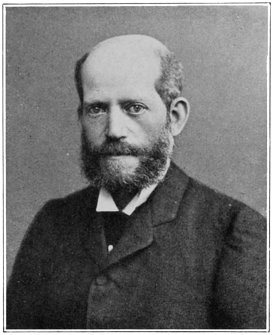
concerned with contained such men as Hager and Saunders
of San Francisco, George C. Perkins of Butte, who
made then his first appearance in politics; Rumaldo Pacheco,
afterward Governor; Pendergast of Napa, Lewis
of Tehama, and several others whose names are fairly
connected with the history of the State.
The Assembly, on the other hand, was a conglomeration
of miscellaneous riff-raff, gathered together God
knows how, inexperienced, ignorant, venal and scandalously
cheap. Of course there were some honorable
exceptions. I am only speaking of the general rule. It
was in the Assembly, not the Senate, that the “business”
of the session was done. That is, if Messrs.
Broughton and Wilson wanted to kill a measure, they
never worried what the Senate did, but let the obnoxious
bill come before the “popular-priced” Assembly,
where its shrift was short.
No one in his senses ever came to Sacramento with
a bill involving a considerable question of finance without
establishing friendly relations with Messrs. Broughton
and Wilson at the start. Treaties of alliance were
negotiated through Napoleon Broughton. At our first
interview $35,000 passed hands. “Nap” merely said
in a casual way that I was a gentleman and I accepted
the compliment for what it was worth. What became
of that money I have no means of knowing, and never
inquired. That would have been the height of bad manners.
But he never asked me for any more, and everything
I wanted slid through the Assembly on greased
ways.
We were among the first who made a consistent effort
to impress the merits of our measures on law-makers
by systematic good-fellowship. I practically
chartered a well known restaurant, threw it open to my
friends, and the bills were over $400 a day, so generously
did they respond to my invitation. Down in
San Francisco, Ralston was on the lookout for statesmen,
and none of them struck the town without good
cause to remember the experience pleasantly.
In a way, it was a striking session—a sort of breaking
of new ground. The railroad appeared for the
first time as a seeker for favors. It had two leading
bills, each providing for a subsidy for railroads southward,
one through the San Joaquin Valley and one
along the coast line. Neither terminated anywhere in
particular; the former somewhere in Kern county, the
latter in San Luis Obispo county, near the border line
of Santa Barbara. The measures simply authorized the
electors of the counties concerned to vote for a subsidy
payable to the first railroad that came along. The combined
subsidies provided for amounted to only $3,000,000,
but they were regarded as the opening wedges
for more. Of course everyone knew what that first
railroad would be. Strangely enough, in the newspaper
and legislative discussions, no one seemed to think that
Los Angeles cut any figure as a terminal or feeder.
The cry was for a railroad south to the Colorado river.
For that the people were willing to pay any kind of
subsidy, but not a cent for a couple of local concerns.
A bitter newspaper war followed, and charges of corruption
were freely made. But the bills passed both
houses by large majorities, and were only halted in their
triumphant progress by the veto of Governor Haight.
Even then, it was a close call. The Assembly enthusiastically
passed one of them over his veto, and in the
Senate the same action failed by only two votes.
There were so many bills of a shady, not to say rotten,
nature introduced during the session that almost
all measures were looked on as “jobs.” Our two bills—“Montgomery
South” and the effacement of Rincon
Hill—took their places with the rest. They were harshly
criticized by most of the San Francisco papers as crafty
schemes, the true inwardness of which would develop
later on. They were likened to the “Second Street
Cut” outrage, and a lot of ill-advised public opinion
was worked up against both. Nevertheless, they passed
the Legislature. How one of them became a law is an
interesting story, told in many official records of the
State.
The bill for the extension of New Montgomery street
had gone to Governor Haight. It leaked out from the
executive chambers that a veto message was being prepared.
The Governor had ten days in which to veto
the bill, otherwise it became a law by default. It was
on the afternoon of the last day, shortly after the
Senate had re-assembled, when one of my attorneys,
Creed Haymond, said in a musing way, “If the Senate
could only be induced to adjourn we would not have
to worry about a veto message. Then it could not be
delivered to anyone, and by twelve o’clock to-night
would become a law.” That set me thinking in a
moment. “Is that correct?” I asked. Haymond replied
that he was certain, although he was not sure
that the point had ever been tested by the courts.
The emergency demanded swift work. To offer a
motion to adjourn, just after settling down to business,
would certainly have aroused suspicion and a general
rumpus. Here I worked in a bit of strategy or
what might have more properly been called chicane,
which I trust may be pardoned me in my final account.
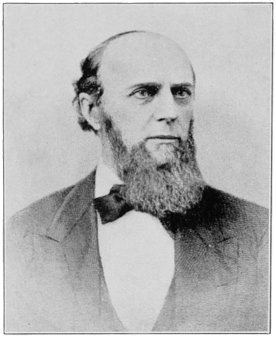
Senator John S. Hager was the leader of what might
be called the “reformers” and had quite a following
among his fellow members. He was the unwearied foe
of anything like a job. Among other measures, he had
opposed the Montgomery Street Extension bill. But
there were several bills on a special file that afternoon
that were his pet abominations and he justly feared
that they might slip through. While in this frame of
mind, a certain gentleman called him aside and advised
him that several members were anxious for an
adjournment, that if he would make the motion it
would probably carry and the obnoxious bills would
lose their places on the special file and their chance of
final passage.
The Senator swallowed the bait—hook, sinker and all.
While he was lining up the “reformers,” somebody
else was attending to the “performers,” and when the
gentleman made his motion to adjourn he must have
been gratified at the unexpected support. It went
through nem con, as the lawyers say. The officers of
the Senate were hurried out of the room on one pretext
or another and in a few minutes the chamber was
vacant.
Dr. Edward R. Taylor, later Mayor of San Francisco,
was the very efficient private secretary of Governor
Haight. I was in an agony of fear lest he should pop
into the Chamber with the fatal message before the
adjournment could be arranged. For this reason, I had
several effective conversationalists stationed between the
Governor’s office and the Senate, to engage the secretary
for a few minutes if he chanced to appear. This
they actually did, although Dr. Taylor has forgotten
the incident. What he does remember was that he
found much to his surprise an empty Senate Chamber,
and after ruminating over the situation for a time,
carried back the veto message to the Governor’s office
and laid it on his desk.
On the following day the Governor attempted to deliver
his message, but the Senate held he was too late.
His Excellency refused to certify the bill to the Secretary
of State as passed and I brought a mandamus suit
to compel him to take that action. The title of the case
was Harpending vs. Haight, and attracted a wide attention
at the time. It was carried to the Supreme Court
on an agreed statement and decided within fifteen days
in my favor. The decision can be found in Vol. 39,
Cal. Reports, page 189. Other Governors have been
cautious not to hold back their vetoes till the last day.
Hager roared like a wounded bull buffalo when he
found out how he had been used, but his lamentation
bore no fruit.
Thus the Montgomery South bill became a law of the
State, although the Governor liked it not. Commissioners
were appointed by Judge Lake, a lot of work
was done in surveys, estimates of benefits and damages,
but in the end it came to naught. Two years later,
while I was in Europe, a bill with a misleading title,
designed to repeal the act, was introduced and Ralston,
busy with many things, never knew about it until it had
sneaked through both houses and become a law. Because
of this, New Montgomery street still halts at
Howard street and bids fair to camp there forever more.
As to the Rincon Hill measure, that also passed both
houses triumphantly, but was held back through the opposition
of Senator Hager, so that it went to the
Executive just one day beyond the period when a return
to the Legislature must be made. It found a
peaceful resting place in the Governor’s capacious
pocket.
Thus all our grand schemes for the development of
the city southward fell by the dreary wayside of lost
opportunity. I do not pretend for a moment that Ralston
and myself were inspired in our efforts by the
pure spirit of benevolence. We would have made our
profit, but a mere trifle in comparison to the public good.
It was the most comprehensive plan for the city’s improvement
ever presented in a concrete form, and the
pity is it was not better understood.
Just take a retrospect. Who is there who would not
admit that five fine level streets from Market, between
First and Third, southward to the bay, would not be a
vast improvement and convenience to business, over the
blockade that prevails to-day?
And was such a real estate proposition ever before
offered to a people and turned down? For the sum of
$12,000,000 the city would have acquired full title to
approximately two hundred and twenty blocks, the present
value of which would be hard to estimate exactly.
But a rough valuation indicates that the property would
be worth enough to pay the entire city debt, buy the
Spring Valley Water Company’s plant, bring in the
Hetch-Hetchy water supply and leave a balance large
enough perhaps to settle all questions with the United
Railroads and municipalize the entire street transportation
system, not in the dim future, but now.
Immense revenues would have flowed into the municipal
treasury from these utilities. Taxation would have
become a joke. All these things are among the haggard,
melancholy “might have beens.”
There were too many well-intentioned, but bigoted,
reformers in the city then, just as there are now.
And the incident serves to indicate the superiority of
hindsight over foresight, which has been illustrated unhappily
and too often in the history of the State.