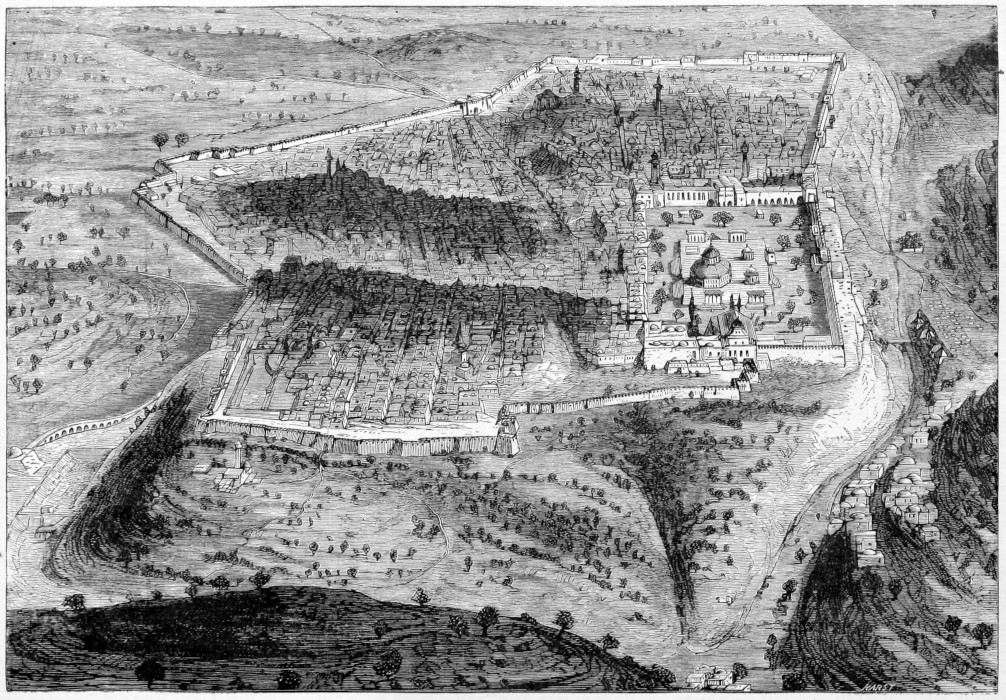
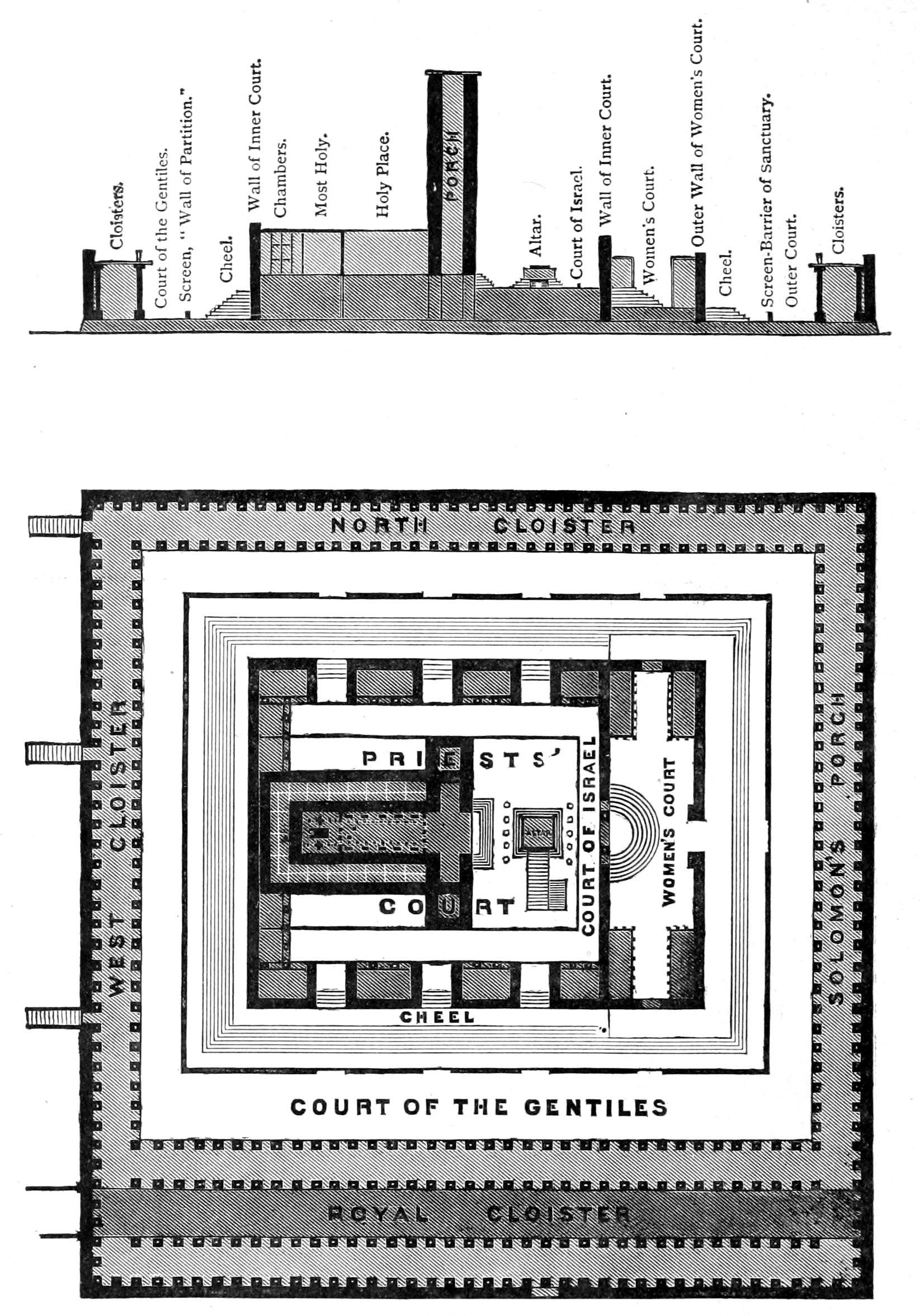
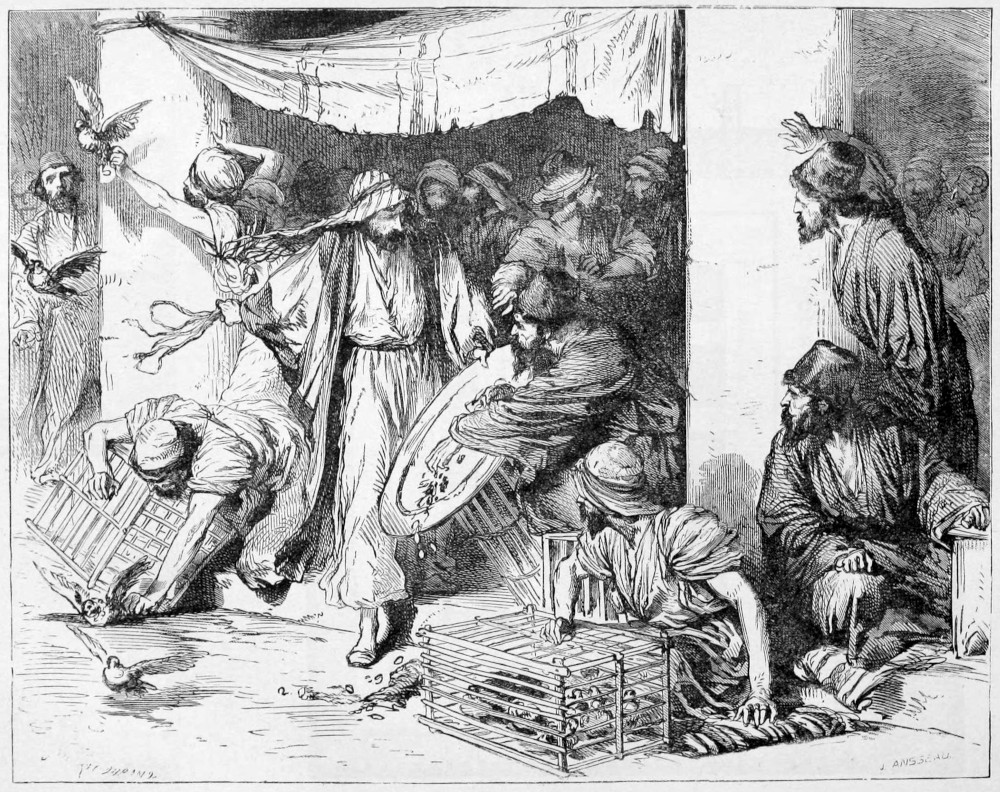
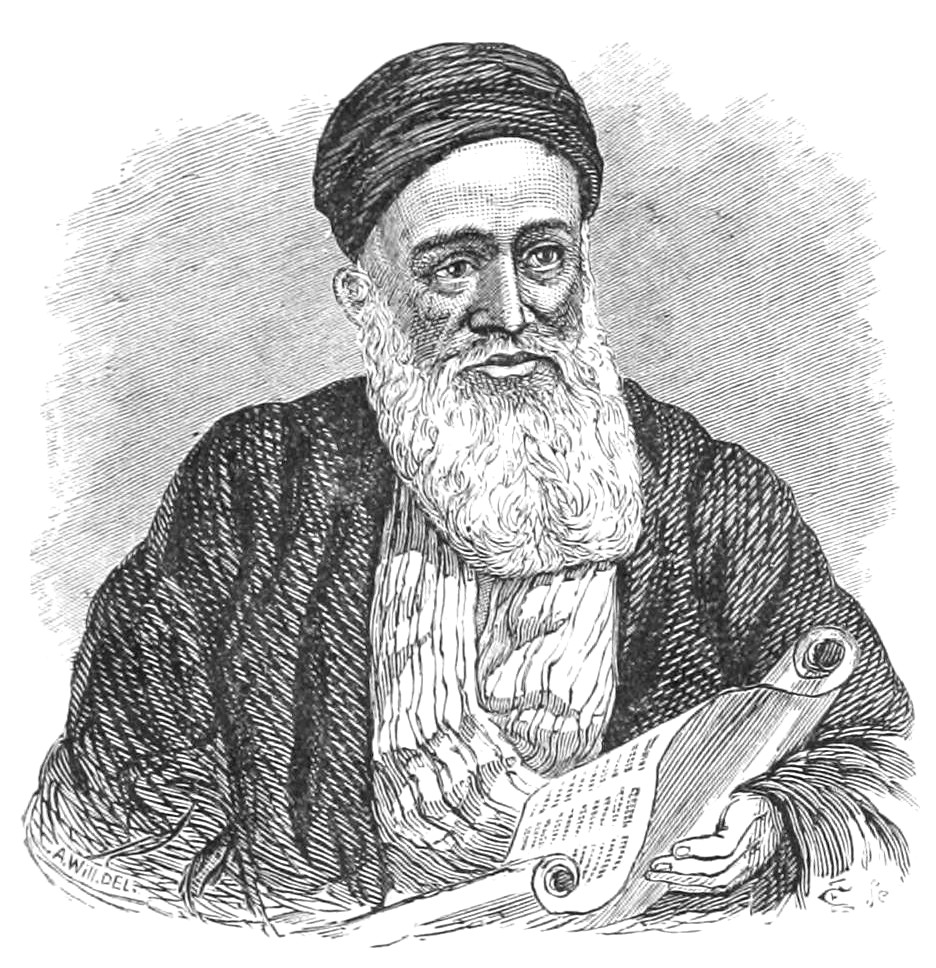
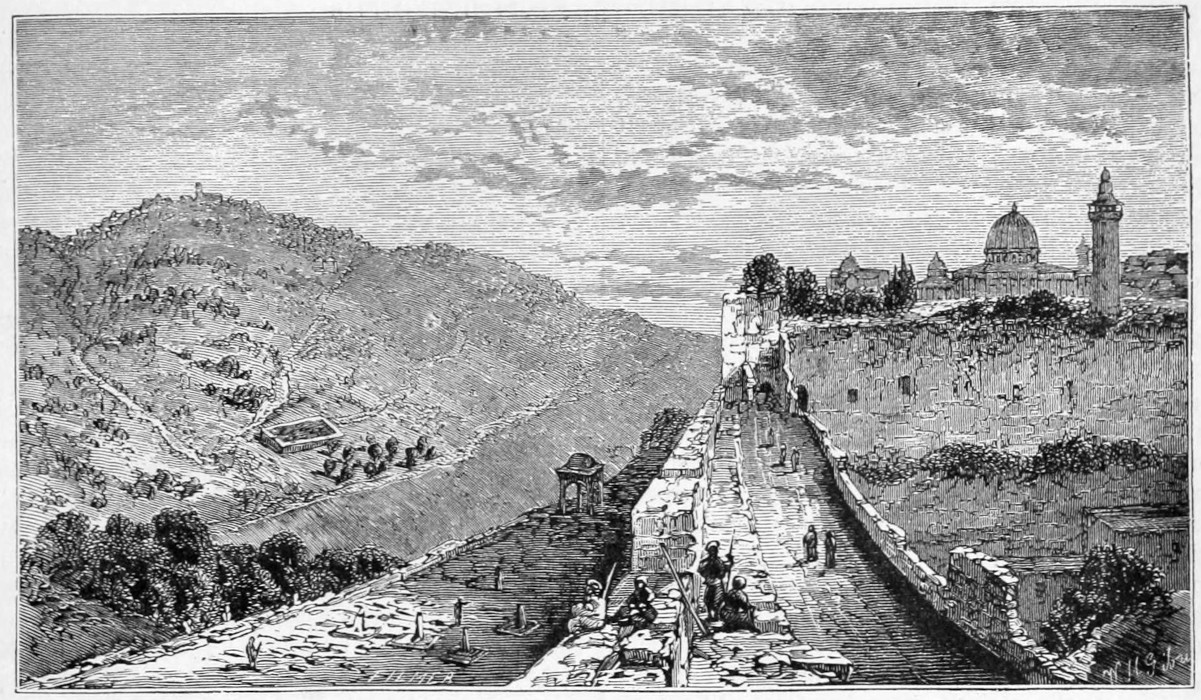
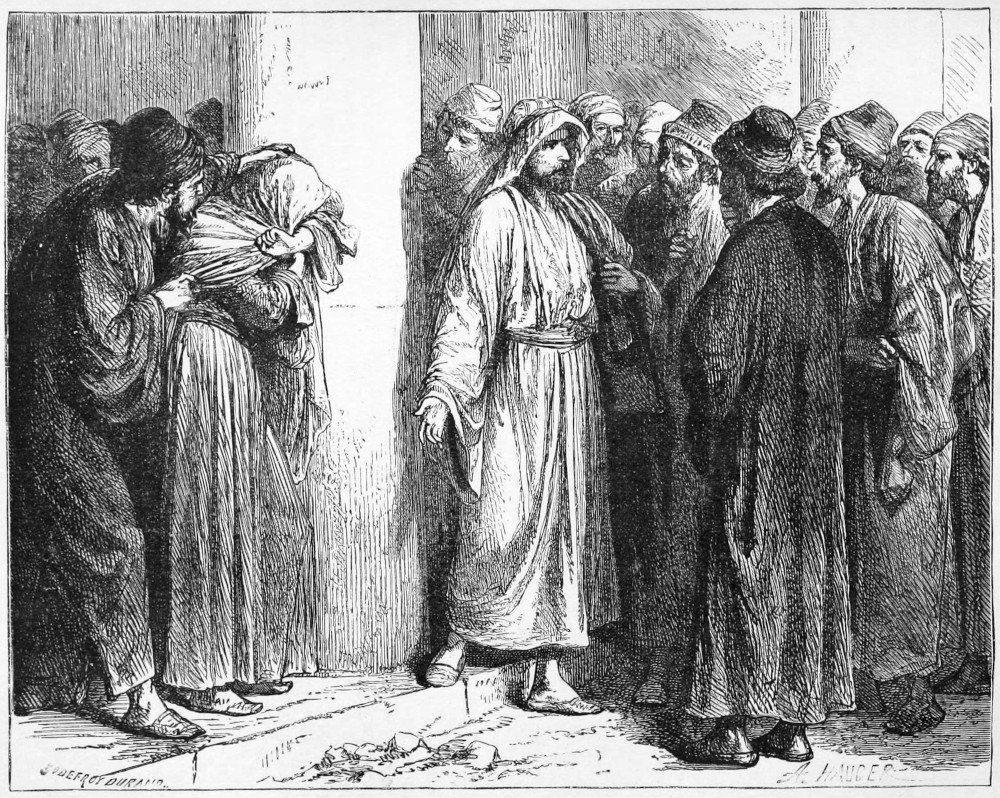
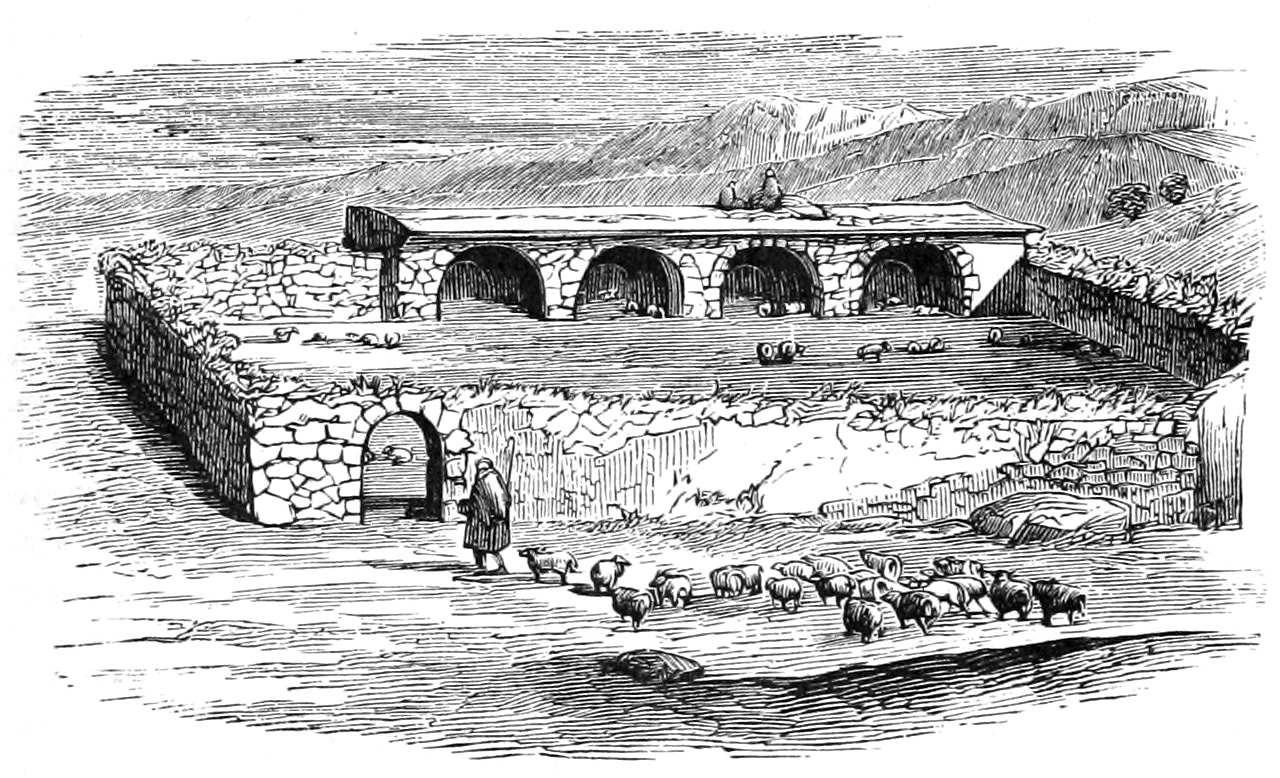
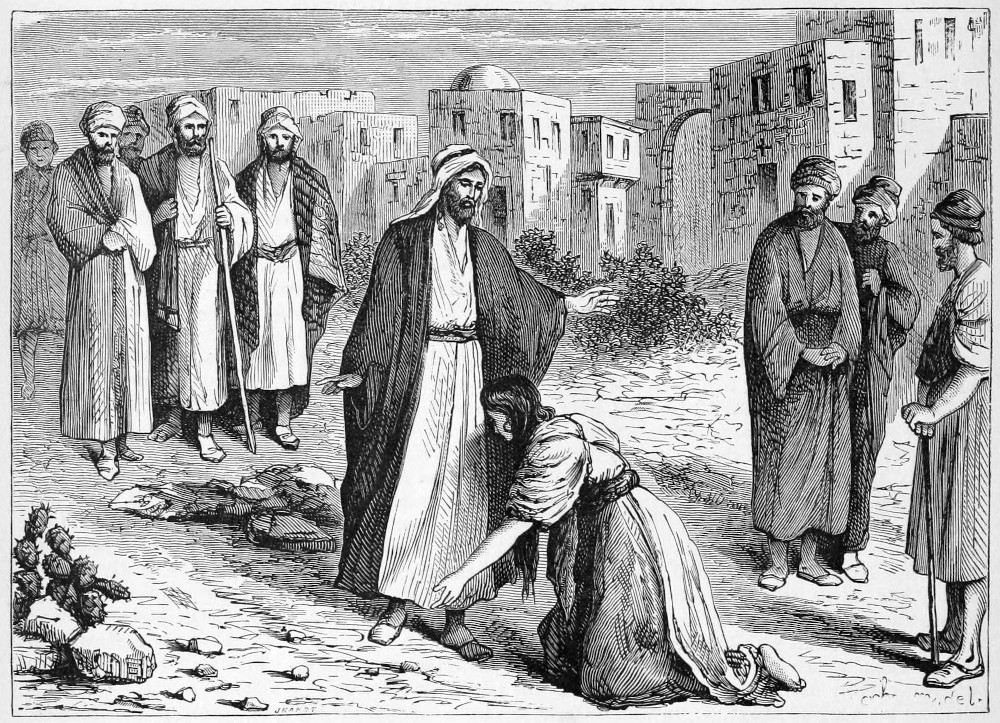
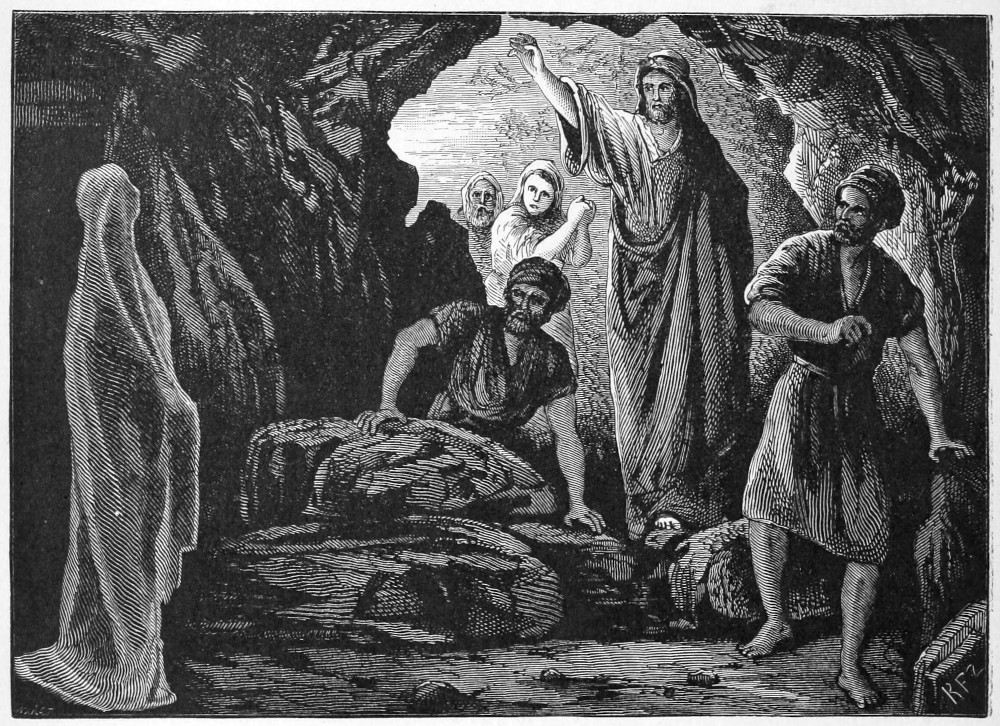
Ch. 6:1-15. FEEDING OF THE FIVE THOUSAND.—The
grace, the bounty, the power, and the
method of Christ illustrated.
Of this miracle accounts are given by the four
Evangelists (Matt. 14:13-33; Mark 6:32-52; Luke 9:10-17);
and it is the only miracle recorded by them all.
There are some differences in their records; for
details see notes below. In the main the three
Synoptics agree, while the differences between
them and the Fourth Gospel are more considerable.
According to the Synoptics Jesus and his
disciples crossed the Sea of Galilee to the east
side; the people, going round by land, outran
them, and apparently were waiting for them on
the shore (Mark); Christ therefore abandoned his
original design of rest, and devoted the day to
instruction (Mark) and healing (Matthew and Luke).
When evening was come the disciples asked him
to send the people away to the villages to get
necessary food; Jesus replied, Give ye them to
eat; the disciples answered that they had nothing
but five loaves and two small fishes to give;
and from these Jesus fed them. According to
John, Jesus crossed over the sea with his disciples,
went up into the hills, and there sat with
them; while sitting there he saw the people
coming round by land, proposed to feed them,
asked Philip where they should get the bread,
and apparently going down to the plain to feed
the people, took the five loaves and two small
fishes and distributed them among the people.
All agree, however, as to the main facts: the
feeding of five thousand on five loaves and two
small fishes, and the gathering of twelve baskets
of fragments, are narrated by all four Evangelists;
the subsequent departure of Christ into the
mountain for solitude and prayer, the embarkation
of the disciples by boat, and his walking to
them upon the sea are recounted by all but Luke;
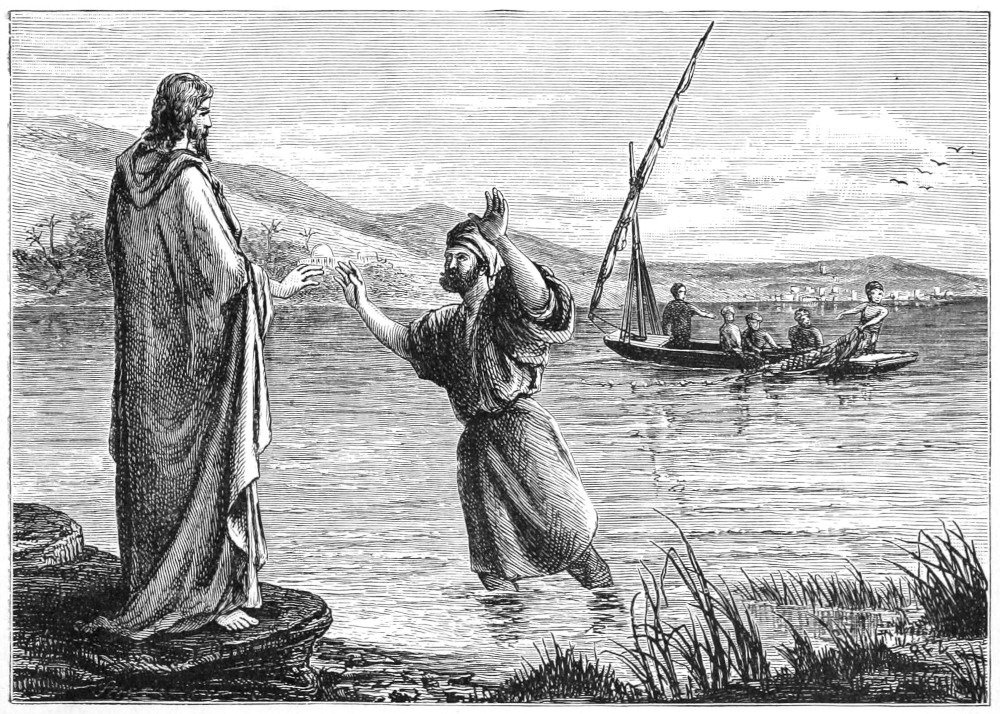
Matthew alone gives the account of Peter’s attempt
to walk upon the water to meet Jesus.
Harmonists have endeavored to combine these
accounts in one consistent narrative; this is the
work, however, rather of imagination than of
criticism; any such harmony is necessarily hypothetical.
The attempts have succeeded in so far
as to show that the accounts are capable of combination.
It may be added that the variations
are just such as we might expect in narratives
coming from independent eye-witnesses, and not
such as we might expect in different fictitious
accounts, or in different versions of a myth, derived
from the same tradition. The miracle
took place immediately on the return of the
twelve after executing the commissions given
to them in Matthew, ch. 10; the immediate object
of Christ in retiring to the eastern shore of
the Sea of Galilee was to secure quiet for a personal
conference with the twelve respecting their
work (Mark 6:30). For further statement of the
chronology of the event, and the most probable
harmony of the four accounts, see Matt. 14:13-27,
note. A topographical difficulty is presented
by an apparent but not real inconsistency
between Luke 9:10 and Mark 6:45. According
to Luke, Christ took the twelve with him into a
desert place belonging to Bethsaida, whither the
multitude followed him; according to Mark,
after feeding the multitude he told the twelve
to sail across to the other side unto Bethsaida.
Thus Luke seems to place Bethsaida on the eastern,
and Mark on the western shore of the lake,
and this has led to the hypothesis that there
were two Bethsaidas, an hypothesis generally
adopted by the commentators, without, it seems
to me, sufficient inquiry. It has no historical
confirmation, was invented to harmonize Luke
and Mark, and is needless. Let the reader compare
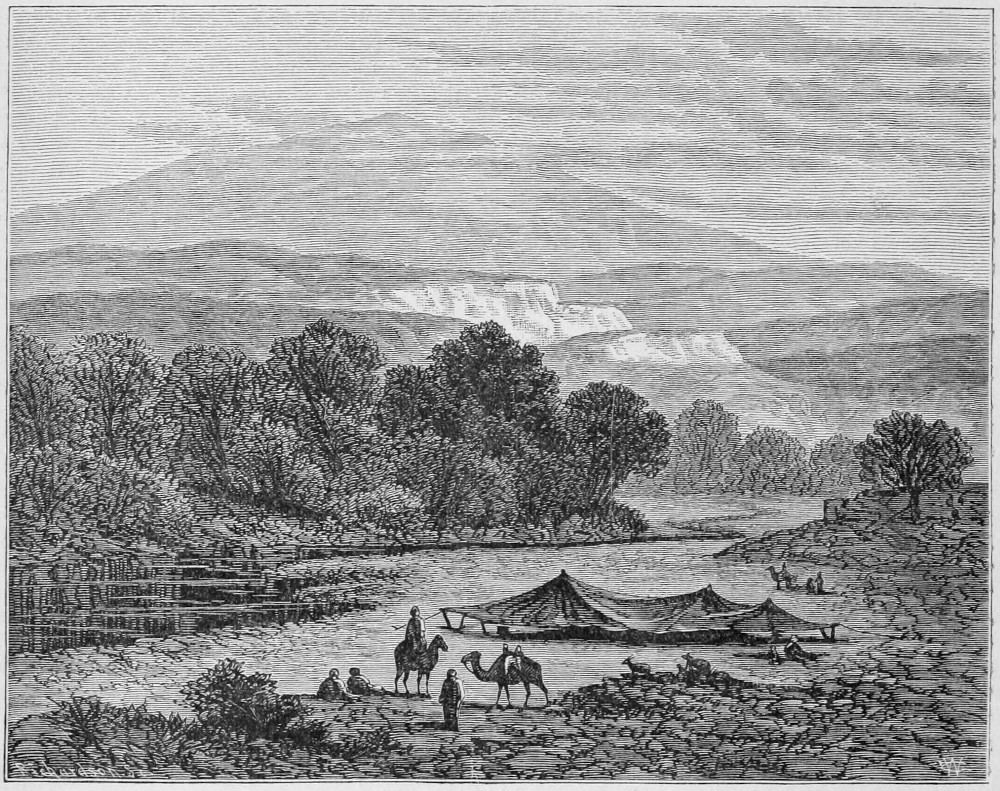
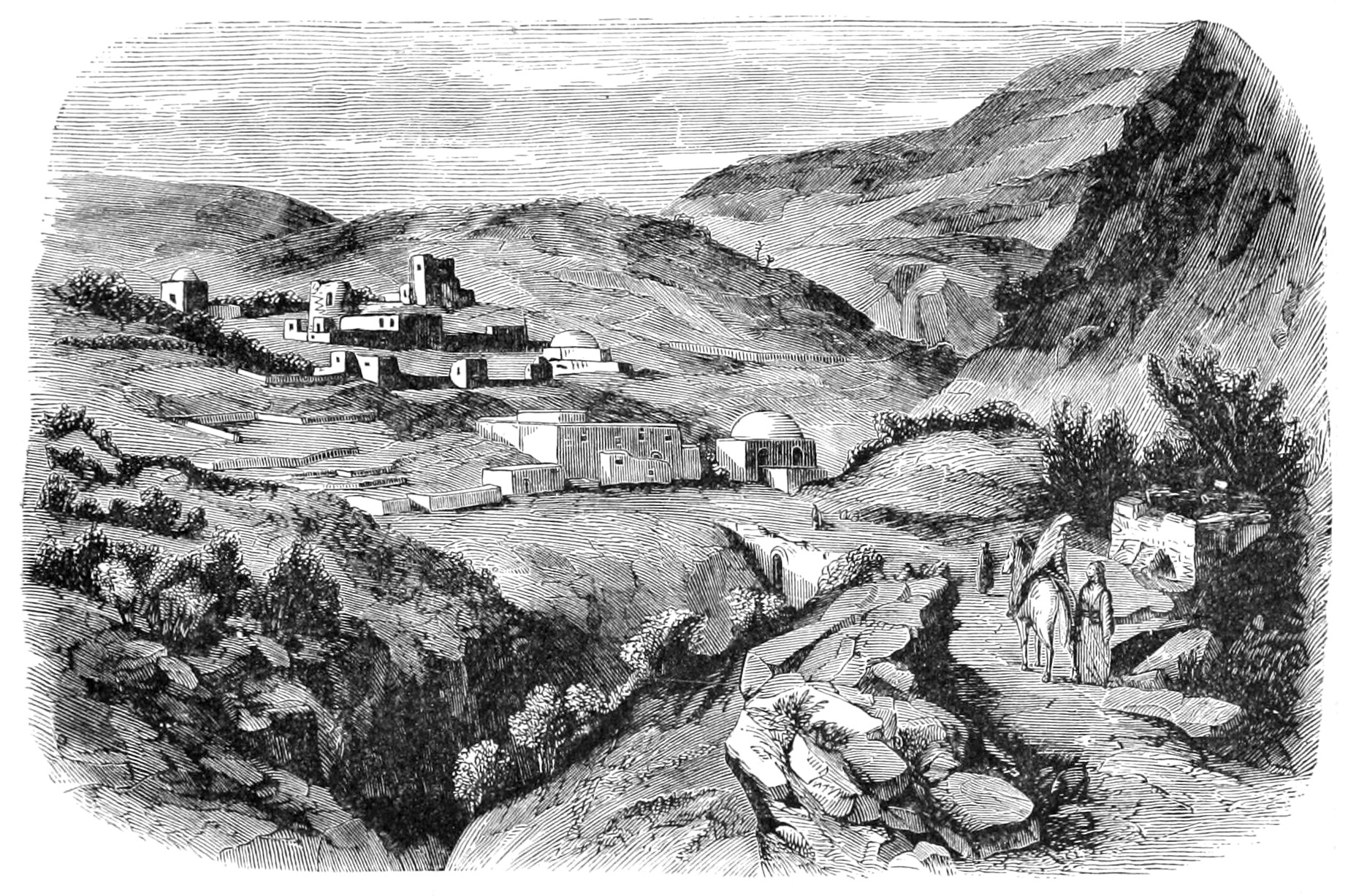
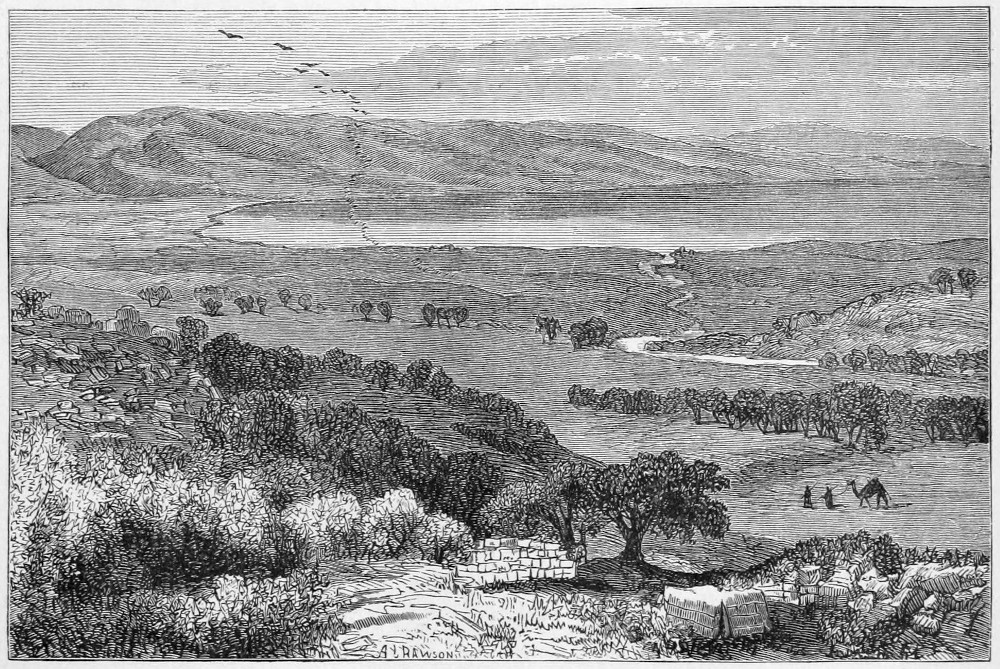
the map of the Sea of Galilee (Vol. I,
p.
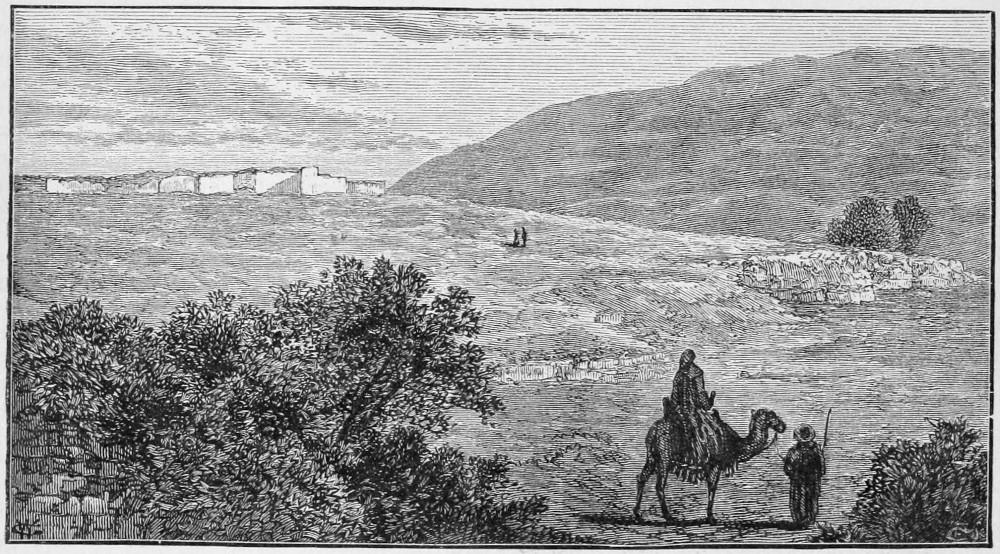
342) with the accompanying illustration, in which
he looks down on the Sea of Galilee from the
north. The ruins in the foreground are those of
Bethsaida; the river is the Jordan. Probably in
ancient times the town of Bethsaida reached to
or near the shore of the lake. The mountains in
the distance are those on the eastern shore of
Galilee, and the plain at their foot is the plain of
Butaiha, where the five thousand were fed.
Christ was at or near Capernaum; sailed with
his disciples across the Sea of Galilee to the plain
of Butaiha, at the foot of the hills on the northeastern
shore of the lake, not far from Bethsaida.
After the attempt of the multitude to make
Jesus king, he bade them embark and row along
the shore toward (πρός) Bethsaida (Mark 6:45),
where he proposed to meet them. A sudden
wind rising and blowing down the Jordan valley
from the Lebanon range (see on verses 16-18), drove
the disciples’ boat out into the lake; and it was
while they were rowing back, against the wind,
toward Bethsaida, where their Lord had promised
to meet them, that he came out upon the
waves for that purpose. Thus it is true that
when they left Capernaum for the plain of Butaiha
in the morning, they were going over to a
plain belonging to the city of Bethsaida, as Luke
reports; and also true that when they started
back in the evening in the direction of Capernaum,
as John reports (ver. 17, εἰς indicating the
ultimate point they had in view), they were also
going toward Bethsaida, which lay on the northern
shore, and not far from midway between the
eastern and the western shores. See further,
Mark 6:45, note.
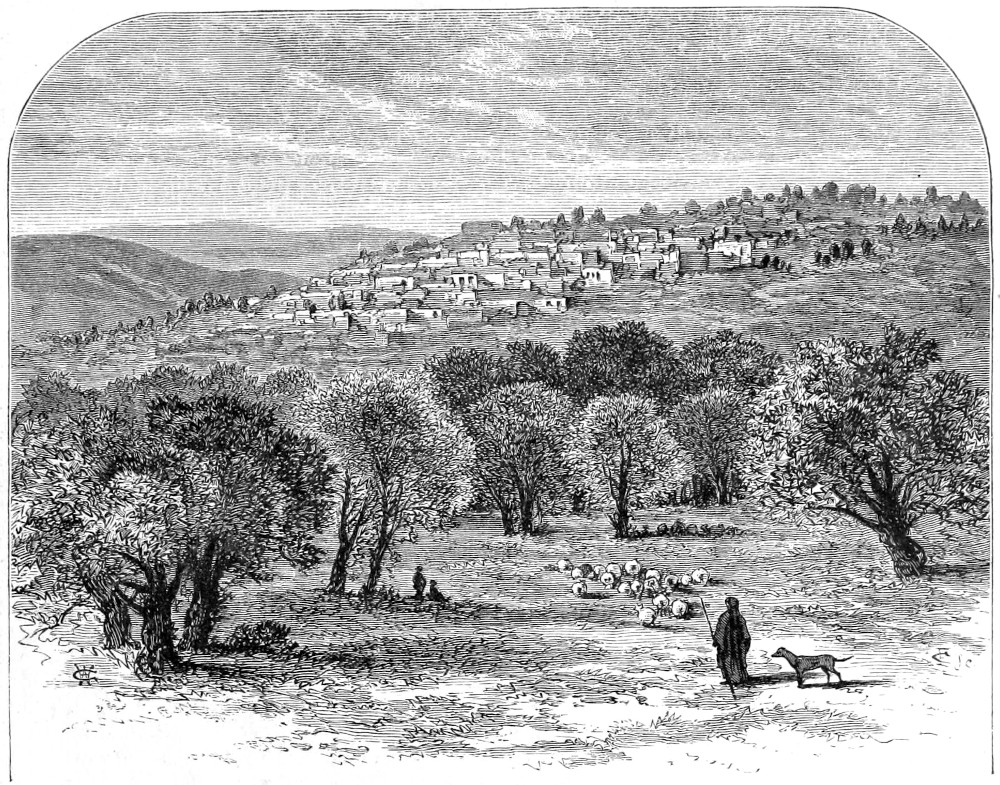
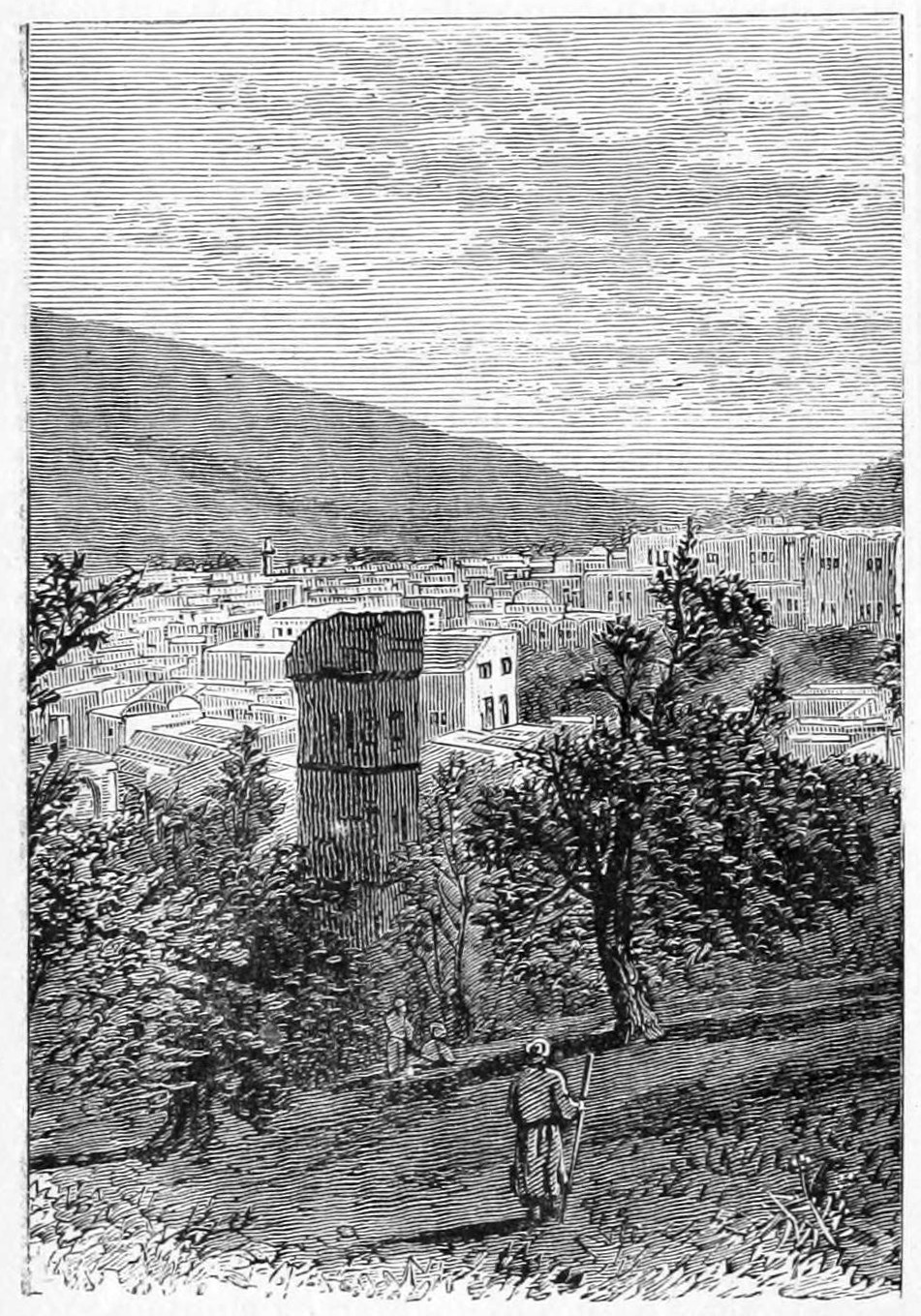
BETHSAIDA.
After[206] these things Jesus went over the sea of
Galilee, which is the sea of Tiberias.
2 And a great multitude followed him, because they
saw his miracles which he did on them that were diseased.
1, 2. After these things. Not a definite
note of time. It was subsequent to the healing
of the impotent man at the foot of Bethesda.
But many and important events had intervened.
See Tabular Harmony of Gospels, Vol. I, p. 44.—Which
is the Sea of Tiberias. John, writing
for Gentile readers, gives the name by which
this body of water was best known in the Gentile
world. For map and description, see Vol. I,
p. 342. The eastern shore was not populous; it
is to this day comparatively a solitude; Christ
went thither with his disciples partly for rest and
a quiet conference (Mark 6:30, 31), and partly in
consequence of the death of John the Baptist,
perhaps to avoid the possibility of danger to himself
and to them from Herod. After the sermon
which followed this miracle of feeding, reported
in this chapter by John, he engaged no more in
any public ministry in Galilee. See Matt. 15:29-39,
note.—Because they saw his miracles
which he did. John has not recorded
any miracles done at this time in Galilee, and
only two performed at any time in Galilee. This
is one of those incidental references which makes
it clear to my mind that John wrote not only
with a personal knowledge of the writings of the
other Evangelists or some of them, but with a
recognition of the fact that their writings would
be familiar to the readers of his own Gospel.
The miracles referred to here are those performed
in Christ’s Galilean ministry subsequent
to his return from the second Passover at Jerusalem.
They are recorded in Matthew, chaps.
8-13; Mark, chaps. 2-5; and Luke, chaps. 5-8.
3 And Jesus went up into a mountain, and there he
sat with his disciples.
4 And the passover, a feast of the Jews, was nigh.
3, 4. And Jesus went up into the hill
country. Up from the shore of the sea to the
quiet of the hills. These, on the eastern shore,
rise to a height of nearly 2,000 feet above the
level of the sea, which is however itself depressed
some 600 feet below the level of the Mediterranean.—The
Passover, a feast of the Jews,
was nigh. This affords both a note of time
and an explanation of the multitude present.
The month was Nizan (our March). The grass
was green; the trees were in full leaf; the palm
trees were laden with blossoms; the orange and
lemon trees with fruit; the barley was ripening
in the fields. At such a season and in such a
climate, to spend a night without shelter is no
hardship, and is not unusual. The leisure of the
Oriental is partly a characteristic of the people,
partly an incident of a climate which compels
less labor than ours. The fifteen days preceding
the Passover were largely devoted to various
preparations for it; the roads, streets, and
bridges were repaired, and the caravans began
to move toward Jerusalem. The gathering at
such a time of a congregation of 5,000 men, besides
women and children, attracted by the fame
of such a prophet, is not at all incredible. The
reader must also remember that Galilee was then
the home of a large population. According to
Josephus, there were six cities of considerable
size on the thirteen miles of coast-line along the
northern and northeastern shores of the Lake
of Tiberias.
5 When Jesus then lifted up his eyes, and saw a
great company come unto him, he saith unto Philip,
Whence shall we buy bread, that these may eat?
6 And this he said to prove him: for he himself knew
what he would do.
5, 6. When Jesus then lifted up his
eyes. According to Mark the people going
round by the shore outran Jesus, and he found
them there upon his arrival (Mark 6:33). There is
no irreconcilable inconsistency in the two statements.
It may be that Jesus found a few of his
disciples, those that knew his probable destination,
and took them up with him and the twelve
into the hills; for the term disciples (ver. 3) is not
in the Gospels confined to the twelve apostles;
that the larger multitude followed, looking for
the Lord; and that their gradual congregating
moved his compassion (Mark 6:34) and led him to
descend from the retirement of the hills to teach
and to heal them.—He saith unto Philip.
He spent the greater part of the day in teaching
and healing (Matt. 14:14; Mark 6:34; Luke 9:11). The
people, absorbed by their interest, took no note
of the passage of time. As the afternoon drew
on, the disciples proposed to Christ to send the
people away to procure food (Matthew, Mark, Luke);
it was probably as a result of this proposition
that Christ addressed to Philip the question
here, Whence shall we buy? This question is
reported alone by John. Why did Jesus address
this inquiry to Philip? Some commentators have
supposed that he was the purveyor for Christ
and the apostles; others that his faith was especially
weak and needed strengthening; still
others that the question was addressed to him
because he belonged to Bethsaida (ch. 1:44), and
therefore would be the one to know where food
could be procured; but there is no evidence to
support either hypothesis. Christ frequently
questioned his disciples in order to bring out to
their own consciousness the measure of their
faith (Matt. 9:28; 16:13; 19:17; Luke 24:17, etc.).—For
he himself knew what he would do. A
statement made by the apostle to emphasize the
truth that Jesus himself was not in perplexity,
and taking counsel with his apostles for his own
guidance. This he is never recorded to have
done. According to Matthew the question of
providing for the multitude was not raised until
“it was evening” (Matt. 14:15). Yet both Matthew
and John say that “when evening was come”
Jesus was left alone in the mountain (ver. 16; Matt.
14:23). The explanation of this discrepancy lies
in the fact that there were two evenings recognized
by the Hebrews, as by the Greeks, one beginning
with the declining sun at or about three
in the afternoon, the other with the setting sun.
It was during the first evening, i. e., between
three and six, that the people were fed; at the
second evening, i. e., about sunset, they had departed
and left Jesus alone.
7 Philip answered him, Two[207] hundred pennyworth
of bread is not sufficient for them, that every one of
them may take a little.
8 One of his disciples, Andrew, Simon Peter’s
brother, saith unto him,
9 There is a lad here, which hath five barley loaves,
and two small fishes: but what are they among so many?
7-9. Two hundred pennyworth of bread.
The penny, or denarius, was equal in value to
seventeen cents American coin; but it was the
day’s wages of a common laborer (Matt. 20:2);
two hundred pennyworth therefore would be
practically equivalent to $200 worth in our time.—One
of his disciples said unto him.
Christ bade them ascertain how much they had
on hand for themselves (Mark 6:38). Andrew ascertained
and reported in response to Christ’s
direction. The lad here mentioned was therefore
probably some one in attendance upon
Christ and the twelve, and carrying their simple
store for them. How much blessing the Lord
can impart to the service of a little child. Comp.
2 Kings 5:2, 3. Here a little boy (παιδάριον) had
but five loaves, and they of barley, and yet when
given to the Lord, and blessed by Him, they
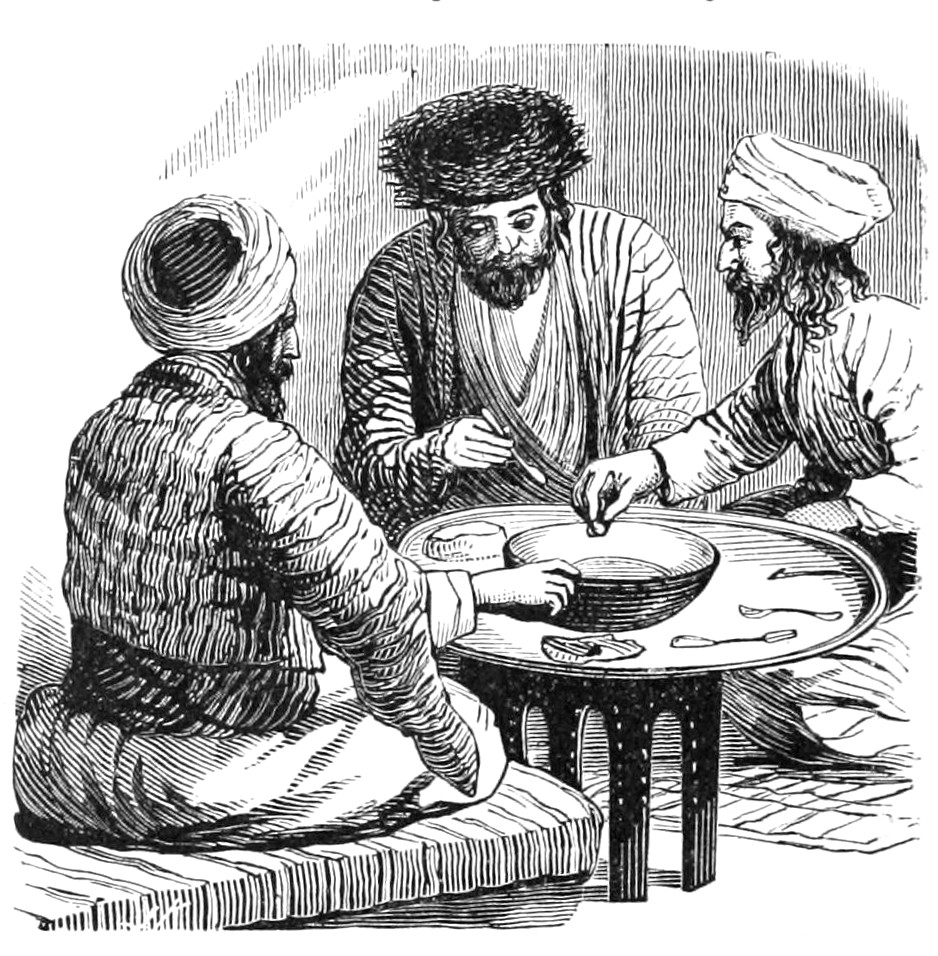
feed five thousand.—Five barley loaves. The
loaves of the Jews were thin round cakes or
crackers; for illustration and description, see
Mark 8:3-5, note. Barley was the food only of
the lower classes. “One in the Talmud, speaking
of barley bread, says, ‘There is a fine crop
of barley.’ Another answers, ‘Tell this to the
horses and asses.’ A Roman soldier who had
quitted his ranks, had for part of his punishment
that he received barley bread instead of wheaten.”—(Geike’s
Life of Christ.) Thus we have
here (1) an indication of the simplicity of the
living of our Lord; without a place to lay his
head, i. e., a permanent home, and with the
plainest possible food for his fare, the bread of
the peasant classes; (2) a suggestion of true benevolence;
he did not create wheaten bread for
the multitude; he gave such as he had. To
share what we have, not to aspire to give what
we have not, is true benevolence.—And two
small fishes. The word here rendered small
fishes (ὀψύριον) denotes any relish eaten with
bread; hence, because fish was a common accompaniment,
the most common from the animal
kingdom, it came to be used for fish, generally
salt fish, prepared for and used as a relish.
10 And Jesus said, Make the men sit down. Now
there was much grass in the place. So the men sat
down, in number about five thousand.
11 And Jesus took the loaves: and when he had
given thanks, he distributed to the disciples, and the
disciples to them that were set down; and likewise of
the fishes as much as they would.
10, 11. Make the men sit down. It requires
little imagination to picture to the mind
the wondering surprise with which the disciples
prepared to obey a direction the object of which
they could not conceive, and the perplexity of
the people as they prepared to take their places,
wondering what was to occur next. They sat
down; Mark tells us in ranks, literally garden
plats (πρασιαὶ πρασιαὶ; the repetition without
καί denotes distribution). With their bright-colored
Oriental dresses, these men sitting cross-legged
on the ground in groups of fifty each
(Mark 6:40), so that their number was afterward
easily estimated, presented an appearance which
recalled a brilliant garden in the early summer.
The picture thus presented by Mark, but lost in
our English translation, is one of the pictorial
characteristics of his Gospel, and is thought to
have been derived by him from Peter, the
most effective and therefore probably the most
pictorial of all the apostolic preachers.—There
was much grass in the place. This is not
inconsistent with its description by the other
Evangelists as a desert place, the word desert
implying simply solitude, not an arid soil. The
location (Thompson’s Land and Book, Vol. II, p.
29) was probably the rich level plain of Butaiha,
forming a triangle, of which the Eastern mountains
make one side and the lake shore and the
Jordan the other two. It was at the southeastern
angle of this plain, near the point where the
hills abut upon the lake, that the feeding took
place. “From the four narratives of this stupendous
miracle we gather: 1st, that the place
belonged to Bethsaida; 2d, that it was a desert
place; 3d, that it was near the shore of the lake,
for they came to it by boats; 4th, that there was
a mountain close at hand; 5th, that it was a
smooth, grassy spot, capable of seating many
thousand people. Now all these requisites are
found in this exact locality, and nowhere else, so
far as I can discover. This Butaiha belonged to
Bethsaida. At this extreme southeast corner of
it the mountain shuts down upon the lake, bleak
and barren. It was, doubtless, desert then as
now, for it is not capable of cultivation. In this
little cove the ships (boats) were anchored. On
this beautiful sward, at the base of the rocky
hill, the people were seated.”—(Andrews.)—About
five thousand. Besides women and
children (Matt. 14:21), who perhaps sat separately
from the men, as Oriental custom would require
them to do.—When he had given thanks.
The same act is differently expressed by the
other Evangelists as blessing the bread. Asking
a blessing upon food before meals was a universal
custom among the Jews, and was practised
both by Christ and by the apostles (Luke 22:17, 19;
24:30; Acts 27:35).—He gave [to the disciples
and the disciples] to them that were set
down. The words which I have put in brackets
are not in the original according to the best manuscripts.
They have been added from Matt.
14:19. They undoubtedly represent the actual
fact, viz., that the bread was distributed by the
hands of the twelve.
12 When they were filled,[208] he said unto his disciples,
Gather up the fragments that remain, that nothing[209] be
lost.
13 Therefore they gathered them together, and filled
twelve baskets with the fragments of the five barley
loaves, which remained over and above unto them that
had eaten.
14 Then those men, when they had seen the miracle
that Jesus did, said, This is of a truth that[210] prophet that
should come into the world.
15 When Jesus therefore perceived that they would
come and take him by force, to make him a king, he
departed again into a mountain himself alone.
12-15. Gather up the fragments that
remain, that nothing be lost. “It was a
custom and a rule (among the Jews) that when
they ate together they should leave something
to those that served. ‘Every one leaves a little
portion in the dish, which is called the servitor’s
part.’”—(Lightfoot.) The fragments thus gathered
up by the apostles were probably preserved
for their own use. The practical lesson is important:
“He likewise exhorts his disciples to frugality
when he says, ‘Gather the fragments which
are left, that nothing be lost’; for the increase
of the bounty of God ought not to be an excitement
to luxury. Let those therefore who have
abundance remember that they will one day render
an account of their immoderate wealth, if
they do not carefully and faithfully apply their
superfluity to purposes which are good, and of
which God approves.”—(Calvin.) This gathering
up of the fragments demonstrates also the
reality of the miracle. See below.—They filled
twelve baskets (κοφίνος). These baskets were
the common baskets used universally by the
Jews in traveling to carry their food. See for
description and illustration, Matt. 16:9, 10, note.
Christ there distinguishes between this miracle
and that of the feeding of the 4,000, which are evidently
not to be confounded as one event.—That
prophet that should come into the world.
Foretold in Deut. 18:15, 16, and referred to by
the delegation sent from Jerusalem to inquire of
John the Baptist as to his character and authority
(John 1:21). By some Rabbis this prophet was
regarded as a forerunner of the Messiah; by
others as the Messiah himself. Here apparently
the people regarded the two as identical; this at
least is indicated by their desire to take Christ at
once and crown him as king.—Jesus knowing
that they were about to come and seize
him that they might make him king.
Either by reading in their hearts the half-formed
design; or perceiving it in their whispered conference;
or informed of it by the apostles, who
doubtless shared the enthusiasm of the multitude,
and who may have been as eager as any for
the coronation of their Lord. This attempt of
the people to make Christ a temporal king was
a renewal of Satan’s endeavor to tempt him to
secure the kingdoms of the earth by Satanic
methods (Matt. 4:8-10, note). The Jews anticipated
a realm of material marvels and miracles with
the advent of the Messiah. “Drought and famine
should then be known no more. The prophecy
of Isaiah (Isa. 65:13), ‘My servants shall eat,
but ye shall be hungry,’ should be literally fulfilled.
Israel should be gathered together. The
young men should feed on bread, the old men on
honey, the children on oil. Every palate should
be pleased, every appetite satisfied, and the prolific
profusion of the Garden of Eden should repeat
itself in the land of the Messiah. These
prophecies of the scribes, with which constant
repetition in the synagogue had made the common
people familiar, seemed to them about to be
fulfilled.”—(Abbott’s Jesus of Nazareth.)—He departed
again into the mountain. For solitude
and prayer (Matt. 14:23; Mark 6:46). He first
constrained his disciples to embark for Bethsaida,
a fact which Matthew and Mark state (Matt.
14:22; Mark 6:45) without giving the reason for
it; John alone tells of the purpose of the multitude
to make Christ a king. There is significance
for us in Christ’s refusal of their homage.
They desired to make him king, not to accept
him as king; to give him a sceptre, not to own
allegiance to the sceptre he possessed; to secure
his power and authority in aid of their designs,
not to recognize his royal authority and be obedient
to his will. When they found out what
that will involved, from his discourse on the
following Sabbath at Capernaum, they would
have him for their king no longer. It is one
thing to attempt to make Christ serve our wills;
it is a very different thing to make our wills obedient
to his.
Various attempts have been made to explain
this miracle on rationalistic principles. The two
principal explanations offered are: (1) that the
people were so satisfied with Christ’s instruction
that they did not feel the claims of hunger
(Schenkel); (2) that they had their hearts opened
by the beneficence of Christ, so that those who
possessed food themselves provided for those
that had none, and thus all were furnished by a
miracle of love, operating not by the literal creation
of new supplies, but by the inspiration of a
new spirit of benevolence in the people themselves.
This, if I understand him aright, is
Lange’s explanation. See his Life of Christ, Vol.
II, p. 140. For a more elaborate classification of
rationalistic theories, see Lange’s Commentary on
Matthew, Am. ed., p. 266. Neither interpretation
deserves serious refutation. The first is inconsistent
with the fact that twelve baskets of the
fragments were gathered up after the meal was
ended; the second is contradicted by the language
of the disciples, who plainly imply that
the people are without food (Matt. 14:15; Mark 6:36;
Luke 9:12), and by the enthusiasm of the people
after the miracle has been performed. They
were not of a kind to be ready to crown a prophet
as king, merely because he had opened their
hearts and inclined them to benevolence. It is,
however, to be noted that here as elsewhere the
Evangelists simply state the facts, leaving the
reader to make his own deductions. These facts
are that over 5,000 people were upon a plain,
without provisions; that all the food which
Christ had for them was five loaves and two
small fishes; that he distributed this to the
twelve, and they to the multitude; that all had
enough; and that when the meal was over there
were twelve baskets full of fragments remaining.
Assuming these to be the facts, the explanation
of a miraculous creation of bread is the only reasonable
explanation; any other hypothesis impugns
the historical verity of the four Gospels.
The attempt to explain the miracle as an acceleration
of the processes of nature (Olshausen), to
which, as Dr. Schaff well says, “must be added
an accelerated process of art, or the combined
labors of the reaper, miller, and baker,” gives no
help in understanding the process by which
Christ provided for all. We can accept the fact
without comprehending the method, which is
indeed as entirely incomprehensible as are God’s
methods in the ordinary phenomena of nature,
e. g., the multiplication of a single kernel of corn
into the many kernels upon the stalk. The parallel
and contrast between this miracle and the
analogous but different multiplication of food
wrought by the O. T. prophets Elijah and Elisha
(1 Kings 17:16; 2 Kings 4:42-44) are instructive. Like
all of Christ’s miracles, this multiplication is a
parable. (1) It illustrates Christ’s method: the
way to men’s hearts is often through ministering
to their bodies; in the recent famines in India
and China (1877), the missionaries have found the
way opened for the gospel in many districts by
their ability to provide the starving with food or
employment. (2) It manifests the miraculous
grace of God: “everything wastes in the hands
of men; but everything multiplies in those of
the Son of God.”—(Quesnel.) (3) It rebukes distrust:
“He who feeds here five thousand men
in an extraordinary manner and by a visible miracle,
cannot He find means to support this numerous
family, which raises in the mind of this
father and mother so many unceasing and distrustful
thoughts?”—(Quesnel.) (4) It is an
inspiration and a prophecy of Christian love. It
is “the brilliant inauguration of that fruitful
miracle of Christian charity which has ever since
gone on, multiplying bread to the hungry. The
heart of man once touched, like the rock in the
desert touched by the rod of Moses, has gone on
pouring over thirsty crowds the inexhaustible
stream of generosity.”—(Pressense.) (5) It is a
symbol of the inexhaustible love of Christ himself;
a symbol of that miraculous multiplying of
sacred influences which, from one brief life of
three active years, and one body pierced and
broken on the tree, feeds innumerable thousands,
a love which Christ imparts to his disciples, and
which they in turn convey throughout the ages
and to all lands.
Ch. 6:16-21. JESUS WALKS ON THE SEA.—Christ
the Lord of nature: light in our darkness;
peace in our storms.—He comes to those who are
toiling to come to him.—His message to all his
disciples: Fear not.—The ground of that message:
he is the I am.
Compare Matt. 14:22, 23; Mark 6:45-52, and see
Prel. Note at beginning of this chapter.
16 And[211] when even was now come, his disciples
went down unto the sea,
17 And entered into a ship, and went over the sea
toward Capernaum. And it was now dark, and Jesus
was not come to them.
18 And the sea arose[212] by reason of a great wind that
blew.
16-18. And when even was come. This
was the second evening, which began at sunset.
See on ver. 6.—His disciples went down unto
the sea. From the plain where the five thousand
had been fed. By the disciples here is
meant the apostles. They went reluctantly,
yielding to Christ. This is implied by the language
of Matthew and Mark, he “constrained
his disciples.” While they departed by sea Jesus
sent the multitude away.—And entered
into a ship. A fishing-boat; large enough to
carry Christ and the twelve; not too large to be
propelled by oars. See for description, Mark 6:36,
note.—And went over the sea unto Capernaum
(εἰς Κ.). Mark says toward Bethsaida
(πρός β.). John indicates the final aim of their
journey; Mark the direction in which the boat
was steered. They started for Capernaum via
Bethsaida. See Prel. Note above, and Mark 6:45,
note.—Jesus was not come to them.
An evidence that they expected to meet him
along the shore; probably (this is implied upon
a comparison of the three gospel narratives) at
Bethsaida, i. e., at or near the entrance of the
Jordan upon the lake.—The sea arose by reason
of a great wind that blew. It is a common
occurrence for the winds to arise suddenly
upon this lake, drawing down the Jordan valley
from the Lebanon range in the north. See Mark
4:37, note. “My experience in this region enables
me to sympathize with the disciples in their
long night’s contest with the wind. I spent a
night in that wady Shukaiyif, some three miles
up it, to the left of us. The sun had scarcely
set when the wind began to rush down toward
the lake, and it continued all night long with
constantly increasing violence, so that when we
reached the shore the next morning the face of
the lake was like a huge boiling caldron. The wind
howled down every wady from the northeast and
east with such fury that no efforts of rowers
could have brought a boat to shore at any point
along that coast. In a wind like that the disciples
must have been driven quite across to Gennesaret,
as we know they were. To understand
the causes of these sudden and violent tempests,
we must remember that the lake lies low—six
hundred feet lower than the ocean; that the
vast and naked plateaus of the Jordan rise to a
great height, spreading backward to the wilds
of the Hauran, and upward to snowy Hermon;
that the water-courses have cut out profound
ravines and wild gorges, converging to the head
of this lake, and that these act like gigantic funnels
to draw down the cold winds from the
mountains.”—(Thompson’s Land and Book, 2:32.)
Dr. Thompson adds a testimony to the suddenness
with which these winds arise: “I once went
in to swim near the hot baths, and before I was
aware a wind came rushing over the cliffs with
such force that it was with great difficulty I
could regain the shore.”
19 So when they had rowed about five and twenty
or thirty furlongs, they see Jesus walking on the sea,
and drawing nigh unto the ship: and they were afraid.
20 But he saith unto them, It is I;[213] be not afraid.
21 Then they willingly received him into the ship;
and immediately the ship was at the land whither they
went.
19-21. So when they had rowed about
five-and-twenty or thirty furlongs. Stadia;
that is, a little over three miles. The lake
at this point is about six miles across; they had
therefore rowed about half way across the lake;
but they were unable to make head against the
wind, and could not reach the northern shore to
keep their appointment with Jesus. It was while
they were endeavoring to come to Jesus that he came
out upon the sea to meet them.—They see Jesus
walking on the sea. That he was really
walking on the sea, not standing on the land and
supposed to be on the sea because only dimly
discerned through the storm and darkness
(Bleek), is evident from the facts, (1) that Peter
went out to meet him (Matt. 14:28-31); (2) that on
receiving him into the ship they were immediately
at the land “unto which they were going”
(εἰς ἣν ὑπῆγον). This was the plain of Gennesaret,
on which Capernaum was situated, and was
two or three miles away from the point where
they met Jesus; for they had as yet rowed only
about half the distance across the lake.—He
saith unto them, It is I. Literally, I am.
The same language used by Jesus in Jerusalem
(ch.
8:58), for which the Pharisees would have
stoned him, and in the O. T. to designate Jehovah
(Exod. 3:14). Here I should prefer to give it
this meaning. Christ says not merely, “It is I,
your Friend and Master;” he says, at least implies,
It is the “I am” who is coming to you,
the Almighty One who rules winds and waves,
who made them, and whom they obey.—Be not
afraid. This is the message of Christ to his people
in the hour of his advent (Luke 2:10); of their tempest
experiences of temptation and struggle (Matt.
14:27; Mark 6:50; 1 Pet. 3:14); their sorrows (Matt. 28:10;
Mark 5:36); and their hour of dangerous duty (Acts
18:9).—Then they willingly received him.
Literally, Thereupon they willed to receive him. If
this account stood alone we might perhaps
doubt whether he actually did enter the ship, as
some rationalistic commentators have done; but
Matthew and Mark are explicit in their statements
that he did so.—And immediately the
ship was at the land to which they were
going. That is, the shore at Capernaum. This,
coupled with the statement of ver.
19 that they
had only rowed twenty-five or thirty furlongs, i. e.,
about half way, seems clearly to imply a further
miracle, unless indeed we give to the word immediately
(εὐθέως) a large latitude of expression, understanding
it merely to mean that since the wind
at once ceased (Matt. 14:32) they had no further
difficulty in reaching their destination. Matthew
adds that they that were in the ship came and
worshipped Jesus, saying, “Of a truth thou art
the Son of God;” and Mark that they were
amazed beyond measure, “for they considered
not the miracle of the loaves, for their heart was
hardened,” rather dull, stupid. They had been
amazed at the miracle of the loaves, but they
had not deduced from it the natural conclusion
that Christ was the Lord of nature, so when a
new manifestation of his power was made they
were as much surprised as if they had never seen
any previous manifestation. In this they were
very typical of Christians in all ages of the
church.
Ch. 6:22-71. SERMON ON THE BREAD OF LIFE.—The
condition of eternal life: feeding on
Christ.—The true nature of faith symbolized.—The
meaning of the Lord’s Supper.
Preliminary Note.—Before entering upon this
discourse in detail, some preliminary considerations
are necessary. 1. The report. There is no reason
to believe that we have a verbatim report of
Christ’s discourse, but good reason to believe the
reverse. John makes no claim to give the sermon
in full. The language of ver. 59 implies that he
does not. The whole sermon occupies in deliberate
reading less than five minutes. We can
hardly suppose that an actual discourse delivered
in the synagogue would have been compressed
in so brief a space. We have then,
here, John’s subsequent report written out from
memory, though from memory quickened by
divine inspiration, of a discourse very much
longer than the report. It embodies in John’s
language the substance of Christ’s thoughts.
2. The circumstances and connection. After
the feeding of the 5,000, the apostles embark
in their boat; Christ goes up into the hills
to pray; the people linger a while for his return,
then conclude that he has returned to Capernaum,
and go back to Capernaum themselves;
on the following Sabbath morning he enters the
synagogue; their astonishment at his approach
is great; they break out in questioning, How did
you get here? His answer diverts them from
mere astonishment to a serious consideration of
spiritual truth: “Ye are seeking me, not because
of the evidence I have given of my divine
commission, but because ye did eat of the loaves
and were filled. Labor not for the meat that
perisheth, but for that meat which endureth
unto everlasting life.” Their response indicates
some seriousness of desire: “What is the work
which God would have us to do that we might
have this bread of life as our reward?” This is
the question of all religious aspiration, and
Christ’s answer is the response of Christianity to
the soul-hunger of the ages: “This is the work
of God, that ye have faith in him whom he hath
sent.” This I believe to be the text of the sermon
which follows; it gives the subject; it is
the key to its mysticism. The object of the discourse
is to give Christ’s definition and interpretation
of faith. This definition appears and reappears,
first in metaphor, then in interpretation:
My Father is giving you the true bread, which
is coming down from heaven. I am the bread of
life; he that cometh to me shall never hunger;
he that believeth on me shall never thirst. This
coming is not a literal physical coming; it is a
coming of the spirit; a coming drawn by divine
influence; a coming of those who are taught of
God. To thus believe in me, to thus eat my
flesh and drink my blood, is to have everlasting
life; for to thus eat my flesh and
drink my blood is to dwell in me and have
in me an indwelling life. Finally, to guard
his followers against that literalism which has
since converted this metaphor into a stone of
stumbling and a rock of offence, Christ adds to
his discourse the decisive words of ver.
63, “It
is the Spirit that quickeneth, the flesh profiteth
nothing; the words that I speak unto you, they
are spirit and they are life.” 3. Meaning of the
metaphor. I believe then that the key to the
metaphors of this sermon is to be found in the
question and answer of verses 28, 29; that it is
Christ’s metaphorical interpretation of the declaration
that faith is a condition of spiritual life;
that it is mystical, because experience is always
mystical except to those that know it experimentally;
that it is expressed in metaphor, because
a spiritual experience can never be expressed
in any other way; and that Christ has
emphasized the importance of the metaphor by
subsequently making it a permanent symbol in
the Lord’s Supper. To eat his flesh and drink his
blood is to have faith in him, to come unto him;
to partake of his character and imbibe his spirit
(verses 35, 40, 47, 54, 57). Faith, according to Christ,
is not then merely believing what is revealed in
the Word (Westminster Confession); nor merely
receiving what God says to be true and resting
on it (George Muller); it is feeding on Christ.
It is interpreted (a) by the physical phenomenon
of eating and drinking. The food enters into us,
becomes a part of us; builds us up; makes us
what we are; different food going to different
parts of the body—some to brain, others to muscle,
etc.; different natures and different avocations
needing different food. It is Christ in us
who is the hope of glory. (b) By our own use of
the same metaphor. We recognize in common
language a higher than mere physical feeding;
other gateways to the nature than the mouth
and the stomach; other means that modify, develop,
and make the character. Men are made
by what they receive through interior faculties.
So Christ’s metaphor constantly reappears in the
language of our common life; we drink in a picture;
imbibe ideas; devour books; e. g.,
“My ears have not yet drunk a hundred words
Of that tongue’s uttering.”—(Shakespeare.)
“Longing they look, and gaping at the sight,
Devour her o’er and o’er with vast delight.”—(Dryden.)
(c) By the Rabbinical use of the metaphor, common
in Christ’s time, and well understood by the
Jews. “There is nothing more common in the
schools of the Jews than the phrases of eating
and drinking in a metaphorical sense.”—(Lightfoot.)
“To eat of my bread” was a phrase
equivalent to partake of my doctrine. Christ
borrows a common metaphor to emphasize a
deeper truth; to have faith in him is not to “eat
of my bread,” but to “eat of my flesh;” that
is, it is to receive not merely the influence of
Christ’s teaching, but yet more that of his life
and character itself, an influence which could be
imparted to the world only through his passion
and death, through the literal rending of his flesh
and shedding of his blood. (d) By the experience
of faith in a lower sphere, our faith in each
other. The highest faith of a child in his mother
is not believing something about her, nor merely
believing what she says; it includes an intellectual
belief that she is his mother, and a filial
trust in her, but it also includes such a reverence
for her, an uplooking to her, an admiration of
her, a feeding upon her, that all her best characteristics
are reproduced in the worshipping child.
So the character of the best teachers ever reproduces
itself in the character of their admiring
pupils. (e) By the actual record of the experience
of faith contained in the O. T. and the N. T.
(e. g., Ps. 42:5, 11; 63:5-8; 73:23-26; 2 Cor. 3:18; Gal.
2:20; Phil. 3:8-14). (f) By other metaphors in the
N. T. in which Christ is compared to a way on
which we walk, a garment which we are to put
on, a vine on which we are to be engrafted, a
husband to whom we are to be married, a head
from which we as a body are to derive all our
life, the ground in which we are to be rooted,
the foundation on which we are to be built, and
the Spirit which is to dwell in us as in a temple.
Faith in Christ then, as defined by Christ himself,
if I have rightly interpreted this discourse, is not
belief about him, nor trust in him, but appropriation
of him. It is not mere belief in what the Bible
teaches respecting him, though it is certainly
founded on historical Christianity; it is not mere
trust in his word or power or grace, though it involves
the highest personal trust in him as a divine
and gracious Saviour. It is making him the soul’s
spiritual aliment, following after him, coming to
him, dwelling in him, so drinking in his words,
life, and spirit as to be conformed to his image.
The soul enters into eternal, that is spiritual life,
not by believing any teaching respecting Christ,
not by trusting that Christ will bestow that life,
but by so fastening its love and aspirations and
desires upon Christ that he becomes the All and
in all to the soul, and at once the model for and
modeler of its future and final character.
22 The day following, when the people which stood
on the other side of the sea saw that there was none
other boat there, save that one whereinto his disciples
were entered, and that Jesus went not with his disciples
into the boat, but that his disciples were gone
away alone;
23 (Howbeit there came other boats from Tiberias,
nigh unto the [214]place where they did eat bread, after
that the Lord had given thanks;)
24 When the people therefore saw that Jesus was not
there, neither his disciples, they also took shipping,
and came to Capernaum, seeking for Jesus.
22-24. The day following, etc. A part
of the people undoubtedly had dispersed to the
villages about; others of them remained, hoping
for the reappearance of Jesus; when he did not
reappear they thought it possible that he had returned
to Capernaum, and went thither themselves.
The other side of the sea indicates the eastern
shore, i. e., the opposite side from Capernaum.
In ver. 25 the same phrase indicates the western
shore, i. e., the opposite side from that on which
the multitude had left Christ. The construction
of these verses is complicated and involved, but
the original is fairly well rendered in our English
version. The facts here stated, together with
the surprise of the people
(ver. 25) at Christ’s appearance
at Capernaum, afford an additional
though incidental evidence of Christ’s miraculous
passing from the eastern to the western
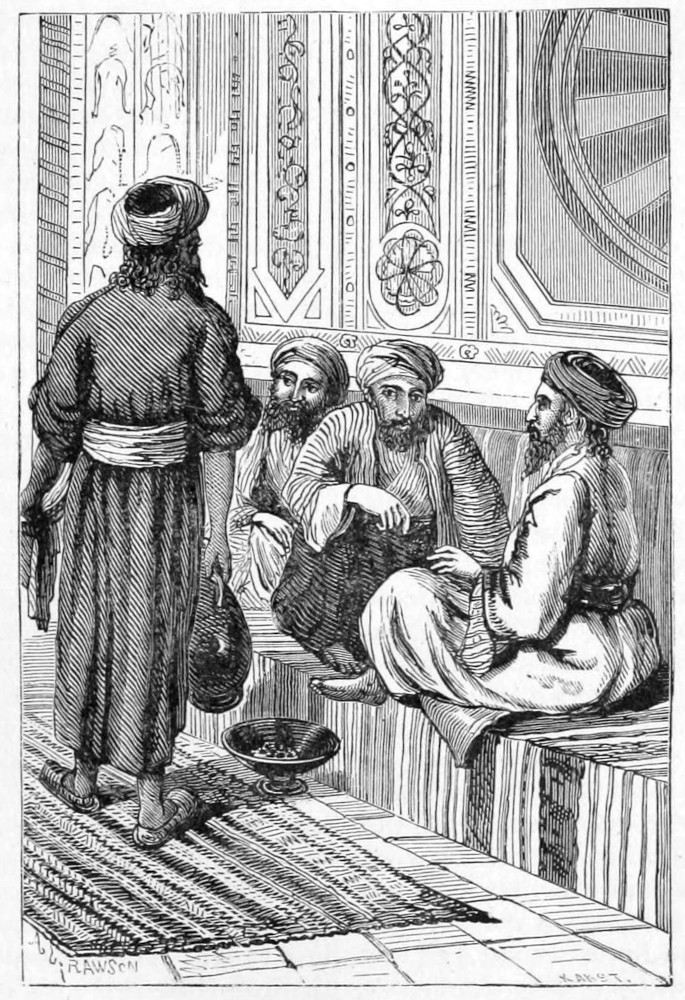
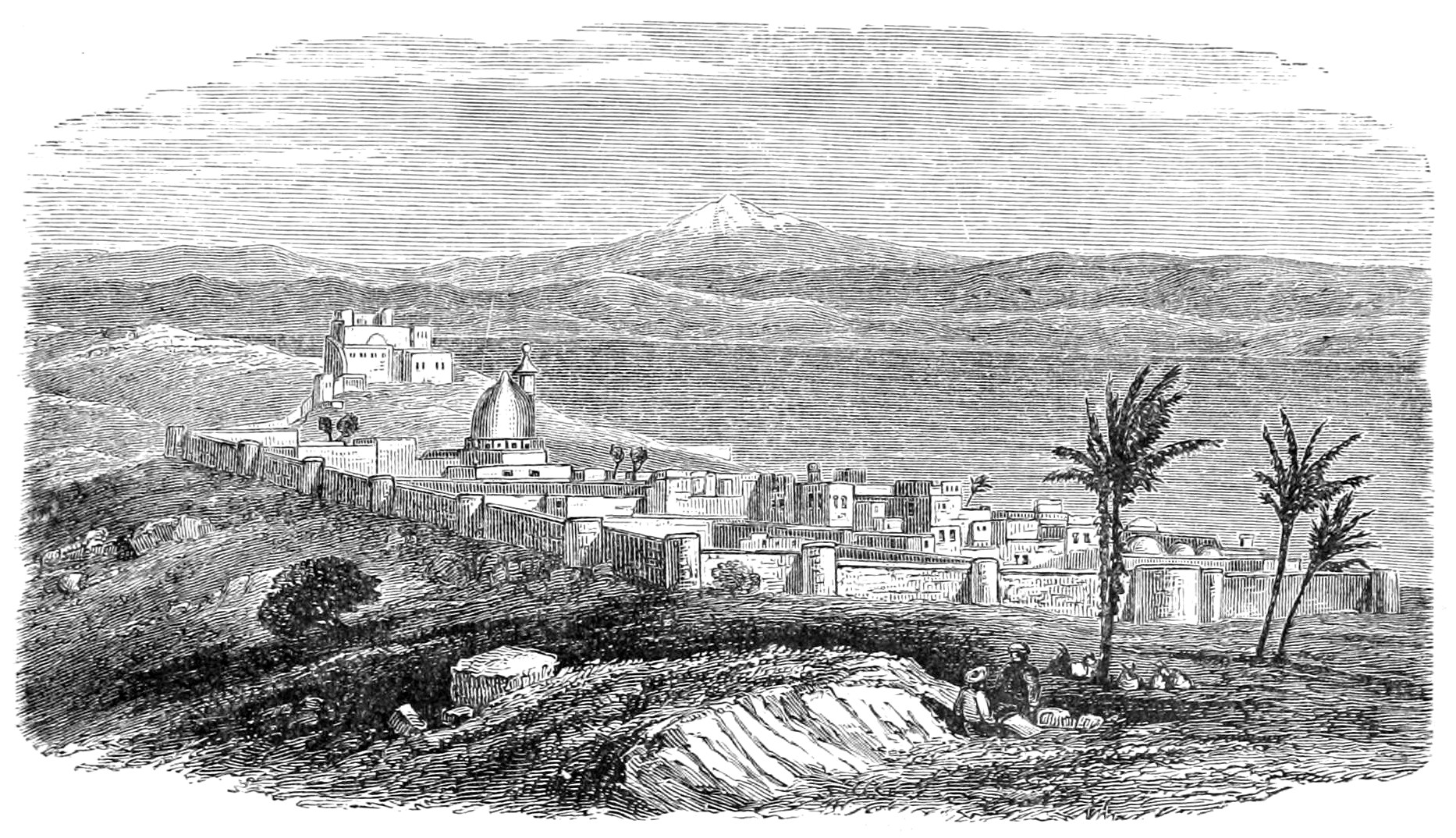
shore.—Tiberias. A town on the southwestern
shore of the Sea of Galilee; mentioned in the
N. T. only by John; built by Herod Antipas, and
named in honor of the emperor Tiberius. The
present city, Tubanyeh, contains about two
thousand inhabitants.
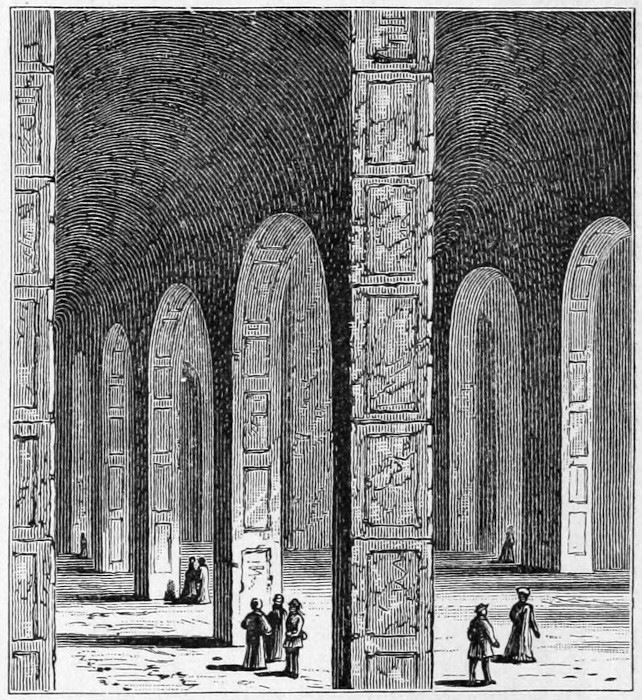
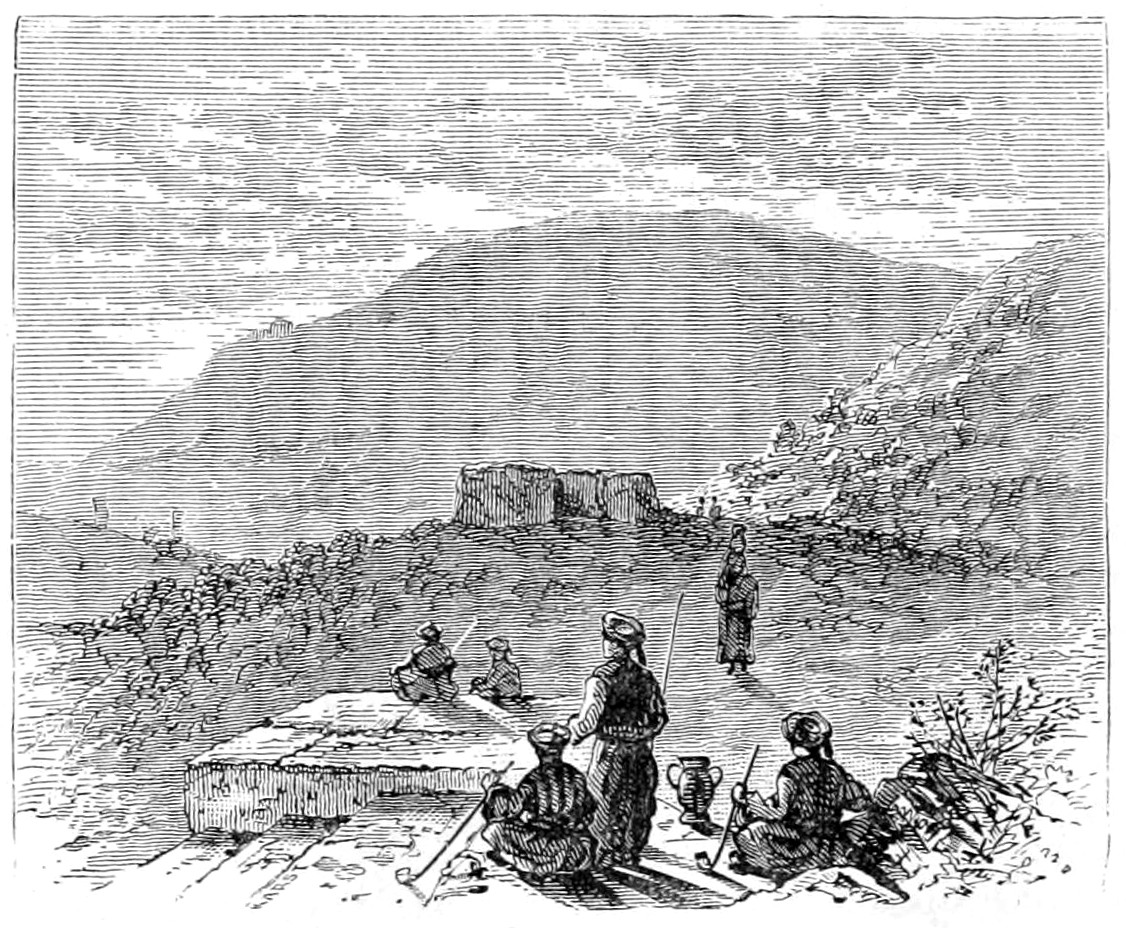
TIBERIAS.
25 And when they had found him on the other side
of the sea, they said unto him, Rabbi, when camest
thou hither?
25. And when they had found him.
The greater part of the discourse which follows
was apparently delivered in the synagogue
(ver. 29),
and presumptively on the Sabbath day.
Maurice supposes that “the conversation commences
on the borders of the lake of Tiberias,
with the people who had just crossed and found
Jesus there,” and is afterward continued in the
synagogue, and he makes the synagogue discourse
commence with ver.
43. This is certainly
possible, though I should think it more probable,
from the close connection between the beginning
and close of the colloquy as reported, that all
occurred at one time and in the synagogue. It
is not at all incredible that such interruptions as
are here reported should have occurred in the
synagogue service.—Rabbi, when camest
thou thither? “The question when includes
how.”—(Bengel.) Wordsworth’s comment on the
mysterious manner in which Christ crossed the
sea and presented himself in the synagogue affords
a curious illustration of the allegorizing
method which he pursues throughout in dealing
with this chapter. “By walking on the sea, invisibly
to the eyes of the multitude, and suddenly
presenting himself to them in the synagogue
at Capernaum, in a manner unintelligible to
them, he instructs us that, though he does indeed
come by water in holy baptism, and is
verily and indeed present in the holy eucharist,
yet the manner of his presence is not to be scrutinized
by us. * * * * Let us not speculate
inquisitively into the time and manner in which
he is present in the holy eucharist, but let us
receive him joyfully in our hearts, as the disciples
received him into the ship; and then we
shall soon be at the haven of peace where we
would be.”
26 Jesus answered them and said, Verily, verily, I
say unto you, Ye seek me, not because ye saw the
miracles, but because ye did eat of the loaves, and
were filled.
27 Labour not for the meat which perisheth, but for
that[215] meat which endureth unto everlasting life, which
the Son of man shall give unto you: for him[216] hath God
the Father sealed.
26, 27. Verily, verily, I say unto you.
See Matt. 5:18, note.—Ye seek me, not because
ye saw the signs, but because ye ate
of the loaves and were satisfied. Christ
leads the people from the lower to the higher,
from the earthly to the spiritual, making, as was
his wont, a simple incident the text of a deeply
spiritual discourse. See Matt. 11:7; 16:6; Luke
13:1; 14:7; John 4:10. The meaning here is
this: You are not seeking me because you have
seen and recognized the evidences of my divine
commission, and really desire to put yourselves
under me as your Lord and Master; you are seeking
my gifts, and because you have eaten and
been satisfied. He thus characterizes and impliedly
rebukes those who seek not Christ but
Christ’s, because they want not him, but something
external to himself, which they think he
can give them.—Busy not yourselves about
the meat which perishes. It is not literally
true that we are not to labor for the meat that
perishes (Acts 18:3; Eph. 4:28; 1 Thess. 4:10-12); it is
true that the meat which perishes is not to be
the object of our life-work (Matt. 5:24). “If any
be idle and gluttonous, and careth for luxury,
that man worketh for the meat that perisheth.
So, too, if a man by his labor should feed Christ,
and give him drink, and clothe him, who so
senseless and mad as to say that such an one labors
for the meat which perisheth, when there is
for this the promise of the kingdom that is to
come, and of those good things? This meat endureth
forever.”—(Chrysostom.) Comp. with
Christ’s language here Isa. 55:2, to which perhaps
he refers, and John 4:13, 14, where an
analogous metaphor is used to enforce the same
teaching.—But about the meat which
abides unto everlasting life. Unto (εἰς) indicates
the purpose for which it remains, namely,
that it may nourish eternal life, i. e., the life
which continues unto, not which begins in, eternity;
for eternal life is a present possession (vers.
47, 54).
This food abides in us. Chaps. 5:38;
6:56; 8:31;
15:4, 7; 1 John 2:6, 27; 4:12,
15; 2 John 2 indicate both what is the meat and
what the abiding of which Christ speaks.—Which
the Son of man shall give to you.
The phrase Son of man is here, as everywhere in
Christ’s use of it, equivalent to the Messiah (Matt.
10:23, note), and would be so understood by his
hearers. This food of the spiritual life is the gift
of God through the Messiah (Rom. 5:17; 6:23). We
might well wonder that Christ’s characterization
of it here as a gift should not have prevented the
question of the multitude in the following verse,
but for the fact that, despite the explicit teaching
of the N. T. that eternal life is given, even the
disciples of Christ have ever been seeking to
earn it as wages by labor. Christ says shall give
(future) because the great sacrifice was not yet
offered, and so the unspeakable gift (2 Cor. 9:15)
was not yet perfected.—For Him hath God
the Father sealed. In the East the method
of authenticating a document is not, as with us,
by a signature, but by the impression of a seal
(1 Kings 21:8; Esther 3:12; 8:8, 10; Jer. 32:10). The
meaning here then is that Jesus’ commission as
the Messiah of God is authenticated by the Father,
by the works given him to do (John 5:36).
28 Then said they unto him, What shall we do, that
we might work the works of God?
28. What can we do that we may work
the works of God? Observe can, not shall;
subjunctive, not future. The works of God are
not works wrought by God, but works pleasing
to God (Jer. 48:10; 1 Cor. 15:58). The meaning is
not, What are the works of God which we shall
do? but, What can we do in order that we may
please God by our works? This is the question
which humanity has ever been asking, repeated
in the pilgrimages and the self-mutilations of the
Oriental religions, in the penances and appointed
prayers of the mediæval religions, and in much
of the so-called Christian activity of modern
Protestantism. This was the question which
Loyola asked by his vigils, and to which Luther
found an answer when, climbing Pilate’s staircase
on his knees, he heard the words, “The
just shall live by faith,” and fled from the religion
of works to that of faith. That the questioners
of Christ were seeking, not guidance to
devout activity, but to divine rewards, is clear
from the sequel (ver. 31).
29 Jesus answered and said unto them, This[217] is the
work of God, that ye believe on him whom he hath
sent.
29. This is the work of God, that ye
have faith in him whom he hath sent.
They ask respecting the works of God (plural),
he replies concerning the work of God (singular);
they ask what they shall do, he replies have faith;
they ask respecting work to be done for God by
them, he replies that it is a work of God in them
that is required. The condition of eternal life is
not doing any work for God, it is having a work
of God done in ourselves. See John 3:5; Titus
3:5-7. The condition of this work is faith in
Christ. The nature of this faith it is the object
of the discourse which follows to explain; it is
certainly not equivalent to belief, and the use of
the word believe is an unfortunate necessity from
the poverty of the English language, which contains
no verb corresponding to the noun faith.
Of this faith I know no better nor more comprehensive
definition than that of Webster’s dictionary,
“That confiding and affectionate belief in
the person and work of Christ which affects the
character and life, and makes the man a true
Christian.” See Heb. 11:1, and notice that
it is there defined not only as the evidence of
things unseen, i. e., the power of seeing and
realizing the invisible world, which would include
the imagination, but also as the substance
of things hoped for, which clearly includes the
activity of the desires and affections. The germ
of all Paul’s subsequent teaching of justification
by faith is contained in this one single sentence.
The Epistles are but an amplification of the gospel
as proclaimed by Christ himself. “I know
not where we can find any passage, even in the
writings of the apostles, which says more significantly
that all eternal life in men proceeds
from nothing else than faith in Christ.”—(Schleiermacher.)
30 They said therefore unto him, What sign[218] shewest
thou then, that we may see, and believe thee? what
dost thou work?
31 Our fathers[219] did eat manna in the desert; as it is
written,[220] He gave them bread from heaven to eat.
30, 31. What therefore doest thou as a
sign that we may see and believe thee?
This response of theirs brings out the contrast
between faith and belief. Christ has said, Believe
in him whom God hath sent; the people,
recognizing his reference to himself, reply, Why
should we believe you? or, as Norton renders it,
“give you credit.” He calls for an affectionate
and confiding belief in his person and work, they
decline to give him simple credence.—What
dost thou work? This is not, as Maurice
seems to interpret it, the language of a spiritual
yearning, but, as Alford, Stier, Meyer, the language
of unbelief and opposition, a sarcastic retort
of his own words. “Thou commandest us,”
say they, “to work; what dost thou work thyself?”
This demand, coming so soon after the
feeding of the five thousand, has given rise to
some perplexity, and rationalistic commentators
cite it as an evidence that no such miraculous
feeding took place. If not, why should the people
refer to the manna? The fact is that, though
the five thousand were fed, no explanation was
made to them of the way in which the food was
provided; they were commanded to take their
seats; the barley cakes, the bread of the poorest
peasantry, were distributed among them; they
were doubtless astonished; but no conclusions
were drawn for them, and they were not in the
habit of drawing conclusions for themselves.
When, therefore, on the Sabbath, Christ met in
the synagogue some of those who had been fed,
together with others who had not been present,
nothing was more natural than this demand, impliedly
for both a repetition and an explanation
of the miracle. This is the significance of the
reference to the O. T. account of the miracle of
the manna, “He gave them bread from heaven
to eat” (Ps. 78:24). It was as if they said, The
Psalmist has explicitly pointed out the way in
which the commission of Moses was confirmed;
leave us not in the dark respecting the feeding
of the multitude, which was, indeed, strange,
but which has not been interpreted.—There is
also implied a contrast between the work of
Moses and the work of Christ; the manna came
down from heaven, the bread was distributed
upon the earth; the manna was given day by
day as needed for forty years, the bread had
been given but once; the manna was a sweet and
delicate food, “the taste of it like wafers with
honey” (Exod. 16:31), and it was among the rabbinical
prophecies that the Messiah would cause
manna to descend which would please all tastes,
“bread for the young men, honey for the old, oil
for the children;” but the bread which Christ
had distributed was barley bread, the commonest
fare of the poorest people.
32 Then Jesus said unto them, Verily, verily, I say
unto you, Moses gave you not that bread from heaven;
but my[221] Father giveth you the true bread from
heaven.
33 For the bread of God[222]
is he which cometh down
from heaven, and giveth life unto the world.
32, 33. Verily, verily, I say unto you,
not Moses gave to you that bread from
heaven; but my Father is giving you that
which is the true bread from heaven.
The people have referred to the manna as the
authentication of Moses; though they do not in
words refer to him, the spirit of their response
is analogous to that of ch.
4:12, Art thou greater
than our father Jacob? Compare ch. 8:53.
To this Christ replies (1) that Moses did not give
the manna; it was given by God; Moses had
nothing to do with bestowing it; the Israelites
found it in the morning after the dew had dried
off the ground (Exod. 16:4, 14). (2) This manna
was not the true bread, but merely a type or
shadow of the spiritual antitype; so the Red
Sea, the rock, the brazen serpent, were mute
prophets of spiritual verities, to be fulfilled
through Christ (ch.
4:14, 15;
1 Cor. 10:1-11). (3)
Hence, the bread of God was not a past, historic
gift fulfilled in the days of the wilderness, but a
present and a perpetual gift, which the Father
is ever giving. The practical contrast suggested
is that between the faith which reveres only a
past religion, a providence and an inspiration in
the days of the patriarchs and prophets and
apostles, and that which holds fast to a present
providence, an ever-living Spirit, and a continuous
inspiration, a living bread ever given
throughout all ages.—For the bread of God
is that which comes down from the heaven
and gives life to the world. Christ here lays
down a general principle in which he defines the
essential characteristics of God’s spiritual gift.
That alone is the true bread (1) which is evermore
descending from the heavens, a perpetual
bestowment; (2) which bestows life; (3) which
is for the world. The manna did not last over a
single day (Exod.
16:19, 20), and finally ceased to
fall when the Israelites entered the Holy Land
(Josh. 5:12);
they that ate it all died (ver.
49); and
it was given only to a single nation. The type
was brief in its duration, limited in its effects,
confined to a few recipients. The antitype is for
all mankind, confers everlasting life, and is bestowed
evermore.
34 Then said they unto him, Lord, evermore give us
this bread.
34. Lord, evermore give to us this
bread. Comp. ch. 4:15, note. Not spoken
ironically (Calvin), nor with a definite idea of
some miraculous kind of sustenance, a magic
food or means of life from heaven (Alford, Meyer),
nor with a serious comprehension of his spiritual
meaning and a sincere desire for his spiritual
gift (Maurice, Lucke). The people were shallow
and superficial; without comprehending the
meaning of Christ’s words, they yet saw in them
the offer of something desirable, they knew not
what, and asked for it. In the minds of some
there may have been a dim sense of the value of
the inner life, such as is sometimes borne in
upon sensual and superficial natures by the mere
power of the presence of a great soul. Comp.
Luke 14:15. There, as here, Christ by his
teaching rebukes the superficial and ignorant
desire for an uncomprehended blessedness;
there, by showing parabolically how the spiritual
food is declined by those to whom it is
offered; here, by interpreting the nature of spiritual
food. The rejection of Christ by the people
here, illustrates the parable uttered by Christ
there.
35 And Jesus said unto them, I am the bread of life:
he[223] that cometh to me shall never hunger; and he[224]
that believeth on me shall never thirst.
36 But I said unto you, That ye[225] also have seen me,
and believe not.
35, 36. I am the bread of life. They say,
Give us this bread. His reply is, The bread is
already given; it is for you to accept and feed
upon it. And this is always the answer of the
gospel to every soul that cries out for a Saviour
and a salvation. How the soul is to accept this
bread he then goes on to say.—He that cometh
to me shall not hunger, and he that
hath faith in me shall never thirst. It is
clear that the “coming” and “believing in”
here are equivalent to the eating and drinking
of ver. 54. See notes there. The coming is a
continuous coming (present participle with πρός);
a coming into Christ’s likeness, and therefore
into spiritual unity with him; a coming perfected
only by the process of feeding upon him,
drinking in his spiritual power so as to be transformed
by it. It is the coming which David describes
in Psalm 63:8, “My soul followeth hard
after thee,” and Paul in Phil. 3:13, 14, “Forgetting
those things which are behind, and reaching
forth unto those things which are before, I press
toward the mark for the prize of the high calling
of God in Christ Jesus.” Comp. with the promise
here Matt. 5:6; Rev. 7:16. All spiritual
hunger and thirst are not ended when Christian
experience begins, because in this life we are
ever coming toward Christ, we have never come
fully into him. This coming is consummated
when we are one with Christ as he is one with
the Father (John 17:21, 22); the promise of the
gospel is then fulfilled in the glorious satisfaction
of a perfected redemption (1 John 3:2; Ps. 17:15).
We are not satisfied till we awake in his likeness.—Ye
also have seen me and ye have not
had faith. See ch.
20:29. The reference here
may either be to words actually uttered in this
discourse, but not reported by John, or to what
he has said by implication though not by exact
words, or to rebukes uttered on some previous
occasion, e. g., John 5:38,
40, 43.
37 All[226]
that the Father giveth me shall come to me;
and him[227]
that cometh to me I will in no wise cast out.
38 For I came down from heaven, not to do mine
own will, but[228] the will of him that sent me.
37, 38. The all which the Father has
given to me shall come toward me, and
he that comes toward me I will in no wise
cast out. Toward, not to me. The original
(πρὸς) indicates the object toward which anything
is directed, not ordinarily the goal actually
reached. The promise then is that he who sets
out in the direction of Christ shall not be rejected
by him. He does not wait till we have come
to him; he receives us when we start toward
him. In this and the next verse all (πᾶν) is in
the neuter gender, indicating, not that the body
is included with the soul (Maurice), but that the
whole is given by the Father in its totality, but is
received by the Son separately and individually.
“In Jesus Christ’s discourses, that which the
Father hath given to the Son himself is termed,
in the singular number and neuter gender, all;
those who come to the Son himself are described
in the masculine gender, or even the plural number,
every one, or they. The Father has given to
the Son the whole mass, as it were, that all
whom he hath given may be one; that whole the
Son develops individually in the execution of the
divine plan.”—(Bengel.) Christ’s language here
indicates his dependence upon the Father’s will
and power, and is analogous to that in many of
his discourses, especially in those reported by
John. He has come to do his Father’s will; the
works which he does are those which his Father
has given him to do, and are done by his Father’s
power; the words which he speaks are his Father’s
words; his whole life is represented as the
incarnate expression of his Father’s will; and
those whom he saves are saved not by his own
independent power, they are those whom his
Father has given him (ch.
10:28, 29). Here then I
understand Christ neither to limit his salvation
nor to declare it to be without limit. He simply
asserts on the one hand that his saving power is
efficacious only over those whom the Father has
given unto him, and on the other that there is
nothing lacking in his grace or power which shall
cause those thus given to fail of a perfected salvation.
As a Saviour he is the representative of the
Father’s gracious love and power. Here there is
no indication who are the all thus given to him.
From other Scripture, however, it appears clear
that it includes many among the heathen nations
(Ps. 2:8 with Matt. 8:11), and that it does not include
the entire human race (ch.
17:6, 9, 25). This interpretation
is confirmed by the verse which follows,
which further expresses the subjection of
the Son in his mediatorial work to the Father.—Because
I came down from heaven, not
that I might do mine own will, but the
will of him that sent me. The catholicity of
Christ’s love is a disclosure of the love of the
Father toward us. In these words Christ gives
us a suggestion of the reason of his receiving
sinners and making them companions and associates.
His own earthy inclinations, tastes, and
sensibilities, had he followed them, would all
have been against such society; but all were
subordinate to, and overridden by, his great controlling
purpose that the world through him
might be saved (ch.
3:17; 1 Tim. 1:15). For every
Christian disciple there is a practical lesson in
these words of Christ. We are all sent into the
world as Christ also was sent into the world
(ch.
17:18); and it is ours to see to it that no pride,
or social taste, or moral irresolution, induce us to
cast out those who would otherwise come to us
for help; but we are also to remember that our
power to help does not extend beyond those
whom the Father in his own gracious wisdom
has seen fit to give to us as the seals to our apostleship
(1 Cor. 9:2).
39 And this is the Father’s will[229] which hath sent me,
that of all which he hath given me I should lose nothing,
but should raise it up again at the last day.
40 And this is the will of him that sent me, that[230]
every one which seeth the Son, and believeth on him,
may have everlasting life: and I will[231] raise him up at
the last day.
39, 40. And this is the will of him that
sent me, that the all which he has given
me, from it I should lose nothing, but
shall raise it up in the last day. In omitting
the word Father from verse 39 and inserting
it in verse 40 I follow the best MSS. See Alford.
The resurrection here spoken of is the resurrection
of life, i. e., unto eternal life
(ch. 5:29), which
is given only through Christ (ch.
11:25; Phil. 3:10, 11).—For
this is the will of my Father, that
every one (πᾶς, not πᾶν), masculine, not neuter;
the whole is given to the Son; but each one
must come by and for himself to the Son.—Seeing
the Son. Looking unto him, as those
bitten in the wilderness looked unto the brazen
serpent (ch.
3:14, 15;
Numb. 21:9; Isa. 45:22).—And
having faith in him. Making Christ the substance
of his hope as well as the object of his
faith (Heb. 11:1;
ver. 29, note).—May have eternal
life; and I will raise him up at the last
day. These verses clearly imply (1) that there
is nothing in any secret decree or election of
God, or in the nature or extent of the provisions
of divine grace, to limit the gift of eternal life or
prevent any one from receiving it through faith
in the Son; (2) that the only condition required
is one inherent in the nature of the case, namely,
a sincere belief in, and desire for, that spiritual
life which alone is eternal and of which Christ
is the supreme manifestation; (3) that whoever
has once thus looked to Christ with living faith
has an absolute assurance of preservation from
the weakness of his own will, as well as from
external temptation, an assurance afforded by
Christ’s declaration, “Of all which he has given
me I shall lose nothing.” It does not imply a
literal bodily resurrection. The literalism which
so reads this promise is akin to that which misinterpreted
Christ’s language respecting eating
his flesh and drinking his blood. The whole
spirit and tone of this discourse is poetic and
metaphorical.
41 The Jews then murmured at him, because he
said, I am the bread which came down from heaven.
42 And they said, Is[232] not this Jesus, the son of Joseph,
whose father and mother we know? how is it
then that he saith, I came down from heaven?
41, 42. The Jews then murmured at
him. The Jews are in the usage of John the
Judeans; here, those who had come from Jerusalem,
or who, dwelling in Galilee, partook of
the character of the more bigoted and superstitious
dwellers in the southern province.—Because
he said, I am the bread, etc. Their
reference is to what he has said in verses
33, 35,
38. Envy was the real cause of their murmuring.
This claim to superiority offended their
pride.—Is not this Jesus the son of Joseph,
etc. Comp. ch.
7:27; Mark 6:3. The
Christ they knew was the Christ according to the
flesh, whom Paul declared he would not know
(2 Cor. 5:16); the Christ who came down from
heaven, that is, the divine Spirit working in him
and manifesting itself through him, they did not
know. He is known and only can be known by
spiritual apprehension.—How then saith this
fellow (λέγει οὗτος). There is implied in the
original Greek a contempt which may fairly be
expressed by this translation. The same expression
is so translated in Matt. 12:24; 26:61;
Luke 23:2; John 9:29.
43 Jesus therefore answered and said unto them,
Murmur not among yourselves.
44 No man can come to me, except the Father which
hath sent me draw[233] him: and I will raise him up at the
last day.
45 It is written[234] in the prophets, And they shall be all
taught of God. Every man[235] therefore that hath heard,
and hath learned of the Father, cometh unto me.
43-45. Jesus therefore answered, * * * *
No one (not, no man) can come unto
me except the Father which has sent me
draw him. Parallel to this declaration is that
of Matt. 16:17; the true knowledge of Christ is
revealed to the soul by the Father. There has
been much theological discussion as to the proper
interpretation of this passage. On the one hand,
Calvin declares that “it is therefore a false and
profane assertion, that none are drawn but
those who are willing to be drawn, as if man
made himself obedient to God by his own efforts;
for the willingness with which men follow
God is what they already have from himself,
who has framed their hearts to obey him;” on
the other hand, Adam Clark, representing the
Arminian school of theology, thus interprets the
divine drawing: “A man is attracted by that
which he delights in. Show green herbage to a
sheep, he is drawn by it; show nuts to a child,
and he is drawn by them. They run wherever
the person runs who shows these things; they
run after him, but they are not forced to follow;
they run through the desire they feel to get the
things they delight in. So God draws man; he
shows him his wants—he shows the Saviour
whom he has provided for him.” The true interpretation
of the declaration involves the long
disputed and yet unsettled problem of the psychology
of the will, what is the nature of and
what are the limits to its freedom of action, a
problem which belongs rather to the domain of
mental science than to that of theology or Biblical
interpretation. In interpreting this passage,
however, the student should consider: (1) the literal
meaning of the word draw (ἕλκω). This primarily
carries with it the idea of force, and is
used by Homer of carrying one away captive; by
Luke, of dragging persons before a court (Acts
16:19; comp.
James 2:6); and by John himself of
dragging a net (ch. 21:6,
11). Thus the metaphor
involved in the word implies at least a certain
resistance to the divine love and a certain difficulty
to be overcome by the divine drawing. (2)
Parallel teachings in the O. T.
and N. T.
(comp.
Sol. Song 4:1; Jer. 31:3;
Hos. 11:4; Luke 14:23, note; John
12:32; 1 Cor. 1:9),
where the word called is parallel
to the word draw here (Phil. 2:12, 13).
(3) Christ’s
own interpretation of the Father’s drawing, afforded
by ver. 45. They that have learned of the
Father are they that are drawn by him. (4) The
nature of that coming to Christ which is the object
of the divine drawing. “We do not come
to Christ by walking, but by believing; not by
the movement of the body, but by the free will
of the heart. * * * * Think not that thou
art drawn against thy will, for the mind is drawn
by love.”—(Augustine.) Interpreting this passage
in the light of these considerations, I understand
not that God drags the unwilling by an
irresistible grace, nor merely the willing by placing
before the will in its natural condition such
objects—a sense of its needs and a revelation of
its Saviour—as attract the unsatisfied heart to
himself; but that he makes the soul willing in
the day of his power, working in us both to will
and to do of his good pleasure
(Ps. 110:3;
Phil. 2:13).—It
is written in the prophets (Isa. 54:13),
They shall be all taught of God. The all
here appears clearly from the reference in Isaiah
to be all the children of God, not all humanity.—Every
one, therefore, hearing from the
Father and learning, comes unto me.
Emphasis is placed by the structure of the sentence
in the original Greek on the word learning.
The Pharisees heard, but they did not learn. He
that does not reverently recognize the divine
glory in the life and character of Christ, who
sees no beauty in him that he should desire him,
does not possess true piety, has not heard and
learned of God.
46 Not[236] that any man hath seen the Father, save he
which is of God,[237] he hath seen the Father.
46. Not that any one has seen the Father.
The object of this verse, which is parenthetical,
seems to be to guard the Jews against
an unspiritual interpretation of his words.—Save
he which is from God. Evidently
Jesus refers to himself. Comp.
ver. 35, and observe
how habitually he distinguishes himself
from man, never classing himself with men.
“Imagine a human creature saying to the world,
‘I came forth from the Father—ye are from beneath,
I am from above;’ facing all the intelligence
and even the philosophy of the world, and
saying, in bold assurance, ‘Behold, a greater
than Solomon is here’—‘I am the light of the
world’—‘the way, the truth, and the life;’ publishing
to all peoples and religions, ‘No man
cometh to the Father, but by me;’ promising
openly in his death, ‘I will draw all men unto
me;’ addressing the Infinite Majesty, and testifying,
‘I have glorified thee on the earth;’ calling
to the human race, ‘Come unto me’—‘follow
me;’ laying his hand upon all the dearest
and most intimate affections of life, and demanding
a precedent love: ‘He that loveth father or
mother more than me is not worthy of me.’”—(Bushnell.)
47 Verily, verily, I say unto you,[238] He that believeth
on me hath everlasting life.
48 I[239] am that bread of life.
47, 48. Verily, verily, I say unto you,
He that hath faith hath eternal life. The
words on me are wanting in the best manuscripts,
are omitted by Tischendorf and Alford, and are
queried by Schaff; internal evidence is against
them. The declaration is generic; faith in the
largest sense of that word—the power which lays
hold upon the invisible and the hope which
reaches after it (Heb. 11:1), a faith which may be
and is exercised by those who have never known
Christ (Rom. 2:7), is the essential condition of
spiritual life. This life is not, as in our English
version, merely “everlasting life,” but life eternal,
i. e., the spiritual life which is created in the
soul when it is born from above, which is nurtured
in the soul that follows after that it may
apprehend Christ Jesus (Phil. 3:12), the fruits of
which are love, joy, peace, etc. (Gal. 5:22, 23). This
eternal life is a present possession; he that hath
faith already hath this life.—I am the bread
of that life. Faith may exist without Christ,
as it did in the O. T. prophets and patriarchs,
and as it does in greater or less measure in some
at least of those in heathen lands; but Christ is
the bread of that life; by him it is fed, strengthened,
and made to grow; by him faith in invisible
things is made rich and strong. The universal
effect of a pure Christianity has been to turn
the mind away from material things to unseen
realities (2 Cor. 3:18).
49 Your fathers did eat manna in the wilderness,
and[240] are dead.
50 This is the bread which cometh down from heaven,
that a man may eat thereof, and[241] not die.
51 I am the living bread which came down from
heaven: it any man eat of this bread, he shall live for
ever: and the bread that I will give is my flesh,[242] which
I will give for the life[243] of the world.
49-51. In these verses Christ marks the contrast
between the bread given in the wilderness
through Moses, to which the people had referred
(ver. 31), and for a repetition of which they had
asked, and the spiritual bread of which this
material manna was but a type. That manna
was temporary in its effects, the fathers were
dead, of this spiritual bread if one eats he shall
not die, it is eternal in its effects; that bread was
material, dead, this is a living and immortal
bread; that was given to a few, the Jewish nation,
this descends from heaven, that any one
may eat of it, it is for universal humanity; that
bread was bestowed without suffering, this
bread is a divine sacrifice given for the sake of
saving others from suffering.—This (fellow) is
the bread. They had said (ver.
42), “How then
saith this fellow?” He replies, repeating their
language of contempt, This (fellow, οὗτός) is the
bread which descends from heaven. Observe
that his language here, as throughout this discourse,
implies his pre-existence, if not his supernatural
birth.—In order that any one
may eat of it and may not die. Not merely
“that one may eat;” his language, “that any
one may eat,” implies the universality of divine
grace; the bread is for whosoever will.—I am
the living bread. Not equivalent to life-giving,
for which another Greek word (not ζόω, but
ζοωποιέω) would have been used. Here, as in
John 4:10, is signified the spiritual life of the
food itself which Christ affords by the bestowal
of himself. It is true that Christ is life-giving,
but he is so because he is ever-living. He is the
life, therefore he gives life.—If any one eat of
this bread. Again the universality of divine
grace is implied. Comp. Acts 2:38, 39, note and
refs. there.—He shall live unto eternity.
Not merely forever. The idea here, as everywhere
throughout the N. T., is not merely an
endless existence, which might be no boon, but
an immortal, a divine life, the very life of God,
making the new-born soul a true son of God.—And
the bread which I will give. Observe
the future tense. He speaks therefore of a gift
yet to be perfected by his passion and death.—Is
my flesh, which I will give for the sake
of (ὑπὲρ) the life of the world. Comp. ch.
3:16. It seems to me that these enigmatical
words are added to guard the church from falling
into the error of supposing that Christ’s doctrine
is the bread of life, and that to hear and
believe his words as a divine teacher is to secure
the life eternal of which he speaks. This bread is
not merely the teaching nor the example of Christ;
the sacrifice is an essential principle of that spiritual
food which he has provided for the world’s life.
52 The Jews therefore strove among themselves,
saying, How[244] can this man give us his flesh to eat?
52. How can this (fellow) give us his
flesh to eat? The Judeans here interpret
Christ’s words with precisely the literalism with
which the church of Rome has interpreted them
since. The rest of the discourse Christ devotes
to guarding his hearers against this misapprehension
of literal and prosaic natures, and to
emphasizing the mystical doctrine to the elucidation
of which the whole discourse is devoted.
Verses 53-55 reiterate and re-emphasize the
truth that the soul must feed on Christ, receive
him, his life, his death, his character, as the
supply of its own spiritual life; verses 57-59 and
verses 61-63 interpret what he means by the
metaphor. In the interpretation of Christ’s
symbolic language here we are to guard ourselves
against simplifying it, either by a literal
rendering on the one hand, or, on the other, by
that process of rationalism which, under pretence
of interpreting a metaphor, does away with
it altogether. If there were nothing mystical in
the doctrine, we may be sure that Christ would
not have clothed it in language seemingly so full
of mysticism.
53 Then Jesus said unto them, Verily, verily, I say
unto you, Except[245]
ye eat the flesh of the Son of man,
and drink his blood, ye have no life in you.
54 Whoso[246] eateth my flesh, and drinketh my blood,
hath eternal life; and I will raise him up at the last day.
55 For my flesh is meat indeed,[247] and my blood is
drink indeed.
53-55. Therefore Jesus said unto them.
Therefore connects what follows with what has
preceded; he emphasizes and explains the eating
and drinking, in response to their interruption in
ver. 53.—Verily, verily, I say unto you.
These words give a solemn emphasis to the declaration
which follows.—Except ye eat the
flesh of the Son of man. That is, of the Messiah
(Matt. 10:23, note).—And drink his blood.
The use of animal blood in any form was prohibited
to the Israelites as food (Gen. 9:4;
Lev. 3:17;
7:26, 27; 17:10-14; 19:26; Deut. 12:16, 23; 15:23), and was
exceedingly odious to the Jewish thought.
Moreover, to touch even the corpse of a man
rendered the Jew unclean. It is not, therefore,
strange that Christ’s language here should have
offended many even of his disciples
(ver.
60).—Ye
have no life in you. The mere physical life
is accounted in the N. T. no life at all. The true
life is that of God in the soul, the absence of
which is death.—Whoso eateth my flesh.
The Greek verb rendered in both places eat is
different from that used above. The word here
(τρώγω) signifies literally to chew or masticate, and
seems to me to have been substituted by Christ
for the more general one (φαγεῖν), in order to
add still further emphasis to the doctrine which
he is expounding.—And drinketh my blood,
hath eternal life. A present possession. See
ver. 47,
note.—And I will raise him up at
the last day. This is one of the passages on
which the advocates of the doctrine of conditional
immortality base their belief. The promise
of resurrection here certainly is limited to those
who through faith have received the gift of eternal
life.—For my flesh is true meat and
my blood is true drink. To Christ the material
universe was but a shadow, and the realities
were those things of which the material
universe is a type. “Food and drink are not
here mere metaphors; rather are our common
material food and drink mere shadows and imperfect
types of this only real reception of refreshment
and nourishment into the being.”—(Alford.)
In the interpretation of Christ’s language
here, the student must remember the
declaration respecting him, “Without a parable
spake he not unto them” (Mark 4:34); unquestionably
the language here is parabolic. It is
also true that the phrases eating and drinking
were used among the Jews in a metaphorical
sense, and that bread especially was employed
among them as a symbol for doctrine (Isa. 3:1; Jer.
15:16; Lightfoot on John 6:51; Geikie’s Life of Christ, ch. 44,
note c). It seems to me, however, very clear not
only that Christ here means something more than
receiving his doctrines, but that he employs his
peculiar language for the express purpose of
emphasizing the truth that it is not merely
enough to receive him as a teacher. If this had
been his meaning, it would have been easy to correct
the misapprehension of his Jewish hearers,
and remove the offence which they felt at his discourse.
This he does not do. On the contrary,
he declares, not that they must eat the bread of
the Son of man, but that they must eat his flesh
and drink his blood (ver.
53); in a slightly different
form, he reiterates this declaration in ver. 54;
and finally, to avoid the possibility of the misinterpretation
which substitutes his teaching for
his personal presence and influence, he adds the
emphatic declaration of ver.
55. If something
more than accepting and following the teaching
of Christ is not meant by these verses, then it
would seem that Christ has embodied a very
simple truth in very unnecessarily mystical language.
That more than this is meant I take to
be declared unmistakably by verses 53-55; what
more than this is meant it is the object of verses
56-58 to show. The commentators have discussed
at great length the question what relation the
solemn assertions of these verses bear to the
Lord’s Supper. There are three general opinions:
(1) that no reference to the Lord’s Supper
is intended; (2) that the whole passage exclusively
relates to the Lord’s Supper prophetically;
(3) that the idea involved in the Lord’s Supper,
but not the ordinance itself, is referred to. For
discussion of these opinions, see Alford’s note.
To me it seems clear that Christ here teaches by
a word-parable the same truth which he subsequently
embodies in a parable in action in the
ordinance of the Supper; whether he prophetically
refers to it or not is a question of no great
importance.
56 He that eateth[248]
my flesh, and drinketh my blood,
dwelleth[249]
in me, and I in him.
57 As the living Father hath sent me, and I live by
the Father: so[250] he that eateth me, even he shall live
by me.
58 This is that bread which came down from heaven:
not as your fathers[251] did eat manna, and are dead: he
that eateth of this bread shall live for ever.
56-58. He that eateth my flesh and
drinketh my blood abides (μένω) in me and
I in him. This result of the eating and drinking
interprets the kind of eating and drinking
signified. The same truth is elsewhere interpreted
by other metaphors, ask by that of being
engrafted on Christ (John 15:4, 5); being rooted in
him (Ephes. 3:17); being joined to him as the body
to the head (Ephes. 4:15, 16); being married to him
(Ephes. 5:23); receiving him as a temple receives
and is made sacred by the Spirit of God (1 Cor.
3:16); being clothed with him (Rom. 13:14;
Gal. 3:27).—And
I in him. As Christ is in the Father
and the Father in Christ, so the disciples are to
be one in them (John 17:21).—As the living
Father hath sent me and I live by the
Father, so he that eateth me, even he
shall live by me. This one verse should have
prevented the three current errors of interpretation
in this chapter: (1) that spiritual life is dependent
on a literal feeding on Christ’s body and
blood; (2) that it is dependent on a sacramental
feeding on the sacred symbols of his body; (3)
that it requires only a belief in him as a religious
teacher. How did Christ live by the Father?
Certainly not by any literal eating of the Father’s
flesh or drinking of the Father’s blood; nor by
any symbol or ceremonial whatever; nor yet by
any mere hearing and obeying of the Father’s
words. The Father was personally present in
Christ; Christ, by his words and his acts, manifested
the indwelling glory of the Father; so
Christ fed on the Father because the Father was
the source and supply of his spiritual life. In
like manner we feed on Christ, not when we
merely accept and endeavor to follow his precepts,
but when, under the direct personal influence
of his spiritual presence, we manifest his
glory unto the world, having not merely a spirit
like Christ, but having the very spirit of Christ
himself in us (Rom.
8:9, 10).—This is that bread
which came down from heaven. Christ
thus interprets his own previous metaphor.—Not
as your fathers did eat and are dead.
Again he guards the Jews against their literal
interpretation; the eating of which he has spoken
is not the physical eating for the supply of
the body; this can never give true life.
After this chapter had gone to press a remarkable
article from the pen of Dean Stanley appeared
on “The Eucharist” in the Nineteenth
Century (May, 1878), in which he arrives at
substantially the same conclusions that I have
arrived at in these notes, and enforces them with
his usual eloquence and learning. He urges that
in all religious ordinances we ought to try to get
beneath the phrases we use, and not to rest satisfied
with the words, however excellent, till we
have ascertained their meaning; that Christ’s
words here and in the appointment of the last
supper as a permanent memorial ordinance are
evidently metaphorical; that the very strangeness
of the metaphor should turn our thoughts
from the outward form to the inward essence;
that the body and flesh signify the personality
and character of Christ; that we must incorporate
in ourselves, that is in our moral natures,
the substance—the moral substance—of the
teaching and character of Jesus Christ; that this
is the only true transubstantiation; that the blood
of Christ is his spirit, the inmost essence of his
character, the self of his self; and that to drink
his blood is to imbibe this inmost spirit; that
this spirit is love or charity, which is throughout
the New Testament represented as the fundamental
essence of the highest life of God, and
therefore of his children; and he interprets
verses 53-56 here, in accordance with these principles,
as follows: “This is one of those startling
expressions used by Christ to show us that he
intends to drive us from the letter to the spirit,
by which he shatters the crust and shell in order
to force us to the kernel. It is as if he said: ‘It
is not enough for you to see the outward face of
the Son of man, or hear his outward words, or
touch his outward vesture. That is not himself.
It is not enough that you walk by his side, or
hear others talk of him or use terms of affection
and endearment toward him. You must go
deeper than this; you must go to his very inmost
heart, to the very core and marrow of his
being. You must not only read and understand,
but you must mark, learn, and inwardly digest,
and make part of yourselves, that which alone
can be part of the human spirit and conscience.’
It expresses, with regard to the life and death of
Jesus Christ, the same general truth as is expressed
when St. Paul says, ‘Put ye on the Lord
Jesus Christ’—that is, clothe yourselves with his
spirit as with a garment; or again, ‘Let the
same mind be in you that was in Christ Jesus.’
It is the same general truth as when our Lord
himself says, ‘I am the vine; ye are the
branches.’”
59 These things said he in the synagogue, as he
taught in Capernaum.
60 Many therefore of his disciples, when they had
heard this, said, This is an hard saying; who can hear
it?
59, 60. In the synagogue. I believe the
whole discourse to have been delivered in the
synagogue. See Prel.
Note above.—Many of
his disciples. Not of the twelve, but of those
who had been theretofore inclined to accept him
as a teacher.—This is a hard saying. Rather,
an impious saying, or at least hard in the sense of
harsh and repulsive, rather than in that of merely
difficult. To the Jews then, as to the world
ever since, a system of religion which proposes
an amelioration of condition only by a revolution
of moral character, by a new and divine life,
seemed not only not attractive, but repellent.—Who
can hear it? That is, Who can stay and
listen to such teaching as this?
61 When Jesus knew in himself that his disciples
murmured at it, he said unto them, Doth this offend
you?
62 What and if ye shall see the Son of man ascend[252]
up where he was before?
63 It[253] is the spirit that quickeneth; the flesh profiteth
nothing: the words that I speak unto you, they are
spirit, and they are life.
61-63. When Jesus knew in himself.
Either miraculously or by a subtle sense which
the delicately organized often possess.—Doth
this offend you? Stumble you. See Matt. 5:29,
note; 11:6, note. The teaching of the disciple,
as the teaching of Christ, will sometimes
be to men a stumbling-stone and a rock of offence.—What
and if ye shall see the Son
of man ascend up where he was before?
Another admonition that they are not to take
his words in a material sense, for in his glorified
body he is to ascend into heaven before their
sight. The language is a strong testimony to
the historical verity of the ascension.—The
spirit is the life-giver, the flesh profiteth
nothing whatsoever; i. e., It is my spirit in
your spirit which will give eternal life, not my
flesh in your flesh. This is the natural meaning
of these words, and they are to be taken in their
material sense, not with such qualifications as that
of Augustine, “The flesh alone and by itself
profiteth not,” i. e., without the blessing of the
spirit; or such as that of Alford, “He does not
say my flesh profiteth nothing, but the flesh.”
The flesh is my flesh; for it is only of his own
flesh that he has spoken at all in this discourse.
The flesh of Christ, if it could be miraculously
reproduced by the benediction of a priest, would
still be of no profit.—The words which I have
spoken to you, they are spirit and they
are life. The meaning is not that Christ’s
words are themselves life-giving, though this is
true; but that the words which he has just spoken
to them respecting his flesh and his blood
relate to the spiritual realm and the eternal life,
and are to be so interpreted.
64 But there are some of you that believe not. For
Jesus knew[254] from the beginning who they were that
believed not, and who should betray him.
65 And he said, Therefore said I[255] unto you, that no
man can come unto me, except it were given unto him
of my Father.
64, 65. But there are some among you
who have not faith. Such could not receive
the teaching of Christ, for it is true in spiritual
as in physical gifts, according to one’s faith, so
is Christ’s blessing (Matt. 9:29).—For Jesus
knew from the beginning, etc. Compare
this distinct statement of Christ’s foreknowledge
with Christ’s own statement of the limitations
of his knowledge in Mark 13:32. The contrast
illustrates one of the inexplicable mysteries of
Christ’s nature, whose knowledge transcended
that of man, yet in his earthly condition was less
than that of omniscience. To the question, Why,
if he foreknew the betrayal of Judas, did he ordain
him as an apostle? there is no satisfactory
answer. The problem of divine foreknowledge
and human free-will, of that divine law the inflexibility
of which science has in these later days
so strikingly demonstrated, and that freedom of
moral action to which universal consciousness testifies,
is one which transcends the limits of the
human intellect.—Therefore said I unto you
that no one can come unto me except it
were given unto him of my Father. Judas
and the withdrawing disciples had, in a sense,
come unto him; they had followed him, accepted
him as their Master, and had given him
for a time their allegiance. Yet they had not
really come to him, for no one truly comes except
he is drawn by a divine influence. Therefore
connects the declaration of ver. 44 with the fact
here stated that some of the disciples were without
true faith. The practical warning to us here
is this, that we have need to examine ourselves
that we may know whether our coming to Christ
has been merely that of a natural inclination or
that of obedience to the impulse of the Spirit of
God.
66 From that time many of his disciples went back,[256]
and walked no more with him.
67 Then said Jesus unto the twelve, Will ye also go
away?
66, 67. From this many of his disciples
went back. From this indicates both, as the
English version represents, the time from which
this withdrawal dated, and also the cause from
which it proceeded. Observe that faithful
preaching will drive some apparent disciples
away from Christ. The minister, like his Master,
will ever have the fan in his hand, and the
gospel which he preaches will in some measure
separate the chaff from the grain. This was illustrated
in the experience of the apostle Paul.
See Acts 13:44-46; 14:4; 17:12, 13, etc. “It
will never be possible for us to exercise such
caution that the doctrine of Christ shall not be
the occasion of offence to many; because the
reprobate, who are devoted to destruction, suck
venom from the most wholesome food and gall
from honey. The Son of God undoubtedly knew
what was useful, and yet we see that he cannot
avoid offending many of his disciples.”—(Calvin.)—Then
said Jesus also to the twelve, Ye
do not also wish to go away? The tone is
one of pathetic protest; the language that of one
who felt keenly the desertion, and yearned for
an expression of the fidelity of his immediate
friends, not as an assurance, for he knew from
the beginning who believed not, and therefore
who believed and would endure, but as an utterance
of loyalty and love. At the same time he
leads them to a confession which draws them
more closely and binds them more tenderly to
himself.
68 Then Simon Peter answered him, Lord, to whom
shall we go? thou hast the[257] words of eternal life.
69 And [258]we believe and are sure that thou art that
Christ, the Son of the living God.
68, 69. Then Simon Peter answered.
As in Matt. 16:16, he speaks quickly, for all.—Lord,
to whom shall we go? To go away
from Christ is to go out even here into the darkness;
unto loneliness, hopelessness, despair.—Thou
hast the words of eternal life. As
Martha’s utterance of her faith in John 11:27,
so Peter’s declaration here is not wholly responsive
to the discourse that has preceded. He
does not fully comprehend the meaning of that
personal feeding on Christ of which the Lord has
been speaking; but he believes that Christ’s
words, though he does not fully understand
them, are words of, that is full of, eternal life,
and that he is the Messiah and the Son of God.
And in this faith he is content to await humbly
till the full meaning of Christ’s enigmatical discourse
shall be revealed to him, as it could not
be till Christ’s death, resurrection, and ascension,
and the descent of the Holy Spirit.
70 Jesus answered them, Have not I chosen you
twelve, and one of you is a[259] devil?
71 He spake of Judas Iscariot the son of Simon: for
he it was that should betray him, being one of the
twelve.
70, 71. Have not I chosen you twelve?
Chosen them, not to be heirs of eternal life, but
to be apostles; in the inner circle of his disciples;
receiving his most sacred influence and
intimate instruction. And one of you is a
devil. Not the devil; not merely devilish; but
belonging to the kingdom of the devil; one of
his ministers and agents. To Christ all men belong
to either the one or the other kingdom.He here, as it were, looks forward to the time
when Judas should have gone to his own place,
forecasts his future, and characterizes him in the
present by what he is to be when the germinal
sin, now in him, has brought forth its final fruit.
On the character of Judas Iscariot, see Vol. I, p.
307, Note on character and career of Judas Iscariot.