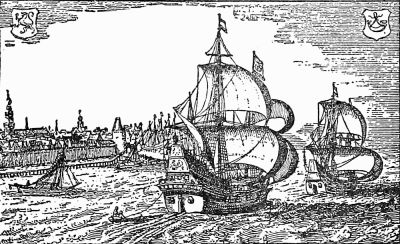
Amsterdam, the capital of the new
Dutch commonwealth, the rich city
which alone counted more people
within her wide walls than all of the
country provinces put together, had ever been
the leader in all matters which offered the
chance of an honest penny. Her intellectual
glory was a reflected one, her artistic fame was
imported from elsewhere; but her exchange
dictated its own terms to the rest of the country
and to the rest of the world. When the Estates
of the Republic gave up the hope of finding the
route to India through the frozen Arctic Ocean,
Amsterdam had the courage of her nautical convictions,
and at her own expense she equipped
a last expedition to proceed northward and discover
this famous route, which had the advantage
of being short and safe.
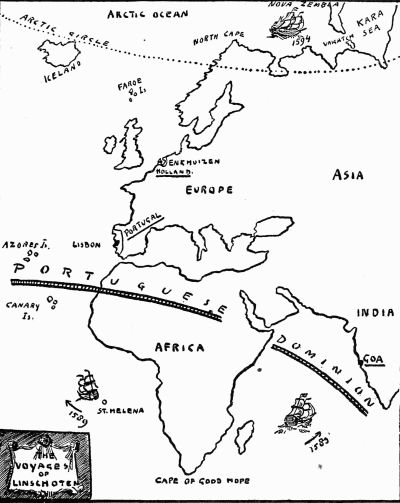
Out of this expedition grew the famous voyage
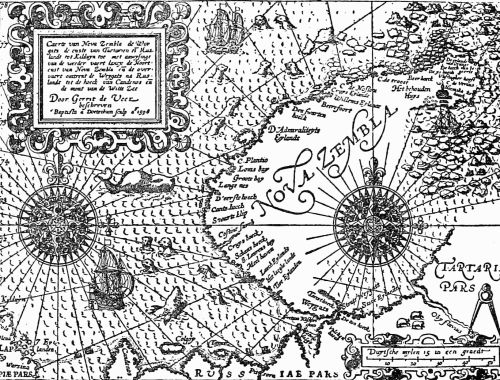
of Barendsz and Heemskerk to Nova Zembla,
the first polar expedition of which we possess
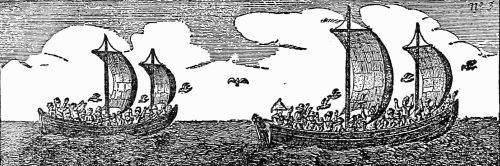
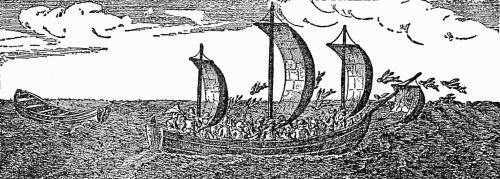
a precise account. There were two ships.
They were small vessels, for no one wished to
risk a large investment on an expedition to the
dangerous region of ice and snow. Fewer than
fifty men took part, and all had been selected
with great care. Married men were not taken;
for this expedition might last many years, and
it must not be spoiled by the homesick discontent
of fathers of families.
Jan Corneliszoon de Ryp was captain of the
smaller vessel. The other one was commanded
by Jacob van Heemskerk, a remarkable man, an
able sailor who belonged to an excellent family
and entered the merchant marine at a time when
the sea was reserved for those who left shore
for the benefit of civic peace and sobriety. He
had enjoyed a good education, knew something
about scientific matters, and had been in the
Arctic a year before with the last and unfortunate
expedition of Linschoten. The real leader
of this expedition, however, was a very simple
fellow, a pilot by the name of Willem, the son of
Barend (Barendsz, as it is written in Dutch).
He was born on the island of Terschelling and
had been familiar with winds and tides since
early childhood. Barendsz had two Northern
expeditions to his credit, and had seen as much
of the coast of Siberia as anybody in the country.
A man of great resource and personal courage,
combined with a weird ability to guess his approximate
whereabouts, he guided the expedition
safely through its worst perils. He died in
a small open boat in the Arctic Sea. Without
his devoted services none of the men who were
with him would ever have seen his country
again.
There was one other member of the ship's
staff who must be mentioned before the story of
the trip itself is told. That was the ship's doctor.
Officially he was known as the ship's barber,
for the professions of cutting whiskers and
bleeding people were combined in those happy
days. De Veer was a versatile character. He
played the flute, organized amateur theatrical
performances, kept everybody happy, and finally
he wrote the itinerary of the trip, of which we
shall translate the most important part.
From former expeditions the sailors had
learned what to take with them and what to
leave at home. Unfortunately, contractors, then
as now, were apt to be scoundrels, and the provisions
were not up to the specifications. During
the long night of the Arctic winter men's
lives depended upon the biscuits that had been
ordered in Amsterdam, and these were found to
be lacking in both quality and quantity. There
were more complaints of the same nature. As
the leaders of the expedition fully expected to
reach China, they took a fair-sized cargo of trading
material, so that the Hollanders might have
something to offer the heathen Chinee in exchange
for the riches of paradise which this distant
and mysterious land was said to possess. On
the eighteenth of May everything was ready.
Without any difficulty the Arctic Circle was
soon reached and passed. Then the trouble
began. When two Dutch sailors of great ability
and equal stubbornness disagree about points
of the compass there is little chance for an agreement.
The astronomical instruments of that day
allowed certain calculations, but in a rather restricted
field. As long as land was near it was
possible to sail with a certain degree of precision,
but when they were far away from any solid indications
of charted islands and continent the
captains of that day were often completely at a
loss as to their exact whereabouts.
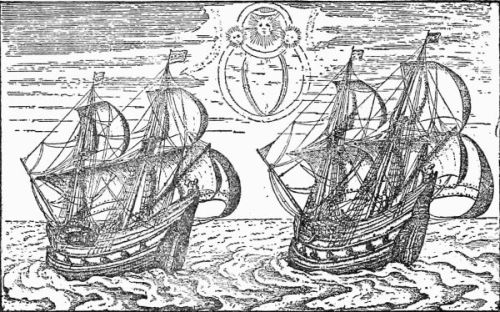
The reason why two of the previous expeditions
had failed was known: the ships had been
driven into a blind alley called the Kara Sea.
In order to avoid a repetition of that occurrence
it was deemed necessary to try a more northern
course. Barendsz, however, wanted to go due
northeast, while De Ryp favored a course more
to the west. For the moment the two captains
compromised and stayed together. On the fifth
of June the sailor on watch in the crow's-nest
called out that he saw a lot of swans. The
swans were soon found to be ice, the first that
was seen that year.
Four days later a new island was discovered.
Barendsz thought it must be part of Greenland.
After all, he argued, he had been right; the ships
had been driven too far westward. De Ryp denied
this, and his calculation proved to be true.
The ships were still far away from Greenland.
The islands belonged to the Spitzbergen Archipelago.
On the nineteenth of June they discovered
Spitzbergen. The name (steep mountains)
describes the island. An expedition was
sent ashore, after which we get the first recital
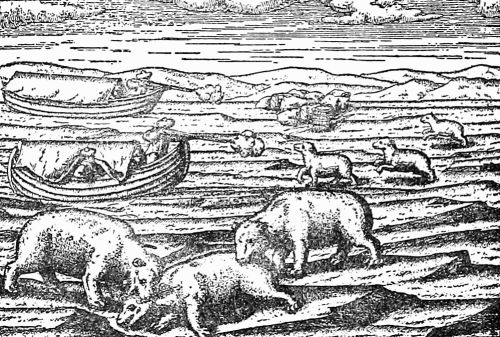
of one of the endless fights with bears that
greatly frightened the good people in those days
of blunderbusses. Nowadays polar bears, while
still far removed from harmless kittens, offer no
grave danger to modern guns. But the bullets
of the small cannon which four centuries ago
did service as a rifle refused to penetrate the
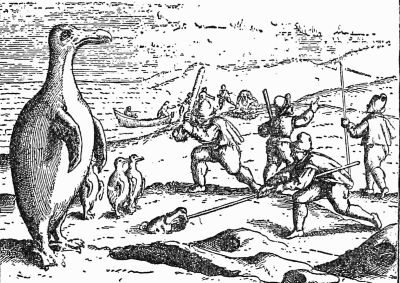
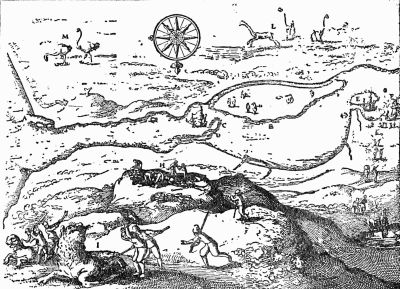
thick hide of a polar bear. The pictures of De
Veer's book indicate that these hungry mammals
were not destroyed until they had been attacked
by half a dozen men with gunpowder, axes,
spears, and meat-choppers.
A very interesting discovery was made on this
new island. Every winter wild geese came to
the Dutch island of the North Sea. Four centuries
ago they were the subject of vague ornithological
speculations, for, according to the best
authorities of the day, these geese did not behave
like chickens and other fowl, which brought up
their families out of a corresponding number of
eggs. No, their chicks grew upon regular trees
in the form of wild nuts. After a while these
nuts tumbled into the sea and then became geese.
Barendsz killed some of the birds and he also
opened their eggs. There were the young
chicks! The old myth was destroyed. "But,"
as he pleasantly remarked, "it is not our fault that
we have not known this before, when these birds
insist upon breeding so far northward."
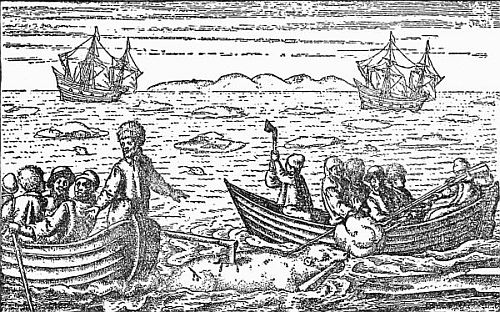
On the twenty-fifth of June, Spitzbergen was
left behind, and once more a dispute broke out
between the two skippers over the old question of
the course which was to be taken. Like good
Dutchmen, they decided that each should go his
own way. De Ryp preferred to try his luck
farther to the north. Barendsz and Heemskerk
decided to go southward. They said farewell
to their comrades, and on the seventeenth of July
reached the coast of Nova Zembla. The coast
of the island was still little known; therefore the
usual expediency of that day was followed.
They kept close to the land and sailed until at
last they should find some channel that would
allow them to pass through into the next sea.
They discovered no channel, but on the sixth of
August the northern point of Nova Zembla,
Cape Nassau, was reached. There was a great
deal of ice, but after a few days open water appeared.
The voyage was then continued. Their
course then seemed easy. Following the eastern
coast downward they were bound to reach
the Strait of Kara. Avoiding the Kara Sea,
they made for the river Obi and hoped that all
would be well. But before the ship had gone
many days the cold weather of winter set in,
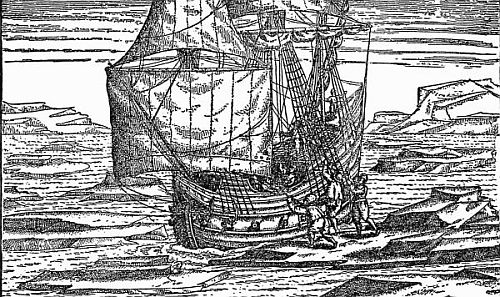
and before the end of August the ship was solidly
frozen into the ice. Many attempts were
made to dig it out and push it into the open
water. The men worked desperately; but the
moment they had sawed a channel through the
heavy ice to the open sea more ice-fields appeared,
and they had to begin all over again.
On the thirtieth of August a particularly heavy
frost finally lifted the little wooden ship clear
out of the ice. Then came a few days of thaw,
during which they hoped to get the vessel back
into shape and into the water. But the next
night there was a repetition of the terrible
creakings. The ship groaned as if it were in
great agony, and all the men rushed on shore.
The prospect of spending the winter in this
desolate spot began to be more than an unspoken
fear. Any night the vessel might be destroyed
by the violent pressure of the ice. An experienced
captain knew what to do in such circumstances.
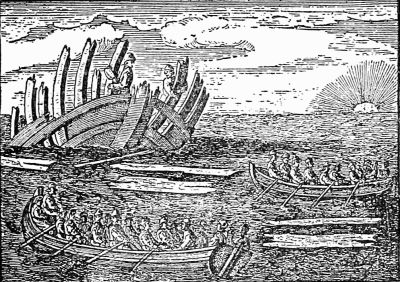
All provisions were taken on shore,
and the lifeboats were safely placed on the dry
land. They would be necessary the next summer
to reach the continent. Another week
passed, and the situation was as uncertain as before.
By the middle of September, however,
all hope had to be given up. The expedition
was condemned to spend the winter in the Arctic.
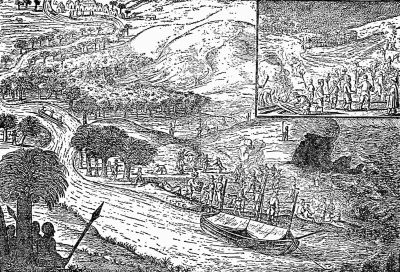
The ship's carpenter became a man of importance.
Near the small bay into which the
vessel had been driven he found a favorable spot
for a house. A little river near by provided
fresh water. On the whole it was an advantageous
spot for shipwrecked sailors, for a short
distance towards the north there was a low
promontory. The western winds had carried
heavy trees and pieces of wood from the Siberian
coast, and this promontory had caught
them. They were neatly frozen in the ice.
All the men needed to do was to take these trees
out of their cold storage and drag them ashore
which, however, did not prove to be so easy a
task as it sounds. There were only seventeen
men on the ship, and two of them were too ill
to do any work. The others were not familiar
with the problem of how to saw and plane
water-soaked and frozen logs into planks. Even
when this had been done the wood must be
hauled a considerable distance on home-made
sleighs, clumsy affairs, and very heavy on the
soft snow of the early winter.
Unfortunately, after two weeks the carpenter
of the expedition suddenly died. It was not easy
to give him decent Christian burial. The
ground was frozen so hard that spades and axes
could not dig a grave; so the carpenter was
reverently laid away in a small hollow cut in the
solid ice and covered with snow.
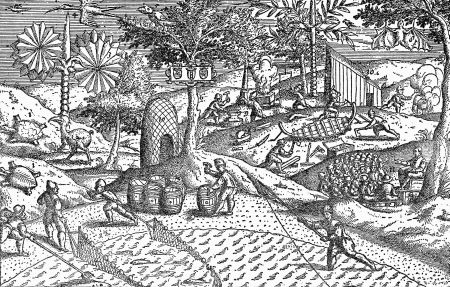
When their house was finished it did not
offer many of the comforts of home, but it was
a shelter against the ever-increasing cold. The
roof offered the greatest difficulty to the inexperienced
builders. At last they hit upon a
scheme that proved successful: they made a
wooden framework across which they stretched
one of the ship's sails. This they covered with a
layer of sand. Then the good Lord deposited a
thick coat of snow, which gradually froze and
finally made an excellent cover for the small
wooden cabin which was solemnly baptized
"Safe Haven." There were no windows—fresh
air had not yet been invented—and what was
the use of windows after the sun had once disappeared?
There was one door, and a hole in the
roof served as a chimney. To make a better
draft for the fire of driftwood which was kept
burning day and night in the middle of the cabin
floor, a large empty barrel was used for a smoke-stack.
Even then the room was full of smoke
during all the many months of involuntary imprisonment,
and upon one occasion the lack of
ventilation almost killed the entire expedition.
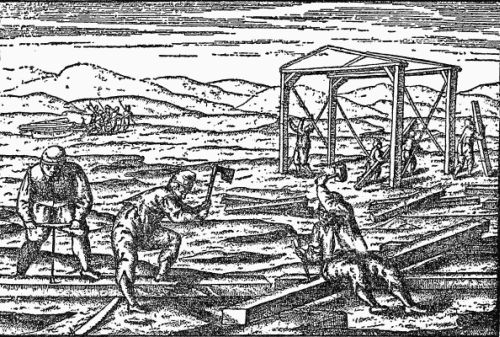
While they were at work upon the house the
men still spent the night on board their ship.
When morning came, with their axes and saws
and planes they walked over to the house. But
hardly a day went by without a disturbing visit
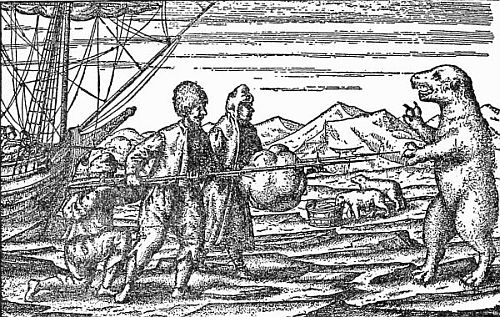
from the much-dreaded polar bears. After
some of the provisions had been removed from
the ship to the house the bears became more insistent
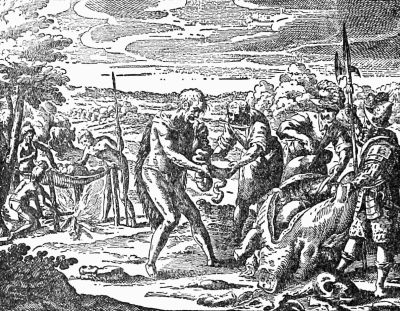
than ever. Upon one occasion when the
bears had gone after a barrel of pickled meat,
as shown with touching accuracy in the picture,
the concerted action of three sailors was necessary
to save the food from the savage beasts.
Another time, when Heemskerk, De Veer, and
one of the sailors were loading provisions upon
a sleigh they were suddenly attacked by three
huge bears. They had not brought their guns,
but they had two halberds, with which they hit
the foremost bear upon the snout; and then they
fled to the ship and climbed on board. The
bears followed, sat down patiently, and laid siege
to the ship. The three men on board were helpless.
Finally one of them hit upon the idea of
throwing a stick of kindling-wood at the bears.
Like a well-trained dog, the animal that was
struck chased the stick, played with it, and then
came back to ask for further entertainment. At
last all the kindling-wood laid strewn across the
ice, and the bears had had enough of this sport.
They made ready to storm the ship, but a lucky
stroke with a halberd hit one of them so severely
upon the sensitive tip of his nose that he turned
around and fled. The others followed, and
Heemskerk and his companions were saved.
When the month of November came and the
sun had disappeared, the bears also took their
departure, rolled themselves up under some comfortable
shelter, and went to sleep for the rest
of the winter. Now the sailors could wander
about in peace, for the only other animal that
kept awake all through the year was the polar
fox. He was a shy beastie and never came near
a human being. The sailors, however, hunted
him as best they could. Not only did they
need the skins for their winter garments, but
stewed fox tasted remarkably like the domestic
rabbit and was an agreeable change from the
dreary diet of salt-flesh. In Holland before the
introduction of firearms rabbits were caught
with a net. The same method was tried on
Nova Zembla with the more subtle fox. Unfamiliar
with the wiles of man, he actually allowed
himself to be caught quite easily. Later
on traps were also built. But the method with
the net was more popular, for the men had the
greatest aversion to the fresh air of the freezing
polar night and never left the house unless they
were ordered to do some work. When they
went hunting with the net they could pass the
string that dropped the mechanism right under
the door and stay inside, where it was warm and
cheerful, and yet catch their fox.
On the sixth of November the sun was seen
for the last time. On the seventh, when it was
quite dark, the clock stopped suddenly in the
middle of the night, and when the men got up
in the morning they had lost the exact time. For
the rest of the winter they were obliged to guess
at the approximate hour; not that it mattered so
very much, for life had become an endless night:
one went to bed and got up through the force of
habit acquired by thousands of previous generations.
If the men had not been obliged to, they
never would have left their comfortable beds.
They had but one idea, to keep warm. The
complaint about the insufferable cold is the main
motive in this Arctic symphony. Lack of regular
exercise was chiefly to blame for this "freezing
feeling"—lack of exercise and the proper
underwear. It is true that the men dressed in
many layers of heavy skins, but their lower garments,
which nowadays play a great part in the
life of modern explorers, were sadly neglected.
In the beginning they washed their shirts regularly,
but they found it impossible to dry them;
for just as soon as the shirt was taken out of the
hot water it froze stiff. When they carried the
frozen garment into the house to thaw it out before
the fire it was either singed and burned in
spots or it refused absolutely to melt back into
the shape and aspect of a proper shirt. Finally
the washing was given up, as it has been on
many an expedition, for cleanliness is a costly
and complicated luxury when one is away from
the beaten track of civilization.
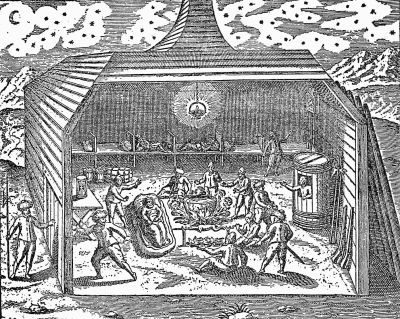
The walls of the house had been tarred and
calked like a ship. All the same, when the first
blizzards occurred, the snow blew through many
cracks, and every morning the men were covered
with a coat of snow and ice. Hot-water
bottles had not yet been invented, but at night
large stones were roasted in the fire until they
were hot, and then were placed in the bunks
between the fur covers. They helped to keep
the men warm, and incidentally they burned
their toes before they knew it. Not only did the
men suffer in this way. That same clock which
I have already mentioned at last succumbed to
the strain of alternating spells of heat and cold.
It began to go slower and slower. To keep it
going at all, the weight was increased every few
days. At last, however, a millstone could not
have coaxed another second out of the poor
mechanism. From that moment on an hour-glass
was used. One of the men had to watch
it, and turn it over every sixty minutes.
All this time, while the men never ceased their
complaint about feeling cold, the heating problem
had been solved by fires made of such kindling-wood
as the thoughtful ocean had carried
across from the Siberian coast and deposited
upon the shore. Finally, however, in despair
at ever feeling really warm again, if only for a
short while, it was decided, as an extra treat, to
have a coal fire. There was some coal on board
the ship, but it had been saved for use upon the
homeward trip in the spring, when the men
would be obliged to travel in open boats. The
coal was brought to the house. The worst
cracks in the walls were carefully filled with tar
and rope, and somebody climbed to the roof and
closed the chimney; not an ounce of the valuable
heat must be lost. As a result the men felt
comfortable for the first time in many months;
they also came very near losing their lives.
Having dozed off in the pleasant heat they had
not noticed that their cabin was filling with
coal-gas until finally some of them, feeling uncomfortable,
tried to get up, grew dizzy, and
fainted. Our friend the barber, possessed of
more strength than any of the others, managed
to creep to the door. He kicked it open and let
in the fresh air. The men were soon revived,
and the captain treated them all to a glass of
wine to celebrate the happy escape. No further
experiments with coal were made during that
year.
December was a month of steady blizzards.
The snow outside piled up in huge drifts which
soon reached to the roof. The hungry foxes,
attracted by the smell of cookery wafted abroad
through the barrel-chimney, used to gallop across
the roof, and at night their dismal and mean little
bark kept the men in their bunks awake.
At the same time their close proximity made
trapping easier, and the skins were now doubly
welcome; for the shoes, bought in Holland, had
been frozen so often and had been thawed out
too near the fire so frequently that they were
leaking like sieves and could no longer be worn.
New shoes were cut out of wood and covered
with fox-fur. They provided comfortable,
though far from elegant, footwear.
New Year's day was a dreary feast, for all the
men thought of home and were melancholy and
sad. Outside a terrible snow-storm raged. It
continued for an entire week. No one dared to
go outside to gather wood, fearing the wind and
cold would kill them. In this extremity they
were obliged to burn some of their home-made
furniture. On the fifth of January the blizzard
stopped. The door was opened, the cabin was
put in order, wood was brought from the woodpile,
and then one of the men suddenly remembered
the date and how at home the feast of the
Magi was being celebrated with many happy
and innocent pastimes. The barber decided to
organize a little feast. The first officer was
elected to be "King of Nova Zembla." He was
crowned with due solemnity. A special dinner
of hot pancakes and rusks soaked in wine was
served, and the evening was such a success that
many imagined themselves safely home in their
beloved fatherland. A new blizzard reminded
them that they were still citizens of an Arctic
island.
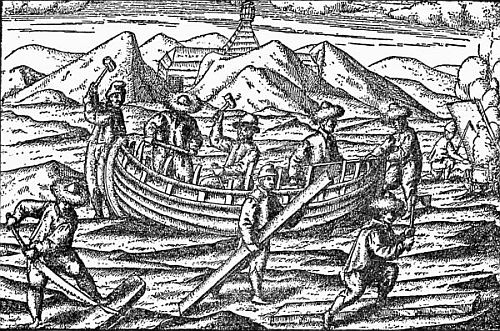
On the sixteenth of January, however, the men
who had been sent out to look after the traps and
bring in wood suddenly noticed a glimmer of red
on the horizon. It was a sign of the returning
sun. The dreary months of imprisonment were
almost over. From that moment the heating
problem became less difficult. On the contrary,
the roof and the walls now began to leak, and
the expedition had its first taste of the thaw
which would be even more fatal than the cold
weather had proved to be. As has been remarked,
these men had been leading a very unhealthy
life. While it was still light outside
they had sometimes played ball with the wooden
knob of the flagpole of the ship, but since early
November they had taken no exercise of any
sort. A few minutes spent out of doors just long
enough to kill the foxes in the traps was all the
fresh air they ever got. Out of a barrel they had
made themselves a bath-tub, and once a week
every man in turn had climbed through the little
square opening into that barrel (see the picture)
to get steamed out. But this mode of living,
combined with bad food, brought half a year before
from Holland, together with the large quantity
of fox-meat, now caused a great deal of
scurvy, and the scurvy caused more dangerous
illness. Barendsz, the man upon whom they depended
to find the way home, was already so
weak that he could not move. He was kept near
the fire on a pile of bearskins. On the twenty-sixth
of January another man who had been ill
for some time suddenly died. His comrades had
done all they could to save him. They had
cheered him with stories of home, but shortly
after midnight of that day he gave up the ghost.
Early the next morning he was buried near the
carpenter. A chapter of the Bible was read, a
psalm was sung, and his sorrowful companions
went home to eat breakfast.
None of the men were quite as strong as they
had been. Among other things, they hated the
eternal bother of keeping the entrance to the door
clear of snow. Why should they not abolish the
door, and like good Eskimos enter and leave
their dwelling-place through the chimney?
Heemskerk wanted to try this new scheme and
he got ready to push himself through the narrow
barrel. At the same time one of the men rushed
to the door to go out into the open and welcome
the skipper when he should stick his head
through the barrel; but before he espied the eminent
leader of the expedition he was struck by
another sight: the sun had appeared above the
horizon. Apparently Barendsz, who had tried
to figure out the day and week of the year after
they had lost count of the calendar, had been
wrong in his calculation. According to him,
there were to be two weeks more of darkness.
And now, behold! there was the shining orb,
speedily followed by a matutinal bear. The
lean animal was at once killed and used to replenish
the oil of the odorous little lamp which
for more than three months had provided the
only light inside the cabin.
February came and went, but as yet there were
no signs of the breaking up of the ice. During
the first day of March a little open water was
seen in the distance, but it was too far away to
be of any value to the ship. An attempt was
made to push the ship out of its heavy coat of
ice, but the men at once complained that they
were too weak to do much work. Some of them
had had their toes frozen and could not walk.
Others suffered from frost-bite on their hands
and fingers and were unable to hold an ax.
When they went outside only incessant vigilance
saved them from the claws of the skinny bears
that were ready to make up for the long winter's
fast. Once a bear almost ate the commander,
who was just able to jump inside the house and
slam the door on bruin's nose. Another time a
bear climbed on the roof, and when he could
not get into the chimney, he got hold of the
barrel and rocked that architectural contrivance
until he almost ruined the entire house. It was
very spooky, for the attack took place in the
middle of the night, and it was impossible to
go out and shoot the monster.
March passed, and the ship, which had been
seventy yards away from the water when it was
deserted in the autumn of 1595, was now more
than five hundred yards away from the open sea.
The intervening distance was a huge mass of
broken ice and snow-drifts. It seemed impossible
to drag the boats quite so far. When on
the first of May the last morsel of salt meat had
been eaten, the men appeared to be as far away
from salvation as ever. There was a general demand
that something be done. They had had
enough of one winter in the Arctic, and would
rather risk a voyage in an open boat than another
six months of cold bunks and tough fox-stew, and
reading their Bible by the light of a single oil-lamp.
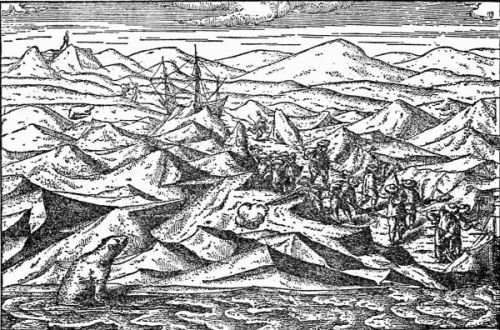
Fortunately—and this is a great compliment
to a dozen men who have been cooped up in a
small cabin for six months of dark and cold—the
spirit of the sailors had been excellent, and
discipline had been well maintained. They did
not make any direct demands upon the captain.
The question of going or staying they discussed
first of all with the sick Barendsz, and he in turn
mentioned it to Heemskerk. Heemskerk himself
was in favor of waiting a short while. He
reasoned that the ice might melt soon, and then
the ship could be saved. He, as captain, was
responsible for his craft. He asked that they
wait two weeks more. If the condition of the
ice was still unsatisfactory at the end of that time,
they would give up the ship and try to reach
home in the boats. Meanwhile the men could
get ready for the trip. They set to work at once
cleaning and repairing their fur coats, sharpening
their tools, and covering their shoes with new
skins to keep their feet from freezing during the
long weeks in the open boats.
An eastern storm on the last day of May filled
their little harbor with more ice, and all hope of
saving the ship was given up. The return trip
must be made in the open boats. There were
two, a large and a small one. They had been
left on land in the autumn, and were now covered
with many feet of frozen snow. A first attempt
to dig them out failed. The men were
so weak that they could not handle their axes
and spades. The inevitable bear attacked them,
drove them post-haste back to the safe shelter of
the house, and so put an end to the first day's
work.
The next morning the men went back to their
work. Regular exercise and fresh air soon gave
them greater strength, while the dire warning
of Heemskerk that, unless they succeeded, they
would be obliged to end their days as citizens of
Nova Zembla provided an excellent spur to their
digging enthusiasm. The two boats were at
last dragged to the house to be repaired. They
were in very bad condition, but since there was
no further reason for saving the ship there was
sufficient wood with which to make good the
damage. From early to late the men worked,
the only interruptions being the dinner-hour and
the visits of the bears. "But," as De Veer remarked
in his pleasant way, "these animals
probably knew that we were to leave very soon,
and they wanted to have a taste of us before we
should have gone for good." Before that happy
hour arrived the expedition was threatened with
a novel, but painful, visitation. To vary the
monotonous diet of bearsteak, the men had fried
the liver. Three of them had eaten of this dish
and fell so ill that all hope was given up of saving
their lives. The others, who knew that they
could not handle the boats if three more sailors
were to die, waited in great anxiety. Fortunately
on the fourth day the patients showed
signs of improvement and finally recovered.
There were no further experiments with
scrambled bear's liver.
After that the work on the two boats proceeded
with speed, and by the twelfth of June
everything was ready. The boats, now reinforced
for the long trip across the open water
of the Arctic Ocean, had to be hauled to the sea,
and the ever-shifting wind had once more put
a high ice-bank between the open water and the
shore. A channel was cut through the ice with
great difficulty, for there were no tools for this
work. After two days more the survivors of
this memorable shipwreck were ready for the
last part of their voyage. Before they left the
house Barendsz wrote three letters in which he
recounted the adventures of the expedition.
One of these letters was placed in a powder-horn
which was left hanging in the chimney, where
it was found two hundred and fifty years later.
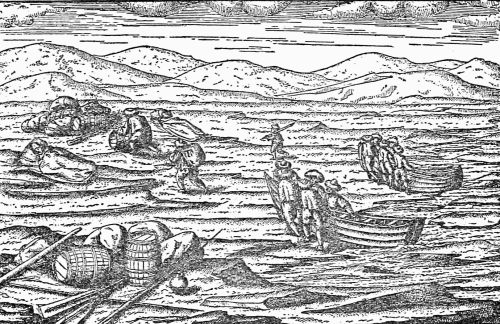
On the morning of the fourteenth, Barendsz
and another sick sailor who could no longer walk
were carried to the boats. With a favorable
wind from the south they set sail for the northern
cape of Nova Zembla, which was soon reached.
Then they turned westward, and followed the
coast until they should reach the Siberian continent.
The voyage along the coast was both
difficult and dangerous. The two boats were
not quite as large as the life-boats of a modern
liner. Being still too weak to row, the men
were obliged to sail between huge icebergs, often
being caught for hours in the midst of large
ice-fields. Sometimes they had to drag the
boats upon the ice while they hacked a channel
to open water. After a week the condition of
the ice forced them to pull the boats on shore
and wait for several days before they could go
any farther. Great and tender care was taken
of the sick pilot and the dying sailor, but those
nights spent in the open were hard on the sufferers.
On the morning of the twentieth of June
the sailor, whose name was Claes Andriesz, felt
that his end was near. Barendsz, too, said he
feared that he would not last much longer. His
active mind kept at work until the last. De
Veer, the barber, had drawn a map of the coast,
and Barendsz offered suggestions. Capes and
small islands off the coast were definitely located,
placed in their correct geographical positions,
and baptized with sound Dutch names.
The end of Barendsz came very suddenly.
Without a word of warning he turned his eyes
toward heaven, sighed, and fell back dead. A
few hours later he was followed by the faithful
Claes. They were buried together. Sad at
heart, the survivors now risked their lives upon
the open sea. They had all the adventures not
uncommon to such an expedition. The boats
were in a rotten condition; several times the
masts broke, and most of the time the smaller
boat was half full of water. The moment they
reached land and tried to get some rest, there
was a general attack by wild bears. And once
a sudden break in a field of ice separated the
boats from the provisions, which had just been
unloaded. In their attempt to get these back
several men broke through the ice. They
caught cold, and on the fifth of July another
sailor, a relative of Claes, who had died with
Barendsz, had to be buried on shore.
During all this misery we read of a fine example
of faithful performance of duty and of
devotion to the interest of one's employers. You
will remember that this expedition had been sent
out to reach China by the Northeast Passage
and to establish commercial relations with the
merchants of the great heathen kingdom. For
this purpose rich velvets and other materials
agreeable to the eyes of Chinamen had been
loaded onto the ship when they left Amsterdam.
Heemskerk felt it his duty to save these goods,
and he had managed to keep them in safety.
Now that the sun shone with some warmth, the
packages were opened and their contents dried.
When Heemskerk came back to Amsterdam the
materials were returned to their owners in good
condition.
On the eleventh of June of the year 1597 the
boats were approaching the spot where upon previous
voyages large colonies of geese had been
found. They went ashore and found so many
eggs that they did not know how to take them
all back to the boats. So two men took down
their breeches, tied the lower part together with
a piece of string, filled them with eggs, and carried
their loot in triumph back to the others on
board.
That was almost their last adventure with
polar fauna, except for an attack by infuriated
seals whose quiet they had disturbed. The seals
almost upset one of the boats. The men had no
further difficulties, however. On the contrary,
from now on everything was plain sailing; and
it actually seemed to them that the good Lord
himself had taken pity upon them after their
long and patient suffering, for whenever they
came to a large ice-field it would suddenly separate
and make a clear channel for their boats;
and when they were hungry they found that the
small islands were covered with birds that were
so tame that they waited to be caught and killed.
At last, on the twenty-seventh of July, they
arrived in open water where they discovered a
strong eastern current. They decided that they
must be near Kara Strait. The next morning
they hoped to find out for certain. When the
next morning came they suddenly beheld two
strange vessels near their own boats. They were
fishing-smacks, to judge by their shape and size,
but nothing was known about their nationality,
for they flew no flags, and it was well to be careful
in the year of grace 1597. Therefore a careful
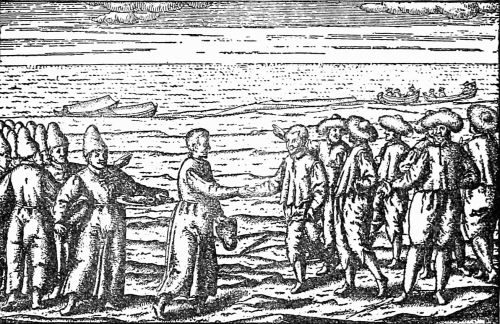
approach was made. To Heemskerk's great
joy, the ships were manned by Russians who
had seen the fleet of Linschoten several years before
and remembered some of the Hollanders.
There were familiar faces on both sides, and this
first glimpse of human beings did more to revive
the courage of the men than the doubtful
food which the Russians forced with great hospitality
upon their unexpected guests. The following
day the two fishing-boats set sail for the
west, and Heemskerk followed in their wake.
But in the afternoon they sailed into a heavy fog
and when it lifted no further trace of the Russians
could be found. Once more the two small
boats were alone, with lots of water around them
and little hope before them.
By this time all of the men had been attacked
by scurvy and they could no longer eat hard-tack,
which was the only food left on board.
Divine interference again saved them. They
found a small island covered with scurvy-grass
(Cochlearia officinalis) the traditional remedy
for this painful affliction. Within a few days
they all recovered, and could row across the
current of the straits which separated them from
the continent. Here they found another Russian
ship. Then they discovered that their compass,
on account of the proximity of heavy chests
and boxes covered with iron rings, had lost all
track of the magnetic pole and that they were
much farther toward the east than they had supposed.
They deliberated whether they should
continue their voyage on land or on sea. Finally
they decided to stick to their boats and
their cargo. Once more they closely followed
the coast until they came to the mouth of the
White Sea. That meant a vast stretch of dangerous
open water, which must be crossed at
great risk. The first attempt to reach the other
shore failed. The two boats lost sight of each
other, and they all worried about the fate of
their comrades. On the eighteenth of August
the second boat managed to reach the Kola peninsula
after rowing for more than thirty hours.
That virtually ends the adventures of the men
who had gone out with Barendsz and Heemskerk
to discover the Northeast Passage, and who
quite involuntarily acted as the first polar explorers.
After a few days the boats found each
other, and together they reached the first Russian
settlement, where they found houses and
warm rooms and a chance to get a decent bath
and eat from a table. Their misery was at once
forgotten. At heart they were healthy-minded,
simple fellows, and when for the first time after
many months they saw some women they were
quite happy, although these women were Laplanders
and proverbially lacking in those attributes
which we usually connect with the idea of
lovely womanhood.
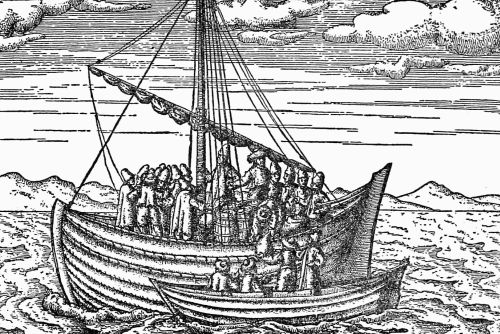
News traveled fast even in the dominion of
the Lapp. In less than eighty hours a Laplander
came running to the Russian settlement
with a letter which had been written by De Ryp,
who, half a year before, had been blown into the
White Sea and was now waiting for a favorable
wind to sail home. He was still in Kola, and
was delighted at the safe return of his colleague
from whom he had separated over a point of
nautical difference. He invited the men to go
home with him. The two small boats of Heemskerk's
ship were left in the town of Kola as a
small souvenir for the kind-hearted Russians,
the Arctic costumes were carefully packed away,
to be shown to the family at home, and on the
sixth of October they all said farewell to the
Russian coast. Twenty-three days later they entered
the Maas. By way of Maassluis, Delft,
The Hague, and Haarlem they made their triumphant
entry into Amsterdam. Dressed in
their fox-skins and their home-made wooden
shoes, they paraded through the streets of the
city. Their High and Mightinesses the mayors
received them at the town hall, and the world
was full of the fame of this first Arctic expedition.
As for the practical results, there were
none, unless we except the negative information
about the impossibility of the Northeastern
Passage. But nobody cared any longer
about this route, for just two months before
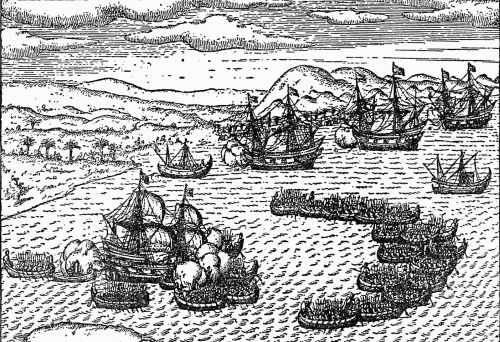
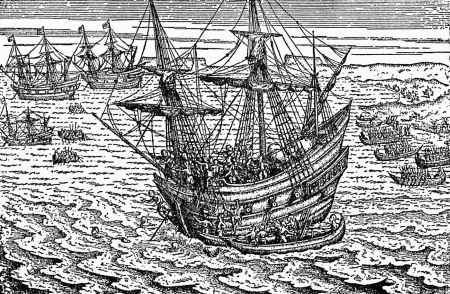
the first Dutch fleet which had tried
to reach the Indies by way of the Cape
had safely returned to the roads of Texel. The
Portuguese, after all, had proved to be not so
dangerous as had been expected. The Indian
native was quite willing to welcome the Dutch
trader. And the Northeastern route, after the
wonderful failures of a number of conscientious
expeditions, was given up for the well-worn and
well-known route along the African coast. The
Arctic was all right for the purpose of hunting
of the profitable whale, but as a short cut to the
Indies it had proved an absolute disappointment.