PLAIN JOINTS ADAPTED TO THE TABLE OF THE WEALTHY AS WELL AS MY TABLE AT
HOME.
As hardly any dinner is properly served without a simple joint, which
may be deposited either on the table or sideboard, I have placed all
plain joints, as also the directions for choosing meat, at the
commencement of My Kitchen at Home, to which I shall beg to refer my
readers while making the bills of fare, or choosing different qualities
of meat.
OF THE CHOOSING AND ROASTING OF PLAIN JOINTS.
Here I must claim all the attention of my readers: many of the
profession will, I have no doubt, be surprised that I should dwell upon
a subject which appears of so little importance, saying that, from the
plain cook to the most professed, all know how to roast or boil a piece
of meat, but there I must beg their pardon; I will instance myself: for,
previously to my forming any intention of writing the present work, I
had not devoted the time necessary to become professionally acquainted
with it, always depending upon my roasting cook, who had constant
practice, myself only having the knowledge of whether or not properly
done. I have since not only studied it closely, but have made in many
respects improvements upon the old system, and many discoveries in that
branch which I am sure is the most beneficial to all classes of society
(remembering, as I have before stated, that three parts of the animal
food of this country is served either plain roasted or boiled). My first
study was the fire, which I soon perceived was too deep, consumed too
much coal, and required poking every half hour, thus sending dust and
dirt all over the joints, which were immediately basted to wash it off;
seeing plainly this inconvenience, I immediately remedied it by
inventing my new roasting fire-place (see page 622), by which means I
saved two hundred-weight of coals per day, besides the advantage of
never requiring to be poked, being narrow and perpendicular; the fire is
lighted with the greatest facility, and the front of the fire being
placed a foot back in the chimney-piece, throws the heat of the fire
direct upon the meat, and not out at the sides, as many persons know
from the old roasting ranges. I have many times placed ladies or
gentlemen, visiting the club, within two feet of the fire when six large
joints have been roasting, and they have been in perfect ignorance that
it was near them until upon opening the wing of the screen (see same
Plate) by surprise, they have appeared quite terrified to think they
were so near such an immense furnace. My next idea was to discontinue
basting, perhaps a bold attempt to change and upset at once the custom
of almost all nations and ages, but being so confident of its evil
effects and tediousness, I at once did away with it, and derived the
greatest benefit (for explanation, see remarks at the commencement of
the roasts in the Kitchen of the Wealthy), for the quality of meat in
England is, I may say, superior to any other nation; its moist soil
producing fine grass almost all the year round, which is the best food
for every description of cattle, whilst in some countries not so
favoured by nature they are obliged to have recourse to artificial food,
which fattens the animals, but decreases the flavour of the meat; and,
again, we must take into consideration the care and attention paid by
the farmers and graziers to improve the stock of those unfortunate
benefactors of the human family.
Every country is famous, more or less, for some produce, so is every
county; for instance, for the best beef we are indebted principally to
Scotland: the Highland ox, which if bred in Scotland, kept there until
four years old, and fed twelve months in Norfolk, cannot be surpassed;
those also that are killed in Scotland are likewise very commendable,
but the connoisseur would give the preference by far to those that had
undergone a change of atmosphere and pasturage. Norfolk also produces
excellent beef, as likewise does Herefordshire, which three sorts are
ranked as the best by the first judges.
The Brighton downs are noted for producing sheep of the first quality,
next to which may be ranked those of the Norfolk downs, they are rather
larger, more fleshy, and the meat sometimes a darker colour.
Herefordshire also produces some very excellent. The Scotch mutton is
also very good, and deservedly of high repute, but I rarely ever use it,
as it is killed in Scotland and hurriedly packed, which causes it not to
look so well, and frequently very much bruises it; but those of
Leicestershire are, in my opinion, quite the contrary, being coarse meat
and very fat; I consider it unworthy of making its appearance upon the
table of a man of wealth. When residing at Melton Mowbray I tried
several haunches, even after hanging a month in winter, and then roasted
to perfection, I could not find in them any flavour worthy of the taste
of an epicure; I consider it more as a useful nourishment than a
delicate meat.
The best Welsh mutton is brought direct from its native mountains, the
heath upon which it feeds gives a very rich flavour to the meat, which
is very dark without much fat; many are fed in some of the English
counties, they are very excellent and much fatter, but do not possess
the same wild flavour.
The beat veal to be obtained in the spring time of the year comes from
the west of England, being rather small and very white, but there is a
steady supply of good veal from Surrey and Essex throughout the year.
Although very fine veal may be obtained in this country, it is not to be
compared to the quality of veal we obtain in France; the veal of
Pontoise, a little town six miles from Paris, outrivals any; I would
venture to say that one pound of that veal would make a better stock
than double the quantity of the veal procured here: no one can account
for it, but such is the actual case; although there the quality of any
other description of animal food is deficient, we have to boast of the
excellent flavour, succulence, and excessive whiteness of our veal.
House lamb may be obtained throughout the whole year, but there is no
great demand for it before February; grass lamb makes its appearance now
much earlier than formerly: the quality much depends upon the winter
season; if a mild winter they may really be fed upon grass, but if the
contrary, they must be fed with prepared food, which increases their
size but diminishes their quality.
Pork for roasting is best when about six months old, Berkshire and
Hampshire producing the best. The size of a leg of pork should not
exceed more than seven pounds, nor much less than six. I do not know
why, but of late years pork has lost in a great measure its popularity,
and but seldom appears upon a nobleman’s table; it is in season from
October to about March.
No. 1. Sirloin of Beef. The royal honour which this bold and handsome
dish received from the merry monarch, who conferred upon it the honour
of knighthood, good Sir Loin, which title it has ever since retained
(previously only bearing the cognomen of loin), and most likely will
retain until the latest period: as a joint it claims precedence of all
others. In roasting, the fillet and fat below keep the upper part moist,
and when well roasted, such is the quantity of gravy, that after a few
slices have been cut it may be taken from it with a spoon.
Procure a fine square piece of sirloin weighing about twenty pounds
(which has been hung at least three weeks in winter, and eight or ten
days, if possible, in summer, observing that the older the meat is the
longer it will require keeping before cooking, and this remark applies
to all kinds of meat, especially to beef and mutton), trim nicely,
leaving the fat about an inch and a half in thickness over the fillet,
cut a slice slantwise from the flap, which turn under, fixing it with
skewers, thus giving the joint an oblong shape; with a sharp knife cut
through the sinew (running along the chine-bones) in four or five
places, or the meat would contract in roasting; make an incision in the
centre of the chine-bones, lengthwise, with a chopper, through which
pass a spit an inch wide and half an inch in thickness, bringing it out
at the flap, keeping the centre, and avoiding the fillet. When the joint
is larger it would be advisable to use a cradle-spit, which, however
like the other spit, has its inconveniences, one making a hole through
the meat, and the other pressing upon the fat, making it heavy; but in
any kind of joint, if not over-roasted, you will never perceive the mark
of the spit, as the cavity closes immediately upon the spit leaving it;
always choose a spit corresponding to the size of the joint. In a large
kitchen, where you require many joints roasting at one time, a
cradle-spit is a nuisance, and must be used only where it cannot be
avoided. Tie half a sheet of buttered foolscap paper upon each side of
the beef, and place to roast, keeping it two feet from a very clear
fire, let remain twenty minutes, then rub the top over with a piece of
butter placed in the bowl of a large wooden spoon (see page 396), and
place the beef back to the distance of three or four feet from the fire,
allowing it two hours and a half to three hours to roast; take it from
your spit, let remain a few minutes upon a dish until no more fat runs
from it, when place it upon the dish you intend serving it on
(previously taking out the piece of rump-bone affixed to the side to
facilitate the carving; but in choosing a piece of sirloin obtain it if
possible without any of that bone attached, or, at any rate, with but a
very small piece, as the joint looks so much handsomer without it),
pouring half a pint of good gravy (page 394) under; you will then
perceive my object in not basting meat, the fat and the skin will be of
a very light gold colour, which would have been quite the contrary if
continually basted. By placing the meat too near the fire the fat
quickly melts and falls into the dripping-pan, whilst by keeping it a
tolerable distance it cooks gradually, and as the meat revolves runs
over its surface, keeping it continually moist; and, again, by placing
it too near the fire it is liable to catch, causing many persons to
think that it has not been well basted; another evil in basting is, that
by continually pouring hot fat over you cause that beautiful light fat
attached to the joint to become heavy, and the gravy which invariably
falls from the joint with the fat remains upon it, burns, and causes it
to be very indigestible. It will also be easy to perceive in the habit
of pouring a quantity of hot fat over all joints, that if three or four
should be roasting together, one over the other, that one description of
meat becomes basted with the fat and gravy of several, whilst the mere
rubbing of a piece of butter over is not the least objectionable, as
nothing can fall upon other joints but a little butter or clear fat,
which cannot in the least interfere with the flavour of other meats, but
still I would advise that lamb, veal, poultry, and even game, be kept at
the top where there is beef, mutton, or pork roasting; this only applies
to large establishments.
The above description is applied for the Kitchen of the Wealthy, but I
must confess I do not object to a small piece of beef for my Kitchen at
Home; I should proceed precisely as above, only procuring a piece of not
more than eight, ten, or twelve pounds in weight; put a little water in
the dripping-pan, place the beef upon a spit papered as before, put it
very near the fire for a few minutes, rub over with butter, then put it
back at the distance of two feet; let roast, if weighing from ten to
twelve pounds, an hour and a half to two hours, depending much upon the
fire, of which any person may judge with or without practice; take it
up, dress upon your dish, then have the contents of your dripping-pan in
a basin, from which extract the whole of the fat, and pour the gravy
over the chine-bones, it will be very good, and save the trouble and
expense of making gravy; a couple of Yorkshire puddings, of two eggs
each, are very excellent cooked under the meat; before I had a
smoke-jack in my small kitchen I used to roast very well with a bit of
string. For the cottage kitchen, where there is no smoke-jack provided,
you may roast very well with a piece of worsted or string, by hooking it
to the meat, and then suspending it to a bracket fixed under the
mantel-piece, which will enable you to remove it to any distance you
think proper from the fire, making a tea-tray, at the distance of three
feet from the fire, act as a screen; the bottle-jacks are not bad, but
soon get out of repair.
No. 2. Ribs of Beef. A piece of from twenty to twenty-five pounds
makes a very pretty joint; trim neatly by sawing off the tips of the
chine-bones to make it stand flat, saw also about three inches from the
tips of the ribs, merely sawing through the bones, which detach from the
meat, leaving a flap, which fold under and fix with wooden skewers, not,
however, pulling it too tight, or it would cause the skin to crack in
roasting, which would produce a very bad effect; roast as directed for
the sirloin, from two hours and a half to three hours would be
sufficient, unless very thick. For a cold joint the ribs are better than
the sirloin, which last should always be eaten hot.
At home I often have a piece of ribs of beef weighing from six to eight
pounds, and roast by passing a very thin spit through, and placing it
down before a moderate fire; or, if in a small cottage, hang it up with
string as for the small sirloin; it would take from an hour and five
minutes to an hour and a quarter roasting, being perpendicular you may
baste it slightly, as it does not receive much nourishment from its own
fat.
No. 3. Rump of Beef. This is also a very delicate joint, but can only
be had to perfection in the winter months, as it requires hanging from
three weeks to a month before it is in readiness to roast to perfection;
procure one of from thirty to thirty-five pounds in weight, trim neatly,
leaving all the fat, for, taking so long to roast, should it be short of
fat it would go to table quite dry; roast it in a cradle-spit as
directed for sirloin, but keeping it still further from the fire, and
giving it from four hours and a half to five hours roasting, it might
also be roasted in paste as directed for haunch of venison (No. 222), or
wrap it up in several sheets of paper well buttered, and browned by
taking off the paste twenty minutes before removing from the fire.
This bold joint never makes its appearance in my Kitchen at Home, but I
have frequently used the piece of fillet attached to it, which weighs
from three to five pounds; I leave about an inch of fat upon it, pass a
small spit through, and roast from three quarters of an hour to an hour;
for gravy I proceed as for the sirloin. Cold potatoes, previously
boiled, put under it in the dripping-pan whilst roasting, and turned
occasionally, are very excellent.
No. 4. Baron of Beef. It is an old saying that two extremes often
meet, so with me, I leave my five pounds’ joint roasting and, like
Gulliver, make a step towards the empire of the giant. This is, indeed,
a colossal joint, which at first sight would put a modest fire out of
conceit, my smoke-jack out of order, and, above all, drive my few
guests’ appetites from their frugal stomachs; they not being initiated
in the grandeur or importance of a civic or aristocratic banquet would
consider it a mighty dish of vulgarity. But stay, friends, I would
observe grandeur and magnitude are far from being vulgar; to prove that
my assertion is correct I have the opinion of ages, for it is a dish
almost as old as England herself. I have before stated that Charles the
Second gave the title and importance to the sirloin, and I have no doubt
the baron owes its origin also to some such cause or great event, which
I will attempt to discover for the information of some of my readers
who, like myself, at present may be entirely ignorant of its origin,
which I feel assured will prove interesting.
A baron of beef is generally cut from a small ox, and includes the two
rumps and two sirloins with one of the rib bones on each side; it must
be trussed precisely as for a saddle of mutton; pass a spit, which of
course must not be too large, through the spinal-marrow-bone, then wrap
the beef up in paste as for a haunch of venison (No. 540), only a little
thicker, add also more paper, set it three feet from a brisk fire,
pouring fat over the paper to prevent its catching fire, twenty minutes
afterwards remove the spit two feet farther from the fire, inclose it
well with the fire-screen, and roast eight or nine hours, keeping it
turned by hand; half an hour before it is done take off the paste and
paper and give the beef a fine gold colour, when take up, dress in a
dish with gravy under and serve. The ancient style was to serve a
representation of St. George and the dragon, cut from vegetables, upon
the top, fresh salad also of every description used to be placed around,
but the whole was obliged to be removed at the commencement of carving.
Having promised my readers that I would make all possible inquiry
relating to the origin of the inviting joint called baron of beef, a
careful search into “Hone” and others, has not, I regret to say, been
attended with quite a favorable result, and the only information which I
can at present obtain is the legendary one that King John, after signing
Magna Charta at Runnymede, partook of a repast in the company of his
barons, consisting of the saddle and part of the ribs of beef roasted,
and that hence arose the saying “baron of beef.” Now this appears very
much like the traveller’s tale that had but one point in its favour,
namely, that no one present could possibly contradict it.
No. 5. Round of Beef. “Here,” says John Bull, with a good-humoured
countenance (standing near a table upon which was a round of beef being
prepared for dressing, clapping his hands upon his knees, and bending
with no little difficulty his colossal stomach), “do you know, my
excellent friend,” says he to me, “I fear you cannot cook that glorious
dish to perfection, for I have not yet forgotten your seven hours’
dressing of a leg of mutton (p. 193), so if you are not above receiving
a lesson I will give you one which will enable you to dress this
all-important dish to perfection; for I prize it as I do my own roast
beef of old England, and you must be aware that after the centuries of
practice I have had that I must understand some little about it. Well,
in the first place, the quality of the meat has a good deal to do with
it, of which you have given a fair description, I therefore pass it
over; but to proceed: it must be cut pretty freely from the knuckle and
placed in a brine-tub, cover well with salt, rub it well in, leave it
until the next day, when again rub it with the salt and brine created by
the gravy from the meat, rubbing well every other day until it has
remained a fortnight, that is, if of a good size, weighing from thirty
to thirty-five pounds, if larger or smaller, more or less time, which
must be left to your own good judgment, then take it out of the pickle,
let drain twenty minutes, take out and form it of a good shape, folding
the fat round, which fix with skewers, tying it round with a few yards
of very wide tape, tie it up in a thin cloth, and place it in a large
stock-pot with plenty of cold water, set upon a good fire and when
beginning to boil draw it to the corner, where let simmer five hours,
but two hours before it is done put in eight fine carrots, scraped and
cut into six or eight pieces, twelve turnips (peeled), and two suet
puddings, weighing from two and a half to three pounds each, these
articles would, perhaps, cause the water to cease boiling, if so, place
it again quite over the fire until it does boil; when done take out the
round, let drain ten minutes, take it from the cloth, detach the tape,
take out the skewers, replacing them as you take them out with long
silver skewers, dress upon a large hot-water dish, and pour over about a
quart of the liquor it was boiled in, cut a large slice from the top
about two inches and a half in thickness, dress the carrots and turnips
tastefully around and serve, with the puddings upon a separate dish,
sending one after the other, they will eat much lighter. When upon the
table it must be carved with a regular round-of-beef knife (very sharp)
in slices not exceeding the thickness of half-a-crown piece, assisting
each guest to a slice, also give one third fat, with a little of the
carrot and turnip, but never dig the underdone part from the centre to
oblige any one, for they that cannot eat from a joint well-cooked and
fairly carved are not worthy of having one set before them. Some persons
like them, when salted, to cut red quite through, I do not admire it,
but it is done by adding two ounces of sal prunella and half a pound of
saltpetre to every fifteen pounds of salt used in the pickling. When a
round of beef is very large some persons place a tin tube in the centre
to boil it, I do not think it a bad plan, as it causes it to cook more
regular.”
After receiving the above useful lesson, and being desirous of improving
my profession in all its branches, I remembered that amongst the number
of joints boiled to serve cold for large civic, agricultural, or
benevolent anniversary dinners, the round of beef was the most
prominent, and having seen it standing in dishes to get cold, with the
dish filled with the gravy that runs from it, particularly if a little
overdone, caused me to hit upon the following expedient to prevent the
meat losing so much of its succulence: fill two large tubs with cold
water, into which throw a few pounds of rough ice, and when the round is
done throw it, cloth and all, into one of the tubs of ice water, let
remain one minute, when take out and put it into the other tub, fill the
first tub again with water, and continue the above process for about
twenty minutes, then set it upon a dish, leaving the cloth on until the
next day, or until quite cold; when opened the fat will be as white as
possible, besides having saved the whole of the gravy. If no ice,
spring water will answer the same purpose, but will require to be more
frequently changed; the same mode would be equally successful with the
aitch-bone.
The above is a joint which I have always considered too large for my
Kitchen at Home, but the aitch-bone or brisket is easily managed.
No. 6. Aitch-bone of Beef. A good-sized one would weigh from fifteen
to twenty pounds. Pickle it precisely as directed in the last, but one
week would be sufficient, boil nearly three hours, and serve with the
vegetables round as before, and a suet pudding separate; if for cold do
not take the tape from it until cold, trim the top, run a silver skewer
in at the extremity, and serve garnished with sprigs of very green fresh
parsley.
No. 7. Brisket of Beef. The whole brisket would require pickling for a
week, it must not be too fat; this being a long awkward joint may be cut
in two, and served upon separate occasions, boil about five hours and
serve as for the last two, with the vegetables around it; when upon
table it must be cut into thin slices, fat and lean in fair proportions.
The remains of a brisket of beef are excellent when cold.
No. 8. Brisket of Beef à la Garrick. This dish will, I am sure, be as
popular with the English public as the celebrated tragedian and comedian
whose name I have borrowed, even if he were now alive. Procure a nice
brisket of beef with as little fat as possible attached, if too much cut
a little of it off, and detach the whole of the bones from it, then make
a pickle with twenty pounds of salt, three quarters of a pound of
saltpetre, four cakes of sal prunella, two pounds of moist sugar, and
two cloves of garlic, with which rub the meat well, and leave it rather
more than a week, rubbing and turning it over every day; then drain and
cut it into two equal parts, place one upon the other, mixing the fat
and lean well, tie them together, and afterwards in a clean cloth, put
into a large stewpan or stock-pot containing six gallons of water, and
let simmer for eight hours, (but to ascertain correctly if done run a
trussing-needle into it, if tender it is quite done;), then take it out
and let it remain ten minutes upon a dish to drain, have ready a large
tin dish-cover, eighteen inches long, twelve wide, and deep in
proportion, place it upon a trivet and put the beef into it, opening the
cloth to lie smoothly in the cover, and with a fork arranging the meat,
fat and lean together, all over the bottom; you have a common piece of
board half an inch in thickness made to fit into the cover, place it
upon the meat with half a hundred weight upon it, and let remain in a
cold place until the next morning, then take off the weight and the
board, pull the cloth gently at each angle, and when loose turn it over
upon your dish, take the cloth off gently, garnish with sprigs of
parsley, fresh watercresses, and small radishes (if in season), cut in
thin strips crosswise. Nothing could be nicer than this for a breakfast
or luncheon, it will keep good a fortnight in winter, and as long as a
week in the summer by putting it in a cold place. I have frequently made
some in my Kitchen at Home, procuring a piece weighing ten or twelve
pounds, from the bones and trimmings of which I have also made very
excellent soup, which but of course must be fresh. The pickling will
answer to salt three or four other joints, as it will keep good nearly a
month in summer, and much longer in winter.
No. 9. Haunch of Mutton. The haunch is the most important joint from
the sheep, it requires but little trimming, and to be hung about three
weeks (season permitting). Saw about three inches from the knuckle,
detach all the skin from the loin, and put it upon a spit, commencing
running the spit in at the knuckle and bringing it out at the flap,
avoiding the fillet of the loin (a cradle spit may be used for this
joint,) set it down at the distance of two feet from a good solid fire,
and if weighing about twenty pounds it requires two hours and a half
roasting, ten minutes after it is down rub it over with butter, which
you have fixed in the bowl of a wooden spoon, it will form a kind of
froth over it, then place it back three feet from the fire, where let it
continue until done, if approved of, shake over a little flour from a
flour-dredge a quarter of an hour before taking it up, when done dress
upon your dish with a paper frill upon the knuckle and about half a pint
of gravy under. If the meat is rather fat the butter may be omitted.
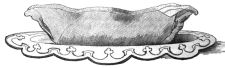
No. 10. Soyer’s Saddle-back of Mutton. This is an entirely new joint
which I have introduced in this present month, April 1846. I have served
it but three times in our coffee-room, where it gave the greatest
satisfaction to those who had partaken of it, having dined from fifteen
to eighteen each, whilst two saddles, which would weigh six or eight
pounds more, would not dine more than seven or eight if badly carved, or
more than ten if properly carved in the usual manner. The cut is a
correct representation of the appearance of the new joint, which serves
to indicate the mode of carving. It is composed of the two loins and two
necks of a sheep trimmed into the form of a double saddle, without
interfering in the least with the legs and shoulders, which would cause
a serious loss to the butcher.

Trim and dispose the saddle-back as follows: saw the centre bone of the
back as far as the saddle, dividing it but not cutting the meat or
making a hole through, then with a small saw divide each joint, so as to
admit of the necks being cut into chops in carving, when well separated
take a piece of a good length from the ends of the rib bones, trim the
flaps, turn them under, fixing them with skewers and string, giving the
proper shape as the design represents, pull the skin from the whole
back, melt two ounces of butter, which rub over with a paste brush to
give a good appearance and let remain five or six days previous to
roasting, weather permitting. To roast, pass a long saddle-of-mutton
spit through the spinal-marrow-bone, bringing it out at the ends of the
necks, fix it to a larger spit, and place at a good distance from a
moderate fire for nearly three hours; avoid basting, but a quarter of an
hour before taking up shake a little flour mixed with some finely-ground
rice over, which is very good for a little change. This joint looks very
noble, and does not appear too large when roasted. For a small dinner a
saddleback of Welsh mutton or lamb will make a very fine remove. To
carve, commence by passing your knife down the back where nothing but
the meat and skin holds it together, and from thence crosswise to the
flap, serving a cutlet and a slice between to each person, continuing
the same way through the saddle; you will thus carve the meat according
to the grain, and produce fresh hot gravy for each person as you proceed
carving. Should any remain, it is fit either to be sent cold to table or
dressed otherwise advantageously.
No. 11. Saddle of Mutton. Procure a fine saddle of mutton, about
fourteen pounds in weight, that has been kept some time, take off the
skin with a knife, and skewer the flaps under, run a lark-spit through
the spinal marrow-bone, which spit affix to a larger one, and place down
to roast as directed for the saddle-back; it will require about an hour
and three quarters roasting, and must be carved as in the last.
No. 12. Leg of Mutton. A leg weighing eight pounds would take about an
hour and a half roasting; run the spit in under the thigh-bone and bring
it out at the knuckle, roast it as described for the haunch, and send to
table with a frill upon the knuckle.
When I have a leg of mutton to roast in my kitchen I make a small
incision at the knuckle two or three days before roasting, in which I
put two or three cloves of garlic, it will give the mutton a fine and
peculiar flavour, not at all resembling the strong, and to some
objectionable, flavour of garlic. I frequently serve it with haricot
beans under it, dressed as directed (No. 1094).
No. 13. Shoulder of Mutton of seven or eight pounds weight will
require about one hour roasting; run the spit in at the flap and bring
it out at the knuckle, observe the same directions as before, not
basting, but merely rubbing it over with the butter.
No. 14. Loin of Mutton. A loin weighing six pounds would require an
hour to roast; take off all the skin with a knife, and separate the
joints with a chopper, not cutting through the fillet; run a lark-spit
through from one extremity to the other and affix it to a larger spit,
observe the same directions in roasting as for the haunch. This is a
very favorite dish of mine at home, where I in general joint it with a
meat-saw so as to enable me to carve it into thin slanting chops, which
look so much more inviting in the plate than those huge pieces which are
generally carved.
No. 15. Neck of Mutton. This I call a very recherché little joint when
well kept; it must be nicely trimmed, sawing through the bones at the
tips of the ribs, which detach from the meat, folding the flap over; saw
off the chine-bone, and with a knife detach the remainder of the bone
from the fillet, detach the skin from the upper part, fix the flap under
with a couple of skewers, run a long flat iron skewer through the
centre, from one extremity to the other, fix it to a larger spit, roast
(if weighing five pounds) nearly three quarters of an hour, observing
the same directions as before, carve it crosswise, cutting it in
cotelettes, one of which, with a bone, serve to each guest.
No. 16. Boiled Leg of Mutton. Cut the knuckle from a leg of mutton
which has been hung some time, put into an oval braising-pan well
covered with cold water, in which you have put two ounces of salt, place
it upon a sharp fire until boiling, when skim well, and place it upon
the corner of the fire to simmer about two hours, that is, if the leg
does not exceed more than nine pounds in weight; about half an hour
before it is done add a dozen turnips, peeled and cut into quarters,
when done take it up, dress upon a dish with the turnips around, place a
frill upon the knuckle, pour nearly half a pint of the liquor it was
boiled in over, and serve with caper sauce (No. 67) in a boat. Observe,
in boiling any description of meat, fast boiling would not cook it any
quicker, but cause it to eat very hard and bad.
At home I have tried to cook them by placing them in the water whilst
boiling, and when again beginning to boil drawing it to the corner of
the fire; it certainly saves a little time, but does not eat so tender
as when put into cold water. I generally there mash turnips and serve
them separately (I do not like them plain and watery, although I
consider they must be much more wholesome). Place the turnips when
boiled into a stewpan, add half a teaspoonful of salt, a quarter ditto
of pepper, two ounces of butter with which you have mixed half a
tablespoonful of flour, and four tablespoonfuls of cream or milk, mix
all well together over the fire with a wooden spoon. For caper sauce I
mix a tablespoonful of flour with an ounce of butter and put it in a
smallish stewpan, add half a pint of the liquor the mutton was boiled
in, stir over the fire until upon the point of boiling, when add a
quarter of a tablespoonful of salt, quarter that quantity of pepper, a
little grated nutmeg, and a good spoonful of drained pickled capers;
then add another ounce of butter, shake round over the fire, and when
melted it is finished. I sometimes also add a spoonful of liaison, it
gives it a rich colour.
No. 17. Shoulder of Mutton (boiled). Choose a very tender one,
weighing about seven pounds, cut off the knuckle, and boil it as above;
one hour and a half would be sufficient.
Welsh Mutton.—No. 18. Saddle-back of Welsh Mutton. Trim and truss it
as South Down mutton, it will take one hour less roasting; you may
butter twice over.
No. 19. Haunch. If weighing twelve pounds roast it an hour and a half
as directed (in proportion) for the haunch of mutton, but if deficient
of fat rub it over with butter three or four times instead of once.
No. 20. Saddle. If weighing eight pounds roast it an hour and a
quarter.
No. 21. Leg. If weighing five pounds roast it an hour.
No. 22. Loin. If weighing four pounds roast three quarters of an hour.
No. 23. Neck. If weighing three pounds roast it half an hour.
No. 24. Shoulder. If weighing four pounds roast it three quarters of
an hour. Loin and neck about the same time.
No. 25. Lamb is divided into but three principal joints, being the
fore-quarter, haunch, and saddle, two joints may be made of each by
separating the shoulder from the ribs, the leg from the loin, or
dividing the saddle, but they are usually roasted together.
To trim the fore-quarter saw off the chine-bone, and break the rib-bones
down the centre, pass two iron skewers from the breast to the back, and
a lark-spit through lengthwise, fix it upon a larger spit, cover a sheet
of buttered paper over the top, and roast an hour and a quarter before a
good fire, rubbing butter over it, it would be a light gold colour;
should the shoulder have been taken off it will only require three
quarters of an hour to roast, serve in a dish with a little gravy under,
and mint sauce in a boat.
The haunch must be trimmed by cutting off the shank-bone, place it upon
a small spit by running the spit in at the extremity of the loin,
passing over the thigh-bone, and bringing it out at the knuckle, which
tie to the spit with a piece of string; place a sheet of buttered paper
over, and roast an hour and three-quarters before a solid fire; place a
frill upon the knuckle, and serve as before. The leg only would require
one hour roasting.
For the saddle, skewer the flaps underneath, curling each one round, run
a lark-spit through the spinal marrow-bone, and fix it to a larger spit;
place a sheet of buttered paper over, and roast an hour and a half
before a good fire, dress upon your dish and serve as for the
fore-quarter.
No. 26. Fillet of Veal. Choose it of the best quality, as described at
the commencement of this series. Procure a leg, saw off the knuckle,
take out the bone in the centre of the fillet, and fill up the cavity
with some stuffing made as directed (No. 127), fold the udder and flap
round, which fix with three skewers; place half a sheet of buttered
foolscap paper top and bottom, which tie over and over with plenty of
string, run a spit through, fixing the fillet with a hold-fast, set down
to roast, placing it rather close to the fire ten minutes, rub well over
with butter, then place it at least two feet and a half from the fire,
to roast very slowly, giving it a fine gold colour; a fillet weighing
sixteen pounds would require three hours roasting, when done, take it
up, detach all the string and paper, trim the top and set it upon your
dish; have a pint of melted butter in a stewpan upon the fire, to which,
when boiling, add four spoonfuls of Harvey sauce, and two of mushroom
catsup, mix well, and pour round the fillet; have also boiled nicely an
ox-tongue, which skin and trim, dress upon a dish surrounded with greens
or cabbage nicely boiled, and serve as an accompaniment to the fillet.
In my small kitchen I, however, content myself with a nice piece of
streaked bacon, of about two pounds in weight, boiled and served
surrounded with greens or turnip-tops if in season. For the different
modes of dressing the remainder, see the Entrées, Kitchen at Home.
No. 27. Loin of Veal. Procure one with plenty of fat and a nice kidney
in it, cut off the chump, take away the rib-bone at the other extremity,
and fasten the flap over the kidney with a skewer, run a spit through
lengthwise (not too thick a one), commencing at the thickest end, and
fixing it at the other extremity with a hold-fast, tie it up in a sheet
of oiled paper; if weighing fourteen pounds it will require two hours
and a quarter to roast, serve with sauce and tongue, or bacon, as in the
last, upon a separate dish. At home I usually content myself with the
chump, as taken from the loin, either roasting or boiling it, should it
weigh four pounds it would require an hour roasting, or an hour and a
quarter boiling; if roasted, serve with bacon and the same sauce as for
the fillet, but if boiled I make half the quantity of sauce as for
boiled leg of mutton, but omitting the capers, and adding a spoonful of
roughly-chopped, fresh, green parsley. Dress the remains the second day
as directed in the Entrées, Kitchen at Home.
No. 28. Breast of Veal. Procure a nice breast of veal, which trim as
directed (No. 455), stuff the interior with a long roll of stuffing (No.
127), roll the flaps over and sew it up with a trussing-needle and
string, place it upon a spit, running it through lengthwise, and roast
one hour and a quarter as directed for the loin, serve with the same
sauce, and bacon and greens separate. The breast of veal stewed is also
good, but for the details I must refer to the Removes in the first part
of this work. At home I stew them, and add a few heads of celery with
the stock it is stewing in, which I afterwards dress round the veal,
and make a little white sauce similar to No. 7, with some of the liquor
it was stewed in, or thicken the sauce with a little butter and flour,
and add a gill of milk.
No. 29. Shoulder of Veal. A shoulder weighing fourteen pounds would
require two hours and a half to roast, and three hours to boil, serve
with a parsley and butter sauce if boiled, or if roasted, with sauce as
for the fillet; bacon and greens must be served with it separate,
whichever way it is dressed.
Should you boil the shoulder add a few vegetables, and you may reduce
the stock it was boiled in to a glaze (by continual boiling), which will
be very serviceable in dressing the remains upon following days; by
boiling a calf’s foot with the shoulder you would produce a much greater
quantity of glaze.
No. 30. Neck of Veal is usually served as the shoulder, either roasted
or stewed, with vegetables, but I have described a number of methods of
dressing it in the Removes of the first department of this work.
No. 31. Knuckle of Veal is a very favorite dish of mine; I procure two
of them, which I saw into three pieces each, and put into a stewpan with
a piece of streaked bacon two pounds in weight, four onions, a carrot,
two turnips, and six peppercorns, place over the fire, and when boiling
add a little salt, skim well, and place at the corner to simmer gently
for two hours, take up, dress them in your dish surrounded with the
vegetables and bacon, and serve with parsley and butter over; very good
soup may be made from the stock it was boiled in if required, or if not,
into glaze, which put by until wanted.
No. 32. Leg of Pork. Choose the pork as described at the commencement
of this series, if a leg, one weighing about seven pounds, cut an
incision in the knuckle near the thigh, into which put a quantity of
sage and onions, previously passed in butter, sew the incision up with
packthread, score the rind of the pork in lines across, half an inch
apart, place upon a spit, running it in just under the rind, and
bringing it out at the knuckle. If stuffed the day previous to roasting
it would improve its flavour; roast, if weighing seven pounds, about two
hours and a half, and serve with apple sauce in a boat.
I often roast a small leg of pork at home as directed above, and make
apple sauce thus: peel and slice six nice apples, which put into a
stewpan, with a tablespoonful of currants well washed and picked, and
one of brown sugar, a little of the rind of a lemon chopped very fine,
six spoonfuls of water, and a very small piece of cinnamon, boil until
in purée, then stir in a handful of bread-crumbs, and serve hot. When,
however, I am in a great hurry I merely put apples, water, sugar, and a
little rind of lemon. Other joints of pork are roasted in the same
manner, but do not require stuffing, a loin weighing six pounds
requiring two hours and a quarter to roast; a neck of the same size will
take about the same time, as will the spare-ribs, which is nothing but
the necks of larger pork with the blade-bone cut out and the fat taken
off.
No. 33. Salt Pork. Pork is salted in the same manner as described for
beef, omitting the saltpetre, but of course not requiring so long a
time; a leg weighing seven pounds would be well salted in a week, as
also would a hand and spring weighing about ten pounds, and either would
require two hours boiling, putting them in a stewpan with cold water,
and serving with carrots and greens upon a separate dish. With the leg
it is also customary to serve a pease pudding made thus: tie about a
pint of split peas loosely in a pudding-cloth, throw them into boiling
water to stew until tender, then take them up, turn from the cloth upon
the back of a hair sieve, through which force them with a wooden spoon,
put them into a basin, add two ounces of butter, season with pepper and
salt, mix well with six whole eggs, tie up tightly in a pudding-cloth,
boil an hour and serve very hot.
A pig’s head is also excellent pickled. Divide the head in two, take out
the brains and detach the jaw-bones, pickle it twelve days, rubbing it
every day, (the brine in which you have pickled one joint, with the
addition of more salt, would pickle several and keep good for upwards of
a month;) when ready, boil it nearly three hours, and serve with greens
round as an accompaniment to veal or poultry. To pickle it red, rub it
well with twelve pounds of salt, a quarter of a pound of saltpetre, two
cakes of sal prunella, and half a pound of coarse sugar, rub it every
day, allowing it to remain fifteen days in pickle, after which it maybe
hung, and dried or smoked previously to dressing.
Preaching economy which has been practised from age to age in all
domestic works is not here my intention, as my readers must quickly
perceive that the simplicity of my receipts excludes the seal of
extravagance, having simplified even dishes of some importance, which
daily give and have given the greatest satisfaction at the Reform Club.
The regular courses of a cuisine bourgeoise, or domestic cookery, will
be found extremely easy to execute in my Kitchen at Home, and numbers of
them done to perfection in the Kitchen (or sanctorum) of a Bachelor, as
well as in the small Cottage Kitchen.
No. 34. French Pot-au-feu. Out of this earthen pot comes the favorite
soup and bouilli, which have been everlastingly famed as having been the
support of several generations of all classes of society in France; from
the opulent to the poorest individuals, all pay tribute to its
excellence and worth. In fact this soup and bouilli are to the French
what the roast beef and plum-pudding are on a Sunday to the English. No
dinner in France is served without soup, and no good soup is supposed to
be made without the pot-au-feu. Generally every quarter of a century
makes a total alteration in fashions and politics, need I say also in
cookery, which must be approximated not only to the fashion but more
strongly so to the political world, humbly bending its indispensable
services to the whims and wishes of crowned heads, which invariably lead
the multitude; for example, the bills of fare of the sumptuous dinners
which used to grace the tables of Louis the Fourteenth, Sixteenth, and
Eighteenth, of France, were all very different to each other, and none
of them were ever copied to grace the sumptuous and luxurious tables of
the Empire; even the very features of them having undergone an entire
change in our own days; every culinary invention taking its title and
origin from some celebrated personage or extraordinary event, every
innovation in cookery, like a change in fashion, causing us to forget
those dishes which they have superseded; I have no doubt but that, if
some correct historian could collect the bills of fare of dinners from
various centuries and nations which crowned heads have partaken of, he
might write a very interesting volume under the title of History of
Cookery, in which we should be able closely to trace the original
history of different countries.[23] Nothing can stamp the anniversary of
any great event so well as a sumptuous banquet: peace, war, politics,
and even religion, have always been the cause of extraordinary and
sometimes monstrous gastronomic meetings; for a proof of which my
readers will find at the end of this work a correct bill of fare (found
in the Tower of London,) of a dinner given by the Earl of Warwick at the
installation of an Archbishop of York, in the year 1470. In time of war
artists are engaged sketching on immense canvasses the horrors and
disasters of a battle, while in peace they sketch the anniversary
banquets for the victorious, in honour of the event, (reminding us of
the calm after a storm;) and we may sincerely hope, for the credit of
humanity at large, that a disastrous battle may have its hundreds of
anniversary banquets without a fresh combat. But to return to the humble
but indispensable science of cookery. Everything seems to prove to us
that it has always performed an important part in political events, and
has been exposed to as many alterations; still, amongst so many changes,
it is with a national pleasure that I find, amongst the heap of
frivolous culinary ruins, an old favorite of our great
great-grandfathers still remaining ours, having boldly passed through
every storm, it has for ever established its culinary power upon our
changeable soil. The brown cheek of this demi-immortal is daily seen
ornamenting the firesides of millions, and merely acquaints the children
the first thing in the morning that something good is in preparation for
their dinner: this mighty vessel is called in French pot-au-feu,[24]
in which is made that excellent and wholesome luxury which for centuries
has been the principal nourishment and support of the middling and
poorer classes of France at a very trifling expense. It is not upon the
tables of the wealthy that the best of this national soup is to be
obtained, but upon the right or left side of the entrance to his noble
mansion, in a square, oval, or octagonal room, commonly called la Loge
du Portier, or the Porter’s Lodge; as nearly every porter has his
portière, that is, a wife who answers the door (whilst her husband is
doing the frottage, or polishing the floor of the apartment), while
pulling the string or wire which loosens the lock to let people in with
one hand, she skims the pot-au-feu with the other; should she be
fortunate enough to possess two eyes she would keep one upon her
pot-au-feu, and the other upon the individual, who had, probably, come
only to make inquiry; but unfortunately for La Mère Binard (whom I shall
have the pleasure of introducing to my readers as a gastronomic wonder
in her simple style), she had but one eye, which she almost entirely
devoted to the ebullition of her pot-au-feu; having been portière
there two-and-thirty years, she knew most of the people in the habit of
calling by their voice, and used to answer them even without turning her
shaking head. But what brought her domestic cookery in such high repute,
that she was not to be excelled by any portière of Paris, was, that one
day her master, M. le Comte de C**** (who was a good gentleman and great
epicure), came home from a long ride while she was performing her humble
occupation of pouring the soup into the tureen; a triple knock came to
the door, which immediately opened as by electricity, and in walked her
beloved master, who came to the door of the lodge to pay his duties to
his old and faithful servant, whilst an exhalation of the most delicious
fragrance perfumed the small apartment from the boiling consommé which
attracted his scientific attention; after a short inquiry he discovered
in an old brown pan the gloriously smoking hot consommé, and seizing
with avidity a spoon by the side, tasted (much to the astonishment of La
Mère Binard) several spoonfuls, pronouncing the first delicious, the
second excellent, the third delightful, in fact, magnificent. “Can you
spare any of it?” he said, addressing the worthy dame. “Yes,” said she,
“but I am sure Monseigneur does not mean it.” “But indeed I do,” replied
he; “and if I had been aware I could have obtained such a treasure, I
would have had nothing else for my dinner to-day; and if you were not so
far advanced in years I would not object to make you a cordon bleu.”
The earthen pan was immediately conveyed up stairs to the dining-room,
and deposited upon the table of his seigneurie, where an excellent
dinner was waiting for himself and friends; but the immortal
pot-au-feu, resting on a superb silver tray, with its handle half
broken off, made all the homage of the dinner, to the great annoyance of
the cook, who had thus sacrificed the art he had displayed in dressing a
most recherché dinner, and felt much offended at the whim of his wealthy
master, who had neglected his dinner to take pot-luck with his porter’s
wife.
By a friendly introduction to La Mère Binard, I, with a great deal of
supplication, obtained from her the following valuable receipt, having
been obliged first to listen to the constant repetition of the above
anecdote before she could explain it to me.—“I generally choose,” says
she, “a bit of the gite à la noix, part of the aitch-bone, a piece of
the rump, or a slice from the thickest part of the leg, weighing from
four to five pounds, with sufficient fat attached, or adding a small
piece; then I put it into the earthen pan, and fill with cold water till
within two inches of the rim, being about four quarts; then I set it by
my wood fire until beginning to get hot, when a thin scum will arise by
degrees, which I carefully take off and throw away; then I add half a
pound of beef liver, and a tablespoonful and a half of salt, it will
produce more scum, which also carefully remove; have ready prepared,
well washed and clean, two middling-sized carrots cut in halves, then in
four, two small pieces of parsnip, four turnips, two onions, with two
cloves stuck in each, eight young leeks, or two old ones, a head of
celery cut into pieces three inches in length, tie the leeks and celery
into a bunch, and put altogether into the pot-au-feu, set it alone
nearer the fire until it commences boiling, skim again, draw it a little
farther to the corner of the fire, put a wooden skimmer across the pot,
upon which rest the lid to prevent its boiling fast, (which would
entirely spoil the soup, the meat becoming very hard and the soup thick
and muddy).” “You quite astonish me, Mrs. Binard,” said I. “Oh,” says
she, “I have had so many years of experience, and I know it to be the
case.” “Yes,” said I, “my dear lady, I do not in the least doubt your
correctness.” “Well, then, one hour afterwards I add a little cold water
to keep it to the same quantity, put in a burnt onion to give it a
colour, and let simmer four hours, sometimes five, depending if the meat
is cut very thick; then I cut some large thin slices of bread, which I
lay at the bottom of the tureen, then I take off the greater part of the
fat, cut the bunch of celery and leeks open, lay them upon the slices of
bread, with one of the carrots, two turnips, and the pieces of parsnip;
take half of the broth with a ladle, which pour into the tureen, (there
being quite enough soup for six of us, myself, Binard, my daughter and
her husband, and the two boys); then I take out carefully the meat,
which I lay upon the dish, with half of the liver at the side, the other
half, when cold, I give to Minette (her favorite cat), lay the remainder
of the vegetables round, with some fine sprigs of fresh parsley; by that
time the bread is (trempé) moistened; set both upon the table at once,
keeping the meat covered until we have done with the soup: that is the
way we dine upon a Sunday. The next day, with the remainder of the broth
I make vermicelli or rice soup, or the same with bread in it, and
fricassée the remainder of the beef in various ways. When my daughter
was ill I used to put a calf’s foot in the pot-au-feu with the beef;
it made the soup very strengthening and did her much good.” “Will you be
kind enough,” said I, “to tell me where you get these burnt onions, for
I perceive without it your soup would be quite white.” “Bless you, sir!”
she replied, “you may get six for two sous at any of the grocers, or you
can burn them yourself in the oven, or by the fireside, gently turning
them now and then until they are quite black, but not burnt to a cinder,
or it would spoil the flavour of the soup.” I then took leave of her,
returning thanks for her kindness, and put down the receipt as she gave
it me during her long explanation, as follows:
Receipt. Put in the pot-au-feu six pounds of beef, four quarts of
water, set near the fire; skim, when nearly boiling add a spoonful and a
half of salt, half a pound of liver, two carrots, four turnips, eight
young or two old leeks, one head of celery, two onions and one burnt,
with a clove in each, and a piece of parsnip; skim again and let simmer
four or five hours, adding a little cold water now and then; take off
part of the fat, put slices of bread into the tureen, lay half the
vegetables over, and half the broth, and serve the meat separate with
the vegetables around. Since I have been in England I have broken my
precious earthen pot; I have, however, made some very good soups at home
in a black saucepan or stewpan, but must admit not quite so delicate and
perfect as in the identical pot de terre.
SOUPS.—No. 35. Julienne Soup. Put about six pounds of knuckle of veal
in a stewpan cut in four pieces, with about half a pound of streaked
bacon; put a piece of butter at the bottom of the stewpan, and about
half a pint of water, place it over a sharp fire, moving it round
occasionally with a wooden spoon until the bottom of the stewpan is
covered with a white glaze, when add about a gallon of water, two ounces
of salt, three onions (with two cloves in each), two turnips, one
carrot, a head of celery, leek, and a bunch of parsley, thyme, and
bay-leaf; when boiling put in two burnt onions (see Pot-au-feu) to
colour it, and stand it at the corner of the fire to simmer for two
hours, keeping it well skimmed, then pass the broth through a hair sieve
into a stewpan; you have previously cut two middling-sized carrots, two
turnips, an onion, a leek, and a little celery into very thin strips an
inch long; put them in another stewpan with two ounces of butter and a
teaspoonful of powdered sugar; place it upon a sharp fire, tossing them
over occasionally until well fried and looking transparent, then put
them into the broth with the half a young cos lettuce, and a little
tarragon and chervil, place it at the corner of your fire, and when it
boils skim off all the butter: let it simmer until the vegetables are
perfectly tender, when pour it into your tureen; serve the veal and
piece of bacon upon the dish with melted butter and chopped parsley
over. Beef may also be used for the above, and the vegetables cut in any
of the shapes directed for the soups in the other department of this
work; if you only require a smaller quantity, take only three pounds, or
diminish all in proportion.
No. 36. Mutton Broth. Any description of trimmings of mutton may be
used for broth, but the scrag end of the neck is usually chosen. Put
about two scrags into a stewpan (having previously jointed the bone),
with three onions (a couple of cloves stuck in each), three turnips, one
carrot, and a bunch containing a leek, a head of celery, and a few
sprigs of thyme and parsley, fill up the stewpan with rather more than a
gallon of water; when boiling skim it, and place it at the corner of the
stove, where let it simmer for three hours, then cut a small carrot, two
turnips, an onion, and a piece of leek and celery into very small square
pieces, put them into a stewpan with a wineglassful of pearl barley,
pass the broth through a hair sieve over them, and boil at the corner of
the fire until the barley is tender, when it is ready to serve; the meat
may be trimmed into neat pieces, and served in the broth, or separately
with melted butter and parsley, or onion sauce.
No. 37. Irish Mutton Broth. This broth is made similar to the last,
adding ten or twelve mealy potatoes cut in large dice, which by boiling
to a purée thickens the broth; just before serving throw in twenty heads
of parsley, at the same time put in a few flowers of marigolds, which
really give a pleasing flavour; it is then ready to serve.
At home I make clear soup of the trimmings of any meat, either beef,
veal, mutton, or lamb, or the trimmings of two or three different sorts
of meat, in the same manner as directed for Julienne soup.
No. 38. A very simple Receipt for the Scotch Cock-a-Leeky. This is a
very favorite national soup with the Scotch, which by rights ought to
have been the pride of Welsh cookery, ranking as high in the estimation
of millions as their celebrated and generally appreciated rarebit,
commonly called a Welsh rabbit.
Take six or eight pounds of leg of beef (depending upon the quantity you
want to make), with which make a stock as directed for Julienne soup,
letting simmer two hours, and keeping it well skimmed; in the mean time
trim two or three bunches of fine winter leeks, cutting off the roots
and part of the head, then split each in halves lengthwise, and each
half in three, wash well in two or three waters, pass the stock through
a sieve into another stewpan, into which put the leeks, with a fowl
trussed as for boiling, let simmer very gently at the corner of the fire
for three hours, keeping it well skimmed, season a little if required,
and half an hour before serving add two dozen French plums, without
breaking them; when ready to serve, take out the fowl, which cut into
neat pieces, place in a large tureen, and pour the leeks and broth over,
the leeks being then partly in purée; if too thick, however, add a drop
more broth or water. Should the leeks happen to be old and strong, it
would be better to blanch them five minutes in a gallon of boiling water
previously to putting them with the stock. Although an old cock is
usually procured in Scotland for the above purpose, I prefer a young
one, but should an old one be most handy, stew it a short time in the
stock before passing it.
No. 39. Ox-tail Soup. Cut up two ox-tails, separating them at the
joint, put a small piece of butter at the bottom of a stewpan, then put
in the ox-tails, with a carrot, turnip, three onions, head of celery,
one leek, and a bunch of parsley, thyme, and bay-leaf, add half a pint
of water and twelve grains of whole pepper, set over a sharp fire,
stirring occasionally until the bottom of the stewpan is covered with a
thickish brown glaze; then add a quarter of a pound of flour, stir it
well in, and fill up the stewpan with three quarts of water, add a
tablespoonful of salt, stir occasionally until boiling, when set it upon
the corner of the stove, skim well, and let simmer until the tails are
stewed very tender, the flesh coming easily from the bone; take them out
immediately and put them into your tureen; pass the soup, which must not
be too thick, through a hair sieve over them, add a head of celery
previously cut small and blanched in a little stock, and serve.
Ox-tail soup may also be made clear by omitting the flour, and serving
vegetables in it as directed in Julienne soup (No. 35), but cut in any
other shape.
No. 40. Ox-cheek Soup. Blanch and wash well two ox-cheeks, cut off the
beard, take away all the bone, which chop up, and cut the flesh into
middling-sized pieces, leaving the cheek part whole, put altogether into
a stewpan, with four quarts of water, a little salt, ten peppercorns,
two carrots, two turnips, one leek, one head of celery, and a bunch of
parsley, thyme, and bay-leaf, also a burnt onion to colour it; let stew
at the corner of the fire six hours, keeping well skimmed, then take out
the fleshy part of the cheek and pass the broth through a hair sieve
into another stewpan, mix half a pound of flour with a pint of cold
broth, which pour into it and stir over the fire until boiling, place it
at the corner, let simmer till tender (adding two heads of celery cut
very fine, and a glass of sherry); when the celery is tender, cut the
meat in small square slices, keep them warm, and when the soup is ready
pour over and serve. Sheep’s or lambs’ heads also make very good soup by
following the above receipt, and adding two pounds of veal, mutton, or
beef to the stock, two heads would be sufficient, and they would not
require so long to stew.
No. 41. New Mock Turtle Soup. Procure half a calf’s head (scalded, not
skinned), bone it, then cut up a knuckle of veal, which put into a
stewpan, with half a pound of lean ham, two ounces of butter, one of
salt, at the bottom, a carrot, one turnip, three onions, a head of
celery, a leek, and a bunch of parsley, thyme, marjoram, basil, and a
bay-leaf, with nearly half a pint of water; move round occasionally upon
the fire until the bottom of the stewpan is covered with a white glaze;
then add six quarts of water, and put in the half head, let simmer at
the corner of the fire for two hours and a half, or till the head is
perfectly tender, when take it up and press it between two dishes, pass
the stock through a hair sieve into a basin; then in another stewpan
have a quarter of a pound of butter, with a sprig of thyme, basil,
marjoram, and a bay-leaf, let the butter get quite hot; then add six
ounces of flour to form a roux, stir over a sharp fire a few minutes,
keeping it quite white, stand it off the fire to cool, then add the
stock, boil up, skim, and pass it through a hair sieve into another
stewpan, cut the head into pieces an inch square, not too thick, and put
them into the soup, which season with a little cayenne pepper; when the
pieces are hot, add a gill of cream, and pour it into your tureen. The
above quantity will make several tureens of soup, and will keep good
several days.
No. 42. Brown Mock Turtle Soup. Proceed the same as in the last
article, only colouring the stock by drawing it down to a brown glaze,
or with a couple of burnt onions, and serving with a glass of port wine
in it, or two of sherry, omitting the cream.
No. 43. Mulligatawny Soup. Cut up a knuckle of veal, which put in a
stewpan with a piece of butter, half a pound of lean ham, a carrot, one
turnip, three onions, six apples, one head of celery, one leek, a bunch
of parsley, thyme, and bay-leaf, a blade of mace, six cloves, and half a
pint of water; set the stewpan over a sharp fire, move the meat round
occasionally, let remain until the bottom of the stewpan is covered with
a brownish glaze; then add two or three tablespoonfuls of currie powder,
one of currie paste, if handy, and half a pound of flour, stir well in,
and fill up with a gallon of water, add a spoonful of salt, half ditto
of sugar, and a quarter ditto of pepper, let boil up; then place it at
the corner of the stove, where let it simmer two hours and a half, then
pass it through a hair sieve into the tureen; trim some of the pieces of
veal, which serve in it, and some plain boiled rice separate; ox-tails
or pieces of rabbits, chickens, &c., left from a previous dinner may be
served in it instead of the veal; if too thick add a drop of broth or
water.
No. 44. Giblet Soup. Clean two sets of giblets and soak for two hours,
cut them into equal sizes and put them into a stewpan, with a quarter of
a pound of butter, four pounds of veal or beef, half a pound of ham, a
carrot, turnip, three onions, a head of celery, leek, two ounces of
salt, and a bunch of parsley, thyme, and bay-leaf; place the stewpan
over a sharp fire, stirring the meat round occasionally, when the bottom
of the stewpan is covered with a light glaze add half a pound of flour,
stir well in, and fill up with a gallon of water, add two burnt onions
to colour it; when boiling set at the corner of the stove, let simmer,
skim well, and when the giblets are tender take them out, put them in
your tureen, pass the soup through a hair sieve over, and serve; twenty
button onions, or any small sharp vegetable, is very good in it, also a
glass of port wine.
No. 45. Green Pea Soup. Put two quarts of green peas into a stewpan
with a quarter of a pound of butter, quarter of a pound of lean ham cut
in dice, two onions in slices, and a few sprigs of parsley; add a quart
of cold water, and with the hand rub all well together, then pour off
the water, cover the stewpan close and stand it upon a sharp fire,
tossing or stirring them round occasionally; when very tender add two or
three tablespoonfuls of flour, mix well in, mashing the peas with your
spoon against the sides of the stewpan, add three quarts of broth, made
as for Julienne soup (No. 35), or broth from the pot-au-feu (No. 34),
and a tablespoonful of sugar, with a little pepper and salt if required,
boil all well together five minutes; then rub it through a tammie or
hair sieve, put it into another stewpan with half a pint of boiling
milk, boil and skim, then pour it into your tureen, and serve with small
croutons of fried bread-crumbs. It must not be served too thick.
No. 46. Winter Pea Soup. Wash a quart of split peas, which put into a
stewpan with half a pound of streaked bacon, two onions in slices, two
pounds of veal or beef cut into small pieces, and a little parsley,
thyme, and bay-leaf, previously passed in butter in the same stewpan;
cover with a gallon of water, add a little salt and sugar, place it upon
the fire; when boiling stand it at the side until the peas are boiled
to a purée, and the water has reduced to half, then take out the meat,
place it in the tureen, keep it hot, and rub the soup through a hair
sieve or tammie, put it into another stewpan, and when boiling pour over
the meat and serve. The bacon is good cold, the meat may also be put
into the tureen if approved of.
No. 47. Purée, or Vegetable Soup. Peel and cut up very fine three
onions, three turnips, one carrot, and four potatoes, put them into a
stewpan with a quarter of a pound of butter, the same of lean ham, and a
bunch of parsley, pass them ten minutes over a sharp fire; then add a
good spoonful of flour, mix well in, moisten with two quarts of broth
(prepared as for Julienne soup, No. 35), and a pint of boiling milk,
boil up, keeping it stirred, season with a little salt and sugar, and
rub through a hair sieve or tammie, put it into another stewpan, boil
again, skim, and serve with croutons of fried bread in it.
No. 48. Soup Maigre. Cut two onions into very small dice and put them
into a stewpan with two ounces of butter, fry them a short time, but not
to change colour; have three or four handfuls of well-washed sorrel, cut
it into ribands, and put it into the stewpan with the onions, add two
tablespoonfuls of flour, mix well, then a pint of milk and a pint of
water, boil all together ten minutes, season with a little sugar and
salt, and finish with a liaison of two yolks of eggs, mixed with a gill
of cream, stir it in quickly, do not let it boil afterwards; put the
crust of a French roll cut in strips into your tureen, pour the soup
over, and serve.
No. 49. Onion Soup Maigre. Peel and cut ten large onions into small
dice, put them into a stewpan with a quarter of a pound of butter, place
them over the fire, fry them well; then add three tablespoonfuls of
flour, which mix well, and rather better than a quart of water, boil
till the onions are quite tender, season with a little salt and sugar,
finish with a liaison, and serve as in the last; grated cheese is an
improvement in it.
No. 50. Vermicelli Soup. Make your stock as for Julienne soup (No.
35), when passed put it into another stewpan with two ounces of
vermicelli, boil it a quarter of an hour, then pour it into your tureen,
and serve.
Semolina or tapioca soup is made the same, using either instead of
vermicelli. For rice soup, see No. 197, Kitchen of the Wealthy.
No. 51. Macaroni Soup. (See No. 198, and Italian Paste, No. 194,
Kitchen of the Wealthy.)
FISH.—No. 52. Turbot. For the methods of cleaning fish, see the other
department of this work. In My Kitchen at Home I should never think of
cooking too large a turbot, but choose a middle-sized one which,
generally speaking, is the best; cut an incision in the back, rub it
well with a good handful of salt, then with the juice of a lemon, set it
in a turbot kettle well covered with cold water, in which you have put a
good handful of salt, place over the fire, and as soon as the water
boils put it at the side; if a turbot of ten pounds it will take an hour
after it has boiled, if it should be allowed to more than simmer it will
be very unsightly; take out of the water, leave a minute upon your
drainer, serve upon a napkin garnished with fresh parsley, and lobster
sauce in a boat; for sauce (see No. 68), or shrimp sauce (No. 73).
No. 53. Turbot, the new French Fashion. Boil your turbot as in the
last but dress it upon a dish without a napkin, sauce over with a
thickish melted butter (having placed a border of well-boiled small
potatoes round), sprinkle a few capers over and serve.
No. 54. Turbot à la Crême is done with the remains of a turbot from a
previous dinner; detach the flesh from the bone, and warm in salt and
water, make cream sauce as page 99, only omit a third of the butter.
Brills are cooked in the same manner as turbots, but being smaller do
not require so long boiling; but in boiling any description of fish,
never take it up until it leaves the bone with facility, which try by
placing the point of a knife between the flesh and the bone, if done the
flesh will detach immediately.
No. 55. John Dorée, Boulogne fashion. John Dorées, though not very
handsome, are very delicate eating; choose them from four to six pounds
in weight, and boil as directed for turbot; one of the above size would
require about three quarters of an hour; if any remain, dress like
turbot, or with caper sauce, &c.
No. 56. Salmon, plain boiled. I prefer always dressing this fish in
slices from an inch or two inches in thickness, boiling it in plenty of
salt and water about half an hour; the whole fish may be boiled, or the
head and shoulders of a large fish, but they require longer boiling.
Salmon eats firmer, by not being put into the water until boiling; dress
the fish upon a napkin and serve with lobster sauce (page 30), shrimp
do., or plain melted butter in a boat, with fresh sprigs of parsley
boiled a few minutes in it. A salmon weighing ten pounds will require an
hour and a half boiling; a head and shoulders weighing six pounds, one
hour. The remains may be dressed à la crême, as directed for the turbot
(No. 54).
No. 57. Salmon Sauce Matelote. Cook three good slices of salmon as
directed in the last, or a large salmon peal trussed in the form of the
letter S; dress it upon a dish without a napkin, having previously
drained off all the water; have ready the following sauce: peel fifty
small button onions, then put a good teaspoonful of powdered sugar into
a convenient-sized stewpan, place it upon a sharp fire, and just as the
sugar melts and turns yellowish add a quarter of a pound of butter and
the onions, place it again upon the fire, tossing them over occasionally
until they become slightly browned, then add a good tablespoonful of
flour (mix well, but gently), a glass of sherry, and a pint of broth
(reserved from some soup), let boil at the corner of the stove, skim
well, and when the onions are done and the sauce rather thick, add a
little pepper, salt, a teaspoonful of catsup, one of Harvey sauce, and
one of essence of anchovies; when ready to serve add two dozen of
oysters, blanched and bearded, allow them to get quite hot, sauce over
and serve. I sometimes at home make a few fish quenelles (No. 124,
Kitchen of the Wealthy) and add to the sauce.
The remainder of the above is very good if put in the oven upon a dish
with a cover over and a little additional sauce.
No. 58. Cod Fish, plain boiled. (See page 119.)
No. 59. Cod Fish sauced over with Oyster Sauce. Boil three slices of
the fish as above, drain and dress them upon a dish without a napkin,
blanch three dozen oysters by putting them into a stewpan with their
juice upon the fire, move them round occasionally, do not let them boil;
as soon as they become a little firm place a sieve over a basin, pour in
the oysters, beard and throw them again into their liquor, put them into
a stewpan; when boiling add four cloves, half a blade of mace, six
peppercorns, and two ounces of butter, to which you have added half a
tablespoonful of flour, breaking it into small pieces, stir well
together, when boiling, season with a little salt, cayenne pepper, and
essence of anchovies, finish with a gill of cream, or milk, and sauce
over. The remains of this fish may be taken from the bone and placed
upon a dish, with a little of the above sauce (to which you have added
the yolks of two eggs) over, sprinkle over with bread-crumbs, and place
it twenty minutes in a hot oven till the bread-crumbs become brown.
For Salt Fish, see page 122, in the other department of this work.
No. 60. Haddocks. (See Nos. 308, 309, 310, Kitchen of the Wealthy.)
No. 61. Baked Haddocks. (See page 129.)
No. 62. Soles, Fried. (See page 114.)
No. 63. Soles, the Jewish Fashion. Trim the fish well, dip it into a
couple of eggs, well beaten, put six tablespoonfuls of salad-oil in a
sauté-pan, place it over the fire, and when quite hot put in your sole;
let remain five minutes, turn over, and fry upon the other side; ten or
twelve minutes will cook it according to the size; serve upon a napkin
without sauce. They are excellent cold.
No. 64. Sole à la Meunière. (See page 115, in the other department of
this work.)
No. 65. Sole aux Fines Herbes. Put a spoonful of chopped eschalots
into a sauté-pan, with a glass of sherry and an ounce of butter, place
the sole over, pour nearly half a pint of melted butter over it, upon
which sprinkle some chopped parsley, place it in a moderate oven for
half an hour, take the sole out of the pan, dress upon a dish without a
napkin, reduce the sauce that is in the pan over a sharp fire, add a
little Harvey sauce and essence of anchovy, pour over the sole, and
serve them with a little flour and butter.
No. 66. Fried Whiting. The whiting requires to be skinned, and the
tail turned round and fixed into the mouth, dip it first into flour,
then egg over, and dip it into bread-crumbs, fry as directed for the
sole; for whiting aux fines herbes proceed as directed for sole aux
fines herbes. At home I prefer the whiting fried with their skins on,
merely dipping them in flour.
No. 67. Whiting au Gratin. Put a good spoonful of chopped onions upon
a strong earthen dish, with a glass of wine, season the whitings with a
little pepper and salt, put it in the dish, sprinkle some chopped
parsley and chopped mushrooms over, and pour over half a pint of anchovy
sauce (page 32), over which sprinkle some brown bread-crumbs, grated
from the crust of bread, place it in a warm oven half an hour; it
requires to be nicely browned; serve upon the dish you have cooked it
in.
No. 68. Red Mullets. Procure two red mullets, which place upon a
strong dish not too large, sprinkle some chopped onions, parsley, a
little pepper and salt, and a little salad-oil over, and put them into a
warm oven for half an hour, then put a tablespoonful of chopped onions
into a stewpan, with a teaspoonful of salad-oil, stir over a moderate
fire until getting rather yellowish, then add a tablespoonful of sherry,
half a pint of melted butter, with a little chopped mushrooms and
parsley; reduce quickly over a sharp fire, keeping it stirred until
becoming rather thick; when the mullets are done sauce over and serve.
No. 69. Mackerel are generally served plain boiled; put them in a
kettle containing boiling water, well salted, let simmer nearly half an
hour, take them up, drain, and dish them upon a napkin, serve melted
butter in a boat, with which you have mixed a tablespoonful of chopped
fennel, boiling it a few minutes.
No. 70. Mackerel à la Maître d’Hôtel. (See p. 127); as also for
Mackerel au beurre noir.
No. 71. Gurnets are best stuffed and baked; stuff them as directed for
haddocks, turn them round in the same manner, lay slices of butter over,
cut very thin, and bake half an hour or more (according to their size)
in a warm oven, when done dress upon a dish without a napkin, and have
ready the following sauce: put a tablespoonful of chopped onions in a
stewpan, with one of vinegar, place over the fire a couple of minutes,
add half a pint of melted butter, a tablespoonful of Harvey sauce, one
of catsup, and two of water, reduce until rather thick, season with a
little pepper, cut the fillets of a good anchovy into strips, put in the
sauce, which pour round the fish and serve.
No. 72. Boiled Gurnet. You may boil it either with or without the
stuffing in very salt water, it will require rather more than half an
hour; serve with anchovy sauce separate.
No. 73. Herrings boiled with Cream Sauce. Boil six herrings about
twenty minutes in plenty of salt and water, but only just to simmer;
then have ready the following sauce: put half a gill of cream upon the
fire in a stewpan, when it boils add eight spoonfuls of melted butter,
an ounce of fresh butter, a little pepper, salt, and the juice of half a
lemon; dress the fish upon a dish without a napkin, sauce over and
serve.
For Broiled Herrings à la Digon, see page 132.
No. 74. Skate is usually crimped, cut into long slices, and curled
round; procure two or three slices, tie them with string to keep the
shape in boiling, put them into a kettle of boiling water, in which you
have put a good handful of salt; boil gently about twenty minutes (have
ready also a piece of the liver, which boil with it), when done drain
well, and put it upon a dish without a napkin; put three parts of a pint
of melted butter in a stewpan, place it upon the fire, and when quite
hot add a wineglassful of capers, sauce over and serve.
For Skate au beurre noir, see page 133.
Skate may also be served upon a napkin with a boat of well-seasoned
melted butter, to which you have added a spoonful of Harvey sauce.
No. 75. Flounders, Water Souchet. Procure four or six Thames
flounders, cut each in halves, put half a pint of water in a sauté-pan,
with a little scraped horseradish, a little pepper, salt, sugar, and
forty sprigs of fresh parsley; place over the fire, boil a minute, then
add the flounders, stew ten minutes, take them out and place in a dish
without a napkin, reduce the liquor they were stewed in a little, pour
over and serve.
To fry flounders, trim them, and proceed precisely as directed for fried
soles (p. 114).
Smelts are likewise floured, egged, bread-crumbed, and fried as above.
Plaice are plain boiled in salt and water, and served with shrimp sauce
in a boat.
FRESH WATER FISH.—No. 76. Pike. Clean as directed (page 93), stuff
the interior as directed for haddocks (page 129), only adding some
fillets of anchovies and chopped lemon-peel with it; curl round and put
in a baking dish, spread a little butter all over, put in a moderate
oven; when about half done egg over with a paste brush, and sprinkle
bread-crumbs upon it; a middling-sized pike will take about an hour, but
that according to the size and the heat of the oven; when done dress
upon a dish without a napkin, and sauce round as directed for baked
haddock above referred to.
No. 77. Pike, Sauce Matelote. Cook a pike exactly as in the last,
dress it upon a dish without a napkin, and sauce with a matelote sauce
over, made as directed for salmon sauce matelote (No. 57).
This fish may also be served with caper sauce as directed for the skate
(No. 74)—the smaller ones are the best; the remains of a pike placed in
the oven the next day, with a cover over it and a little more sauce
added, is very nice.
No. 78. Stewed Carp. Procure a good-sized carp, stuff it, then put it
into a baking-dish with two onions, one carrot, one turnip, one head of
celery, and a good bunch of parsley, thyme, and bay-leaf; moisten with
two glasses of port wine, and put it in a moderate oven about two hours
to bake; try if done with a knife, which is the case if the flesh leaves
the bone easily, dress upon a dish without a napkin, then have ready the
following sauce: mince a large Spanish onion with two common ones, and
put them into a stewpan with three spoonfuls of salad-oil, fry rather a
yellow colour, add two glasses of port wine and two spoonfuls of flour,
mix all well together, add a pint of broth (reserved from some soup) or
water, with half an ounce of glaze, boil it up, drain the stock the carp
was cooked in from the vegetables, which also add to the sauce; boil
well at the corner of the stove, skim, and when rather thick add a
teaspoonful of Harvey sauce, one of essence of anchovies, twelve pickled
mushrooms, and a little cayenne pepper, pour all the liquor drained from
the fish out of your dish, sauce over and serve.
No. 79. Carp, Sauce Matelote. Put your carp into a small oval
fish-kettle, with wine and vegetables as in the last, to which add also
a pint of water and a little salt, with a few cloves and peppercorns;
put the lid upon the fish-kettle and stand it over a moderate fire to
stew an hour and a half, according to the size; when done drain well,
dress upon a dish without a napkin, and sauce over with a matelote sauce
made as directed for salmon sauce matelote (No. 57), or caper sauce, as
for skate (No. 74); small carp are very good-flavored, bread-crumbed and
fried.
No. 80. Truite à la Twickenham. When you have cleaned your trout as
described at page 23, put them into a kettle of boiling water, to which
you have added a good handful of salt, and a wineglassful of vinegar;
boil gently about twenty minutes, or according to their size, dress upon
a napkin, and serve melted butter, into which you have put a
tablespoonful of chopped gherkins in a boat.
The remains of trout, salmon, or mackerel are excellent pickled; put
three onions in slices in a stewpan, with two ounces of butter, one
turnip, parsley, thyme, and bay-leaf, pass them five minutes over the
fire, add a pint of water and a pint of vinegar; boil until the onions
are tender, then strain it through a sieve over the fish; it will keep
some time if required, and then do to pickle more fish by boiling over
again.
No. 81. Truite à la Burton. Boil the trout as in the last, then put
half a pint of melted butter in a stewpan, with two tablespoonfuls of
cream and two of milk, place it upon the fire, and when upon the point
of boiling add a liaison of one yolk of egg mixed with a tablespoonful
of cream (dress the fish upon a dish without a napkin), put two ounces
of fresh butter, a pinch of salt, and the juice of a lemon into the
sauce; shake round over the fire, but do not let it boil; sauce over the
fish and serve.
No. 82. Tench, Sauce Matelote. Put three onions, a carrot, and turnip,
cut in slices, into a stewpan, or very small fish-kettle, with a good
handful of parsley, a few sprigs of thyme, three bay-leaves, six cloves,
a blade of mace, a little salt, and two glasses of sherry; lay your
tench over (it will require four for a dish, and they may be either
cooked whole or each one cut into two or three pieces), add a pint of
water, cover down close, and stew gently over a slow fire for about half
an hour, take them out, drain upon a cloth, dress in pyramid upon a dish
without a napkin, and pour a sauce over made as directed for salmon
sauce matelote (No. 57), or as for stewed carp (No. 78).
No. 83. Tench with Anchovy Butter. Cook the tench as in the last, but
they may be plain boiled in salt and water; dress upon a dish without a
napkin, then put six spoonfuls of melted butter in a stewpan, with one
of milk; place it upon the fire, and when upon the point of boiling add
an ounce of anchovy butter (page 33), shake it round over the fire until
the butter is melted, when sauce over and serve.
No. 84. Perch fried in Butter. Clean the fish as explained (p. 94),
dry well, make an incision upon each side with a knife, put a quarter of
a pound of butter in a sauté-pan over a slow fire, lay in the fish, fry
gently, turning them over when half done; when done dress upon a napkin,
and serve melted butter in a boat.
No. 85. Perch, Hampton Court Fashion. Cook the fish as above, and have
ready the following sauce: put six spoonfuls of melted butter in a
stewpan, with a little salt and the juice of a lemon; when upon the
point of boiling stir in the yolk of an egg mixed with a tablespoonful
of cream; do not let it boil; blanch about twenty small sprigs of
parsley in boiling water ten minutes, drain and put them in the sauce,
which pour over the fish and serve.
Perch may also be served plain boiled or stewed as directed for tench,
with sauce served separate.
No. 86. Eels Fried. Cut your eels into pieces three inches long, dip
the pieces into flour, egg over with a paste brush, and throw them into
some bread-crumbs; fry in hot lard as directed for fried soles (p. 114).
No. 87. Stewed Eels, Sauce Matelote. Procure as large eels as
possible, which cut into pieces three inches long, and put them into a
stewpan, with an onion, two bay-leaves, a sprig of thyme and parsley,
six cloves, a blade of mace, a glass of sherry, and two of water; place
the stewpan over a moderate fire, and let simmer about twenty minutes,
or according to the size of the eels; when done drain upon a cloth,
dress them in pyramid upon a dish without a napkin, with a matelote
sauce over, made as directed for salmon sauce matelote (No. 57), but
using the stock your eels have been cooked in to make the sauce, having
previously well boiled it to extract all the fat.
No. 88. Gudgeons are floured, egged, bread-crumbed, or simply floured
and fried as directed for smelts; but being smaller, they require less
time to cook.
No. 89. Escaloped Oysters. Put two dozen of oysters with their liquor
into a stewpan, place over a fire, and when a little firm drain them
upon a sieve, catching the liquor in another stewpan; detach the beard
from the oysters, and throw them again into their liquor; add half a
blade of mace, place again upon the fire, and when boiling add a piece
of butter, the size of a walnut, with which you have mixed a teaspoonful
of flour; shake round over the fire until becoming very thick, season
with a little cayenne, and salt if required, have an escalop-shell, well
buttered and bread-crumbed, place the oysters in, sprinkle bread-crumbs
over, put it in the oven a quarter of an hour, pass the salamander over,
and serve.
No. 90. Stewed Oysters. Blanch and beard the oysters as above, when
done, put them with their liquor in a stewpan, with four cloves, a blade
of mace, and a teaspoonful of essence of anchovies, with a little
chopped parsley and cayenne; let simmer a minute, stir in two pats of
butter, with which you have mixed half a teaspoonful of flour, let
simmer a little longer, lay the oysters in your dish upon a piece of
toast, and sauce over.
No. 91. Gratin of Lobsters. Procure a good-sized lobster, cut it in
halves, detaching the head from the body, take out all the meat, and
save the four shells; cut the meat into dice, then take a teaspoonful of
chopped eschalots in a stewpan, with a piece of butter the size of two
walnuts, pass them a few minutes over a fire, add a tablespoonful of
flour (mix well in), half a pint of milk, stir over the fire, boiling
about five minutes, then add the lobster, which season with a little
cayenne, salt, chopped parsley, and essence of anchovies; stand it again
upon the fire, stirring until boiling, then stir in the yolk of an egg;
take off the fire, fill the shells of the lobster, sprinkle
bread-crumbs over, put them into the oven about ten minutes, the top
requiring to be browned; serve upon a napkin garnished with parsley.
No. 92. Rissoles of Oysters. Prepare two dozen of blanched oysters as
directed for escaloped oysters, but cutting each oyster into six pieces,
turn it out upon a dish, where leave it until quite cold; then have the
trimmings of some puff paste,[25] which roll very thin; put some of the
oysters upon it in pieces the size of a walnut, fold them over with the
paste, which cut out with a round cutter, giving each the shape of a
turnover, egg with a paste brush, and throw them into bread-crumbs,
cover well, have ready a stewpan in which there is some very hot lard or
white dripping (as for frying fish), in which fry your rissoles of a
light brown colour; dress upon a napkin in a plate, garnish with fried
parsley, and serve to be handed round the table.
No. 93. Rissoles of Lamb. Cut up about a pound of cooked lamb (the
remains of a previous day) into very small dice, with a quarter of a
pound of lean cooked ham, then put a teaspoonful of chopped eschalots in
a stewpan, with a piece of butter the size of a nut, pass them over the
fire a couple of minutes, then stir in a teaspoonful of flour, after
which add nearly half a pint of melted butter and the meat; stir it over
the fire until it boils, season well with a little pepper and salt, and
stir in the yolks of a couple of eggs, put it out upon a dish till cold,
and proceed as directed in the last article.
The flesh of any poultry or game may be used exactly the same.
No. 94. Rocambole, or Croquettes of Meat, Game, or Poultry. Make a
preparation as above with some description of cold cooked meat, or
poultry; when cold divide it into pieces, each rather larger than a
walnut, roll them to about two inches and a half in length, have three
eggs in a basin well whisked, into which dip them, throw them into
bread-crumbs, take them out, well covered, and smooth them by gently
patting them with a knife, then dip them into clarified butter, and
again into bread-crumbs, smooth them again, and fry them of a light
colour in a stewpan of hot lard, and serve precisely the same as for
rissoles.
No. 95. Lamb’s Fry. See the other department of this work, page 312;
nothing can be more simplified.
No. 96. Stewed Rump of Beef. Choose a small rump of beef, cut it away
from the bone, cut about twenty long pieces of fat bacon, which run
through the flesh in a slanting direction, then chop up the bone, place
it at the bottom of a large stewpan, with six cloves, three onions, one
carrot, a turnip, head of celery, a leek, and a bunch of parsley, thyme,
and bay-leaf, then lay in the rump (previously tying it up with string),
which just cover with water, add a good handful of salt and two burnt
onions, place upon the fire, and when boiling stand it at the corner,
let simmer nearly four hours, keeping it skimmed; when done pass part of
the stock it was cooked in (keeping the beef hot in the remainder)
through a hair sieve into a basin; in another stewpan have ready a
quarter of a pound of butter, melt it over the fire, add six ounces of
flour, mix well together, stirring over the fire until becoming a little
brownish, take off, and when cold add two quarts of the stock, stir it
over the fire until it boils, then have four carrots, four turnips (cut
into small pieces with cutters), and forty button onions peeled, put
them into the sauce, when again boiling draw it to the corner, where let
simmer until tender, keeping it skimmed, add a little powdered sugar and
a bunch of parsley; if it should become too thick add a little more of
the stock, dress the beef upon a dish, sauce round and serve.
No. 97. Stewed Rump of Beef with Onions. See page 172, in the other
department.
The remains of stewed beef, cut in slices and warmed in some of the
stock, is good the next day served with a little sharp sauce (page 15).
The remaining stock is good for any kind of soup or stock the next day.
No. 98. Stewed Rump Steak with Oyster Sauce. Cut from a small stale
rump of beef two steaks, about-three quarters of an inch in thickness,
season well with pepper and salt; well butter a deep sauté-pan, lay in
your steaks, with four cloves, a blade of mace, and a bunch of parsley,
thyme, and bay-leaf, cover with a quarter of a pint of water, set over a
slow fire, when they have simmered half an hour turn them over, and let
remain until quite tender; take up, place upon your dish, and keep them
hot, place the sauté-pan at the corner of the fire, boil, skim well, add
an ounce of butter, with which you have mixed half a tablespoonful of
flour, stir well, and when it thickens add two dozen oysters previously
blanched and bearded, half a teaspoonful of essence of anchovies, and a
little cayenne pepper, sauce over the steaks and serve. The steak with
common stewed oysters would be very good.
No. 99. Ribs of Beef à l’Hôtelière. Procure four ribs of beef, but not
too fat or too thick, take off the chine-bone neatly, and the tips of
the rib-bones, skewer the flap under, so as to form a good square piece;
put a quarter of a pound of butter at the bottom of a large
braising-pan, let melt, then lay in your beef (which must previously be
larded through the best part with ten long pieces of fat bacon),
seasoned with a teaspoonful of salt, and half ditto of pepper, cover the
braising-pan, and put it upon a slow fire for twenty minutes, keeping it
stirred round until becoming a nice gold colour, then add a pint of
water; when about half done throw in eighty button onions and about
sixty small pieces of carrot, cut the size and shape of young ones; half
an hour after add the same number of pieces of turnips, and a bunch of
parsley, to which you have added three bay-leaves and four sprigs of
thyme, keep stewing gently until the vegetables are done, and the beef
is quite tender, which take out, trim, and lay it upon your dish, skim
off as much fat as possible from the vegetables, add an ounce of butter
with which you have mixed a tablespoonful of flour, with a teaspoonful
of sugar, boil altogether, dress round and serve.
No. 100. Beef à la Mode. The real beef à la mode is made as follows,
and not as a kind of soup daily sold in cookshops.
Procure either a small piece of rump, sirloin, or ribs of beef, about
twelve pounds in weight, take away all the bone, and lard it through
with ten long pieces of fat bacon; then put it into a long earthen pan,
with a calf’s foot, four onions, two carrots cut in slices, if large, a
bunch of parsley, two bay-leaves, two sprigs of thyme, two cloves stuck
in one of the onions, half a teaspoonful of pepper, one of salt, four
wineglasses of sherry, four ditto of water, and a pound of streaked
bacon cut in squares, place the cover upon the pan, with a piece of
common flour-and-water paste round the edges to keep it perfectly
air-tight; put in a very moderate oven four hours, take out, place upon
your dish with the vegetables and bacon round, skim the gravy, which
pour over; but the above is best eaten cold, when it should not be taken
out of the pan, nor the pan opened until nearly cold. A long brown
earthen pan for the above purpose may be obtained at any china
warehouse, but if you cannot obtain one, a stewpan must supply the
place.
Another Method. Have ready six pounds of rump of beef cut into pieces
two inches square, lard each piece through with two or three lardons of
bacon; have also two pounds of streaked bacon, clear it from the skin,
and cut it into squares half the size of the beef, put them into an
earthen pan with two calf’s feet (cut up), half a pint of sherry, two
bay-leaves, a sprig of thyme, a bunch of parsley, four onions, with a
clove in each, a blade of mace, and half a pint of water, cover the pan
as in the last, and put it in a moderate oven for three hours; do not
open the pan until three parts cold, then take out the meat, lay a
little of the beef at the bottom of a stewpan (not too large), then a
little of the bacon, then more beef, and so on alternately, press them
together lightly, then pass the gravy through a hair sieve over, and
leave it until quite cold, then dip the stewpan into hot water, and turn
out upon your dish to serve; the calf’s feet may be made hot in a little
of the stock, to which add two pats of butter, with which you have mixed
a teaspoonful of flour, a little chopped parsley, and half a spoonful of
vinegar, and serve as an entrée. The above is excellent either hot or
cold.
No. 101. Ox-tongue. Procure a well-pickled ox-tongue, if weighing five
or six pounds it will take three hours gently boiling in a gallon of
water; when done skin it and trim the root, serve where afterwards
directed, or with spinach dressed as (No. 1088.)
No. 102. Loin of Veal, with Stewed Celery. Put a small loin of veal
upon a spit surrounded with all descriptions of vegetables, tied up in
oiled paper; roast, if a middling-sized one, about two hours and a half
before a moderate fire, have sixteen heads of celery, trim off all the
green part from the tops, and a little of the roots, wash well, then
cover the bottom of a stewpan with slices of fat bacon, lay in the
celery, two heads tied together, add two onions and a carrot, just cover
them with a little good stock, made as directed for soupe Julienne (page
652), let simmer an hour or more until very tender, drain upon a cloth,
untie them, dress the loin in the centre of your dish, make a border of
the celery round, take out the bacon, onions, and carrot, skim off all
the fat, reduce a little, add an ounce of butter, with which you have
mixed half a tablespoonful of flour, stir well in, season with a little
sugar, salt, and pepper, and when boiling, sauce over the celery and
serve; add a little catsup and Harvey sauce to give a brownish colour to
the sauce.
No. 103. Loin of Veal, with White Sauce. Roast a loin of veal as
directed in the last, but keep it as white as possible, when done dress
it upon your dish, with some small well-boiled cauliflowers round it,
have a quart of white sauce made as directed (No. 136) boiling in a
stewpan, sauce over the whole and serve; should peas be in season, a
pint of young green ones may be boiled and sprinkled over.
No. 104. Dress Fillet of Veal for Remove. Procure a small fillet of
veal, skewered up very round, and well covered with udder, place a good
piece of streaked bacon in the centre where the bone was taken out, and
stuff it under the udder thus: chop three quarters of a pound of beef
suet very fine, which put into a basin with six ounces of bread-crumbs,
the rind of half a lemon chopped very fine, a little grated nutmeg, two
tablespoonfuls of chopped parsley, and a little chopped thyme and
marjoram, with one bay-leaf, mixed, amalgamate the whole with the yolks
of three, and two whole eggs, sew it in, surround your fillet when upon
the spit with every description of vegetables, tie up in oiled paper,
and roast about three hours before a moderate fire; when done clear it
from the vegetables, skewer up with silver, plated, or polished skewers,
draw out those it was first trussed with, place upon your dish with
celery sauce (page 47), white sauce (No. 136), or rather thin melted
butter, with which you have mixed two tablespoonfuls of Harvey sauce and
one of catsup, and boiled until it becomes rather a clear brown sauce.
No. 105. Breasts and Necks of Veal may be plain roasted, or roasted in
vegetables as above, and served with stewed peas (No. 1077), or a sauce
jardinière (page 40), which are very simply described.
No. 106. Half Calf’s Head, with White Sauce. Procure the half of a
scalded calf’s head, which put into a braising-pan, just cover with
water, add a little salt, two onions, two carrots, two turnips, a large
bunch of parsley, thyme, and bay-leaves, and six cloves; boil very
gently for two hours, or until tender, which you can tell by pressing
upon it with your finger; when done take up, drain and place in your
dish, surrounded with some well-boiled potatoes cut in halves, and have
ready the following sauce: put a pint and a half of melted butter into a
stewpan, with the juice of a lemon, when boiling add two ounces of fresh
butter and a pinch of salt, when the butter is melted add a liaison of
two yolks of eggs, mixed with half a gill of cream, stir in quickly over
the fire, but do not let it boil, sauce over and serve; the sauce
requires to be rather highly seasoned.
Should you have the tongue and brains, boil the tongue with the head,
when done skin it, lay the brains in warm water to disgorge, blanch them
two minutes in boiling water, to which you have added a little salt and
vinegar; skin, chop, and put them into a stewpan, with the juice of a
lemon, a little pepper and salt, a tablespoonful of chopped parsley, and
half a pint of melted butter, boil altogether a few minutes, turn out
upon a dish, dress the tongue over, and serve with the calf’s head.
No. 107. Half Calf’s Head in Currie. Boil half a calf’s head as
directed in the last, and have ready the following sauce: put four large
onions in slices in a stewpan, with two ounces of lean ham, three apples
in slices, six cloves, a blade of mace, two bay-leaves, and two ounces
of butter, pass them over the fire, until slightly browned, add two good
tablespoonfuls of flour, and one of currie-powder, or a little more if
required, mix well in, add a quart of the stock the head was boiled in,
season with salt and sugar, reduce until of a proper consistency, rub it
through a hair sieve or tammie, put into another stewpan, boil up, skim,
and sauce over the head, which serve with rice, plain boiled, in a
separate dish.
No. 108. Half Calf’s Head à la Vinaigrette. (See No. 460, Kitchen of
the Wealthy.)
No. 109. Half Calf’s Head Broiled, Sauce Piquante. Boil the head as
before, when done drain upon a napkin, place it upon a baking-sheet, egg
over with a paste-brush, cover with bread-crumbs, put a few small pieces
of butter upon it at various places, and put into a hot oven until well
browned; dress upon your dish with a pint of good sharp sauce (page 15)
round. The tongue and brains may be served dressed as described before,
with each of the methods for dressing calf’s head.
No. 110. Large Veal Pie. Have ready boiled a pound of streaked bacon,
when cold cut it in large thin slices, also cut four pounds of lean veal
from the fillet into large but thin slices, season each piece well with
pepper and salt, and dip them into flour; lay some of the bacon at the
bottom of a pie-dish, then some veal, over which sprinkle a little
chopped eschalots, then more bacon, and so on alternately, finishing in
a perfect dome; have ready a pound of half puff paste (p. 480), place a
band round the edge of your dish, wet it, and pour in a quarter of a
pint of water to the meat, cover with the remainder of the paste, egg
over, and decorate it tastefully, bake an hour and three quarters in a
moderate oven. They may also be made of the remains of a joint of veal
previously served, but half a pint of white sauce (No. 136) used in it,
and the water omitted, but the paste will then require to be much
thinner, and it must be baked in a much warmer oven, or the meat would
eat dry; a couple of bay-leaves in a veal pie is a great improvement.
No. 111. Saddle of Mutton à la Bretonne. (See page 189.)
No. 112. Leg of Mutton basted with Devil’s Tears. Procure a fine but
small leg of mutton which has been well kept, cut an incision in the
knuckle, in which put a clove of garlic, rub all over with a spoonful of
salt, a saltspoonful of cayenne, two ditto of black pepper, and another
clove of garlic (well mixed), and let remain upon a dish until the
following day, when place it upon a spit before a sharp fire, then
procure about a quarter of a pound of fat bacon, place it upon a long
toasting fork, running the prongs through the rind, and hold over the
fire until in a blaze, then hold it over the mutton upon which it will
drop in tears of fire, until all melted; it will give the mutton quite a
peculiar flavour and appearance, and requiring a quarter of an hour less
to roast than in the ordinary method; when done dress upon your dish,
sauce over with two spoonfuls of Harvey sauce and serve.
No. 113. Leg of Mutton, the Housewife’s Method. Have a good leg, beat
it a little with a rolling-pin, make an incision in the knuckle, in
which put two cloves of garlic, then put it into a braising-pan, with a
pound of lean bacon cut in eight pieces, set over a moderate fire half
an hour, moving it now and then until becoming a light brown colour,
season with a little pepper and salt, add twenty pieces of carrots of
the same size as the bacon, fifteen middling-sized onions, and when
half done fifteen middling-sized potatoes, two bay-leaves, two cloves,
and a pint of water, replace it upon a moderate fire, moving round
occasionally, stew nearly three hours, dress upon your dish, with the
carrots and onions dressed tastefully around, take off as much of the
fat from the gravy as possible (which will be a little thickened by the
potatoes), take out the bay-leaves, and pour the garniture round the
mutton, which serve very hot.
No. 114. Shoulder of Mutton, Savoyard’s Method. Put a small shoulder
of mutton in a deep sauté-pan or baking-dish, season with a little
pepper and salt, cover over with thin slices of fat bacon, then put in
ten potatoes peeled and quartered, and the same quantity of apples, with
half a pint of water, place in a moderate oven and bake for two hours,
dress upon your dish, with the potatoes and apples round, skim all the
fat from the gravy, which pour over and serve; it requires a little oil
or butter over before baking.
No. 115. Shoulder of Mutton à la Polonaise. As described (No. 467) in
the other department of this work.
No. 116. Shoulder of Mutton, Provençale Fashion. Roast a fine shoulder
of mutton; whilst roasting mince ten large onions very fine, put them
into a stewpan, with two tablespoonfuls of salad-oil, pass them ten
minutes over a good fire, keeping it stirred, then add a tablespoonful
of flour, stir well in, and a pint of milk, season with a little pepper,
salt, and sugar; when the onions are quite tender, and the sauce rather
thick, stir in the yolks of two eggs and take it off the fire; when the
shoulder is done spread the onions over the top, egg over, cover with
bread-crumbs, put in the oven ten minutes, and salamander a light brown
colour, dress upon your dish, put the gravy from it in your stewpan,
with a pat of butter, with which you have mixed a little flour, boil up,
add a little scraped garlic, pour round the shoulder, which serve. The
shoulder may also be dressed in the housewife’s method, as directed for
the leg. A little burnt sugar may be added.
No. 117. Saddle of Lamb, Berlin Fashion. Roast a small saddle of lamb
an hour, keeping it rather pale; you have boiled eight or ten good
potatoes, peel them, put in a stewpan, add two ounces of butter, a
teaspoonful of salt, a quarter ditto of pepper, a tablespoonful of
chopped parsley, and a little grated nutmeg; mix all well together with
a fork, add half a gill of milk and one egg, turn well with a wooden
spoon, let it get cold, and roll them in long shape and size of plover’s
eggs, egg and bread-crumb twice, fry light-coloured in hot lard or fat;
dress your saddle upon a dish, surround it with the potatoes, have half
a pint of melted butter in a stewpan, place upon the fire, and when upon
the point of boiling stir in a quarter of a pound of maître d’hôtel
butter (page 33) highly seasoned; when quite melted sauce round and
serve with mint sauce likewise in a boat; for other variations see pages
197, 198, and following pages. Haunch, fore-quarter, or ribs may be
dressed the same.
No. 118. Leg or Shoulder of Lamb with Peas. The leg or shoulder must
be plain roasted (see page 645); boil a quart of very young peas, which
strain and put into a stewpan, with a quarter of a pound of butter, half
a teaspoonful of salt, and one of sugar, toss them well together over
the fire until the butter is melted, when pour them into your dish and
dress the joint over.
No. 119. Leg or Shoulder, with French Beans. Plain roasted as before;
you have cut and boiled two hundred French beans, drain and put them
into a stewpan with a quarter of a pound of fresh butter, a little
pepper, salt, powdered sugar, and grated nutmeg, toss over the fire till
the butter is melted, add half a pint of melted butter; boil altogether
ten minutes, then stir in quickly a liaison of one yolk of egg mixed
with a quarter of a gill of cream, pour them in your dish and serve the
joint over.
No. 120. Boiled Leg of Lamb, with Spinach. Boil a small very white leg
of lamb (see page 646), have also half a sieve of spinach, well picked,
washed, and boiled, drain it quite dry, chop it very fine, and put it
into a stewpan, with a quarter of a pound of fresh butter, a little
salt, sugar, and grated nutmeg; stir over the fire until very hot, then
add a tablespoonful of flour, eight of melted butter, and four of cream
or milk, boil two or three minutes, keeping it stirred, then pour it
upon your dish, and dress the leg over.
No. 121. Neck of Lamb à la Jardinière. Plain roast the neck; you have
previously cut with a round tin cutter rather larger than a quill about
fifty pieces of carrot, and one hundred pieces of turnip, half an inch
in length, put them into a stewpan, with twenty button onions ready
peeled, two ounces of butter, and a teaspoonful of powdered sugar; place
them over a sharp fire (keeping them moved to prevent burning) ten
minutes, add a tablespoonful of flour and a pint of broth, which reserve
from your soup, stand it at the corner of the fire, add a small bunch of
parsley, thyme, and bay-leaf and let boil until the vegetables are
tender and the sauce becomes thickish, keeping well skimmed, then add a
few ready boiled peas, French beans, Brussels sprouts, or any other
green vegetables in season, pour the sauce in your dish, and dress the
lamb upon it; if your sauce is not quite brown enough add a few drops of
colouring to it.
No. 122. Lamb’s Head Broiled, with Mint Sauce, or Sauce Piquante.
Procure two heads, split them, but not to detach them, take out the
brains and the greater part of the skull bone, forming each head as
nearly as possible to the shape of a heart, put them into a
braising-pan, with two onions, a carrot, turnip, head of celery, a bunch
of parsley, thyme, and bay-leaf, six cloves, a blade of mace, and just
cover them with a little water, stew them until quite tender, then take
out, drain, egg over with a paste-brush, and cover them with
bread-crumbs, place small pieces of butter here and there over them,
place them in the oven ten minutes, then brown them with a salamander,
and serve them with a good sauce piquante (page 15) round them, or they
may be served with the brains cooked as directed for calf’s brains (page
282) under them; sheeps’ heads are done the same, only they require a
longer time to stew.
The heart and pluck are also excellent served under them as follows:
blanch them in boiling water twenty minutes, and when half cold cut the
whole in very fine dice, put an ounce and a half of butter in a stewpan,
with a spoonful of chopped onions, pass over the fire two minutes (keep
stirring), then add a spoonful of flour (mix well), moisten with a pint
of broth or milk, when boiling add the mince, and season with a
teaspoonful of salt, a quarter ditto of white pepper, and a little
grated nutmeg.
No. 123. Loin or Neck of Pork à la Bourguinotte. The neck or loin must
be plain roasted; you have peeled and cut four onions in dice, put them
into a stewpan, with two ounces of butter, stir over the fire until
rather brown, then add a tablespoonful of flour, mix well, add a good
pint of broth if any, or water, with an ounce of glaze, boil ten
minutes, add two tablespoonfuls of French mustard, with a little pepper,
salt, and sugar, pour the sauce upon the dish, and dress your joint upon
it; serve with a little apple sauce separate in a boat.
No. 124. Loin or Neck of Pork, Normandy fashion. Procure a neck or
loin, put it in a common earthen dish, having previously scored the
rind, rub over with a little oil, place about twenty potatoes cut in
halves or in quarters in the dish with the pork, ten onions peeled, and
twenty apples peeled and quartered, place in a warm oven for an hour and
a half or more, then dress it upon your dish with the apples, onions,
and potatoes around, and serve.
No. 125. Pig’s Cheek, a new Method. Procure a pig’s cheek nicely
pickled (see page 649), boil well until it feels very tender, tie half a
pint of split peas in a cloth, put them into a stewpan of boiling water,
boil about half an hour, take them out, pass through a hair sieve, put
them into a stewpan, with an ounce of butter, a little pepper and salt,
and four eggs, stir them over the fire, until the eggs are partially
set, then spread it over the pig’s cheek, egg with a paste-brush,
sprinkle bread-crumbs over, place in the oven twenty minutes, brown it
with the salamander and serve.
No. 126. Sucking Pig is merely plain roasted (see page 204), stuffed
with sage and onions, but before putting it upon the spit it requires to
be floured and rubbed very dry, otherwise the skin would not eat crisp;
the usual method of serving it is to cut off the head, and divide the
body and head of the pig in halves, lengthwise; serve apple sauce
separate in a boat if approved of.
In my Kitchen at Home I can also roast a haunch or neck of venison,
depending upon which is presented to me, and precisely as recommended in
the other department of this book (page 222); for the remains I also
proceed the same.
No. 127. Roast Turkey. Pluck, draw, and truss a turkey for roasting,
stuff it at the breast with the same stuffing as directed for the fillet
of veal (page 51); if it should weigh twelve pounds it will require two
hours roasting before a strong fire, when done take it off the spit,
take away the skewer and string it was trussed with, hold it by the
legs, sprinkle a little salt over, and pour a little hot water or broth
over the back to make a gravy,[26] and serve with broiled sausages, ham,
or a piece of boiled bacon, separate.
No. 128. Braised Turkey. Truss a nice turkey with the legs inside as
for boiling, then put three onions in slices at the bottom of a
stewpan, with a carrot, turnip, leek, and a head of celery, also cut
small, a bunch of parsley, a sprig of thyme, a bay-leaf, four cloves, a
blade of mace, half a pound of lean ham, and two pounds of veal cut in
dice, cover them with two quarts of water, then lay in the turkey,
breast downwards, cover the stewpan close, and let it simmer about two
hours over a slow fire; then take it up, place it upon your dish, with a
cover over it to keep it hot, then pass the stock from it through a hair
sieve into a stewpan, place it upon the fire, boil and skim off all the
grease; then in another stewpan place two ounces of butter, let melt,
then stir in a sufficient quantity of flour to make a roux, stir over
the fire some time, but keeping it quite white, then take it off, stir
until partly cold, add the stock, boil, keep it stirred; if too thick
add a little milk, season with a little salt and sugar, place four
cauliflowers nicely boiled round the turkey, sauce over the whole and
serve; a boiled ham, tongue, or a piece of bacon is usually served
separate with it.
No. 129. Capons or Poulardes are almost too extravagant for My
Kitchen at Home, but may be either plain roasted or braised, as directed
for the turkey in the last, and served with peas, French beans, or sauce
jardinière, made as directed for the legs or shoulders of lamb, only for
jardinière, stewing the vegetables in the sauce you have made from your
braise, instead of the method there directed.
No. 130. Fowls, with Mushroom Sauce. Braise two fowls, trussed for
boiling, precisely as directed for braised turkey; when your sauce is
made, add a pottle of white button mushrooms, stew for half an hour in
the sauce, adding a little sugar, then stir in a liaison of one yolk of
egg mixed with a spoonful of cream, take it instantly from the fire,
dress the poularde upon your dish, and sauce over.
No. 131. Fowls, with Spring Vegetables. Braise a poularde as directed
for the turkey, and make a sauce from the braise as there directed; then
have twenty young carrots and twenty young turnips, lightly peeled, and
three parts boiled, with twenty small onions, drain and put them into
your sauce, which you have made as No. 136, with a good teaspoonful of
powdered sugar; stew them gently until tender, then dress the poularde
upon your dish, arrange the vegetables tastefully around, mix half a
gill of cream with the sauce, boil a few minutes, sauce over the whole
and serve.
No. 132. Fowls Braised, Fricassée Sauce. Braise the fowls as before,
and make the sauce from the braise, in which put a bunch of parsley,
fifty button onions, and a pottle of mushrooms, both well peeled; stew
half an hour, add a little sugar, salt, and a gill of cream, boil a few
minutes, sauce over and serve. Chickens may be dressed in either of the
above methods, calculating the time they require cooking by their size.
No. 133. Roast Goose. Pluck, draw, and truss a goose, fill the inside
with sage and onions, by cutting four large onions into small dice, and
put them into a stewpan with a few leaves of sage (chopped fine), and a
couple of well-boiled mealy potatoes, crumbled very small, add two
ounces of butter, and a little pepper and salt; when the onions become
tender stuff the goose, the day previous if time permit, which roast an
hour and a quarter before a moderate fire, serve plain, with a little
gravy on the dish, and apple sauce separate.
No. 134. Ducks may also be stuffed and roasted as a goose; a few
apples may also be used with the stuffing instead of potatoes, for
either ducks or geese, if approved of.
No. 135. Ducks à l’Aubergiste (or Tavern-keeper’s fashion). Truss one
or two ducks with the legs turned inside, put them into a stewpan with a
quarter of a pound of butter; place them over a slow fire, turning round
occasionally, until they have taken a nice brown colour, add two
spoonfuls of flour, mix well with them, add a quart of water, with half
a tablespoonful of salt and sugar, let simmer gently until the ducks are
done (but adding forty button onions well peeled as soon as it begins to
boil), keep hot; peel and cut ten turnips in slices, fry them in a
frying-pan with butter, drain upon a cloth, put them into the sauce, and
stew until quite tender; dress the ducks upon your dish, skim the fat
from the sauce, which has attained a consistency, pour round the ducks
and serve.
The word entrée is a French culinary term (universally known by the
nobility and gentry of Europe), signifying a corner, or made dish, in
which sauce is introduced, the importance of which is known in the
kitchens of the wealthy as forming the size and magnitude of a dinner.
Being considered as the principal dish upon which it is intended to dine
well, the wealthy epicure orders his cook to prepare a dinner of four,
six, or eight entrées, thus making a criterion for the second course,
which, in the opinion of real gourmets, is a secondary consideration of
delight, and very often left entirely to the cook. But when a lady of
moderate income is consulted, she very properly devotes all her
attention, good taste, and economy to the subject.
The entrées, however, which I am here about to describe, are very
economical; whilst those entrées of importance, which are so well known
for their excellence and unavoidable expense, I have left to those whose
means will better afford it, and content myself with here offering to my
readers those only with which I would be content in placing before my
friends at home.
My readers will find that certain made dishes, instead of being
expensive, tend to greater economy. Every ordinary cook might be perfect
in roasting and boiling a joint, but quite incapable of making a single
made dish to perfection, even from the remains of a joint. In a
tradesman’s family it often happens that he dines once or twice a week
from a Sunday joint, either in winter or summer; in the last it is
partly excusable, but, in the former, hot meat for such an important
meal is much more preferable, being more light than cold, and of course
digests more freely. To prove the truth of this argument, pickles are
continually used with cold meat to invigorate and open the appetite, and
facilitate digestion. I would always advise to take a little cold lunch,
and a hot late dinner, if circumstances permit, and avoid as much as
possible a supper, particularly a late one.
SAUCES.—No. 136. For daily use I avoid making any foundation sauces,
but when I want to give a little party at home, I generally previously
provide a small quantity of white and brown sauce as follows:
Cut and chop a knuckle of veal, weighing about four pounds, into large
dice; butter the bottom of a large stewpan with a quarter of a pound of
butter, add two onions, a small carrot, a turnip, three cloves, half a
blade of mace, a bay-leaf, a sprig of thyme, and six of parsley tied in
a bunch; add a gill of water, place over a sharp fire, stirring round
occasionally, until the bottom of the stewpan is covered with whitish
glaze, when fill up with three quarts of water, add a good teaspoonful
of salt, and let simmer at the corner of the fire an hour and a half,
keeping well skimmed, when pass it through a hair sieve into a basin; in
another stewpan put a quarter of a pound of butter, with which mix six
ounces of flour, stirring over the fire about three minutes, take off,
keep stirring until partly cold, when add the stock all at once,
continually stirring and boiling for a quarter of an hour; add half a
pint of boiling milk, stir a few minutes longer, add a little chopped
mushrooms if handy, pass through a hair sieve into a basin, until
required for use, stirring it round occasionally until cold; the above
being a simplified white sauce.
For a brown sauce I use the same proportion as for the white, but having
beef instead of veal for the stock, which must be made brown by placing
four large onions cut in halves at the bottom of the stewpan, which must
be well buttered, placing the meat over, standing upon the fire, and
drawing down to a brown glaze before filling up; the thickening must
also be made brown, by stirring a few minutes longer over the fire, and
the milk omitted. Sometimes I make both stocks in the same stewpan, pass
one half for the white sauce, and put a couple of burnt onions into the
remainder, allowing it to simmer an hour longer, when pass and use for a
brown sauce.
No. 137. Melted Butter. Put two ounces of butter into a stewpan, with
which mix a good teaspoonful of flour, using a wooden spoon, add a
saltspoonful of salt, half a one of pepper, a little grated nutmeg, and
half a pint of water, stir over the fire until just upon the point of
boiling, when take off, add two ounces more butter, and half a
tablespoonful of vinegar, keeping it stirred until quite smooth, and the
butter well melted, when pass through a hair sieve or tammie if required
(you can also use milk instead of water for the above); it is then ready
for use. In making melted butter great attention ought to be paid to the
above directions, it being almost in daily use.
No. 138. New and Economical Lobster Sauce. Break up a fresh lobster,
use the solid flesh for salad or any other purpose, pound the soft part
and shell together (in a mortar) very fine, place the whole in a
stewpan, cover with a pint of boiling water, place over the fire, and
let simmer ten minutes, when pass the liquor through a hair sieve into a
basin, and use for making melted butter as in the last, to which add a
little cayenne pepper and a piece of anchovy butter (see page 33,
Kitchen of the Wealthy) the size of a walnut; if any red spawn in the
lobster, pound and mix it with a small piece of fresh butter, and add to
the sauce with a little lemon-juice when upon the point of serving; an
anchovy pounded with the shells of the lobster would be an improvement;
some of the flesh may be served in the sauce.
No. 139. Lobster Sauce à la Crème. Cut up a small lobster into slices,
the size of half-crown pieces, put into a stewpan, pound the soft and
white part with an ounce of butter, and rub it through a sieve; pour
three spoonfuls of melted butter, and two of cream, over the slices in
the stewpan, add half a blade of mace, a saltspoonful of salt, a
quarter ditto of pepper, and a little cayenne, warm gently, and when
upon the point of boiling add the butter and two spoonfuls of thick
cream, shake round over the fire until quite hot, when it is ready to
serve.
No. 140. Lobster Sauce simplified. Put the slices of lobster as above
into a stewpan, with four spoonfuls of milk, add a little salt, pepper,
cayenne, two cloves, and a quarter of a blade of mace, let boil, add a
piece of butter the size of a walnut, with which you have mixed a little
flour, shake round over the fire, and when getting thick, add half a
gill of cream; when quite hot it is ready to serve.
No. 141. Shrimp Sauce is very excellent made by pounding half a pint
of shrimps with their skins, boiling ten minutes in three parts of a
pint of water, finishing as directed for lobster sauce (No. 138), and
always serving very hot.
No. 142. Anchovy Sauce is made by adding a spoonful of Harvey sauce
and two of essence of anchovy, with a little cayenne, to half a pint of
melted butter; shrimps, prawns, or even blanched oysters may be served
in it.
No. 143. Oyster Sauce. Put two dozen of oysters into a stewpan with
their liquor, and two spoonfuls of water, add six peppercorns, and half
a blade of mace, blanch them until just set, drain the oysters upon a
sieve, catching the liquor in another stewpan, detach the beards from
the oysters, which put again into the liquor, place over the fire; when
beginning to simmer, add a piece of butter the size of a walnut, with
which you have mixed sufficient flour to form a paste, breaking it in
four or five pieces, shake round over the fire, when it thickens add a
gill of milk, season with a little cayenne, salt, pepper, and a few
drops of essence of anchovies, serve very hot.
Another way. Blanch and save the liquor as above, omitting the water;
reduce to half, add eight spoonfuls of melted butter made with milk,
season rather high, adding a teaspoonful of Harvey sauce and one of
essence of anchovy; it is then ready for use.
No. 144. Caper Sauce. Make half a pint of good melted butter, to which
add a tablespoonful of capers and a teaspoonful of their vinegar.
Observe, that all fish sauces are better too thick than too thin, the
fish being watery, the sauce would not envelope it if too thin.
No. 145. To chop Onions, Herbs, &c. Every practical cook knows how to
chop the above ingredients to perfection, but many plain cooks instead
of chopping, literally smash them with their knives, thus losing the
succulence and flavour, which becomes absorbed by the wood they are
smashed upon.
For onions, peel, and cut in halves lengthwise, then with a thin knife
cut each half in slices, leaving them jointed at the root; again cut
into slices contrarywise, and then from top to bottom, thus having cut
it into very small squares; then take the knife lightly with the right
hand, place two fingers of the left upon the point, and commence
chopping, lifting the knife entirely every stroke, not digging the point
into the board, and pressing heavily upon the handle, as is too commonly
the case; when chopped very fine put them into the corner of a clean
cloth, which rinse in water to wash them, squeeze quite dry in the
cloth, they will be then as white as possible, and quite ready for use.
Eschalots are chopped in the same manner, cutting first into small dice,
without cutting them in halves.
For parsley or herbs, previously wash very clean, take the stalks in
your left hand (when quite dry), pressing upon the leaves with your
fingers, holding the knife with your right hand, cutting as fine as
possible; chop as directed for the onions. By following the above
directions you will be enabled to chop them very fine, scarcely staining
the board; the above directions to some may appear superfluous, but the
difference made in the flavour of sauces, by their being well or badly
chopped, being so great, caused me to make these observations.
No. 146. To make a Colouring or Browning from Sugar. Put two ounces of
white powdered sugar into a middling-sized stewpan, which place over a
slow fire; when beginning to melt, stir round with a wooden spoon until
getting quite black, when set it in a moderate oven upon a trivet about
twenty minutes, pour a pint of cold water over, let dissolve, place in a
bottle, and use wherever directed in My Kitchen at Home.
No. 147. Fillet of Beef or a small rump steak is very excellent
dressed in the following new way:
Procure a piece of fillet of beef, weighing from three to four pounds,
which can be purchased in any butcher’s shop, being the under part of
the rump; trim it a little, taking off part of the skin, leaving a piece
of fat half an inch in thickness upon each side, cut it crosswise in
slices a quarter of an inch in thickness, making about six pieces, beat
lightly, giving them a roundish shape; place them upon a gridiron over a
sharp fire, season whilst broiling with about a saltspoonful of salt,
and the half of one of black pepper, turn them once or twice whilst upon
the gridiron, which process will keep the gravy in, and when done dress
them immediately upon a dish, in which you have put the following simple
but excellent sauce, which I usually make over an ordinary fire; put the
yolks of four eggs in a stewpan or iron saucepan, with half a pound of
fresh butter (rather firm) cut into slices, half a teaspoonful of salt,
a quarter ditto of pepper, the juice of half a lemon, and half a
tablespoonful of chopped parsley; set upon a slow fire, keep stirring
quickly with a wooden spoon in every direction, until becoming rather
thick, when remove it from the fire half a minute, still stirring, then
again upon the fire, stirring until the butter is quite melted, but
congealed with the yolks of eggs, forming a smooth thickish sauce;
should it, however, be too thick, add a little milk or cream, and if
requiring more seasoning add a little pepper and salt, with the juice of
the other half lemon; proceed the same for rump steak, but if for a
corner dish, the fillet would be preferable, as the steak would be too
large, appearing clumsy. The above quantity would be sufficient for a
party of ten, but a much smaller quantity might be made.
A great improvement would be to have four or five middling-sized
potatoes, peeled, cut in quarters lengthwise, and afterwards into thin
slices crosswise; have ready upon the fire a stewpan, containing lard or
dripping, when hot (which you may perceive by the smoke arising from
it, or by throwing a drop of water in, if sufficiently hot it will hiss
and snap), put in the slices of potatoes, and fry about ten minutes
until crisp, and a very light brown colour; care must be taken that the
fat is not too hot, or the potatoes would be burnt before they were
sufficiently cooked.
Another method of frying potatoes, although rather more extravagant, is
very simple and excellent: put a quarter of a pound of butter in a
stewpan or saucepan, and when melted put in twenty small new potatoes,
if in season, or potatoes cut as before, place over a sharp fire,
stirring them occasionally, until of a nice gold colour; should they
absorb all the butter, add a little more, when done sprinkle a little
salt over, and serve round the fillet or steak; this may be used in many
instances in the kitchens of the wealthy.
No. 148. A new Steak. Procure a piece of ribs of beef containing a
couple of bones, from which detach the meat, and cut three steaks
lengthwise, beat lightly with the cutlet-bat, trim a little, broil one
or two, seasoning them well, and serve with sauce and fried potatoes as
before.
No. 149. Fillet or Steak à la Maître d’Hôtel. Cut, trim, and broil
the fillet or steaks, from either the rump or ribs of beef, as before
(always over a sharp fire); place them upon your dish, have ready two
ounces of butter, with which you have mixed a saltspoonful of salt, a
quarter ditto of white pepper, one of chopped parsley, and the juice of
half a lemon, rub all over the steaks, turning them three or four times,
the butter mixing with the gravy forms an admirable sauce; serve with
fried potatoes round as before.
The above steaks or fillets are also very excellent broiled as above,
and served with anchovy butter (page 33), instead of the butter prepared
as last directed, and using one ounce instead of two.
Should any of the above steaks be required plain broiled, to give them
an extra zest, sprinkle chopped eschalots in addition to the other
seasoning over previous to placing them upon the gridiron; a steak cut
of the ordinary size, would require ten minutes broiling over a good
fire. Mutton and lamb chops, or even cotelettes, are very good dressed
in the before-mentioned manners; a little glaze, if handy, is also an
improvement. For mutton chops, a little Harvey sauce and Chili vinegar
poured over just before taking from the gridiron renders them very
beautiful eating.
No. 150. A new Mutton or Lamb Chop. Having previously and successfully
introduced a new joint (the saddle-back), I thought I would also
introduce a new form of mutton or lamb chops, and adopted the following
one, as represented in the engraving, which is not only very novel, but
the manner in which the chops are cut, by jagging the meat, causes them
to eat much lighter and better, they being sawed off the saddle instead
of cut from the loin; proceed as follows:
Trim a middling-sized saddle of mutton, which cut into chops, half an
inch in thickness, with a saw, without at all making use of a knife;
then trim to the shape represented in the drawing; season well with salt
and pepper, place upon a gridiron over a sharp fire, turning them three
or four times, they will require about ten minutes cooking; when done
place them upon a dish, spread a small piece of fresh butter (if
approved of) over each, and serve. The bone keeping the gravy in whilst
cooking, is a very great advantage in having chops cut after the above
method. At home, when I have a saddle of mutton, I usually cut three or
four such chops from it, cook and rub maître d’hôtel butter over, and
serve them with fried potatoes round, using the remainder of the saddle
as a joint the next day.
The above are also excellent seasoned, dipped into eggs, and
bread-crumbed previous to broiling; for lamb chops proceed precisely the
same, only broiling them a few minutes less.
No. 151. Veal Cutlets. Cut four cutlets from the neck, half an inch in
thickness, beat lightly with a chopper, and cut off the chine-bones,
season them well; have a couple of eggs well beaten upon a plate, into
which dip them, then into bread-crumbs, take out, pat gently with a
knife, and broil rather more than ten minutes upon a gridiron over a
good fire, turning occasionally, keening them of a very light brown
colour; dress upon a dish, spreading a piece of the maître d hôtel
butter over each, turning them two or three times in the dish, and
serving very hot. Veal cutlets are also very good served with the new
sauce as for fillets of beef or steaks, and the fried potatoes around
them.
No. 152. Pork Chops. Take four chops from a loin of pork, each about
half an inch in thickness, beat them lightly, trim, season well with
pepper and salt, broil nearly a quarter of an hour over a good fire, and
serve very hot upon a dish, with or without apple-sauce in a boat.
No. 153. Pork or Veal Chops Fried. Put one ounce of butter in a sauté
or frying-pan, rub over the bottom, lay in four chops, well seasoned as
in either of the last two; place the pan over a moderate fire, when the
chops become coloured upon one side turn them over, they will require
turning two or three times before done; when done, and of a nice colour,
take them out, and place upon a dish; put a spoonful of chopped onions
in the pan, which fry until becoming of a brownish colour, then take off
as much of the fat as possible, add a teaspoonful of flour (mix well
with a wooden spoon), and moisten with half a pint of water; stir
quickly, add a bay-leaf, and when boiling season with half a
saltspoonful of pepper, two of salt, one of sugar, and two spoonfuls of
vinegar, stir over the fire until forming a sauce, when again lay in the
chops, let simmer five minutes, dress the chops upon a dish, add two
chopped gherkins to the sauce, which pour over and serve; a little brown
colouring (No. 146) added to the sauce would improve their appearance.
No. 154. Hashed Beef is made from any description of roast beef. It
may also be made from stewed, but roast is preferable. Cut about a pound
and a half of meat into thin slices, using a small quantity of the fat;
lay them upon a dish, sprinkle a spoonful of flour, a teaspoonful of
salt, and a quarter ditto of pepper, place the meat in a stewpan,
moisten with half a pint of water or light broth, if handy; add a little
colouring (No. 146) to give a nice brown colour, place it upon the fire,
allowing it to warm gently, stirring occasionally, simmering a quarter
of an hour, taste if requiring more seasoning, if so add a little and
serve very hot immediately. In making a hash of any description, avoid
having to keep it hot as much as possible, or it would become greasy,
and likewise prevent the hash boiling over the fire, which would cause
the meat to eat hard and tough. If the beef has been well roasted, as
described (page 639), the remainder, being underdone, makes an excellent
and very nutritious hash.
To vary any description of hash, it may be served upon a large piece of
buttered toast, or half a spoonful of chopped onions may be added with
the flour and seasoning; chopped parsley may also be added with a
spoonful of catsup, two of Harvey sauce, two of vinegar, or one of Chili
vinegar; four nice green gherkins in slices may also be added at the
time of serving. Some fresh mushrooms from the fields, cleaned, and
stewed in the hash, is also a great improvement, a bay-leaf also added
imparts a pleasant flavour. A little meat left upon the bones, well
peppered and broiled, are frequently served with the hash.
No. 155. Remains of Salt Beef, although very good cold, in winter is
very desirable made hot; one of the best methods of doing which is to
convert it into that old-fashioned dish entitled bubble-and-squeak; the
beef should be, as usual, rather underdone, and cut into slices not
thicker than a five-shilling piece, then put two ounces of butter in a
sauté or frying-pan, when melted lay in the beef, which place over a
quick fire, frying both sides of a yellowish brown colour, when take
them out upon a dish, keeping them hot; you have previously boiled six
or eight greens or one Savoy cabbage, which chop fine, season with four
saltspoonfuls of salt and one of black pepper, place in the same pan you
fried the beef in over the fire, keep turning them over until quite hot,
when dress upon a dish with the beef over, and serve. A few slices of
fat ought to be fried with the beef.
Another way of warming salt beef, is to cut slices and lay in a pan with
just sufficient water to cover them; place over the fire, add about an
ounce of fresh butter mixed with a little flour, a little Harvey sauce,
and a piece of glaze about the size of a walnut, if handy. Another way
would be to lay the slices in a saute or frying-pan well buttered, place
over the fire and fry a light brown colour, pour off as much of the fat
as possible, add a quarter of a pint of water, and a piece of butter the
size of a walnut, with which you have mixed half a teaspoonful of flour,
shake round over the fire a minute or two, add two spoonfuls of
piccalilly cut in slices, two ditto of the liquor, and one of the
colouring (No. 146), and serve over when ready.
No. 156. Ox Tails en Currie. Have ready some ox tails dressed as
described in page 273 (they will keep several days in a basin covered
with their own stock), when wanted warm them in their stock, cut four
onions into very thin slices, put them into a stewpan with a quarter of
a pound of butter, fry over a slow fire until the onions become brown
and pulpy, when add a nicely boiled mealy potato (peeled), a
tablespoonful of currie-powder, and one of currie-paste, or one and a
half of the powder, mix all well together, moisten with three parts of a
pint of the stock from the tails; then add the tails, stirring them
round gently until well covered with the sauce, set over a slow fire to
stew very slowly for half an hour, moving them round occasionally,
finish with a little salt and the juice of half a lemon; dress upon a
dish pyramidically, pour the sauce, which must be rather thick, over,
and serve with rice boiled as directed (page 51) upon a separate dish.
Another way, for a change, would be to introduce four very ripe tomatas
at the same time with the potato and currie-powder, omitting the
lemon-juice, and adding half a teaspoonful of sugar. A tablespoonful of
currie-paste added to any description of hash would convert it into a
very good currie.
No. 157. Ragout of Ox Tails. Cut two ox tails into pieces two inches
in length, rub two ounces of butter over the bottom of a
convenient-sized stewpan, place in the pieces of tails, with half a
pound of streaked bacon cut into square pieces the size of walnuts,
place over a moderate fire, stirring occasionally until nicely browned,
but not in the least burnt, add two ounces of flour (mix well) and three
pints of water; when boiling and half cooked add a bunch of parsley,
with two bay-leaves, twenty young carrots, or pieces of old ones, and
twenty button onions, season with a teaspoonful of salt, a half ditto of
sugar, and a quarter ditto of pepper; let simmer until the tails and
vegetables are quite tender, keeping well skimmed, when take out and
dress them in pyramid upon mashed potatoes, garnish round with the
vegetables, pass the sauce through a hair sieve into another stewpan,
place over the fire, stir with a wooden spoon until adhering to the
back, when pour over the tails, and serve very hot.
No. 158. Ox Cheeks are very delicate when well stewed, and may be
purchased very cheap; they require soaking all night, and about six
hours to blanch in salt water, until the flesh will detach easily from
the bone, when take it out, remove the bone, place some onion, carrot,
and turnip, in slices, in a large flat stewpan, with a piece of bacon, a
few sprigs of thyme, parsley, and two bay-leaves, cover with a little
stock (if any) or water, place the flesh from the cheek over, put in a
moderate oven until very tender, when take up, dress upon a dish, and
serve with a sharp sauce over.
Ox cheeks may also be served in currie, or converted into a ragout after
blanching, as directed for ox tails.
Should you happen to have the remains of a fresh ox tongue, it would be
very good cut in slices, warmed, and served with a sharp sauce, or
hashed; the remains of a pickled one may be used in any little made dish
of veal, or poultry, hereafter described; to some persons it is,
however, preferable cold.
No. 159. Ox Kidneys are very good for breakfast or luncheon; cut the
kidneys into thin slices, avoiding the piece in the centre, put two
ounces of butter in a stewpan, with a little chopped eschalots, place
over the fire; when becoming a little browned add the kidneys, which
keep stirring for five minutes still over the fire, add half a
tablespoonful of flour (mix well), two glasses of sherry, two of water,
half a teaspoonful of salt, a quarter ditto of pepper, one of chopped
parsley, and a bay-leaf, let simmer gently five minutes, not, however,
to boil, or they would become hard and indigestible; should the sauce be
too thin add a little butter and flour mixed together, it requires to be
sufficiently thick to envelope the kidneys; when done poor out upon a
dish, and serve very hot. A few raw mushrooms stewed with the kidneys is
also a great improvement.
A bullock’s heart is a favorite dish with some persons; soak an hoar in
lukewarm water to disgorge, dry, and stuff the interior with a good veal
stuffing, roast an hour and a half before a moderate fire, and serve
very hot, with a little veal sauce (see page 647) around; proceed the
same for calves’ or sheep’s hearts, but of course they will require less
time.
No. 160. Calf’s Head. Should you have any left from a previous dinner
it may be dressed in various ways. To hash calf’s head, cut into good
slices not too thin, or it would have a bad appearance; put a spoonful
of chopped onions in a stewpan, with a wineglassful of vinegar, six
peppercorns, a sprig of thyme, a bay-leaf, a piece of glaze the size of
a walnut, and a gill of broth, reduce to half over the fire, then add
the slices of calf’s head and a gill more broth, season with a little
pepper and salt, when quite hot through add half an ounce of butter,
with which you have mixed a tablespoonful of flour, first breaking it
into four or five pieces, shake round over the fire until becoming a
little thickish, add a little colouring (No. 146) to give a light brown
colour; pour out upon your dish, and serve with a few slices of gherkins
sprinkled over.
Calf’s head may also be cut in slices, warmed, and served with some of
the sauces as directed for fillet of beef, or curried as for the
ox-tails (No. 156); hashed calf’s head, with a couple of spoonfuls of
currie-paste added, is also very excellent.
No. 161. Calf’s Brains and Tongue. Boil the tongue in stock or water
until tender, lay the brains in lukewarm water to disgorge, then
carefully take off all the skin, put about a quarter of a pound of
butter in a sauté-pan, rub all over the bottom, cut the brains in
slices, lay them in the pan, season with a little pepper, salt, and
lemon-juice, place over a moderate fire, and when set turn them over,
add about a gill of melted butter, and a little milk, if too thick,
season a little more if required, shake the sauté-pan round, moving the
brains from the bottom, but not breaking them, and pour upon a dish,
skin and trim the tongue, cut it in halves lengthwise, glaze and serve
dressed upon the brains. Sheep and lamb’s tongues and brains are dressed
in precisely the same manner as the calf’s.
No. 162. Veal Cutlets, the English Method. Procure a piece of fillet
of veal weighing about four pounds, from which (to the best advantage)
cut eight or ten pieces of the shape and size of fillets of fowl, season
lightly with a little pepper and salt, have a couple of eggs, well
beaten, upon a plate, into which dip the cutlets, and afterwards into
bread-crumbs, beat lightly; then cut four or five slices of streaked
bacon, which fry in a sauté or frying-pan; when done take out and lay in
the cutlets, which fry of a nice light brown colour, dress the bacon and
cutlets alternately upon your dish, pour as much fat as possible out of
the pan, into which pour a quarter of a pint of water, and the same of
melted butter; boil until becoming rather thickish, when add a
tablespoonful of Harvey sauce, one of catsup, a little colouring (No.
146), and a little pepper and salt, boil another second, pass through a
sieve over the cutlets, and serve. Veal cutlets cut and fried as above
may also be served upon some very light mashed potatoes, omitting the
sauce.
No. 163. Sweetbreads. I never can procure sweetbreads at home except
in the autumn or winter season of the year, so many families being then
out of town, they may be procured at a very reasonable price; I usually
dress them thus: lay them in water three or four hours to disgorge,
blanch two minutes in boiling water, take out and put them into another
stewpan, with a few slices of onions, carrot, turnip, a little parsley,
thyme, bay-leaf, six peppercorns, a blade of mace, and a small piece of
bacon, cover over with a little broth if any, place over the fire, and
let boil about twenty minutes, then take out, dry them on a cloth, egg
all over, throw into bread-crumbs, run a skewer through each, tie them
to a spit and roast of a nice brown colour before a sharp fire, a
quarter of an hour would be sufficient; they might also be browned in a
hot oven, or fried in very hot lard or dripping ten minutes; then,
however, they must be stewed rather longer; serve them with vegetable
garniture of any description, if peas, merely plain boiling them,
putting them in a stewpan, with a little sugar, pepper, salt, and a
piece of fresh butter, toss them round over the fire until very hot,
pour them into the dish, and dress the sweetbreads over, or serve with
French beans dressed also in the same manner, spinach dressed as
directed (page 43), or merely with the following sauce: put a gill of
melted butter into a stewpan, with a spoonful of Harvey or Reading
sauce, and a little catsup, boil altogether, and if too thick add a
little water. If I cannot meet with heart sweetbreads, I in general
satisfy myself with the throats.
No. 164. Calf’s Liver Stewed, French fashion. Procure a small delicate
liver, cut twenty pieces of fat bacon, three inches in length and a
quarter of an inch square, season with a little pepper, salt, and
chopped parsley, then with a larding-needle run them into the liver
crosswise, put two ounces of butter into a convenient-sized stewpan,
with half a pound of lean uncooked ham, keep stirring over a sharp fire
until the ham becomes rather brownish, then lay in the liver, cover the
stewpan, stir round occasionally until the liver has become quite firm
and of a brownish colour; then add half a teaspoonful of salt, a quarter
of one of pepper, forty button onions, twenty young carrots (or twenty
pieces of old, previously blanched), half a pint of water, a bunch of
parsley, with three sprigs of thyme and two bay-leaves (tied together),
four cloves, and a blade of mace, let simmer twenty minutes; then add
twenty new potatoes, or old ones cut of the same size, cover the
stewpan, and let stew gently until all the vegetables are done, when
take out the bunch of herbs, dress the liver upon a dish, with the
vegetables and ham around it, skim all the fat from the gravy in the
stewpan, pour over the vegetables and serve; if any remain, it is
excellent made hot the next day, or even to be eaten cold.
No. 165. Calf’s Liver Fried. Cut the liver into slices the eighth of
an inch in thickness, dip them in flour, and fry them in a sauté or
frying-pan, in which you have previously fried some slices of streaked
bacon, fry the liver until quite browned and rather crisp, when take out
and place it upon a dish with the bacon, pour as much of the fat as
possible from the pan, pour in a quarter of a pint of water, when
boiling add a piece of butter the size of a walnut, with which you have
mixed a teaspoonful of flour, shake the pan round over the fire until
becoming rather thickish, season with a little Harvey sauce, catsup,
pepper, and salt, if too thick add a little more water, pour over the
liver and serve. Or, for variation, after the liver is well fried, take
it out and put a tablespoonful of chopped onions in the pan, set upon
the fire a minute, then pour off the greater part of the fat, add a
teaspoonful of flour, mix well in, and half a pint of broth or water,
boil until forming a thickish sauce, season with pepper, salt, two
spoonfuls of vinegar, a little sugar, and half a teaspoonful of mixed
mustard, set upon the fire until quite hot, pour over the liver and
serve. Or liver may be served plain fried with bacon, without any sauce
whatever. Sheep or lamb’s liver may be dressed precisely in the same
manner.
With the remains of a joint of veal, either roasted, boiled, or braised,
I make mince, hashes, blanquettes, and even pies. For a blanquette of
veal cut about a pound into thin slices of the size of
half-crown-pieces, add also a few slices of cooked tongue, ham, or
streaked bacon, season well with about a teaspoonful of chopped onions,
half ditto of salt, and a quarter ditto of white pepper, add a gill of
broth or water, warm gently, and when quite hot add a piece of butter
the size of a walnut, with which you have mixed a teaspoonful of flour,
shake round over the fire, when becoming thickish add half a gill of
milk or cream, with which you have mixed the yolk of an egg, stir in
quickly, add the juice of half a lemon, and serve (it must not boil
after the egg and cream have been added) with triangular pieces of
toasted or fried bread round. A blanquette of lamb made in the same
manner is equally good. With the bones you may make a little stock by
chopping them up into small pieces, and putting them into a stewpan,
with an onion in slices, a bay-leaf, bunch of parsley, and a little raw
ham, add water according to the quantity of bones, and boil rather more
than half an hour, convert it into sauce by thickening with a little
butter and flour, and use for hash; to make which cut the meat into
small thin slices, put into a stewpan, with sufficient of the above
sauce to moisten it, let simmer ten minutes, add two spoonfuls of
vinegar and four gherkins in slices, season with a little white pepper
and salt; pour upon your dish and serve.
No. 166. Minced Veal and Poached Eggs are also a very favorite dish;
from the remains of veal cut about a pound of the lean, with a little of
the fat, and two ounces of cooked ham into very small dice, put a
tablespoonful of chopped onions into a stewpan, with half an ounce of
butter, place over the fire, keep stirring until the onions change
colour slightly, then stir in a tablespoonful of flour, moisten with
half a pint of stock or milk, let boil ten minutes, add the mince,
season well with white pepper and salt, when quite hot stir in a yolk of
egg, mixed with two tablespoonfuls of cream or milk, do not let boil
afterwards, finish with the juice of half a lemon, and pour upon your
dish; have ready poached six eggs, by having a stewpan upon the fire
with one quart of water, quarter of an ounce of salt, and a quarter of a
gill of vinegar, when boiling break in six eggs separately, let boil
from three to four minutes, draw off the fire, take them out with a
colander spoon, drain a moment upon a cloth, dress upon the mince, pour
a little melted butter over each, and serve with triangular pieces of
fried bread round.
Minced lamb, beef, or mutton is done the same, using stock or water
instead of milk, and letting the onions with the thickening become a
little brown over the fire, likewise omit the yolk of egg and cream,
serve with the eggs precisely the same; any kind of mince must be rather
thick that the eggs may rest on it. By finishing the minced veal with
the yolks of three eggs, stirring a moment over the fire until set, and
pouring upon a dish until cold, you can serve it in any shaped
croquettes you please, taking pieces from it of the size you may
require, shaping them with a knife, dipping twice into eggs and
bread-crumbs, patting them gently, frying a light brown colour in a
stewpan of hot lard or dripping, and serving upon a napkin garnished
with fried parsley; they may be made in oblong shapes, the size and
length of small sausages, and fried as above: they are then called
boudins.
Patties may also be made from cooked veal, preparing a blanquette as
before described, and leaving it upon a dish until cold; line six large
patty-pans very thinly with half puff paste (see page 480), lay some of
the veal in the centre of each, sprinkle a little water over, and cover
with sheets of the same paste of the thickness of a five-shilling piece,
egg over, crimp the edges a little with a knife, place a leaf of paste
upon the top of each, and bake about twenty minutes in a very hot oven
until the paste is well done.
The remains of poultry, game, or any other description of meat, may also
be converted into patties in the same method as above.
The remains of meat dressed as for the above patties is also very
excellent for larger pies, filling the dish with it, when cold covering
with paste, and baking in a rather warm oven.
No. 167. Mutton Cutlets Sautés. Cut eight cutlets from a neck of
mutton, as directed (page 294), and put them into a sauté-pan, with an
ounce of butter, season well with pepper and salt, place over the fire,
when becoming a little browned turn them over, when firm to the touch
they are done (which will take about ten minutes); take up and dress
them upon your dish, pour as much of the fat as possible from the pan,
add a quarter of a pint of water or broth, let boil until becoming a
thin glaze, add a little sugar and a spoonful of Harvey sauce, pour over
the cutlets and serve. Should you want a thick sauce you can obtain it
by adding a small piece of butter, with which you have mixed a little
flour, to the gravy in the sauté-pan, adding also a little colouring
(No. 146).
No. 168. Mutton Cutlets Sautés, with Vegetables. Dress the cutlets as
in the last, have some vegetables of all kinds (that is, carrots,
turnips, artichokes, and button onions), cut up small, stew them in a
little broth with a little sugar until tender, when pour them into the
sauté-pan you cooked the cutlets in, reduce until the stock becomes a
thin glaze, then dress the vegetables in the centre of the cutlets,
sauce over, and serve.
No. 169. Mutton Cutlets, Irish Method. Cut eight or ten mutton
cutlets, season well with pepper and salt, place them in a stewpan, just
cover them with water, let simmer gently twenty minutes, then add forty
button onions, and as many pieces of potatoes, cut with a scoop in
pieces a size larger; stew until tender, dress the cutlets in a circle
upon your dish, with the vegetables in the centre, skim off some of the
fat from the stock in the sauté-pan, reduce a little, sauce over, and
serve.
No. 170. Mutton Cutlets Broiled. Cut eight or ten cutlets, season well
with pepper and salt, dip them into eggs, then into bread-crumbs, beat
gently with a knife, have a little butter in a stewpan, which melt over
the fire; dip each cutlet into the butter, and again into bread-crumbs,
beat again lightly, place them upon a gridiron over a moderate fire;
when lightly coloured upon one side turn them over; they will require
about ten minutes to cook thoroughly; serve plain dressed upon your
dish.
Dressed as above they may likewise be served with a maître d’hôtel sauce
made thus: put half a pint of melted butter into a stewpan with a piece
of glaze the size of a walnut, when boiling add two ounces of maître
d’hôtel butter (see p. 33), shake the stewpan round over the fire; when
quite hot pour in the dish with the cutlets, have ready some thin slices
of potatoes fried as for the fillet of beef, dress in pyramid in the
centre, and serve.
No. 171. Mutton Cutlets Harricoed. Cut ten cutlets from a neck of
mutton, leaving them rather short, not beating them flat, and taking off
some of the fat; put two ounces of butter in a stewpan, lay in the
cutlets, which well season with pepper and salt; set upon a moderate
fire, turning them round occasionally until of a lightish brown colour,
then add a good spoonful of flour; mix well, and moisten with a quart of
water, keep stirring until boiling, throw in twenty small onions, twenty
small pieces of carrots, and the same of turnips (each about the size of
walnuts), and a small bunch of parsley, with two bay-leaves; let simmer
until the vegetables are done, skim well, take out the cutlets, which
dress in crown upon a dish, place the vegetables in the centre, reduce
the sauce if required, which pour over and serve. Should it be
convenient, it would be as well to pass the vegetables by putting about
a quarter of an ounce of powdered sugar into a stewpan; place over the
fire, and when melted add two ounces of butter and the vegetables, which
keep tossing over the fire until covered with a kind of glaze, when put
them into the stewpan with the cutlets; it gives the harrico quite a
peculiar and good flavour.
No. 172. Ragout of Mutton en Currie. Peel and slice four large onions,
which put into a stewpan with two ounces of butter, place over a
moderate fire, and when becoming lightly browned and pulpy lay in ten
cutlets as in the last; move round occasionally until a little brown,
when add a good spoonful of currie-powder and the half of one of flour;
mix well, moisten with a pint of water, let simmer twenty minutes, or
until the mutton is quite tender, finish with a little sugar, salt, and
lemon-juice, take out the cutlets, which dress in circle upon a dish,
have ready some boiled rice (p. 51) very hot, which dress in pyramid in
the centre; pass the sauce through a tammie, pour over the cutlets, and
serve.
No. 173. Mutton Currie. Peel and slice four large onions as in the
last, fry the same, have ready two pounds of lean mutton cut into square
pieces the size of walnuts, put into the stewpan with the fried onions;
let remain ten minutes over the fire, stirring frequently, then add a
tablespoonful of currie-powder and one of currie-paste; mix well in, let
remain over a slow fire until the mutton is tender, season with a little
salt and lemon-juice, pour out upon your dish, and serve with boiled
rice separate.
Lamb cutlets are dressed precisely as the mutton; but when bread-crumbed
and broiled they are very good served with peas or French beans,
previously boiled, and placed in a stewpan with an ounce of fresh
butter, a little pepper, salt, and sugar; when quite hot stir in half a
gill of cream, with which you have well mixed the yolk of an egg, stir
in quickly, pour out upon your dish, dress the cutlet over, and serve.
No. 174. Pork Cutlets Sautés. Cut six or eight good-sized cutlets from
the neck, of the same shape as the mutton, lay them in a buttered
sauté-pan, season well with pepper and salt, place over the fire; when
done lay them upon a plate, pour some of the fat from the sauté-pan, add
a good tablespoonful of chopped onions, pass over the fire a minute,
then add a teaspoonful of flour; moisten with half a pint of broth or
water, with a piece of glaze added, season a little more, add a bay-leaf
and a teaspoonful of vinegar, with one of mustard, mix well, lay in the
cutlets until quite hot, when dress upon a dish, sauce over, and serve.
This sauce is good with any kind of cutlets, but especially pork.
No. 175. Pork Cutlets aux Cornichons. Cut six or eight cutlets from a
middling-sized neck of pork, season well with pepper and salt, dip in
eggs well beaten upon a plate, and then into grated crust of bread (not
too brown); put two ounces of lard or butter into a sauté or frying-pan,
lay in the cutlets and fry very slowly; when done place them upon a
dish; keep hot, pour some of the fat from the pan, add a good
teaspoonful of flour, mix well, moisten with half a pint of broth or
water with a piece of glaze, add half a wineglassful of vinegar, a
little salt, pepper, and six gherkins in slices, place the cutlets in
the pan to warm gently in the sauce, then dress them upon a dish, sauce
over, and serve.
No. 176. Pork Cutlets, Sauce demi Robert. Cut eight cutlets from a
neck as before, season well with pepper and salt, sprinkle chopped
onions and parsley over upon both sides, beating the cutlets lightly to
make them adhere, then dip them into eggs well beaten upon a plate, and
then into bread-crumbs; pat them lightly, have some clarified butter in
a stewpan, into which dip the cutlets, and again into bread-crumbs, well
covering them, place them upon a gridiron over a moderate fire, broiling
a nice light brown colour; when done dress them upon a dish. Have ready
the following sauce: cut two large onions into very small dice, put them
into a stewpan with an ounce of butter, fry of a light yellow colour,
add a teaspoonful of flour, mix well, moisten with half a pint of broth
and two spoonfuls of vinegar, season well, let boil, skim, and reduce,
until rather thick, when add a spoonful of mixed mustard, one of
colouring (No. 146); sauce in the centre of the cutlets and serve.
No. 177. Hashed Pork. Put two spoonfuls of chopped onions into a
stewpan with a wineglassful of vinegar, two cloves, a blade of mace, and
a bay-leaf, reduce to half, take out the spice and bay-leaf, add half a
pint of broth or water, cut some pork previously cooked into thin small
slices, season well upon a dish with pepper and salt, shake a good
teaspoonful of flour over, mix all together, and put into the stewpan;
let simmer gently ten minutes, pour out upon your dish, and serve with
slices of gherkins in it; a little mustard may be added if approved of,
or a little piccalilly with the vinegar is excellent.
The remains of salt pork, though very palatable cold, if required hot
may be cut into large thin slices, and placed in a buttered sauté or
frying-pan, with a little broth, or merely fried in the butter, and
served with a puree of winter peas, made by boiling half a pint of peas
until tender (tied up in a cloth); when done put them into a stewpan
with two ounces of butter; season with pepper and salt, add a gill of
milk or cream, pour into the dish, and dress the pork over.
No. 178. Pig’s Liver. Procure a nice pig’s liver with the caul, cut
the liver into good-sized slices of the shape of hearts, season with a
little pepper, salt, and cayenne, sprinkle chopped eschalots and dried
sage over, and fold each piece of liver in a piece of the caul; put some
butter in a sauté or frying-pan, lay them in, place over the fire, let
fry rather quickly, not too dry; when done it will be a beautiful
colour; take out and dress in circle upon your dish; have ready the
following sauce: put six spoonfuls of melted butter in a stewpan, with
one of catsup, and two of Harvey or Worcestershire sauce; when boiling
pour over the liver and serve.
To plain fry it, cut in slices, season with pepper and salt, dip in
flour, or eggs and bread-crumbs, fry a light brown in butter or lard,
dress in a circle upon your dish, pour a gill of water into the pan, add
a little Harvey sauce and a piece of butter the size of a walnut, with
which you have mixed half a teaspoonful of flour; let boil a minute, add
a little pepper and salt, sauce over and serve.
No. 179. Pigs’ Kidneys. Cut them open lengthwise, season well with
pepper and salt, egg over with a paste-brush, dip into bread-crumbs,
with which you have mixed some chopped parsley and eschalot, run a
skewer through to keep them open, and broil for about a quarter of an
hour over a good fire; when done place them upon a dish, have ready an
ounce of butter, with which you have mixed the juice of a lemon, a
little pepper and salt, and a teaspoonful of French or common mustard,
place a piece upon each of the kidneys, place in the oven for one minute
and serve. Pigs’ kidneys may also be sautéd as directed for ox kidneys
(No. 159).
No. 180. Black Puddings. Very few people take the trouble to do them
at home, it being part of the business of the pork butcher to prepare
such delicacies. I shall, however, here describe a very simple method
for making them more palatable than those purchased in England, which
have so much spice in them as to entirely destroy their delicate
flavour. Cut into rather small dice twenty large onions, having cut off
the roots, being hard, put them into a stewpan with half a pound of lard
or butter, let stew gently, cut three pounds of pig’s flead, free from
skin, into small dice, have ready boiled six heads of endive chopped
fine, and put into the stewpan with the onions, add two ounces of salt,
a saltspoonful of pepper, half a nutmeg, grated, and four spoonfuls of
parsley, chopped with a little thyme and bay-leaf; then add six pints of
pig’s blood, mix well, leaving no lumps; if too thin add a few handfuls
of bread-crumbs, or half a pound of well-boiled rice; have ready the
small intestines, which well scrape and wash in salt and water, tie one
end upon a tin funnel, having a piece a yard in length, closing it at
the other end, fill with the above preparation by pressing through a
funnel; take off the funnel, tie up the end, and put them into a stewpan
of nearly boiling water, let simmer twenty minutes, pricking them
occasionally with a pin; when no blood oozes out they are done; take up
and place them upon a dish until cold; when ready to serve cut into
pieces four inches in length, cut through the skin at different places,
broil ten minutes over a sharp fire, serve plain, but very hot.
These puddings are best made whilst the blood is still warm from the
pig, which if killed at home, the other ingredients may be prepared
previously. The endive may be omitted, but for a real epicure procure it
if possible; they are served in France on the best of tables, and are
quite worthy of that honour. Many kinds of black puddings are also made
in Scotland, where they more frequently use sheep’s blood, using the
interior of the sheep, fat and all, in the same proportions as if made
of a pig, adding oatmeal, omitting part of the onions, and using the
larger entrails.
It being usual in this country to introduce leeks, you must then omit
the bread-crumbs and rice, or part of the onions. To prevent the blood
curdling, it must be salted, by adding a handful of salt, and whisking
well for ten minutes as soon as you obtain it from the pig.
Rice well boiled in broth but not too much so, is an excellent addition
to black puddings (half a pound for the above quantity being quite
sufficient), or grated bread; leeks also may be used instead of endive,
or both may be omitted. I have mentioned these different articles, that
if one cannot be procured, another might be used instead, fill also very
even, mixing fat and all well together, carefully avoid letting any air
get in, or they would burst in boiling.
No. 181. Excellent Sausage Cakes. Chop some lean pork very fine,
having previously detached all the skin and bone, and to every pound of
meat add three quarters of a pound of fat bacon, half an ounce of salt,
a saltspoonful of pepper, the quarter of a nutmeg grated, six young
green chopped onions, and a little chopped parsley; when the whole is
well chopped put into a mortar and pound well, finishing with three
eggs; then have ready a pig’s caul, which cut into pieces large enough
to fold a piece of the above preparation the size of an egg, which wrap
up, keeping the shape of an egg, but rather flattened, and broil very
gently over a moderate fire.
No. 182. Pigs’ Feet. Procure six pigs’ feet, nicely salted, which boil
in water, to which you have added a few vegetables, until well done, cut
each one in halves, take out the long bone, have some sausage meat as in
the last, and a pig’s caul, which cut into pieces each large enough to
fold half a foot, well surrounded with sausage-meat, when well wrapped
up broil slowly half an hour over a moderate fire, and serve. Or, when
the pigs’ feet are well boiled, egg over, and throw them into some
grated crust of bread, with which you have mixed a little parsley; broil
a nice colour and serve with a little plain gravy.
No. 183. Blanquettes of Turkey. With the remains of a roasted or
boiled turkey you may make a very nice blanquette, cutting the meat into
small thin slices, chop up the bones, and put them into a stewpan with
an onion, half a blade of mace, and a very little lean ham or bacon,
just cover with water, boil twenty minutes, and with the stock make a
white sauce as directed (No. 7, Kitchen of the Wealthy), put the slices
into a stewpan, just cover with a little of the sauce, add a little
white pepper, salt, and grated nutmeg, make all hot together, not,
however, allowing it to boil, finish with three tablespoonfuls of cream,
mixed with the yolk of an egg, stir in quickly, pour out upon a dish,
and serve with triangular scippets of fried or toasted bread round. When
cucumbers are in season I frequently use one, cutting it in pieces two
inches in length, which again split into three, peel, and take out all
the seeds, put them into a stewpan, with a few chopped onions, a little
butter and sugar, and stew gently over a slow fire until tender; five
minutes before serving add them to the blanquette, they being a great
improvement.
No. 184. Boudins of Turkey. Cut up all the flesh remaining upon a
turkey into small dice, if about a pound and a half, put a teaspoonful
of chopped onions into a stewpan, with a piece of butter of the size of
two walnuts, pass a few seconds over the fire, then add half a
tablespoonful of flour (mix well) and the mince, which moisten with a
pint of stock made from the bones as in the last, simmer some time,
keeping it moved, season with a little pepper, salt, and sugar, finish
with the yolks of three eggs, which stir in quickly over the fire, not
allowing it to boil afterwards, pour out upon a dish until cold; just
before ready to serve, divide it into equal parts, roll out each to
about the size of small eggs, shaping them to fancy, egg and bread-crumb
twice over, fry in very hot lard or dripping of a light brown colour,
and serve. A little ham or tongue (should you have any left) cut small,
and mixed with the mince would be a great improvement.
No. 185. Turban of Croquettes. Croquettes are made precisely as the
last, but not more than half the size; when done, dress them in crown
upon a border of mashed potatoes, and have ready some of the blanquette
of turkey, which serve in the centre.
No. 186. Minced and Grilled Turkey. Detach the leg, wing, or take off
the best part of the turkey remaining, which season well with pepper and
salt, and broil over a good fire, have ready prepared a mince from the
remaining flesh of the turkey, made as directed for the boudins, but
omitting the yolks of eggs; when quite hot and well seasoned pour into
your dish, and dress the broiled piece upon it.
No. 187. Devilled Turkey. Cut up the remains of your turkey into
good-sized pieces or joints, if sufficient, cut incisions crosswise upon
each piece, and well rub them with cayenne pepper, broil quickly over a
sharp fire, dress them in your dish, and have ready the following sauce:
put a tablespoonful of chopped eschalots in a stewpan with a
wineglassful of Chili vinegar, reduce to half, add half a pint of thin
melted butter, two tablespoonfuls of catsup, and two of Worcestershire
sauce, boil about a quarter of an hour, stir in two ounces of fresh
butter, pour over and serve. Many persons like the above best dry, so it
would be as well to serve the sauce separate in a boat, or a little
plain gravy only underneath. The remains of poulardes, capons, or fowls
may be dressed precisely as directed for the turkey.
No. 188. Goose Hashed. The remains of a goose is only fit for hashing,
or devilling, for which proceed as last directed; when for hashing put a
spoonful of chopped onions into a stewpan, with an ounce of butter, pass
over the fire until becoming rather brown, when add a tablespoonful of
flour, mix well, cut up the remains of a goose into moderate-sized
pieces, season with pepper and salt, add about a pint of stock or water,
let simmer ten minutes, when pour out upon a dish and serve. For a
variation, a little sage and a couple of apples sliced and cooked in the
sauce is very good.
No. 189. Stewed Duck and Peas. Procure a duck trussed with the legs
turned inside, which put into a stewpan, with two ounces of butter and a
quarter of a pound of streaked bacon, let remain over a fire, stirring
occasionally until lightly browned, when add a good tablespoonful of
flour (mix well) and a pint of broth or water, stir round gently until
boiling, when skim, and add twenty button onions, a bunch of parsley,
with a bay-leaf, and two cloves, let simmer a quarter of an hour, then
add a quart of nice young peas, let simmer until done, which will take
about half an hour longer, take out the duck, place it upon your dish
(taking away the string it was trussed with), take out the parsley and
bay-leaf, season the peas with a little pepper, salt, and sugar, reduce
a little if not sufficiently thick, pour over the duck and serve.
No. 190. Duckling with Turnips is a very favorite dish amongst the
middle classes in France. Proceed as in the last, but instead of peas
use about forty pieces of good turnips cut into moderate-sized square
pieces, having previously fried them of a light yellow colour in a
little butter or lard, and drained them upon a sieve; dress the duck
upon a dish as before, season the sauce with a little pepper, salt, and
sugar, reduce until rather thick, a thin sauce not suiting a dish of
this description; the turnips must not, however, be in purée; sauce over
and serve.
The remains of ducks left from a previous dinner may be hashed as
directed for goose, and for variety, should peas be in season, a pint
previously boiled may be added to the hash just before serving. The sage
and apple must in all cases be omitted.
No. 191. Fricassee of Fowl or Chicken. Cut a fowl or chicken into
eight pieces, that is, the two wings and legs dividing the back and
breast into two pieces each, wash well, put them into a stewpan and
cover with water, season with a teaspoonful of salt, a little pepper, a
good bunch of parsley, four cloves, and a blade of mace, let boil twenty
minutes, pass the stock through a sieve into a basin, take out the
pieces of fowl, trim well, then in another stewpan put two ounces of
butter, with which mix a good spoonful of flour, moisten with the stock,
and put in the pieces of fowl, stir occasionally, until boiling, skim
well, add twenty button onions, let simmer until the onions are tender,
when add a gill of cream, with which you have mixed the yolks of two
eggs, stir in quickly over the fire, but do not let boil, take out the
pieces, dress in pyramid upon your dish, sauce over and serve.
No. 192. Fricassee of Fowl with Mushrooms. Proceed as in the last, but
add twenty mushrooms (peeled, if very black), not too large, about ten
minutes before adding the cream and yolks of eggs.
No. 193. Currie of Fowl, Oriental Fashion. Peel and cut two large
onions into thin slices, which put into a stewpan, with two ounces of
butter, fry them over a slow fire until lightly browned and quite pulpy,
then add a good tablespoonful of currie-powder, and one of currie-paste,
mix well, add half a pint of broth or water, let boil, keeping it
stirred, then have a fowl cut into eight pieces, which put in the
stewpan, cover well with the currie, add half a pint of cream, let
simmer gently three quarters of an hour over a slow fire, stirring
occasionally, take out the pieces, dress pyramidically upon a dish, pour
the sauce over, and serve with rice plain boiled as directed (page 51)
on a separate dish.
No. 194. Broiled Fowl. Procure a fowl trussed as for boiling, cut out
the back-bone and press quite flat, season well with pepper, salt, and
chopped eschalots, place in a sauté-pan, fry upon both sides, take out,
egg over with a paste-brush, dip into bread-crumbs, place upon the
gridiron, over a moderate fire, and broil a very light brown colour,
glaze over, if any, and serve with a little plain gravy, or mushroom
sauce, made by putting half a pint of melted butter into a stewpan, with
about twenty button mushrooms, well washed, let simmer ten minutes, add
two tablespoonfuls of catsup, and two of Harvey sauce, finish with a pat
of butter, pour the sauce in the dish, dress the fowl over and serve. I
very frequently also serve it at home with a sauce à la tartare made as
directed page 19.
No. 195. Fowl Sautéd in Oil. Cut a fowl in pieces as described for the
fricassee, and put them into a stewpan, with four spoonfuls of oil,
place over the fire and when of a light brown colour add a good
tablespoonful of flour (mix well), and moisten with a pint of broth or
water, let simmer a quarter of an hour, keeping well skimmed, add a raw
truffle cut in slices, or a few mushrooms, season with a little pepper,
salt, sugar, and a little scraped garlic the size of a pea, take out the
pieces of fowl, which dress pyramidically upon your dish, reduce the
sauce over the fire, keeping it stirred until adhering to the back of
the spoon, when pour over and serve.
No. 196. Fricassee of Rabbits. Cut two nice young rabbits into very
neat joints, or the legs only may be used, and put them into lukewarm
water to disgorge for half an hour, take out and put them into a stewpan
with a large onion cut into slices, two cloves, a blade of mace, a
little parsley, one bay-leaf, and a quarter of a pound of streaked bacon
cut in dice; just cover with water, let simmer a quarter of an hour,
keeping it well skimmed, pass the stock through a sieve, and proceed
precisely as for the fricassee of fowl, page 689.
No. 197. Gibelotte of Rabbits. Cut two young rabbits into joints as in
the last, cut also half a pound of streaked bacon into dice, fry the
bacon in butter in a stewpan, then put in the pieces of rabbits; when
slightly browned add a good spoonful of flour, mix well, and moisten
with rather more than a pint of water, season with a little salt and
pepper, when beginning to boil skim well, add fifty button onions, and a
few button mushrooms, if any, let simmer a quarter of an hour, take out
the pieces of rabbit, which dress in pyramid upon a dish; let the sauce
boil, keeping it stirred, until the onions are quite tender, and the
sauce thick enough to adhere to the back of the spoon, when add a little
colouring, pour over the rabbit and serve.
No. 198. Currie of Rabbit. Cut four middling-sized onions and two
apples in slices, and put them into a stewpan with two ounces of butter,
place over a moderate fire, stirring occasionally, until the onions are
slightly browned and quite pulpy, when add two tablespoonfuls of
currie-powder and one of currie-paste; mix well, and moisten with half a
pint of stock or water, let boil; have ready a couple of young rabbits
cut into joints, and fried in butter in a sauté or frying-pan of a nice
brown colour, put into the currie sauce, season with a little salt and
juice of lemon, let stew very gently over a very slow fire, stirring
occasionally, until the rabbit is quite tender, when dress upon your
dish, and serve with rice, plain boiled, separate.
The legs only of the rabbits may be dressed in either of the foregoing
ways, should the fillets be required for other purposes.
No. 199. Rabbit Pies. Cut two or three rabbits up in joints, and a
pound of streaked bacon in slices; butter a pie-dish, lay some of the
slices of bacon upon the bottom, dip the pieces of rabbits into flour,
place a layer of them over the bacon, season well with pepper and salt,
then add another layer of bacon, then rabbit, again seasoning,
proceeding thus, building them in a dome above the edge of the dish;
have ready a pound of half puff paste made as directed (page 480), with
which cover them, ornamenting the top with leaves; egg over lightly, and
bake about an hour and a half in a moderate oven, put half a pint of
good gravy in with a funnel, and serve.
Rabbits plain boiled and served with onion sauce are also very
excellent; make the sauce thus: peel and cut six large onions into very
small dice, put into a stewpan, with two ounces of butter, pass five
minutes over the fire, keeping it stirred, add two ounces of flour, mix
well, moisten with a pint and a half of milk, season with a little white
pepper, salt, and sugar, keep stirring over the fire until the onions
are quite tender, and it becomes rather a thickish sauce, when serve
over the rabbit.
The remains of rabbits may be warmed and served with the above sauce,
made into blanquettes, or minced as directed for turkeys or fowls.
No. 200. Pigeon Pie. Procure four pigeons, but not trussed, and cut
off the feet; have a nice tender rump-steak, well seasoned, which dip in
flour and lay at the bottom of a buttered pie-dish; place the pigeon
over, elevating their tails to meet in the centre, season well with
pepper and salt, place a piece of fat bacon over the breast of each
bird, sprinkle a few chopped eschalots over, have six eggs boiled, the
yolks of which place in the dish, pour in half a pint of water, and
cover the pie with a pound of half puff paste made as directed (page
480), ornamenting the top with leaves of paste, sticking the pigeons’
feet in the centre, and brushing eggs lightly over the top; bake about
an hour and a half in a moderate oven. Lamb or veal may be used instead
of the beef at the bottom, if preferred, and the whole of the eggs, each
cut in four lengthwise, instead of the yolks only.
No. 201. Pigeons in Compote. Put half a pound of lean bacon, cut into
large dice, in a stewpan, with half an ounce of butter, pass a few
minutes over the fire, then have three pigeons trussed with their legs
turned inside, place them in the stewpan with the bacon, breasts
downwards, let remain until becoming of a light brown colour, moving
them round occasionally; add a tablespoonful of flour, move round until
becoming a little browned, moisten with a pint, or a little more, water,
mix well, add a good bunch of parsley, with a bay-leaf, thirty button
onions, a little pepper and salt, let simmer three quarters of an hour,
skimming well, dress the pigeons upon a dish, with the bacon and onions
round, reduce the sauce to a proper consistency, take out the parsley
and bay-leaf, pour over and serve.
No. 202. Stewed Pigeons with Peas. Proceed precisely as in the last,
but adding nearly a quart of very fresh peas with the onions and
parsley, omitting the bay-leaf; dress the pigeons upon a dish, pour the
peas and sauce over when ready to serve.
GAME.—No. 203. Pheasants, Partridges, Grouse, Black Game, Woodcocks,
etc., by the greater part of the population are preferred plain
roasted, which is, in my opinion, the best; but by way of change, and
for the method of dressing the remains of any description of birds, I
have given the few following simple receipts:
No. 204. Small Pheasants, the Miller’s Fashion. Roast a pheasant as
directed (page 403), previously dipping it in flour, and occasionally
shaking flour over whilst roasting, thus it will be very crisp and keep
nearly white; put the crumb of two French rolls in a stewpan, with half
a pint of milk, a small eschalot, a bay-leaf, an ounce of butter, and a
little pepper and salt; let boil, take out the eschalot and bay-leaf,
place a piece of buttered toast upon your dish, pour the sauce over,
dress the pheasant upon the top, and serve; a little gravy may also be
served separate in a boat.
No. 205. Pheasant with Cabbage. Procure a nice white-heart winter
cabbage, which cut in quarters, and blanch five minutes in boiling
water, drain quite dry, cut off part of the stalk, season well with
salt, place it in a stewpan, with half a pound of streaked bacon and a
pint of broth, and stew gently for about half an hour; then have a
pheasant about three parts roasted, thrust it into the cabbage whilst
hot, and let the whole stew gently together half an hour longer; take
out the pheasant and cabbage, squeezing it to the sides of the stewpan
to extract the stock, dress the cabbage in pyramid upon your dish, with
the pheasant upon the top, dress the bacon, cut in slices, around, skim
the stock well, let reduce to half, pour round and serve.
No. 206. Hashed Pheasant. From the remains of a pheasant previously
served, make a hash in the following manner: cut it up into smallish
pieces and put them into a stewpan, with a little flour, half a glass of
port wine, a little pepper and salt, and a bay-leaf, and sufficient
broth (or water with a piece of glaze in it) to moisten it; let simmer
very gently five minutes, take out the pieces, dress them upon your
dish, pass the sauce through a hair sieve over, and serve.
No. 207. A Plain Salmi of Pheasants. Cut off and trim well the best
pieces remaining of pheasants, previously served, and put them into a
stewpan; then in another stewpan put the bones and trimmings (broken up
small), with an onion in slices, a little parsley, a bay-leaf, four
peppercorns, and a glass of sherry, boil a few minutes; then stir in a
tablespoonful of flour, and moisten by degrees with a pint of broth (or
water with a piece of glaze), boil about ten minutes, keeping it
stirred; when thick enough to adhere to the back of the spoon, pass
through a tammie or fine sieve, into the other stewpan over the pieces
of pheasants, warm altogether gently, not allowing it to boil, colour a
little brown with half a spoonful of colouring (page 673), take out the
pieces, dress in pyramid sauce over, and serve with scippets of fried or
toasted bread, cut in the shape of hearts, round.
The remains of pheasants may be minced and served with eggs boiled five
minutes, and the shells taken off, or made into boudins or croquettes as
directed for turkey (page 687), as may any other description of game.
No. 208. Grouse, Scotch Fashion. Plain roast the grouse, dress them
upon toast on your dish, and serve with plain melted butter poured over
them; they may also be dressed in any of the ways directed for
pheasants, with the exception of being stewed with the cabbage; black
game is dressed precisely the same as the grouse.
No. 209. Partridges à la Jardinière. Have a plain round tin cutter,
with which cut about forty pieces of carrot and turnip, each about the
thickness of a quill, and half an inch in length; put them into a
stewpan with twenty button onions, two ounces of butter, and a
teaspoonful of powdered sugar; pass over a sharp fire until the
vegetables become covered with a thinnish glaze, when add a
tablespoonful of flour (mix well) and a pint of stock or gravy; let
simmer until the vegetables are tender, keeping it well skimmed. Roast
two partridges rather underdone, which put into the sauce twenty minutes
before serving; let simmer very gently, skim off all the fat, dress the
birds upon a dish, pour the sauce and vegetables over, and serve.
No. 210. Partridges with Cabbage. Proceed exactly as described for the
pheasant, but using two birds instead of one: if convenient, it would be
a great improvement to lard the breasts of the birds with fat bacon.
No. 211. Partridges sautéd with Mushrooms. Divide two partridges each
into halves, beat them a little flattish, put two or three
tablespoonfuls of salad-oil into a flat stewpan, lay in the partridges,
the inner side downwards, first seasoning with a little pepper, salt,
and chopped eschalots; place over a moderate fire, put a cover upon the
stewpan, and let remain until of a light brown colour; remove the lid,
turn the partridges over, and let remain until coloured the other side;
then pour off a little of the oil, add a tablespoonful of flour, turn
round until well mixed, add a good glassful of sherry, half a pint of
stock or water, and twenty small button mushrooms; let simmer until the
partridges are tender, and the sauce thick enough to adhere to them;
having kept it well skimmed, season with a little pepper, salt, and
sugar, if required; lay the partridges upon a dish, sauce over, and
serve.
The remains of partridges may be hashed or served in a plain salmi,
precisely as directed for pheasants.
No. 212. Woodcocks, Downshire Fashion. Plain roast the woodcocks as
directed (page 407), catching their tails upon toast, upon which, when
done, dress the birds upon a dish; pour a thick melted butter (with
which you have mixed the yolk of an egg and a little cream) over,
sprinkle lightly with bread-crumbs, salamander a light brown colour, and
serve with a little gravy round.
No. 213. Woodcocks à la Chasseur. Roast two woodcocks rather
underdone, catching the interior upon a large piece of toast; when done,
cut each one in four, and place in a stewpan with the remainder of the
interior, chopped small; add a little pepper and salt, a glass of
sherry, a little chopped eschalots, parsley, the juice of half a lemon,
and half a gill of broth; let simmer a few minutes, dish rather high
upon the toast, sauce over, and serve.
No. 214. Hashed Woodcocks. Should you have any remaining from a
previous dinner, cut each one in four or more pieces; chop all that
remains in the interior, which mix with a small piece of butter, a
spoonful of bread-crumbs, and a little chopped parsley, make six
croutons in the shape of hearts from a piece of toasted bread, spread
the above preparation upon each, and place a short time in the oven;
hash the pieces as directed for the pheasant, dress in pyramid on a
dish, with the croutons round, sauce over, and serve.
No. 215. Snipes à la Minute. Put a quarter of a pound of butter in a
stewpan, over which lay six snipes, breasts downwards; add a spoonful of
chopped onions, one ditto of parsley, a little grated nutmeg, half a
teaspoonful of salt, and a saltspoonful of pepper; set over a brisk fire
seven or ten minutes (according to the size of the birds), stirring
occasionally, then add the juice of two lemons, two glasses of sherry or
bucellas wine, and a spoonful of finely-grated crust of bread; let the
whole simmer a few minutes, dress the birds upon a dish, mix the sauce
well, pour over, and serve.
No. 216. Plovers, with English raw Truffles. Put a quarter of a pound
of butter in a stewpan, over which place four plovers, breasts
downwards, and eight raw truffles, well washed, peeled, and cut into
thickish slices; add also two cloves, a bay-leaf, half a teaspoonful of
salt, and a saltspoonful of pepper; pass the whole ten minutes over a
sharp fire, stirring occasionally; add half a tablespoonful of flour,
mix well, moisten with a gill of broth and a glass of white wine, let
simmer ten minutes longer, skim well, dress the birds upon a dish,
reduce the sauce, add a little sugar and the juice of a lemon, sauce
over, and serve.
No. 217. Wild Duck. Truss as directed (p. 688, No. 189), rub all over
with the liver, making it quite red, and roast twenty minutes before a
good fire, then with a sharp knife cut eight incisions down the breast;
you have put an ounce of butter into a stewpan with a quarter of a
saltspoonful of cayenne, the rind of an orange, free from pith, cut in
strips, blanched in boiling water, and well drained upon a sieve, and
the juice of a lemon; warm over the fire, and when melted, but not oily,
pour over the duck, and serve.
No. 218. Hashed Wild Duck. Cut up the remains of a duck or ducks into
neat pieces, and put into a stewpan with half or a tablespoonful of
flour, depending upon the quantity; mix well, moisten with a glass or
two of wine, and sufficient broth or water to make a thickish sauce,
season well, add a little Harvey sauce, mushroom catsup, a little sugar,
and cayenne pepper; let simmer but not boil, take out the pieces, which
dress upon toast, reduce the sauce, pour over, and serve. A little
colouring may be added if approved of.
No. 219. Widgeons. Truss as for wild ducks, rub over with some of
their livers, chop up the remainder, which mix with a few bread-crumbs,
a little chopped lemon-peel, chopped parsley, and an egg, with which
stuff the interior; roast nearly as long as for the wild duck before a
very sharp fire, dress upon toast on a dish, and have ready the
following sauce: put half a glass of port wine into a stewpan, with a
teaspoonful of chopped eschalot, a little salt, pepper, and cayenne;
boil a few minutes, add the juice of a lemon, and two ounces of fresh
butter, sauce over, and serve. Widgeons are hashed in the same manner as
described for wild duck.
No. 220. Teal, a new Method. Procure four, draw them, then put half a
pound of butter upon a plate, with a little pepper, grated nutmeg,
parsley, a spoonful of grated crust of bread, the juice of a lemon, and
the liver of the teal; mix well together, and with it fill the interior
of the teal; cover them with slices of lemon, fold in thin slices of
bacon, then in paper, and roast twenty minutes before a sharp fire; take
off the paper, brown the bacon, dress them upon a slice of thick toast,
letting the butter from the teal run over it, and serve very hot.
No. 221. Teal à la sans Façon. Roast four teal quite plain, prepare a
quarter of a pound of butter, as above, with the omission of the livers,
which place in a stewpan over the fire, stirring quickly, until forming
a kind of sauce; add some fillets from the pulp of a lemon, sauce over,
and serve. The remains of teal also make an excellent hash.
No. 222. Larks à la Minute. Proceed as directed for snipes à la
minute, previously stuffing them with their livers, as directed for
widgeons, adding a few mushrooms at the commencement, and not letting
them stew too quickly, or the bottom would become brown and give a bad
flavour to the sauce; ten minutes is quite sufficient to stew them.
No. 223. Lark Pie. Cover the bottom of a pie-dish with thin slices of
beef and fat bacon, over which lay ten or twelve larks, previously
rolled in flour, season with a teaspoonful of salt, a quarter do. of
pepper, one of chopped parsley, and one of chopped eschalot; lay a
bay-leaf over, add a gill of broth, and cover with three quarters of a
pound of half puff paste (p. 480); bake one hour in a moderate oven,
shake well to make the gravy in the pie form a kind of sauce, and serve
quite hot.
No. 224. Jugged Hare. Put nearly half a pound of butter into a
good-sized stewpan with ten ounces of flour, making rather a thinnish
roux by continually turning over a slow fire until becoming of a
yellowish tinge, then add a pound of good streaked bacon, previously cut
into good-sized square pieces; keep stirring a few minutes longer over
the fire; you have previously cut the hare into nice pieces, throw them
into the stewpan, and stir over the fire until becoming firm, when
moisten with four glasses of port wine, and sufficient water to cover
them; when beginning to boil, skim well, season in proportion to the
size of your hare, let simmer, add two bay-leaves, four cloves, and,
when about half done, forty button onions, or ten large ones, cut into
slices; let simmer until the whole is well done, the sauce requiring to
be rather thick; dress the pieces as high as possible upon your dish,
sauce over, and serve. The remains are excellent either cold or warmed
up again in the stewpan. If cheap and in season, a few small new
potatoes are excellent stewed with it.
No. 225. Another and more simple Method. Put a quarter of a pound of
butter with a pound of bacon, cut into dice, and the hare, cut into
pieces, in a stewpan set upon a moderate fire until the pieces of hare
are becoming firm, when add six ounces of flour, mix well and moisten
with sufficient water to cover it, add two glasses of any kind of wine
and one of vinegar, season as above, let simmer until tender, keeping
well skimmed: when done, and the sauce becoming quite thick, dress upon
your dish, and serve as before.
No. 226. Rump Steak Pie. Procure two pounds of rump-steak, which cut
into thinnish slices, season well with pepper and salt, dip each piece
into flour, and lay them in a small pie-dish, finishing the top in form
of a dome; add a wineglassful of water, and cover with three quarters of
a pound of half puff paste (page 480), egg over with a paste-brush, and
bake rather better than an hour in a moderate oven; serve either hot or
cold.
No. 227. Mutton Pie. Procure the chumps from three loins of mutton,
which cut into moderate slices, put a layer of them at the bottom of
your dish, season well with pepper, salt, chopped parsley, and eschalot,
over which put a layer of thin slices of raw potatoes, then the meat,
and seasoning again, proceeding thus, finishing in a dome; add a
wineglassful of water, cover with paste, and bake as in the last.
No. 228. Lamb Pie. Cut a small loin of lamb into thin chops, which
lightly season, lay them in your dish with a few slices of new potatoes,
building them up in the form of a dome; moisten with water, cover with
paste, and bake as before.
The proper way to cover these pies is to wet the edge of the dish, round
which put a band of common paste, pressing it lightly on, wetting the
top, and joining the paste with which the pie is covered to it.
Pies, as I have previously observed, may also be made from the remains
of any joints, first hashing the meat from them, which cut into large
slices and well season; when quite cold, fill your pie-dish, building it
in a dome, two inches above the rim of your dish; place a bay-leaf over,
cover with paste, not, however, too thickly, and bake in a hot oven.
Any kind of meat, game, or poultry remaining may be hashed and converted
into a pie, as above, without much trouble, thus making a very excellent
dish to serve to table. Or the remains of any description of meats may
be thus dressed: lay a few slices of streaked uncooked bacon at the
bottom of a pie-dish, over which put layers of the meat, seasoning well
between, leaving a space between the meat and the dish all round, and
not building it above the edge of the dish; then have some potatoes
prepared as follows: put about a quarter of a pound of potatoes, well
mashed, into a basin, to which add three eggs, a spoonful of chopped
parsley, a little grated nutmeg, pepper, salt, and half a pint of milk;
mix well, strain through a colander, pour over the meat in the dish,
bake half an hour in a warm oven, and serve very hot.
No. 229. Beef Steak Pudding. At home I can frequently make a very
excellent dinner from a meat pudding, made as follows:
Put one pound of flour upon a pastry slab, in the centre of which form a
well, in which put half a pound of beef or mutton suet, whichever is
most convenient, add a teaspoonful of salt, and mix the whole, with
water, into a stiffish paste, adding more flour to detach the paste from
the slab, and make it dry to the touch; then slightly butter the
interior of a round-bottomed basin, of the size you may require, which
line with two thirds of the paste, rolled to the thickness of half an
inch; you have previously cut two pounds of rump-steak into slices, the
thickness of two five-shilling pieces, and an large as the palm of your
hand, with a certain quantity of fat attached, or if no fat, add a few
pieces separately, dip each piece in flour, and cover the bottom of your
basin, over which sprinkle some pepper, salt, chopped parsley, and
eschalots (which you have previously mixed upon a plate in the following
proportions: two teaspoonfuls of salt, half ditto of black pepper, two
of chopped parsley, and one or two of chopped onions or eschalots), then
more meat, and seasoning alternately until the pudding is filled, add a
wineglassful or two of water, lay a bay-leaf upon the top, wet the edges
of the paste, the remainder of which roll to the same thickness, with
which form a lid, closing it carefully at the edges; have ready boiling
in a stewpan upon the fire a gallon of water, in which stand your
pudding, having previously well wrapped it up in a cloth, and let boil
continually for three hours, now and then adding a little more water to
keep up the quantity; when done, untie the cloth, from which take the
basin, pass your knife carefully round between the pudding and the
basin, and turn over upon a dish, lifting the basin carefully, and you
will have an excellent pudding, not one drop of gravy escaping until you
have dug in your spoon, which will cause it to eat much more delicate
than by breaking the pudding on purpose to fill the dish with gravy when
going to table, particularly if soup and fish are served before, and the
pudding is kept half an hour waiting, the top pieces would then eat very
dry and indigestible, being deprived of their succulence. At home I
never carve such a pudding with a spoon, but lightly cut the crust with
a knife, cutting along the top instead of down, and laying a piece of
crust upon each plate, taking the meat and gravy from the centre with a
spoon, thus leaving the bottom until the last, which, if any remain, is
excellent cold.[27]
The above may also be either steamed or baked, in which case it will not
require to be tied in a cloth; to steam it, place a quart of water in a
middling-sized stewpan, and when boiling place in your pudding, cover
the stewpan down close, and draw it to the corner of the fire,
replenishing occasionally with more water; the pudding will require the
same time cooking, and is served as before.
If baked, the time required in cooking would of course greatly depend
upon the heat of your oven, but it would require about two hours baking
in a moderate oven, which is the best adapted. The pudding, when baked,
may be kept entirely to be eaten cold. Should the onion or bay-leaf be
objectionable to some, they may of course be omitted. Observe, that by
shaking the pudding gently, previous to turning it out upon your dish,
you will mix the gravy with the flour upon the meat, thus forming, when
the pudding is cut, a thinnish sauce, without having a greasy
appearance.
This very long and minute receipt will probably surprise many, but by
thus entering into it, I have given at least ten receipts in one, as I
make all other savoury puddings precisely the same; the following sorts
most frequently. I sometimes introduce one or two mutton kidneys in a
steak pudding, which, although a very old custom, is nevertheless a very
good one. Mutton pudding is also very excellent, especially if made from
the meat cut from the chumps of the loins, and made similar to the
beef-steak puddings, not, however, requiring quite so long a time to
boil. Short mutton cutlets, cut without showing the bones, with slices
of raw potatoes between, also make very excellent puddings, as also do
cutlets of lamb, but in either case requiring an hour less time to cook.
I have also frequently made very good puddings from veal, rabbits,
poultry, and game, all of which are very acceptable for a change.
Venison pudding is also very beautiful. I consider it a pity so few
people make any experiments in cookery, which, like other arts, is
almost inexhaustible. Some people who have partaken of some of these
puddings, previous to their being sent to table, have said they were
sure they would not be approved of; but to my great satisfaction they
have been totally deceived.
For the veal pudding I cut slices (from any part of the leg) about the
same size as the beef for steak puddings, and put them into a
sauté-pan, over the bottom of which I have rubbed an ounce of butter,
seasoning them with a little pepper and salt, adding a little thyme, and
a couple of bay-leaves; about half cook, and leave them in the pan until
quite cold, then dip each piece in flour, lay them in the basin with a
few slices of streaked bacon, finish the pudding, and boil it two hours.
For young rabbits and fowls I proceed the same, and cook the pudding the
same time; but to the last two I frequently add a spoonful of
currie-powder to make it palatable. For venison, I previously stew it
well, except I have left the remainder of a haunch, which I convert into
a hash, making the pudding of it when cold; this pudding will require
very little more than an hour boiling.
I frequently also make puddings of various kinds of fish, of which one
made from the fillets of mackerel is very excellent, the fillets cut
into good slices, rather highly seasoned, and laid lightly in the
pudding; it will require an hour and a half boiling, and must be eaten
very hot to be well appreciated. Eels also make a good pudding, by
cutting them into pieces an inch and a half in length slantwise, and
blanching them ten minutes in boiling water, to extract the oil,
previous to putting them in your pudding, before making which dip each
piece of eel in flour.
For the roasts, second course, in my Kitchen at Home, I must refer my
readers to that series in the other department of this work, as it is
impossible to explain them more simply; so also for the various methods
of dressing vegetables (there so fully explained), from the most
expensive to the most simple; and, to avoid repetition, pass over those
two series in the second course, and commence a short series of
simplified second-course dishes, with a few plain salads.
No. 230. Salad of Cold Meat. This salad in France is very much in
vogue, and very frequently made with the remains of meat from the
pot-au-feu, but any meat, either roasted, boiled, or stewed, may be
used.
Cut your meat in slices (with a little of the fat) about the size of
half-a-crown, place them upon a dish, with three eschalots chopped very
finely, a spoonful of chopped parsley, one of chopped tarragon and
chervil, and a little salt and pepper, pour six tablespoonfuls of
salad-oil and two of vinegar over, toss well together without breaking
the meat, and serve either in a salad-bowl or upon another dish; the
above proportion is for a pound of meat.
Another method is to have as many slices of cold potatoes as of meat,
cut the same size, and after well seasoning the whole, dress them
alternately round the dish, one resting upon the other; mix two
spoonfuls of oil with one of vinegar, which pour over and serve. Spring
onions, slices of beet-root, and radishes, may also be introduced. The
remains of poultry may also be dressed in a similar manner.
No. 231. Lobster Salad. Break up a lobster, obtaining as much of the
flesh as possible, which cut into slices, have likewise two hard-boiled
eggs also in slices, two anchovies filleted, and two cabbage lettuces,
or any other salad cut up small; mix the whole well together with a fork
in a basin, season with half a teaspoonful of chopped eschalots, one of
chopped parsley, one of chopped tarragon and chervil, a little pepper
and salt, six spoonfuls of salad-oil, and two of vinegar; when well
mixed, turn the whole into a salad-bowl and serve. Crab may be dressed
precisely the same.
No. 232. Fish Salads are also very good, and may be made with the
remains of John Doree, turbot, salmon, or brill; fillets of soles sauted
in butter, when cold, also make excellent salads.
Cut the fish into rather thin slices, have also two young cos lettuces,
which separate into leaves and cut lengthwise; add a few leaves of
tarragon, a little chervil, season with a little pepper and salt, six or
eight spoonfuls of salad-oil, and two of vinegar, or according to taste;
mix well together, turn into a salad-bowl and serve. The above salads
are excellent for dinner upon a hot summer’s day.
No. 233. Potato Salad. Peel and cut ten middling-sized cold potatoes
into slices, and put them into a salad-bowl, season with a little
pepper, salt, a teaspoonful of chopped tarragon and chervil, half ditto
of chopped eschalots, the same of chopped parsley, six spoonfuls of oil,
and two of vinegar; toss all well together without breaking the
potatoes, and serve. Cold haricot beans, French beans, and lentils are
also excellent dressed in the above method.
No. 234. Plain Salad à la Française. Throughout France, but in France
only, this simple style of dressing a salad is fully appreciated, the
sight of which refreshes the eyes and revives the appetite; I never
heard (in France) any one say, after a copious dinner, this is too much
and useless, but, on the contrary, every one reserves, if not an
appetite, at least the shade of one, for the approaching salad, the
simplicity of its seasoning and its trifling expense principally causing
it to be thus popular and so freely partaken of. I have never given a
small party at home, but my guests have been at all times anxious to
partake of my French salad, which I simply make as follows:
I procure a quantity of salad of any description the most in season (all
descriptions of salad being dressed in the same manner, one receipt will
do for the whole), but my favorite salad being endive, that is the one I
shall here describe.
Take four or five heads of very white endive, detach all the green
leaves, and wash each head well in a pail of cold water, but not leaving
them in the water, or they would eat quite bitter, which, for my own
part, I do not much object to, but many persons do; when clean, cut each
head in halves down the centre, cut off the roots, which throw away, lay
the endive in the centre of a clean cloth, which take by the four
corners and shake until the salad is perfectly dry; then put it into a
convenient-sized salad-bowl, season with three saltspoonfuls of salt,
two of white pepper, two tablespoonfuls of vinegar, six of salad-oil,
and one of tarragon and chervil chopped very fine, then stir up lightly
with a spoon and fork, and when well mixed let the guests help
themselves.
Another method of dressing an endive salad, which, in the opinion of the
generality of my guests, is the most preferable in point of flavour, is
to rub the salad-bowl with a piece of fresh peeled garlic, then lay in
the salad; have three or four pieces of crust of bread, about the size
of shillings, let each be well rubbed with the garlic, season and stir
well together as before.
Should any ladies, however, be going to partake of it, the bowl and
crusts must not be so much rubbed, as too strong a flavour might be
objectionable: this last receipt is only applicable to endive, every
other salad, such as cos or cabbage lettuce, is plainly dressed as in
the first receipt, adding more or less seasoning, or tarragon and
chervil; a dozen of green spring onions is also an improvement to a
salad.
To make a profitable family salad, a certain quantity of cold roast,
stewed, or boiled meat (which you might have remaining) or poultry might
be introduced in either of the above salads, having previously cut it
into slices; you may also introduce a couple of hard-boiled eggs, cut in
rings, with slices of beet-root, cucumbers, ripe tomatas, or even cold
potatoes, but then a little more vinegar must be added: from such a
salad a small family may in the summer months make an excellent meal.
No. 235. Jelly of various kind of Fruits. Having but little time to
make very bright jellies at home, I usually simply make them as directed
in the few following receipts—they are excellent and full of flavour:
when in a hurry, I generally use isinglass, but at other times boil
three calf’s feet, or two cow heels, in a gallon of water, and when well
done pass the liquor through a sieve into a basin, and clarify the next
day, by taking off every particle of fat, and putting it into a stewpan;
place upon the fire, and when boiling, add a pint of water, with which
you have whipped the whites of six eggs, mixing the juice of four lemons
and two ounces of lump sugar; keep whisking over the fire until upon the
point of boiling, when take from the fire, place the cover upon the
stewpan, with a little live charcoal, or a few live cinders upon the
top, let stand twenty minutes, when pour it through a jelly bag, pouring
that which first runs through in again, until running quite clear, when
all has passed through, pour it into a stewpan, and reduce it over a
sharp fire to about a quart, when put it by for use, instead of
isinglass, where indicated.
No. 236. Orange Jelly. The bountiful supply and cheapness of this
delicious fruit will enable almost any person to partake of this
excellent entremet.
Procure ten middling-sized oranges and two lemons, take the rind from
three of the oranges and one of the lemons, as thinly as possible, which
put into a basin, put a sieve over, through which squeeze the juice of
the oranges and lemons, then put half a pound of sugar in a stewpan over
the fire with a pint of water, and let boil until becoming a very thick
syrup, when take it off, and add the juice and rind of the fruits, cover
the stewpan for a few moments, when again place it over the fire; as
soon as boiling commences, skim well, and add two glasses of water by
degrees, which will assist its clarification, let boil another minute,
when add an ounce and a quarter of isinglass, dissolved as directed
(page 592), pass the whole through a jelly bag or fine cloth, and add a
few drops of prepared cochineal to give an orange tint; when fill a
mould, which place in two or three pounds of ice until set quite firm
and ready to serve, when dip the mould in hot water to the rim, wipe the
exterior, turn over upon your dish, lifting the mould straight, but
gently off from the jelly.
As the sizes of the oranges very much fluctuate, and some produce more
juice than others, it would be better to try a little jelly in a spoon
upon ice, to ascertain if of the proper strength, before filling your
mould. If handy, the same quantity, or a little more, of reduced calf’s
foot jelly, as in the last, may be used instead of isinglass.
No. 237. Whipped Orange Jelly. This makes a very pleasing variation,
without incurring any additional expense, being merely when the jelly is
passed to put it in a bowl, which place upon ice, and commence whipping
the jelly until upon the point of setting, when pour it quickly into
your mould, which place upon ice until ready to serve, when dip the
mould into warm water and turn the jelly out. Orange jelly, as directed
in either of the last two, may also be served in the skins of the
oranges by proceeding as directed (page 522), and serving them upon a
napkin with laurel-leaves between, in the same manner as oranges for a
dessert. The remainder of an orange jelly may be melted again, poured
into glass custard cups, set upon ice, and served upon another occasion,
if sufficient; the remains of a clear one might be whipped and poured
again into the mould.
No. 238. Lemon Jelly. Proceed precisely the same as directed for
orange, but omitting the oranges, and using the juice of eight and the
rind of two lemons; this jelly requires to be kept quite white, and may
be served either turned out of a mould, or in glasses, but not in the
skin of the fruit, it being too bitter; half a pint of bucellas wine may
be added to the above.
No. 239. Currant and Raspberry Jelly. Procure two pounds of fresh
currants and a good handful of raspberries, which place in a clean cloth
over a basin, fold the cloth up, and press the juice through it with
your hands, then add two or three wineglassfuls of cold water, and pass
the whole through a jelly bag, make a thick syrup from three quarters of
a pound of sugar, to which add two ounces of dissolved isinglass (or
sufficient calf’s foot jelly), mix the whole well together; when the
syrup is a little cool, taste if palatable, place a little upon some
ice, and if strong enough, fill your mould, which place in ice until
quite set and ready to serve, when turn it out as before directed.
No. 240. Strawberry Jelly. Put a pint of water in a stewpan to boil,
have ready picked a basket of fresh strawberries, and when the water is
boiling throw them in, let simmer a minute, add the juice of a lemon,
place the lid upon the stewpan, and stand by until half cold, when run
the jelly through a napkin or jelly bag, make a syrup, and add the
isinglass as above, but using less sugar, finish precisely as in the
last.
Either of the last two jellies are, for a change, also very excellent
whipped as directed for the orange jelly. It is almost needless to
mention that when calf’s foot jelly is used, not quite so much sugar
will be required as if only the isinglass.
No. 241. Maresquino Jelly. Have, if any, a quart of rather firm calf’s
foot jelly, to which add, when melted, six liqueur-glassfuls of
maresquino, and two of brandy, pour in your mould, which set upon ice
until firm and ready for use, when turn out of your mould, as before,
and serve. If no calf’s foot jelly, isinglass must be used instead, by
dissolving an ounce and a half of isinglass, and adding it to a syrup
made with the juice of two lemons, half a pound of sugar, and a pint or
water, pass through a napkin or jelly bag, add two wineglassfuls more
water, with the maresquino and brandy, when partly cold place in your
mould, and serve as before.
Jelly made in either of the above methods may be flavoured with any
other liqueurs (the quantity used depending principally upon taste), as
also with rum, brandy, or whiskey, which last are more fit for a party
of gentlemen.
No. 242. Syrup of Almond, Iced à la Varsovienne, a substitute for
Blancmange. Almost every ordinary cook is acquainted with the old
method of making a blancmange, and the tediousness of its fabrication;
so at home I make the following substitute: blanch and pound in a mortar
four ounces of sweet and one ounce of bitter almonds, boil three
quarters of a pound of sugar to a thickish syrup, put in the almonds,
let infuse twenty minutes, then pass it through a tammie, add sufficient
dissolved isinglass or calf’s foot jelly to set it, with a glass of
brandy or rum, place the above preparation in a bowl upon some ice,
keeping it stirred until upon the point of setting, when stir in a pint
of cream, previously well whipped, and pour it into a mould, let remain
upon ice until ready to serve, when dip into lukewarm water and turn out
upon your dish. The flavour of any kind of fruit may be used instead.
No. 243. Pineapple Cream is what I now frequently make in the summer
months, using the West Indian pineapples, which may be procured
remarkably cheap. Peel a small one, and put the rind into a stewpan,
with six ounces of sugar, and two wineglassfuls of water; let boil until
reduced to a very thick syrup, when pass it through a sieve into a
basin, cut the remainder of the pine into very small strips, which put
into the basin with the syrup, have ready boiling half a pint of milk,
in which you have dissolved rather more than an ounce of isinglass, in
another stewpan have the yolks of five eggs, over which pour the milk,
mix well, and stir over the fire until it becomes a little thickish, but
not boiling, when pass it through a sieve over the syrup, mix well
together, place in a bowl upon some ice, keep stirring until upon the
point of setting, when add three parts of a pint of cream, previously
whipped, stir well in, fill your mould, which leave upon the ice until
ready to serve, when turn it out as in the last.
No. 244. Prussian Cream. Put an ounce and a half of isinglass,
previously dissolved, into a bowl, melt it, and add six glasses of any
liqueur, and two of brandy, with six ounces of powdered sugar, let well
dissolve, place the bowl upon some ice, keeping its contents stirred
until upon the point of setting, when add three parts of a pint of
whipped cream; fill your mould, and proceed as before.
No. 245. Strawberry. Pick and pass through a fine sieve a pottle of
very fresh strawberries, to which add the juice of a lemon, six ounces
of powdered sugar, and an ounce and a half of dissolved isinglass (or
sufficient calf’s foot jelly to set it), put the above ingredients into
a bowl, which set upon ice, keeping its contents stirred until upon the
point of setting, when stir in three parts of a pint of cream,
previously whipped; fill your mould, and proceed as before.
For cherries, raspberries, and currants, proceed as for strawberries,
but for apricots, peaches, apples, pears, quinces, &c., proceed as
follows:
No. 246. Apricot Bohemian Cream. Stone and cut into slices ten or
twelve rather small apricots, quite ripe, and throw them into a stewpan
containing half a pint of boiling water, and let boil until forming a
purée when pass them through a hair sieve, add six ounces of powdered
sugar, with the juice of two lemons, and an ounce and a half of
isinglass, previously dissolved; place the whole in a bowl, which set
upon ice, keep stirring until upon the point of setting, when add three
parts of a pint of whipped cream, pour into your mould, which place upon
ice, and turn out when ready to serve, as before.
Should your apricots be very ripe there would be no necessity to boil
them, but merely rub them through a sieve, mix the lemon-juice, sugar,
and isinglass, and finish as above.
Creams of peaches or of any of the before-mentioned fruits are made in
the same manner: but until you have confidence in yourself, it would be
better to taste for the sweetness, and try the stiffness by placing a
little upon ice, previously to finishing it.
No. 247. French Custard Cream. Have ready ten custard glasses, or
small coffee cups, measure one of them ten times full of milk, which
place in a stewpan, and set upon the fire until boiling, when add a
quarter of a pound of powdered sugar, and the rind of two lemons, free
from pith, place the lid upon the stewpan, take from the fire and let
infuse ten minutes, then in a basin have ready the yolks of eight eggs,
with which stir in the milk by degrees, pass through a tammie and fill
the cups; have ready upon the fire a large flat stewpan, containing
water sufficient to cover the bottom two inches in depth, and just
simmering, stand in the cups, and let remain still simmering until the
custards are quite firm, when take them out, let remain until cold, when
wash the cups outside, dress them upon a napkin and serve; any kind of
flavour may be introduced into the above; but for
No. 248, Coffee Custard Cream, proceed as follows: make half a pint of
strong coffee according to the usual method, add half a pint of thin
cream or milk previously boiled, sweeten to palate, mix with the yolks
of eggs, pass through a tammie, and proceed precisely as directed in the
last.
No. 249. Coffee Custard Cream, White. Put a quarter of a pound of
green Mocha coffee into a small stewpan, which place over a slow fire,
tossing the coffee over frequently until becoming lightly browned, but
not black, in another stewpan have boiling a pint of milk, take from the
fire, let infuse ten minutes, placing the lid upon the stewpan, then mix
with eight yolks of eggs, pass through a tammie, and finish as before.
No. 250. Chocolate Custard Cream. Scrape half a cake of good
chocolate, which put into a stewpan, and moisten by degrees with a pint
of warm milk and cream, when well dissolved mix with the yolks of eggs,
and finish as before.
Any of the above custards may be put into common tart dishes, and set in
a potato steamer, or slowly baked in the oven, should the above process
be too tedious or inconvenient.
Any description of English boiled custard may be made in the same
manner, but instead of pouring it first into the cups, when the infusion
is made, mix it with the yolks of eggs, and stir over the fire until
thickening (but must not boil, or it would curdle), pass through a
tammie, fill your cups or glasses, grate a little nutmeg over each, and
serve when quite cold.
No. 251. Almond Custard Cream. The flavour of almonds, which appears
to be so generally liked in England, and which were I to omit in custard
I should consider it to be a piece of neglect, is generally obtained by
the use of an essence which I cannot at all approve of, but consider the
following method to obtain that delicious flavour to be much more
commendable: blanch and skin two ounces of sweet with a few bitter
almonds, pound them well, with sufficient sugar to sweeten a pint of
milk, which you have in a stewpan, when boiling throw in the almonds and
sugar, cover the stewpan, let infuse ten minutes in another stewpan,
have the yolks of eight eggs, upon which pour the infusion, stirring it
well and mixing by degrees, stir over the fire until thickening, when
pass it through a tammie into a bowl, which place upon ice, or in cold
water, keeping it stirred until quite cold, when mix a gill of cream
whipped very stiff, fill your cups, sprinkle crushed ratafias over, and
they are ready to serve.
By adding a little dissolved isinglass to the above when cooling, any
description of spirits or liqueurs may be introduced.
The cream may be omitted, it will then make a good plain custard.
No. 252. Cabinet Pudding. Well butter a plain round mould or basin,
round the interior of which stick a quantity of dried cherries, or
Smyrna raisins, then about three parts fill the mould with sponge cake,
interspersing two ounces of ratafias, over which sprinkle a good glass
of brandy, then have ready the following custard: boil a pint of milk,
in which infuse the rind of two lemons, free from pith, in a basin, have
six whole eggs, which well whisk, with a quarter of a pound of powdered
sugar, and add the milk by degrees, pass through a tammie and fill up
the mould, round the edge of which place a band of buttered paper, have
a convenient-sized stewpan, with about two inches in depth of boiling
water, place in your pudding, cover a sheet of paper over, and let
simmer gently over the fire, keeping the stewpan covered down close
until the pudding becomes quite firm, by which time you should be ready
to serve it, take out, detach the paper, and turn from the mould over
upon a dish; have ready the following sauce: put half a pint of melted
butter into a stewpan, into which stir the yolks of two eggs, and add a
glassful of brandy, with the juice of a lemon, and sufficient sugar to
sweeten it, stir over the fire until becoming a little thick, when pass
it through a tammie, sauce over the pudding and serve.
No. 253. Bread Pudding. Procure four French rolls, the crumb of which
put into a basin, with a pint of boiling milk, let remain until half
cold, when add six whole eggs, with a quarter of a pound of currants,
and one ounce of candied citron, cut into very small dice, mix the whole
well together; have ready prepared as in the last a plain round mould,
in which pour the above mixture, steam it as in the last; when done and
ready to serve, turn from the mould, and serve with the same sauce
poured over as before directed.
No. 254. Ground Rice Pudding. Place a pint of milk in a stewpan over
the fire, and when boiling throw in the rind of a lemon, cut as thinly
as possible, and quite free from pith; take from the fire, cover the
stewpan, and leave ten minutes to infuse; then in a basin have six
ounces of ground rice, which mix smoothly with half a pint of cold milk,
take out the lemon-peel from the milk in the stewpan, pour in the
mixture, and stir the whole over the fire until thickening, when take
from the fire; add six whole eggs, six ounces of powdered sugar and a
little grated nutmeg, mix the whole well together, have ready, well
buttered, a pudding-dish, into which pour the mixture, and bake in a
moderate oven until set; serve hot.
No. 255. Rice Pudding. Well wash six ounces of Carolina rice in one or
two waters, drain and dry it upon a cloth, and put it into a stewpan
with a pint and a half of cold milk and a quarter of a pound of butter,
place the stewpan over a moderate fire, allowing its contents to simmer
very gently until the rice becomes quite tender, when add six whole eggs
well whipped, six ounces of sugar, and a little grated nutmeg; pour into
a buttered pudding-dish, and bake in a moderate oven until set and
nicely coloured; serve hot as before.
Sago, tapioca, semoulina, and vermicelli puddings are made very similar
to the last, and served the same; they may of course be flavoured with
lemon, any description of spice approved of, or a couple of glasses of
brandy, rum, noyeau, maresquino, or almost any description of wine,
spirits, or liqueurs.
No. 256. Macaroni Pudding. Have half a pound of macaroni, which boil
in half a gallon of water until becoming tender, when drain it upon a
sieve; have ready boiling in a stewpan half a pint of milk, in which put
the macaroni (having previously cut it into pieces an inch in length),
with a quarter of a pound of butter and the rind of a lemon, free from
pith, tied in a bunch; let simmer gently about twenty minutes, when take
out the lemon-peel and add six whole eggs, well whisked, with six ounces
of sugar; have ready a pudding-dish well buttered, into which pour the
above preparation; bake and serve as before.
No. 257. Gateau of Rice. Well wash half a pound of Carolina rice,
which well drain and put into a stewpan with a quart of milk, a quarter
of a pound of butter, and a few sticks of cinnamon; let simmer over a
slow fire until the rice is very tender, and the whole becoming
thickish, when take out the pieces of cinnamon; add six ounces of
powdered sugar and eight whole eggs, stir in quickly over the fire until
becoming again thickish, when have ready a plain oval mould, well butter
the interior, lay a sheet of buttered paper at the bottom, pour in the
above, filling the mould to within three quarters of an inch from the
rim, and place in a moderate oven, where let remain until set quite
firm, when take from the oven, turn out of your mould upon a dish, and
serve quite hot, with a sauce over, as directed for cabinet pudding.
Gateaux of macaroni, vermicelli, &c., may also be made by the above
directions, preparing them as for pudding, but making the mixture as
directed for the rice.
No. 258. Fruit Puddings. As almost every description of fruit pudding
is made in the same manner, I consider it would be entirely useless to
enter into their details, so shall here content myself with merely
giving a description of the apple pudding, which, although one of the
most common, is in my opinion one of the best.
Put a pound of flour upon your pastry slab, with which mix half a pound
of beef suet, well shred and finely chopped, make a hole in the centre,
in which pour nearly half a pint of water, mixing the flour and suet in
by degrees, and shaking the whole lightly together, then take two
thirds, which roll up into a ball, and with the rolling-pin form it
into a round sheet, nearly half an inch in thickness; have ready a
round-bottomed basin, well buttered and floured, which line with the
sheet of paste, keeping it about an inch above the rim of the basin;
have also ready sufficient apples peeled and cut in slices, with which
fill the interior, adding a piece of butter the size of a walnut, six
ounces of powdered or brown sugar, six or eight cloves, and a little
grated nutmeg; wet round the edge of the paste above the basin, roll out
the remainder to form a lid of about the same thickness, lay it over the
top, joining them well together, then tie the pudding with the basin in
a cloth; have ready a good-sized stewpan over the fire, three parts full
of boiling water, into which put the pudding, boiling it about an hour
and a half: when done and ready to serve take it from the cloth, pass
your knife carefully round the sides between the pudding and the basin,
turn over upon a dish, lift the basin from it gently, and serve as soon
as possible.
Some people prefer the paste for fruit puddings made of butter, which is
also very good; but in my opinion the suet paste is much lighter; the
trimmings of puff-paste, if any, would also make an excellent crust for
a fruit.
Puddings of gooseberries, cherries, currants, raspberries, plums,
damsons, &c., are made precisely the same, but omitting the cloves,
nutmeg, and piece of butter, and less boiling.
No. 259. Pastry. For the making of good puff-paste I could not give a
more simple receipt than that (page 479) in the other department, to
which I must refer my readers, as also for half-puff-paste (page 480),
which will be found very serviceable in the making of pies or fruit
tarts, the method of making which it is here my intention to describe,
but for all other dishes of small fancy pastry, a great variety will be
found in the Kitchen of the Wealthy, very simply explained, and
requiring no greater convenience to make than what my Kitchen at Home
will afford.
No. 260. Short Paste for Fruit Tarts. Although I have above stated
that the half-puff-paste is very excellent for the covering of fruit
tarts, I am also aware that very many persons prefer a short sweet
paste, as such I have given the following receipt, leaving my readers to
choose between the two, the process being the same for either.
Put a pound of flour upon your pastry slab, with six ounces of butter,
and rub them well together with your hands, then make a hole in the
centre, in which put two ounces of powdered sugar, two whole eggs, and
rather more than a wineglassful of water; mix the eggs, sugar, and water
well together, then draw in the flour and butter, shaking the whole
well, and when dry work it together lightly with the hands.
No. 261. Apricot Tarts. For tarts the apricots do not require to be
too ripe. Procure about two dozen, or according to the size of your
dish, split each one in halves, break their stones, and take out their
kernels, which blanch and skin, lay the apricots in your dish, building
them in the form of a dome above the level of your dish, and
interspersing the kernels here and there, cover them over with half a
pound of lump sugar broken very small; have ready sufficient
half-puff-paste (page 480), or the tart-paste just described, a band of
which, the eighth of an inch in thickness, lay round the rim of your
dish, previously wetting it, then roll out a sheet of the paste large
enough to cover the fruit, and a quarter of an inch in thickness, wet
the band of paste upon your dish, and lay the cover over, in which prick
a hole in each side between the fruit and the edge of the dish, forming
a well all round, and closing the paste well at the edges, trim round
with a knife, with which also decorate the edges, wet the top well with
white of egg beat to a light froth, over which sprinkle two ounces of
finely-powdered sugar, sprinkle with water until the sugar is well
dissolved (but not to run off), place in a moderate oven, and bake about
an hour, keeping it a very light brown colour, serve when cold.
No. 262. Greengage Tart. Procure a sufficient number of ripe
greengages, which put into your dish whole, giving them the form of a
dome at the top, and if about two dozen covering them with six ounces of
powdered sugar; cover with paste, and proceed exactly as described in
the last.
Any description of plum tart is made precisely in the same manner, as
also are gooseberry, cherry, currant and raspberry, cranberry, &c. and
all requiring about the same time and same description of oven.
No. 263. Apple Tart. Peel and cut about two dozen russet apples in
slices, which put into your dish, interspersing them with some lemon
peel, free from pith, cut into strips, about six cloves, and a little
grated nutmeg; build the apples up in a dome to the centre of your dish,
and cover over with half a pound of powdered sugar, then have ready half
a pound of puff-paste made as directed (page 479), with which make a
band a quarter of an inch in thickness, laying it round the rim of the
dish, roll out the remainder of the paste to the thickness of a quarter
of an inch, and large enough to cover the fruit, wet the band of paste
upon the dish with a little water, lay the cover gently over, pricking a
hole with your knife at the top to let out the air, closing it gently at
the edges, which trim neatly with a knife; egg the top over with a
paste-brush, and place in a moderate oven to bake, which will take about
an hour; just before taking from the oven sift a little sugar over, and
let remain until melted, forming a nice glaze over the tart, which may
be served either hot or cold. Brown sugar may be used for any of the
above tarts if approved of, but I have given directions for the white,
considering that the brown, although commonly used, frequently destroys
the delicious flavour of some descriptions of fruit. The salamander may
be used to brown it.
No. 264. French Fruit Tart. Make half a pound of paste as directed
(No. 1136, page 481), mould it into a round ball upon your marble slab,
and roll to a round sheet a quarter of an inch in thickness, wet round
the rims, turning the edge over to form a border half an inch in depth,
which press upon with your finger and thumb to about an inch in height,
have ready about twenty greengages, or any other description of plums,
split each into two, and place them in the interior of your tart, shake
some sugar over, and bake about half an hour in a hot oven; serve cold,
shaking more sugar over at the time of serving. They may also be made
with apricots, peaches, cherries, currants, raspberries, cranberries, or
gooseberries, in the same manner; but if made of apples, the fruit must
be previously boiled to a marmalade, or stewed in a stewpan, with sugar
and a small piece of butter, until tender, previous to putting them in
the crust; fruit baked in these tarts is also very excellent meringued
as directed (No. 267); plain whipped cream with a little sugar is very
good for a change.
No. 265. Plain Souffle Puddings. Put two ounces of butter in a
stewpan, with two spoonfuls of flour, mix well together, then add half a
pint of milk, with a little salt, and two ounces of sugar, upon which
you have rubbed the rind of a fresh lemon or orange, keep stirring over
the fire until it thickens, but if becoming too thick, which will depend
upon the flour, add more milk, but if the contrary, let reduce until
forming a fine softish paste; when stir in quickly the yolks of four
eggs, when well mixed set by until cold; you have reserved the whites of
the eggs, which, half an hour before serving, whip to a stiffish froth,
and mix well but lightly with the other part of the preparation, pour
the whole into a deep pie-dish, previously well buttered, and set it in
a warm oven, when about half done cut an incision in the top, and put
again in the oven, when done shake powdered sugar over the top, glaze
lightly with the salamander, if any, and serve immediately. Better the
guests wait a few minutes for the souffle than the souffle for the
guests.
No. 266. Souffle Rice Pudding. Well wash two ounces of Carolina rice,
which when dry put into a stewpan with nearly a pint of milk, an ounce
of butter, half the rind of a lemon, free from pith, a little salt, and
a spoonful of powdered sugar; set upon the fire until boiling, when draw
it to the corner, where let simmer very gently (or place the stewpan
upon a trivet at a good height from the fire) until the rice is very
tender, when take it from the fire, and beat well with a wooden spoon
until forming a smoothish paste, when add the yolks of four or five
eggs, mixing them well, pour the whites of the eggs into a bowl, whisk
them until very stiff, and mix lightly with the preparation; have ready,
buttered lightly, a deep pie-dish, pour in the mixture, and about a
quarter of an hour before ready to serve place it in a moderate oven,
serving when done, and the moment you take it from the oven. Half the
above quantity may of course be made.
Souffle of ground rice is made the same as the above, the rice, however,
not requiring so long to simmer as when whole. As also are souffles of
tapioca, semoulina, vermicelli, &c., changing their flavours according
to taste, using vanilla, lemon, orange, orange-flower-water, or a small
quantity of any description of liqueur. A few currants may also be mixed
with any of the preparations, or laid at the bottom of the dish, as also
may any description of light preserves.
No. 267. Fruits Meringued. Any description of fruits may be served to
table meringued, by following the above directions. For apples, peel and
cut six into slices, which put into a stewpan, with an ounce of butter,
half the rind of a lemon, free from pith, cut into thin strips, with the
juice of half a lemon, and a quarter of a pound of powdered sugar, or if
the apples are perfectly ripe not quite so much, place the stewpan over
a moderate fire, tossing the apple over occasionally until quite done,
half fill a pie-dish with them, then whip the whites of four eggs to a
very stiff froth, with, which mix very lightly a quarter of a pound of
powdered sugar, and lay over the apples in the dish, shake a little
sugar over, and set in a slow oven until forming quite a dry crust; it
had better remain in the oven a little too long than not long enough,
but be sure that the oven is not too hot when you put it in, or it would
catch and become quite black, instead of being what it should be, a very
light brown, or gold colour.
Apricots, pears, &c., may be done the same, but omitting the butter; for
either, cover whilst still warm.
The above fruits also thus prepared may be covered with a souffle of
rice, or ground-rice pudding, and baked; they may be then served either
hot or cold.
No. 268. Snow Eggs are made with the whites of eggs, thus: whip the
whites of five eggs very stiff, to which add (mixing lightly) five
ounces of sugar; have boiling in a flat stewpan upon the fire a pint of
milk, form pieces of the mixture with a tablespoon in the shape of eggs,
and drop them into the boiling milk to poach; when set rather firm take
them out with a colander-spoon, and lay them upon a sieve with a plate
under to drain; when all are poached your milk will be reduced to about
half; then in another stewpan put the yolks of three eggs, with a little
sugar, and a few drops of orange-flower-water, beat well together, then
add the milk, and keep stirring over the fire until forming a thickish
custard (but not allowing it to boil), when pass it through a tammie,
dress the eggs tastefully in crown upon your dish, pour the custard over
and serve. You may also poach six or eight very fresh eggs in water,
with which you have added a little vinegar; when well set take out with
a colander-spoon, drain them upon a cloth until cold, dress them upon a
dish, or in a flat glass dish, pour a custard over, prepared as above,
but with which, if handy, you have mixed a little whipped cream.
For every description of omelettes I must refer my readers to the series
of omelettes in the other department of this work.
No. 269. Plum Pudding. Pick and stone one pound of the best Malaga
raisins, which put in a basin, with one pound of currants (well washed,
dried, and picked), a pound and a half of good beef suet (chopped, but
not too fine), three quarters of a pound of white or brown sugar, two
ounces of candied lemon and orange-peel, two ounces of candied citron,
six ounces of flour, and a quarter of a pound of bread-crumbs, with a
little grated nutmeg; mix the whole well together, with eight whole eggs
and a little milk; have ready a plain or ornamented pudding-mould, well
butter the interior, pour the above mixture into it, cover a sheet of
paper over, tie the mould in a cloth, put the pudding into a large
stewpan containing boiling water, and let boil quite fast for four hours
and a half (or it may be boiled by merely tying it in a pudding cloth
previously well floured, forming the shape by laying the cloth in a
round-bottomed basin and pouring the mixture in, it will make no
difference in the time required for boiling); when done take out of the
cloth, turn from the mould upon your dish, sprinkle a little powdered
sugar over, and serve with the following sauce in a boat: put the yolks
of three eggs in a stewpan, with a spoonful of powdered sugar, and a
gill of milk, mix well together, add a little lemon-peel, and stir over
the fire until becoming thickish (but do not let it boil), when add two
glasses of brandy, and serve.
The above sauce may be served poured over the pudding if approved of.
An excellent improvement to a plum pudding is to use half a pound of
beef marrow cut into small dice, omitting the same quantity of suet.
No. 270. Currant Pudding. Put a pound and a half of flour into a
basin, with a pound of beef suet, shred and chopped very fine, and a
pound of currants, well washed, picked, and dried, add a little powdered
cinnamon, or grated nutmeg, and mix well together, with four whole eggs,
a quarter of a pound of brown sugar, and half a pint of milk, boil it
as directed for plum pudding, either in a mould or tied in a cloth, but
two hours would be sufficient; when done turn out upon a dish and serve
quite plain, or with sauce as above.
The above mixture divided in small puddings or dumplings about the size
of apples, boiled about half an hour, and served hot to table with a
little powdered sugar over, are also excellent.
No. 271. Sweet Maccaroons. Blanch and skin half a pound of sweet
almonds, dry them well in your screen, then put them into a mortar, with
a pound and a half of lump sugar, pound well together, and pass the
whole through a wire sieve, put it again into the mortar, with the
whites of two eggs, mix well together with the pestle, then add the
white of another egg, proceeding thus until you have used the whites of
about eight eggs, and made a softish paste, when lay them out at equal
distances apart upon wafer paper, in pieces nearly the size of walnuts,
place some strips of almonds upon the top, sift sugar over, and bake in
a slow oven of a yellowish-brown colour; they are done when set quite
firm through.
No. 272. Bitter Maccaroons, or Ratafias, are made similar to the
above, but deducting two ounces of sweet, and adding two ounces of
bitter almonds; they are laid out in much smaller cakes upon common
paper, and baked in a much warmer oven; when cold they may be taken off
the paper with the greatest ease. These cakes are very serviceable in
making a great many second-course dishes.
No. 273. Mince Meat. Procure four pounds and a half of kidney beef
suet, which skin and chop very finely, have also three pounds of candied
lemon and orange peel, a quarter of a pound of citron, a pound and a
half of lean cooked beef, and three pounds and a half of apples, the
whole separately chopped very fine, and put into a large pan with four
pounds and a half of currants, well washed and picked, two ounces of
mixed spice, and two pounds of sugar; mix the whole well together with
the juice of eight lemons and a pint of brandy, place it in jars, and
tie down until ready for use; a pound and a half of Malaga raisins, well
stoned and chopped, may likewise be added to the above.
No. 274. Mince Pies. Have a piece of puff-paste made as directed (page
479), which roll out to the thickness of a penny-piece, have also a
dozen tartelette-pans, which lightly butter, cut out twelve pieces with
a round cutter from the paste, each the size of your tartelette-pans,
lay them upon the slab; roll the trimming of the paste again to the
former thickness, cut twelve other pieces, with which line the
tartelette-pans, put a piece of mince-meat in each, wet them round,
place on the lids, pricking a hole with a pin in the centre, and close
them well at the edges; egg over lightly, and bake about twenty minutes
in a moderate oven.
END OF RECEIPTS FOR KITCHEN AT HOME.