THE DISCOVERY OF “DEPHLOGISTICATED AIR”
BY PRIESTLEY AND BY SCHEELE—
THE OVERTHROW
OF THE PHLOGISTIC THEORY BY LAVOISIER
We have seen that Stephen Hales must have prepared oxygen, among the
numerous gases and mixtures of gases which he extracted from various
substances; for, among the many materials which he heated, one was
red-lead. The red-lead of that day, however, must have contained
carbonate, because, as we shall see, Priestley always obtained a
mixture of oxygen and carbon dioxide from that source. In the account
of his researches, Hales only incidentally mentions the collection of
gas from minium; and he appears to have made no experiments with the
object of ascertaining its properties.
The discovery of oxygen was made nearly simultaneously by Priestley
and Scheele, though it appears from the recent publication of
Scheele’s laboratory notes by Baron Nordenskjöld that Scheele had
in reality anticipated Priestley by about two years. His researches,
however, were not published until a year after Priestley had given to
the world an account of his experiments. Priestley had no theory to
defend; his experiments were undertaken in an almost haphazard manner,
probably as a relaxation. “For my own part,” he says,[4]
“I will frankly acknowledge that, at the commencement of the
experiments recited in this section, I was so far from having formed
any hypothesis that led to the discoveries made in pursuing them, that
they would have appeared very improbable to me had I been told of them;
and when the decisive facts did at length obtrude themselves upon my
notice, it was very slowly, and with great hesitation, that I yielded
to the evidence of my senses.” On the other hand, Scheele was engaged
in forming a theory of the nature of fire. He writes:[5]—
“I perceived the necessity of a knowledge of fire, because without this
it is impossible to make any experiment; and without fire or heat, it
is impossible to utilise the action of any solvent. I began, therefore,
to dismiss from my mind all explanations of fire, and undertook a
series of experiments in order to gain as full knowledge as possible
of these lovely phenomena. I ere long found, however, that it was
not possible to form any correct opinion concerning the appearances
which fire exhibits, without a knowledge of the air. After a series of
experiments, I saw that air really is concerned in the mixture termed
fire, and that it is a constituent of flame and sparks. I learned,
moreover, that such a treatise on fire as this could not be compiled
with thoroughness without also taking air into consideration.”
Scheele’s views concerning fire need not be mentioned here; but his
researches on air are so methodical and so complete as to command our
entire admiration. They remind us of those of Mayow, and had the latter
lived a little longer, they would not improbably have been carried out
by him. Since, however, Priestley had the advantage of priority of
publication, we shall commence with an account of his researches.
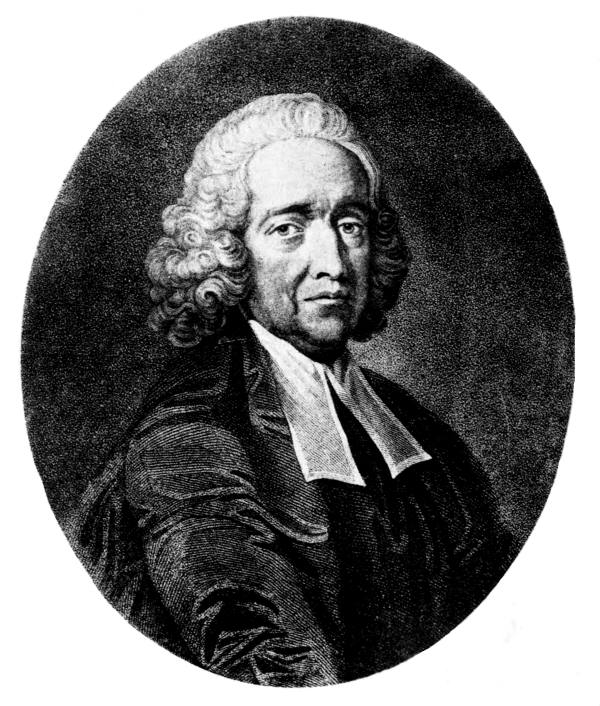
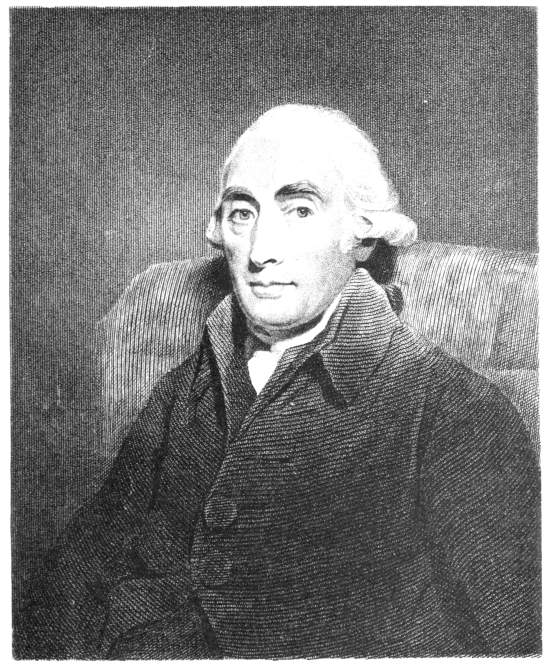
Joseph Priestley was born in 1733 at Fieldheads, about
six miles from Leeds. His father, a maker and dresser of woollen cloth, lost
his wife when his son Joseph was about six years of age; and being poor,
his sister, Mrs. Keighley, offered to bring up the boy. The early
associations of the lad were closely connected with dissent; and after
some time spent at a public school in the neighbourhood, he was sent,
in 1752, to the Academy at Daventry, in which he was trained for the
ministry. There he gained some knowledge of mechanics and metaphysics,
and also acquired some acquaintance with Chaldee, Syriac, and Arabic,
besides being a competent French and German scholar. After leaving the
Academy, he settled at Needham in Suffolk, as assistant in a small
meeting-house, where his income was not over £30 a year. His views
were, however, too liberal for his hearers; and after some years he
moved to Nantwich in Cheshire, where he preached and also taught a
school. Here his income was improved, though still miserably small;
yet he managed to buy some books, a small air-pump, and an electrical
machine. He subsequently removed to Warrington, being employed there
in teaching and in literary work; among his writings was a History of
Electricity, which first brought him into notice, and which procured
for him the degree of LL.D. of Edinburgh, thus giving him a right
to the title of Doctor, by which he was always afterwards known. At
Warrington, too, he married. We next find him being asked in 1767
to take the pastorship of Millhill Chapel at Leeds, a call which he
accepted. The chapel was next door to a brewery, and this circumstance
first induced him to take up the subject of the chemistry of gases,
which has made his name famous. Here too he published his History of
Discoveries relative to Light and Colours. After six years spent at
Leeds, he became librarian to the Earl of Shelburne (afterwards Marquis
of Lansdowne) and travelled with him on the Continent. While with Lord
Shelburne he published the first three volumes of Experiments on
Air, and carried out investigations which were recorded in a fourth
volume, published after his removal to Birmingham. After some years
spent in this way, he was pensioned off, and settled as minister of
a meeting-house in Birmingham, where he employed his time partly
in theological controversy, and partly in prosecuting researches in
chemistry. He published during this period another three volumes giving
a description of his experiments on air, and communicated several
papers to the Philosophical Transactions of the Royal Society, of
which he had been made a Fellow. Towards the year 1790 he was so
unfortunate as to attack Burke’s book on the French Revolution; and
this had the effect of rousing popular opinion against him, more
especially that of the local clergy, whose political views he had
frequently opposed. During the riots which took place at Birmingham
in 1791, his house was burned, and he was obliged to escape to London
under an assumed name. After some years spent in the charge of a
meeting-house at Hackney, he left England for America. His opinions,
though by no means uncommon at the present day, were so antagonistic to
those of his English contemporaries that he was cut by his Fellows of
the Royal Society, and he therefore resigned his Fellowship. And this
feeling was in no way lessened by the action of the French Government
of the time, which made him a Citizen of the Republic, and even chose
him as a member of their Legislative Assembly. Arriving in America in
1795, he was well received, and settled at Northumberland, not far from
Philadelphia. There he died in 1804.
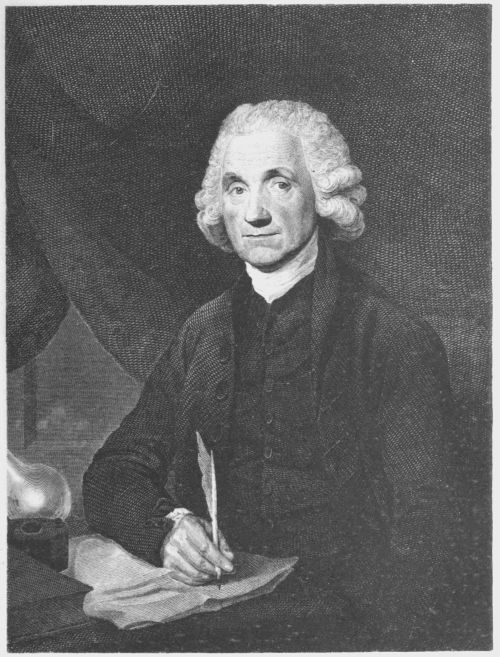
JOSEPH PRIESTLEY.
In Priestley’s work on gases he employed the form of apparatus which
had been used by Mayow a century before. Such apparatus is indeed
generally used now: the flasks with bent delivery-tubes, the Wolff’s
bottles with two necks, and the pneumatic trough filled with water or
mercury were his chief utensils. By means of such apparatus, gases
can be collected in a state of comparative purity: they can be easily
transferred from one vessel to another, and substances which it is
desired to submit to their action can be readily introduced. Scheele,
on the other hand, employed less convenient methods: his gases were
generally collected in bladders, and their transference to bottles
must have been attended with the introduction of atmospheric air.
Scheele’s method was to allow a certain amount of gas to escape from
the generating flask in order to expel air; an empty bladder was then
tied over the neck, and the gas entered the bladder. When he wished to
transfer the gas to a bottle, the bladder was tied at some distance
from the neck, and its loose open end was secured by a string round the
neck of a bottle full of water. The string confining the gas was then
untied, and the bottle was inverted; the water ran into the bladder and
was replaced by gas. A cork was also enclosed in the bladder, and it was
possible to push this cork into the neck of the bottle and re-tie the
string which confined the gas; and then, by loosing the string which
secured the bottle to the bladder, the full bottle could be conveyed
away. This process is obviously a clumsy one, although in Scheele’s
hands it yielded splendid results; and the methods which Priestley had
borrowed from Mayow have attested their superiority by their survival.
The first gas which Priestley investigated was “nitrous gas,” or,
as it is now named, nitric oxide. It had previously been prepared by
Mayow (see p. 25) by the action of nitric acid
on iron; and Mayow had made the important observation that when it
was introduced into ordinary air confined over water, the volume of
the air was decreased, and a rise of temperature occurred. But Mayow
did not apply his discovery to the analysis of air, though he rightly
conjectured that the reason of the decrease in volume of the latter
was due to combination between the nitric oxide and his “fire-air
particles.” It was left for Priestley to rediscover this fact, and
to apply it to the analysis of air, or, as he expressed it, to the
determination of its “goodness.”
Priestley’s use of a mercurial trough enabled him to collect and
investigate various kinds of airs, among others “marine acid air” or
gaseous hydrogen chloride, a gas differing entirely in properties
from ordinary air. This made his mind familiar with the thought
that different kinds of air exist, not necessarily modifications
of atmospheric air. He had previously from his experiments come to
the conclusion that “atmospheric air is not an unalterable thing,
for that the phlogiston with which it becomes loaded from bodies
burning in it, and animals breathing it, and various other chemical
processes, so far alters and depraves it, as to render it altogether
unfit for inflammation, respiration, and other purposes to which it is
subservient; and I had discovered that agitation in water, the process
of vegetation, and probably other natural processes, by taking out the
superfluous phlogiston, restore it to its natural purity. But I own I
had no idea of the possibility of going any farther in this way, and
thereby procuring air purer than the best common air.”
On the 1st of August 1774, Priestley heated by means of a burning-glass
red oxide of mercury. This was produced by heating mercury until it
oxidised, and therefore had been untouched by acids, or by any
substance which could have “imparted phlogiston” to atmospheric air.
The resulting air was insoluble in water, and supported combustion
better than common air, for a candle burned more brightly, and a piece
of red-hot wood sparkled in it. This air he also produced from “red
precipitate,” the product of heating nitrate of mercury; and at the
same time from red-lead, or minium. It differed from “modified nitrous
air,” in which a candle also burns brightly, inasmuch as shaking with
water the gases produced after a candle had burned for some time in
it did not deprive it of its power of supporting combustion; nor did
it diminish the bulk of common air, as the nitrous air does in some
degree. Priestley here refers to a mixture obtained by distilling
nitrates, which is essentially a mixture of nitric peroxide with
oxygen. A candle burns in such a mixture, depriving the nitric peroxide
of part of its oxygen, and converting it into nitric oxide mixed with
nitrogen. Nitric oxide, deprived of the excess of peroxide by shaking
with water, with which the peroxide reacts and is absorbed, is no
longer capable of supporting the combustion of a candle; and when added
to ordinary air it combines with its oxygen, again forming nitric
peroxide, which in its turn is absorbed by water.
Priestley’s experiments were performed at intervals from August 1774
till March 1775, and at that date it occurred to him to mix with
his dephlogisticated air some nitric oxide over water; absorption
took place, and he concluded that he might assume his new air to be
respirable. And what surprised him especially was, that even after
addition of nitric oxide and agitation with water, the residue still
supported the combustion of a candle. A mouse, too, lived half an
hour in the new air, and revived after being removed; whereas similar
experiments with an equal volume of common air had shown that, after
respiring it for a quarter of an hour, a mouse was indisputably dead.
Even after the mouse had breathed it for so long a time, it was still
capable of supporting the combustion of a candle; and this induced
him to add more nitric oxide to the respired air, when he found that
a further contraction occurred. He reintroduced the same unfortunate
mouse into the remainder of the air—a portion to which nitric oxide
had not been added—when it lived for another half-hour, and was quite
vigorous when withdrawn.
Subsequent experiments with nitric oxide showed that air from red
precipitate or from “mercurius calcinatus” (red oxide of mercury
in each case, although prepared in different ways) was “between four
and five times as good as common air.” He proceeds:[6]—
“Being now satisfied with respect to the nature of this new species
of air, viz. that being capable of taking more phlogiston from nitrous
air, it therefore originally contains less of this principle, my next
inquiry was, by what means it comes to be so pure, or, philosophically
speaking, to be so much dephlogisticated.” He therefore went on to
heat the various oxides of lead, but without any special results worth
chronicling. On moistening red-lead with nitric acid, however, and
distilling the mixture, he obtained, in successive operations, air
which was “five times as good” as common air. This process formed lead
nitrate, which on distillation yielded nitric peroxide and oxygen; the
gas was, of course, collected over water, which absorbed the peroxide,
allowing pure oxygen to pass. He found that red-lead was not the only
“earth” which produced this effect; but that “flowers of zinc” (zinc oxide),
chalk, slaked lime, and other substances also gave a gas,
when distilled with nitric acid, which was “better” than common air.
In some cases he broke up nitric acid by heat into water, nitric
peroxide, and oxygen; in others he heated nitrates. His conclusion
is: “Atmospherical air, or the thing we breathe, consists of the
nitrous acid and earth, with so much phlogiston as is necessary to
its elasticity; and likewise so much more as is required to bring it
from its state of perfect purity to the mean condition in which we find
it.”[7]
When such experiments were made by heating nitrates in a gun-barrel,
“phlogisticated air” was obtained. This was nitrogen, for the iron had
reduced the oxides of the latter, and combining with their oxygen, had
formed nitrogen; moreover, it had absorbed to a greater or less extent
the oxygen simultaneously produced.
Having concluded that respirable air was a compound of nitrous acid,
phlogiston, and earth, Priestley endeavoured to ascertain what was the
nature of this earth. He concludes “that the metallic earths, if free
from phlogiston, are the most proper, and next to them the calcareous earths.”
“Dephlogisticated air may be procured from any kind of earth with which
the spirit of nitre will unite.” A few quantitative experiments would
surely have refuted this erroneous conclusion. Those which he attempted
to make were very crude. A bladder (of which he does not give the
capacity) was filled with
| Phlogisticated air, |
and weighed 7 dwts. |
15 grs. |
| Nitrous air |
" " 7 " |
16 " |
| Common air |
" " 7 " |
17 " |
| Dephlogisticated air |
" " 7 " |
19 " |
He concludes (taking into consideration that inflammable air is
very light) “that the less phlogiston any kind of air contains, the
heavier it is; and the more phlogiston it contains, the lighter it
is.”[8]
Strange that this should not have led to the rejection of the phlogistic hypothesis!
Priestley had the curiosity to breathe his “good” air. He says: “My
reader will not wonder that, after having ascertained the superior
goodness of dephlogisticated air by mice living in it, and the other
tests above mentioned, I should have the curiosity to taste it myself.
I have gratified that curiosity by breathing it, drawing it through a
glass syphon, and by this means I reduced a large jar full of it to the
standard of common air. The feeling of it to my lungs was not sensibly
different from that of common air, but I fancied that my breast felt
peculiarly light and easy for some time afterwards. Who can tell but
that in time this pure air may become a fashionable article in luxury?
Hitherto only two mice and myself have had the privilege of breathing
it.”[9]
It will be seen from this account that Priestley’s work was to some
extent that of an amateur. He performed experiments, often without any
definite object; and he was not always successful in devising theories.
As before remarked, his chemical pursuits were to him a recreation, and
were undertaken during the intervals of his necessary work. His mind
was therefore not given over to them alone; and this is to be seen from
the character of his writings. His style is a delightfully familiar
one: he exposes his inmost thoughts with perfect frankness, and his
writings are therefore very readable.—We have now to compare his work
with that of his contemporary, Scheele, whose mission in life was that
of a chemist; and the reader will be interested in noting the different
points of view which these two eminent discoverers adopted.
Carl Wilhelm Scheele was born on the 9th of December 1742 in Stralsund,
the capital of Swedish Pomerania, where his father was a merchant and
a burgess. He was the seventh of eleven children. After receiving his
education, partly in a private school, partly in the public school
(gymnasium) at Stralsund, he was apprenticed at the age of fourteen
to the apothecary Bauch in Gothenburg. In those days an apothecary was
in large measure a manufacturer as well as a retailer of drugs. He had
to prepare his medicines in a pure state from very impure materials, as
well as to mix them in order to carry out prescriptions; and, indeed,
he himself often, as sometimes happens still, ventured to prescribe in
mild cases. Scheele’s master taught him such methods, and in addition
instructed him in the use of the chemical symbols in vogue at that
date; these he afterwards freely employed in his manuscripts, and this
renders them exceedingly difficult to decipher. There still exists a
catalogue of the drugs his master kept; many of them are of a
fantastic nature, such as “ointment of vipers”, “human brain prepared
without heat”, etc.; but among them were many of the well-known salts
of metals, and the commoner acids, besides phosphorus, sulphur,
rock-crystal, some ores, and some carbon compounds; for example,
benzoic acid and camphor. There was a fair chemical library, which
included the works of Boerhaave and Lemery, and his master devoted much
pains to his instruction. In a letter to Scheele’s father, however, he
expressed a fear that too great devotion to study and experimental work
would undermine the health of a growing lad.
In 1765 the business was sold, and Scheele obtained a situation in
Malmö with an apothecary named Kjellström. His master testified that
he had extraordinary application and ability, and related that he was
in the habit of criticising all that he read, saying of one statement,
“This may be the case”; of another, “This is wrong”; of a third, “I
shall look into this.” His memory was prodigious: he is said never to
have forgotten anything which he had read relating to his favourite
subject. He took little interest in anything else, and both his
employers appear to have encouraged him to the utmost in his favourite
pursuit. In 1768 he left Malmö for Stockholm; but here the exigencies
of his duties interfered with his leisure for experimentation. While
there, in conjunction with his friend Retzius, he discovered tartaric
acid, which up till then had never been separated from tartar, its
potassium salt. Here too he made investigations on the acid of
fluor-spar (hydrofluoric acid); but finding his time too greatly
occupied with routine work, he took a situation at Upsala, the seat
of the largest university of Sweden, in 1770. At that time Bergman
was Professor of Chemistry there, and Linnaeus occupied the Chair of
Botany; both had then achieved a wide reputation. With Bergman he soon
established close relations, and Retzius wrote that it was difficult
to say which was pupil and which teacher. While at Upsala he wrote his
great work on Fire and Air, which we shall shortly have to consider.
From his laboratory notes it appears that before 1773 he had obtained
oxygen by the ignition of silver carbonate, red mercuric oxide, nitre,
magnesium nitrate, and from a mixture of arsenic acid and manganese
dioxide. Here too he discovered chlorine, and made researches on
manganese, arsenic, and baryta. In 1775 he was elected a member of the
Royal Swedish Academy of Sciences, an honour which much improved
his social status. In the same year he became manager of a business
at Köping, where he passed the rest of his days, in spite of urgent
appeals to engage in more remunerative work; indeed, he was strongly
pressed to go to Berlin, and also, it is said, to London, for his
publications had led to his recognition as one of the greatest chemists
of the age. His book on Fire and Air was not published for some
years after the manuscript had been in the printer’s hands. We learn
from his letters that he was much afraid of being anticipated in his
discoveries, as indeed events showed that he had reason to be.
From his letters and from the verdict of his contemporaries, Scheele
is depicted as an amiable and honourable man, singularly free from
vanity and selfishness. Unfortunately no portrait of him has survived.
His last memoir on the action of sunlight on nitric acid was published
in 1786; he died suddenly at the early age of forty-three in May of
that year, two days after his marriage to Sara Margaretha Pohl. His
devotion to science had told on his health, and his death was caused by
a complication of diseases. Yet he was during his life, as after his
death, regarded as one of the greatest of chemists: his great
knowledge, extraordinary aptitude in experimenting, and high
intellectual powers placed him among the foremost men of science
of his day.
Near the beginning of his Treatise on Air and Fire,[10]
Scheele defines air. It is that fluid invisible substance which we
continually breathe; which surrounds the whole surface of the earth,
is very elastic, and possesses weight. “It is always filled with an
astonishing quantity of all kinds of exhalations, which are so finely
divided in it that they are scarcely visible, even in the sun’s rays.”[11]
It also contains another elastic substance resembling air, termed
aerial acid by Bergman (identical with Black’s fixed air). Since
atmospheric air has not been completely converted into fixed air by
admixture of foreign materials, “I hope I do not err if I assume
as many kinds of air as experiment reveals to me. For when I have
collected an elastic fluid, and observe concerning it that its
expansive power is increased by heat and diminished by cold, while it
still uniformly retains its elastic fluidity, but also discover in it
properties and behaviour different from those of common air, then I
consider myself justified in believing that this is a peculiar kind
of air. I say that air thus collected must retain its elasticity even
in the greatest cold, because otherwise an innumerable multitude of
varieties of air would have to be assumed, since it is very probable
that all substances can be converted by excessive heat into a vapour
resembling air.”[12]
After defining the properties characteristic of air, namely, its
power of supporting combustion, its diminution by one third or one
quarter during the combustion of any substance which does not produce
any fluid resembling air, its insolubility in water, its power of
supporting life, and the fact of its being favourable to the growth
of plants, Scheele demonstrates that air must consist of at least
two elastic fluids. This he proves by exposing it to “liver of
sulphur” (polysulphide of potassium), when six parts out of twenty
were absorbed. He obtained the same result by employing a solution
of sulphur in caustic potash, and also by polysulphide of calcium,
prepared by boiling lime-water with sulphur, and by means of yellow
sulphide of ammonium. Nitric oxide, “the nitrous air which arises
on the dissolution of metals in nitrous acid,” produces a similar
contraction, and so also do oil of turpentine and “drying oils” in
general. Dippel’s animal oil, obtained by distilling bones, and ferrous
hydroxide, produced from “vitriol of iron” and “caustic ley,” or
ferrous sulphate and caustic potash, may also be used as absorbents;
as may also iron filings moistened with water, a solution of iron in
vinegar, and a solution of cuprous chloride. “In none of the foregoing
kinds of air can a candle burn or the smallest spark glow.”
He accounts for these results by the theory that all such absorbents
contain phlogiston, which is attracted by the air, and, combining with
it, diminishes its bulk. The alkalies and lime attract the vitriolic
acid of the sulphides used, and the air attracts the phlogiston. “But
whether the phlogiston which was lost by the substances was still
present in the air left behind in the bottle, or whether the air which
was lost had united and fixed itself with the materials, such as liver
of sulphur, oils, etc., are questions of importance.”[13]
The conclusion that such air, which had received phlogiston and had contracted
in volume, ought to be specifically heavier than common air was, however,
rudely dissipated by experiment. The air must therefore contain two
fluids, one of which does not manifest the least attraction for
phlogiston, while the other is peculiarly disposed to such attraction.
“But where this latter kind of air has gone to, after it has united
with the inflammable substance, is a question which must be decided by
further experiments, and not by conjectures.”[14]
To decide this question, Scheele burned in air substances such as
phosphorus, which do not produce by their combustion any kind of “air.”
The result was that the air lost 9 volumes out of an original 30, or
about one-third of its bulk. A flame of hydrogen burning in air caused
it to lose one-fifth of its volume. On burning a candle, some spirits
of wine, or some charcoal, in a confined quantity of air, very little,
if any, diminution of volume was noticed; but on shaking the air with
milk of lime, contraction ensued, but not to the same extent as when
phosphorus was burnt in it. This greatly puzzled Scheele; we now know
that such combustibles are not able to remove all the oxygen, but that
they are extinguished when only a portion of each has entered into
combination. Here, again, however, his memory comes to his help, for he
says, “It is known that one part of aerial acid mixed with ten parts
of ordinary air extinguishes fire; and there are here in addition,
expanded by the heat of the flame and surrounding the latter, the
watery vapours produced by the destruction of those oily substances. It
is these two elastic fluids, separating themselves from such a flame,
which present no small hindrance to the fire which would otherwise burn
much longer, especially since there is here no current of air by means
of which they can be driven away from the flame. When the aerial acid
is separated from this air by milk of lime, then a candle can burn in
it again, though only for a very short time.”[15]
Thus the question was correctly solved. Scheele’s acumen led him
at once to make experiments admirably adapted to discover the true
reason; he was not turned aside by any imaginary difficulties, but went
straight to the point. He next burned sulphur in confined air, and
found little alteration of volume, but on shaking with clear
lime-water, absorption took place, and one-sixth of the air was
removed. “The lime-water was not in the least precipitated in this
case, an indication that sulphur gives out no aerial acid during its
combustion, but another substance resembling air; this is the volatile
acid of sulphur, which occupies again the empty space produced by the
union of the inflammable substance with air.”[16]
The next set of experiments were devised “to prove that ordinary
air, consisting of two kinds of elastic fluids, can be compounded
again, after these have been separated from one another by means of phlogiston.”
“I have already stated that I was not able to find again the lost air.
One might indeed object that the lost air remains in the residual
air which can no more unite with phlogiston; for, since I have found
that it is lighter than ordinary air, it might be believed that the
phlogiston, united with this air, makes it lighter, as appears to
be known already from other experiments. But since phlogiston is a
substance, which always presupposes some weight, I much doubt whether
such hypothesis has any foundation.”[17]
He had formerly conjectured that hydrogen, the “air” obtained by
the action of vitriol on zinc, might be phlogiston; “still, other
experiments are contrary to this.”
Scheele next directs attention to acid of nitre, and points out that
when prepared in absence of organic material, it is nearly colourless;
but that if phlogiston be given to it, it becomes red. At the end of a
distillation of pure nitre with pure sulphuric acid, however, red fumes
are produced: “Where does the acid now obtain its phlogiston? There is
the difficulty.”
He collected some of this “red air” in a bladder containing milk of
lime, to prevent its corrosive action; and having tried whether the
resulting gas, which was now no longer red, would support combustion,
“the candle began to burn with a large flame, whereby it gave out such
a bright light that it was sufficient to dazzle the eyes. I mixed one
part of this air with three parts of that air in which fire would
not burn; I had here an air which was like the ordinary air in every
respect. Since this air is necessarily required for the origination of
fire, and makes up about the third part of our common air, I shall call
it after this, for the sake of shortness, Fire-air; but the other air,
which is not in the least serviceable for the fiery phenomena, I shall
designate after this with the name already known, Vitiated air.”[18]
How history repeats itself! Here is Scheele, in 1772, reproducing
Mayow’s name “fire-air particles” for the same substance of which Mayow
had inferred the existence a century before, and which he had pointed
out as being present in the acid of nitre, as well as in common air.
This air is not a “dry acid of nitre converted into elastic vapours,”
for it does not produce nitre with alkalies; moreover, it can be
prepared from substances which have nothing in common with nitre, no
compound of nitre having been used during their preparation. Scheele
next describes experiments proving that “fire-air” is produced by the
distillation of black oxide of manganese with concentrated oil of
vitriol, or with the “phosphorus acid of urine” (phosphoric acid), by
distilling nitrate of magnesium, made by dissolving the “white magnesia
employed in medicine” (magnesium carbonate) in aquafortis (nitric
acid), or by distilling “mercurial nitre” (mercuric nitrate). The
cheapest and the best method of producing “fire-air” is to distil
purified nitre in a glass retort. But Scheele also obtained it from
“calx of silver” (silver carbonate) prepared from silver nitrate and
“alkali of tartar” (potassium carbonate); during this process he got
aerial acid, which had been present originally in the alkali of tartar;
but it was easily removed by means of milk of lime. Similarly, “calx of
gold,” obtained from a solution of gold with “alkali of tartar,” gave
“fire-air” when heated; but no aerial acid, for that air escapes during
the precipitation of the “calx.” The brown-red precipitate obtained by
adding “alkali of tartar” to “corrosive sublimate” (potassium carbonate
to mercuric chloride, giving a basic carbonate of mercury and potassium
chloride) yielded a mixture of fire-air and aerial acid when heated.
But if the “calx of mercury” had been prepared by means of the “acid
of nitre,” or in modern language by heating mercuric nitrate, a pure
“fire-air,” unmixed with “aerial acid,” was the product. And lastly,
arsenic acid, when heated, gave ordinary white arsenic together with “fire-air.”
This fire-air was completely absorbed by “liver of sulphur”
(a polysulphide of potassium, formed by heating together potassium
carbonate and sulphur); and a mixture of four parts of “fire-air” with
fourteen parts of “vitiated air” lost the whole of its fire-air on
standing for fourteen days in contact with liver of sulphur. Dippel’s
animal oil, and burning phosphorus, charcoal, and sulphur, all absorbed
“fire-air”—completely if it was pure, incompletely if it was mixed
with “vitiated air”; in short, the identity of “fire-air” prepared from
calces, etc., with that in ordinary air was completely established.
As “vitiated air” is lighter than ordinary air, it follows that
“fire-air” must be heavier; and experiment proved this to be the case.
To completely disprove the possible contention that nitre was necessary
for the production of “fire-air,” some “calx of mercury” (or red
oxide), which had been prepared by boiling mercury for a long time
in contact with air, was heated. The products were metallic mercury
and “fire-air”. “This is a remarkable circumstance, that the fire-air
which had previously removed from the mercury its phlogiston in a slow
calcination, gives the same phlogiston up to it again, when the calx is
simply made red-hot.”[19]
Is it not remarkable that the true explanation should not have forced
itself upon Scheele’s mind, which was so acute, and so capable of
forming true deductions?
The next set of experiments dealt with the phenomena of respiration. A
rat, confined in air until it died, polluted the air with one-thirtieth
of aerial acid. Respiration from Scheele’s own lungs had the same
effect. A few flies, bees, and caterpillars also polluted the air in
the same way. Peas, roots, herbs, and flowers all converted about
one-fourth part of ordinary air into “aerial acid”. “These are
accordingly strange circumstances, that the air is not noticeably
absorbed by animals endowed with lungs, contains in it very little
aerial acid, and yet extinguishes fire. On the other hand, insects and
plants alter the air in exactly the same way, but still they convert
the fourth part of it into aerial acid.”[20]
And so he makes experiments which prove that it is the fire-air which
is converted into “aerial acid” by peas; and that “fire-air” is
absorbed by fresh blood, and acquires no aerial acid from it. And,
further, he was able to breathe fire-air for a long time, especially if
a “handful of potashes” was put into the bladder. A couple of large
bees, confined in “fire-air,” along with milk of lime, consumed
practically the whole of the air in eight days. But plants, confined
in “fire-air,” along with milk of lime, would not grow; however, they
yielded a little aerial acid. Scheele is again puzzled here by the
circumstance that the blood and the lungs have not the same action
on air as insects and plants, inasmuch as the former convert it into
vitiated air, and the latter into aerial acid. We now know that
air will not support life of warm-blooded animals when the oxygen
falls below a certain not very small amount, while insects appear
to be capable of exhausting the oxygen to a great extent; and it is
probable that the plants, under the unnatural circumstances in which
they were placed, gave off a considerable amount of carbon dioxide.
Scheele’s explanation in terms of phlogiston is not successful. He
wrote:—“I am inclined to believe that fire-air consists of a
subtle acid substance united with phlogiston, and it is probable that
all acids derive their origin from fire-air. Now if this air penetrates
into plants, these must attract the phlogiston, and consequently the
acid, which manifests itself as aerial acid, must be produced.”[21]
This is reversing what may be termed the true explanation on the basis
of the phlogistic theory. For Scheele supposes that oxygen contains
phlogiston, and by losing it, yields carbon dioxide. On the other hand,
the consistent explanation would be that carbon is carbonic acid plus
phlogiston, and that when it burns it loses phlogiston and becomes
carbonic acid again. We see how confused the phlogistic ideas became
after the discovery of oxygen, and how ripe the time was for Lavoisier
to formulate the views which are now universally accepted.
In the concluding sections of his treatise Scheele describes
experiments which prove the solubility of “fire-air” in water; he
mentions a convenient test for free oxygen in solution, viz. a mixture
of ferrous sulphate and lime, which turns dark green, and finally
rust-coloured, when added to water containing oxygen; and he shows that
water is deprived of oxygen by the presence of a leech, kept in it for two days.
It is impossible not to recognise in Scheele one of the most acute
intellects and able experimenters whom the world has ever seen. And
although we cannot but feel surprise that his discoveries did not lead
him to take the step of renouncing the hypothesis of phlogiston, it
must be borne in mind that the doctrine was surrounded with the halo of
old age, and sanctioned by many names of great repute in their time.
We shall see later that Cavendish, one of the greatest of English
chemists, on weighing the rival theories, decided in favour of the
phlogistic hypothesis. The actual escape of flame, a visible entity,
from a burning substance, may have had much to do with this decision;
and the uncertainty concerning the nature of heat, and the doubt
whether it was not a form of imponderable matter, may have led both
Scheele and Cavendish to retain the older views. It was Lavoisier who
first dared to throw off the shackles of tradition; and this he did
before oxygen had been discovered, as early as 1772.
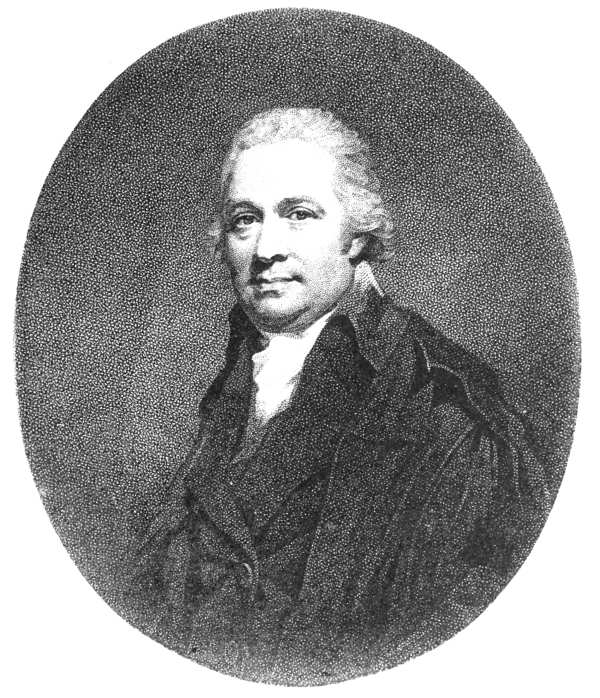
Antoine Auguste Lavoisier was born in Paris on the 26th of August 1743.
His father was wealthy, and spared no expense on his education. In his
twenty-first year he obtained a gold medal from the Academy of Sciences
for an essay on the best method of lighting the streets of Paris, but
it was some years before he made definite choice of his subject. He
published memoirs relating to geology and to mathematics, before the
fame of Black’s and Priestley’s discoveries reached him and induced
him to turn his attention to scientific chemistry. Lavoisier’s life
was divided between his researches and the performance of public
duties. In his twenty-fifth year he was elected a Member of the French
Academy of Sciences, and, somewhat later, became its treasurer. He
drew up numerous reports for the Government on questions on the
borderland of Science and Technology; for example, on the preparation
of paper for bills, which would not admit of forgery; on experimental
agriculture; and on the manufacture of gunpowder. In 1771 he married
Marie Anna Pierette Paulze, the daughter of a “fermier-général” or
collector of Government revenue; and after his death, she became the
wife of Count Rumford, another distinguished scientific man. Made a
“fermier-général” himself, it was during his tenure of this office that
Lavoisier was accused—along with others holding similar positions—of
misappropriating revenue moneys, with the result that, under the
dictatorship of the infamous Robespierre, he and twenty-eight of those
who held like office were guillotined publicly, on the 8th of May
1794. It is stated that Lavoisier’s last plea, presented by Hallé—for
permission to finish a research—was refused by Coffinhal, with the
brutal phrase, “La Republique n’a pas besoin de savants; il faut que la
justice suive son cours.” Within twenty-four hours the execution took place.
Lavoisier was a tall, handsome man, with a remarkably pleasing face. He
possessed great influence, and used it all for good.
The first account which we possess of Lavoisier’s revolutionary ideas,
for revolutionary they were then deemed, was in a sealed note, placed
in the hands of the Secretary of the Academy on the 1st of November
1772. It is to the following effect:—
“About eight days ago, I discovered that sulphur,
when burned, instead of losing weight, gains weight; that is to say,
from one pound of sulphur much more than one pound of vitriolic acid
is produced, not counting the moisture gained from the air. Phosphorus
presents the same phenomenon. This increase of weight is due to a great
quantity of air which becomes fixed during the combustion, and
which combines with the vapours. This discovery, which I confirmed by
experiments which I regard as decisive, led me to think that what is
observed in the combustion of sulphur and phosphorus might likewise
take place with respect to all the bodies which augment in weight
by combustion and calcination; and I was persuaded that the gain of
weight in calces of metals proceeded from the same cause. Experiment
fully confirmed my conjectures. I effected the reduction of litharge
in closed vessels with Hales’ apparatus, and I observed that at the
moment of the passage of the calx into the metallic state, there was a
disengagement of air in considerable quantity, and that this air formed
a volume at least a thousand times greater than that of the litharge
employed. As this discovery appears to me to be one of the most
interesting which has been made since the time of Stahl, I thought it
expedient to secure to myself the property, by depositing the present
note in the hands of the Secretary of the Academy, to remain secret
till the period when I shall publish my experiments.”
Lavoisier.
“Paris, 11th November 1772.”
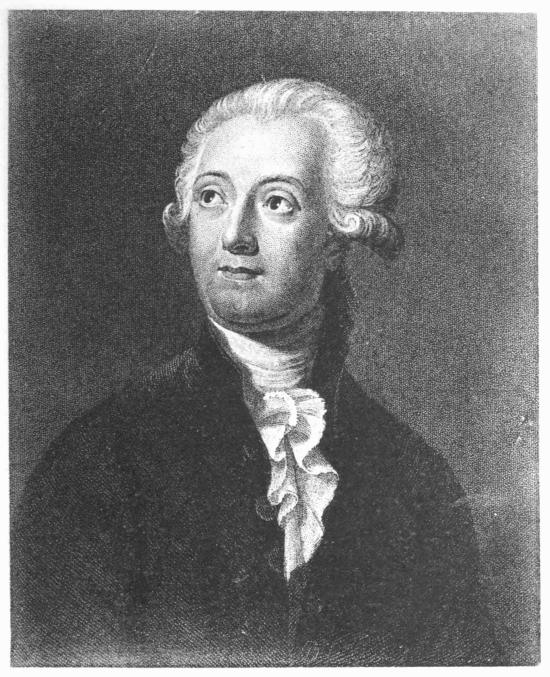
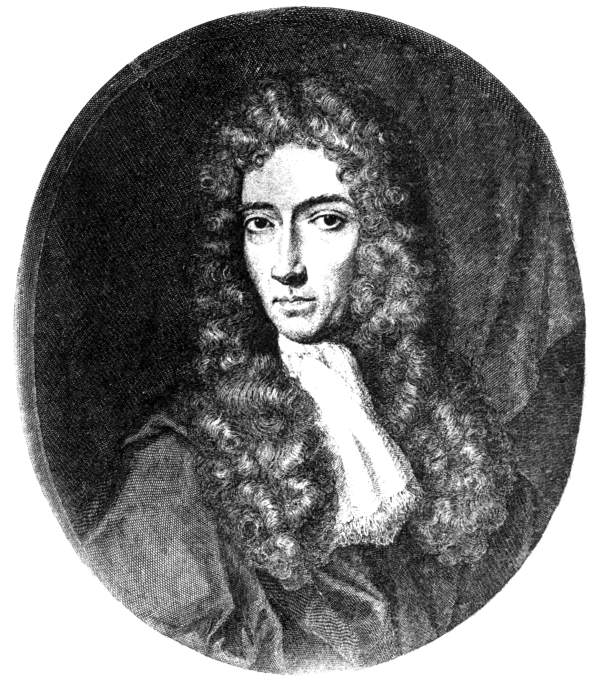
ANTOINE AUGUSTE LAVOISIER.
There is no account in Hales’ work of his reducing litharge in closed
vessels. It is to be presumed that Lavoisier heated in a retort a
mixture of litharge and charcoal, and that the air which he speaks of
was a mixture of oxides of carbon. This account does not inform us of
Lavoisier’s views on combustion, but merely shows the date at which he
had first obtained what he supposed were results new to science. We
recognise that Mayow had anticipated him in this.
It was not until Priestley, when dining with him in the autumn of
1774 (being in Paris with Lord Shelburne at the time), had informed
Lavoisier of his discovery of “dephlogisticated” air, that the ideas
of the latter upon the subject became precise. Priestley’s own words
are:—“Having made the discovery some time before I was in Paris, in
the year 1774, I mentioned it at the table of Mr. Lavoisier, when most
of the philosophical people of the city were present, saying that it
was a kind of air in which a candle burned much better than in common
air, but I had not then given it any name. At this all the company,
and Mr. and Mrs. Lavoisier as much as any, expressed great surprise.
I told them I had gotten it from precipitate per se, and also
from red-lead. Speaking French very imperfectly, and being little
acquainted with the terms of chemistry, I said plombe rouge, which
was not understood till Mr. Macquer said I must mean minium.”
Shortly after this, Lavoisier repeated Priestley’s experiments and
confirmed their truth; and this led to the true explanation of
experiments of which an account is given in the Memoirs of the French
Academy for 1774, and which were fundamental in their character. They
referred to the calcination of tin in hermetically-sealed retorts. The
tin was placed in a retort which was heated on a sand-bath until the
metal had melted. The beak of the retort, previously drawn out into a
capillary, was then sealed, the air expelled having been collected and
its weight noted. The retort was then cooled and weighed. It was again
heated, and the temperature was maintained until the calcination of the
tin stopped. With a large retort the calcination was more complete than
when a smaller one was employed, this implying that the degree to which
the calcination proceeded was dependent upon the amount of air present.
After cooling the retort a second time, it was again weighed, when it
was found to have undergone no change of weight. The beak was then
broken, and air entered with a hissing noise. The gain in weight was
now about 10 grains with a large retort. The tin and its calx were next
weighed, and it was found that the gain in weight of the tin was always
equal to the loss of weight of the air in the retort, measured by the
quantity of air which entered on breaking the beak of the retort, less
the air driven out of the retort before hermetically sealing it. From
this Lavoisier concluded that calx of tin is a compound of tin and air.
Lavoisier’s next research, communicated to the Academy in 1775, and
published in 1778, was entitled “On the Nature of the Principle which
combines with Metals during their Calcination, and which increases
their Weight.” In this he describes experiments showing that when
metallic calces are converted into metals by heating with charcoal,
a quantity of fixed air is expelled; and here for the first time he
points out that fixed air is a compound of carbon with the elastic
fluid contained in the calx. He then describes the preparation
of oxygen by Priestley’s process of heating red oxide of mercury
(mercurius precipitatus per se), and shows that the red oxide, when
heated with charcoal, manifests the properties of a true calx, inasmuch
as metallic mercury is formed, and a large quantity of fixed air is produced.
His next paper, which appeared in 1777 in the Mémoires of the
Academy, deals with the combustion of phosphorus; and here he
recapitulates Rutherford’s experiments, and shows that one-fifth of
the air disappears, and that the residue, to which he gave the name
“mouffette atmosphérique,” is incapable of supporting combustion. It
will be remembered that Rutherford named this residue “phlogisticated
air,” inasmuch as he imagined it to have absorbed phlogiston from
the burning phosphorus; Scheele, too, had made a similar experiment
with a similar result. From these observations, Lavoisier concluded
that air consists of a mixture or compound of two gases, one capable
of absorption by burning bodies, the other incapable of supporting combustion.
This paper was immediately followed by another, also published in 1777.
Its title is, “On the Combustion of Candles in Atmospheric Air, and
in Air eminently respirable.” In this memoir he distinguishes between
four kinds of air:—1, Atmospheric air, in which we live and which we
breathe. 2, Pure air, alone fit for breathing, constituting
about one-fourth of atmospheric air, and termed by Priestley
“dephlogisticated air.” 3, Azotic gas, identical with Rutherford’s
“mephitic air,” and of which the properties were then unknown. 4, Fixed
air, which he proposed to call “acide crayeux,” or acid of chalk,
discovered twenty-five years previously by Black.
By this time his theory was well developed. He accounted for the
phenomena of combustion without having recourse to the phlogistic
hypothesis: the calx was produced by the union of the metal with the
active constituent of air; and when carbonaceous material burned,
the carbon united with this same constituent, producing fixed air.
But there were still difficulties in his way: it was known that in
dissolving metals in dilute vitriol or muriatic acid, a combustible and
very light air was evolved; and that the metals were thereby converted
into calces in combination with the respective acids. This fact was not
explained even by the supporters of the phlogistic theory, but it had
the effect of preventing them from accepting Lavoisier’s views. Some
considered that hydrogen and phlogiston were identical, and that on
dissolving a metal the calx was formed by the escape of the phlogiston;
while others had a hazy idea that hydrogen was a compound of water and
phlogiston; but of this more hereafter.
Lavoisier’s objection to such a theory was that the calx was heavier
than the metal, and that hydrogen, though light, still possessed
weight.[22]
Moreover, he had ascertained that the calces of mercury,
tin, and lead are compounds of these metals with active air, and that
as fixed air is produced by heating such calces with carbon, fixed
air must be a compound of carbon and vital air, or, as he named it,
the “oxygine principle,” inasmuch as its combination with phosphorus,
sulphur, and carbon resulted in the formation of acids (ὀξύς, an acid).
In 1777 he read another memoir, “On the Solution of Mercury in
Vitriolic Acid, and on the Resolution of that Acid into Aeriform
Sulphurous Acid, and into Air eminently respirable.” Priestley had
already shown that this process yielded sulphur dioxide; Lavoisier
carried the temperature higher, and, decomposing the sulphate of
mercury, produced metallic mercury, sulphur dioxide, and oxygen. It
appeared therefore that sulphurous differed from sulphuric acid in
containing a smaller proportion of oxygen.
He also experimented with iron pyrites, and his experiments recall
those of Boyle. Boyle found that “marcasite,” a disulphide of iron, on
exposure to air, gained in weight, while vitriol of iron was formed.
Lavoisier performed the same experiment, not “in a very pure air,” as
Boyle did when he left the pyrites exposed in a quiet dust-free room,
but in a confined quantity of ordinary air; and he found that the air
was rendered incapable of supporting combustion, or, in other words,
its oxygen was removed.
In the same volume of the Memoirs of the Academy for 1778, another
of Lavoisier’s papers—“On Combustion in General”—is to be found.
In this he showed that oxygen gas is the only substance which supports
combustion; that during the burning of combustible substances in air a
portion of the oxygen disappears, and converts the burning substance
into one of two kinds of compounds: either an acid, such as sulphuric
acid from sulphur, phosphoric acid from phosphorus, or carbonic acid
from carbon (for in those days the term “acid” was applied to what we
now term an anhydride); or in the case of metals a calx, or compound of
oxygen with the metal. The processes are analogous, but differ in the
rate at which they take place; for the calcination of metals is a much
slower operation than the combustion of sulphur or phosphorus. It is
the rapidity of the action which leads to actual inflammation. He next
examined and attacked the theory of phlogiston, and maintained that the
existence of phlogiston is purely hypothetical, and quite unnecessary
for the explanation of the phenomena. But his papers were received with
doubt. The change demanded was too great; the trammels of custom were
too firmly bound. He gained no converts.
Until the true nature of hydrogen had been explained, the attack on the
phlogistic theory could not be said to be complete. This combination of
hydrogen and oxygen to form water was first proved by Cavendish. And
as soon as Sir Charles Blagden, in 1783, had communicated Cavendish’s
results to Lavoisier, the latter at once saw their bearing on the new
theory which he was endeavouring to uphold, and perceived how they
would give a final blow to the adherents of the theory of phlogiston.
For it had been frequently adduced as an objection to his new views,
that they were incapable of explaining why hydrogen should be evolved
during the solution of metals in acids, or why it should be absorbed
during the reduction of calces to the metallic state. Lavoisier at once
repeated Cavendish’s experiments on a large scale, and was assisted
on that occasion by Laplace, Sir Charles Blagden also being present.
A considerable quantity of water was produced, and the volumes of the
combining gases were found to be 1 of oxygen to 1·91 of hydrogen.
Shortly after, in conjunction with Meunier, he performed the converse
operation, in decomposing steam by passing it over iron wire heated
to redness in a porcelain tube. The iron withdrew the oxygen from
the water, while the hydrogen passed on and was collected in the gasholder.
The explanation of the solution of metals in acids was now easy:
it depended on the decomposition of water. While the oxygen united
with the metal to form a calx, the hydrogen was evolved; the calx
dissolved in the acid, forming a salt of the metal. And the operation
of producing hydrogen by the action of steam on red-hot iron met
with an equally simple explanation: the oxygen and iron united to
form an oxide—the ancient ethiops martial—while the hydrogen
escaped. The converse took place during the reduction of a calx to the
metallic state by hydrogen. Here the hydrogen seized on the oxygen of
the calx, removed it in the form of water, and the metal was left.
These experiments were due to Cavendish; all that Lavoisier did was
to show the true nature of the phenomena. The opponents of the new
doctrines, Priestley chief among them, did their best to disprove the
view that water was a compound of oxygen and hydrogen. But in vain.
Many of Lavoisier’s opponents had to admit the justice of his views;
and in 1787 De Morveau, Berthollet, and Fourcroy joined Lavoisier in
reconstructing the nomenclature of chemistry on a new basis, which
is substantially that in use at the present day. Black, too, was a
convert, but Priestley and Cavendish remained true to their old
faith, and one of Priestley’s last acts was to publish a defence of
the phlogistic theory. We shall see later how Cavendish carefully
considered the rival theories, and what reasons induced him to cast his
vote for the older one.
Among the numerous memoirs which Lavoisier communicated to the Academy
during the ten years between 1772 and 1782, one still remains to be
mentioned. It was published as early as 1777, but it must be remembered
that many of these memoirs were antedated. It referred to the
respiration of animals; and Lavoisier concluded, on the ground that the
phenomena of respiration are essentially similar to those of combustion
and calcination, that the only portion of the air which supports animal
life is the oxygen. The azote or nitrogen is inhaled along with the
oxygen, but is exhaled unaltered. The oxygen, however, is gradually
converted into carbonic acid; and when a certain amount, but by no
means the whole, has been thus changed, the air becomes unfit for
respiration. If the carbonic acid is withdrawn by means of lime-water
or caustic alkali, the residue is air poor in oxygen, and the azote is
the same as that left after the calcination of metals, or the burning
of a candle, in air.
At the time of his impeachment, Lavoisier was engaged in experiments
on perspiration, along with Séguin. He had nearly finished his
experimental work, but had drawn up no account of it. His request that
his life might be prolonged until he had compiled a statement of his
results was refused; but Séguin, who was fortunately spared, undertook
the task. The facts collected do not, however, bear directly on our
subject, and shall not be further alluded to here.
This account of Lavoisier’s researches would be incomplete without
a reference to his text-book of chemistry, Traité élémentaire de
Chimie, in which his views are stated in order, and with great
clearness. The nomenclature current at the time was so cumbrous, that
it was almost, if not quite, impossible for the supporters of the new
theory to express their meaning in an intelligible manner. De Morveau
had suggested a nomenclature for salts; Black, too, had invented one;
but neither of these systems was adapted to represent the new views.
It was partly with the object of avoiding such embarrassment that
Lavoisier wrote his Treatise.
He begins with a clear statement of what is generally termed “the
states of matter”—solid, liquid, and gaseous—and points out
that solids and liquids are almost all capable of change into the
aeriform state by the addition of “caloric.” Proceeding next to the
consideration of the nature of air, he shows that it must necessarily
contain all those gases capable of existence at the ordinary
temperature; and he explains how water-vapour must be one of them,
seeing that even though water is a liquid at the ordinary temperature,
it is capable, like many other liquids, of existing as vapour, when
mixed with other gases. He next treats of the analysis of air, and
describes his classical experiment of heating four ounces of mercury
for twelve days in a retort communicating with a bell-shaped receiver,
standing in a mercury trough. Having marked the initial height of the
air in the jar by means of a piece of gummed paper, he found that,
after twelve days’ heating close to the boiling-point, the air had
diminished in volume by about one-sixth, and that the mercury had
become covered with a red deposit of mercurius calcinatus per se,
which, when collected, weighed 45 grains. The residual air in the
retort and in the jar was incapable of supporting life or combustion;
but the red precipitate, when heated, lost 3½ grains of its
weight, yielding 41½ grains of metallic mercury, while it evolved
7 or 8 cubic inches of oxygen, capable of supporting the combustion
of a candle vividly, and of causing charcoal to burn with a crackling
noise, throwing out sparks. Oxygen was thus successfully separated from
air, and obtained from it in a pure condition for the first time, in a
single series of operations.
In Lavoisier we see a master mind, not only capable of devising and
executing beautiful experiments, but of assimilating those of others,
and deducing from them their true meaning. Although his additions to
the known chemical compounds were few in number, and cannot be compared
with those of Scheele or of Priestley, yet his reasoning in disproof
of the phlogistic theory was so accurate and so exact that it rapidly
secured conviction. With the exceptions already mentioned, almost all
the eminent chemists of the day accepted his conclusions; and one,
Kirwan, who had written a formal treatise in defence of the phlogistic
theory, was so fair-minded, that after his work had been translated
into French and published with comments, he acknowledged that the old
theory was dead, and that truth had conquered.
It will be interesting now to trace Cavendish’s part in developing
the history of the discovery of the constituents of air, and to note
his arguments in favour of the phlogistic theory. Although Cavendish
never publicly acknowledged its insufficiency, yet he had ceased to
occupy himself with chemical problems at the time when its adoption was
universal, and his true opinions have never been recorded.