NEW YORK:
P. O’SHEA, PUBLISHER; 27 BARCLAY STREET.
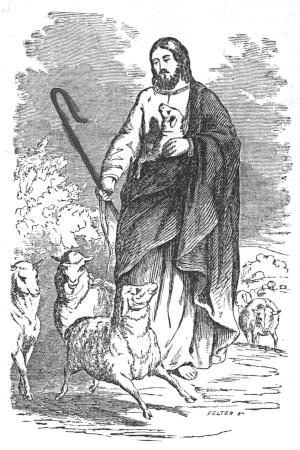
1871.
Entered according to Act of Congress, in the year 1871,
By P. O’SHEA,
In the office of the Librarian of Congress, at Washington.
PREFACE.
The selections for the Fourth Progressive Reader
have been made with great care, and, if the judgment
of some of our most accomplished teachers may be
trusted, with becoming discrimination.
Lessons have been selected that are interesting to
the young, and that convey, each, an instructive moral
in such a way as to impress itself deeply on the mind
of the pupil. They have also been selected and arranged
with a view to affording the best possible exercises
in reading.
New selections have been made from several distinguished
writers. Those from Archbishop Spalding,
Father Lacordaire, Doctor Newman, Miss Hoffman,
and Brother Philippe, are in every respect excellent.
Short biographical sketches have been appended of
the different authors from whose works selections, have
been made. In making those selections care has been
taken to furnish examples of the various styles of composition,
and in doing this whatever could be found
most interesting and instructive was sought for; whilst
every thing dull, frivolous, or at all tinctured with erroneous
views or principles has been rigidly excluded.
The Lessons are a grade higher than those of the
Third Reader, but nothing supposed to be above the
capacity or intelligence of children who have read
through the preceding books of the Series has been introduced.
The instructions on articulation, emphasis, and inflection,
will be found to be moderately full and very
clear and intelligible.
CONTENTS. — TABLE OF VOWEL SOUNDS. — TABLE OF CONSONANT SOUNDS. — EXERCISES ON THE VOWEL SOUNDS.
This table is designed for an exercise upon the vowel elements. These
should be pronounced alone as well as in combination with the words
given as examples. Let the class first pronounce the table in order, thus:
A long, Fate, ā; A short, Fat, ă, &c.; then pronounce the column of elements
alone.
Name.
Example.
Element.
A long
Fāte
ā
A short
Făt
ă
A Italian
Fär
ä
A broad
Fâll
â
E long
Mēte
ē
E short
Mĕt
ĕ
I long
Pīne
ī
I short
Pĭn
ĭ
O long
Nōte
ō
O short
Nŏt
ŏ
O long and close
Môve
ô
U long
Tūbe
ū
U short
Tŭb
ŭ
U middle or obtuse
Fûll
û
U short and obtuse
Für
ü
OI and OY
Böĭl
öĭ
OU and OW
Böûnd
öû
EQUIVALENTS.
E short and obtuse, like ü in Für
Hër
ë
I like E long
Machîne
î
I short and obtuse, like ü in Für
Sïr
ï
O like A broad
Nôr
ô
O like U short
Sō̇n
ō̇
U like O in Move
Rūle
ū
Y like I long
Tȳpe
ȳ
Y like I short
Sy̆mbol
y̆
Y short and obtuse, like ü in Für
Mÿrtle
ÿ
EW like U long
Now̄
ew̄
This table should be treated by the class in the same manner as the
table of vowel sounds. The sound of a consonant may be ascertained by
pronouncing a word containing it in a slow and forcible manner.
Vocal Consonants are those uttered with a slight degree of vocality,
but less than that of a vowel. They are formed with a vibration of the
vocal chords.
Aspirate Consonants are those in which the pure breath alone is
heard. They are formed without any vibration of the vocal chords.
[2] H sounded before a vowel, is an expulsion of the breath after the organs are in a
position to sound the vowel.
In pronouncing the words in the following exercises, special attention
should be given to the precise sound of the letters italicized. The sounds
of the letters in Italics are the same as the sound of the vowel at the
head of the paragraph.
Exercises upon tables of words like the following are valuable, not
only for developing vocal power, but as one of the best methods of correcting
habitual errors in pronunciation.
a, long, as in fāte.—Fame, blame, sail, cambric, nature,
ancient, patron, matron.
a, short, as in făt.—Bat, mat, bad, had, can, cannon, sand,
fancy, marry, have.
a, Italian, as in fär.—Are, bar, star, guitar, mart, alarm,
parchment, father, heart, hearth, guard, daunt, haunt.
a, broad, as in fâll; and o, as in nör.—Ball, call, tall, nor,
form, storm, corn, salt, ought, fought, nought.
a, as in fàre; and e, as in thêre.—Dare, rare, pair, air,
share, snare, where, heir, stare, pare.
a, as in fā̇st.—Blast, chance, lance, trance, branch, grasp,
graft, grant, grass, pass, class.
e, long, as in mēte; and i, as in marîne.—Be, she, theme,
scene, marine, pique, key, fiend, grieve, treaty, Cæsar,
critique, relief, belief, leaf, quay, lenient, inherent.
e, short, as in mĕt.—Bed, bread, debt, engine, tepid, get,
yes, chest, egg, kettle.
i, long, as in pīne; and y, as in bȳ.—Smile, mile, vine, fly,
type, defy, sky, kind, flight, ally, apply, tiny.
i, short, as in pĭn; and y, as in my̆th.—Din, ring, whip,
skip, lyric, servile, agile, cygnet, cynic, cylinder.
o, long, as in nōte.—Home, dome, glory, vocal, more, gore.
o, short, as in nŏt.—Mob, rob, sob, dot, got.
o, long and close, as in môve; and u, as in rū̇le.—Prove,
mood, lose, rule, true, ruin, druid, moon, root.
u, long, as in tūbe; and ew, as in new̄.—Tune, fuse, cure,
lure, duty, curate, few, pew.
u, short, as in tŭb; and o, as in sō̇n.—Just, must, tun, fun,
hug, rug, dove, does, rough, son, ton.
u, middle, as in fûll.—Bush, push, butcher, cushion, puss.
u, short and obtuse, as in für; e, as in hër; i, as in fïr;
and y, as in mÿrrh.—Burn, murmur, further, herd, fern,
person, merge, mercy, sir, bird, virtue, dirk, dirt, mirth,
myrrh, myrtle, syrtis.
oi, as in vöĭce; and oy, as in böy̆.—Boil, coil, coy, toy,
void, coin, joint, joist, poise, noise, employ, rejoice, avoid,
appoint, embroil, foible, oyster.
ou, as in söûnd; and ow, as in nöŵ.—Pound, proud, brown,
vow, endow, noun, town, doubt, devout, plough, trout,
ground, shout, vowel, thou, around.
INTRODUCTION. — PRONUNCIATION. — ARTICULATION. — DIRECTIONS AND EXERCISES. — ACCENT. — EXAMPLES. — TIME. — EMPHASIS. — INFLECTION. — CIRCUMFLEX INFLECTION. — MONOTONE. — PARENTHESIS AND PARENTHETICAL CLAUSES. — TONE. — EXPRESSION AND ENERGY. — EXPRESSION. — ENERGY. — ON READING OF VERSE. — RESTS IN VERSE. — EXAMPLE. — EXERCISES.
It can not be too often, or too emphatically, impressed
on the minds of those who desire to read well, that
they must study to acquire the same easy, graceful,
and natural tone and manner in reading, which persons
of education and taste use in speaking. It is important,
therefore, to observe closely the manner of those
who read and speak well.
But, of course, no one can be taught to read well
until he has learned to articulate distinctly and pronounce
his words correctly. He must also pay due attention
to time, inflection and emphasis. The following
rules and exercises, taken from the best sources,
will be found very useful. They are made as simple
and plain as possible, but are at the same time moderately
full.
Pronunciation is good when all the letters and syllables
in every word, are uttered with due force and proper
fullness of sound. To pronunciation belong articulation
and accent.
A correct articulation requires that every vowel, and,
of course, every syllable in a word, be uttered with fulness
and distinctness.
A correct accentuation requires that a peculiar stress
be laid on one or more syllables of a word, and, of
course, that the other syllables be pronounced with less
stress, or force. In most words it is sufficient to accent
one syllable. In monosyllables there can be no accent,
as if one syllable were pronounced with force, there
would be no syllable left to be passed over lightly.
I. Avoid suppressing any syllable or part of a syllable.
Do not say:
fat-t’l
for
fa-tal
met’l
”
met-al
cap’n
”
cap-tain
firm’ment
”
firm-a-ment
reg’lar
”
reg-u-lar
trav’ler
”
trav-el-er
des’late
”
des-o-late
bar-r’l
”
bar-rel
ev’ry
”
ev-e-ry
his-t’ry
”
his-to-ry
sev’ral
”
sev-e-ral
b’lief
”
be-lief
flut’ring
”
flut-ter-ing
mem’ry
”
mem-o-ry
par-tic’lar
”
par-tic-u-lar
read-in’
”
read-ing
writin’
”
writ-ing
speak-in’
”
speak-ing
walk-in’
”
wal-king
mor-nin’
”
morn-ing
sli-din’
”
slid-ing
shavin’
”
sha-ving
laughin’
”
laugh-ing
fight-in’
”
fight-ing
com-man’s
”
com-mands
con-si’s
”
con-sists
gov-er’-ment
”
gov-ern-ment
Feb’-u-ary
”
Feb-ru-ary
an’
”
and
groun’
”
ground
boun’
”
bound
wa’m-er
”
warm-er
ha’m-less
”
harm-less
II. Avoid substituting one sound for another. Do not
say:
vir-too or vir-tshoo
for
vir-tue (yu)
lec-ter or lec-tshoor
”
lec-ture (yūr)
ed-i-cate or ed-ju-cate
”
ed-u-cate (yu)
fea-tur or fea-tshoor
”
feat-ure (yūr)
mois-ter or mois-tshoor
”
mois-ture (yūr)
mix-ter or mix-tsher
”
mix-ture (yūr)
ves-ter or ves-tshure
”
ves-ture (yūr)
stat-er or stat-chur
”
stat-ure (yūr)
as-soom or as-shoom
”
as-sume (yume)
pur-soot or pur-shoot
”
pur-suit (yute)
chil-drin or child-er-en
”
child-ren
fear-luss or fear-liss
”
fear-less
win-e-gar
”
vin-e-gar
con-clood
”
con-clude (yude)
III. Avoid adding to, or taking from the sound of the
word.
Do not say:
wil-ler
for
wil-low
fel-ler
”
fel-low
win-der
”
win-dow
wid-er
”
wid-ow
pil-ler
”
pil-low
hol-ler
”
hol-low
fol-ler
”
fol-low
Ma-ri-ar
”
Ma-ri-a
Sav-an-ar
”
Sav-an-ah
tub-ac-cur
”
to-bac-co
croc-er-dile
”
croc-o-dile
hold
”
old
hart
”
art
high
”
eye
griev-ious (yus)
”
griev-ous
hein-ious
”
hein-ous
wen
”
when
ware
”
where
witch
”
which
all
”
hall
appy
”
happy
wile
”
while
wit
”
whit
wine
”
whine
wey
”
whey
wit
”
whit
ay
”
hay
elp
”
help
aft
”
haft
ose
”
hose
ire
”
higher
wist
”
whist
wy
”
why
IV. Avoid pronouncing words alike which are not
precisely alike. Do not say:
ac-cess
for
ex-cess
fish-er
”
fis-sure
al-tar
”
al-ter
gent-le
”
gen-tile
mare
”
may-or
e-lis-ion
”
e-ly-sian
bar-on
”
bar-ren
e-merge
”
im-merge
em-i-grant
”
imˊ-mi-grant
im-pos-tor
”
im-pos-ture
ac-cede
”
ex-ceed
e-lic-it
”
il-lic-it
af-fect
”
ef-fect
can-did
”
cand-ied
ap-pos-ite
”
op-pos-ite
as-sist-ance
”
as-sist-ants
cease
”
seize
cauf
”
cough
cen-sus
”
sen-ses
cents
”
sense.
[See exercises on these and similar words in the author’s
“Columbian Spelling Book.”]
V. Avoid blending the end of a word with the beginning
of the next. Do not confound—
A nice house,
with
An ice house.
False sights,
”
False heights.
The darkest hour,
”
The darkest tower.
It strikes with an awe,
”
It strikes with a naw.
My heart was awed,
”
My heart was sawed.
A notion of sweetness,
”
An ocean of sweetness.
There was a great error,
”
There was a great terror.
My brothers ought to go,
”
My brother sought to go.
He walked in fields of ice,
”
He walked in fields of vice.
Wastes and deserts,
”
Waste sand deserts.
Look on this spot,
”
Look on this pot.
Goodness centers in the heart,
”
Goodness enters in the heart.
Luxurious soil,
”
Luxurious oil.
Chaste stars,
”
Chased tars.
Such a notion exists,
”
Such an ocean exists.
To obtain either,
”
To obtain neither.
His cry moved me,
”
His crime moved me.
The same arrow,
”
The same marrow.
The remarks on Accentuation in the third book of
this series have already familiarized the learner with the
uses of accent. He has learned how accent determines
the pronunciation of words, and how it shows, in many
cases, the sounds of the vowels. He has also learned,
that many words are differently accented, and, of course,
differently pronounced, when used as nouns, from the
manner in which they are accented and pronounced,
when used as verbs.
We shall not repeat what we have there explained;
but we will here inform the pupil, that while all words
of more than one syllable have one accented syllable,
almost all words of more than three syllables have two
accented syllables. These two syllables are not accented
with equal force, and this makes necessary the terms
Primary Accent, and Secondary Accent.
Where two syllables are accented in the same word,
that which has the greater amount of stress laid upon it,
receives the primary accent (generally marked ˝), and
that which has the less amount of stress laid upon it, receives
the secondary accent (generally marked ˊ or ˋ).
edˊ-u-ca˝-tion
recˊ-o-mend˝
vo-cab˝-u-larˊ-y
resˊ-o-lu˝-tion
amˊ-bi-gu˝-i-ty
adˊ-mon-i˝-tion
tem˝-po-raˊ-ry
mo˝-ment-aˊ-ry
inˊ-de-pend˝-ence
conˊ-ver-sa˝-tion
satˊ-is-fac˝-tion
mat˝-ri-moˊ-ny
conˊ-se-quen˝-tial
rĕˊ-sur-rec˝-tion
morˊ-ti-fi-ca˝-tion
Observing the proper position of the accent, and paying
particular attention to it, is indispensable for good
reading. Those who fail to do so, always read with a
drawling, monotonous tone, and cannot please their
hearers. There is no precision in their pronunciation,
and there can be no clearness in their enunciation. (See
the “Columbian Spelling Book,” page 105, where the
nature and uses of accents are treated of at considerable
length.)
The second requisite of good reading is, that due regard
be paid to time: if the reader hurries on without
making the necessary pauses, the pronunciation is not
only indistinct, but the sense is often altogether lost;
and if he hesitates, making pauses where none should
be made, and reads without animation or spirit, the
sense is equally injured, or made difficult to ascertain,
and the reading is of that drawling kind to which it is
so tiresome to listen.
Those who desire to become good readers, then, must
pay due attention to the pauses which should be made.
Pauses are of two kinds, Grammatical Pauses, which
are marked by characters, and Rhetorical Pauses, which
are not marked by characters, but which the sense of
what you read, requires to be made. We shall first
speak of the Grammatical Pauses; they are—
The
Comma
(marked)
,
”
Semicolon
”
;
”
Colon
”
:
”
Period
”
.
”
Interrogation
”
?
”
Exclamation
”
!
The Parenthesis () is used to inclose some word or
words which are not essential to the structure of the sentence;
and the Dash (—) is used to denote a sudden
breaking or turning off in the discourse or sentence.
When any of these points is met with in reading,
there must be a pause of greater or less duration. You
should stop at the comma about as long as you would
be saying a word, or while you can draw breath; at the
others you should stop a little longer, but there can be
no proper time fixed upon; the sense and requirements
of the sentence or clause must always determine. It is
usual to stop longer at each subsequent pause marked in
the table, than at the preceding one; thus, longer at the
semicolon than the comma, longer at the colon than the
semicolon, and so on. This cannot be given as an invariable
rule, however, due attention to the sense of the
passage read being the best possible, indeed, the only
way in which the proper duration of the pause can be
determined.
Rhetorical Pauses are such as the sense requires,
though not marked by characters. It will be at once
perceived, that the proper making of them is much
more difficult to the young reader, than those of which
we have just spoken; and yet, if he desires to read with
grace and elegance, he cannot dispense with them. We
do not think that very young learners will be benefited
much by studying rules for making rhetorical pauses,
(they can be made to understand their proper use and
place more readily by a competent teacher,) but we give
a few of the most useful and simple.
1. The rhetorical pause should be made after the subject, or
nominative, if it consists of several words; as—To express
this connection | two marks are used. The love of riches | is
not a virtue. The experience of want | enhances the value
of plenty.
2. When the subject is an important word there should be a
rhetorical pause made after it; as—Charity | like the sun |
brightens all its objects. Industry | is the foundation of
wealth. God | hath set him over us. Truth | never changes.
3. The rhetorical pause should be made before and after
clauses and similes; as—The hope | which we have | as an
anchor of the soul. And calm | as a slumber | they die.
Hope | the balm of life | hath soothed us. Virtue | like gold |
bears to be tried.
4. The rhetorical pause should be made after the objective in
sentences of inverted construction; as—To my mother | give
my fond remembrance. On all sides | were carnage and
death. On Linden | when the sun was low. On this side of
the grave | there is no real happiness.
5. A pause should generally be made before the relative
pronoun; as—He | who fears God | may be trusted. I have
faith | that I may have life. I saw a man | who begged his
bread. Nobody loves him | who loves only himself. She
gave me this book | which I now hand to you.
6. A pause should generally be made before and after clauses
introduced by prepositions; as—It is below me | on his
throne | to sit. Work | without show | and without pomp |
presides. They spoke to me | of things | which I had seen |
and of things | which I had not seen. From law | arises security.
7. A pause should be made before many of the conjunctions
and adverbs; as—Honor | and shame | from no condition
rise. I fought not for | but against Cæsar. Hast so much
wit | and mirth | and spleen about thee. I stood among them
| not of them. The region | beyond the grave | is not a solitary
land. I shall come | whenever I can. Take heed | lest
ye fall. Watch | and pray | lest ye enter into temptation.
Though he was learned | yet he was modest.
Emphasis is a peculiar stress laid on words for the
purpose of distinguishing them from, or contrasting
them with other words; also for the purpose of drawing
marked attention to any particular word.
EXAMPLES.
1. I spoke not for | but against Cæsar.
2. I did not say here | but there.
3. You say | he is honest. There is not | a more dishonest
man | in town.
4. I care not | who is in | or | who is out.
5. We have offended against the lord | already.
6. He | who cannot bear a joke | should not give a joke.
7. Little minds | are crushed by misfortune, when great
ones | rise above it. He raised a mortal to the skies, | she drew
an angel down.
8. Many mistake love of virtue | for virtue.
Emphasis is sometimes laid only on particular syllables
of a word; as—
1. What is said | cannot be unsaid.
2. He will decrease | but I will increase.
3. There is seldom convenience | without inconvenience.
4. To do | and to undo | are common things.
Emphasis is slight, strong, and vehement; as—
1. Let our motto be | our country, our whole country,
and | NOTHING BUT OUR COUNTRY.
2. My first argument | is, that the people | demand it; my
second argument | is, that the people | demand it; my third
argument | is, that THE PEOPLE | DEMAND IT.
3. If I was an American | as I am an Englishman, I would
never lay down my arms—never, never, NEVER.
4. The union, it shall | and MUST be preserved.
5. Rise | arch of the ocean, and queen of the west!
6. Romeo, Romeo, wherefore art thou Romeo?
The following admirable observations on emphasis
are worthy of attention.
“In every sentence, and clause of a sentence, there is one or
more words which require to be pronounced with a greater
degree of force than the other words. Without knowing and
marking the accented syllables in words, we cannot give them
their proper pronunciation; nor can we bring out the full
meaning of a sentence, unless we know and mark the emphatic
words. The accented syllables of words we learn by imitating
the pronunciation of correct speakers; and by referring,
in cases of doubt, to a dictionary in which they are given.
The emphatic words in a sentence we can only learn by
knowing their relative importance in it, and the precise meaning
which the writer of it intended each of them to convey.
In fact, if we know the meaning and drift of the sentence, we
shall have no difficulty in discovering the emphatic words. In
all such cases they are naturally and spontaneously suggested
to us, just as they are to persons uttering or speaking their
own sentiments. For even the most illiterate persons are
sure, when uttering their own sentiments, to lay the proper
emphasis on their words; though they may, and very often
do, give them the wrong accents. If a laboring man, for example,
were to say, “It is a spade, and not a shovel that I
want,” he would be sure to pronounce the words “spade” and
“shovel” with a greater degree of force than the other words;
because he wishes to draw the particular attention of the person
whom he addresses to the ideas or things which they represent.
Had he merely said, “It is a spade I want,” he
would nevertheless have pronounced the word “spade” emphatically,
because he wished it to be particularly understood
that it was a spade, and not any other implement, such as a
shovel, that he wanted. Should he say, “Is the spade broken?”
he would pronounce the word “broken” emphatically;
because his object is to obtain precise information on that
point. But if he should say, “Is it the spade that is broken?”
he will lay the emphasis on the word “spade,” and not upon
“broken;” because, understanding that there is some implement
broken, he wishes to be informed whether it is the spade.
Again, should he say, “Is it my spade that is broken?” he
will lay the emphasis on the word “my”; because he desires
to know whether the spade that is broken is his or not.
Should he ask, “Who broke the spade?” he will lay the emphasis
on the word “who;” because, being already aware that
the spade is broken, his object in making the inquiry is, to
learn the name of the person who broke it. And, lastly
should he say, “How was the spade broken?” he will make
“how” the emphatic word; because, in this case, he wishes
to be informed of the manner or way in which the accident
occurred.
“It is obvious from what has been said, that if we understand
the meaning of what we read, in the same degree as a person
understands the thoughts which he utters, we shall, like him,
naturally and spontaneously lay the emphasis on the proper
words. It is equally obvious, that if we do not understand
the meaning of what we read, we shall either have to pronounce
all the words with the same degree of force—which
would be absurd—or to run the risk of perverting the meaning
of the author, by laying the emphasis on the wrong
words. The following sentence will exemplify this:—“O
fools and slow of heart to believe all that the prophets have
written concerning me.” If we perceive that the intention of
our Saviour was to reproach his disciples for their backwardness
in believing, we shall, in reading it, naturally lay the
principal emphasis on the word “slow.” But if we do not
see that this was the object of the speaker, the chances are we
shall lay the emphasis on one of the other words, and thus
change or pervert the meaning. For example, if we lay the
emphasis on “believe,” it would imply that the disciples were
reproached for believing; if on “all,” then the inference
would be that they might have believed some of the things
which the prophets had written, but that it was foolish in them
to believe all. If we lay the emphasis on “prophets,” it
would imply that they might have believed others, but that
they were fools for believing the prophets; if on “written,”
the inference would be, that though they might have believed
what the prophets had said, it was foolish in them to believe
what they had written; and, finally, if we lay the emphasis
on “me,” it would imply that though they might have believed
what the prophets had written concerning others, yet
they were fools for believing what they had written concerning
the Saviour.
Even in the most familiar sentences, illustrations of this
may be found. The simple question, for example: “Do you
ride to town to-day?” may, by varying the position of the
emphasis, be made to suggest as many different meanings as
it contains words. If we lay the emphasis on “you,” we
wish to ascertain from the person addressed, whether it is he
or some other person that is to ride to town to-day; if on
“ride,” we mean to ask him whether he purposes to ride or
walk; if on “town,” our purpose is to inquire whether it is
to the town or to the country he means to ride; and, finally,
if we make “to-day” the emphatic word, we wish him to say
whether it is to-day or to-morrow he intends to ride to town.
Even the preposition “to,” if made emphatic, would imply,
though obscurely, that we wished the person addressed to say
whether he intended to ride quite as far as the town, or only
part of the way.
“We shall show, by a few illustrations, the power which
emphasis has over accent when the sense or meaning requires
it:—
1. He must increase, but I must decrease.
2. Neither justice nor injustice has any thing to do with
the matter.
3. What is done cannot be undone.
4. Religion raises men above themselves, irreligion sinks
them below the brutes.
5. This corruptible must put on incorruption, and this mortal
must put on immortality.
6. To me it was far from being an agreeable surprise; on
the contrary, it was a disagreeable one.
7. Thought and language act and react upon each other.
8. What fellowship hath righteousness with unrighteousness?
and what communion hath light with darkness?
9. I shall always make nature, truth, and reason, the measures
of praise and dispraise.
10. A gentleman who was pressed by his friends to forgive
his daughter, who had married against his wishes, promised to
do so, but added, that he would have them remember that there
was a difference between giving and forgiving.
“In the preceding, and in all similar cases, the position of the
accent is completely changed by the emphasis. The reason is
obvious: the speaker wishes to draw the special attention of
the person addressed to the contrasted parts of the words;
and hence he pronounces those parts or syllables emphatically,
the effect of which is, in such cases, to change the seat of the
accent.
“This transposition of the accent takes place also in words
which have a sameness of termination, even though they may
not be directly opposed in sense; as in the following examples:—
1. Cataline was expert in all the arts of simulation and dissimulation;
covetous of what belonged to others, lavish of
his own.
2. In this species of composition, plausibility is more essential
than probability.
“From what has been said with regard to emphasis, we may
draw the following general conclusion: Whenever a person
wishes to bring an idea prominently or forcibly under the
notice of the person or persons whom he addresses, he will
naturally and instinctively pronounce the word which expresses
it with a corresponding degree of emphatic force. The degree
or intensity of the emphasis will, of course, depend
upon the importance of the idea to be expressed, the nature
of the subject, and the feelings or emotions of the speaker.
In some cases it will be slight, in others strong, and in others,
vehement or energetic; and hence a good general division of
emphasis, with regard to its intensity, might be into three
degrees, namely slight, strong, and vehement. Of course,
there must be a great diversity in the degrees of emphasis,
from the slight to the vehement; but the general divisions
which we have suggested will be quite sufficient for practical
purposes—and we have no other in view.
“Though in all properly constructed sentences, every word
is useful and necessary, yet in every sentence the relative importance
of the words must be different. Articles, Prepositions,
Conjunctions, and Auxiliary Verbs, for example, are
less important in their significations than the words which
they introduce or connect—as Nouns, Verbs, Adjectives, and
Adverbs. And hence it may be laid down as a general rule,
that the less important words in a sentence should be pronounced
with less of force and distinctness than the more important
words. And this, as we have seen, we always do in
speaking; for it is to the more important words that we
naturally desire to draw the special attention of the person or
persons whom we address, and not to the ancillary or subordinate
words.
“It may also be observed that Pronouns, though important
parts of speech, should be classed, with regard to their pronunciation
in a sentence, with the less important words, as
Articles, Prepositions, and Conjunctions. The reason is obvious:
no new idea is introduced by a Pronoun. It stands
for, or represents, a word which has been mentioned before,
and which is, consequently, already before the mind of the person
addressed. Pronouns, therefore, should be always pronounced
without emphasis, unless when some contrast or opposition
is intended.[3] We shall illustrate this by a familiar
sentence or two:—
If John is there, I will thank yŏu to give hĭm this book—though,
perhaps, I should give it to you, and not to him. Yŏu
are right; it is to me you should give it. You think so, but
I think differently; and so, I am sure, does he.
“In the foregoing sentences, the pronouns printed in Italic
are emphatical, because they are antithetical, or opposed to
each other; while the other pronouns in the same sentence
should be pronounced without emphasis, because no contrast
or opposition is intended.
“In the same way, any of the less important parts of speech
may become emphatical; as—
I told you to bring me the book, not a book. You were
told to put the book on the table—not under it. It was and I
said—not or.
“From what has been said with regard to emphasis, it is evident
that all antithetic or contrasted words are emphatic; and
in fact, it is usual to consider such words only as emphatic.
Mr. Walker, and his followers, for example, hold that in every
case of emphasis there is an antithesis expressed or implied;
and that it never can be proper to give emphatic force to a
word unless it stands opposed in sense to some other word expressed
or understood.[4] But this is to take too narrow a
view of emphasis. There are other sources of it besides contrast
or antithetic relation. There may be absolute, as well as
antithetic emphasis. For example, if the idea to be communicated
is of peculiar or paramount importance in itself, the word
expressing it should be pronounced with a corresponding degree
of emphatic force; and this a person speaking his own
sentiments will naturally do, particularly if he is under the
influence of passion or emotion. It is evident, too, that this
kind of emphasis may extend to several words in succession,
and even to whole clauses of sentences. This kind of emphasis
Mr. Walker himself admits under the head of “General Emphasis.”
The following are examples:—
1. What men could do
Is done already: heaven and earth will witness,
If Rome must fall, that we are innocent.
2. There was a time, then, my fellow citizens, when the Lacedæmonians
were sovereign masters both by sea and land;
when their troops and forts surrounded the entire circuit of
Attica; when they possessed Eubœa, Tanagra, the whole Bœotian
district, Megara, Ægina, Cleone, and other islands; while
this state had not one ship—no, not—one—wall.
3. Or shall I—who was born I might almost say, but certainly
brought up, in the tent of my father—that most excellent
general!—shall I the conqueror of Spain and Gaul, and not
only of the Alpine nations, but what is greater yet, of the
Alps themselves—shall I compare myself with this half-year-captain,—a
captain—before whom, should one place the two
armies without their ensigns, I am persuaded he would not
know to which of them he is consul.
“It is usual to subdivide Antithetic Emphasis into Single,
Double, and Treble Emphasis;[5] and to give rules for the proper
pronunciation of emphatic words in each case. But the
simple principles we have adopted render all such rules superfluous;
for in all cases of antithesis the antithetic terms must
be either expressed or understood; if they are expressed,
which is usually the case, there can be no difficulty with regard
to emphasis; for when the words which are opposed to
each other in the sentence are expressed in it, the mind instantly
perceives the opposition between them and the voice
instinctively marks it in the pronunciation. The following are
examples:—
SINGLE EMPHASIS.
1. Study not so much to show knowledge as to acquire it.
2. He that cannot bear a jest should not make one.
3. We think less of the injuries we do, than of those we suffer.
4. It is not so easy to hide one’s faults, as to mend them.
5. The fault, dear Brutus, is not in our stars,
But in ourselves, that we are underlings.
DOUBLE EMPHASIS.
1. To err is human; to forgive, divine.
2. Custom is the plague of wise men, and the idol of fools.
3. The prodigal robs his heir, the miser robs himself.
4. The pleasures of the imagination are not so gross as those
of sense, nor so refined as those of the understanding.
5. Grief is the counter passion of joy. The one arises from
agreeable, and the other from disagreeable events—the one from
pleasure, and the other from pain—the one from good, and the
other from evil.
6. One sun by day—by nightten thousand shine.
7. The foulest stain and scandal of our nature
Became its boast—one murder makes a villain,
Millions a hero.
TREBLE EMPHASIS.
1. He raised a mortal to the skies,
She drew an angeldown.
2. A friend cannot be known in prosperity; and an enemy
cannot be hidden in adversity.
3. The difference between a madman and a fool, is that the
former reasons justly from false data; and the lattererroneously
from just data.
4. Flowers of rhetoric in sermons or serious discourses are
like the blue and red flowers in corn, pleasing to those who
come only for amusement, but prejudicial to him who would
reap the profit.
5. Had you rather Cæsar were living, and die all slaves,
Than that Cæsar were dead, to live all freemen?
“In such cases as the preceding, it is obvious that there can
be no difficulty with regard to emphasis; because the words
which are opposed to each other in the sentence are expressed.
But when only one of the contrasted terms is expressed, as in
the following examples, the careless or injudicious reader is
apt to overlook its antithetic import, and will consequently
fail to give it the emphatic pronunciation which is necessary
to bring out the full meaning of the sentence.
1. A child might understand it. [The antithesis implied or
suggested in this sentence is obviously—not merely a man or
a person of mature judgment, but even a child.]
2. Exercise and temperance will strengthen even an indifferent
constitution. [That is, not merely an ordinary or good constitution,
but even an indifferent one.]
3. He that runs may read. [That is, not merely a person
who walks, and who has therefore leisure to observe, but even
he that runs.]
4. We know the passions of men: we know how dangerous
it is to trust the best of men with too much power. [That is,
not merely bad or ordinary men, but even the best of men.]
5. Tubal. One of them showed me a ring which he had of
your daughter for a monkey.
Shylock. Out upon her! Thou torturest me, Tubal: it was
my turquoise,—I would not have given it for a wilderness of
monkeys. [That is, so far from giving it for one monkey, I
would not have given it for a whole wilderness of monkeys.]
6. Can a Roman senate long debate
Which of the two to choose, slavery or death!
[That is, other senates may, but can a Roman one?]
7. Curse not the king, no, not in thy thought. [That is, not
merely in words or audibly, but even in thy thought.]
8. And think not to say among yourselves, We have Abraham
to our father: for I say unto you, That God is able of
these stones to raise up children unto Abraham. [That is, not
merely from the seed or descendants of Abraham, but even
from these stones.]
9. By the faculty of a lively and picturesque imagination, a
man in a dungeon is capable of entertaining himself with
scenes and landscapes, more beautiful than any that can be
found in the whole compass of nature. [That is, not only
when he is absent from beautiful scenes, but even in a dungeon.]
10. A man of a polite imagination is let in to a great many
pleasures that the vulgar are not capable of receiving; he
can converse with a picture, and find an agreeable companion
in a statue. [That is, he can converse even with a picture,
and find an agreeable companion even in a statue, which are
pleasures unknown to the vulgar or uneducated.]
“It is obvious, that in each of the preceding examples there
is an antithesis implied or understood; and the only rule necessary
in such cases is, to pronounce the words which imply
it with such a degree of emphatic force as will best bring out
the full meaning of the sentence. And this every reader will
naturally do, if he keeps in mind, and puts into practice, the
great and fundamental rule for good reading, namely, Understand
what you read, and read it as if you understood it.”
In speaking or reading, the voice must either rise or
fall, if it do not continue in the same uniform tone. This
rising and falling, or upward and downward sliding of
the voice, is called inflection.
When the voice rises, it is, of course, called the rising
inflection, and when it falls, the falling inflection.
When the voice, instead of either rising or falling,
continues during the utterance of several words in the
same tone, it is called a monotone. That falling of the
tone which usually takes place at the end of a sentence
or paragraph is termed a cadence.
The voice sometimes rises and falls, or falls and rises,
on the same word or syllable. This is called a circumflex.
The inflections are generally marked thus:
Rising Inflection,
(ˊ)
Falling Inflection,
(ˋ)
Cadence,
(ˋ)
Circumflex,
(ˇ)
The following rules will assist the learner in determining
the inflections. They are as few and as simple
as possible, and can be understood with very little effort,
particularly by the aid of a competent teacher.
I. Whenever the voice must be suspended without
the sense being complete, the rising inflection should be
used.
EXAMPLES.
1. No man can rise above the infirmities of naˊture, unless
he is assisˊted by God.ˋ
2. To acquire knowˊledge is the duty of man.
3. Shame being lostˊ, all virtue is lost.
4. Fathˊers, Senators of Romeˊ, arbiters of naˊtions, to you
I fly for refuge.
5. Poor were the expectations of the modˊest, the virˊtuousˊ,
and the goodˊ, if the reward of their labors were expected
only from man.
6. An honest manˊ, (as the poet has saidˊ,) is the noblest
work of God.
II. At the end of a sentence, and in all places where
the sense is complete, the falling inflection should be
used.
EXAMPLES.
1. Peace will soon be estabˋlished; confidence will come
with peaceˋ; capˋital will follow conˋfidence; employment
will increase with capˋital; educationˊ will be diffuˊsed, and
virtue will grow with educaˋtion.
2. It is of the last importance to season the passions of a
child with devoˋtion; which seldom dies in a mind that has
received an early tincˋture of it.
3. Temˊperance, by fortifying the mind and bodˊy, leads to
hapˋpiness.
4. Sincerity is to speak as we thinkˋ, to do as we pretend
and professˋ, to perform and make good what we promˋise,
and really to be what we appearˋ to be.
5. The consequences of intemperance are disgraceˋ, povˋerty,
disease, and premature deathˋ.
6. I could not treat a dogˋ ill. Unkindness seldom produces
other than evil effectsˋ.
III. When a question is asked by an interrogative
word, the word which asks the question, as well as all
other important words in the question, takes the falling
inflection.
EXAMPLES.
1. Whatˋ will you do in the day of visitaˋtion?
2. Whereˋby shall I knowˋ this? Howˋ shall the manifestaˋtion
be madeˋ?
3. Whoˋ do men say that I amˋ? Whomˋ do they represent
me to beˋ?
4. Whoˋ is here so braveˋ that he would be a bondˋman?
5. Whatˋ have I doneˋ that you should give me this cruel
treatmentˋ?
6. Whyˋ bendest thou in stormˋ; whyˋ lower thy headˋ?
IV. When a question is asked commencing with a
verb, the previous rule is reversed, and all the important
words in the question, particularly the last, take the
rising inflection.
EXAMPLES.
1. Is the windˊ blowˊing? Is the sunˊ shinˊing? Is it rainˊing?
Is it snowˊing?
2. Do I loveˊ? dost thou loveˊ? do we loveˊ?
3. Are you coldˊ? Is he poorˊ? Is she vainˊ?
4. Has he not involˊved himself by his improvˊidence?
5. Has that poorˊ man been cheatˊed? has his povˊerty
been no protecˊtion?
Exception.—When the question defies contradiction, and is
only interrogatory in form, being really an assertion, the falling
inflection is used: as—
6. Are not the happy rareˋ? Are not the good the most
hapˋpy?
7. Does he not possessˋ this world’s goodsˋ as if he possessed
them notˋ?
8. How fewˋ can we find whose activˋity has not been misappliedˋ?
V.—Words that are contrasted with one another have
opposite inflections; and answers have, generally, opposite
inflections to the questions.
EXAMPLES.
1. We see the moteˋ in anothˊer’s eye, but cannot discern
the beamˊ in our ownˋ.
2. He strikes othˊers but hurts himselfˋ.
3. We should judge by the heartˋ rather than the headˊ.
4. Did he act justˋly or unjustˊly? He acted justˊly, not
unjustˋly.
5. Did he say trueˋ or untrueˊ. He said trueˊ, not untrueˋ.
6. I am more inclined to be gladˋ than sorˊry, to loveˋ than
to hateˊ, to make friendsˋ than to deserve foesˊ, to be a good
friendˊ than a bad enemyˋ.
VI.—When words express pity, joy, or grief, they
take the rising inflection; and in all language expressive
of tender emotion the rising inflection predominates.
3. Ohˊ, my lordˊ, let me speak a word in thy earˊ.
4. I am thy fathˊer—oh, my sonˊ! my sonˊ!
5. Poor Maˊry. How my heartˊ bled to see her angˊuish,
when she looked upon her departed childˊ.
6. Ohˊ that I knewˊ how I could consoleˊ her, how I could
bring peaceˊ to her mind.ˋ
VII.—When words express denunciation, reproach,
violent passion, or dignified emotion, they take the falling
inflection.
EXAMPLES.
1. You wrong me evˋery way—you wrongˋ me, Brutus.
2. Revengeˋ, revengeˋ, Timotheus cries.
3. Let no man dareˋ speak ill of my departed fatherˋ.
4. Oh wretched manˋ. Oh unhapˋpy sinner.
5. Wretchˋ that I amˋ, whereˋ shall I goˋ?
6. Avauntˋ and quit my sightˋ. Let the earth hideˋ thee.
Begoneˋ!
7. What a splendid piece of workˋmanship is manˋ.
8. Behold the child of purˋity arrayed in her inˋnocence.
9. Oh, dearˋest to my soulˋ—now goneˋ, alasˋ, from my
sight. Woeˋ is me, that my sojourning is prolongˋed.
VIII.—In a commencing series, of three or four
numbers, the last number or numbers of the series,
and in a concluding series, the last but one, generally
takes the rising inflection, and all the other take the falling
inflection.
EXAMPLES.
1. Honorˋ, virˋtue, and truthˊ, distinguish himˋ.
2. He is distinguished by honˋor, virˊtue, and truthˋ.
3. Haˋtreds, dissenˋtions, disˋcords, and warsˊ are produced
by ambiˋtion.
4. You have a friend who will pityˋ, supportˋ, defendˊ, and
relieveˋ you.
5. The wind and rain are oˋver; calm is the morn of dayˋ;
the clouds are divided in heavˊen; over the green hills flies
the inconstant sunˋ.
6. A true friend unbosoms freeˋly, advises justˋly, assists
readˋily, takes all paˊtiently, and continues a friend unchangeˋably.
7. A good disposiˋtion, virtuous princiˋples, a liberal educaˋtion,
and industrious habˊits, are passports to happiness
and honˋor.
8. Hapˋpiness and honorˊ are the reward of a good disˋposition,
virtuous prinˋciples, a liberal educaˊtion, and industrious
habˋits.
9. If you look about youˊ, and consider the lives of othˊers
as well as your ownˋ; if you think how few are bornˋ with
honˊor, and how many dieˊ without nameˊ or childˋren; how
little beautyˋ we seeˊ, and how few friendsˊ we hearˋ of; how
many diseasesˊ and how much povˋerty there is in the worldˊ,
you will admireˊ, instead of repinˋing at God’s provˋidence.
In a circumflex the voice is made to bend so that it
falls and rises, or rises and falls, during the utterance of
a single sound. Circumflex inflection is used in expression
of bitter irony or reproach.
EXAMPLES.
1. They offer us their protecˋtion. Yĕs, sŭch protection as
vŭltures give to lămbs—covering and devouring themˋ.
2. Gone to be mărried! gone to swĕar a pĕace! gone to be
frĭends!
3. He dâres not touch a hâir of Catalineˋ.
4. I may do what I shall be sorˋry for. You hâve done
what you shoûld be sorˋry for.
5. So this is yŏu. How glăd I am to meet so trŭe a
friend.
In a monotone the voice neither rises nor falls during
the utterance of a succession of words. It is generally
used in pronouncing grand and solemn passages.
EXAMPLES.
1. The bell strikes one. We take no note of time but from
its loss. To give it, then, a tongue is wise in man. As if an
angel spoke, I feel the solemn sound. If heard aright, it is the
knell of my departed hours.
2. Who would fardells bear,
To groan and sweat under a weary life,
But that the dread of something after death
That undiscovered country from whose bourne
No traveler returns,—puzzles the will
And makes us rather bear the ills we have
Than fly to others which we know not of.
3. I flew towards her; my arms were already unclosed to
clasp her, when, suddenly, her figure changed—her face grew
pale—a stream of blood gushed from her bosom. ’Twas
Evelina.
4. The cloud-capped towers, the gorgeous palaces,
The solemn temples, the great globeˊ itselfˋ—
Yea, all which it inherit shall dissolve,
And, like the baseless fabric of a vision,
Leaveˊ not a wreck behindˋ.
A parenthesis is an explanatory clause introduced into
a sentence. Parenthesis might be omitted in reading
without injuring the grammatical construction of the
sentence. The tone employed in reading parenthetical
clauses, should, generally, be lower than that in which
the other parts of the sentence are read. The monotone
is most suitable for parenthesis, but when inflections are
used, as they sometimes are in short clauses, the inflection
should be the same as that used at the pause immediately
preceding the parenthesis, which is generally the
rising inflection.
EXAMPLES.
1. Rememˊber (continued she with a sighˊ) your dearˊ absent
friendˋ.
2. Know then, this truthˊ, (enough for man to knowˊ,)
Virtue aloneˋ is happiness belowˋ.
3. Nothing can be greatˊ the contemplation of which is not
greatˋ (says Longinusˋ).
4. On the one handˊ, are the divine approbaˊtion and immorˋtal
honˋor; on the othˊer, (remember and bewareˊ,) are
the stings of conˋscience and endless inˋfamy.
5. Genˊtlemen, if I make out this case by evˊidence, (and
if I do not, forget every thing you have heard, and reproach
me for having abused your honest feelˊings,) I have established
a claim for damˊages that has no parallel in the annals of fashionable
intrigueˋ.
The expressions said I, continued he, so to speak, then,
except, nevertheless, therefore, yet, notwithstanding, etc., are
read in a lower tone, like parenthesis, and with the falling
inflection, as:
Justice, said heˋ, will carry it.
Though he was rich, yetˋ, for our sakes he became poor.
Though deep, yet clearˋ; though gentle, yetˋ not dull.
I love every one of them, exceptˋ the old crone.
He was, so to speakˋ, the lion of the tribe.
Tone differs from accent and emphasis, but may be said to
be nearly allied to inflection. Tone is not confined to words,
but to whole passages, and is intended to convey to the minds
of the hearers the passions and feelings which are supposed to
have influenced the writer or speaker.
Nothing can contribute more to beautiful and expressive
reading than the use of the tones most suitable to the matter
read. Nor is the correct language of emotion, the appropriate
sound with which certain passages should be uttered, of very
difficult attainment. The smallest child finds tones to express
its various feelings, and there can be no great difficulty in the
reader’s ascertaining the emotions under which the author spoke
or wrote, and making his tones such as give best expression to
those emotions.
But in this, as in other matters, there should be moderation.
Every thing artificial and theatrical should, in reading ordinary
compositions, be avoided. We recommend Murray’s rule to
the learner: “In reading, let your tones of expression be borrowed
from those of common speech, but, in some degree, more
faintly characterized. Let those tones which signify any disagreeable
passion of the mind be more faint than those which
indicate agreeable emotion; and, on all occasions, preserve yourselves
from being so far affected with the subject as to be able
to proceed through it with an easy and masterly manner, which
has its good effects in this as well as in every other art.”
The following observations on Expression and Energy are
taken from Vandenhoff’s “Plain System of Elocution:”
“Expression is the modulating or regulating the organ of the
voice to tones of gentleness or force, according to the nature
and degree of feeling, or passion, expressed in words. Expression
is the natural language of emotion. It is, in Elocution,
to a certain extent, a vocal imitation of passion. But this must
be done without “aggravating the voice” (as Bottom has it.)
It is a grace which requires the nicest management; and cannot
be achieved but with the best cultivation of ear and voice;
in order to catch and re-echo the tones of the heart to the ears
and hearts of others.
“Expression, therefore, is a refinement on Intonation: they
go hand in hand: we cannot think of the one without the other.
Intonation gives the voice volume and power; expression uses
and adopts it to the feeling of the moment.
“Energy is intimately allied to the two preceding graces
of Elocution; to which it adds force, intensity, and earnestness.
As Expression is variety of Intonation, Energy may be
called the Emphasis of Expression.
“It is the life, the soul, the animating spirit. Without it,
the speaker may be correct, and even agreeable, by a due
observance of rule; but if he lack energy, he will be listened
to without interest; his voice will fall powerless on the ear,
and neither “awake the senses,” nor “stir the blood.”
“Energy, it is true, depends somewhat on individual temperament
and constitution. But even where natural or physical
energy is deficient, an energetic manner may be acquired
by practice and exercise under judicious direction; just as the
muscular powers may be improved, and bodily vigor increased,
even in a feeble frame, under a course of training and well-regulated
exercise.
“Even in narration, what force, what reality can be given
to a description by a speaker who, as it were, throws himself
into the scene, and by the vivacity and energy of his delivery
brings the action graphically before your eyes, hurries you into
the heat of it, and makes you feel as if personally engaged in
what is so stirringly related to you as in that beautiful description,
in Shakspeare’s Henry IV., of the gallant Prince
Henry and his comrades armed for battle:
“All furnish’d, all in arms,
Glitt’ring in golden coats like images;
As full of spirit as the month of May,
And gorgeous as the sun at midsummer;
Wanton as youthful goats, wild as young bulls.
I saw young Harry,—with his beaver on,
His cuises on his thighs, gallantly arm’d,—
Rise from the ground like feathered Mercury,
And vaulted with such ease into his seat,
As if an angel dropp’d down from the clouds,
To turn and wind a fiery Pegasus,
And witch the world with noble horsemanship!
“Unless this description, full of poetic imagination and
coloring as it is, be delivered with warmth, energy, and a tone
of enthusiasm, it will fall very short of its due impression;
and thus the poet will be deprived, by the speaker’s coldness,
of the full appreciation, by the hearer, of the exquisite beauty
of the picture.
“But the force of his elocution must be greatly increased,
and the expression must be changed, become impassioned, and
raised almost to fierceness, to produce the full effect of Hotspur’s
heroic and inspiring answer: which breaths the highest
enthusiasm of confident and daring valor, undaunted resolution,
and impatient thirst of glory.
“It must therefore be marked with all the energy that the
reader can command.
HOTSPUR’S EAGERNESS FOR BATTLE.
Let them come!
They come like sacrifices in their trim,
And to the fire-eyed maid of smoky war,
All hot, and bleeding, will we offer them!
The mailed Mars shall on his altar sit
Up to the ears in blood. I am on fire,
To hear this rich reprisal is so nigh,
And yet not ours! Come, let me take my horse,
Which is to bear me like a thunderbolt
Against the bosom of the Prince of Wales:
Harry to Harry shall, hot horse to horse,
Meet, and ne’er part till one drop down a corse!
“Thus we see that Intonation, Energy, and Expression are
kindred graces: united and embodied in full force and with
just discrimination, they reach the climax of the power of
Elocution, the acmé of its art—Passion.
“In conclusion, I take leave to add, that I shall indeed feel
proud if this feeble attempt of mine may have the effect of
awaking the reader’s interest, exciting, and in some degree
aiding him in the cultivation of an art, on which the Orator’s
success so much depends.”
The following remarks on reading verse are by the
same writer:
“In the reading of verse, we must observe
1. Time and rhythm.
2. Melody and cadence.
“1. By time, I mean the regulation of the pulsation and
movement of sound by the voice, to the regulated metrical
accentuation (or rhythm), and construction of the verse.
“Time and rhythm are therefore inseparable and mutually
dependent: one belongs to the Poet, the other to the Elocutionist.
“English verse consists of the arrangement at regular intervals
of accented and unaccented—or, heavy and light—syllables.
This regular arrangement makes the rhythm of the
verse: the number of syllables employed in a line makes the
metre of the verse.
“Now if, in reading verse, we do not regularly mark the
pulsation of the accented syllables,—according to their arrangement
in the rhythm—at due intervals of sound, we shall break
the rhythm by reading out of time.
“For example, in the Ode of Dryden, on Cecilia’s Day, occurs
this couplet; which I now mark according to the regular
rhythmical division and accentuation.
On theˊ | bare earthˊ | exposedˊ | he liesˊ |
With notˊ | a friendˊ | to closeˊ | his eyesˊ.
“But to read the first line of the couplet thus, (accenting the
and not accenting bare) would be to sacrifice all the force of
the line, in order to produce an unmeaning sing-song by equipulsation
of sound.
“We must, therefore, by art, reconcile the strength of the
line with the music of the verse; and thus divide and accent
it in delivery.
On the bareˊ | earthˊ | exposedˊ | he liesˊ.
“Sometimes the poet himself will, purposely, break the
regularity of his rhythm for expression and effect; the Elocutionist,
in such cases, must aid that effect by marking and
timing the pulsation of sound accordingly. As in the following
lines from Pope:
1. Smoothˊ flow the waves, the zephyrs gently play.
2. Wideˊ and more wide the floating rings advance,
Fillˊ all the wat’ry plain, and to the margin dance.
3. Amphion there the loud creating lyre
Strikesˊ, and behold a sudden Thebes aspire!
4. Fameˊ sits aloft, and points them out their course.
5. Brightˊ as the sun, her eyes the gazers strike.
6. Allˊ are but parts of one stupendous whole,
Whose body Nature is, and God the soul;
That chang’d through all, and yet is all the same,
Greatˊ in the earth, as in the ethereal frame,
Warmsˊ in the sun, refreshes in the breeze,
Glowsˊ in the stars, and blossoms in the trees,
Livesˊ thro’ all life, extends through all extent,
Spreadsˊ undivided, operates unspent,
Breathesˊ in our soul, informs our mortal part, &c.
“The Italicised words indicate the departure from the regular
rhythm in these lines; most of which commence with a
heavy syllable, for force and effect. This the reader must
mark by pulsation of voice,—a prolongation of sound, or a
rest, on the commencing heavy syllable, with a lighter enunciation
of the succeeding unaccented syllables.
“The occurrence of several successive unaccented syllables,
lessening the due number of accents in any line, must be balanced
by a short rest to supply the place of the deficient accent
(as in the 5th and 6th lines of the 6th example.) By
these means the due time of the verse will be preserved, and
its movement will echo, (as it were,) or, at all events, aid and
strengthen the sense.
“The above verses will accordingly be read with the division
and accentuation following:
1. Smoothˊ | flow the wavesˊ, | the zephˊyrs gent | ly playˊ.
2. Wideˊ | and more wideˊ | the floatˊ | ing ringsˊ | advanceˊ,
Fillˊ all | the watˊ | ’ry plainˊ, | and to the marˊ | gin danceˊ.
3. Amphi on thereˊ | the loudˊ | creaˊ | ting lyreˊ |
Strikesˊ, | and beholdˊ | a sudˊ | den Thebesˊ | aspireˊ!
4. Fameˊ | sits aloftˊ, | and pointsˊ | them outˊ | their course.
5. Brightˊ | as the sunˊ, | her eyesˊ | the gaˊ | zers strikeˊ.
6. Allˊ | are but partsˊ | of oneˊ | stupenˊ | dous wholeˊ, |
Whose bod | y Naˊ | ture isˊ, | and Godˊ | the soulˊ;
That chang’dˊ | thro’ allˊ, | and yetˊ | in allˊ | the sameˊ, |
Greatˊ | in the earthˊ, | as in | the etheˊ | real frameˊ, |
Warmsˊ | in the sunˊ, | refreshˊ | es in the breezeˊ, |
Glowsˊ | in the starsˊ, | and blosˊ | soms in the treesˊ, &c.
“There is another point, which properly comes under the
head of time, in rhythmical reading, and the due observance
of which is essential to the melody of verse: that is the rests
or pauses peculiar to verse, viz.:
The Cæsural Rest, to divide the line; and The Rest at the Close of each line.
“The duration of each of these pauses or rests is equal to
that of the short rhetorical pause; subject, of course, to be increased
by the pause of sense.
“‘The cæsural pause may fall,’ says Blair, ‘in heroic verse,
after the fourth, the fifth, the sixth, or the seventh syllable.’
“The placing it is the poet’s business: it is the Elocutionist’s
to mark it in delivery. But if its introduction would be
absolutely repugnant to sense and just elocution, the poet must
bear the fault, and his line lose some portion of its melody by
the omission; for sense cannot be sacrificed to sound.
“The rest at the end of the line suggests itself, and must
not be omitted: the sense will most frequently enforce it;
when it does not, a rest must nevertheless be made by a
suspension of voice at the end of each line, equal to the short
pause in Elocution.
Achilles’ wrath, | to Greece the direful spring |
Of woes unnumbered, | heav’nly goddess sing!
“The following verses in heroic measure—that is, consisting
of ten syllables to each line, the syllables being (with occasional
variations, which are allowed) alternately light and
heavy—I have marked with the cæsural pause and rest at the
end of the line. Let the student read them aloud, marking
these pauses, and duly observing time, rhythm, and poetical
intonation.
The Temple of Fame.—Pope.
Four faces had the dome, | and every face |
Of various structure | but of equal grace!
Four brazen gates | on columns lifted high, |
Salute the different quarters | of the sky.
Here fabled chiefs, | in darker ages born, |
Or worthies old, | whom arms or arts adorn, |
Who cities rais’d, | or tam’d a monstrous race, |
The walls, | in venerable order, | grace:
Heroes | in animated marble | frown, |
And legislators seem | to speak in stone.
Westward | a sumptuous frontispiece | appear’d |
On Doric pillars | of white marble rear’d, |
Crown’d with an architrave | of antique mould, |
And sculpture rising | on the roughen’d gold.
In shaggy spoils | here Theseus was beheld, |
And Perseus, dreadful | with Minerva’s shield:
There great Alcides, | stooping with his toil, |
Rests on his club, | and holds th’ Hesperian spoil:
Here Orpheus sings; | trees wooing to the sound, |
Start from their roots, | and form a shade around:
Amphion there | the loud creating lyre |
Strikes, and behold | a sudden Thebes aspire!
Cythæron’s echoes | answer to his call, |
And half the mountain | rolls into a wall:
There might ye see | the lengthening spires ascend, |
The dome swell up, | the widening arches bend, |
The growing towers | like exultations rise, |
And the huge columns | heave into the skies.
Melody and Cadence require that in reading poetry the
inflections be more smooth, or less angular, than in prose.
To make the inflections as sharp as they often are in ordinary
composition, would interfere with that easy and graceful flow
which is the chief charm of poetical composition. But while
cadence adds much to the beauty of poetical expression, it
must not be carried so far as to supersede the just inflection and
emphasis which the sense demands. To do so, would be to
give to the reading a sing-song tone and sameness, both unmeaning
and disagreeable. Melody may be said to relate to
the whole verse in poetry; cadence applies only to the closing
line or phrase.
[3] Pronouns used as antecedents, and also relatives, when their antecedents
are not expressed, should obviously be pronounced with a certain degree of
emphatic force; as, “He that runs may read.” “Who seeks for glory often
finds a grave.” “What man has done, man can do.”
[4] The following is Mr. J. Sheridan Knowles’s account of emphasis:—“Emphasis
is of two kinds, absolute and relative. Relative emphasis has
always an antithesis expressed or implied: absolute emphasis takes place
when the peculiar eminence of the thought is solely, singly considered.
’Twas base and poor, unworthy of a peasant,
To forge a scroll so villainous and loose,
And mark it with a noble lady’s name.
Here we have an example of relative emphasis; for, if the thought were expressed
at full, it would stand thus:—Unworthy not only of a gentleman,
but of a peasant.
’Twas base and poor, unworthy of a man,
To forge a scroll so villainous and loose,
And mark it with a noble lady’s name.
Here we have an example of absolute emphasis; for, if the thought were
expressed at full, it would stand thus:—Unworthy a being composed of such
perfections as constitute a man.” Mr. Knowles adds: “I apprehend that,
notwithstanding all that has been written on the subject, the true definition
of emphasis remains still to be discovered.”
[5]Single emphasis, is when there is one pair of words opposed to each
other in a sentence; Double emphasis, when there are two pairs; and Treble,
when there are three.
PART SECOND.
I.—TEACHING AND CHARACTER OF JESUS CHRIST.
CHATEAUBRIAND.
Among the French writers of the nineteenth century, Chateaubriand
has been one of the most distinguished. His “Genius of Christianity”
is a remarkably brilliant and eloquent work.
1. Jesus Christ appears among men full of grace
and truth; the authority and the mildness of His
precepts[6] are irresistible. He comes to heal the most unhappy
of mortals, and all His wonders are for the
wretched. In order to inculcate[7] His doctrine, He
chooses the apologue,[8] or parable, which is easily impressed[9]
on the minds of the people. While walking
in the fields, He gives His divine lessons.
2. When surveying the flowers that adorn the mead,
He exhorts His disciples to put their trust in Providence,
who supports the feeble plants, and feeds the birds of
the air; when He beholds the fruits of the earth, He
teaches them to judge of men by their works; an
infant is brought to Him, and He recommends innocence;
being among shepherds, He gives Himself the
appellation of the Good Shepherd, and represents Himself
as bringing back the lost sheep to the fold.
3. In Spring He takes His seat upon the mountain,
and draws from the surrounding objects instruction
for the multitude sitting at His feet. From the very
sight of this multitude, composed of the poor and the
unfortunate, He deduces His beatitudes. Blessed are
those that weep—blessed are they that hunger and thirst.
Such as observe His precepts, and those that slight
them, are compared to two men who build houses, the
one upon a rock, and the other upon the sand. When
He asks the woman of Samaria for drink, He expounds
unto her His heavenly doctrine, under the beautiful
image of a well of living water.
4. His character was amiable, open, and tender, and
His charity unbounded. The evangelist gives us a
complete and admirable idea of it in these few words:
He went about doing good. His resignation to the will
of God is conspicuous[10] in every moment of His life; He
loved and felt the sentiment of friendship: the man
whom He raised from the tomb, Lazarus, was His
friend; it was for the sake of the noblest sentiment of
life that He performed the greatest of His miracles.
5. In Him the love of country may find a model.
“O, Jerusalem, Jerusalem,” He exclaimed, at the idea
of the judgments which threatened that guilty city,
“how often would I have gathered thy children
together, even as a hen gathereth her chickens under
her wings, and ye would not!” Casting His sorrowful
eyes from the top of a hill over this city, doomed for
her crimes to a signal destruction, He was unable to
restrain His tears: “He beheld the city,” says the
evangelist, “and wept over it.” His tolerance[11] was not
less remarkable: when His disciples begged him to
command fire to come down from heaven on a village
of Samaria, which had denied Him hospitality, He replied
with indignation, “Ye know not what manner of
spirit ye are of.”
[6]Preˊ-cepts, commands, rules or
directions for moral guidance.
Brother Philippe is the present (1871) Superior General of the
Brothers of the Christian Schools. He is the author of several very
meritorious works. He resides in France, where during the late war
he was remarkable, though a very old man, for his energy, courage
and holy zeal in providing for the wants of the wounded and dying
upon the battle fields.
1. A young man, named Robert, was waiting on the
coast at Marseilles for some one to hire his boat. A
stranger entered, and was on the point of stepping out
again, notwithstanding the presence of Robert, whom
he did not suppose to be the owner. “As the boat-man
is not coming,” said he, “I shall pass into another
boat.” “Sir,” said Robert, “this is my own boat, do
you wish to get out of port?” “No; I merely thought
of enjoying a row on the river before night closed in,
but you don’t look like a sailor.” “True, Sir, I am not
a sailor; but the want of money forces me to seek employment
during my leisure hours.”
2. “What! avaricious[23] at your age? This is a shame
which mars your youth, and lessens the interest inspired
by your pleasing appearance.” “Ah! Sir, if you
knew why I wish to make money, you would not, indeed,
add to my sorrow by believing me guilty of such
a low vice.” “I may have wronged you; but you have
not explained yourself. Let us have a row; meantime
you can tell me all your troubles, for your looks have
disposed me in your favor.”
3. “I have but one trouble,” said the young man; “it
is that of having a dear father bound in chains; and
this may last I know not how long! My father was a
broker in this city, and had obtained, by means of his
own and my mother’s earnings, an interest in a
merchant vessel bound to Smyrna. He took charge
of the buying and the selling of the stock. The vessel
was seized by a pirate ship, and taken to Tetuan, where
my father remains prisoner, with the greater part of
the ship’s crew. They demand ten thousand francs for
his ransom;[24] but, as he had made large outlays so as
to increase the business, we are far from possessing
that sum. However, my mother and my sisters work
day and night, and I contrive to do my part as a clerk
in a jeweler’s shop, and I seek besides, as you perceive,
to fill up my leisure hours. We have retrenched
our mode of living in every possible way, and one room
forms our lodging. At first I thought of going to take
my father’s place, and thus release him from his cruel
chains. I was about putting this idea into execution,
when my mother assured me that such an undertaking
was as rash as it was impracticable;[25] and she forbade
all the captains of the Levant to take me on board.”
4. “Do you ever hear from your father? Do you
know the name of his master in Tetuan, and in what
manner is he treated?” “His master is the intendant
of the king’s gardens; they treat him with humanity,
and the labor to which he is subjected is not above his
strength. But he is our father; he is so good, and we
are not there to comfort him; he is far from us, from
his dear wife and his three children, whom he loves
tenderly.”
5. “What name does he bear in Tetuan?” “It is
not changed; they call him Robert.” “Robert? in
Tetuan? with the intendant[26] of the gardens?” “Yes,
Sir.”
6. “I am touched at your sorrow, my good friend;
and, in consequence of your noble sentiments, I predict[27]
for you the accomplishment of your wishes, which, indeed,
you richly merit. Meanwhile, let me now enjoy
a few moments’ solitude in this spot.”
7. When it was night, Robert had orders to put him
ashore. Then the stranger, slipping a purse into the
young man’s hands, disappeared without allowing him
time to express his thanks. The purse contained four
hundred francs, mostly in gold coins. Such generosity
gave Robert the highest opinion of the stranger, who
had listened with so much interest to his sad tale. In
vain did Robert seek him, to assure him of his lasting
gratitude.
8. Six weeks elapsed since this extraordinary occurrence,
and those good people worked on indefatigably,[28]
to complete the sum mentioned. One day they were
partaking of a frugal meal of bread and dried almonds,
in the narrow room which was their home, when a man
entered, and surprised them in the midst of their
trouble and their misery. He was cleanly clad.
Heavens! ... it is Robert, their father. What astonishment!
What exclamations of joy! What tears
were shed, in their happiness. Robert embraced his
wife and his children, and told them how thankful he
felt for the twelve thousand francs which he received
at the moment he embarked on the vessel, where his
passage had been already paid; clothes also were
furnished him, and he knew not, he said, how to acknowledge
so much solicitude[29] and attention.
9. The surprise of the mother and the children increased
at every word spoken; they could not comprehend
this mysterious language, and they looked at each
other in their bewilderment. At length, the mother
broke silence: she supposed that her son had done all
this without consulting her; she told her husband how
zealously he had labored since the beginning of his
captivity; how he had endeavored to go and replace
him, and how she had prevented him from so doing.
“Ten thousand francs,” added she, “were necessary
for the ransom; we had but a little more than the half,
most part of which was acquired[30] by his attention to
business; for the rest, friends must have aided him.”
11. All at once the disheartened father grew thoughtful
and gloomy, and thus addressed his son: “Unhappy
boy, can I owe you my liberty without regret? How
could it have remained a secret to your mother, and not
be bought at the price of virtue? At your age, unhappy
son of a slave, one cannot easily obtain so much
money. I shudder to think that filial piety may have
made you culpable.[31] Confide in me, be sincere, do not
conceal the truth; have you been guilty of dishonesty?”
12. “Banish your fears, dear father,” cried the
virtuous son, as he embraced him tenderly; “your child
is not unworthy of this title, nor lucky enough to have
effected your freedom, which, in truth, you do not owe
to me; I know your benefactor—oh, yes, I know him.
Do you remember, dear mother, the stranger who gave
me his purse—how he questioned me thus: ‘Where is
your father? What is his name? Who is his master?’
Were I to spend my whole life, I shall find him again,
and he shall admire the fruits of his generosity.”
Then his dutiful son related the incident which had
taken place, restoring, meanwhile, the peace and the
happiness which had, for a moment, given place to fear.
13. Restored to his family, the honest Robert found
friends and means. Success surpassed his hopes.
After ten years, he had acquired a little fortune; and
his children, who were all settled in life, shared the
happiness of their father and mother.
Miss Hoffman is an American authoress of very marked ability.
Her “Agnes Hilton,” “Alice Murray,” and “Felix Kent” are works
of fiction of great and deserved popularity.
1. It was a poor, dilapidated[32] house in a narrow lane;
no curtains shaded the small windows through which
the glaring sun came mockingly in. A table stood in
the middle of the room, with—we cannot say the
remains of the last meal, for the meal had been too
scant to have any remains—but with the soiled cups
and plates still unremoved; the cold stove looked as if
it had never known what it was to have a good fire
blazing and burning within it; back by the wall was an
old scuttle, in which were a few coals, evidently placed
there away from the stove, lest too close proximity[33]
might tempt to using them before the time to heat the
teakettle for the next meal came round.
2. On a little bench sat a pale, thin-faced child of
seven or eight years. An old, threadbare coat, very
much too large, was wrapped around him, completely
covering, or rather burying him in its ample folds.
After one or two ineffectual attempts he succeeded
in disengaging[34] his little hands, and then smoothed
back the golden locks from his broad, handsome brow.
3. On the floor were two little girls, one five, the
other three. They were playing with bits of cloth and
shreds of ribbons, ever and anon pausing to look up in
the face of a middle-aged woman sitting by the window,
sewing on a jacket as fast as her hand could fly. She
had on a faded dress of mourning, and her countenance
looked sorrow-stricken and worn.
4. On a bed in one corner was lying a boy of fifteen
or sixteen years. He was very pale, and with the
sunken eyes closed, the chin slightly fallen, the ashen
lips parted, displaying the large even teeth, a looker-on
might have congratulated himself that the vital[35] spark
had fled—that the spirit had found a happier home.
But his languid eyes opened, and a groan escaped his
lips.
5. His mother started and exclaimed:
“Oh, Alfred, that pain has again awakened you!”
“No, mother, no, I was not asleep,” he sorrowfully
replied.
“Not asleep, Alfred! I thought you were, you lay so
quiet.”
“I know it, but I only had my eyes closed, thinking
of the time we lived in Stanton, and it all came back so
plain, that I thought this poor, cold room was only a
dream, but I opened my eyes, and oh, mother, it wasn’t,
it wasn’t!” Clasping his hands, he cried: “What a
change since father died, what a change!” and sobs
choked the further utterance of the poor, sick boy.
6. “Oh, Alfred, dear Alfred,” said his mother, while
unbidden tears came into her eyes; “your father was too
good to be left here to suffer. He was called home to
heaven—to heaven,” she slowly repeated, dropping her
needle and pressing her hand upon her heart to keep
down its tumultuous[36] throbbings. Then, after a moment’s
pause, she added:
“But, Alfred, be patient; God will not forget us.”
“Forget us!” he exclaimed, starting up and looking
wildly around, “why, mother, it seems we are already
forgotten.”
“No, Alfred, don’t say that; God is so good and
merciful, He sends us these trials to disengage our
minds from the world, and prepare us for heaven; His
beautiful heaven, child. You remember when, in
Stanton, we used to read of it, and think we could even
suffer martyrdom to show our love and gratitude to our
dear Lord, who came on earth and died that we might
enjoy it. And now, when pain and suffering come
upon us, shall we murmur and repine?”
7. “Oh, mother, I don’t want to murmur,[37] but—oh,
it is so much easier to talk of pain than it is to suffer it.”
“But, Alfred, dear, any pain or trial sent by God, if
we only bear it with patience and resignation, will be
showing the same love as if we died for Him.”
“Why, mother!” he exclaimed, forgetting, in his
surprise, the great weakness that a moment before had
gathered around his heart; “your words seem so
strange, I will not say irreverent—but, mother, to compare
our trials to martyrdom seems—seems so presumptuous.”[38]
8. Pausing an instant in her sewing, she fixed a steadfast
gaze upon him; perceiving the conversation was
not wearying him, she said:
“Alfred, I have often wished in this sickness to tell
you my thoughts on this subject, for it seems they were
suggested by my good angel, to strengthen and comfort
me. You have been so weak, that I have not dared to
dwell on any subject, or use more words than were
absolutely necessary. But now I see you are able to
hear me, and I will speak.”
9. “Yes, do, mother, do tell me something that will
comfort me too; for, oh, how sad, how stricken I feel!”
His large eyes looked haggard and wild. The little
boy on the bench moved nearer, and, bending over
with his elbows on his knees and his chin resting on
his tiny palms, fixed his blue eyes wonderingly upon
her, listening intently to what she was about to say.
Newly threading her needle, she commenced;
“Alfred, a martyr suffers death through love of God,
and rather than consent to an act displeasing to Him;
in other words, rather than do any thing that would
offend Him.”
“Yes, mother, but—”
“Wait, my child, wait. If now, through the same
love of God, and through fear of offending Him, we
suffer our trials and afflictions with patience and resignation,
is it not the same spirit which leads one to
martyrdom? is it not, my child, the same?”
10. He paused a moment before replying, and then
slowly said: “In the way in which you present it to
my view, it really does seem so, mother; but—”
placing his hand upon his heart, “I wish I could make
it seem so here.” He raised himself on his elbow and
gazed round the desolate room; a wintry smile lit up
his wan countenance.
“Oh, mother,” he bitterly exclaimed, “to talk of
glorious martyrdom and joyous heaven in this wretched,
wretched home of poverty!”
11. “Why not, my child?” she asked, in her kindest
and most soothing tones. “Is it not the very place to
talk of them? Has Alfred forgotten the cold little
stable of Bethlehem, and the poor, comfortless home of
Egypt? No, no, Alfred, poverty itself can never exclude[39]
us from heaven. One single sin may forever
close its gates, but, let us be ever so poor and wretched,
we still have just as great a claim to heaven as the
richest; perhaps even greater; remember Lazarus.”
11. Clasping her thin hands, while a smile played
over her worn features, she continued:
“It may come upon us—poverty may—with such
crushing force that we will have to lie down and die;
but then it will be our path to heaven, our road home.
Home! Oh, Alfred, what comfort in that word!
There we will meet father, mother, sisters, brothers,
and all will be joy and happiness. Every tear will be
wiped away, and all the sorrow and wretchedness of
the way-side forgotten. Yes, Alfred, from this very
room, so poor and cold, we may go to a home all
beautiful and bright.” With a hurried hand she resumed
her sewing. Alfred was silent, but the cloud
had passed from his brow.
1. It was New Year’s night. An aged man was
standing at a window. He raised his mournful eyes
towards the deep blue sky, where the stars were floating,
like white lilies, on the surface of a clear, calm
lake. Then he cast them on the earth, where few
more hopeless beings than himself now moved towards
their certain goal[45]—the tomb.
2. Already he had passed sixty of the stages[46] which
lead to it, and he had brought from his journey nothing
but errors and remorse. His health was destroyed,
his mind vacant, his heart sorrowful, and his old age
devoid of comfort.
3. The days of his youth rose up in a vision[47] before
him, and he recalled the solemn moment when his
father had placed him at the entrance of two roads—one
leading into a peaceful, sunny land, covered with a
fertile harvest, and resounding with soft, sweet songs;
the other leading the wanderer into a deep, dark cave,
whence there was no issue[48], where poison flowed instead
of water, and where serpents hissed and crawled.
4. He looked towards the sky, and cried out in his
agony, “O youth, return! O my father, place me once
more at the entrance to life, that I may choose the
better way!” But his father and the days of his youth
had both passed away.
5. He saw wondering lights floating away over dark
marshes, and then disappear. These were the days of
his wasted life. He saw a star fall from heaven, and
vanish in darkness. This was an emblem[49] of himself,
and the sharp arrows of unavailing remorse[50] struck
home to his heart. Then he remembered his early
companions, who entered on life with him, but who,
having trod the paths of virtue and of labor, were now
honored and happy on this New Year’s night.
6. The clock, in the high church tower, struck, and
the sound, falling on his ear, recalled his parents’ early
love for him, their erring son; the lessons they had
taught him; the prayers they had offered up in his
behalf. Overwhelmed with shame and grief, he dared
no longer look towards that heaven where his father
dwelt; his darkened eyes dropped tears, and with one
despairing effort, he cried aloud, “Come back, my early
days! come back!”
7. And his youth did return; for all this was but a
dream which visited his slumbers on New Year’s night.
He was still young; his faults alone were real. He
thanked God fervently that time was still his own;
that he had not yet entered the deep, dark cavern, but
that he was free to tread the road leading to the peaceful
land where sunny harvests wave.
8. Ye who still linger on the threshold[51] of life, doubting
which path to choose, remember that, when years
are passed, and your feet stumble on the dark mountain,
you will cry bitterly[52], but cry in vain, “O youth, return!
O, give me back my early days!”
[45]Goal, a post or mark set to
bound a race, end.
[46]Stagˊes, steps or degrees of advance
or progress.
[47]Viˊsion, an imaginary appearance,
as seen in a dream or in
sleep.
The illustrious Fenelon, archbishop of Cambray, in France, was
born in 1651 and died, at Cambray, in 1715. He was as remarkable
for sanctity as for genius. His purity, meekness and amiability, won
the hearts of all—even of his enemies, if it can be said that he had
any.
1. Sha-Abbas, king of Persia, being on his travels,
withdrew from his retinue,[67] in order to visit the country,
and there, without being known, to behold mankind
in all their native freedom. He took with him
only one of his officers, as an attendant.
2. “I am weary,” said he, “of living among sycophants,[68]
who take all occasions to over-reach, while they
flatter me. I am determined to visit husbandmen and
shepherds, who know nothing of me.”
3. He traveled, with his confidant, through several
villages where the peasants were dancing, and was
overjoyed to see that his subjects, though at such a
distance from court, had their diversions, and those so
innocent and unexpensive.
4. After refreshing himself in a cottage, he crossed
a meadow, enameled[69] with flowers, which decked the
borders of a limpid[70] stream. Here he spied a young
shepherd, playing on his pipe beneath a shady elm,
while his flocks were grazing around him.
5. The king accosts him, surveys him closely, finds
his aspect agreeable, and his air, though easy and
natural, yet graceful and majestic. The simple habit[71]
in which the shepherd was clad, did not in the least
diminish the agreeableness of his person. The king
supposed him at first to be a youth of illustrious birth,
who had disguised himself; but he learned from the
shepherd that his parents dwelt in an adjacent[72] village,
and that his name was Alibeg.
6. The more questions the king put to him, the more
he admired the strength and solidity of his genius.
His eyes were lively, and beaming[73] with intelligence;
his voice was sweet and melodious; his features were
not rude, neither were they soft and effeminate.[74] The
shepherd, though sixteen years of age, did not seem
conscious of those perfections which were conspicuous
to others. He imagined that his thoughts, his conversation,
and his person, were not unlike those of his
neighbors.
7. The king frequently smiled at the innocent freedom
of the youth, who gave him much information
about the state of the people. He gave the officer
who accompanied him a private signal not to discover
that he was the king, for fear that Alibeg, if he once
knew with whom he conversed, would lose in an instant,
his wonted[75] freedom, and all his native graces.
8. “I am now convinced,” said the prince to his
attendant, “that nature is as beautiful in the lowest
state as in the highest. No monarch’s son was ever
born with nobler faculties than this young shepherd.
I should think myself infinitely happy, had I a son
equally handsome, intelligent, and ingenuous.[76] I will
have him educated at my own court.”
9. The king accordingly took Alibeg away with him;
and the youthful shepherd was much surprised to find
that a prince should be so pleased with his conversation.
Taken to court, he was instructed by proper
tutors in all the graces which add to manly beauty,
and in all the arts and sciences which adorn the mind.
10. The grandeur of the court, and a sudden change
of fortune, in some measure influenced the temper of
Alibeg. His crook, his pipe, and shepherd’s dress,
were now forsaken; and, instead of them, he appeared
in a purple robe embroidered with gold, and a turban
enriched with jewels. Alibeg was handsomer than
any other man at court. He was qualified to transact
the most important affairs, and his master, placing the
utmost confidence in his integrity,[77] soon conferred on
him the post of jewel-keeper and treasurer of his
household.
11. During the whole reign of the great Sha-Abbas,
Alibeg’s reputation daily increased. But, as he advanced
in years, he frequently recalled to mind his
former state of life, and always with regret. “Oh,
happy days!” would he whisper to himself; “oh, innocent
days! days, wherein I tasted true joys without
danger; days, since which I never saw one so pleasant,
shall I not see you any more? He who has deprived
me of you, by making me thus great, has utterly undone
me.”
1. Alibeg, after a long absence, revisited his native
village. Here he gazed with fondness on those places
where he had formerly danced, sung, and tuned his
pipe with his fellow-swains.[78] He made presents to all
his friends and relations; but advised them, as they
valued their peace of mind, never to resign their rural
pleasures, never to expose themselves to the anxieties
and misfortunes of a court. Alibeg felt the weight of
those misfortunes, soon after the death of his good
master Sha-Abbas.
2. Sha-Sephi succeeded his father. Some envious,
artful courtiers[79] found means to prejudice the young
prince against him. “He has,” said they, “betrayed
the trust reposed in him by the late king. He has
hoarded up immense treasures, and embezzled[80] valuable
effects.”
3. Sha-Sephi was young, and a monarch; which
was more than sufficient to make him credulous[81] and
inconsiderate. He had, besides, the vanity to think
himself qualified to reform his fathers acts, and to
judge of things better than the latter had done. To
have some plea for removing Alibeg from his post, he
commanded him to produce the cimeter,[82] set with diamonds
of an immense value, which his royal grandsire
used to wear in battle. Sha-Abbas had formerly
ordered these to be taken off; and Alibeg brought witnesses
to prove that they were so removed long before
his promotion.
4. When Alibeg’s enemies found this scheme too
weak to effect his ruin, they prevailed on Sha-Sephi to
give him strict orders to produce an exact inventory[83]
of all the rich furniture intrusted to his care. Alibeg
opened the doors, and showed every thing committed
to his charge. No one article was missing: each was
in its proper place, and preserved with great care.
5. The king, surprised to see such order every
where observed, began to entertain a favorable opinion
of Alibeg, till he espied, at the end of a long gallery,
an iron door, with three strong locks. “There it is,”
whispered the envious courtiers in his ear, “that Alibeg
has concealed all the valuable effects which he has
purloined.”[84] The king now angrily exclaimed, “I will
see what is in that room. What have you concealed
there? Show it me.” Alibeg fell prostrate at his feet,
beseeching him not to take from him all that he now
held valuable upon earth.
6. Sha-Sephi now took it for granted that Alibeg’s
ill-gotten treasure lay concealed within. He commanded
the door to be opened. Alibeg, who had the
keys in his pocket, unlocked the door. Nothing,
however, was found there, but his crook, his pipe,
and the shepherd’s dress which he wore in his youth.
7. “Behold great sir,” said he, “the remains of my
former felicity,[85] which neither fortune nor your majesty
have taken from me. Behold my treasure, which
I reserve to make me rich, when you shall think proper
to make me poor. Take back every thing besides;
but leave me these dear pledges of my rural[86] station.
These are my substantial riches which will never fail
me.
8. “These, O king! are the precious, yet innocent possessions
of those who can live contented with the necessaries
of life, without tormenting themselves about
superfluous[87] enjoyments. These are riches which
are possessed with liberty and safety; riches which
never give me one moment’s disquiet. Oh, ye dear
implements of a plain, but happy life! I value none
but you; with you I will live, and with you die. I
here resign, great sir, the many favors which your royal
bounty[88] has bestowed upon me.”
9. The king, convinced of Alibeg’s innocence, instantly
banished his accusers from court. Alibeg became
his prime minister, and was intrusted with the
most important secrets. He visited, however, every
day, his crook, his pipe, and rural habit, that he might
remember them, should fickle fortune deprive him of a
monarchˊs favor. He died in a good old age, without
wishing to have his enemies punished, or to increase
his possessions; and left his relations no more than
what would maintain them in the station of shepherds,
which he always thought the safest and most happy.
Gerald Griffin was born in Ireland in 1803. He was a distinguished
novelist and dramatist. He has also written some short poems remarkable
for their tenderness of feeling and beauty of expression.
While still a young man he withdrew from the pursuits of literature
and joined the Brothers of the Christian Schools. He died in
1840 at the early age of thirty-seven.
1. Old times! old times! the gay old times!
When I was young and free,
And heard the merry Easter chimes,
Under the sally tree;
My Sunday palm beside me placed,
My cross upon my hand,
A heart at rest within my breast,
And sunshine on the land!
Old times! old times!
2. It is not that my fortunes flee,
Nor that my cheek is pale,
I mourn whene’er I think of thee,
My darling native vale!
A wiser head I have, I know,
Than when I loitered there;
But in my wisdom there is woe,
And in my knowledge care,
Old times! old times!
3. I’ve lived to know my share of joy,
To feel my share of pain,
To learn that friendship’s self can cloy,
To love and love in vain—
To feel a pang and wear a smile,
To tire of other climes,
To like my own unhappy isle,
And sing the gay old times!
Old times! old times!
4. And sure the land is nothing changed,
The birds are singing still;
The flowers are springing where we ranged,
There’s sunshine on the hill;
The sally waving o’er my head,
Still sweetly shades my frame,
But ah, those happy days are fled,
And I am not the same!
Old times! old times!
5. Oh, come again, ye merry times!
Sweet, sunny, fresh, and calm;
And let me hear those Easter chimes,
And wear my Sunday palm.
If I could cry away mine eyes,
My tears would flow in vain;
If I could waste my heart in sighs,
They’ll never come again!
Old times! old times!
XII.—THE BROKEN HEART.
IRVING.
Washington Irving was born in the City of New York, in 1783
and died in 1859. His writings are deservedly popular. His “Sketch
Book,” “Life of Goldsmith,” “Life of Columbus,” “Conquest of
Granada,” and other works, have made him as well known to European
as to American readers.
1. Every one must recollect the tragical[89] story of
young Emmet, the Irish patriot; it was too touching
to be soon forgotten. His fate made a deep impression
on public sympathy. During the troubles in Ireland
he was tried, condemned, and executed[90] on a charge of
treason. He was so young, so intelligent, so generous,
so brave, so everything that we are apt to like in a
young man. His conduct under trial, too, was so lofty
and intrepid. The noble indignation with which he
repelled[91] the charge of treason against his country, the
eloquent vindication of his name, and his pathetic
appeal to posterity, in the hopeless hour of condemnation,
all these entered deeply into every generous
bosom, and even his enemies lamented the stern policy
that dictated his execution.
2. But there was one heart whose anguish it would
be impossible to describe. In happier days and fairer
fortunes, he had won the affections of a beautiful and
interesting girl, the daughter of a late celebrated Irish
barrister. She loved him with the disinterested fervor[92]
of a woman’s first and early love. When every worldly
maxim arrayed itself against him; when blasted in fortune,
and disgrace and danger darkened around his
name, she loved him the more ardently for his sufferings.
If, then, his fate could awaken the sympathy
even of his foes, what must have been the agony of her
whose whole soul was occupied by his image! Let
those tell who have had the portals[93] of the tomb
suddenly closed between them and the being they most
loved on earth, who have sat at its threshold, as one
shut out in a cold and lonely world, whence all that
was most lovely and loving had departed.
3. But then the horrors of such a grave! so frightful,
so dishonored! there was nothing for memory to dwell
on, that could soothe the pangs of separation, none of
those tender, though melancholy circumstances, which
endear the parting scene, nothing to melt sorrow into
those blessed tears, sent like the dews of heaven to
revive the heart in the parting hour of anguish.
4. To render her widowed situation more desolate,
she had incurred her fathers displeasure by her unfortunate
attachment, and was an exile from the
paternal roof. But could the sympathy and kind
offices of friends have reached a spirit so shocked and
driven in by horror, she would have experienced no
want of consolation, for the Irish are a people of quick
and generous sensibilities.[94] The most delicate and
cherishing attentions were paid her by families of
wealth and distinction. She was led into society, and
they tried by all kinds of occupation and amusement
to dissipate[95] her grief, and wean her from the tragical
story of her love.
5. But it was all in vain. There are some strokes of
calamity which scathe and scorch the soul, which penetrate
to the vital seat of happiness, and blast it, never
again to put forth bud or blossom. She never objected
to frequent the haunts of pleasure, but was as much
alone there as in the depths of solitude[96] walking about
in a sad reverie, apparently unconscious of the world
around her. She carried with her an inward woe, that
mocked at all the blandishments[97] of friendship, and
“heeded not the song of the charmer, charm he never
so wisely”.
6. The person who told me her story had seen her
at a masquerade[98]. There can be no exhibition of far-gone
wretchedness more striking and painful than to
meet it in such a scene; to find it wandering like a
specter, lone and joyless, where all around is gay, to
see it dressed out in the trappings of mirth, and looking
so wan and woe-begone, as if it had tried in vain
to cheat the poor heart into a momentary forgetfulness
of sorrow.
7. After strolling through the splendid rooms and
giddy crowd with an air of utter abstraction,[99] she sat
herself down on the steps of an orchestra,[100] and, looking
about for some time with a vacant air, that showed
her insensibility to the garish[101] scene, she began with
the capriciousness[102] of a sickly heart, to warble a little
plaintive air. She had an exquisite voice; but on this
occasion it was so simple, so touching, it breathed
forth such a soul of wretchedness, that she drew a
crowd mute and silent around her, and melted every
one into tears.
8. The story of one so true and tender, could not
but excite great interest in a country remarkable for
enthusiasm. It completely won the heart of a brave
officer, who paid his address to her, and thought that
one so true to the dead could not but prove affectionate
to the living. She declined his attentions, for her
thoughts were irrevocably engrossed by the memory
of her former lover. He, however, persisted in his
suit. He solicited not her tenderness, but her esteem.
He was assisted by her conviction of his worth, and
her sense of her own destitute and dependent situation,
for she was existing on the kindness of friends.
In a word, he at length succeeded in gaining her hand,
though with the solemn assurance that her heart was
unalterably another’s.
9. He took her with him to Sicily, hoping that a
change of scene might wear out the remembrance of
her early woes. She was an amiable and exemplary
wife, and made an effort to be a happy one; but
nothing could cure the silent and devouring melancholy
that had entered into her very soul. She wasted away
in a slow but hopeless decline, and, at length, sank
into the grave, the victim of a broken heart.
10. She is far from the land where her young hero sleeps,
And lovers are around her, sighing;
But coldly she turns from their gaze, and weeps,
For her heart in his grave is lying!
11. She sings the wild song of her dear native plains,
Every note which he loved awaking;
Ah! little they think who delight in her strains,
How the heart of the Minstrel is breaking!
12. He had lived for his love, for his country he died,
They were all that to life had entwined him;
Nor soon shall the tears of his country be dried,
Nor long will his love stay behind him.
13. O! make her a grave where the sunbeams rest,
When they promise a glorious morrow;
They’ll shine o’er her sleep, like a smile from the West,
Remark.—In conversational pieces like the following, the manner
of each speaker should be imitated, as in a dialogue.
1. “Oh, mother, now that I have lost my limb, I can
never be a soldier or a sailor; I can never go round the
world!” And Hugh burst into tears, now more really
afflicted than he had ever been yet. His mother sat on
the bed beside him, and wiped away his tears as they
flowed, while he told her, as well as his sobs would let
him, how long and how much he had reckoned on
going round the world, and how little he cared for anything
else in future; and now this was the very thing
he should never be able to do!
2. He had practiced climbing ever since he could remember,
and now this was of no use; he had practiced
marching, and now he should never march again.
When he had finished his complaint, there was a pause,
and his mother said, “Hugh, you have heard of Huber.”
“The man who found out so much about bees?”
said Hugh.
“Bees and ants. When Huber had discovered[103]
more than had ever been known about these, and when
he was sure that he could learn still more, and was
more and more anxious to peep into their tiny[104] homes,
and curious ways, he became blind.”
3. Hugh sighed, and his mother went on.
“Did you ever hear of Beethoven? He was one of
the greatest musical composers[105] that ever lived. His
great, his sole delight, was in music. It was the
passion of his life. When all his time and all his mind
were given to music, he suddenly became deaf, perfectly
deaf; so that he never more heard one single note from
the loudest orchestra[106]. While crowds were moved and
delighted with his compositions[107] it was all silence to
him.” Hugh said nothing.
4. “Now do you think,” asked his mother—and
Hugh saw that a mild and gentle smile beamed from
her countenance—“do you think that these people
were without a heavenly Parent?”
“Oh no! but were they patient?” asked Hugh.
“Yes, in their different ways and degrees. Would
you suppose that they were hardly treated? Or would
you not rather suppose, that their Father gave them
something better to do, than they had planned for
themselves?”
5. “He must know best, of course; but it does seem
very hard, that that very thing should happen to them.
Huber would not have so much minded being deaf,
perhaps; or that musical man being blind.”
“No doubt their hearts often swelled within them, at
their disappointments; but I fully believe that they
very soon found God’s will to be wiser than their
wishes. They found, if they bore their trial well, that
there was work for their hearts to do, far nobler than
any the head could do through the eye, or the ear.
And they soon felt a new and delicious pleasure, which
none but the bitterly disappointed can feel.”
“What is that?”
6. “The pleasure of rousing the soul to bear pain,
and of agreeing with God silently, when nobody knows
what is in the breast. There is no pleasure like that
of exercising one’s soul in bearing pain, and of finding
one’s heart glow with the hope that one is pleasing
God.”
“Shall I feel that pleasure?”
“Often and often, I have no doubt; every time you
can willingly give up your wish to be a soldier, or a
sailor, or any thing else you have set your mind upon,
you will feel that pleasure. But I do not expect it of
you yet. I dare say, it was long a bitter thing to
Beethoven to see hundreds of people in raptures[108] with
his music when he could not hear a note of it.”
7. “But did he ever smile again?” asked Hugh.
“If he did, he was happier than all the fine music in
the world could have made him,” replied his mother.
“I wonder, oh, I wonder if I shall ever feel so!”
“We will pray to God that you may. Shall we ask
him now?”
Hugh clasped his hand. His mother kneeled beside
the bed, and, in a very few words, prayed that Hugh
might be able to bear his misfortune[109] well, and that his
friends might give him such help and comfort as God
should approve.
8. Hugh found himself subject to very painful feelings
sometimes, such as no one quite understood, and
such as he feared no one was able to pity as they deserved.
On one occasion, when he had been quite
merry for a while, and his mother and sister Agnes were
chatting[110] they thought they heard a sob from the sofa.
They spoke to Hugh, and found that he was indeed
crying bitterly.
“What is it, my dear,” said his mother. “Agnes,
have we said anything that could hurt his feelings?”
“No, no,” sobbed Hugh. “I will tell you presently.”
9. And presently he told them, that he was so busy
listening to what they said, that he forgot every thing
else, when he felt as if something got between two of
his toes; unconsciously he put down his hand, as if his
foot was there! Nothing could be plainer than the
feeling in his toes; and, then, when he put out his hand,
and found nothing, it was so terrible! it startled him
so! It was a comfort to find that his mother knew
about this. She came, and kneeled by his sofa, and
told him that many persons who had lost a limb, considered
this the most painful thing they had to bear,
for some time; but that, though the feeling would
return occasionally through life, it would cease to be
painful.
10. Hugh was very much dejected[111], and when he
thought of the months and years, to the end of his life,
and that he should never run and play, and never be
like other people, he almost wished that he was dead.
Agnes thought that he must be miserable indeed, if
he could venture to say this to his mother. She
glanced at her mother’s face, but there was no displeasure
there. On the contrary, she said this feeling
was very natural. She had felt it herself, under smaller
misfortunes than Hugh’s; but she had found, though
the prospect appears all strewn[112] with troubles, that
they come singly, and are not so hard to bear, after
all.
11. She told Hugh, that when she was a little girl,
she was very lazy, fond of her bed, and not at all fond
of dressing or washing.
“Why, mother! you?” exclaimed Hugh.
“Yes; that was the sort of little girl I was. Well, I
was in despair, one day, at the thought that I should
have to wash and clean my teeth, and brush my hair,
and put on every article of dress, every morning as long
as I lived.”
“Did you tell any body?” asked Hugh.
12. “No; I was ashamed to do that; but I remember
I cried. You see how it turns out. When we have
become accustomed to any thing, we do it without ever
thinking of the trouble, and, as the old fable tells us,
the clock, that has to tick so many millions of times,
has exactly the same number of seconds to do it in.
So will you find, that you can move about on each
separate occasion, as you wish, and practise will enable
you to do it without any trouble or thought.”
“But this is not all, nor half what I mean,” said Hugh.
13. “No, my dear, nor half what you will have to
bear. You resolved to bear it all patiently, I remember.
But what is it you dread the most?”
“Oh! all manner of things. I can never do like
other people.”
“Some things,” replied his mother. “You can never
play cricket, as every Crofton boy would like to do.
You can never dance at your sister’s Christmas parties.”
14. “Oh! mamma!” cried Agnes, with tears in her
eyes, and with the thought in her mind, that it was
cruel to talk so.
“Go on! go on!” cried Hugh, brightening. “You
know what I feel, mother; and you don’t keep telling
me, as others do, and even sister Agnes, sometimes,
that it will not signify much, and that I shall not care,
and all that; making out that it is no misfortune,
hardly, when I know what it is, and they don’t. Now
then, go on, mother! What else?”
15. “There will be little checks and mortifications
continually, when you see little boys leaping over this,
and climbing that, and playing at the other, while you
must stand out, and can only look on. And some
people will pity you, in a way you will not like; and
some may even laugh at you.”
“Oh mamma!” exclaimed Agnes.
“Well, and what else?” said Hugh.
16. “Sooner or later, you will have to follow some
way of life determined by this accident, instead of one
that you would have liked better.”
“Well, what else?”
“I must ask you, now. I can think of nothing
more; and I hope there is not much else; for, indeed,
I think here is quite enough for a boy, or any one else,
to bear.”
“I will bear it, though; you will see.”
17. “You will find great helps. These misfortunes,
of themselves strengthen one’s mind. They have
some advantages, too. You will be a better scholar
for your lameness, I have no doubt. You will read
more books, and have a mind richer in thoughts. You
will be more beloved by us all, and you yourself will
love God more for having given you something to bear
for His sake. God Himself will help you to bear your
trials. You will conquer your trials one by one, and
by a succession of little victories, will, at last, completely
triumph over all.”
1. It was Saturday night, and the widow of the Pine
Cottage sat by her blazing fagots,[117] with her five tattered
children at her side, endeavoring, by listening to
the artlessness, of their prattle,[118] to dissipate[119] the heavy
gloom that pressed upon her mind. For a year, her
own feeble hand had provided for her helpless family,
for she had no supporter: she thought of no friend in
all the wide, unfriendly world around.
2. But that mysterious Providence, the wisdom of
whose ways is above human comprehension, had visited
her with wasting sickness, and her little means had
become exhausted. It was now, too, mid-winter, and
the snow lay heavy and deep through all the surrounding
forests, while storms still seemed gathering in the
heavens, and the driving wind roared among the neighboring
pines, and rocked her puny[120] mansion.
3. The last herring smoked upon the coals before
her; it was the only article of food she possessed, and
no wonder her forlorn, desolate state brought up in
her lone bosom all the anxieties of a mother, when she
looked upon her children; and no wonder, forlorn as
she was, if she suffered the heart-swellings of despair
to rise, even though she knew that He, whose promise
is to the widow and to the orphan, can not forget his
word.
4. Providence had, many years before, taken from
her her eldest son, who went from his forest home to
try his fortune on the high seas, since which she had
heard no tidings of him; and, later still, the hand
of death deprived her of the companion and staff of
her earthly pilgrimage,[121] in the person of her husband.
Yet to this hour she had upborne; she had not only
been able to provide for her little flock, but had never
lost an opportunity of ministering to the wants of
the miserable and destitute.
5. The indolent may well bear with poverty, while
the ability to gain sustenance remains. The individual
who has but his own wants to supply, may suffer with
fortitude the winter of want; his affections are not
wounded, his heart not wrung. The most desolate in
populous cities may hope, for charity has not quite
closed her hand and heart, and shut her eyes on
misery.
6. But the industrious mother of helpless and depending
children, far from the reach of human charity,
has none of these to console her. And such a one was
the widow of the Pine Cottage; but as she bent over
the fire, and took up the last scanty remnant of food,
to spread before her children, her spirits seemed to
brighten up, as by some sudden and mysterious impulse,
and Cowper’s beautiful lines came uncalled
across her mind:
Judge not the Lord by feeble sense,
But trust Him for His grace;
Behind a frowning Providence
He hides a smiling face.
7. The smoked herring was scarcely laid upon the
table, when a gentle rap at the door, and loud barking
of a dog, attracted the attention of the family. The
children flew to open it, and a weary traveler, in tattered
garments, and apparently indifferent health, entered
and begged a lodging, and a mouthful of food.
Said he, “It is now twenty-four hours since I tasted
bread.” The widow’s heart bled anew as under a fresh
complication[122] of distresses; for her sympathies[123] lingered
not around her fireside. She hesitated not even now;
rest and a share of all she had she proffered to the
stranger. “We shall not be forsaken,” said she, “or
suffer deeper for an act of charity.”
8. The traveler drew near the board, but when he
saw the scanty fare, he raised his eyes toward heaven
with astonishment: “And is this all your store?” said
he, “and a share of this do you offer to one you know
not? then never saw I charity before! but, madam,”
said he, continuing, “do you not wrong your children
by giving a part of your last mouthful to a stranger?”
9. “Ah,” said the poor widow, and the tear-drops
gushed[124] into her eyes as she said it, “I have a boy, a
darling son, somewhere on the face of the wide world,
unless heaven has taken him away, and I only act toward
you, as I would that others should act toward
him. God, who sent manna[125] from heaven, can provide
for us as He did for Israel; and how should I this night
offend Him, if my son should be a wanderer, destitute
as you, and He should have provided for him a home,
even poor as this, were I to turn you unrelieved away.”
10. The widow ended, and the stranger, springing
from his seat, clasped her in his arms: “God, indeed,
has provided your son a home, and has given him
wealth to reward the goodness of his benefactress:
my mother! oh, my mother!” It was her long-lost
son, returned to her bosom from the Indies. He had
chosen that disguise that he might the more completely
surprise his family; and never was surprise more perfect,
or followed by a sweeter cup of joy.
11. That humble residence in the forest was exchanged
for one comfortable, and indeed beautiful, in
the valley; and the widow lived long with her dutiful
son, in the enjoyment of worldly plenty, and in the delightful
employments of virtue; and, at this day, the
passer-by is pointed to the willow that spreads its
branches above her grave.
1. The happiest bird of our spring, and one that
rivals[146] the European lark, in my estimation,[147] is the
Bobolink. He arrives at that choice portion of the
year, which, in this latitude, answers to the description[148]
of the month of May, so often given by the poets.
With us, it begins about the middle of May, and lasts
until nearly the middle of June.
2. Earlier than this, winter is apt to return on its
traces, and to blight[149] the opening beauties of the year;
and later than this, begin the parching, and panting, and
dissolving[150]
heats of summer. But, in this genial[151]
interval,[152] Nature is in all her freshness and fragrance; “the
rain is over and gone, the flowers appear on the earth,
the time of the singing of birds is come, and the voice
of the turtle[153] is heard in our land.”
3. The trees are now in their fullest foliage[154] and the
brightest verdure; the woods are gay with the clustered[155]
flowers of the laurel; the air is perfumed by
the sweet-brier and the wild rose; the meadows are
enameled[156] with clover-blossoms; while the young
apple, the peach, and the plum, begin to swell, and the
cherry to glow among the green leaves.
4. This is the chosen season of revelry[157] of the Bobolink.
He comes amidst the pomp and fragrance of the
season; his life seems all sensibility[158] and enjoyment,
all song and sunshine. He is to be found in the soft
bosoms of the freshet and sweetest meadows; and is
most in song when the clover is in blossom.
5. He perches[159] on the topmost twig of a tree, or on
some flaunting weed, and, as he rises and sinks with
the breeze, pours forth a succession[160] of rich, tinkling
notes, crowding one upon another, like the outpouring
melody of the sky-lark, and possessing the same rapturous[161]
character.
6. Sometimes he pitches from the summit of a tree,
begins his song as soon as he gets upon the wing, and
flutters tremulously[162] down to the earth, as if overcome
with ecstasy[163] at his own music. Sometimes he is in
pursuit of his paramour;[164] always in full song, as if he
would win her by his melody; and always with the
same appearance of intoxication[165] and delight.
7. Of all the birds of our groves and meadows, the
Bobolink was the envy of my boyhood. He crossed
my path in the sweetest weather, and the sweetest season
of the year, when all Nature called to the fields,
and the rural[166] feeling throbbed in every bosom; but,
when I, luckless urchin, was doomed to be mewed[167] up,
during the livelong day, in a school-room, it seemed as
if the little varlet[168] mocked at me, as he flew by in
full song, and sought to taunt me with his happier
lot. O, how I envied him! No lessons, no tasks, no
schools; nothing but holiday, frolic, green fields, and
fine weather.
1. Farther observation and experience have given
me a different idea of this little feathered voluptuary,[169]
which I will venture to impart, for the benefit of my
school-boy readers, who may regard him with the
same unqualified envy and admiration which I once
indulged.
2. I have shown him only as I saw him at first, in
what I may call the poetical part of his career, when
he, in a manner, devoted himself to elegant pursuits
and enjoyments, and was a bird of music, and song,
and taste, and sensibility, and refinement. While this
lasted, he was sacred from injury; the very school-boy
would not fling a stone at him, and the merest rustic[170]
would pause to listen to his strain.
3. But mark the difference. As the year advances,
as the clover-blossoms disappear, and the spring fades
into summer, his notes cease to vibrate[171] on the ear.
He gradually gives up his elegant tastes and habits,
doffs his poetical and professional suit of black, assumes
a russet,[172] or rather a dusky garb, and enters into
the gross enjoyments of common, vulgar birds.
4. He becomes a bon vivant, a mere gormand;[173] thinking
of nothing but good cheer, and gormandizing on
the seeds of the long grasses, on which he lately swung
and chanted so musically. He begins to think there
is nothing like “the joys of the table,” if I may be
allowed to apply that convivial[174] phrase to his indulgences.
He now grows discontented with plain, every-day
fare, and sets out on a gastronomical[175] tour, in search
of foreign luxuries.[176]
5. He is to be found in myriads[177] among the reeds of
the Delaware, banquetting[178] on their seeds; grows corpulent[179]
with good feeding, and soon acquires the unlucky
renown of the Ortolan.[180] Wherever he goes, pop!
pop! pop! the rusty firelocks of the country are cracking
on every side; he sees his companions falling
by thousands around him; he is the reed-bird, the
much-sought for tit-bit of the Pennsylvanian epicure.[181]
6. Does he take warning and reform? Not he!
He wings his flight still farther south in search of
other luxuries. We hear of him gorging[182] himself in
the rice swamps; filling himself with rice almost to
bursting; he can hardly fly for corpulency. Last
stage of his career, we hear of him spitted by dozens,
and served up on the table of the gormand, the most
vaunted[183] of southern dainties, the rice-bird of the
Carolinas.
7. Such is the story of the once musical and admired,
but finally sensual[184] and persecuted[185] Bobolink.
It contains a moral, worthy the attention of all little
birds and little boys, warning them to keep to those
refined and intellectual[186] pursuits, which raised him to
such a pitch of popularity, during the early part of his
career; but to eschew[187] all tendency to that gross and
dissipated[188] indulgence, which brought this mistaken
little bird to an untimely end.
XXII.—PORTRAIT OF A VIRTUOUS AND ACCOMPLISHED WOMAN.
FENELON.
1. Antiope is mild, simple, and wise; her hands
despise not labor; she foresees things at a distance;
she provides against contingencies[196] she knows when it
is proper to be silent; she acts regularly and without
hurry; she is continually employed, but never embarrassed,[197]
because she does every thing in its proper
season.
2. The good order of her father’s house is her glory,
it adds greater luster[198] to her than beauty. Though
the care of all lies upon her, and she is charged with
the burden of reproving,[199] refusing, retrenching[200] (things
which make almost all women hated), yet she has acquired
the love of all the household; and this, because
they do not find in her either passion, or conceitedness,[201]
or levity, or humors as in other women. By a single
glance of her eye, they know her meaning, and are
afraid to displease her.
3. The orders she gives are precise; she commands
nothing but what can be performed; she reproves with
kindness, and in reproving encourages. Her father’s
heart reposes upon her as a traveler, fainting beneath
the sun’s sultry rays, reposes himself upon the tender
grass under a shady tree.
4. Antiope is a treasure worth seeking in the most
remote corners of the earth. Neither her person nor
her mind is set off with vain ornaments; and her
imagination, though lively, is restrained by her discretion.
She never speaks but through necessity; and
when she opens her mouth, soft persuasion and simple
graces flow from her lips. When she speaks, every one
is silent; and she is heard with such attention, that
she blushes, and is almost inclined to suppress[202] what
she intended to say; so that she is rarely ever heard
to speak at any length.
Oliver Goldsmith was born in 1731, at Pallasmore, County of Longford,
Ireland, and died in 1774. The works of Goldsmith are more
popular to-day than those of any English author of the Eighteenth
Century. He was equally successful as a novelist and a poet. His
“Vicar of Wakefield”, “Traveller,” and “Deserted Village” are each
models of excellence in their way. His essays, also, have rare merit.
1. Whang, the miller, was naturally avaricious;[213] nobody
loved money better than he, or more respected
those that had it. When people would talk of a rich
man in company, Whang would say, “I know him very
well; he and I have been very long acquainted; he and
I are intimate.”[214]
2. But, if a poor man was mentioned, he had not the
least knowledge of the man; he might be very well, for
aught he knew; but he was not fond of making many
acquaintances, and loved to choose his company.
3. Whang, however, with all his eagerness[215] for riches,
was poor. He had nothing but the profits of his mill
to support him; but, though these were small, they
were certain: while it stood and went, he was sure of
eating; and his frugality[216] was such, that he, every day,
laid some money by; which he would, at intervals,
count and contemplate with much satisfaction.
4. Yet still his acquisitions[217] were not equal to his
desires; he only found himself above want, whereas he
desired to be possessed of affluence.[218] One day, as he
was indulging these wishes, he was informed that a
neighbor of his had found a pan of money under
ground, having dreamed of it three nights in succession.[219]
5. These tidings were daggers to the heart of poor
Whang. “Here am I,” said he, “toiling and moiling[220]
from morning till night for a few paltry farthings, while
neighbor Thanks only goes quietly to bed, and dreams
himself into thousands before morning. Oh, that I
could dream like him! With what pleasure would I
dig round the pan! How slyly would I carry it home!
Not even my wife should see me! And then, oh the
pleasure of thrusting one’s hands into a heap of gold
up to the elbows!”
6. Such reflections only served to make the miller
unhappy. He discontinued[221] his former assiduity;[222] he
was quite disgusted[223] with small gains, and his customers
began to forsake him. Every day he repeated the
wish, and every night laid himself down in order to
dream. Fortune, that was for a long time unkind, at
last, however, seemed to smile upon his distress, and
indulged[224] him with the wished-for vision.
7. He dreamed that under a certain part of the foundation
of his mill, there was concealed a monstrous[225]
pan of gold and diamonds, buried deep in the ground,
and covered with a large flat stone. He concealed his
good luck from every person, as is usual in money-dreams,
in order to have the vision repeated the two
succeeding[226] nights, by which he should be certain of
its truth. His wishes in this, also, were answered; he
still dreamed of the same pan of money, in the very
same place.
8. Now, therefore, it was past a doubt; so, getting
up early the third morning, he repaired, alone, with a
mattock[227] in his hand, to the mill, and began to undermine[228]
that part of the wall to which the vision directed.
The first omen[229] of success that he met with was a
broken ring; digging still deeper, he turned up a
house-tile, quite new and entire.
9. At last, after much digging, he came to a broad,
flat stone; but, then, it was so large, that it was beyond
his strength to remove it. “There,” cried he in
raptures to himself, “there it is! under this stone, there
is room for a very large pan of diamonds, indeed. I
must even go home to my wife, and tell her the whole
affair, and get her to assist me in turning it up.” Away,
therefore, he goes, and acquaints his wife with every
circumstance of their good fortune.
10. Her raptures, on this occasion, may easily be
imagined;[230] she flew round his neck, and embraced
him in an agony of joy. But these transports, however,
did not allay their eagerness to know the exact
sum; returning together to the place where Whang
had been digging, there they found—not, indeed, the
expected treasure—but the mill, their only support,
undermined and fallen!
Charles Dickens died in 1870. He was the most popular English
novelist of our day.
1. Without further preface, he conducted them into
his little school-room, which was parlor and kitchen
likewise, and told them they were welcome to remain
under his roof till morning. The child looked round
the room as she took her seat. The chief ornaments
of the walls were certain moral sentences, fairly copied
in good round text, and well-worked sums in simple
addition and multiplication, evidently achieved[231] by the
same hand, which were plentifully pasted around the
room; for the double purpose, as it seemed, of bearing
testimony to the excellence of the school, and kindling
a worthy emulation in the bosoms of the scholars.
2. “Yes,” said the schoolmaster, observing that her
attention was caught by these specimens, “that’s beautiful
writing, my dear.” “Very sir,” replied the child,
modestly; “is it yours?” “Mine!” he returned,
taking out his spectacles, and putting them on, to have
a better view of the triumphs so dear to his heart; “I
couldn’t write like that nowadays. No: they are all
done by one hand; a little hand it is; not so old as
yours, but a very clever[232] one.”
3. As the schoolmaster said this, he saw that a small
blot of ink had been thrown upon one of the copies;
so he took a penknife from his pocket, and going up
to the wall carefully scratched it out. When he had
finished, he walked slowly backward from the writing,
admiring it as one might contemplate[233] a beautiful
picture, but with something of sadness in his voice and
manner, which quite touched the child, though she
was unacquainted with its cause.
4. “A little hand, indeed,” said the poor schoolmaster.
“Far beyond all his companions, in his learning
and his sports too. How did he ever come to be
so fond of me! That I should love him is no wonder,
but that he should love me—” And there the schoolmaster
stopped, and took off his spectacles to wipe
them, as though they had grown dim. “I hope there
is nothing the matter, sir,” said Nell, anxiously.
5. “Not much, my dear,” returned the schoolmaster;
“I hoped to have seen him on the green to-night. He
was always foremost among them. But he’ll be there
to-morrow.” “Has he been ill?” asked the child with
a child’s quick sympathy.
6. “Not very. They said he was wandering in his
head yesterday, dear boy, and so they said the day before.
But that’s a part of that kind of disorder; it’s
not a bad sign—not at all a bad sign.” The child was
silent. He walked to the door, and looked wistfully
out. The shadows of night were gathering, and all
was still.
7. “If he could lean on somebody’s arm, he would
come to me, I know,” he said, returning into the room.
“He always came into the garden to say good night.
But perhaps his illness has only just taken a favorable
turn, and it’s too late for him to come out, for it’s very
damp, and there’s a heavy dew. It’s much better he
shouldn’t come to-night.”
8. The next day, towards night, an old woman came
tottering up the garden as speedily as she could, and
meeting the schoolmaster at the door, said he was to
go to Dame West’s directly, and had best run on before
her. He and the child were on the point of going
out together for a walk, and without relinquishing her
hand, the schoolmaster hurried away, leaving the
messenger to follow as she might.
9. They stopped at a cottage door, and the schoolmaster
knocked softly at it with his hand. It was
opened without loss of time. They passed into an
inner room, where his infant friend, half-dressed, lay
stretched upon a bed.
10. He was a very young boy; quite a little child.
His hair still hung in curls about his face, and his eyes
were very bright; but their light was of heaven, not
earth. The schoolmaster took a seat beside him, and
stooping over the pillow, whispered his name. The
boy sprang up, threw his wasted arms around his neck,
crying out that he was his dear, kind friend.
11. “I hope I always was. I meant to be, God
knows,” said the poor schoolmaster. “Who is that?”
said the boy, seeing Nell. “I am afraid to kiss her,
lest I should make her ill. Ask her to shake hands
with me.”
12. The sobbing child came closer up, and took the
little languid hand in hers. Releasing his again after
a time, the sick boy laid him gently down.
13. “You remember the garden, Harry,” whispered
the schoolmaster, anxious to rouse him, for a dulness
seemed gathering upon the child, “and how pleasant
it used to be in the evening? You must make haste
to visit it again, for I think the very flowers have missed
you, and are less gay than they used to be. You will
come soon, my dear, very soon now, won’t you?”
14. The boy smiled faintly—so very, very faintly—and
put his hand upon his friend’s gray head. He
moved his lips, too, but no voice came from them, no,
not a sound. In the silence that ensued, the hum of
distant voices, borne upon the evening air, came floating
through the open window.
15. “What’s that?” said the sick child, opening his
eyes. “The boys at play upon the green.” He took a
handkerchief from his pillow, and tried to wave it above
his head. But the feeble arm dropped powerless down.
“Shall I do it?” said the schoolmaster.
16. “Please wave it at the window,” was the faint
reply. “Tie it to the lattice.[234] Some of them may see
it there. Perhaps they’ll think of me, and look this
way.”
17. He raised his head, and glanced from the fluttering
signal to his idle bat, that lay, with slate and book,
and other boyish property, upon a table in the room.
And then he laid him down softly once more, and
asked if the little girl were there, for he could not see
her.
18. She stepped forward and pressed the passive
hand that lay upon the coverlet. The two old friends
and companions—for such they were, though they were
man and child—held each other in a long embrace, and
then the little scholar turned his face towards the wall,
and fell asleep.
19. The poor schoolmaster sat in the same place,
holding the small, cold hand in his, and chafing it. It
was but the hand of a dead child. He felt that; and
yet he chafed it still, and could not lay it down.
[234]Latˊ-tice, a window blind or
screen made by strips and bars
crossing each other and forming
open spaces like net work.
XXVI.—GOD, THE TRUE SOURCE OF CONSOLATION.
MOORE.
Thomas Moore was born in Dublin, Ireland, in 1779, and died in
1852. He was the sweetest and most brilliant lyric poet of his time.
Many of his Irish melodies are unequaled for their sparkling gems of
wit and fancy, and for deep and tender sentiment.
1. O Thou, who dry’st the mourner’s tear,
How dark this world would be,
If, when deceived and wounded here,
We could not fly to Thee!
2. The friends, who in our sunshine live,
When winter comes, are flown;
And he who has but tears to give,
Must weep those tears alone.
3. But Thou wilt heal the broken heart
Which like the plants that throw
Their fragrance from the wounded part,
Breathes sweetness out of woe.
4. When joy no longer soothes or cheers,
And e’en the hope that threw
A moment’s sparkle o’er our tears,
Is dimm’d and vanish’d too!
5. Oh! who could bear life’s stormy doom,
Did not Thy wing of love
Come brightly wafting through the gloom
Our peace-branch from above!
6. Then, sorrow, touch’d by Thee, grows bright
With more than rapture’s ray,
As darkness shows us worlds of light,
We never saw by day.
XXVII.—THE MARTYRDOM OF ST. AGNES.
DE VERE.
Aubrey De Vere is one of the most gifted and accomplished of
living poets.
ANGELS.
1. Bearing lilies in our bosom,
Holy Agnes, we have flown
Missioned from the Heaven of Heavens
Unto thee, and thee alone.
We are coming, we are flying,
To behold thy happy dying.
AGNES.
2. Bearing lilies far before you,
Whose fresh odors, backward blown,
Light those smiles upon your faces,
Mingling sweet breath with your own,
Ye are coming smoothly, slowly,
To the lowliest of the lowly.
ANGELS.
3. Unto us the boon was given;
One glad message, holy maid,
On the lips of two blest spirits,
Like an incense-grain was laid.
As it bears us on like lightning,
Cloudy skies are round us brightening.
AGNES.
4. I am here, a mortal maiden:
If our father aught hath said,
Let me hear His words and do them.
Ought I not to feel afraid,
As ye come, your shadows flinging
O’er a breast, to meet them springing?
ANGELS.
5. Agnes, there is joy in Heaven;
Gladness, like the day, is flung
O’er the spaces never measured,
And from every angel’s tongue
Swell those songs of impulse vernal,
All whose echoes are eternal.
6. Agnes, from the depth of Heaven
Joy is rising, like a spring
Borne above its grassy margin,
Borne in many a crystal ring;
Each o’er beds of wild flowers gliding,
Over each low murmurs sliding.
7. When a Christian lies expiring,
Angel choirs, with plumes outspread,
Bend above his death-bed, singing:
That, when Death’s mild sleep is fled,
There may be no harsh transition
While he greets the Heavenly Vision.
AGNES.
8. Am I dreaming, blessed angels?
Late ye floated two in one;
Now, a thousand radiant spirits
Round me weave a glistening zone.
Lilies, as they wind extending,
Roses with those lilies blending.
9. See! th’ horizon’s ring they circle;
Now they gird the zenith blue;
And now, o’er every brake and billow
Float like mist and flash like dew.
All the earth, with life o’erflowing,
Into heavenly shapes is growing!
10. They are rising! they are rising!
As they rise, the veil is riven!
They are rising! I am rising—
Rising with them into Heaven!—
Rising with those shining legions
Into life’s eternal regions!
XXVIII.—THE MONK OF ST. FRANCIS.
STERNE.
1. A poor monk, of the Order of St. Francis, came
into the room to beg something for his convent. The
moment I cast my eyes upon him, I was determined
not to give him a single sous; and accordingly I put
my purse into my pocket—buttoned it up—set myself
a little more upon my center, and advanced up gravely
to him: there was something, I fear, forbidding[235] in my
look: I have his figure[236] this moment before my eyes,
and think there was that in it which deserved better.
2. The monk, as I judged from the break in his tonsure,
a few scattered white hairs upon his temples
being all that remained of it, might be about seventy;
but from his eyes and that sort of fire which was in
them, which seemed more tempered[237] by courtesy than
years, he could be no more than sixty—truth might lie
between—he was certainly sixty-five; and the general
air of his countenance, notwithstanding something
seemed to have been planting wrinkles in it before
their time, agreed to the account.
3. It was one of those heads which Guido has often
painted—mild, pale, penetrating; free from all commonplace
ideas of fat contented ignorance, looking
downwards upon the earth. It looked forwards; but
looked as if it looked at something beyond this world....
It would have suited a Brahmin;[238] and had I met
it upon the plains of Hindostan, I had reverenced it.
4. The rest of his outline may be given in a few
strokes: one might put it into the hands of any one to
design; for it was neither elegant nor otherwise, but
as character and expression made it so. It was a thin,
spare form, something above the common size, if it lost
not the distinction by a bend forwards in the figure—but
it was the attitude[239] of entreaty; and, as it now
stands present to my imagination, it gained more than
it lost by it.
5. When he had entered the room three paces, he
stood still; and, laying his left hand upon his breast
(a slender white staff with which he journeyed being
in his right), when I had got close up to him, he introduced
himself with the little story of the wants of his
convent, and the poverty of his order—and did it with
so simple a grace—and such an air of deprecation[240] was
there in the whole cast of his look and figure—I was
bewitched not to have been struck with it. A better
reason was, I had predetermined not to give him a
single sous.
6. “’Tis very true,” said I, replying to a cast upwards
with his eyes, with which he had concluded
his address—“’tis very true—and heaven be their resource[241]
who have no other but the charity of the world;
the stock of which, I fear, is no way sufficient for the
many great claims which are hourly made upon it.”
7. As I pronounced the words “great claims,” he
gave a slight glance with his eye downwards upon the
sleeve of his tunic.[242] I felt the full force of the appeal.
“I acknowledge it,” said I—“a coarse habit, and that
but once in three years, with meagre diet, are no great
matters: and the true point of pity is, as they can be
earned in the world with so little industry, that your
order should wish to procure them by pressing upon a
fund which is the property of the lame, the blind, the
aged, and the infirm.
8. “The captive who lies down counting over and
over again the days of his afflictions, languishes also
for his share of it; and had you been of the order of
mercy, instead of the order of St. Francis, poor as I
am,” continued I, pointing at my portmanteau,[243] “full
cheerfully should it have been opened to you for the
ransom of the unfortunate.” The monk made me a
bow.
9. “But,” resumed I, “the unfortunate of our own
country, surely, have the first right; and I have left
thousands in distress upon the English shore.” The
monk gave a cordial wave with his head, as much as
to say, no doubt, there is misery enough in every
corner of the world, as well as within our convent.
“But we distinguish,” said I, laying my hand upon
the sleeve of his tunic, in return for his appeal—“we
distinguish, my good father, betwixt those who wish
only to eat the bread of their own labor, and those
who eat the bread of other people’s, and have no other
plan in life, but to get through it in sloth and ignorance
for the love of God.”
10. The poor Franciscan made no reply: a hectic
of a moment passed across his cheek, but could not
tarry. Nature seemed to have done with her resentments
in him; he showed none—but, letting his staff
fall within his arm, he pressed both his hands with
resignation upon his breast, and retired.
11. My heart smote me the moment he shut the
door. “Pshaw!” said I, with an air of carelessness,
three several times; but it would not do: every ungracious
syllable I had uttered, crowded back into my
imagination; I reflected I had no right over the poor
Franciscan, but to deny him; and that the punishment
of that was enough to the disappointed, without the
addition of unkind language. I considered his gray
hairs—his courteous figure seemed to re-enter, and
gently ask me what injury he had done me, and why
I could use him thus. I would have given twenty
livres[244] for an advocate. “I have behaved very ill,”
said I within myself; “but I have only just set out
upon my travels, and shall learn better manners as I
get along.”
[244]Livˊ-re, a French money of account
equal to 18½ cents.
XXIX.—MY MOTHER’S GRAVE.
DR. BROWNSON.
Dr. Brownson is a writer of very great ability. His “Review,”
which he conducted for several years, and for which he wrote nearly
every article, was marked by unrivaled logical power and great boldness
and independence. Since the discontinuance of his “Review,”
he has published the “American Republic” a very able and elaborate
work.
1. I lingered several weeks around the grave of my
mother, and in the neighborhood where she had lived.
It was the place where I had passed my own childhood
and youth. It was the scene of those early associations
which become the dearer to us as we leave them the
farther behind. I stood where I had sported in the
freedom of early childhood; but I stood alone, for no
one was there with whom I could speak of its frolics.[245]
One feels singularly desolate[246] when he sees only strange
faces, and hears only strange voices in what was the
home of his early life.
2. I returned to the village where I resided when I
first introduced myself to my readers. But what was
that spot to me now? Nature had done much for it,
but nature herself is very much what we make her.
There must be beauty in our souls, or we shall see no
loveliness in her face; and beauty had died out of my
soul. She who might have recalled it to life and
thrown its hues over all the world was—but of that I
will not speak.
3. It was now that I really needed the hope of immortality.[247]
The world was to me one vast desert, and
life was without end or aim. The hope of immortality!
We want it when earth has lost its gloss of novelty;
when our hopes have been blasted, our affections
withered, and the shortness of life and the vanity of
all human pursuits have come home to us and made
us exclaim,[248] “Vanity of vanities, all is vanity:” we
want then the hope of immortality to give to life an
end, an aim.
4. We all of us at times feel this want. The infidel
feels it in early life. He learns all too soon, what to
him is a withering fact, that man does not complete
his destiny on earth. Man never completes any thing
here. What then shall he do if there be no hereafter?
With what courage can I betake myself to my task?
I may begin; but the grave lies between me and the
completion.[249] Death will come to interrupt my work,
and compel me to leave it unfinished.
5. This is more terrible to me than the thought of
ceasing. I could almost (at least I think I could)
consent to be no more after I had finished my work,
achieved[250] my destiny; but to die before my work is
completed, while that destiny is but begun,—this is
the death which comes to me indeed as a “King of
Terrors.”
6. The hope of another life to be the complement[251] of
this, steps in to save us from this death to give us the
courage and the hope to begin. The rough sketch
shall hereafter become the finished picture: the artist
shall give it the last touch at his easel, the science we
had just begun shall be completed, and the incipient[252]
destiny shall be achieved. Fear not then to begin;
thou hast eternity before thee in which to end.
1. Never speak anything for a truth, which you know
or believe to be false. Lying is a great sin against God,
who gave us a tongue to speak the truth, and not falsehood.
It is a great offense against humanity[253] itself;
for, where there is no regard to truth, there can be no
safe society between man and man.
2. And it is an injury to the speaker; for, beside the
disgrace which it brings upon him, it occasions so much
baseness of mind, that he can scarcely tell the truth, or
avoid lying, even when he has no color of necessity for
it; and, in time, he comes to such a pass, that as other
people can not believe he speaks the truth, so he himself
scarcely knows when he tells a falsehood.
3. You must not equivocate[254] nor speak anything positively
for which you have no authority, but report, or
conjecture, or opinion.
4. Let your words be few, especially, when your superiors
or strangers are present, lest you betray your
own weakness, and rob yourselves of the opportunity
which you might, otherwise, have had to gain knowledge,
wisdom, and experience by hearing those whom
you silence by your impertinent talking.
5. Be not too earnest, loud, or violent in your conversation.
Silence your opponent with reason, not with
noise.
6. Be careful not to interrupt another when he is
speaking; hear him out, and you will understand him
the better and be able to give him the better answer.
7. Consider before you speak, especially, when the
business is of moment; weigh the sense of what you
mean to utter, and the expressions you intend to use,
that they may be significant, pertinent, and inoffensive.
Inconsiderate persons do not think till they speak; or
they speak, and then think.
8. Some people excel in husbandry, some in gardening,
some in mathematics. In conversation, learn, as
near as you can, where the skill or excellence of any person
lies; put him upon talking on that subject, observe
what he says, keep it in your memory, or commit it to
writing. By this means, you will glean the worth and
knowledge of every body you converse with; and, at an
easy rate, acquire what may be of use to you on many
occasions.
9. When you are in company with light, vain, impertinent
persons, let the observing of their failings make
you the more cautious, both in conversation with them
and in your general behavior, that you may avoid their
errors.
10. If any one whom you do not know to be a person
of truth, sobriety, and weight, relates strange stories, be
not too ready to believe or report them; and yet unless
he is one of your familiar acquaintances, be not too
forward to contradict him.
11. If the occasion requires you to declare your
opinion, do it modestly and gently, not bluntly nor
coarsely; by this means, you will avoid giving offense,
or being abused for too much credulity.
1. What do you say? What? I really do not understand
you. Be so good as to explain yourself again.
Upon my word, I do not. O, now I know! you mean
to tell me it is a cold day. Why did you not say at
once: “It is cold to-day.” If you wish to inform me
it rains or snows, pray say: “It rains,” “it snows;”
or, if you think I look well, and you choose to compliment[260]
me, say, “I think you look well.”
2. “But,” you answer, “that is so common, and so
plain, and what every body can say.” Well, and what
if they can? Is it so great a misfortune to be understood
when one speaks, and to speak like the rest of
the world? I will tell you what, my friend; you and
your fine-spoken brethren want one thing—you do not
suspect[261] it, and I shall astonish[262] you—you want common
sense.
3. Nay, this is not all; you have something too
much; you possess an opinion that you have more
sense than others. That is the source of all your
pompous[263] nothings, your cloudy sentences, and your
big words without a meaning. Before you accost[264] a
person, or enter a room, let me pull you by your
sleeve, and whisper in your ear: “Do not try to show
off your sense; have none at all; that is your part.
Use plain language, if you can; just such as you find
others use, who, in your idea, have no understanding;
and then, perhaps, you will get credit for having some.”
1. We find man placed in a world, where he has, by no
means, the disposal of the events that happen. Calamities[286]
sometimes befall the worthiest and the best, which
it is not in their power to prevent, and where nothing is
left them, but to acknowledge and to submit to the high
hand of Heaven. For such visitations of trial, many
good and wise reasons can be assigned[287], which the present
subject leads me not to discuss.[288]
2. But, though those unavoidable[289] calamities make a
part, yet they make not the chief part, of the vexations
and sorrows that distress human life. A multitude of
evils beset[290] us, for the source of which we must look to
another quarter. No sooner has any thing in the health
or in the circumstances of men, gone cross[291] to their wish,
than they begin to talk of the unequal distribution[292] of
the good things of this life; they envy the condition of
others; they repine[293] at their own lot, and fret against
the Ruler of the world.
3. Full of these sentiments, one man pines under a
broken constitution.[294] But let us ask him, whether
he can fairly and honestly assign no cause for this but
the unknown decree of Heaven? Has he duly valued
the blessing of health, and always observed the rules
of virtue and sobriety?[295] Has he been moderate in his
life, and temperate in all his pleasures? If now he is only
paying the price of his former, perhaps, his forgotten indulgences,
has he any right to complain, as if he
were suffering unjustly?
4. Were we to survey the chambers of sickness and distress,
we should often find them peopled with the victims
of intemperance and sensuality, and with the vicious
children of indolence and sloth. Among the thousands
who languish there, we should find the proportion of innocent
sufferers to be small. We should see faded youth
premature[296] old age, and the prospect of an untimely
grave, to be the portion of multitudes who, in one way
or other, have brought those evils on themselves; while
yet these martyrs of vice and folly have the assurance
to arraign[297] the hard fate of man, and to “fret against
the Lord.”
5. But you, perhaps, complain of hardships of another
kind; of the injustice of the world; of the poverty which
you suffer, and the discouragements under which you labor;
of the crosses and disappointments of which your
life has been doomed to be full. Before you give too
much scope to your discontent, let me desire you to reflect
impartially upon your past train of life. Have not
sloth, or pride, or ill-temper, or sinful passions, misled
you often from the path of sound and wise conduct?
Have you not been wanting to yourselves in improving
those opportunities which Providence offered you, for
bettering and advancing your state?
6. If you have chosen to indulge your humor or your
taste, in the gratifications[298] of indolence and pleasure, can
you complain because others, in preference to you, have
obtained those advantages which naturally belong to
useful labors and honorable pursuits. Have not the
consequences of some false steps, into which your passions,
or your pleasures, have betrayed you, pursued you
through much of your life; tainted[299], perhaps, your
character, involved[300] you in embarrassments[301], or sunk
you into neglect?
7. It is an old saying, that every man is the artificer[302]
of his own fortune in the world. It is certain, that the
world seldom turns wholly against a man, unless through
his own fault. “Religion is,” in general, “profitable
unto all things.” Virtue, diligence, and industry,
joined with good temper and prudence, have ever been
found the surest road to prosperity; and, where men
fail of attaining it, their want of success is far oftener
owing to their having deviated from that road, than to
their having encountered insuperable barriers in it.
8. Some by being too artful, forfeit the reputation of
probity. Some, by being too open, are accounted to
fail in prudence. Others, by being fickle and changeable,
are distrusted by all. The case commonly is, that
men seek to ascribe their disappointments to any
cause, rather than to their own misconduct; and, when
they can devise no other cause, they lay them to the
charge of Providence. Their folly leads them into
vices; their vices into misfortunes; and, in their misfortunes,
they “murmur against Providence.”
9. They are doubly unjust toward their Creator. In
their prosperity, they are apt to ascribe their success
to their own diligence, rather than to His blessing; and,
in their adversity, they impute their distresses to His
providence, not to their own misbehavior. Whereas,
the truth is the very reverse of this. Every good gift
and every perfect gift cometh from above; and of evil
and misery, man is the author to himself.
Sir Archibald Alison, although not himself a Catholic, eloquently
sets forth, in the following lesson, the refining and civilizing influences
of the Catholic Church.
1. What is it, then, which has wrought so surprising
a change in the manners and habits of Europe, of the
inhabitants of the great mountain-girdle of the earth?
What is it which has spread cultivation through wastes
deemed, in ancient times, inaccessible[321] to improvement,
and humanized[322] the manners of a people, remarkable
only, under the Roman sway, for the ferocity and barbarism
of their customs?
2. What but the influence of religion; of that faith
which has calmed the savage passions of the human
mind, and spread its beneficial influence amongst the
remotest[323] habitations of men, and which prompted its
disciples to leave the luxuries and comforts of southern
civilization to diffuse[324] knowledge and humanity through
inhospitable realms, and spread, even amidst the regions
of desolation, the light of knowledge, and the
blessings of Christianity.
3. Impressed with these ideas, the traveler, in crossing
the St. Bernard, and comparing the perfect safety
with which he now can explore the most solitary parts
of these mountains, with the perils[325] of the passage, attested
by votive[326] offerings, even in the days of Adrian,
and the Antonines, will think with thankfulness of the
religion by which this wonderful change has been
effected, and with veneration of the saint whose name
has, for a thousand years, been affixed to the pass
where his influence first reclaimed the people from
their barbarous life; and in crossing the defile of
Mount Brenner, where the Abbey of Wilten first offered
an asylum to the pilgrim, he will feel, with a late amiable
and eloquent writer, “how fortunate it is that religion
has penetrated these fastnesses, impervious[327] to
human power, and, where precautions are impossible
and resistance useless, spread her invisible ægis[328] over
the traveler, and conducts him, secure under her protection,
through all the dangers of his way!”
4. When in such situations he reflects upon his security,
and recollects that these mountains, so savage,
and so well adapted to the progress of murderers and
banditti[329], have not in the memory of man been stained
with human blood, he ought to do justice to the cause,
and gratefully to acknowledge the influence of religion.
5. Impressed with these ideas, he will behold with
interest the crosses which frequently mark the brow of
a precipice, and the little chapels hollowed out of the
rock, where the road is narrowed; he will consider
them as so many pledges of security, and rest assured,
that so long as the pious mountaineer continues to
adore the “Good Shepherd,” and to implore the power
of the “Afflicted Mother,” he will never cease to befriend
the traveler, nor to discharge the duties of hospitality.
Mrs. Felicia Dorothea Hemans was born in England in 1794, and
died in 1835. Her poetry is not only remarkable for purity and delicacy
of feeling, but is often marked by ardent and vigorous expression.
1. For the strength of the hills we bless thee, our God, our fathers’ God!
Thou hast made Thy children mighty, by the touch of the mountain sod.
Thou hast fixed our ark of refuge[330] where the spoiler’s foot ne’er trod;
For the strength of the hills we bless Thee, our God, our fathers’ God!
2. We are watchers of a beacon[331] whose light must never die;
We are guardians of an altar midst the silence of the sky,
The rocks yield founts of courage, struck forth as by Thy rod;
For the strength of the hills we bless Thee, our God, our father’s God.
3. For the dark-resounding caverns,[332] where Thy still, small voice is heard;
For the strong pines of the forests, that by Thy breath is stirred;
For the storms on whose free pinions[333] Thy spirit walks abroad;
For the strength of the hills we bless Thee, our God, our fathers’ God!
4. The royal eagle darteth on his quarry[334] from the heights,
And the stag, that knows no master, seeks there his wild delights;
But we, for Thy communion, have sought the mountain sod;
For the strength of the hills we bless Thee, our God, our fathers’ God!
5. The banner of the chieftain far, far below us waves;
The war-horse of the spearman cannot reach our lofty caves;
Thy dark clouds wrap the threshold of Freedom’s last abode;
For the strength of the hills we bless Thee, our God, our fathers’ God!
6. For the shadow of Thy presence, round our camp of rock outspread;
For the stern defiles of battle, bearing record of our dead;
For the snows and for the torrents, for the free heart’s burial sod;
For the strength of the hills, we bless Thee, our God, our fathers’ God!
[330]Refˊ-uge, shelter, or protection
from danger.
[331]Beaˊ-con, a signal, or mark to
give warning of danger.
[334]Quarˊ-ry, the game which a hawk
or an eagle is pursuing, or has
killed.
XXXIX.—EXHORTATION TO PRAYER.
1. Not on a prayerless bed, not on a prayerless bed
Compose thy weary limbs to rest;
For they alone are blessed
With balmy sleep,
Whom angels keep;
Nor, though by care oppressed,
Or anxious sorrow,
Or thought in many a coil perplexed
For coming morrow,
Lay not thy head
On prayerless bed.
2. For who can tell, when sleep thine eyes shall close,
That earthly cares and woes
To thee may e’er return?
Arouse, my soul,
Slumber control,
And let thy lamp burn brightly;
So shall thine eyes discern
Things pure and sightly;
Taught by the Spirit, learn
Never on thoughtless bed
To lay thine unblessed head.
3. Hast thou no pining want, or wish, or care,
That calls for holy prayer?
Has thy day been so bright
That in its flight
There is no trace of sorrow?
And art thou sure to-morrow
Will be like this, and more
Abundant? Dost thou yet lay up thy store,
And still make plans for more?
Thou fool! this very night
Thy soul may wing its flight.
4. Hast thou no being than thyself more dear,
That plows the ocean deep?
And when storms sweep the wintry, lowering skies,
For whom thou wakest and weepest?
O, when thy pangs are deepest,
Seek then the covenant ark of prayer,
For He that slumbereth not, is there,
His ear is open to thy cry;
O, then, on prayerless bed
Lay not thy thoughtless head.
5. Arouse thee, weary soul, nor yield to slumber,
Till in communion blessed
With the elect thou rest,
Those souls in countless number;
And with them raise
The note of praise,
Reaching from earth to heaven;
Chosen, redeemed, forgiven;
So lay thy happy head,
Prayer-crowned, on blessed bed.
XL.—BEHIND TIME.
FREEMAN HUNT.
1. A railroad train was rushing along at almost
lightning speed. A curve was just ahead, beyond
which was a station at which the cars usually passed
each other. The conductor was late, so late that the
period during which the down train was to wait had
nearly elapsed; but he hoped yet to pass the curve
safely. Suddenly a locomotive dashed into sight right
ahead. In an instant there was a collision. A shriek,
a shock, and fifty souls were in eternity; and all because
an engineer had been behind time.
2. A great battle was going on. Column[335] after
column had been precipitated for eight mortal hours
on the enemy posted along the ridge of a hill. The
summer sun was sinking to the west; rëenforcements[336]
for the obstinate defenders were already in sight; it
was necessary to carry the position with one final
charge, or every thing would be lost.
3. A powerful corps had been summoned from across
the country, and if it came up in season all would yet
be well. The great conqueror, confident in its arrival,
formed his reserve[337] into an attacking column, and
ordered them to charge the enemy. The whole world
knows the result. Grouchy[338] failed to appear; the imperial
guard was beaten back; Waterloo was lost.
Napoleon died a prisoner at St. Helena because one of
his marshals was behind time.
4. A leading firm in commercial circles had long
struggled against bankruptcy. As it had enormous
assets[339] in California, it expected remittances by a certain
day, and if the sums promised arrived, its credit,
honor, and its future prosperity would be preserved.
But week after week elapsed without bringing the
gold. At last came the fatal day on which the firm
had bills maturing[340] to enormous amounts. The steamer
was telegraphed at daybreak; but it was found, on inquiry,
that she brought no funds, and the house failed.
The next arrival brought nearly half a million to the
insolvents[341], but it was too late; they were ruined because
their agent, in remitting, had been behind time.
5. A condemned man was led out for execution. He
had taken human life, but under circumstances of the
greatest provocation, and public sympathy was active in
his behalf. Thousands had signed petitions for a reprieve[342],
a favorable answer had been expected the
night before, and though it had not come, even the
sheriff felt confident that it would yet arrive in season.
Thus the morning passed without the appearance of
the messenger. The last moment was up. The
prisoner took his place on the drop, the cap was drawn
over his eyes, the bolt was drawn, and a lifeless body
swung revolving in the wind. Just at that moment a
horseman came into sight, galloping down hill, his
steed covered with foam. He carried a packet in his
right hand, which he waved rapidly to the crowd. He
was the express rider with a reprieve. But he had
come too late. A comparatively innocent man had
died an ignominious death, because a watch had been
five minutes too slow, making its bearer arrive behind
time.
6. It is continually so in life. The best laid plans,
the most important affairs, the fortunes of individuals,
the weal of nations, honor, happiness, life itself, are
daily sacrificed because somebody is “behind time.”
There are men who always fail in whatever they undertake,
simply because they are “behind time.” There
are others who put off reformation year by year, till
death seizes them, and they perish unrepentant, because
forever “behind time.” Five minutes in a crisis
is worth years. It is but a little period, yet it has
often saved a fortune or redeemed a people. If there
is one virtue that should be cultivated more than
another by him who would succeed in life, it is punctuality;
if there is one error that should be avoided it is
being behind time.
[335]Colˊ-umn, a body of troops in
deep files, with narrow front.
[336]Re-en-forceˊ-ments, supplies of
additional troops.
[337]Re-serveˊ, a select body of troops
kept in the rear of an army in
action, to give support when required.
[338] Napoleon Bonaparte, emperor of France, was defeated by the
Allies under the Duke of Wellington, at Waterloo, June 18, 1815.
Marshal Grouchy was expected to aid the emperor with a body of
troops, but failed to appear.
[342]Re-prieveˊ, a suspension of a
entence of death.
XLI.—EVIL INFLUENCE OF SKEPTICISM.
CAMPBELL.
Thomas Campbell was born in Scotland in 1777, and died in 1844.
Some of his shorter poems are remarkable for pathos and beauty, such
as “O’Connor’s Child,” “The Exile of Erin,” etc.
1. O, lives there, Heaven! beneath thy dread expanse,
One hopeless, dark idolater of Chance,
Content to feed, with pleasures unrefined,
The lukewarm passions of a lowly mind;
Who, mouldering earthward, reft[343] of every trust,
Archbishop Hughes, was born in the north of Ireland in 1798. He
came to the United States in 1817, with his father, and died January
3, 1864. He was educated at Mount St. Mary’s, Emmetsburg, Maryland,
ordained priest in 1825, became bishop in 1842, and archbishop
of New York in 1850. He devoted his great energies in an especial
manner to the encouragement and spread of Catholic education. His
controversies with Breckenridge, and the debate on the Public School
question, proved him to be a man of great controversial ability.
1. This day I was gratified with what I had often
desired to witness—the condition of the sea in a tempest.
I had contemplated the ocean in all its other
phases, and they are almost innumerable. At one
time it is seen reposing in perfect stillness under the
blue sky and bright sun. At another, slightly ruffled,
and then its motion causes his rays to tremble and
dance in broken fragments of silvery or golden light,—and
the sight is dazzled by following the track from
whence his beams are reflected,—while all besides
seems to frown in the darkness of its ripple.
2. Again it may be seen somewhat more agitated
and of a darker hue, under a clouded sky and a
stronger and increasing wind. Then you see an occasional
wave, rising a little above the rest, and crowning
its summit with that crest of white, breaking from
its top and tumbling over like liquid alabaster[352]. I had
seen the ocean, too, by moonlight, and as much of it as
may be seen in the darkness, when the moon and stars
are veiled. But until to-day I had never seen it in
correspondence with the tempest.
3. After a breeze of some sixty hours from the north
and north-west, the wind died away about four o’clock
yesterday afternoon. The calm continued till about
nine in the evening. The mercury in the barometer[353]
fell, in the mean time, at an extraordinary rate; and
the captain predicted that we should encounter a
“gale” from the south-east. The “gale” came on, at
about eleven o’clock; not violent at first, but increasing
every moment. I awoke with a confused recollection
of a good deal of rolling and thumping through the
night, which was occasioned by the dashing of the
waves against the ship.
4. Hurrying on my clothes, I found such of the passengers
as could stand, at the doors of the hurricane-house[354],
“holding on,” and looking out in the utmost
consternation. It was still quite dark. Four of the
sails were already in ribbons; the winds whistling
through the cordage; the rain dashing furiously and
in torrents; the noise and spray scarcely less than I
found them under the great sheet at Niagara. And in
the midst of all this, the captain with his speaking trumpet,
the officers, and the sailors, screaming to each other
in efforts to be heard,—this, all this, in the darkness
which precedes the dawning of day, and with the fury of
the hurricane, combined to form as much of the terribly
sublime as I ever wish to witness concentrated in one
scene.
5. The passengers, though silent, were filled with apprehension.
What the extent of the danger, and how
all this would terminate, were questions which rose in
my own mind, although I was unconscious of fear or
trepidation.[355] But to such questions there are no answers,
for this knowledge resides only with Him who
“guides the storm and directs the whirlwind.” We had
encountered, however, as yet, only the commencement
of a gale, whose terrors had been heightened by its suddenness,
by the darkness, and by the confusion. It continued
to blow furiously for twenty-four hours; so that
during the whole day I enjoyed a view, which, apart
from its dangers, would be worth a voyage across the
Atlantic.
6. The ship was driven madly through the raging
waters, and when it was impossible to walk the decks
without imminent risk of being lifted up and carried
away by the winds, the poor sailors were kept aloft,
tossing and swinging about the yards and in the tops,
clinging by their bodies, feet, and arms, with mysterious
tenacity, to the spars, while their hands were employed
in taking in and securing sail.
7. On deck the officers and men made themselves
safe by ropes; but how the gallant fellows aloft kept
from being blown out of the rigging, was equally a
matter of wonder and admiration. However, about
seven o’clock they had taken in what canvas had not
been blown away, except the sails, by means of which
the vessel is kept steady. At nine o’clock the hurricane
had acquired its full force. There was no more work
to be done. The ship lay to[356], and those who had her
in charge only remained on deck to be prepared for
whatever of disaster might occur. The breakfast hour
came, and passed, unheeded by most of the passengers.
8. By this time the sea was rolling up its hurricane
waves; and that I might not lose the grandeur of such
a view, I fortified myself against the rain and spray,
and, in spite of the fierceness of the gale, planted myself
in a position favorable for a survey of all around
me, and in safety, so long as the ship’s strong works
might hold together. I had often seen paintings of a
storm at sea, but here was the original. These imitations
are oftentimes graphic[357] and faithful, as far as
they go, but they are necessarily deficient in accompaniments
which paintings cannot supply, and are
therefore feeble and ineffective.
9. You have, upon canvas, the ship and the sea,
but, as they come from the hands of the artist, so they
remain. The universal motion of both is thus arrested
and made stationary. There is no subject in which
the pencil of the painter acknowledges more its indebtedness
to the imagination than in its attempts to
delineate[358] the sea storm.
10. It was not the least remarkable, and by far the
most comfortable circumstance in this combination of
all that is grand and terrible, that, furious as were the
winds, towering and threatening as were the billows,
our glorious bark preserved her equilibrium[359] against
the fury of the one, and her buoyancy in despite of the
alternate precipice and avalanche of the other. True
it is, she was made to whistle through her cordage, to
creak and moan through all her timbers, even to her
masts. True it is, she was made to plunge and rear,
to tremble and reel and stagger. Still, she continued
to scale the watery mountain, and ride on its very
summit, until, as it rolled onward from beneath her,
she descended gently on her pathway, ready to triumph
again and again over each succeeding wave.
11. At such a moment it was a matter of profound
deliberation which most to admire, the majesty of God
in the winds and waves or His goodness and wisdom
in enabling His creatures to contend with and overcome
the elements even in the fierceness of their
anger! To cast one’s eye abroad on the scene that
surrounded me at this moment, and to think man
should have said to himself, “I will build myself an
ark in the midst of you, and ye shall not prevent my
passage; nay, ye indomitable waves shall bear me up,
and ye winds shall waft me onward!” And yet there
we were in the fullness of this fearful experiment.
12. I had never believed it possible for a vessel to
encounter such a hurricane without being dashed or
torn to pieces, at least in all her masts and rigging;
for I am persuaded that had the same tempest passed
as furiously over your town, during the same length of
time, it would have left scarcely a house standing.
The yielding character of the element in which the
vessel is launched is the great secret of safety on such
occasions. Hence, when gales occur upon the wide
ocean, there is little danger; but when they drive you
upon breakers on a lee shore[360], where the keel[361] comes
in contact with “the too solid earth,” then it is impossible
to escape shipwreck.
13. I never experienced a sensation of fear on the
ocean; but this tempest has increased my confidence
tenfold, not only in the sea but in the ship. It no
longer surprises me that few vessels are lost at sea,
for they and their element are made for each other.
And the practical conclusion from this experience of a
gale is encouraging for all my future navigation. I
shall have confidence in my ship now, as I have ever
had in the sea. Ever since my eyes first rested on the
ocean, I have cherished an instinctive affection for it,
as if it were something capable of sympathy and benevolence.
When calm, it is to me a slumbering infant.
How tranquilly it sleeps!
[352]Alˊ-a-bas-ter, a white stone used
for ornamental purposes.
[353]Ba-romˊ-e-ter, an instrument
used for measuring the weight
or pressure of the atmosphere,
and which gives warning of the
approach of a storm by the falling
of the mercury; a weather-glass.
[354]Hurˊ-ri-cane house, a house on
the upper deck.
[355]Trep-i-daˊ-tion, involuntary trembling;
agitation of mind; alarm.
[356]Lay to, had the progress stopped,
as a vessel by bringing her
head to the wind.
[358]De-lin’ˊe-ate, represent by drawing
or by describing, so as to
present a picture to the mind.
[359]E-qui-libˊ-ri-um, balance of
power or weight; just poise or
balance.
[360]Lee shore, a shore against
which the wind blows.
[361]Keel, the principal timber in a
vessel, extending from stem to
stern, at the bottom.
XLIV.—THE ATMOSPHERE.
1. The atmosphere rises above us, with its cathedral[362]-dome,
arching towards the heavens, of which it is the
most familiar synonym[363] and symbol. It floats around
us like that grand object which the apostle John saw
in his vision—“a sea of glass like unto crystal.” So
massive is it, that, when it begins to stir, it tosses
about great ships like playthings, and sweeps cities
and forests to destruction before it. And yet it is so
mobile[364], that we live years in it before we can be persuaded
that it exists at all; and the great bulk of mankind
never realize the truth that they are bathed in an
ocean of air. Its weight is so enormous that iron
shivers before it like glass; yet a soap bubble sails
through it with impunity, and the tiniest insect waves
it aside with its wing.
2. It ministers lavishly to all the senses. We touch
it not; but it touches us. Its warm south wind brings
back color to the pale face of the invalid; its cool west
winds refresh the fevered brow, and make the blood
mantle in our cheeks; even its northern blasts brace
into new vigor the hardy children of our rugged clime.
3. The eye is indebted to it for all the magnificence
of sunrise, the full brightness of midday, the chastened[365]
radiance of the “gloaming[366],” and the “clouds that
cradle near the setting sun.” But for it the rainbow
would want its “triumphal arch,” and the winds would
not send their fleecy messengers on errands round the
heavens. The cold weather would not shed its snow
feathers on the earth, nor would drops of dew gather
on the flowers. The kindly rain would never fall, nor
hailstorm, nor fog diversify[367] the face of the sky. Our
naked globe would turn its tanned and unshadowed
forehead to the sun, and one dreary, monotonous
blaze of light and heat dazzle and burn up all things.
4. Were there no atmosphere, the evening sun
would in a moment set, and without warning plunge
the earth in darkness. But the air keeps in her hand
a sheaf of his rays, and lets them slip slowly through
her fingers; so that the shadows of evening gather by
degrees, and the flowers have time to bow their heads,
and each creature space to find a place of rest, and
nestle to repose. In the morning, the gairish[368] sun
would at once burst from the bosom of night, and
blaze above the horizon; but the air watches for his
coming, and sends at first one little ray to announce
his approach, and then another, and by and by a handful;
and so gently draws aside the curtain of night,
and slowly lets the light fall on the face of the sleeping
earth, till her eyelids open, and, like man, she
“goeth forth again to her labor till the evening.”
[362]Ca-theˊ-dral, a large church,
the term is properly applied to
the church in which the bishop
of the diocese usually officiates.
[363]Synˊ-o-nym, one of two or more
words having the same or a
similar meaning.
1. There are many more shining qualities in the mind
of man, but there is none so useful as discretion[369]; it is
this indeed, which gives a value to all the rest, which
sets them at work in their proper times and places, and
turns them to the advantage of the person who is possessed
of them. Though a man has all other perfections,
and wants this one, he will be of no great consequence
in the world; but if he has this single talent
in perfection, and but a common share of others, he
may do what he pleases in his particular station of life.
At the same time that I think discretion is the most useful
talent a man can be master of, I look upon cunning
to be the accomplishment[370] of little, mean, ungenerous
minds.
2. Discretion points out the noblest ends to us, and
pursues the most proper and laudable means of attaining[371]
them; cunning has only private, selfish aims, and
sticks at nothing which may make them succeed. Discretion
has large and extended views, and, like a well
formed eye, commands a whole horizon;[4] cunning is a
sort of short-sightedness that discovers the minutest objects
which are near at hand, but is not able to discern
things at a distance.
3. Discretion, the more it is discovered, gives a greater
authority to the person who possesses it; cunning, when
it is once detected, loses its force, and makes a man incapable
of bringing about those events which he might
have done had he passed only for a plain man. Discretion
is the perfection of reason, and a guide to us in all
the duties of life: cunning is a kind of instinct that only
looks after our immediate interest and welfare.
4. Discretion is only found in men of strong sense
and good understanding: cunning is often to be met
with in brutes themselves, and in persons who are but
the fewest removes from them. In short cunning is
only the mimic[372] of discretion, and may pass upon weak
men, in the same manner as vivacity is often mistaken
for wit, and gravity for wisdom.
5. The cast of mind which is natural to a discreet
man, makes him look forward into futurity, and consider
what will be his condition millions of ages hence, as
well as what it is at present. He knows that the misery
or happiness which is reserved for him in another world,
loses nothing of its reality by being placed at so great
a distance from him. The objects do not appear little
to him because they are remote.[373] He considers that
those pleasures and pains which lie hid in eternity, approach
nearer to him every moment, and will be present
with him in their full weight and measure, as much as
those pains and pleasures which he feels at this very
instant.
6. For this reason, he is careful to secure to himself
that which is the proper business of his nature, and the
ultimate[374] design of his being. He carries his thoughts
to the end of every action, and considers the most distant
as well as the most immediate effects of it. He
supersedes[375] every little prospect of gain and advantage
which offers itself here, if he does not find it consistent
with the views of a hereafter. In a word, his hopes are
full of immortality, his schemes are large and glorious,
and his conduct suitable to one who knows his true interest,
and how to pursue it by proper methods.
7. I have, in this essay upon discretion, considered it
both as an accomplishment and as a virtue, and have
therefore described it in its full extent, not only as it is
the guide of a mortal creature, but as it is in general the
director of a reasonable being. It is in this light that
discretion is represented by the wise man, who sometimes
mentions it under the name of discretion, and
sometimes under that of wisdom. It is, indeed, as described
in the latter part of this paper, the greatest
wisdom, but, at the same time, in the power of every
one to attain. Its advantages are infinite, but its acquisition[376]
is easy.
1. Stability[377] of character is, in all pursuits, the surest
foundation of success. It is a common error of the
indolent[378] and the imprudent to attribute the success of
others to some peculiar talents, or original superiority
of mind, which is not to be found in the generality of
men. Of the falseness of this opinion, the slightest
observation of human life may satisfy us. The difference
of talents, indeed, and the varieties of original
character, may produce a difference in the aims and in
the designs of men; and superior minds will naturally
form to themselves superior objects of ambition. But
the attainment of these ends, the accomplishment of
these designs, is, in all cases, the consequence of one
means alone—that of steadfastness and perseverance
in pursuit.
2. “It is the hand of the diligent,” saith the wise
man, “that maketh rich.” It is the same diligence,
when directed to other ends, that maketh great. Every
thing which we see with admiration in the world
around us, or of which we read with delight in the
annals of history—the acquisitions of knowledge, the
discoveries of science, the powers of art, the glories of
arms, the dignities of private, or the splendors of public
virtue—all have sprung from the same fountain of
mind, from that steady but unseen perseverance which
has been exerted in their pursuit. The possession of
genius alone, is, alas! no certain herald of success;
and how many melancholy instances has the world
afforded to us all, of how little avail mere natural
talents are to the prosperity of their possessors, and of
the frequency with which they have led to ruin and
disgrace, when unaccompanied with firmness and
energy of mind!
3. This stability of character is the surest promise
of honor. It supposes, indeed, all the qualities of
mind that are regarded by the world with respect; and
which constitute the honorable and dignified in human
character. It supposes that profound[379] sense of duty,
which we every where look for as the foundation of
virtue, and for the want of which no other attainments
can ever compensate.[380] It supposes a chastened and
regulated imagination, which looks ever to “the things
that are excellent,” and which is incapable of being
diverted from their pursuit, either by the intoxications[381]
of prosperous, or the depressions of adverse fortune.
It supposes, still more, a firm and intrepid[382] heart,
which neither pleasure has been able to seduce, nor indolence
to enervate,[383] nor danger to intimidate,[384] and
which, in many a scene of trial, and under many
severities of discipline, has hardened itself at last into
the firmness and consistency of virtue.
4. A character of this kind can never be looked upon
without admiration; and wherever we meet it, whether
amid the splendors of prosperity, or the severities of
adversity, we feel ourselves disposed to pay it a pure
and an unbidden homage.[385] The display of wild and
unregulated talents may sometimes, indeed, excite a
temporary admiration; but it is the admiration we pay
to the useless glare of the meteor, which is extinguished
while it is beheld; while the sentiment we feel for the
steady course of principled virtue, is the admiration
with which we regard the majestic path of the sun, as
he slowly pursues his way, to give light and life to
nature.
5. This stability of character is, in another view, the
surest foundation of happiness. There are, doubtless,
many ways in which our happiness is dependent upon
the conduct and the sentiments of others; but the
great and perennial[386] source of every man’s happiness
is in his own bosom—in that secret fountain of the
heart, from which the “waters of joy or of bitterness”
perpetually flow.
6. It is from this source, the man of steadfast and
persevering virtue derives his peculiar happiness; and
the slightest recurrence to our own experience, can
tell us both its nature and its degree. It is pleasing,
we all know, to review the day that is past, and to
think that its duties have been done; to think that the
purpose with which we rose, has been accomplished;
that in the busy scene which surrounds us, we have
done our part, and that no temptation has been able
to subdue our firmness and our resolution.
7. Such are the sentiments with which, in every
year of life, and still more in that solemn moment
when life is drawing to its close, the man of persevering
virtue is able to review the time that is past. It lies
before him, as it were, in order and regularity; and,
while he travels, over again, the various stages of his
progress, memory restores to him many images to
soothe and to animate his heart. The days of trial
are past; the hardships he has suffered, the labors he
has undergone, are remembered no more, but his good
deeds remain, and from the grave of time seem to rise
up again to bless him, and to speak to him of peace
and hope.
8. Such are, then, the consequences of firmness and
stability of character; and such the rewards which he
may look for, who, solemnly devoting himself to the
discharge of the duties of that station or condition
which Providence has assigned him, pursues them with
steady and undeviating labor. It is the character
which unites all that is valuable or noble in human
life, the tranquillity of conscience, the honors of wisdom,
and the dignity of virtue.
THE YEAR OF SORROW—IRELAND—1849. — XLVIII.—SPRING.
AUBREY DE VERE.
1. Once more through God’s high will, and grace
Of hours that each its task fulfills,
Heart-healing Spring resumes her place,
The valley throngs and scales the hills
2. In vain. From earth’s deep heart o’ercharged
The exulting life runs o’er in flowers;
The slave unfed is unenlarged:
In darkness sleep a Nation’s powers.
3. Who knows not Spring? Who doubts, when blows
Her breath, that Spring is come indeed?
The swallow doubts not; nor the rose
That stirs, but wakes not; nor the weed.
4. I feel her near, but see her not;
For these with pain-uplifted eyes
Fall back repulsed, and vapors blot
The vision of the earth and skies.
5. I see her not—I feel her near,
As, charioted in mildest airs,
She sails through yon empyreal sphere,
And in her arms and bosom bears
6. That urn of flowers and lustral dews,
Whose sacred balm, o’er all things shed,
Revives the weak, the old renews,
And crowns with votive wreaths the dead.
7. Once more the cuckoo’s call I hear;
I know, in many a glen profound,
The earliest violets of the year
Rise up like water from the ground.
8. The thorn I know once more is white;
And, far down many a forest dale,
The anemones in dubious light
Are trembling like a bridal veil.
9. By streams released, that singing flow
From craggy shelf through sylvan glades;
The pale narcissus, well I know,
Smiles hour by hour on greener shades.
10. The honeyed cowslip tufts once more
The golden slopes; with gradual ray
The primrose stars the rock, and o’er
The wood-path strews its milky way.
11. From ruined huts and holes come forth
Old men, and look upon the sky!
The Power Divine is on the earth:
Give thanks to God before ye die!
12. And ye, O children worn and weak!
Who care no more with flowers to play,
Lean on the grass your cold, thin cheek,
And those slight hands, and whispering, say,
13. “Stern Mother of a race unblest,
“In promise kindly, cold in deed,—
“Take back, O Earth, into thy breast,
“The children whom thou wilt not feed.”
XLIX.—SUMMER.
1. Approved by works of love and might,
The Year, consummated and crowned,
Has scaled the zenith’s purple height,
And flings his robe the earth around.
2. Impassioned stillness—fervors calm—
Brood, vast and bright, o’er land and deep:
The warrior sleeps beneath the palm;
The dark-eyed captive guards his sleep.
3. The Iberian laborer rests from toil;
Sicilian virgins twine the dance;
Laugh Tuscan vales in wine and oil;
Fresh laurels flash from brows of France.
4. Far off, in regions of the North,
The hunter drops his winter fur;
Sun-stricken babes their feet stretch forth;
And nested dormice feebly stir.
5. But thou, O land of many woes!
What cheer is thine? Again the breath
Of proved Destruction o’er thee blows,
And sentenced fields grow black in death.
6. In horror of a new despair
His blood-shot eyes the peasant strains,
With hands clenched fast, and lifted hair,
Along the daily-darkening plains.
7. “Why trusted he to them his store?
“Why feared he not the scourge to come?”
Fool! turn the page of History o’er—
The roll of Statutes—and be dumb!
8. Behold, O People! thou shalt die!
What art thou better than thy sires?
The hunted deer a weeping eye
Turns on his birthplace, and expires.
9. Lo! as the closing of a book,
Or statue from its base o’erthrown,
Or blasted wood, or dried-up brook,
Name, race, and nation, thou art gone.
10. The stranger shall thy hearth possess;
The stranger build upon thy grave.
But know this also—he, not less
His limit and his term shall have.
11. Once more thy volume, open cast,
In thunder forth shall sound thy name;
Thy forest, hot at heart, at last
God’s breath shall kindle into flame.
12. Thy brook dried up, a cloud shall rise,
And stretch an hourly widening hand,
In God’s good vengeance, through the skies
And onward o’er the Invader’s land.
13. Of thine, one day, a remnant left
Shall raise o’er earth a Prophet’s rod,
And teach the coasts of Faith bereft
The names of Ireland, and of God.
L.—AUTUMN.
1. Then die, thou Year—thy work is done:
The work ill done is done at last.
Far off, beyond that sinking sun
Which sets in blood, I hear the blast
2. That sings thy dirge, and says—“Ascend,
“And answer make amid thy peers,
“(Since all things here must have an end,)
“Thou latest of the famine years!”
3. I join that voice. No joy have I
In all thy purple and thy gold;
Nor in that nine fold harmony
From forest on to forest rolled:
4. Nor in that stormy western fire,
Which burns on ocean’s gloomy bed,
And hurls, as from a funeral pyre,
A glare that strikes the mountain’s head;
5. And writes on low-hung clouds its lines
Of cyphered flame, with hurrying hand;
And flings amid the topmost pines
That crown the steep, a burning brand.
6. Make answer, Year, for all thy dead,
Who found not rest in hallowed earth;
The widowed wife, the father fled,
The babe age-stricken from his birth
7. Make answer, Year, for virtue lost;
For courage proof ’gainst fraud and force
Now waning like a noontide ghost;
Affections poisoned at their source.
8. The laborer spurned his lying spade,
The yeoman spurned his useless plow;
The pauper spurned the unwholesome aid,
Obtruded once, exhausted now.
9. The roof-trees fall of hut and hall,
I hear them fall, and falling cry,
“One fate for each, one fate for all;
So wills the Law that willed a lie.”
10. Dread power of Man! what spread the waste
In circles hour by hour more wide,
And would not let the past be past?—
The Law that promised much, and lied.
11. Dread power of God! Whom mortal years
Nor touch, nor tempt; Who sitt’st sublime
In night of night—O bid thy spheres
Resound at last a funeral chime!
12. Call up at last the afflicted race,
Whom man, not God, abolished.—Sore,
For centuries, their strife: the place
That knew them once shall know no more!
LI.—WINTER.
1. Fall, snow, and cease not! Flake by flake
The decent winding-sheet compose.
Thy task is just and pious; make
An end of blasphemies and woes.
2. Fall flake by flake! by thee alone,
Last friend, the sleeping draught is given:
Kind nurse, by thee the couch is strewn,
The couch whose covering is from heaven.
3. Descend and clasp the mountain’s crest;
Inherit plain and valley deep:
This night on thy maternal breast
A vanquished nation dies in sleep.
4. Lo! from the starry Temple Gates
Death rides, and bears the flag of peace:
The combatants he separates;
He bids the wrath of ages cease.
5. Descend, benignant Power! But O,
Ye torrents, shake no more the vale:
Dark streams, in silence seaward flow:
Thou rising storm, remit thy wail.
6. Shake not, to-night, the cliffs of Moher,
Nor Brandon’s base, rough sea! Thou Isle,
The Rite proceeds! From shore to shore,
Hold in thy gathered breath the while.
7. Fall, snow! in stillness fall, like dew,
On church’s roof and cedar’s fan;
And mold thyself on pine and yew;
And on the awful face of man.
8. Without a sound, without a stir,
In streets and wolds, on rock and mound,
O, omnipresent Comforter,
By Thee, this night, the lost are found!
9. On quaking moor, and mountain moss,
With eyes upstaring at the sky,
And arms extended like a cross,
The long-expectant sufferers lie.
10. Bend o’er them, white-robed Acolyte!
Put forth thine hand from cloud and mist;
And minister the last sad Rite,
Where altar there is none, nor priest.
11. Touch thou the gates of soul and sense;
Touch darkening eyes and dying ears;
Touch stiffening hands and feet, and thence
Remove the trace of sin and tears.
12. And ere thou seal those filmed eyes,
Into God’s urn thy fingers dip,
And lay, ’mid eucharistic sighs,
The sacred wafer on the lip.
13. This night the Absolver issues forth:
This night the Eternal Victim bleeds:
O winds and woods—O heaven and earth!
Be still this night. The Rite proceeds!
LII.—DEATH OF LITTLE NELL.
DICKENS.
1. By little and little, the old man had drawn back
towards the inner chamber. He pointed there, as he
replied, with trembling lips, “You plot among you to
wean my heart from her. You will never do that—never
while I have life. I have no relative or friend
but her—I never had—I never will have. She is all
in all to me. It is too late to part us now.”
2. Waving them off with his hand, and calling softly
to her as he went, he stole into the room. They who
were left behind drew close together, and after a few
whispered words, not unbroken by emotion, or easily
uttered, followed him. They moved so gently that
their footsteps made no noise; but there were sobs
from among the group, and sounds of grief and mourning.
For she was dead.
3. There, upon her little bed, she lay at rest. The
solemn stillness was no marvel now. She was dead.
No sleep so beautiful and calm, so free from trace of
pain, so fair to look upon. She seemed a creature fresh
from the hand of God, and waiting for the breath of
life; not one who had lived and suffered death.
4. Her couch was dressed with, here and there, some
winter berries and green leaves, gathered in a spot she
had been used to favor. “When I die, put near me
something that has loved the light, and had the sky
above it always.” These were her words.
5. She was dead! Dear, gentle, patient, noble Nell
was dead. Her little bird—a poor slight thing the
pressure of a finger would have crushed—was stirring
nimbly in its cage; and the strong heart of its child-mistress
was mute and motionless for ever!
6. Where were the traces of her early cares, her
sufferings and fatigues? All gone. His was the true
death before their weeping eyes. Sorrow was dead indeed
in her, but peace and perfect happiness were born;
imaged in her tranquil beauty and profound repose.
7. And still her former self lay there, unaltered in
this change. Yes. The old fireside had smiled on
that same sweet face; it had passed like a dream
through haunts of misery and care; at the door of the
poor schoolmaster on the summer evening, before the
furnace fire, upon the cold, wet night, at the still bed-side
of the dying boy, there had been the same mild,
lovely look. So shall we know the angels in their
majesty, after death.
8. The old man held one languid arm in his, and
kept the small hand tightly folded to his breast, for
warmth. It was the hand she had stretched out to
him with her last smile—the hand that had led him on
through all their wanderings. Ever and anon he
pressed it to his lips; then hugged it to his breast
again, murmuring that it was warmer now; and as he
said it, he looked, in agony, to those who stood around,
as if imploring them to help her.
9. She was dead, and past all help, or need of it.
The ancient rooms she had seemed to fill with life,
even while her own was ebbing fast—the garden she
had tended—the eyes she had gladdened—the noiseless
haunts of many a thoughtless hour—the paths she
had trodden as it were but yesterday—could know her
no more.
10. “It is not,” said the schoolmaster, as he bent
down to kiss her on the cheek, and gave his tears free
vent, “it is not in this world that Heaven’s justice
ends. Think what it is compared with the world to
which her young spirit has winged its early flight, and
say, if one deliberate wish, expressed in solemn terms
above this bed, could call her back to life, which of us
would utter it!”
11. When morning came, and they could speak
more calmly on the subject of their grief, they heard
how her life had closed. They were all about her at
the time, knowing that the end was drawing on. She
died soon after daybreak. They had read and talked
to her in the earlier portion of the night; but as the
hours crept on, she sank to sleep. They could tell, by
what she faintly uttered in her dreams, that they were
of her journeyings with the old man; they were of no
painful scenes, but of those who had helped and used
them kindly, for she often said “God bless you!” with
great fervor. Waking, she never wandered in her
mind but once, and that was at beautiful music which
she said was in the air. It may have been.
12. Opening her eyes at last, from a very quiet sleep
she begged that they would kiss her once again. That
done, she turned to the old man with a lovely smile
upon her face—such, they said, as they had never
seen, and never could forget—and clung with both her
arms about his neck. They did not know that she
was dead at first. For the rest, she had never murmured
or complained; but with a quiet mind, and
manner quite unaltered—save that she every day became
more earnest and more grateful to them—faded
like the light upon the summer’s evening.
13. And now the bell—the bell she had so often
heard by night and day, and listened to with solemn
pleasure, almost as a living voice—rung its remorseless
tone for her, so young, so beautiful, so good. Decrepit
age, and vigorous life, and blooming youth, and
helpless infancy poured forth—on crutches, in the pride
of strength and health, in the full blush of promise, in
the mere dawn of life; to gather round her with
angels; and when they called to mind how she had
looked, and spoken, and her early death, some thought
it might be so indeed. Thus coming to the grave in
little knots, and glancing down, and giving place to
others, and falling off in whispering groups of three or
four, the church was cleared in time of all but the
sexton and the mourning friends.
14. They saw the vault covered and the stone fixed
down. Then, when the dusk of evening had come on,
and not a sound disturbed the sacred stillness of the
place—when the bright moon poured in her light
on tomb and monument, on pillar, wall, and arch,
and most of all (it seems to them) upon her quiet
grave—in that calm time, when all outward things and
inward thoughts teem with assurances of immortality,
and worldly hopes and fears are humbled in the dust
before them, then, with tranquil and submissive hearts,
they turned away, and left the child with God.
LIII.—SORROW FOR THE DEAD.
WASHINGTON IRVING.
1. The sorrow for the dead is the only sorrow from
which we refuse to be divorced.[387] Every other wound
we seek to heal, every other affliction to forget; but this
wound we consider it a duty to keep open; this affliction
we cherish and brood over in solitude. Where is the
mother who would willingly forget the infant that perished
like a blossom from her arms, though every recollection
is a pang? Where is the child that would willingly
forget the most tender of parents, though to remember
be but to lament?
2. Who, even in the hour of agony, would forget the
friend over whom he mourns? Who, even when the tomb
is closing upon her he most loved—when he feels his
heart, as it were, crushed in the closing of its portals—would
accept of consolation that must be bought by
forgetfulness?
3. No, the love which survives the tomb is one of the
noblest attributes of the soul. If it has its woes, it has
likewise its delights; and when the overwhelming burst
of grief is calmed into the gentle tear of recollection,
when the sudden anguish and the convulsive agony over
the present ruins of all that we most loved, is softened
away into pensive meditation on all that it was in the
days of its loveliness, who could root out such a sorrow?
Though it may sometimes throw a passing cloud over
the bright hour of gayety, or spread a deeper sadness
over the hour of gloom, yet who would exchange it, even
for the song of pleasure, or the burst of revelry?
4. No, there is a voice from the tomb sweeter than
song. There is a remembrance of the dead to which
we turn even from the charms of the living. Oh! the
grave! It buries every error, covers every defect, extinguishes
every resentment! From its peaceful bosom
spring none but fond regrets and tender recollections.
Who can look down even upon the grave of an enemy,
and not feel a compunctious[388] throb, that he should ever
have warred with the poor handful of earth that lies
moldering before him!
5. But the grave of those we loved, what a place of
meditation! There it is that we call up in long review
the whole history of virtue and gentleness, and the thousand
endearments lavished upon us, almost unheeded in
the daily intercourse of intimacy; there it is that we
dwell upon the tenderness, the solemn, awful tenderness
of the parting scene; the bed of death, with all its stifled
griefs, its noiseless attendance, its mute watchful assiduities.
6. The last testimonies of expiring love! the feeble,
fluttering, thrilling, oh! how thrilling! pressure of hand!
The faint, faltering accents, struggling in death to give
one more assurance of affection! The last fond look of
the glazing eye, turning upon us even from the threshold
of existence! Ay, go to the grave of buried love, and
meditate. There settle the account with thy conscience
for every past benefit unrequited[389], every past endearment
unregarded, of that departed being, who can never,
never, never return to be soothed by thy contrition.
7. If thou art a child, and hast ever added a sorrow
to the soul, or a furrow to the silvered brow of an affectionate
parent; if thou art a husband, and hast ever
caused the fond bosom that ventured its whole happiness
in thy arms, to doubt one moment of thy kindness
or thy truth; if thou art a friend, and hast ever wronged
in thought, or word, or deed, the spirit that generously
confided in thee; if thou art a lover, and hast ever given
one unmerited pang to that true heart which now lies
cold and still beneath thy feet;—then be sure that
every unkind look, every ungracious word, every ungentle
action, will come thronging back to thy memory,
and knock dolefully at thy soul; then be sure that thou
wilt lie down sorrowing and repentant in the grave, and
utter the unheard groan, and pour the unavailing tear,
more deep, more bitter, because unheard and unavailing.
8. Then weave thy chaplet of flowers, and strew the
beauties of Nature about the grave, console thy broken
spirit, if thou canst, with these tender, yet futile[390] tributes
of regret; but take warning by the bitterness of this
thy contrite[391] affliction over the dead, and henceforth be
more faithful and affectionate in the discharge of thy
duties to the living.
[391]Conˊ-trite, sorrowful; bowed
down with grief.
LIV.—ISABELLA THE CATHOLIC, QUEEN OF SPAIN.
PRESCOTT.
William H. Prescott was born in Salem, Mass., May 4th, 1796, and
died in Boston, January 28 1859. His historical and biographical
works, published in fifteen octavo volumes, have enjoyed a wide and
deserved popularity; although in many instances marred by views
and statements, which seem to betray a mind warped by religious prejudice.
In his edition of Robertson’s “History of the Emperor
Charles V.” he has permitted some of the most glaring errors of that
writer to pass uncorrected, although Maitland, in his admirable work
entitled “The Dark Ages,” had very clearly and conclusively exposed
them.
1. Her person was of the middle height, and well proportioned.
She had a clear, fresh complexion, with
light blue eyes and auburn hair, a style of beauty exceedingly
rare in Spain. Her features were regular,
and universally allowed to be uncommonly handsome.
2. The illusion which attaches to rank, more especially
when united with engaging manners, might
lead us to suspect some exaggeration in the encomiums[392]
so liberally lavished on her. But they would seem
to be in a great measure justified by the portraits that
remain of her, which combine a faultless symmetry[393] of
features, with singular sweetness and intelligence of
expression.
3. Her manners were most gracious and pleasing.
They were marked by natural dignity and modest
reserve, tempered by an affability[394] which flowed from
the kindliness of her disposition. She was the last
person to be approached with undue familiarity; yet
the respect which she imposed was mingled with the
strongest feelings of devotion and love.
4. She showed great tact in accommodating herself to
the peculiar situation and character of those around her.
She appeared in arms at the head of her troops, and
shrunk from none of the hardships of war. During the
reforms introduced into the religious houses, she visited
the nunneries[395] in person, taking her needle-work with
her, and passing the day in the society of the inmates.
When traveling in Galicia,[396] she attired herself in the
costume of the country, borrowing for that purpose the
jewels and other ornaments of the ladies there, and returning
them with liberal additions. By this condescending
and captivating deportment, as well as by
her higher qualities, she gained an ascendency[397] over
her turbulent[398] subjects, which no king of Spain could
ever boast.
5. She spoke the Castilian[399] with much elegance and
correctness. She had an easy fluency of discourse,
which, though generally of a serious complexion, was
occasionally seasoned with agreeable sallies, some of
which have passed into proverbs. She was temperate,
even to abstemiousness,[400] in her diet, seldom or never
tasting wine: and so frugal in her table, that the daily
expenses of herself and family did not exceed the moderate
sum of forty ducats.[401]
6. She was equally simple and economical in her
apparel. On all public occasions, indeed, she displayed
a royal magnificence;[402] but she had no relish for it in
private, and she freely gave away her clothes and
jewels, as presents to her friends.
7. Naturally of a sedate, though cheerful temper,
she had little taste for the frivolous amusements which
make up so much of a court life; and, if she encouraged
the presence of minstrels and musicians in her
palace, it was to wean her young nobility from the
coarser and less intellectual pleasures to which they
were addicted.
8. Among her moral qualities, the most conspicuous,
perhaps, was her magnanimity.[403] She betrayed nothing
little or selfish, in thought or action. Her
schemes were vast, and executed in the same noble
spirit in which they were conceived. She never employed
doubtful agents, or sinister measures, but the
most direct and open policy. She scorned to avail
herself of advantages offered by the perfidy[404] of others.
9. Where she had once given her confidence, she
gave her hearty and steady support: and she was
scrupulous to redeem any pledge she had made to
those who ventured in her cause, however unpopular.
She sustained Ximenes[405] in all his obnoxious[406] but salutary
reforms. She seconded Columbus in the prosecution
of his arduous enterprise, and shielded him from
the calumny[407] of his enemies. She did the same good
service to her favorite, Gonsalvo de Cordova;[408] and
the day of her death was felt, and, as it proved, truly
felt, by both, as the last of their good fortune.
10. Artifice[409] and duplicity[410] were so abhorrent to her
character, and so averse from her domestic policy, that
when they appear in the foreign relations of Spain, it
is certainly not imputable to her. She was incapable
of harboring any petty distrust, or latent malice; and,
although stern in the execution and exaction of public
justice, she made the most generous allowance, and
even, sometimes, advances, to those who had personally
injured her.
11. But the principle which gave a peculiar coloring
to every feature of Isabella’s mind, was piety. It
shone forth from the very depths of her soul with a
heavenly radiance, which illuminated her whole character.
Fortunately, her earliest years had been passed
in the rugged school of adversity, under the eye of a
mother who implanted in her serious mind such strong
principles of religion, as nothing in after life had
power to shake.
12. At an early age, in the flower of youth and
beauty, she was introduced to her brother’s court; but
its blandishments,[411] so dazzling to a young imagination,
had no power over hers; for she was surrounded by a
moral atmosphere of purity, “driving far off each
thing of sin and guilt.” Such was the decorum of her
manners, that, though encompassed by false friends
and open enemies, not the slightest reproach was
breathed on her fair name in this corrupt and calumnious[412]
court.
[399]Cas-tilˊ-ian, the language spoke
in Castile, considered the most
elegant dialect of Spain.
[400]Ab-steˊ-mi-ous-ness, a sparing
use of food, or strong drink.
[401]Ducˊ-at, a coin of several countries
in Europe, struck in territory
governed by a duke. A
silver ducat is generally of nearly
the value of an American dollar,
and a gold ducat of twice
the value.
[402]Mag-nifˊ-i-cence, grandeur of
appearance; splendor of show
or state.
[403]Mag-na-nimˊ-i-ty, greatness of
mind; dignity or elevation of
soul, which meets danger with
calmness and firmness, which
raises the possessor above revenge,
which makes him hate
injustice and meanness, and
moves him to act and suffer for
noble objects.
[407]Calˊ-um-ny, the uttering of a
false charge, proceeding from
hatred against another.
[408]Gonsalvo de Cordova, called
also “the Great Captain,” was a
Spanish warrior, distinguished
by his victories over the Moors
in Spain, and the French in
Naples. Born 1443, died 1515.
[409]Arˊ-ti-fice, an artful or skillful
contrivance; a fraud or trick.
With the mountains around and the valleys between;
There rested the shepherds of Judah[419], and there,
The song of the angels rose sweet on the air.
4. And Bethany’s[420] palm trees in beauty still throw
Their shadows at noon on the ruins below;
But where are the sisters who hastened to greet
The lowly Redeemer, and sit at his feet?
I tread where the Twelve in their wayfaring trod;
I stand where they stood with the Incarnate God;
Where his blessing was heard, and his lessons were taught;
Where the blind were restored, and the healing was wrought.
[413]Gen-nesˊ-a-ret, a sea or lake in
Palestine, the borders of which,
in the time of Christ, were
covered with numerous towns
and villages; called also, Sea of
Galilee.
[414]Beth-u-liˊ-a, a city which appears
to have overlooked the
plain of Esdraelon, and to have
guarded one of the passes to
Jerusalem.
[415]Gad-a-reneˊ, an inhabitant of
Gadara, a city in a mountainous
region near the Sea of Galilee.
[416]Taˊ-bor, an isolated mountain,
of a conical form, a few miles
southwest of the Sea of Galilee.
[417]Isˊ-sa-char, a son of Jacob and
Leah; also, the tribe named
after him.
[418]Bethˊ-le-hem, the city where Our
Lord was born.
[419]Juˊ-dah, the name of one of the
tribes of Israel, afterwards applied
to the whole nation.
[420]Bethˊ-a-ny, a town near Jerusalem
the residence of Martha
and Mary.
LVI.—LOVE OF COUNTRY AND OF HOME.
MONTGOMERY.
1. There is a land, of every land the pride,
Beloved by heaven o’er all the world beside;
Where brighter suns dispense[421] serener[422]
light,
[428]Gamˊ-bol, dance and skip about
in sport; play in frolic, like
boys and lambs.
[429]Paˊ-tri-ot, a person who loves
his country, and zealously supports
and defends it and its interests.
LVII.—THE HEAVENLY REST.
ANON.
1. There is an hour of peaceful rest
To mourning wanderers given,
There is a tear for souls distrest,
A balm for every wounded breast—
’Tis found above—in heaven!
2. There is a soft, a downy bed,
’Tis sweet as breath of even;
A couch for weary mortals spread,
Where they may rest the aching head,
And find repose in heaven!
3. There is a home for weary souls,
By sin and sorrow driven,
When tossed on life’s tempestuous shoals
Where storms arise, and ocean rolls,
And all is drear—but heaven!
4. There faith lifts up the tearful eye,
The heart with anguish riven;
And views the tempest passing by,
The evening shadows quickly fly,
And all serene in heaven!
5. The fragrant flowers immortal bloom.
And joys supreme are given;
There rays divine disperse the gloom:
Beyond the confines of the tomb
Appears the dawn of heaven!
LVIII.—LOVE OF COUNTRY.
SCOTT.
1. Breathes there the man, with soul so dead
Who never to himself hath said,
“This is my own, my native land!”
Whose heart has ne’er within him burned,
As home his footsteps he hath turned,
From wandering on a foreign strand?
If such there breathe, go, mark him well;
For him no minstrel raptures swell.
2. High though his titles, proud his name,
Boundless his wealth as wish can claim;
Despite those titles, power, and pelf,
The wretch, concentrated all in self,
Living, shall forfeit fair renown;
And, doubly dying, shall go down
To the vile dust from which he sprung,
Unwept, unhonored, and unsung.
3. O Caledonia! stern and wild,
Meet nurse for a poetic child,
Land of brown heath and shaggy wood,
Land of the mountain and the flood.
Land of my sires; what mortal hand
Can e’er untie the filial band
That knits me to thy rugged strand!
LIX.—THE CHARMED SERPENT.
CHATEAUBRIAND.
1. One day, while we were encamped in a spacious[430]
plain on the bank of the Genesee river, we saw a
rattlesnake. There was a Canadian in our party who
could play on the flute, and to divert us he advanced
toward the serpent with his new species of weapon.
On the approach of his enemy, the haughty[431] reptile
curls himself into a spiral[432] line, flattens his head, inflates[433]
his cheeks, contracts his lips, displays his envenomed
fangs and his bloody throat. His double
tongue glows like two flames of fire; his eyes are
burning coals; his body, swollen with rage, rises and
falls like the bellows of a forge; his dilated[434] skin
assumes a dull and scaly appearance; and his tail,
which sends forth an ominous sound, vibrates[435] with
such rapidity as to resemble a light vapor.
2. The Canadian now begins to play on his flute.
The serpent starts with surprise and draws back his
head. In proportion as he is struck with the magic
sound, his eyes lose their fierceness, the oscillations[436] of
his tail diminish, and the noise which it emits grows
weaker, and gradually dies away. The spiral folds of
the charmed serpent, diverging from the perpendicular,[437]
expand,[438] and one after the other sink to the ground in
concentric[439] circles. The tints of azure, green, white,
and gold, recover their brilliancy on his quivering skin,
and, slightly turning his head, he remains motionless
in the attitude of attention and pleasure.
3. At this moment the Canadian advances a few
steps, producing with his flute sweet and simple notes.
The reptile immediately lowers his variegated[440] neck,
opens a passage with his head through the slender
grass, and begins to creep after the musician, halting
when he halts, and again following him when he resumes
his march. In this way he was led beyond the
limits of our camp, attended by a great number of
spectators, both savages and Europeans, who could
scarcely believe their eyes. After witnessing this wonderful
effect of melody, the assembly unanimously decided
that the marvelous[441] serpent should be permitted
to escape.
Sir Humphrey Davy was born in England, December 17, 1779, and
died at Geneva, May 29, 1829. He made several valuable discoveries
in chemistry.
1. The rosary which you see suspended around my
neck, is a memorial[442] of sympathy and respect for an
illustrious man. I was passing through France, in the
reign of Napoleon, by the peculiar privilege granted to
a savant,[443] on my road to Italy. I had just returned
from the Holy Land, and had in my possession two or
three of the rosaries which are sold to pilgrims at
Jerusalem, as having been suspended in the Holy Sepulchre.
Pius VII. was then in imprisonment at Fontainebleau.
By a special favor, on the plea of my
return from the Holy Land, I obtained permission to
see this venerable and illustrious pontiff. I carried
with me one of my rosaries.
2. He received me with great kindness. I tendered
my services to execute any commissions, not political
ones, he might think fit to intrust me with, in Italy, informing
him that I was an Englishman: he expressed
his thanks, but declined troubling me. I told him
that I was just returned from the Holy Land; and,
bowing, with great humility, offered him my rosary
from the Holy Sepulchre.
3. He received it with a smile, touched it with his
lips, gave his benediction over it, and returned it into
my hands, supposing, of course, that I was a Roman
Catholic. I had meant to present it to his Holiness;
but the blessing he had bestowed upon it, and the
touch of his lips, made it a precious relic to me; and I
restored it to my neck, round which it has ever since
been suspended.... “We shall meet again; adieu:”
and he gave me his paternal blessing.
4. It was eighteen months after this interview, that
I went out, with almost the whole population of Rome,
to receive and welcome the triumphal entry of this illustrious
father of the church into his capital. He was
borne on the shoulders of the most distinguished
artists, headed by Canova;[444] and never shall I forget
the enthusiasm with which he was received: it is impossible
to describe the shouts of triumph and of rapture
sent up to heaven by every voice. And when he
gave his benediction to the people, there was a universal
prostration,[445] a sobbing, and marks of emotion and
joy, almost like the bursting of the heart. I heard
everywhere around me cries of a “The holy father! the
most holy father! His restoration is the work of
God!”
5. I saw tears streaming from the eyes of almost all
the women about me, many of whom were sobbing
hysterically,[446] and old men were weeping as if they were
children. I pressed my rosary to my breast on this
occasion, and repeatedly touched with my lips that
part of it which had received the kiss of the most venerable
pontiff. I preserve it with a kind of hallowed
feeling, as the memorial of a man whose sanctity, firmness,
meekness, and benevolence, are an honor to his
Church and to human nature: and it has not only
been useful to me, by its influence upon my own mind,
but it has enabled me to give pleasure to others; and
has, I believe, been sometimes beneficial in insuring
my personal safety.
6. I have often gratified the peasants of Apulia and
Calabria, by presenting them to kiss a rosary from
the Holy Sepulchre, which had been hallowed by the
touch of the lips and benediction of the Pope: and it
has even been respected by, and procured me a safe
passage through, a party of brigands, who once stopped
me in the passes of the Apennines.
[442]Me-moˊ-rial, that which preserves
the memory of something.
[446]Hys-terˊ-i-cal-ly, in an extremely
nervous or convulsive manner.
LXI.—THE INDIANS.
STORY.
Joseph Story died in 1845. He was one of the Associate Justices of
the Supreme Court of the United States. He is best known by his
“Commentaries on the Constitution,” which he prepared in pursuance
of his duties as Dane Professor of Law, in Harvard University.
1. There is, in the fate of these unfortunate beings,
much to awaken our sympathy, and much to disturb
the sobriety of our judgment: much which may be
urged to excuse their own atrocities;[447] much in their
characters which betray us into an involuntary[448] admiration.
What can be more eloquent than their history?
By a law of nature they seemed destined[449] to a slow
but sure extinction.[450] Everywhere at the approach of
the white man they fade away. We hear the rustling
of their footsteps, like that of the withered leaves of
autumn, and they are gone forever.
2. They pass mournfully by us, and they return no
more. Two centuries ago, and the smoke of their wigwams,[451]
and the fires of their councils rose in every
valley, from the Hudson Bay to the farthest Florida,
from the ocean to the Mississippi and the lakes. The
shouts of victory and the war-dance rang through the
mountains and glades. The thick arrows and the
deadly tomahawk whistled through the forests; and
the hunter’s trace and dark encampment startled the
wild beasts in their lairs. The warriors stood forth in
their glory. The young listened to the song of other
days. The mothers played with their infants, and
gazed on the scene with warm hopes of the future.
The aged sat down, but they wept not: they should
soon be at rest in finer regions, where the Great Spirit
dwells, in a home prepared for the brave beyond the
western skies.
3. Braver men never lived; truer men never drew
the bow. They had courage, and fortitude, and sagacity,
and perseverance beyond most of the human race.
They shrank from no dangers, and they feared no
hardships. If they had the vices of savage life,
they had its virtues also. They were true to their
country, their friends, and their homes. If they forgave
not injury, neither did they forget kindness. If
their vengeance was terrible, their fidelity and generosity
were unconquerable also. Their love, like their
hatred, stopped not this side of the grave.
4. But where are they? Where are the villagers
and warriors and youth; the sachems and the tribes;
the hunters and their families? They have perished;
they are consumed. The wasting pestilence[452] has not
alone done the mighty work. No, nor famine—nor
war; there has been a mightier power; a moral
canker, which has eaten into their heart cores—a
plague, which the touch of the white man communicated—a
poison which betrayed them to lingering ruin.
The winds of the Atlantic fan not a single region which
they may call their own. Already the last feeble remnant
of their race are preparing for their journey
beyond the Mississippi. I see them leave their miserable
homes—the aged, the helpless, the men, and the
warriors—“few and faint, yet fearless still.”
5. The ashes are cold upon their native hearths.
The smoke no longer curls around their lowly cabins.
They move on with slow, unsteady steps. The white
man is upon their heels for terror or dispatch, but they
heed him not. They turn to take a last look of their
desolate villages. They cast a last glance upon the
graves of their fathers. They shed no tears; they
utter no cry; they heave no groans. There is something
in their hearts which passes speech. There is
something in their looks, not of vengeance or submission,
but of hard necessity, which stifles both; which
chokes all utterance; which has no aim or method.
It is courage, absorbed by despair. They linger but
a moment. Their look is onward.
6. They have passed the fatal stream. It shall
never be repassed by them, no—never. Yet there lies
not between us and them an impassable gulf. They
know and feel that there is for them still one remove
farther, not distant nor unseen. It is to the general
burial-ground of their race.
7. Reason as we may, it is impossible not to read in
such a fate much which we know not how to interpret;
much of provocation to cruel deeds and deep resentments;
much of apology for wrong and perfidy; much
of pity, mingling with indignation; much of doubt and
misgiving as to the past; much of painful recollections,
much of dark forebodings.
[452]Pestˊ-i-lence, plague; contagious
or infectious disease.
LXII.—INDIAN NAMES.
SIGOURNEY.
1. Ye say, they all have passed away,
That noble race and brave,
That their light canoes have vanished
From off the crested wave;
That ’mid the forests where they roamed
There rings no hunter’s shout;
But their name is on your waters,
You may not wash it out.
2. ’Tis where Ontario’s billow
Like Ocean’s surge is curled,
Where strong Niagara’s thunders wake
The echo of the world;
Where red Missouri bringeth
Rich tributes from the West,
And Rappahannock sweetly sleeps
On green Virginia’s breast.
3. Ye say, their cone-like cabins,
That clustered o’er the vale,
Have fled away like withered leaves
Before the autumn gale;
But their memory liveth on your hills,
Their baptism on your shore,
Your everlasting rivers speak
Their dialect of yore.
4. Old Massachusetts wears it
Within her lordly crown,
And broad Ohio bears it,
Amid her young renown;
Connecticut hath wreathed it
Where her quiet foliage waves,
And bold Kentucky breathes it hoarse,
Through all her ancient caves.
5. Wachusett hides its lingering voice
Within his rocky heart,
And Alleghany graves its tone
Throughout his lofty chart:
Monadnock on his forehead hoar
Doth seal the sacred trust;
Your mountains build their monuments,
Though ye destroy their dust.
LXIII.—THE FRIARS AND THE KNIGHT.
DIGBY.
Kenelm H. Digby is the author of several very valuable and interesting
works. His “Mores Catholici,” “Broad Stone of Honor,”
“Compitum,” and “Lover’s Seat,” prove him to be a writer of high
culture and great research.
1. Two friars of Paris, traveling in the depth of winter,
came, at the first hour of the night, fatigued, covered
with mud, and wet with rain, to the gate of a
house where they hoped to receive hospitality, not
knowing that it belonged to a knight who hated all
friars, and who for twenty years had never made his
confession. The mother of the family replied to their
petition, “I know not, good fathers, what to do. If I
admit you under our roof, I fear my husband; and if I
send you away cruelly in this tempestuous[453] night, I
shall dread the indignation[454] of God. Enter, and hide
yourselves till my husband returns from hunting, and
has supped, for then I shall be able to supply you secretly
with what is needful.”
2. Shortly, the husband returns, sups joyfully, but,
perceiving that his wife is sad, desires to know the
cause. She replies that she dares not disclose[455] it.
Pressed and encouraged, she at length relates what has
happened, adding, that she fears God’s judgment, seeing
that His servants are afflicted with cold and hunger,
while they are feasting at their ease. The knight, becoming
more gentle, orders them to be led forth from
their hiding-place, and to be supplied with food.
3. The poor friars came forth, and drew near the
fire; and when he sees their emaciated[456] faces, humid[457]
raiment,[458] and their feet stained with blood, the hand of
the Lord is upon him, and from a lion he becomes a
lamb. With his own hands he washes their feet, places
the table, and prepares their beds, bringing in fresh
straw. After the supper, with altered look and tone,
he addresses the elder friar, and asks whether a shameless
sinner, who hath not confessed since many years,
can hope for pardon from God?
4. “Yea, in sooth,” replied the friar; “hope in the
Lord, and do good, and he will deal with thee according
to his mercy; for in whatever day the sinner repents,
he will remember his iniquity no more.” The
contrite host declares that he will not then defer any
longer approaching the sacraments. “This very
night,” said he, “I will unburden my conscience, lest
my soul should be required of me.” The friar, however,
little suspecting danger of death, advised him to
wait till morning. All retired to rest; but during the
night the friar became alarmed, rose, prostrated himself
on the earth, and besought God to spare the
sinner.
5. In the morning, however, the master of the house
was found dead. The man of God, judging from what
had passed, consoled the widow, declared that in his
dreams he had been assured of the salvation of her
husband; and the man was buried honorably, bells
tolled, and Mass was sung, and the friars departed on
their way.
6. It is to instances of this kind that St. Jerome alludes
in his beautiful epistle to Lacta, where he says,
“A holy and faithful family must needs sanctify its infidel
chief. That man cannot be far from entering upon
the career of faith, who is surrounded by sons and
grandsons enlightened by the faith.”
1. But it is the Christian religion that has invested[477]
patriotism[478] with its true character. This sentiment led
to the commission of crime among the ancients, because
it was carried to excess; Christianity has made it one
of the principal affections in man, but not an exclusive[479]
one. It commands us above all things to be just; it requires
us to cherish the whole family of Adam, since we
ourselves belong to it, though our countrymen have
the first claim to our attachment.
2. This morality was unknown before the coming of
the Christian law-giver, who had been unjustly accused
of attempting to extirpate[480] the passions: God destroys
not his own work. The Gospel is not the destroyer of
the heart, but its regulator. It is to our feelings what
taste is to the fine arts; it retrenches all that is exaggerated,
false, common, and trivial.[481] It leaves all that
is fair, and good, and true. The Christian religion,
rightly understood, is only primitive[482] nature washed from
original[483] pollution.[484]
3. It is when at a distance from our country that we
feel the full force of the instinct by which we are attached
to it. For want of the reality, we try to feed
upon dreams; for the heart is expert in deception, and
there is no one who has been suckled at the breast of a
woman but has drunk of the cup of illusion.[485] Sometimes
it is a cottage which is situated like the paternal
habitation; sometimes it is a wood, a valley, a hill, on
which we bestow some of the sweet appellations[486] of our
native land. Andromache gives the name of Simois to
a brook. And what an affecting object is this little rill,
which recalls the idea of a mighty river to her native
country! Remote from the soil which gave us birth, nature
appears to us diminished, and but the shadow of
that which we have lost.
4. Another artifice of the love of country is to attach
a great value to an object of little intrinsic worth, but
which comes from our native land, and which we have
brought with us into exile. The soul seems to dwell
even upon the inanimate things which have shared our
destiny: we remain attached to the down on which our
prosperity has slumbered, and still more to the straw
on which we counted the days of our adversity. The vulgar
have an energetic expression, to describe the languor
which oppresses the soul when away from our
country. “That man,” they say, “is home-sick.”
5. A sickness it really is, and the only cure for it is
to return. If, however, we have been absent for a few
years, what do we find in the place of our nativity?
How few of those whom we left behind in the vigor of
health are still alive! Here are tombs where once stood
palaces; there rise palaces where once stood tombs.
The paternal field is overgrown with briers, or cultivated
by the plow of a stranger; and the tree beneath
which we frolicked in our boyish days has disappeared.
6. Were we asked, what are those powerful ties which
bind us to the place of nativity, we should find some
difficulty in answering the question. It is, perhaps, the
smile of a mother, of a father, of a sister; it is, perhaps,
the recollection of an old preceptor[487] who instructed us,
and of the young companions of our childhood; it is,
perhaps, the care bestowed upon us by a tender nurse
or by some aged domestic, so essential a part of the
household; finally, it is something most simple, and, if
you please, trivial,—a dog that barked at night in the
fields, a nightingale that returned every year to the orchard,
the nest of the swallow over the window, the village
clock that appeared above the trees, the churchyard
yew, or the Gothic tomb. Yet these simple things
demonstrate the more clearly the reality of a Providence,
as they could not possibly be the source of patriotism,
or of the great virtues which it begets, unless
by the appointment of the Almighty himself.
1. Some years ago, a warehouseman in Manchester,
England, published a scurrilous[488] pamphlet, in which he
endeavored to hold up the house of Grant Brothers to
ridicule. William Grant remarked upon the occurrence
that the man would live to repent what he had
done; and this was conveyed by some tale-bearer to
the libeller, who said, “Oh, I suppose he thinks I shall
some time or other be in his debt; but I will take
good care of that.” It happens, however, that a man
in business cannot always choose who shall be his creditors.
The pamphleteer became a bankrupt, and the
brothers held an acceptance[489] of his which had been indorsed[490]
to them by the drawer, who had also become a
bankrupt[491].
2. The wantonly libelled men had thus become
creditors of the libeller! They had it in their power
to make him repent of his audacity.[492] He could not
obtain his certificate without their signature, and without
it he could not enter into business again. He had
obtained the number of signatures required by the
bankrupt law, except one. It seemed folly to hope that
the firm of “the brothers” would supply the deficiency.[493]
What! they, who had cruelly been made the laughing
stock of the public, forget the wrong and favor the
wrong doer? He despaired. But the claims of a wife
and children forced him at last to make the application.
Humbled by misery, he presented himself at
the counting house of the wronged.
3. Mr. William Grant was there alone, and his first
words to the delinquent[494] were, “Shut the door, sir!”
sternly uttered. The door was shut, and the libeller
stood trembling before the libelled. He told his tale,
and produced his certificate, which was instantly
clutched by the injured merchant. “You wrote a
pamphlet against us once!” exclaimed Mr. Grant.
The supplicant expected to see his parchment thrown
into the fire. But this was not its destination. Mr.
Grant took a pen, and writing something upon the
document, handed it back to the bankrupt. He, poor
wretch, expected to see “rogue, scoundrel, libeller,”
inscribed, but there was, in fair round characters, the
signature of the firm.
4. “We make it a rule,” said Mr. Grant, “never to
refuse signing the certificate of an honest tradesman,
and we have never heard that you were anything else.”
The tears started into the poor man’s eyes. “Ah,”
said Mr. Grant, “my saying was true. I said you
would live to repent writing that pamphlet. I did
not mean it as a threat. I only meant that some day
you would know us better, and be sorry you had tried
to injure us. I see you repent of it now.” “I do, I
do!” said the grateful man. “I bitterly repent it.”
“Well, well, my dear fellow, you know us now. How
do you get on? What are you going to do?” The
poor man stated that he had friends who could assist
him when his certificate was obtained. “But how are
you off in the meantime?”
5. And the answer was, that, having given up every
farthing to his creditors, he had been compelled to
stint his family of even common necessaries, that he
might be enabled to pay the cost of his certificate.
“My dear fellow, this will not do; your family must
not suffer. Be kind enough to take this ten-pound
note to your wife from me. There, there, my dear
fellow! Nay, don’t cry; it will be all well with you
yet. Keep up your spirits, set to work like a man, and
you will raise your head among us yet.” The overpowered
man endeavored in vain to express his thanks:
the swelling in his throat forbade words. He put his
handkerchief to his face, and went out of the door
crying like a child.
[489]Ac-ceptˊ-ance, a bill or draft accepted
by the party on whom
it is drawn, who thus becomes
liable for its payment at the
time stated in the draft.
[490]In-dorsedˊ, a bill or note is indorsed
by the party, to whom it
is made payable, or who may
be the holder of it, writing his
name across the back of it.
[491]Bankˊ-rupt, a person who is unable
to pay his debts.
1. Generosity to the poor, particularly that exercised
by princes, was one of the most remarkable features of
the age in which she lived; but we perceive that, in her,
charity did not proceed from rank, still less from the
desire of acquiring praises or purely human gratitude,
but from an interior and heavenly inspiration. From
her cradle, she could not bear the sight of a poor person
without feeling her heart pierced with grief, and
now that her husband had granted her full liberty in
all that concerned the honor of God and the good of
her neighbor, she unreservedly abandoned herself to
her natural inclination to solace[495] the suffering members
of Christ.
2. This was her ruling thought each hour and moment:
to the use of the poor she dedicated[496] all that she
retrenched from the superfluities[497] usually required by
her sex and rank. Yet, notwithstanding the resources
which the charity of her husband placed at her disposal,
she gave away so quickly all that she possessed,
that it often happened that she would despoil[498] herself
of her clothes in order to have the means of assisting
the unfortunate.
3. Elizabeth loved to carry secretly to the poor, not
alone money, but provisions and other matters which
she destined for them. She went thus laden, by the
winding and rugged paths that led from the castle to
the city, and to cabins of the neighboring valleys.
4. One day, when accompanied by one of her favorite
maidens, as she descended by a rude little path (still
pointed out) and carried under her mantle, bread, meat,
eggs, and other food to distribute to the poor, she suddenly
encountered her husband, who was returning from
hunting. Astonished to see her thus toiling on under
the weight of her burden, he said to her, “Let us see
what you carry,” and at the same time drew open the
mantle which she held closely clasped to her bosom;
but beneath it were only red and white roses, the most
beautiful he had ever seen—and this astonished him,
as it was no longer the season of flowers.
5. Seeing that Elizabeth was troubled, he sought to
console her by his caresses; but he ceased suddenly,
on seeing over her head a luminous[499] appearance in the
form of a crucifix. He then desired her to continue
her route without being disturbed by him, and he returned
to Wartbourg, meditating with recollection on
what God did for her, and carrying with him one of
these wonderful roses, which he preserved all his life.
6. At the spot where this meeting took place, he
erected a pillar, surmounted by a cross, to consecrate
forever the remembrance of that which he had seen
hovering over the head of his wife. Among the unfortunate
who particularly attracted her compassion, those
who occupied the greatest part in her heart were the
lepers;[500] the mysterious and special character of their
malady rendered them, throughout the middle ages,
objects of a solicitude and affection mingled with fear.
Switzerland was at one time subject to Austria. Gesler (pronounced
Gesˊler), at the time of these events, in 1307, was the Austrian
governor of Switzerland. He was a most cruel tyrant, and even
pushed his tyranny so far as to require the Swiss to uncover their
heads and bow down to his hat placed upon a pole. William Tell, a
brave Swiss, refused to perform this act of servility. He was seized
for punishment. Tell’s son, Albert, without his father’s knowledge,
had been taken prisoner on the preceding day by Gesler. The truth
of the narrative of the exploits of William Tell has been recently
called in question.
Scene—A Chamber in the Castle.
Enter Gesler, Officers, and Sarnem,
with Tell in chains and guarded.
Sarnem. Down, slave! Behold the governor.
Down! down! and beg for mercy.
Gesler. [Seated.] Does he hear?
Sar. He does, but braves thy power.
Officer. Why don’t you smite him for that look?
Ges. Can I believe
My eyes?—He smiles! nay, grasps
His chains as he would make a weapon of them
To lay the smiter dead. [To Tell.]
Why speakest thou not?
Tell. For wonder.
Ges. Wonder!
Tell. Yes, that thou shouldst seem a man.
Ges. What should I seem?
Tell. A monster!
Ges. Ha! Beware—think on thy chains.
Tell. Though they were doubled, and did weigh me down
Charles Rollin was born at Paris, January 30, 1661, and died September
14, 1741. His father, who was a cutler, intended him to follow
his own trade; but through the kindness of a Benedictine monk, he
was educated at the college of Plesseis. He afterward became Rector of
the University of Paris. His “Ancient History,” a work of considerable
merit, continues still to be republished and extensively read.
1. The young people of Athens, amazed at the glory of
Themistocles,[514] of Cimon[515]
of Pericles,[516] and full of a
foolish ambition, after having received some lessons
from the sophists,[517] who promised to render them very
great politicians, believed themselves capable of every
thing, and aspired to fill the highest places. One of
them, named Glaucon, took it so strongly in his head
that he had a peculiar genius for public affairs, although
he was not yet twenty years of age, that no person in
his family, nor among his friends, had the power to divert
him from a notion so little befitting his age and
capacity.
2. Socrates, who liked him on account of Plato,[518] his
brother, was the only one who succeeded in making him
change his resolution. Meeting him one day, he accosted[519]
him with so dexterous a discourse that he induced[520]
him to listen. He had already gained much influence
over him. “You have a desire to govern the republic?”
said Socrates. “True,” replied Glaucon. “You can
not have a finer design,” said the philosopher,[521] “since,
if you succeed in it, you will be in a state to serve your
friends, to enlarge your house, and to extend the limits
of your native country.”
3. “You will become known not only in Athens
but through all Greece, and it may be that your renown,
like that of Themistocles, will reach even to the barbarous[522]
nations. At last, you will gain the respect and
admiration of everybody.” A beginning so flattering
pleased the young man exceedingly, and he very willingly
continued the conversation. “Since you desire to
make yourself esteemed and respected, it is clear that
you think to render yourself useful to the public.”
“Assuredly.” “Tell me, then, I beseech you, what is
the first service that you intend to render the state?”
4. As Glaucon appeared to be perplexed, and considered
what he ought to answer,—“Probably,” replied
Socrates, “it will be to enrich the republic, that is to
say, to increase its revenues.” “Exactly so.” “And,
undoubtedly, you know in what the revenues of the
state consist, and the extent to which they may be increased.
You will not have failed to make it a private
study, to the end that if one source should suddenly fail,
you may be able to supply its place immediately with
another.” “I assure you,” answered Glaucon, “that
this is what I have never thought of.”
5. “Tell me, at least, then, the necessary expenses of
maintaining the republic. You can not fail to know of
what importance it is to retrench[523] those which are superfluous[524].”
“I confess to you that I am not more instructed
with regard to this article than the other.”
“Then it is necessary to defer till another time the
design that you have of enriching the republic; for
it is impossible for you to benefit the state while you
are ignorant of its revenues and expenses.”
6. “But,” said Glaucon, “there is still another means
that you pass over in silence; one can enrich a state
by the ruin of its enemies.” “You are right,” replied
Socrates; “but in order to do that, you must be the
more powerful; otherwise you run the risk of losing
that which you possess. So, he who speaks of undertaking
a war, ought to know the power of both parties,
to the end that if he finds his party the stronger, he
may boldly risk the adventure; but, if he find it the
weaker, he should dissuade the people from undertaking
it.”
7. “But, do you know what are the forces of our republic,
by sea and by land, and what are those of our
enemies? Have you a statement of them in writing?
You will do me the pleasure to allow me a perusal
of it.” “I have none yet,” replied Glaucon. “I see,
then,” said Socrates, “that we shall not make war so
soon, if they intrust you with the government; for there
remain many things for you to know, and many cares
to take.”
8. The sage mentioned many other articles, not less
important, in which he found Glaucon equally inexperienced,
and he pointed out how ridiculous they render
themselves, who have the rashness to intermeddle
with government, without bringing any other preparation
to the task than a great degree of self-esteem and excessive
ambition. “Fear, my dear Glaucon,” said
Socrates, “fear, lest a too ardent desire for honors
should blind you; and cause you to take a part that
would cover you with shame, in bringing to light your
incapacity,[525] and want of talent.”
9. The youth was wise enough to profit by the good
advice of his instructor, and took some time to gain
private information, before he ventured to appear in
public. This lesson is for all ages.
[514]The-misˊ-to-cles, a celebrated
Athenian statesman and military
leader, was born about 514 before
Christ.
[515]Ciˊ-mon, an illustrious Athenian
general and statesman, born
about the year 510 before Christ.
He belonged to the aristocratic
party of his time, and contributed
to the banishment of Themistocles,
the leader of the opposite
party. He was also the political
opponent of Pericles.
[516]Perˊ-i-cles, an Athenian statesman,
born about 495 before Christ.
He labored to make Athens the
capital of all Greece, and the
seat of art and refinement.
J. J. Callanan was born in Cork, Ireland, in 1795. He was an associate
of Dr. Maginn, and, through him, became a contributor to
“Blackwood’s Magazine.” He died in Lisbon in 1829.
1. To the hall of that feast came the sinful and fair;
She heard in the city that Jesus was there;
She marked not the splendor that blazed on their board,
But silently knelt at the feet of her Lord.
2. The hair from her forehead, so sad and so meek,
Hung dark o’er the blushes that burn’d on her cheek;
And so still and so lowly she bent in her shame,
It seemed as her spirit had flown from its frame.
3. The frown and the murmur went round through them all,
That one so unhallowed should tread in that hall;
And some said the poor would be objects more meet,
For the wealth of the perfumes she showered at his feet.
4. She marked but her Saviour, she spoke but in sighs,
She dared not look up to the heaven of his eyes;
And the hot tears gushed forth at each heave of her breast,
As her lips to his sandals she throbbingly pressed.
5. On the cloud after tempests, as shineth the bow,
In the glance of the sunbeam, as melteth the snow,
He looked on that lost one—her sins were forgiven;
And Mary went forth in the beauty of heaven.
LXXII.—THE WEXFORD MASSACRE.
The Mayor and Governor offered to capitulate; but whilst their
Commissioners were treating with Cromwell, an officer perfidiously
opened the castle to the enemy; the adjacent wall was immediately
scaled, and after a stubborn but unavailing resistance in the Marketplace,
Wexford was abandoned to the mercy of the assailants. The
tragedy so recently acted at Drogheda was renewed. No distinction
was made between the defenceless inhabitants and the armed soldiers;
nor could the shrieks and prayers of three hundred females, who had
gathered around the great Cross, preserve them from these ruthless
barbarians.—Lingard’s History of England: New York Edition, vol.
10, p. 297.
1. They knelt around the Cross divine,
The matron and the maid—
They bowed before redemption’s sign
And fervently they prayed—
Three hundred fair and helpless ones,
Whose crime was this alone—
Their valiant husbands, sires, and sons,
Had battled for their own.
2. Had battled bravely, but in vain—
The Saxon won the fight;
And Irish corses strewed the plain
Where valor slept with Right.
And now that man of demon guilt
To fated Wexford flew—
The red blood reeking on his hilt,
Of hearts to Erin true!
3. He found them there—the young, the old—
The maiden and the wife;
Their guardians brave, in death were cold,
Who dared for them the strife—
They prayed for mercy. God on high!
Before Thy cross they prayed,
And ruthless Cromwell bade them die
To glut the Saxon blade.
4. Three hundred fell—the stifled prayer
Was quenched in woman’s blood;
Nor youth nor age could move to spare
From slaughter’s crimson flood.
But nations keep a stern account
Of deeds that tyrants do;
And guiltless blood to Heaven will mount,
And heaven avenge it too.
LXXIII.—A PICTURE OF HUMAN LIFE.
JOHNSON.
Doctor Samuel Johnson, born 1709, died 1784, was distinguished as
an essayist and lexicographer.
1. Obidah, the son of Abensina, left the caravansary[526]
early in the morning, and pursued his journey through
the plains of Indostan. He was fresh and vigorous
with rest; he was animated with hope; he was incited
by desire; he walked swiftly forward over the valleys,
and saw the hills gradually rising before him.
2. As he passed along, his ears were delighted with
the morning song of the bird of paradise, he was fanned
by the last flutter of the sinking breeze, and sprinkled
with dew by groves of spices; he sometimes contemplated
the towering height of the oak, monarch of the
hills; and sometimes caught the gentle fragrance of
the primrose, eldest daughter of the spring: all his
senses were gratified, and all care was banished from
his heart.
3. Thus he went on till the sun approached his
meridian,[527] and the increasing heat preyed upon his
strength; he then looked round about him for some
more commodious path. He saw, on his right hand, a
grove that seemed to wave its shades as a sign of invitation:
he entered it, and found the coolness and verdure
irresistibly pleasant.
4. He did not, however, forget whither he was traveling,
but found a narrow way, bordered with flowers,
which appeared to have the same direction with the
main road, and was pleased, that, by this happy experiment,
he had found means to unite pleasure with
business, and to gain the reward of diligence without
suffering its fatigues. He, therefore, still continued to
walk, for a time, without the least remission[528] of his
ardor, except that he was sometimes tempted to stop
by the music of the birds, whom the heat had assembled
in the shade, and sometimes amused himself with
plucking the flowers that covered the bank on either
side, or the fruits that hung upon the branches.
5. At last, the green path began to decline from its
first tendency, and to wind among hills and thickets,
cooled with fountains, and murmuring with waterfalls.
Here Obidah paused for a time, and began to consider
whether it were longer safe to forsake the known and
common track, but remembering that the heat was
now in its greatest violence, and that the plain was
dusty and uneven, he resolved to pursue the new path,
which he supposed only to make a few meanders,[529] in
compliance with the varieties of the ground, and to end
at last in the common road.
6. Having thus calmed his solicitude, he renewed his
pace, though he suspected he was not gaining ground.
This uneasiness of his mind inclined him to lay hold
on every new object, and give way to every sensation
that might soothe or divert him. He listened to every
echo, he mounted every hill for a fresh prospect, he
turned aside to every cascade,[530] and pleased himself
with tracing the course of a gentle river, that rolled
among the trees, and watered a large region, with innumerable
circumlocutions.[531]
7. In these amusements the hours passed away unaccounted,
his deviations[532] had perplexed his memory,
and he knew not toward what point to travel. He
stood pensive[533] and confused, afraid to go forward, lest
he should go wrong, yet conscious that the time of
loitering was now past. While he was thus tortured
with uncertainty, the sky was overspread with clouds,
the day vanished from before him, and a sudden tempest
gathered round his head.
8. He was now roused by his danger to a quick and
painful remembrance of his folly; he now saw how
happiness is lost when ease is consulted; he lamented
the unmanly impatience that prompted him to seek
shelter in the grove, and despised the petty curiosity
that led him on from trifle to trifle. While he was
thus reflecting, the air grew blacker, and a clap of
thunder broke his meditation.[534]
9. He now resolved to do what remained yet in his
power, to tread back the ground which he had passed,
and try to find some issue, where the wood might open
into the plain. He prostrated himself upon the ground,
and commended his life to the Lord of nature.
10. He rose with confidence and tranquillity,[535] and
pressed on with his saber in his hand; for the beasts
of the desert were in motion, and on every hand were
heard the mingled howls of rage and fear, and ravage[536]
and expiration:[537] all the horrors of darkness and solitude
surrounded him:—the wind roared in the woods,
and the torrents tumbled from the hills.
11. Thus forlorn and distressed, he wandered through
the wild, without knowing whither he was going, or
whether he was every moment drawing nearer to safety
or to destruction. At length, not fear but labor began
to overcome him; his breath grew short, and his knees
trembled, and he was on the point of lying down, in
resignation to his fate, when he beheld, through the
brambles, the glimmer of a taper. He advanced toward
the light, and finding that it proceeded from the
cottage of a hermit, he called humbly at the door, and
obtained admission. The old man set before him such
provisions as he had collected for himself, on which
Obidah fed with eagerness and gratitude.
12. When the repast was over, “Tell me,” said the
hermit, “by what chance thou hast been brought
hither; I have been now twenty years an inhabitant of
the wilderness, in which I never saw a man before.”
Obidah then related the occurrences of his journey,
without any concealment or palliation.[538]
13 “Son,” said the hermit, “let the errors and follies,
the dangers and escapes of this day, sink deep
into thy heart. Remember, my son, that human life is
the journey of a day. We rise in the morning of
youth, full of vigor, and full of expectation; we set forward
with spirit and hope, with gayety and with diligence,
and travel on awhile in the straight road of
piety, toward the mansion of rest.
14. “In a short time we remit our fervor, and endeavor
to find some mitigation[539] of our duty, and some
more easy means of obtaining the same end. We then
relax our vigor, and resolve no longer to be terrified
with crimes at a distance, but rely upon our own constancy,[540]
and venture to approach what we resolve
never to touch.
15. “We thus enter the bowers of ease, and repose
in the shades of security. Here the heart softens, and
vigilance[541] subsides;[542] we are then willing to inquire
whether another advance cannot be made, and whether
we may not, at least, turn our eyes upon the gardens of
pleasure. We approach them with scruple and hesitation;
we enter them, but enter timorous and trembling,
and always hope to pass through them without losing
the road of virtue, which we for awhile keep in our
sight, and to which we propose to return. But temptation
succeeds temptation, and one compliance prepares
us for another; we in time lose the happiness of
innocence, and solace[543] our disquiet with sensual[544]
gratifications.
16. “By degrees we let fall the remembrance of our
original intention, and quit the only adequate[545] object
of rational desire. We entangle ourselves in business,
immerge ourselves in luxury, and rove through the
labyrinths[546] of inconstancy,[547] till the darkness of old
age begins to invade us, and disease and anxiety obstruct
our way. We then look back upon our lives
with horror, with sorrow, with repentance; and wish,
but too often vainly wish, that we had not forsaken the
ways of virtue.
17. “Happy are they, my son, who shall learn from
thy example not to despair, but shall remember, that
though the day is past, and their strength is wasted,
there yet remains one effort to be made; that reformation
is never hopeless, nor sincere endeavors ever unassisted;
that the wanderer may at length return, after
all his errors; and that he who implores strength and
courage from above, shall find danger and difficulty
give way before him. Go now, my son, to thy repose;
commit thyself to the care of Omnipotence;[548] and when
the morning comes again to toil, begin anew thy journey
and thy life.”
[526]Carˊ-a-vanˊ-sa-ry, a kind of inn
or public house, in the East,
where caravans rest at night,
being a large square building,
with an extensive area or yard in
the middle.
[527]Me-ridˊ-i-an, mid-day; the point
directly overhead; hence, the
highest point, as of success,
prosperity, or the like.
[528]Re-misˊ-sion, the act of remitting,
surrendering, or giving up; relaxation;
decrease.
[529]Me-anˊ-ders, indirect or winding
courses; turnings.
[546]Labˊ-y-rinth, a labyrinth, among
the ancients, was a building made
with many winding passages, so
that a person could hardly avoid
being lost. Hence, any difficult
windings or ways; any thing that
is much entangled or very perplexing.
[547]In-conˊ-stan-cy, a want of fixedness
or firmness of mind; unsteadiness;
fickleness.
Benjamin Franklin, distinguished as a statesman, a patriot, and a
philosopher, was born at Boston in 1706. He began his career as a
printer, and by diligence, integrity and rare sagacity, became one of
the foremost of that able and brilliant band of men who were the
leaders of the American Revolution. He died in 1790.
1. Amergus was a gentleman of good estate: he was
bred to no business, and could not contrive how to
waste his hours agreeably; he had no relish for any of
the proper works of life, nor any taste for the improvement
of the mind; he spent generally ten hours of the
four-and-twenty in bed; he dozed away two or three
more on his couch; and as many more were dissolved
in good liquor every evening, if he met with company
of his own humor. Thus he made a shift to wear off
ten years of his life since the paternal[549] estate fell into
his hands.
2. One evening as he was musing alone, his thoughts
happened to take a most unusual turn, for they cast a
glance backward, and he began to reflect on his manner
of life. He bethought himself what a number of
living beings had been made a sacrifice[550] to support his
carcass, and how much corn and wine had been mingled
with these offerings; and he set himself to compute
what he had devoured since he came to the age of
man.
3. “About a dozen feathered creatures, small and
great, have, one week with another,” said he, “given
up their lives to prolong mine, which, in ten years,
amounts to at least six thousand. Fifty sheep have
been sacrificed in a year, with half a hecatomb[551] of
black-cattle,[552] that I might have the choicest parts offered
weekly upon my table. Thus a thousand beasts,
out of the flock and the herd, have been slain in ten
years’ time to feed me beside what the forest has supplied
me with.
4. “Many hundreds of fishes have, in all their variety,
been robbed of life for my repast,[553] and of the smaller
fry, some thousands. A measure of corn would hardly
suffice[554] me fine flour enough for a month’s provision,
and this arises to about six score bushels; and many
hogsheads of wine and other liquors have passed
through this body of mine—this wretched strainer of
meat and drink! And what have I done all this time
for God and man? What a vast profusion[555] of good
things wasted upon a useless life and a worthless liver!
5. “There is not the meanest creature among all
those that I have devoured, but hath answered the
end of its creation better than I. It was made to support
human nature, and it has done so. Every crab
and oyster I have eaten, and every grain of corn I have
devoured, hath filled up its place in the rank of beings
with more propriety and honor than I have done. Oh,
shameful waste of life and time!”
6. In short, he carried on his moral reflections[556] with
so just and severe a force of reason, as constrained[557]
him to change his whole course of life; to break off
his follies at once, and to apply himself to gain some
useful knowledge, when he was more than thirty years
of age. He lived many following years, with the
character of a worthy man and an excellent Christian;[558]
he died with a peaceful conscience,[559] and the tears of
his country were dropped upon his tomb.
7. The world, that knew the whole series of his life,
were amazed at the mighty change. They beheld him
as a wonder of reformation, while he himself confessed
and adored the Divine power and mercy which had
transformed him from a brute to a man. But this was
a single instance, and we may almost venture to write
miracle[560]
upon it. Are there not numbers, in this degenerate[561]
age, whose lives thus run to utter waste,
without the least tendency[562] to usefulness?
[549]Pa-terˊ-nal, belonging to or derived
from one’s father.
[550]Sacˊ-ri-fice, destruction or surrender
of anything, made for
the sake of something else; the
thing destroyed or given up.
[558]Christˊ-ian, one who professes
to believe in the religion of
Christ; especially one whose
inward and outward life is conformed
to the doctrines of Christ;
one who has received the Sacrament
of Baptism.
[559]Conˊ-science, the power or principle
within us which decides on
the lawfulness or unlawfulness
of our actions or affections, and
approves or condemns them.
[560]Mirˊ-a-cle, a wonder or wonderful
thing; an effect or event that
differs or departs from the known
laws of nature.
[561]De-genˊ-er-ate, having become
worse than one’s kind; having
lost in worth or goodness; degraded;
mean.
[562]Tendˊ-en-cy, direction or course
toward any place, effect, or result;
desire.
LXXVI.—THE REAPER, DEATH.
LONGFELLOW.
1. There is a reaper, whose name is Death,
And, with his sickle keen,
He reaps the bearded grain at a breath,
And the flowers that grow between.
2. “Shall I have nought that is fair?” saith he;
“Have nought but the bearded grain?
Though the breath of these flowers is sweet to me,
I will give them all back again.”
3. He gazed at the flowers with tearful eyes,
He kissed their drooping leaves;
It was for the Lord of Paradise
He bound them in his sheaves.
4. “My Lord has need of these flowerets gay,”
The reaper said, and smiled;
“Dear tokens of the earth are they,
Where he was once a child.
5. “They all shall bloom in fields of light,
Transplanted by my care,
And saints, upon their garments white,
These sacred blossoms wear.”
6. Oh, not in cruelty, not in wrath,
The reaper came that day;
’Twas an angel visited the earth,
And took the flowers away.
LXXVII.—DIALOGUE WITH THE GOUT.
FRANKLIN.
1. Franklin. Eh! Oh! Eh! What have I done to
merit these cruel sufferings?
Gout. Many things: you have ate and drank too
freely, and too much indulged those legs of yours in
their indolence.[563]
Franklin. Who is it that accuses me?
Gout. It is I, even I, the Gout.
Franklin. What! my enemy in person?
Gout. No; not your enemy.
Franklin. I repeat it, my enemy; for you would not
only torment[564] my body to death, but ruin my good
name. You reproach me as a glutton and a tippler;[565]
now all the world that knows me will allow that I am
neither the one nor the other.
2. Gout. The world may think as it pleases. It is
always very complaisant[566] to itself, and sometimes to its
friends; but I very well know that the quantity of meat
and drink proper for a man who takes a reasonable degree
of exercise would be too much for another who
never takes any.
Franklin. I take—Eh! Oh!—as much exercise—Eh!—as
I can, Madam Gout. You know my sedentary[567]
state; and on that account, it would seem, Madam
Gout, as if you might spare me a little, seeing it is not
altogether my own fault.
3. Gout. Not a jot; your rhetoric and your politeness
are thrown away; your apology avails nothing.
If your situation in life is a sedentary one, your amusements,
your recreations, at least, should be active. You
ought to walk or ride; or if the weather prevents that,
play at something.
But let us examine your course of life. While the
mornings are long, and you have leisure to go abroad,
what do you do? Why, instead of gaining an appetite
for breakfast, by salutary exercise, you amuse yourself
with books, pamphlets, or newspapers, which commonly
are not worth the reading. Yet you eat an inordinate
breakfast: four dishes of tea, with cream, one or two
buttered toasts, with slices of hung beef; which I fancy
are not things the most easily digested.
4. Immediately afterward, you sit down to write at
your desk, or converse with persons who apply to you
on business. Thus the time passes till one, without
any kind of bodily exercise. But all this I could pardon,
in regard, as you say, to your sedentary condition;
but what is your practice after dinner? Walking
in the beautiful gardens of those friends with whom
you have dined would be the choice of men of sense;
yours is to be fixed down to chess, where you are found
engaged for two or three hours.
5. This is your perpetual recreation; the least eligible[568]
of any for a sedentary man, because, instead of accelerating[569]
the motion of the fluids, the rigid[570] attention
it requires helps to retard the circulation and obstruct
internal secretions.[571] Wrapt in the speculations of this
wretched game, you destroy your constitution. What
can be expected from such a course of living but a
body replete with stagnant humors, ready to fall a prey
to all kinds of dangerous maladies,[572] if I, the Gout, did
not occasionally bring you relief by agitating those humors,
and so purifying or dissipating them? Fie, then,
Mr. Franklin! But, amidst my instructions, I had
almost forgotten to administer my wholesome corrections;
so take that twinge, and that.
6. Franklin. Oh! Eh! Oh! Oh! As much instruction
as you please, Madam Gout, and as many reproaches;
but pray, Madam, a truce with your corrections!
Gout. No, sir, no; I will not abate a particle of what
is so much for your good, therefore—
Franklin. Oh! Eh! It is not fair to say I take no
exercise, when I do, very often, go out to dine, and return
in my carriage.
7. Gout. That, of all imaginable exercises, is the
most slight and insignificant, if you allude to the motion
of a carriage suspended on springs. By observing
the degree of heat obtained from different kinds of motion,
we may form an estimate of the quantity of exercise
given by each. Thus, for example, if you turn out
to walk in winter with cold feet, in an hour’s time you
will be in a glow all over; ride on horseback, the same
effect will scarcely be perceived by four hours’ round
trotting; but if you loll in a carriage, such as you have
mentioned, you may travel all day, and gladly enter
the last inn to warm your feet by a fire.
8. Flatter yourself, then, no longer, that half an
hour’s airing in your carriage deserves the name of exercise.
Providence has appointed few to roll in carriages,
while he has given to all a pair of legs, which
are machines infinitely more commodious and serviceable.
Be grateful, then, and make a proper use of
yours.
[576] This reading—caws, instead of
calls—is sanctioned by the gifted
author.
[577]Glade, an open or cleared place
in a forest or wood.
[578]Glen, a retired and narrow valley;
a narrow space between hills.
LXXIX.—EDWARD THE CONFESSOR.
LINGARD.
John Lingard, D. D., was born in England in 1771; died in 1851.
With the completion of the “History of England,” which has been republished
in New York in thirteen volumes, the literary fame of Dr.
Lingard became established throughout Europe. Cardinal Wiseman
speaks of this history, and its learned author, in the following terms:
“It is a Providence that in history we have had given to the nation a
writer like Lingard, whose gigantic merit will be better appreciated in
each successive generation, as it sees his work standing calm and erect
amidst the shoals of petty pretenders to usurp his station. When
Hume shall have fairly taken his place among the classical writers of
our tongue, and Macaulay shall have been transferred to the shelves of
romances and poets, and each thus have received his due meed of
praise, then Lingard will be still more conspicuous as the only impartial
historian of our country.”
1. If we estimate the character of a sovereign by the
test of popular affection, we must rank Edward among
the best princes of his time. The goodness of his
heart was adored by his subjects, who lamented his
death with tears of undissembled grief, and bequeathed
his memory as an object of veneration to their posterity.
The blessings of his reign are the constant
theme of our ancient writers: not, indeed, that he displayed
any of those brilliant qualities which attract
admiration, while they inflict misery.
2. He could not boast of the victories which he had
achieved; but he exhibited the interesting spectacle of
a king, negligent of his private interests, and wholly devoted
to the welfare of his people; and, by his labors
to restore the dominion of the laws, his vigilance to
ward off foreign aggression, his constant, and ultimately
successful, solicitude to appease the feuds of
his nobles,—if he did not prevent the interruption, he
secured, at least, a longer duration of public tranquillity,
than had been enjoyed in England for half a century.
3. He was pious, kind, and compassionate; the
father of the poor, and the protector of the weak; more
willing to give than to receive, the better pleased to
pardon than to punish. Under the preceding kings,
force generally supplied the place of justice, and the
people were impoverished by the rapacity of the sovereign.
But Edward enforced the laws of his Saxon
predecessors, and disdained the riches that were wrung
from the labors of his subjects.
4. Temperate in his diet, unostentatious in his person,
pursuing no pleasures but those which his hawks and
hounds afforded, he was content with the patrimonial
domains of the crown; and was able to assert, even
after the abolition of that fruitful source of revenue, the
Danegelt, that he possessed a greater portion of wealth
than any of his predecessors enjoyed. To him, the
principle that the king can do no wrong, was literally
applied by the gratitude of his people, who, if they occasionally
complained of the measures of the government,
attributed the blame not to the monarch himself,
of whose benevolence they entertained no doubt, but
to the ministers, who had abused his confidence, or deceived
his credulity.
5. It was, however, a fortunate circumstance for the
memory of Edward, that he occupied the interval between
the Danish and Norman conquests. Writers
were induced to view his character with more partiality,
from the hatred with which they looked upon his successors
and predecessors. They were foreigners; he
was a native: they held the crown by conquest; he by
descent: they ground to the dust the slaves whom
they had made; he became known to his countrymen
only by his benefits. Hence he appeared to shine with
purer light amid the gloom with which he was surrounded;
and whenever the people under the despotism
of the Norman kings, had any opportunity of
expressing their real wishes, they constantly called for
“the laws and customs of the good King Edward”.
LXXX.—THE COMING OF WINTER.
T. B. READ.
1. Autumn’s sighing,
Moaning, dying,
Clouds are flying
On like steeds;
While their shadows
O’er the meadows,
Walk like widows
Decked in weeds.
2. Red leaves trailing,
Fall unfailing,
Dropping, sailing,
From the wood,
That, unpliant,
Stands defiant,
Like a giant,
Dropping blood.
3. Winds are swelling
Round our dwelling,
All day telling
Us their woe;
And, at vesper,
Frosts grow crisper,
As they whisper
Of the snow.
4. From the unseen land,
Frozen inland,
Down from Greenland,
Winter glides.
Shedding lightness
Like the brightness
When moon-whiteness
Fills the tide.
5. Now bright Pleasure’s
Sparkling measures
With rare treasures
Overflow!
With this gladness
Comes what sadness
Oh, what sadness,
Oh, what woe!
6. Even merit
May inherit
Some bare garret,
Or the ground;
Or, a worse ill,
Beg a morsel
At some door-sill,
Like a hound.
7. Storms are trailing,
Winds are wailing,
Howling, railing,
At each door.
’Midst this trailing,
Howling, railing,
List the wailing
Of the poor!
LXXXI.—THE SISTER OF CHARITY.
WILLIAMS.
Richard Dalton Williams was born in Ireland. He had been for
several years previous to his death, Professor of Belles Letters in the
Catholic College, Mobile. His poems all bear the unmistakable stamp
of poetic genius.
1. Sister of Charity, gentle and dutiful,
Loving as seraphim, tender and mild,
In humbleness strong, and in purity beautiful,
In spirit heroic, in manners a child,
Ever thy love like an angel reposes,—
With hovering wings o’er the sufferer here,
Till the arrows of death are half-hidden in roses,
And hope-speaking prophecy smiles on the bier.
2. When life, like a vapor, is slowly retiring,
As clouds in the dawning to heaven uprolled,
Thy prayer, like a herald, precedes him expiring,
And the Cross on thy bosom his last looks behold;
And O! as the Spouse to thy words of love listens,
What hundredfold blessings descend on thee then—
Thus the flower-absorbed dew in the bright iris glistens,
And returns to the lilies more richly again.
3. Sister of Charity, child of the holiest,
O, for thy living soul, ardent as pure—
Mother of orphans and friend of the lowliest—
Stay of the wretched, the guilty, the poor;
The embrace of the Godhead so plainly enfolds thee
Sanctity’s halo so shrines thee around,
Daring the eye that unshrinking beholds thee,
Nor droops in thy presence abashed to the ground.
4. Dim is the fire of the sunniest blushes,
Burning the breast of the maidenly rose
To the exquisite bloom that thy pale beauty flushes,
When the incense ascends and the sanctuary glows,
And the music, that seems heaven’s language, is pealing—
Adoration has bowed him in silence and sighs,
And man, intermingled with angels, is feeling
The passionless rapture that comes from the skies.
5. O, that this heart, whose unspeakable treasure
Of love hath been wasted so vainly on clay,
Like thine, unallured by the phantom of pleasure,
Could rend every earthly affection away.
And yet, in thy presence, the billows subsiding
Obey the strong effort of reason and will,
And my soul, in her pristine tranquillity gliding,
Is calm as when God bade the ocean be still.
6. Thy soothing, how gentle! thy pity, how tender!
Choir-music thy voice is—thy step angel grace,
And thy union with deity shrines in a splendor
Subdued, but unearthly, thy spiritual face.
When the frail chains are broken, a captive that bound thee,
Afar from thy home is the prison of clay,
Bride of the Lamb, and earth’s shadows around thee
Disperse in the blaze of eternity’s day.
7. Still mindful, as now, of the sufferer’s story,
Arresting the thunders of wrath ere they roll,
Intervene as a cloud between us and His glory,
And shield from His lightnings the shuddering soul.
As mild as the moonbeam in autumn descending
That lightning, extinguished by mercy, shall fall,
While he hears, with the wail of a penitent blending,
Thy prayer, Holy Daughter of Vincent de Paul.
LXXXII.—WASHINGTON AND BONAPARTE COMPARED.
CHATEAUBRIAND.
1. If Washington and Bonaparte are compared, man
with man, the genius of the first will seem to take a
less lofty flight than that of the second. Washington
belongs not, like Bonaparte, to the race of Alexanders
and Cæsars, who surpassed the ordinary stature of the
human race; he creates no sentiment of astonishment;
he is not seen contending, on a vast theatre, for glory,
with the greatest captains and most powerful monarchs
of the earth, he traverses[579] no seas; he hurries not
from Memphis to Vienna, from Cadiz to Moscow; his
work is a simple one of defending himself, with a handful
of citizens, within the narrow limits of domestic
hearths, in a land without a past and without celebrity.
2. He gains none of those battles which renew the
bloody triumphs of Arbela[580] and Pharsalia;[581] he puts
not his foot upon the necks of kings; he does not say
to them, waiting on the vestibule of his palace, how
often you come! and how you weary Attila![582] A certain
spirit of silence envelops the actions of Washington:
slow caution marks them all. One would say that he
had ever the sentiment of his great mission with him,
and that he feared to compromise it by rashness.
3. His own personal destiny seems not to have entered
into the calculations of this hero of a new species;
the destinies of his country alone occupied him, and he
did not permit himself to risk or gamble with what did
not belong to him. But from this profound obscurity
what light breaks forth! Seek through the unknown
forests where the sword of Washington glittered, and
what will you find there? Tombs? No! A world.
Washington has left the United States as a trophy of
his field of battle.
4. Bonaparte possessed no single trait of this great
American. His wars were all waged on an ancient
continent, environed[583] by splendor and stunning with
noise. His object was personal glory: his individual
destiny filled all his thoughts. He seems to have
known that his mission would be short: that the torrent
that fell from such a height would quickly expend
its force. He hurried forward to enjoy and to abuse
his glory, as if aware that it was a fugitive dream of
youth. Like the gods of Homer, four steps must suffice
him to reach the end of the world.
5. Each of these men has been recompensed according
to his works. Washington, after having raised a
nation to independence, slept peacefully, as a retired
magistrate, under his paternal roof, amid the regrets
of his countrymen, and the veneration of all people,
Bonaparte, having robbed a nation of its independence
was hurled, a dethroned emperor, into exile, and the
terrified earth hardly thought him secure enough under
the custody of the ocean.
6. Even while exhausted and chained to a rock, he
was struggling with death: Europe dared not lay down
her arms, for fear of him. He died; and this event,
published at the gate of the palace before which the
conqueror had proclaimed so many funerals, hardly
arrested the passer-by. What, indeed, had citizens to
weep for!
7. Washington and Bonaparte both arose out of the
bosom of a republic. Both were born of liberty; the
first was faithful to it, the second betrayed it. Their
lot will be according to the different part they chose:
very different with future generations. The name of
Washington will spread with liberty from age to age,
and mark the commencement of a new era for the
human race: the name of Bonaparte will be pronounced
also by distant generations, but no benedictions will
be attached to it; it will serve on the contrary, as an
authority to oppressors, great and petty of all times.
8. Washington represented completely the wants, the
ideas, the state of enlightenment and opinions of his
epoch. He seconded, instead of thwarting, the advancing
movement: he willed that which he ought to have
willed; the fulfilment of the mission to which he was
called. Hence the coherence[584] and perpetuity of his
work.
9. This man, who strikes the imagination so slightly,
because he was natural, and kept within his just proportions,
has confounded his history with that of his
country: his glory is the common patrimony of increased
civilization: his renown rises like one of those
sanctuaries whence a stream, pure and inexhaustible,
flows forth for ever, for the solace of the people.
10. Bonaparte might also have enriched the public
domain. His action was on the nation the most civilized,
the most intelligent, the most brave, the most
brilliant of the earth. What a rank would he have
occupied at present in the universe, if he had joined
magnanimity to his other heroic qualities! if—Washington
and Bonaparte at the same time—he had nominated
liberty the inheritor of his glory!
11. But the disproportioned giant did not completely
identify his destiny with that of his country. His
genius belonged to modern, his ambition to ancient
times. He did not perceive that the miracles of his
life by far surpassed the value of a diadem, and that
this gothic ornament but ill became him. Sometimes
one might see him take a step with the age; at others
he would retrograde toward the past. But whether
he reascended the stream of time or followed its course,
the prodigious force of his genius seemed to command
a flow or a flux at his will.
12. Men were, in his eyes, only a means of power:
there was no sympathy between their welfare and his
own. He promised to liberate, and he enchained them:
he separated himself from them, and they shrunk back
from him. The kings of Egypt built their funeral
pyramids, not amid fertile plains, but sterile sands.
On a like site has Bonaparte constructed the monument
of his renown.
[580]Ar-beˊ-la, it was near Arbela that
Alexander gained his great victory
over the Persians.
[581]Phar-saˊ-lia, it was here Julius
Cæsar defeated Pompey.
[582]At-tiˊ-la, a celebrated king of
the Huns. He invaded Europe
with an immense army, in 451.
He crossed the Rhine and penetrated
to the heart of Gaul, sacking
and burning all the towns
in his way. He was defeated by
Ætius at Chalons.
1. One of the most remarkable men certainly of our
times as a politician, or of any age as a philosopher,
was Franklin; who also stands alone in combining together
these two characters, the greatest that man can
sustain, and in this, that, having borne the first part in
enlarging science by one of the greatest discoveries ever
made, he bore the second part in founding one of the
greatest empires in the world.
2. In this truly great man every thing seems to concur
that goes toward the constitution of exalted merit.
First, he was the architect of his own fortune. Born in
the humblest station, he raised himself by his talents
and industry, first to the place in society which may be
attained with the help only of ordinary abilities, great
application, and good luck; but next, to the loftier
heights which a daring and happy genius alone can
scale; and the printers’ boy who at one period of his
life had no covering to shelter his head from the dews
of night, rent in twain the proud dominion of England,
and lived to be the ambassador of a commonwealth
which he had formed, at the court of the haughty monarchs
of France, who had been his allies.
3. Then he had been tried by prosperity as well as by
adverse fortune, and had passed unhurt through the
perils of both. No ordinary apprentice, no commonplace
journeyman, ever laid the foundation of his independence
in habits of industry and temperance more
deep than he did, whose genius was afterwards to rank
him with the Galileos and Newtons of the old world.
No patrician born to shine in courts, or assist at the
councils of monarchs, ever bore his honors in a lofty
station more easily, or was less spoiled by the enjoyment
of them, than this common workman did when
negotiating with royal representatives, or caressed by
all the beauty and fashion of the most brilliant court
in Europe.
4. Again, he was self-taught in all he knew. His
hours of study were stolen from those of sleep and of
meals, or gained by some ingenious contrivance for
reading while the work of his daily calling went on.
Assisted by none of the helps which affluence tenders
to the studies of the rich, he had to supply the place of
tutors by redoubled diligence, and of commentaries by
repeated perusal. Nay, the possession of books was to
be obtained by copying what the art which he himself
exercised furnished easily to others.
5. Next, the circumstances under which others succumb
he made to yield, and bent to his own purposes—a
successful leader of a revolt that ended in complete
triumph after appearing desperate for years: a great
discoverer in philosophy without the ordinary helps to
knowledge; a writer famed for his chaste style without
a classical education; a skillful negotiator, though
never bred to politics; ending as a favorite, nay, a pattern
of fashion when the guest of frivolous courts, the
life which he had begun in garrets and in workshops.
6. Lastly, combinations of faculties, in others deemed
impossible, appeared easy and natural in him. The
philosopher, delighting in speculation, was also eminently
a man of action. Ingenious reasoning, refined
and subtle consultation, were in him combined with
prompt resolution and inflexible firmness of purpose.
To a lively fancy he joined a learned and deep reflection;
his original and inventive genius stooped to the
convenient alliance of the most ordinary prudence in
every day affairs; the mind that soared above the
clouds, and was conversant with the loftiest human contemplations,
disdained not to make proverbs and feign
parables for the guidance of apprenticed youths and
maidens at service; and the hands that sketched a free
constitution for a whole continent, or drew down the
lightning from heaven, easily and cheerfully lent themselves
to simplify the apparatus by which truths were
to be illustrated or discoveries pursued.
7. His whole course, both in acting and in speculation,
was simple and plain, ever preferring the easiest
and shortest road, nor ever having recourse to any but
the simplest means to compass his ends. His policy
rejected all refinements, and aimed at accomplishing
its purposes by the most rational and obvious expedients.
His language was unadorned, and used as the
medium of communicating his thoughts, not of raising
admiration; but it was pure, expressive, racy. His
manner of reasoning was manly and cogent, the address
of a rational being to others of the same order;
and so concise, that preferring decision to discussion,
he never exceeded a quarter of an hour in any public
address. His correspondence on business, whether
private or on state affairs, is a model of clearness and
compendious shortness; nor can any state papers surpass
in dignity and impressiveness those of which he
is believed to have been the author in the earlier part
of the American revolutionary war.
8. His mode of philosophizing was the purest application
of the inductive principle, so eminently adapted
to his nature, and so clearly dictated by common sense,
that we can have little doubt that it would have been
suggested by Franklin, if it had not been unfolded by
Bacon, though it is clear that in this case it would
have been expounded in far more simple terms. But
of all this great man’s scientific excellencies, the most
remarkable is the smallness, the simplicity, the apparent
inadequacy of the means which he employed in his
experimental researches. His discoveries were made
with hardly any apparatus at all; and if, at any time,
he had been led to employ instruments of a less ordinary
description, he never rested satisfied until he had,
as it were, afterward translated the process, by resolving
the problem with such simple machinery, that you
might say he had done it wholly unaided by apparatus.
The experiments by which the identity of lightning
and electricity was demonstrated were made with a
sheet of brown paper, a bit of twine, a silk thread, and
an iron key. Upon the integrity of this great man,
whether in public or in private life, there rests no stain.
Strictly honest, and even scrupulously punctual in all
his dealings, he preserved in the highest fortune that
regularity which he had practiced, as well as inculcated,
in the lowest.
9. In domestic life he was faultless, and in the intercourse
of society, delightful. There was a constant
good humor and a playful wit, easy and of high relish,
without any ambition to shine, the natural fruit of his
lively fancy, his solid, natural good-sense, and his
cheerful temper, that gave his conversation an unspeakable
charm, and alike suited every circle, from the
humblest to the most elevated.
LXXXIV.—THE LAST MINSTREL.
SCOTT.
Sir Walter Scott was born in Edinburgh, August 15, 1771, died September
21, 1832. He was distinguished as a poet, and unrivaled as a
novelist.
1. The way was long, the wind was cold,
The Minstrel was infirm and old;
His withered cheek, and tresses gray,
Seemed to have known a better day:
The harp, his sole remaining joy,
Was carried by an orphan boy;
The last of all the Bards was he,
Who sung of Border chivalry.
2. For well a day! their date was fled,
His tuneful brethren all were dead;
And he neglected and oppressed,
Wished to be with them and at rest.
No more on prancing palfrey borne,
He caroled, light as lark at morn;
No longer courted and caressed,
High-placed in hall, a welcome guest,
He poured to lord and lady gay
The unpremeditated lay.
3. Old times were changed, old manners gone,
A stranger filled the Stuart throne,
The bigots of the Iron time
Had called the harmless art a crime.
A wandering Harper, scorned and poor,
He begged his bread from door to door,
And tuned, to please a peasants ear,
The harp a king had loved to hear.
4. He passed where Newark’s stately tower
Looks out from Yarrow’s birchen bower;
The Minstrel gazed with wistful eye,
No humbler resting-place was nigh;
With hesitating step, at last,
The embattled portal arch he passed,
Whose pond’rous grate and massy bar
Had oft rolled back the tide of war,
But never closed the iron door
Against the desolate and poor.
5. The Duchess marked his weary pace,
His timid mien, and reverend face,
And bade her page the menials tell,
That they should tend the old man well:
For she had known adversity,
Though born in such a high degree;
In pride of power and beauty’s bloom,
Had wept o’er Monmouth’s bloody tomb!
LXXXV.—THE MINSTREL BOY.
THOMAS MOORE.
1. The minstrel boy to the war is gone;
In the ranks of Death you’ll find him,
His father’s sword he has girded on,
And his wild harp slung behind him.
“Land of song,” said the warrior-bard,
“Though all the world betrays thee,
One sword, at least, thy rights shall guard,
One faithful harp shall praise thee.”
2. The minstrel fell: but the foeman’s chain
Could not bring his proud soul under.
The harp he loved ne’er spoke again,
For he tore its chords asunder,
And said, “No chains shall sully thee,
Thou soul of love and bravery;
Thy songs were made for the pure and free;
They never shall sound in slav’ry.”
LXXXVI.—ARMY HYMN.
O. W. HOLMES.
1. O Lord of Hosts! Almighty King!
Behold the sacrifice we bring!
To every arm thy strength impart,
Thy Spirit shed through every heart.
2. Wake in our breasts the living fires,
The holy faith, that warmed our sires;
Thy hand hath made our nation free;
To die for her is serving Thee.
3. Be thou a pillared flame to show
The midnight snare, the silent foe;
And when the battle thunders loud,
Still guide us in its moving cloud.
4. God of all Nations! Sov’reign Lord!
In thy dread name we draw the sword;
We lift the starry flag on high,
That fills with light our stormy sky.
5. From treason’s rent, from murder’s stain,
Guard thou its folds till Peace shall reign;
Till fort and field, till shore and sea,
Join our loud anthem,—Praise to Thee!
LXXXVII.—THE ROMAN PONTIFFS.
ARCHBISHOP SPALDING.
M. J. Spalding, D. D. Archbishop of Baltimore, is a native of Kentucky.
He is a man of great learning and ability, and of untiring industry.
He is the author of a very valuable “History of the Protestant
Reformation,” and of several volumes of Essays and Lectures. The
following is from his brilliant Introduction to the “History of the
Church,” by Darras.
1. Take them all in all, the two hundred and fifty
Popes and more, who have successively occupied the
Chair of Peter, constitute the most respectable and
venerable body of men whose deeds are recorded on
the pages of history. Nearly all of them were highly
respectable men, learned, enlightened, and pious, far
beyond their age; very many of them were venerable
for their personal sanctity. Seventy-nine of them—nearly
a third of the entire number—were so remarkable
for their holiness of character as to merit being
inscribed on the Calendar of Saints; and this number
includes thirty-three who willingly laid down their
lives for Christ and His Church.
2. A very large proportion of the others were men of
blameless life, and of indefatigable[585] zeal for the propagation[586]
of the faith, while not a few of them were possessed
of great learning and capacity. Such, for instance,
were Innocent III., Innocent IV., Boniface
VIII., and Benedict XIV.,—not to name a host of
others in the earlier ages of the Church.
3. In this connection, it is a remarkable fact, and one
which shows how effectually Christ has watched over
His Church, in the person of His Vicars on earth; that
during the last three centuries—since the so-called
Reformation—not a single unworthy or immoral Pope
has occupied the venerable Chair of Peter. While
wickedness has abounded[587], and the very foundations of
the faith have been boldly undermined by wicked men
“lying in wait to deceive,” God has taken care of His
own, and has spared scandals in the high places of
His Church.
4. The Reformation, has, perhaps, been instrumental
in involuntarily and indirectly rendering this signal
service to the cause of the Church, which it so unblushingly
maligned. By removing from the pale of Catholic
Christendom the most turbulent[588] and unrestrained of its
members, it has contributed to purify the atmosphere
breathed by the great body of Christians, who remained
faithful; while by its bitter opposition, it has quickened
their zeal and nourished their vigilance. Thus
God’s providence hath drawn good out of evil.
5. Compare the Popes with the sovereigns who have
contemporaneously[589] filled the various thrones of Europe
and the world; and mark the difference, or rather the
contrast. While among the latter it is very difficult to
discover even one just man, in a long line of incumbents;[590]
in the former, it is almost as difficult to find
one who is wicked. Among the latter, personal morality,
self-restraint, and purity are the exception; among
the former, they are the rule. Among the latter, a
ruler now and then appears clad with the virtues
which mark the saint, as if to show that sanctity is
compatible with every condition in life; among the
former so many blameless and saintly men appear, that
we cease to wonder, and yield to no surprise on discovering
a new Pope who is true to the traditions[591] of
his order. When we find a solitary flower in the bleak
and dreary desert, we are startled into unbounded admiration;
when we behold whole clusters of them in a
flower-garden, we look with calm pleasure on the beautiful
spectacle, but take it as a matter of course, and
are not at all astonished.
[585]In-de-fatˊ-i-ga-ble, unwearying;
not yielding to fatigue.
[591]Tra-ˊdi-tion, the history or account
handed down from one to
another.
LXXXVIII.—LABOR AND GENIUS
SYDNEY SMITH.
Sydney Smith was born in 1791, and died in 1845. His miscellaneous
writings, comprising essays, reviews, and occasional pieces, are characterized
by a happy combination of strong sense and brilliant wit.
1. The prevailing idea with young people has been,
the incompatibility[592] of labor and genius; and, therefore,
from the fear of being thought dull, they have
thought it necessary to remain ignorant. I have seen,
at school and at college, a great many young men completely
destroyed by having been so unfortunate as to
produce an excellent copy of verses. Their genius being
now established, all that remained for them to do,
was to act up to the dignity of the character; and as
this dignity consisted in reading nothing new, in forgetting
what they had already read, and in pretending
to be acquainted with all subjects by a sort of off-hand
exertion of talents, they soon collapsed[593] into the most
frivolous and insignificant of men.
2. It would be an extremely profitable thing to draw
up a short and well-authenticated account of the habits
of study of the most celebrated writers with whose style
of literary industry we happen to be most acquainted. It
would go very far to destroy the absurd and pernicious[594]
association of genius and idleness, by showing that the
greatest poets, orators, statesmen, and historians—men
of the most brilliant and imposing talents—have actually
labored as hard as the makers of dictionaries and
the arrangers of indexes; and that the most obvious
reason why they have been superior to other men is,
that they have taken more pains than other men.
3. Gibbon was in his study every morning, winter
and summer, at six o’clock: Burke was the most laborious
and indefatigable[595] of human beings: Leibnitz[596]
was never out of his library: Pascal killed himself by
study: Cicero narrowly escaped death from the same
cause: Milton was at his books with as much regularity
as a merchant or an attorney; he had mastered all
the knowledge of his time: so had Homer. Raphael
lived but thirty-seven years; and in that short space
carried the art of painting so far beyond what it had
before reached, that he appears to stand alone as a
model to his successors.
4. There are instances to the contrary; but, generally
speaking, the life of all truly great men has been a
life of intense and incessant[597] labor. They have commonly
passed the first half of life in the gross darkness
of indigent humility—overlooked, mistaken, contemned
by weaker men,—thinking while others slept, reading
while others rioted, feeling something within them that
told them they should not always be kept down among
the dregs of the world; and then, when their time has
come, and some little accident has given them their
first occasion, they have burst out into the light and
glory of public life, rich with the spoils of time, and
mighty in all the labors and struggles of the mind.
5. Then do the multitude cry out, “A miracle of
genius!” Yes, he is a miracle of genius, because he is
a miracle of labor; because, instead of trusting to the
resources of his own single mind, he has ransacked a
thousand minds; because he makes use of the accumulation
of ages, and takes, as his point of departure,
the very last line and boundary to which science has
advanced; because it has ever been the object of his
life to assist every intellectual gift of nature, however
munificent,[598] and however splendid, with every resource
that art could suggest, and every attention diligence
could bestow.
6. But, while I am descanting[599] upon the conduct of
the understanding, and the best mode of acquiring
knowledge, some men may be disposed to ask, “Why
conduct my understanding with such endless care?
and what is the use of so much knowledge?” What
is the use of so much knowledge? What is the use of
so much life? What are we to do with the seventy
years of existence allotted to us? and how are we to
live them out to the last?
7. I solemnly declare that, but for the love of knowledge,
I should consider the life of the meanest hedger
and ditcher as preferable to that of the greatest and
richest man in existence; for the fire of our minds is
like the fire which the Persians burn on the mountains:
it flames night and day, and is immortal, and not to be
quenched! Upon something it must act and feed—upon
the pure spirit of knowledge, or upon the foul
dregs of polluting passions.
8. Therefore, when I say, in conducting your understanding,
love knowledge with a great love, with a vehement
love, with a love coeval[600] with life, what do I say
but love innocence, love virtue, love purity of conduct,
love that which, if you are rich and great, will vindicate
the blind fortune which has made you so, and make
men call it justice; love that which, if you are poor,
will render your poverty respectable, and make the
proudest feel it unjust to laugh at the meanness of your
fortunes; love that which will comfort you, adorn you
and never quit you,—which will open to you the kingdom
of thought, and all the boundless regions of conceptions,
as an asylum against the cruelty, the injustice,
and the pain that may be your lot in the outer world,—that
which will make your motives habitually great
and honorable, and light up in an instant a thousand
noble disdains at the very thought of meanness and of
fraud.
9. Therefore, if any young man have embarked his
life in pursuit of knowledge, let him go on without
doubting or fearing the event; let him not be intimidated
by the cheerless beginnings of knowledge, by the
darkness from which she springs, by the difficulties
which hover around her, by the wretched habitations
in which she dwells, by the want and sorrow which
sometimes journey in her train; but let him ever follow
her as the Angel that guards him, and as the Genius of
his life. She will bring him out at last into the light of
day, and exhibit him to the world comprehensive in
acquirements, fertile in resources, rich in imagination,
strong in reasoning, prudent and powerful above his
fellows in all the relations and in all the offices of his
life.
[592]In-com-pat-i-bilˊ-i-ty, state or
quality of a thing which prevents
it from harmonizing with something
else; inconsistency; disagreement.
[593]Col-lapsˊ-ed, fell together, as the
sides of a hollow vessel; shrunk
up; dwindled.
[594]Per-niˊ-cious, mischievous, hurtful,
or evil, in a high degree.
[595]In-de-fatˊ-i-ga-ble, incapable of
being exhausted or wearied;
persevering.
[601]Pa-tronˊ, (pronounced pattern,)
assemblage of persons on the
anniversary of the local patron
saint of a parish or town in Ireland.
XC.—THE ANGELUS BELL.
CAMPION.
1. The large moon of autumn,
The guardian of night,
Had closed her pale lamp
In the firmaments height;
From the Black Abbey’s towers
The wild doves careered,
As the bright dawn of morn
Awaking appeared;
And the old marble city,
From campanile gray,
Proclaimed to the burghers
All Noreward—“’twas day!”
Then the long, mellow knell
Of the Angelus Bell,
Seemed psalming and singing
O’er blessed crypt and cell,
Where the Black Monks were wont
In the old times to dwell.
2. ’Twas noon, at the market-cross,
In the quaint town,
And the burgher so comely,
The tall peasant brown,
And the gaunt man-at-arms,
And mild maiden meek,
With the peach-blush of beauty
And peace on her cheek,
Were crowding together
In hundreds around,
While the tall cross stood stately
’Mid tumult and sound.
Then the long, mellow knell
Of the Angelus Bell
Upon the dense crowd
In the market-place fell;
And the burgher knelt down,
And the peasant as well,
And the gaunt soldier rude,
At the peal of the bell,
While the pure maiden voice
Joined the long, mellow knell.
3. ’Twas night o’er the abbey,
The moon rose again
O’er the grand domes of pleasure
And poor haunts of pain;
And the wild dove was nestled
Again in the cleft
Of the old belfry tower
That early he left;
And the pale monks were sitting
Alone and alone,
With lamps still unlighted,
And penitent moan;
When the Angelus Bell,
With its long, mellow knell,
Broke up their lone reveries
Like a blest spell;
And down on the cold earth
The holy men fell,
The grand prayer to chant
And their long beads to tell;
While sang with its psalm-voice
The Angelus Bell.
XCI.—A CURTAIN LECTURE OF MRS. CAUDLE.
JERROLD.
Douglas William Jerrold was born in London in 1803, and died in
1857. He was first a midshipman in the navy, then a printer, and
lastly, a man of letters by profession. His “Caudle Lectures” were
published in the London Punch, and extensively read in England and
America.
1. Bah! that’s the third umbrella gone since Christmas.
What were you to do? Why, let him go home
in the rain, to be sure. I’m very certain there was
nothing about him that could spoil. Take cold, indeed!
He doesn’t look like one of the sort to take
cold. Besides, he’d have better taken cold than taken
our umbrella. Do you hear the rain, Mr. Caudle? I
say, do you hear the rain? And, as I’m alive, if it isn’t
St. Swithin’s day![602] Do you hear it against the window?
2. Nonsense: you don’t impose upon me; you can’t
be asleep with such a shower as that! Do you hear
it, I say? O, you do hear it! Well, that’s a pretty
flood, I think, to last for six weeks; and no stirring all
the time out of the house. Pooh! don’t think me a
fool, Mr. Caudle; don’t insult me! he return the umbrella!
Any body would think you were born yesterday.
As if any body ever did return an umbrella!
3. There: do you hear it? Worse and worse. Cats
and dogs, and for six weeks: always six weeks; and no
umbrella! I should like to know how the children are
to go to school to-morrow. They shan’t go through
such weather, I am determined. No; they shall stop
at home, and never learn any thing, the blessed creatures!
sooner than go and get wet! And when they
grow up, I wonder who they’ll have to thank for knowing
nothing; who, indeed, but their father! People
who can’t feel for their own children ought never to be
fathers.
4. But I know why you lent the umbrella: O, yes,
I know very well. I was going out to tea at dear
mother’s to-morrow: you knew that, and you did it on
purpose. Don’t tell me; you hate to have me go
there, and take every mean advantage to hinder me.
But don’t you think it, Mr. Caudle; no, sir: if it comes
down in buckets’ full, I’ll go all the more.
5. No; and I won’t have a cab![603] Where do you
think the money’s to come from? A cab indeed!—Cost
me sixteen-pence, at least: sixteen-pence! two-and-eight-pence;
for there’s back again. Cabs, indeed!
I should like to know who’s to pay for ’em; for I’m
sure you can’t, if you go on as you do, throwing away
your property, and beggaring your children, buying
umbrellas.
6. Do you hear the rain, Mr. Caudle? I say, do you
hear it? But I don’t care; I’ll go to mother’s to-morrow—I
will; and what’s more, I’ll walk every step of
the way; and you know that will give me my death.
Don’t call me a foolish woman; it’s you that’s the
foolish man. You know I can’t wear clogs[604]; and with
no umbrella, the wet’s sure to give me a cold—it always
does. But what do you care for that? Nothing
at all. I may be laid up for all you care, as I dare say
I shall; and a pretty doctor’s bill there’ll be. I hope
there will. It will teach you to lend your umbrellas
again. I shouldn’t wonder if I caught my death. Yes,
and that’s what you lent the umbrella for. Of course.
7. Nice clothes I get, too, traipsing[605] through weather
like this! My gown and bonnet will be spoiled quite.
I needn’t wear ’em then. Indeed, Mr. Caudle, I shall
wear ’em. No, sir; I am not going out a dowdy to
please you or any body else. Gracious knows! it isn’t
often that I step over the threshold; indeed, I might
as well be a slave at once: better, I should say; but
when I do go out, Mr. Caudle, I choose to go as a lady.
O, that rain! if it isn’t enough to break in the windows.
8. Ugh! I look forward with dread to to-morrow!
How I am to go to mother’s, I am sure I can’t tell, but
if I die, I’ll do it.—No, sir, I won’t borrow an umbrella:
no; and you shan’t buy one. (With great emphasis.)
Mr. Caudle, if you bring home another umbrella,
I’ll throw it into the street.
9. Ha! and it was only last week I had a new nozzle
put to that umbrella. I’m sure if I’d have known as
much as I do now, it might have gone without one.
Paying for new nozzles for other people to laugh at
you! O, it’s all very well for you; you can go to sleep.
You’ve no thought of your poor patient wife, and your
own dear children: you think of nothing but lending
umbrellas!
10. Men, indeed! Call themselves lords of creation!
pretty lords, when they can’t even take care of an umbrella!
11. I know that walk to-morrow will be the death of
me, but that’s what you want: then you may go to
your club, and do as you like; and then nicely my
poor dear children will be used; but then, sir, then
you’ll be happy. O, don’t tell me! I know you will!
else you’d never have lent the umbrella!
12. The children, dear things! they’ll be sopping
wet; for they shan’t stay at home; they shan’t lose
their learning; it’s ill their father will leave them, I’m
sure.—But they shall go to school. Don’t tell me they
needn’t: you are so aggravating[606], Caudle, you’d spoil
the temper of an angel; they shall go to school!
mark that: and if they get their deaths of cold, it’s
not my fault; I didn’t lend the umbrella.
13. “Here,” says Caudle, in his manuscript, “I fell
asleep, and dreamed that the sky was turned into
green calico, with whalebone ribs: that, in fact, the
whole world revolved under a tremendous umbrella!”
[602] There is an old superstition in England that if it rains on St.
Swithin’s day (15th July), not one of the next forty days will be wholly
without rain.
[603]Cab, a kind of carriage, with two
or four wheels, drawn by one
horse.
[604]Clogs, a kind of overshoes worn
to keep the feet dry.
[605]Traipsˊ-ing, a colloquial or low
word, meaning, running about
idly or carelessly.
[606]Agˊ-gra-vat-ing, making worse;
also colloquially, provoking; irritating.
XCII.—THE SONG OF THE SHIRT.
HOOD.
Thomas Hood was born in London in 1798, and died in 1845. His
life was one of severe toil and much suffering, always sustained, however,
with manly resolution and a cheerful spirit. He wrote much,
both in prose and verse. He was a man of peculiar and original genius,
which manifested itself with equal power and ease in humor and
pathos.
The following remarkable piece of poetry appeared in the London
Punch only a short time before the death of the lamented author. It
was written at a time when the attention of benevolent persons in London
had been awakened to the inadequate wages paid to poor needlewomen,
and their consequent distress; and from the seasonableness
of its appearance, as well as its high literary merit, it produced a great
effect. It is valuable, as an expression of that deep and impassioned
sympathy with suffering, which was a leading trait in Hood’s nature,
and forms an attractive element in his writings.
The celebrated Spanish champion, Bernardo del Carpio, having
made many ineffectual efforts to procure the release of his father, the
Count Saldana, who had been imprisoned by King Alfonso of Asturias,
at last took up arms in despair. The war which he maintained proved
so destructive that the men of the land gathered round the king, and
united in demanding Saldana’s liberty. Alfonso, accordingly, offered
Bernardo immediate possession of his father’s person in exchange for
his castle of Carpio. Bernardo, without hesitation, gave up his stronghold,
with all his captives, and being assured that his father was then
on his way from prison, rode forth with the king to meet him. “And
when he saw his father approaching, he exclaimed,” says the ancient
chronicle, “O God! is the Count of Saldana indeed coming?”
“Look where he is,” replied the cruel king; “and now go and greet
him whom you have so long desired to see.” The remainder of the
story will be found related in the ballad. The chronicles and romances
leave us nearly in the dark as to Bernardo’s history after this
event.
1. The warrior bowed his crested head, and tamed his heart of fire.
And sued the haughty king to free his long imprisoned sire:
“I bring thee here my fortress keys, I bring my captive train;
I pledge my faith, my liege:[611] my lord, O, break my father’s chain!”
2. “Rise, rise! even now thy father comes, a ransomed[612] man this day;
Mount thy good horse, and thou and I will meet him on his way.”
Then lightly rose that loyal son, and bounded on his steed,
And urged, as if with lance in rest, the charger’s[613] foamy speed.
3. And, lo! from far, as on they pressed, there came a glittering band,
With one that ’midst them stately rode, as a leader in the land.
“Now haste, Bernardo, haste! for there, in very truth, is he,
The father, whom thy faithful heart hath yearned[614] so long to see.”
4. His dark eye flashed, his proud breast heaved, his cheeks’ hue came and went;
He reached that gray-haired chieftain’s side, and, there dismounting, bent;
A lowly knee to earth he bent, his father’s hand he took—
What was there in its touch that all his fiery spirit shook?
5. That hand was cold! a frozen thing!—it dropped from his like lead:
He looked up to the face above—the face was of the dead!
A plume waved o’er the noble brow—the brow was fixed and white!
He met, at length, his father’s eyes—but in them was no sight!
6. Up from the ground he sprang, and gazed; but who could paint that gaze!
They hushed their very hearts, that saw its horror and amaze:
They might have chained him, as before that stony form he stood;
For the power was stricken from his arm, and from his lip the blood.
7. “Father!” at length he murmured low, and wept like childhood then—
Talk not of grief till thou hast seen the tears of warlike men!—
He thought on all his glorious hopes, on all his young renown:
Then flung his falchion from his side, and in the dust sat down;
8. And covering with his steel-gloved hands his darkly mournful brow,
“No more, there is no more,” he said, “to lift the sword for now:
My king is false! my hope betrayed! my father—O, the worth,
The glory, and the loveliness are passed away from earth!”
9. Then from the ground he sprang once more, and seized the monarchs rein,
Amidst the pale and wildered looks of all the courtier train;
And with a fierce, o’ermastering grasp, the rearing war-horse led,
And sternly set them face to face—the king before the dead!
10. “Came I not forth, upon thy pledge, my father’s hand to kiss?
Be still, and gaze thou on, false king! and tell me, what is this?
The voice, the glance, the heart I sought—give answer, where are they?
If thou wouldst clear thy perjured[615] soul, send life through this cold clay!
11. “Into these glassy eyes put light—be still! keep down thine ire;
Bid these white lips a blessing speak—this earth is not my sire!
Give me back him for whom I strove, for whom my blood was shed—
Thou canst not?—and a king!—his dust be mountains on thy head!”
12. He loosed the steed—his slack hand fell;—upon the silent face
He cast one long, deep, troubled look, then turned from that sad place;
His hope was crushed, his after-fate untold in martial strain;
His banner led the spears no more amidst the hills of Spain!
Father Lacordaire was born in France in 1802, and died in 1861.
Of all the great modern French preachers, he was the ablest and most
brilliant. His “Conferences” at Notre Dame, Paris, attracted immense
crowds of the most distinguished people of the city. They have been
translated into English, and published in New York in three octave
volumes.
1. Society is impossible if it be not founded upon
respect for authority by the people, and for the people
by authority. Well, then, the Catholic Church carries
the respect of the people for authority to its highest
degree; she changes the master into a father, so that
if the father errs, the children, like those of the patriarch,
cover his faults with the mantle of their respect.
At the same time she instills into the hearts of sovereigns
that respect so delicate, so precious, in the eyes
of their people. In their palaces, and in the midst of
their pomp, she causes them to practice that saying of
the Gospel, “He who would be greatest among you
let him be your servant.”
2. The persuasive force which resulted from these
rational advantages was immense. Whether men examined
opinions, history, morality, or society, the
Church was without parallel.
3. They were able to deprive her of everything, her
patrimony, the help of the civil authority, the liberty
common to all; they could cast her ministers into
prisons, torture them on scaffolds; but men do not
imprison reason, they do not burn accomplished facts,
they do not dishonor virtue, they do not assassinate
logic.
4. We are strong then, gentlemen, first by the spirit
of God which speaks in us, but also in the human
mind which, when it comes coolly to examine our history,
our dogmas, our morality, is obliged to agree
that nothing is more firmly established.
5. Nevertheless, this was not enough. History only
addresses itself to those who have studied it; ideas
enlighten only those who can compare them, civilization
is only appreciable to civilized men.
6. The Church needed a yet more human, that is to
say, a more general source of persuasion. God gave
to his Church charity. There was no heart into which
the Church could not penetrate by charity; for misfortune
is the monarch of this lower world, and sooner or
later every heart is touched by his scepter. Men may
resist grace and reason, but who shall resist charity?
Why hate those who do good? why kill those who
give their life? Henceforth the Church might advance
with confidence to subdue the universe, for there are
tears everywhere in the world, and they are so natural
to us that, even if there were no cause for them, they
would flow without cause, the simple charm of that indefinable
sadness of which our soul is the deep and
mysterious well.
7. Metaphysics[616] and history are the pillars of truth;
but these pillars are hidden in the foundations of the
temple, they are only sought for by the light of flambeaux[617]
and by distinguished men.
8. A humble priest, a curé of a country village, never
enters with the sciences into the cottage of the poor.
He goes there with charity. He finds there a heart
suffering, and consequently open: and the poor man
seeing the priest coming to him full of respect for his
misery, and of feeling for his trouble, easily recognizes
truth in the garb of love.
[616]Met-a-physˊ-ics, a science which
embraces all those inquiries
which relate to other than physical
objects.
Borne through our battle-field’s thunder and flame,
Blazoned in song and illumined in story,
Wave o’er us all who inherit their fame!
Up with our banner bright,
Sprinkled with starry light,
Spread its fair emblems from mountain to shore;
While through the sounding sky,
Loud rings the nation’s cry,—
Union and Liberty!—one evermore!
2. Light of our firmament, guide of our nation,
Pride of her children, and honored afar,
Let the wide beams of thy full constellation
Scatter each cloud that would darken a star!
3. Empire unsceptered! what foe shall assail thee,
Bearing the standard of Liberty’s van?
Think not the God of thy fathers shall fail thee,
Striving with men for the birthright of man!
4. Yet, if by madness and treachery blighted,
Dawns the dark hour when the sword thou must draw,
Then, with the arms of thy millions united,
Smite the bold traitors to Freedom and Law!
5. Lord of the universe! shield us and guide us,
Trusting Thee always, through shadow and sun!
Thou hast united us, who shall divide us?
Keep us, oh keep us, the Many in One!
Up with our banner bright,
Sprinkled with starry light,
Spread its fair emblems from mountain to shore;
While through the sounding sky,
Loud rings the nation’s cry,—
Union and Liberty!—one evermore!
XCVI.—GEORGE WASHINGTON.
DWIGHT.
1. To Americans the name of Washington will be
ever dear; a savor of sweet incense, descending to
every succeeding generation. The things which he
has done are too great, too interesting, ever to be forgotten.
Every object which we see, every employment
in which we are engaged, every comfort which we enjoy,
reminds us daily of his character. The general peace,
liberty, religion, safety, and prosperity, strongly impress,
in every place, what he has done, suffered, and
achieved.
2. When a legislature assembles to enact laws; when
courts meet to distribute justice; when congregations
gather to worship God; they naturally and almost
necessarily say, “To Washington it is owing, under
God, that we are here.” The farmer pursuing his
plow in peace, the mechanic following the business
of his shop in safety, ascribes the privilege to Washington.
The house which, uninvaded, shelters from
the storm, the cheerful fireside surrounded by our little
ones, the table spread in quiet with the bounties of
Providence, the bed on which we repose in undisturbed
security, utters, in silent but expressive language, the
memory, and the praise, of Washington.
3. Every ship bears the fruits of his labors on its
wings, and exultingly spreads its streamers to his
honor. The student meets him in the still and peaceful
walk; the traveler sees him in all the prosperous
and smiling scenes of his journey; and our whole
country, in her thrift, order, safety and morals, bears,
inscribed in sunbeams, throughout her hills and her
plains, the name and the glory of Washington.
4. From a subject so singular, and so edifying, it is
not easy to fail of gaining useful practical instruction.
Particularly, the inestimable benefits which we have
derived from the efforts of this great man, cannot but
prompt every ingenuous mind to remember, with unceasing
gratitude, the goodness of God, in bestowing
upon us such a blessing; God, who formed and furnished
him for labors so useful, and for a life so glorious.
5. By him are our rulers, at the present and at every
future period, taught how to rule. The same conduct
will ever produce substantially the same effects, the
same public well-being, the same glory, the same veneration.
To be wise and good; to forget or restrain
the dictates of passion, and obey those of duty; to seek
singly the public welfare, and lose in it personal gratification;
to resist calmly and firmly the passions, and
pursue only the interests, of a nation, is the greatest
secret of ruling well.
6. When these things are exhibited in the strong
light of example, and crowned with success and honor,
they are taught in a manner beyond measure more impressive
than can be found in rules and arguments.
Here they are already tried, and proved. Here they
are seen surrounded by all their delightful attendants,
and followed by all their happy consequences. The
conviction produced is complete, the impression supreme.
From this great example all rulers may learn
wisdom, and our rulers more than others.
7. The youths, also, of our country, who wish to become
great, useful and honorable, will here find the
best directions, and the most powerful incitements.
To be great, useful, and honorable, they must resemble
him. The very actions which he performed, they may
indeed not be called to perform; the sufferings which
he underwent, they may not be obliged to undergo;
but the attributes which he possessed and displayed,
must, in a good degree, be possessed and displayed by
them also.
8. Let them particularly remember, that greatness is
not the result of mere chance or genius; that it is not
the fact of brilliancy, nor the desperate sally of ambition;
that it is, on the contrary, the combined result of
strong mental endowments, vigorous cultivation, honorable
design, and wise direction. It is not the glare
of the meteor; glittering, dazzling, consuming, and
vanishing; but the steady and exalted splendor of the
sun; a splendor which, while it shines with prëeminent
brightness, warms also, enlivens, adorns, improves, and
perfects the objects on which it shines: glorious indeed
by its lustre, but still more glorious in the useful effects
produced by its power.
9. Of this great truth the transcendent example
before us is a most dignified exhibition. Let them
imitate, therefore, the incessant attention, the exact
observation, the unwearied industry, the scrupulous
regard to advice, the slowness of decision, the cautious
prudence, the nice punctuality, the strict propriety, the
independence of thought and feeling, the unwavering
firmness, the unbiassed impartiality, the steady moderation,
the exact justice, the unveering[618] truth, the universal
humanity, and the high veneration for religion
and for God, always manifested by this great man.
Thus will future Washingtons arise to bless our happy
country.
XCVII.—CONDUCT OF LA FAYETTE IN THE AMERICAN REVOLUTION.
J. Q. ADAMS.
1. The war of American Independence is closed.
The people of the North American confederation are
in union, sovereign and independent. La Fayette, at
twenty-five years of age, had lived the life of a patriarch,
and illustrated the career of a hero. Had his
days upon earth been then numbered, and had he then
slept with his fathers, illustrious as for centuries their
names had been, his name, to the end of time, would
have transcended them all.
2. Fortunate youth! fortunate beyond even the
measure of his companions in arms with whom he had
achieved the glorious consummation of American Independence.
His fame was all his own; not cheaply
earned; not ignobly won. His fellow-soldiers had
been the champions and defenders of their country.
They reaped for themselves, for their wives, their
children, their posterity to the latest time, the rewards
of their dangers and their toils. La Fayette had
watched, and labored, and fought, and bled, not for
himself, not for his family, not, in the first instance,
even for his country.
3. In the legendary tales of chivalry we read of
tournaments at which a foreign and unknown knight
suddenly presents himself, armed in complete steel,
and, with the visor down, enters the ring to contend
with the assembled flowers of knighthood for the prize
of honor, to be awarded by the hand of beauty; bears
it in triumph away, and disappears from the astonished
multitude of competitors and spectators of the feats of
arms.
4. But where in the rolls of history, where in the
fictions of romance, where, but in the life of La Fayette,
has been seen the noble stranger, flying, with the tribute
of his name, his rank, his affluence, his ease, his
domestic bliss, his treasure, his blood, to the relief of a
suffering and distant land, in the hour of her deepest
calamity—baring his bosom to her foes; and not at
the transient[619] pageantry[620]
of a tournament,[621] but for a
succession of five years sharing all the vicissitudes[622] of
her fortunes; always eager to appear at the post of
danger—tempering the glow of youthful ardor with the
cold caution of a veteran commander; bold and daring
in action; prompt in execution; rapid in pursuit; fertile
in expedients; unattainable in retreat; often exposed,
but never surprised, never disconcerted; eluding
his enemy, when within his fancied grasp; bearing
upon him with irresistible sway when of force to cope
with him in the conflict of arms? And what is this but
the diary of La Fayette, from the day of his rallying
the scattered fugitives of the Brandywine, insensible of
the blood flowing from his wound, to the storming of
the redoubt[623] at Yorktown.
[623]Re-doubtˊ, an outwork within
another outwork in a fortified
place.
XCVIII.—PAUL REVERE’S RIDE.
H. W. LONGFELLOW.
1. Listen, my children, and you shall hear
Of the midnight ride of Paul Revere,
On the eighteenth of April, in Seventy-five:
Hardly a man is now alive
Who remembers that famous day and year.
2. He said to his friend: “If the British march
By land or sea from the town to-night,
Hang a lantern aloft in the belfry arch
Of the North-Church tower, as a signal-light,—
One, if by land, and two, if by sea;
And I on the opposite shore will be,
Ready to ride and spread the alarm
Through every Middlesex village and farm,
For the country-folk to be up and to arm?”
3. Then he said good-night, and with muffled oar
Silently rowed to the Charlestown shore,
Just as the moon rose over the bay,
Where, swinging wide at her moorings, lay
The Somerset, British man-of-war:
A phantom ship, with each mast and spar
Across the moon like a prison bar,
And a huge, black hulk, that was magnified
By its own reflection in the tide.
4. Meanwhile, his friend, through alley and street,
Wanders and watches with eager ears,
Till, in the silence around him, he hears
The muster of men at the barrack door,
The sound of arms, and the tramp of feet,
And the measured tread of the grenadiers
Marching down to their boats on the shore.
5. Then he climbed to the tower of the church,
Up the wooden stairs, with stealthy tread,
To the belfry chamber overhead,
And startled the pigeons from their perch
On the somber rafters, that round him made
Masses and moving shapes of shade,—
Up the trembling ladder, steep and tall,
To the highest window in the wall,
Where he paused to listen, and look down
A moment on the roofs of the town,
And the moonlight flowing over all.
6. Beneath, in the churchyard, lay the dead
In their night encampment on the hill,
Wrapped in silence so deep and still
That he could hear, like a sentinel’s tread,
The watchful night-wind, as it went
Creeping along from tent to tent,
And seeming to whisper, “All is well!”
A moment only he feels the spell
Of the place and the hour, the secret dread
Of the lonely belfry and the dead;
For suddenly all his thoughts are bent
On a shadowy substance far away,
Where the river widens to meet the bay,—
A line of black, that bends and floats
On the rising tide, like a bridge of boats.
7. Meanwhile, impatient to mount and ride,
Booted and spurred, with a heavy stride
On the opposite shore walked Paul Revere.
Now he patted his horse’s side,
Now gazed on the landscape far and near,
Then impetuous stamped the earth,
And turned and tightened the saddle-girth;
But mostly he watched with eager search
The belfry tower of the old North Church,
As it rose above the graves on the hill,
Lonely and spectral and somber and still.
8. And lo! as he looks on the belfry’s height,
A glimmer, and then a gleam, of light!
He springs to the saddle, the bridle he turns,
But lingers and gazes, till full on his sight
A second lamp in the belfry burns!
9. A hurry of hoofs in a village street,
A shape in the moonlight, a bulk in the dark,
And beneath from the pebbles, in passing, a spark
Struck out by a steed flying fearless and fleet:
That was all! And yet, through the gloom and the light,
The fate of a nation was riding that night;
And the spark struck out by that steed, in his flight,
Kindled the land into flame with its heat.
10. It was twelve by the village clock,
When he crossed the bridge into Medford town.
He heard the crowing of the cock,
And the barking of the farmers dog,
And felt the damp of the river fog,
That rises after the sun goes down.
11. It was one by the village clock,
When he galloped into Lexington.
He saw the gilded weathercock
Swim in the moonlight as he passed,
And the meeting-house windows, blank and bare,
Gaze at him with a spectral glare,
As if they already stood aghast
At the bloody work they would look upon.
12. It was two by the village clock,
When he came to the bridge in Concord town.
He heard the bleating of the flock,
And the twitter of birds among the trees,
And felt the breath of the morning breeze
Blowing over the meadows brown.
And one was safe and asleep in his bed
Who at the bridge would be first to fall,
Who that day would be lying dead,
Pierced by a British musket-ball.
13. You know the rest. In the books you have read
How the British regulars fired and fled,—
How the farmers gave them ball for ball,
From behind each fence and farm-yard wall,
Chasing the red-coats down the lane,
Then crossing the fields to emerge again
Under the trees at the turn of the road,
And only pausing to fire and load.
XCIX.—SIR THOMAS MOORE.
HENRY GILES.
Henry Giles, a distinguished author and lecturer, was born in
Ireland.
1. A just man is always simple. He is a man of
direct aims and purposes; there is no complexity in
his motives, and, thence, there is no jarring or discordancy
in his character. He wishes to do right, and in
most cases he does it; he may err, but in most cases
it is by mistake of judgment, and not by perversity of
intention. The moment his judgment is enlighted, his
action is corrected. Setting before himself always a
clear and worthy end, he will never pursue it by any
concealed or unworthy means.
2. We may carry our remarks, for illustration, both
into private and into public life. Observe such a man
in his home, there is a charm about him, which no
artificial grace has ever had the power to bestow;
there is a sweetness, I had almost said, a music, in his
manners, which no sentimental refinement has ever
given. His speech, ever fresh from purity and rectitude
of thought, controls all that are within its hearing,
with an unfelt, yet a resistless sway. Faithful to every
domestic trust, as to his religion and his God, he
would no more prove recreant to any loyalty of home,
than he would blaspheme the Maker in whom he
believes, or than he would forswear the heaven in
which he hopes.
3. Fidelity and truth to those bound by love and
nature to his heart, are to him most sacred principles;
they throb in the last recesses of his moral being, they
are embedded in the life of his life; and to violate
them, or even think of violating them, would seem to
him as a spiritual extermination, the suicide of his soul.
Nor is such a man unrewarded, for the goodness he so
largely gives is largely paid back to him again; and
though the current of his life is transparent, it is not
shallow; on the contrary, it is deep and strong. The
river that fills its channel glides smoothly along in the
power of its course; it is the stream which scarcely
covers the ruggedness of its bed, that is turbulent and
noisy.
4. With all this gentleness, there is exceeding force;
with all this meekness, there is imperative command;
but the force is the force of wisdom, and the command
is the command of love. And, yet, the authority which
rules so effectually, never gathers an angry or an irritable
cloud over the brow of the ruler; and this sway,
which admits of no resistance, does not oppress one
honest impulse of nature, one movement of the soul’s
high freedom, one bound of joy from the heart’s unbidden
gladness, in the spirit of the governed.
5. Take this character into public life. Place him
before the people as the candidate for their legislative
suffrages; he is there for no selfish ambition, and,
willing to be most loyal to his country, he will be no
traitor to his conscience. Place him in the legislative
assembly to which these willing suffrages send him, he
maintains inviolate the trust given to him; with a brave
eloquence he maintains the rights of the citizens: with
a grave dignity he maintains the privileges of the
senator. Place him in the council of the executive
magistrate, and no favor can win him, and no danger
appall; indifferent to office and fearless of power, he
will assert the highest right, and he will stand by it,
whatever be the cost.
6. Place him on the bench of justice, no prejudice
can approach him, no passion can move him. Nothing
can ruffle the august placidity of his soul, except it be
the stirrings of a gracious pity. Unmoved he sits,
while all around him heaves; he listens not to popular
clamor, he cares not for the scowl of power; and,
while he is guardian, no corruption shall sully the
fountain of justice, and no obstruction shall impede its
stream. Place him in the presence of a tyrant; call
upon him for his opinion, let life or death hang on the
result, he will not speak rashly, but he will not speak
falsely.
7. Let the tyrant cajole and fondle, it avails not; let
the tyrant rail and threaten, it is still as vain; let wife
entreat, let children hang upon his neck, let friends
beseech, let multitudes implore, he meets affection with
affection; he weeps while others weep; but, fixed as
the rock in the ocean, the tempest may crash about
his head, and the waves strike against his breast, his
foundation based unchangeably on the centre of eternal
right, his head majestically erect, gloriously lifted up
to heaven, bends not before the shock, and his breast
receives the tempest only to shiver it.
8. Place him in the dungeon: shut him in from the
fair earth and the open sky; wrench him from the
delights of home; let him be loaded with years; let
him be enfeebled by sickness; let him be wearied with
confinement; let life hang by the finest thread that
ever held a spirit from its God,—the unwavering faith
of a true man upholds him, and his hope remains undimmed,
and his peace remains unbroken.
9. Call him from the dungeon to his doom, he goes
rejoicing to the scaffold; he looks cheerfully on the
ax; he faces death almost with gayety; he forgives
his enemies; he pities his destroyers; he wishes good
to all men; he gives a moment to silent prayer; he
meekly lays his head upon the block;—then, there is
the echo of a blow that sends a soul to heaven. This
character is not imaginary; it is real, it is practicable.
The original is Sir Thomas Moore, of England.
Right Reverend James Doyle was born at New Ross, County Wexford,
Ireland, in 1786; died in 1834. His letters written over the signature
of J. K. on all the great topics of the day in Ireland, are classed
among the ablest documents of the kind ever written.
1. It was the creed, my lord, of a Charlemagne and
of a St. Louis, of an Alfred and an Edward, of the
monarchs of the feudal times, as well as of the Emperors
of Greece and Rome; it was believed at Venice
and at Genoa, in Lucca and the Helvetic nations in the
days of their freedom and greatness; all the barons of
the middle ages, all the free cities of later times, professed
the religion we now profess. You know well
my lord, that the charter of British freedom, and the
common law of England, have their origin and source
in Catholic times.
2. Who framed the free constitutions of the Spanish
Goths? Who preserved science and literature, during
the long night of the middle ages? Who imported literature
from Constantinople, and opened for her an
asylum at Rome, Florence, Padua, Paris and Oxford?
Who polished Europe by art, and refined her by legislation?
Who discovered the New World and opened
a passage to another? Who were the masters of architecture,
of painting, and of music? Who invented
the compass, and the art of printing? Who were the
poets, the historians, the jurists, the men of deep research,
and profound literature?
3. Who have exalted human nature, and made man
appear again little less than the angels? Were they
not almost exclusively the professors of our creed?
Were they who created and possessed freedom under
every shape and form, unfit for her enjoyment? Were
men, deemed even now the lights of the world and the
benefactors of the human race, the deluded victims of
a slavish superstition? But what is there in our creed
which renders us unfit for freedom?
4. Is it the doctrine of passive obedience? No, for
the obedience we yield to authority, is not blind, but
reasonable? our religion does not create despotism;
it supports every established constitution which is not
opposed to the laws of nature, unless it be altered by
those who are entitled to change it. In Poland it supported
an elective monarch; in France an hereditary
sovereign; in Spain, an absolute or constitutional king
indifferently; in England when the houses of York
and Lancaster contended, it declared that he who was
king de facto was entitled to the obedience of the
people.
5. During the reign of the Tudors, there was a
faithful adherence of the Catholics to their prince,
under trials the most severe and galling, because the
constitution required it; the same was exhibited by
them to the ungrateful race of Stuart; but since the
expulsion of James (foolishly called an abdication),
have they not adopted with the nation at large, the
doctrine of the Revolution: “that the crown is held in
trust for the benefit of the people; and that should
the monarch violate his compact, the subject is freed
from the bond of his allegiance?” Has there been
any form of government ever devised by man to which
the religion of Catholics has not been accommodated?
6. Is there any obligation, either to a prince, or to a
constitution, which it does not enforce? What, my lord,
is the allegiance of man divided who gives to Cæsar
what belongs to Cæsar, and to God what belongs to
God? Is the allegiance of the priest divided who
yields submission to his bishop and his king?—of the
son who obeys his parent and his prince? And yet
these duties are more distinct than those which we
owe our sovereign and spiritual head. Is there any
man in society who has not distinct duties to discharge?
7. May not the same person be the head of a corporation,
and an officer of the king? a justice of the
peace, perhaps, and a bankrupt surgeon, with half his
pay? And are the duties thus imposed upon him, incompatible
one with another? If the Pope can define
that the Jewish sabbath is dissolved, and that the
Lord’s day is to be sanctified, may not this be believed
without prejudice to the act of settlement, or that for
the limitation of the crown? If the Church decree that
on Fridays her children should abstain from flesh-meat,
are they thereby controlled from obeying the king
when he summons them to war?
CII.—A BIRTH-DAY OFFERING.
DR. NEWMAN.
Dr. John Henry Newman, a distinguished Catholic Ecclesiastic, was
formerly a minister of the Established Church in England, and leader
of what has been called the Puseyite movement. He is a man of very
remarkable ability.
1. I may challenge the whole of the orations of
Demosthenes and Cicero, and, indeed, of any more
eminent orators, if Europe, or the world, has furnished
more eminent, to produce a single passage superior to
the speech of Logan, a Mingo chief, delivered to Lord
Dunmore, when governor of Virginia. As a testimony
of Indian talents in this line, I beg leave to introduce
it, by first stating the incidents necessary for understanding
it.
2. In the spring of the year 1774, a robbery was
committed, by some Indians, upon certain land adventurers[634]
on the Ohio river. The whites in that quarter,
according to their custom, undertook to punish this
outrage in a summary[635] way. Captain Michael Cresap,
and one Daniel Greathouse, leading on these parties,
surprised, at different times, traveling and hunting
parties of the Indians, who had their women and
children with them, and murdered many. Among
these, were unfortunately the family of Logan, a chief
celebrated in peace and war, and long distinguished as
the friend of the whites.
3. This unworthy return provoked his vengeance.
He accordingly signalized[636] himself in the war which
ensued. In the autumn of the same year a decisive
battle was fought at the mouth of the Great Kanhawa,
between the collected forces of the Shawnees, the Mingoes,
and the Delawares, and a detachment[637] of the
Virginia militia. The Indians were defeated, and sued
for peace. Logan, however, disdained to be seen
among the suppliants: but, lest the sincerity of a treaty
from which so distinguished a chief absented himself,
should be distrusted, he sent by a messenger, the following
speech to be delivered to Lord Dunmore.
4. “I appeal to any white man to say, if ever he entered
Logan’s cabin hungry, and he gave him not
meat; if ever he came cold and naked, and he clothed
him not. During the course of the last long and
bloody war, Logan remained idle in his cabin, an advocate
for peace. Such was my love for the whites,
that my countrymen pointed as they passed, and said
‘Logan is the friend of the white men.’ I had even
thought to live with you, but for the injuries of one
man. Colonel Cresap, last spring in cold blood, and
unprovoked, murdered all the relatives of Logan, not
sparing even my women and children. There runs
not a drop of my blood in the veins of any living creature.
This called on me for revenge. I have sought
it. I have killed many. I have fully glutted my vengeance.
For my country, I rejoice at the beams of
peace: but do not harbor a thought that mine is the
joy of fear. Logan never felt fear. He will not turn
on his heel to save his life. Who is there to mourn
for Logan? Not one.”
[634]Ad-ventˊ-ur-ers, those who attempt
difficult enterprises.
[637]De-tachˊ-ment, a party sent off
from the main body.
CIV.—GOD IS EVERY WHERE.
1. Oh! show me where is He,
The high and holy One,
To whom thou bend’st the knee,
And pray’st, “Thy will be done!”
I hear thy song of praise,
And lo! no form is near:
Thine eyes I see thee raise,
But where doth God appear?
Oh! teach me who is God, and where his glories shine,
That I may kneel and pray, and call thy Father mine.
2. “Gaze on that arch above:
The glittering vault admire.
Who taught these orbs to move?
Who lit their ceaseless fire?
Who guides the moon to run
In silence through the skies?
Who bids that dawning sun
In strength and beauty rise?
There view immensity! behold! my God is there:
The sun, the moon, the stars, his majesty declare.
3. “See where the mountains rise;
Where thundering torrents foam;
Where, vailed in towering skies,
The eagle makes his home:
Where savage nature dwells,
My God is present too;
Through all her wildest dells
His footsteps I pursue:
He reared those giant cliffs, supplies that dashing stream,
Provides the daily food which stills the wild bird’s scream.
4. “Look on that world of waves,
Where finny nations glide;
Within whose deep, dark caves
The ocean-monsters hide:
His power is sovereign there,
To raise, to quell the storm;
The depths His bounty share,
Where sport the scaly swarm;
Tempests and calms obey the same almighty voice,
Which rules the earth and skies, and bids far worlds rejoice.
5. “No human thoughts can soar
Beyond His boundless might;
He swells the thunder’s roar,
He spreads the wings of night.
Oh! praise His works divine!
Bow down thy soul in prayer;
Nor ask for other sign,
That God is everywhere:
The viewless spirit, He—immortal, holy, blest—
Oh! worship Him in faith, and find eternal rest!”
CV.—CHARACTER OF THE IRISH PEASANTRY.
BARRINGTON.
Sir Jonah Barrington was born in Ireland in 1767, and died in 1834.
He was a member of the Irish Parliament which met in Dublin before
the act of Union in 1800, and which numbered among its members a
great many men of distinguished character and brilliant talents,
such as Grattan, Curran, Plunkett, Flood, and others. His “Personal
Sketches” are racy, humorous, and full of interesting anecdotes.
1. The Irish people have been as little known, as
they have been grossly defamed, to the rest of Europe.
The lengths to which English writers have proceeded
in pursuit of this object would surpass all belief, were
not the facts proved by histories written under the immediate
eye and sanction of Irish governments; histories
replete with falsehood, which, combined with
the still more mischievous misrepresentations of modern
writers, form altogether a mass of the most cruel
calumnies that ever weighed down the character of a
meritorious[638] people.
2. This system, however, was not without its meaning.
From the reign of Elizabeth, the policy of England
has been to keep Ireland in a state of internal
division; perfect unanimity among her inhabitants has
been considered as likely to give her a population and a
power incompatible[639] with subjection,[640] and there are not
wanting natives of Ireland, who, impressed with that
erroneous idea, zealously plunge into the same doctrine,
as if they would best prove their loyalty to the king by
vilifying their country.
3. The Irish peasantry, who necessarily compose the
great body of the population, combine in their character
many of those singular and repugnant[641] qualities
which peculiarly designate the people of different nations;
and this remarkable contrariety of characteristic
traits pervades almost the whole current of their
natural dispositions. Laborious, domestic, accustomed
to want in the midst of plenty, they submit to hardships
without repining, and bear the severest privations with
stoic fortitude. The sharpest wit, and the shrewdest
subtilty, which abound in the character of the Irish
peasant, generally lie concealed under the semblance
of dullness, or the appearance of simplicity; and his
language, replete with the keenest humor, possesses an
idiom of equivocation,[642] which never fails successfully to
evade a direct answer to an unwelcome question.
4. Inquisitive, artful, and penetrating, the Irish peasant
learns mankind without extensive intercourse, and
has an instinctive knowledge of the world, without
mingling in its societies; and never, in any other instance,
did there exist a people who could display so
much address and so much talent in the ordinary transactions
of life as the Irish peasantry.
5. The Irish peasant has, at all periods, been peculiarly
distinguished for unbounded but indiscriminate[643]
hospitality, which, though naturally devoted to the
necessities of a friend, is never denied by him even to
the distresses of an enemy.[644] To be in want or misery,
is the best recommendation to his disinterested protection;
his food, his bed, his raiment, are equally the
stranger’s and his own; and the deeper the distress
the more welcome is the sufferer to the peasant’s cottage.
6. His attachments to his kindred are of the strongest
nature. The social duties are intimately blended
with the natural disposition of an Irish peasant;
though covered with rags, oppressed with poverty, and
perhaps with hunger, the finest specimens of generosity
and heroism are to be found in his unequaled character.
7. An enthusiastic attachment to the place of their
nativity is another striking trait of the Irish character,
which neither time nor absence, prosperity nor adversity,
can obliterate or diminish. Wherever an Irish
peasant was born, there he wishes to die; and, however
successful in acquiring wealth or rank in distant
places, he returns with fond affections to renew his intercourse
with the friends and companions of his youth
and his obscurity.
8. An innate spirit of insubordination to the laws
has been strongly charged upon the Irish peasantry;
but a people to whom the punishment of crimes appears
rather as a sacrifice to revenge than a measure
of prevention, can never have the same deference to
the law as those who are instructed in the principles of
justice and taught to recognize its equality. It has,
however, been uniformly admitted by every impartial
writer on the affairs of Ireland, that a spirit of strict
justice has ever characterized the Irish peasant.[645]
9. Convince him by plain and impartial reasoning,
that he is wrong; and he withdraws from the judgment-seat,
if not with cheerfulness, at least with submission:
but, to make him respect the laws, he must
be satisfied that they are impartial; and, with that
conviction on his mind, the Irish peasant is as perfectly
tractable as the native of any other country in the
world.
10. An attachment to, and a respect for females, is
another characteristic of the Irish peasant. The wife
partakes of all her husband’s vicissitudes; she shares
his labor and his miseries, with constancy and with
affection. At all the sports and meetings of the Irish
peasantry, the women are always of the company;
they have a great influence; and, in his smoky cottage,
the Irish peasant, surrounded by his family, seems to
forget all his privations. The natural cheerfulness of
his disposition banishes reflection; and he experiences
a simple happiness, which even the highest ranks of
society might justly envy.
[638]Merˊ-i-toˊ-ri-ous, having merit,
deserving well.
[644] It has been remarked that the English and Irish people form their
judgment of strangers very differently:—an Englishman suspects a
stranger to be a rogue, till he finds that he is an honest man; the Irishman
conceives every person to be an honest man till he finds him out
to be a rogue; and this accounts for the very striking difference in
their conduct and hospitality to strangers.
[645] Sir John Davis, attorney-general of Ireland, who, in the reign of
James the First, was employed by the king to establish the English
laws throughout Ireland, and who made himself perfectly acquainted
with the character of the inhabitants, admits that “there were no
people under heaven, who loved equal and impartial justice better
than the Irish.”
CVI.—ADVICE TO A YOUNG CRITIC.
POPE.
1. ’Tis not enough, taste, judgment, learning join;
In all you speak, let truth and candor shine;
That not alone what to your sense is due
All may allow, but seek your friendship too.
Be silent always, when you doubt your sense,
And speak, though sure, with seeming diffidence.[646]
Edmund Burke was born in Ireland in 1728, and died in 1797.
Such was the transcendent ability of Burke, that, at a time when England
was richest in brilliant orators, and great statesmen, he rose
from his obscure position, as a young and unknown Irishman, to be
the great central figure in the array of great names which shed a
lustre over the closing years of the Eighteenth century. But to his
unrivaled merits as an orator and statesman, can be added the still
higher praise of being a man of unblemished honor and probity.
1. History will record, that on the morning of the
6th of October, 1789, the King and Queen of France,
after a day of confusion, alarm, dismay, and slaughter,
lay down, under the pledged security of public faith, to
indulge nature in a few hours of respite, and troubled,
melancholy repose.
2. From this sleep the queen was first startled by
the voice of the sentinel at her door, who cried out to
her, to save herself by flight—that this was the last
proof of fidelity he could give—that they were upon
him, and he was dead. Instantly he was cut down.
A band of cruel ruffians and assassins, reeking with
blood, rushed into the chamber of the queen, and
pierced with a hundred strokes of bayonets and poniards
the bed from whence this persecuted woman had
but just time to fly almost naked, and, through ways
unknown to the murderers, had escaped to seek refuge
at the feet of a king and husband, not secure of his
own life for a moment.
3. This king, to say no more of him, and this queen,
and their infant children (who once would have been
the pride and hope of a great and generous people),
were then forced to abandon the sanctuary of the most
splendid palace in the world, which they left swimming
in blood, polluted by massacre, and strewed with scattered
limbs and mutilated[650] carcasses. Thence they
were conducted into the capital of their kingdom.
Two had been selected from the unprovoked, unresisted,
promiscuous[651] slaughter, which was made of
the gentlemen of birth and family, who composed the
king’s body-guard. These two gentlemen, with all
the parade of an execution of justice, were cruelly and
publicly dragged to the block, and beheaded in the
great court of the palace.
4. Their heads were stuck upon spears, and led the
procession; while the royal captives, who followed in
the train, were slowly moved along, amidst the horrid
yells, and thrilling screams, and frantic dances, and
infamous contumelies,[652] and all the unutterable abominations
of the furies of hell, in the abused shapes of
the vilest of women. After they had been made to
taste, drop by drop, more than the bitterness of death,
in the slow torture of a journey of twelve miles, protracted[653]
to six hours, they were, under a guard, composed
of those very soldiers who had thus conducted
them through this famous triumph, lodged in one of
the old palaces of Paris, now converted into a Bastile
for kings....
5. It is now sixteen or seventeen years since I saw
the Queen of France, then the Dauphiness, at Versailles;
and surely never lighted on this orb, which
she hardly seemed to touch, a more delightful vision.
I saw her just above the horizon, decorating and cheering
the elevated sphere she just began to move in,—glittering
like the morning star, full of life, and
splendor, and joy. Oh! what a revolution! and what
a heart I must have, to contemplate without emotion
that elevation and that fall! Little did I dream, when
she added titles of veneration, to those of enthusiastic,
distant, respectful love, that she should ever be obliged
to carry the sharp antidote against disgrace, concealed
in that bosom; little did I dream that I should have
lived to see such disasters fallen upon her in a nation
of gallant men, in a nation of men of honor, and of
cavaliers.
6. I thought ten thousand swords must have leaped
from their scabbards, to avenge even a look that
threatened her with insult. But the age of chivalry is
gone. That of sophisters, economists, and calculators,
has succeeded: and the glory of Europe is extinguished
forever. Never, never more shall we behold that
generous loyalty to rank and sex, that proud submission,
that dignified obedience, that subordination of
the heart, which kept alive, even in servitude itself, the
spirit of an exalted freedom. The unbought grace of
life, the cheap defense of nations, the nurse of manly
sentiment and heroic enterprise, is gone! It is gone,
that sensibility of principle, that chastity of honor,
which felt a stain like a wound, which inspired courage,
while it mitigated ferocity, which ennobled whatever
it touched, and under which vice itself lost half its
evil, by losing all its grossness.
Thomas Gray was born in London, December 26, 1716, and died in
1771. The following poem has been always deservedly popular. The
manuscript of it was sold in London in 1854 for £131.
1. The curfew tolls the knell of parting day;
The lowing herds wind slowly o’er the lea;
The ploughman homeward plods his weary way,
And leaves the world to darkness and to me.
2. Now fades the glimmering landscape on the sight,
And all the air a solemn stillness holds,
Save where the beetle wheels his droning flight,
And drowsy tinklings lull the distant folds;
3. Save that, from yonder ivy-mantled tower,
The moping owl does to the moon complain
Of such as, wandering near her secret bower,
Molest her ancient, solitary reign.
4. Beneath those rugged elms, that ewe-tree’s shade,
Where heaves the turf in many a moldering heap,
Each in his narrow cell for ever laid,
The rude forefathers of the hamlet sleep.
5. The breezy call of incense-breathing morn,
The swallow, twittering from the straw-built shed,
The cock’s shrill clarion, or the echoing horn,
No more shall rouse them from their lowly bed.
6. For them no more the blazing hearth shall burn,
1. The most important of the divine penalties with
which the Church is armed is confession, voluntary[663]
confession. And in that penalty there is justice; for if
you have had the courage to commit the fault, why not
do so before the world? If you have not been afraid
of doing evil before your own heart, why not do so before
the whole human family?
2. And yet this justice is merciful; for it is not to the
world, to a severe and corrupt world, that you are
directed to avow your faults, but to a single man, in
the most profound secret; to a man humble and meek,
subject to temptation like his brethren, but purified by
victory; and that avowal humbles without dishonoring
you, touches rather than strikes you, reconciles you to
yourself and to God: to yourself by the good which
you feel living in your heart, to God by the pardon
which he grants to you.
3. When Protestants abolished[664] confession, when they
sent men to confess to God, what did they do? They
only left the soul alone with sin, and drove away mercy
by the fear of justice. And when, gentlemen, by a better
instinct, you occupy yourselves about penitentiary[665]
systems, are you not upon the traces of Jesus Christ
and His Church? Do you not seek to transform public
vengeance into expiation,[666] so that the guilty might
leave your hands punished but saved, wounded by
shame and grief but brought back by them to the sense
and honor of virtue? It is your object, and one of
your most cherished desires, one also most worthy of
respect; why, then, do you despise the mystery of expiation
in the Church? Why do you not perceive that
the work accomplished by her is the very one which it
is your ambition to realize? For you are as yet only
making experiments, and what experiments they are!
4. You may build very ingenious prisons, you may
stifle a man well between four walls, you may impose
upon him many privations which you do not consider
to be tortures because they do not shed blood; but,
whatever you may do, you will always dishonor man,
and you will find the road to his heart only to pour
into it more deeply the poison of despair. Yes, penitence
is more needed than penalties; expiation rather
than repression; rehabilitation[667] rather than death. Yes,
but you cannot effect this.
5. Think that this is accomplished; let men come to
the feet of the priest, and you will do more than with
your chains, your executioners and your dreams. Besides,
what crimes do you extinguish with all this penal
preparation? Murder, theft, violence. But there exists
an evil which pierces men’s hearts, which gnaws
the peace of families, which corrupts nations, and delivers
them over, bound hand and foot, to the first conqueror
who comes. Does not this evil escape from
you? We, with our voluntary confession, reach all
public as well as secret crimes; we reach them in the
thought that prepares them, on the throne as well as
in the shop of the artizan. See these princes, who are
men like ourselves, more men than we, and on that account
more to be pitied. They have their vices surrounded
with guards and honors; truth does not reach
them even when men are able to insult them, for insult
teaches nothing.
6. Stand by a moment; behold a poor priest, a Capuchin,
whose name is unknown; he ascends the superb
stairs, he enters, he penetrates even where confidential
friends are not admitted; he sits, and the
prince, kneeling, says to him, “Confiteor tibi Pater.”
And to whom does he say that? It is not to a man,
but to the whole of humanity. It is the whole human
kind which seizes and compresses him, which says to
him, “Sire, you have sinned, you are not worthy to
draw near to God.”
7. If some one had said to Augustus, whilst he was
walking in his gardens with Horace or Mecænas,
“There is a man below with a staff and wallet, who
says he is sent from God to hear the confession of your
faults;” would he not have looked upon him as a madman?
And yet, gentlemen, that folly has prevailed!
And observe, I pray you, that, on all occasions, in
Christianity we find nothing but follies; and we justify
these follies before you—you, the élite of this age—and
you listen to them and exclaim, “Nevertheless it is
grand!”
[663]Volˊ-un-ta-ry, free; proceeding
from choice or free will.
[664]A-bolˊ-ish-ed, annulled; abrogated;
put an end to.