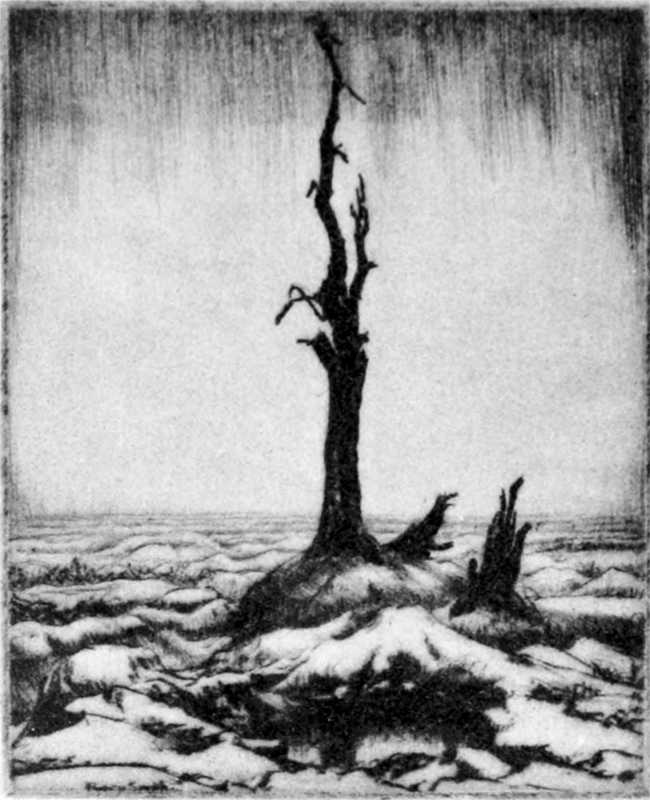
I have not invented anything in this book. The sketches
and poems were written between 1914 and 1918, during
four years of hospital work with the French Army. The
five stories I have written recently from memory; they
recount true episodes that I cannot forget.
I have called the collection of fragments “The Forbidden
Zone” because the strip of land immediately behind the
zone of fire where I was stationed went by that name in
the French Army. We were moved up and down inside
it; our hospital unit was shifted from Flanders to the
Somme, then to Champagne, and then back again to
Belgium, but we never left “La Zone Interdite.”
To those who find these impressions confused, I would
say that they are fragments of a great confusion. Any
attempt to reduce them to order would require artifice
on my part and would falsify them. To those on the
other hand who find them unbearably plain, I would say
that I have blurred the bare horror of facts and softened
the reality in spite of myself, not because I wished to do
so, but because I was incapable of a nearer approach
to the truth.
I have dared to dedicate these pages to the Poilus who
passed through our hands during the war, because I believe
they would recognise the dimmed reality reflected in these
pictures. But the book is not meant for them. They know,
not only everything that is contained in it, but all the rest
that can never be written.
The Author.
PART ONE THE NORTH
BELGIUM
Mud: and a thin rain coming down to make
more mud.
Mud: with scraps of iron lying in it and the
straggling fragment of a nation, lolling, hanging
about in the mud on the edge of disaster.
It is quiet here. The rain and the mud
muffle the voice of the war that is growling
beyond the horizon. But if you listen you can
hear cataracts of iron pouring down channels
in the sodden land, and you feel the earth
trembling.
Back there is France, just behind the windmill.
To the north, the coast; a coast without
a port, futile. On our right? That’s the
road to Ypres. The less said about that road
the better: no one goes down it for choice—it’s
British now. Ahead of us, then? No, you
can’t get out that way. No, there’s no frontier,
just a bleeding edge, trenches. That’s
where the enemy took his last bite, fastened
his iron teeth, and stuffed to bursting,
stopped devouring Belgium, left this strip,
these useless fields, these crumpled dwellings.
Cities? None. Towns? No whole ones.
Yes, there are half a dozen villages. But there
is plenty of mud, and a thin silent rain falling
to make more mud—mud with things lying in
it, wheels, broken motors, parts of houses,
graves.
This is what is left of Belgium. Come, I’ll
show you. Here are trees drooping along a
canal, ploughed fields, roads leading into sand
dunes, roofless houses. There’s a farm, an
old woman with a crooked back feeding chickens,
a convoy of motor lorries round a barn;
they squat like elephants. And here is a village
crouching in the mud: the cobblestone street
is slippery and smeared with refuse, and there
is a yellow cat sitting in a window. This is the
headquarters of the Belgian Army. You see
those men, lolling in the doorways—uncouth,
dishevelled, dirty? They are soldiers. You
can read on their heavy jowls, in their stupified,
patient, hopeless eyes, how boring it is to
be a hero.
The king is here. His office is in the schoolroom
down the street, a little way past the
church, just beyond the dung heap. If we
wait we may see him. Let’s stand with these
people in the rain and wait.
A band is going to play to the army. Yes, I
told you, this is the army—these stolid men
standing aimlessly in the drizzle, and these
who come stumbling along the slippery
ditches, and those leaning in degraded doorways.
They fought their way out of Liege and
Namur, followed the king here; they are what
is left of plucky little Belgium’s heroic army.
And the song of the nation that comes from
the horns in the front of the wine shop, the
song that sounds like the bleating of sheep,
can it help them? Can it deceive them?
Can it whisk from their faces the stale despair,
the unutterable boredom, and brighten their
disappointed eyes? They are so few, and they
have nothing to do but stand in the rain waiting.
When the band stops they will disappear
into the estaminet to warm their stomachs
with wine and cuddle the round-cheeked girls.
What else can they do? The French are on
one side of them, the British on the other, and
the enemy in front. They cannot go back; to
go back is to retreat, and they have been retreating
ever since they can remember. They
can retreat no farther. This village is where
they stop. At one end of it is a pigsty, at the
other end is a grave-yard, and all about are
flats of mud. Can the noise, the rhythmical
beating of the drum, the piping, the hoarse
shrieking, help these men, make them believe,
make them glad to be heroes? They have nowhere
to go now and nothing to do. There is
nothing but mud all about, and a soft fine rain
coming down to make more mud—mud with
a broken fragment of a nation lolling in it,
hanging about waiting in it behind the shelter
of a disaster that has been accomplished.
Come away, for God’s sake—come away.
Let’s go back to Dunkerque. The king? Didn’t
you see him? He came out of the schoolhouse
some time ago and drove away toward
the sand-dunes—a big fair man in uniform.
You didn’t notice? Never mind. Come away.
BOMBARDMENT
The wide sweet heaven was filling with light:
the perfect dome of night was changing into
day. A million silver worlds dissolved from
above the earth: the sun was about to rise in
stillness: no wind stirred.
A speck appeared in the great immensity.
It was an aeroplane travelling high through
the mysterious twilight. The sound of the
whirring of its engine was lost in the depthless
air: like a ghost it flew through the impalpable
firmament: it was the only thing
that moved in heaven and earth.
The unconscious map lay spread out beneath
it: the wide plain, the long white beach and
the sea, lay there exposed to its speeding eye.
On the face of the plain were villages and
cities; the dwellings of men who had put
their trust in the heavens and had dared to
people the earth.
The aeroplane turned in the sky and began
circling over the town.
The town far below was asleep. It lay pillowed
on the secure shore; violet shadows
leaned against its pale buildings; there was
no movement in its streets; no smoke from its
chimneys. The ships lay still in the deep
close harbour; their masts rose out of the
green water like reeds thickly growing with
the great funnels and turrets of warships like
strange plants among them. The sea beyond
the strong breakwater was smooth as a silver
plate; there was no sound anywhere.
The aeroplane descended in slow spirals
upon the town, tracing an invisible path
through the pearly air. It was as if a messenger
from heaven were descending upon the
people of the town who dreamed.
Suddenly a scream burst from the throat of
the church tower. For an instant the sky
seemed to shiver with the stab of that wail of
terror rising from the great stone throat.
Surely the town would waken in a panic—and
yet, no, nothing stirred. There was no
sound or movement in any street and the sky
gave back no sign.
The aeroplane continued to descend until
it looked from the church tower like a mosquito;
then there dropped something from it
that flashed through the air, a spark of fire.
Silence had followed the scream.
The aeroplane, superbly poised now in the
spotless sky, watched the buildings below it as
if waiting for some strange thing to happen;
and presently, as if exorcised by the magic
eye of that insect, a cluster of houses collapsed,
while a roar burst from the wounded
earth.
The bombardment had commenced. The
big gun hiding in the sand-dunes in Belgium
had obeyed the signal.
Still, the neat surface of the wide city
showed no change, save in that one spot where
the houses had fallen. How slow to wake the
town was! The daylight brightened, painting
the surfaces of the buildings with pale
rose and primrose. The clean empty streets
cut the city into firm blocks of buildings; the
pattern of the town spread out on the earth,
with its neat edges marked by walls and
canals, gleamed like a varnished map.
Then the siren in the church tower
screamed again; its wail was followed by a
second roar and a ragged hole yawned in the
open square in the middle of the town.
The aeroplane circled smoothly, watching.
And at last signs of terror and bewilderment
appeared in the human ant hill beneath
it. Distracted midgets swarmed from the
houses: this way and that they scurried, diving
into openings in the ground: swift armoured
beetles rushed through the streets;
white jets of steam rose from the locomotives
in the station yard: the harbour throbbed.
Again there was a great noise, and a cloud
of debris was flung into the air as from a volcano,
and flames leapt after it. A part of
the wharf with a shed on it reeled drunkenly
into the sea with a splash.
The white beach was crawling now with
vermin; the human hive swarmed out on to
the sands. Their eyes were fixed on the evil
flying thing in the sky and at each explosion
they fell on their faces like frantic worshippers.
The aeroplane cavorted, whirling after its
tail in an ecstacy of self-gratification. Down
among the sand-dunes it could see the tiny
black figures of men at the anti-aircraft guns.
These were the defenders of the town; they
had orders to shoot to death a mosquito floating
in boundless heaven. The little clouds
that burst in the sunlight were like materialised
kisses.
The face of the city had begun to show a
curious change. Scars appeared on it like the
marks of smallpox and as these thickened on
its trim surface, it seemed as if it were being
attacked by an invisible and gigantic beast,
who was tearing and gnawing it with claws
and teeth. Gashes appeared in its streets, long
wounds with ragged edges. Helpless, spread
out to the heavens, it grimaced with mutilated
features.
Nevertheless the sun rose, touching the aeroplane
with gold, and the aeroplane laughed.
It laughed at the convulsed face of the town,
at the beach crawling with vermin, at the ant
people swarming through the gates of the city
along the white roads; it laughed at the warships
moving out of the harbour one by one
in stately procession, the mouths of their guns
gaping helplessly in their armoured sides.
With a last flick of its glittering wings, it darted
downward defiant, dodging the kisses of
shrapnel, luring them, teasing them, playing
with them: then, its message delivered, its
sport over, it flew up and away in the sunshine
and disappeared. A speck in the infinite sky,
then nothing—and the town was left in convulsions.
THE CAPTIVE BALLOON
There is a captive balloon in the sky, just
over there. It looks like an oyster floating in
the sky.
They say that a man lives in the balloon.
They say that from the balloon you can see
the enemy’s trenches and the country behind
that is held by the enemy, but from here we
can see nothing, only trees and farmhouses
and carts going along the road, and the captive
balloon.
Aeroplanes sail over our heads sometimes.
They gleam in the sun, they move past with
a great whirring, they fly fearlessly toward the
enemy’s country. They whirl about and disappear
and come again, swooping down over
us with arrogant wings. They are beautiful,
proud and adventurous.
But the captive balloon is tied forever by a
string to a cabbage field. It has been just over
there ever since we have been here and that
is a long time now. It never moves. It never
comes down or goes up. It floats there while
the biplanes and the monoplanes circle round
it.
What does it do? It is an oyster in the
sky, keeping an eye on the Germans.
THE SQUARE
Below my window in the big bright square
a struggle is going on between the machines
of war and the people of the town. There are
the motor cars of the army, the limousines,
and the touring cars and the motor lorries and
the ambulances; and there are the little bareheaded
women of the town with baskets on
their arms who try to push the monsters out
of their way.
The motors come in and go out of the four
corners of the square, and they stand panting
and snorting in the middle of it. The limousines
are full of smart men in uniforms with
silver hair and gold braid on their round red
hats. The touring cars, too, are full of uniforms,
but on the faces of the young men who
drive them is a look of exhaustion and excitement.
The motors make a great noise and a
great smell and a great dust. They come into
the square, hooting and shrieking; they draw
up in the square with grinding brakes. The
men in them get out with a flourish of capes:
they stamp on the pavement with heavy boots;
they salute one another stiffly like wooden
toys, then disappear into the buildings where
they hold murderous conferences and make
elaborate plans of massacre.
The motor cars have all gone wrong. They
are queer. They are not doing what they were
designed to do when they were turned out of
the factories. The limousines were made to
carry ladies to places of amusement: they are
carrying generals to places of killing. The
limousines and the touring cars and the motor
lorries are all debauched; they have a depraved
look; their springs sag, their wheels waver;
their bodies lean to one side. The elegant
limousines that carry the generals are crusted
with old mud; the leather cushions of the touring
cars are in tatters; the great motor lorries
crouch under vast burdens. They crouch in
the square ashamed, deformed, very weary;
their unspeakable burdens bulge under canvas
coverings. Only the snobbish ambulances
with the red crosses on their sides have
self-assurance. They have the self-assurance of
amateurs.
The business of killing and the business of
living go on together in the square beneath
the many windows, jostling each other.
The little women of the town are busy; they
are dressed in black; they have children with
them. Some lead children by the hand, others
are big with children yet unborn. But all the
women are busy. They ignore the motors;
they do not see the fine scowling generals, nor
the strained excited faces in the fast touring
cars, nor the provisions of war under their
lumpy coverings. They do not even wonder
what is in the ambulances. They are too busy.
They scurry across to the shops, instinctively
dodging, and come out again with bundles;
they talk to each other a little without smiling;
they stare in front of them; they are staring at
life; they are thinking about the business of
living.
On Saturdays they put up their booths on
the cobble stones and hold their market. The
motors have to go round another way on market
days. There is no room in the square for
the generals, nor for the dying men in the
ambulances. The women are there. They
buy and sell their saucepans and their linen
and their spools of thread and their fowls and
their flowers; they bargain and they chatter;
they provide for their houses and their children;
they give oranges to their children, and
put away their coppers in their deep
pockets.
As for the men on the stretchers inside the
smart ambulances with the bright red crosses,
they do not know about the women in the
square. They cannot hear their chattering,
nor see the children sucking oranges; they can
see nothing and hear nothing of the life that
is going on in the square; they are lying on
their backs in the dark canvas bellies of the
ambulances, staring at death. They do not
know that on Saturday mornings their road
does not lie through the big bright square because
the little women of the town are busy
with their market.
SENTINELS
All these little men coming out of their
boxes along the road—.
The boxes are oblong. They stand on end
by the ragged ditches. The men pop out of
the boxes into the middle of the road. They
are blurred and shapeless. They wave dirty
flags in weary warning. A motor car slows up
and stops before the box. The languid menace
of these figures stops it; their joyless power
holds it with its engines panting.
The coats of the little men who come out of
the boxes are too big for them; their rifles with
the bayonets are too heavy. The light of the
sky in the daytime is too strong, and the darkness
of the night is too dark, and the many
motors that pass the barriers are too many.
The vague vast meaning of their minute task
is too much for them.
It is stupid to live in an oblong box in a
ditch, and to pop out at the sound of a motor
and wave a flag and look at a piece of blue
paper or a piece of pink paper with writing on
it that is hard to read. There is a name written
on the paper, but how is one to know
whether the name written on the paper is the
name that was given to the man in the motor
by his parents when he was a baby in a cradle?
How is one to know? It is one’s business to
look at the paper and at the man’s face. What
good does that do? What does it matter? It
is one’s duty to look at the paper. It is one’s
duty to look at the man. It is one’s duty to
find out where he has come from and where he
is going. La Panne, Dunkerque, Bourburg,
Calais, Boulogne; Boulogne, Calais, Bourburg,
Dunkerque, La Panne, it is always the same.
It is always written there on the paper, with
the stamp and the signature of some well-educated
officer who sits in some warm room
before piles of papers. These papers wander
out from his room along the road.
It is always the same on the road. It is always
the same. All these motor cars full of
men keep coming along the road—the long
road that leads to the war. Sometimes it is hot
and there is sunlight and dust on the road, and
the smell of petrol is strong; sometimes it is
cold and the rain beats down from the sky;
sometimes it is night and there is a lantern to
wave instead of a flag, and there is the fear of
falling asleep. But the road is always the same
and the box by the road is always the same,
and deep down there is the same truth always.
All these motors and all these scornful men
that stop to show impatient papers will disappear
up the road for ever. Even those who
come down the road will go up again and will
be destroyed and will never come back. So it
is good to be in the box. As long as one is in
the box one will not be destroyed. These fools
who are angry because they are stopped on the
road that leads to the war, they will be destroyed.
The generals who do not look and the
colonels who glance sideways, and the lieutenants
who make bad jokes—the English and
the French and the Belgians—they will all be
destroyed.
They wear fine uniforms. Their faces are
clean. They have been eating good food.
They receive back their papers disdainfully.
They wear gloves. They will be destroyed
with their gold braid and their medals and the
good food inside them.
Their motors dash off flinging mud into the
face from their hind wheels. They disappear.
The road is empty.
THE REGIMENT
There was no sign of horror in the heavens
or upon the earth. The summer world was
deep, immense, beautiful. High white clouds
were moving slowly towards Belgium, moving
without movement through a sky ineffably
blue, superb castles of white vapour, floating
towards a land called No Man’s Land, and
their shadows were flung like banners far below
over the green meadows and fields of
yellow corn.
An aeroplane was visiting the romantic city
of the sky. A fearless, capricious, gay glittering
creature of pleasure, it flew through the
glistening portals and disappeared, bent on
mysterious adventure.
The smiling country was enjoying itself.
The caress of the wind sent shudders of pleasure
through the corn and a fluttering delight
through the trees. Along the road banks scarlet
poppies were winking their little black eyes.
Like grizzled dwarfs squatting on pedestals in
the fields, the windmills waved their arms in
grotesque gaiety.
War had that day the aspect of a country
fair. The armies were gipsy caravans vagabonding
over the country. Swarms of little
men were housekeeping in the open. Their
camp fires, their pots and pans, and their garments
hung out to dry on bushes, twinkled
and fluttered through the furbelowed country
side. Here and there near a stream, a cluster
of tents, gaudily painted, suggested a circus.
The snug villages tucked between the
fields of high golden corn and scattered
clumps of woodland hummed like beehives,
sheltering an army in their warm farmyards
and barns and cottages, and the army in reserve
waited comfortably, sharing the lovely
day with the cattle, the great farm horses, the
pigs and chickens.
Ten miles from the Belgian frontier a lowbrowed,
moody town dozed on the banks of a
canal. Folded close between its great gates,
it was deep as a dark well in the midst of the
bright flighty country. The dull ochre walls
of the houses soaked up the sunlight. Their
shutters were closed. The barges in the canal
were motionless, their great bosoms sunk deep
in the cool water. From the quiet streets and
close-lidded houses the spirit of the place was
being distilled in the sunlight. It was as if the
sun were drawing the melancholy soul out of
the weary, proud old body of the town.
Reluctantly it gave up its secret. The
memories of its troubled history and of how it
had defended a passionate egoism on the
threshold of an alien nation, spread upon the
sunny air like a dark and bitter perfume.
A regiment was marching along the high
road towards the town. In the distance, looking
towards Belgium, you could see it coming
down the white road. It was a shadow moving
across the bright surface of the country
against the wind and against the shadows of
the clouds. It looked like the shadow of a
snake.
There was, however, no snake visible in the
lovely sky, and on a nearer view the shadow
became a column of hunchbacks, a herd of
deformed creatures driven on together, each
one like another one.
It was a French territorial regiment. It had
come out of the trenches that morning, and
from the trenches it was marching toward the
town.
It was a moving mass of men covered over
with the cloth of fatigue. Over them was
their suffocating weariness, and under them
was the dust of the road. They moved along,
bending forward as if the space between the
weight that lay on them and the dusty road
under them was not wide enough to hold
them upright. They moved laboriously
through the dust, as if they were dragging
chains. But there was no sound from them
save the dull sound of their feet tramping the
road.
The regiment was a regiment of old men.
Their faces were old and their clothes were
old and their bodies were old, and the spirit in
them was old. There was no youth in any one
of them.
They marched steadily along the road.
Their gait was the steady jolting gait of weary
animals. They did not look quite like men.
One could not be certain what kind of men
they were. One could only be certain that
they were not young. They had not quite the
colour nor the shape of men. The war had
spread over them its own colour. They were
dark against the bright mirage of summer.
They were of a deep, dull courageous hue.
Their faces and their hands and their coats
were all stained with the same stain, no
longer blue, no longer brown. Fatigue and
suffering and dirt had soaked through them
and had made them this colour.
And they were all deformed, and certainly
their deformity was the deformity of the war.
They were not misshapen in different ways.
They were all misshapen in the same way.
Each one was deformed like the next one.
Each one had been twisted and bent in the
same way. Each one carried the same burden
that bowed his back, the same knapsack, the
same roll of blanket, the same flask, the same
dangling box, the same gun. Each one
dragged swollen feet in the same thick-crusted
boots. The same machine had twisted
and bent them all. They did not look quite
like men, and yet they were men.
Nor did they behave like men. They did
not look about them as they marched along
the road. They did not talk as they marched
close together. They did not stop marching,
never for a moment did they stop marching.
They did not shift their burdens to ease
them. They did not notice the milestones as
they passed. They paid no attention to the
signposts at the cross roads. They did not
wipe the sweat off their faces. They did
not behave like men walking through pleasant
country, and yet they assuredly were men.
I saw in their eyes that they were men.
They marched with their eyes fixed on the
rough bent backs of those in front, on the
rough backs of their companions who were
too old to be comrades. And in their deep
fixed eyes, sunk under grizzled eyebrows,
there was a strange expression, the expression
of profound knowledge. They were old men
and they knew. There were many things they
did not know; they did not know where they
were going; they did not know why they were
going there; they did not know how far they
had to go, or how long they would rest there;
but two things they did know; they knew
that they were not going home, and they knew
that they were condemned to death. They
knew this; they had always known. They
understood and they did not complain.
France was at war. They were old men.
Their sons had been killed. They were taking
the place of their sons.
There was no elasticity in them, nor any
enthusiasm, nor any passion; but they were
patient. Being old men, there was nothing
they could not accept; there was nothing
they could not endure. They had endured
fatigue and cold and hunger and wet. They
had endured so long that they had ceased to
think about these things. Their weariness was
a thing of such long standing that they thought
of it no more. Their uncleanness had become
a habit to them. Suffering was a part of their
rations. They were acclimatised to misery.
Death was a part of the equipment they carried
always with them. The war had no
interest for them nor any terror. They accepted
the war. It was a thing to be endured.
They were enduring it.
There was only one thing they wanted, and
this thing they wanted without hope. They
wanted to go home, and they knew they were
not going home.
Out of the deep comfort of the warm dear
holes they had dug for themselves in the land
they loved, these old men had been called
to war, the bleak desert of death. Each
one had been torn up out of the deep place
he had made. Like old trees, strong rooted,
they had grown into the soil of France,
and they had been torn up and carted away
to die, and in the place each one had left
there was a gaping hole.
They remembered their homes as they
marched along the road. They did not look
about them as they walked through the bright
country that was enjoying itself, because this
country was not their home and they were
too tired to look up.
They were coming away from the trenches
and they were tired. They were relieved of
the strain of imminent death, but the relief
made them only more tired. And what was
the good of coming away from the trenches
if they were not going home? Long ago they
had gone into the trenches. They had
crawled laboriously into them, their old bodies
creaking, their gouty souls wincing, and they
had learned how to live in those ditches.
Carefully with great caution they had learned
how to endure them. They had smoked innumerable
pipes in them and had chewed
loaves of bread; they had slept and waked and
received letters from home. Then, with the
same creaking of their joints they had come
out of the trenches. Some of them had not
come out, but those that were left had come
out.
Now they were going along the road.
They did not know where they were going;
they only knew that they were not going home.
It was all the same to them as long as they
could not go home.
The aeroplane, glittering in the sun, was
still circling through the citadel of the sky.
High it flew. It flew high! It flew higher
again, and still higher.
The regiment was chained to the earth.
The men were chained to the ground. They
were heavy; they were fastened down. The
mass of them jolted along, a dark weight
scraping the road. Their flag alone was lifted.
It moved fluttering above their heads, tattered
and soiled. It was there for an emblem of
hope. They ignored it. They did not see it.
Long ago they had ceased to regard it.
So they marched toward the town.
In the centre of the big sleepy square of the
town was a group of fine little men in costume.
They were waiting for the regiment that was
marching along the road, and they were waiting
for the General who commanded the army,
the General-in-Chief, their own General.
These fine little men were officers. One could
not be certain that they had anything to do
with the war, but one could be certain that
they were officers. Their trim figures, polished
and clean and neatly put together and
nicely covered in scarlet and blue cloth and
brown leather, stood upright in the centre of
the square. The wide expanse of cobblestones
on which they stood glistened like a sheet of
opaque glass. From the four sides of the
square the wise houses watched under ruminating
brows. It was difficult to tell what the
houses thought of the officers in the square.
It was difficult to tell what the officers were
doing there in the middle of the square. Certainly
they were waiting, but they seemed to
be busily, nervously waiting. They could not
keep still. They seemed conscious of the
stare of the houses. They drew themselves up
very straight. Their arms made quick gestures;
their gloved hands twirled their moustaches;
their neat heels tapped the pavement
smartly. They bowed to one another elaborately.
There was variety among these officers. No
one was like another one. Not one had gestures
like another one. Not one had clothes
like another one. Certainly they were individuals.
One was a slim, graceful one; one
was a flabby one; one was an elegant one; one
a tall, very stiff one; one was a pot-bellied one.
Each remained the same one he had been before
the war. They were varnished over with
a military varnish, but beneath the varnish
appeared distinctly the small individuality of
each one. It was curious to see such fine
shiny men in the centre of the old haggard
town.
The hard knobbled palm of the square held
them up to the view of the sky.
Through the east gate of the town the regiment
came into the town dragging its weight
and its darkness, and it poured its darkness
into the square. It poured through the gap of
the street into the square, and it came to a
stand. It was a dark mass of tenacity, inert,
incurious, obstinate, one man beside another
man, each one like the next one, close packed
together between the pale dreaming houses.
The regiment brought truth into the
square. It was a fact, a darkness, a weight
filling one side of the square.
And with the regiment war appeared in the
square.
The town shuddered under the tramping
feet of the regiment.
The men of the regiment stood close packed
together. The mass of their round metal
helmets gleamed like a beach of smooth pebbles
before the windows of the houses, and their
bayonets shot up like a forest of knives flashing
in the sunlight.
The town shuddered. But there was sympathy
between the regiment and the town.
The town said to the regiment:
“You old ones, you are strangers; but we
know you. You come from the war. You are
welcome.”
The regiment said to the town:
“You are kind, but you’d do well to keep
your welcome for those who can use it. We
are old. We want nothing since we cannot go
home.”
“Rest here awhile, old ones,” repeated the
town.
“No, we cannot stay. We do not belong
here. You are old, too, like us; but we are too
tired to make friends with you, though we
thank you.”
The group of officers said to the regiment:
“Look spry now. You’re to be inspected
by the General, and we are to receive decorations.”
The regiment didn’t answer. It had nothing
to say to the staff officers. It did not
recognise them. Its own officers—yes; but
these it did not know, and the staff officers
were embarrassed by the obstinacy and the
stupidity and weariness of the regiment. They
fidgeted on the edge of its darkness.
While the regiment and the officers waited
in the square for the General, the aeroplane
flew down from the cloud castles in the sky
and circled over the town crying gaily:
“Look at me. Look at me, you heavy old
ones, I can fly.”
The officers looked up at the aeroplane.
The regiment did not look up.
The officers said to themselves:
“That silly aeroplane is amusing itself, but
we are going to receive decorations.”
The regiment remained silent. It took no
notice.
A bugle sounded, heralding the approach of
the General, but instead of the General a
woman came into the square. She came in a
motor with glass windows. Her shining car
stopped in front of the regiment. She opened
the door of the motor and put out her white
foot and stepped down, and her delicate body
dressed in the white uniform of a hospital was
exposed to the view of the officers and the
regiment. Her head was bound close with a
white kerchief. A red cross burned on her
forehead.
She was a beautiful animal dressed as a nun
and branded with a red cross. Her shadowy
eyes said to the regiment:
“I came to the war to nurse you and comfort
you.”
The regiment said nothing. It did not
know what to say. It was merely puzzled.
Her red mouth said to the officers:
“I am here for you.”
And the officers said:
“We know why you are here.”
The eyes of the officers followed the white
shining woman as she moved through the sunlight,
and they rested on her as she stood in
a shadowed doorway.
The presence of the woman was a teasing
current of delight touching the officers.
To the regiment the woman was a puzzle,
but the old ones were too tired to bother about
puzzles.
To the town she was a strange fantastic
thing, like a white peacock.
The town said to itself: “This curious creature
has gone astray. It has the appearance of
being expensive. It must have escaped from
its owner who, no doubt, prizes it highly; but
that is none of our business.”
The clock in the church tower marked
three o’clock.
Suddenly a cry burst from the regiment,
and a shout burst from the trumpets and horns
and drums of the regiment. It rang through
the square shivering against the houses. The
little people of the town came to their doorways.
The rosy faces of the comfortable
women and the round children spread round
the square like a smile, and the hoarse passionate
voice of the old rusty regiment rose
bravely in welcome.
The General came.
He appeared at the far end of the square, a
small solid figure standing alone. He existed
apart, isolated. He stood at a distance, a solitary
man, concentrating the attention of the
town.
He came across the square alone, growing
larger and larger as he came. He covered the
ground with long strides. His gloved hand
was on the hilt of his sword. When he reached
the centre of the square, he wheeled and faced
the regiment, a stone giant, solid as granite,
commanding the attention of every man in the
square. He ignored the officers and faced the
regiment. And the town watching saw a
curious thing. The bodies of the hunchbacks
straightened under the eyes of the General.
It was as if the iron arm of the stone man
raised to salute them had lifted the weariness
from the deformed shoulders of those old ones.
It was evident to the town that the General
understood the regiment. It was evident that
he knew what they knew. And with this dark
knowledge he faced them. The trumpets and
drums were hushed. A strange silence filled
the square, and in silence the General summoned
the regiment to meet his eyes. He
took full in the face its dumb message. The
weight he had lifted from it fell on him. The
darkness drowning it flowed into him. He
accepted it. He did not dodge it or bend under
the weight of it. He stood rigid before the
eyes of the regiment challenging its knowledge.
The weary eyes of the old territorials
were fixed on his white head and deep stony
face. They searched him, and they saw that
he knew what they knew, that there was
nothing about the war that he didn’t know,
and they were satisfied.
The General said to the regiment:
“You are mine. Your sons have been killed.
France had need of you and you came. You
must die for France as your sons died. You
left your homes to come to the war. You will
never go home again. You will go back to the
trenches. It is I who will send you back there.
Again and again you will go back to those
ditches, by my orders, until you are killed as
your sons were killed. You are mine
for the war. I carry the weight of your
obedience and your patience. You will be
patient until death. I know you.”
The regiment answered the General:
“It is for our homes and for our sons. We
are here because our sons are gone to protect
the homes we cannot go back to. You are the
one we obey.”
There was truth between the regiment and
the General.
And the old town looking on, said:
“Clearly this is a great man. A hundred
years ago there came here such a one as this,
and he was a great man. We, too, are acquainted
with war and with armies. We have
seen thousands of little men, and we have seen
some big men. We know that this is a great
man.”
From the regiment the General turned to
the officers and the town perceived that the
relation of the General to his officers was a
complex thing. It was as complicated
as a formal dance or pantomime on a
stage. The officers knew their steps. They
had apparently rehearsed the performance.
The General treated the officers with elaborate
ceremony. He was there to decorate them.
The decorating of the officers was a ceremony,
and he performed the ceremony with the skill
of an actor. It was a pretty play in which the
General played the principal rôle. He played
it with solemnity. He saluted each one in
turn, the long one, and the pale one and the
pot-bellied one. He drew his sword from its
scabbard; it flashed in the sun as he laid it
upon their shoulders. On the left shoulder
and upon the right shoulder of the Colonel he
laid his sword. He pinned a medal on the
Colonel’s elegant chest and then he kissed him
on the left cheek and on the right cheek. He
did the same with each officer in turn. He
called each one by name and addressed him
in a loud voice of commendation. He laid on
each one his sword and he kissed each one on
both cheeks, and on the chest of each one he
left a bit of ribbon and a bright medal.
The regiment in the background was the
chorus for this pretty play. After each kiss and
each decoration the trumpets and drums of
the regiment cried aloud in congratulation.
Kisses and bits of ribbon and a graceful
flashing sword, these little things passed between
the General and his officers. No truth
passed between them—nothing but a play.
And the play was ended.
And the General went away as he had come,
taking with him the pride and the courage that
he had brought into the square.
The face of the town grew dull as it watched
him go. The women and the children disappeared
into the dim houses. The white
strange woman looked after him with
vague, troubled eyes, not noticing the
officers who advanced towards her, elaborately
bowing.
The regiment lowered its bayonets at his
going and bowed its shoulders. Its darkness
grew more dark, and its weariness more heavy.
When the General had gone it became again
a shapeless mass of dark, weary hunchbacks.
The clock in the church tower marked five
o’clock when the regiment left the square.
It marched out of the town and along the
road as it had come.
A regiment of old men.
They did not know where they were going.
It did not matter to them where they were
going. They did not look about them as they
marched. They did not look before them, nor
behind them. They did not look up at the
cloudless sky, nor did they wonder where the
clouds had gone. They did not remember the
beautiful clouds of the morning that had
sailed serenely over the enemy’s country.
They did not remember the sympathy of the
town, nor the complacency of that fine little
group of officers, nor the glittering of the
bright medals, nor the insolence of the white
woman who watched. They did not very
much remember the grandeur of the General,
nor the pride they had known in the General.
They remembered their homes. The sweat
ran down their faces under their helmets.
Their feet were heavy on the road. They
marched steadily, jolting along, patient, weary
animals who remembered.
There was no sign of horror upon the earth.
There was not a cloud in the sky. The afternoon
sunlight was golden over the land. The
regiment passed like a shadow through the
bright country and was lost to view.
THE BEACH
The beach was long and smooth and the
colour of cream. The woman sitting in the
sun stroked the beach with the pink palm of
her hand and said to herself, “The beach is
perfect, the sun is perfect, the sea is perfect.
How pretty the little waves are, curling up the
beach. They are perfectly lovely. They are
like a lace frill to the beach. And the sea is a
perfectly heavenly blue. It is odd to think of
how old the beach is and how old the sea is,
and how much older that old, old fellow, the
fiery sun. The face of the beach is smooth as
cream and the sea to-day is a smiling infant,
twinkling and dimpling, and the sun is
delicious; it is burning hot, like youth itself.
It is good to be alive. It is good to be young.”
But she could not say this aloud so she said
to the man beside her in the wheel chair:
“How many millions of years has it taken to
make the beach? How many snails have left
their shells behind them, do you think, to
make all this fine powdery sand? A million
billion?” She let the sand run through her
strong white fingers and smiled, blinking in
the sun and looked away from the man in the
invalid chair beside her toward the horizon.
The man wriggled and hitched himself
clumsily up in his chair; an ugly grimace
pulled his pale face to one side. He dared not
look down over the arm of his wheel chair at
the bright head of the woman sitting beside
him. Her hair burned in the sunlight; her
cheeks were pink. He stole a timid, furtive
look. Yes, she was as beautiful as a child.
She was perfectly lovely. A groan escaped
him, or was it only a sigh?
She looked up quickly. “What is it, darling?
Are you in pain? Are you tired? Shall
we go back?” Her voice sounded in the
immense quiet of the beach like a cricket
chirping, but the word “darling” went on
sounding and sounding like a little hollow
bell while she searched his features, trying to
find his old face, the one she knew, trying to
work a magic on him, remove and replace the
sunken eyes, the pinched nose, the bloodless
wry mouth. “He’s not a stranger,” she said
to herself. “He’s not.” And she heard the
faint mocking echo, “Darling, darling,” ringing
far away as if a bell-buoy out on the water
were saying “Darling, darling,” to make the
little waves laugh.
“It’s only my foot, my left foot. Funny,
isn’t it, that it goes on throbbing. They cut it
off two months ago.” He jerked a hand backward.
“It’s damn queer when you think of it.
The old foot begins the old game, then I look
down and it’s not there any more, and I’m
fooled again.” He laughed. His laughter was
such a tiny sound in the great murmur of the
morning that it might have been a sand-fly
laughing. He was thinking, “What will become
of us? She is young and healthy. She
is as beautiful as a child. What shall we do
about it?” And looking into her eyes he saw
the same question, “What shall we do?” and
looked quickly away again. So did she.
She looked past him at the row of ugly
villas above the beach. Narrow houses, each
like a chimney, tightly wedged together,
wedges of cheap brick and plaster with
battered wooden balconies. They were new
and shabby and derelict. All had their shutters
up. All the doors were bolted. How stuffy
it must be in those deserted villas, in all those
abandoned bedrooms and kitchens and parlours.
Probably there were sand-shoes and
bathing dresses and old towels and saucepans
and blankets rotting inside them with the
sand drifting in. Probably the window panes
behind the shutters were broken and the
mirrors cracked. Perhaps when the aeroplanes
dropped bombs on the town, pictures fell
down and mirrors and the china in the dark
china closets cracked inside these pleasure
houses. Who had built them?
“Cowards built them,” he said in his new
bitter, rasping voice, the voice of a peevish,
irritable sandfly. “Built them to make love in,
to cuddle in, to sleep in, hide in. Now they’re
empty. The blighters have left them to rot
there. Rotten, I call it, leaving the swanky
plage to go to the bad like that, just because
there’s a war on. A little jazz now and a
baccarat table would make all the difference,
wouldn’t it? It would cheer us up. You’d
dance and I’d have a go at the tables. That’s
the casino over there, that big thing; that’s not
empty, that’s crowded, but I don’t advise you
to go there. I don’t think you’d like it. It’s
not your kind of a crowd. It’s all right for me,
but not for you. No, it wouldn’t do for you—not
even on a gala night.
“They’ve a gala night in our casino whenever
there’s a battle. Funny sort of place.
You should watch the motors drive up then.
The rush begins about ten in the evening and
goes on till morning. Quite like Deauville
the night of the Grand Prix. You never saw
such a crowd. They all rush there from the
front, you know—the way they do from the
race-course—though, to be sure, it is not
quite the real thing—not a really smart crowd.
No, not precisely, though the wasters in
Deauville weren’t much to look at, were they?
Still, our crowd here aren’t precisely wasters.
Gamblers, of course, down and outs, wrecks—all
gone to pieces, parts of ’em missing, you
know, tops of their heads gone, or one of their
legs. When they take their places at the
tables, the croupiers—that is to say, the doctors—look
them over. Come closer, I’ll
whisper it. Some of them have no faces.”
“Darling, don’t.” She covered her own
face, closed her ears to his tiny voice and
listened desperately with all her minute will
to the large tranquil murmur of the sea.
“Darling, darling,” far out the bell-buoy was
sounding.
“Bless you,” said the thin, sharp, exasperated
sandfly voice beside her. “Little
things like that don’t keep us away. If we
can’t walk in we get carried in. All that’s
needed is a ticket. It’s tied to you like a
luggage label. It has your name on it in case
you don’t remember your name. You needn’t
have a face, but a ticket you must have to get
into our casino.”
“Stop, darling—darling, stop!”
“It’s a funny place. There’s a skating rink.
You ought to see it. You go through the
baccarat rooms and the dance hall to get to
it. They’re all full of beds. Rows of beds
under the big crystal chandeliers, rows of beds
under the big gilt mirrors, and the skating
rink is full of beds, too. The sun blazes down
through the glass roof. It’s like a hot-house in
Kew Gardens. There’s that dank smell of a
rotting swamp, the smell of gas gangrene.
Men with gas gangrene turn green, you know,
like rotting plants.” He laughed. Then he
was silent. He looked at her cowering in the
sand, her hands covering her face, and looked
away again.
He wondered why he had told her these
things. He loved her. He hated her. He was
afraid of her. He did not want her to be kind
to him. He could never touch her again and
he was tied to her. He was rotting and he was
tied to her perfection. He had no power over
her any more but the power of infecting her
with his corruption. He could never make her
happy. He could only make her suffer. His
one luxury now was jealousy of her perfection,
and his one delight would be to give in to the
temptation to make her suffer. He could only
reach her that way. It would be his revenge
on the war.
He was not aware of these thoughts. He
was too busy with other little false thoughts.
He was saying to himself, “I will let her go.
I will send her away. Once we are at home
again, I will say good-bye to her.” But he
knew that he was incapable of letting her go.
He closed his eyes. He said to himself
“The smell of the sea is good, but the odour
that oozes from the windows of the casino is
bad. I can smell it from here. I can’t get the
smell of it out of my nose. It is my own
smell,” and his wasted greenish face twitched
in disgust.
She looked at him. “I love him,” she said
to herself. “I love him,” she repeated. “But
can I go on loving him?” She whispered,
“Can I? I must.” She said, “I must love him,
now more than ever, but where is he?”
She looked round her as if to find the man
he once had been. There were other women
on the beach, women in black and old men
and children with buckets and spades, people
of the town. They seemed to be glad to be
alive. No one seemed to be thinking of the
war.
The beach was long and smooth and the
colour of cream. The beach was perfect; the
sun perfectly delicious; the sea was perfectly
calm. The man in the wheel chair and the
woman beside him were no bigger than flies
on the sand. The women and children and
old men were specks.
Far out on the sea there was an object;
there were two objects. The people on the
beach could scarcely distinguish them. They
peered through the sunshine while the children
rolled in the sand, and they heard the
sound of a distant hammer tapping.
“They are firing out at sea,” said someone
to someone.
How perfect the beach is. The sea is a
perfectly heavenly blue. Behind the windows
of the casino, under the great crystal chandeliers,
men lie in narrow beds. They lie in
queer postures with their greenish faces
turned up. Their white bandages are reflected
in the sombre gilt mirrors. There is
no sound anywhere but the murmur of the
sea and the whispering of the waves on the
sand, and the tap tap of a hammer coming
from a great distance across the water, and the
bell-buoy that seems to say, “Darling, darling.”
MOONLIGHT
The moonlight is a pool of silver on the linoleum
floor. It glints on the enamel washbasin
and slop pail. I can almost see the moon
reflected in the slop pail. Everything in my
cubicle is luminous. My clothes hanging on
pegs, my white aprons and rubber boots, my
typewriter and tin box of biscuits, the big
sharp scissors on the table—all these familiar
things are touched with magic and make me
uneasy. Through the open door of the hut
comes the sweet sickish scent of new-mown
hay, mingling with the smell of disinfectants,
of Eau de Javel and iodoform, and wet mud
and blood. There is wet mud on my boots
and blood on my apron. I don’t mind. It is
the scent of new-mown hay that makes me
uneasy. The little whimpering voice of a man
who is going to die in an hour or two comes
across the whispering grass from the hut next
door. That little sound I understand. It is
like the mew of a wounded cat. Soon it will
stop. It will stop soon after midnight. I know.
I can tell. I go on duty at midnight, and he
will die and go to Heaven soon after, lulled to
sleep by the lullaby of the guns.
Far beyond him, out in the deep amorous
night, I can hear the war going on. I hear the
motor convoys rumbling down the road and
the tramp of feet marching. I can tell the
ambulances from the lorries and distinguish
the wagons that carry provisions. Reinforcements
are coming up along the road through
the moonlit fields. The three-inch guns are
pounding. All along the horizon they are
pounding, pounding. But there will be no
attack. The section is quiet. I know. I can
tell. The cannonade is my lullaby. It soothes
me. I am used to it. Every night it lulls me
to sleep. If it stopped I could not sleep.
I would wake with a start. The thin wooden
walls of my cubicle tremble and the windows
rattle a little. That, too, is natural. It is the
whispering of the grass and the scent of new-mown
hay that makes me nervous.
The war is the world, and this cardboard
house, eight by nine, behind the trenches,
with a roof that leaks and windows that rattle,
and an iron stove in the corner, is my home
in it. I have lived here ever since I can remember.
It had no beginning, it will have no
end. War, the Alpha and the Omega, world
without end—I don’t mind it. I am used to
it. I fit into it. It provides me with everything
that I need, an occupation, a shelter,
companions, a jug and a basin. When winter
comes my stove is red hot, and I sit with my
feet on it. When it rains I sleep under a
mackintosh sheet with an umbrella over my
pillow and a basin on my feet. Sometimes in
a storm the roof blows off. Then I wait under
the blankets for the old men to come and put
it back again. Sometimes the Germans shell
the cross roads beyond us or the town behind
us, and the big shells pass over the hospital
screaming. Then the surgeons in the operating
hut turn up the collars of their white
jackets, and we lift our shoulders round our
ears. I don’t mind—it is part of the routine.
For companions there are, of course, the surgeons
and the nurses and the old grizzled
orderlies, but I have other companions more
intimate than these. Three in particular, a
lascivious monster, a sick bad-tempered
animal, and an angel; Pain, Life and Death.
The first two are quarrelsome. They fight
over the wounded like dogs over a bone. They
snarl and growl and worry the pieces of men
that we have here; but Pain is the stronger.
She is the greater. She is insatiable, greedy,
vilely amorous, lustful, obscene—she lusts for
the broken bodies we have here. Wherever I
go I find her possessing the men in their beds,
lying in bed with them; and Life, the sick
animal, mews and whimpers, snarls and barks
at her, till Death comes—the Angel, the peacemaker,
the healer, whom we wait for, pray
for—comes silently, drives Pain away, and
horrid, snarling Life, and leaves the man in
peace.
Lying in my bed, I listen to the great,
familiar, muttering voice of the war and to the
feeble, mewing, whimpering voice of Life, the
sick bad-tempered animal, and to the loud
triumphant gutteral shouts of Pain plying her
traffic in the hut next to me, where the broken
bodies of men are laid out in rows with patches
of moonlight on their coverlets. At midnight
I will get up and put on a clean apron and go
across the grass to the sterilizing room and
get a cup of cocoa. At midnight we always
have cocoa in there next to the operating
room, because there is a big table and boiling
water. We push back the drums of clean
dressings and the litter of soiled bandages, and
drink our cocoa standing round the table.
Sometimes there isn’t much room. Sometimes
legs and arms wrapped in cloths have
to be pushed out of the way. We throw them
on the floor—they belong to no one and are
of no interest to anyone—and drink our
cocoa. The cocoa tastes very good. It is part
of the routine.
But the moonlight is like a pool of silver
water on the floor, and the air is soft and the
moon is floating, floating through the sky.
In a dream I see her, in a crazy hurting dream.
Lovely night, lovely lunatic moon, lovely
scented love-sick earth—you are not true;
you are not a part of the routine. You are a
dream, an intolerable nightmare, and you
recall a world that I once knew in a dream.
The mewing voice of the wounded cat
dying in the shed next door to me is true.
He is my brother, that wounded cat. This
also is true. His voice goes on and on. He
tells the truth to me. He tells me what I
know to be true. But soon—quite soon—I
hope and think that his voice will stop. Now
the monstrous mistress that he has taken to
his bed has got him, but soon he will escape.
He will go to sleep in her arms lulled by the
lullaby of the pounding guns that he and I
are used to, and then in his sleep the Angel
will come and his soul will slip away. It will
run lightly over the whispering grasses and
murmuring trees. It will leap through the
velvety dark that is tufted with the soft concussion
of distant shells bursting from the
mouths of cannon. It will fly up through the
showery flares and shooting rockets past the
moon into Heaven. I know this is true. I
know it must be true.
How strange the moon is with its smooth
cheeks. How I fear the whispering of the
grasses and murmuring of the trees. What
are they saying? I want to go to sleep to the
old soothing lullaby of the cannon that rocks
me—rocks me in my cradle—but they keep
me awake with their awful whispering. I am
drowsy and drugged with heavy narcotics,
with ether and iodoform and other strong
odours. I could sleep. I could sleep with the
familiar damp smell of blood on my apron,
but the terrible scent of the new-mown hay
disturbs me. Crazy peasants came and cut it
while the battle was going on just beyond the
canal. Women and children came with pitch-forks
and tossed it in the sun. Now it lies
over the road in the moonlight, wafting its
distressing perfume into my window, bringing
me waking dreams—unbearable, sickening,
intolerable dreams—that interrupt the
routine.
Ah! The great gun down by the river is
roaring, is shouting. What a relief! That I
understand—that giant’s voice. He is a friend—another
familiar, monstrous friend. I know
him. I listen every night for his roar. I long
to hear it. But it is dying away now. The
echo goes growling down the valley, and again
the trees and the grasses begin that murmuring
and whispering. They are lying. It is a
lie that they are saying. There are no lovely
forgotten things. The other world was a
dream. Beyond the gauze curtains of the
tender night there is War, and nothing else
but War. Hounds of war, growling, howling;
bulls of war, bellowing, snorting; war
eagles, shrieking and screaming; war fiends
banging at the gates of Heaven, howling at
the open gates of hell. There is War on the
earth—nothing but War, War let loose in
the world, War—nothing left in the whole
world but War—War, world without end,
amen.
I must change my apron now and go out
into the moonlight. The sick man is still
mewing. I must go to him. I am afraid to
go to him. I cannot bear to go across the
whispering grass and find him in the arms of
his monstrous paramour. It is a night made
for love, for love, for love. That is not true.
That is a lie.
The peaked roofs of the huts stand out
against the lovely sky. The moon is just
above the abdominal ward. Next to it is the
hut given up to gas gangrene, and next to
that are the Heads. The Knees are on the
other side, and the Elbows and the fractured
Thighs. A nurse comes along carrying a
lantern. Her white figure moves silently
across the ground. Her lantern glows red in
the moonlight. She goes into the gangrene
hut that smells of swamp gas. She won’t
mind. She is used to it, just as I am. Pain is
lying in there waiting for her. It is holding
the damp greenish bodies of the gangrene
cases in her arms. The nurse will try to get
her out of those beds, but the loathesome
creature will be too much for her. What can
the nurse do against this she-devil, this Elemental,
this Diva? She can straighten a pillow,
pour drops out of a bottle, pierce a shrunken
side with a needle. She can hold to lips a cup
of cold water. Will that land her, too, in
Heaven one day? I wonder; I doubt it. She
is no longer a woman. She is dead already,
just as I am—really dead, past resurrection.
Her heart is dead. She killed it. She couldn’t
bear to feel it jumping in her side when Life,
the sick animal, choked and rattled in her
arms. Her ears are deaf; she deafened them.
She could not bear to hear Life crying and
mewing. She is blind so that she cannot see
the torn parts of men she must handle. Blind,
deaf, dead—she is strong, efficient, fit to consort
with gods and demons—a machine
inhabited by the ghost of a woman—soulless,
past redeeming, just as I am—just as I will
be.
There are no men here, so why should I be
a woman? There are heads and knees and
mangled testicles. There are chests with holes
as big as your fist, and pulpy thighs, shapeless;
and stumps where legs once were fastened.
There are eyes—eyes of sick dogs, sick
cats, blind eyes, eyes of delirium; and mouths
that cannot articulate; and parts of faces—the
nose gone, or the jaw. There are these things,
but no men; so how could I be a woman here
and not die of it? Sometimes, suddenly, all
in an instant, a man looks up at me from the
shambles, a man’s eyes signal or a voice calls
“Sister! Sister!” Sometimes suddenly a
smile flickers on a pillow, white, blinding,
burning, and I die of it. I feel myself dying
again. It is impossible to be a woman here.
One must be dead.
Certainly they were men once. But now
they are no longer men.
There has been a harvest. Crops of men
were cut down in the fields of France where
they were growing. They were mown down
with a scythe, were gathered into bundles,
tossed about with pitchforks, pitchforked into
wagons and transported great distances and
flung into ditches and scattered by storms and
gathered up again and at last brought here—what
was left of them.
Once they were real, splendid, ordinary,
normal men. Now they mew like kittens.
Once they were fathers and husbands and
sons and the lovers of women. Now they
scarcely remember. Sometimes they call to
me “Sister, Sister!” in the faint voices of faraway
men, but when I go near them and bend
over them, I am a ghost woman leaning over
a thing that is mewing; and it turns away its
face and flings itself back into the arms of
Pain, its monster bedfellow. Each one lies in
the arms of this creature. Pain is the mistress
of each one of them.
Not one can escape her. Neither the very
old ones nor the young slender ones. Their
weariness does not protect them, nor their
loathing, nor their struggling, nor their cursing.
Their hideous wounds are no protection,
nor the blood that leaks from their wounds
on to the bedclothes, nor the foul odour of
their festering flesh. Pain is attracted by these
things. She is a harlot in the pay of War, and
she amuses herself with the wreckage of men.
She consorts with decay, is addicted to blood,
cohabits with mutilations, and her delight is
the refuse of suffering bodies.
You can watch her plying her trade here
any day. She is shameless. She lies in their
beds all day. She lies with the Heads and the
Knees and the festering Abdomens. She never
leaves them. Even when she has exhausted
them, even when at last worn out with her
frenzy they drop into a doze, she lies beside
them, to tease them with her excruciating
caresses, her pinches and twinges that make
them moan and twist in sleep. At any hour
of the day or night you can watch her deadly
amours, and watch her victims struggling.
The wards are full of these writhings and
tossings, they are agitated as if by a storm
with her obscene antics. But if you come at
midnight—if you come with me now—you
will see the wounded, helpless, go fast asleep
in her arms. You will see them abandon
themselves to deep sleep with her beside
them in their beds. They hope to escape her
in sleep and find their way back to the fields
where they were growing, strong lusty men,
before they were cut down.
She lies there to spoil their dreams. When
they dream of their women and little children,
of their mothers and sweethearts; when they
dream that they are again clean, normal, real
men, filled with a tender and lovely love for
women, then she wakes them. In the dark she
wakes them and tightens her arms round their
shrivelled bodies. She strangles their cries.
She pours her poisoned breath into their
panting mouths. She squeezes their throbbing
hearts in their sides. In the dark, in the
dark she takes them; she takes them to herself
and keeps them until Death comes, the
gentle angel. This is true. I know. I have
seen.
Listen. Do you hear him? He is still mewing
like a cat, but very faintly, and the trees are
still murmuring and the grasses whispering.
I hear the sound of many large creatures
moving behind the hedge. They are panting
and snorting. A procession of motor lorries
and ambulances is going heavily down the
road. They pass slowly, lumbering along with
their heavy loads, and through the huge
laborious sound of their grinding wheels
threads the whirr of a swift touring car. You
can hear it coming in the distance. It rushes
nearer. It dashes past with a scratching
shriek of its Klaxon. It plunges down the
road and is gone. Some officer hurrying on
some terrible business, some officer with gold
leaves on his hat and a sword on his hip, in a
limousine, leaning back on his cushions, calculating
the number of men needed to repair
yesterday’s damage, and the number of sandbags
required to repair their ditches. He does
not see the lovely night and the lovely moon,
and the unseemly love affair that is going on
between the earth and the moon. He does not
notice that he has passed the gate of a hospital,
or know that behind the hedge men are
lying in the dark with patches of blood and
patches of moonlight on their coverlets. He
is blind, deaf, dead, as I am—another
machine just as I am.
It is twelve o’clock. The nurse has disappeared.
She has left her lantern outside
my door. There is no one to be seen. Nothing
moves in the moonlight. But the earth is
trembling, and the throbbing of the guns is
the throbbing of the pulse of the War; world
without end.
Listen! The whimpering mew of the wounded
cat has stopped. There’s not a sound except
the whisper of the wind in the grass.
Quick! Be quick! In a moment a man’s
spirit will escape, will be flying through the
night past the pale, beautiful, sentimental face
of the moon.
ENFANT DE MALHEUR
His name was tattooed on his arm, and the
head of a woman life-size on his back. He
himself might have been fashioned by Praxitiles,
but some sailor in a North African port
had dug needles of blue ink into the marble
flesh of his arm, and written there the indelible
words—Enfant de Malheur. He
waved that slender member of his incredibly
perfect Greek body in the nurse’s face when
she asked him his name, and said Voila! with
a biting sarcasm and a snarl of pointed white
teeth. Then, glaring defiance, defying her to
knife him in the back, he turned over and
displayed his back to her. The face of a chocolate
box beauty done in colours decorated its
smooth surface. Her silly blue eyes stared up
from between his fine flat shoulder blades
and her full red lips smiled on his spinal cord.
She was a trashy creature, a plump, coarse
morsel, no fit companion for this young prince
of darkness. He had race, distinction, an exquisite
elegance, and, even in his battered
state, the savage grace of a panther. Not even
his wounds could disfigure him. The long
deep gash in his side made his smooth torso
seem the more incredibly fair and frail. The
loss of one leg rendered the other more exquisite
with its round polished knee and slim
ankle.
He was one of a lot of some twenty Apaches
that had been brought in that morning. As
I remember them, they were all handsome
young men—these assassins, thieves, pimps
and traffickers in drugs—with sleek elastic
limbs, smooth polished skins and beautiful
bones. It was, if I remember rightly, only
about their heads that I noticed imperfection.
Their skulls were not quite right somehow,
nor the shape of their ears. Their foreheads
were low and receding, their jaws weak, and
their mouths betrayed depravity. Still they
were beautiful, beautiful as young leopards,
and they brought with them into the hospital
the strange morbid glamour of crime. But
the Enfant de Malheur was the most beautiful
of them all. He had the face of an angel.
They were exiles, and they belonged to the
Battalions D’Afrique that had been put into
the line two days before on the eve of an
attack. Excellent troops of assault, these
young Parisian criminals who had been sentenced
to penal servitude for life and conscripted
in the army of North Africa; but no
good for holding the line or for anything else,
so the General told me. No stamina, no
powers of endurance; but they were born
killers and they went over the top when the
signal was given like wolf-hounds suddenly
unleashed. Moreover, they knew that if they
distinguished themselves in battle they would
win back their freedom and become again at
the end of the war, citizens of Paris.
Paris! Montmartre! The lighted cafés of
the Place Blanche; the jingling, flashing, merry
boulevards; these boys who lay like Greek
gods in their beds recalled fantastically all the
romantic tales that had ever been written by
liars about the underworld of that most
brilliant and seductive of capitals. The cunning
camouflage of their beauty made it all
seem true. The wild breath of false romance
swept down the huts over their beds. And
they lay in their beds, glaring, defiant, suspicious,
expecting, so it seemed, to be attacked,
assassinated or robbed in their beds
at any moment by any one of us.
Their arrival had created something of a
sensation in the hospital. The line had been
held for the last few weeks by regiments of
territorials, the “old ones,” as we called them;
and we had received for many days nothing
but greybeards. Fathers and grandfathers.
“Vieux Pères,” good troops they made for
holding the line in the wet winter weather.
They simply sat there doggedly in the cold,
the mud and the wet, enduring the war and
getting rheumatism in their old joints week
after week. So the arrival of this gang of
reckless, noisy, sardonic and suspicious cutthroats
was a pleasant diversion. But the
Medicin Chef wasn’t pleased. He divided
them up carefully, put only two, or at the
most three, in each hut, and turned the
nurses out of the operating room, for when
these lovely beings were laid out in their
immaculate beauty on the operating table and
the ether mask was put over their proud,
depraved, contemptuous faces, a stream of
language of such foulness spurted from their
chiselled lips that even the surgeons turned
sick.
Pim ignored this. Pim was in charge
of the Enfant de Malheur. She was the
daughter of an Archdeacon, and had been
brought up in a cathedral close in the North
of England, then had trained in Edinburgh.
She was an excellent nurse, very fastidious
about the care of the patients. Her blue uniform
was always stiffly starched, her cap and
apron were immaculate; so was her smooth
severe Madonna face, with its childlike candid
eyes and thin quiet mouth. Pim didn’t understand
the word Apache. She didn’t understand
the Enfant de Malheur. She didn’t, I
believe, notice that he was beautiful. She was
interested in his wounds and in saving his
life. She had come to the front to nurse the
French because she had been told that they
needed nurses more in the French army than
in England; but she was not interested in
Frenchmen, nor in any man. She knew no
men. She knew only her patients. And she
fought for their lives grimly, quietly, with her
thin gentle lips pressed tight together when
the crisis came. So she did not look at her
young Apache with curiosity, and she did not
know why he glared at her or why he gave a
start and leapt sideways in his bed when she
approached him. She made no attempt at
understanding his queer argot, and was unaware
when he insulted her. She quite simply
continued to look after him with complete
serenity. She simply went on handling his
dangerous body with the perfectly assured
impersonal gentleness of an excellent surgical
nurse—washing him, dressing his wounds, giving
him injections, enemas and bed pans, as if
she were at home in Edinburgh at work under
the eye of the most exacting of Scotch surgeons.
It was Guerin who understood that the
pain-racked body of the Enfant de Malheur
was as dangerous as an unexploded bomb.
Guerin was an orderly with the rank of corporal,
and he shared with Pim the responsibility
of the ward. He was a priest, mobilized
for the war; but we forgot this the greater
part of the time, because he was so efficient
as a nurse and looked so little like a priest in
his neat blue corporal’s uniform with his
bright alert eyes looking out through his
pince nez. Indeed, it was only when one of
Pim’s patients died that we remembered that
Guerin was a priest. Then Pim summoned
him shyly and withdrew, leaving Guerin alone
with the man who was dying.
Sometimes coming in I would find the
little man kneeling by a bedside with a
crucifix in his hands, and the sight of his neat
compact figure and intent scholarly face
would recall to me his other holy calling, and
make me wonder. He was so unlike the big
priest in the black cassock with the white head
bandage, who strode through the hospital
grounds swinging a walking stick, and who
had won the Croix de Guerre with three palms
for bravery in the field. Guerin had looked
to me, when he first came to us, a bit of a
prig. He had a slightly quizzical expression;
his manner was dry and impersonal; but he
was on duty at six in the morning, and although
he was supposed to go off twelve
hours later, he was usually there busy with
Pim until late in the evening, swabbing tables,
boiling up instruments, or writing letters to
someone’s dictation.
They were a very satisfactory couple.
They scarcely spoke to each other, but they
worked together as if they had been born
for this, and this alone—this silent, quick,
watchful, unceasing battle with death; this
struggle to save men’s lives, by doing small
things accurately at the right moment—without
fuss, without noise, without sign of
fatigue or hurry, or nervousness or despair.
Their hands, their feet, their eyes never
faltered and were never still. They made the
same calm, quick, exact movements, took no
unnecessary steps, left nothing undone. Yes,
a curiously harmonious pair, this tall Englishwoman
and small sturdy Frenchman. But
Guerin did more than Pim did, because he
understood more and had more to do. He
believed in the Holy Catholic Church and the
Remission of Sins and the Life Everlasting.
He had set himself a task that he never mentioned.
These wounded were not only his
countrymen, they were his children, and he
considered himself responsible for their immortal
souls.
So he frowned and his small sharply-cut
features took on a look of added sharpness
and his keen eyes grew suddenly alert when
the stretcher-bearers brought the Enfant de
Malheur into the ward. He didn’t interfere
with Pim, but he watched. He didn’t warn
her or try to stop her, or keep her away from
the lovely Greek god whom he knew to be
one of the damned and a fiend out of hell; but
when she leaned over the beautiful fierce
chiselled face he was always on the watch.
And so he saw what Pim, who didn’t understand,
couldn’t see. He saw that this damné,
this vile savage rat from the sewers of Paris,
was puzzled, bewildered, intimidated by Pim’s
stolid impersonal gentleness. He saw him
gradually stop jumping to one side of the bed
and take to wriggling and squirming with
acute discomfort under her candid gaze, and
he heard him muttering and snarling under
his breath with exasperation at the insufferable
presence of this Madonna-like woman
with the cold, white, calm face. Guerin
understood how uncomfortable the Enfant de
Malheur would be in the presence of the
beautiful Mother of God, and he watched him
wriggle to avoid Pim’s cool maiden eyes.
And so on the third day, when the Apache
beckoned Pim to come to him, Guerin was
even more surprised than Pim was, because he
knew that the wicked brute in the boy had
been tamed by the power of Pim’s unconscious
serenity. Pim approached calmly. She
was rather a stupid woman in some ways.
“What is it?” she asked in her virginal
English voice. “Que voulez-vous?” And
Guerin, listening, watchful still, but with his
tense face relaxed a little, heard the Apache
whisper as he pulled Pim down: “Come
close. I want to tell you something. I want
to tell you,” said the child of misfortune into
Pim’s clean white ear, “that I have never
deliberately killed a woman in my life.”
And then Guerin heard Pim murmur
quietly in her stiff polite way, as if she were
interviewing some well-meaning but unfortunate
backsliding parishioner in the Deanery:
“I’m so glad to hear it.” And then the fiend
out of hell, incarnate in the sewer rat with the
angel face, fell back on his pillows with a
sudden look of sharp self-disgust, and Pim
moved off down the ward about her business.
I don’t think it occurred to her to wonder
what his phrase implied, or how many women
he had killed, as he would have called it, by
accident, or how many men with intent. I
don’t believe she was aware of the immense
compliment he had paid her, or of having
gained any victory over him. She had no
knowledge of vice or evil. She did not know
that he was truly one of the damned, and that
his heart was black and heavy with a sick
black weight of fear that came sweeping over
him in his new weakness, and so next day,
when he began to be frightened, she was surprised
by the wild gleams of fear that came
and went in his eyes.
But Guerin knew. He was a student of
men, and he knew that the Enfant de Malheur
was his brother, and believed in what he himself
believed, namely, in the Holy Catholic
Church and the Life Everlasting, in God, and
the Mother of God, and the Holy Son of God,
against whom he had fought and blasphemed
since the day he was born.
His condition, both physical and moral,
grew rapidly worse after this. Symptoms of
gangrene set in. A second amputation was
necessary, high up the thigh, almost at the
hip, and again Pim, who had followed her
patient to the operating room, was told to go
away. She refused. She stood there obstinately
while streams of filth and obscenity
spurted from his beautiful pale mouth—putrid
psychic sewage of the underworld
spouting from him like a fountain; but to the
surgeon’s embarrassed, irritated excuses she
answered: “I don’t understand his language,
so what difference does it make?” and she
took him back and put him gently to bed.
But when he came to after the operation,
there was a new look in his eyes. Pim went
white at the sight of it, and her hand, as she
put the long saline needle into his side, trembled,
and she went in search of Guerin.
“He is so frightened,” she said, “he is so
afraid to die. I can’t bear it. We must save
him, Guerin.”
So they conspired to save him. There were
forty beds in the hut, and they were all full;
but those two—Pim and Guerin—without
fuss multiplied themselves. No royal patient
was ever nursed with greater care than our
Enfant de Malheur, but he grew worse, and
his fear grew worse. His fear increased until
its presence filled the ward, and the old
greybeards in their beds turned away their faces
and stopped their ears to hide from it.
He began to sweat terribly. He began to
toss and writhe. He began to smell bad.
Moods of blasphemous bravado alternated
with fits of uncontrollable panic. In the
middle of a curse his teeth would begin to
chatter. Then suddenly his eyes would start
from his head in terror, and he would shriek
for help and thrash out wildly till Pim came
to him or Guerin. Sometimes he sobbed like
a child in Pim’s arms. More often he raged at
her, cursed her and Guerin and God. His bed
became a centre of obscenity. Foul odours,
foul words, foul matter swirled round him,
and always there was that terror in his eyes,
and the sweat pouring down his body that
was greenish now as if covered with slime.
The tattooed lady smiled through the slime
on his back, and he would wave his wasted
arm and hit out with it, and the big letters
seemed to shout to Pim down the ward: Enfant
de Malheur!
Finally he could not bear her near him,
could not bear the sight of her near his bed or
the touch of her hands. One afternoon he
yelled at her to go away, leave him alone. She
had maintained so far her stolid serenity, but
at that she broke down. I found her behind
her screen at the end of the ward with her
shoulders shaking, her face twisting. It was
nine o’clock in the evening. I told her to go
off duty at once.
“But he is going to die in the night,” she
whispered.
“I know.”
“And he is terribly frightened.”
“I know.”
“His fear is so ugly. It frightens me and
the others, all the old men. We must do
something. Can’t we do something?”
“Perhaps Guerin can do something. You
and I, what can we do?”
“If only he weren’t so sane. If only he
didn’t realise. But his fever seems to have
sharpened his wits. He knows he is going to
die. He never forgets for a second. He hasn’t
had a wink of sleep. Dying usually slows
down, blurs everything, brings a merciful
dullness; but for him there is no such mercy.
His nerves are live wires. Morphine has no
effect. I’ve given him extra doses. No good,
not a bit of good. But he must have relief,
I tell you. This is impossible.” Her face had
a slightly crazed look. “I tell you I am ready
to give him any amount of stuff. I’ll do anything
to put an end to it.”
I said, “Come along, Pim. You can’t kill
your patient. Come now at once. You’re doing
no good here.” What he wants, I said to
myself, is to be convinced that he has nothing
to be afraid of. But suppose I tried to convince
him that there was nothing to fear, no
God, no crucified Christ waiting, no everlasting
life stretching ahead of him, nothing
but nothingness, I could never convince
him—never. I had no power over his fear.
Guerin met me at the door of the hut as I
was going out with Pim. He was polishing his
eyeglasses.
“I would like permission to spend the night
in the ward,” he said in his quick way, adjusting
his pince nez on his pointed nose.
“Very well, Guerin. You’ve been on duty
all day, and you’ll be on all day to-morrow,
remember.”
“Don’t worry about that,” he said briefly,
dismissing us both with a wave of his hand.
“Can I do nothing, Guerin?” Pim asked
meekly.
“Nothing, Mademoiselle.”
They looked at each other. Then she
looked down the ward to where the boy was
lying and her mouth contracted. We could
distinguish from our distance the terrified eyes.
“What is he afraid of?” she asked, shuddering.
“Of hell, Mademoiselle,” said Guerin.
And suddenly, as if he had heard us, some
power jerked the boy off his pillow, and his
arms shot out in front of him. “Je ne meurs
pas,” he cried; “Je ne meurs pas. Je ne voudrais
pas mourir.” I hurried Pim away.
When I went back, Guerin was on his
knees by the boy’s bed reading in low rapid
tones from a little book. The Enfant de
Malheur was not listening. He was quite unaware
of him. He was entirely and horribly
absorbed by another presence that seemed to
be attacking him as an octopus attacks with a
dozen arms. He was writhing in the unseen
clutches. He was dodging and twisting and
hissing at the thing through clenched teeth,
and his eyes darted this way and that like
beings separate from himself, possessed by a
panic of their own.
I went from bed to bed attending to the old
grumbling ones and trying not to look, but I
could hear his fear increasing. Its tempo grew
audibly more rapid, more frantic. His invisible
enemy seemed to be going for him now
in rushes and leaps of increasing fury. I
hurried through my work, scolding in whispers
the old men who were annoyed by his
noise and troubled by his fear. I rattled my
basins and kettles, making a noise of my own
to distract them. But I could hear the boy’s
sobbing breath, hear him choking and shuddering,
and every few seconds his voice would
burst from his suffocating chest in a wail of
defiant terror, and once he went off into a peal
of hysterical laughter.
Guerin’s low voice went on through it all.
His words followed each other rapidly, in a
monotone, in a level directed chant. He was
aiming them straight at the head of the
sweating terror-struck creature beside him.
He paid no attention to me. Neither of them
was aware of me. I hurried past them and
went out.
I had a great deal to do. I went from hut
to hut. I gave piqures and medicines and
drinks, adjusted bandages and pillows, filled
hot water bottles. I busied myself busily,
making an unnecessary fuss over my duties,
and tried to absorb myself in relieving the
shadowy suffering forms that lay so patiently,
murmuring their gratitude. I was greedy for
their gratitude. I wanted badly to be comforted.
But I had a feeling of sickening suspense
and miserable futility. I could not forget
those two. But I thought of them as three.
I caught myself saying to myself: “There is
Guerin and the Enfant de Malheur and
another. It isn’t just a case of one man fighting
the panic of another. That’s what you
call it. That’s what you want to believe it
is. But there is something there that inspires
the panic. Something else, something immense.
The boy is a worm; the priest is an
insignificant little man. But there are huge
invisible things assaulting that noisome bed.
What? The powers of darkness?”
“Nonsense,” I said to myself. I was adjusting
the pulleys of a fracture case. “There are no
dark powers abroad in the world. There is
only death and pain and human evil and puny
human remorse. The boy is a murderer, a
thief, a vile rat, and he knows it; that’s all,
but soon it will all be over. Soon he’ll be
nothing, nothing. You know all the rest is
silly superstition. If Guerin didn’t happen to
be a Catholic priest he wouldn’t take it so
hard.”
But even the quiet huts full of sleeping
men seemed to be filled with mystery, and I
hurried to get back to that other one across
the way, where I knew an immense struggle
was going on. I couldn’t bear not to see what
was happening. I was afraid to go back, but
fascinated, haunted, allured. “If Guerin didn’t
happen to be a priest he would be as useless
as you are in the face of this,” I said to myself.
But could even Guerin do anything? Who
was Guerin? A good orderly, a conscientious
little man who believed in old legends. Very
well, very well. Put it that the power of an
aged belief was being put to the test in that
ugly hut. I must see; I must know. I was
devoured with curiosity.
My round took me two hours. It was midnight
when I got back to them. Guerin was
in the same position, on his knees, but he was
praying now with a crucifix in his lifted hands
and his eyes were closed. His face showed
signs of great fatigue; it was tight and strained,
but it wore a curious expression. And this
expression was so concentrated that it seemed
to come from his face and shoot upward like
a shaft of dark light. I cannot describe it
otherwise. His voice, too, had gained in
power; it was low, level, and penetrating, but
there were undertones in it that made one’s
nerves tingle. “Dieu qui nous regarde, ayez
pitié. Dieu le Saveur, je vous supplie—”
The Enfant de Malheur, I saw with a
sickening catch in my side, had changed too,
and the change was dreadful. I had hoped.
What had I hoped? In his growing exhaustion
and terror he had a look of madness. He was
almost unrecognisable. There was a devilish
hatred on his clammy face, a vile frantic
fury, as well as an agony of terror. His fury
seemed directed toward Guerin and the
crucifix, while his terror was concentrated on
something straight in front of him. His lips
were twisted into a malevolent and hideous
snarl; his eyes were the eyes of a suffering
lunatic; they shot sullen sidelong looks of wild
vindictiveness at the crucifix. As I passed he
gave a vicious leap toward the foot of the bed,
flung his tortured body past the priest’s head,
hit out at the Christ with his fist, and, grinding
his teeth, yelled out a hideous curse into
the shadows. Guerin’s voice became audible
again an instant later: “Dieu, notre seul
espoir—Dieu, notre Sauveur.” The old men
groaned and muttered, half waking.
At two o’clock the struggle was still going
on and the situation seemed to me at first
unchanged except that the apache and the
priest were both fainting with exhaustion; but
I noticed presently that they had come to
closer grips with each other. Guerin, still on
his knees, was talking now with his mouth
close to the boy’s head, talking with a breathless
intensity, saying apparently the same
thing over and over, as if he were trying to
drive home into that maddened brain a single
important fact, and it seemed to me that
through his terror the dying boy was listening
in spite of himself. His attention was now
very evidently divided between the death that
menaced him at the foot of his bed and the
voice that spoke in his ear. He was still
fighting, but while he fought he listened
reluctantly, fearful of allowing his attention to
be distracted from his awful antagonist for a
second, but nevertheless compelled to pay
attention. And his antagonist seemed to have
withdrawn a little. The beast was crouching,
was cowering now, so it seemed to me. I
stood at a distance under the lamp that hung
from the peaked roof and watched. Guerin
was panting for breath as if he had been running
in a long race. But he seemed to be winning:
he seemed to have pushed back a little
that dark power. The boy was undoubtedly
listening to his rapid, determined, insistent
voice. The power in it was reaching him.
What power? Guerin’s, you fool, I said to myself,
but what powers did Guerin have to
draw on. He had been at it now for four
hours. Could he last out, keep it up? Keep
up what? What, after all, was he doing? Was
he telling the sewer rat lies to get him quiet?
But how could he go on lying and lying?
What power lay in tricks and falsehood to
rout that awful terror? If Guerin failed he
would, I caught myself thinking, be proved a
liar; but if he won, what then? And just at
that moment I saw the boy break away from
Guerin’s voice and plunge with a shriek back
into his agony and begin to writhe again as
if grappling with a monster; and I almost ran
to the door, sick with horror and disappointment.
“He has failed,” I said to myself. “Guerin
has failed.” And I hurried away with my
lantern through the bitter air, making excuses
for him. “It’s too long, it’s too much. He’s
been at it all night. No man on earth could
keep it up at that pitch of intensity.” I
stopped, stood staring down at my lantern.
“But he’d almost got him,” I whispered, “and
now he’s lost him again.” But had he? I
turned round. Suppose Guerin had given
up? I went running back. “I couldn’t bear
that, Guerin,” I whispered. “I couldn’t bear
to see you beaten;” I felt half suffocated as I
crept to the door and looked in again.
Guerin had not relaxed or changed his
position; he was still praying, praying. His
words came to my ears like the soft raps of a
small muffled hammer, hammering away,
hammering and hammering.
And as I went on my rounds again, from
hut to hut and bed to bed, I kept hearing
Guerin’s voice, hammering away, hammering
away at the gates of Heaven for the sake of
the poor Enfant de Malheur. I knew now
that nothing could stop him, that he would
never give in, but I knew, too, that his time
was getting short. The boy couldn’t last much
longer. Soon he would die. Would he die in
terror, aware of his unutterable vileness?
Would Guerin be forced to see that happen?
Would he be proved to himself to be a liar?
I felt cold and very tired. The sky was
beginning to pale. It was four o’clock, the
hour when life beats most feebly in the bodies
of men. I went from hut to hut again, listening
for the little sounds of uncertain fluttering
life. Was this one slipping away or that one?
“No one, no one else must die to-night,” I
kept saying to myself. “There is only one
death here to-night.” Then I turned towards
Guerin’s hut. It stood ungainly and ugly in
the half light, a wooden shelter through which
many men had passed, some to go home,
some to be buried in our cemetery where the
wooden crosses stood so modestly above the
ground. None of them stayed with us. All
were lost to us. They passed like shadows. I
could not remember them. They had no
names, no faces in my memory. Who were
they? What were they? What had become of
them? I did not know. I knew nothing
about them; I knew nothing of the dead or the
living. I felt cold. I felt dreadfully cold as I
approached the door, but as I entered I was
aware that a strange hush had come into the
ward, and through it I heard the old men
breathing, and a young voice talking. It was
the Enfant de Malheur who was speaking.
He was talking to Guerin in a small weak
child’s voice, and Guerin was kneeling beside
him with the sweat pouring down his face. I
saw Guerin take his handkerchief from his
pocket and wipe his forehead, but he did not
take his eyes from the boy’s eyes while he did
this. They were both quiet; Guerin was very,
very quiet, but the boy was sobbing a little,
He was confessing his sins. He was pouring
out all his dark, secret, haunting memories
into Guerin’s ears and sobbing with relief. I
turned and tip-toed out again, and stood for
awhile against the wall of the hut, trembling.
I went back at five. I could not keep away. I
went back half through my round. I knew
that I must not miss the last act of the drama
that was playing itself out so quietly on that
ugly narrow bed. I knew that I would never
again in this world see anything so mysterious.
The dawn was filtering into the long wooden
hut, filling it with the twilight of morning.
The old men in their beds lay asleep. I looked
down the long row apprehensively with a last
catch at the heart. Was it over? Had Guerin
really won? No, it was not over yet. Yes,
yes, he had won. There they were, the two of
them, and the boy’s white face was smiling
above smoothed sheets. His eyes were closed.
He lay relaxed, at peace, happy, and a small
crumpled figure was still kneeling beside his
bed and a low voice was praying again: “Jesu—Dieu—Sauveur
qui nous regard.” And I
knew that the Enfant de Malheur was listening.
I knew that he could hear, because he
moved a little, and touched the priest’s arm,
half opened his eyes, and smiled as I watched
him.
He died at six o’clock, holding Guerin by
the hand. Then Guerin loosed his hand, and
crossed the boy’s two hands on his wasted
chest over the small crucifix, and rose from
his knees and walked stiffly to the door.
The sun was rising. He staggered a little
as he came out into the fresh morning air. I
stood beside him. He began polishing his
pince-nez. The sky was crimson behind the
wooden sheds. Suddenly, softly, it filled with
golden light. Great luminous bands spread
up and out like a fan from the horizon. I
looked at Guerin, so small, so crumpled, so
exhausted. He did not look at all like a man
of God. He looked like a book-worm, a bit
of a prig, an insignificant little man.
“What does it mean, Guerin?” I asked. “It
was like a miracle; but what does it mean?”
“He is safe.” Guerin said briefly. Then he
adjusted his pince-nez, gave me a quick
sharp look, and turned away to his own
quarters.
ROSA
The stretcher bearers staggered under his
weight when they brought him along through
the sunlight to the operating room. They put
him down for a moment on the ground outside
the operating hut and wiped the sweat off
their old foreheads. It was a hot summer’s
day. The sector was quiet. The attack that
had filled the hospital two days before had
fizzled out. Now only occasional ambulances
lurched in at the gate, bringing men who had
been missed by the stretcher bearers, left out
for a couple of nights on No Man’s Land, or
been wounded unnecessarily by stray bullets
after the big push was over. This man had
come up over the horizon alone, a red giant,
brought unconscious through the summer
afternoon in a battered Ford, and deposited
like a log on our doorstep, solitary character
of some obscure incident in the aftermath of
battle. He lay on the ground like a felled ox,
a bull mortally wounded, breathing noisily.
His head was bound with a soiled bandage;
his eyes were closed; his bruised mouth was
open. Thick tufts of red hair pushed through
the head bandage. There was dried blood
round his immense rough lips. His huge red
face was dark and blurred. He was covered
with dust. He looked as if he had been rolling
in a dirty field like some farm animal. He
was a man of the soil, of the dark earth,
with the heavy power of the earth in him.
The bright sun shining on his massive
unconscious bulk made the darkness of his
lost consciousness visible. He seemed to lie
deep, distant, withdrawn in a shadowy abyss.
His spirit—brother spirit of ox and bullock
and all beasts of the field—was deep asleep,
in that sleep which is the No Man’s Land
of the soul, and from which men seldom
come back. But his immense body continued,
in spite of his absence to hum and
drum like a dynamo, like a machine whose
tremendous power takes time to run down, and
his breath came whistling and spurting through
his rough bruised lips like escaping steam.
The old stretcher-bearers lifted him again
grunting, and brought him in to us and hoisted
him with difficulty on to the narrow white
table, in the white room full of glistening
bottles and shining basins and silvered instruments,
among the white-coated surgeons and
nurses. His head hung over one end of the
table, and his feet over the other, and his great
freckled arms hung helpless and heavy down
at either side. Thick curling bunches of red
hair, wiry and vigorous, grew out of his enormous
chest. We stripped his body. It lay
inert, a mountainous mass, with the rough-hewn
brick-red face tipped back. His sightless
face reminded one of the face of a rock
in a sandstone quarry, chiselled with a pickaxe,
deeply gashed. His closed eyes were
caves under bushy cliffs, his battered mouth a
dark shaft leading down into a cavern where
a hammer was beating.
Because he was so big, his helplessness was
the more helpless. But one could feel life
pounding powerfully in his body—senseless
life, pounding on, pumping air into his lungs,
keeping his heart going. Yes, he would be
hard to kill, I thought. Even a bullet in the
head hadn’t killed him.
I counted his pulse. It was strong and
steady.
“Shot through the mouth. Revolver bullet
lodged in the brain.” Monsieur X was reading
the ticket that had been pinned to the
man’s blanket in the dressing station behind
the front line.
But how? I wondered. How queer, I
thought. Shot in the mouth—through the
roof of the mouth. He must have been asleep
in the trench with his mouth open. And I
imagined him there, sprawling in the muddy
ditch, an exhausted animal with his great
stupid mouth open; and I saw a figure crawl
in beside him and put the barrel of a revolver
between his big yellow teeth. Fool, I thought.
You fool—you big hulking brute beast—going
to sleep like that in utter careless weariness.
But no, it was impossible. In this war such
things didn’t happen. Men were killed haphazard—maimed,
torn to pieces, scattered by
shell fire, plugged full of shrapnel, hit square
sometimes by rifle bullets, but not shot neatly
through the roof of the mouth with a revolver.
They were whispering as they bent over
him. Monsieur X frowned, pinched his lips
together, looked down at the great, gentle
unconscious carcase sideways.
“But how?” I asked. “Who?”
“Himself. He shot himself through the
mouth. It’s a suicide.”
“Suicide!” I echoed the word vaguely, as
if it contained a mystery. There was something
queer, out of the ordinary, about it,
shocking to the surgeons and orderlies. They
were ashamed, worried, rather flustered.
“But why suicide?” I asked, suddenly aware
of the extraordinary fact that a personal
tragedy had lifted its head above the dead level
of mass destruction. It was this that shocked
them.
He’s not young, I thought, cutting the
bandage round the rough unconscious head
with its shock of matted red hair. A peasant,
probably—very stupid—an ox of a man.
“Why suicide?” I asked aloud.
“Panic,” answered Monsieur briefly. “Fear—he
tried to kill himself from fear of being
killed. They do sometimes.”
“This one didn’t.”
“No, he didn’t succeed, this big one. He
ought to be dead. The bullet is here just
under the skull. It’s gone clean through his
brain. Any other man would be dead. He’s
strong, this big one.”
“You’ll extract it?”
“But certainly.”
“And he will live?”
“Perhaps.”
“And what then?”
“He’ll be court-martialed and shot,
Madame, for attempted suicide.”
They were strapping his iron arms and legs
to the narrow table. Someone lifted his
heavy head. Someone pulled his great bulk
into position and bound him to the table with
strong leather bands.
“Don’t do it!” I shouted suddenly. “Leave
him alone.” I was appalled by his immense
helplessness.
They went on with their business of getting
him ready. They didn’t hear me. Perhaps I
had not shouted aloud.
“You don’t understand,” I cried. “You’ve
made a mistake. It wasn’t fear. It was something
else. He had a reason, a secret. It’s
locked there in his chest. Leave him alone
with it. You can’t bring him back now to be
shot again.”
But they clapped the ether mask over his
face, stifling his enormous stentorious breathing,
and with that he began to struggle—the
dying ox. Life, roused by the menace of the
suffocating gas, sprang up in him again—gigantic,
furious, suffering, a baited bull. It
began plunging in him, straining, leaping to
get out of his carcase and attack its enemies.
A leather thong snapped, a fist shot out,
knocking over bottles and basins. There was
a crash, a tinkle of broken glass, a scramble of
feet, and suddenly through the confusion I
heard a thin soft anguished voice cry as if
from a great distance, “Rosa, Rosa!” It came
from his chest; it sounded like the voice of a
man lost in a cave. It came from under his
heaving side where the bushy hair grew thick
and strong—a hollow heartbroken voice,
issuing from his blind unconscious mouth, in
a long cry—“Rosa, Rosa!”
Twice again he called Rosa before they
could clap the ether mask down again on his
face.
It was a neat operation and entirely
successful. They took the bullet out of the top
of his head, bandaged his head up again, and
carried him away through the sunny afternoon
to be put to bed.
“He will surely die in the night,” I said to
myself, and I went again and again in the
night to see if, happily, he were dead; but always,
standing beside the shadow of his great
bulk, I could hear him breathing, and once I
thought I heard sighing on his shrouded lips
the name of the woman—Rosa.
“He can’t live,” the night nurse said.
“He can’t die,” I whispered to myself.
“Life is too strong in him, too hard to kill.”
He was much better next day. I found him
sitting up in bed in a clean pink flannel night
shirt, staring in front of him. He didn’t answer
when I said “Good morning,” or take
any notice of me. He hadn’t spoken to any one
during the day, the nurse told me, but he was
very obedient and ate his soup quietly, “as
good as gold,” she said he was. “A remarkable
case,” Monsieur X said. “He ought to be
dead.” But there he was sitting up eating
his meals with an excellent appetite.
“So he knows what will happen?” I asked,
following the surgeon to the door.
“But certainly. They all know. Everyone
in the army knows the penalty.”
The suicide did not turn his head or look
in my direction. He was still staring straight
ahead of him when I came back and stood at
the foot of his bed.
Who are you? I wondered, and who is
Rosa? And what can I do? How can I help
you? And I stood there waiting, miserably
spellbound by the patient brute who at last
turned on me from his cavernous eyes a look
of complete understanding, and then looked
heavily away again.
That night when the orderly was dozing
and the night nurse was going on her round
from hut to hut, he tore the bandage from his
head. She found him with his head oozing on
the pillow, and scolded him roundly. He
didn’t answer. He said nothing. He seemed
not to notice. Meekly, docile as a friendly
trusting dog, he let her bandage him up
again, and the next morning I found him again
sitting up in his bed in his clean head bandage
staring in front of him with that dark look of
dumb subhuman suffering. And the next
night the same thing happened, and the next,
and the next. Every night he tore off his
bandage, and then let himself be tied up
again.
“If his wound becomes infected he’ll die,”
said Monsieur X, angrily.
“That’s what he’s trying to do,” I answered.
“Kill himself again before they can shoot
him,” I added, “to save them the trouble.”
I dared not speak to the man whom I
thought of day and night as Rosa, having
never learned his name, and he never spoke
to me or any one. His eyes, which he now
always turned on me when I came in, forbade
me to speak to him. They stared into mine
with the understanding of a brute mortally
wounded, who is not allowed to die, so I
went to the General, and, actuated by some
hysterical impulse, pleaded for the man’s life.
“But, Madame, we have epidemics of suicide
in the trenches. Panic seizes the men.
They blow their brains out in a panic. Unless
the penalty is what it is—to be court-martialed
and shot—the thing would spread.
We’d find ourselves going over the top with
battalions of dead men. The same penalty
applies to men who wound themselves.
That’s the favourite device of a coward. He
puts the muzzle of his rifle on his foot and
fires.”
I argued. I explained that this man was
not afraid of being killed, but of not being
killed, that his luck was out when the enemy
missed him; that he had been kept waiting
too long, had shot himself in despair because
the Germans wouldn’t shoot him; and a
woman called Rosa let him down, or perhaps
she died. Perhaps he simply wanted to go to
her.
“He must have had a letter in the trenches—a
letter from Rosa or about her. He’s not
a young man. He is forty or more—an enormous
brute with red hair and hands like hams.
A farmer probably. One of those slow plodding
gentle brute men, faithful as dogs. His voice
was broken-hearted, high and hollow like a
child’s voice, when he called to her. Like a
child that is lost. ‘Rosa! Rosa!’ If you’d
heard him.
“And here you are with your military regulations
asking me to save him for you so that
you can shoot him. You expect us to tie up
his head every night and prevent his dying so
that you can march him off to trial and stand
him up against a wall.”
But what was the good of arguing against
army regulations? We were at war. The
General could do nothing. The man must be
made an example, so that these epidemics of
suicide could be kept in check.
I didn’t dare go back to Rosa. I went to the
door of the hut and called the nurse. Down
in the centre of the long row of beds I could
see his great shoulders and his huge bandaged
head. He looked like a monstrous baby in his
white bonnet and pink flannel shirt. But I
knew that his big haggard eyes were staring,
and I remembered that his face had been a
little paler each day, that it was not brick
colour any more, but the colour of wax, that
his cheek bones stood out like shelves.
He’s killing himself in spite of us all, I
thought. He’s succeeding. It’s hard work,
it takes patience, but he’s doing it. Given a
chance, he’ll pull it off. Well, he’ll have his
chance. I almost laughed. I had been a fool
to go to the General and plead for his life.
That was the last thing he wanted me to do
for him. That was just the wrong thing.
I spoke to the nurse who was going on
duty for the night.
“When Rosa pulls off his bandage to-night,
leave it off,” I said abruptly.
She looked at me a minute hesitating. She
was highly trained. Her traditions, her professional
conscience, the honour of her calling
loomed for a moment before her, then her
eyes lighted. “All right,” she said.
I thought when I stood at the foot of Rosa’s
bed next morning and found him staring at
me that I detected a look of recognition in his
eyes, perhaps even a faint look of gratitude,
but I could not be sure. His gaze was so
sombre, so deep, that I could not read
it, but I could see that he was weaker.
Perhaps it was his increased pallor that made
his eyes so enormously dark and mysterious.
Towards evening he grew delirious, but he
tore off his bandage all the same, in the
middle of the night. He managed to do that.
It was his last effort, his last fumbling desperate
and determined act. His fixed idea
prevailed through his delirium, his will
triumphed. It was enough. He was unconscious
next morning and he died two days
later, calling in his weary abysmal heart for
Rosa, though we could not hear him.
PART TWO THE SOMME
THE CITY IN THE DESERT
What is this city that sprawls in the shallow
valley between the chalk hills? Why are its
buildings all alike, gaunt wooden sheds with
iron roofs? Why are there no trees, no gardens,
no pleasant places? The sheds are
placed on top of the muddy ground like
boxes, row after row of them, with iron rails
down the centre where the main street of the
town should be. But there are no streets.
There are only tracks in the mud and wooden
walks laid across the mud from one shed to
the other, and a railway line.
I see no children playing anywhere. The
wind brings no sound of laughter from the
place, or splendid shouting, no sound of any
kind. Silent men in couples are carrying
heavy bundles between them from one shed
to the other, heads down to the wind. The
small white figure of a solitary woman is
crossing a wide open space. She is slipping in
the mud. Her white dress is fluttering. The
place is immense and empty, new and still and
desolate. But the naked wet hills are throbbing.
There’s a noise of distant booming as if
the sea were breaking against their sides.
You tell me there is no sea over there. But
the roar? Surely there are waves breaking, and
this desert is wet as if a great wave had just
receded, leaving the muddy bottom of the earth
uncovered. A bare sea bottom, strewn with
bits of iron, coils of wire, stones. No sign of
life, no fish fossils, or rotting sea-weed, no
plant of any kind, not a blade of green; a dead
sea must have lain here.
Whoever built this city on this slippery
waste, built it quick, at ebb tide, between
tides, to serve some queer purpose between
low and high tide. They put up these sheds in a
hurry, covered them with sheets of corrugated
iron, pinned them to the mud somehow, anyhow,
knowing that a roaring surge would rise
again, come rolling back over the hills to carry
them away again. Then all these new buildings,
all this timber and these sheets of iron will be
broken up, and will rush down in a torrent.
Down where? How do I know. I’m lost.
I’ve lost my way. The road was slippery.
There were no landmarks. The village I used
to know at the cross-roads was gone. Everything
was sliding in the mud and all the villages
that I knew here once on a time had
slipped clean out of sight, and now all the men
and horses in the world with wagons and
motor lorries seem to be pouring after them
into a gulf. The earth is a greased slide, tilted
up and shaking. And the men who built this
place knew evidently that there was danger of
the face of the earth itself slipping—for look
over there on that hill-side and that one—they’ve
tied the earth down with wire. You
see those intersecting bands of wire, looking
like a field of tangled iron weeds and iron
thistles? That is evidently to keep the mud
from slipping away.
Queer, isn’t it? This new city where there
once was a snug town huddled round a
church with cafés, little tables under the
trees, schoolboys in black pinafores playing on
the church steps. The inn, I remember, was
famous for its cuisine. What has become of
the fat landlord who watched the plump
succulent fowls turning on a spit and dripping?
Now, there’s this place that looks like a mining
town or a lumber camp, only it can’t be.
There’s not a tree to be seen, north, south,
east, or west, nothing but mud glistening. It’s
very queer, I say. That flimsy gate there with
a banner across it as if for a celebration, with
H.O.E. 32 on it in big black letters, and a
flag flying, and those red crosses painted on
the iron roofs of the buildings. H.O.E. 32
must be the name of the place; but why such a
name? What does it mean?
Perhaps there has been a new flood, since
Noah, and you and I slept through it. Perhaps
a new race of men has been hatched out
of the mud, hatched like newts, slugs, larvæ
of water beetles. But slugs who know horribly,
acutely, that they have only a moment
to live in between flood tides and so built this
place quickly, a silly shelter against the wrath
of God, and gave it a magic hieroglyphic
name, and put the name on a banner and
hoisted a flag, and then put those red crosses
up there, tipped skywards. Everything showy
in the place points skywards, is designed to
catch an eye in the sky, a great angry eye.
Otherwise it seems a secret place, vast,
spread out, bare but secret; and some strange
industry, some dreadful trade is evidently being
carried on here in the wet desert, where a
flood has passed and another flood will come.
The workers have a curious apprehensive
look with their big secretive bundles. They
may be smugglers. Certainly some shameful
merchandise is being smuggled in here from
the shore that you say is not the shore of the
sea. If the booming noise beyond the hills
were the roar of waves breaking, one would
say that these old men were gangs of beachcombers,
bringing up bundles of wreckage;
that they go out across the mud under cover
of the night to hunt in the backwash. You can
see from the way they move that the stuff is
valuable and breakable. They come out of
the sheds cautiously and go carefully along the
narrow board walks, two by two, with the
heavy brown bundles swinging between them.
They are as careful as they can be. They
seem to be old men. They stagger under the
weight that swings from their arms and their
old shoulders cower as if under the lash of an
invisible whip; but they go up and down
the long rows of sheds, patiently, carefully,
gently, taking small careful steps.
You say that these bundles are the citizens
of the town? What do you mean? Those
heavy brown packages that are carried back
and forth, up and down, from shed to shed,
those inert lumps cannot be men. They are
delivered to this place in closed vans and are
unloaded like sacks and are laid out in rows
on the ground and are sorted out by the
labels pinned to their covers. They lie perfectly
still while they are carried back and
forth, up and down, shoved into sheds and
pulled out again. What do you mean by
telling me that they are men?
Why, if they are men, don’t they walk?
Why don’t they talk? Why don’t they protest?
They lie perfectly still. They make no sound.
They are covered up. You do not expect me
to believe that inside that roll there is a man,
and in that one, and in that one?
Ah, dear God, it’s true! Look! Look
through the window. The old men are undoing
the bundles inside this shed. Look,
there’s a face and there’s an arm hanging
down crooked, and there I see a pair of
boots sticking out at one end of a bundle.
But how queer they are! How strangely
they lie there. They are not the usual shape.
They only remind one of men. Some, to be
sure, are wearing coats, and some have on iron
hats, but all of them seem to be broken and
tied together with white rags. And how dirty
they are! The mud is crusted on them.
Their boots are lumps of mud. Their faces
are grey and wet as if modelled of pale mud.
But what are those red, rusty stains on their
dirty white rags? They have gone rusty
lying out there in the mud, in the backwash.
Ah, what a pity. Here is one without an arm,
and another and another, and there, dear
God, is one without a face! Oh! Oh! What
are the old men doing to them? They are
pulling off their clothes, uncovering the dreadful
holes in their sides. Come away, come
away from the window. I know now. There
is no need to sneak up and stare at them.
They are lost men, wrecked men, survivors
from that other world that was here before
the flood passed this way, washed up against
the shore of this world again by the great
backwash. They thought that they had done
with it, thought it was over and done with,
thought they had left it for ever. But they’ve
been brought here, brought back again to this
city of refuge called H.O.E. 32, that sprawls
under the angry Eye of God. Bundled into
vans they were, all mangled and broken, carried
back over the sliding mud through that
flimsy gate where the flag is flapping, to be
saved. To be hauled about and man-handled,
to have their broken, bleeding nakedness uncovered,
to have their bodies cut again with
knives and their deep wounds probed with
pincers, and to have the breath choked back
in their sobbing lungs again, so that they
may be saved for this world.
How strange it must look to them when they
open their eyes! There are no trees anywhere.
There is no shelter, except under the iron
roofs. The place is new and still and desolate.
But the wind is howling over the wet desert,
and the old men who go carefully up and
down with their heavy oblong bundles, stop
and listen to the booming sound beyond the
hills as if they heard the flood rising.
CONSPIRACY
It is all carefully arranged. Everything is arranged.
It is arranged that men should be
broken and that they should be mended. Just
as you send your clothes to the laundry and
mend them when they come back, so we send
our men to the trenches and mend them when
they come back again. You send your socks
and your shirts again and again to the laundry,
and you sew up the tears and clip the
ravelled edges again and again just as many
times as they will stand it. And then you
throw them away. And we send our men to
the war again and again, just as long as they
will stand it; just until they are dead, and then
we throw them into the ground.
It is all arranged. Ten kilometres from
here along the road is the place where men
are wounded. This is the place where they
are mended. We have all the things here for
mending, the tables and the needles, and the
thread and the knives and the scissors, and
many curious things that you never use for
your clothes.
We bring our men up along the dusty road
where the bushes grow on either side and the
green trees. They come by in the mornings
in companies, marching with strong legs, with
firm steps. They carry their knapsacks easily.
Their knapsacks and their guns and their
greatcoats are not heavy for them. They
wear their caps jauntily, tilted to one side.
Their faces are ruddy and their eyes bright.
They smile and call out with strong voices.
They throw kisses to the girls in the fields.
We send our men up the broken road between
bushes of barbed wire and they come
back to us, one by one, two by two in ambulances,
lying on stretchers. They lie on their
backs on the stretchers and are pulled out
of the ambulances as loaves of bread are
pulled out of the oven. The stretchers slide
out of the mouths of the ambulances with the
men on them. The men cannot move. They
are carried into a shed, unclean bundles, very
heavy, covered with brown blankets.
We receive these bundles. We pull off a
blanket. We observe that this is a man. He
makes feeble whining sounds like an animal.
He lies still; he smells bad; he smells like
a corpse; he can only move his tongue; he
tries to moisten his lips with his tongue.
This is the place where he is to be mended.
We lift him on to a table. We peel off his
clothes, his coat and his shirt and his trousers
and his boots. We handle his clothes that
are stiff with blood. We cut off his shirt with
large scissors. We stare at the obscene sight
of his innocent wounds. He allows us to do
this. He is helpless to stop us. We wash off
the dry blood round the edges of his wounds.
He suffers us to do as we like with him. He
says no word except that he is thirsty and we
do not give him to drink.
We confer together over his body and he
hears us. We discuss his different parts in
terms that he does not understand, but he
listens while we make calculations with his
heart beats and the pumping breath of his
lungs.
We conspire against his right to die. We
experiment with his bones, his muscles, his
sinews, his blood. We dig into the yawning
mouths of his wounds. Helpless openings,
they let us into the secret places of his body.
We plunge deep into his body. We make
discoveries within his body. To the shame of
the havoc of his limbs we add the insult of
our curiosity and the curse of our purpose,
the purpose to remake him. We lay odds on
his chances of escape, and we combat with
death, his Saviour.
It is our business to do this. He knows and
he allows us to do it. He finds himself in the
operating room. He lays himself out. He
bares himself to our knives. His mind is
annihilated. He pours out his blood unconscious.
His red blood is spilled and pours over
the table on to the floor while he sleeps.
After this, while he is still asleep, we carry
him into another place and put him to bed.
He awakes bewildered as children do, expecting,
perhaps, to find himself at home with his
mother leaning over him, and he moans a little
and then lies still again. He is helpless, so
we do for him what he cannot do for himself,
and he is grateful. He accepts his helplessness.
He is obedient. We feed him, and he
eats. We fatten him up, and he allows himself
to be fattened. Day after day he lies there and
we watch him. All day and all night he is
watched. Every day his wounds are uncovered
and cleaned, scraped and washed and bound
up again. His body does not belong to him.
It belongs to us for the moment, not for long.
He knows why we tend it so carefully. He
knows what we are fattening and cleaning it up
for; and while we handle it, he smiles.
He is only one among thousands. They are
all the same. They all let us do with them
what we like. They all smile as if they were
grateful. When we hurt them they try not to
cry out, not wishing to hurt our feelings. And
often they apologise for dying. They would
not die and disappoint us if they could help
it. Indeed, in their helplessness they do the
best they can to help us get them ready to go
back again.
It is only ten kilometres up the road, the
place where they go to be torn again and mangled.
Listen; you can hear how well it works.
There is the sound of cannon and the sound
of the ambulances bringing the wounded, and
the sound of the tramp of strong men going
along the road to fill the empty places.
Do you hear? Do you understand? It is
all arranged just as it should be.
PARAPHERNALIA
What have all these queer things to do with
the dying of this man?
Here are cotton things and rubber things
and steel things and things made of glass, all
manner of things. What have so many things
to do with the final adventure of this spirit?
Here are blankets and pillows and tin boxes
and needles and bottles and pots and basins
and long rubber tubes and many little white
squares of gauze. Here are bottles of all sizes
filled with coloured liquids and basins of curious
shapes and round shining boxes and
square boxes marked with blue labels, and
here you are busy among your things. You
pile the blankets on his exhausted body. You
fetch jugs of hot water and boil the long curling
rubber tubes in saucepans. You keep
corking and uncorking bottles.
Yes, I know that you understand all these
things. You finger the glass syringes exquisitely
and pick up the fine needles easily
with slender pincers and with the glass beads
poised neatly on your rosy finger tips you saw
them with tiny saws. You flaunt your perfect
movements in the face of his mysterious exhaustion.
You show off the skilled movements
of your hands beside the erratic jerkings of his
terrible limbs.
Why do you rub his grey flesh with the
stained scrap of cotton and stick the needle
deep into his side? Why do you do it?
Death is inexorable and the place of death
is void. You have crowded the room with all
manner of things. Why do you crowd all
these things up to the edge of the great
emptiness?
You seem to have so much to do. Wait.
Wait. A miracle is going to happen.
Death is coming into the room. There is no
time for all this business. There is only one
moment between this man and eternity.
You still fuss about busily. You move your
feet and rustle your petticoats. You are continually
doing things with your hands. You
keep on doing things. Why do you keep on
doing things? Death is annoyed at you
fussing.
The man’s spirit is invisible. Why do you
light the lamp? You cannot see the God of
Death with your splendid eyes. Does it please
you to see the sweat on that forehead and the
glaze on the eyeballs?
Hush, you are making a noise. Why do you
make a noise? No, as you say, he cannot hear
you, but cannot you hear? Eternity is soundless,
but hush! Let us listen. Let us listen.
Maybe we shall hear the stirring of wings or
the sighing tremor of his soul passing.
Ah! What are you doing? Why do you
move? You are filling the room with sound
as you have filled it with objects. You are
annoying death with your ridiculous things
and the noise of your foolish business.
What do you say? He is dead? You say he
is dead?
And here are all your things, your blankets
and your bottles and your basins. The blankets
weigh down upon his body. They hang
down over the bed. Your syringes and your
needles and your uncorked bottles are all about
in confusion. You have stained your fingers.
There is a spot on your white apron; but you
are superb, and here are all your things about
you, all your queer things, all the confusion
of your precious things.
What have you and all your things to do
with the dying of this man? Nothing. Take
them away.
IN THE OPERATING ROOM
The operating room is the section of a wooden
shed. Thin partitions separate it from the
X-ray room on one side, and the sterilizing
room on the other. Another door communicates
with a corridor. There are three
wounded men on three operating tables.
Surgeons, nurses and orderlies are working
over them. The doors keep opening and shutting.
The boiler is pounding and bubbling in
the sterilizing room. There is a noise of steam
escaping, of feet hurrying down the corridor,
of ambulances rolling past the windows, and
behind all this, the rhythmic pounding of the
guns bombarding at a distance of ten miles or
so.
1st Patient: Mother of God! Mother of
God!
2nd Patient: Softly. Softly. You hurt me.
Ah! You are hurting me.
3rd Patient: I am thirsty.
1st Surgeon: Cut the dressing, Mademoiselle.
2nd Surgeon: What’s his ticket say? Show
it to me. What’s the X-ray show?
3rd Surgeon: Abdomen. Bad pulse. I wonder
now?
1st Patient: In the name of God be careful.
I suffer. I suffer.
1st Surgeon: At what time were you
wounded?
1st Patient: At five this morning.
1st Surgeon: Where?
1st Patient: In the arm.
1st Surgeon: Yes, yes, but in what sector?
1st Patient: In the trenches near Besanghe.
1st Surgeon: Shell or bullet?
1st Patient: Shell. Merciful God, what are
you doing?
A nurse comes in from the corridor. Her
apron is splashed with blood.
Nurse: There’s a lung just come in. Hæmorrhage.
Can one of you take him?
1st Surgeon: In a few minutes. In five
minutes. Now then, Mademoiselle, strap
down that other arm tighter.
Nurse (in doorway) to 2nd Surgeon:
There’s a knee for you, doctor, and three
elbows. In five minutes I’ll send in the
lung. (Exit.)
3rd Patient: I’m thirsty. A drink. Give me
a drink.
3rd Surgeon: In a little while. You must
wait a little.
2nd Patient: Mother of Jesus, not like that.
Don’t turn my foot like that. Not that way.
Take care. Great God, take care! I can’t
bear it. I tell you, I can’t bear it!
2nd Surgeon: There, there, don’t excite
yourself. You’ve got a nasty leg, very nasty.
Smells bad. Mademoiselle, hold his leg up.
It’s not pretty at all, this leg.
2nd Patient: Ah, doctor, doctor. What are
you doing? Aiee——.
2nd Surgeon: Be quiet. Don’t move.
Don’t touch the wound I tell you. Idiot!
Hold his leg. Keep your hands off, you
animal. Hold his leg higher. Strap his hands
down.
3rd Patient (feebly): I am thirsty. I die of
thirst. A drink! A drink!
2nd Patient (screaming): You’re killing me.
Killing me! I’ll die of it! Aieeeee——.
3rd Patient (softly): I am thirsty. For pity
a drink.
3rd Surgeon: Have you vomited blood, old
man?
3rd Patient: I don’t know. A drink please,
doctor.
3rd Surgeon: Does it hurt here?
3rd Patient: No, I don’t think so. A drink,
sister, in pity’s name, a drink.
Nurse: I can’t give you a drink. It
would hurt you. You are wounded in the
stomach.
3rd Patient: So thirsty. Just a little drink.
Just a drop. Sister for pity, just a drop.
3rd Surgeon: Moisten his lips. How long
ago were you wounded?
3rd Patient: I don’t know. In the night.
Some night.
3rd Surgeon: Last night?
3rd Patient: Perhaps last night. I don’t
know. I lay in the mud a long time. Please
sister a drink. Just a little drink.
1st Patient: What’s in that bottle? What
are you doing to me?
1st Surgeon: Keep still I tell you.
1st Patient: It burns! It’s burning me! No
more. No more! I beg of you, doctor; I
can’t bear any more!
1st Surgeon: Nonsense. This won’t last a
minute. There’s nothing the matter with you.
Your wounds are nothing.
1st Patient: You say it’s nothing. My God,
what are you doing now? Ai—ee!
1st Surgeon: It’s got to be cleaned out.
There’s a piece of shell, bits of coat, all manner
of dirt in it.
2nd Patient: Jeanne, petite Marie, Jean,
where are you? Little Jean, where are you?
2nd Surgeon: Your leg is not at all pretty,
my friend. We shall have to take it off.
2nd Patient: Oh, my poor wife! I have
three children, doctor. If you take my leg off
what will become of them and of the farm?
Great God, to suffer like this!
2nd Surgeon to 1st Surgeon: Look here a
moment. It smells bad. Gangrenous. What
do you think?
1st Surgeon: No good waiting.
2nd Surgeon: Well, my friend, will you
have it off?
2nd Patient: If you say so, doctor. Oh, my
poor wife, my poor Jeanne. What will
become of you? The children are too little to
work in the fields.
2nd Surgeon (to nurse): Begin with the
chloroform. We’re going to put you to sleep,
old man. Breathe deep. Breathe through the
mouth. Is my saw there? Where is my amputating
saw? Who’s got my saw?
3rd Patient (softly): A drink, a drink. Give
me a drink.
3rd Surgeon: I can do nothing with a pulse
like that. Give him serum, five hundred c.c.s
and camphorated oil and strychnine. Warm
him up a bit.
Door opens, nurse enters, followed by two
stretcher bearers.
Nurse: Here’s the lung. Are you ready for
it?
1st Surgeon: In a minute. One minute.
Leave him there.
The stretcher bearers put their stretcher on
the floor and go out.
2nd Patient: (half under chloroform): Aha!
Aha! Ahead there, you son of a ——. Forward!
Forward! What a stink! I’ve got him!
Now I’ve got you. Quick, quick! Let me go!
Let me go! Jeannette, quick, quick, Jeannette!
I’m coming. Marie? Little Jean,
where are you?
2nd Surgeon: Tighten those straps. He’s
strong, poor devil.
1st Patient: Is it finished?
1st Surgeon: Very nearly. Keep quite still.
Now then, the dressings mademoiselle. There
you are old man. Don’t bandage the arm too
tight, mademoiselle. Get him out now. Hi,
stretcher bearers, lift up that one from the
floor, will you?
3rd Surgeon: It’s no use operating. Almost
no pulse.
3rd Patient: For pity a drink!
3rd Surgeon: Give him a drink. It won’t
matter. I can do nothing.
2nd Surgeon: I shall have to amputate
above the knee. Is he under?
Nurse: Almost.
3rd Patient: For pity a drink.
Nurse: There, don’t lift your head; here is
a drink. Drink this.
3rd Patient: It is good. Thank you,
sister.
1st Surgeon: Take this man to Ward 3.
Now then, mademoiselle, cut the dressings.
3rd Surgeon: I can do nothing here. Send
me the next one.
3rd Patient: I cannot see. I cannot see any
more. Sister, where are you?
1st Surgeon: How’s your spine case of yesterday?
3rd Surgeon: Just what you would expect—paralysed
from the waist down.
1st Surgeon: They say the attack is for five
in the morning.
3rd Surgeon: Orders are to evacuate every
possible bed to-day.
3rd Patient: It is dark. Are you there, sister?
Nurse: Yes, old man, I’m here. Shall I
send for a priest, doctor?
3rd Surgeon: Too late. Poor devil. It’s
hopeless when they come in like that, after
lying for hours in the mud. There, it’s
finished. Call the stretcher bearers.
1st Surgeon: Quick, a basin! God! How the
blood spouts. Quick, quick, quick! Three
holes in this lung.
2nd Surgeon: Take that leg away, will you?
There’s no room to move here.
3rd Surgeon: Take this dead man away, and
bring the next abdomen. Wipe that table,
mademoiselle, while I wash my hands. And
you, there, mop up the floor a bit.
The doors open and shut. Stretcher
bearers go out and come in. A nurse comes
from the sterilizing room with a pile of nickel
drums in her arms. Another nurse goes out
with trays of knives and other instruments.
The nurse from the corridor comes back. An
officer appears at the window.
Nurse: Three knees have come in, two more
abdomens, five heads.
Officer (through the window): The Médecin
Inspecteur will be here in half an hour. The
General is coming at two to decorate all
amputés.
1st Surgeon: We’ll get no lunch to-day, and
I’m hungry. There, I call that a very neat
amputation.
2nd Surgeon: Three holes stopped in this
lung in three minutes by the clock. Pretty
quick, eh?
3rd Surgeon: Give me a light, some one.
My experience is that if abdomens have to
wait more than six hours it’s no good. You
can’t do anything. I hope that chap got the
oysters in Amiens! Oysters sound good to me.
BLIND
The door at the end of the baraque kept
opening and shutting to let in the stretcher
bearers. As soon as it opened a crack the wind
scurried in and came hopping toward me
across the bodies of the men that covered the
floor, nosing under the blankets, lifting the
flaps of heavy coats, and burrowing among the
loose heaps of clothing and soiled bandages.
Then the grizzled head of a stretcher bearer
would appear, butting its way in, and he
would emerge out of the black storm into
the bright fog that seemed to fill the place,
dragging the stretcher after him, and then the
old one at the other end of the load would
follow, and they would come slowly down
the centre of the hut looking for a clear place
on the floor.
The men were laid out in three rows on
either side of the central alley way. It was a
big hut, and there were about sixty stretchers
in each row. There was space between the
heads of one row and the feet of another row,
but no space to pass between the stretchers in
the same row; they touched. The old territorials
who worked with me passed up and
down between the heads and feet. I had a
squad of thirty of these old orderlies and two
sergeants and two priests, who were expert
dressers. Wooden screens screened off the
end of the hut opposite the entrance. Behind
these were the two dressing tables where the
priests dressed the wounds of the new arrivals
and got them ready for the surgeons, after
the old men had undressed them and washed
their feet. In one corner was my kitchen
where I kept all my syringes and hypodermic
needles and stimulants.
It was just before midnight when the stretcher
bearers brought in the blind man, and
there was no space on the floor anywhere; so
they stood waiting, not knowing what to do
with him.
I said from the floor in the second row:
“Just a minute, old ones. You can put him
here in a minute.” So they waited with the
blind man suspended in the bright, hot, misty
air between them, like a pair of old horses in
shafts with their heads down, while the little
boy who had been crying for his mother died
with his head on my breast. Perhaps he
thought the arms holding him when he jerked
back and died belonged to some woman I had
never seen, some woman waiting somewhere
for news of him in some village, somewhere in
France. How many women, I wondered, were
waiting out there in the distance for news of
these men who were lying on the floor? But I
stopped thinking about this the minute the
boy was dead. It didn’t do to think. I didn’t
as a rule, but the boy’s very young voice had
startled me. It had come through to me as a
real voice will sound sometimes through a
dream, almost waking you, but now it had
stopped, and the dream was thick round me
again, and I laid him down, covered his face
with the brown blanket, and called two other
old ones.
“Put this one in the corridor to make more
room here,” I said; and I saw them lift him
up. When they had taken him away, the
stretcher bearers who had been waiting
brought the blind one and put him down in
the cleared space. They had to come round
to the end of the front row and down between
the row of feet and row of heads; they had to
be very careful where they stepped; they had
to lower the stretcher cautiously so as not to
jostle the men on either side (there was just
room), but these paid no attention. None of
the men lying packed together on the floor
noticed each other in this curious dreamplace.
I had watched this out of the corner of my
eye, busy with something that was not very
like a man. The limbs seemed to be held
together only by the strong stuff of the uniform.
The head was unrecognisable. It was a
monstrous thing, and a dreadful rattling sound
came from it. I looked up and saw the chief
surgeon standing over me. I don’t know how
he got there. His small shrunken face was
wet and white; his eyes were brilliant and
feverish; his incredible hands that saved so
many men so exquisitely, so quickly, were in
the pockets of his white coat.
“Give him morphine,” he said, “a double
dose. As much as you like.” He pulled a
cigarette out of his pocket. “In cases like this,
if I am not about, give morphine; enough, you
understand.” Then he vanished like a ghost.
He went back to his operating room, a small
white figure with round shoulders, a magician,
who performed miracles with knives.
He went away through the dream.
I gave the morphine, then crawled over
and looked at the blind man’s ticket. I did
not know, of course, that he was blind until
I read his ticket. A large round white helmet
covered the top half of his head and face; only
his nostrils and mouth and chin were uncovered.
The surgeon in the dressing station
behind the trenches had written on his ticket,
“Shot through the eyes. Blind.”
Did he know? I asked myself. No, he
couldn’t know yet. He would still be wondering,
waiting, hoping, down there in that deep,
dark silence of his, in his own dark personal
world. He didn’t know he was blind; no one
would have told him. I felt his pulse. It
was strong and steady. He was a long, thin
man, but his body was not very cold and the
pale lower half of his clear-cut face was not
very pale. There was something beautiful
about him. In his case there was no hurry,
no necessity to rush him through to the operating
room. There was plenty of time. He
would always be blind.
One of the orderlies was going up and down
with hot tea in a bucket. I beckoned to him.
I said to the blind one: “Here is a drink.”
He didn’t hear me, so I said it more loudly
against the bandage, and helped him lift his
head, and held the tin cup to his mouth below
the thick edge of the bandage. I did
not think then of what was hidden under the
bandage. I think of it now. Another head
case across the hut had thrown off his blanket
and risen from his stretcher. He was standing
stark naked except for his head bandage, in
the middle of the hut, and was haranguing the
crowd in a loud voice with the gestures of a
political orator. But the crowd, lying on the
floor, paid no attention to him. They did not
notice him. I called to Gustave and Pierre to
go to him.
The blind man said to me: “Thank you, sister,
you are very kind. That is good. I
thank you.” He had a beautiful voice. I
noticed the great courtesy of his speech. But
they were all courteous. Their courtesy when
they died, their reluctance to cause me any
trouble by dying or suffering, was one of the
things it didn’t do to think about.
Then I left him, and presently forgot that he
was there waiting in the second row of stretchers
on the left side of the long crowded floor.
Gustave and Pierre had got the naked
orator back on to his stretcher and were wrapping
him up again in his blankets. I let them
deal with him and went back to my kitchen
at the other end of the hut, where my syringes
and hypodermic needles were boiling
in saucepans. I had received by post that
same morning a dozen beautiful new platinum
needles. I was very pleased with them. I
said to one of the dressers as I fixed a needle
on my syringe and held it up, squirting the
liquid through it; “Look. I’ve some lovely
new needles.” He said: “Come and help me
a moment. Just cut this bandage, please.” I
went over to his dressing-table. He darted off
to a voice that was shrieking somewhere.
There was a man stretched on the table. His
brain came off in my hands when I lifted the
bandage from his head.
When the dresser came back I said: “His
brain came off on the bandage.”
“Where have you put it?”
“I put it in the pail under the table.”
“It’s only one half of his brain,” he said,
looking into the man’s skull. “The rest is
here.”
I left him to finish the dressing and went
about my own business. I had much to do.
It was my business to sort out the wounded
as they were brought in from the ambulances
and to keep them from dying before they got
to the operating rooms: it was my business
to sort out the nearly dying from the dying.
I was there to sort them out and tell how
fast life was ebbing in them. Life was leaking
away from all of them; but with some
there was no hurry, with others it was a case
of minutes. It was my business to create a
counter-wave of life, to create the flow against
the ebb. It was like a tug of war with the tide.
The ebb of life was cold. When life was
ebbing the man was cold; when it began to
flow back, he grew warm. It was all, you see,
like a dream. The dying men on the floor
were drowned men cast up on the beach, and
there was the ebb of life pouring away over
them, sucking them away, an invisible tide;
and my old orderlies, like old sea-salts out of
a lifeboat, were working to save them. I
had to watch, to see if they were slipping, being
dragged away. If a man were slipping
quickly, being sucked down rapidly, I sent
runners to the operating rooms. There were
six operating rooms on either side of my hut.
Medical students in white coats hurried back
and forth along the covered corridors between
us. It was my business to know which
of the wounded could wait and which could
not. I had to decide for myself. There was
no one to tell me. If I made any mistakes,
some would die on their stretchers on the
floor under my eyes who need not have died.
I didn’t worry. I didn’t think. I was too
busy, too absorbed in what I was doing. I
had to judge from what was written on their
tickets and from the way they looked and the
way they felt to my hand. My hand could
tell of itself one kind of cold from another.
They were all half-frozen when they arrived,
but the chill of their icy flesh wasn’t the same
as the cold inside them when life was almost
ebbed away. My hands could instantly tell
the difference between the cold of the harsh
bitter night and the stealthy cold of death.
Then there was another thing, a small fluttering
thing. I didn’t think about it or count it.
My fingers felt it. I was in a dream, led this
way and that by my cute eyes and hands
that did many things, and seemed to know
what to do.
Sometimes there was no time to read the
ticket or touch the pulse. The door kept
opening and shutting to let in the stretcher-bearers
whatever I was doing. I could not
watch when I was giving piqures; but, standing
by my table filling a syringe, I could look
down over the rough forms that covered the
floor and pick out at a distance this one and
that one. I had been doing this for two years,
and had learned to read the signs. I could tell
from the way they twitched, from the peculiar
shade of a pallid face, from the look of
tight pinched-in nostrils, and in other ways
which I could not have explained, that this
or that one was slipping over the edge of the
beach of life. Then I would go quickly with
my long saline needles, or short thick
camphor oil needles, and send one of the old ones
hurrying along the corridor to the operating
rooms. But sometimes there was no need to
hurry; sometimes I was too late; with some
there was no longer any question of the ebb
and flow of life and death; there was nothing
to do.
The hospital throbbed and hummed that
night like a dynamo. The operating rooms
were ablaze; twelve surgical équipes were at
work; boilers steamed and whistled; nurses
hurried in and out of the sterilizing rooms
carrying big shining metal boxes and enamelled
trays; feet were running, slower feet
shuffling. The hospital was going full steam
ahead. I had a sense of great power, exhilaration
and excitement. A loud wind was
howling. It was throwing itself like a pack
of wolves against the flimsy wooden walls, and
the guns were growling. Their voices were
dying away. I thought of them as a pack of
beaten dogs, slinking away across the dark
waste where the dead were lying and the
wounded who had not yet been picked up,
their only cover the windy blanket of the
bitter November night.
And I was happy. It seemed to me that the
crazy crowded bright hot shelter was a beautiful
place. I thought, “This is the second
battlefield. The battle now is going on over
the helpless bodies of these men. It is we
who are doing the fighting now, with their
real enemies.” And I thought of the chief
surgeon, the wizard working like lightning
through the night, and all the others wielding
their flashing knives against the invisible
enemy. The wounded had begun to arrive at
noon. It was now past midnight, and the
door kept opening and shutting to let in the
stretcher-bearers, and the ambulances kept
lurching in at the gate. Lanterns were moving
through the windy dark from shed to shed.
The nurses were out there in the scattered
huts, putting the men to bed when they came
over the dark ground, asleep, from the operating
rooms. They would wake up in clean warm
beds—those who did wake up.
“We will send you the dying, the desperate,
the moribund,” the Inspector-General
had said. “You must expect a thirty per cent.
mortality.” So we had got ready for it; we
had organised to dispute that figure.
We had built brick ovens, four of them,
down the centre of the hut, and on top of
these, galvanised iron cauldrons of boiling
water were steaming. We had driven nails
all the way down the wooden posts that held
up the roof and festooned the posts with
red rubber hot-water bottles. In the corner
near to my kitchen we had partitioned off a
cubicle, where we built a light bed, a rough
wooden frame lined with electric light bulbs,
where a man could be cooked back to life
again. My own kitchen was an arrangement
of shelves for saucepans and syringes and
needles of different sizes, and cardboard boxes
full of ampoules of camphor oil and strychnine
and caffeine and morphine, and large ampoules
of sterilized salt and water, and dozens of
beautiful sharp shining needles were always
on the boil.
It wasn’t much to look at, this reception hut.
It was about as attractive as a goods yard in
a railway station, but we were very proud of
it, my old ones and I. We had got it ready, and
it was good enough for us. We could revive
the cold dead there; snatch back the men who
were slipping over the edge; hoist them out
of the dark abyss into life again. And because
our mortality at the end of three months was
only nineteen per cent, not thirty, well it was
the most beautiful place in the world to me
and my old grizzled Pépères, Gaston and
Pierre and Leroux and the others were to me
like shining archangels. But I didn’t think
about this. I think of it now. I only knew it
then, and was happy. Yes, I was happy there.
Looking back, I do not understand that
woman—myself—standing in that confused
goods yard filled with bundles of broken
human flesh. The place by one o’clock in the
morning was a shambles. The air was thick
with steaming sweat, with the effluvia of mud,
dirt, blood. The men lay in their stiff uniforms
that were caked with mud and dried
blood, their great boots on their feet; stained
bandages showing where a trouser leg or a
sleeve had been cut away. Their faces gleamed
faintly, with a faint phosphorescence. Some
who could not breathe lying down were
propped up on their stretchers against the
wall, but most were prone on their backs,
staring at the steep iron roof.
The old orderlies moved from one stretcher
to another, carefully, among the piles of clothing,
boots and blood-soaked bandages—careful not
to step on a hand or a sprawling twisted foot.
They carried zinc pails of hot water and slabs
of yellow soap and scrubbing brushes. They
gathered up the heaps of clothing, and made
little bundles of the small things out of
pockets, or knelt humbly, washing the big
yellow stinking feet that protruded from
under the brown blankets. It was the business
of these old ones to undress the wounded,
wash them, wrap them in blankets, and put
hot-water bottles at their feet and sides. It
was a difficult business peeling the stiff uniform
from a man whose hip or shoulder was
fractured, but the old ones were careful.
Their big peasant hands were gentle—very,
very gentle and careful. They handled
the wounded men as if they were children.
Now, looking back, I see their rough powerful
visages, their shaggy eye-brows, their big
clumsy, gentle hands. I see them go down
on their stiff knees; I hear their shuffling feet
and their soft gruff voices answering the
voices of the wounded, who are calling to
them for drinks, or to God for mercy.
The old ones had orders from the commandant
not to cut the good cloth of the uniforms
if they could help it, but they had orders
from me not to hurt the men, and they obeyed
me. They slit up the heavy trousers and
slashed across the stiff tunics with long scissors,
and pulled very slowly, very carefully at
the heavy boots, and the wounded men did
not groan or cry out very much. They were
mostly very quiet. When they did cry out
they usually apologised for the annoyance
of their agony. Only now and then a
wind of pain would sweep over the floor,
tossing the legs and arms, then subside
again.
I think that woman, myself, must have been
in a trance, or under some horrid spell. Her
feet are lumps of fire, her face is clammy, her
apron is splashed with blood; but she moves
ceaselessly about with bright burning eyes and
handles the dreadful wreckage of men as if in
a dream. She does not seem to notice the
wounds or the blood. Her eyes seem to be
watching something that comes and goes and
darts in and out among the prone bodies. Her
eyes and her hands and her ears are alert,
intent on the unseen thing that scurries and
hides and jumps out of the corner on to the
face of a man when she’s not looking. But
quick, something makes her turn. Quick, she
is over there, on her knees fighting the thing
off, driving it away, and now it’s got another
victim. It’s like a dreadful game of hide and
seek among the wounded. All her faculties are
intent on it. The other things that are going
on, she deals with automatically.
There is a constant coming and going.
Medical students run in and out.
“What have you got ready?”
“I’ve got three knees, two spines, five abdomens,
twelve heads. Here’s a lung case—hæmorrhage.
He can’t wait.” She is binding
the man’s chest; she doesn’t look up.
“Send him along.”
“Pierre! Gaston! Call the stretcher-bearers
to take the lung to Monsieur D——.”
She fastens the tight bandage, tucks the
blanket quickly round the thin shoulders. The
old men lift him. She hurries back to her
saucepans to get a new needle.
A surgeon appears.
“Where’s that knee of mine? I left it in the
saucepan on the window ledge. I had boiled
it up for an experiment.”
“One of the orderlies must have taken it,”
she says, putting her old needle on to boil.
“Good God! Did he mistake it?”
“Jean, did you take a saucepan you found
on the windowsill?”
“Yes, sister, I took it. I thought it was for
the casse crôute; it looked like a ragout of
mouton. I have it here.”
“Well, it was lucky he didn’t eat it. It was
a knee I had cut out, you know.”
It is time for the old ones “casse crôute.”
It is after one o’clock. At one o’clock the
orderlies have cups of coffee and chunks of
bread and meat. They eat their supper
gathered round the stoves where the iron
cauldrons are boiling. The surgeons and the
sisters attached to the operating rooms are
drinking coffee too in the sterilizing rooms.
I do not want any supper. I am not hungry.
I am not tired. I am busy. My eyes are busy
and my fingers. I am conscious of nothing
about myself but my eyes, hands and feet.
My feet are a nuisance, they are swollen,
hurting lumps, but my fingers are perfectly
satisfactory. They are expert in the handling
of frail glass ampoules and syringes and
needles. I go from one man to another jabbing
the sharp needles into their sides, rubbing
their skins with iodine, and each time I
pick my way back across their bodies to fetch
a fresh needle I scan the surface of the floor
where the men are spread like a carpet, for
signs, for my special secret signals of death.
“Aha! I’ll catch you out again.” Quick,
to that one. That jerking! That sudden
livid hue spreading over his form. “Quick,
Emile! Pierre!” I have lifted the blanket.
The blood is pouring out on the floor under
the stretcher. “Get the tourniquet. Hold his
leg up. Now then, tight—tighter. Now call
the stretcher bearers.”
Someone near is having a fit. Is it epilepsy?
I don’t know. His mouth is frothy. His eyes
are rolling. He tries to fling himself on the
floor. He falls with a thud across his neighbour,
who does not notice. The man just
beyond propped up against the wall, watches
as if from a great distance. He has a gentle
patient face; this spectacle does not concern
him.
The door keeps opening and shutting to let
in the stretcher-bearers. The wounded are
carried in at the end door and are carried out
to the operating rooms at either side. The
sergeant is counting the treasures out of a
dead man’s pockets. He is tying his little
things, his letters and briquet, etc., up in a
handkerchief. Some of the old ones are
munching their bread and meat in the centre
of the hut under the electric light. The
others are busy with their pails and scissors.
They shuffle about, kneeling, scrubbing, filling
hotwater bottles. I see it all through a
mist. It is misty but eternal. It is a scene in
eternity, in some strange dream-hell where I
am glad to be employed, where I belong,
where I am happy. How crowded together we
are here. How close we are in this nightmare.
The wounded are packed into this place like
sardines, and we are so close to them, my
old ones and I. I’ve never been so close before
to human beings. We are locked together,
the old ones and I, and the wounded
men; we are bound together. We all feel it.
We all know it. The same thing is throbbing
in us, the single thing, the one life. We are
one body, suffering and bleeding. It is a
kind of bliss to me to feel this. I am a little
delirious, but my head is cool enough, it
seems to me.
“No, not that one. He can wait. Take the
next one to Monsieur D——, and this one to
Monsieur Guy, and this one to Monsieur
Robert. We will put this one on the electric
light bed; he has no pulse. More hot-water
bottles here, Gaston.
“Do you feel cold, mon vieux?”
“Yes, I think so, but pray do not trouble.”
I go with him into the little cubicle, turn on
the light bulbs, leave him to cook there; and
as I come out again to face the strange heaving
dream, I suddenly hear a voice calling me,
a new far-away hollow voice.
“Sister! My sister! Where are you?”
I am startled. It sounds so far away, so
hollow and so sweet. It sounds like a bell
high up in the mountains. I do not know
where it comes from. I look down over the
rows of men lying on their backs, one close to
the other, packed together on the floor, and I
cannot tell where the voice comes from. Then
I hear it again.
“Sister! Oh, my sister, where are you?”
A lost voice. The voice of a lost man, wandering
in the mountains, in the night. It is
the blind man calling. I had forgotten him.
I had forgotten that he was there. He could
wait. The others could not wait. So I had
left him and forgotten him.
Something in his voice made me run, made
my heart miss a beat. I ran down the centre
alley way, round and up again, between the
two rows, quickly, carefully stepping across
to him over the stretchers that separated us.
He was in the second row. I could just
squeeze through to him.
“I am coming,” I called to him. “I am
coming.”
I knelt beside him. “I am here,” I said; but
he lay quite still on his back; he didn’t move
at all; he hadn’t heard me. So I took his hand
and put my mouth close to his bandaged
head and called to him with desperate
entreaty.
“I am here. What is it? What is the
matter?”
He didn’t move even then, but he gave a
long shuddering sigh of relief.
“I thought I had been abandoned here,
all alone,” he said softly in his far-away
voice.
I seemed to awake then. I looked round me
and began to tremble, as one would tremble
if one awoke with one’s head over the edge
of a precipice. I saw the wounded packed
round us, hemming us in. I saw his comrades,
thick round him, and the old ones
shuffling about, working and munching their
hunks of bread, and the door opening to let
in the stretcher bearers. The light poured
down on the rows of faces. They gleamed
faintly. Four hundred faces were staring
up at the roof, side by side. The blind man
didn’t know. He thought he was alone, out
in the dark. That was the precipice, that
reality.
“You are not alone,” I lied. “There are
many of your comrades here, and I am here,
and there are doctors and nurses. You are
with friends here, not alone.”
“I thought,” he murmured in that far-away
voice, “that you had gone away and forgotten
me, and that I was abandoned here alone.”
My body rattled and jerked like a machine
out of order. I was awake now, and I seemed
to be breaking to pieces.
“No,” I managed to lie again. “I had not
forgotten you, nor left you alone.” And I
looked down again at the visible half of his
face and saw that his lips were smiling.
At that I fled from him. I ran down the
long, dreadful hut and hid behind my screen
and cowered, sobbing, in a corner, hiding my
face.
The old ones were very troubled. They
didn’t know what to do. Presently I heard
them whispering:
“She is tired,” one said.
“Yes, she is tired.”
“She should go off to bed,” another said.
“We will manage somehow without her,”
they said.
Then one of them timidly stuck a grizzled
head round the corner of the screen. He held
his tin cup in his hands. It was full of hot
coffee. He held it out, offering it to me. He
didn’t know of anything else that he could
do for me.
THE PRIEST AND THE RABBI
The General came one morning after the big
attack, to visit the hospital. He went through
all the huts, stopping beside each bed to speak
to the wounded, and he decorated every man
who had lost a leg or an arm with the Medaille
Militaire. It was a short ceremony. The
General stood at the foot of the bed and recited
quickly the military formula citing the
man for bravery in the field, and he raised his
sword and saluted the wounded man; then he
pinned the medal on his nightshirt, and, leaning
over him, kissed him on both cheeks.
When he rose and moved on down the ward,
“the amputé” found an envelope on his coverlet
with a hundred francs in it. The General,
so they said, gave all his pay to the men in
this way.
He admired the white coverlets with their
gay patterns of pink or red flowers. He had a
stony face and his eyes were like bits of
blue steel; but he congratulated us on the
gay appearance of our huts. He said, looking
out of the door at the bare ground, the ugly
sheds, and the artillery rattling down the road
past the flimsy gate of the hospital, that to
awake after a battle in a clean bed, dressed
in a pink nightshirt and with a white coverlet
with pink roses on it spread over your feet,
must be like waking in Paradise.
I said, following him from bed to bed, that
the coverlets came from Selfridges and cost
two shillings apiece, and I thought they were
worth it. They even, I said, made the difference
sometimes between a man’s slipping
away or back into the world when he awoke.
The General did not have very much time.
All the beds were full. He couldn’t stop to
talk to each man for more than half a minute,
but when he came to No. 11 in Mademoiselle
de M——’s ward and saw the ugly, scarred,
black, burnt-up face grinning on the pillow
and the eyes twinkling so astonishingly under
the singed eyebrows, he seemed very taken
aback.
“What’s the matter with his face?” he
asked me in a low tone. “It’s a cinder! Why
is he so jolly?”
“The shell burst so near that he was burnt.
All his skin is burnt black, you see. Both
arms are broken, and both legs. He is
wounded all over his body. God knows why
he is so jolly.”
There was very little to be seen of the man
but his merry, burnt, scarred face. The
cradle over his broken legs hid him from view
till you got round it close to his pillow. His
arms were in splints, and were supported by
pulleys attached to a scaffolding over his
bed. He couldn’t move any part of himself
but his head. He grinned up at us and began
to talk in his rough patois that was very
difficult to understand. He was a great
talker, was No. 11. He must have been the
wag of his village. He came from somewhere
near Nantes. He had a very strong accent
and a rough rollicking comical voice that
bubbled out of him in a stream in answer to
the General’s enquiry as to how he felt.
The General listened, fascinated and
puzzled. “What does he say?” he asked me.
“He says he feels fine, except for his legs
and arms. He says he’s in fine shape. He says
if he hadn’t had to wait on the battlefield for
four days and nights his wounds would be
nothing. He was lost, he said, in No Man’s
Land, and had to crawl along on his stomach,
and it was a slow business because his legs
and arms were broken. He hitched himself
along somehow on his stomach, but it was a
slow way of travelling. He says he had to lie
quiet in the daytime, and could only crawl
along at night, and he didn’t know which way
to make for. He said the men were lying
out there as thick as flies, but the stretcher-bearers
didn’t come his way, so he is lucky to
be here. He says he’s always lucky, always
has been.”
The bright laughing eyes in the burnt-up
face watched me while I explained. When
I paused he began to talk again.
“What’s he saying now?” asked the General.
“He seems to think it is all a good joke.”
“He says when he woke up here and saw
the pink roses on his bedspread he thought he
was in Heaven, and then he felt a great
hunger, and knew he was alive, and that his
luck was good; a miracle had happened. He
says the priest at home told him about
miracles, and he always poked fun at him.”
The General was evidently intrigued, but
he hadn’t much time. “Four days and four
nights out there! I congratulate you, mon
vieux.” He turned reluctantly to go.
“One minute, mon General, one minute. I
saw something, a little thing. I would like to
tell you what I saw out there on the battlefield.”
The General turned, came back again past
the mountain of bedclothes and looked down
with his steel-blue eyes into the ugly blackened
face. “Tell me,” he said, “what did you
see?” The General might possibly have
looked in that way at a beautiful woman whom
he loved very tenderly in the secret depths of
his stone heart. His eyes were fixed intently,
questioningly, wistfully, on the ugly visage
with its incredible jollity. “What was it you
saw, mon vieux, quick—tell me.”
“It was like this. There were men dying
out there and there were priests on their
knees going from one to the other. It was
early morning, just after sunrise, and the
Boche were shelling again. Every now and
then a shell would fall and a shower of shrapnel,
and pht—some poor devil would stop
groaning. I wasn’t dying, you see, so I didn’t
call to the priests. I’d been crawling along
in the dark during the night, but now in the
light I lay still, pretending I was dead,
because of the sniping. There was a man
dying a little way off, and a priest was kneeling,
holding up a crucifix in front of him, and
a little further off there was another man
dying, who was a Jew, and the Rabbi of his
regiment was kneeling beside him; and just
then, when I watched, I saw the priest fall
forward on the ground, on his face, with the
crucifix in his hands. The Rabbi saw it, too.
His man was just dead, and he saw that the
priest had been hit in the back. He looked
over his shoulder, you see, when the shell
exploded. Then he crawled over on his hands
and knees to where the priest was lying and
took the crucifix out of his hands and knelt
just where the priest had been kneeling, and
held up the crucifix in front of the eyes of the
man, the good Catholic who was dying; and
he didn’t know the difference, you see; and
so he died, not noticing the priest was dead
and the Rabbi was in his place—only seeing
the crucifix.”
There was a silence. The General drew
himself up and turned away, staring out of
the window. Two stretcher-bearers were
passing, carrying a tightly rolled bundle to
the morgue. I did not try to see the General’s
face. The man in the bed was smiling.
“Lucky for him, wasn’t it?” he said to me.
“I’ll tell the priest in my village when I get
home, and I’ll tell him about the coverlet
with the pink roses. Maybe the wife could get
one like it.”
“They come from Selfridges,” I said.
“They cost five francs. I’ll send you one
when the war is over.”
THE TWO GUNNERS
They were very big men. They must have
stood six feet three or four in their socks, but,
of course, I never saw them standing up. I
only saw them horizontal, carried in on
stretchers, flat on their backs. One of them I
saw next morning in his bed, the other one I
only saw on his stretcher in the receiving hut.
He was carried away, was never put into a
bed. I knew I would never see him again.
His pal knew it, too.
It was a mistake their coming to us. The
English were co-operating with the French
in the attack, and these two had been picked
up in the confusion by a French ambulance.
I remember how surprised I was when I saw
the khaki uniforms. It was the same night
that the blind man came in, or, to be exact, it
was toward morning of the same day.
The hut was still crowded with wounded.
The door still kept opening and shutting to
let in the stretcher-bearers. We seemed to be
making no headway. The men came in as
fast as we could despatch them to the operating
rooms. Would there never be an end to
it? Would the sound of the ambulances
lurching in at the gate never stop? What, I
asked myself, was the toll of this last failure to
break the German line? How many men had
passed through my hands during the last
thirty-six hours? I did not know. I had not
tried to count them. They were carried in and
carried out, and they were always there—the
same ones, it seemed to me—suffering the
same pain, with the same wounds gaping, the
same blood pouring out of them. Cold—they
were all so cold—half frozen—and we warmed
them, thawed them back to life; and yet
there they were, still so cold, still wrapped in
cold death; and the dying were still dying,
and they were all so courteous about it. They
all spoke with such courteous voices, using
such beautiful phrases, as if they were in my
drawing-room. They apologised gravely in
their exhaustion for the dirt, the blood, the
ugly wounds.
“Do not trouble, sister. Do not give yourself
so much trouble, I beg of you.”
“I am sorry, Madame, my bandage is leaking.
I would not trouble you, but I think I am
bleeding.”
“I beg your pardon. No, it is not too bad;
no, not unbearable. I didn’t mean to do that.
A thousand pardons. It is nothing. Yes, I
am comfortable now—quite comfortable. Do
not trouble yourself in the least, Madame.”
Most of them were peasants. The French,
I realised, were a nation of peasants. But how
was it that, even in their agony, they spoke so
beautifully, had such perfect manners, chose
such pleasant words; and even when they
lay there waiting hour after hour, getting
weaker and weaker, that their small thin
dying voices, scarcely more than whispers,
still kept that note of elegance?
“Yes, I am a little tired, Madame, but it is
of no consequence, I assure you.”
“That I should die while I wait here is a
mere trifle that you must not allow to disturb
you,” was what they seemed to be saying to
me.
I was so accustomed to this elegance of
mind among my poilus that I no longer
noticed it. I took it for granted. I did not
think about it until the two British Gunners
came in. Then suddenly I realised that there
are two types of courage, the British and the
French, as there are two types of men.
The Gunners were pals. They lay side by
side staring at the roof. If they were pleasantly
surprised to find an English nurse in
this barn of a place, they gave no sign of it.
Even the red-faced one, who sat up leaning
on his elbow when I approached, took me for
granted. The other one lay motionless; his
face was grey and damp. Neither of them
spoke while I looked at their tickets. The
red-faced giant was wounded in the leg,
otherwise there was nothing wrong with him;
the other was wounded in the abdomen; it
was clear that there was no hope for him. I
would send him through at once to Rouviere.
He would save him if he could be saved, but
I knew it was useless. I knelt beside him,
looking at his ticket. His name was written
on it, and the name of his regiment. I do
not remember his name, but he came from
somewhere in Lancashire. I was wondering
whether I should ask him his address and
offer to write to his family. Something in my
attitude as I knelt there seemed to strike him.
He turned his head ever so slightly toward
me, and asked, “Is it serious, sister?”
“Yes,” I answered, “it is serious. You are
wounded in the stomach. That is always very
serious.”
For a moment he stared into my eyes, then
he turned his head away again, shutting me
out. I was dismissed, he had nothing to say
to me. I rose to my feet and looked from one
to the other. But just as I was moving away,
the dying one turned his head again and
looked across at his pal. There was a dumb
interchange of some sort between them, then
the red giant spoke.
“Stick it,” he said. That was all he said.
They didn’t talk any more; they had nothing
more to say to each other. A few minutes
later the stretcher-bearers carried the Gunner,
who was wounded in the abdomen, away to
the operating room. He died under the
anæsthetic. His pal didn’t see him again. I
don’t know where they took him or where he
was buried or where his home was. The
other Gunner didn’t tell me. He didn’t ask
me anything about his friend.
I found him the next day in one of the wards
sitting up in bed eating his dinner. He didn’t
say anything when he saw me. He looked
very fit and very big, and he seemed to have
a good appetite. There was no expression of
any kind on his face.
I said, “Good morning. How are you?”
He answered something. I couldn’t understand
what he said, so I asked him again,
saying, “I didn’t quite catch what you said.”
“A1 at Lloyd’s, Madam,” he repeated.
That was what he had said.
They were the only two wounded Tommies
that passed through my hands during the
four years of the war, and that was all that
they said to me. I don’t know any more about
them. The big red one was taken to the
British evacuating station that afternoon in an
ambulance. There was nothing much the
matter with him. He didn’t say good-bye. I
didn’t see him when he left. I remember the
only two phrases I heard him utter, one to
his pal and one to me:
“Stick it.”
“A1 at Lloyd’s, Madam.”
POEMS
THE HILL
From the top of the hill I looked down on
the beautiful, the gorgeous, the superhuman
and monstrous landscape of the
superb exulting war.
There were no trees anywhere, nor any
grasses or green thickets, nor any birds
singing, nor any whisper or flutter of any
little busy creatures.
There was no shelter for field mice or rabbits,
squirrels or men.
The earth was naked and on its naked body
crawled things of iron.
It was evening. The long valley was bathed
in blue shadow and through the shadow, as
if swimming, I saw the iron armies moving.
And iron rivers poured through the wilderness
that was peopled with a phantom iron host.
Lights gleamed down there, a thousand
machine eyes winked.
The sun was setting, gilding the smooth
crests of the surging hills. The red tents
clustering on their naked yellow sides were
like scarlet flowers burning in a shining
desert of hills.
Against the sunset, along the sharp edge of a
hill, a strange regiment was moving in
single file, a regiment of monsters.
They moved slowly along on their stomachs,
Dragging themselves forward by their ears.
Their great encircling ears moved round and
round like wheels.
They were big and very heavy and heavily
armoured.
Obscene crabs, armoured toads, big as houses,
They moved slowly forward, crushing under
their bellies whatever stood in their way.
A flock of aeroplanes was flying home, a flight
of wild ducks with iron wings.
They passed over the monstrous regiment
with a roar and disappeared.
I looked down, searching for a familiar thing,
a leaf, a tuft of grass, a caterpillar; but the
ground dropped away in darkness before
my feet, that were planted on a heap of
stones.
A path, the old deserted way of cattle, showed
below beyond the gaping caverns of abandoned
dug-outs, where men had once lived
underground. And along the path a German
prisoner was stumbling, driven by a
black man on a horse.
The black man wore a turban, and he drove
the prisoner before him as one drives an
animal to market.
These three—the prisoner, the black man and
the horse—seemed to have wandered into
the landscape by mistake. They were the
only creatures of their kind anywhere.
Where had they come from and where were
they going in that wilderness of iron with
night falling?
The German stumbled on heavily beneath the
nose of his captor’s horse. I could see the
pallid disc of his face thrust forward, and
the exhausted lurching of his clumsy body.
He did not look to the right or left, but watching
him I saw him trip over a battered
iron helmet and an old boot that lay in his
way.
Two wooden crosses showed just ahead of
him, sticking out of the rough ground.
The three passed in silence.
They passed like ghosts into the deepening
shadow of the valley, where the panorama
of invisible phantom armies moved, as if
swimming.
And as I watched I heard the faint music of
bagpipes, and thought that I heard the
sound of invisible men marching.
The crests of the naked hills were still touched
with gold.
Above the winking eyes of the prodigious war
the fragile crescent of the moon floated
serene in the perfect sky.
THE SONG OF THE MUD
This is the song of the mud,
The pale yellow glistening mud that covers
the hills like satin;
The grey gleaming silvery mud that is spread
like enamel over the valleys;
The frothing, squirting, spurting, liquid mud
that gurgles along the road beds;
The thick elastic mud that is kneaded and
pounded and squeezed under the hoofs of
the horses;
The invincible, inexhaustible mud of the war
zone.
This is the song of the mud, the uniform of
the poilu.
His coat is of mud, his great dragging flapping
coat, that is too big for him and too heavy;
His coat that once was blue and now is grey
and stiff with the mud that cakes to it.
This is the mud that clothes him.
His trousers and boots are of mud,
And his skin is of mud;
And there is mud in his beard.
His head is crowned with a helmet of mud.
He wears it well.
He wears it as a king wears the ermine that
bores him.
He has set a new style in clothing;
He has introduced the chic of mud.
This is the song of the mud that wriggles its
way into battle.
The impertinent, the intrusive, the ubiquitous,
the unwelcome,
The slimy inveterate nuisance,
That fills the trenches,
That mixes in with the food of the soldiers,
That spoils the working of motors and crawls
into their secret parts,
That spreads itself over the guns,
That sucks the guns down and holds them
fast in its slimy voluminous lips,
That has no respect for destruction and
muzzles the bursting shells;
And slowly, softly, easily,
Soaks up the fire, the noise; soaks up the
energy and the courage;
Soaks up the power of armies;
Soaks up the battle.
Just soaks it up and thus stops it.
This is the hymn of mud—the obscene, the
filthy, the putrid,
The vast liquid grave of our armies.
It has drowned our men.
Its monstrous distended belly reeks with the
undigested dead.
Our men have gone into it, sinking slowly,
and struggling and slowly disappearing.
Our fine men, our brave, strong, young men;
Our glowing red, shouting, brawny men.
Slowly, inch by inch, they have gone down
into it,
Into its darkness, its thickness, its silence.
Slowly, irresistibly, it drew them down,
sucked them down,
And they were drowned in thick, bitter,
heaving mud.
Now it hides them, Oh, so many of them!
Under its smooth glistening surface it is
hiding them blandly.
There is not a trace of them.
There is no mark where they went down.
The mute enormous mouth of the mud has
closed over them.
This is the song of the mud,
The beautiful glistening golden mud that
covers the hills like satin;
The mysterious gleaming silvery mud that is
spread like enamel over the valleys.
Mud, the disguise of the war zone;
Mud, the mantle of battles;
Mud, the smooth fluid grave of our soldiers:
This is the song of the mud.
WHERE IS JEHOVAH?
Where is Jehovah the God of Israel with his
ark and his tabernacle and his pillar of fire?
Here is a people pouring through a wilderness;
Here are armies camping in a desert;
Their little tents are like sheep flocking over
the prairie,
Through a storm of iron, rain and thunder
and wind of iron.
And pillars of cloud and pillars of fire stand
all about the quaking earth;
And a sacrifice is prepared.
Send for Moses, send messengers to Daniel,
Elijah, Joshua, Gideon—to someone who
knows where Jehovah is hiding.
Tell them He’s wanted—the Great God, the
Jealous God, the God of Wrath who
drowned the sinful world of men and sent
the seven plagues on Egypt, and led His
people out of bondage to scatter them again
like dead leaves in a storm.
Let them look for Him on Sinai, or down
by the bitter mouth of Jordan, or in an
empty sepulchre in Bethlehem. Tell the
ten tribes of Israel in their ten thousand
scattered cities to go into the synagogues
and call Him.
He should know. He should be told. Let
them hunt Him out and tell Him.
Picardy is shaking with a fever.
Picardy’s hills are wounded and broken.
Picardy’s fields are scarred as with smallpox.
What a chance for His prophets!
What a playground for miracles!
A land that was silent, suddenly roaring; wide
plains screaming; the slippery grey valleys
sweating, heaving in agony.
And men on them; flocks and herds of men
driven over them through the iron storm—slipping,
falling, clutching, fighting as they
slip, fall, clutch, are suffocated, sucked
down, buried, tossed again, thrown to the
iron winds.
Herds of men, hosts of men, driven to the
sacrifice, like sheep, like dogs, like goats
and bullocks;
Driven to slay other herds of sheep-men on
the burning altars.
Whose altars?
Since no Lord of Hosts shows himself.
Since there’s no sign of God, no voice of God.
No captain to command the ghost battalions
of the flying, panic-stricken souls.
What a chance for Jehovah.
He need scarce lift a finger.
Here are all his pet properties ready to hand:
The thunder, the lightning, the clouds and
the fire.
This is His hour, but Jehovah has missed it.
This is not His thunder nor His lightning.
These are not His people.
These are the armies of France and of England.
The thunder is the thunder of their guns, and
the lightning that runs along the horizon is
the flash of their guns.
Moses is dead, and Joshua who led his people
into the promised land is dead, and there
are no more prophets to cry through the
wilderness to warn or to comfort these
people.
They must look after themselves.
All the host of them, each one of them, quite
alone each one of them, every one of the
hundred thousand of them, alone, must
stand up to meet the war.
With the sky cracking,
With creatures of wide metal wings tearing
the sky over his head,
With the earth shaking,
With the solid earth under his feet giving way,
With the hills on fire and the valleys smoking,
and the few bare trees spitting bullets; and
the long roads like liquid iron torrents,
rolling down on him with guns and iron
food for guns—always guns and more guns—with
these long roads rolling down like
cataracts, to crush him and no way of escape,
With the few houses broken open—no sides,
no covers to them, no protection anywhere,
With all of the universe coming down on him,
the cold dark storm of death coming full
on him,
With the men near him going mad, jibbering,
sobbing, twisting,
With his comrade lying dead under his feet,
With the enemy beyond there—unseen, mysterious,
With eternity waiting, the great silence and
emptiness waiting beyond the noise of the
cannon,
With the memory of his home haunting him
and the face of a woman expectant,
With the soft echoes of his children’s laughter
sounding, and shells bursting with roars to
left and right of him, in front and
behind him, but not drowning those small
voices:
He stands there, he keeps on standing; he
stands solid, this sheep man.
He is so small, so quiet in the iron storm.
Why does he stand there? What keeps him
standing there?
Is he not a lost sheep? Why does he not turn,
run, rush, scramble back through the rain,
wind and thunder of iron, bleating with
terror?
Why does he wait to die, and die so quietly,
so humbly, with hope still looking back
from his eyes?
Where is the Good Shepherd? And where is
Jehovah?
Why does He hide, wait, avoid this thing?
If this is His world, if it is He that made it,
Let Him come and put an end to it.
Let Him not escape it.
Find Him. Bring Him down here. Hunt
Him out in Heaven you flying ghosts of the
dead and bring Him.
Bring someone, some mighty God, Baal, Beelzebub,
the Powers of Darkness—anything,
anyone—anyone who will put an end to
this.
Or a Piteous God, Christ the Son, He who was
crucified.
Oh, God, Piteous Son of God, where is God
the Father?
You, the great God, the King of Kings and
Lord of Hosts;
The One who drowned mercifully the children
of men;
Let the waters cover the earth again. Let
there be an end to it—an end.
THE VIRGIN OF ALBERT
Oh, the poor Virgin!
She is throwing herself from Heaven;
She is plunging down from the high tower
with the child in her hands.
Look, hold your breath, watch the awful
gesture of her divine despair!
Her golden figure shoots head downwards
through the air;
The red carcase of the Church gapes beneath
her;
The ragged skeleton of the tower holds her up
High above the ruined town.
But she is plunging.
With her arms outstretched beyond her head,
downward,
With the child in her terrible pointing hands,
She is diving down;
She will dash the child down, on to the stones
of the desolate abandoned street.
She has been betrayed.
God has betrayed her.
Oh, the pity!
Oh, the terrible, desperate creature!
She believed in God,
And her people worshipped her,
And because she was the Mother of Compassion,
She stood between them and the anger of
God.
For she believed in the love of God.
Lifted up above the city,
Above the little dark homes of her helpless
people,
She stood, holding up her child to God.
So for centuries she stood lifted up in her
humility and love;
And because God had chosen her and given
her a child,
Because she had borne a son to Him,
She believed he would be kind to her people.
One day destruction came like roaring dragons
out of Heaven, and fell upon the town.
Out of the soft mysterious distance invisible
monsters came shrieking past her head.
Flocks of them, unseen, with whistling wings,
thick as vultures to a carcase in a desert,
They swooped down and sprang upon the city.
And the city writhed in their clutches.
Houses staggered, the streets cracked open.
Meek, motionless, holding her child up to
Heaven, the Virgin watched from her tower.
She watched the houses vomit,
Watched them reel like drunkards—fall;
Watched the people running, pouring through
the quaking streets with their treasures
piled on wagons;
Watched the wagons smothered, buried, with
the horses, the beds and bedding, the fowls
and pretty birds in cages.
She could hear the women and the children
screaming;
And the squealing of horses and groaning of
cattle and squeaking of pigs caught in burning
stables, sheds, yards.
Helpless, high above them, prisoner in the
thundering sky,
Bound to her shaking pedestal, with the
church walls giving way beneath her,
She stood holding her child up to God, while
her people screamed to her to save them.
Now the city is deserted.
The people are gone.
The roofless houses and the broken buildings
grimace at the Virgin.
The houses of the people who once worshipped
her are open filthy places.
The church yawns horrid.
Where the altar was is a heap of dust.
The uncovered apse is choked with debris,
and the wind and the rain play new havoc
there every day.
Oh, the poor desolate Virgin!
She has been abandoned;
She has been betrayed.
God has betrayed her.
She is throwing herself down from Heaven
with the child in her terrible pointing hands.
She is diving down;
But she is held.
In the very act of determined despair she is held.
Something holds her suspended in anguish.
Shooting head downwards, she hangs there.
The supreme moment of her unbearable
agony is fixed there, forever, against the sky.
Oh, the poor Virgin!
UNIDENTIFIED — Transcriber’s Note:
Look well at this man. Look!
Come up out of your graves, philosophers,
And you who founded churches, and all you
Who for ten thousand years have talked of God.
Come out of your uncomfortable tombs, astronomers,
Who raked the heavens with your mighty eyes,
And died, unanswered questions on your lips,
For you have something interesting to learn
By looking at this man.
Stand all about, you many-legioned ghosts;
Fill up the desert with your shadowy forms,
And in the vast resounding waste of death,
Watch him while he dies;
He will not notice you.
Observe his ugliness.
See how he stands there planted in the mud
like some old battered image of a faith forgotten
by its God.
Note his naked neck and jutting jaw under
the iron hat that’s jammed upon his
head;
See how he rounds his shoulders, bends his
back inside his clumsy coat;
And how he leans ahead, gripping with grimy
fists
The muzzle of his gun that digs it butt-end
down into the mud between the solid
columns of his legs.
Look close, come close, pale ghosts!
Come back out of the dim unfinished past;
Crowd up across the edges of the earth,
Where the horizon, like a red hot wire, twists
underneath tremendous smoking blows.
Come up, come up across the quaking ground
that gapes in sudden holes beneath your
feet;
Come fearlessly across the twisting field
where bones of men stick through the tortured
mud.
Ghosts have no need to fear.
Look close at this man. Look!
He waits for death;
He watches it approach;
His little bloodshot eyes can see it bearing
down on every side;
He feels it coming underneath his feet, running,
burrowing underneath the ground;
He hears it screaming in the frantic air.
Death that tears the shrieking sky in two,
That suddenly explodes out of the festering
bowels of the earth—
Dreadful and horrid death.
He takes the impact of it on his back, his
chest, his belly and his arms;
Spreads his legs upon its lurching form;
Plants his feet upon its face and breathes deep
into his pumping lungs the gassy breath of
death.
He does not move.
In all the running landscape there’s a solitary
thing that’s motionless:
The figure of this man.
The sky long since has fallen from its dome.
Terror let loose like a gigantic wind has torn
it from the ceiling of the world,
And it is flapping down in frantic shreds.
The earth ages ago leaped screaming up out
of the fastness of its ancient laws.
There is no centre now to hold it down.
It rolls and writhes, a shifting tortured thing,
a floating mass of matter set adrift.
And in between the fluttering tatters of the
ruined sky,
And the convulsions of the maddened earth,
The man stands solid.
Something holds him there.
What holds him, timid ghosts?
What do you say, you shocked and shuddering
ghosts,
Dragged from your sheltered vaults;
You who once died in quiet lamp-lit rooms;
Who were companioned to the end by friends;
And closed your eyes in languor on a world
That you had fashioned for your pleasant
selves?
You scorned this man.
He was for you an ordinary man.
Some of you pitied him, prayed over his soul,
worried him with stories of Heaven and Hell.
Promised him Heaven if he would be ashamed
of being what he was,
And everlasting sorrow if he died as he had
lived, an ordinary man.
You gave him Gods he could not know, and
images of God; laws he could not keep, and
punishment.
You were afraid of him.
Everything about him that was his very own
Made you afraid of him.
His love of women, food and drink, and fun,
His clumsy reach for life, his open grabbing fist,
His stupid open gaping heart and mouth.
He was a hungry man,
And you were afraid of him.
None of you trusted him;
No one of you was his friend.
Look at him now. Look well, look long
Your hungry brute, your ordinary man;
Your fornicator, drunkard, anarchist;
Your ruthless rough seed-sowing male;
Your angry greedy egotist;
Your lost, bewildered, childish dunce;
Come close and look into his haggard face.
It is too late to do him justice now, or even
speak to him.
But look.
Look at the stillness of his face.
It’s made of little fragile bones and flesh,
tissued of quivering muscles fine as silk;
Exquisite nerves, soft membrane warm with
blood,
That travels smoothly through the tender
veins.
One blow, one minute more, and that man’s
face will be a mass of matter, horrid slime
and little brittle splinters.
He knows.
He waits.
His face remains quite still.
And underneath the bullet-spattered helmet
on his head
His steady eyes look out.
What is it that looks out?
What is deep mirrored in those bloodshot
eyes?
Terror? No.
Despair? Perhaps.
What else?
Ah, poor ghosts—poor blind unseeing ghosts!
It is his self you see;
His self that does remember what he loved
and what he wanted, and what he never had;
His self that can regret, that can reproach its
own self now; his self that gave itself, let
loose its hold of all but just itself.
Is that, then, nothing? Just his naked self,
pinning down a shaking world,
A single rivet driven down to hold a universe
together.
Go back, poor ghosts. Go back into your
graves.
He has no use for you, this nameless man.
Scholars, philosophers, men of God, leave
this man alone.
No lamp you lit will show his soul the way;
No name restore his lost identity.
The guns will chant his death march down the
world;
The flare of cannon light his dying;
The mute and nameless men beneath his feet
will welcome him beside them in the mud.
Take one last look and leave him standing
there,
Unfriended, unrewarded, and unknown.
Printed in England
Obvious errors in spelling, hyphenation and punctuation have been
silently corrected in this version, but minor inconsistencies and
archaic forms have been retained as printed.
Read The Forbidden Zone (1929) by Mary Borden — Full Text Online Free | Open Old Books