E-text prepared by Chris Curnow, Brian Wilsden, and the Online Distributed Proofreading Team ( http://www.pgdp.net ) from page images generously made available by Internet Archive ( https://archive.org ) — The Fleet ITS RIVER, PRISON, AND MARRIAGES
A single click on an illustration or decoration will give an enlarged view.
The letters 'u' and 'v' are often interchanged; as, e.g., "in haruest time" and "vnder a bridge".
Some of the spelling is very old, and often phonetic (they wrote as they heard it spoken, dialects and all).
An additional transcriber's note is at the end of the text.
The cover
image was produced by the transcriber and is placed in the public domain.
THE FLEET.
BY
JOHN ASHTON
(Author of "Social Life in the Reign of Queen Anne," "Dawn of the Nineteenth
Century," &c., &c., &c.)
ILLUSTRATED BY
PICTURES FROM ORIGINAL DRAWINGS AND ENGRAVINGS
New York
SCRIBNER AND WELFORD
1888
VIEW OF MOUTH OF THE FLEET circa 1765.
PREFACE.
THIS book requires none, except a mere statement
of its scheme. Time has wrought such changes in this land of ours, and
especially in its vast Metropolis, "The Modern Babylon," that the old
land-marks are gradually being effaced—and in a few generations
would almost be forgotten, were it not that some one noted them, and
left their traces for future perusal. All have some little tale to
tell; even this little River Fleet, which with its Prison, and its
Marriages—are things utterly of the past, entirely swept away,
and impossible to resuscitate, except by such a record as this book.
I have endeavoured, by searching all available sources of
information, to write a trustworthy history of my subject—and,
at the same time, make it a pleasant book for the general reader. If
I have succeeded in my aim, thanks are due, and must be given, to W.
H. Overall, Esq., F.S.A., and Charles Welch, Esq., Librarians to the
Corporation of the City of London, whose friendship, and kindness, have
enabled me to complete my pleasant task. It was at their suggestion
that I came upon a
veritable trouvaille, in the shape of a box containing Mr. Anthony
Crosby's Collection for a History of the Fleet, which was of most
material service to me, especially in the illustrations, most of which
were by his own hand.
I must also express my gratitude to J. E. Gardner, Esq., F.S.A., for
his kindness in putting his magnificent and unrivalled Collection of
Topographical Prints at my disposal, and also to J. G. Waller, Esq.,
F.S.A., for his permission to use his map of the Fleet River (the best
of any I have seen), for the benefit of my readers.
JOHN ASHTON.
CONTENTS.
The River.
CHAPTER I.
PAGE
Course of the Fleet—Derivation of its Name—The River of
ONLY a little tributary to the Thames, the River
Fleet, generally, and ignominiously, called the Fleet Ditch, yet
it is historically interesting, not only on account of the different
places through which its murmuring stream meandered, almost all of
which have some story of their own to tell, but the reminiscences
of its Prison stand by themselves—pages of history, not to be
blotted out, but to be recorded as valuable in illustration of the
habits, and customs, of our forefathers.
The City of London, in its early days, was well supplied with water,
not only by the wells dug near houses, or by the public springs, some
of which still exist, as Aldgate Pump, &c., and the River Thames;
but, when its borders increased, the Walbrook was utilized, as well as
the Fleet, and, later on, the Tye-bourne, or twin brook, which fell
into the Thames at Westminster. In the course of time these rivulets
became polluted, land was valuable; they were covered over, and are
now sewers. The course of the Fleet being clearly traceable in the
depression of Farringdon Street, and the windings of the Tye-bourne in
the somewhat tortuous Marylebone Lane (so called from the Chapel of St.
Mary, which was on the banks of
"le bourne," or the brook[1]). Its further course is kept
in our memory by Brook Street, Hanover Square.
The name of this little river has exercised many minds, and has been
the cause of spoiling much good paper. My own opinion, backed by many
antiquaries, is that a Fleet means a brook, or tributary to a larger
river, which is so wide, and deep, at its junction with the greater
stream as to be navigable for the small craft then in use, for some
little distance. Thus, we have the names on the Thames of Purfleet,
Northfleet, and Southfleet, and the same obtains in other places. Its
derivation seems to be Saxon—at least, for our language. Thus,
in Bosworth's "Dictionary of the Anglo-Saxon Language," we find,
"Flede-Fledu: part.
Flooded; overflowed: tumidus[2]
: Tiber fledu wearð[3]—the
Tiber was flooded (Ors. 4. 7)."
Again, the same author gives: "Fleot (Plat fleet,
m. a small river; Ger. flethe. f. a channel). A place
where vessels float, a bay, gulf, an arm of the sea, the
mouth of a river, a river; hence the names of places,
as Northfleet, Southfleet, Kent; and in London, Fleet
ditch; sinus.[4]
Sœs Fleot, a bay of the sea.[5] Bd.
1. 34."
Another great Anglo-Saxon scholar—Professor Skeat, in "An
Etymological Dictionary of the English Language": "Fleet, a creek, bay.
In the names North-fleet, Fleet Street, &c. Fleet Street was
so named from the Fleet Ditch; and fleet was given to any shallow
creek, or stream, or channel of water. See Halliwell. M.E. fleet
(Promptorium Parvulorum, &c., p. 166). A.S. fleót, a bay of the
sea, as in Sœs Fleot, bay of the sea. Ælfred's tr. of Beda, i. 34.[5]
Afterwards applied to any channel or stream, especially if shallow. The
original sense was 'a place where vessels float,' and the derivation is
from the old verb fleet, to float, &c."
The French, too, have a cognate term, especially in Norman towns, as
Barfleur, Honfleur, Harfleur, &c., which were originally written
Barbeflot, Huneflot, and Hareflot: and these were sometimes
written Hareflou, Huneflou, and Barfleu, which latter comes very near to
the Latin flevus, called by Ptolemy fleus, and by Mela
fletio. Again, in Brittany many names end in pleu, or
plou, which seems to be very much like the Greek
πλεω: full, swollen,
which corresponds to our Anglo-Saxon Flede; Dutch Vliet.
But it has another, and a very pretty name, "The
River of Wells," from the number of small tributaries that
helped to swell its stream, and from the wells which bordered its
course; such as Sadler's Wells, Bagnigge Wells, White Conduit,
Coldbath, Lamb's Conduit, Clerkenwell—all of which (although all
were not known by those names in Stow's times) were in existence.
Stow, in his "Survey of London"
(ed. 1603, his last edition, and which consequently has his best
corrections), says—
"That the riuer of Wels in the west parte of the Citty,
Riuer of Wels.was of olde so
called of the Wels, it may be proued thus, William the Conqueror
in his Charter to the Colledge of S. Marten le Grand in London, hath
these wordes: I doe giue and graunt to the same Church all the land
and the Moore, without the Posterne, which is called Cripplegate, on
eyther part of the Postern, that is to say, from the North corner of
the Wall, as the riuer of the Wels, there neare running, departeth
the same More from the Wall, vnto the running water which entereth
the Cittie; this water hath beene long since called the riuer of the
Wels, which name of riuer continued, and it was so called in the raigne
of
Edward the first; as shall bee shewed, Decay
of the Riuer of the Wels.with also the decay of the saide
riuer. In a fayre Booke of Parliament recordes, now lately restored
to the Tower,[6]
it appeareth that a Parliament being holden at Carlile in the yeare
1307, the 35 of Edward the I. Henry Lacy Earle of Lincolne, complayned
that whereas, in times past the course of water, Parliament Record.running at London vnder
Olde bourne bridge, and FleeteRiuer of Wels bare ships.bridge into the Thames, had
beene of such bredth and depth, that 10 or 12 ships, Nauies at once
with marchãdises, were wõt to come to the foresaid bridge of Fleete,
and some of them to Oldborne bridge: now the same course by filth of
the Tanners & such others, was sore decaied; also by raising of
wharfes, but specially by a diversiõ of the waters made by them of the
new Temple, for their milles Patent
Record. Mils by Baynards Castel, made in the first of King John. standing without Baynardes Castle, in the first yeare
of King John, and diuers other impediments, so as the said ships
could not enter as they were wont, & as they ought, wherefore he
desired that the Maior of London, with the shiriffs, and other discrete
Aldermen, might be appointed to view the course of the saide water, and
that by the othes
of good men, all the aforesaide hinderances might be remoued, and it
to bee made as it was wont of old: wherupon Roger le Brabazon,
the Constable of the Tower, with the Maior and Shiriffes, were assigned
to take with them honest and discrete men, and to make diligent search
and enquirie, how the said riuer was in old time, and that they leaue
nothing that may hurt or stop it, but keepe it in the same estate that
it was wont to be. So far the record. Wherupon it folowed that the said
riuer was at that time cleansed, these mils remoued, and other things
done for the preseruation of the course thereof, not withstanding neuer
brought to the olde depth and breadth, whereupon the name of riuer
ceased, and was since called a Turnemill
Brooke.Brooke, namely Turnmill or Tremill Brooke, for
that diuers Mils were erected vpon it, as appeareth by a fayre Register
booke, conteyning the foundation of the Priorie at Clarkenwell, and
donation of the landes thereunto belonging, as also by diuers other
records.
"This brooke hath beene diuers times since clensed, namely, and
last of all to any effect, in the yeare 1502 the 17th of Henrie the 7.
the whole course of Fleete dike, then so called, was scowred (I say)
downe to the Thames, so that boats with fish and fewel were rowed to
Fleete bridge, and to Oldburne bridge, as they of olde time had beene
accustomed,
which was a great commoditie to all the inhabitants in that part of the
Citie.
"In the yeare 1589, was granted a fifteene, by a common Councell
Fleete dyke promised to be clensed; the money
collected, and the Citizens deceiued. of the citie,
for the cleansing of this Brooke or dike: the money
amounting to a thousand marks collected, and it was undertaken, that,
by drawing diuerse springes about Hampsted heath, into one head and
Course, both the citie should be serued of fresh water in all places of
want, and also that by such a follower, as men call it, the channell of
this brooke should be scowred into the riuer of Thames; but much mony
being therein spent, ye effect fayled, so that the Brooke
by meanes of continuall incrochments vpon the banks getting ouer the
water, and casting of soylage into the streame, is now become woorse
cloyed and that euer it was before."
From this account of Stow's we find that the stream of the Fleet,
although at one time navigable, had ceased to be so in his time, but
we see, by the frontispiece, which is taken from a painting (in the
Guildhall Art Gallery) by Samuel Scot, 1770 (?) that the mouth of the
Fleet river, or ditch, call it which you like, was still, not only
navigable, but a place of great resort for light craft.
The name "River of Wells" is easily to be understood, if we draw
again upon Stow, who, in treating of "Auncient and present Riuers,
Brookes, Boorns, Pooles,
Wels, and Conduits of fresh water seruing the Citie," &c.,
says—
"Aunciently, vntill the Conquerors time, and 200 yeres after, the
Citie of London was watered besides the famous Riuer of Thames on the
South part; with the riuer of the WELS,
as it was then called, on the west; with water called Walbrooke running through the midst of the
citie into the riuer of Thames, seruing the heart thereof. And
with a fourth water or Boorne, which ran within the Citie through
Langboorne ward, watering that part in
the East. In the west suburbs was also another great water, called
Oldborne, which had his fall into the
riuer of Wels: then was there 3 principall Fountaines or wels in the
other Suburbs, to wit, Holy Well, Clements Well, and Clarkes Well.
Neare vnto this last named fountaine were diuers other wels, to wit,
Skinners Wel, Fags Wel, Loders Wel, and Rad Well; All which sayde
Wels, hauing the fall of their ouerflowing in the foresayde Riuer,
much encreased the streame, and in that place gaue it the name of
Wel. In west Smithfield, there was a Poole in Recordes called Horsepoole, and one other Poole neare vnto the
parish Church of Saint Giles without Cripplegate. Besides all which they had in euerie
streete and Lane of the citie diuerse fayre Welles and fresh Springs;
and, after this manner was this citie then serued with sweete and fresh
waters, which being since decaid, other means haue beene sought to
supplie the want."
Here, then, we have a list of Wells, which are, together with
those I have already mentioned, quite sufficient to account for the
prettier name of the "River of Wells." Of these wells Stow writes in
his deliciously-quaint phraseology:—
Fitzstephen. Holy well.
"There are (saith Fitzstephen) neare London, on the North side
special wels in the Suburbs, sweete, wholesome, and cleare, amongst
which Holy well, Clarkes wel, and Clements wel are most famous, and
frequented by Scholers, and youthes of the Cittie in sommer evenings,
when they walke forthe to take the aire.
"The first, to wit, Holy well, is much decayed, and marred with
filthinesse laide there, for the heightening of the ground for garden
plots.
Clements
well.
"The fountaine called S. Clements well, North from the Parish
Church of S. Clements, and neare vnto an Inne of Chancerie, called
Clements Inne, is faire curbed square with hard stone, kept cleane
for common vse, and is alwayes full.
Clarks well.
Playes by the
Parish Clarks
at Clarks
well.
Players at
the Skinners
well.
"The third is called Clarkes well, or Clarkenwell,
[7]
and is curbed about square with hard stone, not farre from the west
ende of Clarkenwell Church, but close without the wall that incloseth
it; the sayd Church tooke the name of the Well, and the Well tooke the
name of the Parish Clarkes in London, who
of old time were accustomed there yearely to assemble, and to play
some large hystorie of holy Scripture. And, for example, of later
time, to wit, in the yeare 1390, the 14 of Richard the Second, I read
the Parish Clarks of London, on the 18 of July, playd Enterludes at
Skinners well, neare vnto Clarkes well, which play continued three
dayes togither, the King, Queene, and Nobles being present. Also the
yeare 1409, the 10 of Henrie the 4. they played a play at the Skinners
well, which lasted eight dayes, and was of matter from the creation of
the worlde. There were to see the same, the most part of the Nobles and
Gentiles in England, &c.
Skinners
well.
Wrestling-place.
"Other smaller welles were many neare vnto Clarkes well, namely
Skinners well, so called for that the Skinners of London held there
certaine playes yearely playd of holy Scripture, &c. In place
whereof the wrestlings haue of later yeares beene kept, and is in part
continued at Bartholomew tide.
Fagges well.
"Then was there Fagges well, neare vnto
Smithfield by the Charterhouse, now lately
dammed vp, Tod well, Loders well, and Rad
well, all decayed, and so filled vp, that there
places are hardly now discerned.
"Somewhat North from Holy well is one other well curbed square
with stone, and is called Dame Annis the Cleare, and not farre from
it, but somewhat west, is also one other
cleare water called Perillous pond[8],
because diuerse youthes by swimming therein haue beene drowned; and
thus much bee said for Fountaines and Wels.
"Horse poole in Westsmithfield, was sometime a great water, and
because the inhabitants in that part of the Citie did there water their
Horses, the same was, in olde Recordes, called Horspoole, it is now
much decayed, the springs being stopped vp, and the land waters falling
into the small bottome, remayning inclosed, with Bricke, is called
Smithfield pond.
Poole without
Cripplegate.
"By S. Giles Churchyard was a large water, called a Poole. I
read in the year 1244 that Anne of Lodburie was drowned therein;
this poole is now for the most part stopped vp, but the spring is
preserued, and was cooped about with stone by the Executors of Richard
Wittington."
Footnotes
[1] The name of this
church has been Latinized as "Sancta Maria de Ossibus"!
[3] The real
quotation in Orosius is "þa wearð Tiber seo eâ swa fledu."
[4] A bag, or purse,
a fold of a garment; a bay, bight, or gulf.
[5] I cannot find
this quotation in " Boedoe Historia Ecclesiastica," &c., in any
edition I have seen, but in 1.33. I do find Amfleet, and in John
Smith's edition (Cambridge, 1722) as a note to Amj-leor he says "Vulgo
Ambleteau or Ambleteuse, about 2 miles north of Boulogne"
[6] The Records were kept in the Tower, and at
the Rolls Office, in a very neglected state, until they were removed to
the present Record Office in Fetter Lane.
[7] This is the only
one left whose position is a matter of certainty.
[8]
Afterwards known as "Peerless Pool," an unmeaning cognomen.
CHAPTER II.
LONDON, for its size, was indeed very well supplied
with water, although, of course, it was not laid on to every house, as
now, but, with the exception of those houses provided with wells, it
had to be fetched from fixed public places, which were fairly numerous.
When the waters of the Fleet, and Wallbrook, in the process of time,
became contaminated, Henry III., in the 21st year of his reign (1236),
granted to the Citizens of London the privilege of conveying the waters
of the Tye-bourne through leaden pipes to the City, "for the poore to
drinke, and the rich to dresse their meate." And it is only a few years
since, that close by what is now called "Sedley Place," Oxford Street,
but which used to be the old hunting lodge of bygone Lord Mayors, some
of these very pipes were unearthed, a fine cistern being uncovered at
the same time.
For public use there were the great Conduit in West
Cheape: the Tonne or Tun in Cornhill, fountains at Billingsgate,
at Paul's Wharf, and St. Giles', Cripplegate, and conduits at
Aldermanbury, the Standard in Fleet Street, Gracechurch Street,
Holborn Cross (afterwards Lamb's Conduit), at the Stocks Market (where
the Mansion House now stands), Bishopsgate, London Wall, Aldgate,
Lothbury—and this without reckoning the supply furnished from the
Thames by the enterprising German, or Dutchman, Pieter Moritz, who in
1582 started the famous waterworks close to where Fishmongers' Hall now
stands.
The Fleet river (I prefer that title to the other cognomen,
"Ditch"), flowing through London, naturally became somewhat befouled,
and in Henry the VII.'s time, circa 1502, it was cleansed, so that,
as aforesaid, "boats with fish and fewel were rowed to Fleete bridge,
and to Oldburne bridge." We also know, as Stow records, that more
springs were introduced into the stream from Hampstead, without effect,
either as to deepening or purifying the river, which had an evil
reputation even in the time of Edward I., as we see in Ryley's "Placita
Parliamentaria" (ed. 1661), p. 340—
"Ad peticionem Com. Lincoln. querentis quod cum
cursus aque, que currit apud London sub Ponte de Holeburn, &
Ponte de Fleete usque in Thamisiam solebat ita largus &
latus esse, ac profundus, quod decem Naves vel duodecim ad predictum
Pontem de Fleete cum diversis rebus & mercandisis solebant
venire, & quedam illarum Navium sub illo Ponte transire, usque ad
predictum Pontem de Holeburn ad predictum cursum mundanmum &
simos exinde cariand, nunc ille cursus per fordes & inundaciones
Taunatorum & p varias perturbaciones in predicta aqua, factas &
maxime per exaltationem Caye & diversionem aque quam ipsi de Novo
Templo fecerunt ad Molendina sua extra Castra Baignard, quod Naves
predicte minime intrare possunt sicut solebant, & facere debeant
&c. unde supplicat quod Maior de London assumptis secum Vice
com. & discretionibus Aldermannis cursum pred̄ce aque videat,
& quod per visum & sacrm̃ proborum & legalium hominum
faciat omnia nocumenta predicte aque que invinerit ammovere &
reparare cursum predictum, & ipsum in tali statu manutenere in
quo antiquitus esse solebat &c. Ita responsum est, Assignentur
Rogerus le Brabazon & Constabularius Turris, London Maior &
Vice Com. London, quod ipsi assumptit secum discretionibus Aldermannis
London, &c., inquirant per sacramentum &c., qualiter fieri
consuevit & qualis cursus. Et necumenta que invenerint ammoveant
& manueri faciant in eadem statu quo antiquitus esse solebat."
Latin for which a modern schoolboy would get soundly rated, or
birched, but which tells us that even as far back as Edward I. the
Fleet river was a nuisance; and as the endorsement (Patent Roll
35 Edward I.) shows—"De cursu aquæ de Fleta supervivendo et
corrigendo," i.e., that the Fleet river should be looked after
and amended. But the Commission issued to perfect this work was
discontinued, owing to the death of the king. (Patent Roll 1 Edward
II., pars 1. m. dorso.) "De Cursu Aquæ Flete, &c., reducend et
impedimenta removend."
And Prynne, in his edition of Cotton's "Records" (ed. 1669, p.
188), asks "whether such a commission and inquiry to make this
river navigable to Holborn Bridge or Clerkenwell, would not now be
seasonable, and a work worthy to be undertaken for the public benefit,
trade, and health of the City and Suburbs, I humbly submit to the
wisdom and judgment of those whom it most Concerns."
So that it would appear, although otherwise stated, that the Fleet
was not navigable in May, 1669, the date of the publication of Prynne's
book.
As a matter of fact it got to be neither more nor less than an
open sewer, to which the lines in Coleridge's "Table Talk" would well
apply—
"In Cöln, that town of monks and bones,
And pavements fang'd with murderous stones,
And rags, and hags, and hideous wenches,
I counted two-and-seventy stenches;
All well-defined and genuine stinks!
Ye nymphs, that reign o'er sewers and sinks,
The river Rhine, it is well known,
Doth wash the City of Cologne;
But, tell me, nymphs, what power divine
Shall henceforth wash the River Rhine?"
The smell of the Fleet river was notorious; so much so, that
Farquhar, in his Sir Harry Wildair, act ii., says, "Dicky! Oh! I
was just dead of a Consumption, till the sweet smoke of Cheapside,
and the dear perfume of Fleet Ditch made me a man again!" In Queen
Anne's time, too, it bore an evil reputation: vide The Tatler
(No. 238, October 17, 1710) by Steele and
Swift.[9]
"Now from all parts the swelling kennels flow,
And bear their trophies with them as they go:
Filth of all hues and odours seem to tell
What street they sail'd from, by their sight and smell.
They, as each torrent drives, with rapid force,
From Smithfield or St. Pulchre's shape their course,
And in huge confluent join'd at Snow Hill ridge,
Fall from the Conduit, prone to Holborn Bridge.
Sweepings from butchers' stalls, dung, guts, and blood,
Drown'd puppies, stinking sprats, all drench'd in mud,
Dead cats and turnip-tops come tumbling down the flood."
We get a glimpse of prehistoric London, and the valley of the Fleet,
in Gough's "British Topography," vol. i. p. 719 (ed. 1780). Speaking of
John Conyers, "apothecary, one of the first Collectors of antiquities,
especially those relating to London, when the City was rebuilding....
He inspected most of the gravel-pits near town for different sorts and
shapes of stones. In one near the sign of Sir J. Oldcastle, about 1680,
he discovered the skeleton of an elephant, which he supposed had lain
there only since the time of the Romans, who, in the reign of Claudius,
fought the Britons near this place, according to Selden's notes on
the Polyolbion. In the same pit he found the head of a British spear
of flint, afterwards in the hands of Dr. Charlett, and engraved in
Bagford's letter." We, now-a-days, with our more accurate knowledge of
Geology and Palæontology, would have ascribed a far higher ancestry to
the "elephant."
As a matter of course, a little river like the Fleet must have
become the receptacle of many articles, which, once dropped in its
waters, could not be recovered; so that it is not surprising to read
in the Mirror of March 22, 1834 (No. 653, p. 180), an account of
antiquarian discoveries therein, which, if not archæologically correct,
is at least interesting.
"In digging this Canal between Fleet Prison and Holborn Bridge,
several Roman utensils were lately discovered at the depth of 15 feet;
and a little deeper, a great quantity of Roman Coins, in silver, brass,
copper, and all other metals except gold. Those of silver were ring
money, of several sizes, the largest about the bigness of a Crown, but
gradually decreasing; the smallest were about the size of a silver
Twopence, each having a snip at the edge. And at Holborn Bridge were
dug up two brazen lares, or household gods, about four inches in
length, which were almost incrusted with a petrified matter: one of
these was Bacchus, and the other Ceres; but the coins lying at the
bottom of the current, their lustre was in a great measure preserved,
by the water incessantly washing off the oxydizing metal. Probably
the great quantity of coin found in this ditch, was thrown in by the
Roman inhabitants of this city for its preservation at the approach
of Boadicæa at the head of her army: but the Roman Citizens, without
distinction of age or sex, being barbarously murdered by the justly
enraged Britons, it was not discovered till this time.
"Besides the above-mentioned antiquities, several articles of a
more modern date were discovered, as arrow-heads, scales, seals with
the proprietors' names upon them in Saxon characters; spur rowels
of a hand's breadth, keys and daggers, covered over with livid
rust; together with a considerable number of medals, with crosses,
crucifixes, and Ave Marias engraven thereon."
A paper was read, on June 11, 1862, to the members of the British
Archæological Association, by Mr. Ganston, who exhibited various relics
lately recovered from the bed of the river Fleet, but they were not
even of archæological importance—a few knives, the earliest
dating from the fifteenth century, and a few knife handles.
Previously, at a meeting of the same Society, on December 9, 1857,
Mr. C. H. Luxmore exhibited a green glazed earthenware jug of the
sixteenth century, found in the Fleet.
And, before closing this antiquarian notice of the Fleet, I cannot
but record some early mention of the river which occur in the archives
of the Corporation of the City of London:—
(17 Edward III., A.D. 1343,
Letter-book F, fol. 67.) "Be it remembered that at the Hustings of
Common Pleas, holden on the Monday next before the Feast of Gregory
the Pope, in the 17th year of the reign of King Edward, after the
Conquest, the Third, Simon Traunceys, Mayor, the Aldermen and the
Commonalty, of the City of London, for the decency and cleanliness
of the same city, granted upon lease to the
butchers in the Parish of St. Nicholas Shambles, in London, a piece of
land in the lane called 'Secollane' (sea coal), neare to the water of
Flete, for the purpose of there, in such water, cleansing the entrails
of beasts. And upon such piece of land the butchers aforesaid were to
repair a certain quay at their charges, and to keep the same in repair;
they paying yearly to the Mayor of London for the time being, at the
Feast of our Lord's Nativity, one boar's head."[10]
(31 Edward III., A.D. 1357, Letter-book
G, fol. 72.) "Also, it is ordered, that no man shall take, or cause to
be carried, any manner of rubbish, earth, gravel, or dung, from out of
his stables or elsewhere, to throw, and put the same into the rivers of
Thames and Flete, or into the Fosses around the walls of the City: and
as to the dung that is found in the streets and lanes, the same shall
be carried and taken elsewhere out of the City by carts, as heretofore;
or else by the raykers[11] to
certain spots, that the same may be put into the dongebotes,
[12]
without throwing anything into the Thames; for saving the body of the
river, and preserving the quays, such as Dowegate, Quenhethe, and
Castle Baynards, (and) elsewhere, for lading and unlading; as also,
for avoiding the filthiness that is increasing in the water, and upon
the banks of the Thames, to the great abomination and damage of the
people. And, if any one shall be found doing the Contrary hereof, let
him have the prison for his body, and other heavy punishment as well,
at the discretion of the Mayor and of the Aldermen."[13]
(7 Henry V. A.D. 1419, Journal 1, fol. 61.)
"It is granted that the risshbotes[14]
at the Flete and elsewhere in London shall be taken into the hands of
the Chamberlain; and the Chamberlain shall cause all the
streets to be cleansed."[15]
The northern heights of London, the "ultima Thule" of men like
Keats, and Shelley, abound in springs, which form the bases of several
little streams, which are fed on their journey to their bourne, the
Thames (to which they act as tributaries), by numerous little brooklets
and rivulets, which help to swell their volume. On the northern side
of the ridge which runs from Hampstead to Highgate, birth is given
to the Brent, which, springing from a pond in the grounds of Sir
Spencer Wells, is pent up in a large reservoir at Hendon, and finally
debouches into the Thames at Brentford, where,
from a little spring, which it is at starting, it becomes so far a
"fleet" as to allow barges to go up some distance.
SHEPHERD'S WELL, HAMPSTEAD.
On the southern side of the ridge rise the Tybourne, and the
Westbourne. The former had its rise in a spring called Shepherd's Well,
in Shepherd's Fields, Hampstead, which formed part of the district
now known as Belsize Park and FitzJohn's Avenue, which is the finest
road of private houses in London. Shepherd's
Well is depicted in Hone's "Table Book," pp. 381, 2, and shows it as it
was over fifty years since. Alas! it is a thing of the past; a railway
tunnel drained the spring, and a mansion, now known as The Conduit
Lodge, occupies its site. It meandered by Belsize House, through St.
John's Wood, running into Regent's Park, where St. Dunstan's now is,
and, close to the Ornamental Water, it was joined by a little rivulet
which sprang from where now, is the Zoological Gardens. It went across
Marylebone Road, and, as nearly as possible, Marylebone Lane shows
its course; then down South Molton Street, passing Brook Street, and
Conduit Street, by Mayfair, to Clarges Street, across Oxford Street
and into a pond in the Green Park called the Ducking Pond, which was
possibly used as a place of punishment for scolds, or may have been an
ornamental pond for water-fowl. Thence it ran in front of Buckingham
Palace, where it divided, which was the cause of its name. Twy, or Teo
(double), and Bourne, Brook—one stream running into the Thames
west of Millbank, doing duty by the way in turning the Abbey Mill
(whence the name), and the other debouching east of Westminster Bridge,
thus forming the Island of Thorns, or Thorney Isle, on which Edward the
Confessor founded his abbey, and the City of Westminster.
The Westbourne took its rise in a small pond near "Telegraph Hill,"
at Hampstead; two or three brooklets joined it, and it ran its course
across the Finchley Road, to the bottom of Alexandra Road, Kilburn,
where it was met by another stream, which had its source at Frognal,
Hampstead. It then became the West bourne,
as being the most westerly of all the rivers near London, taking the
Wallbrook, the Fleet, and the Tybourne.
Its course may be traced down Kilburn Park Road, and Shirland
Road. Crossing the Harrow Road where now is Westbourne Park Station,
Eastbourne and Westbourne Terraces mark the respective banks, and,
after crossing the Uxbridge Road, it runs into the Serpentine at the
Engine House. Feeding that sheet of water, it comes out again at the
Albert Gate end, runs by Lowndes Square, Cadogan Place, &c., and,
finally, falls into the river at Chelsea Hospital.
Footnotes
[9]Journal to
Stella, October 17, 1710—"This day came out The Tatler, made
up wholly of my Shower, and a preface to it. They say it is the best
thing I ever writ, and I think so too."
[10] "Memorials of
London and London Life in the Thirteenth, Fourteenth, and Fifteenth
Centuries," by H. J. Riley, 1868, p. 214.
[14] This was
probably because the rushes were spilt in the river. At that time the
house-floors were strewn with rushes, which were brought to London
in "Rush boats;" and an ordinance, temp. 4 Henry V., provides that
"all rushes in future, laden in boats or skiffs, and brought here for
sale, should be sold by the cart-load, as from of old had been wont to
be done. And that the same cart-loads were to be made up within the
boats and skiffs in which the said rushes are brought to the City, and
not upon the ground, or upon the wharves, walls, or embankments of
the water of Thames, near or adjacent to such boats or skiffs; under
a heavy penalty upon the owner or owners of such boats, skiffs, and
rushes, at the discretion of the Mayor and Aldermen."
THE Fleet, as far as can be ascertained, owes its
birth to an ornamental water, fed by springs—one of the numerous
ponds in Highgate and Hampstead—in the park of Ken Wood, the seat
of Earl Mansfield, now occasionally occupied by the fourth successor to
that title; who, being keeper of the royal Castle of Scone, prefers, as
a rule, his northern residence. In the No Popery riots of 1780, with
which Lord George Gordon was so intimately connected, Ken Wood House
was on the brink of being destroyed by the rioters, who had, already,
wrecked his lordship's house in Bloomsbury Square, and destroyed his
most valuable library. Tradition says that Ken Wood was saved owing
to the landlord of "The Spaniards," well known to all pedestrian
frequenters of Hampstead, giving them his beer, &c., until they
were incapacitated, or unwilling, to fulfil their quest, meanwhile
sending messengers for the Horse Guards, who opportunely arrived, and
prevented the destruction of the mansion. It is quite possible
that this is a true story, for a footnote (p. 69) in Prickett's "History
of Highgate" says: "The following is copied from a receipt of one of the constables of
the Hundred of Ossulston: 'Received 8s. 6d., being the proportion taxed
and assessed for and towards the payment of the several taxations and
assessments which have been made upon the said Parish (amounting to the
sum of £187. 18s. 7d.) towards an equal contribution, to be had
and made for the relief of the several inhabitants of said Hundred;
against whom, the several persons who were damnified by rioters within
the same Hundred, in the month of June, 1780, have obtained verdicts,
and had their executions respectively.'"
Commencing thus in one of the prettiest parts of the most
picturesque suburbs of London, it flows from one to the other, right
through the chain of the Highgate Ponds, fed by several rills, the
first being near the Hampstead end of Millfield Lane—which
is, by some, regarded as its source. From the lower pond it crossed
the Highgate Road, and, for some distance, it ran parallel with it,
although a little way eastward. It again crossed the Highgate Road
not far from its junction with the Kentish Town Road, the course of
which it followed, until it came to Hawley Road, where it was joined
by a sister brook, whose source was the pond in the Vale of Health at
Hampstead, flowing from which, it was fed by a brooklet, over which the
abortive viaduct of Sir Thomas Marion Wilson's construction is carried.
It ran into, and through, the Hampstead Ponds, which end at the lower
east heath, near Pond Street (a locality
easily recognized when once any one has seen St. Stephen's Church,
Haverstock Hill, one of the most beautiful churches in London). These
ponds are immortal, if they needed immortality, as the very first
page of "Pickwick" gives an entry in the Transactions of the Pickwick
Club:
"May 12, 1827. Joseph Smiggers, Esq., P.V.P., M.P.C.,
presiding. The following resolutions unanimously agreed to—
"'That this Association has heard read, with feelings of unmingled
satisfaction, and unqualified approval, the paper communicated by
Samuel Pickwick, Esq., G.C., M.P.C., entitled, "Speculations on the
Source of the Hampstead Ponds, with some observations on the Theory
of Tittlebats"; and that this Association does hereby return its
warmest thanks to the said Samuel Pickwick, Esq., G.C., M.P.C., for the
same.'"
Its memory is still retained in the Fleet Road.
On its way through Kentish Town it passed through a purely pastoral
country, such as we, who know the district only as covered with houses,
can hardly reconcile with existing circumstances. The Guildhall
Collection relating to the Fleet River, is very rich in water-colour
drawings and pen-and-ink sketches of undoubted authenticity, and
from them I have selected what, in my opinion, are the most suitable
for this work. [16]
From the above, and this view of Highgate, so late back as
1845, we can fairly judge of the pleasant
scenery which existed almost at our doors—before the iron roads
brought population, which begat houses, which destroyed all rusticity,
leaving bricks and mortar on the site of verdant meads, and millions of
chimneys vomiting unconsumed carbon and sulphur, in the place of the
pure fresh air which once was dominant.
THE FLEET, KENTISH TOWN. Circa 1837.
Here we see the Fleet running its quiet course—and
the other sketches bear witness to its rurality.
VIEW OF THE VALLEY OF THE FLEET AND HIGHGATE
CHURCH, FROM FORTESS TERRACE, KENTISH TOWN,
SEPT. 28, 1845.
(Water colour by A. Crosby.)
After the Fleet had recrossed the Highgate Road near the junction
of that road and the Kentish Town Road, it passed near the Gospel
Oak, which now gives its name to a railway station in the locality.
About this oak, there was a tradition that it was so called because
St. Augustine preached underneath its boughs—a fact which is
probably as correct as the story that the Church of St. Pancras was the
first Christian Church in England. In truth, there are, or were, many
Gospel Oaks and Elms throughout the country; for instance, there is
an iron foundry near the parishes of Tipton
and Wednesbury called Gospel Oak Works. It was, as a matter of
fact, a traditionary custom, in many places, when, on Holy Thursday
(Ascension Day), the parochial bounds were beaten, to read a portion of
the Gospels under some well-known tree, and hence its name. One or two
quotations will easily prove this.
THE FLEET AT KENTISH TOWN
In the "Bury Wills," p. 118, is the following passage in the will
of John Cole of Thelnetham, dated May 8,
1527: "Item, I will haue a newe crosse made according to Trappett's
crosse at the Hawe lanes ende, and set vp at Short Grove's end,
where the gospell is sayd vpon Ascension Even, for ye
wch I assigne xs."
And, in the poem of Herrick's "Hesperides," which is addressed "To
Anthea."
Dearest, bury me
Under that holy Oke, or Gospel Tree;
Where, (though thou see'st not,) thou may'st think upon
Me, when thou yerely go'st procession."
It also passed near Parliament, or Traitors', Hill—a name
which is much in dispute; some maintaining that it was fortified by
the Parliamentary Army, under Cromwell, for the protection of London,
others that the 5th of November conspirators met here to view the
expected explosion of the Houses of Parliament. This, which forms the
most southern part of Hampstead Heath, and therefore the nearest, and
most accessible to the great bulk of Londoners, has a beautiful view of
Highgate and London, and has, I am happy to say, been preserved as an
open space for the public.
THE FLEET AT KENTISH TOWN.
We have now followed the Fleet in its course to Kentish Town,
the etymon of which is, to say the least,
somewhat hazy. Being so, of course, an immense amount of theory has
been expended upon it. Some contend that it springs from the Prebendary
attached to St. Paul's Cathedral, of Cantelupe, or Cantelows, now (in
Crockford, called Cantlers): one antiquary suggesting that it owes
its name to the delta formed by the junction of the two branches of
the Fleet—from Cant or Cantle, a corner;—whilst yet
another authority thinks that, as the Fleet had its source from Ken
Wood—it was called Ken-ditch—hence Kenditch or Kentish
Town. Be it as it may, it was a very pleasant and rural suburb, and one
of some note, for herein William Bruges, Garter King-at-Arms, had a
country house, at which he entertained, in the year 1416, the Emperor
Sigismund, who came over here, in that year, to try and mediate between
our Henry V. and the King of France.
In still older times it formed part of the great Middlesex forest,
which was full of wolves, wild boars, deer, and wild oxen; but we find
that, in 1252, Henry III. granted to Thomas Ive, permission to inclose
a portion of the highway adjoining his mansion at Kentessetone. And in
1357, John of Oxford, who was Mayor of London in 1341, gave, amongst
other things, to the Priory of the Holy Trinity, in London, a mill
at Kentish Town—which, of course, must have been turned by the
Fleet. The kind donor was one of the very few Mayors who died during
his mayoralty.
It is said, too, that Nell Gwynne had a house in Kentish Town, but I
can find not the slightest confirmation of the rumour; still, as there
is a very good pen-and-ink sketch of the old house said to be hers,
I give it, as it helps to prove the antiquity of Kentish Town, now,
alas! only too modern.
OLD HOUSE, KENTISH TOWN, SUPPOSED TO HAVE BEEN NELL GWYNNE'S.
And there was another old house close by the Fleet
there, an old farmhouse known as Brown's dairy.
THE FLEET AT KENTISH TOWN—BROWNE'S DAIRY FARM, SEPT. 21, 1833.
This old Farmhouse had, evidently, a nobler origin, for it was
moated; and, in 1838, the moat existed on
the east and north sides. It belonged to the College of Christ Church,
Oxford, and was held of the Manor of Cantelows at a small fine.
There was a good orchard, which at the above date (the time of its
demolition) contained a large walnut tree and some mulberry trees. The
building materials were sold for £60, so that it evidently had done its
work, and passed away in the ripeness of old age.
CASTLE, KENTISH TOWN ROAD, 1848.
The Castle Inn is said to have been the oldest house in Kentish
Town, and there is a tradition that Lord Nelson once lived here,
"in order that he might keep his eye upon the Fleet," and planted a
sycamore in the garden.
Before taking leave of Kentish Town, I cannot help recording a legal
squabble, which resulted in a victory for the public.—Times,
February 12, 1841:—
"Court of Queen's Bench, Thursday, February
11, 1841. (Sittings at Nisi Prius, at Westminster, before
Lord Denman and a special jury.)
"The Queenv.Tubb.
"This was an Indictment against the Defendant for obstructing a
footpath leading from Pond Lane, at Hampstead, over Traitors' and
Parliament Hill, to Highgate.
"The case lasted the whole day.
"The jury brought a verdict for the Crown, thus establishing
the right of the Public to one of the most beautiful walks in the
neighbourhood of the metropolis."
The Fleet babbled through the meadows, until its junction with
that other stream which flowed from the pond in the Vale of Health at
Hampstead, which took place where now is Hawley Street, and the united
brook, or river, ran across what are now the Kentish, and Camden, Town
Roads, and between Great College Street, and King Street; it then
followed the course of the present road to King's Cross, passing by St.
Pancras Church—which, originally, was of great antiquity, and
close by which was a celebrated healing well, known as Pancras' Wells.
These waters cured everything—scurvy, king's evil, leprosy,
cancers, ulcers, rheumatism, disorders of the eyes, and pains of the
stomach and bowels, colds, worms, &c., &c.
In the Church, and Churchyard, were interred many illustrious
dead, especially Roman Catholics, who seem to have taken a particular
fancy to have their remains buried there, probably on account of the
tradition that this was the last church in which mass was celebrated.
It was a favourite burial-place of the French clergy—
and a story is told (how true I know not) that, down to the French
Revolution, masses were celebrated in a church in the south of France,
dedicated to St. Pancras, for the souls of the faithful interred
here.
THE BRILL.
Many historical names are here preserved—amongst whom are
Pasco de Paoli, the famous Corsican; Walker, whose dictionary is
still a text book; the Chevalier d'Eon, respecting whose sex there
was once such a controversy; Count O'Rourke, famous in the world of
fashion in 1785; Mrs. Godwin—better known, perhaps, as Mary
Woolstencraft—who also was married here; William Woollett, the
eminent landscape engraver, a branch of art in which he may be said
to have been the father; Samuel Cooper, whose miniatures cannot be
surpassed; Scheemaker the younger, a sculptor of no small note. Nor in
this campo santo was Music unrepresented, for there, amongst
others, lie the bodies of Mazzinghi, who brought the violin into
fashion here in 1740; and Beard, a celebrated singer in 1753. The river
flows hence to Battle Bridge, or King's Cross, as it is now termed,
forming in its way a sort of pond called "Pancras Wash," and running
through a low-lying district called "The Brill." [17]
This peculiarly unsavoury neighbourhood has now been cleared away, in
order to afford siding room, &c., for the Midland Railway.
But Dr. Stukeley, who certainly had Roman Camps on the brain,
discovered one in the Brill. He planned it out beautifully. Here were
the Equites posted, there the Hastati, and there were the Auxiliarii.
He made the Fleet do duty for a moat which nearly surrounded Cæsar's
Prætorium, and he placed a Forum close by St. Pancras' Church, to the
northward of which he assigned a Prætorium to Prince Mandubrace. Is it
not true? for is it not all written in his "Itinerary"? and does he not
devote the first seventeen pages of the second volume of that work,
entirely to the Brill, assuring us of the great pleasure he received
in striding over the ground—following, in imagination, the
footsteps of the Roman Camp Master, who paced out the dimensions of
the Camp?
THAT it was countrified about this
part of London, is shown by the accompanying Copy of an
engraving, by J. T. Smith, of a view "near Battle Bridge."[18]
The etymology of Battle Bridge, which consists of only one arch,
and now forms a part of the Fleet Sewer, is a much vexed question. At
one time it was an article of faith, not to be impugned, that here,
A.D. 61, was fought the famous battle
between the Romans, under Suetonius Paulinus, and the Britons, under
Boadicea, Queen of the Iceni, which ended so disastrously for the
natives—eighty thousand of whom are said to have been killed.
But there seems to be a doubt, as to whether this was the exact spot
where this historical contest took place, for Tacitus makes no mention
of the little river Fleet, which must then have been navigable for
light and small craft, for an anchor was found, in its bed, at Kentish
Town. He only describes it (Tacit. Ann. lib. xiv. c. 34) a spot of
ground, "narrow at the entrance, and sheltered in the rear by a thick
forest." No remains have ever been exhumed, nor have Roman, or British,
relics been found near the spot.
BATTLE BRIDGE.
In the first quarter of this century the Fleet, for the greater
part of its time, ran placidly along, as we see by these two
pen-and-ink sketches, taken at Battle Bridge. [19]
But, occasionally, it forgot its good manners, and overflowed its
banks, flooding portions of Kentish Town, Somers Town, and Battle
Bridge, as we read in the Gentlemans Magazine, vol. lxxxviii. part i.
p. 462, Saturday, May 9, 1818:—
"From the heavy rain, which commenced yesterday
afternoon at six o'clock, and continued pouring incessantly till four
this morning, Battle Bridge, St. Pancras, and part of Somers Town were
inundated. The water was several feet deep in many of the houses, and
covered an extent of upwards of a mile. The carcases of several sheep
and goats were found near Hampstead Reservoir, and property was damaged
to a very considerable amount."
BATTLE BRIDGE.
There must have been a Mill here, for Stow tells us
that in the reign of Edward VI. "A Miller of Battaile
Bridge was set on the Pillory in Cheape, and had both
his eares cut off, for seditious words by him spoken
against the Duke of Somerset."
BATTLE BRIDGE.
Here, as elsewhere, just outside London, the road was not
too safe for travellers, as the following account of a highway robbery
will show. It was committed by one John Everett, whose career in life
had been rather chequered. As an apprentice he ran away, and enlisted
in Flanders, rising to the rank of sergeant. When the troops returned,
he purchased his discharge, and got a situation in the Whitechapel
Debtors' Court, but had to leave it, and he became a companion of
thieves, against whom he turned king's evidence. He got into debt, and
was locked up in the Fleet Prison, but was allowed to reside within
the Rules, a district round about the prison, out of which no prisoner
might wander; and there, in the Old Bailey, he kept a public-house. But
he could not keep away from evil doing, and was sent to Newgate. On the
expiration of his sentence, he turned highwayman. In the course of his
professional career he, on December 24, 1730, stopped a Coach at Battle
Bridge, which coach contained two ladies, a child, and a maidservant,
and he despoiled them, but not uncivilly. The husband of one of the
ladies coming up, pursued him, and next day he was caught. It was not
then, any more than it is now, that every rogue got his deserts, but
this one did, for he was hanged at Tyburn, February 20, 1731.
The name of "Battle Bridge" is well-nigh forgotten, and "King's
Cross" reigns in its stead. Yet how few Londoners of the present
generation know whence the name is derived! If they ever trouble their
heads about it at all, they probably imagine that it was a cross, like
the Eleanor Crosses, raised to the memory of some king.
And what king, think you, was it intended to keep in perpetual
remembrance? None other than his Most Gracious Majesty King George
the Fourth, of pious memory. Why this monument was raised I have
never been able to learn, unless it was to celebrate his death, which
took place in 1830, and probably to hold up his many virtues, as bright
exemplars, to ages yet unborn; but a mad fit came over the inhabitants
of Battle Bridge, and the hideous structure arose. It was all shoddy;
in the form of an octagon building ornamented with pilasters, all
substantially built of brick, and covered over with compo or cement,
in order to render it more enduring. It was used as a police-station,
and afterwards as a public-house, whilst the pediment of the statue
was utilized as a camera obscura. I don't think they knew exactly what
they were about, for one party wanted it to be called Boadicea's Cross,
another went in for it being nationally named St. George's Cross; but
the goodness of the late king was more popular, and carried the day,
and we now enjoy the nominis umbra of King's Cross, instead of the
old cognomen of Battle Bridge. It had a very brief existence. It was
built between 1830 and 1835, and was demolished in 1845; the stucco
statue only having been in situ for ten years. It is said that the
nose of this regal statue had, for its base, an earthen draining tile,
and that it was offered to a gentleman for sixpence!
There hardly seems to be any connection between "the first gentleman
in Europe" and dustmen, but there is a slight link. Battle Bridge was
peculiarly the home of the necessary dustman, and in a song called "The
Literary Dustman," commencing—
"They call me Adam Bell, 'tis clear
That Adam vos the fust man,
And by a co-in-side-ance queer
Vy I'm the fust of dustmen,"
is the following verse:—
"Great sculptors all conwarse wi' me,
And call my taste divine, sirs,
King George's statty at King's Cross,
Vos built from my design, sirs."
Close by here, in Gray's Inn Road, was a mountain of refuse and
dust; but it was as profitable as were the heaps of Mr. Boffin in
Charles Dickens's "Our Mutual Friend." This mound once had a curious
clearance, so it is said. It was bought in its entirety, and sent over
to Russia, to help make bricks to rebuild Moscow; and the ground on
which it stood was, in 1826, sold to a Company for £15,000.
DUST HEAP AT BATTLE BRIDGE.
"My dawning Genus fust did peep,
Near Battle Bridge,'tis plain, sirs:
You recollect the cinder heap,
Vot stood in Gray's Inn Lane, sirs?"
Let us turn to a sweeter subject, and gossip about St. Chad's
Well, the site of which is now occupied by
the Metropolitan Railway at King's Cross. St. Chad is a saint in the
English calendar, and might have been a distinguished temperance
leader, if the number of wells dedicated to him, is any criterion. He
lived in the seventh century, and was educated at Lindisfarne (at least
so Bede says), and afterwards became Bishop of Lichfield, and, at his
death, his soul is said to have been accompanied to heaven by angels
and sweet music.
A good modern account is given in Hone's "Every Day Book," vol. i.
pp. 323, 4, 5, which, as it was taken from actual observation about
fifty years since, may well be transcribed. Speaking of the aforesaid
dust-heap he says:—
"Opposite to this unsightly site, and on the right hand side of the
road, is an anglewise faded inscription—
"It stands, or rather dejects, over an elderly pair of wooden
gates, one whereof opens on a scene which the unaccustomed eye may
take for the pleasure-ground of Giant Despair. Trees stand as if
made not to vegetate, clipped hedges seem unwilling to decline, and
nameless weeds straggle weakly upon unlimited borders. If you look
upwards you perceive, painted on an octagon board, 'Health restored and
preserved.' Further on, towards the left, stands a low, old-fashioned,
comfortable-looking,
large-windowed dwelling, and, ten to one, but there also stands at
the open door, an ancient ailing female, in a black bonnet, a clean,
coloured cotton gown, and a check apron, her silver hair only in part
tucked beneath the narrow border of a frilled cap, with a sedate and
patient, yet somewhat inquiring look. She gratuitously tells you that
'the gardens' of 'St. Chad's Well' are for 'Circulation' by paying for
the waters, of which you may drink as much, or as little, or nothing,
as you please, at one guinea per year, 9s. 6d. quarterly, 4s. 6d.
monthly, or 1s. 6d. weekly. You qualify for a single visit by paying
sixpence, and a large glass tumbler, full of warm water, is handed to
you. As a stranger, you are told, that 'St. Chad's Well was famous at
one time.'
"Should you be inquisitive, the dame will instruct you, with an
earnest eye, that 'people are not what they were,' 'things are not as
they used to be,' and she 'can't tell what'll happen next.' Oracles
have not ceased. While drinking St. Chad's water, you observe an
immense copper, into which it is poured, wherein it is heated to
due efficacy, and from whence it is drawn by a cock, into glasses.
You also remark, hanging on the wall, a 'tribute of gratitude,'
versified, and inscribed on vellum, beneath a pane of glass stained
by the hand of time, and let into a black frame. This is an effusion
for value received from St. Chad's invaluable water. But, above all,
there is a full-sized portrait in oil, of a stout, comely personage,
with a ruddy countenance, in a coat or cloak, supposed scarlet, a
laced cravat falling down the breast, and a small red nightcap
carelessly placed on the head, conveying the idea that it was painted
for the likeness of some opulent butcher, who flourished in the reign
of Queen Anne. Ask the dame about it, and she refers you to 'Rhone.'
[20] This is a tall old man, who would be taller
if he were not bent by years. 'I am ninety-four,' he will tell you,
'this present year of our Lord, one thousand, eight hundred, and
twenty-five.' All that he has to communicate concerning the portrait
is, 'I have heard say it is the portrait of St. Chad.' Should you
venture to differ, he adds, 'this is the opinion of most people who
come here.' You may gather that it is his own undoubted belief.
"On pacing the garden alleys, and peeping at the places of
retirement, you imagine the whole may have been improved and
beautified, for the last time, by some countryman of William III., who
came over and died in the same year with that king, and whose works
here, in wood and box, have been following him piecemeal ever since.
"St. Chad's Well is scarcely known in the neighbourhood save by its
sign-board of invitation and forbidding externals; ... it is haunted,
not frequented. A few years, and it will be with its waters, as with
the water of St. Pancras' Well, which is enclosed in the garden of a
private house, near old St. Pancras Churchyard."
But, although the prophecy in "Hone" was destined to
be fulfilled, yet it was twelve years before it came about, and it was
not until September 14, 1837, that Messrs. Warlters and Co. sold, at
Garraway's Coffee House, Change Alley, Cornhill, the "valuable Copyhold
Property, situate in Gray's Inn Lane, near King's Cross, Battle
Bridge," which consisted of "The well-known and valuable Premises,
Dwelling-house, Large Garden, and Offices, with the very celebrated
Spring of Saline Water called St. Chad's Well, which, in proper hands,
would produce an inexhaustible Revenue, as its qualities are allowed by
the first Physicians to be unequalled."
ST. CHAD'S WELL.
It was a good sized piece of ground; in shape of a somewhat
irregular triangle, of which the base measured about 200 feet, and from
apex to base 95 feet. It was Copyhold. The vendor was not to be asked
for a title prior to 1793, and it was held of the Manor of Cantlowes
or Cantlers, subject to a small fine, certain, of 6s. 8d., on death
or alienation, and to a Quit Rent of 5d. per annum. We should say,
nowadays, that the assessment was very small, as, including the large
gardens, both back and front, the whole was only valued, including
the Saline Spring, at £81 10s. per annum, of which £21 10s. was let
off, but which formed but a small portion of the property.
What would not the waters of St. Chad's Well cure? Really I think
the proprietor hardly knew himself, for a handbill I have before me
commences— "The celebrity of these waters being confined
chiefly to its own immediate vicinity for a number of years; the
present proprietor has thought proper to give more extensive
publicity to the existence of a nostrum provided by Nature, through
Divine Providence, approaching nearest that great desideratum
of scientific men and mankind in general, throughout all ages;
namely, an Universal Medicine....
The many cures yearly performed by these waters does not come
within the limits of a handbill, but, suffice it to say,
that here, upon trial, the sufferer finds a speedy and sure
relief from Indigestion and its
train, Habitual Costiveness, the
extensive range of Liver Complaints,
Dropsy in its early stages, Glandular Obstructions, and that bane of life,
Scrophula; for Eruptions
on the Face or Skin its almost immediate efficacy needs but a
trial." This wonderful water, with use of garden, was then, say 1835,
supposed to be worth to the sufferer £1 per annum, or threepence a
visit, or you might have it supplied at eightpence per gallon.
And yet it seems only to have been a mild aperient, and rather dear
at the price. In the Mirror of April 13, 1833, Mr. Booth, Professor
of Chemistry, professed to give an analysis of the "Mineral Waters in
the neighbourhood of London," and he thus writes of St. Chad's
Well:
"It is aperient, and is yet much resorted to by the
poorer classes of the metropolis, with whom it enjoys considerable
reputation. From an examination, I find it to be a strong solution of
sulphate of soda and sulphate of magnesia"— but he does not favour
us with a quantitative analysis.
Neither does the proprietor, one Wm. Lucas, who not only propounded
the handbill from which I have quoted, but published a pamphlet on
the healing virtues of the spring, and he also adds to Mr. Booth's
qualitative analysis, "a small quantity of Iron, which is held in Solution by
Carbonic Acid."
"The Well from which the Waters are supplied, is excluded from the
external air; the Water when freshly drawn is perfectly clear and
pellucid, and sparkles when poured into a glass; to the taste it is
slightly bitter, not sufficiently so to render it disagreeable; indeed,
Persons often think it so palatable as to take it at the table for a
common beverage."
This, however, is slightly at variance with the following, "As a Purgative, more so than could be inferred from
their taste, a pint is the ordinary dose for an Adult, which operates
pleasantly, powerfully, and speedily:" qualities which are scarcely desirable for a Table water.
That, at one time, this Well was in fashion, although in 1825 it was
in its decadence, I may quote from the pamphlet (which, however, must
be taken by the reader, quantum valeat):
Jonathan Rhone, who was
Gardener and Waiter at these Wells upwards of Sixty Years, says,
that when he first came into office at about the middle of the
eighteenth Century, the Waters were in great repute, and frequently
were visited by eight or nine hundred Persons in a morning: the charge
for drinking the Waters was Three pence each Person, and they were
delivered at the Pump Room for exportation, at the rate of Twenty-four
pint bottles, packed in hamper, for One Pound Cash."
[20] Rhone was an
old waiter at the Well. See p. 51.
CHAPTER V.
AS the Fleet was "the River of Wells" it may be as
well to notice the Wells, which, although not absolutely contributing
towards swelling its volume, are yet closely adjacent—namely,
White Conduit, and Sadlers Wells. Both of these, as indeed were all
the other Wells about London, were first known as mineral springs,
a fact which drew the middle classes to seek relief from real, or
fancied, ailments, by drinking the medicinal waters, as at Bath,
Epsom, Cheltenham, Harrogate, Brixton, and elsewhere. Wherever people
congregate, the mere drinking of salutary water, is but tame work, and
the animal spirits of some of them must find an outlet in amusements,
which materially assist, to say the least, in the agreeable passing of
time. But the mere drinking of waters must have been irksome—even
if people took to it as well as Shadwell in his play of "Epsom Wells"
describes:—
THE WHITE CONDUIT.
"Brisket. I vow it is a pleasurable Morning: the
Waters taste so finely after being fudled last Night.
Neighbour Fribbler here's a Pint to you.
"Fribbler. I'll pledge you, Mrs. Brisket; I have
drunk eight already.
"Mrs. Brisket. How do the Waters agree with your Ladyship?
"Mrs. Woodly. Oh, Sovereignly: how many Cups have
you arrived to?
"Mrs. Brisket. Truly Six, and they pass so kindly."
By degrees these medicinal waters, or Spas, as they were termed in
later times, fell into desuetude, possibly because medical knowledge
was advancing; and the Wells, with their gardens attached, became
places of outdoor recreation, where the sober citizen could smoke his
pipe, and have his beer, or cider, whilst his wife, and her gossips,
indulged in tittle tattle over their Tea—which, although
much dearer than at present, was a very popular beverage, and so,
from health resorts, they imperceptibly merged into the modern Tea
Garden—which, in its turn, has become nearly extinct, as have the
Ranelagh and Vauxhall of a former age; which, however, we have seen, in
our time, somewhat resuscitated in the outdoor portion of the several
Exhibitions which have taken place, in the few past years, at South
Kensington.
The White Conduit had a history of its own, which we can trace
back, at all events, to the fifteenth century, for it was built as a
reservoir to supply what was, afterwards, the Charterhouse.
This we can see by a royal licence, dated December 2, 9 Henry
VI. an. 1431,[21] which granted to John
Feryby, and his wife Margery, that they might grant and assign to the
Prior and Convent of the House of the Salutation of the Blessed Mary
of the Carthusian Order, by London, a certain well spring (fontein)
and 53 perches of land in length, and 12 feet in breadth, in the
vill of Iseldon (Islington)
to have to them and their successors for ever, and to the same
Prior and Convent, to take the said land, and construct a certain
subterraneous aqueduct from the aforesaid well spring, through
the aforesaid land, and through the King's highway aforesaid, and
elsewhere, as it may seem best &c., non obstante the Act
against mortmain (Teste Humfride Duce Gloucestr' Custode Angliæ apud
Westm.).
As we know, Henry VIII. put an end to the Monastic Orders in
England, and, at the dissolution of the Priory, the reversion of
the site, and house thereof, was granted, on April 14, 1545, [22] to Sir Roger North, in fee, together
with "all that the Head and original Well Spring of one Channel
or Aqueduct situate and being in a certain field in the parish of
Islington"—and it also gave, all the channels, aqueducts, and
watercourses under ground "up to the site of the said House of the
Carthusians."
But, although the spring might, and did, supply the Charter House,
yet it is possible that the Conduit House, from which it got the name
of White Conduit, from its being built of white stone—was
built by Thomas Sutton, who founded the Hospital of the Charter
House,—in 1611. It was either built by him, or repaired in
1641, for, incorporated in the building, was a stone containing his
arms—and initials. [23]
The other initials have not been identified. As the "White Conduit"
it was known well into this century, but it fell somewhat into
decay, about 1812—was never repaired, and, finally, was pulled
down in 1831—to make
way for the completion of some new buildings in Barnsbury Road, as a
continuation of Penton Street: and the stone was broken up, and used in
making the New Road.
STONE IN THE WHITE CONDUIT. Gentleman's Magazine, vol. lxxi. p. 1161, A.D. 1801.
So much for the Conduit itself; but it, although inert, exercised
a large share in the amusements of Londoners down to a comparatively
recent period. It was pleasantly situated in the fields, and, until
this century, during the latter half of which, the modern Babylon has
become one huge mass of bricks and mortar, it served as a pleasant
place of recreation for the Cits. There was an uninterrupted prospect
of Hampstead and Highgate—which bounded the northern view, and
which was purely pastoral, with the exception of sparsely-dotted
farmhouses. There is a tradition that, on the site of the comparatively
modern White Conduit House, was (in the reign of Charles I.), a
tavern in the course of erection, and that, being finished, the workmen
were carousing at the very moment of the monarch's decapitation.
Doubtless, in these suburban fields, there was, for very many
years, a place for refreshment, which probably took the form, in
the Arcadian age of the seventeenth and eighteenth century, of
new milk, curds and whey,
and syllabubs, for Islington was famous for its dairy produce, [24] as we know by the account of the
entertainment given to Queen Elizabeth at Kenilworth Castle in 1575 by
the Earl of Leicester, when the Squier Minstrel of Middlesex made a
long speech in praise of Islington, whose motto was said to be, "Lactis
Caseus infans."
The earliest really authentic notice of the White Conduit House,
I can find, is in the Daily Advertiser August 10, 1754. "This is to
acquaint the public, that, at the White Conduit House, the proprietor,
for the better accommodation of the gentlemen and ladies, has completed
a long walk, with a handsome circular Fish-pond, a number of shady,
pleasant arbours inclosed with a fence 7 feet high to prevent being
the least incommoded from the people in the fields. Hot loaves,
[25] and butter every day, milk directly from
the Cows; coffee and tea, and all manners of liquors in the greatest
perfection: also a handsome Long Room, from whence is the most Copious
prospects and airy situation of any now in vogue. I humbly hope the
continuance of my friends' favours, as I make it my chief study to have
the best accommodations, and am, Gentlemen and Ladies, your obliged
humble servant, Robert Bartholomew. Note. My Cows eat no grains,
neither any adulteration in the Milk or Cream. Bats and Balls
for Cricket, and a convenient field to play in."
This gives us a very fair insight into the sober relaxations of our
great-great-grandfathers: and that the White Conduit House was, about
this time, a resort for harmless recreation; and, certainly, it would
rejoice the modern temperance enthusiasts to find that the principal
beverages there drank were "non-intoxicants." Oliver Goldsmith used
frequently to go there, walking from his house at Islington; and, in
his "Citizen of the World," letter 122, he writes, "After having surveyed the Curiosities of this fair and
beautiful town, I proceeded forward, leaving a fair stone building on
my right; here the inhabitants of London often assemble to celebrate
a feast of hot rolls and butter. Seeing such numbers, each with their
little tables before them, employed on this occasion, must no doubt be
a very amusing sight to the looker-on, but still more so to those who
perform in the Solemnity."
And the same story of simplicity of amusement, and refreshment, is
amusingly told in the Gentleman's Magazine for May, 1760, vol. xxx.
p. 242, in a short poem by William Woty, the author of the "Shrubs of
Parnassus, consisting of a variety of poetical essays, moral and comic,
by I. Copywell, of Lincoln's Inn, Esq. 1760."
"And to White Conduit House
We will go, will go, will go."
Grub Street Register.
"Wish'd Sunday's come—mirth brightens ev'ry face,
And paints the rose upon the housemaid's cheek
Harriot, or Mol more ruddy. Now the heart
Of prentice resident in ample street,
Or alley, Kennel-wash'd Cheapside, Cornhill
Or Cranborne, thee, for calcuments renown'd,
With joy distends. His meal meridian o'er,
With switch in hand, he to White Conduit house
Hies merry hearted. Human beings here
In couples multitudinous assemble,
Forming the drollest groupe, that ever trod
Fair Islingtonian plains. Male after male,
Dog after dog, succeeding—husbands—wives—
Fathers and mothers—brothers—sisters—friends—
And pretty little boys and girls. Around,
Across, along, the garden's shrubby maze,
They walk, they sit, they stand. What crowds press on,
Eager to mount the stairs, eager to catch
First vacant bench or chair in long-room plac'd.
Here prig with prig holds conference polite,
And indiscriminate, the gaudy beau,
And sloven mix. Here he, who all the week
Took bearded mortals by the nose, or sat
Weaving dead hairs, and whistling wretched strain,
And eke the sturdy youth, whose trade it is
Stout oxen to contend, with gold bound hat,
And silken stocking strut. The red-arm'd belle
Here shews her tasty gown, proud to be thought
The butterfly of fashion: and, forsooth,
Her haughty mistress deigns for once to tread
The same unhallow'd floor. 'Tis hurry all,
And ratling cups and saucers. Waiter here,
And waiter there, and waiter here and there,
At once is call'd—Joe—Joe—Joe—Joe—Joe—
Joe on the right—and Joe upon the left,
For ev'ry vocal pipe re-ecchoes Joe.
Alas, poor Joe! Like Francis in the play
He stands confounded, anxious how to please
The many-headed throng. But shou'd I paint
The language, humours, customs of the place,
Together with all curtsy's lowly bows,
And compliments extern, 'twould swell my page
Beyond it's limits due. Suffice it then,
For my prophetic muse to say, 'So long
As fashion rides upon the Wing of time,
While tea and cream, and buttered rolls can please,
While rival beaux, and jealous belles exist,
So long White Conduit house, shall be thy fame.
W. W."
Later on in the century, it was still
a reputable place of resort. In 1774, there was a painting at one
end of the garden, the perspective of which served, artificially, to
augment its size; the round fish-pond in the centre of the garden,
still existed, and the refreshment-rooms, or boxes, were hung with
Flemish and other pictures.
Hone ("Every Day Book," vol. ii. p. 1201, &c.) says, "About
1810, the late celebrated Wm. Huntingdon S.S.[26]
of Providence Chapel, who lives in a handsome house within sight, was
at the expense of clearing the spring for the use of the inhabitants;
but, because his pulpit opinions were obnoxious, some of the
neighbouring vulgar threw loads of soil upon it in the night, which
rendered the water impure, and obstructed its channel, and, finally,
ceasing to flow, the public was deprived of the kindness he proposed.
The building itself, was in a very perfect state at that time, and
ought to have been boarded up after the field it stood in was thrown
open. As the new buildings proceeded, it was injured, and defaced, by
idle labourers and boys, from mere wantonness, and reduced to a mere
ruin. There
was a kind of upper floor or hayloft in it, which was frequently a
shelter to the houseless wanderer. A few years ago some poor creatures
made it a comfortable hostel for the night with a little hay. Early
in the morning a passing workman perceived smoke issuing from the
crevices, and as he approached, heard loud cries from within. Some
mischievous miscreants had set fire to the fodder beneath the
sleepers, and, afterwards, fastened the door on the outside: the
inmates were scorched by the fire, and probably they would all have
been suffocated in a few minutes, if the place had not been broken
open.
THE WHITE CONDUIT.
"The 'White Conduit' at this time (1826) merely stands to those who
had the power, and neglected to preserve it.
"To the buildings grown up around, it might have been rendered a
neat ornament, by planting a few trees, and enclosing the whole with an
iron railing, and have stood as a monument of departed worth.
"'White Conduit House' has ceased to be a recreation in the good
sense of the word. Its present denomination is the 'Minor Vauxhall,'
and its chief attraction during the passing summer has been Mrs.
Bland.[27] She has still powers, and, if their exercise
here, has been a stay and support to this sweet melodist, so far the
establishment may be deemed respectable. It is a ground for balloon
flying and skittle playing, and just maintains itself above the
very lowest, so as to be one of the most doubtful places of public
resort. Recollections of it some years ago are more in its favour.
Its tea gardens then, in summer afternoons,
were well accustomed by tradesmen and their families; they are now
comparatively deserted, and, instead, there is, at night, a starveling
show of odd company and coloured lamps, a mock orchestra, with
mock singing, dancing in a room which decent persons would prefer
to withdraw their young folks from, if they entered, and fireworks
'as usual,' which, to say the truth, are, usually, very good."
WHITE CONDUIT GARDENS (INTERIOR).
WHITE CONDUIT GARDENS (EXTERIOR).
As time went on, the place did not improve, as we may see by the
New Monthly Magazine for 1833, in an article—part of "Four
Views of London." Speaking of the White Conduit—"Here too is that Paradise of apprentice boys, White
Cundick Couse, as it is cacophoniously pronounced by its visitors,
which has done much to expel the decencies of the district. Thirty
years ago this place was better frequented—that is, there
was a larger number of respectable adults—fathers and
mothers, with their children, and a smaller moiety of shop lads, and
such like Sunday bucks, who were awed into decency by their elders.
The manners, perhaps, are much upon a par with what they were. The
ballroom gentlemen then went through country dances with their hats
on, and their coats off:—hats are now taken off, but coats are
still unfashionable on these gala nights. The belles of that day wore
long trains to their gowns: it was a favourite mode of introduction
to a lady there, to tread on it, and then, apologizing handsomely,
acquaintance was begun, and soon ripened into an invitation to tea,
and the hot loaves for which these gardens were once celebrated. Being
now a popular haunt, those who hang on the rear of the march of human
nature, the suttlers, camp followers, and plunderers, know that where
large numbers of men and boys are in pursuit of pleasure, there is a
sprinkling of the number to whom vice and debauchery are ever welcome:
they have, therefore, supplied what these wanted; and Pentonville
may now hold up its head, and boast of its depravities before any
part of London."[28]
It got more and more disreputable, until it was pulled down in 1849,
and the present White Conduit Tavern was built upon a portion of its
site.
[24] In an
early sixteenth century book (unique) printed by Wynkyn de Worde,
called "Cocke Lorelles Boke" the dairy farming at Islington is
mentioned—
"Also mathewe to the drawer of London, And
sybly sole mylke-wyfe of Islington."
[25] These Rolls
were as famous as Chelsea Buns. "White Conduit loaves" being a familiar
street cry.
[26] This revivalist
used these initials as meaning "Sinner Saved."
[27] A somewhat
famous singer in the latter part of the eighteenth and first quarter
of the nineteenth centuries. She sang and acted at Drury Lane and the
Haymarket—and also sang at Vauxhall. She became poor, and on
July 5, 1824, she had a benefit at Drury Lane, which, with a public
subscription, produced about £800. Lord Egremont also allowed her £80 a
year. She was somewhat related to Royalty: her husband, Bland, an actor
at Drury Lane, being the brother of Mrs. Jordan, who was the wife of
William the Fourth.
[28] A frequent
visitor at these gardens was the late George Cruikshank, and many
subjects were transferred to his sketch book. He was so well known, as
to become a sort of terror to the habitués of the place, and children
were threatened, when fractious, "that if they made such ugly faces,
Mr. Cruikshank would put them in his book."
CHAPTER VI.
SADLER'S WELLS does not really feed the Fleet
River, but I notice the spring, for the same reason that I noticed the
White Conduit.
A very fair account of its early history is given in a little
pamphlet entitled "A True and Exact Account of Sadlers Well: or the New
Mineral Waters. Lately found out at Islington: Treating of its nature
and Virtues. Together with an Enumeration of the Chiefest Diseases
which it is good for, and against which it may be used, and the Manner
and Order of Taking of it. Published for publick good by T. G. (Thomas
Guidot) Doctor of Physick. Printed for Thomas Malthus at the Sun in
the Poultry. 1684."
It begins thus:—"The New Well at Islington is a certain Spring in
the middle of a Garden, belonging to the Musick House built by Mr.
Sadler, on the North side of the Great Cistern that receives the
New River Water near Islington, the Water whereof was, before the
Reformation, very much famed for several extraordinary Cures performed
thereby, and was, thereupon, accounted
sacred, and called Holy Well. The Priests belonging to the Priory of
Clarkenwell using to attend there, made the People believe that the
virtues of the Waters proceeded from the efficacy of their Prayers. But
upon the Reformation the Well was stopt up, upon a supposition that the
frequenting it was altogether superstitious, and so, by degrees, it
grew out of remembrance, and was wholly lost, until found out, and the
Fame of it revived again by the following accident.
"Mr. Sadler being made Surveyor of the High Ways, and having good
Gravel in his own Gardens, employed two Men to Dig there, and when they
had Dug pretty deep, one of them found his Pickax strike upon some
thing that was very hard; whereupon he endeavoured to break it, but
could not: whereupon thinking with himself that it might, peradventure,
be some Treasure hid there, he uncovered it very carefully, and found
it to be a Broad, Flat Stone: which, having loosened, and lifted up,
he saw it was supported by four Oaken Posts, and had under it a large
Well of Stone Arched over, and curiously carved; and, having viewed
it, he called his fellow Labourer to see it likewise, and asked him
whether they should fetch Mr. Sadler, and shew it to him? Who, having
no kindness for Sadler, said no; he should not know of it, but as
they had found it, so they would stop it up again, and take no notice
of it; which he that found it consented to at first, but after a little
time he found himself (whether out of Curiosity, or some other reason,
I shall not determine) strongly inclined to tell Sadler of the Well;
which he did, one Sabbath Day in the Evening.
"Sadler, upon this, went down to see the Well, and observing the
Curiosity of the Stone Work, that was about it, and fancying within
himself that it was a Medicinal Water, formerly had in great esteem,
but by some accident or other lost, he took some of it in a Bottle, and
carryed it to an Eminent Physician, telling him how the Well was found
out, and desiring his Judgment of the Water; who having tasted and
tried it, told him it was very strong of a Mineral taste, and advised
him to Brew some Beer with it, and carry it to some Persons, to whom he
would recommend him; which he did accordingly. And some of those who
used to have it of him in Bottles, found so much good by it, that they
desired him to bring it in Roundlets."
Sadler's success, for such it was, provoked the envy of others, and
one or two satires upon the Wells were produced.
Soon after he opened the Wells, Evelyn visited them, as we read in
his invaluable diary. "June 11, 1686. I went to see Middleton's receptacle of
water [29] and the New Spa Wells, near Islington." The Spring
was still known as Sadler's up to 1697 as we find in
advertisements in the Post Boy and Flying Post of June, in that
year. But the "Musick House" seems to have passed into other hands,
for in 1699 it was called "Miles's Musick House." They seem to have
had peculiar entertainments here, judging by an account in Dawk's
Protestant Mercury of May 24, 1699. "On Tuesday last a fellow at Sadler's Wells, near
Islington,
after he had dined heartily on a buttock of beef, for the lucre of five
guineas, eat a live cock, feathers, guts, and all, with only a plate of
oil and vinegar for sawce, and half a pint of brandy to wash it down,
and afterwards proffered to lay five guineas more, that he could do the
same again in two hours' time."
That this was a fact is amply borne out by the testimony of Ned
Ward, who managed to see most of what was going on in town, and he thus
describes the sight in his rough, but vigorous language.
"With much difficulty we crowded upstairs, where we
soon got intelligence of the beastly scene in agitation. At last
a table was spread with a dirty cloth in the middle of the room,
furnished with bread, pepper, oil, and vinegar; but neither knife,
plate, fork, or napkin; and when the beholders had conveniently mounted
themselves upon one another's shoulders to take a fair view of his
Beastlyness's banquet, in comes the lord of the feast, disguised in an
Antick's Cap, like a country hangman, attended by a train of Newmarket
executioners. When a chair was set, and he had placed himself in sight
of the whole assembly, a live Cock was given into the ravenous paws of
this ingurgitating monster."
In the same year, in his "Walk to Islington," Ward gives a
description of the people who frequented this "Musick House."
"——mixed with a vermin trained up for the gallows,
As Bullocks[30]
and files,[31]
housebreakers and padders.[32]
With prize fighters, sweetners,[33]
and such sort of traders,
Informers, thief-takers, deer-stealers, and bullies."
It seems to have been kept by Francis Forcer, a
musician, about 1725, and the scene at the Wells is
graphically described in "The New River, a Poem, by
William Garbott."
"Through Islington then glides my best loved theme
And Miles's garden washes with his stream:
Now F—r's Garden is its proper name,
Though Miles the man was, who first got it fame;
And tho' it's own'd, Miles first did make it known,
F—r improves the same we all must own.
There you may sit under the shady trees,
And drink and smoak, fann'd by a gentle breeze;
Behold the fish, how wantonly they play,
And catch them also, if you please, you may,
Two Noble Swans swim by this garden side,
Of water-fowl the glory and the pride;
Which to the Garden no small beauty are;
Were they but black they would be much more rare:
With ducks so tame that from your hand they'll feed,
And, I believe, for that, they sometimes bleed.
A noble Walk likewise adorns the place,
To which the river adds a greater grace:
There you may sit or walk, do which you please,
Which best you like, and suits most with your ease.
Now to the Show-room let's awhile repair,
To see the active feats performed there.
How the bold Dutchman, on the rope doth bound,
With greater air than others on the ground:
What capers does he cut! how backward leaps!
With Andrew Merry eyeing all his steps:
His comick humours with delight you see,
Pleasing unto the best of company," &c.
But a very vivid description of Sadler's Wells is
given in "Mackliniana, or Anecdotes of the late Mr.
Charles Macklin, Comedian" in the European Magazine
for 1801 (vol. xl. p. 16):—
"Being met one night at Sadler's Wells by a friend,
who afterwards saw him home, he went into a history
of that place, with an accuracy which, though nature
generally denies to the recollection of old age in recent
events, seems to atone for it in the remembrance of
more remote periods.
"Sir, I remember the time when the price of admission
here was but threepence, except a few places scuttled
off at the sides of the stage at sixpence, and which was
usually reserved for people of fashion, who occasionally
came to see the fun. Here we smoked, and drank
porter and rum and water, as much as we could pay
for, and every man had his doxy that liked it, and so
forth; and though we had a mixture of very odd company
(for I believe it was a good deal the baiting place
of thieves and highwaymen) there was little or no
rioting. There was a public then, Sir, that kept one
another in awe.
"Q. Were the entertainments anything like the
present? A. No, no; nothing in the shape of
them; some hornpipes and ballad singing, with a kind
of pantomimic ballet, and some lofty tumbling—and all
this was done by daylight, and there were four or five
exhibitions every day.
"Q. How long did these continue at a time?
A. Why, Sir, it depended upon circumstances. The
proprietors had always a fellow on the outside of the
booth, to calculate how many people were collected for
a second exhibition, and when he thought there were
enough, he came to the back of the upper seats, and
cried out, 'Is Hiram Fisteman here?' This was the
cant word agreed upon between the parties, to know the
state of the people without—upon which they concluded
the entertainment with a song, dismissed that audience,
and prepared for a second representation.
"Q. Was this in Rozamon's time? A. No, no,
Sir; long before—not but old Rozamon improved it a
good deal, and, I believe, raised the price generally to
sixpence, and in this way got a great deal of money."
Space prevents one going into the merits of the
Theatre here, but it may not be out of place if I
mention some of the singers, and actors, who have
appeared on those boards—Joey Grimaldi, Braham,
Miss Shields (afterwards Mrs. Leffler), Edmund Kean,
the great traveller Belzoni, Miss Tree, Phelps, of
Shakespearian fame, Marston, and others, testify to the
talent which has had its home in this theatre. One peculiarity
about Sadler's Wells Theatre was the introduction
of real water as a scenic effect. It seems to have been first
used on Easter Monday, April 2, 1804, in an entertainment
called Naumachia. A very large tank was
made under the stage, and filled with water from the
New River; and in this tank mimic men o' war bombarded
Gibraltar, but were repulsed, with loss, by the
heroic garrison. Afterwards, it was frequently used for
Spectacles, in which water was used as an adjunct.
After this digression let us follow the course of the
River Fleet. Leaving St. Chad's Well, and before
coming to Bagnigge Wells, there stood in Gray's Inn
Road an old public-house called the Pindar of Wakefield,
the pounder, or keeper of the pound at that town,
the famous George à Green, who gave Robin Hood a
notable thrashing, extorting from that bold outlaw this
confession—
"For this was one of the best pinders
That ever I tryed with sword."
This old house was destroyed by a hurricane in November,
1723, when the two daughters of the landlord were
killed by the falling walls. It was, however, at once
rebuilt, and a public-house, bearing the same sign, exists
at 328, Gray's Inn Road—most probably occupying the
original site.
BETWEEN this house, and Bagnigge Wells, was
Bagnigge Wash, or Marsh, and Black Mary's Wells, or Hole. The etymology
of this place is contested. In the Gentleman's Magazine for 1813,
part ii. p. 557, in an "Account of various Mineral Wells near London,"
is the following: "Lastly, in the same neighbourhood, may be mentioned
the spring or conduit on the eastern side of the road leading from
Clerken Well to Bagnigge Wells, and which has given name to a very
few small houses as Black Mary's Hole. The land here was, formerly,
called Bagnigg Marsh, from the river Bagnigg,[34]
which passes through it. But, in after-time, the citizens resorting to
drink the waters of the conduit, which then was leased to one Mary, who
kept a black Cow, whose milk the gentlemen and ladies drank with the
waters of the Conduit, from whence, the wits of that age used to say,
'Come, let us go to Mary's black hole.' However, Mary dying,
and the place degenerating into licentiousness, about
1687, Walter Baynes Esqre, of the Inner Temple,
enclosed the Conduit in the manner it now is, which
looks like a great oven. He is supposed to have left
a fund for keeping the same in perpetual repair. The
stone with the inscription was carried away during the
night about ten years ago. The water (which formerly
fed two ponds on the other side of the road) falls into
the old Bagnigge river."
This etymon, however, is contested in a pamphlet called An
experimental enquiry concerning the Contents, Qualities, Medicinal
Virtues of the two Mineral Waters of Bagnigge Wells, &c., by
John Bevis, M.D. This pamphlet was originally published in 1767, but
I quote from the third edition of 1819. "At what time these waters
were first known cannot be made out with any degree of evidence. A
tradition goes that the place of old was called Blessed Mary's Well;
but that the name of the Holy Virgin having, in some measure, fallen
into disrepute after the Reformation, the title was altered to Black
Mary's Well, as it now stands upon Mr. Rocque's map, and then to Black
Mary's Hole; though there is a very different account of these latter
appellations; for there are those who insist they were taken from one
Mary Woolaston, whose occupation was attending at a well, now covered
in, on an opposite eminence, by the footway from Bagnigge to Islington
to supply the soldiery, encamped in the adjacent fields, with water.
But waving such uncertainties, it may be relied on for truth, that a
late proprietor, upon taking possession of
the estate, found two wells thereon, both steaned in a workmanlike
manner; but when, or for what purpose, they were sunk, he is entirely
ignorant."
But Black Mary's Hole, during the first half of the
last century, had a very queer reputation. There was a
little public-house with the sign of "The Fox at Bay,"
which probably had something to do with the numerous
highway robberies that occurred thereabouts.
In Cromwell's "History of Clerkenwell," pp. 318,
319, we hear of the last of Black Mary's Hole. He
says, "Beneath the front garden of a house in Spring
Place, and extending under the foot-pavement almost
to the turnpike gate called the Pantheon Gate, lies the
capacious receptacle of a Mineral Spring, which in
former times was in considerable repute, both as a
chalybeate, and for its supposed efficacy in the cure of
sore eyes.... About ten years back, when Spring
Place was erected, the builder removed every external
appearance of Walter Baynes's labours, and converted
the receptacle beneath into a cesspool for the drainage
of his houses. The spring thus degraded, and its
situation concealed, it is probable that the lapse of a few
more years would have effaced the memory of it for
ever, had not an accident re-discovered it in the summer
of 1826. Its covering, which was only of boards,
having rotted, suddenly gave way, and left a large chasm
in the footpath. After some efforts, not perfectly successful,
to turn off the drainage, it was then arched with
brickwork, and a leaden pump placed over it, in the
garden where it chiefly lies. But the pump being stolen
during the following winter, the spring has again fallen
into neglect, and possibly this page alone will prevent its
being totally forgotten."
Still following the Fleet to its outfall, we next come
to Bagnigge Well, a chalybeate spring, first used medicinally,
and then, like all these Spas, merely as a
promenade, and place of out-of-door recreation.
Originally, this spring probably belonged to the
Nunnery at Clerkenwell, and may possibly be the
"Rode Well" mentioned in the Register of Clerkenwell.
But we are indebted to Dr. Bevis, from whose
pamphlet I have already quoted, for a history of its
modern rise and development (p. 38).
"In the year 1757, the spot of ground in which this
well is sunk was let out to a gentleman curious in
gardening, who observed that the oftener he watered his
flowers from it the worse they throve. I happened,
toward the end of that summer, to be in company with
a friend who made a transient visit to Mr. Hughes,
and was asked to taste the water; and, being surprised
to find its flavour so near that of the best German
chalybeates, did not hesitate to declare my opinion, that
it might be made of great benefit both to the public and
himself. At my request, he sent me some of the water,
in a large stone bottle, well corked, the next day; a
gallon whereof I immediately set over a fire, and by a
hasty evaporation found it very rich in mineral contents,
though much less so than I afterwards experienced it to
be when more leisurely exhaled by a gentle heat.
Whilst this operation was carrying on, I made some
experiments on the remainder of the water, particularly
with powdered galls, which I found to give, in less than
a minute, a very rich and deep purple tincture to it, that
lasted many days without any great alteration. I reported
these matters to Mr. Hughes, but, soon after, a
very dangerous illness put a stop to my experiments,
which I did not resume for a considerable time, when
the proprietor called, and told me his waters were in very
great repute, and known by the name of Bagnigge
Wells; which I remembered to have seen in the newspapers,
without so much as guessing it had been given
to these springs. Mr. Hughes took me to his wells,
where I was not a little pleased with the elegant accommodations
he had provided for company in so short a
time."
The house attached to the Spa is said to have been
the residence of Nell Gwyn, but tradition has assigned
her so many houses; at Chelsea, Bagnigge Wells, Highgate,
Walworth, and Filberts, near Windsor—nay, one
enterprising tradesman in the Strand has christened
a milk shop "Nell Gwyn's Dairy," and has gone to
some expense, in pictorial tiles, to impress on passers-by
the genuineness of his assertion.
Still, local tradition is strong, and, in a book called
"The Recreations[35]
of Mr. Zigzag the elder" (a pseudonym for Mr. John Wykeham Archer, artist and
antiquary), which is in the Library of the City of
London, and which is profusely "Grangerised" by the
author, is a small water colour of Bagnigge House, the
reputed dwelling of Nell Gwyn, which I have reproduced
in outline, and on this drawing is a note, "Moreover
several small tenements at the north end of the
Garden were formerly entitled Nell Gwynne's Buildings,
which seems to verify the tradition."
[36]
BAGNIGGE HOUSE. (Said to have been Nell Gwyn's.)
But the evidence is all of a quasi kind. In the long
room, supposed to have been the banqueting room, was,
over the mantel, a bust, an alto relievo, of a female,
supposed to be Nell Gwyn, and said to be modelled by
Sir Peter Lely, enclosed in a circular border of fruit,
which, of course, was at once set down as a delicate
allusion to the actress's former calling of orange wench
in the theatres. The bust and border were painted to
imitate nature, and on either side were coats of arms—one
the Royal arms, and, on the other side, the Royal
arms quartered with others, which were supposed to be
those assumed by the actress. When the old house was
pulled down, the bust disappeared, and no one knows
whither it went.
I give a quotation from the Sunday Times, July 5,
1840, not as adding authority, or weight, to the idea
that Bagnigge House was Nell's residence, but to show
how deeply rooted was the tradition. It is a portion of
the "Maximms and Speciments of William Muggins,
Natural Philosopher, and Citizen of the World"—
"Oh! how werry different London are now to wot
it war at the time as I took my view on it from the post;
none of them beautiful squares and streets, as lies heast
and west, and north of the hospital, war built then; it
war hall hopen fields right hup to Ampstead an Ighgate
and Hislington. Bagnigge Well stood by itself at the
foot of the hill, jist where it does now; and then it
looked the werry pictur of countryfiedness and hinnocence.
There war the beautiful white washed walls,
with the shell grotto in the hoctagon summer house,
where Nell Gwynne used to sit and watch for King
Charles the Second. By the by, a pictur done by a
famous hartist of them days, Sir Somebody Neller I
thinks war his name, represents the hidentical ouse (it
war a fine palace then) with the hidentical hoctagon
summer house, with the beautiful Nelly leaning hout of
the winder, with her lilly white hand and arm a-beckoning,
while the King is seed in the distance galloping
like vinking across the fields a waving his hat and
feathers; while a little page, with little tobacker-pipe
legs, in white stockings, stands ready to hopen a little
door in the garden wall, and let hin the royal wisitor,
while two little black and tan spanels is frisking about
and playing hup hold gooseberry among the flower beds.
That ere pictur used to hang hup in the bar parlor; its
wanished now—so are the bust as were in the long room;
but there's another portrait pictur of her, all alone by
herself, done by Sir Peter Lely, still to be seen. (This
here last coorosity war discovered honly a year or two ago,
rolled hup among sum rubbige in the loft hunder the
roof.)"
The old house, however, was evidently of some
importance, for, over a low doorway which led into the
garden, was a stone, on which was sculptured a head in
relief, and the following inscription—
X THIS IS BAGNIGGE
HOUSE NEARE
THE PINDAR A
WAKEFIELDE
1680.
thus showing that the Pindar of Wakefield was the
older house, and famous in that locality. This doorway
and stone were in existence within the last forty years,
for, in a footnote to page 572 of the Gentleman's
Magazine of June, 1847, it says, "The gate and inscription
still remain, and will be found, where we saw
them a few weeks since, in the road called Coppice Row,
on the left going from Clerkenwell towards the New
Road."
The following illustration gives Bagnigge Wells as it
appeared at the end of last century.
BAGNIGGE WELLS, NEAR BATTLE BRIDGE, ISLINGTON
We have read how these gardens were first started in
1757, but they soon became well known and, indeed,
notorious, as we read in a very scurrilous poem called
"Bagnigge Wells," by W. Woty, in 1760—
"Wells, and the place I sing, at early dawn
Frequented oft, where male and female meet,
And strive to drink a long adieu to pain.
In that refreshing Vale with fragrance fill'd,
Renown'd of old for Nymph of public fame
And amorous Encounter, where the sons
Of lawless lust conven'd—where each by turns
His venal Doxy woo'd, and stil'd the place
Black Mary's Hole—there stands a Dome superb,
Hight Bagnigge; where from our Forefathers hid,
Long have two Springs in dull stagnation slept;
But, taught at length by subtle art to flow,
They rise, forth from Oblivion's bed they rise,
And manifest their Virtues to Mankind."
The major portion of this poem (?) is rather too risque
for modern publication, but the following extract shows
the sort of people who went there with the view of
benefiting their health—
"Here ambulates th' Attorney looking grave,
And Rake from Bacchanalian rout uprose,
And mad festivity. Here, too, the Cit,
With belly, turtle-stuff'd, and man of Gout,
With leg of size enormous. Hobbling on,
The Pump-room he salutes, and in the chair
He squats himself unwieldy. Much he drinks,
And much he laughs to see the females quaff
The friendly beverage. He, nor jest obscene,
Of meretricious wench, nor quibble quaint,
Of prentic'd punster heeds, himself a wit
And dealer in conundrums, but retorts
The repartee jocosely. Soft! how pale
Yon antiquated virgin looks! Alas!
In vain she drinks, in vain she glides around
The Garden's labyrinth. 'Tis not for thee,
Mistaken nymph! these waters pour their streams," &c.
And in the prologue to "Bon Ton: or High Life
above Stairs," by David Garrick, acted at Drury Lane
for the first time, for the benefit of Mr. King, in 1775,
not much is said as to the character of its frequenters.
[35]
These papers appeared in the Illustrated Family Journal.
[36]
In Cromwell's "History of Clerkenwell," p. 322, we read,
"In memory of its supposed proprietor, the owner of some small
tenements near the north end of the gardens styled them 'Nell
Gwynn's Buildings;' but the inscription was erased before 1803."
CHAPTER VIII.
THE gardens were pretty, after the manner of the
times; we should not, perhaps, particularly admire
the formally cut lines and hedges, nor the
fountain in which a Cupid is hugging a swan, nor the
rustic statuary of the haymakers. Still it was a little
walk out of London, where fresh air could be breathed,
and a good view obtained of the northern hills of
Hampstead and Highgate, with the interlying pastoral
country, sparsely dotted with farmhouses and cottages.
The Fleet, here, had not been polluted into a sewer as
it was further on, and there were all the elements of
spending a pleasant, happy day, in good air, amid rural
scenes.
A VIEW TAKEN FROM THE CENTER BRIDGE IN THE GARDENS OF BAGNIGGE WELLS
WAITER FROM THE BREAD AND BUTTER MANUFACTORY;
OR, THE HUMOURS OF BAGNIGGE WELLS.
THE BREAD AND BUTTER MANUFACTORY; OR, THE HUMOURS OF BAGNIGGE WELLS.
The place, however, rapidly became a disreputable
rendezvous, and we get an excellent glimpse of the
costumes of circa 1780 in the two following engravings
taken from mezzotints published by Carington
Bowles; although not dated, they are of that period,
showing the Macaronis and Belles of that time. The first is called "The
Bread and
Butter Manufactory,[37]
or the Humours of Bagnigge Wells," and
the second "A Bagnigge Wells Scene, or no resisting
temptation," which gives a charming representation of
the ultra fashion of dress then worn.
A BAGNIGGE WELLS SCENE; OR, NO RESISTING TEMPTATION.
Yet another glance at the manners of the time is
afforded by the boy waiter, who hurries along with his
tray of tea-things and kettle of hot water.[38]
THE BAGNIGGE ORGANIST.
And there was good music there, too—an organ in
the long room, on which Charles Griffith performed, as
may be seen in the accompanying illustration. The
name of Davis on the music books, is that of the then
proprietor, and the lines underneath are parodied from
Dryden's "Song for St. Cecilia's day, 1687."
"What passion cannot music raise and quell!
When Jubal struck the corded shell,
His listening brethren stood around,
And, wondering, on their faces fell."
It went on with varying fortunes, and under various
proprietors. First of all Mr. Hughes, then, in 1792,
Davis had it; in 1813 it was in the hands of one Salter;
in 1818, a man named Thorogood took it, but let it to
one Monkhouse, who failed, and it reverted to Thorogood.
Then came as tenant, a Mr. Chapman, who
was bankrupt in 1833, and, in 1834, Richard Chapman
was proprietor. I fancy he was the last, as public house,
and gardens, combined.
Mr. William Muggins, before quoted, laments its
decadence thus: "Besides the whitewashed walls, and
hoctagon shell grotto, there war the tea garden, with its
honey suckle and sweet briar harbours, where they used
to drink tea hout of werry small cups, and heat the
far famed little hot loaves and butter; then there war the
dancing plot, and the gold and silver fish ponds, and the
bowling green, and skittle alley, and fire work ground
hall so romantic and rural, standing in the middle of a
lot of fields, and shaded around with trees. Now it's
a werry different concarn, for it's surrounded with buildings—the
gardens is cut hoff to nuffin, and the ouse
looks tumble down and miserable." That was in 1840.
It was about this time that a song appeared in "The
Little Melodist," 1839—dilating on the delights of the
neighbourhood of Islington, and the first verse ran
thus:
"Will you go to Bagnigge Wells,
Bonnet builder, O!
Where the Fleet ditch fragrant smells,
Bonnet builder, O!
Where the fishes used to swim,
So nice and sleek and trim,
But the pond's now covered in,
Bonnet builder, O!
Punch, too, when it was young, and had warm
blood coursing through its veins, visited Bagnigge
Wells, and recorded the visit in its pages (Sept. 7,
1843). After a description of the walk thither, it says, "We last
visited Bagnigge Wells about the beginning
of the present week, and, like many travellers, at first
passed close to it without seeing it. Upon returning,
however, our eye was first arrested by an ancient door
in the wall over which was inscribed the following:—
[39]
"This inscription, of which the above is a fac simile
was surmounted by a noseless head carved in stone;
and, underneath, was a cartoon drawn in chalk upon the
door, evidently of a later date, and bearing a resemblance
to some of the same class in Gell's 'Pompeii.'
Underneath was written in letters of an irregular
alphabet, 'Chucky'—the entire drawing being,
without doubt, some local pasquinade.
"Not being able to obtain admittance at the door, we
went on a short distance, and came to the ruins of the
ancient 'Wells,' of which part of the banqueting room
still exists. These are entirely open to the public
as well as the adjoining pleasure grounds, although
the thick layer of brick-bats with which they are
covered, renders walking a task of some difficulty.
The adjacent premises of an eminent builder separate
them by some cubits from the road of Gray's Inn,
near which, what we suppose to be the 'Well' is still
visible. It is a round hole in the ground behind the
ruins, filled up with rubbish and mosaics of oyster shells,
but, at present, about eighteen inches deep.
"It is very evident that the character of Bagnigge
Wells has much altered within the last century. For,
bearing that date, we have before us the 'Song of the
'Prentice to his Mistress' in which the attractions of
the place are thus set forth:—
"Of the wonders recounted in these stanzas, the stinging
nettles alone remain flourishing, which they do in
great quantity. The Waterworks are now confined to
two spouts and a butt against the adjacent building;
and the gold and silver fishes separately, in the form of
red herrings and sprats, have been removed to the stalls
in the neighbourhood, with a great deal more of the
wag in the dealer, than in themselves.
"The real Bagnigge Wells, where company assemble
to drink, at the present day, is next door to the ruins.
The waters are never drank, however, now, without
being strongly medicated, by a process carried on at the
various brewers and distillers of the Metropolis: without
this, they are supposed, by some classes, to be highly
injurious. Their analysis have produced various results.
Soda has been detected in one species, analogous to the
German Seltzer, and designated 'Webb's'; others
contain iron in appreciable quantities, and institute a
galvanic circle, when quaffed from goblets formed from
an alloy of tin and lead: in some constitutions quickening
the circulation, and raising the animal temperature—in
others, producing utter prostration.
"Flannel jackets, and brown paper caps appeared to be
the costume of the valetudinarians who were drinking
at the Wells, during our stay. We patronized the
tepid spa by ordering 'Sixpennyworth warm,' as the
potion was termed in the dialect of Bagnigge, for the
purpose of drawing the proprietor into conversation.
But he was, evidently, reluctant to impart much
information, and told us nothing beyond what we
already knew—a custom very prevalent at all the
springs we have visited.
"Lodgings, provisions, clothing, &c., are to be had
at low rates in the neighbourhood, and there are several
delightful spots in the vicinity of Bagnigge Wells.
"The Excursion to Battle Bridge will be found highly
interesting, returning by the Brill; and, to the admirers
of nature, the panorama from the summit of King's
Cross, embracing the Small Pox Hospital, and Imperial
Gas Works, with the very low countries surrounding
them, is peculiarly worthy of especial notice."
Two years previous to this notice, there was a paragraph
in the Times (April 6, 1841) which shows how
the Wells had fallen into decadence.
"The Old Grotto, which had all the windows out, and was greatly
dilapidated, and the upper part of the Garden Wall, was knocked down by
some persons going along Bagnigge Road, early this morning."
The old place had fulfilled its mission. It had
ministered to the recreation and amusement, harmless,
or otherwise, of generations of Londoners, and it came
to final grief, and disappeared in 1844. Its name is
still preserved in "The Bagnigge Wells" Tavern, 39,
King's Cross Road, and that is all the reminiscence we
have of this once famous place of recreative resort.
Footnotes
[37]
An allusion to the hot buttered rolls, which were in vogue there.
[40]
With all due deference to Punch, I think his version is slightly,
only slightly, inaccurate. I have before me five copies, two MS.
and three printed, all of which run—
"Come, prithee make it up, Miss,
And be as lovers be,
We'll go to Bagnigge Wells, Miss,
And there we'll have some tea.
It's there you'll see the Lady-birds
Perch'd on the Stinging Nettles;
The Chrystal water Fountain,
And the Copper, shining Kettles.
It's there you'll see the Fishes,
More curious they than Whales,
And they're made of Gold and Silver, Miss,
And wags their little tails.
Oh! they wags their little Tails
—They wags their little Tails
Oh! they're made of gold and silver, Miss,
and they wags their little Tails.
Oh! dear! Oh! la! Oh! dear! Oh! la!
Oh! dear! Oh! la!
How funny!"
CHAPTER IX.
A LITTLE farther on, it washed the walls of Cold
Bath Fields Prison, the House of Correction, and
we get a view of it in Hone's "Table Book,"[41]
p. 75. Here he says,
"In 1825, this was the first open view, nearest London, of the ancient
River Fleet: it was taken during the building of the high arched walls
connected with the House of Correction, Cold Bath Fields, close to
which prison the river ran, as here seen. At that time, the newly
erected walls communicated a peculiarly picturesque effect to the
stream flowing within their confines."
This "House of Correction" was indebted for its birth to the famous
John Howard, who had made an European tour, not to mention a home one,
inquisitorially inspecting prisons. We all know the result of his
labours; how he exposed abuses fearlessly, and made men's hearts soften
somewhat towards those incarcerated.
THE ANCIENT RIVER FLEET, AT CLERKENWELL, 1825.
Howard, writing in 1789, held that capital punishment should be
abolished except for murder, setting houses on fire, and for
house breaking, attended with acts of cruelty. And speaking of his
Penitentiaries, he says:
"To these houses, however, I would have none but
old, hardened offenders, and those who have, as the laws now stand,
forfeited their lives by robbery, house breaking, and similar Crimes,
should be committed; or, in short, those Criminals who are to be
confined for a long term or for life....
"The Penitentiary houses, I would have built, in a great
measure, by the convicts. I will suppose that a power is obtained
from Parliament to employ such of them as are now at work on the
Thames, or some of those who are in the county gaols, under sentence
of transportation, as may be thought most expedient. In the first
place, let the surrounding wall, intended for full security against
escapes, be completed, and proper lodges for the gate keepers. Let
temporary buildings, of the nature of barracks, be erected in some part
of this enclosure which would be wanted the least, till the whole is
finished."
This was a portion of his scheme, and he suggested that it
should be located, where it was afterwards built, in Cold Bath
Fields—because the situation was healthy, that good water could
be obtained from the White Conduit, as the Charter House no longer
required that source of supply, it being well served by the New River
Company—that labour was cheap—and so was food, especially
the coarse meat from the shambles at Islington.
The prisoners were to have separate cells, so as to prevent the
promiscuous herding of all, which had previously produced such
mischievous results, and these cells were to be light and airy. The
convicts of both sexes were to work, and their food was to be
apportioned to the work they had to do. Also—a very great step
in the right direction—they were all to wear a prison uniform.
Howard, philanthropist as he was, was very far from lenient to the
rogue. He was fully aware of the value of work, and specially
provided that his rogues,
in their reformation, should pass through the purifying process of
hard labour. In later times, the way of transgressors was hard in
that place, and it became a terror to evildoers, being known by
the name of the English Bastile—which, however, amongst
its patrons, was diminished, until it finally was abbreviated into
"the Steel" by which name it was known until its abolition.[42]
This cognomen was so well known, that, in 1799, a book was written
by "A Middlesex Magistrate" entitled "The Secrets of the English
Bastile disclosed"—which was a favourable story of the management
of the prison in Cold Bath Fields. Still, it was the subject of a
Parliamentary inquiry, as we find in the Gentleman's Magazine for
1798-9, under date of Dec. 31, 1798, p. 398, that, in the House of
Commons, Sir Francis Burdett gave notice of his intention of moving, at
some future day, for a report relative to the system practised in the
prison, called the House of Correction, Cold Bath Fields, with regard
to the persons therein confined.
In the "Parliamentary History of England," vol. xxxiv. p. 566,
we learn that on Mar. 6, 1799, Mr. W. Dundas moved that a Select
Committee be appointed to
inquire into the state of his Majesty's prison in Cold Bath Fields,
Clerkenwell, and report the same, as it shall appear to them, together
with their opinion thereupon, to the House; and a Committee was
appointed accordingly. Unfortunately, the pages of what, afterwards,
become Hansard's, do not record the result.
But in the Annual Register for the same year on Dec. 21st there
was a long report respecting it during a debate on the suspension of
the Habeas Corpus Act. Mr. Courtenay said, that, "having visited the
prisons, he found the prisoners without fire, and without candles,
denied every kind of society, exposed to the cold and the rain, allowed
to breathe the air out of their cells only for an hour, denied every
comfort, every innocent amusement, excluded from all intercourse with
each other, and, each night locked up from all the rest of the world.
He supposed it was scarcely necessary to inform the House, that the
prison of which he had been speaking, was that in Cold Bath Fields,
known by the name of the Bastille." There was a lot more nonsense of the same type talked by other
M.P.'s and, it is needless to say, that the exaggerated statements were
anent a political prisoner—who afterwards suffered death for
treason. And in the remainder of the debate even the very foundation
for the libel was destroyed. It is a curious fact, that people have
an idea that political prisoners, who have done as much harm to the
commonweal as they have the possibility of doing, are to be treated
daintily, and with every consideration for their extremely sensitive
feelings. We, perhaps, in these latter days, may read a profitable
lesson in the suppression of treason,
from the proper carrying out of the sentences legally imposed upon
those who resist the law out of pure malice (legal).
In the Gentleman's Magazine for 1796, is the following letter
to—
Dec. 10, 1795.
Mr. Urban.—Your respect for the
memory of Mr. Howard, will induce you to insert the inclosed view of
the House of Correction for the County of Middlesex, formed principally
on his judicious suggestions. It is situated on the North side of
London, between Cold Bath Fields, and Gray's Inn Lane. The spot on
which it is erected having been naturally swampy, and long used for a
public lay-stall, it was found prudent to lay the foundation so deep,
and pile it so securely, that it is supposed there are as many bricks
laid underground as appear to sight. What is more to the purpose, the
internal regulations of this place of security are believed to be
perfectly well adapted to the salutary purposes to which the building
is appropriated.
"Yours, &c., "Eugenio."
Still Cold Bath Fields Prison had an evil name—in all
probability, because prisoners there, were treated as if they had
sinned against the social canons, and were not persons to be coaxed
and petted into behaviour such as would enable them to rank
among their more honest fellows, and in this way wrote Coleridge
and Southey in "The Devil's Walk," which was suggested by the
pseudo ChristosBrothers who as these
gentlemen wrote:—[43]
"He walked into London leisurely,
The streets were dirty and dim:
But there he saw Brothers, the Prophet,
And Brothers the Prophet saw him."
Well, in the Devil's rambles he came across Cold Bath Fields
Prison—which, as I have said, was not beloved of the criminal
class, and, simply, as I think, for the sake of saying something smart,
and not that they ever had experienced incarceration, or is there any
evidence that they had even seen the prison, they write:
"As he passed through Cold Bath Fields he look'd
At a solitary Cell;
And he was well-pleased, for it gave him a hint
For improving the prisons of Hell.
He saw a turnkey tie a thief's hands
With a cordial try and a jerk;
Nimbly, quoth he, a man's fingers move
When his heart is in his work.
He saw the same turnkey unfettering a man
With little expedition;
And he chuckled to think of his dear slave trade,
And the long debates, and delays that were made
Concerning its abolition."
There is very little doubt, however, that, in the closing year
of last, and the commencing one of this,
century, the conduct of the Governor—a man named Aris—was
open to very grave censure. People outside imagined that all sorts of
evils were being perpetrated within its walls, and, either through
laxity, or too great severity, of discipline, something nigh akin to
mutiny occurred in the prison in July, 1800—which was promptly
stopped by the presence of a company of the Clerkenwell Volunteers. In
August of the same year, there was another outbreak in the prison, the
occupants shouting "Murder," and that they were being starved, in tones
loud enough to be heard outside, and, once more the Volunteers were
the active agents in enforcing law and order. This latter "seething of
the pot" lasted a few days, and it culminated in the discharge of the
obnoxious Governor Aris.
There is nothing noteworthy to chronicle of this prison from that
date,[44] all prison details being, necessarily,
unsavoury—and this particular one was not watered with rose
water. It was a place of hard work, and not likely to impress the
unproductive class, with a wish to be permanent inhabitants thereof.
Yet, as this present year witnessed its demolition, something more must
be said respecting it. In the Globe newspaper of January 1, 1887, is
this short paragraph: "Notices were yesterday posted on the walls of
Coldbath Fields Prison, intimating that it is for sale. Tenders are
invited for the site, and all buildings, &c., contained within
the boundary walls. The prison covers an area of eight acres and three
quarters."
There ought to be some record of its dying days, for the demolition
of a prison in a large community of people, like ours in London, must
mean one of two things, either a diminution of crime, or, that the
prison is not suitable to the requirements of the age.
The Ninth Report of the Commissioners of Prisons, for the Year ended
March 31, 1886, speaking of Pentonville Prison, says:
"In November, 1885, the majority of the prisoners
confined in Coldbath Fields Prison were transferred to this Prison; and
since that date, the remainder have also been removed here, that prison
being now vacated, and in charge of a warder acting as caretaker.
"The tread-wheel[45] has been taken down at
Coldbath Fields Prison, and is in process of re-erection here.
"The behaviour of the officers has been good, with the exception of
four, discharged by order of the Prison Commissioners.
"The conduct of the prisoners has been generally good.
"The materials and provisions supplied by the Contractors have been
good, and have given satisfaction.
"To meet the requirements of the local prison service, a room is
being completed for the convenience of the members of the Visiting
Committee who attend here, also a room for the daily collection of
prisoners to see the medical officer, and other purposes, as well as
various minor alterations found necessary since the transfer.
"A bakehouse has been completed, and is in working order, supplying
bread to all metropolitan prisons.
"The routine and discipline have been carried out in the same
general manner as heretofore.
"The industrial labour continues to be attended with satisfactory
results; the greater portion is still devoted to supplying the wants of
other prisons or Government establishments instead of the market.
"Uniform clothing for officers is cut out here for all local
prisons, and made up for a considerable number of the smaller prisons,
also prisoners' clothing and bedding, hospital slippers for the
Admiralty, as well as a large number of Cases and other articles for
the General Post Office have been supplied.
"The duties of the Chaplain's department have been performed
uninterruptedly during the year, morning prayers have been said
daily, and Divine Service has been performed on Sundays, Good Friday,
and Christmas day, in the morning and afternoon, with a sermon at
both services. The Holy Communion has been
celebrated from time to time on Sundays and on the great Sunday
Festivals. The hospital has been daily visited; special attention
has been paid to the prisoners confined in the punishment Cells, and
constant opportunity has been offered to all of private instruction and
advice. Books from the prisoners' library have been issued to all who
are entitled to receive them, all prisoners who cannot pass standard
three, as set forth by the Education Committee have been admitted to
school instruction.
"School books and slates and pencils are issued to prisoners in
their cells.
"The medical officer states that the health of the prisoners at
Coldbath Fields, and since the transfer to this prison, has been good.
One case of smallpox occurred at Coldbath Fields; as the prisoner had
been some months in gaol, it was clear that he had caught the disease,
either from a warder, or from some prisoner recently received; he
had been a cleaner in the rotunda, and, of course, had been coming
into contact with warders and prisoners alike, in the busiest part of
the prison, the presumption is that the disease had been carried by
the uniform of some warder. There were five cases of erysipelas at
Coldbath Fields, and one at this prison, at the former place the cases
came from all parts of the prison, new and old. The air shafts were
thoroughly swept and limewashed, and disinfected as far as could be
reached, and there is no doubt that it checked the disease.
"The dietary has been satisfactory during the year, and the new
pattern clothing a great improvement.
"Every precaution is taken in classing prisoners for labour suited
to their age, physique and health.
"The sanitary arrangements are most carefully supervised; the
ventilation in the cells is very good."
I offer no apology for intruding this report of Prison life, which,
if one took the trouble to look up the yearly reports, he would find
they are all couched in almost identical language.[46]
I simply give it for the consideration of my readers—who, with
myself, do not belong to the criminal classes—to show them
how those who have preyed upon them, and have deservedly merited
punishment, meet with treatment such as the indigent and industrious
poor, when, fallen upon evil times, can not obtain, and the sooner
these pampered criminals feel, through their flesh—either by the
whip, hard labour, or hunger—that the wages of sin are not paid
at a higher rate than that procurable by honest labour, the probability
is that the community at large would be considerably benefited, and
the criminal classes would be in a great measure deprived of clubs
to which there is neither entrance fee, nor annual subscription, in
which everything of the best quality is found them free of charge, and
the health of their precious carcases specially looked after, and
gratuitously attended to.
[42]
J. T. Smith in his "Vagabondiana," ed. 1815-1817, p. 51, alludes
thus to the prison:
"Perhaps the only waggery in public-house customs now remaining, is in
the tap room of the Appletree, opposite to Cold Bath Fields Prison.
There are a pair of hand cuffs fastened to the wires as bell-pulls, and
the orders given by some of the company, when they wish their friends
to ring, are, to 'Agitate the Conductor.'"
[43]
"After this I was in a vision, having the angel of God near me, and saw
Satan walking leisurely into London" ("Brothers' Prophecies,"
part i. p. 41).
[44] I have met
with a Newspaper Cutting, with no clue to its authenticity or date.
"Dreadful Ravages of the Influenza in the House
of Correction.—Yesterday afternoon, Inquests were
holden by William Baker, Esq., one of the Coroners for the County of
Middlesex, at the House of Correction, Coldbath Fields, on no less
than five individuals, namely, Peter Griffiths, Michael Hughes, James
Jones, Thomas Lillie, and Ann Connard, all of whom had died from the
effects of the present prevalent epidemic, or influenza, and who were
inmates of that prison, and had been sentenced to different periods
of imprisonment. It is a fact that, for the last two months, more
prisoners have died in this prison, principally from the effects of
influenza, than had died there during the whole of the preceding year."
Possibly the poor Fleet River, at that time hardly degraded to the
level of the Sewer—which now it is—may have had something
to do with the unsanitary condition of the prison.—J. A.
[45] Adopted at
Coldbath Fields Prison, July, 1822.
[46] Let any one
compare, for instance, reports for 1884 and 1886.
CHAPTER X.
COLDBATH FIELDS were, a hundred and twenty years
ago, fairly rural, for (although it certainly is recorded as an
abnormal occurrence) we find, in the Daily Courant, November 12,
1765, "Friday afternoon, about two o'clock, a hare crossed the New
Road, near Dobney's Bowling green, ran to the New River Head, and from
thence to Coldbath Fields, where, in some turning among the different
avenues, she was lost. She appeared to have been hard run, by her dirty
and shabby coat."
These fields took their name from a spring (part of the River
of Wells) which had its source there. A Mr. Walter Baynes of the
Temple, who was, for his day, far-seeing, and made the most of the
"town lots" which were in the market, bought this plot of land, and
at once utilized it to his profit. It was of some note, as we read
in a book published in Queen Anne's reign, "A New View of London,"
1708, vol. ii. p. 785. "Cold Bath. The most noted and
first[47] about London was that near Sir John
Oldcastle's, where, in the Year 1697, Mr. Bains undertook and yet
manages this business of Cold Bathing, which they say is good against
Rheumatisms, Convulsions of the Nerves, &c., but of that, those
that have made the Experiments are the best judges. The Rates are 2s.
6d. if the Chair is used,[48] and 2s. without it. Hours
are from five in the morning to one, afternoon."
We learn two things from this—the pristine existence of "tub,"
and the fact that it was purely matutinal. Nay, from the same book we
learn more, for, under the heading of "Southwark Cold Bath," we find
that the "utmost time to be in, three minutes." At this latter places
were "ex votos," so frequently seen at shrines on the Continent. "Here
are eleven Crutches, which they say, were those of persons cured by
this Water." Bathing was a luxury then—water was bought by the
pailful, and a warm bath at the Hummums cost 5s., equal to between
10s. and 15s. of our money.
Walter Baynes, Esq., of the Middle Temple, seems to have been a
pushing man of business, and willing to make the most of his property.
He traded on the uncleanliness
of the times, when baths were mostly used in case of illness, and
daily ablution of the whole body was unknown. Ladies were quite content
to dab their faces with some "fucus" or face wash, or else smear them
with a greasy larded rag. The shock of a veritable cold bath from a
spring, must have astonished most of those who endured it, and no doubt
invested it with a mysterious merit which it did not possess, otherwise
than by cleansing the skin, both by the washing, and the subsequent
rubbing dry.
SOUTH VIEW OF THE COLD BATHS.
However, we find Mr. Baynes advertising in the _Post Boy_, March
28, 1700, the curative effects of his wonderful spring. "This is to give notice that the Cold Baths in Sir John Oldcastle's
field near the north end of Gray's Inn Lane, London, in all seasons
of the year, especially in the spring and summer, has been found, by
experience, to be the best remedy in these following distempers, viz.,
Dizziness, Drowsiness, and heavyness of the head, Lethargies, Palsies,
Convulsions, all Hectical creeping Fevers, heats and flushings.
Inflammations and ebullitions of the blood, and spirits, all vapours,
and disorders of the spleen and womb, also stiffness of the limbs, and
Rheumatick pains, also shortness of the breath, weakness of the joints,
as Rickets, &c., sore eyes, redness of the face, and all impurities
of the skin, also deafness, ruptures, dropsies, and jaundice. It both
prevents and cures colds, creates appetite, and helps digestion, and
makes hardy the tenderest constitution. The coach way is by Hockley in
the Hole."
Of course, viewed by the light of modern medical
science, Mr. Baynes was a charlatan, and a quack, but
he acted, doubtless, according to his lights, in those
days; and, if a few were killed, it is probable that
many more were benefited by being washed.
Sir Richard Steele, writing in 1715, says thus:
"On the Cold Bath at Oldcastle's."
"Hail, sacred Spring! Thou ever-living Stream,
Ears to the Deaf, Supporters to the Lame,
Where fair Hygienia ev'ry morn attends,
And with kind Waves, her gentle Succour lends.
While in the Cristal Fountain we behold
The trembling Limbs, Enervate, Pale and Cold;
A Rosy Hue she on the face bestows,
And Nature in the chilling fluid glows,
The Eyes shoot Fire, first kindled in the Brain,
As beds of Lime smoke after showers of Rain;
The fiery Particles concentred there,
Break ope' their Prison Doors and range in Air;
Hail then thou pow'rful Goddess that presides
O'er these cold Baths as Neptune o'er his Tides,
Receive what Tribute a pure Muse can pay
For Health that makes the Senses Brisk and Gay,
The fairest Offspring of the heavenly Ray."
At one time there was a famous house of refreshment
and recreation, either called the Cobham's Head, or the
Sir John Oldcastle—or there were one of each. Authorities
differ, and, although I have spent some time
and trouble in trying to reconcile so-called facts, I have
come to the conclusion that, for my reader's sake, le
jeu ne vaut pas la chandelle. There is a tradition that
Sir John Oldcastle who was a famous Lollard in the
time of Henry V., either had an estate here, or hid in
a house of entertainment there, during his persecution
for faith. But the whole is hazy.
We know that there was a Sir John Oldcastle, who was
born in the fourteenth century, and who was the fourth
husband of Joan, Lady Cobham, in whose right he took
the title of Lord Cobham. We know also, that he
enjoyed the friendship of Henry V., and was of his
household. But he got imbued with the doctrines of
Wyclif, was cited to appear, more than once, before the
ecclesiastical authorities, declined the invitations, and
was duly excommunicated. He wrangled with the
priests, got committed to the Tower, escaped and hid
in Wales, was accused of heading a trumpery insurrection,
and was, finally, captured, tried, and hanged in
chains alive, upon a gallows in St. Giles' Fields, when,
fire being put under him, he was slowly roasted to death
in December, 1417. A pious nobleman, like the late
Lord Shaftesbury, for instance, was not popular at that
time, if we may believe a few lines from "Wright's
Political Songs from Edward II. to Henry VI."
The English were always famous bowmen, and
archery—although gunpowder has long superseded bows
and arrows in warfare—still is a favourite and fashionable
pastime, witness the Toxopholite Society in
Regent's Park, and the various Archery associations
throughout the kingdom; so that it is not remarkable
that an open space like Coldbath Fields should vie
with the Artillery ground at Finsbury, in favour with
the citizens, as a place for this sport; and we find, in
Queen Anne's reign, that the Sir John Oldcastle was
frequented by Archers. And for this information we
may thank that old sinner, John Bagford (who spoilt so
many books for the sake of their title-pages) for preserving.
It tells its own story:—[50]
"All gentlemen of the ancient and noble exercise of
Archery, are invited to the annual dinner of the Clerkenwell
Archers, Mrs. Mary Barton's, at the sign of Sir
John Oldcastle (Cold Bath Fields) on Friday, July 18,
1707, at one o'clock, and to pay the bearer, Thomas
Beaumont, Marshall, 2s. 6d., taking a sealed ticket,
that a certain number may be known, and provision
made accordingly. Nath. Axtall, Esq., and Edward
Bromwich, Gent., Stewards."
There were very pleasant gardens attached to this
tavern, and, like all the suburban places of recreation,
they were well patronized, and they gave a very decent
amusement in the shape of music—instrumental and
vocal—and, occasionally, fireworks. But there seems to
have been the same difficulty then, as now, as to keeping
outdoor amusements, if not select, at least decorous, for,
acccording to the Daily Advertisement of June 3, 1745,
"Sir John Oldcastle's Gardens, Cold Bath Fields. This
evening's entertainment will continue the Summer
Season. The Band consists of the best masters. Sixpence
for admission, for which they have a ticket, which
ticket will be taken as sixpence in their reckoning.
Particular care will be taken that the provisions shall be
the very best in their separate kinds; likewise to keep a
just decorum in the gardens. Note.—Several ladies and
gentlemen that come to the gardens give the drawers
their tickets, which is no benefit to the proprietor;
therefore it's humbly desired that if any gentlemen or
ladies don't chuse to have the value of their tickets in
liquor, or eating, they will be so kind as to leave them
at the bar."
THE SMALLPOX HOSPITAL IN COLD BATH FIELDS.
As a place of amusement, it seems, even in 1745, to
have been on the wane. In 1758 the Smallpox Hospital
was built close to it, and in 1761 the Sir John Oldcastle
was bought by the trustees of the hospital, in order to
enlarge it, and was pulled down in 1762. Noorthouck
("New History of London," ed. 1763, p. 752),
speaking of Cold Bath Square, in which was the famed
cold bath, says, "The North side of this square is, as
yet, open to the fields, but a little to the east stands the
Small Pox Hospital for receiving patients who catch the
disease in the natural way; and is a very plain, neat
structure. The Center, which projects a little from the
rest of the building, is terminated on the top by an
angular pediment, on the apex of which is placed a vase
upon a small pedestal. This excellent charity was instituted
in the year 1746, and is supported by a subscription
of noblemen, gentlemen, and ladies, who were
desirous that a charity useful in itself, and so beneficial
to the public, might be begun near this great metropolis,
there not being any hospital of the kind in Europe. A
neat hospital for inoculating this disorder has been lately
built clear of the town on the north side of the New
Road."[51]
In 1791 this hospital wanted extensive repairs, which
would need an outlay of about £800; and the trustees,
not willing to incur this expense, built another on the
site of the Inoculating Hospital at Islington; and thither,
when it was finished, all the patients were removed from
Cold Bath Fields. But their new home was wanted for
the Great Northern Railway, and another place was built,
and still is, on Highgate Hill. The old building in
Cold Bath Fields was first of all used as a distillery, and
afterwards subdivided. Quoting again from Noorthouck: "Eastward
from the Small Pox Hospital, on the south side of
the Spawfield, is an humble imitation of the Pantheon in
Oxford Road; calculated for the amusement of a suitable class
of company; here apprentices, journeymen, and clerks
dressed to ridiculous extremes, entertain their ladies on
Sundays; and to the utmost of their power, if not
beyond their proper power, affect the dissipated manners
of their superiors. Bagnigge Wells and the White
Conduit House, two other receptacles of the same kind,
with gardens laid out in miniature taste, are to be found
within the compass of two or three fields, together with
Sadler's Wells, a small theatre for the summer exhibition
of tumbling, rope-dancing, and other drolls, in vulgar
stile. The tendency of these cheap, enticing places of
pleasure just at the skirts of this vast town is too obvious
to need further explanation; they swarm with
loose women, and with boys, whose morals are thus
depraved, and their constitution ruined, before they
arrive at manhood; indeed, the licentious resort to the
tea-drinking gardens was carried to such excess every
night, that the magistrates lately thought proper to
suppress the organs in their public rooms."
There is no doubt but that some of these tea-gardens
needed reform; so much so, that the grand jury of
Middlesex, in May, 1744, made a presentment of several
places which, in their opinion, were not conducive to
the public morality; and these were two gaming-houses
near Covent Garden, kept by the ladies Mordington and
Castle; Sadler's Wells near the New River head, the
New Wells in Goodman's Fields, the New Wells near
the London Spaw in Clerkenwell; and a place called
Hallam's Theatre in Mayfair.
A possibly fair account of these gardens is found in
the St. James's Chronicle, May 14-16, 1772:
"To the Printer of the S. J. Chronicle.
"Sir,—Happening to dine last Sunday with a Friend
in the City, after coming from Church, the Weather
being very inviting, we took a walk as far as Islington.
In our Return home towards Cold Bath Fields, we
stepped in, out of mere Curiosity, to view the Pantheon
there; but such a Scene of Disorder, Riot, and Confusion
presented itself to me on my Entrance, that I
was just turning on my Heel, in order to quit it, when
my friend observing to me that we might as well have
something for our Money (for the Doorkeeper obliged
each of us to deposit a Tester before he granted us
Admittance), I acquiesced in his Proposal, and became
one of the giddy Multitude. I soon, however, repented
of my Choice; for, besides having our Sides almost
squeezed together, we were in Danger every Minute of
being scalded by the Boiling Water, which the officious
Mercuries[52]
were circulating with the utmost Expedition
thro' their respective Districts: We began therefore to
look out for some Place to sit down in, which, with the
greatest Difficulty, we at length procured, and, producing
our Tickets, were served with Twelve pennyworth
of Punch. Being seated towards the Front of
one of the Galleries, I had now a better Opportunity of
viewing this dissipated Scene. The Male Part of the
Company seemed to consist chiefly of City Apprentices,
and the lower Class of Tradesmen. The Ladies, who
constituted by far the greater Part of the Assembly,
seemed, most of them, to be Pupils of the Cyprian
Goddess, and appeared to be thoroughly acquainted with
their Profession, the different Arts and Manœuvres of
which they played off with great Freedom, and I doubt
not with equal Success. Whatever Quarter I turned my
Eyes to, I was sure to be saluted with a Nod, a Wink,
or a Smile; and was even sometimes accosted with,
'Pray, Sir, will you treat me with a Dish of Tea?'...
A Bill, I think, was in Agitation this Session of
Parliament for enforcing the Laws already made for the
better Observance of Sunday. Nothing, in my Opinion,
tends more to its Profanation, among the lower Class of
People, than the great Number of Tea Houses, in the
Environs of London; the most exceptionable of which
that I have had Occasion to be in, is the Pantheon. I
could wish them either totally suppressed or else laid
under some Restrictions, particularly on the Sabbath
Day.
"I am, "Sir, "Your Constant Reader, "and occasional Correspondent,
"Chiswick, May 5.Speculator."
This Pantheon was a large circular building surmounted
by a statue of Fame. It was well warmed by
a stove in its centre, and the grounds were prettily laid
out. There were the usual walks, flower-beds, and pond,
in the centre of which was a statue of Hercules, and, of
course, the usual out-of-door refreshment boxes, or
arbours. But it is just possible that it was owing to its
somewhat disreputable conduct that the landlord became
bankrupt in 1774, and the Pantheon was offered for
sale. It was closed as a place of amusement in 1776,
and the famous Countess of Huntingdon had some
idea of utilizing it for the propagation of her peculiar
religious views. However, the sum necessary for
alterations, proved too much for her ladyship, yet by a
strange mutation of fortune, somewhat akin to what we
have seen in our time, in the Grecian Theatre in the
City Road, being taken by the Salvation Army, the
Pantheon was turned into a Proprietary Chapel, called
Northampton Chapel, which was served by clergymen of
the Church of England of strictly Evangelical principles,
and it filled so well, that the incumbent of the parish
church asserted his right to preach there whenever he
liked, and also to nominate its chaplains. This the proprietors
did not quite see, and they closed the chapel.
Then Lady Huntingdon bought it, and, henceforth, it
was called Spa Fields Chapel.
The illustration[53]
is taken from the New Spiritual
Magazine, and I do not think that an uglier
building could be produced. Probably the statue of
Fame was obliged to be removed, but the ventilator in
its place was certainly not an improvement. However,
it is now pulled down; but, before its demolition, it had
to pass through the ordeal of more proceedings at law.
As long as the chapel was served by clergy, nominally
belonging to the Church of England, so long did the
incumbent of St. James's, Clerkenwell, assert his right
to the patronage of it. The Countess relied on her
privilege as a peeress, to appoint her own Chaplain, but
this was overridden by competent legal opinion, and
nothing was left but for the officiating clergy to secede
from the Church of England, and take the oath of
allegiance as Dissenting Ministers. This the Countess did not relish;
she would fain be in the fold, and yet not of the fold, as do many
others of this age, but she had to eat the leek. She had the proud
privilege of founding a religious sect, and she left the bulk of her
large property, after very generous legacies, to the support
of sixty-four chapels which she had established
throughout the kingdom. She died at her house in Spa
Fields, and was buried at Ashby-de-la-Zouch, in Leicestershire,
"dressed in the suit of white silk which she
wore at the opening of a chapel in Goodman's Fields."[54]
VIEW OF NORTHAMPTON OR SPA FIELDS CHAPEL, WITH THE
COUNTESS OF HUNTINGDON'S HOUSE ADJOINING.
[48]
This, I take it, refers to a practice mentioned in a pamphlet,
"A Step to the Bath" (London, 1700), which I think is by Ned
Ward. "The usual time being come to forsake that fickle
Element, Half Tub Chairs, Lin'd with Blankets, Ply'd as thick as
Coaches at the Play House, or Carts at the Custom House." It has
been suggested that the Chair was used for debilitated patients;
but, knowing the use of the term "Chair" at that epoch, I venture
to propose my solution.
[51]
Noorthouck (book i. p. 358) says, "It is to be observed that in
1746, an hospital was founded by subscription between London and
Islington, for relieving poor people afflicted with the smallpox, and
for inoculation. This is said to be the first foundation of the
kind in Europe, and consisted of three houses; one in Old Street
for preparing patients for inoculation; another in Islington"
(Lower Street) "when the disease appeared, and the third in Cold
Bath fields for patients in the natural way."
[54]Gentleman's Magazine, vol. lxi. (1791), p. 589. The Chapel
was pulled down in January or February, 1887.
CHAPTER XI.
IT is almost impossible to write about anything connected
with Spa Fields, without mentioning the
famous "Spa Fields Riots," which occurred on Dec. 2,
1816. In every great city there will always be a leaven
of disquietude: demagogues who have nothing to lose,
but all to gain, will always find an audience for their
outpourings; and, often, the ignorant, and unthinking,
have only to be told, by any knave, that they are underpaid,
downtrodden, or what not, and they are ready to
yell, with their sweet breaths, that they are. So was it
then in 1816.
And it is also remarkable how history repeats itself;
for, part of the scheme proposed by the agitators on
that day, was exactly similar to the proposals of certain
Irishmen and Socialists of our time—teste the following
handbill, taken from the Times, the newspaper of
Dec. 7, 1816.
"Spence's Plan. For Parochial Partnerships in the
Land, is the only effectual Remedy for the Distresses
and Oppression of the People. The Landowners are
not Proprietors in Chief; they are but the Stewards of
the Public; For the Land is the People's Farm.
The Expenses of the Government do not cause the
Misery that surrounds us, but the enormous exactions
of these 'Unjust Stewards.' Landed Monopoly is indeed
equally contrary to the benign spirit of Christianity,
and destructive of the Independence and Morality of
Mankind.
"'The Profit of the Earth is for all.'
"Yet how deplorably destitute are the great Mass of
the People! Nor is it possible for their situations to be
radically amended, but by the establishment of a system,
founded on the immutable basis of Nature and Justice.
Experience demonstrates its necessity and the rights of
mankind require it for their preservation.
"To obtain this important object, by extending the
knowledge of the above system, the Society of Spencean
Philanthropists has been instituted. Further information
of it's principles may be obtained by attending any
of it's sectional meetings, where subjects are discussed,
calculated to enlighten the human understanding, and
where, also, the regulations of the society may be procured,
containing a Complete development of the
Spencean system. Every individual is admitted free of
expense, who will conduct himself with decorum.
First Section every Wednesday at the Cock, Grafton Street, Soho.
Second
""Thursday"Mulberry Tree, Mulberry Ct., Wilson Street, Moorfields.
Third
""Monday"Nag's Head, Carnaby Mrkt.
Fourth
""Tuesday"No. 8, Lumber St., Mint, Borough."
There! does not that read exactly like a modern speech
delivered in Trafalgar Square, Hyde Park, or Dublin?
Of course it was the old story of Demagogy. The pot
boiled, the scum came to the top, and it boiled over,
so that, one fine day, there was a riot. It was a period
of distress for the working classes, who did not then, as
now, swarm into London from all parts of England,
and expect Jupiter to help them; but then, as now, the
rich were ever willing to help their poorer brethren, for,
in the very same Times newspaper that gives an account
of this Spa Fields Riot, there is a list of subscriptions
towards the relief of distress in Spitalfields alone,
amounting to over £18,000.
The story is one that should be told, because it has
its lesson and its parallel in all time. The ruling spirit
of the movement was Henry Hunt, generally called
Orator Hunt, a man fairly well to do, and who did not
agitate for the sake of his daily bread. The occasion of
the meeting in Spa Fields, at which some 10,000 people
were present, was to receive the answer of the Prince
Regent to a petition from the distressed mechanics of
London and its vicinity for relief. It was held first of
all in front of the "Merlin's Cave" (a name which
still survives at 131, Rosomon Street, Clerkenwell), and
afterwards in the adjacent fields. The following account
of the riots is from the Times of Dec. 3, 1816:
"As a prelude to the scene that followed, and with the
spirit of the ruling demagogue, a person mounted a coal
waggon with three flags, on which were inscribed certain
mottoes; and, after having harangued a small audience,
draughted off from the general body, proceeded to the
city, where the acts of violence were perpetrated, which
will be found in another part of our paper.
"The speech of this orator, and the conduct of his
audience, we shall give in an extract from an evening
paper as we were not present at the first part of the
drama ourselves.
"'In the field was a Coal waggon, upon which were
mounted about twenty persons, chiefly in the dress of
sailors. Several flags were displayed; two tricoloured
ones, on one of which was the following inscription:
"'Nature, Truth, and Justice!
Feed the Hungry!
Protect the Oppressed!
Punish Crimes!'
"'On a second tricoloured flag, no inscription.
"'On a third white flag was inscribed in red letters
the following:
"'The brave Soldiers are our Brothers; treat them kindly.'
"'Many had bludgeons, and others pockets full of
stones. One person in the waggon then addressed the
meeting in the following strain:—"I am sorry to tell
you that our application to the Prince has failed. He,
the father of his people, answered—'My family have
never attended to Petitions but from Oxford and Cambridge,
and the City of London.' And is this Man the
father of the people? No. Has he listened to your
petition? No. The day is come—(It is, It is, from the
mob.) We must do more than words. We have been
oppressed for 800 years since the Norman Conquest.
If they would give ye a hod, a shovel, a spade, and a
hoe, your mother earth would supply you. (Aye, aye,
she would. Loud Applause.) Country men, if you will
have your wrongs redressed, follow me. (That we will.
Shouts.) Wat Tyler would have succeeded had he not
been basely murdered by a Lord Mayor, William of
Walworth. Has the Parliament done their duty? No.
Has the Regent done his duty? No, no. A man who
receives one million a year public money gives only
£5,000 to the poor. They have neglected the starving
people, robbed them of everything, and given them a
penny. Is this to be endured? Four millions are in
distress; our brothers in Ireland are in a worse state,
the climax of misery is complete, it can go no farther.
The Ministers have not granted our rights. Shall we
take them? (Yes, yes, from the mob.) Will you
demand them? (Yes, yes.) If I jump down will you
follow me? (Yes, yes, was again vociferated.)."
"'The persons on the waggon then descended with
the flags; the constables immediately laid hold of the
flags. Some persons attempted resistance, and two
were therefore taken up forthwith, and sent to prison.
The constables succeeded in getting one of the flags.
"'When the second flag was displayed, it was supposed
that it headed Mr. Hunt's procession, and there
was a loud huzza, which stopped one of the waggon
orators for five minutes.'
"[For all the rest we hold ourselves responsible, as
it is our own report of what passed.]."
The Times then gives in detail a report of the meeting,
commencing from the arrival of "Orator" Hunt,
who read the correspondence between himself and Lord
Sidmouth, and said: "The statement of Lord Sidmouth
to him was, that neither any King of the House
of Brunswick, nor the Prince Regent, since he had
attained sovereign power, ever gave any answer to
petitions except they came from the Corporation of the
City of London, or from the two Universities which
had the privilege of being heard, and answered from
the throne. 'If I were to carry your present petition
to the levée (added his lordship) I should deliver it into
his Royal Highness's hand, make my bow, and walk
on; and if you, yourself, Mr. Hunt, were to appear,
you would do just the same thing; you would deliver
your petition, make your bow, and pass on.' This,
Gentlemen, is a little more about Court matters than I
was aware of before. (Loud laughter and applause.)
The meeting had the consolation to think, that, if their
petition was not answered by the Prince Regent, it had
met with no worse fate than other petitions presented to
the House of Hanover since the accession of this
family to the throne. (Applause.)
"He expected to have seen this day a deputation
from the Soup Committee, for the purpose of returning
thanks to this meeting for obtaining the £5,000 which
the Prince Regent had granted. (Great applause.) He
was convinced that it was owing to the exertions and
patriotism of the last assembly in those fields that his
Royal Highness was induced to give this pittance: but
his Royal Highness had not gone the full length of the
requests which had then been made. It was required
that he should bestow on the inhabitants of the
metropolis £2 or 300,000 out of the Civil List; but,
instead of this, what had been done? Some enemy to
his country, some corrupt minister had persuaded his
Royal Highness to send £5000 out of the Droits of
the Admiralty, which properly belonged to the sailors:
those droits, the piratical seizing of which had caused
so much bloodshed, and the loss of so many British
lives."
This was the sort of fustian that was talked then, as
now, and probably always will be, to an ignorant mob;
and, as a natural sequence, words begot actions. Blind—foolishly
blind—the idiotic mob marched towards the
City, not knowing why, or what advantage they were
to gain by so doing. Naturally, there were thieves
about, and they plundered the shop of Mr. Beckwith, a
gunmaker, in Skinner Street, Snow Hill, shooting a
gentleman, named Platt, who happened to be in the
shop, at the time.
At the Royal Exchange, the Lord Mayor, Sir James
Shaw, with his own hands, seized a man, who was
bearing a flag, and the mob, unable to force the gates,
fired inside; but as far as I can learn, without effect.
Foiled in the attempt to sack, or destroy the Exchange,
by the arrival of some civil force to the assistance of
his Lordship, they moved on, seemingly aimlessly,
towards the Tower: why—unless it was to supply
themselves with arms—no one can guess. Of course,
if they had tried to take it, they could not have accomplished
their purpose, but it never came to that. They
stole a few guns from two gunmakers in the Minories,
Messrs. Brander and Rea; and then this gathering of
rogues and fools dispersed, and the nine days' wonder
was over.
As usual, nothing was gained by violence. Socialism
certainly did not advance—nor was any more employment
found for anybody—and the thing fizzled out.
But it was not the fault of the agitators. Let us read
a short extract from a leading article in the Times of
December 4, 1816:—
"As to the foreseeing what was to happen—have we
forgotten Mr. Hunt's advice on the first day to petition,
then, if that failed to resort to physical force. They
did petition, and he calls them together to tell them that
their petition has failed; and yet it is to be supposed
that he foresees on their part no resort to physical force!
Why! this would be trifling with the understanding of
an infant. But the second time Mr. Hunt said nothing
about physical force! Oh, no. Whilst the bloody
business was in hand by his myrmidons in Newgate
Street, and at the Royal Exchange—whilst an innocent
gentleman was in the hands of his assassins—whilst the
life of the Chief Magistrate of the city was attacked
by ruffians, the first inciter to the use of physical force
was coolly haranguing on the comparative merits of
himself and his hunter, in Spa Fields. What! did
anybody expect that he would get up, and accuse
himself openly of high treason? Did Catilina, in
the Roman Senate, avow his parricidal intentions
against his country? But, to quit Mr. Hunt for
awhile, let us recall to the recollection of our readers,
the incendiary handbills thrust under the doors of
public houses, several weeks ago. A copy of one of
them was inserted in our paper of the 1st of last
month; but, at the time it did not command that
attention which its real importance perhaps deserved.
It was of the following tenour:—'Britons to arms!
Break open all gun and sword shops, pawnbrokers, and
other likely places to find arms. No rise of bread, &c.
No Castlereagh. Off with his head. No National
Debt. The whole country waits the signal from London
to fly to arms. Stand firm now or never.—N.B. Printed
bills containing further directions, will be circulated as
soon as possible.'"
I have dwelt thus at length on these Spa Fields riots
because the Socialistic and Communistic development
therein contained, runs fairly parallel with our own
times; and it is comforting to know, that in this case,
as in all others in England, the movement was purely
evanescent; the love of law and order being too deeply
seated in the breasts of Englishmen. Nay, in this
case, the butchers from the shambles in Whitechapel
attacked the mob, and compelled them to give up their
arms, "which the butchers express a wish to retain, as
trophies and proofs of their loyalty and courage."
Hunt fizzled out, and returned to his previous nonentity.
CHAPTER XII.
STILL continuing the downward course of the
Fleet, an historical place is reached, "Hockley-in-the-Hole,"
or Hollow, so famous for its
rough sports of bear baiting and sword and cudgel
playing. The combative nature of an Englishman
is curious, but it is inbred in him; sometimes it
takes the form of "writing to the papers," sometimes
of going to law, sometimes of "punching"
somebody's head; in many it ends in a stubborn fight
against difficulties to be overcome—but, anyhow, I cannot
deny that an Englishman is pugnacious by nature.
Hear what Misson, an intelligent French traveller, who
visited England in the reign of William III., says: "Anything
that looks like fighting is delicious to an
Englishman. If two little Boys quarrel in the Street,
the Passengers stop, make a Ring round them in a
Moment, and set them against one another, that they
may come to Fisticuffs. When 'tis come to a Fight,
each pulls off his Neckcloth and his Waistcoat, and
give them to hold to some of the Standers by: then
they begin to brandish their Fists in the Air; the
Blows are aim'd all at the Face, they Kick at one
another's Shins, they tug one another by the Hair, &c.
He that has got the other down may give him one
Blow or two before he rises, but no more; and, let the
Boy get up ever so often, the other is obliged to box
him again as often as he requires it. During the Fight,
the Ring of Bystanders encourage the Combatants with
great Delight of Heart, and never part them while
they fight according to the Rules. The Father and
Mother of the Boys let them fight on as well as the rest,
and hearten him that gives Ground, or has the Worst."
This was about 1700; and, if it was so in the green
tree (or boy), what would it be in the dry (or man)?
I am afraid our ancestors were not over-refined. They
did not all cram for examinations, and there were no
Girton girls in those days, neither had they analytical
novels: so that, to a certain extent, we must make
allowances for them. Tea and coffee were hardly in
use for breakfast, and men and women had a certain
amount of faith in beer and beef, which may have had
something to do in forming their tastes. Anyhow, the
men were manly, and the women not a whit worse than
they are now; and woe be to the man that insulted
one. A code of honour was then in existence, and
every gentleman carried with him the means of enforcing
it. Therefore, up to a certain limit, they were combative,
and not being cigarette-smoking mashers, and
not being overburdened with novels and periodicals,
and club smoking and billiard rooms being unknown,
they enjoyed a more physical existence than is led by
the young men of the theatrical stalls of the present
day, and attended Sword and Cudgel playing, and Bull
and Bear baiting, together with fighting an occasional
main of Cocks. It might be very wrong; but then
they had not our advantages of being able to criticize
the almost unhidden charms of the "chorus," or descant
on the merits of a "lemon squash," so that, as man
must have some employment, they acted after their
lights, and I do not think we can fairly blame them.
For Londoners, a favourite place, early in the
eighteenth century, for rough sports, was Hockley-in-the-Hole.
Here was bear and bull baiting for the
public, a fact that was so well known, according to
Gay,[55]
that
"Experienc'd Men, inur'd to City Ways,
Need not the Calendar to count their Days.
When through the Town, with slow and solemn Air,
Led by the Nostril walks the muzzled Bear;
Behind him moves, majestically dull,
The Pride of Hockley Hole, the surly Bull;
Learn hence the Periods of the Week to name,
Mondays and Thursdays are the Days of Game."
Even earlier than Gay, Hockley-in-the-Hole is
mentioned by Butler in his "Hudibras"[56]
in somewhat gruesome fashion:—
"But Trulla straight brought on the Charge,
And in the selfsame Limbo put
The Knight and Squire, where he was shut,
Where leaving them in Hockley-i'-th'-Hole,
Their Bangs and Durance to condole."
But Butler also talks of Bear baiting, both in the
first and second cantos of "Hudibras," especially in
canto the first, where, beginning at line 675, he says:
"But now a Sport more formidable
Had rak'd together Village Rabble:
'Twas an old Way of recreating—
Which learned Butchers call Bear-Baiting:
A bold advent'rous Exercise,
With ancient Heroes in high Prize;
For Authors do affirm it came
From Isthmian or Nemean Game;
Others derive it from the Bear
That's fix'd in Northern Hemisphere,
And round about the Pole does make
A Circle like a Bear at Stake.
That at the Chain's End wheels about,
And overturns the Rabble Rout.
For, after solemn Proclamation
In the Bear's Name (as is the Fashion
According to the Law of Arms,
To keep men from inglorious Harms)
That none presume to come so near
As forty Foot of Stake of Bear;
If any yet be so foolhardy
T' expose themselves to vain Jeopardy;
If they come wounded off, and lame,
No honour's got by such a Maim;
Altho' the Bear gain much; b'ing bound
In Honour to make good his Ground,
When he's engag'd and takes no Notice,
If any press upon him, who 'tis,
But let's them know, at their own Cost,
That he intends to keep his Post."
Bear baiting was so identified, as a sport, to the
London Citizens who frequented Hockley-in-the-Hole,
that we read that in 1709 Christopher Preston, who
then kept the Bear Garden, was attacked and partly
eaten by one of his own bears.
Bear Gardens are proverbially rough, and this place
was no exception; but there were two others in London
where bears were baited, one at Marrybone Fields (at
the back of Soho Square), and at Tuttle or Tothill
Fields, at Westminster—thus showing the popularity of
the Sports, which was not declared illegal until 1835.
Of course in these our days, we know nothing of bear baiting,
and if a Pyrenean bear were now taken about the country, as I have
frequently seen them, even if he "danced to the genteelest of tunes,"
his proprietor would be in danger of the judgment—some dear
mollycoddling old woman in trousers, belonging to some special "faddy"
society, being always ready to prosecute.
Bears not, at present, being indigenous to Britain,
were naturally scarce, so the homely and offensive Bull
had to afford rough sport to the multitude, and several
towns now bear testimony to the popularity of the sport
of bull baiting in their "Bull rings" (Birmingham, to
wit). In the fourteenth century we know that even horses
were baited with dogs, and as long as fox hunting,
coursing, or wild stag hunting, are recognized as sports
among us, I fail to see the superior cruelty of our
ancestors. It may be that people imagine that the
larger the animal, the greater the cruelty; but I cannot
see it. Anyhow, far earlier than the Bear garden of
Hockley-in-the-Hole, both bear and bull baiting were
not only popular, but aristocratic amusements. Erasmus, who visited
England in Henry VIII.'s time, speaks of many herds of bears being
kept for baiting; and when Queen Mary visited her sister the Princess
Elizabeth, they were "right well content" with the bear baiting. Nay,
when she became Queen, Elizabeth was a great patron of the sport; for
when, on May 25, 1559, she entertained the French Ambassadors, as an
after-dinner spectacle, she gave them some bull and bear baiting. Her
delight in this diversion did not decrease with age, for, twenty-seven
years later, she provided the same amusement for the delectation of the
Danish Ambassador. Paul Hentzner, who visited England in 1598, speaking
of this sport, says:— "There is still another Place, built in the
Form of a Theatre, which serves for the baiting of Bulls and Bears;
they are fastened behind, and then worried by the great English Bull
dogs; but not without great Risque to the Dogs, from the Horns of the
one, and the Teeth of the other; and it sometimes happens they are
killed upon the Spot; fresh ones are immediately supplied in the Place
of those that are wounded, or tired. To this Entertainment there often
follows that of whipping a blinded Bear, which is performed by five or
six Men standing circularly with Whips, which they exercise upon him
without any Mercy, as he cannot escape from them because of his Chain;
he defends himself with all his Force and Skill, throwing down all who
come within his Reach, and are not active enough to get out of it, and
tearing the Whips out of their Hands, and breaking them."
And, again are we indebted to a foreigner for a description
of a bull baiting, thus realizing Burns' aspiration
seeing "oursen as others see us," vide Misson.
"Here follows the Manner of those Bull Baitings which are so much
talk'd of: They tie a Rope to the Root of the Ox or Bull, and fasten
the other End of the Cord to an Iron Ring fix'd to a Stake driven into
the Ground; so that this Cord being 15 Foot long, the Bull is confin'd
to a Sphere of about 30 Foot Diameter. Several Butchers, or other
Gentlemen, that are desirous to exercise their Dogs, stand round about,
each holding his own by the Ears; and, when the Sport begins, they let
loose one of the Dogs; The Dog runs at the Bull: the Bull immovable,
looks down upon the Dog with an Eye of Scorn, and only turns a Horn to
him to hinder him from coming near: the Dog is not daunted at this, he
runs round him, and tries to get beneath his Belly, in order to seize
him by the Muzzle, or the Dew lap, or the pendant Glands: The Bull then
puts himself into a Posture of Defence; he beats the Ground with his
Feet, which he joins together as close as possible, and his chief Aim
is not to gore the Dog with the Point of his Horn, but to slide one of
them under the Dog's Belly (who creeps close to the Ground to hinder
it) and to throw him so high in the Air that he may break his Neck in
the Fall. This often happens: When the Dog thinks he is sure of fixing
his Teeth, a turn of the Horn, which seems to be done with all the
Negligence in the World, gives him a Sprawl thirty Foot high, and puts
him in danger of a damnable Squelch when he comes down. This danger
would be unavoidable, if the Dog's Friends were not ready beneath
him, some with their Backs to give him a soft Reception, and others
with long Poles which they offer him slant ways, to the Intent that,
sliding down them, it may break the Force of his Fall. Notwithstanding
all this care, a Toss generally makes him sing to a very scurvy Tune,
and draw his Phiz into a pitiful Grimace: But, unless he is totally
stunn'd with the Fall, he is sure to crawl again towards the Bull,
with his old Antipathy, come on't what will. Sometimes a second Frisk
into the Air disables him for ever from playing his old Tricks; But,
sometimes, too, he fastens upon his Enemy, and when he has seiz'd him
with his Eye teeth, he sticks to him like a Leech, and would sooner die
than leave his Hold. Then the Bull bellows, and bounds, and Kicks about
to shake off the Dog; by his Leaping the Dog seems to be no Manner
of Weight to him, tho in all Appearance he puts him to great Pain.
In the End, either the Dog tears out the Piece he has laid Hold on,
and falls, or else remains fix'd to him, with an Obstinacy that would
never end, if they did not pull him off. To call him away, would be in
vain; to give him a hundred blows would be as much so; you might cut
him to Pieces Joint by Joint before he would let him loose. What is to
be done then? While some hold the Bull, others thrust Staves into the
Dog's Mouth, and open it by main Force. This is the only Way to part
them."
But the dogs did not always get the best of it—many
a one was gored and killed by the bull. Cruelty, however,
would scarcely rest content with simple bull baiting.
It was improved upon, as we see in the following
advertisement. "At the Bear Garden in Hockley in
the Hole, 1710. This is to give notice to all Gentlemen,
Gamsters, and Others, That on this present Monday
is a Match to be fought by two Dogs, one from
Newgate Market against one of Honey Lane Market, at
a Bull, for a Guinea to be spent. Five Let goes out
off Hand, which goes fairest and farthest in, Wins all;
like wise a Green Bull to be baited, which was never
baited before, and a Bull to be turned loose with Fire
works all over him; also a Mad Ass to be baited;
With variety of Bull baiting, and Bear baiting; and a
Dog to be drawn up with Fire works."
[57]
I cannot, however, consider this as an ordinary programme,
and it was evidently so considered at the time;
for a book was advertised in the Tatler, January 3-5,
1709 (1710):— "This Day is published The Bull Baiting
or Sach——ll[58]
dressed up in Fire works; lately brought
over from the Bear Garden in Southwark, and exposed
for the Diversion of the Citizens of London: at 6d. a
piece." But Steele in No. cxxxiv. of the Tatler, condemns the cruelty of
the age, and says he has "often wondered that we do not lay aside a
custom which makes us appear barbarous to nations much more rude and
unpolished than ourselves. Some French writers have represented this
diversion of the common people much to our disadvantage, and imputed
it to natural fierceness and cruelty of temper, as they do some other
entertainments peculiar to our nation: I mean those elegant diversions
of bull baiting and prize fighting, with the like ingenious recreations
of the Bear-garden.
I wish I knew how to answer this reproach which is cast
upon us, and excuse the death of so many innocent
cocks, bulls, dogs, and bears, as have been set together
by the ears, or died untimely deaths, only to make us
sport."
Of all the places where these cruel pastimes were
practised, certainly Hockley-in-the-Hole, bore off the
palm for blackguardism; and it is thus mentioned in an
essay of Steele's in the Tatler (No. xxviii.),
"I have myself seen Prince Eugene make Catinat fly from the backside
of Grays Inn Lane to Hockley-in-the-Hole, and not
give over the pursuit, until obliged to leave the Bear
Garden, on the right, to avoid being borne down by
fencers, wild bulls, and monsters, too terrible for the
encounter of any heroes, but such as their lives are livelihood." To this mention of Hockley-in-the-Hole,
there is, in an edition of 1789, a footnote (p. 274), "There was a sort of amphitheatre here, dedicated
originally to bull-baiting, bear-baiting, prize fighting,
and all other sorts of rough-game; and it was not only
attended by butchers, drovers, and great crowds of all
sorts of mobs, but likewise by Dukes, Lords, Knights,
Squires, &c. There were seats particularly set apart for
the quality, ornamented with old tapestry hangings, into
which none were admitted under half a crown at least.
Its neighbourhood was famous for sheltering thieves, pickpockets,
and infamous women; and for breeding bulldogs."
Bull baiting died hard, and in one famous debate in
the House of Commons, on 24th of May, 1802, much
eloquence was wasted on the subject, both pro. and con.,
one hon. gentleman (the Right Hon. W. Windham,
M.P. for Norwich), even trying to prove that the bull
enjoyed the baiting. Said he, "It would be ridiculous to say he felt no pain; yet, when on such
occasions he exhibited no signs of terror, it was a demonstrable
proof that he felt some pleasure." Other hon. gentlemen defended it on various grounds, and, although
Wilberforce and Sheridan spoke eloquently in favour of the abolition
of the practice, they were beaten, on a division, by which decision
Parliament inflicted a standing disgrace, for many years, upon the
English Nation.
Hockley-in-the-Hole was not only the temple of S. S. Taurus et
Canis; but the genus Homo, type gladiator, was there in his
glory. It was there that sword play was best shown, but we do not
hear much of it before William the Third, or Anne's reign, or that of
George I., when the redoubtable Figg was the Champion swordsman of
England. As Hockley-in-the-Hole belongs to the Fleet River, so do these
gladiatorial exhibitions belong to Hockley-in-the-Hole. I have treated
of them once,[59]
and on looking back, with the knowledge that many of my readers may not
have seen that book, and having nothing better in the space allotted
to this peculiar spot, to offer them (for I then drew my best on the
subject) I quote, with apologies, from myself.
"In those days, when every one with any pretensions
to gentility wore a sword, and duelling was rife, it is
no wonder that exhibitions of skill in that weapon were
favourites. Like modern prize fights, they drew together
all the scum and riff-raff, as well as the gentry,
who were fond of so-called sport. They were disreputable
affairs, and were decried by every class of
contemporary. The preliminaries were swagger and
bounce, as one or two out of a very large number will
show.[60]
"'At the Bear Garden in Hockley-in-the-Hole.
"'A Tryal of Skill to be Performed between two
Profound Masters of the Noble Science of Defence on
Wednesday next, being this 13th of the instant July,
1709, at Two of the Clock precisely.
"'I, George Gray, born in the City of Norwich, who
has Fought in most Parts of the West Indies, viz.,
Jamaica, Barbadoes, and several other Parts of the
World; in all Twenty-five times, upon a Stage, and
was never yet Worsted, and now lately come to London;
do invite James Harris, to meet and Exercise at these
following Weapons, viz.:
Back Sword,
}
{
Single Falchon
Sword and Dagger,
and
Sword and Buckler,
Case of Falchons.'
"'I, James Harris, Master of the said Noble Science
of Defence, who formerly rid in the Horse Guards, and
hath Fought a Hundred and Ten Prizes, and never
left a Stage to any Man; will not fail, (God Willing)
to meet this brave and bold Inviter, at the Time and
Place appointed, desiring Sharp swords, and from him
no Favour.
"'Note.
No persons to be upon the Stage but the
Seconds. Vivat Regina.'"
This is not the only available advertisement, but it
is a typical one, and will serve for all.
"The challenger would wager some twenty or thirty
pounds, and the stakes would be deposited and delivered
to the Challenged: the challenger receiving the money
[61]
taken at the door, or as we should term it, gate money;
which, frequently, twice or thrice exceeded the value
of the stakes.
"There is one remarkable exception, I have found, to
this monetary arrangement, but it is the only one in
my experience. For, in an advertisement of the usual
character, there comes: 'Note.—That John Stokes
fights James Harris, and Thomas Hesgate fights
John Terriwest, three Bouts each at Back Sword, for
Love.'
"Preliminaries arranged, handbills printed and distributed,
the Combat duly advertised in at least one
newspaper, and the day arrived; like the bull and bear,
the combatants paraded the streets, preceded by a drum,
having their sleeves tucked up, and their Swords in
hand. All authorities agree that the fights were, to a
certain extent, serious.[62] 'The Edge of the Sword was
a little blunted, and the Care of the Prize-fighters was
not so much to avoid wounding each other, as to avoid
doing it dangerously: Nevertheless, as they were
oblig'd to fight till some Blood was shed, without which
no Body would give a Farthing for the Show, they
were sometimes forc'd to play a little ruffly. I once
saw a much deeper and longer Cut given than was intended.'
"Ward[63]
gives a short description of one of these fights: 'Great Preparations at the Bear Garden all Morning, for the noble
Tryal of Skill that is to be play'd in the Afternoon. Seats fill'd
and crowded by Two. Drums beat, Dogs yelp, Butchers and Foot soldiers
clatter their Sticks; At last the two heroes, in their fine borrow'd
Holland Shirts, mount the Stage about Three; Cut large Collops out
of one another, to divert the Mob, and Make Work for the Surgeons:
Smoking, Swearing, Drinking, Thrusting, Justling, Elbowing, Sweating,
Kicking, Cuffing, all the while the Company stays.'
Steele gives a good account of a prize fight:
[64]
'The Combatants met in the Middle of the Stage, and, shaking
Hands, as removing all Malice, they retired with much
Grace to the Extremities of it; from whence they
immediately faced about, and approached each other.
Miller, with an Heart full of Resolution, Buck, with
a watchful, untroubled Countenance; Buck regarding
principally his own Defence, Miller chiefly thoughtful
of his Opponent. It is not easie to describe the many
Escapes and imperceptible Defences between Two Men
of Quick Eyes, and ready Limbs; but Miller's Heat
laid him open to the Rebuke of the calm Buck, by
a large Cut on the Forehead. Much Effusion of Blood
covered his Eyes in a Moment, and the Huzzas of
the Crowd undoubtedly quickened his Anguish. The
Assembly was divided into Parties upon their different
ways of Fighting: while a poor Nymph in one of the
Galleries apparently suffered for Miller, and burst into
a Flood of Tears. As soon as his Wound was wrapped
up, he came on again in a little Rage, which still disabled
him further. But what brave Man can be
wounded with more Patience and Caution? The next
was a warm eager Onset, which ended in a decisive
Stroke on the Left Leg of Miller. The Lady in the
Gallery, during the second Strife, covered her face; and
for my Part, I could not keep my thoughts from being
mostly employed on the Consideration of her unhappy
Circumstances that Moment, hearing the Clash of
Swords, and apprehending Life or Victory concerned
her Lover in every Blow, but not daring to satisfie
herself on whom they fell. The Wound was exposed
to the View of all who could delight in it, and sowed
up on the Stage. The surly Second of Miller declared
at this Time, that he would, that Day Fortnight, fight
Mr. Buck at the Same Weapons, declaring himself the
Master of the renowned German; but Buck denied him
the Honour of that Courageous Disciple, and, asserting
that he himself had taught that Champion, accepted the
Challenge."
In No. 449, of the Spectator, is the following letter
re Hockley-in-the-Hole:—
"Mr. Spectator,—I was the other day at the Bear-garden,
in hopes to have seen your short face; but not
being so fortunate, I must tell you by way of letter,
that there is a mystery among the gladiators which has
escaped your spectatorial penetration. For, being in
a Box at an Alehouse, near that renowned Seat or
Honour above mentioned, I overheard two Masters of
the Science agreeing to quarrel on the next Opportunity.
This was to happen in the Company of a Set of the
Fraternity of Basket Hilts, who were to meet that
Evening. When that was settled, one asked the other,
Will you give Cuts, or receive? the other answered,
Receive. It was replied, Are you a passionate Man?
No, provided you cut no more, nor no deeper than
we agree. I thought it my duty to acquaint you with
this, that the people may not pay their money for
fighting, and be cheated.
"Your humble servant,
"Scabbard Rusty."
It was not sword play alone that was the favourite
pastime at Hockley-in-the-Hole, there was cudgel
playing—and fighting with "the Ancient Weapon
called the Threshing Flail." There is an advertisement
extant of a fight with this weapon between John Terrewest
and John Parkes of Coventry, whose tombstone
affirms that he fought three hundred and fifty battles in
different parts of Europe. Fisticuffs also came prominently
into vogue early in the eighteenth century, and
it is needless to say that Hockley was a favourite place
with its professors. The site of the Bear Garden is
said to be occupied by the "Coach and Horses," 29,
Ray Street, Farringdon Road.
IN connection with the Fleet, I have omitted to mention
one locality, in this immediate neighbourhood, which
certainly deserves notice from its associations, namely
Laystall Street and Mount Pleasant; for here it was,
that a fort to command Gray's Inn Road, was built,
when the lines for the protection of the City were
formed by order of Parliament in 1643—at the time
when it was feared that Prince Rupert was coming to
attack it. For nearly, if not quite, a hundred years
those lines of defence were partially visible; and,
certainly, among others, one was at Mount Pleasant.
It is a somewhat curious thing that the names survive.
A Laystall meant a dung or dust heap, and, after this
artificial mound was utilized for the community its
name was euphemised into Mount Pleasant, which it
bears to this day.
This work of intrenchment was almost impressment,
for we can hardly consider that it was voluntary, when
we read in a newspaper of 1643, that, by order of the
Parliament, "many thousands of men and women
(good housekeepers), their children, and servants, went
out of the several parishes of London with spades,
shovels, pickaxes, and baskets, and drums and colours
before them; some of the chief men of every parish
marching before them, and so went into the fields, and
worked hard all day in digging and making of trenches,
from fort to fort, wherebie to intrench the citie round
from one end to the other, on this side of the Thames;
and late at night the company came back in like manner
they went out, and the next day a many more went,
and so they continued daily, with such cheerfulnesse
that the whole will be finished ere many dayes." And so these works of fortification went on, encouraged by the
presence of a member of the Common Council, and some of the Trained
Bands (the City Militia of that time) and it was a work in which all
classes joined—willingly, or not, I know not—but the
latter, probably, as the City of London was generally loyal to its
king, although on occasion, the dwellers therein, knew how to hold
their own in defence of their prerogatives. But the fear of Prince
Rupert, and his familiar spirit—the white poodle dog "Boy" (who
was killed, after passing through many a battle-field unscathed, at
Marston Moor, July 2, 1644), may possibly have had something to do with
it. Of course we know that tailors and shoemakers, are mostly radicals,
and socialists in politics, probably on account of their sedentary
work, where political discussion is rife, and from their constant
inter-association, not mixing much with the outer world;
therefore we can scarcely wonder that on the 5th of
June, 1643, that some five thousand or six thousand
Tailors went out to help intrench the City against the
redoubted Prince, and that, afterwards, the shoemakers
followed their example. Two thousand porters also
helped in the work. Most probably, a moral "shrewd
privie nipp" was administered to most people by those
then in power, and they were forced into taking an
active part in raising the fortifications, irrespective of
their being either Cavaliers or Roundheads.
At all events, the fort at Mount Pleasant was raised,
although never used, and it belongs to the history of
the Fleet River—as, close by, a little affluent joined it.
Gardens sloped down to its banks, notably those of
the great Priory of St. John's Clerkenwell, and, like
Bermondsey, with its "Cherry Gardens"—the names
of "Vineyard Walk" and "Pear Tree Court" bear
testimony to the fruitfulness of this part of London.
There is also "Vine Street" in Saffron Hill, which
latter name is extremely suggestive of the growth of
a plant which, in old times, was much used both in
medicine and cooking. It was called "The Liberty
of Saffron Hill, Hatton Garden, and Ely Place"—which
was in the Manor of Portpool.
Saffron Hill, nowadays, is the home of the Italian
organ-grinder, who, although not unknown to the police,
is undoubtedly a better citizen than previous dwellers
therein. Specially was West Street, or Chick Lane, as
it was formerly called, a neighbourhood to be avoided
by all honest men. It ran both east and west of the
Fleet, which it crossed by a bridge. Stow calls it
Chicken Lane, but it certainly was not inhabited by
young and innocent birds. It ran into Field Lane, of
unsavoury memory, and now done away with.
This was the state of West Street, as exemplified by
a cutting from the Morning Herald of Feb. 11, 1834:
"Yesterday an inquest was held at the Horse Shoe and
Magpie, Saffron Hill, before Thomas Stirling, Esq.,
Coroner, on the body of James Parkinson, aged 36, who
came by his death under the following circumstances.
"The Jury proceeded to view the body of the deceased,
which lay in the upper part of a low lodging-house
for travellers, in West Street, Saffron Hill. It
was in a high state of decomposition, and a report was
generally circulated that he had come by his death by
unfair means.
"Mary Wood being sworn, deposed that she was the
landlady of the house in West Street, which she let out
in lodgings. The deceased occasionally lodged with
her, and he was a dealer in cat's meat. On Tuesday
night last he came home and asked her for a light, and
proceeded to his bedroom. On the Wednesday witness
proceeded upstairs to make the beds, when she saw the
deceased lying on his bed apparently asleep, but she did
not speak to him. On the Thursday she proceeded to
the upper part of the house for the same purpose, when
she again saw the deceased lying as if asleep, but she
did not disturb him, and he was ultimately discovered
to be a corpse, and his face quite black.
"Juror. Pray, how many beds are there in the room
where the deceased slept?
"Witness. Only eight, and please you, Sir.
"Indeed, and how many persons are in the habit of
sleeping in the same apartment?—There are generally
two or three in a bed, but the deceased had a bed to
himself.
"Very comfortable truly. Is it not strange that none
of his fellow lodgers ascertained that he was dead?—No,
Sir, they go in and out without seeming to care for
each other.
"Do you mean to say, if a poor man was to take a
lodging at your house, you would let him lie for upwards
of 48 hours without inquiring whether he required
nourishment?—Why, Sir, I have known some of my
lodgers, who have been out upon the spree to lay in bed
for three and four days together, without a bit or a sup,
and then they have gone out to their work as well and
as hearty as ever they was in their lives; I have known
it often to have been done. There was plenty of grub
in the house if he liked to have asked for it; but I
thought if I asked him to have victuals he would be
offended, as he might receive it as a hint for the few
nights' lodging that he owed me.
"Mr. Appleby, the parish surgeon, proved that the
deceased died a natural death, and the Jury returned a
verdict of 'Died by the visitation of God.'"
There was an old house in West Street, pulled down
in April, 1840, which tradition affirmed to have been
the residence of the infamous Jonathan Wild, and, when
destroyed, its age was considered to be about three
hundred years. At one time it was the Red Lion Inn;
but for a hundred years prior to its demolition it was a
low lodging-house. Owing to the numerous facilities
for secretion and escape, it was the haunt of coiners,
secret distillers, thieves, and perhaps worse. There were
trap doors connected with the Fleet River through which
booty might be thrown, or a man get away, if hard
pressed; a secret door in a garret led to the next house,
and there were many hiding places—in one of which a
chimney sweep named Jones, who had escaped from
Newgate, lay hidden for about six weeks, although the
house was repeatedly searched by the police.
And there was Field Lane too, which was the house
of the "Fence," or receiver of stolen goods. It was
from this interesting locality that Charles Dickens drew
that wonderful study of Fagin—who was a real character.
Cruikshank has made him as immortal, but Kenny
Meadows tried to delineate him in a clever series which
appeared in Bell's Life in London, under the title of
"Gallery of Comicalities."
FAGIN, THE JEW.
"Welcome, Old Star, of Saffron hill.
Of villainy a sample bright,
Awake to Prigs, and plunder still,
Thou merry, ancient Israelite!
Thy face is rough, with matted shag,
Foul is thy form, old shrivell'd wretch.
How cunningly you eye the swag,
Harden'd purveyor to Jack Ketch!
Incrusted with continued crime,
Your hopeful pupils still employ—
Thou wert indeed a Tutor prime
To Oliver, the Workhouse Boy.
Poor Lad! condemn'd to fate's hard stripes,
To herd with Fagin's plundering pack;
And learn the art of filching wipes,
From Charley Bates, and Dawkins Jack.
To hear 'The Dodger' patter slang,
With knowing wink, and accent glib,
Or learn from 'Sikes's' ruffian gang,
In slap up style to crack a crib.
Hail, Fagin! Patriarch of the whole!
Kind Patron of these knowing ones—
In thee we trace a kindred soul
Of honest Ikey Solomon's!
We leave you to your courses vile,
For conscience you have none, old Codger!
And in our next we'll trace in style,
The mug of Jack, the artful dodger."
FIELD LANE NEGOTIATIONS; OR, A SPECIMEN OF "FINE DRAWING."
The artistic merit of this poetry is nil, and my only
excuse is the introduction of a forgotten sketch by a
dead artist, who, in his day was popular and famous.
Who, for instance, remembering Leech's pictures in
Punch, would think that this illustration ever came
from his pencil? but it did, and from Bell's Life in
London; and so did another, of two children fighting in
Chick Lane, whilst their parents, the father with a
broken nose, and the mother with a black eye, look on
approvingly.
"Field Lane Negotiations; or, a Specimen of
'Fine Drawing.' Thish ish vot I callsh 'caushe and
effect;' caushe if vee thidn't buy, no bothy vood shell,
and if vee thidn't shell, nobothy vood buy; and vot's
more, if peoplesh thidn't have foglesh, vy, nobothy could
prig em" (See Abrahams on the "Economy of Wipes").
Those were the days of large and valuable silk
Bandana handkerchiefs, and the story used to be told
that you might have your pocket picked of your handkerchief
at one end of Field Lane, and buy it again at
the other end, with the marking taken out.
Long before Fagin's time, however, there was a school
for young thieves in this neighbourhood, vide Gentleman's
Magazine (1765), vol. xxxv. p. 145.
"Four boys, detected in picking pockets, were examined
before the Lord Mayor, when one was admitted
as evidence, who gave an account, that a man who kept a
public-house near Fleet Market, had a club of boys, whom
he instructed in picking pockets, and other iniquitous
practices; beginning first with teaching them to pick a
handchief out of his own pocket, and next his watch; so
that, at last, the evidence was so great an adept, that he
got the publican's watch four times in one evening, when
he swore he was as perfect as one of twenty years'
practice. The pilfering out of shops was his next art;
his instructions to his pupils were, that as many chandlers,
or other shops, as had hatches,[65]
one boy was to knock for admittance for some trifle, whilst another was
lying on his belly, close to the hatch, who when the boy came out, the
hatch on jar, and the owner withdrawn, was to crawl in, on all fours,
and take the tills or anything else he could meet with, and to retire
in the same manner. Breaking into shops by night was another article
which was to be effected thus: as walls of brick under shop windows are
very thin, two of them were to lie under a window as destitute beggars,
asleep to passers by, but, when alone, were provided with pickers to
pick the mortar out of the bricks, and so on till they had opened a
hole big enough to go in, when one was to lie, as if asleep, before
the breach, till the other accomplished his purpose."
CLOSE by Saffron Hill, and Fleet Lane, is Hatton
Garden, or Ely Place, formerly the seats of the
Bishops of Ely; which Shakespeare has made so
familiar to us in Richard III. act iii. sc. 4. "My
Lord of Ely, when I was last in Holborn, I saw good
strawberries in your garden there; I do beseech you,
send for some of them."[66]
In Queen Elizabeth's time an arrangement was effected so that her
favourite Chancellor Hatton, who "led the brawls, the Seal and
Maces danc'd before him,"[67]
should have this little estate, the gardens of which sloped down to the
Fleet River. Hence the Bishop of Ely's place assumed the
name of Hatton Garden.
There is a legend—and I give it as such—that this
Sir Christopher Hatton married a beautiful gipsy girl,
who bewitched him; and the price she had to pay,
according to her compact with the Evil One, was her
soul, and body, after a given time. When that arrived,
the Devil duly came for her, and seizing her, bore her
aloft, and, whilst in the air, he rent her in pieces, and
threw her still palpitating heart to earth. Where it
fell was, for years, known as Bleeding Heart Yard; but
now, the authorities, whoever they may be, have altered
it to Bleeding Hart, which, in all probability was the
cognizance of the family who resided there.
This Ely Place had very extensive premises, consisting
of numerous buildings, a Hall, Quadrangle, Cloisters,
Chapel, a field, the historic garden, cum multis aliis;
and they occupied a large space. Only the Chapel now
remains, and that has had a curious career. At one
time marriages were celebrated there, as at the Fleet,
presumably that it was not under the jurisdiction of the
Bishop of London, but this fiction was overruled in the
case of Barton v. Wells in the Consistory Court, Nov.
17, 1789, when Sir Wm. Scott (afterwards Lord Stowell)
decided that Ely Chapel was under the authority of the
Bishop of London, and that Curates thereto must be
licensed by him.
The Bishops came to London in former times, as
now, and their residences, in several cases were known
as Places, or Palaces. Thus, there was Winchester
Place, in Southwark, now the headquarters of the Fire
Brigade—formerly the palace of the Bishops of Winchester,
a city which was once the metropolis of England,
where Parliaments were held, and whose Bishops to
this day are titular Prelates of the Garter. The Bishop
of Bangor, who, although his see claims to be as old as
any, has not the richest bishopric, had a palace in Shoe
Lane, Holborn, and the Bishop of Lincoln also lived in
Holborn.
The first mention of the connection of the Bishops
of Ely, is in the will of John de Kirkeby (who was
appointed Bishop in 1286), and whose will was proved
in 1290, or 18 Edward I., and in the Close Roll of that
year, is the following (in Latin, of course):
"For the Executors of the Will of the Bishop of Ely.
"Whereas the King hath understood that John, late
Bishop of Ely, deceased, of pious memory, hath in his
last will bequeathed his houses which he had in the
parish of St. Andrew near Holeburn, in the suburbs,
and within the liberty of the city of London, to God,
and the Church of St. Etheldreda[68]
of Ely, and his successors, bishops of the same place, so that they
should pay the debts which the same deceased owed for those houses to
Gregory de Rokesle, the King's Citizen, of London; Ralph de Sandwich,
warden of the said City, is commanded, that, without delay, he deliver
the aforesaid houses, with appurtenances, which are in the King's hand
and custody, by reason of the death of the aforesaid bishop, thereof to
make execution of the said will.
"Witness the King at Westminster on the 18th day
of July."
The next bishop—William de Luda (who must have
been a person of some distinction, for he had previously
held the Deanery of St. Martin's le Grand, and the
Archdeaconry of Durham, besides being Chamberlain,
Treasurer, and Keeper of the Wardrobe to the King)
bequeathed more property to the See, and in all likelihood,
built the Chapel of St. Etheldreda, which, however,
was most probably considerably modified by a later
Bishop, Thomas de Arundel, who held the See from
1374 to 1388—as the windows, mouldings, &c., now
existing show, being about as good an example, as
possible, of Decorated, or Second Pointed architecture.
"Old Iohn of Gaunt, time-honoured Lancaster" lived
at Ely Place for a time—in all likelihood after his
palace in the Savoy, had been destroyed by rioters.
This fact is noted by Shakespeare in "The life and
death of King Richard the Second," act i. sc. 4:
"Busby.Old Iohn of Gaunt is verie sick, my Lord, Sodainly taken, and hath sent post haste To entreat your Majesty to visit him. Richard.Where lyes he? Busby.At Ely house."
Hollinshed, also, under date 1399, says: "In the meane time, the Duke of Lancaster departed out of this life
at the Bishop of Elie's place, in Holborne, and lieth buried in the
Cathedrall Church of St. Paule, in London, on the north side of the
high altar, by the Ladie Blanche, his first wife."
The premises were of very great extent, as appears
by plans taken before its almost total demolition in
1772. Under the Chapel was a cellar, or under croft—divided
into two—and this seems to have caused some
inconvenience in the seventeenth century, for Malcolm,
in his "Londinium Redivivum" (vol. ii. p. 236) says: "One half of
the crypt under the chapel, which had been used for interments, was
then frequented as a drinking-place, where liquor was retailed; and the
intoxication of the people assembled, often interrupted the offices of
religion above them." And this statement seems to be borne out by a reference
to Harl. MSS. 3789, et seq., where it says: "Even half of the vault or burying place under the Chapel is made
use of as a public cellar (or was so very lately) to sell drink in,
there having been frequently revellings heard there during Divine
Service."
More curious things than this happened to Ely Place,
for the Journals of the House of Commons inform us
how, on January 3, 1642-3, "The palace was this day
ordered to be converted into a prison, and John Hunt,
Sergeant-at-arms, appointed keeper during the pleasure
of the House." He was, at the same time, commanded to take care that the gardens,
trees, chapel, and its windows, received no injury. A sufficient sum
for repairs was granted from the revenues of the see.
Again, on March 1, 1660: "Ordered that it be referred to a Committee to consider how,
and in what manner, the said widows, orphans, and maim'd soldiers,
at Ely House, may be provided for, and paid, for the future, with
the least prejudice, and most ease to the
nation; and how a weekly revenue may be settled for their maintenance;
and how the maimed soldiers may be disposed of, so as the nation may
be eased of the charge, and how they may be provided of a preaching
minister."
There were always squabbles about this property,
and it nearly fell into ruin; but in 1772 an Act of
Parliament was passed (Geo. III., an. 12, cap. 43)
entitled "An Act for vesting Ely House, in Holbourn, in His Majesty,
his Heirs and Successors, and for applying the Purchase Money, with
another Sum therein mentioned, in the purchasing of a Freehold Piece of
Ground in Dover Street, and in the building, and fitting up another
House thereon, for the future Residence of the Bishops of Ely, and
the Surplus to the Benefit of the See; and for other Purposes therein
mentioned." And the town residence of the Bishop of Ely is now 37, Dover Street,
Piccadilly. This little bargain was the sale to the Crown of Ely Place
for £6,500, and a perpetual annuity of £200 to the Bishop of Ely and
his successors.
The site and materials were purchased by a Mr.
Charles Cole, an architect and builder, and he built
Ely Place, Holborn. The chapel was let, and, eventually,
to the Welsh Episcopalians of London. But the
property got into Chancery, and the estate was ordered
to be sold; and it was sold on January 28, 1874, and
the chapel alone fetched £5,250. As there was no
stipulation as to its purchase by any particular religious
body, it was bought by the Roman Catholics, and is
now St. Etheldreda's Church, Convent, and schools.
ELY HOUSE, 1784.
Apropos of Ely House, when Bishop Coxe demurred
at surrendering the property of his see to Hatton,
Queen Elizabeth wrote him that famous letter, beginning
"Proud Prelate," and telling him that, if he did
not do as he was told, she, who had made him what he
was, could unmake him, and if he did not immediately
comply, she would unfrock him—signing this very
characteristic and peremptory epistle, "Yours, as you
demean yourself, Elizabeth."
On the other or east side of the Fleet was a tributary
brook called Turnmill brook—a name now surviving
in Turnmill Street—which, even in this century, drove
flour and flatting mills, and we have indisputable evidence
of its industrial powers, in an advertisement in
the Daily Courant September 17, 1714, which calls
attention to a house in Bowling (Green) Alley,
[69]
Turnmill Street, which had the power of utilizing "a common
sewer with a good stream, and a good current, for purposes
of a Mill;" and it was on Turnmill Brook that
Cave, the publisher, in 1740, went into an unprofitable
partnership with one Lewis Paul, of Birmingham, to
work a mill for the utilization of a patent taken out by
Paul for a "Machine to spin wool or cotton into thread,
yarn, or worsted." This experiment, however, was not
a success.
The Fleet flowing to its bourne,
[70]
the Thames, was bridged over at Holborn. Stow says: "Oldbourne bridge, over the said river of Wels more towards the
north, was so called, of a bourn that sometimes ran
down Oldbourne hill into the said river. This bridge
of stone, like as Fleet bridge from Ludgate West,
serveth for passengers with Carriage, or otherwise, from
Newgate toward the west and by north." This was written in 1598.
After the great fire of 1666 the Fleet was widened,
and canalized, from the Thames, to Holborn Bridge;
thence, to its source, it took its natural course, and,
although there were then three bridges over it, from
Holborn to Newgate Street, set close, side by side, yet
it was considered too narrow for the traffic, as we see
in an Act of Parliament passed in 1670 (22 Car. II.,
cap. 11), entitled "An additional Act for the Rebuilding
of the City of London, Uniting of Parishes, and
Rebuilding of the Cathedral and Parochial Churches
within the said City." Section 7 says: "And, whereas the Way or Passage of Holborn-Bridge is now too
strait, or incommodious for the many Carriages and Passengers daily
using and frequenting the same, and is therefore necessary to be
enlarged; Be it therefore likewise enacted, That it shall and may
be lawful for the said Mayor, Aldermen, and Commons, so to enlarge
and make wider the same, as that the said Way and Passage may run in
a Bevil Line from a certain Timber house on the North side thereof,
commonly called or known by the Name or Sign of the Cock, into the
Front of the Buildings of a certain Inn called the Swan Inn, situate
on the North side of Holborn Hill, as aforesaid."
Sir Christopher Wren built this bridge, which was
meant to be the ornamental end of "The New Canal,"
as it is described in the map of Farringdon Ward in
Stow's "Survey" (ed. 1720). It must have taken some
time to complete, for it was not finished until the
Mayoralty of Sir William Hooker, whose name appeared
carved upon it (although somewhat mutilated)
when it was uncovered in March, 1840. Sir William
Tite, C.B., M.P., F.S.A., &c., Architect to the City of
London, writing at that date, says: "The Sewer at Holborn Hill was opened, and as I was passing, I
saw the southern face of the Bridge which crossed the Fleet
at this place uncovered to some extent. It was built of red brick, and
the arch was about twenty feet span. The road from the east intersected
the bridge obliquely, which irregularity was obviated from a moulded
and well-executed stone corbel arising out of the angle thus formed,
which carried the parapet. On the plinth course of the parapet was cut
the inscription following, recording the fact of the erection of the
bridge, with the name of the Lord Mayor at the period:—"William
Hooke(r). (A)nno D. 1674."
Sir William Tite says it was a red brick bridge;
Hatton, in his "New View of London" (1708), says
it was of stone; but then, probably, he never really
saw it, and Tite did. Hatton's description is: "Holbourn Bridge is built of Stone, it leads from Holbourn to
Snow Hill, over the N. end of the Fleet Brook, where a little
rivulet called Wells, falls by Hockley Hole, running a little E'd
of Saffron Hill, crossing near the W. end of Chick Lane, and so
into this Brook."
The canalization of the Fleet after 1666 was a useful
work, as it enabled barges to go up to Holborn
Bridge; and that it was availed of, we can judge by
the frontispiece, which was painted in the middle of the
eighteenth century; but it was not much used, if we
can trust Ned Ward, whose sharp eyes looked everywhere,
and whose pen recorded his scrutiny
[71]
: "From thence we took a turn down by the Ditch side, I
desiring my Friend to inform me what great Advantages
this costly Brook contributed to the Town, to
Countervail the Expence of Seventy four Thousand
Pounds, which I read in a very Credible Author, was
the Charge of its making: He told me he was wholly
unacquainted with any, unless it was now and then to
bring up a few Chaldron of Coles to two or three
Pedling Fewel-Marchants, who sell them never the
Cheaper to the Poor for such a Conveniency: and, as
for those Cellars you see on each side design'd for
Ware-Houses, they are render'd by their dampness so
unfit for that purpose that they are wholly useless,
except ... or to harbour Frogs, Toads, and other
Vermin. The greatest good that ever I heard it did
was to the Undertaker, who is bound to acknowledge
he has found better Fishing in that muddy Stream, than
ever he did in clear Water."
END OF HOLBORN BRIDGE, TAKEN FROM THE SOUTH, AND PART OF HOLBORN HILL.
JUNE 2, 1840.
Gay, too, in his "Trivia," more than once mentions
the foulness of the Fleet in book ii.
"Or who that rugged street[72] would traverse o'er,
That stretches, O Fleet-Ditch, from thy black shore
To the Tour's moated walls?"
And again:
"If where Fleet-Ditch with muddy current flows."
Here is a pen-and-ink sketch of Holborn Bridge—from
some old engraving or painting (Crosby does not
give his authority), which gives an excellent idea of
old London—squalid and filthy according to our ideas.
How different from that noble viaduct which now
spans the course of the Fleet River! which her Majesty
opened on November 6, 1869.
HOLBORN BRIDGE.
Footnotes
[66]
Hollinshed says—speaking of a Council at the Tower, relative
to the Coronation of Edward V., at which the Protector presided,
"After a little talking with them, he said unto the Bishop of Ely,
'My Lord, you have verie good strawberries at your garden in
Holborne, I require you let us have a messe of them.' 'Gladlie,
my Lord,' quoth he, 'would God I had some better thing as readie
to your pleasure as that!' And there withall, in all haste, he sent
his servant for a messe of strawberries."
THEN, close by (still keeping up its title of the
River of the Wells) was Lamb's Conduit, on
Snow Hill, which was fed from a little rill
which had its source near where the Foundling Hospital
now stands, its course being perpetuated by the
name of Lamb's Conduit Street, where, according to the
"Old English Herbal," watercresses used to flourish. "It groweth of its own accord in gardens and fields
by the way side, in divers places, and particularly in
the next pasture to the Conduit Head, behind Gray's
Inn, that brings water to Mr. Lamb's Conduit in
Holborn."
William Lamb was a citizen of London, and of the
Guild of Cloth-workers, besides which, he was some time
Gentleman of the Chapel to Henry VIII. He benefited
his fellow-citizens by restoring a conduit in 1577, which
had been in existence since the fifteenth century; and,
after the Great Fire, the busy Sir Christopher Wren was
employed to design a covering for the spring, which he
did, putting a lamb on the top, with a very short inscription
on the front panel, to the effect that it was
"Rebuilt in the year 1677 Sr Thos Davis Knt Ld
Mayor."
It is curious to learn how the suburbs of London
have grown within the memory of living men. Take,
for instance, the following, from Notes and Queries
(April, 1857, p. 265), referring to Lamb's Conduit.
A correspondent writes that "About sixty years since,
I was travelling from the West of England in one
of the old stage coaches of that day, and my fellow-travellers
were an octogenarian clergyman and his
daughter. In speaking of the then increasing size of
London, the old gentleman said that when he was a
boy, and recovering from an attack of smallpox, he
was sent into the country to a row of houses standing
on the west side of the present Lamb's Conduit Street;
that all the space before him was open fields; that a
streamlet of water ran under his window; and he saw
a man snipe-shooting, who sprung a snipe near to the
house, and shot it."
It was no small gift of William Lamb to the City,
for it cost him £1,500, which was equivalent to thrice
that sum at present, and, to make it complete, he gave
to one hundred and twenty poor women, pails wherewith
to serve and carry water, whereby they earned an
honest, although a somewhat laborious, living. Lamb
left many charitable bequests, and also founded a chapel,
by Monkwell Street, now pulled down. This Conduit
existed until about 1755, when it was demolished, and
an obelisk with lamps erected in its place, but, that
being found a nuisance, was, in its turn, soon done
away with.
LAMB'S CONDUIT, SNOW HILL.
Lamb was buried in the Church of St. Faith's, under
St. Paul's, and on a pillar was a brass to his memory,
which is so quaint, that I make no apology for introducing
it.
"William Lambe so sometime was my name,
Whiles alive dyd runne my mortall race,
Serving a Prince of most immortall fame,
Henry the Eight, who of his Princely grace
In his Chapell allowed me a place.
By whose favour, from Gentleman to Esquire
I was preferr'd, with worship, for my hire.
With wives three I joyned wedlock band,
Which (all alive) true lovers were to me,
Joane, Alice, and Joane; for so they came to hand,
What needeth prayse regarding their degree?
In wively truth none stedfast more could be.
Who, though on earth, death's force did once dissever,
Heaven, yet, I trust, shall joyn us all together.
O Lambe of God, which sinne didst take away;
And as a Lambe, was offred up for sinne,
Where I (poor Lambe) went from thy flock astray,
Yet thou, good Lord, vouchsafe thy Lambe to winne
Home to thy folde, and holde thy Lambe therein;
That at the day, when Lambes and Goates shall sever,
Of thy choice Lambes, Lambe may be one for ever.
I pray you all, that receive Bread and Pence,
To say the Lord's Prayer before ye go hence."
It is said, also, that the old verses, so well known,
were appended to the brass, or, rather, engraved on his
tombstone.
" As I was, so are ye,
As I am, you shall be,
That I had, that I gave,
That I gave, that I have.
Thus I end all my cost,
That I felt, that I lost."
But there is one well must not be lost sight of; for, in its small
way, it was tributary to the Fleet—and that is Clerk's Well,
or Clerkenwell, which gives its name to a large district of London.
It was of old repute, for we see, in Ralph Aggas' Map of London,
published about 1560, a conduit spouting from a wall, into a stone tank
or trough. This is, perhaps, the earliest pictorial delineation of
it; but FitzStephen mentions it under "fons Clericorum" so called,
it is said, from the Parish Clerks of London, who chose this place
for a representation of Miracle Plays, or scenes from Scripture
realistically rendered, as now survives in the Ober Ammergau Passion
Play. This little Company, which still exists as one of the City
Guilds, has never attained to the dignity of having a livery, but
they have a Hall of their own (in Silver Street, Wood Street, E.C.),
and in their time have done good service in composing the "Bills
of Mortality;" and gruesome pamphlets they were—all skulls,
skeletons, and cross-bones—especially during the great Plague.
These plays were, as I have said, extremely realistic. One, played
at Chester A.D. 1327, [73]
represented Adam and Eve, both stark naked, but, afterwards, they
wore fig leaves. The language used in them, would to our
ears be coarse, but it was the language of the time, and, probably,
men and women were no worse than they are now. But, at all events
this Guild, which was incorporated in the 17 Henry III. A.D. 1232, used occasionally to delight their
fellow Citizens with dramatic representations in the open air (as have
lately been revived in the "Pastoral plays" at Wimbledon) at what was
then an accessible, and yet a rural, suburb of London.
Hence the name—but the well, alas, is no more—but when
I say that, I mean that it is no longer available to the public. That
it does exist, is well known to the occupier of the house where it
formerly was in use, for the basement has frequently to be pumped dry.
The neighbourhood has been so altered of late years, that its absolute
site was somewhat difficult to fix; yet any one can identify it for
themselves from the accompanying slight sketch of the locality as it
existed over sixty years since. Ray Street (at least this portion
of it) is now termed Farringdon Road, and what with Model
lodging-houses, and underground railways, its physical and geographical
arrangement is decidedly altered.
Early in the last century, in Queen Anne's time, the Spring had
ceased to be a conduit, as shown in Ralph Aggas' Map, but had been
turned into a pump; and this pump even was moved, in 1800, to a more
convenient spot in Ray Street, where it was in existence (which I
rather doubt), according to Pink's History of Clerkenwell in 1865.
However, there is very good evidence of its being, in an engraving
dated May 1, 1822, of the "Clerk's Well"—which shows the pump,
and a stone tablet with the following inscription:
"A.D. 1800.
Willm. Bound
}
Church-
Joseph Bird
Warden.
For the better accommodation of the Neighbourhood, this Pump was
removed to the Spot where it now Stands. The Spring by which it is
supplied is situated four Feet eastward, and round it, as History
informs us, the Parish Clerks of London in remote Ages annually
performed sacred Plays. That Custom caused it to be denominated
Clerks' Well, and from which this Parish derives its Name. The Water
was greatly esteemed by the Prior and Brethren of the Order of St.
John of Jerusalem, and the Benedictine Nuns in the Neighbourhood."
In later days, the Fleet, as every other stream on whose banks
houses are built, became a sewer, and "behaved as sich;" so that
it was deemed prudent to
cover some portion of it, at all events, and that part where now is
Farringdon Street, was arched over, and made into the Fleet Market.
Our ancestors were far more alive to the advantages of ready cash,
and consequent keen competition among dealers, than we are, although
through the medium of Co-operative Stores, &c., we are beginning
to learn the lost lesson, but, at all events, they had the acumen to
know that large centres of supply were cheaper to the consumer than
small, isolated shops, and the Market, was the outcome. It is next to
impossible to make a Market—witness in our own times, the Central
Fish Market, and Columbia Market, both of which are not absolute
failures, but, to use a theatrical slang term, frosts—and this
was an example.
The Canal, up to Holborn Bridge, was expensive to keep up, and
as we saw, by the quotation from Ned Ward, it was next door to
worthless. Meantime, sewage and silt played their work, as the stream
was neglected, and, becoming a public nuisance, it was arched over,
pursuant to an Act 6 Geo. II. cap. 22, entitled "An Act for filling up
such Part of the Channell of Bridewell Dock, and Fleet Bridge, as
lies between Holborn Bridge and Fleet Bridge, and for converting
the Ground, when filled up, to the use of the City of London." The
works were begun in 1734 and was arched over and finished in 1735;
but, as buildings are necessary for a market, it was not opened, as
such, until Sept. 30, 1737. For nearly a century it remained a market
for meat, fish, and vegetables, although, of course, the largest
meat market was Newgate, as being near Smithfield; and for fish,
Billingsgate, which still maintains its pre-eminence But in 1829 it
was pulled down, in order to make a wider street from Holborn to
Blackfriars Bridge; and this part of the Fleet was called, and now is,
Farringdon Street.
FLEET MARKET, FROM HOLBORN BRIDGE.
The Vegetable Market, for it had come to that only, was swept away,
and a site found for it, nearly opposite the Fleet prison. It is still
so used, but it is not much of a financial help to the City, as it only
brings in an annual income (according to the last return I have been
able to obtain) of between £700 and £800. It was thought
that trade might be encouraged, and revived, if it were worthier
housed, so what is now, the Central Fish Market, was erected; but,
before the vendors of vegetables could enter into possession, a great
cry had arisen as to the supply of fish to London, and the monopoly of
Billingsgate, and the market was given over to the fishmongers. But it
is not a success in a monetary point of view; is a great loss to the
City, and, as a fish market, a very doubtful boon to the public.
The Fleet Prison, which was on the east side of Farringdon Street,
will be noticed in its place; and, as we have seen, the river was
arched over from Holborn to Fleet Bridge, after which it still flowed,
an open sewer, into the Thames.
But, before going farther, we must needs glance at a curious little
bit of Fleet history, which is to be found in "The
Secret History of the Rye House Plot,
and Monmouth's Rebellion," written by Ford. Lord Grey who was a party
to the plot, addressed it to James the Second, 1685, but it was not
printed until 1754. In p. 28 it states,
"About the latter end of Oct. Monmouth s'd to Sir Thos.
Armstrong and Lord Grey, that it was necessary for them to view the
passage into the City, which, accordingly they did, from the lower
end of Fleet-ditch, next the river, to the other end of it, by Snow
Hill." And again (p. 34): "Sunday night was pitched upon for the rising
in London, as all shops would be shut. Their men were to be armed at
the Duke of Monmouth's in Hedge Lane, Northumberland House, Bedford
House, and four or five meeting houses in the City.
"The first alarm was designed to be between eleven and twelve at
night, by attacking the train bands at the Royal Exchange, and then
possessing ourselves of Newgate, Ludgate, and Aldersgate. The first two
gates we did not design to defend, unless we were beaten from Fleet
Bridge and Snow Hill, where we intended to receive the first attack of
the King's Guards. At Snow Hill, we intended to make a Barricade, and
plant three or four pieces of Cannon, upon Ship's Carriages; at Fleet
Bridge we designed to use our Cannon upon the carriages, and to make a
breast-work for our musqueteers bridge next us, and to fill the houses
on that side the ditch with men who should fire from the windows, but
the bridge to be clear."
As a matter of fact, there seem to have been two bridges over the
Fleet, crossing it at Fleet Street and Ludgate Hill, both side by side,
as at Holborn. Crosby, upon whose collection I have so largely drawn,
says that it is so, from personal observation,
one bridge being 24 ft. 6 in., and the other, 24 ft. wide, making in
all, a roadway of 48 ft. 6 in. presumably including parapets. From
his measurements, the span of the bridge was 12 ft., and the height
of the arch was 11 ft. 6 in., but he does not say whence he takes his
measurement—from the bottom of the Fleet, or from the river
level.
To this measurement hangs a tale, which is best told in Crosby's own
words, from a memo of his in the Guildhall Library:—
"Fleet Bridge, Tuesday,
July 28th, 1840. As I could not depend upon the admeasurements which,
at the beginning of the year, I had taken in a hurried manner, at
Fleet Bridges, while bricklayers were placing in a brick bottom in
place of the original one of alluvial soil, I determined to obtain them
the first opportunity. This evening, therefore, at ten o'clock, I met
Bridgewater, one of the workmen employed in constructing the New Sewer
from Holborn Bridge to Clerkenwell, by appointment, at the Hoard there,
water boots being in readiness. I lighted my lamps, and, assisted by
the watchmen, King and Arion, we descended the ladder, and got into
that branch of the sewer which joins Wren's bridge, at Holborn. We then
walked carefully till we reached Fleet Bridge. I suspended my Argand
lamp on the Breakwater of the Sewer, and with my Lanthorn light we
proceeded towards the Thames. We got a considerable distance, during
which the channel of the Sewer twice turned to the right, at a slight
angle, the last portion we
entered, was barrelled at the bottom, the middle so full of holes,
and the water so deep, as we approached the Thames, that we thought
it prudent to return to Fleet bridge." (Here they lit up and took
measurements). "All went well till about a quarter to twelve o'clock,
when to our surprise we found the Tide had suddenly come in to the
depth of two feet and a half. No time was to be lost, but I had only
one more admeasurement to make, viz., the width of the north bridge. I
managed this, and we then snatched up the basket, and holding our Lamps
aloft, dashed up the Sewer, which we had to get up one half before out
of danger. The air was close, and made us faint. However we got safe to
Holborn Bridge...."
HATTON, writing in 1708, says: "Fleet Bridge is even with the Str(eet); it leads from Fleet
Street over the Fleet Ditch to Ludgate Hill; is accommodated with
strong Battlements which are adorned with six Peers and enriched with
the Arms of London, and Supporters Pine-apples, &c., all of
Stone; and bet(wee)n the Peers are Iron Rails and Bannisters, on the N.
& S. sides of the Bridge."
On either side of where the Bridge used to be, are two obelisks,
one on the North, or Farringdon Street side, to Alderman Waithman, and
on the South, or Bridge Street side, to John Wilkes the notorious. The
first bears the following inscription:—
Erected
to the memory
of
Robert
Waithman
by
his friends and
fellow citizens, M.D.C.C.C.XXXIII.
This Alderman Waithman was almost one of the typical class so often
held up as an example for all poor boys to follow, i.e., he began
life with simply his own energy, and opportunity to help him. And, as
a virtuous example of industry, when the times were not so pushing as
now; and half, and quarter, or less commissions on transactions were
unknown, we may just spend a minute in reading about him. Wrexham
was his birthplace in 1764, and his father dying soon after, he was
adopted by his uncle and sent to school. No one was then left very
many years in statu pupillari, and, consequently, he had to join his
uncle in business, as a linendraper at Bath. The uncle died in 1788,
and he took a place at Reading, whence he came to London, and lived as
a linendraper's assistant until he came of age. He then married, and
opened a shop at the South end of the Fleet Market, nearly precisely on
the spot where his monument now stands.
He prospered in business, and moved to other, and larger premises,
became Common Councilman, tried to get into Parliament for the City,
and ultimately succeeded in 1818. Next election he lost it, but in
all subsequent ones he was the favoured candidate. He was Alderman of
Farringdon Without, Sheriff, and filled the office of Mayor in 1823-4.
The obelisk to his memory remains, but he has dropped out of general
memory, and this revival of his life, for imitation, in industry and
rectitude of conduct, must be my excuse for taking up my readers'
time.
Far different is it with John Wilkes, about whom
every one knows, and I have only to say that his obelisk bears the
inscription—
A.D.
M.D.C.C.LXXV. The Right
Honorable John Wilkes,
Lord Mayor.
This inscription became effaced through the weather, and was, within
the last few years, replaced with a new stone; but it was grumbled at
for not having the original word "Esquire" after John Wilkes, which was
surely a work of supererogation.
Close by was Ludgate, with its debtors' prison of Lud-gate, which
was rather aristocratic, being "purely for Insolvent Citizens of
London, Beneficed Clergy, and Attorneys at Law," and which was even
peculiar in the time when it existed; for Maitland, in his "History of
London" (ed. 1775, pp. 28, 29) says:—
"The domestick Government of this Prison having
something very singular and remarkable in it, I presume an Account
thereof will not be unacceptable to the Reader. I shall, therefore,
insert a compendious Abstract thereof from an Account published some
Time ago by one who had been a long Time Prisoner there.
"For the quiet and good Government of this Prison, and the
Punishment of Crimes and Misdemeanors therein committed, the Master
Keeper and Prisoners from among themselves chuse the following
Officers, viz., A Reader of Divine Service; an upper Steward, called
the Master of the Box; an Under Steward; seven Assistants, who by Turns
officiate daily; a Running Assistant; two Churchwardens; a Scavenger;
a Chamberlain; a Running Post; and the Criers or Beggars at the Gates,
who are generally six in number.
"The Reader is chosen by the Master Keeper, Stewards, and
Assistants, and not at a General Election, as the other Officers are.
The Reader, besides reading Prayers, was, originally, obliged to Ring
the Bell twice a Day for Prayers, and also for the Space of a Quarter
of an Hour before Nine at Night, as a Warning for all Strangers to
depart the Prison; but for the Dignity of his Office, he is now exempt
from those Services, and others in his stead are appointed to perform
them. This Officer's salary is two Shillings and eight Pence per
Month, and a Penny of every Prisoner at his Entrance, if his Garnish[74] amount to sixteen Pence; and a Dish of Meat
out of the Lord Mayor's Basket.
"The Upper Steward, or Master of the Box, is, by all the Prisoners
held in equal Esteem with the Keeper of the Prison; and to his Charge
is committed the keeping of all the several Orders of the House, with
the Accounts of Cash received upon Legacies; the Distribution of
all the Provisions sent in by the Lord Mayor, and others; the cash
received by Garnish, and begging at the Grates, which he weekly lays
out in Bread, Candles, and other Necessaries. He likewise keeps a List
of all the Prisoners, as well those that
are upon the Charity, as those that are not; to each of whom, by
the Aid of the Assistant for the Day, he distributes their several
proportions of Bread and other Provisions. He receives the Gifts of the
Butchers, Fishmongers, Poulterers, and other Market People, sent in
by the Clerk of the Market, by the Running Post, for which he gives a
Receipt, and, afterwards, in the Presence of the Assistant for the Day,
exposes for Sale to the Charity Men, by Way of Market; and the Money
arising thereby is deposited in the Common Stock, or Bank.
"This Officer, with the Under Steward, Assistants, and
Churchwardens, are elected monthly by the Suffrages of the Prisoners;
but all the other Officers, except the Chamberlain, are appointed
by the Master-Keeper, Stewards, and Assistants. The Design of these
frequent Elections, is to prevent Frauds and Abuses in the respective
Officers; but, when they are known to be Men of Probity, they are
generally reelected, and often continue in such Posts many Months. The
Monday after every Election, the Accounts are audited and passed,
and the Balance divided; and, if it amount to three Shillings and four
Pence per Man, the Keeper of the Prison arbitrarily extorts from
each Prisoner two Shillings and Four Pence, without the least Colour
of Right: But, if the Dividend arises not so high, then he only takes
one Shilling and two Pence; the other Moiety being charged to the
Prisoner's Account, to be paid at the Time of his Discharge; which new
and detestable Impositions are apparently contrary to the Intention of
the Founder.
"Another great Grievance the distressed and miserable Prisoners are
subject to, is, their being obliged to pay the Turnkey twelve Shillings
per Month, for no other Service than that of opening the Door to let
in Gifts and Charities sent to the Prison, which often amount to little
more than what he receives.
"The Under Steward is an Assistant, or Deputy, to the Upper Steward,
in whose Absence or Indisposition he performs the several Functions of
his Office.
"The Assistants, being seven in Number, are chosen Monthly with
the Stewards; one whereof, officiating daily, his Business is to
attend in the Hall, to enter all Charities, and keep an Account of
the Money taken out of the Boxes, which are opened at five o'Clock
in the Afternoon, and at Nine at Night; which Money he pays to the
Upper Steward, at the passing of whose Accounts the Assistants are
Auditors.
"Every Person put in Nomination for the Office of an Assistant,
refusing to serve, forfeits one Shilling to the Use of the Publick, or,
in lieu thereof, to be put in Fetters for three Days. The officiating
Assistant is invested with a magisterial Power, whereby he can commit
a Prisoner to the Stocks or Shackles, for the Abuse of any Person.
This Officer is to see the Cellar cleared every Night, by ten o'Clock
of all the Prisoners; for which he receives six Pence out of the
Charity Money; two Pence whereof to his own Use, two Pence to the
Upper Steward, and two Pence to the Running Assistant. This Office
was anciently in such Esteem, that the Assistant, at his entering
upon it, used nightly, at Eight o'Clock, to be ushered into the Hall,
by an
Illumination of forty or fifty great Candles, carried by so many
Prisoners.
"The Running Assistant's Business is, to attend upon the Criers at
the Gates, to change Money; and open the Boxes: to put up Candles in
their respective Places, attend upon the Stewards and Assistants, look
after the Clock, ring the Bell for Prayers; and to be Crier at the
Sale of Provisions. His Salary is four Shillings and eight Pence per
Month, and an eighth part of the Garnish Money.
"The Churchwardens are chosen from among the youngest Prisoners. The
Upper Warden's Office is, to call to Prayers on Sundays, after the
Bell has done ringing; and the Under Warden's is to call the Prisoners
to Prayers all other Days. They are likewise to take cognizance of
all Persons who are upon the Charity Foundation; who in default of
Attendance are fined one Penny each. The Under Warden's Salary for this
Service is four Pence per Month; and the Penalty for not serving,
when duly elected, is four Pence.
"The Scavenger's Office is, to keep clean the Prison, and to fetter,
and put in the Stocks all Offenders; for which he is intitled to
receive from each Criminal one Penny, together with a Salary of five
Shillings and eight Pence per Month, and two Pence out of every
sixteen Pence of the Garnish Money.
"The Chamberlain is chosen by the Keeper of the Prison, whose
Office it is to take Care of all the Bedding and Linen belonging to
the Keeper; to place Men at their coming in, and to furnish them with
Sheets, and
to give Notice to Strangers to depart the Prison by Ten o'Clock at
Night. This Officer, formerly, was obliged to make the Charity-Men's
Beds, for which he received two Pence per Month.
"The Running Post's Business is, to fetch in a Basket the broken
Meat from the Lord-Mayor, Clerk of the Market, private Families, and
Charities given in the Streets, which are often so inconsiderable as
not to admit of a Dividend; wherefore it is disposed of by Sale or
publick Market, as aforesaid. The Salary annexed to this office, is
four Shillings per Month; one Penny per Month out of each Man's
Dividend, and one Penny out of every sixteen Pence of Garnish money.
"The Criers are six in Number; two whereof daily beg at the Grates;
he at the Grate within is allowed one Fourth of what is given, and he
at that on Blackfriars Side one Moiety of what is given there."
This custom is alluded to in the Spectator, No. lxxxii.:
"Passing under Ludgate the other Day I heard a
Voice bawling for Charity, which I thought I had
somewhere heard before. Coming near to the Grate,
the Prisoner called me by my Name, and desired I
would throw something into the Box. I was out of
Countenance for him, and did as he bid me, by putting
in half a Crown."
Of this Grate there is a pretty and romantic story
told by Stow.[75]
"When the Prison was in this Condition, there
happened to be Prisoner there one Stephen Foster, who (as poor Men
are at this Day) was a Cryer at the Grate, to beg the benevolent
Charities of pious and commiserate Benefactors that passed by. As
he was doing his doleful Office, a rich Widow of London hearing
his Complaint, enquired of him, what would release him? To which he
answered, Twenty Pound, which she in Charity expended; and, clearing
him out of Prison, entertained him in her Service; who, afterward,
falling into the Way of Merchandize, and increasing as well in Wealth
as Courage, wooed his Mistress, Dame Agnes, and married her.
"Her Riches and his Industry brought him both great Wealth and
Honour, being afterwards no less than Sir Stephen Foster, Lord Mayor
of the Honourable City of London: Yet whilst he lived in this great
Honour and Dignity, he forgat not the Place of his Captivity, but,
mindful of the sad and irksome Place wherein poor Men were imprisoned,
bethought himself of enlarging it, to make it a little more delightful
and pleasant for those who in after Times should be imprisoned and shut
up therein. And, in order thereunto, acquainted his Lady with this his
pious Purpose and Intention; in whom likewise he found so affable and
willing a Mind to do Good to the Poor, that she promised to expend as
much as he should do for the carrying on of the Work."
And they did spend their money on it right royally, building,
amongst many other conveniences, a Chapel for the inmates, A.D. 1454, which they endowed, so as to maintain
a "preacher" or chaplain. Sir Stephen
Foster likewise provided that the place "should be free for all
Freemen, and that they, providing their own Bedding, should pay nothing
at their Departure for Lodging, or Chamber rent (as now they call
it), which to many poor Men becomes oftentimes as burdensome as their
Debts, and are by the Keeper detained in Prison as for Debt, only for
their Fees, though discharged and acquitted of what they were committed
for."
Nor did his charitable goodness end here,
for he gave a supply of water gratis to the prisoners, as was
recorded on a brass in the Chapel, very pithily—
"Devout Souls that pass this way
For Stephen Foster, late Maior, heartily pray,
And Dame Agnes, his Spouse, to God consecrate,
That of Pity this House made for Londoners in Ludgate.
So that for Lodging and Water, Prisoners have nought to pay,
As their Keepers shall all answer at dreadful Doomsday."
Dame Agnes survived her husband, but was ultimately buried by his
side in the Church of St. Botolph, Billingsgate.
For a Prison, Ludgate compared more than favourably with every
other in London. As we have seen, the prisoners were select; they were
helped, in the matter of food, by the king of the City, the Lord Mayor:
their fees were infinitesimal as compared with other debtors' prisons.
Strype (ed. 1720, book ii. p. 179) says:—
"Formerly Debtors that were not able to satisfy their Debts, put
themselves into this Prison of
Ludgate, for shelter from their Creditors. And these were Merchants
and Tradesmen that had been driven to want by Losses at Sea. When King
Philip in the Month of August 1554 came first through London,
these prisoners were Thirty in number; and owed £10,000, but compounded
for £2,000. Who presented a well penned Latin Speech to that Prince,
to redress their Miseries, and, by his Royal Generosity, to free them.
'And the rather, for that that Place was not Sceleratorum Carcer,
sed miserorum Custodia; i.e., a Gaol for Villains, but a Place of
Restraint for poor unfortunate Men. And that they were put in there,
not by others, but themselves fled thither; and that not out of fear of
Punishment, but in hope of better Fortune.' The whole Letter was drawn
by the curious Pen of Roger Ascham, and is extant among his Epistles,
Lib. iii.
"If a Freeman or Freewoman of London be committed to Ludgate,
they are to be excused from the ignominy of Irons, if they can find
Sureties to be true Prisoners, and if the Sum be not above £100.
There is another Custom of the liberal and mild Imprisonment of the
Citizens in Ludgate, whereby they have Indulgence and Favour to go
abroad into any place by Baston, as we term it, under the guard and
superintendency of their Keeper, with whom they must return again to
the Prison at Night."
Footnotes
[74]
"Garnish" was the footing that every prisoner paid on his
entrance, and woe become him if it were not forthcoming; he was
simply stripped of his clothes.
[75]
Strype's "Stow's Survey," ed. 1720, vol. ii. p. 26 appendix.
CHAPTER XVII.
THE Course of the Fleet is nearly run, but, before
closing this account of the river, we should not
forget the residence of the mighty King-maker,
the Earl of Warwick, whose pleasant gardens ran down
to the Fleet; and there, in Warwick Lane, after the
great Fire, was built the College of Physicians, described
thus by Dr. Garth, in his "Dispensary":—
"Not far from that most celebrated Place,
Where angry Justice shews her awful Face;
Where little Villains must submit to Fate,
That great ones may enjoy the World in State,
There stands a Dome, majestick to the sight,
And sumptuous Arches bear its oval height;
A golden Globe plac'd high with artful skill,
Seems, to the distant sight, a gilded Pill."
Here they were housed until 1825, and, from the
Fleet, could be seen the Apothecaries' Hall, in Water
Lane, Blackfriars,
"Nigh where Fleet Ditch descends in sable Streams
To wash his sooty Naiads in the Thames;
There stands a Structure on a Rising Hill,
Where Tyro's take their Freedom out to Kill."
Then there was the Monastery of the Dominicans, or Blackfriars,
which has given its name to a whole district; and there was a
fortification, or postern, on the little river, near Ludgate Hill;
and, close to its junction with the Thames, was Bridewell Bridge,
so called from the Royal Palace of that name, which, in its turn,
received its cognomen from another well, which went to form the "River
of Wells," St. Bridget's or Bride's Well. This bridge is shown in the
frontispiece, and was necessarily made very high in order to allow
sailing craft to go under it.
It was here that Pope, in his "Dunciad" (book ii.),
thus sings:
"This labour past, by Bridewell all descend,
(As morning pray'r, and flagellation end)
To where Fleet-ditch with disemboguing streams
Rolls the large tribute of dead dogs to Thames,
The King of Dykes! than whom, no sluice of mud,
With deeper sable blots the silver flood.
'Here strip, my children! here at once leap in,
Here prove who best can dash thro' thick and thin.'"[76]
Ward bursts into song over Bridewell, thus:—
"'Twas once the Palace of a Prince,
If we may Books Confide in;
But given was, by him long since,
For Vagrants to Reside in."
BRIDEWELL BRIDGE.
The Royal Palace of Bridewell stood on the site of
the Castle of Montfichet, who is believed to have come
over with William the Conqueror. Tradition assigns
it a still earlier date, even Roman, but then, I don't say
there was not a Roman fortress here, but I cannot say
there was. Certainly Cardinal Wolsey lived here, and
Henry VIII. held occasional Court.
Strype, in his edition of Stow (1720) says that after
the destruction of Montfichet Castle and its Stone being
given away:—
"This Tower or Castle being thus destroyed, stood,
as it may seem, in Place where now standeth the House
called Bridewell. For, notwithstanding the Destruction
of the said Castle or Tower, the House remained large,
so that the Kings of this Realm long after were lodged
there and kept their Courts. For, in the Ninth Year
of Henry the Third, the Courts of Law, and Justice
were kept in the King's House, wheresoever he was
lodged, and not else where. And that the Kings have
been lodged, and kept their Law Courts in this Place,
I could shew you many Authorities of Record....
"More, (as Matthew Paris hath) about the Year
1210, King John, in the Twelfth Year of his Reign,
summoned a Parliament at S. Brides in London; where
he exacted of the Clergy, and Religious Persons the Sum
of One Hundred Thousand Pounds; And besides all
this, the White Monks were compelled to cancel their
Privileges, and to pay £4000 to the King, &c. This
House of S. Brides (of later Time) being left, and not
used by the Kings, fell to Ruin; insomuch that the
very Platform thereof remained (for great part) waste,
and as it were, but a Lay Stall of Filth and Rubbish,
only a fair Well remained there. A great part whereof,
namely, on the West, as hath been said, was given to
the Bishop of Salisbury; the other Part toward the
East remained waste, until King Henry the Eighth
builded a stately and beautiful House, thereupon, giving
it to Name, Bridewell, of the Parish and Well there.
This House he purposely builded for the Entertainment
of the Emperor Charles the Fifth;[77]
who in the Year 1522 came into this City.... Being in Decay, and
long disused, King Edward VI. gave it to the City in
the Seventh[78]
Year of his Reign.
"It is seated near to Blackfriars; from which it is severed by the
Canal of the Fleet-ditch. It was obtained of the King at first for
an Harbour of poor Harbourless People, that lay abroad in the Streets.
It was soon after improved to be a Workhouse, not only to give Lodging
to poor, idle, wandring Persons, Beggars, and others; but to find them
Work, to help to maintain themselves. But tho' this was granted in the
Year 1553, yet it seems, it was not before Two Years after, that the
City entred and took possession of it by Gerard their Maior, having
obtained Queen Mary's Confirmation.
"In the time of Queen Elizabeth, about the Year 1570 and odd,
one John Pain, a Citizen, invented a Mill to grind Corn; which he
got recommended to the Lord Maior, for the Use of Bridewell. This
Mill had Two Conveniences: One was, That it would grind a greater
Quantity considerably than any other Mills of
that Sort could do. And the other (which would render it so useful to
Bridewell) was, That the Lame, either in Arms or Legs, might work at
it, if they had but the Use of either. And, accordingly, these Mills
were termed Hand-Mills or Foot-Mills.
"This Mill he shewed to the Lord Maior, who saw it grind as much
Corn with the Labour of Two Men, as they did then at Bridewell with
Ten. That is to say, Two Men with Hands, two Bushels the Hour; or Two
Men with Feet, two Bushels the Hour. If they were Lame in their Arms,
then they might earn their Livings with their Legs. If Lame in their
Legs, then they might earn their Livings with their Arms."
—This, perhaps, is the earliest mention of the treadmill,
as a punishment.
Still quoting Strype, (same edition):
"The Use of this Hospital now is for an House of Correction, and to
be a Place where all Strumpets, Night-walkers, Pickpockets, vagrant
and idle Persons, that are taken up for their ill Lives, as also
incorrigible and disobedient Servants, are committed by the Mayor and
Aldermen, who are Justices of the Peace within the said City; And
being so committed are forced to beat Hemp in publick View, with due
Correction of whipping, according to their Offence, for such a Time as
the President and Court shall see Cause."
Bridewell is well shown by Hogarth in the fourth
picture of the "Harlot's progress," where both men and
women are seen "beetling" hemp.[79]
In a very rare tract called "Mr. William Fullers
Trip to Bridewell" (1703) he gives a fairly graphic
description of a prisoner's entry therein. "As soon as I came there, the Word was Strip, pull off your Cloaths,
and with much intreaty, I prevail'd to keep on my Westcoat; then I was
set to a Block, a punny of Hemp was laid thereon, and Ralph Cumpton
(a Journy Man in the Shop) presented me with a Beatle, bidding me knock
the Hemp with that, as fast as I could. This Beatle is of Brazel,
[80]
and weigh'd about 12 pounds."
Previously to this, poor Fuller had to stand twice in
the pillory, on one of which occasions he was nearly
killed by the mob, and when taken to Bridewell, all
black and blue as he was, he had a whipping:— "My Hands were put in the Stocks, and then Mr. Hemings the
Whipper, began to noint me with his Instrument, that had, I believe,
about a dozen Strings notted at the end, and with that I had Thirty
Nine Stripes (so that according to a certain Almanack Maker, who
reckoned Dr. Oates's Stripes by every String, I had twelve times
Thirty Nine). I had given the Rascal Half a Crown, but he afforded me
very little favour, but struck home at every stroak; I confess I could
not forbear bawling out, but good Sir Robert[81]
knockt at last, and I was let out of the Stocks."
The prisoners, if they chose, could find their own
food, but they were kept strictly at work as is quaintly
put by Fuller—
"I had, in each Shop, the Thieves for my Fellow-labourers, and the
Journeymen, our Deputy Task Masters, were frequently calling to the
Prisoners, Why don't you Work there, strike hard: Then threaten,
and sometimes beat them with a small Cane. These Task-masters are so
accustomed to keeping their Prisoners hard at Work, that I have heard
themselves say, they have, frequently, (forgetting themselves) called
out, when they had no Prisoner in the Shop, as before, Why don't you
work there."
Ward (in the "London Spy") gives an almost too graphic account
of this prison, but expresses unmitigated disgust at the whipping
of women, which took place there, and solemnly protested against
its continuance. His description of a woman being flogged, is as
follows:—
"My Friend Re-conducted me cc Quadrangle, and
led me up a pair of Stairs into a Spacious Chamber, where the Court
was sitting in great Grandeur and Order. A Grave Gentleman, whose
Awful Looks bespoke him some Honourable Citizen, was mounted in the
Judgement-Seat, Arm'd with a Hammer, like a Change-Broker at Lloyd's
Coffee House, when selling Goods by Inch of Candle, and a Woman under
the Lash in the next Room; where Folding doors were open'd, that the
whole Court might see the
Punishment Inflicted; at last down went the Hammer, and the Scourging
ceas'd.... Another Accusation being then deliver'd by a Flat-Cap
against a poor Wench, who having no Friend to speak in her behalf,
Proclamation was made, viz. All you who are willing E——th
T——ll, should have present Punishment, pray hold up your
hands. Which was done accordingly:
WOMEN BEATING HEMP.
And then she was order'd the Civility of the House, and was
forc'd to shew her tender Back and Breasts to the Grave Sages of the
August Assembly, who were mov'd by her Modest Mein, together with
the whiteness of her Skin, to give her but a gentle Correction."
John Howard, in his "State of the Prisons in England and Wales" (ed.
1777) gives the following description of Bridewell:—
"This building was formerly a Palace, near St.
Bridget's (St. Bride's) Well; from whence it had the name; which, after
it became a Prison, was applied to other Prisons of the same sort. It
was given to the City by King Edward VI. in 1552.
"That part of Bridewell which relates to my subject has
wards for men and women quite separate. [82]
The men's ward on the ground floor, is a day room in which they beat
hemp; and a night room over it. One of the upper chambers is fitting up
for an Infirmary.—The woman's ward is a day room on the ground
floor, in which they beat hemp; and a night room over it. I was told
that the chamber above this is to be fitted up for an Infirmary. The
sick, have, hitherto, been commonly sent to St. Bartholomew's Hospital.
All the Prisoners are kept within doors.
"The women's rooms are large, and have opposite windows, for fresh
air. Their Ward, as well as the men's, has plenty of water: and there
is a Hand-Ventilator on the outside, with a tube to each room of the
women's ward. This is of great service, when the rooms are crowded with
Prisoners, and the weather is warm.
PASS ROOM, BRIDEWELL, 1808.
"The Prisoners are employed by a Hemp dresser,
who has the profit of their labour, an apartment in the Prison, and
a salary of £14. I generally found them at work: they are provided
for, so as to be able to perform it. The hours of work are, in winter,
from eight to four; in summer from six to six, deducting meal times.
The Steward is allowed eightpence a day for the maintenance of each
Prisoner; and contracts to supply them as follows:—On Sunday,
Monday, Tuesday and Thursday, a penny loaf, ten ounces of dressed
beef without bone, broth, and three pints of ten shilling beer; on
Wednesday, Friday, and Saturday, a penny loaf, four ounces of cheese,
or some butter, a pint of milk pottage, and three pints of ten shilling
beer.... In winter they have some firing. The night rooms are supplied
with straw. No other Prison in London has any straw, or other
bedding.... I found there in 1776:—
March
13.
Prisoners
20
May
1.
"
7
Dec.
3.
"
24."
It continued as a House of Correction for the City of London
until its abolition, with other Civic prisons by an Act of 40 and 41
Vict. cap. 21, entitled "An Act to amend the Law relating to Prisons
in England." But there was an exception made in its favour, and it
still remains a House of Correction in a mild way—thanks to
the very kindly and fatherly wishes and representations of the Civic
Authorities.
The good old days of Apprenticing boys to some craft for seven
years, during which he was to serve his master faithfully, and in
return, was to be housed, fed, and taught his business, have all
but passed away, but not quite. There are still some refractory
apprentices, as there ever have been. We know the common saying of
"Boys will be boys," which is applied in mitigation of juvenile
indiscretion, but there is also another apothegm, "Little boys, when
they are naughty, must be smacked, and sent to bed." Bridewell has
always been a place where idle or refractory City apprentices have
had the opportunity of pondering over the errors of their ways, and
in passing this Act, a special exemption was made, and there still
exist six cells, which, I am sorry to say, are frequently occupied
by erring youths. It is all done in the kindest, and most fatherly
way. The City Chamberlain from the time of the Indentures of the lad
being signed, to giving him his Freedom, acts as his guardian, to a
great extent. Has the lad any complaint to make against his master it
is to the Chamberlain he must appeal, and vice versâ. The Cause is
heard in camerâ, and every effort is made to reconcile the parties,
but, as will sometimes happen with a boy who is obstinate, sullen, or
vicious, all attempts to bring him to a better sense fail, then the
Chamberlain, by virtue of his office commits the boy to Bridewell,
where he eats the bread, and drinks the water, of affliction for a
while, a treatment, which combined with the confinement, hard work, and
enforced sequestration from
society, largely aided by the good advice of the Chaplain, very seldom
fails to effect its object, and render that lad a decent member of
the commonweal. It just arrests him in his downward path, there is no
publicity, the thing is never chronicled in any Newspaper, as it might
be, supposing no Bridewell existed, and the case was brought before
a police magistrate—it need never be known outside his family
circle, and he escapes the taint of being a gaol bird.
Bridewell seems to have been long associated with apprentices, not
all of them "Thomas Idles," I am happy to say; and Hatton in "The New
View of London" (1708) writes, showing the tender care that the City of
London have always had for their poor:
"It is also an Hospital for Indigent Persons, and
where 20 Art Masters (as they are called) being decayed Traders as
Shoemakers, Taylors, Flax-dressers, &c., have Houses, and their
Servants, or Apprentices (being about 140 in all) have Cloaths at the
House Charge, and their Masters having the Profit of their Work do
often advance by this means their own Fortunes, and these Boys, having
served their time faithfully, have not only their Freedom, but also
£10 each towards carrying on their respective Trades, and many
have even arrived from nothing to be Governors."
This arrangement has, of course, had to "march with the times,"
and in 1860 the Master of the Rolls approved of, and sanctioned, a
scheme of the Charity Commissioners, whereby nearly all the funds
appertaining to Bridewell are utilized by two industrial schools
called "King Edward's Schools," most impartially divided—one at
Witley, in Surrey, affording accommodation for two hundred and forty
boys, and another in St. George's Fields, Lambeth, for two hundred
and forty girls; so that, even in these latter days, Bridewell still
exists, and, if the spirits of its numerous benefactors have the power
to see the manner in which their money is being spent, I fancy they
would not grumble.
Before leaving the topic of Bridewell, as a prison, I must not fail
to mention a notorious, but naughty, old woman who lived in the time of
Charles II., commonly known as "Old Mother Cresswell." It is no slander
on her memory, to say that her sense of morality was exceedingly lax,
and she died in Bridewell. She evidently had saved some money, and with
that curious spirit which possesses some people, and produces adulatory
epitaphs, she would fain be better thought of after her death, than
she was estimated when alive, for, in her will, she left a legacy for
a sermon at her funeral, the preacher's remuneration to be £10, on one
condition, that he should say nothing but what was well of her. A
clergyman having been found, he preached a sermon generally adapted to
the occasion, and wound up by saying: "By the will of the deceased, it is expected that
I should mention her, and say nothing but what was well of her.
All that I shall say of her, however, is this: she was born well,
she lived well, and she died well; for she was born with the
name of Cresswell, she lived in Clerkenwell, and she died in
Bridewell."
There was a fine old Court-room, which is thus described in the
"Microcosm of London" (1808):
"The Court-room is an interesting piece of antiquity,
as on its site were held courts of justice, and
probably parliaments, under our early kings. At the upper end are the
old arms of England; and it is wainscotted with English Oak, ornamented
with Carved work. This Oak was formerly of the solemn colour which it
attains by age, and was relieved by the carving being gilt. It must
have been no small effort of ingenuity to destroy at one stroke all
this venerable, time-honoured grandeur: it was, however, happily
achieved, by daubing over with paint the fine veins and polish of the
old oak, to make a bad imitation of the pale modern wainscot; and other
decorations are added in similar taste.
"On the upper part of the walls are the names, in gold letters, of
benefactors to the hospital: the dates commence with 1565, and end
with 1713. This is said to have been the Court in which the sentence
of divorce was pronounced against Catherine of Arragon, which had been
concluded on in the opposite monastery of the Black Friars.
"From this room is the entrance into the hall, which is a very noble
one: at the upper end is a picture by Holbein,[83]
representing Edward VI. delivering the Charter of the hospital to Sir
George Barnes, then Lord Mayor; near him are William, Earl of Pembroke,
and Thomas Goodrich, Bishop of Ely. There are ten figures in the
picture, besides the king, whose portrait is painted with great truth
and feeling: it displays all
that languor and debility which mark an approaching dissolution, and
which, unhappily, followed so soon after, together with that of the
painter; so that it has been sometimes doubted whether the picture was
really painted by Holbein—his portrait, however, is introduced;
it is the furthest figure in the corner on the right hand, looking over
the shoulders of the persons before him.
"On one side of this picture is a portrait of Charles II. sitting,
and, on the other, that of James II. standing; they are both painted by
Sir Peter Lely. Round the room are several portraits of the Presidents
and different benefactors, ending with that of Sir Richard Carr Glyn.
The walls of this room are covered with the names of those who have
been friends to the institution, written in letters of gold."
[79] A Beetle is
a portion of a trunk of a tree, large or small as occasion demanded,
sometimes more than one man could lift, vide Shakspeare (2 Hen. IV.
act i. sc. 2), "Fillip me with a three-man beetle," i.e., one with
three handles. All exogenous fibres have to be crushed, in order to
release the fibre from the wooden core, and this, which is now done by
machinery, was then done by beetles, or wooden hammers.
[81] Sir Robert
Jeffries the President and Justice at Bridewell, when he knocked with a
hammer the punishment ceased.
[82] In Hogarth's
picture both men and women are working together.
[83] The writer is
in error, as the event it represents took place some ten years after
Holbein's death. The picture is now in Christ's Hospital.
CHAPTER XVIII.
BORDERING upon Bridewell, and almost part and
parcel of it, was Whitefriars, which, westward, ran to the Temple, and
eastward to the Fleet. It is so-called from a Carmelite monastery,
established here in the reign of Edward I. Within its precincts was the
right of sanctuary, and, like the Jewish Cities of Refuge, offenders
against the law might flee thither, and be protected from arrest.
Naturally, the very scum of London floated thither, to the Mint in
Southwark, and the precincts of the Savoy in the Strand, in none of
which the King's warrant ran, unless backed by a force sufficient
to overawe the lawless denizens of these localities. Whitefriars we
may take as its original name, but there was given it a nick-name,
"Alsatia," from Alsace, or Elsass, on the frontier between France and
Germany, which was always a battle-field between the two nations;
and so, from the incessant fighting that went on in this unruly
neighbourhood, it acquired its cognomen.
Sir Walter Scott, in "The Fortunes of Nigel," gives a vivid
description of the utter lawlessness and debauchery of this quarter
of the town, but his was second-hand. Perhaps one of the most graphic
pictures of this sink of iniquity is given in Shadwell's "Squire of
Alsatia," acted in 1688, and which was so popular, that it had a run
of thirteen nights. Here we get at the manners and customs of the
natives, without any glossing over; and, just to give an example of the
real state of the district at that time, I make two or three extracts,
showing how the denizens were banded together in mutual defence.
"Cheatly. So long as you forbear all Violence, you are safe;
but, if you strike here, we command the Fryers, and will raise the
Posse....
[A Noise of Tumult without, and blowing a Horn.]
Cheatly. What is this I hear?
Shamwell. They are up in the Friers; Pray Heav'n the Sheriff's
Officers be not come.
Cheatly. 'Slife, 'tis so! 'Squire, let me conduct
you——This is your wicked Father with Officers.
Exit.
[Cry without, the Tip-Staff! an Arrest! an Arrest!
and the horn blows.]
[Enter Sir William Belfond, and a Tip-Staff, with the
Constable, and his Watchmen; and, against them, the Posse of the
Friers drawn up, Bankrupts hurrying to escape.]
Sir Will. Are you mad, to resist the Tip-Staff, the King's
Authority?
[They cry out, An Arrest! several flock to 'em with
all sorts of Weapons, Women with Fire-Forks, Spits, Paring
Shovels, &c.]
Tip-Staff. I charge you, in the King's Name, all to assist me.
Rabble. Fall on.
[Rabble beat the Constable, and the rest run into the
Temple. Tip-Staff runs away.]."
So that we see how an ordinary sheriff's officer and
the civil authorities were treated when they attempted to execute
the law; but, further on in the play, we find a Lord Chief Justice's
warrant, backed up by a military force—and then we see the
difference.
"Truman. What do all these Rabble here?
Constable. Fire amongst 'em.
Sergeant. Present.
[The Debtors run up and dozen, some without their Breeches,
others without their Coats;
some out of Balconies; some crying out, Oars! Oars! Sculler! Five Pounds for a Boat!
The Inhabitants all come
out arm'd as before; but as soon as they see the Musqueteers, they run, and every one shifts
for himself.]
And almost at the close of the play one of the characters, Sir
Edward Belfond, moralizes thus:
"Was ever such Impudence suffer'd in a Government?
Ireland's conquer'd; Wales subdued; Scotland united: But there
are some few Spots of Ground in London, just in the Face of the
Government, unconquer'd yet, that hold in Rebellion still. Methinks
'tis strange, that Places so near the King's Palace should be no
Parts of his Dominions. 'Tis a Shame to the Societies of the Law, to
countenance such Practices: Should any Place be shut against the King's
Writ, or Posse Comitatus?"
This right of sanctuary was taken from Whitefriars by William III.,
the nest of rogues, vagabonds, and thieves broken up, the occupants
dispersed, and law reigned supreme in that once defiant place.
We have now traced the Fleet River to its junction with the Thames.
Poor little river! its life began pure enough, but men so befouled it,
that their evil deeds rose against themselves, and the river retaliated
in such
kind, as to become a malodorous and offensive nuisance, dangerous to
the health of those men who would not leave it in its purity. So it
was covered over, about 1764 (for it took some time to do it), and
the present Bridge Street is over its foul stream, which was curbed,
and bricked in, forming a portion of our vast and wonderful system of
sewers. It has taken its toll of human life, in its time, though but
few instances are recorded. In the Gentleman's Magazine, January 11,
1763, we read: "A man was found in the Fleet Ditch standing upright,
and frozen to death. He appears to have been a barber at Bromley, in
Kent; had come to town to see his children, and had, unfortunately,
mistaken his way in the night, and slipt into the ditch; and, being in
liquor, could not disentangle himself."
Bell's Weekly Messenger, August 2, 1835: "Some workmen have been for a few days past engaged in
making a new sewer, communicating with the foulest of all streams, the
Fleet Ditch. In consequence of the rain the men had left off work; and,
soon afterwards, a young man named Macarthy, a bricklayer, proceeded
to the sewer for the purpose of bringing away a ladder, when, owing
to the slippery state of the works, he fell down the Sewer, but in
his descent, caught hold of the ladder he was in search of, to which
he hung for nearly a quarter of an hour, calling loudly all the time
for assistance, though from some extraordinary cause or other, no
person was able to afford him any. At length some of the labourers
arrived—but too late; he had just before fallen into the Sewer,
and was carried into the Fleet Ditch; and owing to its having been swollen
by the heavy shower, floated along as far as the mouth of the Fleet
Ditch, at Blackfriars, where his body was found, covered with the filth
of the sewer, which the unfortunate man had met with in his progress to
the Thames."
And the Times of October 3, 1839, records another fatal accident
during some repairs.
Naturally, this River was celebrated in verse. There was a very
foolish and dull poem by Arthur Murphy in 1761 called "Ode to the
Naiads of Fleet Ditch;" and, previously, it had been sung by Ben
Jonson, "On the famous Voyage," which will be found among his epigrams.
This voyage was from Bridewell to Holborn, and describes very
graphically the then state of the river. Too graphic, indeed, is it
for the reading of the modern public, so I transcribe but a very small
portion of it, showing its then state.
"But hold my torch, while I describe the entry
To this dire passage. Say, thou stop thy nose;
'Tis but light pains: indeed, this dock's no rose.
In the first jaws appear'd that ugly monster
Y'cleped mud, which, when their oars did once stir,
Belched forth an air as hot, as at the muster
Of all your night tubs, when the carts do cluster,
Who shall discharge first his merd-urinous load;
Through her womb they make their famous road."
1768. THE ARREST. (Drawn from a late real scene.)
"Sir Fopling Flutter through his Glass
Inspects the ladies as they pass,
Yet still the Coxcomb lacks the Wit
To guard against the Bailiff's Writ."
The Fleet Prison. — CHAPTER XIX.
THIS prison was of great antiquity, and its
genealogy, like all respectable ones, dates back to William
the Conqueror, at least; for we find, under date 1197, [84] "Natanael de Leveland & Robertus filius suus r.c.
de LX marcis, Pro habenda Custodia Domorum Regis de Westmonasterio,
& Gaiolæ de Ponte de Fliete, quæ est hæreditas eorum a Conquestu
Angliæ; ita quod non remaneat propter Finem Osberto de Longo Campo."
Or, in English, "Nathaniel de Leveland and his son Robert, fined in
sixty marks, to have the Custody of the King's Houses at Westminster,and the Prison at Fleet-bridge, which had been their
inheritance ever since the Conquest of England; and that they may not
be hindered therein by the Counterfine of Osbert de Longchamp."
There seems to have been some double dealing in this transaction,
in which, as was only natural in those days, money went into
the King's pocket.[85] "And Osbert de
Longchamp fined in five hundred marks, to have the King's favour,
and seizin of all his lands and chatels whereof he was disseised
by the King's Command, and to have seisin of the Custody of the
Gaol of London, with the Appurtenances, and of the Custody of the
King's Houses of Westminster: provided that Right be done therein in
the King's Court, in case any one would implead him for the same."
[86]
Robert de Leveland, the son of the foregoing Nathaniel, was bitten
by the then fashionable craze for Crusading, for he is found, in 1201,
petitioning King John for leave to delegate the care of the King's
Houses at Westminster, and the Fleet Prison, to Simon FitzRobert,
Archdeacon of Wells, for the space of three years, during which time
he should be in the Holy Land. His prayer seems to have been granted;
but he evidently drew a little money before he went away, for, in the
Chancery Rolls of the same year, he was paid £15 10s. by the City of
London, on account of the King's Prison of Flete, and he also received
other sums of £10 12s. 10d. for the Custody of the King's Houses
at Westminster, and £7 12s. 1d. for the Custody of the
Gaol of London.[87] By which, and also by the
foregoing notice of Osbert de Longchamps, it is evident that, at that
time, the Fleet prison was the principal, if not the only, prison in
London.
Robert de Leveland re-entered upon his duties after his three
years' leave, and a document is extant[88]
in which he is excused payment of £10 he had borrowed; but
(possibly in lieu) he was bound to serve beyond the seas—i.e.,
in foreign parts—with horses and arms. When he died is not known,
but his widow evidently succeeded him as custodian, for in December,
1217, [89] his wife Margaret has the same allowance
given her in regard of the King's Houses at Westminster "as the said
Robert had been accustomed to during his life." Thus she was the first
female Warden of the Fleet; there were others, as we shall see by and
by.
It is a moot question, and I put it forward with all reserve, as
to whether there was not even an earlier mention of the Fleet before
the very authentic case of Nathaniel de Leveland; but as it is open to
objection that there were more Fleets than one, I only give the cases,
and make no comment. [90] 1189: "William de Flete
gave a Mark to have his plea in the King's Court touching a hyde of
land, versus Randolph de Broy." And again,[91] in 1193: "Richard de Flet
fined in one hundred Marks, that his daughter might be delivered from
Ralf de Candos, who said he had espoused her."
In the Rolls are many cases which mention the Fleet, but, although
it was a House of Detention, for debtors, especially to the King, and
persons committing minor crimes, it never seems to have been degraded
into what we should now term "a Gaol." No felons seem to have been
incarcerated there, and there is no mention of gyves or chains, but
they were used in after years.
It would seem that another "lady" Warden of the Fleet existed in
Edward II.'s time, for, in 1316, "Johanne, late Wife of John Schench deceased, who held
of the King in chief the Serjeanties of the Custody of the King's
Palace of Westminster, and of his Prison of Flete, married Edmund
de Cheney, without licence obtained from the King, in that behalf.
Whereupon the said serjeanties were taken into the King's hands, and
straitway the Treasurer and the Barons committed the Custody of the
Palace of Richard Abbot, who was sworn de fideliter, &c., and the
Custody of the Flete Prison to John Dymmok, Usher of the Exchequer,
who was sworn in the like manner. Afterwards the said Edmund made Fine
for the said Trespass, and the said serjeanties were restored."
By which we see that thus early "women's rights" were fully
recognized, and "employment for females" in occupations hitherto
enjoyed exclusively by men, seems to have been in force.
Although not in Chronological Order, I may as well add another,
and the only other mention that has come under my notice of a
female Warden (1677): [92] "A Woman Guardian of the Fleet, marries her Prisoner in
Execution; he is immediately out of Execution; for the Husband cannot
be Prisoner to his Wife, it being repugnant that she, as jaylor, should
have custody of him, and he, as husband, the custody of her."
Without some effective supervision, as is the case with our Prison
Commissioners, abuses were bound to creep in, and the Governor
or Warden of any Prison, (who doubtless had paid heavily for the
appointment) had to recoup himself by squeezing the unfortunate
prisoners, and we shall find several examples of this in the Fleet.
The earliest seems to have been in the second year of Henry IV. (1400)
when a petition was presented to Parliament [93]
which prays, in its quaint Norman French that "les fees de Gardien de
Flete sorént mys en certain" that the fees might be settled.
It is possible that extra fees were taken for a certain amount of
liberty allowed to the prisoners by the Warden, who would allow him
to go out of gaol on certain conditions, and we may be certain, for
a consideration also. The Warden was answerable for his Prisoner,
and if he escaped, he had to pay the debt, so that we may be certain
that his ephemeral liberty was highly purchased. That this was
the case we find in 7 and 8 Hen. IV. (1406)[94]
"que si ascun Gaoler lesseroit tiel Prisoner aler a
large par mainprise [95] ou en baile, que adonques
le persone envers qi le dit Prisoner estoit condempne aureoit sa action
et recoverir envers le dit Gaoler." Or in English, "That if any Gaoler allowedsuch Prisoner to go at large, either by mainprize or bail, that, then,
the Person to whom the Prisoner was indebted might have his action, and
recover against the said Gaoler." Yet, notwithstanding this, there were many actions brought against
the Wardens for allowing their prisoners to escape. A relic of this
power of the Wardens to accord a certain amount of liberty to their
prisoners, obtained till the last hours of the Fleet. There was, in the
Rules, a defined district surrounding the Prison, in which prisoners,
on providing approved sureties for the amount of their debt, and paying
some fee, might reside, on condition that they did not overstep the
boundaries. That this custom of granting temporary exeats was very
ancient, is indisputable, for, in the 1 Richard II. (1377) a complaint
was made that the Warden of the Fleet "sometimes by mainprize, or by
bail, and sometimes without any mainprize, with a Baston of the Fleet,"
i.e., accompanied by a prison official, would allow his charges to go
abroad, "even into the country."
It is impossible to give a list of all the prisoners of note who
were committed to the Fleet, and they must only be glanced at, but
with the accession of Mary, some illustrious and historical names
appear. First, and foremost, and almost immediately after her accession
to the throne, we read, thanks to the preservation and collation,
of State Papers,[96] that on the 29th of July,
1553, a letter from the Privy Council was sent to the "Wardene of
the Flete, for the apprehensyone and commyttyng of the Lord Russell,
Anthonye Browne of Essex, and John Lucas." All these prisoners
seem to
have been treated with great leniency, for there is a letter (July 31)
to the Warden of the Fleet bidding him to give Mr. Lucas and Mr. Cooke
the libertye of his Garden, so that there must have been a garden
then attached to the Fleet prison—and a postscript orders that "he shall delyuer Mr. Anthonye Browne, and suffer hym
to goo to his awne Howse."
Nor were the others kept long in durance, for on the 3rd of Aug.,
1553, the Council wrote to the Warden willing him "To set at libertye John Lucas, and John Cocke,
Esquiers, giueing them Commaundement withall to repaire to their
Mancion Howses and their to make theire aboode vntill they shall here
further of the Queene's Pleasure." And even the incarceration of Lord Russell was mollified, for a
letter was written on 9th Aug. to Mr. Garret, one of the Sheriffs of
London, "whereby the Countesse of Bedforde is licensed to
have free access twise or thrise in the week, unto the Lord Russell,
her son, remayning in the said sheriff's custodie, so the sheriff be
present at their Talke and Conference."
I give the above so as not to spoil the continuity of the story,
but there is mention of the Fleet prison long before; for instance, in
1355, Edward III. wrote "to his well-beloved and trusty, Simon Fraunceys Mayor
of the City of London, Hugh de Appleby, and Robert de Charwaltone,
greeting. Whereas we have been given to understand that the Foss[97] by which the mansion of our Prison of
Flete is surrounded, and which, for safety
of the said prison was lately made, is now obstructed and choked up
by filth from latrines built thereon, and divers others refuse thrown
therein, that there is cause to fear for the abiding there of the
persons therein detained, by reason of the same; and because that, by
reason of the infection of the air, and the abominable stench which
there prevails, many of those there imprisoned are often affected with
various diseases and grievous maladies, not without serious peril unto
themselves. We, wishing a befitting remedy to be applied thereto, and
that the said Foss may be restored to its former state, in which it
was when it was first made, and so improved; and, for making provision
thereon, desiring upon the matters aforesaid more fully to be informed,
have assigned you, and any two of you, to survey the Foss aforesaid,
&c."
This warrant was followed by an Inquest held at the Church of St.
Brigid in Fleet Street on Tuesday, the 9th of January, 1356, on the
oath of Richard le Cok, (Cook) Nicholas le Sporière (Spurrier), and
Thomas le Glaswrighte (Glassblower) and nine others. From it we learn
that the "Foss of Flete" ought to be ten feet in breadth all round the
Prison; that it ought to be so full of water that a boat laden with one
tun of wine might easily float round it; and that the shelving banks of
the Foss were then covered with trees. Also that it was quite choked up
with the filth of laystalls and sewers discharging into it; and that
no less than eleven necessary houses (or wardrobes, as they seem
very generally to have been called in the thirteenth and fourteenth
centuries) had been illegally built over it "to the corruption of the Water in the Foss
aforesaid; and to such an extent is the flow of water obstructed and impeded
thereby, that the said Foss can no longer surround the Prison with its
waters, as it should do." [98]
The Acts of the Privy Council throw some light on the Fleet, giving
several instances of Committals thereto, one of the first being 9
Hen. V. Oct. 14, 1421. [99] Wherein Hugo Annesley,
who probably was then Warden of the Fleet, was directed to incarcerate
therein one Grey de Codenore, who had been exiled, and having received
his passport, remained in England, notwithstanding.
In 1 Henry VI.,[100] 19 May, 1423, the
"gardein de notre prisone de Flete" was commanded to bring before the
King some prisoners whom he had in custody, namely Huguelyn de Chalons,
Johan Billy, Johan de Cheviers, Regnault de Graincourt, Hellyn de
Bassiers, Pierre de Mombreham, and Pierre de Pauniers "noz prisoniers prisez a la reddicion de notre ville de
Harefleu."
In the fifteenth and sixteenth centuries are many notices of
committals to the Fleet, so numerous that I can only mention a few, one
only of which I give in the original spelling. 32 Hen. VIII. Sept. 9,
1540.
"Lr̃es was also brought from the Lord
Pivey Seale, declaring a certayn affray to be made by
Sr Geoffrey Poole in Hampshyre upon one Mr. Gunter a justice
of peax, for that (as Poole sayd) one of Gunter's srvants
had spoken evill of hym, and for that also that hymself Gunter had
disclosed to the King's Counsail in the tyme of Poole's trouble certain
secret conference which Poole had wt hym. And answer was
made to the sayd Lord Pivy Seale that calling the complaynt
eftesones before hym the lordes and others the gent̃ and justices
of peax in the cūtrey to thentent the cryme of Sr
Geffrey might be notorious to all the Cūtrey there he should
c̃mytt the said Sr Geffrey to the Flette to remayne
there until further knowledge of the Kings pleasr."
Evidently great interest was made for this naughty Sir Geoffrey,
for we learn on Sept. 24th that "It was declared to the Lady
Poole, the wife of Sir Geoffrey Poole, that the King's higness
had pardoned her husband of his imprisonment," and the Lord Privy
Seal was directed to release him. But he seems to have been a very
cantankerous knight, for we find him in hot water again next year.
April 8, 1541, "Whereas Sir Geoffrey Poole, Knight, had violently
and contrary to the King's Highness' peace assaulted and hurt [101] Sir John Mychaill clerk, parson of Racton in
the County of Sussex," and he had to put in sureties to keep the peace
towards the said parson, and to answer the bill preferred against him.
But it seems that he had some provocation, for a letter was written to
him requiring him to remember, as far as he could, the "haynous and
traytorous woords spoken by Sr John Michaell."
On Nov. 7, 1540, Browne, the son and heir of Sir Matthew Browne
of Surrey, was committed to the Fleet,
together with some of his servants, for burning a certain stack of wood
in Surrey. On Jan. 8, 1541, John Gough of London, printer, was sent
to the Fleet for printing and selling a seditious book. On March 18,
1541, there seems to have been a riot among some of the servants of
the Gentlemen of the Privy Chamber, and three of them were committed
to the Fleet. On April 24, 1541, a smuggler was put into ward here,
one Giles Hasebarde of Southampton, a "berebruer," who had put on
board "a ship of Holland, named the Mary of Dordroyt," five pockets of
wool, without a licence, intending to send them to Flanders. For this
he was sent to the Fleet, the wool confiscated to the King's use, and
the Master of the ship was mulcted in half the value of his vessel;
but Hasebarde was not long in durance, as he was liberated on April
30th. To thoroughly understand the reason of this man's imprisonment
in the Fleet, we must remember that he was sent there as being a
Debtor to the King, and in the fifteenth century it was a very common
practice for delinquents who were confined in other London prisons
to confess themselves, by a legal fiction, debtors to the King, in
order to get into the Fleet prison, which was more comfortable. But
to show the variety of so-called crimes, or misdemeanours, which were
punishable by imprisonment here, there is the case of John Barkley
of Canterbury, innholder, who was committed to the Fleet for having
molested the King's Highness with sundry troublous supplications, and
it was found that he "appered manyfestly to be a cōmen barrater
[102] and a malicious pōmoter of false
and injust mattiers to the gret vexac̃on of the Kings
faithfull subjects."
It was also used as a house of detention, for we find Oct. 17, 1541,
that Cowley the Master of the Rolls in Ireland, was examined, but
because the time was too short to do it thoroughly, the Lord Chancellor
sent him to the Fleet "untill syche tyme as the King sholde com̃
to London." It seems to have been a refuge for misdemeanants, for April
3, 1542, John Bulmer Esquire, for his wilful disobeying of an order
taken between him and his wife by the Council, was committed to the
Fleet. And does not Shakespeare make Sir John Falstaff a denizen of
this prison? (Second Part King Henry the Fourth, last scene).
"Chief Justice. Go, carry Sir Iohn Falstaffe to the Fleete Take all his Company along with him.
Falstaffe. My Lord, my Lord.
Chief Justice. I cannot now speake, I will heare you soone: Take them away."
Sir Rd. Empson, so well known in Henry the Seventh's
time, was indicted for sending, without process, persons
accused of murder, and other crimes, "to the late King's
Prisons, to wit the Fleet, the Compter, and the Tower
of London." And, from the Articles of Impeachment
against Cardinal Wolsey, it would seem that he was in
the habit of committing to the Fleet, those who
thwarted him in his demands. One case (Article 38) is:
"Also that the said Lord Cardinal did call before him
Sir John Stanley Knt which had taken a Farm by
Cōvent Seal of the Abbot and Cōvent of Chester, and
afterwds by his Power and Might, contrary to Right,
committed the said Sir John Stanley to the Prison of
the Fleet by the space of a Year, unto such time as he
compelled the said Sir John to release his Cōvent Seal
to one Leghe of Adlington, which married one Lark's
daughter, which woman the said Lord Cardinal kept,
and had with her two Children; whereupon the said
Sir John made himself Monk in Westminster, and there
died."
Here is another example of the Cardinal's highhanded
method of dealing with those who did not
exactly bend to his will, in Article 41 of his Impeachment:
"Also where one Sir Edward Jones, Clerk, parson
of Orewly in the County of Bucks, in the 18th year of
your most noble reign, let his sd parsonage with all
tithes and other profits of the same to one William
Johnson, for certain years; within which years, the
Dean of the s'd Cardinal's College in[103]
Oxenford pretended title to a certain portion of Tithes within the
sd parsonage, supposing the sd portion to belong
to the parsonage of Chichley, which was appointed to the Priory of
Tykeford, lately suppressed, where (of truth) the Parsons of Orewly
have been peaceably possessed of the s'd portion out of the
time of mind: Where upon a Subpœna was directed to the said Johnson
to appear before the Lord Cardinal at Hampton Court, out of any term,
with an injunction to suffer the said Dean to occupy the said portion.
Whereupon the said Johnson appeared before the said Lord Cardinal at
Hampton Court, where without any Bill the said Lord Cardinal
committed him to the Fleet, where he remained by the space of twelve
weeks, because he would not depart with the said Portion: and at last,
upon a Recognizance made, that he should appear before the said Lord
Cardinal, whensoever he was commanded, he was delivered out of the
Fleet. Howbeit, as yet, the said Portion is so kept from him that he
dare not deal with it."
THE Fleet was, evidently, a handy prison, elastic
enough to suit all cases, for on Aug. 19, 1553, at the Star Chamber, "Roger Erthe, alias Kinge, servaunt to Therle of Pembroke, and
William Ferror, servaunt to the Lord Sturton, were, for making of a
Fraye, committed to the Charge of Warden of the Fleete."
In September, 1553, the Fleet received a prisoner whose name is
historical wherever the English language is read, for the Privy Council
being held at Richmond, on the 1st of Sept. "This day appered before the Lordes, John Hooper, Bishop of
Gloucester, and Miles Coverdale, Bishop of Exon. And the said Hooper,
for Considerations the Councell moving, was sent to the Fleete."
Turning from Mary's reign to that of Elizabeth, we find equal
religious intolerance, for we read in Strype's
"Annals of the Reformation, A.D. 1582, "that Fleetwood, the Recorder of London, sent a letter to the Lord
Treasurer, informing him that one Osborn, a priest and Franciscan
friar, had been examined, and confessed that "in crastino Epiphaniæ,
he said Mass in the Fleet (where many recusants were committed) in the
Lord Vaux's Chamber, (to whom he was related) before that Lord, Mr.
Tresham, Mr. Tyrwhit, and others," which three, at the London Sessions, in Guildhall, were convicted on
Osborn's evidence.
Fleet parsons were evidently an institution in the sixteenth
century, for besides the above-mentioned Osborn, there was another
committed to the Fleet, on May 27, 1584, one Sir R. Stapleton. His
fault seems to have been that he had preached against the Archbishop
of York, for which he was arraigned in the Star Chamber, and was, with
others, ordered to read an apology—which he did—but in such
a contemptuous manner, that he was sent to the Fleet.
In the seventeenth century, many Puritans were incarcerated here,
especially after the Restoration, when their gloomy fanaticism ill
accorded with the ideas of the age. The bow had been strung too tightly
during the Commonwealth, and when it was unstrung the reaction was
great. So many were put into prison for conscience' sake. Even in
Elizabeth's reign there were many in prison, and we can hardly wonder
at it when we consider it was an age of religious intolerance, and
the religion professed by these devotees was of a most unattractive
character. Strype, writing of A.D. 1588,
says of them:
"In the Summer Time they meet together in the
Fields, a Mile or more.[104]
There they sit down upon a Bank. And divers of them expound out of the
Bible, so long as they are there assembled.
"In the Winter Time they assemble themselves by five of the Clock
in the Morning to the House where they make their Conventicle for the
Sabbath Day, Men and Women together. There they continue in their
kind of Prayers, and Exposition of Scriptures, all the Day. They Dine
together. After Dinner make Collections to pay for their Diet. And what
money is left, some of them carryeth to the Prisons, where any of their
sort be committed.
"In their prayers, one speaketh, and the rest do
groan and sob, and sithe,[105]
as if they could wring out Tears. But say not after him that prayeth.
Their Prayer is Extemporal."
In January, 1600, Lord Grey of Wilton was committed to the Fleet,
by Queen Elizabeth's order, for assaulting the Earl of Southampton, on
horseback, in the public street.
There is a fair bibliography of the Fleet prison in the seventeenth
century. In 1620-1 there was a broadsheet published "A briefe collection of the exactions, extortions, oppressions,
tyrannies, and excesses towards the liues, bodies and goods of
prisoners, done by Alexander Harris, Warden of the Fleete, in his
foure yeares misgouernment, ready to be proued by oath and other
testimonies." This was answered by Harris, and
his MS., which is in the possession of the Duke of Westminster, was
published by the Camden Society in 1879, entitled the "Œconomy of the Fleete; or an Apologeticall
Answeare of Alexander Harris (late Warden there) unto XIX Articles set
forth against him by the prisoners." Of which book more anon.
Then there was a "Petition to Parliament of the distressed prisoners
in the King's Bench, Fleet and other prisons"—but this has no
date. In 1647 was published "A Whip for the Marshal's Court by Robert
Robins Gent, being his Petition to the House of Commons." The preface
to the Reader, is dated from the Author's "Iron Cage in the Fleet."
In 1653 there was "A Schedule; or, List of the Prisoners in the Fleet
remaining in custody May 25, 1653."Some of them were very bad cases, as "William Gregory committed
February 7, 1651, one Outlawry after Judgment, severall other
Outlawries and Trespasses, no sums mentioned;" or "Hustwayte Wright committed June 29, 1650, for £31 1s., Execution,
besides Outlawries, Latitats and Cap. no sum appearing."
"Thomas Keneston committed Nov. 4, 1646, for 51,000 Actions, and
severall Orders of the Exchequer." In 1669 appeared "A Companion for Debtors and Prisoners, and advice
to Creditors, with a description of Newgate, the Marshalsea, the two
Counties, Ludgate, the Fleet, and King's Bench prison." In 1671 was published "A Short Narrative, or Anatomie of the Fleet
Prison &c.," by John Knap, M.D. In 1690 there was "A plea for the
City Orphans and Prisoners for Debt." In 1691 appeared a soul-harrowing
little book, called
"The Cry of the Oppressed, a tragicall Account of the unparalleled
Sufferings of the poor imprisoned Debtors and Tyranny of their Gaolers,
with the case of the Publisher (Moses Pitt)." Here the interest is much
heightened by numerous engravings showing how prisoners were beaten,
made to feed with hogs, were covered with boils and blains, the females
outraged by their gaolers, and many other enormities. I would fain
quote at length from this book, but space will not admit of it. In 1699
we find "An Argument that it is impossible for the nation to be rid of the
grievances occasioned by the Marshal of the King's Bench and Warden of
the Fleet, without an utter extirpation of their present Offices."
The Case as made out by the prisoners against the Warden, Alexander
Harris, in 1620-1, was, if it could have been thoroughly substantiated,
most damaging to him, but they overreached themselves by their manifest
exaggeration. A few examples will suffice. There were nineteen counts
against him all of grievous weight, but we will only take four as
a fair sample. (1) Murder; (2) Felony; (3) Robbery; (4) Excessive
Rates for Chambers. First, as to the Charge of Murder, this is the
accusation: "After knowne quarrels and fightings between two prisoners, lodging
them in one chamber, where, quarrelling and fighting againe, and
notice to him thereof giuen, and of likely further mischiefe; this
notwithstanding, continuance of them together, vntil the one murthered
the other."
This referred to two prisoners, Sir John Whitbrooke and
another named Boughton. According to the
Warden's account Whitbrooke did not deserve much pity. In July, 1618,
he was given into the Warden's Custody, by the order of two Courts, to
be kept a close prisoner, but he soon developed "dangerous energy," for
on the 10th of the same month, almost immediately after his committal,
he "came into the Warden's studdy where the Warden (in his gowne)
was wryteing, and fashioned his speech, sayeing that he came to
speake with the Warden about his lodging, who answeared that he
would willingly speake about that, and money for it, whereupon the
Warden putting dust[106] upon the wryteings and
turneing his back to lay them aside, Sir John Whitbrooke strooke him on
the head with the sharpe ende of a hammer, whereof one Cleft was before
broken off, and the other cleft newly whett, giveing fower wounds to
the scull, and some bruses before the Warden could close with him; but
then the Warden thrusting him out of the studdy, did throwe Whitbrooke
on the back, and took away the hammer, Whitbrooke (being undermost) did
hould the forepart of the Warden's gowne soe as he could not rise; att
which tyme the Warden's blood abundantly gushed downe upon Whitbrooke,
and the Warden could have beaten out Whitbrooke's braynes with the
hammer, but that he was neither wrothfull nor daunted.
"Then after, two maydes servants (heareing the noyse)
came into the roome, and one loosed Whitbrooke's hands from the
Warden's gowne, or ells the Warden must have killed him to acquitt
himselfe. Soe soone as the maydes came the Warden shewed them the
hammer all bloody, telling them that Whitbrooke had wounded him
therewith; the butler of the howse then alsoe comeing upp to cover the
table, the Warden bidd him and others (which followed) to laye hands
upon Whitbrooke &c.; but to take heed they hurt him not; soe they
letting him rise and rest himselfe, he took a stiletto out of his
pockett and stabbed the Warden's deputie cleane through the middle
of his hand, which (notwithstanding it was presently dressed by a
good chirurgion) did rankle upp to his shoulder, and was like to have
killed him; he also stabbed the porter of the howse directly against
the heart, and drewe blood, but it pierced not: he stabbed the gaoler
into the hand and twice through the sleeve of his dublett, so as then
they lay violent hands upon him, put on irons and carryed him to the
strongest warde of the prison (called Bolton's warde)."
And a perfectly proper punishment for any one who
ran amuk like Whitbrooke because there was an organized
mutiny. "And upon this some three score prisoners breake upp all the
strongest prisons and dores of the wards and Tower chamber, assaulting
the Warden and his servants with weapons &c., according to a plott
and purpose before resolved upon, as appeares by depositions."
The poor Warden had no bed of roses, more especially as the female
element was afterwards introduced in the shape of Lady Whitbrooke, who
of course, was a warm partisan of her husband. Harris writes:
"The lady alledgeth that in September the quarrell
betweene the Warden and Whitbrooke was renewed.
"The Warden answeareth that in July, 1619, Whitbrooke and Boughton
with six others (being lodged in a great Chamber) they and six more
shutt out thirtie of their Companie and fortefied the gaole against
the Warden, refused all perswasions of the Warden, constables, and
Alderman's Deputie, the comands of the Lord Cheife Justice, of the Lord
Chauncellor and his Serjeant at Armes; yet yeilded to the clarke of the
councell sent from the Lords. Whitbrooke and Boughton being then in one
humour; and, upon unblocking the prison, Whitbrooke desired liberty; it
was offred him upon security, he would give none, then he made question
where to lye, to which was answeared there were five other roomes he
might make his election of, which he would; but he said he would none
other but where he formerly laye (it being indeed the fayrest). They
fortified these roomes againe when the Warden was out of towne, soe
as during Whitbrooke's life and Boughton's being there with their
adherents the Warden had noe comand in that part of the prison."
It is almost needless to say that these peculiarly unquiet spirits
quarrelled among themselves. We have heard enough of Whitbrooke to
know that he was a quarrelsome cur—impatient of restraint, and
thoroughly lawless in his habits; but it is evident that he persuaded
his wife that he was an injured innocent; for, in poor Harris's
"Apologia pro sua vita," a story which he tells so naively, and so
nicely, he says:
"The lady alledgeth that the Warden (for revenge)
resolved and reported he would send Whitbrooke to Boulton to
keepe.
"The Warden answeareth that he for governement sake and to suppresse
misdemeanours doth thretten to putt prisoners (offending) into
Boulton's Wards (Many yeares familiarlie soe called as he thinketh of
bolts or irons put on them), where Whitbrooke was put when he wounded
the Warden and his servants; he continued there but a small tyme, and
was removed to a roome called the Tower Chamber (where Henry Boughton
and many others did lye), thence Boughton was removed into the common
prison in December, 1618, and Whitbrooke was removed thither June 16,
1619, soe as to that tyme they lay five moneths within one lodging, and
six moneths severed in other lodgings and noe quarrell stirred.
"The Lady alledgeth that presently at their comeing together
Boughton suddenly stabbed and wounded Whitbrooke, whereof he dyed.
"The Warden answeareth that over and above the eleaven months
aforesaid, yet from June 16th untill September 16, 1619, being 3
moneths, they two combyned in their exploits against the Warden
without falling out (for ought the Warden knewe), but 16 September
Boughton fell out with Harvey (one of his chamber felowes), whom
Boughton assayled with his teeth, and bitt him by the thombe, whereof
Whitbrooke, Willis, Harvey, and others there lodged, advised the
Warden, wishing him to take some course. The Warden sent divers
messages by the gaoler to
Whitbrooke to remove thence and to lye elsewhere; he would not, sayeing
none should remove him but by violence, and they were so strong there,
as the Warden could doe nothing, none ells durst come amongst them.
Holmes and Maunsell offered him libertie amongst other gentlemen upon
bonds.
"The Warden acquainted the Lord Chauncellor of their fortifications,
of some other stabbing there, of this particular brawle, and besought
his lordshipp to send them to Newgate. The Lord Chauncellor comanded
such motion to be made at the tyme of a seale; it was moved by Mr.
Woomelayson, as appeares by his briefe, then his lordshipp wished oath
to be made of this offence, and called for presidents[107]
to remove them, in which meane tyme Boughton (being provoked and
wounded by Whitbrooke) did stabb him, whereof he dyed within 13 dayes,
and it was about 14 moneths after he wounded the Warden and stabbed his
3 servants as appeareth by the generall lodgeings and places where they
laye, sometymes together, and sometymes severed, ensueing to be seene
in the end of this answeare to this Article, and, if the testimony
(which was long after delivered to the Warden, by a prisoner in the
Fleete) be true, then the same Harvey, and one Tymothy Willis and Sir
John Whitbrooke himselfe, did (of sett purpose) whett on Boughton to
anger and quarrell, because they scorned Boughton and meant to assayle
him.
"When Whitbrooke, Boughton, &c., ymured themselves upp in
the wards as aforesaid, a view or survey
of the roomes was given the Lordes of the Councell, and they (were)
satisfied.
"After the tyme of the supposed quarrell (which was about
Whitbrooke's and Boughton's fortifieing the house) they contynued
lyeing where they were before, amongst others.
"Wheresoever they had lyen they might quarrell when they mett, as
Whitbrooke many moneths before broke Willis his head with a pott or
candlestick." These two ill-conditioned animals fell to loggerheads, and Boughton
drew upon Whitbrooke, and so wounded him that eventually he died. And
this shows the very lax discipline that then obtained in the Fleet. Of
course, no weapons should have been allowed, but "It is alsoe alledged that Boughton did provide a sword, and it was
brought him by a woeman from whom the porter of the Fleet tooke it, and
delivered it to the Warden (as he did indeed) and therefore say their
accusers that the Warden knew the same sword was to kill Whitbrooke.
"The Warden had it about a yeare and a halfe before this accident
(of Whitbrooke's death) happened, and delivered it back againe to
the woeman that brought it, with charge not to bring any thither
whatsoever.
"It was avouched that the sword was Boughton's, and put to dressing
to a Cutler, who sent it home againe, so as Boughton might have killed
Whitbrooke with it before it went to dressing, if he had intended
any such thing. Nay, Boughton had alwayes in his trunck (as appeared
afterwards) a stilletto so keene, so cleane and ready, as would soone
have done such a fact if he had meant it; yea, swords and other weapons
want not in
the Fleete, and the Warden cannot prevent it. This fact was mere
accidentall, and not precogitate as the lawe hath founde it, which
acquitted Boughton of Manslaughter upon his arraignement." Harris, I think, and, most probably, my readers will agree with me,
has made out a very fair case in his own favour; but I must not deal
with the other charges against him at such length.
[106] There was no blotting paper in those
days, but pounce was used, which was either powdered resin, gum
sandarach, or copal, or powdered cuttle fish. I believe that pounce
may even now be bought at law stationers. It was dusted on to the wet
ink by means of a pepper caster.
THE second count brought against him by his
mutinous prisoners was "Remouing a prisoner out of his chamber, hauing 51 lib. 1 s. hid
vnder his bed, which the prisoner required he might go to his chamber
to dispose of, which was denied, and he thrust vp in another roome
close prisoner, vntill the Warden and some of his seruants rifled his
bed of that mony."
Hear the Warden's defence:— "By this is pretended that one Coppin (who euer did beare the name
of a poore fellowe) lost 51 li., with takeing whereof, if he dare
charge any person or persons the Lawe is and hath beene open for him
theis two yeares past. But his abettors haue putt it here rather to
infame, then that they can think it true, as by the ensueing answeare
appeares.
"For Edward Coppin, liued as a poore prisoner in the Fleete for
breach of a decree, and continueing above six yeares, would never be
drawen to pay the Warden one
penny for meate, drinke, lodging, or attendance; but at last he ran
away, and was upon the Warden's pursuite taken againe, but before he
ran away, he was sometymes restrayned of the libertye of the Fleete
yards and walks (as is the custome of all prisons in England); and
he lodging in the three Tower Chambers with sixteene persons, they
often thretned their keeper to stabb him, to take away the keyes of
the prison, to bind him, to hang him; lastly they fortefied that
prison, soe that the Warden could not dispose or order them. And with
two malletts and steele chissells they had cutt the stone workes of
the dore, soe as noe locks or bolts could shutt them; and while they
were thus doeinge Coppin came downe to fetch a mallett, wherewith he
was taken beneath, and presentlie put into another warde aparte from
his fellowes, about three a clock in the afternoone 15 July 1619, not
speakeing of any money."
Master Coppin was one of Boughton's gang, but even that malfaiseur
could not back up his claim, for "A rumour was spredd in the Fleete
that Coppin had lost 50 li. The Warden heareing thereof, sent for
Coppin, and asked him: he said he would say nothing except Sir Francis
Inglefield were present. Then the Warden said, Nay, Coppin, if you have
nothing to say to me, you may depart againe.
"Then the Warden was informed by Mr. Boughton and Wall, that the day
before it happened that Coppin was removed, they had made meanes to
borrowe some money upon a pawne, and Coppin professed and swore he had
not so much (being fower (4) pounds) as they
demanded. Then the Warden caused Coppin's trunck (being new and well
locked) to be opened in Coppin's presence, and delivered it to him, in
which Trunck within a Bagg put in a Box (as they said) there was about
xxixs; and then was sett on foote this rumour when Coppin
had advised with Mr. Rookwood to doe it.
"About January 1620, Edward Coppin confessed that he never receaved
any money since he came to Prison.
"Mr. Williams saith that he hath heard that Coppin hath confessed
that he lost noe money."
So we may acquit the Warden on this count. Poor Man! he had a rough
lot to deal with, but it is to our advantage that it was so, for
his refutation of the charges brought against him throws a flood of
light on the domestic manners of the time, and of the Fleet prison in
particular.
The third count against the Warden was one of robbery, "11 lib. 6 s. taken out of the Trunk, and by violence, from the
person of a close prisoner sicke in his bed, by the Warden and his
seruants." And Harris meets this, as all others, fairly and straightforwardly.
Says he:— "This toucheth money taken from one Thraske, then a Jewdaiser, or
halfe Jewe, committed close prisoner by the Lords of the Councell, from
whom, and such like, though in the Gatehouse, King's Bench, Fleete,
&c., it hath beene used to take away and keepe their money, yet the
Warden tooke not his until he abused it very dangerouslie, and whether
this takeing away may be said Robbery, let the answeare followeing
decide.
"And although the complainte be used with a Circumstance,
as if the Prisoner were sick, thereby to make a shewe as if the Warden
gaped at his death and money; that was most untrue for Thraske was in
perfect health."
This prisoner was sent to the Fleet, to be put in the pillory,
whipped and branded, and, besides, to suffer solitary confinement, but
he found means to write letters to the King and the Lord Chancellor,
and the Warden was much blamed for allowing him so to do. But poor
Harris, who must have been plagued almost to death by his very
recalcitrant charges, could not find out whence his prisoner procured
his writing materials, and at last came to the correct conclusion
that he was bribing the gaoler who waited upon him. So, with some
servants, he personally searched Mr. Thraske's apartment and person,
and found his pens, ink, and paper, and also £11 6s. in money,
together with a bag and cord with which he used to receive supplies
from outside, and by means of which he disseminated his pernicious
literature. All of which the Warden very properly confiscated, but the
money was kept, and used for the prisoner's benefit. "When Thraske had worne out his cloathes and desired other, the Lord
Chauncellor bid the Warden buy for Thraske some cloathes, which was
done accordingly, even soe much as Thraske desired; the Warden alsoe
gave him money to buy wyne for his comforte at tymes." And, in the long run, the poor Warden declares that he was about
£80 out of pocket by his prisoner.
The last charge we will investigate, is that of "Excessiue rates of Chambers." (No. 13 on the list
of 19) "Whereby orders no man ought to pay for any Chamber, the Warden
allowing bed and bedding, aboue 2s. 4d. a weeke, he exacteth 8s., 10s.,
13s. 4d. and of some twentie shillings a weeke without bedding."
The Warden replies to this that "the Orders of the Prison are, That noe Parlor Comoners and Hall
Comoners must lye two in a Bedd like Prisoners, They of the Parlor at
ijs. iiijd. the weeke. They of the Hall at xiiijd. If any such will
lye in the Prison then there is noe question of their payment, nor any
more required. But the missery is this that none there will pay at all,
but stand upon it that they should pay nothing, which is contrary to
right, to Custome, and to usage.... Ano 1597. The Prisoners
then Articling against the Warden Sett forth that one Prisoner paid
xxxs. others xxs., xvs., xiis., xs. a weeke for Chamber without Bedd.
The Warden then made his Answeare to the Comittees that he took xs. a
Chamber, and the rest was for more chambers than one, and in respect of
Dyett, though they had none, but fetched it abroad.
"Soe if Prisoners will have more ease than ordinarie, and a Chamber
or two for themselves and theirs in the Warden's howse, they are by the
orders and Constitutions to Compound with the Warden for it, it being
the Warden's freehould, and demyseable.... To such prisoners as lye two
in a Bedd, the Warden is to find them Bedd, and for Bedd and Chamber
they are to pay. Whether by Bedd is meant all furniture of Bedding,
that is to be doubted, for it was never put in practise; but as for
those which lye in the Warden's freehould
by agreement he is not bound to find them Bedd or Bedding except it
be so conditioned. And such will hardly vouchsafe to lye on the comon
Bedding which passeth from Man to Man; And the Warden can as hardlie
buy a new Bedd for every new prisoner which cometh, and therefore the
lodgings of ease were provided for men of quality and not for the mean
sorte of prisoners, as the accusation would seeme to inferre; And when
Mr. Chamberlayne informed against the Warden touching Chambers, All the
cheife gentlemen in the Fleete certified under their hands that they
held their Chambers by agreement to have a Chamber alone to each, and
were contented with the rates."
That the Wardenship of the Fleet was an onerous
position, may be inferred from Harris's statement that "he hath had at one tyme the King's prisoners for two
hundred thowsand[108]
pounds debt, besides the affayres of State."
That the office of Warden of the Fleet was of very ancient origin we
have seen in the case of Nathanael de Leveland, and he also proves that
it was heritable, for he, and his family, had held it for 130 years,
and more. And it had a far-reaching jurisdiction, for in the 3
Eliz.[109]
we learn that "Upon an adjournment of the term to Hertford, several prisoners
were committed to the Castle there. This Castle was part of the Duchy
of Lancaster. The Queen had granted a patent to A. of the Custody of
this Castle for his Life; resolved by the
Judges that the Warden of the Fleet shall have the Custody there of
the Prisoners committed by the Chancery, Common Pleas and Exchequer:
For he is the Officer of those Corts; and although the Patentee has
the Custody of the Castle, and though it be the Prison of the County,
yet his interest ought to give place to the public weal, and common
justice."
In course of time, the Wardenship became a position which was openly
sold; and our old friend Harris makes no secret of it. "They likewise alledge that Io Elizabeth it was purchased
by Tirrell at the rate of 160 li. per annum and that long after it
was held at 100 li. per annum, and refused for 200 li. But now that
(thorough extortion) there is made 4,000 li. per annum by the relation
delivered to one Mr. Shotbolt.
"To which is answeared, that the purchase paid by Tirrell, (as
appears by the deed inrolled) was 6,000 markes or 4,000 li. which, if
it be devided at tenne or twelve yeares purchase, being more than an
office of that nature was worth in those dayes (which is above three
score yeares past) it will bring 400 li. tenne yeares purchase, and
therefore here is sutor ultra crepidam, for 160 li. at that rate
would yeild but 1,600 li. in money, and there was not then the fift
part of the buildings and lodgings which now are.
"Mr. Anslowe (as is credibly informed) held it by fyne (and
otherwise) at 600 li. per annum, and had but some part of the benefitts
of the prison, nothing of the pallace at Westminster. And as for this
Warden's valuation of it at 4000 li. per annum, it might be, supposeing
that if the benefitts of the pallace were had
&c. But what if the one with the other cost in expences 4,000 li.
per annum, what will be then advanced?" &c.
This selling of the Office of Warden, led to a great squabble in
the early days of Queen Anne's reign, and it seems to have arisen in
this way. A Warden of the Fleet, named Ford, in the reign of William
and Mary, was found guilty of suffering one Richard Spencer to escape,
but was acquitted of some minor charges, and a certain Col. Baldwin
Leighton obtained a grant of the Office on April 6, 1690. On June 25,
1691, this grant was quashed, and Leighton soon after died. A Mr.
Tilley, in the fifth year of William and Mary purchased the Inheritance
of the said Office, together with the Mansion and Gardens thereto
appertaining, but on Dec. 23, 1704, judgment was given in the Queen's
Bench that the Office be seized into her Majesty's hands, and this was
affirmed in Parliament.
The discipline in the prison at this time seems to have been very
bad, so much so that many witnesses who could have spoken of Tilley's
misdeeds were hindered from giving evidence, some by being put into
dungeons; others, by violence, bribes, or other artifices. Take a case
in point, which happened about this time. The case of Robert Elliot and
others. "One Francis Chartyres was Arrested at the several Suits of the
said several Persons, about the 4th of May last, all their Debts
amounting to 140 l. and upwards, which cost them 20 l. to effect: And
the said Francis Chartyres being a stubborn and an obstinate Man, and
dangerous to Arrest, he having killed several Persons upon the
like attempt, and at this Arrest run the Bayliffs through. And after he
was taken, he by Habeas Corpus turned himself over to the said Fleet
Prison. And Mr. Tilley, and the Turnkey, and one Whitwood, an Officer
of the Fleet, were acquainted, by the persons above mentioned, what a
dangerous Man he was, and what it cost them to take him; but they took
no notice thereof, and declared they would let him out for all of them;
and so they did, and the next Day the said Persons Arrested him again,
and he went over to the Fleet a second time, and was immediately set
at liberty; who coming to the Persons aforesaid, at whose Suit he was
Arrested, bid them defiance; saying, He was a Freeman, for that he had
given 18 Guineas for it, and they should never have a farthing of
their Debts, which they now doubt of, the said Chartyres being gone
for Scotland."
Hatton, in his "New View of London," 1708, gives, the boundary of
the Rules, and also descants on the pleasantness of the Prison, as an
abode. "Fleet Prison, situate on the East side of the Ditch, between
Ludgate Hill and Fleet Lane, but the Rules extend Southward on the
East side of Fleet Canal to Ludgate Hill, and thence Eastward to Cock
Ally on the South side of Ludgate Hill, and to the Old Bayly on the
North, and thence Northward in the Old Bayley both sides the Street,
to Fleet Lane, and all that Lane, and from the West End, southward
to the Prison again. It is a Prison for Debtors from any part of the
Kingdom, for those that act or speak any thing in contempt of the
Courts of Chancery and Common Pleas; and for the pleasantness of the
Prison and Gardens, and the aforesaid large extent of its Rules, it
is preferred before most other Prisons, many giving Money to turn
themselves over to this from others."
Footnotes
[108] Equal in our currency to about three
times the amount.
[109] Reports of Cases, &c., by Sir James
Dyer (ed. 1794) vol. ii. p. 204 a.
CHAPTER XXII.
THINGS got so bad that Parliament ordered a
Committee to inquire into it, and they began their sitting in
Feb. 25, 1729. But, previously, the prisoners had petitioned
the Lord Chief Justice and other justices without effect, and
those petitions with Huggins' (who was the Warden) replies were
published in a folio pamphlet, which contains much information.[110] The first petition was in 1723, and it was
mainly addressed to the extortions of the Master, the sixth Article
alledging that the fees exacted by the Warden were in excess of those
settled by Law, Nov. 14, 1693—instanced as follows:
Warden.
Legal.
For liberty of the House and Irons at first coming in
£2 4 4
1 6 8
Chaplain
0 2 0
Entering every Name and Cause
0 0 4
Porter's fee
0 1 0
0 1 0
Chamberlain's Fee
0 3 0
0 1 0
The Dismission Fee for every Action
0 12 6
0 7 4
Turnkey's Dismission
0 2 6
————
————
£3 5 4
£1 16 4
=======
=======
The eleventh prayer of this Petition was, "And lastly, that for the better suppressing Prophaneness and
Immorality among us, and that the Misery of Imprisonment may in some
measure be alleviated by the Observance of good Manners, Cleanliness,
and Quietude, we humbly pray your Lordships would enable us to regulate
our selves in such Manner as the Prisoners in the King's Bench are
empowered to do by a Rule of that Court, 20 die post festim Sanctæ
Trinitatis. 11 Anne."
Huggins replied to all the petition, but his answer to
No. 6 was "The Warden saith, That so soon as the Fees were settled by this
Honourable Court, he caused a Copy thereof to be framed and hung up in
the Common Hall of the House, signed by Sir George Cook; also a Copy of
the Rules and Orders of the House, which said copies the Prisoners were
pleased to burn, tear to Pieces, and obliterate; and the Warden denies
that he has taken or receiv'd, or any for him, to his knowledge, more,
or greater, Fees than were contained in the said Copy of Fees hung up
in the said Prison."
And as to the Eleventh prayer of the Petitioners "The Warden saith, that the Prisoners in general, are so very
ungovernable, that they have tore up the Trees around the Bowling
Green, and cut down several of the Trees in the back part of
the Prison, set by the Warden some years since, for the better
Accommodation of the Prisoners; also broke down the Stocks in the said
Prison, and the Houses of Easement were fitted up lately by the Warden,
they have torn it almost to Pieces, and committed other Outrages, and
most of
them, altho' two Years in Arrears of Rent to the Warden, refuse to pay
him any Part thereof, and will by Force, and in defiance of the Warden
and his Officers, keep in Possession of the Rooms and Furnitures,
Swearing to stand by each other."
Petition after petition was sent from the Prisoners to the Lord
Chief Justice about the oppressions of Huggins and his myrmidons, and
duly answered in some shape by the Warden, but there was one, in which
the fourteenth Charge is as follows. "That the Warden, on the Death of any Prisoner detains the Body
from his Friends and Relations untill they will pay him, what Chamber
Rent was due from the Deceased; and in the mean Time his cruel and
unchristian like Practice, is to make the best Bargain he can with the
poor Family of the Deceased, for the Purchase of the Dead Body, in
order to give it Christian Burial, at their own Expence, by which means
he often extorts large Sums of Money, for granting the Relations the
Liberty of taking away and burying the Dead Body; which tho' a very
natural and reasonable Desire, is nevertheless often frustrated by
their Inability to purchase it at his Price, and, rather than accept
what may be in their Power to give him, he often suffers the Dead
Body to lye above Ground seven or eight Days, and often Times eleven
or twelve Days, to the great endangering of the Health of the whole
Prison, by the nauseous Stench, which being often times the Case, is
very offensive all over the House; and when he has refused what he
thought not worth his Acceptance, he buries them in the common Burying
place for Prisoners, when the Body is often
taken up by their Friends to be bury'd their own Way, and the Warden
seizes to his own Use the Cloaths, Furniture, and what ever else there
is for Fees and Chamber Rent, which he pretends to be due from the said
deceased Prisoner."
Huggins' reply to this was diabolically insolent. "For Answer thereto, My Lords, the Deputy Warden saith, That
scarcely a Prisoner hath died on the Masters-Side, that was not largely
indebted to him; and therefore, possibly, he might have used endeavours
to get what part of the Money was due to him, as he could fairly from
the Deceased's Relations."
But the Cup of his iniquities was rapidly filling. He made one
Thomas Bambridge "A Newgate Sollicitor, and a Person of abandon'd
Credit" (as the petition in the case of Mr. Mackphreadris describes
him) his deputy warden, and then, things came to a climax. As we
have seen, Parliament took cognizance of the scandal, and issued a
Commission to inquire into the matter, and their first sitting was on
Feb. 25, 1729. Their report was presented to Parliament on March 20th
of the same year—so that no time was lost in looking into the
evils complained of.
It recites that Huggins by a gift of £5,000 to Lord
Clarendon "did by his interest, obtain a grant of the said office (i.e.,
Warden of the Fleet) for his own and his son's life.
"That it appeared to the Committee, That in the Year 1725, one
Mr. Arne, an Upholder, was carried into a Stable, which stood where
the strong room on the Master's side now is, and was there confined
(being
a place of cold restraint) till he died, and that he was in good state
of health before he was confined to that room."
Huggins growing old, sold his interest in the Wardenship of the
Fleet, and his Son's reversion therein, to Bambridge and Cuthbert, for
the sum he had originally given for the place; and then Bambridge,
being his own master, went somewhat ahead, and the Committee found
that he connived at escapes, sent his prisoners to Spunging-houses, or
private prisons, not so long ago done away with, where they were well,
or badly treated, according to the money at their disposal.
And we read of one shocking case, which can best be given in the
very words of the Report. "That these houses were further used by the said Bambridge,
as a terror for extorting money from the prisoners, who, on
security given, have the liberty of the rules; of which Mr.
Robert Castell was an unhappy instance, a man born to a competent
estate, but being unfortunately plunged into debt, was thrown into
prison: he was first sent (according to custom) to Corbett's, [111] from whence he, by presents to Bambridge,
redeemed himself, and, giving security obtained the liberty of the
rules; notwithstanding which he had frequently presents, as they are
called, exacted from him by Bambridge, and was menaced, on refusal, to
be sent back to Corbett's again.
"The said Bambridge having thus unlawfully extorted large sums
of money from him in a very short time, Castell grew weary of being
made such a wretched property, and, resolving not to injure further
his family
or his creditors for the sake of so small a liberty, he refused to
submit to further exactions; upon which the said Bambridge ordered him
to be re-committed to Corbett's, where the smallpox then raged, though
Castell acquainted him with his not having had that distemper, and that
he dreaded it so much, that the putting him into a house where it was,
would occasion his death, which, if it happened before he could settle
his affairs, would be a great prejudice to his creditors, and would
expose his family to destitution; and therefore he earnestly desired
that he might either be sent to another house, or even into the gaol
itself, as a favor. The melancholy case of this poor gentleman moved
the very agents of the said Bambridge to compassion, so that they used
their utmost endeavours to dissuade him from sending this unhappy
prisoner to that infected house; but Bambridge forced him thither,
where he (as he feared he should) caught the smallpox, and, in a few
days, died thereof, justly charging the said Bambridge with his death;
and unhappily leaving all his affairs in the greatest confusion, and a
numerous family of small children in the utmost distress."
He squeezed everybody, made what rules he liked, and introduced new
and pernicious customs, for, says the Report, "It appeared to the Committee, that the letting out of the Fleet
tenements to Victuallers, for the reception of Prisoners, hath been but
of late practised, and that the first of them let for this purpose was
to Mary Whitwood, who still continues tenant of the same, and that her
rent has, from 32 l. per. ann. been increased to 60 l. and a certain
number of prisoners stipulated
to be made a prey of, to enable her to pay so great a rent; and that
she, to procure the benefit of having such a number of prisoners sent
to her house, hath, over and above the increased rent, been obliged
to make a present to the said Bambridge of forty guineas, as also of
a toy (as it is called), being the model of a Chinese ship, made of
amber, set in silver, for which fourscore broad pieces had been offered
her....
"And, notwithstanding the payment of such large fees, in order to
extort further sums from the unfortunate prisoners, the said Bambridge
unjustly pretends he has a right, as warden, to exercise an unlimited
power of changing prisoners from room to room; of turning them into
the common side, though they have paid the master's side fee; and
inflicting arbitrary punishments by locking them down in unwholesome
dungeons, and loading them with torturing irons."
According to the Committee's report, Jacob Mendez Solas, a
Portuguese, was, as far as they knew, the first prisoner that was ever
loaded with irons in the Fleet. He was thrown into a noisome dungeon,
which is described as a place "wherein the bodies of persons dying in the said prison are usually
deposited, till the coroner's inquest hath passed upon them; it has no
chimney, nor fireplace, nor any light but what comes over the door,
or through a hole of about eight inches square. It is neither paved
nor boarded, and the rough bricks appear both on the sides and top,
being neither wainscotted, nor plastered; what adds to the dampness
and stench of the place is, its being built over the common sewer,
and adjoining to the sink and dunghill where all the nastiness
of the prison is cast. In this miserable place the poor wretch was
kept by the said Bambridge, manacled and shackled for near two months.
At length, on receiving five guineas from Mr. Kemp, a friend of Solas
Bambridge released the prisoner from his cruel confinement. But, though
his chains were taken off, his terror still remained, and the unhappy
man was prevailed upon by that terror, not only to labour gratis
for the said Bambridge, but to swear also at random all that he hath
required of him: and the Committee themselves saw an instance of the
deep impression his sufferings had made upon him; for on his surmising,
from something said, that Bambridge was to return again, as Warden
of the Fleet, he fainted, and the blood started out of his mouth and
nose."
The upshot of this Committee was that the House petitioned the King
to prosecute Huggins, Bambridge, and their satellites, who were all
ordered to be committed to Newgate for trial. Huggins was tried, or
rather the preliminaries of his trial were arranged on the 20th of May,
1729; but his trial for the murder of Edward Arne, a prisoner in the
Fleet prison, by immuring him in the dungeon above described, from the
effect of which confinement he subsequently died, did not take place
until next day. After a long and patient trial, he was acquitted; and
he managed, not only to survive his disgrace, but live to the age of
90.
BAMBRIDGE.
Bambridge was also tried, at the Old Bailey, for the murder of
Robert Castell, as before described, but he was acquitted by the Jury.
Upon this acquittal, Castell's widow brought an appeal against Thomas
Bambridge, and Richard Corbett, for the murder of her husband; but here
their luck still stood them in stead, for they were both acquitted.
Bambridge, some twenty years after, committed suicide by cutting his
throat.
Hogarth, in 1729, received a Commission from Sir Archibald Grant of
Monnymusk, Bart., who was one of the Committee, to paint a portrait
picture of his brother Commissioners with Bambridge, and the irons used
by him in the Fleet. Bambridge is decidedly nervous—and a poor
prisoner is introduced into the picture, though I cannot find, from the
Report, that he really was before the Committee of the House.
A PRISONER IN IRONS.
These prosecutions somewhat purified the atmosphere of the
Fleet, but still there were grumbles, as there naturally will be
when men are restrained in their liberty, and are left to brood
upon their miseries, and incarceration; but the little pamphlet,[112] which airs these grievances, deals
principally with the hardships of fees, and the dilapidated state of
the Common Side. The title-page prepares one for a not over cheerful
ten minutes' reading.
"When Fortune keeps Thee Warm;
Then Friends will to Thee swarm,
Like Bees about a Honey pot:
But, if she chance to frown,
And rudely kick Thee down,
Why then—What then? Lie there and ROT."
The writer says that after the reign of Huggins and Bambridge, the
Chapel was adorned—and the great Hall adjoining, formerly for the
Use of the Prisoners, "is now made into a commodious new Coffee House, and thought
to be as Compleat a one, as any in Town (wherein one of the
Warden's Servants is put, to be useful upon Occasion). Part of
the Pews in the Chapel being taken into it to make it compleat,[113] and serves for a Bar and Bedchamber.
"Opposite to the Great Hall, or Coffee Room, is the Begging-Grate,
where Prisoners had an Opportunity to speak with a Friend, and
sometimes get Sight of one
whose Inclinations did not lead him to pay a Visit to the Place, wou'd
drop a Shilling, and perhaps some Beer to the Beggars; but now the
same, altho' of an ancient standing, is Brick'd up, and the unhappy
Persons who can't submit to beg, depriv'd of viewing the Street, or
seeing their Chance Friends." So we see, that although the comforts of the inmates had been
somewhat looked after, this little privilege, which they had long
enjoyed, and, doubtless, as long abused, was taken from them. It was,
afterwards, restored.
Footnotes
[110] "A True State of the Proceedings of
the Prisoners in the Fleet Prison, in Order to the Redressing their
Grievances before the Court of Common Pleas."
BUT enough of the miserables in connection with the
Fleet Prison. We shall find that it is even possible for a prisoner to
write pleasantly, nay, even somewhat humorously, upon his position,
as we may see by the perusal of a poem entitled "The Humours of the
Fleet. An humorous, descriptive Poem. Written by a Gentleman of the
College" &c., Lond. 1749. Under the frontispiece, which represents
the introduction of a prisoner into its precincts, is a poem of
thirty-two lines, of which the following is a portion:—
Here we see, very vividly depicted, the introduction of a new
prisoner; the Chamberlain is introducing him
to the Cook, whilst the Goaler and Tapster seem, already, to have made
his acquaintance.
The notes appended to the Poem are in the original.
After a somewhat long exordium on prosperity and poverty, together
with the horrors of a spunging-house, and imagining that the debtor has
obtained his Habeas, which would permit him to choose his prison, the
Poet thus sings:
From striking Ten, and the Voice cries,—All told.[148]
'Ere this, our new Companions, every one
In roaring Mirth and Wine, so far were gone,
That every Sense from ev'ry Part was fled,
And were with Difficulty got to Bed;
Where in the Morn, recover'd from his Drink,
The new Collegian may have Time to think;
And, recollecting how he spent the Night,
Explore his Pockets, and not find a Doit.
"Too thoughtless Man! to lavish thus away
A Week's Support in less than half a Day;
But 'tis a Curse attends this wretched Place,
To pay for dear bought Wit in little Space:
The Time shall come, when this new Tenant here,
Will in his Turn shule for a Pot of Beer;
Repent the melting of his Cash too fast,
And snap at Strangers for a Nights Repast."
Footnotes
[114] Where the Fleet Market is now, there
was, a few Years since, a Ditch, with a Muddy Channel of Water.
The Market was built at the expense of the Lord Mayor and Court of
Aldermen, who receive the Rent for it.
[115] The Doorkeeper, or he who opens and
shuts the Jigg, is call'd the Jigger.
[120] Persons who give any considerable
Offence, are often try'd, and undergo the Discipline of the Pump. The
Author was one of these in a drunken Frolick, for which he condemns
himself.
[121] A spacious Place, where there are all
Sorts of Exercises, but especially Fives.
[123] Where those lie who can't pay their
Master's Fee.
[124] There are several of those Jiggers or
Doorkeepers, who relieve one another, and when a Prisoner comes first
in, they take a nice Observation of him, for fear of his escaping.
[125] A cant Word for giving some Money in
order to shew a Lodging.
[126] Which is One Pound Six Shillings and
Eightpence, and then you are entitled to a Bed on the Master's Side,
for which you pay so much per week.
[127]Mount Scoundrel, so call'd from its
being so highly situated, and belonging once to the Common Side, tho'
lately added to the Master's; if there be room in the House, this Place
is first empty, and the Chamberlain commonly shews this to raise his
price upon you for a better.
[130] When you have a Chum, you pay but 15
Pence per Week each, and, indeed, that is the Rent of the whole Room,
if you find Furniture.
[131] The Upper Floors are accounted best
here, for the same reason as they are at Edinburgh, which, I suppose,
every Body knows.
[132] It is common to mention the Fleet by
the Name of the Place, and I suppose it is call'd the Place by way
of Eminence, because there is not such another.
[134] A Chew of Tobacco, suppos'd to be given
him.
[135] The Necessary House, is (by the
Prisoners) commonly call'd Scotland, near which is a dunghill.
[136] When there are Holes above Heel, or the
Feet are so bad in a Stocking, that you are forced to pull them to hide
the Holes, or cover the Toes, it is called coaxing.
[137] As the Prison is often call'd the
College, so it is common to call a prisoner, a Collegian; and this
character is taken from a man who had been many Years in the Place, and
like to continue his Life; but it is hard for those who had not seen
him to judge of the Truth of the Draught.
[143] When a Messenger or Friend brings Money
from abroad to the Prisoners, it is usual to say a Ship is arriv'd.
[144] Some of the Dirt upon the Stairs is trod
into knots so hard it is almost impossible to break it.
[145]Smart generally begins his Stories
with a That's like, &c., tho' it is not at all like the Story he
tells.
[146] The Master of the Cellar, a Man of a
variable Temper, very passionate, malicious, and ill-natur'd at some
times, at others very well.
[147]Who goes out? is repeated by Watchmen
Prisoners, from half an Hour after Nine, till St. Paul's Clock strikes
Ten, to give Visitors Notice to depart.
[148] While St. Paul's Clock is striking Ten,
the Watchmen don't call Who goes out? but when the last Stroke is
given, they cry All told! at which Time the Gates are lock'd, and
nobody suffer'd to go out upon any Account.
CHAPTER XXIV.
WE saw in the lines, under the Frontispiece to the
foregoing poem, Garnish was mentioned, and the fact was stated as a
Custom then in force of taking the prisoner's coat to pay for his fees
on entrance.
"But kind Sir, as you'r a Stranger,
Down your Garnish you must lay,
Or your Coat will be in danger,
You must either Strip or pay."
In the Criminal prisons, the prisoners themselves demanded Garnish
from a new-comer, that is, a trifle of money—to drink. In 1708,
at Newgate, this sum seems to have been Six shillings and Eightpence "Which they, from an old Custom, claim by Prescription, Time out of
Mind, for entring into the Society, otherwise they strip the poor
Wretch, if he has not wherewithal to pay it."[149] And in the old Play of the Lying Lover we are introduced
to a Scene in Newgate
where the prisoners are demanding Garnish from some new-comers.
"Storm.Nay, nay, you must stay here.
Simon.Why, I am Simon, Madam Penelope's Man.
Storm.Then Madam Penelope's Man must strip for Garnish;
indeed Master Simon you must.
Simon.Thieves! Thieves! Thieves!
Storm.Thieves! Thieves! Why, you senseless Dog, do you think there's Thieves in Newgate? Away with him to the Tap House (Pushes him off). We'll drink his Coat off. Come, my little Chymist, thou shalt transmute this Jacket into Liquor."
Yet although this custom was general, I have only
once met with an engraving of the actual process, which,
judging by the man's agonized countenance, was not a
pleasant one to him. It occurs in the frontispiece to a
little pamphlet called "An Oration on the Oppression
of Jailors; which was spoken in the Fleet Prison, on
the 20th of February, 1730/1," &c. And under the
engraving, are these lines.
"Unhappy, friendless Man! how hard thy Fate!
Whose only Crime is being Unfortunate.
Are Jailors suffer'd in such Acts as these?
To strip the Wretch, who cannot pay his Fees?
Is there no kind Samaritan will lend
Relief, and save him from th' accursed Fiend?"
Respecting this practice let us hear what Howard in
his "State of the Prisons in England and Wales," 1777,
says, in his Chapter on "Bad Customs in Prisons." "A cruel custom obtains in most of our Gaols, which is that of the
prisoners demanding of a new-comer Garnish,
Footing, or (as it is called in some London
Gaols) Chummage. 'Pay or strip' are the
fatal words. I say fatal, for they are so to some; who having no
money, are obliged to give up part of their scanty apparel; and, if
they have no bedding or straw to sleep on, contract diseases, which I
have known to prove mortal.
In many Gaols, to the Garnish paid by the new-comer, those who
were there before, make an addition; and great part of the following
night is often spent in riot and drunkenness. The gaoler or tapster
finding his account in this practice, generally answers questions
concerning it with reluctance. Of the Garnish which I have set down to
sundry prisons, I often had my information
from persons who paid it.... In some places, this demand has been
lately waved: in others, strictly prohibited by the Magistrates" —so that we see that this custom was already in its death
throes, in the last quarter of the eighteenth century.
But in the interval between Bambridge and Howard, the prison was not
a pleasant place of residence, if we may judge from "The Prisoner's
Song" published in 1738, of which I give an illustration and the
Words.
THE FLEET PRISON.
"A Starving life all day we lead,
No Comfort here is found,
At Night we make one Common bed,
Upon the Boarded Ground;
Where fleas in troops and Bugs in shoals
Into our Bosoms Creep,
And Death watch, Spiders, round ye Walls,
Disturb us in our Sleep.
Were Socrates alive, and Bound
With us to lead his life,
'Twould move his Patience far beyond
His crabbed Scolding Wife;
Hard Lodging and much harder fare,
Would try the wisest Sage,
Nay! even make a Parson Swear,
And curse the Sinful Age.
Thus, we Insolvent debtors live,
Yet we may Boldly say,
Worse Villains often Credit give,
Than those that never pay;
For wealthy Knaves can with applause
Cheat on, and ne'er be try'd,
But in contempt of human Laws,
In Coaches Safely ride."
When Howard visited this prison in 1774 and 1776, he found on the
former occasion 171 prisoners in the House, and 71 in the Rules. On the
latter there were 241 in the House and 78 in the Rules. And he says:
"The Prison was rebuilt a few years since. At the front
is a narrow courtyard. At each end of the building there is a small
projection, or wing. There are four floors, they call them Galleries,
besides the Cellar floor, called Bartholomew-Fair. Each gallery
consists of a passage in the middle, the whole length of the Prison,
i.e., sixty six yards; and rooms on each side of it about fourteen
feet and a half by twelve and a half, and nine and a half high. A
chimney and window in every room. The passages are narrow (not seven
feet wide) and darkish, having only a window at each end.
"On the first floor, the Hall Gallery, to which you ascend eight
steps, are a Chapel, a Tap room, a Coffee room (lately made out of two
rooms for Debtors), a room for the Turnkey, another for the Watchman,
and eighteen rooms for Prisoners.
Besides the Coffee-room and Tap-room, two of those eighteen rooms,
and all the cellar-floor, except a lock up room to confine the
disorderly, and another room for the Turnkey, are held by the Tapster,
John Cartwright, who bought the remainder of the lease at public
auction in 1775. The cellar floor is sixteen steps below the hall
Gallery. It consists of the two rooms just now mentioned, the Tapster's
kitchen, his four large beer and wine Cellars, and fifteen rooms for
Prisoners. These fifteen, and the two before mentioned, in the hall
gallery, the Tapster lets to Prisoners for four to eight shillings a
week.
"On the first Gallery (that next above the hall-gallery) are
twenty-five rooms for Prisoners. On the second Gallery, twenty seven
rooms. One of them, fronting the staircase, is their Committee room. A
room at one end is an Infirmary. At the other end, in a large room over
the Chapel, is a dirty Billiard-table, kept by the Prisoner who sleeps
in that room. On the highest story there are twenty seven rooms. Some
of these upper rooms, viz., those in the wings, are larger than the
rest, being over the Chapel, the Tap-room, &c.
"All the rooms I have mentioned are for the Master's side
Debtors. The weekly rent of those not held by the Tapster, is one
shilling and three pence unfurnished. They fall to the Prisoners in
succession,
thus: when a room becomes vacant, the first Prisoner upon the list of
such as have paid their entrance-fees, takes possession of it. When the
Prison was built, the Warden gave each Prisoner his choice of a room,
according to his seniority as Prisoner.... Such of the Prisoners (on
the Common Side) as swear in Court, or before a Commissioner that they
are not worth five pounds, and cannot subsist without charity, have the
donations which are sent to the Prison, and the begging box, and grate.
Of them there were, at my last visit, sixteen....
"I mentioned the billiard table. They also play in the yard at
skittles, missisipi, fives, tennis, &c. And not only the Prisoners;
I saw among them several butchers and others from the Market; who are
admitted here, as at another public house. The same may be seen in
many other Prisons where the Gaoler keeps or lets the tap. Besides the
inconvenience of this to Prisoners; the frequenting a Prison lessens
the dread of being confined in one.
"On Monday night there is a Wine Club: on Thursday night a Beer
Club; each lasting usually till one or two in the morning. I need not
say how much riot these occasion; and how the sober Prisoners are
annoyed by them.
"Seeing the Prison crowded with women and Children, I procured
an accurate list of them; and found that on (or about), the 6th of
April, 1776, when there were, on the Master's side 213 Prisoners; on
the Common side 30. Total 243; their wives (including women of an
appellation not so honorable) and children, were 475."
In Howard's time the fees payable by the Prisoners were the same
as were settled in 1729 after the trials of Huggins and Bambridge;
but the prisoners exercised a kind of local self-government, for he
writes:—
"There is, moreover, a little Code of Laws, eighteen in number,
enacted by the Master's-side Debtors, and printed by D. Jones, 1774. It
establishes a President, a Secretary, and a Committee, which is to be
chosen every month, and to consist of three members from each Gallery.
These are to meet in the Committee room every Thursday; and at other
times when summoned by the Cryer, at command of the President, or of
a majority of their own number. They are to raise contributions by
assessment; to hear complaints; determine disputes; levy fines; and
seize goods for payment. Their Sense to be deemed the sense of the
whole House. The President or Secretary to hold the cash; the Committee
to dispose of it. Their Scavenger to wash the Galleries once a week;
to water, and sweep them every morning before eight; to sweep the yard
twice every week; and to light the lamps all over the House. No person
to throw out water, &c., anywhere but at the sinks in the yard.
The Cryer may take of a Stranger a penny for calling a Prisoner to
him; and of a Complainant two pence for summoning a Special Committee.
For blasphemy, swearing, riot, drunkenness, &c., the Committee
to fine at discretion; for damaging a lamp, fine a shilling. They
are to take from a New Comer, on the first Sunday, besides the two
shillings Garnish, to be spent in wine, one shilling and sixpence to be
appropriated to the use of the House.
"Common-side Prisoners to be confined to their own apartments, and
not to associate with these Law Makers, nor
to use the same conveniences."
In 1780 the famous Lord George Gordon, or "No Popery" Riots took
place—those Riots which were so intensely Protestant, that
(according to the Contemporary Gentleman's Magazine) "The very Jews in Houndsditch and Duke's Place were so intimidated,
that they followed the general example, and unintentionally gave an air
of ridicule to what they understood in a very serious light, by writing
on their Shutters, "This House is a true Protestant."
These Riots are very realistically brought before us in Charles
Dickens' "Barnaby Rudge," but then, although the account is fairly
historically faithful, yet the weaving of his tale necessarily
interfered with strict historical details; which, by the way, are
extremely meagre as to the burning of the Fleet prison. The fact was,
that, for the few days the riot existed, the outrages were so numerous,
and the Newspapers of such small dimensions, that they could only be
summarized, and the burning of Newgate eclipsed that of the Fleet. But,
on the Wednesday, June 7, 1780, the Annual Register, p. 261 (which
certainly has the best description I have been able to see) absolutely
breaks down, saying:—
"It is impossible to give any adequate description of the events of
Wednesday. Notice was sent round to the public prisons of the King's
Bench, Fleet, &c., by the mob, at what time they would come and
burn them down. The same kind of infernal humanity was exercised
towards Mr. Langdale, a distiller in Holborn, whose loss is said to
amount to £100,000, and several other Romish individuals. In the
afternoon all the shops were shut, and bits of blue silk, by way of
flags, hung out at most houses, with the words "No Popery" chalked on
the doors and window shutters, by way of deprecating the fury of the
insurgents, from which no person thought himself secure.
"As soon as the day was drawing towards a Close, one of the most
dreadful spectacles this country ever beheld was exhibited. Let those,
who were not spectators of it, judge what the inhabitants felt when
they beheld at the same instant the flames ascending and rolling in
clouds from the King's Bench and Fleet Prisons, from New Bridewell,
from the toll gates on Blackfriars Bridge, from houses in every quarter
of the town, and particularly from the bottom and middle of Holborn,
where the Conflagration was horrible beyond description."
The burning of the Fleet was done calmly and
deliberately, as is well told in "A Narrative of the
Proceedings of Lord Geo. Gordon," &c., 1780. "About one o'clock this morning (Tuesday, June 6), the Mob went to the
Fleet Prison, and demanded the gates to be opened, which the Keepers
were obliged to do, or they would have set fire to it. They were then
proceeding to demolish the prison, but the prisoners expostulating with
them, and begging that they would give them time to remove their goods,
they readily condescended, and gave them a day for that purpose, in
consequence of which, the prisoners were removing all this day out of that
place. Some of the prisoners were in for life."
And in the evening of the next day, they fulfilled their threat, and
burnt it. This was the second time it had been burnt down, for the
great fire of 1666 had previously demolished it.
RACKETS IN THE FLEET PRISON, 1760.
(Published by Bowles and Carver, 69, St. Paul's Churchyard.)
It was rebuilt, and remained the same, with some few alterations
and additions until its final destruction. We get a good view of "the
Bare" or racket ground in 1808, an outline of which I have taken
from Pugin and Rowlandson's beautiful "Microcosm of London," 1808,
[150] according to which book, "The Fleet Prison, it is believed, after the fire of London in
1666, was removed to that site of ground upon which the almshouses
through Vauxhall turnpike, on the Wandsworth road, now stand, until
the old prison was rebuilt, Sir Jeremy Whichcott, then Warden, having
his family seat there, which he converted into a prison; for which
patriotic
act, and rebuilding the old one at his own expence, he and his heirs
were wardens as long as they lived. The Office of Warden of the Fleet
was formerly of such consequence, that a brother of one of the Edwards
is said to have been in the list of Wardens."
In this illustration we find the prisoners by no means
moody, but playing at rackets and skittles. The Racket ground was
under the superintendence of a Racket Master, who was elected by the
Collegians, annually at Christmas. This post was eagerly sought after,
as it was one to which some pecuniary profit was attached, a small fee
being demanded from each person, the Racket Master having to find bats
and balls. I have before me three printed handbills of aspirants for
the post in 1841. One bases his claim on the fact that he is already
Racket Master, and says, "I feel the situation is one that requires attention and unceasing
exertion, not so much from the individual position, as from the
circumstance that the amusement, and (what is more vitally important)
the health of my fellow inmates is in some measure placed in the hands
of the person appointed." Another candidate pleads as a qualification, that he has served as
Watchman for Seven years, and at last election for Racket Master, he
only lost the appointment by five votes. And the third publishes the
caution "Collegians, Remember! All Promises that have been (sic)
before the Vacancy, are Null and Void!!!" This gentleman was determined
to secure, if possible, some of the good things going about, for, at
this very same Annual Election, he issues another circular, "Having had many years experience in the Tavern Department and
Eating House Business, I beg leave to offer myself for the Situation
in the Public Kitchen, now about to become vacant." He, too, had an opponent, who had been engaged for nine years as a
baker, and was, by profession, a Cook. The Office of Skittle Master was
also contested in that year; the holder of
the place being opposed by one whose claim to the position seems to be
that he had a wife and one child.
A WHISTLING SHOP IN THE FLEET, 1821.
They made themselves merry enough in the Fleet, as we read in Egan's
"Life in London," where Jerry Hawthorn, and Corinthian Tom, visit Bob
Logic, who was detained in the Fleet. Among other places there, they
went to a Whistling Shop—of which the brothers Robert and George
Cruikshank have given a faithful representation. Here at a table,
screened off from the draught of the door we see, Tom, Jerry, and
the unfortunate Logic, whilst the other frequenters of the place are
excellently depicted. Spirits were not allowed in the prison, under any
circumstances, other than by the doctor's order; but it is needless to
say, the
regulation was a dead letter. Of course it was not sold openly, but
there were rooms, known to the initiated where it could be procured.
It was never asked for, and if it were the applicant would not have
received it, but if you whistled, it would be at once forthcoming.
Says Logic to his Corinthian friends, "'In the evening I will introduce you both to my friend the
Haberdasher. He is a good whistler; and his shop always abounds
with some prime articles which you will like to look at.' The Trio was again complete; and a fine dinner, which
the Corinthian had previously ordered from a
Coffee house, improved their feelings: a glass or two of wine made them
as gay as larks; and a hint from Jerry
to Logic about the Whistler, brought
them into the shop of the latter in
a twinkling. Hawthorn, with great
surprise, said, 'Where are we? this is no haberdasher's. It is a
——' 'No nosing, Jerry,'
replied Logic, with a grin.
'You are wrong. The man is a dealer in tape.'" [151]
There was a class in the Fleet, who acted, as far as in their power
lay, up to the Epicurean "dum vivimus vivamus," and among them the
prison, however inconvenient it might have been, was made the best
of, and the door of the Cupboard which contained the skeleton was
shut as far as it would go. We have an exemplification of this in
Robert Cruikshank's water colour drawing of "The Evening after a Mock
Election in the Fleet Prison," June, 1835. In this drawing, which I
have simply outlined (see previous page), we get a graphic glimpse at
the uproarious fun that obtained among a certain set. The gradations in
Society of this singular mixture is well shown in the following key to
the picture:
1. Bennett the Candidate.
2. Mr. Fellowes of the Crown
P. H. Fleet Street.
3. Mr. Houston, alias Jack in
the Green.
4. Mr. Perkins, alias Harlequin Billy (Architect), who tried
to sink a shaft at Spithead to supply the Navy with Water.
5. Mr. Shackleford (Linen
Draper).
6. Mr. Bennett, the Watchman.
7. Geo. Weston, Esqr. (Banker,
of the Boro').
8. Mr. Hutchinson (Dr. at
Liverpool).
9. L. Goldsmith, Esqre.
10. Mr. Thompson (Irishman).
11. Robert Barnjum alias Rough
Robin (Hammersmith
Ghost).
12. Robert Ball, alias Manchester
Bob (wore a Murderer's
Cap).
20. Mr. Palmer, Cutler to Geo.
III., near the Haymarket
Theatre.
21. Mr. Scrivener (Landlord of
the Tap).
22. Captain Oliver, Smuggler
and Tapster. Capias,
£117,000.
23. Mr. Goldsbury, alias Jailsbury,
driver of omnibus all
round the Fleet.
24. Mr. George Kent.
As a souvenir of the talented Isaac Robert Cruikshank, I append a
facsimile of his autograph, which was written in the Parlour, No. 16,
Hall, in the Fleet Prison, June 24, 1842. His method of utilizing the
blot of Ink is unique.
The remaining Notices of the Fleet must be taken as they come, as
far as possible, chronologically—and first of all let us look
at the enormous quantity of people who were imprisoned for debt. In
the Mirror, No. 615, vol. xxii. July 20, 1833, is a cutting from the
Times: "By the return of persons imprisoned for debt in 1832, in England
and Wales, just printed by order of the House of Commons, it appears
that the gross number was 16,470: of whom maintained themselves 4,093,
so that three fourths of the whole were too poor to provide themselves
with bread."
The terrible destitution to which some prisoners were reduced is
shown in an extract from the Morning Herald of August 12, 1833.
"Guild hall. A Gentleman complained that the Overseers of St.
Bride's had refused to relieve a distressed prisoner in the Fleet. The
Prisoner was Mr. Timothy Sheldvake, who had been well known for his
skill in treating deformities of the body. He once kept his carriage,
and obtained £4,000 a year by his practice, but he was now quite
destitute. He was eighty years of Age, and of that temper that he would
rather starve than make a complaint. When applicant saw him he had
actually fasted forty-eight hours. St. Bride's Parish had assisted the
unfortunate Gentleman, but they denied that he was legally entitled to
such relief. The Applicant contended that, as the Prison was in St.
Bride's parish, and was rated at £70 a year, St. Bride's was
bound to afford casual relief to those within the walls of the prison,
and to recover it from the respective parishes to which those who have
been relieved belonged.
AUTOGRAPH DONE AT THE PARLOUR NO 1, PALAIS DE LA FLETE, THIS 24 DAY JUNE.
"The Vestry Clerk said, relief must be given out of the County
rate.
"Sir C. Marshall said he would take time to consider the Point, but
he thought a sufficient relief should be afforded out of the County
rate."
Footnotes
[149] "Memoirs of the Right Villanous John
Hall," &c.
IN a Return of the number of persons in the several
Gaols of England, confined for Debt, ordered by the House of Commons to
be printed, May 13, 1835, we have an "Account of the Number of Persons
confined for Debt in the Fleet Prison during the following Years:
1830
1831
1832
1833
1834
Number confined
742
700
884
746
769
Number charged in Execution
105
136
134
126
156
And the amount of the debt and costs for which each party was so
charged varied from £2 to £18,017.
I look in vain in the Times for the paragraph to which the Warden
alludes in the following letter:
"The Warden presents his compliments to the Editor of
the Times, and begs to state, that a paragraph having appeared in
the paper of this morning, stating that the
Fleet Prison is very full, and that a guinea and a half a week is paid
for a single room, and that four, five, and six persons are obliged to
live in a small apartment.
"The Warden, not being aware of this, should it in any case exist,
and which is contrary to the established regulations against any person
so offending, the prison not being so full as in former years, there
being considerably less, on an average, than two prisoners to each
Room, and being also exceedingly healthy.
"The Warden has also to add, that the rest of the paragraph relating
to the Fleet is totally without foundation.
"Fleet Prison, March 7, 1836."
In the outside sheet of the Times, February 21, 1838, occurs the
following advertisement: "One Hundred Pounds
Reward.—Escape.—Escaped
from the Fleet Prison, on the evening of Wednesday the 14th day of
February instant. Alfred Morris, late of 22
Dean Street, Tooley Street, Southwark. The said Alfred Morris is about
30 years of Age, about 5 feet 6 inches high, dark complexion, and of a
Jewish Caste, prominent Nose, somewhat flat pointed, dark, irregular
whiskers, stout figure, and rather bow legged," &c., &c.
Anent this escape, the Times of February 16th has a paragraph such
as we can hardly imagine ever could have appeared in a paper so steady
and sober, as the Times now is: "The Warden of the Fleet—(From a
Correspondent). Yesterday a gentleman of some misfortune and of great
appearance, for he wore
a wig, moustaches, and a Spanish Cloak, was introduced as an inmate
of Brown's Hotel, so called from the Warden having a license to sell
wines, beer, and ale to his prisoners, through the 'patent never
ending always improving Juddery spigot and fawcet tap,' &c. In
about half an hour the said bewhiskered gentleman leaves cloak, wig,
and moustaches in the room of a Mister Abrahams, a prisoner, and walks
quietly out, very politely bidding the turnkey 'good morning.' At night
the excellent crier of the Prison, Mr. Ellis, made the galleries echo,
and the rooms re-echo, with his sometimes very cheering voice (when he
announces to those who wish such things as a discharge, for it is not
all who do), in calling, altissimo voce, 'Mr. Alfred Morrison! Mr.
Alfred Morrison! Mr. Alfred Morrison!' but as no Mr. Alfred Morrison
answered to the interesting call, every room was searched in the due
performance of the crier's duty, but no Mr. Alfred Morrison was to
be found. And the Worthy and excellent warder, the keeper of so many
others in, is himself let in to the tune of £2,600; some say more, none
say less.
'Go it, ye cripples! crutches are cheap!
W. Brown is no longer asleep!'"
In a leading article in the Times of November 13, 1838, upon
juvenile crime, and the incitors thereto, we read the following: "The Traders in crime do not wholly confine their seductions to
the young; they often find apt scholars among the unfortunates of riper
years, especially in the debtor's prison. Mr. Wakefield[152] says he knows many such victims; and he
particularizes one 'Who was not indeed executed, because he took
poison the night before he was to have been executed, who told me he
had been, (and who I firmly believe was) first incited to crime when a
Prisoner in the Fleet for debt. The crime into which he was seduced
was that of passing forged Bank of England Notes. He was a Man of very
showy appearance, and he had been a Captain in the Army; a man of good
family. He said this crime was first suggested to him by persons who
were Prisoners in the Fleet; but he afterwards discovered, having been
a Prisoner there more than once, that one of a gang of Utterers of
forged Notes lived constantly in the Fleet, and for no other purpose
but that of inducing reckless young men of good appearance, who could
easily pass notes, to take Notes from them, and to dispose of them in
transactions. I could hardly believe that that was true, and I got
some inquiries to be made for the person whom he had pointed out to
me as one of a Gang, and I found that that person was constantly in
the Fleet. The Gang committed a robbery upon a Bank in Cornwall,
and they were entirely broken up, and from that time forth the Person
who had resided in the Fleet disappeared, though he was not one of
the persons convicted, or suspected of that particular Crime. I never
heard of him since, but the inquiries which I then made, convinced me
that it was a fact that one of the Gang of what are termed
'family men,' that is, rich thieves and receivers of stolen goods, did
reside continually in the Fleet, for the purpose of seducing young
men into the commission of Crime. He was in and out of the Prison, but
a Prisoner on a friendly arrest."
The time was coming, when imprisonment for debt was to be abolished.
An Act of 1 & 2 Vict. cap. 110 had already abolished Arrest on
Mesne Process in Civil Actions, so that no prisoners could be committed
to the Fleet from the Courts of Chancery, Exchequer, and Common Pleas,
and the Debtors and Bankrupts might as well be in the Queen's Bench.
The Demolition of the Fleet was therefore confidently anticipated, as
we find by the following paragraph from the Times, March 3, 1841. "Removal of Prisoners. On Saturday a
deputation from the Woods and Forests, attended by the Marshal, visited
the Queen's Bench Prison, preparatory to moving over the Debtors from
the Fleet, which prison is about to be pulled down. By this arrangement
the Country will save about £15,000 per annum, besides getting
rid of an ugly object, and room being made for other contemplated
improvements. It is supposed the Judges will find some difficulty in
removing the Prisoners from the Fleet by Habeas Corpus, and that a
short Bill will be necessary for that purpose. The expenses of the
Queen's Bench Prison in its present profitless employment, is about
£30,000 per annum to the Country."
This announcement was slightly premature, for the Act for its
demolition (5 & 6 Victoriæ, cap. 22) was not passed until
May 31, 1842. The Prisoners objected to
the Transfer to the Queen's Bench, preferring their comparative liberty
as they were, to the more stringent rules of the other prison: one
clause in the new Act being: "And be it enacted, That after the passing of this Act, no Prisoner
in the Queen's Prison shall be allowed to send for, or to have any
Beer, Ale, Victuals or other Food, or to send for, have or use any
Bedding, Linen, or other Things, except such as shall be allowed to be
brought by them respectively under such Rules, to be made in the Manner
directed by this Act, as may be reasonable and expedient to prevent
Extravagance and Luxury, and for enforcing due Order and Discipline
within the Prison."
I have before me the Original Subscription list of a
scheme of
"Resistance
to
The Abolition of the Fleet Prison.
April 9th, 1842."
The author of the Letter of "Fleta to the Lords, calling upon them
individually to Oppose the Bill for transferring the Debtors in the
Fleet to the Queen's Prison, respectfully calls upon all Parties
interested in an Opposition to the said Bill, to render him such
pecuniary assistance in forwarding his Object, as may be consistent
with their Views or Convenience." A list of Subscriptions follows, but
although 25/- was promised, only 15/- appears to be paid. They held meetings, a notice calling one of which is facsimiled; but
it was of no avail, and they had to go.
Memorial Notice
One Philip Ball, a Chancery Prisoner, composed
The Last Days of the Fleet!
A melancholy Chaunt,
Written by aCollegian, on the occasion of the Queen's
Prison Bill receiving the Royal Assent.
Much, however, as the prisoners might grieve, it was of no use
kicking against an Act of Parliament, and those prisoners who did not
take advantage of the Insolvent Debtors Act, were transferred to the
Queen's Prison, which in its turn ceased to be a debtor's prison, and
was used by Military offenders, until it was sold on Oct. 30, 1879,
and pulled down in that and the following year. Now, legally speaking,
there is no imprisonment for debt, but people are only committed for
Contempt of Court.
The Commissioners of Woods and Forests invited Tenders for the site
and buildings of the late Fleet Prison, the estate of which contained
above One Acre, with a frontage of about 251 feet, towards Farringdon
Street, and a depth of about 230 feet. The tenders were returnable on
Oct. 22, 1844, and the Corporation of the City of London became the
owners of the property at a sum variously stated at £25,000 to
£29,000, and the sale of its building materials commenced on
April 5, 1845. Its exterior was not particularly attractive.
And so it passed away, and half the present inhabitants of London
the Great do not even know its site, which was not finally cleared
until 1846. As a guide to those who wish to know its locality I may
mention that the Congregational Memorial Hall
and Library, in Farringdon Street, stands on a portion of its
site.
FARRINGDON STREET AND THE FLEET PRISON.
GROUND PLAN OF FLEET PRISON.
SECTION OF THE PRISON.
Before quitting the subject of the Fleet prison I cannot help
referring to "the grate." Like Ludgate, it had a room open to the
street, but furnished with a strong iron grating, behind which sat
a prisoner, who called the attention of the passers-by monotonously
chanting, "Pray Remember the poor Prisoners." A box was presented
for the reception of contributions, but very little money was thus
obtained.
EXTERIOR OF THE GRATE.
The begging grate was served by poor prisoners who had to swear
that they were not worth £5 in the world.
He was then entitled to share the contents of the begging box, and
also be a partaker of the charities and donations to the Prison, which
amounted to the magnificent sum of £39 19s., besides meat, coals, and
bread.
Prisoners of all sorts and conditions met here, on one common
basis, one of the last of any mark being Richard Oastler, who was the
leader of the Ten Hours' Bill Movement, and from this prison he issued
a series of "Fleet Papers" about Free Trade, Factories Acts, and the
Amalgamation of the Prisons. He died in 1861, and a memorial to him was
erected at Leeds.
Footnotes
[152] Evidence of Mr. Wakefield before
Parliamentary Committee of 1837.
[153] When the prisoners were removed there
were two who had been incarcerated upwards of thirty years, and were in
the Queen's prison in 1845.
Fleet Marriages. — CHAPTER XXVI.
THERE is no doubt that in the seventeenth and
eighteenth centuries, the Marriage laws, as we now understand them,
were somewhat lax, and it is possible that it was so long before that
time, for in Edward VI.'s time an Act was passed (2 and 3 Ed. VI., c.
21, s. 3) entitled "An Act to take away all positive laws made against
marriage of priests." Section 3 provides that it shall not "give any
liberty to any person to marry without asking in the church, or without
any ceremony being appointed by the order prescribed and set forth in
the book intituled "The Book of Common Prayer, and administration of
the Sacraments, &c." Mary, of course, repealed this Act, and it
was revived and made perpetual by 1 Jas. 1. c. 25, s. 50.
It was only after the Council of Trent, that the offices
of the Church were considered indispensable, for that Council decreed
that a priest, and two witnesses were necessary for the proper
celebration of the Nuptial tie. Still, the law of England, like the law
of Scotland, allowed the taking of a woman as wife before witnesses,
and acknowledging her position, which constituted at common law a good
and lawful marriage, which could not be annulled by the Ecclesiastical
Court. That many such took place among the Puritans and Sectarians of
the time of Charles I. and the Commonwealth is undoubted, for it needed
an Act of Parliament (12 Chas. II. c. 33) to render such marriages
legal. This enacted "That all marriages had, or solemnized, in any of his Majesty's
dominions since the first day of May, in the year of our Lord, one
thousand six hundred forty and two, before any justice of the Peace,
or reputed justice of the Peace of England, or Wales, or other his
Majesty's dominions, ... shall be, and shall be adjudged, esteemed,
and taken to be, and to have been of the same, and no other force or
effect, as if such marriages had been had, and solemnized, according
to the rites and ceremonies established, or used in the Church or
kingdom of England; any law, custom, or usage to the contrary thereof
notwithstanding."
This short synopsis of the Marriage law in England is necessary, in
order to understand the subject of Fleet Marriages, which, however,
were not all disreputable. The Fleet, as we have seen, had a Chapel
of its own; and in old times, a Chaplain—so that Marriages
might well be celebrated there, in as proper and dignified a manner
as elsewhere. And, we must
bear in mind that early in the seventeenth century, the prisoners
were of a very different stamp to those of the latter half of the
eighteenth century, until the demolition of the prison. Therefore we
see no impropriety in the first Marriage known on record—which
is that of Mr. Geo. Lester, then a prisoner in the Fleet, to a woman
of fortune one Mistress Babbington. This is mentioned in a letter of
September, 1613, from Alderman Lowe to Lady Hicks, and may be found in
the Lansdowne MSS. 93-17. He writes: "Now I am to enform you that an ancyentt acquayntence of
ye and myne is yesterday marryed in the Fleete, one
Mr. George Lester, and hath maryed Mris Babbington,
Mr Thomas Fanshawe mother in lawe. Itt is sayd she is a
woman of goode wealthe, so as nowe the man wyll be able to lyve and
mayntayne hymself in pryson, for hether unto he hath byne in poor
estate. I praye God he be nott encoryged by his marige to do as becher
doth, I meane to troble his frynds in lawe, but I hope he wyll have a
better conscyence and more honestye than the other men hathe."
Towards the middle of the seventeenth century
clandestine, and irregular marriage was prevalent, and
it is easily accounted for. A public marriage had come
to be a very expensive affair. There was a festival,
which lasted several days, during which open house had
to be kept; there were the Marriage Settlements, presents,
pin money, music, and what not—so that the
binding of their Children in the holy Estate of Matrimony
was a serious matter to parents; who probably
preferred giving the young couple the money that
otherwise would go in useless waste and profusion.
So they used to get married quietly: a custom which
Pepys reprobates in the marriage of the daughter of
Sir William Penn to Mr. Anthony Lowther. "No
friends, but two or three relations of his and hers."
The bride was married in "palterly clothes, and
nothing new but a bracelet that her servant had given
her." And he further says, remarking on the meanness
of the whole affair, "One wonder I observed to day,
that there was no musique in the morning to call up
our new married people, which is very mean, methinks."
Misson, who visited England in the reign of
William III., speaks of these private marriages. "The Ordinary ones, as I said before, are generally incognito.
The Bridegroom, that is to say, the Husband that is to be, and the
Bride, who is the Wife that is to be, conducted by their Father and
Mother, or by those that serve them in their room, and accompany'd by
two Bride men, and two Bride Maids, go early in the Morning with a
Licence in their Pocket, and call up Mr. Curate and his Clerk, tell
them their Business; are marry'd with a low Voice, and the Doors shut;
tip the Minister a Guinea, and the Clerk a Crown; steal softly out,
one one way, and t'other another, either on Foot or in Coaches; go
different Ways to some Tavern at a Distance from their own Lodgings,
or to the House of some trusty Friend, there have a good Dinner, and
return Home at Night as quietly as Lambs. If the Drums and Fiddles have
notice of it, they will be sure to be with them by Day Break, making a
horrible Racket, till they have got the Pence;
and, which is worst of all, the whole Murder will come out."
This senseless custom survives, in a modified degree, in our times,
when on the marriage of a journeyman butcher, his companions treat
him to a performance of the "Marrow bones and Cleavers," and also in
the case of marriage of persons in a superior station of life, in the
playing, on the Organ, of a Wedding March.
The oldest entry of a Marriage in those Registers of the Fleet which
have been preserved is A.D. 1674, and there
is nothing to lead us to imagine that it was more irregular than that
of Mistress Babbington; on the contrary, it is extremely probable that,
previously, prisoners were married in their chapel, with the orthodox
publication of banns, and by their own Chaplain. But marriages were
performed without licence or banns in many churches, which claimed to
be peculiars, and exempt from the Visitation of the Ordinary: as
St. James', Duke's Place, now pulled down, denied the jurisdiction
of the Bishop of London because the Mayor, Commonalty, and Citizens
of London, were Lords of the Manor, and Patrons of the Church: but
the Rector found that the Ecclesiastical Law was stronger than he,
and that its arm was long and powerful, and the Rev. Adam Elliott was
suspended (Feb. 17, 1686) for three years, ab officio et beneficio,
for having married, or having suffered persons to be married, at the
said Church, without banns or licence. He did not suffer the full term
of his punishment, for he managed to get re-instated on May 28, 1687,
and began his old practices the very next day.
The Chapel of Holy Trinity, Minories, pleaded privilege, on the
ground that it was a Crown living, and as much a peculiar as
Westminster Abbey, or the Deanery of Windsor; while the Chapels of the
Tower and the Savoy sought exemption because they were Royal Chapels,
and therefore the Bishop had no jurisdiction over them. Besides these,
there were very many more chapels scattered over the Metropolis where
irregular marriages were performed, a list of about ninety having been
preserved.
These Marriages so increased that it was found necessary to
legislate about them, and, in 1689, an Act (6 and 7 Will. III. c.
6, s. 24) was passed making it compulsory, under a penalty of One
Hundred pounds, for every parson to keep an accurate register of
births, Marriages, and deaths. Another Act was passed in 1696 (17 and
18 Will. III. c. 35, s. 2-3) whereby a penalty of £100 was imposed on
any Clergyman who married, or permitted another to marry, couples,
otherwise than by banns or licence. This was enforced by another Act
in 1711 (10 Anne c. 19, s. 176), which confirmed the penalty, and
moreover, this section shows that irregular marriages were getting to
be common in prisons, for it provides that "if any gaoler, or keeper of any prison, shall be privy to, or
knowingly permit any marriage to be solemnized in his said prison,
before publication of banns, or licence obtained, as aforesaid, he
shall, for every such offence, forfeit the sum of one hundred pounds,"
&c.
Of course, this did not stop the practice, although it prevented
Marriages in the Fleet Chapel. Yet there
were the Rules, and real and pretended clergymen for many years plied
their illicit vocation with impunity.
But there seems to have been some compunctions of conscience
even among this graceless lot, for one of them, Walter Wyatt, has
left behind him, in a pocket-book dated 1736, the following moral
reflections.
"Give to every man his due, and learn ye way of
Truth. This advice cannot be taken by those that are concerned in
ye Fleet Marriages; not so much as ye Priest can
do ye thing yt is just and right there, unless
he designs to starve. For by lying, bullying, and swearing, to extort
money from the silly and unwary people, you advance your business and
gets ye pelf, which always wastes like snow in sun shiney
day."
"The fear of the Lord is the beginning of wisdom. The Marrying in
the Fleet is the beginning of eternal woe."
"If a clark or plyer [154] tells a lye, you must
vouch it to be as true as ye Gospel; and if disputed, you
must affirm with an oath to ye truth of a downright damnable
falsehood—Virtus laudatur et alget."
That this custom of swearing prevailed at Fleet Marriages is borne
out by contemporary evidence. The Grub Street Journal July 20, 1732,
says: "On Saturday last, a Fleet Parson was convicted before Sir
Ric. Brocas of forty three-oaths (on the information of a plyer for
weddings there) for which a warrant was granted to levy £4 6s. on
the goods of the said parson; but, upon application to his Worship, he
was pleased to remit 1s. per oath; upon which the plyer swore he would
swear no more against any man upon the like occasion, finding he got
nothing by it."
And an anonymous Newspaper cutting dated 1734,
says, "On Monday last, a tall Clergyman, who plies about the Fleet Gate
for Weddings, was convicted before Sir Richard Brocas of swearing 42
Oaths, and ordered to pay £4 2s."
There were regular Chaplains attached to the Fleet Prison to serve
the Chapel there, and, as we have seen, the Warder made every prisoner
pay 2d. or 4d. weekly, towards his stipend. Latterly the Chaplaincy was
offered to a Curate of St. Bride's Church—as is now done in the
case of Bridewell.
A complete list of Chaplains cannot be given, because all documents
were destroyed when the Fleet was burnt by the Lord George Gordon
rioters; but Mr. Burn in his "History of Fleet Marriages" (a book to
which I am much indebted, for it has all but exhausted the subject)
gives the names of some, as Haincks in 1698; Robert Elborough, 1702;
John Taylor, 1714; Dr. Franks, 1728; 1797, Weldon Champneys; 1815, John
Manley Wood, and John Jones: and in 1834, the date of the publication
of Mr. Burn's book, the Rev. Richard Edwards, was the Chaplain.
These Clergymen, of course, married couples according to Law,
and probably used the Chapel for that
purpose. We know that it was so used, for the Original Weekly Journal
of Sept. 26, 1719, says: "One Mrs. Anne Leigh, an heiress of £200 per annum and £6000 ready
cash, having been decoyed away from her friends in Buckinghamshire, and
married at the Fleet chapel against her consent; we hear the Lord Chief
Justice Pratt hath issued out his warrant for apprehending the authors
of this contrivance, who have used the young lady so barbarously, that
she now lyes speechless."
But it is not of the Chaplains I would speak, but of the irregular
Clergy, or Lay men, who performed the Marriages. One thing they
all agreed in, the wearing of the Cassock, Gown, and Bands. They
would never have been believed in had they not. The accompanying
illustration[155] gives an excellent idea
of the Fleet Parson, and it is taken from an Engraving entitled "TheFuneralof PoorMary
Hackabout, attended by the Sisterhood of Drury Lane" and it
has a footnote calling attention to the "wry-necked" parson. "The famousCouple Beggarin the
Fleet, aWretch, who there screens himself
from the Justice due to hisVillanies, and
daily repeats them."
The lady holds a sprig of Rosemary in her hand, which in polite
society was always presented by a servant, when the funeral cortége was
about to leave the house:—In this case, a dish full of sprigs is
placed upon the floor, and a child is playing with them. The Mourners
carried them to the grave, and then threw them in, as we now do,
flowers and wreaths of the same.
Perhaps one of the earliest notices of these irregular Fleet
Parsons is in the first year of Queen Anne's reign, very soon after
she came to the throne, as it appears, in the Registry of the
Consistory Court,—that on June 4, 1702, the Bishop of London
visited the common prison called the Fleet, London, and took Master
Jeronimus Alley, clerk, to task, requiring him to exhibit to the
Chancellor of the Diocese, before the 24th June instant, his letters of
ordination, "and his Lordsp ordered him not to marry or perform
any divine Office in ye Chapell in ye ffleet,
or any place within ye Dioces untill he has
exhibited ye same. Mr. Alley soon afterwards fled
from ye sd Prison, and never exhibited his
orders."
But if Alley fled, there were others left, and the practice of
marrying without banns, or licence, brought forth the act of the 10th
Anne, before quoted. It was probably before this, but certainly during
her reign, that the following letter was written, which also is in the
Bishop's Registry.
"Sir,—I think it my Duty to God
and y^e Queen to acquaint you with ye illegal practices of
ye Ministers and Clark in ye Fleet Chappell for
marrying Clandestinely as they do som weeks fifty or sixty couple.
The Ministers that are there are as follows, Mr. Robt. Elborough, he
is an ancient man and is master of ye Chapple, and marries
but very few now without Banns or Licence, but under a colour doth
allow his Clark to do wt he pleases, his name is Barth.
Basset. There is there also one Mr. James Colton a Clergyman, he lives
in Leather Lane next door to ye Coach and horses, he hath
bin there these four years to marry, but no Prisoner, he marries in
Coffee houses, in his own house, and in and about ye Fleet
gate, and all ye Rules over, not excepting any part of City
and Suburbs. This Clark Basset aforesaid registers wherever Colton
marries in ye Fleet Register and gives him Certificates.
Colton had a living in Essex till ye Bishop of London
deprived him for this and other ill Practices. There is also one Mr.
Nehemiah Rogers, he is a prisoner but goes at larg to his P. Living
in Essex, and all places else, he is a very wicked man, as lives
for drinking, whoring, and
swearing, he has struck and boxed ye bridegroom in
ye Chapple, and damned like any com'on souldier; he marries
both within and without ye Chapple like his brother Colton.
There was one Mr. Alley; he was a Prisoner, and ye benefit
of weddings, but is gone to some other prefermt. The
abovesaid Basset rents ye sellers of ye Fleet,
and pays for yt and two watchmen 100 and £20 p. ann.
but he him pays but £20 per ann. for ye Clergy pay
all ye rest, and if they do not, they are threatened to be
confined or outed. This Clark hath bin sworn in Drs Commons
not to marry any without Banns or Licence, unless it be such poor
people as are recommended by ye Justices in case of a big
belly, but have married since many hundreds, as I and many can testifie
who are confined Prisoners. The Chief days to marry are Sundays,
Tuesdays, and Saturdays, but evry day more or less. The Clark Basset
keeps a Register book, altho he told ye Bishop of London he
had none; he also antidates as he pleases, as you may see when you look
over ye Registers; he hath another at his son's; he does
what he pleases, and maintains a great family by these ill practices.
£200 p. ann. he hath at least. The Ministers and Clark bribe one
Mr. Shirley, I think him to be Collector for ye Oueen's
Taxes. I hope, Sir, you will excuse me for concealing my name, hoping
yt you will inspect into these base practices.
For Dr. Newton Chancellrs to My Lord of London at Drs Commons These."
Footnotes
[154] These were touts, like those
white-aproned gentry who used to infest Doctors' Commons, telling
people where they could procure Marriage licences—only these
"plyers" touted for the parsons.
BUT the Act of 1712 failed to stop these illicit
marriages, for one John Mottram was tried at Guildhall, before Lord
Chief Justice Parker, found guilty, was suspended from his ministerial
functions for three years, and was fined £200. Of this case there
is an account in the Weekly Journal, February 13, 1717.
"John Mottram, Clerk, was tryed for solemnizing clandestine and
unlawful marriages in the Fleet Prison, and of keeping fraudulent
Registers, whereby it appear'd that he had dated several marriages
several years before he enter'd into orders, and that he kept no less
than nine several Registers at different houses, which contained many
scandalous frauds. It also appeared, that a marriage was antedated
because of pregnancy; and, to impose on the ignorant, there was written
underneath this scrap of barbarous Latin, "Hi non nupti fuerunt,
sed obtinerunt Testimonium propter timorem parentum," meaning that
they were not marryed, but obtained this
private Register for fear of their parents. It rather appeared from
evidence, that these sham marriages were solemnized in a room in the
Fleet they call the Lord Mayor's Chappel, which was furnished with
chairs, cushions, and proper conveniences, and that a coal heaver was
generally set to ply at the door to recommend all couples that had a
mind to be marry'd, to the Prisoner, who would do it cheaper than any
body. It further appear'd that one of the Registers only, contained
above 2,200 entrys which had been made within the last year."
Pennant, writing at the end of the last century, gives us his
personal reminiscences of Fleet Parsons ("Some Account of London," 3rd
ed., 1793, p. 232), "In walking along the street, in my youth, on the side next to the
prison, I have often been tempted by the question, Sir, will you be
pleased to walk in and be married? Along this most lawless space
was hung up the frequent sign of a male and female hand conjoined,
with, Marriages performed within, written beneath. A dirty fellow
invited you in. The parson was seen walking before his shop; a squalid
profligate figure, clad in a tattered plaid night gown, with a fiery
face, and ready to couple you for a dram of gin, or roll of tobacco."
Burn gives a list of Fleet Parsons, first of whom comes John
Gaynam, who married from about 1709 to 1740. He rejoiced in a peculiar
soubriquet, as will be seen by the following. In the trial of Ruth
Woodward for bigamy, in 1737, he is alluded to by a witness:—
"John Hall. I saw her married at the Fleet to
Robert Holmes; 'twas at the Hand and Pen, a barber's shop.
"Counsel. And is it not a wedding shop too?
"Hall. Yes, I don't know the parson's name, but 'twas a man that
once belonged to Creed Church, a very, lusty, jolly man.
"Counsel. Because there's a complaint lodged in a proper court,
against a Fleet Parson, whom they call The Bishop of Hell."
Some verses, however, absolutely settle the title upon
Gaynam.
"THE FLEET PARSON
A Tale,
BY ANTI MATRIM.... OF LONDON.
Some errant Wags, as stories tell,
Assert the gloomy prince of Hell
In th' infernal Region has
His Officers of all degrees,
Whose business is to propagate
On Earth, the interests of his State,
Ecclesiastics too are thought
To be subservient to him brought;
And, as their zeal his service prize,
He never fails to make them rise
As Dignitaries in his Church,
But often leaves them in the lurch;
For, if their Fear surmount their Zeal,
(They) quickly his resentment feel;
(Are) sure to meet with dire disgrace,
(And) warmer Zealots fill their place.
(To) make these Vacancies repleat,
He borrows P——ns from the Fleet,
Long has old G——m with applause
Obeyed his Master's cursed Laws,
Readily practis'd every Vice,
And equall'd e'en the Devil for device.
His faithful Services such favour gain'd
That he, first B——p was of H—l ordain'd.
Dan. W——e (rose) next in Degree,
And he obtained the Deanery.
Ned Ash——ll then came into grace,
And he supplied th' Archdeacon's place,
But, as the Devil when his ends
Are served, he leaves his truest friends;
So fared it with this wretched three,
Who lost their Lives and Dignity."
There is mention of Gaynam in two trials for bigamy—first in
chronological order coming that of Robert Hussey.
"Dr. Gainham. The 9th of September, 1733, I married a couple at
the Rainbow Coffee House, the corner of Fleet Ditch, and entered the
marriage in my register, as fair a register as any Church in England
can produce. I showed it last night to the foreman of the jury, and my
Lord Mayor's Clerk, at the London Punch House.
"Counsel. Are you not ashamed to come and own a
clandestine marriage in the face of a Court of Justice?
"Dr. Gainham (bowing). Video meliora, deteriora
sequor.
"Counsel. You are on your oath, I ask you whether
you never enter marriages in that book, when there is
no marriage at all?
"Dr. Gainham. I never did in my life. I page my
book so, that it cannot be altered."
The other case is from the trial of Edmund Dangerfield
in 1736.
"Dr. Gainham. I don't know the prisoner. I did marry a man and
woman of these names. Here, this is a true register: Edwd Dangerfield
of St. Mary Newington Butts, Batchelor, to Arabella Fast. When I marry
at any house, I always set it down, for I carry one of the books in my
pocket, and when I go home I put it in my great book.
"Court. Do you never make any alteration?
"Gainham. Never, my Lord. These two were married at Mrs. Ball's,
at the Hand and Pen, by the Fleet Prison, and my name is to her
book.
"Counsel. 'Tis strange you should not remember the prisoner.
"Gainham. Can I remember persons? I have married 2000 since that
time."
We have heard of Alley, who married from 1681 to 1707; of Elborrow,
1698 to 1702; and of Mottram, who flourished between 1709 and 1725.
Of Daniel Wigmore, the Dean of the previous poem, we know little
except that he married between 1723 and 1754. The Daily Post of May
26, 1738, says of him, "Yesterday Daniel Wigmore, one of the parsons noted for marrying
people within the Rules of the Fleet, was convicted before the Right
Honourable the Lord Mayor, of selling spirituous liquors contrary to
law."
The third dignitary, Edward Ashwell, the Archdeacon, was notorious,
and some of his misdeeds are recounted in a letter from Wm. Hodgson, to
his brother, a Clergyman. (Lansdowne MSS., 841, fol. 123).
June 21, 1725.
"Reverend Sir,—There was lately,
at Southam, in Warwickshire, one Edward Ashwell, who, in my absence,
got possession of our School, and preach'd in Several Churches in this
Neighbourhood. I take the Liberty to Inform you, Since I hear he is at
Kettering, that he is A Most Notorious Rogue and Impostor. I have now
certificates on my hand, of his having two wives alive at this present
time, and he was very Near Marrying the third, in this Town, but the
fear of a prosecution upon the Discovery of the flaming and Scandalous
Immoralities of his life, forc'd him away from us. In a short time
Afterwards, in a Village not far from us, he attempted to Ravish a
Woman, but was prevented by a Soldier then in the house. I Can assure
you he is in no Orders, tho' the Audacious Villain preaches when he Can
get a pulpit. I have a whole packet of Letters by Me, all tending to
the Same Character, which I think Exceeds, for variety of all Manner of
Inormous practices, what Can be Charg'd upon the very Scum of Mankind.
The Accounts are from persons of integrity and known Reputation.
"I prevented him preaching one Day at Brawnstin, Mr. Somes's parish.
It would be A very kind and Christian Office to give some information
among the Clergy, that they may not be Impos'd upon by him,
particularly to Mr. Heyrick, for I Married Mr. Allicock's sister of
Loddington. I know you will pardon this trouble if the fellow be
amongst you.
"I am, your affectionate
Brother,
W. Hodgson."
We hear occasionally of this "professional beauty" in the Registers,
and give two or three examples:—
"June 21st, 1740. John Jones of Eaton Sutton in Bedfordshire, and
Mary Steward of the same, came to Wood's in Fleet Lane about six
o'clock in the morning. Mr. Ashwell and self had been down the Market.
Wood called him, and I went with him there, found the said man and
woman, offer'd Mr. Ashwell 3 shilling to marry him; he would not, so he
swore very much, and would have knocked him down, but for me. was not
married. took this memorandum that they might not Pretend afterwards
they was married, and not Register'd."
"July 15 (1744). Came a man and wooman to the Green Canister, he
was an Irishman and Taylor to bee married. Gave Mr. Ashwell 2 : 6. but
would have 5s., went away, and abused Mr. Ashwell very much, told him
he was a Thief, and I was worse. Took this account because should not
say they was married, and not Registered. N.B. The Fellow said Mr.
Warren was his relation."
It was the custom for these Fleet Parsons to carry with them
pocket books, in which were roughly entered the names of the Married
Couple, and, occasionally, if
they wished their names to be kept secret, and paid, of course, a
proportionate fee, their full names were not transcribed into the
larger Register, as the following shows:—
"September ye 11th, 1745. Edwd. —— and
Elizabeth —— were married, and would not let me know their names,
ye man said he was a weaver, and liv'd in Bandy leg walk in
the Borough.
Pr. E. Ashwell."
He was so famous that he was honoured with an obituary notice in the
press, vide the General Advertiser, Jan. 15, 1746.
"On Monday last, died, in the Rules of the Fleet, Doctor Ashwell,
the most noted operator in Marriages since the death of the
never-to-be-forgotten Dr. Gaynam."
John Floud, or Flood, did a good business from the time of Queen
Anne, 1709, to Dec. 31, 1729, when he died within the Rules of the
Fleet. He was a very queer Character, keeping a mistress who played
jackall to his lion, and touted for couples to be married. He died
suddenly whilst celebrating a wedding. Yet even he seems to have had
some compunction as to his course of life, like Walter Wyatt: for, in
one of his pocket books is the following verse.
"I have Liv'd so long I am weary Living,
I wish I was dead, and my sins forgiven:
Then I am sure to go to heaven,
Although I liv'd at sixes and sevens."
John Floud had a peculiarity; if ever he wanted to make memoranda,
which were not convenient to introduce
into his ordinary Register he partially used the Greek character, as
being "Caviar to the general," thus:
Marriage thirteen shillings, and one and sixpence Certificate. The
woman not caring to be married in the Fleet, I had them married at Mr.
Brown's, at Mr. Harrison's in Pidgeone Court, in the Old Bailey at four
a'clock in the morning.
Paid five shillings per total. N.B.—The 28th of April, 1736,
Mrs. Bell came and earnestly intreated me
to erase the Marriage out of the book, for that her husband had beat
and abused her in a barbarous manner.... I made her believe I did so,
for which I had half a guinea, and she, at the same time, delivered me
up her certificate. No person present (according to her desire).
Perhaps, next to Dr. Gaynam, the bishop, no one did more business
in Fleet Marriages than Walter Wyatt. We have already read some of his
moral apothegms. He made a large income out of his Marriages, and,
looking at the value of money, which was at least three times that of
the present time, his profession was highly lucrative. Take one Month
for instance. October, 1748—
Or nearly £700 a year—equal to about £2,500 of our
Currency. No wonder then, that when he died, March 13, 1750, he left
a will behind him, which was
duly proved; and by it he left his children in ward to his brother, and
different legacies to his family—to his married daughter Mary, he
bequeathed five pounds, and his estate at Oxford.
He describes himself, on the cover of one of the Registers, as
"Mr. Wyatt, c, is removed from the Two Sawyers,
the Corner of Fleet Lane (with all the Register Books), to the Hand
and Pen near Holborn Bridge, where Marriages are solemnized without
imposition." But there seem to have been other establishments which traded on
Wyatt's sign, probably because he was so prosperous. Joshua Lilley kept
the Hand and Pen near Fleet Bridge. Matthias Wilson's house of the same
sign stood on the bank of the Fleet ditch; John Burnford had a similar
name for his house at the foot of Ludgate Hill, and Mrs. Balls also had
an establishment with the same title.
He seems to have attempted to invade Parson Keith's peculiar in
May Fair, or it may only be an Advertising ruse on the part of that
exceedingly keen practitioner, in order to bring his name prominently
before the public. At all events there is an Advertisement dated August
27, 1748. "The Fleet Parson (who very modestly calls himself
Reverend), married at the Fleet, in Mr. L——yl's
house, Mrs. C——k's, at the Naked Boy, and for Mr.
W——yt, the Fleet Parson. And to shew that he is now
only for Mr. W——yt, the Fleet Parson's deputy, the said
W——yt told one in May Fair, that he intended to set up
in opposition to Mr. Keith, and send goods to furnish the house, and
maintains
him and the men who ply some days at the Fleet, and at other times at
May Fair. But not to speak of the men, if he himself was not a Fleet
Parson, he could never stand in Piccadilly, and run after Coaches and
foot people in so shameful a manner, and tell them Mr. Keith's house
is shut up, and there is no Chapel but theirs; and to other people he
says, their Fleet Chapel is Mr. Keith's Chapel, and this he hath said
in the hearing of Mr. Keith's clerk, and it is known to most of the
people about May Fair, and likewise Mr. Keith appeals to the generality
of people about the Fleet and May Fair, for proof of Mr. Reverend's
being only W——yts, the Fleet parson's deputy."
CHAPTER XXVIII.
OF James Starkey, who married from 1718 to 1730,
very little is known, except that he had run away to Scotland, and
could not be produced when wanted at a trial in the Old Bailey. And
also of Robert Cuthbert, 1723-30—very little is known except
through the medium of his pocket books, and they recount his love of
horse flesh, and the prices he paid for his mounts.
Of Thomas Crawford, 1723-1748, we hear something from a letter in
that curious mélange of News, the Grub Street Journal, June 10,
1736:—
"Gentlemen, Having frequently heard of the many abominable practises
of the Fleet, I had the Curiosity, May 23, to take a view of the place,
as I accidently was walking by.
"The first thing observable was one J—— L——,
[156]
by trade a Carpenter (whose brother, it is said, keeps
the sign of the B—— and G——r), [157] cursing, swearing, and raving
in the street in the time of divine service, with a mob of
people about him, calling one of his fraternity (J. E.), [158] a Plyer for Weddings, an informing rogue,
for informing against one of their Ministers for profane cursing and
swearing, for which offence he paid three pounds odd money: the hearing
of which pleased me very well, since I could find one in that notorious
place which had some spark of grace left; as was manifested by the
dislike he shewed to the person that was guilty of the profanation of
God's sacred name.
"When the mob was dispersed, I walked about some small time, and saw
a person, exceeding well-dress'd in flower'd morning gown, a band, hat
and wig, who appeared so clean that I took him for some worthy divine,
who might have, accidentally, be making the same remarks as myself; but
upon inquiry was surpris'd at being assured he was one T——
C—— [159] a watchmaker, who goes
in a Minister's dress, personating a Clergyman, and taking upon him the
name of Doctor, to the scandal of the Sacred function. He may be seen
any time at the Bull and Garter, or the Great Hand, and Pen and Star,
with these words under written. 'The old and true Register' near the
Rainbow Coffee House.—T. S."
Peter Symson, who married 1731-1754, describes himself in his
handbill, as "educated at the University of Cambridge, and late
Chaplain to the Earl of Rothes."
His "Chapel" was at the Old Red Hand and Mitre, three doors from
Fleet Lane, and next door to the White Swan. As were most of his
fellows, he was witness in a bigamy trial in 1751. He was asked,
"Why did you marry them without license?
"Symson. Because somebody would have done it, if I had
not. I was ordained in Grosvenor Square Chapel by the Bishop of
Winchester—the Bishop of Lincoln. Can't say I am a prisoner in
the Fleet. Am 43 years old. Never had a benefice in my life. I have
had little petty Curacies about £20 or £30 per year. I don't do it for
lucre or gain.
"Court. You might have exposed your person had you gone on the
highway, but you'd do less prejudice to your country a great deal. You
are a nuisance to the public; and the gentlemen of the jury, it is to
be hoped, will give but little credit to you."
When Keith of Mayfair was committed to the Fleet, Symson married for
him from 1750 to 1754.
There was another Fleet Parson named William Dare, 1732-1746, who
had such a large connection that he employed a Curate to help him; but
then, his marriages were 150 to 200 a month.
James Lando is somewhat shrouded in mystery, for it is possible that
he was identical with the gentleman who is described at the end of one
of the Fleet Registers as "John Lando, a French Minister, in Church Street, Soho, opposite att
a French pastry or nasty Cook's. His Landlord's name is Jinkstone, a
dirty chandler's shop: he is to be heard of in the first flower next
the skye."
He really was a "Chaplain of the Fleet," for he was Chaplain on
board H.B.M.S. Falkland from May 29, 1744, to Jan. 17, 1746. He had
a house in Half Moon Court, the first house joining to Ludgate, which
was at the Corner of the Old Bailey. This he called St. John's Chapel,
and here he not only solemnized marriages, but taught Latin and French
three times a week.
An advertisement of his states that "Marriages with a Licence, Certificate, and a Crown Stamp, at a
Guinea, at the New Chapel, next door to the China Shop, near Fleet
Bridge, London, by a regular bred Clergyman, and not by a Fleet Parson,
as is insinuated in the public papers; and that the town may be freed
(from) mistakes, no Clergyman being a prisoner in the Rules of the
Fleet dare marry; and to obviate all doubts, this Chapel is not in the
verge of the Fleet, but kept by a Gentleman who was lately on board one
of his Majesty's men of war, and likewise has gloriously distinguished
himself in defence of his King and Country, and is above committing
those little mean actions that some men impose on people, being
determined to have everything conducted with the utmost decency and
regularity, such as shall be always supported in law and equity."
Burn gives a list of others who married in the Fleet, but does not
pretend it to be exhaustive. Still, the list is a long one.
Bates ...
Becket, John
1748
Buckler, Sam.
1732 to 1751
Brayfield, Sam.
1754
Bynes, Benj.
1698 to 1711
Barrett, Mich.
1717 " 1738
Colton, James
1681 to 1721
Callow, Jos.
1752
Clayton
1720
Colteman
1688
Draper
1689 to 1716
Denevan, Francis
1747 " 1754
Davis, Wm.
1718
Evans, John
1689 to 1729
Evans, Ed.
1727
Farren, John
1688
Gower, Henry
1689 to 1718
Hodgkins, Thos.
1674 " 1728
Hanson, Anthony
1731 " 1732
Jones, John
1718 " 1725
Loveday, Wm.
1750
Morton
1720
Marston, Edward
1713 to 1714
Marshall, John
1750
Murry, D.
1719
Nodes
1753
Oswald
1712
Oglesby
1728 to 1740
Privavaul
Patterson
1732
Ryder, Thos.
1722 to 1743
Roberts, Edward
1698
Reynolds, E.
1749
Rogers, Nehemiah
1700 to 1703
Shadwell, Ralph
1733 " 1734
Shaw, James
1723
Sindrey, Richard
1722 to 1740
Stacy, Edmund
1719
Shelburn, Anthony
1722 to 1737
Stainton, John
1730
Simpson, Anthony
1726 to 1754
Stanhope, Walter
1711
Standly
1747 to 1750
Skinner, Nathaniel
1716
Town, I.
1754
Tomkings
1740
Tarrant, John
1688
" "
1742 to 1750
Townsend, Jacob
1754
Vice, Jo.
1689 to 1713
Wagstaffe, James
1689 " 1729
Wise, J.
1709
Wilkinson
1740
Williams, Wm.
Walker, Clem.
1732 to 1735
Wodmore, Isaac
1752
Which of these is the one referred to in the Gentleman's
Magazine for April 1809? "I should be much obliged to you also, Mr. Urban, if you, or any of
your numerous and intelligent correspondents, could acquaint me with
the name of a tall black clergyman, who used to solicit the commands of
the votaries of Hymen at the door of a public-house known by the sign
of the Cock in Fleet Market, previously to the Marriage Act."
Before dismissing the subject of Fleet parsons, reference must
be made to the Rev. Alexander Keith of
Mayfair Chapel, who has a claim to be noticed here, as he was an
inhabitant of the Fleet. The Chapel in Mayfair was built somewhere
about 1736, to meet the wants of the increasing neighbourhood, which
was then becoming fashionable, after the abolition of the fair in
Brook-field, and the first incumbent was the Rev. Alexander Keith, who
claimed to have been ordained priest by the Bishop of Norwich, acting
on Letters Dimissory from the Bishop of London, in June, 1731. He also
stated that at the time of his appointment as preacher in the Chapel,
he was Reader at the Roll's Chapel. He did a roaring trade in irregular
marriages, and it was at Mayfair Chapel that the Duke of Hamilton
espoused the youngest of the beautiful Miss Gunnings, "with a ring of the bed curtain, at half an hour past twelve at
night."
He had also a private chapel of his own, as we read in an
advertisement of his, April, 1750. "Several persons belonging to Churches and Chapels, together with
many others, supposing the Marriages at May Fair New Chapel to be
detrimental to their interest, have made it their Business to rave and
clamour, but in such a Manner, as not to deserve to Answer, because
every Thing they have said tends to expose their own Ignorance and
Malice, in the Opinion of People of good Sense and Understanding. We
are informed, that Mrs. Keith's Corpse was removed from her Husband's
House in May Fair, the Middle of October last, to an Apothecary's in
South Audley Street, where she lies in a Room hung with Mourning,
and is to continue there till Mr. Keith can attend her Funeral! The
way to
Mr. Keith's Chapel is thro' Piccadilly, by the End of St. James's
Street and down Clarges Street, and turn on the Left Hand. The
Marriages (together with a Licence on a Five Shilling Stamp, and
Certificate) are carried on as usual, any time till Four in the
Afternoon, by another regular Clergyman, at Mr. Keith's little Chapel
in May Fair, near Hyde Park Corner, opposite the great Chapel, and
within ten Yards of it. There is a Porch at the Door like a Country
Church Porch."
His wife died in 1749 whilst he was in the Fleet prison, which
accounts for his inability to attend her funeral. Why he was imprisoned
is as follows. By advertising, and other means, his Marriages at
Mayfair were very popular, and interfered greatly with the Vested
Interests of the neighbouring clergy, one of whom, Dr. Trebeck, rector
of St. George's, Hanover Square, brought a lawsuit against him, in the
Ecclesiastical Court. He defended himself, but unsuccessfully, for a
sentence of excommunication was promulgated against him on Oct. 27,
1742.
Two could play at that game, so Keith excommunicated, at his
Chapel in Mayfair, his bishop, the judge who condemned him, and the
prosecutor, Dr. Trebeck, but none of them seem to have been any the
worse for the operation. Such, however, was not the case with Keith,
for, on Jan. 24, 1743, a decree was issued for his apprehension. This
did not take effect till April, 1743, when he was committed to the
Fleet; the marriages at Mayfair being continued, as we have seen, by
Symson and Denevan.
He lay in the Fleet about fifteen years, and in 1753,
when Lord Hardwicke's Marriage Act was being discussed, he thence
issued a pamphlet of thirty-two pages, with his portrait attached,
entitled, "Observations on the Act for preventing Clandestine
Marriages." In it he gives what seems to be "a plain, unvarnished tale"
of Fleet Marriages. "As I have married many thousands, and, consequently, have on those
occasions seen the humour of the lower class of people, I have often
asked the married pair how long they had been acquainted; they would
reply, some more, some less, but the generality did not exceed the
acquaintance of a week, some only of a day, half-a-day, &c....
Another inconveniency which will arise from this Act will be, that the
expence of being married will be so great, that few of the lower class
of people can afford; for I have often heard a Flete parson say, that
many have come to be married when they have but half-a-crown in their
pockets, and sixpence to buy a pot of beer, and for which they have
pawned some of their cloaths.... I remember once on a time, I was at
a public-house at Radcliffe, which was then full of Sailors and their
girls, there was fiddling, piping, jigging, and eating; at length one
of the tars starts up, and says, 'D—m ye, Jack, I'll be married
just now; I will have my partner, and'.... The joke took, and in less
than two hours ten couple set out for the Flete. I staid their return.
They returned in coaches; five women in each coach; the tars, some
running before, others riding on the coach box, and others behind. The
Cavalcade being over, the couples went up into an upper room, where
they concluded the evening with great jollity. The next time I
went that way, I called on my landlord and asked him concerning this
marriage adventure; he first stared at me, but, recollecting, he said
those things were so frequent, that he hardly took any notice of them;
for, added he, it is a common thing, when a fleet comes in, to have two
or three hundred marriages in a week's time, among the sailors."
The Marriage Act was passed, and came into force on March 26, 1754.
On the 25th Sixty-one Couples were married at Mayfair Chapel.
It was a death blow to the Reverend Alexander, although he tried to
laugh it off, if Horace Walpole may be believed. In a letter to George
Montagu, Esqr. (June 11, 1753), he says: "I shall only tell you a bon mot of Keith's, the marriage broker,
and conclude. 'G—d d—n the Bishops,' said he (I beg Miss
Montagu's pardon), 'so they will hinder my marrying. Well, let 'em,
but I'll be revenged: I'll buy two or three acres of ground, and by
G—d, I'll under bury them all.'"
This may have been true, but it was mere bravado, for he appealed
from his prison to the benevolent, as we see by the following
advertisement. "To the Compassionate. By the late Marriage Act, the Rev.
Mr. Keith, from a great Degree of Affluence, is reduc'd to such a
deplorable State of Misery in the Fleet Prison, as is much better
to be conceiv'd than related, having scarce any other thing than
Bread and Water to subsist on. It is to be hoped he will be deemed
truly undeserving such a Fate, when the Publick are assured,
that not foreseeing such an unhappy Stroke of Fortune, as
the late Act, he yearly expended almost his whole Income (which
amounted to several Hundred Pounds per Annum) in relieving not only
single distress'd Persons, but even whole Families of wretched Objects
of Compassion. This can be attested by several Persons of the strictest
Character and Reputation, as well as by Numbers who experienced
his Bounty. Mr. Keith's present calamitous Situation renders him
perhaps as great an Object of Charity himself, as all Circumstances
consider'd, as ever in his better Days partook of his own Assistance,
or that of others equally compassionate; and is indeed sufficient to
awaken Humanity in the most uncharitable. Any Gentleman or Lady may
be satisfied of the above by applying to Mr. Brooke, Engraver, facing
Water Lane, Fleet Street, by whom Donations from the Publick will be
received for the Use of Mr. Keith."
Footnotes
[156] Joshua Lilly, who kept one of the Hand
and Pen houses, and said that he had been appointed Registrar of
Marriages, by the Lord Chancellor, and had paid £1,000 for the post.
He did not marry people, but kept presumable Clergymen to do so. He is
mentioned several times in the Registers and Pocket-books. Once, at
all events, he was in danger of the judgment seat, as Ashwell writes
in one of his pocket-books: "N.B. On Sunday, November ye 6,
1740, at ye hour of 9, in my house declared that, if he had
not come home out of ye country, being fled for punishment,
having Cut of his hair (to prevent being known), yt
ye indictment for marrying James Hussey to Miss Henrietta
Arnold, he had (been) ruin'd but yt he swore it off and
ye attorney promis'd to defend him, and it cost him only
a treat of 10/; had I staid, says the sd Joshua Lilley,
where I was, viz. ——, the indictment would have stood
good against me, but my taking ye side of the prosecutor,
ye young ladies, I have got safe off." In a Register is a
notice relating to him. "June ye 13th, 1744. Whereas one
Joshua Lilley, being a noted man for having more marriages at his house
than the generality of ye people could have, he the said
Joshua Lilley keeping several plyars, as they are call'd, to gett these
weddings, I have put his marriages down in a separate book, but findend
ill-convenience arise thereby, fro' this 13th instant, do insert it
wth ye rest." And one of his handbills describes
him as 'I. Lilley, at ye Hand and Pen, next door to the
china shop, Fleet Bridge, London, will be perform'd the solemnization
of marriages by a gentleman regularly bred att one of our Universities,
and lawfully ordain'd according to the institutions of the Church of
England, and is ready to wait on any person in town or countrey."
[157] This was John Lilley, who kept a
public-house, called the Bull and Garter. In 1717 he was found guilty,
and fined five pounds, for acting as Clerk at a Fleet Marriage. He
was a turnkey at the Fleet Prison, and in his house he had a room for
solemnizing marriages—which he called a Chapel—issuing
certificates bearing the City Arms, and purporting to be the Lord
Mayor's Certificates.
[158] Probably John Evans, who married from
1689 to 1729, both at the King's Bench and Fleet.
KEITH'S written description of a Fleet Marriage is
graphic, but a contemporary engraving brings it
even more vividly before us. This was published
Oct. 20, 1747, and gives an excellent view of the
Fleet Market as it then was. It is called "A Fleet
Wedding, Between a brisk young Sailor, and his
Landlady's Daughter at Rederiff."
"Scarce had the Coach discharg'd it's trusty Fare,
But gaping Crouds surround th' amorous Pair;
The busy Plyers make a mighty Stir!
And whisp'ring cry, d'ye want the Parson, Sir?
Pray step this way—just to the Pen in Hand
The Doctor's ready there at your Command:
This way (another cries) Sir, I declare
The true and ancient Register is Here.
Th' alarmed Parsons quickly hear the Din!
And haste with soothing words t'invite them in:
In this Confusion jostled to and fro,
Th' inamour'd Couple knows not where to go:
Till slow advancing from the Coache's Side
Th' experienc'd Matron came (an artful Guide)
She led the way without regarding either,
And the first parson spliced 'em both together."
THE SAILOR'S FLEET WEDDING ENTERTAINMENT.
The Context to this is a companion Engraving of
"The Sailor's Fleet Wedding Entertainment,"
which most aptly illustrates Keith's description, but the
poetry attached to it will scarcely bear modern reproduction.
But, if a poetical account of a Fleet Wedding is
needed, it may be found in "The Bunter's Wedding."
"Good people attend, I'll discover,
A Wedding that happen'd of late,
I cannot tell why we should smother,
The weddings of poor more than great;
'Twixt Ben of the Borough so pretty,
Who carries a basket, 'tis said,
And dainty plump Kent street fair Kitty,
A Coney Wool Cutter by trade.
The guests were all quickly invited,
Ben order'd the dinner by noon,
And Kitty was highly delighted,
They obey'd the glad summons so soon:
An ox cheek was order'd for dinner,
With plenty of porter and gin,
Ben swore on the oath of a sinner,
Nothing should be wanting in him.
Joe the sandman, and Bessy the bunter,
We hear from St. Giles's did prance,
Dick the fiddler, and Sally the Mumper,
Brought Levi the Jew for to dance.
Tom the Chanter he quickly was present,
And squinting black Molly likewise,
With Billy the Dustman quite pleasant,
And Nell with no nose and sore eyes.
Ned the drover was also invited,
Unto this gay wedding to come,
From Smithfield he came quite delighted,
Before that the market was done.
And Fanny the pretty match maker,
A sister to young bunting Bess,
She wished the devil might take her
If she was not one of the guests.
Dolly the rag woman's daughter,
From Tyburn road she did stride,
And Jenny the quilter came after
Whose nose it stood all of one side;
There was Roger the chimney sweeper,
No soot he would gather that day,
But, because he would look the compleater,
His soot bag and brush threw away.
There was bandy leg'd sheep's head Susan
We hear from Field Lane she did hie,
And draggle tail'd Pat with no shoes on,
Who pins and laces doth cry;
Ralph the grinder he set by his barrow,
As soon as he heard of the news,
And swore he would be there to-morrow,
Atho' he'd no heels to his shoes.
Sam the grubber, he having had warning,
His wallet and broom down did lay,
And early attended next morning,
The bride for to give away;
And Peggy the mop yarn spinner,
Her Cards and her wheel set aside,
And swore as she was a sinner,
She'd go and attire the bride.
Nan the tub woman out of Whitechapel,
Was also invited to go,
And, as she was 'kin to the couple,
She swore she the stocking would throw;
So having all gather'd together,
As they appointed to meet,
And being all birds of a feather,
They presently flocked to the Fleet.
But when at Fleet Bridge they arrived,
The bridegroom was handing his bride,
The sailors [? plyers] they all to them drived,
Do you want a Parson? they cry'd;
But as they down Fleet Ditch did prance,
What house shall we go to? says Ben,
Then Kitty, in raptures, made answer
Let's go to the Hand and the Pen.
Then into the house they did bundle,
The landlady shew'd them a room,
The landlord he roar'd out like thunder,
The parson shall wait on you soon:
Then so eager he came for to fasten,
He staid not to fasten his hose,
A fat bellied ruddy fac'd parson,
That brandy had painted his nose.
But before (he) the couple did fasten
He look'd all around on the men,
My fee's half a crown, says the parson,—
I freely will give it, says Ben:
Then Hymen he presently follow'd
And the happy knot being ty'd
The guests they whooped and hollow'd,
All joys to the bridegroom and bride.
Like Malt horses home they all pranced,
The bride she look'd not like the same,
And thus thro' the City they danced;
But, when to the Borough they came,
The bride to look buxom endeavour'd,
The bridegroom as brisk as an eel;
With the marrow bones and cleavers,
The butchers they rang them a peal.
And, as they were homewards advancing,
A-dancing, and singing of songs,
The rough music met them all prancing,
With frying pans, shovels, and tongs:
Tin Canisters, salt boxes plenty,
With trotter bones beat by the boys,
And they being hollow and empty,
They made a most racketting noise.
Bowls, gridirons, platters, and ladles,
And pokers, tin kettles did bruise,
The noise, none to bear it was able,
The warming pans beat with old shoes:
Such a rattling racketting uproar,
Had you but have heard it, no doubt,
All hell was broke loose you'd have swore,
And the devils were running about.
The Mob they all hollow'd and shouted,
In the streets as they passed along,
The people to see how they scouted,
Together in clusters did throng;
They made all the noise they was able,
And thus they were ushered in,
But e'er they all sat down to table,
They each had a glass of old gin.
Dinner being decently ended,
The table was cleared with speed,
And they to be merry intended,
So strait did to dancing proceed;
But Harry the night man so jolly,
With madness he almost cry'd,
And all the night sat melancholy,
For he had a mind for the bride."
There are four more verses, but they are not worth
transcribing—besides, there is a very good prose account of
the doings at the Fleet, which, certainly, bears the impress of truth.
It is in No. 270 of the Grub Street Journal, Feb. 27, 1735:—
"Sir, There is a very great evil in this town, and of dangerous
consequence to our sex, that has never been suppressed, to the great
prejudice, and ruin, of many hundreds of young people, every year;
which I beg some of your learned heads to consider of, and consult
of proper ways and means to prevent for the future: I mean the
ruinous marriages that are practised in the liberty of the Fleet,
and thereabouts, by a sett of drunken, swearing parsons, with their
Myrmidons that wear black coats, and pretend to be clerks, and
registers to the Fleet. These ministers of wickedness ply about Ludgate
Hill, pulling and forcing people to some pedling alehouse, or brandy
shop, to be married, even on a sunday, stopping them as they go to
church, and almost tearing their cloaths off their backs. To confirm
the truth of these facts, I will give you a case or two, which lately
happened:—
"Since midsummer last, a young lady of birth and fortune, was
deluded and forced from her friends, by the assistance of a very
wicked, swearing parson, married to an atheistical wretch, whose life
is a continual practice of all manner of vice and debauchery. And,
since the ruin of my relation, another lady of my acquaintance had like
to have been trapanned in the following manner:—
"This lady had appointed to meet a gentlewoman at the Old Play-house
in Drury Lane; but extraordinary business prevented her coming. Being
alone, when
the play was done, she bade a boy call a coach for
the City. One drest like a gentleman helps her into it, and jumps in
after her. 'Madam,' says he, 'this coach was called for me: and since
the weather is so bad, and there is no other, I beg leave to bear you
company; I am going into the City, and will set you down wherever you
please.' The lady begged to be excused; but he bade the coachman drive
on. Being come to Ludgate hill, he told her his sister, who waited his
coming, but five doors up the Court, would go with her in two minutes.
He went, and returned with his pretended sister, who asked her to step
in one minute, and she would wait upon her in the coach.
"Deluded with the assurance of having his sister's company, the
poor lady foolishly followed her into the house, when, instantly, the
sister vanish'd; and a tawny fellow in a black coat and black wig
appeared. 'Madam, you are come in good time, the doctor was just a
going.' 'The doctor,' says she, horribly frighted, fearing it was a
madhouse; 'What has the doctor to do with me?' 'To marry you to that
gentleman: the doctor has waited for you these three hours, and will be
payed by you or the gentleman before you go.' 'That gentleman,' says
she, recovering herself, 'is worthy a better fortune than mine.' And
begged hard to be gone. But doctor Wryneck
swore she shou'd be married; or, if she wou'd not, he would still have
his fee, and register the marriage from that night. The lady, finding
she could not escape without money or a pledge, told them she liked the
gentleman so well, she would certainly meet him to-morrow night, and
gave them a ring as a pledge:
which, says she, 'was my mother's gift on her deathbed, injoining that
if ever I married, it should be my wedding ring.' By which cunning
contrivance, she was delivered from the black doctor, and his tawny
crew.
"Some time after this, I went with this lady, and her brother, in
a coach to Ludgate Hill, in the day time, to see the manner of their
picking up people to be married. As soon as our coach stopt near Fleet
Bridge, up comes on of the Myrmidons. 'Madam,' says he, 'you want a
parson.' 'Who are you?' says I. 'I am the clerk and register of the
Fleet.' 'Show me the Chapel.' At which comes a second, desiring me to
go along with him. Says he, 'That fellow will carry you to a pedling
alehouse. Says a third, 'Go with me, he will carry you to a brandy
shop.' In the interim, comes the doctor. 'Madam,' says he, 'I'll do
your jobb for you presently.' 'Well, gentlemen,' says I, 'since you
can't agree, and I can't be married quietly, I'll put it off 'till
another time,' so drove away."
Some of the stories of Fleet Marriages read like romances, yet they
are all taken from contemporary accounts. Here, for instance, is a
fact, scarcely to be believed nowadays:— "Jan. 5, 1742. On Tuesday last two Persons, one of Skinner Street,
and the other of Webb's Square, Spittle Fields, exchang'd Wives, to
whom they had been married upwards of twelve Years; and the same Day,
to the Content of all Parties, the Marriages were consummated at the
Fleet. Each Husband gave his Wife away to the other, and in the Evening
had an Entertainment together."
Or this from the Whitehall Evening Post, July 24,
1739:— "On Tuesday last a Woman indifferently well dress'd came to the sign
of the Bull and Garter, next Door to the Fleet Prison, and was there
married to a Soldier; in the afternoon she came again, and would have
been married to a Butcher, but that Parson who had married her in the
Morning refused to marry her again, which put her to the Trouble of
going a few Doors further, to another Parson, who had no Scruple."
Here is another story indicative of the Manners and
Morals of those days:— Oct. 1739. "Last Week, a merry Widow, near Bethnal Green, having
a pretty many Admirers, not to be over Cruel, she equally dispensed
her Favours between two, who were the highest in her Esteem. The one,
a Butcher, meeting the good Woman, took the Advantage of the others
Absence, and pleaded his Cause so successfully, that they tuck'd up
their Tails, trudg'd to the Fleet, and were tack'd together. Home
they both jogg'd to their several habitations, the Bridegroom to his,
and the Bride to her's. Soon after came another of her Admirers, an
honest Weaver, who, upon hearing of the Melancholy News, had no more
Life in him for some time than one of the Beams of his Loom; but,
recovering himself a little from the Surprize he was seized with a
sudden Delirium, swore his Loom should be his Gibbet, and he'd hang
himself pendant at the End of his Garter, if he also was not tack'd
to his comfortable Rib: The good Widow, considering that the Butcher
had not bedded with her, and desirous of preventing Murder, consented,
and away she jogg'd to be coupled to the Weaver. On their return home,
to Bed
they went, and the Butcher coming to see his dear Spouse, found her
in Bed with the Weaver; upon which a Quarrel ensued, and the Butcher
being the best Man, she left the Weaver and went to the Butcher, being
willing to please them both, as well as she could."
CHAPTER XXX.
THERE are several instances of Committal to the
Fleet for meddling with Marriages. One or two
will suffice:— 1731. "Thursday, the Master of the Rolls
committed a Clergyman to the Fleet for marrying a young Gentleman about
17 years of Age at Eaton School, and intitled to an Estate of £1500 per
Annum, to a Servant Maid: and at the same time committed the person who
gave her in Marriage. His Honour had some days since sent as Prisoner
to the Fleet, the Person who pretended to be the Youth's Guardian, and
who had given a Bond to indemnify the Parson."
1735. "Two Sisters were committed to the
Fleet prison, by an order of the high Court of Chancery, for drawing a
young fellow into marriage, he being a ward of the said Court."
Dec. 28, 1734. "Last Saturday Night Mr.
D—— late Valet de Chambre to a certain Noble Lord near
Soho Square, went away, as was suspected, with his Lordship's Niece, a
young Lady not yet of Age, and a Coheiress to a very large Estate. It
seems they took a Hackney Coach soon after they got out of Doors, and
upon strict Enquiry, the Coachman was found out, who declared that he
took a Gentleman and a Lady up at such a Place, and set them down at
the Fleet, and by the Description he gave it appeared to be the two
Lovers, who may therefore be supposed to have been married and bedded
that Night. A Warrant was immediately obtained for apprehending the
Supposed Bridegroom, and he was accordingly taken in Bed with his Lady,
at a house in Queen Street near Guildhall, on Wednesday Morning last,
and immediately carried to Poultry Compter, and the Lady was carried
off by her Friends. In the Afternoon he was examined, and afterwards
re-committed to the same Prison. So that it seems he is to suffer
for endeavouring to get himself a Rich Wife, which is a Practice
followed by all the young Gentlemen of Quality in England; but the
Difference is, That this young fellow has married, or endeavoured to
marry an Heiress without the Consent of her Friends, whereas the other
generally marry or endeavour to marry Heiresses without their own
Consent. It has since been found out that they were married by a Roman
Catholic Priest."
There was a faint-hearted protest on the part of the Fleet
authorities, against the Marriages, but I can find no attempt at
prosecution, other than for marrying without a stamped licence, in
spite of the following advertisement:—
"September, 1743. Whereas the Methods hitherto taken to prevent
clandestine Marriages at the Fleet have prov'd ineffectual, though
legal Notice hath been given by the Warden of the Fleet to such of
his Tenants in whose houses it is reputed such Marriages have been
suffer'd, to quit the Possession thereof; therefore, and as such
Warning cannot immediately have the desir'd Effect, this Publick
Notice is given, that, whoever shall make it appear to the Warden's
Satisfaction that any of his Prisoners, shall at any time hereafter
clandestinely marry, or be, in any manner however, concern'd in any
clandestine Marriage, or suffer such Marriages to be performed in his,
hers, or their Houses, or Lodgings, such Person or Persons making such
Discovery, shall receive a Guinea Reward from the Turnkey of the said
Prison.
"William Manning, Turnkey."
There were several people of fortune married by Fleet parsons vide
Grub Street Journal, September 18, 1735, "Married yesterday Will Adams, Esqr., to
Miss Eleanor Watkins, a beautiful young lady, with a fortune of
£15,000." And in the Gentleman's Magazine, May
6, 1735, "Married the Lord Robert Montagu, to Mrs. Harriet Dunch of Whitehall,
with a fortune of £15,000."
Somewhat of a curiosity is recorded in "Notes and
Queries," 4 series, vol. xii. p. 295. "I have before me an engraved medal, bearing the following
inscription, about which I should be glad of information. 'May
ye 3, 1761. Thos. Wisely Maried Sarah Boswell in the Fleet
Prison.'" This, in all probability, was a half-crown
with one side made smooth, and the above engraved upon it.
There is no doubt but that, with a duly stamped
licence and until they were specially done away with by
Lord Hardwicke's Act of 1753, these marriages were
legal; still there is an instance recorded in the General
Evening Post, June 27/29, 1745, in which a Fleet
marriage was ruled to be illegal. "Yesterday came on a cause at Doctor's Commons, wherein the
plaintiff brought his action against the defendant for pretending to be
his wife. She, in her justification, pleaded a marriage at the Fleet
the 6th of February, 1737, and produced a Fleet Certificate, which was
not allowed as evidence. She likewise offered to produce the minister
she pretended married them, but he being excommunicate for clandestine
marriages, could not be received as a witness. The Court thereupon
pronounced against the marriage, and condemned her in £28, the costs of
the suit."
The Registers in which these marriages were entered have mostly had
an eventful and chequered career. Many have, doubtless, disappeared
for ever, and it is extremely probable that some are in private hands,
one being in the Bodleian Library. They were to be bought by any one
interested in them, and the present collection cannot be considered
as being at all perfect. We learn the adventures of some of them
through the evidence of a Mrs. Olive, who produced one at a trial at
Shrewsbury in 1794. This woman was originally a servant to Joshua
Lilly, and used to "ply" or tout for him, and at his death married one
Owens, who succeeded to one
of Lilly's marriage houses, and who, probably, bought his Registers
from his representatives. At this Trial she said: "My first husband was Thos. Owens. I had the Register Books of Fleet
Marriages in my possession from my Marriage in 1761 till I went to
America eleven years ago. I then sold them to Mr. Panton. My husband
Owens died about 1773. My husband made a will. I had the possession of
the books myself, as my husband had other business. I heard my husband
say he purchased these books. He had a Marriage House in Fleet Lane. I
used the books to grant certificates upon parish affairs."
After her Marriage with Olive she still made use of these Registers,
for we read in an Advertisement that "All the original Register Books containing the marriages solemnized
at the Fleet, May Fair, and the Mint, for upwards of one hundred years
past, may be searched by applying to George Olive, at the Wheat Sheaf,
in Nicholls Square, near Cripplegate. The great utility of these
Collections prevents any encomiums."
About 1783 a Mr. Benjamin Panton bought of Mrs. Olive some five
or six hundred of these books, weighing more than a ton, and used
to produce them occasionally on trials at law, and they were always
accepted as evidence.
At his death in 1805 he left these to his daughter, who still
utilised them as her father had done, as a handbill shows. "All the original Register Books of the Marriages in the Fleet,
May Fair, and Mint, are now in the possession of M. Panton (Register
Keeper), No. 50, Houndsditch, by whom they are examined, and
Certificates of Marriages granted."
In 1813 she sold them to a Mr. William Cox, who, in 1821, sold them
to the Government for £260 6s. 6d., and the following letter
shows us what became of them.
"Whitehall, April 25, 1821.
"Sir,—It having been judged
expedient to purchase a set of books containing the original Entries
of Marriages solemnized in the Fleet Prison, and Rules thereof, from
the year 1686 to the year 1754. I have been honoured with his Majesty's
commands to desire that you will receive the said books from Mr. Maule
the Solicitor to the Treasury, and give him a receipt for the same, and
deposit them in the Registry of the Consistory Court of London.
"I have the honour to be, Sir, "Your most obedient humble Servant, "Sidmouth.
"The Registrar of the Consistory Court of London,
or his Deputy."
Here they remained until the abolition of the Court in 1840, by
Act of Parliament, 3 and 4 Vic. cap. 92, when they were declared
inadmissible as evidence in law. Sec. 6 says, "And be it enacted That all Registers and Records deposited in the
General Register Office by virtue of this Act, except the Registers
and Records of Baptisms and Marriages at The Fleet, and King's
Bench Prisons, at May Fair, at the Mint in Southwark, and
elsewhere, which were deposited in the Registry of the Bishop of
London in the Year One Thousand Eight
Hundred and Twenty One, as hereinafter mentioned, shall be deemed to be
in legal Custody, and shall be receivable in Evidence in all Courts of
Justice, subject to the Provisions hereinafter contained."
And Section 20 provides thus, "And be it enacted, That the several Registers and Records of
Baptisms and Marriages performed at the Fleet" (&c., &c., as in
Section 6) "shall be transferred from the said Registry to the Custody
of the Registrar-General, who is hereby directed to receive the same
for safe custody." And it recapitulates that they shall not be received as evidence at
law.
They are kept at Somerset House, where they can be examined for a
small fee. A great number of them are memorandum books, and Burn, when
he examined them at Doctors Commons, in 1833, did not much like his
job. "It is to be wished that they were better arranged and indexed.
There are several very large indexes, which only requires a little
time and attention to ascertain to what Registers they refer. The
Pocket books also, might be bound together, and preserved from dust and
dirt; and if Government would give about £300 these objects might be
attained. It was a labour of many months to go through so many hundreds
of dusty, dirty, and sometimes ragged books."
The entries in the pocket-books are quainter than those in the
registries, as they are the first impressions, and the others are
polished up. We find from them that it was not infrequent to antedate
the Registers, and Lilley did so on one occasion, "there being a vacancy in the Book suitable to the time."
And, again, "These
wicked people came this day, Peter Oliver, of St. Olave's, carpenter,
and Elizabeth Overton, would have a certificate dated in 1729, or would
not be married if it was not to be dated to this time—went to
Lilley's and was married."
Perhaps the most extraordinary entries in these books are those
of two women going through the ceremony of marriage with each
other—
"20 May, 1737. Jno Smith, Gent.
of St James Westr Batchr &
Eliz. Huthall of St Giles's Spr at Wilsons. By
ye opinion after Matrimony, my Clark judg'd they were both
women, if ye person by name John Smith be a man, he's a
little short fair thin man, not above 5 foot. After marriage I almost
c'd prove ym both women, the one was dress'd as a man, thin
pale face, & wrinkled chin."
"1734 Dec. 15. John Mountford of
St Ann's Sohoe, Taylor. B., Mary Cooper. Ditto. Sp.
Suspected 2 Women, no Certif."
"1 Oct. 1747. John Ferren, Gent, Ser. of
St Andrew's Holborn Br and Deborah Nolan.
Do Spn. The supposed John Ferren was discovered
after ye Ceremonies were over, to be in person a woman."
There is one entry, "The Woman ran across Ludgate
Hill in her shift." In the Daily Journal of November 8, 1725, a woman went to be
married in that sole garment, at Ulcomb, in Kent; and in the Parish
Register of Chiltern All Saints in October 17, 1714, it says: "The aforesaid Anne Sellwood was married in her
Smock, without any clothes or head gier on." This was a vulgar error, but the idea in so acting was that the
husband was not liable for any of his wife's pre-nuptial
debts.
The candidates for matrimony were occasionally not over-honest,
as— "Had a noise for foure hours about the Money." "N.B.
Stole a Silver Spoon."" Stole my Cloathes Brush." "N.B. Married at
a Barber's Shop next Wilsons viz., one Kerrils for half a Guinea,
after which it was extorted out of my pocket, and for fear of my life
delivered." "They behaved very vilely, and attempted to run away with
Mrs Crooks Gold Ring."
But then, again, these Fleet parsons had customers of
a higher grade, as "Dec. 1, 1716. Dan Paul, St James's, Captn in
ye Horse Guards." "March ye 4th
1740. William—and Sarah—he dress'd in a gold waistcoat
like an Officer, she a Beautifull young Lady with 2 fine diamond
Rings, and a Black high Crown Hat and very well dressed. "
"Nov. ye 24, 1733 att ye Baptized hed Tavern
to go to Mr Gibbs for to marry him in ye
countrey—Wife worth £18,000." "Septr5,
1744 Andrew Mills, Gent. of the Temple, & Charlotte Gail lairdy
of St Mildred, Poultry at Mr Boyce's, King's
head. N.B. One gentleman came first in a merry manner to make a
bargain wth the Minister for the marriage, and immediately
came the parties themselves, disguising their dress by contrivances,
particularly buttning up the coat, because the rich wastecoat should
not be seen, &c."
The Church of England Marriage Service was generally used, but,
in one instance, as shown by a pocket-book,
it was somewhat modified, as when the ring is given the Trinity is
not mentioned, but the words are altered to "from this time forth
for evermore. Amen;" and when the couple promise to hold together
"according to God's holy ordinance," it was rendered "according to
law." There seems to have been but one example of the officiating
Clergyman administering the Sacrament at a Marriage, and that was done
by the Rev. W. Dan, who describes himself as "priest of the Church of
England." >"October 2nd 1743 John Figg, of St John's the
Evangs Gent. a Widower, and Rebecca Woodward, of Ditto,
Spinster, at ye same time gave her ye Sacrament."
The Scandal of Fleet Marriages remained unchecked until 1753,
when the Lord Chancellor brought forward and passed "An Act for the
better preventing of clandestine marriages"—26 Geo. III. cap.
33—which, in its different sections, provides that the Banns of
Matrimony are to be published according to the rubric, &c., the
marriage to be solemnized in one of the churches where the banns had
been published. Marriage by licence could only take place in the church
or chapel of such parish, &c., where one of the parties should have
resided for four weeks previously.
This was the death-blow to the Fleet Marriages, as any contravention
of the law was made punishable by transportation "to some of his
Majesty's plantations in America for the space of fourteen years,
according to the laws in force for the transportation of felons."
The Act came into force on March 26, 1754, but
people took advantage of the Fleet Marriages until the
last moment, and that in great numbers, for in one
Register alone there is a list of 217 weddings celebrated
on the 25th of March!
The last Fleet Wedding is recorded in the Times of
July 10, 1840: "Mr. John Mossington, aged 76, and a Prisoner in the Fleet, more
than 15 years, was, on Wednesday, married to Miss Anne Weatherhead,
aged 62, at St. Bride's Church. The Lady had travelled 36 Miles to
meet her bridegroom, who is, without exception, one of the most
extraordinary men in this County. He takes his morning walks round
the Fleet prison yard, which he repeats three or four times a day,
with as much rapidity as a young man could do of the age of 20. The
Road from Farringdon Street to the Church, was lined with Spectators
who knew of the event, and the Church was equally filled to hear the
Ceremony performed. The Courtship first commenced 41 years ago, and Mr.
Mossington has now fulfilled his promise."
UNWIN BROTHERS,
THE GRESHAM PRESS,
CHILWORTH AND LONDON.
Transcriber's Note:
Every effort has been made to replicate this text as faithfully as possible. Minor typographical errors have been corrected.
Some words are sometimes hyphenated, and sometimes not hyphenated.
All reasonable variants of spelling, grammar and punctuation have been retained.
There are a lot of sometimes old foreign words, and some French/English hybrid text from earlier centuries.
England did not have spelling or punctuation rules until the various Public Instruction Acts (c. 1860-70) in Queen Victoria's reign. In this book, that may have also extended to French and
Latin spellings!!
Punctuation is not always regular; some opened quotes are not always closed.
Mismatched quotes often occur with quotations where the quotation is enclosed within double quotes and each line or paragraph within that quote begins with double quotes but has no
end double quote.
Page 15: 'discretionbus' changed to 'discretionibus'.
Page 45: Unspaced punctuation, e.g. "Near Battle Bridge,'tis plain, sirs:", is as printed, and denotes elisions (the running together of words to fit the metre).



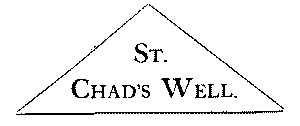


 Note.
No persons to be upon the Stage but the
Seconds. Vivat Regina.'"