I.
II.
Edited by the Rev. W. Robertson Nicoll, M.A., LL.D. Fcap.
8vo, 2s. 6d. each Vol.
Strongly Bound in Half-Buckram. 7s. 6d. each Volume.
[1] Cf. xxv. 24 (xxi. 9), xxvi. 22 (xviii. 8), xxvii. 12 (xxii. 3), xxvii.
13 (xx. 16), xxvi. 13 (xxii. 13), xxvi. 15 (xix. 24), xxviii. 6 (xix. 1),
xxviii. 19 (xii. 11), xxix. 13 (xxii. 2); to which add xxvii. 15 (xix. 13),
xxvii. 21 (xvii. 3), xxix. 22 (xv. 18).
[2] Eccl. vii. 24.
[3] Wisdom viii. 1.
[4] Eccl. vii. 25.
[5] 1 Kings iv. 33.
[6] In this passage Wisdom is represented saying—
"I from the mouth of the Highest came forth, and as vapour I veiled the earth;
I in the heights pitched my tent, my throne in a pillar of cloud;
I alone circled the ring of heaven, and walked in the depths of abysses;
In the waves of the sea, and in all the earth, and in every people and race I obtained a possession;
With all these I sought a rest (saying), In whose inheritance shall I settle?
Then came to me the command of the Creator of all; my Creator pitched my tent; and He said,
In Jacob pitch thy tent, in Israel find thine inheritance.
Before the world was, in the beginning He created me, and while the world lasts I shall not fail:
In the holy tent before Him I offered service, and thus in Sion I was planted;
In the beloved city He likewise made me rest, and in Israel is my power;
And I took root in a people that is glorified, in a portion of the Lord His inheritance."—Eccles. xxiv. 3.
[7] Prov. xiv. 27.
[8] It may be well to remind the reader who is too familiar with the
name "the Lord" to consider its significance; that "the Lord" is the
English translation of that peculiar name, Jahveh, by which God
revealed Himself to Moses, and the term Jahveh seems to convey one
of two ideas, existence or the cause of existence, according to the
vowel-pointing of the consonants יהוה.
[9] Eccles. i. 6, 8.
[10] Prov. ii. 10.
[11] Prov. i. 32.
[12] We may remind ourselves that, according to the most probable
conjecture, this introduction to Solomon's Proverbs (chaps, i.-ix.)
dates from the reign of Josiah (640-609 b.c.).
[13] Isa. i. 15.
[14] Isa. lix. 7.
[15] Micah iii. 10.
[16] Jer. ii. 34.
[17] Jer. xxii. 17.
[18] Prov. i. 14. Compare the proverb, xvi. 29, "A man of violence
enticeth his neighbour, and leadeth him in a way that is not good."
[19] Prov. ix. 13-18.
[20] Prov. v. 12-14.
[21] Prov. vi. 32 and v. 22.
[22] Prov. i. 19.
[23] A dog-chain sold in London at one shilling and threepence was
found to have cost, for materials twopence, for labour three-farthings.
(Evidence before Lord Dunraven's Commission on the Sweating
System).
[24] See Prov. i. 13.
[25] Prov. ii. 22.
[26] Prov. i. 19.
[27] Prov. ii. 19.
[28] Prov. i. 17.
[29] Prov. i. 25.
[30] Prov. i. 31, 32.
[31] Prov. i. 24-31.
[32] Prov. ii. 21, 22.
[33] Prov. i. 31-33.
[34] Prov. ix. 12, 18.
[35] Cf. xxviii. 26, "He that trusteth in his own heart is a fool: but
whoso walketh wisely, he shall be delivered."
[36] Prov. iii. 1-10.
[37] Luke xviii. 29, 30.
[38] The Hebrew word שִׁקּוּי in iii. 8b is the same as that which is
translated "my drink" in Hosea ii. 6. The LXX. render it "marrow,"
but it means the moisture which in a natural and healthy state keeps the bones supple, as opposed to the dryness which is produced by
senility or disease.
[39] Si ton Dieu veut ta mort, c'est déjà trop vécu.
[40] Prov. iii. 29.
[41] Prov. iii. 33.
[42] Cf. xii. 8, "A man shall be commended according to his wisdom:
but he that is of a perverse heart, shall be despised."
[43] Prov. iii. 27, 28.
[44] Prov. iii. 6.
[45] Matt. vi. 22.
[46] Prov. iii. 13-15.
[47] Prov. iii. 18.
[48] Prov. iii. 16.
[49] Prov. iii. 8.
[50] Prov. iii. 31.
[51] Prov. iii. 12.
[52] Prov. iii. 35.
[53] This subject, which occupies so large a part of the book, is further
treated in Lect. XXIII.
[54] It is noteworthy that the LXX. in ver. 2 seek to maintain the
Solomonic authorship by deliberately altering the words.
[55] Cf. the beautiful family picture of the linked and mutually blessed
generations in the proverb, "Children's children are the crown of old
men; and the glory of children are their fathers" (xvii. 6).
[56] Prov. iv. 8, 9.
[57] Prov. iv. 14.
[58] Prov. iv. 20-23.
[59] Matt. xv. 19.
[60] Paradise Lost, iv. 20, etc., and 75. Cf. also ix. 120:—
"And the more I see
Pleasures about me, so much more I feel
Torment within me, as from hateful siege
Of contraries. All good to me becomes
Bane, and in heaven much worse would be my state."
[61] Prov. iv. 24.
[62] Prov. iv. 25-27.
[63] Prov. iv. 27.
[64] Cf. xvii. 24, "Wisdom is before the face of him that hath understanding;
but the eyes of a fool are in the ends of the earth."
[65] Eccles. ix. 7.
[66] Prov. iv. 26.
[67] Prov. v. 21.
[68] Prov. iv. 19.
[69] Prov. iv. 16, 17.
[70] Prov. iv. 18, margin.
[71] Prov. iv. 12.
[72] Prov. xiv. 12.
[73] Prov. v. 8.
[74] The Laureate has touched with stern satire on this debased modern
Realism:—
"Author, atheist, essayist, novelist, realist, rhymester, play your part,
Paint the mortal shame of Nature with the living hues of Art.
Rip your brothers' vices open, strip your own foul passions bare,
Down with Reticence, down with Reverence—forward—naked—let them stare!
Feed the budding rose of boyhood with the drainage of your sewer,
Send the drain into the fountain lest the stream should issue pure.
Set the maiden fancies wallowing in the troughs of Zolaism,
Forward, forward,—aye and backward, downward too into the abysm!"
—The new Locksley Hall.
[75] Prov. ix. 17.
[76] Prov. vi. 25.
[77] Prov. vii. 16, 17.
[78] Prov. v. 15-19.
[79] Paradise Lost.
[80] Prov. vi. 27, 28.
[81] Prov. v. 9.
[82] Prov. vi. 33.
[83] Prov. vi. 34, 35.
[84] Prov. v. 10.
[85] Prov. vi. 26.
[86] Prov. v. 11.
[87] Prov. v. 12-14.
[88] Prov. v. 21.
[89] It is, if we may say so, a maxim of modern science that "A sin
without punishment is as impossible, as complete a contradiction in
terms, as a cause without an effect" (W. R. Gregg).
[90] Prov. v. 23.
[91] King Lear.
[92] Mark iii. 26.
[93] Prov. vi. 26.
[94] Prov. xxiii. 29, 32.
[95] See Prov. xvii. 18, xx. 16, repeated in xxvii. 13, and especially
xi. 15.
[96] Prov. xxii. 26, 27.
[97] Eccles. xxix. 14, 16, 17, 18, 19.
[98] Prov. xxiv. 30-34; see for a fuller treatment of the subject
Lecture XX.
[99] Prov. xxx. 25-27.
[100] It is the word used in Exod. v. 6 of those who directed the tasks
of the Israelites in Egypt.
[101] Prov. vi. 6-8.
[102] Prov. vi. 12-15.
[103] Cf. the proverb xvi. 30—"He that shutteth his eyes, it is to devise
froward things: he that compresseth his lips bringeth evil to pass."
[104] Cf. Prov. xx. 14: "It is naught, it is naught, saith the buyer: but
when he is gone his way, then he boasteth."
[105] It is probably assumed that warnings and corrections have been given him in vain—cf. Prov. xxix. 1: "He that being often reproved
hardeneth his neck shall suddenly be broken, and that without
remedy."
[106] Prov. vi. 16-19.
[107] Prov. xxx. 13. See Lecture XIII. for the teaching of the Proverbs
on Pride.
[108] Prov. xii. 19.
[109] See Prov. xii. 17; xiv. 5, 25; xix. 5, 9. A crime, it may be remembered,
which would be much more common and much more fatal
in a primitive state of society, where on the one hand legal procedure
was less cautious and less searching, and on the other hand the
inward sanctions of truth which Christianity has brought home to
the modern conscience were but feebly perceived.
[110] Prov. vii. 6.
[111] Prov. vii. 4.
[112] Prov. vii. 9.
[113] Prov. vii. 8. The term צָעַד describes a special kind of motion,
e.g., the slow pacing of the oxen that bare the ark (2 Sam. vi. 15), or
the imagined efforts of idols to move (Jer. x. 5); it is therefore
unfortunate to render it by the generic word "go." The affected
dignity and sauntering insouciance of a dandy are immediately suggested
by it, and the shade of meaning is fairly well preserved in the
English "saunter."
[114] This is the meaning of the word translated 'clamorous.'
[115] So says the Greek version of ver. 10: ἣ ποιεῖ νέων ἐξίπτασθαι καρδίας.
[116] See Lev. vii. 16.
[117] Prov. viii. 1-6.
[118] Prov. viii. 7-9.
[119] Prov. viii. 20.
[120] Prov. viii. 8, 9.
[121] Prov. viii. 18.
[122] Prov. viii. 10-16.
[123] Prov. viii. 17.
[124] Prov. viii. 22. There is unfortunately an ambiguity in the word
קָנָה. It may mean either "to possess" or "to create." Cf. Gen.
xiv. 19, 22, where it is impossible to decide between "Possessor of the
earth" and "Maker of the earth." That the word might be rendered
"got" in this passage is evident from iv. 7, where it is employed; on the
other hand, the LXX. renders ἔκτισε, and the author of Ecclesiasticus
evidently took it in this sense; cf. i. 4, "Wisdom hath been created
before all things, and the understanding of prudence from everlasting."
In Gen. iv. it is rendered "gotten," but it is quite possible that the
joyful mother called her son קַיִן with the feeling that she had created
him with the help of the Lord.
[125] Prov. viii. 26.
[126] Milton, Paradise Lost, vii. 225.
[127] Prov. viii. 29. It is hardly necessary to point out that the language
betrays a complete ignorance of those facts with which astronomy
and geology have made us familiar. The author puts into the lips of
Wisdom the scientific conceptions of his own time, when the earth
was regarded as a flat surface, covered by a solid circular vault, in
which the sun, and moon, and stars were fixed. The "circle upon the
flood" is probably the apparent circle which is suggested to the
observer by the horizon. No one had as yet dreamed that the mountains
were thrown up by, not settled in, the surface of the earth, nor
was it dreamed that the bounds of the sea are far from being settled,
but subject to gradual variations, and even to cataclysmal changes.
It may be observed, however, that the voyage of the Challenger seems
to have established beyond question that the great outlines of land
and ocean have remained approximately the same from the beginning.
Ocean islands are of volcanic origin or the work of the coral-insect;
but the great continents and all contained within the fringe of a
thousand-fathom depth from their shores have remained practically
unaltered despite the numerous partial upheavals or submergences.
A passage so full of spiritual and moral significance, and yet so
entirely untouched by what are to us the elementary conclusions of
science, should furnish a valuable criterion in estimating what we are
to understand by the Inspiration of such a book as this.
[128] Cf. x. 23.
[130] Wisdom vii. 25-29. The book of Wisdom, a work of the second
century b.c., at one time had a place in the canon, and owes its
exclusion, in all probability, to the fact that it was written in Greek;
as there was no Hebrew original, it was evident that Solomon was
not the author. But the use which the Epistle to the Hebrews
makes of the passage quoted in the text may suggest how very unnecessary
the exclusion from the canon was.
[131] Luke vii. 35; Matt. xi. 19.
[132] John viii. 58.
[133] John i. 3, 18.
[134] Cf. for this contrast between the two xxiii. 26-28, where Wisdom
speaks, and expressly warns against her rival.
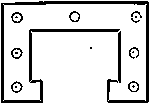
[135] The arrangement of the house is that of an open courtyard,
surrounded with apartments, the general roof supported on the pillars
thus.
[136] Prov. vii. 14.
[137] Prov. ix. 5.
[138] Matt. xxii. 1, et seq.
[139] Prov. ix. 6.
[140] Prov. ix. 7.
[141] Prov. xxiii. 9.
[142] Prov. xiii. 1.
[143] Prov. xiv. 6.
[144] Prov. xv. 12.
[145] Prov. xix. 25.
[146] Prov. xxiv. 9.
[147] Prov. xxii. 10.
[148] Matt. vii. 6.
[149] Prov. ix. 9. Cf. xviii. 15, "The heart of the prudent getteth knowledge;
and the ear of the wise seeketh knowledge."
[150] Prov. ix. 10.
[151] Matt. xii. 43.
[152] See John viii. 1 et seq.
[153] Milton, Paradise Lost, xi. 650 etc.
[154] The fuller teaching of the book on the subject of Woman will be
found in Lect. XXXI.
[155] Prov. x. 15; xviii. 11.
[156] Prov. xiii. 8.
[157] Prov. xviii. 16.
[158] Prov. xix. 6; xiv. 20.
[159] Prov. xxi. 14.
[160] Prov. xvii. 8. More literally: "A precious stone is the gift in the
eyes of him who gets possession of it, whithersoever he turneth he
deals wisely." That is to say, the man who receives the gift, whether
a judge or a witness or an opponent, is as it were retained for the
giver, and induced to use his best faculties in behalf of his retainer.
[161] Prov. xix. 4: "Wealth addeth many friends, but the poor—his
companion separates from him."
[162] Prov. xxii. 17.
[163] Prov. xviii. 23.
[164] Prov. xiv. 20; xix. 4.
[165] Prov. xix. 7. The sense of the Authorised Version is here retained,
but it will be seen in Lecture XII. that there is good reason
for treating the third clause of the verse as a mutilated fragment
of another proverb: see p. 166.
[166] Prov. xxii. 7.
[167] Prov. xii. 9. This reading is obtained by following the LXX.,
whose translation ὁ δουλεύων ἐαυτῷ shows that they pointed וְעֹבֵד לוֹ.
Cf. Eccles. x. 27: "Better is he that laboureth and aboundeth in all
things than he that boasteth himself and lacketh bread."
[168] Prov. x. 4.
[169] Prov. xiii. 18.
[170] Prov. xxii. 4.
[171] Prov. xxi. 20.
[172] Prov. xxiii. 21.
[173] Prov. xxvii. 23-27.
[174] Prov. xi. 28.
[175] Prov. xxiii. 5 (marg.).
[176] Cf. the Turkish proverb: "Of riches lawfully gained the devil
takes half, of riches unlawfully gained he takes the whole and the
owner too."
[177] Prov. xv. 6, cf. xiv. 24, "A crown of the wise is their riches, but
the folly of fools, (though they be rich, remains nothing but) folly."
[178] Prov. xiii. 11.
[179] Prov. xxi. 6. It is evident from their translation ἐπὶ παγίδας θανάτου
that the LXX. read מוֹקְשֵׁי־מָוֶת as in Psalm xviii. 6, and this gives
a very graphic and striking sense, while the received text of the
Hebrew, מְבַקְשֵׁי־מָוֶת, is hardly intelligible.
[180] Prov. xxii. 16.
[181] Prov. xiii. 22; xxviii. 8.
[182] Prov. xi. 4.
[183] Prov. x. 22.
[184] Prov. xv. 6.
[185] Prov. xvi. 8.
[186] Prov. xix. 1. The parallelism in this verse is not so complete
as in xxviii. 6. The Peshitto reads, "than he who is perverse
in his lips and is rich," but it is better to retain the text and understand:
There is a poor man walking in his integrity, and everyone
thinks that he is to be commiserated; but he is much better off than
the fool with perverse lips, though no one thinks of commiserating
this last.
[187] Prov. xvi. 16.
[188] Prov. xx. 15.
[189] Prov. xv. 16, 17.
[190] Prov. xvii. 1.
[191] Prov. xxii. 1. This proverb is inscribed in the cupola which lights
the Manchester Exchange. It is a good skylight, but apparently too
high up for the busy merchants on the floor of the Exchange to see
without more effort than is to be expected of them.
[192] Prov. xxii. 2.
[193] Prov. xiv. 31; xvii. 5.
[194] Prov. xxviii. 11. Cf. an interesting addition to xvii. 6 in the LXX.—
τοῦ πιστοῦ ὅλος ὁ κόσμος τῶν χρημάτων τοῦ δὲ ἀπίστου οὐδὲ ὀβολός.
The faithful man owns the whole world of possessions, the unfaithful
owns not a farthing.
[195] It is said of Agassiz that he excused himself from engaging in a profitable
lecturing tour on the ground that he had not time to make money.
[196] Cf. the saying of Sirach: "Winnow not with every wind and go
not into every way, for so doth the sinner that hath a double tongue."
(Eccles. v. 9).
[197] Prov. xv. 27.
[198] Prov. xx. 21.
[199] Prov. xxviii. 20.
[200] Prov. xxviii. 22.
[201] Prov. xxiii. 4.
[202] Prov. xxi. 26.
[203] Prov. xi. 24, 25.
[204] Prov. xxviii. 27.
[205] Prov. xix. 17.
[206] Prov. xxii. 9.
[207] Prov. xxx. 8, 9.
[208] Prov. x. 28.
[209] Prov. x. 30.
[210] Prov. xiv. 11. Cf. Prov. xii. 7: "Overthrow the wicked; and
they are not (i.e., there is no rising again for them), but the house
of the righteous shall stand."
[211] Prov. xi. 18.
[212] Prov. xiii. 3.
[213] Prov. xi. 5, 6; xxi. 7.
[214] Prov. xxii. 8.
[215] Prov. xxi. 7, 8, 10, 15; xxvi. 24,
26; xv. 28.
[216] Prov. xi. 7.
[217] Prov. xiii. 9; xxiv. 20.
[218] Prov. xi. 19.
[219] Prov. xi. 21.
[220] Prov. xiv. 12; xvi. 5, 25; xxi. 2.
[221] Prov. xxiii. 17, 18; xxiv. 1, 19.
[222] Prov. xii. 7.
[223] Prov. xiv. 12; xvi. 25.
[224] Prov. xxiv. 15, 16.
[225] Prov. xxix. 16.
[226] Prov. xi. 3.
[227] Prov. xiii. 6. Cf. Prov. xiv. 14: "The backslider in heart shall be
sated from his own ways, and the good man from himself." Though
probably we ought to read, with Nowack, מִמְּעֲלָלָיו, which would give
a completer parallelism: "The backslider shall be sated from his own
ways, and the good man from his own doings."
[228] Prov. xi. 8. Cf. Prov. xxviii. 18.
[229] Prov. xxi. 18.
[230] Prov. xii. 13.
[231] Prov. xii. 21.
[232] Prov. xiii. 25.
[233] Prov. xvi. 17; xix. 16.
[234] Prov. xiv. 22.
[235] Prov. xxi. 21.
[236] Prov. xxi. 15; xxix. 6. Unless, with Delitzsch, we are to read
בְּפֶשַׂע for בְּפֶשַׁע, and יָרוּצ for יָרוּן, which would give: "In the steps
of a bad man lie snares, but the righteous runs and rejoices."
[237] Prov. xi. 27, 30.
[238] Prov. xii. 12.
[239] Prov. xvii. 26: "To punish the righteous is not good, nor to smite
the noble for their uprightness."
[240] Prov. xiv. 32.
[241] Prov. xx. 11.
[242] Prov. xiv. 19.
[243] Prov. xxv. 26.
[244] Prov. xiv. 26: "In the fear of the Lord is strong confidence:
and his children shall have a place of refuge." So Prov. xx. 7: "A
just man that walketh in his integrity: blessed are his children after
him."
[245] Prov. xiii. 22.
[246] Prov. xii. 26.
[247] Prov. xxii. 11. Cf. Prov. xvi. 13.
[248] Prov. xi. 31.
[249] Prov. xxix. 2.
[250] Prov. xxviii. 12.
[251] Prov. xi. 10, 11.
[252] Prov. xiv. 34.
[253] Prov. xxviii. 28.
[254] Prov. xii. 26.
[255] Prov. xvi. 27.
[256] Prov. xviii. 3.
[257] Prov. xxviii. 28.
[258] Prov. xxix. 2.
[259] Prov. xxiv. 24, 25.
[260] Prov. xxviii. 4.
[261] Prov. xxviii. 1.
[262] Prov. xi. 20.
[263] Prov. xii. 2.
[264] Prov. xv. 26.
[265] Prov. xv. 9.
[266] Prov. xvii. 15, 26; xviii. 5.
[267] Prov. xxi. 12, where "one that is righteous" seems to mean God
Himself; see the margin of R.V.
[268] Prov. xxii. 12.
[269] Prov. xxiv. 12.
[270] Prov. x. 29.
[271] Prov. xxviii. 9.
[272] Prov. xxi. 3.
[273] Prov. xxi. 27.
[274] Prov. xv. 8, 29.
[275] Prov. xiv. 9. This seems to be the meaning of this difficult verse,
which should be translated: The sin-offering mocks fools, but among
the righteous is favour.
[276] Prov. x. 23.
[277] Matt. xvi. 27.
[278] 1 John iii. 7, 10; ii. 29.
[279] "If ye know that He is righteous," says St. John, "ye know that
every one also that doeth righteousness is begotten of Him." (1
John ii. 29).
[280] Prov. xxv. 15.
[281] Prov. xiii. 2.
[282] Prov. xviii. 20.
[283] Prov. xviii. 21.
[284] Prov. x. 14.
[285] Prov. xii. 18.
[286] Prov. xviii. 6, 7.
[287] Prov. xii. 13.
[288] Prov. xiv. 3.
[289] Prov. xv. 23.
[290] Prov. xxi. 23.
[291] Prov. xxi. 28.
[292] Prov. xvii. 20.
[293] Prov. xviii. 4.
[294] Prov. xxii. 11.
[295] Prov. xxii. 18.
[296] Prov. xix. 1, 22.
[297] Prov. xxiii. 16.
[298] Prov. xii. 16.
[299] Prov. xxix. 11.
[300] Prov. xix. 7. All the Proverbs in this selection are in the form
of a distich. This affords a fair presumption that this verse with its
three clauses is mutilated; and the presumption is confirmed by the
fact that the third clause adds nothing of value, even if it be intelligible
at all, to the sense. There is good reason, therefore, for believing that
this third clause is the half of a distich which has not been preserved
in its integrity; all the more because the LXX. have a complete proverb
which runs thus: ὁ πολλὰ κακοποιῶν τελεσιουργεῖ κακίαν, ὃς δὲ ἐρεθίζει
λόγους οὐ σωθήσεται. "He that does much evil is a craftsman of iniquity,
and he that uses provoking words shall not escape." Perhaps in
the Hebrew text which was before the Greek translators מְנַדֵּף
appeared instead of מְרַדֵּף, and לֹא הָיָה instead of לֹא־הֵמָּה.
[301] Prov. xxvi. 21.
[302] Prov. xxx. 32, 33.
[303] Prov. xii. 18.
[304] Prov. xii. 17.
[305] Prov. xix. 28.
[306] Prov. xix. 5, rep. ver. 9.
[307] Prov. xxi. 28.
[308] Prov. xxv. 18.
[309] Prov. xxvi. 23-28.
[310] Prov. xiii. 5.
[311] Prov. xii. 19.
[312] Prov. xii. 22.
[313] Prov. xx. 17.
[314] Prov. xxvi. 2.
[315] Prov. xxviii. 23.
[316] Prov. xxix. 5.
[317] Prov. xi. 13 and xx. 19; xxv. 2, 23. Cf. "Whoso discovereth
secrets loseth his credit and shall never find friend to his mind"
(Eccles. xxvii. 16).
[318] Prov. xviii. 8, rep. xxvi. 22.
[319] Prov. xvi. 28.
[320] Prov. xxvi. 20.
[321] Prov. xvii. 9.
[322] Prov. xi. 9.
[323] Prov. xii. 6.
[324] Prov. xv. 28.
[325] Prov. xvi. 28.
[326] Prov. xxvi. 18, 19.
[327] Prov. xviii. 13.
[328] Prov. xxix. 20.
[329] Prov. xxiii. 9.
[330] Prov. x. 19.
[331] Prov. xiii. 3, 16.
[332] Prov. xiv. 23.
[333] Prov. xiv. 33.
[334] Prov. xiv. 7. There is a quaint and pertinent passage in Lyly's
Euphues:—"We may see the cunning and curious work of Nature,
which hath barred and hedged nothing in so strongly as the tongue,
with two rowes of teeth, and therewith two lips, besides she hath placed
it farre from the heart, that it should not utter that which the heart had
conceived; this also should cause us to be silent, seeinge those that
use much talke, though they speake truly, are never beleeved."
[335] Prov. xv. 2.
[336] Prov. xviii. 2.
[337] Prov. xii. 18.
[338] Eccl. x. 4.
[339] Prov. xv. 4. מַרְפֵּא is best rendered here and in Eccl. x. 4 by
"gentleness." It is just that quality of humility and submission and
tranquillity which our Lord blessed as meekness.
[340] Prov. xv. 1.
[341] Prov. xv. 26.
[342] Prov. xvi. 24.
[343] Prov. xii. 25.
[344] Prov. xv. 23.
[345] Prov. xxv. 20.
[346] Prov. xxv. 11.
[347] Cf. Eccles. xx. 20: "A wise sentence shall be rejected when
it cometh out of a fool's mouth, for he will not speak it in due
season."
[348] Prov. xxv. 12.
[349] Prov. xxviii. 23.
[350] Prov. xv. 7.
[351] Prov. xvi. 21.
[352] Prov. xvi. 23.
[353] Prov. xx. 15.
[354] Prov. xv. 28.
[355] Prov. xxiv. 26.
[356] Prov. xi. 9.
[357] Prov. xii. 6.
[358] Prov. xiv. 3.
[359] Prov. xiv. 5, 25.
[360] Prov. xxxi. 8, 9.
[361] Note the intimate connection between conduct and speech in
such a proverb as xvii. 4. When we do evil we are always ready
to listen to evil talk, when we talk deceitfully we are preparing to go
on to worse deeds of evil, to listen to tongues of destruction. Note,
too, how in xii. 5 the thoughts and the counsels of the heart come
before the words and the mouth in v. 6.
[362] Prov. xi. 12.
[363] Prov. xvii. 27.
[364] Prov. xvii. 28. Cf. the old Norse proverb:—
"An unwise man when he comes among the people
Had best be silent: no one knows
That he nothing knows unless he talks too much."
[365] Prov. xxiv. 7.
[366] Prov. xiv. 15.
[367] James i. 26.
[368] Prov. xvi. 1.
[369] Prov. xxi. 10.
[370] Prov. xxv. 14.
[371] Prov. xvi. 18, 19.
[372] Prov. xviii. 12.
[373] Prov. xxvii. 2.
[374] Prov. xxi. 24.
[375] Prov. xxix. 23.
[376] Prov. xxvi. 12.
[377] Prov. xiii. 1; xv. 20.
[378] Prov. x. 17.
[379] Prov. xii. 1.
[380] Prov. xv. 8.
[381] Prov. xv. 32.
[382] Prov. xiii. 13 should be translated: "Whoso despiseth the word
(sc. of warning and rebuke) shall be under a pledge to it (i.e. he has
contracted an obligation to the word by hearing it, and in case of
disobedience will have to redeem this implicit pledge by suffering and
remorse), but he that feareth the commandment shall be rewarded."
[383] Prov. xiii. 17.
[384] Prov. xvii. 10.
[385] Prov. xxvii. 5.
[386] Prov. xxviii. 23.
[387] Prov. xxvii. 21: "The fining pot is for silver and the furnace for
gold, and a man for the mouth of his praise." This somewhat
obscure aphorism is most simply explained thus:—A man should
make his conscience a kind of furnace, in which he tries all the
laudatory things which are said of him, accepting only the refined
and pure metal which results from such a test, and rejecting the
dross. This is simpler than, with Delitzsch, to explain, "a man is
tested by the praise which is bestowed upon him as silver and gold
are tested in the fire."
[388] Prov. xiii. 10.
[389] Prov. xxviii. 26.
[390] Prov. xi. 2.
[391] Prov. xii. 15b.
[392] Prov. xvi. 20.
[393] Prov. xv. 31, 33.
[394] Prov. xvii. 2.
[395] This is an addition of the LXX. to xiii. 13, and may represent an
original Hebrew text. For the idea cp. Eccles. x. 25, "Unto the
servant that is wise shall they that are free do service."
[396] Prov. xiii. 10.
[397] Prov. xvii. 19.
[398] Prov. xiv. 3.
[399] Prov. xiv. 16.
[400] Prov. xvi. 5.
[401] Prov. xv. 25.
[402] Prov. xxi. 29.
[403] Prov. xxi. 4.
[404] Prov. xxii. 4. The probable rendering is, "The outcome of
humility is the fear of the Lord, riches, honour, and life."
[405] Prov. xvi. 20.
[406] Prov. xviii. 12.
[407] The answer of the saint was very characteristic. Could he
really believe that he was so vile as he said, when he compared
himself with others who were obviously worse? "Ah," he said,
"it is when I recount all God's exceptional mercies to me that I seem
to myself the worst of men, for others have not had such favours at
His hands."
[408] Prov. xiii. 19.
[409] Prov. xiii. 12.
[410] Prov. xiii. 12.
[411] Prov. xvii. 22.
[412] Prov. xviii. 14.
[413] Prov. xiv. 13.
[414] Prov. xv. 13.
[415] Prov. xv. 15b.
[416] Prov. xvii. 22.
[417] Prov. xv. 15.
[418] Prov. xv. 30.
[419] Prov. xxiv. 12, marginal reading.
[420] Prov. xx. 12.
[421] Prov. xv. 3.
[422] Prov. xv. 11.
[423] Prov. xvi. 2, rep. xxi. 2.
[424] Prov. xx. 27.
[425] Prov. xx. 24.
[426] Prov. xii. 5.
[427] Prov. xix. 22.
[428] Prov. xvii. 3.
[429] Prov. xx. 9.
[430] Prov. xvi. 4. This strange saying, interpreted in the light of the
Gospel, cannot mean that wicked people are actually made in order
to exhibit the righteousness and judgment of God in their punishment
on the day of wrath, though that was probably the thought in the
mind of the writer. But it reminds us of the truth that every human
being is a direct concern of the Maker, who has His own wise
purpose to fulfil in even the most inconsiderable and apparently
abortive life.
[431] Prov. xxix. 22.
[432] Prov. xxix. 8.
[433] Prov. xxvi. 21.
[434] Prov. xxii. 24.
[435] Prov. xvii. 12.
[436] Prov. xiv. 17, 29.
[437] Prov. xix. 11. "When Lanfranc was prior of Bec he ventured to
oppose Duke William's Flemish marriage. In a wild burst of wrath
William bade his men burn a manor house of Bec and drive out Lanfranc
from Norman ground. He came to see the work done, and found
Lanfranc hobbling on a lame horse towards the frontier. He angrily
bad him hasten, and Lanfranc replied by a cool promise to go faster out
of his land if he would give him a better steed. 'You are the first
criminal that ever asked gifts from his judge,' retorted William, but
a burst of laughter told that the wrath had gone, and William and
Lanfranc drew together again."—Green's Conquest of England, p. 551.
[438] Prov. xvii. 27.
[439] This word הִתְנַּלָּע, which only occurs here (xx. 3) and in xvii. 14
and xviii. 1, would seem from the cognate root in Arab. and Syr. to
mean "setting the teeth together," which is a much more vivid and
specific idea than quarrelling.
[440] Prov. xx. 3.
[441] Prov. xxix. 11.
[442] Prov. xxv. 28.
[443] Prov. xix. 19.
[444] Prov. xxv. 8.
[445] Prov. xxv. 9.
[446] Prov. xvii. 14. See note 4, p. 205.
[447] Prov. xvi. 32.
[448] Prov. x. 12.
[449] 1 Peter iv. 8.
[450] James v. 20.
[451] 1 Cor. xiii. 4.
[452] This meaning of מַרְפֶּא, as was observed in Lecture XII., p. 172,
seems to yield the best sense in these two passages (cp. xii. 18; xiii.
17), as in Eccl. x. 4, "gentleness allayeth great offences," which is a
good commentary on our text.
[453] Prov. xiv. 30.
[454] Prov. xv. 4.
[455] Prov. xx. 22.
[456] Missionary Review of the World, Feb. 1889, p. 143.
[457] Prov. xv. 33.
[458] Prov. xvi. 1.
[459] Prov. xvi. 2.
[460] Prov. xvi. 3.
[461] Prov. xvi. 4. See note, p. 201.
[462] Prov. xvi. 5.
[463] Prov. xvi. 6.
[464] Prov. xvi. 7.
[465] Prov. xvi. 9. Cf. Prov. xix. 21: "There are many devices in a
man's heart; but the counsel of the Lord, that shall stand."
[466] Prov. xvi. 20.
[467] Prov. xviii. 18. John Paton, the missionary to the New Hebrides,
uncertain whether to go back to Scotland and plead for more missionaries,
and receiving no light from human counsel, says, "After
many prayers and wrestlings and tears, I went alone before the Lord,
and on my knees cast lots with a solemn appeal to God, and the
answer came 'Go home.' In my heart I believe that ... the Lord
condescended to decide for me the path of duty, otherwise unknown;
and I believe it the more truly now, in view of the aftercome of thirty
years of service to Christ that flowed out of the steps then deliberately
and devoutly taken." See the Autobiography, Second Part (Hodder
and Stoughton, 1889).
[468] Prov. xvi. 33.
[469] Deut. xxv. 13-16.
[470] Lev. xix. 33, 36.
[471] Eccles. vii. 15.
[472] Isa. xxviii. 23-29.
[473] It seems impossible that a general and perfect morality in
business can ever be attained apart from this apprehension of an
Omniscient Mind weighing and judging, as well as accurately observing,
everything done even in secret. In mediæval Europe, when this
faith was practically unquestioned, there was a certain honesty and
sincerity in handicrafts and in general dealing, until the Church made
the fatal blunder of granting indulgences for men's peccadilloes, and
professing to exonerate them from the consequences of the truth
which she herself in theory held.
[474] Prov. xvi. 6.
[475] Prov. xviii. 24. This sense is obtained by what appears a necessary
change in the text; we must read יֵשׁ for אִישׁ. A similar error
occurs 2 Sam. xiv. 19 and Micah vi. 10.
[476] Prov. xxvii. 14.
[477] Prov. xxvii. 19.
[478] "Sorrows by being communicated grow less and joys greater."—Bacon.
[479] Prov. xxvii. 17.
[480] Prov. xxvii. 6.
[481] Prov. xxvii. 9.
[482] "Amicus certus in re incerta cernitur."—Cicero.
[483] Prov. xxvii. 10.
[484] Prov. xviii. 24.
[485] Prov. xviii. 19.
[486] 2 Chron. xx. 7.
[487] Exod. xxxiii. 11.
[488] John xv. 14.
[489] Prov. xxvii. 14.
[490] See note on הִתְּנַּלָּע in Lecture XV., p. 205.
[491] III. King Henry VI., Act v., Sc. 6.
[492] ἢ θεὸς ἢ θήριον.
[493] Prov. xxvii. 8.
[494] Prov. xxvii. 10.
[495] Prov. xxv. 17.
[496] Eccles. xv. 11-20.
[497] James i. 13-15.
[498] Prov. xix. 2.
[499] Prov. xii. 15.
[500] Prov. xv. 22.
[501] Prov. xix. 20.
[502] Prov. xi. 14.
[503] Prov. xx. 18.
[504] Prov. xxiv. 5, 6.
[505] Prov. xx. 5.
[506] Prov. xix. 21.
[507] Prov. xix. 23.
[508] Prov. xix. 16.
[509] Prov. xix. 8.
[510] Prov. xix. 27.
[511] Prov. xiii. 13.
[512] Prov. xix. 29.
[513] Prov. xxi. 30.
[514] Prov. xxi. 31.
[515] Prov. xvii. 11.
[516] Prov. xix. 20.
[517] Prov. xxvi. 14.
[518] Prov. xxiv. 34.
[519] Prov. xix. 24.
[520] Prov. xxvi. 15.
[521] Prov. xxvi. 13.
[522] Prov. xxii. 13.
[523] Prov. xxvi. 16.
[524] Prov. xv. 19.
[525] Prov. xx. 13.
[526] Prov. xix. 15.
[527] Prov. xii. 27.
[528] Prov. xvi. 26.
[529] Prov. xxi. 25.
[530] Prov. xviii. 9.
[531] Prov. xii. 11.
[532] Prov. xxviii. 19.
[533] Prov. xiv. 4.
[534] Prov. xxviii. 19.
[535] Prov. xxiv. 30-34.
[536] Prov. xxvii. 23-27.
[537] Prov. xiii. 4.
[538] Prov. xxi. 5.
[539] Prov. xxi. 20.
[540] Prov. xxii. 29.
[541] Prov. xii. 24.
[542] Prov. xii. 27.
[543] Prov. xxxi. 27.
[544] Prov. xxi. 17.
[545] Prov. xxxi. 6, 7.
[546] Prov. xxxi. 4, 5.
[547] Prov. xx. 1.
[548] The difficulty of the word חַכְלִלוּת, which means "dimming," is
that in the only other place where it occurs (Gen. xlix. 12: "His
eyes shall be red with wine, and his teeth white with milk") the
redness is evidently regarded as an advantageous attribute. But
perhaps the explanation is to be sought in the fact that the immediate
effect of wine upon the eye is to darken it in one sense, and the ultimate effect is to darken it in another. In the first moment of
excitement the pupil of the drinker's eye dilates and flashes with a
darkling fire; but it is not long before the eye becomes heavy, dim,
watery, and maudlin. It is in this last sense that we must understand
the word here.
[549] Prov. xxiii. 33. זָרות must, as in xxii. 14, be rendered "strange
women" (Bertheau). The alternative rendering, "the strange, or the
rare" (Nowack) is logically inadmissible, because the verse is obviously
describing the moral effects of drink, and no one can say that to see
strange or rare visions is a moral effect to be specially deprecated.
[550] "The primary discomforts of an act of drunkenness," says Dr.
G. W. Balfour, "are readily removed for the time by a repetition of
the cause. Thus what has been an act may readily become a habit,
all the more readily that each repetition more and more enfeebles
both the will and the judgment."—Art. "Drunkenness" in Encycl.
Brit.
[551] 2 Tim. iii. 4—φιλήδονοι μᾶλλον ἢ φιλόθεοι, pleasure-loving rather
than God-loving; which means, not that men place pleasure before
them consciously as a substitute for God, but only that the instinctive
desire of pleasure has not been mastered by the love of God.
[552] Prov. x. 15.
[553] Prov. xxiii. 10, 11.
[554] Prov. xv. 25.
[555] Prov. xiv. 31.
[556] Prov. xvii. 5.
[557] Prov. xix. 17.
[558] Prov. xix. 13.
[559] Prov. xxii. 2.
[560]
"What though on hamely fare we dine,
Wear hoddin-grey, and a' that;
Gie fools their silks and knaves their wine,
A man's a man for a' that.
For a' that and a' that,
Their tinsel show and a' that,
The honest man, tho' e'er sae poor,
Is king o' men for a' that."
[561] Prov. xiv. 21.
[562] Prov. xi. 26. The following description of Persia, in the Missionary
Review of the World, October, 1889, p. 782, aptly illustrates the practices
against which the text inveighs:—"The sole end for which the Persian
Government exists is the collection of the revenue, the fleecing of the people. Large portions of the land, confiscated from time to time,
belong to the Sovereign, and are farmed out on terms well-nigh ruinous
to the tenant. Even where property belongs to the subject, it is taxed
to the last degree as a starting-point, while the successions of sub-rulers
and collectors make still further drains upon the moiety that
must save the labourer's family from absolute want. The whole
burden of taxation thus comes really upon the labouring class. Added
to this extortion is the constant uncertainty as to whether the planter
will be permitted to reap his crop at all. Downright robbery of fields
or households by the retainers of petty chiefs is of frequent occurrence,
and the poor are liable any day to be deprived of their very
last resource. Agriculture and other industries so discouraged and
paralysed barely sustain the lives of the people at the best, and when
drought is added thousands must perish." In times of scarcity, "The
king sets the example—locks up his granaries, and withholds every
kernel of wheat except at famine prices. Every nabob and landowner
who has a stock on hand follows this example. Rapacity and cupidity
rule; money is coined out of the sufferings of the poor."
[563] Prov. xxviii. 3. Oddly enough the commentators, who seem
never to have heard of "sweating," propose to read for רָשׁ, either
עָשִׁיר = rich, or רשׁ = רֹאש = head, for the head of the State; an
example of conjectural emendation which may well make us cautious
of the mere scholar's method of treating the sacred text.
"The cruellest landlords, receiving 10, 20, and 30 per cent. from
detestable habitations (in London), are nearly connected by birth
and circumstance to those they oppress" (Lecture delivered at Essex
Hall, November 18th, 1889, by Thomas Locke Worthington).
[564] Prov. xxviii. 8. The difficult verse Proverbs xxii. 16 should find
a place here, "He that oppresses the poor to increase for him, he that
gives to the rich only for need," but it is impossible to accurately
determine its meaning. If the rendering of the English Bible is
correct, we may interpret the proverb as a statement of the folly of
oppression which leads to want as inevitably as the more obvious
folly of giving to the rich. But possibly Nowack is right in an interpretation
which gives quite another turn to the saying, and makes it
not a condemnation of the oppressor, but a suggestion of the advantage
which may be gained from the oppression by the oppressed.
"He who oppresses the poor—it turns to his (viz., the poor man's)
gain," because it calls out all his energy and endurance, "while he
who gives to the rich—it turns only to want," because it still further
enervates and unfits him for the duties of life. This is not very satisfactory,
and is decidedly far-fetched; but it is better than Delitzsch's
suggestion, which strips the proverb of all moral significance, viz.,
"He that oppresses the poor, it is at any rate for his own gain; but
he who gives to the rich, it is only to get want." The conclusion from
this would be, that it is better to oppress the poor than to give to the
rich, a sentiment quite out of harmony with the ethical teaching of the
Proverbs. In a case like this we can only suppose that the saying
has reached us in a mutilated form.
[565] Prov. xi. 17.
[566] Prov. xxviii. 27.
[567] Prov. xi. 24.
[568] Can the shareholders of the G. W. R., for instance, hold themselves
free from responsibility in the case referred to in the following
paragraph from the Journal of the People's Palace? "The Saturday
Review, always trustworthy and read-worthy on subjects of law, calls
attention to a case which concerns a great many. It is a case in which
the decision is most unfortunate to the interests of all working men.
One Membery was employed at Paddington to shunt trunks: he was
taken on by a contractor, but his real employers were the G.W.R.
The trucks were drawn by a horse, and the horse ought to have had
a boy to hitch on or off at a moment's notice: but the contractor
refused to supply boys. Membery in vain asked for one, pointing
out the great dangers to which he was exposed. He complained
on the very day of the accident by which he was knocked down
and injured seriously. He sued the Company; he won his case with
damages; the Company, being a rich body, appealed. Now, considering the vexation, the anxiety, and the expense of carrying on such
a case, a Company which appeals ought in justice to have the damages
doubled if it loses. The Company lost. They appealed to the Lords,
still on the principle of being rich and their opponent poor. This
time the Company won. The Lords have ruled that the Company
did not employ Membery, and that he was not obliged to work without
a boy: he might have refused to work at all. Indeed! Then,
if he refused to work, what about the children at home? A more
mischievous doctrine was never upheld. Why, there are thousands
and thousands of men and women who work daily under ineffectual
protest,—who work at trades unwholesome, for wages inefficient, and
for excessive hours; yet they work because they must—because they
must. Membery worked without a boy, knowing that he would some
day be run over and perhaps killed, because he must: he had no choice.
When all the Trade Unions are merged into one immense Trade
Union, it will not be the wages alone that will be determined, but
the cases of such unfortunate men as Membery."
[569] Prov. xxi. 13.
[570] Prov. xxiv. 11, 12.
[571] Prov. xxii. 9.
[572] Prov. xxix. 7.
[573] Prov. xxix. 14. Has William II. of Germany been considering this
text? If so, it is full of promise for the prosperity of Germany and
of Europe? (International Labour Conference, March 1890.)
[574] Prov. xxxi. 30.
[575] Prov. xxii. 15.
[576] John v. 39.
[577] "I am the eldest child, born in 1795, December 4th, and trace
deeply in myself the character of both parents, also the upbringing
and example of both."—Carlyle's Reminiscences, vol. i., p. 54.
[578] Eccles. xxx. 2.
[579] Prov. xvii. 21.
[580] Prov. xvii. 25, xix. 13, 26.
[581] Prov. xv. 20. Cf. x. 1, xxvii. 11, xxix. 3.
[582] Prov. xxiii. 15, 16, 24.
[583] See that invaluable little book, "The Education of a Christian
Home," edited by Ella S. Armitage.
[584] Prov. xxiii. 17.
[585] "The Education of a Christian Home."
[586] Prov. xiii. 24.
[587] Prov. xix. 18.
[588] Prov. xx. 30.
[589] Prov. xxiii. 13, 14.
[590] Prov. xxix. 15.
[591] Prov. xxix. 17.
[592] Lev. xxvi. 41: "If then their uncircumcised heart be humbled,
and they then accept of the punishment of their iniquity, then will I
remember My covenant with Jacob."
[593] Prov. xxix. 15.
[594] Prov. xxiii. 17-21.
[595] "The Education of a Christian Home."
[596] Psalm cxl. 9, 10.
[597] Jer. xviii. 23.
[598] Prov. xvii. 5b.
[599] Paradise Lost, ix., 171.
[600] Burke said of Pitt after his fall, that the manner in which he
made his own justification, without impeaching the conduct of his
colleagues or taking any measure that might seem to arise from disgust
or opposition, set a seal upon his character. (Lecky, "England
in the Eighteenth Century," vol. iii., 61.)
[601] See Rom. xii. 20.
[602] Matt. xviii. 35.
[603] Cf. the proverb, "When a man's ways please the Lord He
maketh even his enemies to be at peace with him" (Prov. xvi. 7).
[604] It will be observed that, speaking generally, the early proverbs
present the more favourable side of the kingship, and the later
proverbs suggest a period of decline (see Introduction). Possibly
the same test may serve to distinguish the passages in
Deuteronomy and the book of Samuel; the brighter thought that
the king was originally intended by God may come from the early
days when the kings still promised well, and the darker thought
which crosses the optimistic picture may emanate from the period
when their failure and decline were unmistakable.
[605] Prov. xvi. 12, 13.
[606] Prov. xx. 8, 26.
[607] Prov. xxii. 11.
[608] Prov. xvi. 14.
[609] Prov. xix. 12.
[610] Prov. xvi. 15.
[611] Prov. xx. 28.
[612] Prov. xxi. 1.
[613] Prov. xiv. 35.
[614] Prov. xxix. 14.
[615] Prov. xxv. 2-5.
[616] Prov. xxv. 6, 7.
[617] Prov. xxx. 31.
[618] Prov. xx. 2.
[619] Prov. xxiv. 21, 22.
[620] The LXX. of xxiv. 23, which adds a passage not appropriate to
Christ, "Whosoever is delivered up to him shall be crushed. For if
his temper be exasperated, he consumes men, sinews and all, and
crunches their bones, and burns them up as a flame, so that they are
uneatable to the young of eagles."
[621] Prov. xxviii. 15, 16.
[622] Prov. xi. 15. The image from steering survives in our own
governor (gubernator).
[623] Prov. xx. 18.
[624] Prov. xv. 22.
[625] See 1 Kings xvi. 7.
[626] Prov. xxx. 22.
[627] Prov. xvii. 7.
[628] Prov. xxviii. 2.
[629] Prov. xxviii. 12.
[630] Prov. xiv. 28.
[631] Prov. xxix. 2.
[632] Prov. xxix. 4.
[633] Prov. xxix. 12. Cf. Ecclesiasticus x. 2: "As the judge of the
people is himself, so are his officers; and what manner of man the
ruler of the city is, such are they also that dwell therein."
[634] Prov. xxiii. 1-3. Cf. the Eastern adage, "Dainties of a king
burn the lips." It was a common occurrence at the court of Pope
Alexander VI. to invite an obnoxious person to the Papal table and
there dispose of him by means of poisoned food.
[635] Prov. xxxi. 8, 9.
[636] Luke xix. 38.
[637] Prov. xxix. 25, 26.
[638] Prov. x. 23.
[639] Prov. x. 18.
[640] Prov. xii. 23.
[641] Prov. xiv. 33.
[642] Prov. xiv. 7.
[643] Prov. xvii. 16.
[644] Prov. xxi. 20.
[645] Prov. xvii. 21.
[646] Prov. xxx. 22.
[647] Prov. xxvii. 22.
[648] Prov. xxii. 15.
[649] Prov. xvi. 22.
[650] Prov. xiv. 24. This seems simpler than supposing that the clause
אִוֶּלֶת אִוֶּלֶת כְּמִילִים contains a play upon the possible double meaning
of אִוֶּלֶת, which, though it yields an excellent sense,—"the power of
fools is only folly," i.e., when they have power they turn it only to a
foolish account (cf. xxvi. 1),—must be regarded as very obscure,
especially seeing that we have no positive instance of אִוֶּלֶת as a
derivative of אוּל in the sense of "power."
[651] Prov. xxvii. 3.
[652] Prov. xxix. 9.
[653] Prov. xxiv. 9.
[654] Prov. xix. 10.
[655] This is reading לוֹ for לֹא, a constant source of confusion and
interchange in Hebrew MSS.
[656] Prov. x. 13.
[657] Prov. xix. 29.
[658]
"Quos divi conscia facti
Mens habet attonitos et surdo verbere cædit,
Occultum quatiente animo tortore flagellum."
—Juv., Sat., xiii., 193.
[659] Matt. xiii. 15.
[660] Prov. xvii. 12.
[661] Prov. xxvi. 4.
[662] Prov. xxvi. 5.
[663] Prov. xxix. 11.
[664] Prov. xxvi. 8.
[665] Prov. xxvi. 6.
[666] Prov. xxvi. 7.
[667] Prov. xxvi. 9.
[668] Prov. xxvi. 10. This rendering Delitzsch obtained by altering the
vowel points in the first שׂכֵר into שְׂכַר, and the sense is good, if a
little far-fetched. On the other hand, the received reading gives a
plain though a somewhat insipid meaning: "Much produces all,"—whoever
has a little and uses it well quickly gets more,—"but he that
hires a fool is as he who hires passers by," i.e. the employment of a fool
is a barren undertaking which practically leads to nothing.
[669] Prov. xxvi. 11.
[670] Prov. xxviii. 26; cf. ix. 8 and xxiii. 9.
[671] Prov. xxvi. 12.
[672] נָבָל, Psalm xiv. 1.
[673] Browning, Pippa Passes.
[674] Prov. xxiv. 27.
[675] Prov. xxii. 3; xxvii. 12.
[676] Psalm xliv. 8.
[677] Prov. xxvii. 20.
[678] See heading of chapter.
[679] Prov. xxvii. 4.
[680] Sir Edward Dyer (b. 1540).
[681] Prov. xv. 15.
[682] Matthew Arnold.
[683] Phil. i. 21.
[684] Prov. xxvii. 18.
[685] Prov. xxviii. 17.
[686] It may be necessary to point out to the reader that in approaching
the subject of atonement from the standpoint of the book of
Proverbs, and merely in the expository treatment of the passages
before us, the so-called objective ground of atonement in the sacrifice
of Christ does not come into view, but its necessity becomes manifest
as each step in the exposition reveals how impossible it would be for
us, apart from the work of our Lord Jesus Christ, to realize those
conditions which are here laid down as indispensable to pardon and
acceptance with God.
[687] Voltaire rose once from the table at Ferney, where some
atheists were discussing their views. He said he could not let his
servants hear this talk, for they would rob and murder him if that
was true.
[688] Isa. xliii. 25.
[689] See Rom. v. 11. This is the only place in the New Testament
where even in the Authorised Version the word "atonement" occurs.
But the contention of the text is not one of words, but of facts.
Whatever terms are used, the Gospels and the Epistles all agree in
identifying the salvation of God with an actual and practical righteousness
wrought out by the Holy Spirit in the lives of those who believe
in Christ as their Saviour.
[690] Isa. ii. 3.
[691] "Modern Science and Modern Thought" (pp. 289, 290), by S.
Laing. Chapman & Hall: 1890.
[692] Cf. Prov. xxviii. 4, 9:—
"They that forsake the law praise the wicked:
But such as keep the law contend with them.
He that turneth away his ear from hearing the law
Even his prayer is an abomination."
[693] Cf. the Sanscrit Hitopadesa, "Fire is never satisfied with fuel,
nor the ocean with rivers, nor death with all creatures, nor bright-eyed
women with men;" also the Arabic proverb, "Three things are
of three never full, women's womb of man, wood of fire, and earth of
rain."
[694] Joel ii. 7.
[695] Prov. xxxi. 1-9.
[696] Prov. xxxi. 10-31.
[697] E.g., בַּר ver. 2 and מְלָכִין ver. 3: cf. the strange expressions
כָּל־בְּנֵי־עֹנִי and כָּל־בְּנֵי הֲלוֹף in vv. 5, 8.
[698] Prov. xxxi. 8, 9.
[699] Prov. xxii. 14, xxiii. 27.
[700] Prov. xix. 13, xxi. 9, xxv. 24, xxi. 19, xxvii. 15.
[701] Prov. xxvii. 16.
[702] Prov. xi. 22.
[703] Prov. xiv. 1.
[704] Prov. xi. 16.
[705] Prov. xviii. 22.
[706] Prov. xix. 14. In the LXX. this clause is beautifully rendered
παρὰ δὲ κυρίου ἁρμόζεται γυνὴ ἀνδρί. By the Lord's ordinance woman
and man are dovetailed together in a complete harmony. The
thought is well expanded in Ecclesiasticus (xxvi. 1-3): "Blessed is
the man that has a virtuous wife, for thereby his life is doubled. A
woman made for a man rejoices her husband, and he shall fulfil the
years of his life in peace. A virtuous wife is a good portion, in the
portion of them that fear the Lord shall she be given."
[707] Prov. xxxi. 12.
[708] Prov. xii. 4.
[709] Prov. xxxi. 23.
[710] Prov. xxxi. 29.
[711] Prov. xxxi. 11.
[712] Prov. xxxi. 14.
[713] Prov. xxxi. 15.
[714] Prov. xxxi. 16.
[715] Prov. xxxi. 17.
[716] Prov. xxxi. 18.
[717] Prov. xxxi. 24.
[718] Prov. xxxi. 27.
[719] Prov. xxxi. 21.
[720] Prov. xxxi. 25.
[721] Prov. xxxi. 20.
[722] Prov. xxxi. 30.