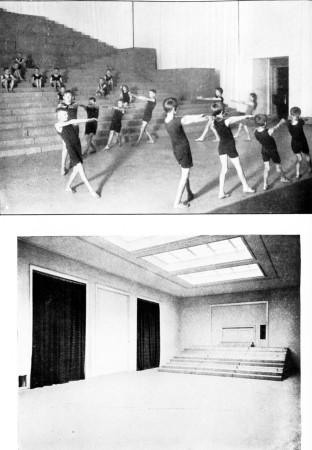
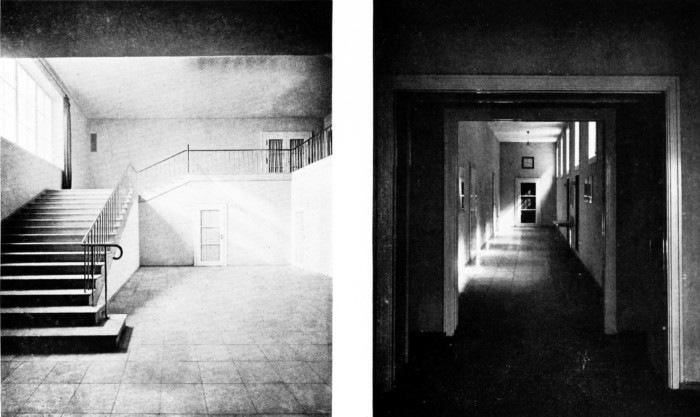
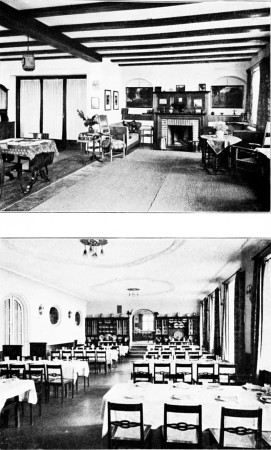
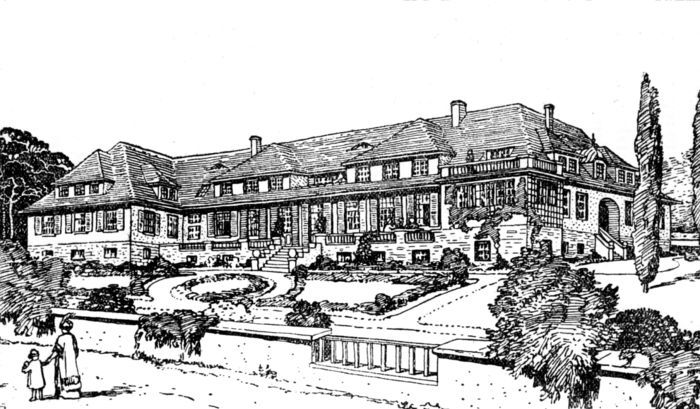
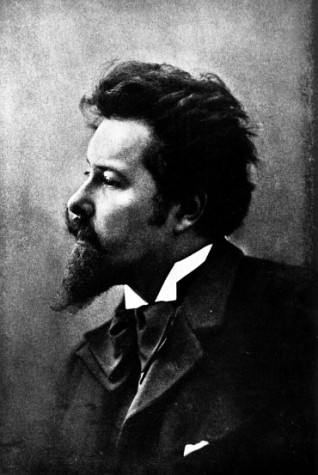
Emile Jaques-Dalcroze was born
in Vienna on July 6, 1865, of mixed parentage, his father being a Swiss
from St. Croix in the Jura (hence the artist name Dalcroze), his mother
of German extraction. At the age of eight his parents brought him to
Geneva, where in due course he became a student at the Conservatoire of
Music. His musical education was continued in Paris under Léo
Delibes and in Vienna under Bruckner and Fuchs. For a short period his
studies were interrupted by an engagement as musical director of a small
theatre in Algiers—an opportunity which he used for study of the
peculiar rhythms of Arab popular music, which he found unusually
interesting and stimulating.
Returning to Geneva, he earned, by a life of varied activities as
teacher, writer and composer, a standing which in 1892 brought him the
appointment of Professor of Harmony at the Geneva Conservatoire.
The wider experience which the new sphere of work brought was to a
certain extent a disappointment, for
with it came clear evidence of what
had before only been suspected, namely, that the education of future
professional musicians was in many ways radically wrong, in that the
training of individual faculties was made the chief object, without
consideration of whether or no these faculties stood in any close
relation to the inner consciousness of the student. In other words, the
aim of the training was to form means of expression, without
consideration of what was to be expressed, to produce a highly trained
instrument, without thought of the art whose servant it was to be, to
take as primary object a thing of secondary importance, indeed only of
importance at all when consequent on something which the usual training
entirely neglected. The students were taught to play instruments, to
sing songs, but without any thought of such work becoming a means of
self expression and so it was found that pupils, technically far
advanced, after many years of study were unable to deal with the
simplest problems in rhythm and that their sense for pitch, relative or
absolute, was most defective; that, while able to read accurately or to
play pieces memorized, they, had not the slightest power of giving
musical expression to their simplest thoughts or feelings, in fact were
like people who possess the vocabulary of a language and are able to
read what others have written, yet are unable to put their own simple
thoughts and impressions into words. The analogy here is the simplest
use of everyday language; from this to the art of the essayist or poet
is far; so in music—one who has mastered notes, chords and rhythms
can give musical expression to simple thoughts
and feelings, while to become a
composer he must traverse a road that only natural talent can render
easy.
Jaques-Dalcroze took the view that technique should be nothing but a
means to art, that the aim of musical education should be, not the
production of pianists, violinists, singers, but of musically developed
human beings, and that therefore the student should not begin by
specializing on any instrument, but by developing his musical faculties,
thus producing a basis for specialized study. This training could only
be obtained by awakening the sense, natural though often latent, for the
ultimate bases of music, namely, tone and rhythm. As the sense for
tone could only be developed through the ear, he now gave special
attention to vocal work, and noticed that when the students themselves
beat time to their singing, the work became much more real, that the
pupils had a feeling of being physically in unison with the music,
indeed the feeling of producing something complete and beautiful.
Following up this hint, "Gesture Songs" were written, which, it was
found, were performed with surprising ease.
Up to this point movement had only been used as an accompaniment to
music, not as a means of expressing it; the next step was to give the
body a training so refined and so detailed as to make it sensitive to
every rhythmic impulse and able to lose itself in any music. This
co-ordination of movement and music is the essence of the
Jaques-Dalcroze method, and differentiates it from all other methods of
similar aim.
So far only arm movements had been employed, and those merely the
conventional ones of the conductor. The next step was to devise a series of arm movements,
providing a means of clearly marking all tempi from two beats in the bar
to twelve beats in the bar, including such forms as 5/4 7/4 9/4
11/4, and a system of movements of the body and lower limbs to
represent time values from any number of notes to the beat up to whole
notes of twelve beats to the note. From the first the work aroused keen
interest among the students and their parents, and the master was given
enthusiastic help by them in all his experiments; above all he was
loyally aided by his assistant, Fräulein Nina Gorter. The
Conservatoire authorities, however, were not sympathetic, and it became
necessary to form a volunteer-experimental class, which worked outside
official hours and buildings.
The first public recognition of the method was at the Music Festival
in Solothurn in 1905, where a demonstration was given which made a
striking impression on those present. The value of the method for the
elementary education of musicians was immediately recognized and some
slight idea obtained of the part it might play in general elementary
education. It has been made clear that the method had its origin in the
attempt to give life and reality to musical education, to give a
foundational development on which specialized music study could be
based, and that it had grown naturally and gradually as the result of
observation and experiment. Now it began to be apparent that something
still greater than the original aim had been achieved, that the system
evolved was one which, properly
used, might be of enormous value in the education of children. With
characteristic energy Jaques-Dalcroze, inspired by the new idea, took up
the study of psychology, in which he was helped by his friend, the
psychologist Claparède, who early saw the value which the new
ideas might have in educational practice. The change of outlook which
now took place in the master's mind can best be made clear by a
translation of his own words.[1]
"It is true that I first devised my method as a musician for musicians.
But the further I carried my experiments, the more I noticed that, while
a method intended to develop the sense for rhythm, and indeed based on
such development, is of great importance in the education of a musician,
its chief value lies in the fact that it trains the powers of
apperception and of expression in the individual and renders easier the
externalization of natural emotions. Experience teaches me that a man is
not ready for the specialized study of an art until his character is
formed, and his powers of expression developed."
In 1906 was held the first training-course for teachers; how the method
has since grown can be realized by noting that a fortnight was then
considered a sufficient period of training, whilst now the teachers'
course at Hellerau requires from one to three years' steady work. In the
years 1907-9 the short teachers' courses were repeated; in the latter
year the first diploma was granted, experience having shown the need of
this, for
already individuals in all parts of
the world, after but a few days' training, in some cases after merely
being spectators at lessons, were advertising themselves as teachers of
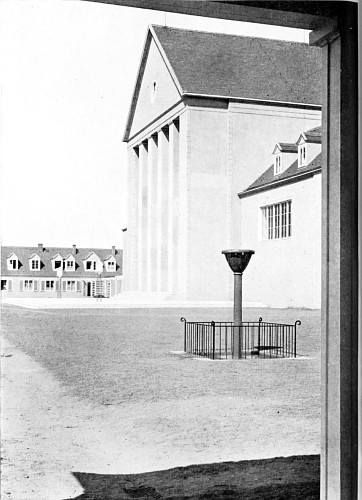
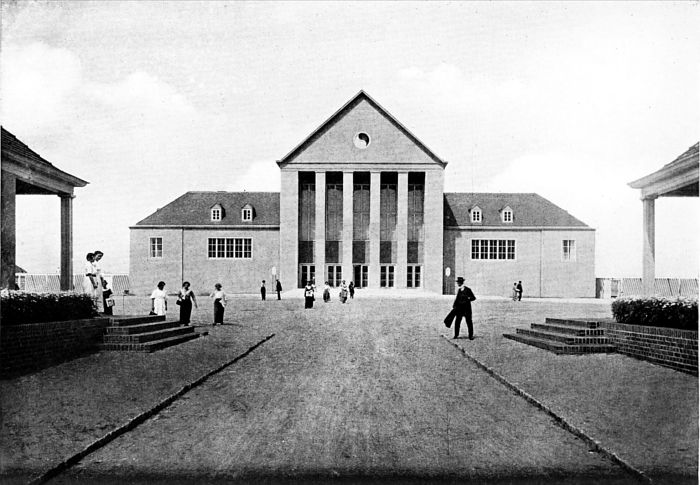
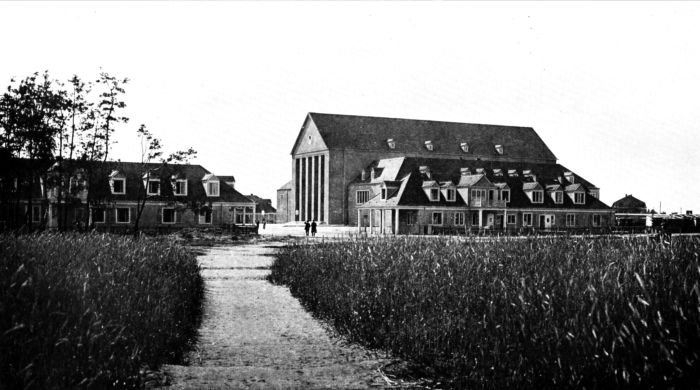
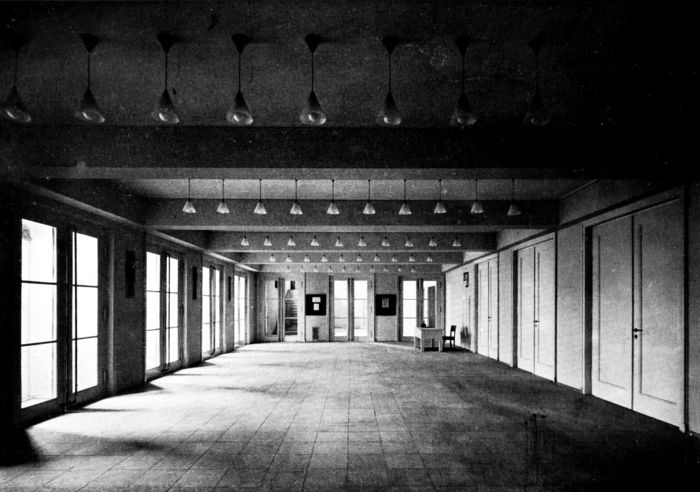
the method. In 1910 Jaques-Dalcroze was invited by the brothers Wolf and
Harald Dohrn to come to Dresden, where, in the garden suburb of
Hellerau, they have built him a College for Rhythmic Training, a true
Palace of Rhythm.
The method naturally falls into three divisions—
- (a) Rhythmic gymnastics proper.
- (b) Ear training.
- (c) Improvisation (practical harmony).
(a) Is essentially the Jaques-Dalcroze method—that which is
fundamentally new. As it is this part of the method which is likely to
prove of great value in all systems of education, not merely as a
preparation for the study of music, but as a means to the utmost
development of faculty in the individual, it will be dealt with in
detail.
(b) Is of the greatest importance as an adjunct to rhythmic
gymnastics, since it is through the ear that rhythm-impressions are most
often and most easily obtained. Jaques-Dalcroze naturally uses his own
methods of ear-training, which are extremely successful, but he does not
lay stress on them; he does, however, emphasize the need of such training, whatever the
method, as shall give the pupil an accurate sense of pitch, both
absolute and relative, and a feeling for tonality. The more these are
possessed the greater the use which can be made of rhythmic
gymnastics.
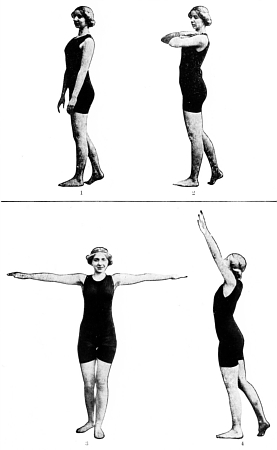
Beating 4/4.
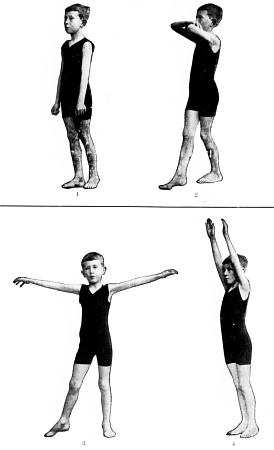
Movements for the Semibreve.
(c) This is not required in the pupil, however valuable it may be as
an additional means of self-expression; it is, however, absolutely
necessary for the successful teacher of rhythmic gymnastics, who must
be able to express, on some instrument—most conveniently the
piano—whatever rhythms, simple or compound, he may wish to use in the
training of his pupils. This subject, therefore, naturally forms an
important part of the normal course at the Hellerau College, since this
course is planned to meet the needs of students preparing for the
teaching diploma in Eurhythmics. Here, too, Jaques-Dalcroze has his own
system, with which he obtains results often remarkable, but, as in the
case of the ear-training, this is a detail not peculiar to the method as
a whole.
To repeat: the essentials are that the teacher have the power of free
expression on some musical instrument, the pupil that of hearing
correctly.
The system of exercises known as rhythmic gymnastics is based upon
two ideas, (i) time is shown by movements of the arms,
(ii) time-values, i.e., note-duration, by movements of the feet
and body. In the early stages of the training this principle is clearly
observed; later it may be varied in many ingenious
ways, for instance in what is known
as plastic counterpoint, where the actual notes played are represented
by movements of the arms, while the counterpoint in crotchets, quavers
or semiquavers, is given by the feet.
The system of beating time with the arms provides for all tempi from
2/4 to 12/4 and includes 5/4 7/4 9/4.
In the series of movements to represent note-values the crotchet is
taken as the unit; this is represented by a step; higher values, from
the minim to the whole note of twelve beats, are represented by a step
with one foot and a movement or movements with the other foot or with
the body, but without progression, e.g., a minim by one step and a knee
bend, a dotted minim by a step and two movements without progression, a
whole note of twelve beats by a step and eleven movements. Thus for each
note in the music there is one step, one progression in space, while at
the same time the note, if of greater length than a crotchet, is
analysed into crotchets.
Notes of shorter duration than the crotchet, i.e., quavers, triplets,
etc., are expressed also by steps which become quicker in proportion to
their frequency.
When the movements corresponding to the notes from the crotchet to the
whole note of twelve beats have, with all their details, become a habit,
the pupil need only make them mentally, contenting himself with one step
forward. This step will have the exact length of the whole note, which
will be mentally analysed into its various elements. Although these
elements are not individually performed by the body, their images and
the innervations suggested by those
images take the place of the movements.
The process is similar to that of the child learning to read; at first
it reads aloud, then to itself, still, however, moving its lips, i.e.,
still making all the innervations necessary for the pronunciation of
the words. Only after much practice does the process become sufficiently
automatic for these lip and tongue innervations to be dropped. Indeed,
many adults show traces of them when they read. To what degree our power
to read is based upon such innervations is shown by the fact that old
people, as their inhibitory powers become weaker, often revert to making
these lip movements. From this we may conclude that such innervations,
although they do not find their natural expression, still exist and have
effect, i.e., they are necessary. The Jaques-Dalcroze method aims at
nothing more or less than the training of rhythmic innervations.
The whole training aims at developing the power of rapid physical
reaction to mental impressions. These latter are more commonly obtained
through the ear, chiefly from the music played; naturally, however, the
teacher needs at times to give commands during an exercise. For this
purpose he invariably uses the word hopp, a word chosen for its clear
incisiveness.
Before each exercise it is clearly stated what the word is to
represent in that particular case, e.g., omit one beat, omit one bar,
beat time twice as fast with the arms, etc.; often the word will be used
in series in an exercise, each hopp meaning some additional
change. As the command generally falls on the second half
of the beat preceding the one in
which the change is to be made, very rapid mental and physical response
is necessary, especially if the music be at all quick. Exercises of this
class soon give the power of rapid muscular innervation and inhibition,
and are of extraordinary value in education, quite apart from their
purely rhythmic side.
We will now consider the exercises in some detail, taking, as a matter
of convenience, the order and grouping generally adopted at
demonstrations of the method. In actual practice such strict grouping is
neither possible nor necessary; the actual form which the lessons take
will depend upon the genius of teacher and pupils, the possibilities of
variety being infinite.
MOVEMENTS TO INDICATE VARIOUS TEMPI
Simple music is played to which the pupils march. As they grasp the
beat they mark it by an accented step; when this becomes easy, the
corresponding arm movements are added, and the strong beat, at this
stage always the first, is marked by full contraction of the arm
muscles. Practice is given until at hopp the pupil can stop
suddenly, discontinue accenting with one or both arms or with one or
both feet, substitute an arm-movement for a foot movement, insert an
extra accent either with arm or foot, or do any similar thing previously
agreed on. By repeated practice of such exercises complete automatic
control of the limbs is obtained and the ground prepared for more
advanced work. It is at this stage that the simple movements to indicate
times and notes are learnt; they may be likened to the alphabet of the method, the elementary
exercises as a whole being its accidence, the more advanced stages,
including plastic expression, its syntax.
TRAINING IN METRE
This group of exercises is a natural extension of those preceding.
The pupil learns a series of movements which together form a rhythm,
first practising them singly, then in groups, the signal for the change
being always the word hopp. By means of such exercises the component
movements required in the physical expression of a rhythm can be learnt,
first individually, then in series, until the complete rhythm can be
expressed and the use of hopp be dropped, each change of movement
becoming itself the signal for the next.
Again, the pupil learns to realize[1] a
rhythm played on the piano or indicated by the movements of another
person. This is something quite apart from mere imitation; trained by
previous exercises, the pupil first forms clear mental images of the
movements corresponding to the rhythm in question and then gives
physical expression to those images. In other words, he does not
reproduce until he has understood; in fact, without understanding,
correct reproduction of a lengthy series of such movements is
impossible. In the same way, an individual cannot easily remember and
repeat a succession of words which he does not understand, but can
repeat without difficulty a long series of words of which he understands
the sense. Indeed, the importance of many of these exercises becomes
clearer when the way in which
children are taught to read and write is remembered.
Oral and visual images of letters and words are impressed on the child
by reading aloud, and in this way the young brain easily masters the
difficult work of reading and writing. The Jaques-Dalcroze method
proceeds in exactly the same manner as regards the elements of music.
When we have once realized this point, we are bound to wonder why music
teaching has not always been based on this elementary and unfailing
form. What would be said to teachers who tried to teach children to read
and write without letting them spell and read aloud? But this is what
has often been done in the teaching of music, and if children generally
show but little pleasure and interest in their first music lessons, the
fault does not lie with them but with our wrong method of making the
elements clear to them.
As a matter of fact we generally do not make the latter clear to them,
and fail in the most important duty of the educator and teacher, namely,
that of making the child really experience what he is to learn.
DEVELOPMENT OF MENTAL RESPONSE
A rhythm in music consists of a regularly recurring series of
accented sounds, unaccented sounds, and rests, expressed in rhythmic
gymnastics by movements and inhibitions of movements. Individuals who
are rhythmically uncertain generally have a muscular system which is
irregularly responsive to mental stimuli; the response may be too rapid
or too slow; in either case impulse or inhibition falls at the wrong
moment, the change of movement is
not made to time, and the physical expression of the rhythm is
blurred.
Although feeling for rhythm is more or less latent in us all and can be
developed, few have it naturally perfect. The method has many exercises
which are of use in this connexion. By means of these the pupil is
taught how to arrest movement suddenly or slowly, to move alternately
forwards or backwards, to spring at a given signal, to lie down or
stand up in the exact time of a bar of music—in each case with a
minimum of muscular effort and without for a moment losing the feeling
for each time-unit of the music.
MENTAL HEARING. CONCENTRATION
Physical movements repeatedly performed create corresponding images in
the brain; the stronger the feeling for the movement, i.e., the more the
pupil concentrates while making that movement, the clearer will be the
corresponding mental image, and the more fully will the sense for metre
and rhythm be developed.
We might say that these movement images store up the innervations which
bring about the actual movement. They are for the body and its movements
what formulæ are for the mathematician.
Developed out of many movements they become a complete symbol for the
rhythm expressed by the series of movements in question. Thus the pupil
who knows how to march in time to a given rhythm has only to close his
eyes and recall a clear image of the corresponding movements to
experience the rhythm as clearly as if he were expressing it by
marching. He simply continues to perform the movements mentally. If,
however, his movements when
actually realizing the rhythm are weak or confused, the corresponding
mental images will be vague or incorrect, whilst movements which are
dynamically clear guarantee the accuracy of the corresponding mental
images and nerve-impulses.
In practice the exercise consists in first mastering a rhythm played,
marching and beating time in the usual manner, then at hopp
discontinuing all movement, either for a number of bars previously
agreed upon or until the signal to resume is given by a second hopp.
In this exercise the teacher ceases to play at the first hopp.
ANALYSIS AND DIVISION OF TIME VALUES
The exercises of this group are designed to teach how to subdivide units
of time into parts of varying number. At hopp the crotchet must be
divided into quavers, triplets, semiquavers, etc., as may have been
previously arranged, or instead of hopp the teacher may call three,
four, etc., to indicate the subdivision which is to be expressed by
the corresponding number of steps. Apart from their direct object, the
exercises of this group are of value for the training which they give in
poise; they might be classed equally well with the group under
Development of Mental Response.
Here, too, belong exercises in the realization of syncopation in
which, as the note is represented by the usual step, it comes off the
beat, the latter being indicated by a knee-bend which, in quick time,
becomes a mere suggestion of movement or is omitted, e.g.,
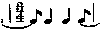
These exercises in syncopation are perhaps some of the most difficult
in the method, as they demand an extraordinary control of inhibition. Individuals of musical
ability often find them difficult at first, and their easy performance
may be taken as evidence of a developed feeling for rhythm. As a rule
children find these exercises easier than do adults.
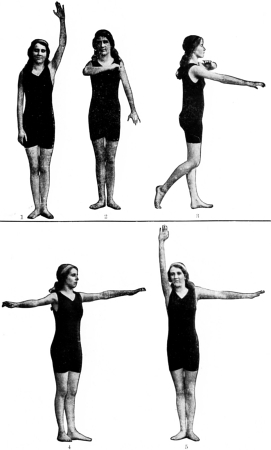
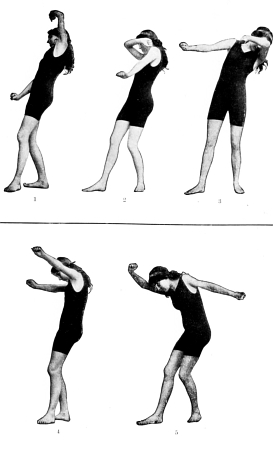
Beating 5/4 in canon without expression.
Beating 5/4 in canon with expression.
REALIZATION OF TIME AND RHYTHM
The object here is to express by rhythmic movements and without
hesitation rhythms perceived by the ear. The exactness of such
expression will be in proportion to the number of movements of which the
pupil has acquired automatic control. There is not time to analyse the
music heard; the body must realize before the mind has a clear
impression of the movement image, just as in reading, words are
understood and pronounced without a clear mental image of them being
formed.
When the realization of a rhythm heard has become relatively easy, the
pupil is taught to concentrate, by listening to, and forming a mental
image of, a fresh rhythm while still performing the old one. In this
manner he obtains facility in rendering automatic, groups of movements
rhythmically arranged, and in keeping the mind free to take a fresh
impression which in its turn can be rendered automatic.
Here again the process is analagous to that of reading, in which, while
we are grasping the meaning of a sentence, the eye is already dealing
with the next, preparing it in turn for comprehension.
DEVELOPMENT OF INDEPENDENT CONTROL OF THE LIMBS
Characteristic exercises of this group are: beating the same time
with both arms but in canon, beating two different tempi with the arms
while the feet march to one or other or perhaps march to yet a third time, e.g., the arms
3/4 and 4/4, the feet 5/4. There are, also, exercises in the
analysis of a given time unit into various fractions simultaneously,
e.g., in a 6/8 bar one arm may beat three to the bar, the other arm
two, while the feet march six.
DOUBLE OR TRIPLE DEVELOPMENT OF RHYTHMS
These exercises are a physical preparation for what is known in music as
the development of a theme. While the composers of fugues always use a
double or quadruple development, the method introduces an entirely fresh
element—the triple development, exercises in which are difficult but
extremely valuable.
PLASTIC COUNTERPOINT AND COMPOUND RHYTHMS
In plastic counterpoint the arms realize the theme, i.e., make as many
movements as there are notes, whilst the feet mark the counterpoint in
crotchets, quavers, triplets or semiquavers.
A compound rhythm may be realized by the arms taking one rhythm, the
feet another; or the rhythms of a three part canon may be expressed by
simultaneous singing, beating with the arms and marching.
These exercises correspond in the sphere of physical expression to the
technical exercises of instrumental work, for they teach the pupil to
express simultaneously impressions of the most varying nature.
GRADATION OF MUSCULAR EFFORT. PATHETIC ACCENT.
PLASTIC EXPRESSION
The exercises already dealt with
have all the general purpose of developing feeling for rhythm by giving
training in the physical expression of rhythms. Those in this last group
aim at facility in making crescendos and decrescendos of innervation, in
passing from one shade of expression to another, in co-ordinating
movements, not only to the rhythm of the music played, but also to its
feeling; they allow free play to individuality, to temperament, and give
opportunity for that free self-expression for which the preceding
exercises have provided facility.
Percy B. Ingham.

 .
This, it will be noticed, is in 3/4 time. The pupils become accustomed to dropping frequently into
various times with the greatest ease. The three bars would then be
realized consecutively, and this process will continue until perhaps
there are six bars in all. These must all be so clear in the minds of
the pupils, that at the word of command, one bar, or two bars, can be
omitted on the instant, or be realized twice as quickly, or twice as
slowly; or what is still more complicated, the arms can beat the time
twice as slowly and the feet mark the notes twice as quickly. It seems
incredibly difficult to do at first, but the same training of
thinking to time occurs in every lesson, in improvisation and solfège,
as well as in the rhythmic gymnastic lessons, and so the invaluable
habits of concentrated thinking, of quick and definite action, and of
control of mind over body, become established.
.
This, it will be noticed, is in 3/4 time. The pupils become accustomed to dropping frequently into
various times with the greatest ease. The three bars would then be
realized consecutively, and this process will continue until perhaps
there are six bars in all. These must all be so clear in the minds of
the pupils, that at the word of command, one bar, or two bars, can be
omitted on the instant, or be realized twice as quickly, or twice as
slowly; or what is still more complicated, the arms can beat the time
twice as slowly and the feet mark the notes twice as quickly. It seems
incredibly difficult to do at first, but the same training of
thinking to time occurs in every lesson, in improvisation and solfège,
as well as in the rhythmic gymnastic lessons, and so the invaluable
habits of concentrated thinking, of quick and definite action, and of
control of mind over body, become established.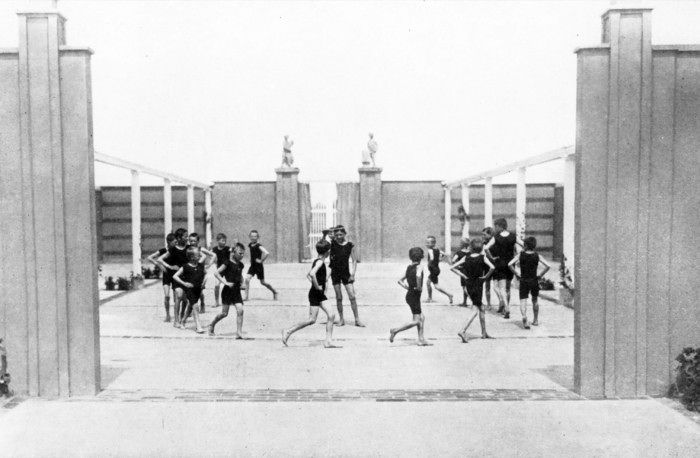
 .
The first beat of the arms and the first step will come together, the
second beat of the arms will come half-way between the second and third
steps, the third beat half-way
between the third and fourth steps, and the fourth beat half-way between
the fourth and fifth steps, and this should be done with no contraction
of muscle or appearance of effort.
.
The first beat of the arms and the first step will come together, the
second beat of the arms will come half-way between the second and third
steps, the third beat half-way
between the third and fourth steps, and the fourth beat half-way between
the fourth and fifth steps, and this should be done with no contraction
of muscle or appearance of effort. the counterpoint in crochets would be
  , or if it is to be in quavers it would be
 . The counterpoint can
be filled in with triplets, semiquavers, or with notes of any other
value.
. The counterpoint can
be filled in with triplets, semiquavers, or with notes of any other
value. twice as quickly
would become
twice as quickly
would become  .
.