"Catching Cold"—Sitting on the Floor—
Kicking the Bed Clothes Off—Inadequate Head Covering—Subjecting
Baby to Different Temperatures Suddenly—Wearing
Rubbers—Direct Infection—Acute Nasal Catarrh—Acute
Coryza—Acute Rhinitis—"Cold in the Head"—"Snuffles"—
Treatment of Acute Nasal Catarrh, or Rhinitis, or Coryza, or "Cold in the
Head," or "Snuffles"—Chronic Nasal Catarrh—Chronic Rhinitis—
Chronic Discharge from the Nose—Nervous or Persistent Cough—
Adenoids as a Cause of Persistent Cough—Croup—Acute
Catarrhal Laryngitis—Spasmodic Croup—False
Croup—Tonsilitis—Angina—Sore Throat—Symptoms of
Tonsilitis—Treatment of Tonsilitis—Bronchitis in Infants—
Bronchitis in Older Children—"Don'ts" in Bronchitis—Diet
in Bronchitis—Inhalations in Bronchitis—External
Applications in Bronchitis—Drugs in Bronchitis—Chronic
or Recurrent Bronchitis—Pneumonia—Acute
Broncho-pneumonia—Symptoms of Broncho-pneumonia—How
to Tell When a Child has Broncho-pneumonia—Treatment
of Broncho-pneumonia—The
After-treatment of Broncho-pneumonia—Adenoids—How
to Tell When a Child has Adenoids—Treatment of
Adenoids—Nasal Hemorrhage—"Nose-bleeds"—Treatment
of Nose-bleeds—Quinsy—Hiccough—Sore Mouth—
Stomatitis—Treatment of Ulcers of the Mouth—Sprue—Thrush.
Mothers frequently wonder where their children get
colds. Briefly we will point out some of the sources from
which these apparently inexplicable colds may come.
A. Sitting on the Floor.—Children should not be allowed
to sit or crawl upon the floor at any season of the
year, but especially during the winter months. There is
always a draught of cold air near the floor. It is a bad
habit to begin allowing a child to play with its toys on the
floor. Use the bed or a sofa or a platform raised a foot
from the floor.
B. Kicking the Bed Clothes Off During the Night.—The
bed clothes should be securely pinned to the mattress
by large safety pins. When it is established as a habit
a child who kicks off the bed clothes should wear a
combination night suit with "feet," made of flannel during
the winter and of cotton during the summer.
C. Inadequate Head Covering.—Professor Kerley
states that this is one of the "most frequent causes of
disease of the respiratory tract in the young." He calls
attention to the fact that "mothers carefully clothe the
baby with ample coats, blankets, leggings, etc., before
they take him out for the daily walk. They dress him
in a warm room taking plenty of time to put on the
extra clothes, during which time the baby frets and
perspires. When all is ready they place upon the hot,
almost bald head of the baby a light artistically decorated
airy creation which is sold in the shops as children's
caps. The child is then taken out of doors and because of
the inadequate covering of the hot perspiring head,
catches cold and the mother never knows how it came."
Every baby and child should wear under such caps a skull
cap of thin flannel, especially in cold weather. In summer
or windy day a light silk handkerchief folded under the
cap is a very excellent protection.
D. Subjecting a Baby to Different Temperatures
Suddenly, is liable to be followed by a cold—for example,
taking the child from a warm room to a cold room, or
through a cold hall, holding the child at an open window
for a few moments.
E. The Practice of Wearing Rubbers Needs Some
Consideration.—They should never be worn indoors for
even five minutes. They should not therefore be kept on
in school, nor should they be worn by women in stores
when they go shopping. When it is actually raining, or
snowing, or when there is slush or wet mud they are needful;
but they should not be worn simply because the
weather is threatening or damp. Children should not
put them on to play—worn for any length of time when
active they are harmful. If worn to and from school they
should be taken off at once when in school or at home.
Wearing rubbers prevents free evaporation of the natural
secretion of the skin, keeps the feet moist and invites
colds and catarrh. In damp weather, or when children
play during winter months, they should be shod with
stout shoes with cork insoles.
The same argument applies to storm coats of rubber,
water-proof material. They should not be worn as overcoats
all day, but only when going to and from school or
business when it is actually storming.
Underclothing or hosiery should not be heavy enough
to cause moisture of the skin. Health demands a dry skin
at all times. The necessary degree of body heat should be
attained by the quality of the outer clothing, not by the
quantity of the underclothing. Many men and women
wear heavy underclothing which causes moisture when
indoors, with the result that they get surface chills when
they go outside if the weather is cold and as a result catch
cold. The underclothing should be just heavy enough to
be comfortable indoors and the extra warmth necessary
when outside should be supplied by a good overcoat or
furs.
F. Direct Infection.—A baby may catch cold if kissed
or "hugged" by an adult who has a cold.
Catching cold while bathing is possible, but scarcely
probable, if ordinary precautions are taken. It is very
bad practice to permit children to use one another's
handkerchiefs or the handkerchief of an adult. Certain
children are predisposed to attacks of "cold in the head"
or acute coryza or nasal catarrh (these being the medical
names for this condition). Sometimes this is an inherited
characteristic. There is no doubt, however, that most
of these children acquire the habit by bad sanitary and
hygienic surroundings. These children do not as a rule
get enough fresh air. They are kept indoors most of the
time in stuffy, overheated, badly ventilated rooms, unless
the weather is absolutely perfect. The windows in their
bedrooms are always kept closed, because they are "liable
to catch cold." They are overdressed and perspire easily
and as a result "catch cold." These conditions all tend
to create an unhealthy condition of the nasal mucous
membrane and of the throat, and this is rendered worse
if the child lives in a damp, changeable climate, such as
that of New York City. In these susceptible children the
exciting cause of an attack may be trivial; exposure, cold
or wet feet, inadequate head covering (as already pointed
out), a draught of cold air even may excite sneezing
and a nasal discharge; hence we have:
Acute Nasal Catarrh (Acute Coryza, Acute Rhinitis,
"Cold in the Head", "Snuffles").—Acute nasal catarrh
may accompany measles, diphtheria, influenza, and
whooping cough.
Symptoms.—The onset is sudden with sneezing, and
difficulty in breathing through the nose. In a few hours,
or it may be not for a day or two, a mucous, watery, nasal
discharge appears. There are redness and slight swelling
of the nose and upper lip, caused by the discharge. There
is no fever as a general rule except in very young
infants, in whom the fever may be very high. The discharge
interferes with the nursing and the child suffers
from lack of nourishment. The inflammation may extend
to the eyes and ears, causing painful complications, or to
the throat and bronchi, causing hoarseness and cough.
Less frequently we have disturbances of the digestive
tract with vomiting, or diarrhea.
The mild form of the disease lasts for two or three
days, the severe form from one to two weeks.
Repeated attacks are said to contribute to the production
of adenoid growths.
An acute attack of this disease is seldom a serious affliction
in older children; it may be, however, very serious
and even dangerous in very young infants. The tendency
of the disease to extend downward, causing bronchitis or
pneumonia, explains in part the possible danger to a baby.
Another reason is because it may seriously interfere with
suckling and with breathing in these little patients. It
may even cause sudden attacks of strangulation. An
infant, therefore, suffering with an acute attack of rhinitis
requires constant attention. It may be necessary to feed
it with a spoon, and if necessary mother's milk should
be so fed. Plenty of fresh air should be provided. It may
be essential to keep the mouth open in order that it may
get enough fresh air. Every effort should be made to
keep the nostrils open. The secretions must be removed
from time to time. Causing the child to sneeze by tickling
the nose with a camel's hair brush will clear the nose for
the time being. The physician may be compelled to use a
solution of cocaine for this purpose.
Treatment of Acute Rhinitis ("Taking Cold", Nasal
Catarrh, Acute Coryza, "Snuffles").—A child suffering
with an acute attack of "cold in the head" should be kept
indoors in a room with a constant, uniform temperature;
the particular reason for this is, that, if a child is exposed
to cold at any time during an attack of "cold in the head,"
it may cause the disease to invade the chest,—a tendency
which it has at all times. The bowels must be kept open;
if they do not move every day of their own accord they
must be made to move by means of an enema of sweet oil
or of soap-suds. The amount of food should be reduced
to suit the circumstances and the condition of the patient.
We treat the local condition in the nose with a menthol
mixture. The following is a very good one: Menthol,
30 grains; Camphor, 30 grains; White Vaseline, 1 ounce.
Put some of this on the end of the finger and push it
gently into each nostril. When the nostrils become
blocked and the child cannot breathe through the nose,
tickle the nose with a feather until it sneezes; this will
clear the passage. Immediately after the sneeze place
the menthol mixture in each nostril. When the child is
about to sneeze place a handkerchief before the nose, as
this discharge is full of germs and will infect others when
dry. Internal remedies should not be used unless the
child is distinctly sick and is running a fever, in which
case a physician should look the child over and prescribe
whatever is called for.
The upper lip and the nostrils of the child should be
protected, because the discharge very quickly irritates the
parts and renders them raw and painful. Vaseline or cold
cream is very suitable for this purpose.
Mothers should not wash out the nose of a child with
any solution advised for this purpose where force is used,
as, for example, with a syringe. Any forceful irrigation
of the nose is dangerous, because it would carry the infection
into the deeper parts and set up a more serious
condition.
If the above treatment is carefully carried out and the
child unexposed to a fresh cold, two or three days will be
sufficient to cure the disease.
It is not, however, the treatment of an acute attack of
"cold in the head" that is important; it is intelligently to
follow out a plan which will prevent these attacks from
repeating themselves that is of consequence. The tendency
to take cold is a real condition in childhood and a very
common one. When mothers appreciate that it is possible
to prevent this condition and to cure it when it is seemingly
an established habit, more interest will undoubtedly
be taken in the subject. Too frequently it is looked upon
as an unfortunate affliction, but it is never regarded as a
condition that is caused by neglect and ignorance.
It is an exceedingly common occurence to find a mother
worrying over her child's cold, dosing it with cod liver
oil or some other unnecessary tonic, rubbing it with
camphorated oil or plastering it over with certain useless
patent plasters, dressing it with extra pieces of flannel on
its chest and extra clothes pinned snugly around it, then
shutting it up in a warm, stuffy, unsanitary, ill-smelling
room, in order to keep it from "catching a fresh cold."
Can you imagine anything else she could do to defeat her
purpose?
No quantity of cod liver oil, no medicine, no coddling,
will remove the tendency to "catch cold." The child's
life must be lived amidst sanitary surroundings and hygienic
conditions first; then other expedients may be
utilized if necessary. These children must be kept out
of doors most of the time, unless during the severest wet
weather. They should sleep in a room the windows of
which are open at the top and bottom every night in the
year. They should not, however, be in a draught. The
rooms in which they live should be of a uniform temperature,
never too hot and never too cold, between 68°
and 70° F. These delicate catarrhal children should be
accustomed to light clothing on their beds. Chest protectors,
mufflers, cotton pads, and heavy wraps of any
description should be absolutely prohibited. It is advisable
to use flannel underwear winter and summer,
light in summer and a medium weight in winter.
During the summer months the mother should begin cold
sponging of the face, throat, chest, and spine every morning
and carry it into the winter. The entire process need
take only a moment or two. Always dry thoroughly
with a fairly rough towel. If the cold sponging is begun
in the warm summer time the child will become so
accustomed to it that no objection will be made when
the cold weather comes.
If the child continues to be "catarrhal," despite a
course of this treatment, it would be well to investigate
whether any adenoids or adenoid tissue exist in the
naso-pharynx. If adenoids are found no treatment will
be successful until they are removed.
It is a wise plan to place a flannel cap on an infant
who has an acute attack of "cold in the head" (snuffles).
This will prevent catching a fresh cold and it will aid
in the speedy cure of the attack from which it is suffering
when it is put on.
Some children have a nasal discharge during all of
their childhood. It is usually worse during the winter
months. It may be a thin, watery discharge or a thick,
nasty, yellow discharge.
It is a condition that is very frequently neglected even
by the family physician. This is unfortunate because
it may lead to serious disease, permanent damage sometimes
being done to the hearing, the speech, the smell,
and to the lungs of the child.
It may be caused by adenoids; disease of the bones or
tissues in the nose; foreign bodies in the nose; or it may
occur in children whose nutrition is bad. It may result
from frequent acute attacks of "cold in the head." It
also occurs in other less important conditions. The foreign
bodies which usually cause a chronic nasal discharge
are,—buttons, peas, beans, beads, paper balls, flies and
bugs, cherry-stones, small pieces of coal, or stone, cork
or other material. A child gets hold of a shoe-button
for example and pushes it into its nostrils. In the effort
to get it out the child pushes it further in. It may or
may not cause pain at the time, and it may be overlooked,
but shortly the mother will notice a discharge
from one nostril. This discharge becomes thick and
foul and when an investigation is made the button is
found embedded firmly in the nose. It is sometimes
quite difficult to get the button out and this should always
be done by a physician.
Treatment.—Remove the cause first then treat the
catarrh. If it is a product of a constitutional disease
that causes general poor health, such as tuberculosis,
syphilis, or scrofula, the child will need "building up"
and a decided change of climate. Foreign bodies must
be removed, adenoids taken out, large tonsils excised, and
malformations of the nasal bones operated upon. The
catarrh will in many cases be cured by removing its
cause; if, however, it should persist it must be treated
for some time with appropriate solutions. These solutions
and the directions as to the method of giving them
must be given by a physician, because there is great danger
of carrying the disease to deeper structures if given
wrongly.
SUMMARY:—
1st.—A chronic discharge from the nose is a sign that
something is wrong and should be carefully and thoroughly
investigated.
2nd.—The cause can usually be found out and the proper
treatment will cure it.
3rd.—If the condition is neglected it may ruin the health
of the child for the whole period of its life.
Cough in an infant or growing child is usually the
result of a cold and the structure affected is some part
of the nose, throat or bronchi. It is a comparatively
simple matter to discover just where the trouble is and
to prescribe the appropriate remedy and effect a cure.
There is another type of cough, however, that is of
quite a different character. This cough will begin as
an ordinary cough and it will only be discovered that
it is not an ordinary cough because nothing will apparently
cure it. We mean that the child is given cough
remedies that usually cure a cold, is kept in the house
and carefully watched for a sufficiently long period
to justify a cure, and yet, despite this care and attention,
the cough remains the same. The child is not
sick, the appetite is good, there is no fever, it plays and
seems to enjoy good health, yet for weeks and frequently
for months the annoying cough hangs on. It is as a rule
worse at night. It begins soon after the child falls
asleep and spoils the entire night's rest or a great part
of it. It may be a dry, hard, hacking cough, or a croupy,
harsh bark. It may come in spells with a considerable
interval between them, during which time the child falls
asleep, or it may be almost constant, not quite severe
enough to rouse the child, but bad enough to spoil the
child's rest and the rest of the mother. If this condition
lasts for a long time, as it occasionally does, the health
of the little patient is apt to suffer from loss of sleep.
Treatment.—These children should be taken to a good
physician and thoroughly examined. Special care should
be devoted to investigating the condition of the nose,
throat, ear, stomach, heart, and lungs.
A very large majority of these coughs are caused by
adenoid growths in the back part of the nose. The child
may not look like an adenoid child, nor may it breathe
through its mouth when asleep, and it may have had its
adenoids removed, yet in spite of these contra-indications
it may have enough loose adenoid tissue in its
nose to cause this kind of persistent cough. This has
been proved many times.
It is not only useless but positively harmful to give
these children cough remedies. The cause of the cough
must be found and treated. The cough may be indirectly
caused by anemia (poor blood) or heart or stomach
trouble, or it may have a number of other causes. Whatever
it is it must be found by a careful physical examination
or a number of careful physical examinations,
because these cases are as a rule obscure and difficult
to diagnose, and even the most expert examiner cannot
always tell where the trouble is without seeing the
child a number of times. The parents must therefore
have patience and confidence in the physician and must
aid him all they can by watching and reporting all the
symptoms, etc., to him. (See article on Adenoids).
SUMMARY:—
Coughs that resist careful treatment are not "ordinary
coughs."
Coughs of this type require special medical care.
The usual cough medicines are not only useless in
these coughs, but dangerous. Don't give them.
Croup is one of the common diseases of childhood. It
usually follows a catarrhal "cold in the head" with a
cough. Croup is most frequently associated with large
tonsils and adenoids. It may come on gradually or it
may occur suddenly. There is always fever with croup.
One of the first symptoms is a hard, dry, croupy, barking
cough, which gets worse toward night. If it occurs suddenly,
the child will wake about midnight with the characteristic
croupy cough. The disease may go no further
than this and under the proper treatment is well in a few
days. In other cases, however, there develops marked interference
with breathing. Every inspiration is accompanied
by a loud hissing or "crowing" sound. This feature
of the disease is one that frightens the parents,
though it seldom means anything serious. The child sits
up in bed, frightened, and struggles for breath. It may
clutch its throat with its hands as if something was tied
round its neck. The lips may become slightly blue and the
perspiration appears upon the child's brow. After some
time,—it may be two or three hours,—the attack wears
away and the child goes to sleep. Next morning it wakes
up apparently well except for the croupy cough. The attack
may repeat itself the next night and mildly on the
third night.
Treatment.—The object of treatment during an acute
attack, when the child is struggling for breath, is to relax
quickly the spasm of the larynx which interferes with the
breathing. The simplest way is to give the child a teaspoonful
of the fresh syrup of ipecac. If the child does
not vomit in fifteen minutes, give another teaspoonful and
keep on giving it every fifteen minutes till the child
vomits. One or two doses is usually enough, but it must
be given till the child vomits.
If the attack comes suddenly during the night and
there is no syrup of ipecac in the house, the physician
should be sent for at once and informed that the child
probably has croup, so he may know what to take with
him. While waiting for the physician the mother should
apply over the front of the neck (in the region of Adam's
apple), hot applications. These are best made of flannel
wrung out of quite hot water every two or three minutes:
also a hot mustard foot bath. When the physician takes
charge of the case he will also direct the treatment for
the following day in order that the attack of the
next night may be a very mild one, if it should
came at all.
Children who have a tendency to frequent attacks of
croup should receive the same attention as the children do
who are subject to attacks of tonsilitis and acute catarrhal
rhinitis.
SUMMARY:—
1st. Spasmodic Croup always requires prompt and efficient
treatment.
2nd. It is called "false" croup, because "true" croup
is always diphtheritic and is a very serious disease.
3rd. For that reason a physician should always be
called because if it is "true" croup antitoxin must be
given at once.
4th. Don't worry unnecessarily because, though "spasmodic
croup" can make the child look exceedingly
sick for a very short time, an uncomplicated case in
a healthy child is seldom if ever dangerous.
This is one of the frequent diseases of childhood. We
rarely see it in infants. It is caused by inhaling air which
contains poisonous germs. These germs quickly develop
when conditions are favorable. They lodge in the pores
or follicles of the tonsils and set up an active inflammation.
The tonsils swell up and the follicles exude a thick
fluid which looks like curdled cream. This fluid sticks in
the mouths of the follicles forming spots. If enough of
this fluid is coming out, these spots join together forming
patches, and the patches may join together forming membrane.
This is why it is sometimes so difficult to tell
whether the case is one of tonsilitis or diphtheria.
Conditions are favorable to the development of tonsilitis
if the child is not in good health when he happens
to inhale the infection, when the feet are wet or cold, or
when the child is allowed out during inclement weather
and it becomes chilled or numbed from cold, when the
child has a cold in the head and a running nose, or when
its stomach is out of order. Any condition in which the
child should be carefully watched and tended to, rather
than allowed further liberties, or risks, conduces to sore
throat of some kind.
Some children have the disease a number of times;
they seem to be predisposed toward a sore throat. These
are children who have large tonsils or who are rheumatic.
The tonsils should be removed in the one case, and the
tendency to rheumatism should be the main treatment in
the other case.
These children should be encouraged to cleanse the
throat and nose morning and night with a warm salt solution
(half a teaspoonful of ordinary table salt to three-quarters
of a cup of warm water). This will help greatly
to prevent these chronic sore throats.
Symptoms of Tonsilitis.—The disease begins suddenly.
The child may have a chill or be seized with sudden
vomiting or diarrhea. A very young infant may have a
convulsion. The usual way is for the child to develop
a fever quickly, to complain of being sick and tired.
Muscular pains all over the body and a severe headache
are constant symptoms. The fever is usually high from
the beginning. The child will tell you its throat is sore,
but there is as a rule very little pain in the throat. The
little spots or patches can be seen on one or both tonsils.
The general symptoms are more pronounced than the
local throat symptoms. The amount of physical depression
that is caused by a tonsilitis is out of all proportion
to the seriousness of the disease.
Tonsilitis lasts three days usually. The throat symptoms
may take a day or two longer to clear up, and the
patients feel more or less weak for some time after all
the symptoms have disappeared.
Tonsilitis is medically regarded as one of the mild
diseases of childhood. It is, however, of very great importance
because of its likeness to diphtheria, and inasmuch
as a positive diagnosis must be promptly made, in
the interest of the patient, it is given close attention and
treated with considerable respect by the medical profession.
The chief differences between the two diseases are
as follows:
Tonsilitis begins abruptly with pronounced prostration
and a high fever the first day. The patient feels distinctly
sick all over. The second day the patient feels somewhat
better, the fever is lower and the prostration and pain are
not so marked. The third day he feels better still, and
but for a little weakness would feel well. Diphtheria
begins slowly and insidiously, with very little prostration
and a very low fever the first day. The patient scarcely
feels sick. The second day more prostration is present,
the fever climbs upward a little more, and the patient
begins to feel sick. On the third day the prostration is
much more profound, the fever is higher, and all the evidences
of a serious sickness are present. Two very different
pictures: The one begins bad and ends easy, the
other begins easy and may end bad.
The important fact, however, so far as the similarity
of the two diseases is concerned, is, that we must make
the diagnosis positive on the first or second day, because
if we are dealing with a case of diphtheria we must
give antitoxin at once. This is essential, because the
efficacy of antitoxin is greatest when given early in the
disease. By "early" we mean the first or second day
of the disease. When antitoxin is given late (the third
or fourth day of the disease) it is much less efficacious
and must be given in relatively larger doses. The need,
therefore, of a quick, positive diagnosis is a real one.
Another important element involved in a speedy diagnosis
is, that we must not take any chances of infecting
other children. So important are these conditions that
it is the proper treatment to give antitoxin at once in
every case of tonsilitis that in the slightest way resembles
diphtheria. An examination of the throat contents,—a
culture of which is taken during the first visit of
the physician,—will, of course, reveal the true condition
and dictate the future use of the antitoxin. Antitoxin
is absolutely harmless when given to a patient who
has no diphtheria. Every case of tonsilitis should be
quarantined when there are other children in the house.
The local condition of the throat helps in the diagnosis:
In tonsilitis (as the name implies) the disease is limited
to the tonsils and on the tonsils (one or both) do we
find the spots or patches. In diphtheria, on the other
hand, the membrane is not limited to the tonsils, but
may cover every part of the throat and extend into the
nose and mouth. In tonsilitis it is spots or patches we
see in the throat. In diphtheria it is membrane we see
always. The difficulty here again is that if we wait till
the diphtheritic membrane covers the whole throat, antitoxin
will not be of much use.
In diphtheria we have a characteristic odor, in tonsilitis
we have no characteristic odor.
The practical lesson to be learned from this uncertainty
is, immediately to get a physician as soon as you
find spots in the throat of your sick child, unless you are
absolutely sure that the condition is not diphtheria and
you are willing to take that chance.
Treatment of an Acute Attack of Tonsilitis.—Put the
child in bed at once and keep him on a light diet during
the fever. Give him all the cool boiled water he wants
to drink. If the fever is very high it can be controlled
by sponging the body with cool water. If the patient
is an infant the food should be reduced to one-half
strength. Tonsilitis is a disease that runs a certain course
and gets better, or the patient develops some other more
serious conditions as a result of neglect or carelessness.
We therefore try to make the patient comfortable and
let the disease take care of itself.
The throat can be gargled or sprayed with any mild
antiseptic liquid, or it can be painted with tincture of
iodine or 10 per cent. solution of silver nitrate. As a
rule the gargles do not aid in the cure of the disease,
though they contribute to the comfort of the patient.
A cold compress made of half a dozen thicknesses of
cloth, such as a table napkin, and put under the jaw
(not round the neck), and covered with oiled silk and
held in place with a bandage that meets and is tied on the
top of the head, is of distinct usefulness.
When it is known that the child is rheumatic, the
heart must be carefully watched during the fever and
anti-rheumatic remedies depended upon to effect a cure.
SUMMARY:—
Tonsilitis, because of its likeness to diphtheria, must
be promptly and carefully diagnosed.
A physician only is capable of making a diagnosis.
Any sore throat in a child with spots or membrane
is deserving of serious and immediate attention.
A mistake may mean death. Don't take a chance.
Bronchitis is one of the commonest diseases of childhood.
It is the cause of many deaths. Exposure during
inclement weather is as a rule the cause of it. It
occurs in all classes and conditions of children. Poorly
nourished and badly clothed children are more liable to
get it than are others. It is more dangerous in young
children and infants than in older children. A young
child or an infant will get bronchitis quicker than those
older and stronger under the same conditions.
Bronchitis is often present while children are suffering
from other diseases, measles, influenza, scarlet fever,
typhoid fever, pneumonia, diphtheria, whooping-cough,
for example. It may accompany any disease of childhood,
however.
Symptoms.—In infants bronchitis usually follows a
"cold in the head," with running nose and a cough. The
child is indisposed and peevish because of the cold. In
a few days the cough becomes worse, fever develops,
the breathing is quicker, and the baby looks and acts
sick. The cough may be constant and severe; sometimes
the cough does not seem to bother the baby, although
this is exceptional. The breathing is quite rapid
and is accompanied with a moist, rattling sound in the
chest. The baby is restless and if the cough is severe it
becomes exhausted. Vomiting or diarrhea may be present.
Bronchitis in Older Children.—Bronchitis in older
children comes on abruptly, with fever and cough. The
child may complain of headache and pains in the chest
or other parts of the body. It may begin with a chill or
chilly feelings. These children "raise" with the cough.
The expectoration may be quite profuse; at first it is
a white, frothy mucus, then yellow, and later a yellowish
green; it may be slightly tinged with blood.
There is a mild form of bronchitis in these older
children where the serious symptoms are absent. The
children are not sick enough to go to bed, but they appear
to have a "heavy cold" with, at first, a tight, hard
cough, which is usually worse at night. Later the cough
turns loose and the same expectoration occurs as in the
severe type. It is these cases of mild bronchitis which
do not receive the proper care and treatment that develop
into the so-called "winter cough," which lasts for
months.
Treatment.—(See page 497
under heading, "Catching Colds.") Children who acquire bronchitis easily and
frequently, should be built up. Cod liver oil should be
given all winter. The sleeping apartment of these children
should not be too cold, but it should be well aired
through the day and well ventilated throughout the
night. Flannel night clothes should be worn and the feet
should be kept warm always. Mild attacks of "cold in
the head" should be treated vigorously and not neglected.
The following "Don'ts" may be profitably studied when
your child or baby has bronchitis:—
Don't keep the windows tightly closed; fresh
air and good ventilation are absolutely necessary to the patient.
Don't use a cotton jacket or oil silk.
Don't wrap the child up in blankets and shawls.
Don't carry the child around; keep it in bed.
Don't dose the child with syrupy cough mixtures.
Don't overheat the room.
Don't let friends bother or annoy the baby.
Don't reduce the diet unnecessarily.
The child should be put to bed. The temperature of
the room should be 70 degrees F. all the time. The windows
should be opened top and bottom according to the
weather, and the room should be well aired every day,
the patient being taken to another room while it is being
done. The child should have its usual night clothes
on, nothing more. If the child is not very sick and insists
on sitting up, a bath robe can be worn but it should
be always removed when it sleeps. It is advisable to
change the position of the baby from time to time. Have
it rest on one side, then on the other, as well as on the
back. Give a dose of castor oil at the beginning of the
sickness and keep the bowels open during the disease.
Diet.—The diet will depend upon the severity of the
disease. If the fever is high and the cough persistent,
the strength of the food of nursing infants should be
reduced. We can reduce the strength of the food by
giving the child a drink of cool boiled water before
each feeding and shortening the length of each feeding.
Older children may be given toast, milk with lime water,
cocoa with milk, broths, gruels, custards, cereals and
fruit juices.
Inhalations.—The value of inhalations in bronchitis is
very great. The ordinary croup kettle, which can be
bought in any good drug store, is the best method of
giving them. Full directions come with each kettle as
to the best way to use it. The best drug to use in the
kettle is creosote (beechwood). Ten drops are added to
one quart of boiling water and the steaming continued
for thirty minutes. The interval between steaming is
two hours and a half in bad cases day and night. In
mild cases the night treatments can be dispensed with.
Sheets rigged up over the top and sides of the crib, in
the form of a tent, is the most desirable way to give
the inhalations.
External Applications.—Counter-irritation by means
of mustard pastes are the best applications. They should
be put back and front—one on back and one on the chest,
overlapping at the sides beneath the arms. They should
cover the entire body from the waist line to the neck.
These pastes are made as follows:—Mix the mustard
(English) and the flour in the following proportions, using
a quantity according to the size of child and area
to be covered; one tablespoonful mustard to three tablespoonfuls
of flour. Mix with lukewarm water until a
paste is formed, not too thick and not too thin. Spread
on a cloth (put plenty on) and cover with one layer
of cheesecloth and place the cheesecloth side next the skin.
In order to guard against burning the skin it is advisable
to rub the skin with vaseline, before and after putting on
the paste. The paste should be left on until the skin is
uniformly red. It may be applied from two to four times
in the twenty-four hours according to the severity of the
case. Mustard pastes are most effective during the first
two or three days of the disease.
Drugs.—Drugs are of very little value in the treatment
of bronchitis. In the first stage of the disease,
when the cough is hard and dry, small doses of castor
oil and syrup of ipecac may be given to good advantage.
The following dosage should be followed closely: 1st
year, 2 drops castor oil, 2 drops syrup of ipecac, every
two hours; 3rd year, 3 drops castor oil, 3 drops syrup
of ipecac, every two hours; over 3 years, 4 drops castor
oil, 4 drops syrup of ipecac, every two hours.
The benefits from this treatment will be obtained in the
first two or three days, when it should be discontinued.
The cough under this treatment and the use of the mustard
paste and inhalations of creosote will be soft and
loose in two or three days and the fever will be distinctly
on the mend. The disease lasts from five to ten days.
It may, however, last much longer according to the
condition of the child, etc.
There are other drugs that can be given, with good effect,
but when other remedies are indicated a physician
should be called to prescribe them according to indications.
SUMMARY:—
Bronchitis is one of the commonest diseases of childhood.
It is the cause of many deaths.
A large number of children have a tendency to bronchitis.
These children need careful attention and "building
up."
Do not neglect a "little" cold. It means trouble.
Chronic or Recurrent Bronchitis.—Bronchitis becomes
chronic when the treatment of an acute attack fails to
cure the condition. The failure usually is dependent
upon the condition of the child. It may be suffering
with some disease resulting from poor nourishment or
poor sanitary and hygienic surroundings or both. The
bronchitis, in other words, is dependent upon some other
condition, and will not get wholly better until the cause
is cured. These children should lead an active outdoor
life when the weather is favorable. Their sleeping-room
should be well aired and ventilated. Red meats are allowed
twice a week only. Sugar is cut down to the
lowest limit. Skimmed milk only should be taken—the
cream being too rich for them. They can eat freely of
fruits in season, green vegetables and cereals. The
bowels must move freely every day. Patients must be
given a lukewarm bath, followed by a brief spray of
cold water, daily. The cold spray should not be too
cold; about 60 degrees F. is the suitable temperature
of the water.
An absolute change of climate, to a warmer inland
atmosphere, is imperative before some of these patients
will begin to improve.
SUMMARY:—
A child with chronic bronchitis, or with frequent attacks
of bronchitis (or chronic colds), is usually
suffering from some other diseased condition.
The bronchitis, or the cold, will not get better until
you find out what that "other diseased condition" is.
It takes a physician to find that out.
Having found the cause, cure it, and the bronchitis will
disappear and the general health of the child will
immediately improve.
Pneumonia is a very common disease in childhood. It
is the most frequent complication of the various acute
infectious diseases. Pneumonia is an exceedingly important
factor in the mortality of infancy.
There are two kinds of pneumonia:—
1. Broncho-pneumonia.
2. Lobar-pneumonia.
Acute Broncho-Pneumonia.—Up to the fourth year
this is the form of pneumonia always present. It is the
form that always complicates other diseases all through
childhood.
It is most apt to occur during the spring and winter
months.
It affects all classes, but especially those whose hygienic
surroundings are poor. Catching cold is the exciting
cause in a large percentage of primary pneumonias.
Symptoms.—Broncho-pneumonia has no regular
course. It may or it may not follow a cold or an attack
of bronchitis. As a rule it begins suddenly with a high
fever, frequently accompanied by vomiting, rapid respiration,
cough, and prostration.
The child does not maintain a high fever continuously;
it varies considerably throughout each twenty-four hours.
It lasts from one to three weeks, and subsides gradually.
The respirations vary between 60 and 80 per minute,
though they may be much more frequent than this. The
child breathes with apparent difficulty, the soft parts of
the cheeks and nose rising and falling as it breathes.
The prostration becomes, as the disease progresses,
more and more marked, until the child looks profoundly
sick.
Cough is a constant and incessant symptom. It disturbs
rest and sleep and may cause frequent vomiting.
There is no expectoration. A strong cough is a good
symptom; if it stops it is a bad symptom.
Pain is seldom present.
Blueness of the skin is a bad sign and indicates failure
of respiration and suggests constant and careful watching.
Delirium may be present during the disease. It is not
necessarily a bad sign. Accompanying stomach troubles
are frequent if the patient is very young, and are very
important. The bowels may be loose; they may be green
in color and contain much mucus. Large quantities of
gas may accumulate in the intestines and may cause much
distress and convulsions. Death may occur at any time
or the process may be arrested and recovery take place
at any stage of the disease. Broncho-pneumonia is not
necessarily a fatal disease in a fairly healthy child. It is,
however, always a serious disease.
Various complications may occur in the course of the
disease. The most frequent are: pleurisy, emphysema,
abscess of the lung, meningitis, heart disease, stomach
troubles, thrush, intestinal disease.
How to Tell When a Child Has Broncho-Pneumonia.—If
a child develops a high fever, breathes rapidly,
coughs, and is content to lie in bed because of the degree
of prostration, broncho-pneumonia is almost certain to be
the disease present. If in addition to these symptoms
there is any blueness of the fingers or around the mouth
it is more strongly suggestive of pneumonia.
If the child has been suffering with bronchitis it is
sometimes difficult to tell just when the pneumonia begins.
The child will appear more profoundly sick, the fever will
go higher, and the respiration will be more frequent when
pneumonia sets in on top of bronchitis.
Treatment.—The nursing of a little patient with pneumonia
is the most important part. He must get plenty of
fresh air; consequently he should be kept in a well-ventilated
room. It is an excellent plan to change the patient
twice daily from the sick room into another which has
previously been thoroughly aired. While he is in this
room the sick room should be as thoroughly aired as is
possible. Keep this plan up all through the disease;
change the position of the patient in bed every two hours.
He should never be allowed to lie on his back for hours
at a time. In this way the different parts of the lungs
get a chance to air themselves,—the air cells expand and
the oxygen in the air and the fresh blood tend to heal the
parts more quickly.
It would be distinctly wrong to go into the detailed
symptomatic treatment of broncho-pneumonia in a book
of this character. Inasmuch as this is one of the most
serious diseases of infancy, no mother should attempt to
treat it alone. A physician is absolutely necessary and
the most the mother can hope to do is to follow out his
directions to the letter.
He may direct the use of mustard pastes but it is essential
to know where to apply them. If he should request
the use of the cotton jacket, the height and character of
the fever must regulate its use. Stimulants are always
necessary, whisky and strychnine being given in every
case, but if given at the wrong time they may do more
harm than good. Cough mixtures may be necessary, but
frequently they are contra-indicated. Drugs and cold
sponging may be used to reduce the fever, but they are
dangerous if used when conditions do not justify their
use. Complications must be diagnosed when they occur,
and the correct methods of treatment promptly instituted.
A competent physician alone can assume the responsibility
of these various phases of the disease.
Every mother should appreciate, however, that pneumonia
is frequently the result of carelessness. It is a well-known
fact that pneumonia is an infrequent disease
among children of the well-to-do, because the hygienic
surroundings of these children are better and because
they receive competent attention if suffering with colds
and bronchitis. Bronchitis is quite common in all classes
of children, but in the lower walks of life it is the custom
to allow children to run around while they give every sign
of having a heavy cold, and a beginning bronchitis. These
children should receive treatment and should be kept indoors
and in bed if they have even a slight fever, as
pneumonia is frequently the inevitable outcome. They
should be carefully fed, and all signs of stomach or intestinal
troubles attended to at once.
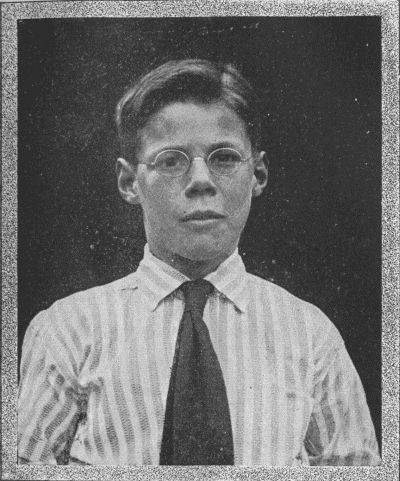 By permission of Henry H. Goddard
A Grim Result
Isaac is 16, although mentally 10. He is a high-grade
moron.
By permission of Henry H. Goddard
A Grim Result
Isaac is 16, although mentally 10. He is a high-grade
moron.
This is one of those all too frequent instances[A]
"of a feeble-minded woman with a husband who is alcoholic and
the offspring either feeble-minded or miscarriages."
"Isaac is exceedingly dangerous. He is a potential criminal
or bad man, or under the best conditions would at least marry
and probably become the father of defectives like himself."
This and the succeeding pictures in this volume
contrast vividly with the frontispiece. Terrible are
the results when we disregard the inevitable laws
of nature, and so mate ourselves that our children
will be parasites on society.
The After-Treatment of Pneumonia is important, and
every detail has a distinct bearing on the ultimate recovery
and establishment of good health. Careful feeding,
a good tonic, and the proper attention to exercise,
fresh air and bathing are requisite. A change of air after
the fever is gone is more important than all other measures
put together. A dry, warm climate where patients
can be kept in the open air is preferable. The danger of
allowing a slow, long drawn-out convalescence after pneumonia
is the development of tuberculosis.
Adenoids are very common, almost
popular, in childhood. The condition is one that causes more real trouble
and discomfort than any other childhood affliction. Adenoids
are associated with, and are responsible for, many
of the ailments of childhood. They may be associated
with enlarged tonsils or they may be independent of
them. They may be present at birth or develop any
time thereafter, though they are more frequent between
the ages of two and six years. Children who have adenoids
invariably suffer from chronic "head-colds" with a discharge
from the nose. These chronic colds are caused by
the adenoids. Nearly every disease, and every diseased,
or abnormal, condition of the nose, throat, larynx, and
lungs can be directly caused by the presence of adenoids.
They are also responsible for numerous other conditions
of very grave importance in the growing child. The accompanying
"head-colds" may develop into a bronchitis
which may keep the child indoors for a long period. Adenoids
always interfere with respiration, thereby depriving
the child of a normal quantity of oxygen, thus rendering
the blood less pure, and, as a consequence, seriously interfering
with the nourishment and general health. The impaired
nourishment and poor health thus produced, as a
direct result of adenoids, renders the child more liable to
disease; he may thus acquire ailments that may affect his
whole subsequent life. The mental side of a child's development
is also affected by the presence of adenoids, so
much so that actual statistics prove that these children
cannot keep up with their classes in the public school.
We must therefore regard the presence of adenoids as
a serious menace to the health and comfort of the patient.
It has already been pointed out in discussing other diseases
that before a cure of these diseases could be permanently
accomplished it would be absolutely necessary
to remove the adenoids, which were, no doubt, the actual
cause, or an important contributing cause, of the disease.
Such conditions as catarrhal laryngitis, croup, chronic recurring
winter coughs, acute catarrhal rhinitis, "snuffles",
"cold in the head", chronic catarrh, bronchial asthma, incontinence
of urine, "bed-wetting", "nose-bleeding", headaches
in growing children, anemia, deafness, night terrors,
defective speech, diphtheria, consumption, are frequently
caused by the presence of adenoids.
These patients contract certain diseases easier than
other children, and when they do, they have them more
severely; such diseases are diphtheria, tuberculosis, scarlet
fever, measles, and whooping cough.
Adenoid children are, as a rule, in better health during
the warm, equable, summer weather than during the
changeable, uncertain weather we have in the winter
months. If the case is neglected, and if the adenoids
have existed for a long time, the growth of the child is
impaired. He remains small and stunted, and the expression
of the face is dull and stupid. The temperament
and disposition are affected also; such children are
languid, listless and depressed.
How to Tell When a Child Has Adenoids.—Children
with well-developed adenoids are "mouth-breathers." Instead
of breathing through the nose they breathe with
the mouth open, especially when sound asleep. If a
child has a discharge from its nose and a chronic cough,
both of which resist treatment, and if in addition it is a
mouth-breather, it is safe to investigate the naso-pharynx
for adenoids. If a child with these symptoms is not in
good health, is listless and depressed, looks stupid, snores
at night, has difficulty in breathing and cannot blow its
nose satisfactorily, is troubled occasionally with "nose
bleeds" and headaches, we may be satisfied that the child
has adenoids, as no other condition could produce such a
picture.
Adenoids, like enlarged tonsils, are dangerous, apart
from the physical distress and disease which they cause,
owing to the fact that they harbor deadly bacteria, and
from these bacteria, which find a lodgment in the adenoids
and tonsils, a fatal attack of diphtheria or consumption
may have its beginning.
Treatment of Adenoids.—Absolute removal is the only
justifiable treatment. This is rendered imperative for so
many reasons that it is unnecessary to go into details in
justification of the procedure.
The physical well-being, the mental development, the
life of the child depend upon it. Any parent who would
wittingly interpose an objection to the removal of his or
her child's adenoids, after they have been demonstrated
to exist, would be guilty of a grave crime.
The operation itself is not at all dangerous. It is over
in a few moments and the child is well in an hour or two,
so far as any pain or suffering is concerned.
Physicians are frequently asked if adenoids "grow"
again after removal. The answer is, "Yes," they sometimes
do. In a very small percentage of the cases they do
return. The older the child is when they are removed
the less chance there is of a recurrence. A child operated
on before it is two years of age is more liable to a recurrence
than a child operated on at six years of age. This
must not, however, be construed as an excuse for putting
an operation off, because if a child needs an operation at
two years and it is postponed till later, its health will be
permanently injured before it is four years of age.
SUMMARY:—
1. Adenoids cause more trouble and more actual disease
than any other condition during childhood.
2. It is a crime for a parent to refuse operation if the
presence of adenoids has been proved.
3. Removal is the only treatment and it should be done
in every case as soon as possible.
4. The operation is a trivial one and is free from
danger.
A hemorrhage from the nose may occur at any time
from birth on. It depends upon the rupture of one or
more blood vessels. The great majority of "nose-bleeds"
are caused by adenoids, or by a small ulcer in the nose, or
by an injury, such as a blow or fall. A nasal hemorrhage,
however, may be caused by other, more serious conditions,
and for that reason may justify a careful inquiry
into the cause, especially if bleeding should occur a number
of times, or be of a serious character the first time.
Of the more common causes as given above, the adenoids
should be removed, and the chronic catarrh which
is invariably the cause of the ulcer should be cured.
Treatment of an Acute Attack.—Have the patient sit
erect; loosen all tight clothing around neck; fold the
hands over the head; apply cold to the back of the neck
and the nose. Pieces of ice can be put into the nostril
and the ice bag to the nape of the neck, or a piece of ice
can be put into a folded napkin and held on the back of
the neck. Taking a long breath and holding it as long as
possible and repeating it while the ice is being applied is
an aid. Placing the feet in hot mustard water is of decided
use. Another excellent expedient is to wrap absorbent
cotton round a smooth probe (piece of whalebone,
for example), dip the cotton in an alum-water mixture
(half teaspoonful powdered alum in a half cupful of
water), and then push it into the bleeding nostril as far as
you can with gentle force. A valuable remedy is Peroxide
of Hydrogen used full strength and freely dropped
into the nostril. If these measures fail, send for a
physician at once.
SUMMARY:—
1st. Nose bleeds may be caused by some serious condition.
2nd. If they occur a number of times have the child
examined.
3rd. If the treatment outlined above does not stop the
bleeding in a few moments send immediately for a
physician.
Quinsy is not common in childhood. It usually follows
tonsilitis when it is seen. The child complains of pain in
the neck, extreme pain and difficulty upon swallowing,
and inability to open the mouth as much as usual. There
is a tendency to hold the head to one side. The treatment
is to open the abscess at the earliest moment after
pus is present.
Hiccough is, in most cases, in infancy and childhood
caused by some irritation of the stomach, may be over-filled
with food or gas. In these cases it is an unimportant
incident and may be quickly relieved by giving
the child an enema of soap-water and a laxative of rhubarb
and soda.
Infrequently hiccough may be the result of cold feet,
or a surface chill. Simple methods of relief are, to hold
the breath, to expire, or blow the breath out as long as
possible before taking the next breath; to sip water from
a cup held by another person while the tips of the two
fore-fingers are in the ears.
Hiccough is quite frequent in hysteria in girls, but it
is of no consequence. When hiccoughs set in during
the course of any serious disease it is a very unfavorable
sign.
Stomatitis is an inflammation of the mucous membrane
(inner lining) of the mouth. The gums and the inner
surface of the lips and cheeks may be red and angry-looking.
There may be small grayish spots on any part
of the mouth. If the case is very bad or if it has lasted
some time and has been neglected, these spots grow
larger and join together forming irregular grayish
plaques. A large percentage of the cases never go further
than this because the proper care and attention is
given them. It is possible, however, for any case to
progress further and become ulcerative. This will be
observed first as a faint yellow line at the margin of the
teeth and gum. Ulceration never takes place unless the
child has teeth. The quantity of saliva is very greatly
increased, so much so that it flows out of the mouth soiling
the clothes. The saliva is intensely acid and it consequently
irritates the skin, causing more or less eczema.
The mouth is painful and hot. There is slight fever,
but seldom any marked prostration. If, however, the ulceration
should be severe, the fever may be quite high.
There is one feature of these cases that sometimes
proves vexatious and annoying. Because of the soreness
of the mouth, the child cannot draw strongly enough on
the nipple to get a normal feeding, and as a result the
nutrition of the child is poor. These children are hungry
and when offered the nipple grasp it greedily, draw a few
mouthfuls then stop because of the pain and begin to cry.
If the ulceration is extensive, there is usually an odor
and the gums bleed easily. Sometimes the teeth fall out
or have to be drawn out.
Strong, well-fed children are as likely to develop stomatitis
as are those who are weakly and ill fed.
The disease is caused by infection and is contagious.
Just what the infection is we do not know; we do, however,
know that children whose mouths are carefully
cleaned after each feeding do not have sore mouths of
this character. When cleaning the mouth care must be
observed not to injure the tender mucous membrane.
Treatment.—As soon as the condition is observed
mouth-washing should be systematically and thoroughly
carried out. After each feeding the mouth should be
washed with a saturated solution of boric acid in boiled
water. (See page 626.)
It is not necessary to use any further treatment, as a
rule. Patients recover in four to eight days. Strict attention
to cleanliness, however, is imperative. The feeding
bottle and nipple, or the mother's nipple, if breast
fed, must be kept scrupulously clean.
The feeding of these children is sometimes a problem
for a day or two, because, as stated above, of the soreness
of the mouth. This is best overcome by feeding the baby
with a spoon. If breast fed, it is necessary to pump the
milk and then feed with the spoon. Children will take the
milk better if it is fed cold. Cold boiled water is largely
taken and is good for them at this time.
Treatment for Ulcers in Mouth.—The ulcers should
be touched with a camel's-hair brush which has been
dipped into finely powdered burnt alum. If a stronger
caustic is necessary, the solid stick of nitrate of silver
may be used.
A mouth wash may also be used in the ulcerative cases,
composed of the peroxide of hydrogen diluted with two
parts of water. If this is used wash the mouth out afterward
with plain, cool, boiled water. The peroxide mouth
wash can be used four or five times daily.
In addition to the mouth washing in the ulcerative
cases it is advisable to use internally chlorate of potash.
The druggist should be requested to make a two-ounce
saturated solution, and of this you can give one-half teaspoonful,
largely diluted with cool water, every hour
during the day for the first twenty-four hours, then
every two hours until marked improvement is shown,
when it can be further reduced by lengthening the interval
between doses.
Sprue is a form of sore mouth. It is seen only during
the first six months of life, as a rule. It affects the
mucous membrane of the mouth; it appears in the form of
small white spots that look like drops of curdled milk.
They are on the inner surface of the cheek and may be
all over the mouth, and on the tongue. The spots are
firmly attached, and if forcibly removed the mucous membrane
will bleed.
The disease is caused by infection through lack of
cleanliness and it invariably affects poorly nourished children,
especially those who are bottle-fed.
There are no symptoms other than those of the mouth;
the child frequently refuses to nurse because of evident
pain and distress while nursing. The condition is not
contagious. It may be cured in from six to eight days
without difficulty.
Treatment.—Mouth irrigations of boracic acid are all
that are necessary. They are given in the following way:
Place the child on its side, roll around the index finger
a piece of absorbent cotton, dip this in a saturated solution
of boracic acid, and put into the mouth of the child.
Let the cotton take up as much of the solution as it will
hold, so that when it is lightly pressed on the tongue and
cheeks it will flow out of the mouth, thus "irrigating the
mouth." Repeat this a number of times, pressing the cotton
to a different part each time. This should be gone
through from four to six times daily.
If the child is a bottle-fed baby, care should be taken
in cleaning the nipples and bottles as directed on page
264. If the patient is breast-fed, care must be taken to
note that the mother's nipples are clean. They should
be washed with the same solution of boracic acid and
not handled. If the child cannot nurse it is necessary to
feed it with a spoon.
In obstinate cases the parts may be touched with a one
per cent. solution of formalin. Mothers should particularly
note not to use honey and borax, as is often recommended
by women who know no better, in any disease of
the mouth in children.